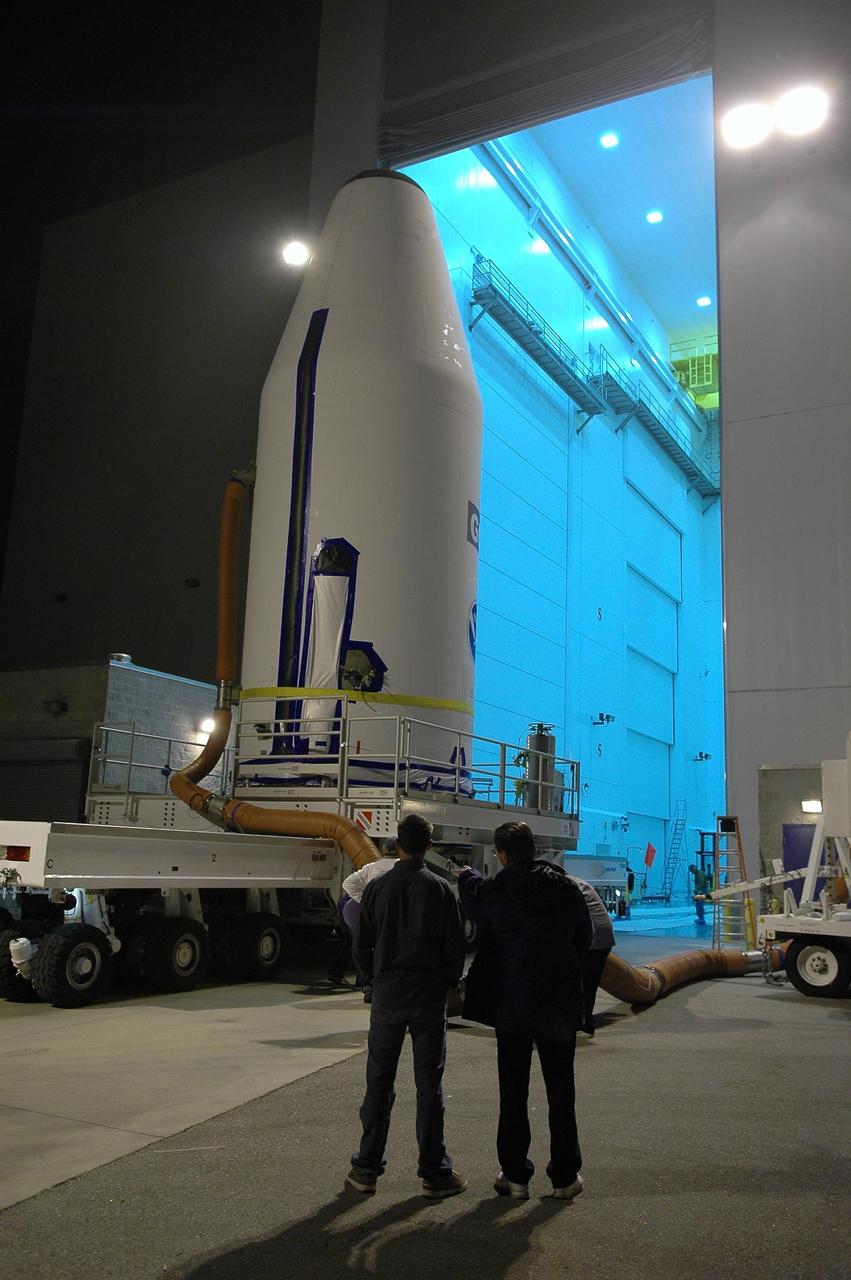
KENNEDY SPACE CENTER, FLA. - The GOES-N satellite, secured inside a payload fairing, is rolled into the clean room high bay at the Astrotech payload processing facility in Titusville, Fla. Liftoff of the satellite from Launch Complex 37 at Cape Canaveral Air Force Station in Florida was scrubbed in August 2005 due to technical issues and postponed to a later date. Due to the extended length of time the spacecraft had been atop its Delta IV rocket without launching, the weather satellite is being returned to Astrotech for some precautionary retesting and state of health checks. GOES-N is the latest in a series of Geostationary Operational Environmental Satellites for NOAA and NASA providing continuous monitoring necessary for intensive data analysis. Photo credit: NASA/Kim Shiflett
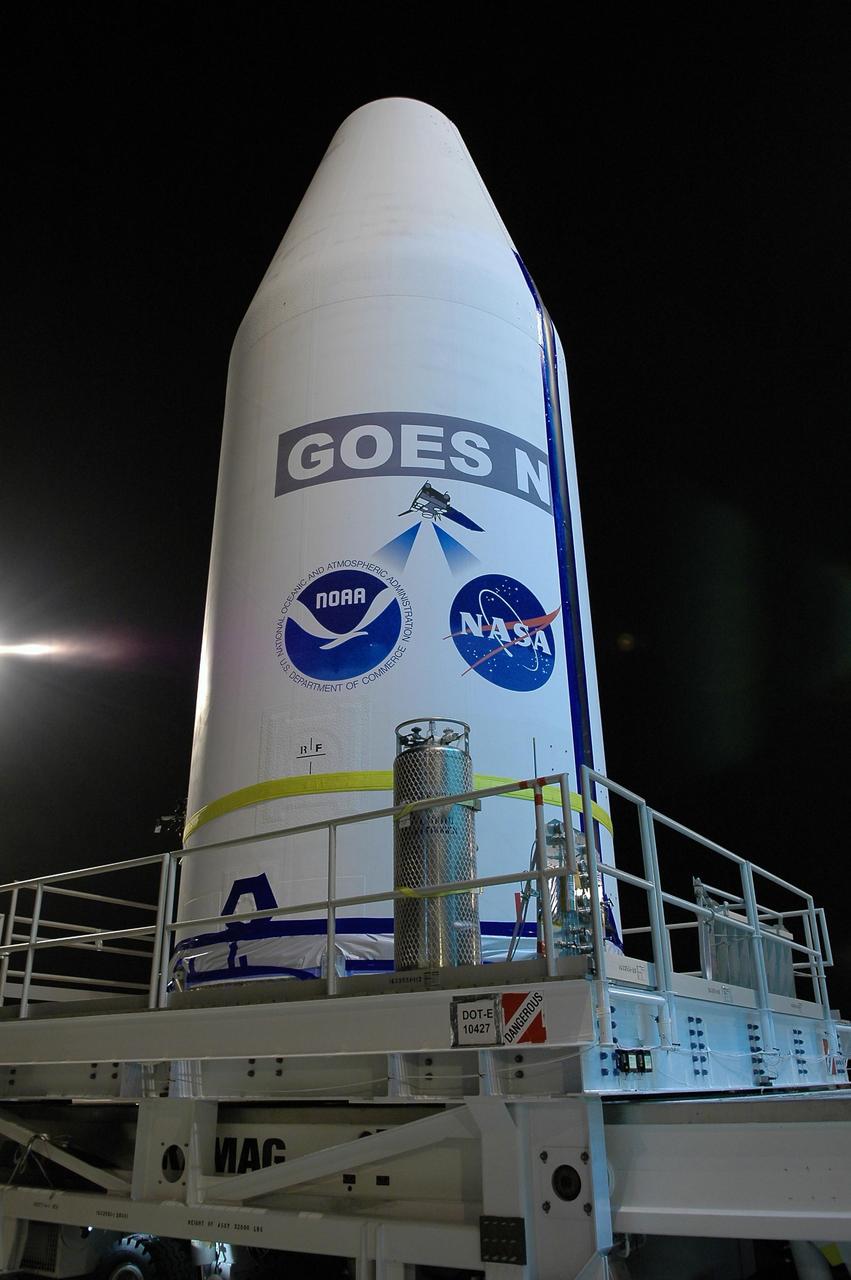
KENNEDY SPACE CENTER, FLA. - The GOES-N satellite, secured inside a payload fairing, enters the clean room high bay at the Astrotech payload processing facility in Titusville, Fla. Liftoff of the satellite from Launch Complex 37 at Cape Canaveral Air Force Station in Florida was scrubbed in August 2005 due to technical issues and postponed to a later date. Due to the extended length of time the spacecraft had been atop its Delta IV rocket without launching, the weather satellite is being returned to Astrotech for some precautionary retesting and state of health checks. GOES-N is the latest in a series of Geostationary Operational Environmental Satellites for NOAA and NASA providing continuous monitoring necessary for intensive data analysis. Photo credit: NASA/Kim Shiflett
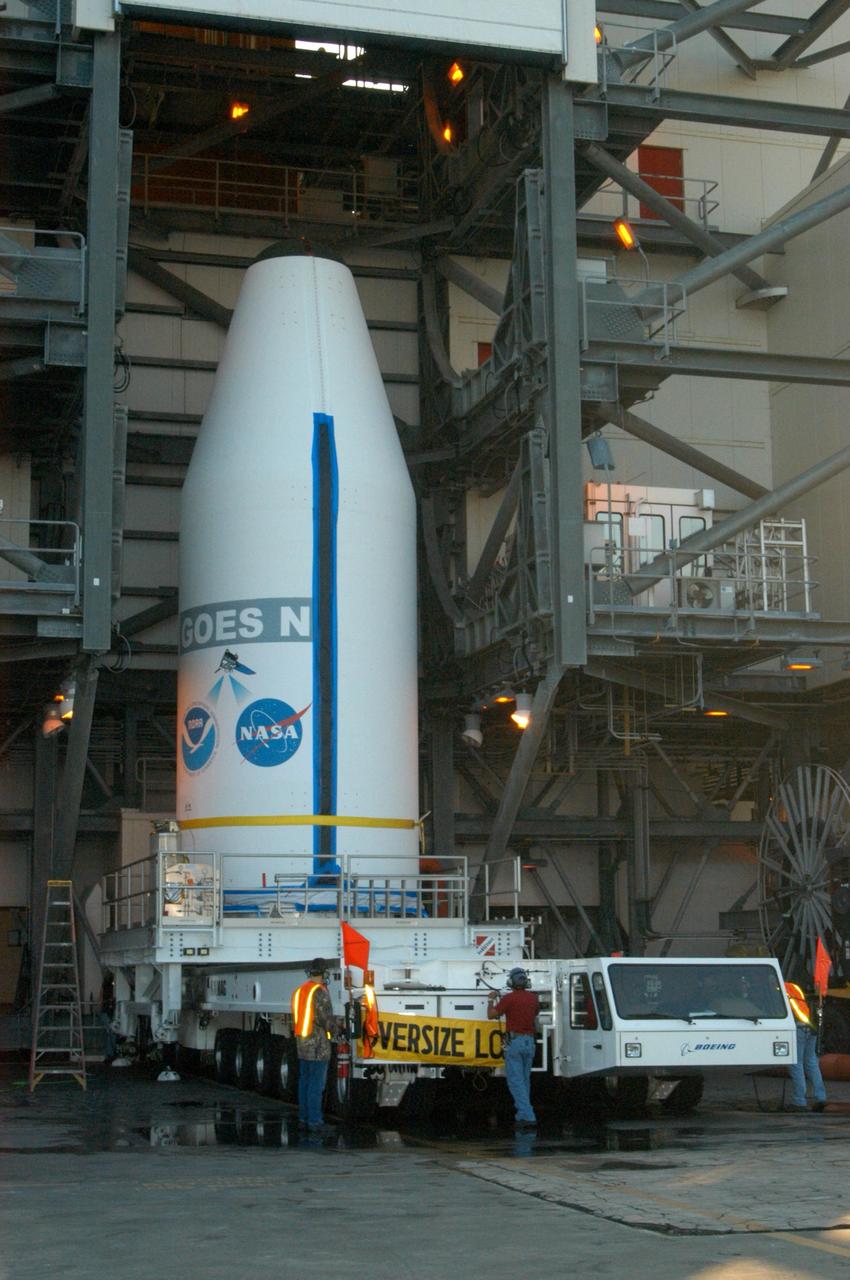
KENNEDY SPACE CENTER, FLA. - On Launch Complex 37 at Cape Canaveral Air Force Station in Florida, the GOES-N spacecraft is secured to a transporter for its transfer back to Astrotech Space Operations in Titusville, Fla., after being demated from the Boeing Delta IV launch vehicle. Launch of the satellite was scrubbed in August 2005 due to technical issues and postponed to a later date. Due to the extended length of time the spacecraft has been atop the rocket without launching, the weather satellite is being returned to the Astrotech payload processing facility for some precautionary retesting and state-of-health checks. GOES-N is the latest in a series of Geostationary Operational Environmental Satellites for NOAA and NASA providing continuous monitoring necessary for intensive data analysis. Photo credit: NASA/George Shelton
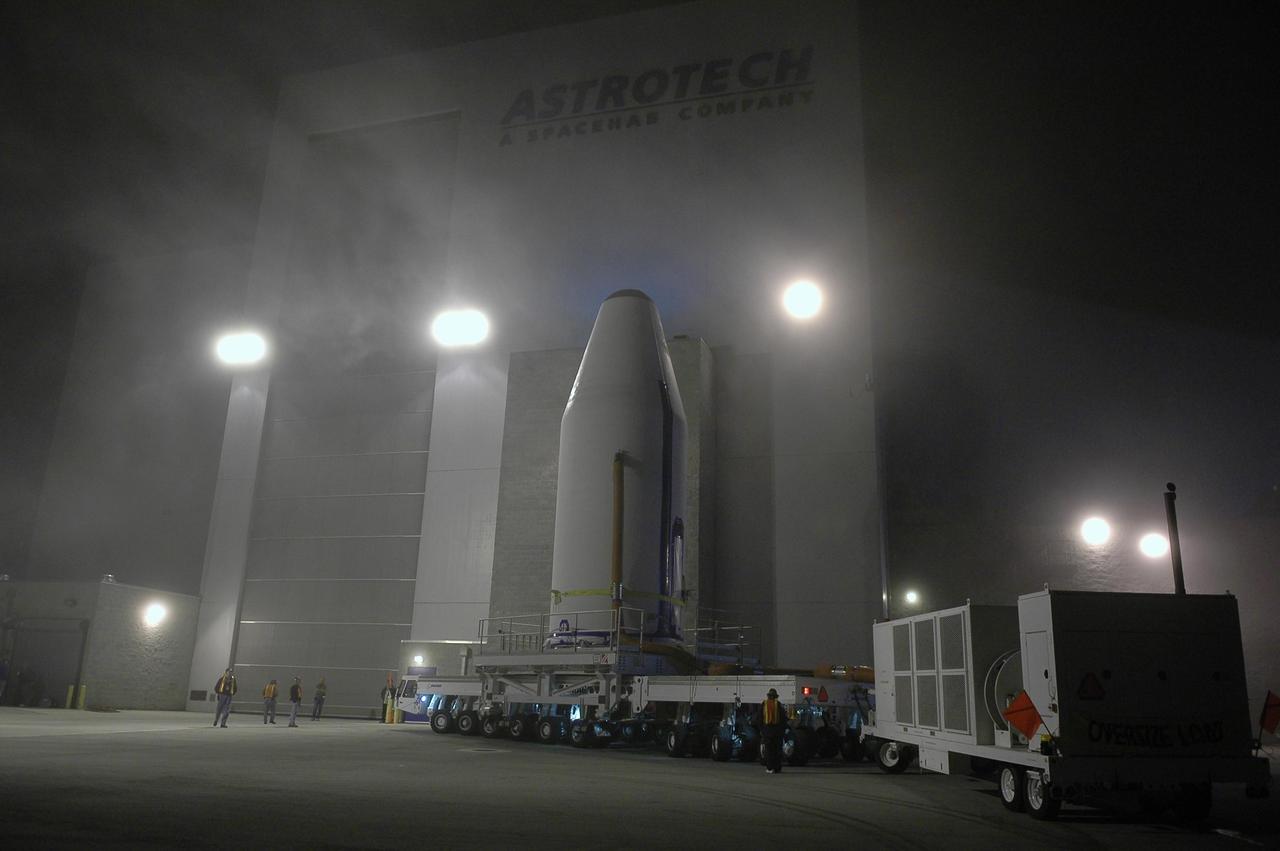
KENNEDY SPACE CENTER, FLA. - The GOES-N satellite, secured inside a payload fairing, arrives at the Astrotech payload processing facility in Titusville, Fla. Liftoff of the satellite from Launch Complex 37 at Cape Canaveral Air Force Station in Florida was scrubbed in August 2005 due to technical issues and postponed to a later date. Due to the extended length of time the spacecraft had been atop its Delta IV rocket without launching, the weather satellite is being returned to Astrotech for some precautionary retesting and state of health checks. GOES-N is the latest in a series of Geostationary Operational Environmental Satellites for NOAA and NASA providing continuous monitoring necessary for intensive data analysis. Photo credit: NASA/Kim Shiflett
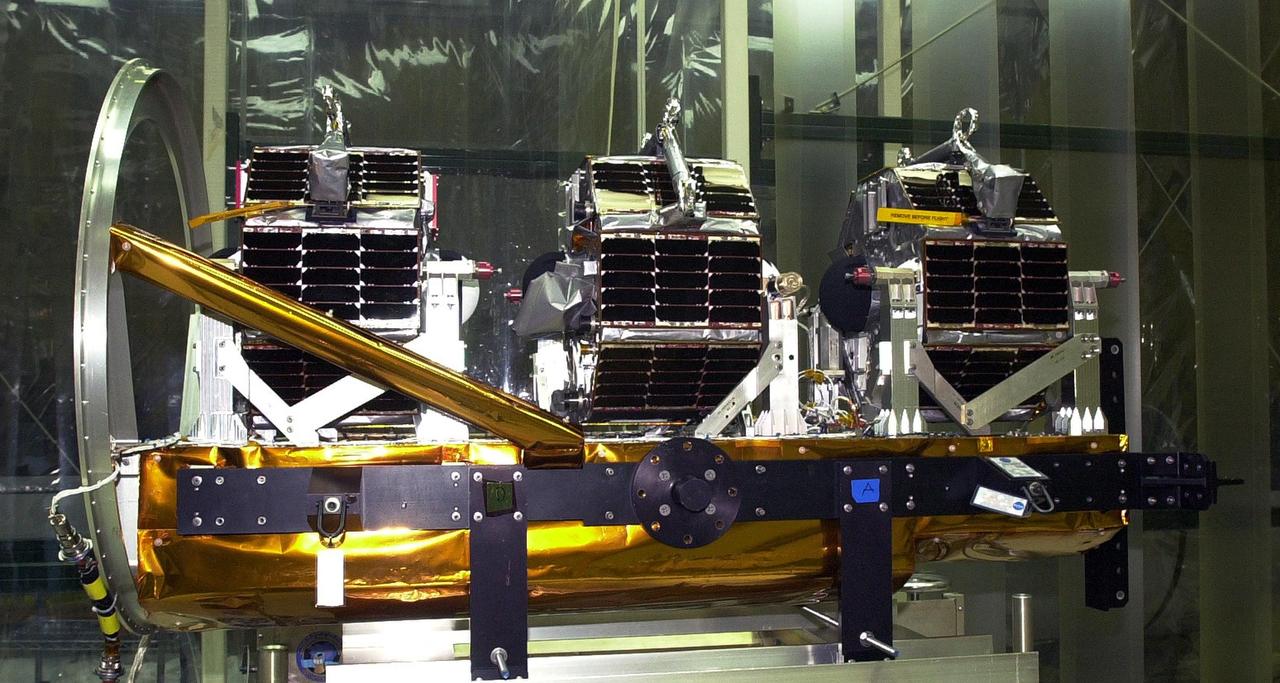
KENNEDY SPACE CENTER, FLA. - Inside Orbital Sciences’ Building 1555 at Vandenberg Air Force Base in California, the Space Technology 5 (ST5) spacecraft is ready for mating to the Pegasus XL launch vehicle. Seen in the photo are the three satellites that make up the ST5, containing miniaturized redundant components and technologies. Each will validate New Millennium Program selected technologies, such as the Cold Gas Micro-Thruster and X-Band Transponder Communication System. After deployment from the Pegasus, the micro-satellites will be positioned in a “string of pearls” constellation that demonstrates the ability to position them to perform simultaneous multi-point measurements of the magnetic field using highly sensitive magnetometers. The data will help scientists understand and map the intensity and direction of the Earth’s magnetic field, its relation to space weather events, and affects on our planet. With such missions, NASA hopes to improve scientists’ ability to accurately forecast space weather and minimize its harmful effects on space- and ground-based systems. Launch of ST5 is scheduled no earlier than March 6 from Vandenberg Air Force Base.
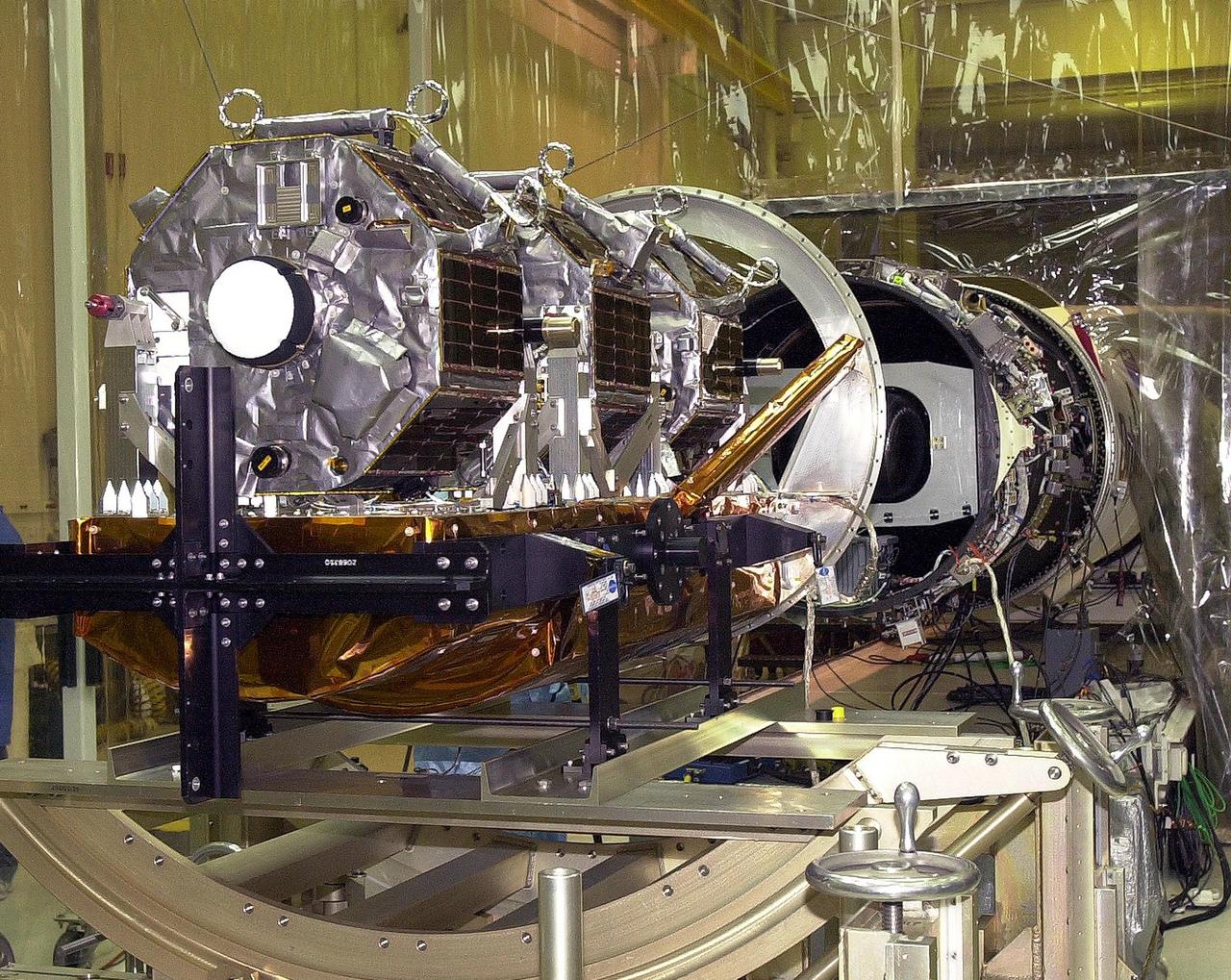
KENNEDY SPACE CENTER, FLA. - Inside Orbital Sciences’ Building 1555 at Vandenberg Air Force Base in California, the Space Technology 5 (ST5) spacecraft is ready for mating to the Pegasus XL launch vehicle. Seen in the photo are the three satellites that make up the ST5, containing miniaturized redundant components and technologies. Each will validate New Millennium Program selected technologies, such as the Cold Gas Micro-Thruster and X-Band Transponder Communication System. After deployment from the Pegasus, the micro-satellites will be positioned in a “string of pearls” constellation that demonstrates the ability to position them to perform simultaneous multi-point measurements of the magnetic field using highly sensitive magnetometers. The data will help scientists understand and map the intensity and direction of the Earth’s magnetic field, its relation to space weather events, and affects on our planet. With such missions, NASA hopes to improve scientists’ ability to accurately forecast space weather and minimize its harmful effects on space- and ground-based systems. Launch of ST5 is scheduled no earlier than March 6 from Vandenberg Air Force Base.