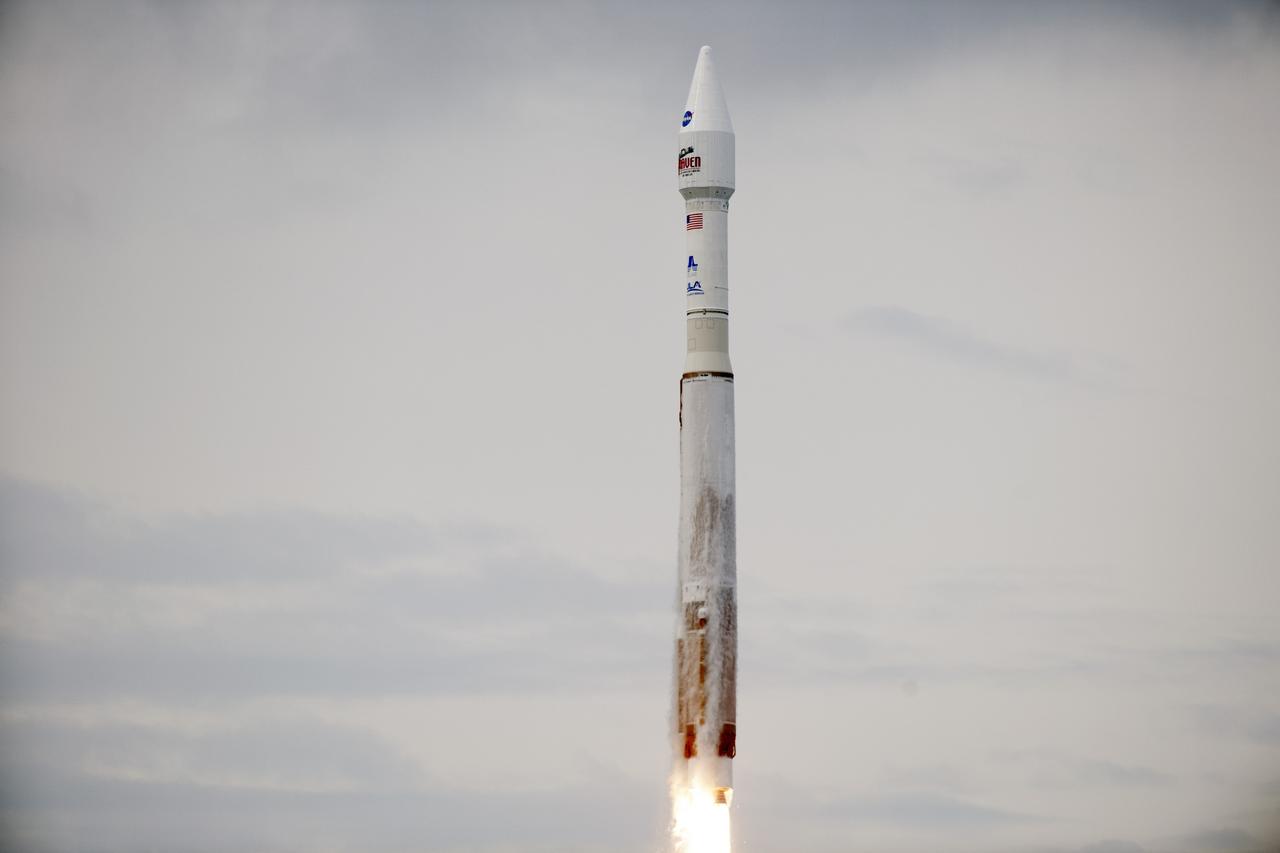
CAPE CANAVERAL, Fla. -- A United Launch Alliance Atlas V rocket lifts off through the clouds over Space Launch Complex 41 at Cape Canaveral Air Force Station in Florida, carrying NASA's Mars Atmosphere and Volatile EvolutioN, or MAVEN, spacecraft. Launch was on schedule at 1:28 p.m. EST Nov. 18 at the opening of a two-hour launch window. After a 10-month journey to the Red Planet, MAVEN will study its upper atmosphere in unprecedented detail from orbit above the planet. Built by Lockheed Martin in Littleton, Colo., MAVEN will arrive at Mars in September 2014 and will be inserted into an elliptical orbit with a high point of 3,900 miles, swooping down to as close as 93 miles above the planet's surface. For more information, visit: http://www.nasa.gov/mission_pages/maven/main/index.html. Photo credit: NASA/Rusty Backer
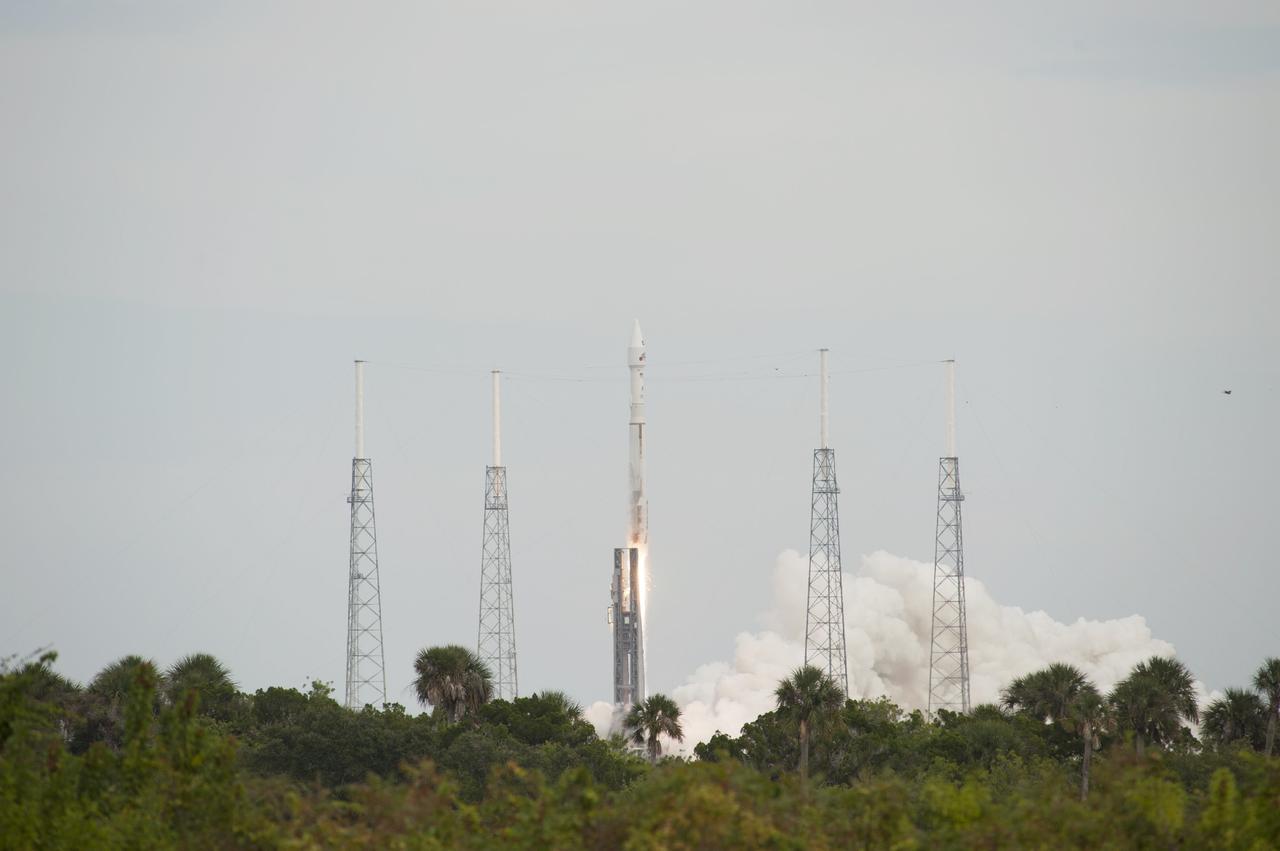
CAPE CANAVERAL, Fla. -- The engine ignites under the United Launch Alliance Atlas V rocket, lifting NASA's Mars Atmosphere and Volatile EvolutioN, or MAVEN, spacecraft off Space Launch Complex 41 at Cape Canaveral Air Force Station in Florida. Launch was on schedule at 1:28 p.m. EST Nov. 18 at the opening of a two-hour launch window. After a 10-month journey to the Red Planet, MAVEN will study its upper atmosphere in unprecedented detail from orbit above the planet. Built by Lockheed Martin in Littleton, Colo., MAVEN will arrive at Mars in September 2014 and will be inserted into an elliptical orbit with a high point of 3,900 miles, swooping down to as close as 93 miles above the planet's surface. For more information, visit: http://www.nasa.gov/mission_pages/maven/main/index.html. Photo credit: NASA/George Roberts
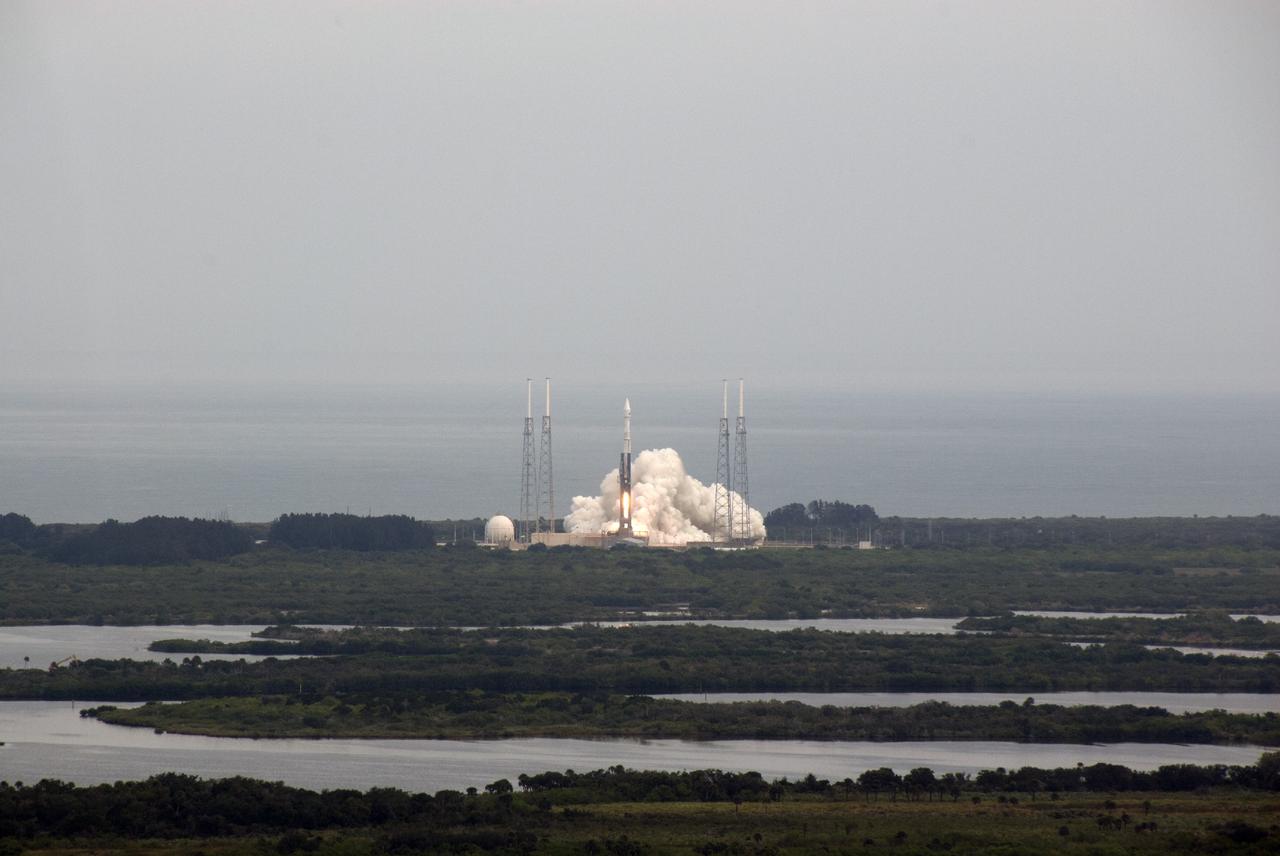
CAPE CANAVERAL, Fla. -- The engine ignites under the United Launch Alliance Atlas V rocket, lifting NASA's Mars Atmosphere and Volatile EvolutioN, or MAVEN, spacecraft off Space Launch Complex 41 at Cape Canaveral Air Force Station in Florida. Launch was on schedule at 1:28 p.m. EST Nov. 18 at the opening of a two-hour launch window. After a 10-month journey to the Red Planet, MAVEN will study its upper atmosphere in unprecedented detail from orbit above the planet. Built by Lockheed Martin in Littleton, Colo., MAVEN will arrive at Mars in September 2014 and will be inserted into an elliptical orbit with a high point of 3,900 miles, swooping down to as close as 93 miles above the planet's surface. For more information, visit: http://www.nasa.gov/mission_pages/maven/main/index.html. Photo credit: NASA/Bill White

CAPE CANAVERAL, Fla. -- The engine ignites under the United Launch Alliance Atlas V rocket, lifting NASA's Mars Atmosphere and Volatile EvolutioN, or MAVEN, spacecraft off Space Launch Complex 41 at Cape Canaveral Air Force Station in Florida. Launch was on schedule at 1:28 p.m. EST Nov. 18 at the opening of a two-hour launch window. After a 10-month journey to the Red Planet, MAVEN will study its upper atmosphere in unprecedented detail from orbit above the planet. Built by Lockheed Martin in Littleton, Colo., MAVEN will arrive at Mars in September 2014 and will be inserted into an elliptical orbit with a high point of 3,900 miles, swooping down to as close as 93 miles above the planet's surface. For more information, visit: http://www.nasa.gov/mission_pages/maven/main/index.html. Photo credit: NASA/Dan Casper
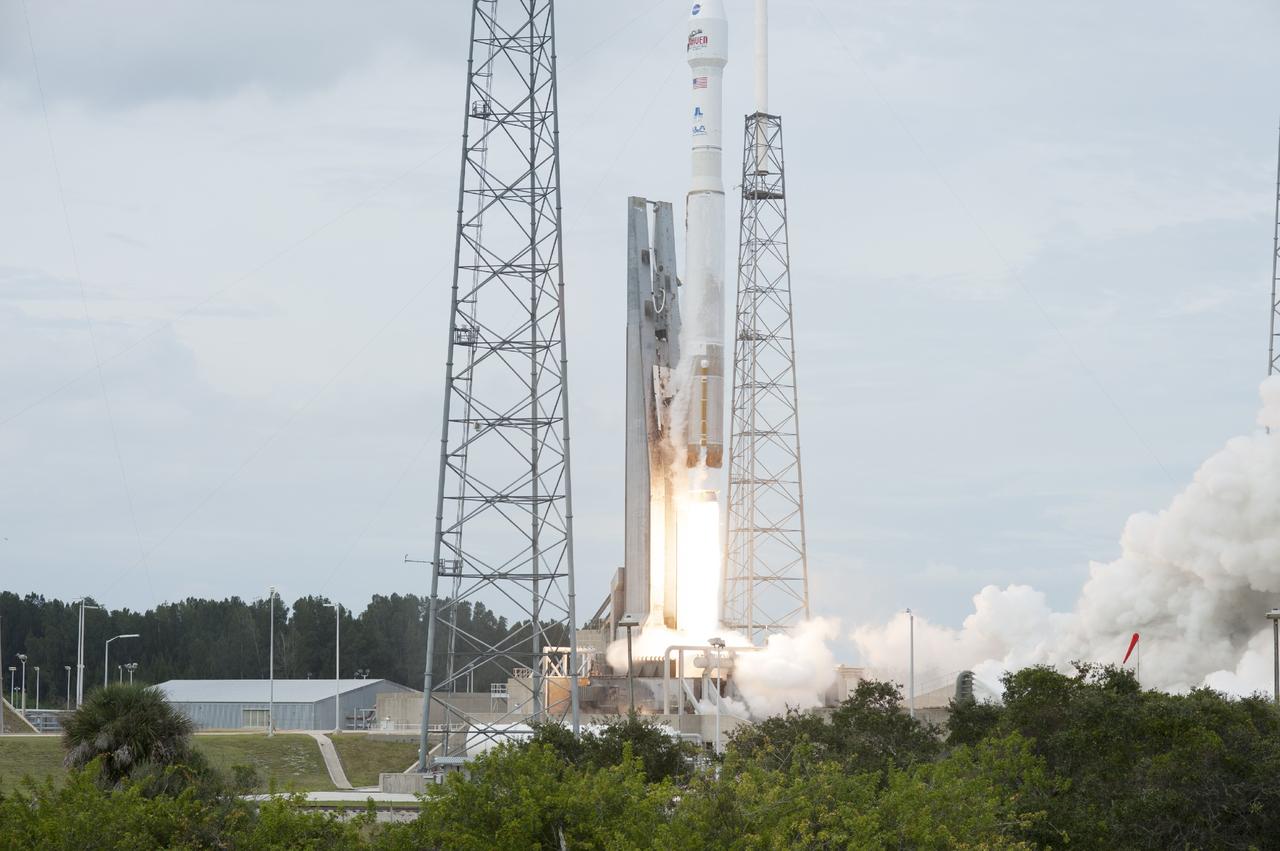
CAPE CANAVERAL, Fla. -- The United Launch Alliance Atlas V rocket carrying NASA's Mars Atmosphere and Volatile EvolutioN, or MAVEN, spacecraft rises off Space Launch Complex 41 at Cape Canaveral Air Force Station in Florida. Launch was on schedule at 1:28 p.m. EST Nov. 18 at the opening of a two-hour launch window. After a 10-month journey to the Red Planet, MAVEN will study its upper atmosphere in unprecedented detail from orbit above the planet. Built by Lockheed Martin in Littleton, Colo., MAVEN will arrive at Mars in September 2014 and will be inserted into an elliptical orbit with a high point of 3,900 miles, swooping down to as close as 93 miles above the planet's surface. For more information, visit: http://www.nasa.gov/mission_pages/maven/main/index.html. Photo credit: NASA/Tony Gray and Rick Wetherington
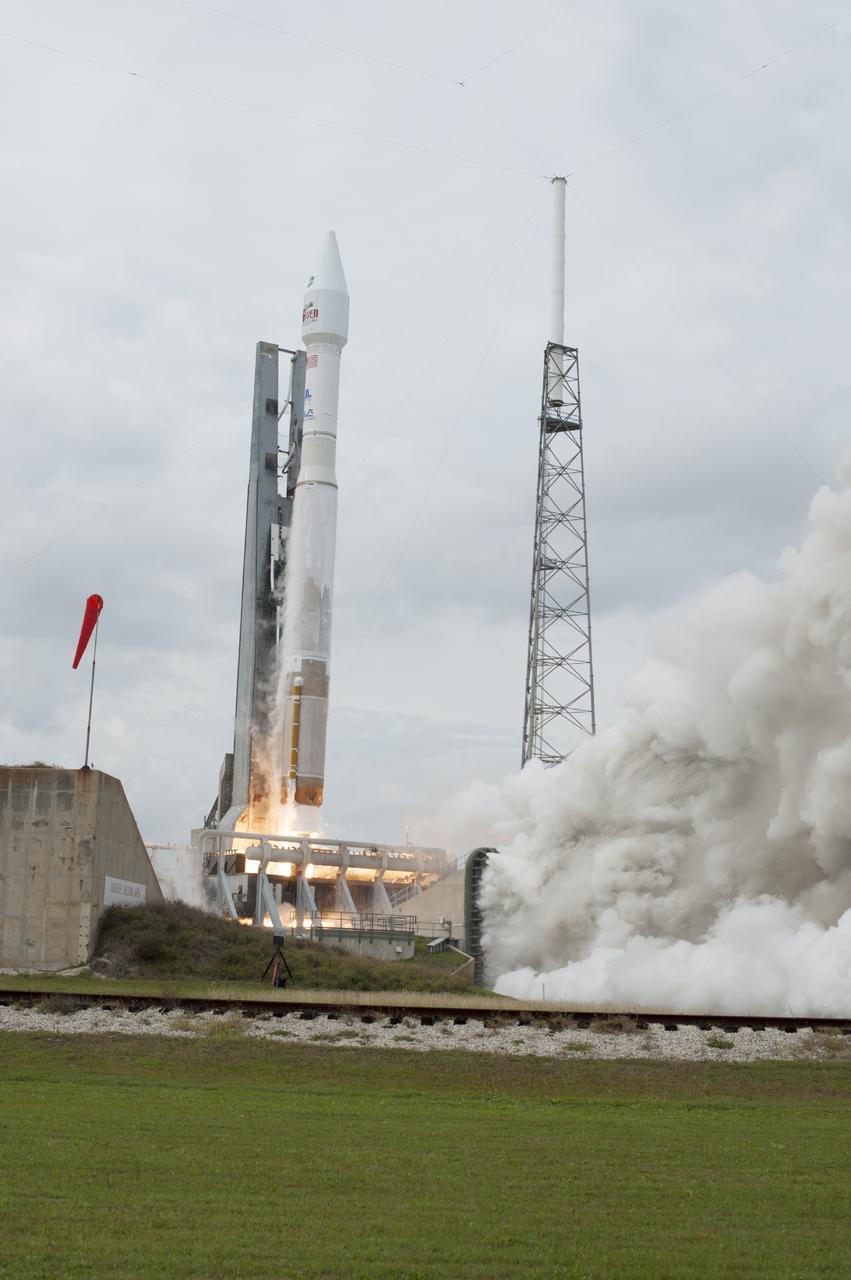
CAPE CANAVERAL, Fla. -- The exhaust plume builds at Space Launch Complex 41 on Cape Canaveral Air Force Station in Florida as the engine ignites under the United Launch Alliance Atlas V rocket carrying NASA's Mars Atmosphere and Volatile EvolutioN, or MAVEN, spacecraft to orbit. Launch was on schedule at 1:28 p.m. EST Nov. 18 at the opening of a two-hour launch window. After a 10-month journey to the Red Planet, MAVEN will study its upper atmosphere in unprecedented detail from orbit above the planet. Built by Lockheed Martin in Littleton, Colo., MAVEN will arrive at Mars in September 2014 and will be inserted into an elliptical orbit with a high point of 3,900 miles, swooping down to as close as 93 miles above the planet's surface. For more information, visit: http://www.nasa.gov/mission_pages/maven/main/index.html. Photo credit: NASA/Tony Gray and Rick Wetherington
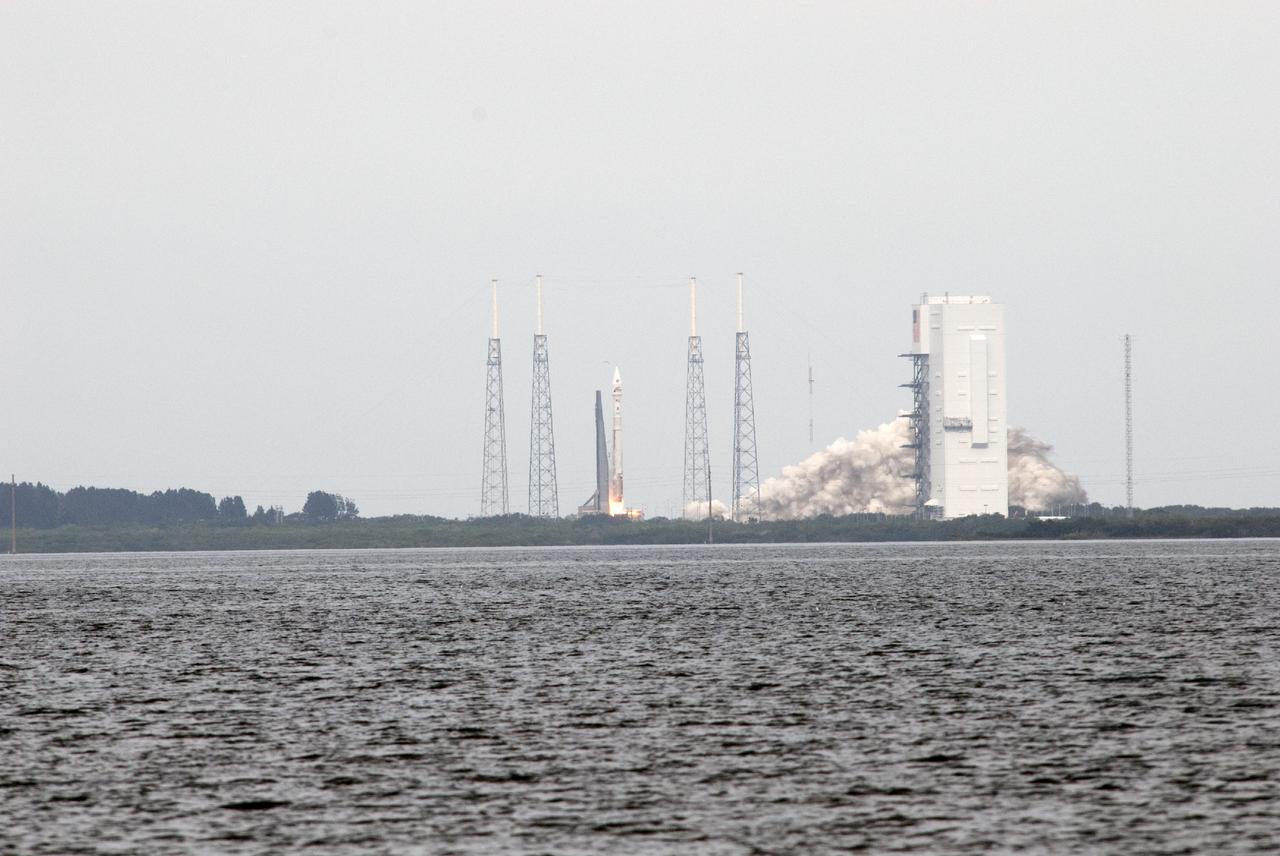
CAPE CANAVERAL, Fla. -- The engine ignites under the United Launch Alliance Atlas V rocket, lifting NASA's Mars Atmosphere and Volatile EvolutioN, or MAVEN, spacecraft off Space Launch Complex 41 at Cape Canaveral Air Force Station in Florida. Launch was on schedule at 1:28 p.m. EST Nov. 18 at the opening of a two-hour launch window. After a 10-month journey to the Red Planet, MAVEN will study its upper atmosphere in unprecedented detail from orbit above the planet. Built by Lockheed Martin in Littleton, Colo., MAVEN will arrive at Mars in September 2014 and will be inserted into an elliptical orbit with a high point of 3,900 miles, swooping down to as close as 93 miles above the planet's surface. For more information, visit: http://www.nasa.gov/mission_pages/maven/main/index.html. Photo credit: NASA/Jim Grossmann
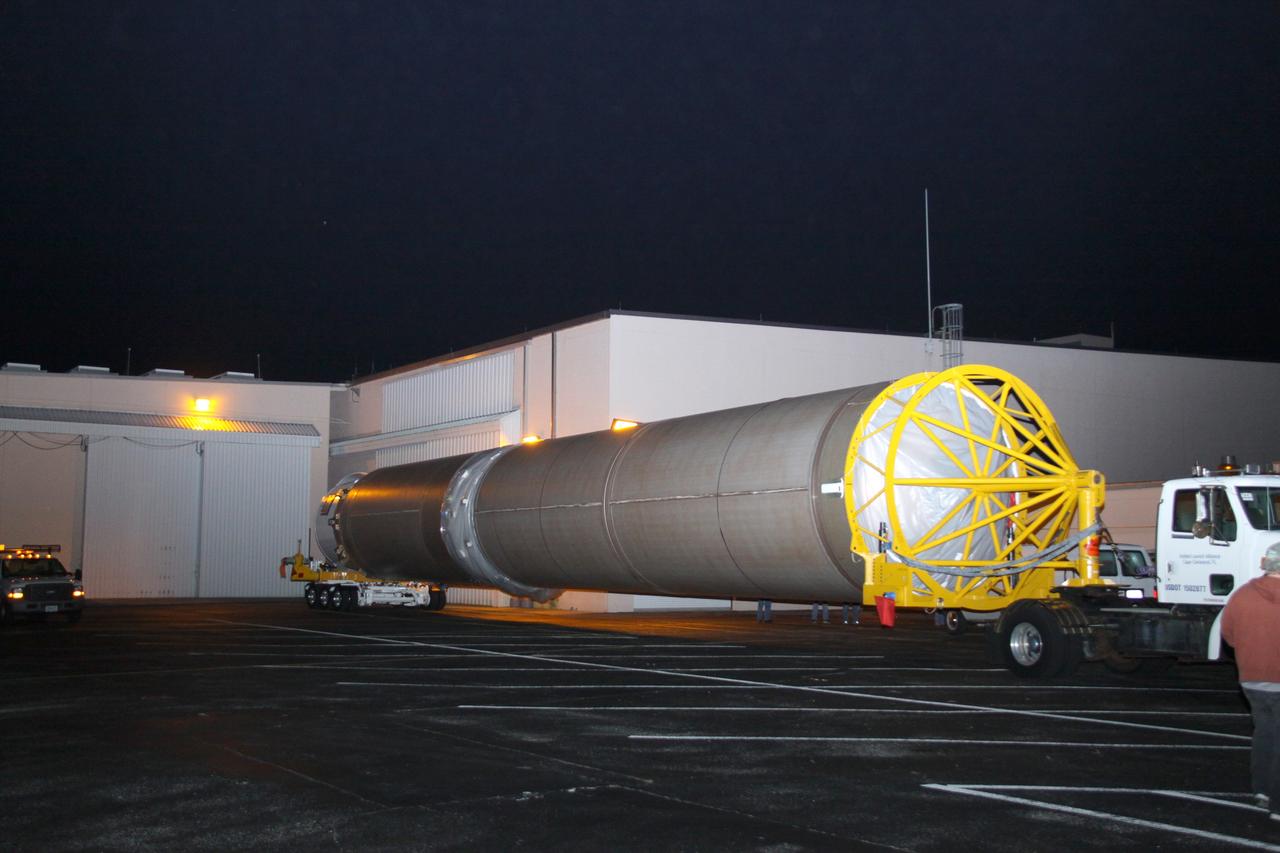
CAPE CANAVERAL, Fla. – The first stage of the United Launch Alliance Atlas V rocket for NASA's Magnetospheric Multiscale mission, or MMS, begins the short journey from the Atlas Spaceflight Operations Center, or ASOC, on Cape Canaveral Air Force Station in Florida to Space Launch Complex 41. MMS will study the mystery of how magnetic fields around Earth connect and disconnect, explosively releasing energy via a process known a magnetic reconnection. MMS consists of four identical spacecraft that work together to provide the first three-dimensional view of this fundamental process, which occurs throughout the universe. Launch is set for March 12. To learn more about MMS, visit http://www.nasa.gov/mms. Photo credit: NASA/Jim Grossmann
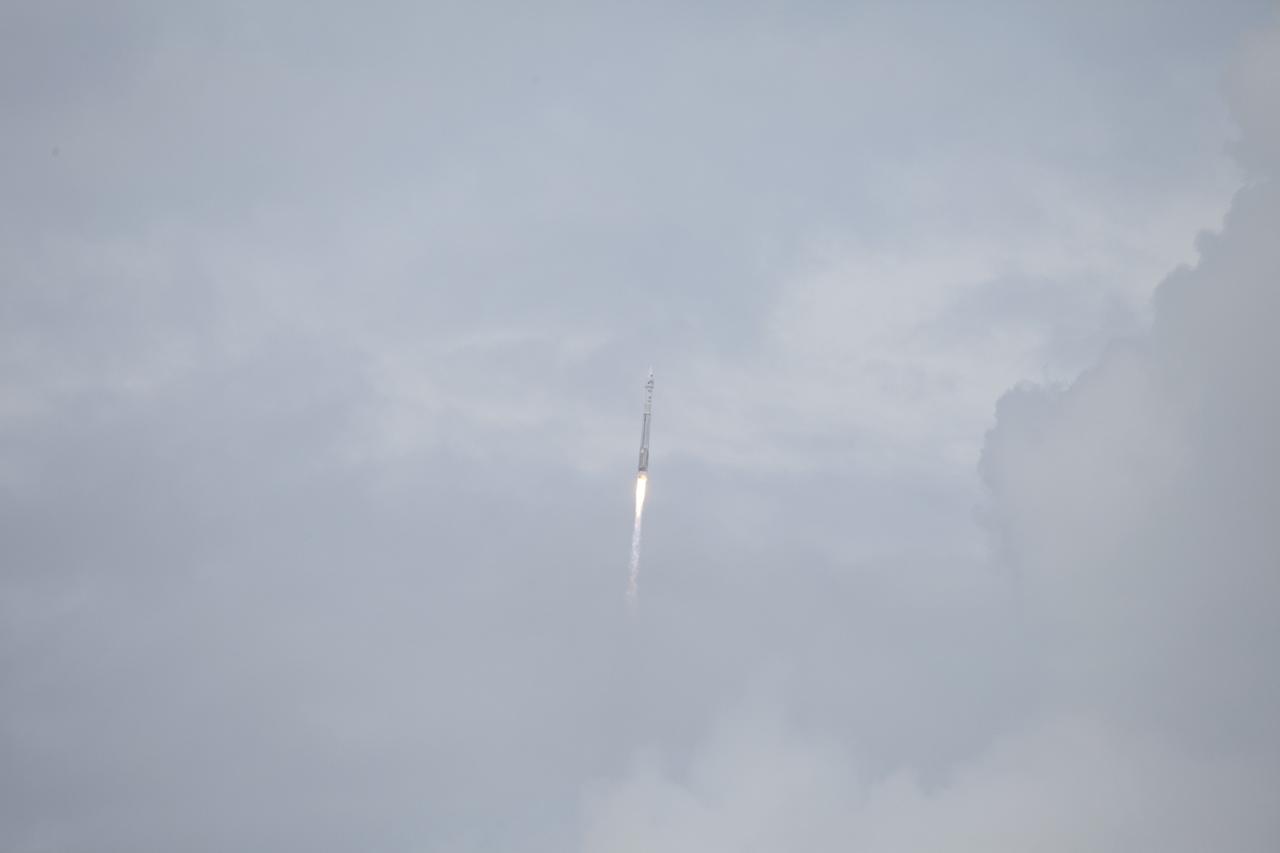
CAPE CANAVERAL, Fla. -- A United Launch Alliance Atlas V rocket lifts off through the clouds over Space Launch Complex 41 at Cape Canaveral Air Force Station in Florida, carrying NASA's Mars Atmosphere and Volatile EvolutioN, or MAVEN, spacecraft. Launch was on schedule at 1:28 p.m. EST Nov. 18 at the opening of a two-hour launch window. After a 10-month journey to the Red Planet, MAVEN will study its upper atmosphere in unprecedented detail from orbit above the planet. Built by Lockheed Martin in Littleton, Colo., MAVEN will arrive at Mars in September 2014 and will be inserted into an elliptical orbit with a high point of 3,900 miles, swooping down to as close as 93 miles above the planet's surface. For more information, visit: http://www.nasa.gov/mission_pages/maven/main/index.html. Photo credit: NASA/Dan Casper
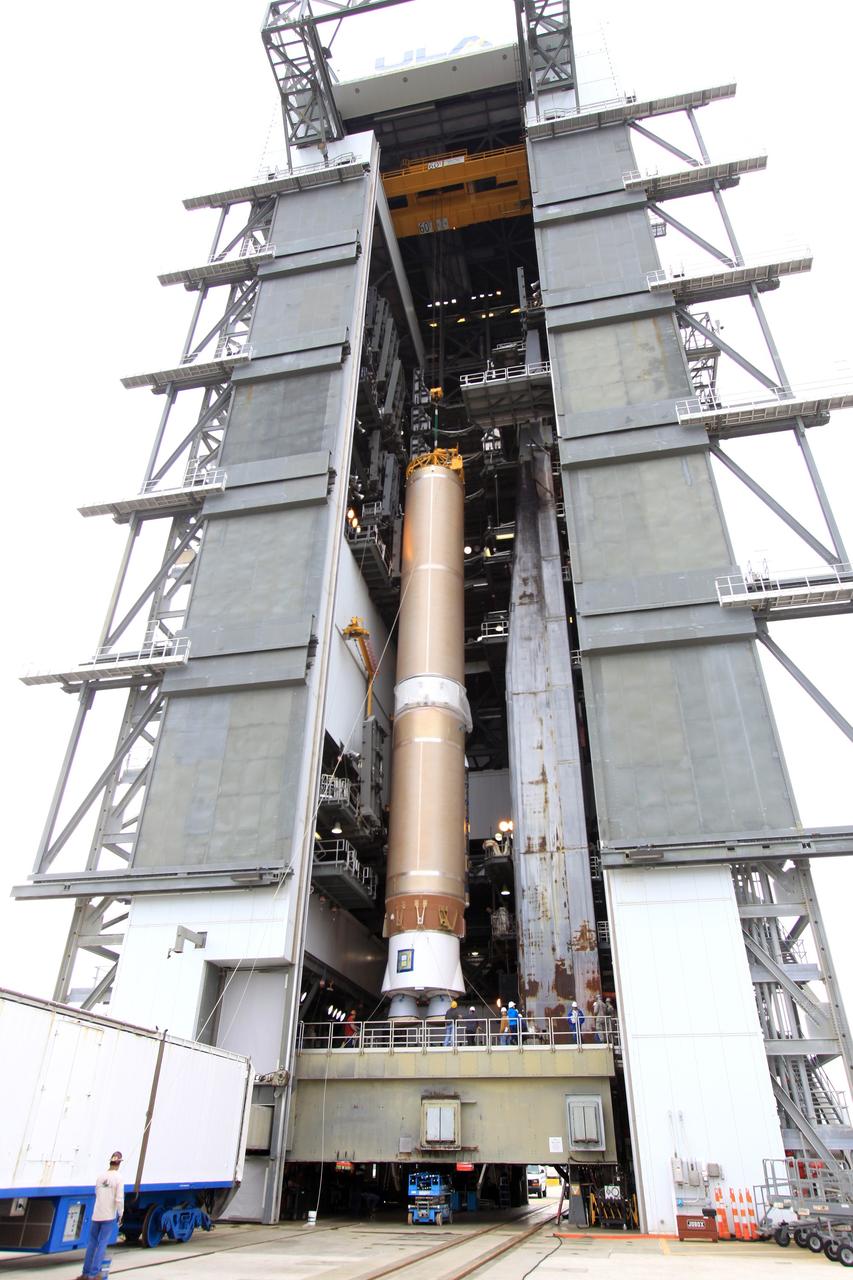
CAPE CANAVERAL, Fla. – The first stage of the United Launch Alliance Atlas V rocket for NASA's Magnetospheric Multiscale mission, or MMS, is positioned on the launch platform in the mobile service tower at Space Launch Complex 41 on Cape Canaveral Air Force Station in Florida. MMS will study the mystery of how magnetic fields around Earth connect and disconnect, explosively releasing energy via a process known a magnetic reconnection. MMS consists of four identical spacecraft that work together to provide the first three-dimensional view of this fundamental process, which occurs throughout the universe. Launch is set for March 12. To learn more about MMS, visit http://www.nasa.gov/mms. Photo credit: NASA/Jim Grossmann
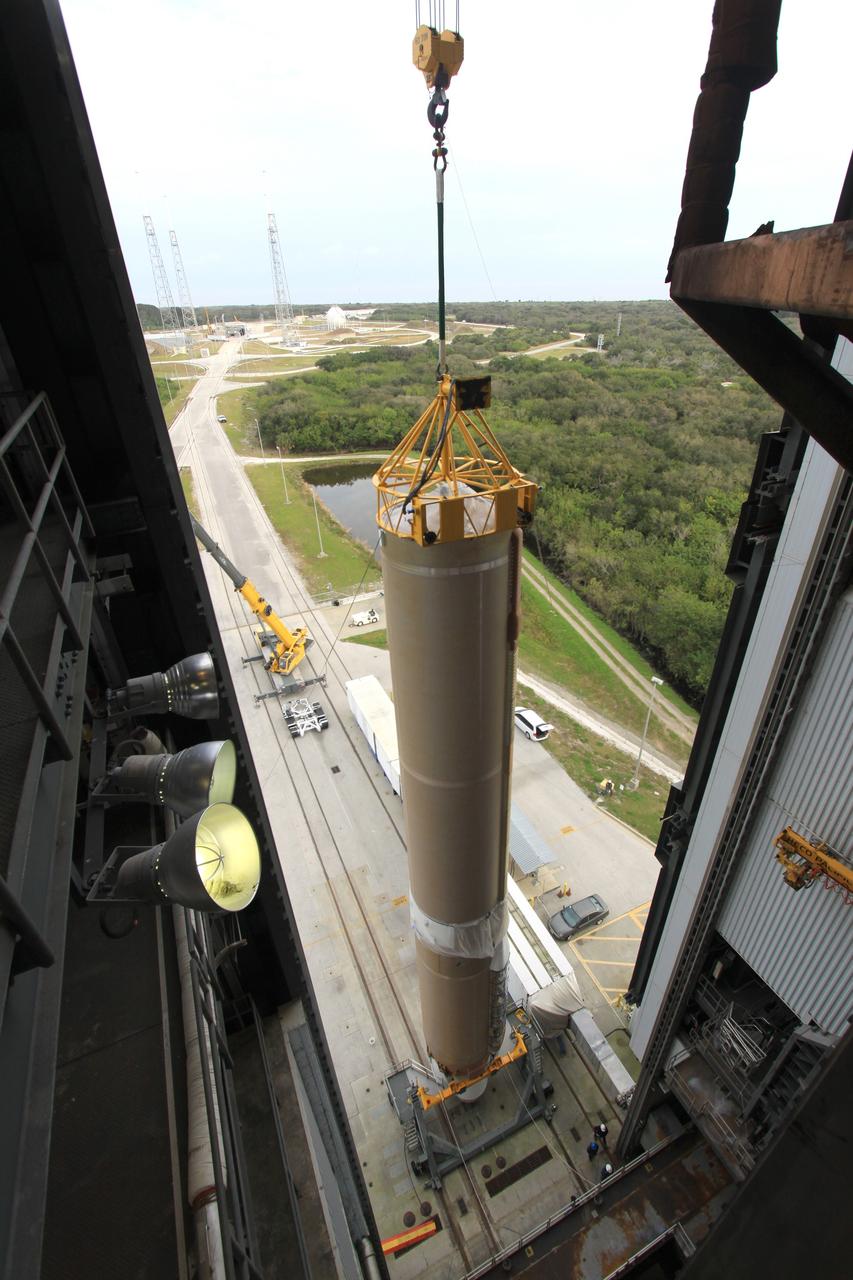
CAPE CANAVERAL, Fla. – A crane lifts the first stage of the United Launch Alliance Atlas V rocket for NASA's Magnetospheric Multiscale mission, or MMS, into the mobile service tower at Space Launch Complex 41 on Cape Canaveral Air Force Station in Florida. MMS will study the mystery of how magnetic fields around Earth connect and disconnect, explosively releasing energy via a process known a magnetic reconnection. MMS consists of four identical spacecraft that work together to provide the first three-dimensional view of this fundamental process, which occurs throughout the universe. Launch is set for March 12. To learn more about MMS, visit http://www.nasa.gov/mms. Photo credit: NASA/Jim Grossmann
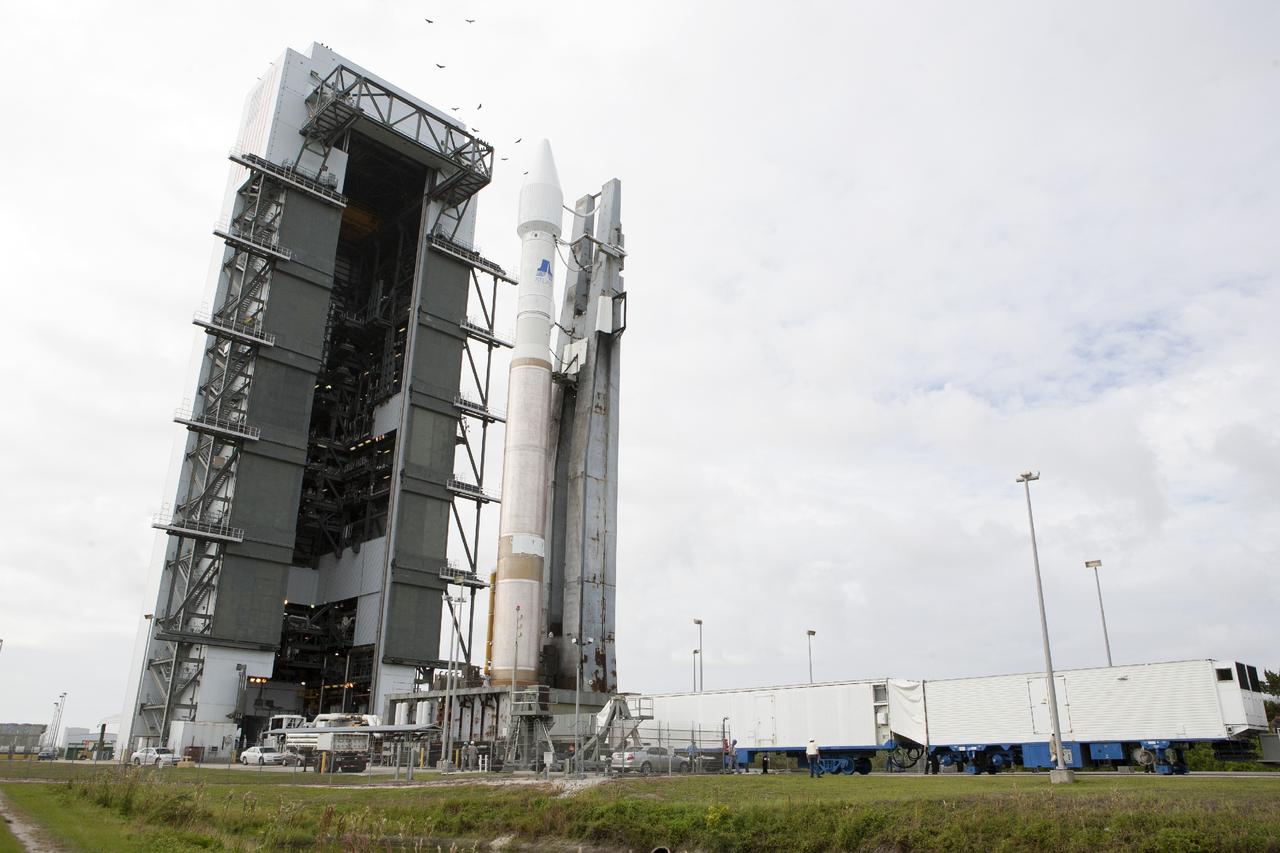
CAPE CANAVERAL, Fla. -- The United Launch Alliance Atlas V rocket carrying NASA’s Mars Atmosphere and Volatile EvolutioN, or MAVEN, spacecraft rolls out of the Vertical Integration Facility on its way to Space Launch Complex 41 on Cape Canaveral Air Force Station in Florida. Rollout began on schedule with first motion at 9:57 a.m. Launch is scheduled for Nov. 18 during a window that extends from 1:28 to 3:28 p.m. EST. Once positioned in orbit above the Red Planet, MAVEN will study its upper atmosphere in unprecedented detail. For more information, visit: http://www.nasa.gov/mission_pages/maven/main/index.html. Photo credit: NASA/Kim Shiflett
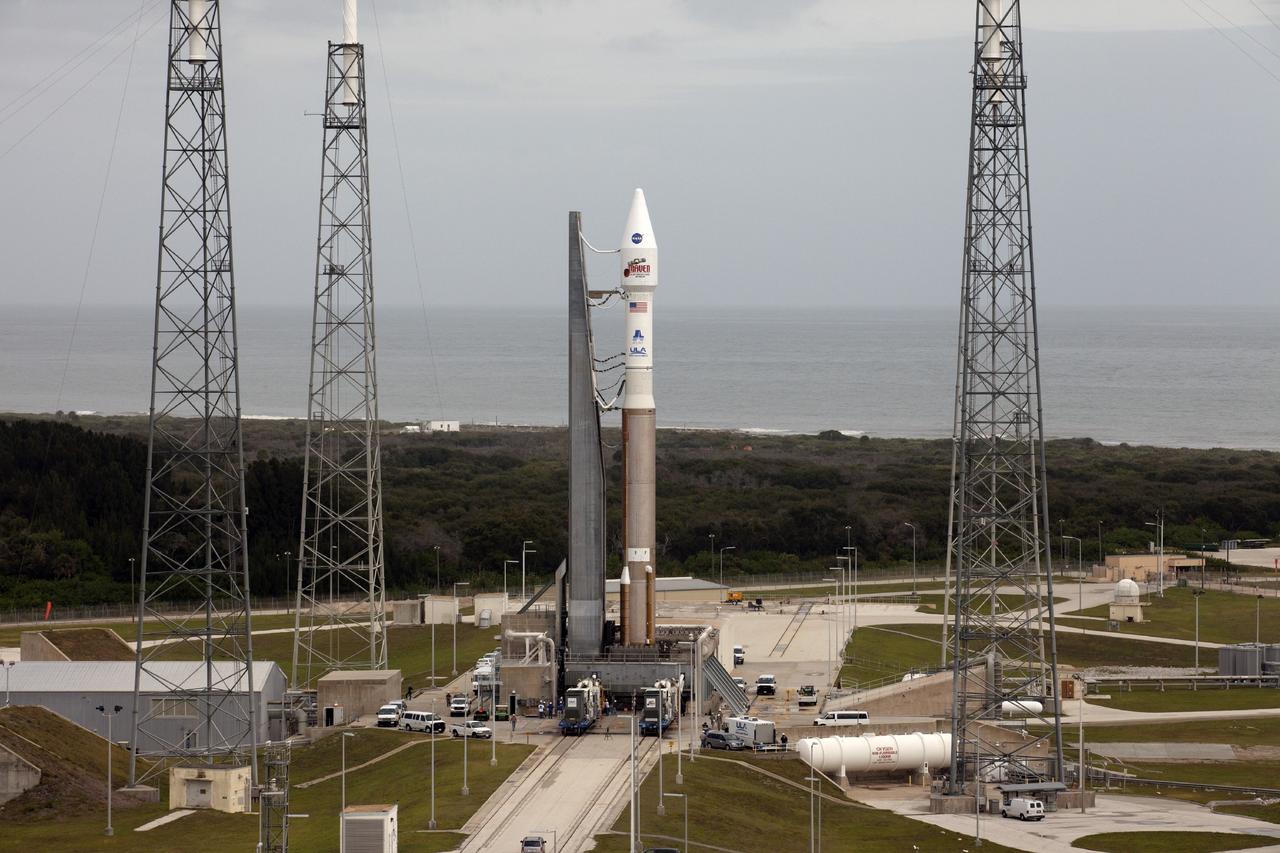
CAPE CANAVERAL, Fla. -- At Cape Canaveral Air Force Station in Florida, a United Launch Alliance Atlas V rocket is poised for liftoff of NASA’s Mars Atmosphere and Volatile EvolutioN, or MAVEN, spacecraft on Space Launch Complex 41. The vehicle was secured on the pad at 10:35 a.m. EST. All prelaunch work is complete except spacecraft battery charging, which will be underway until the launch countdown picks up Nov. 18 at 6:28 a.m. Launch is scheduled for Nov. 18 during a window that extends from 1:28 to 3:28 p.m. Once positioned in orbit above the Red Planet, MAVEN will study its upper atmosphere in unprecedented detail. For more information, visit: http://www.nasa.gov/mission_pages/maven/main/index.html. Photo credit: NASA/Kim Shiflett
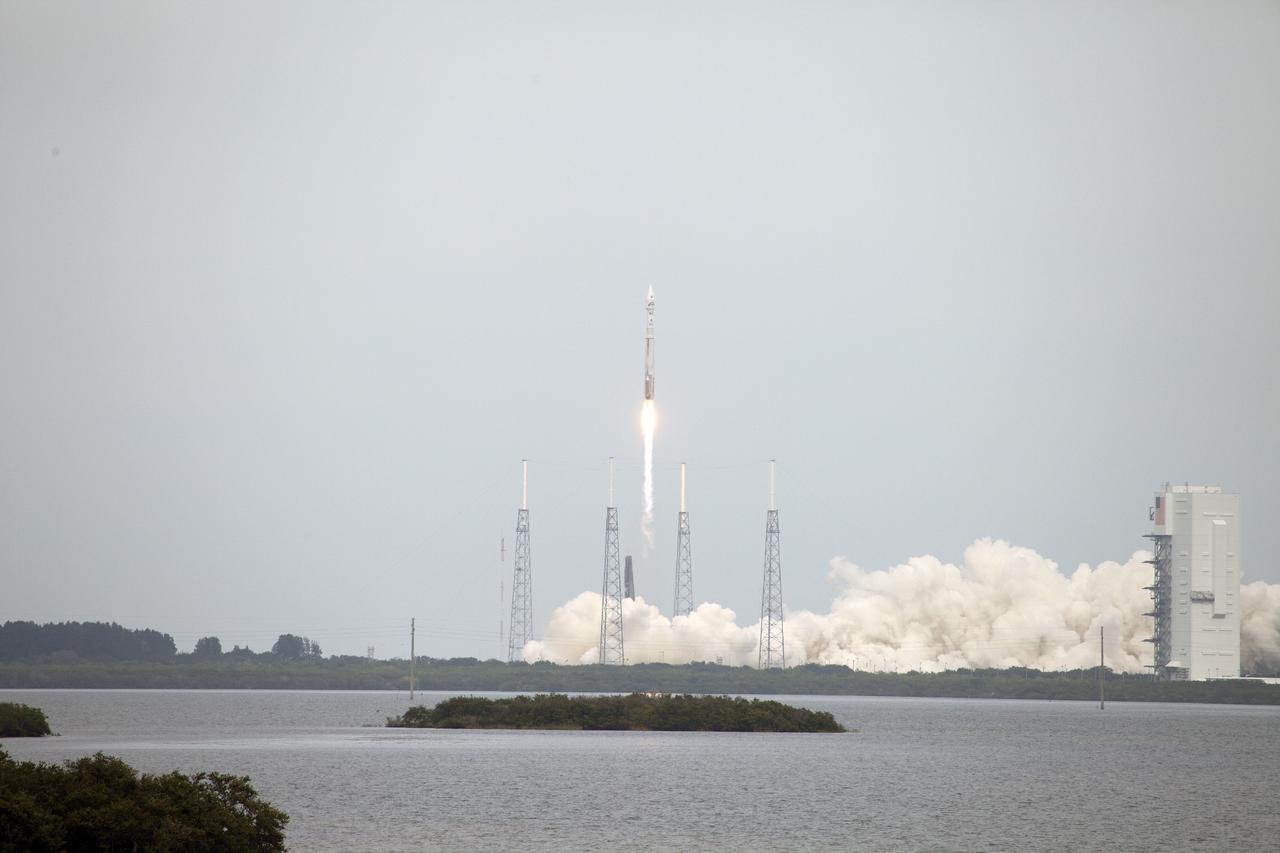
CAPE CANAVERAL, Fla. -- NASA’s Mars Atmosphere and Volatile EvolutioN, or MAVEN, spacecraft begins its 10-month journey to Mars, launching atop a United Launch Alliance Atlas V rocket at 1:28 p.m. EST from Space Launch Complex 41 on Cape Canaveral Air Force Station in Florida. Launch was on schedule Nov. 18 at the opening of a two-hour launch window. After a 10-month journey to the Red Planet, MAVEN will study its upper atmosphere in unprecedented detail from orbit above the planet. Built by Lockheed Martin in Littleton, Colo., MAVEN will arrive at Mars in September 2014 and will be inserted into an elliptical orbit with a high point of 3,900 miles, swooping down to as close as 93 miles above the planet's surface. For more information, visit: http://www.nasa.gov/mission_pages/maven/main/index.html. Photo credit: NASA/Dan Casper
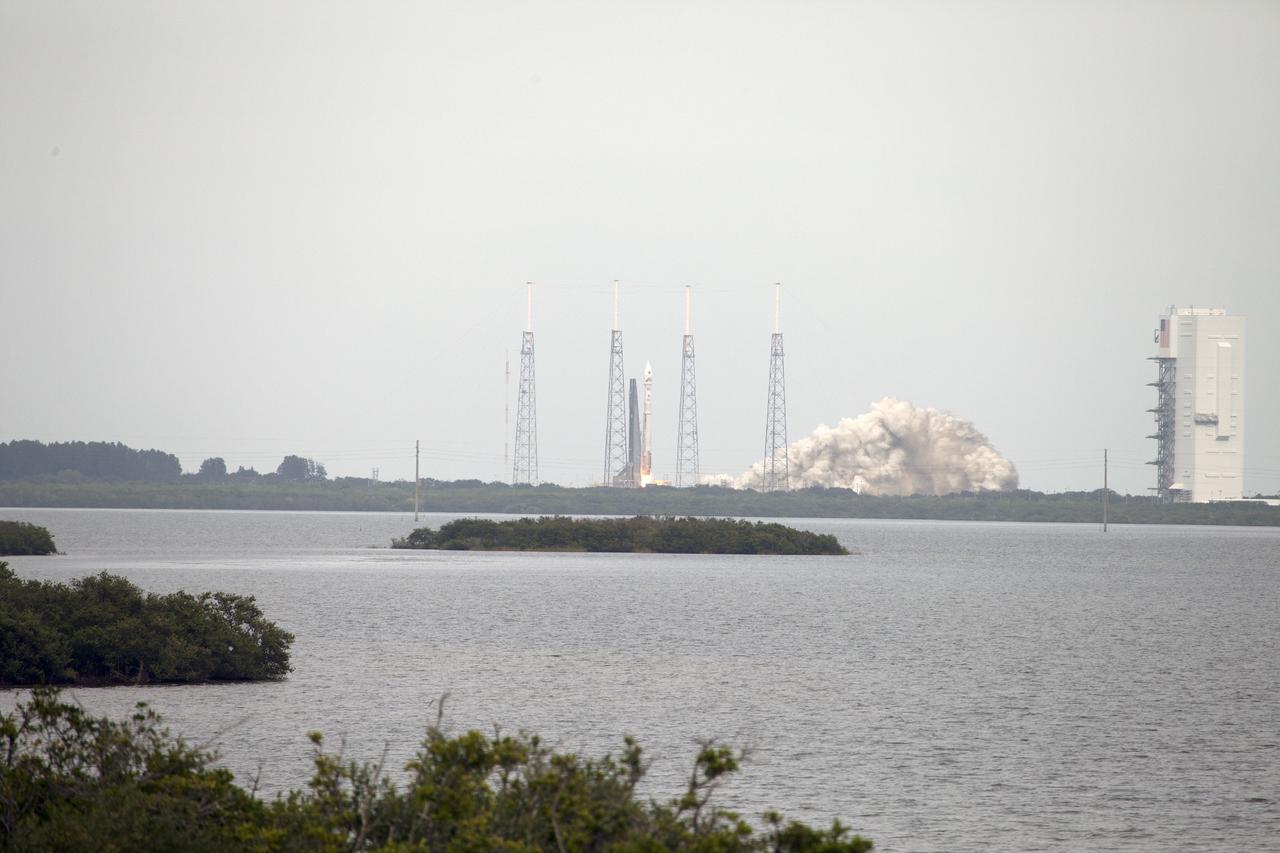
CAPE CANAVERAL, Fla. -- The engine ignites under the United Launch Alliance Atlas V rocket, lifting NASA's Mars Atmosphere and Volatile EvolutioN, or MAVEN, spacecraft off Space Launch Complex 41 at Cape Canaveral Air Force Station in Florida. Launch was on schedule at 1:28 p.m. EST Nov. 18 at the opening of a two-hour launch window. After a 10-month journey to the Red Planet, MAVEN will study its upper atmosphere in unprecedented detail from orbit above the planet. Built by Lockheed Martin in Littleton, Colo., MAVEN will arrive at Mars in September 2014 and will be inserted into an elliptical orbit with a high point of 3,900 miles, swooping down to as close as 93 miles above the planet's surface. For more information, visit: http://www.nasa.gov/mission_pages/maven/main/index.html. Photo credit: NASA/Dan Casper
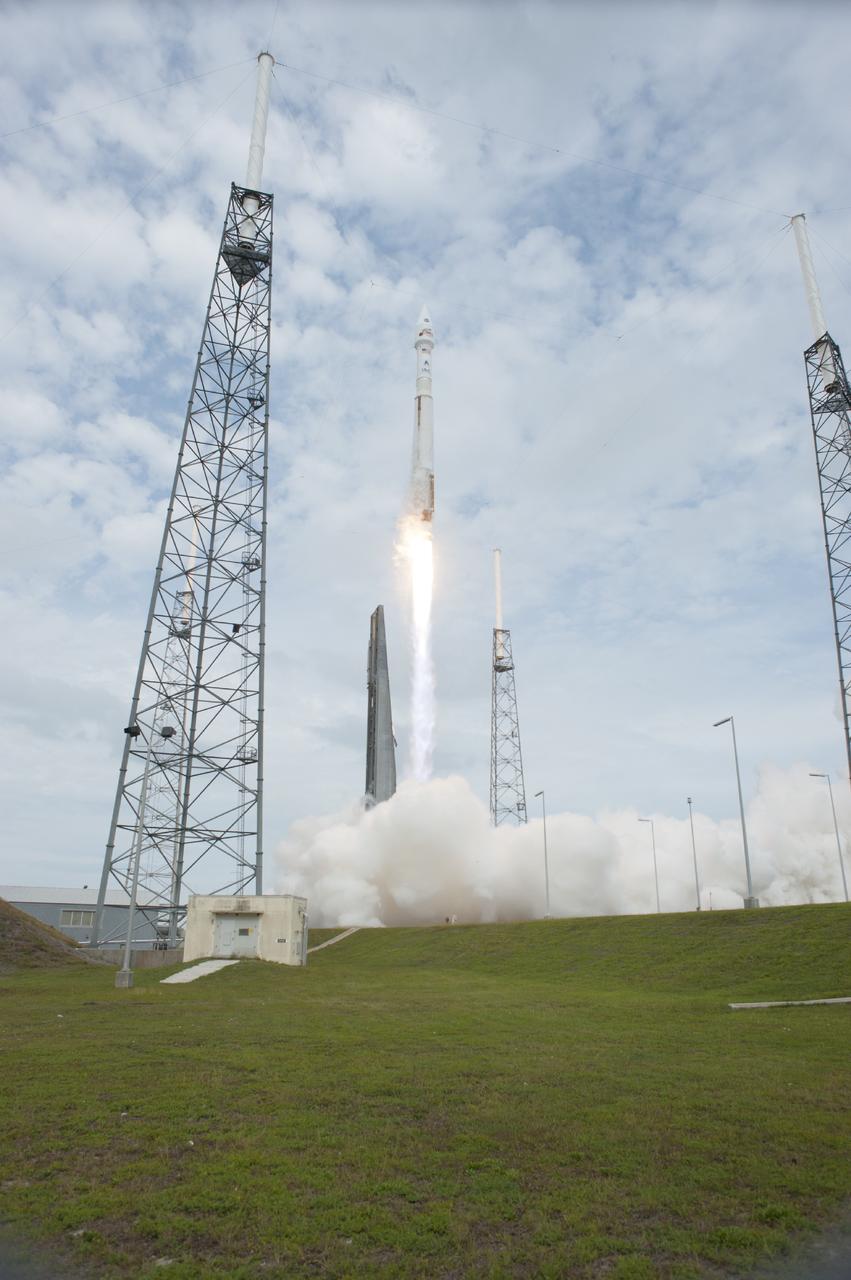
CAPE CANAVERAL, Fla. -- The United Launch Alliance Atlas V rocket carrying NASA's Mars Atmosphere and Volatile EvolutioN, or MAVEN, spacecraft lifts off Space Launch Complex 41 on Cape Canaveral Air Force Station in Florida. Launch was on schedule at 1:28 p.m. EST Nov. 18 at the opening of a two-hour launch window. After a 10-month journey to the Red Planet, MAVEN will study its upper atmosphere in unprecedented detail from orbit above the planet. Built by Lockheed Martin in Littleton, Colo., MAVEN will arrive at Mars in September 2014 and will be inserted into an elliptical orbit with a high point of 3,900 miles, swooping down to as close as 93 miles above the planet's surface. For more information, visit: http://www.nasa.gov/mission_pages/maven/main/index.html. Photo credit: NASA/Tony Gray and Rick Wetherington
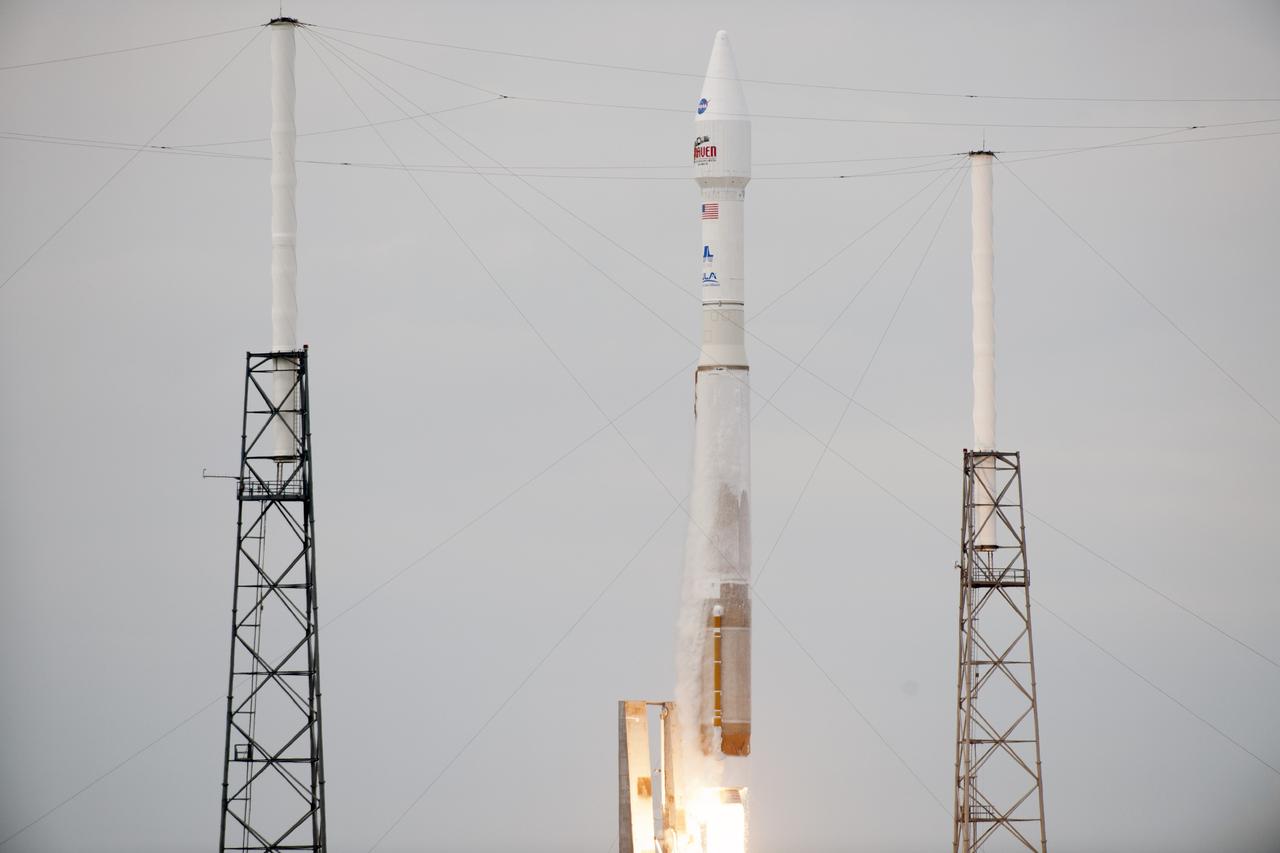
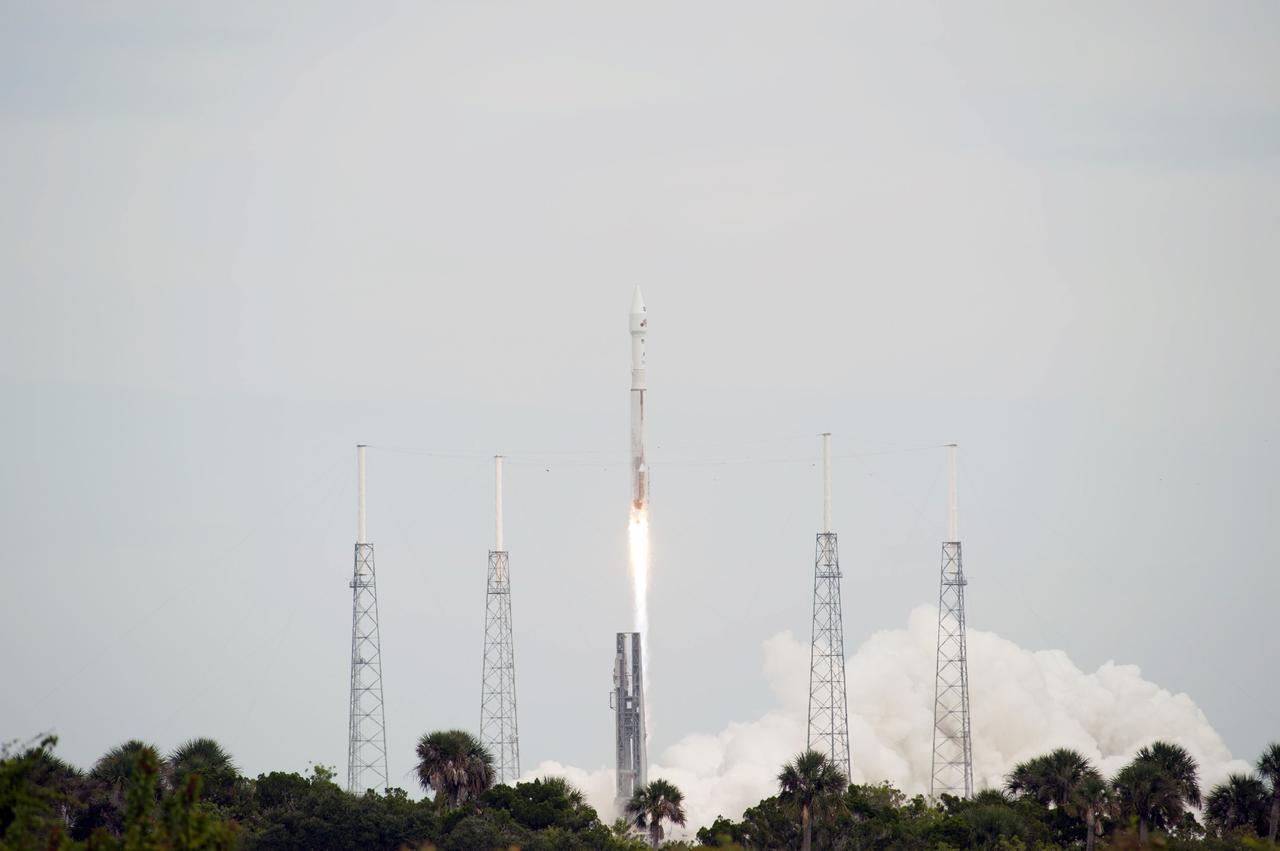
CAPE CANAVERAL, Fla. -- A United Launch Alliance Atlas V rocket lifts off past the lightning masts on Space Launch Complex 41 at Cape Canaveral Air Force Station in Florida, carrying NASA's Mars Atmosphere and Volatile EvolutioN, or MAVEN, spacecraft. Launch was on schedule at 1:28 p.m. EST Nov. 18 at the opening of a two-hour launch window. After a 10-month journey to the Red Planet, MAVEN will study its upper atmosphere in unprecedented detail from orbit above the planet. Built by Lockheed Martin in Littleton, Colo., MAVEN will arrive at Mars in September 2014 and will be inserted into an elliptical orbit with a high point of 3,900 miles, swooping down to as close as 93 miles above the planet's surface. For more information, visit: http://www.nasa.gov/mission_pages/maven/main/index.html. Photo credit: NASA/Rusty Backer
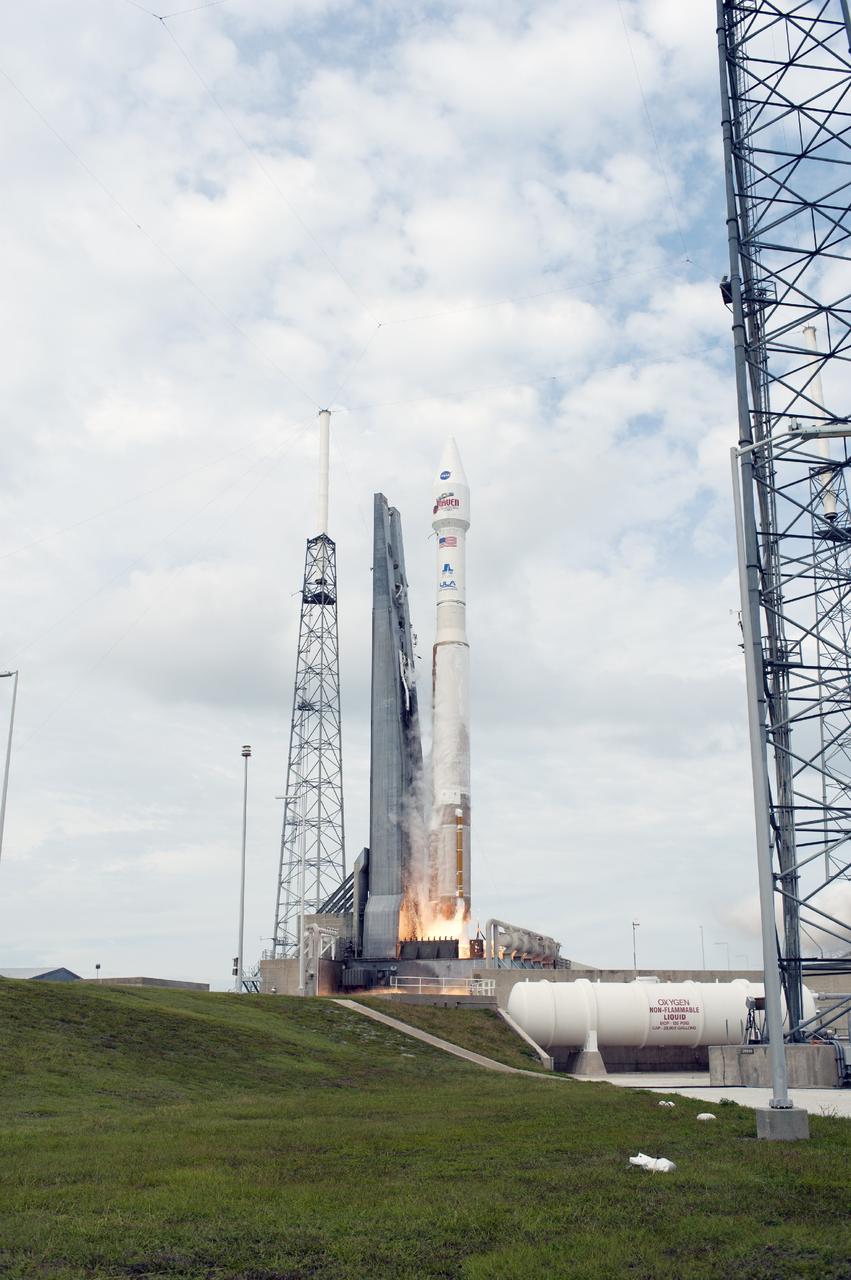
CAPE CANAVERAL, Fla. -- The engine ignites under the United Launch Alliance Atlas V rocket delivering NASA's Mars Atmosphere and Volatile EvolutioN, or MAVEN, spacecraft from Space Launch Complex 41, on Cape Canaveral Air Force Station in Florida, to orbit. Launch was on schedule at 1:28 p.m. EST Nov. 18 at the opening of a two-hour launch window. After a 10-month journey to the Red Planet, MAVEN will study its upper atmosphere in unprecedented detail from orbit above the planet. Built by Lockheed Martin in Littleton, Colo., MAVEN will arrive at Mars in September 2014 and will be inserted into an elliptical orbit with a high point of 3,900 miles, swooping down to as close as 93 miles above the planet's surface. For more information, visit: http://www.nasa.gov/mission_pages/maven/main/index.html. Photo credit: NASA/Tony Gray and Rick Wetherington
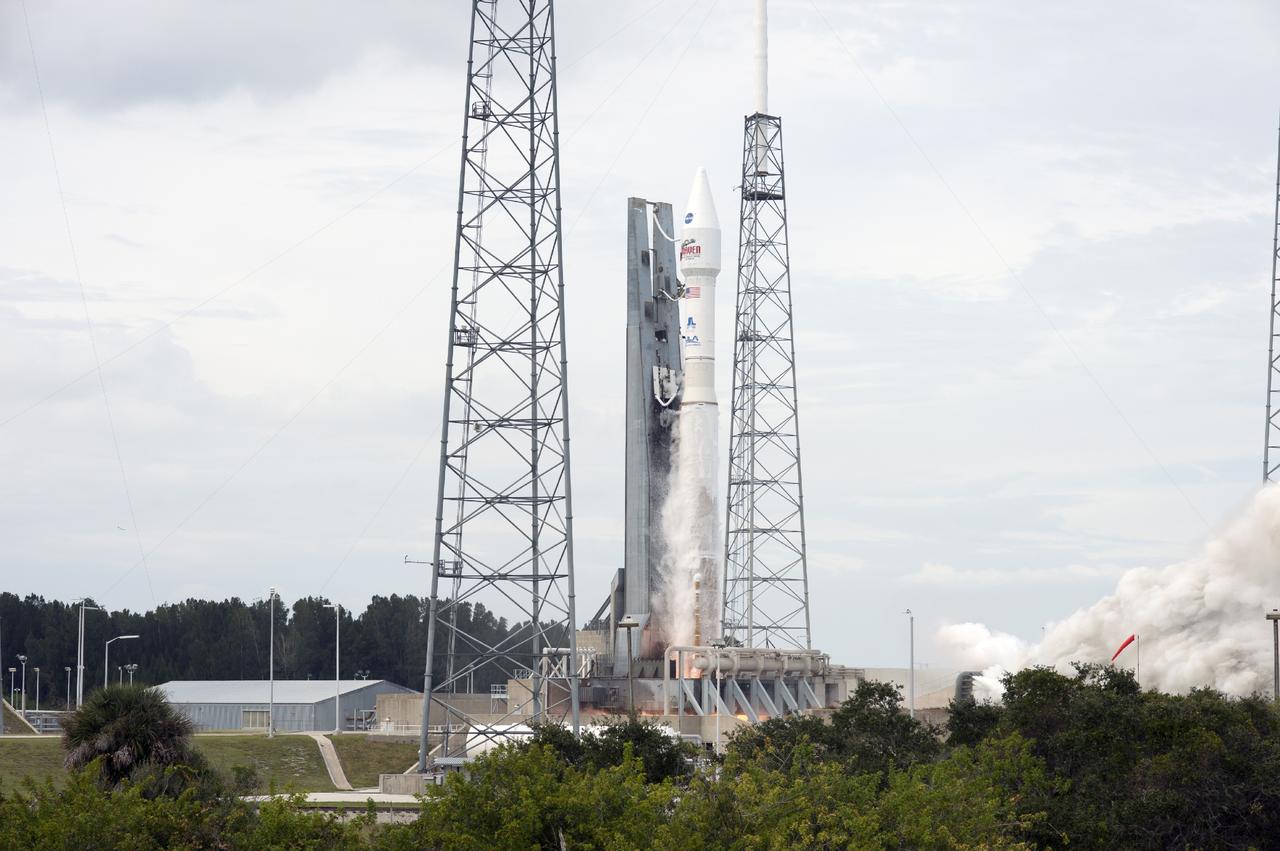
CAPE CANAVERAL, Fla. -- An exhaust plume forms at Space Launch Complex 41 on Cape Canaveral Air Force Station in Florida as the engine ignites under the United Launch Alliance Atlas V rocket carrying NASA's Mars Atmosphere and Volatile EvolutioN, or MAVEN, spacecraft into orbit. Launch was on schedule at 1:28 p.m. EST Nov. 18 at the opening of a two-hour launch window. After a 10-month journey to the Red Planet, MAVEN will study its upper atmosphere in unprecedented detail from orbit above the planet. Built by Lockheed Martin in Littleton, Colo., MAVEN will arrive at Mars in September 2014 and will be inserted into an elliptical orbit with a high point of 3,900 miles, swooping down to as close as 93 miles above the planet's surface. For more information, visit: http://www.nasa.gov/mission_pages/maven/main/index.html. Photo credit: NASA/Tony Gray and Rick Wetherington

CAPE CANAVERAL, Fla. -- David Mitchell, NASA MAVEN project manager at the Goddard Space Flight Center in Greenbelt, Md., participates in a post-launch news conference in NASA's Press Site TV auditorium following the successful launch of NASA’s Mars Atmosphere and Volatile EvolutioN, or MAVEN, spacecraft. Launch was on schedule at 1:28 p.m. EST Nov. 18 at the opening of a two-hour launch window. After a 10-month journey to the Red Planet, MAVEN will study its upper atmosphere in unprecedented detail from orbit above the planet. Built by Lockheed Martin in Littleton, Colo., MAVEN will arrive at Mars in September 2014 and will be inserted into an elliptical orbit with a high point of 3,900 miles, swooping down to as close as 93 miles above the planet's surface. For more information, visit: http://www.nasa.gov/mission_pages/maven/main/index.html. Photo credit: NASA/Kim Shiflett
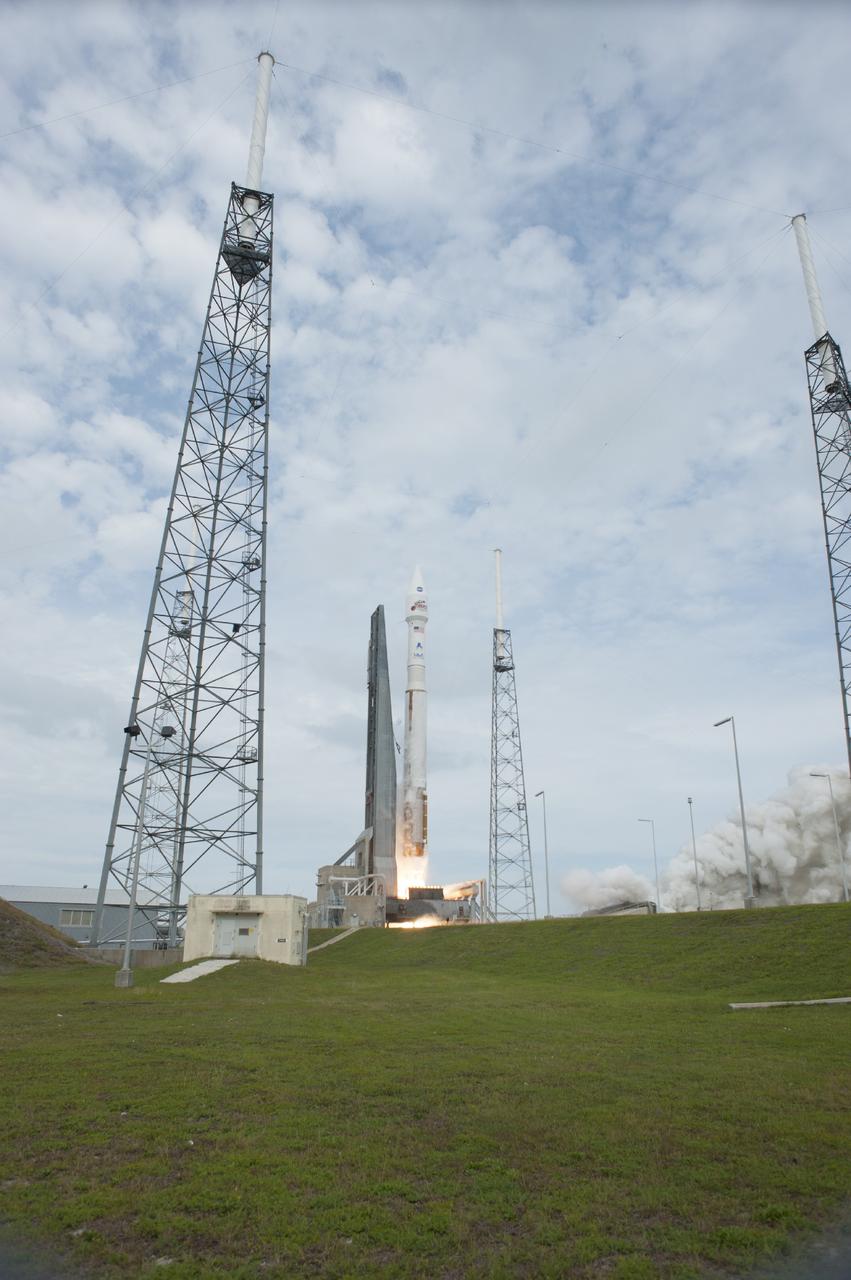
CAPE CANAVERAL, Fla. -- The engine ignites under the United Launch Alliance Atlas V rocket, lifting NASA's Mars Atmosphere and Volatile EvolutioN, or MAVEN, spacecraft off Space Launch Complex 41 on Cape Canaveral Air Force Station in Florida.. Launch was on schedule at 1:28 p.m. EST Nov. 18 at the opening of a two-hour launch window. After a 10-month journey to the Red Planet, MAVEN will study its upper atmosphere in unprecedented detail from orbit above the planet. Built by Lockheed Martin in Littleton, Colo., MAVEN will arrive at Mars in September 2014 and will be inserted into an elliptical orbit with a high point of 3,900 miles, swooping down to as close as 93 miles above the planet's surface. For more information, visit: http://www.nasa.gov/mission_pages/maven/main/index.html. Photo credit: NASA/Tony Gray and Rick Wetherington
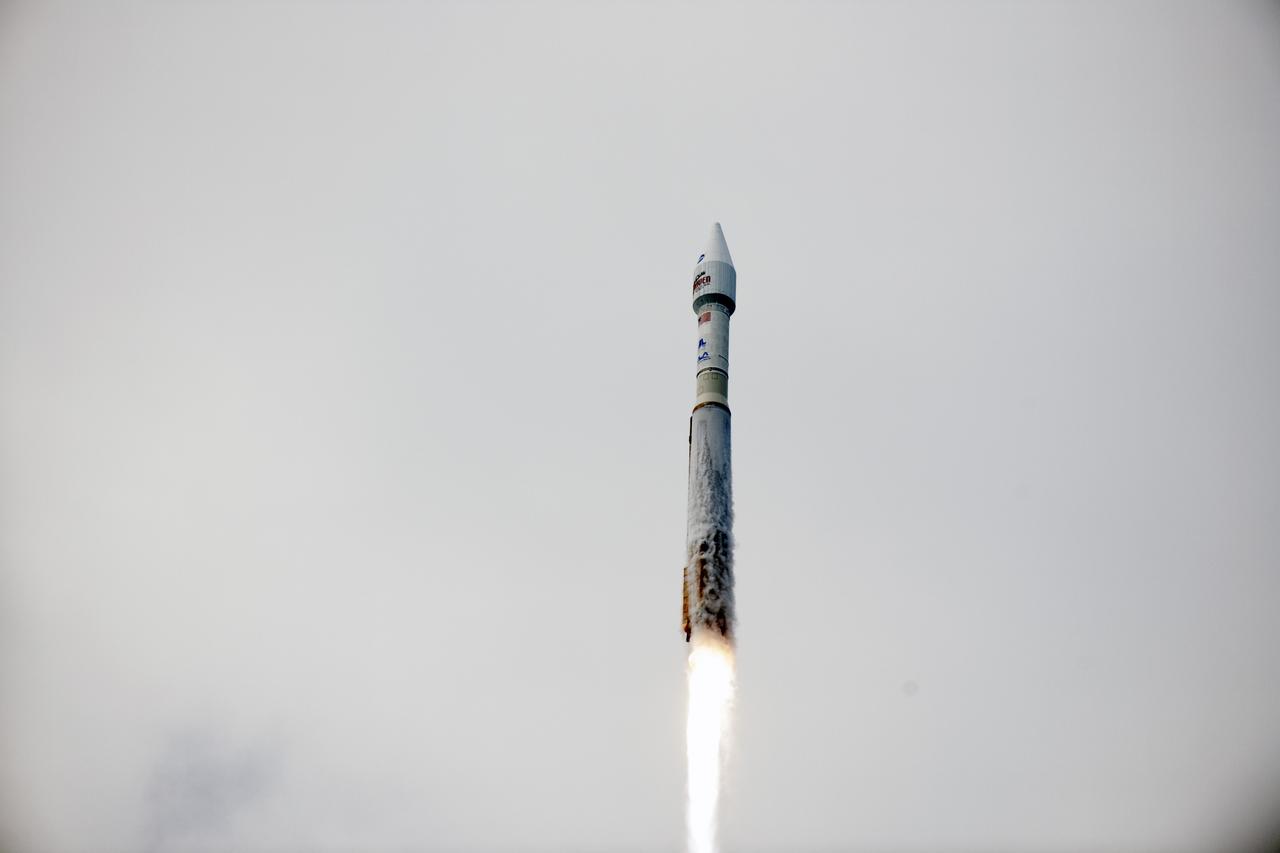
CAPE CANAVERAL, Fla. -- A United Launch Alliance Atlas V rocket lifts off into the clouds over Space Launch Complex 41 at Cape Canaveral Air Force Station in Florida, carrying NASA's Mars Atmosphere and Volatile EvolutioN, or MAVEN, spacecraft. Launch was on schedule at 1:28 p.m. EST Nov. 18 at the opening of a two-hour launch window. After a 10-month journey to the Red Planet, MAVEN will study its upper atmosphere in unprecedented detail from orbit above the planet. Built by Lockheed Martin in Littleton, Colo., MAVEN will arrive at Mars in September 2014 and will be inserted into an elliptical orbit with a high point of 3,900 miles, swooping down to as close as 93 miles above the planet's surface. For more information, visit: http://www.nasa.gov/mission_pages/maven/main/index.html. Photo credit: NASA/Rusty Backer
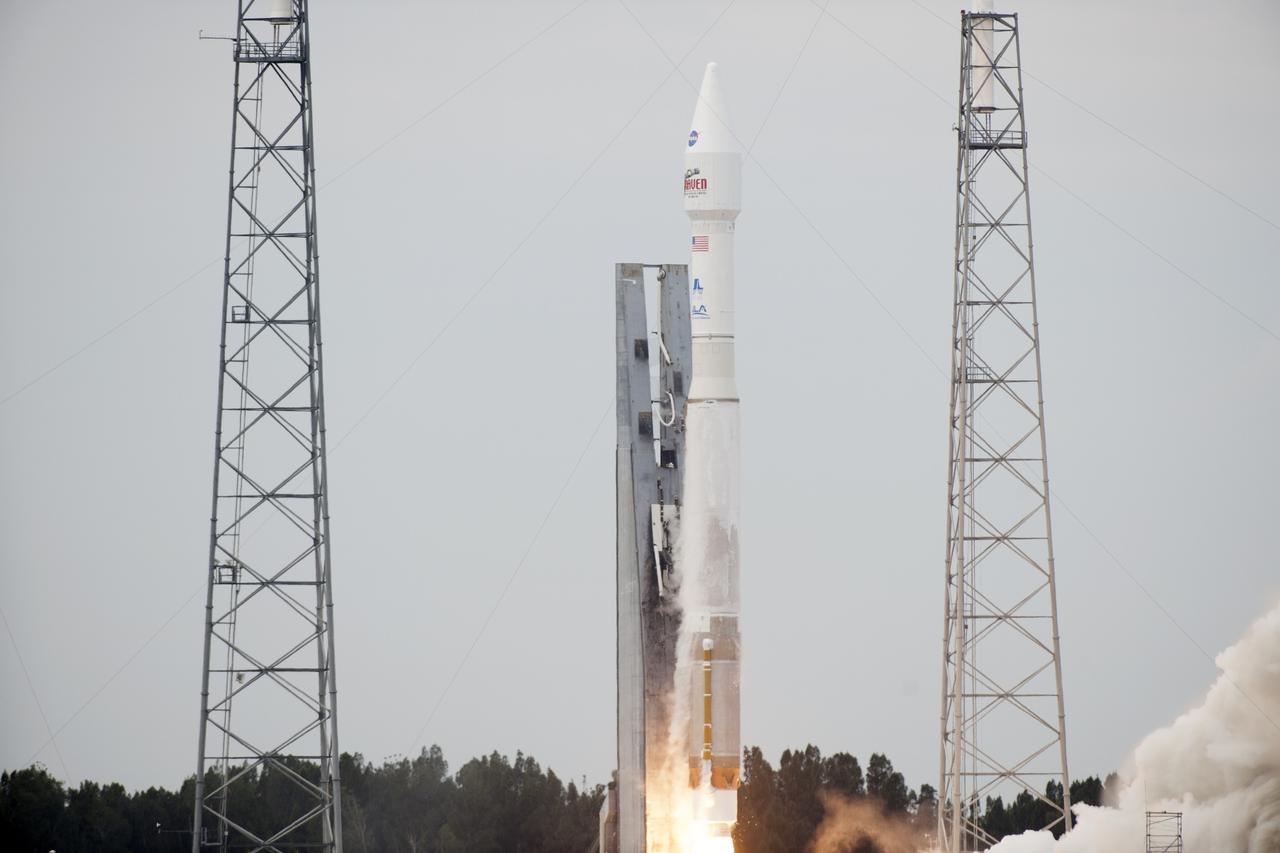
CAPE CANAVERAL, Fla. -- A United Launch Alliance Atlas V rocket lifts off Space Launch Complex 41 at Cape Canaveral Air Force Station in Florida, carrying NASA's Mars Atmosphere and Volatile EvolutioN, or MAVEN, spacecraft. Launch was on schedule at 1:28 p.m. EST Nov. 18 at the opening of a two-hour launch window. After a 10-month journey to the Red Planet, MAVEN will study its upper atmosphere in unprecedented detail from orbit above the planet. Built by Lockheed Martin in Littleton, Colo., MAVEN will arrive at Mars in September 2014 and will be inserted into an elliptical orbit with a high point of 3,900 miles, swooping down to as close as 93 miles above the planet's surface. For more information, visit: http://www.nasa.gov/mission_pages/maven/main/index.html. Photo credit: NASA/Rusty Backer
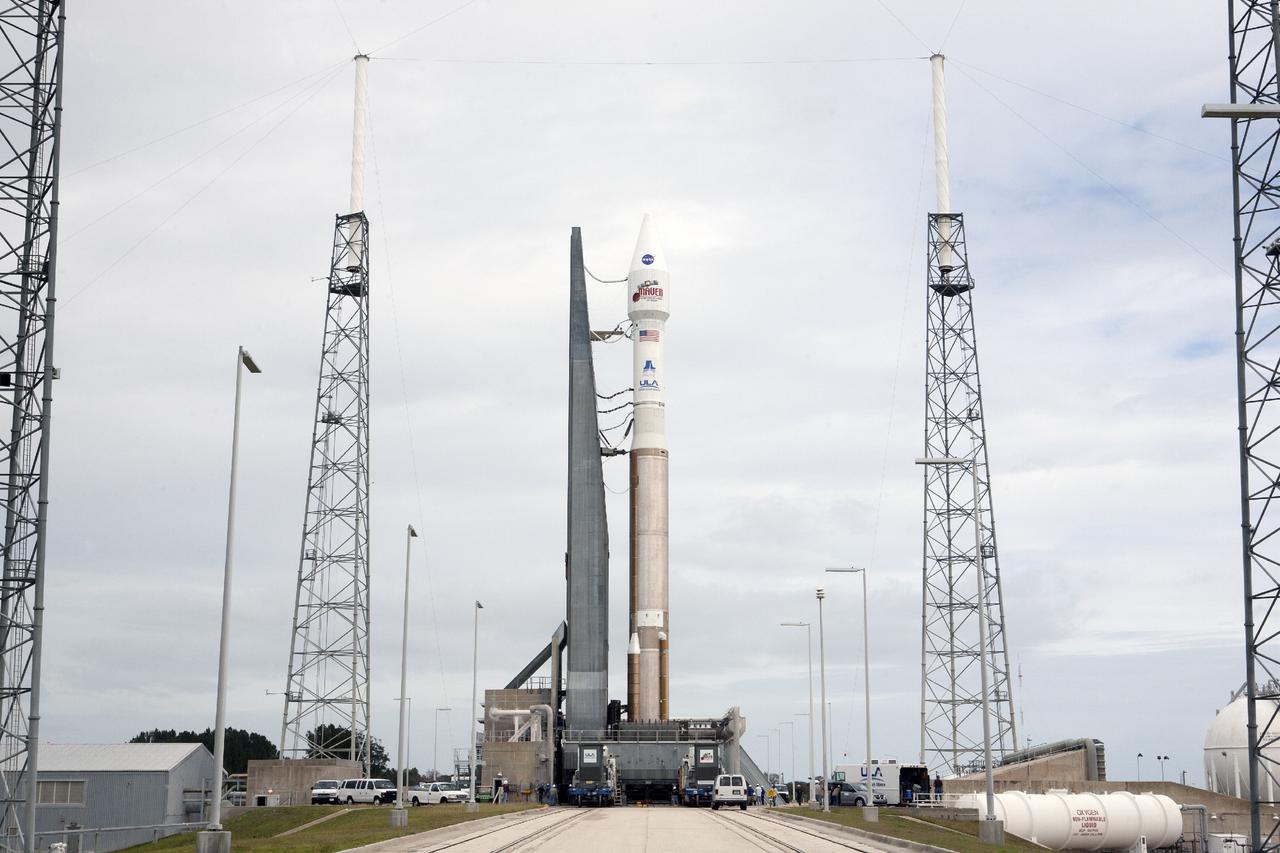
CAPE CANAVERAL, Fla. -- The United Launch Alliance Atlas V rocket carrying NASA’s Mars Atmosphere and Volatile EvolutioN, or MAVEN, spacecraft arrives at Space Launch Complex 41 on Cape Canaveral Air Force Station in Florida. The 20-minute journey from the Vertical Integration Facility began on schedule with first motion at 9:57 a.m. EST. Launch is scheduled for Nov. 18 during a window that extends from 1:28 to 3:28 p.m. Once positioned in orbit above the Red Planet, MAVEN will study its upper atmosphere in unprecedented detail. For more information, visit: http://www.nasa.gov/mission_pages/maven/main/index.html. Photo credit: NASA/Kim Shiflett
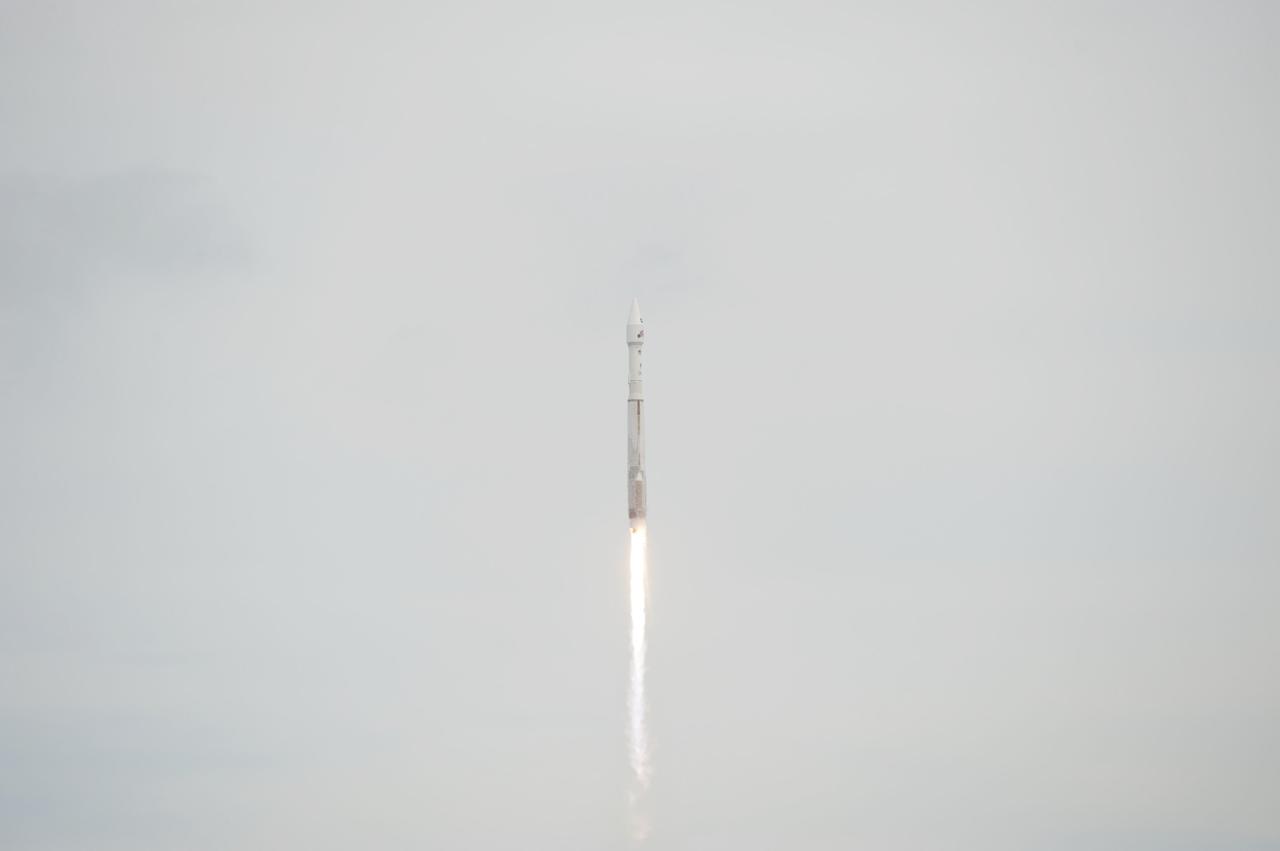
CAPE CANAVERAL, Fla. -- A United Launch Alliance Atlas V rocket lifts off through the clouds over Space Launch Complex 41 at Cape Canaveral Air Force Station in Florida, carrying NASA's Mars Atmosphere and Volatile EvolutioN, or MAVEN, spacecraft. Launch was on schedule at 1:28 p.m. EST Nov. 18 at the opening of a two-hour launch window. After a 10-month journey to the Red Planet, MAVEN will study its upper atmosphere in unprecedented detail from orbit above the planet. Built by Lockheed Martin in Littleton, Colo., MAVEN will arrive at Mars in September 2014 and will be inserted into an elliptical orbit with a high point of 3,900 miles, swooping down to as close as 93 miles above the planet's surface. For more information, visit: http://www.nasa.gov/mission_pages/maven/main/index.html. Photo credit: NASA/George Roberts
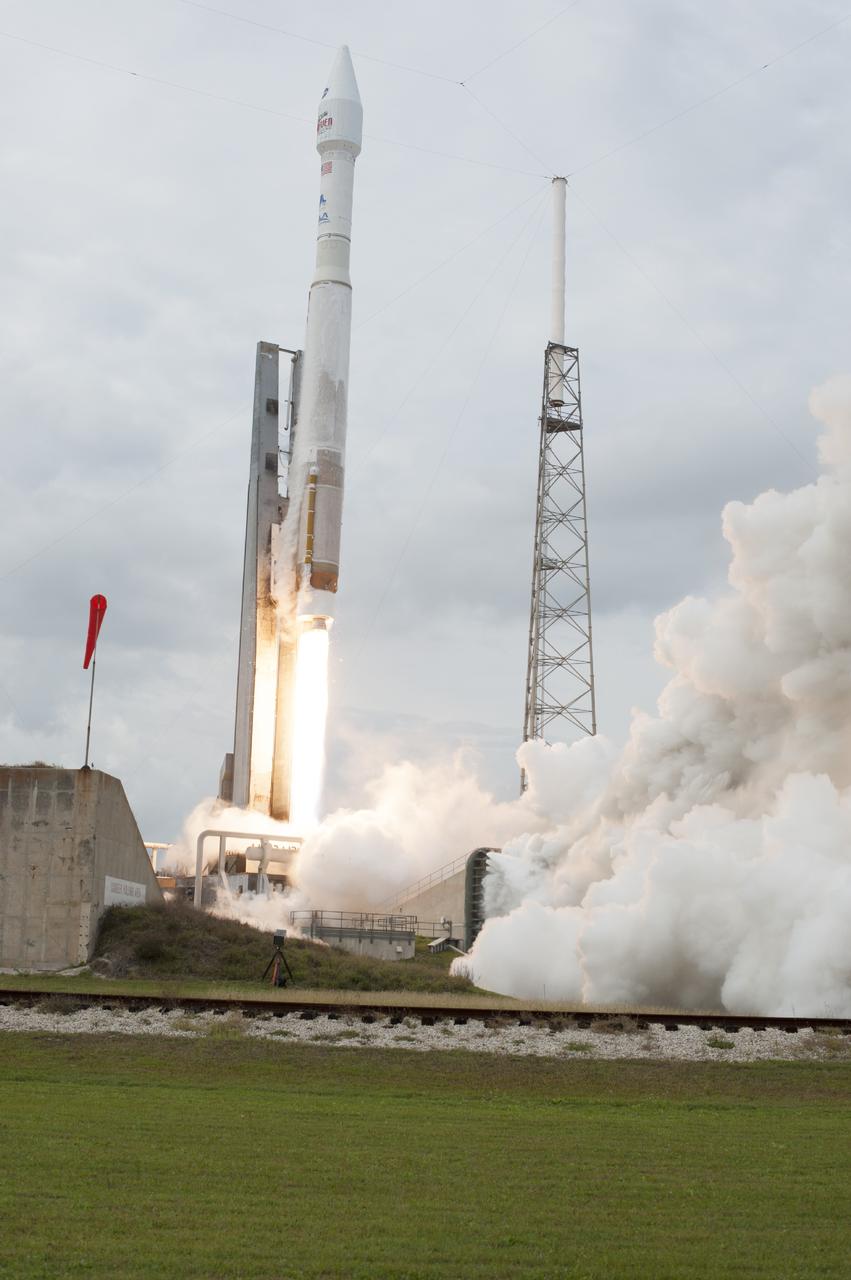
CAPE CANAVERAL, Fla. -- The United Launch Alliance Atlas V rocket carrying NASA's Mars Atmosphere and Volatile EvolutioN, or MAVEN, spacecraft rises off Space Launch Complex 41 on Cape Canaveral Air Force Station in Florida. Launch was on schedule at 1:28 p.m. EST Nov. 18 at the opening of a two-hour launch window. After a 10-month journey to the Red Planet, MAVEN will study its upper atmosphere in unprecedented detail from orbit above the planet. Built by Lockheed Martin in Littleton, Colo., MAVEN will arrive at Mars in September 2014 and will be inserted into an elliptical orbit with a high point of 3,900 miles, swooping down to as close as 93 miles above the planet's surface. For more information, visit: http://www.nasa.gov/mission_pages/maven/main/index.html. Photo credit: NASA/Tony Gray and Rick Wetherington
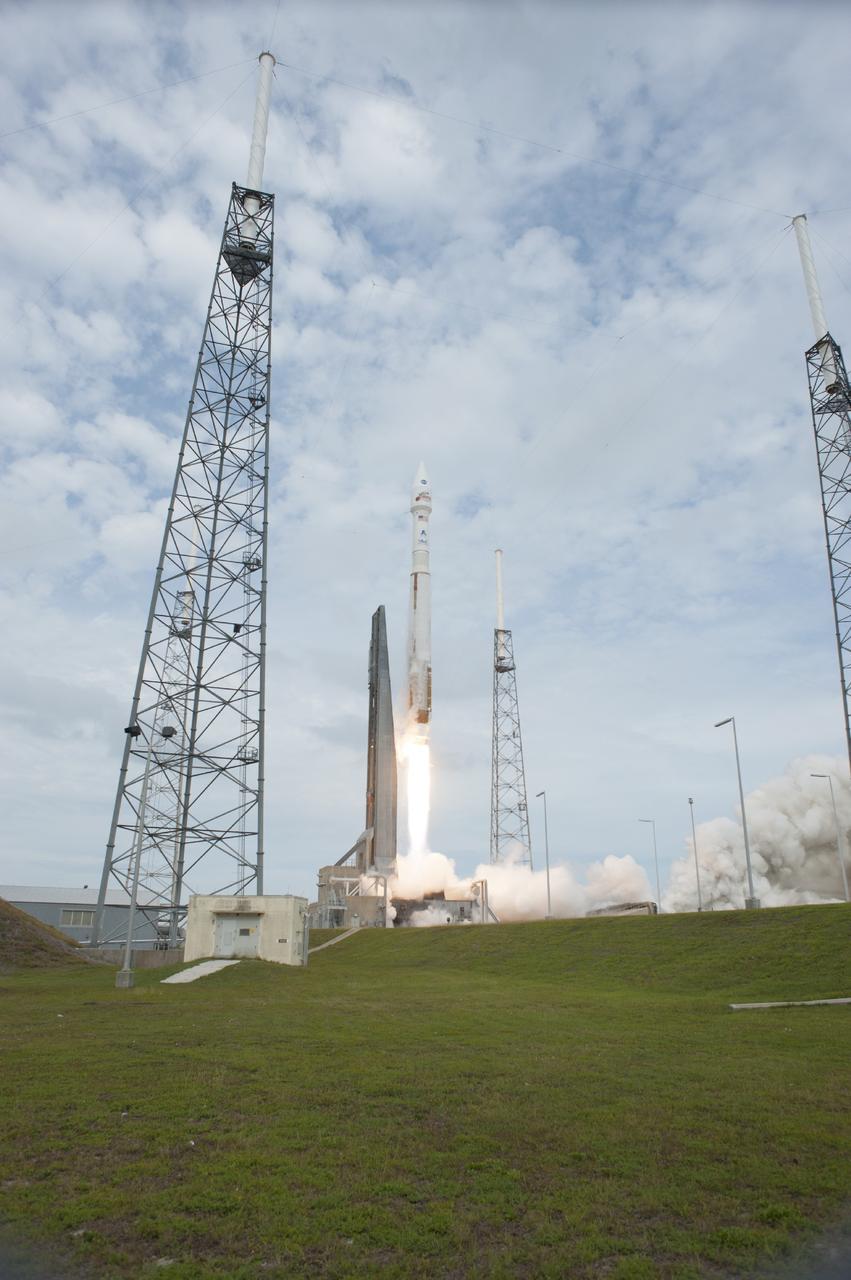
CAPE CANAVERAL, Fla. -- The United Launch Alliance Atlas V rocket carrying NASA's Mars Atmosphere and Volatile EvolutioN, or MAVEN, spacecraft rises off Space Launch Complex 41 on Cape Canaveral Air Force Station in Florida. Launch was on schedule at 1:28 p.m. EST Nov. 18 at the opening of a two-hour launch window. After a 10-month journey to the Red Planet, MAVEN will study its upper atmosphere in unprecedented detail from orbit above the planet. Built by Lockheed Martin in Littleton, Colo., MAVEN will arrive at Mars in September 2014 and will be inserted into an elliptical orbit with a high point of 3,900 miles, swooping down to as close as 93 miles above the planet's surface. For more information, visit: http://www.nasa.gov/mission_pages/maven/main/index.html. Photo credit: NASA/Tony Gray and Rick Wetherington
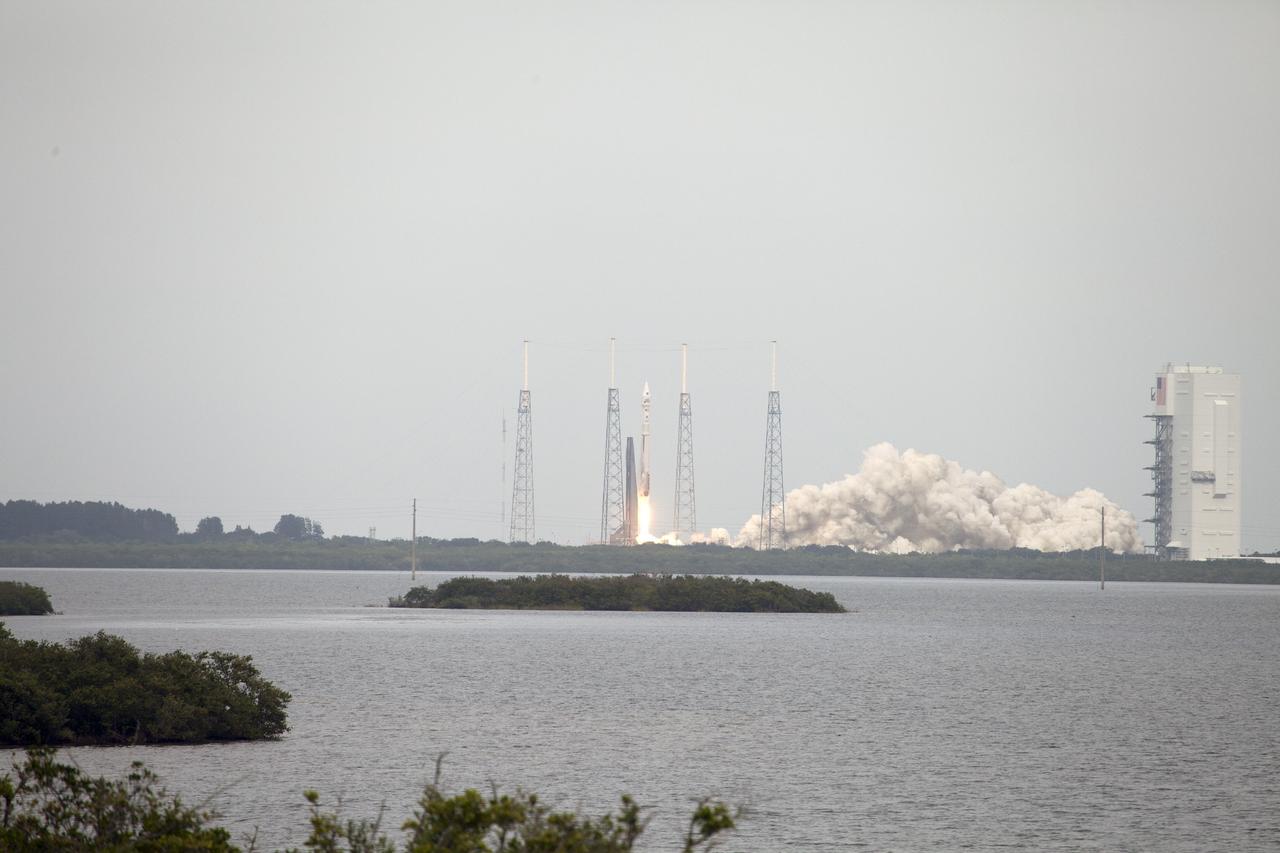
CAPE CANAVERAL, Fla. -- The engine ignites under the United Launch Alliance Atlas V rocket, lifting NASA's Mars Atmosphere and Volatile EvolutioN, or MAVEN, spacecraft off Space Launch Complex 41 at Cape Canaveral Air Force Station in Florida. Launch was on schedule at 1:28 p.m. EST Nov. 18 at the opening of a two-hour launch window. After a 10-month journey to the Red Planet, MAVEN will study its upper atmosphere in unprecedented detail from orbit above the planet. Built by Lockheed Martin in Littleton, Colo., MAVEN will arrive at Mars in September 2014 and will be inserted into an elliptical orbit with a high point of 3,900 miles, swooping down to as close as 93 miles above the planet's surface. For more information, visit: http://www.nasa.gov/mission_pages/maven/main/index.html. Photo credit: NASA/Dan Casper
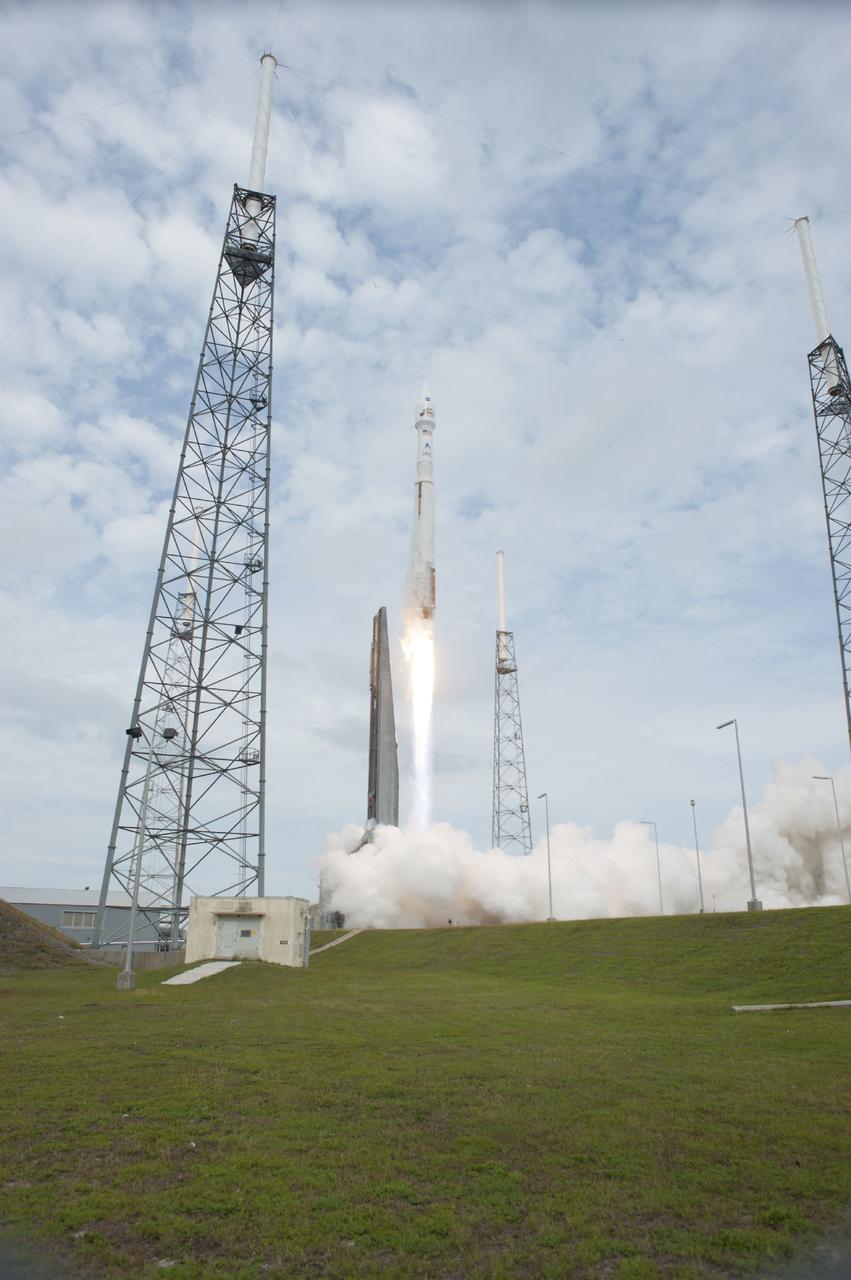
CAPE CANAVERAL, Fla. -- The United Launch Alliance Atlas V rocket carrying NASA's Mars Atmosphere and Volatile EvolutioN, or MAVEN, spacecraft rises off Space Launch Complex 41 on Cape Canaveral Air Force Station in Florida. Launch was on schedule at 1:28 p.m. EST Nov. 18 at the opening of a two-hour launch window. After a 10-month journey to the Red Planet, MAVEN will study its upper atmosphere in unprecedented detail from orbit above the planet. Built by Lockheed Martin in Littleton, Colo., MAVEN will arrive at Mars in September 2014 and will be inserted into an elliptical orbit with a high point of 3,900 miles, swooping down to as close as 93 miles above the planet's surface. For more information, visit: http://www.nasa.gov/mission_pages/maven/main/index.html. Photo credit: NASA/Tony Gray and Rick Wetherington
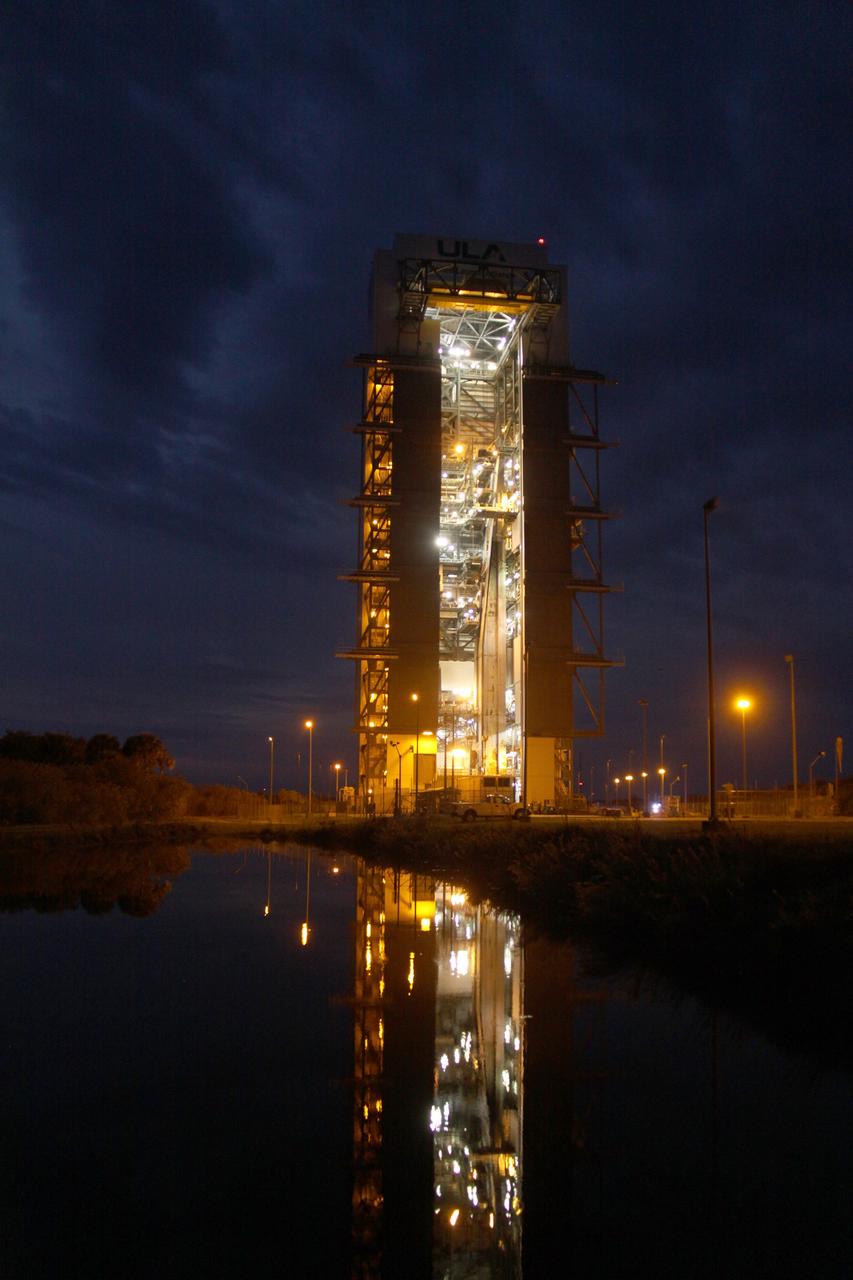
CAPE CANAVERAL, Fla. – Preparations are underway in the mobile service tower at Space Launch Complex 41 on Cape Canaveral Air Force Station in Florida for the arrival of the first stage of a United Launch Alliance Atlas V rocket from the Atlas Spaceflight Operations Center, or ASOC. The rocket will launch NASA's Magnetospheric Multiscale mission, or MMS. MMS will study the mystery of how magnetic fields around Earth connect and disconnect, explosively releasing energy via a process known a magnetic reconnection. MMS consists of four identical spacecraft that work together to provide the first three-dimensional view of this fundamental process, which occurs throughout the universe. Launch is set for March 12. To learn more about MMS, visit http://www.nasa.gov/mms. Photo credit: NASA/Jim Grossmann
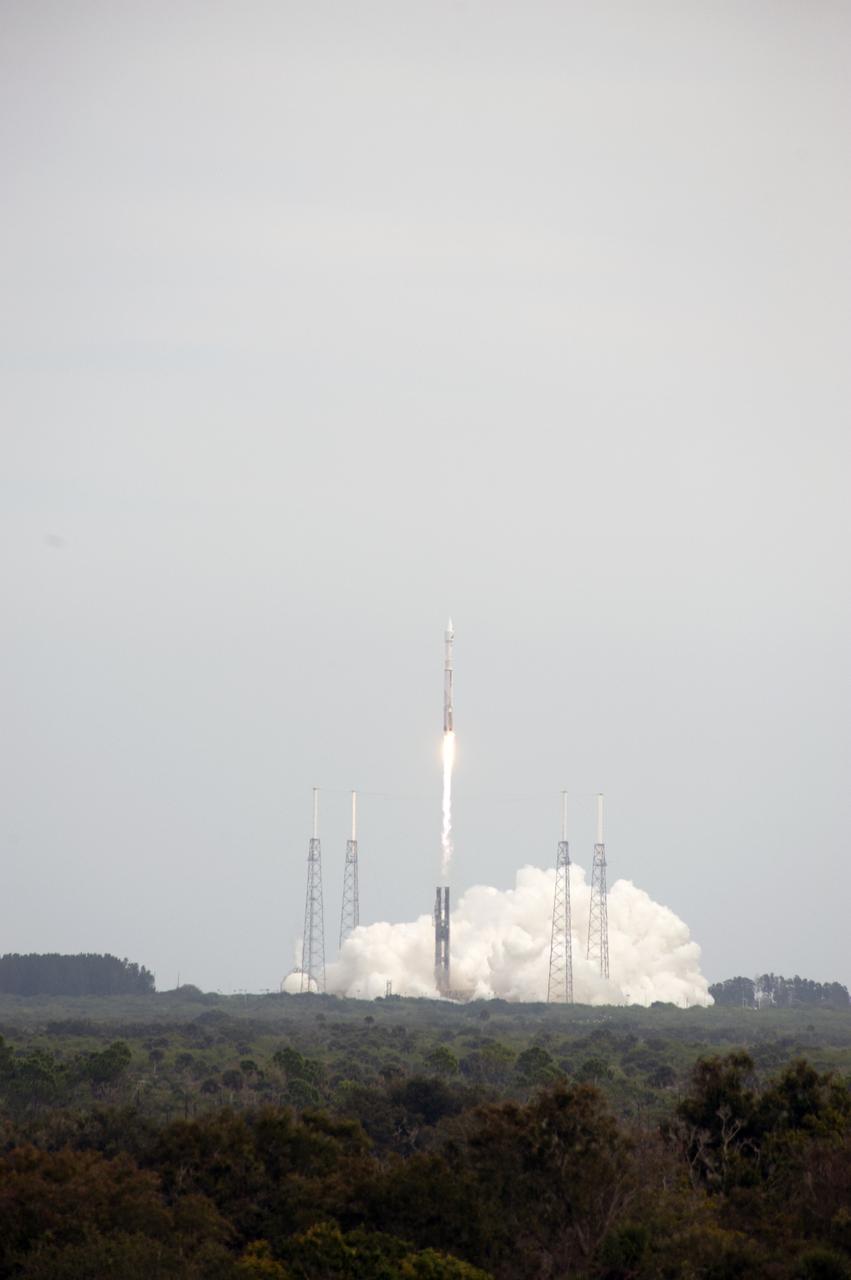
CAPE CANAVERAL, Fla. -- NASA’s Mars Atmosphere and Volatile EvolutioN, or MAVEN, spacecraft begins its 10-month journey to Mars, launching atop a United Launch Alliance Atlas V rocket at 1:28 p.m. EST from Space Launch Complex 41 on Cape Canaveral Air Force Station in Florida. Launch was on schedule Nov. 18 at the opening of a two-hour launch window. After a 10-month journey to the Red Planet, MAVEN will study its upper atmosphere in unprecedented detail from orbit above the planet. Built by Lockheed Martin in Littleton, Colo., MAVEN will arrive at Mars in September 2014 and will be inserted into an elliptical orbit with a high point of 3,900 miles, swooping down to as close as 93 miles above the planet's surface. For more information, visit: http://www.nasa.gov/mission_pages/maven/main/index.html. Photo credit: NASA/Carl Winebarger
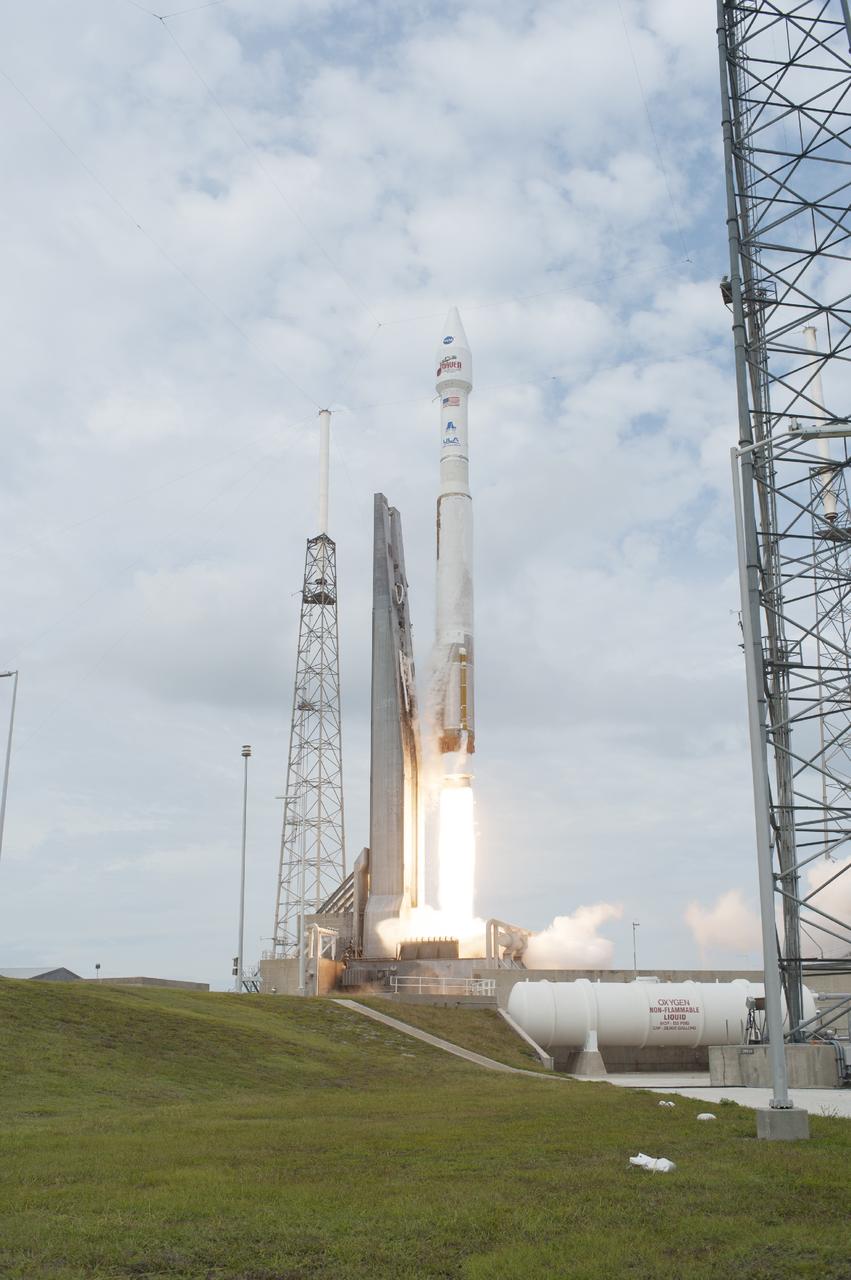
CAPE CANAVERAL, Fla. -- The United Launch Alliance Atlas V rocket carrying NASA's Mars Atmosphere and Volatile EvolutioN, or MAVEN, spacecraft lifts off Space Launch Complex 41 on Cape Canaveral Air Force Station in Florida. Launch was on schedule at 1:28 p.m. EST Nov. 18 at the opening of a two-hour launch window. After a 10-month journey to the Red Planet, MAVEN will study its upper atmosphere in unprecedented detail from orbit above the planet. Built by Lockheed Martin in Littleton, Colo., MAVEN will arrive at Mars in September 2014 and will be inserted into an elliptical orbit with a high point of 3,900 miles, swooping down to as close as 93 miles above the planet's surface. For more information, visit: http://www.nasa.gov/mission_pages/maven/main/index.html. Photo credit: NASA/Tony Gray and Rick Wetherington

CAPE CANAVERAL, Fla. – The first stage of the United Launch Alliance Atlas V rocket for NASA's Magnetospheric Multiscale mission, or MMS, is lifted into the mobile service tower at Space Launch Complex 41 on Cape Canaveral Air Force Station in Florida. MMS will study the mystery of how magnetic fields around Earth connect and disconnect, explosively releasing energy via a process known a magnetic reconnection. MMS consists of four identical spacecraft that work together to provide the first three-dimensional view of this fundamental process, which occurs throughout the universe. Launch is set for March 12. To learn more about MMS, visit http://www.nasa.gov/mms. Photo credit: NASA/Jim Grossmann
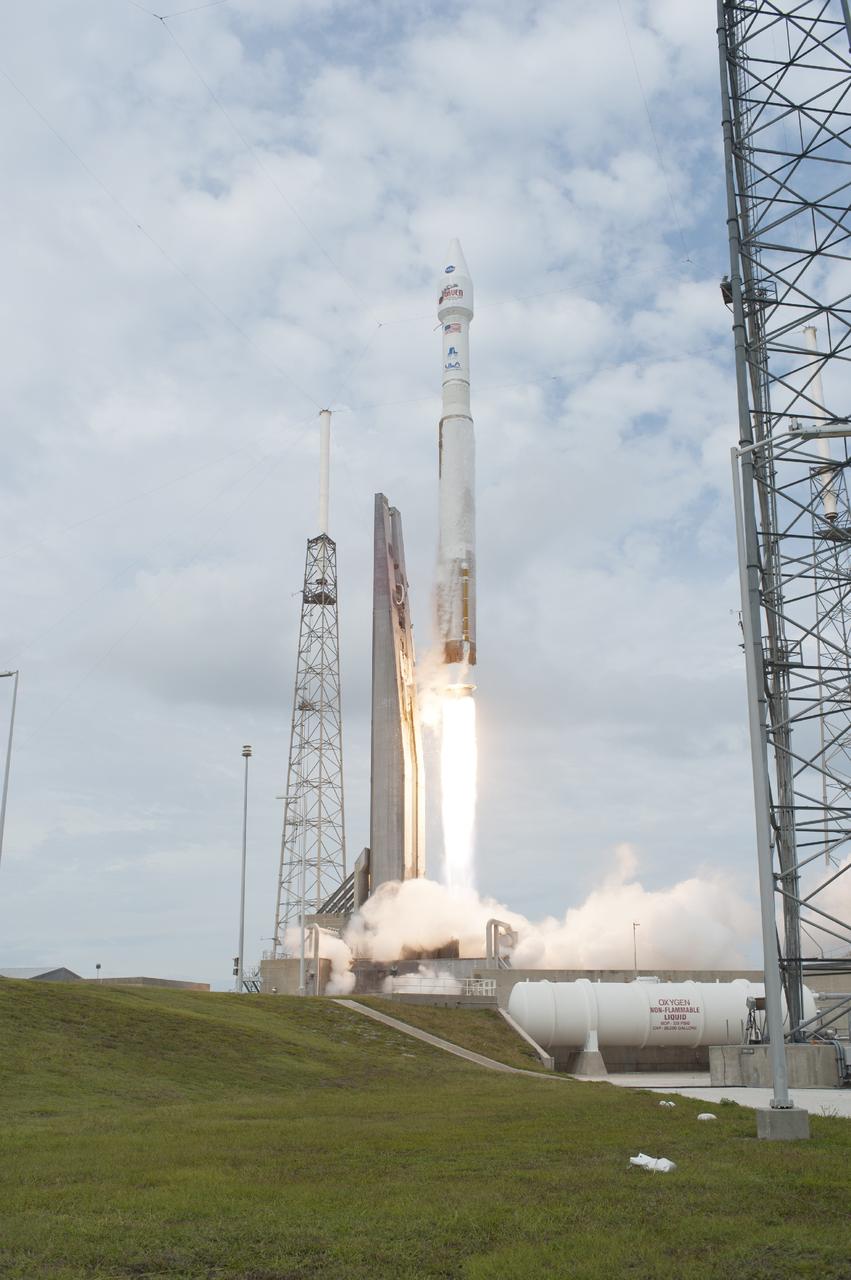
CAPE CANAVERAL, Fla. -- The United Launch Alliance Atlas V rocket carrying NASA's Mars Atmosphere and Volatile EvolutioN, or MAVEN, spacecraft lifts off Space Launch Complex 41 on Cape Canaveral Air Force Station in Florida. Launch was on schedule at 1:28 p.m. EST Nov. 18 at the opening of a two-hour launch window. After a 10-month journey to the Red Planet, MAVEN will study its upper atmosphere in unprecedented detail from orbit above the planet. Built by Lockheed Martin in Littleton, Colo., MAVEN will arrive at Mars in September 2014 and will be inserted into an elliptical orbit with a high point of 3,900 miles, swooping down to as close as 93 miles above the planet's surface. For more information, visit: http://www.nasa.gov/mission_pages/maven/main/index.html. Photo credit: NASA/Tony Gray and Rick Wetherington
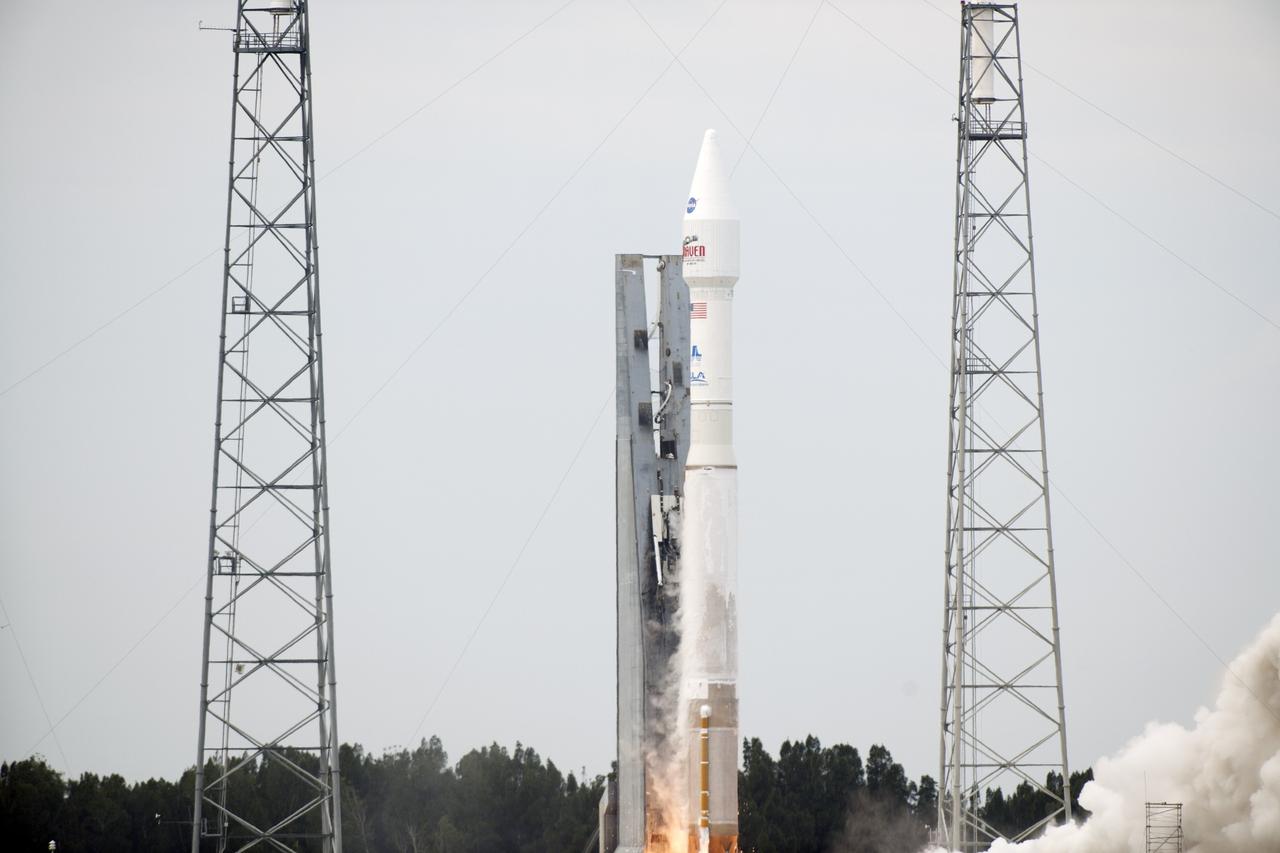
CAPE CANAVERAL, Fla. -- A United Launch Alliance Atlas V rocket lifts off Space Launch Complex 41 at Cape Canaveral Air Force Station in Florida, carrying NASA's Mars Atmosphere and Volatile EvolutioN, or MAVEN, spacecraft. Launch was on schedule at 1:28 p.m. EST Nov. 18 at the opening of a two-hour launch window. After a 10-month journey to the Red Planet, MAVEN will study its upper atmosphere in unprecedented detail from orbit above the planet. Built by Lockheed Martin in Littleton, Colo., MAVEN will arrive at Mars in September 2014 and will be inserted into an elliptical orbit with a high point of 3,900 miles, swooping down to as close as 93 miles above the planet's surface. For more information, visit: http://www.nasa.gov/mission_pages/maven/main/index.html. Photo credit: NASA/Rusty Backer
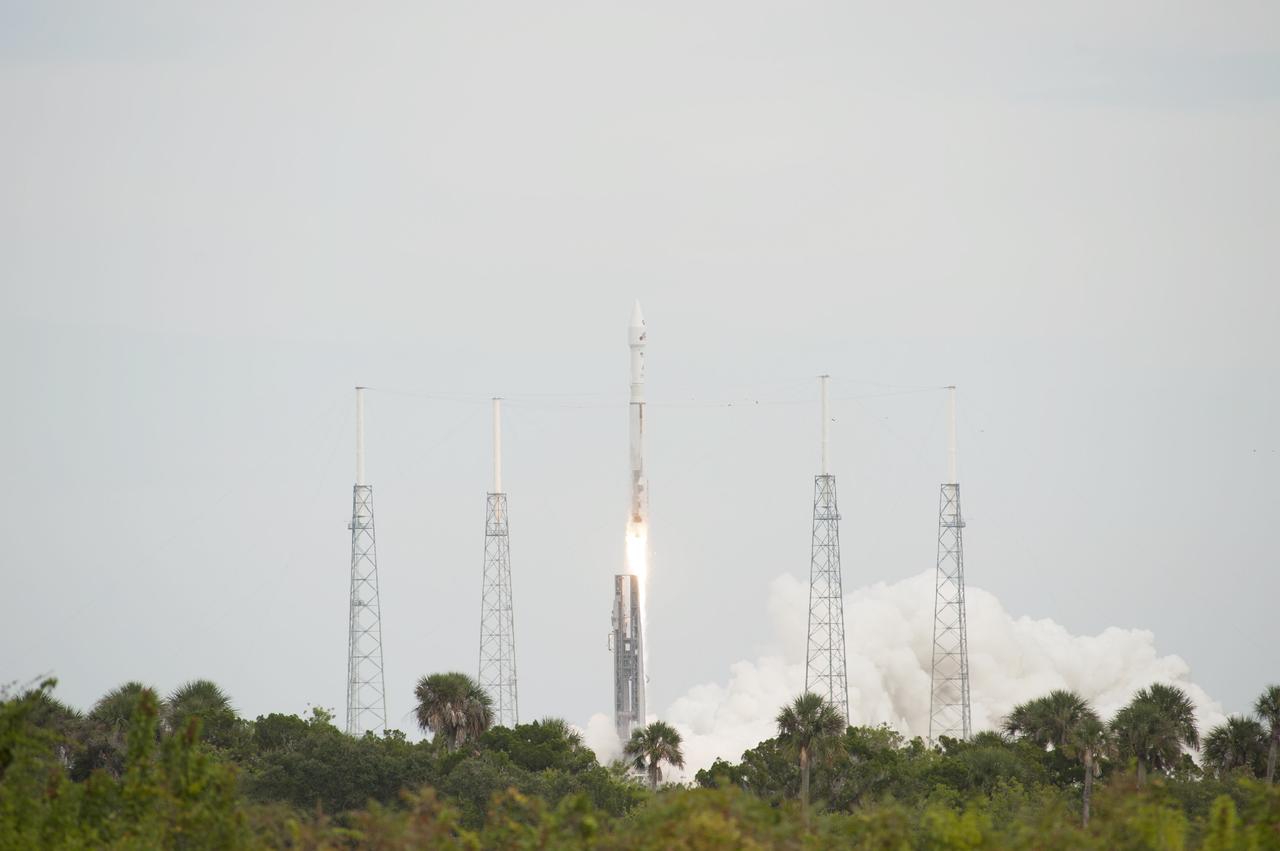
CAPE CANAVERAL, Fla. -- The engine ignites under the United Launch Alliance Atlas V rocket, lifting NASA's Mars Atmosphere and Volatile EvolutioN, or MAVEN, spacecraft off Space Launch Complex 41 at Cape Canaveral Air Force Station in Florida. Launch was on schedule at 1:28 p.m. EST Nov. 18 at the opening of a two-hour launch window. After a 10-month journey to the Red Planet, MAVEN will study its upper atmosphere in unprecedented detail from orbit above the planet. Built by Lockheed Martin in Littleton, Colo., MAVEN will arrive at Mars in September 2014 and will be inserted into an elliptical orbit with a high point of 3,900 miles, swooping down to as close as 93 miles above the planet's surface. For more information, visit: http://www.nasa.gov/mission_pages/maven/main/index.html. Photo credit: NASA/George Roberts
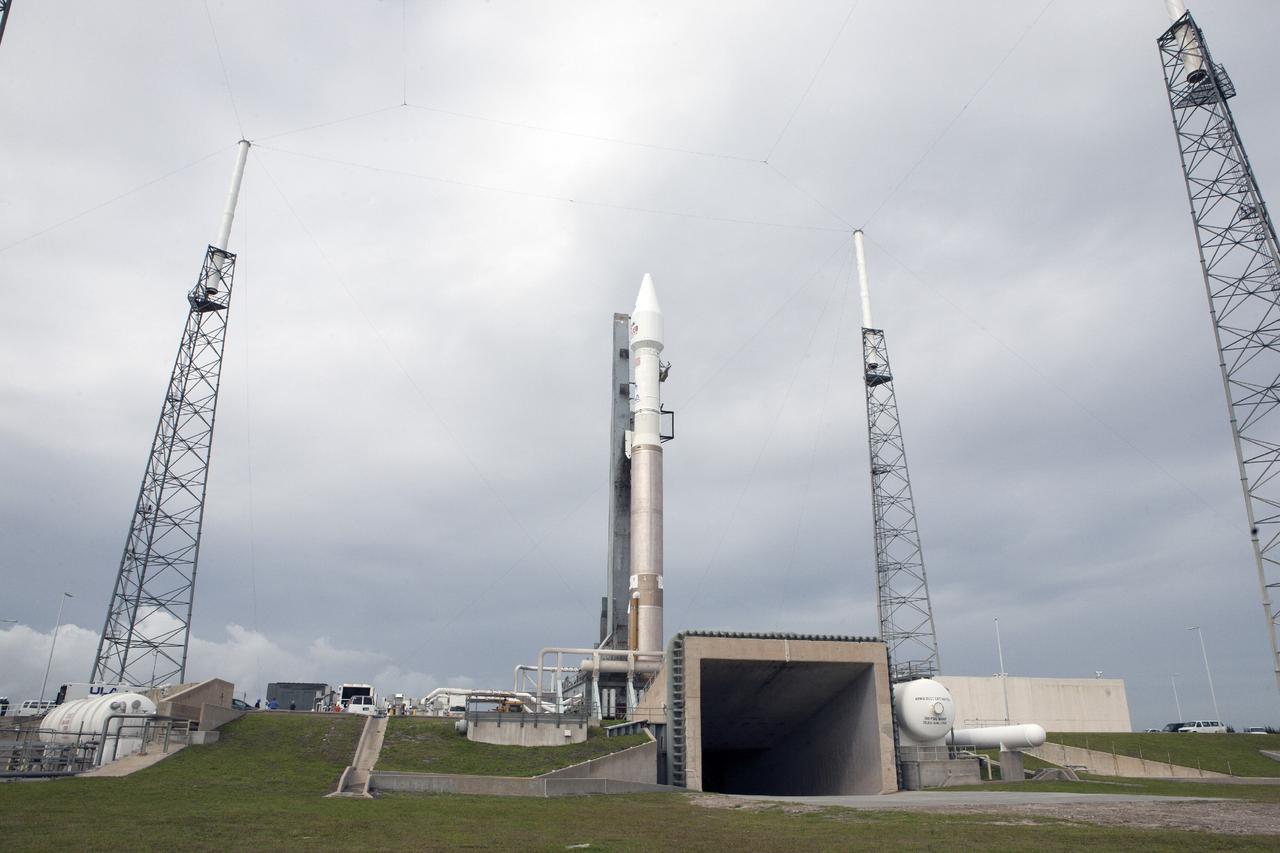
CAPE CANAVERAL, Fla. -- The United Launch Alliance Atlas V rocket carrying NASA’s Mars Atmosphere and Volatile EvolutioN, or MAVEN, spacecraft moves into position behind the flame exhaust duct at Space Launch Complex 41 on Cape Canaveral Air Force Station in Florida following a 20-minute journey from the Vertical Integration Facility. Rollout began on schedule with first motion at 9:57 a.m. EST. Launch is scheduled for Nov. 18 during a window that extends from 1:28 to 3:28 p.m. Once positioned in orbit above the Red Planet, MAVEN will study its upper atmosphere in unprecedented detail. For more information, visit: http://www.nasa.gov/mission_pages/maven/main/index.html. Photo credit: NASA/Kim Shiflett
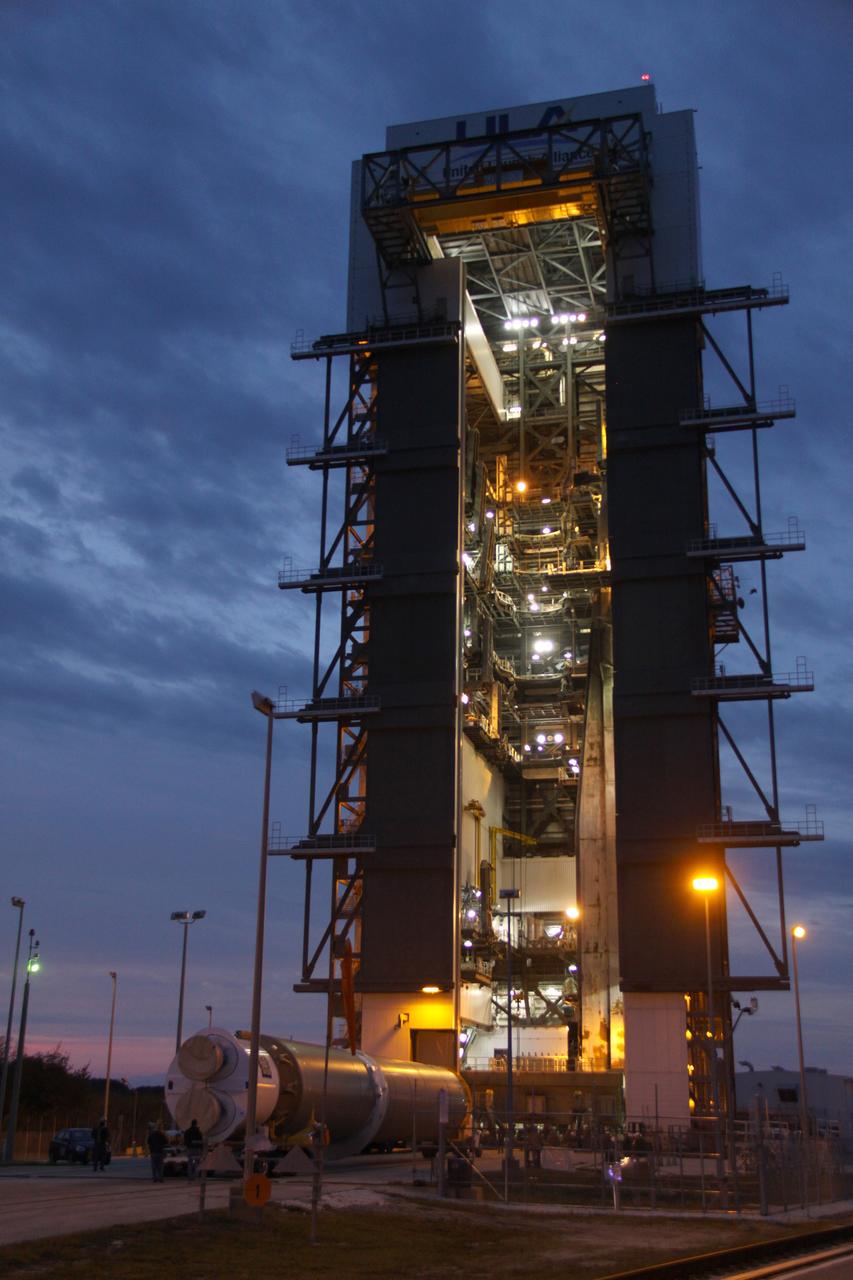
CAPE CANAVERAL, Fla. – The first stage of the United Launch Alliance Atlas V rocket for NASA's Magnetospheric Multiscale mission, or MMS, arrives at the mobile service tower at Space Launch Complex 41 on Cape Canaveral Air Force Station in Florida. MMS will study the mystery of how magnetic fields around Earth connect and disconnect, explosively releasing energy via a process known a magnetic reconnection. MMS consists of four identical spacecraft that work together to provide the first three-dimensional view of this fundamental process, which occurs throughout the universe. Launch is set for March 12. To learn more about MMS, visit http://www.nasa.gov/mms. Photo credit: NASA/Jim Grossmann
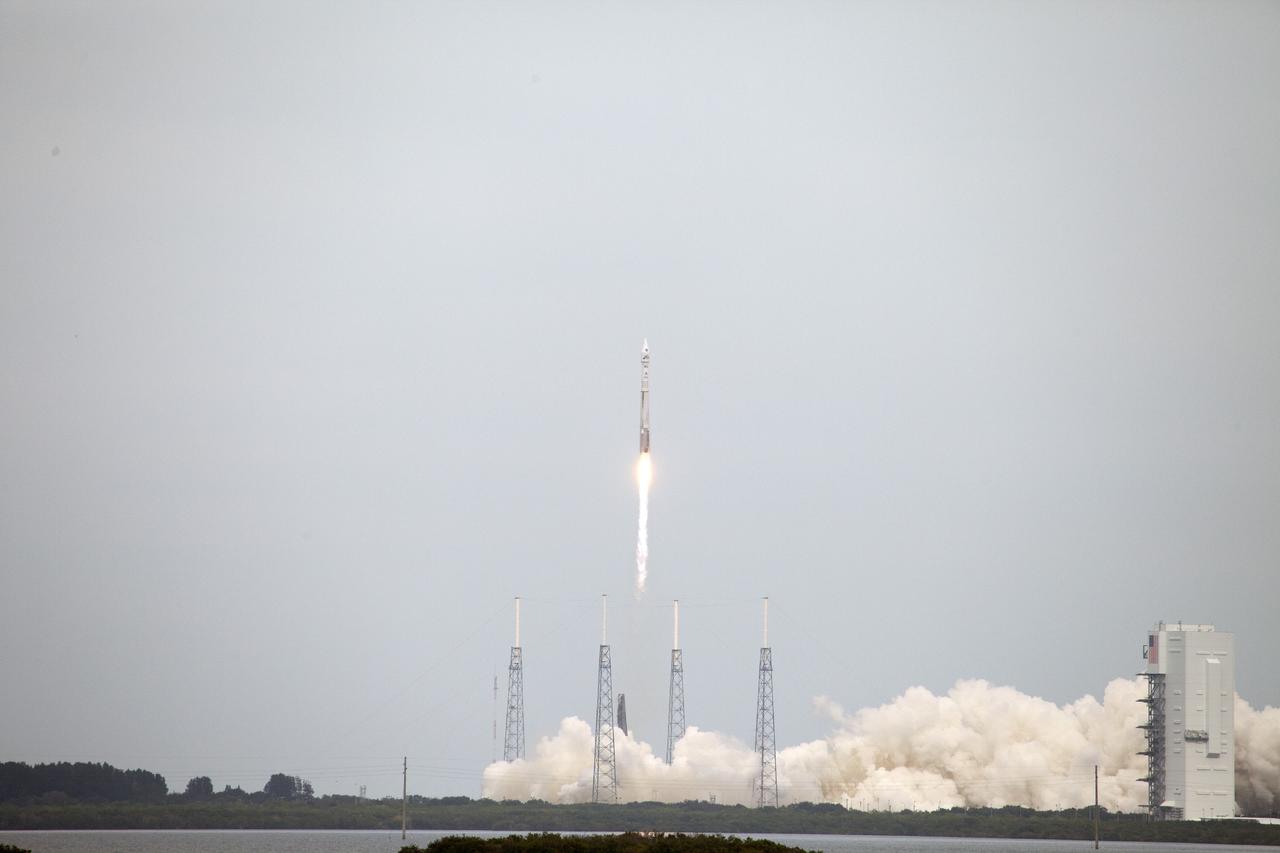
CAPE CANAVERAL, Fla. -- NASA’s Mars Atmosphere and Volatile EvolutioN, or MAVEN, spacecraft begins its 10-month journey to Mars, launching atop a United Launch Alliance Atlas V rocket at 1:28 p.m. EST from Space Launch Complex 41 on Cape Canaveral Air Force Station in Florida. Launch was on schedule Nov. 18 at the opening of a two-hour launch window. After a 10-month journey to the Red Planet, MAVEN will study its upper atmosphere in unprecedented detail from orbit above the planet. Built by Lockheed Martin in Littleton, Colo., MAVEN will arrive at Mars in September 2014 and will be inserted into an elliptical orbit with a high point of 3,900 miles, swooping down to as close as 93 miles above the planet's surface. For more information, visit: http://www.nasa.gov/mission_pages/maven/main/index.html. Photo credit: NASA/Dan Casper
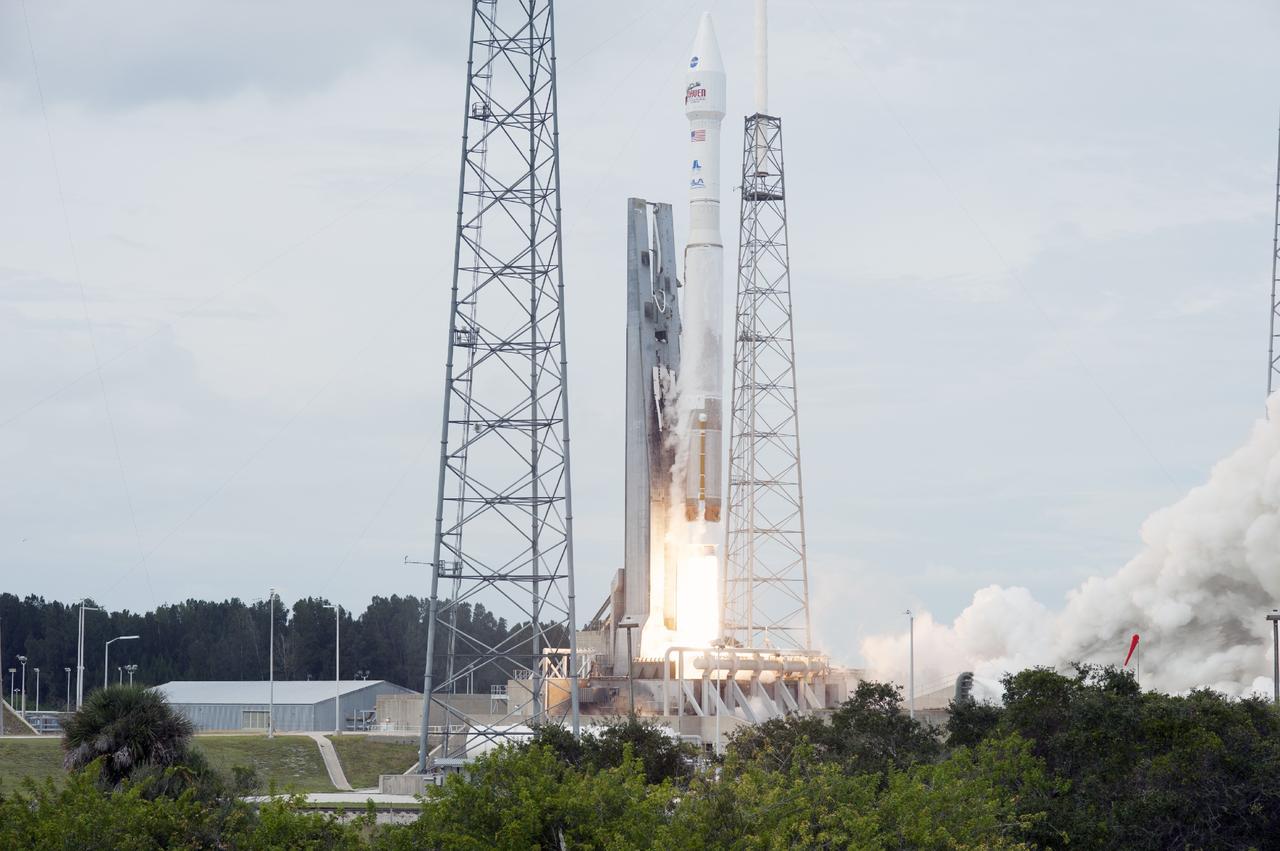
CAPE CANAVERAL, Fla. -- The engine ignites under the United Launch Alliance Atlas V rocket, lifting NASA's Mars Atmosphere and Volatile EvolutioN, or MAVEN, spacecraft off Space Launch Complex 41 at Cape Canaveral Air Force Station in Florida. Launch was on schedule at 1:28 p.m. EST Nov. 18 at the opening of a two-hour launch window. After a 10-month journey to the Red Planet, MAVEN will study its upper atmosphere in unprecedented detail from orbit above the planet. Built by Lockheed Martin in Littleton, Colo., MAVEN will arrive at Mars in September 2014 and will be inserted into an elliptical orbit with a high point of 3,900 miles, swooping down to as close as 93 miles above the planet's surface. For more information, visit: http://www.nasa.gov/mission_pages/maven/main/index.html. Photo credit: NASA/George Roberts
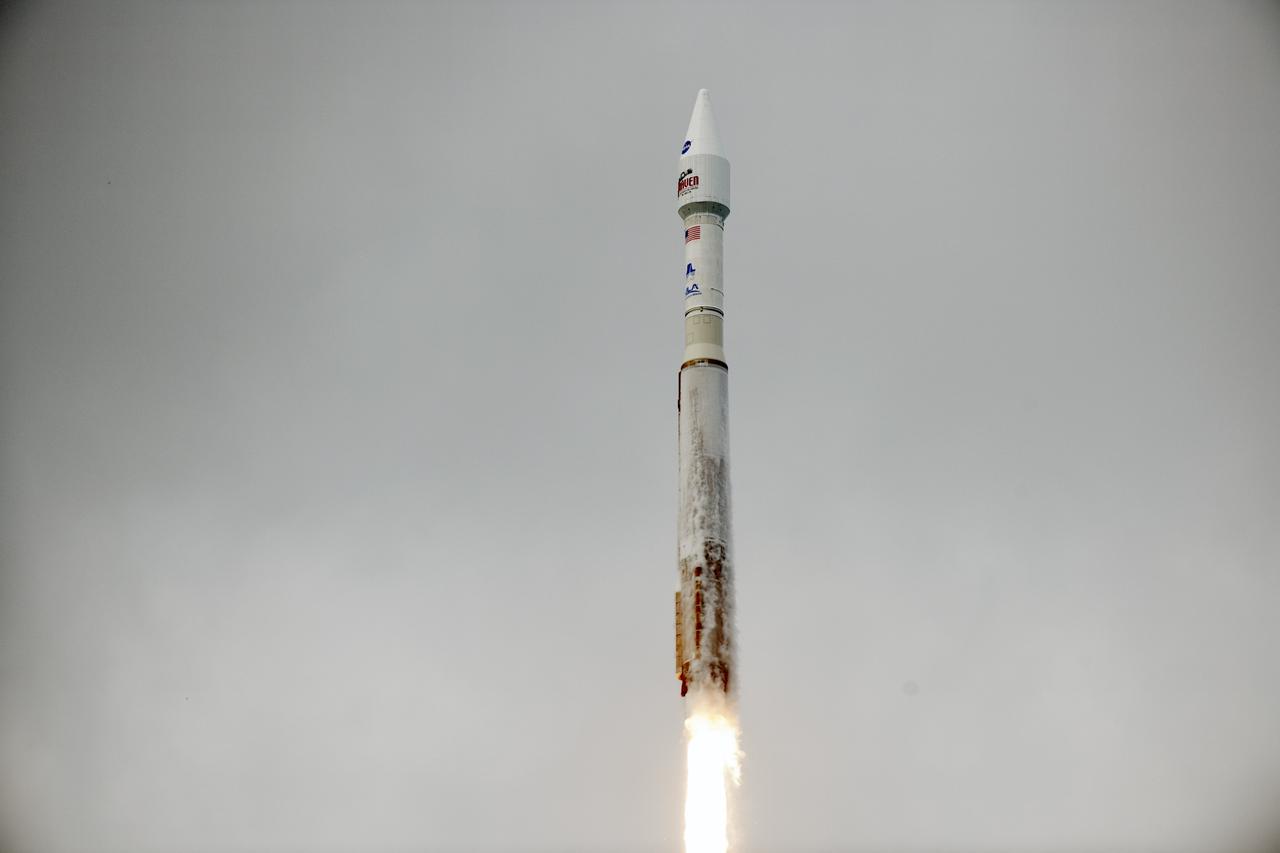
CAPE CANAVERAL, Fla. -- The United Launch Alliance Atlas V rocket carrying NASA's Mars Atmosphere and Volatile EvolutioN, or MAVEN, spacecraft rises off Space Launch Complex 41 at Cape Canaveral Air Force Station in Florida. Launch was on schedule at 1:28 p.m. EST Nov. 18 at the opening of a two-hour launch window. After a 10-month journey to the Red Planet, MAVEN will study its upper atmosphere in unprecedented detail from orbit above the planet. Built by Lockheed Martin in Littleton, Colo., MAVEN will arrive at Mars in September 2014 and will be inserted into an elliptical orbit with a high point of 3,900 miles, swooping down to as close as 93 miles above the planet's surface. For more information, visit: http://www.nasa.gov/mission_pages/maven/main/index.html. Photo credit: NASA/Tony Gray and Rick Wetherington
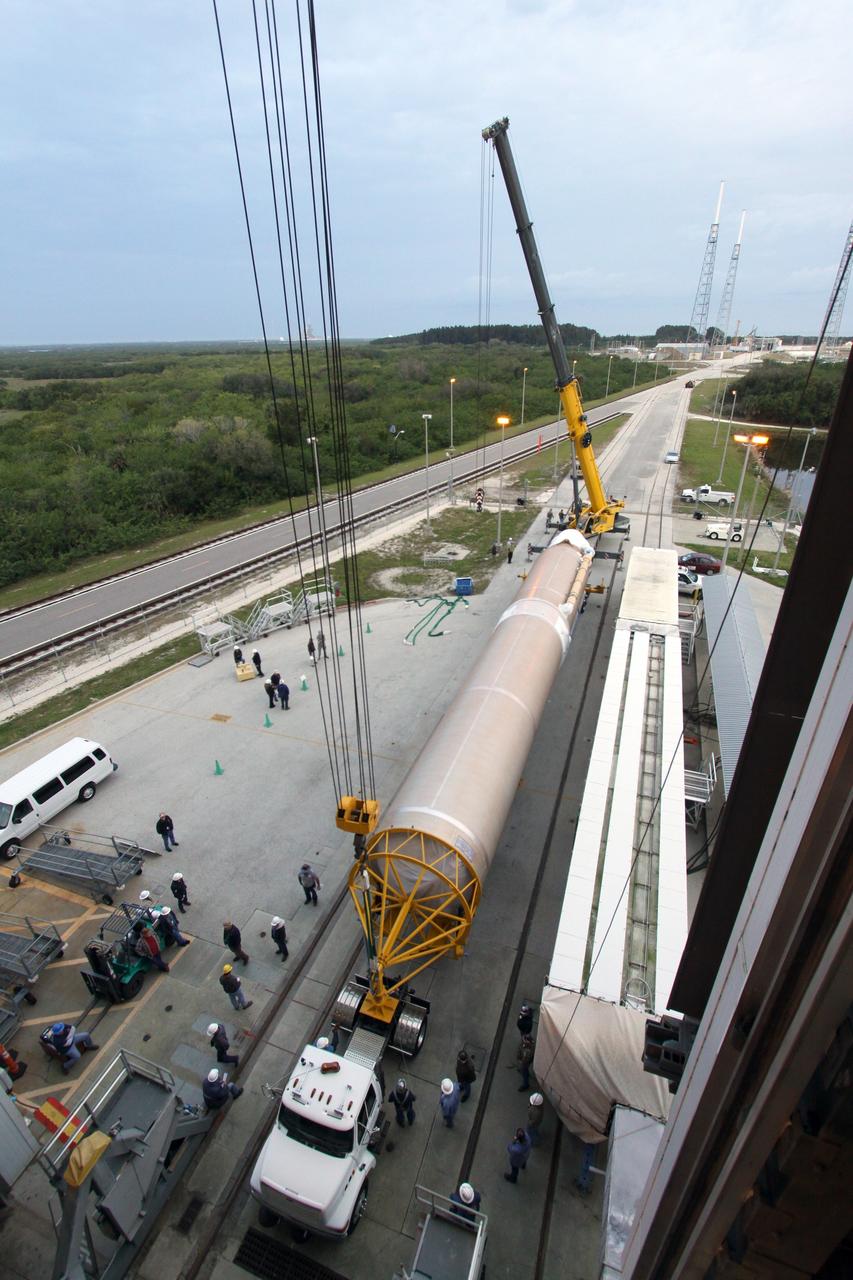
CAPE CANAVERAL, Fla. – Operations are underway at Space Launch Complex 41 on Cape Canaveral Air Force Station in Florida to lift the newly delivered first stage of a United Launch Alliance Atlas V rocket into the mobile service tower. The rocket will launch NASA's Magnetospheric Multiscale mission, or MMS. MMS will study the mystery of how magnetic fields around Earth connect and disconnect, explosively releasing energy via a process known a magnetic reconnection. MMS consists of four identical spacecraft that work together to provide the first three-dimensional view of this fundamental process, which occurs throughout the universe. Launch is set for March 12. To learn more about MMS, visit http://www.nasa.gov/mms. Photo credit: NASA/Jim Grossmann
CAPE CANAVERAL, Fla. -- A United Launch Alliance Atlas V rocket lifts off into the clouds over Space Launch Complex 41 at Cape Canaveral Air Force Station in Florida, carrying NASA's Mars Atmosphere and Volatile EvolutioN, or MAVEN, spacecraft. Launch was on schedule at 1:28 p.m. EST Nov. 18 at the opening of a two-hour launch window. After a 10-month journey to the Red Planet, MAVEN will study its upper atmosphere in unprecedented detail from orbit above the planet. Built by Lockheed Martin in Littleton, Colo., MAVEN will arrive at Mars in September 2014 and will be inserted into an elliptical orbit with a high point of 3,900 miles, swooping down to as close as 93 miles above the planet's surface. For more information, visit: http://www.nasa.gov/mission_pages/maven/main/index.html. Photo credit: NASA/Rusty Backer
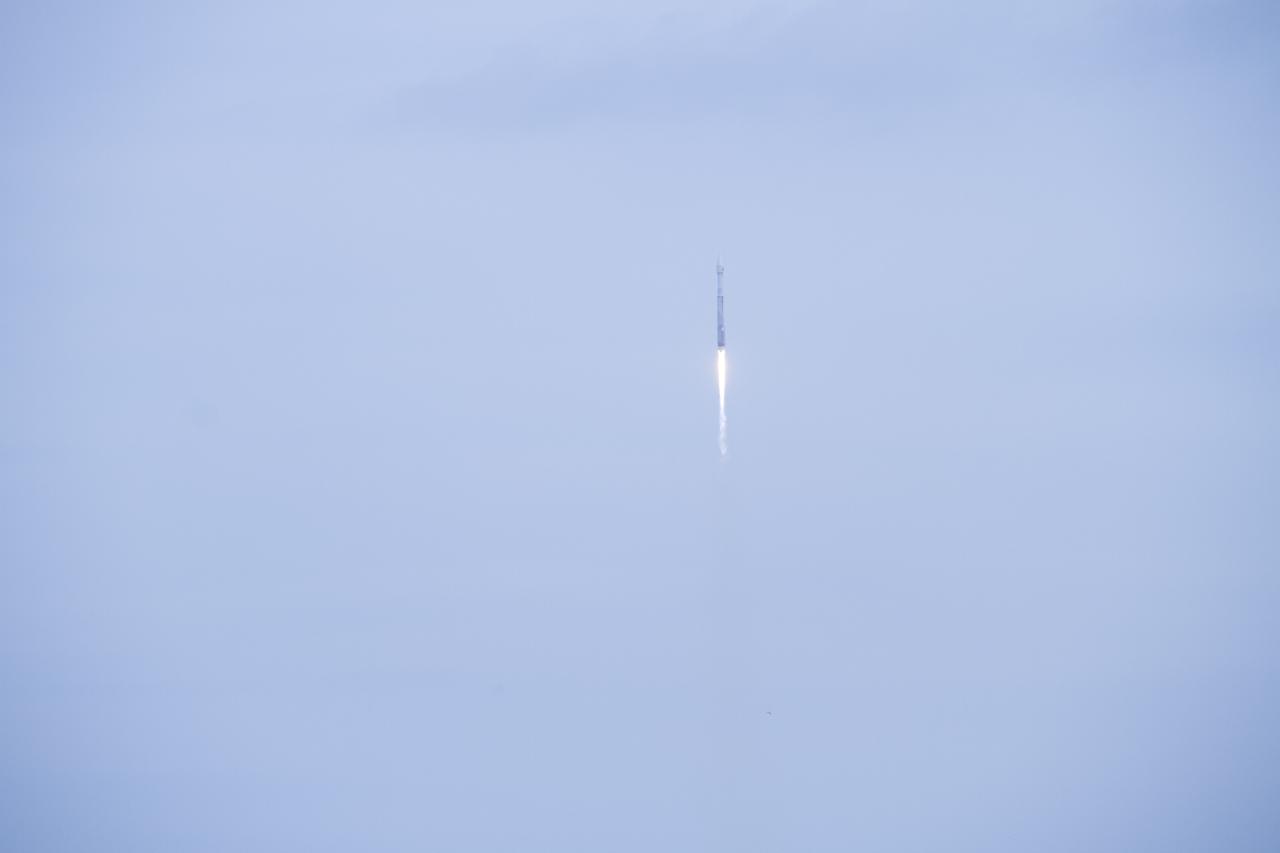
CAPE CANAVERAL, Fla. -- A United Launch Alliance Atlas V rocket lifts off Space Launch Complex 41 at Cape Canaveral Air Force Station in Florida, carrying NASA's Mars Atmosphere and Volatile EvolutioN, or MAVEN, spacecraft. Launch was on schedule at 1:28 p.m. EST Nov. 18 at the opening of a two-hour launch window. After a 10-month journey to the Red Planet, MAVEN will study its upper atmosphere in unprecedented detail from orbit above the planet. Built by Lockheed Martin in Littleton, Colo., MAVEN will arrive at Mars in September 2014 and will be inserted into an elliptical orbit with a high point of 3,900 miles, swooping down to as close as 93 miles above the planet's surface. For more information, visit: http://www.nasa.gov/mission_pages/maven/main/index.html. Photo credit: NASA/Gianni Woods
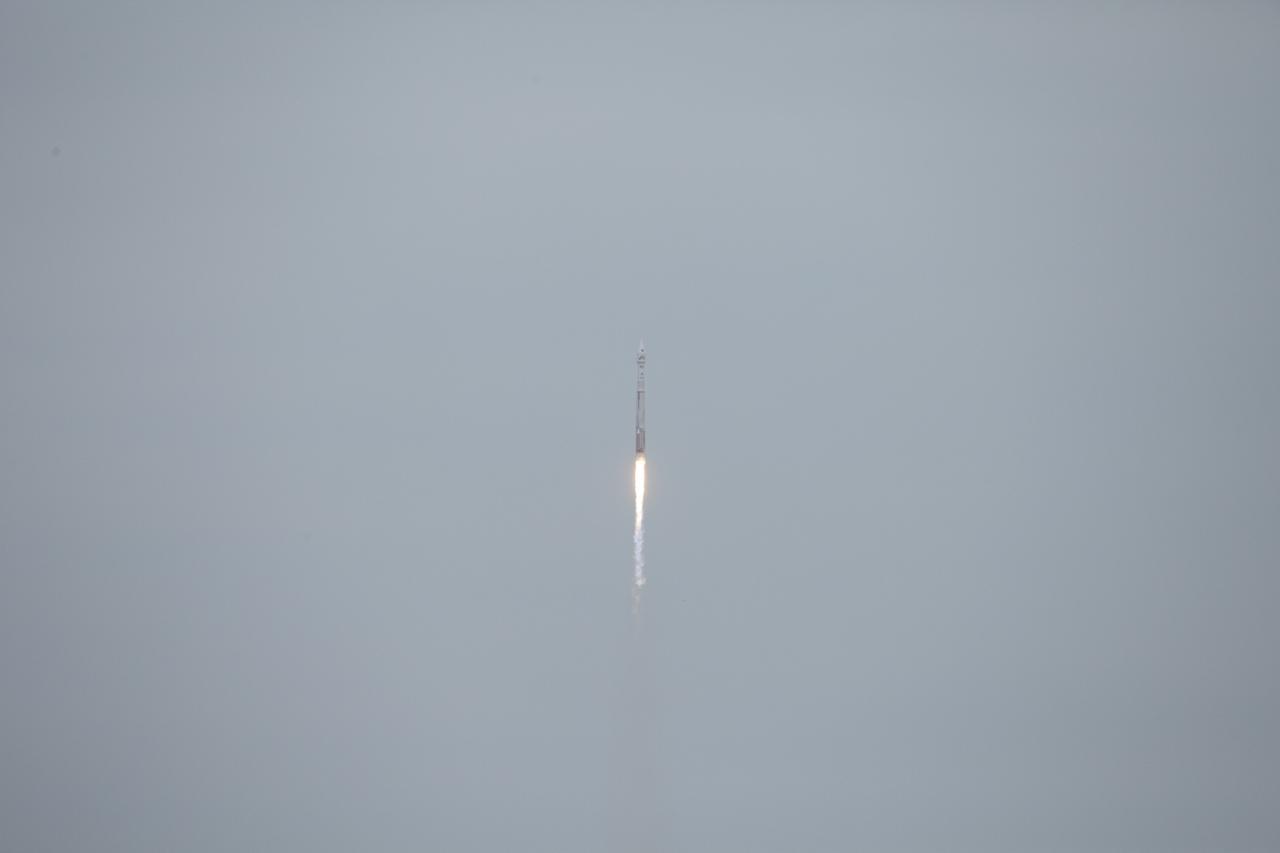
CAPE CANAVERAL, Fla. -- A United Launch Alliance Atlas V rocket lifts off through the clouds over Space Launch Complex 41 at Cape Canaveral Air Force Station in Florida, carrying NASA's Mars Atmosphere and Volatile EvolutioN, or MAVEN, spacecraft. Launch was on schedule at 1:28 p.m. EST Nov. 18 at the opening of a two-hour launch window. After a 10-month journey to the Red Planet, MAVEN will study its upper atmosphere in unprecedented detail from orbit above the planet. Built by Lockheed Martin in Littleton, Colo., MAVEN will arrive at Mars in September 2014 and will be inserted into an elliptical orbit with a high point of 3,900 miles, swooping down to as close as 93 miles above the planet's surface. For more information, visit: http://www.nasa.gov/mission_pages/maven/main/index.html. Photo credit: NASA/Dan Casper
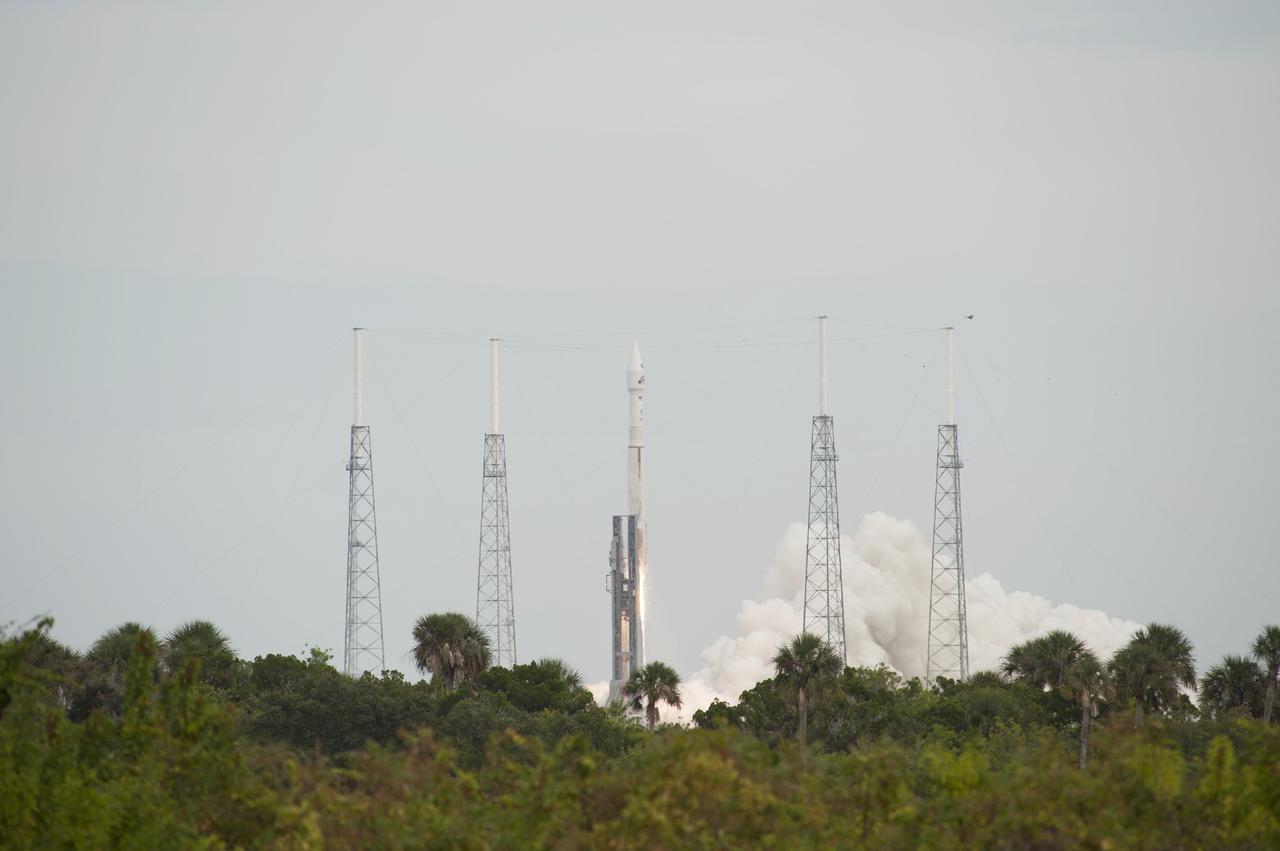
CAPE CANAVERAL, Fla. -- A United Launch Alliance Atlas V rocket lifts off Space Launch Complex 41 at Cape Canaveral Air Force Station in Florida, carrying NASA's Mars Atmosphere and Volatile EvolutioN, or MAVEN, spacecraft. Launch was on schedule at 1:28 p.m. EST Nov. 18 at the opening of a two-hour launch window. After a 10-month journey to the Red Planet, MAVEN will study its upper atmosphere in unprecedented detail from orbit above the planet. Built by Lockheed Martin in Littleton, Colo., MAVEN will arrive at Mars in September 2014 and will be inserted into an elliptical orbit with a high point of 3,900 miles, swooping down to as close as 93 miles above the planet's surface. For more information, visit: http://www.nasa.gov/mission_pages/maven/main/index.html. Photo credit: NASA/George Roberts

CAPE CANAVERAL, Fla. -- Invited guests watch the launch of NASA’s Mars Atmosphere and Volatile EvolutioN, or MAVEN, spacecraft from the NASA Causeway between NASA's Kennedy Space Center and Cape Canaveral Air Force Station in Florida. Launch was on schedule at 1:28 p.m. EST Nov. 18 at the opening of a two-hour launch window. After a 10-month journey to the Red Planet, MAVEN will study its upper atmosphere in unprecedented detail from orbit above the planet. Built by Lockheed Martin in Littleton, Colo., MAVEN will arrive at Mars in September 2014 and will be inserted into an elliptical orbit with a high point of 3,900 miles, swooping down to as close as 93 miles above the planet's surface. For more information, visit: http://www.nasa.gov/mission_pages/maven/main/index.html. Photo credit: NASA/Jim Grossmann
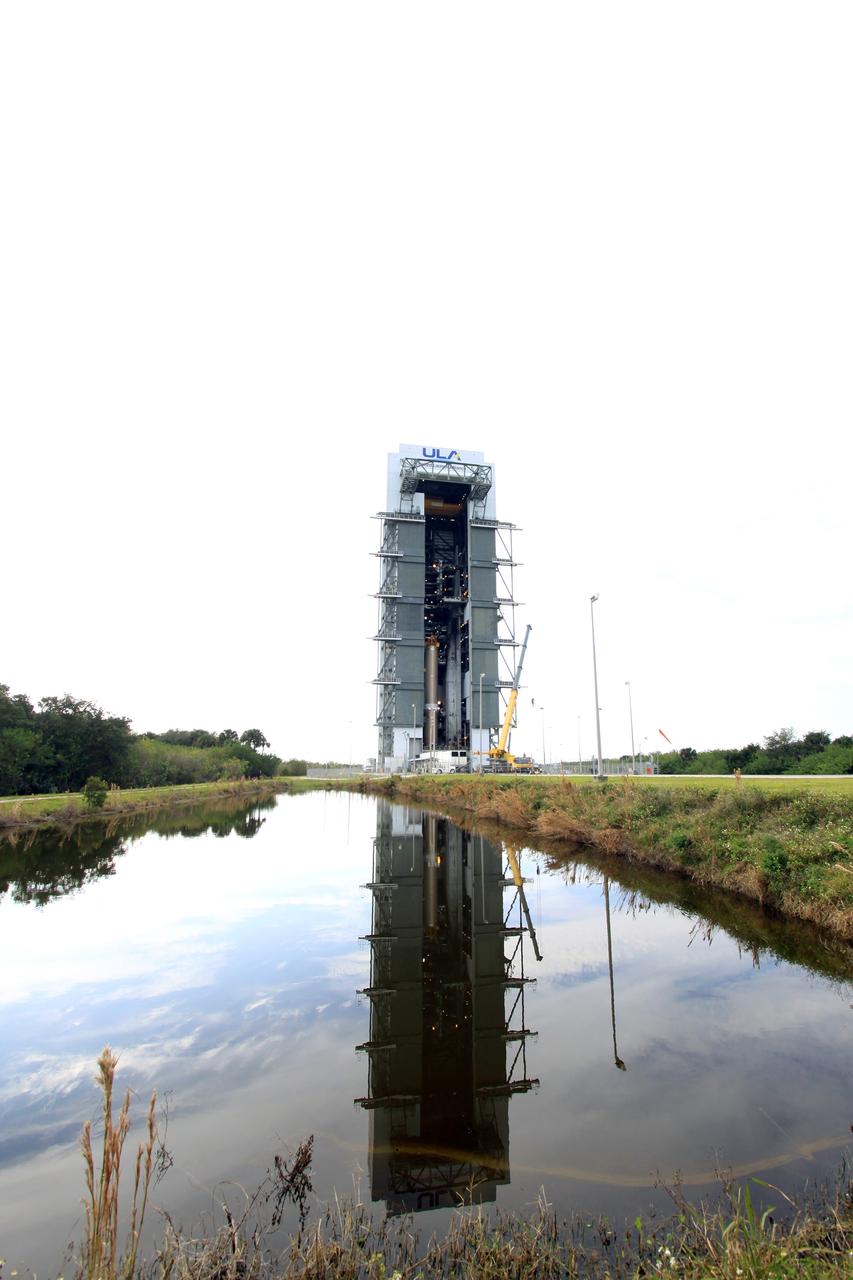
CAPE CANAVERAL, Fla. – The first stage of the United Launch Alliance Atlas V rocket for NASA's Magnetospheric Multiscale mission, or MMS, is in position on the launch platform in the mobile service tower at Space Launch Complex 41 on Cape Canaveral Air Force Station in Florida. MMS will study the mystery of how magnetic fields around Earth connect and disconnect, explosively releasing energy via a process known a magnetic reconnection. MMS consists of four identical spacecraft that work together to provide the first three-dimensional view of this fundamental process, which occurs throughout the universe. Launch is set for March 12. To learn more about MMS, visit http://www.nasa.gov/mms. Photo credit: NASA/Jim Grossmann
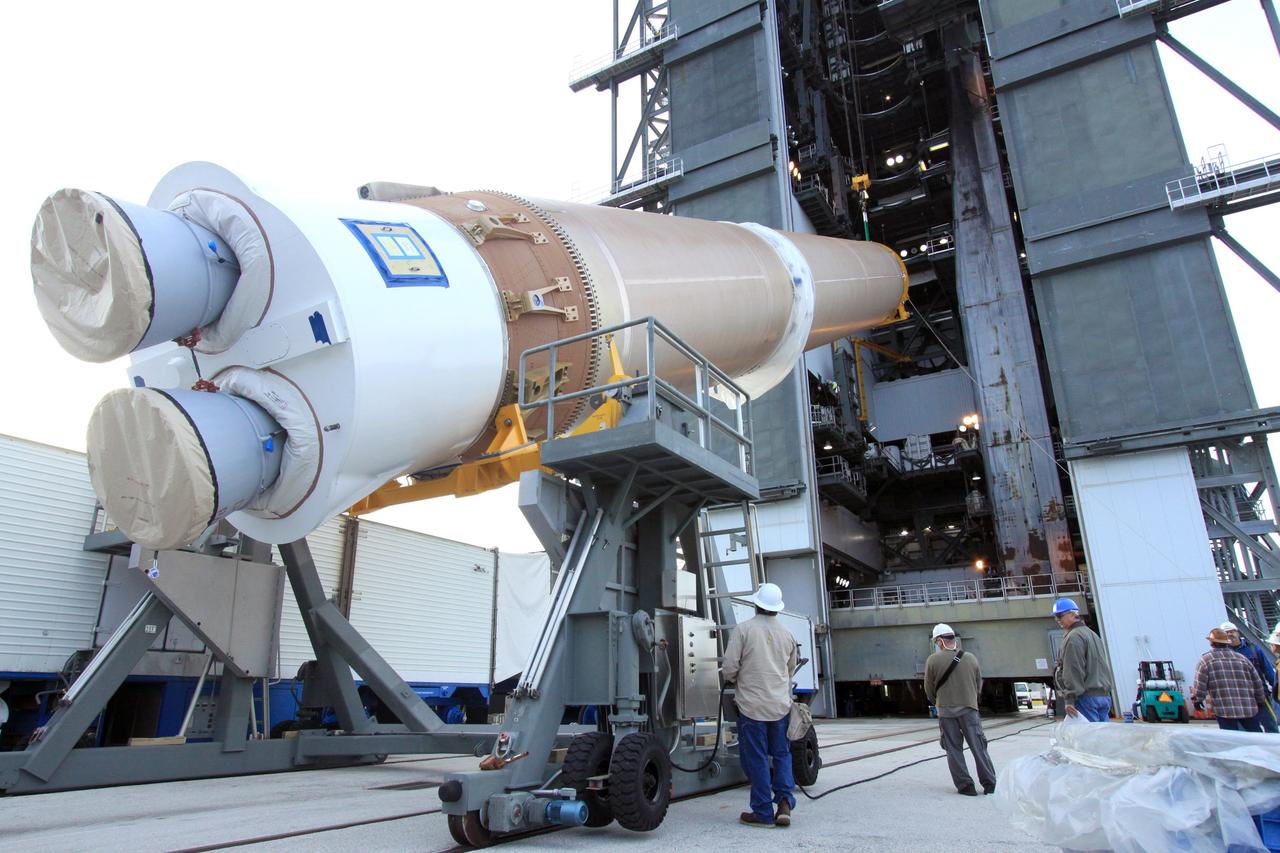
CAPE CANAVERAL, Fla. – Workers supervise the lift of the first stage of the United Launch Alliance Atlas V rocket for NASA's Magnetospheric Multiscale mission, or MMS, into the mobile service tower at Space Launch Complex 41 on Cape Canaveral Air Force Station in Florida. MMS will study the mystery of how magnetic fields around Earth connect and disconnect, explosively releasing energy via a process known a magnetic reconnection. MMS consists of four identical spacecraft that work together to provide the first three-dimensional view of this fundamental process, which occurs throughout the universe. Launch is set for March 12. To learn more about MMS, visit http://www.nasa.gov/mms. Photo credit: NASA/Jim Grossmann
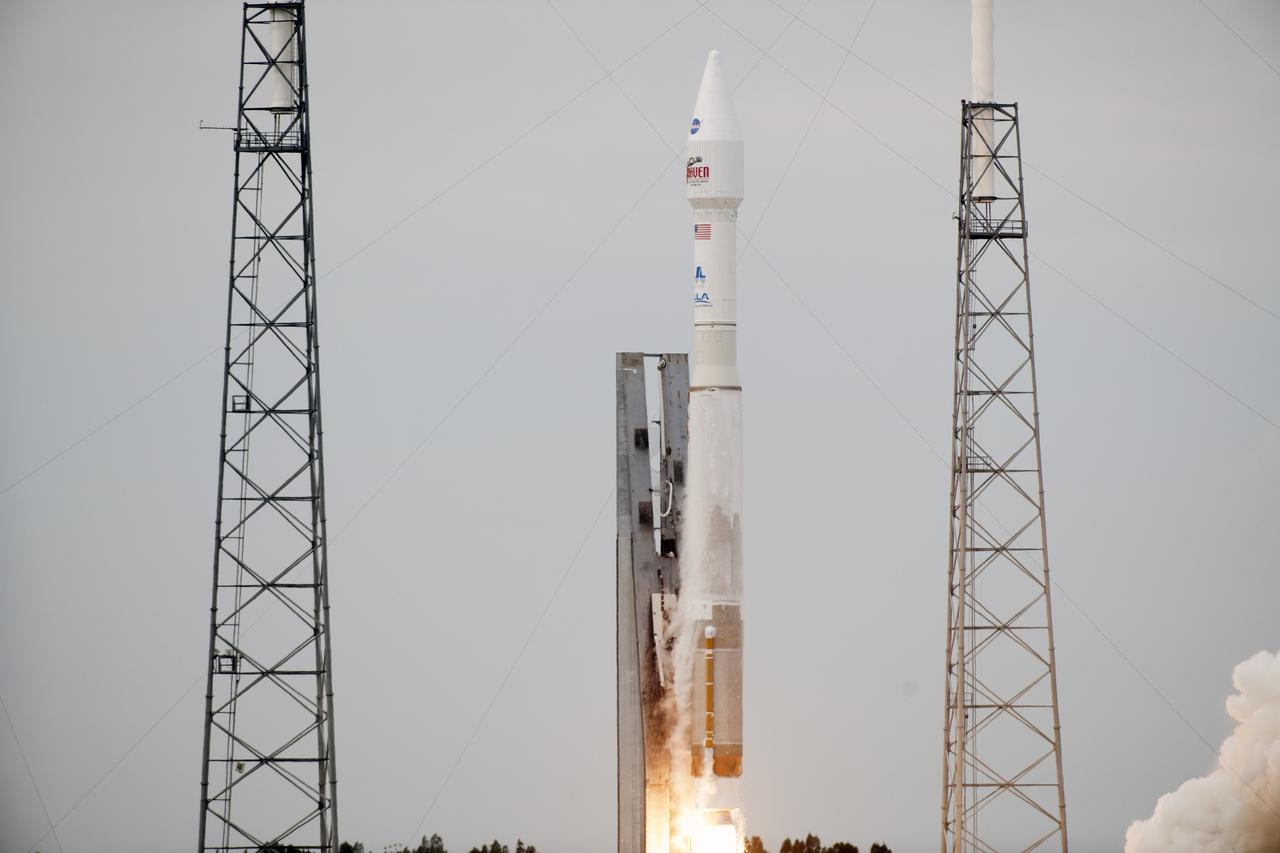
CAPE CANAVERAL, Fla. -- A United Launch Alliance Atlas V rocket lifts off Space Launch Complex 41 at Cape Canaveral Air Force Station in Florida, carrying NASA's Mars Atmosphere and Volatile EvolutioN, or MAVEN, spacecraft. Launch was on schedule at 1:28 p.m. EST Nov. 18 at the opening of a two-hour launch window. After a 10-month journey to the Red Planet, MAVEN will study its upper atmosphere in unprecedented detail from orbit above the planet. Built by Lockheed Martin in Littleton, Colo., MAVEN will arrive at Mars in September 2014 and will be inserted into an elliptical orbit with a high point of 3,900 miles, swooping down to as close as 93 miles above the planet's surface. For more information, visit: http://www.nasa.gov/mission_pages/maven/main/index.html. Photo credit: NASA/Rusty Backer
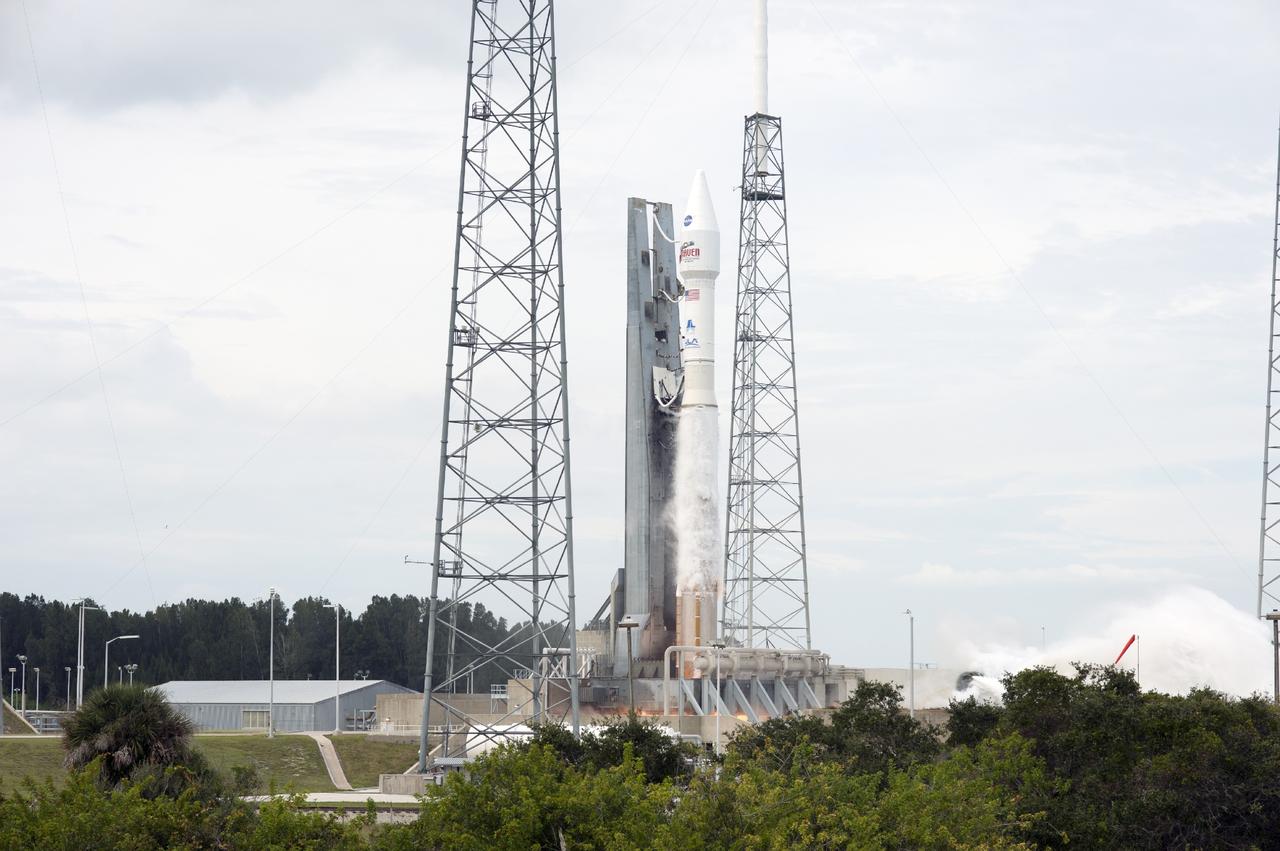
CAPE CANAVERAL, Fla. -- An exhaust plume forms at Space Launch Complex 41 on Cape Canaveral Air Force Station in Florida as the engine ignites under the United Launch Alliance Atlas V rocket carrying NASA's Mars Atmosphere and Volatile EvolutioN, or MAVEN, spacecraft into orbit. Launch was on schedule at 1:28 p.m. EST Nov. 18 at the opening of a two-hour launch window. After a 10-month journey to the Red Planet, MAVEN will study its upper atmosphere in unprecedented detail from orbit above the planet. Built by Lockheed Martin in Littleton, Colo., MAVEN will arrive at Mars in September 2014 and will be inserted into an elliptical orbit with a high point of 3,900 miles, swooping down to as close as 93 miles above the planet's surface. For more information, visit: http://www.nasa.gov/mission_pages/maven/main/index.html. Photo credit: NASA/Tony Gray and Rick Wetherington
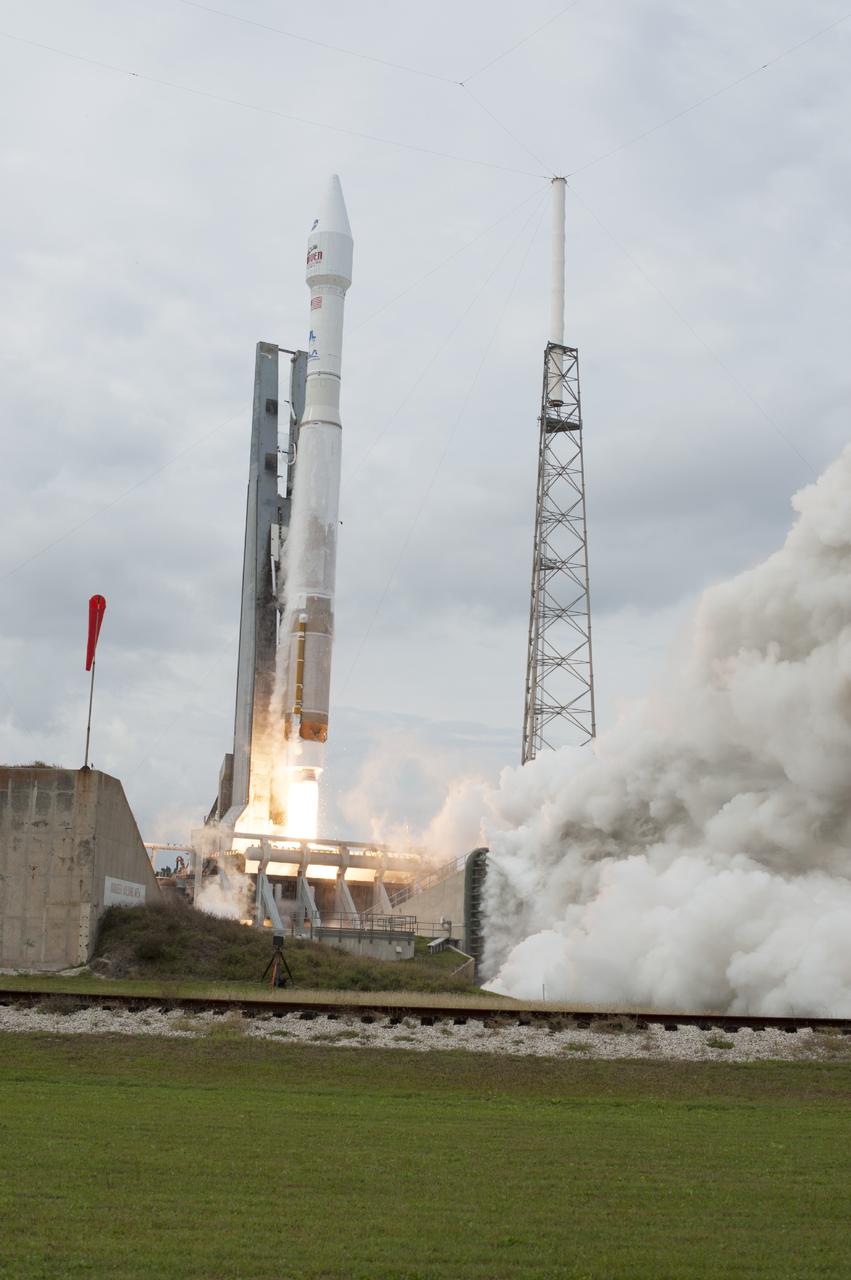
CAPE CANAVERAL, Fla. -- The exhaust plume builds at Space Launch Complex 41 on Cape Canaveral Air Force Station in Florida as the engine ignites under the United Launch Alliance Atlas V rocket carrying NASA's Mars Atmosphere and Volatile EvolutioN, or MAVEN, spacecraft to orbit. Launch was on schedule at 1:28 p.m. EST Nov. 18 at the opening of a two-hour launch window. After a 10-month journey to the Red Planet, MAVEN will study its upper atmosphere in unprecedented detail from orbit above the planet. Built by Lockheed Martin in Littleton, Colo., MAVEN will arrive at Mars in September 2014 and will be inserted into an elliptical orbit with a high point of 3,900 miles, swooping down to as close as 93 miles above the planet's surface. For more information, visit: http://www.nasa.gov/mission_pages/maven/main/index.html. Photo credit: NASA/Tony Gray and Rick Wetherington
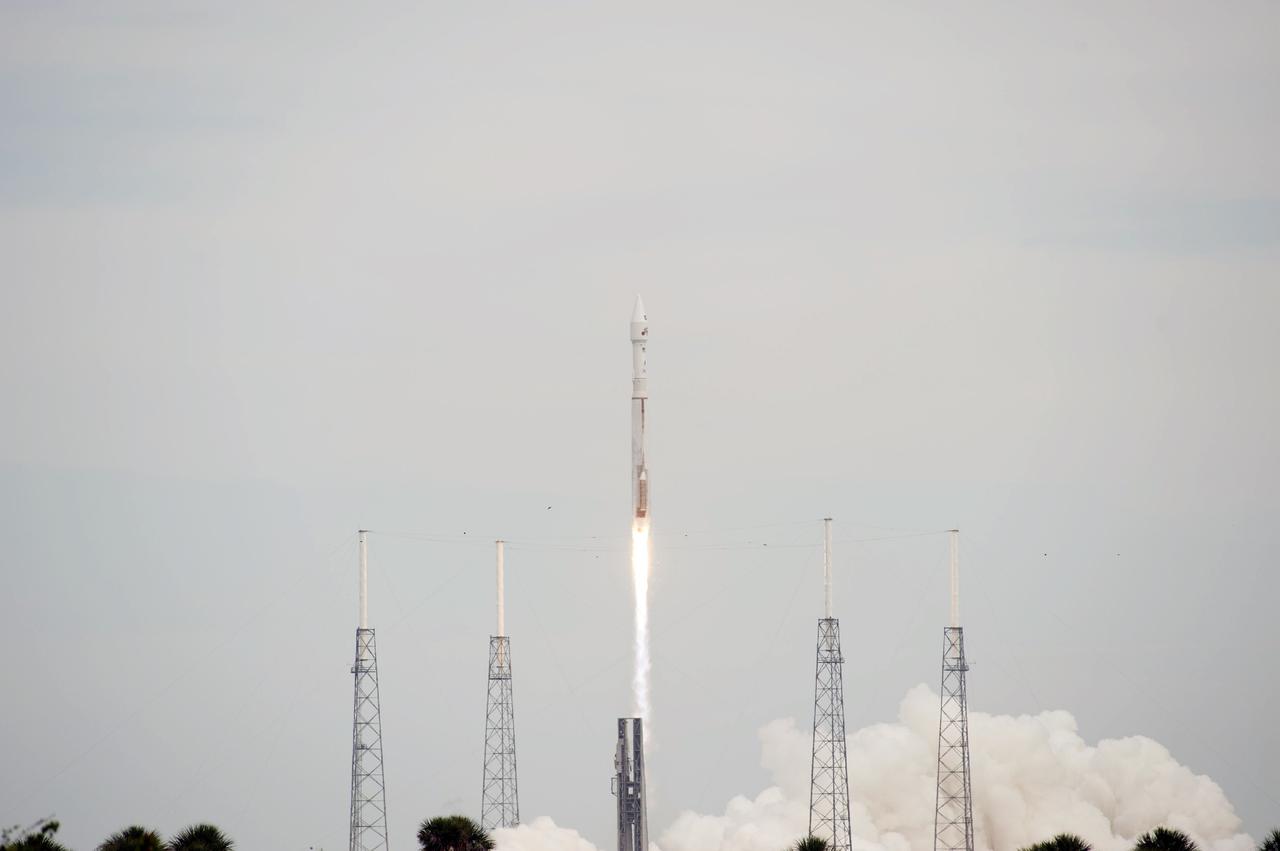
CAPE CANAVERAL, Fla. -- NASA’s Mars Atmosphere and Volatile EvolutioN, or MAVEN, spacecraft begins its journey to Mars, launching atop a United Launch Alliance Atlas V rocket at 1:28 p.m. EST from Space Launch Complex 41 on Cape Canaveral Air Force Station in Florida. Launch was on schedule Nov. 18 at the opening of a two-hour launch window. After a 10-month journey to the Red Planet, MAVEN will study its upper atmosphere in unprecedented detail from orbit above the planet. Built by Lockheed Martin in Littleton, Colo., MAVEN will arrive at Mars in September 2014 and will be inserted into an elliptical orbit with a high point of 3,900 miles, swooping down to as close as 93 miles above the planet's surface. For more information, visit: http://www.nasa.gov/mission_pages/maven/main/index.html. Photo credit: NASA/George Roberts
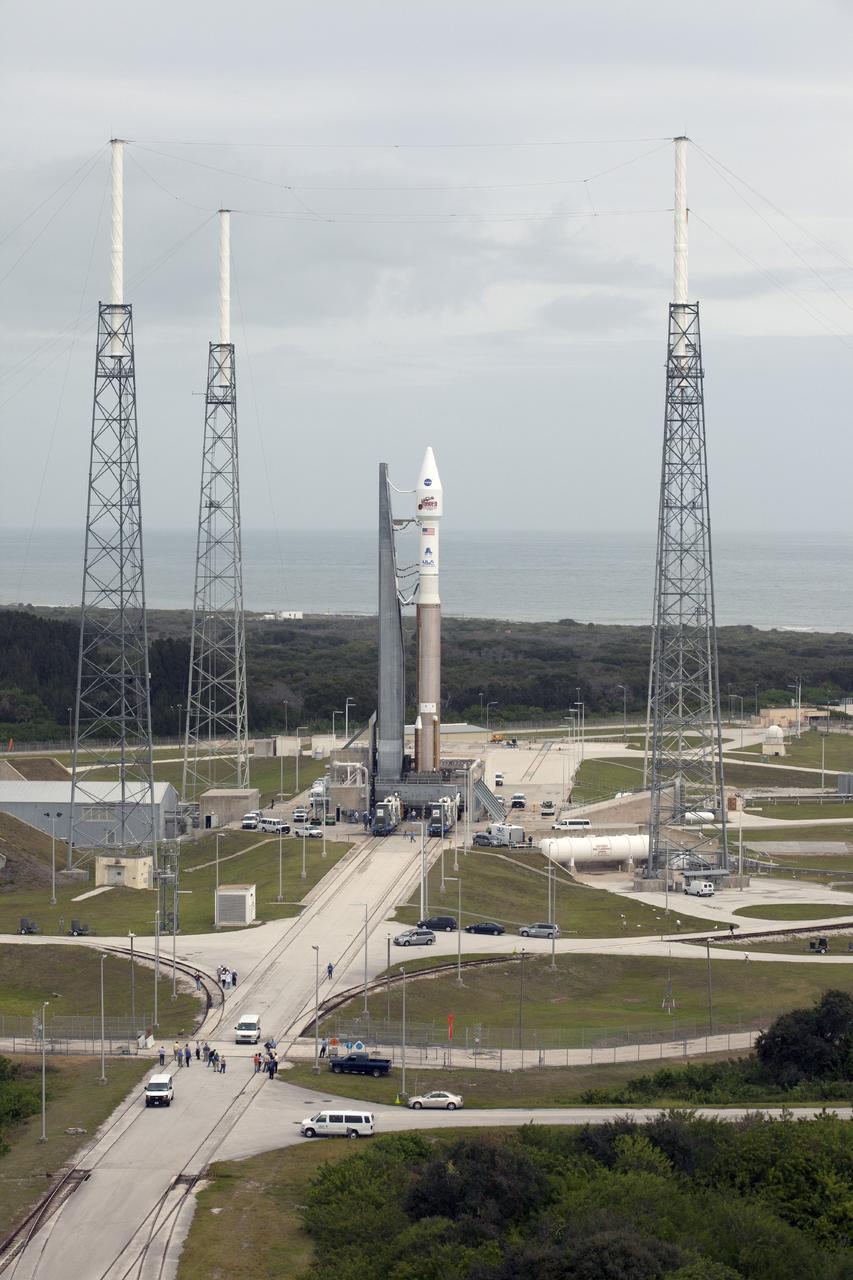
CAPE CANAVERAL, Fla. -- The United Launch Alliance Atlas V rocket carrying NASA’s Mars Atmosphere and Volatile EvolutioN, or MAVEN, spacecraft is secured on the pad at 10:35 a.m. EST at Space Launch Complex 41 on Cape Canaveral Air Force Station in Florida. The 20-minute journey from the Vertical Integration Facility began on schedule with first motion at 9:57 a.m. Launch is scheduled for Nov. 18 during a window that extends from 1:28 to 3:28 p.m. Once positioned in orbit above the Red Planet, MAVEN will study its upper atmosphere in unprecedented detail. For more information, visit: http://www.nasa.gov/mission_pages/maven/main/index.html. Photo credit: NASA/Kim Shiflett

CAPE CANAVERAL, Fla. -- The United Launch Alliance Atlas V rocket carrying NASA's Mars Atmosphere and Volatile EvolutioN, or MAVEN, spacecraft soars off Space Launch Complex 41 on Cape Canaveral Air Force Station in Florida. Launch was on schedule at 1:28 p.m. EST Nov. 18 at the opening of a two-hour launch window. After a 10-month journey to the Red Planet, MAVEN will study its upper atmosphere in unprecedented detail from orbit above the planet. Built by Lockheed Martin in Littleton, Colo., MAVEN will arrive at Mars in September 2014 and will be inserted into an elliptical orbit with a high point of 3,900 miles, swooping down to as close as 93 miles above the planet's surface. For more information, visit: http:__www.nasa.gov_mission_pages_maven_main_index.html. Photo credit: NASA_Tony Gray and Rick Wetherington
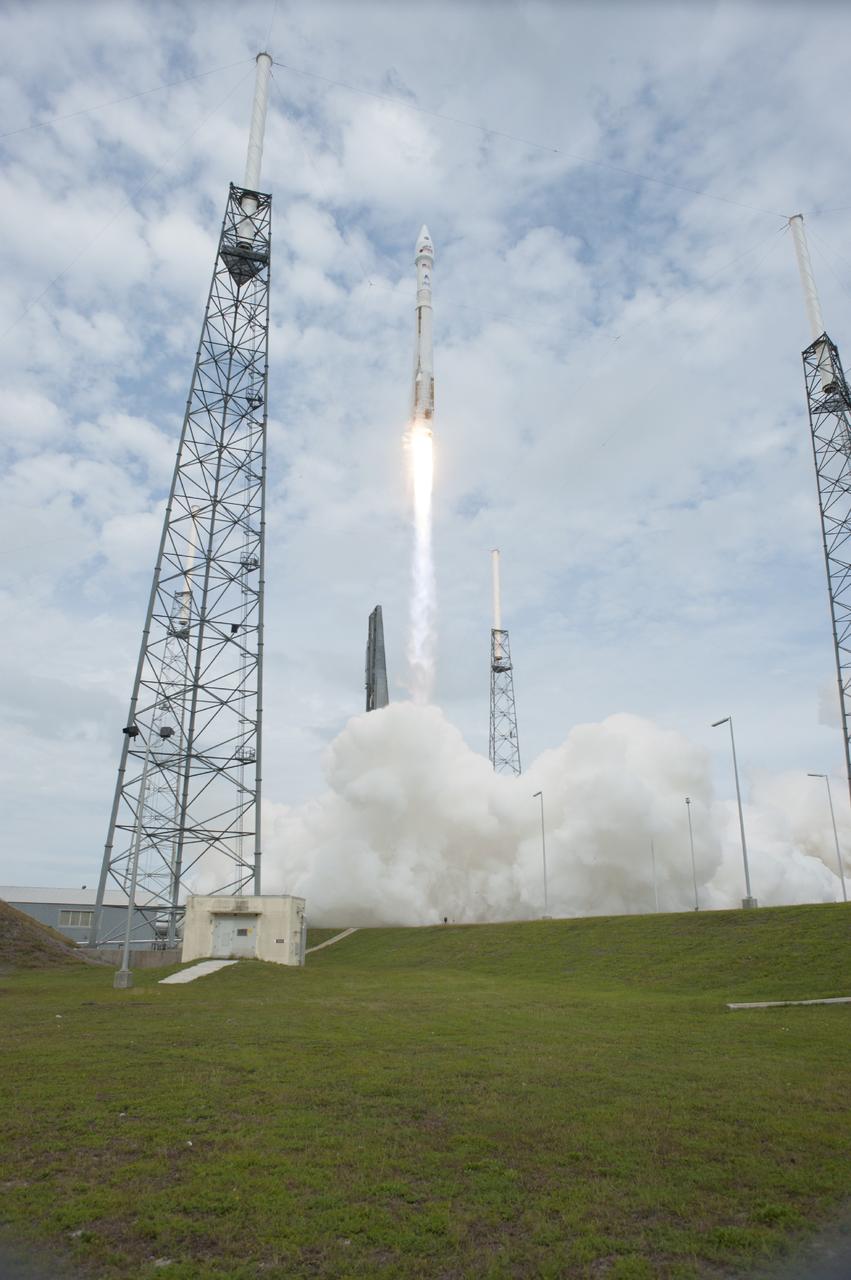
CAPE CANAVERAL, Fla. -- The United Launch Alliance Atlas V rocket carrying NASA's Mars Atmosphere and Volatile EvolutioN, or MAVEN, spacecraft lifts off Space Launch Complex 41 on Cape Canaveral Air Force Station in Florida. Launch was on schedule at 1:28 p.m. EST Nov. 18 at the opening of a two-hour launch window. After a 10-month journey to the Red Planet, MAVEN will study its upper atmosphere in unprecedented detail from orbit above the planet. Built by Lockheed Martin in Littleton, Colo., MAVEN will arrive at Mars in September 2014 and will be inserted into an elliptical orbit with a high point of 3,900 miles, swooping down to as close as 93 miles above the planet's surface. For more information, visit: http://www.nasa.gov/mission_pages/maven/main/index.html. Photo credit: NASA/Tony Gray and Rick Wetherington
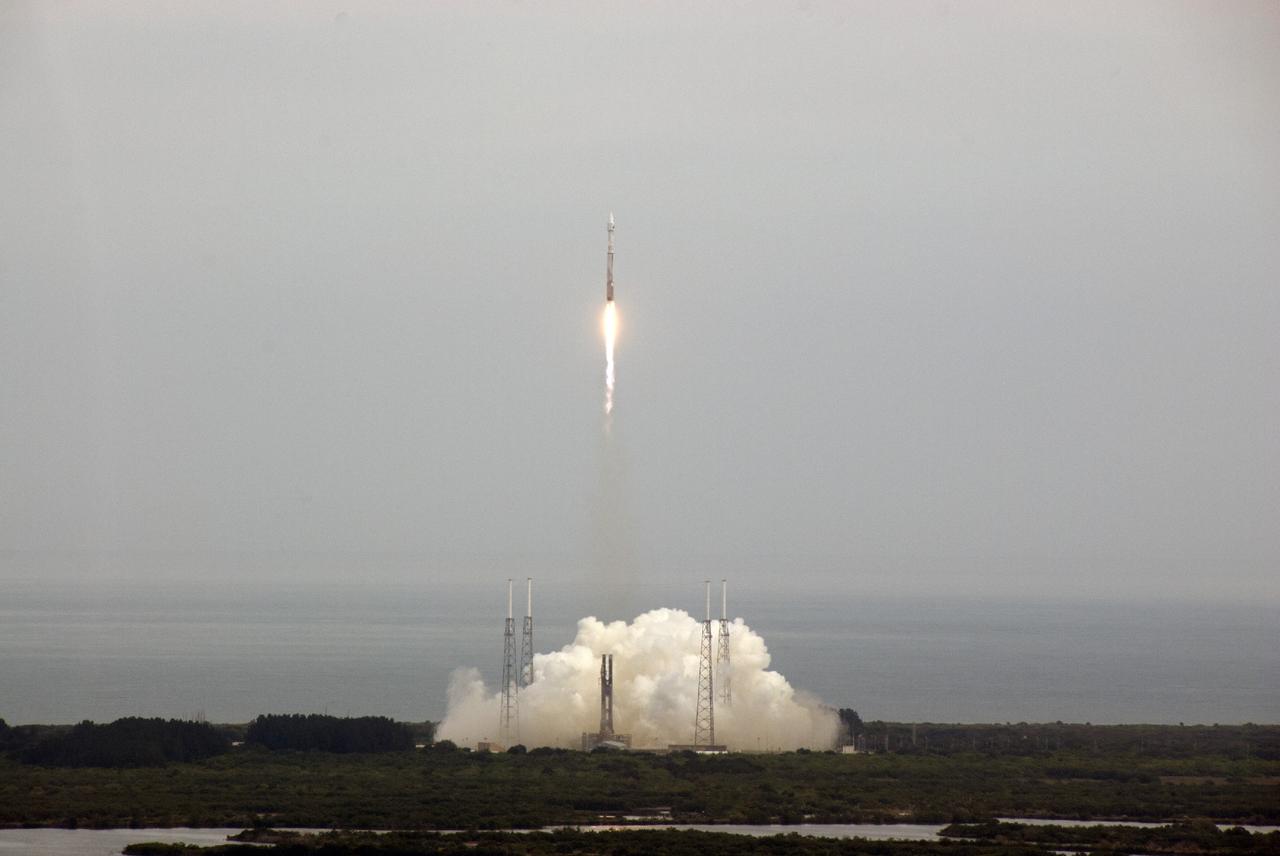
CAPE CANAVERAL, Fla. -- NASA’s Mars Atmosphere and Volatile EvolutioN, or MAVEN, spacecraft begins its 10-month journey to Mars, launching atop a United Launch Alliance Atlas V rocket at 1:28 p.m. EST from Space Launch Complex 41 on Cape Canaveral Air Force Station in Florida. Launch was on schedule Nov. 18 at the opening of a two-hour launch window. After a 10-month journey to the Red Planet, MAVEN will study its upper atmosphere in unprecedented detail from orbit above the planet. Built by Lockheed Martin in Littleton, Colo., MAVEN will arrive at Mars in September 2014 and will be inserted into an elliptical orbit with a high point of 3,900 miles, swooping down to as close as 93 miles above the planet's surface. For more information, visit: http://www.nasa.gov/mission_pages/maven/main/index.html. Photo credit: NASA/Bill White
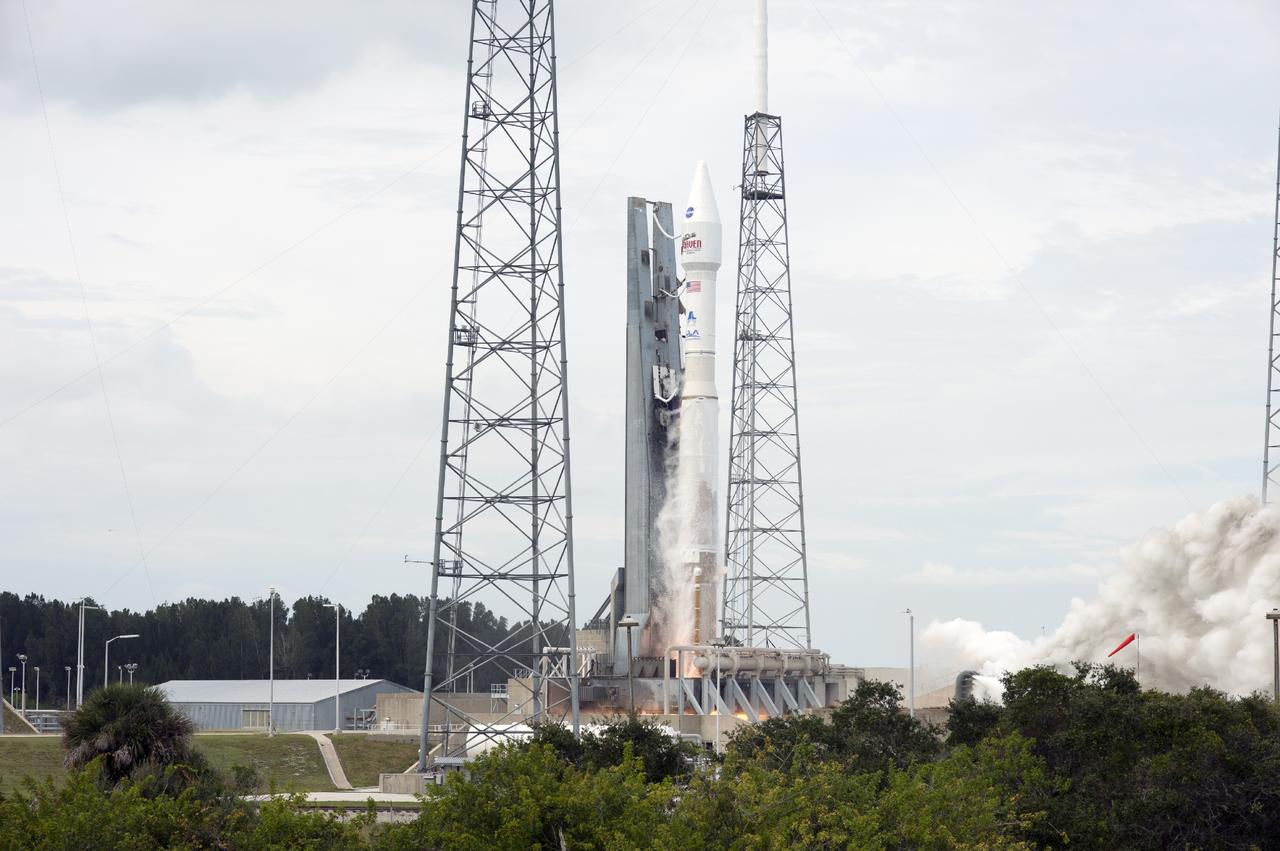
CAPE CANAVERAL, Fla. -- The exhaust plume builds at Space Launch Complex 41 on Cape Canaveral Air Force Station in Florida as the engine ignites under the United Launch Alliance Atlas V rocket carrying NASA's Mars Atmosphere and Volatile EvolutioN, or MAVEN, spacecraft into orbit. Launch was on schedule at 1:28 p.m. EST Nov. 18 at the opening of a two-hour launch window. After a 10-month journey to the Red Planet, MAVEN will study its upper atmosphere in unprecedented detail from orbit above the planet. Built by Lockheed Martin in Littleton, Colo., MAVEN will arrive at Mars in September 2014 and will be inserted into an elliptical orbit with a high point of 3,900 miles, swooping down to as close as 93 miles above the planet's surface. For more information, visit: http://www.nasa.gov/mission_pages/maven/main/index.html. Photo credit: NASA/Tony Gray and Rick Wetherington
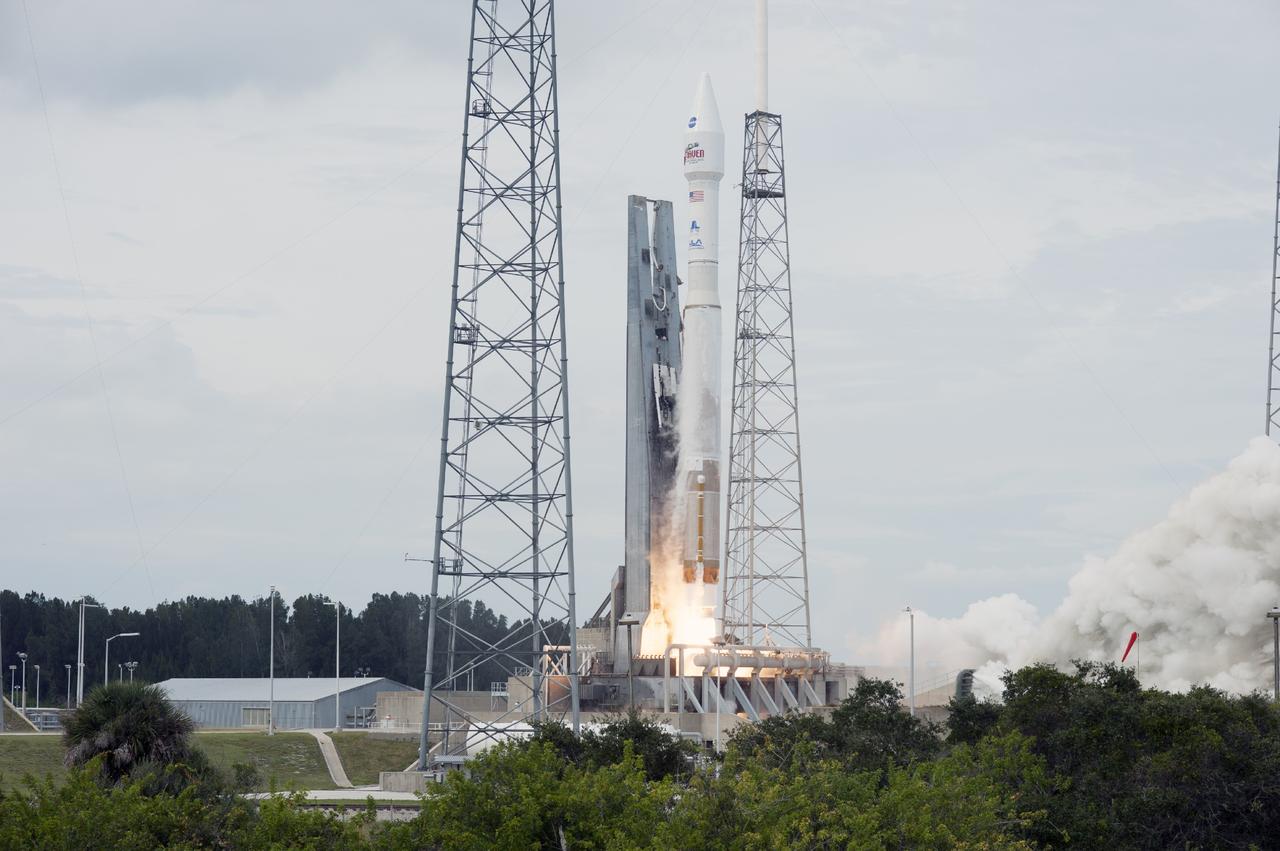
CAPE CANAVERAL, Fla. -- The exhaust plume builds at Space Launch Complex 41 on Cape Canaveral Air Force Station in Florida as the engine ignites under the United Launch Alliance Atlas V rocket carrying NASA's Mars Atmosphere and Volatile EvolutioN, or MAVEN, spacecraft into orbit. Launch was on schedule at 1:28 p.m. EST Nov. 18 at the opening of a two-hour launch window. After a 10-month journey to the Red Planet, MAVEN will study its upper atmosphere in unprecedented detail from orbit above the planet. Built by Lockheed Martin in Littleton, Colo., MAVEN will arrive at Mars in September 2014 and will be inserted into an elliptical orbit with a high point of 3,900 miles, swooping down to as close as 93 miles above the planet's surface. For more information, visit: http://www.nasa.gov/mission_pages/maven/main/index.html. Photo credit: NASA/Tony Gray and Rick Wetherington

CAPE CANAVERAL, Fla. -- Invited guests watch the launch of NASA’s Mars Atmosphere and Volatile EvolutioN, or MAVEN, spacecraft from the NASA Causeway between NASA's Kennedy Space Center and Cape Canaveral Air Force Station in Florida. Launch was on schedule at 1:28 p.m. EST Nov. 18 at the opening of a two-hour launch window. After a 10-month journey to the Red Planet, MAVEN will study its upper atmosphere in unprecedented detail from orbit above the planet. Built by Lockheed Martin in Littleton, Colo., MAVEN will arrive at Mars in September 2014 and will be inserted into an elliptical orbit with a high point of 3,900 miles, swooping down to as close as 93 miles above the planet's surface. For more information, visit: http://www.nasa.gov/mission_pages/maven/main/index.html. Photo credit: NASA/Jim Grossmann
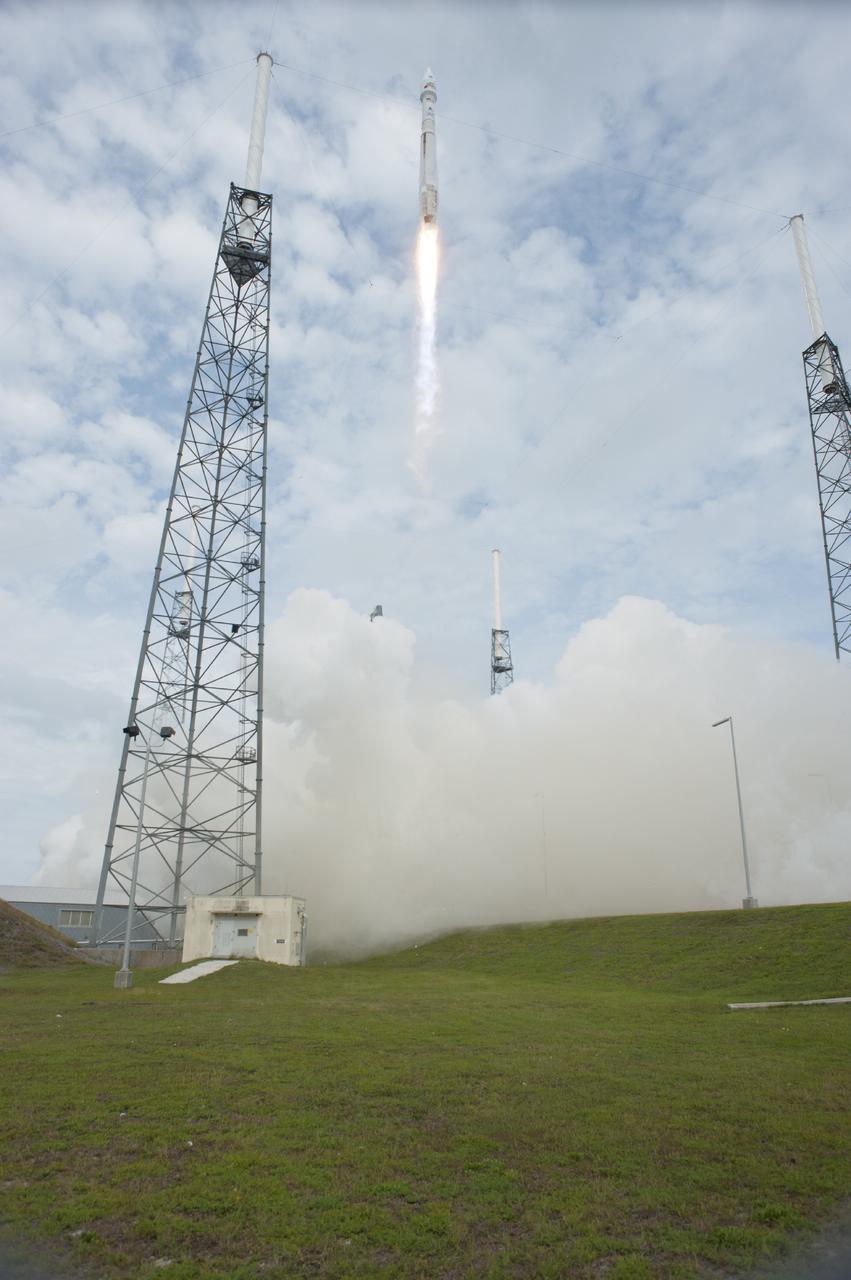
CAPE CANAVERAL, Fla. -- The United Launch Alliance Atlas V rocket carrying NASA's Mars Atmosphere and Volatile EvolutioN, or MAVEN, spacecraft soars off Space Launch Complex 41 on Cape Canaveral Air Force Station in Florida. Launch was on schedule at 1:28 p.m. EST Nov. 18 at the opening of a two-hour launch window. After a 10-month journey to the Red Planet, MAVEN will study its upper atmosphere in unprecedented detail from orbit above the planet. Built by Lockheed Martin in Littleton, Colo., MAVEN will arrive at Mars in September 2014 and will be inserted into an elliptical orbit with a high point of 3,900 miles, swooping down to as close as 93 miles above the planet's surface. For more information, visit: http://www.nasa.gov/mission_pages/maven/main/index.html. Photo credit: NASA/Tony Gray and Rick Wetherington
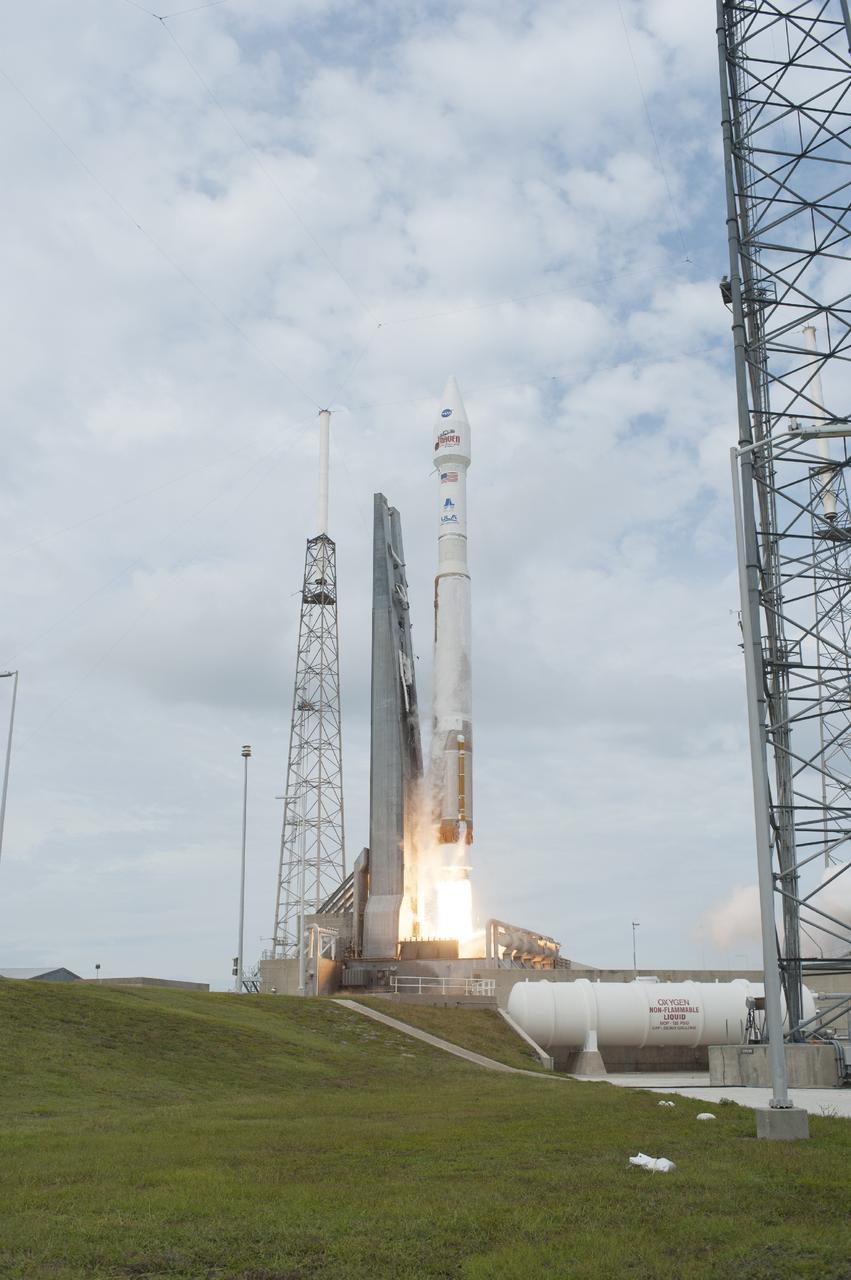
CAPE CANAVERAL, Fla. -- The engine ignites under the United Launch Alliance Atlas V rocket delivering NASA's Mars Atmosphere and Volatile EvolutioN, or MAVEN, spacecraft from Space Launch Complex 41, on Cape Canaveral Air Force Station in Florida, to orbit. Launch was on schedule at 1:28 p.m. EST Nov. 18 at the opening of a two-hour launch window. After a 10-month journey to the Red Planet, MAVEN will study its upper atmosphere in unprecedented detail from orbit above the planet. Built by Lockheed Martin in Littleton, Colo., MAVEN will arrive at Mars in September 2014 and will be inserted into an elliptical orbit with a high point of 3,900 miles, swooping down to as close as 93 miles above the planet's surface. For more information, visit: http://www.nasa.gov/mission_pages/maven/main/index.html. Photo credit: NASA/Tony Gray and Rick Wetherington
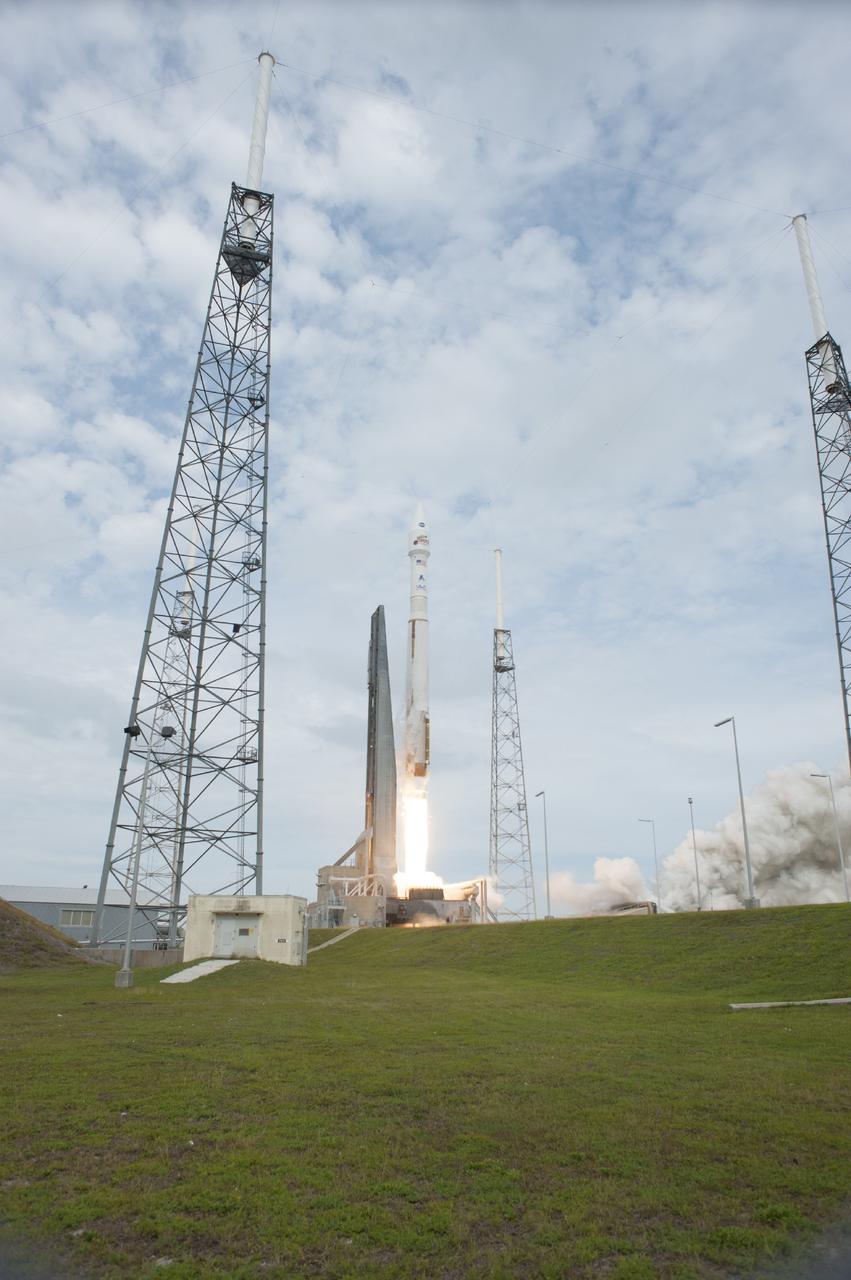
CAPE CANAVERAL, Fla. -- The engine ignites under the United Launch Alliance Atlas V rocket, lifting NASA's Mars Atmosphere and Volatile EvolutioN, or MAVEN, spacecraft off Space Launch Complex 41 on Cape Canaveral Air Force Station in Florida. Launch was on schedule at 1:28 p.m. EST Nov. 18 at the opening of a two-hour launch window. After a 10-month journey to the Red Planet, MAVEN will study its upper atmosphere in unprecedented detail from orbit above the planet. Built by Lockheed Martin in Littleton, Colo., MAVEN will arrive at Mars in September 2014 and will be inserted into an elliptical orbit with a high point of 3,900 miles, swooping down to as close as 93 miles above the planet's surface. For more information, visit: http://www.nasa.gov/mission_pages/maven/main/index.html. Photo credit: NASA/Tony Gray and Rick Wetherington
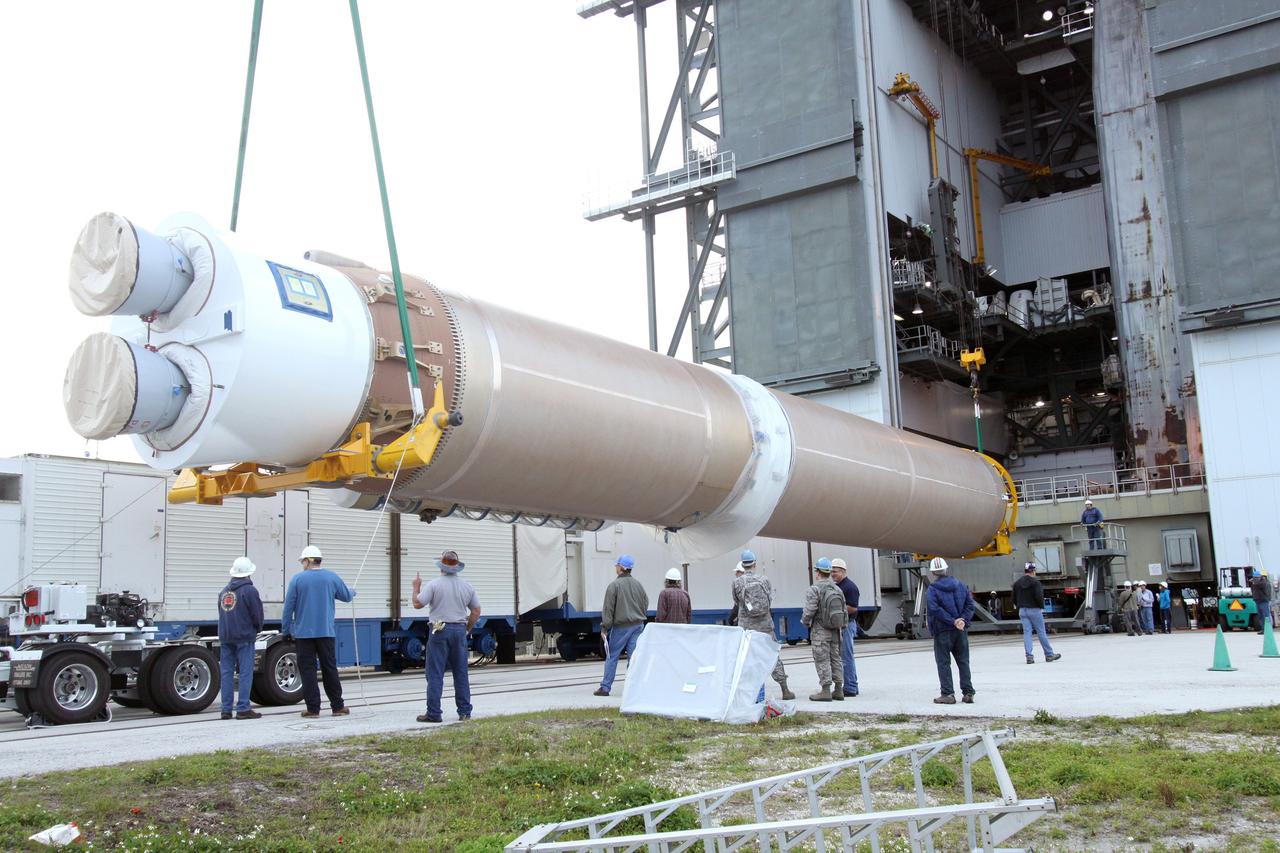
CAPE CANAVERAL, Fla. – The first stage of the United Launch Alliance Atlas V rocket for NASA's Magnetospheric Multiscale mission, or MMS, is lifted into the mobile service tower at Space Launch Complex 41 on Cape Canaveral Air Force Station in Florida. MMS will study the mystery of how magnetic fields around Earth connect and disconnect, explosively releasing energy via a process known a magnetic reconnection. MMS consists of four identical spacecraft that work together to provide the first three-dimensional view of this fundamental process, which occurs throughout the universe. Launch is set for March 12. To learn more about MMS, visit http://www.nasa.gov/mms. Photo credit: NASA/Jim Grossmann
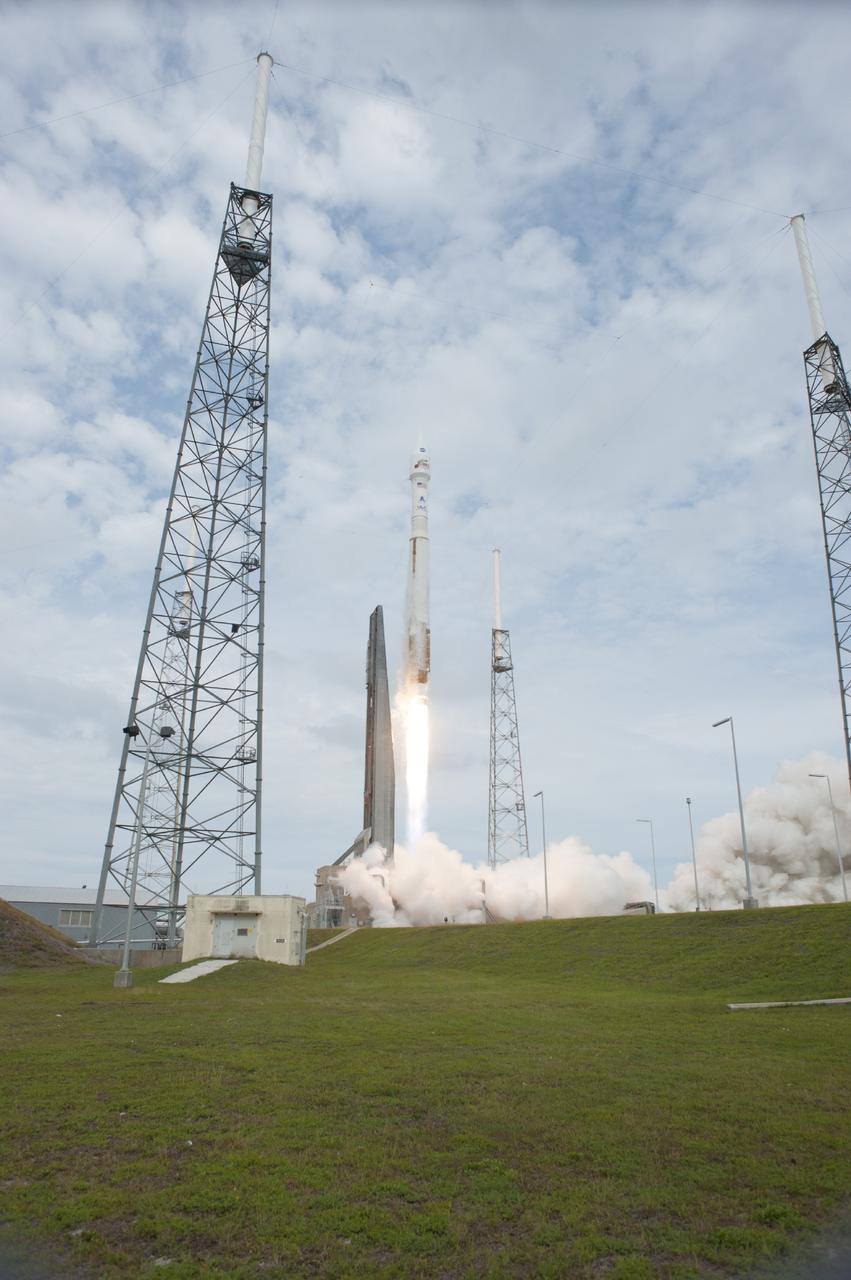
CAPE CANAVERAL, Fla. -- The United Launch Alliance Atlas V rocket carrying NASA's Mars Atmosphere and Volatile EvolutioN, or MAVEN, spacecraft rises off Space Launch Complex 41 on Cape Canaveral Air Force Station in Florida. Launch was on schedule at 1:28 p.m. EST Nov. 18 at the opening of a two-hour launch window. After a 10-month journey to the Red Planet, MAVEN will study its upper atmosphere in unprecedented detail from orbit above the planet. Built by Lockheed Martin in Littleton, Colo., MAVEN will arrive at Mars in September 2014 and will be inserted into an elliptical orbit with a high point of 3,900 miles, swooping down to as close as 93 miles above the planet's surface. For more information, visit: http://www.nasa.gov/mission_pages/maven/main/index.html. Photo credit: NASA/Tony Gray and Rick Wetherington
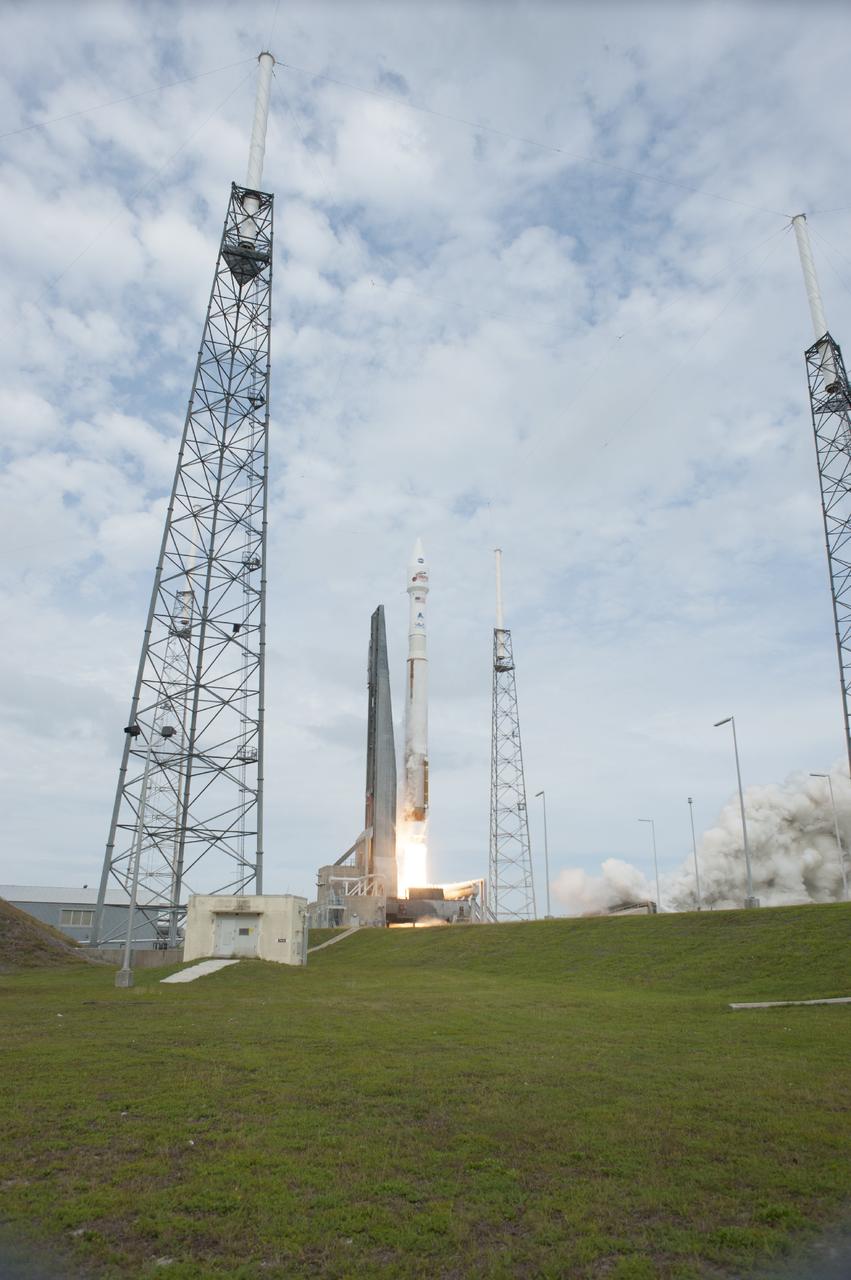
CAPE CANAVERAL, Fla. -- The engine ignites under the United Launch Alliance Atlas V rocket, lifting NASA's Mars Atmosphere and Volatile EvolutioN, or MAVEN, spacecraft off Space Launch Complex 41 on Cape Canaveral Air Force Station in Florida.. Launch was on schedule at 1:28 p.m. EST Nov. 18 at the opening of a two-hour launch window. After a 10-month journey to the Red Planet, MAVEN will study its upper atmosphere in unprecedented detail from orbit above the planet. Built by Lockheed Martin in Littleton, Colo., MAVEN will arrive at Mars in September 2014 and will be inserted into an elliptical orbit with a high point of 3,900 miles, swooping down to as close as 93 miles above the planet's surface. For more information, visit: http://www.nasa.gov/mission_pages/maven/main/index.html. Photo credit: NASA/Tony Gray and Rick Wetherington
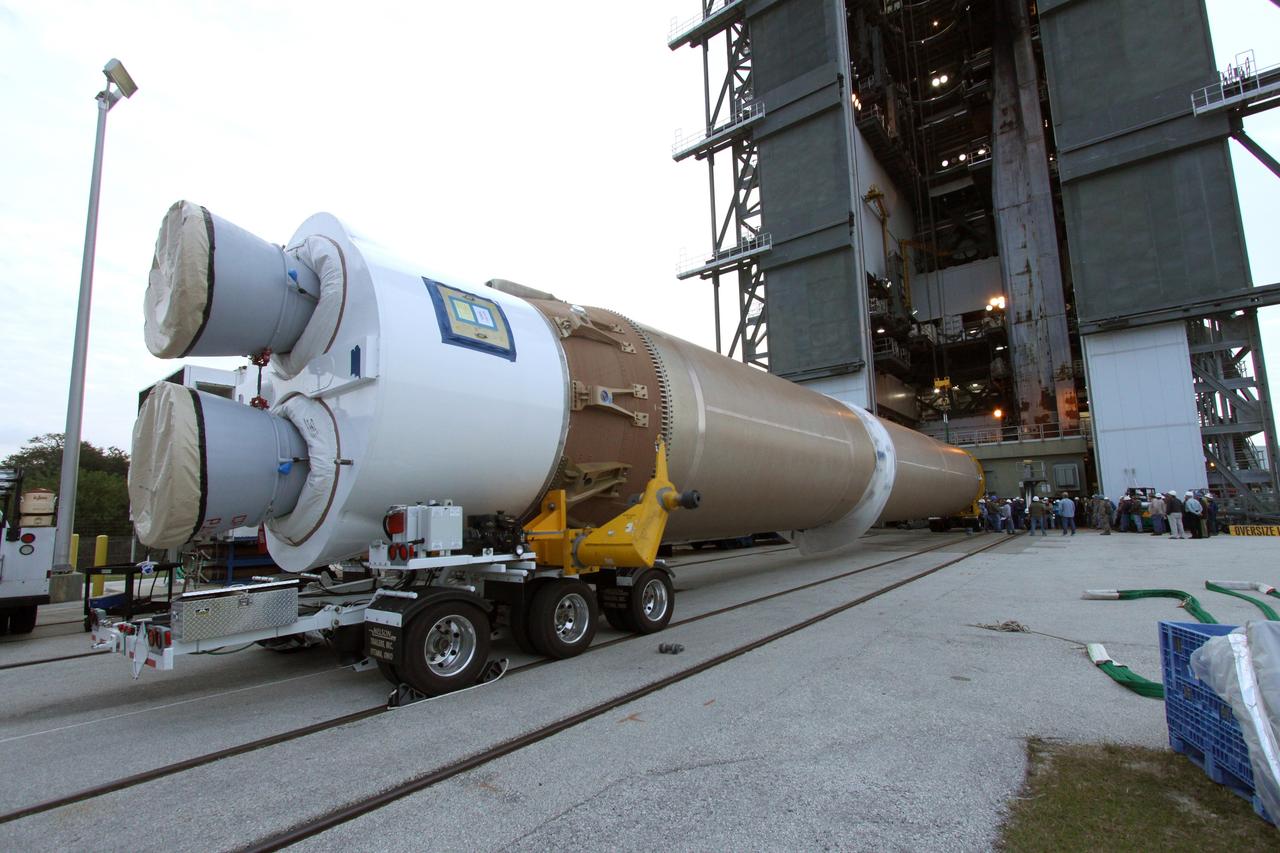
CAPE CANAVERAL, Fla. – Operations are underway at Space Launch Complex 41 on Cape Canaveral Air Force Station in Florida to lift the newly delivered first stage of a United Launch Alliance Atlas V rocket into the mobile service tower. The rocket will launch NASA's Magnetospheric Multiscale mission, or MMS. MMS will study the mystery of how magnetic fields around Earth connect and disconnect, explosively releasing energy via a process known a magnetic reconnection. MMS consists of four identical spacecraft that work together to provide the first three-dimensional view of this fundamental process, which occurs throughout the universe. Launch is set for March 12. To learn more about MMS, visit http://www.nasa.gov/mms. Photo credit: NASA/Jim Grossmann
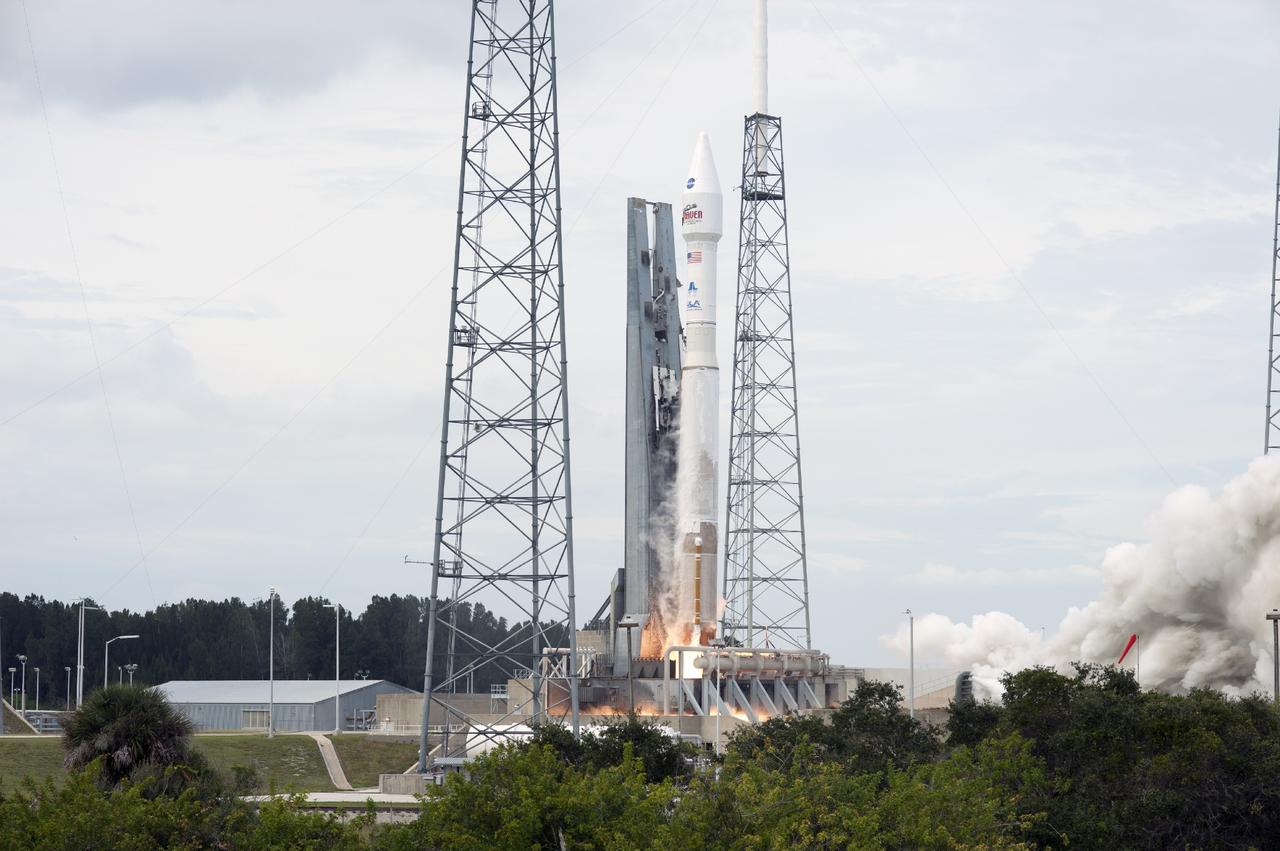
CAPE CANAVERAL, Fla. -- The exhaust plume builds at Space Launch Complex 41 on Cape Canaveral Air Force Station in Florida as the engine ignites under the United Launch Alliance Atlas V rocket carrying NASA's Mars Atmosphere and Volatile EvolutioN, or MAVEN, spacecraft into orbit. Launch was on schedule at 1:28 p.m. EST Nov. 18 at the opening of a two-hour launch window. After a 10-month journey to the Red Planet, MAVEN will study its upper atmosphere in unprecedented detail from orbit above the planet. Built by Lockheed Martin in Littleton, Colo., MAVEN will arrive at Mars in September 2014 and will be inserted into an elliptical orbit with a high point of 3,900 miles, swooping down to as close as 93 miles above the planet's surface. For more information, visit: http://www.nasa.gov/mission_pages/maven/main/index.html. Photo credit: NASA/Tony Gray and Rick Wetherington
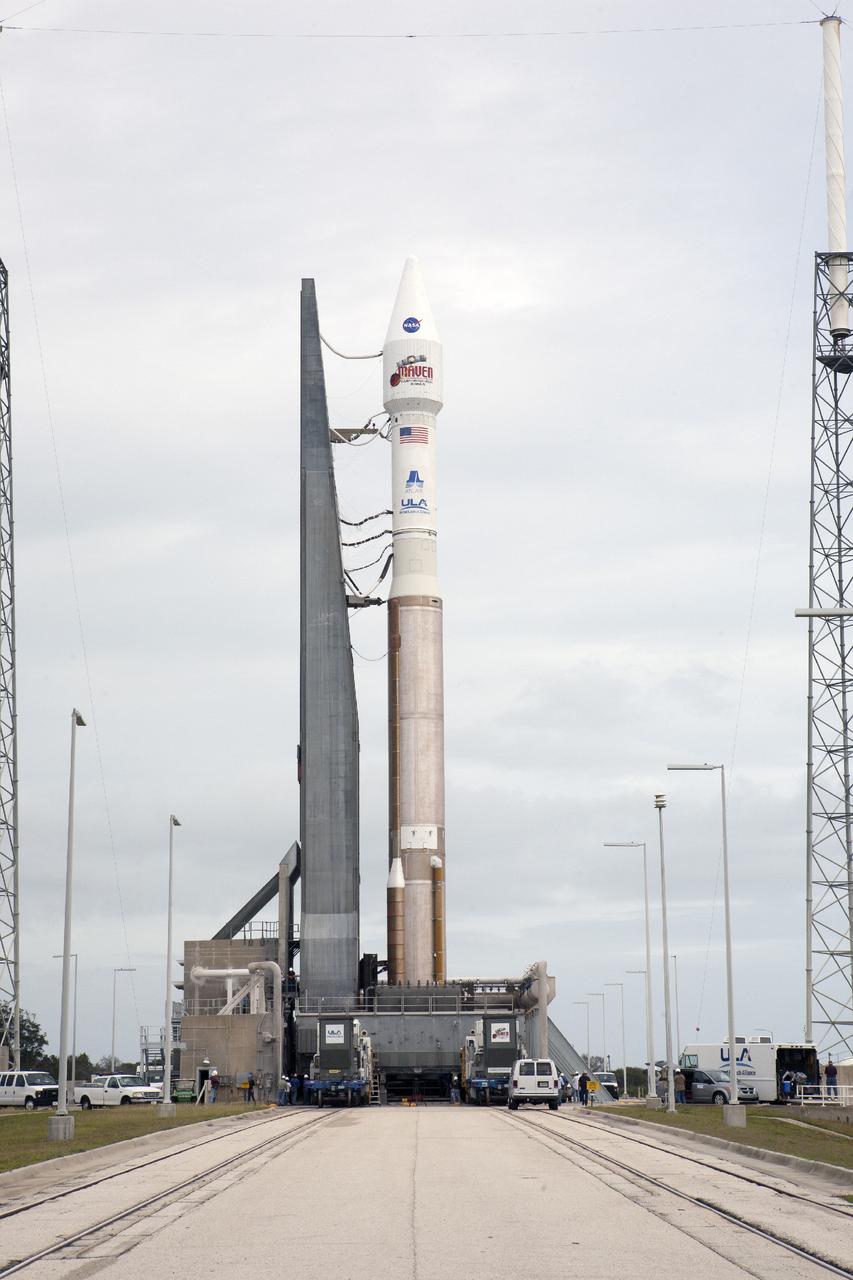
CAPE CANAVERAL, Fla. -- At Cape Canaveral Air Force Station in Florida, work to secure the United Launch Alliance Atlas V rocket carrying NASA’s Mars Atmosphere and Volatile EvolutioN, or MAVEN, spacecraft is underway at Space Launch Complex 41. The 20-minute journey from the Vertical Integration Facility began on schedule with first motion at 9:57 a.m. EST. Launch is scheduled for Nov. 18 during a window that extends from 1:28 to 3:28 p.m. Once positioned in orbit above the Red Planet, MAVEN will study its upper atmosphere in unprecedented detail. For more information, visit: http://www.nasa.gov/mission_pages/maven/main/index.html. Photo credit: NASA/Kim Shiflett
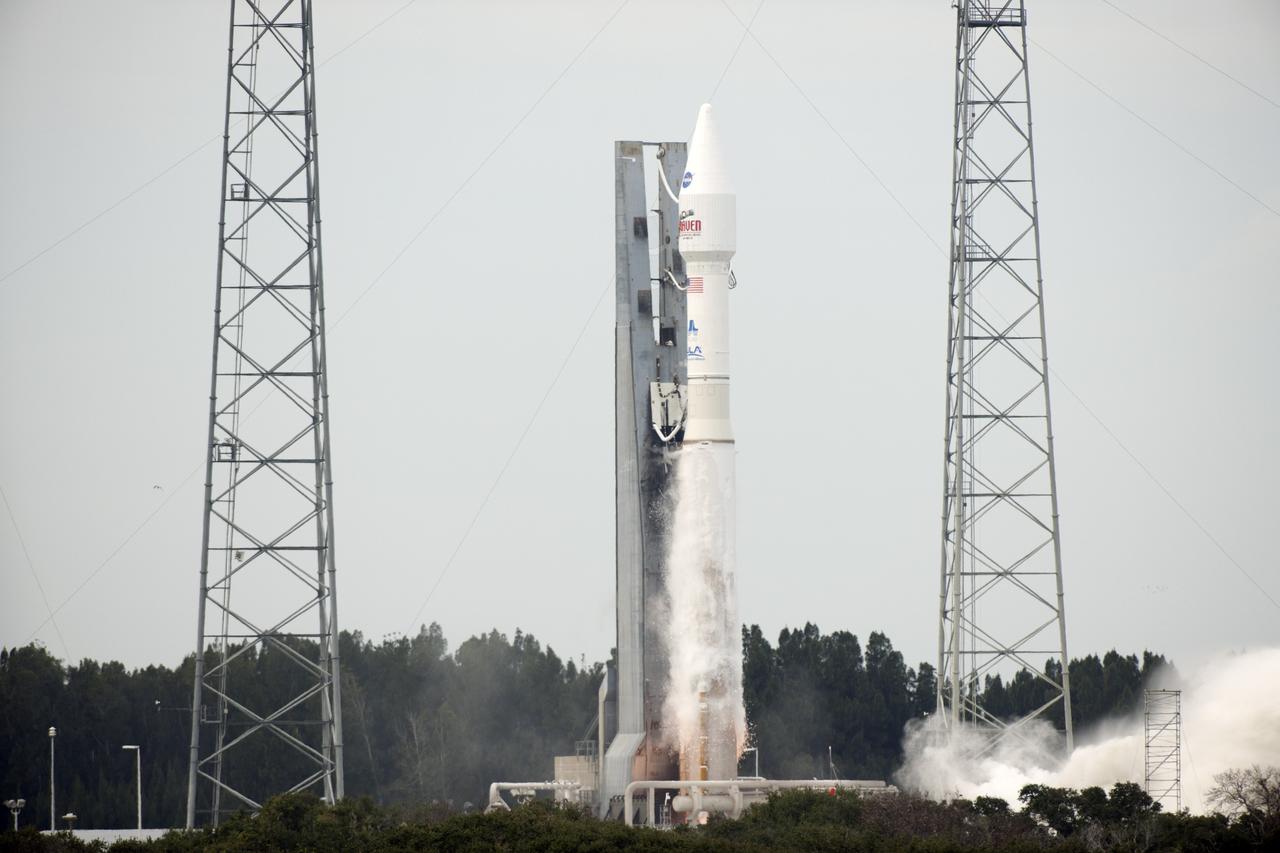
CAPE CANAVERAL, Fla. -- A United Launch Alliance Atlas V rocket lifts off Space Launch Complex 41 at Cape Canaveral Air Force Station in Florida, carrying NASA's Mars Atmosphere and Volatile EvolutioN, or MAVEN, spacecraft. Launch was on schedule at 1:28 p.m. EST Nov. 18 at the opening of a two-hour launch window. After a 10-month journey to the Red Planet, MAVEN will study its upper atmosphere in unprecedented detail from orbit above the planet. Built by Lockheed Martin in Littleton, Colo., MAVEN will arrive at Mars in September 2014 and will be inserted into an elliptical orbit with a high point of 3,900 miles, swooping down to as close as 93 miles above the planet's surface. For more information, visit: http://www.nasa.gov/mission_pages/maven/main/index.html. Photo credit: NASA/Rusty Backer

CAPE CANAVERAL, Fla. -- Bruce Jakosky, MAVEN principal investigator from the Laboratory for Atmospheric and Space Physics at the University of Colorado at Boulder, participates in a post-launch news conference in NASA's Press Site TV auditorium following the successful launch of NASA’s Mars Atmosphere and Volatile EvolutioN, or MAVEN, spacecraft. Launch was on schedule at 1:28 p.m. EST Nov. 18 at the opening of a two-hour launch window. After a 10-month journey to the Red Planet, MAVEN will study its upper atmosphere in unprecedented detail from orbit above the planet. Built by Lockheed Martin in Littleton, Colo., MAVEN will arrive at Mars in September 2014 and will be inserted into an elliptical orbit with a high point of 3,900 miles, swooping down to as close as 93 miles above the planet's surface. For more information, visit: http://www.nasa.gov/mission_pages/maven/main/index.html. Photo credit: NASA/Kim Shiflett
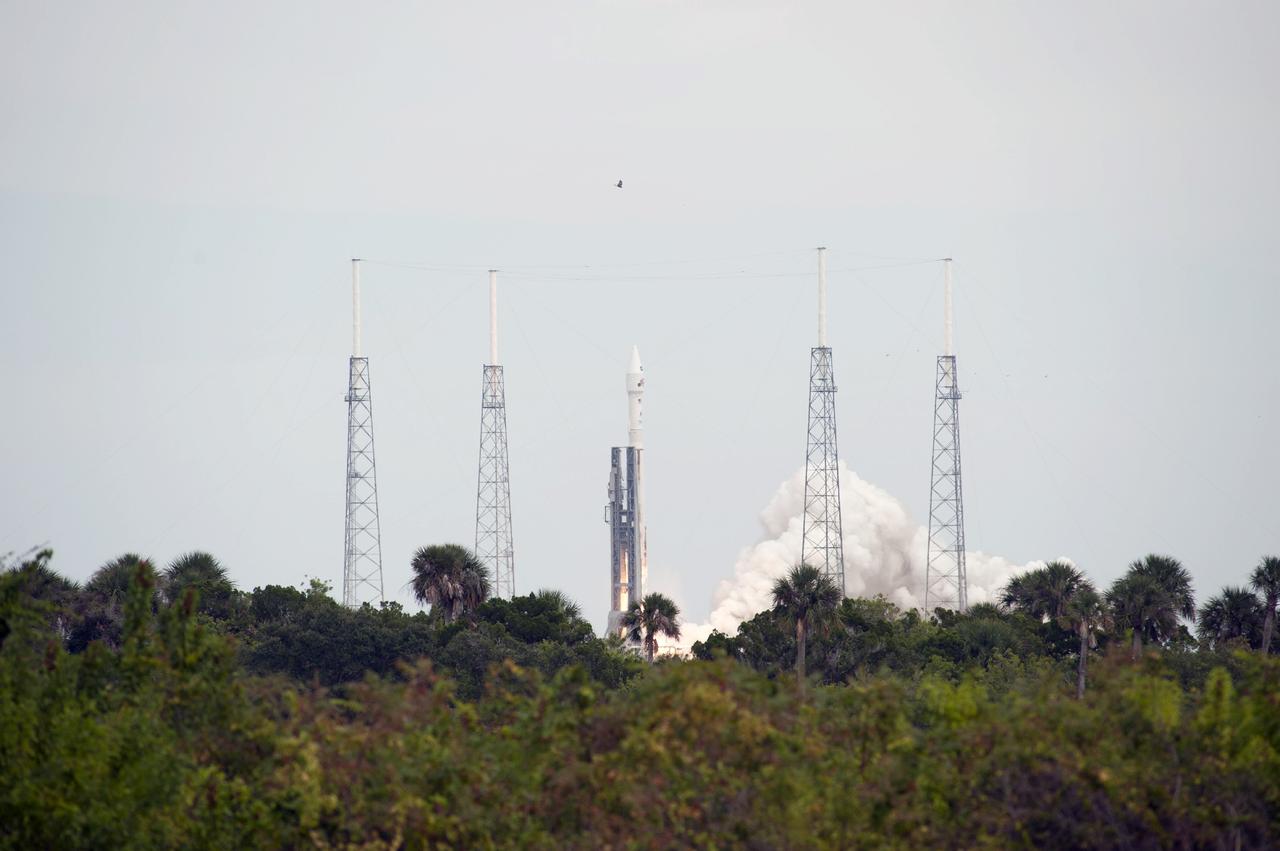
CAPE CANAVERAL, Fla. -- A United Launch Alliance Atlas V rocket lifts off Space Launch Complex 41 at Cape Canaveral Air Force Station in Florida, carrying NASA's Mars Atmosphere and Volatile EvolutioN, or MAVEN, spacecraft. Launch was on schedule at 1:28 p.m. EST Nov. 18 at the opening of a two-hour launch window. After a 10-month journey to the Red Planet, MAVEN will study its upper atmosphere in unprecedented detail from orbit above the planet. Built by Lockheed Martin in Littleton, Colo., MAVEN will arrive at Mars in September 2014 and will be inserted into an elliptical orbit with a high point of 3,900 miles, swooping down to as close as 93 miles above the planet's surface. For more information, visit: http://www.nasa.gov/mission_pages/maven/main/index.html. Photo credit: NASA/George Roberts
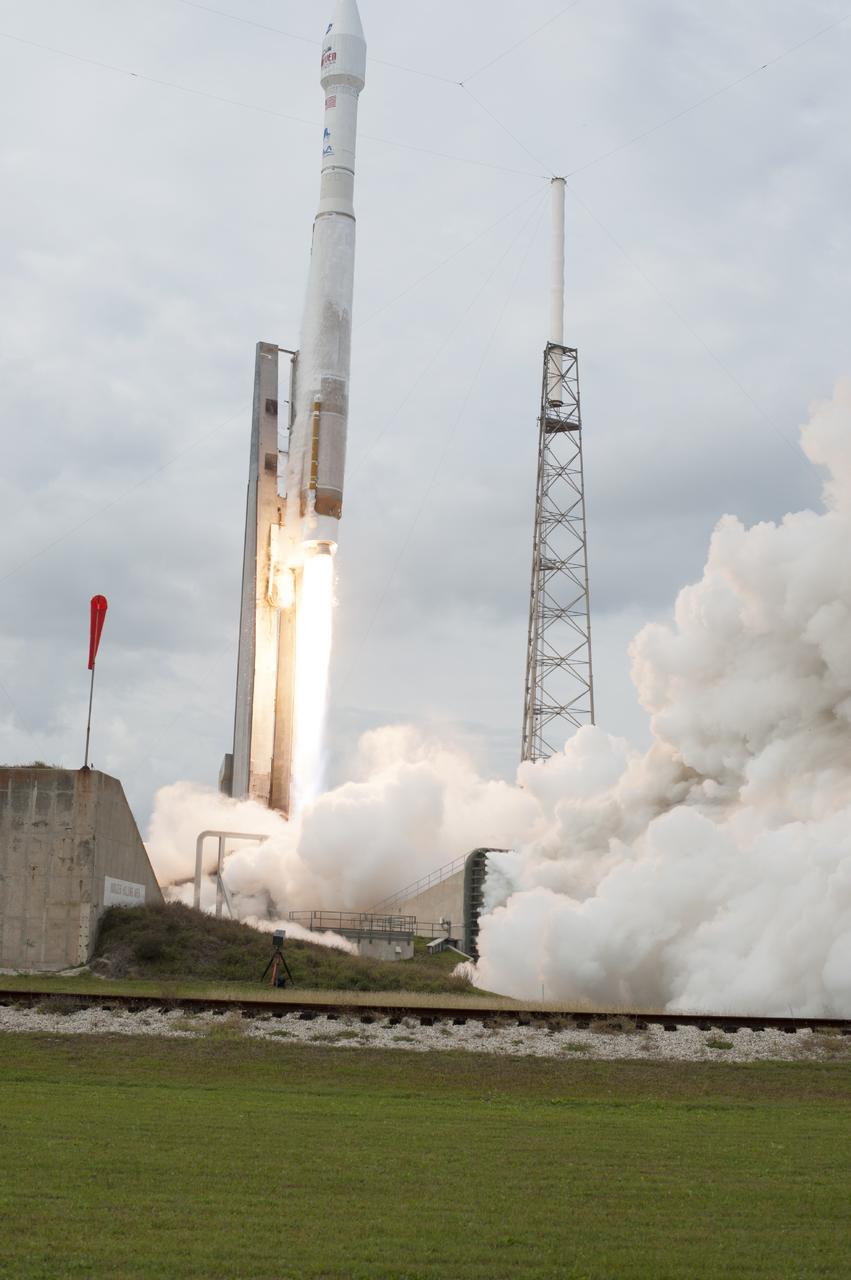
CAPE CANAVERAL, Fla. -- The United Launch Alliance Atlas V rocket carrying NASA's Mars Atmosphere and Volatile EvolutioN, or MAVEN, spacecraft soars off Space Launch Complex 41 on Cape Canaveral Air Force Station in Florida. Launch was on schedule at 1:28 p.m. EST Nov. 18 at the opening of a two-hour launch window. After a 10-month journey to the Red Planet, MAVEN will study its upper atmosphere in unprecedented detail from orbit above the planet. Built by Lockheed Martin in Littleton, Colo., MAVEN will arrive at Mars in September 2014 and will be inserted into an elliptical orbit with a high point of 3,900 miles, swooping down to as close as 93 miles above the planet's surface. For more information, visit: http://www.nasa.gov/mission_pages/maven/main/index.html. Photo credit: NASA/Tony Gray and Rick Wetherington
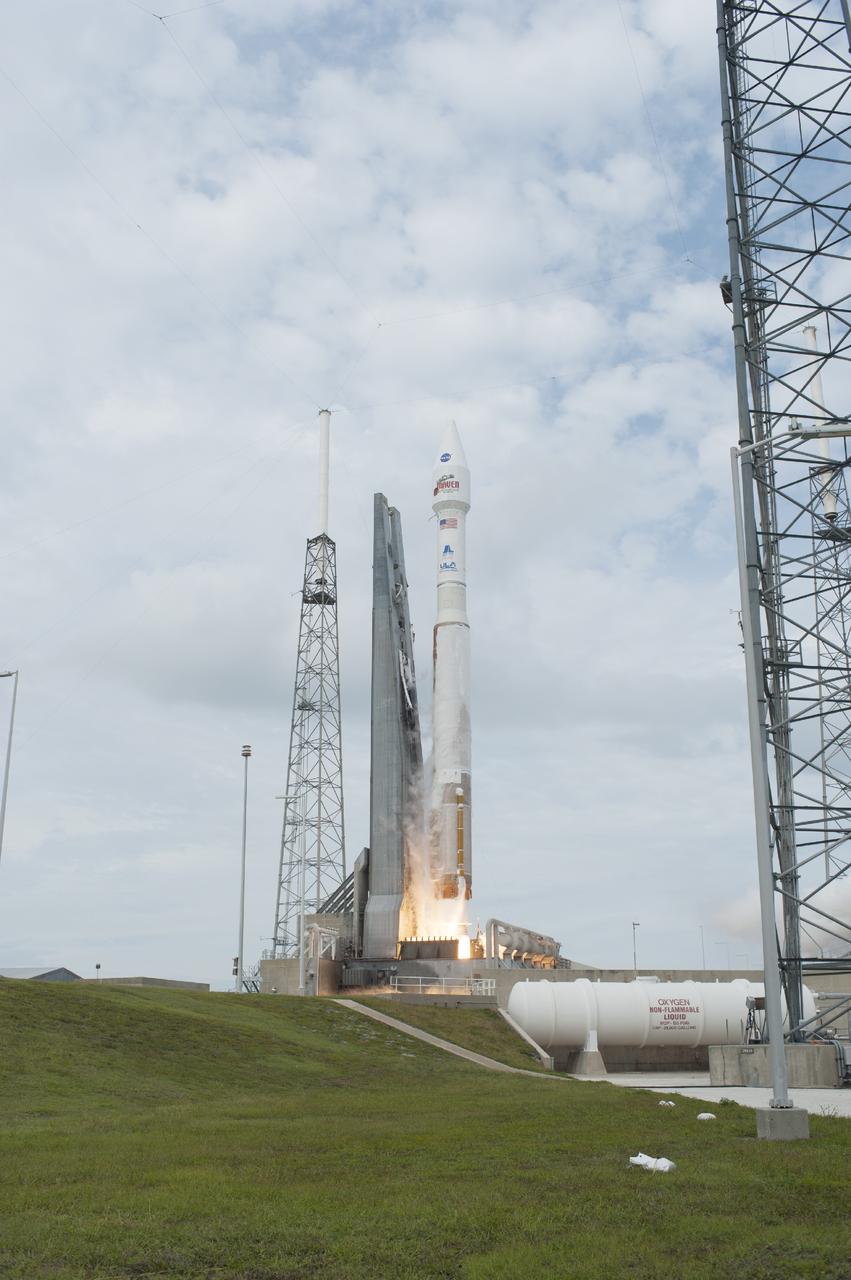
CAPE CANAVERAL, Fla. -- The engine ignites under the United Launch Alliance Atlas V rocket delivering NASA's Mars Atmosphere and Volatile EvolutioN, or MAVEN, spacecraft from Space Launch Complex 41, on Cape Canaveral Air Force Station in Florida, to orbit. Launch was on schedule at 1:28 p.m. EST Nov. 18 at the opening of a two-hour launch window. After a 10-month journey to the Red Planet, MAVEN will study its upper atmosphere in unprecedented detail from orbit above the planet. Built by Lockheed Martin in Littleton, Colo., MAVEN will arrive at Mars in September 2014 and will be inserted into an elliptical orbit with a high point of 3,900 miles, swooping down to as close as 93 miles above the planet's surface. For more information, visit: http://www.nasa.gov/mission_pages/maven/main/index.html. Photo credit: NASA/Tony Gray and Rick Wetherington
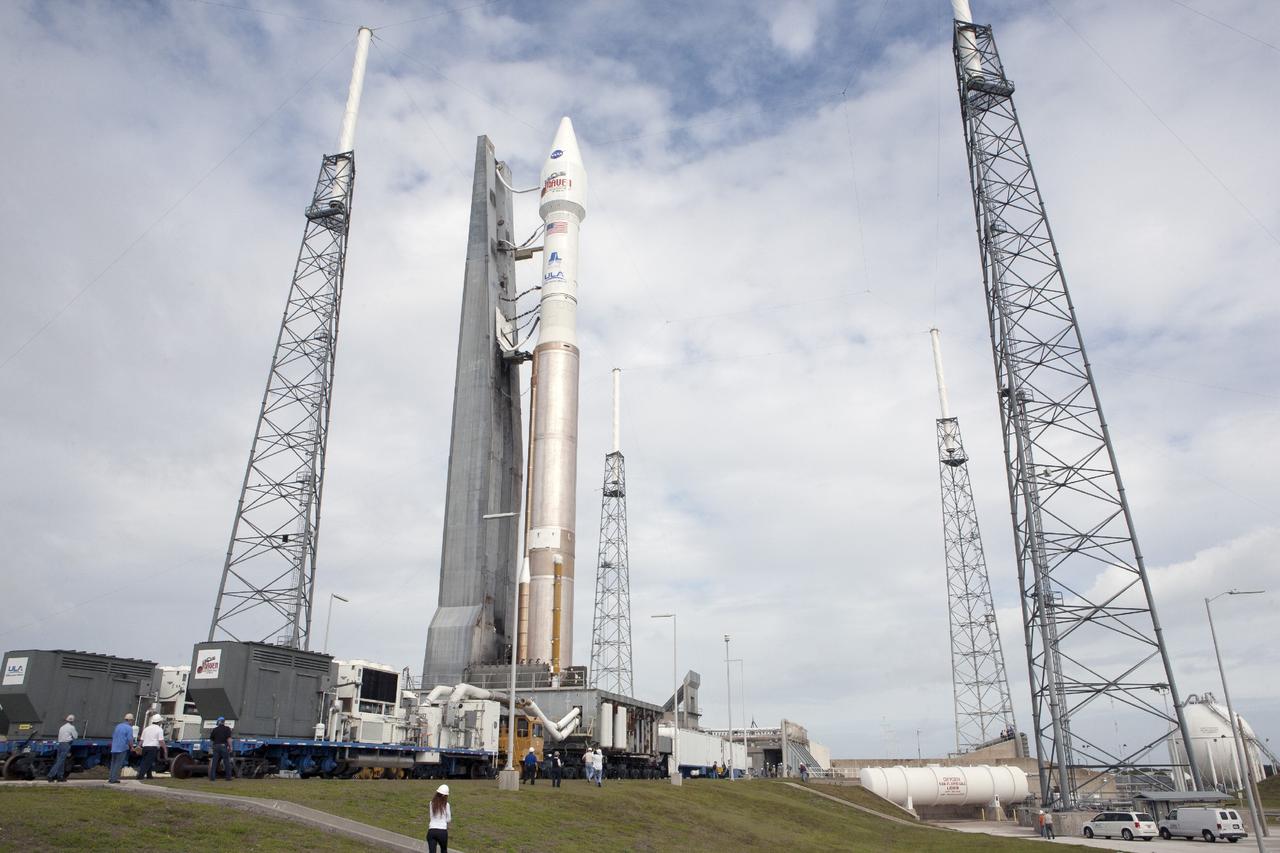
CAPE CANAVERAL, Fla. -- The United Launch Alliance Atlas V rocket carrying NASA’s Mars Atmosphere and Volatile EvolutioN, or MAVEN, spacecraft moves between the lightning masts at Space Launch Complex 41 on Cape Canaveral Air Force Station in Florida following a 20-minute journey from the Vertical Integration Facility. Rollout began on schedule with first motion at 9:57 a.m. EST. Launch is scheduled for Nov. 18 during a window that extends from 1:28 to 3:28 p.m. Once positioned in orbit above the Red Planet, MAVEN will study its upper atmosphere in unprecedented detail. For more information, visit: http://www.nasa.gov/mission_pages/maven/main/index.html. Photo credit: NASA/Kim Shiflett
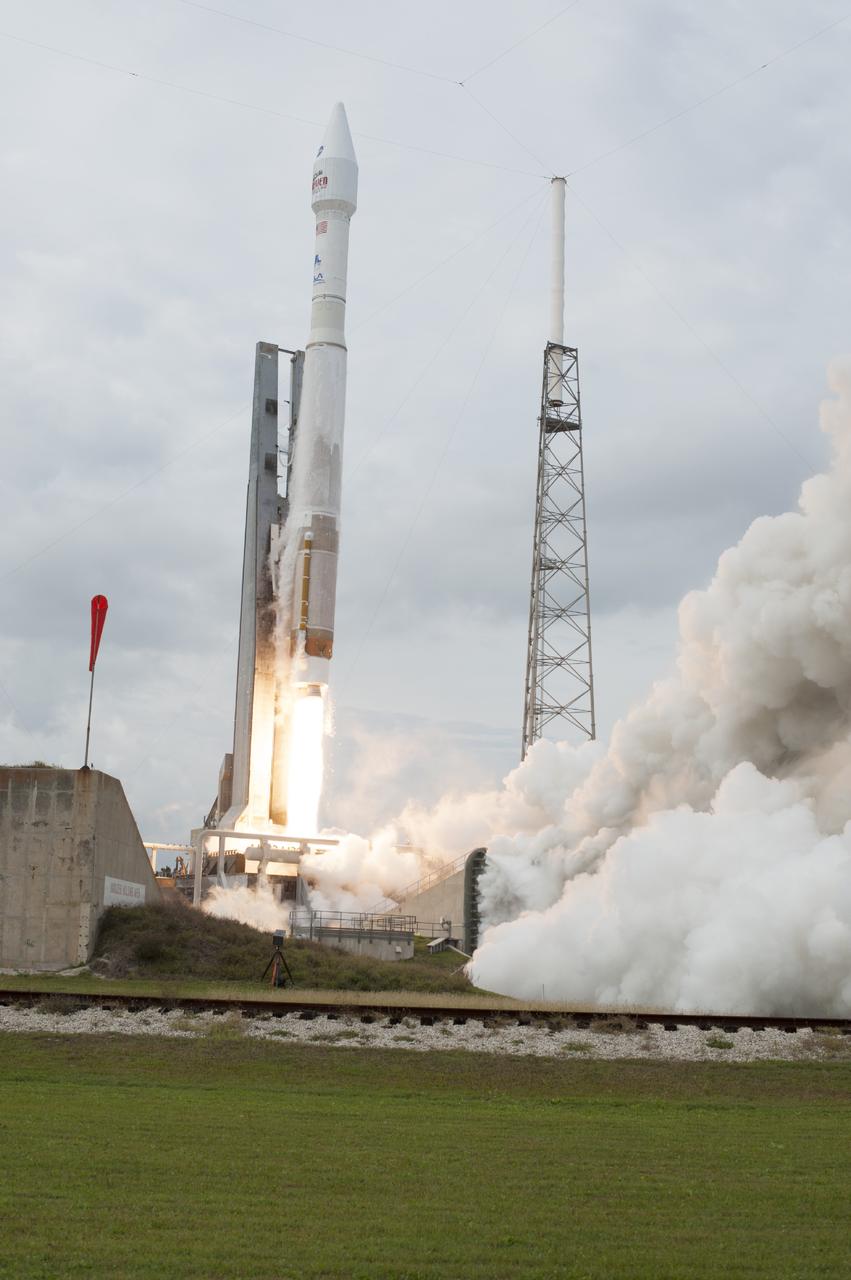
CAPE CANAVERAL, Fla. -- The United Launch Alliance Atlas V rocket carrying NASA's Mars Atmosphere and Volatile EvolutioN, or MAVEN, spacecraft rises off Space Launch Complex 41 at Cape Canaveral Air Force Station in Florida. Launch was on schedule at 1:28 p.m. EST Nov. 18 at the opening of a two-hour launch window. After a 10-month journey to the Red Planet, MAVEN will study its upper atmosphere in unprecedented detail from orbit above the planet. Built by Lockheed Martin in Littleton, Colo., MAVEN will arrive at Mars in September 2014 and will be inserted into an elliptical orbit with a high point of 3,900 miles, swooping down to as close as 93 miles above the planet's surface. For more information, visit: http://www.nasa.gov/mission_pages/maven/main/index.html. Photo credit: NASA/Tony Gray and Rick Wetherington
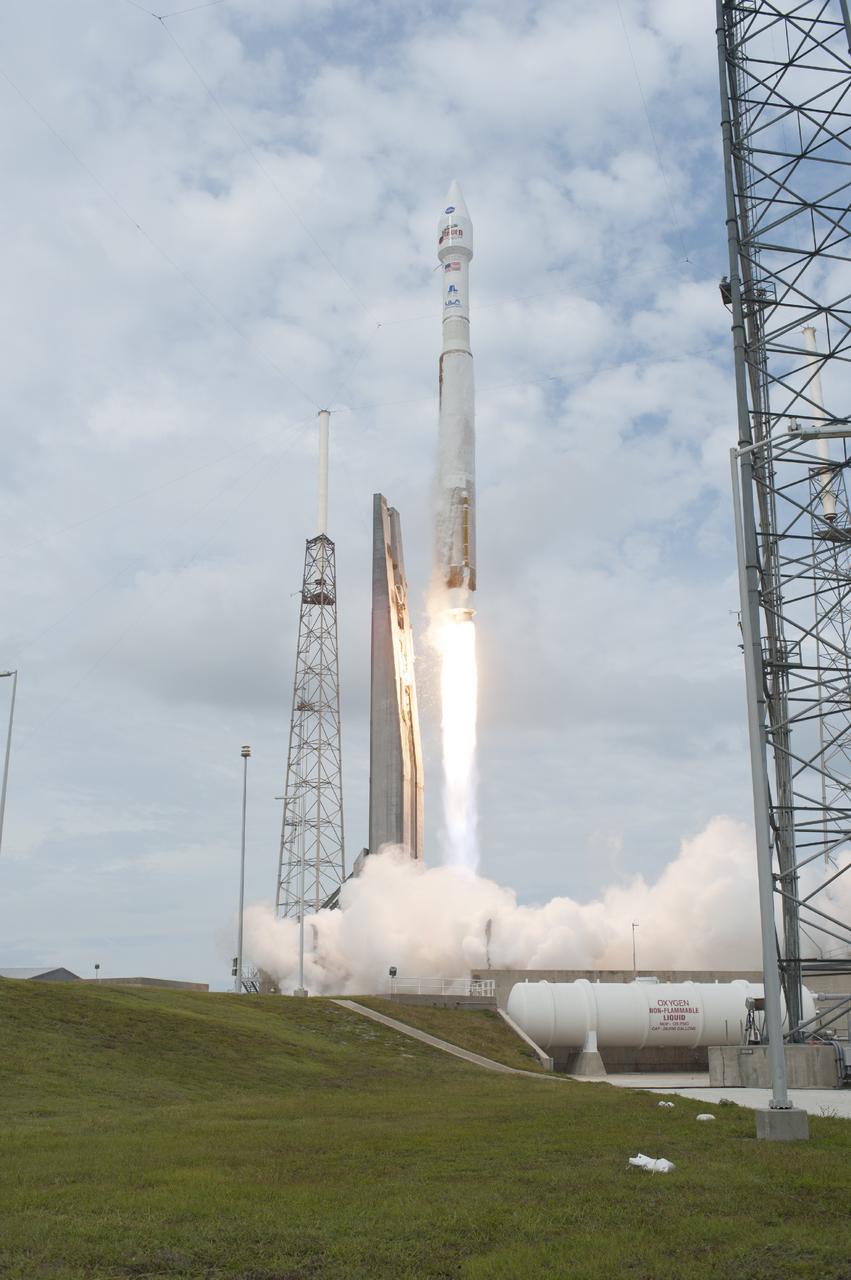
CAPE CANAVERAL, Fla. -- The United Launch Alliance Atlas V rocket carrying NASA's Mars Atmosphere and Volatile EvolutioN, or MAVEN, spacecraft soars off Space Launch Complex 41 on Cape Canaveral Air Force Station in Florida. Launch was on schedule at 1:28 p.m. EST Nov. 18 at the opening of a two-hour launch window. After a 10-month journey to the Red Planet, MAVEN will study its upper atmosphere in unprecedented detail from orbit above the planet. Built by Lockheed Martin in Littleton, Colo., MAVEN will arrive at Mars in September 2014 and will be inserted into an elliptical orbit with a high point of 3,900 miles, swooping down to as close as 93 miles above the planet's surface. For more information, visit: http://www.nasa.gov/mission_pages/maven/main/index.html. Photo credit: NASA/Tony Gray and Rick Wetherington
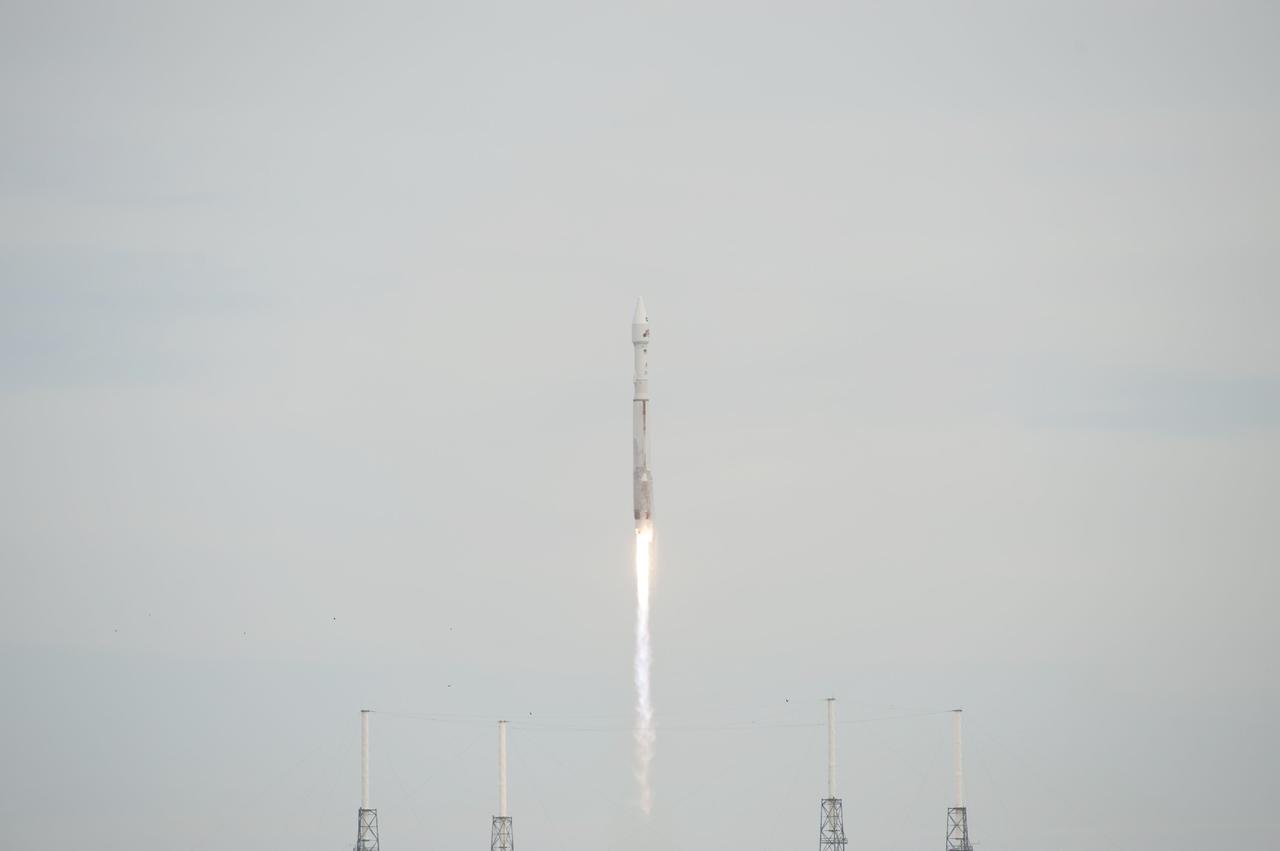
CAPE CANAVERAL, Fla. -- A United Launch Alliance Atlas V rocket lifts off through the clouds over Space Launch Complex 41 at Cape Canaveral Air Force Station in Florida, carrying NASA's Mars Atmosphere and Volatile EvolutioN, or MAVEN, spacecraft. Launch was on schedule at 1:28 p.m. EST Nov. 18 at the opening of a two-hour launch window. After a 10-month journey to the Red Planet, MAVEN will study its upper atmosphere in unprecedented detail from orbit above the planet. Built by Lockheed Martin in Littleton, Colo., MAVEN will arrive at Mars in September 2014 and will be inserted into an elliptical orbit with a high point of 3,900 miles, swooping down to as close as 93 miles above the planet's surface. For more information, visit: http://www.nasa.gov/mission_pages/maven/main/index.html. Photo credit: NASA/George Roberts
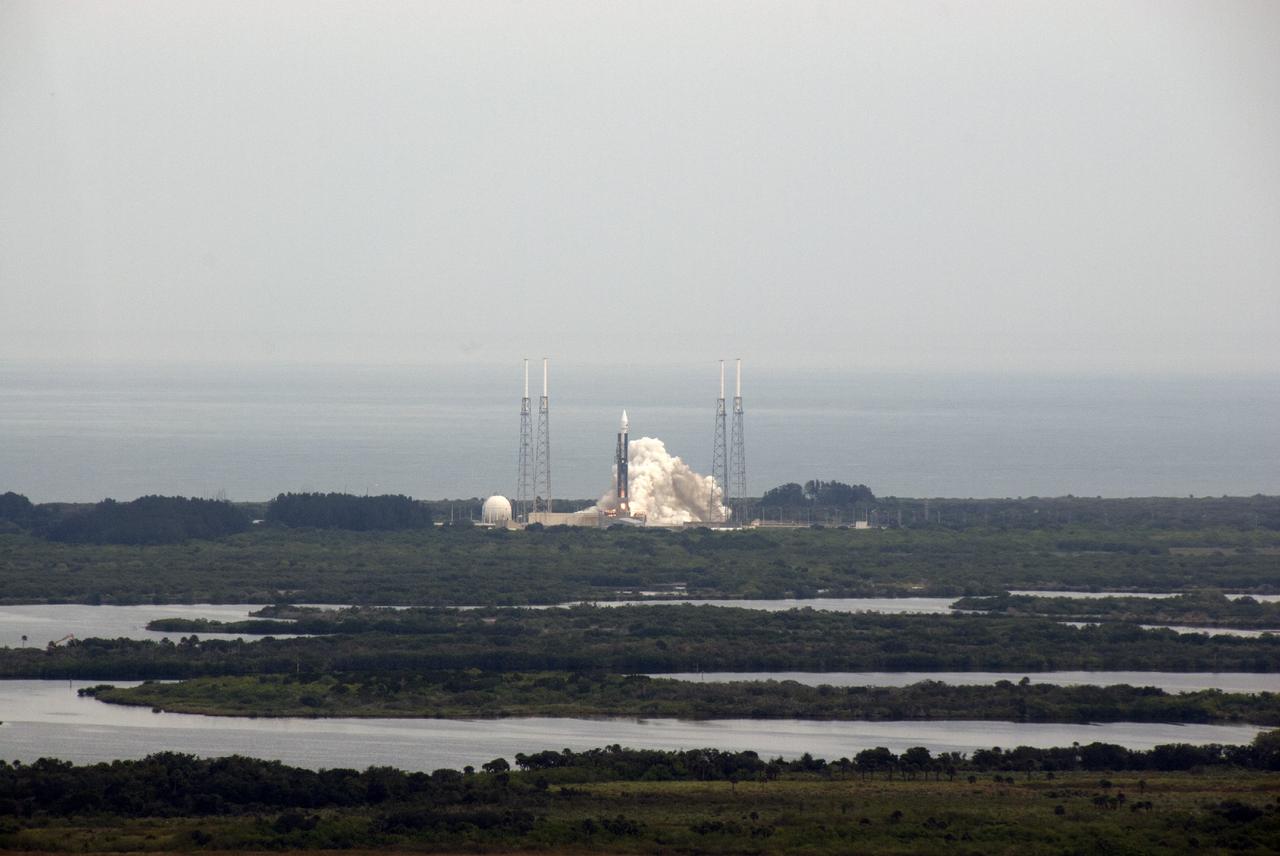
CAPE CANAVERAL, Fla. -- The engine ignites under the United Launch Alliance Atlas V rocket, lifting NASA's Mars Atmosphere and Volatile EvolutioN, or MAVEN, spacecraft off Space Launch Complex 41 at Cape Canaveral Air Force Station in Florida. Launch was on schedule at 1:28 p.m. EST Nov. 18 at the opening of a two-hour launch window. After a 10-month journey to the Red Planet, MAVEN will study its upper atmosphere in unprecedented detail from orbit above the planet. Built by Lockheed Martin in Littleton, Colo., MAVEN will arrive at Mars in September 2014 and will be inserted into an elliptical orbit with a high point of 3,900 miles, swooping down to as close as 93 miles above the planet's surface. For more information, visit: http://www.nasa.gov/mission_pages/maven/main/index.html. Photo credit: NASA/Bill White

CAPE CANAVERAL, Fla. -- Dr. Jim Green, director of the Planetary Science Division at NASA Headquarters, participates in a post-launch news conference in NASA's Press Site TV auditorium following the successful launch of NASA’s Mars Atmosphere and Volatile EvolutioN, or MAVEN, spacecraft. Launch was on schedule at 1:28 p.m. EST Nov. 18 at the opening of a two-hour launch window. After a 10-month journey to the Red Planet, MAVEN will study its upper atmosphere in unprecedented detail from orbit above the planet. Built by Lockheed Martin in Littleton, Colo., MAVEN will arrive at Mars in September 2014 and will be inserted into an elliptical orbit with a high point of 3,900 miles, swooping down to as close as 93 miles above the planet's surface. For more information, visit: http://www.nasa.gov/mission_pages/maven/main/index.html. Photo credit: NASA/Kim Shiflett
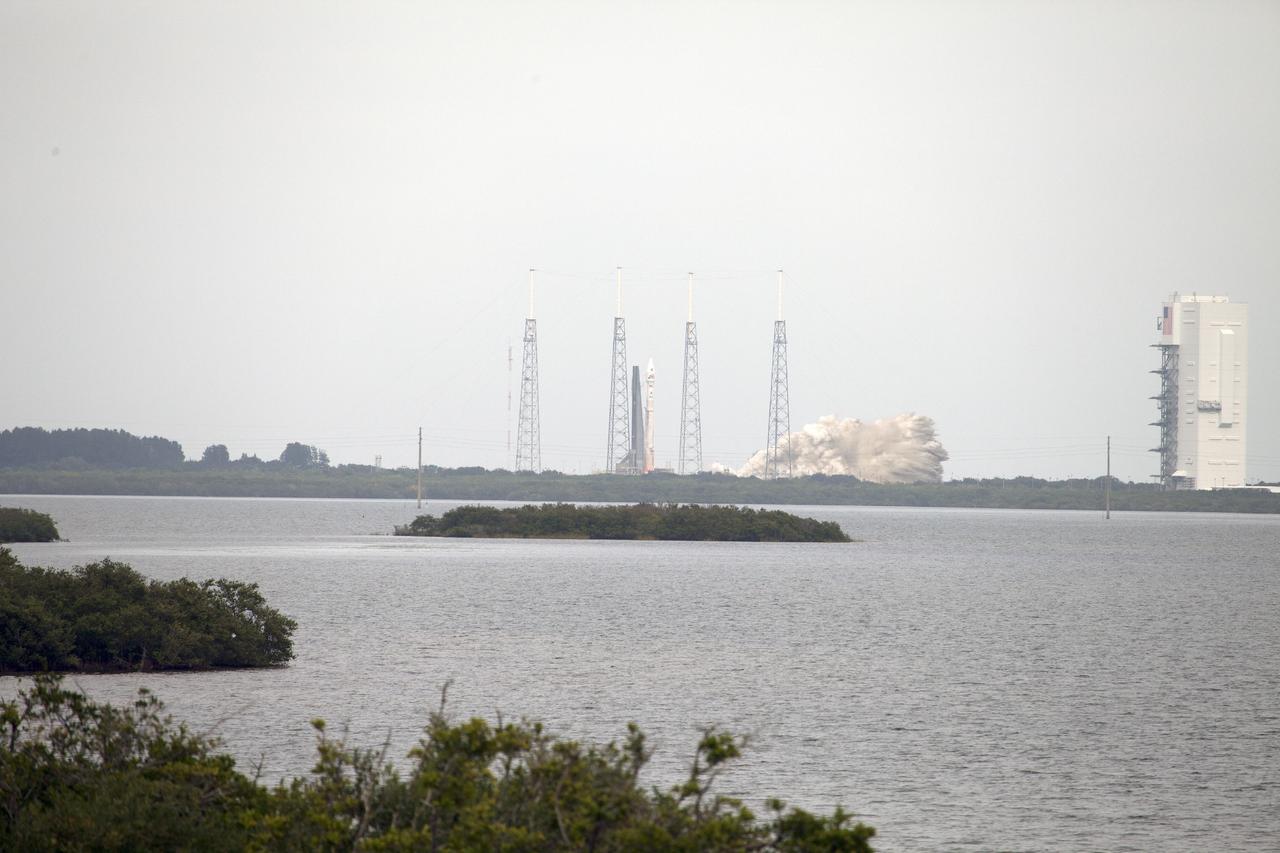
CAPE CANAVERAL, Fla. -- The engine ignites under the United Launch Alliance Atlas V rocket, lifting NASA's Mars Atmosphere and Volatile EvolutioN, or MAVEN, spacecraft off Space Launch Complex 41 at Cape Canaveral Air Force Station in Florida. Launch was on schedule at 1:28 p.m. EST Nov. 18 at the opening of a two-hour launch window. After a 10-month journey to the Red Planet, MAVEN will study its upper atmosphere in unprecedented detail from orbit above the planet. Built by Lockheed Martin in Littleton, Colo., MAVEN will arrive at Mars in September 2014 and will be inserted into an elliptical orbit with a high point of 3,900 miles, swooping down to as close as 93 miles above the planet's surface. For more information, visit: http://www.nasa.gov/mission_pages/maven/main/index.html. Photo credit: NASA/Dan Casper
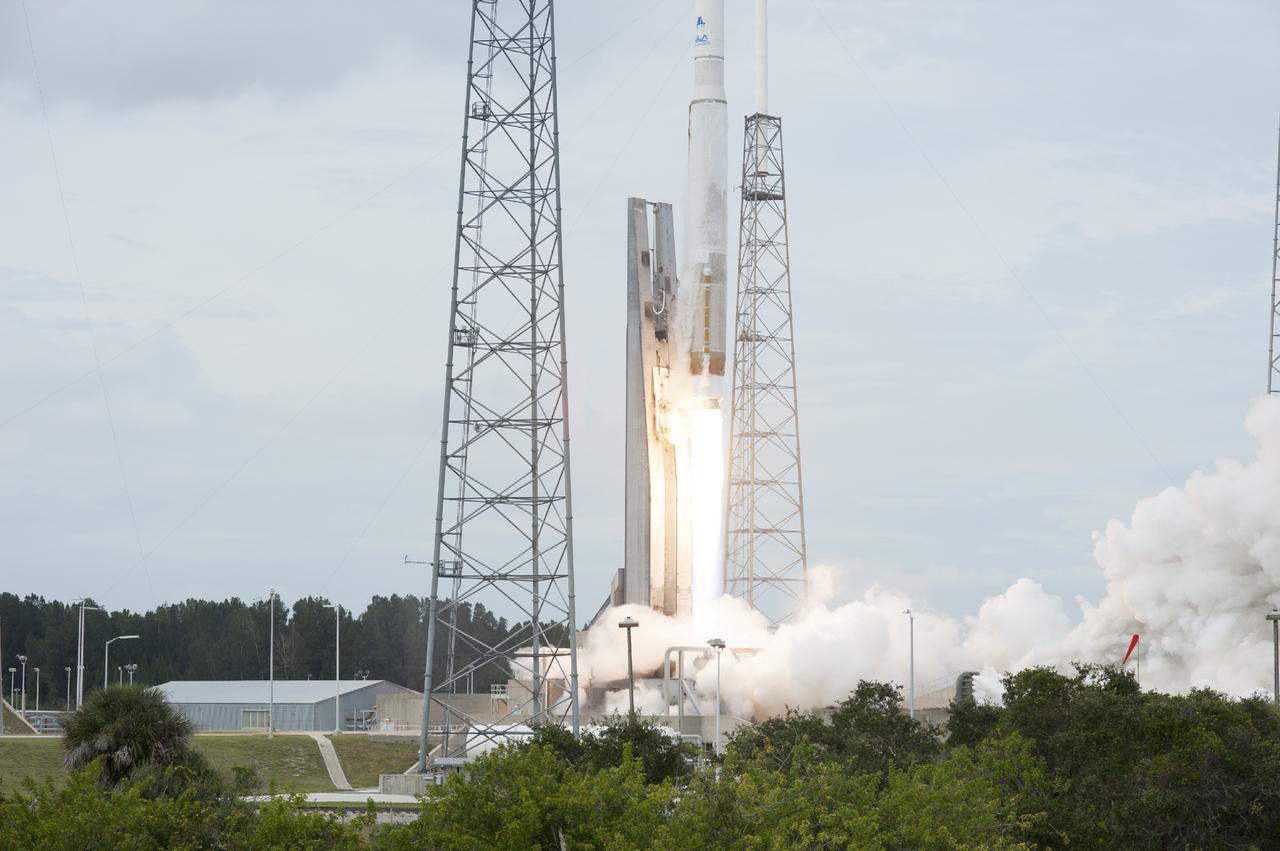
CAPE CANAVERAL, Fla. -- The United Launch Alliance Atlas V rocket carrying NASA's Mars Atmosphere and Volatile EvolutioN, or MAVEN, spacecraft rises off Space Launch Complex 41 at Cape Canaveral Air Force Station in Florida. Launch was on schedule at 1:28 p.m. EST Nov. 18 at the opening of a two-hour launch window. After a 10-month journey to the Red Planet, MAVEN will study its upper atmosphere in unprecedented detail from orbit above the planet. Built by Lockheed Martin in Littleton, Colo., MAVEN will arrive at Mars in September 2014 and will be inserted into an elliptical orbit with a high point of 3,900 miles, swooping down to as close as 93 miles above the planet's surface. For more information, visit: http://www.nasa.gov/mission_pages/maven/main/index.html. Photo credit: NASA/Tony Gray and Rick Wetherington
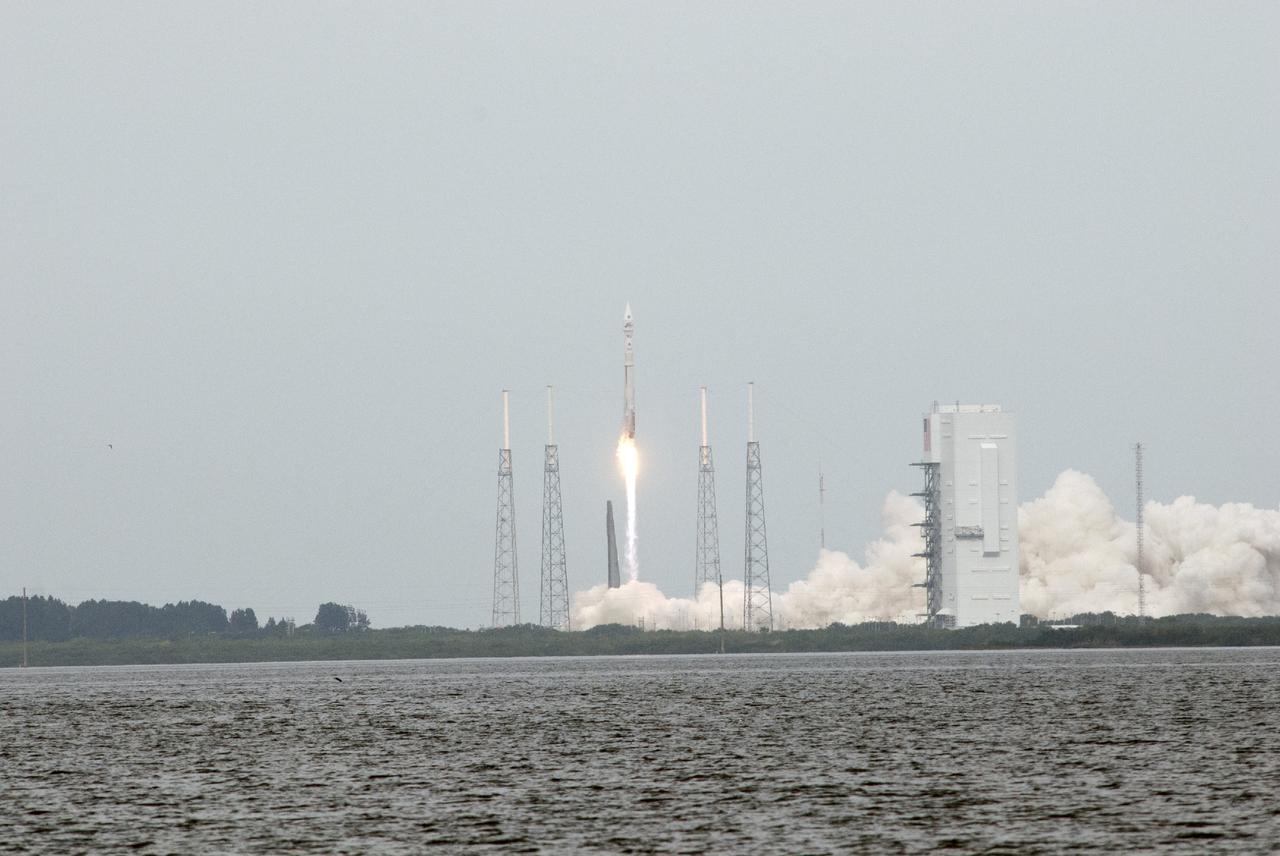
CAPE CANAVERAL, Fla. -- The engine ignites under the United Launch Alliance Atlas V rocket, lifting NASA's Mars Atmosphere and Volatile EvolutioN, or MAVEN, spacecraft off Space Launch Complex 41 at Cape Canaveral Air Force Station in Florida. Launch was on schedule at 1:28 p.m. EST Nov. 18 at the opening of a two-hour launch window. After a 10-month journey to the Red Planet, MAVEN will study its upper atmosphere in unprecedented detail from orbit above the planet. Built by Lockheed Martin in Littleton, Colo., MAVEN will arrive at Mars in September 2014 and will be inserted into an elliptical orbit with a high point of 3,900 miles, swooping down to as close as 93 miles above the planet's surface. For more information, visit: http://www.nasa.gov/mission_pages/maven/main/index.html. Photo credit: NASA/Jim Grossmann
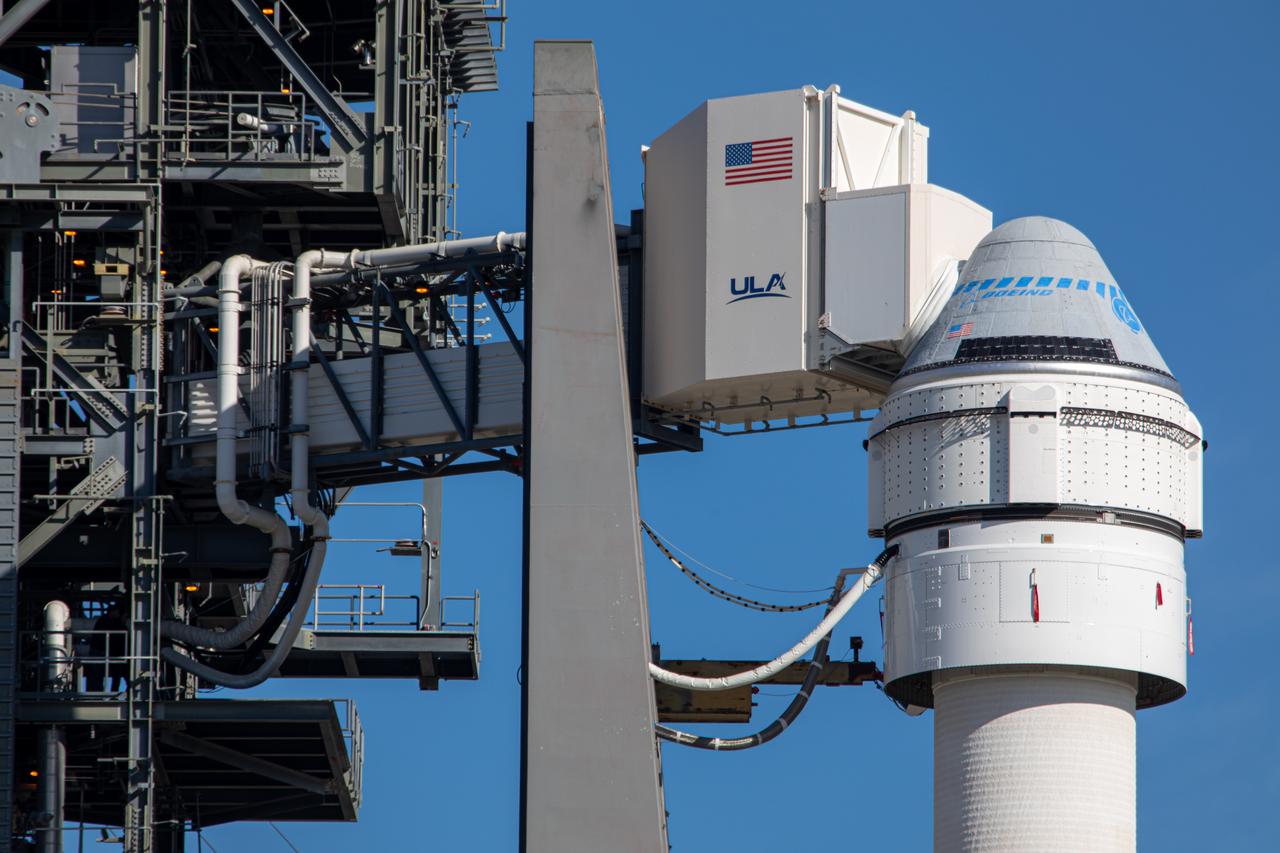
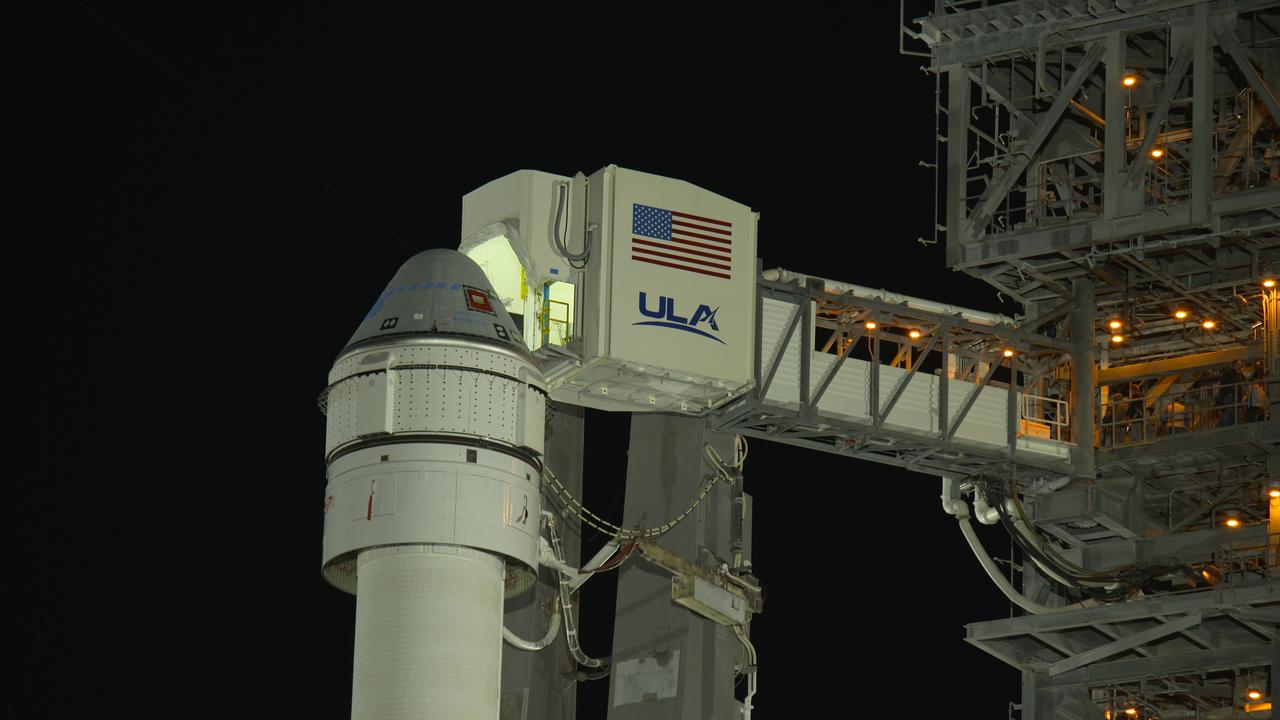
Boeing’s CST-100 Starliner spacecraft sits atop a United Launch Alliance Atlas V rocket at Cape Canaveral Air Force Station’s Space Launch Complex 41 in Florida on Dec. 5, 2019, for the program’s first-ever Integrated Day of Launch Test the following day. The rocket’s booster and Centaur upper stage will be filled with propellants for a full run-through of the launch countdown. The rehearsal is practice for Boeing’s upcoming uncrewed Orbital Flight Test to the International Space Station for NASA’s Commercial Crew Program.
A United Launch Alliance Atlas V rocket, topped by the Boeing CST-100 Starliner spacecraft, stand on Space Launch Complex 41 at Florida's Cape Canaveral Air Force Station on Dec. 4, 2019. The vehicle was in place on the launch pad for Boeing's wet dress rehearsal ahead of the upcoming Orbital Flight Test, an uncrewed mission to the International Space Station for NASA's Commercial Crew Program.
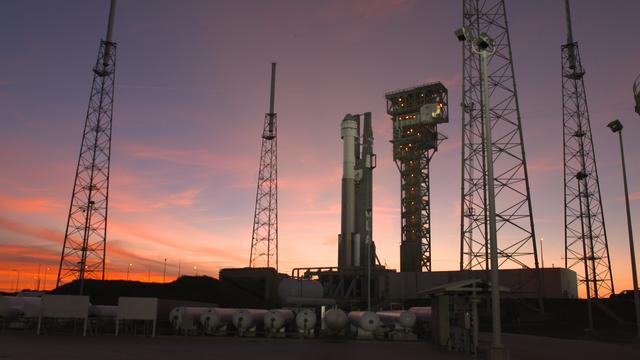
A United Launch Alliance Atlas V rocket, topped by the Boeing CST-100 Starliner spacecraft, stand on Space Launch Complex 41 at Florida's Cape Canaveral Air Force Station on Dec. 4, 2019. The vehicle was in place on the launch pad for Boeing's wet dress rehearsal ahead of the upcoming Orbital Flight Test, an uncrewed mission to the International Space Station for NASA's Commercial Crew Program.
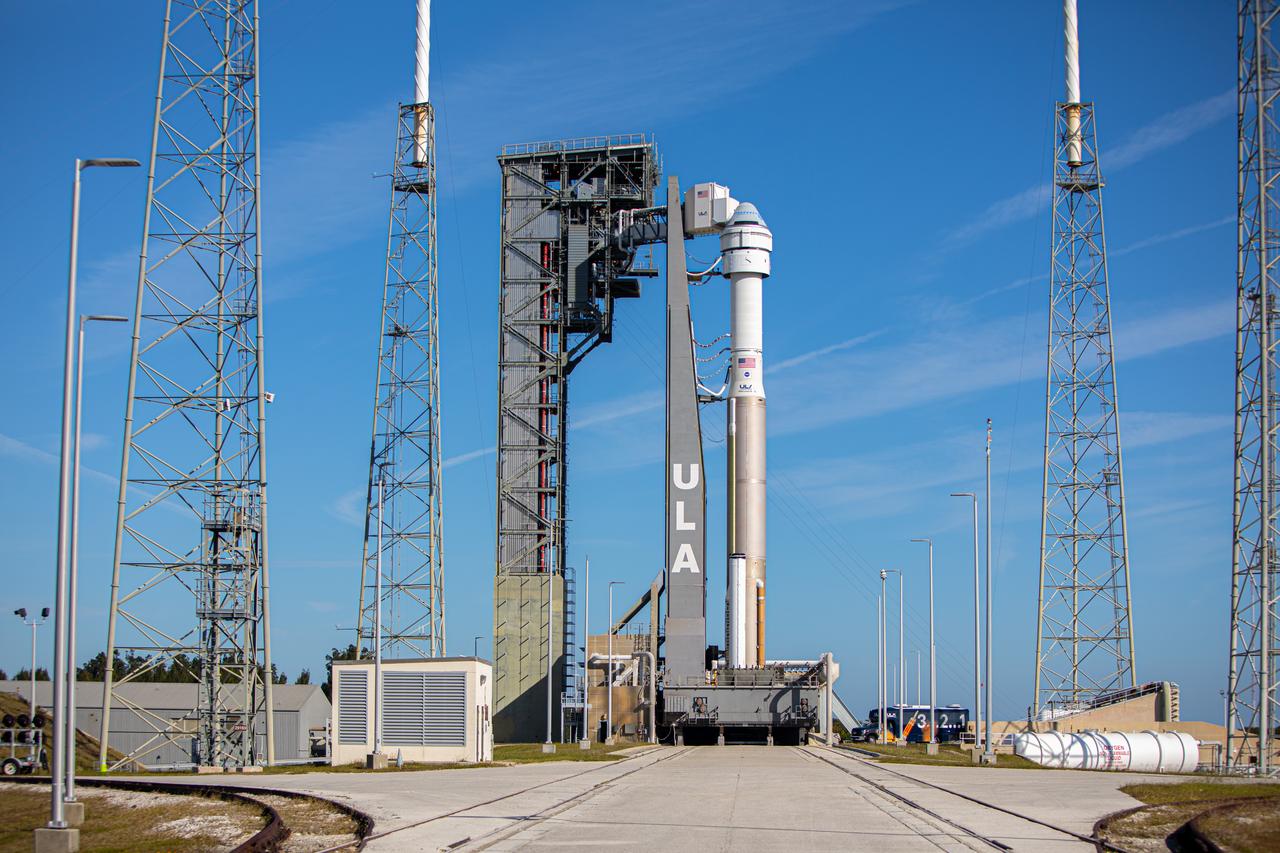
Boeing’s CST-100 Starliner spacecraft sits atop a United Launch Alliance Atlas V rocket at Cape Canaveral Air Force Station’s Space Launch Complex 41 in Florida on Dec. 5, 2019, for the program’s first-ever Integrated Day of Launch Test the following day. The rocket’s booster and Centaur upper stage will be filled with propellants for a full run-through of the launch countdown. The rehearsal is practice for Boeing’s upcoming uncrewed Orbital Flight Test to the International Space Station for NASA’s Commercial Crew Program.
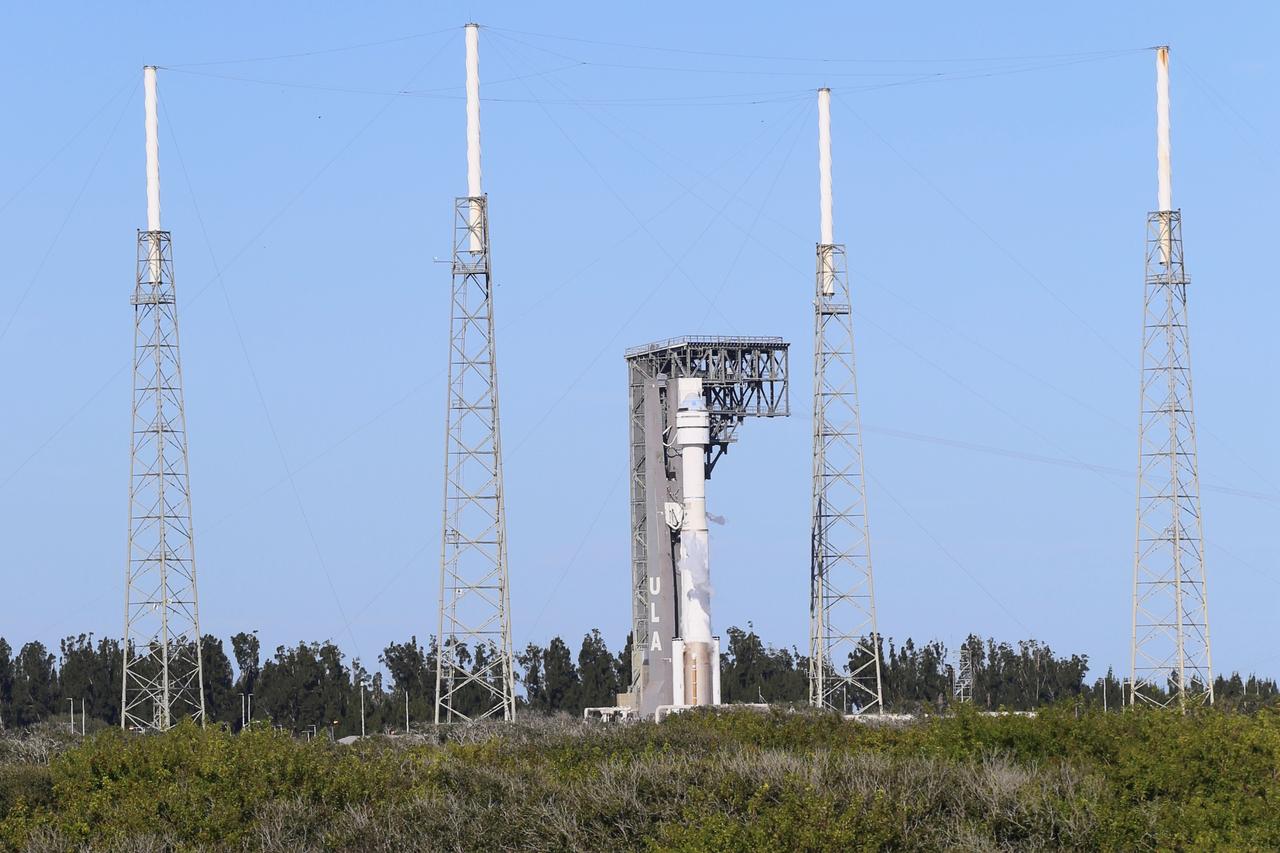
Boeing’s CST-100 Starliner spacecraft is poised atop a fueled United Launch Alliance (ULA) Atlas V rocket at Cape Canaveral Air Force Station’s (CCAFS) Space Launch Complex 41 in Florida for the program’s first-ever Integrated Day of Launch Test on Dec. 6, 2019. The rocket’s booster and Centaur upper stage have been filled with propellants for this full run-through of the launch countdown. The rehearsal is practice for Boeing’s upcoming uncrewed Orbital Flight Test to the International Space Station for NASA’s Commercial Crew Program.
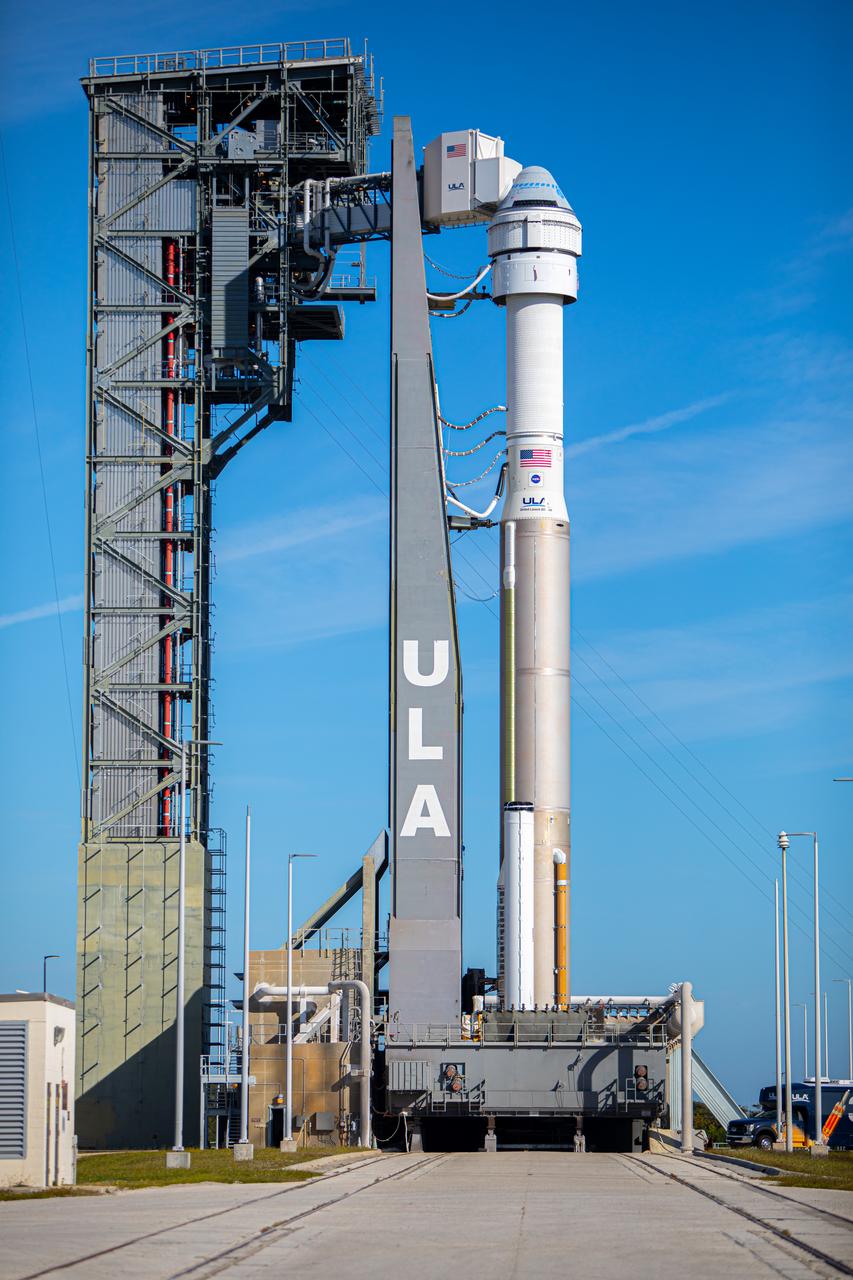
Boeing’s CST-100 Starliner spacecraft sits atop a United Launch Alliance Atlas V rocket at Cape Canaveral Air Force Station’s Space Launch Complex 41 in Florida on Dec. 5, 2019, for the program’s first-ever Integrated Day of Launch Test the following day. The rocket’s booster and Centaur upper stage will be filled with propellants for a full run-through of the launch countdown. The rehearsal is practice for Boeing’s upcoming uncrewed Orbital Flight Test to the International Space Station for NASA’s Commercial Crew Program.
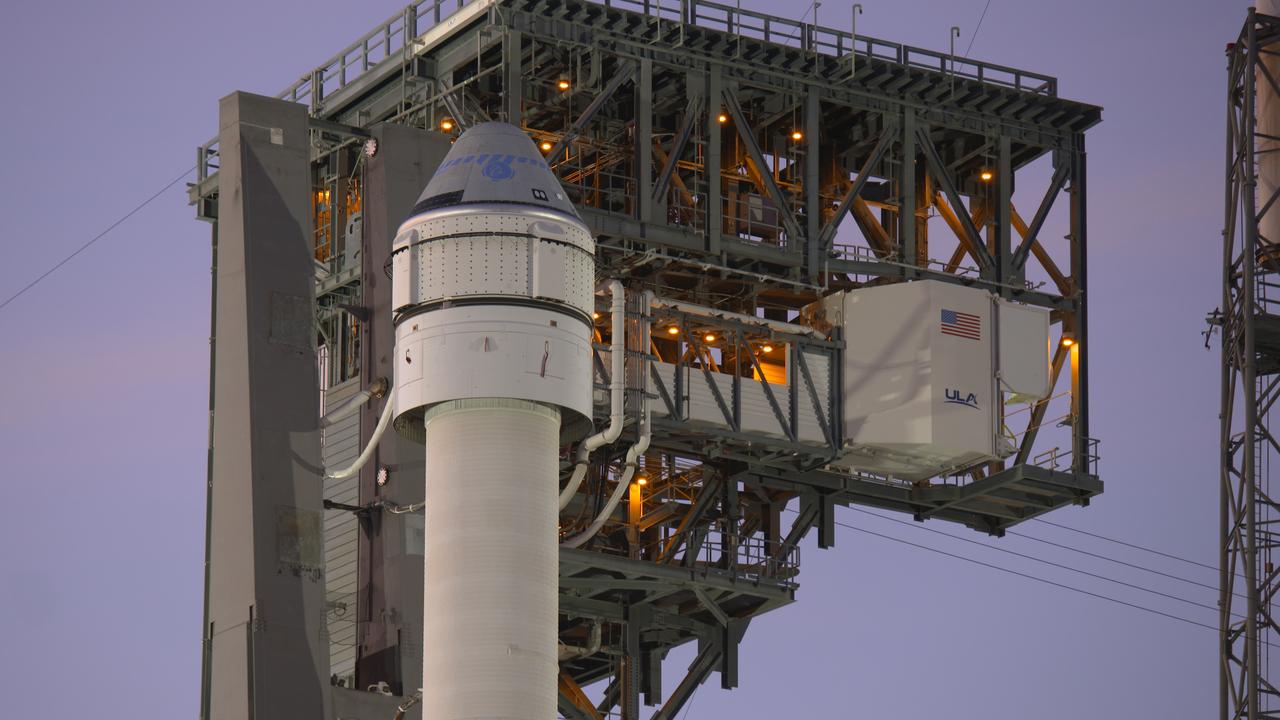
A United Launch Alliance Atlas V rocket, topped by the Boeing CST-100 Starliner spacecraft, stand on Space Launch Complex 41 at Florida's Cape Canaveral Air Force Station on Dec. 4, 2019. The vehicle was in place on the launch pad for Boeing's wet dress rehearsal ahead of the upcoming Orbital Flight Test, an uncrewed mission to the International Space Station for NASA's Commercial Crew Program.
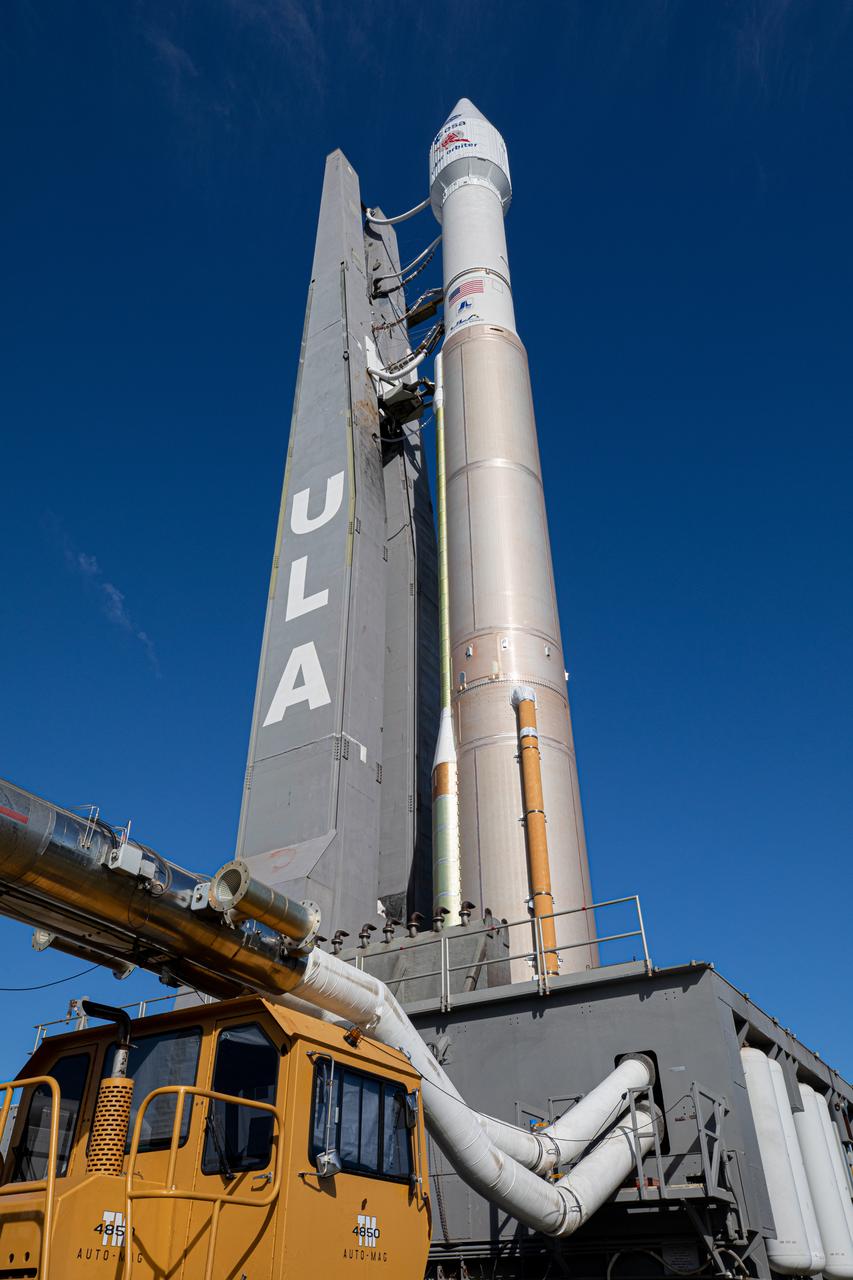
After departing the Vertical Integration Facility, the United Launch Alliance Atlas V rocket with the Solar Orbiter spacecraft moves slowly toward the launch pad at Space Launch Complex 41 on Cape Canaveral Air Force Station in Florida on Feb. 8, 2020. Solar Orbiter is an international cooperative mission between ESA (European Space Agency) and NASA. The mission aims to study the Sun, its outer atmosphere and solar wind. The spacecraft will provide the first images of the Sun’s poles. NASA’s Launch Services Program based at Kennedy is managing the launch. The spacecraft has been developed by Airbus Defence and Space. Solar Orbiter will launch Feb. 9, 2020 aboard the Atlas V rocket.
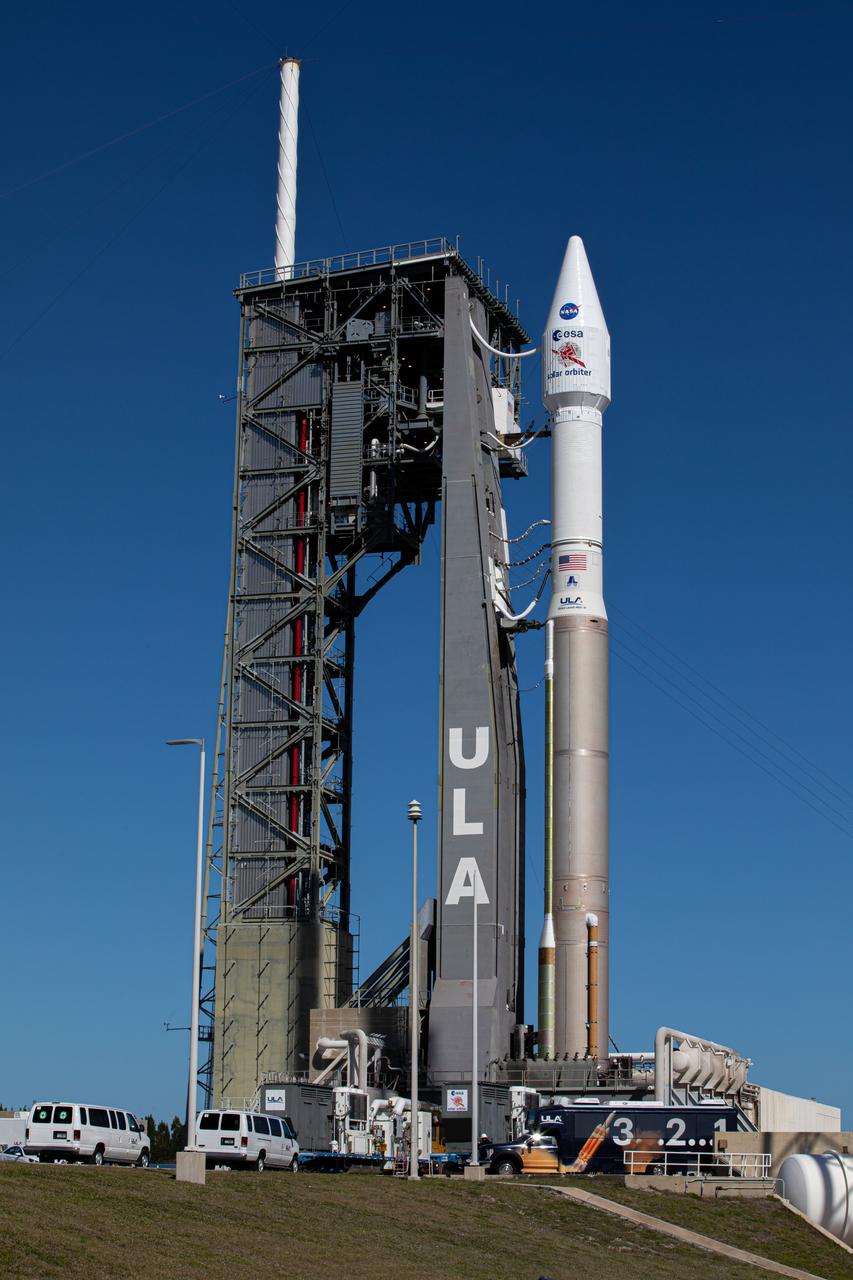
The United Launch Alliance Atlas V rocket with the Solar Orbiter spacecraft arrives at the launch pad at Space Launch Complex 41 on Cape Canaveral Air Force Station in Florida on Feb. 8, 2020. Solar Orbiter is an international cooperative mission between ESA (European Space Agency) and NASA. The mission aims to study the Sun, its outer atmosphere and solar wind. The spacecraft will provide the first images of the Sun’s poles. NASA’s Launch Services Program based at Kennedy is managing the launch. The spacecraft has been developed by Airbus Defence and Space. Solar Orbiter will launch Feb. 9, 2020 aboard the Atlas V rocket.
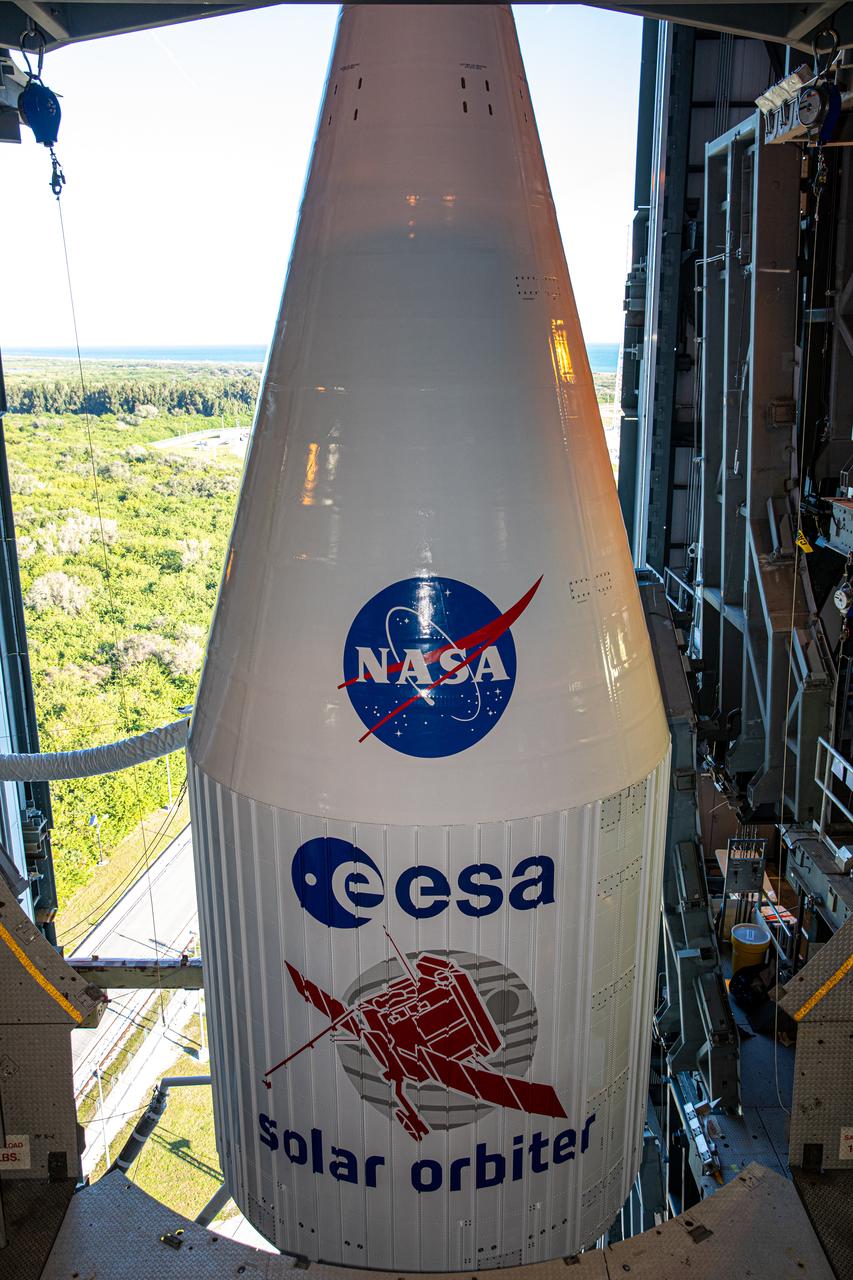
The Solar Orbiter spacecraft, secured inside the payload fairing, is photographed atop a United Launch Alliance Atlas V rocket inside the Vertical Integration Facility on Cape Canaveral Air Force Station in Florida prior to beginning its roll to the launch pad at Space Launch Complex 41 on Feb. 8, 2020. Solar Orbiter is an international cooperative mission between ESA (European Space Agency) and NASA. The mission aims to study the Sun, its outer atmosphere and solar wind. The spacecraft will provide the first images of the Sun’s poles. NASA’s Launch Services Program based at Kennedy is managing the launch. The spacecraft has been developed by Airbus Defence and Space. Solar Orbiter will launch Feb. 9, 2020 aboard the Atlas V rocket.
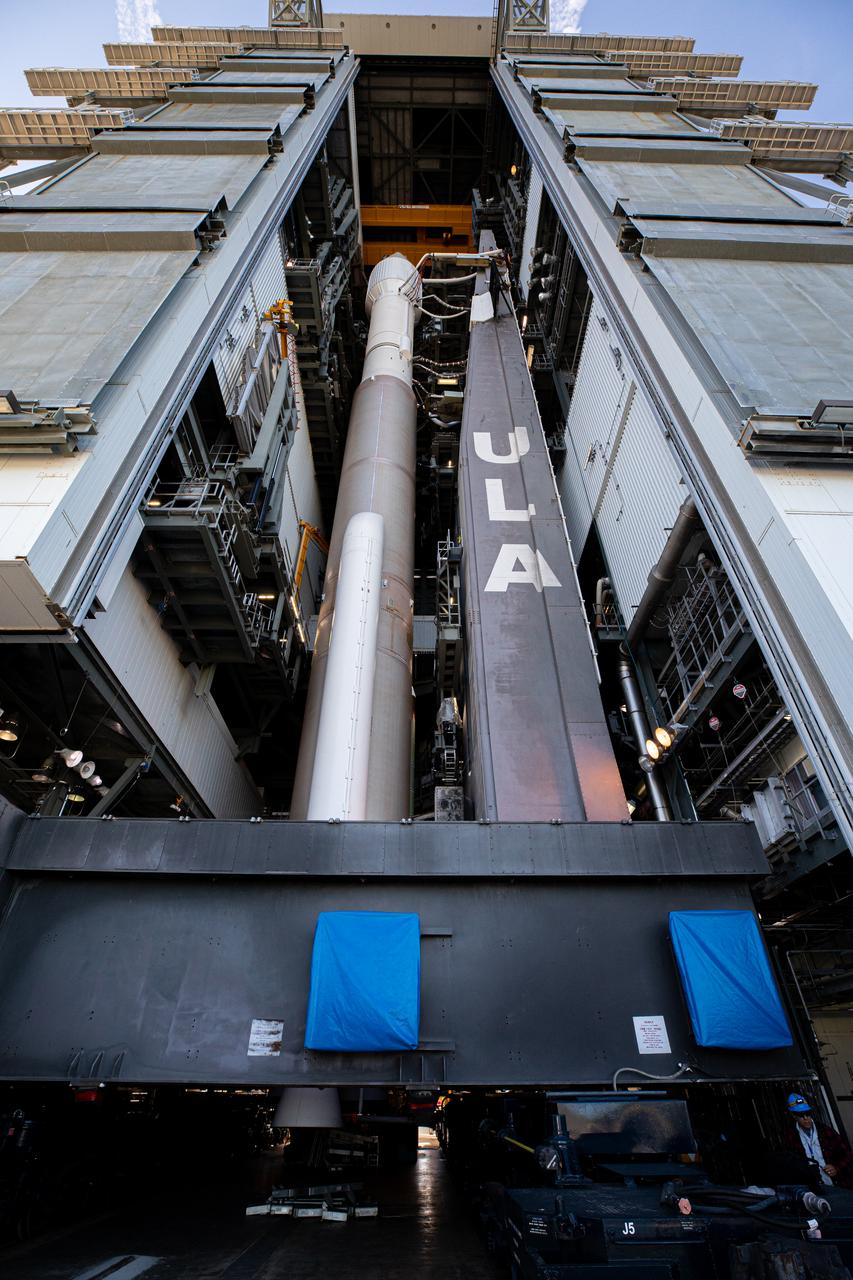
The United Launch Alliance Atlas V rocket with the Solar Orbiter spacecraft begins rollout from the Vertical Integration Facility to the launch pad at Space Launch Complex 41 on Cape Canaveral Air Force Station in Florida on Feb. 8, 2020. Solar Orbiter is an international cooperative mission between ESA (European Space Agency) and NASA. The mission aims to study the Sun, its outer atmosphere and solar wind. The spacecraft will provide the first images of the Sun’s poles. NASA’s Launch Services Program based at Kennedy is managing the launch. The spacecraft has been developed by Airbus Defence and Space. Solar Orbiter will launch Feb. 9, 2020 aboard the Atlas V rocket.
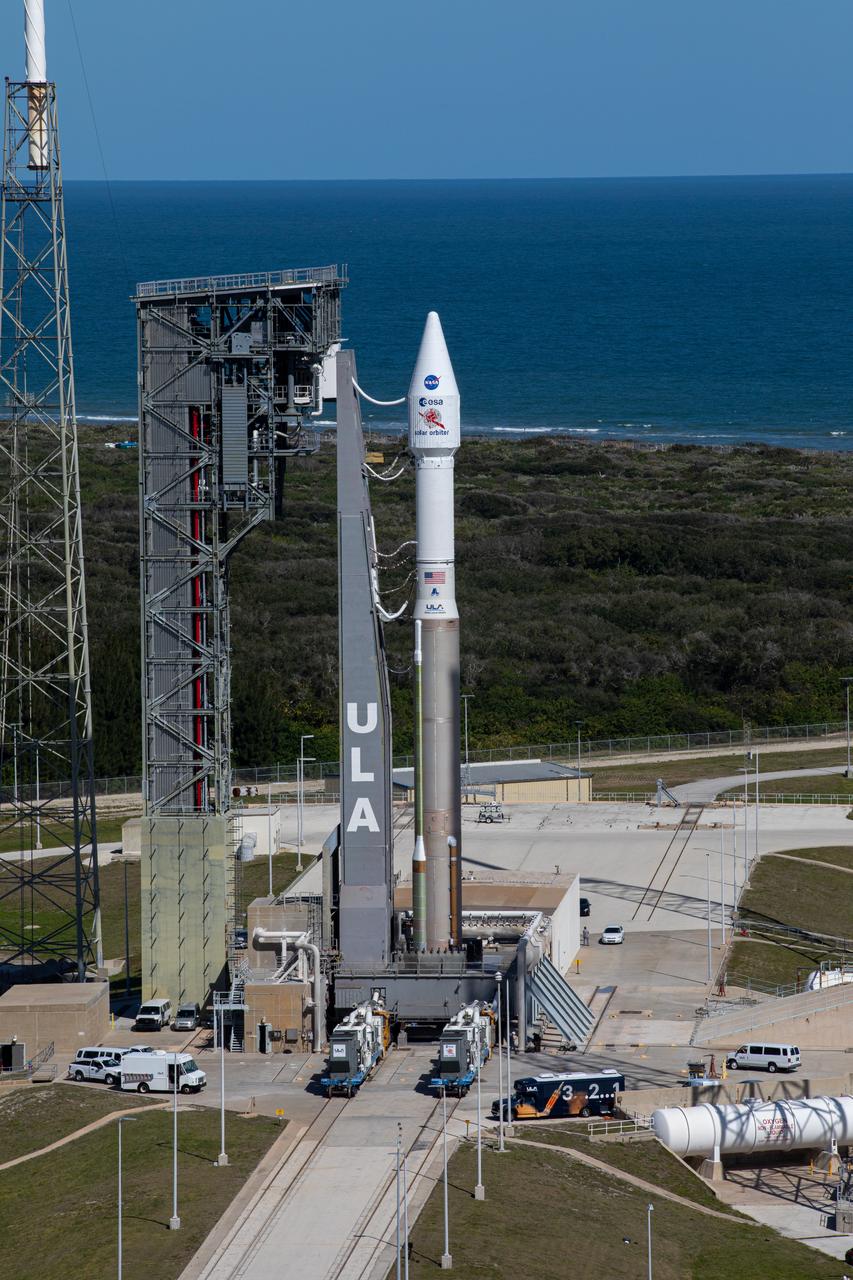
The United Launch Alliance Atlas V rocket with the Solar Orbiter spacecraft arrives at the launch pad at Space Launch Complex 41 on Cape Canaveral Air Force Station in Florida on Feb. 8, 2020. Solar Orbiter is an international cooperative mission between ESA (European Space Agency) and NASA. The mission aims to study the Sun, its outer atmosphere and solar wind. The spacecraft will provide the first images of the Sun’s poles. NASA’s Launch Services Program based at Kennedy is managing the launch. The spacecraft has been developed by Airbus Defence and Space. Solar Orbiter will launch Feb. 9, 2020 aboard the Atlas V rocket.
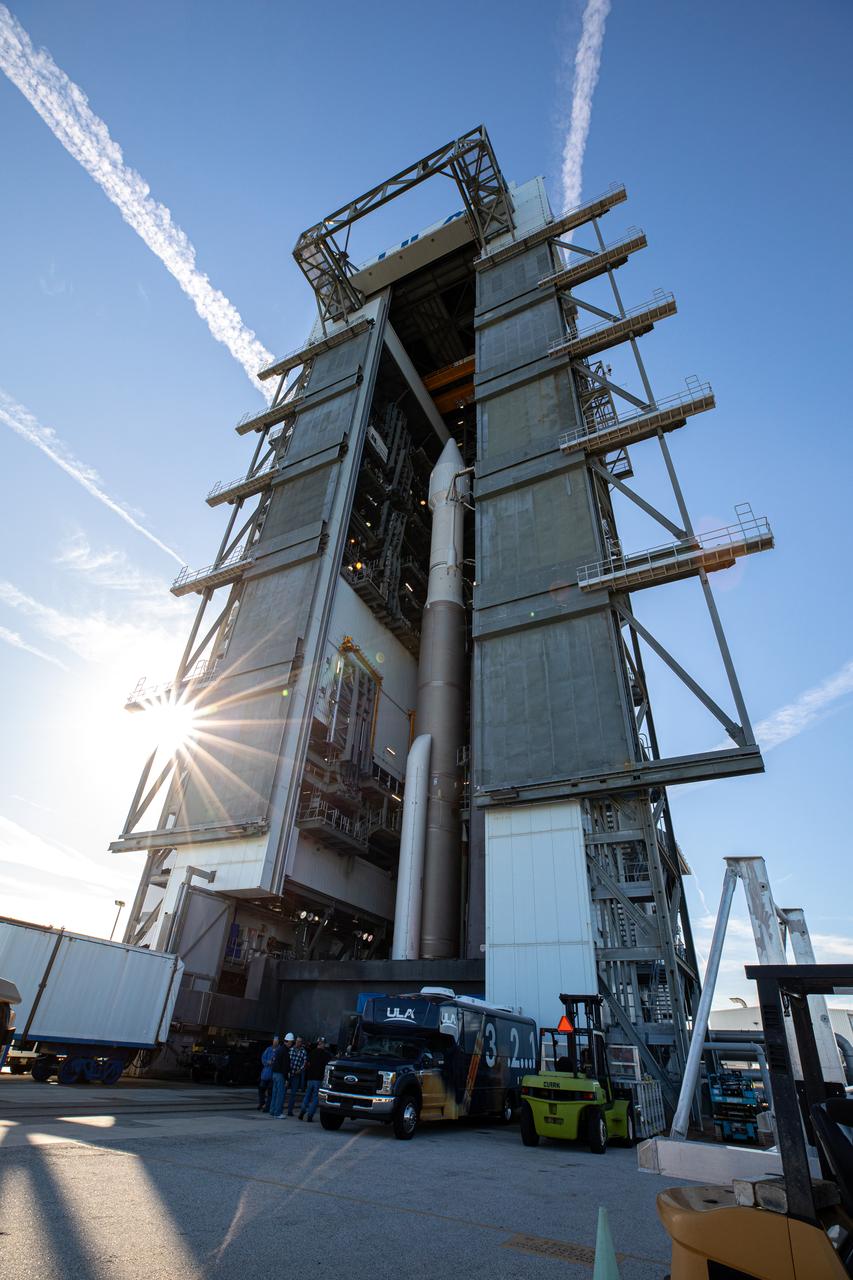
The United Launch Alliance Atlas V rocket with the Solar Orbiter spacecraft begins rollout from the Vertical Integration Facility to the launch pad at Space Launch Complex 41 on Cape Canaveral Air Force Station in Florida on Feb. 8, 2020. Solar Orbiter is an international cooperative mission between ESA (European Space Agency) and NASA. The mission aims to study the Sun, its outer atmosphere and solar wind. The spacecraft will provide the first images of the Sun’s poles. NASA’s Launch Services Program based at Kennedy is managing the launch. The spacecraft has been developed by Airbus Defence and Space. Solar Orbiter will launch Feb. 9, 2020 aboard the Atlas V rocket.
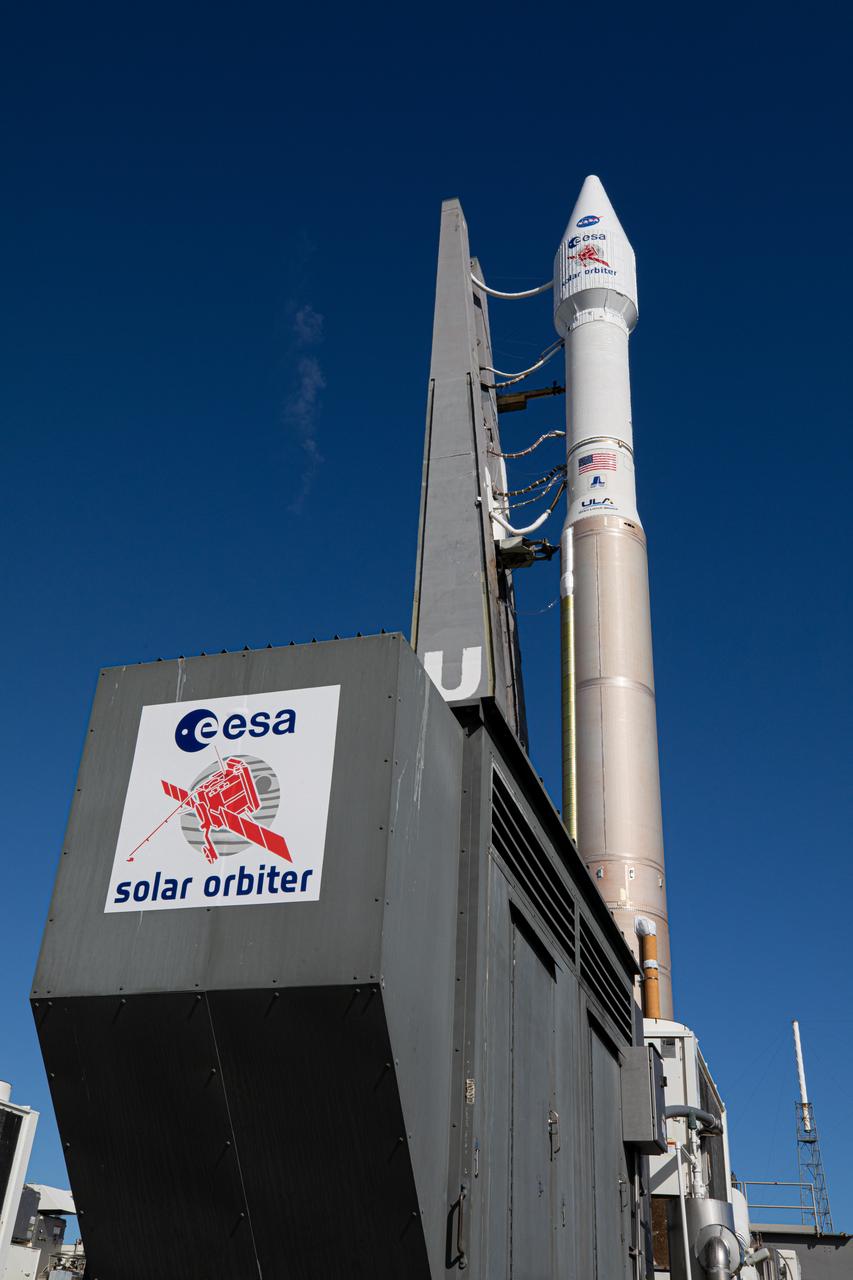
After departing the Vertical Integration Facility, the United Launch Alliance Atlas V rocket with the Solar Orbiter spacecraft moves slowly toward the launch pad at Space Launch Complex 41 on Cape Canaveral Air Force Station in Florida on Feb. 8, 2020. Solar Orbiter is an international cooperative mission between ESA (European Space Agency) and NASA. The mission aims to study the Sun, its outer atmosphere and solar wind. The spacecraft will provide the first images of the Sun’s poles. NASA’s Launch Services Program based at Kennedy is managing the launch. The spacecraft has been developed by Airbus Defence and Space. Solar Orbiter will launch Feb. 9, 2020 aboard the Atlas V rocket.
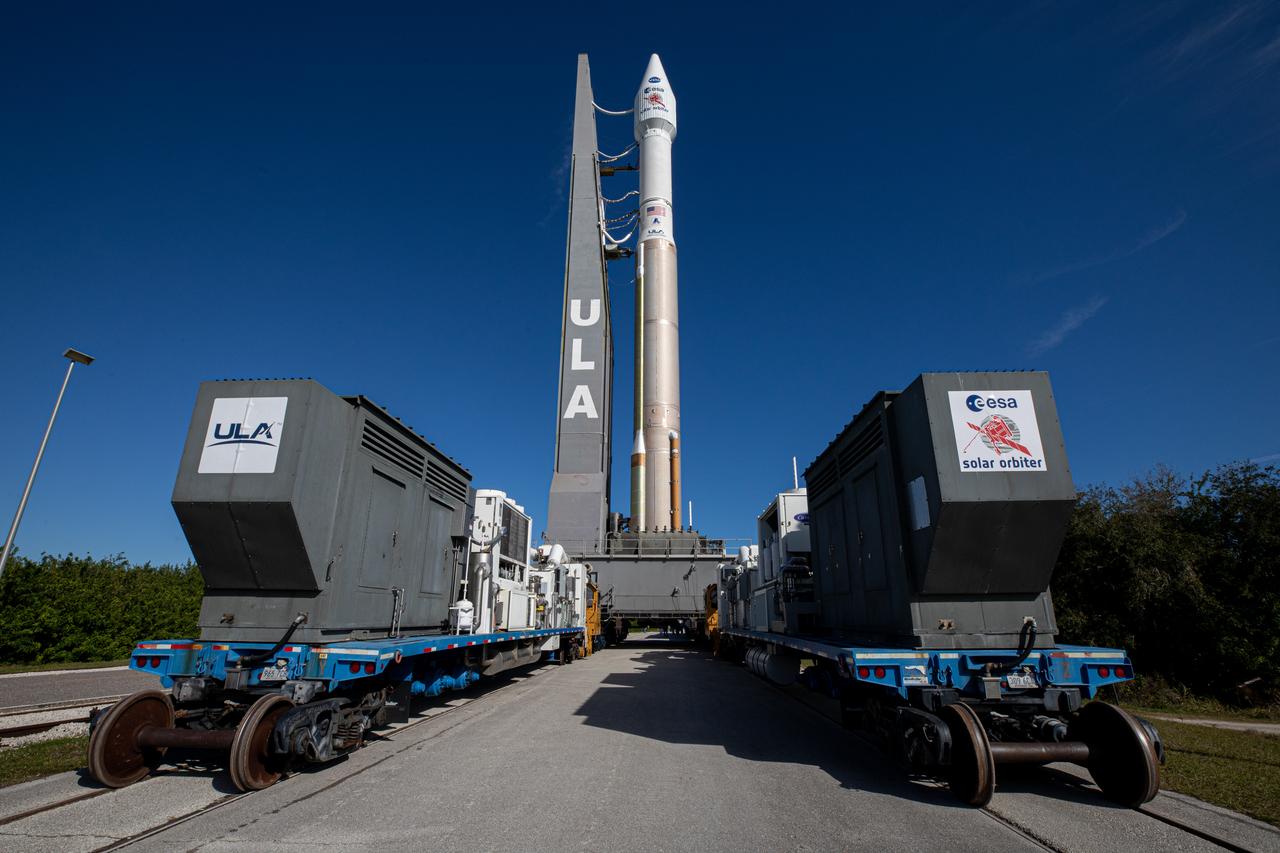
After departing the Vertical Integration Facility, the United Launch Alliance Atlas V rocket with the Solar Orbiter spacecraft moves slowly toward the launch pad at Space Launch Complex 41 on Cape Canaveral Air Force Station in Florida on Feb. 8, 2020. Solar Orbiter is an international cooperative mission between ESA (European Space Agency) and NASA. The mission aims to study the Sun, its outer atmosphere and solar wind. The spacecraft will provide the first images of the Sun’s poles. NASA’s Launch Services Program based at Kennedy is managing the launch. The spacecraft has been developed by Airbus Defence and Space. Solar Orbiter will launch Feb. 9, 2020 aboard the Atlas V rocket.
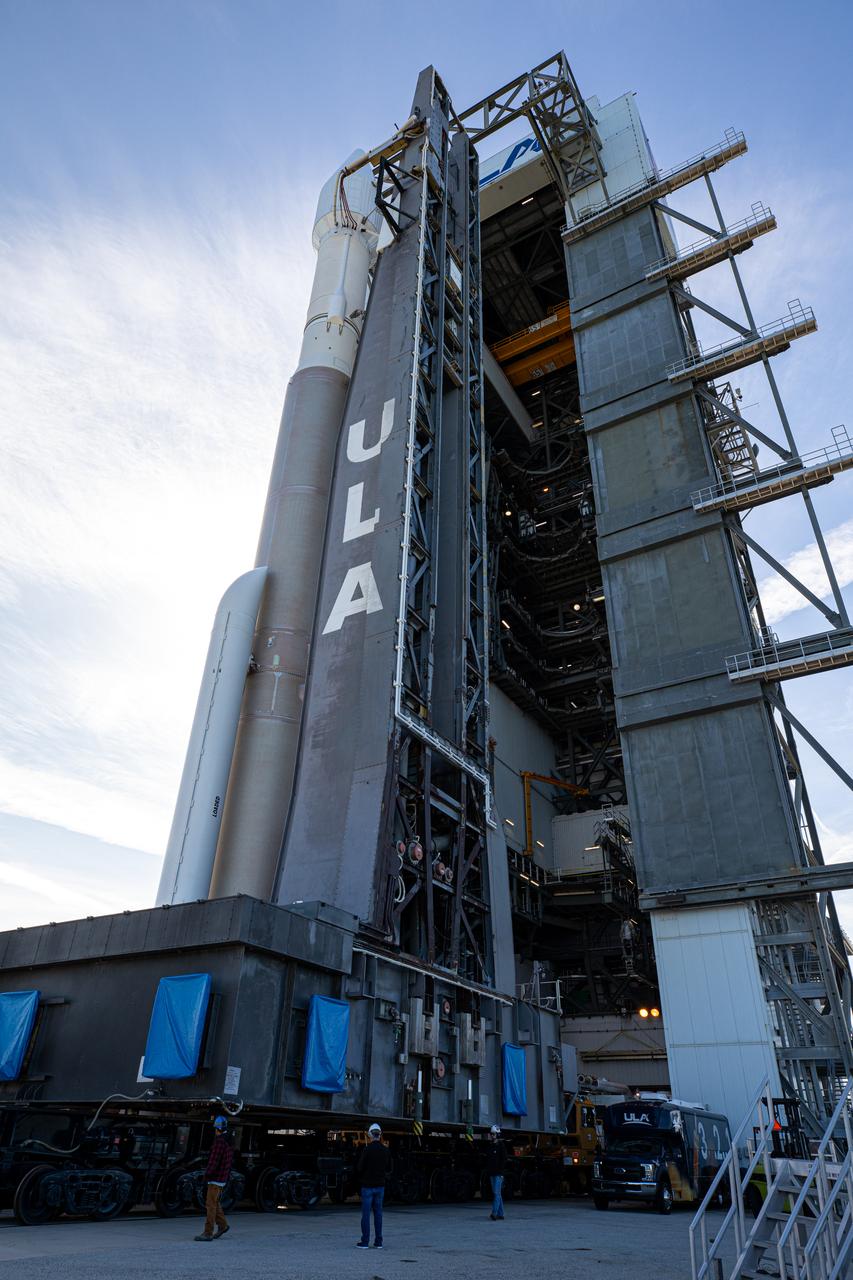
The United Launch Alliance Atlas V rocket with the Solar Orbiter spacecraft departs the Vertical Integration Facility for the launch pad at Space Launch Complex 41 on Cape Canaveral Air Force Station in Florida on Feb. 8, 2020. Solar Orbiter is an international cooperative mission between ESA (European Space Agency) and NASA. The mission aims to study the Sun, its outer atmosphere and solar wind. The spacecraft will provide the first images of the Sun’s poles. NASA’s Launch Services Program based at Kennedy is managing the launch. The spacecraft has been developed by Airbus Defence and Space. Solar Orbiter will launch Feb. 9, 2020 aboard the Atlas V rocket.
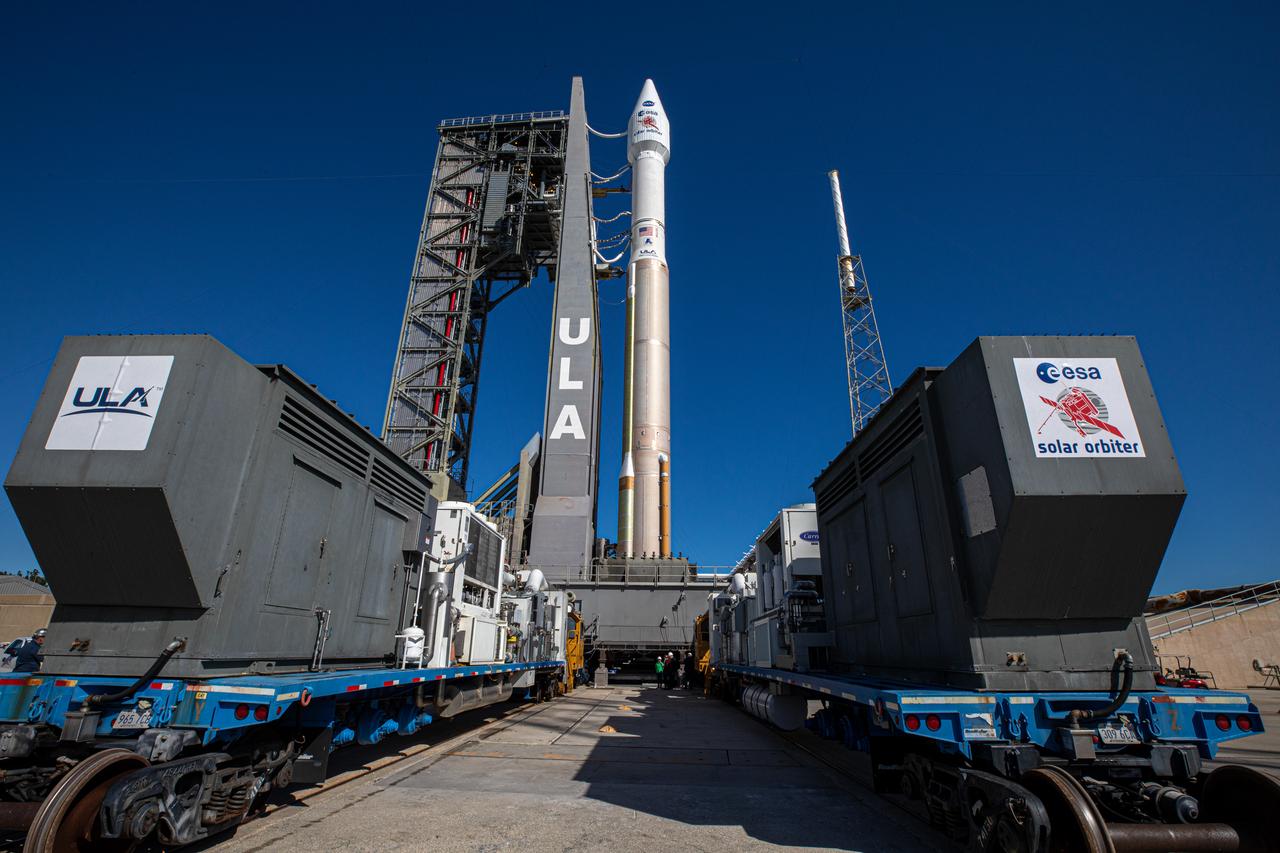
The United Launch Alliance Atlas V rocket with the Solar Orbiter spacecraft arrives at the launch pad at Space Launch Complex 41 on Cape Canaveral Air Force Station in Florida on Feb. 8, 2020. Solar Orbiter is an international cooperative mission between ESA (European Space Agency) and NASA. The mission aims to study the Sun, its outer atmosphere and solar wind. The spacecraft will provide the first images of the Sun’s poles. NASA’s Launch Services Program based at Kennedy is managing the launch. The spacecraft has been developed by Airbus Defence and Space. Solar Orbiter will launch Feb. 9, 2020 aboard the Atlas V rocket.