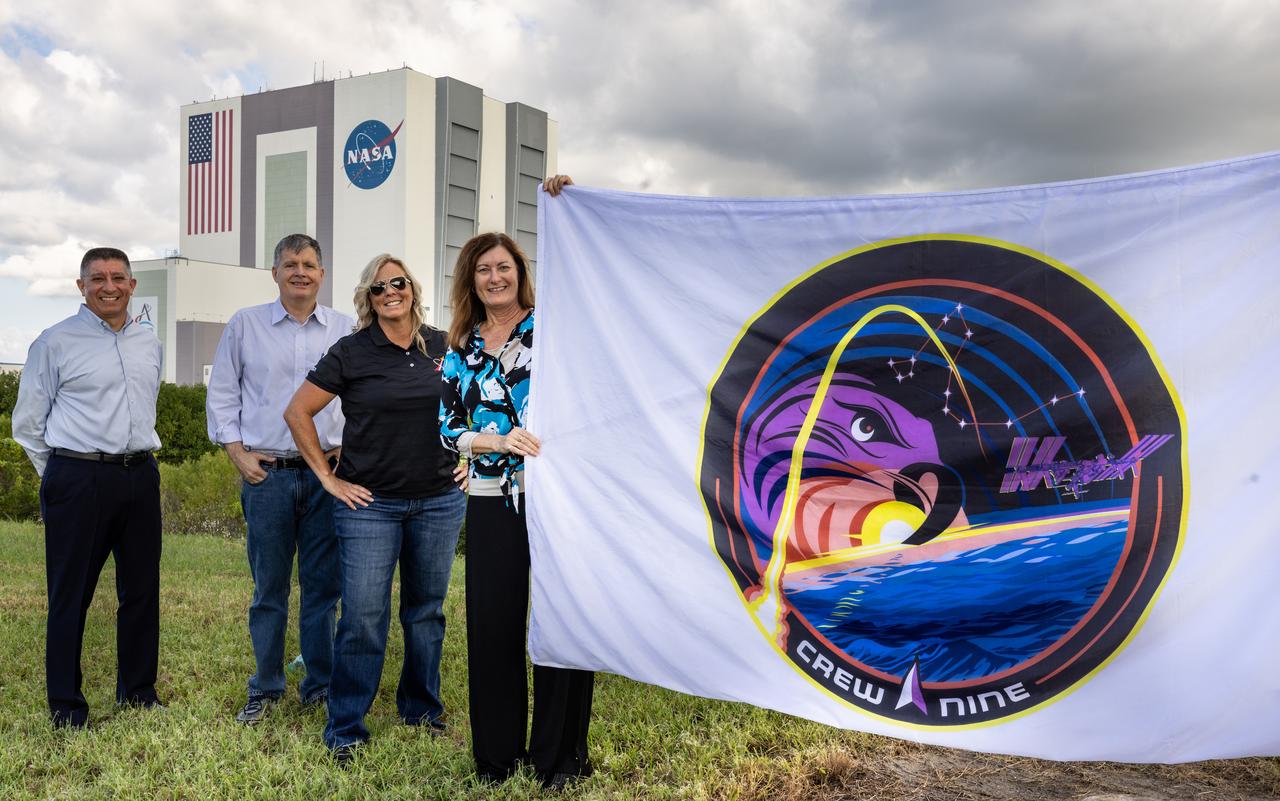
From left, Richard Jones, CCP (Commercial Crew Program) deputy program manager at NASA’s Johnson Space Center in Houston; Steve Stich, program manager for CCP; Dana Hutcherson, CCP deputy program manager at NASA’s Kennedy Space Center in Florida; and Deb Cole, CCP technical manager, pose with the agency’s SpaceX Crew-9 mission flag near the countdown clock at the NASA News Center at Kennedy on Tuesday, Sept. 24, 2024. The Crew-9 mission will send NASA astronaut Nick Hague and Roscosmos cosmonaut Aleksandr Gorbunov to the International Space Station aboard SpaceX’s Dragon spacecraft and Falcon 9 rocket.
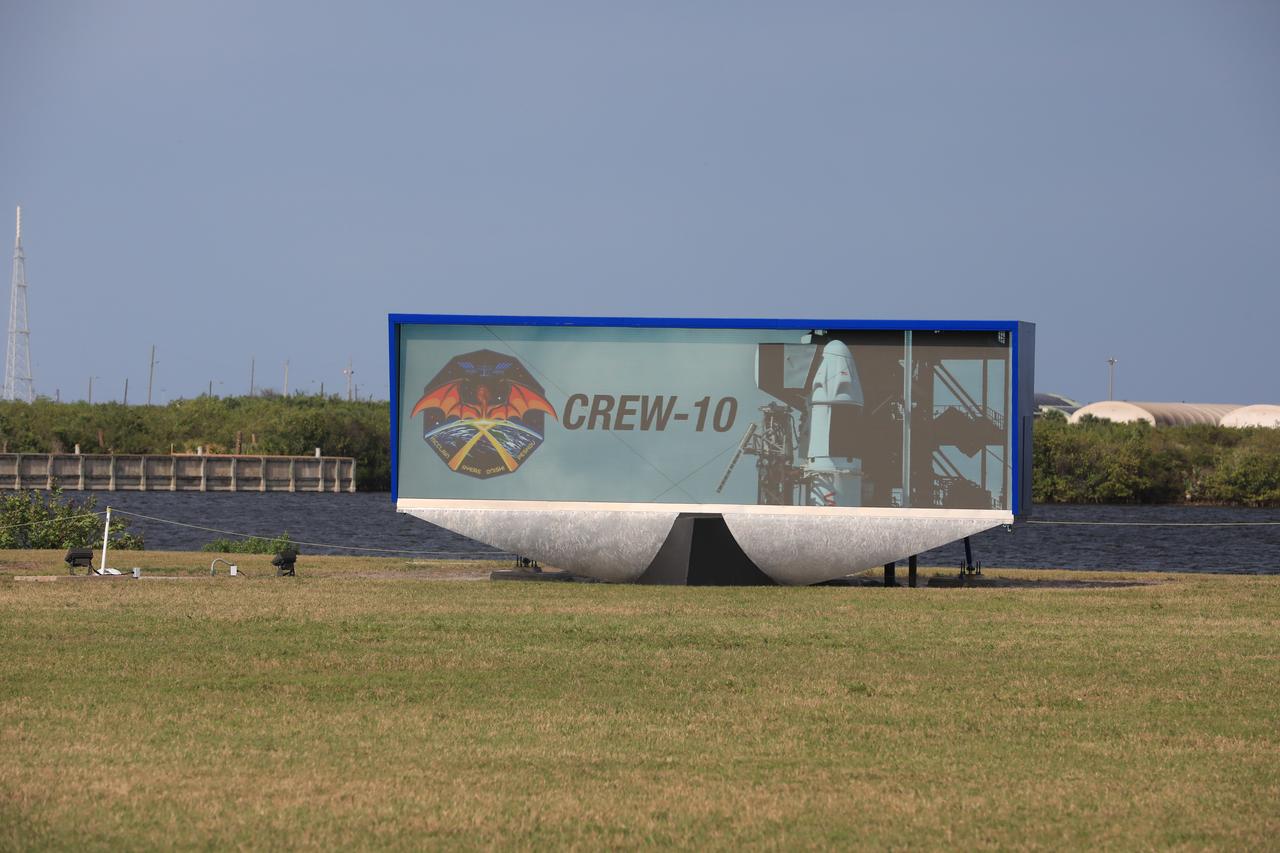
CCP Crew-10 Flag Raising
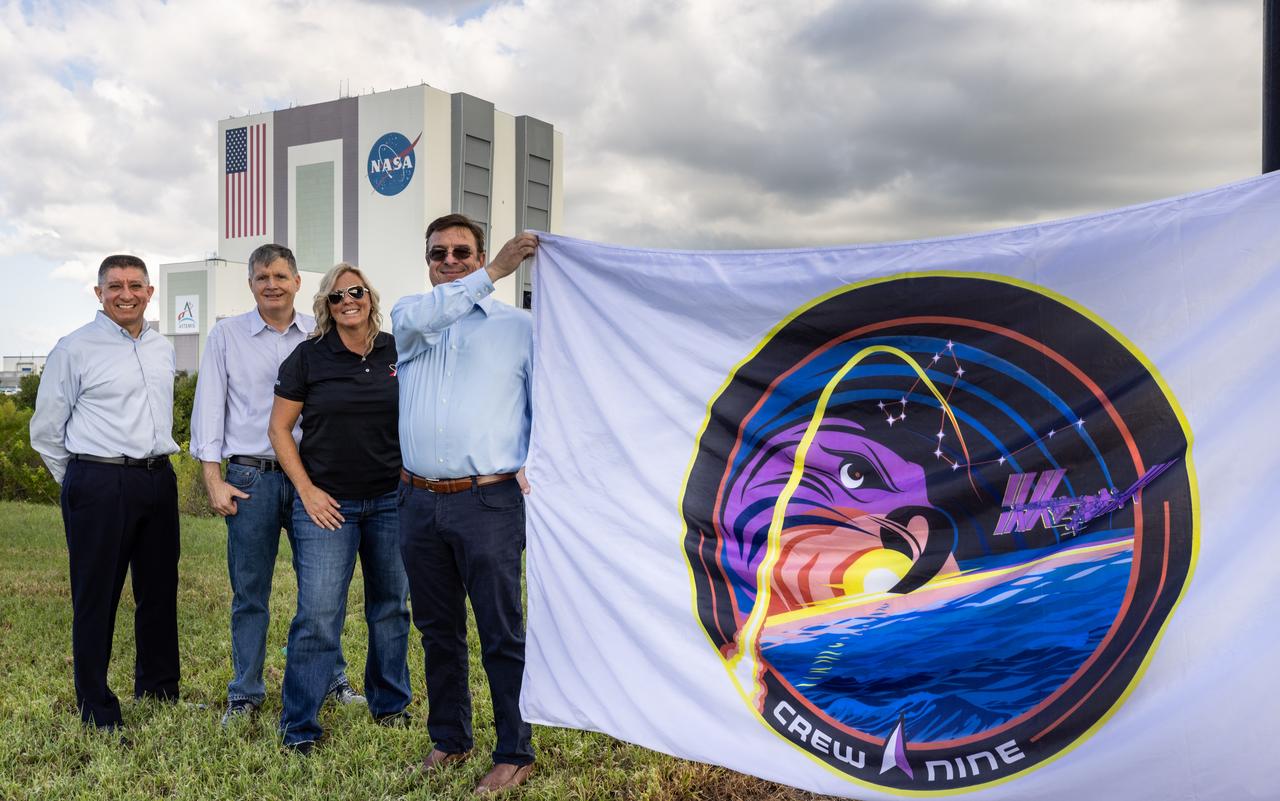
From left, Richard Jones, CCP (Commercial Crew Program) deputy program manager at NASA’s Johnson Space Center in Houston; Steve Stich, program manager for CCP; Dana Hutcherson, CCP deputy program manager at NASA’s Kennedy Space Center in Florida; and David Forrest, deputy manager, SE&I (Systems Engineering and Integration) Office, NASA’s Commercial Low Earth Orbit Development Program, pose with the agency’s SpaceX Crew-9 mission flag near the countdown clock at the NASA News Center at Kennedy on Tuesday, Sept. 24, 2024. Forrest previously served as deputy manager for CCP’s SE&I Office at Kennedy. The Crew-9 mission will send NASA astronaut Nick Hague and Roscosmos cosmonaut Aleksandr Gorbunov to the International Space Station aboard SpaceX’s Dragon spacecraft and Falcon 9 rocket.

From left, Richard Jones, CCP (Commercial Crew Program) deputy program manager at NASA’s Johnson Space Center in Houston; Steve Stich, program manager for CCP; Dana Hutcherson, CCP deputy program manager at NASA’s Kennedy Space Center in Florida; and Diana Oglesby, director, Strategic Integration and Management Division, Space Operations Mission Directorate, pose with the agency’s SpaceX Crew-9 mission flag near the countdown clock at the NASA News Center at the Kennedy on Tuesday, Sept. 24, 2024. Oglesby previously served as manager of CCP’s Program Control and Integration Office at Kennedy. The Crew-9 mission will send NASA astronaut Nick Hague and Roscosmos cosmonaut Aleksandr Gorbunov to the International Space Station aboard SpaceX’s Dragon spacecraft and Falcon 9 rocket.
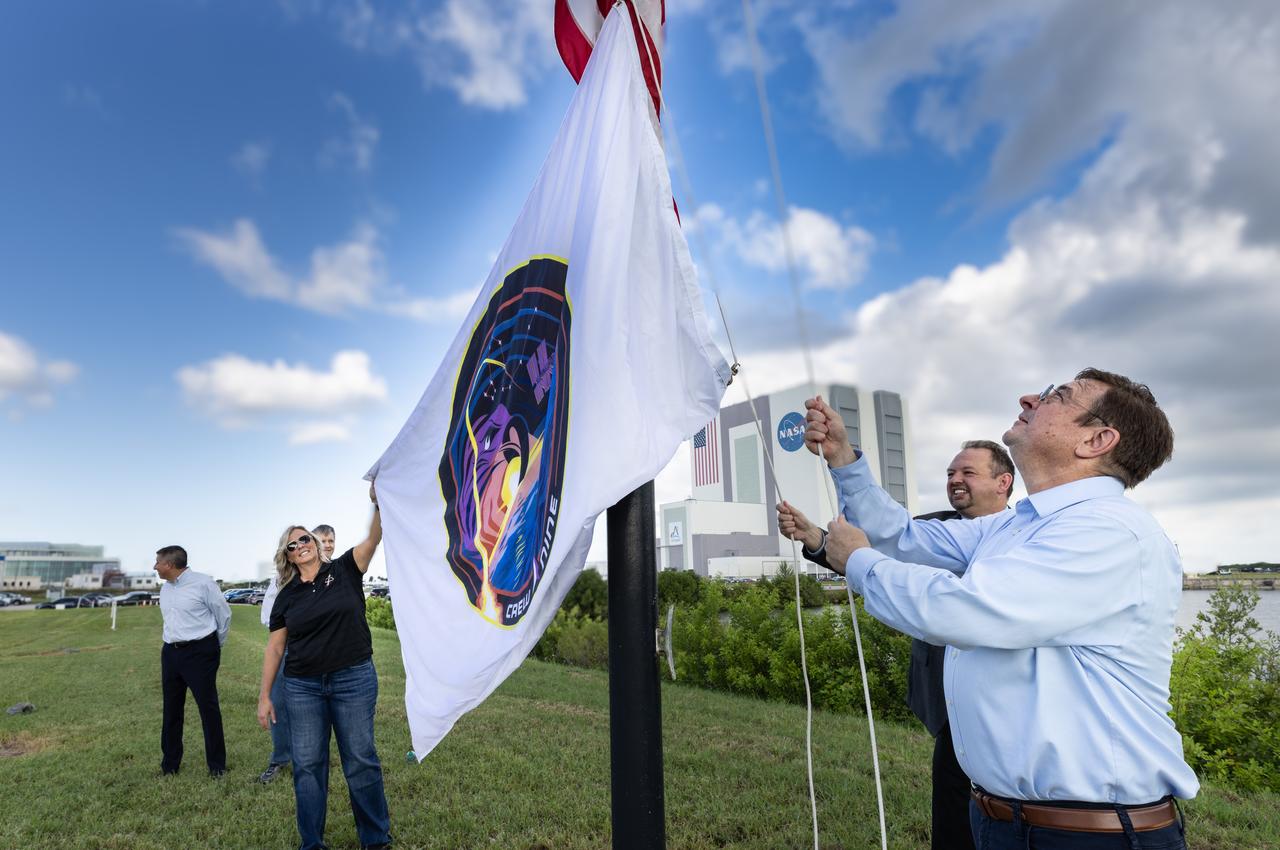
David Forrest (right), deputy manager of the SE&I (Systems Engineering and Integration) Office in NASA’s Commercial Low Earth Orbit Development Program, with help of NASA’s CCP (Commercial Crew Program) Deputy Program Manager Dana Hutcherson and NASA Public Affairs Officer Steven Siceloff, raises the agency’s SpaceX Crew-9 mission flag near the countdown clock at the NASA News Center at the agency’s Kennedy Space Center in Florida on Tuesday, Sept. 24, 2024. Forrest previously served as deputy manager for CCP’s SE&I Office at Kennedy. In the background is CCP’s Deputy Program Manager at NASA’s Johnson Space Center in Houston Richard Jones (far left) and CCP program manager Steve Stich. The Crew-9 mission will send NASA astronaut Nick Hague and Roscosmos cosmonaut Aleksandr Gorbunov to the International Space Station aboard SpaceX’s Dragon spacecraft and Falcon 9 rocket.

Photos of the Emergency Evacuation Water Test at the CCP Crew Access Arm in Oak Hill, for Boeing/ULA.
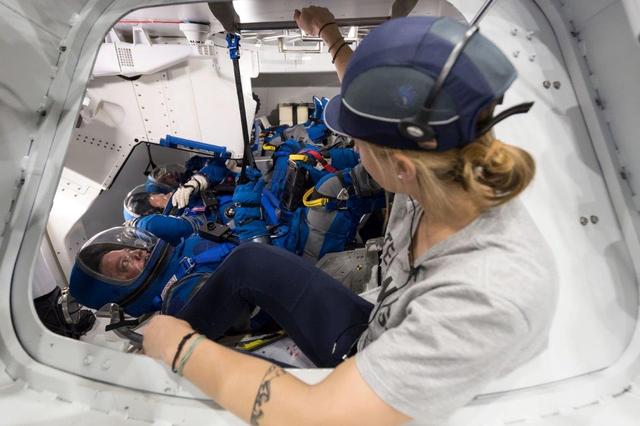
NASA CCP astronauts Bob Behnken, Eric Boe and Doug Hurley conduct a full-suited exercise in Boeing's CST-100 Starliner mockup trainer at the Johnson Space Center in Houston in early May.
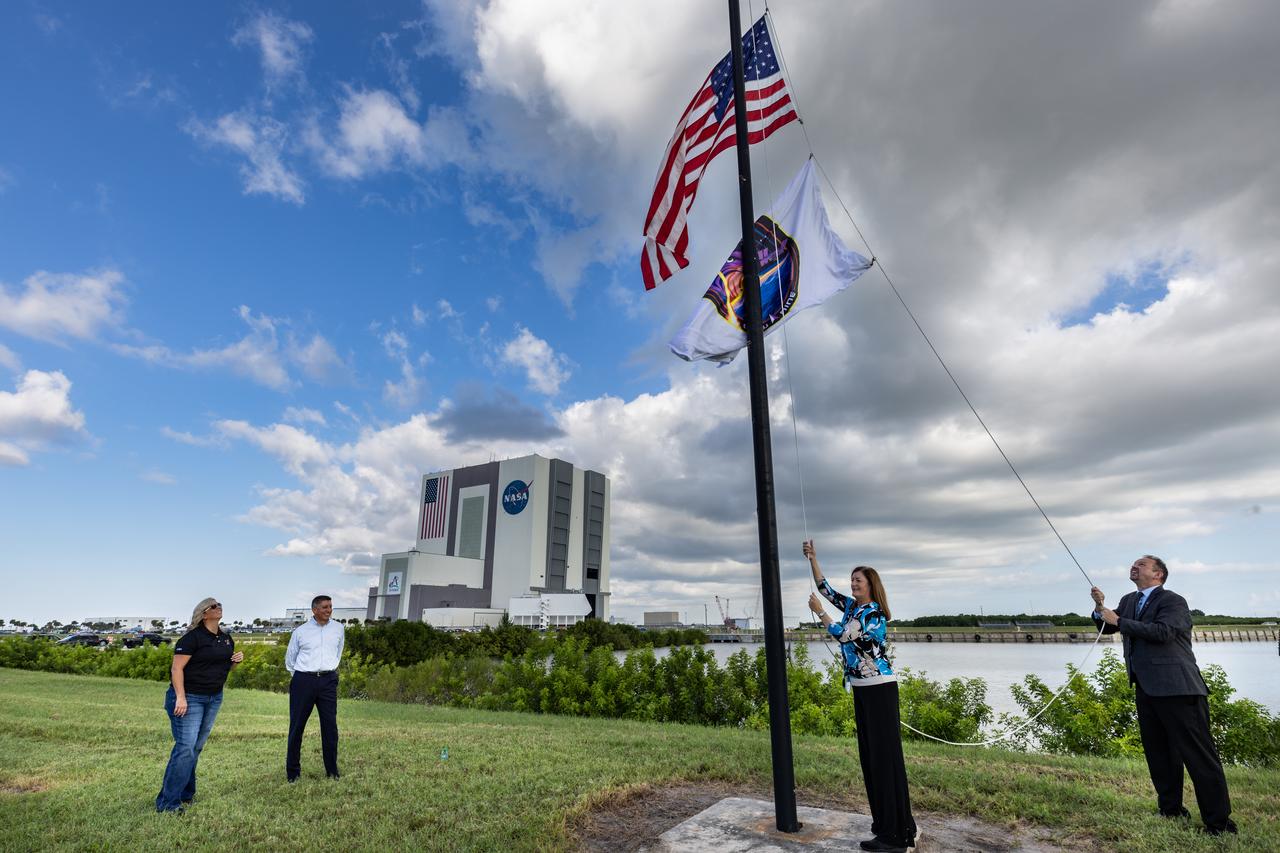
Deb Cole (second from right), CCP (Commercial Crew Program) technical manager, with help from NASA Public Affairs Officer Steven Siceloff, raises the agency’s SpaceX Crew-9 mission flag near the countdown clock at the NASA News Center at the agency’s Kennedy Space Center in Florida on Tuesday, Sept. 24, 2024. In the background looking on is CCP Deputy Program Manager Dana Hutcherson (far left) at Kennedy and CCP Deputy Program Manager at NASA’s Johnson Space Center in Houston Richard Jones. The Crew-9 mission will send NASA astronaut Nick Hague and Roscosmos cosmonaut Aleksandr Gorbunov to the International Space Station aboard SpaceX’s Dragon spacecraft and Falcon 9 rocket.

CAPE CANAVERAL, Fla. -- This graphic depicts the goal of NASA's Commercial Crew Program, or CCP, heading into the Commercial Crew Transportation Capability contract known as CCtCap. This phase of the CCP will enable NASA to ensure a company's crew transportation system is safe, reliable and cost-effective. The certification process will assess progress throughout the production and testing of one or more integrated space transportation systems, which include rockets, spacecraft, missions and ground operations. Requirements under CCtCap also will include at least one crewed flight test to the space station before certification can be granted. For more information, visit www.nasa.gov/commercialcrew. Image credit: NASA/Greg Lee
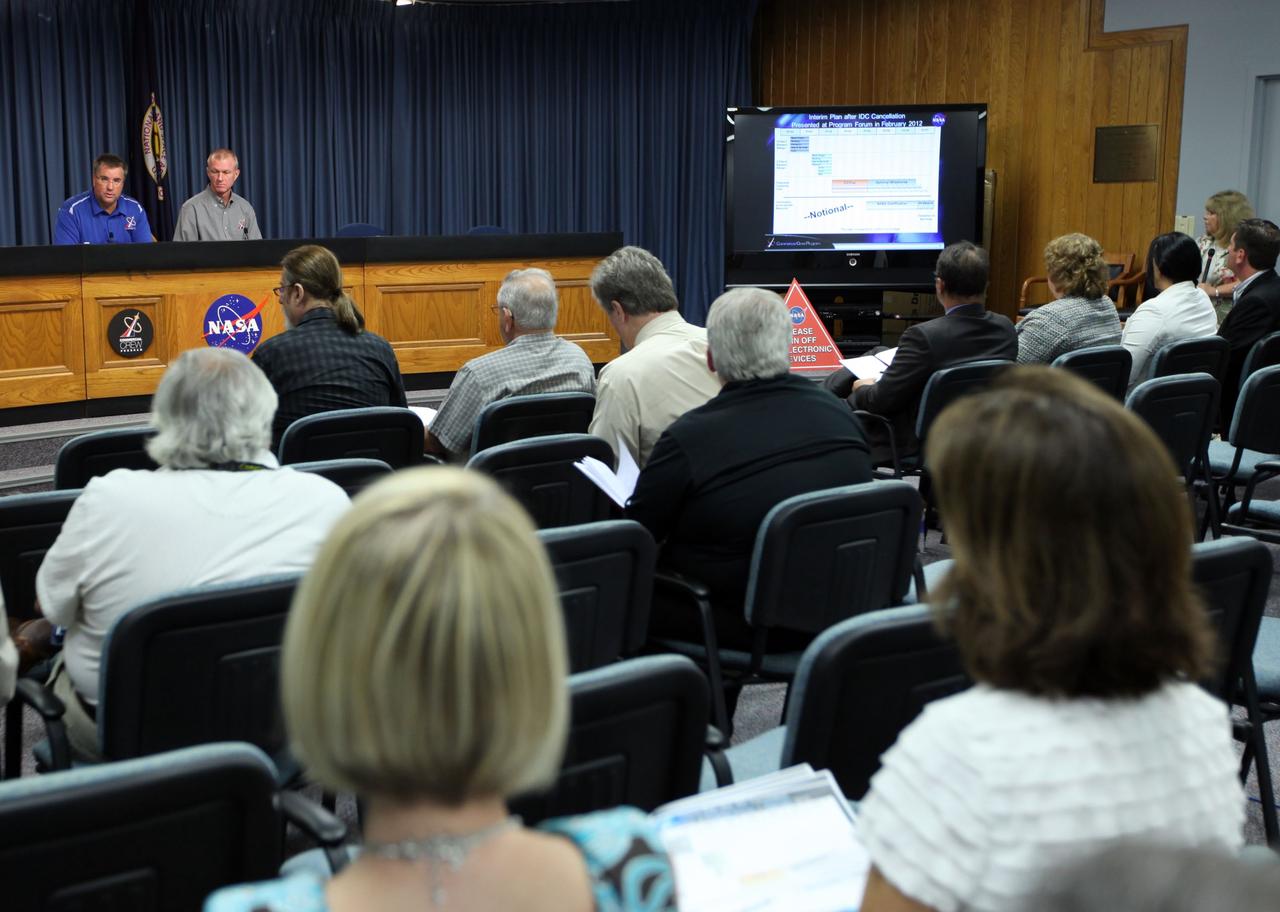
CAPE CANAVERAL, Fla. -- Ed Mango, program manager for NASA's Commercial Crew Program CCP, left, and Brent Jett, CCP's deputy program manager, host a forum for the commercial spaceflight industry to introduce the agency's plans for certifying commercially developed spacecraft and launch systems in support of crewed missions to the International Space Station around the middle of the decade. To learn more about CCP, visit www.nasa.gov/commercialcrew. Photo credit: NASA/Kim Shiflett
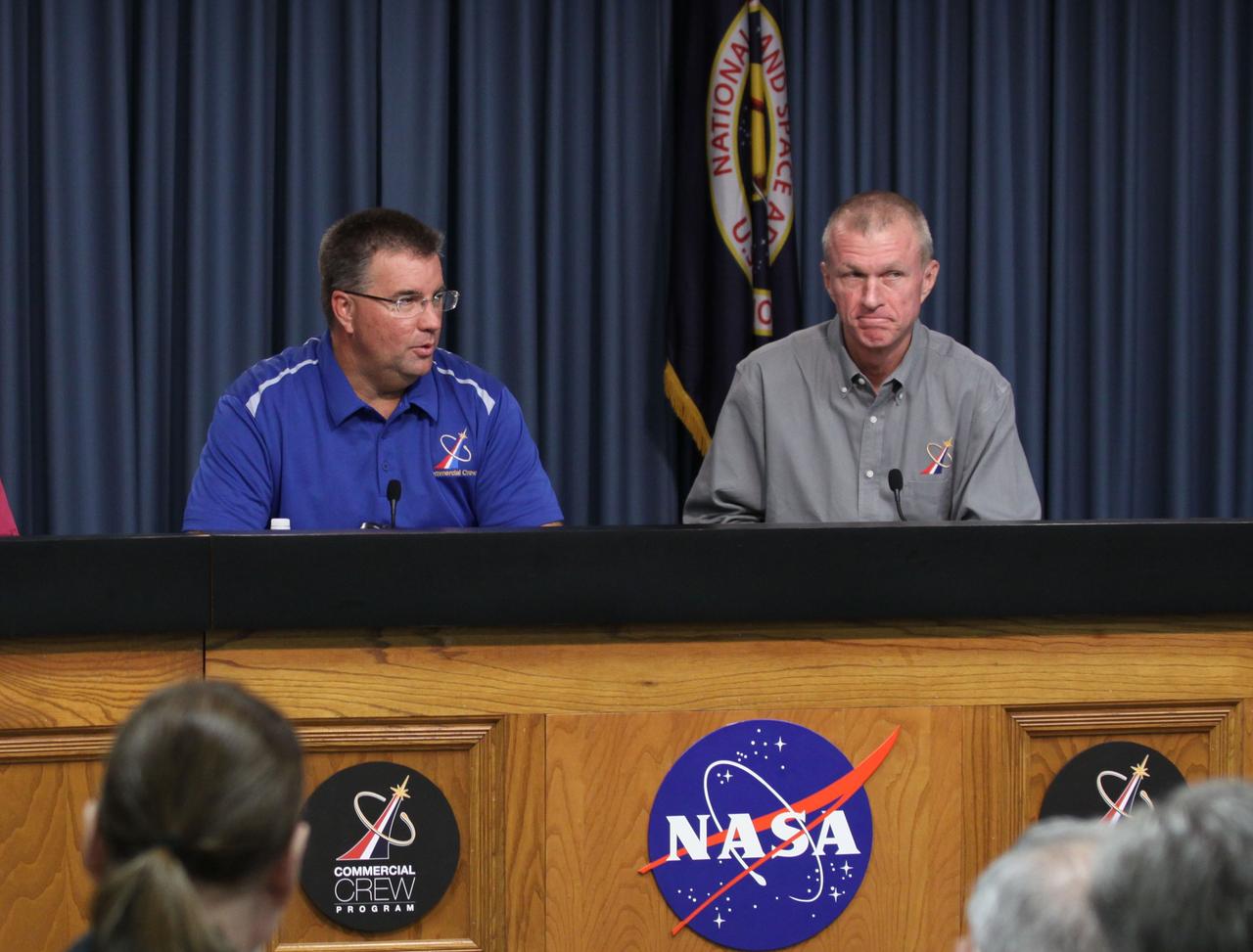
CAPE CANAVERAL, Fla. -- Ed Mango, program manager for NASA's Commercial Crew Program CCP, left, and Brent Jett, CCP's deputy program manager, host a forum for the commercial spaceflight industry to introduce the agency's plans for certifying commercially developed spacecraft and launch systems in support of crewed missions to the International Space Station around the middle of the decade. To learn more about CCP, visit www.nasa.gov/commercialcrew. Photo credit: NASA/Kim Shiflett
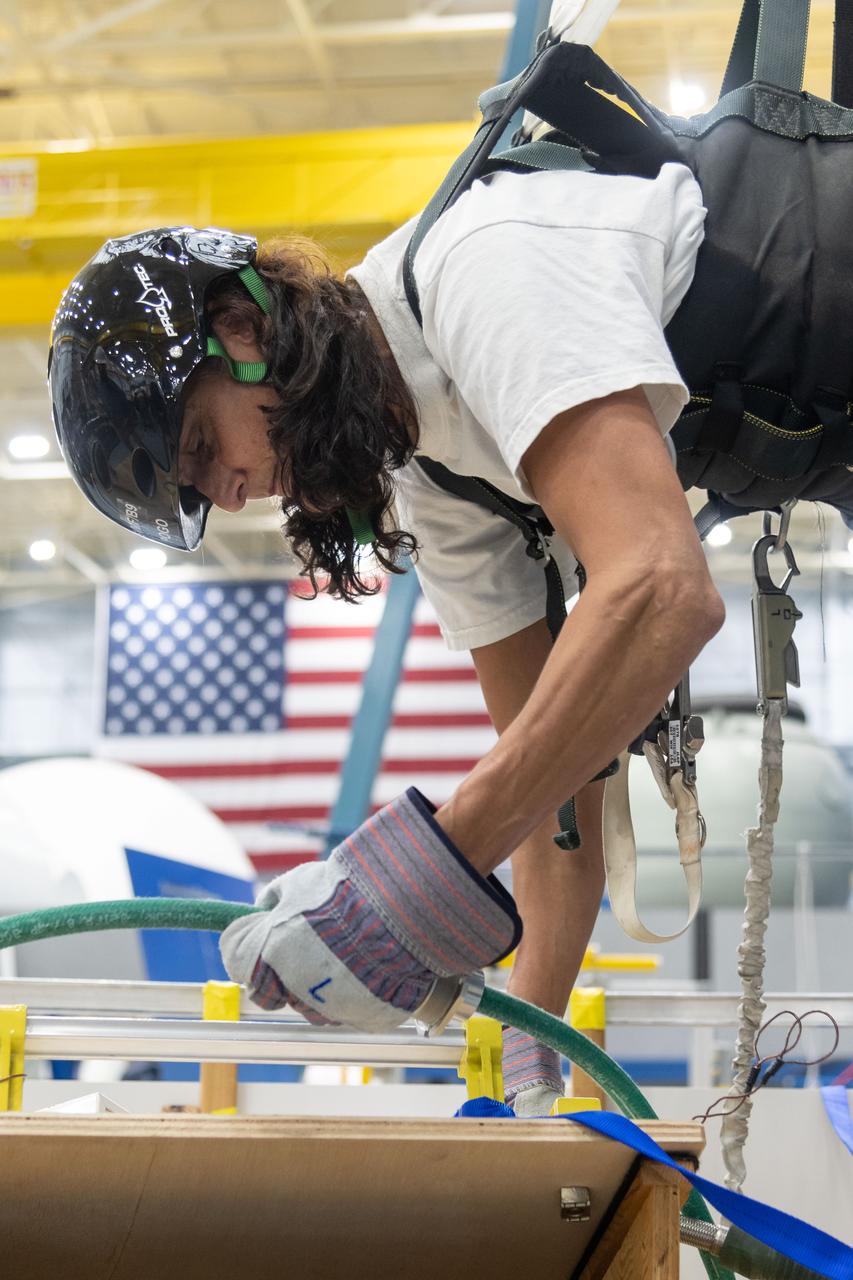
Commercial Crew Program (CCP) astronaut Suni Williams in ISS EVA POGO training in SVMF POGO.
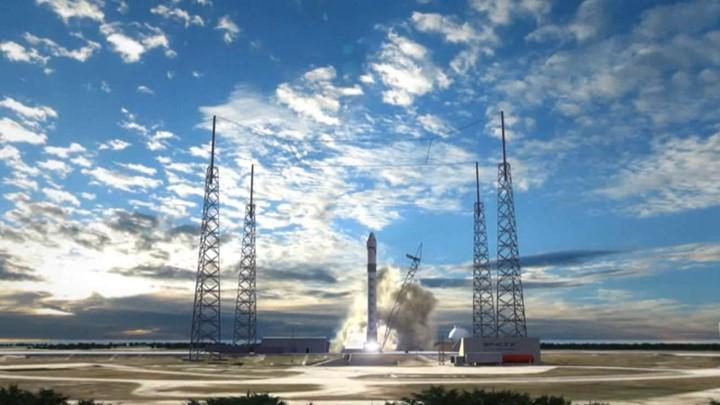
CAPE CANAVERAL, Fla. -- This is an artist's conception of Space Exploration Technologies', or SpaceX, crewed Dragon capsule atop the company's Falcon 9 rocket under development for NASA's Commercial Crew Program, or CCP. The integrated system was selected for CCP's Commercial Crew Integrated Capability, or CCiCap, initiative to propel America's next human space transportation system to low Earth orbit forward. Operating under a funded Space Act Agreement, or SAA, SpaceX will spend the next 21 months completing its design, conducting critical risk reduction testing on its spacecraft and launch vehicle, and showcasing how it would operate and manage missions from launch through orbit and landing, setting the stage for a future demonstration mission. To learn more about CCP, which is based at NASA's Kennedy Space Center in Florida and supported by NASA's Johnson Space Center in Houston, visit www.nasa.gov/commercialcrew. Image credit: SpaceX
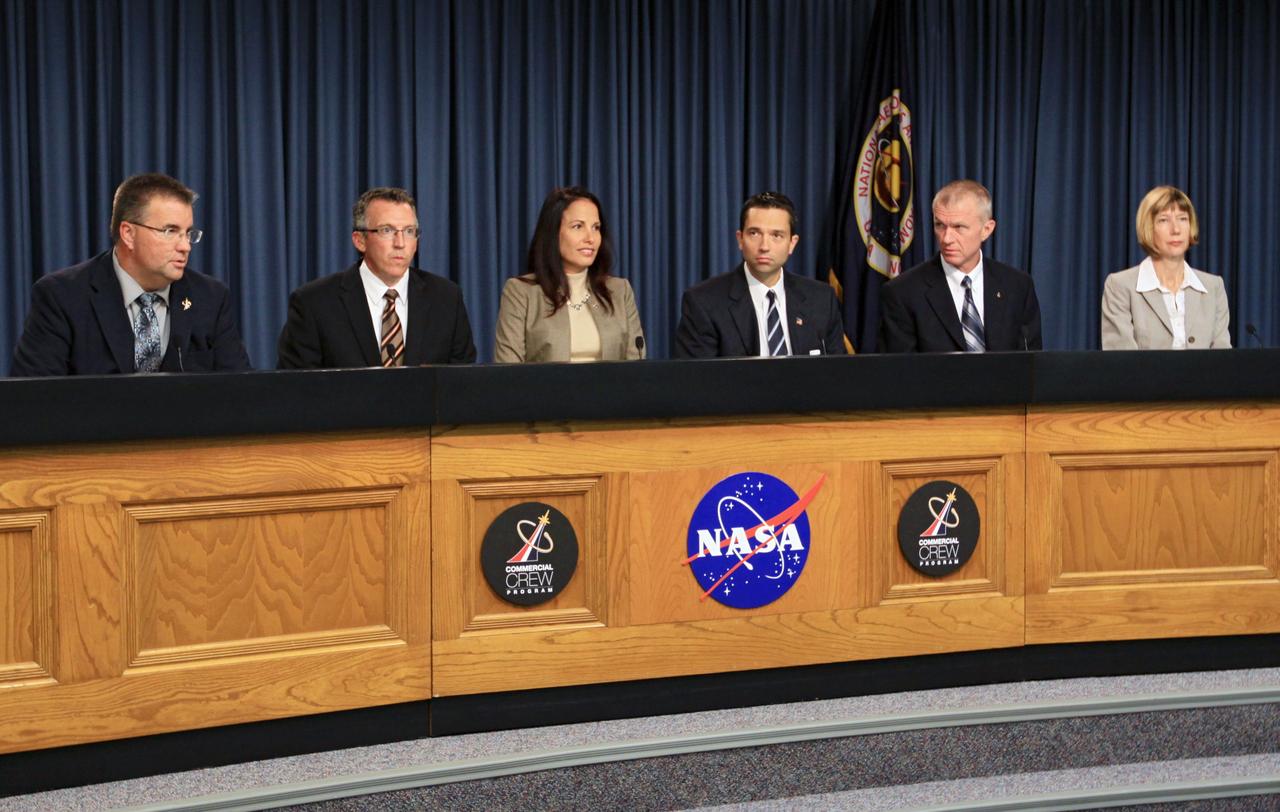
CAPE CANAVERAL, Fla. -- NASA's Commercial Crew Program, or CCP, hosts a pre-proposal conference to inform prospective companies about the recently released request for contract proposals and updates to the certification requirements for crewed missions to the International Space Station, or ISS. The two-phase certification process, called Certification Products Contract, or CPC, will enable NASA to eventually purchase service missions to fly astronauts to and from the ISS. From left, Ed Mango, CCP's program manager Steve Janney, CPC contracting officer Maria Collura, CCP certification manager Tom Simon, CPC Evaluation Team chair Brent Jett, CCP deputy program manager and Kathy Lueders, manager of the ISS Transportation Integration Office. To learn more about CCP, visit www.nasa.gov/commercialcrew. Photo credit: Kim Shiflett
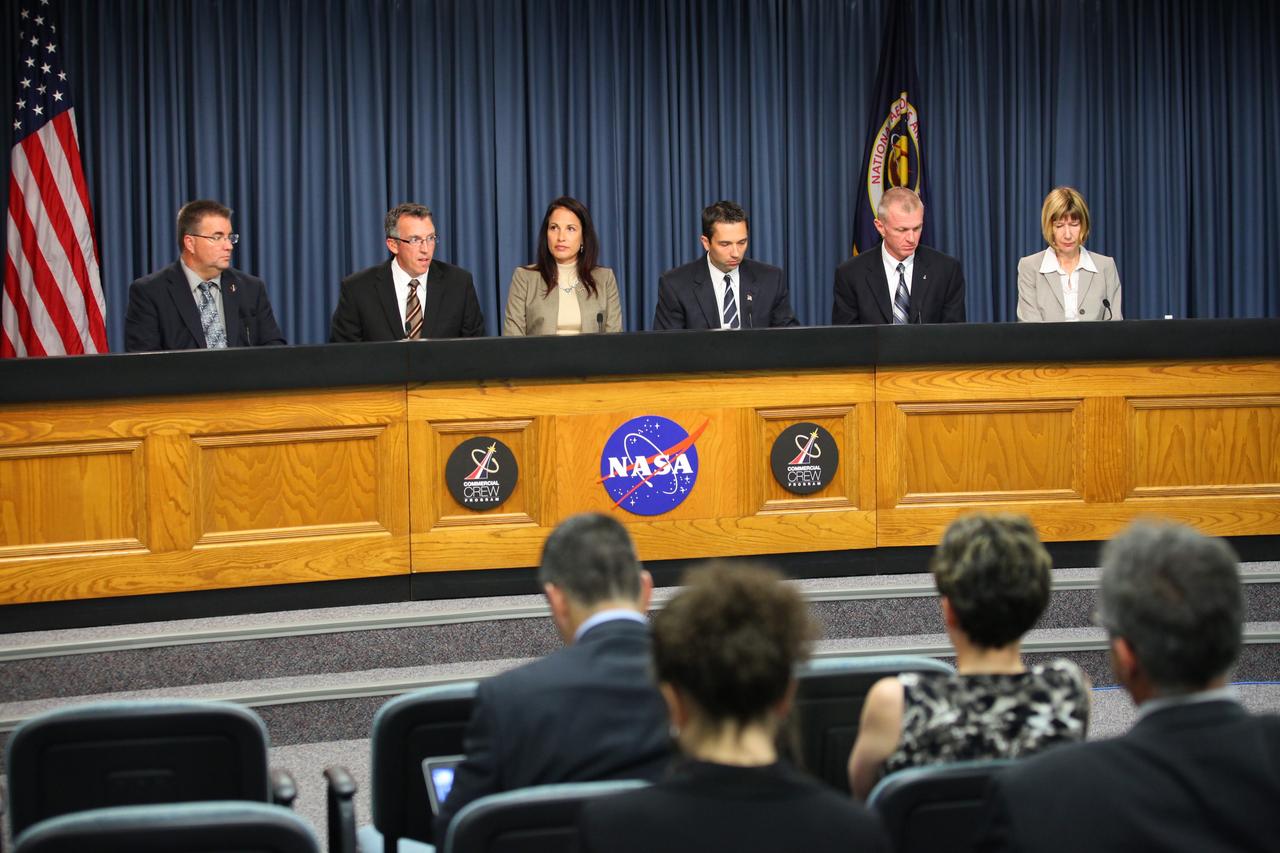
CAPE CANAVERAL, Fla. -- NASA's Commercial Crew Program, or CCP, hosts a pre-proposal conference to inform prospective companies about the recently released request for contract proposals and updates to the certification requirements for crewed missions to the International Space Station, or ISS. The two-phase certification process, called Certification Products Contract, or CPC, will enable NASA to eventually purchase service missions to fly astronauts to and from the ISS. From left, Ed Mango, CCP's program manager Steve Janney, CPC contracting officer Maria Collura, CCP certification manager Tom Simon, CPC Evaluation Team chair Brent Jett, CCP deputy program manager and Kathy Lueders, manager of the ISS Transportation Integration Office. To learn more about CCP, visit www.nasa.gov/commercialcrew. Photo credit: Kim Shiflett

CAPE CANAVERAL, Fla. -- This is a printable poster with NASA's Commercial Crew Program (CCP) logo. CCP is leading NASA's effort of accelerating a United States-led capability to the International Space Station by investing in the design and development of the aerospace industry's crew transportation systems. The goal of CCP is to drive down the cost of space travel as well as open up space to more people than ever before by balancing industry’s own innovative capabilities with NASA's 50 years of human spaceflight experience. For more information, visit www.nasa.gov/commercialcrew
CAPE CANAVERAL, Fla. -- This is a printable poster with NASA's Commercial Crew Program (CCP) logo. CCP is leading NASA's effort of accelerating a United States-led capability to the International Space Station by investing in the design and development of the aerospace industry's crew transportation systems. The goal of CCP is to drive down the cost of space travel as well as open up space to more people than ever before by balancing industry’s own innovative capabilities with NASA's 50 years of human spaceflight experience. For more information, visit www.nasa.gov/commercialcrew
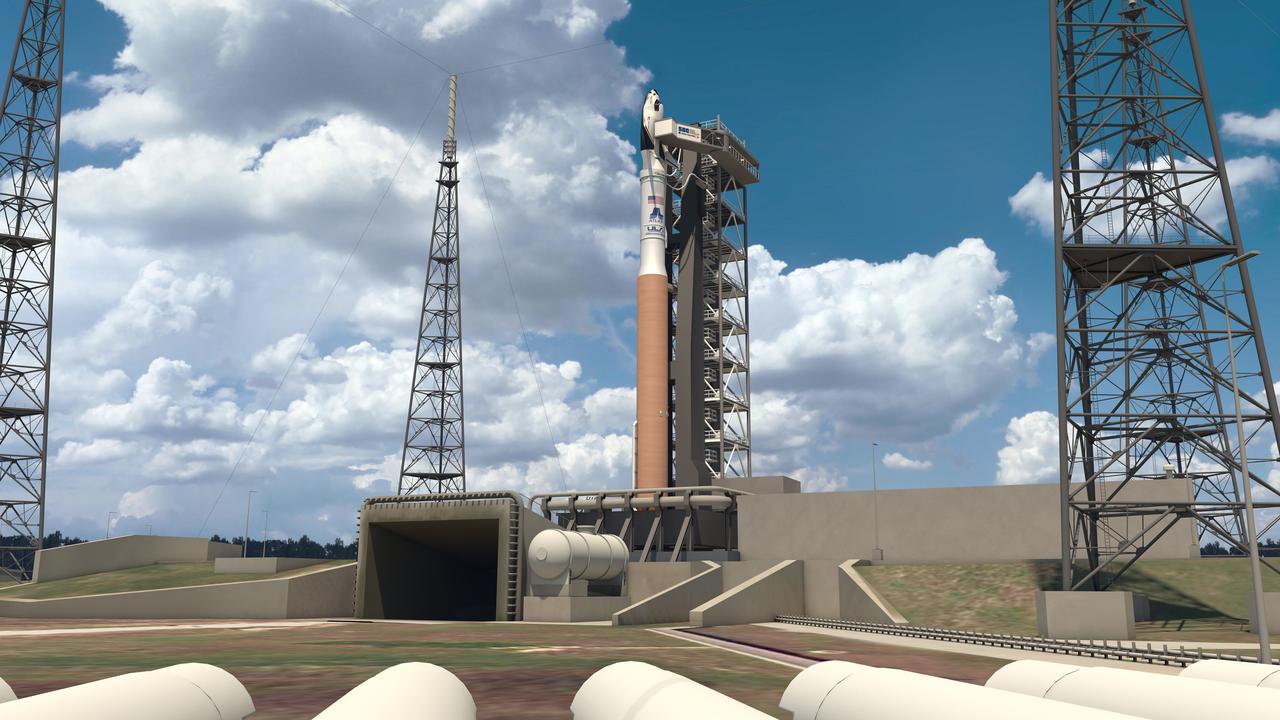
CAPE CANAVERAL, Fla. -- This is an artist's conception of Sierra Nevada Corp. SNC Space System's Dream Chaser spacecraft atop a United Launch Alliance ULA Atlas V rocket under development for NASA's Commercial Crew Program, or CCP. The integrated system was selected for CCP's Commercial Crew Integrated Capability, or CCiCap, initiative to propel America's next human space transportation system to low Earth orbit forward. Operating under a funded Space Act Agreement, or SAA, SNC will spend the next 21 months completing its design, conducting critical risk reduction testing on its spacecraft and launch vehicle, and showcasing how it would operate and manage missions from launch through orbit and landing, setting the stage for a future demonstration mission. To learn more about CCP, which is based at NASA's Kennedy Space Center in Florida and supported by NASA's Johnson Space Center in Houston, visit www.nasa.gov/commercialcrew. Image credit: SNC

Commercial Crew Program (CCP) SpaceX Merlin Engine Gas Generator (GG) Baffle Assessment, Mr. Brian Richardson (background), and Mr. Chad Eberhart (foreground)
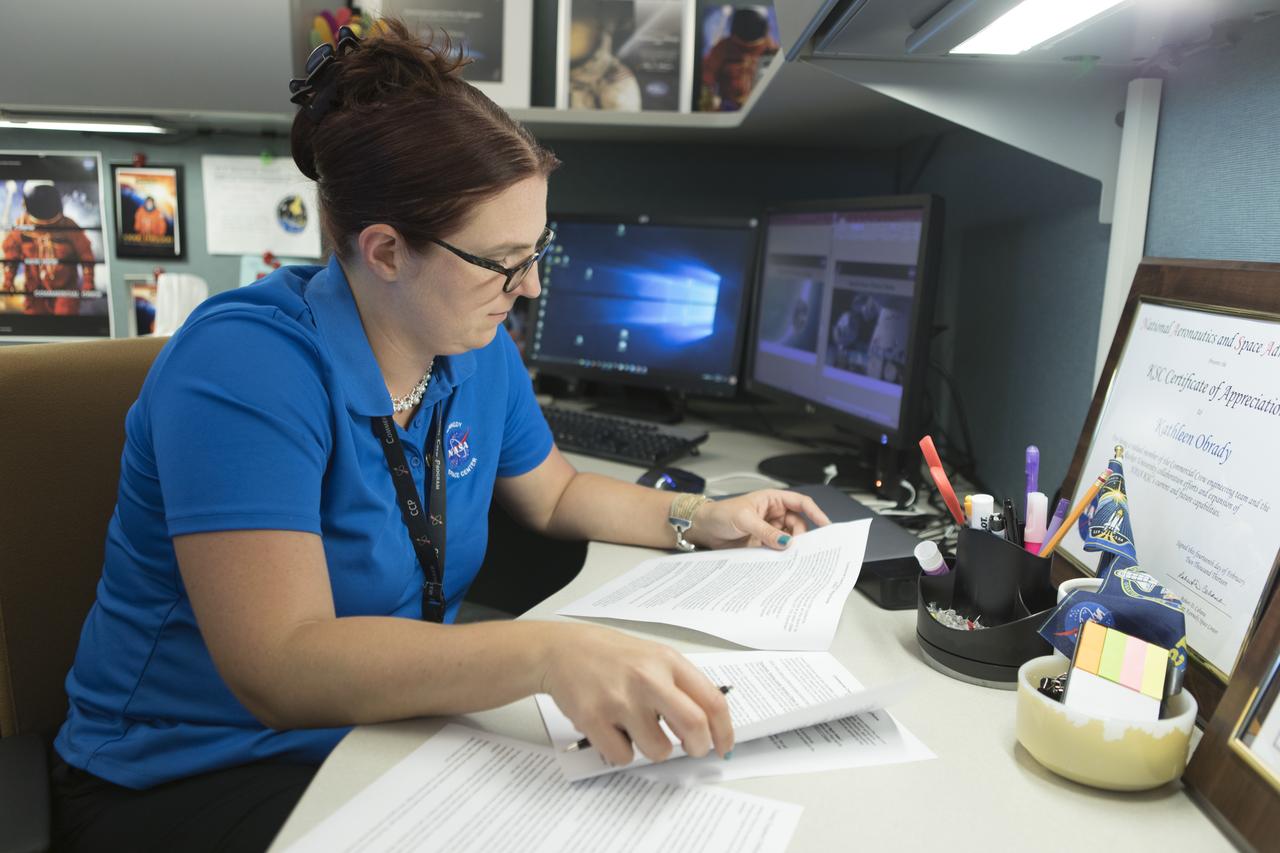
Kathleen O'Brady reviews documents in her office at NASA’s Kennedy Space Center in Florida. As a certification systems engineer in the Commercial Crew Program’s (CCP's) Systems Engineering and Integration Office, she is responsible for defining an integrated plan for certification which is being executed by the agency's CCP partners Boeing and SpaceX. The two companies are developing spacecraft to fly NASA astronauts to the International Space Station and return them safely home.
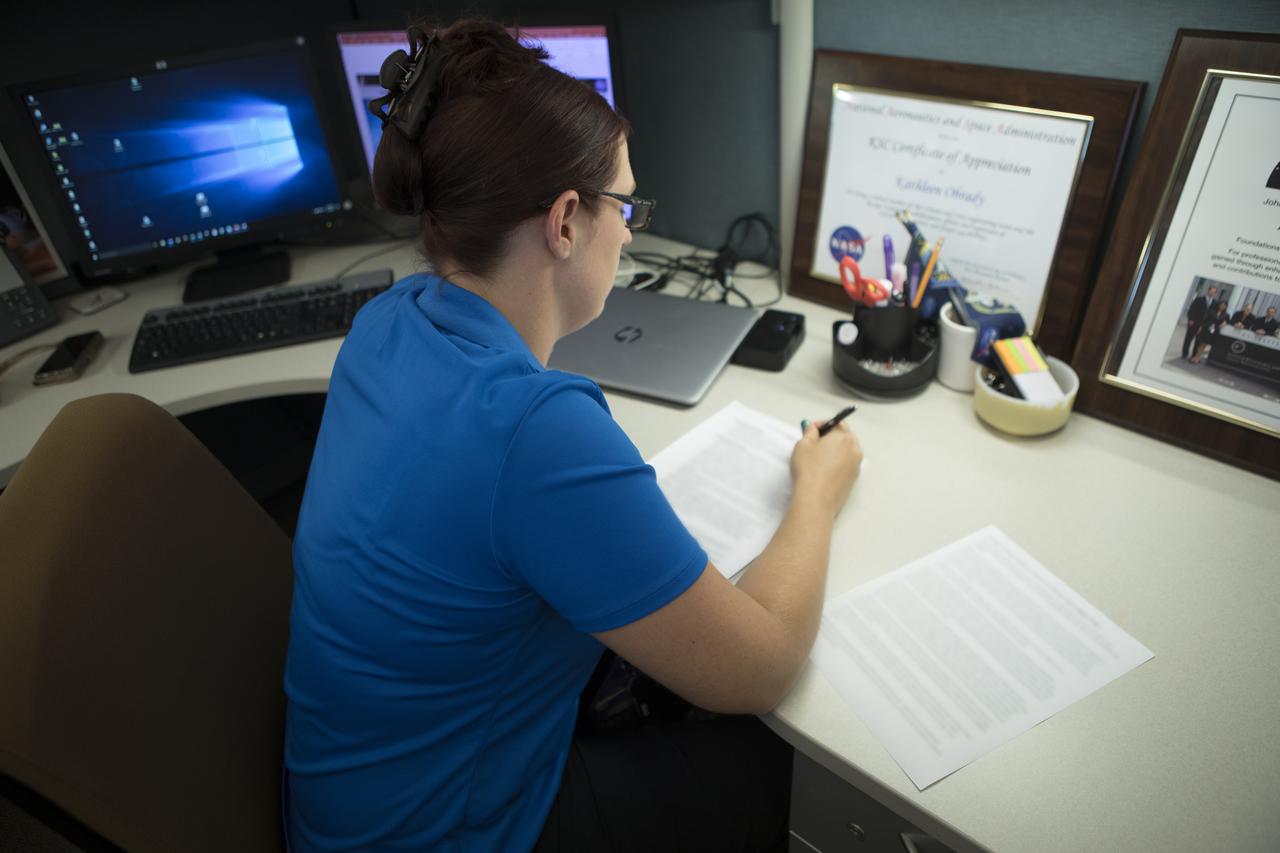
Kathleen O'Brady reviews documents in her office at NASA’s Kennedy Space Center in Florida. As a certification systems engineer in the Commercial Crew Program’s (CCP's) Systems Engineering and Integration Office, she is responsible for defining an integrated plan for certification which is being executed by the agency's CCP partners Boeing and SpaceX. The two companies are developing spacecraft to fly NASA astronauts to the International Space Station and return them safely home.
CAPE CANAVERAL, Fla. -- This is an artist's conception of NASA's Commercial Crew Program or CCP, logo and low Earth orbit. The program is entering its third phase of development, called Commercial Crew integrated Capability, or CCiCap, to propel America's next human space transportation system to low Earth orbit forward. Operating under funded Space Act Agreements, or SAAs, The Boeing Co. of Houston, Sierra Nevada Corp., or SNC, Space Systems of Louisville, Colo., and Space Exploration Technologies, or SpaceX, of Hawthorne, Calif., will spend the next 21 months completing their designs, conducting critical risk reduction testing on their spacecraft and launch vehicles, and showcasing how they would operate and manage missions from launch through orbit and landing, setting the stage for future demonstration missions. To learn more about CCP, which is based at Kennedy and supported by NASA's Johnson Space Center in Houston, visit www.nasa.gov/commercialcrew. Image credit: NASA/Matthew Young
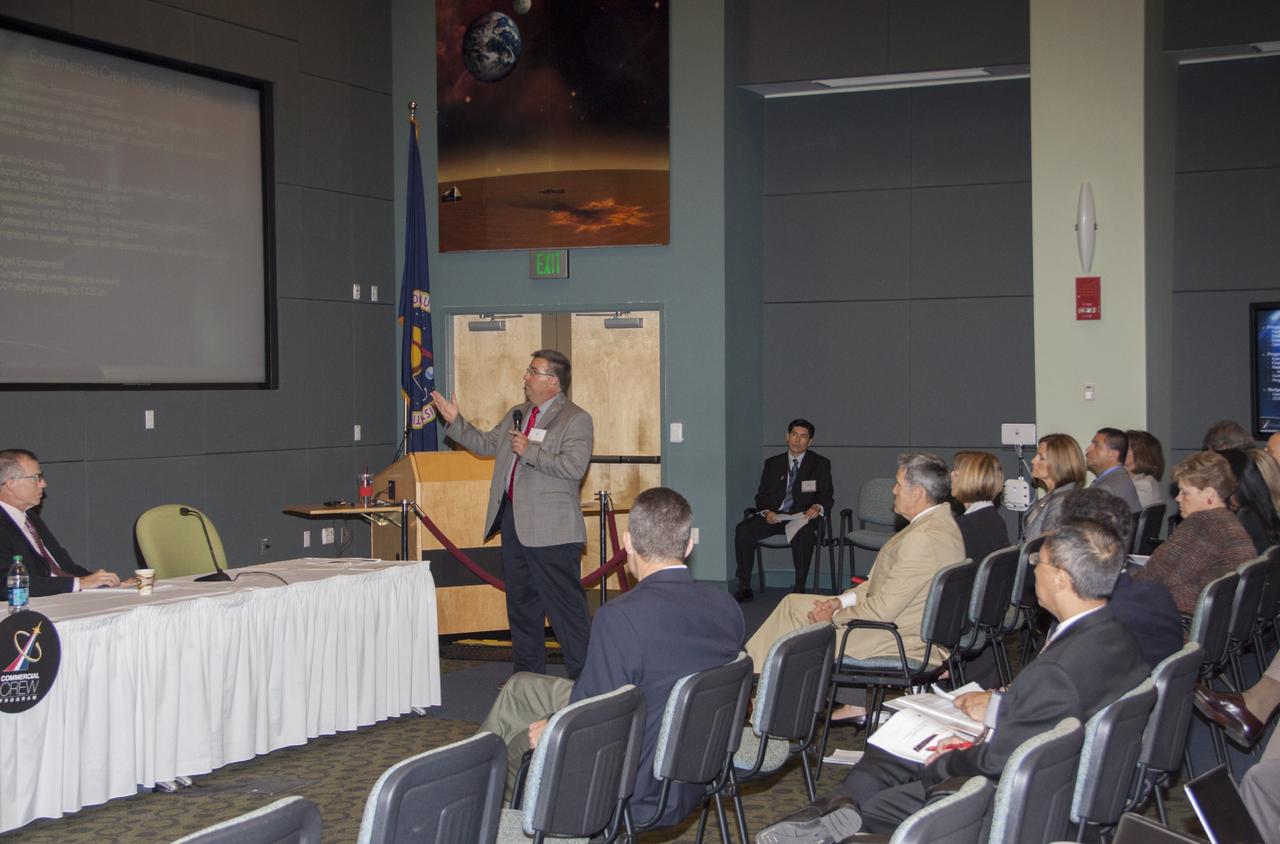
CAPE CANAVERAL, Fla. -- Maria Collura of NASA's Commercial Crew Program, or CCP, talks to aerospace industry representatives during a pre-proposal conference to inform prospective companies about the recently released request for contract proposals and updates to the certification requirements for crewed missions to the International Space Station, or ISS. The two-phase certification process, called Certification Products Contract, or CPC, will enable NASA to eventually purchase service missions to fly astronauts to and from the ISS. Collura serves as a CCP certification manager. To learn more about CCP, visit www.nasa.gov/commercialcrew. Photo credit: Kim Shiflett
CAPE CANAVERAL, Fla. - Ed Mango, manager of NASA's Commercial Crew Program, or CCP, makes opening remarks at the Commercial Crew Transportation Capability, or CCtCap, Pre-Proposal Conference at Kennedy Space Center in Florida. CCtCap will be the next phase of certification efforts for CCP mission to the International Space Station. The purpose of the conference was to involve aerospace industry representatives in the CCtCap draft Request for Proposal, or RFP, process and provide a greater understanding for both parties before the official RFP is released in the fall of 2013. To learn more about CCP, visit www.nasa.gov/commercialcrew. Photo credit: NASA/Jim Grossmann
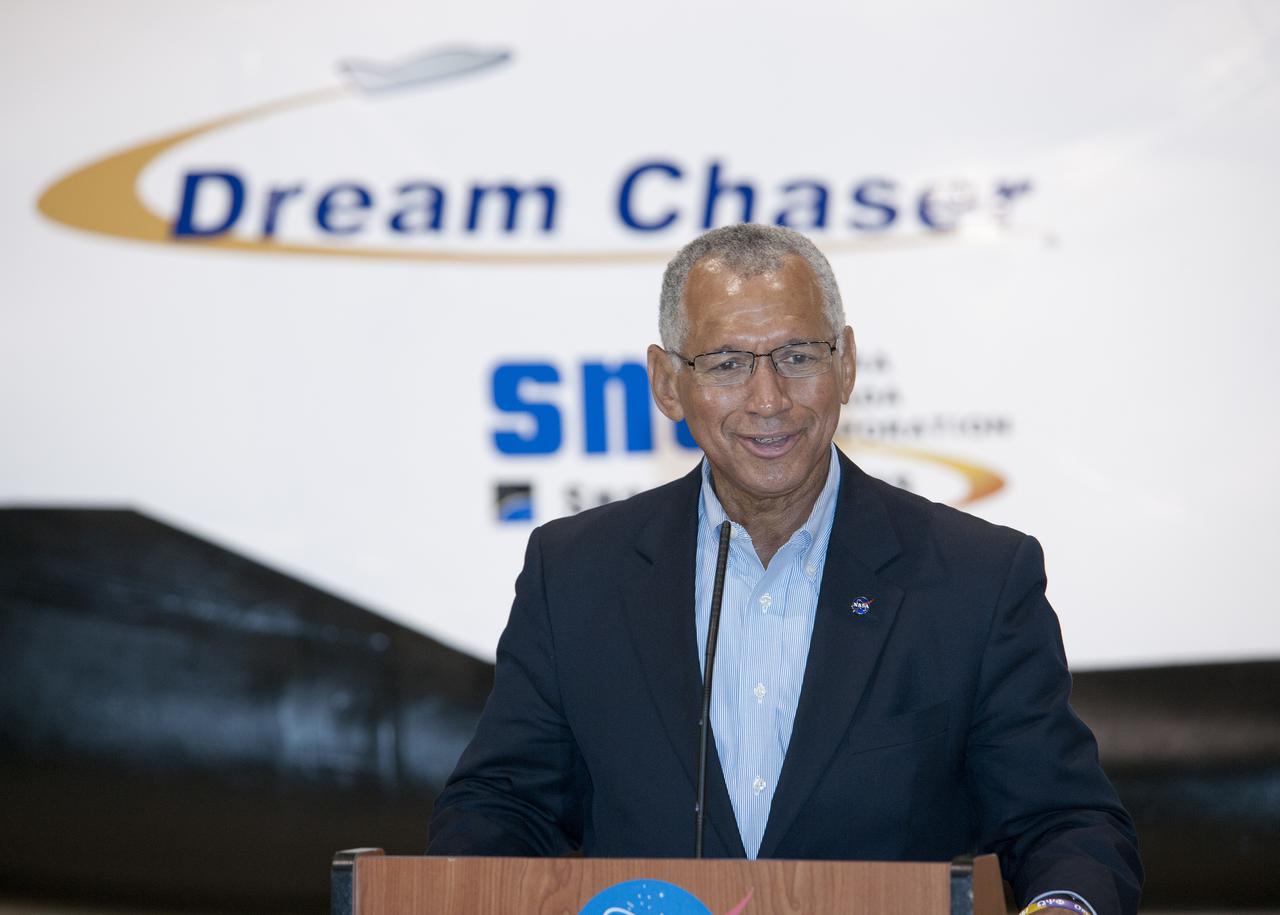
Edwards, Calif. – ED-0155-20 - NASA Administrator Charlie Bolden talks to the media about the importance of the agency's Commercial Crew Program, or CCP, and the development work Sierra Nevada Corporation, or SNC, will perform with its Dream Chaser flight test vehicle at the agency's Dryden Flight Research Center in the coming months. SNC is one of three companies working with CCP during the agency's Commercial Crew Integrated Capability, or CCiCap, initiative, which is intended to lead to the availability of commercial human spaceflight services for government and commercial customers. To learn more about CCP and its industry partners, visit www.nasa.gov_commercialcrew. Image credit: NASA_Ken Ulbrich
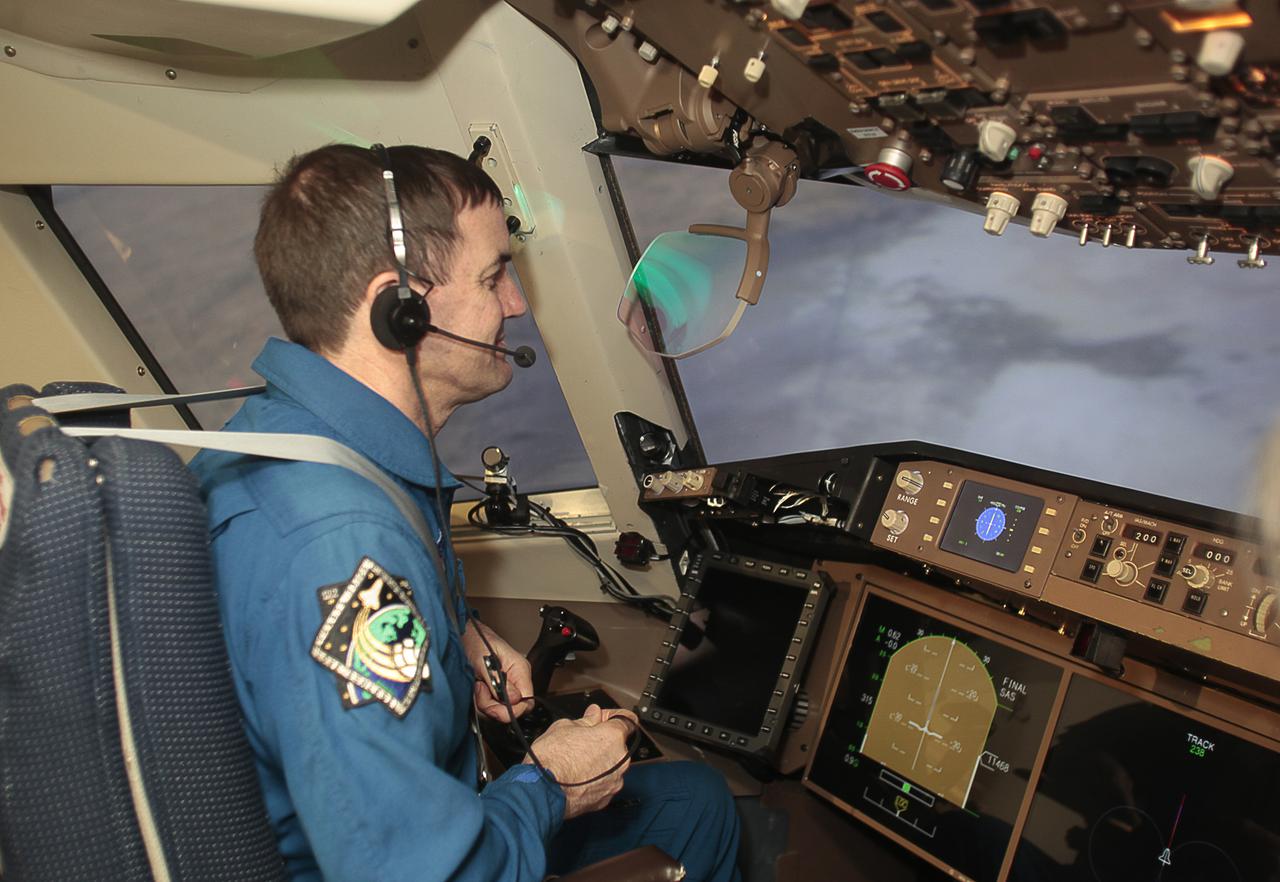
HAMPTON, Va. – At NASA's Langley Research Center in Hampton, Va., astronaut Rex Walheim flies simulations of a Dream Chaser approach and landing to help evaluate the spacecraft's subsonic handling in support of the agency's Commercial Crew Program, or CCP, efforts. The simulation makes use of the Synthetic Vision and Enhanced Vision systems in the center's Cockpit Motion Facility. SNC is one of three companies working with CCP during the agency's Commercial Crew Integrated Capability, or CCiCap, initiative, which is intended to lead to the availability of commercial human spaceflight services for government and commercial customers. To learn more about CCP and its industry partners, visit www.nasa.gov_commercialcrew. Image credit: NASA_David C. Bowman
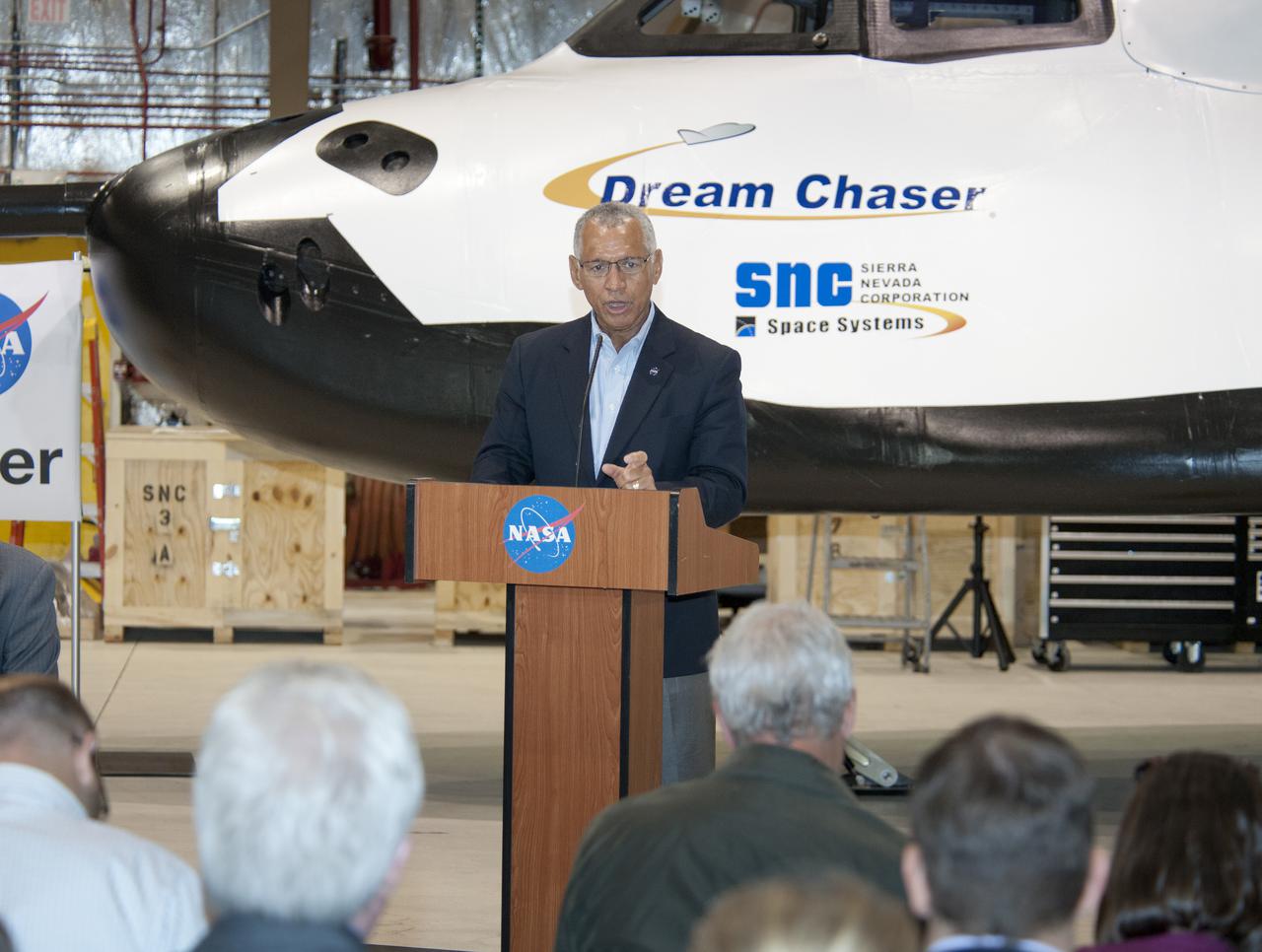
Edwards, Calif. – ED-0155-23 - NASA Administrator Charlie Bolden talks to the media about the importance of the agency's Commercial Crew Program, or CCP, and the development work Sierra Nevada Corporation, or SNC, will perform with its Dream Chaser flight test vehicle at the agency's Dryden Flight Research Center in the coming months. SNC is one of three companies working with CCP during the agency's Commercial Crew Integrated Capability, or CCiCap, initiative, which is intended to lead to the availability of commercial human spaceflight services for government and commercial customers. To learn more about CCP and its industry partners, visit www.nasa.gov_commercialcrew. Image credit: NASA_Ken Ulbrich

CAPE CANAVERAL, Fla. - Ed Mango, manager of NASA's Commercial Crew Program, or CCP, makes opening remarks at the Commercial Crew Transportation Capability, or CCtCap, Pre-Proposal Conference at Kennedy Space Center in Florida. CCtCap will be the next phase of certification efforts for CCP mission to the International Space Station. The purpose of the conference was to involve aerospace industry representatives in the CCtCap draft Request for Proposal, or RFP, process and provide a greater understanding for both parties before the official RFP is released in the fall of 2013. To learn more about CCP, visit www.nasa.gov/commercialcrew. Photo credit: NASA/Jim Grossmann
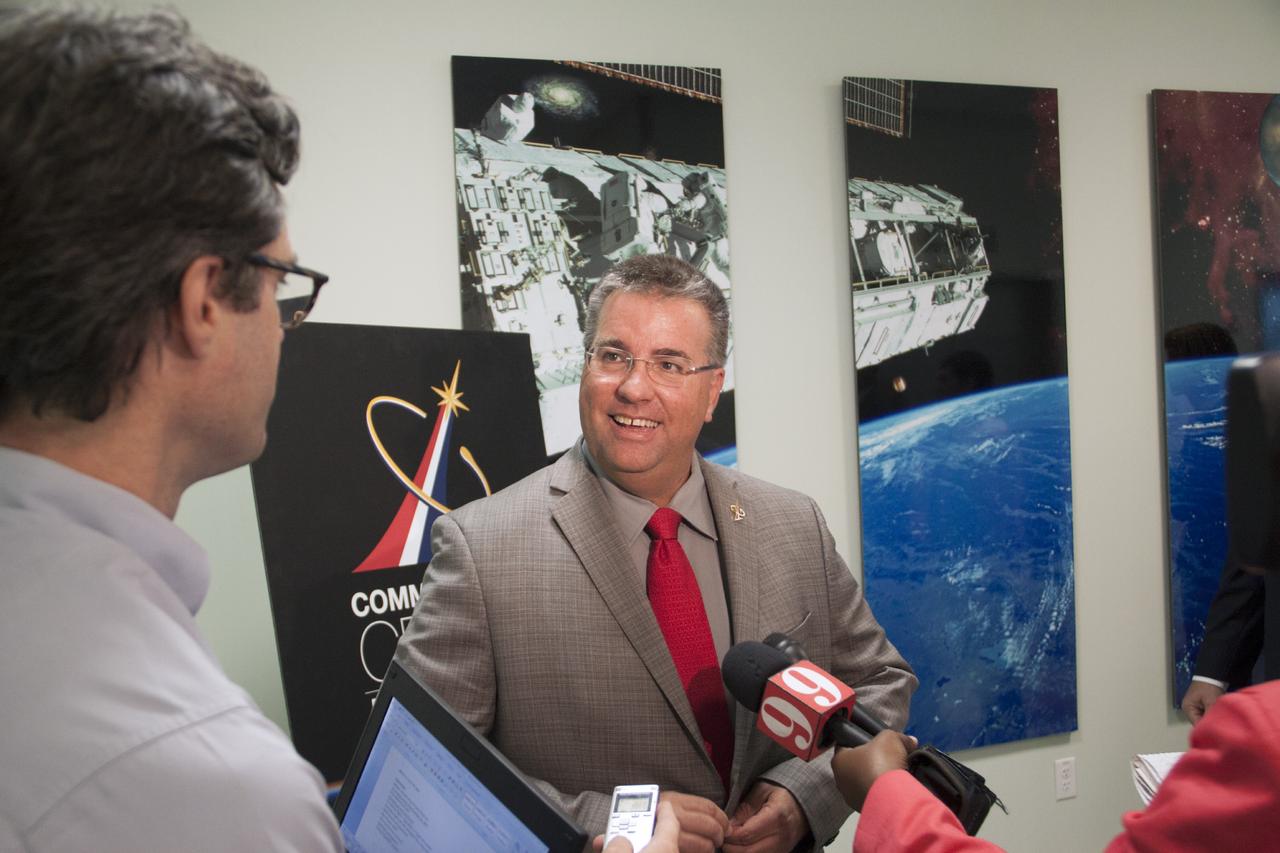
CAPE CANAVERAL, Fla. - Ed Mango, manager of NASA's Commercial Crew Program, or CCP, talks to media following the Commercial Crew Transportation Capability, or CCtCap, Pre-Proposal Conference at Kennedy Space Center in Florida. CCtCap will be the next phase of certification efforts for CCP mission to the International Space Station. The purpose of the conference was to involve aerospace industry representatives in the CCtCap draft Request for Proposal, or RFP, process and provide a greater understanding for both parties before the official RFP is released in the fall of 2013. To learn more about CCP, visit www.nasa.gov/commercialcrew. Photo credit: NASA/Jim Grossmann
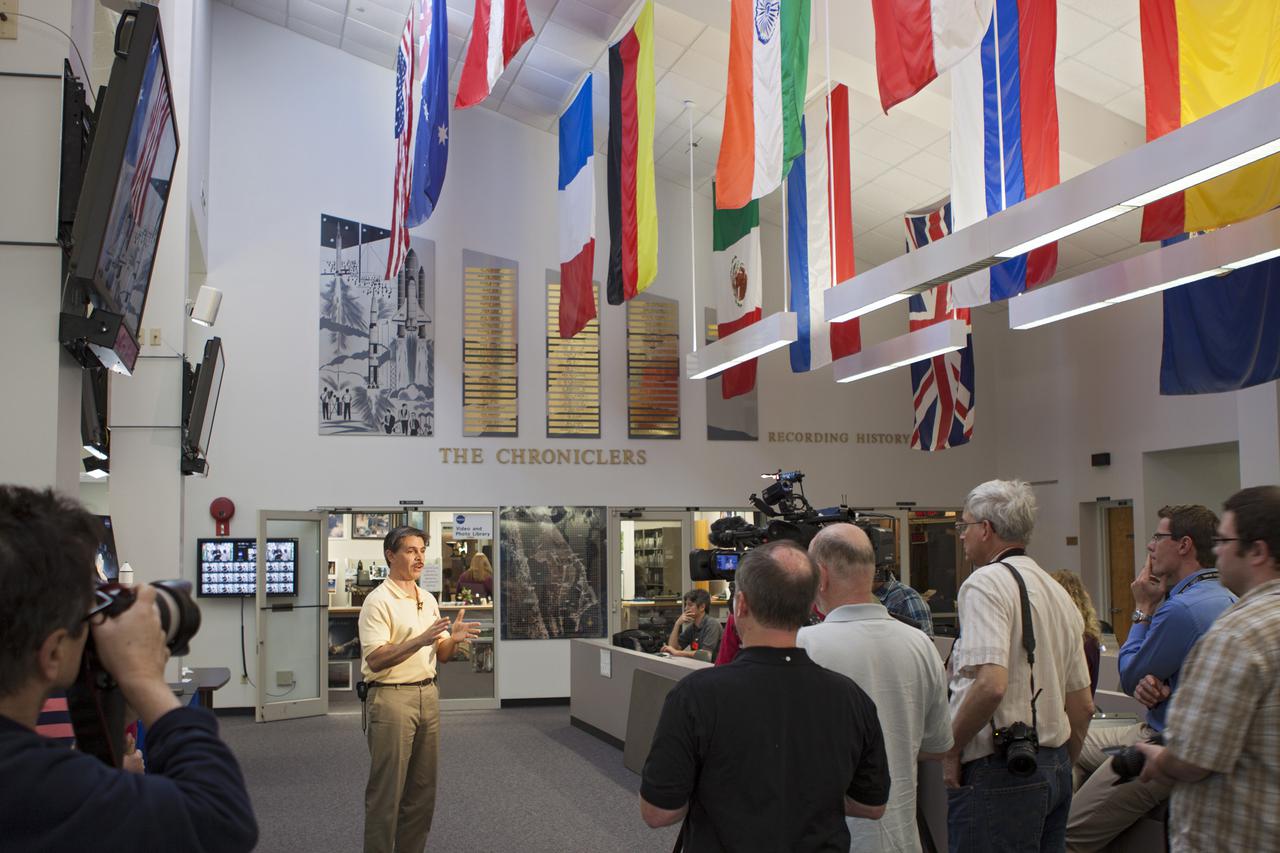
CAPE CANAVERAL, Fla. – NASA's Jon Cowart talks to media about the progress of the agency's Commercial Crew Program CCP and its partners in Kennedy Space Center’s Press Site on Feb. 28 ahead of the second commercial resupply services mission for Space Exploration Technologies SpaceX to the International Space Station. Cowart is the deputy partner manager working with SpaceX as the company develops its Falcon 9 rocket and Dragon capsule for crewed missions. Under a contract with NASA, SpaceX is targeted to fly at least 12 cargo missions to the space station through 2016. The company also is working with CCP to return America's capability to safely launch crews to low-Earth orbit destinations, including the space station, from U.S. soil around the middle of the decade. To learn more about CCP and its partners, go to www.nasa.gov_commercialcrew. Photo credit: NASA_Jim Grossmann

CAPE CANAVERAL, Fla. – NASA's Jon Cowart talks to media about the progress of the agency's Commercial Crew Program CCP and its partners in Kennedy Space Center’s Press Site on Feb. 28 ahead of the second commercial resupply services mission for Space Exploration Technologies SpaceX to the International Space Station. Cowart is the deputy partner manager working with SpaceX as the company develops its Falcon 9 rocket and Dragon capsule for crewed missions. Under a contract with NASA, SpaceX is targeted to fly at least 12 cargo missions to the space station through 2016. The company also is working with CCP to return America's capability to safely launch crews to low-Earth orbit destinations, including the space station, from U.S. soil around the middle of the decade. To learn more about CCP and its partners, go to www.nasa.gov_commercialcrew. Photo credit: NASA_Jim Grossmann
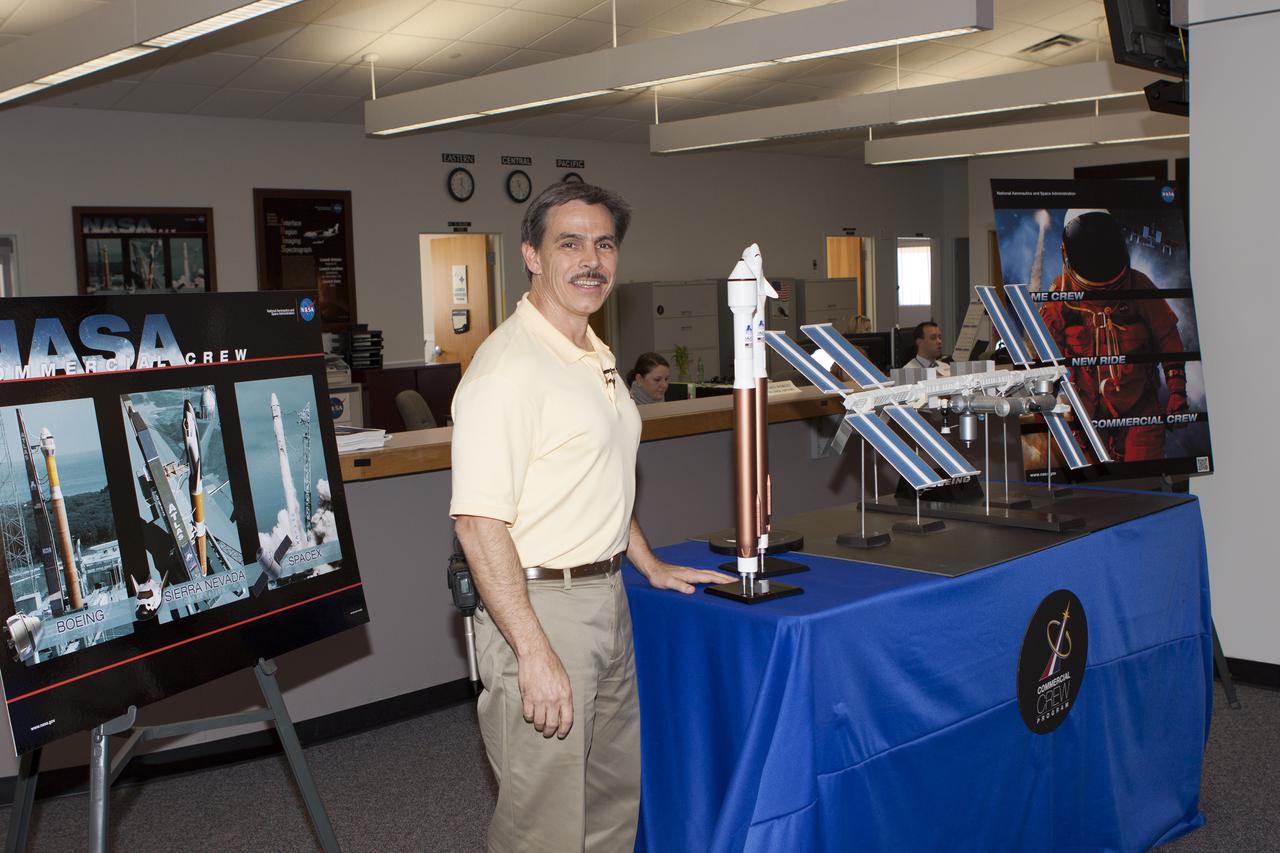
CAPE CANAVERAL, Fla. – NASA's Jon Cowart prepares to talk to media about the progress of the agency's Commercial Crew Program CCP and its partners in Kennedy Space Center’s Press Site on Feb. 28 ahead of the second commercial resupply services mission for Space Exploration Technologies SpaceX to the International Space Station. Cowart is the deputy partner manager working with SpaceX as the company develops its Falcon 9 rocket and Dragon capsule for crewed missions. Under a contract with NASA, SpaceX is targeted to fly at least 12 cargo missions to the space station through 2016. The company also is working with CCP to return America's capability to safely launch crews to low-Earth orbit destinations, including the space station, from U.S. soil around the middle of the decade. To learn more about CCP and its partners, go to www.nasa.gov_commercialcrew. Photo credit: NASA_Jim Grossmann
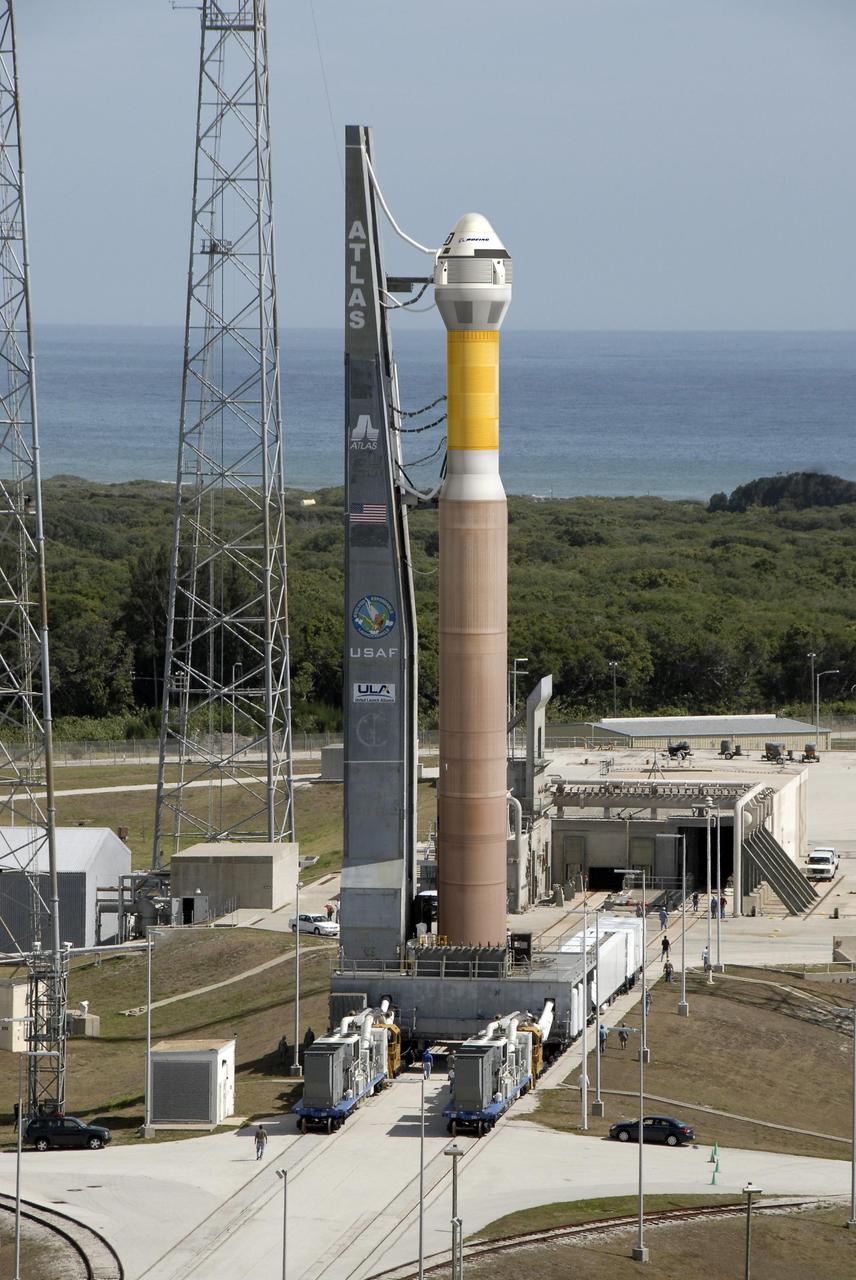
CAPE CANAVERAL, Fla. -- This is an artist's conception of The Boeing Company's CST-100 spacecraft atop a United Launch Alliance ULA Atlas V rocket under development for NASA's Commercial Crew Program, or CCP. The integrated system was selected for CCP's Commercial Crew Integrated Capability, or CCiCap, initiative to propel America's next human space transportation system to low Earth orbit forward. Operating under a funded Space Act Agreement, or SAA, Boeing will spend the next 21 months completing its design, conducting critical risk reduction testing on its spacecraft and launch vehicle, and showcasing how it would operate and manage missions from launch through orbit and landing, setting the stage for a future demonstration mission. To learn more about CCP, which is based at NASA's Kennedy Space Center in Florida and supported by NASA's Johnson Space Center in Houston, visit www.nasa.gov/commercialcrew. Image credit: Boeing
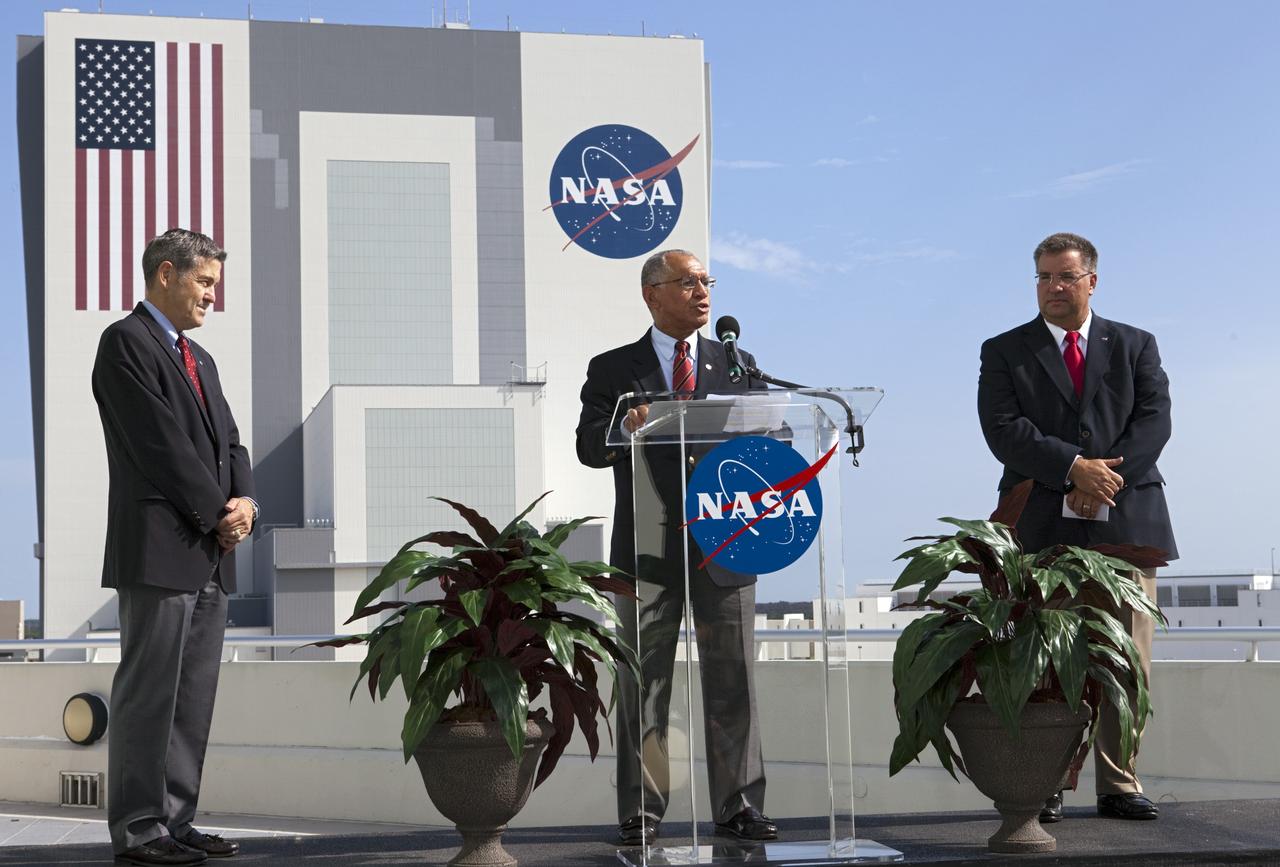
Cape Canaveral, Fla. -- NASA Administrator Charlie Bolden announces the newest partners of NASA's Commercial Crew Program CCP from Operations Support Building 2 OSB II at Kennedy Space Center in Florida. At left, is Kennedy Space Center Director Robert Cabana and at right, is Commercial Crew Program CCP Manager Ed Mango. Three integrated systems were selected for CCP's Commercial Crew Integrated Capability CCiCap initiative to propel America's next human space transportation system to low Earth orbit forward. Operating under funded Space Act Agreements SAAs, The Boeing Co. of Houston, Sierra Nevada Corp. SNC Space Systems of Louisville, Colo., and Space Exploration Technologies SpaceX of Hawthorne, Calif., will spend the next 21 months completing their designs, conducting critical risk reduction testing on their spacecraft and launch vehicles, and showcasing how they would operate and manage missions from launch through orbit and landing, setting the stage for future demonstration missions. To learn more about CCP, which is based at Kennedy and supported by NASA's Johnson Space Center in Houston, visit www.nasa.gov/commercialcrew. Photo credit: NASA/Kim Shiflett
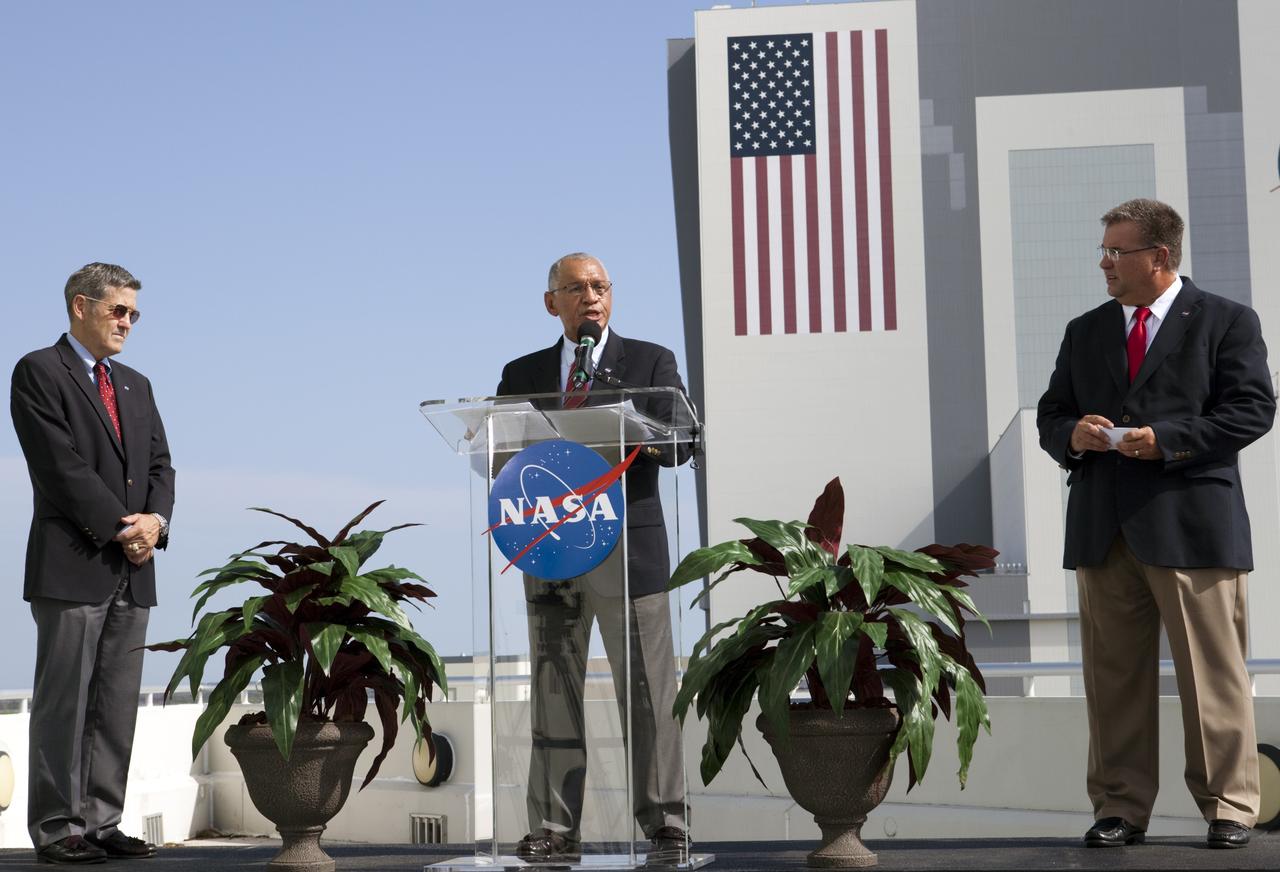
Cape Canaveral, Fla. -- NASA Administrator Charlie Bolden announces the newest partners of NASA's Commercial Crew Program CCP from Operations Support Building 2 OSB II at Kennedy Space Center in Florida. At left, is Kennedy Space Center Director Robert Cabana, and at right, is Commercial Crew Program CCP Manager Ed Mango. Three integrated systems were selected for CCP's Commercial Crew Integrated Capability CCiCap initiative to propel America's next human space transportation system to low Earth orbit forward. Operating under funded Space Act Agreements SAAs, The Boeing Co. of Houston, Sierra Nevada Corp. SNC Space Systems of Louisville, Colo., and Space Exploration Technologies SpaceX of Hawthorne, Calif., will spend the next 21 months completing their designs, conducting critical risk reduction testing on their spacecraft and launch vehicles, and showcasing how they would operate and manage missions from launch through orbit and landing, setting the stage for future demonstration missions. To learn more about CCP, which is based at Kennedy and supported by NASA's Johnson Space Center in Houston, visit www.nasa.gov/commercialcrew. Photo credit: NASA/Kim Shiflett
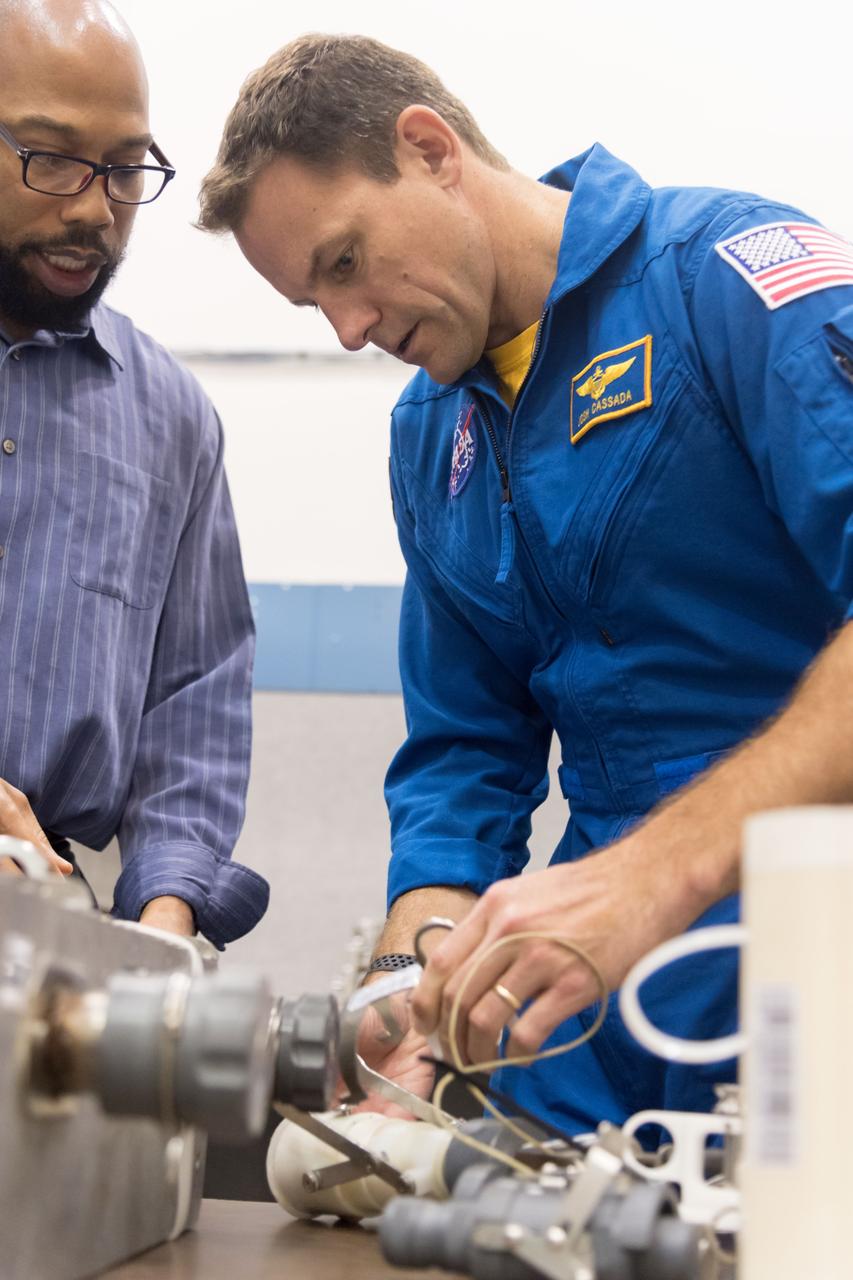
CCP astronauts Suni Williams and Josh Cassada during ISS EVA Maintenance 1G training.
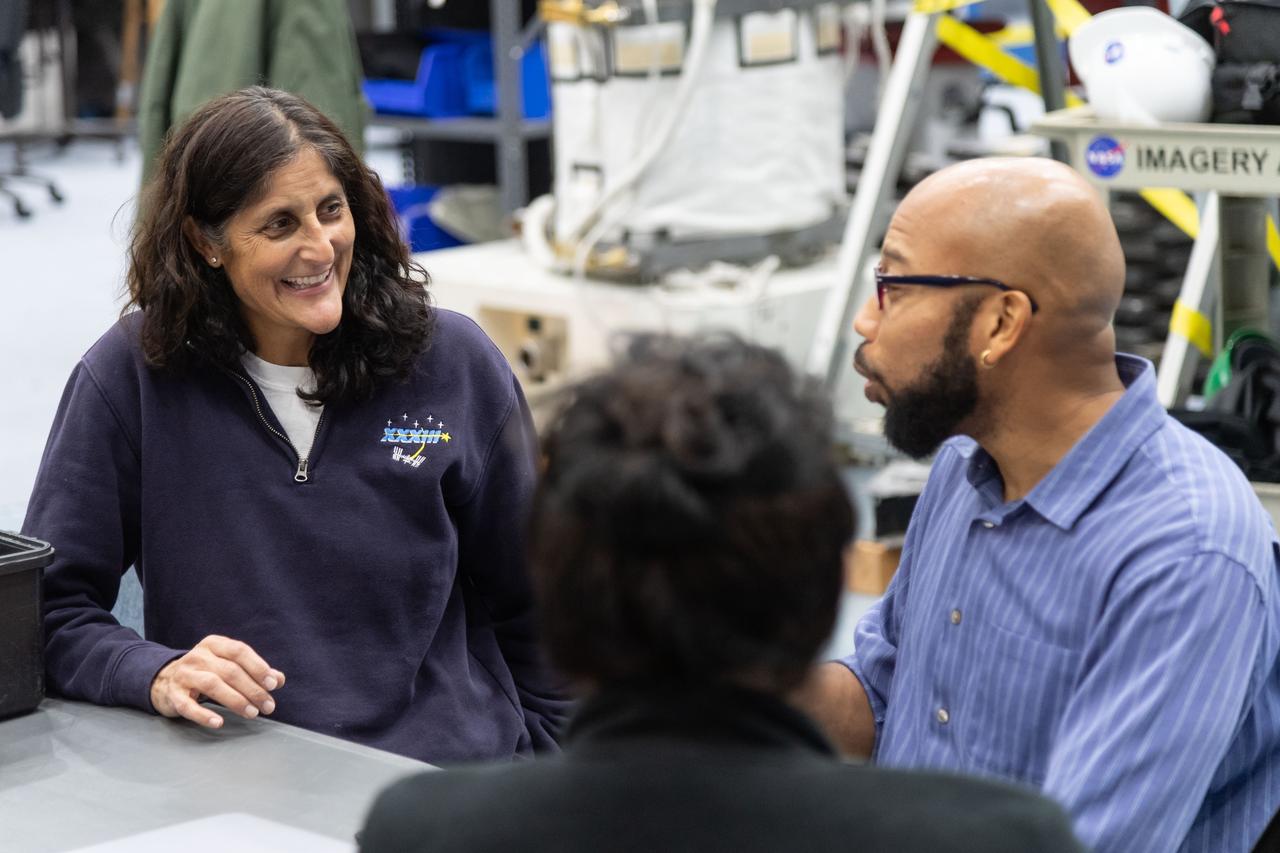
Commercial Crew Program (CCP) astronaut Suni Williams in ISS EVA POGO training in SVMF POGO.

Commercial Crew Program (CCP) astronaut Suni Williams in ISS EVA POGO training in SVMF POGO.
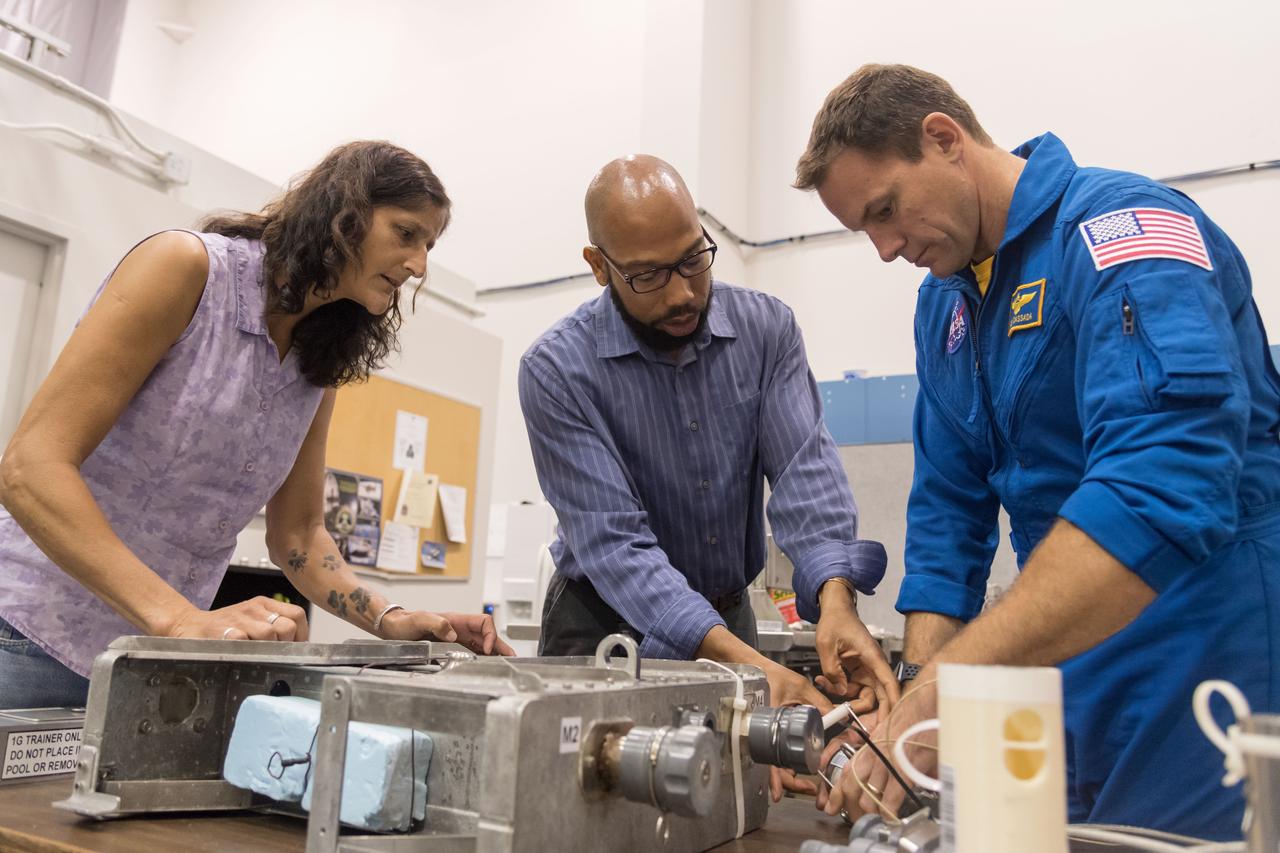
CCP astronauts Suni Williams and Josh Cassada during ISS EVA Maintenance 1G training.
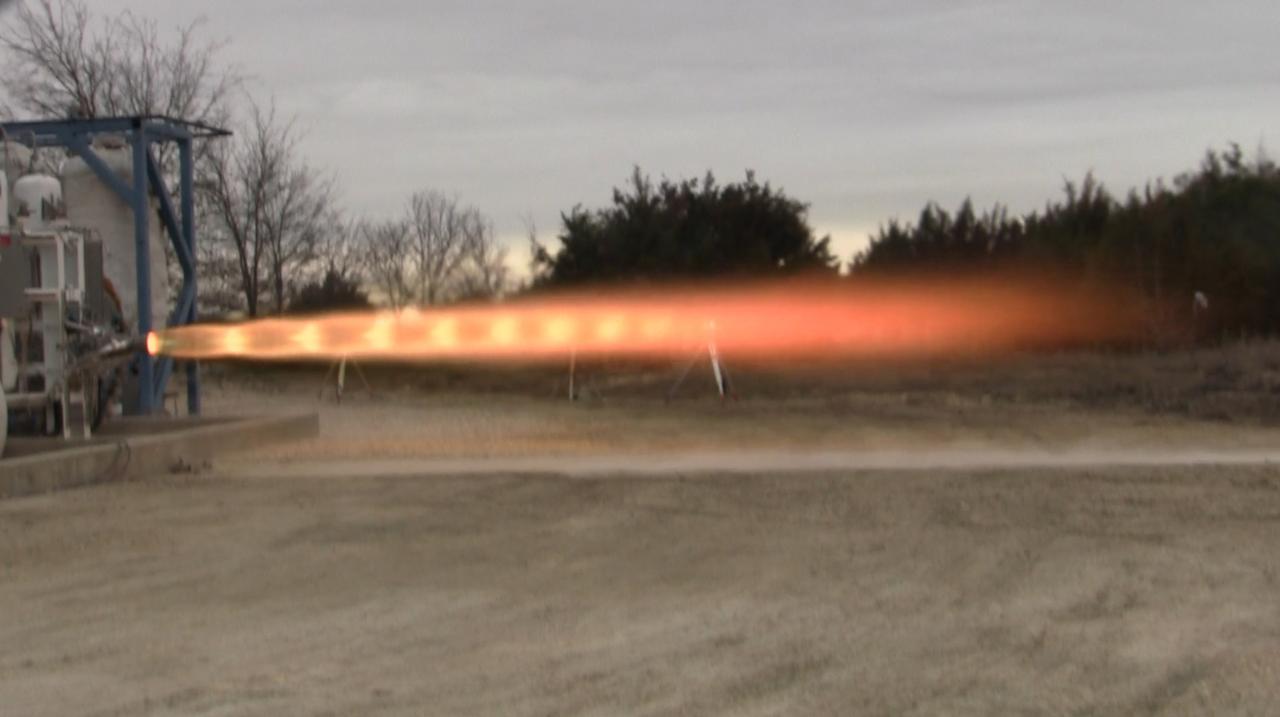
MCGREGOR, Texas -- Space Exploration Technologies (SpaceX) completes a full-duration, full-thrust firing of its new SuperDraco engine prototype at the company’s Rocket Development Facility in McGregor, Texas. The firing was in preparation for the ninth milestone to be completed under SpaceX's funded Space Act Agreement (SAA) with NASA's Commercial Crew Program (CCP). SpaceX is working with CCP during Commercial Crew Development Round 2 (CCDev2) in order to mature the design and development of its Dragon spacecraft with the overall goal of accelerating a United States-led capability to the International Space Station. Eight SuperDracos would be built into the sidewalls of the Dragon capsule to carry astronauts to safety should an emergency occur during launch or ascent. The goal of CCP is to drive down the cost of space travel as well as open up space to more people than ever before by balancing industry’s own innovative capabilities with NASA's 50 years of human spaceflight experience. Six other aerospace companies also are maturing launch vehicle and spacecraft designs under CCDev2, including Alliant Techsystems Inc. (ATK), Blue Origin, The Boeing Co., Excalibur Almaz Inc., Sierra Nevada Corp. and United Launch Alliance (ULA). For more information, visit www.nasa.gov/commercialcrew
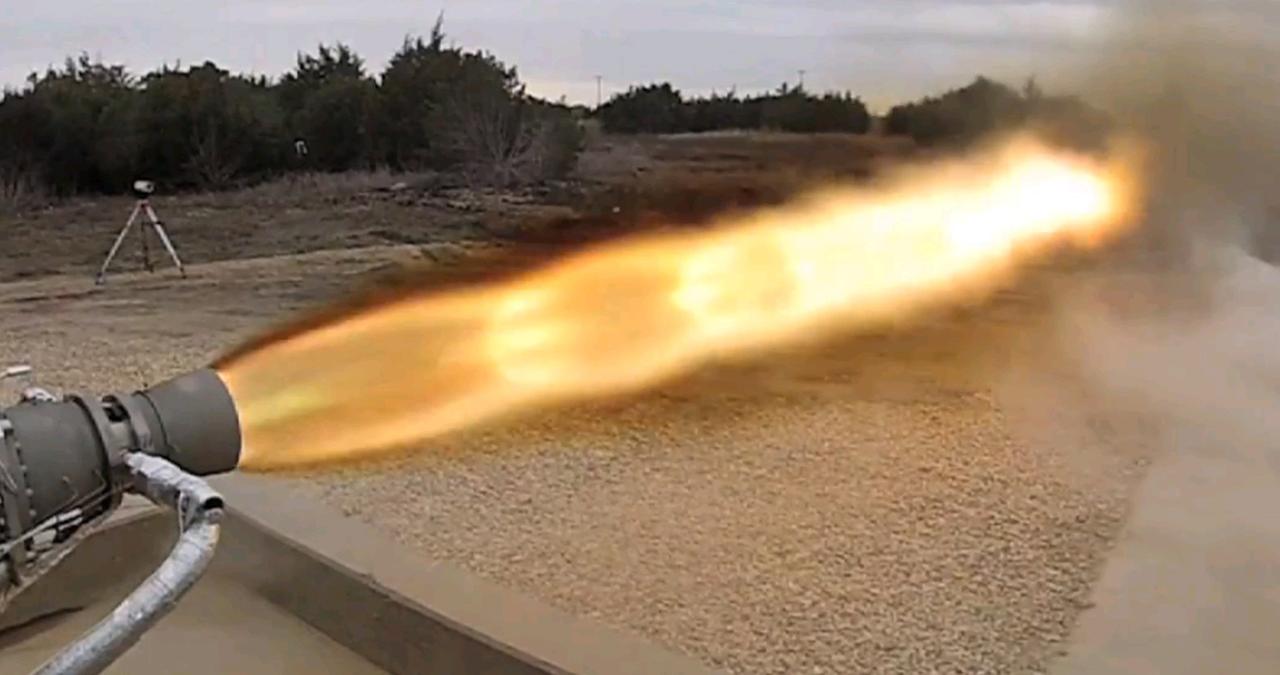
MCGREGOR, Texas -- Space Exploration Technologies (SpaceX) completes a full-duration, full-thrust firing of its new SuperDraco engine prototype at the company’s Rocket Development Facility in McGregor, Texas. The firing was in preparation for the ninth milestone to be completed under SpaceX's funded Space Act Agreement (SAA) with NASA's Commercial Crew Program (CCP). SpaceX is working with CCP during Commercial Crew Development Round 2 (CCDev2) in order to mature the design and development of its Dragon spacecraft with the overall goal of accelerating a United States-led capability to the International Space Station. Eight SuperDracos would be built into the sidewalls of the Dragon capsule to carry astronauts to safety should an emergency occur during launch or ascent. The goal of CCP is to drive down the cost of space travel as well as open up space to more people than ever before by balancing industry’s own innovative capabilities with NASA's 50 years of human spaceflight experience. Six other aerospace companies also are maturing launch vehicle and spacecraft designs under CCDev2, including Alliant Techsystems Inc. (ATK), Blue Origin, The Boeing Co., Excalibur Almaz Inc., Sierra Nevada Corp. and United Launch Alliance (ULA). For more information, visit www.nasa.gov/commercialcrew
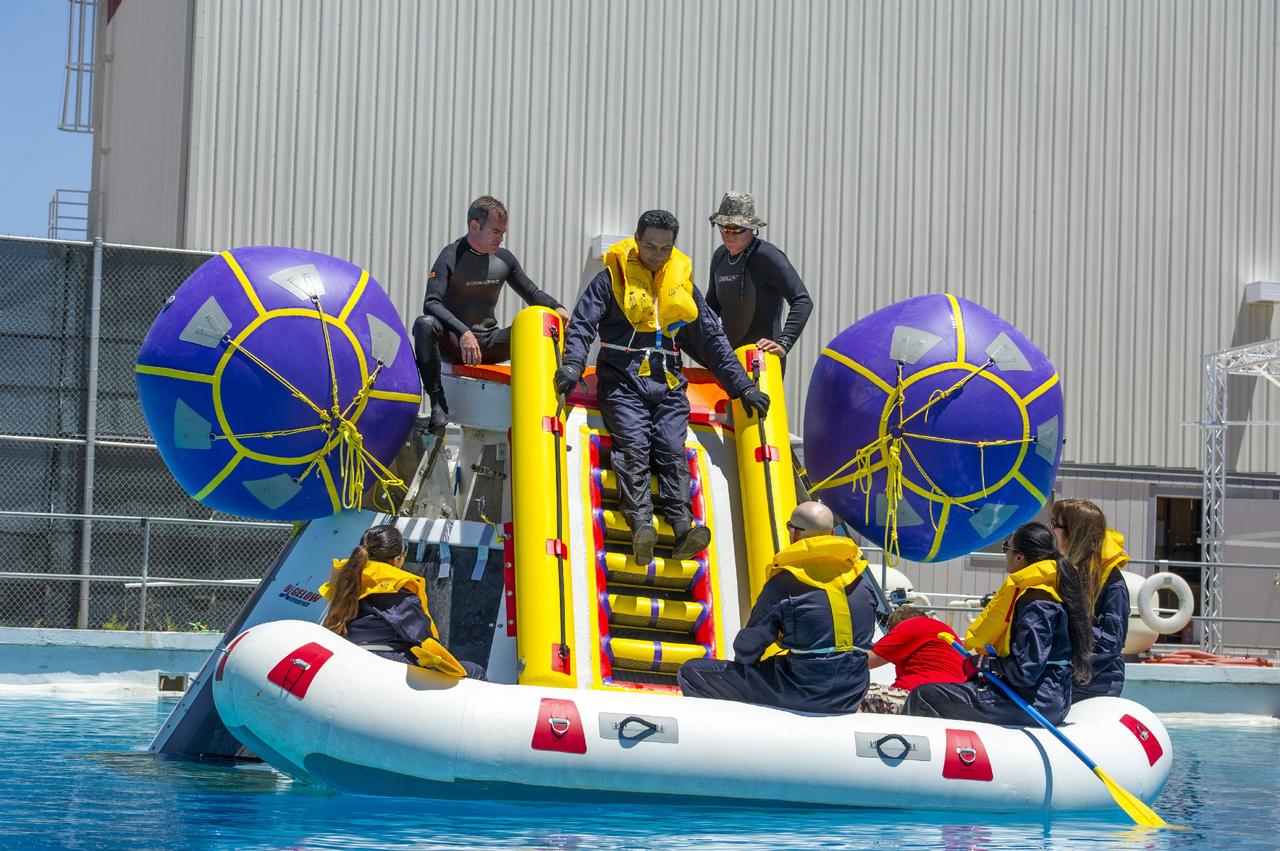
LAS VEGAS, Nev. – The Boeing Company performed simulated contingency water landing scenarios with a mock-up CST-100 spacecraft at Bigelow Aerospace's headquarters near Las Vegas. The CST-100 is designed for ground landings, but could splash down on the water, if necessary. During the water tests, Department of Defense search-and-recovery personnel practiced pulling five Boeing engineers out of the capsule and to safety. The tests are part of the company’s ongoing work supporting its funded Space Act Agreement with NASA’s Commercial Crew Program, or CCP, during the Commercial Crew Integrated Capability, or CCiCap, initiative. CCP is intended to lead to the availability of commercial human spaceflight services for government and commercial customers to low-Earth orbit. Future development and certification initiatives eventually will lead to the availability of human spaceflight services for NASA to send its astronauts to the International Space Station, where critical research is taking place daily. For more information about CCP, go to http://www.nasa.gov/commercialcrew. Photo credit: Boeing
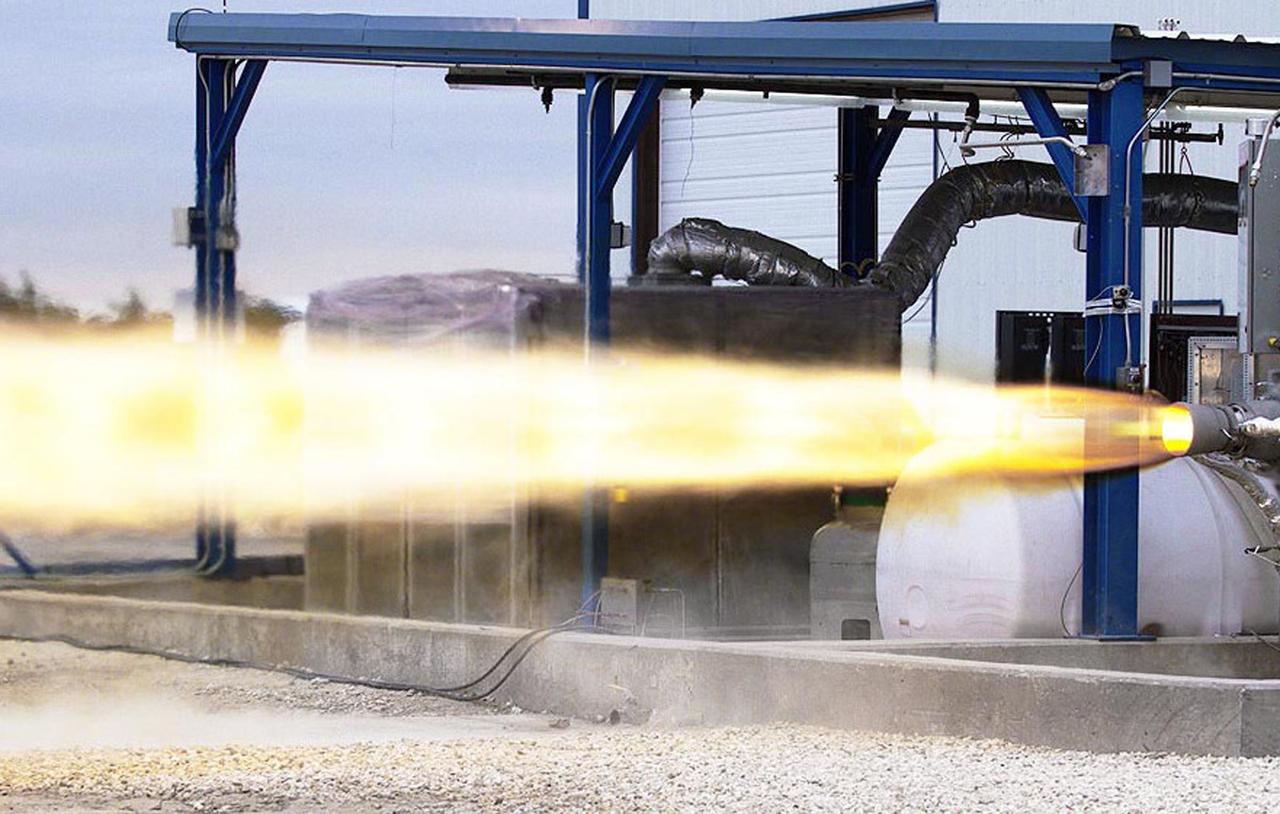
MCGREGOR, Texas -- Space Exploration Technologies (SpaceX) completes a full-duration, full-thrust firing of its new SuperDraco engine prototype at the company’s Rocket Development Facility in McGregor, Texas. The firing was in preparation for the ninth milestone to be completed under SpaceX's funded Space Act Agreement (SAA) with NASA's Commercial Crew Program (CCP). SpaceX is working with CCP during Commercial Crew Development Round 2 (CCDev2) in order to mature the design and development of its Dragon spacecraft with the overall goal of accelerating a United States-led capability to the International Space Station. Eight SuperDracos would be built into the sidewalls of the Dragon capsule to carry astronauts to safety should an emergency occur during launch or ascent. The goal of CCP is to drive down the cost of space travel as well as open up space to more people than ever before by balancing industry’s own innovative capabilities with NASA's 50 years of human spaceflight experience. Six other aerospace companies also are maturing launch vehicle and spacecraft designs under CCDev2, including Alliant Techsystems Inc. (ATK), Blue Origin, The Boeing Co., Excalibur Almaz Inc., Sierra Nevada Corp. and United Launch Alliance (ULA). For more information, visit www.nasa.gov/commercialcrew
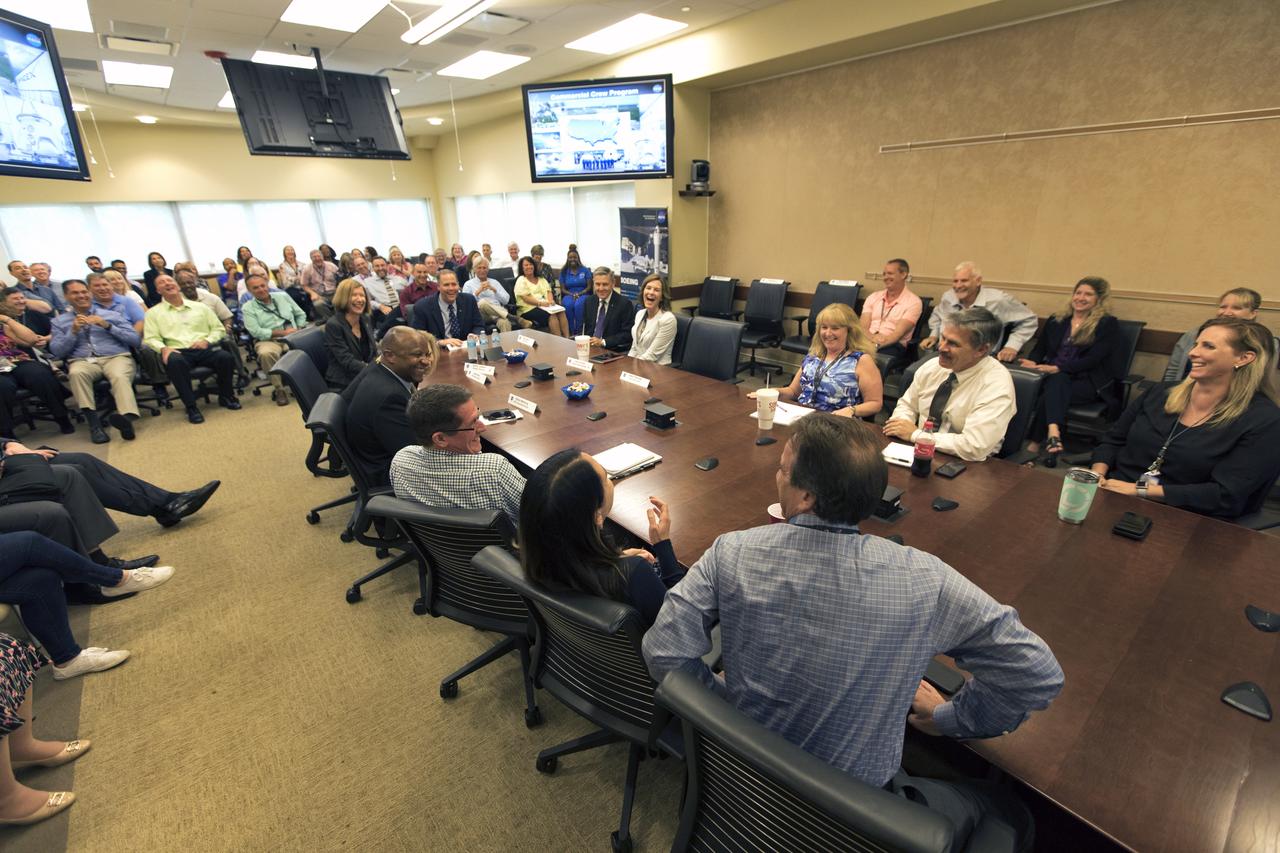
NASA Administrator Jim Bridenstine, seated at the far end of table, center, visited the agency's Kennedy Space Center in Florida, on Aug. 7, 2018. Bridenstine talked with Commercial Crew Program (CCP) leadership inside a conference room at the Operations and Checkout Building. At right is Kennedy Center Director Bob Cabana. At left is Kathy Lueders, CCP manager. The administrator also toured facilities and received updates on the program.
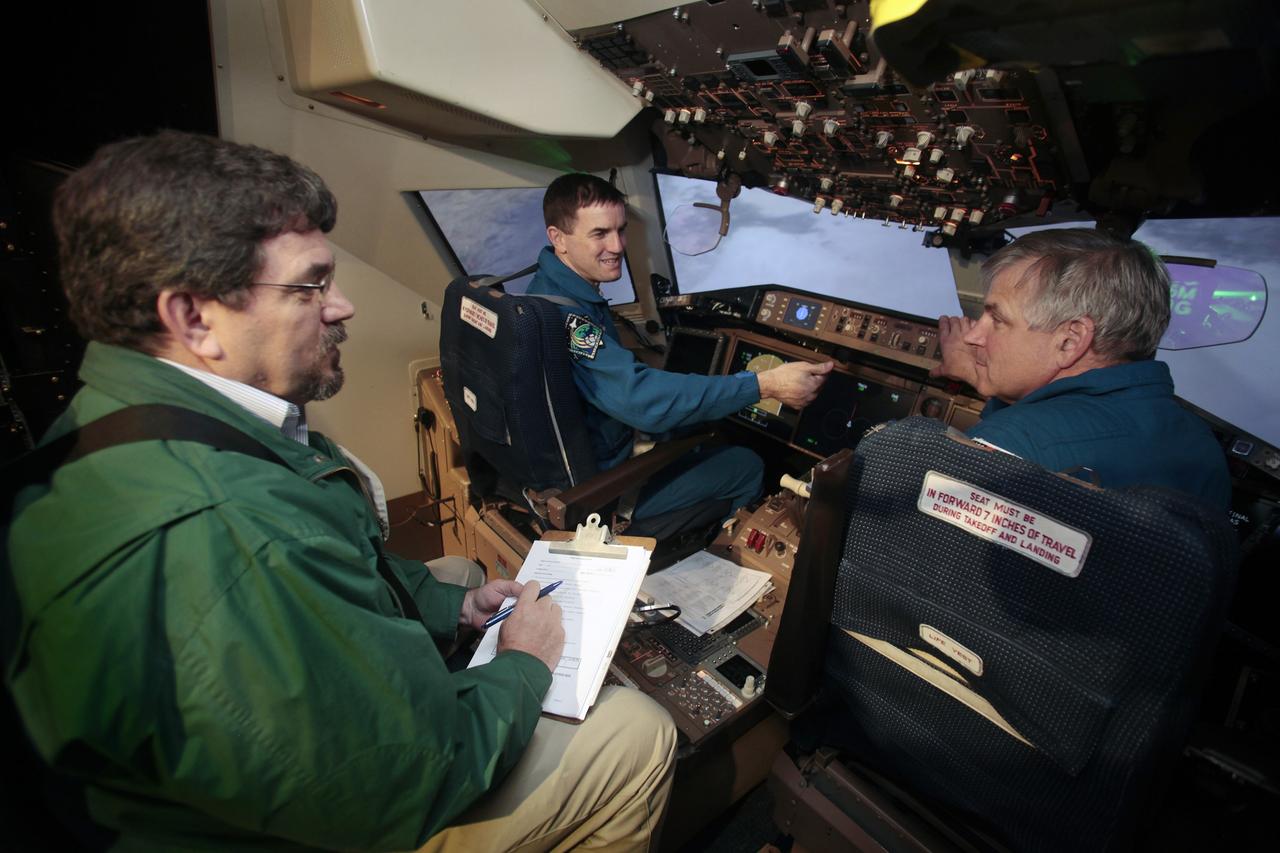
HAMPTON, Va. – Bruce Jackson, an aerospace engineer at NASA’s Langley Flight Research Center, briefs astronauts Rex Walheim, left, and Gregory Johnson as they evaluate Sierra Nevada Corporation, or SNC, Space Systems' Dream Chaser landing simulation, in support of NASA Commercial Crew Program, or CCP, efforts. The simulation makes use of the Synthetic Vision and Enhanced Vision systems in the center's Cockpit Motion Facility. SNC is one of three companies working with CCP during the agency's Commercial Crew Integrated Capability, or CCiCap, initiative, which is intended to lead to the availability of commercial human spaceflight services for government and commercial customers. To learn more about CCP and its industry partners, visit www.nasa.gov/commercialcrew. Image credit: NASA/David C. Bowman
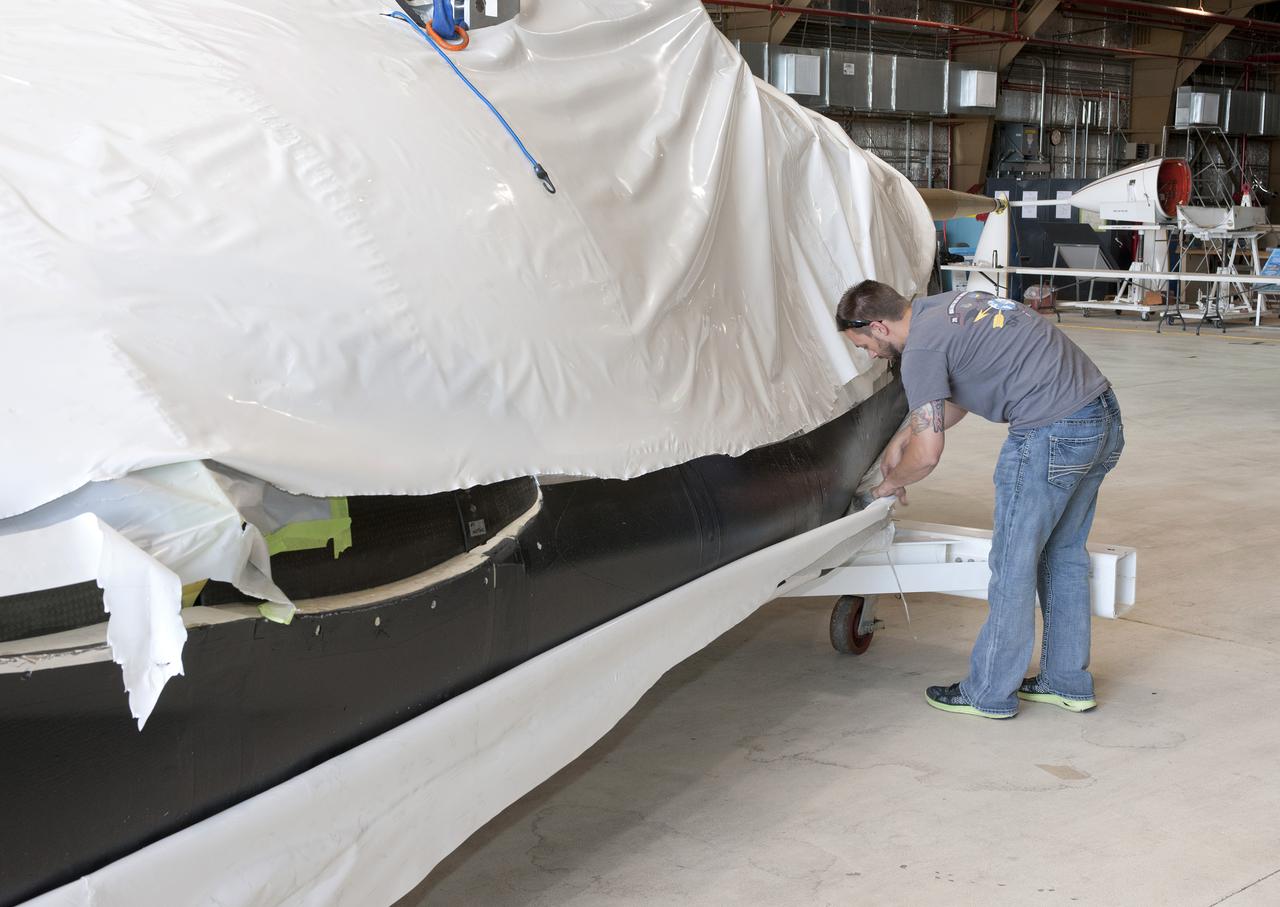
Edwards, Calif. – ED-0144-05 - Plastic wrapping that protected the Sierra Nevada Corporation, or SNC, Dream Chaser flight test vehicle during its transport from Colorado is carefully removed by SNC employee Jason Dixon following the craft's arrival at NASA's Dryden Flight Research Center in southern California. The prototype space access vehicle will undergo ground and approach-and-landing flight tests in the coming months at Dryden as part of NASA's Commercial Crew Program, or CCP, development work. SNC is one of three companies working with CCP during the agency's Commercial Crew Integrated Capability, or CCiCap, initiative, which is intended to lead to the availability of commercial human spaceflight services for government and commercial customers. To learn more about CCP and its industry partners, visit www.nasa.gov_commercialcrew. Image credit: NASA_Tom Tschida
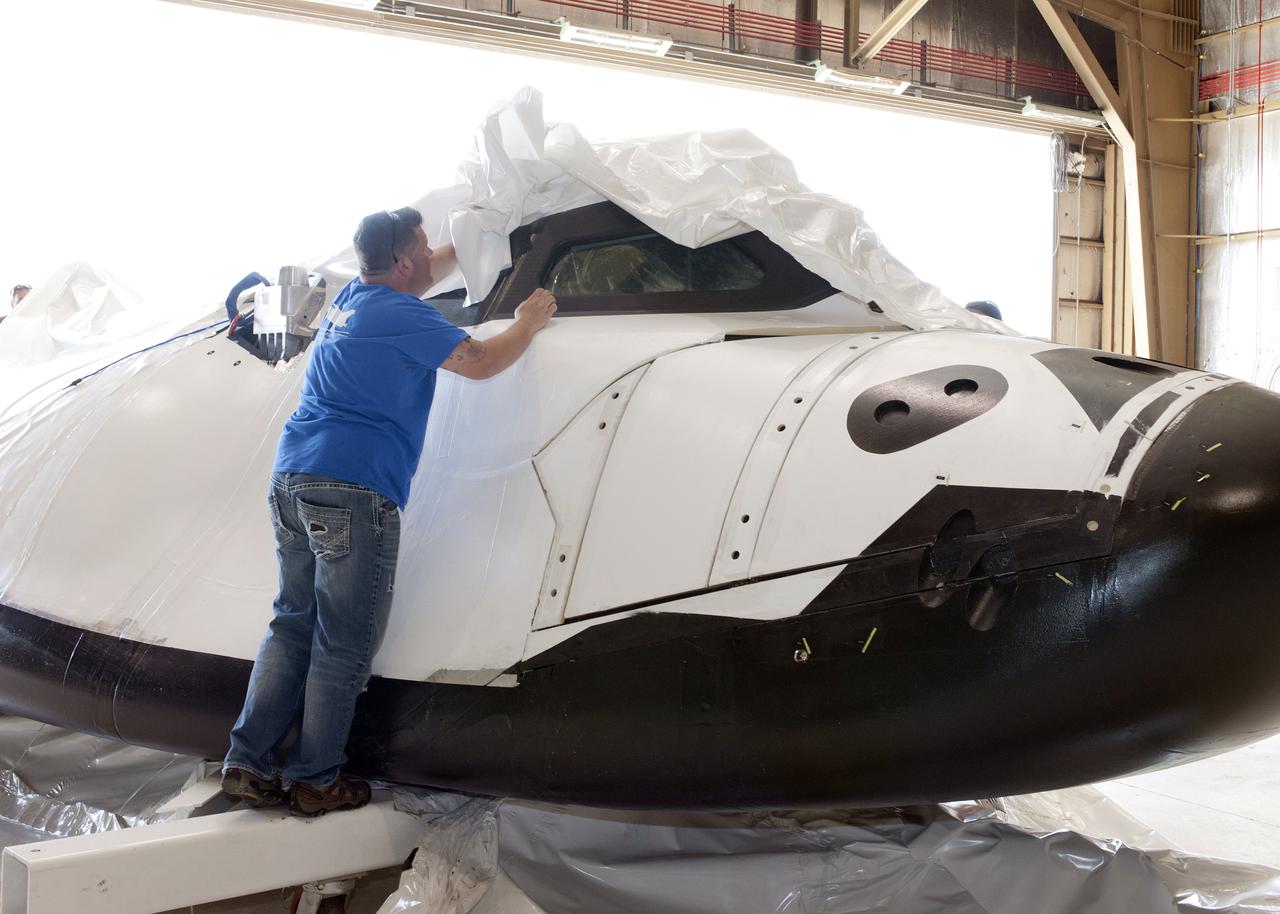
Edwards, Calif. – ED-0144-09 - Plastic wrapping that protected the Sierra Nevada Corporation, or SNC, Dream Chaser flight test vehicle during its transport from Colorado is carefully removed by SNC Dream Chaser crew chief Christian White following the craft's arrival at NASA's Dryden Flight Research Center in southern California. The prototype space access vehicle will undergo ground and approach-and-landing flight tests in the coming months at Dryden as part of NASA's Commercial Crew Program, or CCP, development work. SNC is one of three companies working with CCP during the agency's Commercial Crew Integrated Capability, or CCiCap, initiative, which is intended to lead to the availability of commercial human spaceflight services for government and commercial customers. To learn more about CCP and its industry partners, visit www.nasa.gov_commercialcrew. Image credit: NASA_Tom Tschida
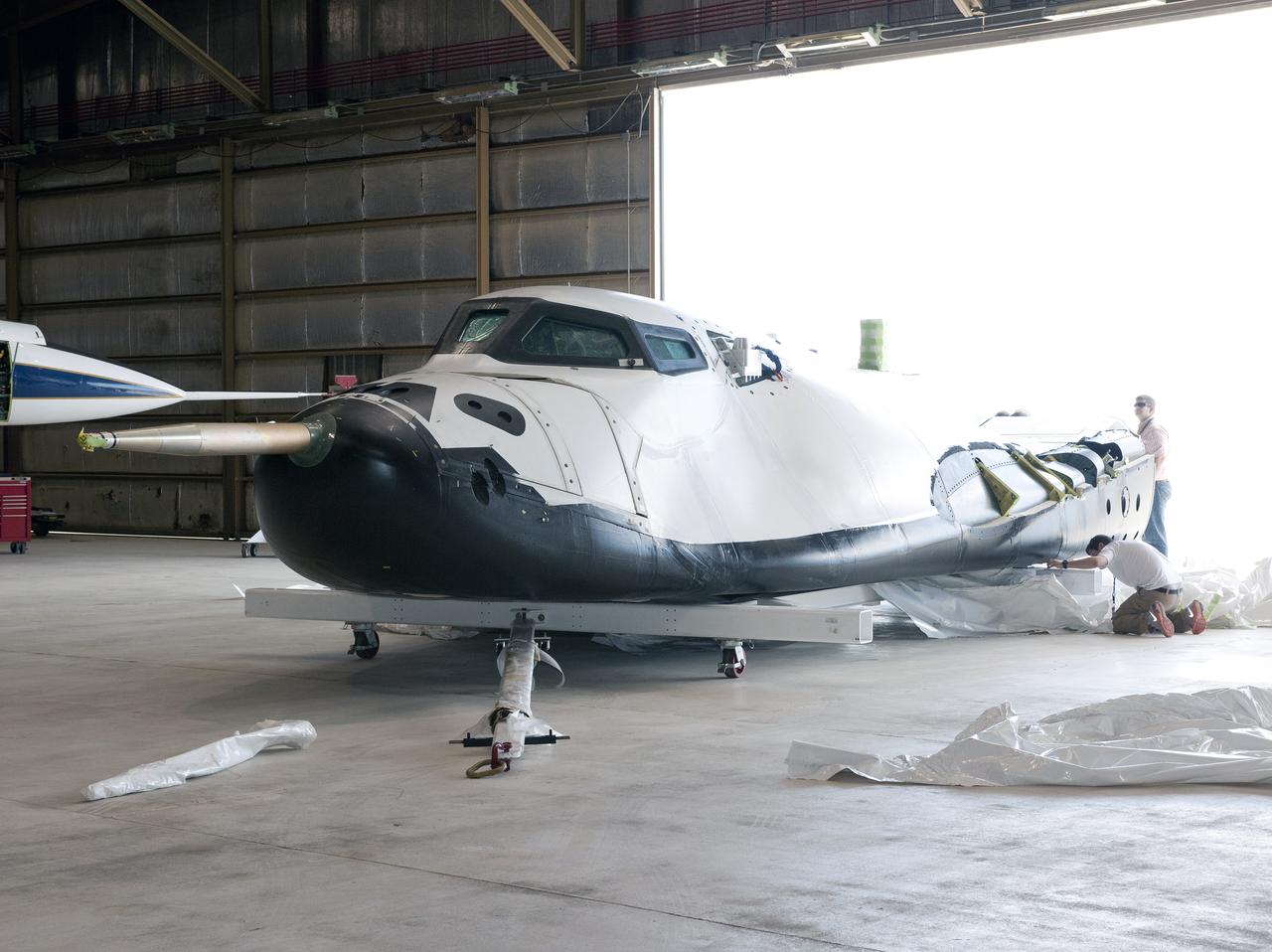
Edwards, Calif. – ED-0144-12 - Plastic wrapping that protected the Sierra Nevada Corporation, or SNC, Dream Chaser flight test vehicle during its transport from Colorado is carefully removed by SNC employee Will Armijo following the craft's arrival at NASA's Dryden Flight Research Center in southern California. The prototype space access vehicle will undergo ground and approach-and-landing flight tests in the coming months at Dryden as part of NASA's Commercial Crew Program, or CCP, development work. SNC is one of three companies working with CCP during the agency's Commercial Crew Integrated Capability, or CCiCap, initiative, which is intended to lead to the availability of commercial human spaceflight services for government and commercial customers. To learn more about CCP and its industry partners, visit www.nasa.gov_commercialcrew. Image credit: NASA_Tom Tschida

Edwards, Calif. – ED-0155-29 - Steve Lindsey, Sierra Nevada Corporation, or SNC, director of flight operations and former space shuttle astronaut, talks to the media about the development work Sierra Nevada Corporation, or SNC, will perform in collaboration with NASA's Commercial Crew Program, or CCP, with its Dream Chaser flight test vehicle at the agency's Dryden Flight Research Center in the coming months. At left is NASA Administrator Charlie Bolden. At right is Dryden Flight Research Deputy Center Director Patrick Stoliker. SNC is one of three companies working with CCP during the agency's Commercial Crew Integrated Capability, or CCiCap, initiative, which is intended to lead to the availability of commercial human spaceflight services for government and commercial customers. To learn more about CCP and its industry partners, visit www.nasa.gov_commercialcrew. Image credit: NASA_Tom Tschida
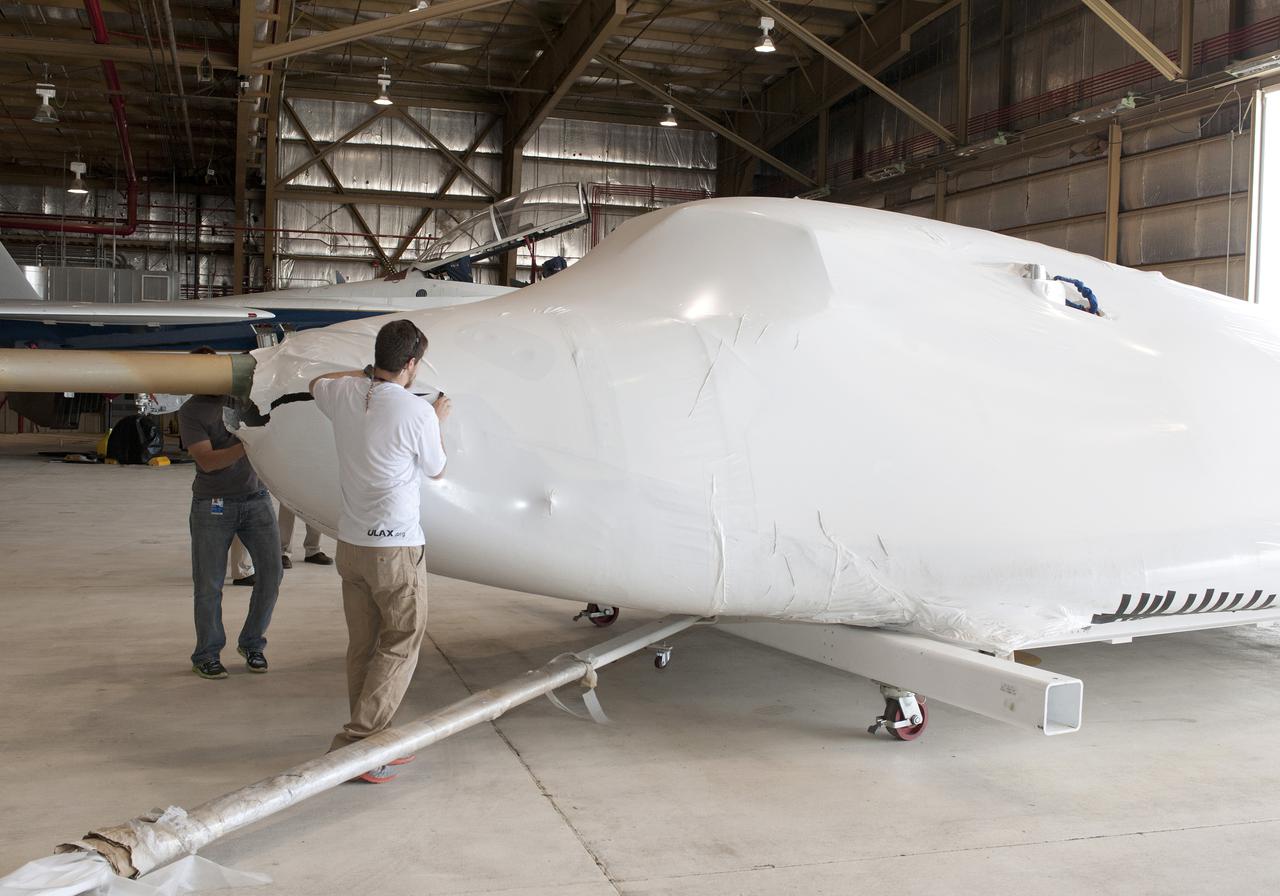
Edwards, Calif. – ED-0144-01 - Plastic wrapping that protected the Sierra Nevada Corporation, or SNC, Dream Chaser flight test vehicle during its transport from Colorado is carefully removed by SNC employee Will Armijo following the craft's arrival at NASA's Dryden Flight Research Center in southern California. The prototype space access vehicle will undergo ground and approach-and-landing flight tests in the coming months as part of NASA's Commercial Crew Program, or CCP, development work. SNC is one of three companies working with CCP during the agency's Commercial Crew Integrated Capability, or CCiCap, initiative, which is intended to lead to the availability of commercial human spaceflight services for government and commercial customers. To learn more about CCP and its industry partners, visit www.nasa.gov_commercialcrew. Image credit: NASA_Tom Tschida
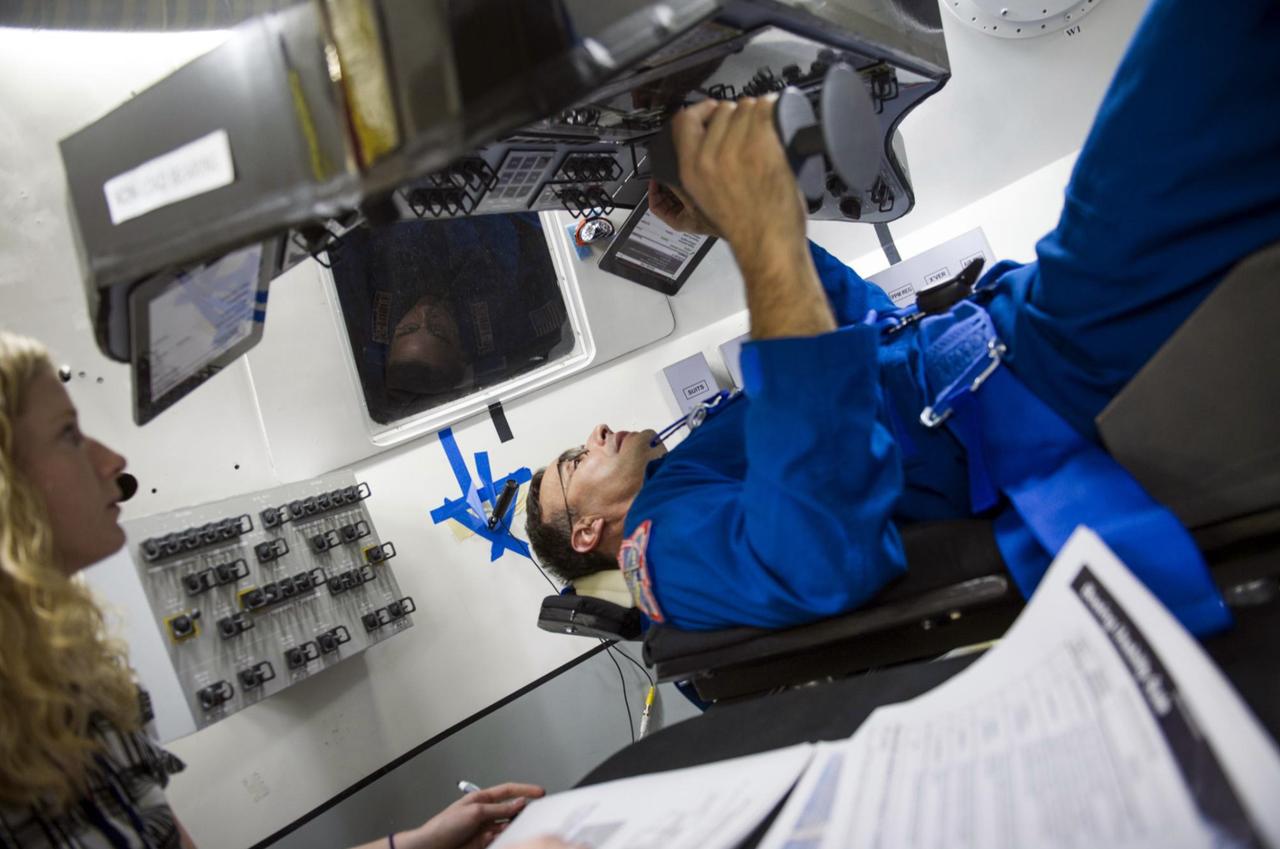
HOUSTON -- NASA Astronaut Lee Archambault performs an evaluation of reach and visibility of controls and displays during an end-of-year interior layout evaluation of The Boeing Company's CST-100 spacecraft. The evaluation at Boeing's Houston Product Support Center in Texas was part of the company's ongoing work supporting its funded Space Act Agreement with NASA's Commercial Crew Program, or CCP, during the Commercial Crew Integrated Capability, or CCiCap, initiative. CCP is intended to lead to the availability of commercial human spaceflight services for government and commercial customers to low-Earth orbit. Future development and certification initiatives eventually will lead to the availability of human spaceflight services for NASA to send its astronauts to the International Space Station, where critical research is taking place daily. For more information about CCP, go to http://www.nasa.gov/commercialcrew. Photo credit: Boeing
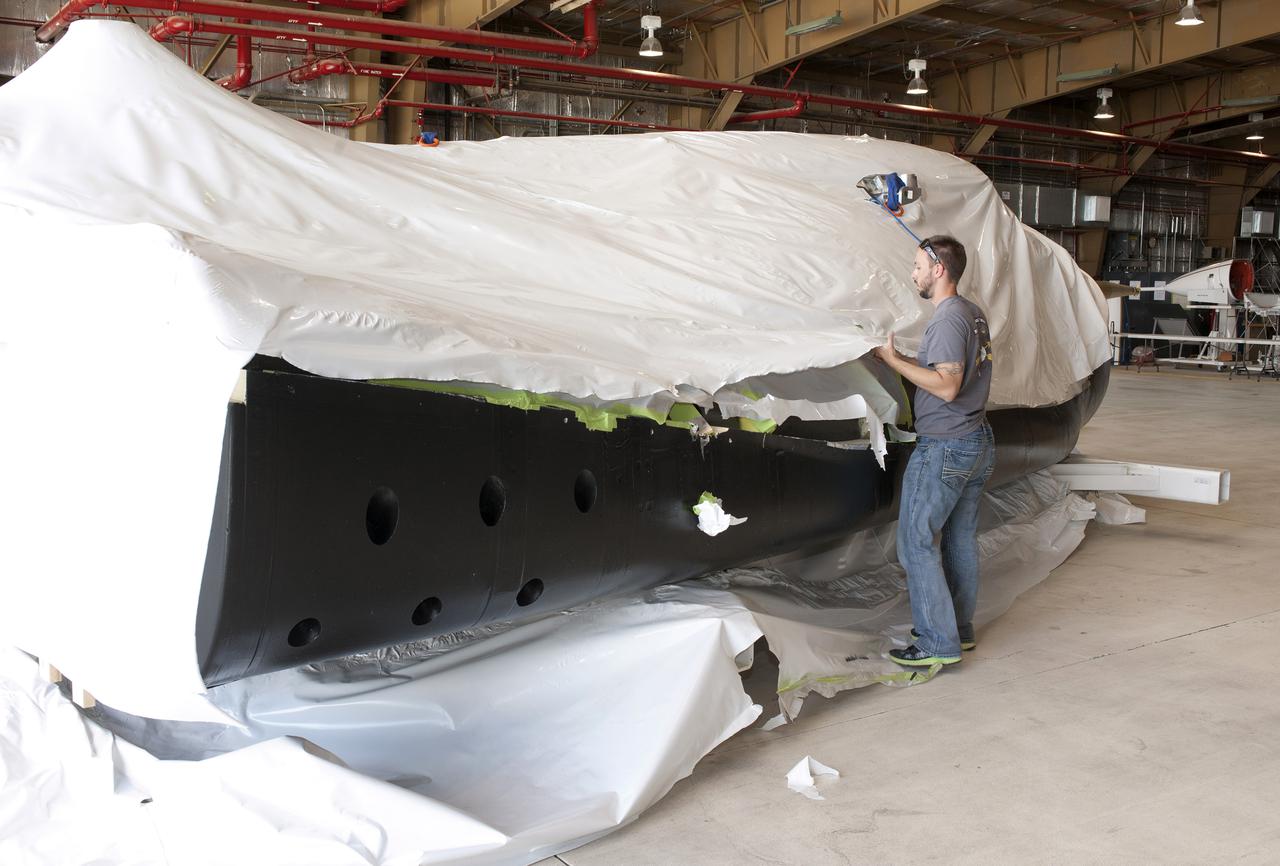
Edwards, Calif. – ED-0144-06 - Plastic wrapping that protected the Sierra Nevada Corporation, or SNC, Dream Chaser flight test vehicle during its transport from Colorado is carefully removed by SNC employee Jason Dixon following the craft's arrival at NASA's Dryden Flight Research Center in southern California. The prototype space access vehicle will undergo ground and approach-and-landing flight tests in the coming months at Dryden as part of NASA's Commercial Crew Program, or CCP, development work. SNC is one of three companies working with CCP during the agency's Commercial Crew Integrated Capability, or CCiCap, initiative, which is intended to lead to the availability of commercial human spaceflight services for government and commercial customers. To learn more about CCP and its industry partners, visit www.nasa.gov_commercialcrew. Image credit: NASA_Tom Tschida
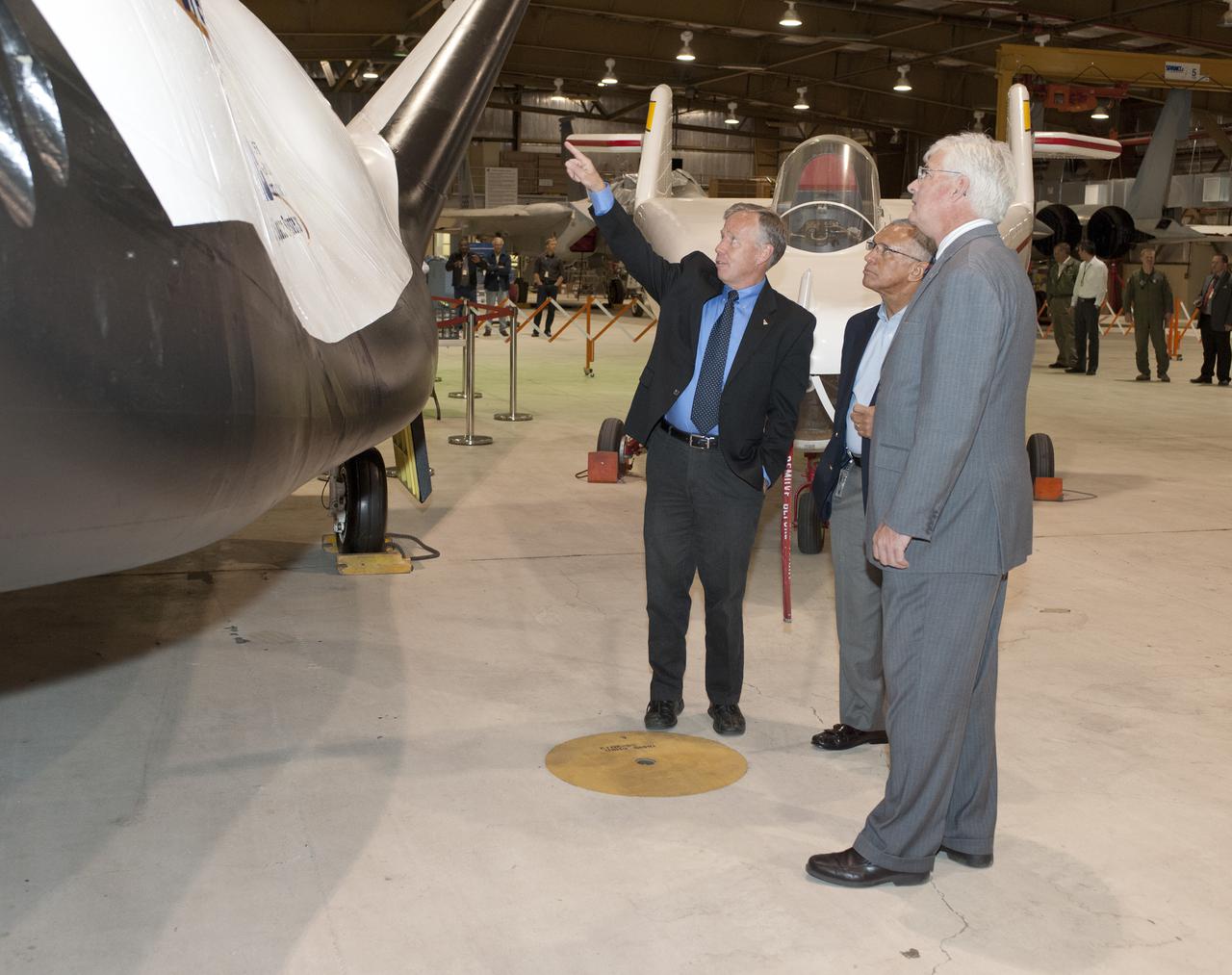
Edwards, Calif. – ED-0155-13 - Steve Lindsey, Sierra Nevada Corporation, or SNC, director of flight operations and former space shuttle astronaut, left, talks to NASA Administrator Charlie Bolden, center, and agency Dryden Flight Research Center Deputy Director Patrick Stoliker about the company's Dream Chaser flight test vehicle. It will undergo ground and approach-and-landing flight tests at Dryden in the coming months as part of NASA's Commercial Crew Program, or CCP, development work. SNC is one of three companies working with CCP during the agency's Commercial Crew Integrated Capability, or CCiCap, initiative, which is intended to lead to the availability of commercial human spaceflight services for government and commercial customers. To learn more about CCP and its industry partners, visit www.nasa.gov_commercialcrew. Image credit: NASA_Tom Tschida
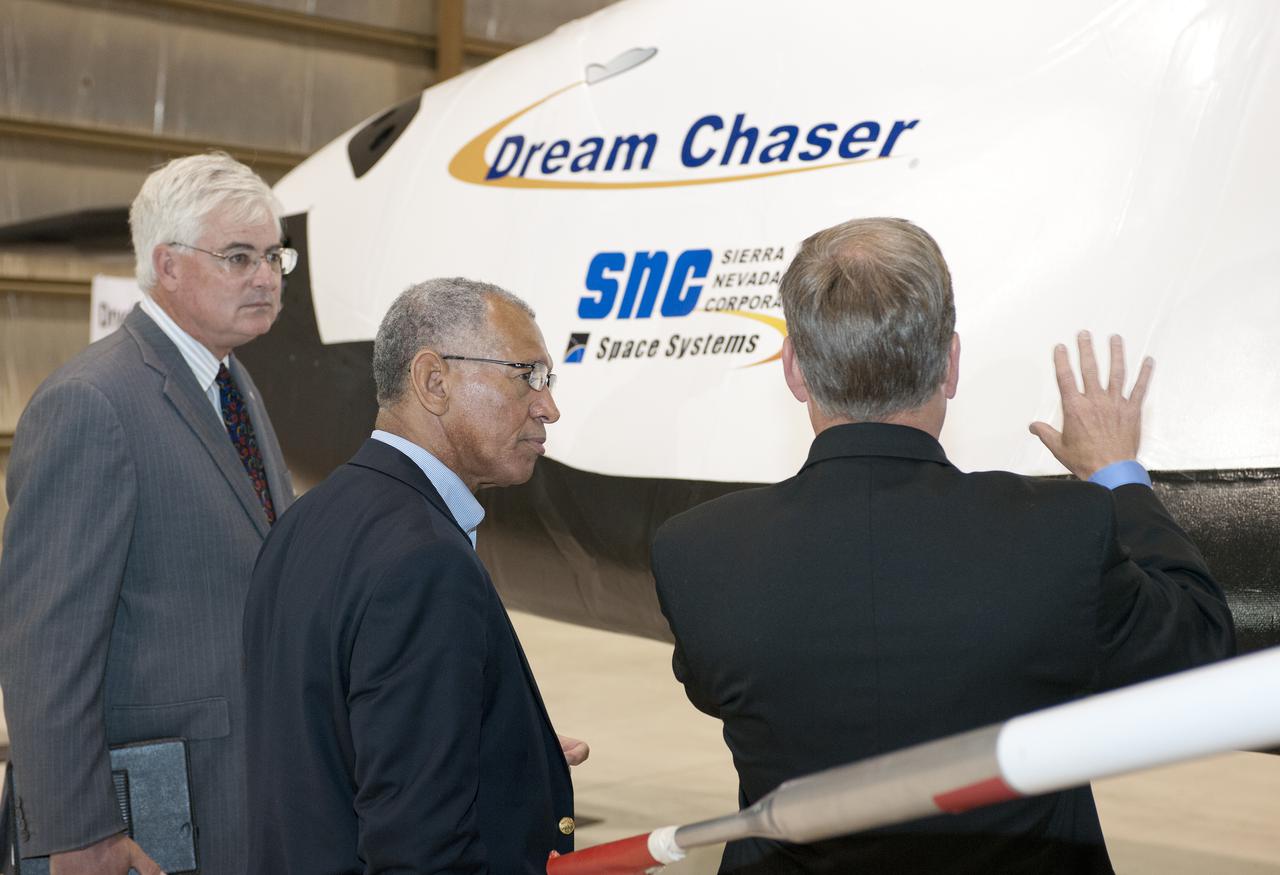
Edwards, Calif. – ED-0155-12 - Steve Lindsey, Sierra Nevada Corporation, or SNC, director of flight operations and former space shuttle astronaut, right, talks to NASA Administrator Charlie Bolden, center, and agency Dryden Flight Research Center Deputy Director Patrick Stoliker about the company's Dream Chaser flight test vehicle. It will undergo ground and approach-and-landing flight tests at Dryden in the coming months as part of NASA's Commercial Crew Program, or CCP, development work. SNC is one of three companies working with CCP during the agency's Commercial Crew Integrated Capability, or CCiCap, initiative, which is intended to lead to the availability of commercial human spaceflight services for government and commercial customers. To learn more about CCP and its industry partners, visit www.nasa.gov_commercialcrew. Image credit: NASA_Tom Tschida

Edwards, Calif. – ED-0144-08 - Plastic wrapping that protected the Sierra Nevada Corporation, or SNC, Dream Chaser flight test vehicle during its transport from Colorado is carefully removed by SNC Dream Chaser crew chief Christian White, left, and SNC employee Will Armijo following the craft's arrival at NASA's Dryden Flight Research Center in southern California. The prototype space access vehicle will undergo ground and approach-and-landing flight tests in the coming months at Dryden as part of NASA's Commercial Crew Program, or CCP, development work. SNC is one of three companies working with CCP during the agency's Commercial Crew Integrated Capability, or CCiCap, initiative, which is intended to lead to the availability of commercial human spaceflight services for government and commercial customers. To learn more about CCP and its industry partners, visit www.nasa.gov_commercialcrew. Image credit: NASA_Tom Tschida
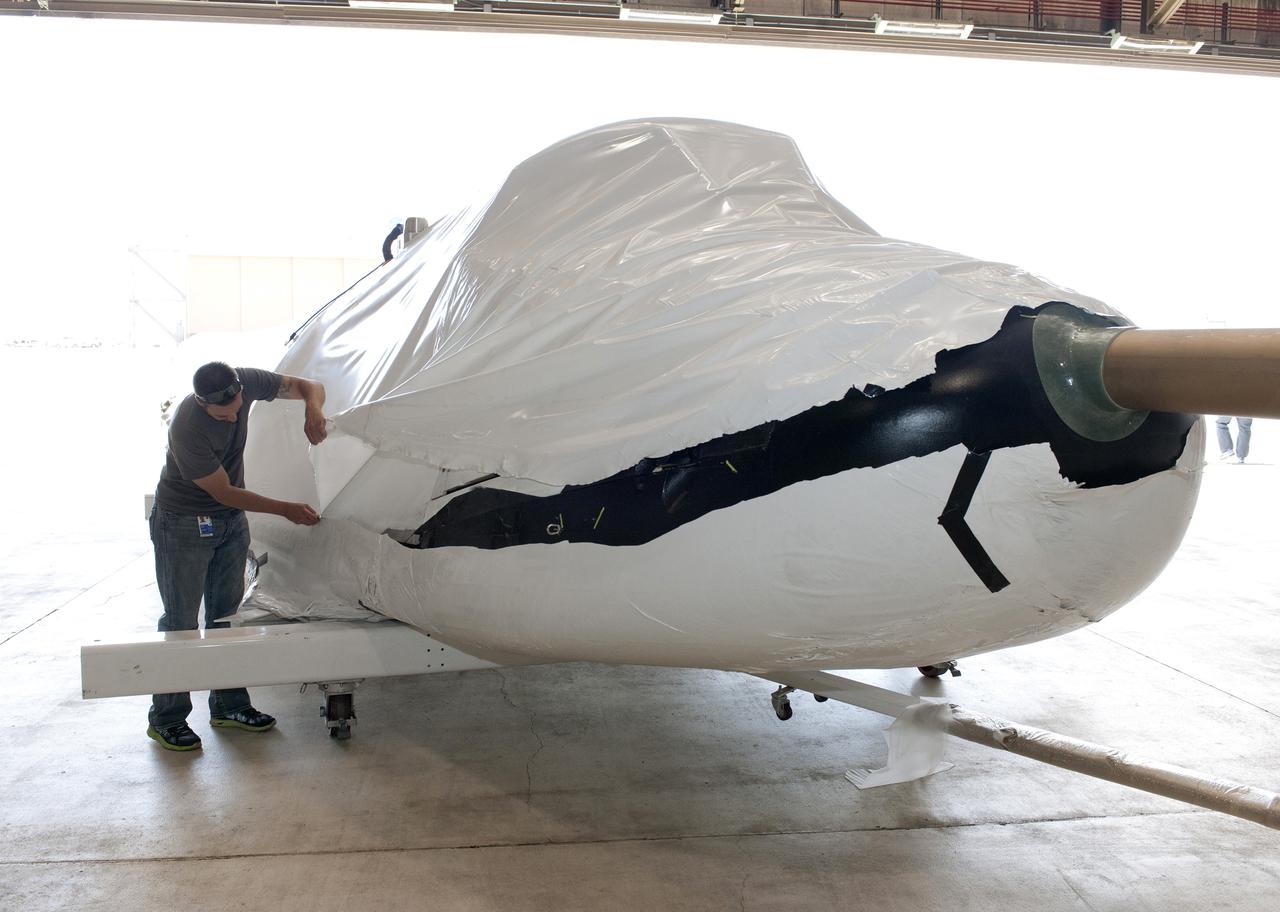
Edwards, Calif. – ED-0144-03 - Plastic wrapping that protected the Sierra Nevada Corporation, or SNC, Dream Chaser flight test vehicle during its transport from Colorado is carefully removed by SNC employee Jason Dixon following the craft's arrival at NASA's Dryden Flight Research Center in southern California. The prototype space access vehicle will undergo ground and approach-and-landing flight tests in the coming months at Dryden as part of NASA's Commercial Crew Program, or CCP, development work. SNC is one of three companies working with CCP during the agency's Commercial Crew Integrated Capability, or CCiCap, initiative, which is intended to lead to the availability of commercial human spaceflight services for government and commercial customers. To learn more about CCP and its industry partners, visit www.nasa.gov_commercialcrew. Image credit: NASA_Tom Tschida

Edwards, Calif. – ED-0155-03 - NASA Administrator Charlie Bolden flies the Sierra Nevada Corporation, or SNC, Dream Chaser simulator at the agency's Dryden Flight Research Center. Marlin Pickett, a simulation engineer at Dryden, left, and Steve Lindsey, SNC's director of flight operations and former space shuttle astronaut, give Bolden pointers for landing the simulated vehicle. SNC is on track to perform development work on its Dream Chaser flight test vehicle in collaboration with NASA's Commercial Crew Program, or CCP, at Dryden in the coming months. SNC is one of three companies working with CCP during the agency's Commercial Crew Integrated Capability, or CCiCap, initiative, which is intended to lead to the availability of commercial human spaceflight services for government and commercial customers. To learn more about CCP and its industry partners, visit www.nasa.gov_commercialcrew. Image credit: NASA_Tom Tschida
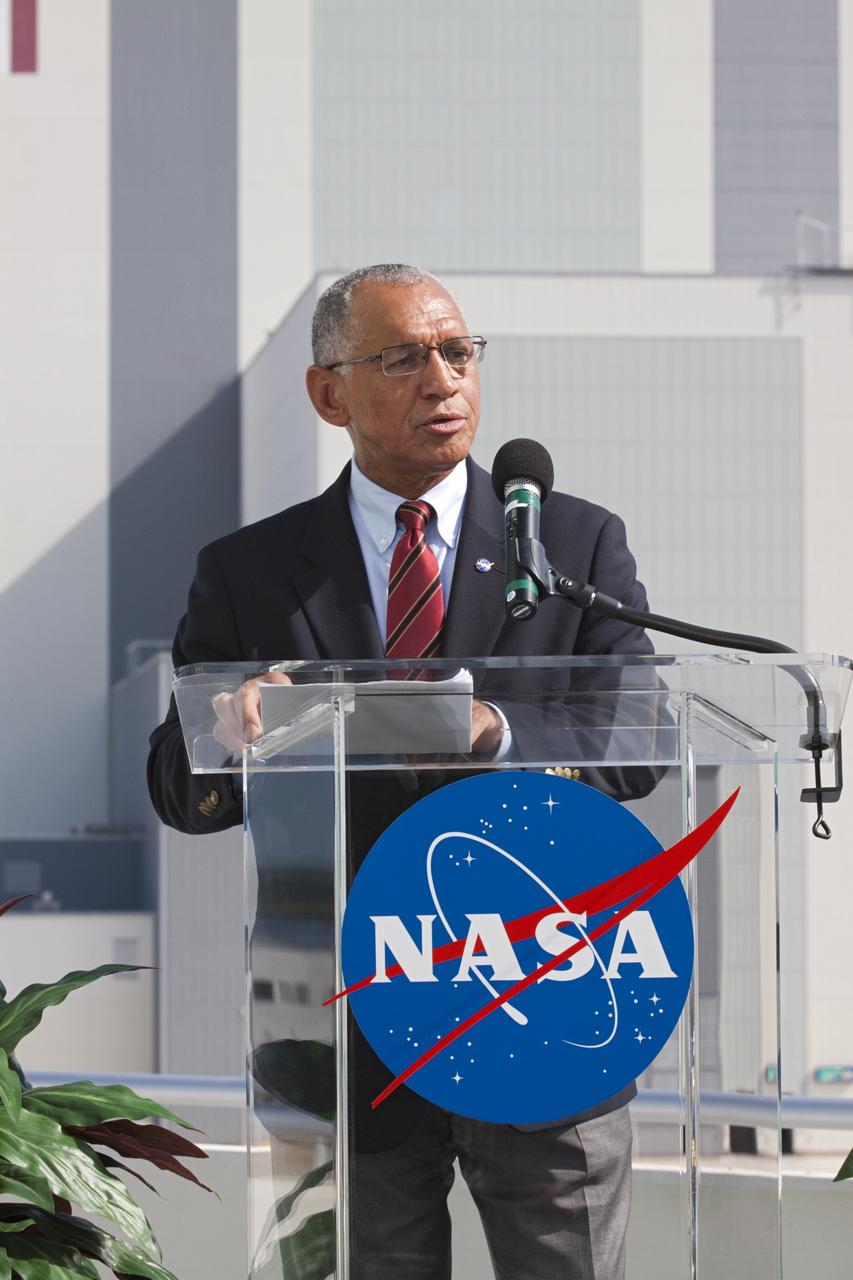
Cape Canaveral, Fla. -- NASA Administrator Charlie Bolden announces the newest partners of NASA's Commercial Crew Program CCP from Operations Support Building 2 OSB II at Kennedy Space Center in Florida. Three integrated systems were selected for CCP's Commercial Crew Integrated Capability CCiCap initiative to propel America's next human space transportation system to low Earth orbit forward. Operating under funded Space Act Agreements SAAs, The Boeing Co. of Houston, Sierra Nevada Corp. SNC Space Systems of Louisville, Colo., and Space Exploration Technologies SpaceX of Hawthorne, Calif., will spend the next 21 months completing their designs, conducting critical risk reduction testing on their spacecraft and launch vehicles, and showcasing how they would operate and manage missions from launch through orbit and landing, setting the stage for future demonstration missions. To learn more about CCP, which is based at Kennedy and supported by NASA's Johnson Space Center in Houston, visit www.nasa.gov/commercialcrew. Photo credit: NASA/Kim Shiflett
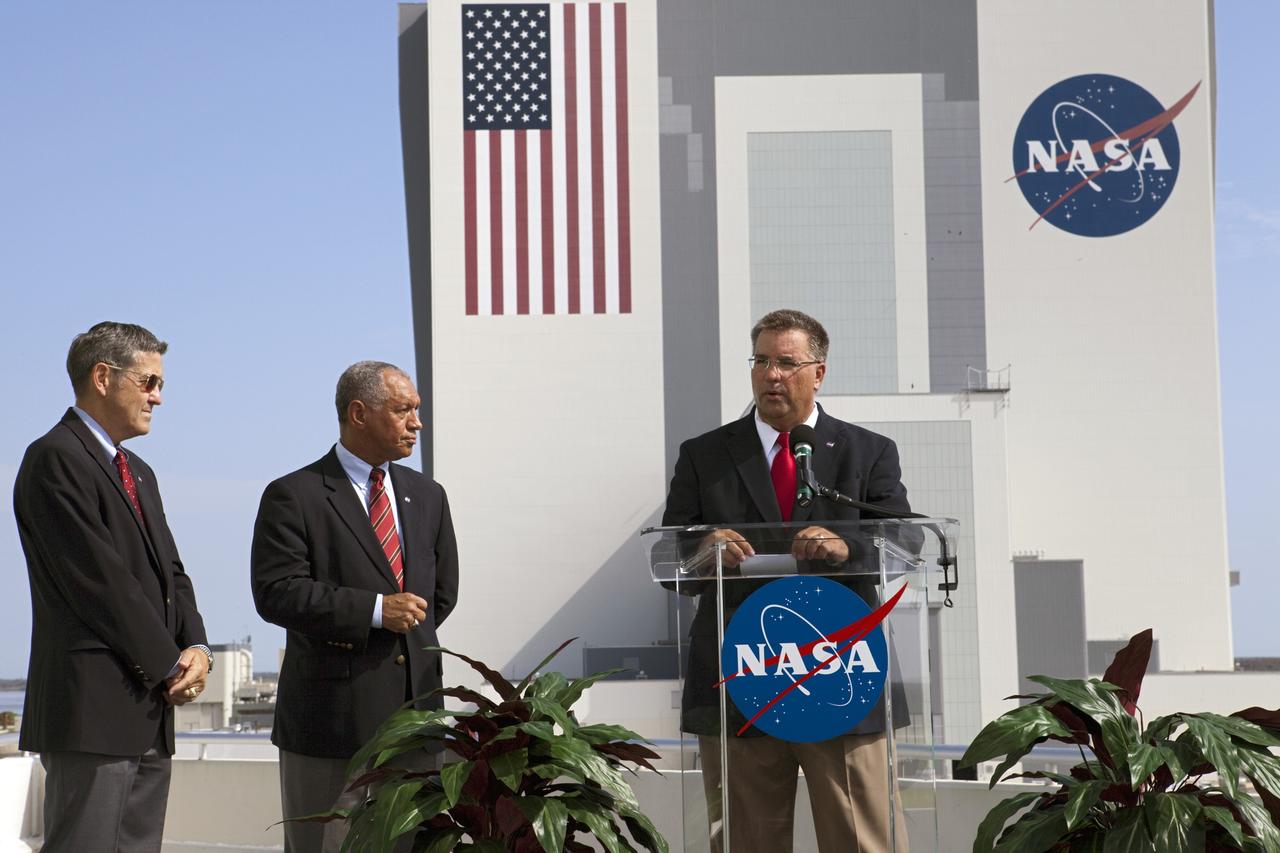
Cape Canaveral, Fla. -- NASA Commercial Crew Program CCP Manager Ed Mango discusses the program's newest partnerships from the Operations Support Building 2 OSB II at Kennedy Space Center in Florida. From left, are Kennedy Space Center Director Robert Cabana and NASA Administrator Charlie Bolden. Three integrated systems were selected for CCP's Commercial Crew Integrated Capability CCiCap initiative to propel America's next human space transportation system to low Earth orbit forward. Operating under funded Space Act Agreements SAAs, The Boeing Co. of Houston, Sierra Nevada Corp. SNC Space Systems of Louisville, Colo., and Space Exploration Technologies SpaceX of Hawthorne, Calif., will spend the next 21 months completing their designs, conducting critical risk reduction testing on their spacecraft and launch vehicles, and showcasing how they would operate and manage missions from launch through orbit and landing, setting the stage for future demonstration missions. To learn more about CCP, which is based at Kennedy and supported by NASA's Johnson Space Center in Houston, visit www.nasa.gov/commercialcrew. Photo credit: NASA/Kim Shiflett
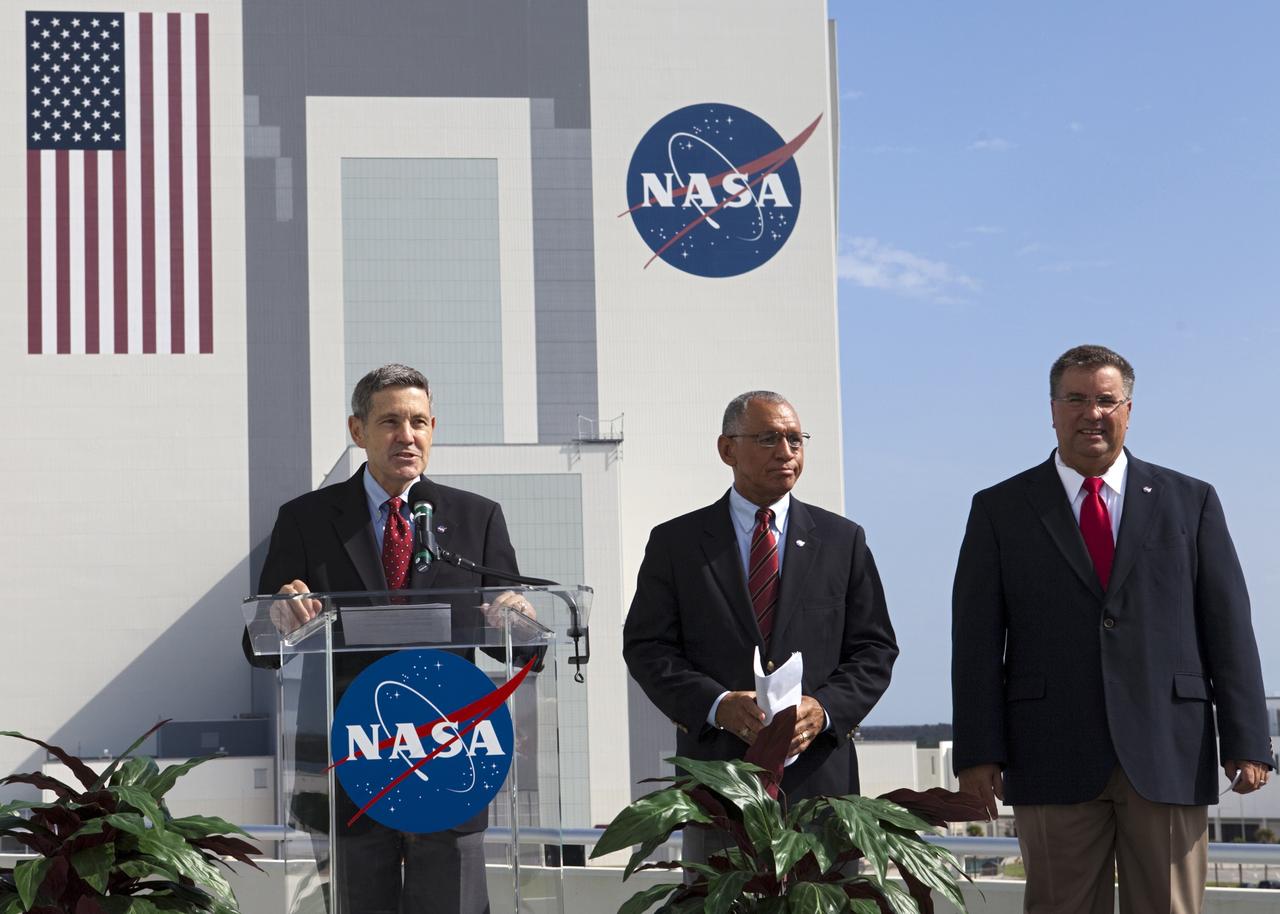
Cape Canaveral, Fla. -- From left, Kennedy Space Center Director Robert Cabana, NASA Administrator Charlie Bolden and Commercial Crew Program CCP, Manager Ed Mango announce the newest partners of NASA's Commercial Crew Program from Operations Support Building 2 OSB II at Kennedy Space Center in Florida. Three integrated systems were selected for CCP's Commercial Crew Integrated Capability CCiCap initiative to propel America's next human space transportation system to low Earth orbit forward. Operating under funded Space Act Agreements SAAs, The Boeing Co. of Houston, Sierra Nevada Corp. SNC Space Systems of Louisville, Colo., and Space Exploration Technologies SpaceX of Hawthorne, Calif., will spend the next 21 months completing their designs, conducting critical risk reduction testing on their spacecraft and launch vehicles, and showcasing how they would operate and manage missions from launch through orbit and landing, setting the stage for future demonstration missions. To learn more about CCP, which is based at Kennedy and supported by NASA's Johnson Space Center in Houston, visit www.nasa.gov/commercialcrew. Photo credit: NASA/Kim Shiflett
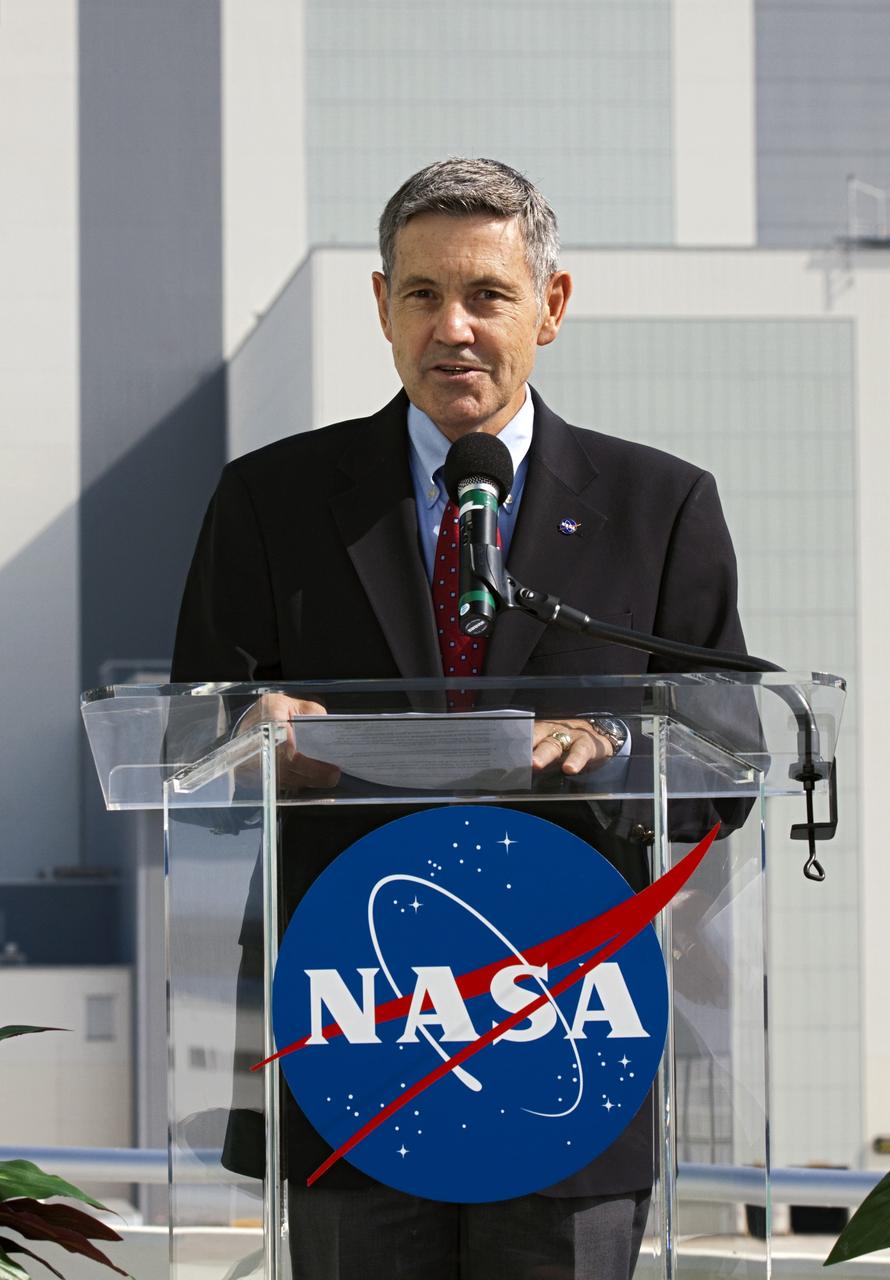
Cape Canaveral, Fla. -- NASA Kennedy Space Center Director Bob Cabana discusses the Commercial Crew Program's CCP newest partnerships from the center's Operations Support Building 2 OSB II. Three integrated systems were selected for CCP's Commercial Crew Integrated Capability CCiCap initiative to propel America's next human space transportation system to low Earth orbit forward. Operating under a funded Space Act Agreements SAAs, The Boeing Co. of Houston, Sierra Nevada Corp. SNC Space Systems of Louisville, Colo., and Space Exploration Technologies SpaceX of Hawthorne, Calif., will spend the next 21 months completing their designs, conducting critical risk reduction testing on their spacecraft and launch vehicles, and showcasing how they would operate and manage missions from launch through orbit and landing, setting the stage for future demonstration missions. To learn more about CCP, which is based at Kennedy and supported by NASA's Johnson Space Center in Houston, visit www.nasa.gov/commercialcrew. Photo credit: NASA/Kim Shiflett
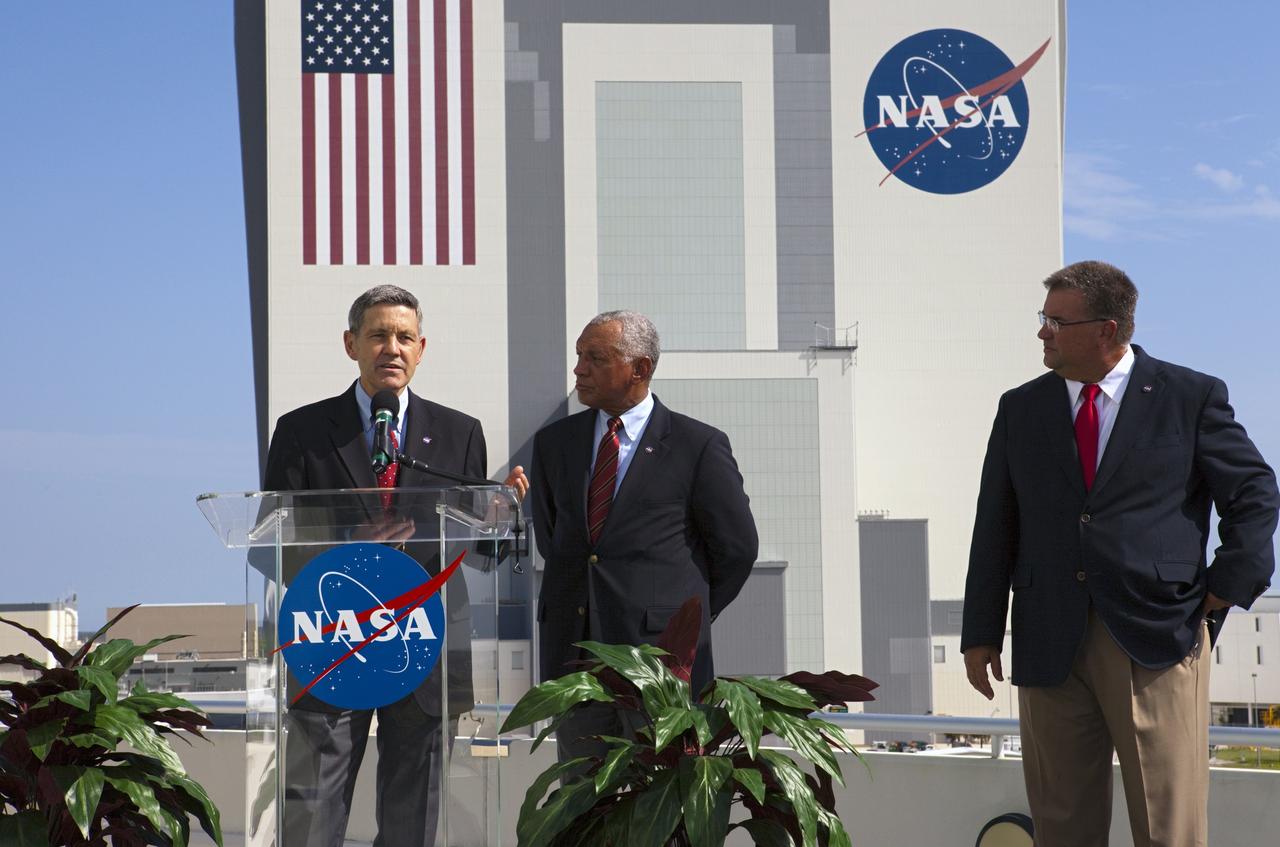
Cape Canaveral, Fla. -- NASA Kennedy Space Center Director Bob Cabana discusses the Commercial Crew Program's CCP newest partnerships from the center's Operations Support Building 2 OSB II. To his right, is NASA Administrator Charlie Bolden, and to his far right, is Commercial Crew Program Manager Ed Mango. Three integrated systems were selected for CCP's Commercial Crew Integrated Capability CCiCap initiative to propel America's next human space transportation system to low Earth orbit forward. Operating under funded Space Act Agreements SAAs, The Boeing Co. of Houston, Sierra Nevada Corp. SNC Space Systems of Louisville, Colo., and Space Exploration Technologies SpaceX of Hawthorne, Calif., will spend the next 21 months completing their designs, conducting critical risk reduction testing on their spacecraft and launch vehicles, and showcasing how they would operate and manage missions from launch through orbit and landing, setting the stage for future demonstration missions. To learn more about CCP, which is based at Kennedy and supported by NASA's Johnson Space Center in Houston, visit www.nasa.gov/commercialcrew. Photo credit: NASA/Kim Shiflett
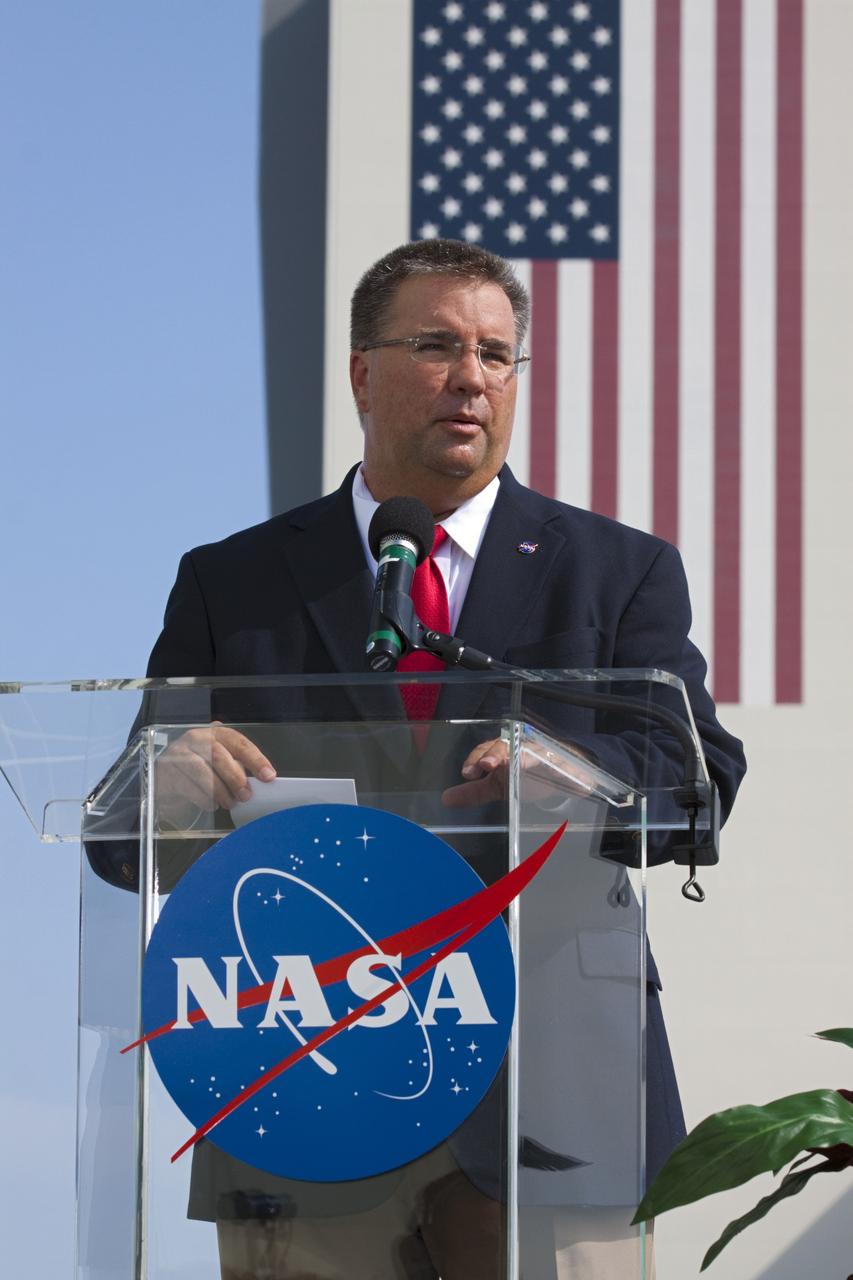
Cape Canaveral, Fla. -- NASA Commercial Crew Program CCP Manager Ed Mango discusses the program's newest partnerships from the Operations Support Building 2 OSB II at Kennedy Space Center in Florida. Three integrated systems were selected for CCP's Commercial Crew Integrated Capability CCiCap initiative to propel America's next human space transportation system to low Earth orbit forward. Operating under funded Space Act Agreements SAAs, The Boeing Co. of Houston, Sierra Nevada Corp. SNC Space Systems of Louisville, Colo., and Space Exploration Technologies SpaceX of Hawthorne, Calif., will spend the next 21 months completing their designs, conducting critical risk reduction testing on their spacecraft and launch vehicles, and showcasing how they would operate and manage missions from launch through orbit and landing, setting the stage for future demonstration missions. To learn more about CCP, which is based at Kennedy and supported by NASA's Johnson Space Center in Houston, visit www.nasa.gov/commercialcrew. Photo credit: NASA/Kim Shiflett
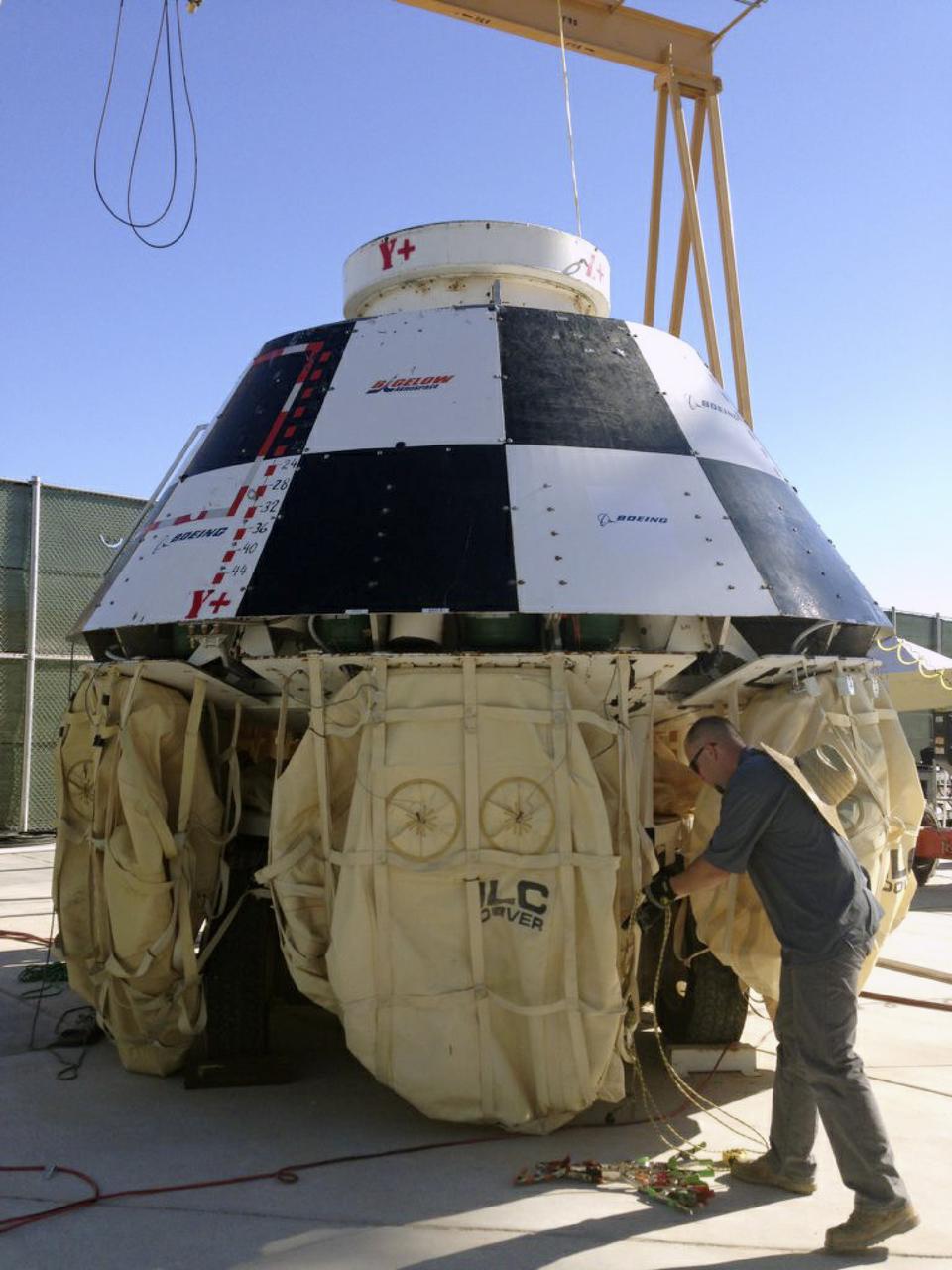
LAS VEGAS, Nev. – An engineer prepares a mock-up of The Boeing Company's CST-100 spacecraft for the third and final series of simulated contingency water landing scenarios at Bigelow Aerospace's headquarters near Las Vegas. The CST-100 is designed for ground landings, but could splash down on the water, if necessary. The tests are part of the company’s ongoing work supporting its funded Space Act Agreement with NASA’s Commercial Crew Program, or CCP, during the Commercial Crew Integrated Capability, or CCiCap, initiative. CCP is intended to lead to the availability of commercial human spaceflight services for government and commercial customers to low-Earth orbit. Future development and certification initiatives eventually will lead to the availability of human spaceflight services for NASA to send its astronauts to the International Space Station, where critical research is taking place daily. For more information about CCP, go to http://www.nasa.gov/commercialcrew. Photo credit: Boeing/Kelly George
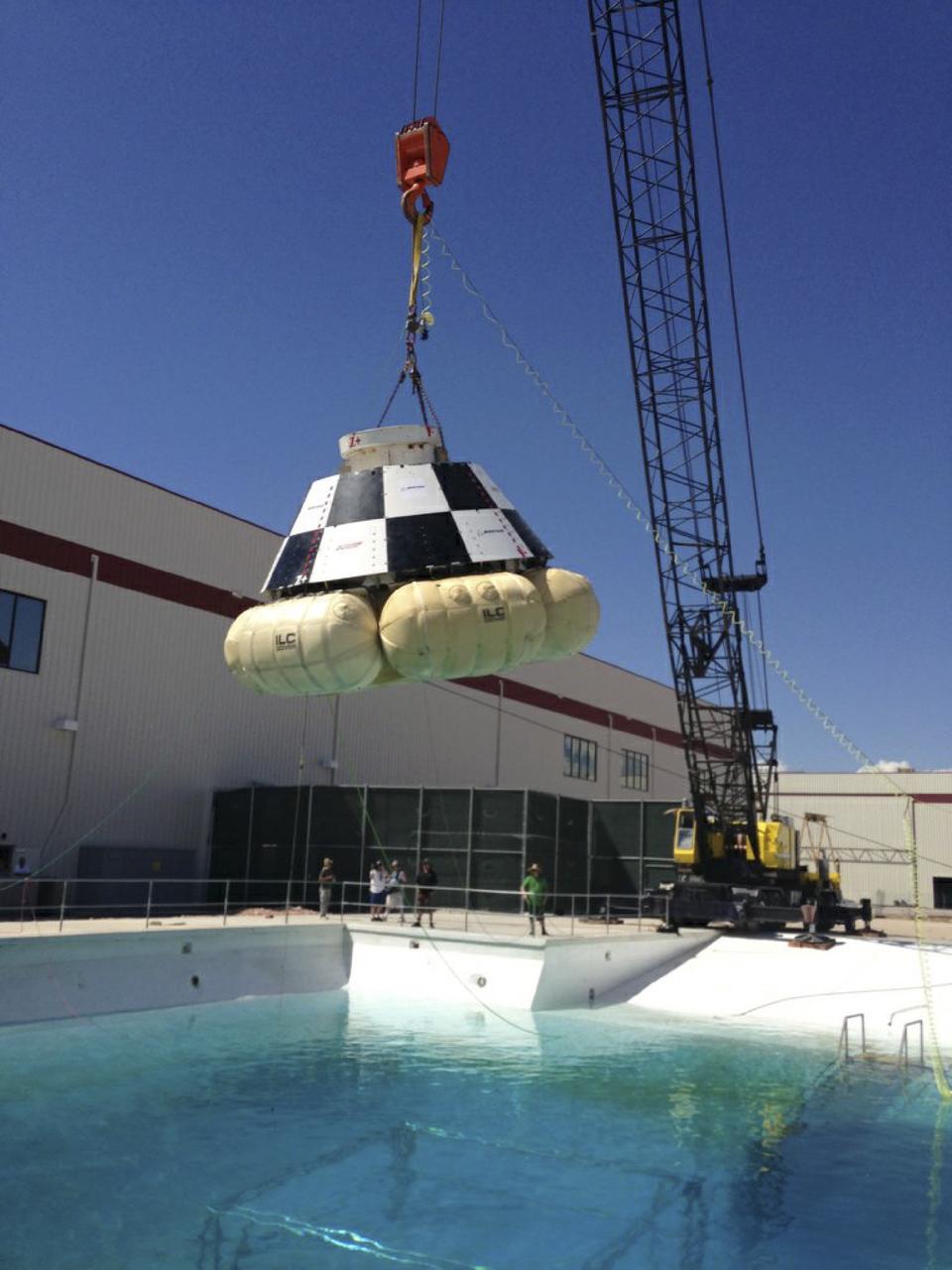
LAS VEGAS, Nev. – A mock-up of The Boeing Company's CST-100 spacecraft is prepared for the third and final series of simulated contingency water landing scenarios at Bigelow Aerospace's headquarters near Las Vegas. The CST-100 is designed for ground landings, but could splash down on the water, if necessary. The tests are part of the company’s ongoing work supporting its funded Space Act Agreement with NASA’s Commercial Crew Program, or CCP, during the Commercial Crew Integrated Capability, or CCiCap, initiative. CCP is intended to lead to the availability of commercial human spaceflight services for government and commercial customers to low-Earth orbit. Future development and certification initiatives eventually will lead to the availability of human spaceflight services for NASA to send its astronauts to the International Space Station, where critical research is taking place daily. For more information about CCP, go to http://www.nasa.gov/commercialcrew. Photo credit: Boeing/Kelly George
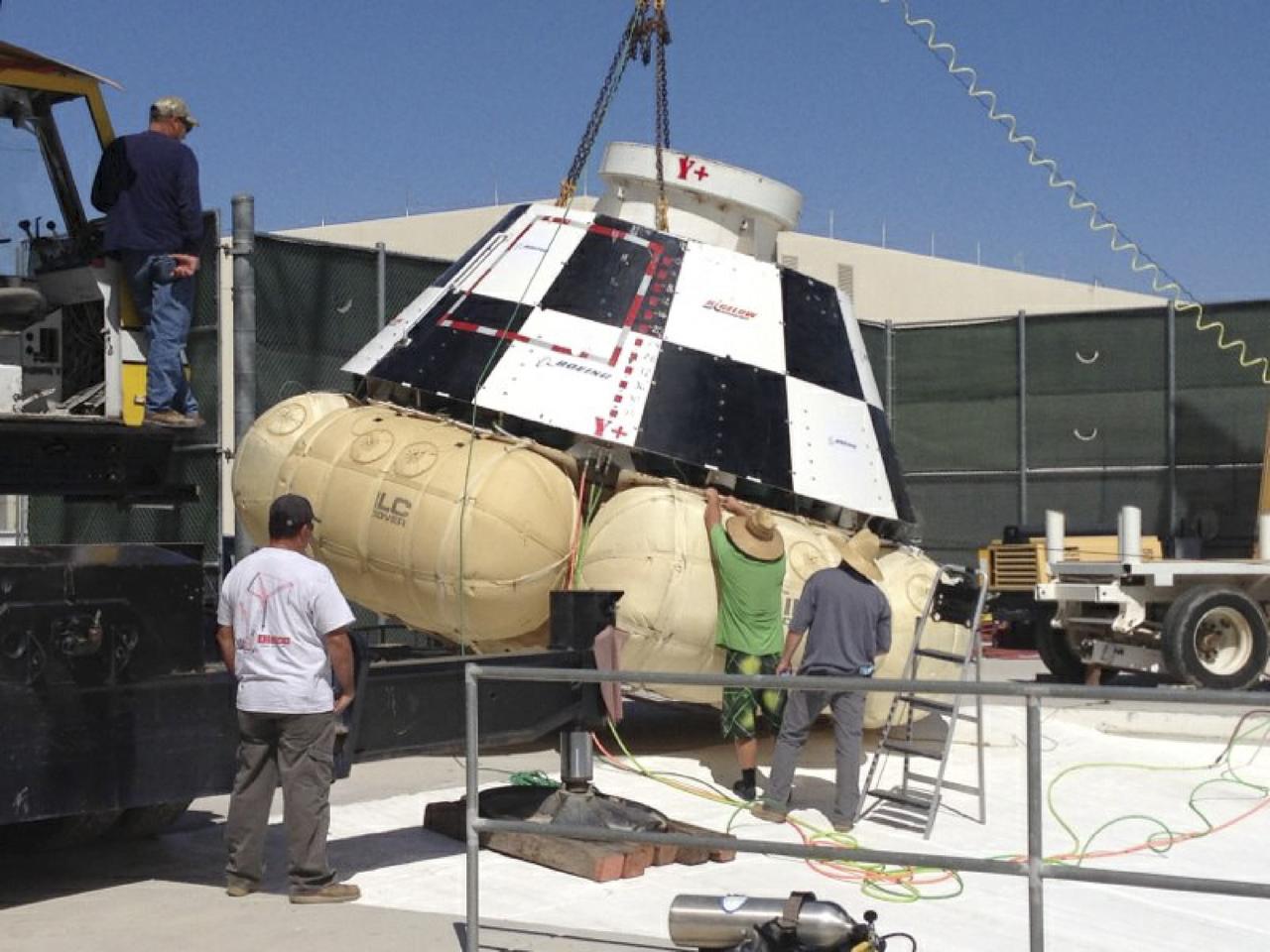
LAS VEGAS, Nev. – Engineers prepare a mock-up of The Boeing Company's CST-100 spacecraft for the third and final series of simulated contingency water landing scenarios at Bigelow Aerospace's headquarters near Las Vegas. The CST-100 is designed for ground landings, but could splash down on the water, if necessary. The tests are part of the company’s ongoing work supporting its funded Space Act Agreement with NASA’s Commercial Crew Program, or CCP, during the Commercial Crew Integrated Capability, or CCiCap, initiative. CCP is intended to lead to the availability of commercial human spaceflight services for government and commercial customers to low-Earth orbit. Future development and certification initiatives eventually will lead to the availability of human spaceflight services for NASA to send its astronauts to the International Space Station, where critical research is taking place daily. For more information about CCP, go to http://www.nasa.gov/commercialcrew. Photo credit: Boeing/Kelly George
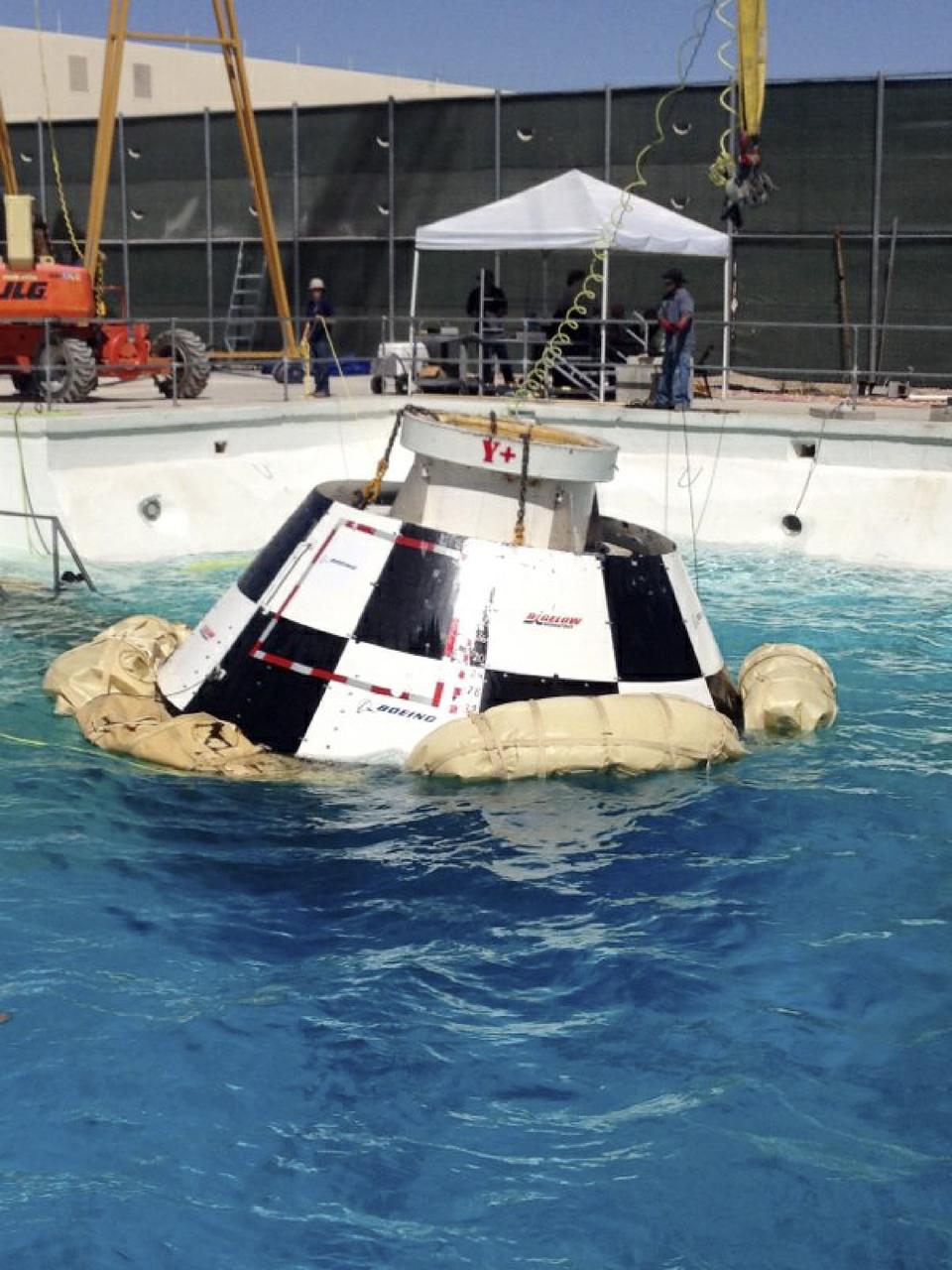
LAS VEGAS, Nev. – A mock-up of The Boeing Company's CST-100 spacecraft floats following the third and final series of simulated contingency water landing scenarios at Bigelow Aerospace's headquarters near Las Vegas. The CST-100 is designed for ground landings, but could splash down on the water, if necessary. The tests are part of the company’s ongoing work supporting its funded Space Act Agreement with NASA’s Commercial Crew Program, or CCP, during the Commercial Crew Integrated Capability, or CCiCap, initiative. CCP is intended to lead to the availability of commercial human spaceflight services for government and commercial customers to low-Earth orbit. Future development and certification initiatives eventually will lead to the availability of human spaceflight services for NASA to send its astronauts to the International Space Station, where critical research is taking place daily. For more information about CCP, go to http://www.nasa.gov/commercialcrew. Photo credit: Boeing/Kelly George
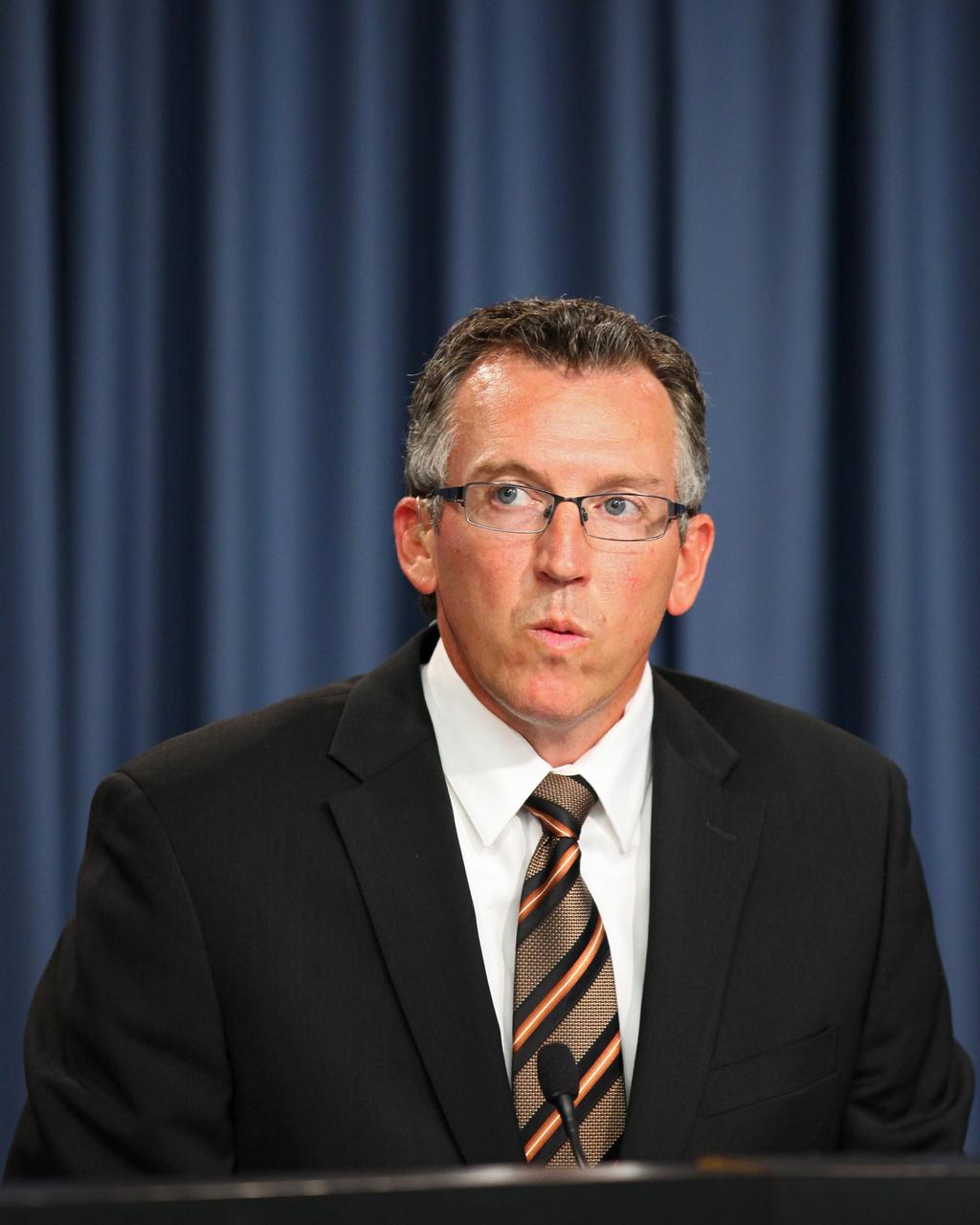
CAPE CANAVERAL, Fla. -- Steve Janney of NASA's Commercial Crew Program, or CCP, talks to aerospace industry representatives during a pre-proposal conference to inform prospective companies about the recently released request for contract proposals and updates to the certification requirements for crewed missions to the International Space Station, or ISS. The two-phase certification process, called Certification Products Contract, or CPC, will enable NASA to eventually purchase service missions to fly astronauts to and from the ISS. Janney serves as the contracting officer during CPC procurement. To learn more about CCP, visit www.nasa.gov/commercialcrew. Photo credit: Kim Shiflett

CAPE CANAVERAL, Fla. - NASA Kennedy Space Center Director Bob Cabana welcomes aerospace industry representatives to the Commercial Crew Transportation Capability, or CCtCap, Pre-Proposal Conference. CCtCap will be the next phase of certification efforts for the agency's Commercial Crew Program, or CCP, missions to the International Space Station. The purpose of the conference was to involve industry in the CCtCap draft Request for Proposal, or RFP, process and provide a greater understanding for both parties before the official RFP is released in the fall of 2013. To learn more about CCP, visit www.nasa.gov/commercialcrew. Photo credit: NASA/Jim Grossmann
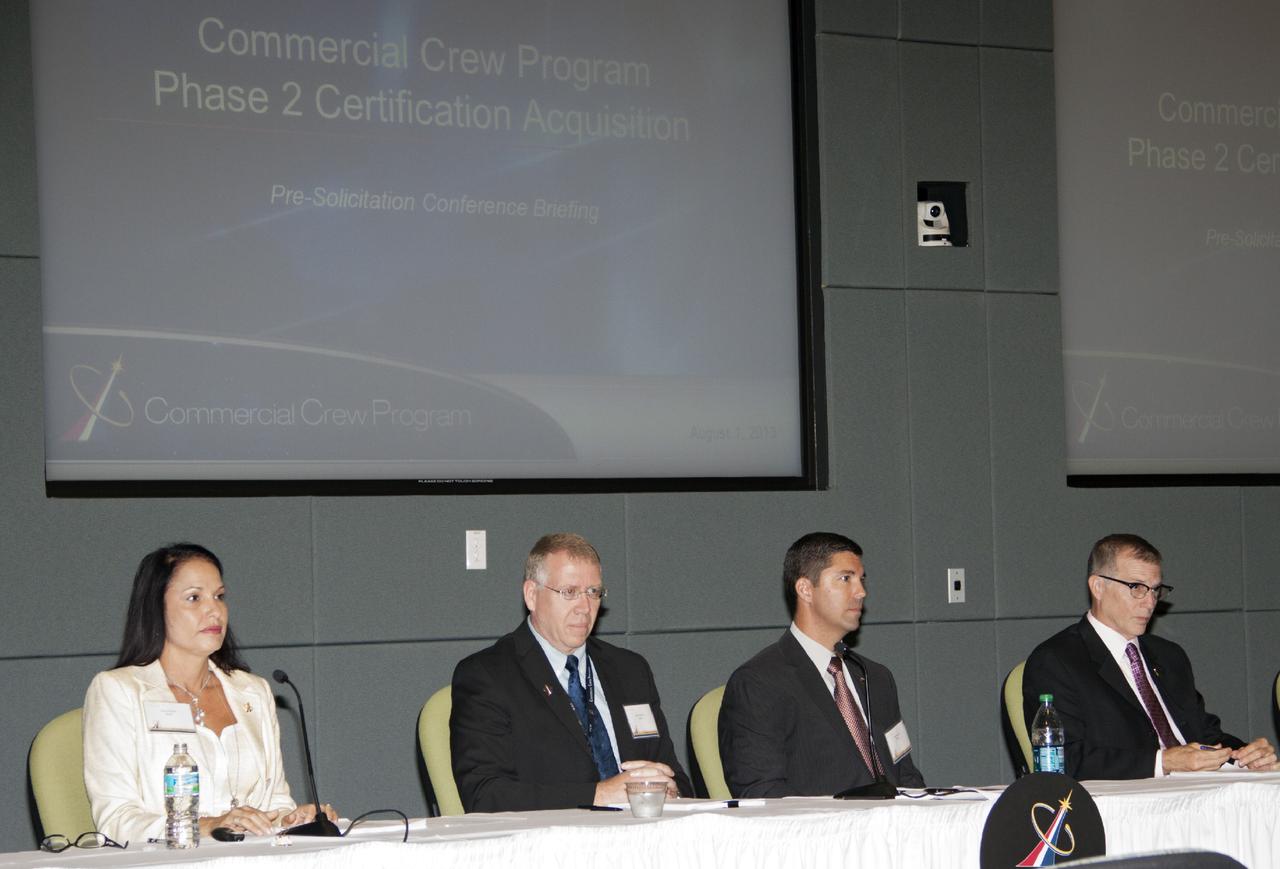
CAPE CANAVERAL, Fla. - Panelists of the Commercial Crew Transportation Capability, or CCtCap, Pre-Proposal Conference at Kennedy Space Center in Florida are, from left, Maria Collura, Brian Hinerth, Trip Healy and Lee Pagel. CCtCap will be the next phase of certification efforts for CCP mission to the International Space Station. The purpose of the conference was to involve aerospace industry representatives in the CCtCap draft Request for Proposal, or RFP, process and provide a greater understanding for both parties before the official RFP is released in the fall of 2013. To learn more about CCP, visit www.nasa.gov/commercialcrew. Photo credit: NASA/Jim Grossmann
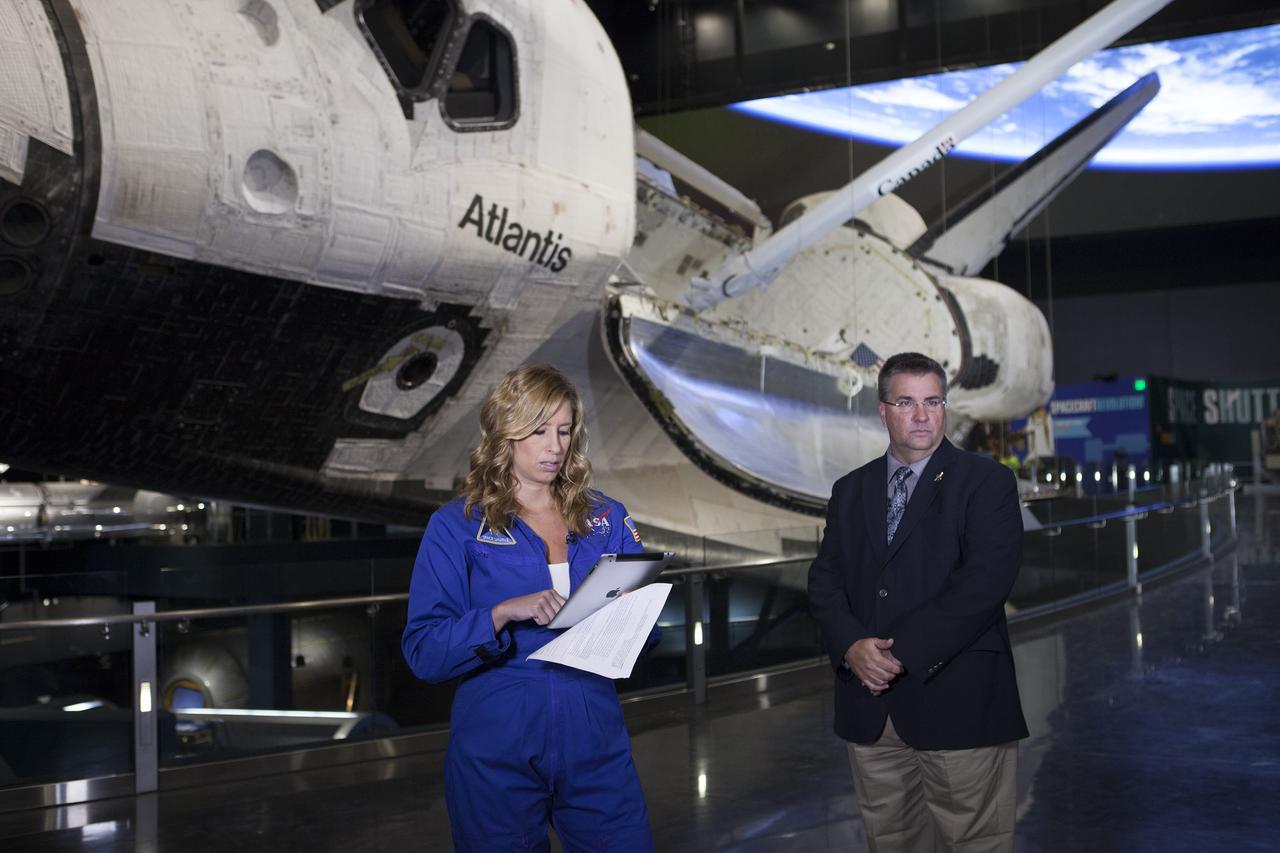
CAPE CANAVERAL, Fla. - Stephanie Abrams, a meteorologist with The Weather Channel, prepares for a live interview with Ed Mango, manager of NASA's Commercial Crew Program, or CCP, in front of the Atlantis display at the Kennedy Space Center Visitor Complex in Florida. During the interview, Mango explained the program is working with the commercial aerospace industry to return America's domestic capability to launch astronauts from U.S. soil to the International Space Station around the middle of the decade. He also discussed the program's role in helping NASA reach its deep-space exploration goals. To learn more about CCP, visit www.nasa.gov/commercialcrew. Photo credit: Kim Shiflett
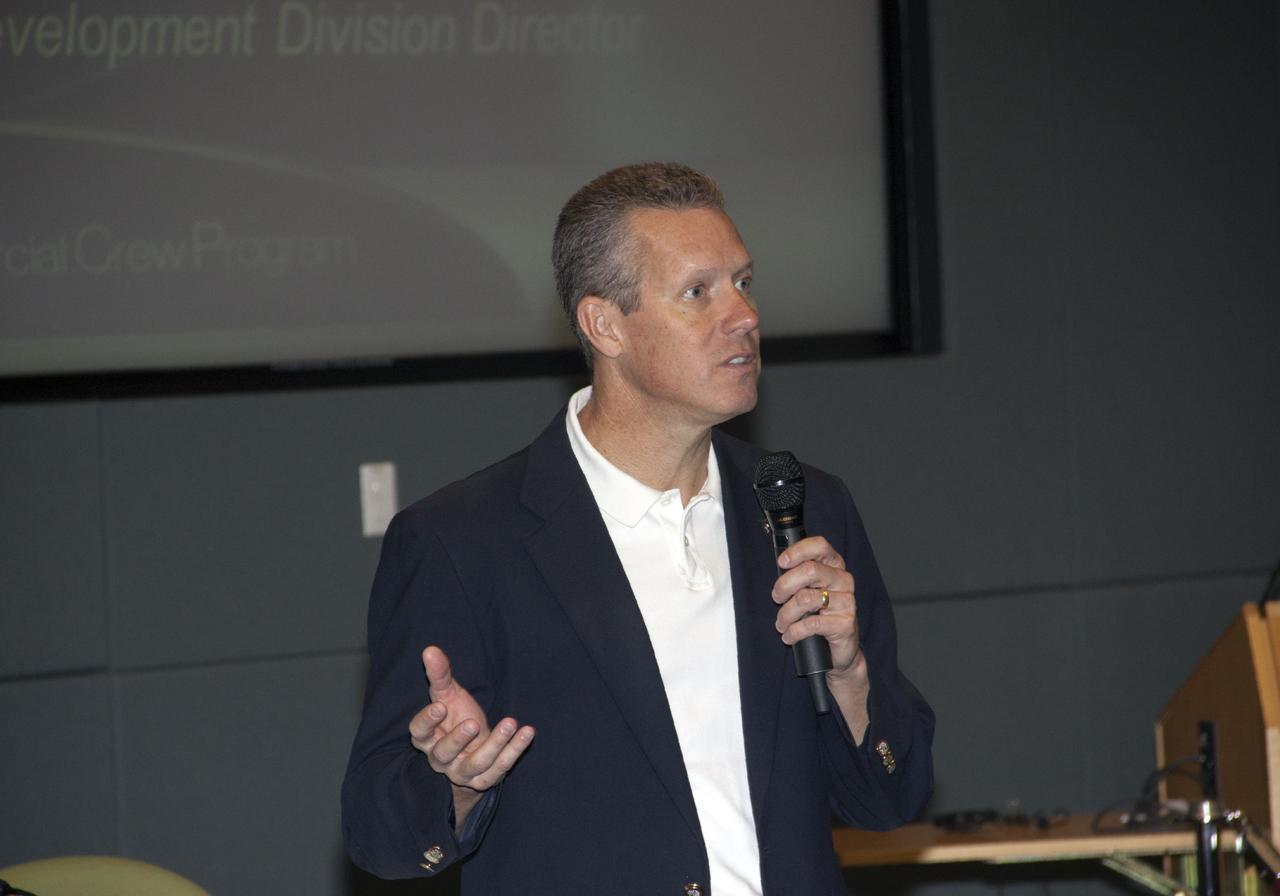
CAPE CANAVERAL, Fla. - Phil McAlister, director of Commercial Spaceflight Development at NASA Headquarters in Washington, D.C., makes opening remarks at the Commercial Crew Transportation Capability, or CCtCap, Pre-Proposal Conference at Kennedy Space Center in Florida. CCtCap will be the next phase of certification efforts for the agency's Commercial Crew Program, or CCP, missions to the International Space Station. The purpose of the conference was to involve aerospace industry representatives in the CCtCap draft Request for Proposal, or RFP, process and provide a greater understanding for both parties before the official RFP is released in the fall of 2013. To learn more about CCP, visit www.nasa.gov/commercialcrew. Photo credit: NASA/Jim Grossmann
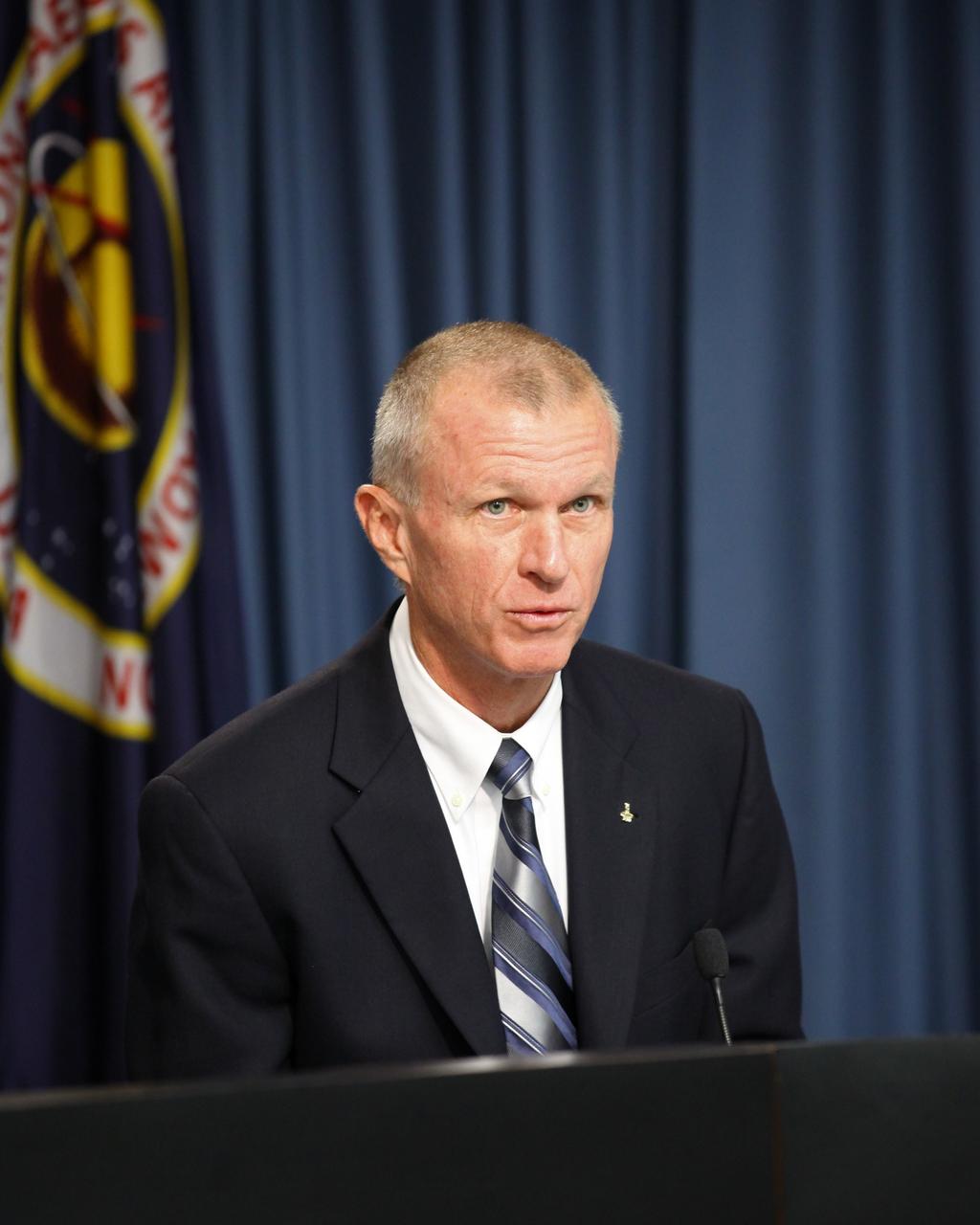
CAPE CANAVERAL, Fla. -- Brent Jett, deputy manager of NASA's Commercial Crew Program, or CCP, talks to aerospace industry representatives during a pre-proposal conference to inform prospective companies about the recently released request for contract proposals and updates to the certification requirements for crewed missions to the International Space Station, or ISS. The two-phase certification process, called Certification Products Contract, or CPC, will enable NASA to eventually purchase service missions to fly astronauts to and from the ISS. To learn more about CCP, visit www.nasa.gov/commercialcrew. Photo credit: Kim Shiflett
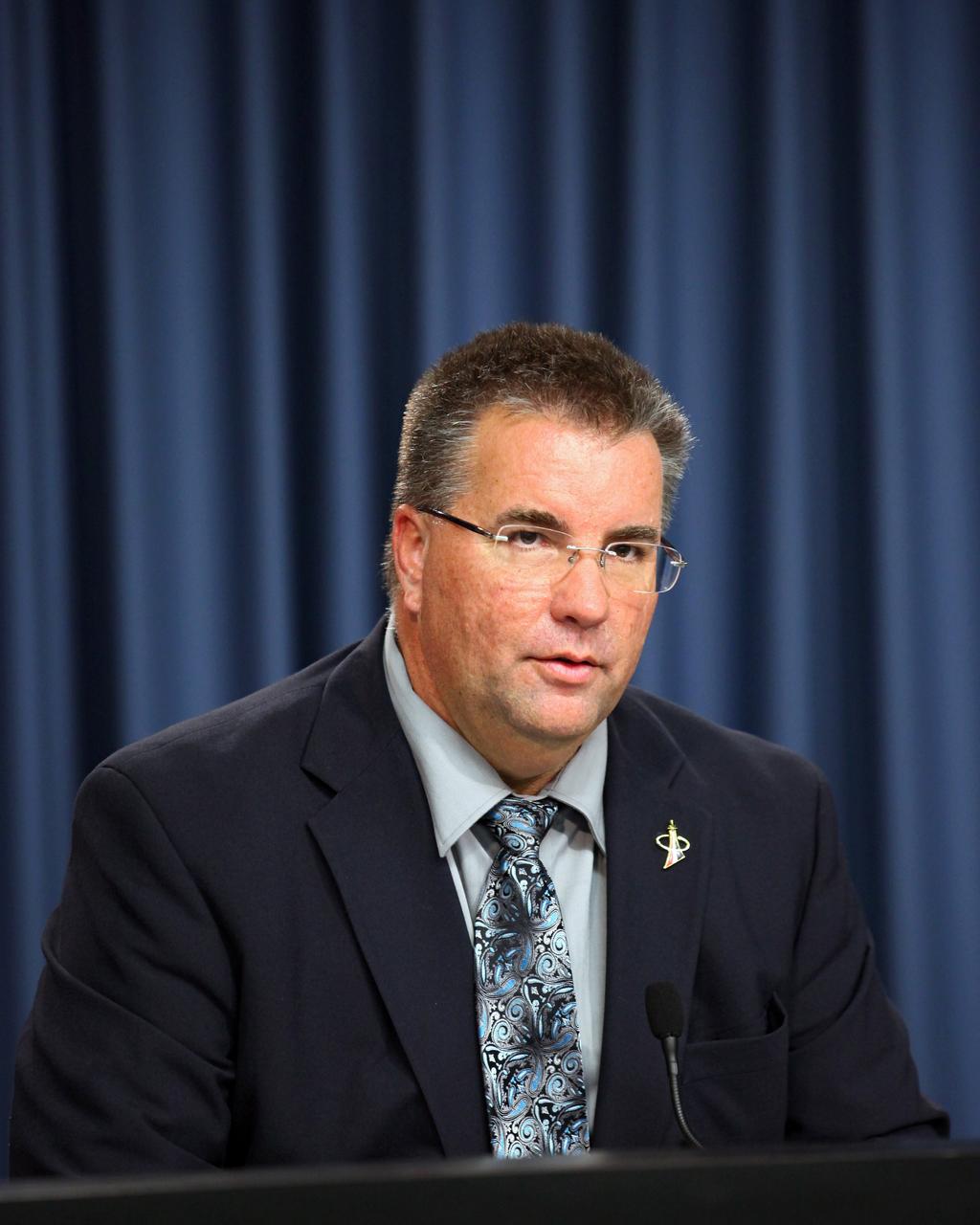
CAPE CANAVERAL, Fla. -- Ed Mango, manager of NASA's Commercial Crew Program, or CCP, talks to aerospace industry representatives during a pre-proposal conference to inform prospective companies about the recently released request for contract proposals and updates to the certification requirements for crewed missions to the International Space Station, or ISS. The two-phase certification process, called Certification Products Contract, or CPC, will enable NASA to eventually purchase service missions to fly astronauts to and from the ISS. To learn more about CCP, visit www.nasa.gov/commercialcrew. Photo credit: Kim Shiflett

CAPE CANAVERAL, Fla. -- Kathy Lueders, manager of the International Space Station, or ISS, Transportation Integration Office, participates in a NASA Commercial Crew Program, or CCP, pre-proposal conference. The conference informed prospective companies about the recently released request for contract proposals and updates to the certification requirements for crewed missions to ISS. The two-phase certification process, called Certification Products Contract, or CPC, will enable NASA to eventually purchase service missions to fly astronauts to and from the ISS. To learn more about CCP, visit www.nasa.gov/commercialcrew. Photo credit: Kim Shiflett
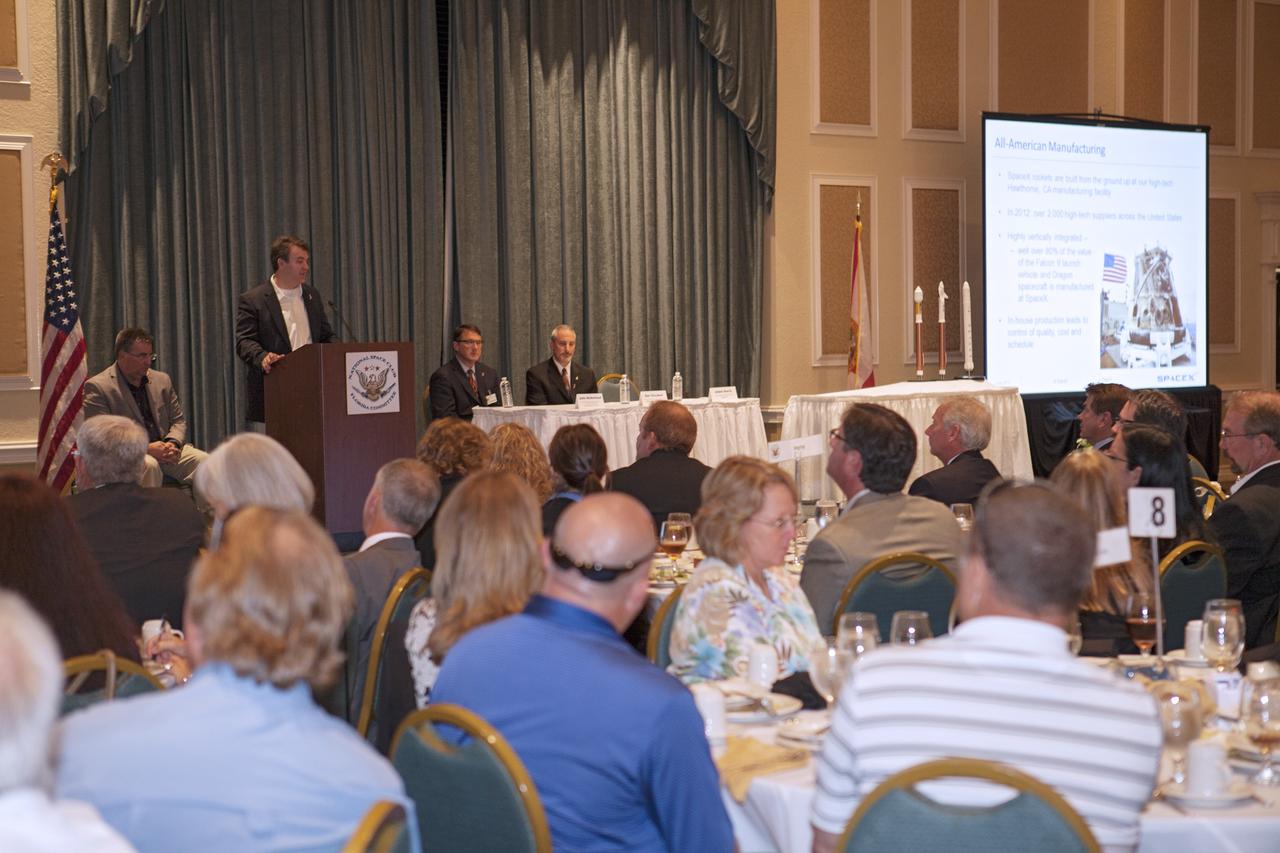
CAPE CANAVERAL, Fla. - Adam Harris, vice president of government sales for Space Exploration Technologies, or SpaceX, speaks to a crowd of spaceflight enthusiasts at the National Space Club Florida Committee's June meeting near the Kennedy Space Center. Harris was joined at the Radisson Resort at the Port in Cape Canaveral, Fla., by Ed Mango, manager of NASA's Commercial Crew Program, or CCP, left, and representatives from The Boeing Company and Sierra Nevada Corporation, or SNC. All three CCP partner are planning to increase their commercial activities on Florida’s space coast to send astronauts to low-Earth orbit. To learn more about the Commercial Crew Program, visit www.nasa.gov/commercialcrew. Photo credit: Kim Shiflett
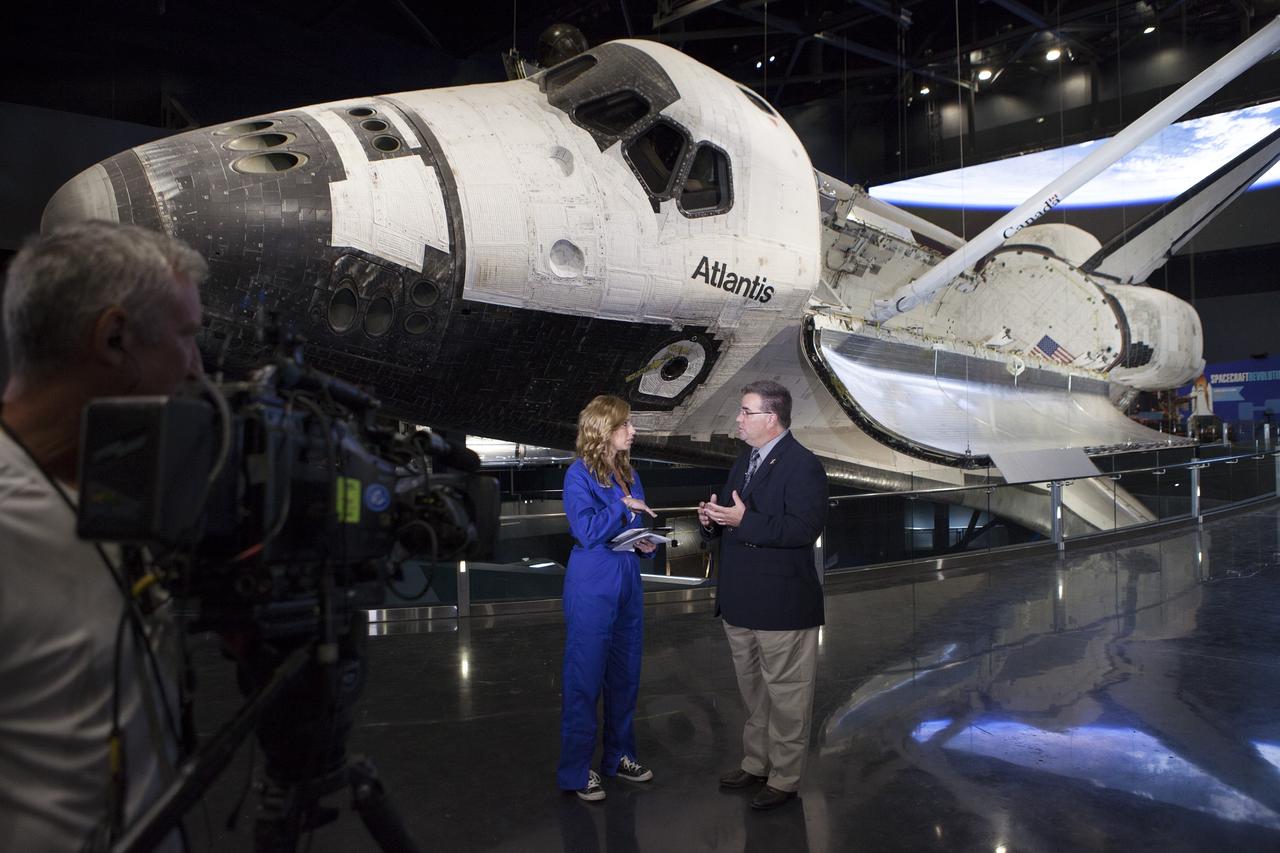
CAPE CANAVERAL, Fla. - Stephanie Abrams, a meteorologist with The Weather Channel, performs a live interview with Ed Mango, manager of NASA's Commercial Crew Program, or CCP, in front of the Atlantis display at the Kennedy Space Center Visitor Complex in Florida. Mango explained the program is working with the commercial aerospace industry to return America's domestic capability to launch astronauts from U.S. soil to the International Space Station around the middle of the decade. He also discussed the program's role in helping NASA reach its deep-space exploration goals. To learn more about CCP, visit www.nasa.gov/commercialcrew. Photo credit: Kim Shiflett
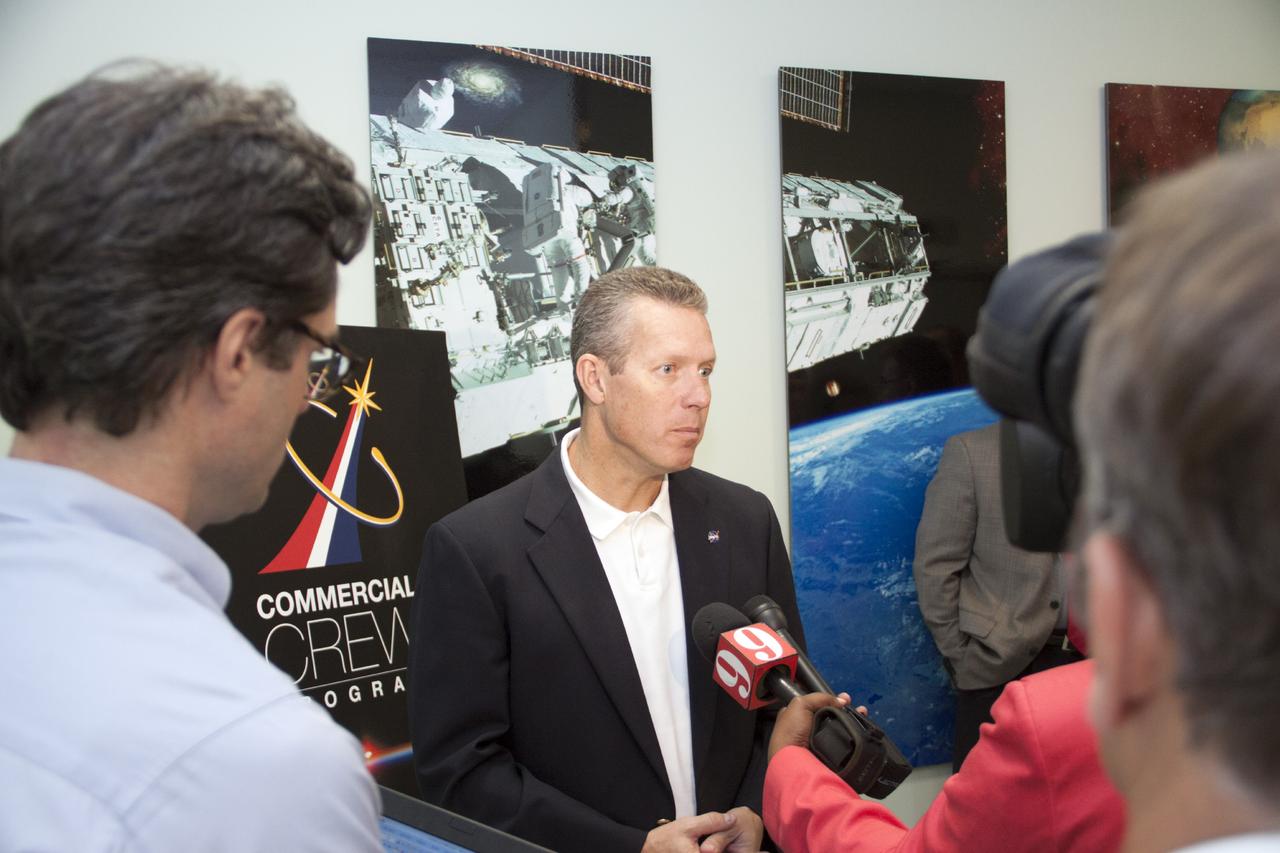
CAPE CANAVERAL, Fla. - Phil McAlister, director of Commercial Spaceflight Development at NASA Headquarters in Washington, D.C., talks to media following the Commercial Crew Transportation Capability, or CCtCap, Pre-Proposal Conference at Kennedy Space Center in Florida. CCtCap will be the next phase of certification efforts for the agency's Commercial Crew Program, or CCP, missions to the International Space Station. The purpose of the conference was to involve aerospace industry representatives in the CCtCap draft Request for Proposal, or RFP, process and provide a greater understanding for both parties before the official RFP is released in the fall of 2013. To learn more about CCP, visit www.nasa.gov/commercialcrew. Photo credit: NASA/Jim Grossmann
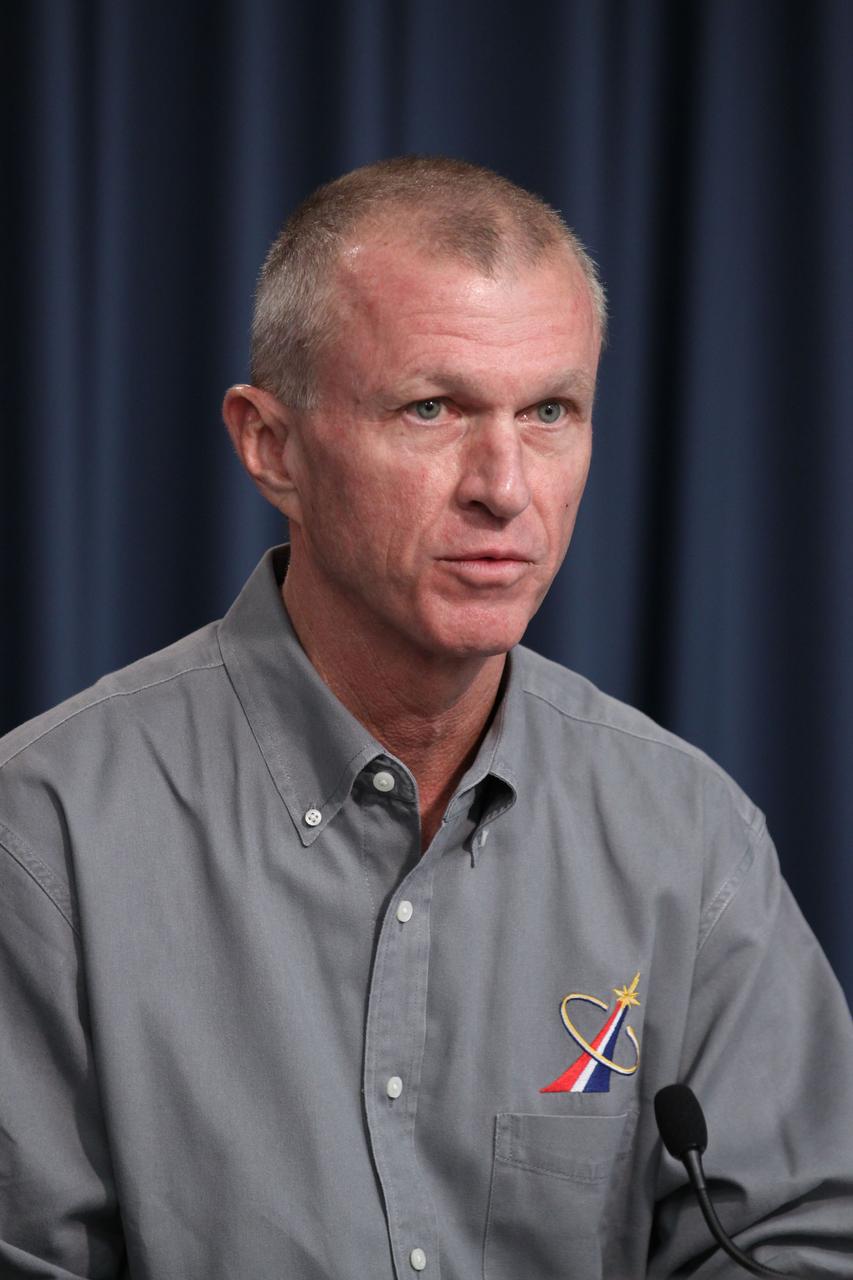
CAPE CANAVERAL, Fla. -- NASA Commercial Crew Program Deputy Manager Brent Jett talks to commercial spaceflight industry representatives about the agency's plans for certifying commercially developed spacecraft and launch systems in support of crewed missions to the International Space Station around the middle of the decade. To learn more about CCP, visit www.nasa.gov/commercialcrew. Photo credit: NASA/Kim Shiflett
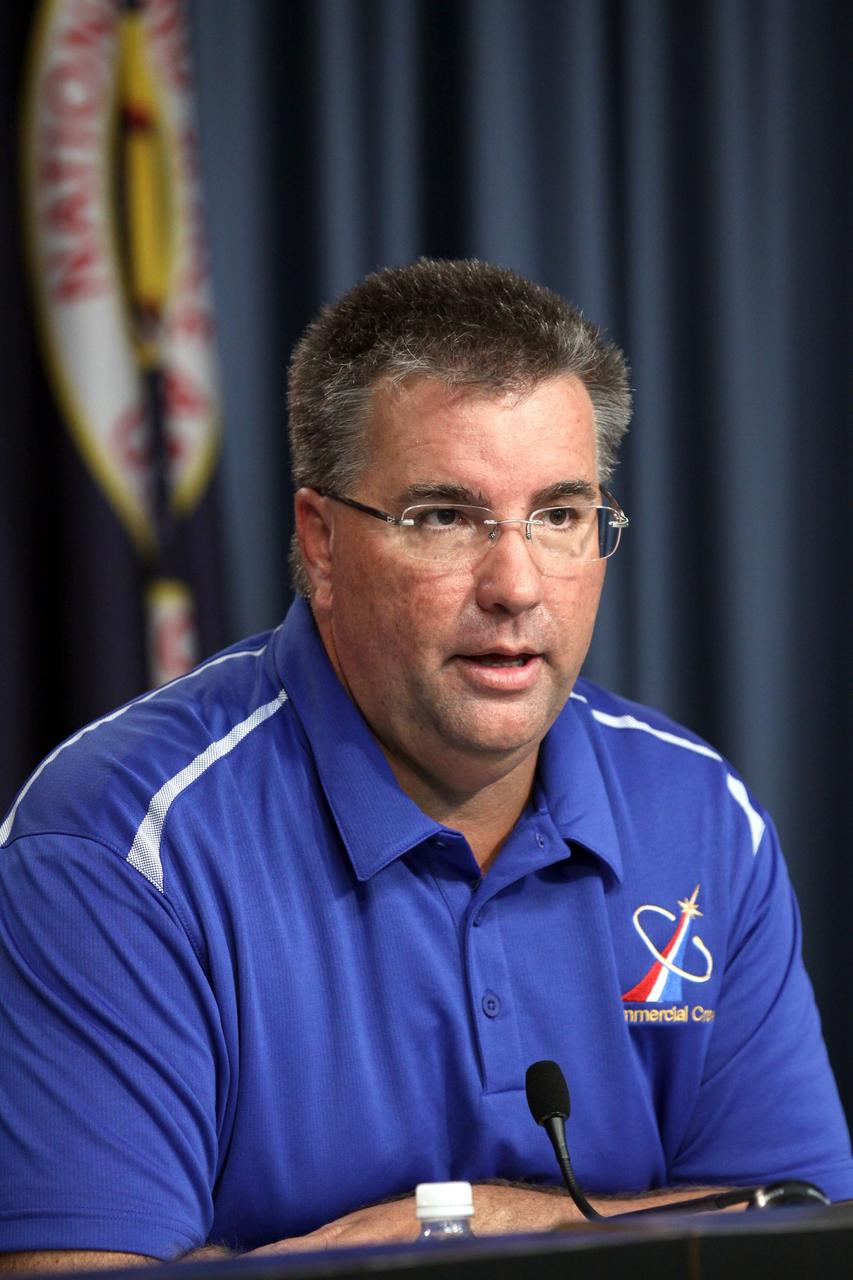
CAPE CANAVERAL, Fla. -- NASA Commercial Crew Program Manager Ed Mango talks to commercial spaceflight industry representatives about the agency's plans for certifying commercially developed spacecraft and launch systems in support of crewed missions to the International Space Station around the middle of the decade. To learn more about CCP, visit www.nasa.gov/commercialcrew. Photo credit: NASA/Kim Shiflett
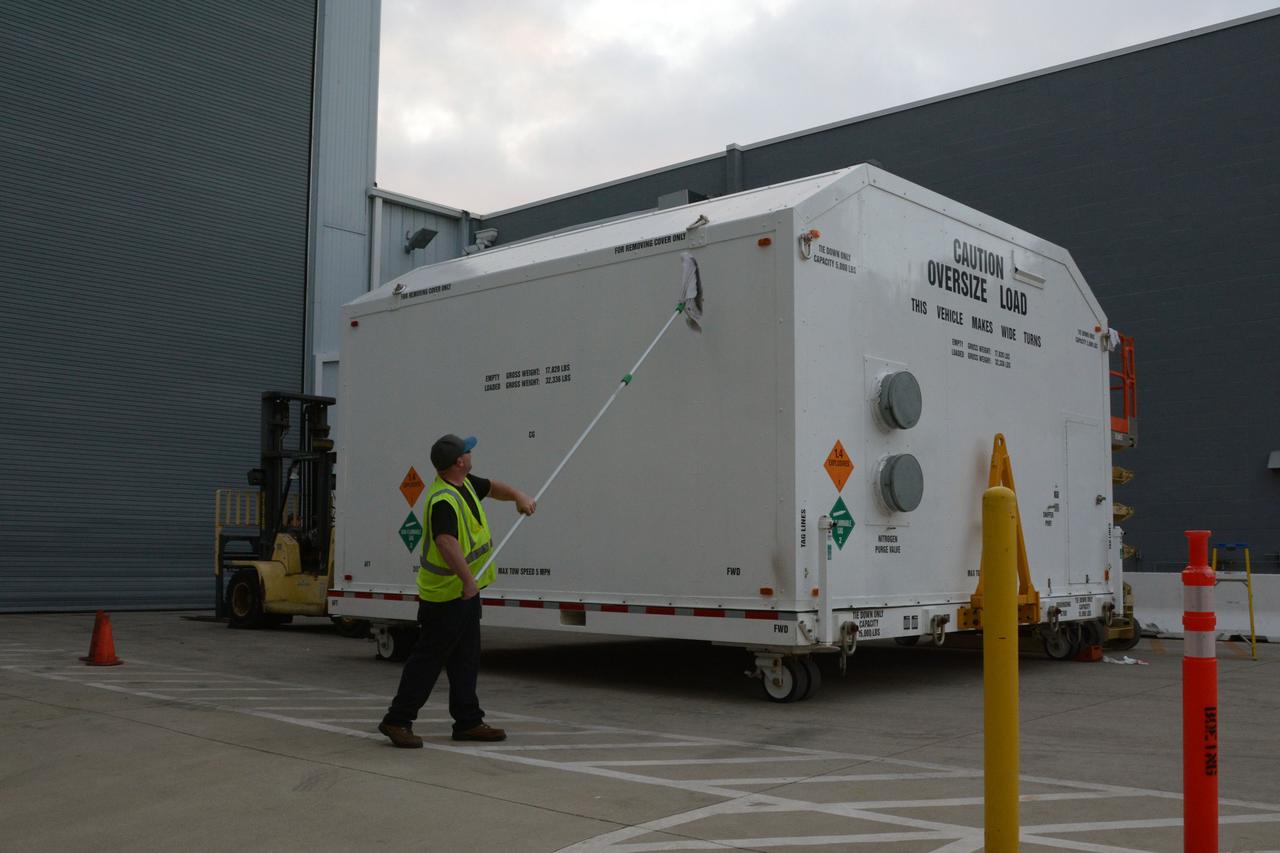
Packed in its shipping container, the spacecraft destined to fly astronauts to the International Space Station in Boeing's Crew Flight Test (CFT) arrives at the company's testing facilities in El Segundo, California, on Nov. 21, 2018. The company's CST-100 Starliner will be undergoing a series of environmental tests designed to simulate what it will experience during different stages of flight as part of NASA's Commercial Crew Program (CCP). The agency's CCP will return human spaceflight launches to U.S. soil, providing safe, reliable and cost-effective access to low-Earth orbit on systems that meet our safety and mission requirements.
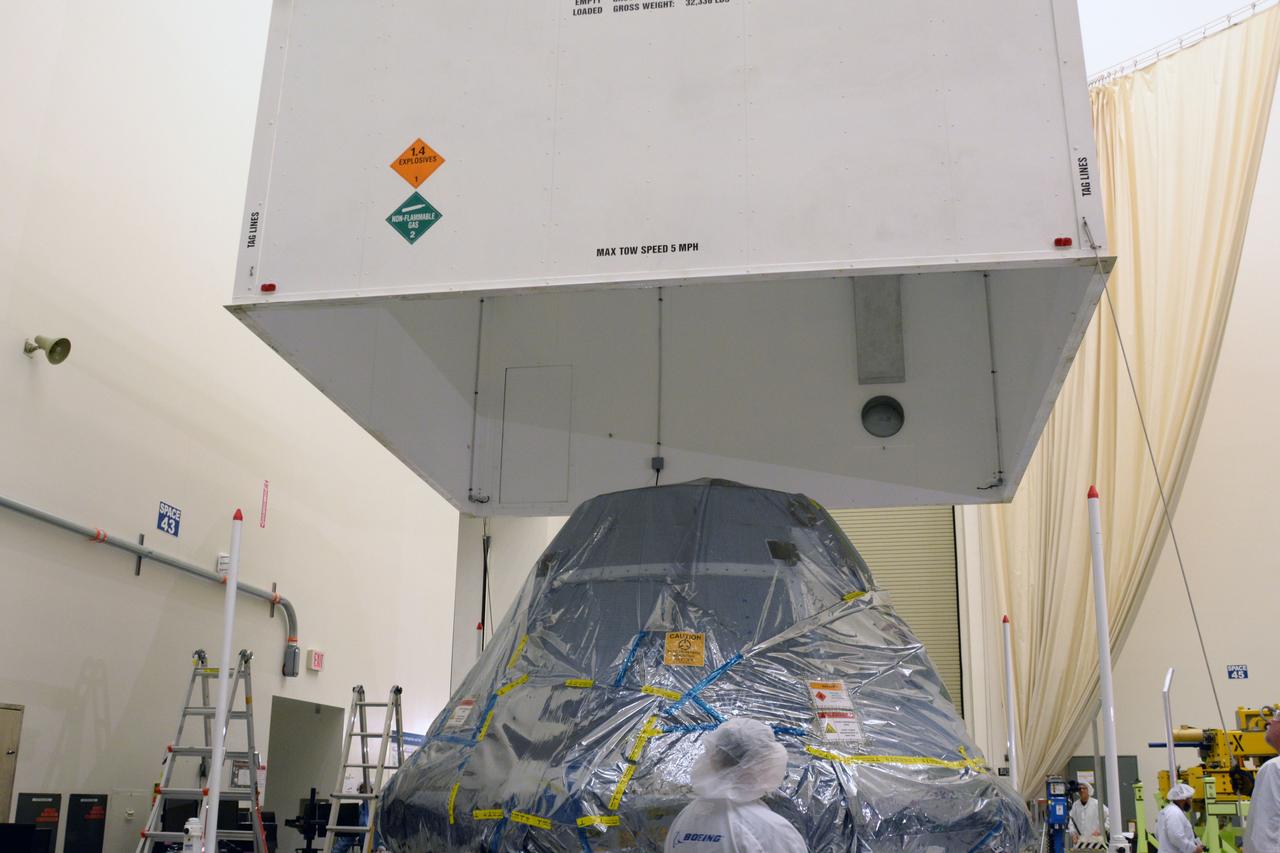
The spacecraft destined to fly astronauts to the International Space Station in Boeing's Crew Flight Test (CFT) is removed from its shipping container inside the company's testing facilities in El Segundo, California, on Nov. 21, 2018. The company's CST-100 Starliner will be undergoing a series of environmental tests designed to simulate what it will experience during different stages of flight as part of NASA's Commercial Crew Program (CCP). The agency's CCP will return human spaceflight launches to U.S. soil, providing safe, reliable and cost-effective access to low-Earth orbit on systems that meet our safety and mission requirements.
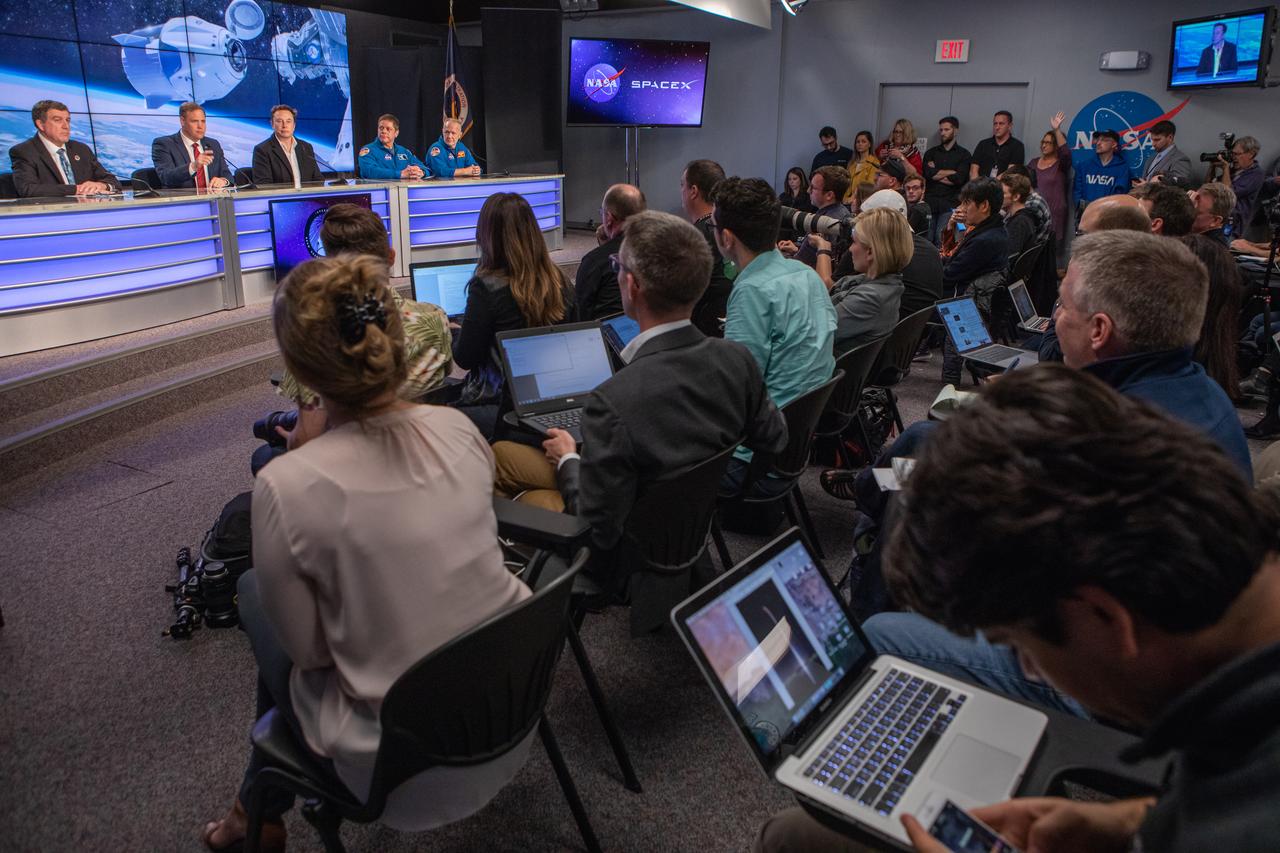
Members of the media gather in Kennedy Space Center’s Press Site auditorium during a post launch news conference with agency and industry leaders following the March 2, 2:49 a.m. EST launch of the SpaceX Demo-1 Commercial Crew Program (CCP) mission to the International Space Station. The Crew Dragon’s trip to the space station is designed to validate end-to-end systems and capabilities, leading to certification to fly crew. NASA has worked with SpaceX and Boeing in developing the CCP spacecraft to facilitate new human spaceflight systems launching from U.S. soil with the goal of safe, reliable and cost-effective access to low-Earth orbit destinations, such as the space station.
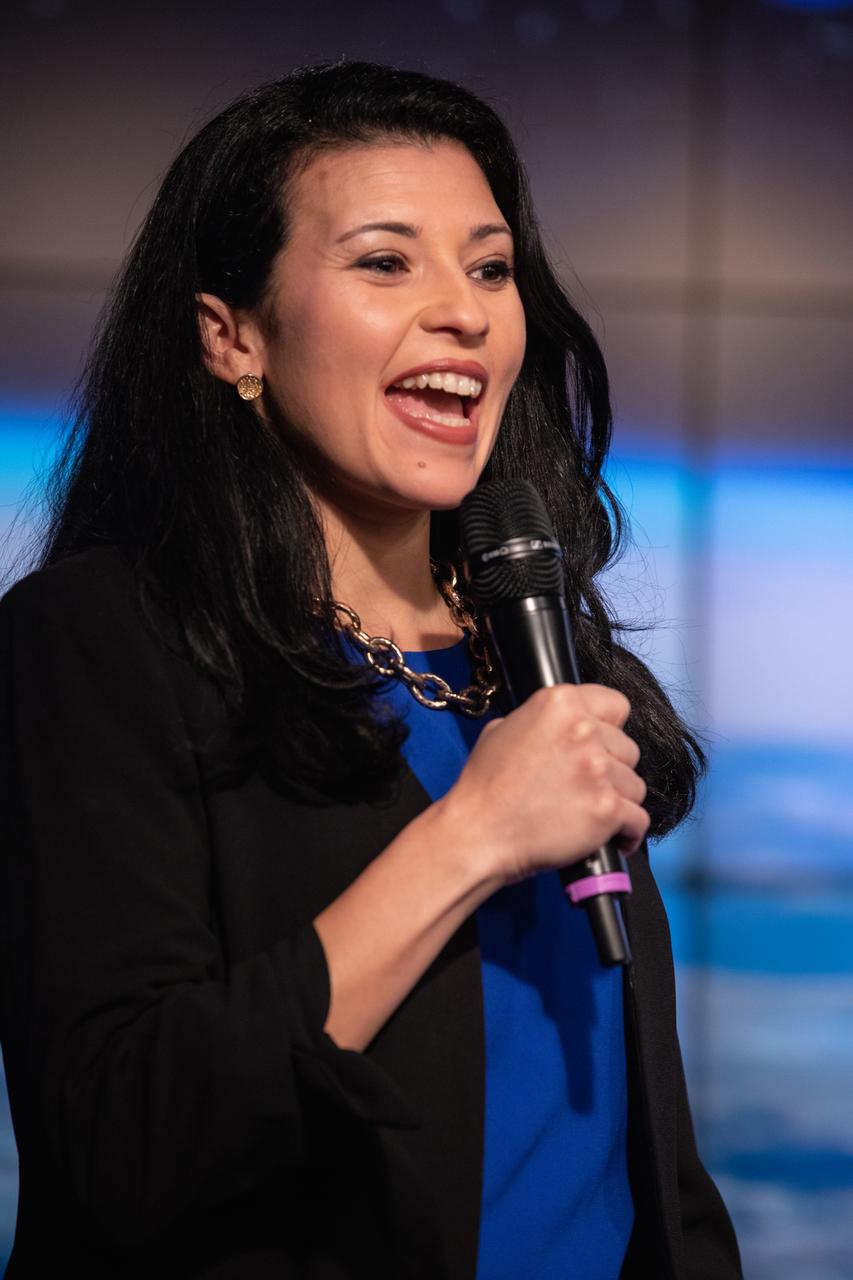
Bettina Inclán, NASA associate administrator for Communications, addresses members of the media during a post launch news conference in Kennedy Space Center’s Press Site auditorium following the March 2, 2:49 a.m. EST launch of the SpaceX Demo-1 Commercial Crew Program (CCP) mission to the International Space Station. The Crew Dragon’s trip to the space station is designed to validate end-to-end systems and capabilities, leading to certification to fly crew. NASA has worked with SpaceX and Boeing in developing the CCP spacecraft to facilitate new human spaceflight systems launching from U.S. soil with the goal of safe, reliable and cost-effective access to low-Earth orbit destinations, such as the space station.
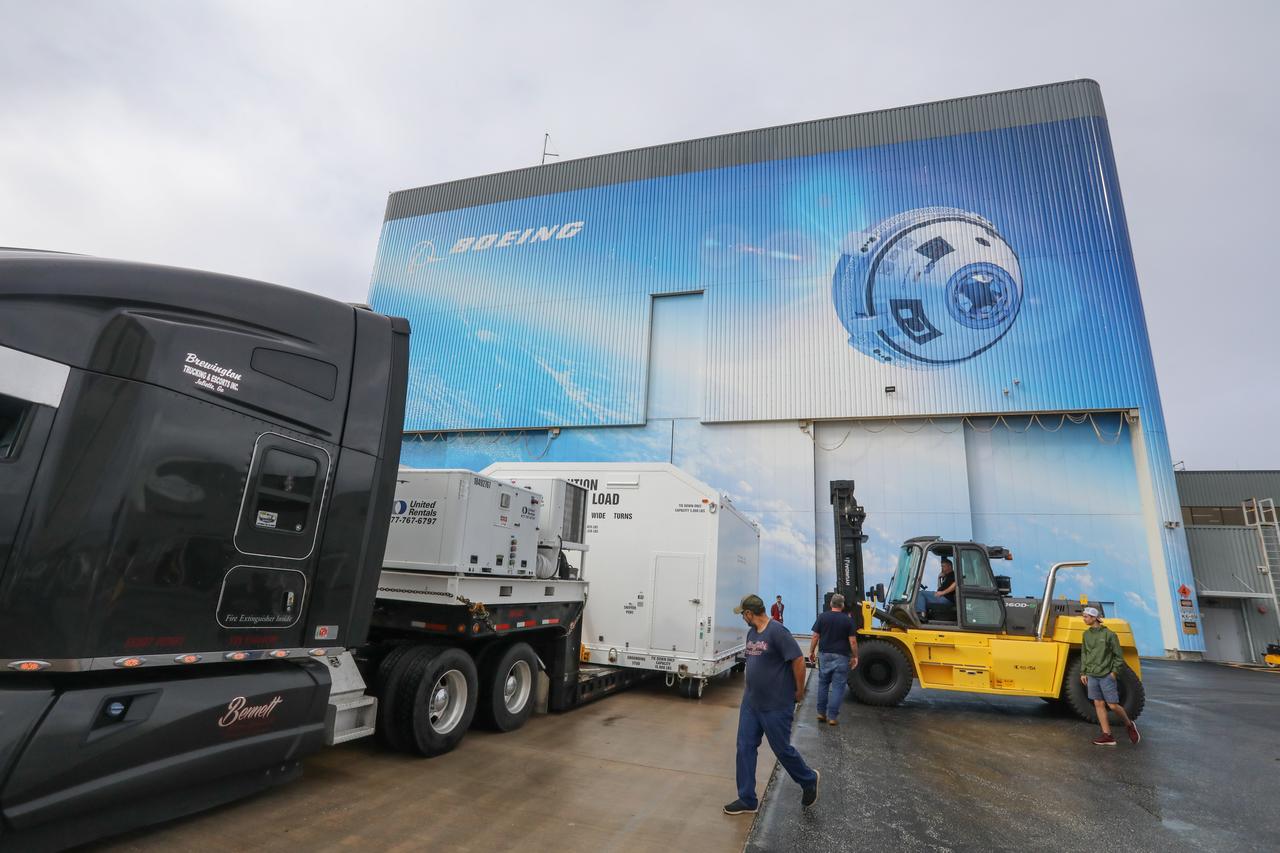
On Nov. 12, 2018, the crated spacecraft destined to fly astronauts to the International Space Station in Boeing's Crew Flight Test (CFT) departs the Commercial Crew and Cargo Processing Facility (C3PF) at NASA's Kennedy Space Center in Florida in preparation for transport to the company's testing facilities in El Segundo, California. The company's CST-100 Starliner will be undergoing a series of environmental tests designed to simulate what the spacecraft will experience during different stages of flight as part of NASA's Commercial Crew Program (CCP). The agency's CCP will return human spaceflight launches to U.S. soil, providing safe, reliable and cost-effective access to low-Earth orbit on systems that meet our safety and mission requirements.
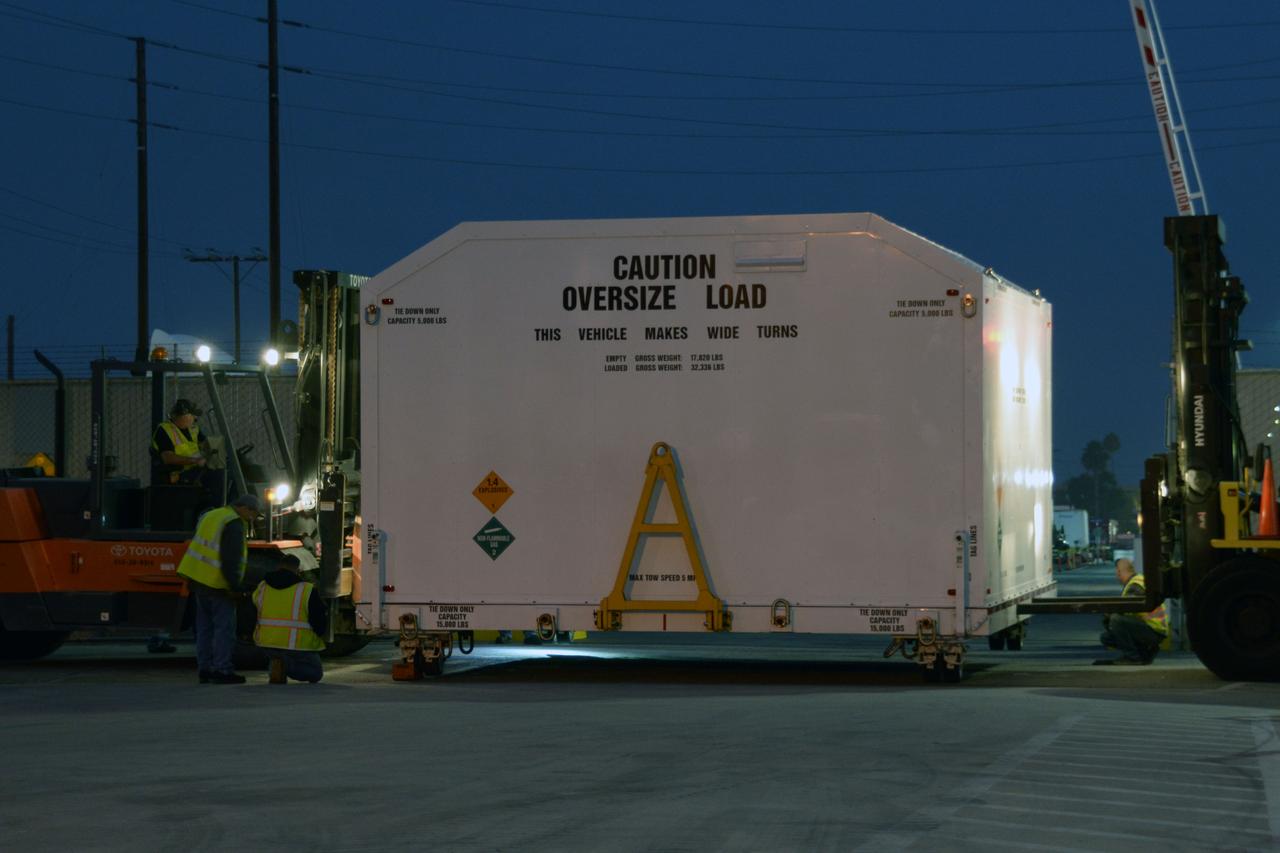
Packed in its shipping container, the spacecraft destined to fly astronauts to the International Space Station in Boeing's Crew Flight Test (CFT) arrives at the company's testing facilities in El Segundo, California, on Nov. 21, 2018. The company's CST-100 Starliner will be undergoing a series of environmental tests designed to simulate what it will experience during different stages of flight as part of NASA's Commercial Crew Program (CCP). The agency's CCP will return human spaceflight launches to U.S. soil, providing safe, reliable and cost-effective access to low-Earth orbit on systems that meet our safety and mission requirements.
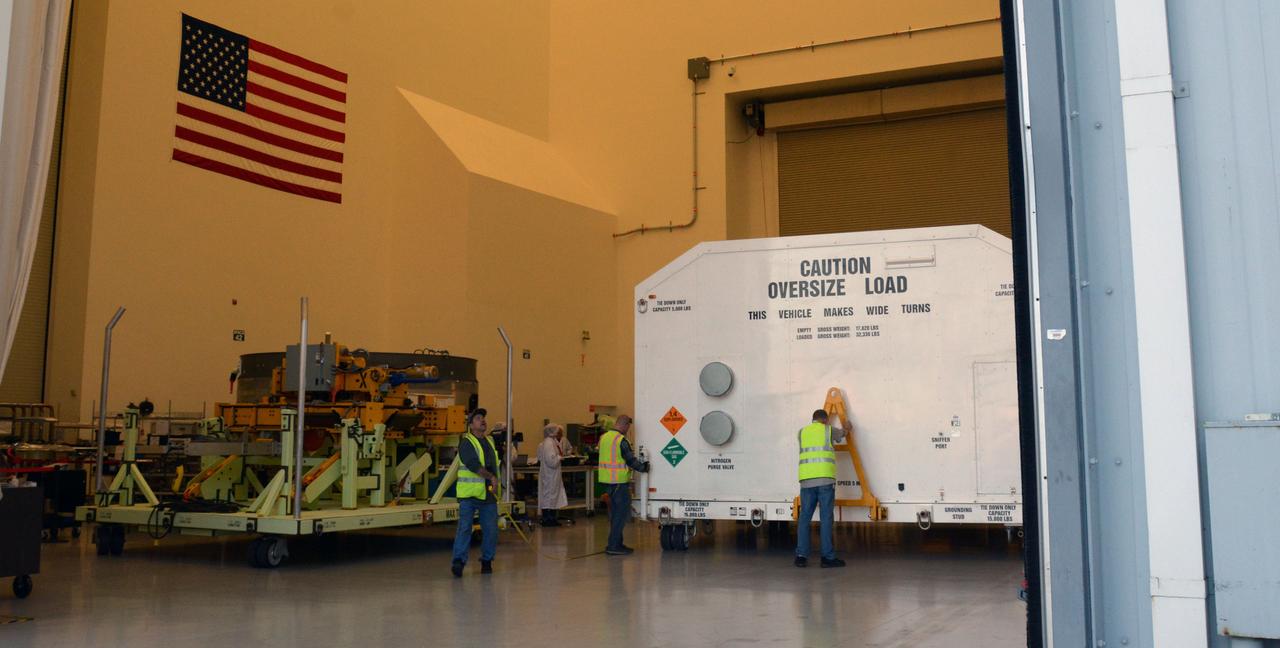
Packed in its shipping container, the spacecraft destined to fly astronauts to the International Space Station in Boeing's Crew Flight Test (CFT) arrives at the company's testing facilities in El Segundo, California, on Nov. 21, 2018. The company's CST-100 Starliner will be undergoing a series of environmental tests designed to simulate what it will experience during different stages of flight as part of NASA's Commercial Crew Program (CCP). The agency's CCP will return human spaceflight launches to U.S. soil, providing safe, reliable and cost-effective access to low-Earth orbit on systems that meet our safety and mission requirements.
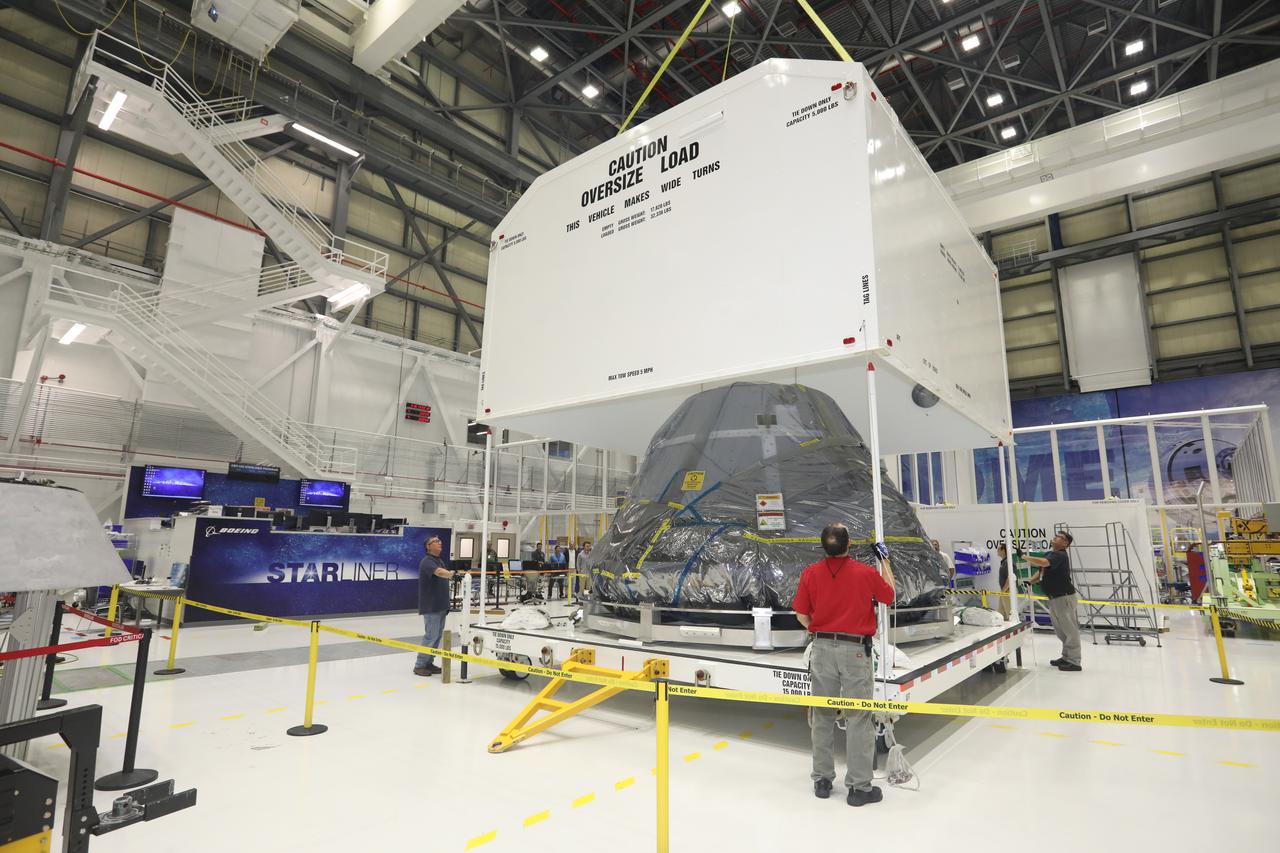
Inside the Commercial Crew and Cargo Processing Facility (C3PF) at NASA's Kennedy Space Center in Florida on Nov. 11, 2018, the spacecraft destined to fly astronauts to the International Space Station in Boeing's Crew Flight Test (CFT) is crated in preparation for transport to the company's testing facilities in El Segundo, California. The company's CST-100 Starliner will be undergoing a series of environmental tests designed to simulate what the spacecraft will experience during different stages of flight as part of NASA's Commercial Crew Program (CCP). The agency's CCP will return human spaceflight launches to U.S. soil, providing safe, reliable and cost-effective access to low-Earth orbit on systems that meet our safety and mission requirements.

The spacecraft destined to fly astronauts to the International Space Station in Boeing's Crew Flight Test (CFT) is inspected following removal from its shipping container inside the company's testing facilities in El Segundo, California, on Nov. 21, 2018. The company's CST-100 Starliner will be undergoing a series of environmental tests designed to simulate what it will experience during different stages of flight as part of NASA's Commercial Crew Program (CCP). The agency's CCP will return human spaceflight launches to U.S. soil, providing safe, reliable and cost-effective access to low-Earth orbit on systems that meet our safety and mission requirements.
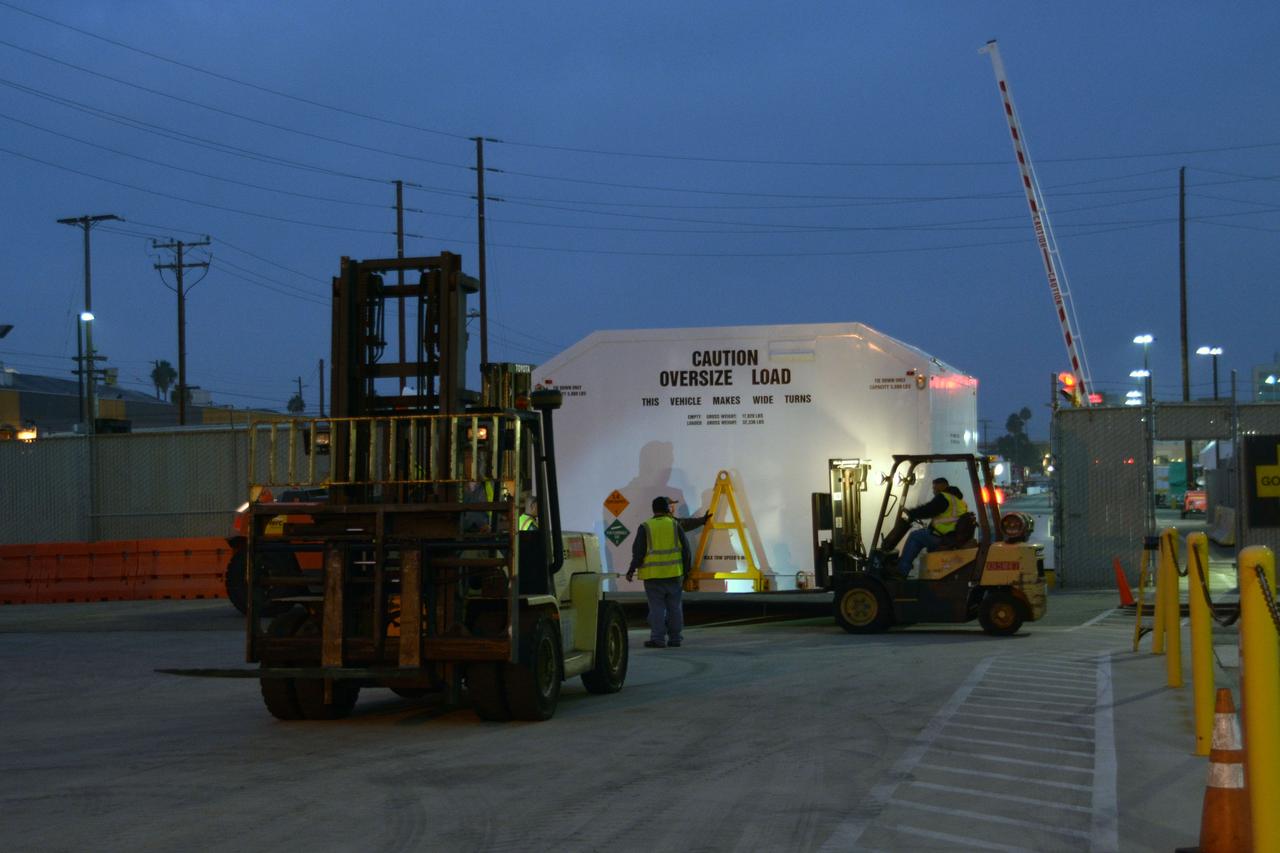
Packed in its shipping container, the spacecraft destined to fly astronauts to the International Space Station in Boeing's Crew Flight Test (CFT) arrives at the company's testing facilities in El Segundo, California, on Nov. 21, 2018. The company's CST-100 Starliner will be undergoing a series of environmental tests designed to simulate what it will experience during different stages of flight as part of NASA's Commercial Crew Program (CCP). The agency's CCP will return human spaceflight launches to U.S. soil, providing safe, reliable and cost-effective access to low-Earth orbit on systems that meet our safety and mission requirements.
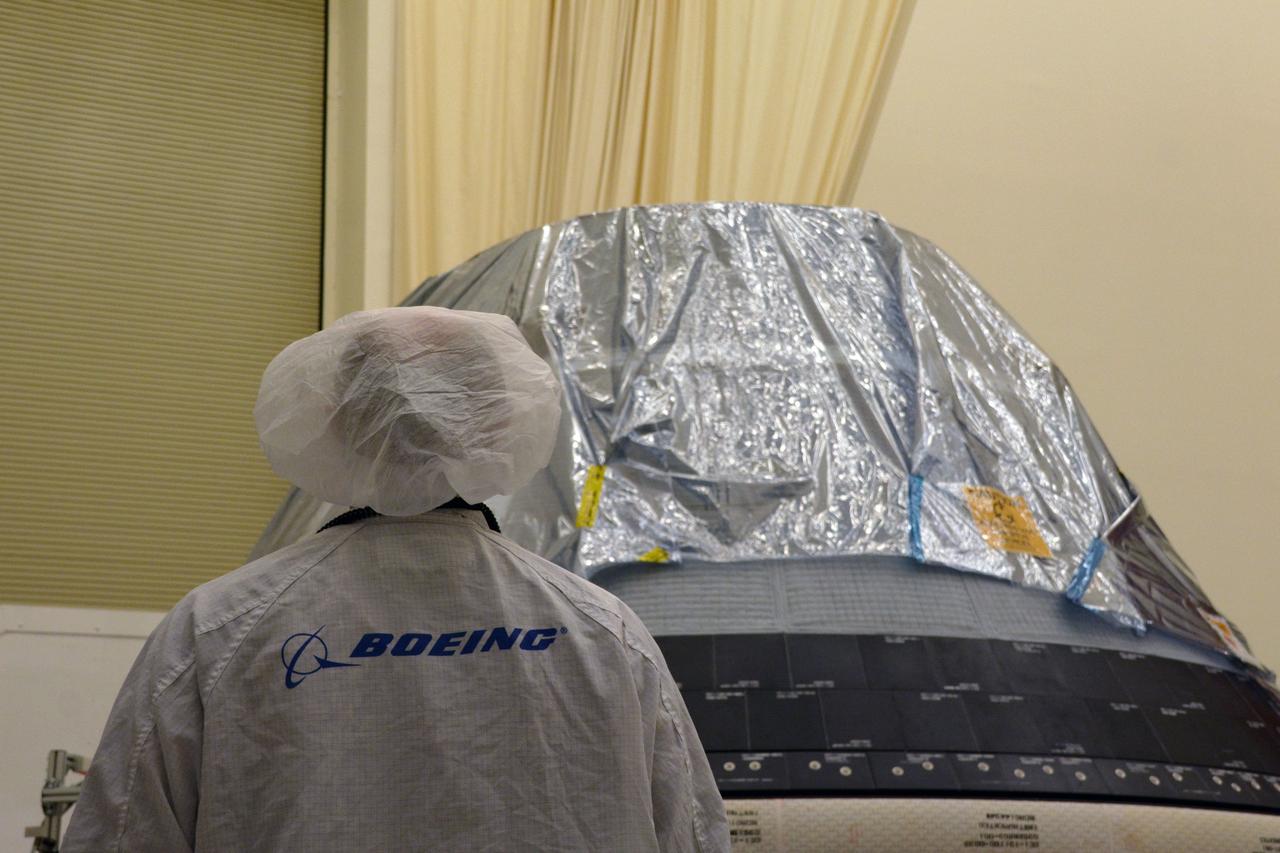
The spacecraft destined to fly astronauts to the International Space Station in Boeing's Crew Flight Test (CFT) is inspected following removal from its shipping container inside the company's testing facilities in El Segundo, California, on Nov. 21, 2018. The company's CST-100 Starliner will be undergoing a series of environmental tests designed to simulate what it will experience during different stages of flight as part of NASA's Commercial Crew Program (CCP). The agency's CCP will return human spaceflight launches to U.S. soil, providing safe, reliable and cost-effective access to low-Earth orbit on systems that meet our safety and mission requirements.
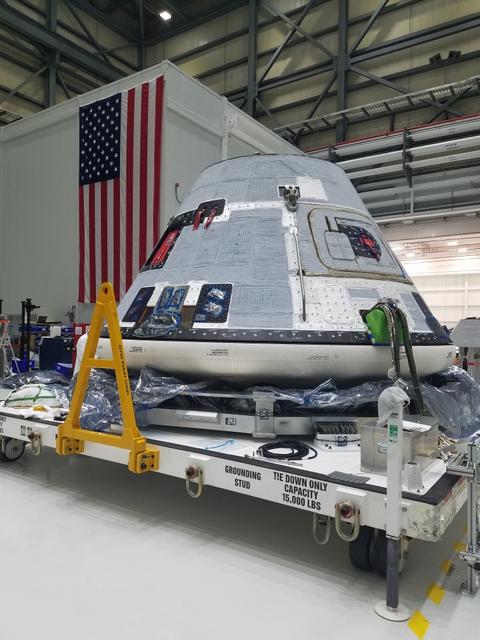
Inside the Commercial Crew and Cargo Processing Facility (C3PF) at NASA's Kennedy Space Center in Florida on Nov. 11, 2018, the spacecraft destined to fly astronauts to the International Space Station in Boeing's Crew Flight Test (CFT) is prepared for transport to the company's testing facilities in El Segundo, California. The company's CST-100 Starliner will be undergoing a series of environmental tests designed to simulate what the spacecraft will experience during different stages of flight as part of NASA's Commercial Crew Program (CCP). The agency's CCP will return human spaceflight launches to U.S. soil, providing safe, reliable and cost-effective access to low-Earth orbit on systems that meet our safety and mission requirements.
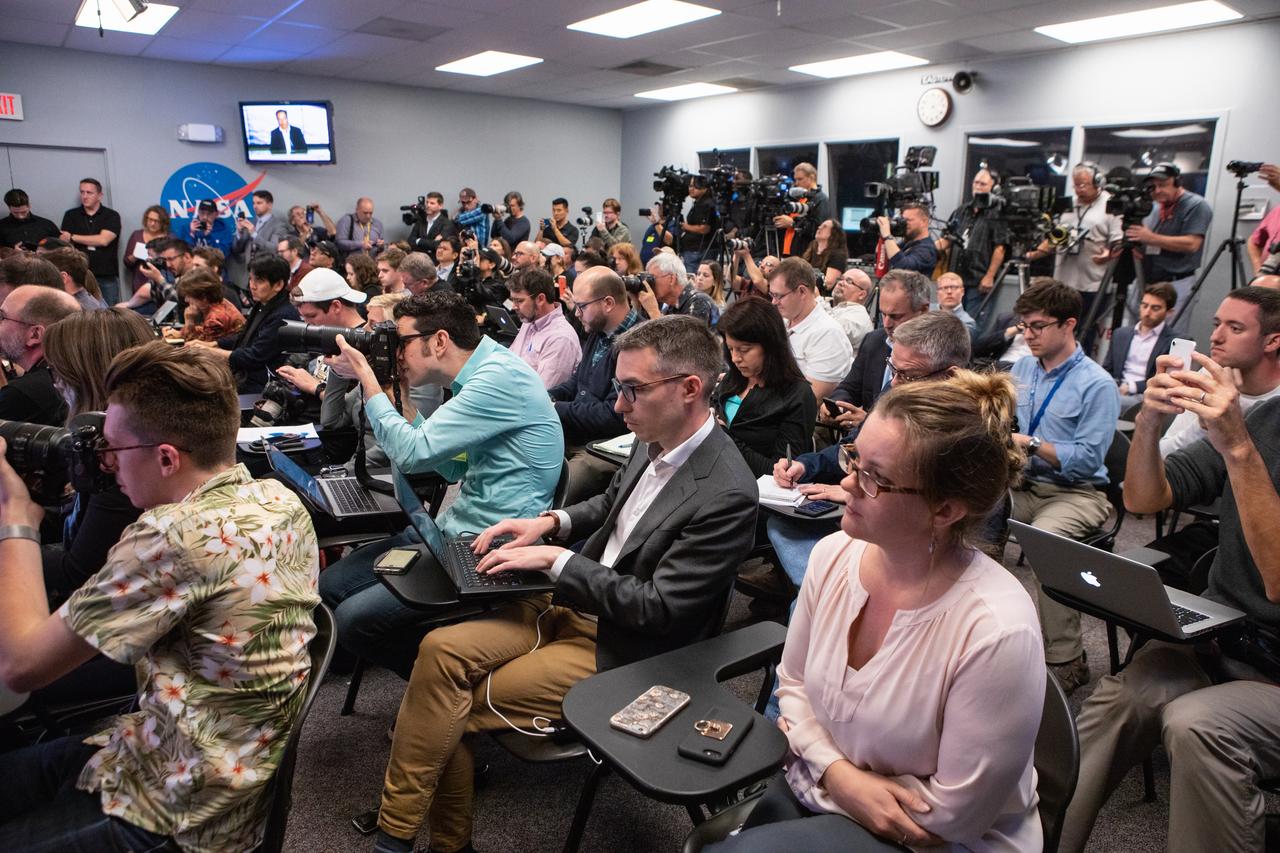
Members of the media gather in Kennedy Space Center’s Press Site auditorium during a post launch news conference with agency and industry leaders following the March 2, 2:49 a.m. EST launch of the SpaceX Demo-1 Commercial Crew Program (CCP) mission to the International Space Station. The Crew Dragon’s trip to the space station is designed to validate end-to-end systems and capabilities, leading to certification to fly crew. NASA has worked with SpaceX and Boeing in developing the CCP spacecraft to facilitate new human spaceflight systems launching from U.S. soil with the goal of safe, reliable and cost-effective access to low-Earth orbit destinations, such as the space station.
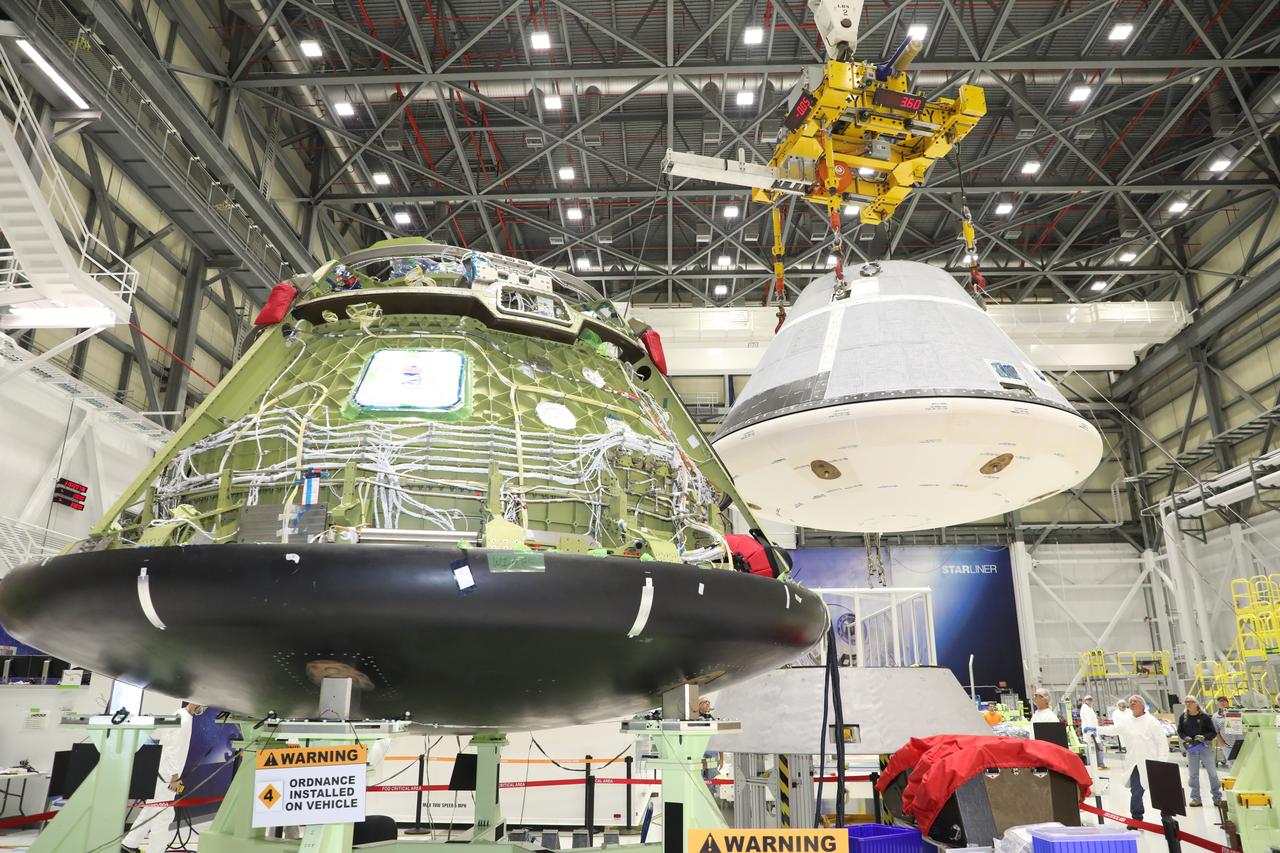
Seen in the foreground inside the Commercial Crew and Cargo Processing Facility (C3PF) at NASA's Kennedy Space Center in Florida on Nov. 11, 2018, the spacecraft destined to fly astronauts to the International Space Station in Boeing's Crew Flight Test (CFT) is prepared for transport to the company's testing facilities in El Segundo, California. The company's CST-100 Starliner will be undergoing a series of environmental tests designed to simulate what the spacecraft will experience during different stages of flight as part of NASA's Commercial Crew Program (CCP). The agency's CCP will return human spaceflight launches to U.S. soil, providing safe, reliable and cost-effective access to low-Earth orbit on systems that meet our safety and mission requirements.
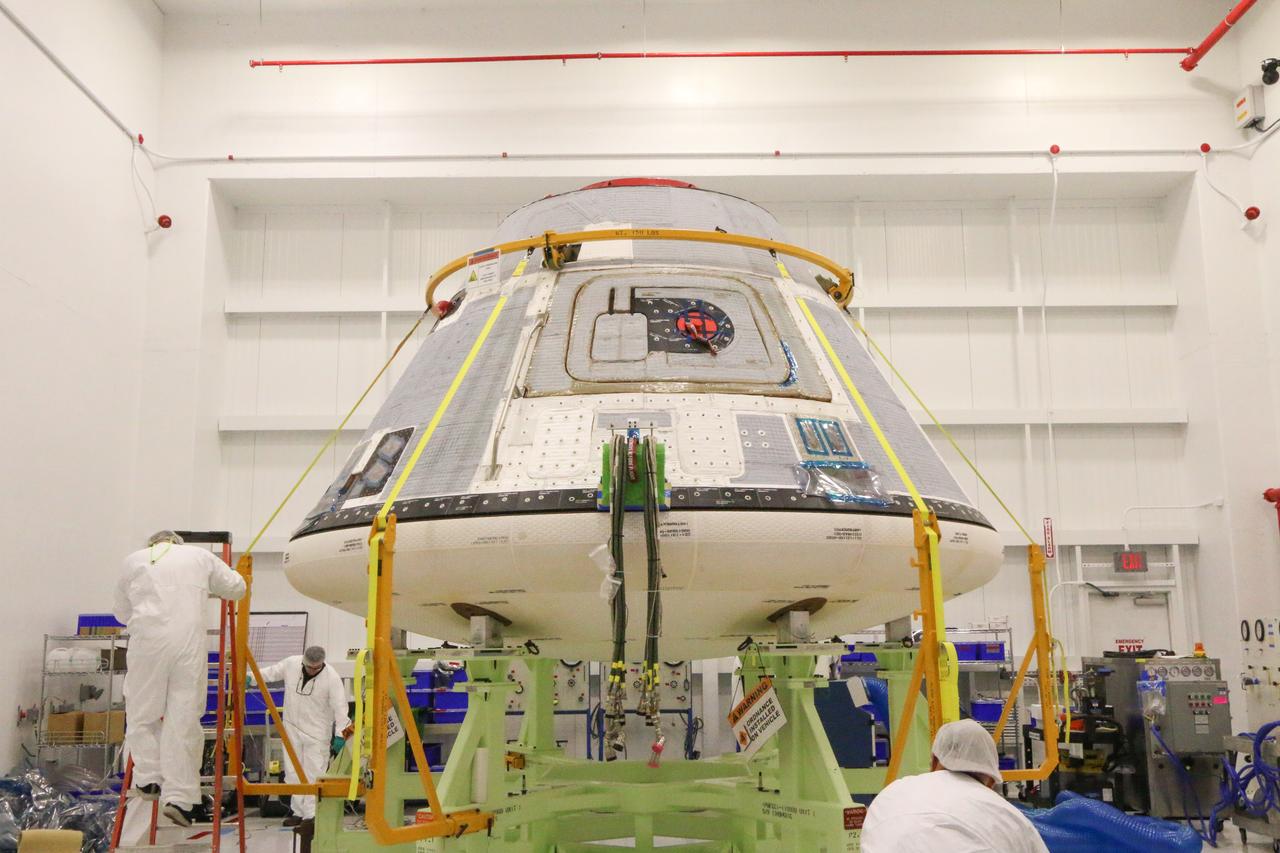
Inside the Commercial Crew and Cargo Processing Facility (C3PF) at NASA's Kennedy Space Center in Florida on Nov. 11, 2018, the spacecraft destined to fly astronauts to the International Space Station in Boeing's Crew Flight Test (CFT) is prepared for transport to the company's testing facilities in El Segundo, California. The company's CST-100 Starliner will be undergoing a series of environmental tests designed to simulate what the spacecraft will experience during different stages of flight as part of NASA's Commercial Crew Program (CCP). The agency's CCP will return human spaceflight launches to U.S. soil, providing safe, reliable and cost-effective access to low-Earth orbit on systems that meet our safety and mission requirements.
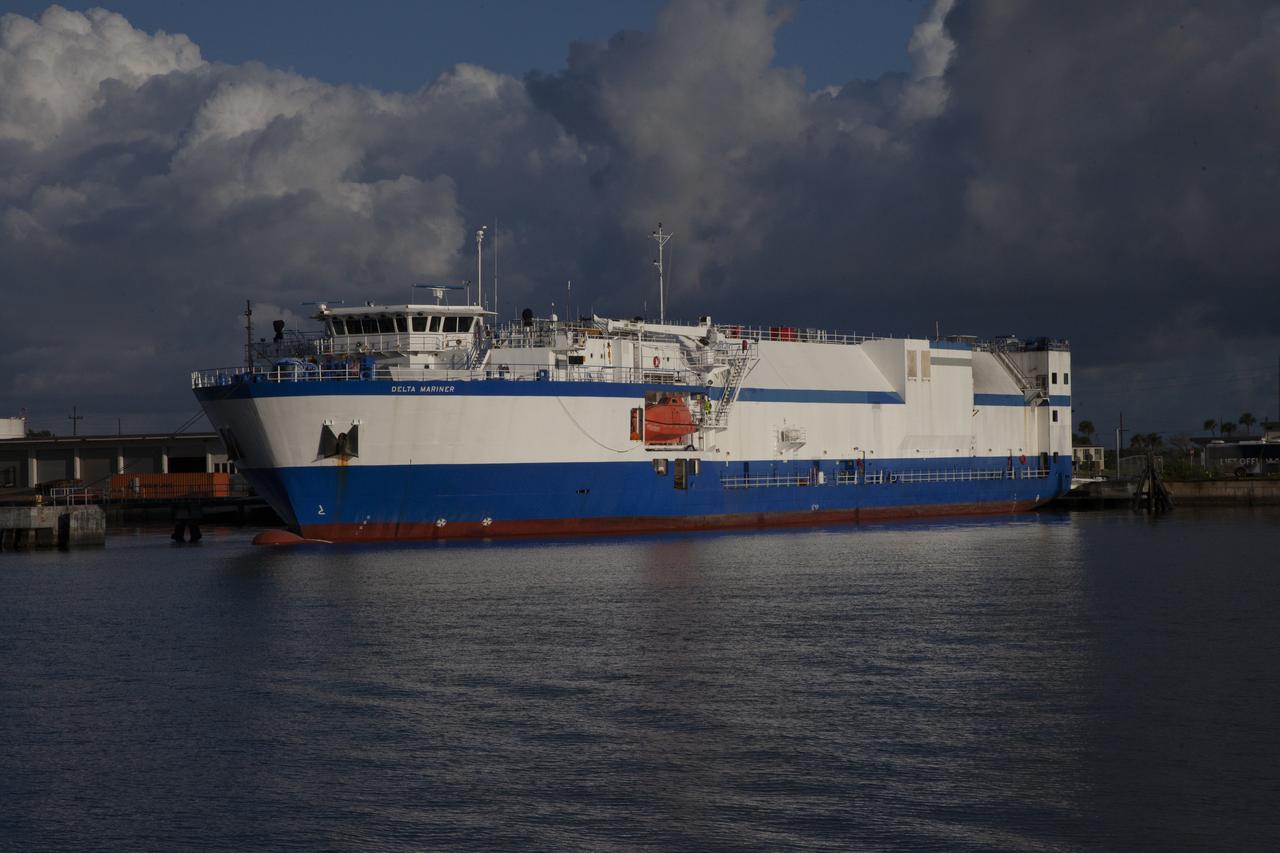
The United Launch Alliance (ULA) Mariner ship arrives at Port Canaveral in Florida carrying a two-engine Centaur upper stage for the upcoming uncrewed Orbital Flight Test of a Boeing CST-100 Starliner spacecraft. As part of NASA's Commercial Crew Program (CCP), the Starliner is part of the next generation of American spacecraft that will launch astronauts to the International Space Station. Starliner will launch early next year atop a ULA Atlas V rocket with the Centaur upper stage from Space Launch Complex 41 at Cape Canaveral Air Force Statin. NASA’s Commercial Crew Program will return human spaceflight launches to U.S. soil, providing safe, reliable and cost-effective access to low-Earth orbit on systems that meet our safety and mission requirements.
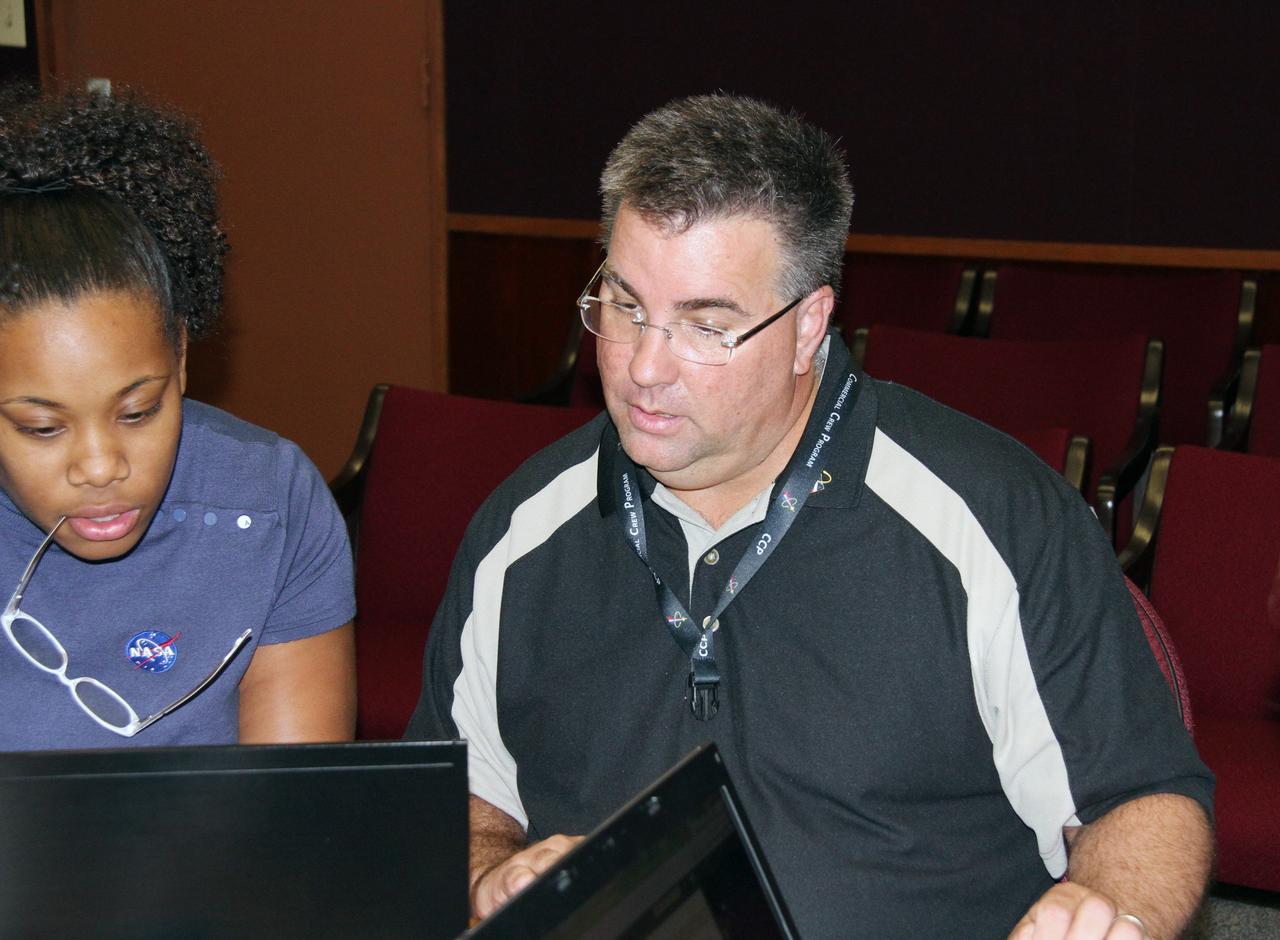
CAPE CANAVERAL, Fla. – The manager of NASA's Commercial Crew Program CCP, Ed Mango, hosts a virtual conversation, called a Tweet Chat, with Twitter followers from around the world. Those who follow www.twitter.com/commercial_crew had an hour-long opportunity to ask Mango questions about NASA’s efforts to get astronauts to low Earth orbit and the International Space Station aboard American rockets and spacecraft. Mango stuck to the social networking service's 140 character limit and answered dozens of questions. At left, is Brittani Sims, a member of the CCP team. The goal of CCP is to drive down the cost of space travel as well as open up space to more people than ever before by balancing industry’s own innovative capabilities with NASA's 50 years of human spaceflight experience. Seven aerospace companies are maturing launch vehicle and spacecraft designs under the program’s second round of development, called Commercial Crew Development Round 2 CCDev2), including Alliant Techsystems Inc. ATK, The Boeing Co., Excalibur Almaz Inc., Blue Origin, Sierra Nevada, Space Exploration Technologies SpaceX, and United Launch Alliance ULA. For more information, visit www.nasa.gov/commercialcrew. Image credit: NASA/Gianni Woods
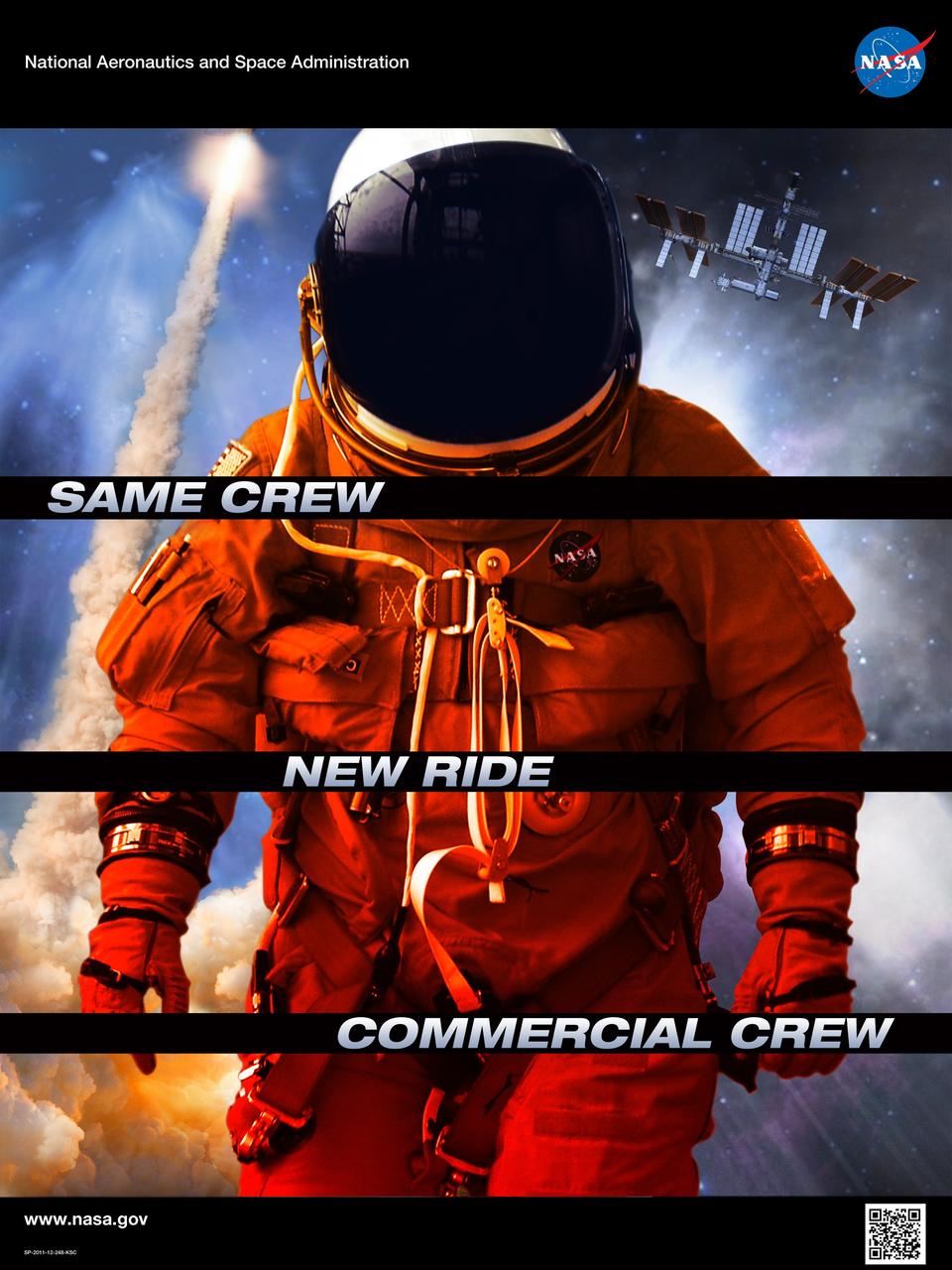
CAPE CANAVERAL, Fla. -- This is a printable version of NASA's "Same Crew, New Ride" poster depicting an artist's conception of NASA's Commercial Crew Program CCP. The poster features a NASA astronaut in the foreground with a vehicle launching toward the International Space Station in the background. CCP is investing in the aerospace industry and helping multiple companies design and develop crew transportation systems that could be capable of flying to the space station and other low Earth orbit destinations. The program is meant to accelerate a United States-led capability to the station where critical scientific work is being performed for use in applications here on Earth. CCP is expected to drive down the cost of space travel as well as open up space to more people than ever before by balancing industry’s own innovative capabilities with NASA's 50 years of human spaceflight experience. For more information, visit www.nasa.gov/commercialcrew. Poster designed by Kennedy Space Center Graphics Department/Greg Lee. Credit: NASA
CAPE CANAVERAL, Fla. – The manager of NASA's Commercial Crew Program CCP, Ed Mango, hosts a virtual conversation, called a Tweet Chat, with Twitter followers from around the world. Those who follow www.twitter.com/commercial_crew had an hour-long opportunity to ask Mango questions about NASA’s efforts to get astronauts to low Earth orbit and the International Space Station aboard American rockets and spacecraft. Mango stuck to the social networking service's 140 character limit and answered dozens of questions. At left, is Brittani Sims, a member of the CCP team. The goal of CCP is to drive down the cost of space travel as well as open up space to more people than ever before by balancing industry’s own innovative capabilities with NASA's 50 years of human spaceflight experience. Seven aerospace companies are maturing launch vehicle and spacecraft designs under the program’s second round of development, called Commercial Crew Development Round 2 CCDev2), including Alliant Techsystems Inc. ATK, The Boeing Co., Excalibur Almaz Inc., Blue Origin, Sierra Nevada, Space Exploration Technologies SpaceX, and United Launch Alliance ULA. For more information, visit www.nasa.gov/commercialcrew. Image credit: NASA/Gianni Woods

LOUISVILLE, Colo. – During NASA's Commercial Crew Development Round 2 CCDev2) activities for the Commercial Crew Program CCP, Sierra Nevada Corp. SNC built a Simulator and Avionics Laboratory to help engineers evaluate the Dream Chaser's characteristics during the piloted phases of flight. Located at Sierra Nevada’s Space Systems facility in Louisville, Colo., it consists of a physical cockpit and integrated simulation hardware and software. The simulator is linked to the Vehicle Avionics Integration Laboratory, or VAIL, which serves as a platform for Dream Chaser avionics development, engineering testing and integration. VAIL also will also be used for verification and validation of avionics and software. Sierra Nevada is one of seven companies NASA entered into Space Act Agreements SAAs with during CCDev2 to aid in the innovation and development of American-led commercial capabilities for crew transportation and rescue services to and from the International Space Station and other low Earth orbit destinations. For information about CCP, visit www.nasa.gov/commercialcrew. Photo credit: Sierra Nevada Corp.