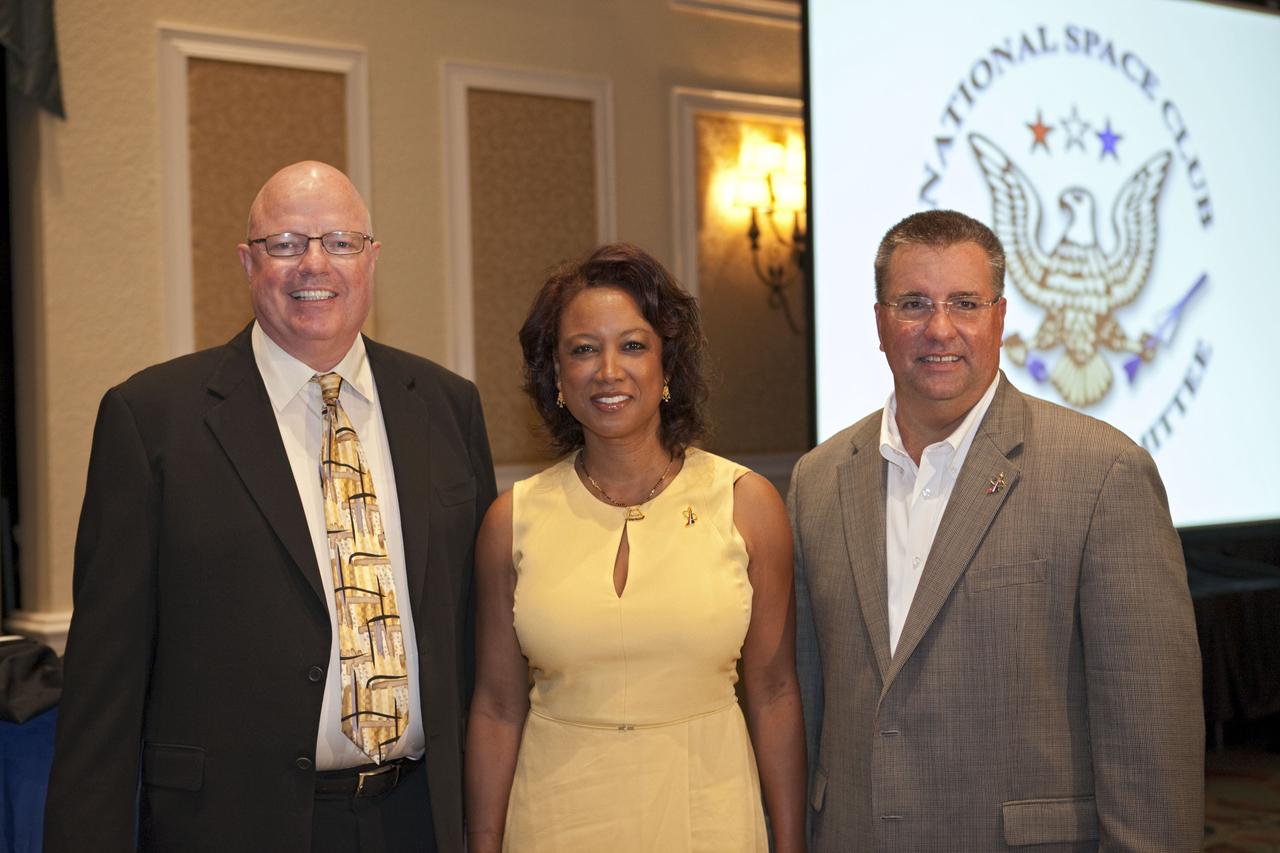
CAPE CANAVERAL, Fla. -- National Space Club Florida Committee Chair Steve Griffin, left, Florida's Lt. Gov. Jennifer Carroll, and NASA Commercial Crew Program Manager Ed Mango pose for a photo at the club's August luncheon at the Radisson Resort at the Port in Cape Canaveral, Fla. Mango was the event's guest speaker, discussing the innovative steps the agency is taking with industry partners to develop the next U.S. space transportation capability to and from low Earth orbit, which will eventually be available for use by the U.S. government and other commercial customers. To learn more about the Commercial Crew Program, visit www.nasa.gov/commercialcrew. Photo credit: Kim Shiflett
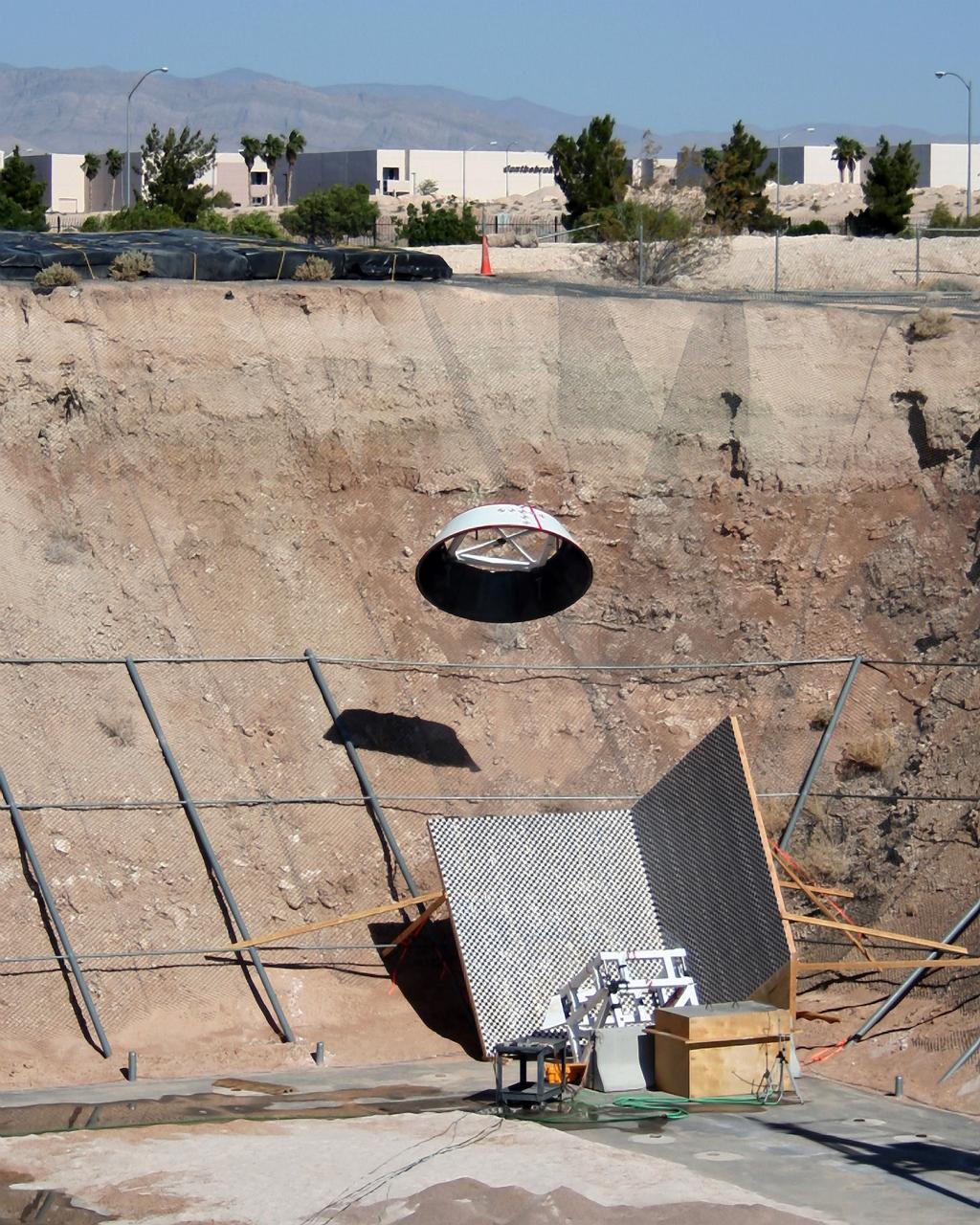
LAS VEGAS -- The Boeing Company tests the forward heat shield FHS jettison system of its CST-100 spacecraft at the Bigelow Aerospace facility in Las Vegas as part of an agreement with NASA's Commercial Crew Program CCP during Commercial Crew Development Round 2 CCDev2) activities. The FHS will protect the spacecraft's parachutes, rendezvous-and-docking sensor packages, and docking mechanism during ascent and re-entry. During a mission to low Earth orbit, the shield will be jettisoned after re-entry heating, allowing the spacecraft's air bags to deploy for a safe landing. In 2011, NASA selected Boeing for CCDev2 to mature the design and development of a crew transportation system with the overall goal of accelerating a United States-led capability to the International Space Station. The goal of CCP is to drive down the cost of space travel as well as open up space to more people than ever before by balancing industry’s own innovative capabilities with NASA's 50 years of human spaceflight experience. Six other aerospace companies also were selected to mature launch vehicle and spacecraft designs under CCDev2, including Alliant Techsystems Inc. ATK, Excalibur Almaz Inc., Blue Origin, Sierra Nevada Corp. SNC, Space Exploration Technologies SpaceX, and United Launch Alliance ULA. For more information, visit www.nasa.gov/commercialcrew. Image credit: Boeing The Ground Systems Development and Operations Program is developing the necessary ground systems, infrastructure and operational approaches required to safely process, assemble, transport and launch the next generation of rockets and spacecraft in support of NASA’s exploration objectives. Future work also will replace the antiquated communications, power and vehicle access resources with modern efficient systems. Some of the utilities and systems slated for replacement have been used since the VAB opened in 1965. For more information, visit http://www.nasa.gov/exploration/systems/ground/index.html Photo credit: Boeing