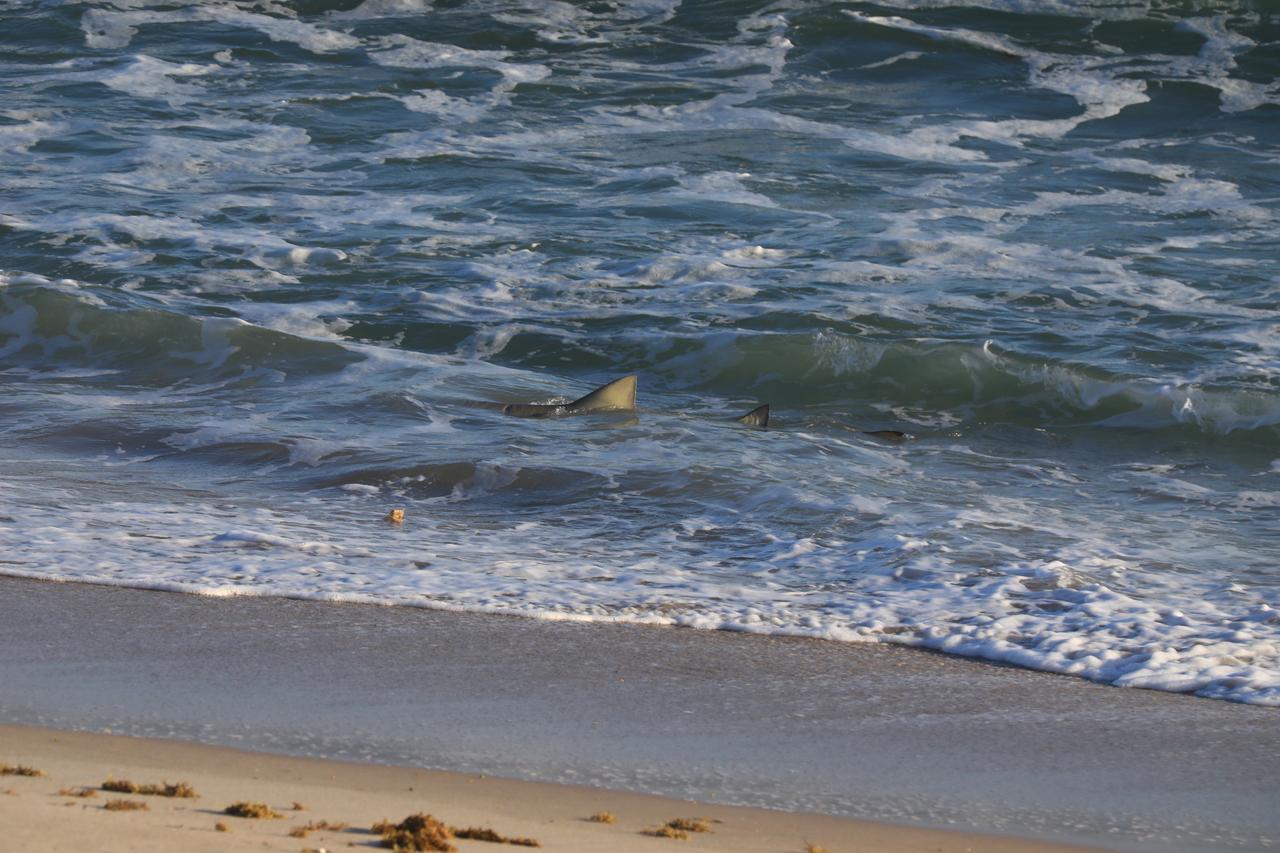
A shark swims near the shore at Cape Canaveral Space Force Station (CCSFS) on Oct. 27, 2020. CCSFS shares boundaries with the Merritt Island National Wildlife Refuge, featuring miles of pristine beaches on the Atlantic Ocean. The refuge contains coastal dunes, saltwater marshes, freshwater impoundments, scrub, pine flatwoods, and hardwood hammocks that provide habitat for more than 1,500 species of plants and animals.
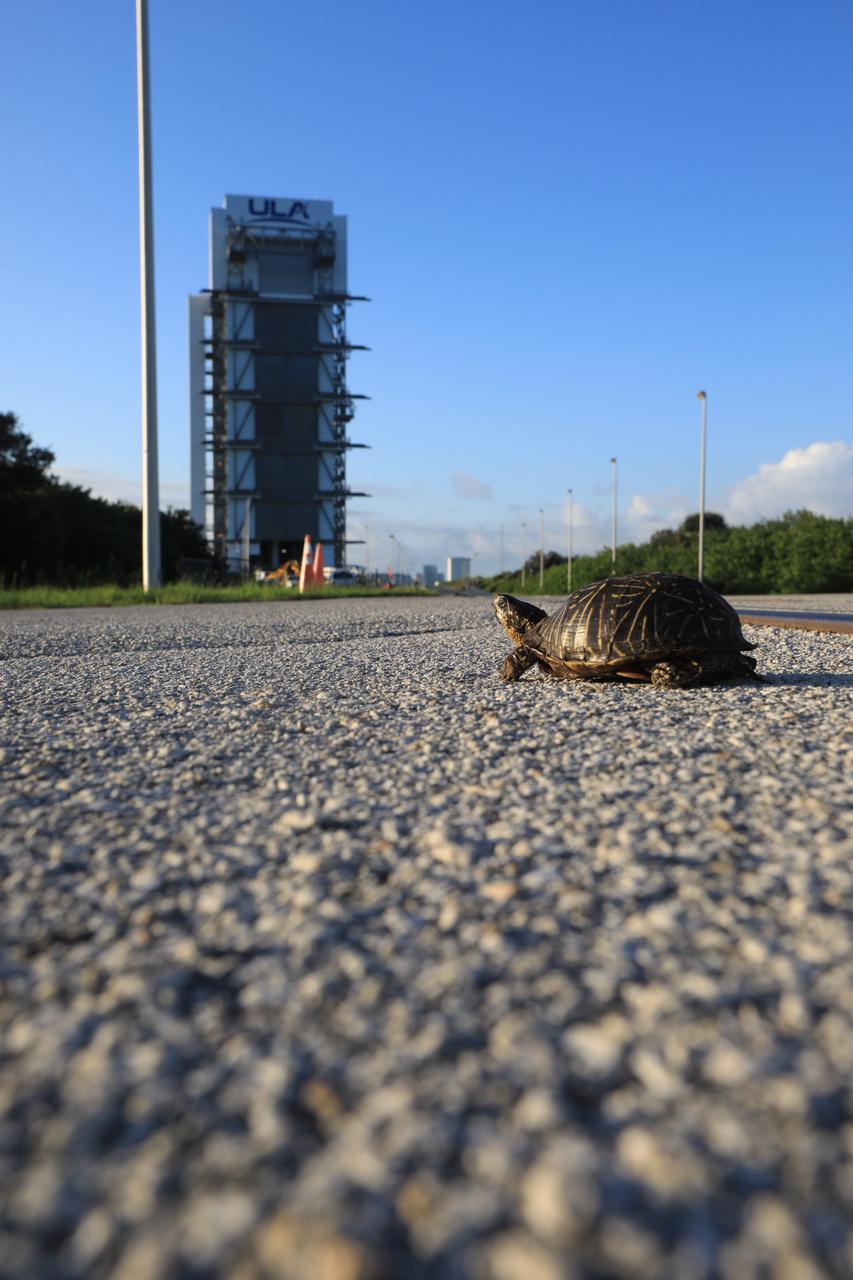
A turtle makes it way along the roadway at Cape Canaveral Space Force Station (CCSFS) in Florida on Oct. 27, 2020. CCSFS shares boundaries with the Merritt Island National Wildlife Refuge, consisting of 140,000 acres. The refuge contains coastal dunes, saltwater marshes, freshwater impoundments, scrub, pine flatwoods, and hardwood hammocks that provide habitat for more than 1,500 species of plants and animals.

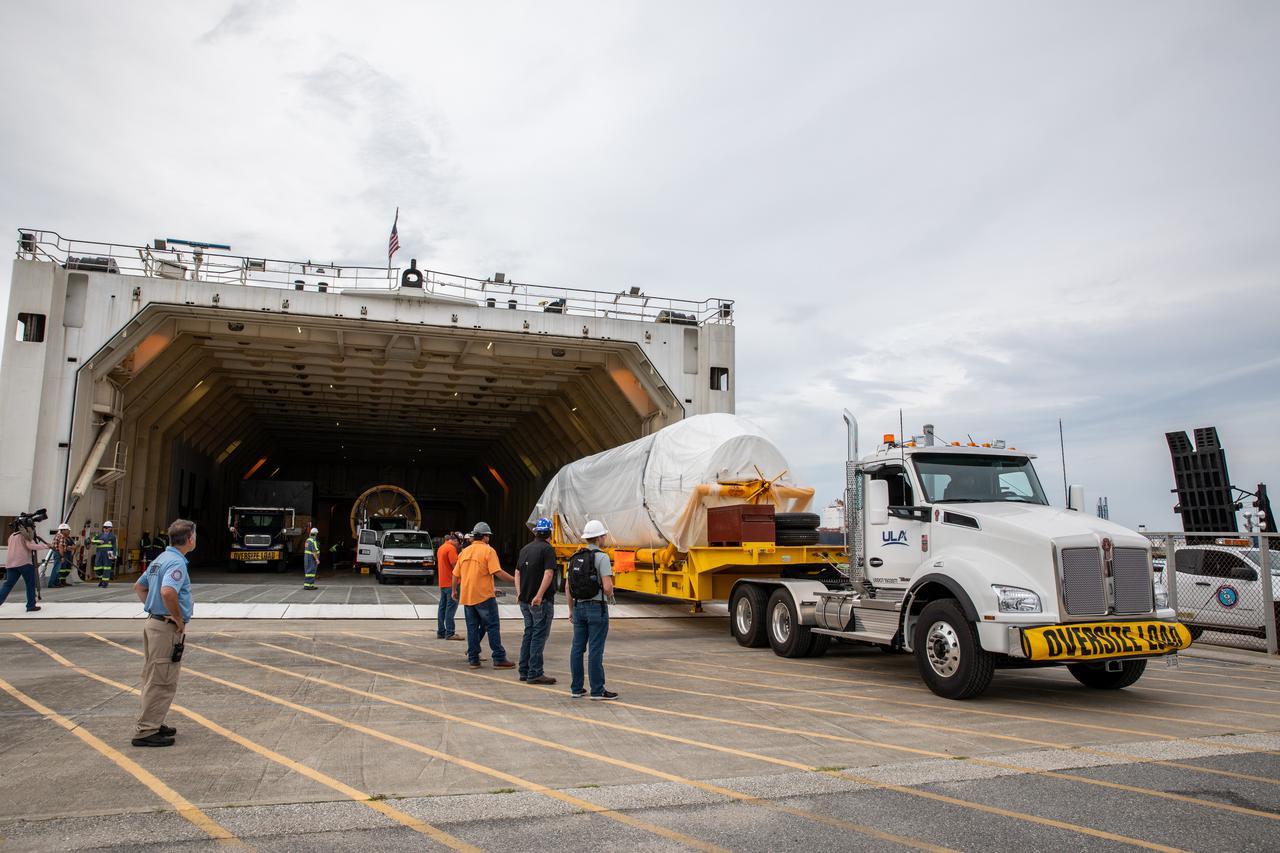
A United Launch Alliance (ULA) transport boat carrying the first and second stages of the company’s Atlas V 541 rocket arrives at Cape Canaveral Space Force Station (CCSFS) in Florida on Nov. 15, 2021. The ship journeyed from ULA’s manufacturing plant in Decatur, Alabama, to deliver the rocket that will launch NASA and the National Oceanic Atmospheric Administration’s (NOAA) Geostationary Operational Environmental Satellite T (GOES-T). GOES-T is the third satellite in the GOES-R series that will continue to help meteorologists observe and predict local weather events that affect public safety. GOES-T is scheduled to launch from Space Launch Complex 41 at CCSFS on March 1, 2022. The launch is being managed by NASA’s Launch Services Program based at Kennedy Space Center, America’s multi-user spaceport.
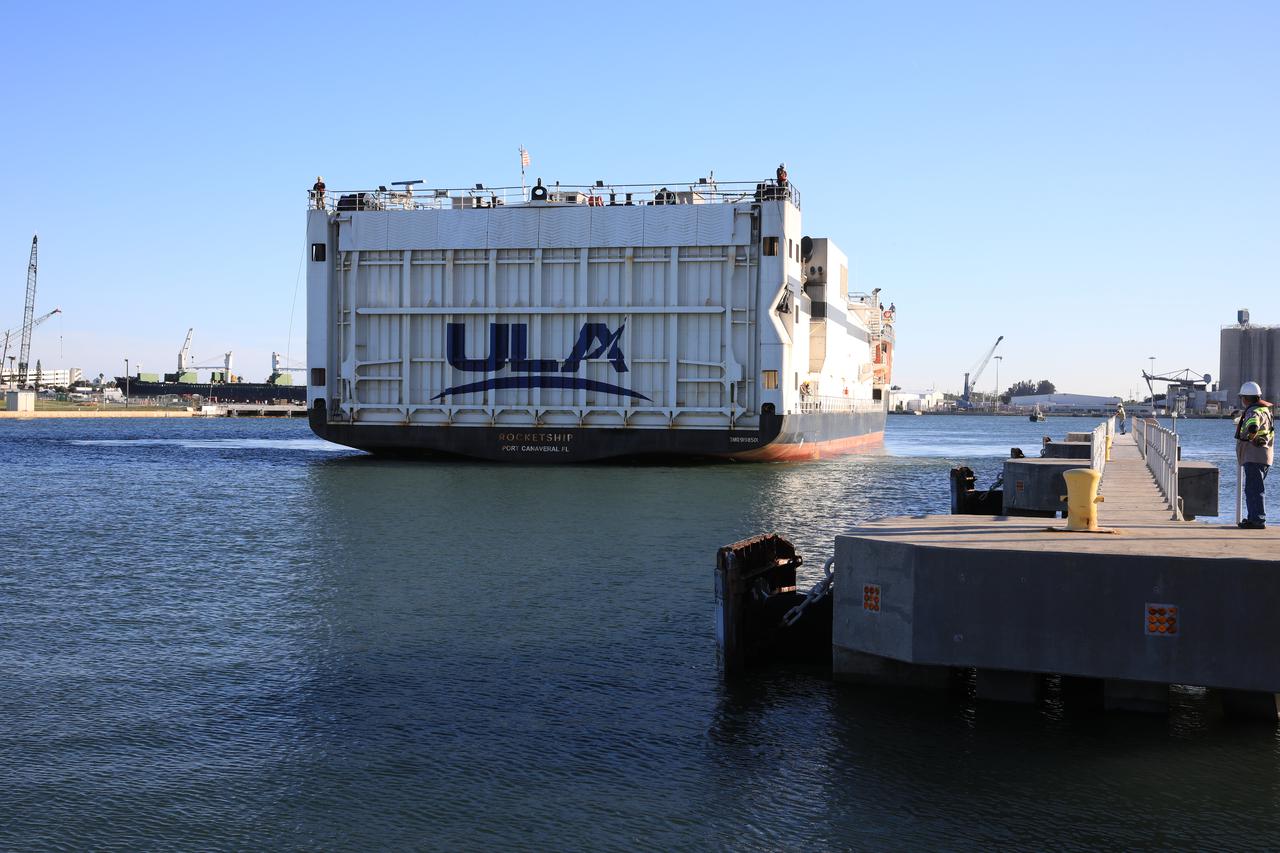
A United Launch Alliance (ULA) transport boat carrying the first and second stages of the company’s Atlas V 541 rocket arrives at Cape Canaveral Space Force Station (CCSFS) in Florida on Nov. 15, 2021. The ship journeyed from ULA’s manufacturing plant in Decatur, Alabama, to deliver the rocket that will launch NASA and the National Oceanic Atmospheric Administration’s (NOAA) Geostationary Operational Environmental Satellite T (GOES-T). GOES-T is the third satellite in the GOES-R series that will continue to help meteorologists observe and predict local weather events that affect public safety. GOES-T is scheduled to launch from Space Launch Complex 41 at CCSFS on March 1, 2022. The launch is being managed by NASA’s Launch Services Program based at Kennedy Space Center, America’s multi-user spaceport.
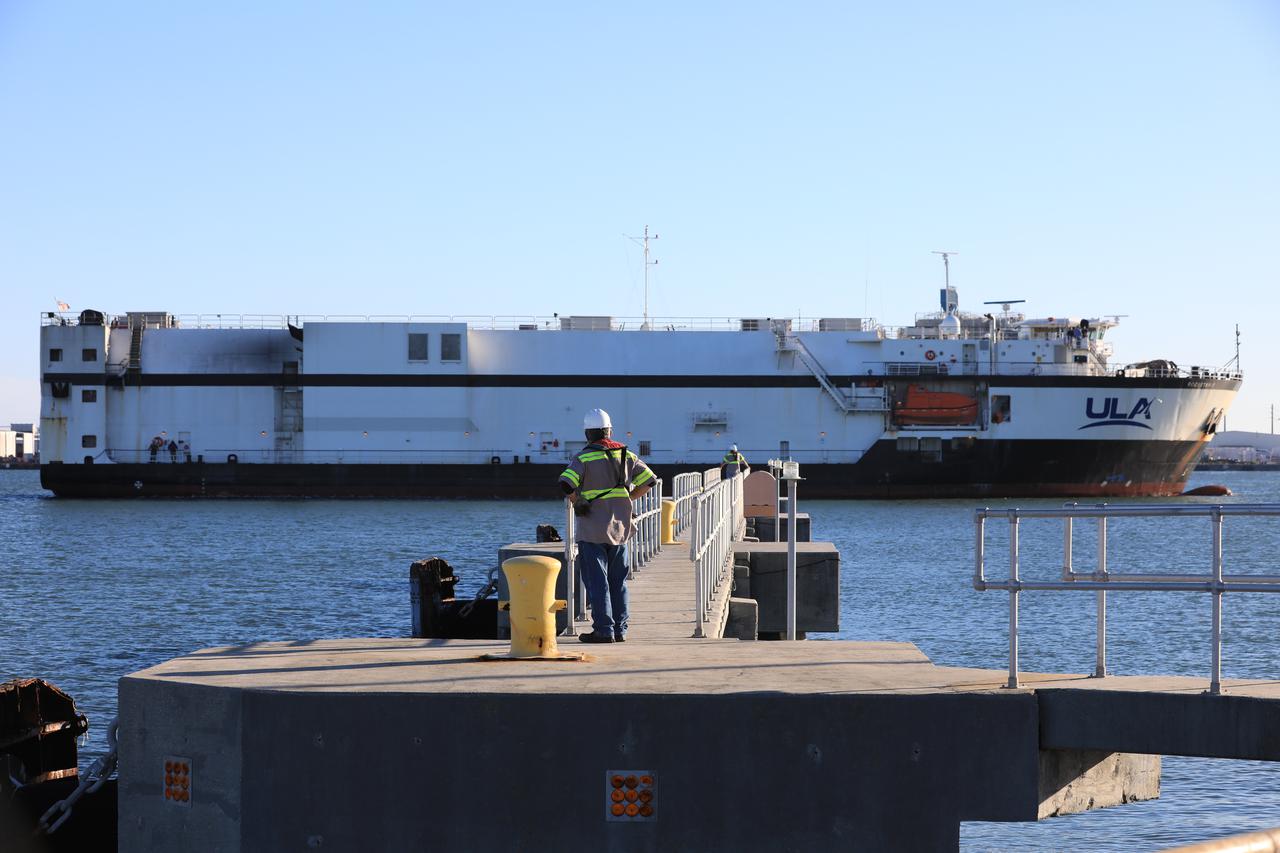
A United Launch Alliance (ULA) transport boat carrying the first and second stages of the company’s Atlas V 541 rocket arrives at Cape Canaveral Space Force Station (CCSFS) in Florida on Nov. 15, 2021. The ship journeyed from ULA’s manufacturing plant in Decatur, Alabama, to deliver the rocket that will launch NASA and the National Oceanic Atmospheric Administration’s (NOAA) Geostationary Operational Environmental Satellite T (GOES-T). GOES-T is the third satellite in the GOES-R series that will continue to help meteorologists observe and predict local weather events that affect public safety. GOES-T is scheduled to launch from Space Launch Complex 41 at CCSFS on March 1, 2022. The launch is being managed by NASA’s Launch Services Program based at Kennedy Space Center, America’s multi-user spaceport.
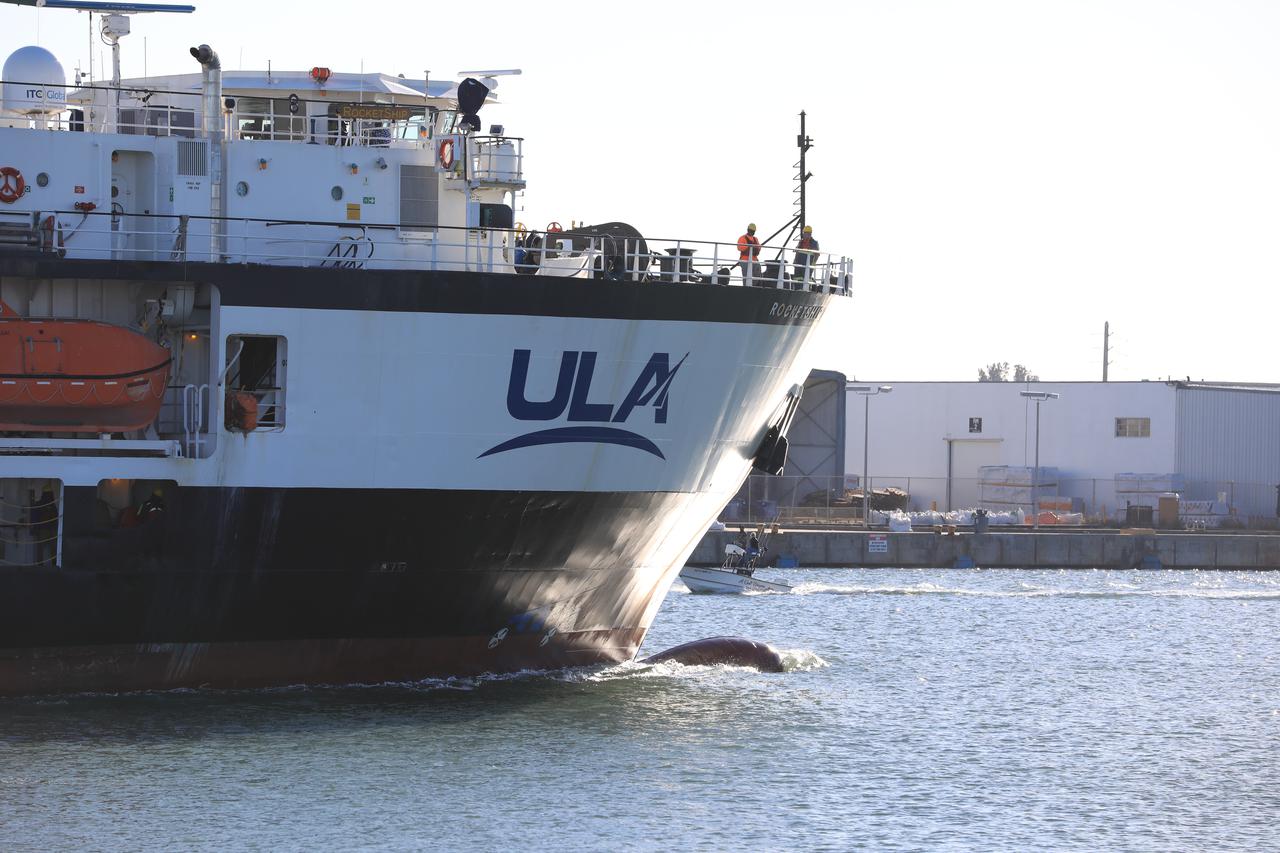
A United Launch Alliance (ULA) transport boat carrying the first and second stages of the company’s Atlas V 541 rocket arrives at Cape Canaveral Space Force Station (CCSFS) in Florida on Nov. 15, 2021. The ship journeyed from ULA’s manufacturing plant in Decatur, Alabama, to deliver the rocket that will launch NASA and the National Oceanic Atmospheric Administration’s (NOAA) Geostationary Operational Environmental Satellite T (GOES-T). GOES-T is the third satellite in the GOES-R series that will continue to help meteorologists observe and predict local weather events that affect public safety. GOES-T is scheduled to launch from Space Launch Complex 41 at CCSFS on March 1, 2022. The launch is being managed by NASA’s Launch Services Program based at Kennedy Space Center, America’s multi-user spaceport.
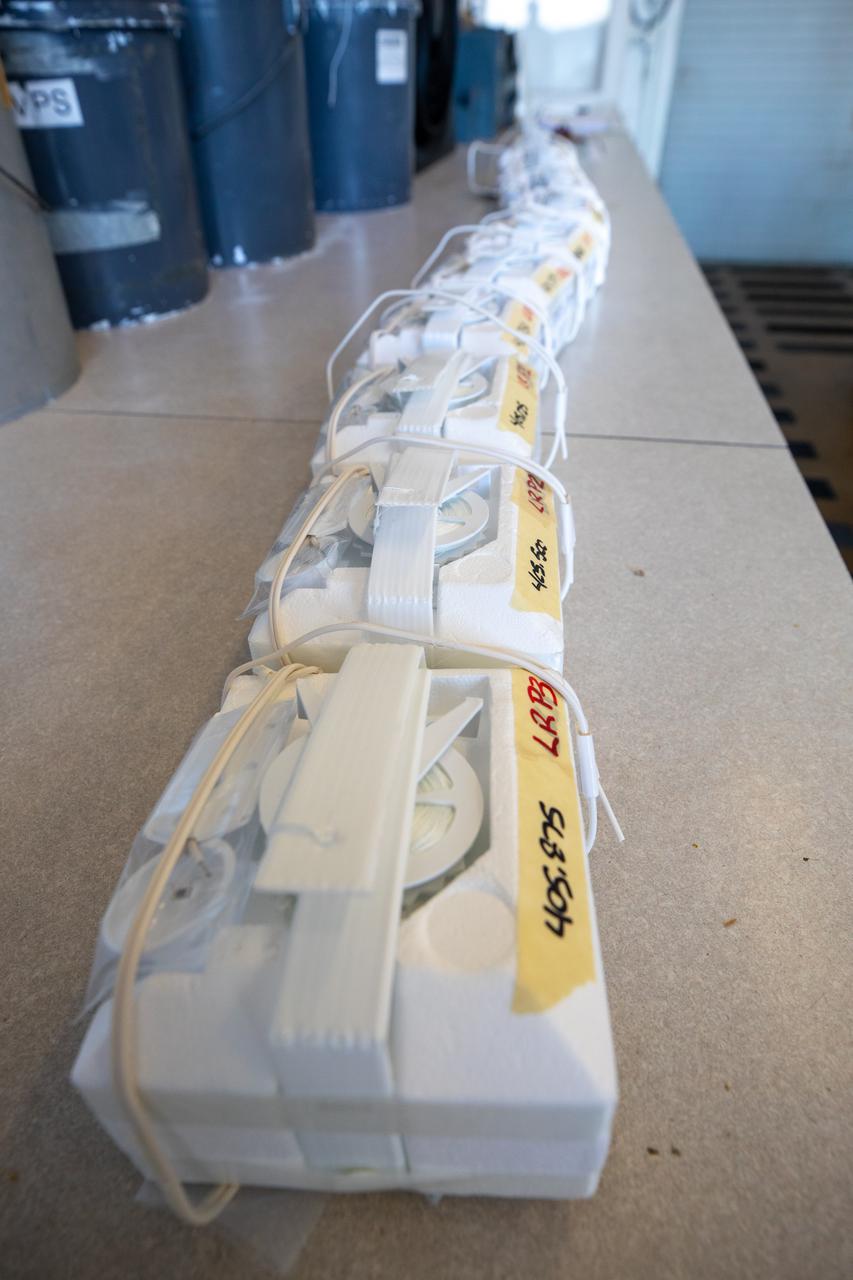
Weather balloons are lined up prior to release at the Cape Canaveral Space Force Station (CCSFS) Weather Station in preparation for an Artemis I weather simulation on Nov. 3, 2021. The event involved teams from CCSFS, Kennedy Space Center, Johnson Space Center in Texas, and Marshall Space Flight Center in Alabama. Weather balloons provided data below 6,000 feet and above 62,000 feet, while Kennedy’s Tropospheric Doppler Radar Wind Profiler delivered data from 6,000 to 62,000 feet. The radar wind profiler will be used as the primary upper level wind instrument for NASA’s Artemis missions, including Artemis I, the first launch of the agency’s Space Launch System rocket and the Orion spacecraft on a flight beyond the Moon.

Meteorological Data Specialist Michael Boyer prepares weather balloons for release at the Cape Canaveral Space Force Station (CCSFS) Weather Station in preparation for an Artemis I weather simulation on Nov. 3, 2021. The event involved teams from CCSFS, Kennedy Space Center, Johnson Space Center in Texas, and Marshall Space Flight Center in Alabama. Weather balloons provided data below 6,000 feet and above 62,000 feet, while Kennedy’s Tropospheric Doppler Radar Wind Profiler delivered data from 6,000 to 62,000 feet. The radar wind profiler will be used as the primary upper level wind instrument for NASA’s Artemis missions, including Artemis I, the first launch of the agency’s Space Launch System rocket and the Orion spacecraft on a flight beyond the Moon.
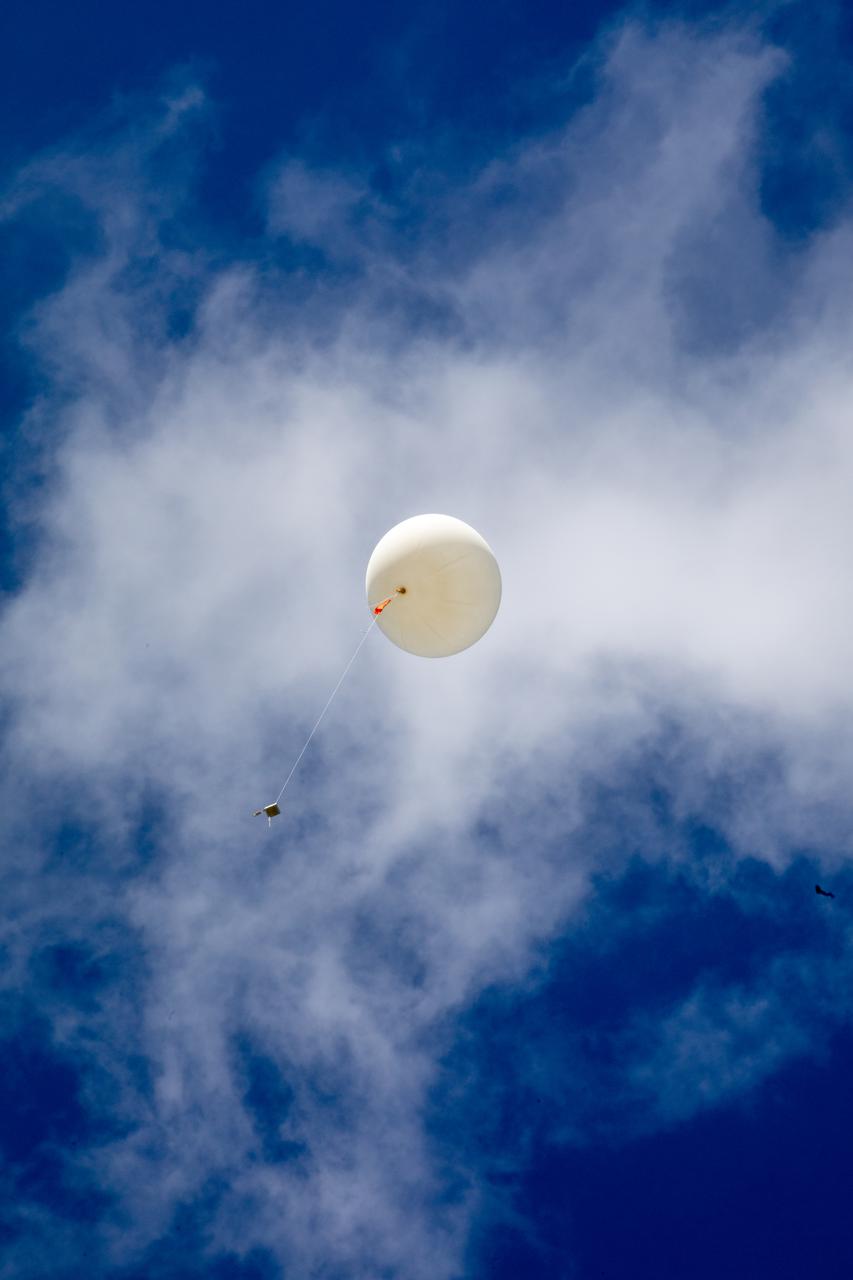
Meteorological Data Specialist Michael Boyer releases a weather balloon at the Cape Canaveral Space Force Station (CCSFS) Weather Station during an Artemis I weather simulation on Nov. 3, 2021. The event involved teams from CCSFS, Kennedy Space Center, Johnson Space Center in Texas, and Marshall Space Flight Center in Alabama. Weather balloons provided data below 6,000 feet and above 62,000 feet, while Kennedy’s Tropospheric Doppler Radar Wind Profiler delivered data from 6,000 to 62,000 feet. The radar wind profiler will be used as the primary upper level wind instrument for NASA’s Artemis missions, including Artemis I, the first launch of the agency’s Space Launch System rocket and the Orion spacecraft on a flight beyond the Moon.
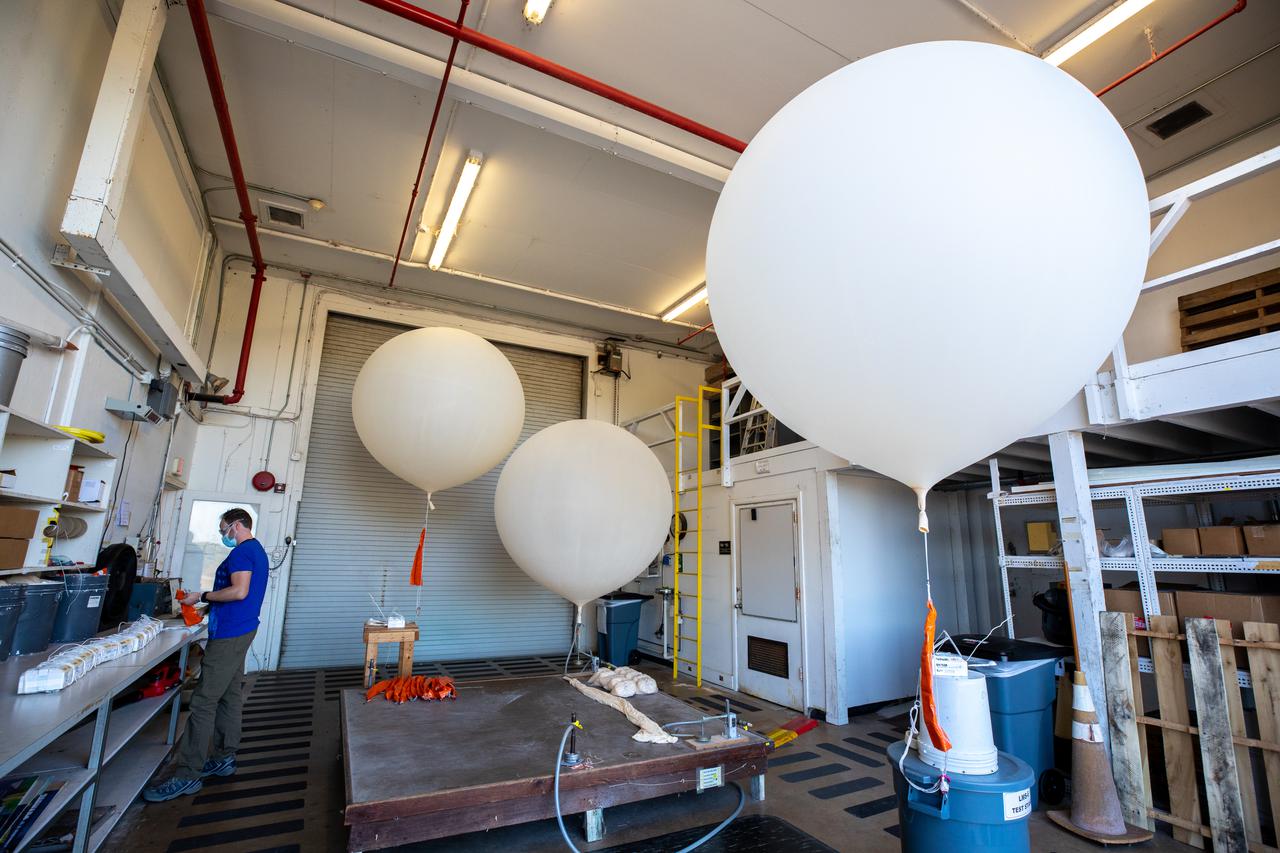
Meteorological Data Specialist Michael Boyer prepares weather balloons for release at the Cape Canaveral Space Force Station (CCSFS) Weather Station in preparation for an Artemis I weather simulation on Nov. 3, 2021. The event involved teams from CCSFS, Kennedy Space Center, Johnson Space Center in Texas, and Marshall Space Flight Center in Alabama. Weather balloons provided data below 6,000 feet and above 62,000 feet, while Kennedy’s Tropospheric Doppler Radar Wind Profiler delivered data from 6,000 to 62,000 feet. The radar wind profiler will be used as the primary upper level wind instrument for NASA’s Artemis missions, including Artemis I, the first launch of the agency’s Space Launch System rocket and the Orion spacecraft on a flight beyond the Moon.
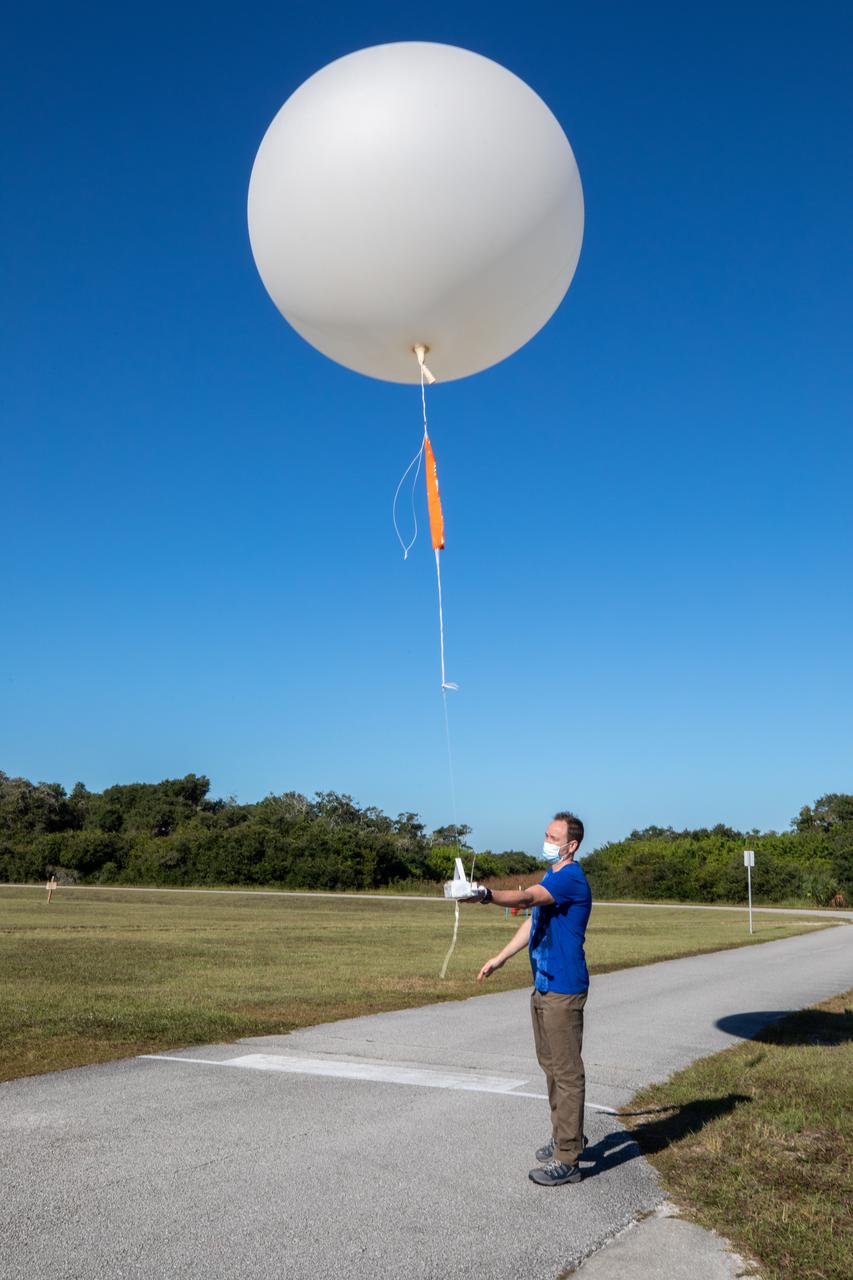
Meteorological Data Specialist Michael Boyer releases a weather balloon at the Cape Canaveral Space Force Station (CCSFS) Weather Station during an Artemis I weather simulation on Nov. 3, 2021. The event involved teams from CCSFS, Kennedy Space Center, Johnson Space Center in Texas, and Marshall Space Flight Center in Alabama. Weather balloons provided data below 6,000 feet and above 62,000 feet, while Kennedy’s Tropospheric Doppler Radar Wind Profiler delivered data from 6,000 to 62,000 feet. The radar wind profiler will be used as the primary upper level wind instrument for NASA’s Artemis missions, including Artemis I, the first launch of the agency’s Space Launch System rocket and the Orion spacecraft on a flight beyond the Moon.

Meteorological Data Specialist Michael Boyer prepares to release a weather balloon at the Cape Canaveral Space Force Station (CCSFS) Weather Station during an Artemis I weather simulation on Nov. 3, 2021. The event involved teams from CCSFS, Kennedy Space Center, Johnson Space Center in Texas, and Marshall Space Flight Center in Alabama. Weather balloons provided data below 6,000 feet and above 62,000 feet, while Kennedy’s Tropospheric Doppler Radar Wind Profiler delivered data from 6,000 to 62,000 feet. The radar wind profiler will be used as the primary upper level wind instrument for NASA’s Artemis missions, including Artemis I, the first launch of the agency’s Space Launch System rocket and the Orion spacecraft on a flight beyond the Moon.
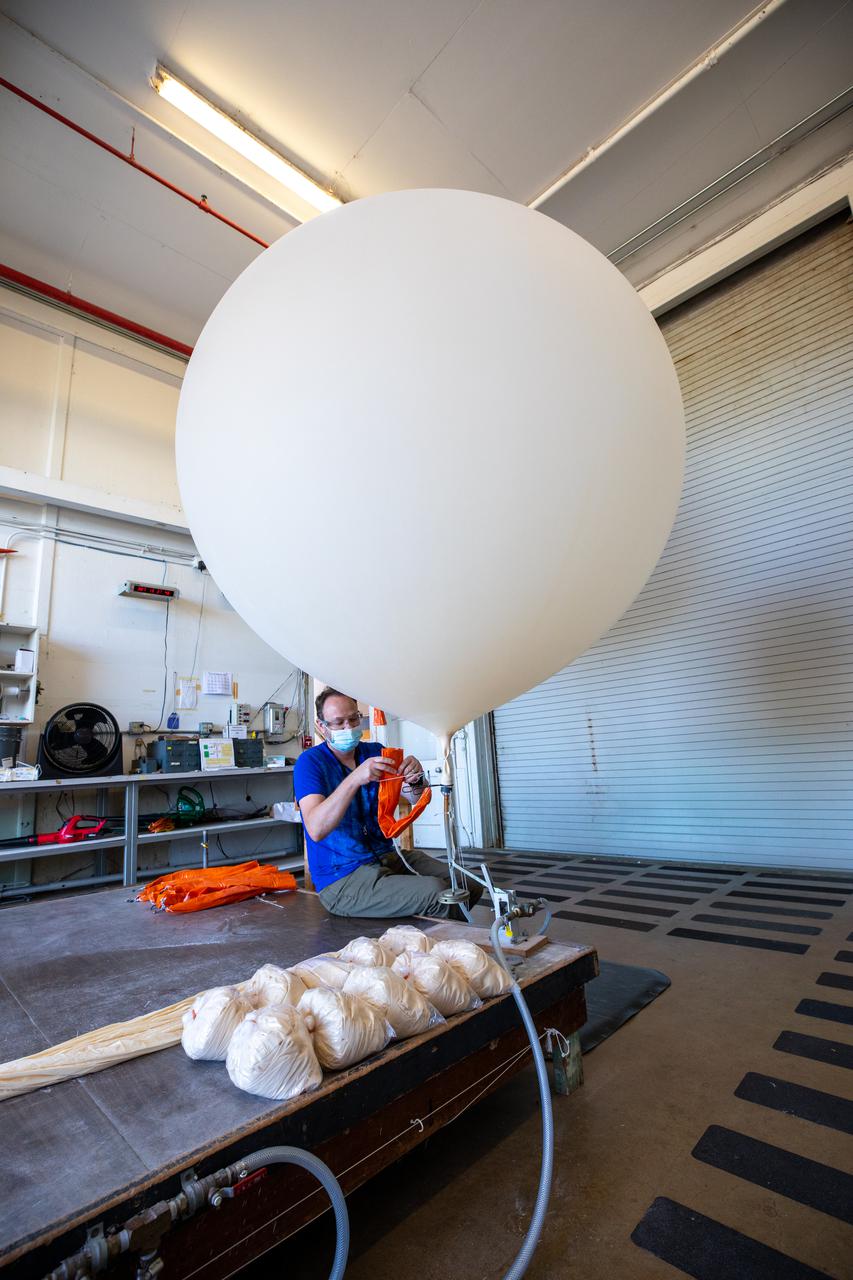
Meteorological Data Specialist Michael Boyer prepares weather balloons for release at the Cape Canaveral Space Force Station (CCSFS) Weather Station in preparation for an Artemis I weather simulation on Nov. 3, 2021. The event involved teams from CCSFS, Kennedy Space Center, Johnson Space Center in Texas, and Marshall Space Flight Center in Alabama. Weather balloons provided data below 6,000 feet and above 62,000 feet, while Kennedy’s Tropospheric Doppler Radar Wind Profiler delivered data from 6,000 to 62,000 feet. The radar wind profiler will be used as the primary upper level wind instrument for NASA’s Artemis missions, including Artemis I, the first launch of the agency’s Space Launch System rocket and the Orion spacecraft on a flight beyond the Moon.

Meteorological Data Specialist Michael Boyer releases a weather balloon at the Cape Canaveral Space Force Station (CCSFS) Weather Station during an Artemis I weather simulation on Nov. 3, 2021. The event involved teams from CCSFS, Kennedy Space Center, Johnson Space Center in Texas, and Marshall Space Flight Center in Alabama. Weather balloons provided data below 6,000 feet and above 62,000 feet, while Kennedy’s Tropospheric Doppler Radar Wind Profiler delivered data from 6,000 to 62,000 feet. The radar wind profiler will be used as the primary upper level wind instrument for NASA’s Artemis missions, including Artemis I, the first launch of the agency’s Space Launch System rocket and the Orion spacecraft on a flight beyond the Moon.
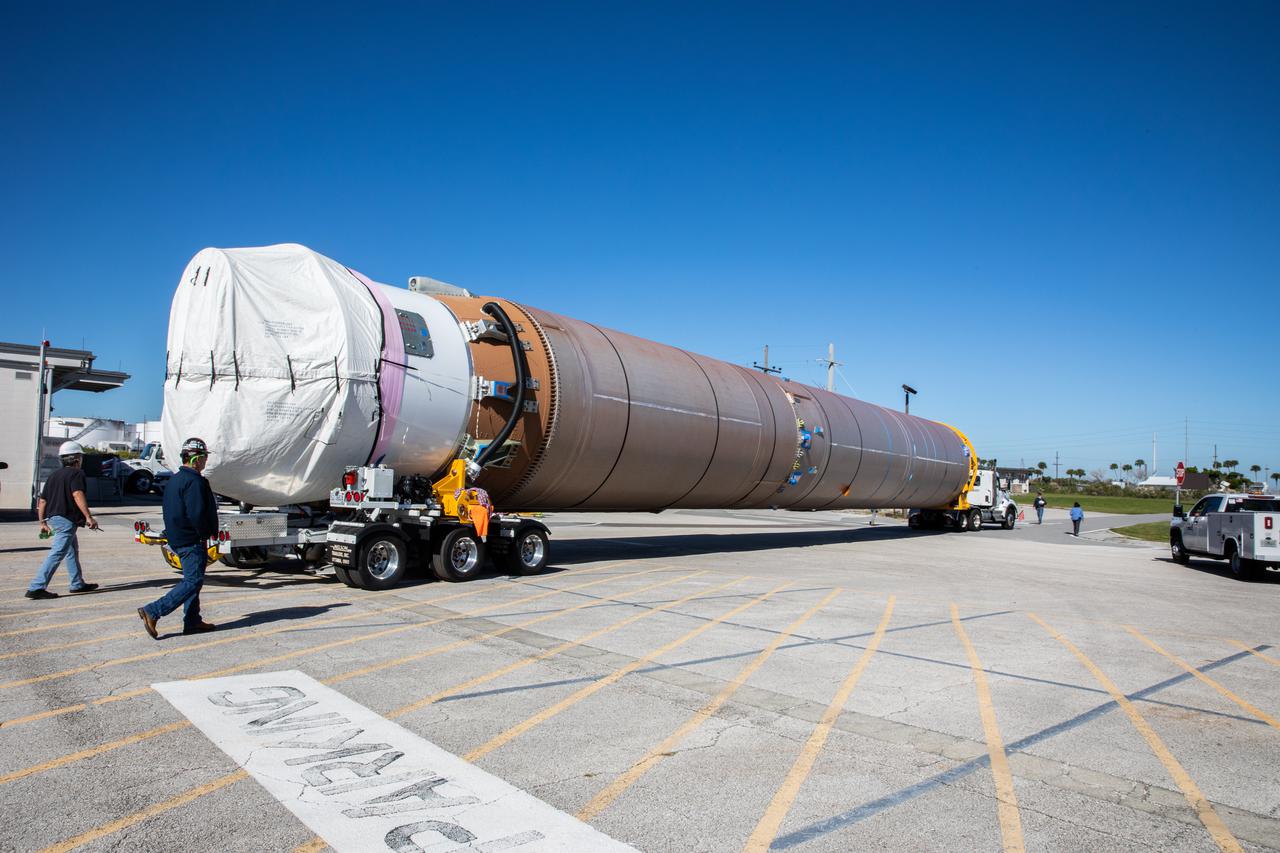
United Launch Alliance’s (ULA) first stage of the Atlas V 541 rocket is offloaded from the company’s transport boat at Cape Canaveral Space Force Station (CCSFS) in Florida on Nov. 16, 2021. The ship journeyed from ULA’s manufacturing plant in Decatur, Alabama, to deliver the rocket that will launch NASA and the National Oceanic Atmospheric Administration’s (NOAA) Geostationary Operational Environmental Satellite T (GOES-T). GOES-T is the third satellite in the GOES-R series that will continue to help meteorologists observe and predict local weather events that affect public safety. GOES-T is scheduled to launch from Space Launch Complex 41 at CCSFS on March 1, 2022. The launch is being managed by NASA’s Launch Services Program based at Kennedy Space Center, America’s multi-user spaceport.
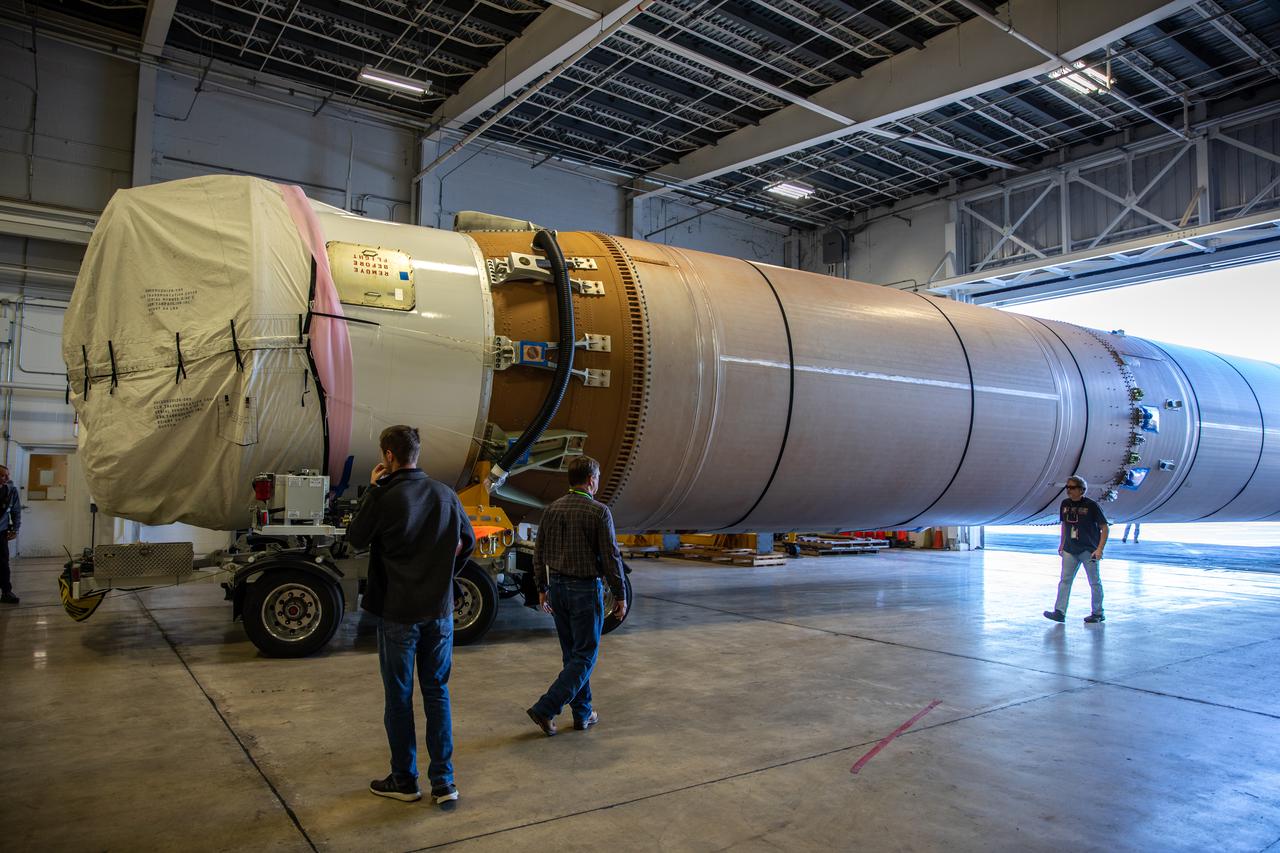
The United Launch Alliance (ULA) first stage of the Atlas V 541 rocket arrives at the horizontal processing facility at Space Launch Complex 41 at Cape Canaveral Space Force Station (CCSFS) in Florida on Nov. 16, 2021, after arriving on the company’s transport boat. The ship journeyed from ULA’s manufacturing plant in Decatur, Alabama, to deliver the rocket that will launch NASA and the National Oceanic Atmospheric Administration’s (NOAA) Geostationary Operational Environmental Satellite T (GOES-T). GOES-T is the third satellite in the GOES-R series that will continue to help meteorologists observe and predict local weather events that affect public safety. GOES-T is scheduled to launch from Space Launch Complex 41 at CCSFS on March 1, 2022. The launch is being managed by NASA’s Launch Services Program based at Kennedy Space Center, America’s multi-user spaceport.

The United Launch Alliance (ULA) first stage of the Atlas V 541 rocket arrives at the horizontal processing facility at Space Launch Complex 41 at Cape Canaveral Space Force Station (CCSFS) in Florida on Nov. 16, 2021, after arriving on the company’s transport boat. The ship journeyed from ULA’s manufacturing plant in Decatur, Alabama, to deliver the rocket that will launch NASA and the National Oceanic Atmospheric Administration’s (NOAA) Geostationary Operational Environmental Satellite T (GOES-T). GOES-T is the third satellite in the GOES-R series that will continue to help meteorologists observe and predict local weather events that affect public safety. GOES-T is scheduled to launch from Space Launch Complex 41 at CCSFS on March 1, 2022. The launch is being managed by NASA’s Launch Services Program based at Kennedy Space Center, America’s multi-user spaceport.
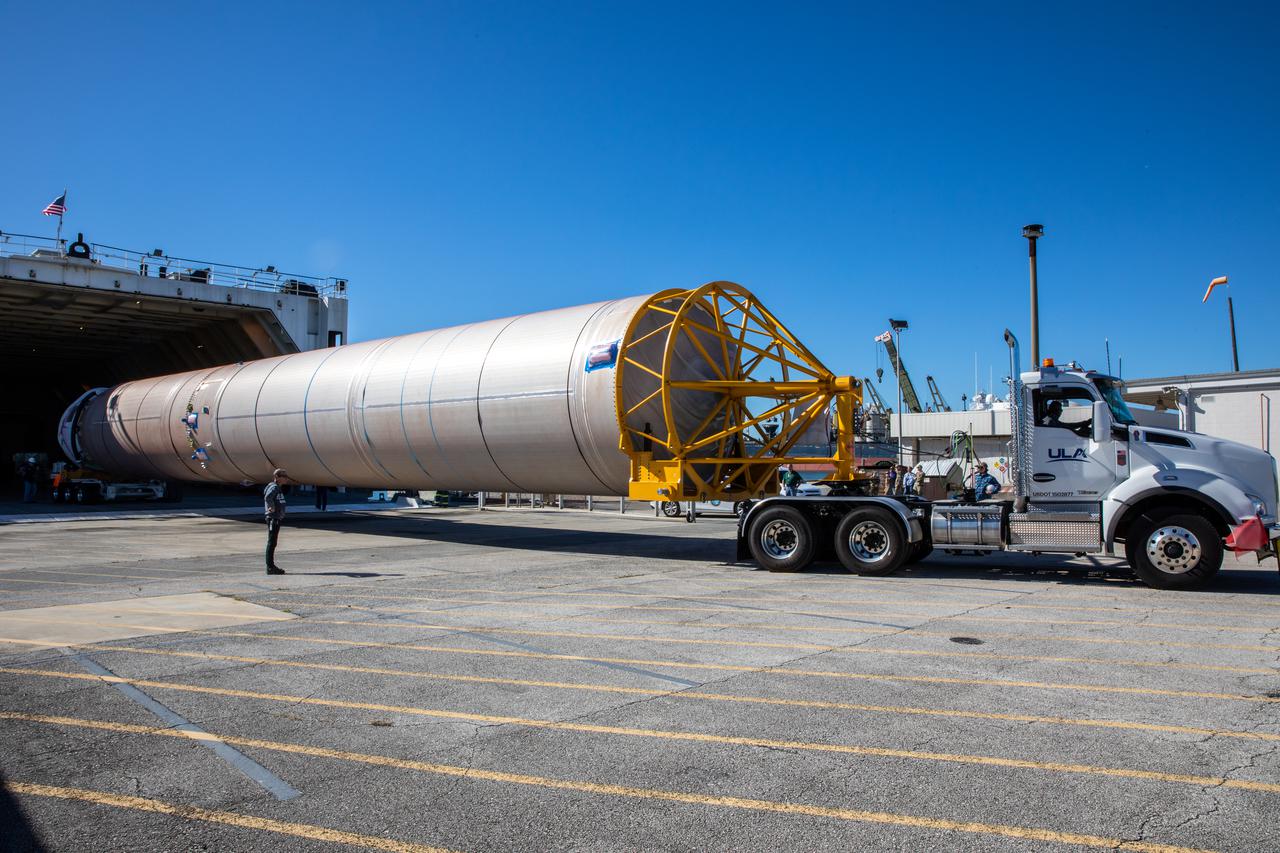
United Launch Alliance’s (ULA) first stage of the Atlas V 541 rocket is offloaded from the company’s transport boat at Cape Canaveral Space Force Station (CCSFS) in Florida on Nov. 16, 2021. The ship journeyed from ULA’s manufacturing plant in Decatur, Alabama, to deliver the rocket that will launch NASA and the National Oceanic Atmospheric Administration’s (NOAA) Geostationary Operational Environmental Satellite T (GOES-T). GOES-T is the third satellite in the GOES-R series that will continue to help meteorologists observe and predict local weather events that affect public safety. GOES-T is scheduled to launch from Space Launch Complex 41 at CCSFS on March 1, 2022. The launch is being managed by NASA’s Launch Services Program based at Kennedy Space Center, America’s multi-user spaceport.

United Launch Alliance’s (ULA) first and second stages of the Atlas V 541 rocket are offloaded from the company’s transport boat at Cape Canaveral Space Force Station (CCSFS) in Florida on Nov. 16, 2021. The ship journeyed from ULA’s manufacturing plant in Decatur, Alabama, to deliver the rocket that will launch NASA and the National Oceanic Atmospheric Administration’s (NOAA) Geostationary Operational Environmental Satellite T (GOES-T). GOES-T is the third satellite in the GOES-R series that will continue to help meteorologists observe and predict local weather events that affect public safety. GOES-T is scheduled to launch from Space Launch Complex 41 at CCSFS on March 1, 2022. The launch is being managed by NASA’s Launch Services Program based at Kennedy Space Center, America’s multi-user spaceport.
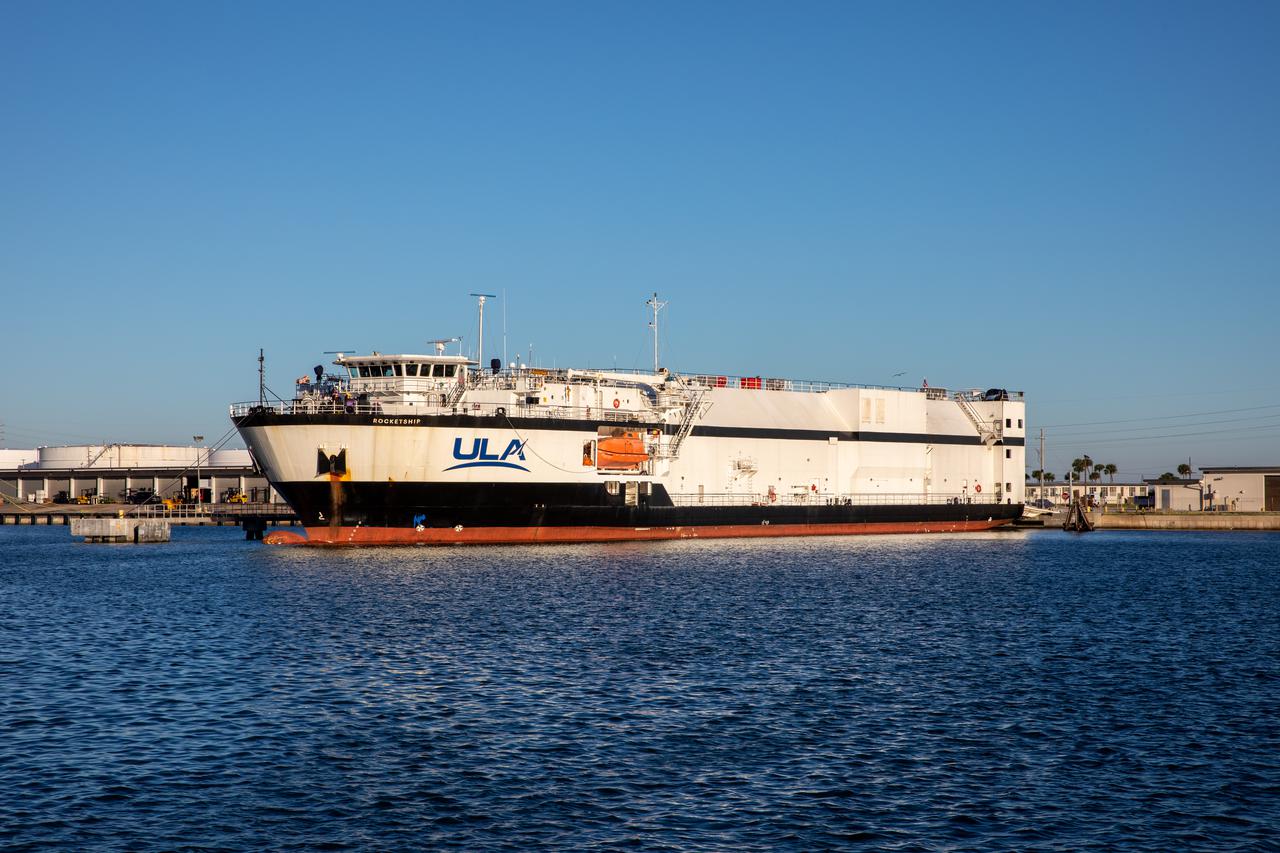
A United Launch Alliance (ULA) transport boat carrying the first and second stages of the company’s Atlas V 541 rocket arrives at Cape Canaveral Space Force Station (CCSFS) in Florida on Nov. 16, 2021. The ship journeyed from ULA’s manufacturing plant in Decatur, Alabama, to deliver the rocket that will launch NASA and the National Oceanic Atmospheric Administration’s (NOAA) Geostationary Operational Environmental Satellite T (GOES-T). GOES-T is the third satellite in the GOES-R series that will continue to help meteorologists observe and predict local weather events that affect public safety. GOES-T is scheduled to launch from Space Launch Complex 41 at CCSFS on March 1, 2022. The launch is being managed by NASA’s Launch Services Program based at Kennedy Space Center, America’s multi-user spaceport.
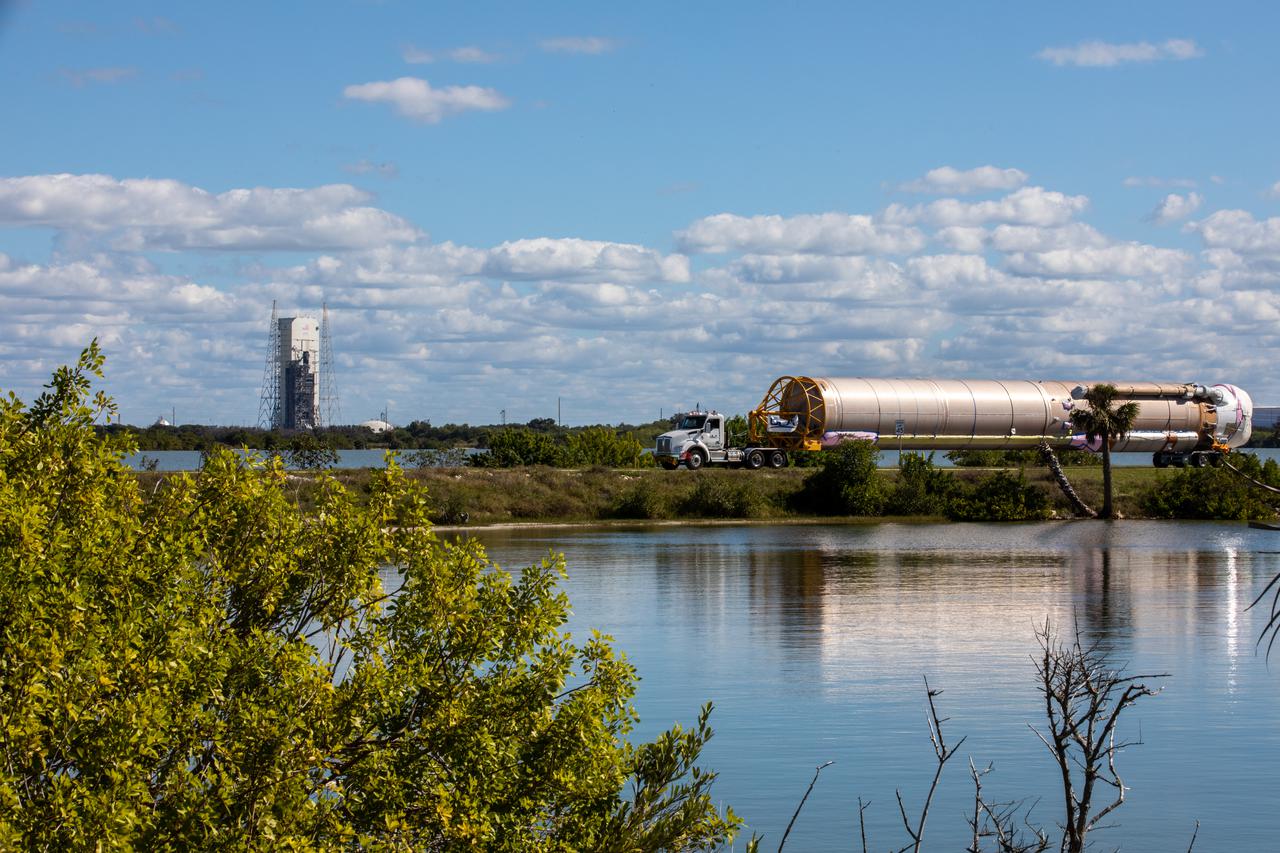
The United Launch Alliance (ULA) first stage of the Atlas V 541 rocket is transported to the horizontal processing facility at Space Launch Complex 41 at Cape Canaveral Space Force Station (CCSFS) in Florida on Nov. 16, 2021, after arriving on the company’s transport boat. The ship journeyed from ULA’s manufacturing plant in Decatur, Alabama, to deliver the rocket that will launch NASA and the National Oceanic Atmospheric Administration’s (NOAA) Geostationary Operational Environmental Satellite T (GOES-T). GOES-T is the third satellite in the GOES-R series that will continue to help meteorologists observe and predict local weather events that affect public safety. GOES-T is scheduled to launch from Space Launch Complex 41 at CCSFS on March 1, 2022. The launch is being managed by NASA’s Launch Services Program based at Kennedy Space Center, America’s multi-user spaceport.
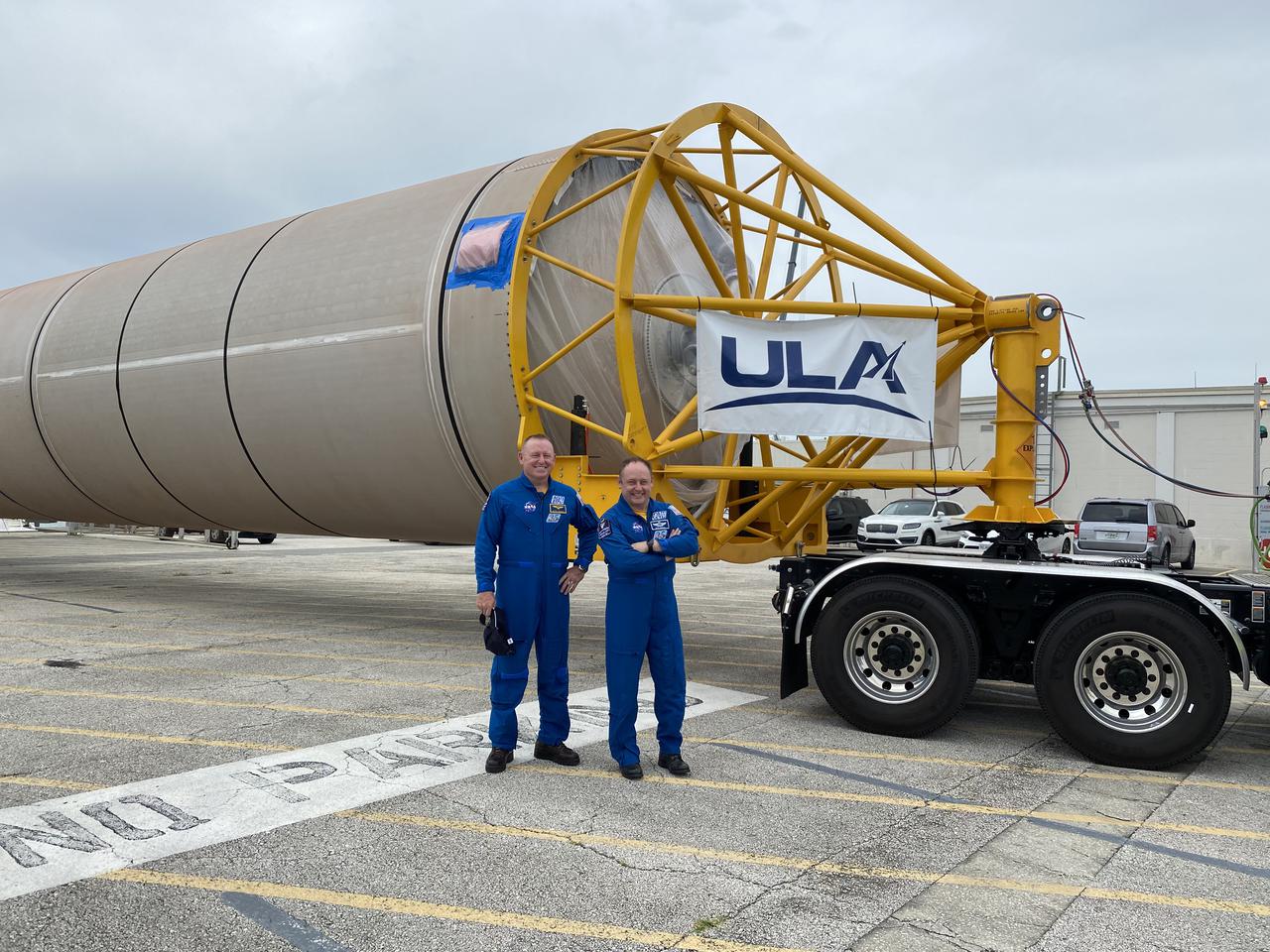
NASA astronauts Barry “Butch” Wilmore, left, Mike Fincke, right, welcome the United Launch Alliance (ULA) Atlas V rocket that will transport them and NASA astronaut Nicole Mann to the International Space Station on Boeing’s CST-100 Starliner spacecraft for the company’s Crew Flight Test (CFT). The Atlas V rocket arrived at Cape Canaveral Space Force Station (CCSFS), Florida on June 21, 2021, after its journey on a rocket-delivery ship from ULA’s manufacturing factory in Decatur, Alabama. Starliner’s first flight with astronauts aboard, CFT will launch from Space Launch Complex-41 at CCSFS. The flight test will demonstrate the ability of the Atlas V and Starliner to safely carry astronauts to and from the space station for the agency’s Commercial Crew Program.

The upper stage for NASA’s SLS (Space Launch System) rocket that will power the agency’s Artemis III mission and send astronauts on to the Moon for a lunar landing arrived at the Cape Canaveral Space Force Station Poseidon Wharf in Florida on Aug. 9, 2023. Known as the SLS ICPS (interim cryogenic propulsion stage), it will undergo final checkouts by contractors Boeing and ULA (United Launch Alliance) at ULA’s facilities before it is delivered to NASA’s nearby Kennedy Space Center.
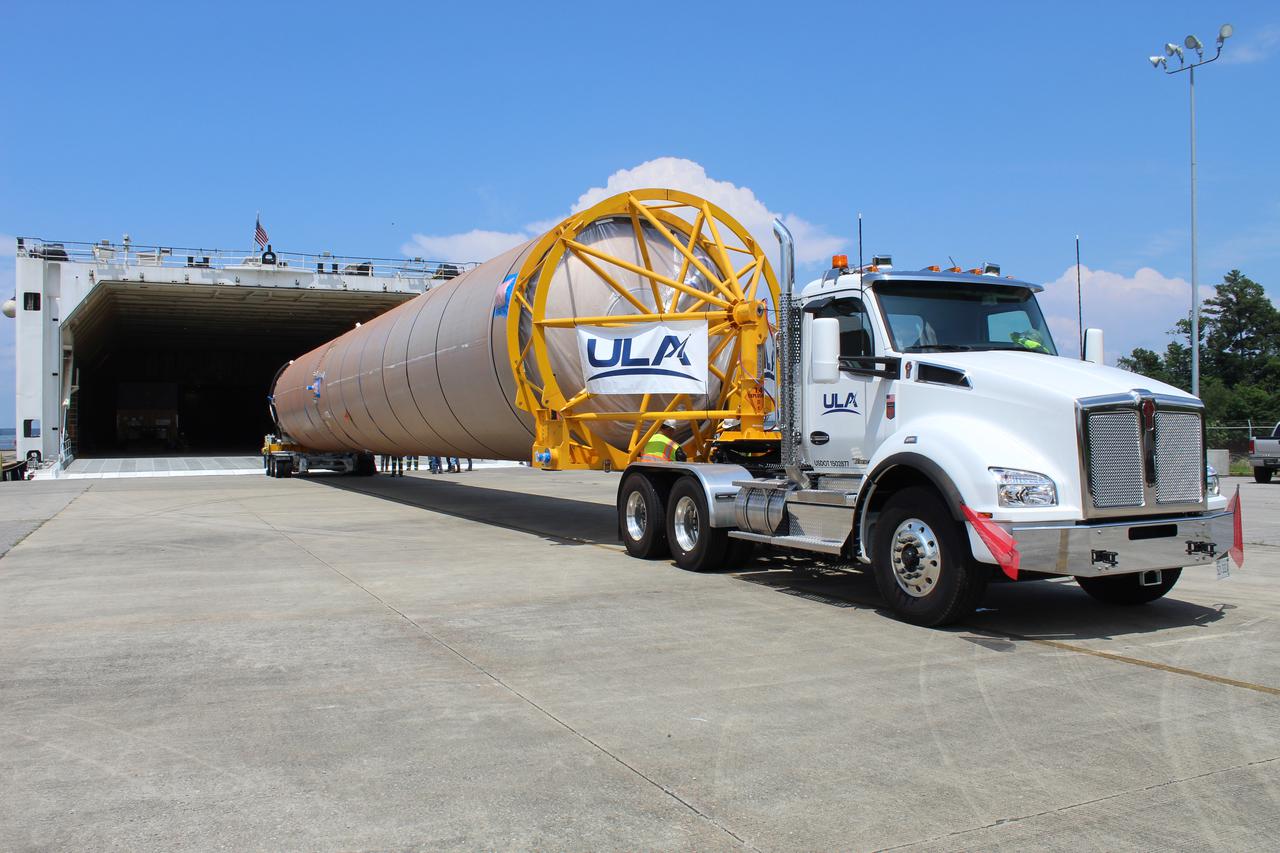
A United Launch Alliance (ULA) Atlas V booster for Boeing's CST-100 Starliner Crew Flight Test (CFT) is loaded onto a rocket-delivery ship at ULA’s manufacturing factory in Decatur, Alabama, on June 11, 2021, to begin its journey to Cape Canaveral, Florida. Starliner’s first flight with astronauts aboard, CFT will launch from Space Launch Complex 41 at Cape Canaveral Space Force Station in Florida. The flight test will demonstrate the ability of the Atlas V and Starliner to safely carry astronauts to and from the International Space Station for the agency’s Commercial Crew Program.
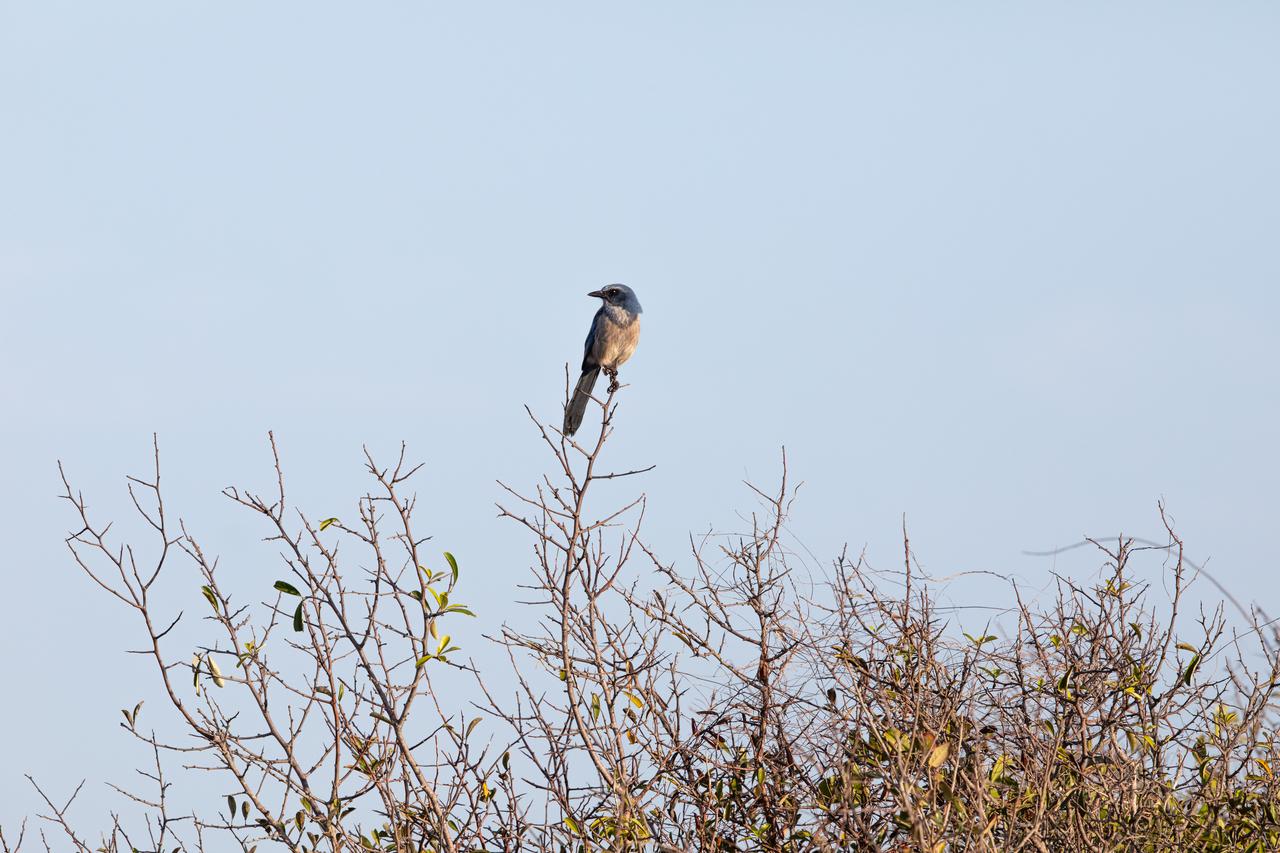
A Florida Scrub-Jay perches on the branch of a tree at NASA's Kennedy Space Center in Florida on Jan. 8, 2021. The center shares a border with the Merritt Island National Wildlife Refuge. More than 330 native and migratory bird species, along with 25 mammal, 117 fish, and 65 amphibian and reptile species call Kennedy and the wildlife refuge home.

A Florida Scrub-Jay flies near a tree at NASA's Kennedy Space Center in Florida on Jan. 8, 2021. The center shares a border with the Merritt Island National Wildlife Refuge. More than 330 native and migratory bird species, along with 25 mammal, 117 fish, and 65 amphibian and reptile species call Kennedy and the wildlife refuge home.

A Florida Scrub-Jay flies near a tree at NASA's Kennedy Space Center in Florida on Jan. 8, 2021. The center shares a border with the Merritt Island National Wildlife Refuge. More than 330 native and migratory bird species, along with 25 mammal, 117 fish, and 65 amphibian and reptile species call Kennedy and the wildlife refuge home.
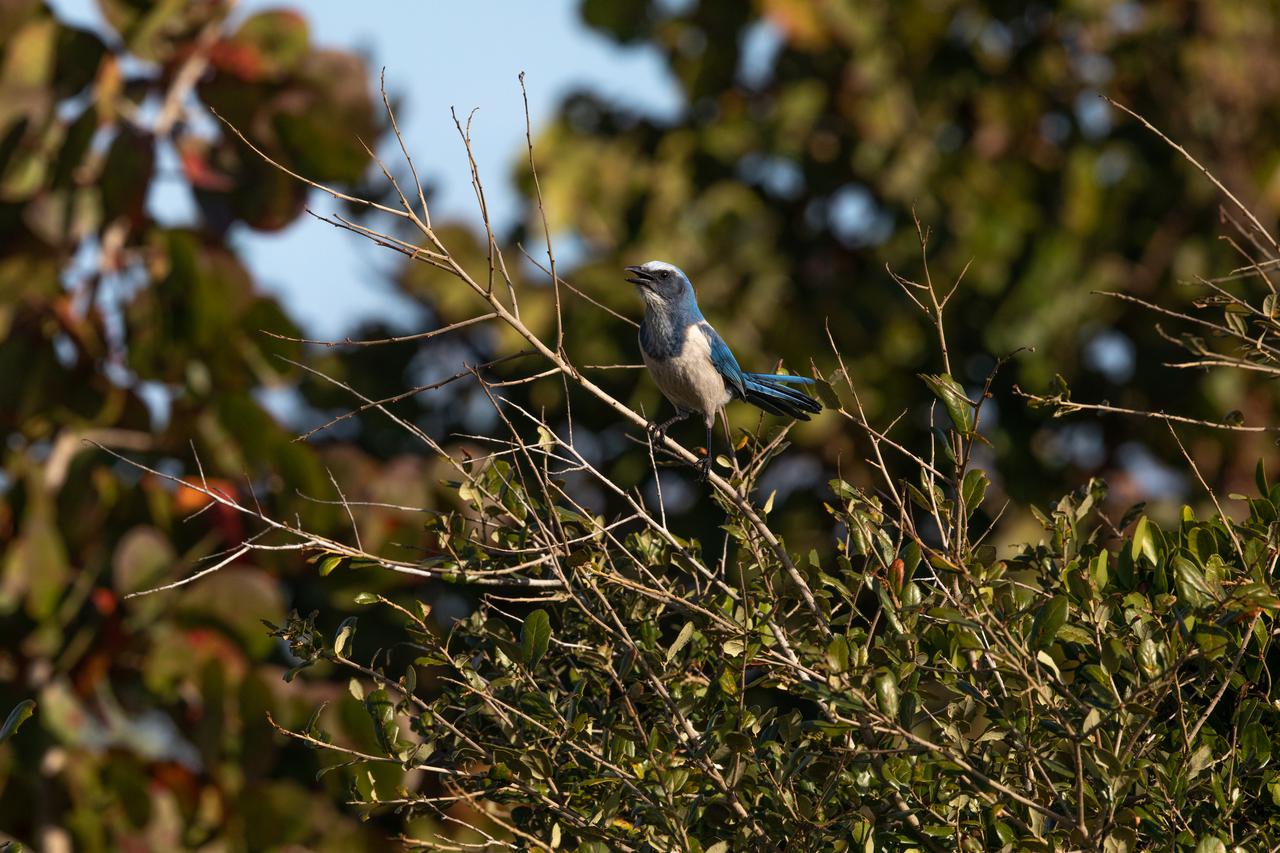
A Florida Scrub-Jay perches on the branch of a tree at NASA's Kennedy Space Center in Florida on Jan. 8, 2021. The center shares a border with the Merritt Island National Wildlife Refuge. More than 330 native and migratory bird species, along with 25 mammal, 117 fish, and 65 amphibian and reptile species call Kennedy and the wildlife refuge home.
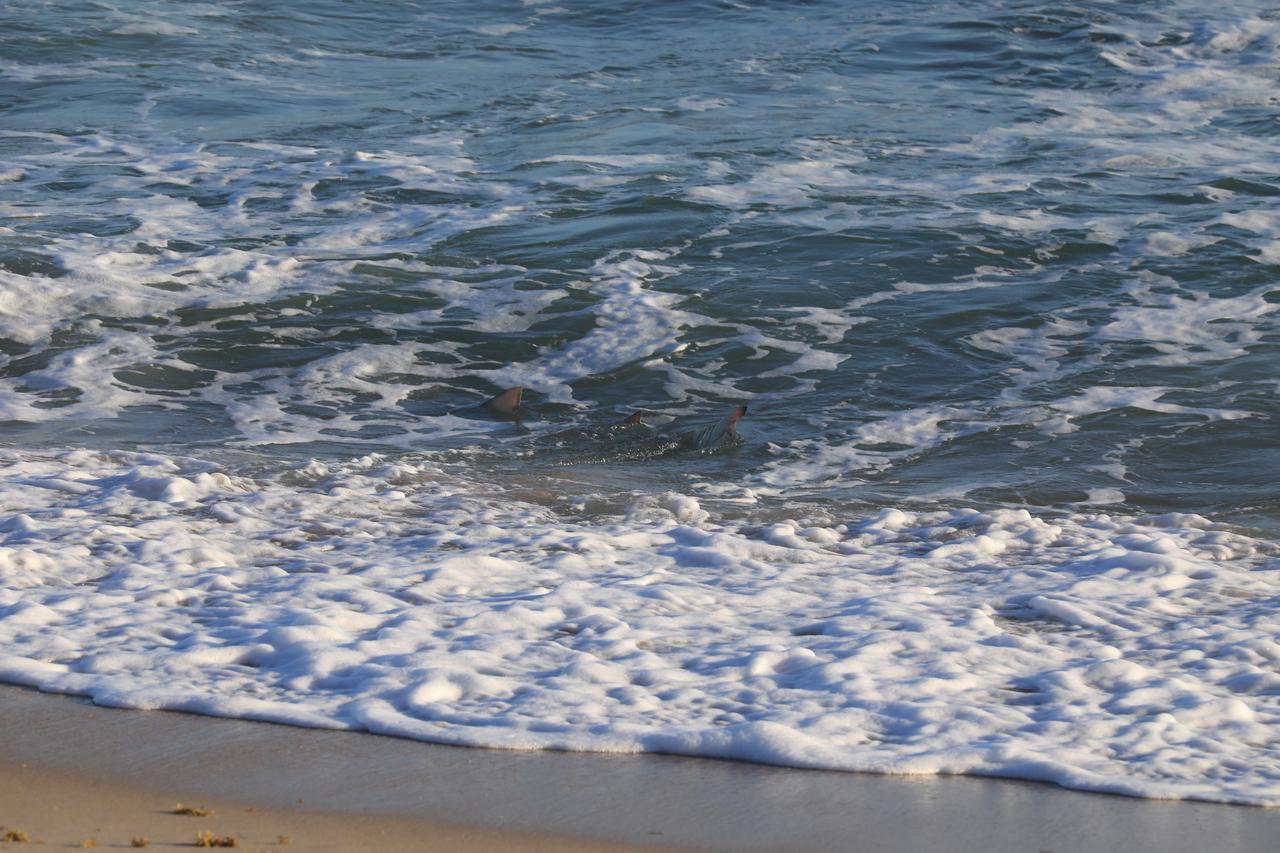
Cape Canaveral Space Force Station shares boundaries with the Merritt Island National Wildlife Refuge, featuring miles of pristine beaches on the Atlantic Ocean. The refuge contains coastal dunes, saltwater marshes, freshwater impoundments, scrub, pine flatwoods, and hardwood hammocks that provide habitat for more than 1,500 species of plants and animals.
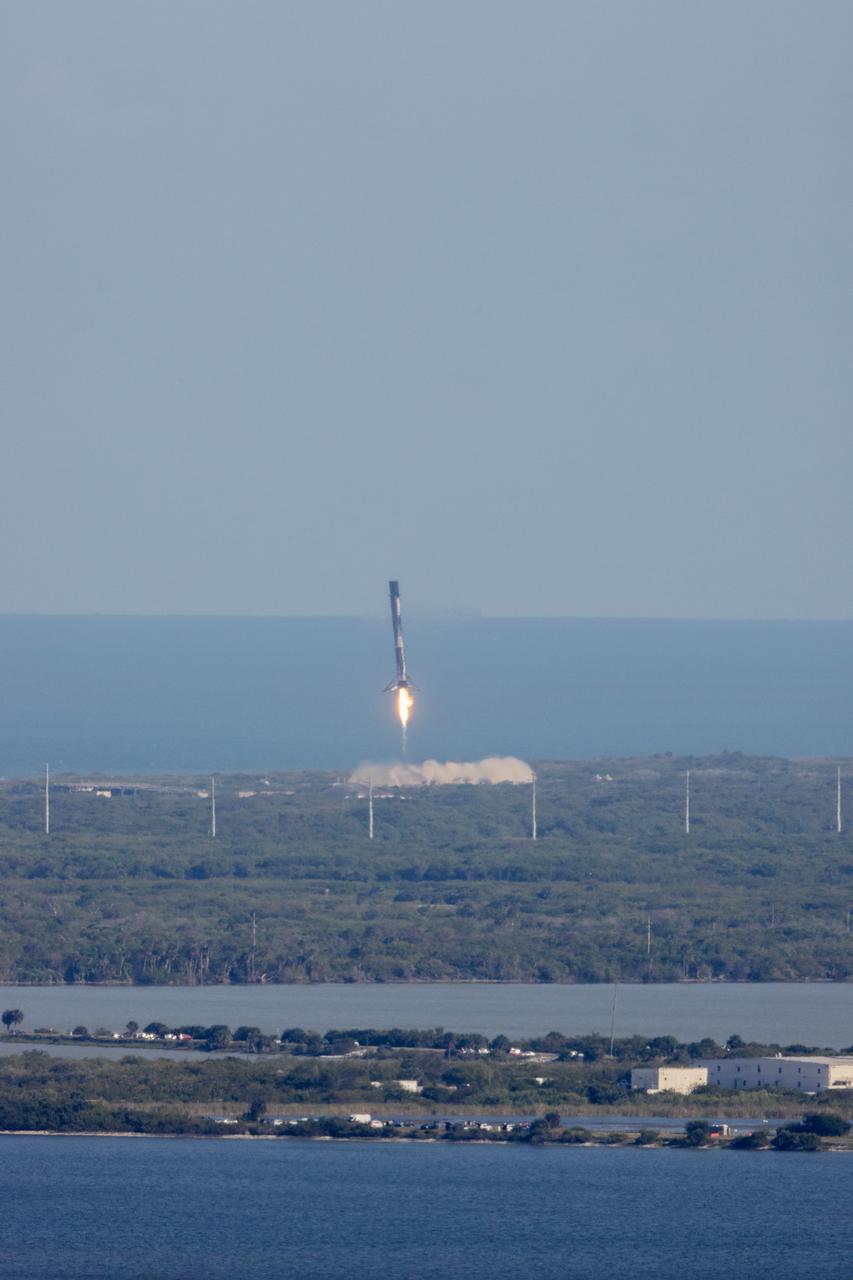
After boosting a SpaceX Dragon spacecraft on its way to the International Space Station for the company’s 30th Commercial Resupply Services mission for NASA, the first stage of the Falcon 9 rocket returns to Landing Zone 1 at Cape Canaveral Space Force Station (CCSFS) in Florida on Thursday, March 21, 2024. Dragon will deliver more than 6,200 pounds of cargo, including a variety of NASA and partner research including a look at plant metabolism in space and a set of new sensors for free-flying Astrobee robots to provide 3D mapping capabilities. Other studies include a fluid physics study that could benefit solar cell technology and a university project from CSA (Canadian Space Agency) that will monitor sea ice and ocean conditions. The spacecraft is expected to spend about a month attached to the orbiting outpost before it returns to Earth with research and return cargo, splashing down off the coast of Florida. Liftoff occurred at 4:55 p.m. EDT from Space Launch Complex 40 at CCSFS.
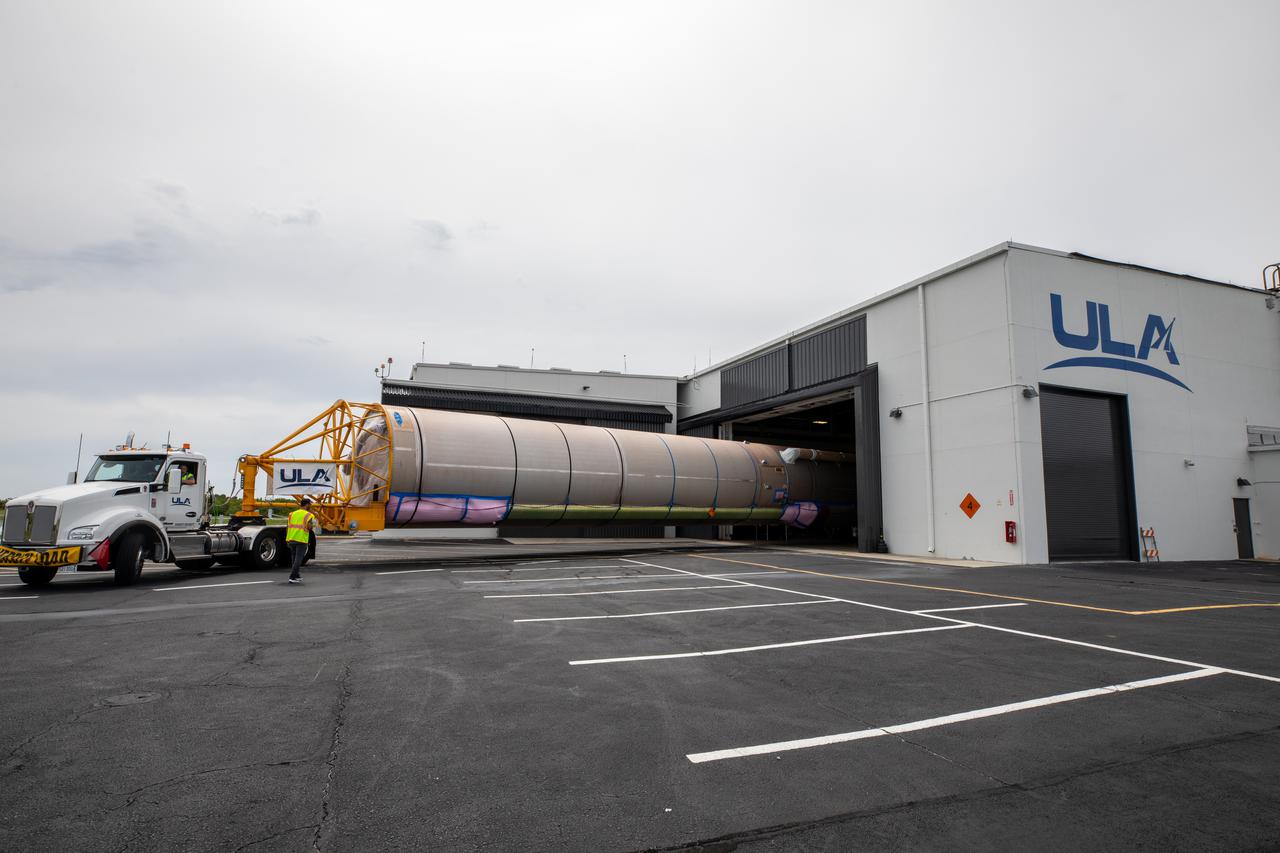
A flatbed truck delivers the United Launch Alliance (ULA) Atlas V booster and Centaur upper stage for Boeing's CST-100 Starliner Crew Flight Test (CFT) to the Atlas Spaceflight Operations Center at Space Launch Complex 41 (SLC-41) at Cape Canaveral Space Force Station on June 21, 2021. Starliner's first flight with astronauts aboard, CFT will launch from SLC-41. The flight test will demonstrate the ability of the Atlas V and Starliner to safely carry astronauts to and from the International Space Station for the agency's Commercial Crew Program.
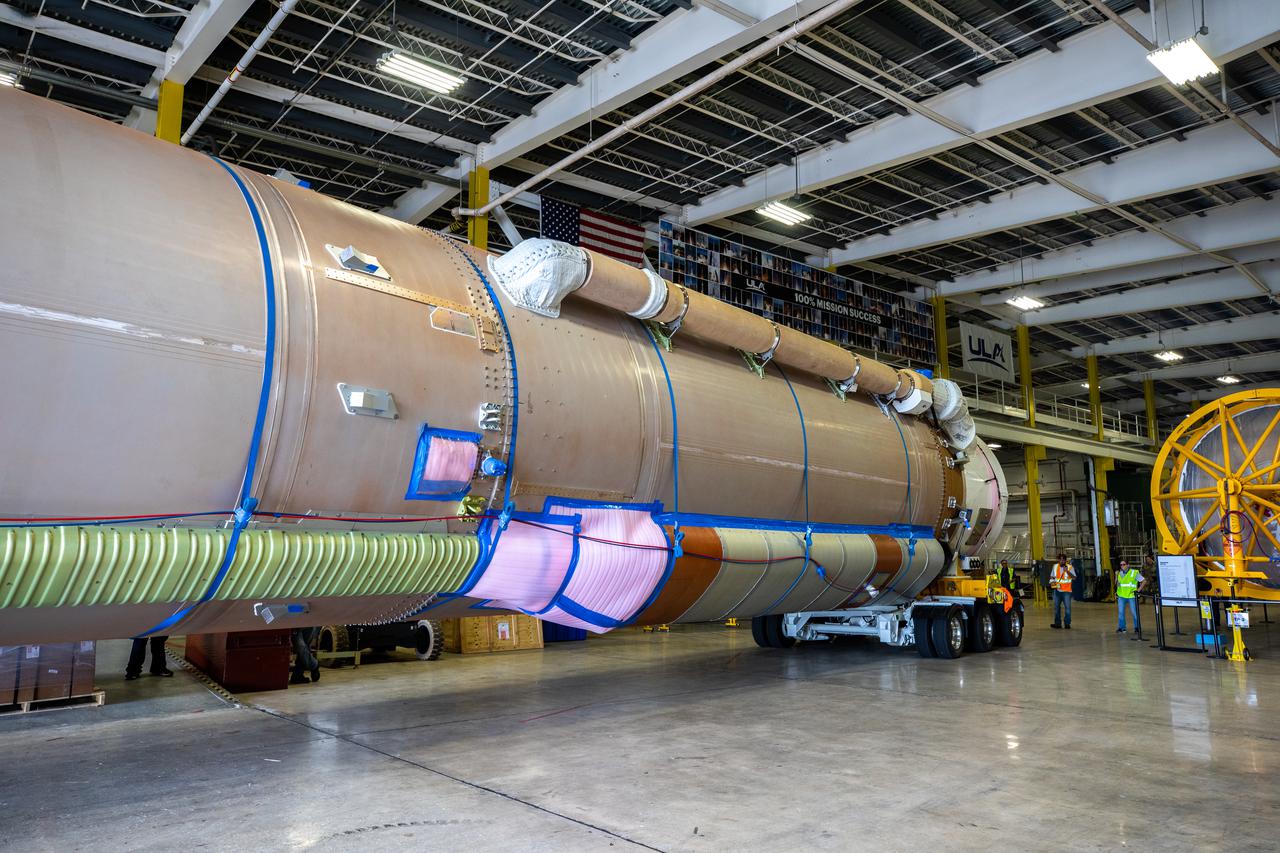
The United Launch Alliance (ULA) Atlas V booster and Centaur upper stage for Boeing's CST-100 Starliner Crew Flight Test (CFT) are inside the Atlas Spaceflight Operations Center at Space Launch Complex 41 (SLC-41) at Cape Canaveral Space Force Station on June 21, 2021. Starliner's first flight with astronauts aboard, CFT will launch from SLC-41. The flight test will demonstrate the ability of the Atlas V and Starliner to safely carry astronauts to and from the International Space Station for the agency's Commercial Crew Program.
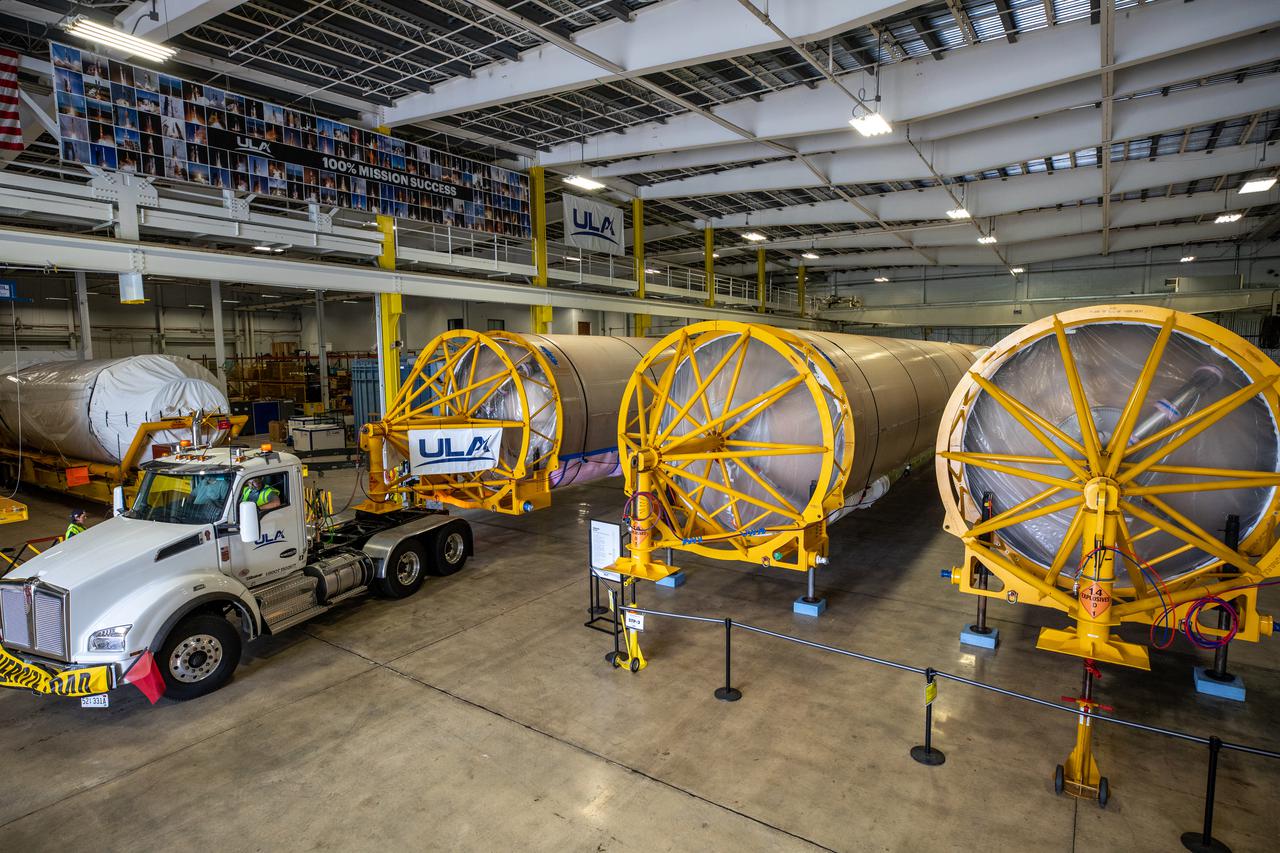
A flatbed truck moves the United Launch Alliance (ULA) Atlas V booster and Centaur upper stage for Boeing's CST-100 Starliner Crew Flight Test (CFT) inside the Atlas Spaceflight Operations Center at Space Launch Complex 41 (SLC-41) at Cape Canaveral Space Force Station on June 21, 2021. Starliner's first flight with astronauts aboard, CFT will launch from SLC-41. The flight test will demonstrate the ability of the Atlas V and Starliner to safely carry astronauts to and from the International Space Station for the agency's Commercial Crew Program.
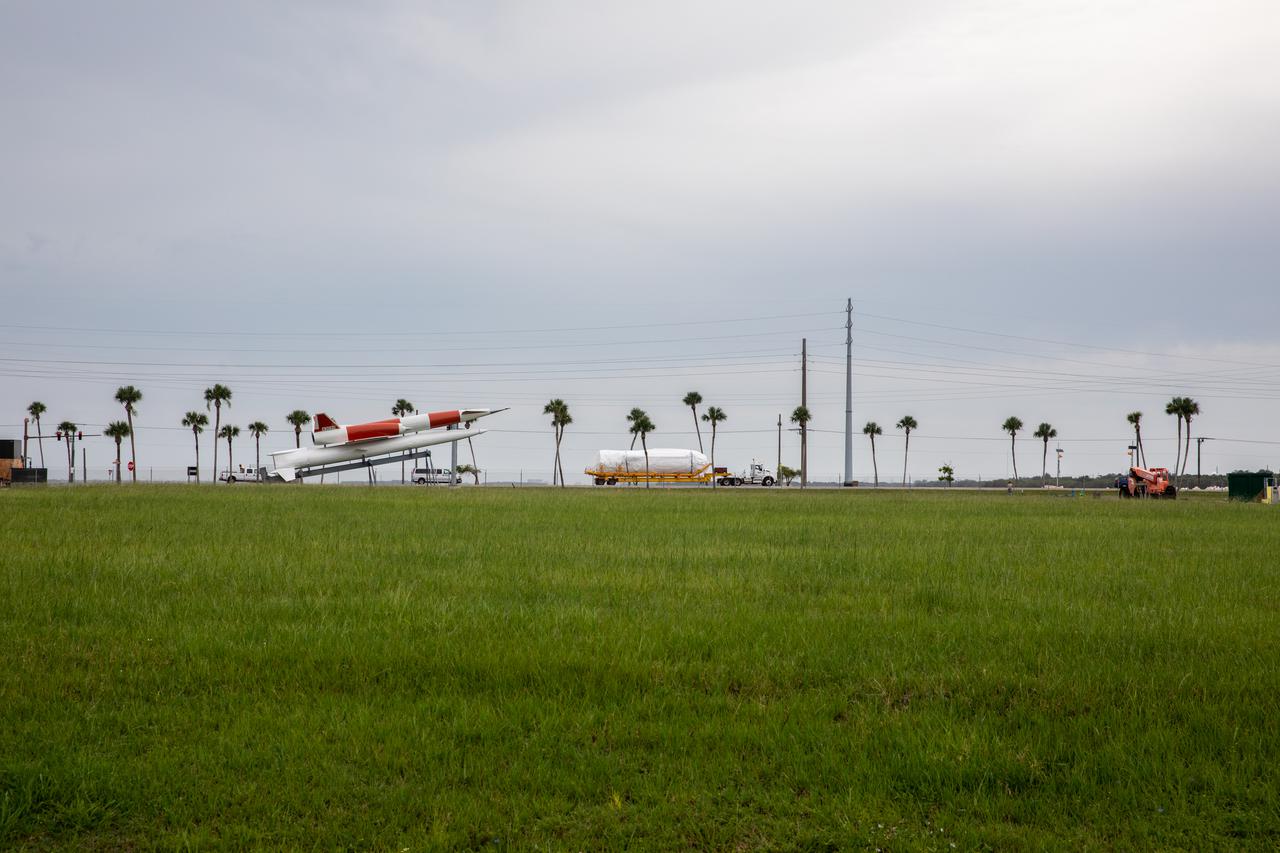
The United Launch Alliance (ULA) Atlas V booster and Centaur upper stage for Boeing's CST-100 Starliner Crew Flight Test (CFT) are on their way to the Atlas Spaceflight Operations Center at Space Launch Complex 41 (SLC-41) at Cape Canaveral Space Force Station on June 21, 2021. Starliner's first flight with astronauts aboard, CFT will launch from SLC-41. The flight test will demonstrate the ability of the Atlas V and Starliner to safely carry astronauts to and from the International Space Station for the agency's Commercial Crew Program.

The United Launch Alliance (ULA) Atlas V booster and Centaur upper stage for Boeing's CST-100 Starliner Crew Flight Test (CFT) are on their way to the Atlas Spaceflight Operations Center at Space Launch Complex 41 (SLC-41) at Cape Canaveral Space Force Station on June 21, 2021. Starliner's first flight with astronauts aboard, CFT will launch from SLC-41. The flight test will demonstrate the ability of the Atlas V and Starliner to safely carry astronauts to and from the International Space Station for the agency's Commercial Crew Program.
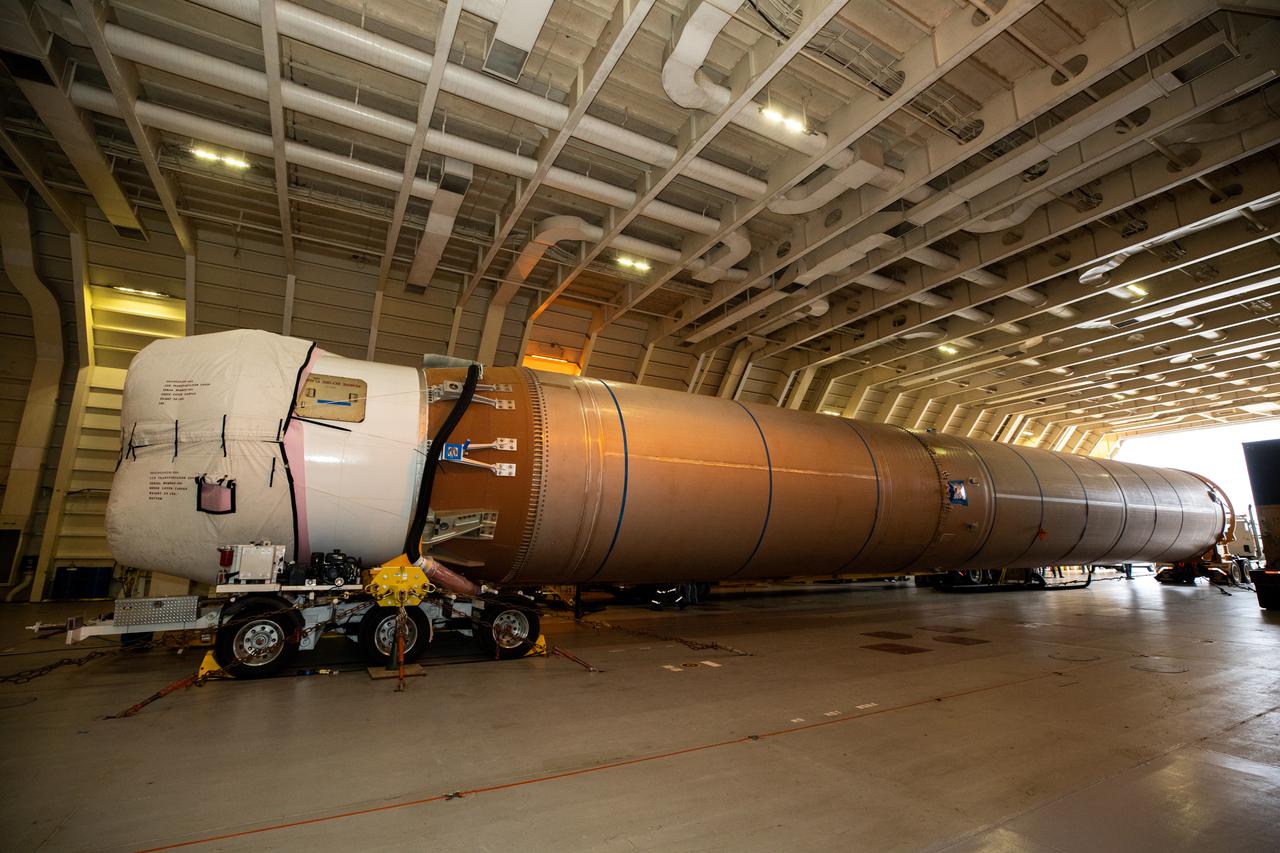
The United Launch Alliance (ULA) Atlas V booster and Centaur upper stage for Boeing's CST-100 Starliner Crew Flight Test (CFT) are unloaded from a rocket-delivery ship at Cape Canaveral Space Force Station on June 21, 2021. Starliner's first flight with astronauts aboard, CFT will launch from Space Launch Complex 41 at Cape Canaveral Space Force Station in Florida. The flight test will demonstrate the ability of the Atlas V and Starliner to safely carry astronauts to and from the International Space Station for the agency's Commercial Crew Program.
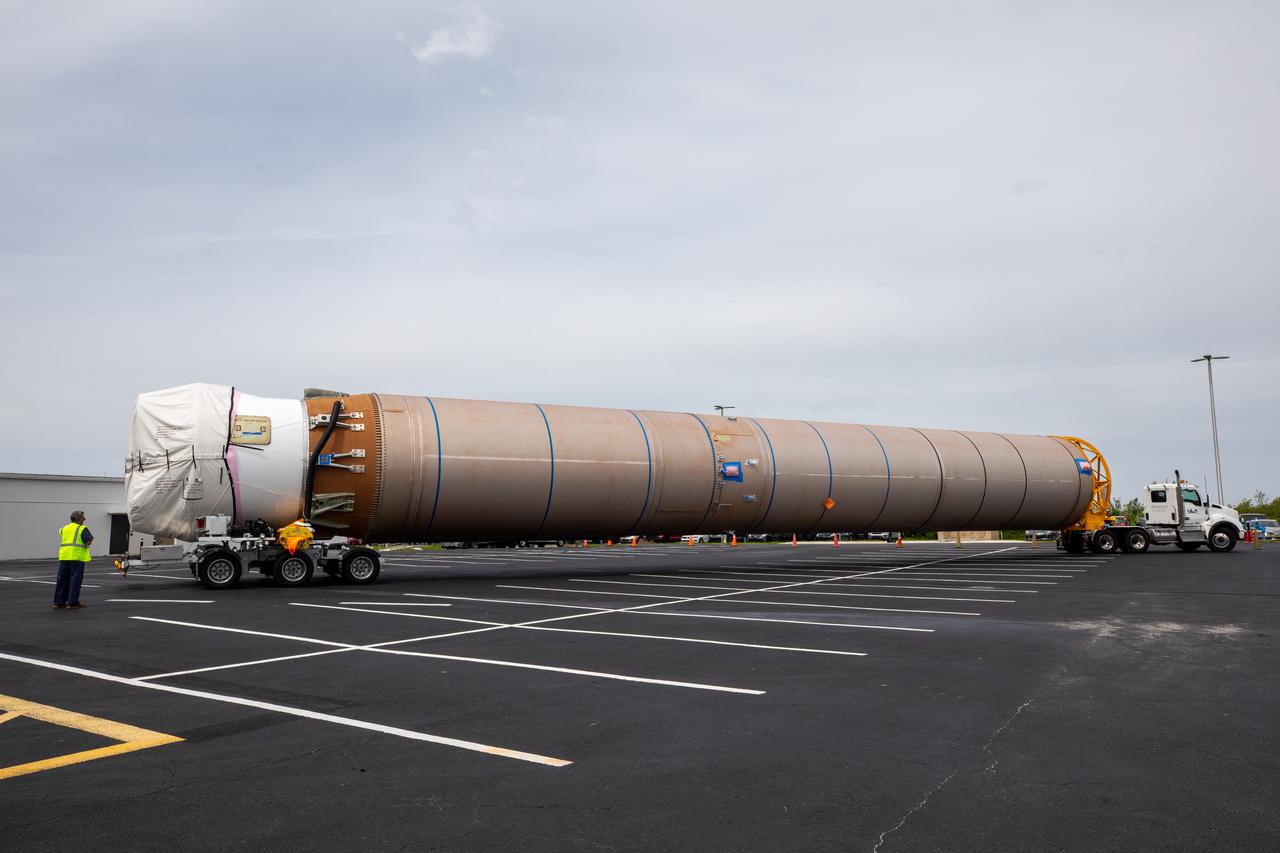
The United Launch Alliance (ULA) Atlas V booster and Centaur upper stage for Boeing's CST-100 Starliner Crew Flight Test (CFT) arrive at the Atlas Spaceflight Operations Center at Space Launch Complex 41 (SLC-41) at Cape Canaveral Space Force Station on June 21, 2021. Starliner's first flight with astronauts aboard, CFT will launch from SLC-41. The flight test will demonstrate the ability of the Atlas V and Starliner to safely carry astronauts to and from the International Space Station for the agency's Commercial Crew Program.
The United Launch Alliance (ULA) Atlas V booster and Centaur upper stage for Boeing's CST-100 Starliner Crew Flight Test (CFT) are unloaded from a rocket-delivery ship at Cape Canaveral Space Force Station on June 21, 2021. Starliner's first flight with astronauts aboard, CFT will launch from Space Launch Complex 41 at Cape Canaveral Space Force Station in Florida. The flight test will demonstrate the ability of the Atlas V and Starliner to safely carry astronauts to and from the International Space Station for the agency's Commercial Crew Program.
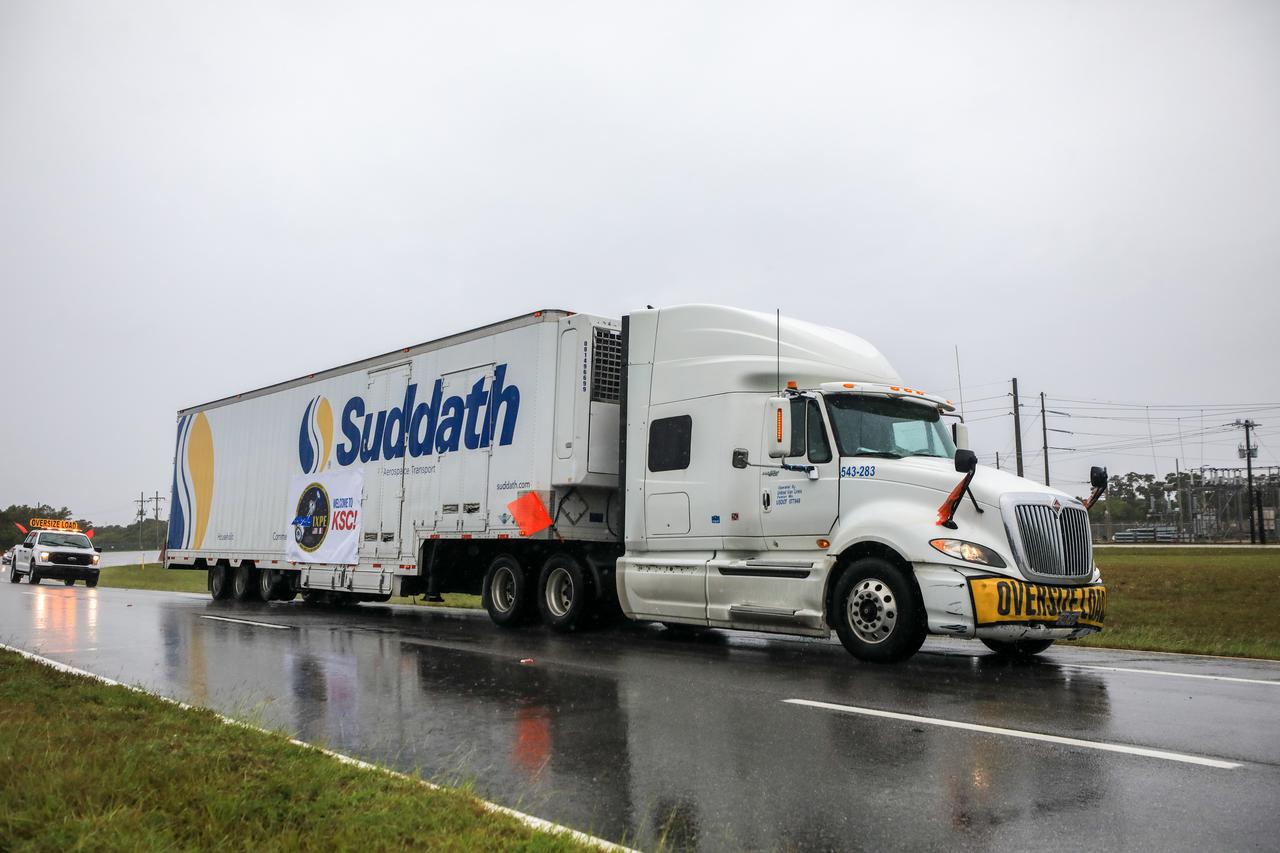
NASA’s Imaging X-Ray Polarimetry Explorer (IXPE) spacecraft – the agency’s first mission dedicated to measuring X-ray polarization – arrives at the Cape Canaveral Space Force Station in Florida on Nov. 5, 2021. IXPE is scheduled to launch aboard a SpaceX Falcon 9 vehicle from Kennedy’s Launch Complex 39A on Dec. 9, 2021. The launch is managed by NASA’s Launch Services Program, based at Kennedy. IXPE will study the polarization of X-rays coming to us from some of the universe’s most extreme sources, including black holes and dead stars known as pulsars.
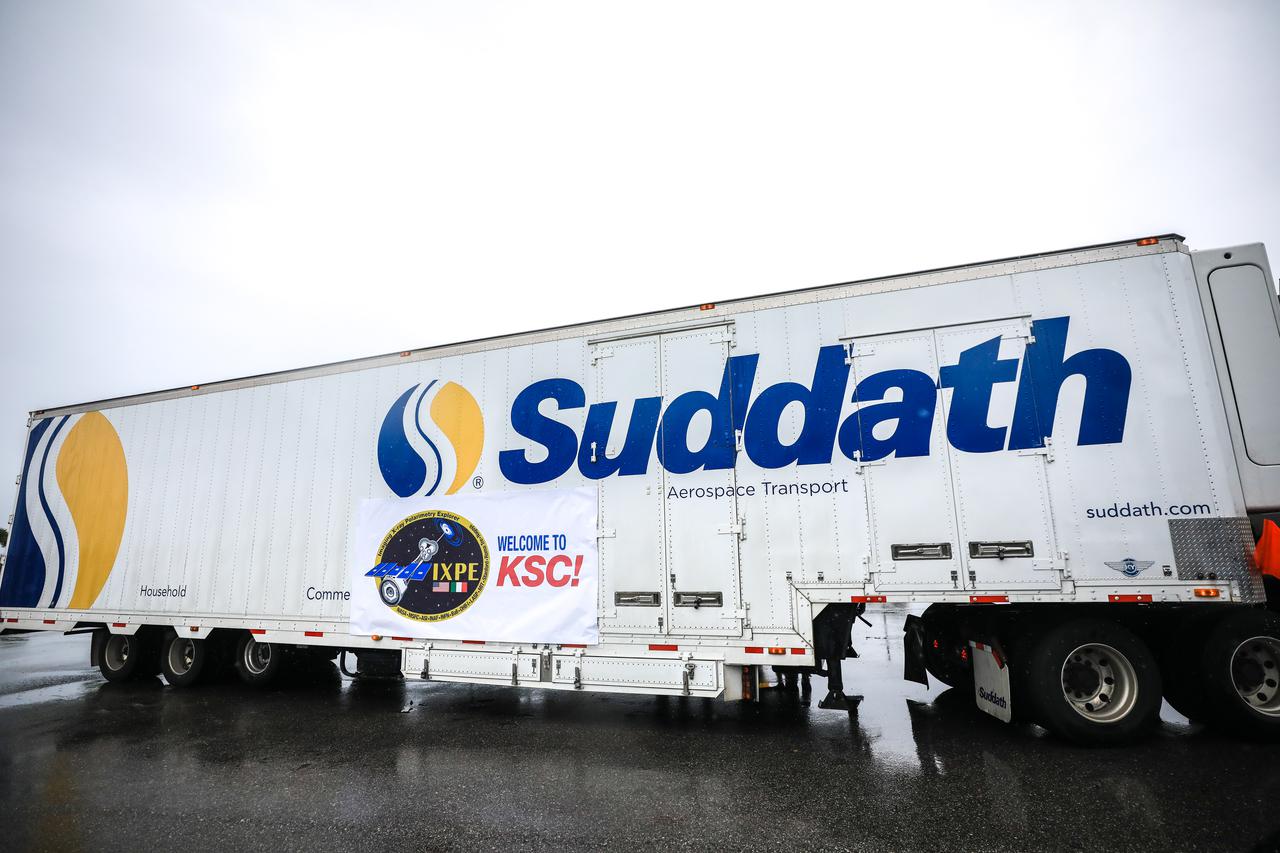
NASA’s Imaging X-Ray Polarimetry Explorer (IXPE) spacecraft – the agency’s first mission dedicated to measuring X-ray polarization – arrives at the Cape Canaveral Space Force Station in Florida on Nov. 5, 2021. IXPE is scheduled to launch aboard a SpaceX Falcon 9 vehicle from Kennedy’s Launch Complex 39A on Dec. 9, 2021. The launch is managed by NASA’s Launch Services Program, based at Kennedy. IXPE will study the polarization of X-rays coming to us from some of the universe’s most extreme sources, including black holes and dead stars known as pulsars.
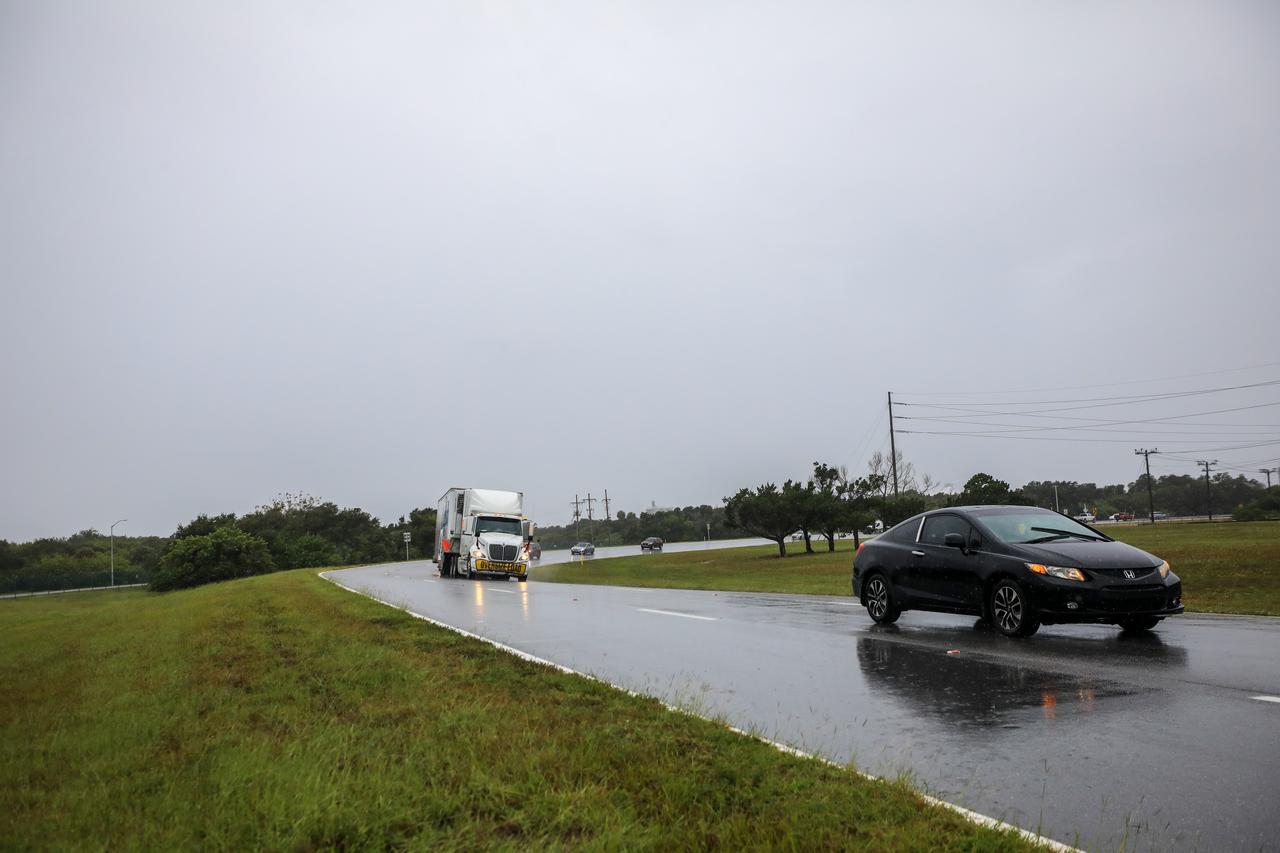
NASA’s Imaging X-Ray Polarimetry Explorer (IXPE) spacecraft – the agency’s first mission dedicated to measuring X-ray polarization – arrives at the Cape Canaveral Space Force Station in Florida on Nov. 5, 2021. IXPE is scheduled to launch aboard a SpaceX Falcon 9 vehicle from Kennedy’s Launch Complex 39A on Dec. 9, 2021. The launch is managed by NASA’s Launch Services Program, based at Kennedy. IXPE will study the polarization of X-rays coming to us from some of the universe’s most extreme sources, including black holes and dead stars known as pulsars.
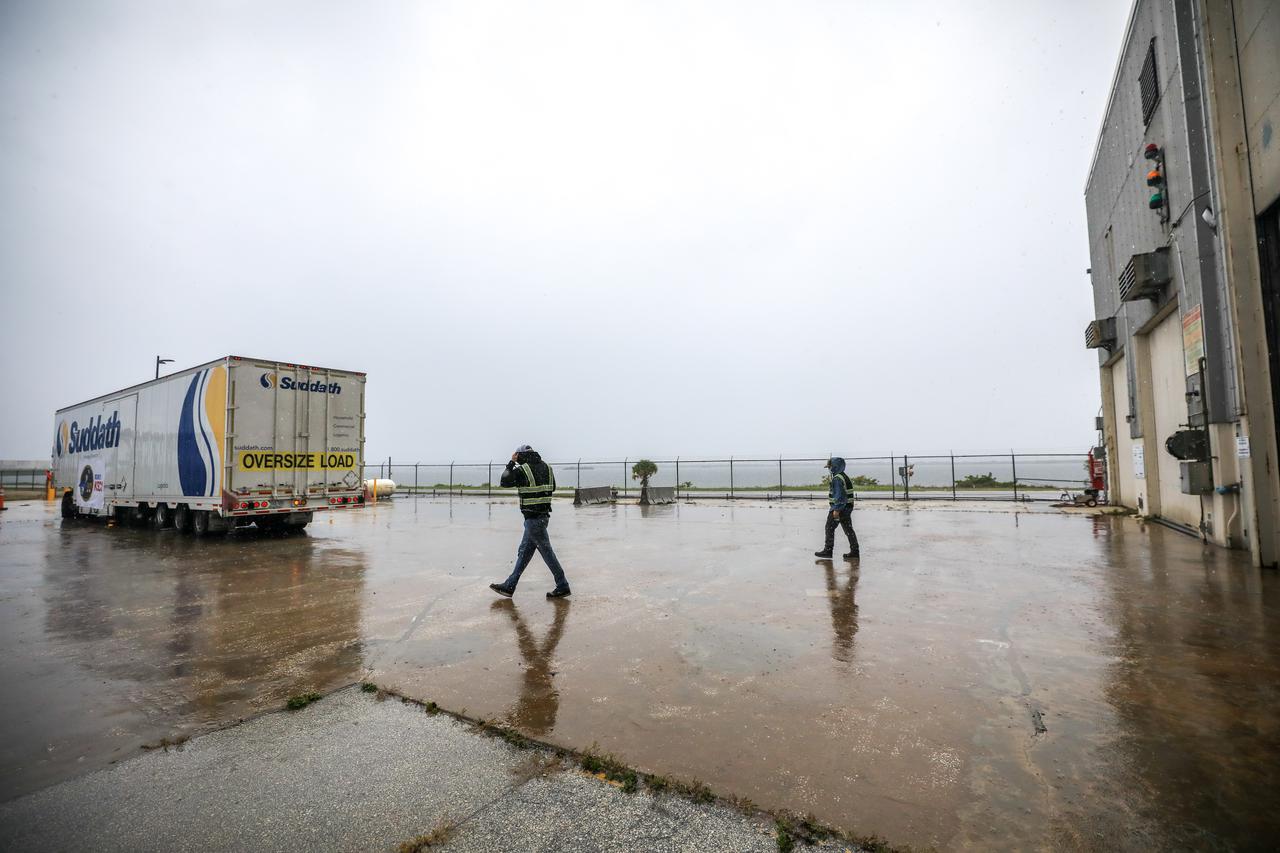
NASA’s Imaging X-Ray Polarimetry Explorer (IXPE) spacecraft – the agency’s first mission dedicated to measuring X-ray polarization – arrives at the Cape Canaveral Space Force Station in Florida on Nov. 5, 2021. IXPE is scheduled to launch aboard a SpaceX Falcon 9 vehicle from Kennedy’s Launch Complex 39A on Dec. 9, 2021. The launch is managed by NASA’s Launch Services Program, based at Kennedy. IXPE will study the polarization of X-rays coming to us from some of the universe’s most extreme sources, including black holes and dead stars known as pulsars.
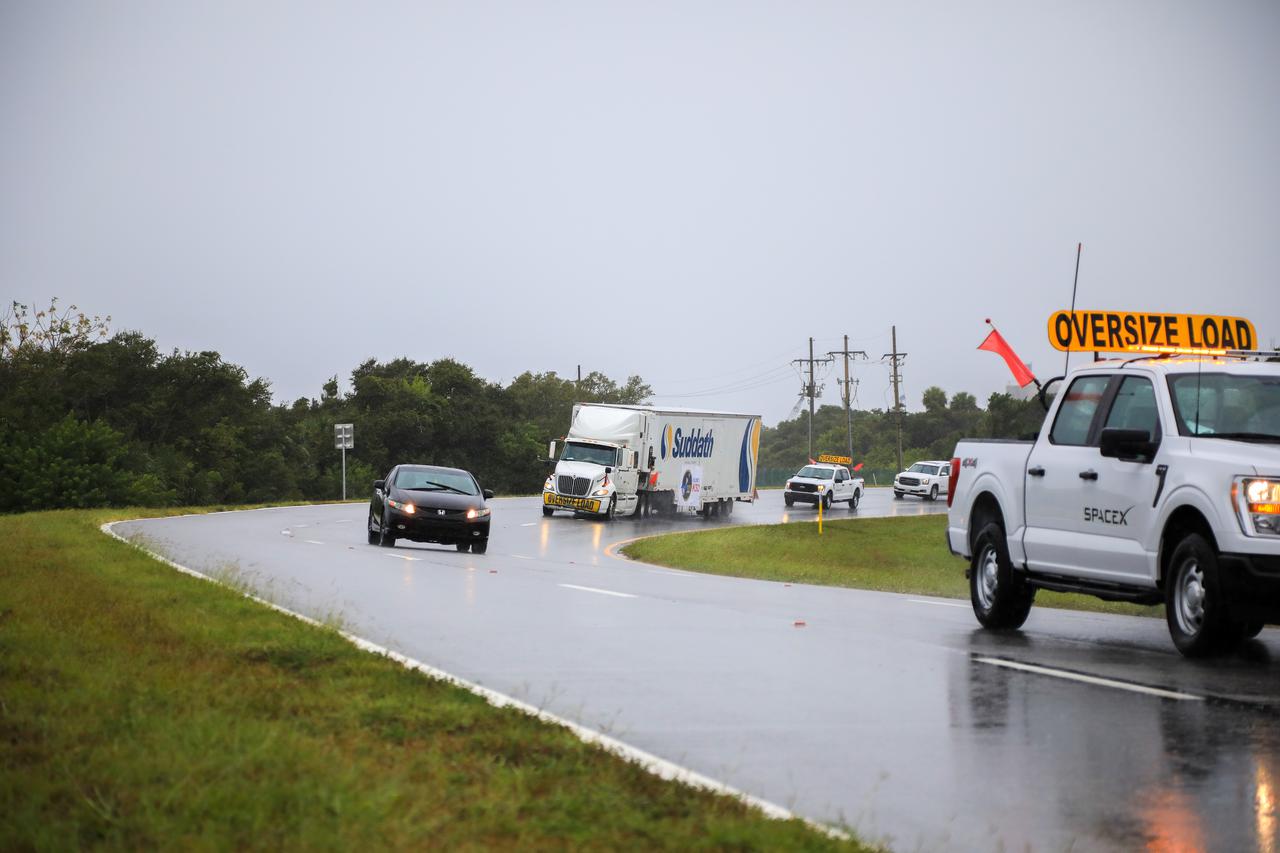
NASA’s Imaging X-Ray Polarimetry Explorer (IXPE) spacecraft – the agency’s first mission dedicated to measuring X-ray polarization – arrives at the Cape Canaveral Space Force Station in Florida on Nov. 5, 2021. IXPE is scheduled to launch aboard a SpaceX Falcon 9 vehicle from Kennedy’s Launch Complex 39A on Dec. 9, 2021. The launch is managed by NASA’s Launch Services Program, based at Kennedy. IXPE will study the polarization of X-rays coming to us from some of the universe’s most extreme sources, including black holes and dead stars known as pulsars.
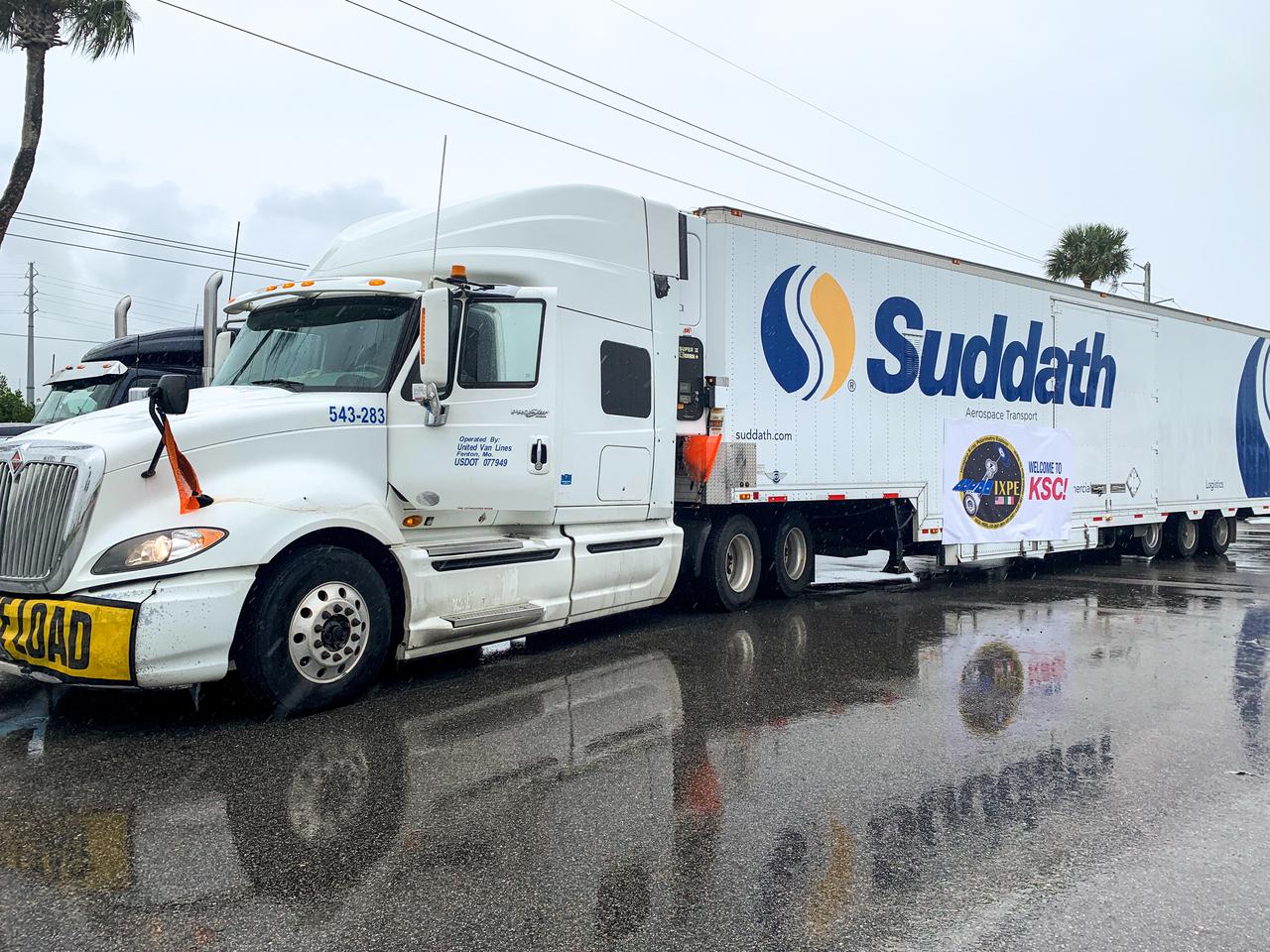
NASA’s Imaging X-Ray Polarimetry Explorer (IXPE) spacecraft – the agency’s first mission dedicated to measuring X-ray polarization – arrives at the Cape Canaveral Space Force Station in Florida on Nov. 5, 2021. IXPE is scheduled to launch aboard a SpaceX Falcon 9 vehicle from Kennedy’s Launch Complex 39A on Dec. 9, 2021. The launch is managed by NASA’s Launch Services Program, based at Kennedy. IXPE will study the polarization of X-rays coming to us from some of the universe’s most extreme sources, including black holes and dead stars known as pulsars.

NASA’s Imaging X-Ray Polarimetry Explorer (IXPE) spacecraft – the agency’s first mission dedicated to measuring X-ray polarization – arrives at the Cape Canaveral Space Force Station in Florida on Nov. 5, 2021. IXPE is scheduled to launch aboard a SpaceX Falcon 9 vehicle from Kennedy’s Launch Complex 39A on Dec. 9, 2021. The launch is managed by NASA’s Launch Services Program, based at Kennedy. IXPE will study the polarization of X-rays coming to us from some of the universe’s most extreme sources, including black holes and dead stars known as pulsars.
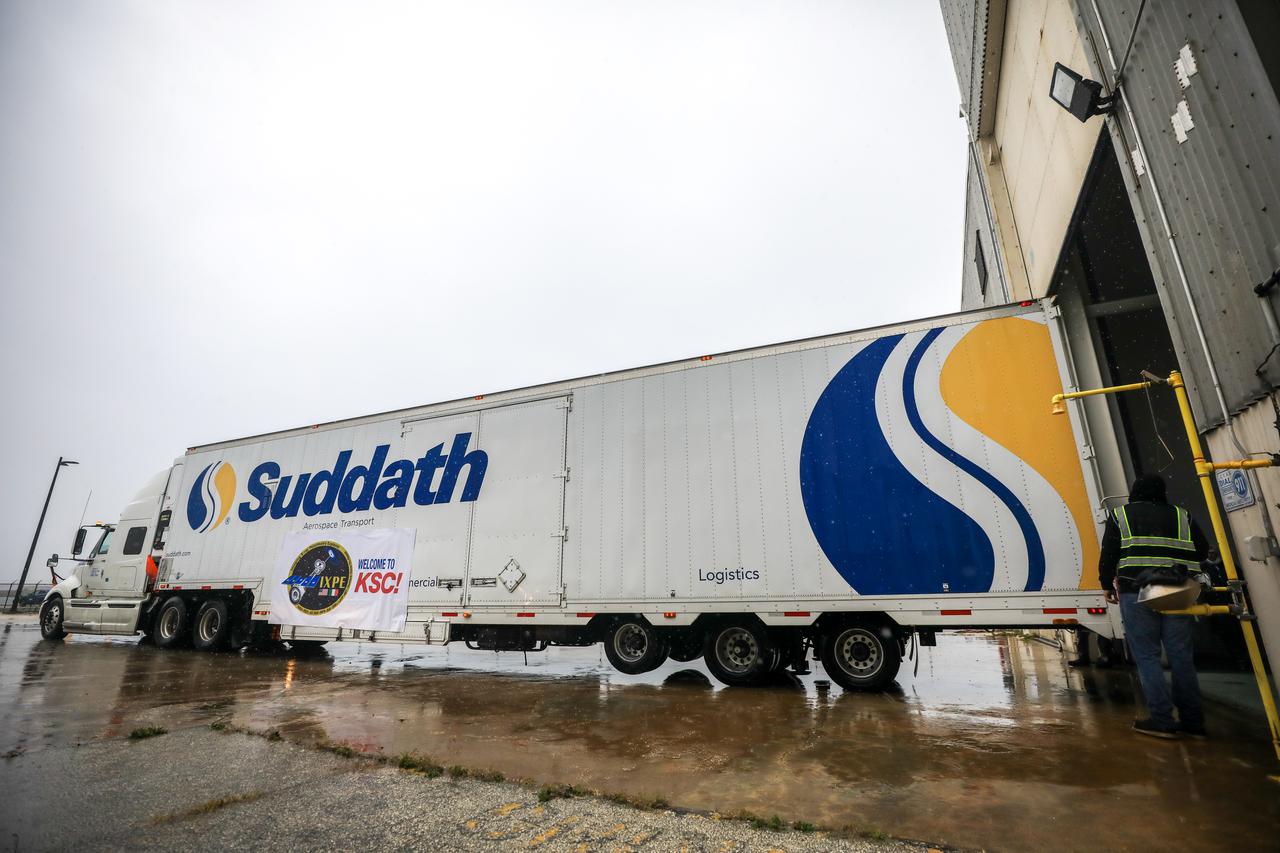
NASA’s Imaging X-Ray Polarimetry Explorer (IXPE) spacecraft – the agency’s first mission dedicated to measuring X-ray polarization – arrives at the Cape Canaveral Space Force Station in Florida on Nov. 5, 2021. IXPE is scheduled to launch aboard a SpaceX Falcon 9 vehicle from Kennedy’s Launch Complex 39A on Dec. 9, 2021. The launch is managed by NASA’s Launch Services Program, based at Kennedy. IXPE will study the polarization of X-rays coming to us from some of the universe’s most extreme sources, including black holes and dead stars known as pulsars.

NASA’s Imaging X-Ray Polarimetry Explorer (IXPE) spacecraft – the agency’s first mission dedicated to measuring X-ray polarization – arrives at the Cape Canaveral Space Force Station in Florida on Nov. 5, 2021. IXPE is scheduled to launch aboard a SpaceX Falcon 9 vehicle from Kennedy’s Launch Complex 39A on Dec. 9, 2021. The launch is managed by NASA’s Launch Services Program, based at Kennedy. IXPE will study the polarization of X-rays coming to us from some of the universe’s most extreme sources, including black holes and dead stars known as pulsars.

NASA’s Imaging X-Ray Polarimetry Explorer (IXPE) spacecraft – the agency’s first mission dedicated to measuring X-ray polarization – arrives at the Cape Canaveral Space Force Station in Florida on Nov. 5, 2021. IXPE is scheduled to launch aboard a SpaceX Falcon 9 vehicle from Kennedy’s Launch Complex 39A on Dec. 9, 2021. The launch is managed by NASA’s Launch Services Program, based at Kennedy. IXPE will study the polarization of X-rays coming to us from some of the universe’s most extreme sources, including black holes and dead stars known as pulsars.
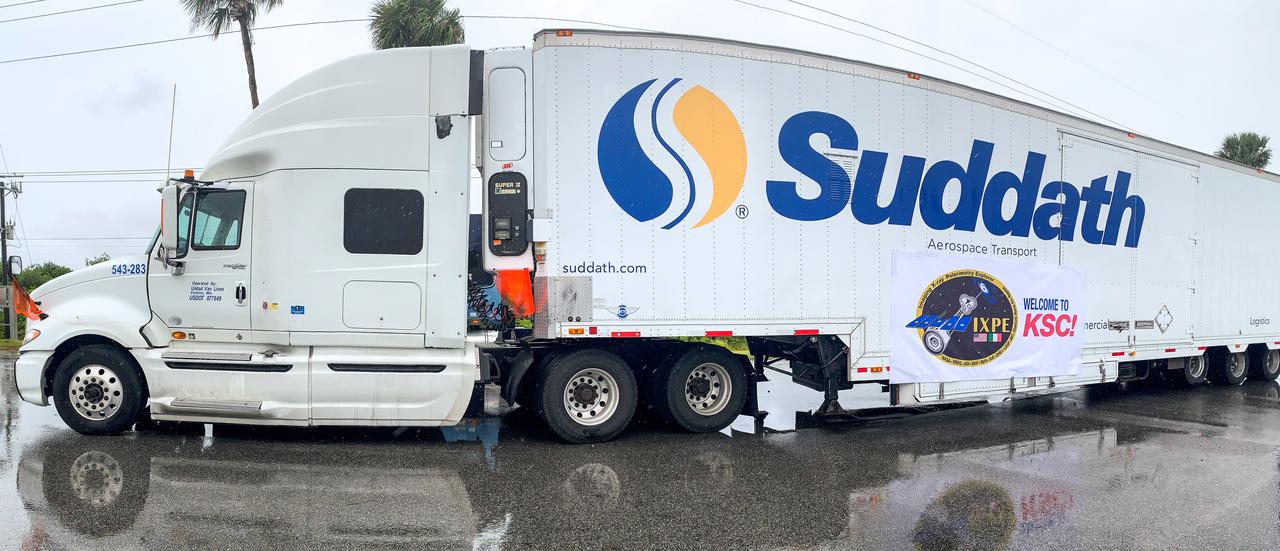
NASA’s Imaging X-Ray Polarimetry Explorer (IXPE) spacecraft – the agency’s first mission dedicated to measuring X-ray polarization – arrives at the Cape Canaveral Space Force Station in Florida on Nov. 5, 2021. IXPE is scheduled to launch aboard a SpaceX Falcon 9 vehicle from Kennedy’s Launch Complex 39A on Dec. 9, 2021. The launch is managed by NASA’s Launch Services Program, based at Kennedy. IXPE will study the polarization of X-rays coming to us from some of the universe’s most extreme sources, including black holes and dead stars known as pulsars.
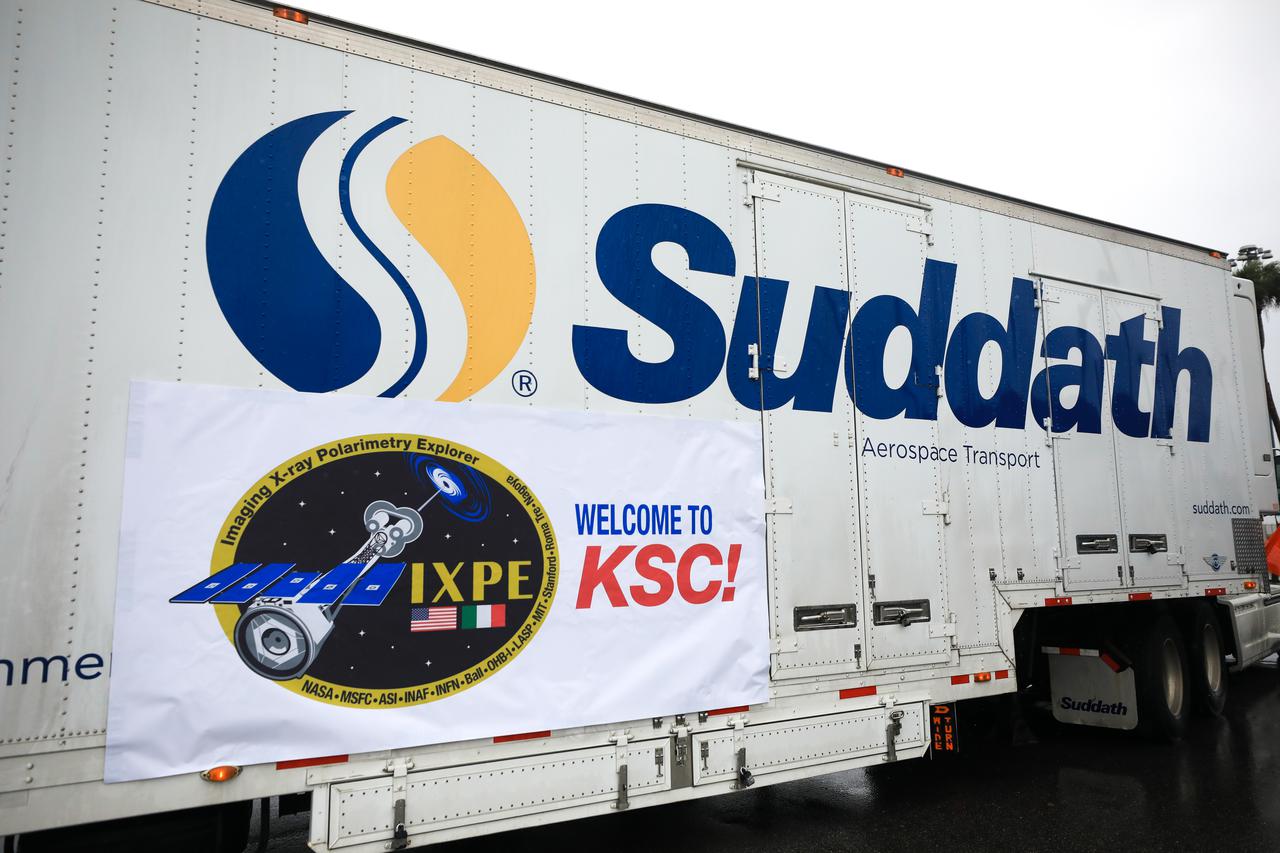
NASA’s Imaging X-Ray Polarimetry Explorer (IXPE) spacecraft – the agency’s first mission dedicated to measuring X-ray polarization – arrives at the Cape Canaveral Space Force Station in Florida on Nov. 5, 2021. IXPE is scheduled to launch aboard a SpaceX Falcon 9 vehicle from Kennedy’s Launch Complex 39A on Dec. 9, 2021. The launch is managed by NASA’s Launch Services Program, based at Kennedy. IXPE will study the polarization of X-rays coming to us from some of the universe’s most extreme sources, including black holes and dead stars known as pulsars.
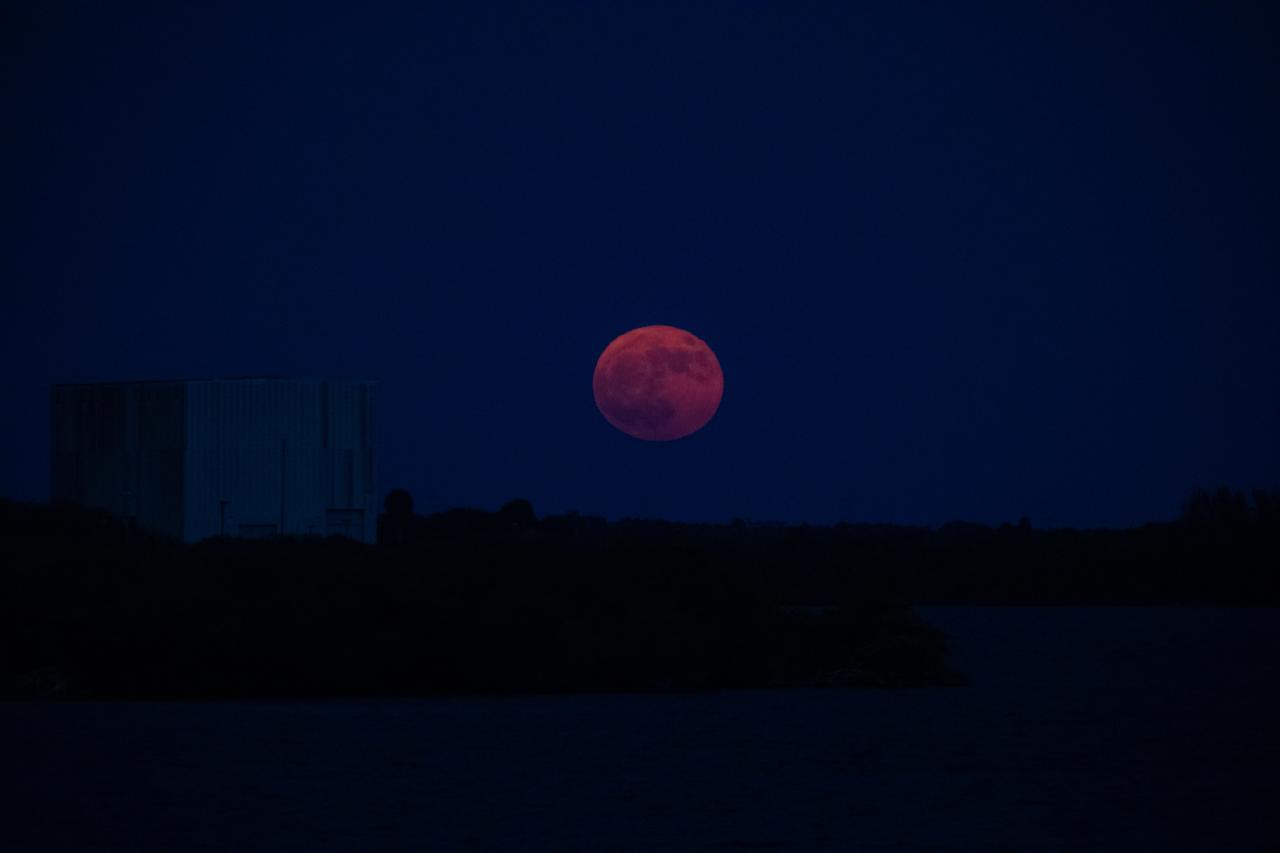
A super blue Moon rises above Kennedy Space Center in Florida on Monday, Aug. 18, 2024. Although not actually appearing blue, as the third full Moon in a season with four full Moons, this is called a “blue” Moon. The Moon at or near its closest point to Earth is a “super” Moon and can appear up to 14% bigger and brighter than normal full Moons. About 25% of all full Moons are super, but only 3% of full Moons are blue, with the next super blue Moons occurring as a pair in January and March 2037.
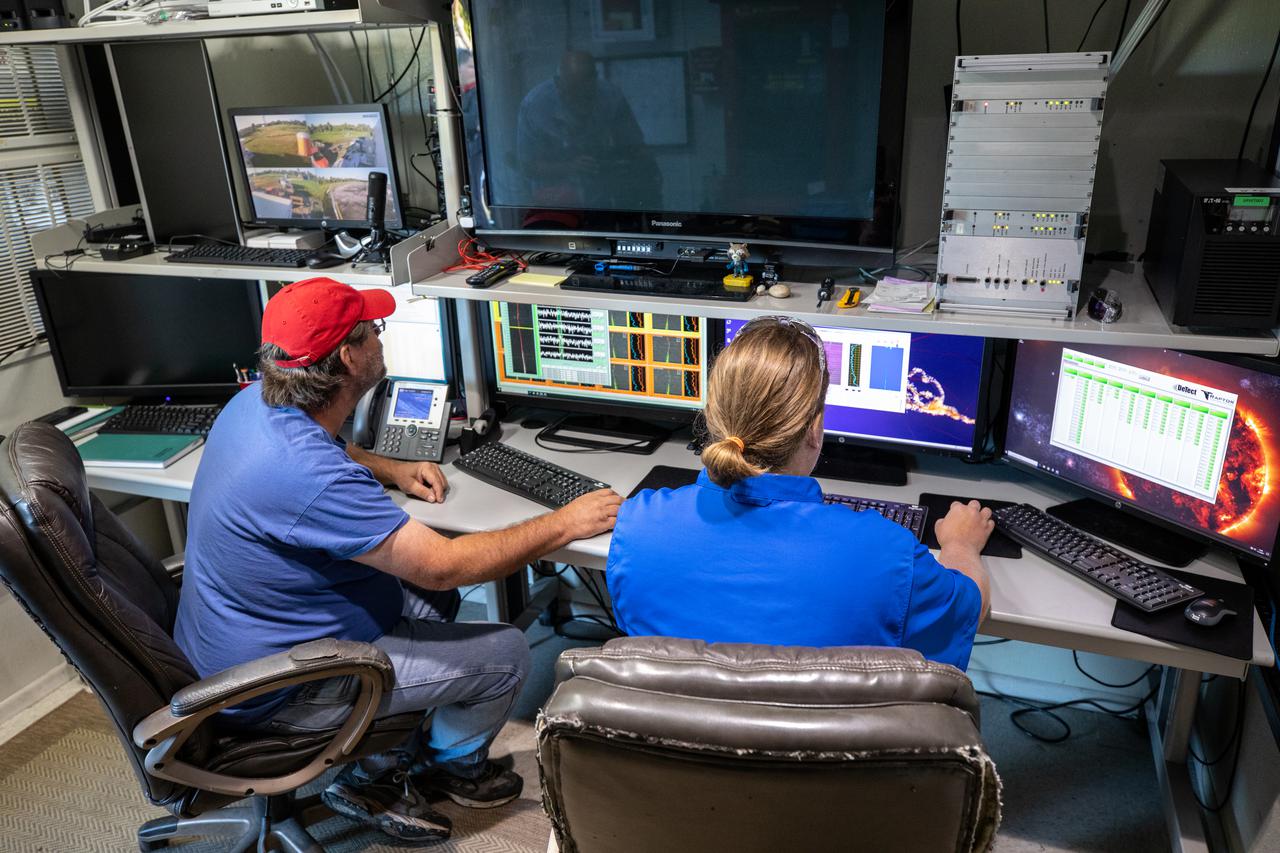
Weather Instrumentation Technician Gavin Oglesby, left, and Weather Instrumentation Engineer Nick O’Connor work with the Tropospheric Doppler Radar Wind Profiler at Kennedy Space Center in Florida during an Artemis I weather simulation on Nov. 3, 2021. The simulation involved teams from Kennedy, Cape Canaveral Space Force Station, Johnson Space Center in Texas, and Marshall Space Flight Center in Alabama. The radar wind profiler delivers data – from 6,000 to 62,000 feet – every five minutes. It will be used as the primary upper level wind instrument for NASA’s Artemis missions, including Artemis I, the first launch of the agency’s Space Launch System rocket and the Orion spacecraft on a flight beyond the Moon.

A super blue Moon rises above Kennedy Space Center in Florida on Monday, Aug. 18, 2024. Although not actually appearing blue, as the third full Moon in a season with four full Moons, this is called a “blue” Moon. The Moon at or near its closest point to Earth is a “super” Moon and can appear up to 14% bigger and brighter than normal full Moons. About 25% of all full Moons are super, but only 3% of full Moons are blue, with the next super blue Moons occurring as a pair in January and March 2037.
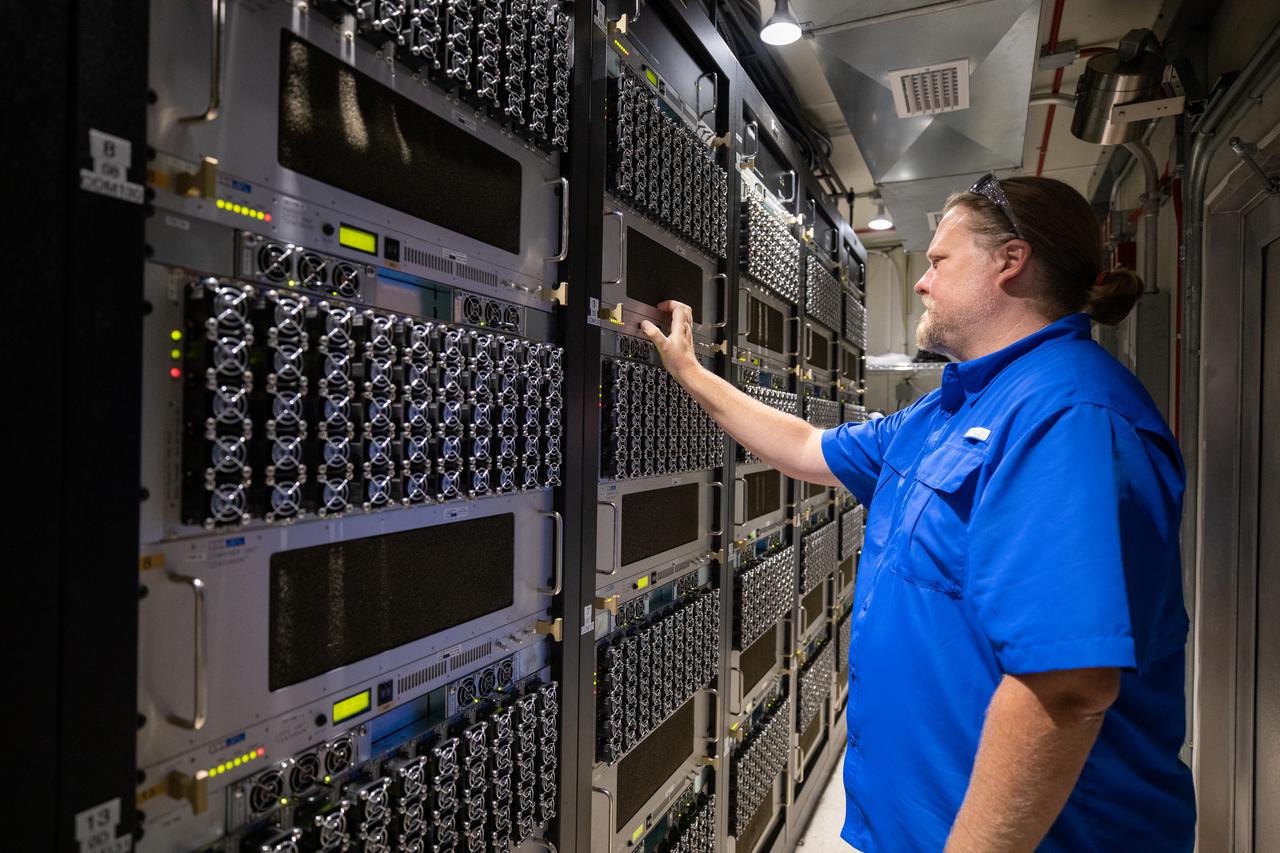
Weather Instrumentation Engineer Nick O’Connor works with the Tropospheric Doppler Radar Wind Profiler at Kennedy Space Center in Florida during an Artemis I weather simulation on Nov. 3, 2021. The simulation involved teams from Kennedy, Cape Canaveral Space Force Station, Johnson Space Center in Texas, and Marshall Space Flight Center in Alabama. The radar wind profiler delivers data – from 6,000 to 62,000 feet – every five minutes. It will be used as the primary upper level wind instrument for NASA’s Artemis missions, including Artemis I, the first launch of the agency’s Space Launch System rocket and the Orion spacecraft on a flight beyond the Moon.
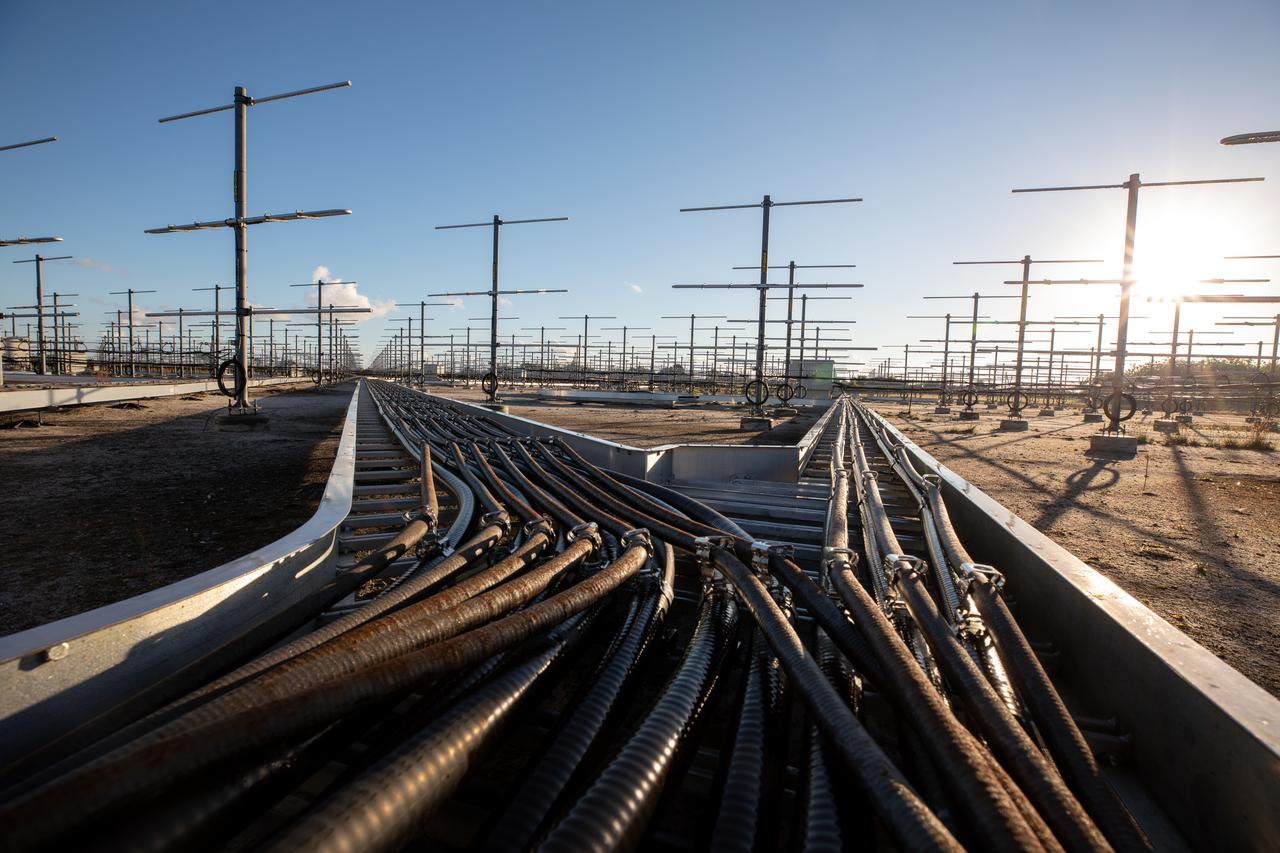
The Tropospheric Doppler Radar Wind Profiler, located on five acres near the Launch and Landing Facility at Kennedy Space Center in Florida, is shown during an Artemis I weather simulation on Nov. 3, 2021. The simulation involved teams from Kennedy, Cape Canaveral Space Force Station, Johnson Space Center in Texas, and Marshall Space Flight Center in Alabama. The radar wind profiler consists of 640 antennae and delivers data – from 6,000 to 62,000 feet – every five minutes. The instrument will be used as the primary upper level wind instrument for NASA’s Artemis missions, including Artemis I, the first launch of the agency’s Space Launch System rocket and the Orion spacecraft on a flight beyond the Moon.
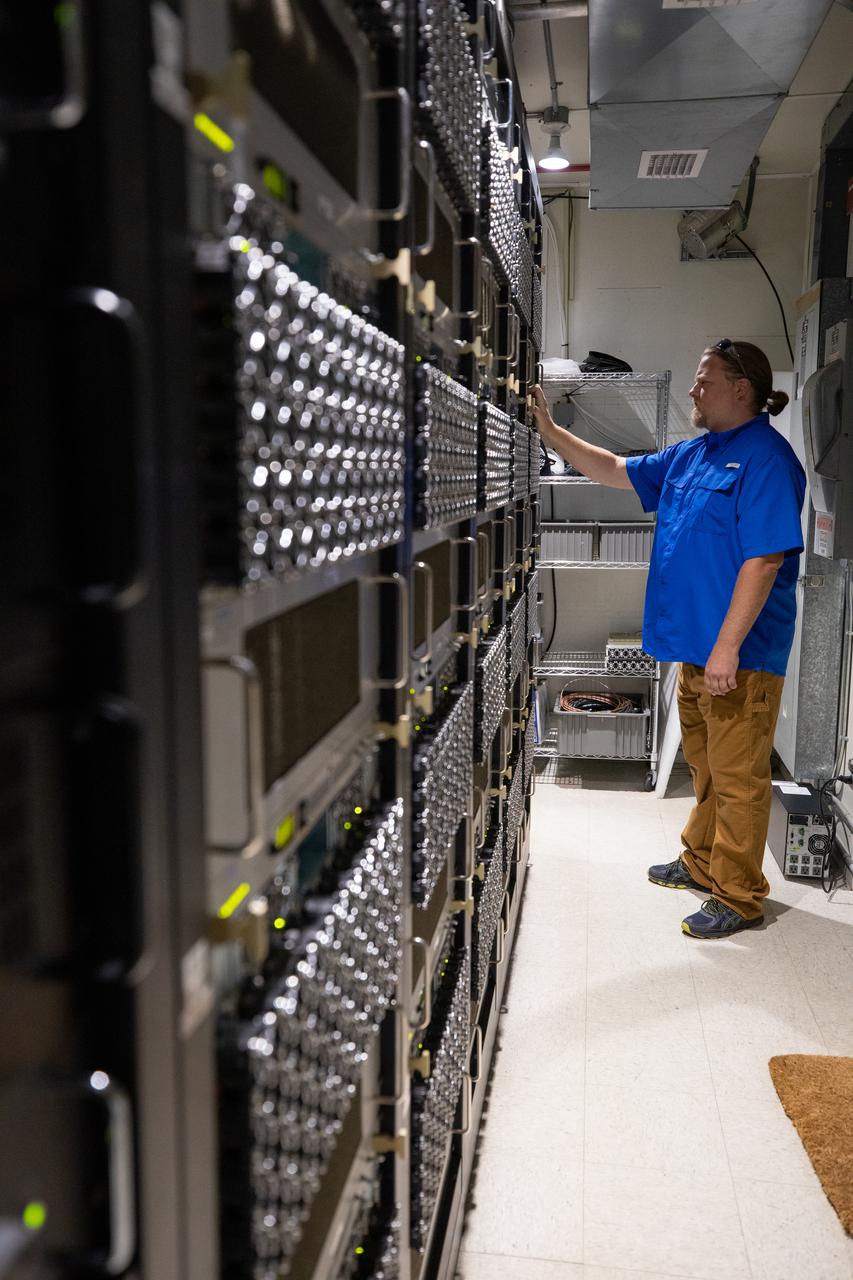
Weather Instrumentation Engineer Nick O’Connor works with the Tropospheric Doppler Radar Wind Profiler at Kennedy Space Center in Florida during an Artemis I weather simulation on Nov. 3, 2021. The simulation involved teams from Kennedy, Cape Canaveral Space Force Station, Johnson Space Center in Texas, and Marshall Space Flight Center in Alabama. The radar wind profiler delivers data – from 6,000 to 62,000 feet – every five minutes. It will be used as the primary upper level wind instrument for NASA’s Artemis missions, including Artemis I, the first launch of the agency’s Space Launch System rocket and the Orion spacecraft on a flight beyond the Moon.
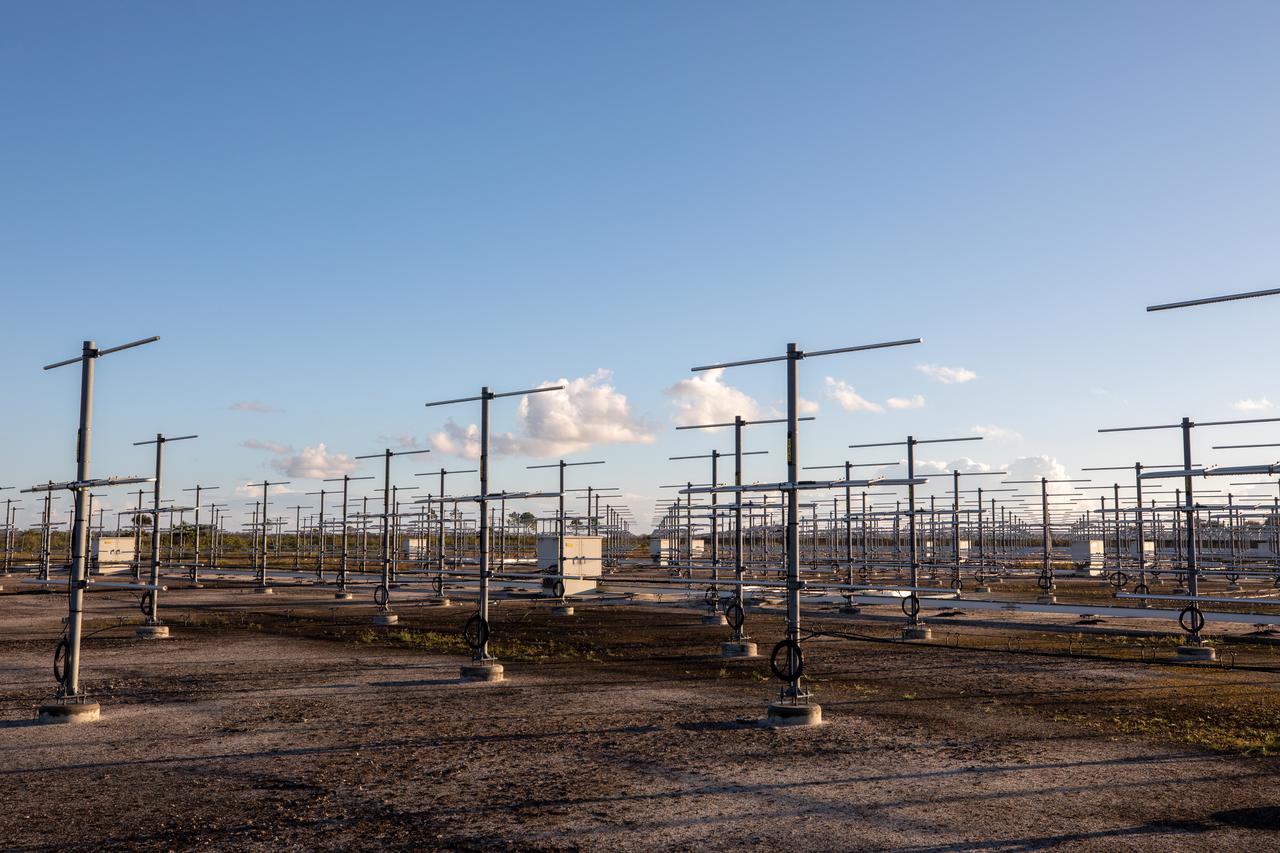
The Tropospheric Doppler Radar Wind Profiler, located on five acres near the Launch and Landing Facility at Kennedy Space Center in Florida, is shown during an Artemis I weather simulation on Nov. 3, 2021. The simulation involved teams from Kennedy, Cape Canaveral Space Force Station, Johnson Space Center in Texas, and Marshall Space Flight Center in Alabama. The radar wind profiler consists of 640 antennae and delivers data – from 6,000 to 62,000 feet – every five minutes. The instrument will be used as the primary upper level wind instrument for NASA’s Artemis missions, including Artemis I, the first launch of the agency’s Space Launch System rocket and the Orion spacecraft on a flight beyond the Moon.
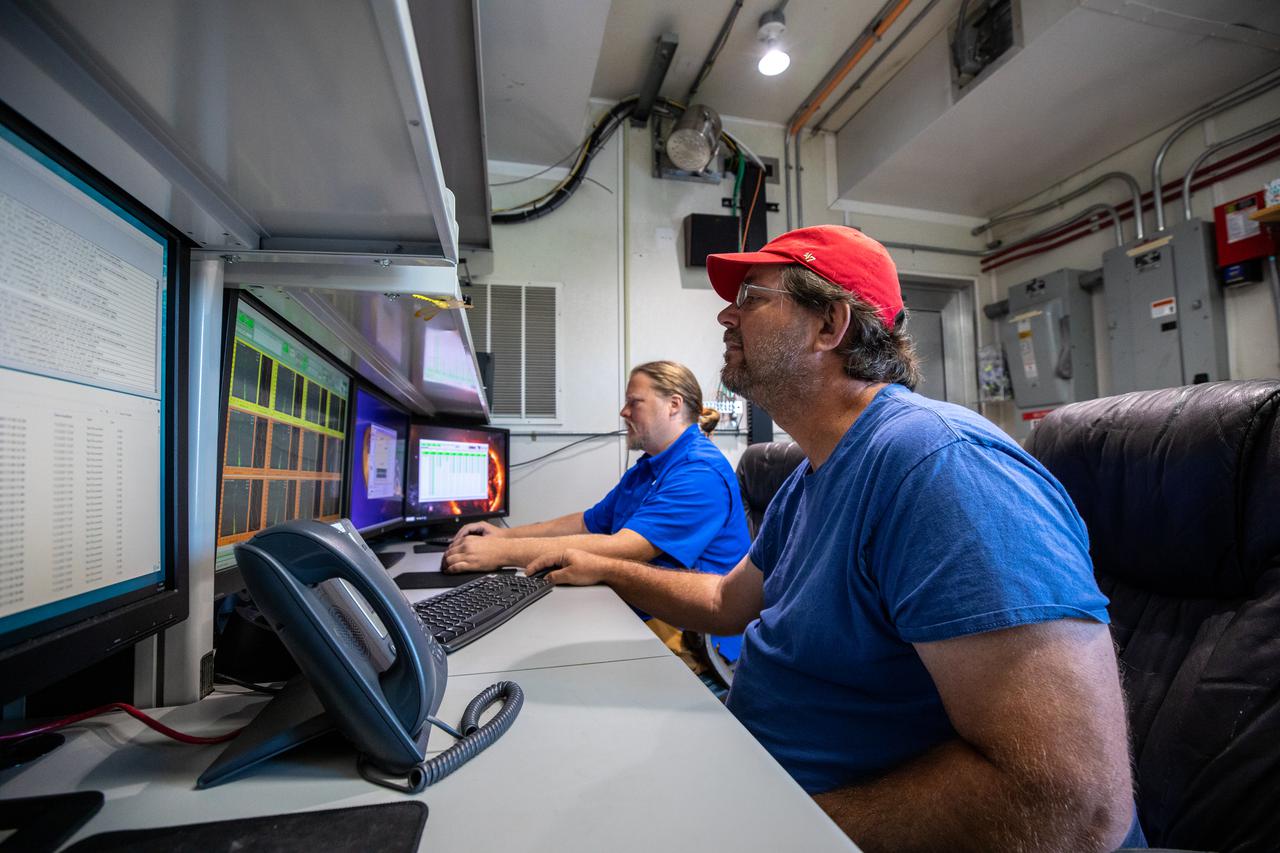
Weather Instrumentation Technician Gavin Oglesby, left, and Weather Instrumentation Engineer Nick O’Connor work with the Tropospheric Doppler Radar Wind Profiler at Kennedy Space Center in Florida during an Artemis I weather simulation on Nov. 3, 2021. The simulation involved teams from Kennedy, Cape Canaveral Space Force Station, Johnson Space Center in Texas, and Marshall Space Flight Center in Alabama. The radar wind profiler delivers data – from 6,000 to 62,000 feet – every five minutes. It will be used as the primary upper level wind instrument for NASA’s Artemis missions, including Artemis I, the first launch of the agency’s Space Launch System rocket and the Orion spacecraft on a flight beyond the Moon.
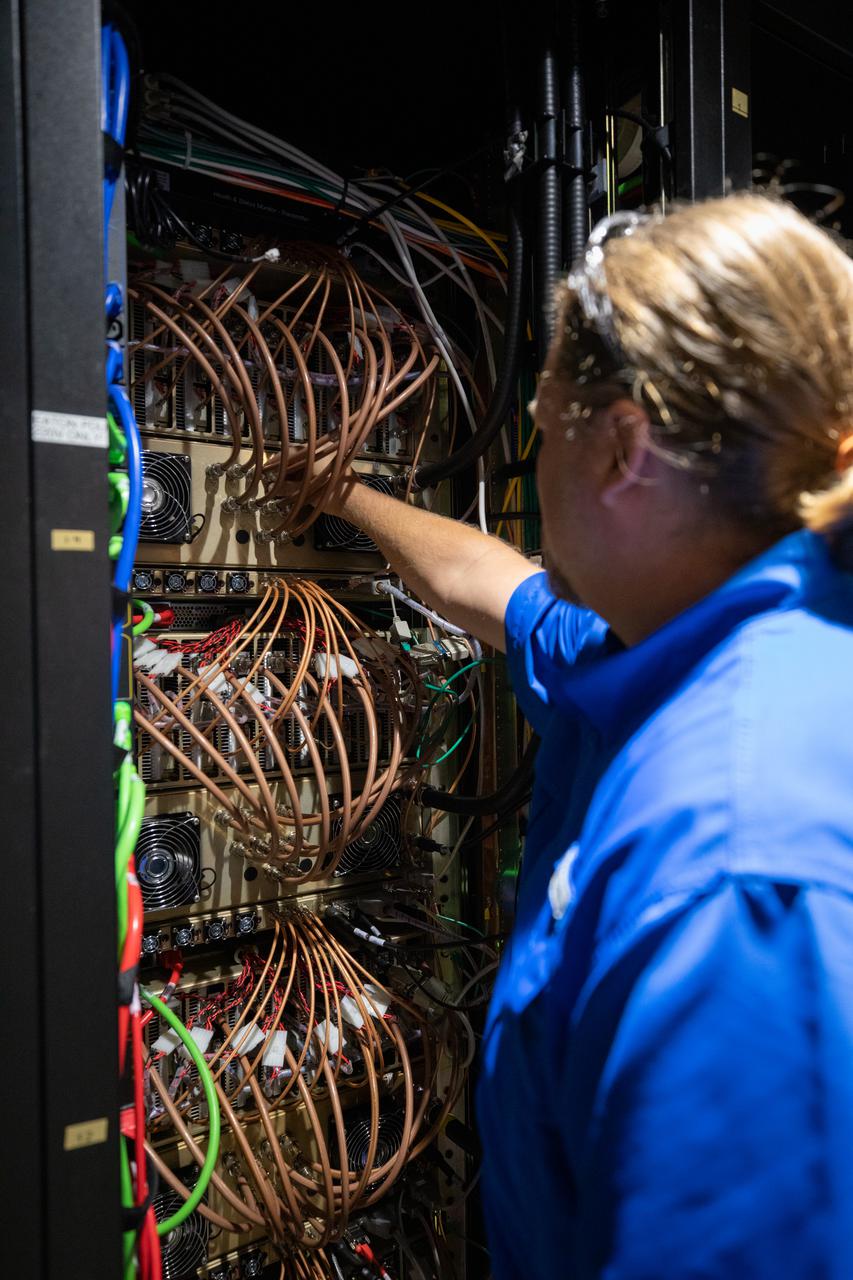
Weather Instrumentation Engineer Nick O’Connor works with the Tropospheric Doppler Radar Wind Profiler at Kennedy Space Center in Florida during an Artemis I weather simulation on Nov. 3, 2021. The simulation involved teams from Kennedy, Cape Canaveral Space Force Station, Johnson Space Center in Texas, and Marshall Space Flight Center in Alabama. The radar wind profiler delivers data – from 6,000 to 62,000 feet – every five minutes. It will be used as the primary upper level wind instrument for NASA’s Artemis missions, including Artemis I, the first launch of the agency’s Space Launch System rocket and the Orion spacecraft on a flight beyond the Moon.
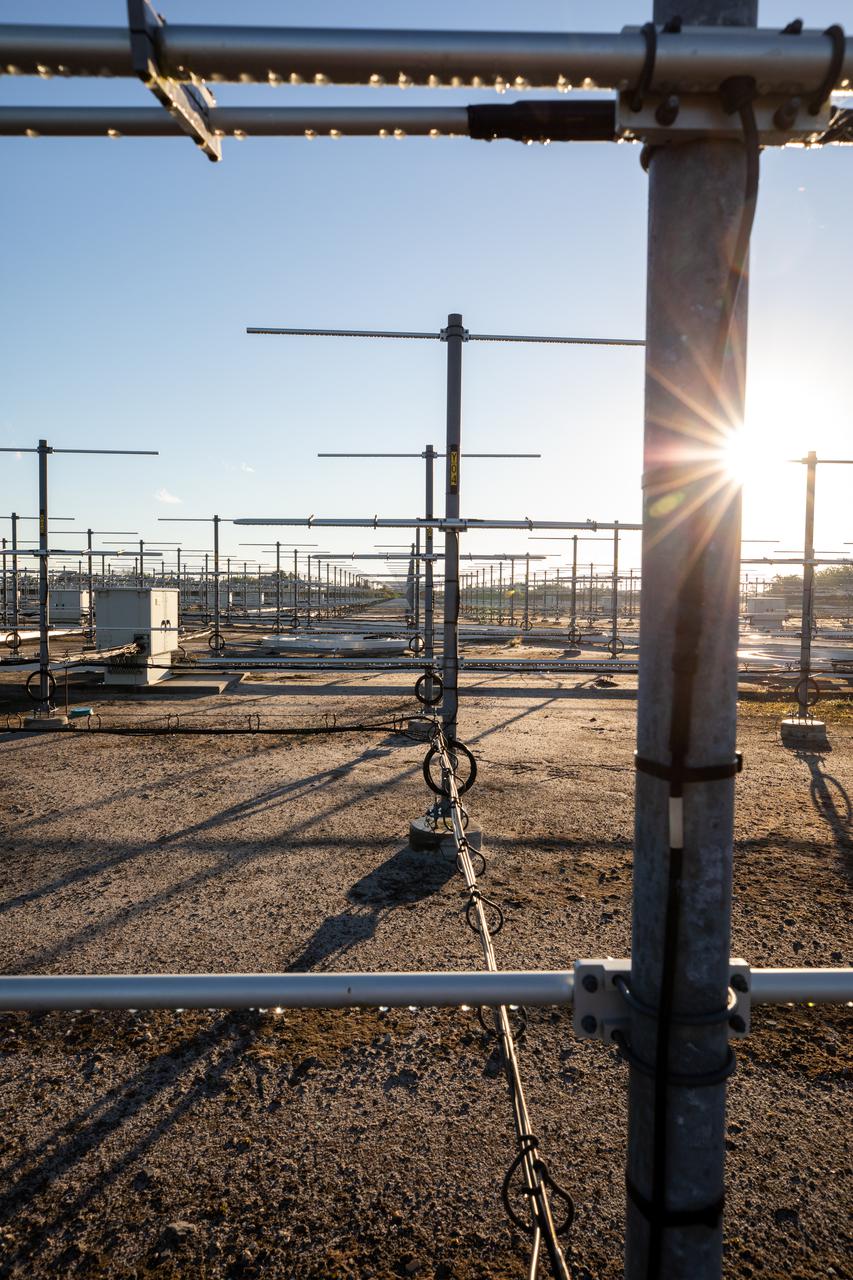
The Tropospheric Doppler Radar Wind Profiler, located on five acres near the Launch and Landing Facility at Kennedy Space Center in Florida, is shown during an Artemis I weather simulation on Nov. 3, 2021. The simulation involved teams from Kennedy, Cape Canaveral Space Force Station, Johnson Space Center in Texas, and Marshall Space Flight Center in Alabama. The radar wind profiler consists of 640 antennae and delivers data – from 6,000 to 62,000 feet – every five minutes. The instrument will be used as the primary upper level wind instrument for NASA’s Artemis missions, including Artemis I, the first launch of the agency’s Space Launch System rocket and the Orion spacecraft on a flight beyond the Moon.
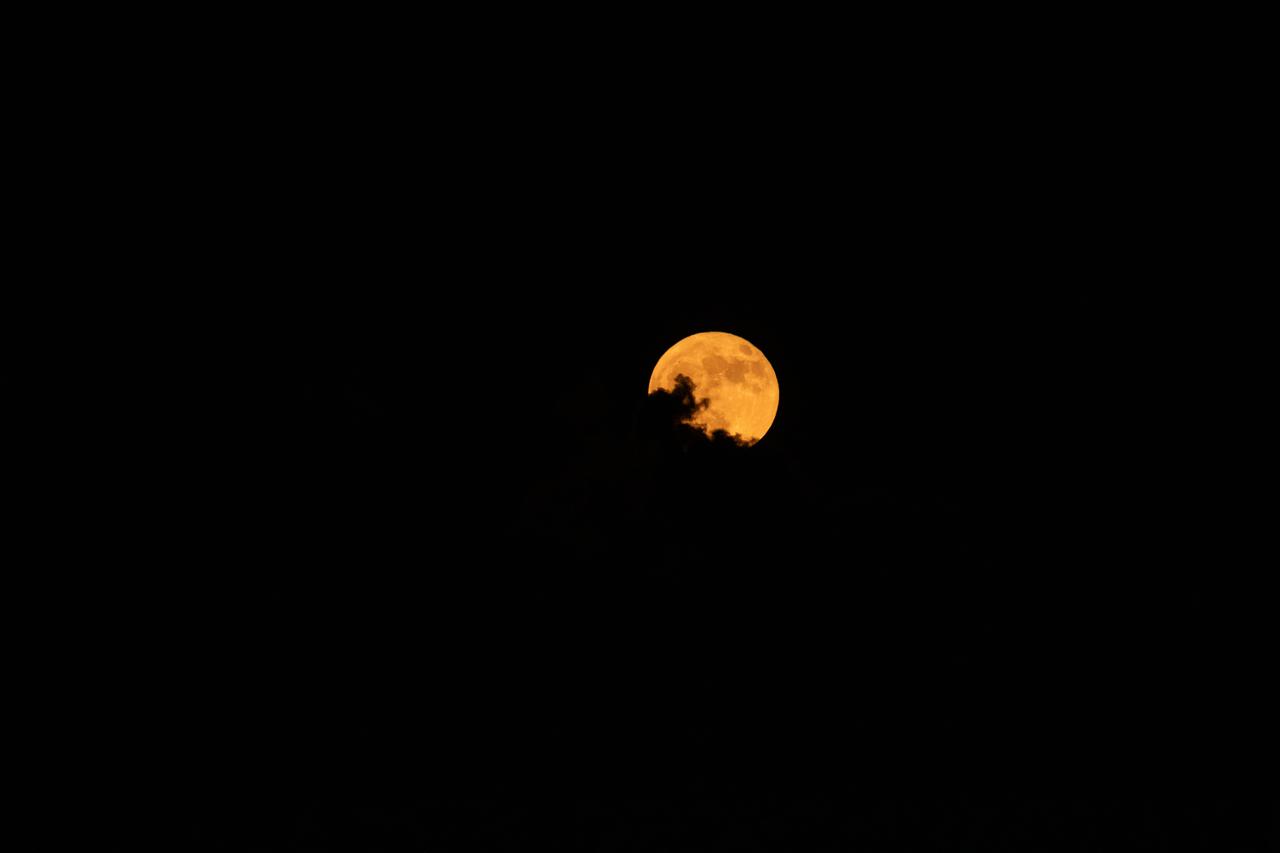
A super blue Moon rises above Kennedy Space Center in Florida on Monday, Aug. 18, 2024. Although not actually appearing blue, as the third full Moon in a season with four full Moons, this is called a “blue” Moon. The Moon at or near its closest point to Earth is a “super” Moon and can appear up to 14% bigger and brighter than normal full Moons. About 25% of all full Moons are super, but only 3% of full Moons are blue, with the next super blue Moons occurring as a pair in January and March 2037.
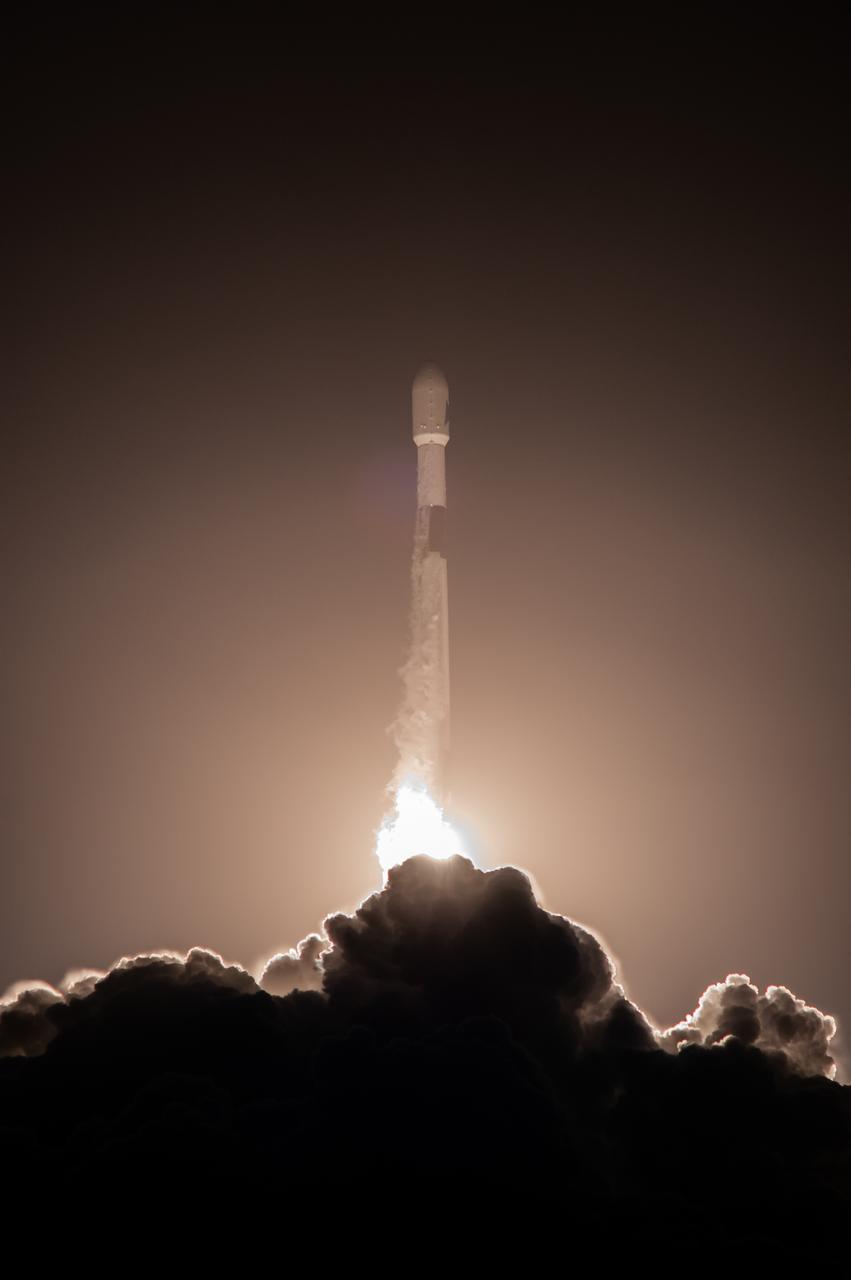
NASA’s PACE (Plankton, Aerosol, Cloud, ocean Ecosystem) spacecraft, atop a SpaceX Falcon 9 rocket, successfully lifts off from Space Launch Complex 40 at Cape Canaveral Space Force Station in Florida at 1:33 a.m. EST Thursday, Feb. 8. PACE is NASA’s newest earth-observing satellite that will help increase our understanding of Earth’s oceans, atmosphere, and climate by delivering hyperspectral observations of microscopic marine organisms called phytoplankton, as well new data on clouds and aerosols.
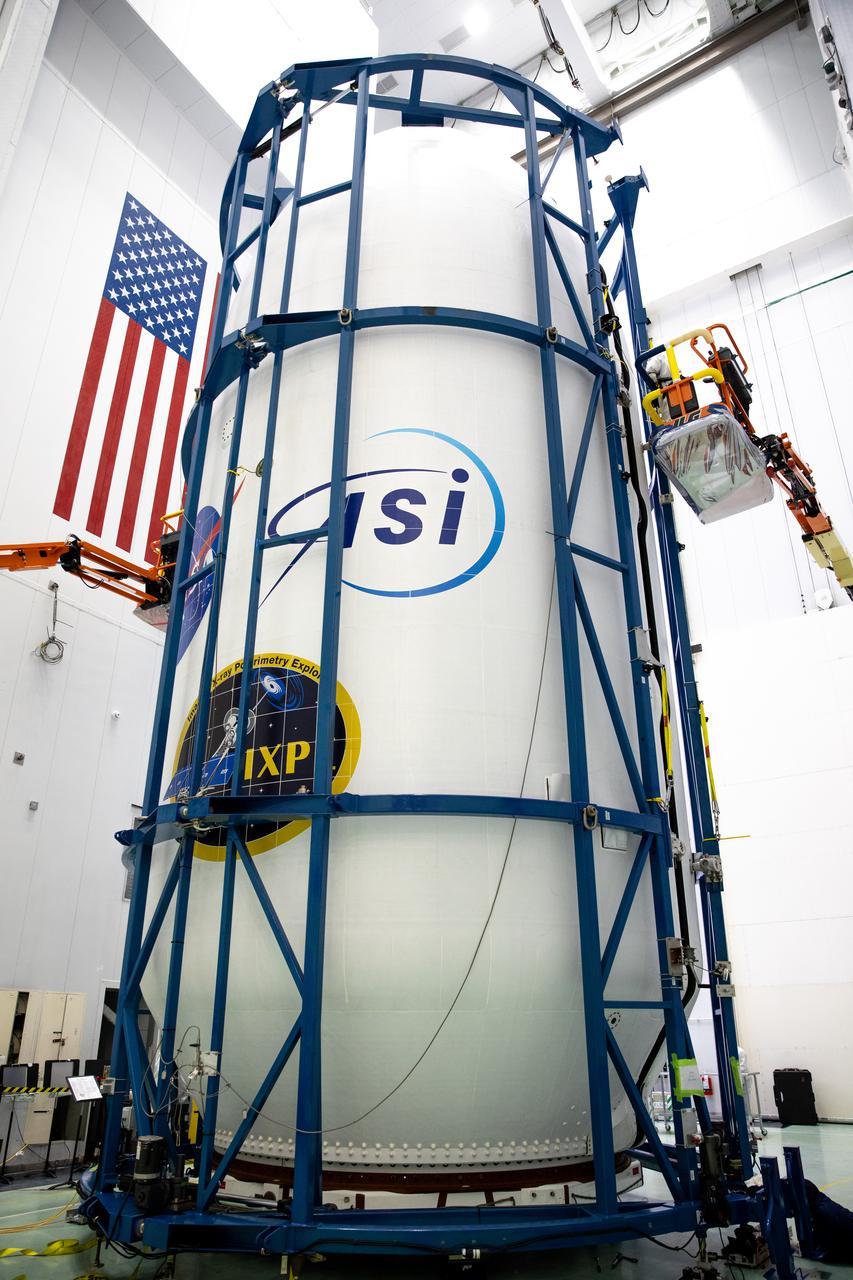
NASA’s Imaging X-Ray Polarimetry Explorer (IXPE) spacecraft and nose fairing are brought together for encapsulation inside SpaceX’s Payload Processing Facility at Kennedy Space Center in Florida on Dec. 2, 2021. The mission is scheduled to launch no earlier than Thursday, Dec. 9, at 1 a.m. EST, on a SpaceX Falcon 9 rocket from Launch Complex 39A at NASA’s Kennedy Space Center in Florida. IXPE is the first satellite dedicated to measuring the polarization of X-rays from a variety of cosmic sources, such as black holes and neutron stars.
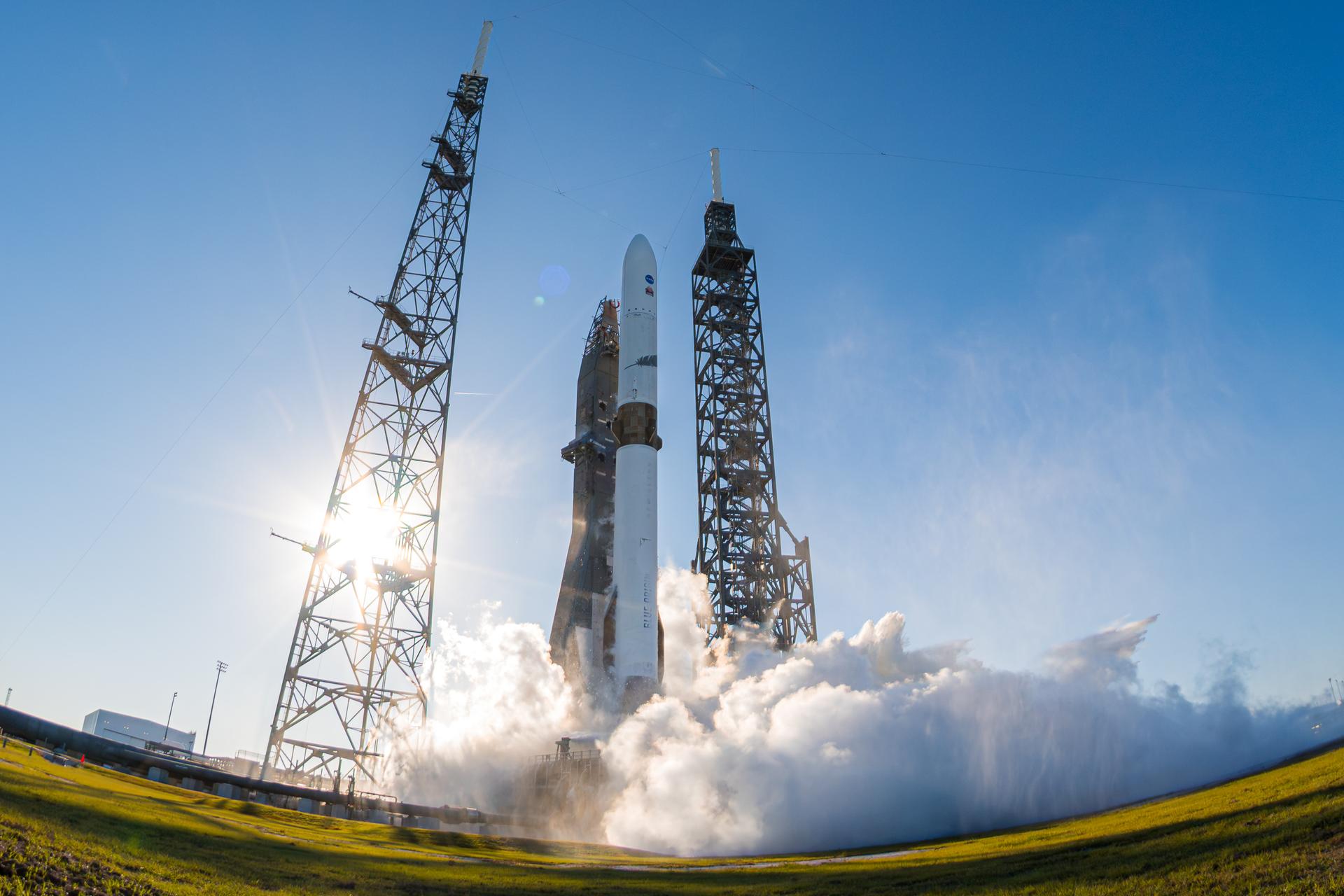
Blue Origin’s New Glenn rocket carrying NASA’s twin ESCAPADE (Escape and Plasma Acceleration and Dynamics Explorers) spacecraft launches at 3:55 p.m. EST, Thursday, Nov. 13, 2025, from Launch Complex 36 at Cape Canaveral Space Force Station in Florida. The ESCAPADE mission, built by Rocket Lab, will study how solar wind and plasma interact with Mars’ magnetosphere and how this interaction drives the planet’s atmospheric escape to prepare for future human missions on Mars.
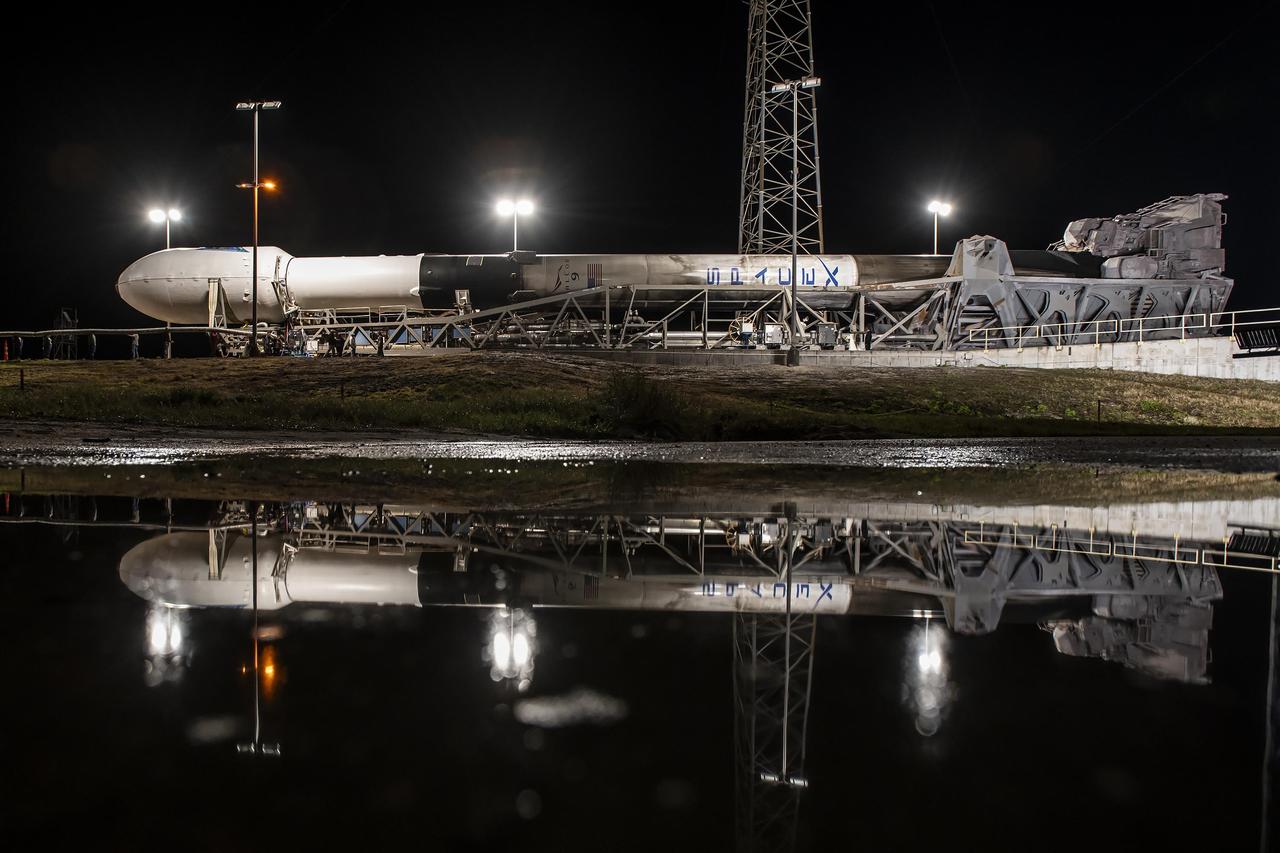
A SpaceX Falcon 9 rocket with NASA’s PACE (Plankton, Aerosol, Cloud, ocean Ecosystem) spacecraft encapsulated atop is rolled to the launch pad at Space Launch Complex 40 at Cape Canaveral Space Force Station in Florida on Monday, Feb. 5, 2024. PACE is NASA’s newest earth-observing satellite that will help increase our understanding of Earth’s oceans, atmosphere, and climate by delivering hyperspectral observations of microscopic marine organisms called phytoplankton as well new data on clouds and aerosols. Liftoff of the PACE mission is set for no earlier than 1:33 a.m. EST on Tuesday, Feb. 6, 2024.

Blue Origin’s New Glenn rocket carrying NASA’s twin ESCAPADE (Escape and Plasma Acceleration and Dynamics Explorers) spacecraft launches at 3:55 p.m. EST, Thursday, Nov. 13, 2025, from Launch Complex 36 at Cape Canaveral Space Force Station in Florida. The ESCAPADE mission, built by Rocket Lab, will study how solar wind and plasma interact with Mars’ magnetosphere and how this interaction drives the planet’s atmospheric escape to prepare for future human missions on Mars.
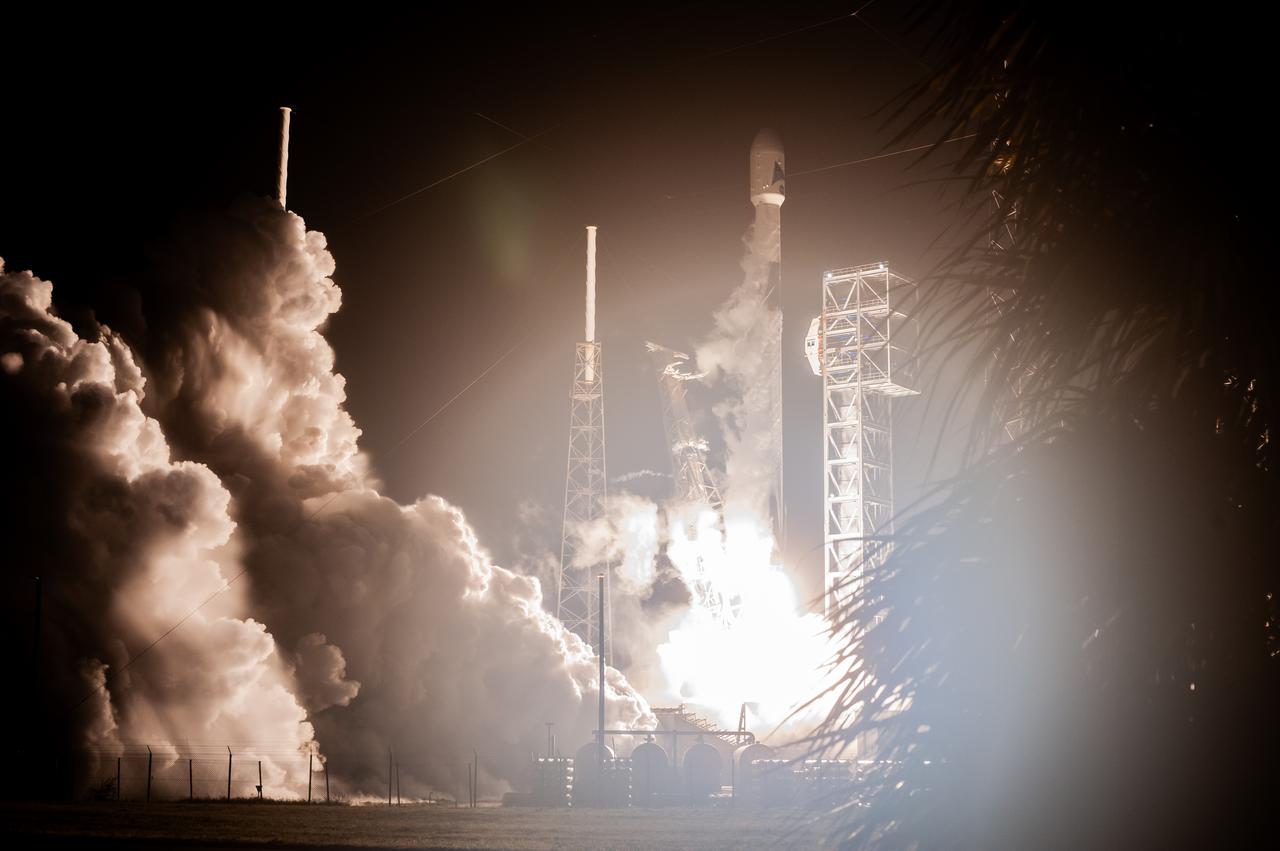
NASA’s PACE (Plankton, Aerosol, Cloud, ocean Ecosystem) spacecraft, atop a SpaceX Falcon 9 rocket, successfully lifts off from Space Launch Complex 40 at Cape Canaveral Space Force Station in Florida at 1:33 a.m. EST Thursday, Feb. 8. PACE is NASA’s newest earth-observing satellite that will help increase our understanding of Earth’s oceans, atmosphere, and climate by delivering hyperspectral observations of microscopic marine organisms called phytoplankton, as well new data on clouds and aerosols.
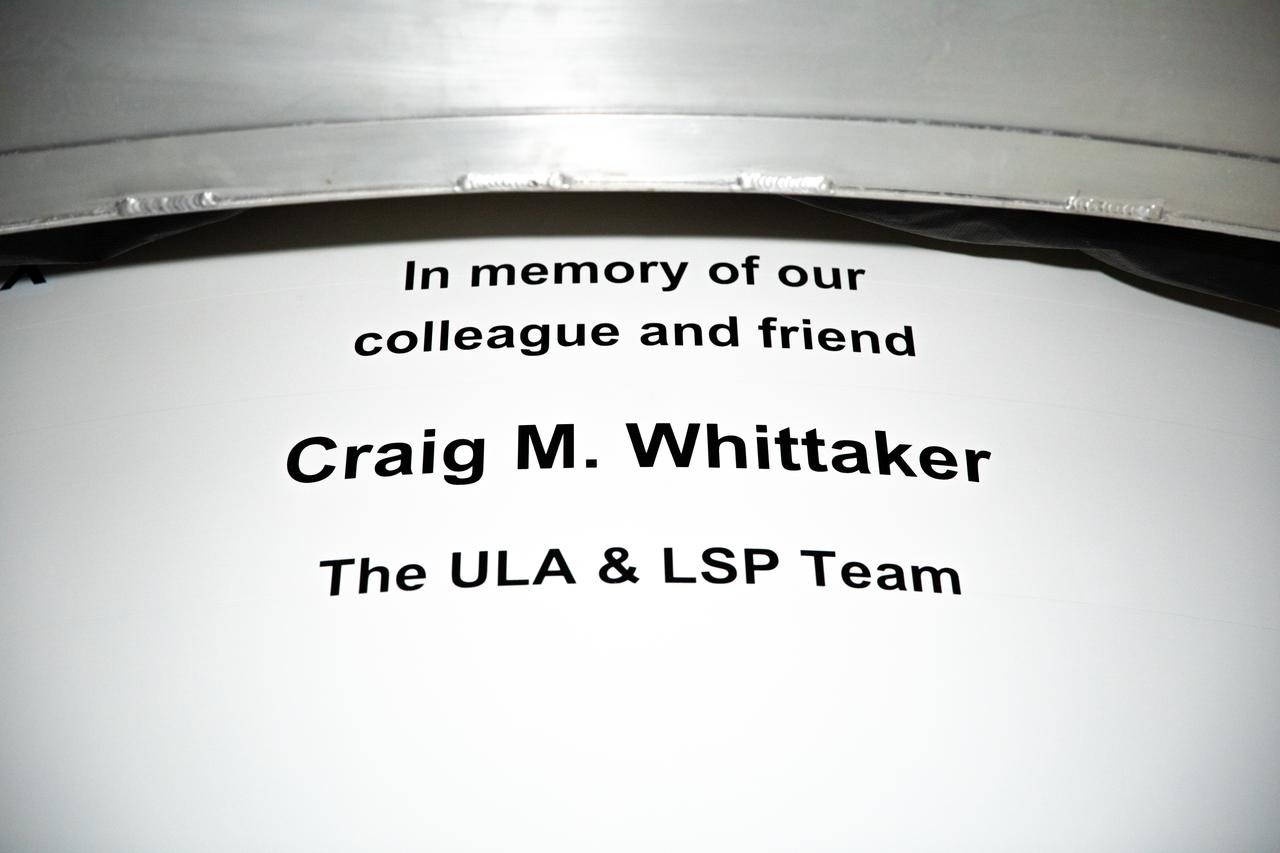
The United Launch Alliance (ULA) Atlas V rocket that will launch NASA’s Lucy spacecraft on its 12-year mission to study the Trojan asteroids is shown inside the Vertical Integration Facility at Space Launch Complex 41 (SLC-41) at Cape Canaveral Space Force Station in Florida on Oct. 8, 2021. Three dedication laminates were added to the rocket. The first is in memory of Craig M. Whittaker, a colleague and friend of NASA’s Launch Services Program (LSP) and ULA teams. The second is in memory of two colleagues: William “Billy” Joiner II – a former Lockheed Martin and ULA technician – and Mark “Kaz” Kaszubowski – an accomplished engineer and mentor. The third plaque is dedicated to NASA’s Goddard Space Flight Center Lucy Mission Team for its dedication shown throughout the pandemic. Lucy is targeted to lift off from SLC-41 at 5:34 a.m. EDT Saturday, Oct. 16. LSP, based at NASA’s Kennedy Space Center, is managing the launch.
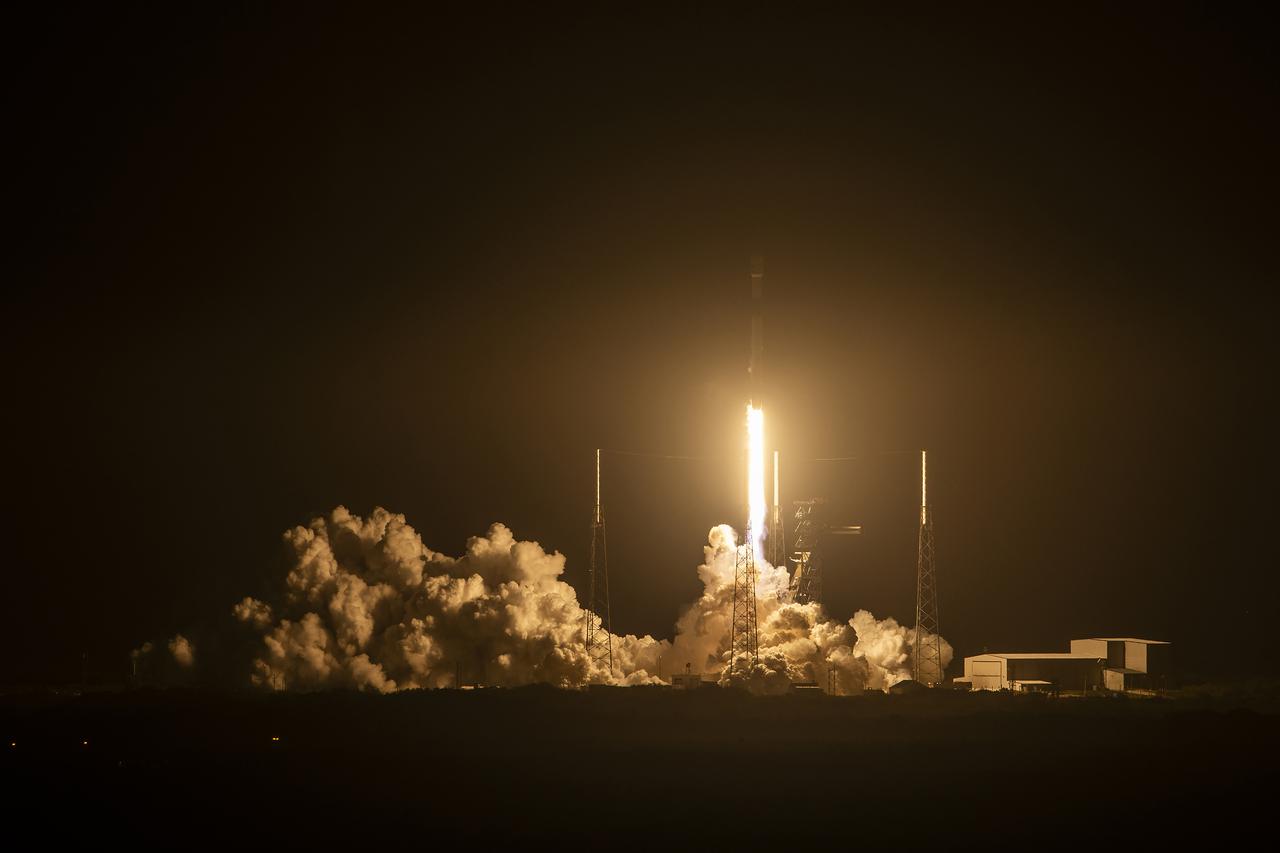
NASA’s PACE (Plankton, Aerosol, Cloud, ocean Ecosystem) spacecraft, atop a SpaceX Falcon 9 rocket, successfully lifts off from Space Launch Complex 40 at Cape Canaveral Space Force Station in Florida at 1:33 a.m. EST Thursday, Feb. 8. PACE is NASA’s newest earth-observing satellite that will help increase our understanding of Earth’s oceans, atmosphere, and climate by delivering hyperspectral observations of microscopic marine organisms called phytoplankton, as well new data on clouds and aerosols.
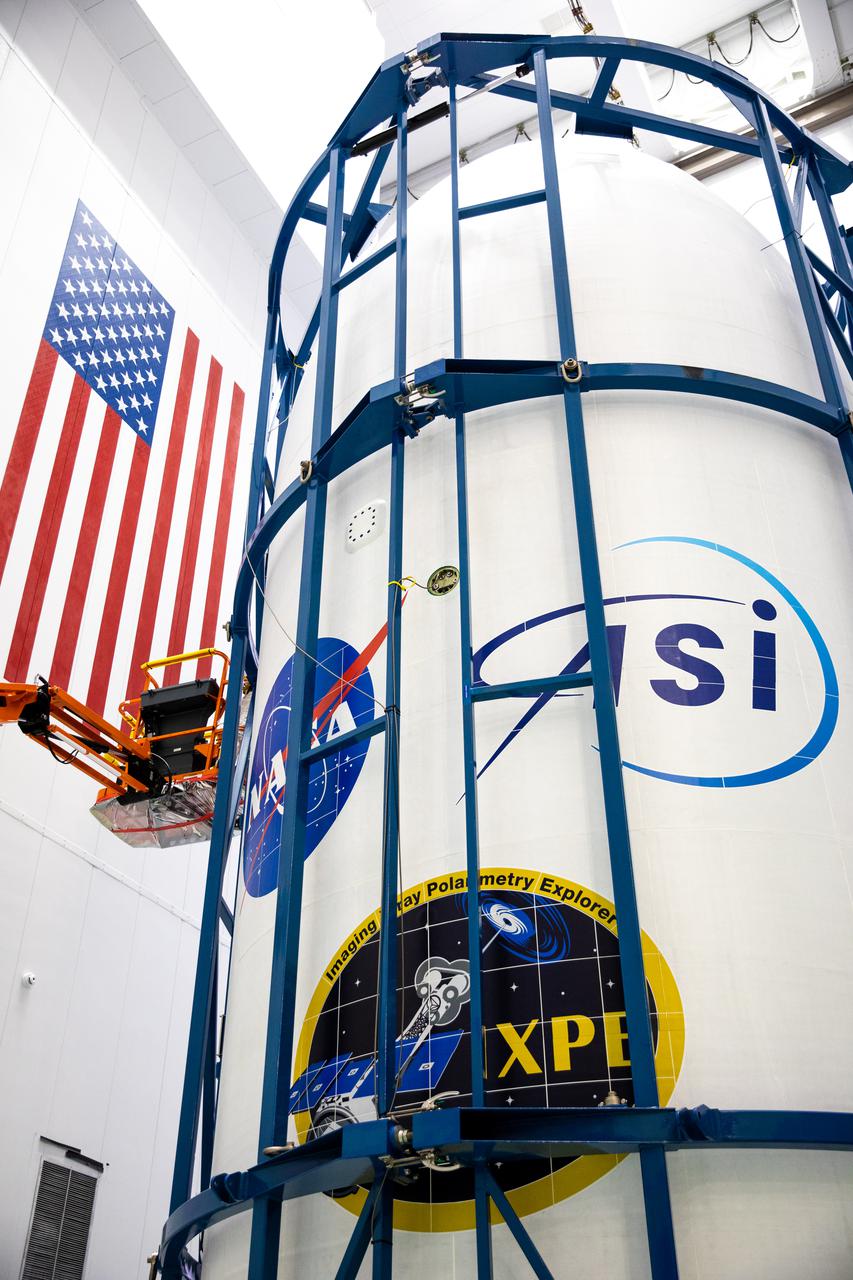
NASA’s Imaging X-Ray Polarimetry Explorer (IXPE) spacecraft and nose fairing are brought together for encapsulation inside SpaceX’s Payload Processing Facility at Kennedy Space Center in Florida on Dec. 2, 2021. The mission is scheduled to launch no earlier than Thursday, Dec. 9, at 1 a.m. EST, on a SpaceX Falcon 9 rocket from Launch Complex 39A at NASA’s Kennedy Space Center in Florida. IXPE is the first satellite dedicated to measuring the polarization of X-rays from a variety of cosmic sources, such as black holes and neutron stars.
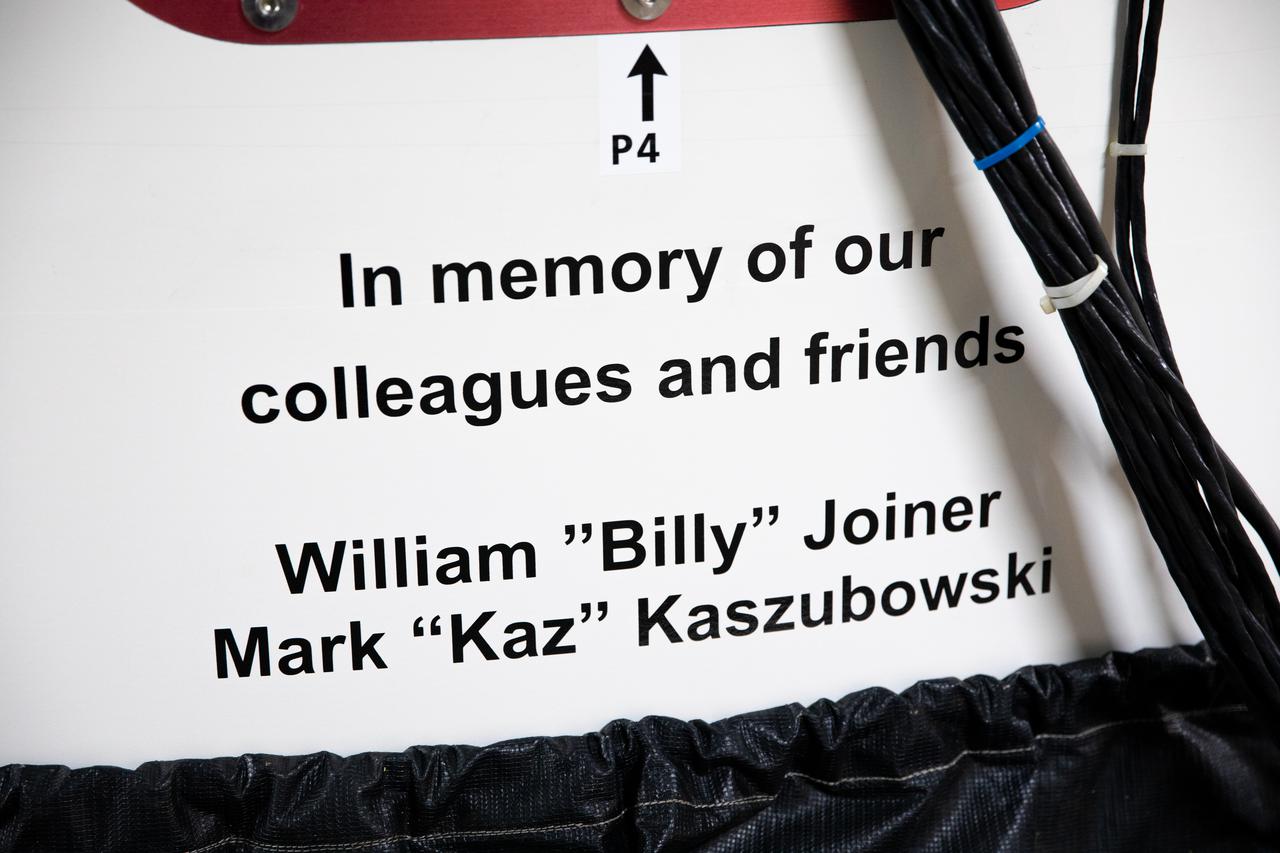
The United Launch Alliance (ULA) Atlas V rocket that will launch NASA’s Lucy spacecraft on its 12-year mission to study the Trojan asteroids is shown inside the Vertical Integration Facility at Space Launch Complex 41 (SLC-41) at Cape Canaveral Space Force Station in Florida on Oct. 8, 2021. Three dedication laminates were added to the rocket. The first is in memory of Craig M. Whittaker, a colleague and friend of NASA’s Launch Services Program (LSP) and ULA teams. The second is in memory of two colleagues: William “Billy” Joiner II – a former Lockheed Martin and ULA technician – and Mark “Kaz” Kaszubowski – an accomplished engineer and mentor. The third plaque is dedicated to NASA’s Goddard Space Flight Center Lucy Mission Team for its dedication shown throughout the pandemic. Lucy is targeted to lift off from SLC-41 at 5:34 a.m. EDT Saturday, Oct. 16. LSP, based at NASA’s Kennedy Space Center, is managing the launch.
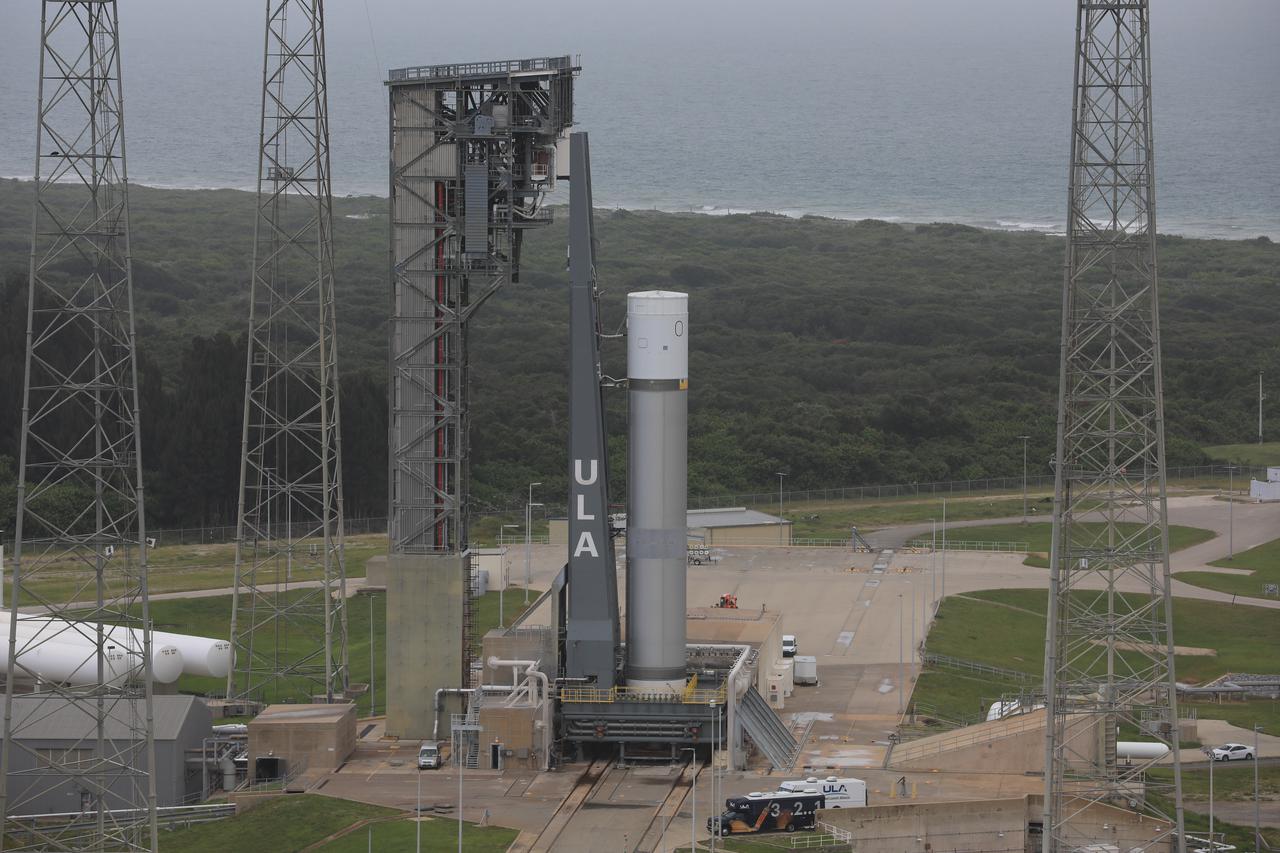
A pathfinder test article of United Launch Alliance’s (ULA) Vulcan Centaur rocket is seen at Space Launch Complex 41 at Cape Canaveral Space Force Station in Florida on Aug. 26, 2021. The pathfinder booster is undergoing a series of fueling tests to validate the infrastructure in place at the launch pad and allow the launch team to rehearse countdown operations before the Vulcan’s first flight.

A SpaceX Falcon 9 rocket with NASA’s PACE (Plankton, Aerosol, Cloud, ocean Ecosystem) spacecraft stands vertical at Space Launch Complex 40 at Cape Canaveral Space Force Station in Florida on Monday, Feb. 5, 2024. PACE is NASA’s newest earth-observing satellite that will help increase our understanding of Earth’s oceans, atmosphere, and climate by delivering hyperspectral observations of microscopic marine organisms called phytoplankton as well new data on clouds and aerosols. Liftoff of the PACE mission is set for no earlier than 1:33 a.m. EST on Wednesday, Feb. 7, 2024.
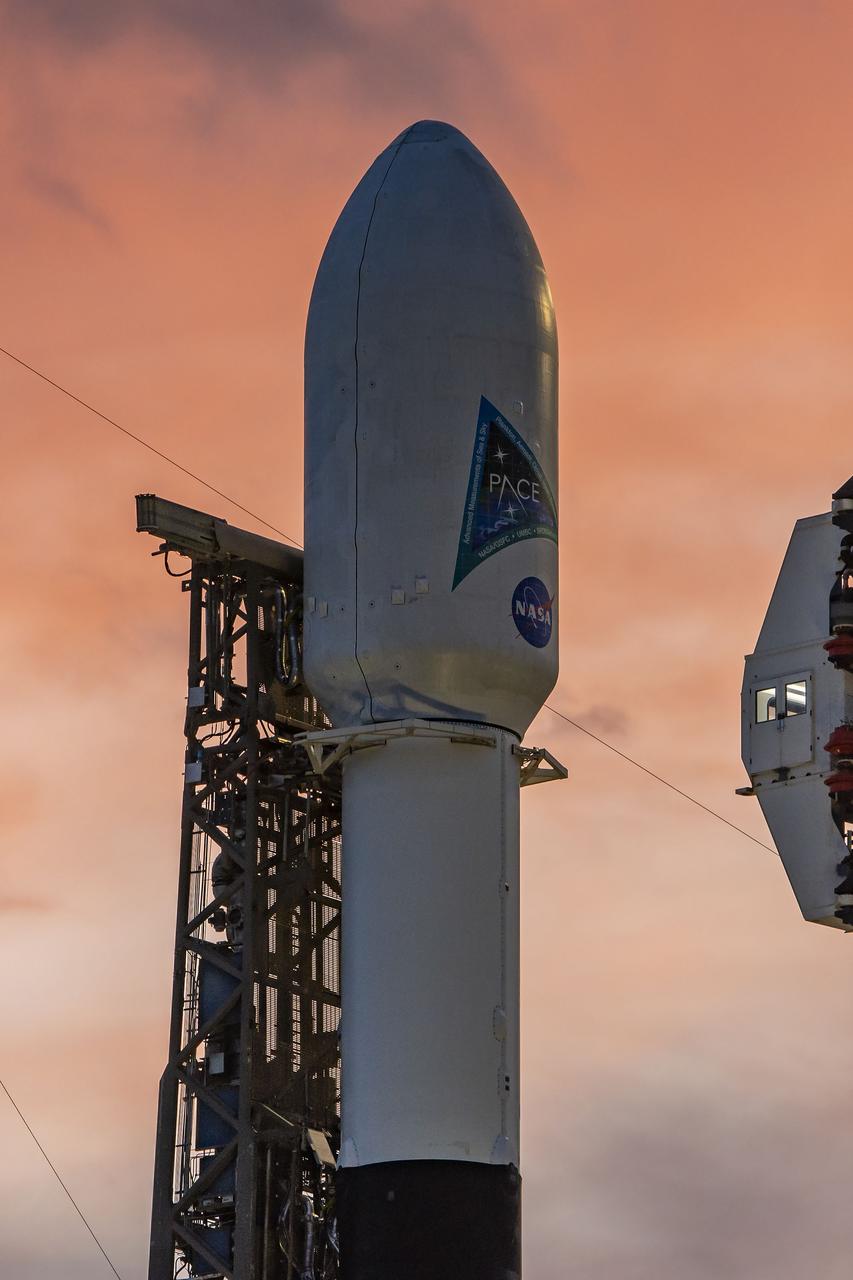
A SpaceX Falcon 9 rocket with NASA’s PACE (Plankton, Aerosol, Cloud, ocean Ecosystem) spacecraft stands vertical at Space Launch Complex 40 at Cape Canaveral Space Force Station in Florida on Monday, Feb. 5, 2024. PACE is NASA’s newest earth-observing satellite that will help increase our understanding of Earth’s oceans, atmosphere, and climate by delivering hyperspectral observations of microscopic marine organisms called phytoplankton as well new data on clouds and aerosols. Liftoff of the PACE mission is set for no earlier than 1:33 a.m. EST on Wednesday, Feb. 7, 2024.
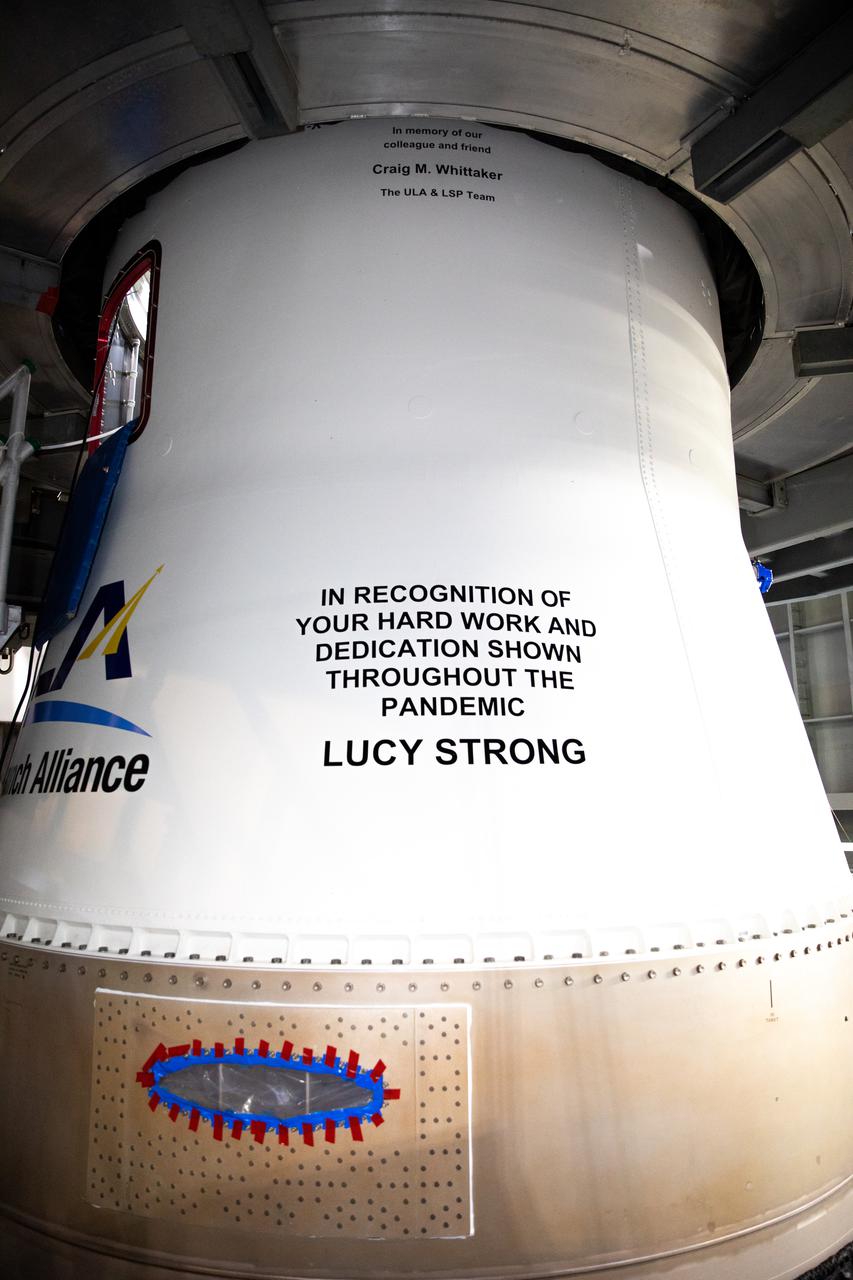
The United Launch Alliance (ULA) Atlas V rocket that will launch NASA’s Lucy spacecraft on its 12-year mission to study the Trojan asteroids is shown inside the Vertical Integration Facility at Space Launch Complex 41 (SLC-41) at Cape Canaveral Space Force Station in Florida on Oct. 8, 2021. Three dedication laminates were added to the rocket. The first is in memory of Craig M. Whittaker, a colleague and friend of NASA’s Launch Services Program (LSP) and ULA teams. The second is in memory of two colleagues: William “Billy” Joiner II – a former Lockheed Martin and ULA technician – and Mark “Kaz” Kaszubowski – an accomplished engineer and mentor. The third plaque is dedicated to NASA’s Goddard Space Flight Center Lucy Mission Team for its dedication shown throughout the pandemic. Lucy is targeted to lift off from SLC-41 at 5:34 a.m. EDT Saturday, Oct. 16. LSP, based at NASA’s Kennedy Space Center, is managing the launch.
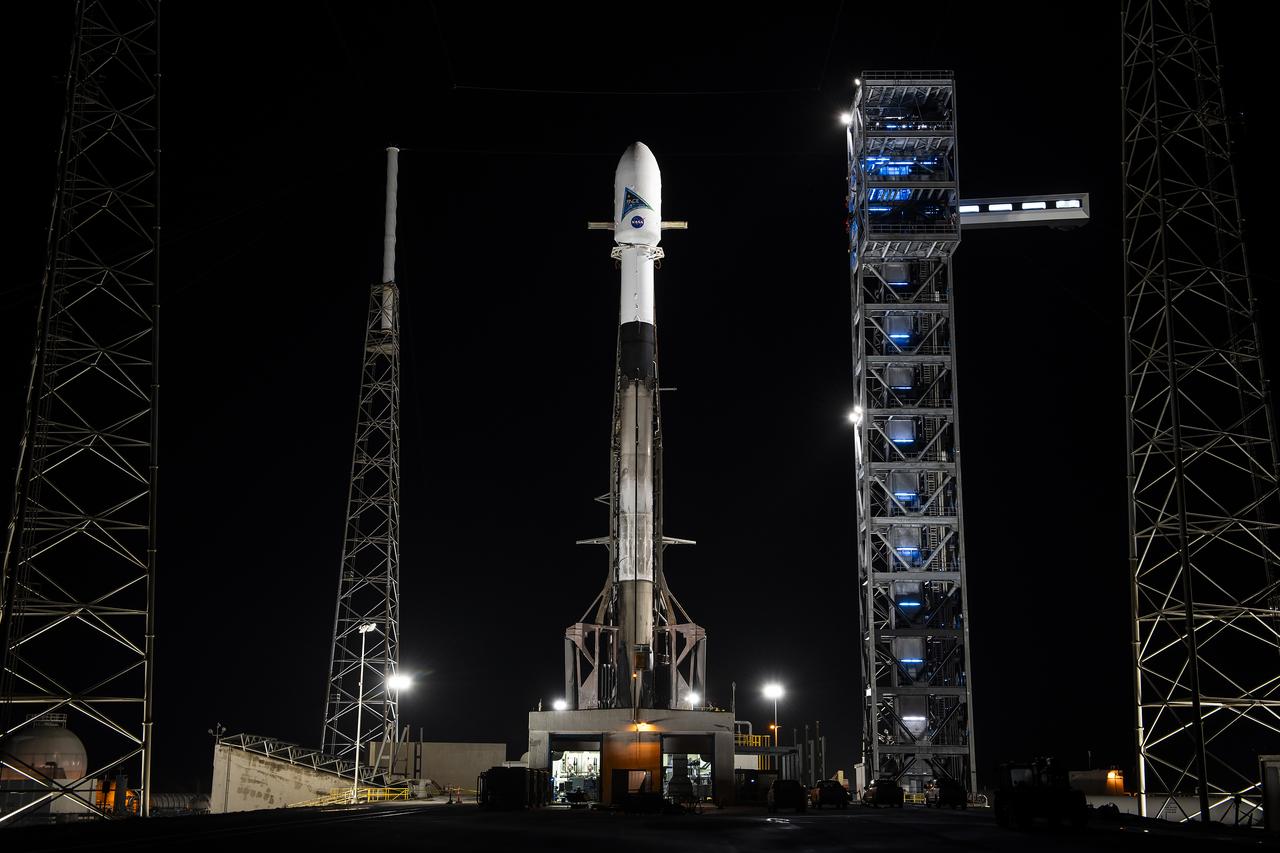
A SpaceX Falcon 9 rocket with NASA’s PACE (Plankton, Aerosol, Cloud, ocean Ecosystem) spacecraft encapsulated atop is raised to a vertical position at Space Launch Complex 40 at Cape Canaveral Space Force Station in Florida on Monday, Feb. 5, 2024. PACE is NASA’s newest earth-observing satellite that will help increase our understanding of Earth’s oceans, atmosphere, and climate by delivering hyperspectral observations of microscopic marine organisms called phytoplankton as well new data on clouds and aerosols. Liftoff of the PACE mission is set for no earlier than 1:33 a.m. EST on Tuesday, Feb. 6, 2024.

A SpaceX Falcon 9 rocket with NASA’s PACE (Plankton, Aerosol, Cloud, ocean Ecosystem) spacecraft stands vertical at Space Launch Complex 40 at Cape Canaveral Space Force Station in Florida on Monday, Feb. 5, 2024. PACE is NASA’s newest earth-observing satellite that will help increase our understanding of Earth’s oceans, atmosphere, and climate by delivering hyperspectral observations of microscopic marine organisms called phytoplankton as well new data on clouds and aerosols. Liftoff of the PACE mission is set for no earlier than 1:33 a.m. EST on Wednesday, Feb. 7, 2024.

A SpaceX Falcon 9 rocket with NASA’s PACE (Plankton, Aerosol, Cloud, ocean Ecosystem) spacecraft encapsulated atop is raised to a vertical position at Space Launch Complex 40 at Cape Canaveral Space Force Station in Florida on Monday, Feb. 5, 2024. PACE is NASA’s newest earth-observing satellite that will help increase our understanding of Earth’s oceans, atmosphere, and climate by delivering hyperspectral observations of microscopic marine organisms called phytoplankton as well new data on clouds and aerosols. Liftoff of the PACE mission is set for no earlier than 1:33 a.m. EST on Tuesday, Feb. 6, 2024.
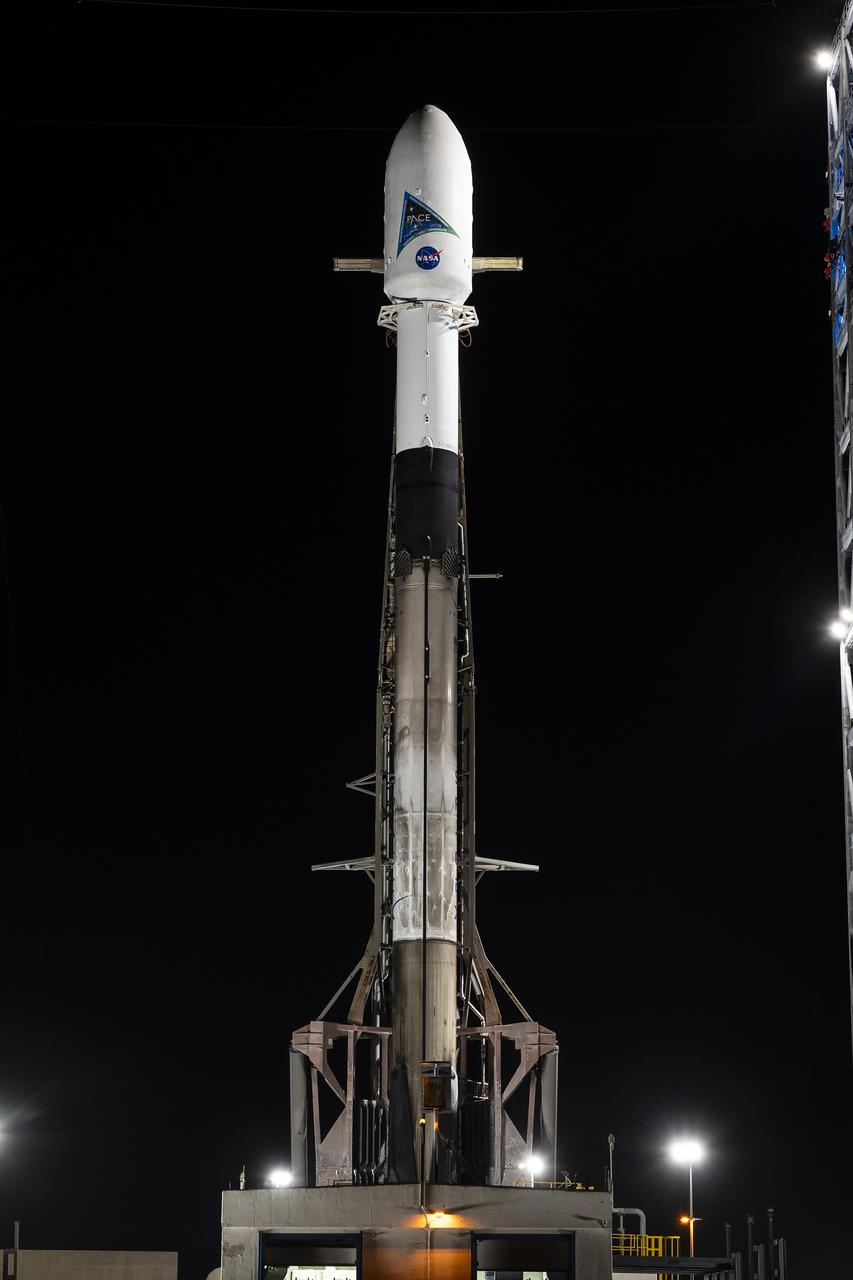
A SpaceX Falcon 9 rocket with NASA’s PACE (Plankton, Aerosol, Cloud, ocean Ecosystem) spacecraft encapsulated atop is raised to a vertical position at Space Launch Complex 40 at Cape Canaveral Space Force Station in Florida on Monday, Feb. 5, 2024. PACE is NASA’s newest earth-observing satellite that will help increase our understanding of Earth’s oceans, atmosphere, and climate by delivering hyperspectral observations of microscopic marine organisms called phytoplankton as well new data on clouds and aerosols. Liftoff of the PACE mission is set for no earlier than 1:33 a.m. EST on Tuesday, Feb. 6, 2024.

NASA’s PACE (Plankton, Aerosol, Cloud, ocean Ecosystem) spacecraft, atop a SpaceX Falcon 9 rocket, successfully lifts off from Space Launch Complex 40 at Cape Canaveral Space Force Station in Florida at 1:33 a.m. EST Thursday, Feb. 8. PACE is NASA’s newest earth-observing satellite that will help increase our understanding of Earth’s oceans, atmosphere, and climate by delivering hyperspectral observations of microscopic marine organisms called phytoplankton, as well new data on clouds and aerosols.
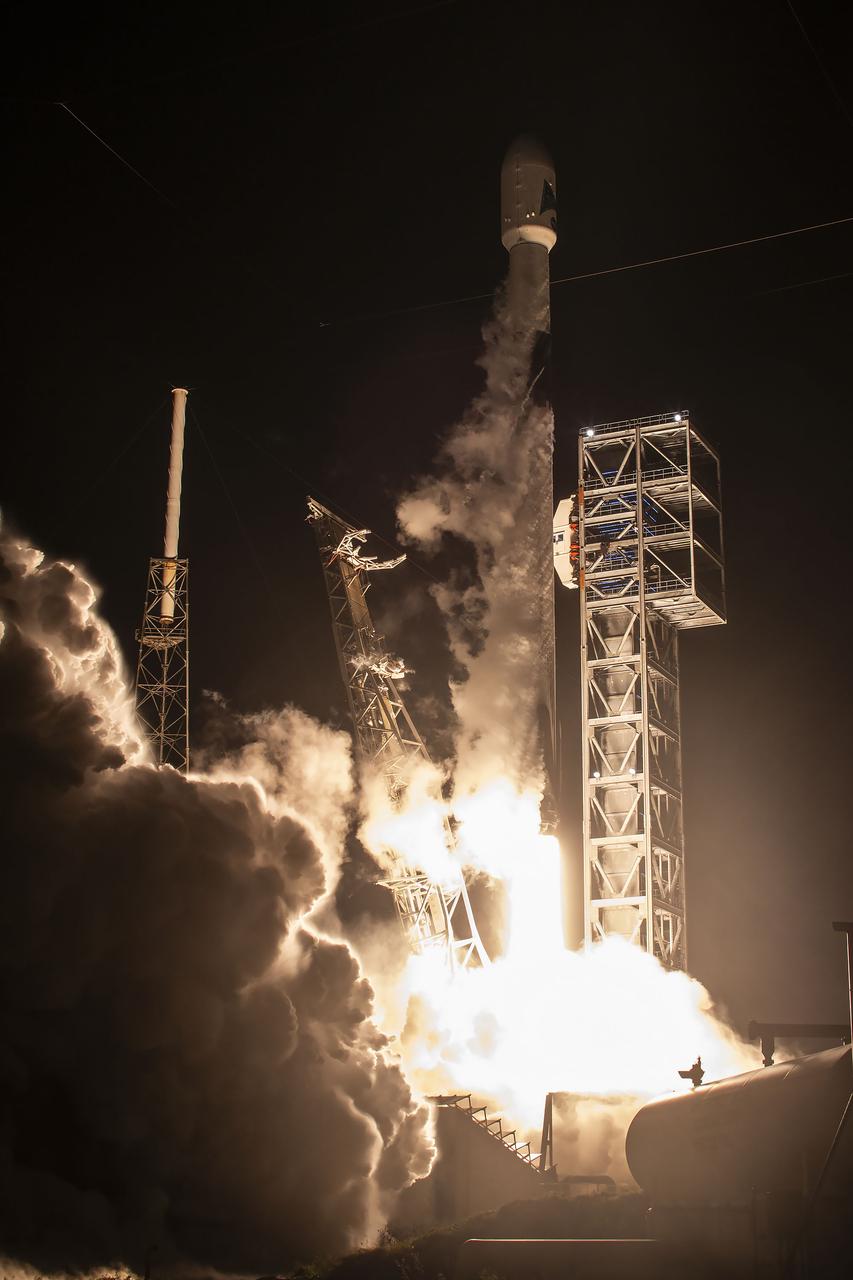
NASA’s PACE (Plankton, Aerosol, Cloud, ocean Ecosystem) spacecraft, atop a SpaceX Falcon 9 rocket, successfully lifts off from Space Launch Complex 40 at Cape Canaveral Space Force Station in Florida at 1:33 a.m. EST Thursday, Feb. 8. PACE is NASA’s newest earth-observing satellite that will help increase our understanding of Earth’s oceans, atmosphere, and climate by delivering hyperspectral observations of microscopic marine organisms called phytoplankton, as well new data on clouds and aerosols.
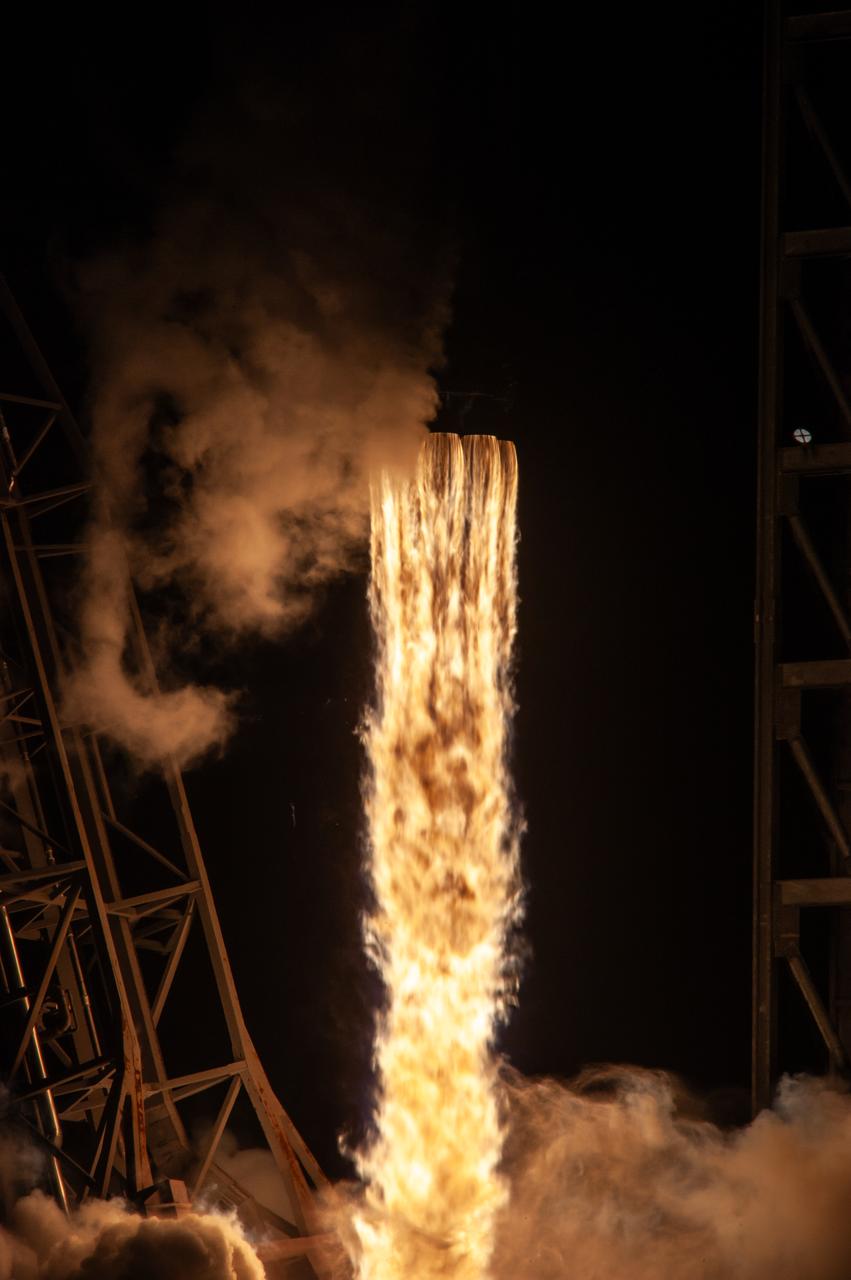
NASA’s PACE (Plankton, Aerosol, Cloud, ocean Ecosystem) spacecraft, atop a SpaceX Falcon 9 rocket, successfully lifts off from Space Launch Complex 40 at Cape Canaveral Space Force Station in Florida at 1:33 a.m. EST Thursday, Feb. 8. PACE is NASA’s newest earth-observing satellite that will help increase our understanding of Earth’s oceans, atmosphere, and climate by delivering hyperspectral observations of microscopic marine organisms called phytoplankton, as well new data on clouds and aerosols.

A SpaceX Falcon 9 rocket with NASA’s PACE (Plankton, Aerosol, Cloud, ocean Ecosystem) spacecraft stands vertical at Space Launch Complex 40 at Cape Canaveral Space Force Station in Florida on Monday, Feb. 5, 2024. PACE is NASA’s newest earth-observing satellite that will help increase our understanding of Earth’s oceans, atmosphere, and climate by delivering hyperspectral observations of microscopic marine organisms called phytoplankton as well new data on clouds and aerosols. Liftoff of the PACE mission is set for no earlier than 1:33 a.m. EST on Wednesday, Feb. 7, 2024.

A SpaceX Falcon 9 rocket with NASA’s PACE (Plankton, Aerosol, Cloud, ocean Ecosystem) spacecraft encapsulated atop is raised to a vertical position at Space Launch Complex 40 at Cape Canaveral Space Force Station in Florida on Monday, Feb. 5, 2024. PACE is NASA’s newest earth-observing satellite that will help increase our understanding of Earth’s oceans, atmosphere, and climate by delivering hyperspectral observations of microscopic marine organisms called phytoplankton as well new data on clouds and aerosols. Liftoff of the PACE mission is set for no earlier than 1:33 a.m. EST on Tuesday, Feb. 6, 2024.
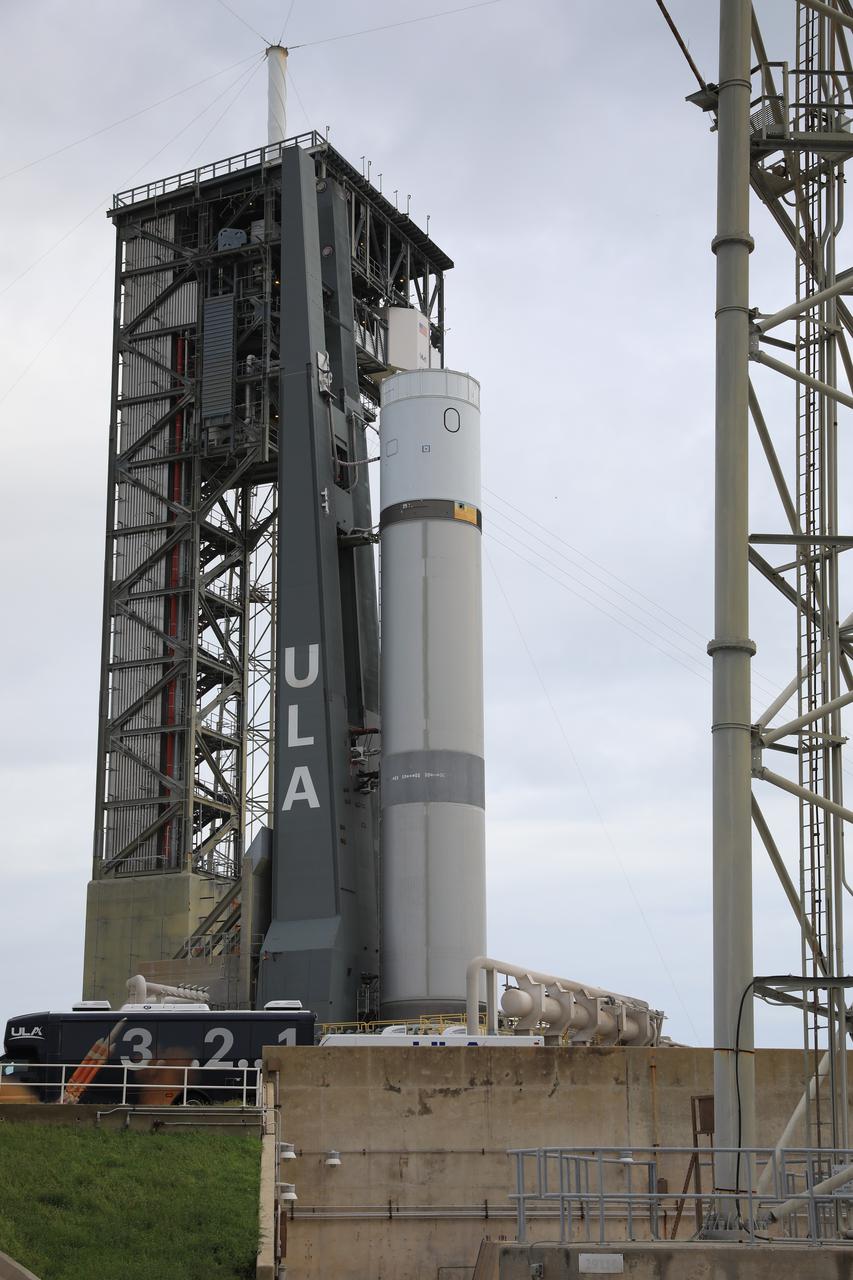
A pathfinder test article of United Launch Alliance’s (ULA) Vulcan Centaur rocket is seen at Space Launch Complex 41 at Cape Canaveral Space Force Station in Florida on Aug. 26, 2021. The pathfinder booster is undergoing a series of fueling tests to validate the infrastructure in place at the launch pad and allow the launch team to rehearse countdown operations before the Vulcan’s first flight.
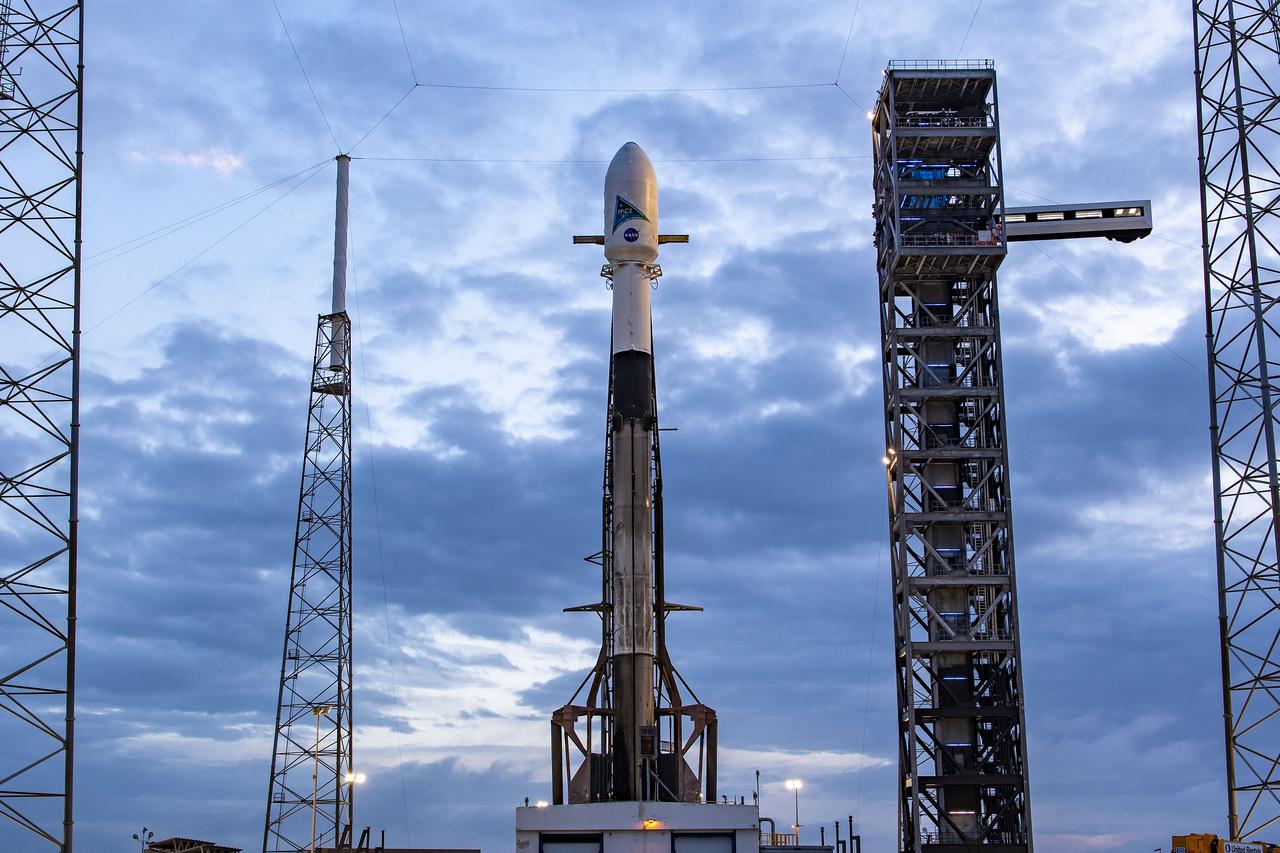
A SpaceX Falcon 9 rocket with NASA’s PACE (Plankton, Aerosol, Cloud, ocean Ecosystem) spacecraft stands vertical at Space Launch Complex 40 at Cape Canaveral Space Force Station in Florida on Monday, Feb. 5, 2024. PACE is NASA’s newest earth-observing satellite that will help increase our understanding of Earth’s oceans, atmosphere, and climate by delivering hyperspectral observations of microscopic marine organisms called phytoplankton as well new data on clouds and aerosols. Liftoff of the PACE mission is set for no earlier than 1:33 a.m. EST on Wednesday, Feb. 7, 2024.
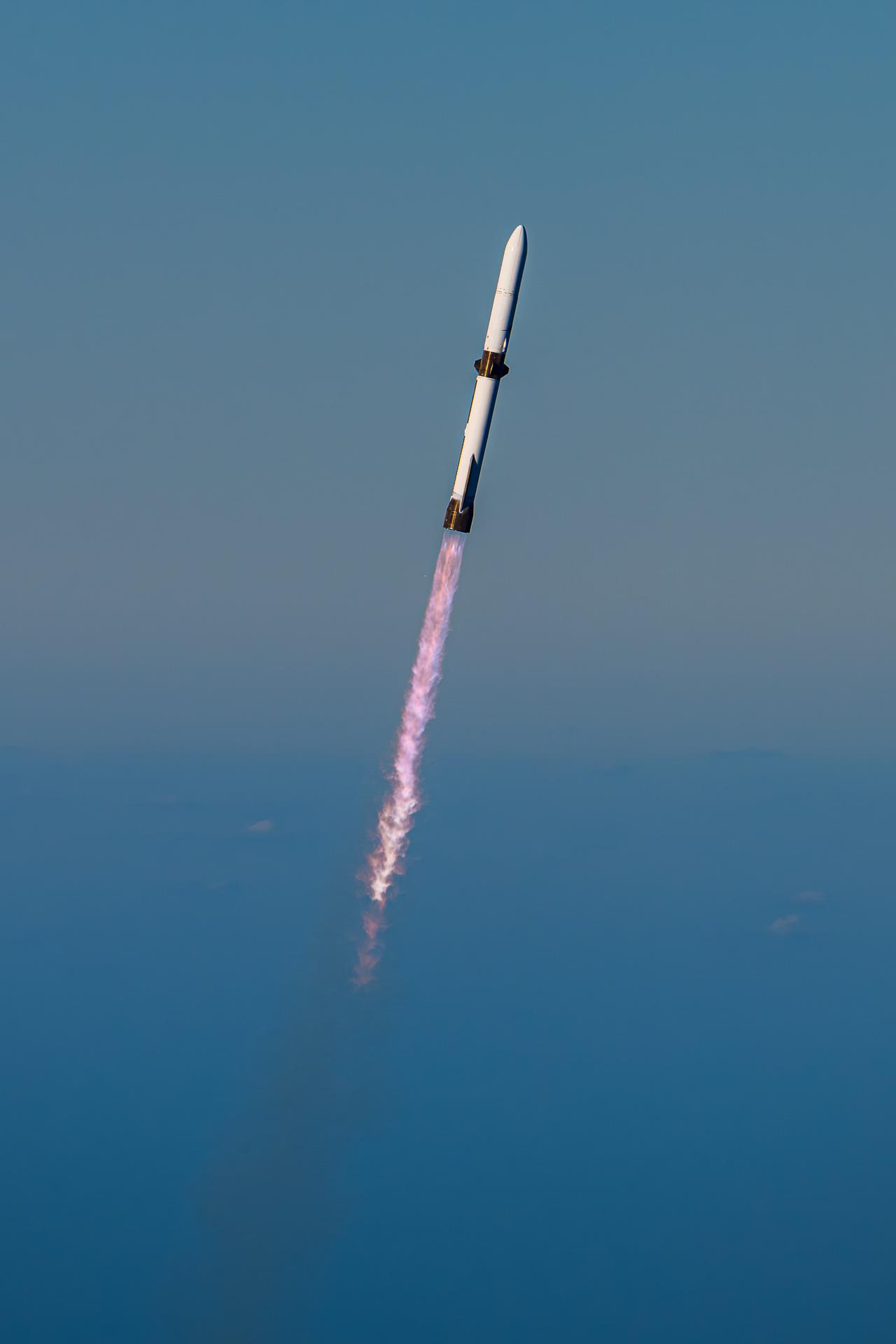
Blue Origin’s New Glenn rocket carrying NASA’s twin ESCAPADE (Escape and Plasma Acceleration and Dynamics Explorers) spacecraft launches at 3:55 p.m. EST, Thursday, Nov. 13, 2025, from Launch Complex 36 at Cape Canaveral Space Force Station in Florida. The ESCAPADE mission, built by Rocket Lab, will study how solar wind and plasma interact with Mars’ magnetosphere and how this interaction drives the planet’s atmospheric escape to prepare for future human missions on Mars.
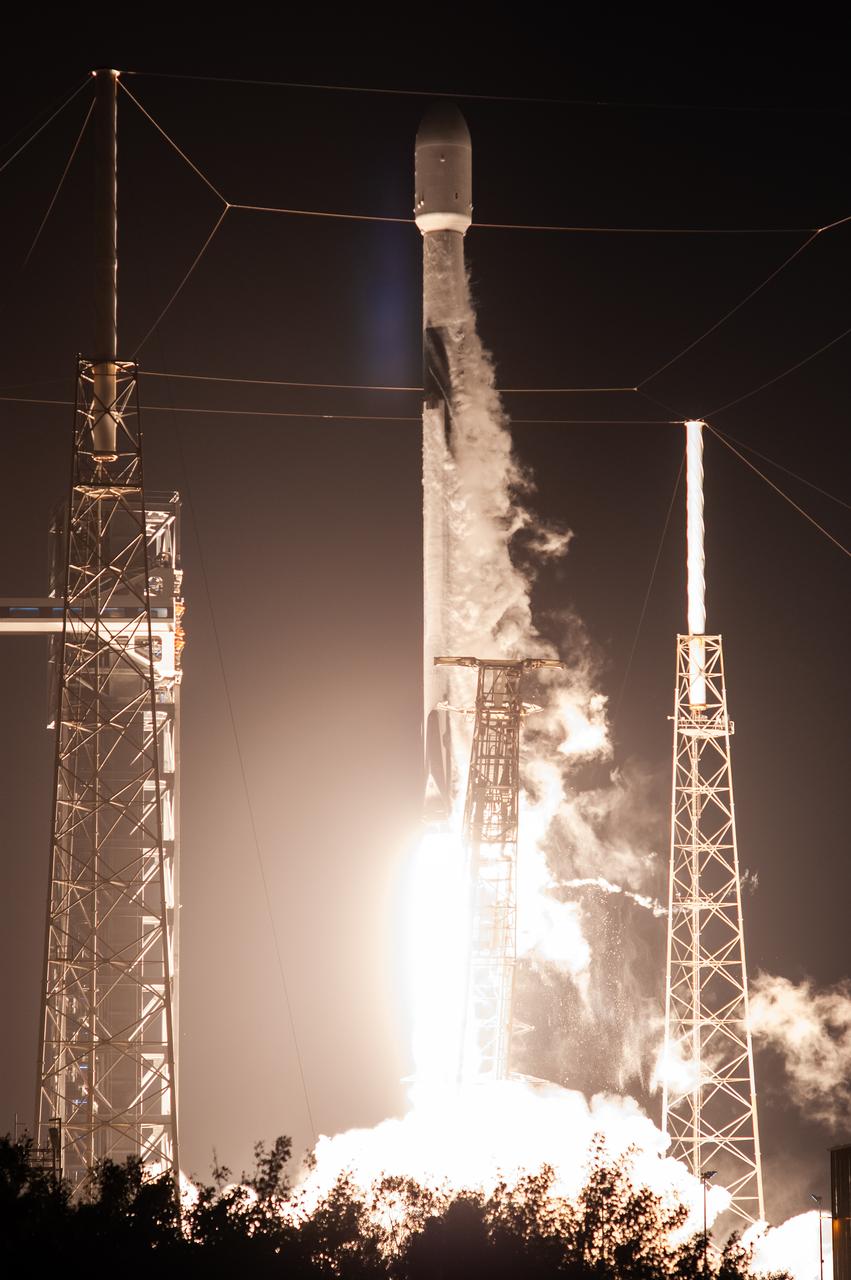
NASA’s PACE (Plankton, Aerosol, Cloud, ocean Ecosystem) spacecraft, atop a SpaceX Falcon 9 rocket, successfully lifts off from Space Launch Complex 40 at Cape Canaveral Space Force Station in Florida at 1:33 a.m. EST Thursday, Feb. 8. PACE is NASA’s newest earth-observing satellite that will help increase our understanding of Earth’s oceans, atmosphere, and climate by delivering hyperspectral observations of microscopic marine organisms called phytoplankton, as well new data on clouds and aerosols.
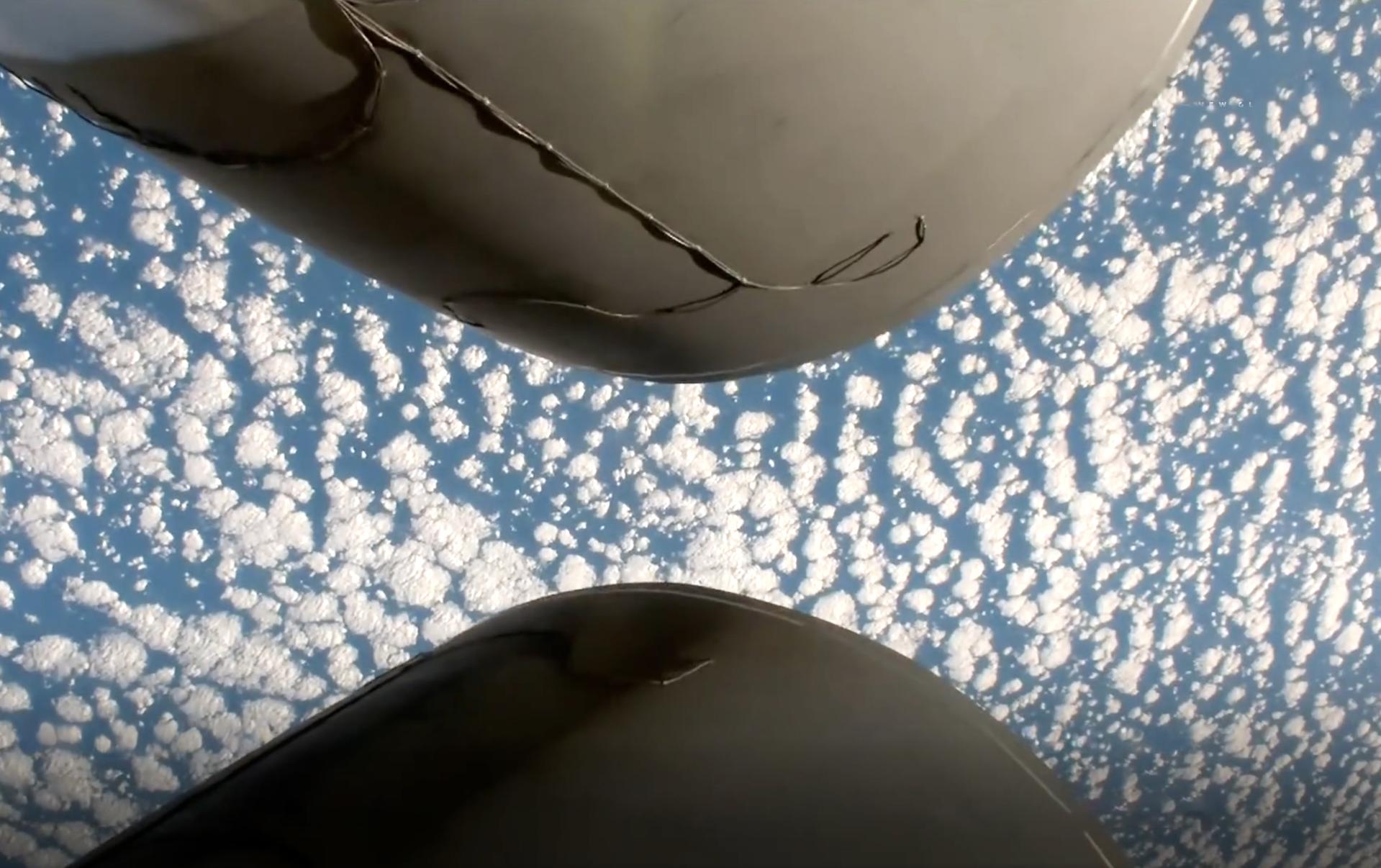
Blue Origin’s New Glenn rocket carrying NASA’s twin ESCAPADE (Escape and Plasma Acceleration and Dynamics Explorers) spacecraft launches at 3:55 p.m. EST, Thursday, Nov. 13, 2025, from Launch Complex 36 at Cape Canaveral Space Force Station in Florida. The ESCAPADE mission, built by Rocket Lab, will study how solar wind and plasma interact with Mars’ magnetosphere and how this interaction drives the planet’s atmospheric escape to prepare for future human missions on Mars.
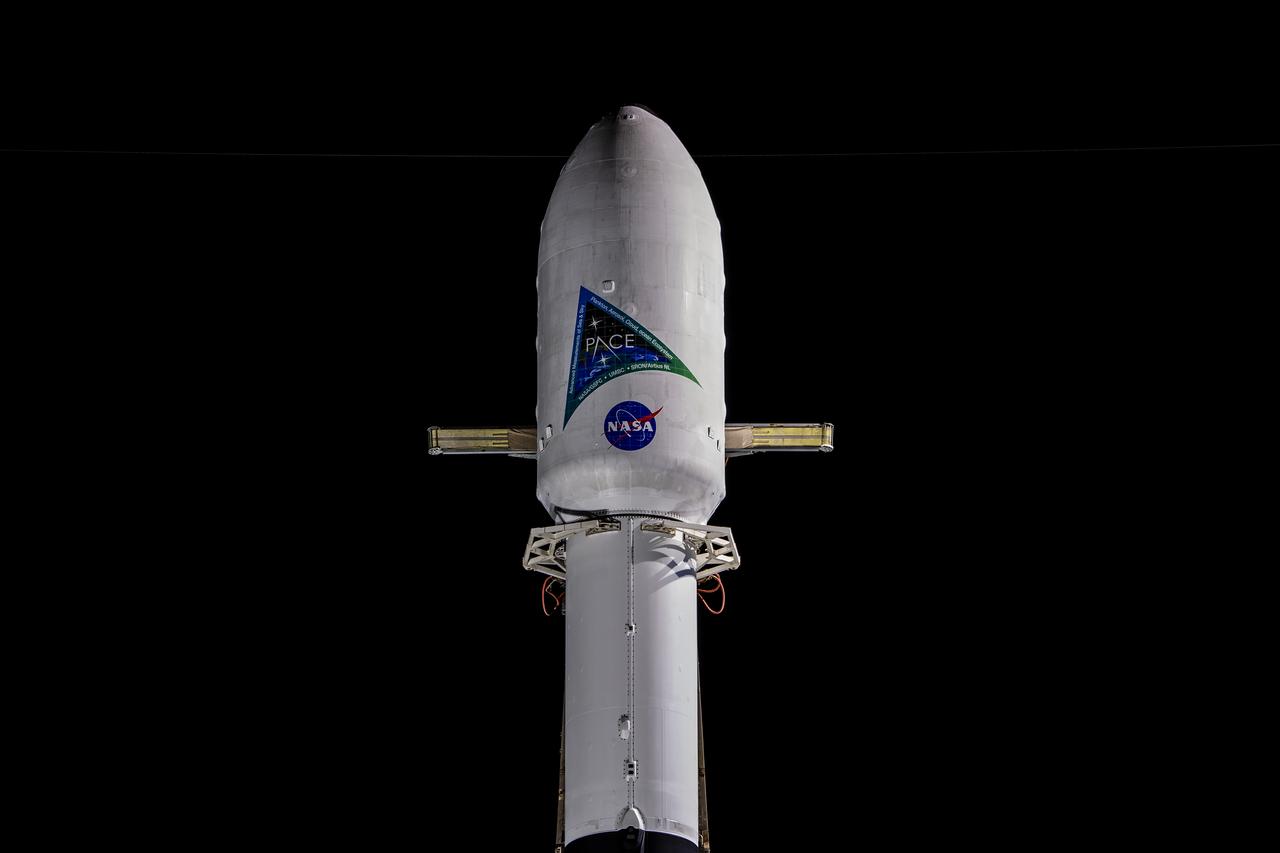
A SpaceX Falcon 9 rocket with NASA’s PACE (Plankton, Aerosol, Cloud, ocean Ecosystem) spacecraft encapsulated atop is raised to a vertical position at Space Launch Complex 40 at Cape Canaveral Space Force Station in Florida on Monday, Feb. 5, 2024. PACE is NASA’s newest earth-observing satellite that will help increase our understanding of Earth’s oceans, atmosphere, and climate by delivering hyperspectral observations of microscopic marine organisms called phytoplankton as well new data on clouds and aerosols. Liftoff of the PACE mission is set for no earlier than 1:33 a.m. EST on Tuesday, Feb. 6, 2024.

A SpaceX Falcon 9 rocket with NASA’s PACE (Plankton, Aerosol, Cloud, ocean Ecosystem) spacecraft encapsulated atop is raised to a vertical position at Space Launch Complex 40 at Cape Canaveral Space Force Station in Florida on Monday, Feb. 5, 2024. PACE is NASA’s newest earth-observing satellite that will help increase our understanding of Earth’s oceans, atmosphere, and climate by delivering hyperspectral observations of microscopic marine organisms called phytoplankton as well new data on clouds and aerosols. Liftoff of the PACE mission is set for no earlier than 1:33 a.m. EST on Tuesday, Feb. 6, 2024.

A SpaceX Falcon 9 rocket with NASA’s PACE (Plankton, Aerosol, Cloud, ocean Ecosystem) spacecraft encapsulated atop is raised to a vertical position at Space Launch Complex 40 at Cape Canaveral Space Force Station in Florida on Monday, Feb. 5, 2024. PACE is NASA’s newest earth-observing satellite that will help increase our understanding of Earth’s oceans, atmosphere, and climate by delivering hyperspectral observations of microscopic marine organisms called phytoplankton as well new data on clouds and aerosols. Liftoff of the PACE mission is set for no earlier than 1:33 a.m. EST on Tuesday, Feb. 6, 2024.
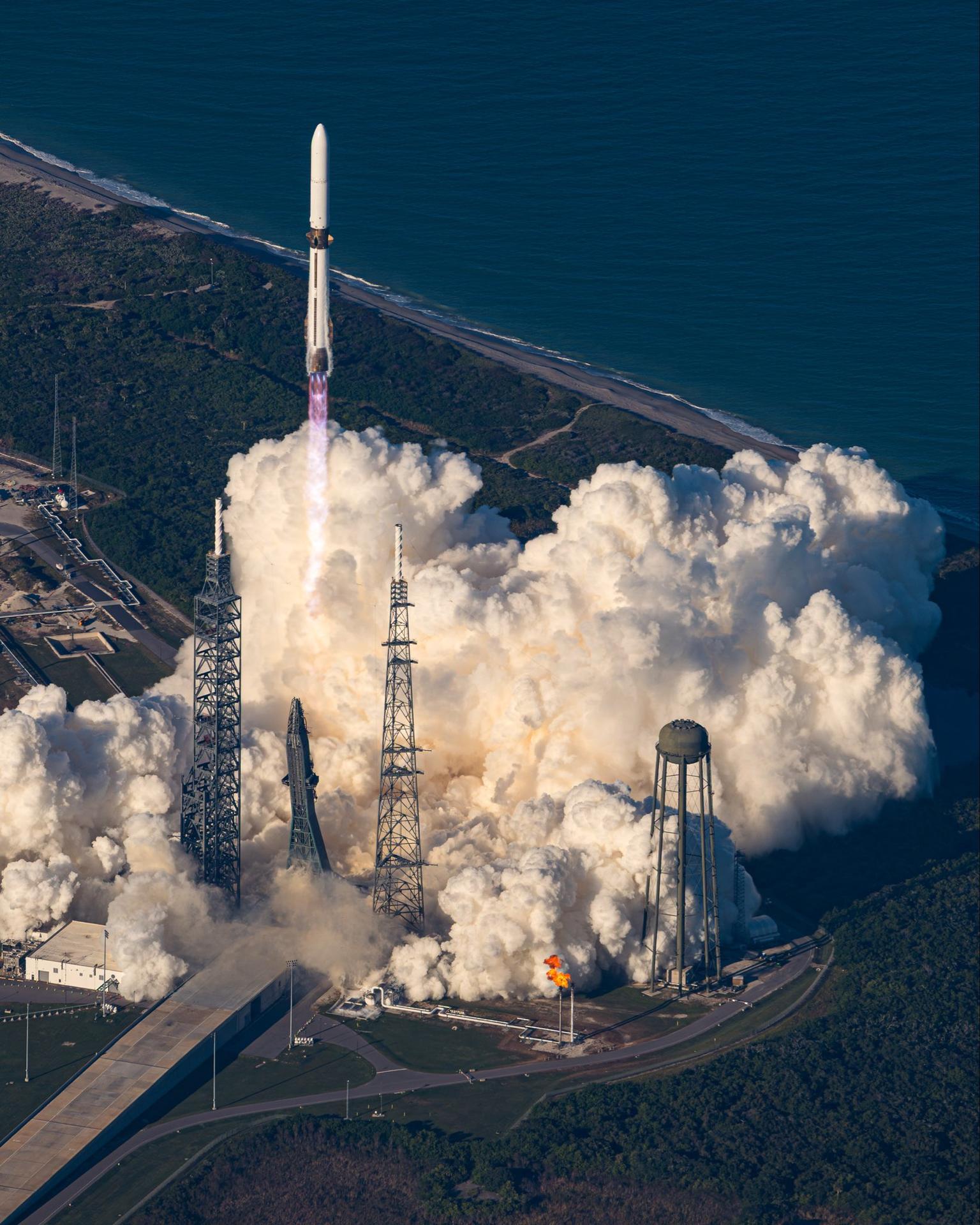
Blue Origin’s New Glenn rocket carrying NASA’s twin ESCAPADE (Escape and Plasma Acceleration and Dynamics Explorers) spacecraft launches at 3:55 p.m. EST, Thursday, Nov. 13, 2025, from Launch Complex 36 at Cape Canaveral Space Force Station in Florida. The ESCAPADE mission, built by Rocket Lab, will study how solar wind and plasma interact with Mars’ magnetosphere and how this interaction drives the planet’s atmospheric escape to prepare for future human missions on Mars.
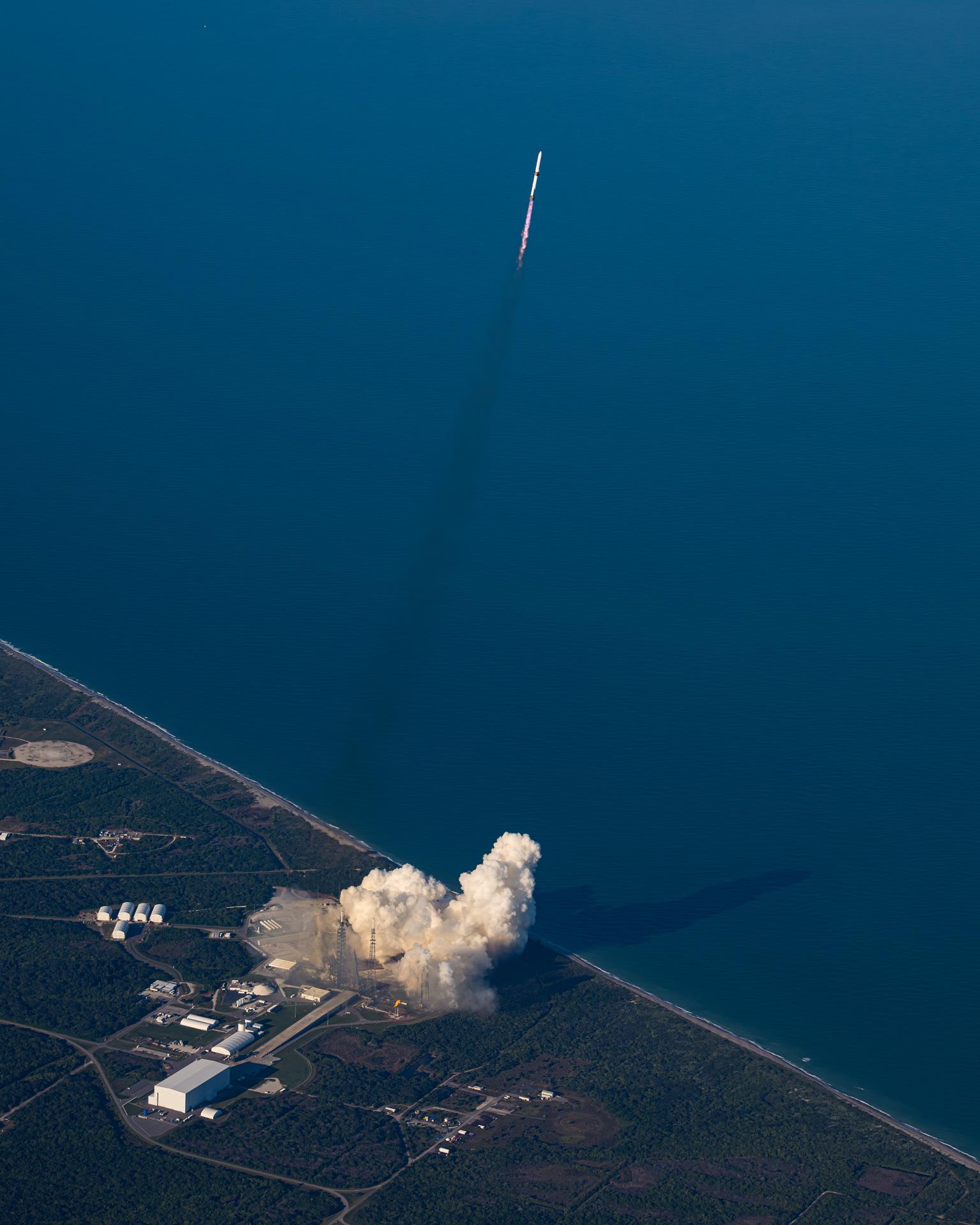
Blue Origin’s New Glenn rocket carrying NASA’s twin ESCAPADE (Escape and Plasma Acceleration and Dynamics Explorers) spacecraft launches at 3:55 p.m. EST, Thursday, Nov. 13, 2025, from Launch Complex 36 at Cape Canaveral Space Force Station in Florida. The ESCAPADE mission, built by Rocket Lab, will study how solar wind and plasma interact with Mars’ magnetosphere and how this interaction drives the planet’s atmospheric escape to prepare for future human missions on Mars.
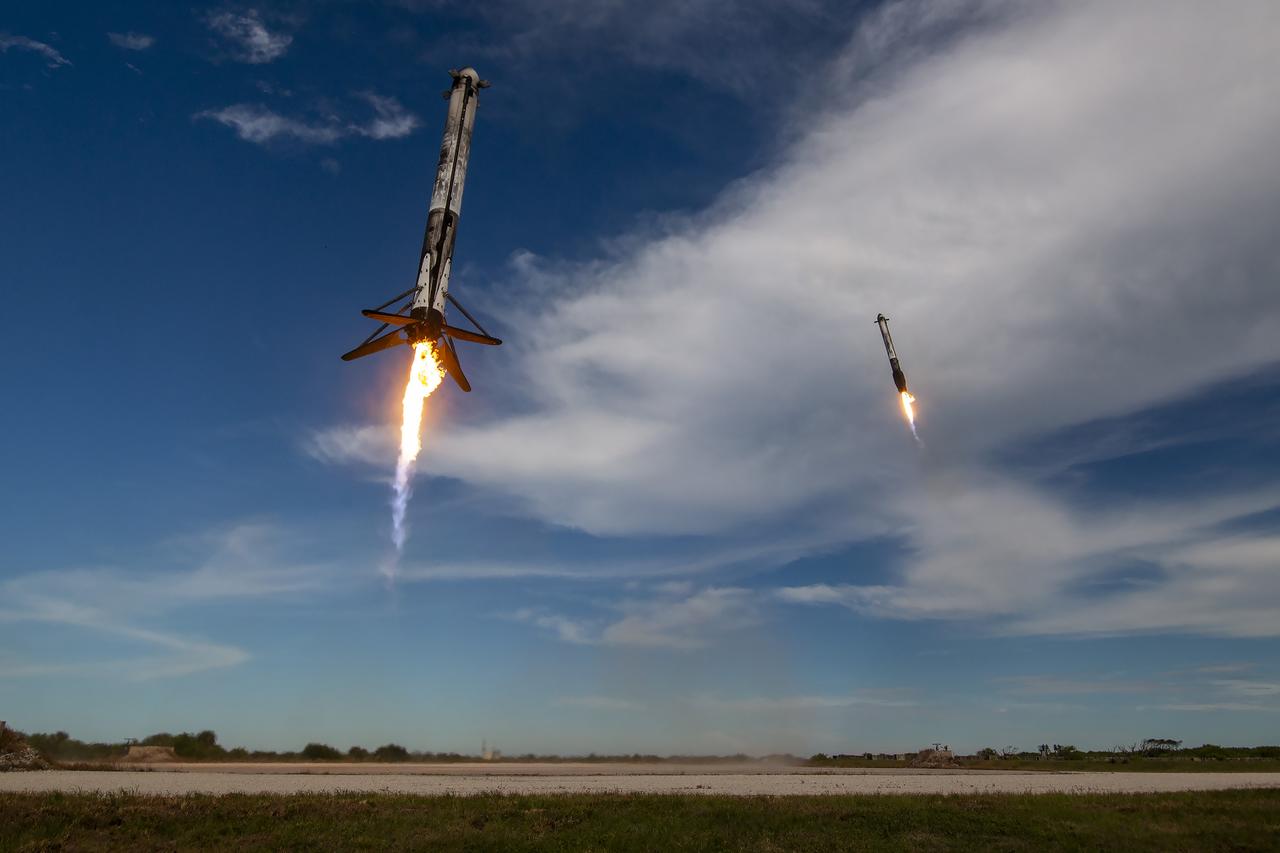
A SpaceX Falcon Heavy rocket carrying the National Oceanic and Atmospheric Administration (NOAA) GOES-U (Geostationary Operational Environmental Satellite U) lifts off from Launch Complex 39A at NASA’s Kennedy Space Center in Florida on Tuesday, June 25, 2024. The GOES-U satellite is the final satellite in the GOES-R series, which serves a critical role in providing continuous coverage of the Western Hemisphere, including monitoring tropical systems in the eastern Pacific and Atlantic oceans.
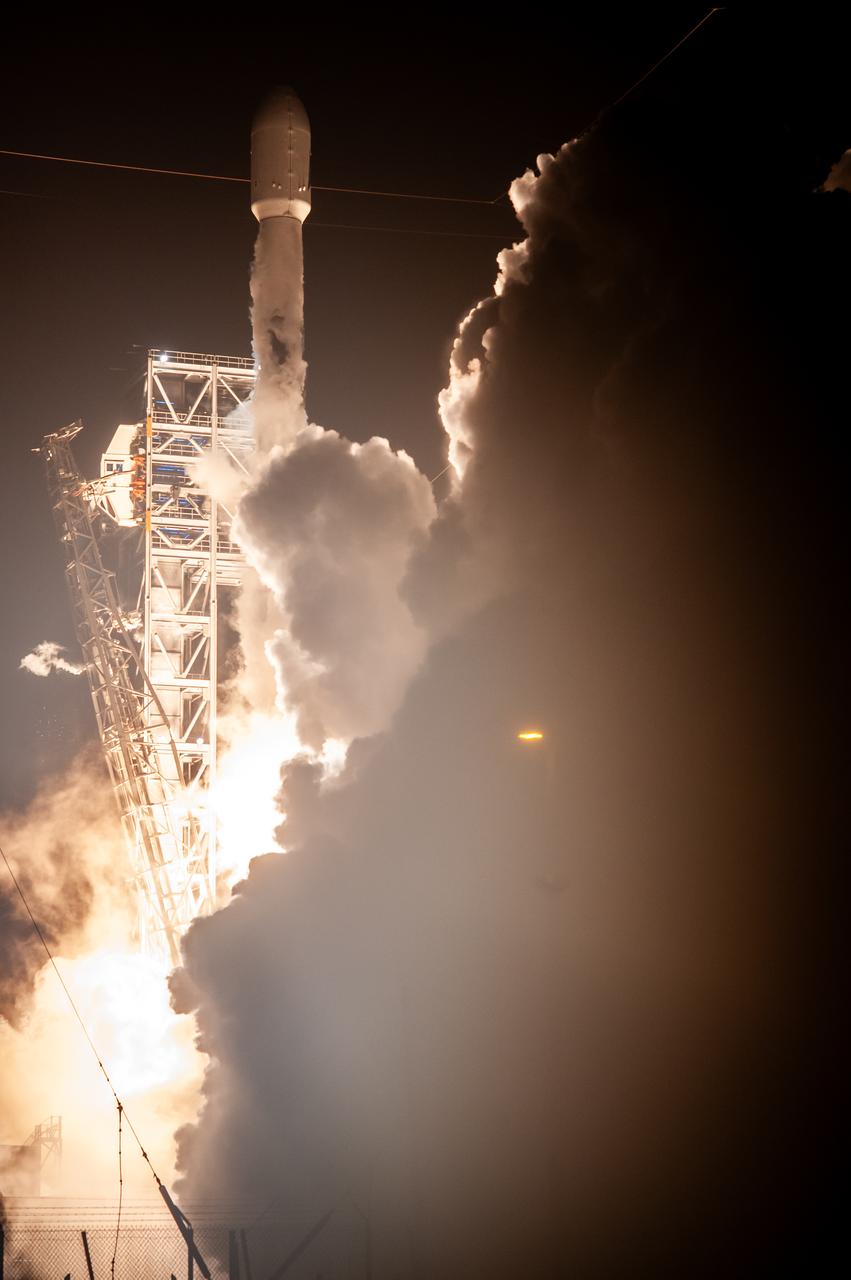
NASA’s PACE (Plankton, Aerosol, Cloud, ocean Ecosystem) spacecraft, atop a SpaceX Falcon 9 rocket, successfully lifts off from Space Launch Complex 40 at Cape Canaveral Space Force Station in Florida at 1:33 a.m. EST Thursday, Feb. 8. PACE is NASA’s newest earth-observing satellite that will help increase our understanding of Earth’s oceans, atmosphere, and climate by delivering hyperspectral observations of microscopic marine organisms called phytoplankton, as well new data on clouds and aerosols.
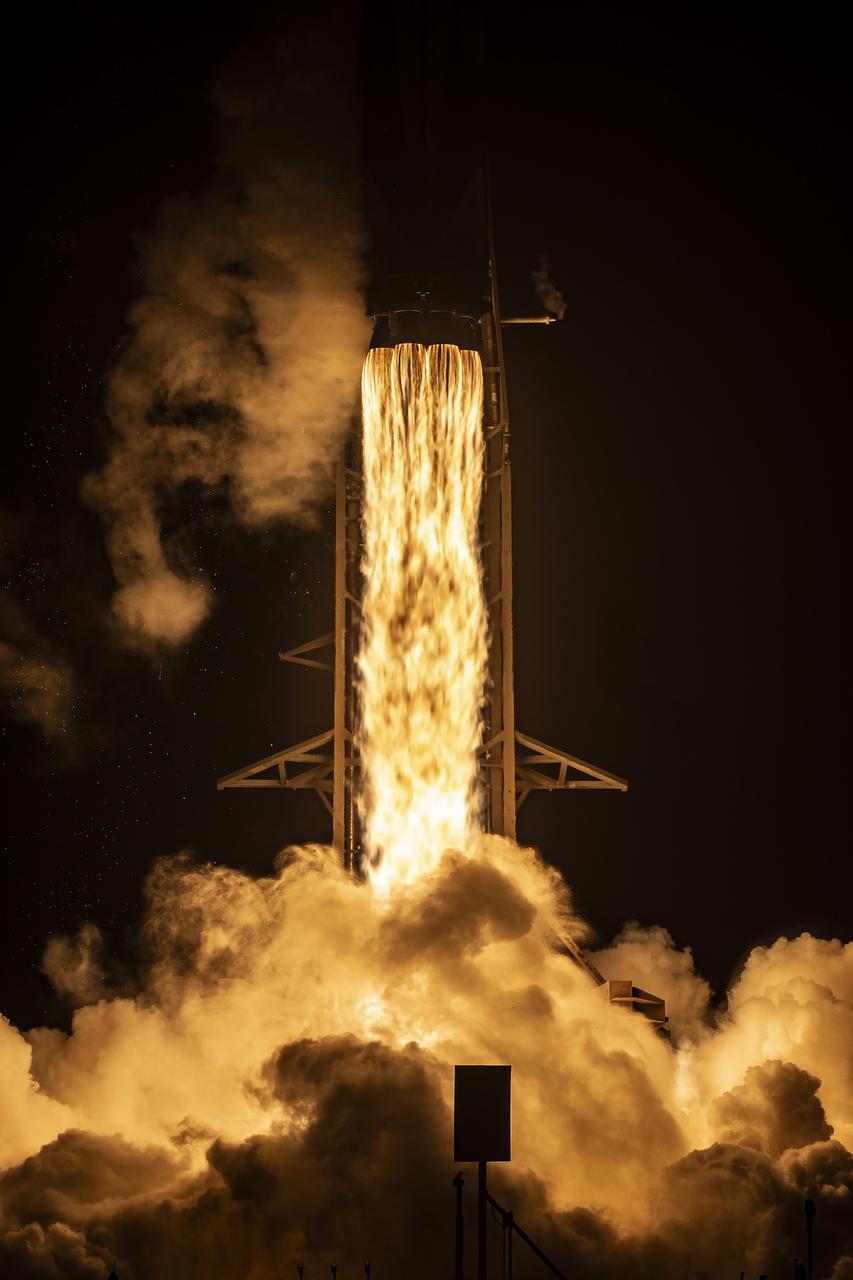
NASA’s PACE (Plankton, Aerosol, Cloud, ocean Ecosystem) spacecraft, atop a SpaceX Falcon 9 rocket, successfully lifts off from Space Launch Complex 40 at Cape Canaveral Space Force Station in Florida at 1:33 a.m. EST Thursday, Feb. 8. PACE is NASA’s newest earth-observing satellite that will help increase our understanding of Earth’s oceans, atmosphere, and climate by delivering hyperspectral observations of microscopic marine organisms called phytoplankton, as well new data on clouds and aerosols.
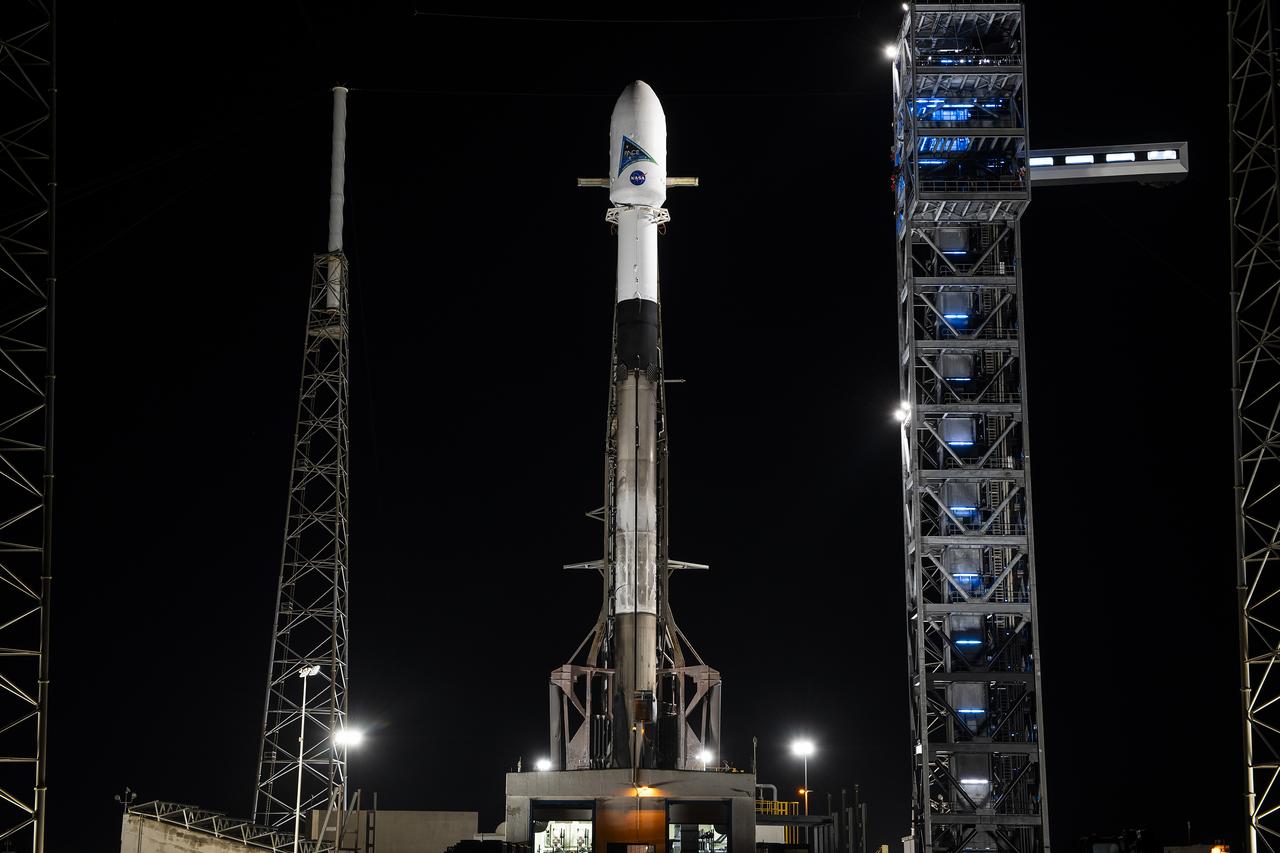
A SpaceX Falcon 9 rocket with NASA’s PACE (Plankton, Aerosol, Cloud, ocean Ecosystem) spacecraft encapsulated atop is raised to a vertical position at Space Launch Complex 40 at Cape Canaveral Space Force Station in Florida on Monday, Feb. 5, 2024. PACE is NASA’s newest earth-observing satellite that will help increase our understanding of Earth’s oceans, atmosphere, and climate by delivering hyperspectral observations of microscopic marine organisms called phytoplankton as well new data on clouds and aerosols. Liftoff of the PACE mission is set for no earlier than 1:33 a.m. EST on Tuesday, Feb. 6, 2024.
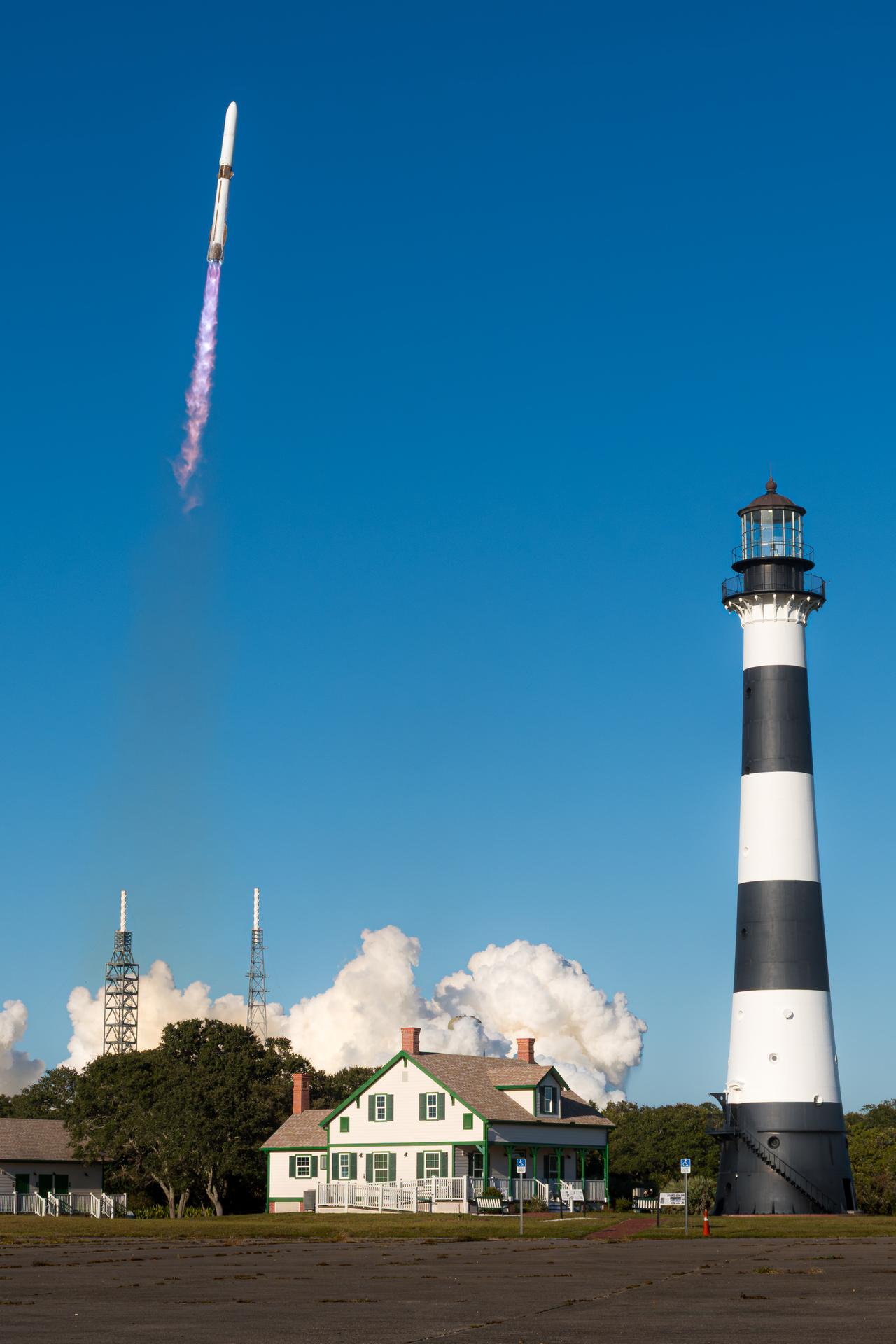
Near Cape Canaveral Lighthouse, Blue Origin’s New Glenn rocket carrying NASA’s twin ESCAPADE (Escape and Plasma Acceleration and Dynamics Explorers) spacecraft launches at 3:55 p.m. EST, Thursday, Nov. 13, 2025, from Launch Complex 36 at Cape Canaveral Space Force Station in Florida. The ESCAPADE mission, built by Rocket Lab, will study how solar wind and plasma interact with Mars’ magnetosphere and how this interaction drives the planet’s atmospheric escape to prepare for future human missions on Mars.