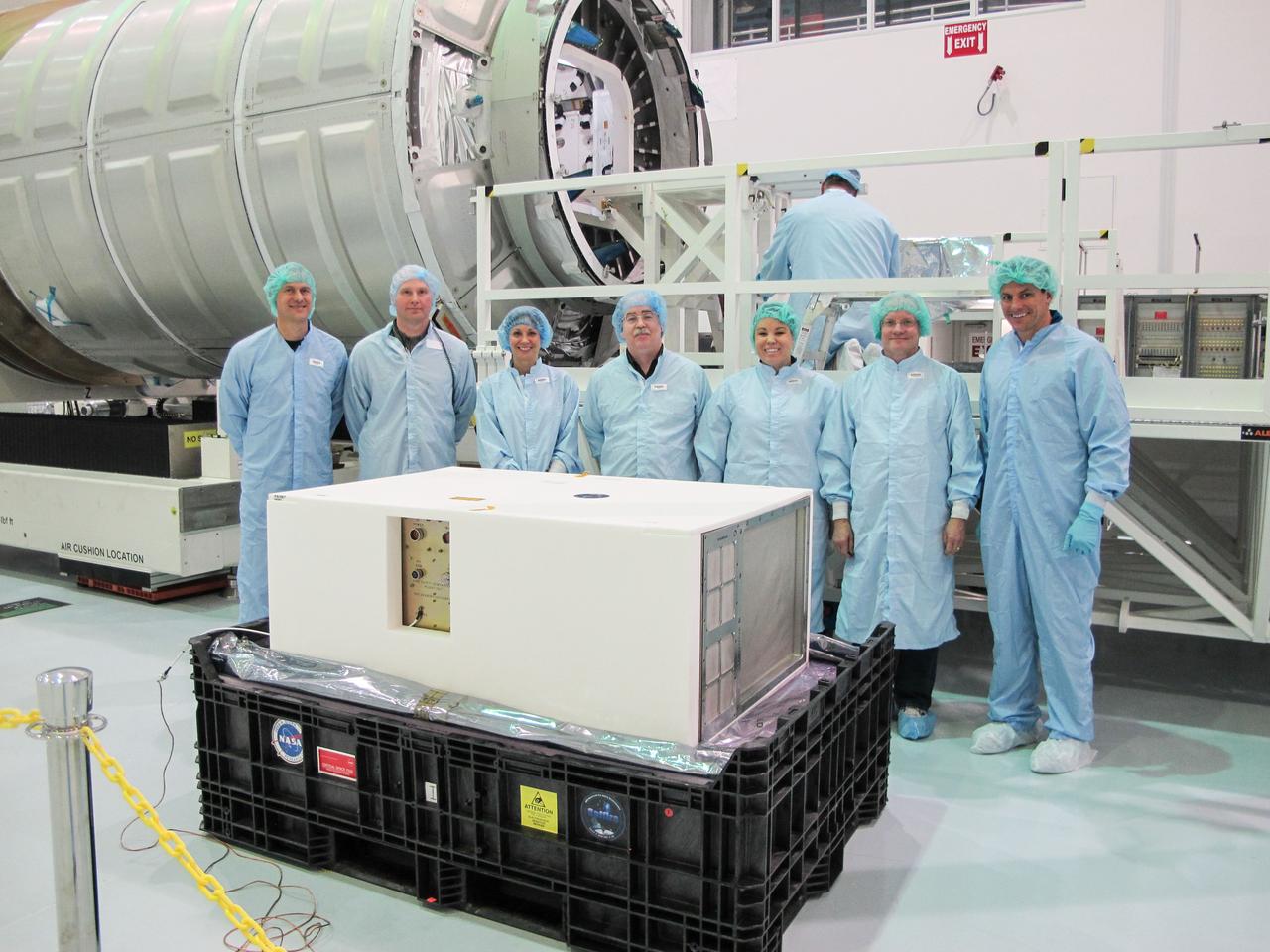
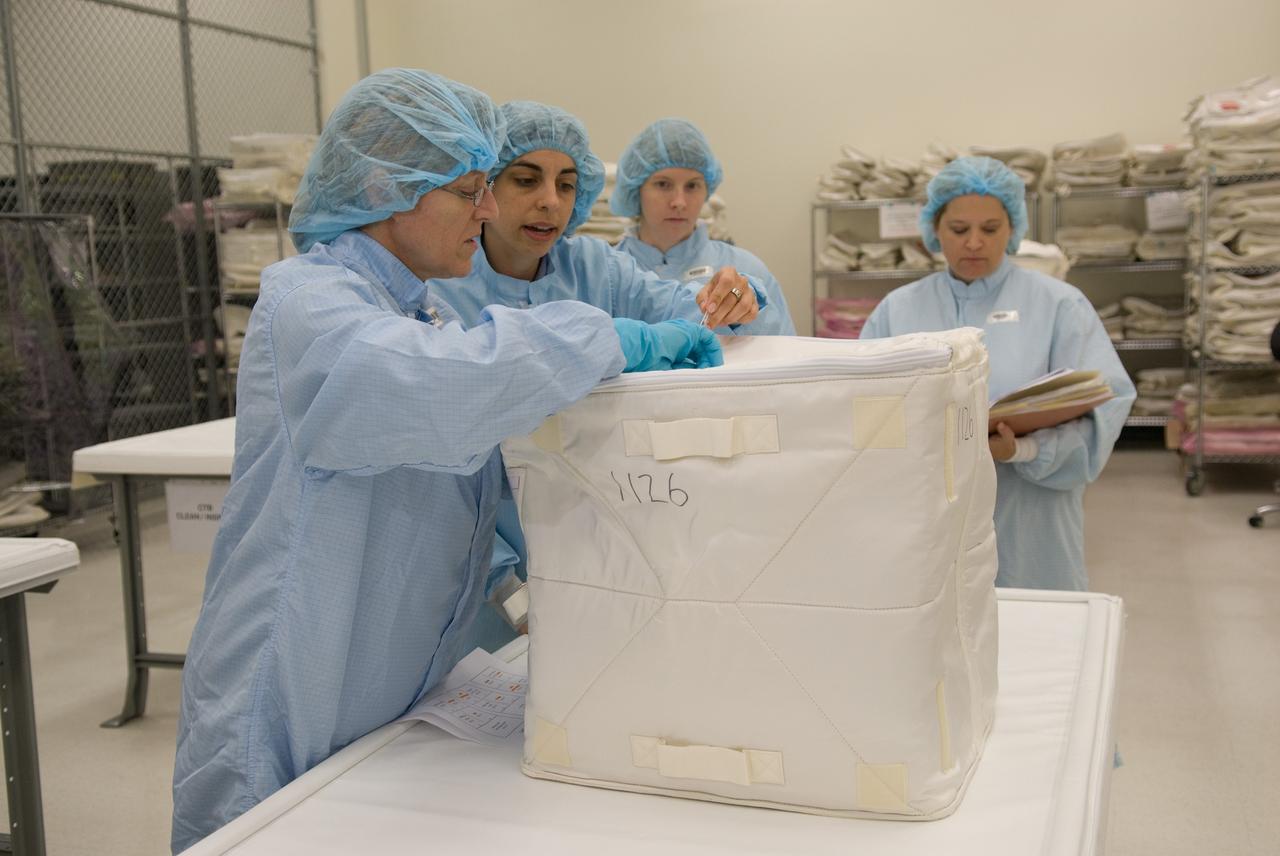
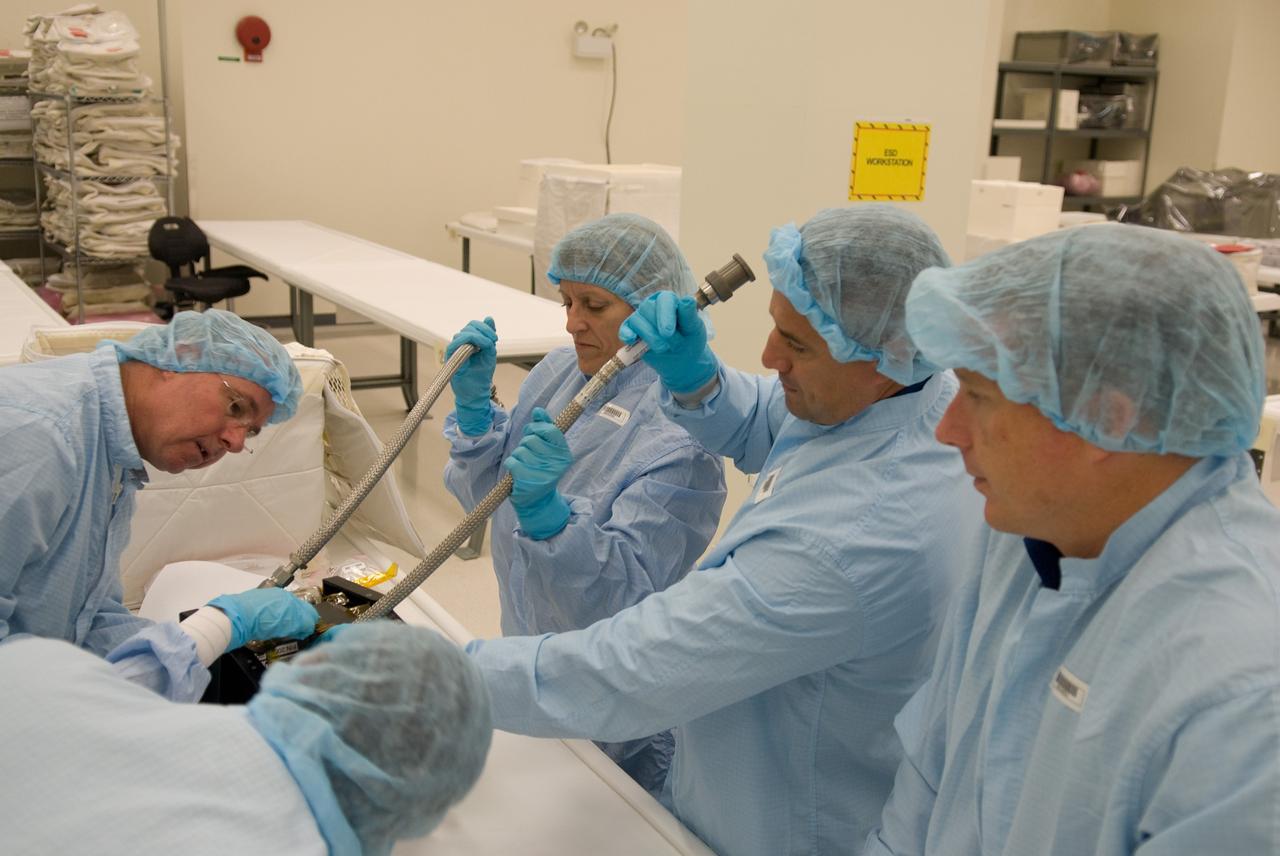
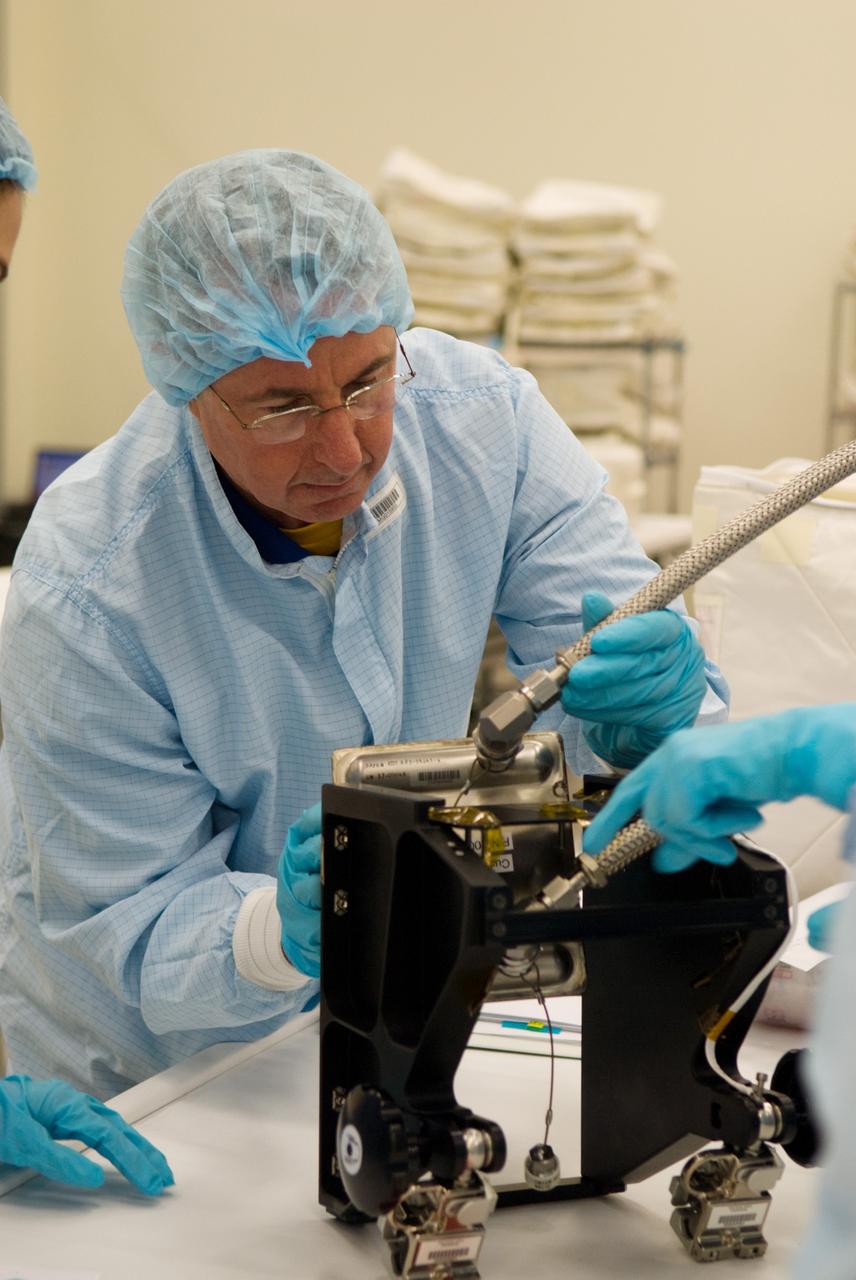
jsc2016e017570 (1/22/2016) --- Photographic documentation of Saffire-I taken during the OA-6 Crew Equipment Interface Test (CEIT) at KSC/Space Station Processing Facility (SSPF). The NASA Advanced Exploration Systems program began a project to develop and demonstrate spacecraft fire safety technologies in relevant environments. The keystone of these demonstrations is a large-scale fire safety experiment conducted on an International Space Station (ISS) re-supply vehicle after it has undocked from the ISS and before it enters the atmosphere.

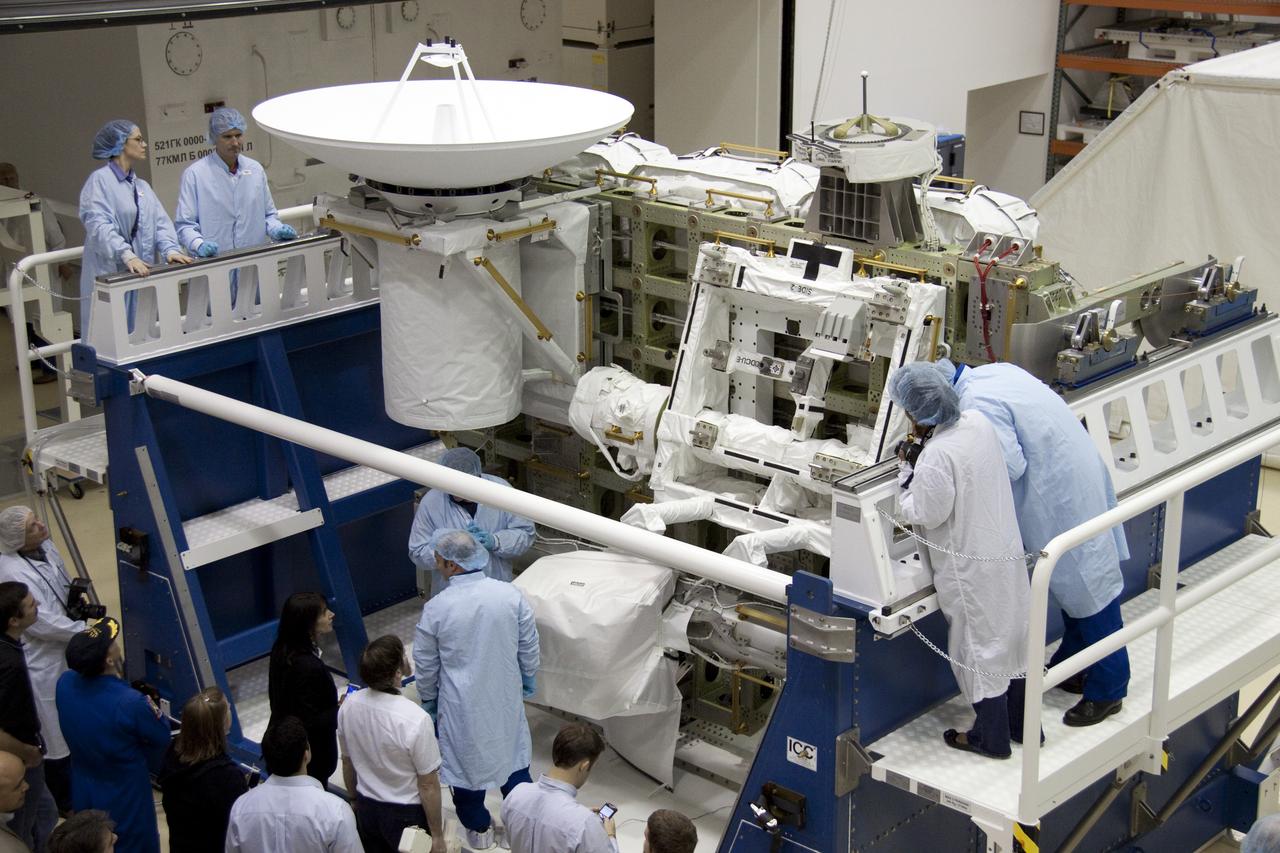
CAPE CANAVERAL, Fla. -- In the Space Station Processing Facility at NASA's Kennedy Space Center in Florida, STS-133 crew members look on as SSPF technicians below describe the payload. From left to right are Mission Specialists Tim Kopra, Nicole Stott, Michael Barratt and Pilot Eric Boe. The astronauts are at Kennedy to participate in the Payload Crew Equipment Interface Test, or CEIT, which gives the crew an opportunity for hands-on training with tools they'll be using in space and familiarization of the payload they will be delivering to the International Space Station. Launch of space shuttle Discovery is targeted for Nov. 1 at 4:40 p.m. EDT. For more information visit, www.nasa.gov/shuttle. Photo credit: NASA/Jack Pfaller
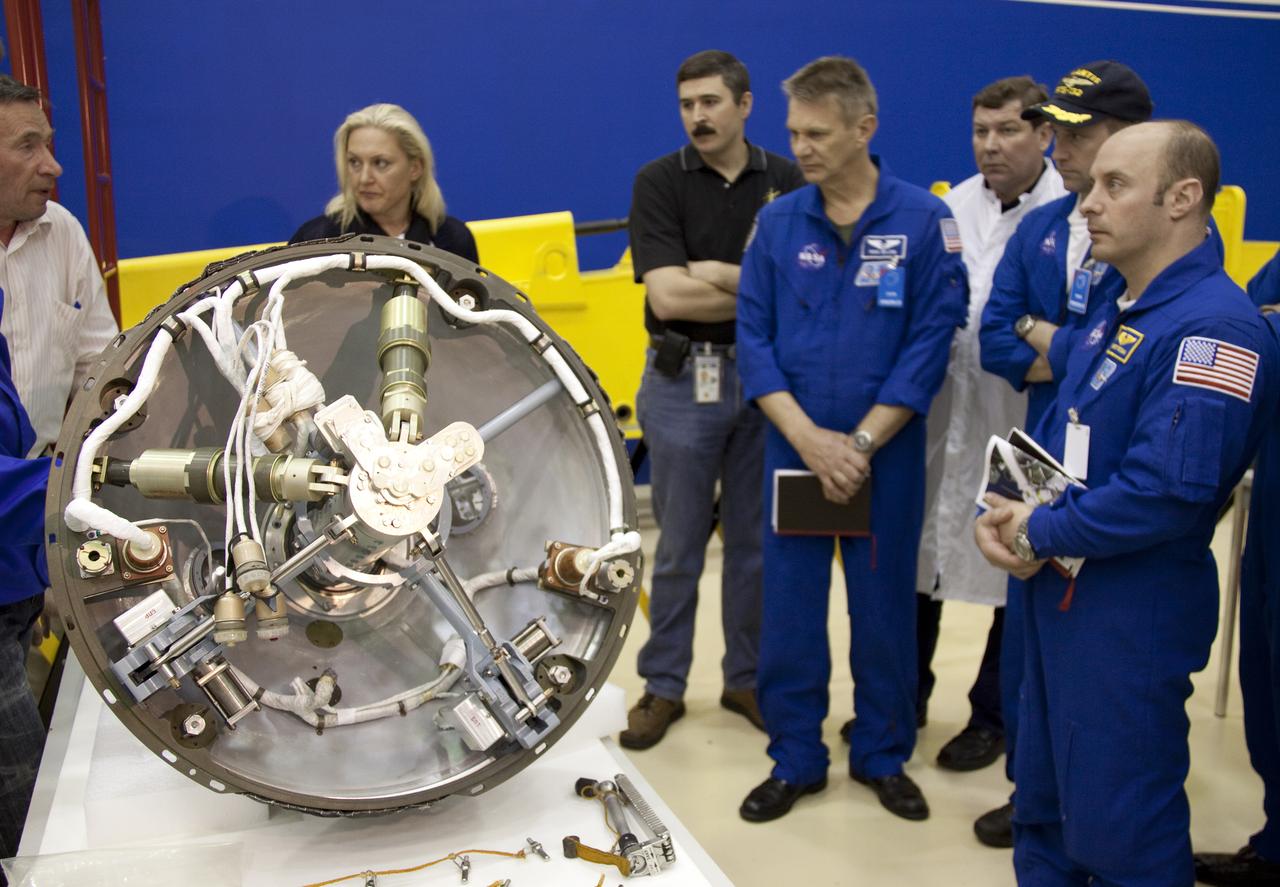
STS-132 CREW CEIT IN SSPF & SPACEHAB
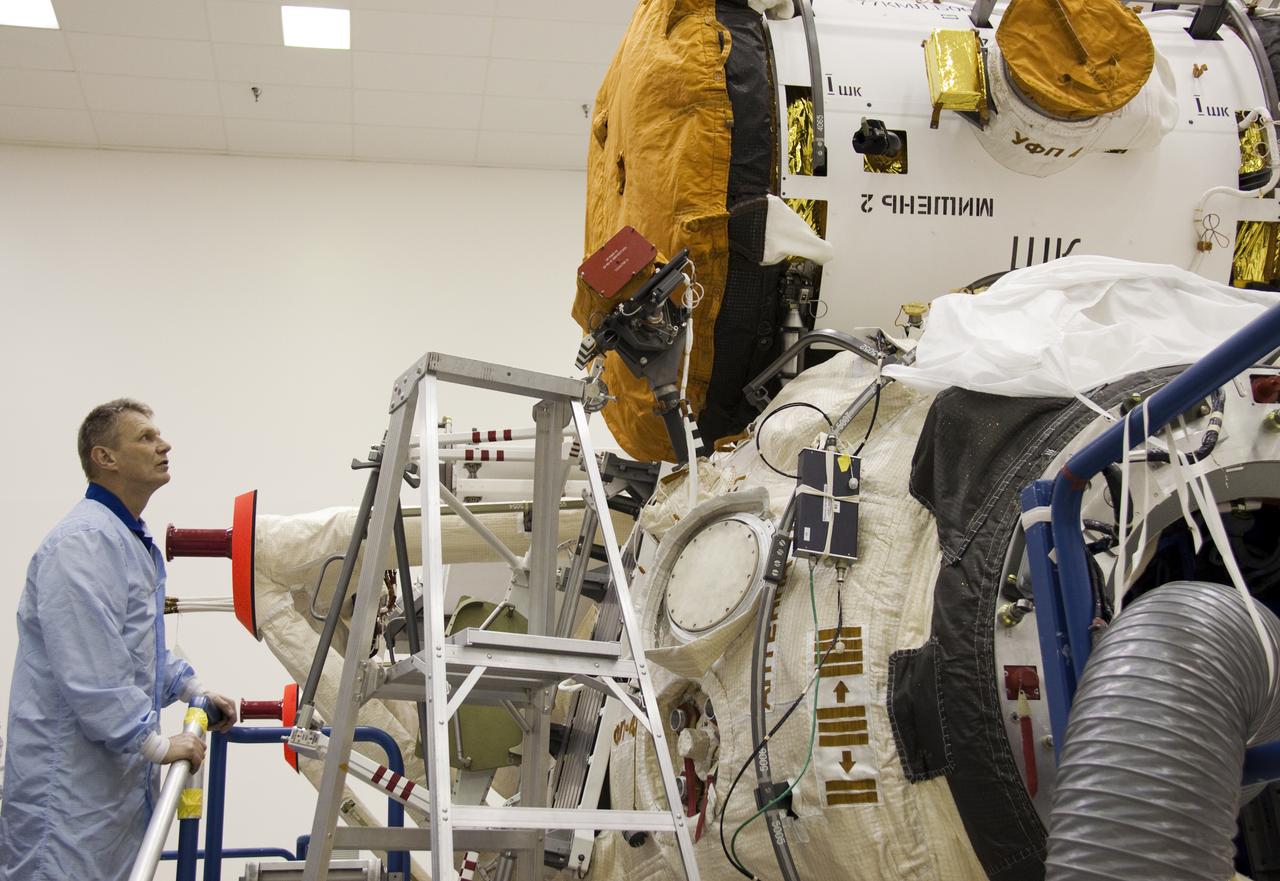
STS-132 CREW CEIT IN SSPF & SPACEHAB
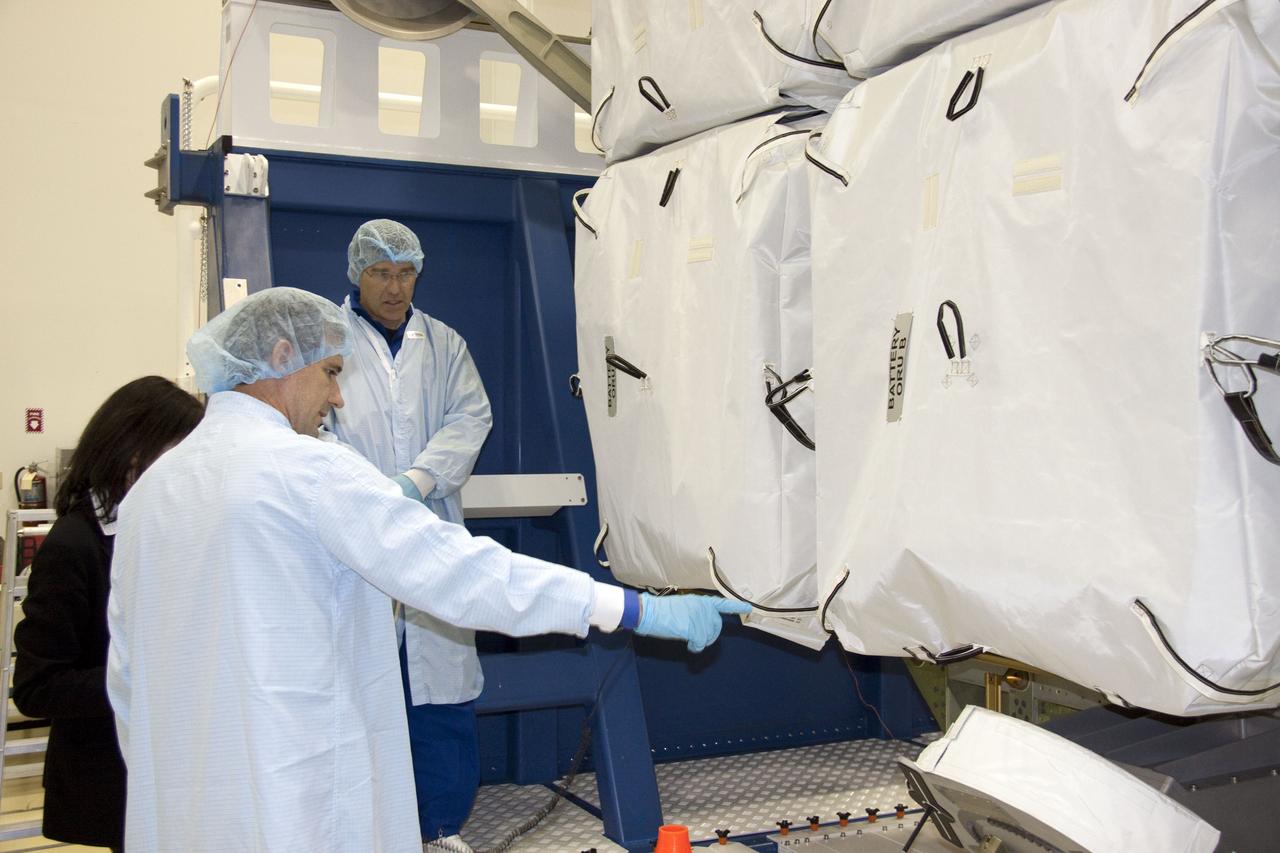
STS-132 CREW CEIT - SSPF - SPACHAB
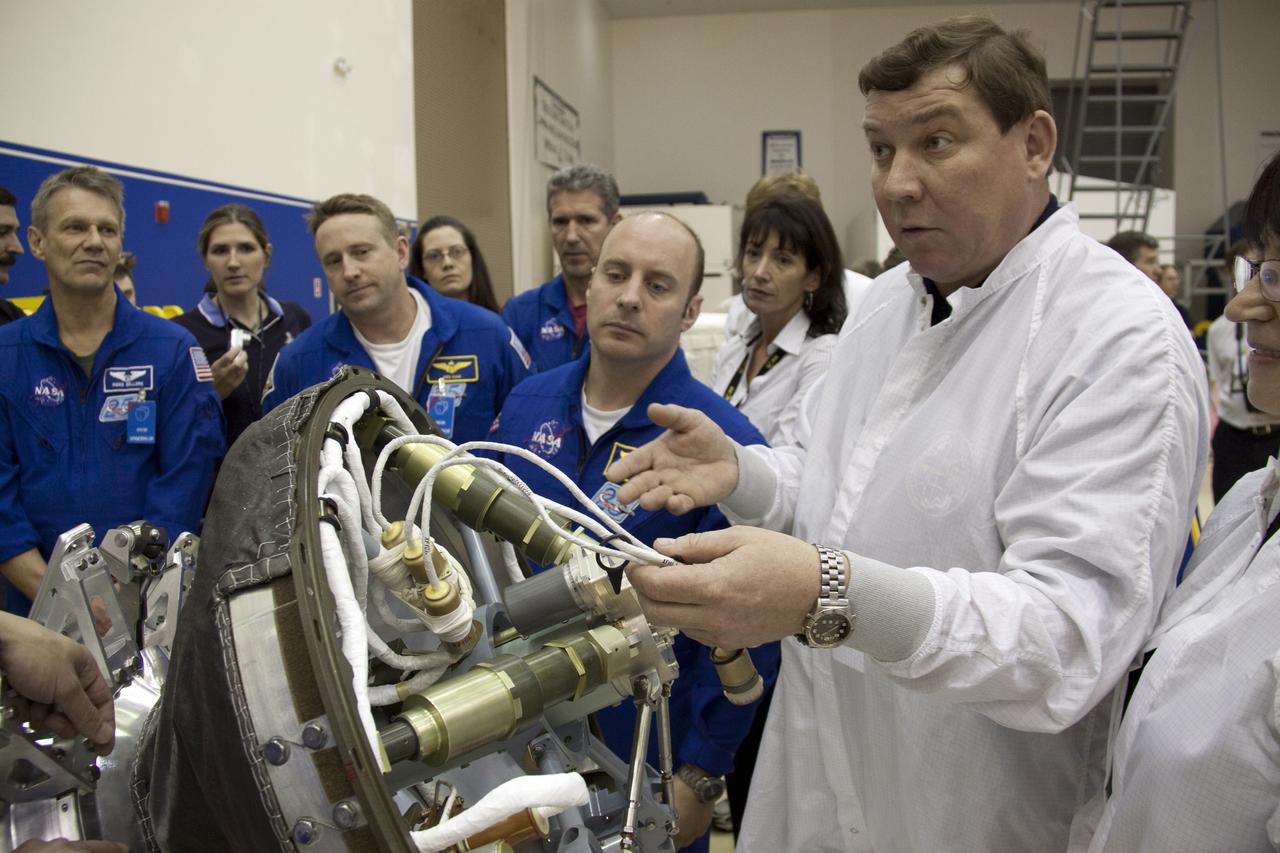
STS-132 CREW CEIT IN SSPF & SPACEHAB
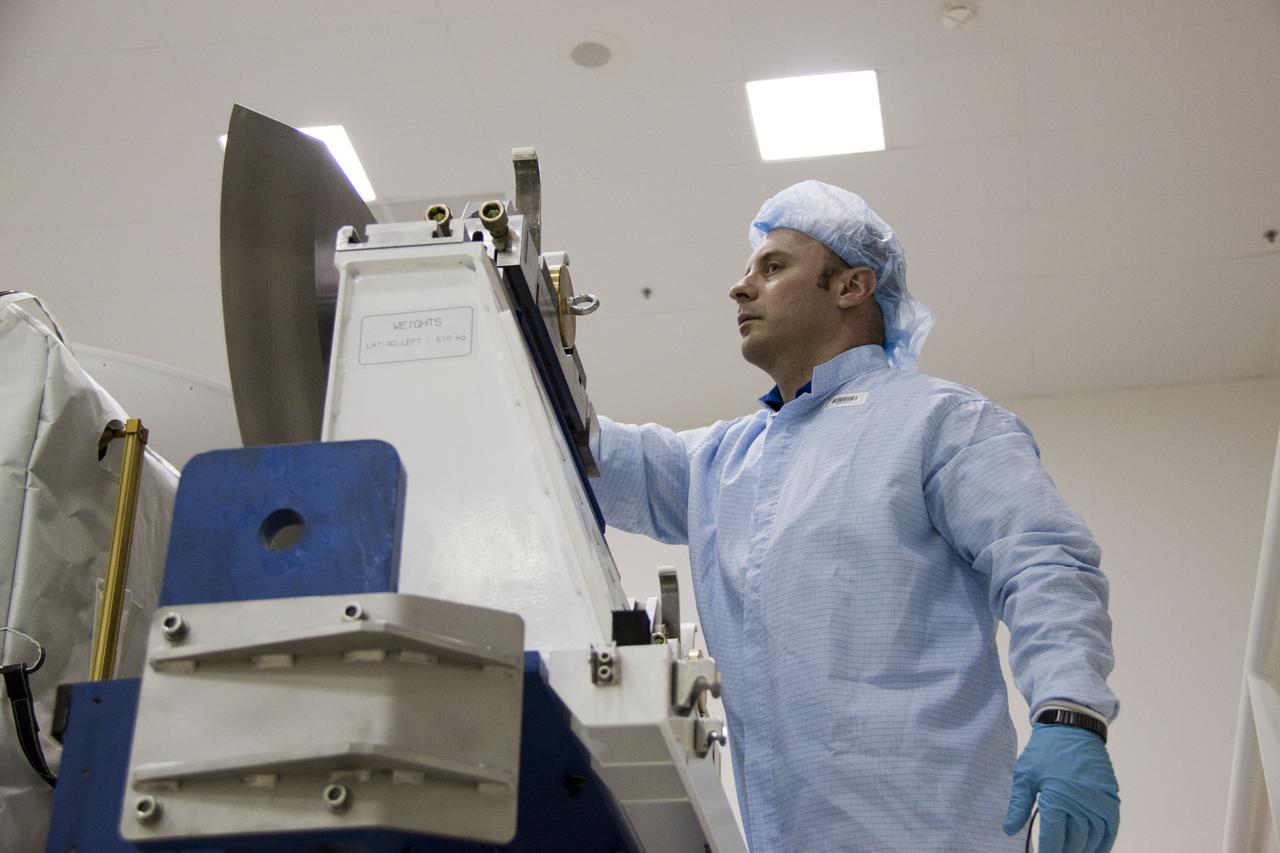
STS-132 CREW CEIT - SSPF - SPACHAB
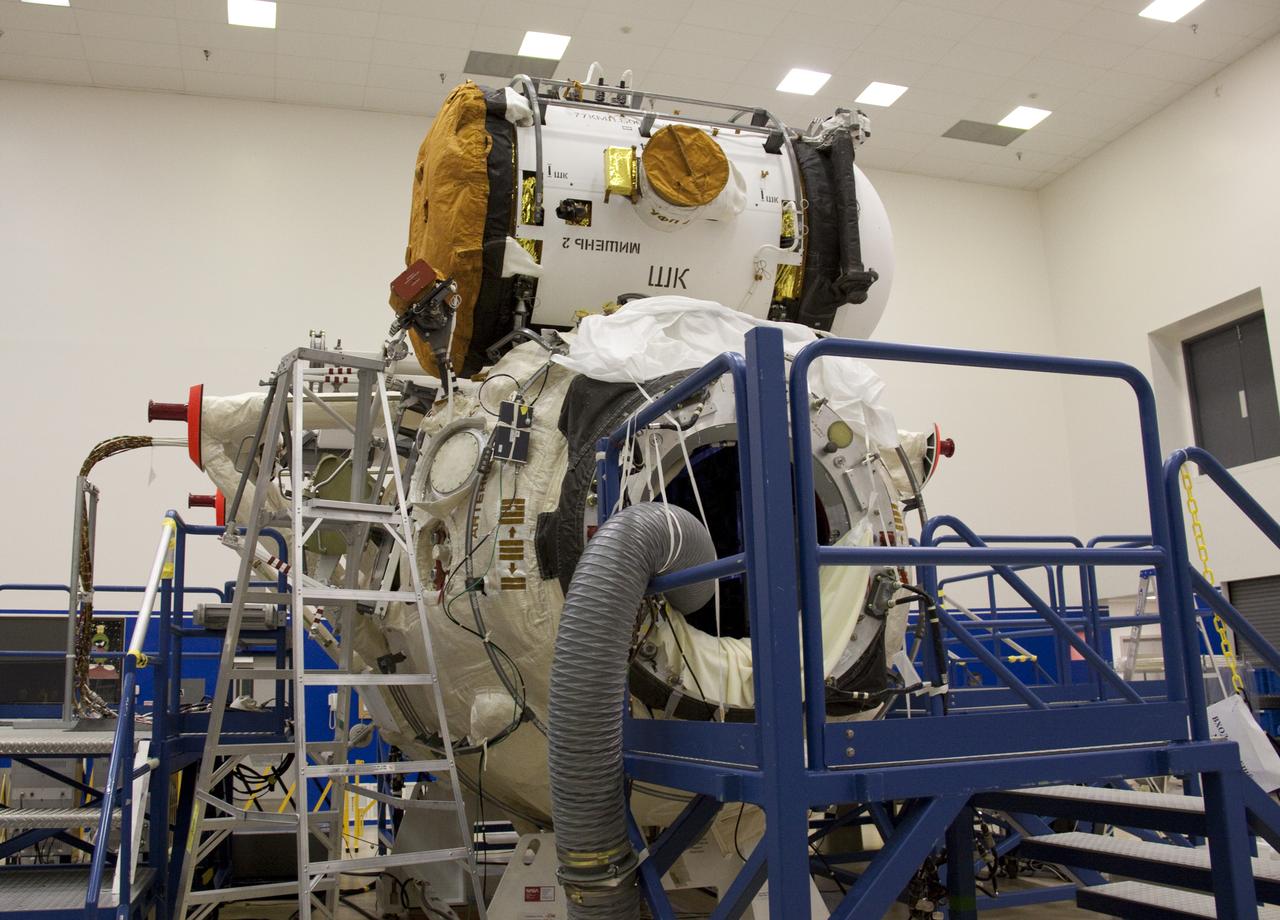
STS-132 CREW CEIT IN SSPF & SPACEHAB
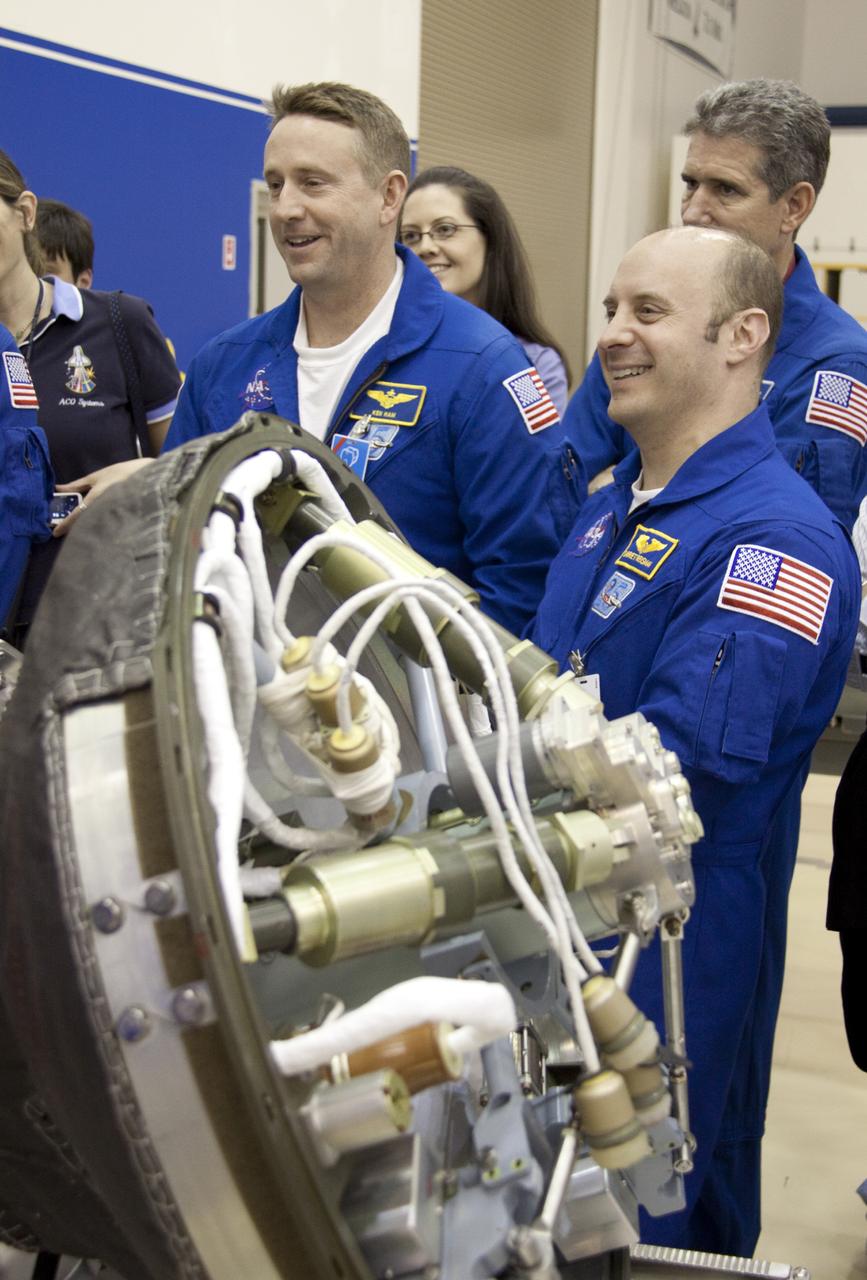
STS-132 CREW CEIT IN SSPF & SPACEHAB
STS-132 CREW CEIT IN SSPF & SPACEHAB
STS-132 CREW CEIT IN SSPF & SPACEHAB
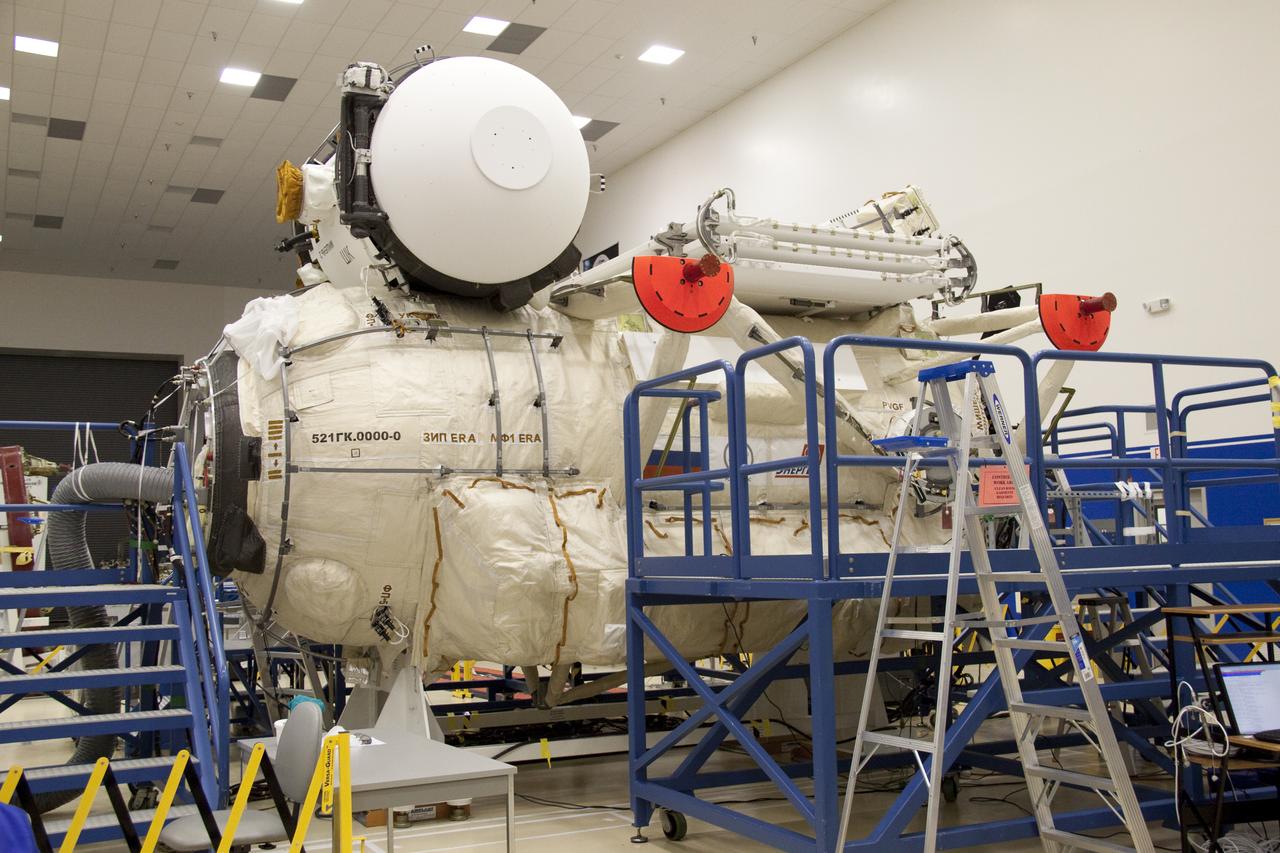
STS-132 CREW CEIT IN SSPF & SPACEHAB
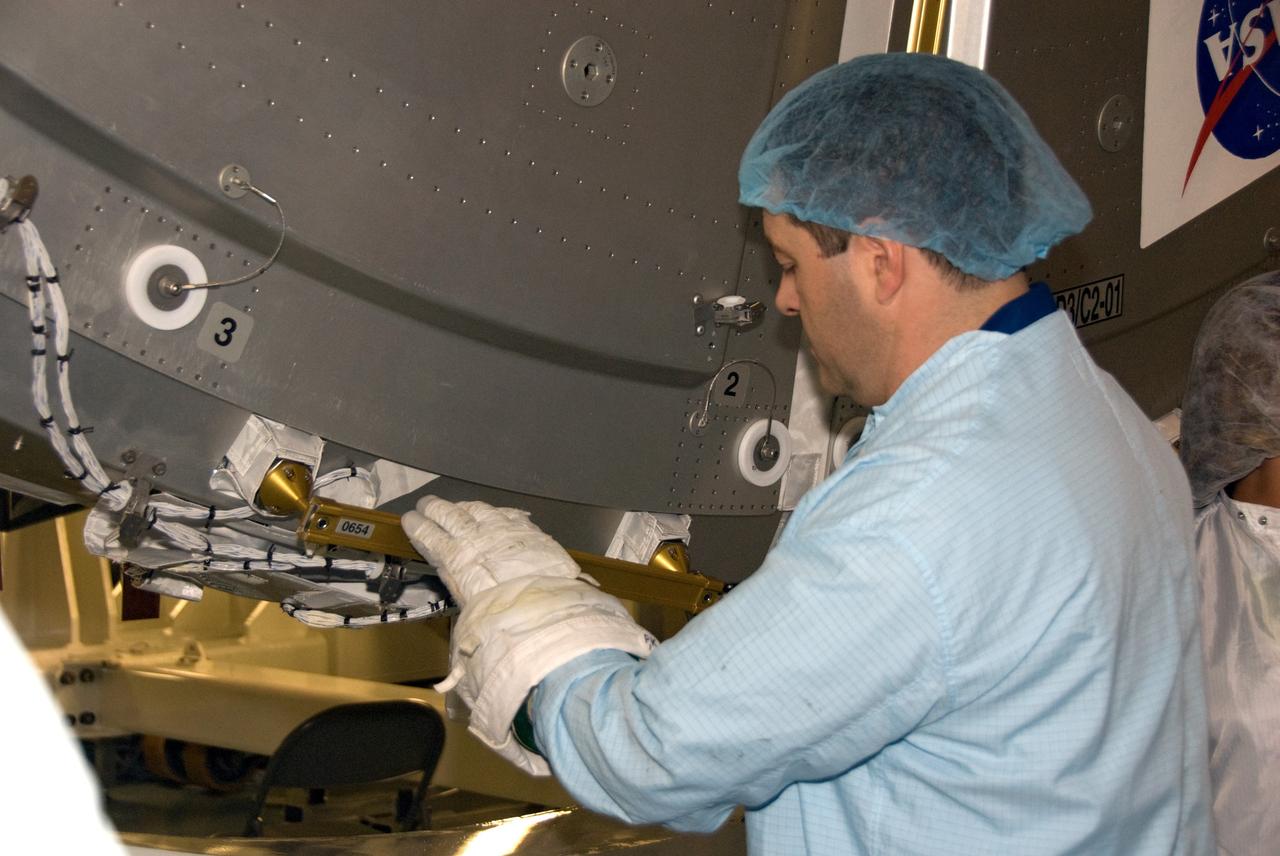
CAPE CANAVERAL, Fla. – In the Space Station Processing Facility at NASA's Kennedy Space Center in Florida, STS-130 Mission Specialist Nicolas Patrick becomes familiar with the working of the Tranquility node during the crew equipment interface test for his mission. The cupola, a unique work station with six windows on its sides and one on top, is attached to one end of Tranquility. Tranquility, the payload for the STS-130 mission, is a pressurized module that will provide room for many of the International Space Station's life support systems. The module was built for the European Space Agency by Thales Alenia Space in Turin, Italy. The cupola resembles a circular bay window that will provide a vastly improved view of the station's exterior. Just under 10 feet in diameter, the module will accommodate two crew members and portable workstations that can control station and robotic activities. The multi-directional view will allow the crew to monitor spacewalks and docking operations, as well as provide a spectacular view of Earth and other celestial objects. Endeavour is targeted to launch Feb. 4, 2010. Photo credit: NASA/Kim Shiflett
CAPE CANAVERAL, Fla. – In the Space Station Processing Facility at NASA's Kennedy Space Center in Florida, STS-130 Mission Specialist Kathryn "Kay" Hire, at left, participates in a bench review, standard familiarization training on the hardware and equipment that will fly on her mission, during the crew equipment interface test. Tranquility, the payload for the STS-130 mission, is a pressurized module that will provide room for many of the International Space Station's life support systems. The module was built for the European Space Agency by Thales Alenia Space in Turin, Italy. The cupola, a unique work station with six windows on its sides and one on top, is attached to the end of Tranquility. It resembles a circular bay window and will provide a vastly improved view of the station's exterior. Just under 10 feet in diameter, the module will accommodate two crew members and portable workstations that can control station and robotic activities. The multi-directional view will allow the crew to monitor spacewalks and docking operations, as well as provide a spectacular view of Earth and other celestial objects. Endeavour is targeted to launch Feb. 4, 2010. Photo credit: NASA/Kim Shiflett
CAPE CANAVERAL, Fla. – In the Space Station Processing Facility at NASA's Kennedy Space Center in Florida, members of the STS-130 crew participate in a bench review, standard familiarization training on the hardware and equipment that will fly on their mission, during the crew equipment interface test. From left are Mission Specialists Stephen Robinson and Kathryn "Kay" Hire, Commander George Zamka and Pilot Terry Virts Jr. Tranquility, the payload for the STS-130 mission, is a pressurized module that will provide room for many of the International Space Station's life support systems. The module was built for the European Space Agency by Thales Alenia Space in Turin, Italy. The cupola, a unique work station with six windows on its sides and one on top, is attached to the end of Tranquility. It resembles a circular bay window and will provide a vastly improved view of the station's exterior. Just under 10 feet in diameter, the module will accommodate two crew members and portable workstations that can control station and robotic activities. The multi-directional view will allow the crew to monitor spacewalks and docking operations, as well as provide a spectacular view of Earth and other celestial objects. Endeavour is targeted to launch Feb. 4, 2010. Photo credit: NASA/Kim Shiflett

KENNEDY SPACE CENTER, FLA. -- In the Space Station Processing Facility at NASA's Kennedy Space Center, STS-123 Pilot Greg Johnson tries on gloves he will wear on the mission. At right is Mission Specialist Robert Behnken. Johnson, Behnken and other crew members are at the center for a crew equipment interface test, which allows familiarization with equipment they will use during the mission. STS-123 will carry and install one of the components of the Japanese Experiment Module, or JEM. Known as Kibo, the JEM comprises six components: two research facilities -- the Pressurized Module and Exposed Facility; a Logistics Module attached to each of them; a Remote Manipulator System; and an Inter-Orbit Communication System unit. The various components of JEM will be assembled in space over the course of three space shuttle missions. The first of those three missions, STS-123, will carry the Experiment Logistics Module Pressurized Section aboard the space shuttle Endeavour, targeted for launch in February 2008. Photo credit: NASA/Kim Shiflett
CAPE CANAVERAL, Fla. – In the Space Station Processing Facility at NASA's Kennedy Space Center in Florida, STS-130 Mission Specialist Stephen Robinson participates in a bench review, standard familiarization training on the hardware and equipment that will fly on his mission, during the crew equipment interface test. Tranquility, the payload for the STS-130 mission, is a pressurized module that will provide room for many of the International Space Station's life support systems. The module was built for the European Space Agency by Thales Alenia Space in Turin, Italy. The cupola, a unique work station with six windows on its sides and one on top, is attached to the end of Tranquility. It resembles a circular bay window and will provide a vastly improved view of the station's exterior. Just under 10 feet in diameter, the module will accommodate two crew members and portable workstations that can control station and robotic activities. The multi-directional view will allow the crew to monitor spacewalks and docking operations, as well as provide a spectacular view of Earth and other celestial objects. Endeavour is targeted to launch Feb. 4, 2010. Photo credit: NASA/Kim Shiflett
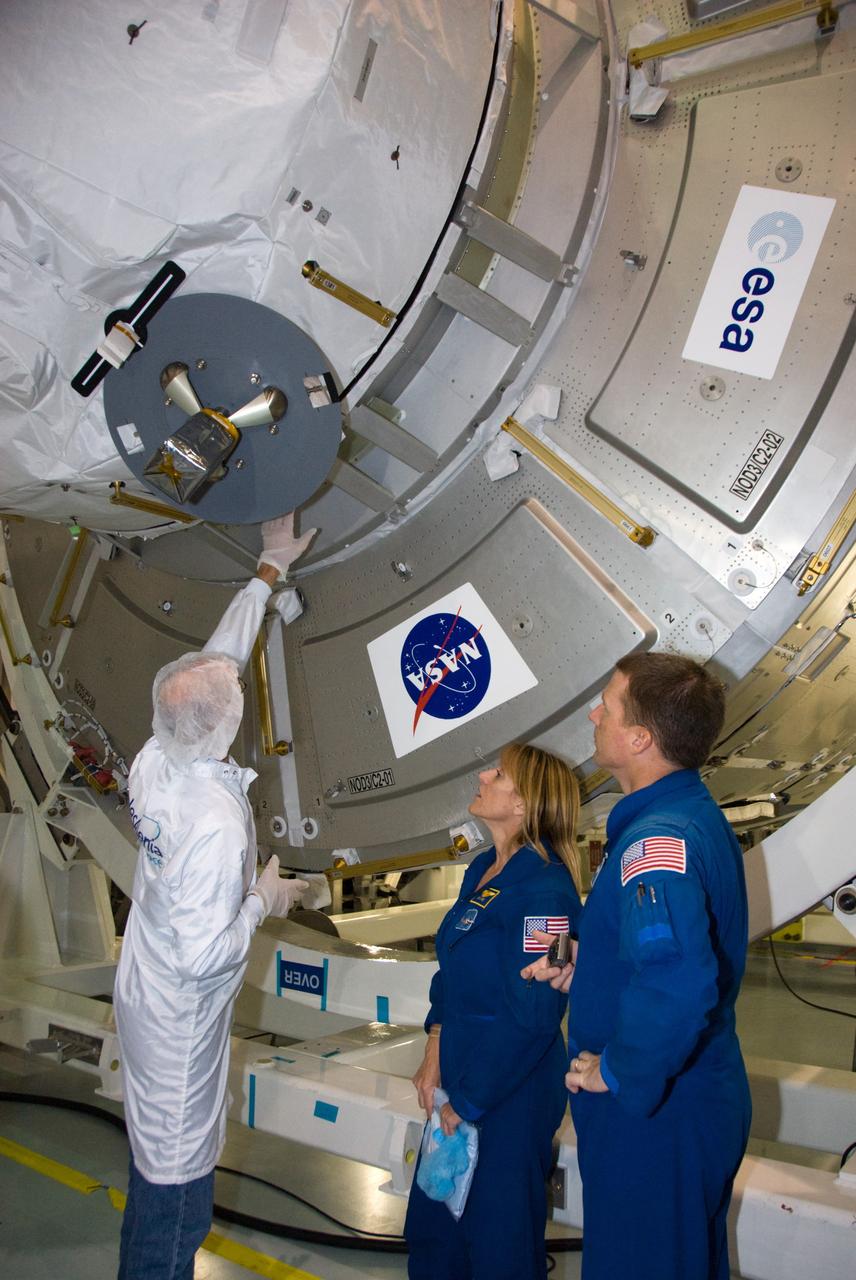
CAPE CANAVERAL, Fla. – In the Space Station Processing Facility at NASA's Kennedy Space Center in Florida, STS-130 Mission Specialist Kathryn "Kay" Hire, middle, and Pilot Terry Virts Jr., right, receive familiarization training on the cupola from a flight crew representative from Thales Alenia Space during their crew equipment interface test. The cupola, a unique work station with six windows on its sides and one on top, is attached to one end of the Tranquility node. Tranquility, the payload for the STS-130 mission, is a pressurized module that will provide room for many of the International Space Station's life support systems. The module was built for the European Space Agency by Thales Alenia Space in Turin, Italy. The cupola resembles a circular bay window that will provide a vastly improved view of the station's exterior. Just under 10 feet in diameter, the module will accommodate two crew members and portable workstations that can control station and robotic activities. The multi-directional view will allow the crew to monitor spacewalks and docking operations, as well as provide a spectacular view of Earth and other celestial objects. Endeavour is targeted to launch Feb. 4, 2010. Photo credit: NASA/Kim Shiflett
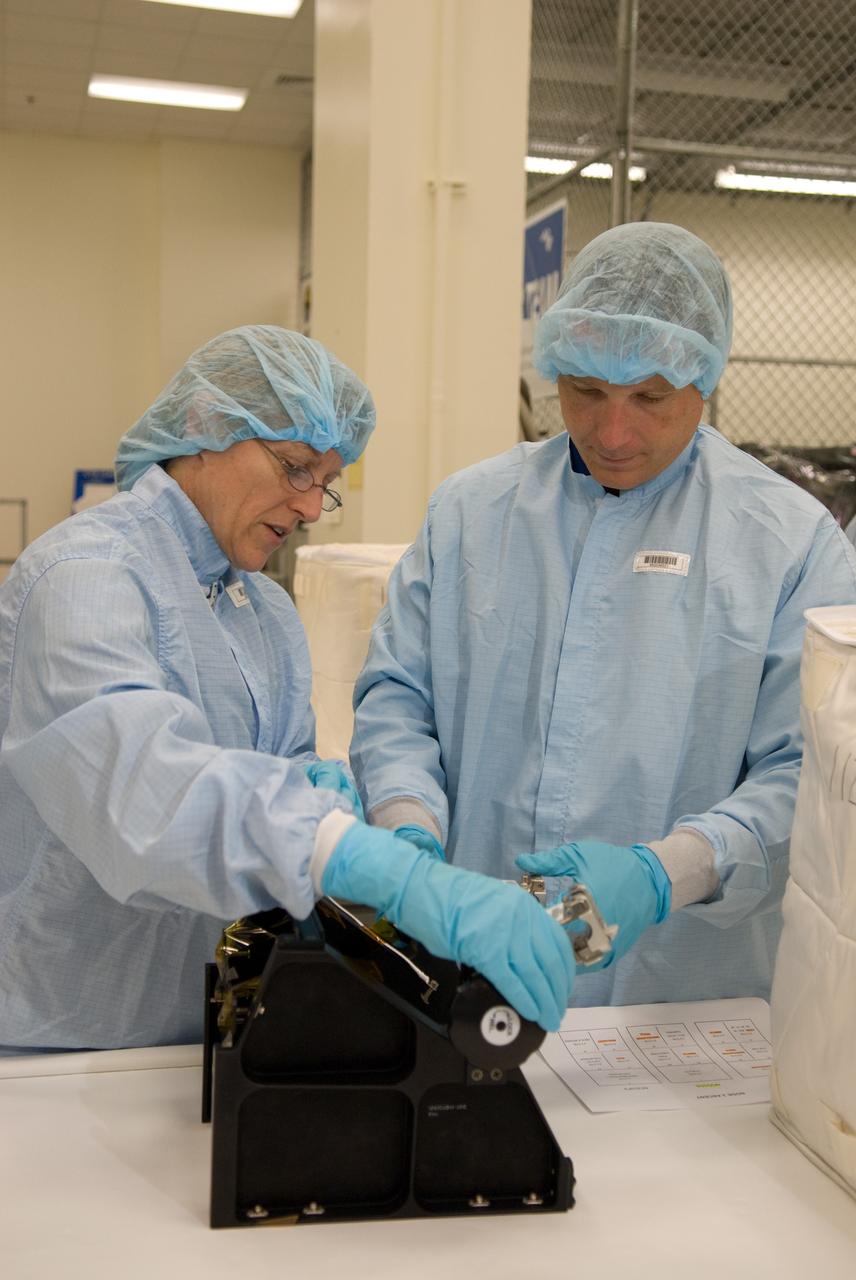
CAPE CANAVERAL, Fla. – In the Space Station Processing Facility at NASA's Kennedy Space Center in Florida, STS-130 Mission Specialist Kathryn "Kay" Hire, at left, and Pilot Terry Virts Jr. participate in a bench review, standard familiarization training on the hardware and equipment that will fly on their mission, during the crew equipment interface test. Tranquility, the payload for the STS-130 mission, is a pressurized module that will provide room for many of the International Space Station's life support systems. The module was built for the European Space Agency by Thales Alenia Space in Turin, Italy. The cupola, a unique work station with six windows on its sides and one on top, is attached to the end of Tranquility. It resembles a circular bay window and will provide a vastly improved view of the station's exterior. Just under 10 feet in diameter, the module will accommodate two crew members and portable workstations that can control station and robotic activities. The multi-directional view will allow the crew to monitor spacewalks and docking operations, as well as provide a spectacular view of Earth and other celestial objects. Endeavour is targeted to launch Feb. 4, 2010. Photo credit: NASA/Kim Shiflett
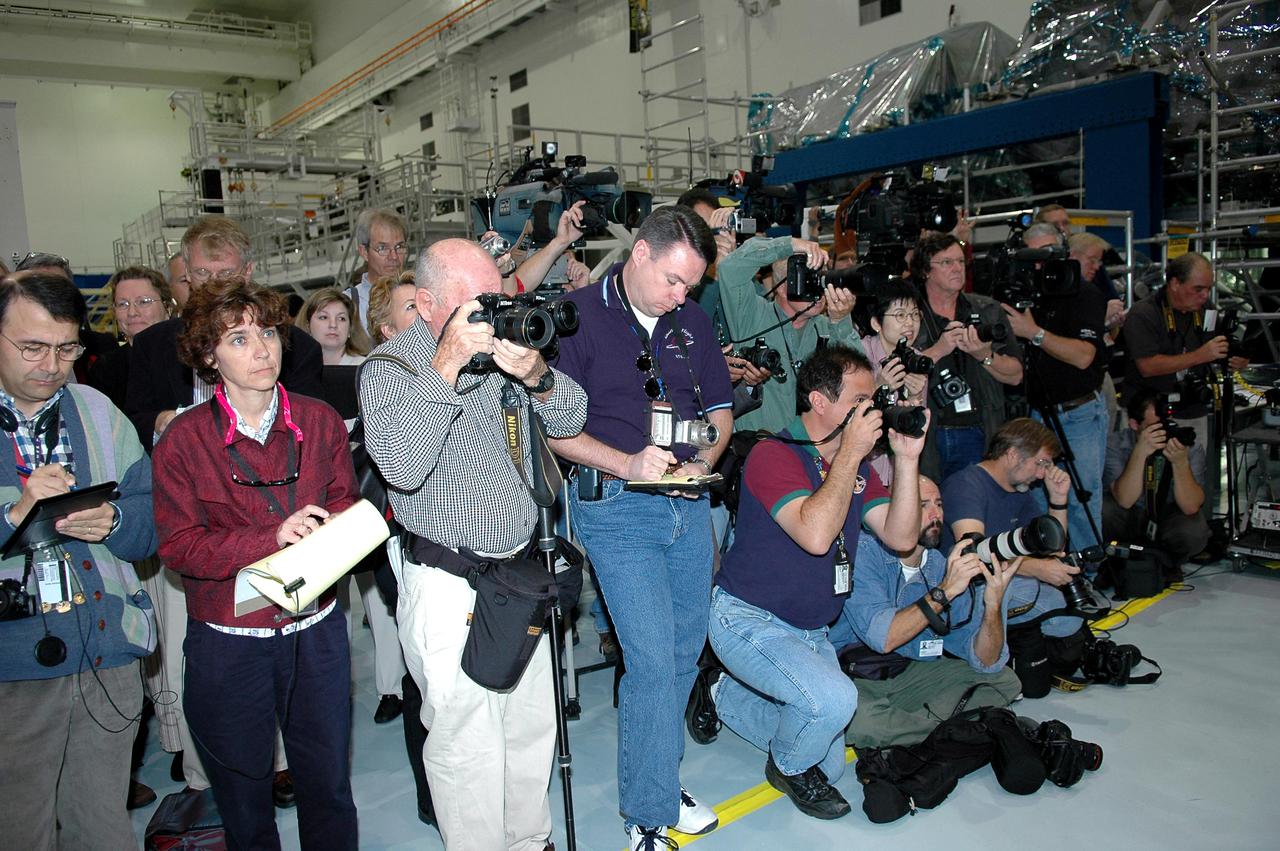
KENNEDY SPACE CENTER, FLA. - Photographers and journalists gather in the Space Station Processing Facility (SSPF) to interview and photograph the STS-114 crew, who are looking over some of the hardware in the SSPF. The crew is at KSC for Crew Equipment Interface Test (CEIT) activities. During CEIT, the crew has an opportunity to get a hands-on look at the payloads with which they’ll be working on-orbit. The Return to Flight mission STS-114 will carry the Multi-Purpose Logistics Module Raffaello, filled with supplies for the International Space Station, and a replacement Control Moment Gyroscope. Launch of STS-114 has a launch window of May 12 to June 3.
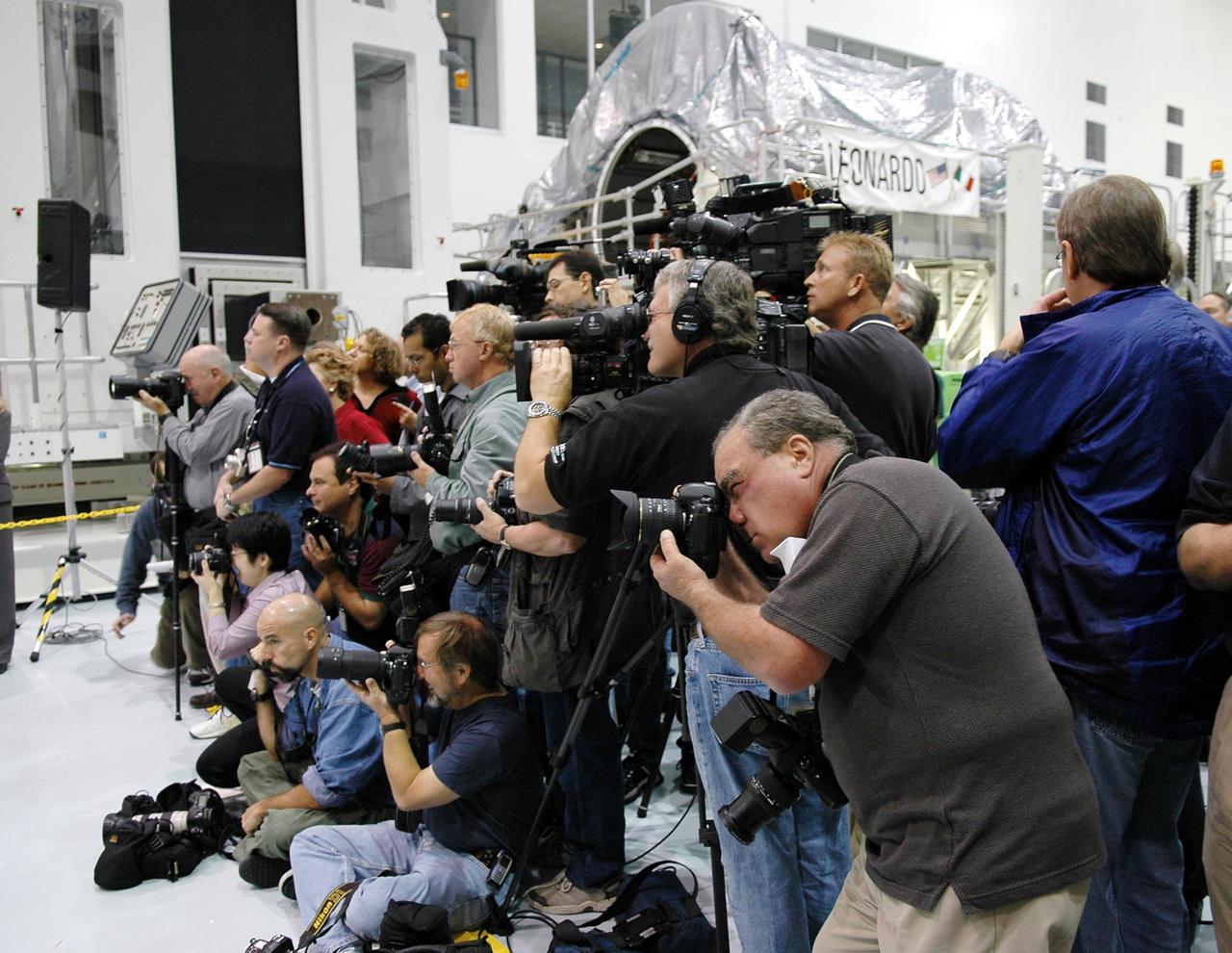
KENNEDY SPACE CENTER, FLA. - Photographers and journalists gather in the Space Station Processing Facility (SSPF) to interview and photograph the STS-114 crew. The crew is looking over some of the hardware in the SSPF. Behind the photographers is the Multi-Purpose Logistics Module Leonardo. STS-114 will carry its sister module Raffaello. The crew is at KSC for Crew Equipment Interface Test (CEIT) activities. During CEIT, the crew has an opportunity to get a hands-on look at the payloads with which they’ll be working on-orbit. The Return to Flight mission STS-114 will also carry a replacement Control Moment Gyroscope. Launch of STS-114 has a launch window of May 12 to June 3.
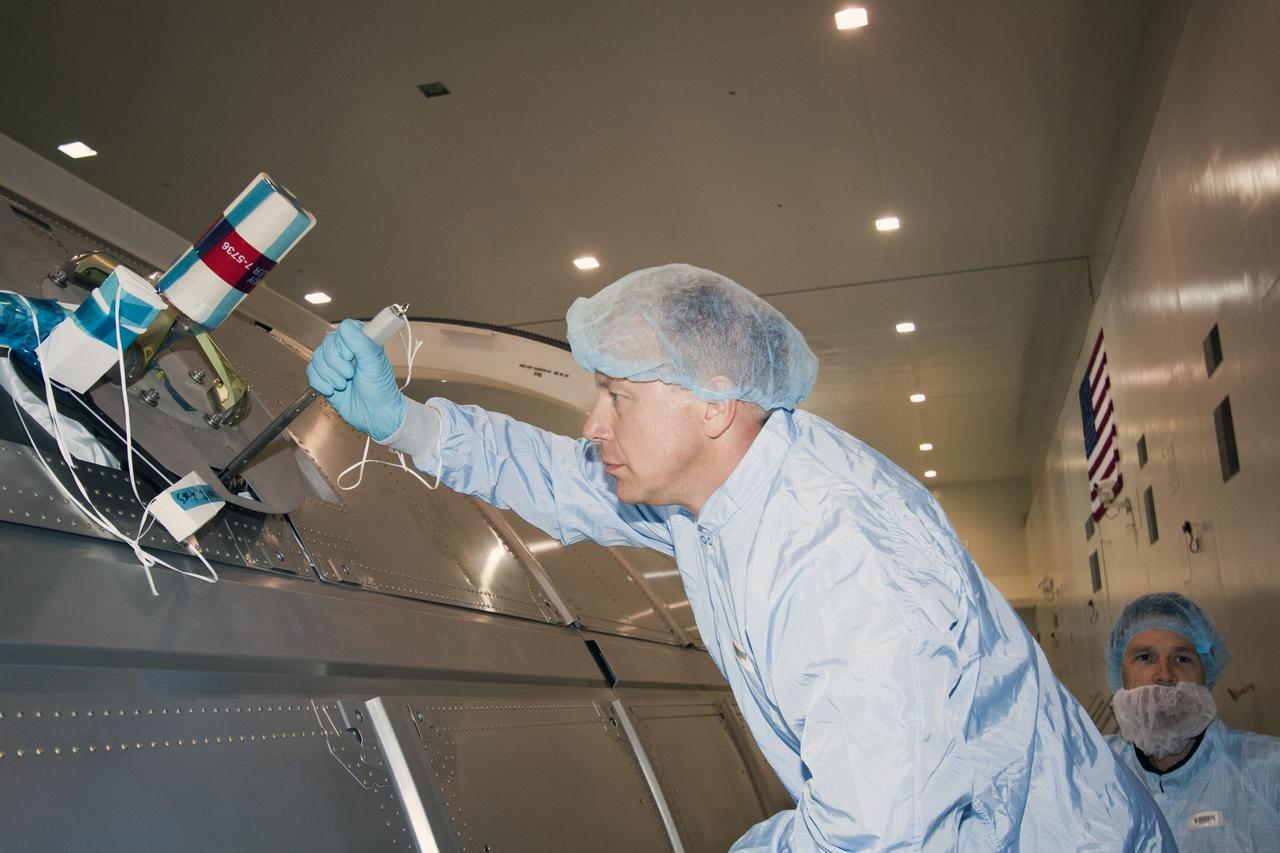
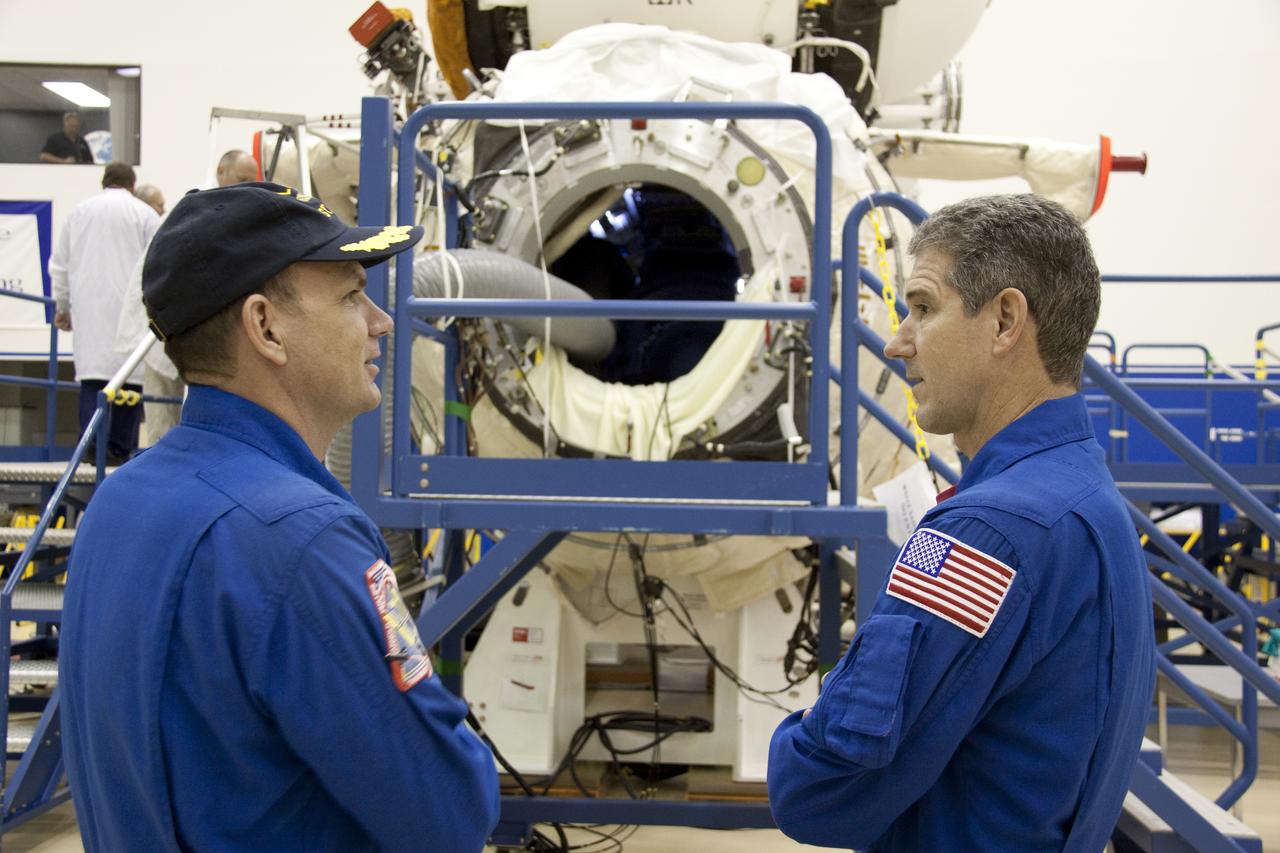
CAPE CANAVERAL, Fla. -- In the Space Station Processing Facility at NASA's Kennedy Space Center in Florida, STS-133 Mission Specialist Tim Kopra practices using a tool on the Permanent Multipurpose Module, or PMM. The astronauts are at Kennedy to participate in the Payload Crew Equipment Interface Test, or CEIT, which gives the crew an opportunity for hands-on training with tools they'll be using in space and familiarization of the payload they will be delivering to the International Space Station. Launch of space shuttle Discovery is targeted for Nov. 1 at 4:40 p.m. EDT. For more information visit, www.nasa.gov/shuttle. Photo credit: NASA/Jack Pfaller
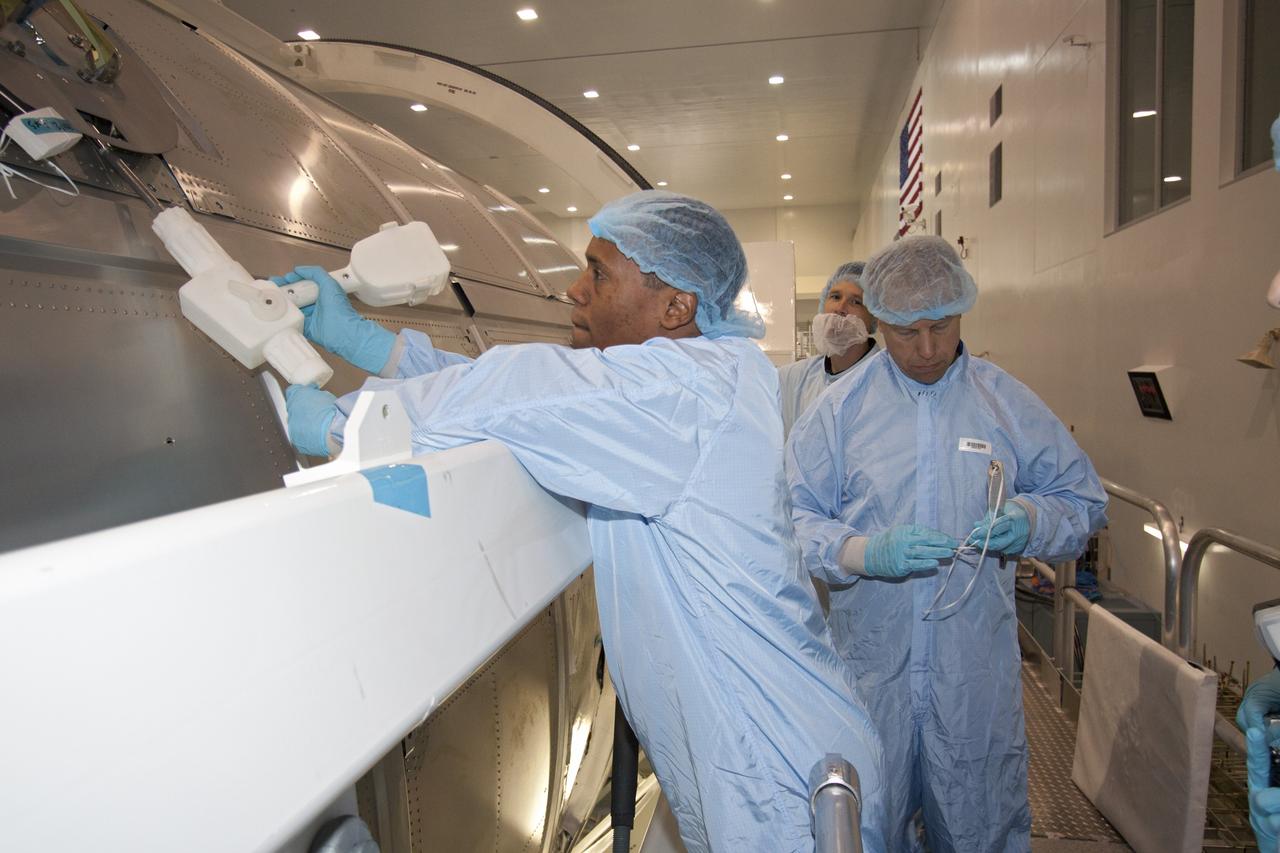
CAPE CANAVERAL, Fla. -- In the Space Station Processing Facility at NASA's Kennedy Space Center in Florida, STS-133 Mission Specialist Alvin Drew practices with a tool on the Permanent Multipurpose Module, or PMM, while Mission Specialist Tim Kopra (right) awaits his turn. The astronauts are at Kennedy to participate in the Payload Crew Equipment Interface Test, or CEIT, which gives the crew an opportunity for hands-on training with tools they'll be using in space and familiarization of the payload they will be delivering to the International Space Station. Launch of space shuttle Discovery is targeted for Nov. 1 at 4:40 p.m. EDT. For more information visit, www.nasa.gov/shuttle. Photo credit: NASA/Jack Pfaller
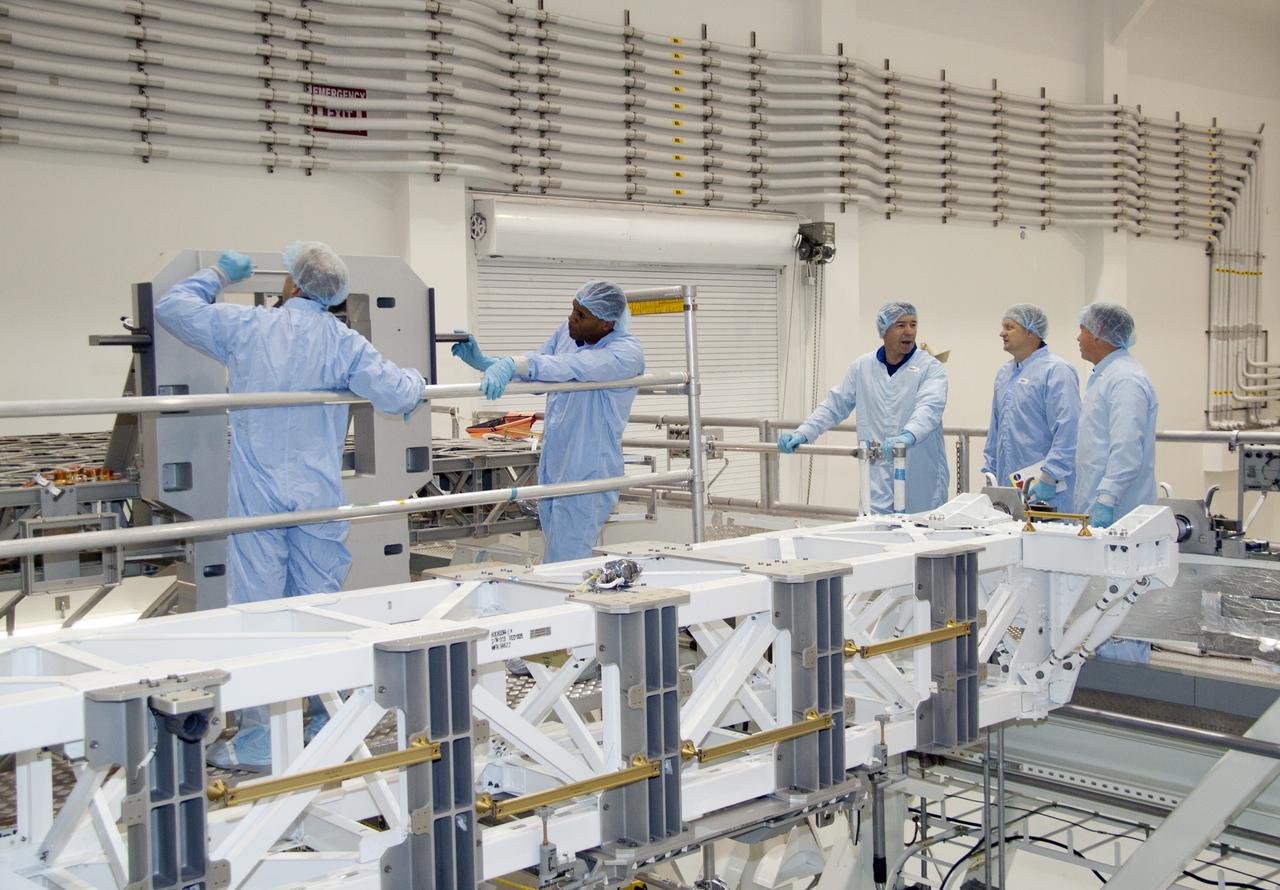
CAPE CANAVERAL, Fla. -- In the Space Station Processing Facility at NASA's Kennedy Space Center in Florida, STS-133 Mission Specialists Tim Kopra (left) and Alvin Drew inspect a component of the payload as Mission Specialist Michael Barratt and Pilot Eric Boe look on. The astronauts are at Kennedy to participate in the Payload Crew Equipment Interface Test, or CEIT, which gives the crew an opportunity for hands-on training with tools they'll be using in space and familiarization of the payload they will be delivering to the International Space Station. Launch of space shuttle Discovery is targeted for Nov. 1 at 4:40 p.m. EDT. For more information visit, www.nasa.gov/shuttle. Photo credit: NASA/Jack Pfaller
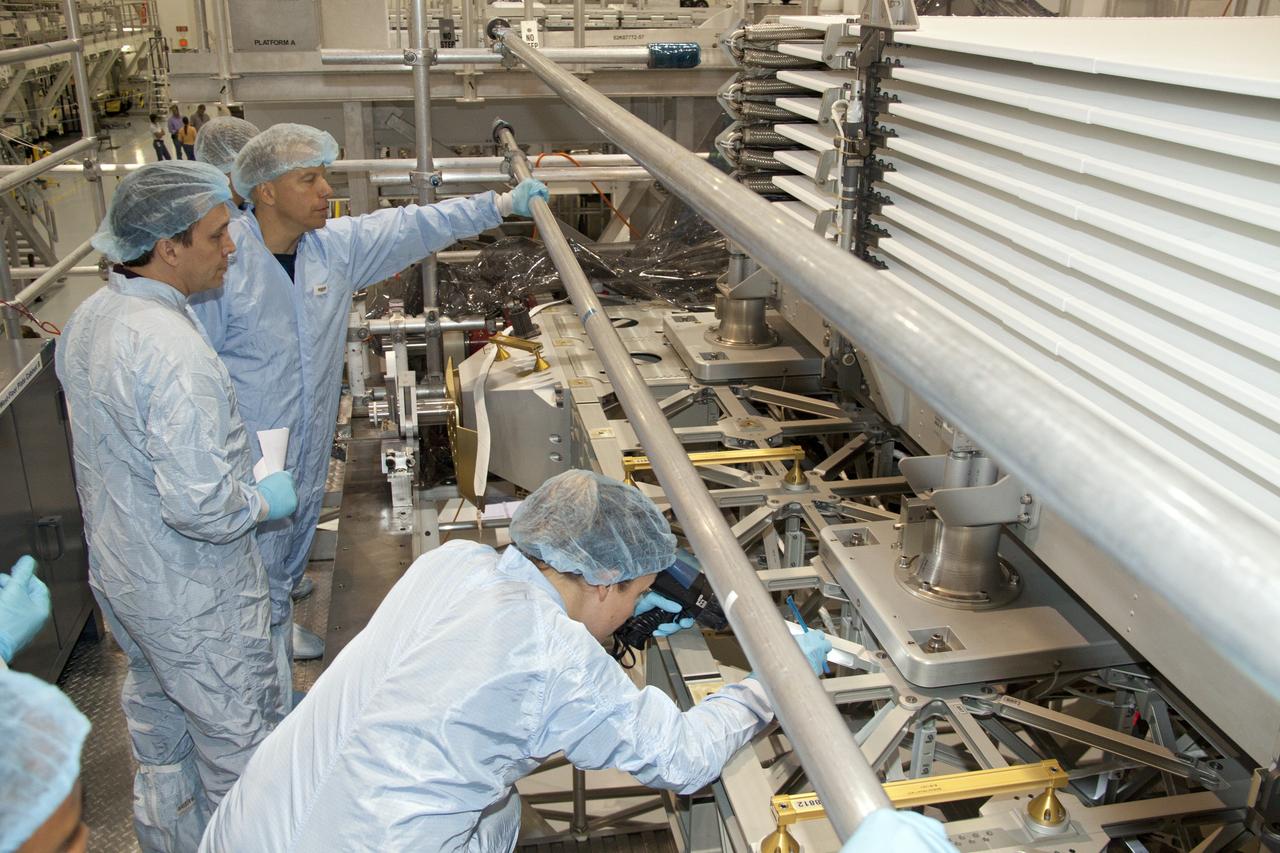
CAPE CANAVERAL, Fla. -- In the Space Station Processing Facility at NASA's Kennedy Space Center in Florida, STS-133 Mission Specialist Tim Kopra gets an up-close view of the Express Logistics Carrier-3, or ELC-3, accompanied by processing technicians. The astronauts are at Kennedy to participate in the Payload Crew Equipment Interface Test, or CEIT, which gives the crew an opportunity for hands-on training with tools they'll be using in space and familiarization of the payload they will be delivering to the International Space Station. Launch of space shuttle Discovery is targeted for Nov. 1 at 4:40 p.m. EDT. For more information visit, www.nasa.gov/shuttle. Photo credit: NASA/Jack Pfaller
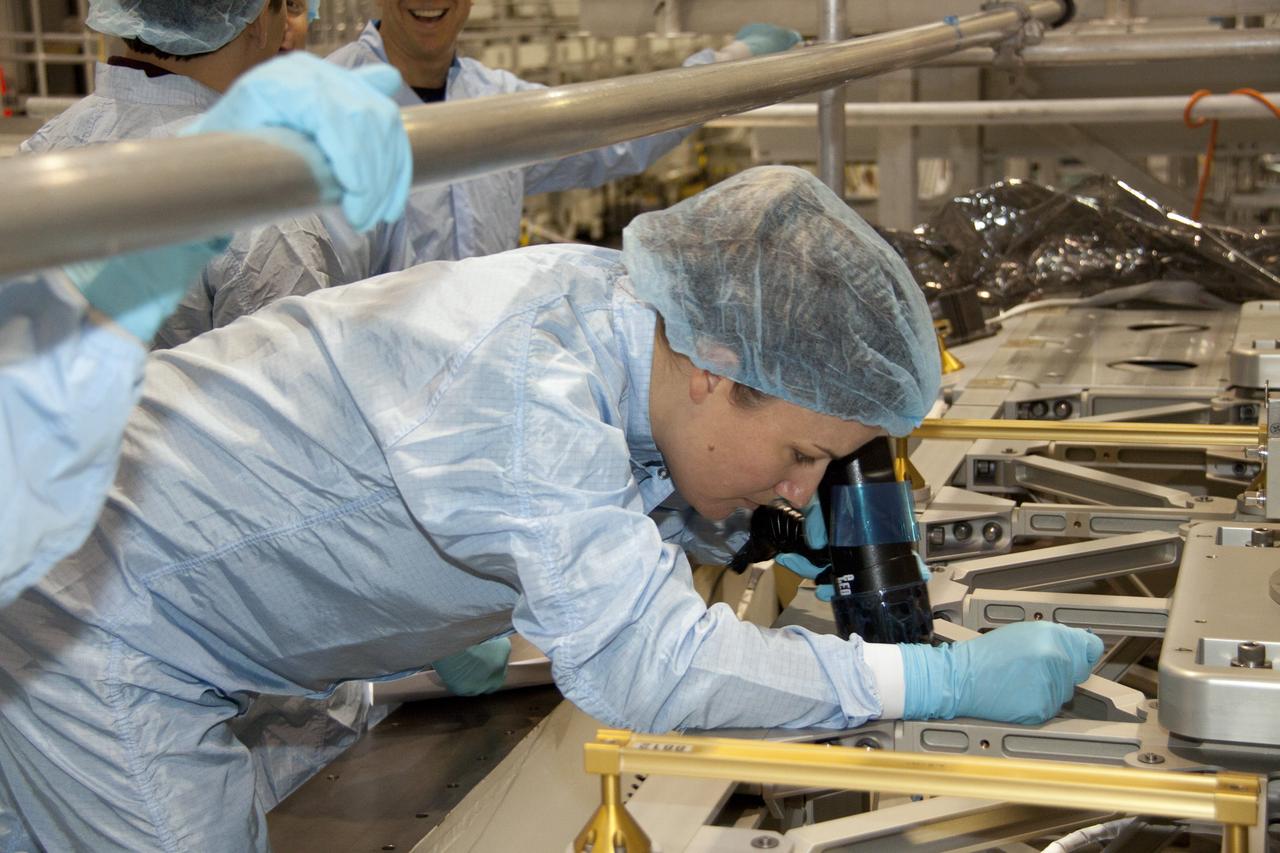
CAPE CANAVERAL, Fla. -- In the Space Station Processing Facility at NASA's Kennedy Space Center in Florida, a technician continues processing the Express Logistics Carrier-3, or ELC-3 while the STS-133 mission astronauts continue training. The astronauts are at Kennedy to participate in the Payload Crew Equipment Interface Test, or CEIT, which gives the crew an opportunity for hands-on training with tools they'll be using in space and familiarization of the payload they will be delivering to the International Space Station. Launch of space shuttle Discovery is targeted for Nov. 1 at 4:40 p.m. EDT. For more information visit, www.nasa.gov/shuttle. Photo credit: NASA/Jack Pfaller
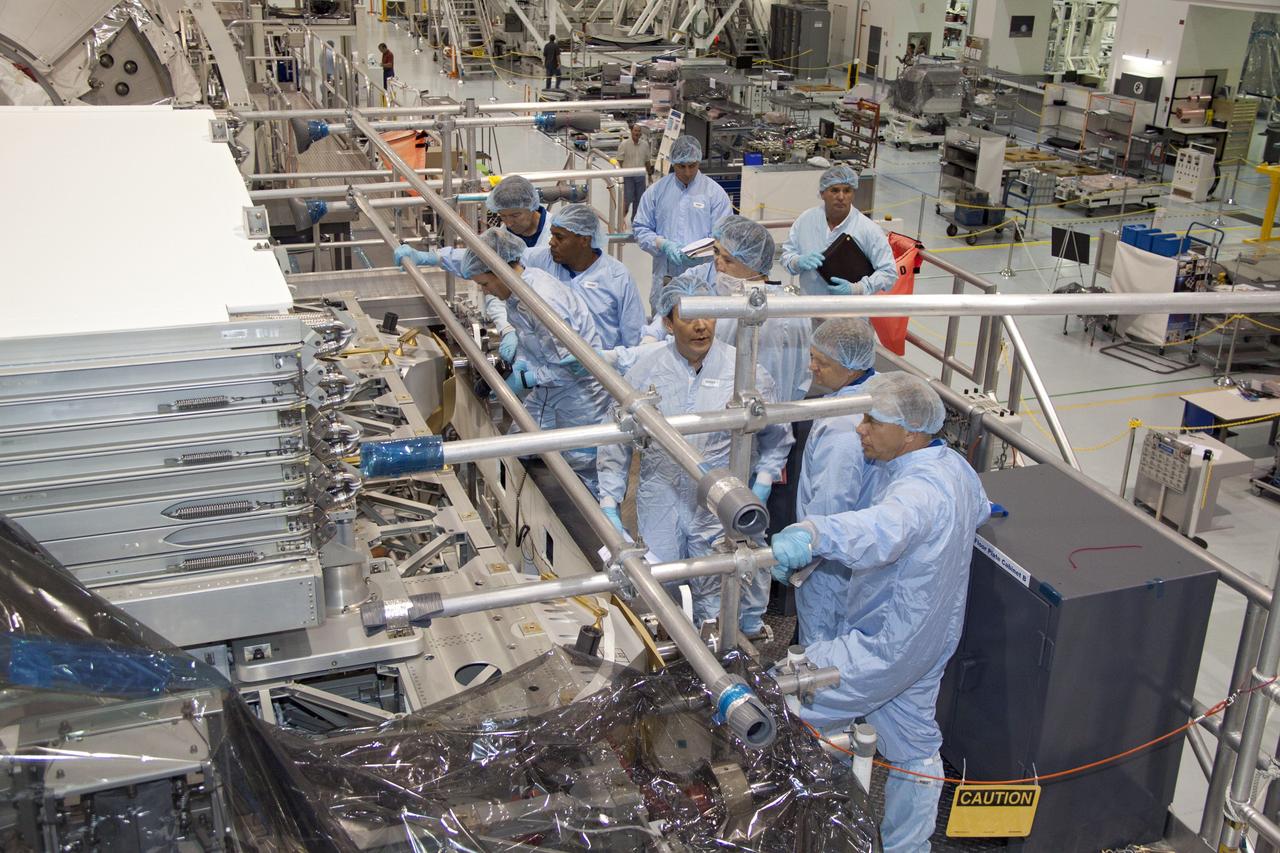
CAPE CANAVERAL, Fla. -- In the Space Station Processing Facility at NASA's Kennedy Space Center in Florida, the STS-133 crew members and processing technicians inspect the Express Logistics Carrier-3, or ELC-3. The astronauts are at Kennedy to participate in the Payload Crew Equipment Interface Test, or CEIT, which gives the crew an opportunity for hands-on training with tools they'll be using in space and familiarization of the payload they will be delivering to the International Space Station. Launch of space shuttle Discovery is targeted for Nov. 1 at 4:40 p.m. EDT. For more information visit, www.nasa.gov/shuttle. Photo credit: NASA/Jack Pfaller
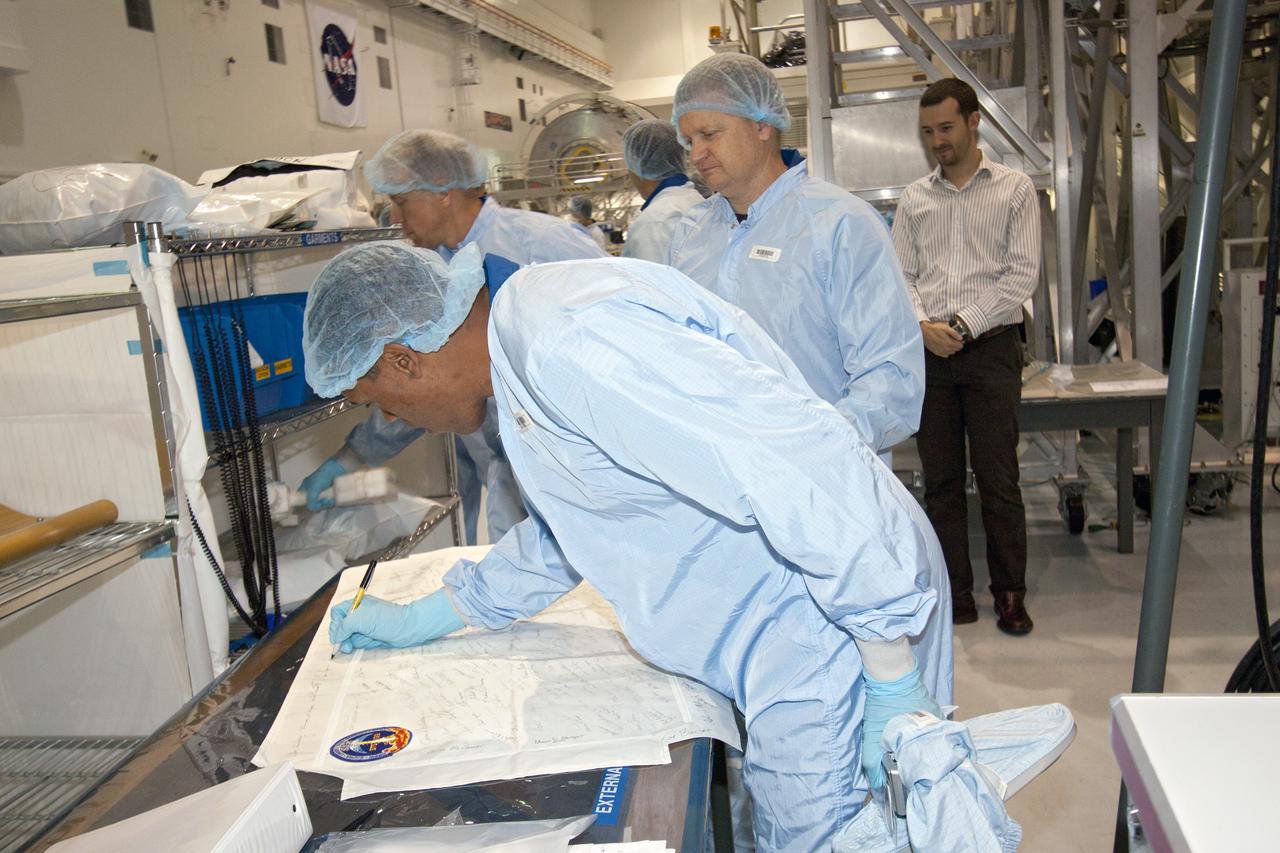
CAPE CANAVERAL, Fla. -- In the Space Station Processing Facility at NASA's Kennedy Space Center in Florida, STS-133 Mission Specialist Alvin Drew signs his name on a flag that will be flown on the mission, while Pilot Eric Boe looks on. The astronauts are at Kennedy to participate in the Payload Crew Equipment Interface Test, or CEIT, which gives the crew an opportunity for hands-on training with tools they'll be using in space and familiarization of the payload they will be delivering to the International Space Station. Launch of space shuttle Discovery is targeted for Nov. 1 at 4:40 p.m. EDT. For more information visit, www.nasa.gov/shuttle. Photo credit: NASA/Jack Pfaller
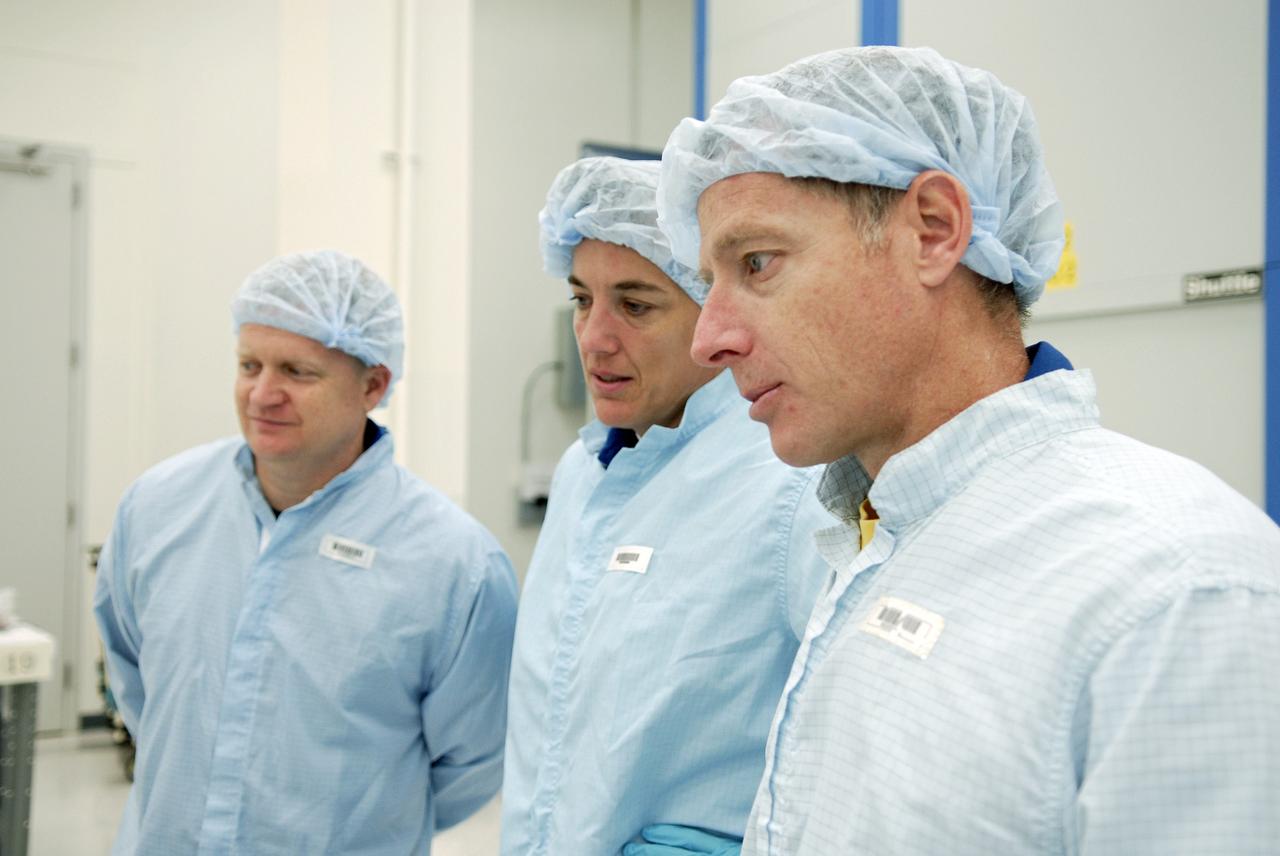
CAPE CANAVERAL, Fla. – In the Space Station Processing Facility at NASA's Kennedy Space Center, STS-126 Pilot Eric Boe, Mission Specialist Heidemarie M. Stefanyshyn-Piper and Commander Christopher Ferguson look over equipment that will fly on the mission. Shuttle crews frequently visit Kennedy to get hands-on experience, called a crew equipment interface test, with hardware and equipment for their missions. On STS-126, Endeavour will deliver a multi-purpose logistics module to the International Space Station. Launch is targeted for Nov. 10. Photo credit: NASA/Kim Shiflett
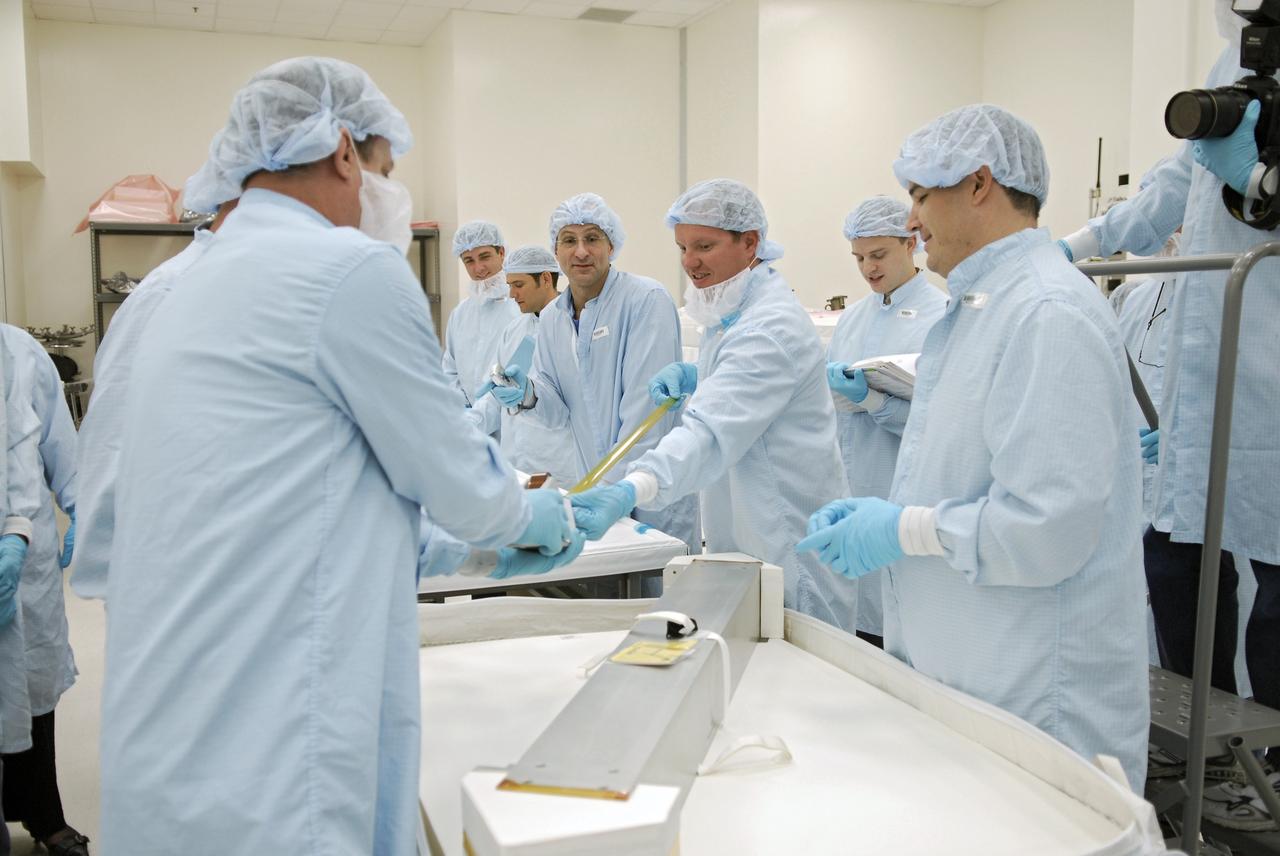
CAPE CANAVERAL, Fla. – In the Space Station Processing Facility at NASA's Kennedy Space Center, STS-126 crew members handle equipment that will fly on the mission. At center is Mission Specialist Donald Pettit; on the right is Pilot Eric Boe. Shuttle crews frequently visit Kennedy to get hands-on experience, called a crew equipment interface test, with hardware and equipment for their missions. On STS-126, Endeavour will deliver a multi-purpose logistics module to the International Space Station. Launch is targeted for Nov. 10. Photo credit: NASA/Kim Shiflett
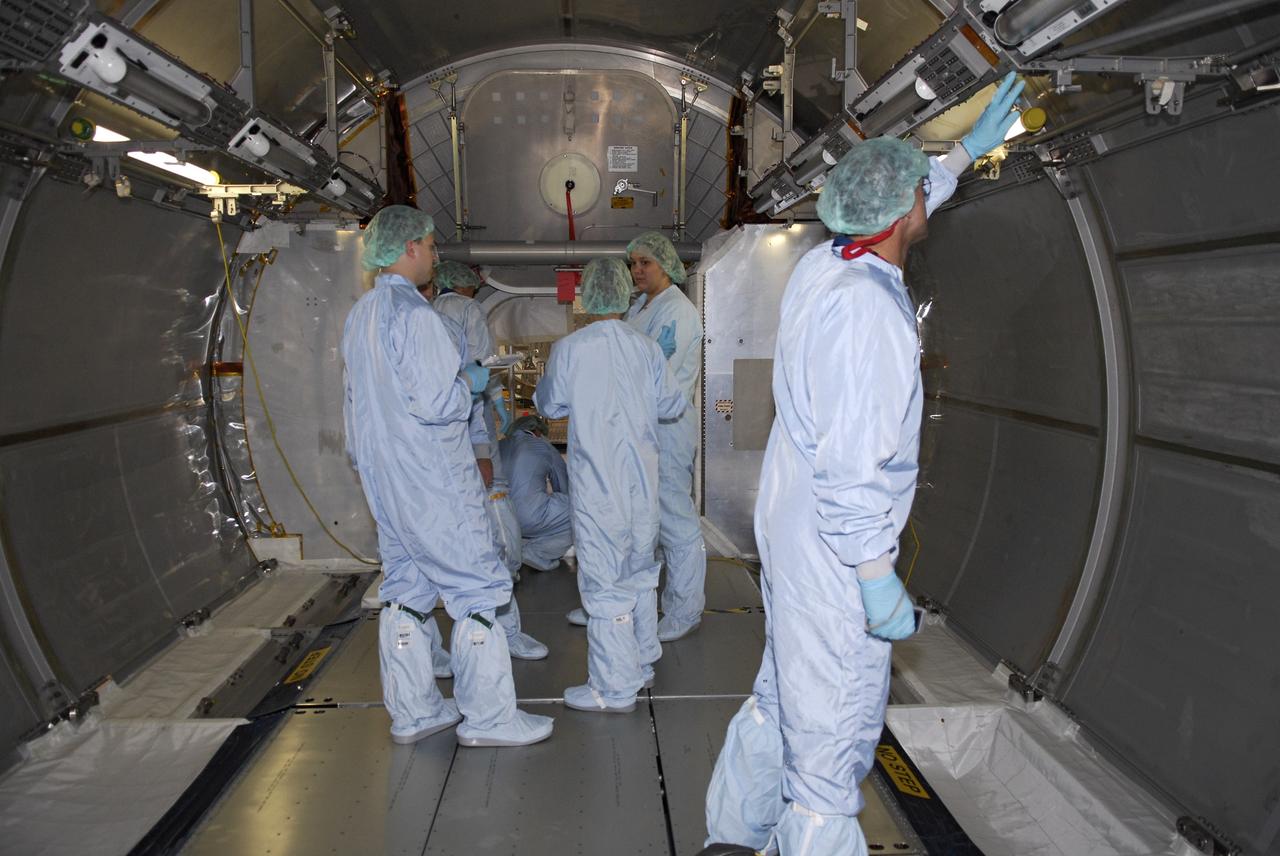
CAPE CANAVERAL, Fla. – In the Space Station Processing Facility at NASA's Kennedy Space Center, STS-126 crew members check out the interior of the multi-purpose logistics module that will fly on the mission. Shuttle crews frequently visit Kennedy to get hands-on experience, called a crew equipment interface test, with hardware and equipment for their missions. On STS-126, Endeavour will deliver a multi-purpose logistics module to the International Space Station. Launch is targeted for Nov. 10. Photo credit: NASA/Kim Shiflett
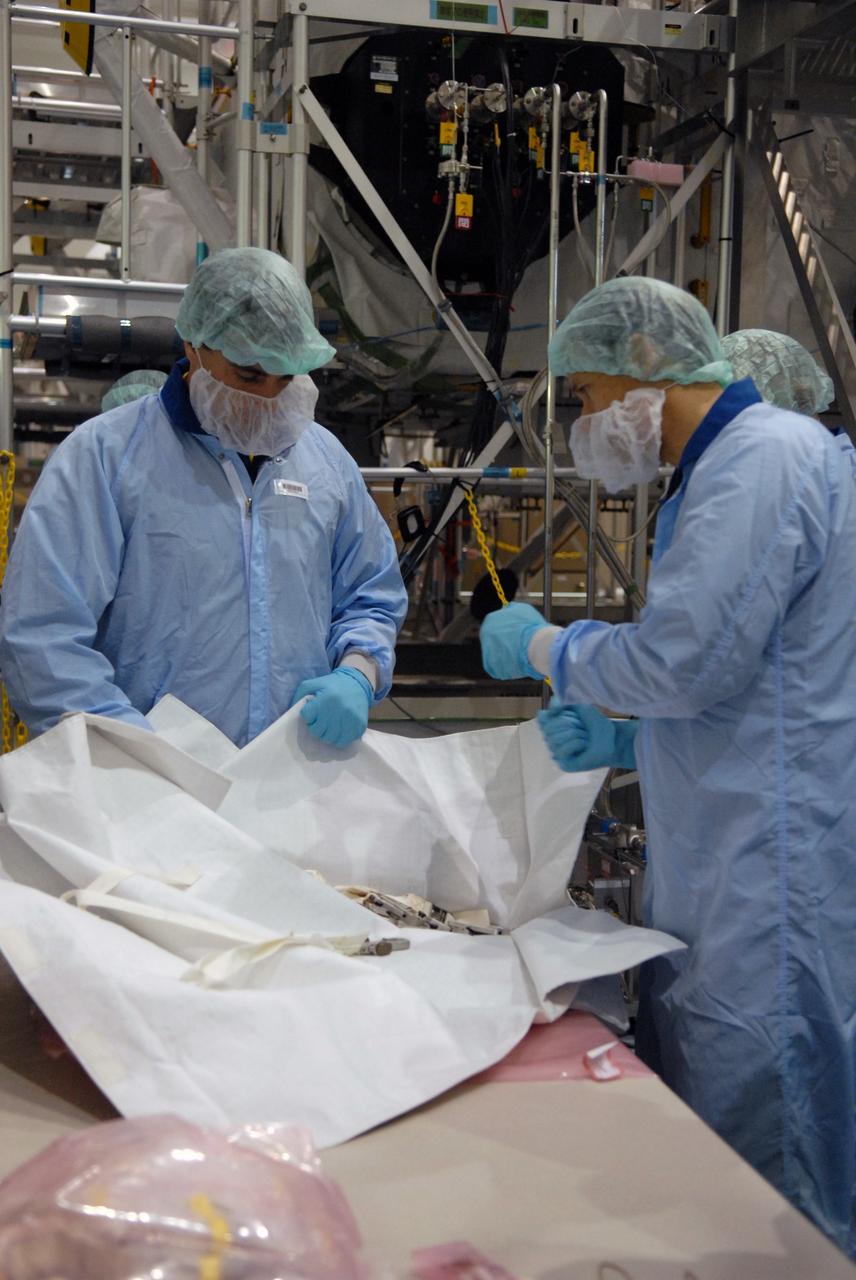
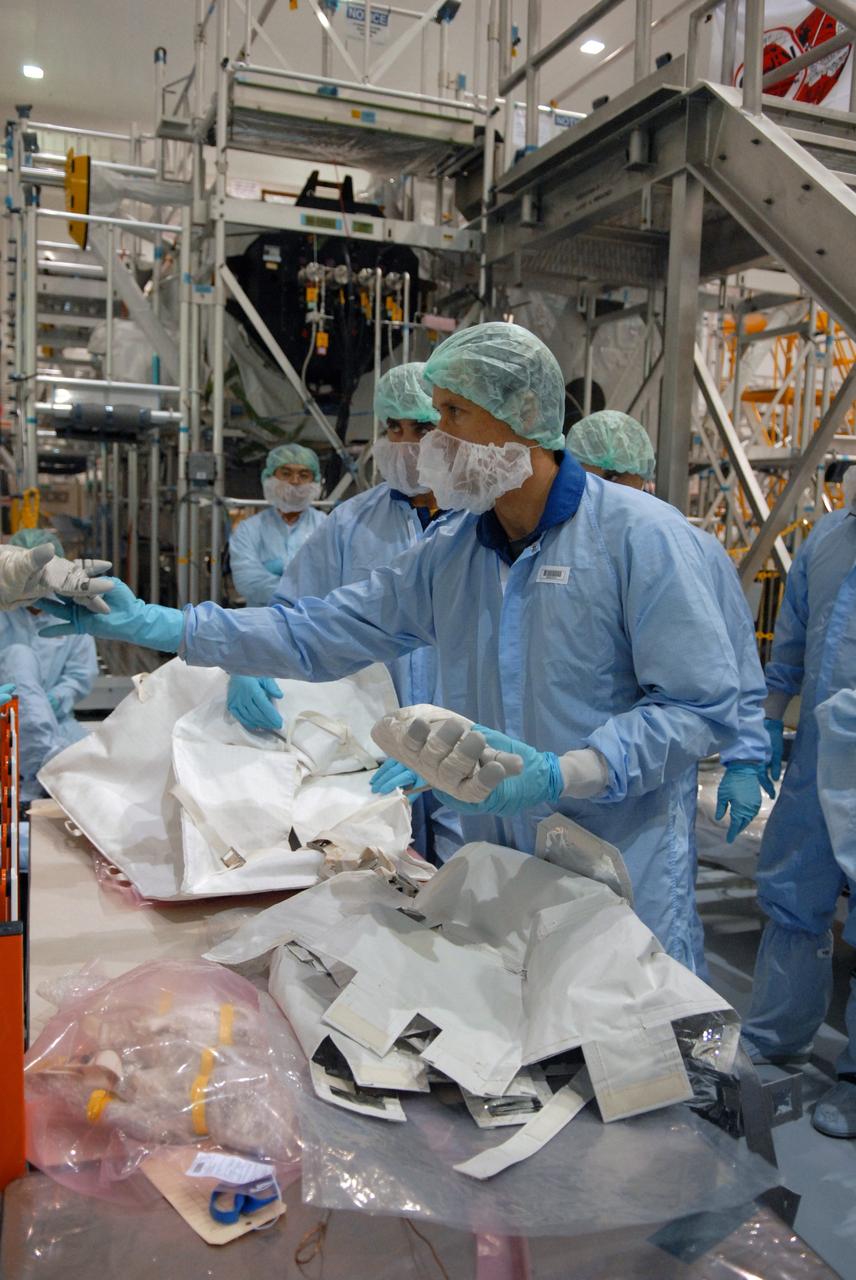
CAPE CANAVERAL, Fla. – In the Space Station Processing Facility at NASA's Kennedy Space Center in Florida, members of the STS-127 Mission Specialists Chris Cassidy and Tom Marshburn review options of how they will stow the excess thermal blankets on the Japanese Experiment Module's Experiment Logistics Module-Exposed Section, or ELM-ES, after they remove them on-orbit. The crew members are at Kennedy for Crew Equipment Interface Test activities, or CEIT, which provides experience handling tools, equipment and hardware for the mission. The payload will be launched to the International Space Station aboard space shuttle Endeavour on the STS-127 mission, targeted for launch on May 15. Photo credit: NASA/Dimitrios Gerondidakis
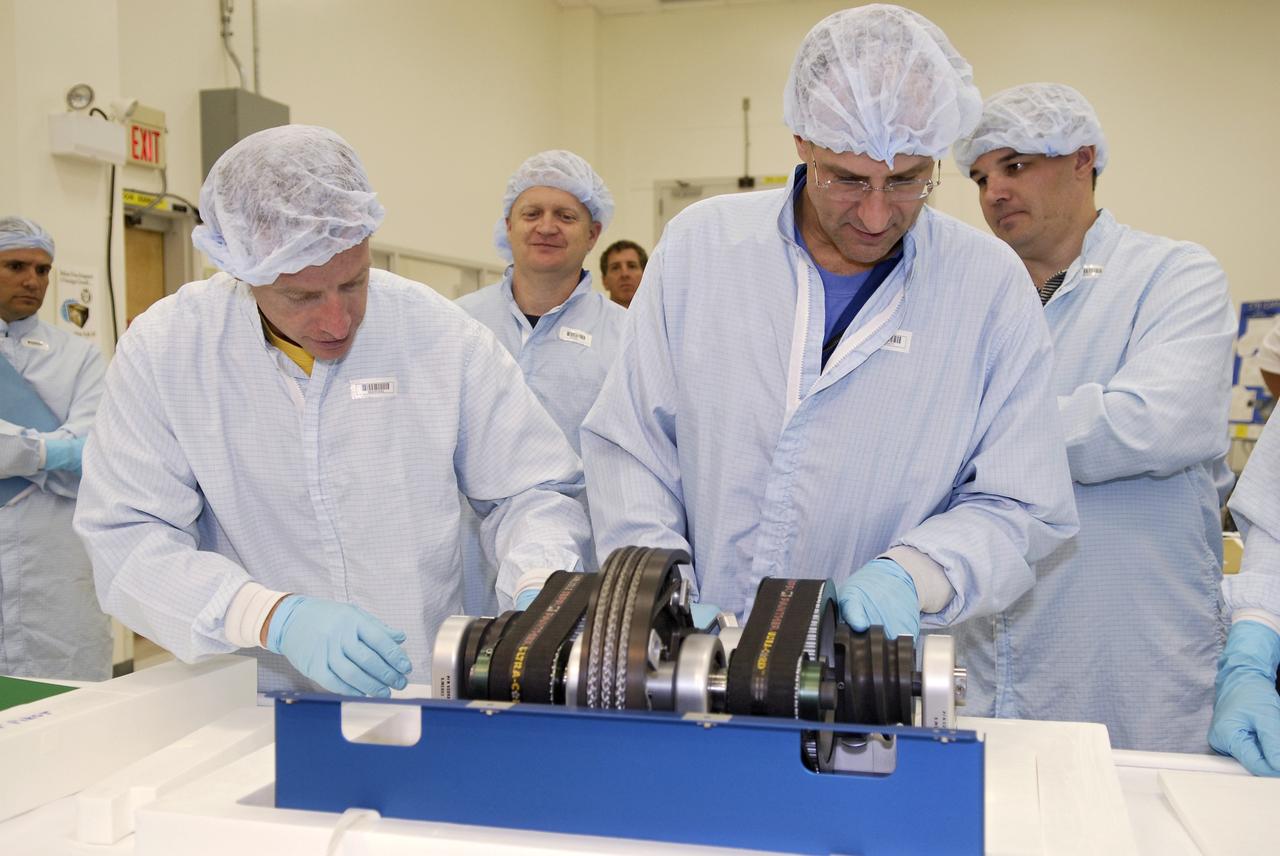
CAPE CANAVERAL, Fla. – In the Space Station Processing Facility at NASA's Kennedy Space Center, STS-126 crew members check data on equipment that will fly on the mission. From left are Commander Christopher Ferguson, Pilot Eric Boe, and Mission Specialist Donald Pettit. Shuttle crews frequently visit Kennedy to get hands-on experience, called a crew equipment interface test, with hardware and equipment for their missions. On STS-126, Endeavour will deliver a multi-purpose logistics module to the International Space Station. Launch is targeted for Nov. 10. Photo credit: NASA/Kim Shiflett
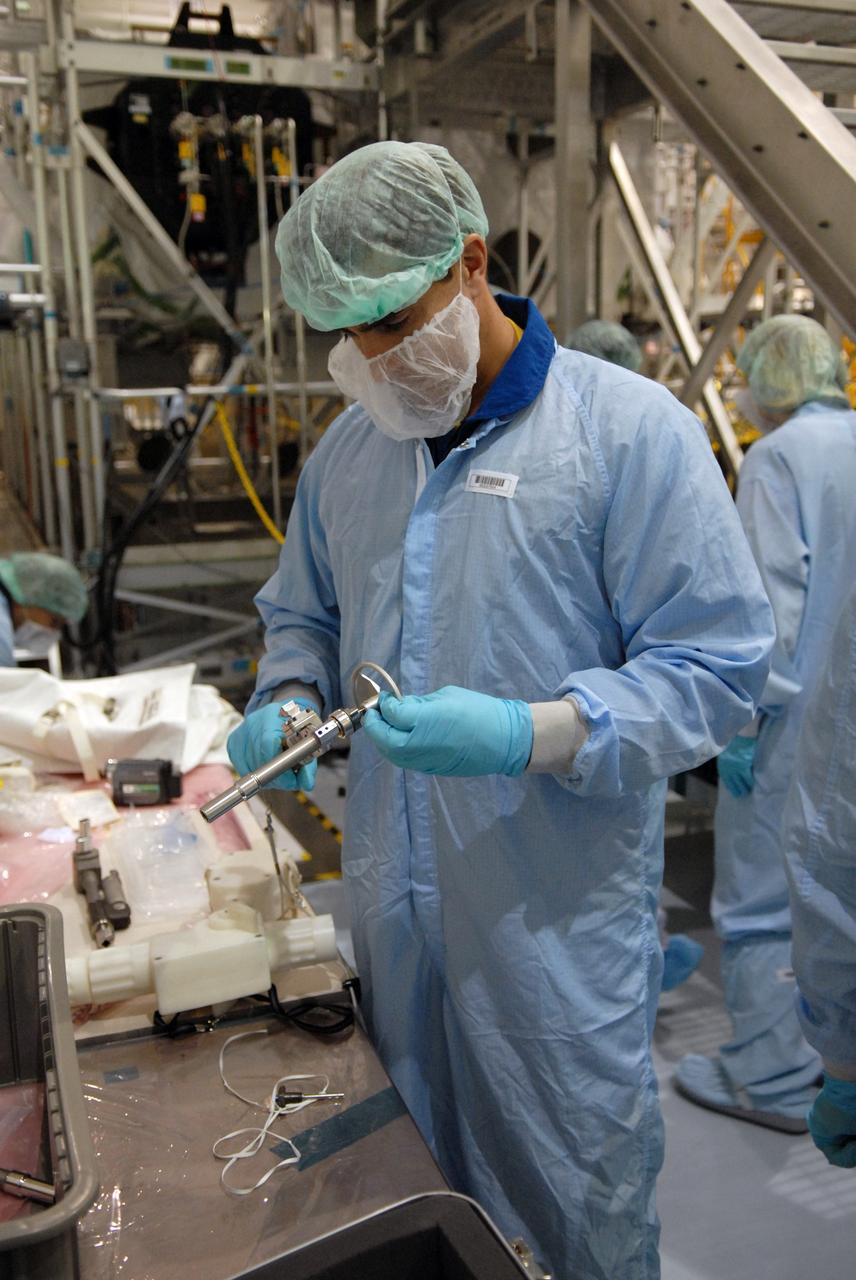
CAPE CANAVERAL, Fla. – In the Space Station Processing Facility at NASA's Kennedy Space Center in Florida, members of the STS-127 Mission Specialist Chris Cassidy prepares the tools he will use on-orbit to set up the Japanese Experiment Module's Experiment Logistics Module-Exposed Section, or ELM-ES, part of the payload on the mission. The crew members are at Kennedy for Crew Equipment Interface Test activities, or CEIT, which provides experience handling tools, equipment and hardware for the mission. The payload will be launched to the International Space Station aboard space shuttle Endeavour on the STS-127 mission, targeted for launch on May 15. Photo credit: NASA/Dimitrios Gerondidakis
CAPE CANAVERAL, Fla. – In the Space Station Processing Facility at NASA's Kennedy Space Center in Florida, members of the STS-127 crew check out equipment related to the Japanese Experiment Module's Experiment Logistics Module-Exposed Section, or ELM-ES, part of the payload on the mission. The crew is Commander Mark Polansky, Pilot Doug Hurley and Mission Specialists Christopher Cassidy, Tom Marshburn, Dave Wolf, Julie Payette and Tim Kopra. They are at Kennedy for Crew Equipment Interface Test activities, or CEIT, which provides experience handling tools, equipment and hardware for the mission. The payload will be launched to the International Space Station aboard space shuttle Endeavour on the STS-127 mission, targeted for launch on May 15. Photo credit: NASA/Dimitrios Gerondidakis
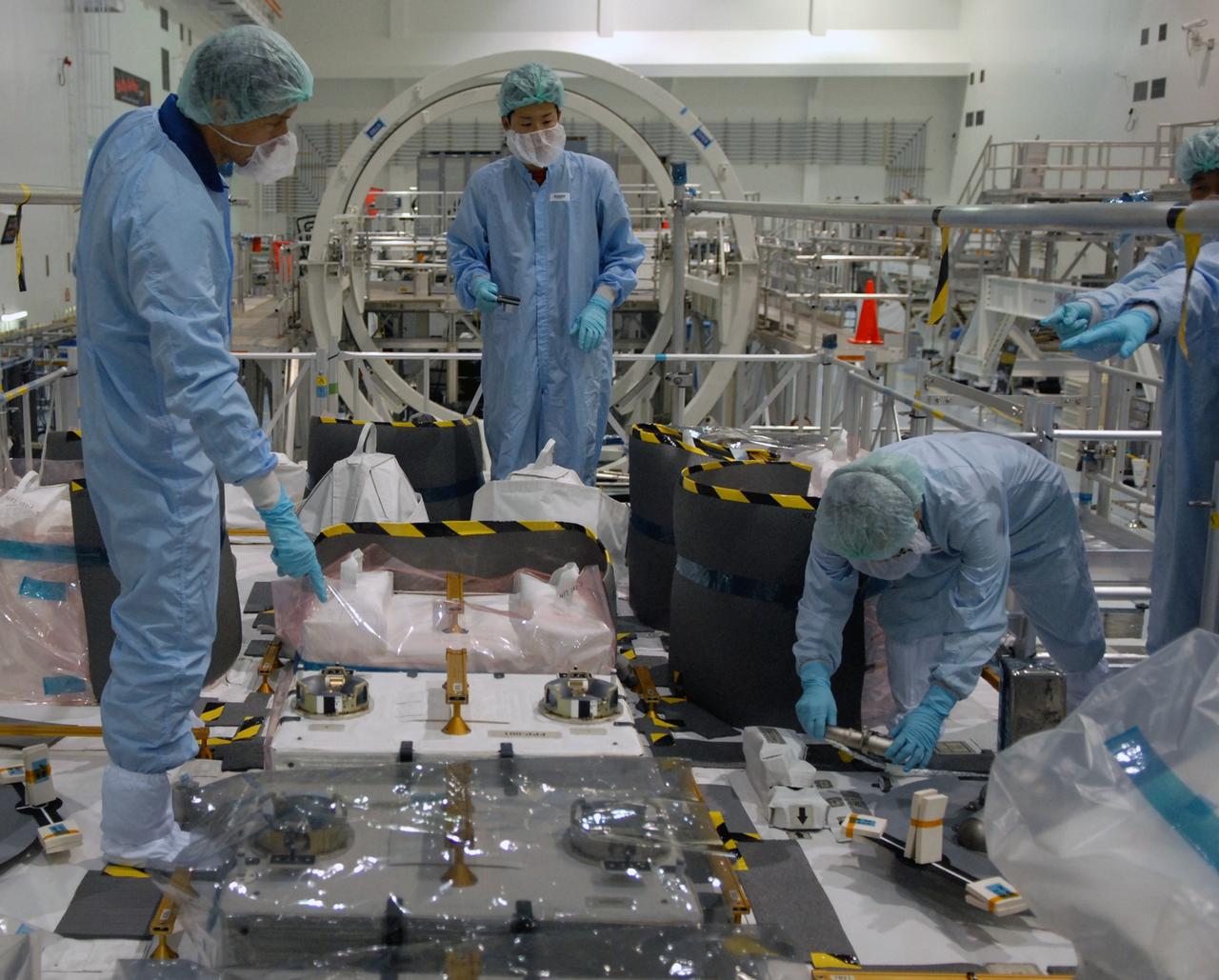
CAPE CANAVERAL, Fla. – In the Space Station Processing Facility at NASA's Kennedy Space Center in Florida, members of the STS-127 crew check out equipment on the Japanese Experiment Module's Experiment Logistics Module-Exposed Section, or ELM-ES, part of the payload on the mission. The crew is Commander Mark Polansky, Pilot Doug Hurley and Mission Specialists Christopher Cassidy, Tom Marshburn, Dave Wolf, Julie Payette and Tim Kopra. They are at Kennedy for Crew Equipment Interface Test activities, or CEIT, which provides experience handling tools, equipment and hardware for the mission. The payload will be launched to the International Space Station aboard space shuttle Endeavour on the STS-127 mission, targeted for launch on May 15. Photo credit: NASA/Dimitrios Gerondidakis
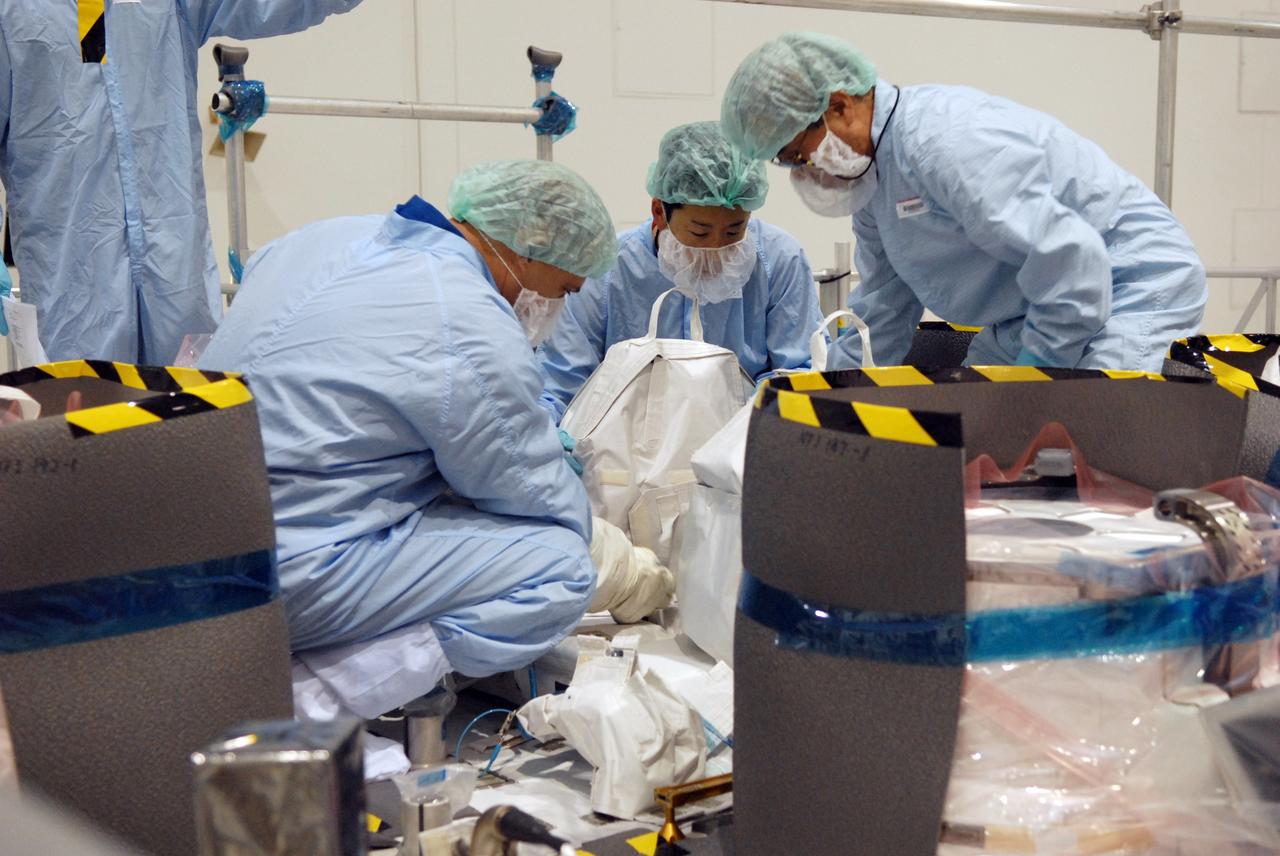
CAPE CANAVERAL, Fla. – In the Space Station Processing Facility at NASA's Kennedy Space Center in Florida, members of the STS-127 crew check out equipment related to the Japanese Experiment Module's Experiment Logistics Module-Exposed Section, or ELM-ES, part of the payload on the mission. The crew is Commander Mark Polansky, Pilot Doug Hurley and Mission Specialists Christopher Cassidy, Tom Marshburn, Dave Wolf, Julie Payette and Tim Kopra. They are at Kennedy for Crew Equipment Interface Test activities, or CEIT, which provides experience handling tools, equipment and hardware for the mission. The payload will be launched to the International Space Station aboard space shuttle Endeavour on the STS-127 mission, targeted for launch on May 15. Photo credit: NASA/Dimitrios Gerondidakis
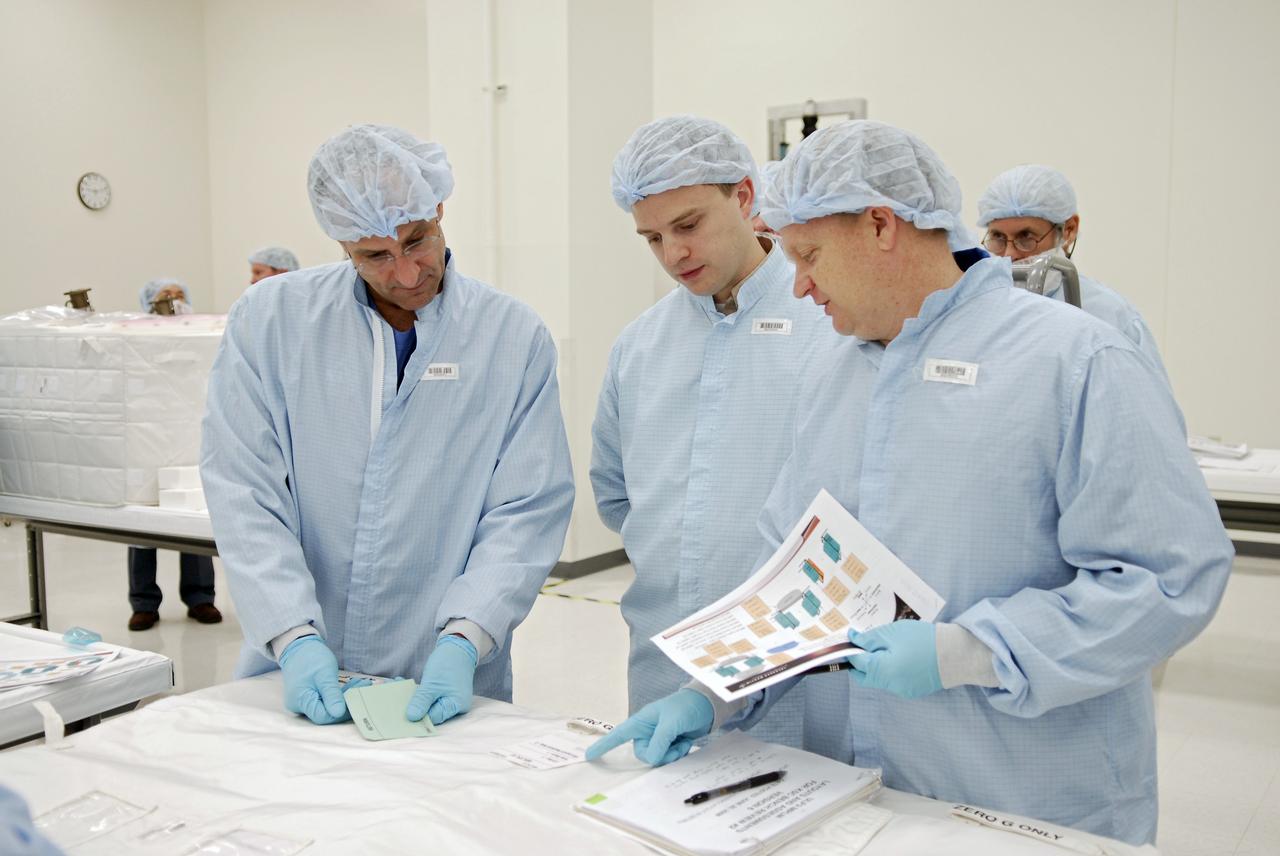
CAPE CANAVERAL, Fla. – In the Space Station Processing Facility at NASA's Kennedy Space Center, STS-126 Mission Specialist Donald Pettit (left) and Pilot Eric Boe (right) check data on equipment that will fly on the mission. Shuttle crews frequently visit Kennedy to get hands-on experience, called a crew equipment interface test, with hardware and equipment for their missions. On STS-126, Endeavour will deliver a multi-purpose logistics module to the International Space Station. Launch is targeted for Nov. 10. Photo credit: NASA/Kim Shiflett
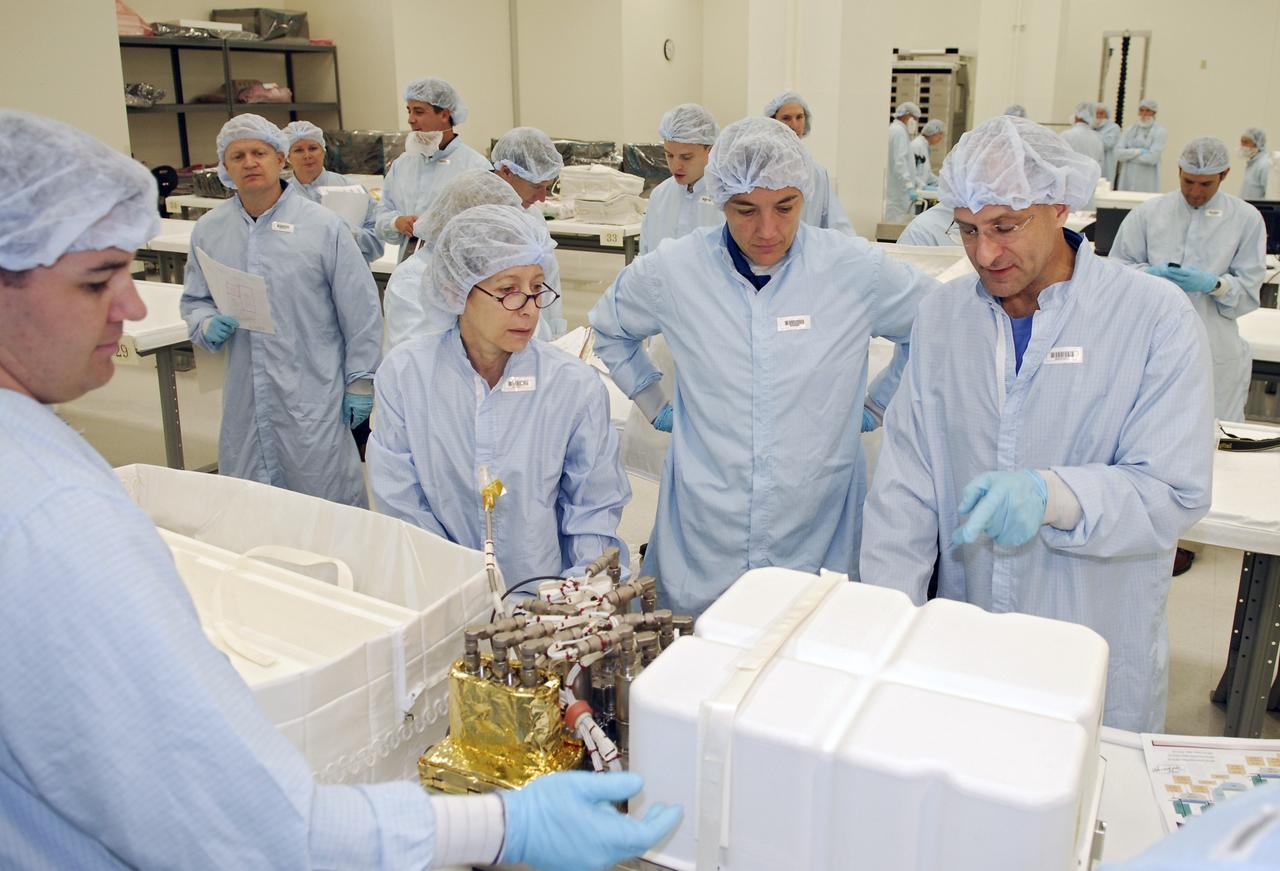
CAPE CANAVERAL, Fla. – In the Space Station Processing Facility at NASA's Kennedy Space Center, STS-126 crew members check data on equipment that will fly on the mission. From right are Mission Specialists Donald Pettit and Heidemarie M. Stefanyshyn-Piper; astronaut Marsha Ivins, who is currently assigned to the Astronaut Office; and Pilot Eric Boe. Shuttle crews frequently visit Kennedy to get hands-on experience, called a crew equipment interface test, with hardware and equipment for their missions. On STS-126, Endeavour will deliver a multi-purpose logistics module to the International Space Station. Launch is targeted for Nov. 10. Photo credit: NASA/Kim Shiflett
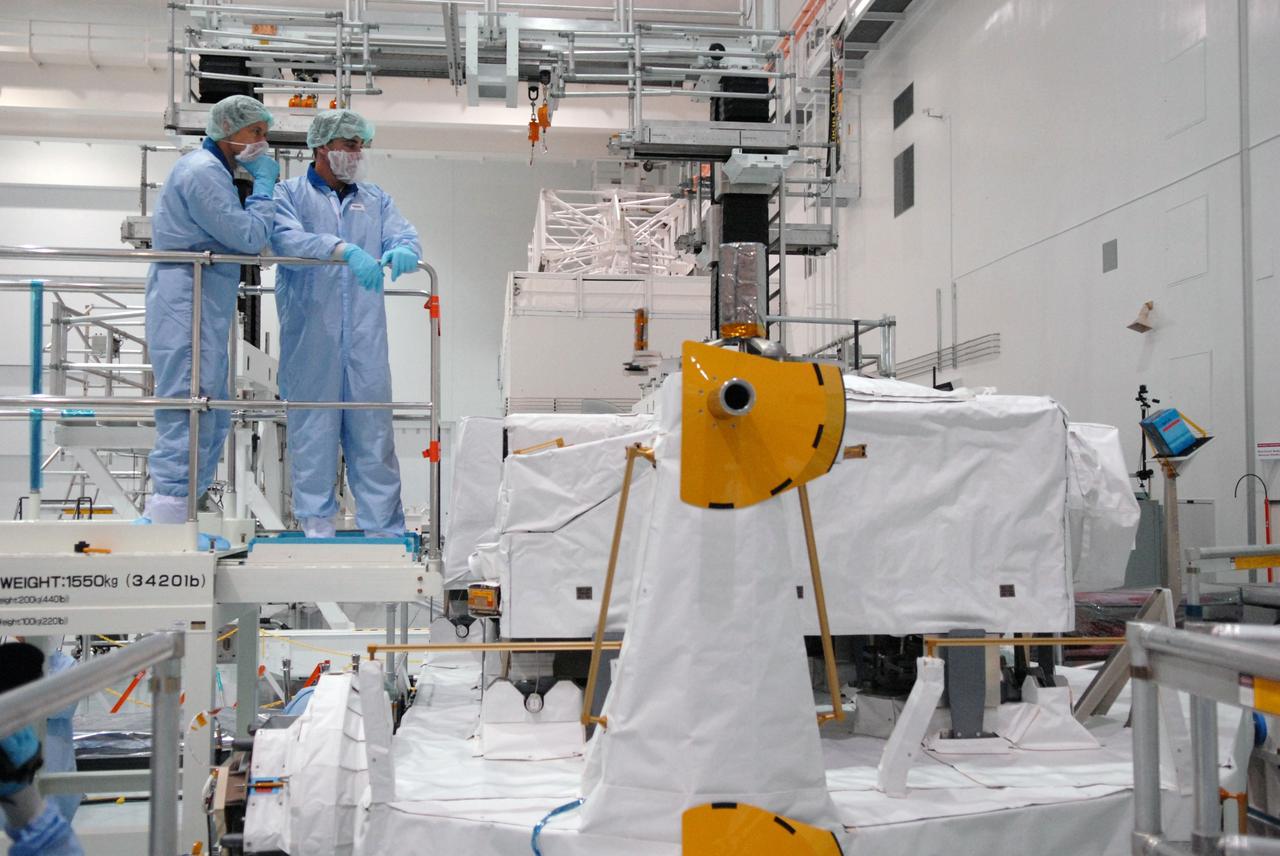
CAPE CANAVERAL, Fla. – In the Space Station Processing Facility at NASA's Kennedy Space Center in Florida, members of the STS-127 crew look at some of the elements on the Japanese Experiment Module's Experiment Logistics Module-Exposed Section, or ELM-ES. The crew is Commander Mark Polansky, Pilot Doug Hurley and Mission Specialists Christopher Cassidy, Tom Marshburn, Dave Wolf, Julie Payette and Tim Kopra. They are at Kennedy for Crew Equipment Interface Test activities, or CEIT, which provides experience handling tools, equipment and hardware for the mission. The payload will be launched to the International Space Station aboard space shuttle Endeavour on the STS-127 mission, targeted for launch on May 15. Photo credit: NASA/Dimitrios Gerondidakis
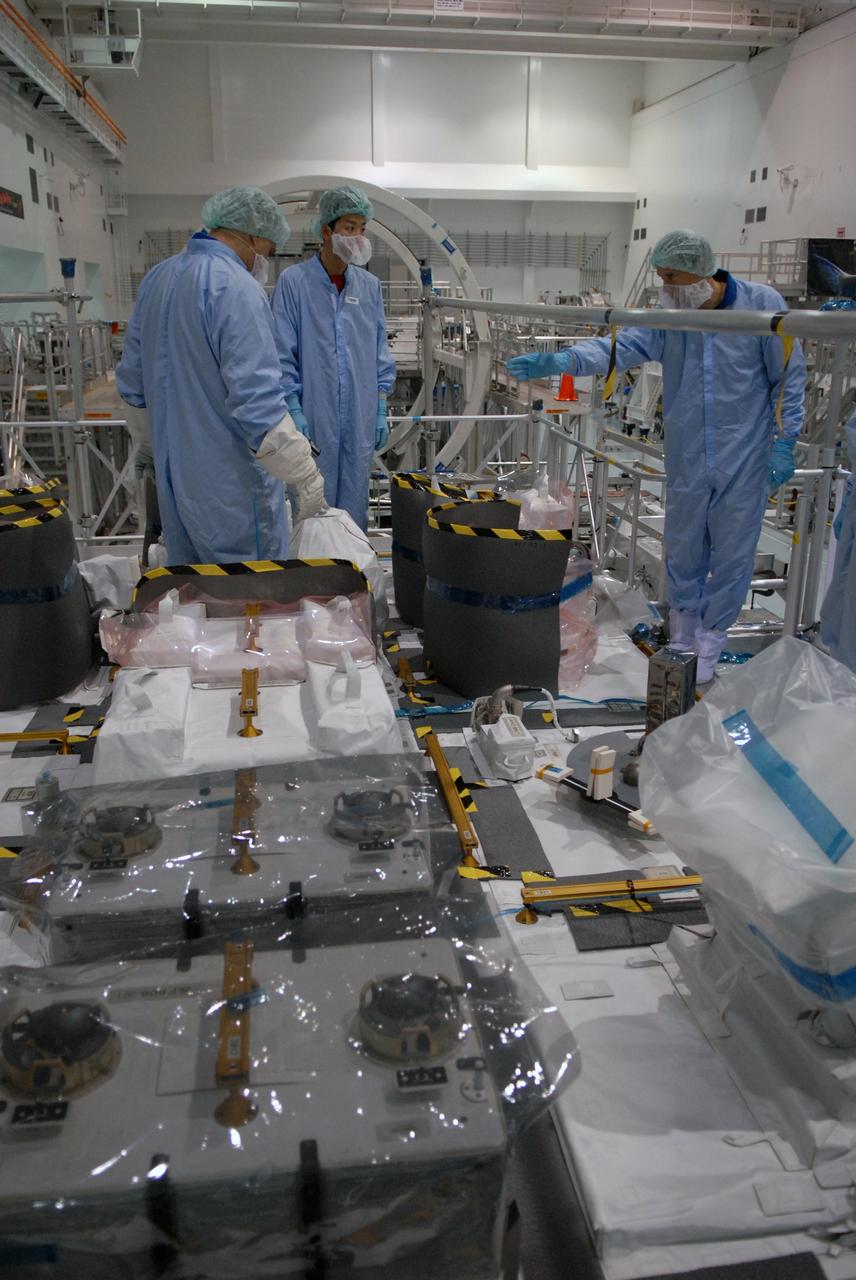
CAPE CANAVERAL, Fla. – In the Space Station Processing Facility at NASA's Kennedy Space Center in Florida, members of the STS-127 crew look over equipment on the Japanese Experiment Module's Experiment Logistics Module-Exposed Section, or ELM-ES, part of the payload on the mission. The crew is Commander Mark Polansky, Pilot Doug Hurley and Mission Specialists Christopher Cassidy, Tom Marshburn, Dave Wolf, Julie Payette and Tim Kopra. They are at Kennedy for Crew Equipment Interface Test activities, or CEIT, which provides experience handling tools, equipment and hardware for the mission. The payload will be launched to the International Space Station aboard space shuttle Endeavour on the STS-127 mission, targeted for launch on May 15. Photo credit: NASA/Dimitrios Gerondidakis
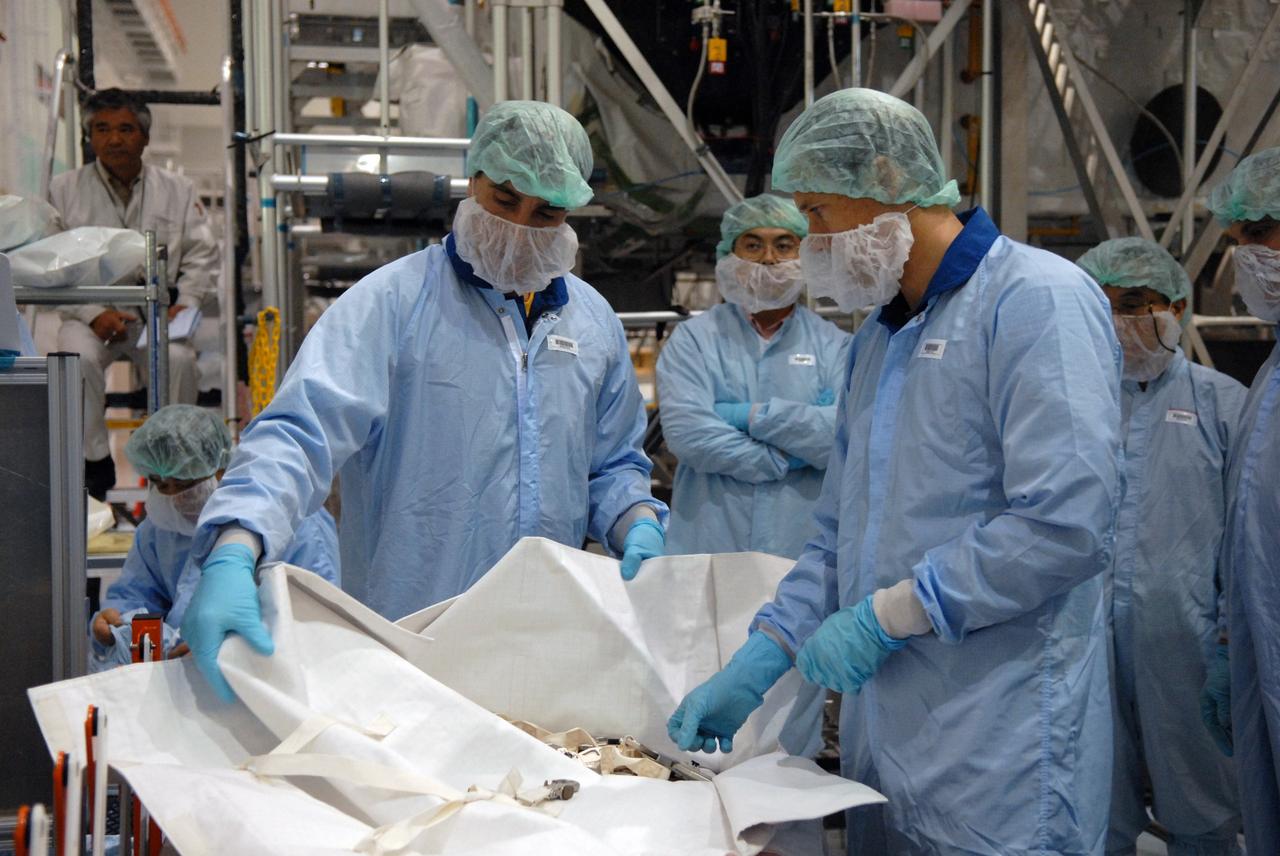
CAPE CANAVERAL, Fla. – In the Space Station Processing Facility at NASA's Kennedy Space Center in Florida, members of the STS-127 Mission Specialists Chris Cassidy and Tom Marshburn review options of how they will stow the excess thermal blankets on the Japanese Experiment Module's Experiment Logistics Module-Exposed Section, or ELM-ES, after they remove them on-orbit. The crew members are at Kennedy for Crew Equipment Interface Test activities, or CEIT, which provides experience handling tools, equipment and hardware for the mission. The payload will be launched to the International Space Station aboard space shuttle Endeavour on the STS-127 mission, targeted for launch on May 15. Photo credit: NASA/Dimitrios Gerondidakis
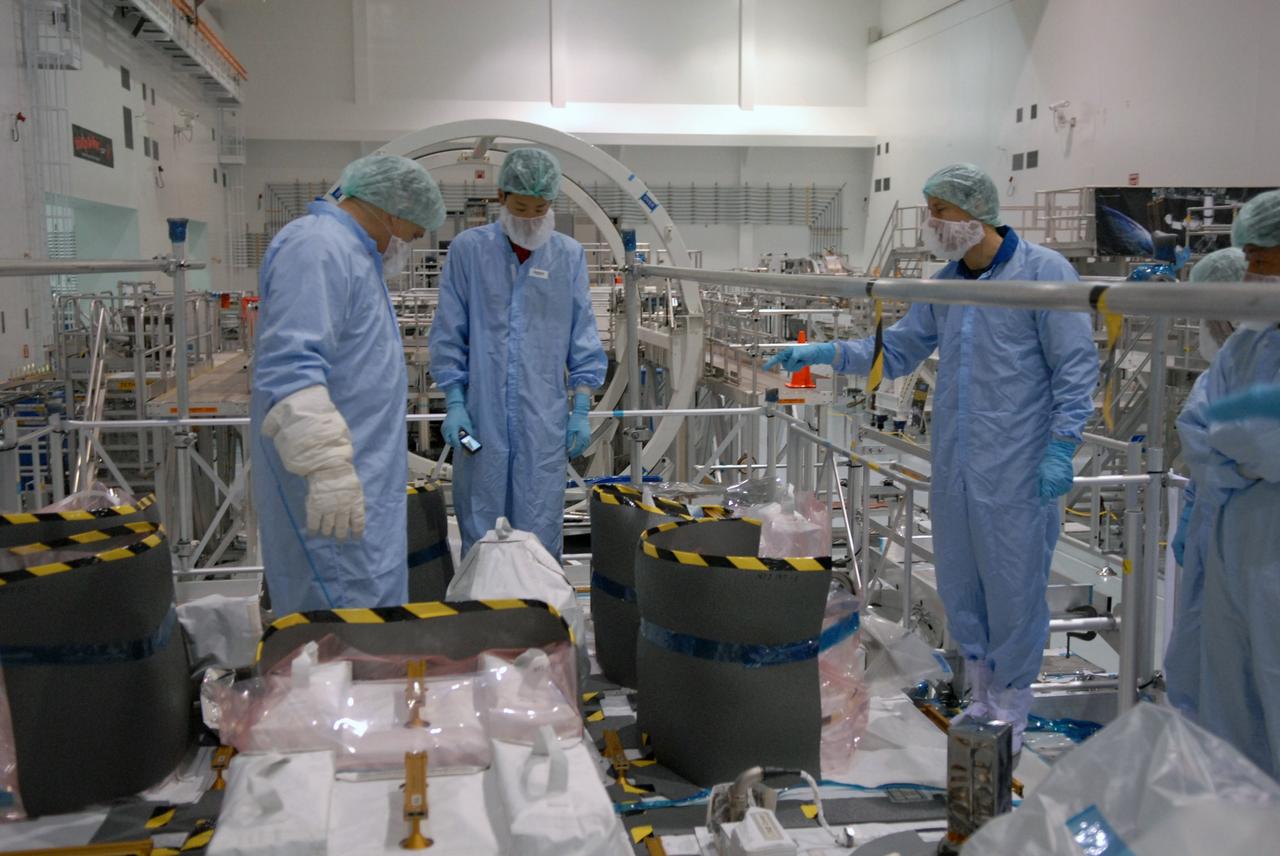
CAPE CANAVERAL, Fla. – In the Space Station Processing Facility at NASA's Kennedy Space Center in Florida, members of the STS-127 crew look over equipment on the Japanese Experiment Module's Experiment Logistics Module-Exposed Section, or ELM-ES, part of the payload on the mission. The crew is Commander Mark Polansky, Pilot Doug Hurley and Mission Specialists Christopher Cassidy, Tom Marshburn, Dave Wolf, Julie Payette and Tim Kopra. They are at Kennedy for Crew Equipment Interface Test activities, or CEIT, which provides experience handling tools, equipment and hardware for the mission. The payload will be launched to the International Space Station aboard space shuttle Endeavour on the STS-127 mission, targeted for launch on May 15. Photo credit: NASA/Dimitrios Gerondidakis
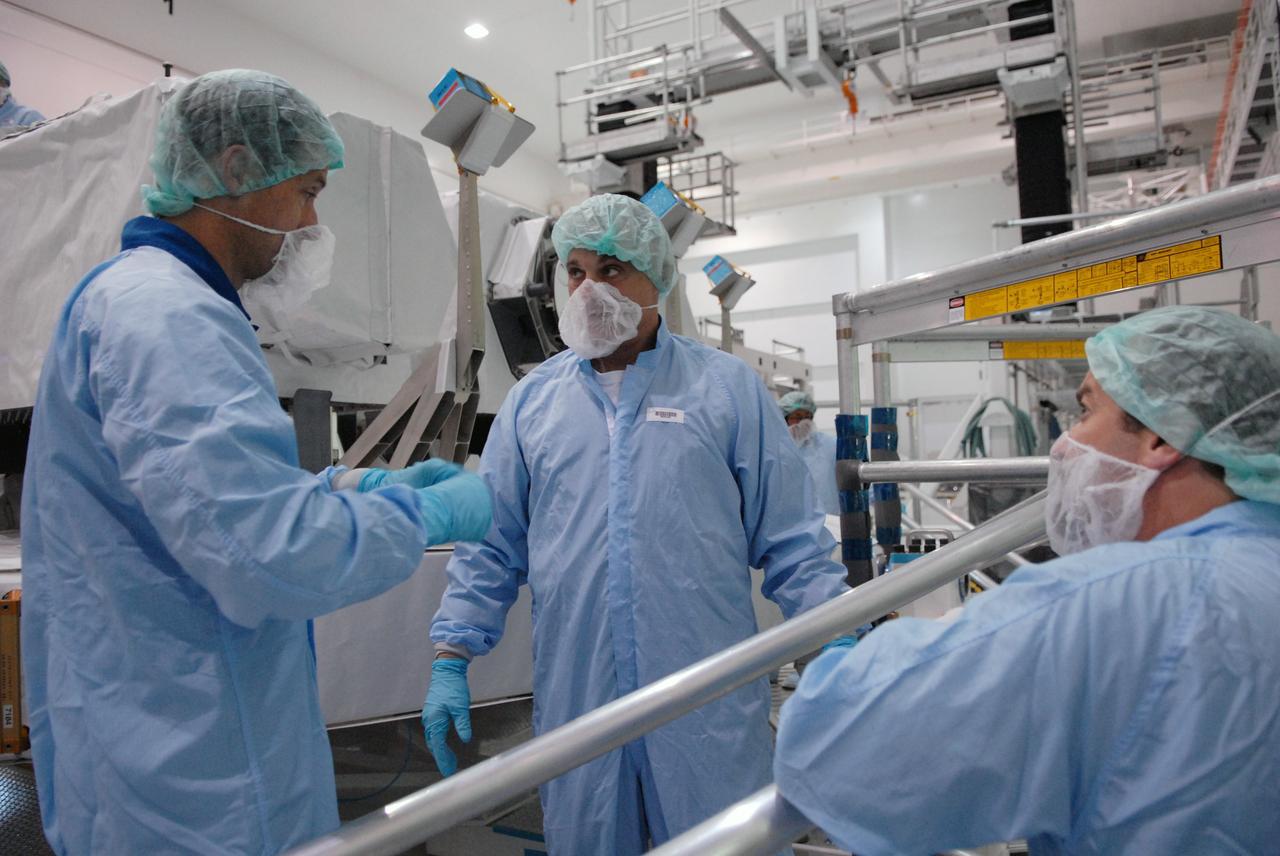
CAPE CANAVERAL, Fla. – In the Space Station Processing Facility at NASA's Kennedy Space Center in Florida, Mission Specialists Tom Marshburn and Dave Wolf review their on-orbit task to install and make the JEM Exposed Facility operational. Other crew members are Commander Mark Polansky, Pilot Doug Hurley and Mission Specialists Christopher Cassidy, Julie Payette and Tim Kopra. They are at Kennedy for Crew Equipment Interface Test activities, or CEIT, which provides experience handling tools, equipment and hardware for the mission. The payload will be launched to the International Space Station aboard space shuttle Endeavour on the STS-127 mission, targeted for launch on May 15. Photo credit: NASA/Dimitrios Gerondidakis
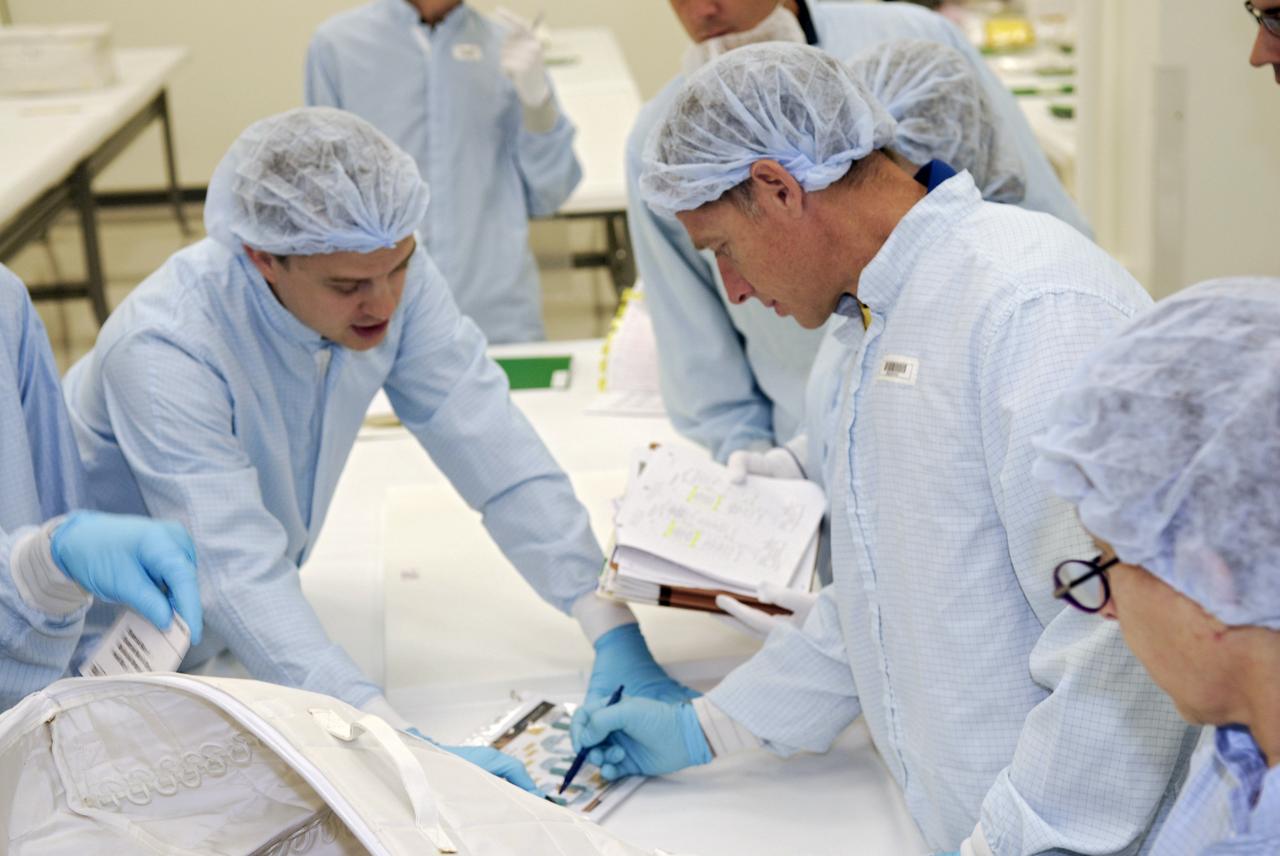
CAPE CANAVERAL, Fla. – In the Space Station Processing Facility at NASA's Kennedy Space Center, STS-126 Commander Christopher Ferguson checks data on equipment that will fly on the mission. Shuttle crews frequently visit Kennedy to get hands-on experience, called a crew equipment interface test, with hardware and equipment for their missions. On STS-126, Endeavour will deliver a multi-purpose logistics module to the International Space Station. Launch is targeted for Nov. 10. Photo credit: NASA/Kim Shiflett
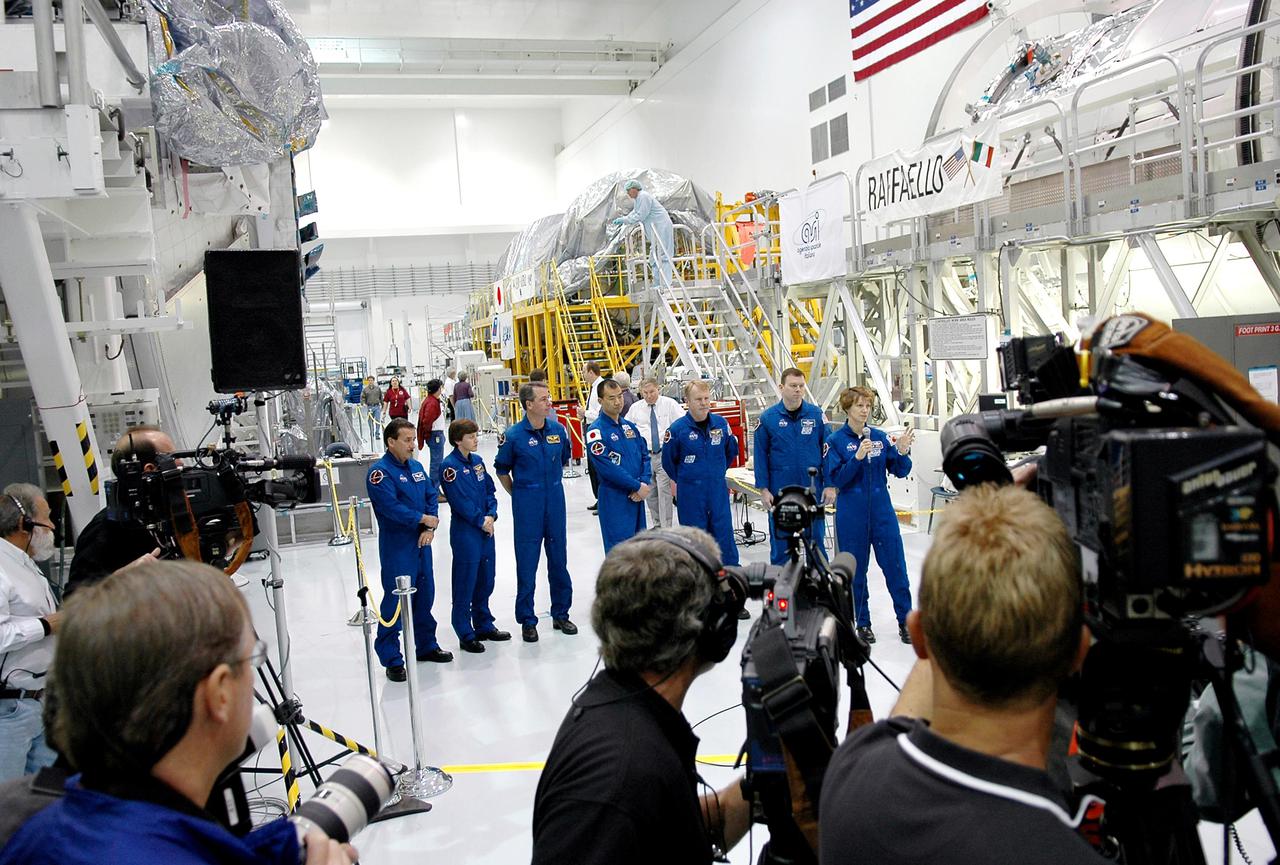
KENNEDY SPACE CENTER, FLA. - Photographers and journalists gather in the Space Station Processing Facility (SSPF) to interview and photograph the STS-114 crew. Crew members from left are ) Mission Specialists Charles Camarda, Wendy Lawrence, Stephen Robinson, Soichi Noguchi (with the Japanese Space Agency) and Andrew Thomas; Pilot James Kelly; and Commander Eileen Collins. The crew is looking over some of the hardware in the SSPF. The Multi-Purpose Logistics Module Raffaello that will fly on mission STS-114 is at right. The crew is at KSC for Crew Equipment Interface Test (CEIT) activities. During CEIT, the crew has an opportunity to get a hands-on look at the payloads with which they’ll be working on-orbit. The Return to Flight mission STS-114 will also carry a replacement Control Moment Gyroscope. Launch of STS-114 has a launch window of May 12 to June 3.
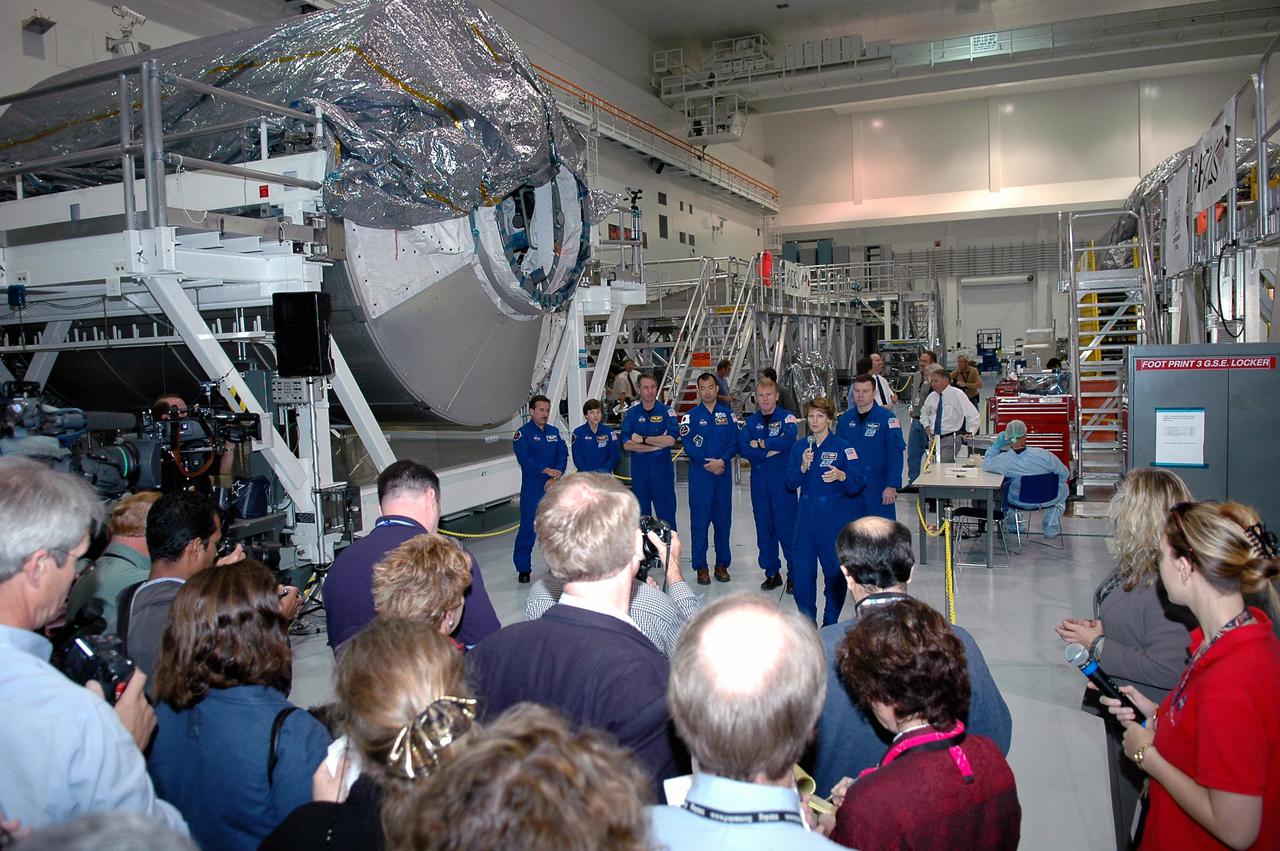
KENNEDY SPACE CENTER, FLA. - Photographers and journalists gather in the Space Station Processing Facility (SSPF) to interview and photograph the STS-114 crew. Crew members from left are ) Mission Specialists Charles Camarda, Wendy Lawrence, Stephen Robinson, Soichi Noguchi (with the Japanese Space Agency) and Andrew Thomas; Commander Eileen Collins; and Pilot James Kelly. The crew is looking over some of the hardware in the SSPF. The crew is at KSC for Crew Equipment Interface Test (CEIT) activities. During CEIT, the crew has an opportunity to get a hands-on look at the payloads with which they’ll be working on-orbit. The Return to Flight mission STS-114 will carry the Multi-Purpose Logistics Module Raffaello, filled with supplies for the International Space Station, and a replacement Control Moment Gyroscope. Launch of STS-114 has a launch window of May 12 to June 3.
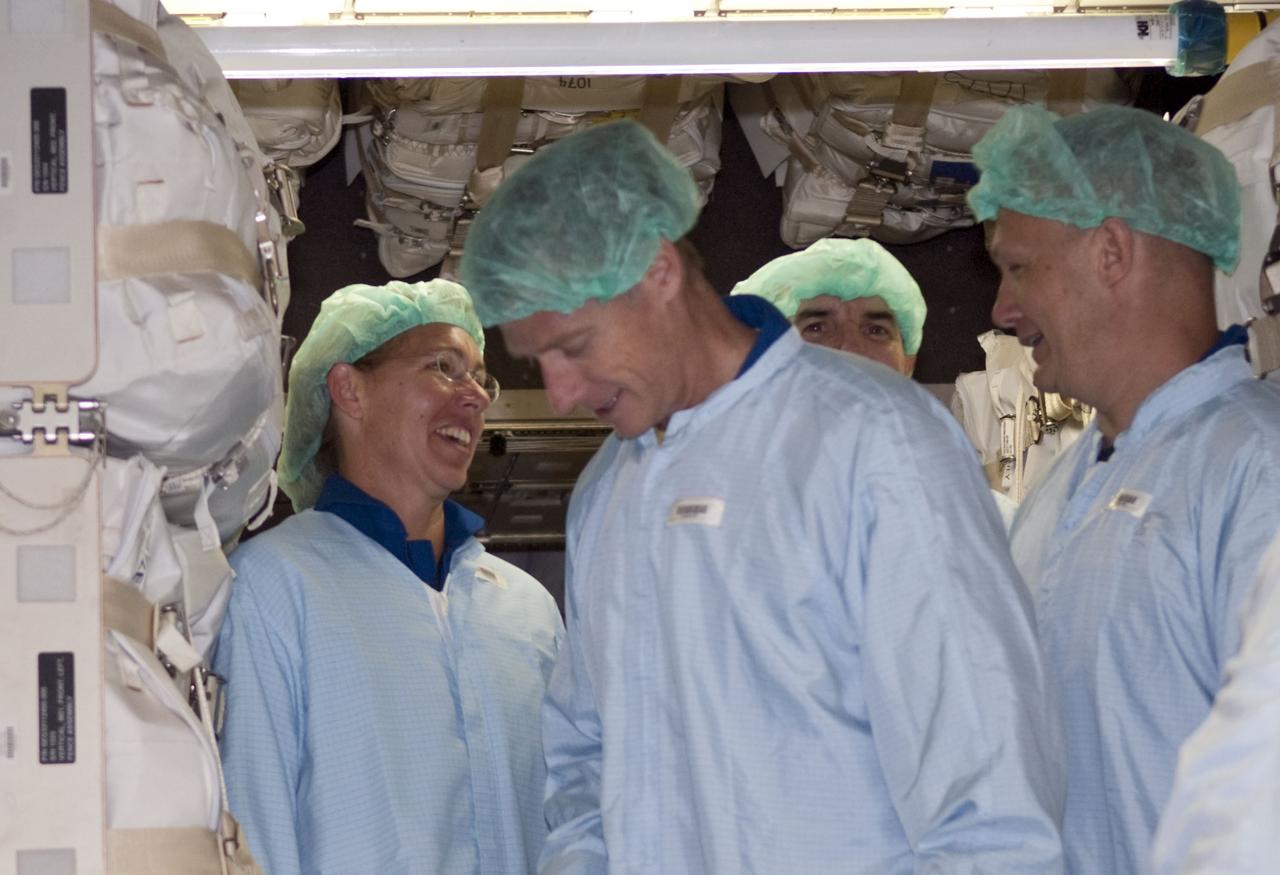
CAPE CANAVERAL, Fla. -- Space shuttle Atlantis' STS-135 crew participates in a crew equipment interface test, or CEIT, in the Space Station Processing Facility at NASA's Kennedy Space Center in Florida. Standing inside the Raffaello multi-purpose logistics module, which will be packed with supplies, logistics and spare parts for their mission to the International Space Station, are Mission Specialist Sandy Magnus (left), Commander Chris Ferguson, Mission Specialist Rex Walheim and Pilot Doug Hurley. The purpose of CEIT is for flight crew members to become familiar with the payload they will be working with and delivering to the station. STS-135 also will return a failed ammonia pump module on the Lightweight Multi-Purpose Experiment Support Structure Carrier, or LMC, to help NASA better understand the failure mechanism and improve pump designs for future systems. STS-135, targeted to launch June 28, will be the 33rd flight of Atlantis, the 37th shuttle mission to the space station, and the 135th and final mission of NASA's Space Shuttle Program. For more information visit, www.nasa.gov/mission_pages/shuttle/shuttlemissions/sts135/index.html. Photo credit: NASA/Jim Grossmann
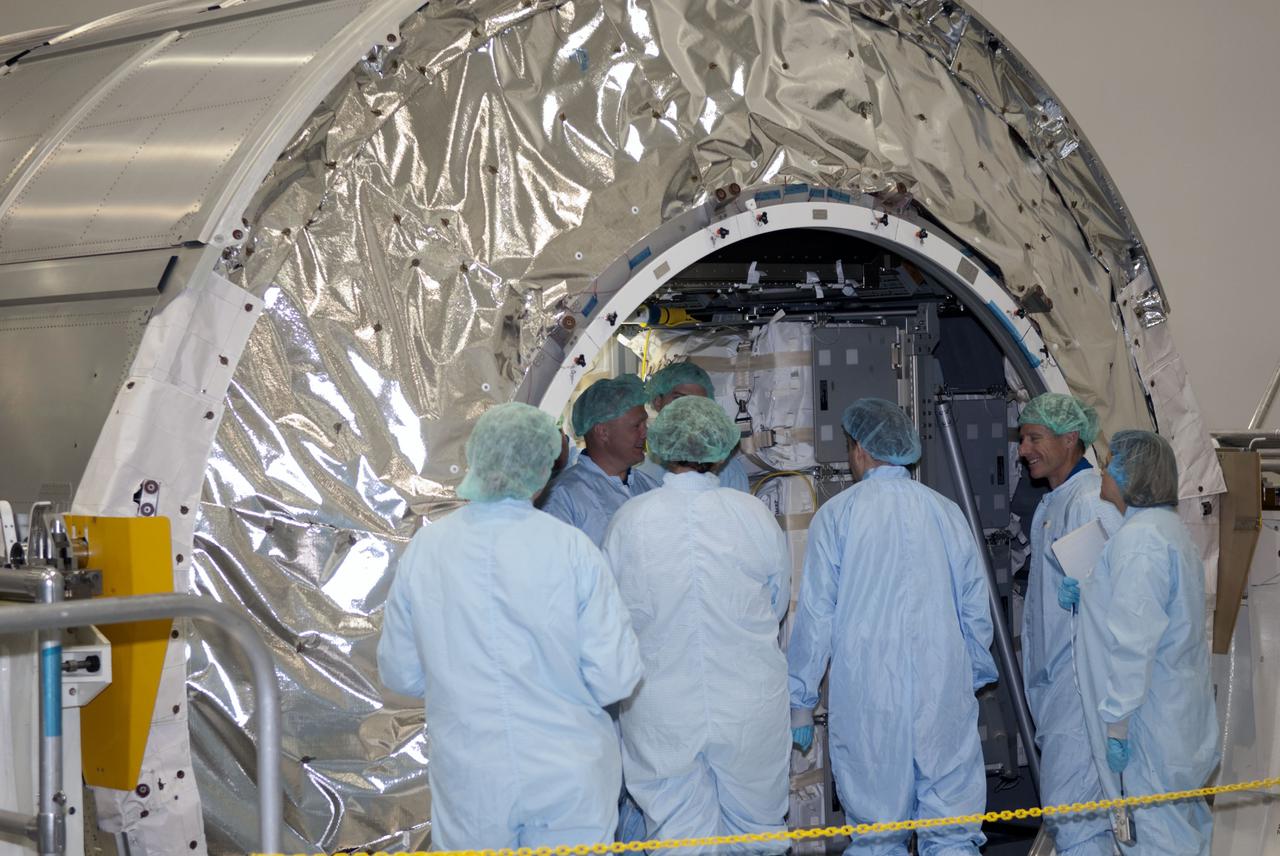
CAPE CANAVERAL, Fla. -- Space shuttle Atlantis' STS-135 crew participates in a crew equipment interface test, or CEIT, in the Space Station Processing Facility at NASA's Kennedy Space Center in Florida. Standing in front of the Raffaello multi-purpose logistics module, which will be packed with supplies, logistics and spare parts for their mission to the International Space Station, are, Pilot Doug Hurley (in profile left), and Commander Chris Ferguson (in profile right). The purpose of CEIT is for flight crew members to become familiar with the payload they will be working with and delivering to the station. STS-135 also will return a failed ammonia pump module on the Lightweight Multi-Purpose Experiment Support Structure Carrier, or LMC, to help NASA better understand the failure mechanism and improve pump designs for future systems. STS-135, targeted to launch June 28, will be the 33rd flight of Atlantis, the 37th shuttle mission to the space station, and the 135th and final mission of NASA's Space Shuttle Program. For more information visit, www.nasa.gov_mission_pages_shuttle_shuttlemissions_sts135_index.html. Photo credit: NASA_Jim Grossmann