
A group of DC area students and staff pose for a group photo at the conclusion of the Space Education Day, Tuesday, June 20, 2023, at the Microsoft Technology Center in Arlington, Va. Microsoft hosted the event to showcase the collaboration, early successes, and future plans for high quality student engagement through activities that combined space content and technologies like artificial intelligence and cloud computing. Photo Credit: (NASA/Aubrey Gemignani)
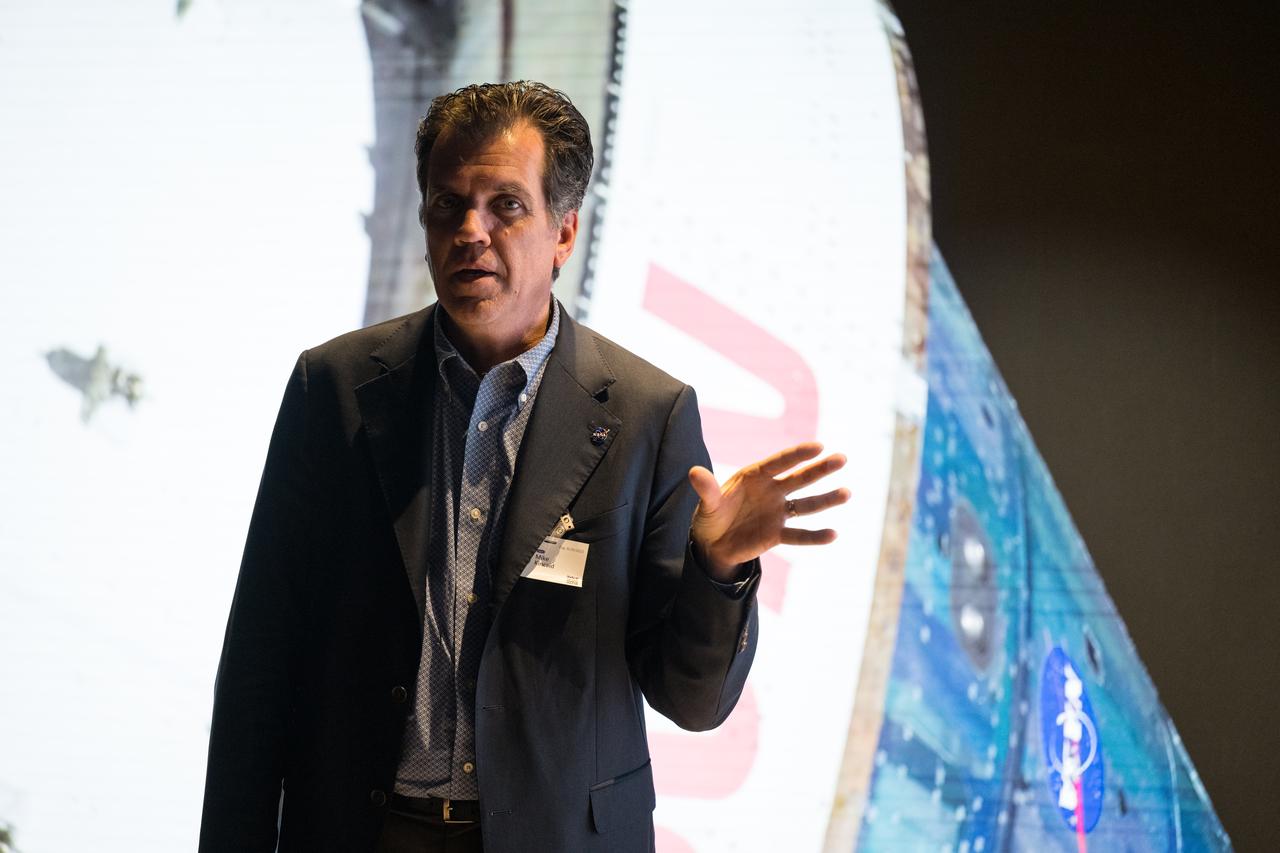
NASA Associate Administrator for the STEM Engagement Office, Mike Kincaid, provides remarks during Space Education Day, Tuesday, June 20, 2023, at the Microsoft Technology Center in Arlington, Va. Microsoft hosted the event to showcase the collaboration, early successes, and future plans for high quality student engagement through activities that combined space content and technologies like artificial intelligence and cloud computing. Photo Credit: (NASA/Aubrey Gemignani)
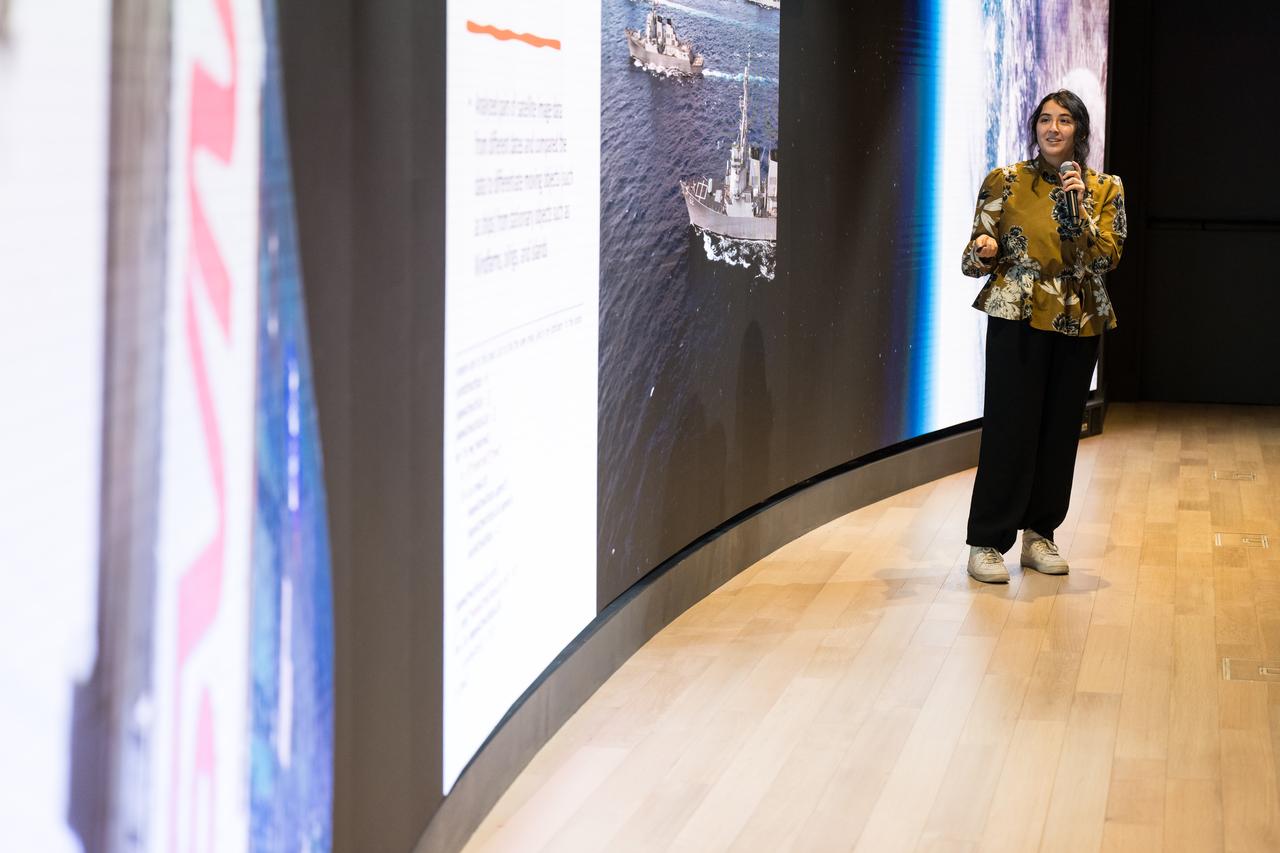
College students present their findings after a hackathon during Space Education Day, Tuesday, June 20, 2023, at the Microsoft Technology Center in Arlington, Va. Microsoft hosted the event to showcase the collaboration, early successes, and future plans for high quality student engagement through activities that combined space content and technologies like artificial intelligence and cloud computing. Photo Credit: (NASA/Aubrey Gemignani)
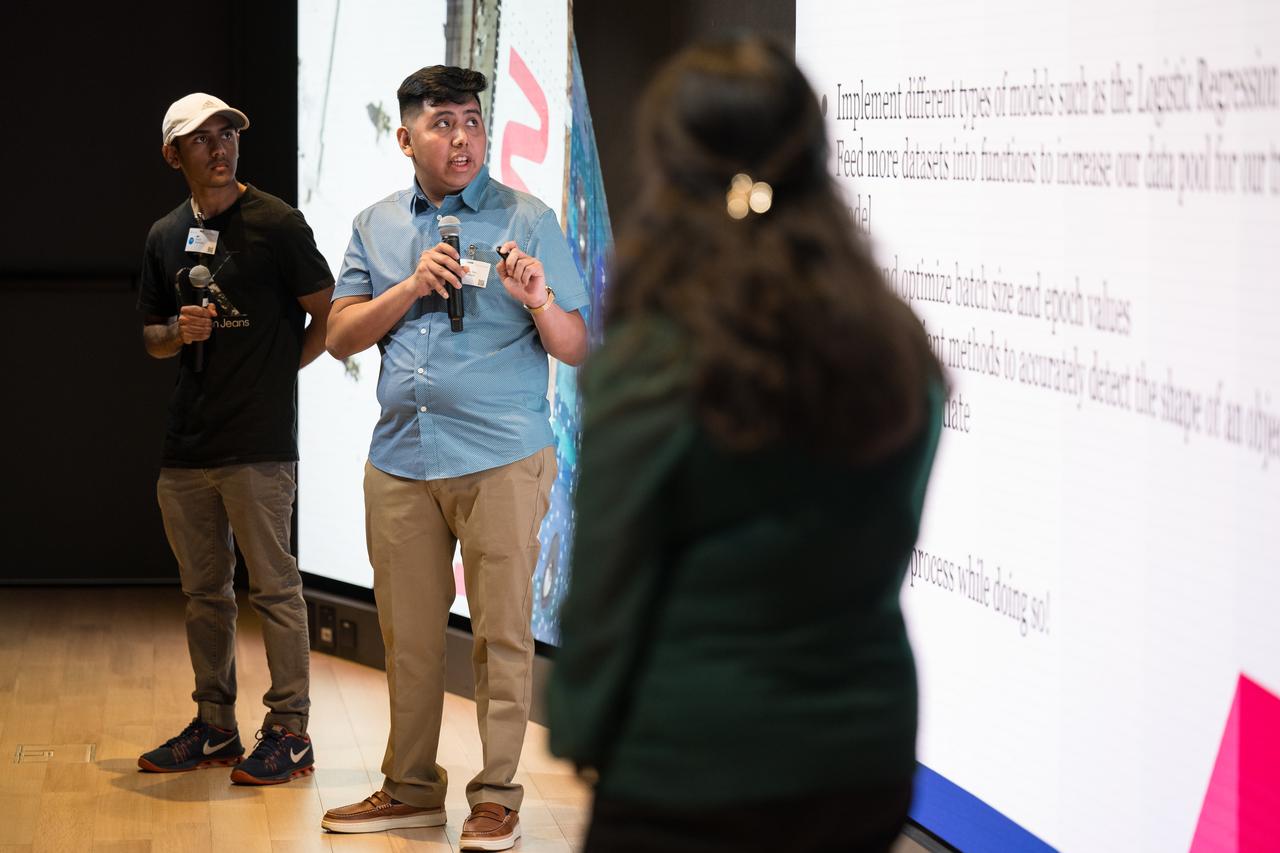
College students present their findings after a hackathon during Space Education Day, Tuesday, June 20, 2023, at the Microsoft Technology Center in Arlington, Va. Microsoft hosted the event to showcase the collaboration, early successes, and future plans for high quality student engagement through activities that combined space content and technologies like artificial intelligence and cloud computing. Photo Credit: (NASA/Aubrey Gemignani)
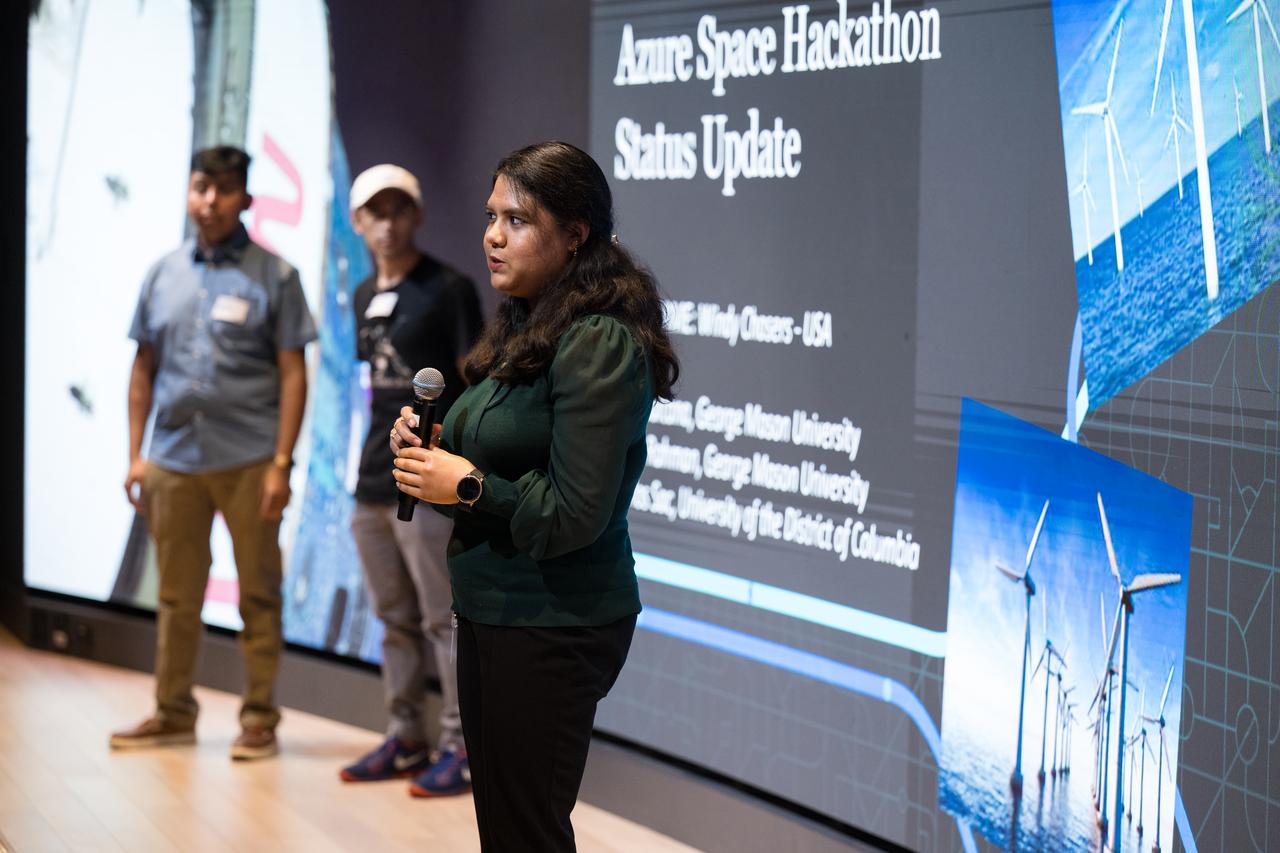
College students present their findings after a hackathon during Space Education Day, Tuesday, June 20, 2023, at the Microsoft Technology Center in Arlington, Va. Microsoft hosted the event to showcase the collaboration, early successes, and future plans for high quality student engagement through activities that combined space content and technologies like artificial intelligence and cloud computing. Photo Credit: (NASA/Aubrey Gemignani)
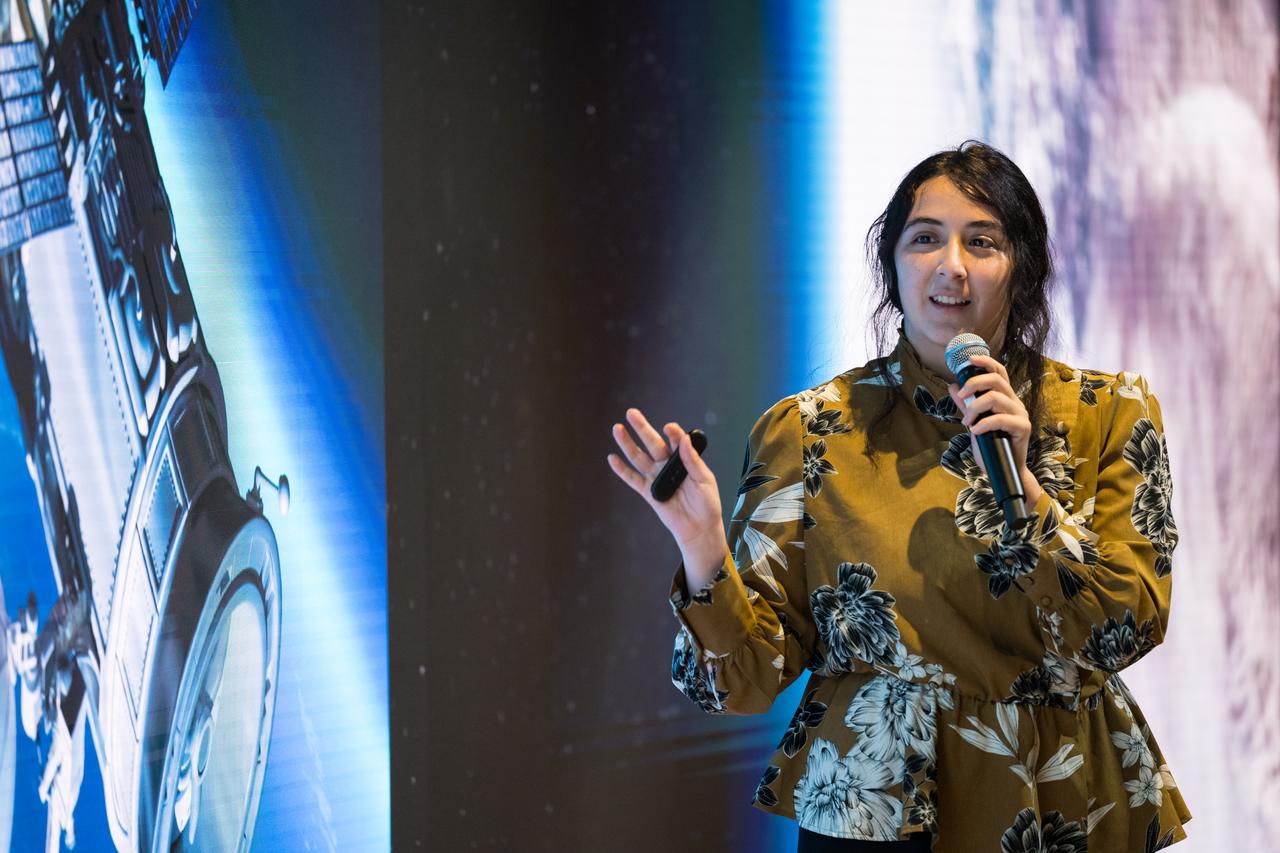
College students present their findings after a hackathon during Space Education Day, Tuesday, June 20, 2023, at the Microsoft Technology Center in Arlington, Va. Microsoft hosted the event to showcase the collaboration, early successes, and future plans for high quality student engagement through activities that combined space content and technologies like artificial intelligence and cloud computing. Photo Credit: (NASA/Aubrey Gemignani)
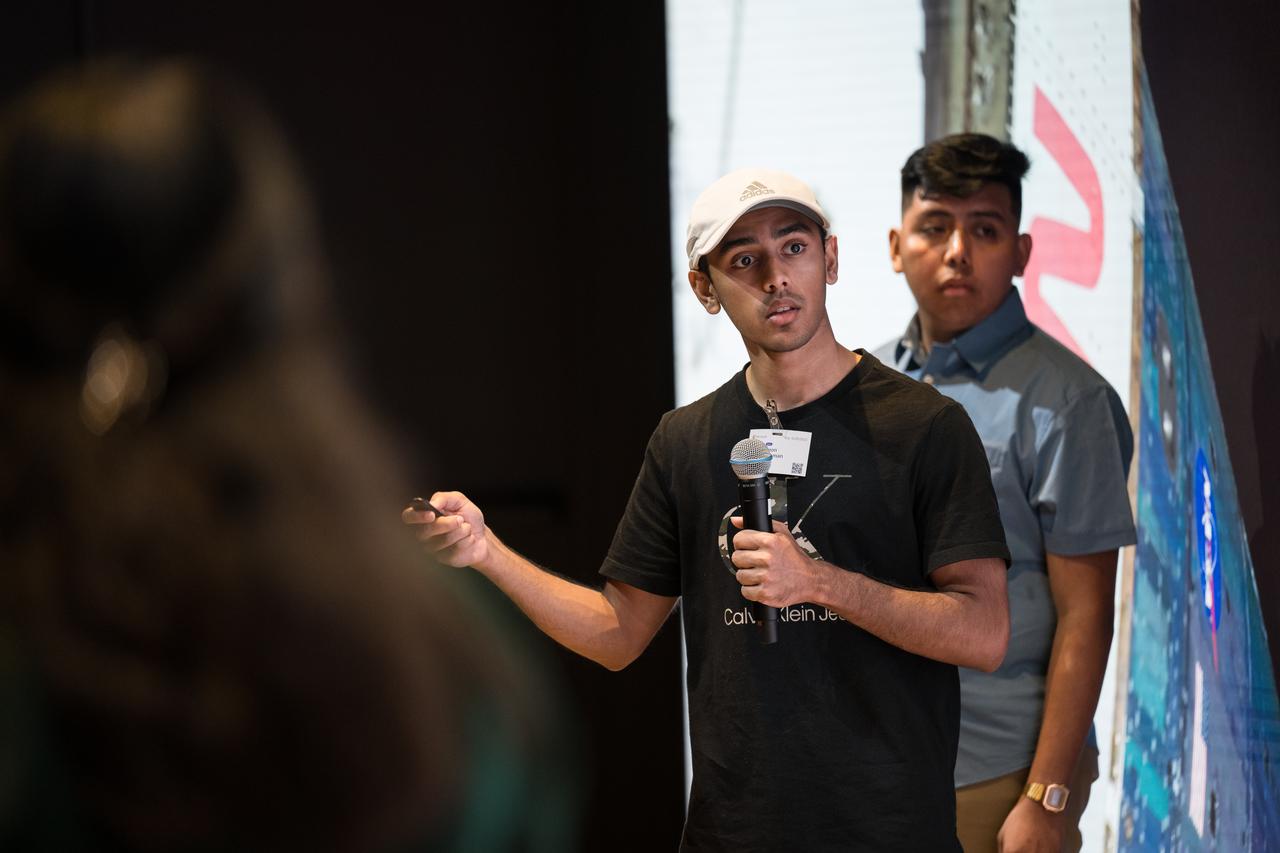
College students present their findings after a hackathon during Space Education Day, Tuesday, June 20, 2023, at the Microsoft Technology Center in Arlington, Va. Microsoft hosted the event to showcase the collaboration, early successes, and future plans for high quality student engagement through activities that combined space content and technologies like artificial intelligence and cloud computing. Photo Credit: (NASA/Aubrey Gemignani)
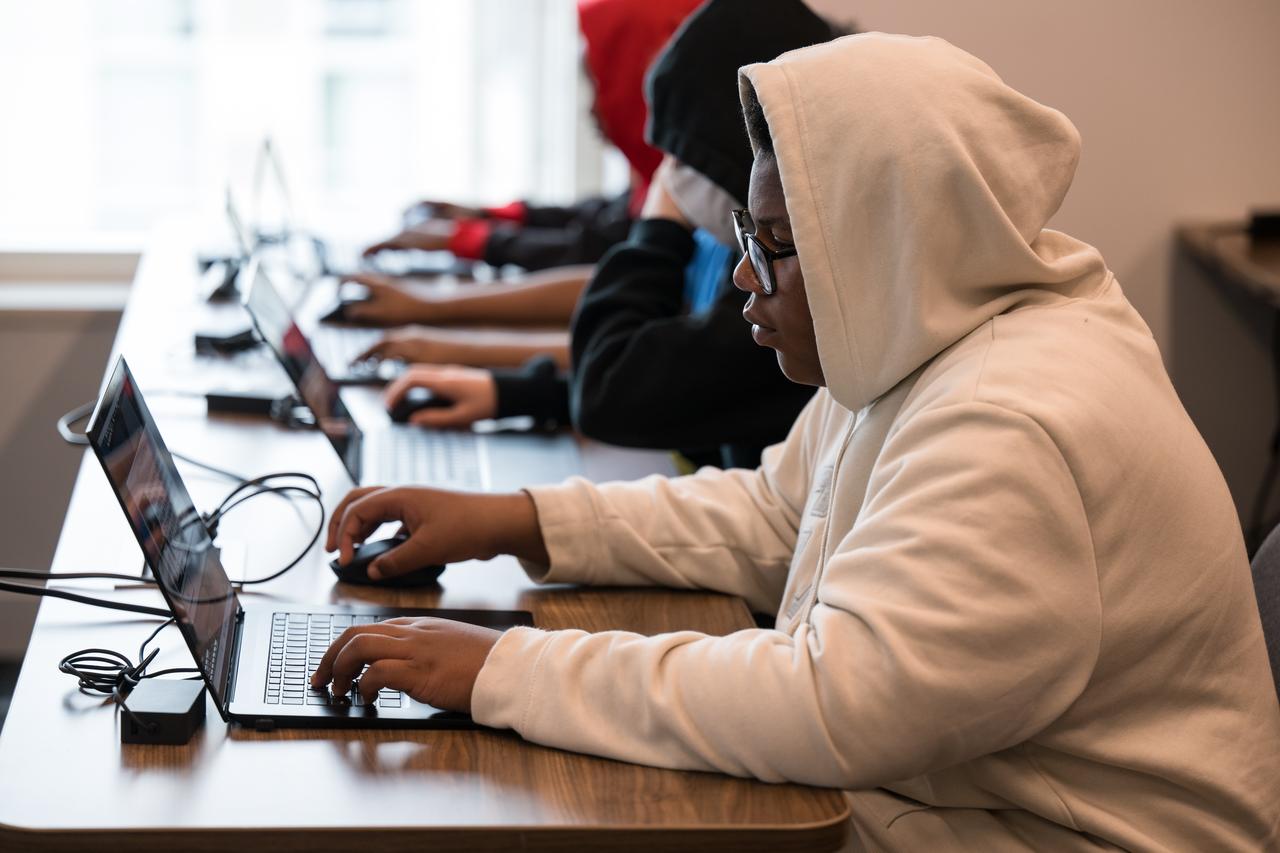
DC area students participate in a Minecraft Artemis demonstration during Space Education Day, Tuesday, June 20, 2023, at the Microsoft Technology Center in Arlington, Va. Microsoft hosted the event to showcase the collaboration, early successes, and future plans for high quality student engagement through activities that combined space content and technologies like artificial intelligence and cloud computing. Photo Credit: (NASA/Aubrey Gemignani)
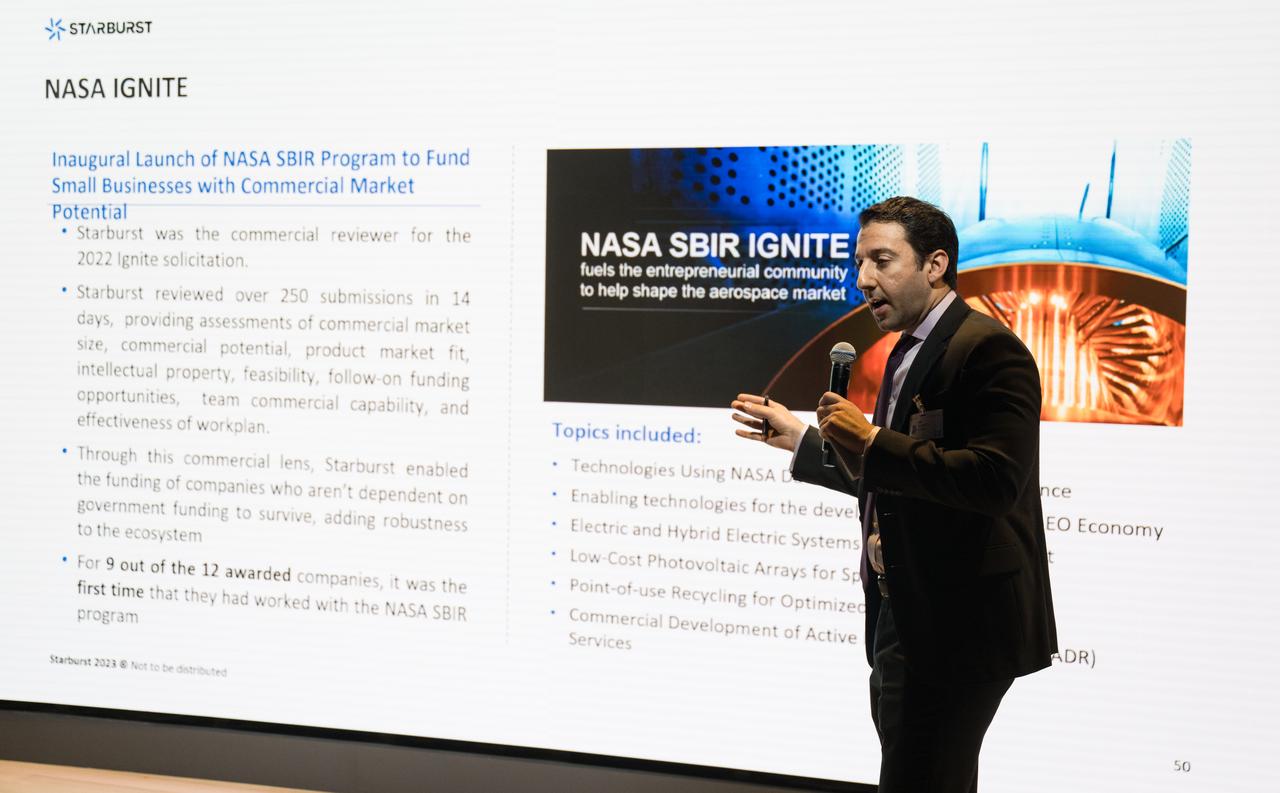
Director of Government Affairs and Business Development for Starburst Aerospace, Robert Ganim, provides remarks during Space Education Day, Tuesday, June 20, 2023, at the Microsoft Technology Center in Arlington, Va. Microsoft hosted the event to showcase the collaboration, early successes, and future plans for high quality student engagement through activities that combined space content and technologies like artificial intelligence and cloud computing. Photo Credit: (NASA/Aubrey Gemignani)
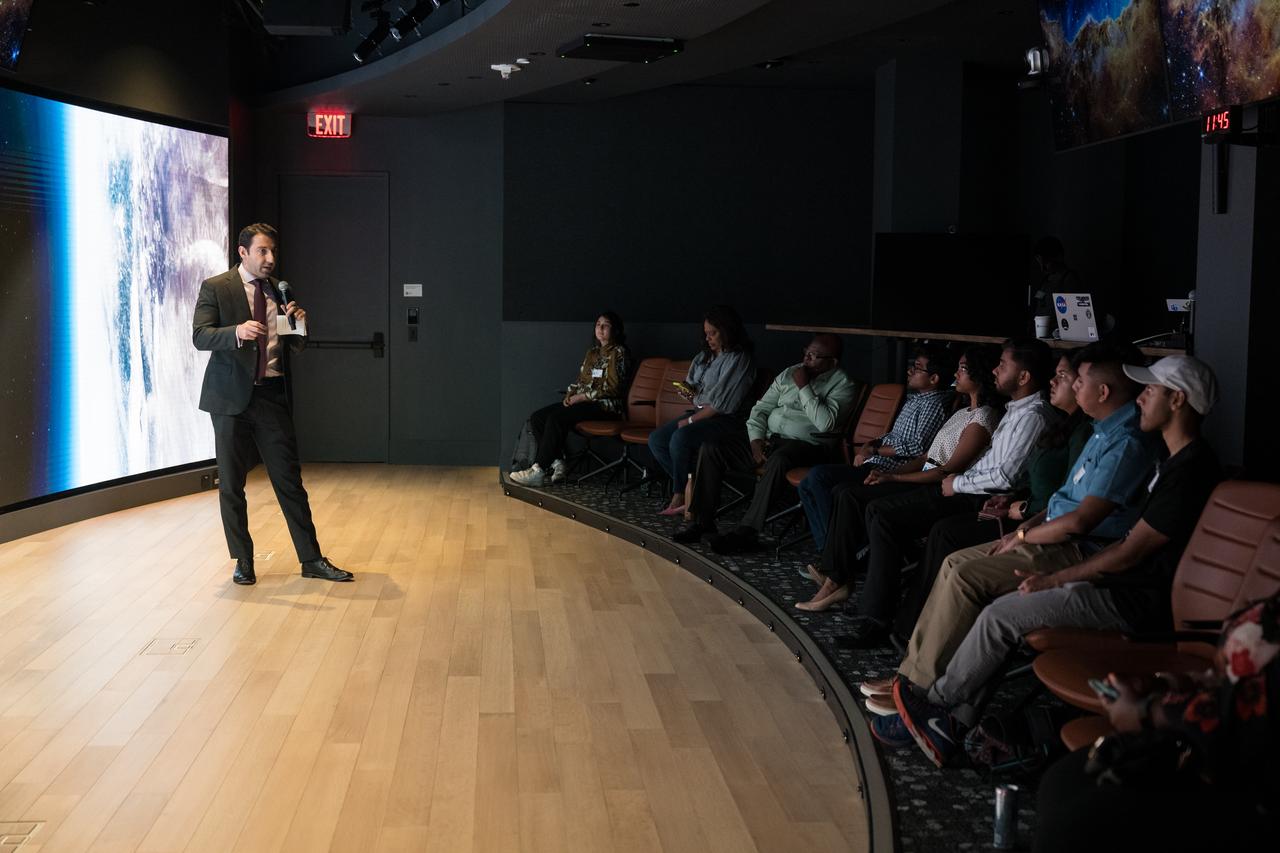
Director of Government Affairs and Business Development for Starburst Aerospace, Robert Ganim, provides remarks during Space Education Day, Tuesday, June 20, 2023, at the Microsoft Technology Center in Arlington, Va. Microsoft hosted the event to showcase the collaboration, early successes, and future plans for high quality student engagement through activities that combined space content and technologies like artificial intelligence and cloud computing. Photo Credit: (NASA/Aubrey Gemignani)
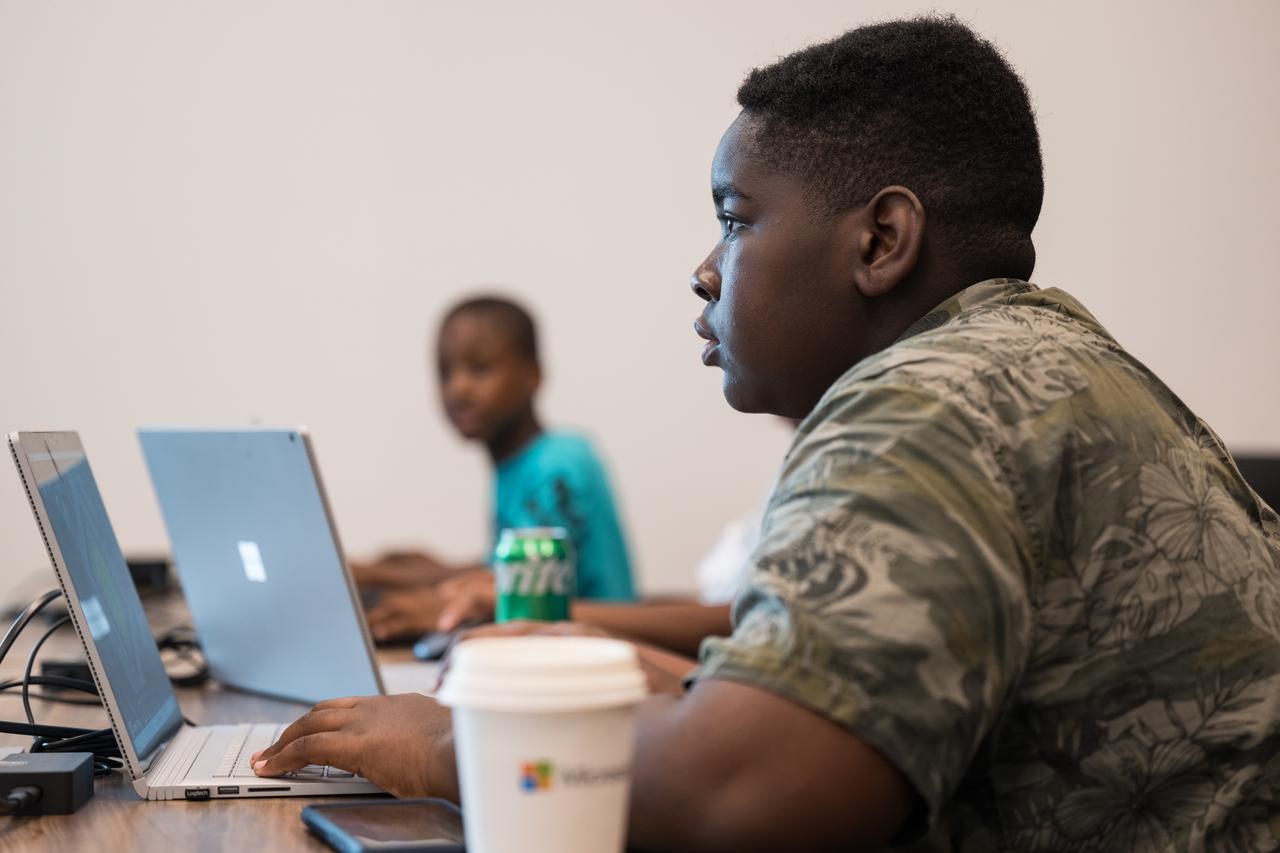
DC area students participate in a Minecraft Artemis demonstration during Space Education Day, Tuesday, June 20, 2023, at the Microsoft Technology Center in Arlington, Va. Microsoft hosted the event to showcase the collaboration, early successes, and future plans for high quality student engagement through activities that combined space content and technologies like artificial intelligence and cloud computing. Photo Credit: (NASA/Aubrey Gemignani)
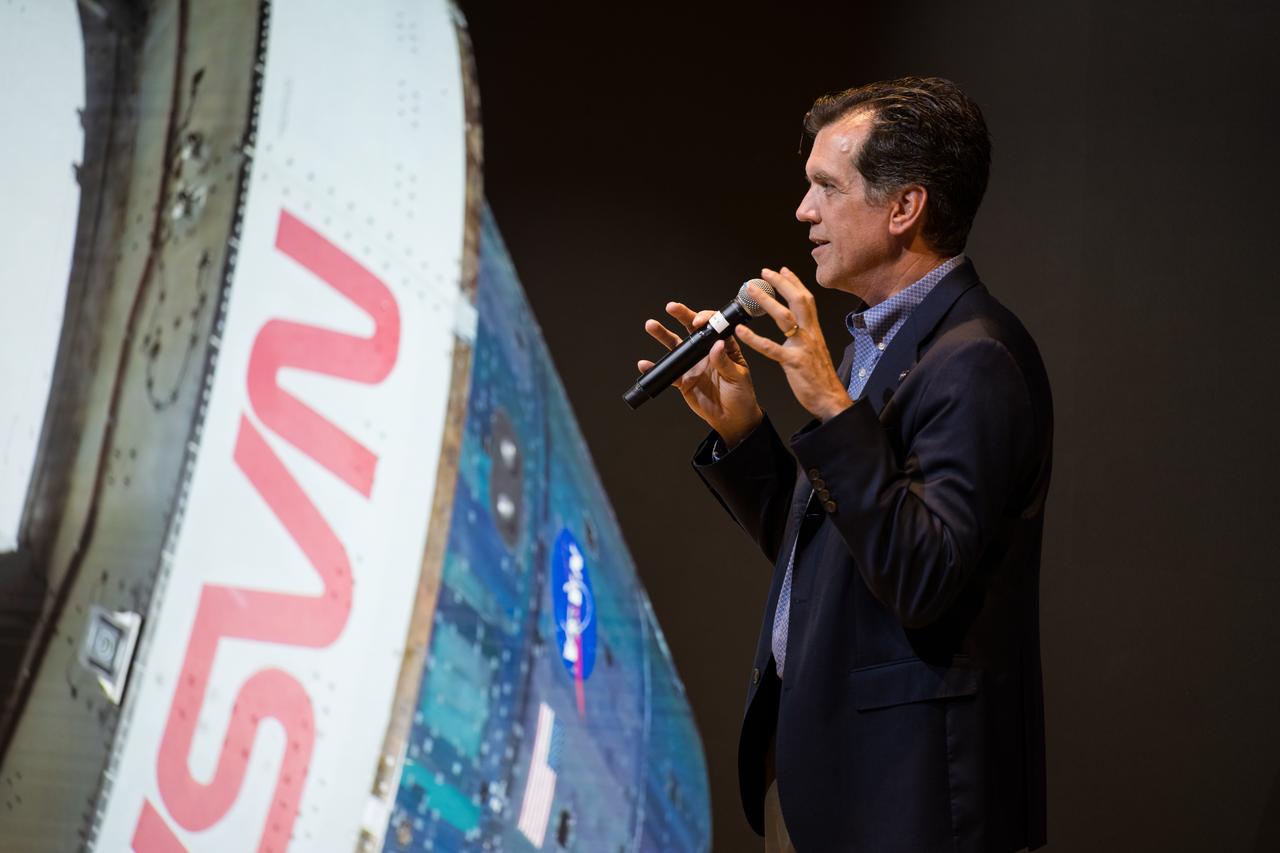
NASA Associate Administrator for the STEM Engagement Office, Mike Kincaid, provides remarks during Space Education Day, Tuesday, June 20, 2023, at the Microsoft Technology Center in Arlington, Va. Microsoft hosted the event to showcase the collaboration, early successes, and future plans for high quality student engagement through activities that combined space content and technologies like artificial intelligence and cloud computing. Photo Credit: (NASA/Aubrey Gemignani)

DC area students participate in a Minecraft Artemis demonstration during Space Education Day, Tuesday, June 20, 2023, at the Microsoft Technology Center in Arlington, Va. Microsoft hosted the event to showcase the collaboration, early successes, and future plans for high quality student engagement through activities that combined space content and technologies like artificial intelligence and cloud computing. Photo Credit: (NASA/Aubrey Gemignani)
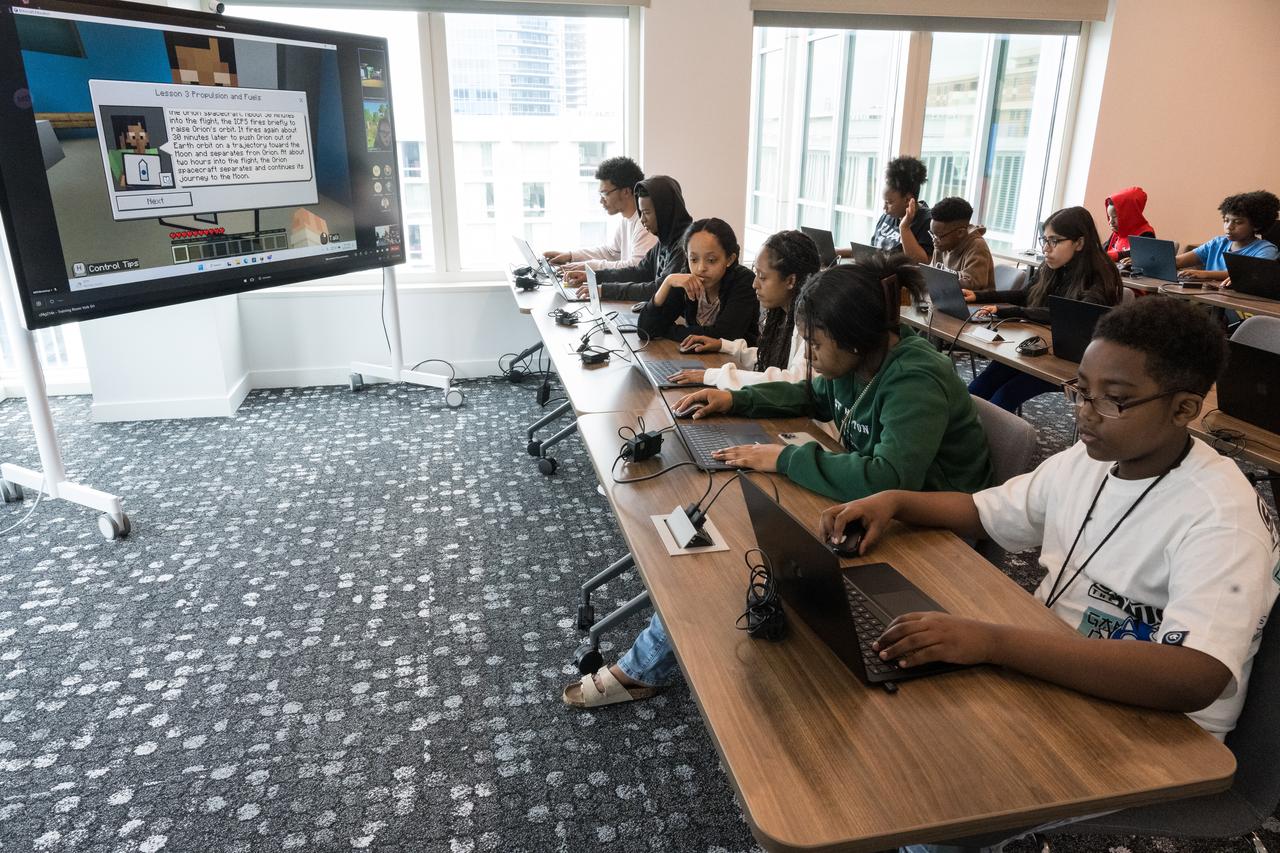
DC area students participate in a Minecraft Artemis demonstration during Space Education Day, Tuesday, June 20, 2023, at the Microsoft Technology Center in Arlington, Va. Microsoft hosted the event to showcase the collaboration, early successes, and future plans for high quality student engagement through activities that combined space content and technologies like artificial intelligence and cloud computing. Photo Credit: (NASA/Aubrey Gemignani)

DC area students participate in a Minecraft Artemis demonstration during Space Education Day, Tuesday, June 20, 2023, at the Microsoft Technology Center in Arlington, Va. Microsoft hosted the event to showcase the collaboration, early successes, and future plans for high quality student engagement through activities that combined space content and technologies like artificial intelligence and cloud computing. Photo Credit: (NASA/Aubrey Gemignani)

DC area students participate in a Minecraft Artemis demonstration during Space Education Day, Tuesday, June 20, 2023, at the Microsoft Technology Center in Arlington, Va. Microsoft hosted the event to showcase the collaboration, early successes, and future plans for high quality student engagement through activities that combined space content and technologies like artificial intelligence and cloud computing. Photo Credit: (NASA/Aubrey Gemignani)
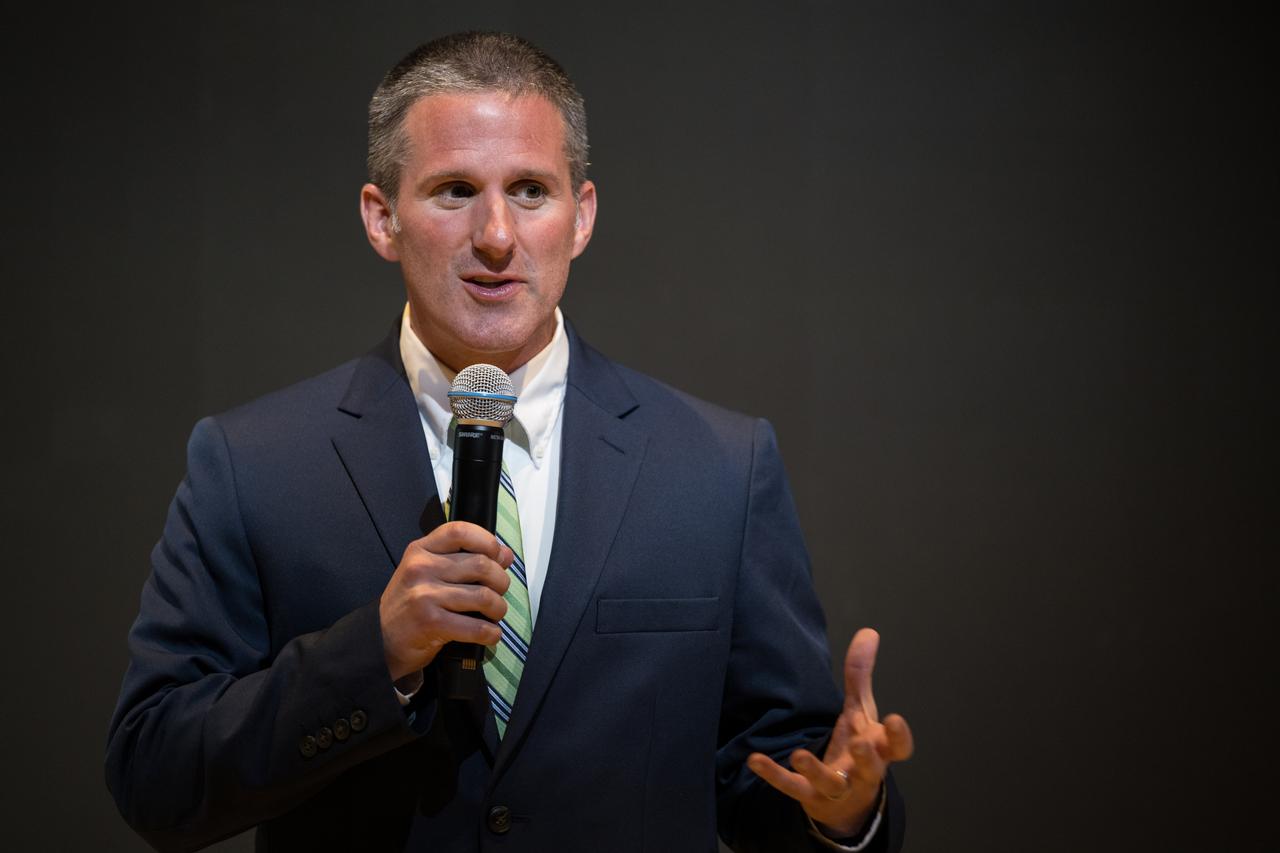
NASA Strategic Partnerships Manager for STEM Engagement, Rob LaSalvia, provides remarks during Space Education Day, Tuesday, June 20, 2023, at the Microsoft Technology Center in Arlington, Va. Microsoft hosted the event to showcase the collaboration, early successes, and future plans for high quality student engagement through activities that combined space content and technologies like artificial intelligence and cloud computing. Photo Credit: (NASA/Aubrey Gemignani)
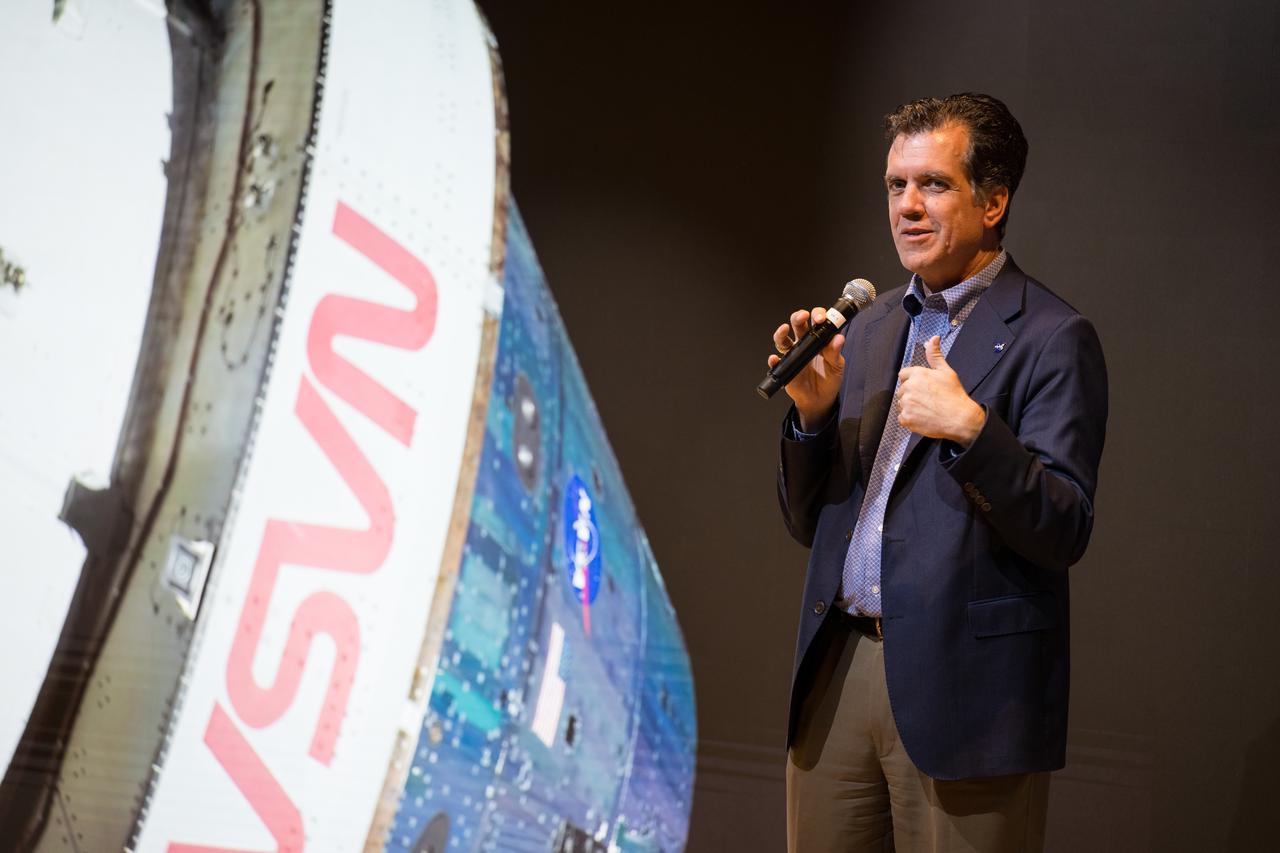
NASA Associate Administrator for the STEM Engagement Office, Mike Kincaid, provides remarks during Space Education Day, Tuesday, June 20, 2023, at the Microsoft Technology Center in Arlington, Va. Microsoft hosted the event to showcase the collaboration, early successes, and future plans for high quality student engagement through activities that combined space content and technologies like artificial intelligence and cloud computing. Photo Credit: (NASA/Aubrey Gemignani)
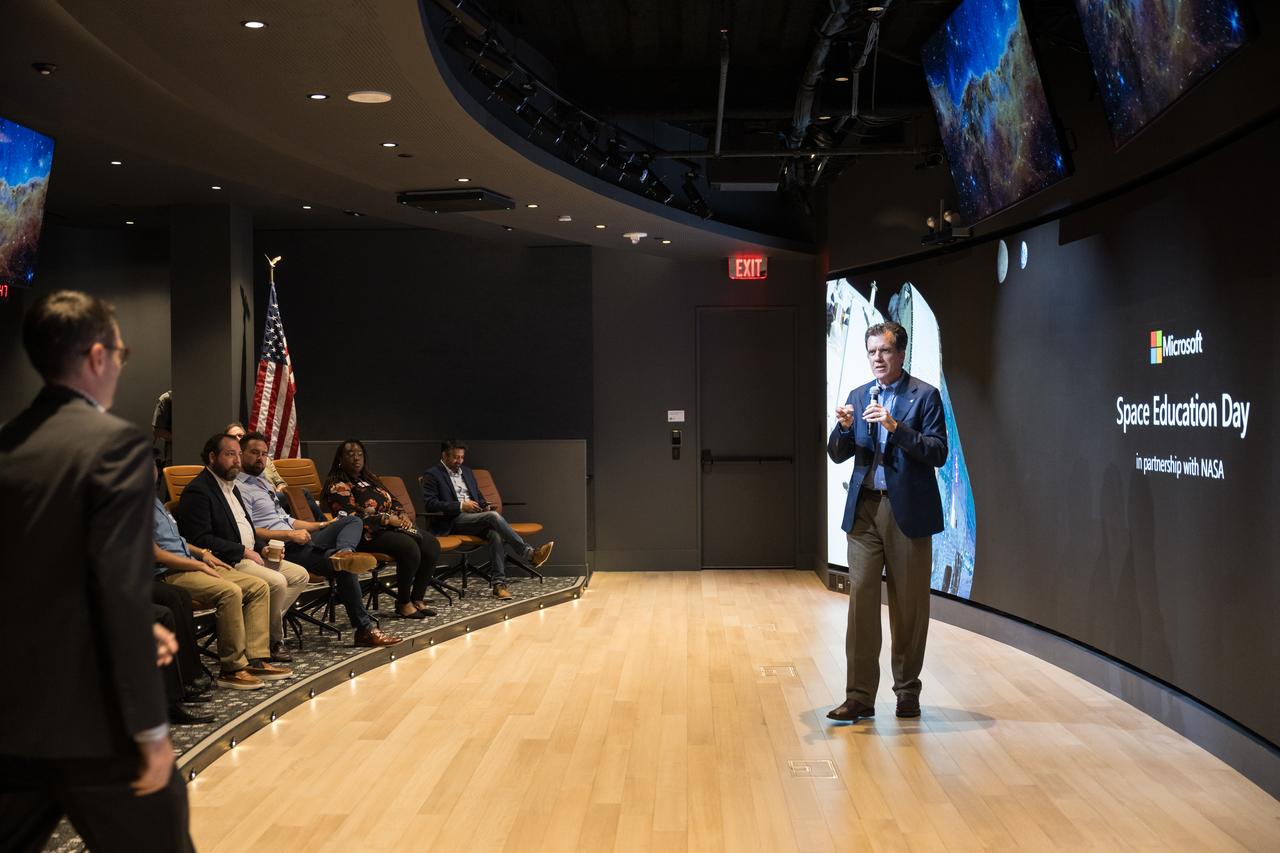
NASA Associate Administrator for the STEM Engagement Office, Mike Kincaid, provides remarks during Space Education Day, Tuesday, June 20, 2023, at the Microsoft Technology Center in Arlington, Va. Microsoft hosted the event to showcase the collaboration, early successes, and future plans for high quality student engagement through activities that combined space content and technologies like artificial intelligence and cloud computing. Photo Credit: (NASA/Aubrey Gemignani)
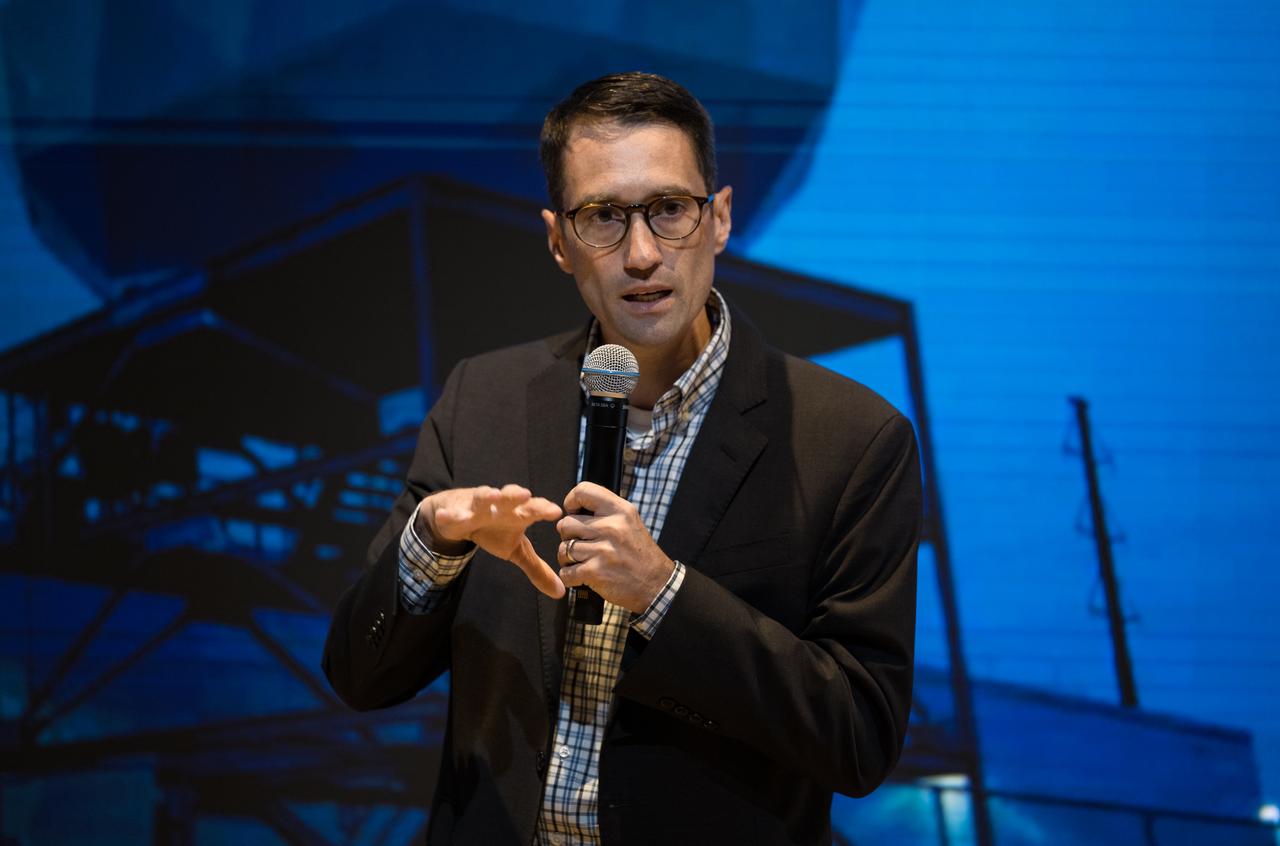
Microsoft’s Azure Space Senior Director, Stephen Kitay, provides remarks during Space Education Day, Tuesday, June 20, 2023, at the Microsoft Technology Center in Arlington, Va. Microsoft hosted the event to showcase the collaboration, early successes, and future plans for high quality student engagement through activities that combined space content and technologies like artificial intelligence and cloud computing. Photo Credit: (NASA/Aubrey Gemignani)
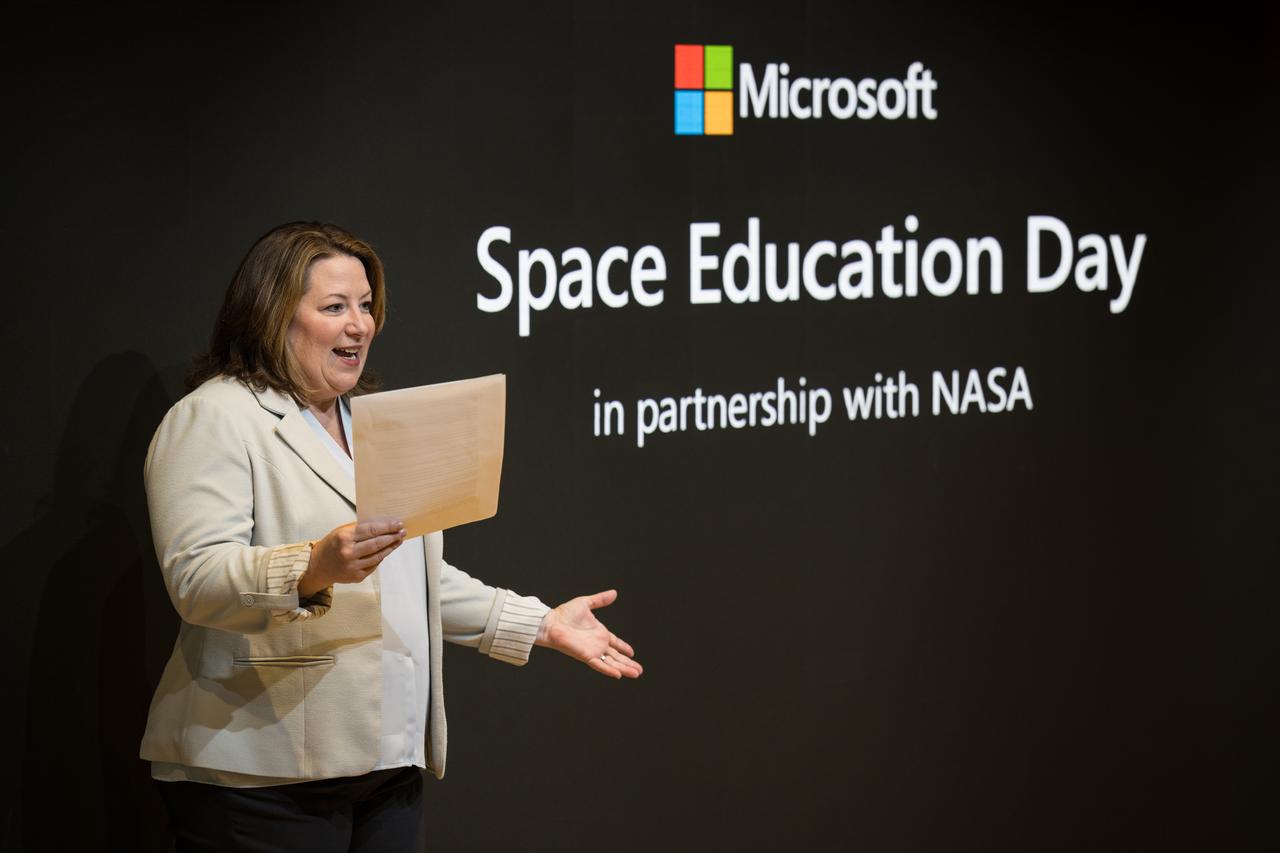
Microsoft's Federal Civilian Team General Manager, Heidi Koblyski, provides remarks during Space Education Day, Tuesday, June 20, 2023, at the Microsoft Technology Center in Arlington, Va. Microsoft hosted the event to showcase the collaboration, early successes, and future plans for high quality student engagement through activities that combined space content and technologies like artificial intelligence and cloud computing. Photo Credit: (NASA/Aubrey Gemignani)
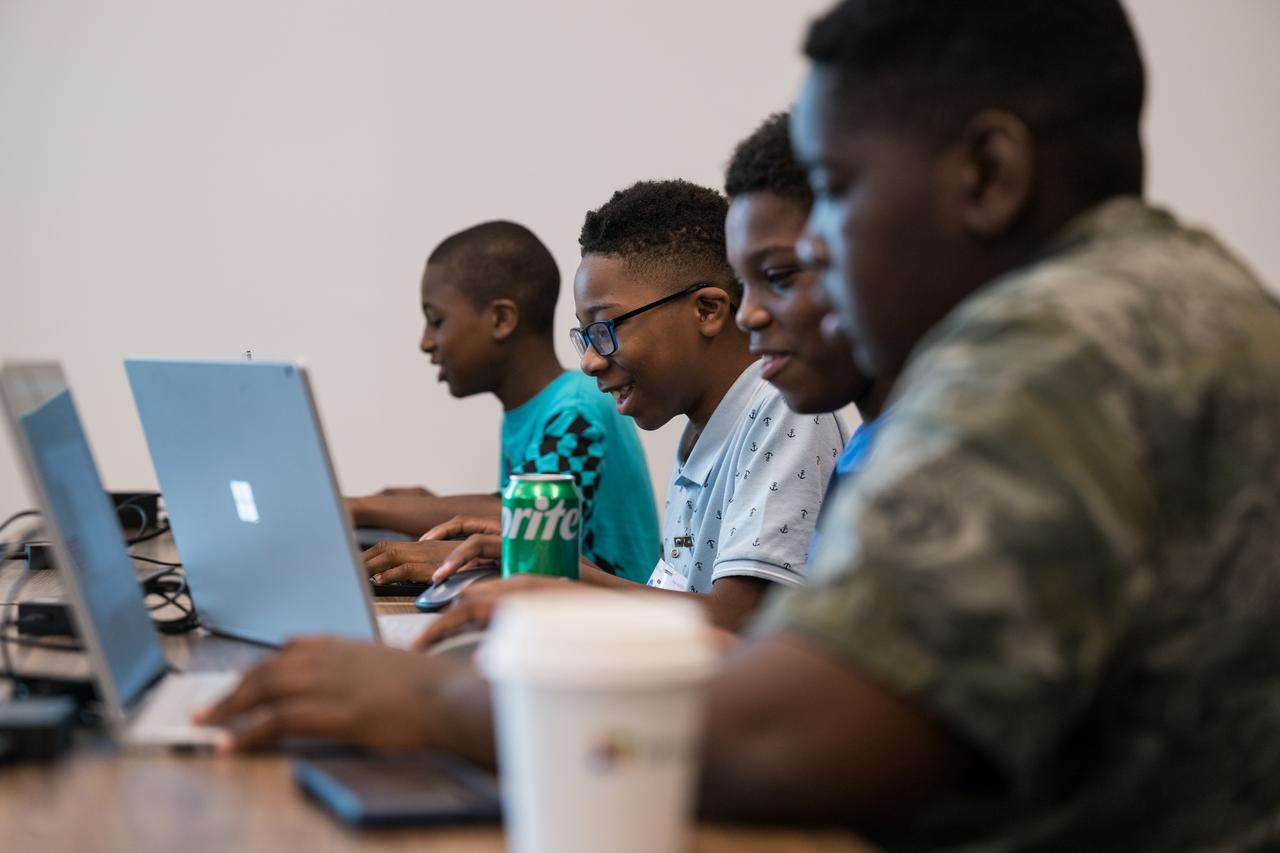
DC area students participate in a Minecraft Artemis demonstration during Space Education Day, Tuesday, June 20, 2023, at the Microsoft Technology Center in Arlington, Va. Microsoft hosted the event to showcase the collaboration, early successes, and future plans for high quality student engagement through activities that combined space content and technologies like artificial intelligence and cloud computing. Photo Credit: (NASA/Aubrey Gemignani)
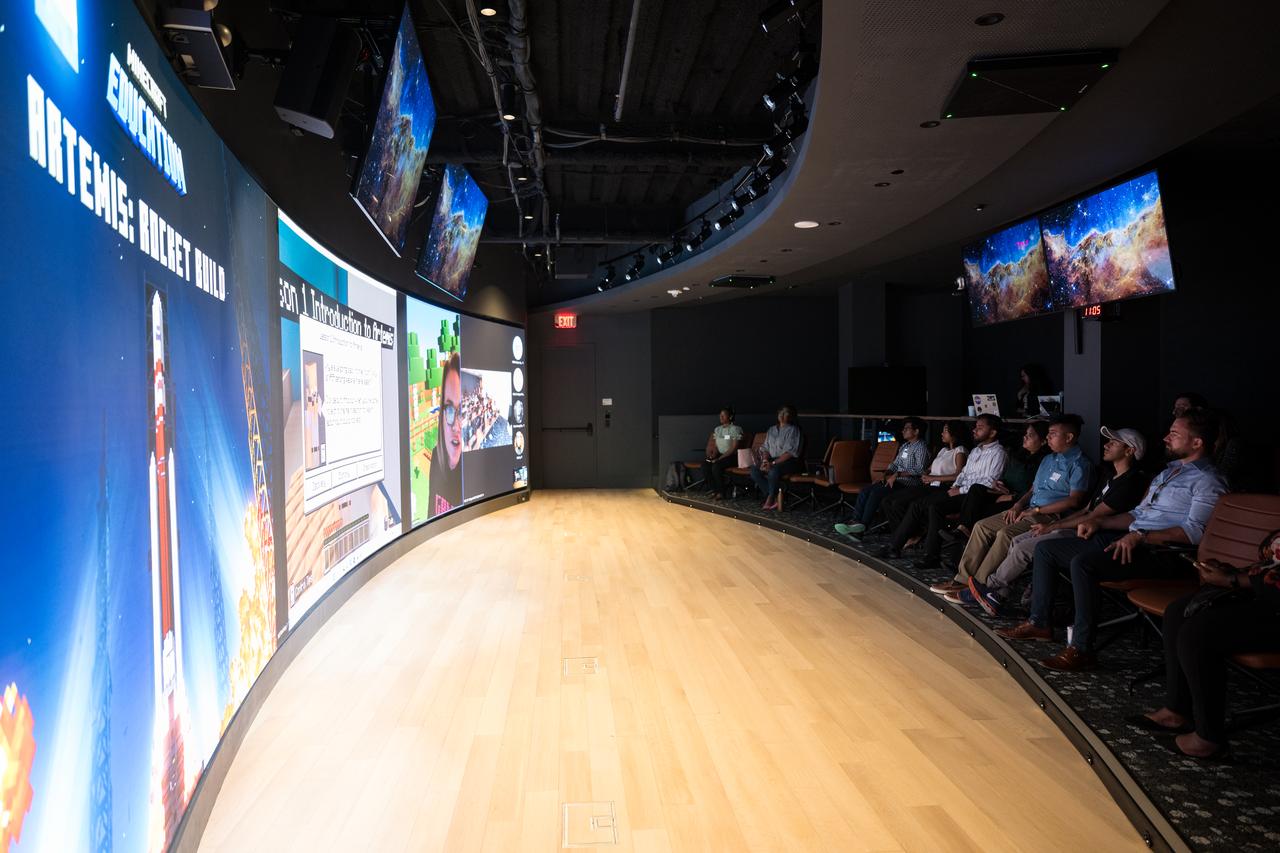
Microsoft Senior Program Manager and Executive Game Producer for Minecraft Education, Laylah Busman, provides instruction to DC area students during Space Education Day, Tuesday, June 20, 2023, at the Microsoft Technology Center in Arlington, Va. Microsoft hosted the event to showcase the collaboration, early successes, and future plans for high quality student engagement through activities that combined space content and technologies like artificial intelligence and cloud computing. Photo Credit: (NASA/Aubrey Gemignani)
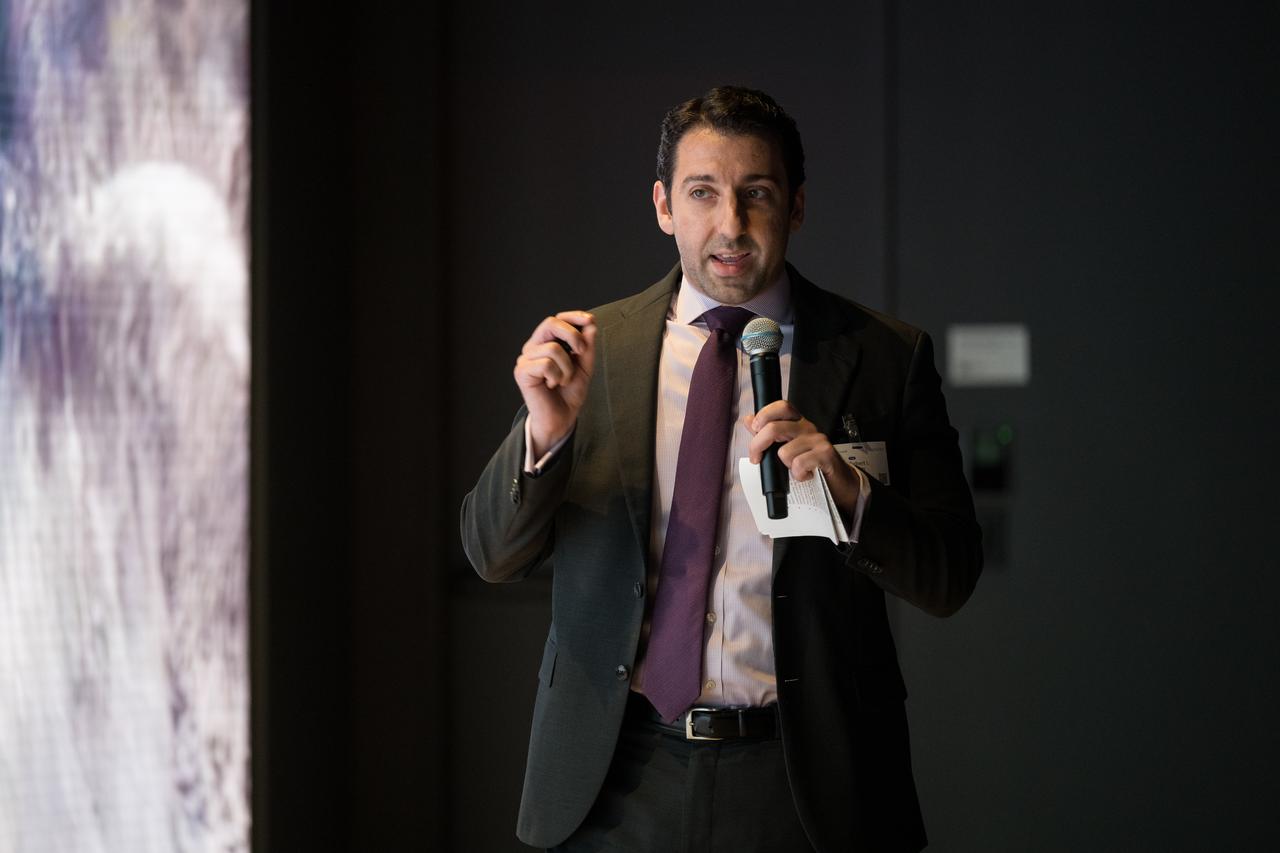
Director of Government Affairs and Business Development for Starburst Aerospace, Robert Ganim, provides remarks during Space Education Day, Tuesday, June 20, 2023, at the Microsoft Technology Center in Arlington, Va. Microsoft hosted the event to showcase the collaboration, early successes, and future plans for high quality student engagement through activities that combined space content and technologies like artificial intelligence and cloud computing. Photo Credit: (NASA/Aubrey Gemignani)
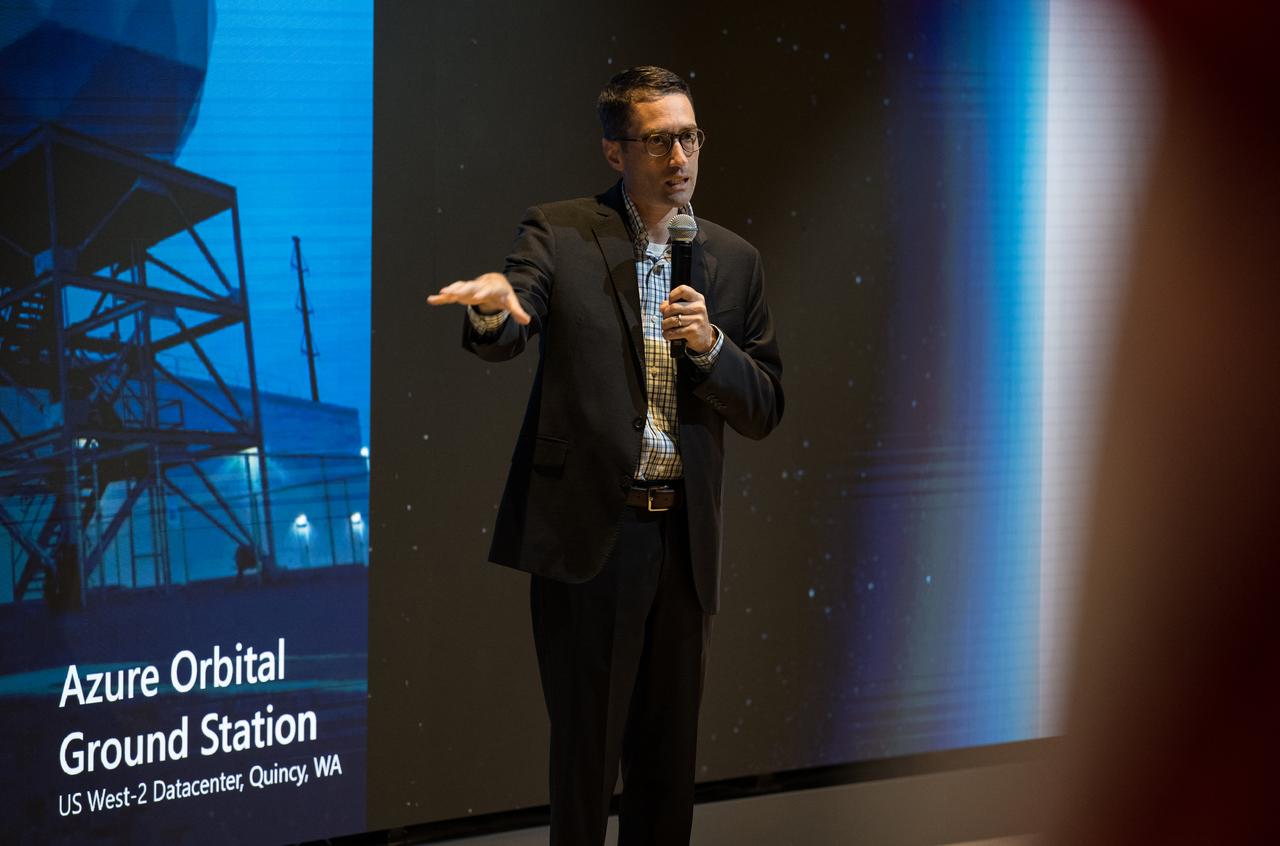
Microsoft’s Azure Space Senior Director, Stephen Kitay, provides remarks during Space Education Day, Tuesday, June 20, 2023, at the Microsoft Technology Center in Arlington, Va. Microsoft hosted the event to showcase the collaboration, early successes, and future plans for high quality student engagement through activities that combined space content and technologies like artificial intelligence and cloud computing. Photo Credit: (NASA/Aubrey Gemignani)
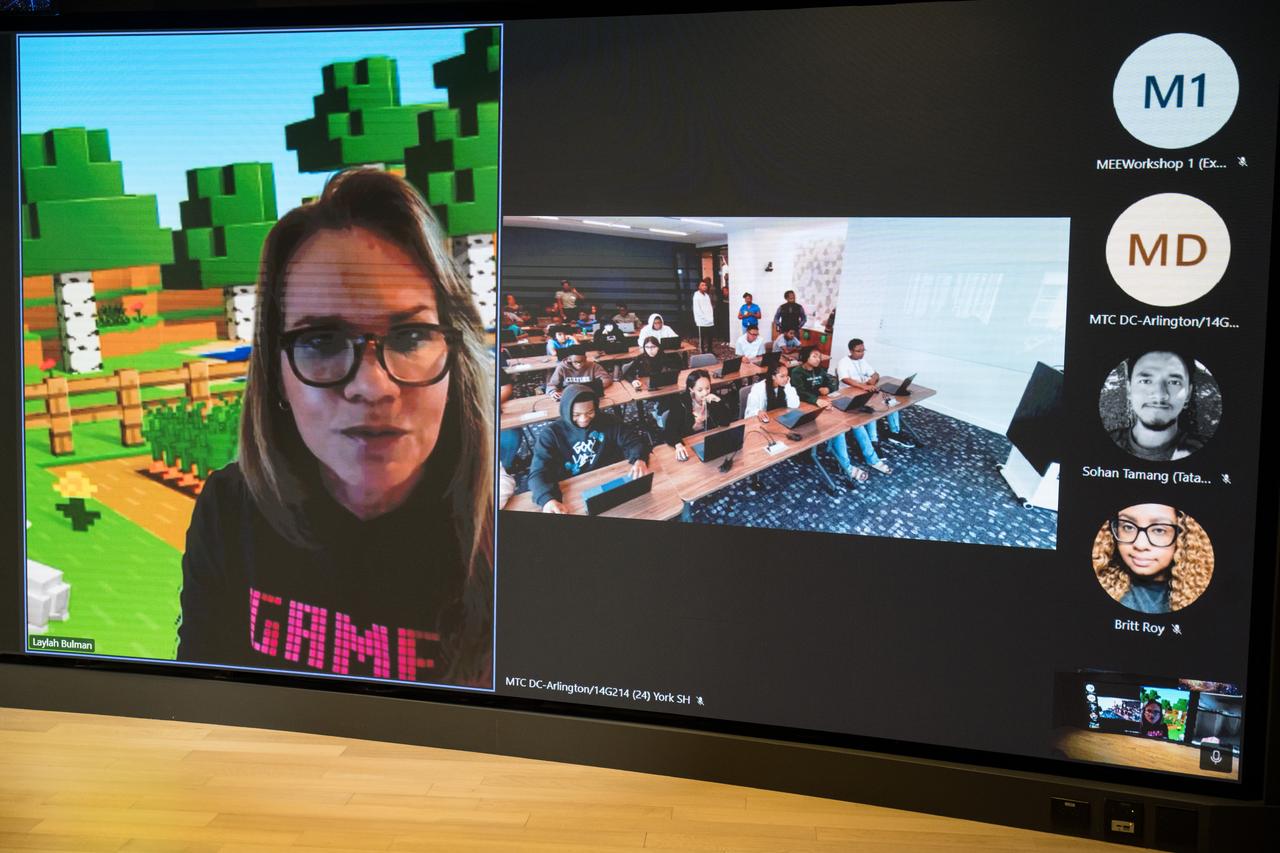
Microsoft Senior Program Manager and Executive Game Producer for Minecraft Education, Laylah Bulman, provides instruction to DC area students during Space Education Day, Tuesday, June 20, 2023, at the Microsoft Technology Center in Arlington, Va. Microsoft hosted the event to showcase the collaboration, early successes, and future plans for high quality student engagement through activities that combined space content and technologies like artificial intelligence and cloud computing. Photo Credit: (NASA/Aubrey Gemignani)
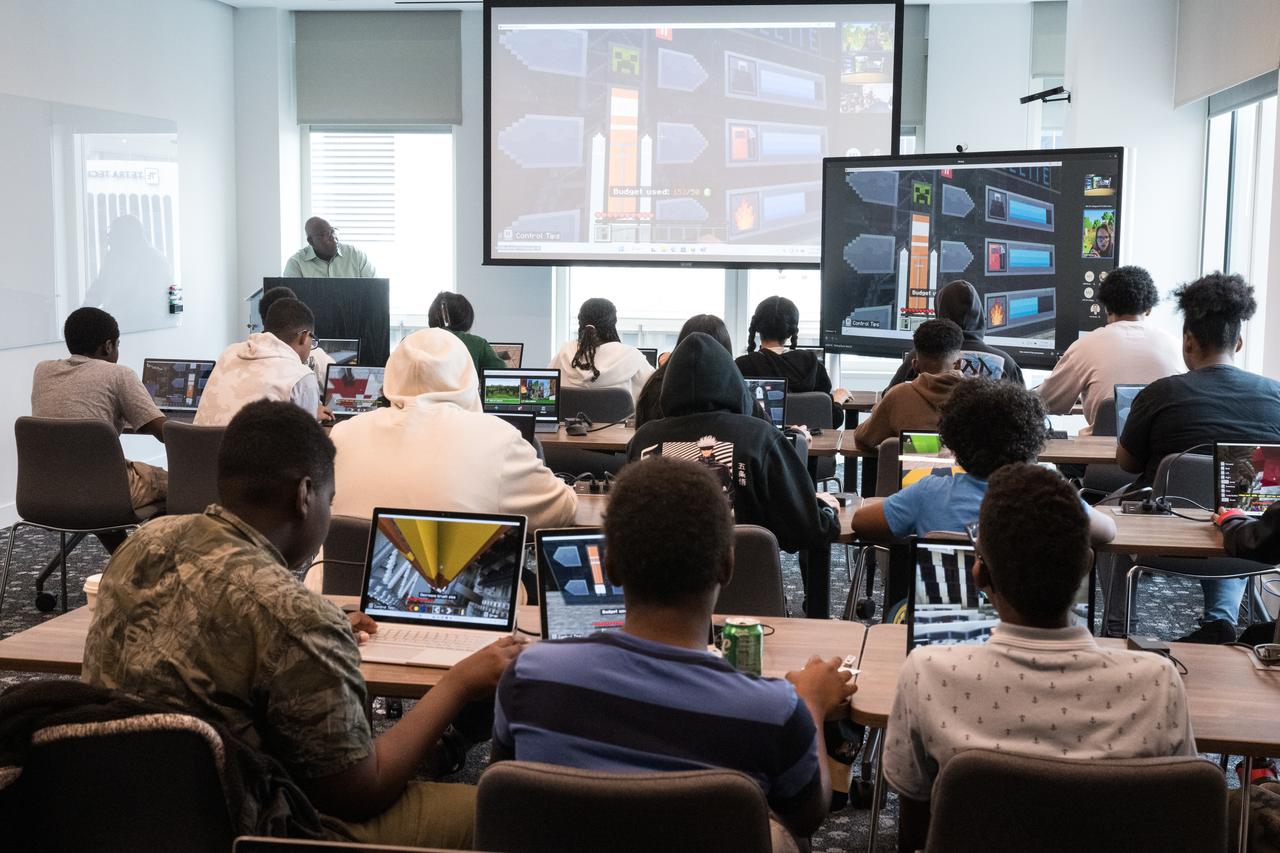
DC area students participate in a Minecraft Artemis demonstration during Space Education Day, Tuesday, June 20, 2023, at the Microsoft Technology Center in Arlington, Va. Microsoft hosted the event to showcase the collaboration, early successes, and future plans for high quality student engagement through activities that combined space content and technologies like artificial intelligence and cloud computing. Photo Credit: (NASA/Aubrey Gemignani)
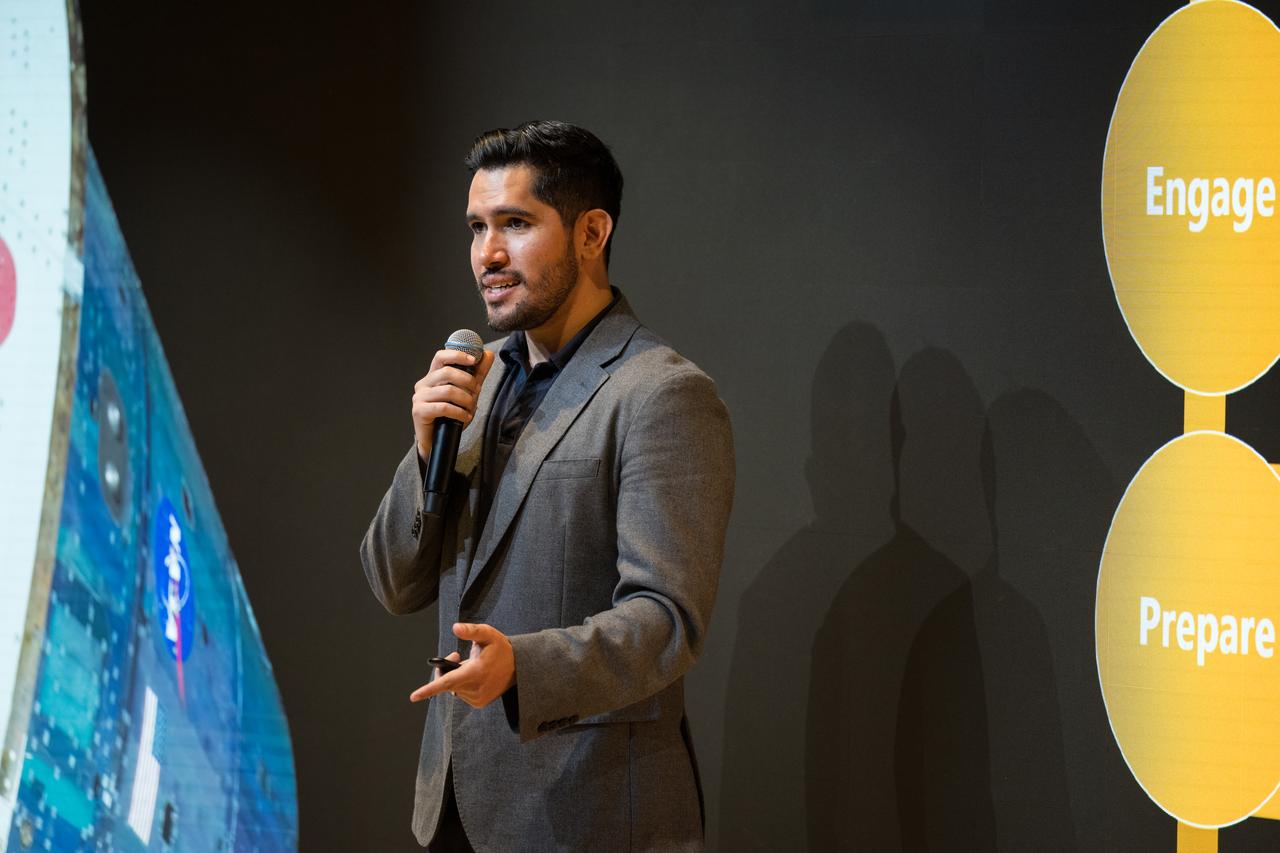
Microsoft’s Azure Space Senior Program Manager, Juan Carlos López, provides remarks during Space Education Day, Tuesday, June 20, 2023, at the Microsoft Technology Center in Arlington, Va. Microsoft hosted the event to showcase the collaboration, early successes, and future plans for high quality student engagement through activities that combined space content and technologies like artificial intelligence and cloud computing. Photo Credit: (NASA/Aubrey Gemignani)
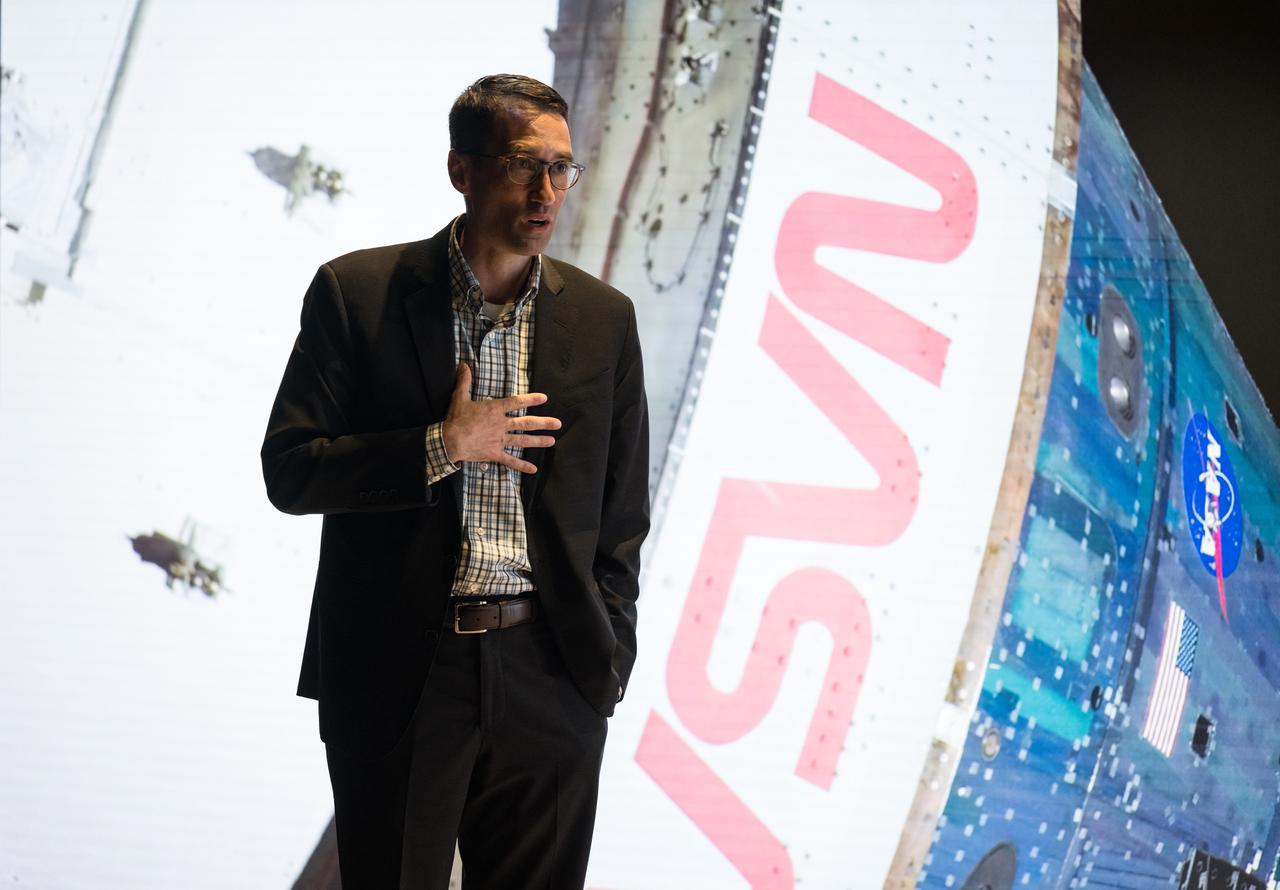
Microsoft’s Azure Space Senior Director, Stephen Kitay, provides remarks during Space Education Day, Tuesday, June 20, 2023, at the Microsoft Technology Center in Arlington, Va. Microsoft hosted the event to showcase the collaboration, early successes, and future plans for high quality student engagement through activities that combined space content and technologies like artificial intelligence and cloud computing. Photo Credit: (NASA/Aubrey Gemignani)
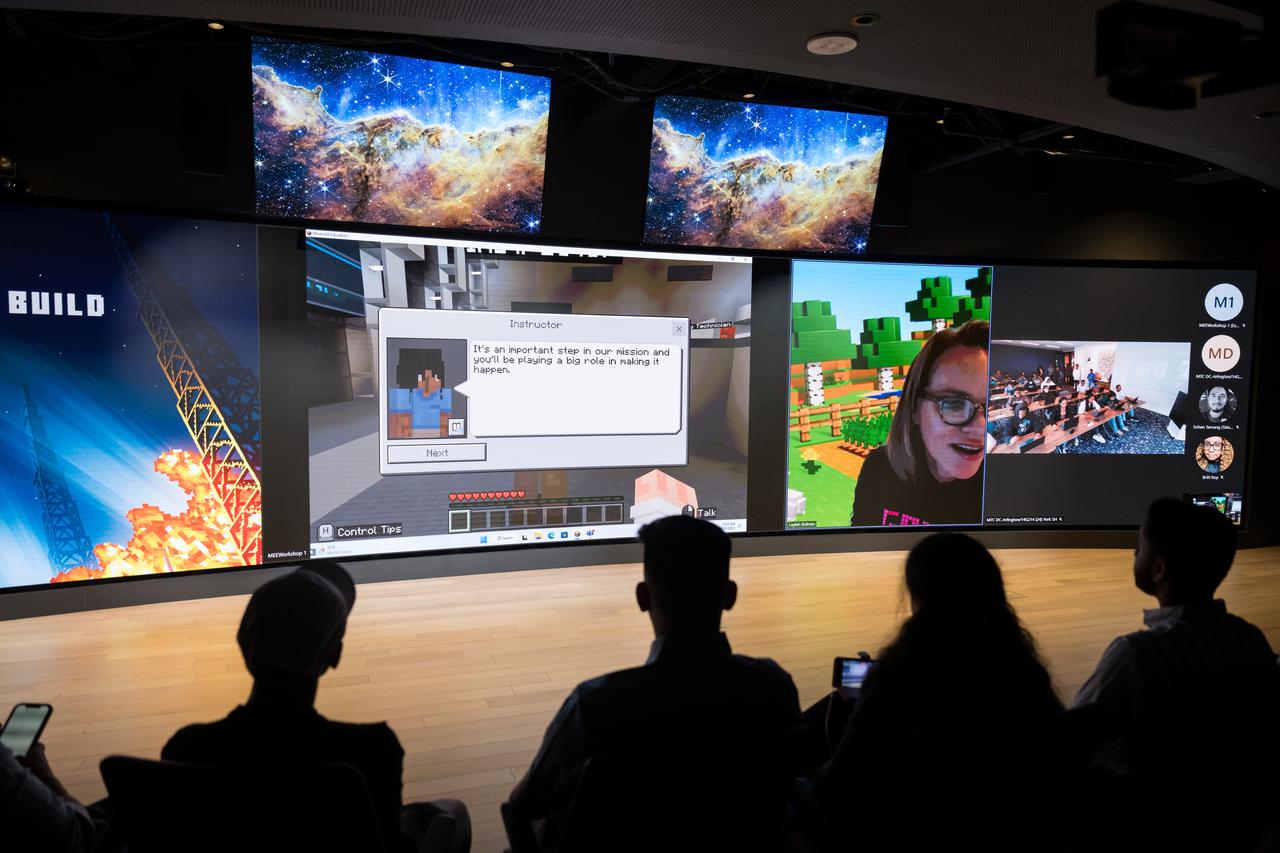
Microsoft Senior Program Manager and Executive Game Producer for Minecraft Education, Laylah Busman, provides instruction to DC area students during Space Education Day, Tuesday, June 20, 2023, at the Microsoft Technology Center in Arlington, Va. Microsoft hosted the event to showcase the collaboration, early successes, and future plans for high quality student engagement through activities that combined space content and technologies like artificial intelligence and cloud computing. Photo Credit: (NASA/Aubrey Gemignani)
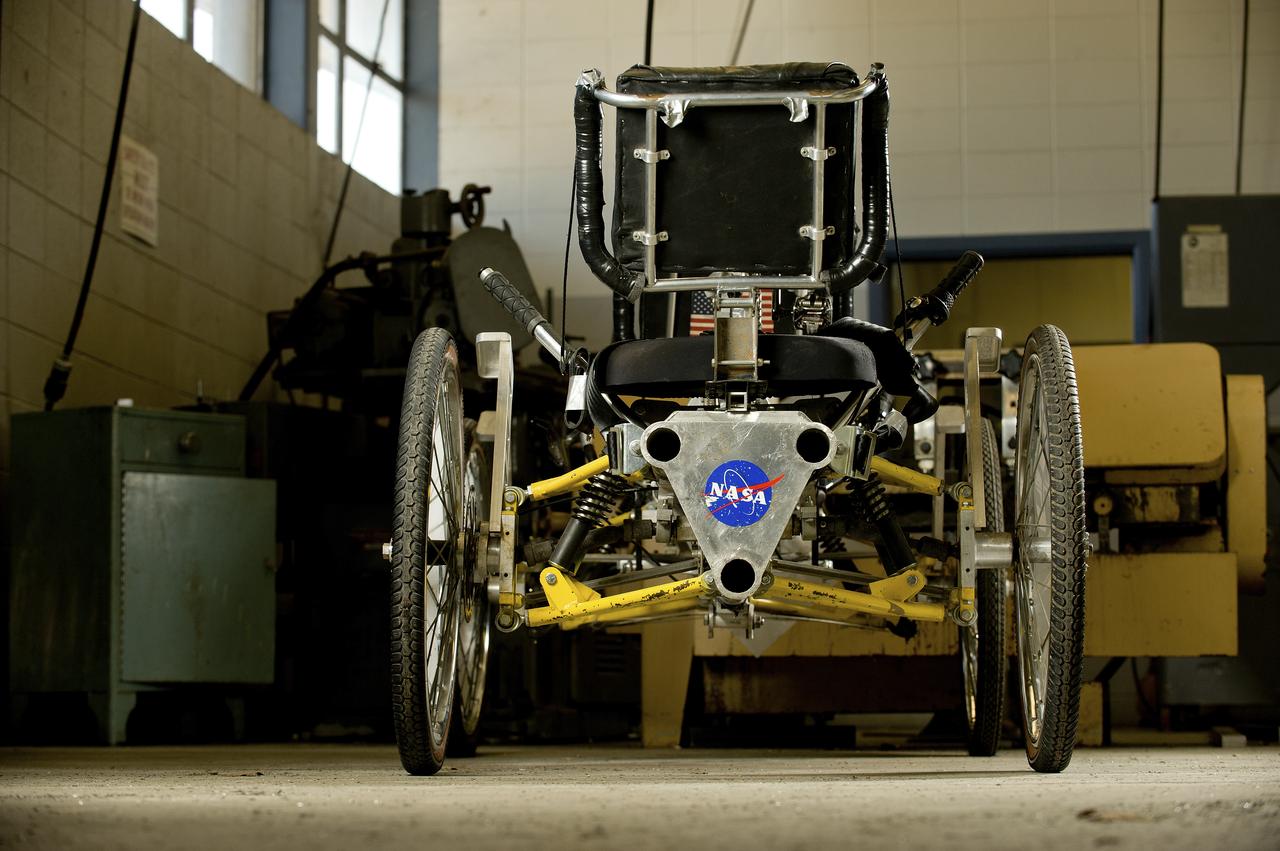
A CLOSE UP VIEW OF THE REAR ON A MOONBUGGY AT THE HUNTSVILLE CENTER FOR TECHNOLOGY
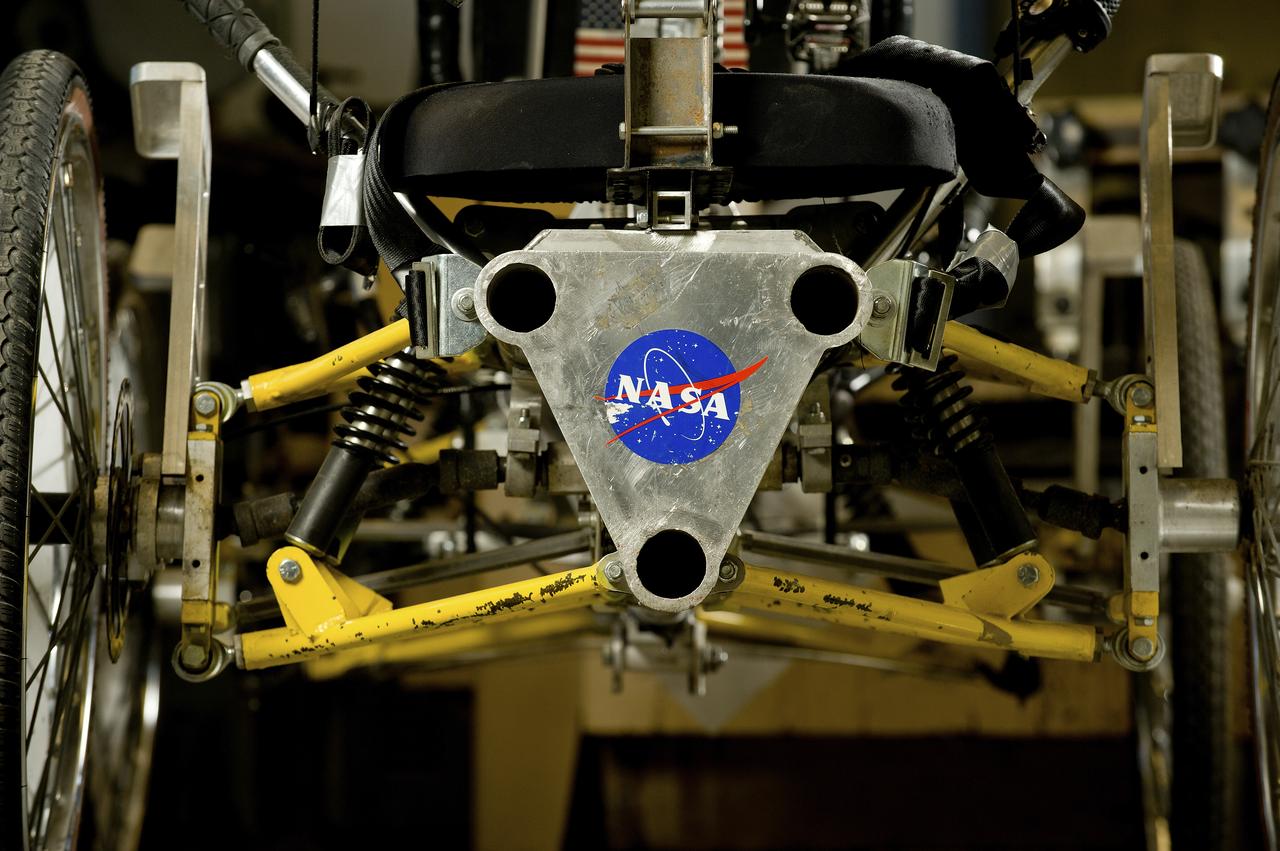
A CLOSE UP VIEW OF THE REAR ON A MOONBUGGY AT THE HUNTSVILLE CENTER FOR TECHNOLOGY
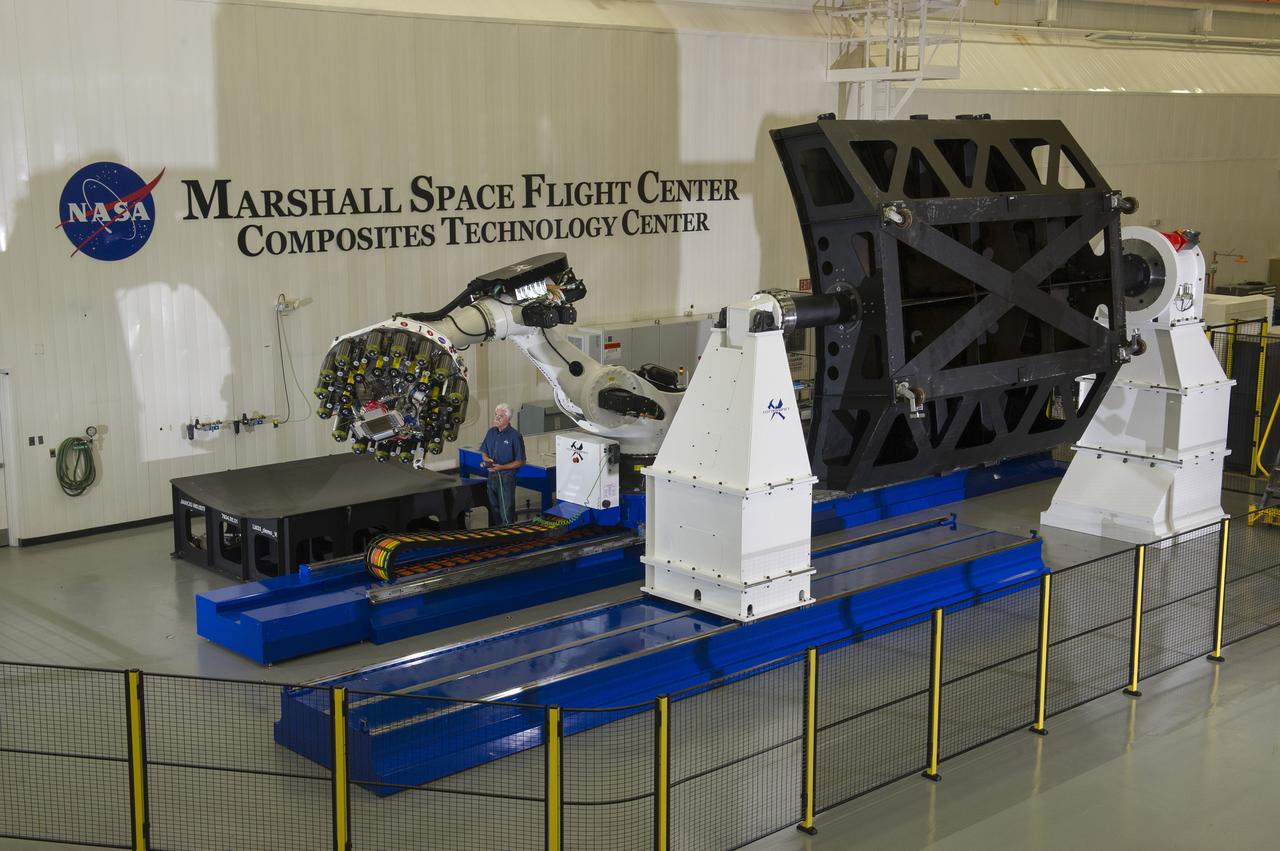
OVERVIEW OF MSFC COMPOSITES TECHNOLOGY CENTER AND THE AUTOMATED FIBER PLACEMENT TOOL WITH MATERIALS ENGINEER LARRY PELHAM
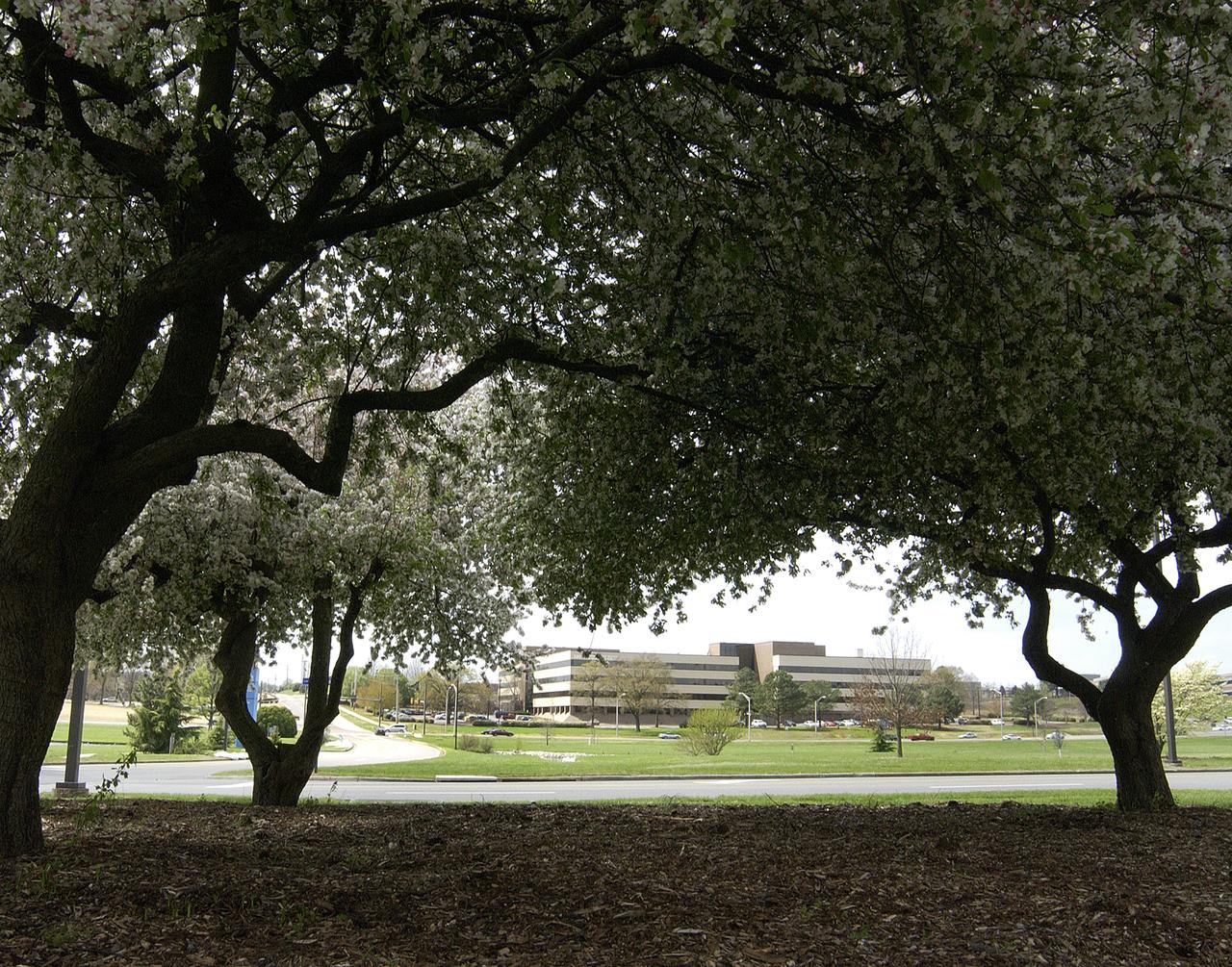
The National Space Science and Technology Center (NSSTC), located in Huntsville, Alabama, is a laboratory for cutting-edge research in selected scientific and engineering disciplines. The major objectives of the NSSTC are to provide multiple fields of expertise coming together to solve solutions to science and technology problems, and gaining recognition as a world-class science research organization. The center, opened in August 2000, focuses on space science, Earth sciences, information technology, optics and energy technology, biotechnology and materials science, and supports NASA's mission of advancing and communicating scientific knowledge using the environment of space for research. In addition to providing basic and applied research, NSSTC, with its student participation, also fosters the next generation of scientists and engineers. NSSTC is a collaborated effort between NASA and the state of Alabama through the Space Science and Technology alliance, a group of six universities including the Universities of Alabama in Huntsville (UAH),Tuscaloosa (UA), and Birmingham (UAB); the University of South Alabama in Mobile (USA);Alabama Agricultural and Mechanical University (AM) in Huntsville; and Auburn University (AU) in Auburn. Participating federal agencies include NASA, Marshall Space Flight Center, the National Oceanic and Atmospheric Administration, the Department of Defense, the National Science Foundation, and the Department of Energy. Industries involved include the Space Science Research Center, the Global Hydrology and Climate Center, the Information Technology Research Center, the Optics and Energy Technology Center, the Propulsion Research Center, the Biotechnology Research Center, and the Materials Science Research Center. This photo shows the completed center with the additional arnex (right of building) that added an additional 80,000 square feet (7,432 square meters) to the already existent NSSTC, nearly doubling the size of the core facility. At full capacity, the NSSTC tops 200,000 square feet (18,580 square meters) and houses approximately 550 employees.
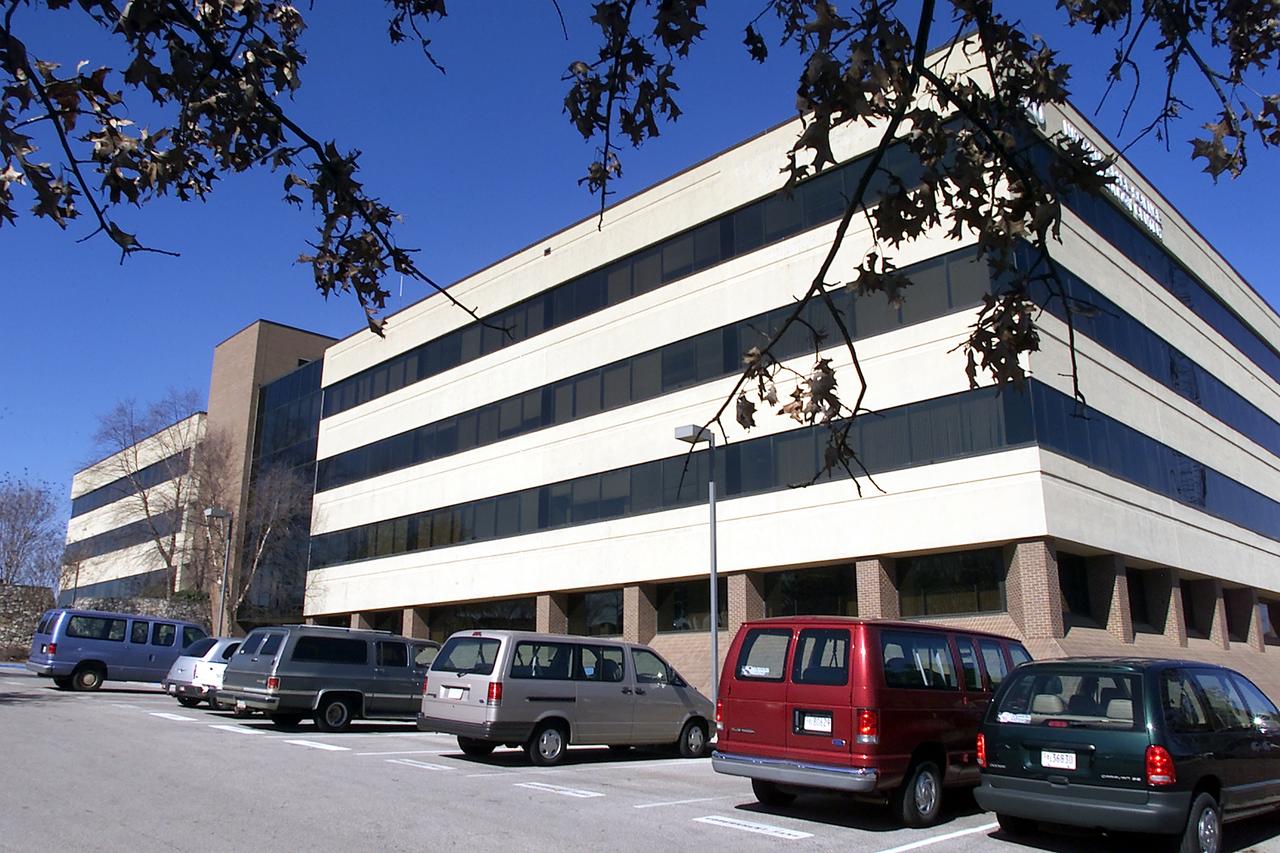
The National Space Science and Technology Center (NSSTC), located in Huntsville, Alabama, is a laboratory for cutting-edge research in selected scientific and engineering disciplines. The major objectives of the NSSTC are to provide multiple fields of expertise coming together to solve solutions to science and technology problems, and gaining recognition as a world-class science research organization. The center, opened in August 2000, focuses on space science, Earth sciences, information technology, optics and energy technology, biotechnology and materials science, and supports NASA's mission of advancing and communicating scientific knowledge using the environment of space for research. In addition to providing basic and applied research, NSSTC, with its student participation, also fosters the next generation of scientists and engineers. NSSTC is a collaborated effort between NASA and the state of Alabama through the Space Science and Technology alliance, a group of six universities including the Universities of Alabama in Huntsville (UAH),Tuscaloosa (UA), and Birmingham (UAB); the University of South Alabama in Mobile (USA); Alabama Agricultural and Mechanical University (AM) in Huntsville; and Auburn University (AU) in Auburn. Participating federal agencies include NASA, Marshall Space Flight Center, the National Oceanic and Atmospheric Administration, the Department of Defense, the National Science Foundation, and the Department of Energy. Industries involved include the Space Science Research Center, the Global Hydrology and Climate Center, the Information Technology Research Center, the Optics and Energy Technology Center, the Propulsion Research Center, the Biotechnology Research Center, and the Materials Science Research Center. An arnex, scheduled for completion by summer 2002, will add an additional 80,000 square feet (7,432 square meters) to NSSTC nearly doubling the size of the core facility. At full capacity, the completed NSSTC will top 200,000 square feet (18,580 square meters) and house approximately 550 employees.
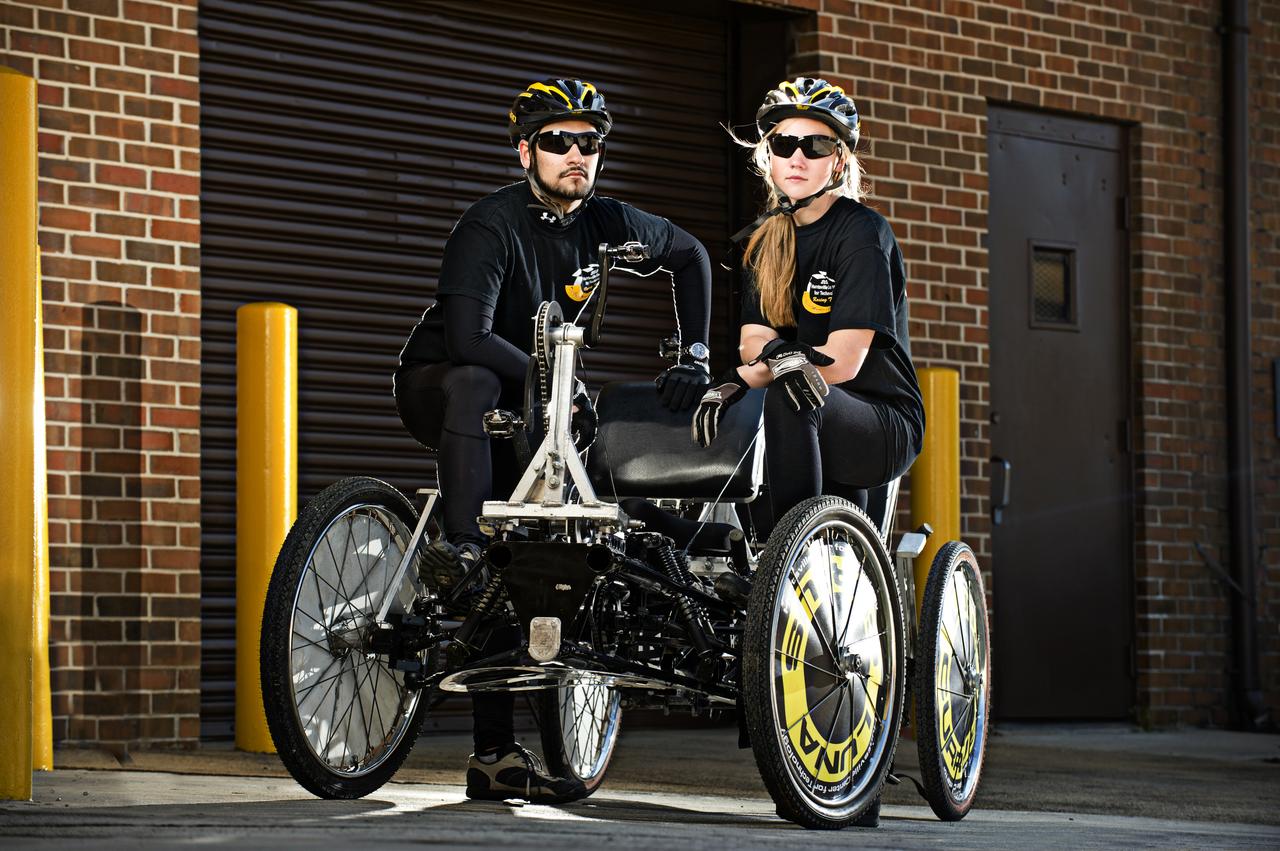
HUNTSVILLE CENTER FOR TECHNOLOGY’S EZRA LOGREIRA AND HEATHER BUNDY POSE WITH THE MOONBUGGY THEY WILL DRIVE IN THE 2011 GREAT MOONBUGGY RACE AT THE US SPACE AND ROCKET CENTER.
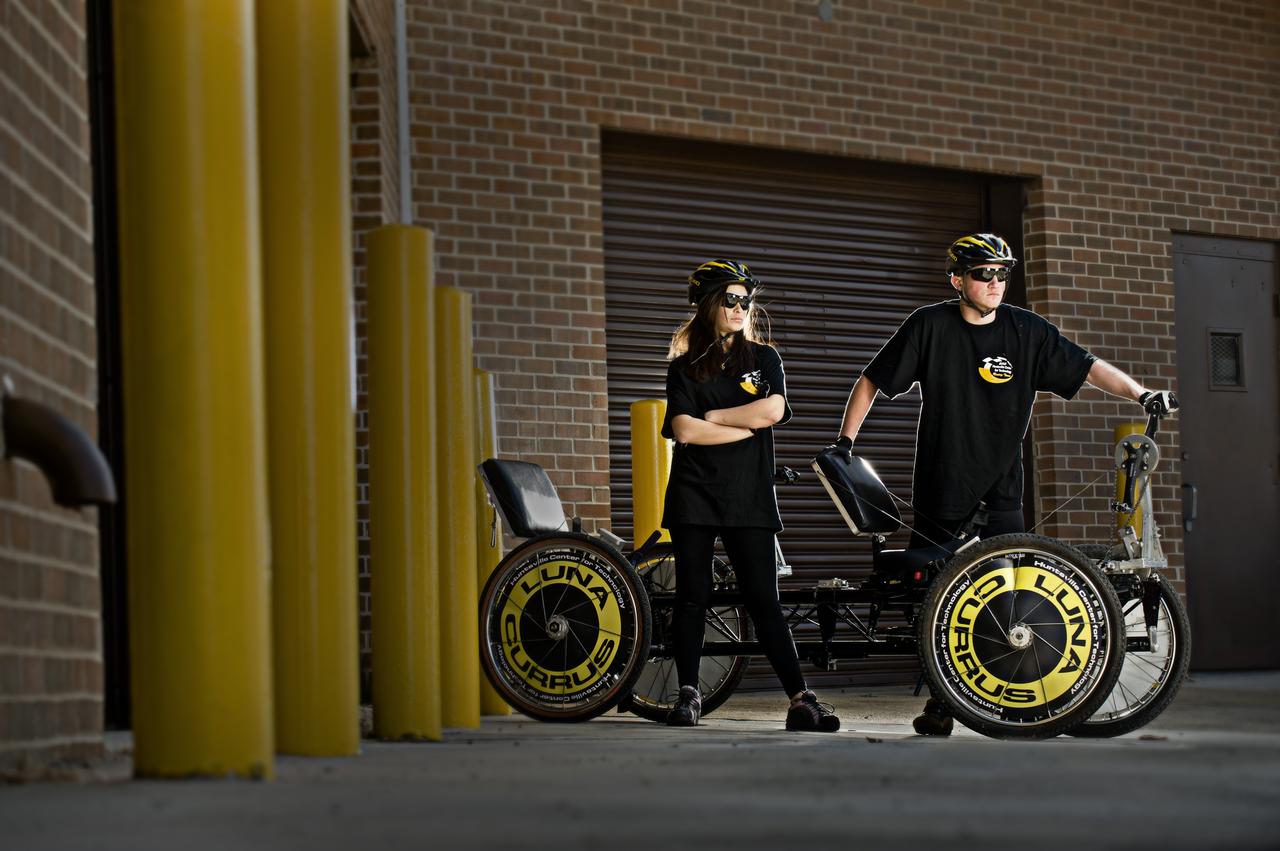
HUNTSVILLE CENTER FOR TECHNOLOGY’S FRANCHESCA QUIJANO AND HUNTER FLECKNER POSE WITH THE MOONBUGGY THEY WILL DRIVE IN THE 2011 GREAT MOONBUGGY RACE AT THE US SPACE AND ROCKET CENTER
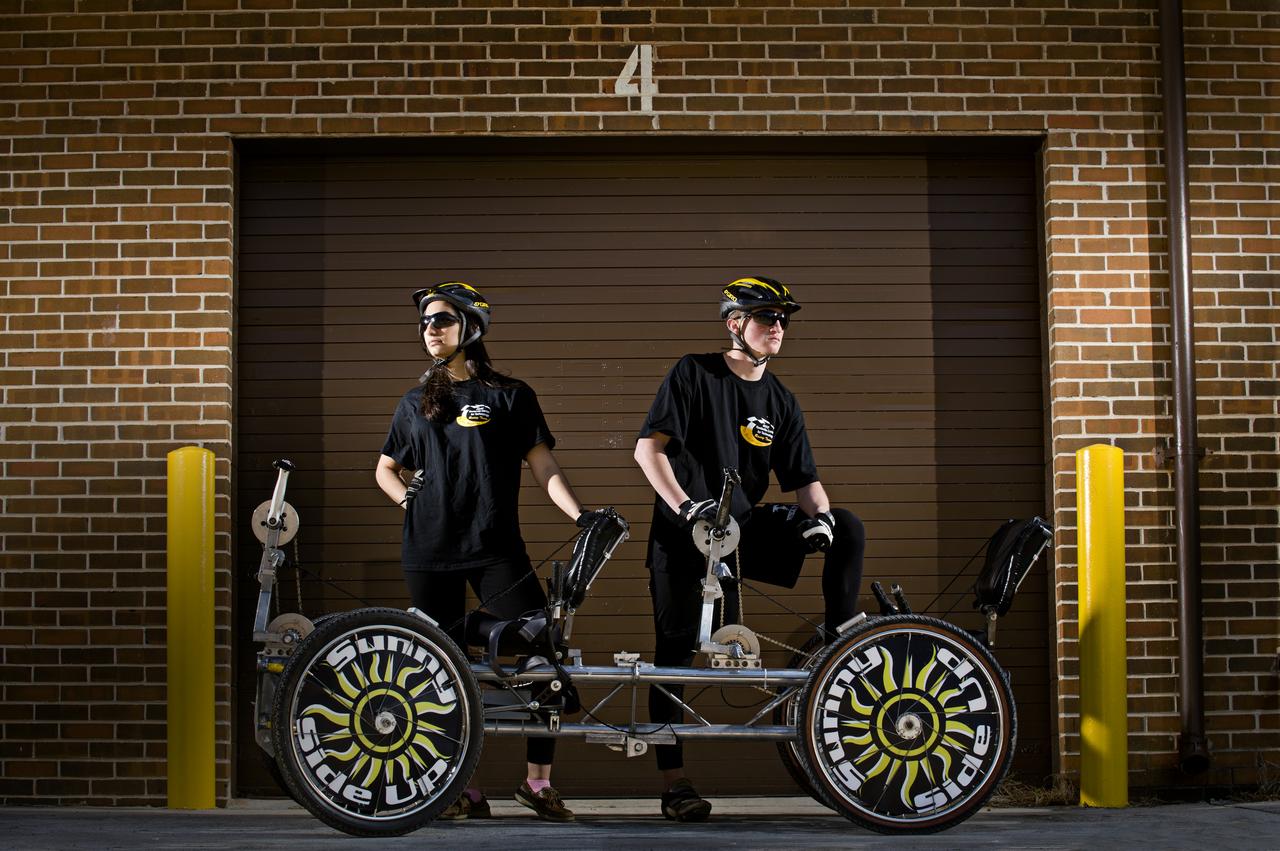
HUNTSVILLE CENTER FOR TECHNOLOGY’S ROXY BAHANI AND HUNTER FLECKNER POSE WITH THE MOONBUGGY THEY WILL DRIVE IN THE 2011 GREAT MOONBUGGY RACE AT THE US SPACE AND ROCKET CENTER
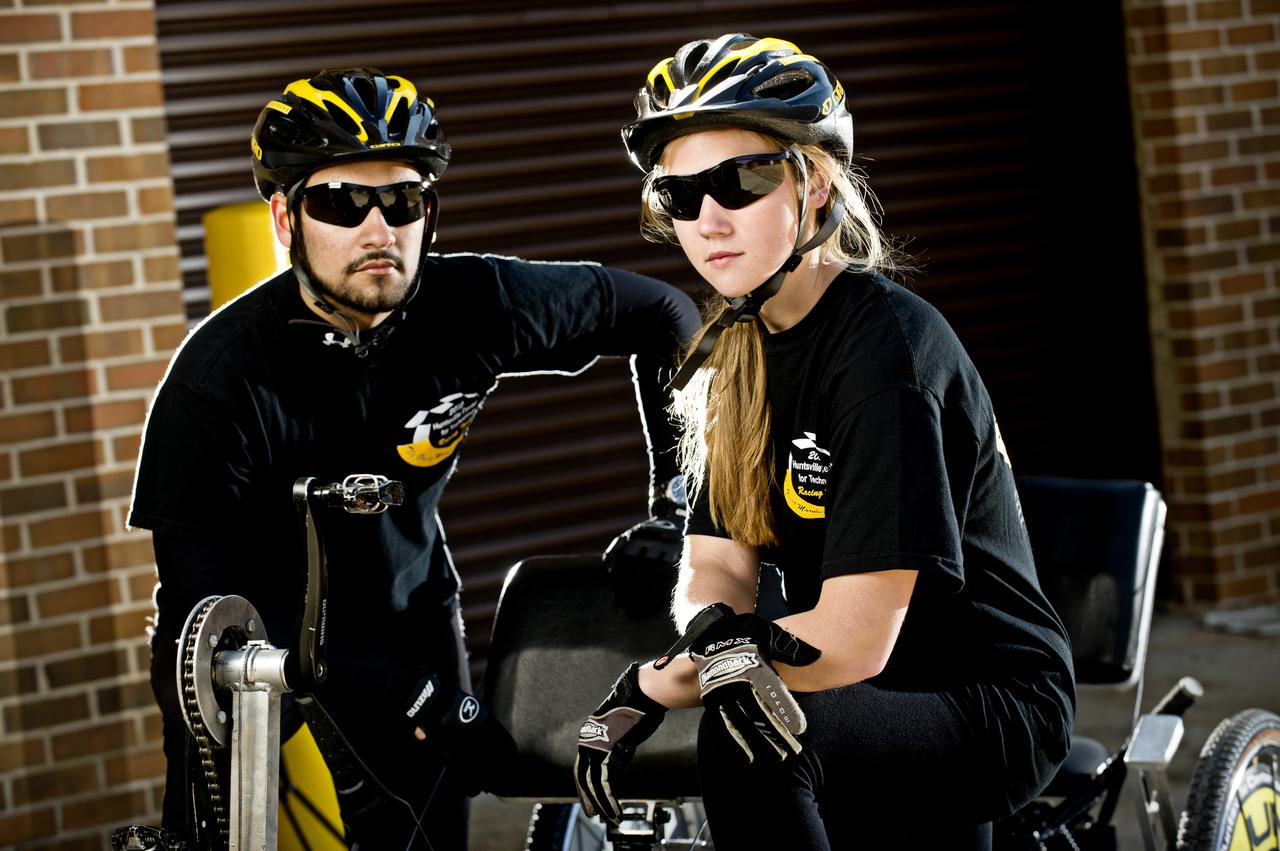
HUNTSVILLE CENTER FOR TECHNOLOGY’S EZRA LOGREIRA AND HEATHER BUNDY POSE WITH THE MOONBUGGY THEY WILL DRIVE IN THE 2011 GREAT MOONBUGGY RACE AT THE US SPACE AND ROCKET CENTER.
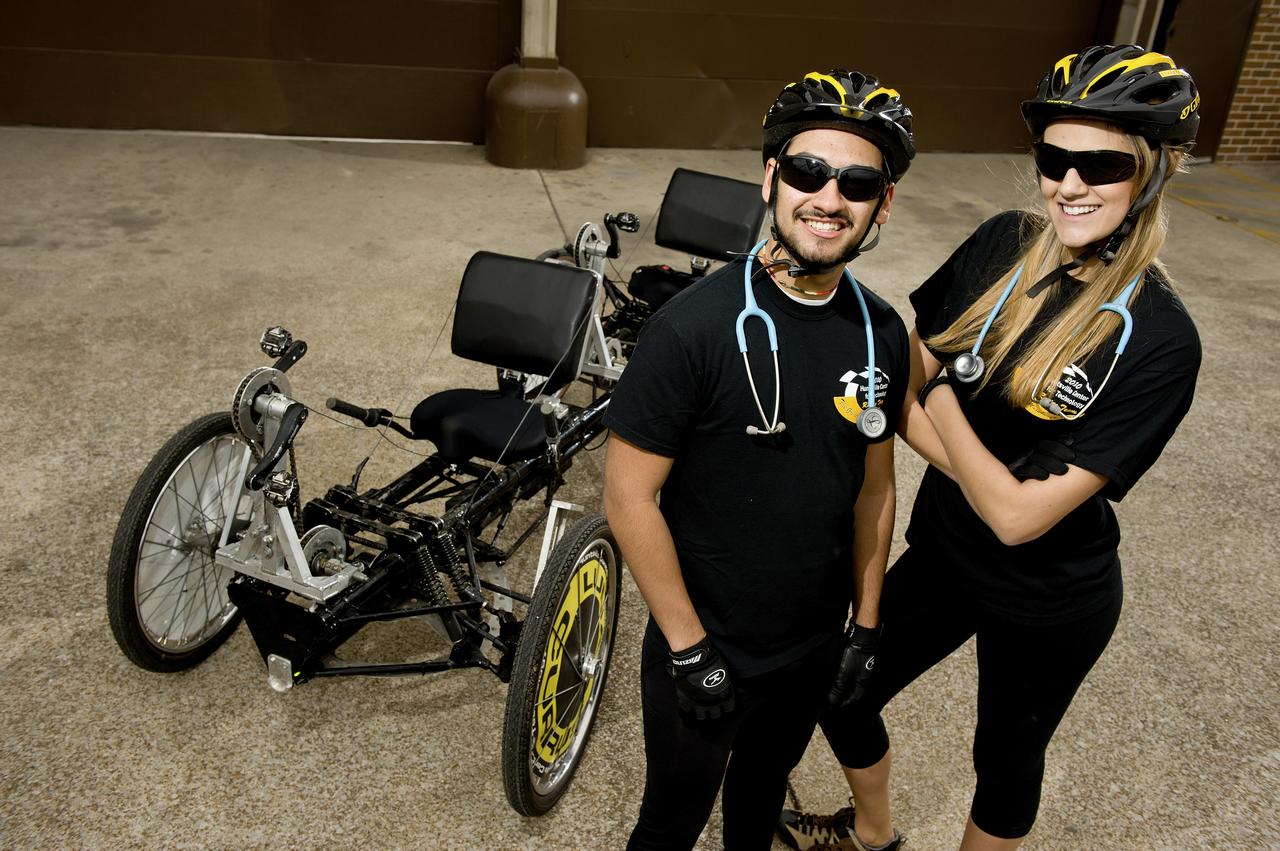
HUNTSVILLE CENTER FOR TECHNOLOGY STUDENTS AND MOONBUGGY CREW EZRA LOGREIRA AND KARINE WITTENBORG POSE WITH THEIR MOONBUGGY
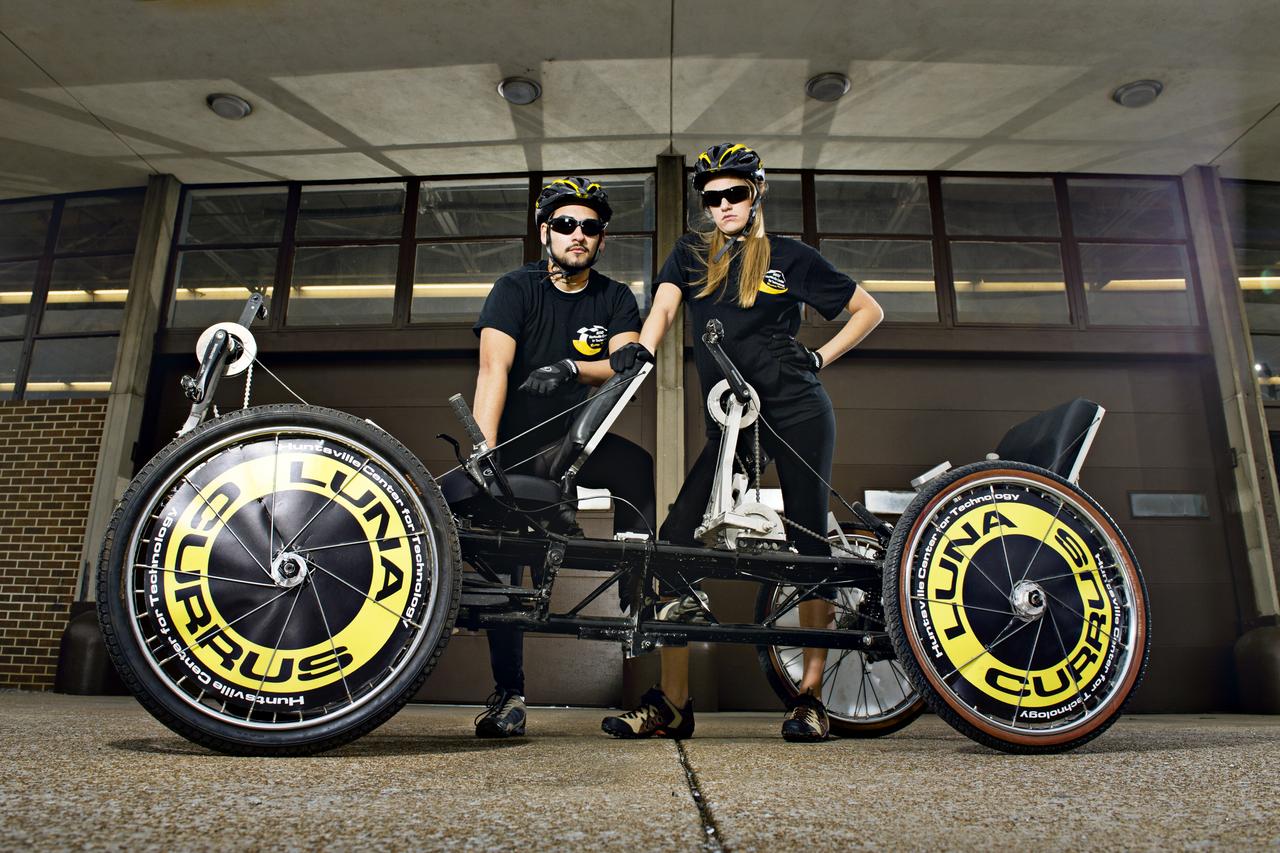
HUNTSVILLE CENTER FOR TECHNOLOGY STUDENTS AND MOONBUGGY CREW EZRA LOGREIRA AND KARINE WITTENBORG POSE WITH THEIR MOONBUGGY
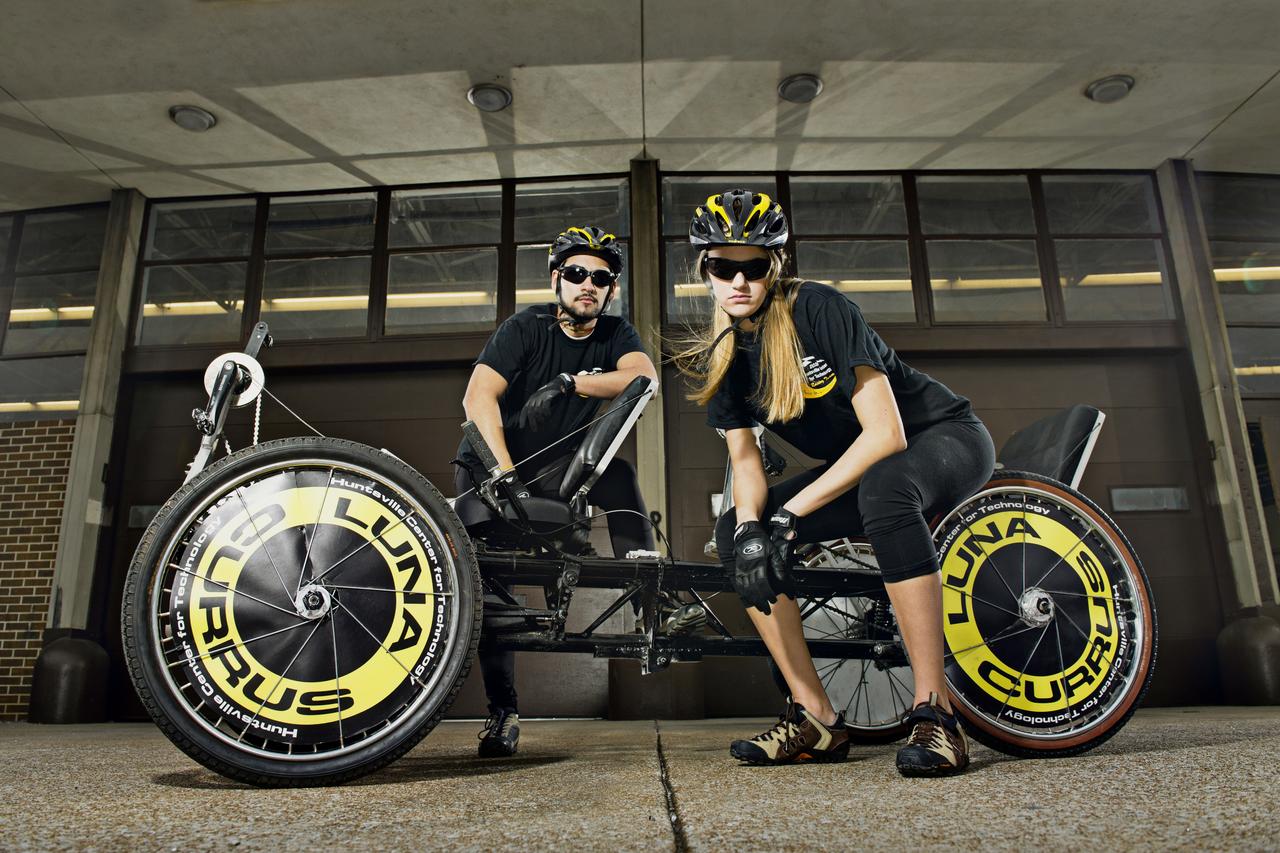
HUNTSVILLE CENTER FOR TECHNOLOGY STUDENTS AND MOONBUGGY CREW EZRA LOGREIRA AND KARINE WITTENBORG POSE WITH THEIR MOONBUGGY
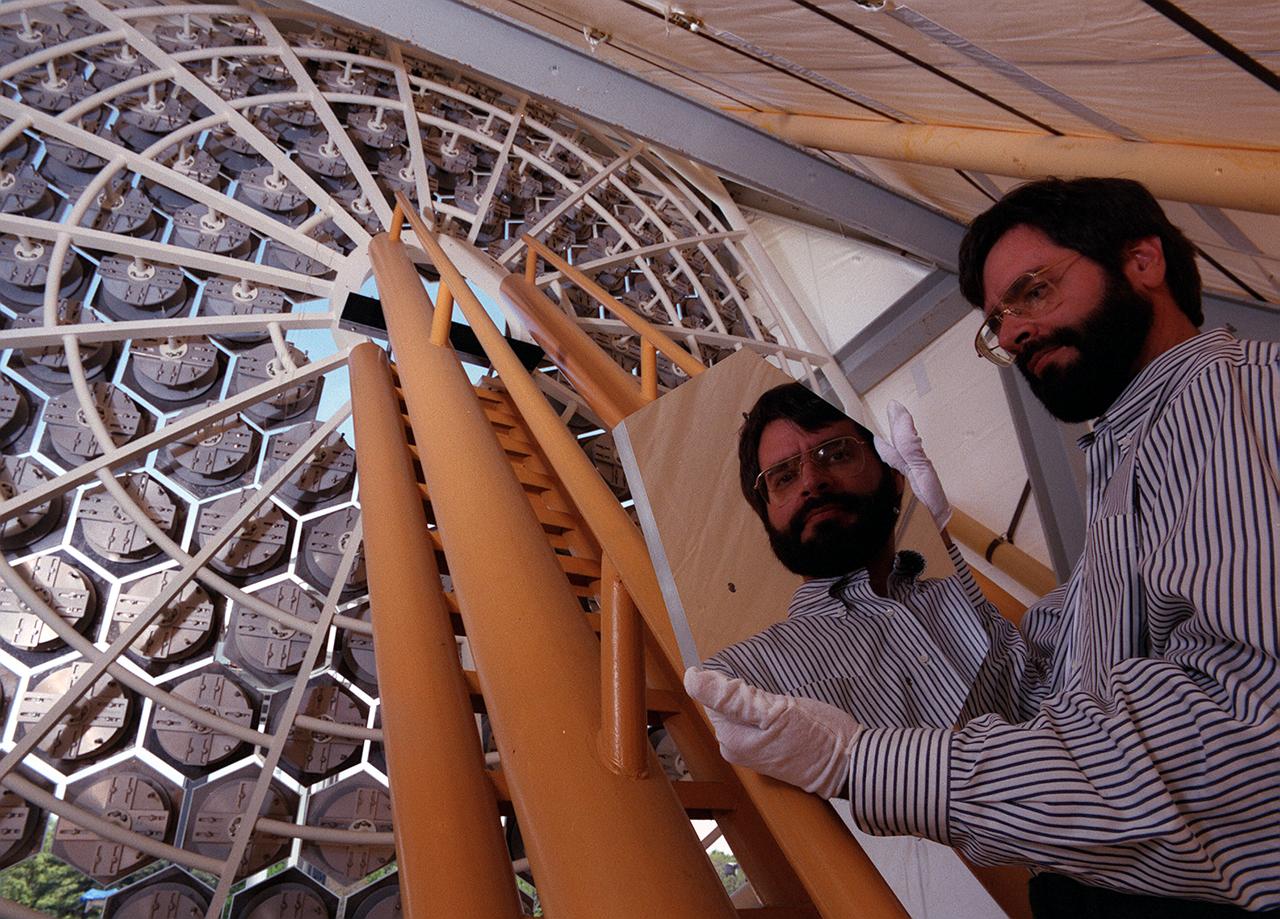
NASA's Space Optics Manufacturing Technology Center has been working to expand our view of the universe via sophisticated new telescopes. The Optics Center's goal is to develop low-cost, advanced space optics technologies for the NASA program in the 21st century, including the long-term goal of imaging Earth-like planets in distant solar systems. A segmented array of mirrors was designed by the Space Optics Manufacturing Technology Center for solar the concentrator test stand at the Marshall Space Flight Center (MSFC) for powering solar thermal propulsion engines. Each hexagon mirror has a spherical surface to approximate a parabolic concentrator when combined into the entire 18-foot diameter array. The aluminum mirrors were polished with a diamond turning machine, that creates a glass-like reflective finish on metal. The precision fabrication machinery at the Space Optics Manufacturing Technology Center at MSFC can polish specialized optical elements to a world class quality of smoothness. This image shows optics physicist, Vince Huegele, examining one of the 144-segment hexagonal mirrors of the 18-foot diameter array at the MSFC solar concentrator test stand.
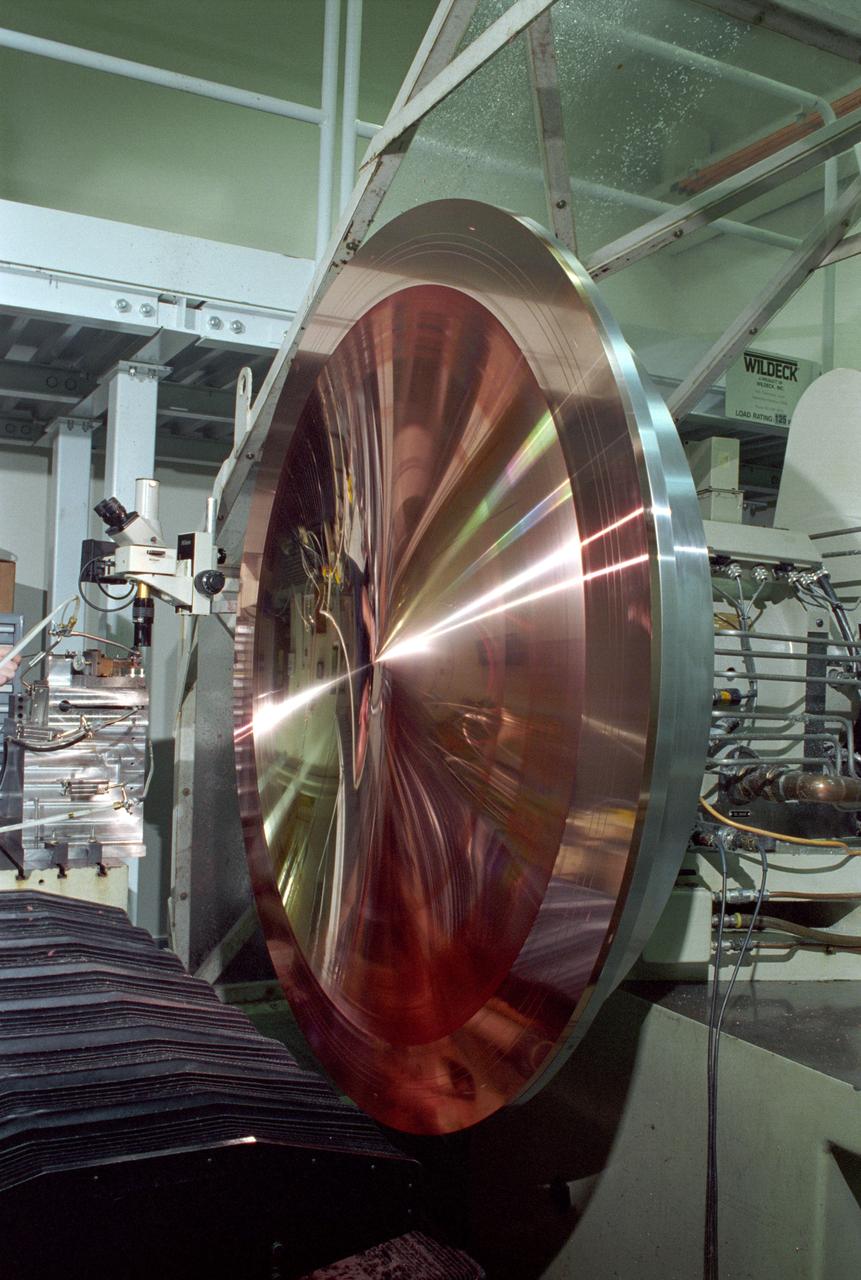
This king-size copper disk, manufactured at the Space Optics Manufacturing and Technology Center (SOMTC) at the Marshall Space Flight Center (MSFC), is a special mold for making high resolution monitor screens. This master mold will be used to make several other molds, each capable of forming hundreds of screens that have a type of lens called a Fresnel lens. Weighing much less than conventional optics, Fresnel lenses have multiple concentric grooves, each formed to a precise angle, that together create the curvature needed to focus and project images. MSFC leads NASA's space optics manufacturing technology development as a technology leader for diamond turning. The machine used to manufacture this mold is among many one-of-a-kind pieces of equipment of MSFC's SOMTC.
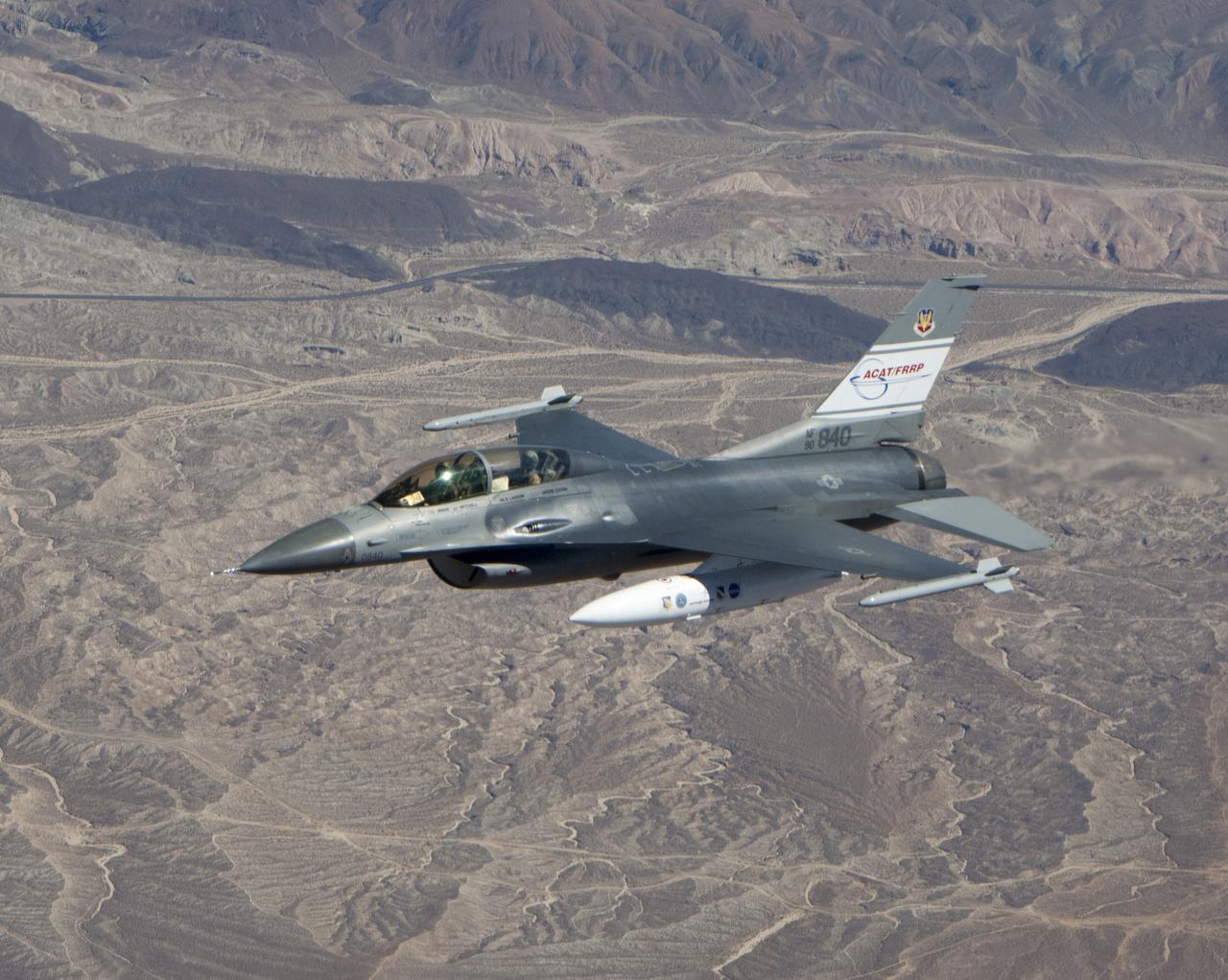
The U.S. Air Force's F-16D Automatic Collision Avoidance Technology, or ACAT, aircraft was used by NASA's Armstrong Flight Research Center and the Air Force Research Laboratory to develop and test collision avoidance technologies.
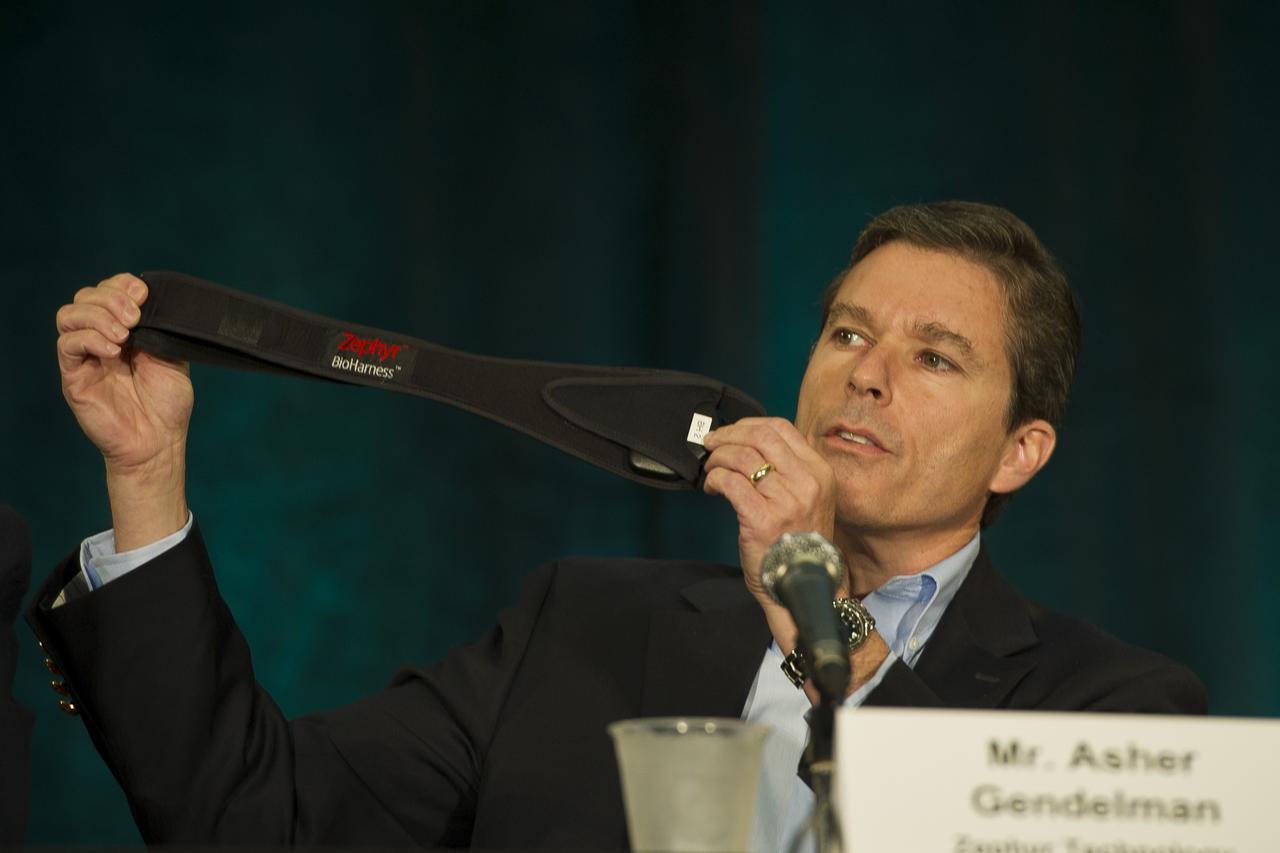
Asher Gendelman, a director of technology at Zephyr Technology, holds up chest belt as he speaks about technology investments and their benefits during a panel discussion at the 2011 NASA Future Forum held at the Riggs Alumni Center on the campus of the University of Maryland, Thursday, Aug. 11, 2011, in College Park, Md. Photo Credit: (NASA/Paul E. Alers)

Tawnya Laughinghouse, NASA’s Technology Demonstration Missions program manager, talks about the NASA payloads hitching a ride on the Space Test Program-2 (STP-2) mission during a prelaunch technology TV broadcast at Kennedy Space Center in Florida on June 23, 2019. STP-2 is managed by the U.S. Air Force Space and Missile Systems Center.

Josie Burnett, director or Exploration Research and Technology Programs, speaks to Kennedy Space Center employees about plans for the coming year. The event took place in the Lunar Theater at the Kennedy Space Center Visitor Complex’s Apollo Saturn V Center. The year will be highlighted with NASA's partners preparing test flights for crewed missions to the International Space Station as part of the agency's Commercial Crew Program and six launches by the Launch Services Program. Exploration Ground Systems will be completing facilities to support the Space Launch System rocket and Orion spacecraft. Exploration Research and Technology Programs will continue to provide supplies to the space station launched as part of the Commercial Resupply Services effort.
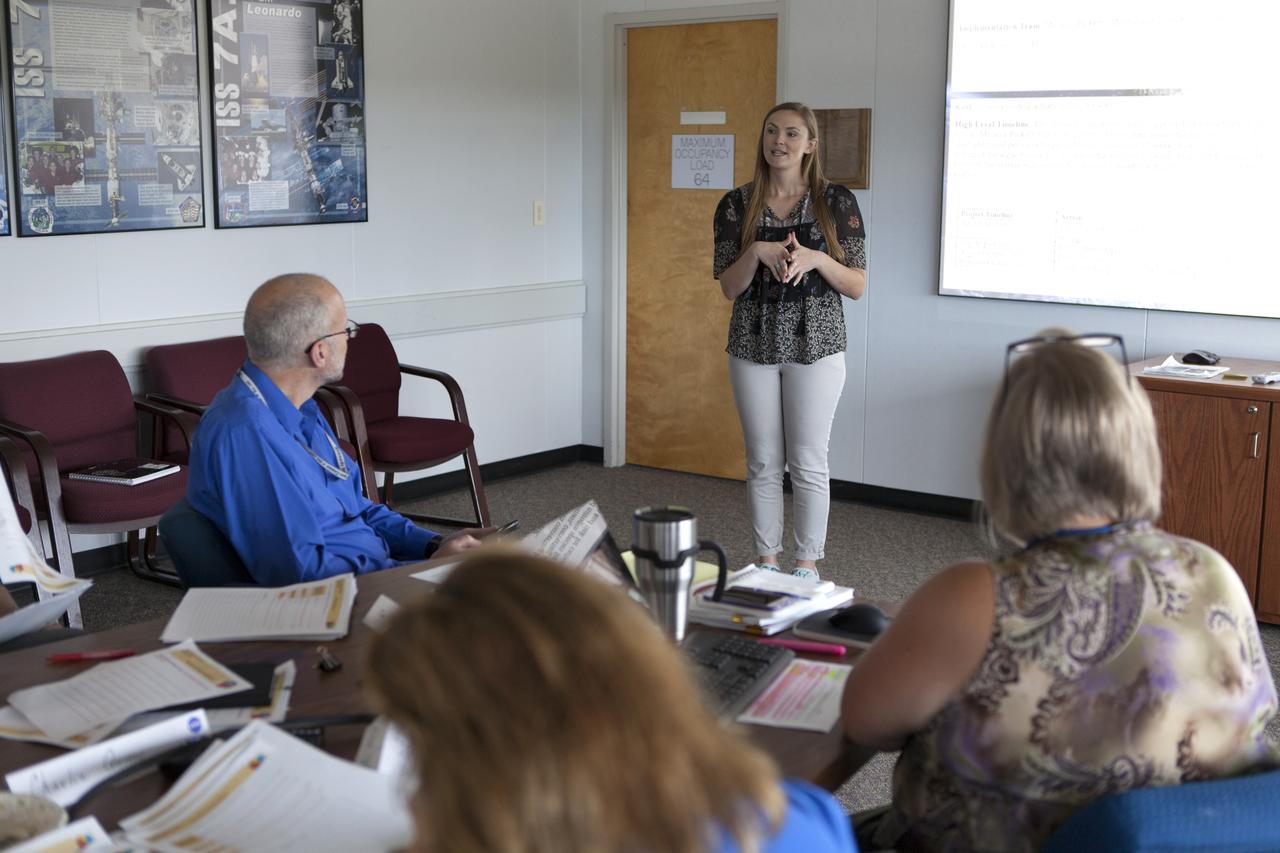
Melanie Pickett, from the Exploration Research and Technology Programs directorate, presents her proposal during the “Innovation Without Boundaries” event held in the Space Station Processing Facility at Kennedy Space Center in Florida on Thursday, Aug. 2. There were 39 proposals featuring a wide range of innovative ideas as part of the Chief Technologist Innovation Call. Presenters had two minutes to highlight their idea, followed by a three-minute question-and-answer period. The judging panel included senior staff, contractors and representatives throughout Kennedy.
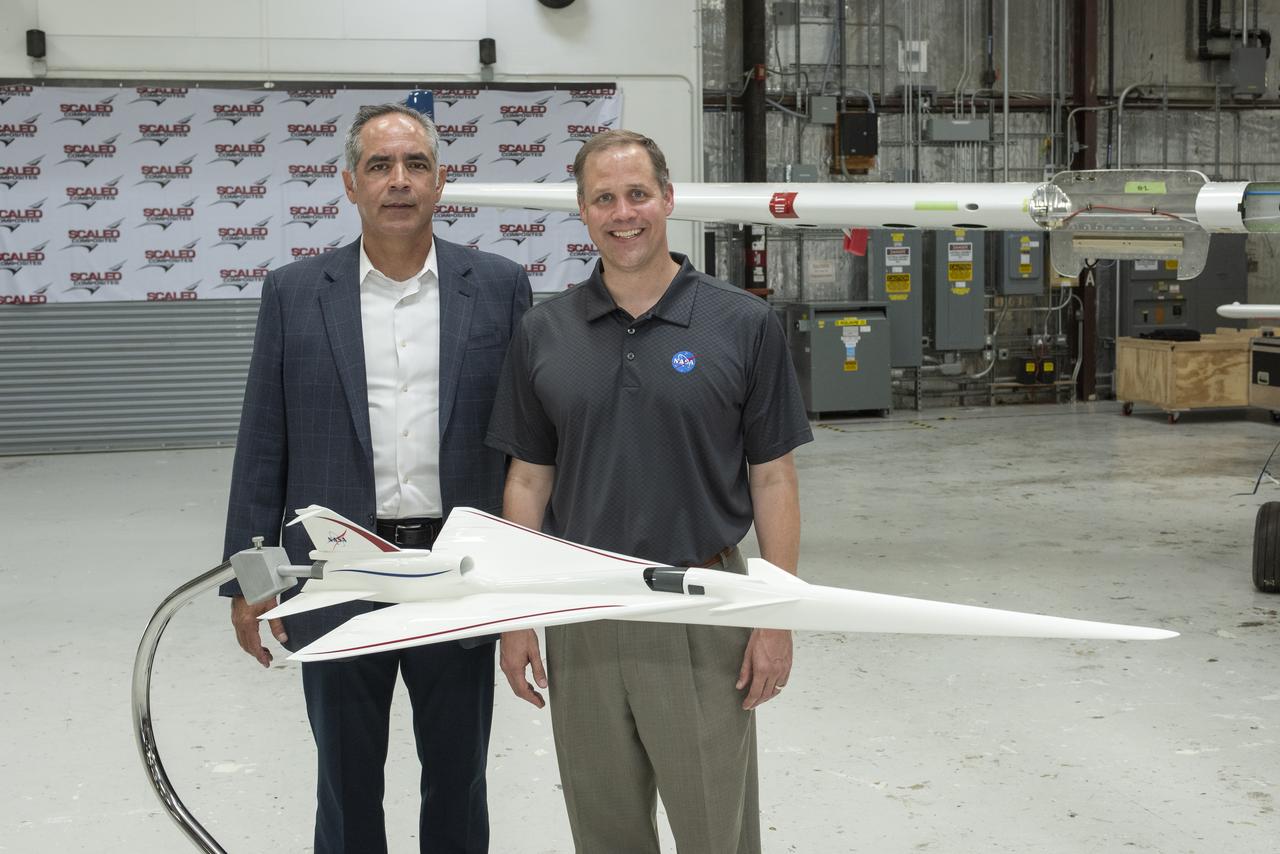
NASA Administrator Bridenstine stands with AFRC center director McBride by model NASA's Supersonic X-Plane, X-59 Quiet Supersonic Technology or QueSST. Bridenstine spoke at press event at Mojave Air and Space Port in California. The goal of X-59 is to quiet the sound when aircraft pierce the speed of sound and make a loud sonic boom on the ground.

Robert Wilson of the Solar/Solar terrestrial Studies team at the National Space Science and Technology Center, a joint research and collaborative think tank partnership of the University of Alabama in Huntsville (UAH) and the Marshall Space Flight Center, adjusts his telescope which is set up as a viewing opportunity for MSFC employees prior to the August 21, 2017 solar eclipse event. The Huntsville area experienced 97 percent occultation, nearly a complete blocking out of the sun by the orbit of Earth's moon. The next opportunity to view a solar eclipse in the eastern and central United States will occur in April 2024.

Laura Aguiar hosts NASA’s prelaunch technology show for Space Test Program-2 (STP-2) at Kennedy Space Center on June 23, 2019. STP-2 is managed by the U.S. Air Force Space and Missile Systems Center.

Laura Aguiar hosts NASA’s prelaunch technology show for Space Test Program-2 (STP-2) at Kennedy Space Center on June 23, 2019. STP-2 is managed by the U.S. Air Force Space and Missile Systems Center.
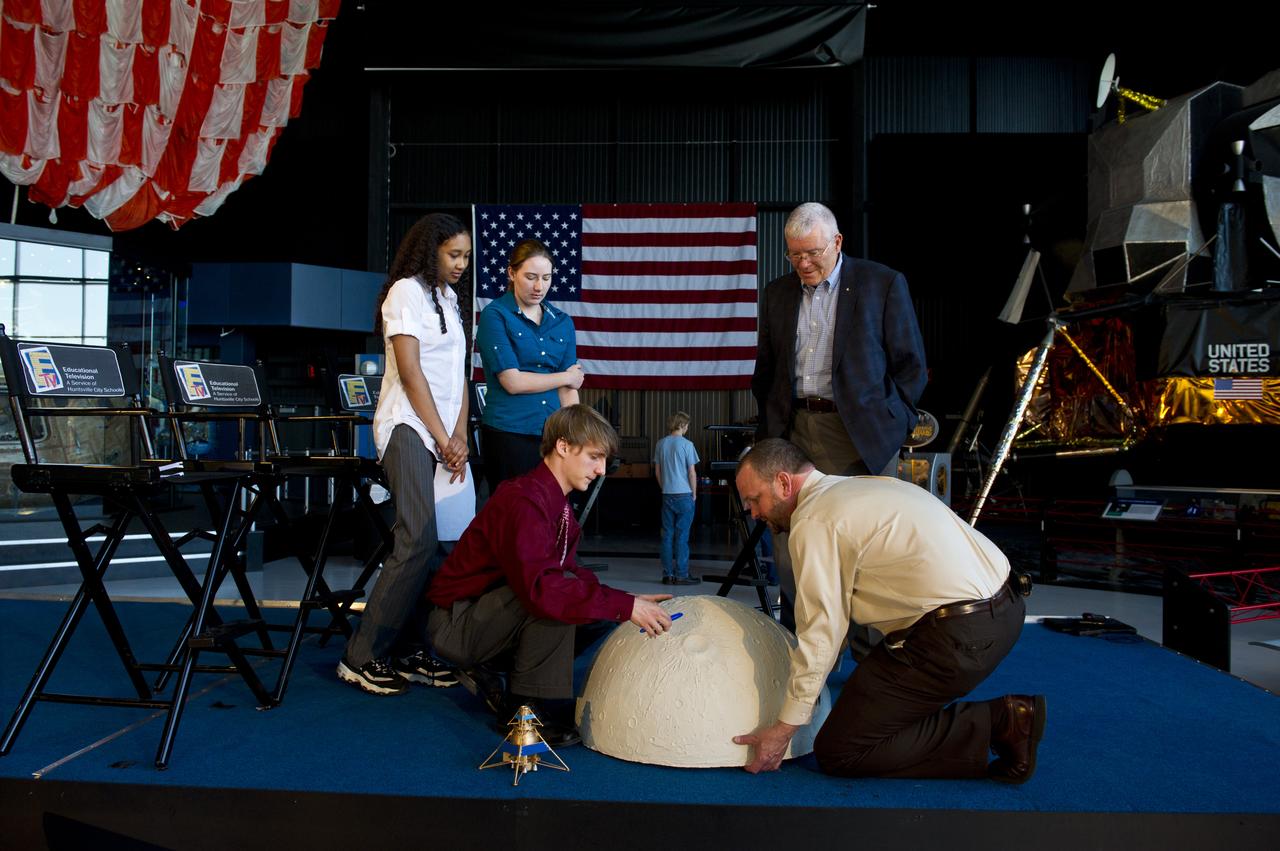
STUDENTS FROM THE CENTER FOR TECHNOLOGY SHOW APOLLO 13 ASTRONAUT FRED HAISE A DISPLAY MODEL FOR A MOON BASED PROJECT THEY ARE DESIGNING FOR COMPETITION WITH OTHER SCHOOLS IN ALABAMA. (L to R) QUIANA HUNT, SARAH FOLSE, MICHAEL HARTMAN, MIKE EVANS (TEACHER), AND FRED HAISE
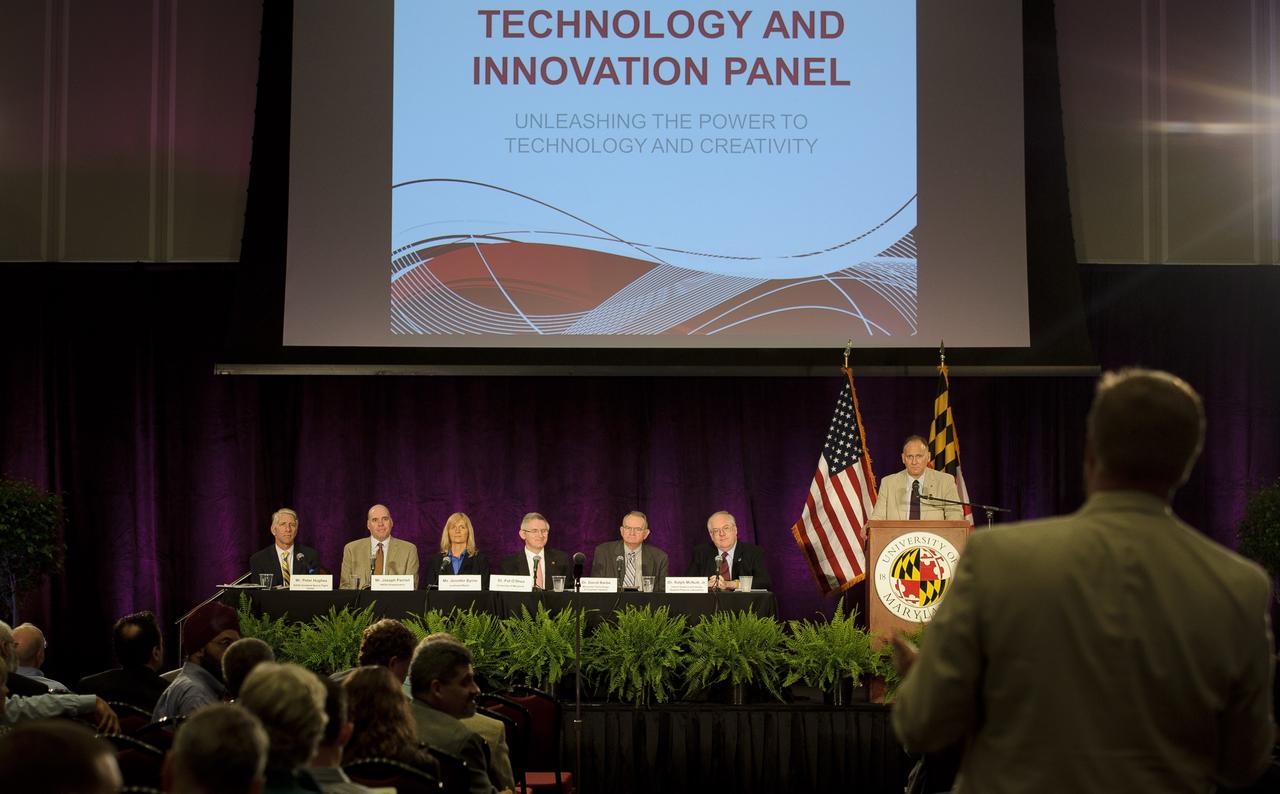
A member of the audience asks a question to the technology and innovation panel at the 2011 NASA Future Forum, Thursday, Aug. 11, 2011, at the Riggs Alumni Center on the campus of the University of Maryland in College Park, Md. Photo Credit: (NASA/Paul E. Alers)
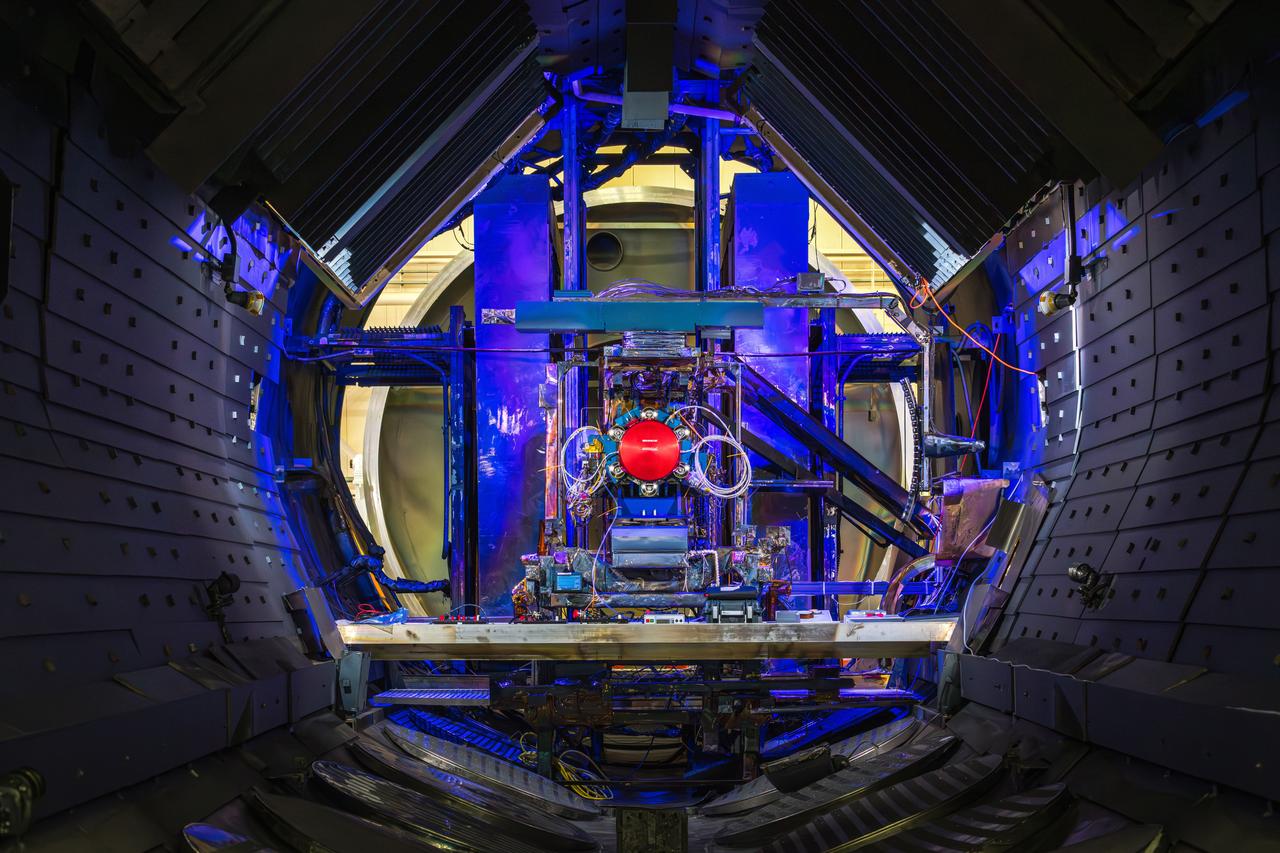
NASA Glenn Research Center has received the first of three Advanced Electric Propulsion System (AEPS) thrusters for the Gateway lunar space station. Built by L3Harris Technologies, the thruster will undergo testing before integration with Gateway’s Power and Propulsion Element, launching with the HALO module ahead of Artemis IV.

Dr. Luz M. Calle, a principal investigator for corrosion research at NASA’s Kennedy Space Center, examines microcapsules under a microscope Dec. 12, 2018. Microencapsulation is a way to create smart coatings or paint capable of indicating, resisting, and repairing corrosion. Smart coatings are being developed as alternatives to corrosion protection technologies that are not environmentally friendly.
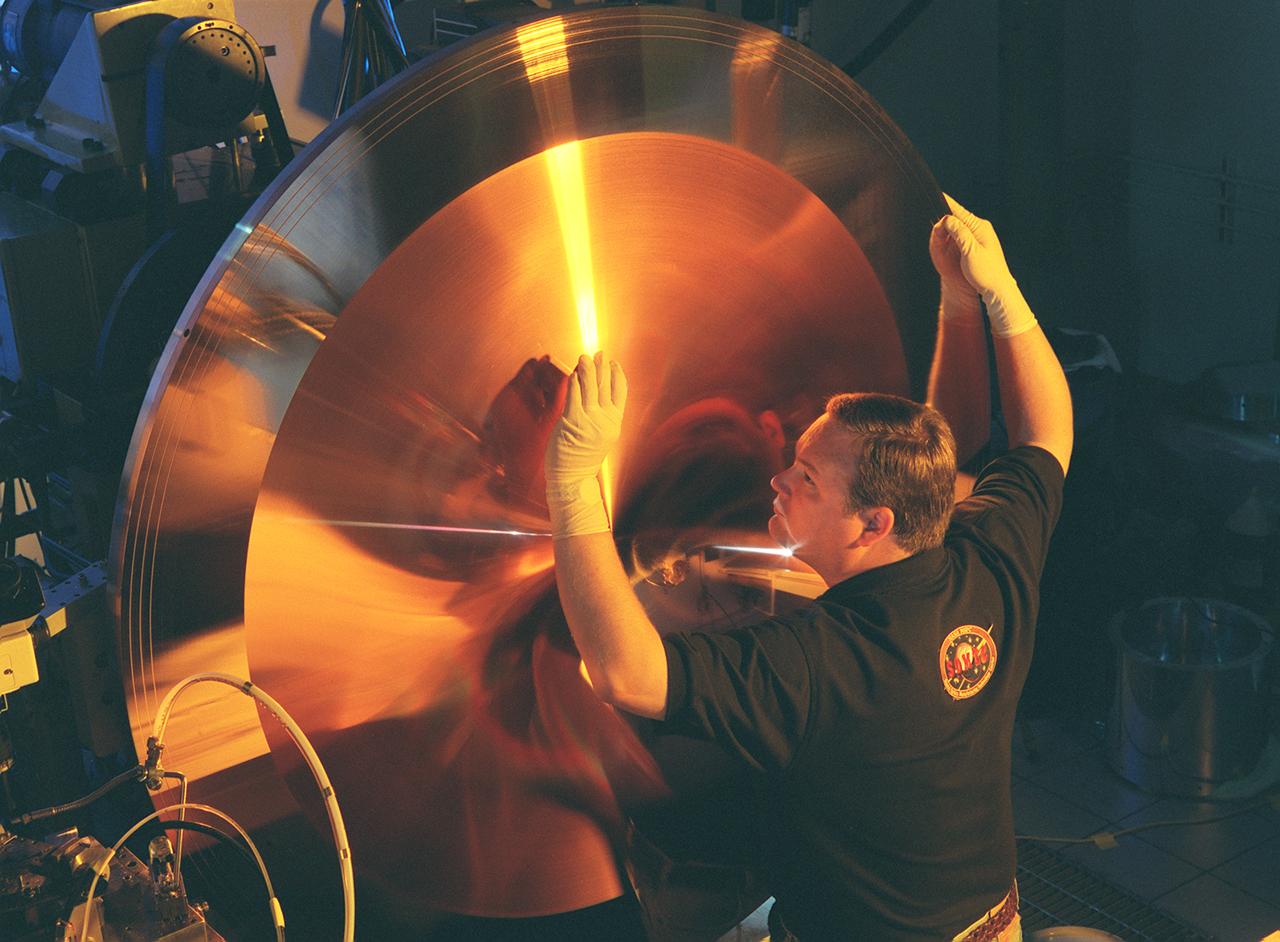
This photograph shows Wes Brown, Marshall Space Flight Center's (MSFC's) lead diamond tuner, an expert in the science of using diamond-tipped tools to cut metal, inspecting the mold's physical characteristics to ensure the uniformity of its more than 6,000 grooves. This king-size copper disk, manufactured at the Space Optics Manufacturing and Technology Center (SOMTC) at MSFC, is a special mold for making high resolution monitor screens. This master mold will be used to make several other molds, each capable of forming hundreds of screens that have a type of lens called a fresnel lens. Weighing much less than conventional optics, fresnel lenses have multiple concentric grooves, each formed to a precise angle, that together create the curvature needed to focus and project images. The MSFC leads NASA's space optics manufacturing technology development as a technology leader for diamond turning. The machine used to manufacture this mold is among many one-of-a-kind pieces of equipment of MSFC's SOMTC.
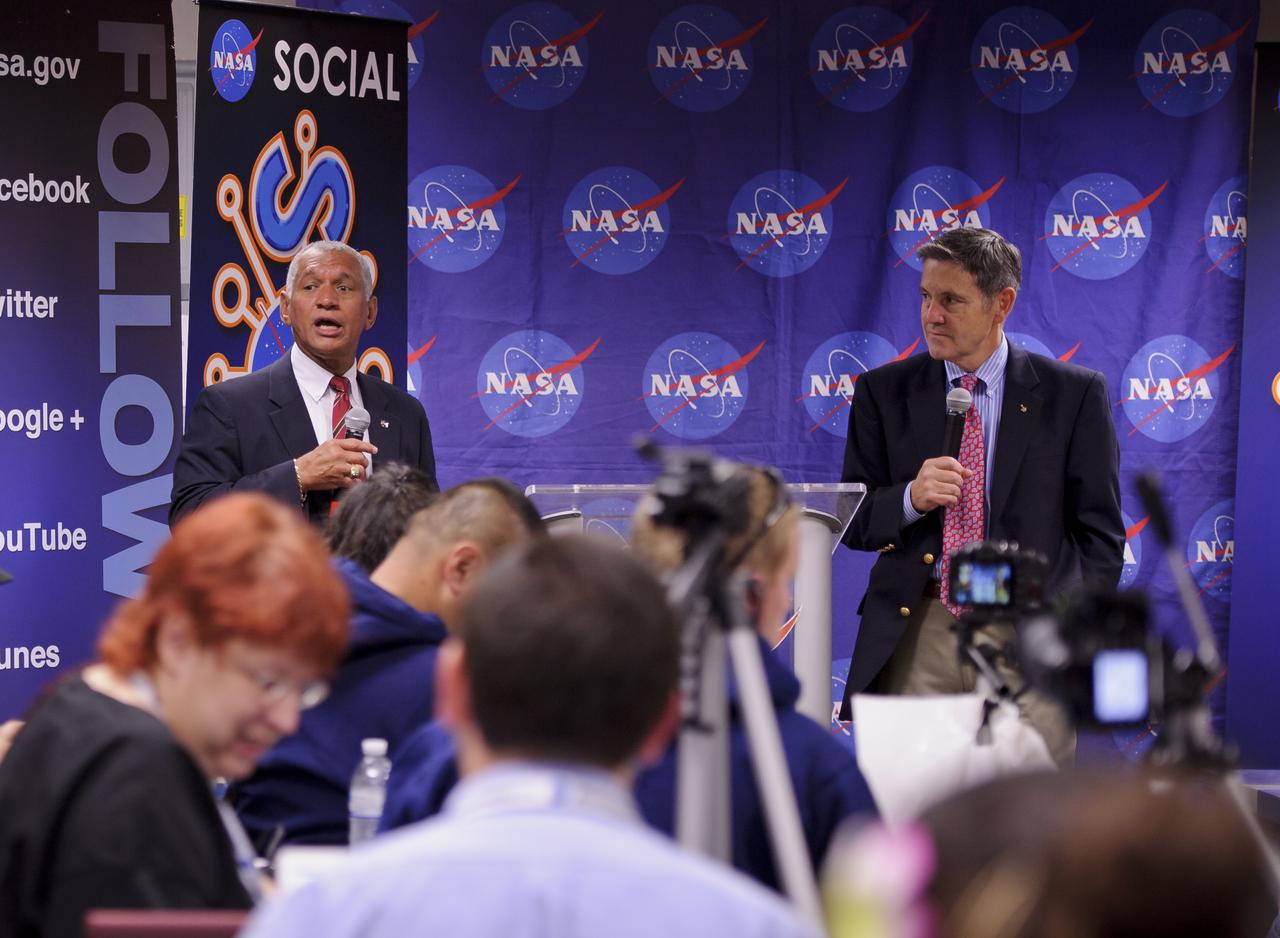
NASA Administrator Charles Bolden, left, and Kennedy Space Center director Robert Cabana appear at the NASA Social event, Friday morning, May 19, 2012, at Kennedy Space Center in Cape Canaveral, Fla. About 50 NASA Social followers attended an event as part of activities surrounding the launch of Space Exploration Technologies, or SpaceX, demonstration mission of the company's Falcon 9 rocket to the International Space Station. Photo Credit: (NASA/Paul E. Alers)
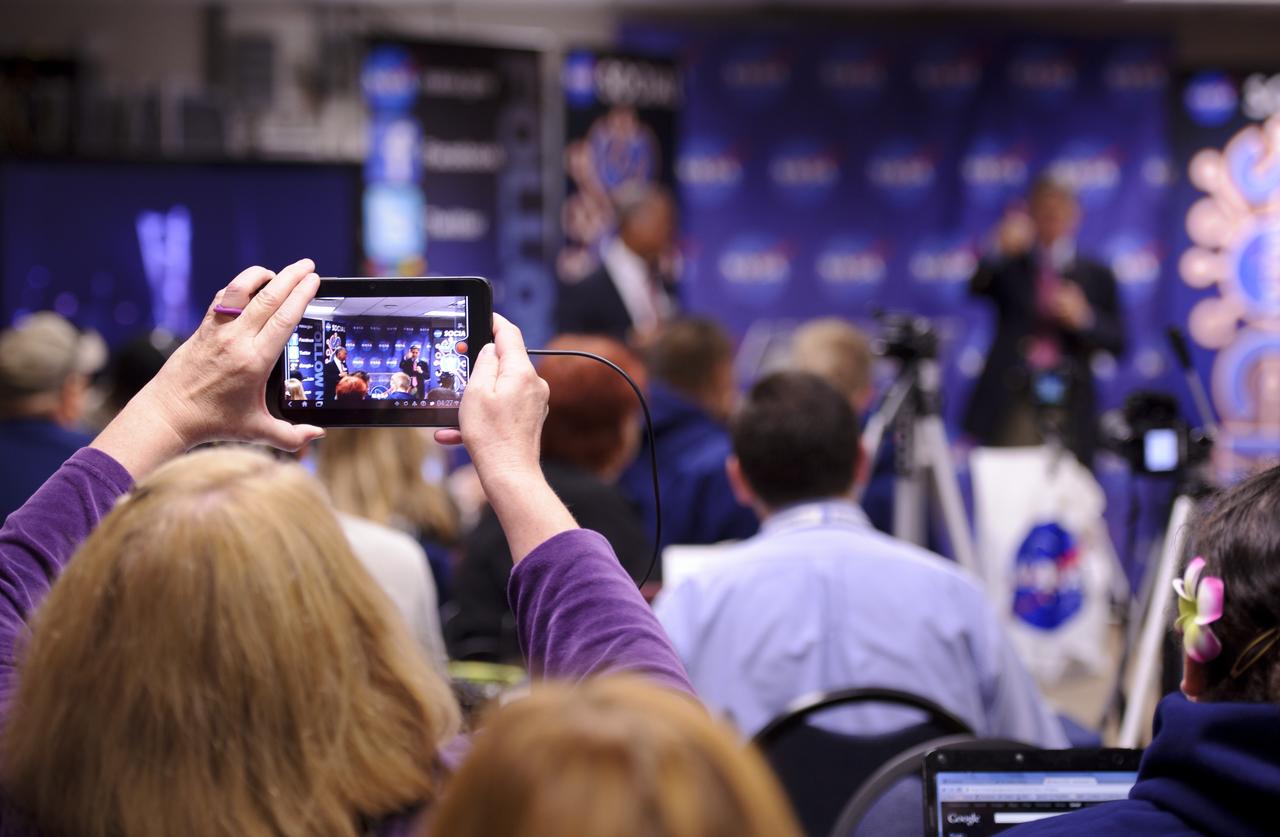
A NASA Social follower holds up a mobile device as NASA Administrator Charles Bolden, left, and Kennedy Space Center director Robert Cabana appear at the NASA Social event, Friday morning, May 19, 2012, at Kennedy Space Center in Cape Canaveral, Fla. About 50 NASA Social followers attended an event as part of activities surrounding the launch of Space Exploration Technologies, or SpaceX, demonstration mission of the company's Falcon 9 rocket to the International Space Station. Photo Credit: (NASA/Paul E. Alers)

Mic Woltman, chief of the Fleet Systems Integration Branch of NASA's Launch Services Program, speaks to Kennedy Space Center employees about plans for the coming year. The event took place in the Lunar Theater at the Kennedy Space Center Visitor Complex’s Apollo Saturn V Center. The year will be highlighted with NASA's partners preparing test flights for crewed missions to the International Space Station as part of the agency's Commercial Crew Program and six launches by the Launch Services Program. Exploration Ground Systems will be completing facilities to support the Space Launch System rocket and Orion spacecraft. Exploration Research and Technology Programs will continue to provide supplies to the space station launched as part of the Commercial Resupply Services effort.

Russ DeLoach, director of Safety and Mission Assurance, speaks to Kennedy Space Center employees about plans for the coming year. The event took place in the Lunar Theater at the Kennedy Space Center Visitor Complex’s Apollo Saturn V Center. The year will be highlighted with NASA's partners preparing test flights for crewed missions to the International Space Station as part of the agency's Commercial Crew Program and six launches by the Launch Services Program. Exploration Ground Systems will be completing facilities to support the Space Launch System rocket and Orion spacecraft. Exploration Research and Technology Programs will continue to provide supplies to the space station launched as part of the Commercial Resupply Services effort.

Lisa Colloredo, deputy program manager for the Commercial Crew Program, speaks to Kennedy Space Center employees about plans for the coming year. The event took place in the Lunar Theater at the Kennedy Space Center Visitor Complex’s Apollo Saturn V Center. The year will be highlighted with NASA's partners preparing test flights for crewed missions to the International Space Station as part of the agency's Commercial Crew Program and six launches by the Launch Services Program. Exploration Ground Systems will be completing facilities to support the Space Launch System rocket and Orion spacecraft. Exploration Research and Technology Programs will continue to provide supplies to the space station launched as part of the Commercial Resupply Services effort.

Kennedy Space Center Director Bob Cabana speaks to employees at the Florida spaceport about plans for the coming year. The event took place in the Lunar Theater at the Kennedy Space Center Visitor Complex’s Apollo Saturn V Center. The year will be highlighted with NASA's partners preparing test flights for crewed missions to the International Space Station as part of the agency's Commercial Crew Program and six launches by the Launch Services Program. Exploration Ground Systems will be completing facilities to support the Space Launch System rocket and Orion spacecraft. Exploration Research and Technology Programs will continue to provide supplies to the space station launched as part of the Commercial Resupply Services effort.

Kennedy Space Center Director Bob Cabana speaks to employees at the Florida spaceport about plans for the coming year. The event took place in the Lunar Theater at the Kennedy Space Center Visitor Complex’s Apollo Saturn V Center. The year will be highlighted with NASA's partners preparing test flights for crewed missions to the International Space Station as part of the agency's Commercial Crew Program and six launches by the Launch Services Program. Exploration Ground Systems will be completing facilities to support the Space Launch System rocket and Orion spacecraft. Exploration Research and Technology Programs will continue to provide supplies to the space station launched as part of the Commercial Resupply Services effort.

Kennedy Space Center Director Bob Cabana speaks to employees at the Florida spaceport about plans for the coming year. The event took place in the Lunar Theater at the Kennedy Space Center Visitor Complex’s Apollo Saturn V Center. The year will be highlighted with NASA's partners preparing test flights for crewed missions to the International Space Station as part of the agency's Commercial Crew Program and six launches by the Launch Services Program. Exploration Ground Systems will be completing facilities to support the Space Launch System rocket and Orion spacecraft. Exploration Research and Technology Programs will continue to provide supplies to the space station launched as part of the Commercial Resupply Services effort.

Darrell Foster, chief of Project Management in Exploration Ground Systems, speaks to Kennedy Space Center employees about plans for the coming year. The event took place in the Lunar Theater at the Kennedy Space Center Visitor Complex’s Apollo Saturn V Center. The year will be highlighted with NASA's partners preparing test flights for crewed missions to the International Space Station as part of the agency's Commercial Crew Program and six launches by the Launch Services Program. Exploration Ground Systems will be completing facilities to support the Space Launch System rocket and Orion spacecraft. Exploration Research and Technology Programs will continue to provide supplies to the space station launched as part of the Commercial Resupply Services effort.

Kennedy Space Center Director Bob Cabana speaks to employees at the Florida spaceport about plans for the coming year. The event took place in the Lunar Theater at the Kennedy Space Center Visitor Complex’s Apollo Saturn V Center. The year will be highlighted with NASA's partners preparing test flights for crewed missions to the International Space Station as part of the agency's Commercial Crew Program and six launches by the Launch Services Program. Exploration Ground Systems will be completing facilities to support the Space Launch System rocket and Orion spacecraft. Exploration Research and Technology Programs will continue to provide supplies to the space station launched as part of the Commercial Resupply Services effort.
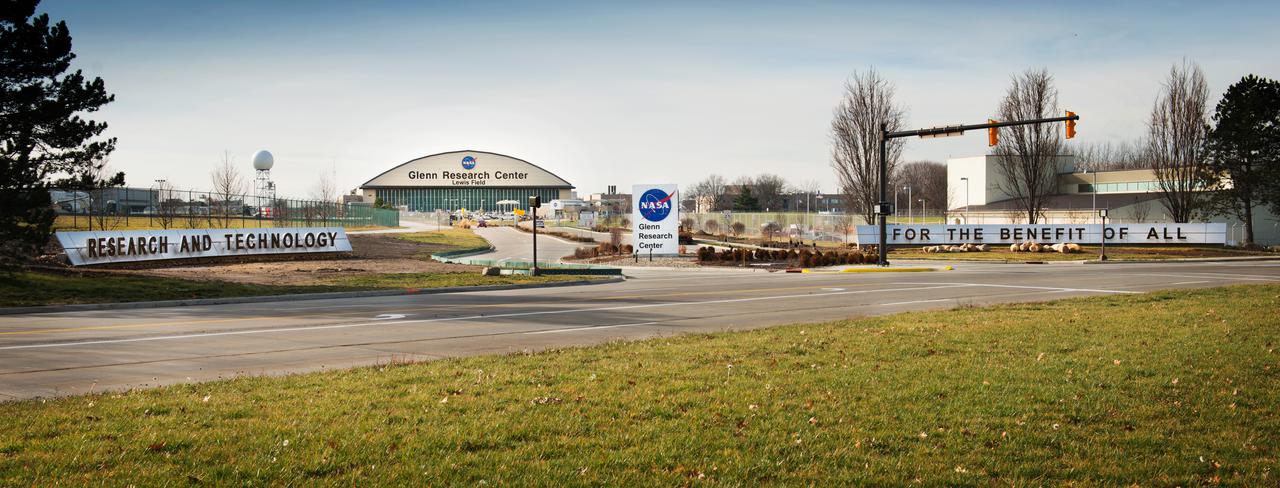
Main Entrance of NASA Glenn Research Center at Brookpark Road and NASA Parkway. The signs read: Research and Technology For The Benefit Of All.
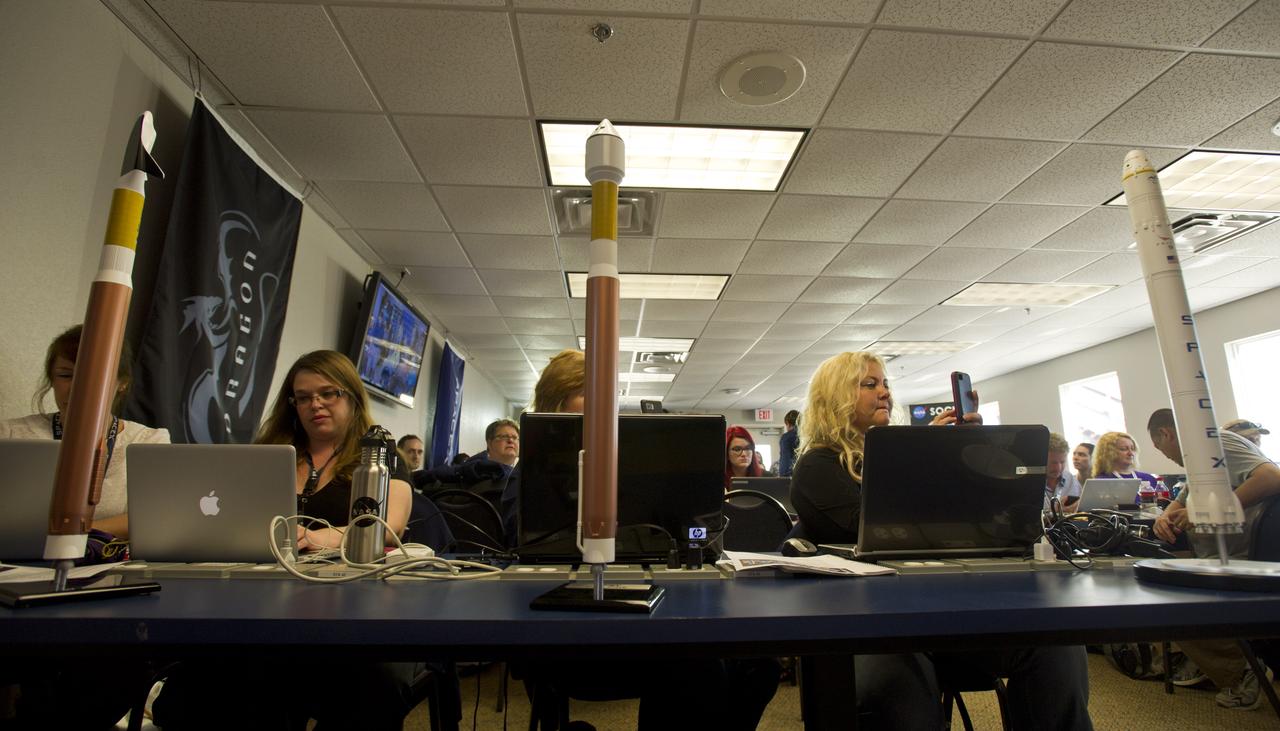
Models of various rockets line a table at a NASA Social, Friday, May 18, 2012, at Kennedy Space Center in Cape Canaveral, Fla. About 50 NASA Social followers attended an event as part of activities surrounding the launch of Space Exploration Technologies, or SpaceX, demonstration mission of the company's Falcon 9 rocket to the International Space Station. Photo Credit: (NASA/Paul E. Alers)
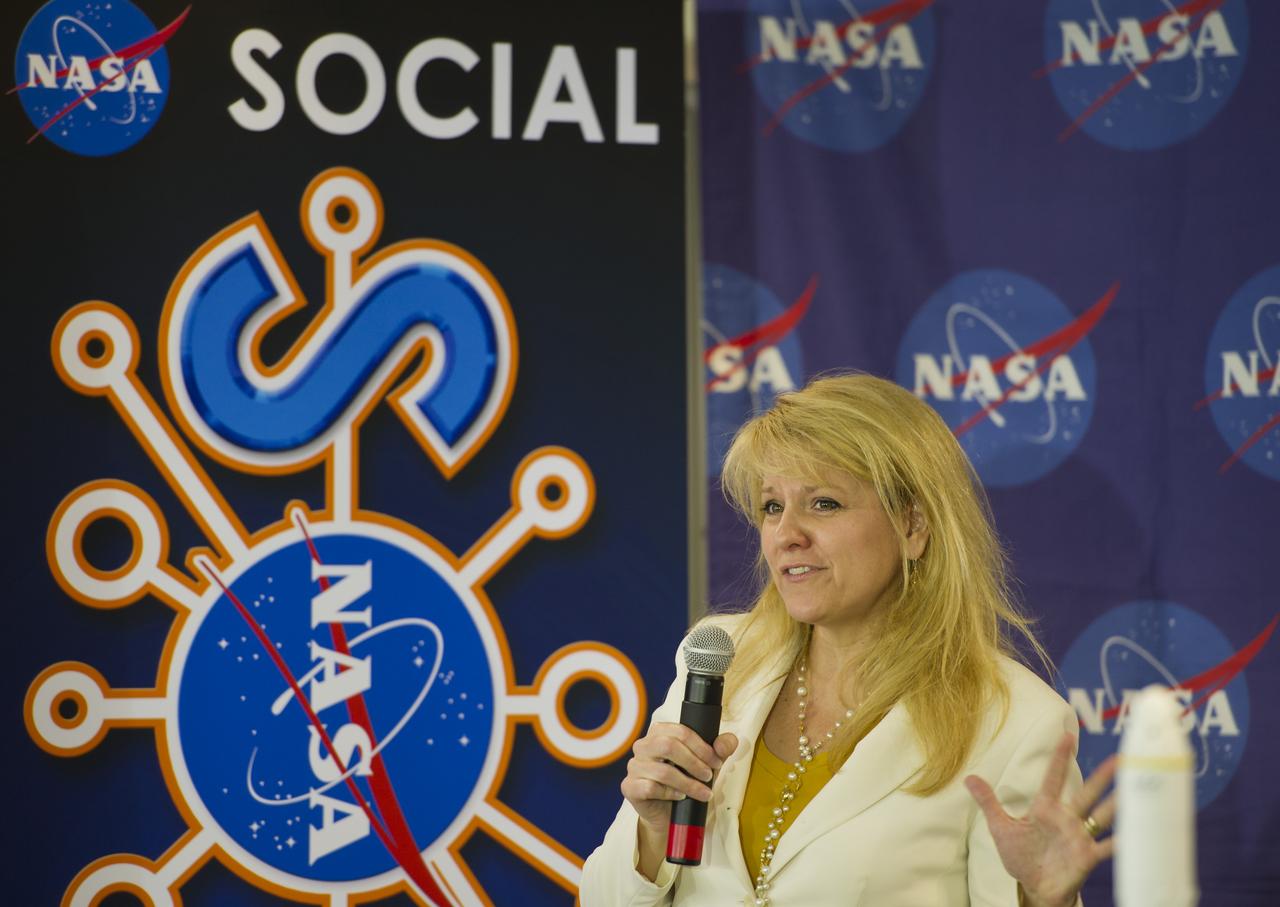
Gwynne Shotwell, President of SpaceX, speaks during a NASA Social, Friday, May 18, 2012, at Kennedy Space Center in Cape Canaveral, Fla. About 50 NASA Social followers attended an event as part of activities surrounding the launch of Space Exploration Technologies, or SpaceX, demonstration mission of the company's Falcon 9 rocket to the International Space Station. Photo Credit: (NASA/Paul E. Alers)
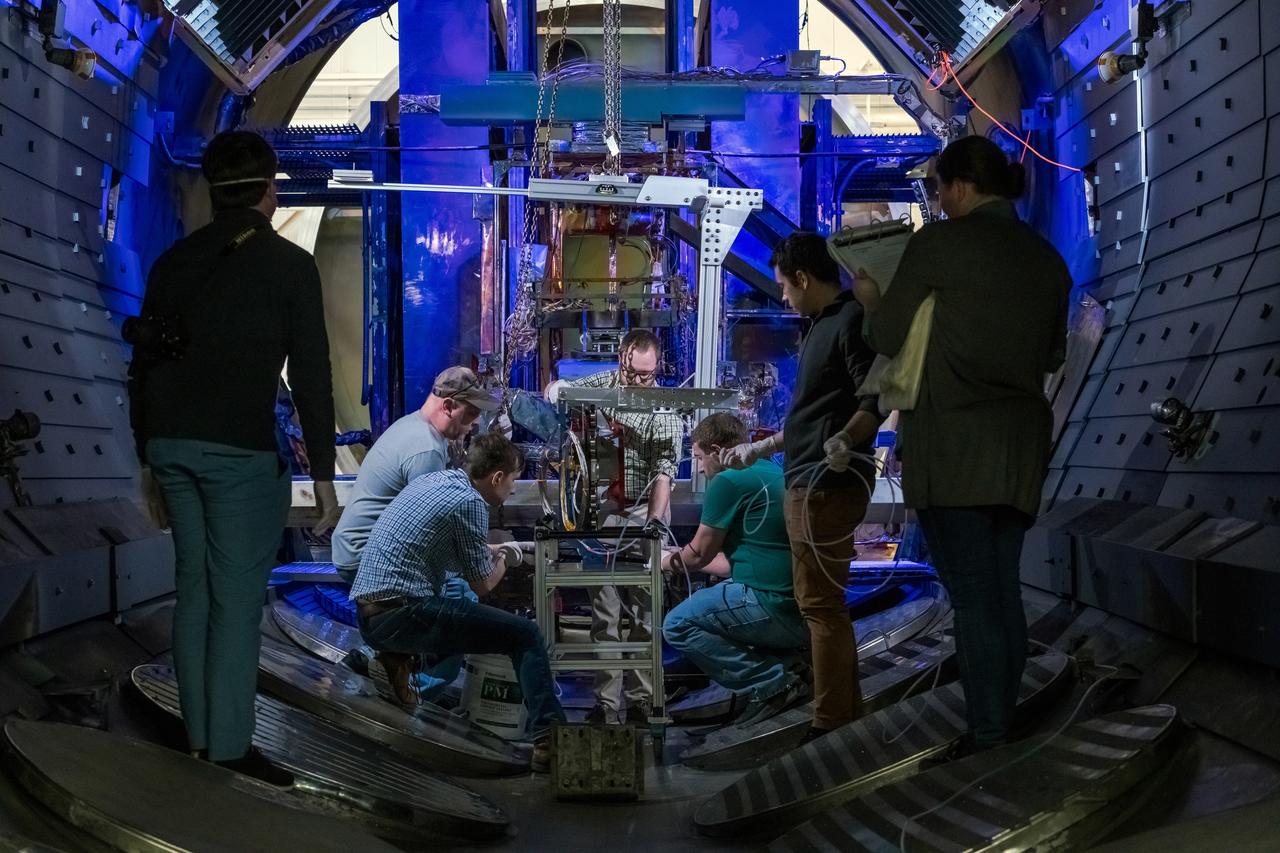
NASA Glenn Research Center has received the first of three Advanced Electric Propulsion System (AEPS) thrusters for the Gateway lunar space station. Built by L3Harris Technologies, the thruster will undergo testing before integration with Gateway’s Power and Propulsion Element, launching with the HALO module ahead of Artemis IV.

NASA Glenn Research Center has received the first of three Advanced Electric Propulsion System (AEPS) thrusters for the Gateway lunar space station. Built by L3Harris Technologies, the thruster will undergo testing before integration with Gateway’s Power and Propulsion Element, launching with the HALO module ahead of Artemis IV.
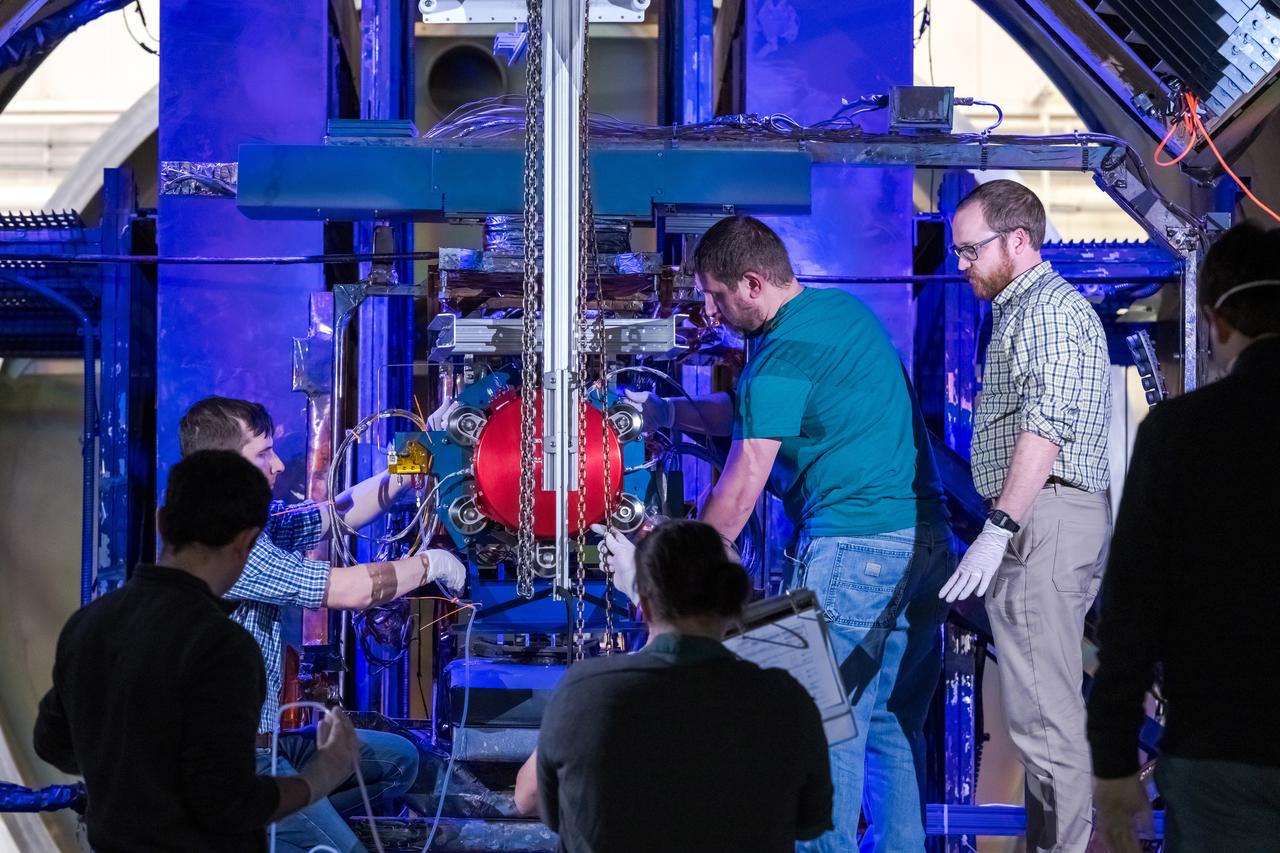
NASA Glenn Research Center has received the first of three Advanced Electric Propulsion System (AEPS) thrusters for the Gateway lunar space station. Built by L3Harris Technologies, the thruster will undergo testing before integration with Gateway’s Power and Propulsion Element, launching with the HALO module ahead of Artemis IV.
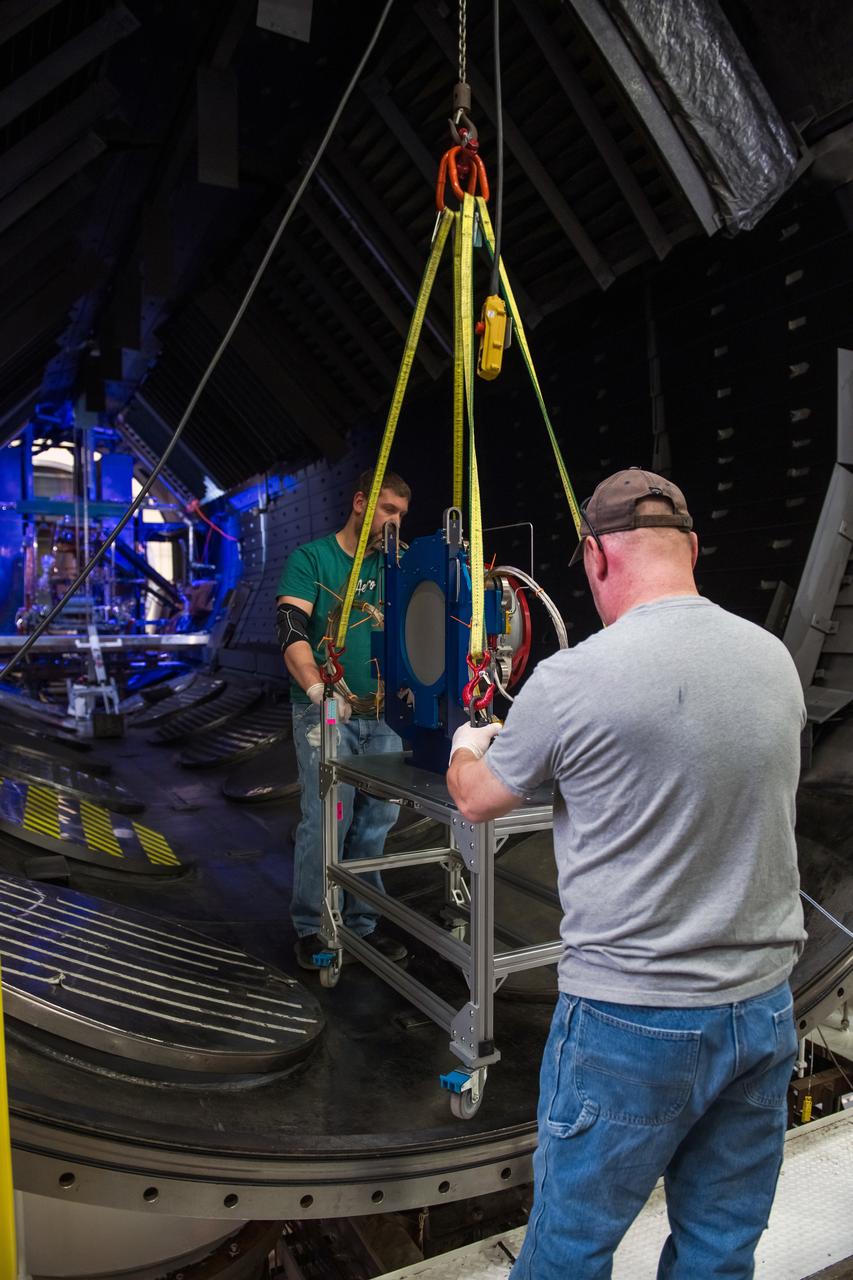
NASA Glenn Research Center has received the first of three Advanced Electric Propulsion System (AEPS) thrusters for the Gateway lunar space station. Built by L3Harris Technologies, the thruster will undergo testing before integration with Gateway’s Power and Propulsion Element, launching with the HALO module ahead of Artemis IV.

NASA Glenn Research Center has received the first of three Advanced Electric Propulsion System (AEPS) thrusters for the Gateway lunar space station. Built by L3Harris Technologies, the thruster will undergo testing before integration with Gateway’s Power and Propulsion Element, launching with the HALO module ahead of Artemis IV.
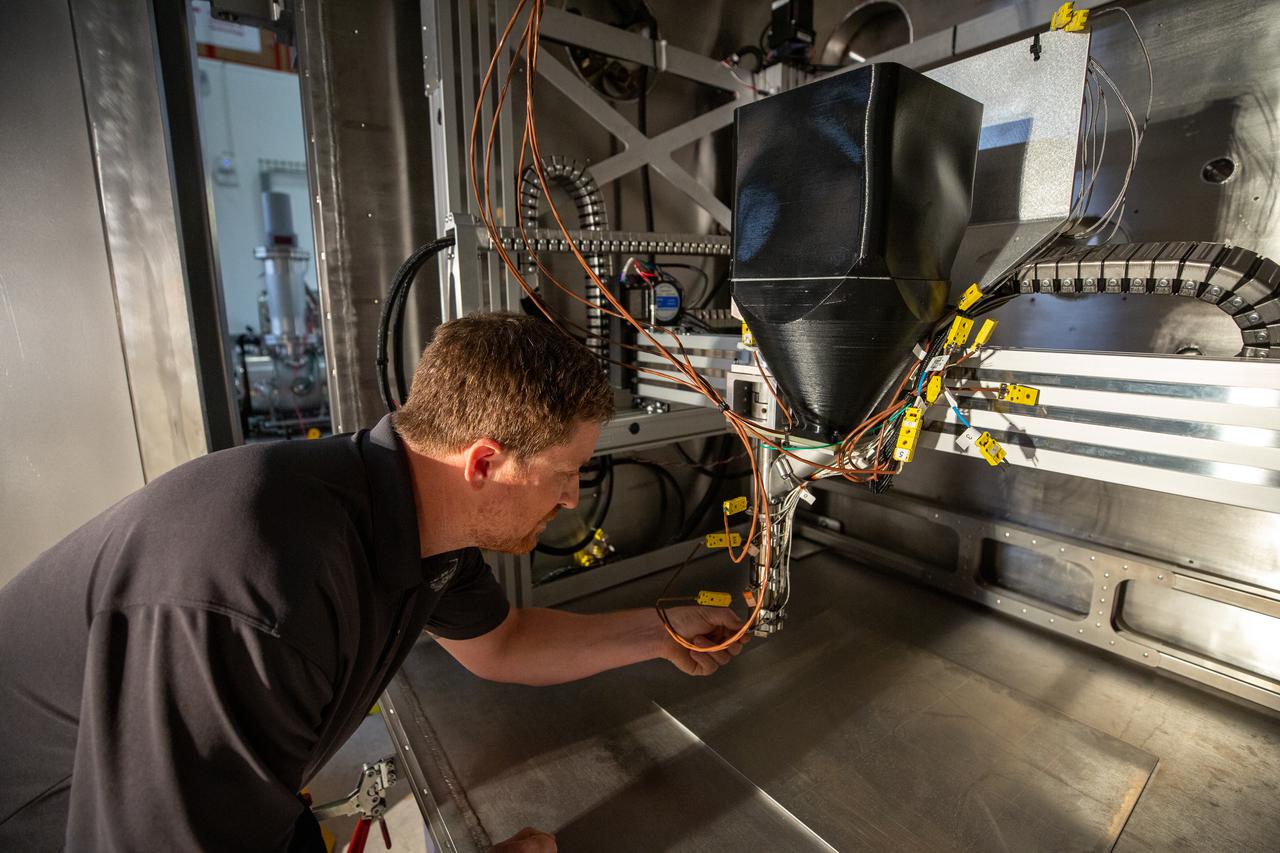
Nathan Gelino, a principal investigator with the Exploration Research and Technology programs at Kennedy Space Center in Florida, prepares a vacuum chamber for testing 3D printing inside the Granular Mechanics and Regolith Operations (GMRO) lab at Kennedy’s Swamp Works on April 5, 2022. The testing is part of the Relevant Environment Additive Construction Technology (REACT) project, which derives from NASA’s 2020 Announcement of Collaboration Opportunity, with AI SpaceFactory – an architectural and construction technology company and winner of NASA’s 3D Printed Habitat Challenge – collaborating with Kennedy teams to build 3D-printed test structures using a composite made from polymers and a regolith simulant in a vacuum chamber that mimics environmental conditions on the Moon.
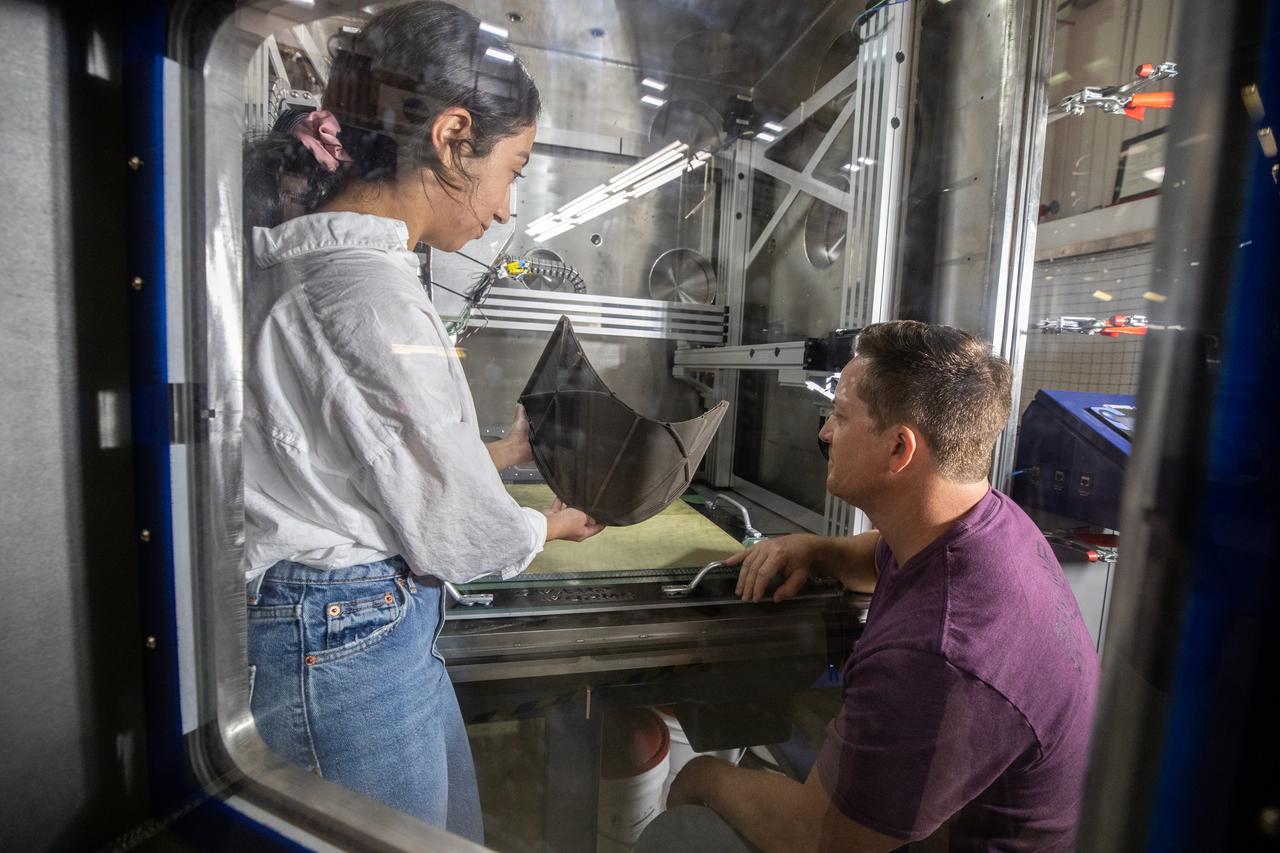
Chemist Nilab Azim, left, and Nathan Gelino, principal investigator with NASA’s Exploration Research and Technology programs, test a 3D printer on July 28, 2022, at Swamp Works at the agency’s Kennedy Space Center in Florida, as part of the Relevant Environment Additive Construction Technology (REACT) project. Among the key objectives of the project is developing an architectural and structural design for a shelter that provides protection to habitable assets on the lunar surface. Testing REACT derives from NASA’s 2020 Announcement of Collaboration Opportunity with AI SpaceFactory – an architectural and construction technology company and winner of NASA’s 3D Printed Habitat Challenge.
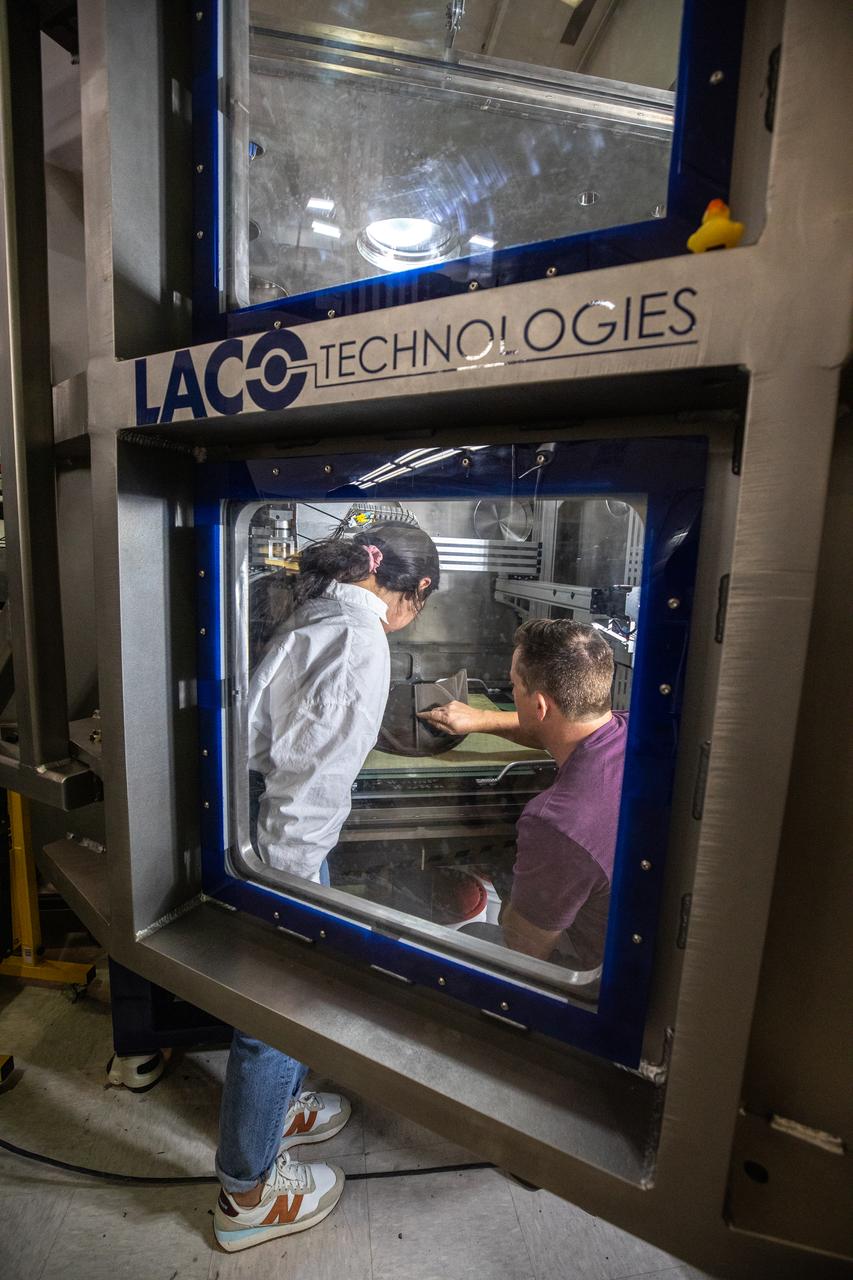
Chemist Nilab Azim, left, and Nathan Gelino, principal investigator with NASA’s Exploration Research and Technology programs, test a 3D printer on July 28, 2022, at Swamp Works at the agency’s Kennedy Space Center in Florida, as part of the Relevant Environment Additive Construction Technology (REACT) project. Among the key objectives of the project is developing an architectural and structural design for a shelter that provides protection to habitable assets on the lunar surface. Testing REACT derives from NASA’s 2020 Announcement of Collaboration Opportunity with AI SpaceFactory – an architectural and construction technology company and winner of NASA’s 3D Printed Habitat Challenge.
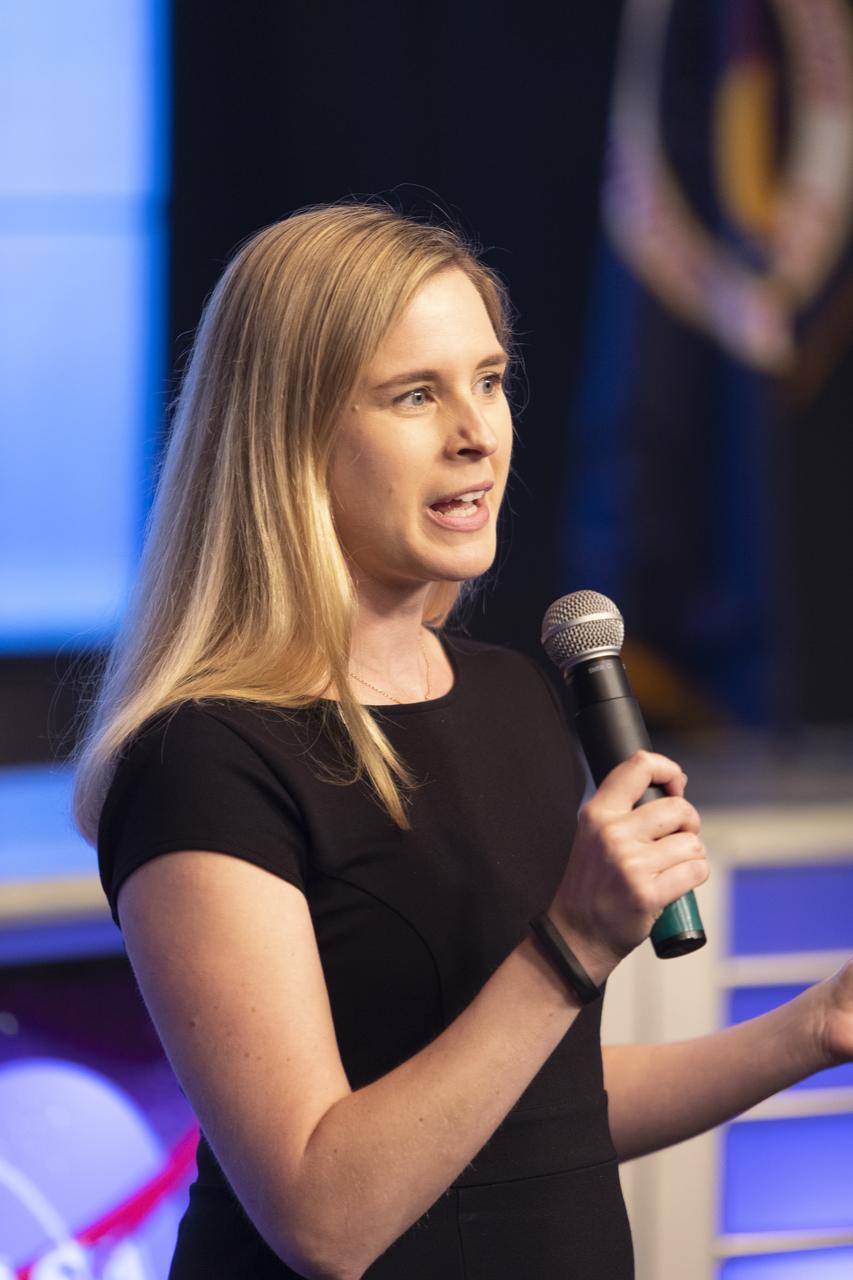
Jill Seubert, deputy principal investigator, from NASA’s Jet Propulsion Laboratory in Pasadena, California, explains the payload during a NASA prelaunch technology TV broadcast for the Space Test Program-2 (STP-2) mission at the agency’s Kennedy Space Center in Florida on June 23, 2019. The new space clock could improve how we navigate on the Moon, to Mars and beyond. The space clock is one of four NASA payloads scheduled to launch on a SpaceX Falcon Heavy rocket from Launch Complex 39A beginning at 11:30 p.m. EDT on June 24, 2019. STP-2 is managed by the U.S. Air Force Space and Missile Systems Center.
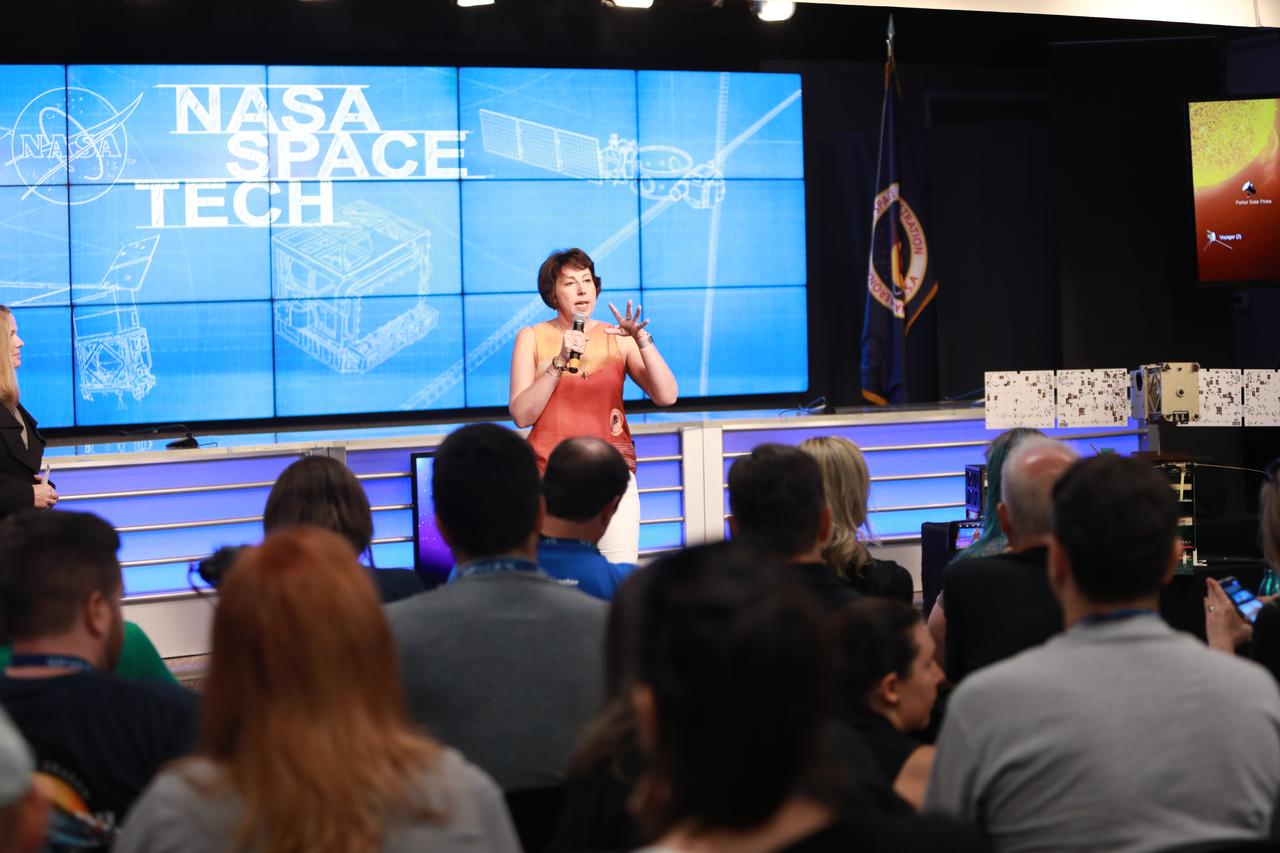
Nicky Fox, director of NASA’s Heliophysics Division, discusses the Space Environment Testbeds payload during a NASA prelaunch technology TV broadcast for the Space Test Program-2 (STP-2) at NASA’s Kennedy Space Center in Florida on June 23, 2019. The payload’s four experiments will reveal the ways local space weather affects spacecraft hardware. It is one of four NASA payloads scheduled to launch on a SpaceX Falcon Heavy rocket from Launch Complex 39A beginning at 11:30 p.m. EDT on June 24, 2019. STP-2 is managed by the U.S. Air Force Space and Missile Systems Center.
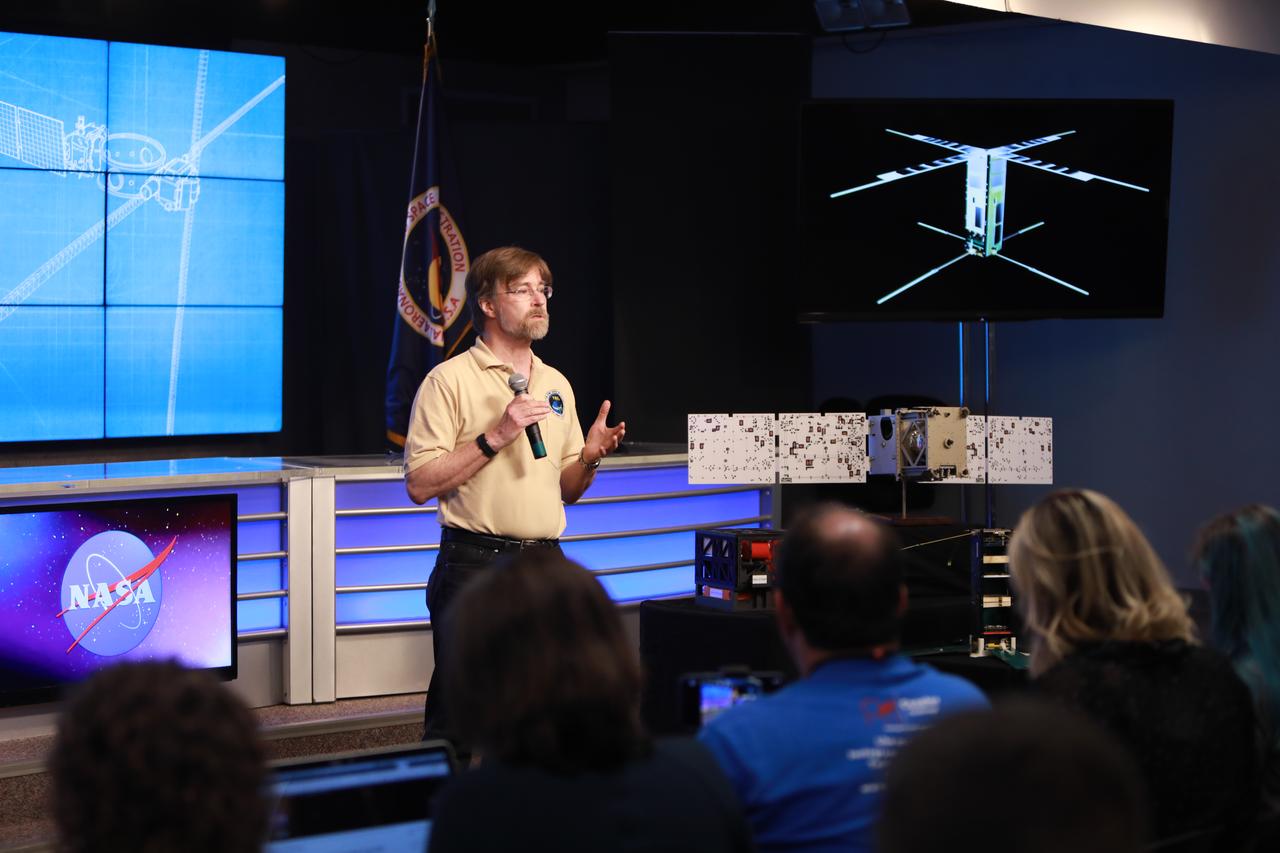
Rick Doe, payload program manager at SRI International, discusses the Enhanced Tandem Beacon Experiment during a NASA prelaunch technology TV show for the Space Test Program-2 (STP-2) mission at NASA’s Kennedy Space Center in Florida on June 23, 2019. The experiment’s two CubeSats will work with six other satellites to study irregularities in Earth’s upper atmosphere that interfere with GPS and communications signals. It is one of NASA payloads scheduled to launch on a SpaceX Falcon Heavy rocket from Launch Complex 39A beginning at 11:30 p.m. EDT on June 24, 2019. STP-2 is managed by the U.S. Air Force Space and Missile Systems Center.
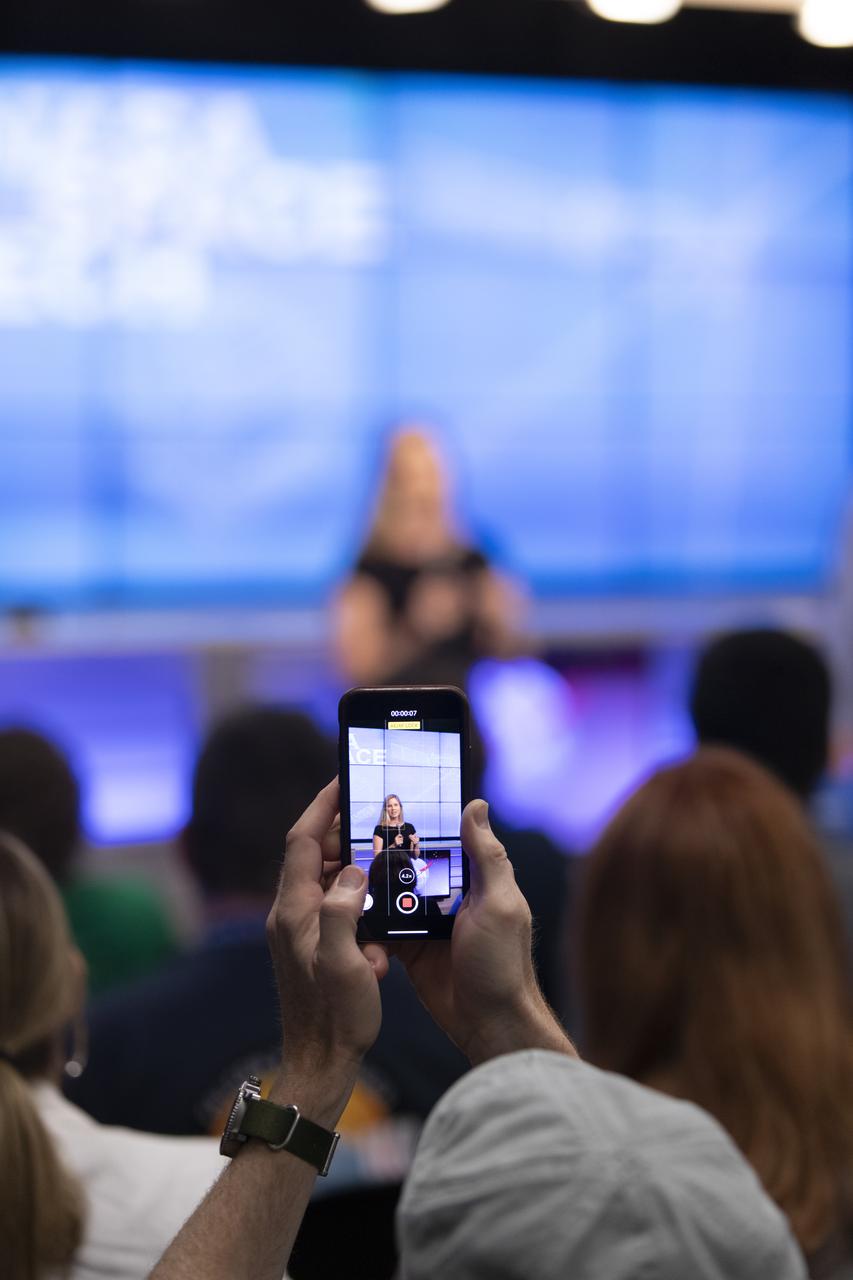
Jill Seubert, deputy principal investigator, from NASA’s Jet Propulsion Laboratory in Pasadena, California, explains the payload during a NASA prelaunch technology TV broadcast for the Space Test Program-2 (STP-2) mission at the agency’s Kennedy Space Center in Florida on June 23, 2019. The new space clock could improve how we navigate on the Moon, to Mars and beyond. The space clock is one of four NASA payloads scheduled to launch on a SpaceX Falcon Heavy rocket from Launch Complex 39A beginning at 11:30 p.m. EDT on June 24, 2019. STP-2 is managed by the U.S. Air Force Space and Missile Systems Center.
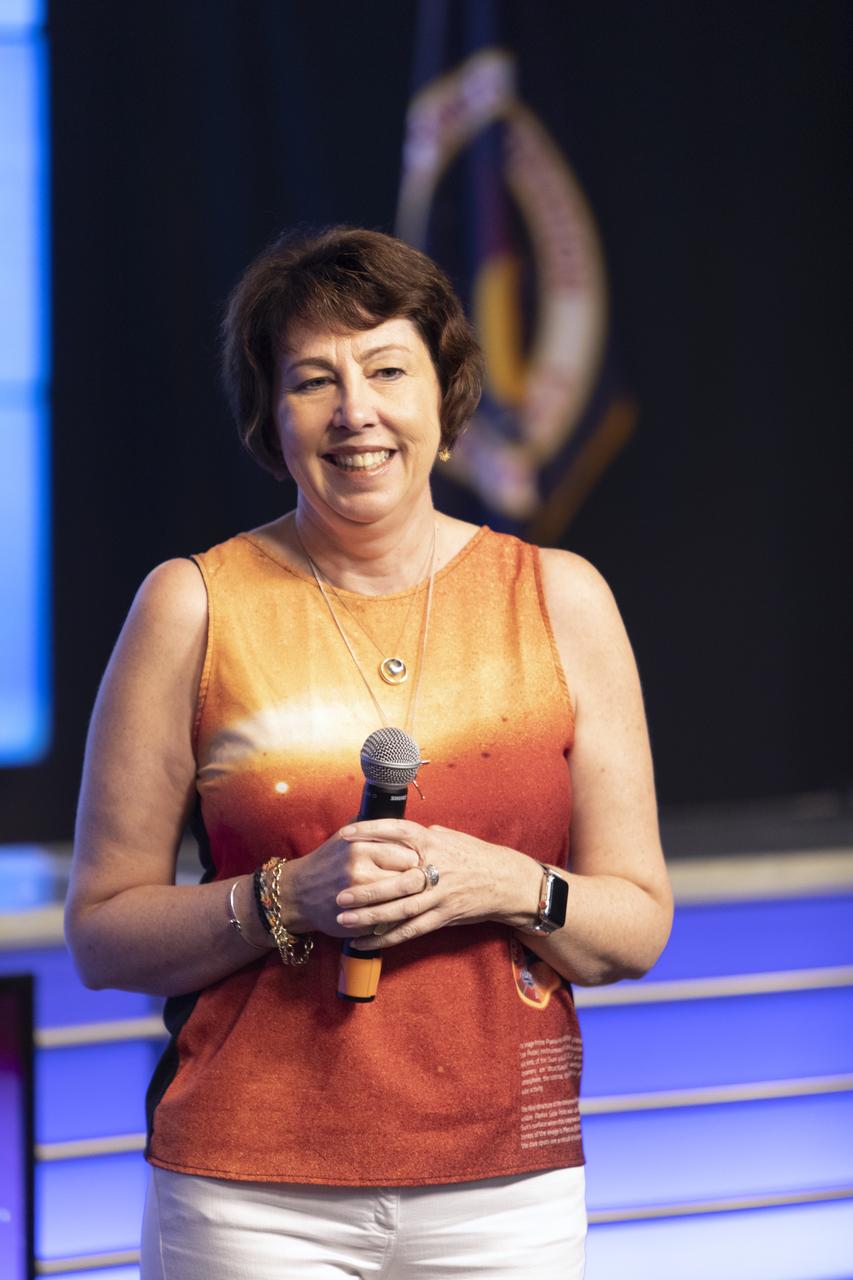
Nicky Fox, director of NASA’s Heliophysics Division, discusses the Space Environment Testbeds payload during a NASA prelaunch technology TV broadcast for the Space Test Program-2 (STP-2) at NASA’s Kennedy Space Center in Florida on June 23, 2019. The payload’s four experiments will reveal the ways local space weather affects spacecraft hardware. It is one of four NASA payloads scheduled to launch on a SpaceX Falcon Heavy rocket from Launch Complex 39A beginning at 11:30 p.m. EDT on June 24, 2019. STP-2 is managed by the U.S. Air Force Space and Missile Systems Center.
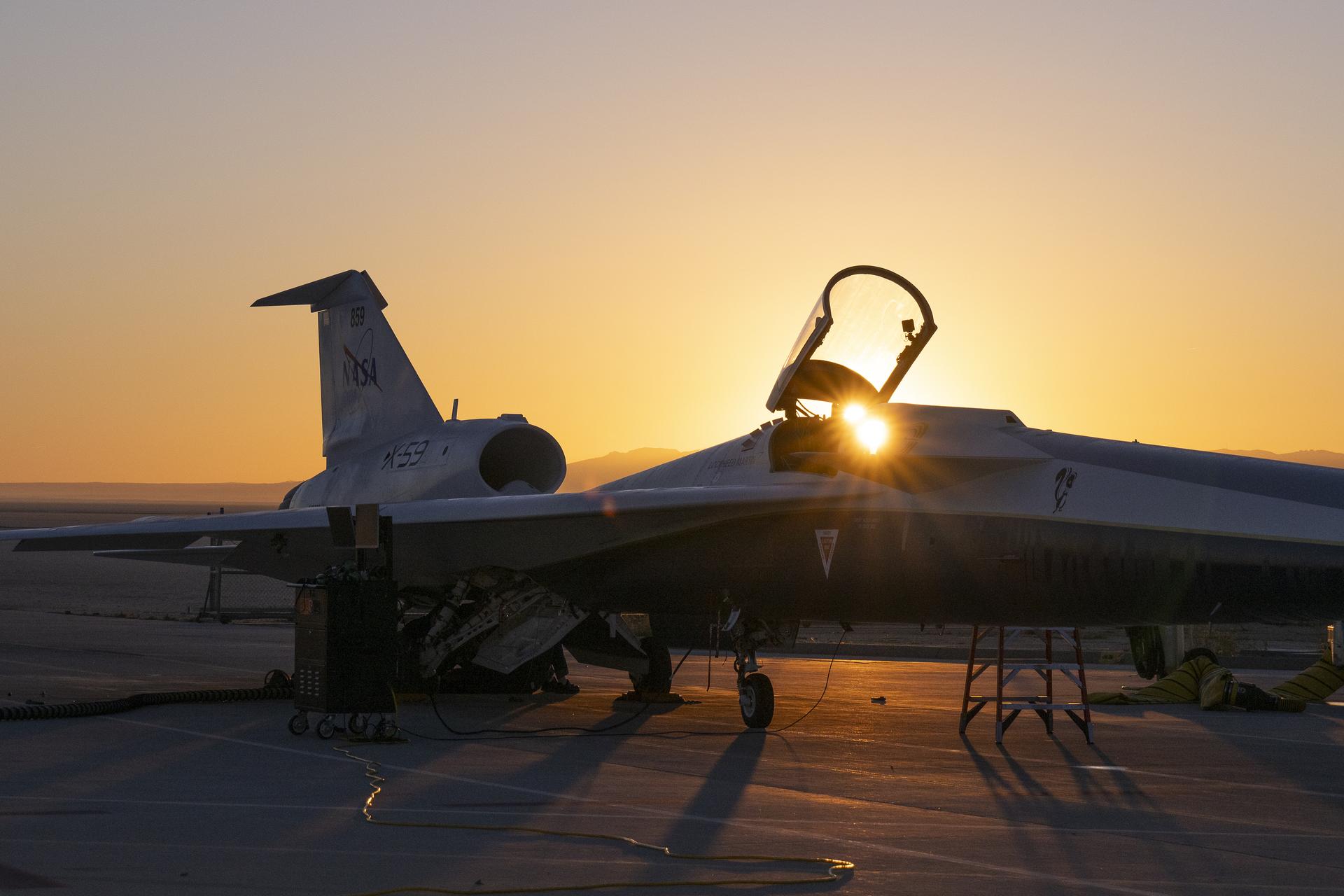
NASA’s X-59 quiet supersonic research aircraft during engine run testing on Thursday, March 12, 2026, at NASA’s Armstrong Flight Research Center in Edwards, California. Engineers and technicians monitored the aircraft’s systems as the engine powered up, gathering data to verify performance and prepare the X-59 for its next series of experimental flights. The X-59 will support NASA’s Quesst mission, which aims to demonstrate technology that can reduce the loud sonic booms of supersonic flight.
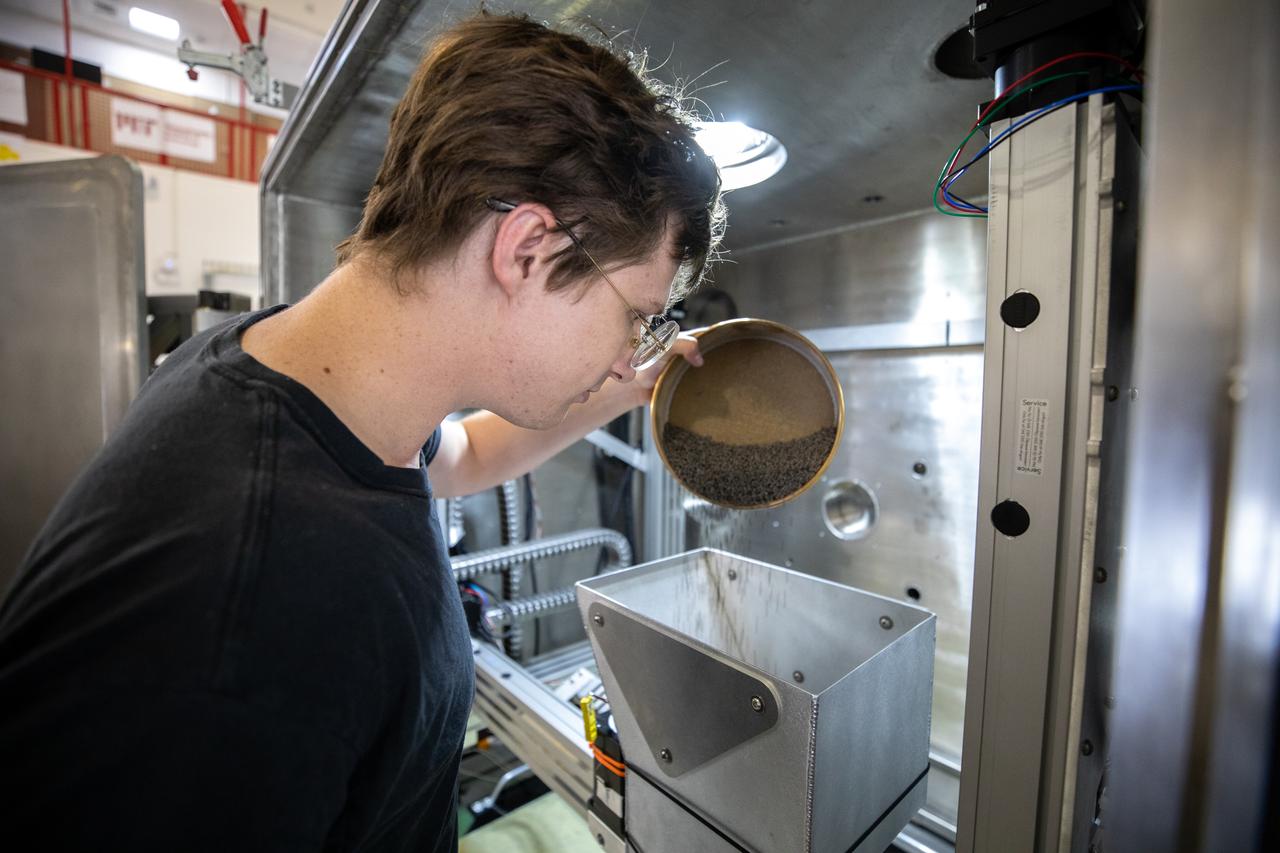
Materials engineer Thomas Lipscomb tests a 3D printer on July 28, 2022, at Swamp Works at NASA’s Kennedy Space Center in Florida, as part of the Relevant Environment Additive Construction Technology (REACT) project. Among the key objectives of the project is developing an architectural and structural design for a shelter that provides protection to habitable assets on the lunar surface. Testing REACT derives from NASA’s 2020 Announcement of Collaboration Opportunity with AI SpaceFactory – an architectural and construction technology company and winner of NASA’s 3D Printed Habitat Challenge.
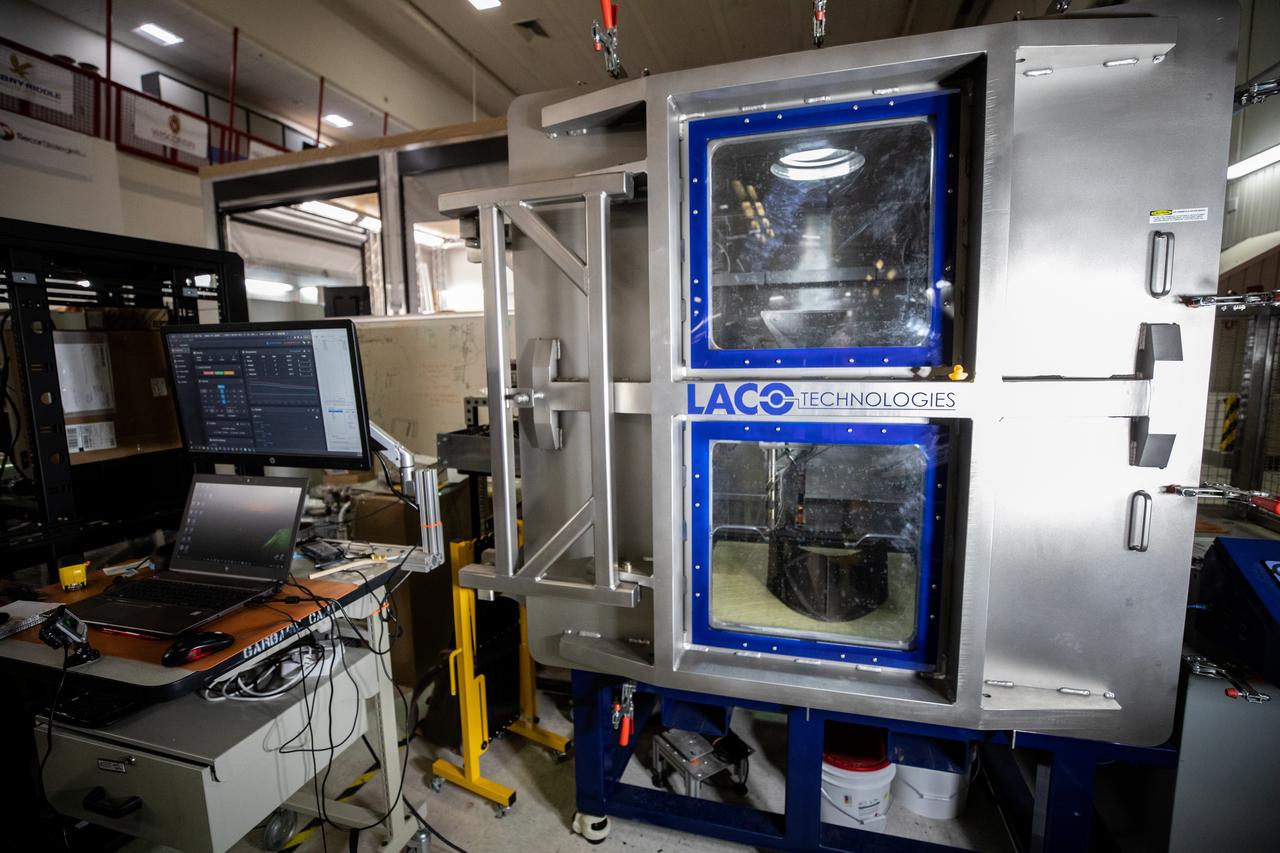
A team at NASA’s Kennedy Space Center in Florida tests a 3D printer on July 28, 2022, at the Florida spaceport’s Swamp Works, as part of the Relevant Environment Additive Construction Technology (REACT) project. Among the key objectives of the project is developing an architectural and structural design for a shelter that provides protection to habitable assets on the lunar surface. Testing REACT derives from NASA’s 2020 Announcement of Collaboration Opportunity with AI SpaceFactory – an architectural and construction technology company and winner of NASA’s 3D Printed Habitat Challenge.

Chemist Tesia Irwin tests a 3D printer on July 28, 2022, at Swamp Works at NASA’s Kennedy Space Center in Florida, as part of the Relevant Environment Additive Construction Technology (REACT) project. Among the key objectives of the project is developing an architectural and structural design for a shelter that provides protection to habitable assets on the lunar surface. Testing REACT derives from NASA’s 2020 Announcement of Collaboration Opportunity with AI SpaceFactory – an architectural and construction technology company and winner of NASA’s 3D Printed Habitat Challenge.
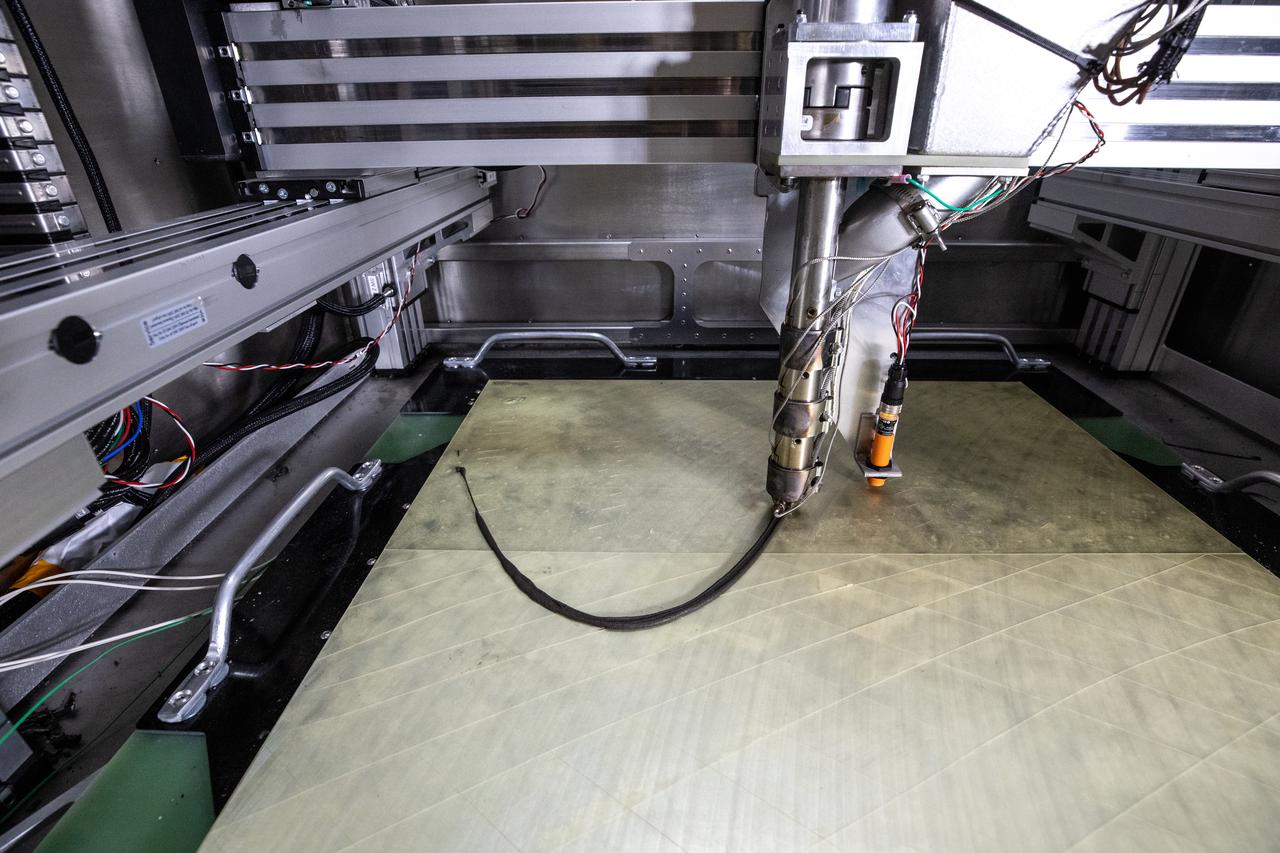
Shown is a Zero Launch Mass 3D printer on July 28, 2022, at NASA’s Kennedy Space Center’s Swamp Works. A team at the Florida spaceport tested the printer as part of the Relevant Environment Additive Construction Technology (REACT) project. Among the key objectives of the project is developing an architectural and structural design for a shelter that provides protection to habitable assets on the lunar surface. Testing REACT derives from NASA’s 2020 Announcement of Collaboration Opportunity with AI SpaceFactory – an architectural and construction technology company and winner of NASA’s 3D Printed Habitat Challenge.
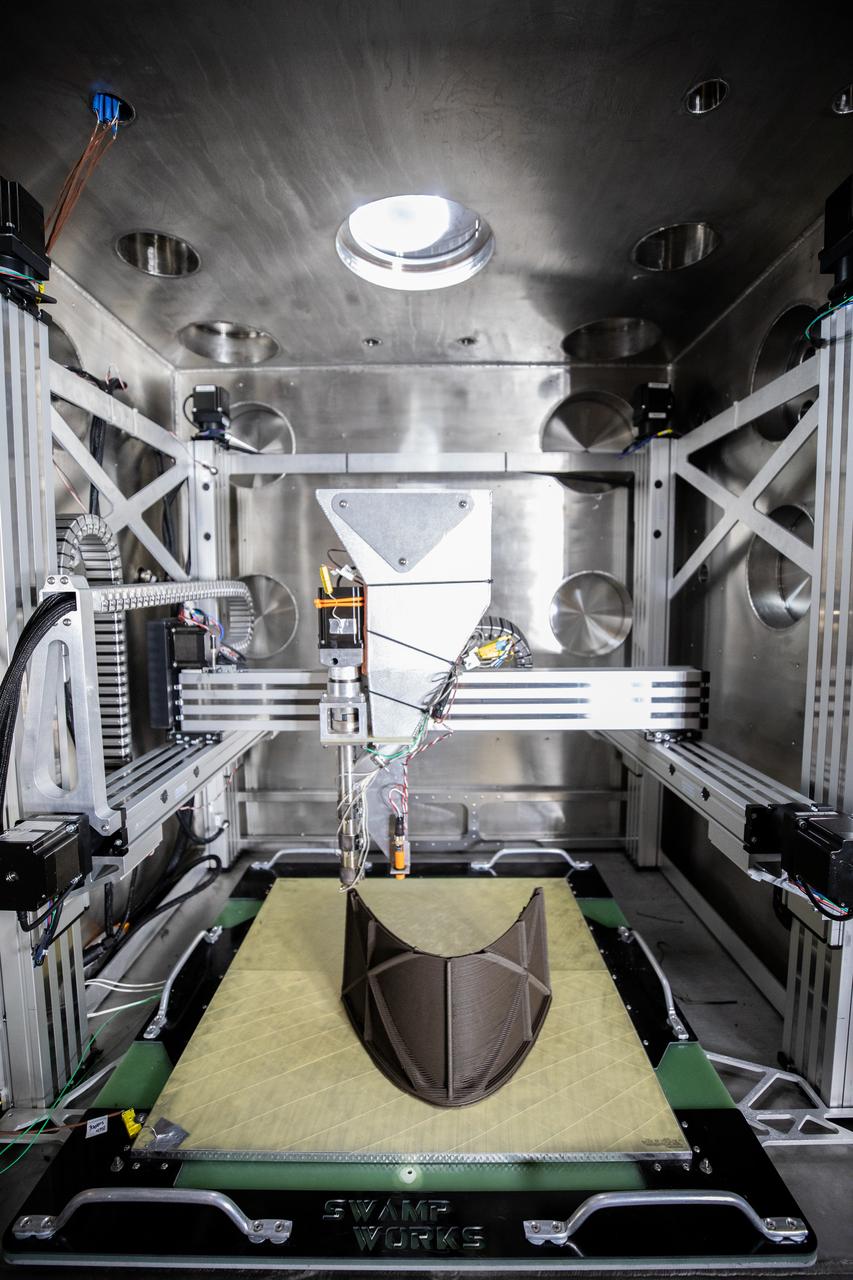
A team at NASA’s Kennedy Space Center in Florida tests a 3D printer on July 28, 2022, at the Florida spaceport’s Swamp Works, as part of the Relevant Environment Additive Construction Technology (REACT) project. Among the key objectives of the project is developing an architectural and structural design for a shelter that provides protection to habitable assets on the lunar surface. Testing REACT derives from NASA’s 2020 Announcement of Collaboration Opportunity with AI SpaceFactory – an architectural and construction technology company and winner of NASA’s 3D Printed Habitat Challenge.
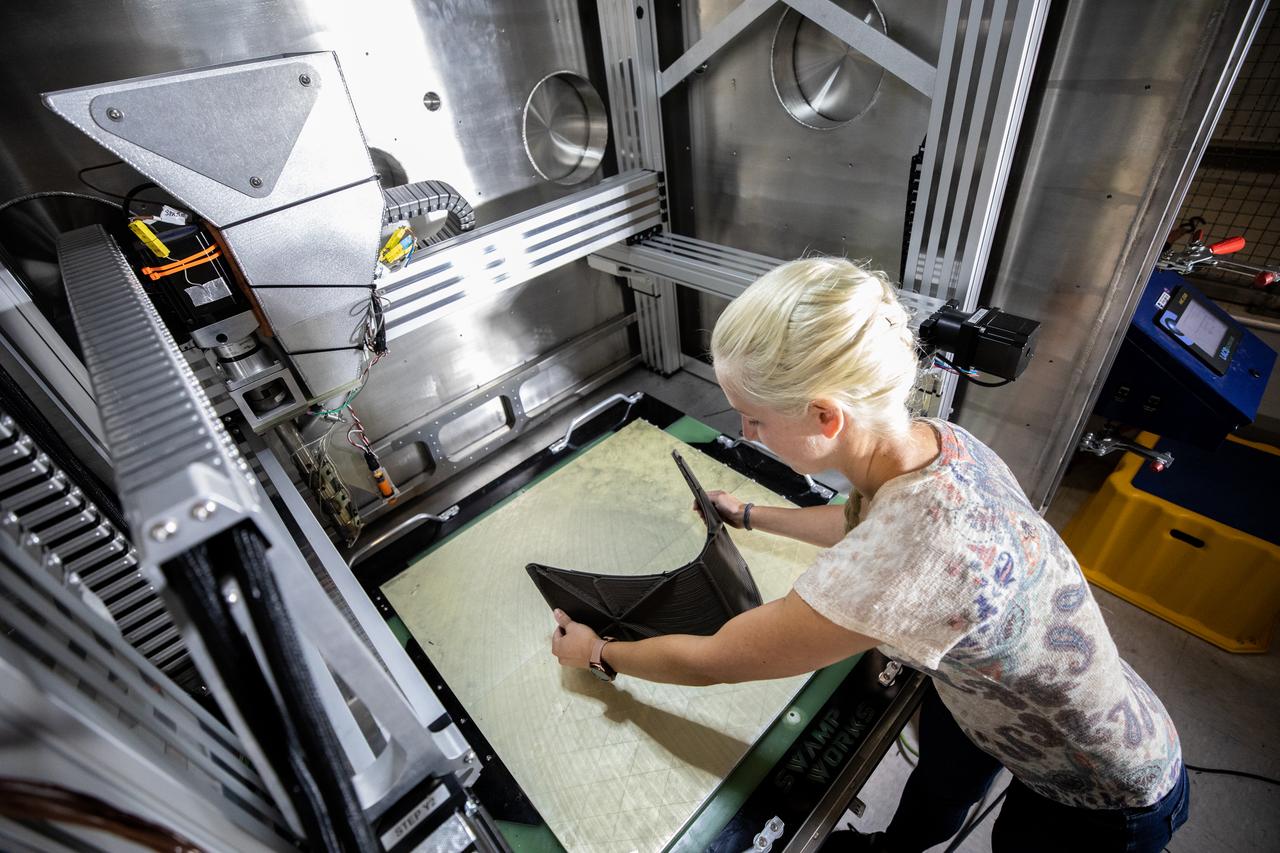
Chemist Tesia Irwin tests a 3D printer on July 28, 2022, at Swamp Works at NASA’s Kennedy Space Center in Florida, as part of the Relevant Environment Additive Construction Technology (REACT) project. Among the key objectives of the project is developing an architectural and structural design for a shelter that provides protection to habitable assets on the lunar surface. Testing REACT derives from NASA’s 2020 Announcement of Collaboration Opportunity with AI SpaceFactory – an architectural and construction technology company and winner of NASA’s 3D Printed Habitat Challenge.
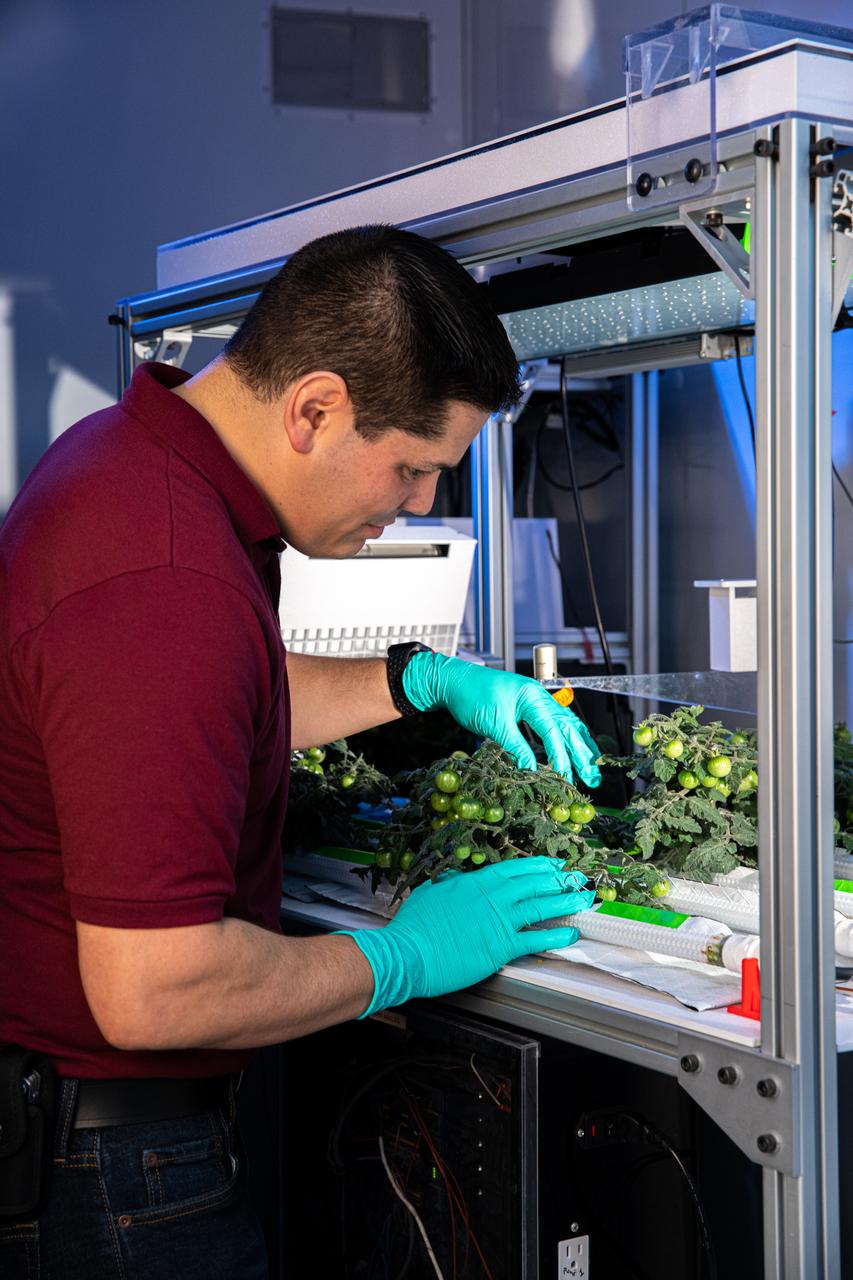
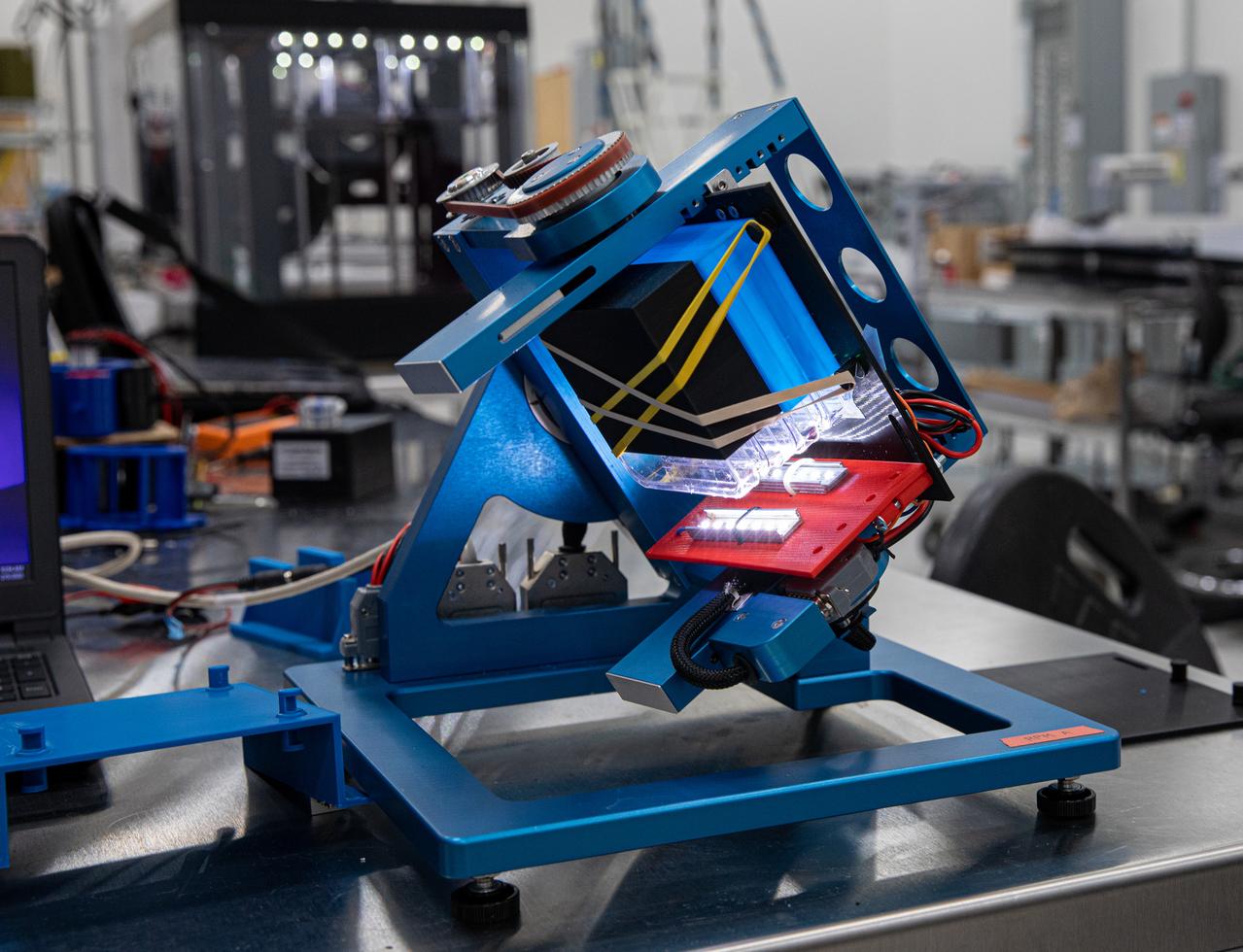
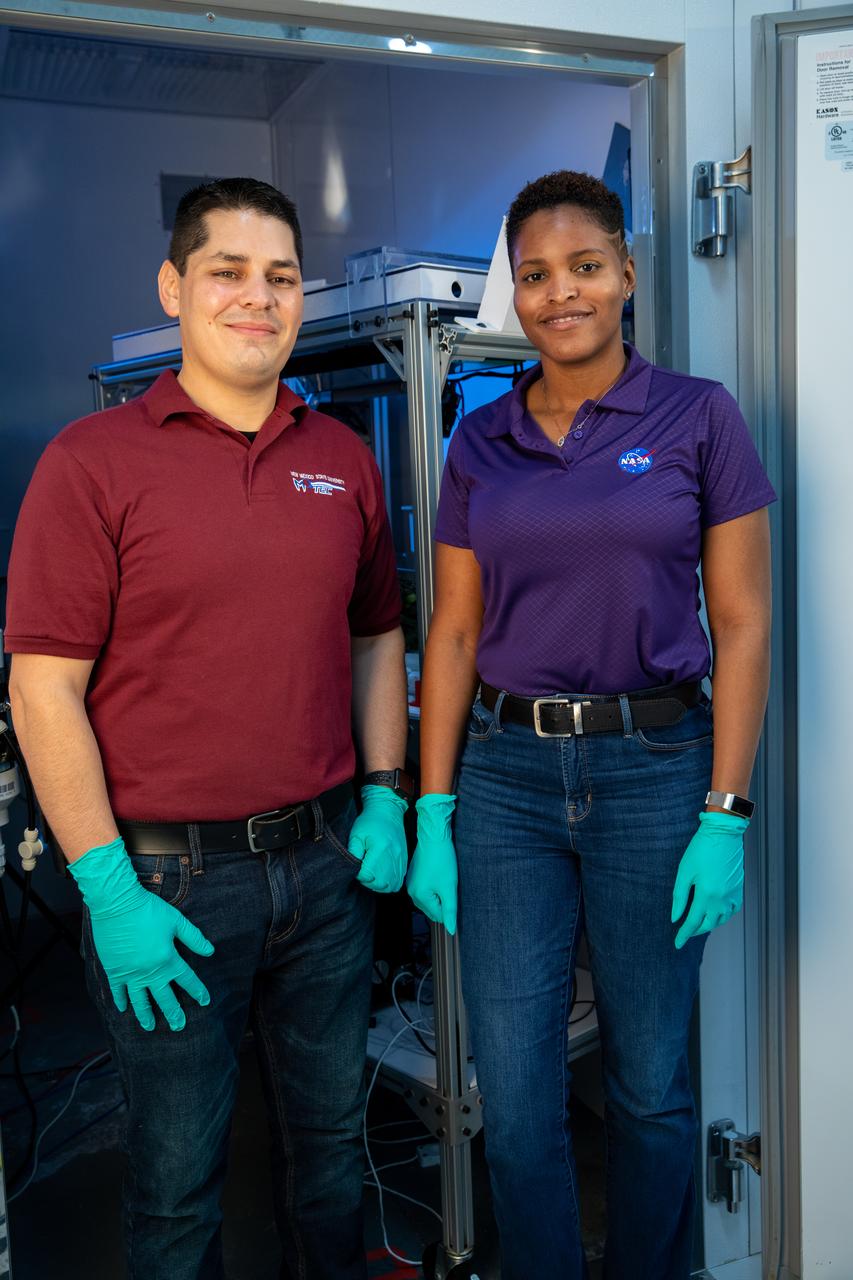
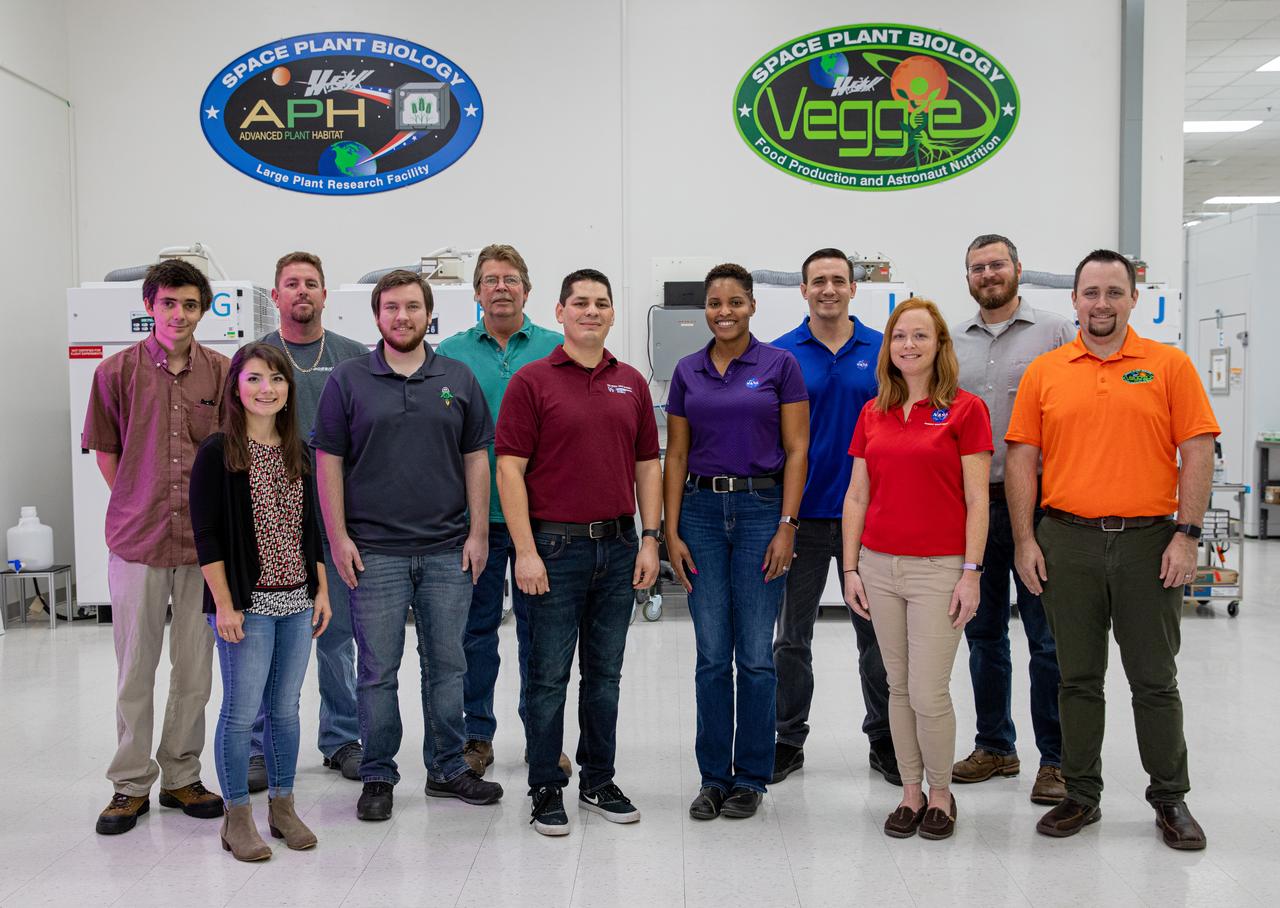
A multidisciplinary team of engineers, biologists, and horticulturalists working out of NASA's Kennedy Space Center in Florida supports the use of technology and automation in plant growth research that looks to supplement the diet of astronauts so they can undertake longer and more distant space exploration missions than ever before.
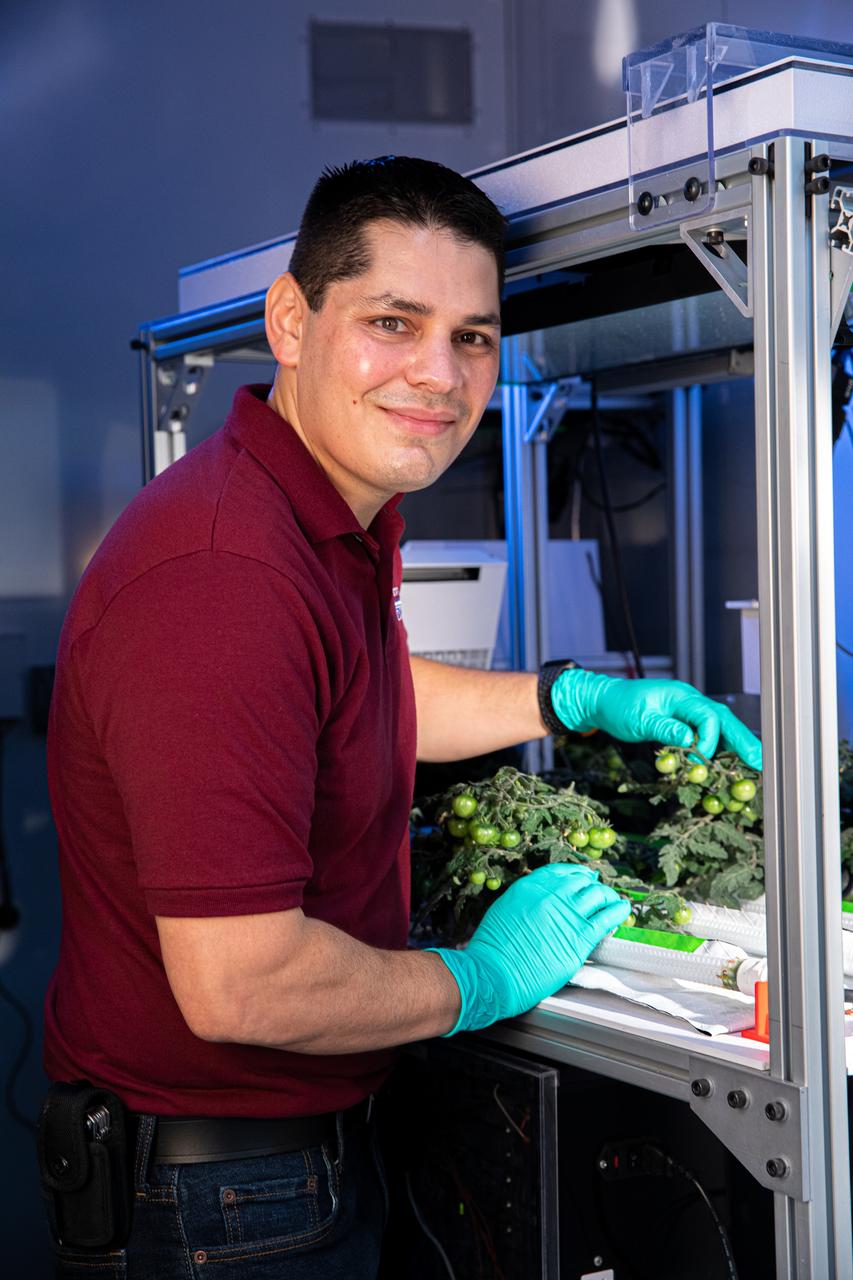
A multidisciplinary team of engineers, biologists, and horticulturalists working out of NASA's Kennedy Space Center in Florida supports the use of technology and automation in plant growth research that looks to supplement the diet of astronauts so they can undertake longer and more distant space exploration missions than ever before.
A multidisciplinary team of engineers, biologists, and horticulturalists working out of NASA's Kennedy Space Center in Florida supports the use of technology and automation in plant growth research that looks to supplement the diet of astronauts so they can undertake longer and more distant space exploration missions than ever before.
A multidisciplinary team of engineers, biologists, and horticulturalists working out of NASA's Kennedy Space Center in Florida supports the use of technology and automation in plant growth research that looks to supplement the diet of astronauts so they can undertake longer and more distant space exploration missions than ever before.
A multidisciplinary team of engineers, biologists, and horticulturalists working out of NASA's Kennedy Space Center in Florida supports the use of technology and automation in plant growth research that looks to supplement the diet of astronauts so they can undertake longer and more distant space exploration missions than ever before.
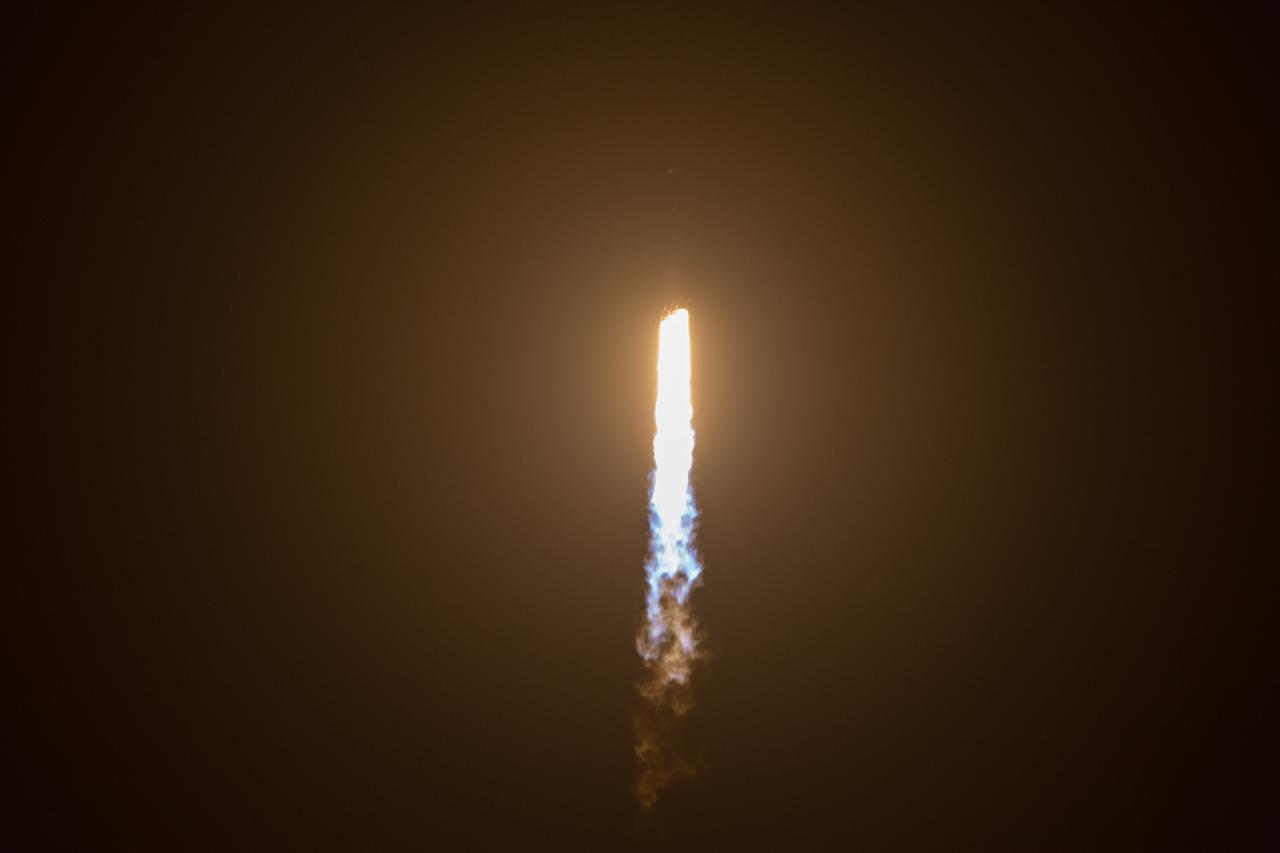
A SpaceX Falcon Heavy rocket roars upward after lifting off from Launch Complex 39A at 2:30 a.m. EDT on June 25, 2019, at NASA’s Kennedy Space Center in Florida. The Falcon Heavy rocket carries two dozen satellites to space for the U.S. Department of Defense, including four NASA payloads that are part of the Space Test Program (STP-2) mission, managed by the U.S. Air Force Space and Missile Systems Center. The four NASA payloads include two technology demonstrations to improve how spacecraft propel and navigate, as well as two NASA science missions to help us better understand the nature of space and how it impacts technology on spacecraft and the ground.
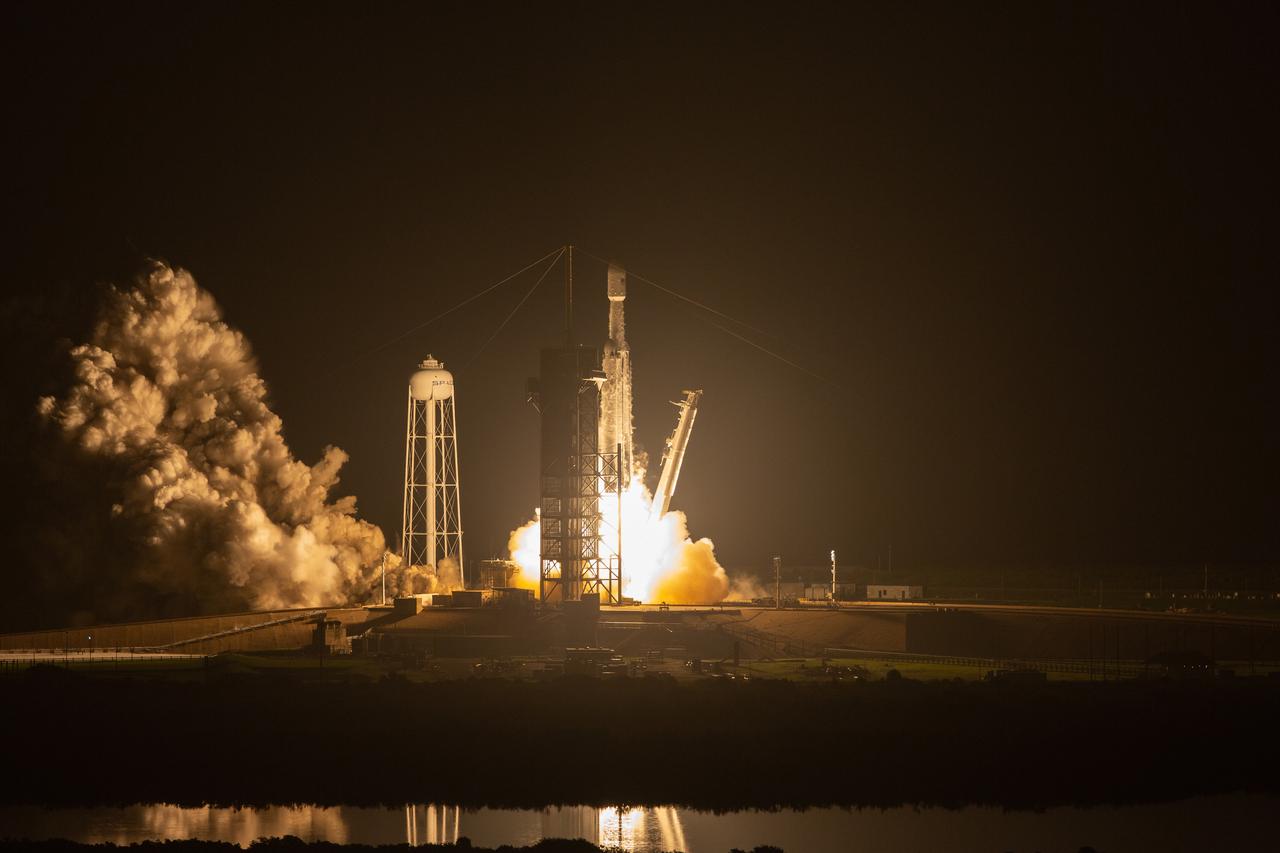
A SpaceX Falcon Heavy rocket lifts off from Launch Complex 39A at 2:30 a.m. EDT on June 25, 2019, at NASA’s Kennedy Space Center in Florida. The Falcon Heavy rocket carries two dozen satellites to space for the U.S. Department of Defense, including four NASA payloads that are part of the Space Test Program (STP-2) mission, managed by the U.S. Air Force Space and Missile Systems Center. The four NASA payloads include two technology demonstrations to improve how spacecraft propel and navigate, as well as two NASA science missions to help us better understand the nature of space and how it impacts technology on spacecraft and the ground.
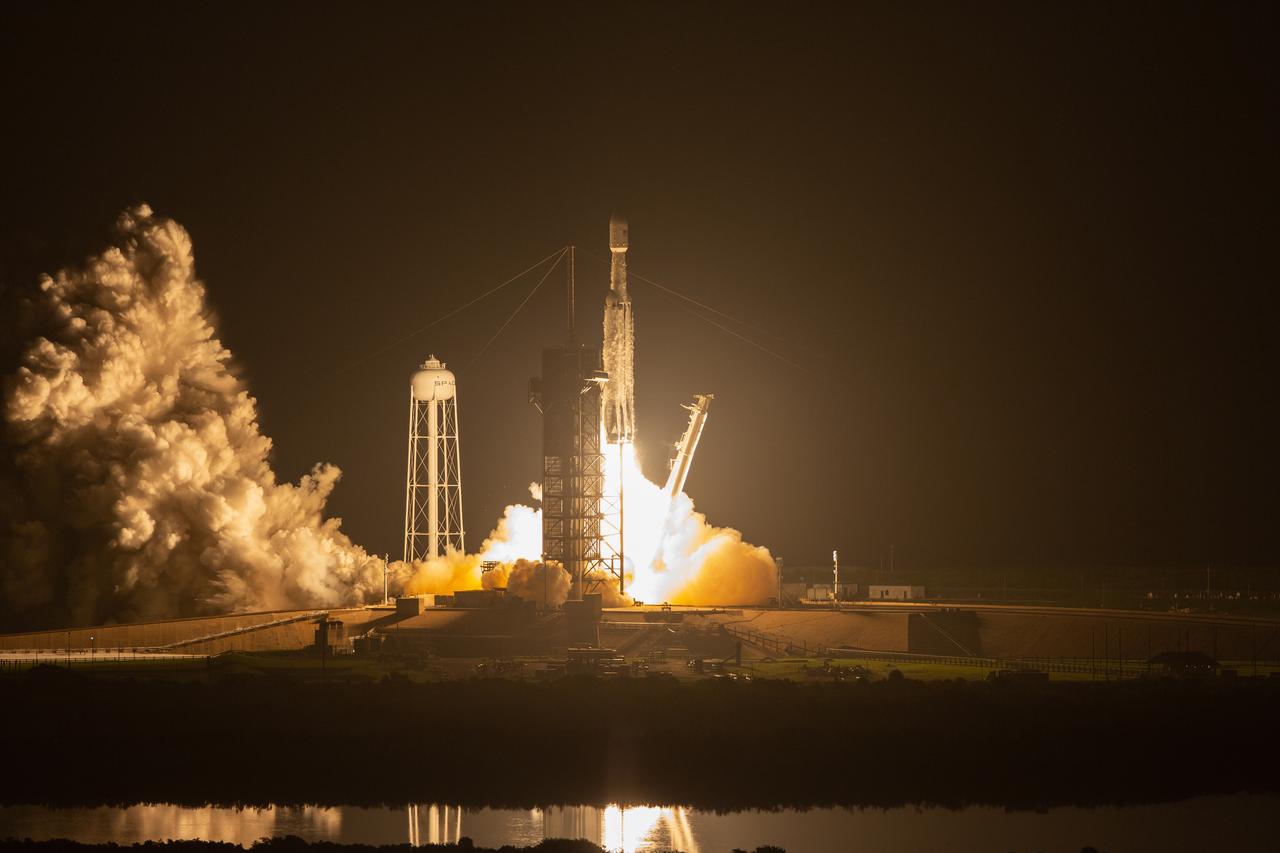
A SpaceX Falcon Heavy rocket lifts off from Launch Complex 39A at 2:30 a.m. EDT on June 25, 2019, at NASA’s Kennedy Space Center in Florida. The Falcon Heavy rocket carries two dozen satellites to space for the U.S. Department of Defense, including four NASA payloads that are part of the Space Test Program (STP-2) mission, managed by the U.S. Air Force Space and Missile Systems Center. The four NASA payloads include two technology demonstrations to improve how spacecraft propel and navigate, as well as two NASA science missions to help us better understand the nature of space and how it impacts technology on spacecraft and the ground.
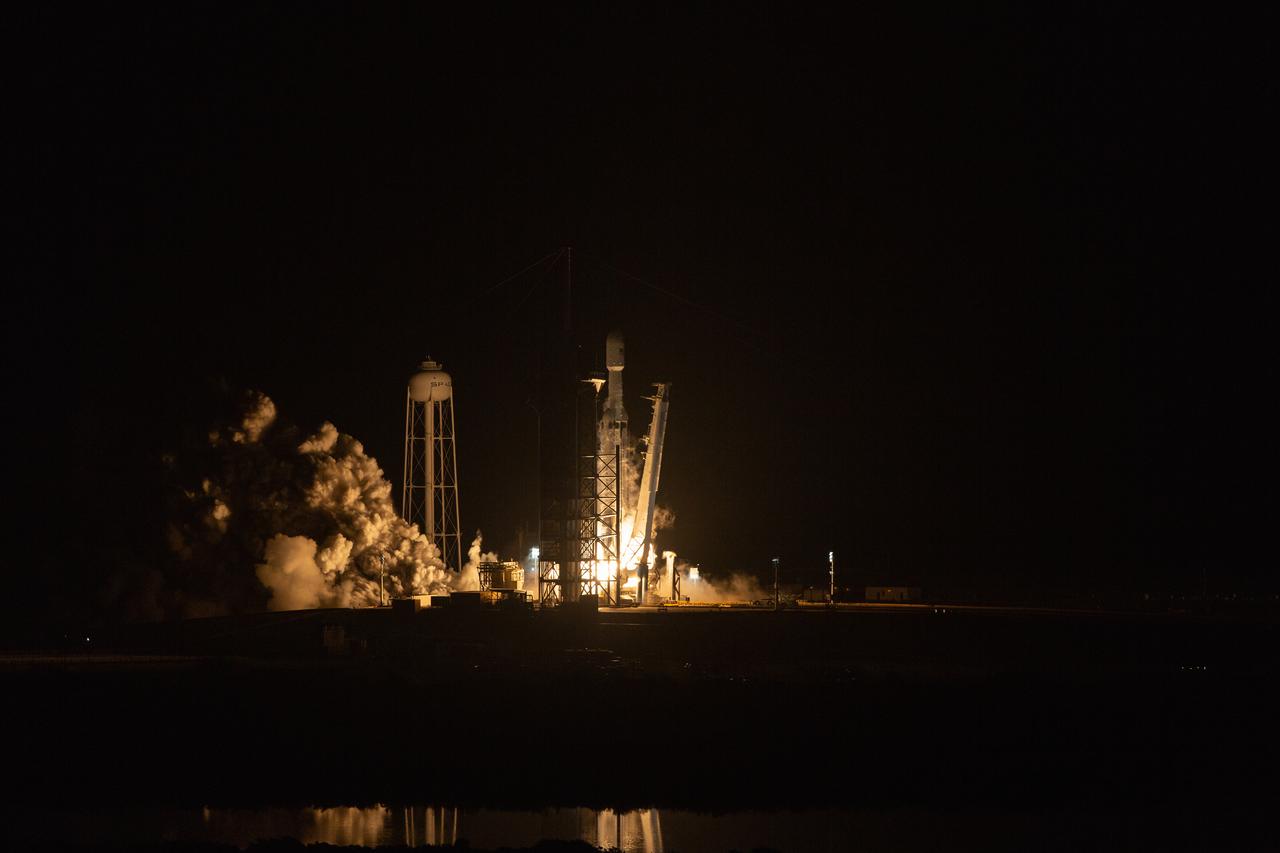
A SpaceX Falcon Heavy rocket lifts off from Launch Complex 39A at 2:30 a.m. EDT on June 25, 2019, at NASA’s Kennedy Space Center in Florida. The Falcon Heavy rocket carries two dozen satellites to space for the U.S. Department of Defense, including four NASA payloads that are part of the Space Test Program (STP-2) mission, managed by the U.S. Air Force Space and Missile Systems Center. The four NASA payloads include two technology demonstrations to improve how spacecraft propel and navigate, as well as two NASA science missions to help us better understand the nature of space and how it impacts technology on spacecraft and the ground.