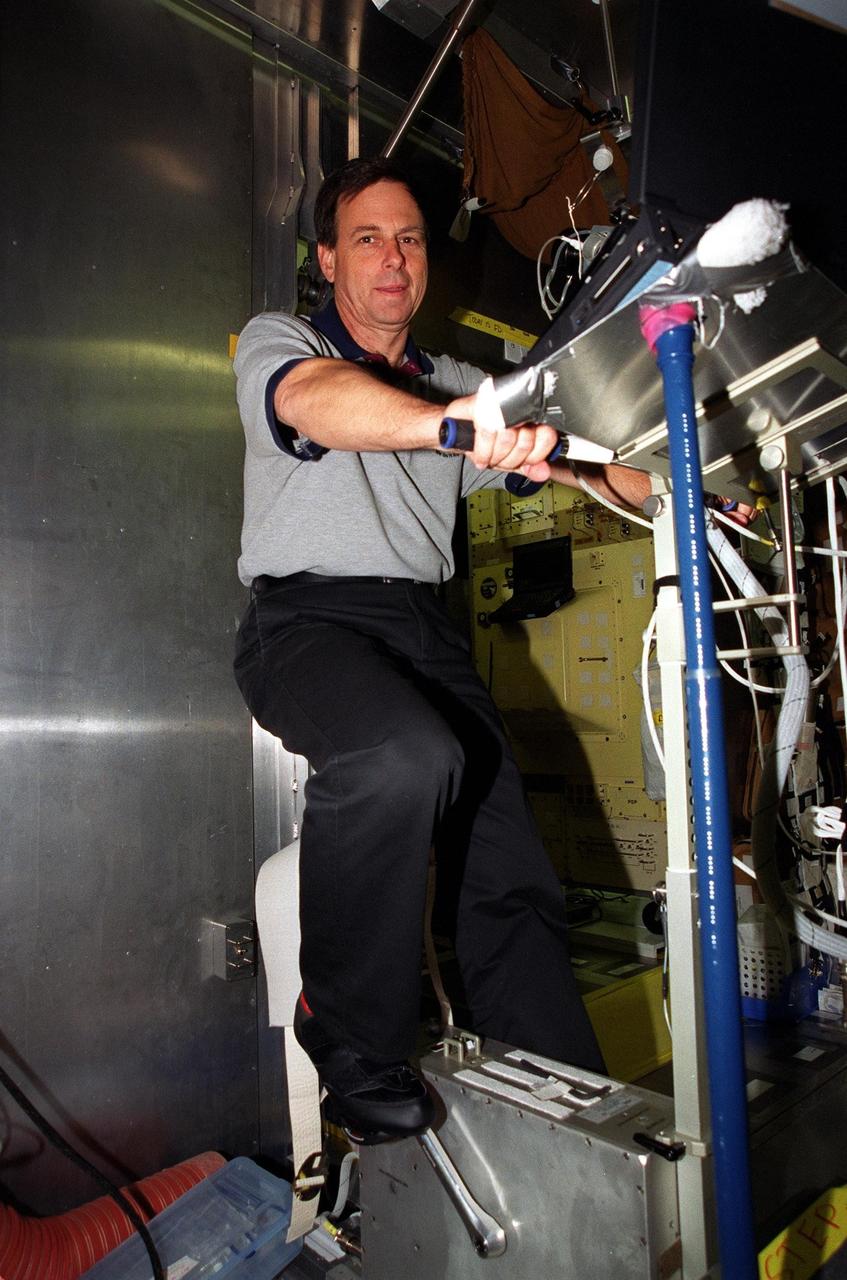
KENNEDY SPACE CENTER, Fla. -- STS-107 Payload Specialist Ilan Ramon, of Israel, trains on equipment in the training module at SPACEHAB, Cape Canaveral. Ramon and other crew members Commander Rick D. Husband, Pilot William C. McCool, Payload Commander Michael P. Anderson; and Mission Specialists Kalpana Chawla, Laurel Blair Salton Clark and David M. Brown are at SPACEHAB to take part in Crew Equipment Interface Test (CEIT) activities. The CEIT enables the crew to perform certain flight operations, operate experiments in a flight-like environment, evaluate stowage locations and obtain additional exposure to specific experiment operations. As a research mission, STS-107 will carry the SPACEHAB Double Module in its first research flight into space and a broad collection of experiments ranging from material science to life science. STS-107 is scheduled for launch May 23, 2002
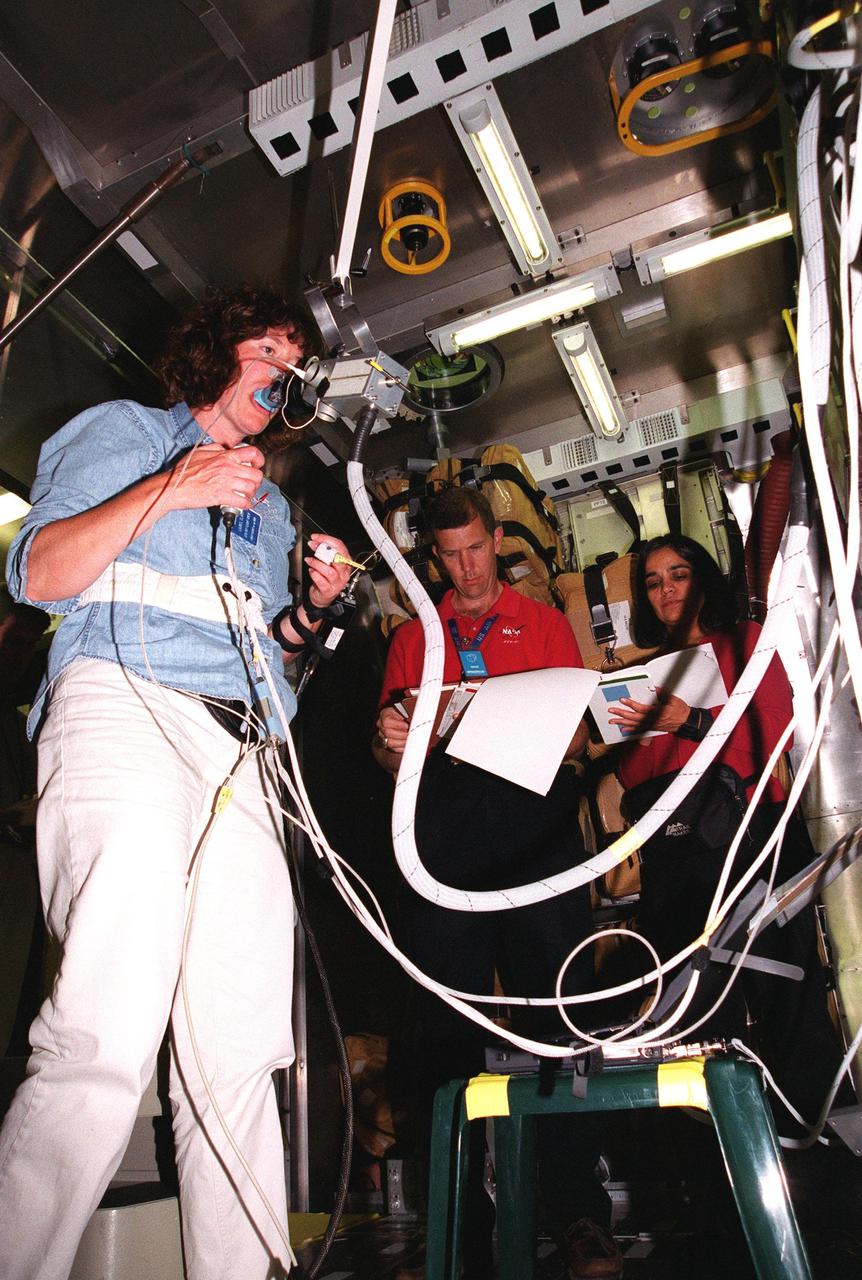
KENNEDY SPACE CENTER, Fla. -- At SPACEHAB, Cape Canaveral, Fla., Mission Specialist Laurel Blair Salton Clark practices an experiment while Commander Rick Douglas Husband and Mission Specialist Kalpana Chawla observe. They and other crew members Pilot William C. McCool; Payload Commander Michael P. Anderson; and Mission Specialists David M. Brown and Ilan Ramon, of Israel, are at SPACEHAB for Crew Equipment Interface Test (CEIT) activities. The CEIT enables the crew to perform certain flight operations, operate experiments in a flight-like environment, evaluate stowage locations and obtain additional exposure to specific experiment operations. As a research mission, STS-107 will carry the Spacehab Double Module in its first research flight into space and a broad collection of experiments ranging from material science to life science. STS-107 is scheduled for launch May 23, 2002
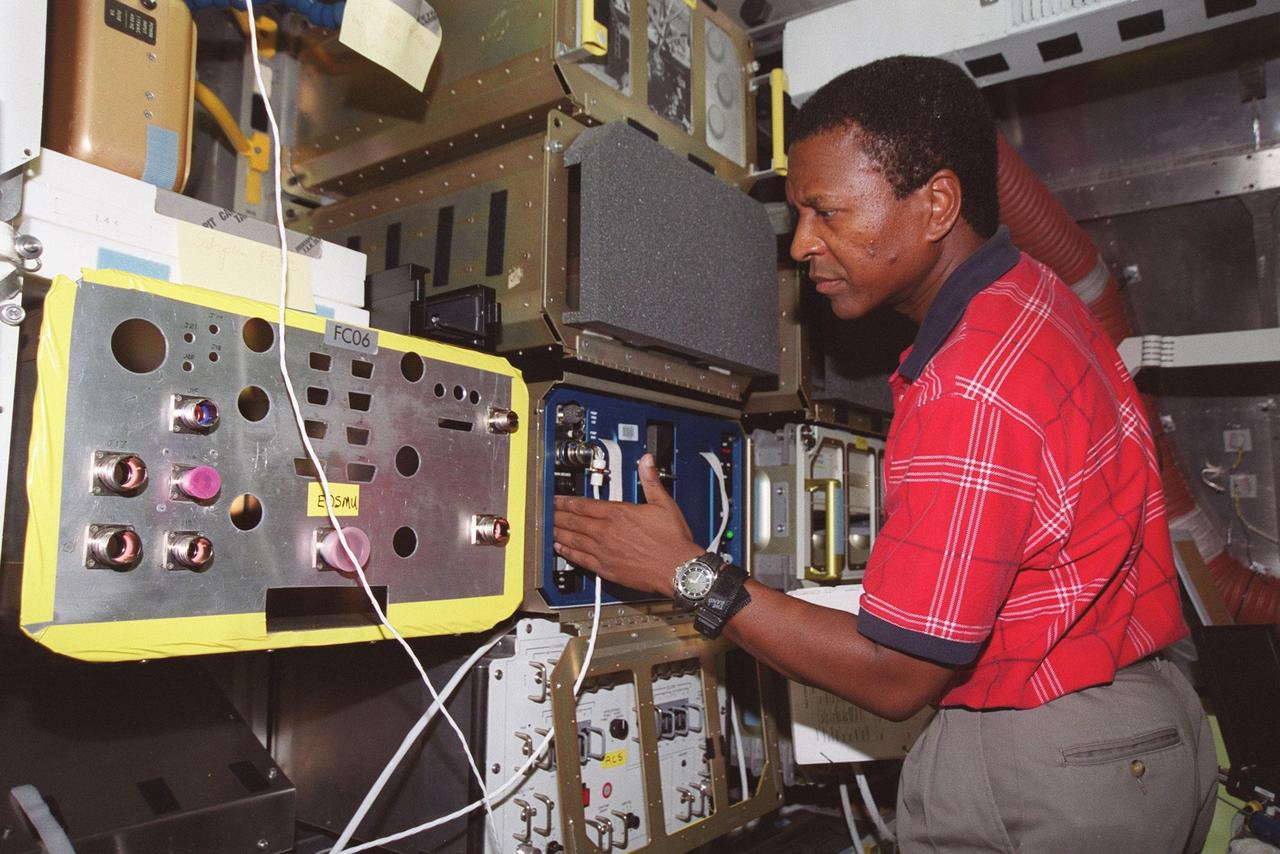
KENNEDY SPACE CENTER, Fla. -- STS-107 Payload Commander Michael Anderson trains on equipment in the training module at SPACEHAB, Cape Canaveral, Fla. Anderson and other crew members Commander Rick D. Husband, Pilot William C. McCool, Mission Specialists Kalpana Chawla, Laurel Blair Salton Clark and David M. Brown; and Payload Specialist Ilan Ramon, of Israel, are at SPACEHAB to take part in Crew Equipment Interface Test (CEIT) activities. The CEIT enables the crew to perform certain flight operations, operate experiments in a flight-like environment, evaluate stowage locations and obtain additional exposure to specific experiment operations. . As a research mission, STS-107 will carry the SPACEHAB Double Module in its first research flight into space and a broad collection of experiments ranging from material science to life science. STS-107 is scheduled for launch May 23, 2002
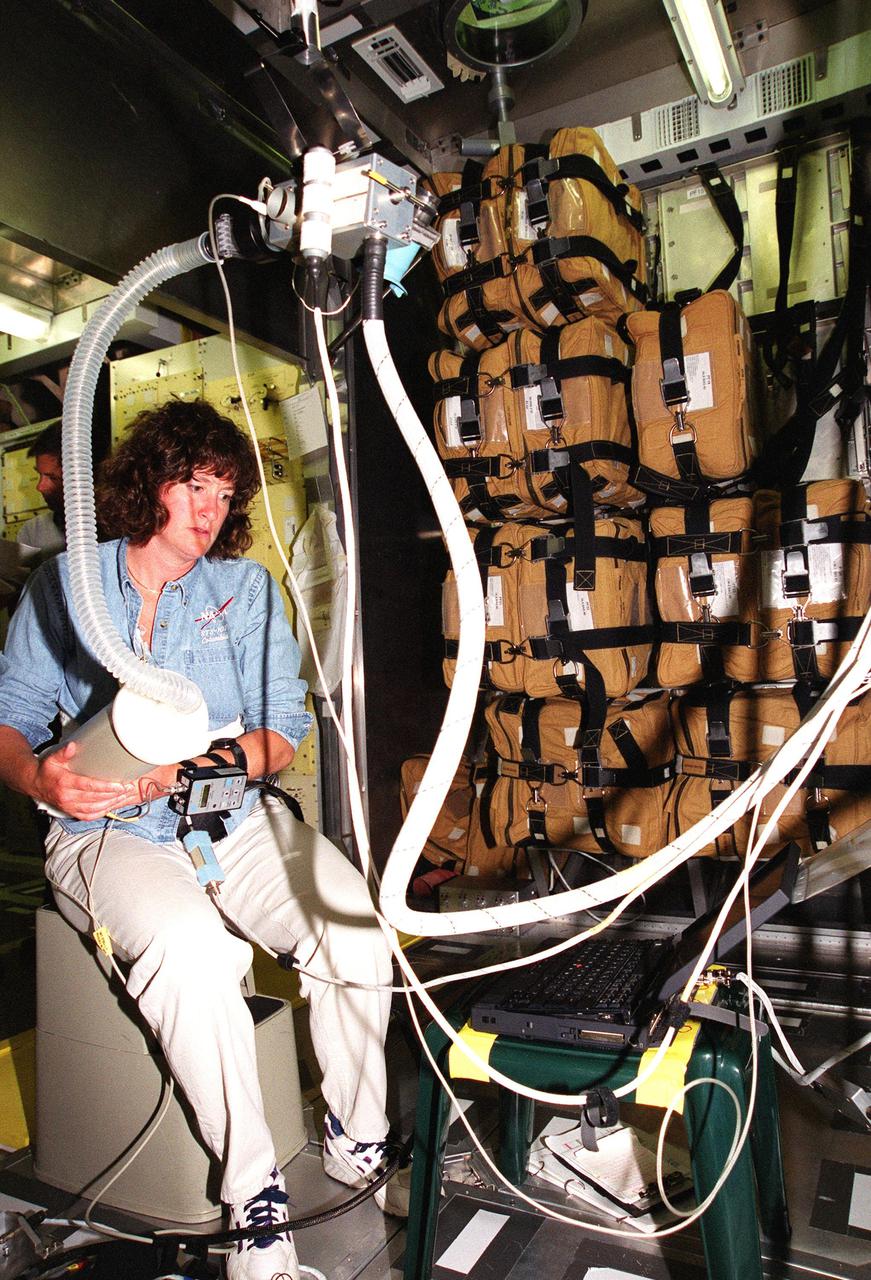
KENNEDY SPACE CENTER, Fla. -- At SPACEHAB, Cape Canaveral, Fla., STS-107 Mission Specialist Laurel Blair Salton Clark manipulates a piece of equipment. She and other crew members are at SPACEHAB, Port Canaveral, Fla., for Crew Equipment Interface Test (CEIT) activities that enable the crew to perform certain flight operations, operate experiments in a flight-like environment, evaluate stowage locations and obtain additional exposure to specific experiment operations. As a research mission, STS-107 will carry the Spacehab Double Module in its first research flight into space and a broad collection of experiments ranging from material science to life science. Other STS-107 crew members are Commander Rick Douglas Husband, Pilot William C. McCool; Payload Commander Michael P. Anderson; and Mission Specialists Kalpana Chawla, David M. Brown and Ilan Ramon, of Israel. STS-107 is scheduled for launch May 23, 2002
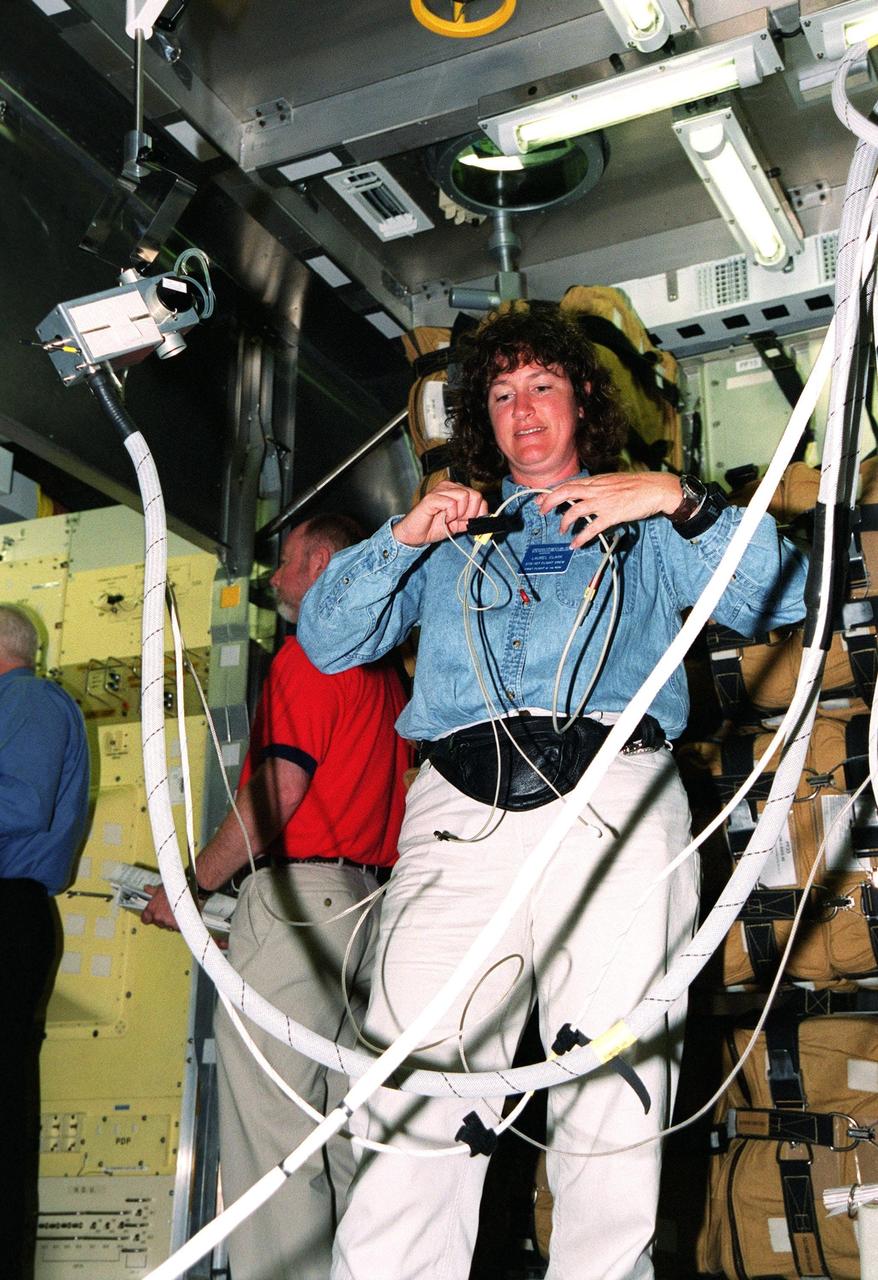
KENNEDY SPACE CENTER, Fla. -- During Crew Equipment Interface Test (CEIT)activities at SPACEHAB, Cape Canaveral, Fla., STS-107 Mission Specialist Laurel Blair Salton Clark gets hands-on training on equipment inside the Spacehab module. As a research mission, STS-107 will carry the Spacehab Double Module in its first research flight into space and a broad collection of experiments ranging from material science to life science. CEIT activities enable the crew to perform certain flight operations, operate experiments in a flight-like environment, evaluate stowage locations and obtain additional exposure to specific experiment operations. Other STS-107 crew members are Commander Rick Douglas Husband; Pilot William C. McCool; Payload Commander Michael P. Anderson; Mission Specialists Kalpana Chawla and David M. Brown; and Payload Specialist Ilan Ramon, of Israel. STS-107 is scheduled for launch May 23, 2002
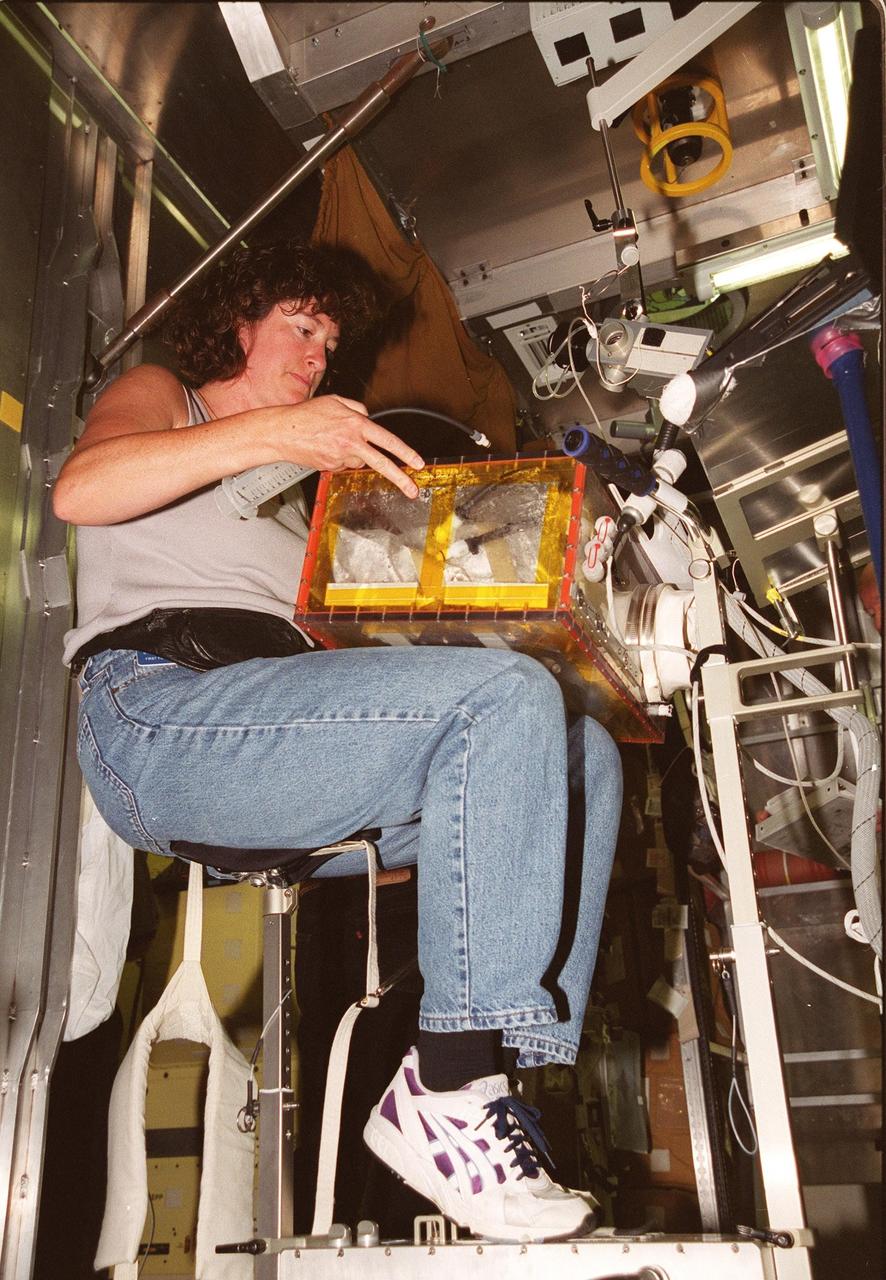
KENNEDY SPACE CENTER, Fla. -- During Crew Equipment Interface Test activities at SPACEHAB, Cape Canaveral, Fla., STS-107 Mission Specialist Laurel Blair Salton Clark gets hands-on training on a glove box experiment inside the training module. As a research mission, STS-107 will carry the SPACEHAB Double Module in its first research flight into space and a broad collection of experiments ranging from material science to life science. CEIT activities enable the crew to perform certain flight operations, operate experiments in a flight-like environment, evaluate stowage locations and obtain additional exposure to specific experiment operations. Other STS-107 crew members are Commander Rick Douglas Husband; Pilot William C. McCool; Payload Commander Michael P. Anderson; Mission Specialists Kalpana Chawla and David M. Brown; and Payload Specialist Ilan Ramon, of Israel. STS-107 is scheduled for launch May 23, 2002
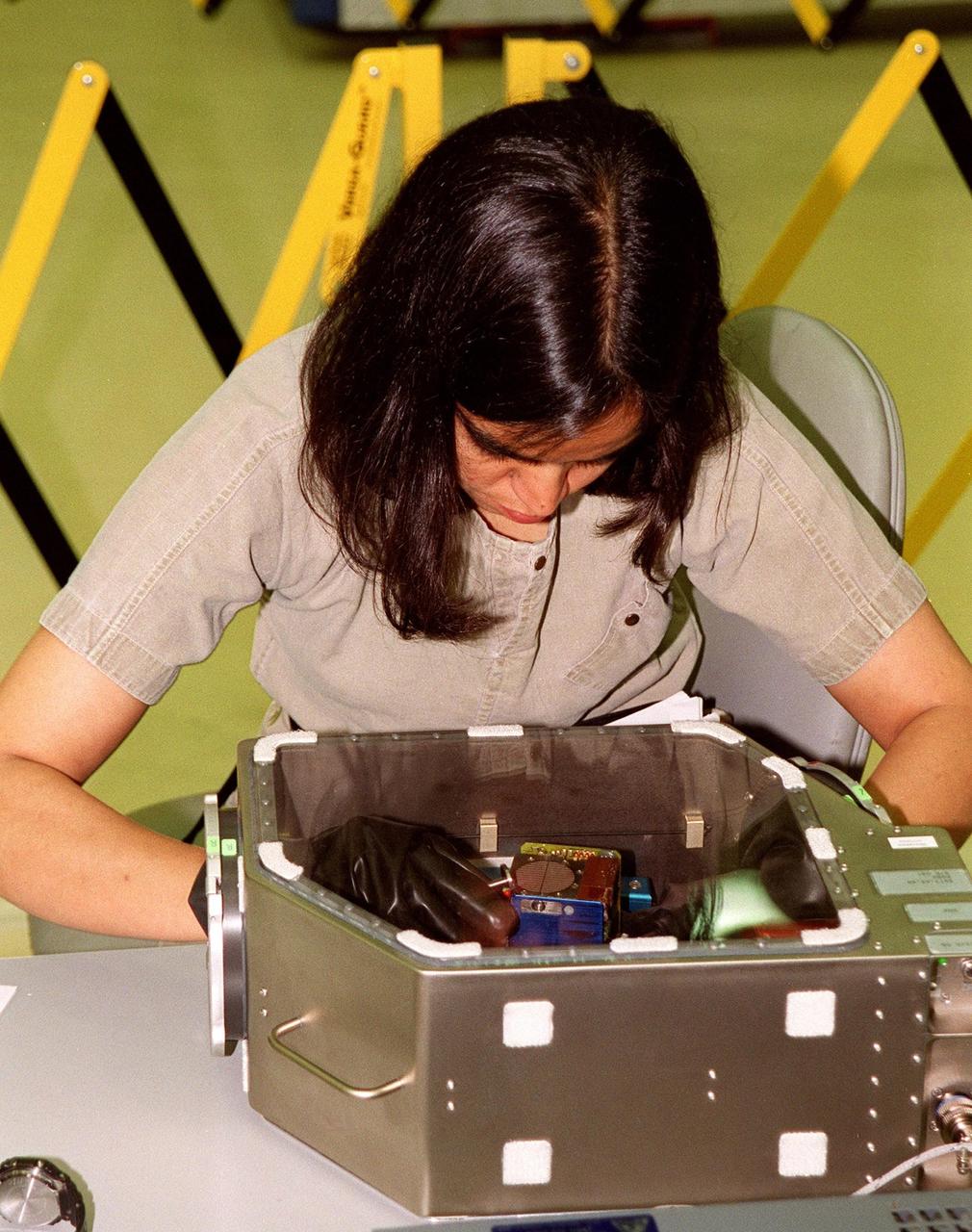
KENNEDY SPACE CENTER, Fla. -- During Crew Equipment Interface Test activities at SPACEHAB, Cape Canaveral, Fla., STS-107 Mission Specialist Kalpana Chawla trains on a glove box experiment. As a research mission, STS-107 will carry the SPACEHAB Double Module in its first research flight into space and a broad collection of experiments ranging from material science to life science. CEIT activities enable the crew to perform certain flight operations, operate experiments in a flight-like environment, evaluate stowage locations and obtain additional exposure to specific experiment operations. Other STS-107 crew members are Commander Rick Douglas Husband; Pilot William C. McCool; Payload Commander Michael P. Anderson; Mission Specialists Laurel Blair Salton Clark and David M. Brown; and Payload Specialist Ilan Ramon, of Israel. STS-107 is scheduled for launch May 23, 2002
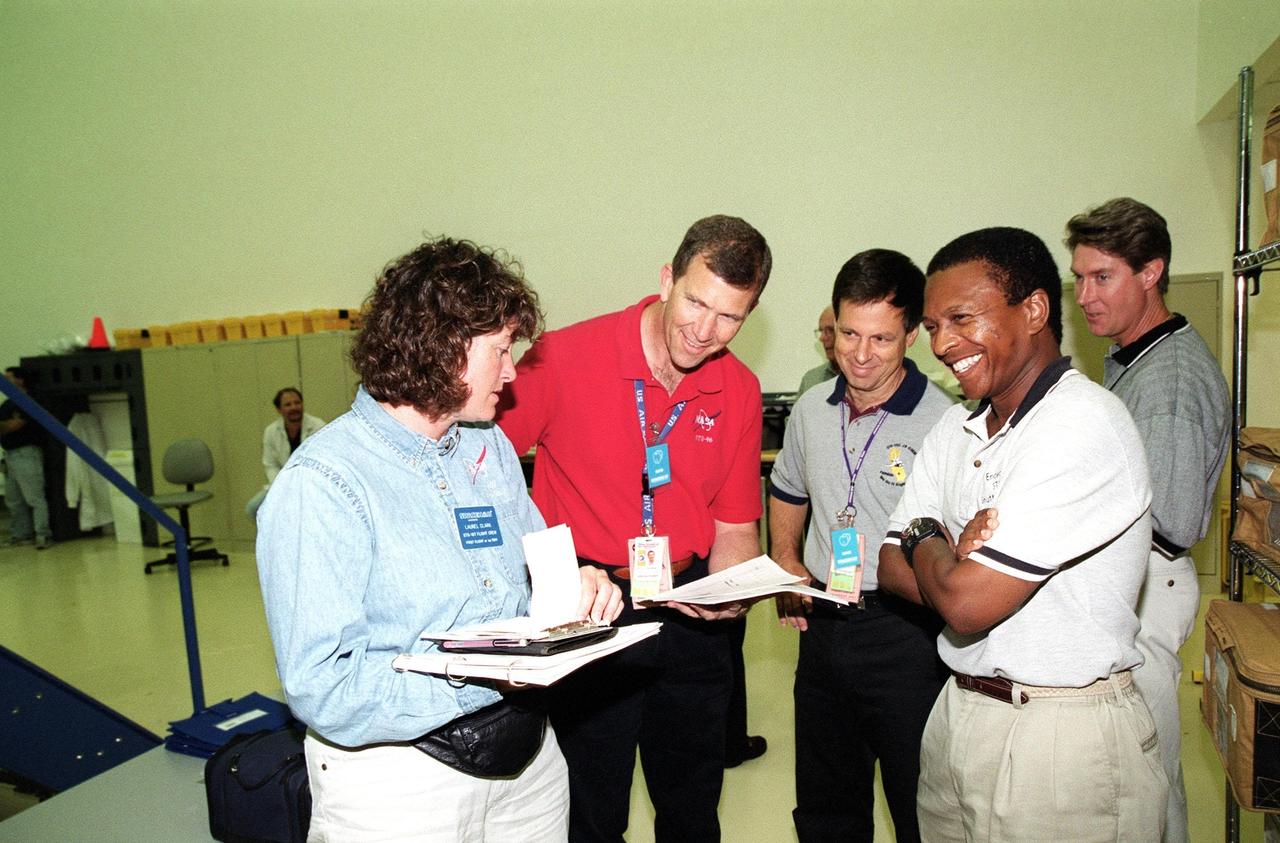
KENNEDY SPACE CENTER, Fla. -- At SPACEHAB, Cape Canaveral, Fla., the STS-107 crew takes part in Crew Equipment Interface Test (CEIT) activities. From left are Mission Specialist Laurel Blair Salton Clark, Commander Rick Douglas Husband, Payload Specialist Ilan Ramon, of Israel, and Payload Commander Michael P. Anderson. A trainer is at far right. As a research mission, STS-107 will carry the Spacehab Double Module in its first research flight into space and a broad collection of experiments ranging from material science to life science. The CEIT activities enable the crew to perform certain flight operations, operate experiments in a flight-like environment, evaluate stowage locations and obtain additional exposure to specific experiment operations. Other STS-107 crew members are Pilot William C. McCool and Mission Specialists Kalpana Chawla and David M. Brown. STS-107 is scheduled for launch May 23, 2002
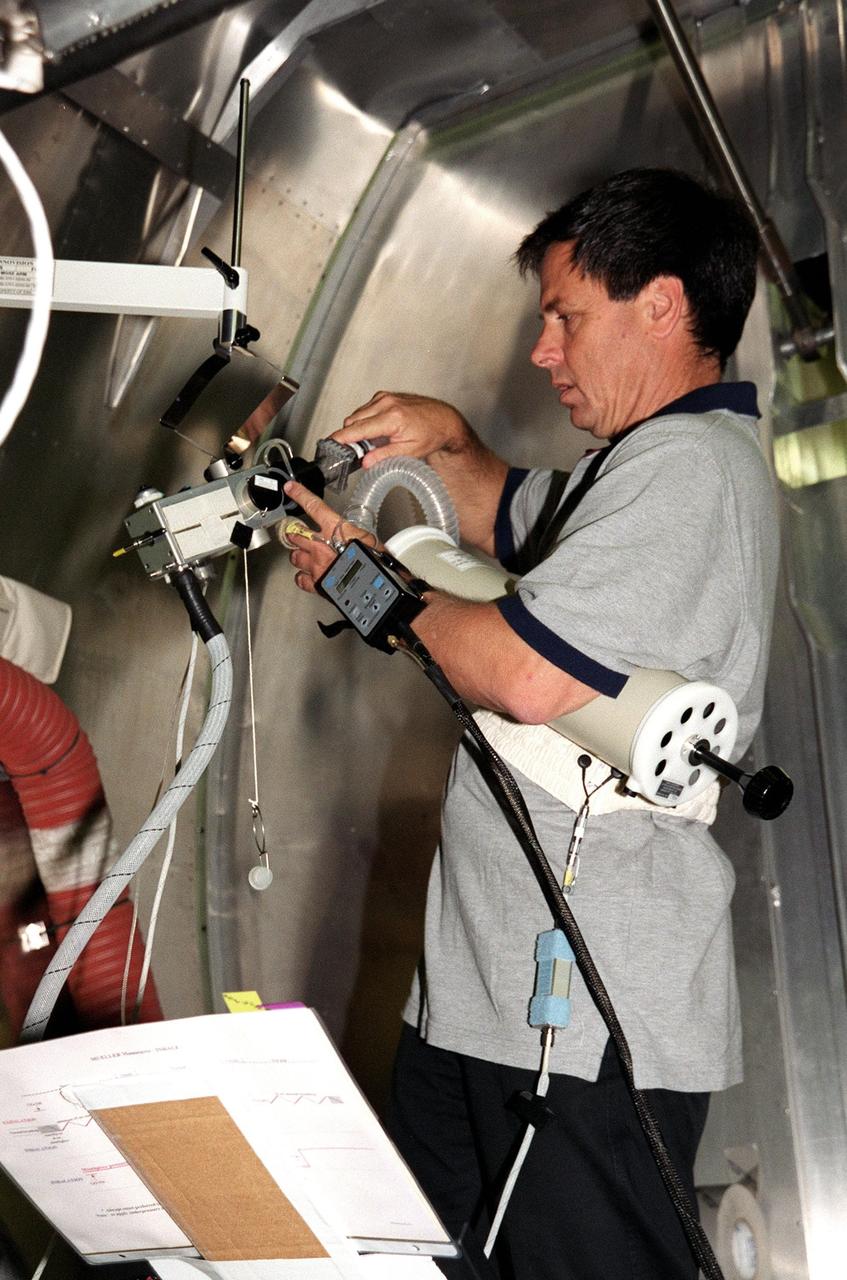
KENNEDY SPACE CENTER, Fla. -- STS-107 Payload Specialist Ilan Ramon, of Israel, manipulates a piece of equipment in the Spacehab module. He and other crew members are taking part in Crew Equipment Interface Test (CEIT) activities at SPACEHAB, Cape Canaveral, Fla. As a research mission, STS-107 will carry the Spacehab Double Module in its first research flight into space and a broad collection of experiments ranging from material science to life science. The CEIT activities enable the crew to perform certain flight operations, operate experiments in a flight-like environment, evaluate stowage locations and obtain additional exposure to specific experiment operations. Other STS-107 crew members are Commander Rick Douglas Husband, Pilot William C. McCool; Payload Commander Michael P. Anderson; and Mission Specialists Kalpana Chawla, Laurel Blair Salton Clark and David M. Brown. STS-107 is scheduled for launch May 23, 2002
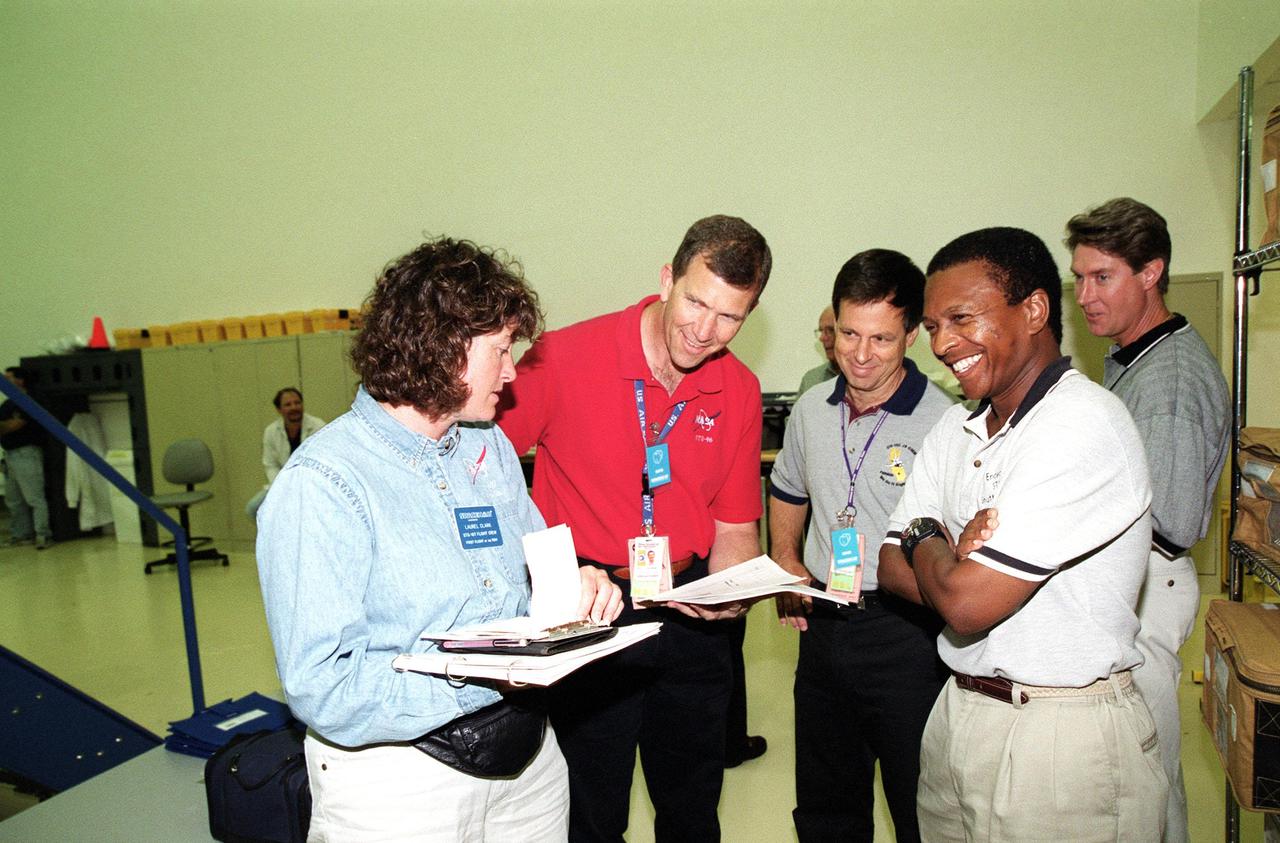
KENNEDY SPACE CENTER, Fla. -- At SPACEHAB, Cape Canaveral, Fla., the STS-107 crew takes part in Crew Equipment Interface Test (CEIT) activities. From left are Mission Specialist Laurel Blair Salton Clark, Commander Rick Douglas Husband, Payload Specialist Ilan Ramon, of Israel, and Payload Commander Michael P. Anderson. A trainer is at far right. As a research mission, STS-107 will carry the Spacehab Double Module in its first research flight into space and a broad collection of experiments ranging from material science to life science. The CEIT activities enable the crew to perform certain flight operations, operate experiments in a flight-like environment, evaluate stowage locations and obtain additional exposure to specific experiment operations. Other STS-107 crew members are Pilot William C. McCool and Mission Specialists Kalpana Chawla and David M. Brown. STS-107 is scheduled for launch May 23, 2002
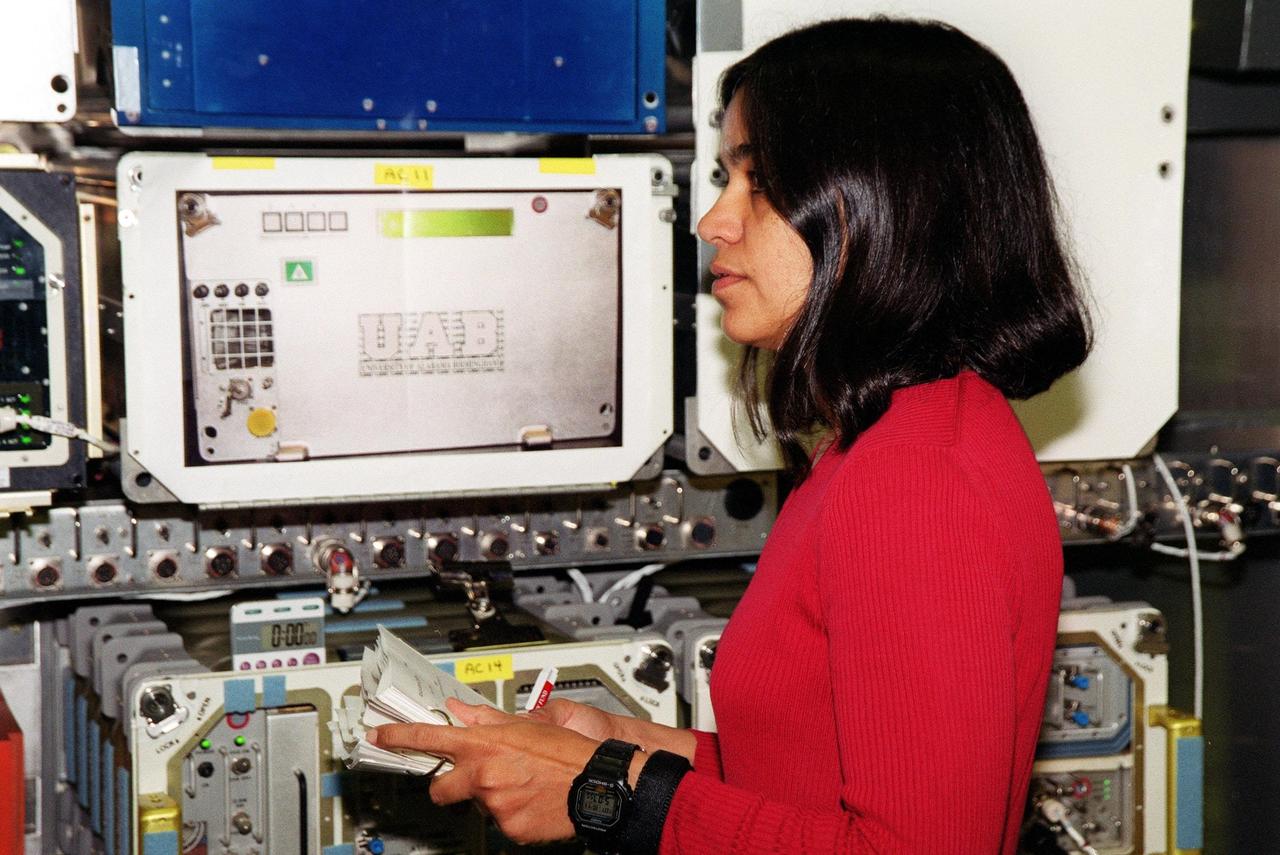
KENNEDY SPACE CENTER, Fla. -- During Crew Equipment Interface Test (CEIT)activities at SPACEHAB, Cape Canaveral, Fla., STS-107 Mission Specialist Kalpana Chawla looks over equipment inside the Spacehab module. As a research mission, STS-107 will carry the Spacehab Double Module in its first research flight into space and a broad collection of experiments ranging from material science to life science. The CEIT activities enable the crew to perform certain flight operations, operate experiments in a flight-like environment, evaluate stowage locations and obtain additional exposure to specific experiment operations. Other STS-107 crew members are Commander Rick Douglas Husband; Pilot William C. McCool; Payload Commander Michael P. Anderson; Mission Specialists Laurel Blair Salton Clark and David M. Brown; and Payload Specialist Ilan Ramon, of Israel. STS-107 is scheduled for launch May 23, 2002
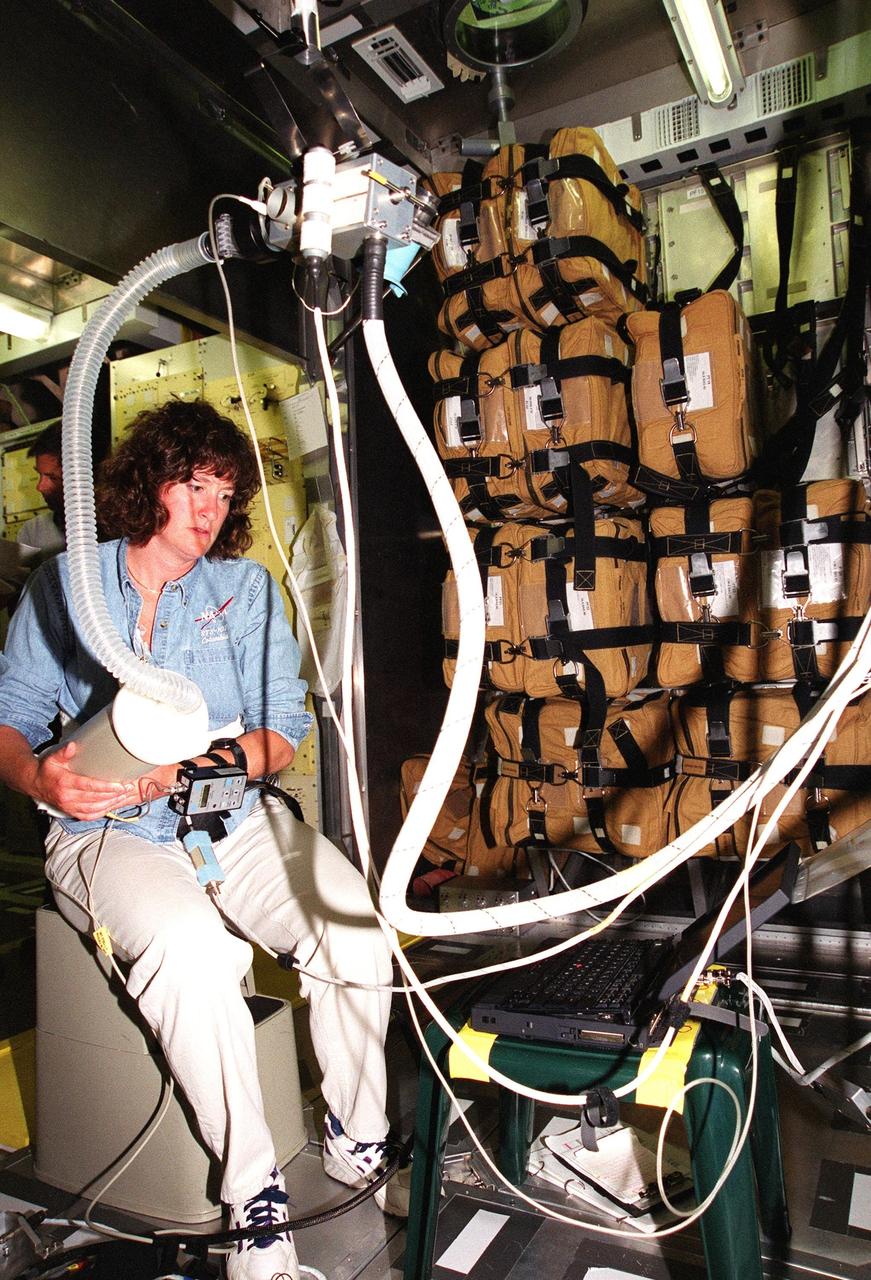
KENNEDY SPACE CENTER, Fla. -- At SPACEHAB, Cape Canaveral, Fla., STS-107 Mission Specialist Laurel Blair Salton Clark manipulates a piece of equipment. She and other crew members are at SPACEHAB, Port Canaveral, Fla., for Crew Equipment Interface Test (CEIT) activities that enable the crew to perform certain flight operations, operate experiments in a flight-like environment, evaluate stowage locations and obtain additional exposure to specific experiment operations. As a research mission, STS-107 will carry the Spacehab Double Module in its first research flight into space and a broad collection of experiments ranging from material science to life science. Other STS-107 crew members are Commander Rick Douglas Husband, Pilot William C. McCool; Payload Commander Michael P. Anderson; and Mission Specialists Kalpana Chawla, David M. Brown and Ilan Ramon, of Israel. STS-107 is scheduled for launch May 23, 2002
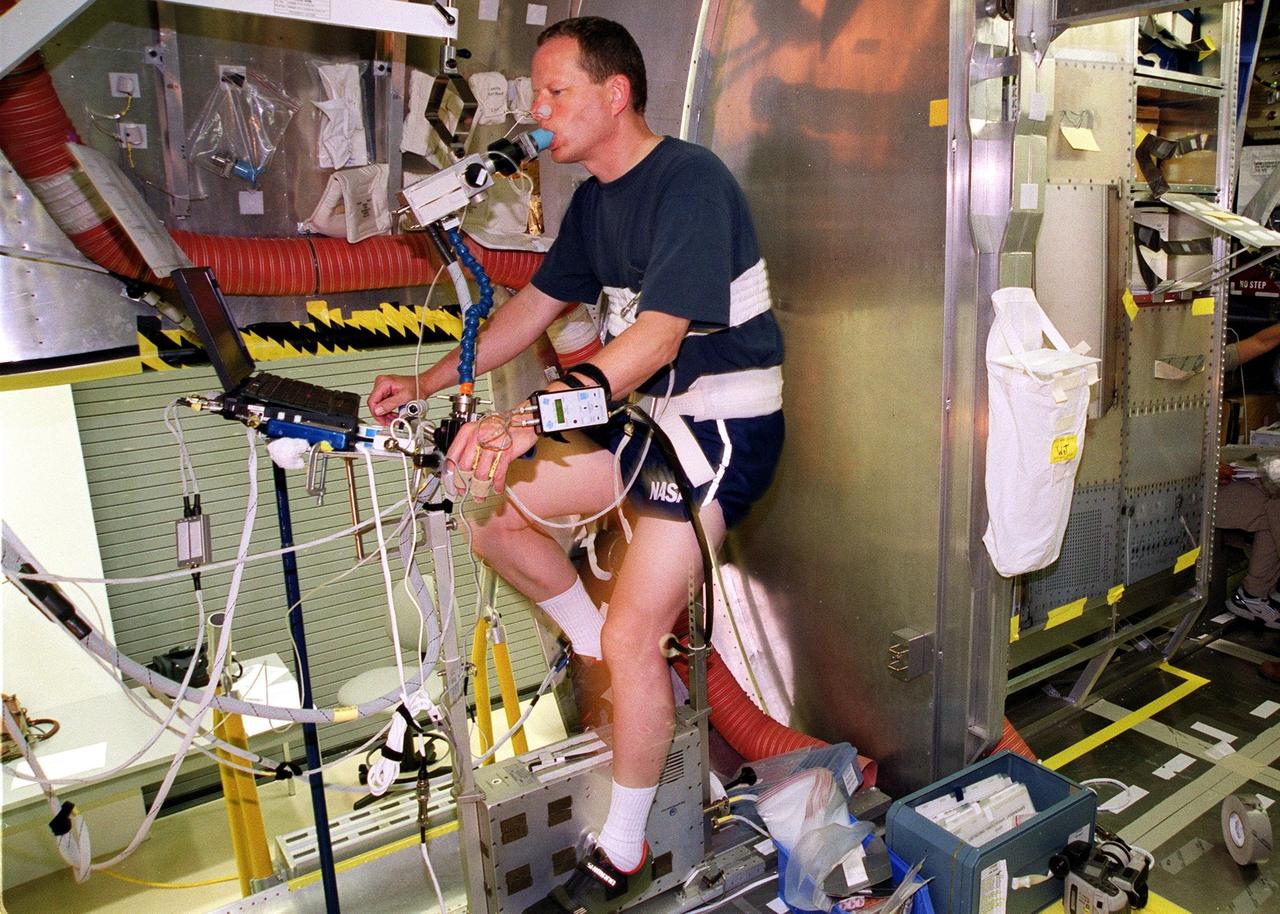
KENNEDY SPACE CENTER, Fla. -- STS-107 Mission Specialist David M. Brown trains on equipment in the training module at SPACEHAB, Cape Canaveral, Fla. Brown and other crew members Commander Rick D. Husband, Pilot William C. McCool, Payload Commander Michael P. Anderson; Mission Specialists Kalpana Chawla and Laurel Blair Salton Clark; and Payload Specialist Ilan Ramon, of Israel, are at SPACEHAB to take part in Crew Equipment Interface Test (CEIT) activities. The CEIT enables the crew to perform certain flight operations, operate experiments in a flight-like environment, evaluate stowage locations and obtain additional exposure to specific experiment operations. As a research mission, STS-107 will carry the SPACEHAB Double Module in its first research flight into space and a broad collection of experiments ranging from material science to life science. STS-107 is scheduled for launch May 23, 2002
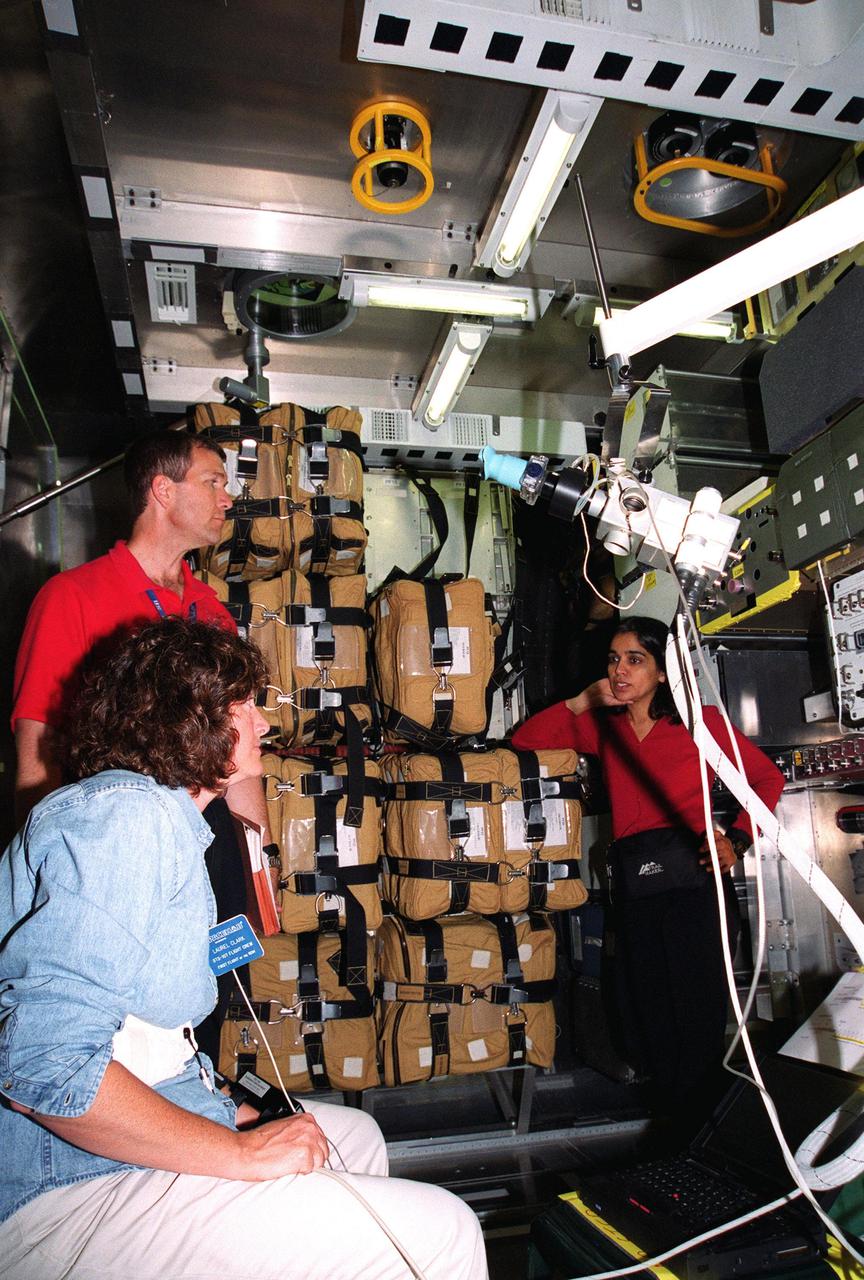
KENNEDY SPACE CENTER, Fla. -- At SPACEHAB, Cape Canaveral, Fla., members of the STS-107 crew discuss the experiments in the Spacehab module. Seated, in the foreground, is Mission Specialist Laurel Blair Salton Clark; standing behind her are Commander Rick Douglas Husband and Mission Specialist Kalpana Chawla. They and other crew members Pilot William C. McCool; Payload Commander Michael P. Anderson; and Mission Specialists David M. Brown and Ilan Ramon, of Israel, are at SPACEHAB for Crew Equipment Interface Test (CEIT) activities. The CEIT enables the crew to perform certain flight operations, operate experiments in a flight-like environment, evaluate stowage locations and obtain additional exposure to specific experiment operations. As a research mission, STS-107 will carry the Spacehab Double Module in its first research flight into space and a broad collection of experiments ranging from material science to life science. STS-107 is scheduled for launch May 23, 2002
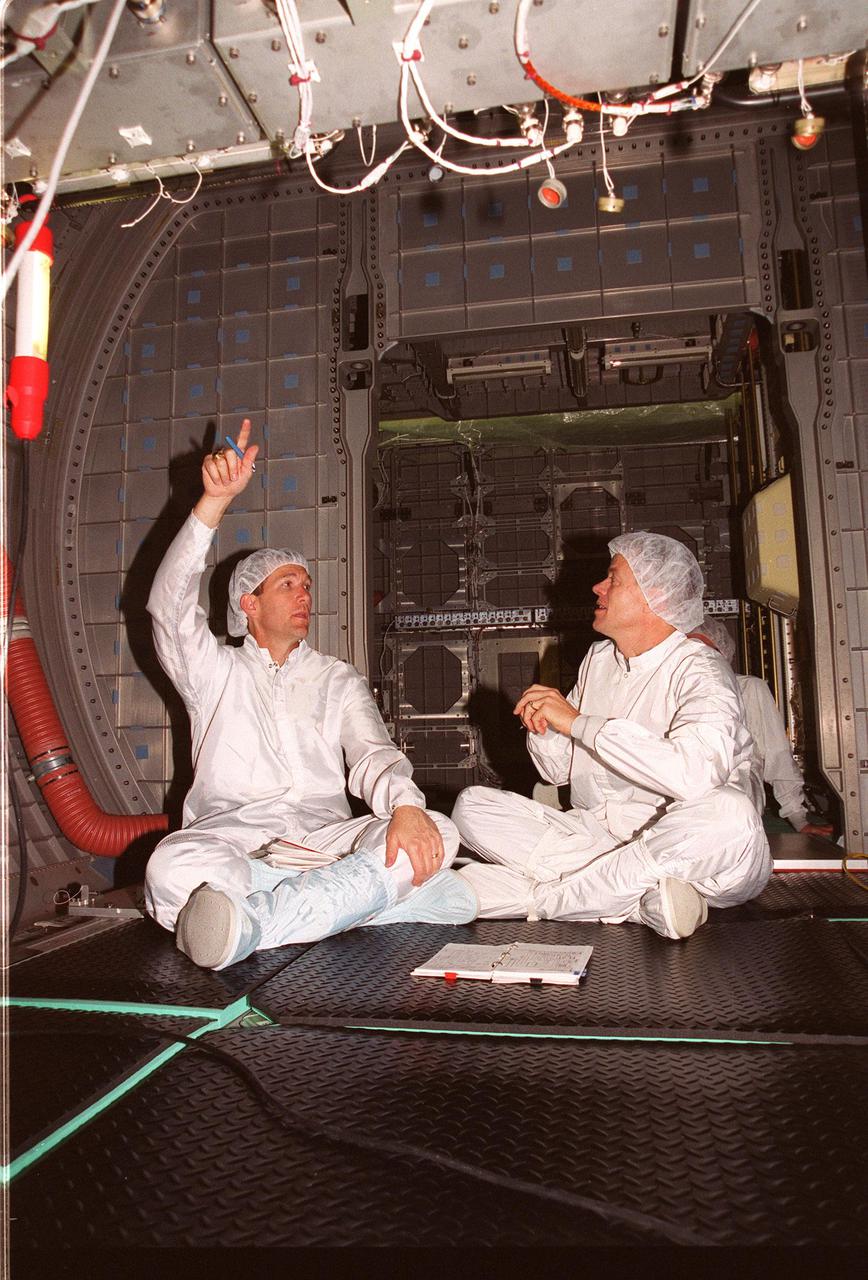
KENNEDY SPACE CENTER, Fla. -- - STS-107 Commander Rick D. Husband (left) and Pilot William C. McCool train in the SPACHEAB Double Module that will fly on their mission. Husband, McCool and other crew members Payload Commander Michael P. Anderson; Mission Specialists Laurel Blair Salton Clark and David M. Brown; and Payload Specialist Ilan Ramon, of Israel, are at SPACEHAB, Cape Canaveral, Fla., to take part in Crew Equipment Interface Test (CEIT) activities. The CEIT enables the crew to perform certain flight operations, operate experiments in a flight-like environment, evaluate stowage locations and obtain additional exposure to specific experiment operations. As a research mission, STS-107 will carry the SPACEHAB Double Module in its first research flight into space and a broad collection of experiments ranging from material science to life science. STS-107 is scheduled for launch May 23, 2002
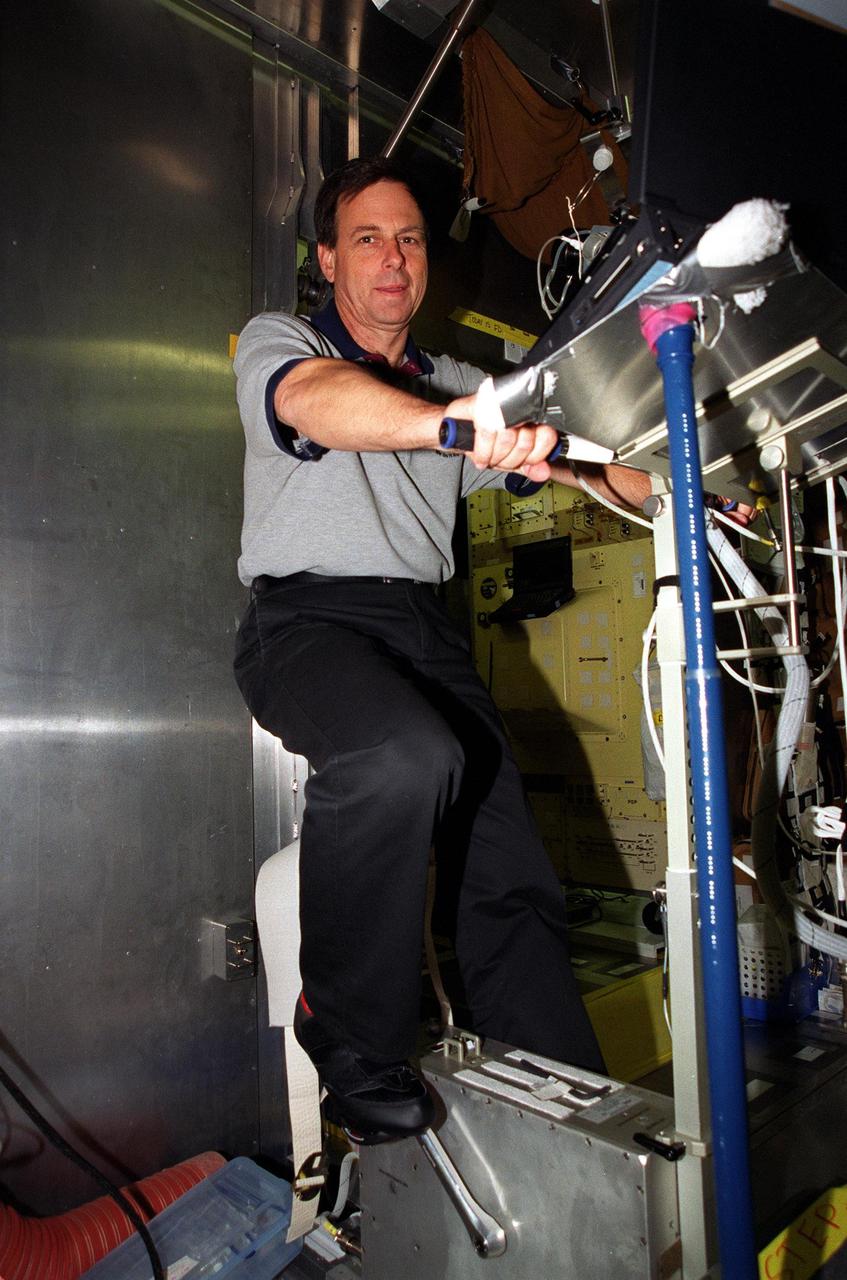
KENNEDY SPACE CENTER, Fla. -- STS-107 Payload Specialist Ilan Ramon, of Israel, trains on equipment in the training module at SPACEHAB, Cape Canaveral. Ramon and other crew members Commander Rick D. Husband, Pilot William C. McCool, Payload Commander Michael P. Anderson; and Mission Specialists Kalpana Chawla, Laurel Blair Salton Clark and David M. Brown are at SPACEHAB to take part in Crew Equipment Interface Test (CEIT) activities. The CEIT enables the crew to perform certain flight operations, operate experiments in a flight-like environment, evaluate stowage locations and obtain additional exposure to specific experiment operations. As a research mission, STS-107 will carry the SPACEHAB Double Module in its first research flight into space and a broad collection of experiments ranging from material science to life science. STS-107 is scheduled for launch May 23, 2002
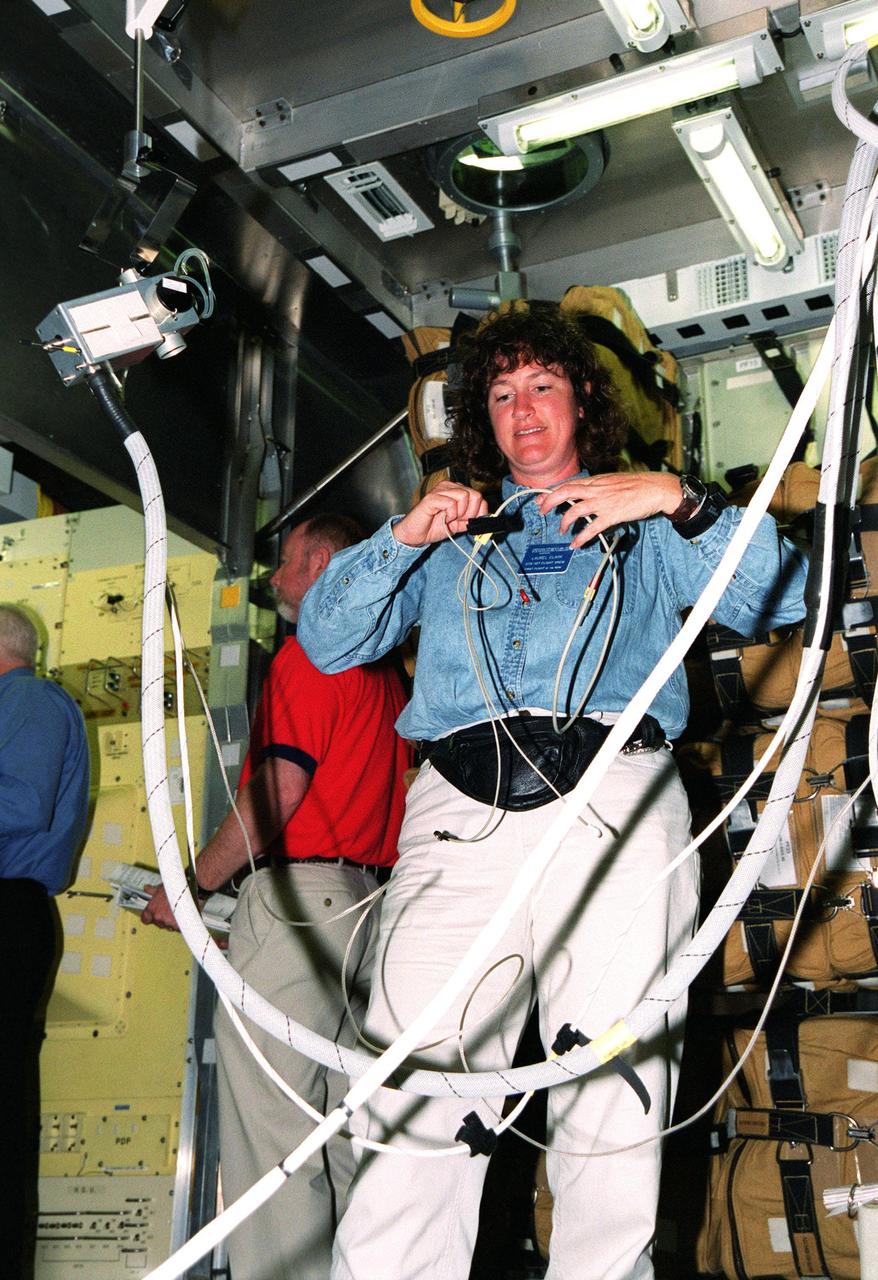
KENNEDY SPACE CENTER, Fla. -- During Crew Equipment Interface Test (CEIT)activities at SPACEHAB, Cape Canaveral, Fla., STS-107 Mission Specialist Laurel Blair Salton Clark gets hands-on training on equipment inside the Spacehab module. As a research mission, STS-107 will carry the Spacehab Double Module in its first research flight into space and a broad collection of experiments ranging from material science to life science. CEIT activities enable the crew to perform certain flight operations, operate experiments in a flight-like environment, evaluate stowage locations and obtain additional exposure to specific experiment operations. Other STS-107 crew members are Commander Rick Douglas Husband; Pilot William C. McCool; Payload Commander Michael P. Anderson; Mission Specialists Kalpana Chawla and David M. Brown; and Payload Specialist Ilan Ramon, of Israel. STS-107 is scheduled for launch May 23, 2002
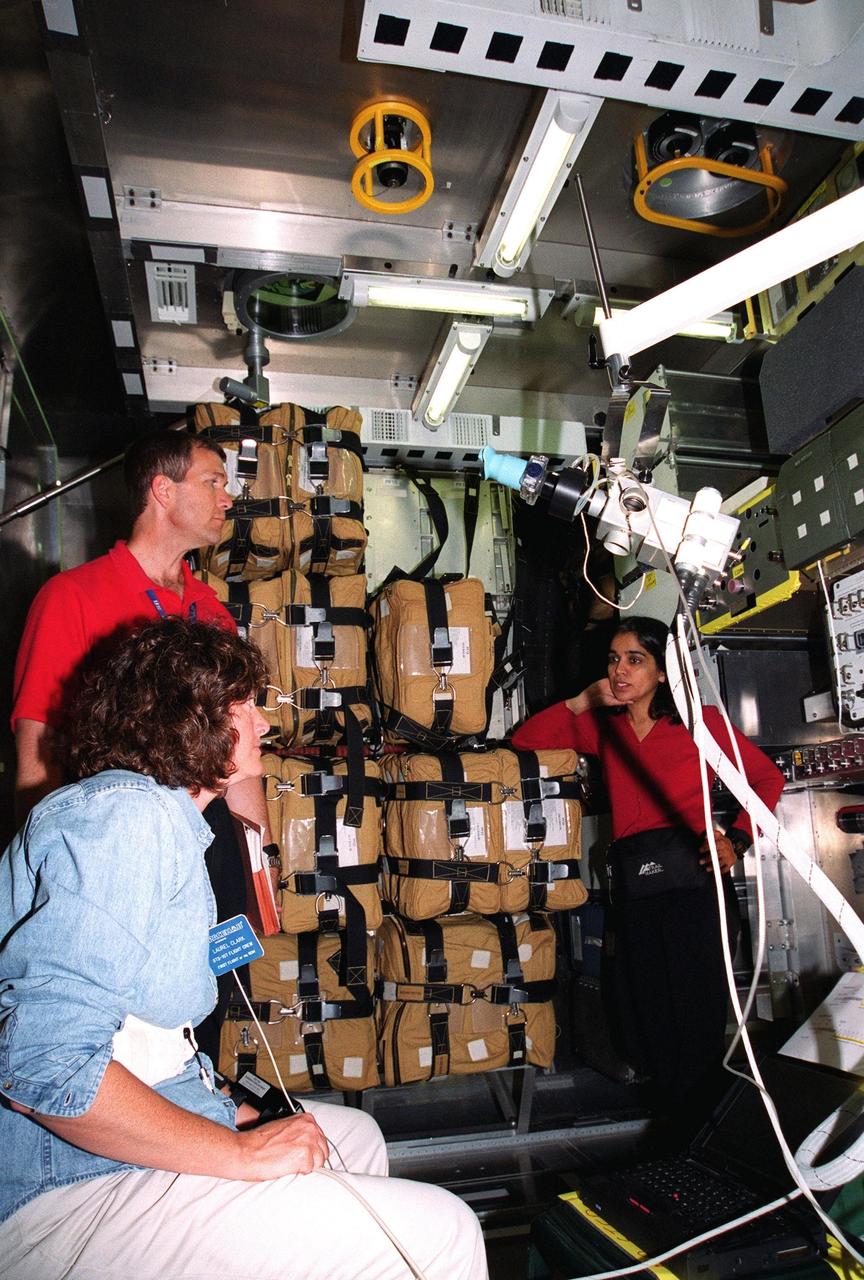
KENNEDY SPACE CENTER, Fla. -- At SPACEHAB, Cape Canaveral, Fla., members of the STS-107 crew discuss the experiments in the Spacehab module. Seated, in the foreground, is Mission Specialist Laurel Blair Salton Clark; standing behind her are Commander Rick Douglas Husband and Mission Specialist Kalpana Chawla. They and other crew members Pilot William C. McCool; Payload Commander Michael P. Anderson; and Mission Specialists David M. Brown and Ilan Ramon, of Israel, are at SPACEHAB for Crew Equipment Interface Test (CEIT) activities. The CEIT enables the crew to perform certain flight operations, operate experiments in a flight-like environment, evaluate stowage locations and obtain additional exposure to specific experiment operations. As a research mission, STS-107 will carry the Spacehab Double Module in its first research flight into space and a broad collection of experiments ranging from material science to life science. STS-107 is scheduled for launch May 23, 2002
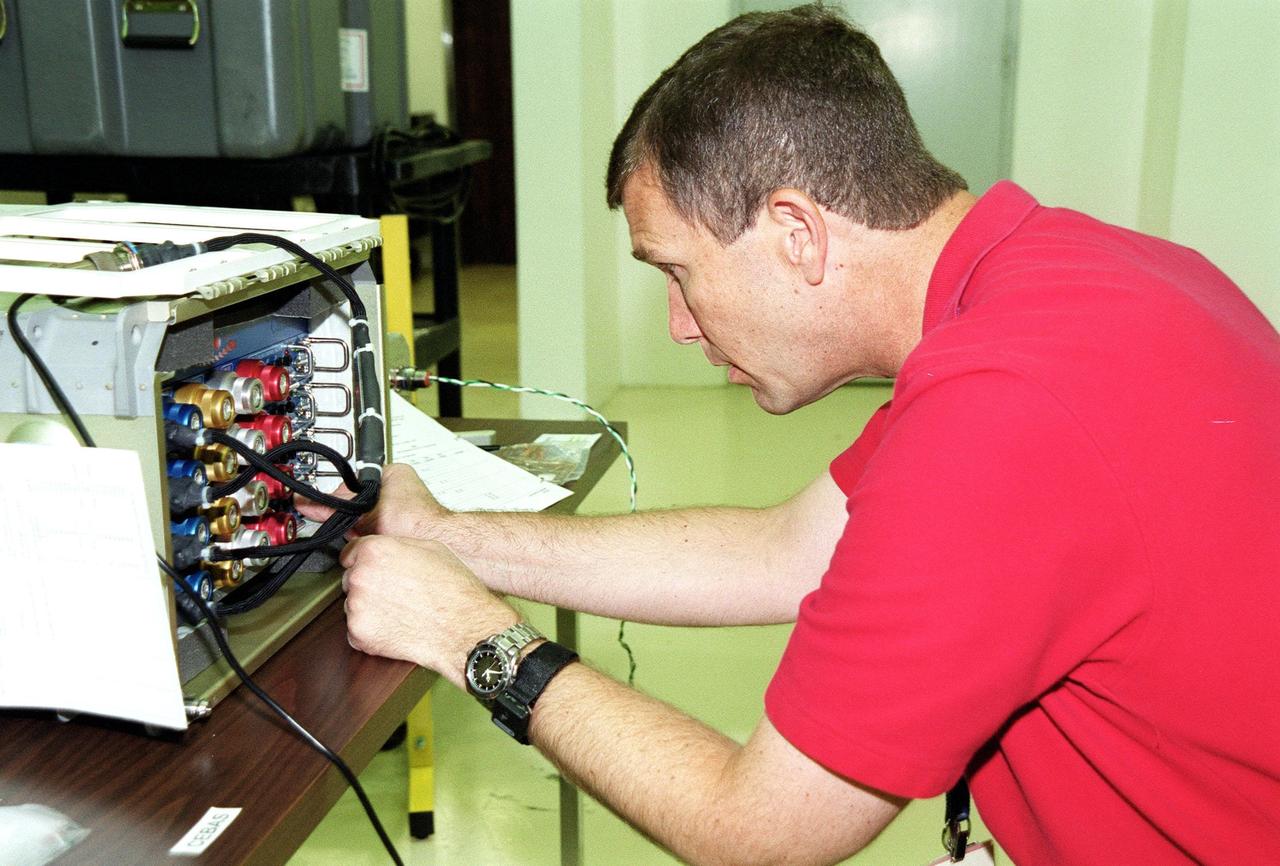
KENNEDY SPACE CENTER, Fla. -- During Crew Equipment Interface Test (CEIT)activities at Spacehab, Cape Canaveral, Fla., STS-107 Commander Rick Douglas Husband checks out a piece of equipment. As a research mission, STS-107 will carry the Spacehab Double Module in its first research flight into space and a broad collection of experiments ranging from material science to life science. The CEIT activities enable the crew to perform certain flight operations, operate experiments in a flight-like environment, evaluate stowage locations and obtain additional exposure to specific experiment operations. Other STS-107 crew members are Pilot William C. McCool; Payload Commander Michael P. Anderson; Mission Specialists Kalpana Chawla, David M. Brown and Laurel Blair Salton Clark; and Payload Specialist Ilan Ramon, of Israel. STS-107 is scheduled for launch May 23, 2002
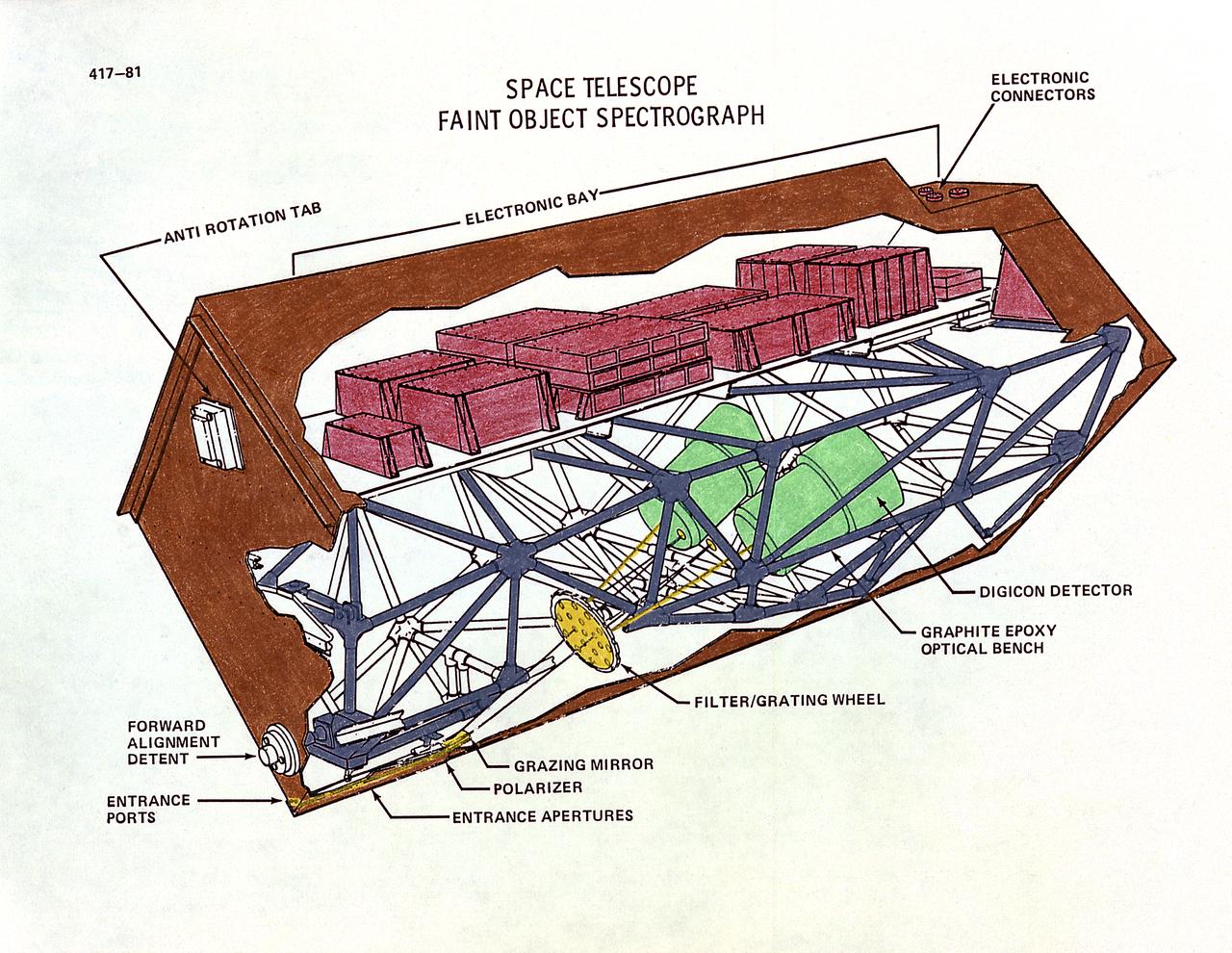
This drawing illustrates the Hubble Space Telescope's (HST's), Faint Object Spectrograph (FOS). The HST's two spectrographs, the Goddard High-Resolution Spectrograph and the FOS, can detect a broader range of wavelengths than is possible from the Earth because there is no atmosphere to absorb certain wavelengths. Scientists can determine the chemical composition, temperature, pressure, and turbulence of the stellar atmosphere producing the light, all from spectral data. The FOC can detect detail in very faint objects, such as those at great distances, and light ranging from ultraviolet to red spectral bands. Both spectrographs operate in essentially the same way. The incoming light passes through a small entrance aperture, then passes through filters and diffraction gratings, that work like prisms. The filter or grating used determines what range of wavelength will be examined and in what detail. Then the spectrograph detectors record the strength of each wavelength band and sends it back to Earth. The purpose of the HST, the most complex and sensitive optical telescope ever made, is to study the cosmos from a low-Earth orbit. By placing the telescope in space, astronomers are able to collect data that is free of the Earth's atmosphere. The HST views galaxies, stars, planets, comets, possibly other solar systems, and even unusual phenomena such as quasars, with 10 times the clarity of ground-based telescopes. The HST was deployed from the Space Shuttle Discovery (STS-31 mission) into Earth orbit in April 1990. The Marshall Space Flight Center had responsibility for design, development, and construction of the HST. The Perkin-Elmer Corporation, in Danbury, Cornecticut, developed the optical system and guidance sensors.
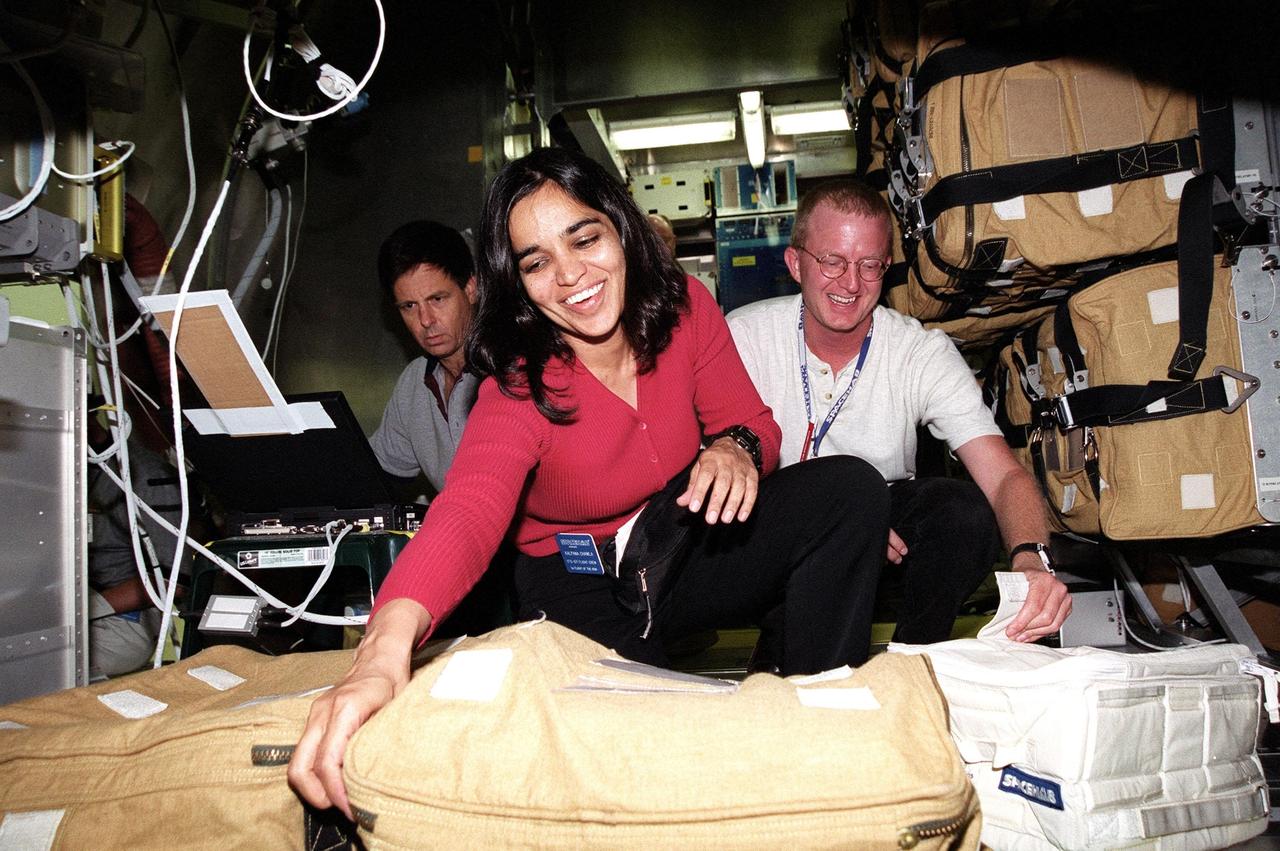
KENNEDY SPACE CENTER, Fla. -- At SPACEHAB, Cape Canaveral, Fla., STS-107 Mission Specialist Kalpana Chawla checks out items stored in the Spacehab module. Behind her, left, is Payload Specialist Ilan Ramon, of Israel, looking over a piece of equipment. At right is a trainer. The crew is taking part in Crew Equipment Interface Test (CEIT) activities at SPACEHAB, Port Canaveral, Fla. As a research mission, STS-107 will carry the Spacehab Double Module in its first research flight into space and a broad collection of experiments ranging from material science to life science. The CEIT activities enable the crew to perform certain flight operations, operate experiments in a flight-like environment, evaluate stowage locations and obtain additional exposure to specific experiment operations. Other STS-107 crew members are Commander Rick Douglas Husband, Pilot William C. McCool; Payload Commander Michael P. Anderson; and Mission Specialists Laurel Blair Salton Clark and David M. Brown. STS-107 is scheduled for launch May 23, 2002

KENNEDY SPACE CENTER, Fla. -- At SPACEHAB, Cape Canaveral, Fla., STS-107 Payload Specialist Ilan Ramon (foreground), of Israel, and Mission Specialist Kalpana Chawla (background) check out experiments inside the Spacehab module. They and other crew members are taking part in Crew Equipment Interface Test (CEIT) activities that enable the crew to perform certain flight operations, operate experiments in a flight-like environment, evaluate stowage locations and obtain additional exposure to specific experiment operations. As a research mission, STS-107 will carry the Spacehab Double Module in its first research flight into space and a broad collection of experiments ranging from material science to life science. . Other STS-107 crew members are Commander Rick Douglas Husband, Pilot William C. McCool; Payload Commander Michael P. Anderson; and Mission Specialists Laurel Blair Salton Clark and David M. Brown. STS-107 is scheduled for launch May 23, 2002
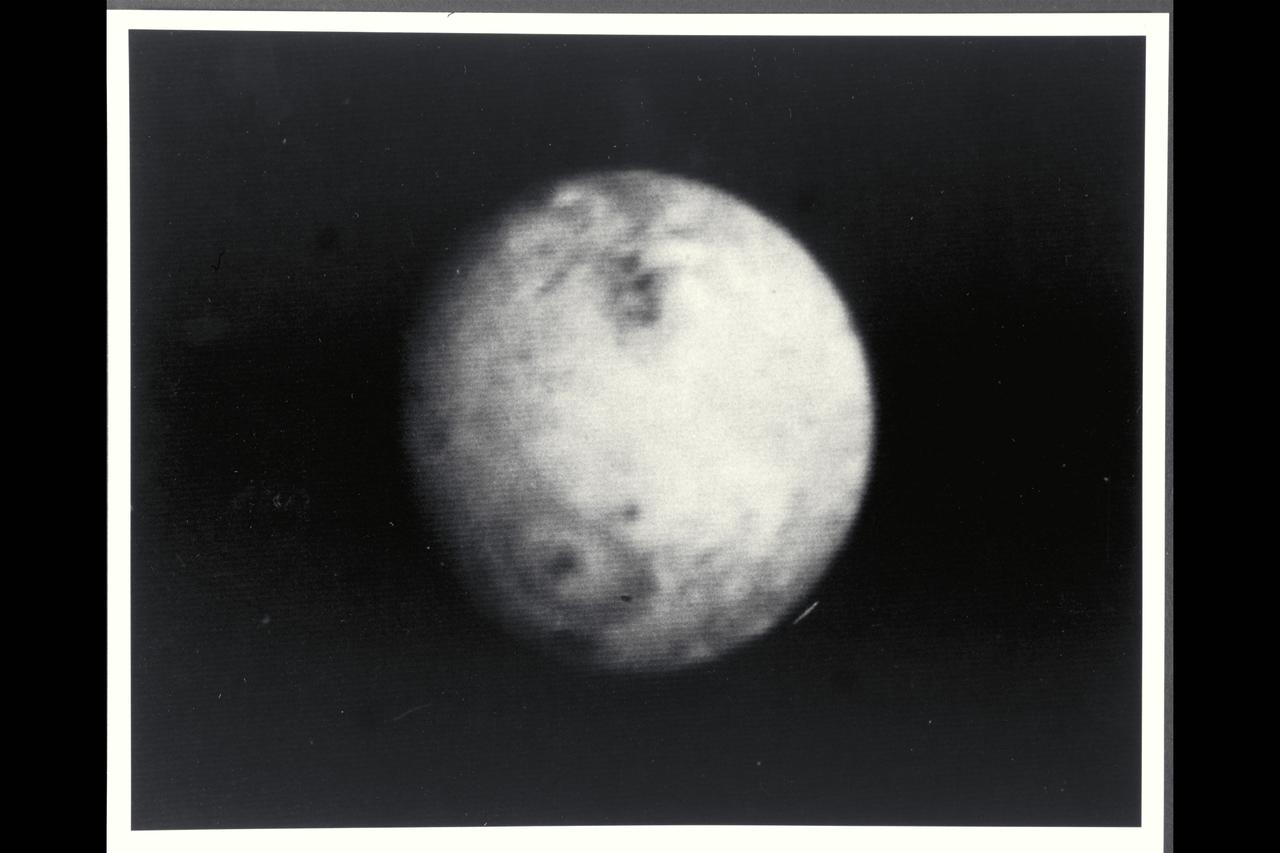
P-21739 BW Range: 4.7 million kilometers (2.9 million miles) This picture of Io was taken as Voyager 2 closes in on the Jovian system. Scientists are studying these distant views of Io for evidences of changes since Voyager 1 observations in March of 79. Voyager 1 discovered that Io, the innermost of the Galilean satellites, is the most volcanically active body yet seen in the solar system, surpassing even earth. In this picture, the first volcano discovered by Voyager 1 is again visible in the lower left portion of the disk as a dark oval with a dark spot in the center. In March, this volcano appeared as a heart-shaped marking, not a symmetrical oval. Scientists believe that the non-symmetric markings earlier resulted from a constriction in the mouth of the volcanic vent causing erupting material to extrude preferentially in certain directions. Apparently, the volcanic eruptive activity, which sends material to altitudes of 280 kilometers (175 miles) or more above this volcano, has changed the vent geometry or dislodged an obstruction. Such changes in the form of eruptive fountains are common in terrestial volcanos, although on a much smaller scale than on Io.
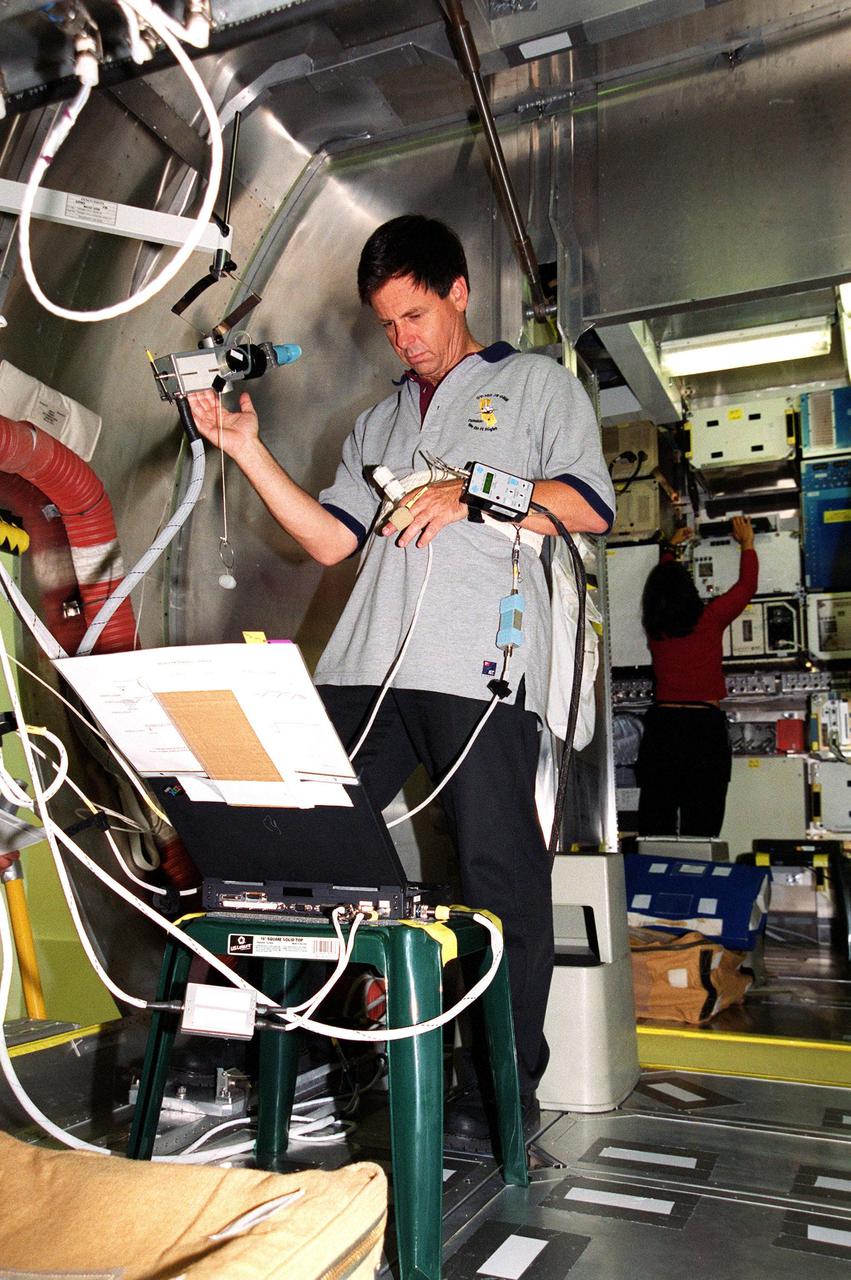
KENNEDY SPACE CENTER, Fla. -- At SPACEHAB, Cape Canaveral, Fla., STS-107 Payload Specialist Ilan Ramon (foreground), of Israel, and Mission Specialist Kalpana Chawla (background) check out experiments inside the Spacehab module. They and other crew members are taking part in Crew Equipment Interface Test (CEIT) activities that enable the crew to perform certain flight operations, operate experiments in a flight-like environment, evaluate stowage locations and obtain additional exposure to specific experiment operations. As a research mission, STS-107 will carry the Spacehab Double Module in its first research flight into space and a broad collection of experiments ranging from material science to life science. . Other STS-107 crew members are Commander Rick Douglas Husband, Pilot William C. McCool; Payload Commander Michael P. Anderson; and Mission Specialists Laurel Blair Salton Clark and David M. Brown. STS-107 is scheduled for launch May 23, 2002
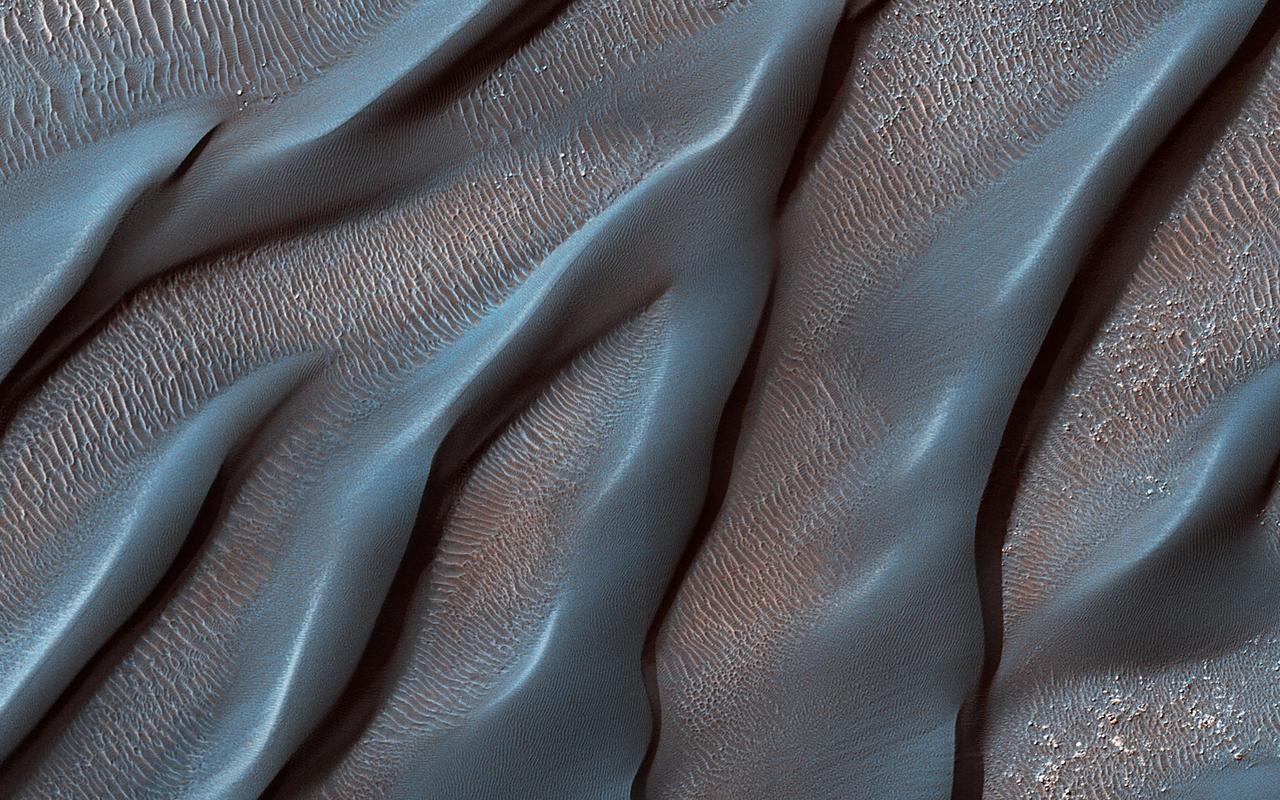
The Hellespontus Montes is a rugged mountain range located on the western rim of one of the largest impact basins in the Solar System: Hellas Basin. The 7-kilometer depth of Hellas and its location in the Southern Hemisphere form an active atmospheric system that directly impacts local landscape evolution. Hellespontus has a large accumulation of sand dunes and other wind-created bedforms that have been migrating on a continual basis since HiRISE began imaging Mars. A dune's steepest area, called a "slip face," indicates the down-wind side of the dune and its migration direction as driven by local winds. At this location, there are many dunes influenced by eastward winds that were draining into Hellas. Meanwhile, other locations show that migration had shifted towards the opposite direction to the west. In certain cases, we see these opposing dune directions in proximity. The complex patterns are not due to winds that are constant in magnitude or direction, but rather they wax and wane over the course of the Martian year. https://photojournal.jpl.nasa.gov/catalog/PIA25899
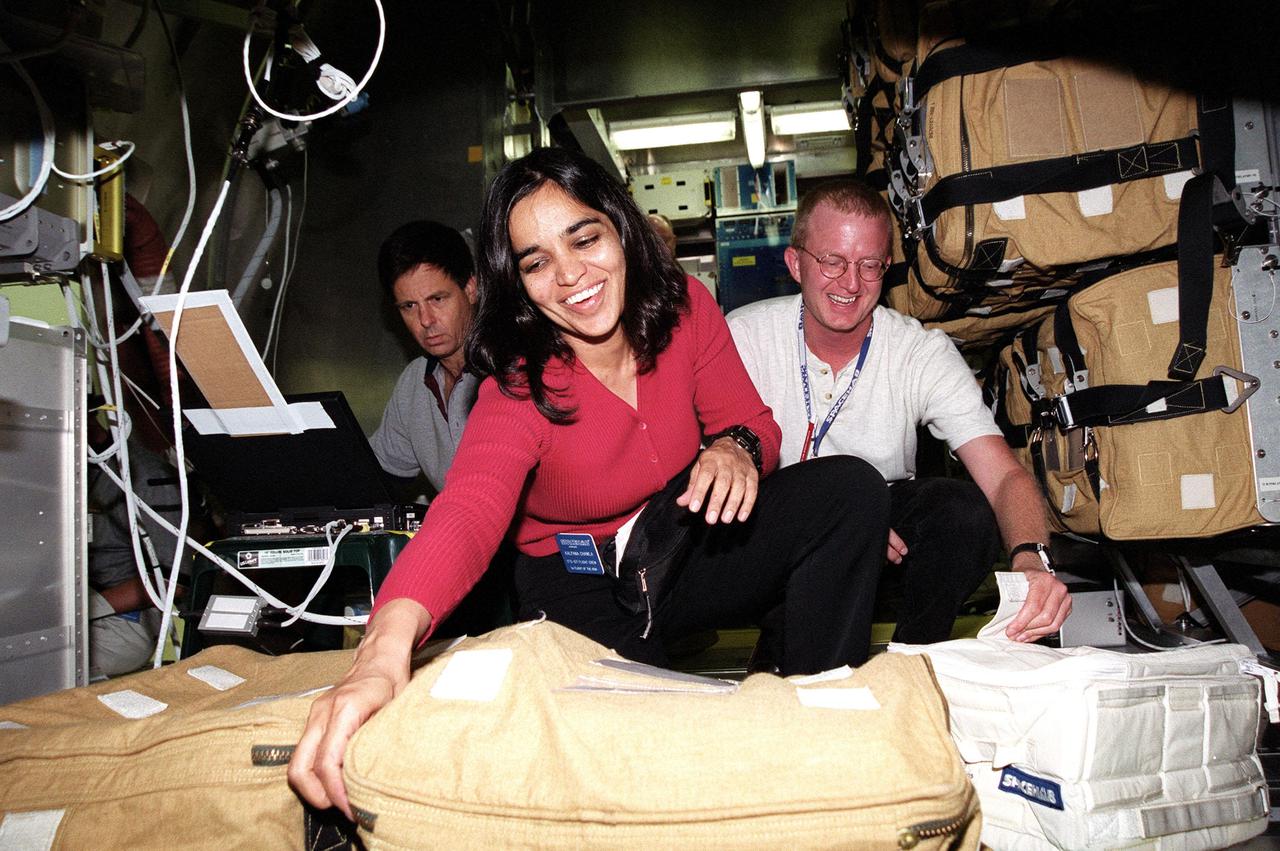
KENNEDY SPACE CENTER, Fla. -- At SPACEHAB, Cape Canaveral, Fla., STS-107 Mission Specialist Kalpana Chawla checks out items stored in the Spacehab module. Behind her, left, is Payload Specialist Ilan Ramon, of Israel, looking over a piece of equipment. At right is a trainer. The crew is taking part in Crew Equipment Interface Test (CEIT) activities at SPACEHAB, Port Canaveral, Fla. As a research mission, STS-107 will carry the Spacehab Double Module in its first research flight into space and a broad collection of experiments ranging from material science to life science. The CEIT activities enable the crew to perform certain flight operations, operate experiments in a flight-like environment, evaluate stowage locations and obtain additional exposure to specific experiment operations. Other STS-107 crew members are Commander Rick Douglas Husband, Pilot William C. McCool; Payload Commander Michael P. Anderson; and Mission Specialists Laurel Blair Salton Clark and David M. Brown. STS-107 is scheduled for launch May 23, 2002
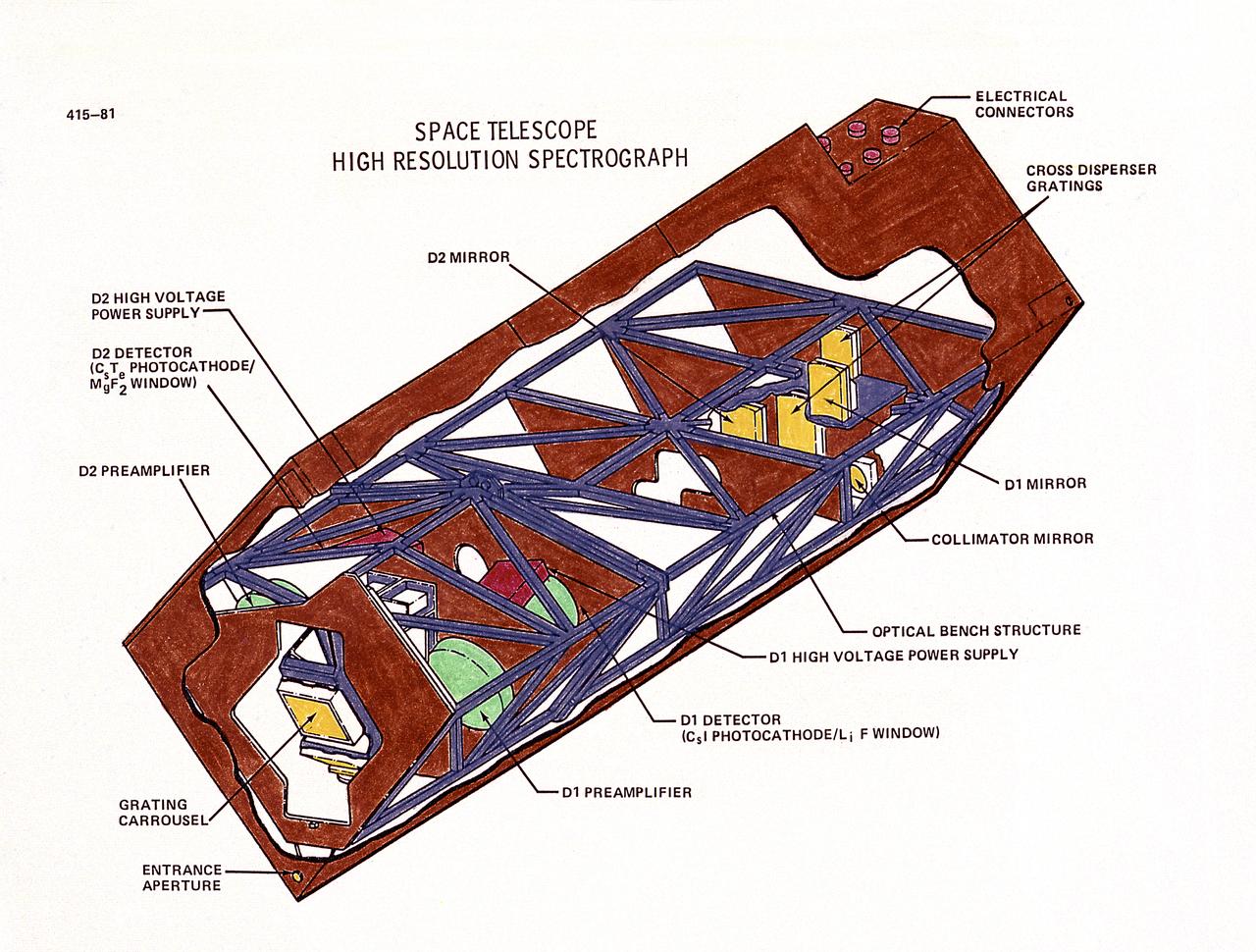
This drawing illustrates the Hubble Space Telescope's (HST's), Goddard High-Resolution Spectrograph (GHRS). The HST's two spectrographs, the GHRS and the Faint Object Spectrograph (FOS), can detect a broader range of wavelengths than is possible from Earth because there is no atmosphere to absorb certain wavelengths. Scientists can determine the chemical composition, temperature, pressure, and turbulence of the stellar atmosphere producing the light, all from spectral data. The GHRS can detect fine details in the light from somewhat brighter objects but only ultraviolet light. Both spectrographs operate in essentially the same way. The incoming light passes through a small entrance aperture, then passes through filters and diffraction gratings, that work like prisms. The filter or grating used determines what range of wavelength will be examined and in what detail. Then the spectrograph detectors record the strength of each wavelength band and sends it back to Earth. The purpose of the HST, the most complex and sensitive optical telescope ever made, is to study the cosmos from a low-Earth orbit. By placing the telescope in space, astronomers are able to collect data that is free of the Earth's atmosphere. The HST views galaxies, stars, planets, comets, possibly other solar systems, and even unusual phenomena such as quasars, with 10 times the clarity of ground-based telescopes. The HST was deployed from the Space Shuttle Discovery (STS-31 mission) into Earth orbit in April 1990. The Marshall Space Flight Center had responsibility for design, development, and construction of the HST. The Perkin-Elmer Corporation, in Danbury, Cornecticut, developed the optical system and guidance sensors.
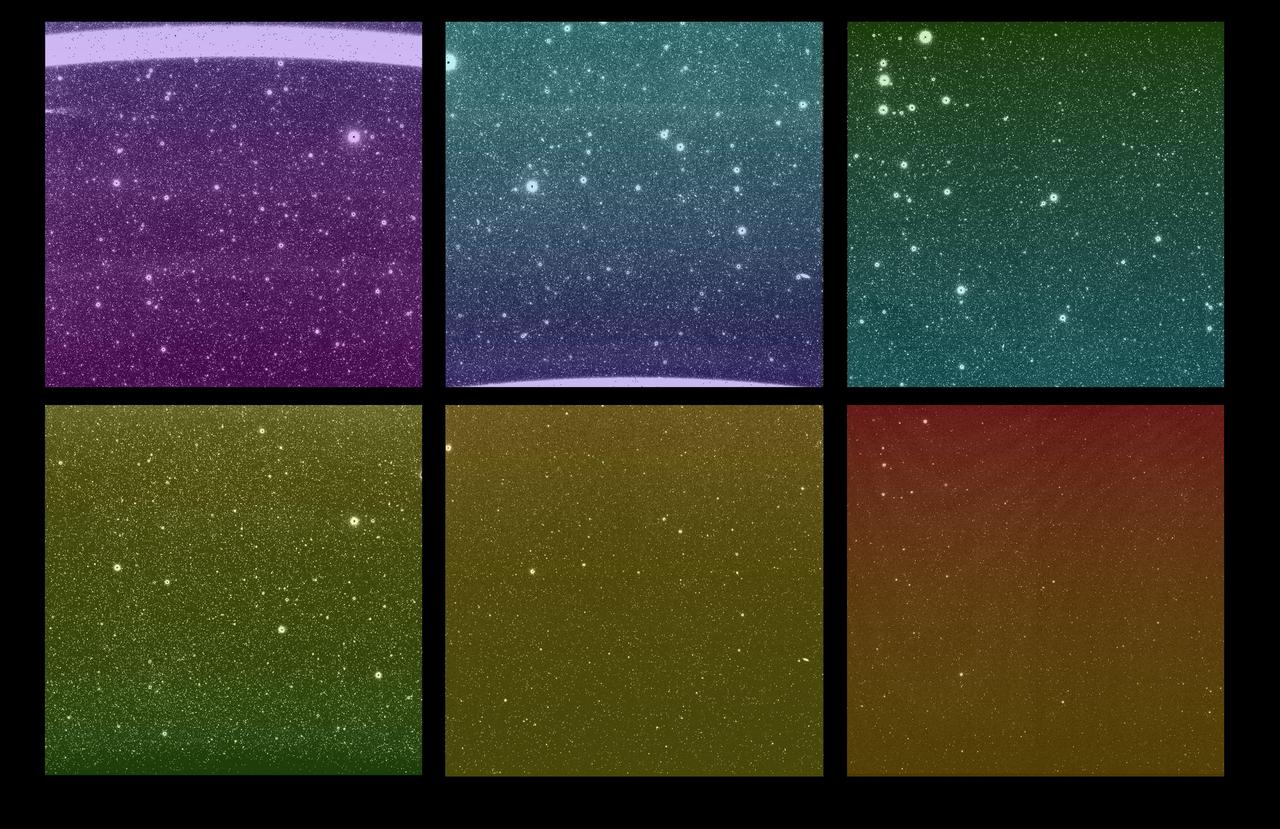
Some of the first images from NASA's SPHEREx (Spectro-Photometer for the History of the Universe, Epoch of Reionization and Ices Explorer) mission were captured March 27, 2025. Although the new images are uncalibrated and not yet ready to use for science, they give a tantalizing look at SPHEREx's wide view of the sky. Each bright spot is a source of light, like a star or galaxy, and each image is expected to contain more than 100,000 detected sources. There are six images in every SPHEREx exposure – one for each detector. The top three images show the same area of sky as the bottom three images; this is the observatory's full field of view, a rectangular area about 20 times wider than the full Moon. When the SPHEREx observatory begins routine science operations in April, it will take approximately 600 exposures every day. SPHEREx detects infrared light, which is invisible to the human eye. To make the images shown here, science team members assigned a visible color to each infrared wavelength captured by the observatory. With each detector capturing 17 unique infrared wavelength bands, there are 102 hues in this image. To detect so many infrared colors, SPHEREx uses color filters set on top of the detectors. (If the detectors are like SPHEREx's eyes, the filters are like color-tinted glasses). A standard color filter blocks all wavelengths but one, but the SPHEREx filters are more like rainbow-tinted glasses, in that the wavelengths they block change gradually from the top of the filter to the bottom. The legend at the top shows that the detectors are placed to observe infrared wavelengths from shortest to longest. Certain chemical elements are visible at specific wavelengths, as is the case with helium from Earth's atmosphere, which creates a bright line in the wavelength at the top of the top-left image. Breaking down color this way can reveal the composition of an object or the distance to a galaxy. With that data, scientists can study topics ranging from the physics that governed the universe less than a second after its birth to the origins of water in our galaxy. https://photojournal.jpl.nasa.gov/catalog/PIA26280
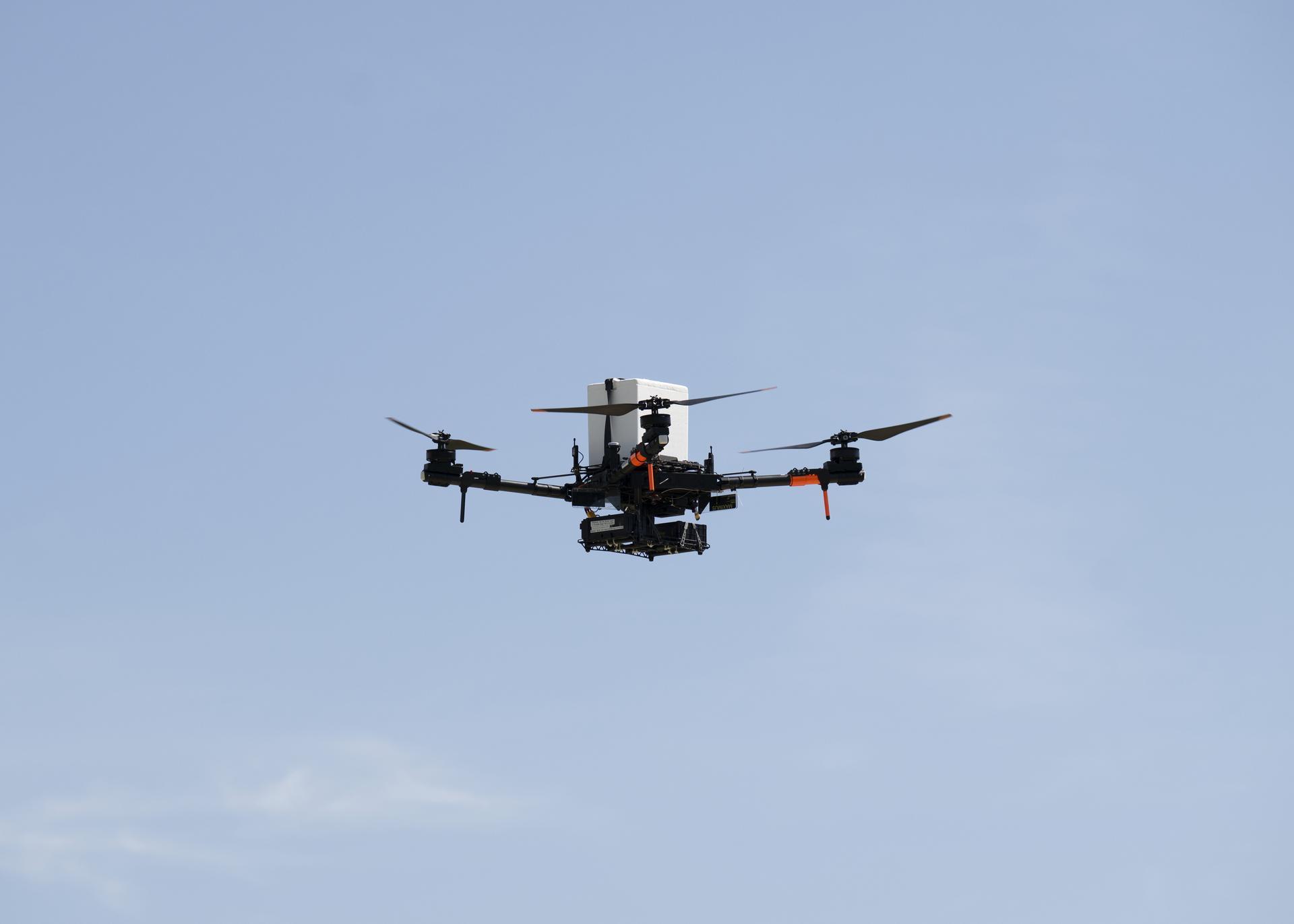
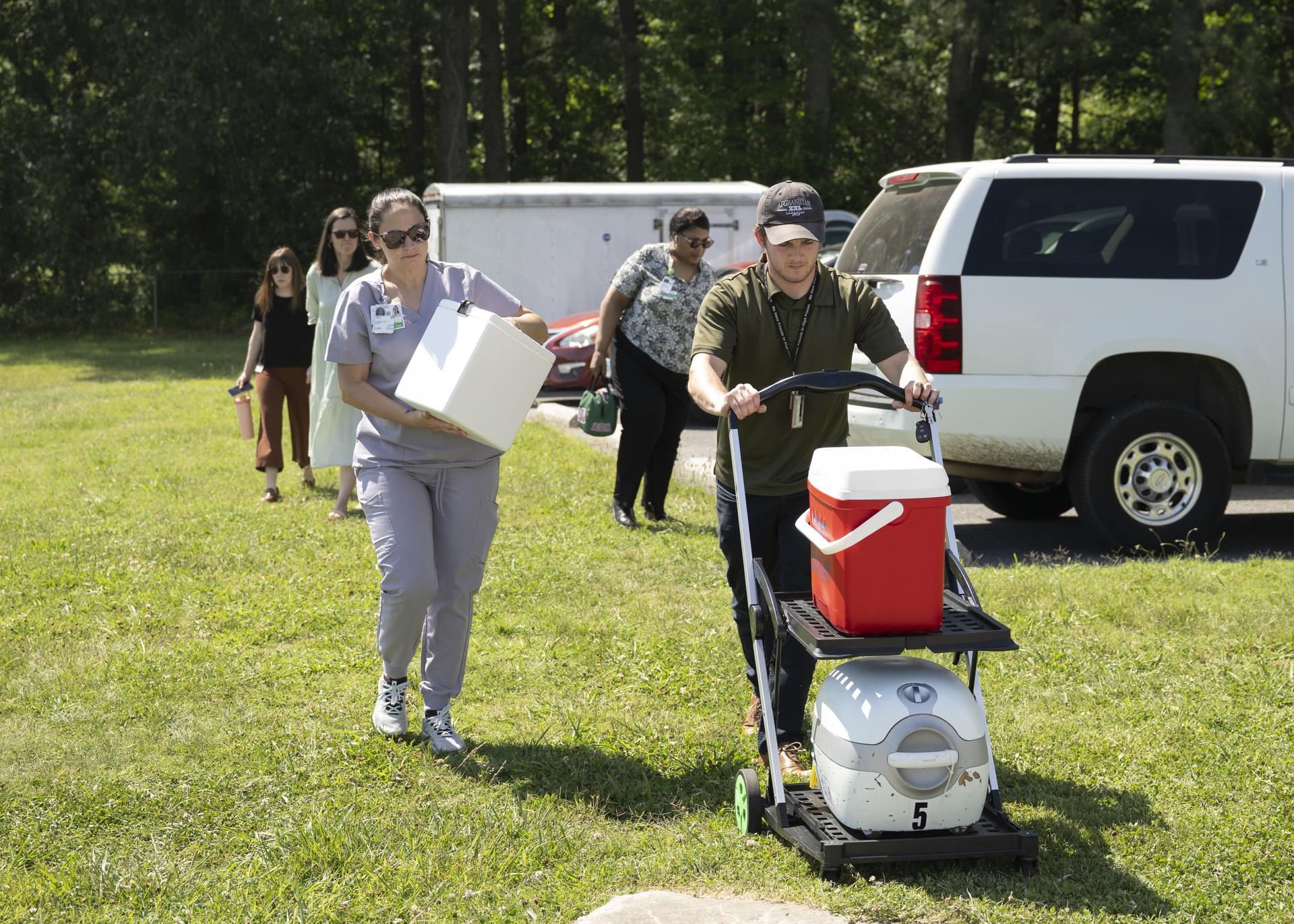
NASA Langley partnered with UNOS, a non-profit organization that manages the U.S. organ transplant system, to conduct the first-of-its-kind organ transport drone test with a human kidney on June 5, 2026 at Langley Research Center in Hampton, Va. Photo Credit NASA/Ryan Hill
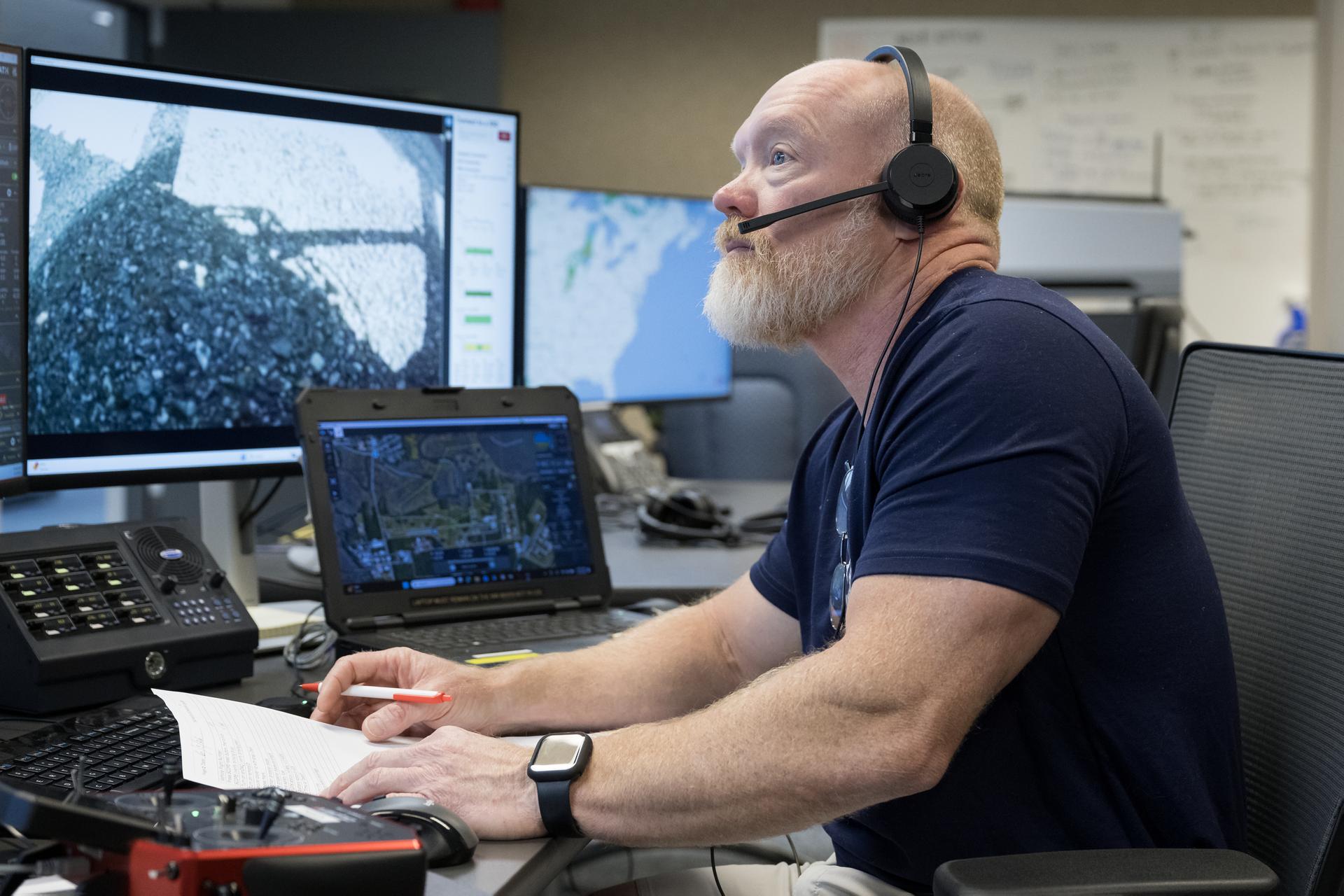
NASA Langley partnered with UNOS, a non-profit organization that manages the U.S. organ transplant system, to conduct the first-of-its-kind organ transport drone test with a human kidney on June 5, 2026 at Langley Research Center in Hampton, Va. Photo Credit NASA/Mark Knopp
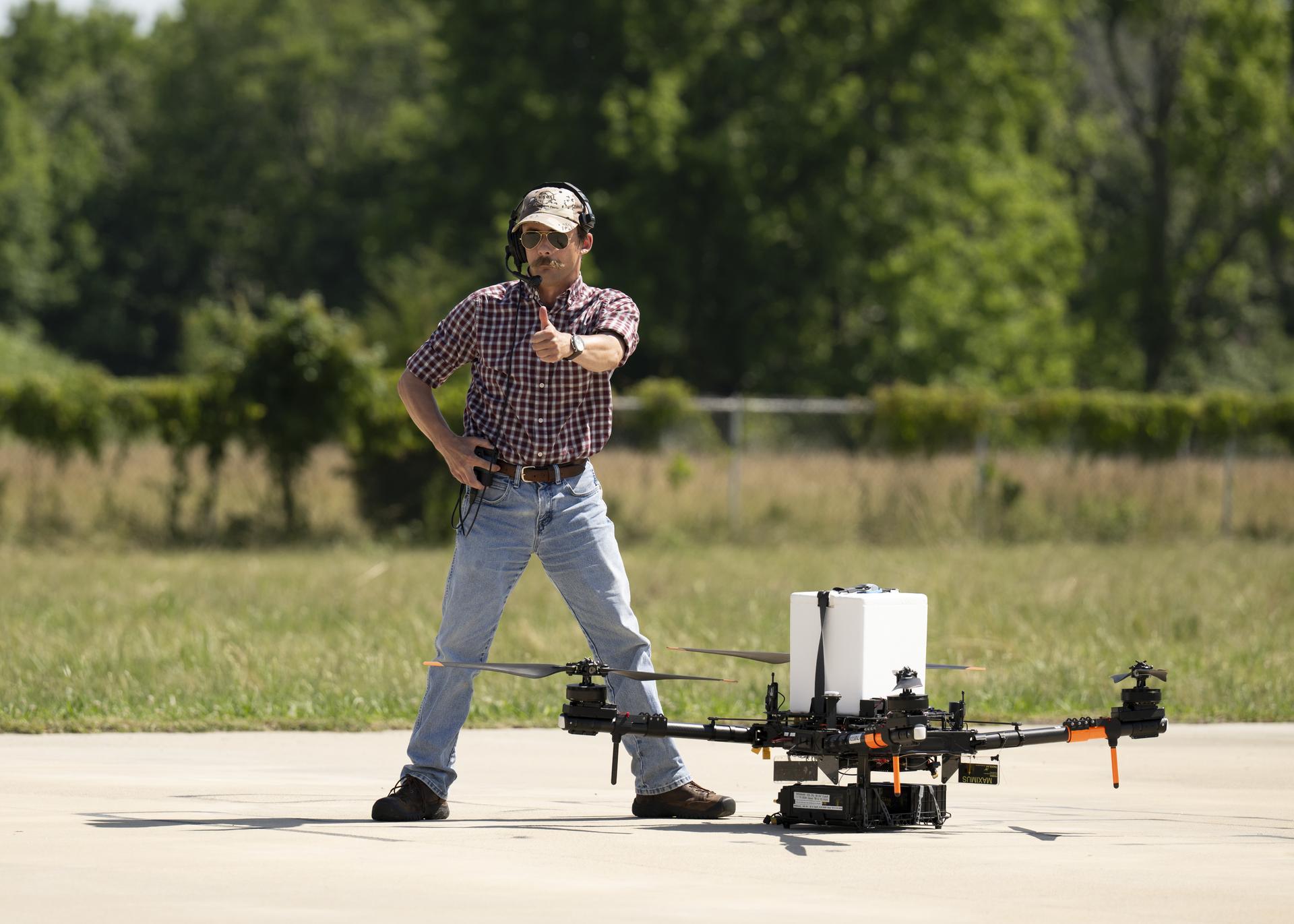
NASA Langley partnered with UNOS, a non-profit organization that manages the U.S. organ transplant system, to conduct the first-of-its-kind organ transport drone test with a human kidney on June 5, 2026 at Langley Research Center in Hampton, Va. Photo Credit NASA/Ryan Hill
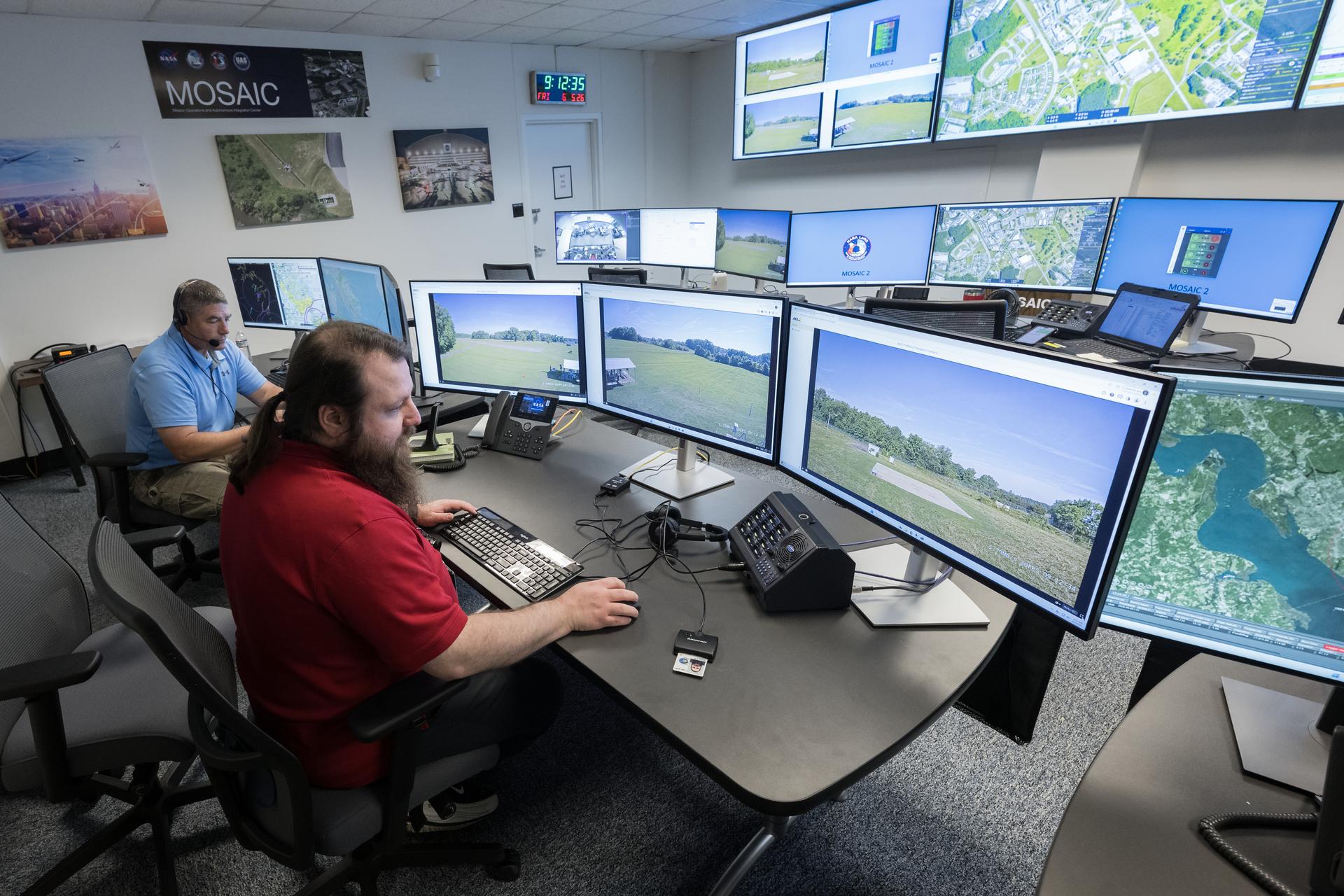
NASA Langley partnered with UNOS, a non-profit organization that manages the U.S. organ transplant system, to conduct the first-of-its-kind organ transport drone test with a human kidney on June 5, 2026 at Langley Research Center in Hampton, Va. Photo Credit NASA/Mark Knopp
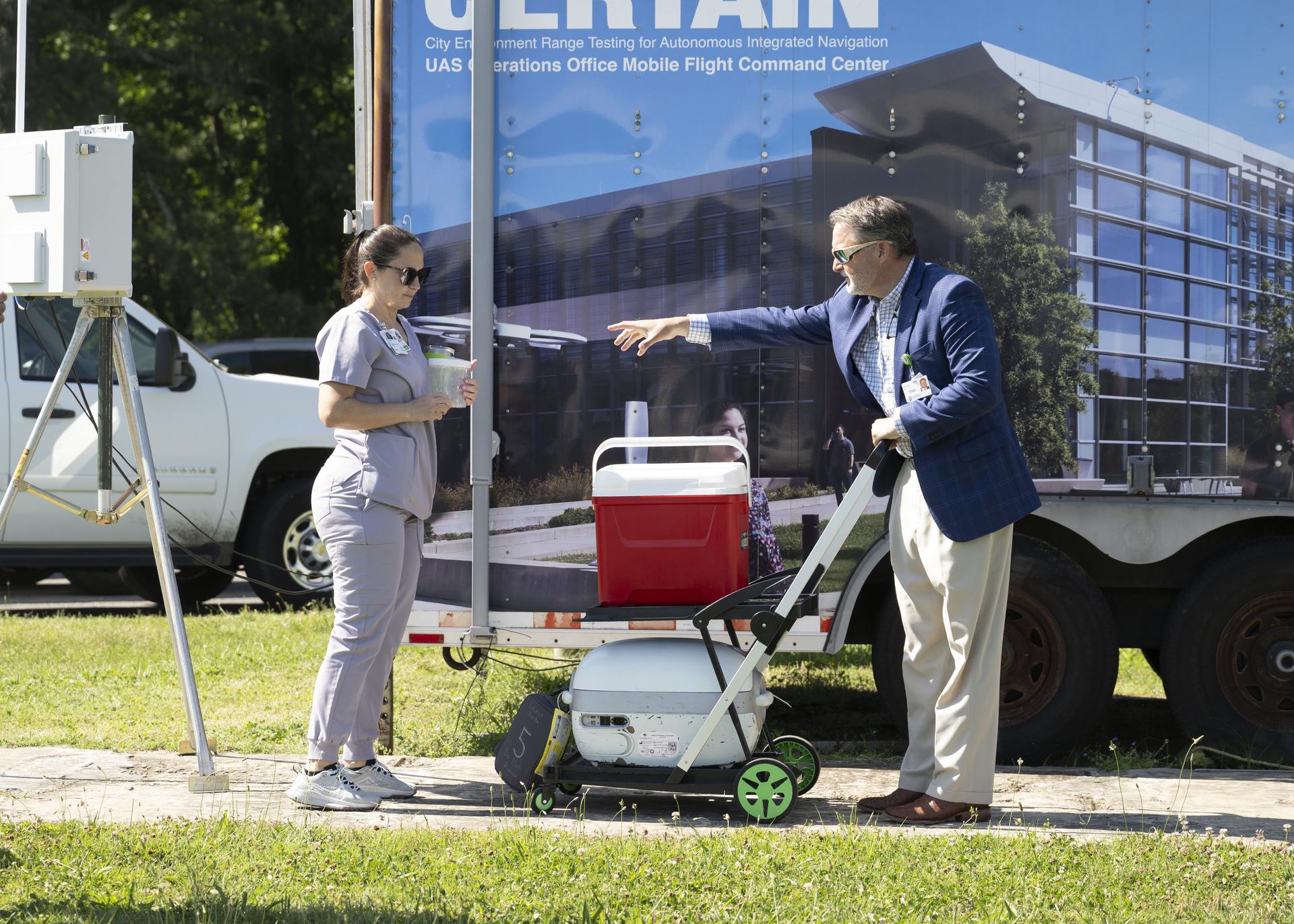
NASA Langley partnered with UNOS, a non-profit organization that manages the U.S. organ transplant system, to conduct the first-of-its-kind organ transport drone test with a human kidney on June 5, 2026 at Langley Research Center in Hampton, Va. Photo Credit NASA/Ryan Hill
NASA Langley partnered with UNOS, a non-profit organization that manages the U.S. organ transplant system, to conduct the first-of-its-kind organ transport drone test with a human kidney on June 5, 2026 at Langley Research Center in Hampton, Va.Photo Credit NASA/Ryan Hill
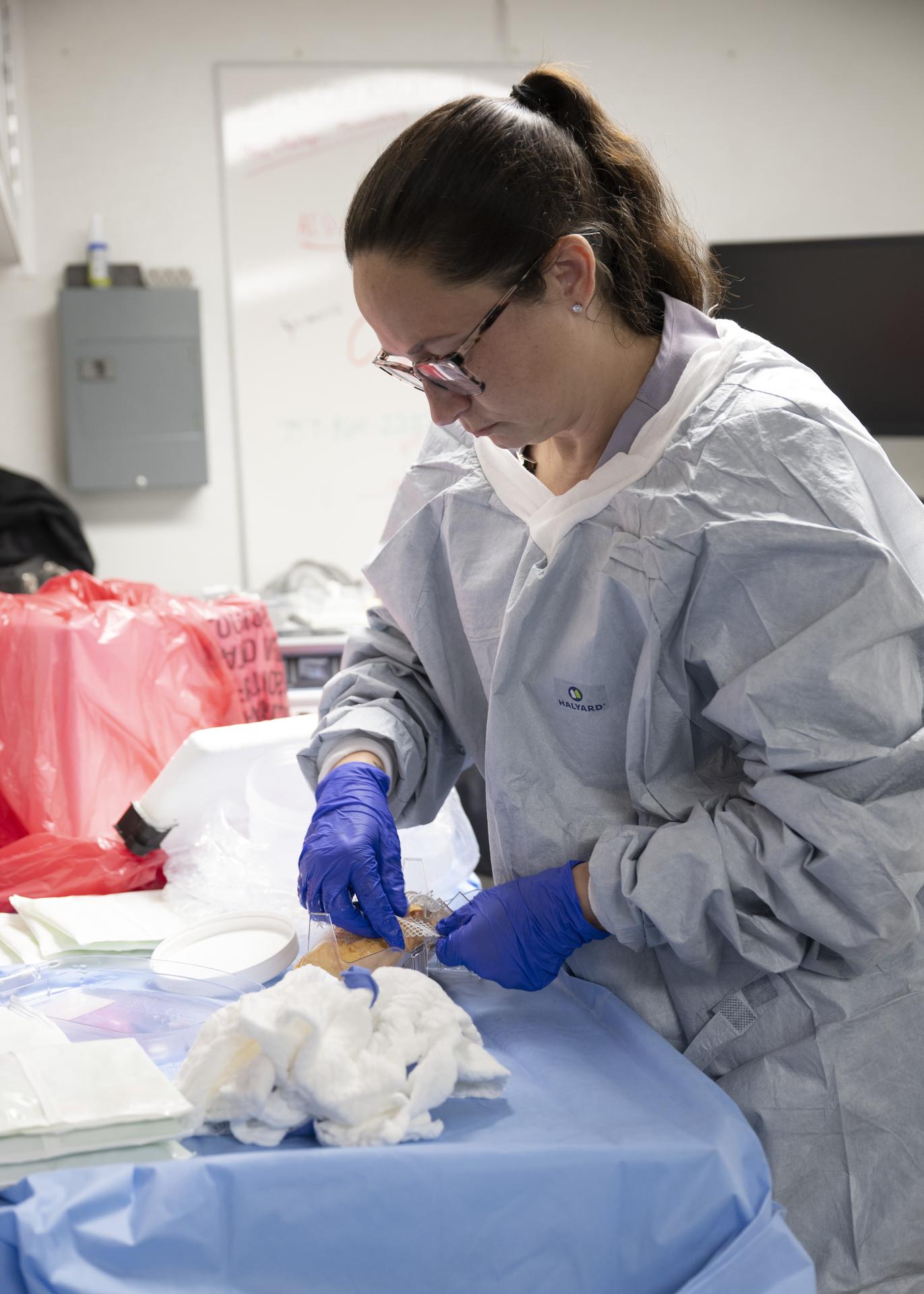
NASA Langley partnered with UNOS, a non-profit organization that manages the U.S. organ transplant system, to conduct the first-of-its-kind organ transport drone test with a human kidney on June 5, 2026 at Langley Research Center in Hampton, Va. Photo Credit NASA/Ryan Hill

Caption: A NASA-funded sounding rocket launches into an aurora in the early morning of March 3, 2014, over Venetie, Alaska. The GREECE mission studies how certain structures – classic curls like swirls of cream in coffee -- form in the aurora. Credit: NASA/Christopher Perry More info: On March 3, 2014, at 6:09 a.m. EST, a NASA-funded sounding rocket launched straight into an aurora over Venetie, Alaska. The Ground-to-Rocket Electrodynamics – Electron Correlative Experiment, or GREECE, sounding rocket mission, which launched from Poker Flat Research Range in Poker Flat, Alaska, will study classic curls in the aurora in the night sky. The GREECE instruments travel on a sounding rocket that launches for a ten-minute ride right through the heart of the aurora reaching its zenith over the native village of Venetie, Alaska. To study the curl structures, GREECE consists of two parts: ground-based imagers located in Venetie to track the aurora from the ground and the rocket to take measurements from the middle of the aurora itself. At their simplest, auroras are caused when particles from the sun funnel over to Earth's night side, generate electric currents, and trigger a shower of particles that strike oxygen and nitrogen some 60 to 200 miles up in Earth's atmosphere, releasing a flash of light. But the details are always more complicated, of course. Researchers wish to understand the aurora, and movement of plasma in general, at much smaller scales including such things as how different structures are formed there. This is a piece of information, which in turn, helps paint a picture of the sun-Earth connection and how energy and particles from the sun interact with Earth's own magnetic system, the magnetosphere. GREECE is a collaborative effort between SWRI, which developed particle instruments and the ground-based imaging, and the University of California, Berkeley, measuring the electric and magnetic fields. The launch is supported by a sounding rocket team from NASA’s Wallops Flight Facility, Wallops Island, Va. The Poker Flat Research Range is operated by the University of Alaska, Fairbanks. “The conditions were optimal,” said Marilia Samara, principal investigator for the mission at Southwest Research Institute in San Antonio, Texas. “We can’t wait to dig into the data.” For more information on the GREECE mission visit: <a href="http://www.nasa.gov/content/goddard/nasa-funded-sounding-rocket-to-catch-aurora-in-the-act/." rel="nofollow">www.nasa.gov/content/goddard/nasa-funded-sounding-rocket- </a>.<b><a href="http://www.nasa.gov/audience/formedia/features/MP_Photo_Guidelines.html" rel="nofollow">NASA image use policy.</a></b> <b><a href="http://www.nasa.gov/centers/goddard/home/index.html" rel="nofollow">NASA Goddard Space Flight Center</a></b> enables NASA’s mission through four scientific endeavors: Earth Science, Heliophysics, Solar System Exploration, and Astrophysics. Goddard plays a leading role in NASA’s accomplishments by contributing compelling scientific knowledge to advance the Agency’s mission. <b>Follow us on <a href="http://twitter.com/NASAGoddardPix" rel="nofollow">Twitter</a></b> <b>Like us on <a href="http://www.facebook.com/pages/Greenbelt-MD/NASA-Goddard/395013845897?ref=tsd" rel="nofollow">Facebook</a></b> <b>Find us on <a href="http://instagram.com/nasagoddard?vm=grid" rel="nofollow">Instagram</a></b>

Caption: A NASA-funded sounding rocket launches into an aurora in the early morning of March 3, 2014, over Venetie, Alaska. The GREECE mission studies how certain structures – classic curls like swirls of cream in coffee -- form in the aurora. Credit: NASA/Christopher Perry More info: On March 3, 2014, at 6:09 a.m. EST, a NASA-funded sounding rocket launched straight into an aurora over Venetie, Alaska. The Ground-to-Rocket Electrodynamics – Electron Correlative Experiment, or GREECE, sounding rocket mission, which launched from Poker Flat Research Range in Poker Flat, Alaska, will study classic curls in the aurora in the night sky. The GREECE instruments travel on a sounding rocket that launches for a ten-minute ride right through the heart of the aurora reaching its zenith over the native village of Venetie, Alaska. To study the curl structures, GREECE consists of two parts: ground-based imagers located in Venetie to track the aurora from the ground and the rocket to take measurements from the middle of the aurora itself. At their simplest, auroras are caused when particles from the sun funnel over to Earth's night side, generate electric currents, and trigger a shower of particles that strike oxygen and nitrogen some 60 to 200 miles up in Earth's atmosphere, releasing a flash of light. But the details are always more complicated, of course. Researchers wish to understand the aurora, and movement of plasma in general, at much smaller scales including such things as how different structures are formed there. This is a piece of information, which in turn, helps paint a picture of the sun-Earth connection and how energy and particles from the sun interact with Earth's own magnetic system, the magnetosphere. GREECE is a collaborative effort between SWRI, which developed particle instruments and the ground-based imaging, and the University of California, Berkeley, measuring the electric and magnetic fields. The launch is supported by a sounding rocket team from NASA’s Wallops Flight Facility, Wallops Island, Va. The Poker Flat Research Range is operated by the University of Alaska, Fairbanks. “The conditions were optimal,” said Marilia Samara, principal investigator for the mission at Southwest Research Institute in San Antonio, Texas. “We can’t wait to dig into the data.” For more information on the GREECE mission visit: <a href="http://www.nasa.gov/content/goddard/nasa-funded-sounding-rocket-to-catch-aurora-in-the-act/." rel="nofollow">www.nasa.gov/content/goddard/nasa-funded-sounding-rocket- </a>.<b><a href="http://www.nasa.gov/audience/formedia/features/MP_Photo_Guidelines.html" rel="nofollow">NASA image use policy.</a></b> <b><a href="http://www.nasa.gov/centers/goddard/home/index.html" rel="nofollow">NASA Goddard Space Flight Center</a></b> enables NASA’s mission through four scientific endeavors: Earth Science, Heliophysics, Solar System Exploration, and Astrophysics. Goddard plays a leading role in NASA’s accomplishments by contributing compelling scientific knowledge to advance the Agency’s mission. <b>Follow us on <a href="http://twitter.com/NASAGoddardPix" rel="nofollow">Twitter</a></b> <b>Like us on <a href="http://www.facebook.com/pages/Greenbelt-MD/NASA-Goddard/395013845897?ref=tsd" rel="nofollow">Facebook</a></b> <b>Find us on <a href="http://instagram.com/nasagoddard?vm=grid" rel="nofollow">Instagram</a></b>

Caption: A NASA-funded sounding rocket launches into an aurora in the early morning of March 3, 2014, over Venetie, Alaska. The GREECE mission studies how certain structures – classic curls like swirls of cream in coffee -- form in the aurora. Credit: NASA/Christopher Perry More info: On March 3, 2014, at 6:09 a.m. EST, a NASA-funded sounding rocket launched straight into an aurora over Venetie, Alaska. The Ground-to-Rocket Electrodynamics – Electron Correlative Experiment, or GREECE, sounding rocket mission, which launched from Poker Flat Research Range in Poker Flat, Alaska, will study classic curls in the aurora in the night sky. The GREECE instruments travel on a sounding rocket that launches for a ten-minute ride right through the heart of the aurora reaching its zenith over the native village of Venetie, Alaska. To study the curl structures, GREECE consists of two parts: ground-based imagers located in Venetie to track the aurora from the ground and the rocket to take measurements from the middle of the aurora itself. At their simplest, auroras are caused when particles from the sun funnel over to Earth's night side, generate electric currents, and trigger a shower of particles that strike oxygen and nitrogen some 60 to 200 miles up in Earth's atmosphere, releasing a flash of light. But the details are always more complicated, of course. Researchers wish to understand the aurora, and movement of plasma in general, at much smaller scales including such things as how different structures are formed there. This is a piece of information, which in turn, helps paint a picture of the sun-Earth connection and how energy and particles from the sun interact with Earth's own magnetic system, the magnetosphere. GREECE is a collaborative effort between SWRI, which developed particle instruments and the ground-based imaging, and the University of California, Berkeley, measuring the electric and magnetic fields. The launch is supported by a sounding rocket team from NASA’s Wallops Flight Facility, Wallops Island, Va. The Poker Flat Research Range is operated by the University of Alaska, Fairbanks. “The conditions were optimal,” said Marilia Samara, principal investigator for the mission at Southwest Research Institute in San Antonio, Texas. “We can’t wait to dig into the data.” For more information on the GREECE mission visit: <a href="http://www.nasa.gov/content/goddard/nasa-funded-sounding-rocket-to-catch-aurora-in-the-act/." rel="nofollow">www.nasa.gov/content/goddard/nasa-funded-sounding-rocket- </a>.<b><a href="http://www.nasa.gov/audience/formedia/features/MP_Photo_Guidelines.html" rel="nofollow">NASA image use policy.</a></b> <b><a href="http://www.nasa.gov/centers/goddard/home/index.html" rel="nofollow">NASA Goddard Space Flight Center</a></b> enables NASA’s mission through four scientific endeavors: Earth Science, Heliophysics, Solar System Exploration, and Astrophysics. Goddard plays a leading role in NASA’s accomplishments by contributing compelling scientific knowledge to advance the Agency’s mission. <b>Follow us on <a href="http://twitter.com/NASAGoddardPix" rel="nofollow">Twitter</a></b> <b>Like us on <a href="http://www.facebook.com/pages/Greenbelt-MD/NASA-Goddard/395013845897?ref=tsd" rel="nofollow">Facebook</a></b> <b>Find us on <a href="http://instagram.com/nasagoddard?vm=grid" rel="nofollow">Instagram</a></b>

Caption: A NASA-funded sounding rocket launches into an aurora in the early morning of March 3, 2014, over Venetie, Alaska. The GREECE mission studies how certain structures – classic curls like swirls of cream in coffee -- form in the aurora. Credit: NASA/Christopher Perry More info: On March 3, 2014, at 6:09 a.m. EST, a NASA-funded sounding rocket launched straight into an aurora over Venetie, Alaska. The Ground-to-Rocket Electrodynamics – Electron Correlative Experiment, or GREECE, sounding rocket mission, which launched from Poker Flat Research Range in Poker Flat, Alaska, will study classic curls in the aurora in the night sky. The GREECE instruments travel on a sounding rocket that launches for a ten-minute ride right through the heart of the aurora reaching its zenith over the native village of Venetie, Alaska. To study the curl structures, GREECE consists of two parts: ground-based imagers located in Venetie to track the aurora from the ground and the rocket to take measurements from the middle of the aurora itself. At their simplest, auroras are caused when particles from the sun funnel over to Earth's night side, generate electric currents, and trigger a shower of particles that strike oxygen and nitrogen some 60 to 200 miles up in Earth's atmosphere, releasing a flash of light. But the details are always more complicated, of course. Researchers wish to understand the aurora, and movement of plasma in general, at much smaller scales including such things as how different structures are formed there. This is a piece of information, which in turn, helps paint a picture of the sun-Earth connection and how energy and particles from the sun interact with Earth's own magnetic system, the magnetosphere. GREECE is a collaborative effort between SWRI, which developed particle instruments and the ground-based imaging, and the University of California, Berkeley, measuring the electric and magnetic fields. The launch is supported by a sounding rocket team from NASA’s Wallops Flight Facility, Wallops Island, Va. The Poker Flat Research Range is operated by the University of Alaska, Fairbanks. “The conditions were optimal,” said Marilia Samara, principal investigator for the mission at Southwest Research Institute in San Antonio, Texas. “We can’t wait to dig into the data.” For more information on the GREECE mission visit: <a href="http://www.nasa.gov/content/goddard/nasa-funded-sounding-rocket-to-catch-aurora-in-the-act/." rel="nofollow">www.nasa.gov/content/goddard/nasa-funded-sounding-rocket- </a>.<b><a href="http://www.nasa.gov/audience/formedia/features/MP_Photo_Guidelines.html" rel="nofollow">NASA image use policy.</a></b> <b><a href="http://www.nasa.gov/centers/goddard/home/index.html" rel="nofollow">NASA Goddard Space Flight Center</a></b> enables NASA’s mission through four scientific endeavors: Earth Science, Heliophysics, Solar System Exploration, and Astrophysics. Goddard plays a leading role in NASA’s accomplishments by contributing compelling scientific knowledge to advance the Agency’s mission. <b>Follow us on <a href="http://twitter.com/NASAGoddardPix" rel="nofollow">Twitter</a></b> <b>Like us on <a href="http://www.facebook.com/pages/Greenbelt-MD/NASA-Goddard/395013845897?ref=tsd" rel="nofollow">Facebook</a></b> <b>Find us on <a href="http://instagram.com/nasagoddard?vm=grid" rel="nofollow">Instagram</a></b>

Caption: A NASA-funded sounding rocket launches into an aurora in the early morning of March 3, 2014, over Venetie, Alaska. The GREECE mission studies how certain structures – classic curls like swirls of cream in coffee -- form in the aurora. Credit: NASA/Christopher Perry More info: On March 3, 2014, at 6:09 a.m. EST, a NASA-funded sounding rocket launched straight into an aurora over Venetie, Alaska. The Ground-to-Rocket Electrodynamics – Electron Correlative Experiment, or GREECE, sounding rocket mission, which launched from Poker Flat Research Range in Poker Flat, Alaska, will study classic curls in the aurora in the night sky. The GREECE instruments travel on a sounding rocket that launches for a ten-minute ride right through the heart of the aurora reaching its zenith over the native village of Venetie, Alaska. To study the curl structures, GREECE consists of two parts: ground-based imagers located in Venetie to track the aurora from the ground and the rocket to take measurements from the middle of the aurora itself. At their simplest, auroras are caused when particles from the sun funnel over to Earth's night side, generate electric currents, and trigger a shower of particles that strike oxygen and nitrogen some 60 to 200 miles up in Earth's atmosphere, releasing a flash of light. But the details are always more complicated, of course. Researchers wish to understand the aurora, and movement of plasma in general, at much smaller scales including such things as how different structures are formed there. This is a piece of information, which in turn, helps paint a picture of the sun-Earth connection and how energy and particles from the sun interact with Earth's own magnetic system, the magnetosphere. GREECE is a collaborative effort between SWRI, which developed particle instruments and the ground-based imaging, and the University of California, Berkeley, measuring the electric and magnetic fields. The launch is supported by a sounding rocket team from NASA’s Wallops Flight Facility, Wallops Island, Va. The Poker Flat Research Range is operated by the University of Alaska, Fairbanks. “The conditions were optimal,” said Marilia Samara, principal investigator for the mission at Southwest Research Institute in San Antonio, Texas. “We can’t wait to dig into the data.” For more information on the GREECE mission visit: <a href="http://www.nasa.gov/content/goddard/nasa-funded-sounding-rocket-to-catch-aurora-in-the-act/." rel="nofollow">www.nasa.gov/content/goddard/nasa-funded-sounding-rocket- </a>.<b><a href="http://www.nasa.gov/audience/formedia/features/MP_Photo_Guidelines.html" rel="nofollow">NASA image use policy.</a></b> <b><a href="http://www.nasa.gov/centers/goddard/home/index.html" rel="nofollow">NASA Goddard Space Flight Center</a></b> enables NASA’s mission through four scientific endeavors: Earth Science, Heliophysics, Solar System Exploration, and Astrophysics. Goddard plays a leading role in NASA’s accomplishments by contributing compelling scientific knowledge to advance the Agency’s mission. <b>Follow us on <a href="http://twitter.com/NASAGoddardPix" rel="nofollow">Twitter</a></b> <b>Like us on <a href="http://www.facebook.com/pages/Greenbelt-MD/NASA-Goddard/395013845897?ref=tsd" rel="nofollow">Facebook</a></b> <b>Find us on <a href="http://instagram.com/nasagoddard?vm=grid" rel="nofollow">Instagram</a></b>
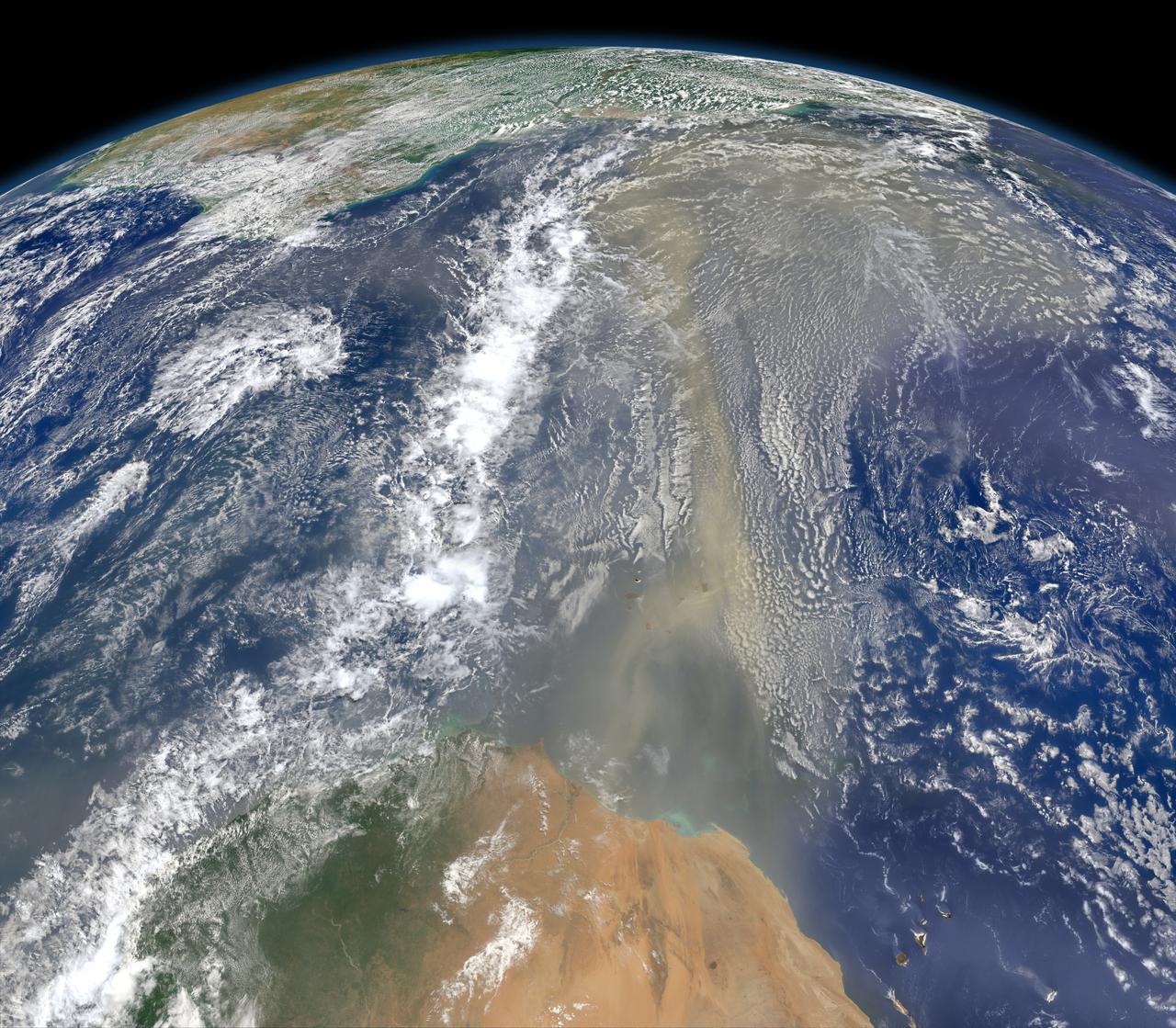
A piece of Africa—actually lots of them—began to arrive in the Americas in June 2014. On June 23, a lengthy river of dust from western Africa began to push across the Atlantic Ocean on easterly winds. A week later, the influx of dust was affecting air quality as far away as the southeastern United States. This composite image, made with data from the Visible Infrared Imaging Radiometer Suite (VIIRS) on Suomi NPP, shows dust heading west toward South America and the Gulf of Mexico on June 25, 2014. The dust flowed roughly parallel to a line of clouds in the intertropical convergence zone, an area near the equator where the trade winds come together and rain and clouds are common. In imagery captured by the Moderate Resolution Imaging Spectroradiometer (MODIS), the dust appeared to be streaming from Mauritania, Senegal, and Western Sahara, though some of it may have originated in countries farther to the east. Saharan dust has a range of impacts on ecosystems downwind. Each year, dust events like the one pictured here deliver about 40 million tons of dust from the Sahara to the Amazon River Basin. The minerals in the dust replenish nutrients in rainforest soils, which are continually depleted by drenching, tropical rains. Research focused on peat soils in the Everglades show that African dust has been arriving regularly in South Florida for thousands of years as well. In some instances, the impacts are harmful. Infusion of Saharan dust, for instance, can have a negative impact on air quality in the Americas. And scientists have linked African dust to outbreaks of certain types of toxic algal blooms in the Gulf of Mexico and southern Florida. Read more: <a href="http://1.usa.gov/1snkzmS" rel="nofollow">1.usa.gov/1snkzmS</a> NASA images by Norman Kuring, NASA’s Ocean Color web. Caption by Adam Voiland. Credit: <b><a href="http://www.earthobservatory.nasa.gov/" rel="nofollow"> NASA Earth Observatory</a></b> <b><a href="http://www.nasa.gov/audience/formedia/features/MP_Photo_Guidelines.html" rel="nofollow">NASA image use policy.</a></b> <b><a href="http://www.nasa.gov/centers/goddard/home/index.html" rel="nofollow">NASA Goddard Space Flight Center</a></b> enables NASA’s mission through four scientific endeavors: Earth Science, Heliophysics, Solar System Exploration, and Astrophysics. Goddard plays a leading role in NASA’s accomplishments by contributing compelling scientific knowledge to advance the Agency’s mission. <b>Follow us on <a href="http://twitter.com/NASAGoddardPix" rel="nofollow">Twitter</a></b> <b>Like us on <a href="http://www.facebook.com/pages/Greenbelt-MD/NASA-Goddard/395013845897?ref=tsd" rel="nofollow">Facebook</a></b> <b>Find us on <a href="http://instagram.com/nasagoddard?vm=grid" rel="nofollow">Instagram</a></b>