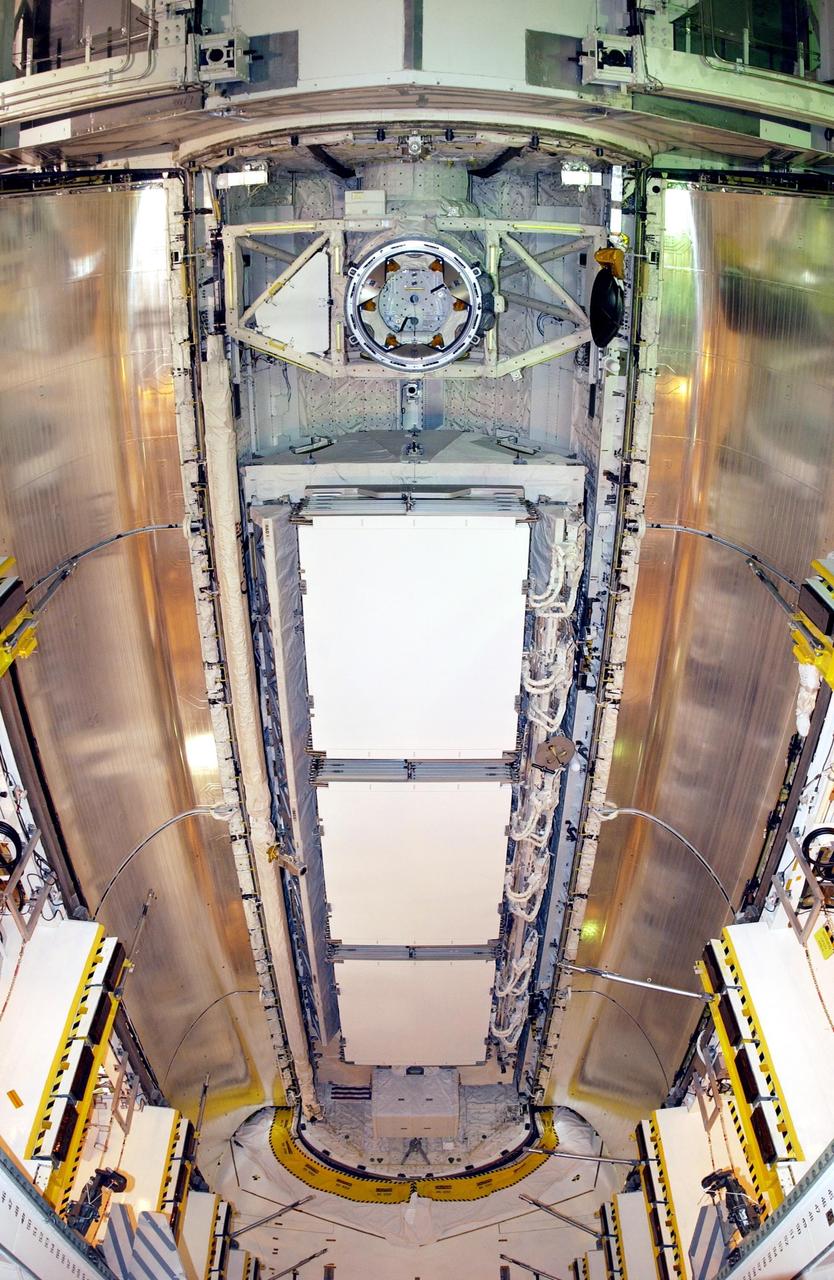
KENNEDY SPACE CENTER, FLA. -- The payload for mission STS-112 rests inside the payload bay of Space Shuttle Atlantis. The Shuttle is carrying the S1 Integrated Truss Structure, the first starboard truss segment, to be attached to the central truss segment, S0, plus the Crew and Equipment Translation Aid (CETA) Cart A. The CETA is the first of two human-powered carts that will ride along the ISS railway, providing mobile work platforms for future spacewalking astronauts. Launch of Atlantis is scheduled for Oct. 2 with a crew of six. The 11-day mission includes three spacewalks.

KENNEDY SPACE CENTER, FLA. -- The payload bay doors of Space Shuttle Atlantis close on the primary payloads for mission STS-112. The Shuttle is carrying the S1 Integrated Truss Structure, the first starboard truss segment, to be attached to the central truss segment, S0, plus the Crew and Equipment Translation Aid (CETA) Cart A. The CETA is the first of two human-powered carts that will ride along the ISS railway, providing mobile work platforms for future spacewalking astronauts. Launch of Atlantis is scheduled for Oct. 2 with a crew of six. The 11-day mission includes three spacewalks.
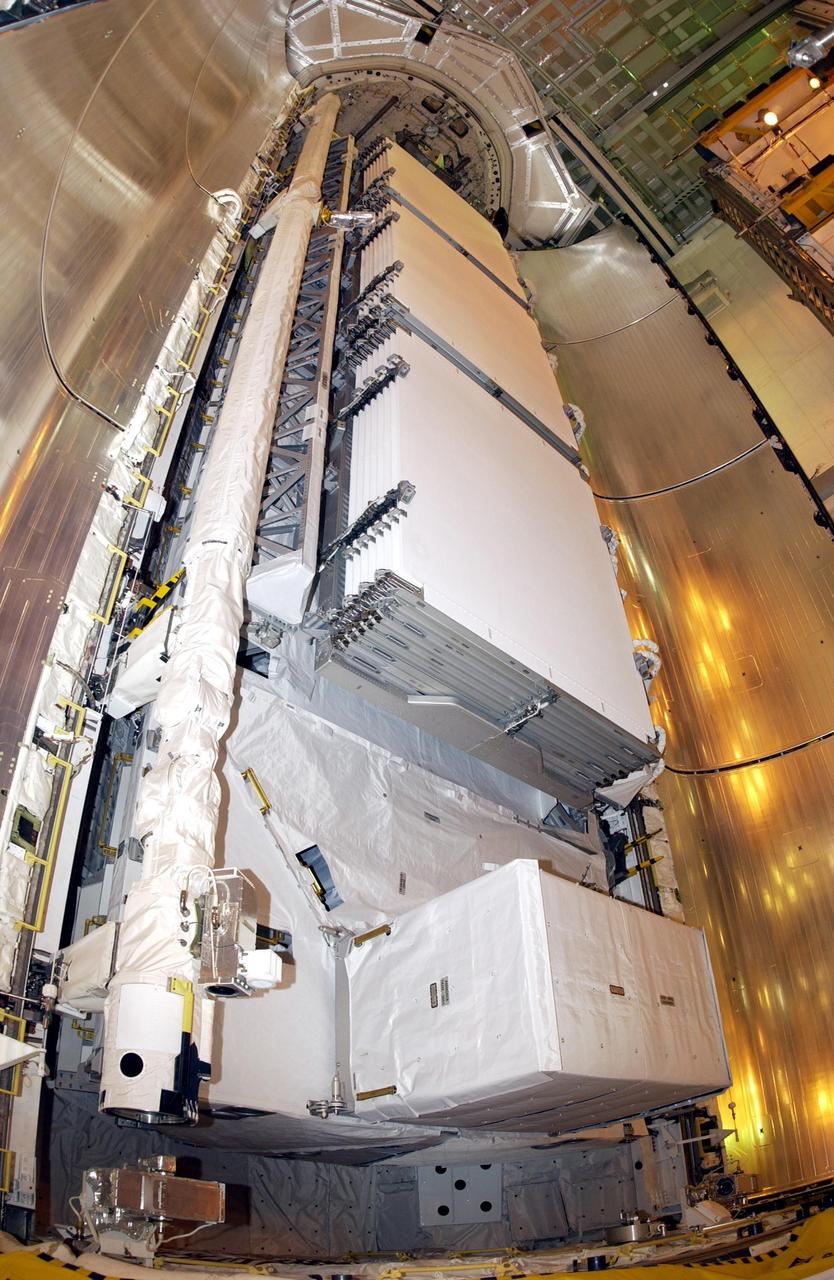
KENNEDY SPACE CENTER, FLA. -- -- The payload for mission STS-112 rests inside the payload bay of Space Shuttle Atlantis. The Shuttle is carrying the S1 Integrated Truss Structure, the first starboard truss segment, to be attached to the central truss segment, S0, plus the Crew and Equipment Translation Aid (CETA) Cart A. The CETA is the first of two human-powered carts that will ride along the ISS railway, providing mobile work platforms for future spacewalking astronauts. Launch of Atlantis is scheduled for Oct. 2 with a crew of six. The 11-day mission includes three spacewalks.
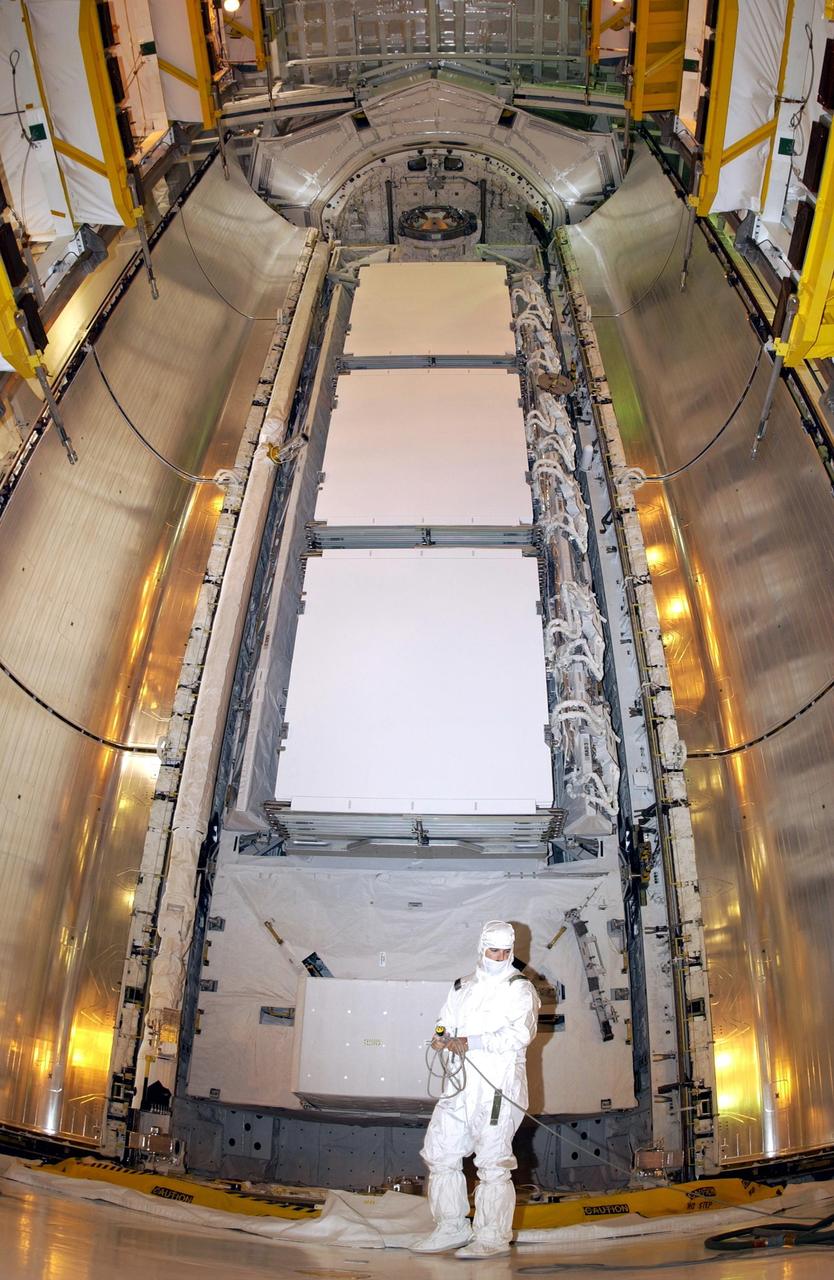
KENNEDY SPACE CENTER, FLA. -- The payload for mission STS-112 rests inside the payload bay of Space Shuttle Atlantis. The Shuttle is carrying the S1 Integrated Truss Structure, the first starboard truss segment, to be attached to the central truss segment, S0, plus the Crew and Equipment Translation Aid (CETA) Cart A. The CETA is the first of two human-powered carts that will ride along the ISS railway, providing mobile work platforms for future spacewalking astronauts. Launch of Atlantis is scheduled for Oct. 2 with a crew of six. The 11-day mission includes three spacewalks.
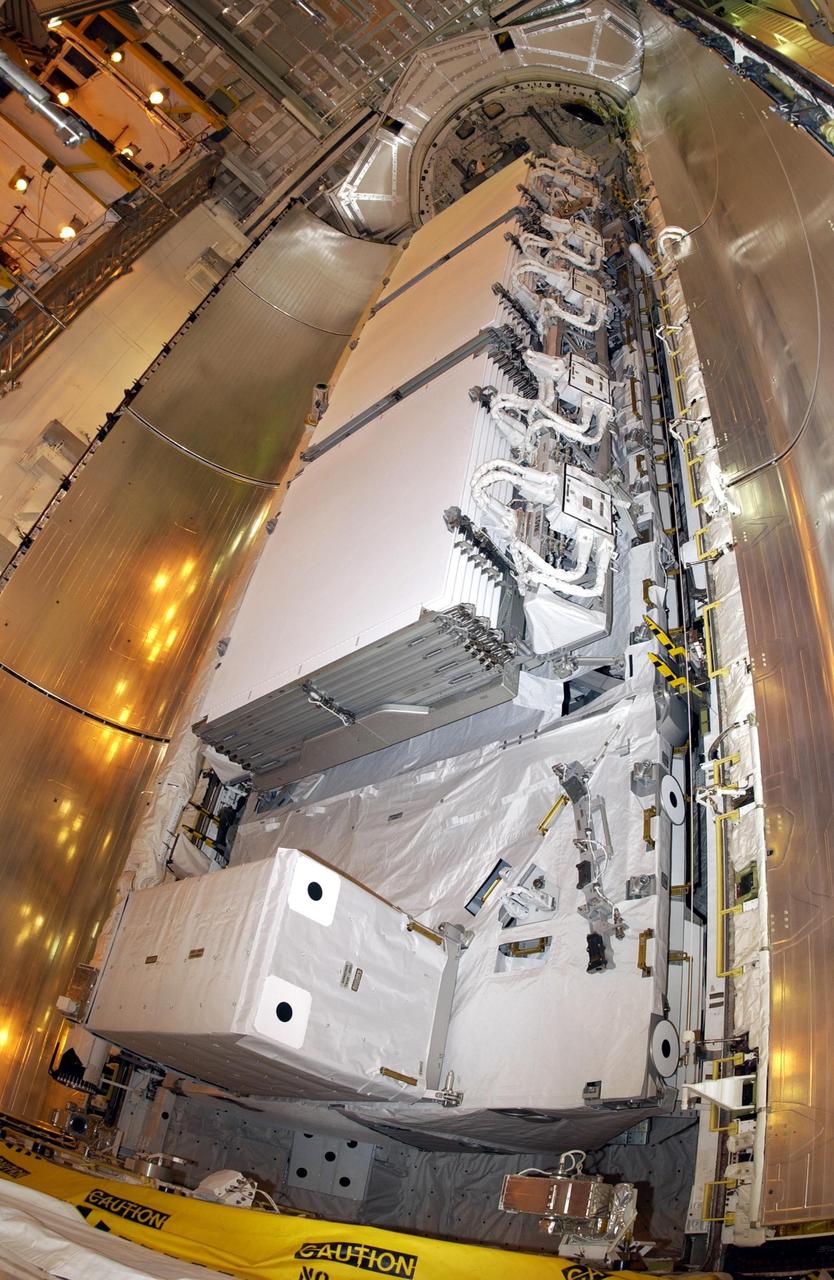
KENNEDY SPACE CENTER, FLA. -- -- The payload for mission STS-112 rests inside the payload bay of Space Shuttle Atlantis. The Shuttle is carrying the S1 Integrated Truss Structure, the first starboard truss segment, to be attached to the central truss segment, S0, plus the Crew and Equipment Translation Aid (CETA) Cart A. The CETA is the first of two human-powered carts that will ride along the ISS railway, providing mobile work platforms for future spacewalking astronauts. Launch of Atlantis is scheduled for Oct. 2 with a crew of six. The 11-day mission includes three spacewalks.
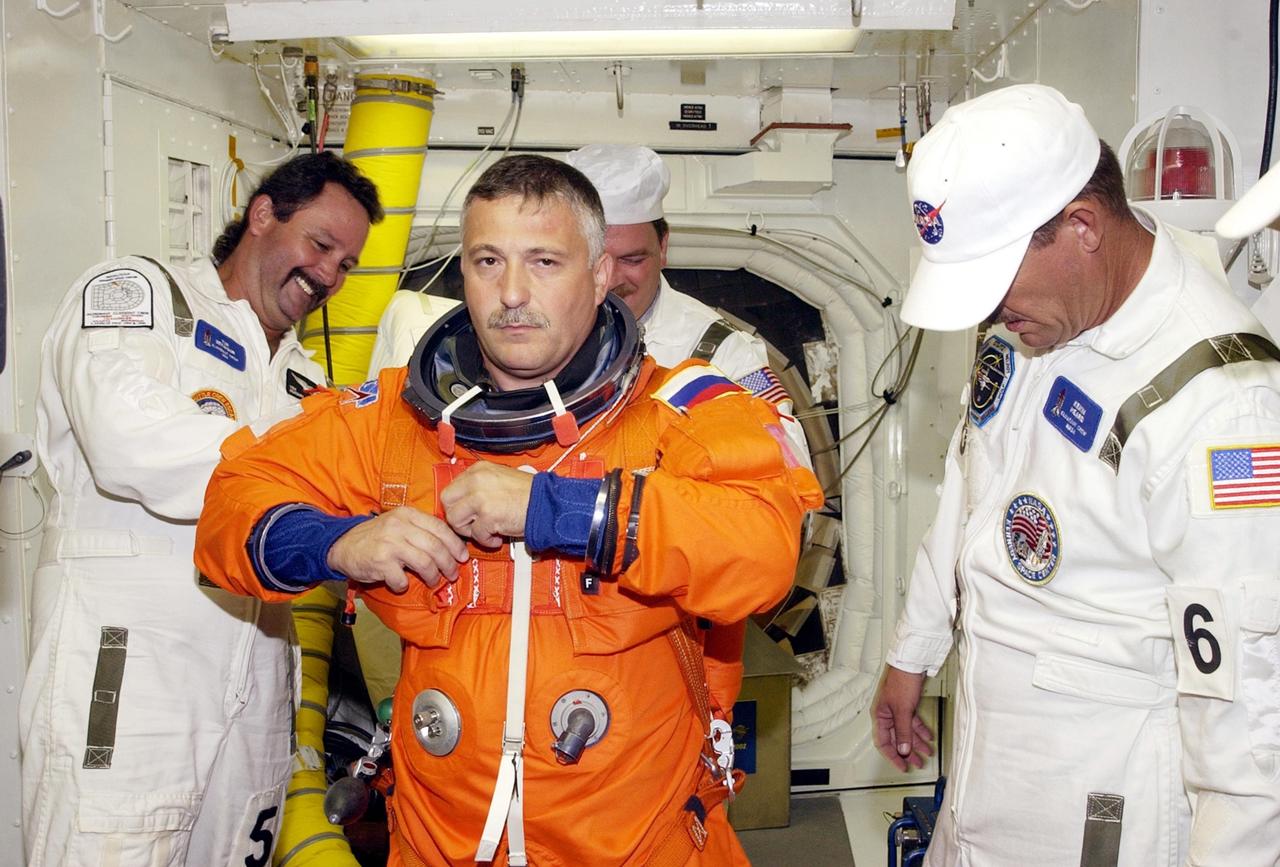
KENNEDY SPACE CENTER, FLA. -- In the White Room at Launch Pad 39B, STS-112 Mission Specialist Fyodor Yurchikhin, Ph.D., a cosmonaut with the Russian Space Agency, receives assistance with his spacesuit during a simulated launch countdown, part of Terminal Countdown Demonstration Test activities, a dress rehearsal for launch. Launch of STS-112 aboard Space Shuttle Atlantis is scheduled for Oct. 2, between 2 and 6 p.m. EDT. STS-112 is the 15th assembly mission to the International Space Station. Atlantis will be carrying the S1 Integrated Truss Structure, the first starboard truss segment, which will be attached to the central truss segment, S0, and the Crew and Equipment Translation Aid (CETA) Cart A. The CETA is the first of two human-powered carts that will ride along the ISS railway, providing mobile work platforms for future spacewalking astronauts.
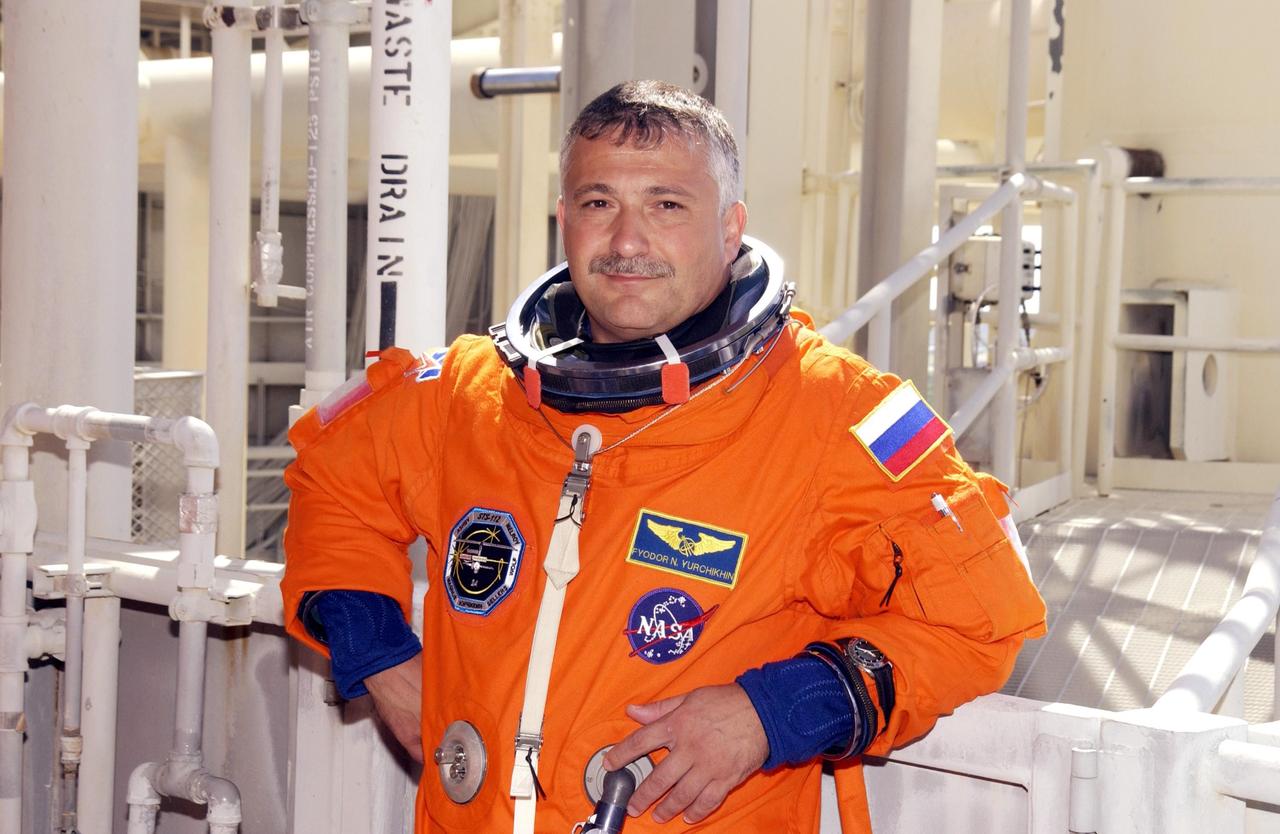
KENNEDY SPACE CENTER, FLA. - STS-112 Mission Specialist Fyodor Yurchikhin (with the Russian Space Agency) takes a break during emergency egress practice on the 195-foot level of the Fixed Service Structure, Launch Pad 39B. He and the rest of the crew are taking part in Terminal Countdown Demonstration Test activities, which include a simulated launch countdown. Mission STS-112 aboard Space Shuttle Atlantis is scheduled to launch no earlier than Oct. 2, between 2 and 6 p.m. EDT. STS-112 is the 15th assembly mission to the International Space Station. Atlantis will be carrying the S1 Integrated Truss Structure, the first starboard truss segment, to be attached to the central truss segment, S0, and the Crew and Equipment Translation Aid (CETA) Cart A. The CETA is the first of two human-powered carts that will ride along the ISS railway, providing mobile work platforms for future spacewalking astronauts.
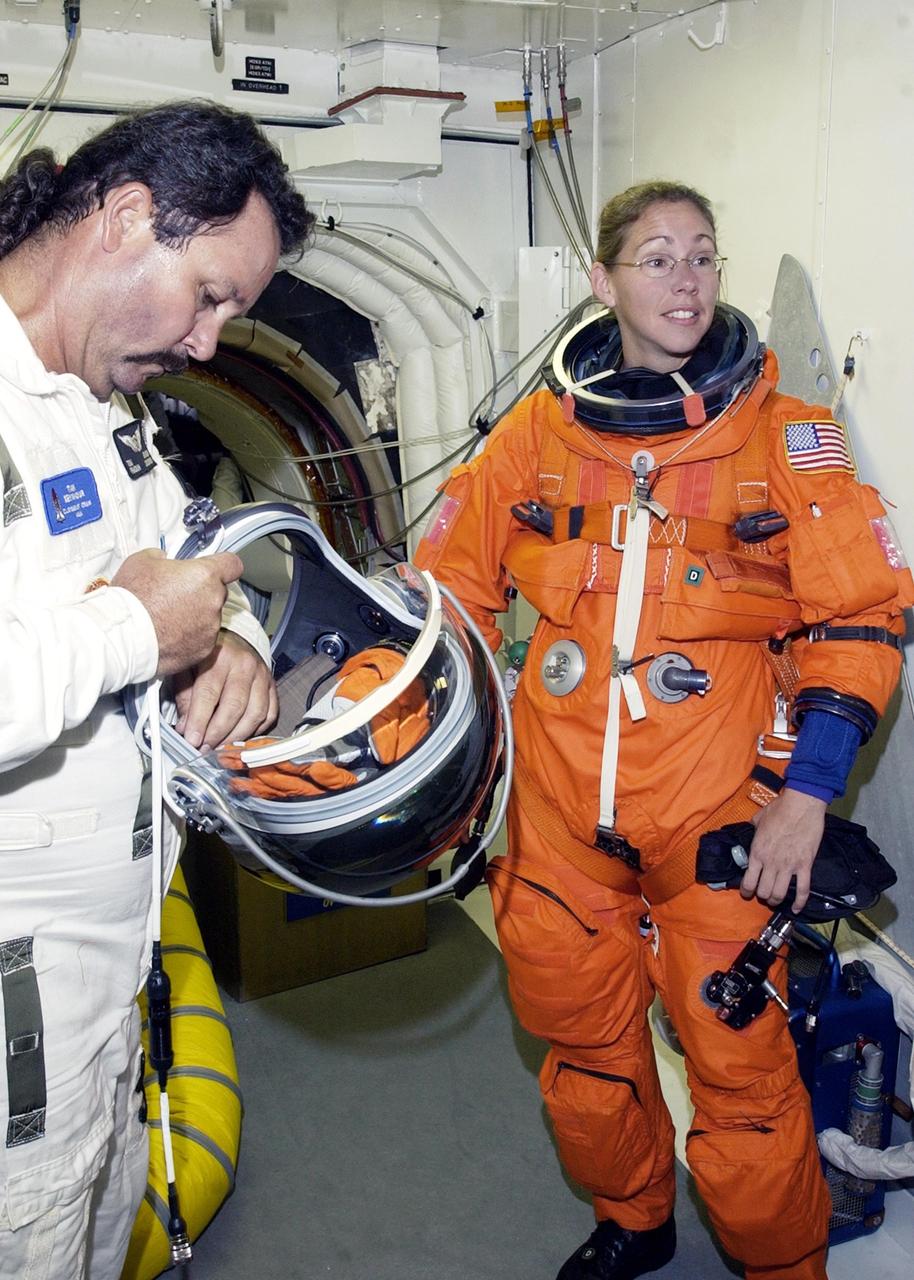
KENNEDY SPACE CENTER, FLA. -- In the White Room at Launch Pad 39B, STS-112 Mission Specialist Sandra Magnus, Ph.D., receives assistance with her spacesuit during a simulated launch countdown, part of Terminal Countdown Demonstration Test activities, a dress rehearsal for launch. Launch of STS-112 aboard Space Shuttle Atlantis is scheduled for Oct. 2, between 2 and 6 p.m. EDT. STS-112 is the 15th assembly mission to the International Space Station. Atlantis will be carrying the S1 Integrated Truss Structure, the first starboard truss segment, which will be attached to the central truss segment, S0, and the Crew and Equipment Translation Aid (CETA) Cart A. The CETA is the first of two human-powered carts that will ride along the ISS railway, providing mobile work platforms for future spacewalking astronauts.

KENNEDY SPACE CENTER, FLA. -- STS-112 Commander Jeffrey Ashby takes a break during emergency egress practice on the 195-foot level of the Fixed Service Structure, Launch Pad 39B. He and the rest of the crew are taking part in Terminal Countdown Demonstration Test activities, which include a simulated launch countdown. Mission STS-112 aboard Space Shuttle Atlantis is scheduled to launch no earlier than Oct. 2, between 2 and 6 p.m. EDT. STS-112 is the 15th assembly mission to the International Space Station. Atlantis will be carrying the S1 Integrated Truss Structure, the first starboard truss segment, to be attached to the central truss segment, S0, and the Crew and Equipment Translation Aid (CETA) Cart A. The CETA is the first of two human-powered carts that will ride along the ISS railway, providing mobile work platforms for future spacewalking astronauts.
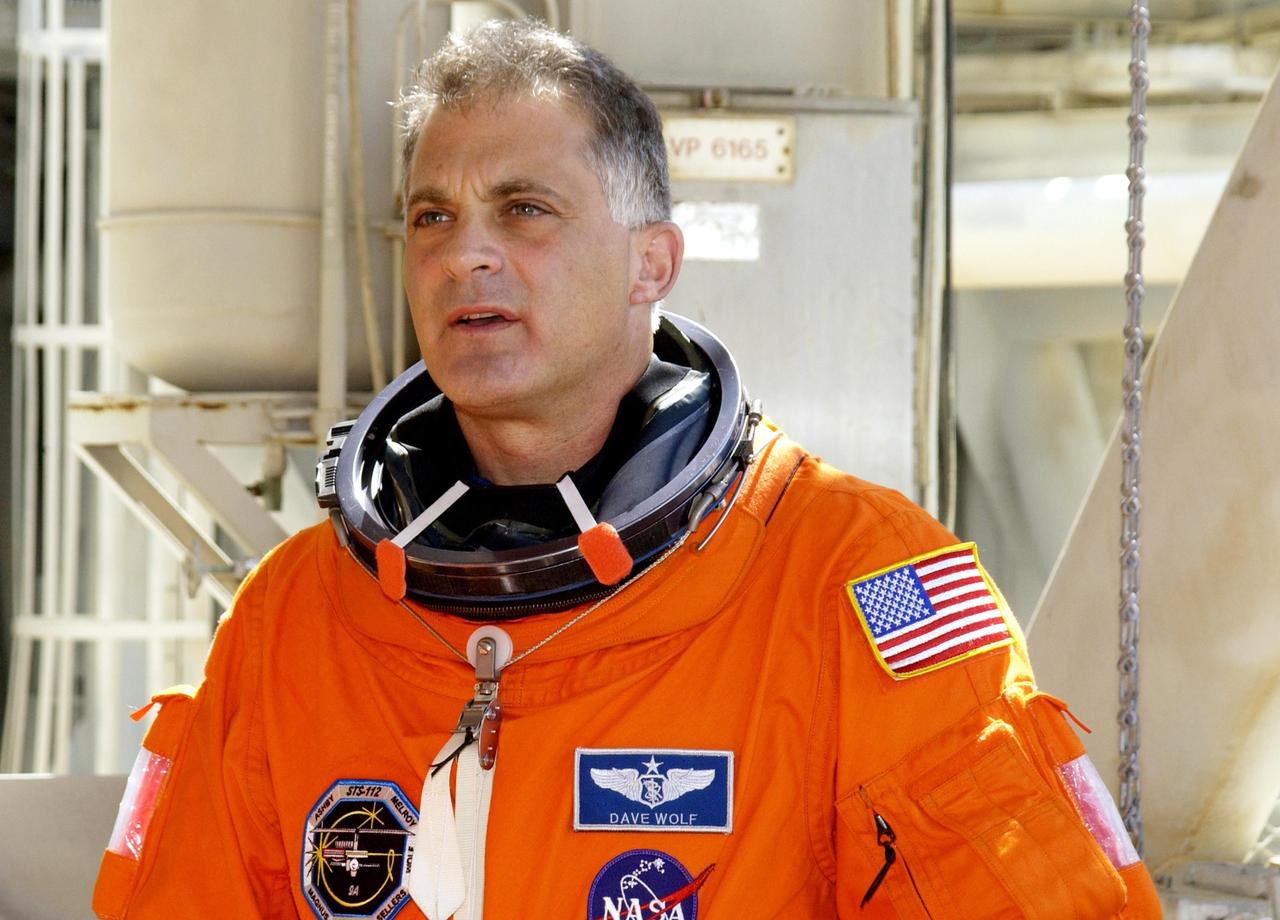
KENNEDY SPACE CENTER, FLA. -- STS-112 Mission Specialist David Wolf takes a break during emergency egress practice on the 195-foot level of the Fixed Service Structure, Launch Pad 39B. He and the rest of the crew are taking part in Terminal Countdown Demonstration Test activities, which include a simulated launch countdown. Mission STS-112 aboard Space Shuttle Atlantis is scheduled to launch no earlier than Oct. 2, between 2 and 6 p.m. EDT. STS-112 is the 15th assembly mission to the International Space Station. Atlantis will be carrying the S1 Integrated Truss Structure, the first starboard truss segment, to be attached to the central truss segment, S0, and the Crew and Equipment Translation Aid (CETA) Cart A. The CETA is the first of two human-powered carts that will ride along the ISS railway, providing mobile work platforms for future spacewalking astronauts.
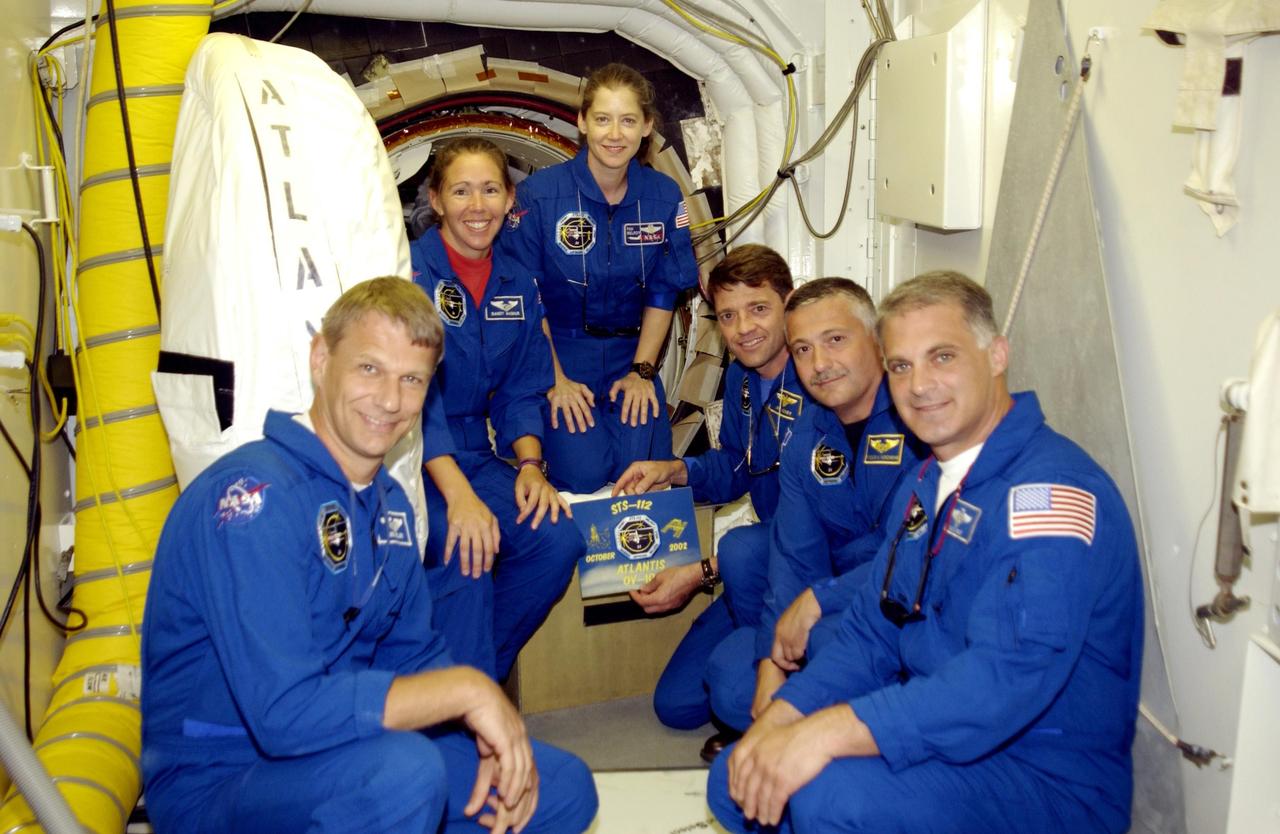
KENNEDY SPACE CENTER, FLA. -- The STS-112 crew pauses for a photo in the White Room during Terminal Countdown Demonstration Test activities. From left, clockwise, are Mission Specialists Piers Sellers and Sandra Magnus, Pilot Pamela Melroy, Commander Jeffrey Ashby and Mission Specialists Fyodor Yurchikhin and David Wolf. Ashby is holding the mission insignia. Yurchikhin is with the Russian Space Agency. Mission STS-112 aboard Space Shuttle Atlantis is scheduled to launch no earlier than Oct. 2, between 2 and 6 p.m. EDT. STS-112 is the 15th assembly mission to the International Space Station. Atlantis will be carrying the S1 Integrated Truss Structure, the first starboard truss segment, to be attached to the central truss segment, S0, and the Crew and Equipment Translation Aid (CETA) Cart A. The CETA is the first of two human-powered carts that will ride along the ISS railway, providing mobile work platforms for future spacewalking astronauts.

KENNEDY SPACE CENTER, FLA. -- Sitting in a slidewire basket on the 195-foot level of the Fixed Service Structure, Launch Pad 39B, are STS-112 Commander Jeffrey Ashby (left foreground) and Pilot Pamela Melroy. They and the rest of the crew are practicing emergency egress from the pad during Terminal Countdown Demonstration Test activities. Mission STS-112 aboard Space Shuttle Atlantis is scheduled to launch no earlier than Oct. 2, between 2 and 6 p.m. EDT. STS-112 is the 15th assembly mission to the International Space Station. Atlantis will be carrying the S1 Integrated Truss Structure, the first starboard truss segment, to be attached to the central truss segment, S0, and the Crew and Equipment Translation Aid (CETA) Cart A. The CETA is the first of two human-powered carts that will ride along the ISS railway, providing mobile work platforms for future spacewalking astronauts.

KENNEDY SPACE CENTER, FLA. -- In the White Room at Launch Pad 39B, STS-112 Commander Jeffrey Ashby receives assistance with his spacesuit during a simulated launch countdown, part of Terminal Countdown Demonstration Test activities, a dress rehearsal for launch. Launch of STS-112 aboard Space Shuttle Atlantis is scheduled for Oct. 2, between 2 and 6 p.m. EDT. STS-112 is the 15th assembly mission to the International Space Station. Atlantis will be carrying the S1 Integrated Truss Structure, the first starboard truss segment, which will be attached to the central truss segment, S0, and the Crew and Equipment Translation Aid (CETA) Cart A. The CETA is the first of two human-powered carts that will ride along the ISS railway, providing mobile work platforms for future spacewalking astronauts.

KENNEDY SPACE CENTER, FLA. - During emergency egress practice on the 195-foot level of the Fixed Service Structure, Launch Pad 39B, STS-112 Mission Specialist Sandra Magnus opens her helmet visor. She and the rest of the crew are taking part in Terminal Countdown Demonstration Test activities, which include a simulated launch countdown. Mission STS-112 aboard Space Shuttle Atlantis is scheduled to launch no earlier than Oct. 2, between 2 and 6 p.m. EDT. STS-112 is the 15th assembly mission to the International Space Station. Atlantis will be carrying the S1 Integrated Truss Structure, the first starboard truss segment, to be attached to the central truss segment, S0, and the Crew and Equipment Translation Aid (CETA) Cart A. The CETA is the first of two human-powered carts that will ride along the ISS railway, providing mobile work platforms for future spacewalking astronauts.
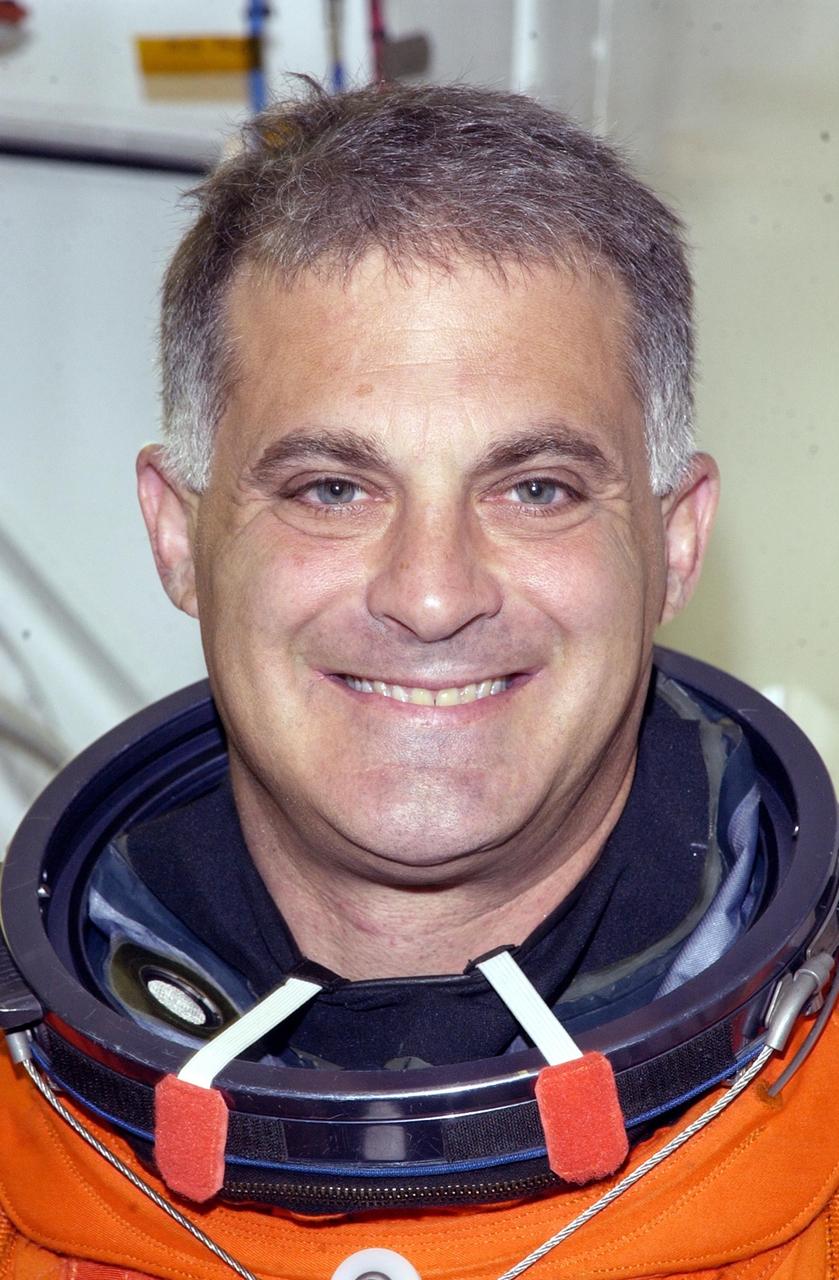
KENNEDY SPACE CENTER, FLA. -- STS-112 Mission Specialist David Wolf, M.D., takes a break from training at Pad 39B during Terminal Countdown Demonstration Test activities, which include a simulated launch countdown. Launch of STS-112 aboard Space Shuttle Atlantis is scheduled for Oct. 2, between 2 and 6 p.m. EDT. STS-112 is the 15th assembly mission to the International Space Station. Atlantis will be carrying the S1 Integrated Truss Structure, the first starboard truss segment, to be attached to the central truss segment, S0, and the Crew and Equipment Translation Aid (CETA) Cart A. The CETA is the first of two human-powered carts that will ride along the ISS railway, providing mobile work platforms for future spacewalking astronauts.
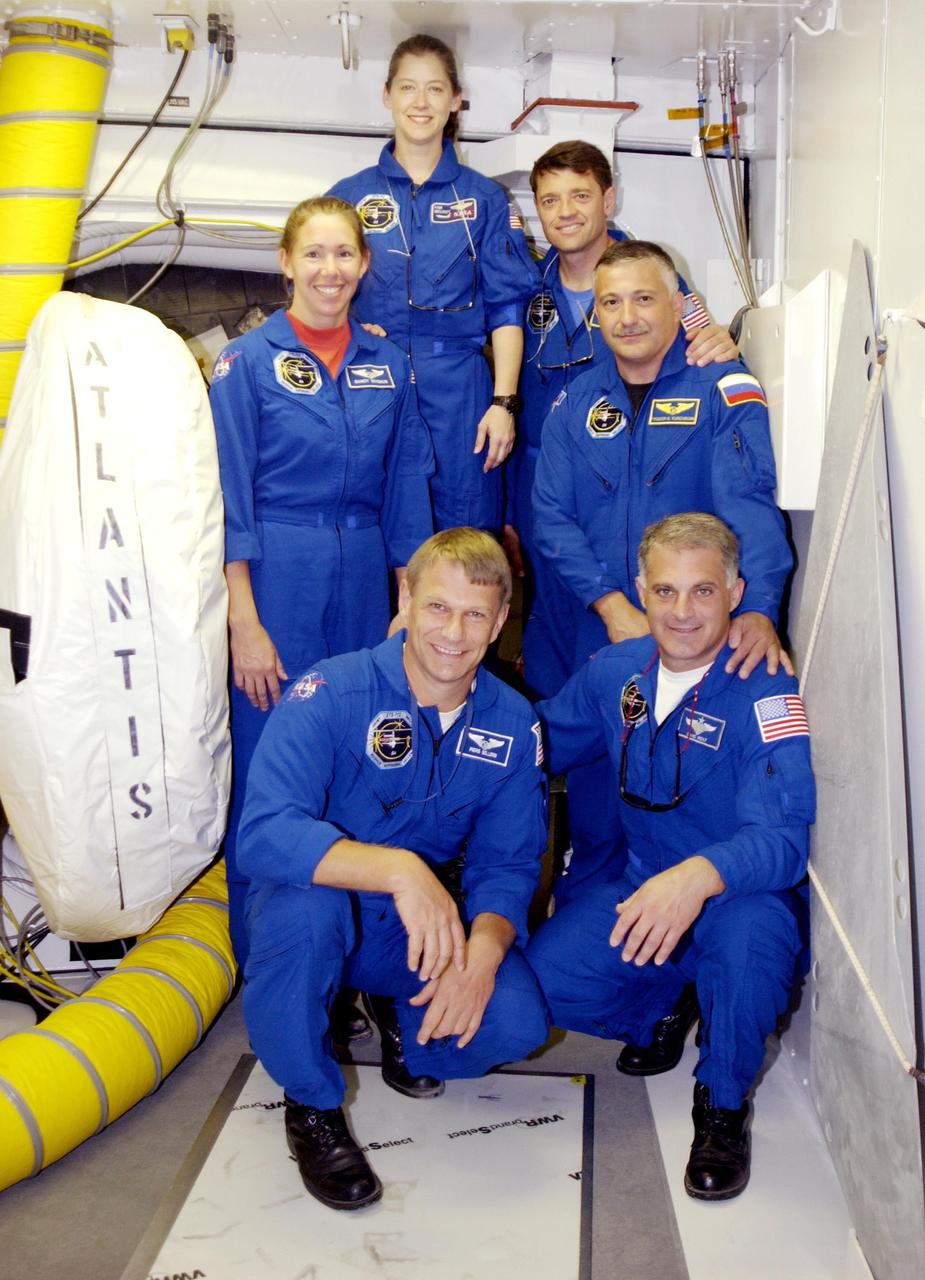
KENNEDY SPACE CENTER, FLA. -- The STS-112 crew pauses for a photo in the White Room during Terminal Countdown Demonstration Test activities. Kneeling in front are Mission Specialists Piers Sellers and David Wolf; standing, left to right, are Mission Specialist Sandra Magnus, Pilot Pamela Melroy, Commander Jeffrey Ashby and Mission Specialist Fyodor Yurchikhin. (with the Russian Space Agency). Mission STS-112 aboard Space Shuttle Atlantis is scheduled to launch no earlier than Oct. 2, between 2 and 6 p.m. EDT. STS-112 is the 15th assembly mission to the International Space Station. Atlantis will be carrying the S1 Integrated Truss Structure, the first starboard truss segment, to be attached to the central truss segment, S0, and the Crew and Equipment Translation Aid (CETA) Cart A. The CETA is the first of two human-powered carts that will ride along the ISS railway, providing mobile work platforms for future spacewalking astronauts.

KENNEDY SPACE CENTER, FLA. -- STS-112 Mission Specialist Piers Sellers takes a break during emergency egress practice on the 195-foot level of the Fixed Service Structure, Launch Pad 39B. He and the rest of the crew are taking part in Terminal Countdown Demonstration Test activities, which include a simulated launch countdown. Mission STS-112 aboard Space Shuttle Atlantis is scheduled to launch no earlier than Oct. 2, between 2 and 6 p.m. EDT. STS-112 is the 15th assembly mission to the International Space Station. Atlantis will be carrying the S1 Integrated Truss Structure, the first starboard truss segment, to be attached to the central truss segment, S0, and the Crew and Equipment Translation Aid (CETA) Cart A. The CETA is the first of two human-powered carts that will ride along the ISS railway, providing mobile work platforms for future spacewalking astronauts.
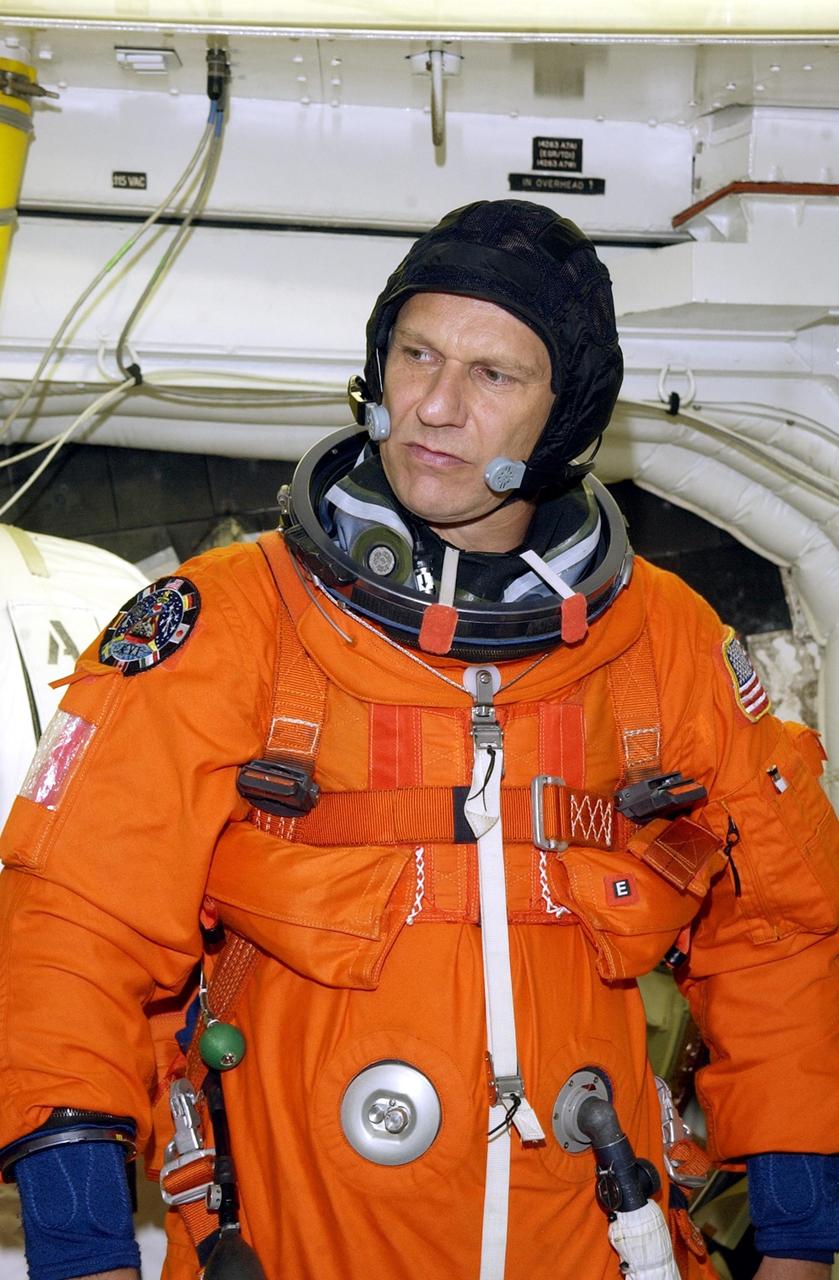
KENNEDY SPACE CENTER, FLA. -- In the White Room at Launch Pad 39B, STS-112 Mission Specialist Piers Sellers, Ph.D., prepares to enter Space Shuttle Atlantis during a simulated launch countdown, part of Terminal Countdown Demonstration Test activities, a dress rehearsal for launch. Launch of STS-112 aboard Space Shuttle Atlantis is scheduled for Oct. 2, between 2 and 6 p.m. EDT. STS-112 is the 15th assembly mission to the International Space Station. Atlantis will be carrying the S1 Integrated Truss Structure, the first starboard truss segment, which will be attached to the central truss segment, S0, and the Crew and Equipment Translation Aid (CETA) Cart A. The CETA is the first of two human-powered carts that will ride along the ISS railway, providing mobile work platforms for future spacewalking astronauts.
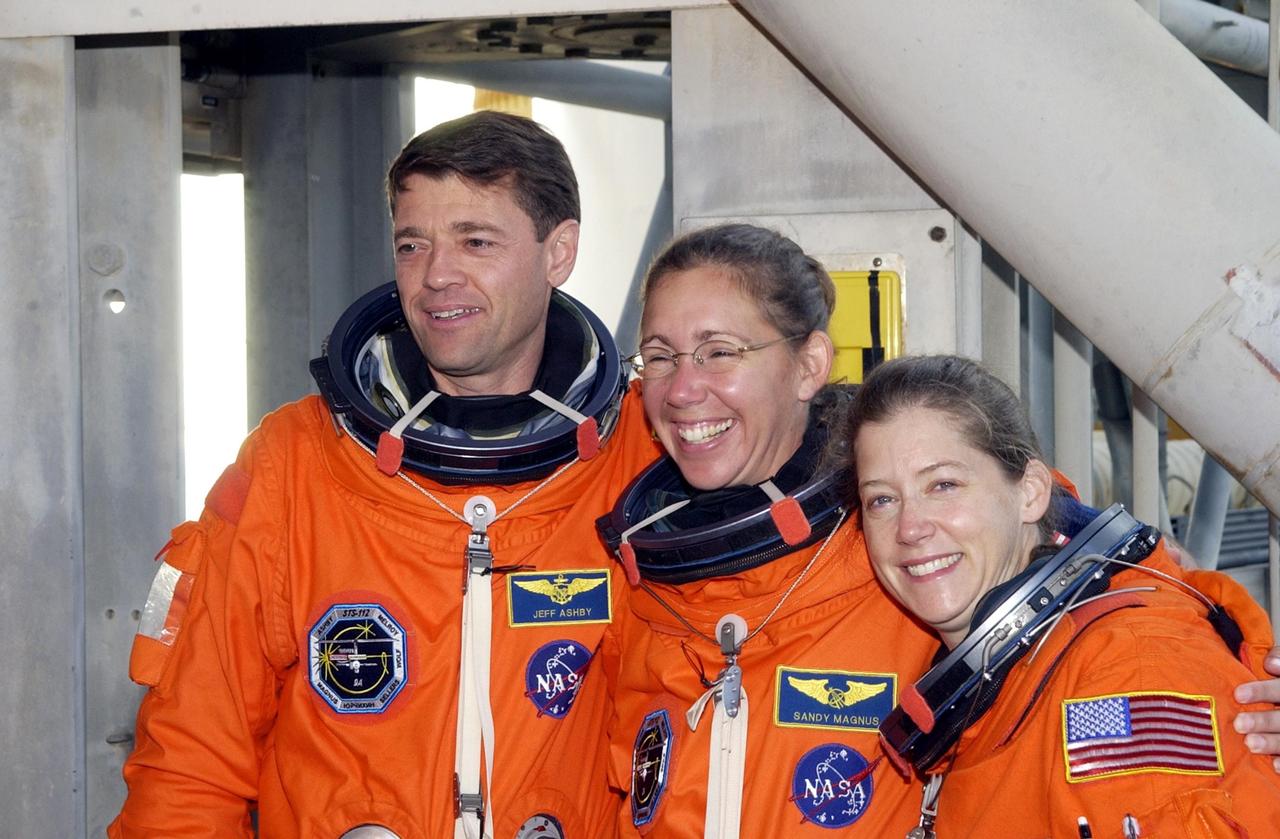
KENNEDY SPACE CENTER, FLA. -- STS-112 Commander Jeffrey Ashby, Mission Specialist Sandra Magnus, and Pilot Pamela Melroy take a momentary break from training at Pad 39B during Terminal Countdown Demonstration Test activities, which include a simulated launch countdown. Launch of STS-112 aboard Space Shuttle Atlantis is scheduled for Oct. 2, between 2 and 6 p.m. EDT. STS-112 is the 15th assembly mission to the International Space Station. Atlantis will be carrying the S1 Integrated Truss Structure, the first starboard truss segment, to be attached to the central truss segment, S0, and the Crew and Equipment Translation Aid (CETA) Cart A. The CETA is the first of two human-powered carts that will ride along the ISS railway, providing mobile work platforms for future spacewalking astronauts.
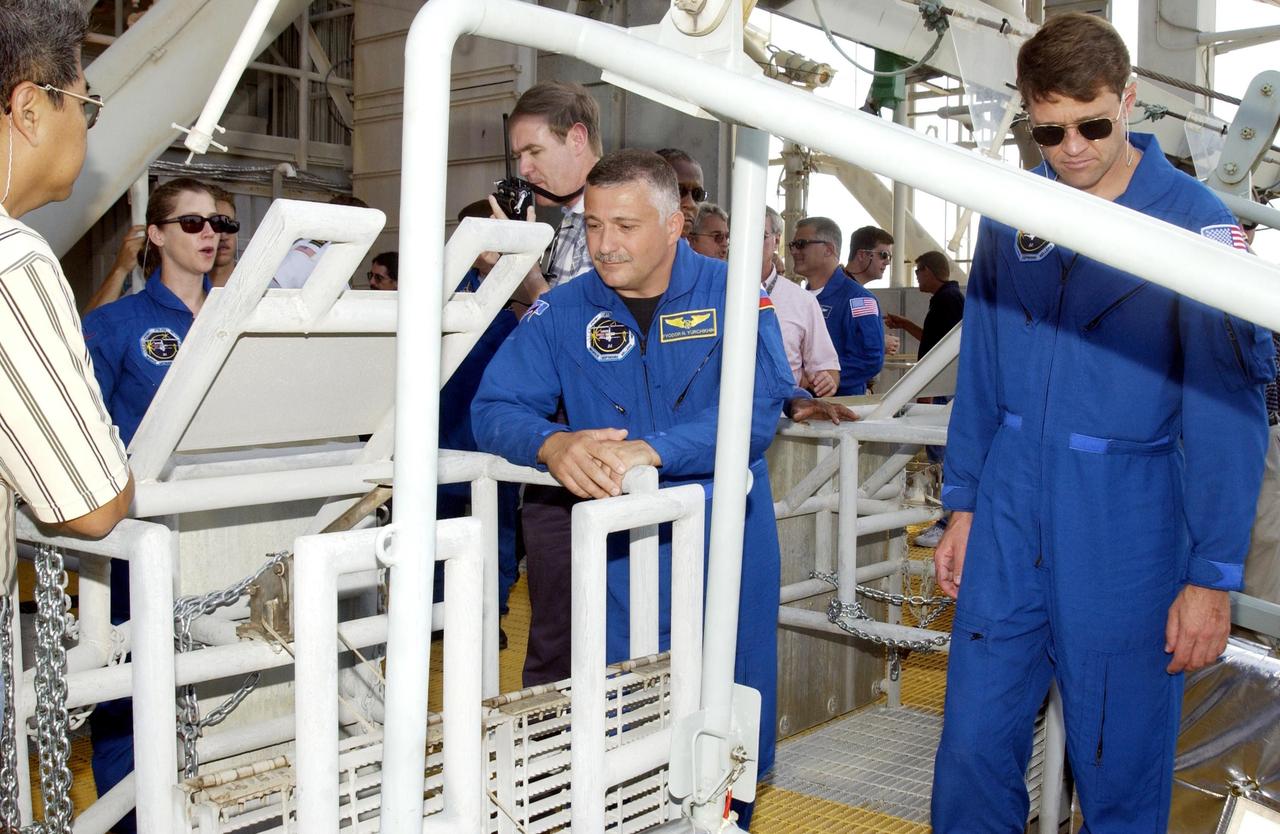
KENNEDY SPACE CENTER, FLA. -- In the foreground, STS-112 Pilot Pamela Melroy (left), Mission Specialist Fyodor Yurchikhin (center) and Commander Jeffrey Ashby (right) watch as a slidewire basket descends to the landing area. The crew is taking part in emergency egress training from the pad, part of Terminal Countdown Demonstration Test activities. Mission STS-112 aboard Space Shuttle Atlantis is scheduled to launch no earlier than Oct. 2, between 2 and 6 p.m. EDT. STS-112 is the 15th assembly mission to the International Space Station. Atlantis will be carrying the S1 Integrated Truss Structure, the first starboard truss segment, to be attached to the central truss segment, S0, and the Crew and Equipment Translation Aid (CETA) Cart A. The CETA is the first of two human-powered carts that will ride along the ISS railway, providing mobile work platforms for future spacewalking astronauts.
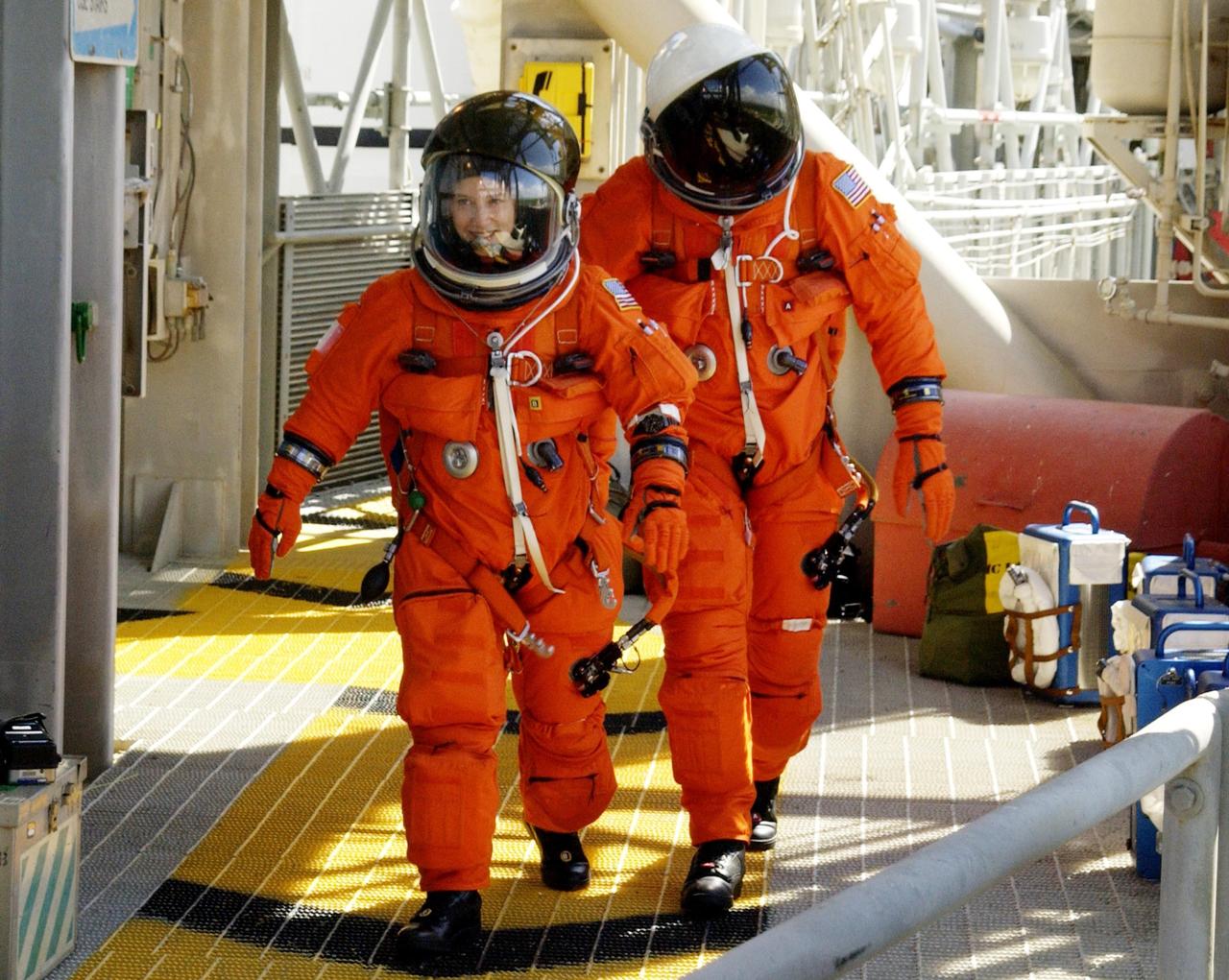
KENNEDY SPACE CENTER, FLA. - STS-112 Pilot Pamela Melroy (left) and Commander Jeffrey Ashby hurry toward the slidewire baskets on the 195-foot level of the Fixed Service Structure, Launch Pad 39B. They and the rest of the crew are practicing emergency egress from the pad during Terminal Countdown Demonstration Test activities. Mission STS-112 aboard Space Shuttle Atlantis is scheduled to launch no earlier than Oct. 2, between 2 and 6 p.m. EDT. STS-112 is the 15th assembly mission to the International Space Station. Atlantis will be carrying the S1 Integrated Truss Structure, the first starboard truss segment, to be attached to the central truss segment, S0, and the Crew and Equipment Translation Aid (CETA) Cart A. The CETA is the first of two human-powered carts that will ride along the ISS railway, providing mobile work platforms for future spacewalking astronauts.
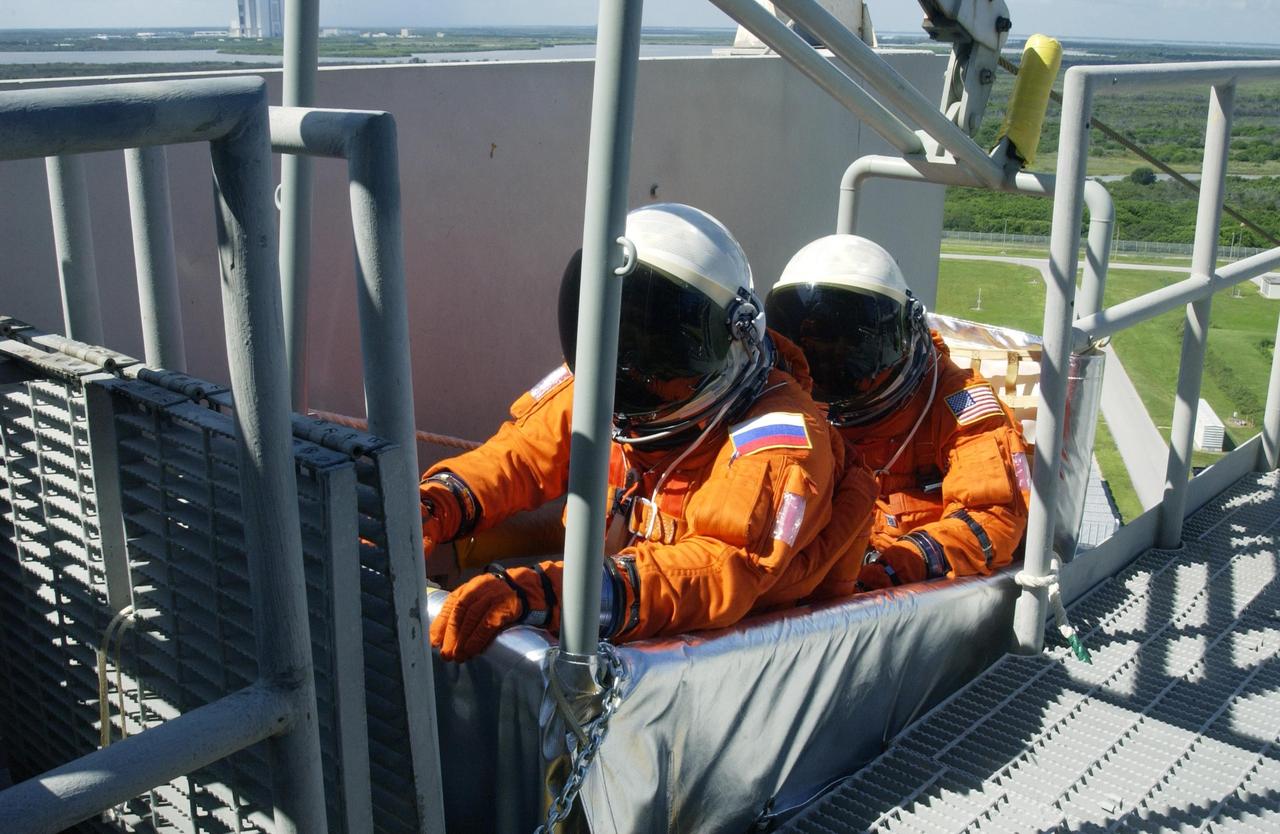
KENNEDY SPACE CENTER, FLA. -- Sitting in a slidewire basket on the 195-foot level of the Fixed Service Structure, Launch Pad 39B, are STS-112 Mission Specialists Fyodor Yurchikhin (left) and David Wolf. They and the rest of the crew are practicing emergency egress from the pad during Terminal Countdown Demonstration Test activities. Mission STS-112 aboard Space Shuttle Atlantis is scheduled to launch no earlier than Oct. 2, between 2 and 6 p.m. EDT. STS-112 is the 15th assembly mission to the International Space Station. Atlantis will be carrying the S1 Integrated Truss Structure, the first starboard truss segment, to be attached to the central truss segment, S0, and the Crew and Equipment Translation Aid (CETA) Cart A. The CETA is the first of two human-powered carts that will ride along the ISS railway, providing mobile work platforms for future spacewalking astronauts.
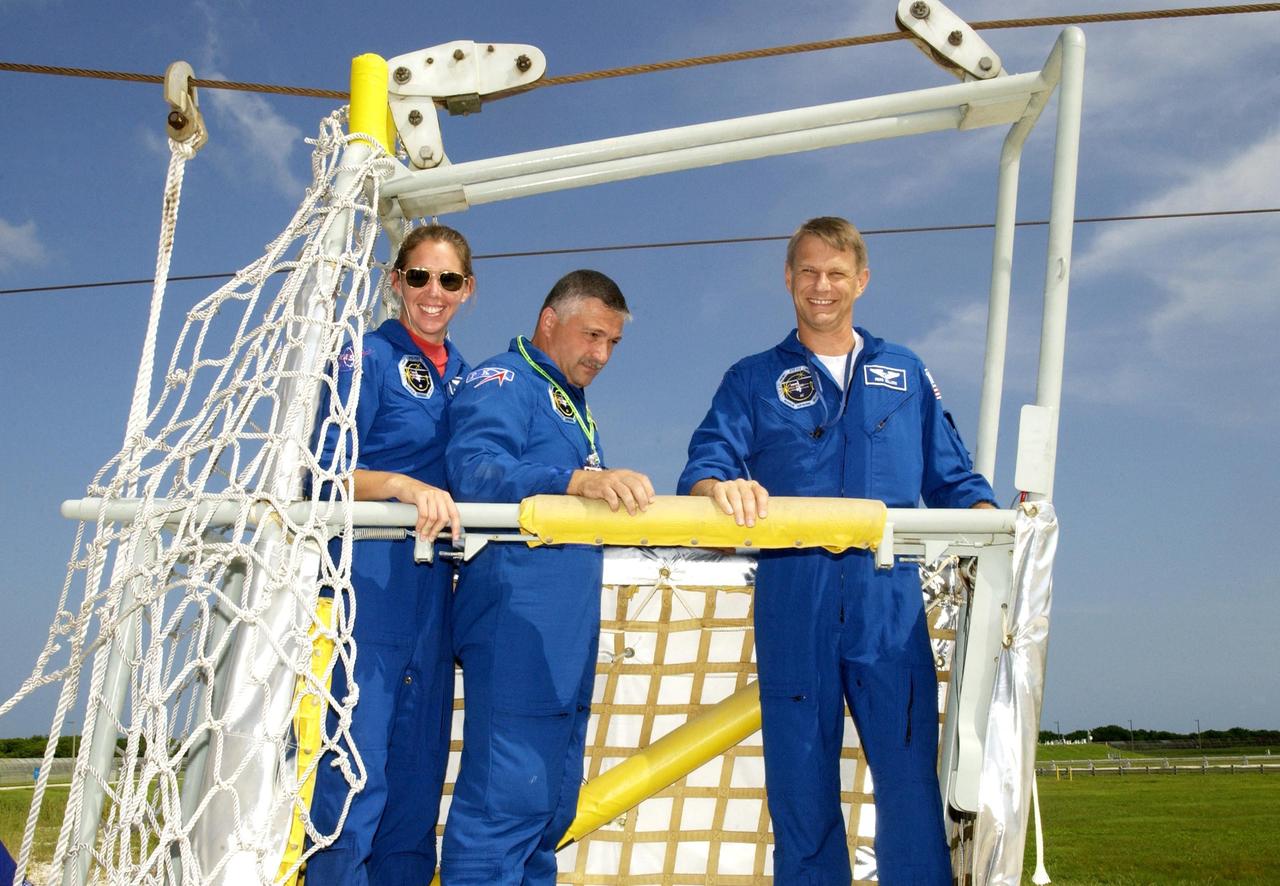
KENNEDY SPACE CENTER, FLA. -- Members of the STS-112 crew stand inside a slidewire basket, a component of the emergency egress system at the pad. From left are Mission Specialists Sandra Magnus, Fyodor Yurchikhin (with the Russian Space Agency), and Piers Sellers. The training is part of Terminal Countdown Demonstration Test activities, which include a simulated launch countdown. Mission STS-112 aboard Space Shuttle Atlantis is scheduled to launch no earlier than Oct. 2, between 2 and 6 p.m. EDT. STS-112 is the 15th assembly mission to the International Space Station. Atlantis will be carrying the S1 Integrated Truss Structure, the first starboard truss segment, to be attached to the central truss segment, S0, and the Crew and Equipment Translation Aid (CETA) Cart A. The CETA is the first of two human-powered carts that will ride along the ISS railway, providing mobile work platforms for future spacewalking astronauts.

KENNEDY SPACE CENTER, FLA. -- Sitting in a slidewire basket on the 195-foot level of the Fixed Service Structure, Launch Pad 39B, are STS-112 Mission Specialists Fyodor Yurchikhin (left) and David Wolf. They and the rest of the crew are practicing emergency egress from the pad during Terminal Countdown Demonstration Test activities. Mission STS-112 aboard Space Shuttle Atlantis is scheduled to launch no earlier than Oct. 2, between 2 and 6 p.m. EDT. STS-112 is the 15th assembly mission to the International Space Station. Atlantis will be carrying the S1 Integrated Truss Structure, the first starboard truss segment, to be attached to the central truss segment, S0, and the Crew and Equipment Translation Aid (CETA) Cart A. The CETA is the first of two human-powered carts that will ride along the ISS railway, providing mobile work platforms for future spacewalking astronauts.
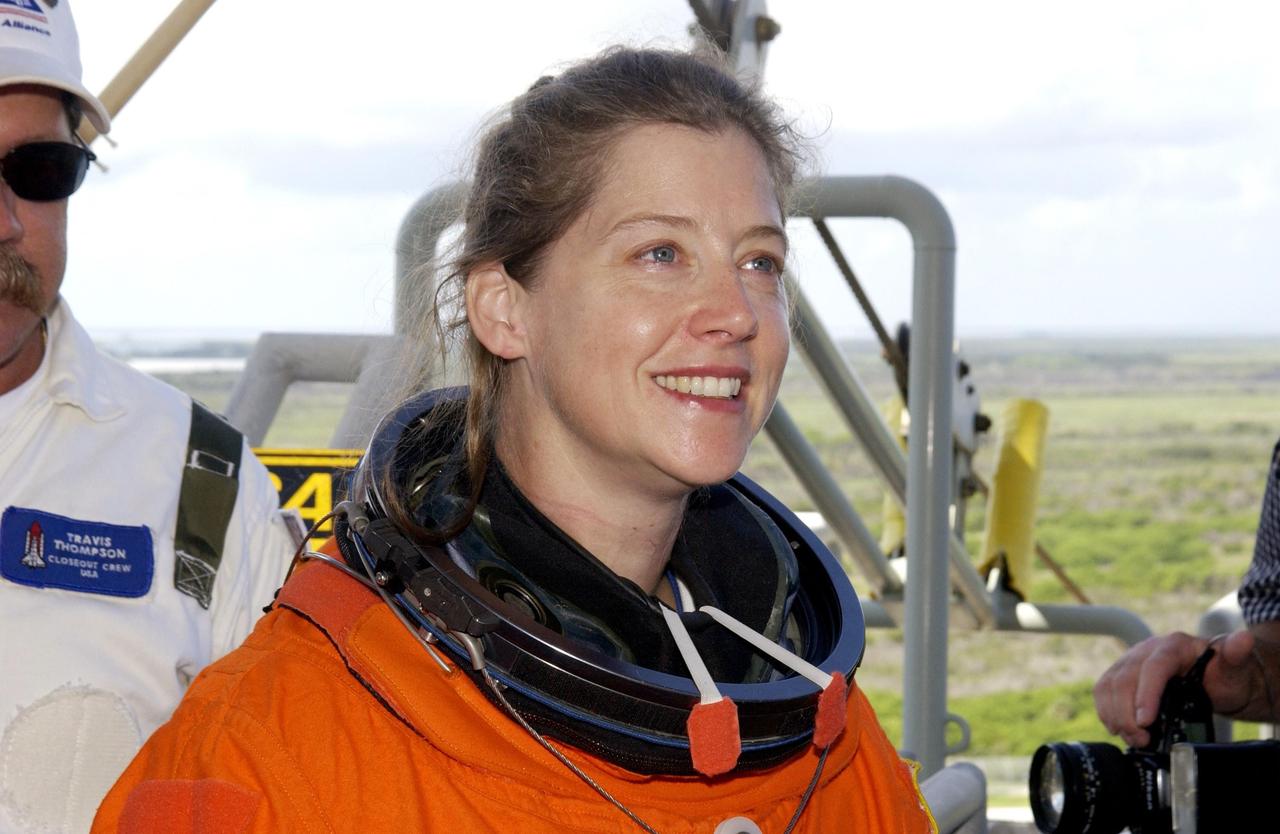
KENNEDY SPACE CENTER, FLA. - STS-112 Pilot Pamela Melroy takes a break during emergency egress practice on the 195-foot level of the Fixed Service Structure, Launch Pad 39B. She and the rest of the crew are taking part in Terminal Countdown Demonstration Test activities, which include a simulated launch countdown. Mission STS-112 aboard Space Shuttle Atlantis is scheduled to launch no earlier than Oct. 2, between 2 and 6 p.m. EDT. STS-112 is the 15th assembly mission to the International Space Station. Atlantis will be carrying the S1 Integrated Truss Structure, the first starboard truss segment, to be attached to the central truss segment, S0, and the Crew and Equipment Translation Aid (CETA) Cart A. The CETA is the first of two human-powered carts that will ride along the ISS railway, providing mobile work platforms for future spacewalking astronauts.
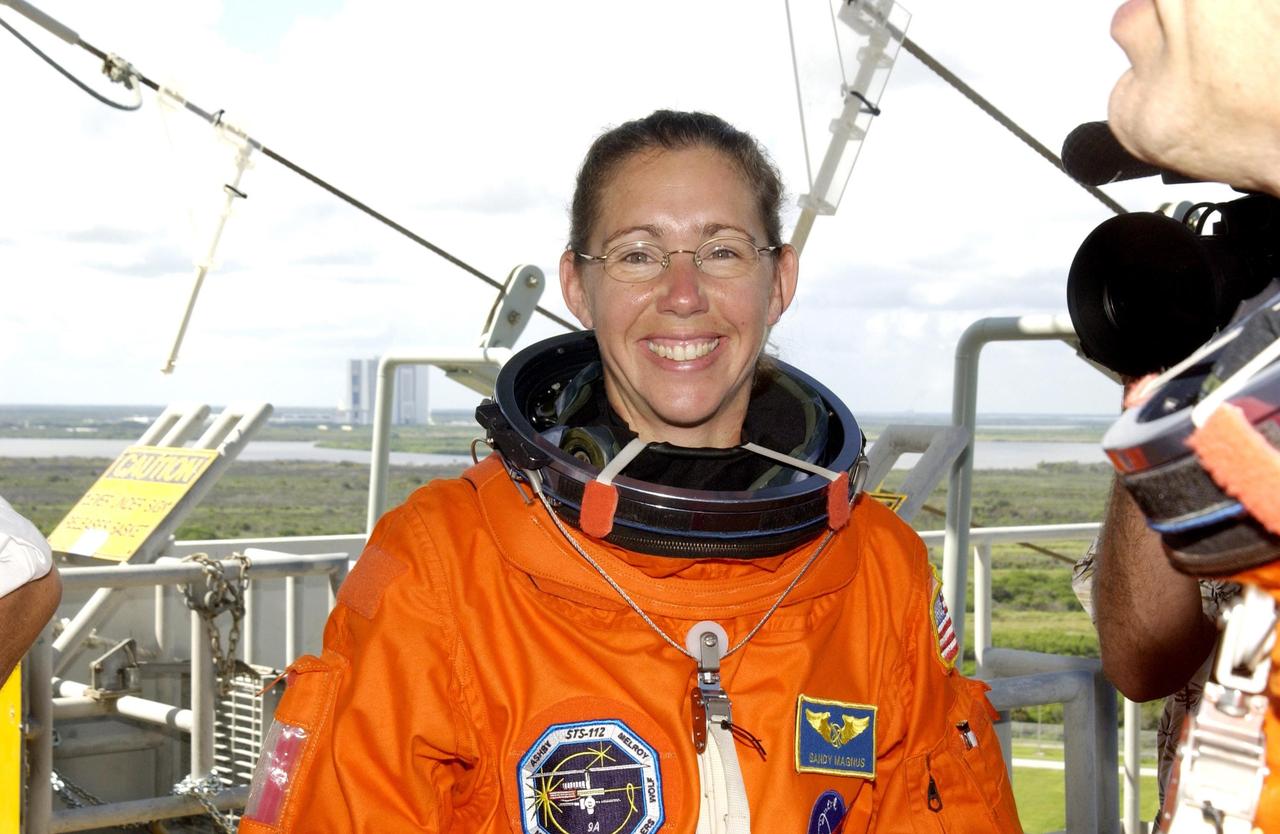
KENNEDY SPACE CENTER, FLA. -- STS-112 Mission Specialist Sandra Magnus takes a break during emergency egress practice on the 195-foot level of the Fixed Service Structure, Launch Pad 39B. She and the rest of the crew are taking part in Terminal Countdown Demonstration Test activities, which include a simulated launch countdown. Mission STS-112 aboard Space Shuttle Atlantis is scheduled to launch no earlier than Oct. 2, between 2 and 6 p.m. EDT. STS-112 is the 15th assembly mission to the International Space Station. Atlantis will be carrying the S1 Integrated Truss Structure, the first starboard truss segment, to be attached to the central truss segment, S0, and the Crew and Equipment Translation Aid (CETA) Cart A. The CETA is the first of two human-powered carts that will ride along the ISS railway, providing mobile work platforms for future spacewalking astronauts.

KENNEDY SPACE CENTER, FLA. -- The STS-112 crew strides out of the Checkout and Operations Building on their way to the launch pad and a simulated countdown. On the left, front to back, are Pilot Pamela Melroy and Mission Specialists David Wolf and Fyodor Yurchikhin (RSA). On the right, front to back, are Commander Jeffrey Ashby and Mission Specialists Sandra Magnus and Piers Sellers. Mission STS-112 aboard Space Shuttle Atlantis is scheduled to launch no earlier than Oct. 2, between 2 and 6 p.m. EDT. STS-112 is the 15th assembly mission to the International Space Station. Atlantis will be carrying the S1 Integrated Truss Structure, the first starboard truss segment, to be attached to the central truss segment, S0, and the Crew and Equipment Translation Aid (CETA) Cart A. The CETA is the first of two human-powered carts that will ride along the ISS railway, providing mobile work platforms for future spacewalking astronauts.
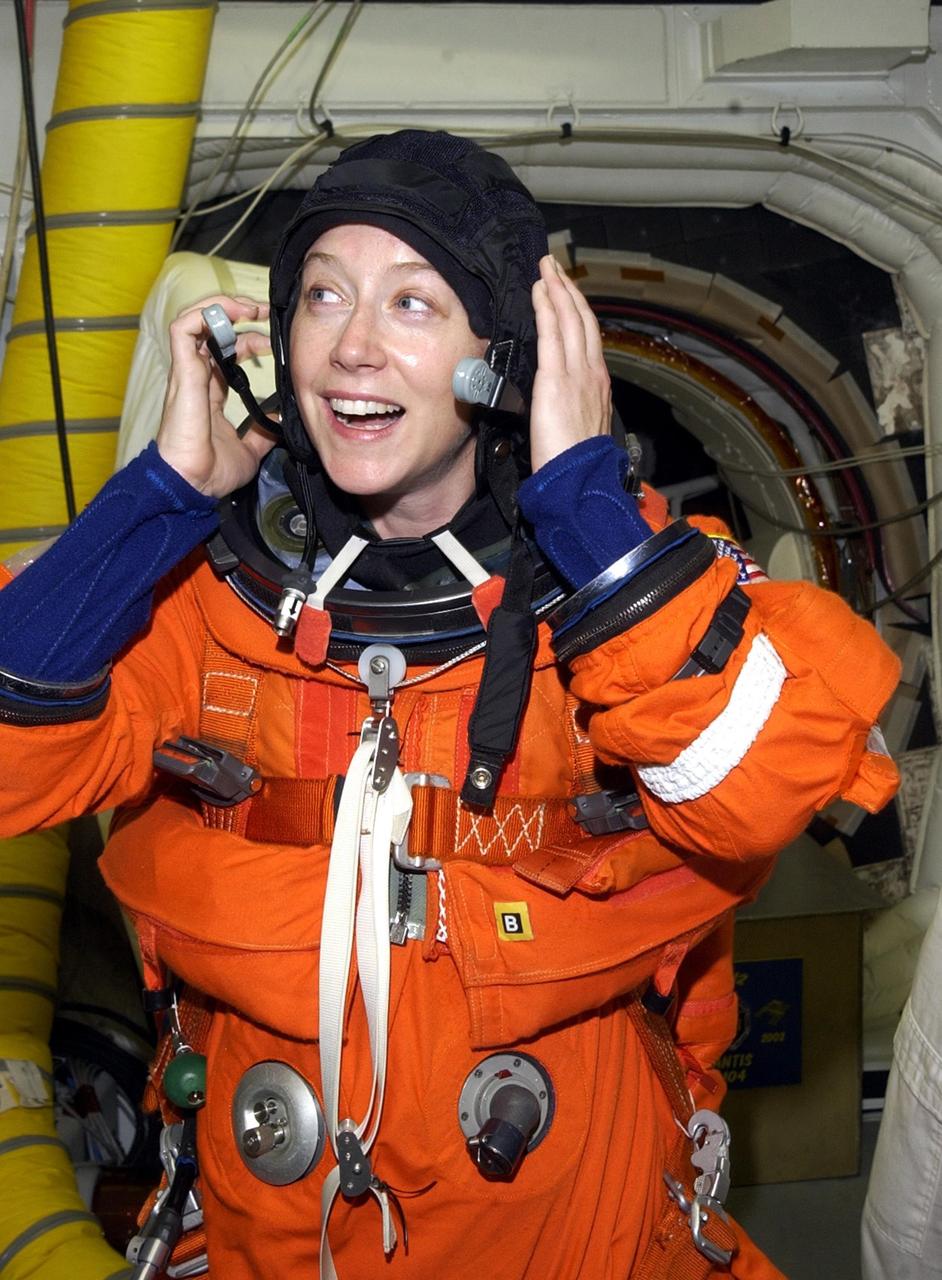
KENNEDY SPACE CENTER, FLA. -- In the White Room at Launch Pad 39B, STS-112 Pilot Pamela Melroy adjusts her spacesuit during a simulated launch countdown, part of Terminal Countdown Demonstration Test activities, a dress rehearsal for launch. Launch of STS-112 aboard Space Shuttle Atlantis is scheduled for Oct. 2, between 2 and 6 p.m. EDT. STS-112 is the 15th assembly mission to the International Space Station. Atlantis will be carrying the S1 Integrated Truss Structure, the first starboard truss segment, which will be attached to the central truss segment, S0, and the Crew and Equipment Translation Aid (CETA) Cart A. The CETA is the first of two human-powered carts that will ride along the ISS railway, providing mobile work platforms for future spacewalking astronauts.
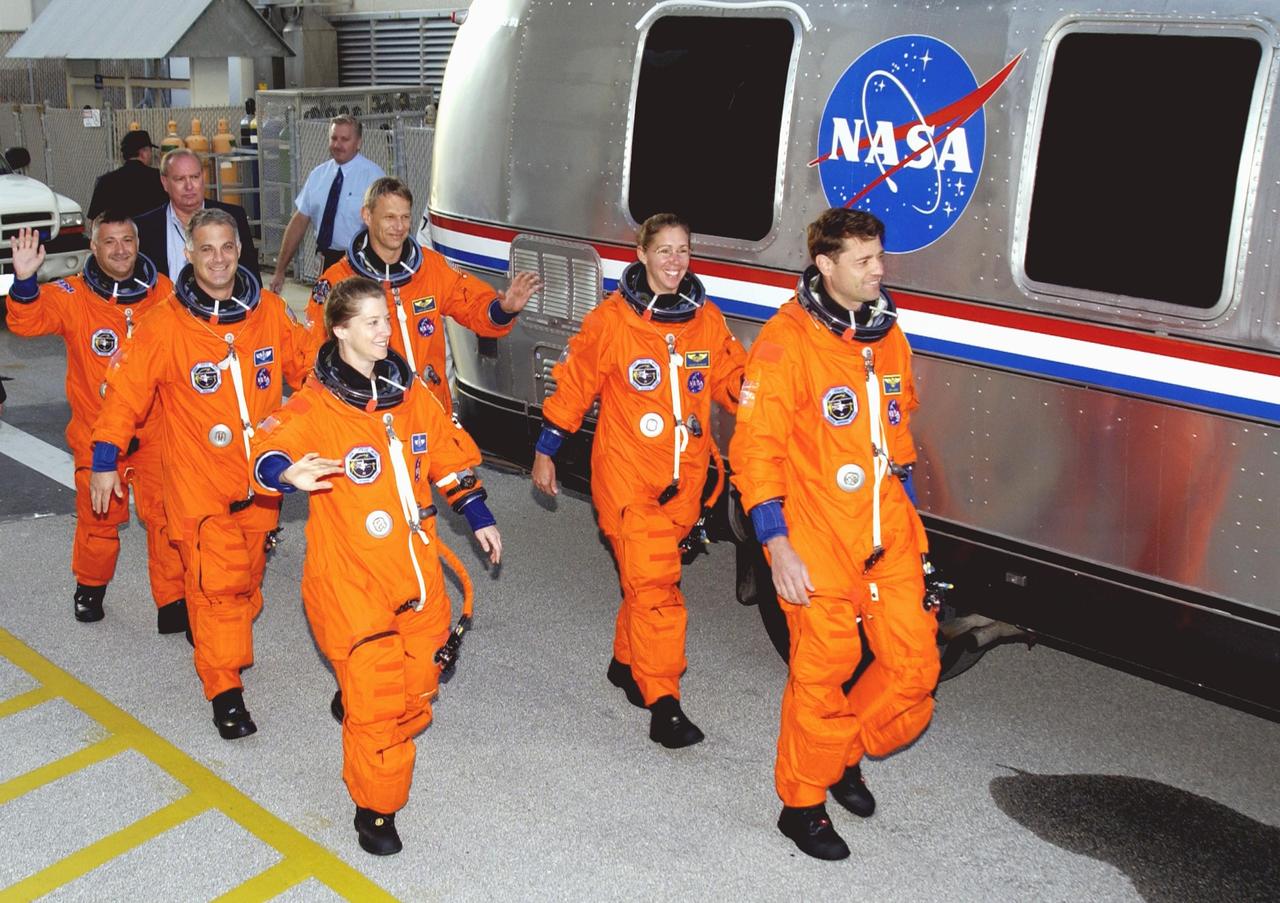
KENNEDY SPACE CENTER, FLA. -- The STS-112 crew heads for the Astrovan and a ride to the launch pad for a simulated countdown. From left are Mission Specialists Fyodor Yurchikhin (RSA), David Wolf and Piers Sellers; Pilot Pamela Melroy; Mission Specialist Sandra Magnus; and Commander Jeffrey Ashby. Mission STS-112 aboard Space Shuttle Atlantis is scheduled to launch no earlier than Oct. 2, between 2 and 6 p.m. EDT. STS-112 is the 15th assembly mission to the International Space Station. Atlantis will be carrying the S1 Integrated Truss Structure, the first starboard truss segment, to be attached to the central truss segment, S0, and the Crew and Equipment Translation Aid (CETA) Cart A. The CETA is the first of two human-powered carts that will ride along the ISS railway, providing mobile work platforms for future spacewalking astronauts.
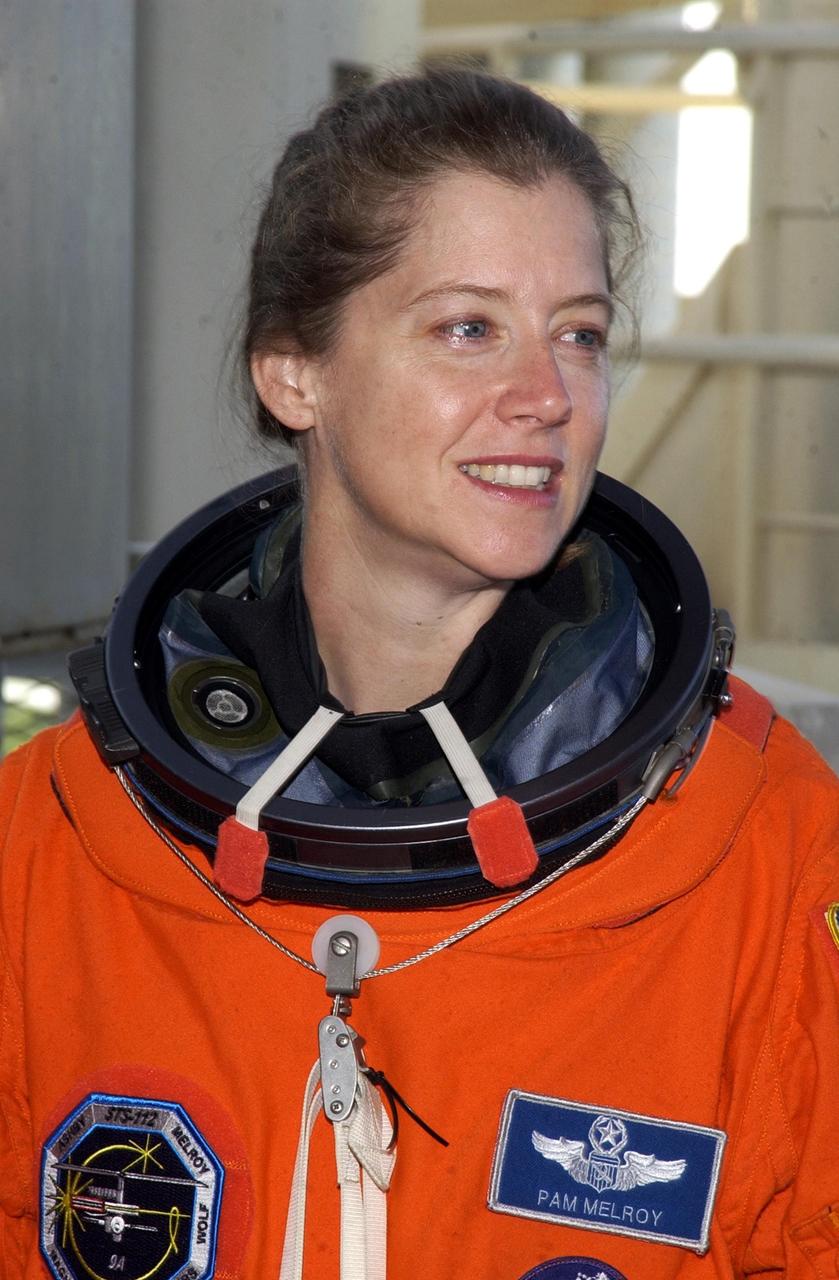
KENNEDY SPACE CENTER, FLA. -- STS-112 Pilot Pamela Melroy takes a break from training at Pad 39B during Terminal Countdown Demonstration Test activities, which include a simulated launch countdown. Launch of STS-112 aboard Space Shuttle Atlantis is scheduled for Oct. 2, between 2 and 6 p.m. EDT. STS-112 is the 15th assembly mission to the International Space Station. Atlantis will be carrying the S1 Integrated Truss Structure, the first starboard truss segment, to be attached to the central truss segment, S0, and the Crew and Equipment Translation Aid (CETA) Cart A. The CETA is the first of two human-powered carts that will ride along the ISS railway, providing mobile work platforms for future spacewalking astronauts.
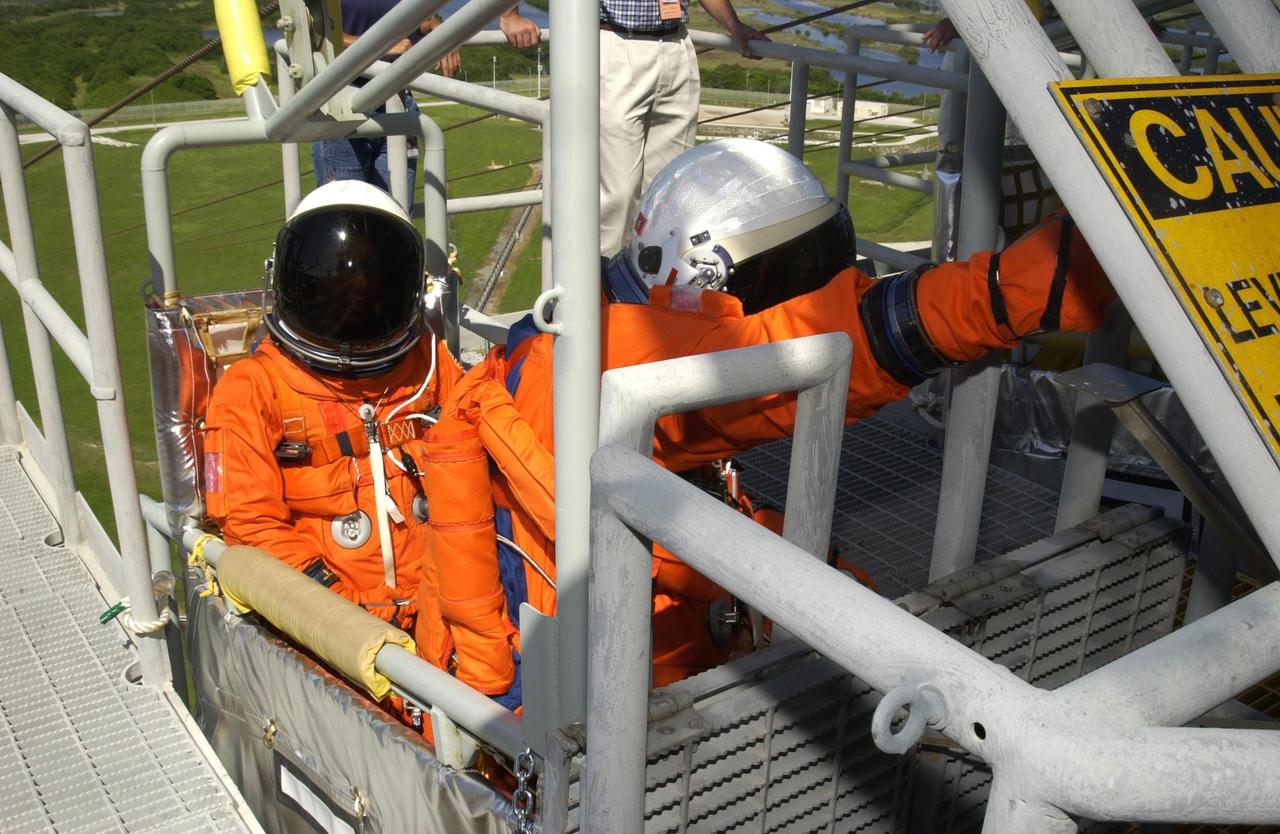
KENNEDY SPACE CENTER, FLA. - STS-112 Mission Specialist Sandra Magnus (left) sits in the slidewire basket basket on the 195-foot level of the Fixed Service Structure, Launch Pad 39B, while Mission Specialist Piers Sellers (right) reaches for the release lever. They and the rest of the crew are practicing emergency egress from the pad during Terminal Countdown Demonstration Test activities. Mission STS-112 aboard Space Shuttle Atlantis is scheduled to launch no earlier than Oct. 2, between 2 and 6 p.m. EDT. STS-112 is the 15th assembly mission to the International Space Station. Atlantis will be carrying the S1 Integrated Truss Structure, the first starboard truss segment, to be attached to the central truss segment, S0, and the Crew and Equipment Translation Aid (CETA) Cart A. The CETA is the first of two human-powered carts that will ride along the ISS railway, providing mobile work platforms for future spacewalking astronauts.
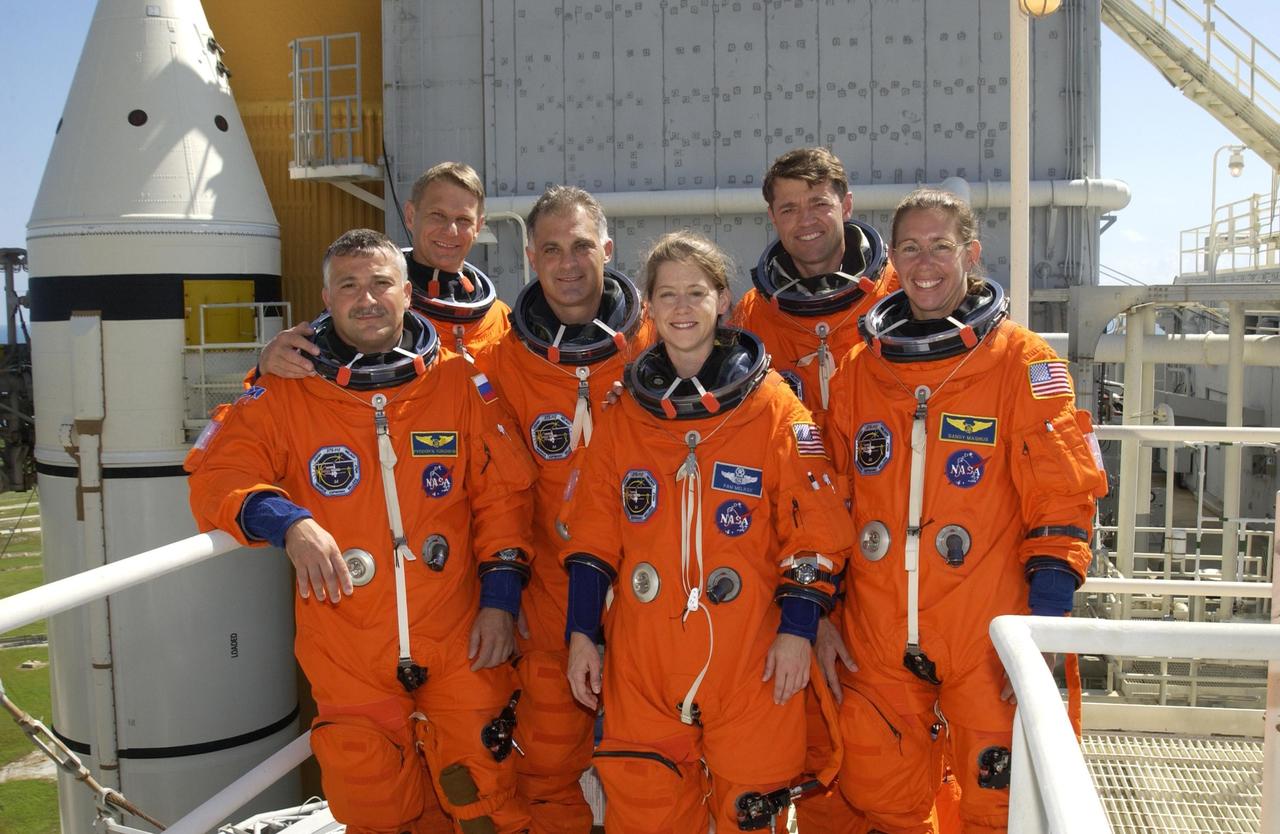
KENNEDY SPACE CENTER, FLA. - The STS-112 crew gathers for a group photo on the 215-foot level of the Fixed Service Structure. From left are Mission Specialists Fyodor Yurchikhin, Piers Sellers and David Wolf; Pilot Pamela Melroy; Commander Jeffrey Ashby; and Mission Specialist Sandra Magnus. Behind them at left is seen one of the white solid rocket boosters and the orange external tank on Space Shuttle Atlantis. Mission STS-112 is scheduled to launch no earlier than Oct. 2, between 2 and 6 p.m. EDT. STS-112 is the 15th assembly mission to the International Space Station. Atlantis will be carrying the S1 Integrated Truss Structure, the first starboard truss segment, to be attached to the central truss segment, S0, and the Crew and Equipment Translation Aid (CETA) Cart A. The CETA is the first of two human-powered carts that will ride along the ISS railway, providing mobile work platforms for future spacewalking astronauts. The 11-day mission is expected to conclude with a landing at KSC Oct. 13.
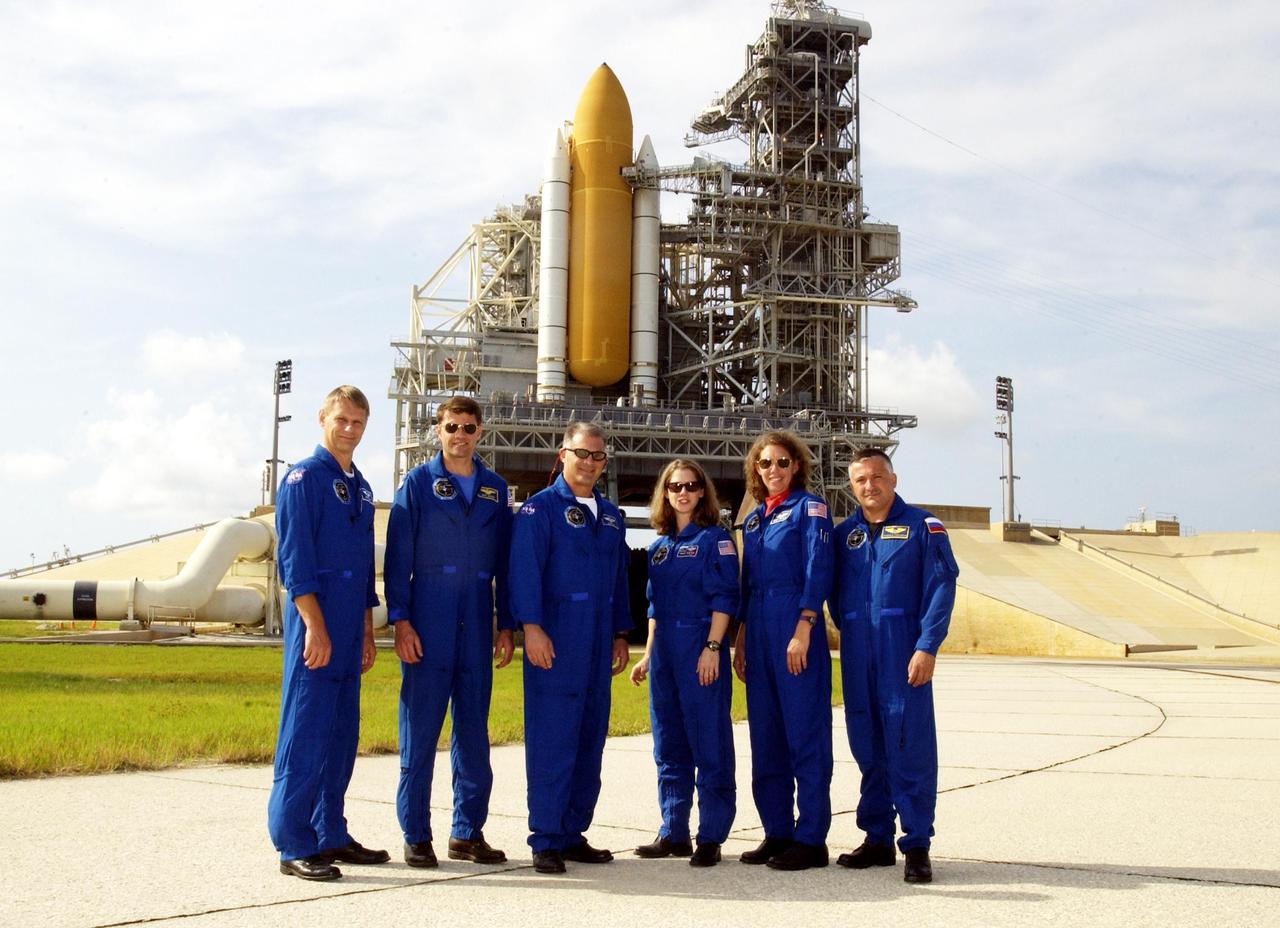
KENNEDY SPACE CENTER, FLA. -- During Terminal Countdown Demonstration Test activities, the STS-112 crew poses for a group photo near the launch pad where Space Shuttle Atlantis waits for launch. Standing left to right are Mission Specialist Piers Sellers, Commander Jeffrey Ashby, Mission Specialist David Wolf, Pilot Pamela Melroy, and Mission Specialists Sandra Magnus and Fyodor Yurchikhin, who is with the Russian Space Agency. The TCDT includes emergency egress training and a simulated launch countdown. Mission STS-112 aboard Space Shuttle Atlantis is scheduled to launch no earlier than Oct. 2, between 2 and 6 p.m. EDT. STS-112 is the 15th assembly mission to the International Space Station. Atlantis will be carrying the S1 Integrated Truss Structure, the first starboard truss segment, to be attached to the central truss segment, S0, and the Crew and Equipment Translation Aid (CETA) Cart A. The CETA is the first of two human-powered carts that will ride along the ISS railway, providing mobile work platforms for future spacewalking astronauts.

KENNEDY SPACE CENTER, FLA. -- During emergency egress training from the launch pad, the STS-112 crew get instructions on using the slidewire basket. From left, Mission Specialist Piers Sellers (back to camera), Pilot Pamela Melroy, Mission Specialists Sandra Magnus and Fyodor Yurchikhin (with the Russian Space Agency), watch as Commander Jeffrey Ashby (below right) grabs the release lever. Not seen is Mission Specialist David Wolf. The training is part of Terminal Countdown Demonstration Test activities, which include a simulated launch countdown. Mission STS-112 aboard Space Shuttle Atlantis is scheduled to launch no earlier than Oct. 2, between 2 and 6 p.m. EDT. STS-112 is the 15th assembly mission to the International Space Station. Atlantis will be carrying the S1 Integrated Truss Structure, the first starboard truss segment, to be attached to the central truss segment, S0, and the Crew and Equipment Translation Aid (CETA) Cart A. The CETA is the first of two human-powered carts that will ride along the ISS railway, providing mobile work platforms for future spacewalking astronauts.
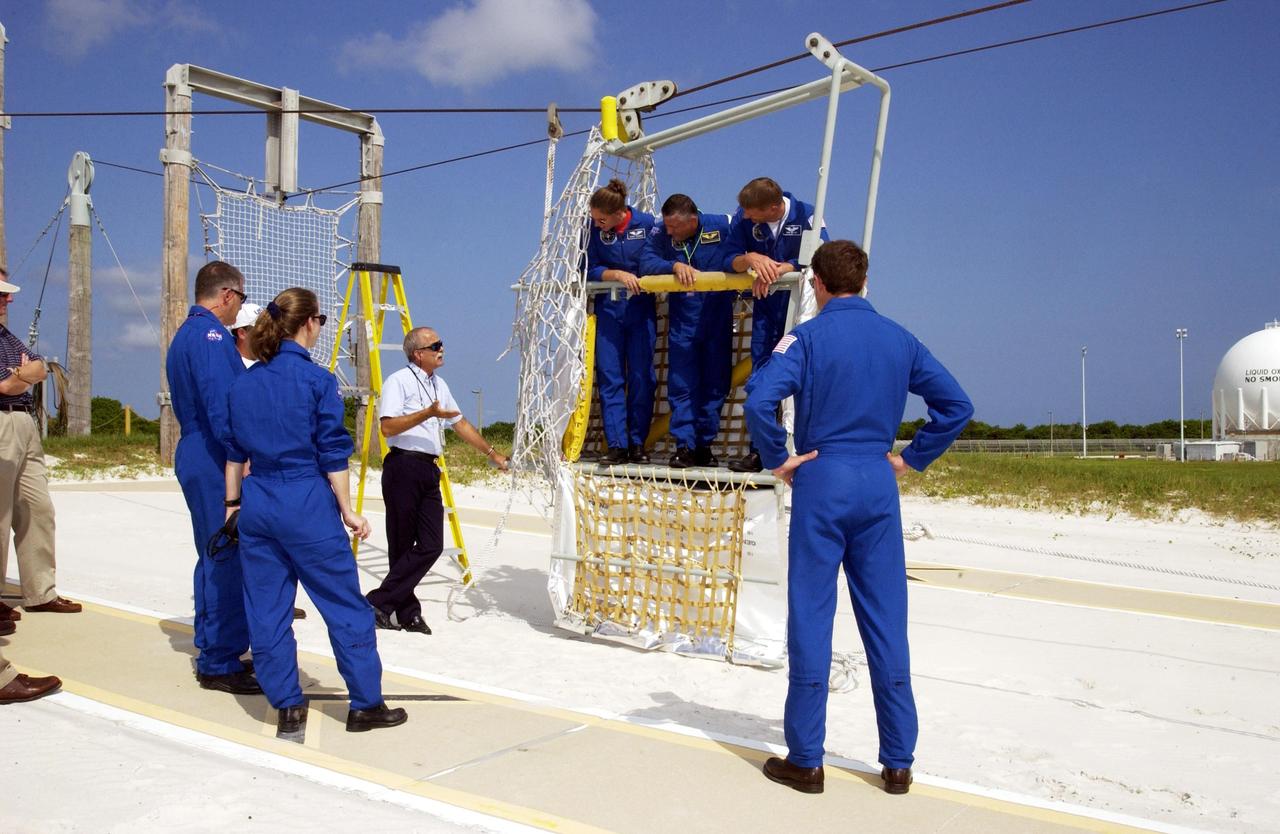
KENNEDY SPACE CENTER, FLA. -- The STS-112 crew listen to further instructions about emergency egress from the Shuttle using the slidewire basket. In the basket are Mission Specialists Sandra Magnus, Fyodor Yurchikhin (with the Russian Space Agency), and Piers Sellers. At left are Mission Specialist David Wolf and Pilot Pamela Melroy; at right is Commander Jeffrey Ashby. The training is part of Terminal Countdown Demonstration Test activities, which include a simulated launch countdown. Mission STS-112 aboard Space Shuttle Atlantis is scheduled to launch no earlier than Oct. 2, between 2 and 6 p.m. EDT. STS-112 is the 15th assembly mission to the International Space Station. Atlantis will be carrying the S1 Integrated Truss Structure, the first starboard truss segment, to be attached to the central truss segment, S0, and the Crew and Equipment Translation Aid (CETA) Cart A. The CETA is the first of two human-powered carts that will ride along the ISS railway, providing mobile work platforms for future spacewalking astronauts.
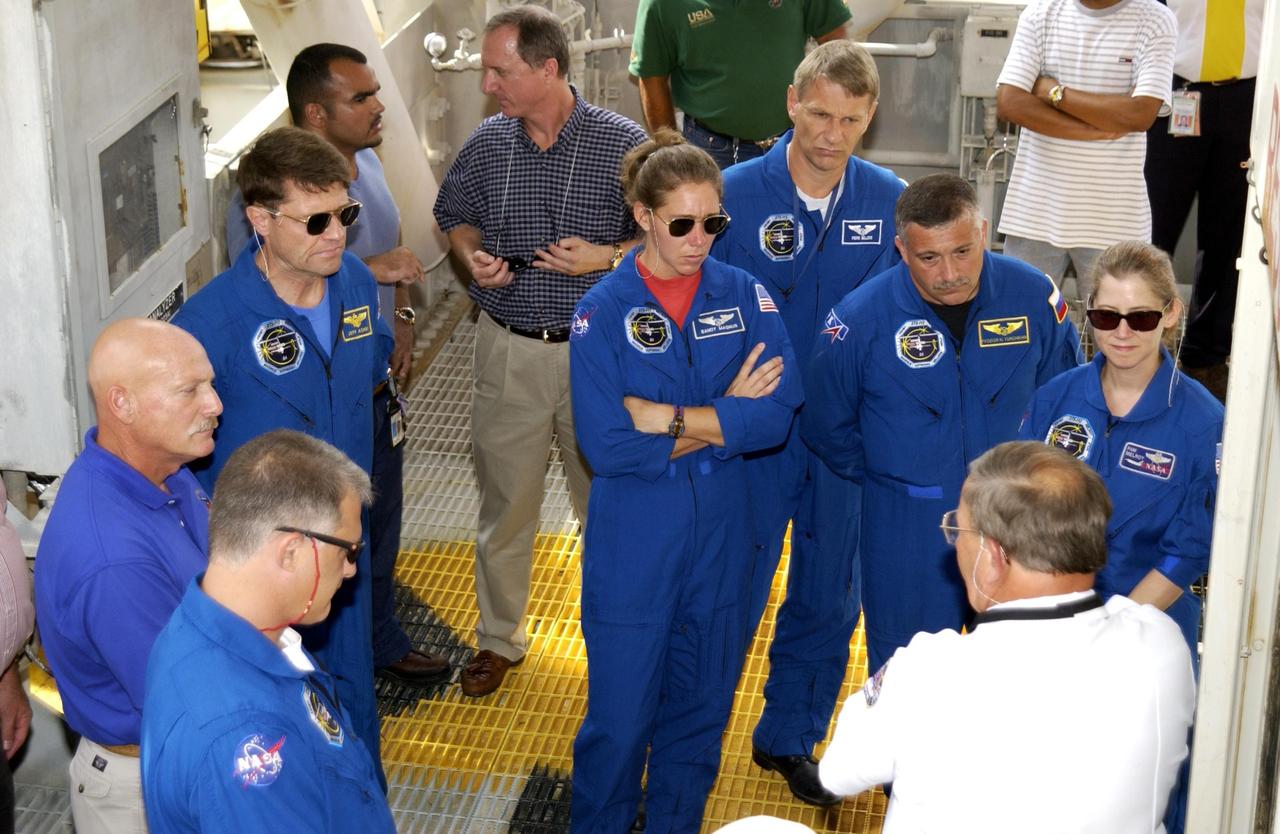
KENNEDY SPACE CENTER, FLA. -- During emergency egress training from the launch pad, the STS-112 crew listens to a trainer about use of the system. The crew members are, from left in the center, Commander Jeffrey Ashby, Mission Specialists Sandra Magnus, Piers Sellers and Fyodor Yurchikhin; and Pilot Pamela Melroy. In the foreground, left, is Mission Specialist David Wolf. Yurchikhin is with the Russian Space Agency. The training is part of Terminal Countdown Demonstration Test activities, which include a simulated launch countdown. Mission STS-112 aboard Space Shuttle Atlantis is scheduled to launch no earlier than Oct. 2, between 2 and 6 p.m. EDT. STS-112 is the 15th assembly mission to the International Space Station. Atlantis will be carrying the S1 Integrated Truss Structure, the first starboard truss segment, to be attached to the central truss segment, S0, and the Crew and Equipment Translation Aid (CETA) Cart A. The CETA is the first of two human-powered carts that will ride along the ISS railway, providing mobile work platforms for future spacewalking astronauts.

KENNEDY SPACE CENTER, FLA. -- During emergency egress training from the launch pad, the STS-112 crew look at the slidewire basket. Seen here are, left to right, Commander Jeffrey Ashby, Pilot Pamela Melroy and Mission Specialists Sandra Magnus and Fyodor Yurchikhin (with the Russian Space Agency). Not seen are Mission Specialists Piers Sellers and David Wolf. The training is part of Terminal Countdown Demonstration Test activities, which include a simulated launch countdown. Mission STS-112 aboard Space Shuttle Atlantis is scheduled to launch no earlier than Oct. 2, between 2 and 6 p.m. EDT. STS-112 is the 15th assembly mission to the International Space Station. Atlantis will be carrying the S1 Integrated Truss Structure, the first starboard truss segment, to be attached to the central truss segment, S0, and the Crew and Equipment Translation Aid (CETA) Cart A. The CETA is the first of two human-powered carts that will ride along the ISS railway, providing mobile work platforms for future spacewalking astronauts.
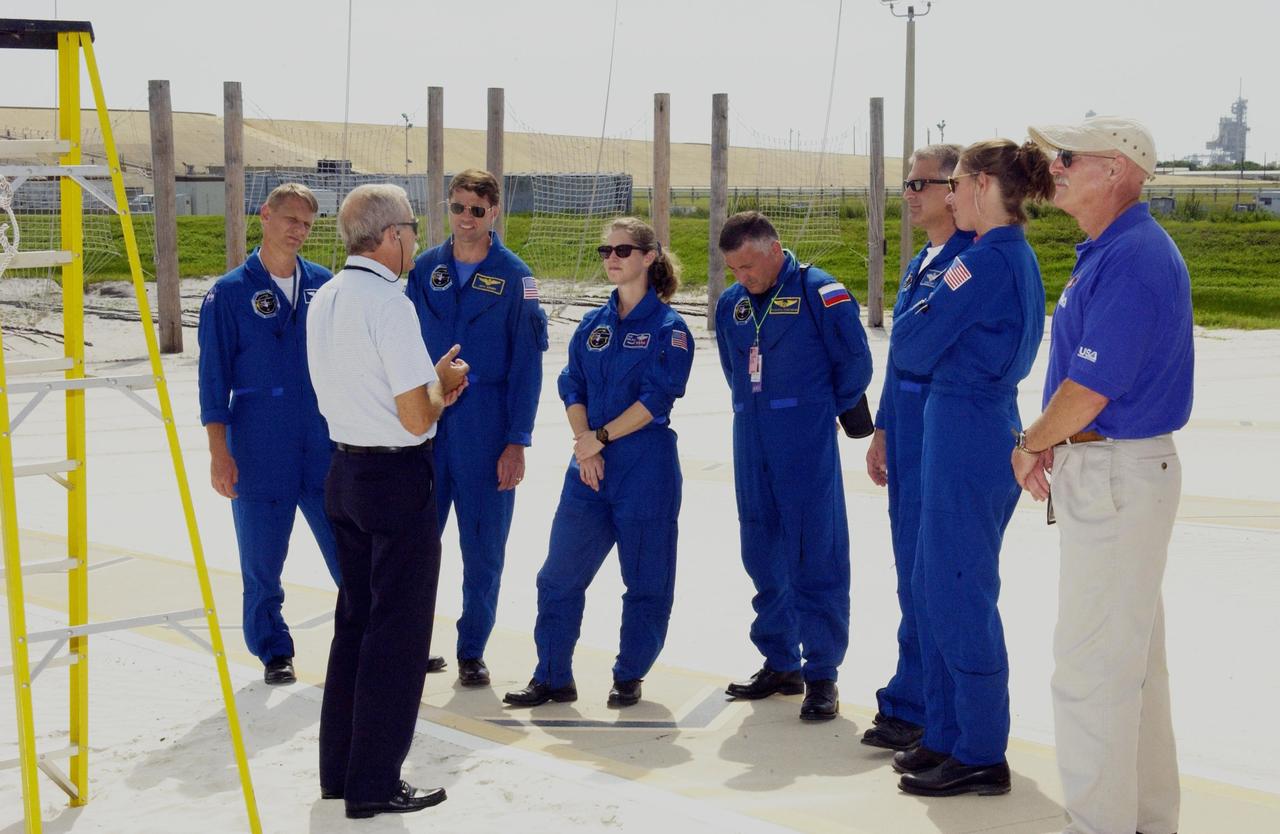
KENNEDY SPACE CENTER, FLA. -- The STS-112 crew listen to further instructions about emergency egress from the Shuttle. Standing, left to right, are Mission Specialist Piers Sellers, Commander Jeffrey Ashby, Pilot Pamela Melroy, Mission Specialists Fyodor Yurchikhin (with the Russian Space Agency), David Wolf and Sandra Magnus. The training is part of Terminal Countdown Demonstration Test activities, which include a simulated launch countdown. Mission STS-112 aboard Space Shuttle Atlantis is scheduled to launch no earlier than Oct. 2, between 2 and 6 p.m. EDT. STS-112 is the 15th assembly mission to the International Space Station. Atlantis will be carrying the S1 Integrated Truss Structure, the first starboard truss segment, to be attached to the central truss segment, S0, and the Crew and Equipment Translation Aid (CETA) Cart A. The CETA is the first of two human-powered carts that will ride along the ISS railway, providing mobile work platforms for future spacewalking astronauts.
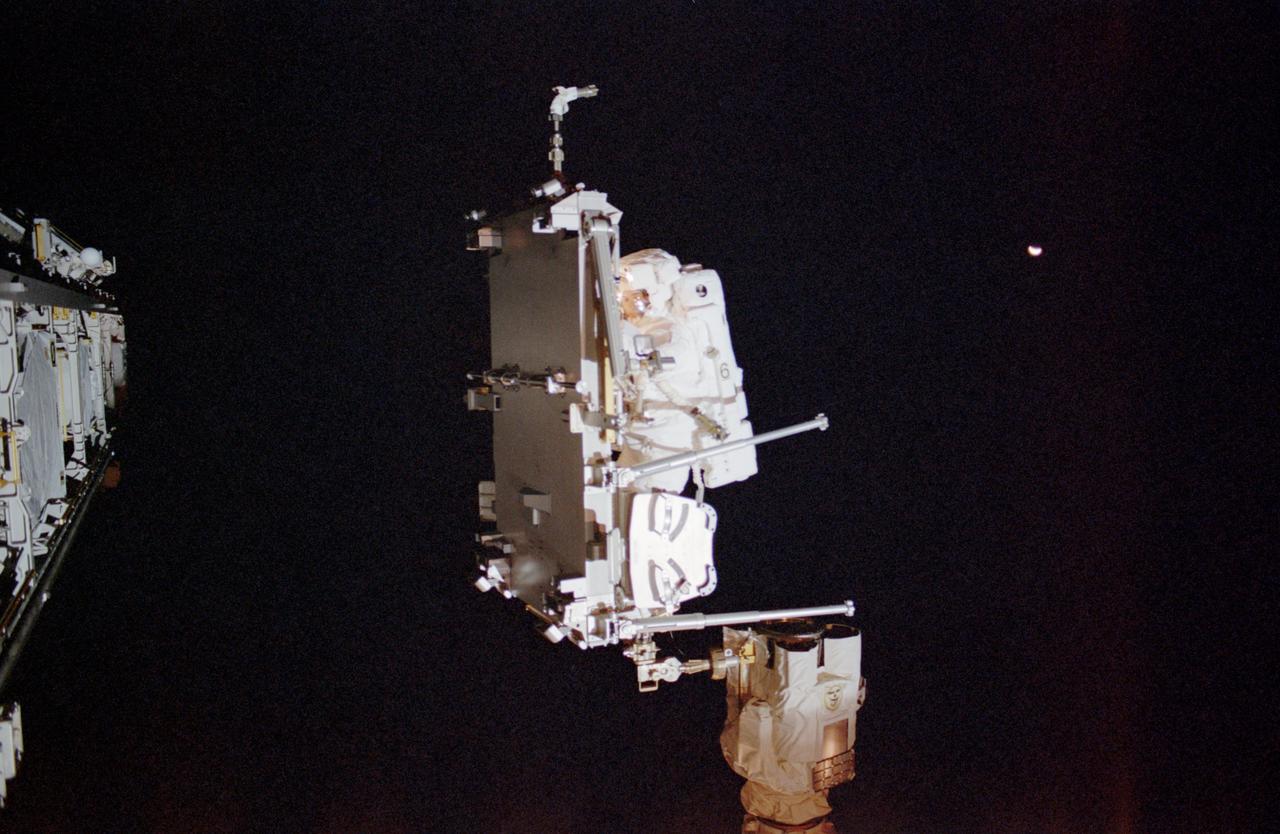
STS113-310-023 (28 November 2002) --- Astronaut John B. Herrington, STS-113 mission specialist, anchored on the mobile foot restraint on the International Space Station’s (ISS) Canadarm2, moves the Crew and Equipment Translation Aid (CETA) during the mission’s second scheduled spacewalk. The final major task of the spacewalk was the relocation of the CETA cart from the Port One (P1) to the Starboard One (S1) Truss, which will allow the Mobile Transporter to move along the P1 to assist in upcoming assembly missions.
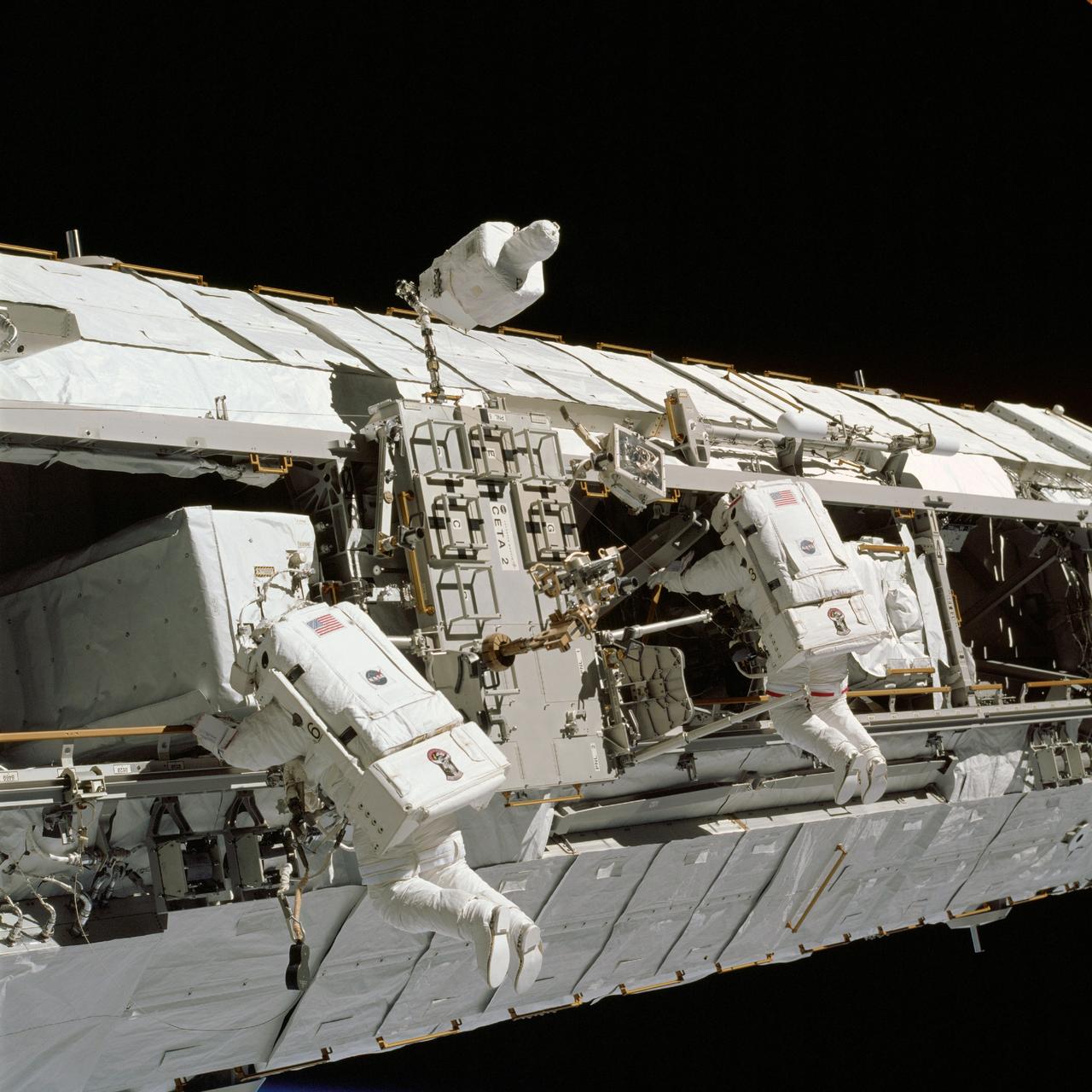
The 16th American assembly flight and 112th overall American flight to the International Space Station (ISS) launched on November 23, 2002 from Kennedy's launch pad 39A aboard the Space Shuttle Orbiter Endeavour STS-113. Mission objectives included the delivery of the Expedition Six Crew to the ISS, the return of Expedition Five crew back to Earth, the delivery of the Crew and Equipment Translation Aid (CETA) cart, and the installation and activation of the Port 1 Integrated Truss Assembly (P1). The first major component installed on the left side of the Station, the P1 truss provides an additional three External Thermal Control System radiators. Weighing in at 27,506 pounds, the P1 truss is 45 feet (13.7 meters) long, 15 feet (4.6 meters) wide, and 13 feet (4 meters) high. Three space walks, aided by the use of the Robotic Manipulator Systems of both the Shuttle and the Station, were performed in the installation of P1. In this photograph, astronauts and mission specialists John B. Herrington (left) and Michael E. Lopez-Alegria (right) work near the CETA cart on a truss on the ISS during a scheduled space walk for the mission. The final major task of the space walk was the relocation of the CETA cart from the Port One (P1) to the Starboard One (S1) Truss, which will allow the Mobile Transporter to move along the P1 to assist in upcoming assembly missions.
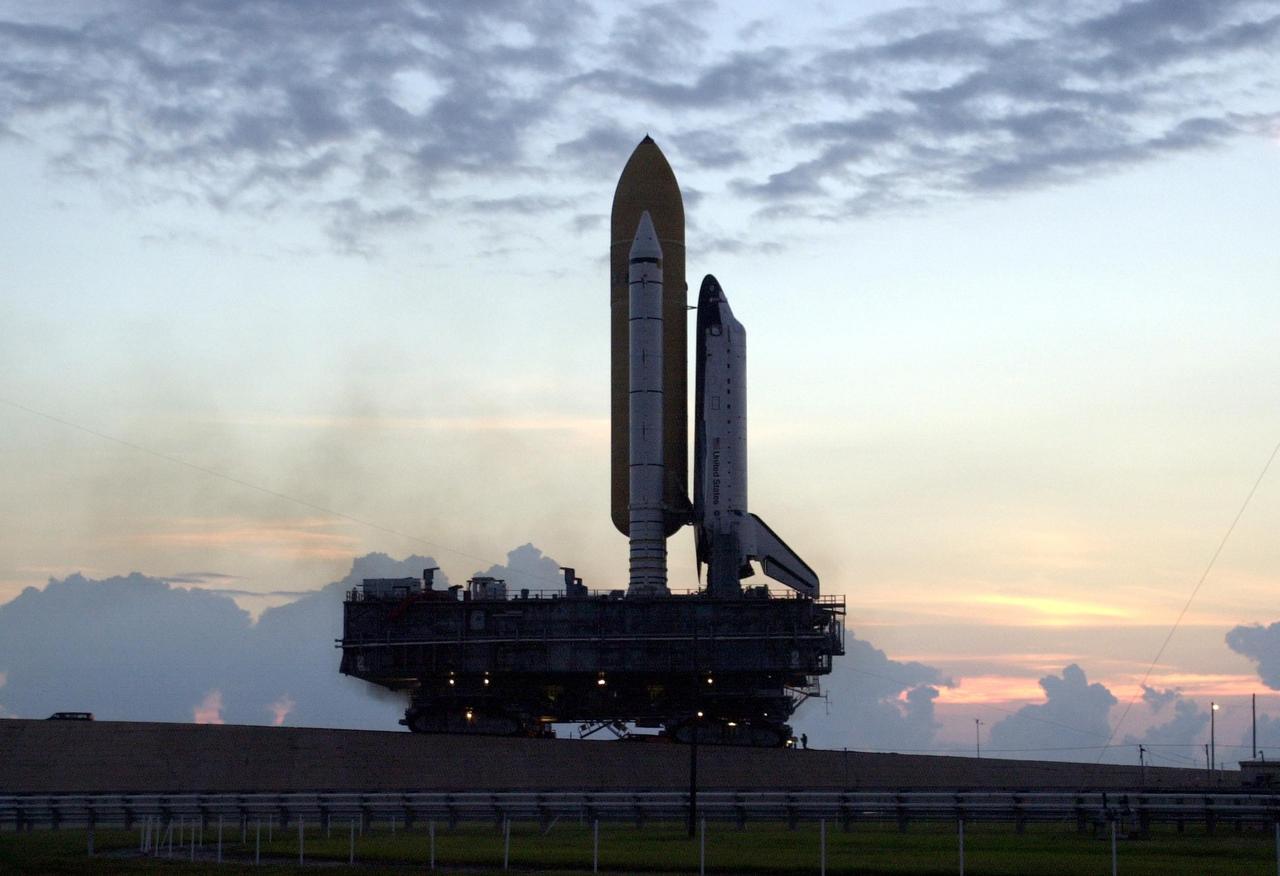
KENNEDY SPACE CENTER, FLA. - Against a lavender and pink dawn sky, Space Shuttle Endeavour inches up the ramp of Launch Pad 39A after its rollout from the Vehicle Assembly Building. The Shuttle sits atop the Mobile Launcher Platform and is transported by the crawler-transporter underneath. Endeavour is scheduled to launch Nov. 10 on mission STS-113, the 16th assembly flight to the International Space Station. The primary payloads on mission STS-113 are the first port truss segment, P1 Truss, and the Crew and Equipment Translation Aid (CETA) Cart B. Once delivered, the P1 truss will remain stowed until flight 12A.1 in 2003 when it will be attached to the central truss segment, S0, on the Space Station. The mission will also deliver the Expedition 6 crew to the Station and return Expedition 5 to Earth.
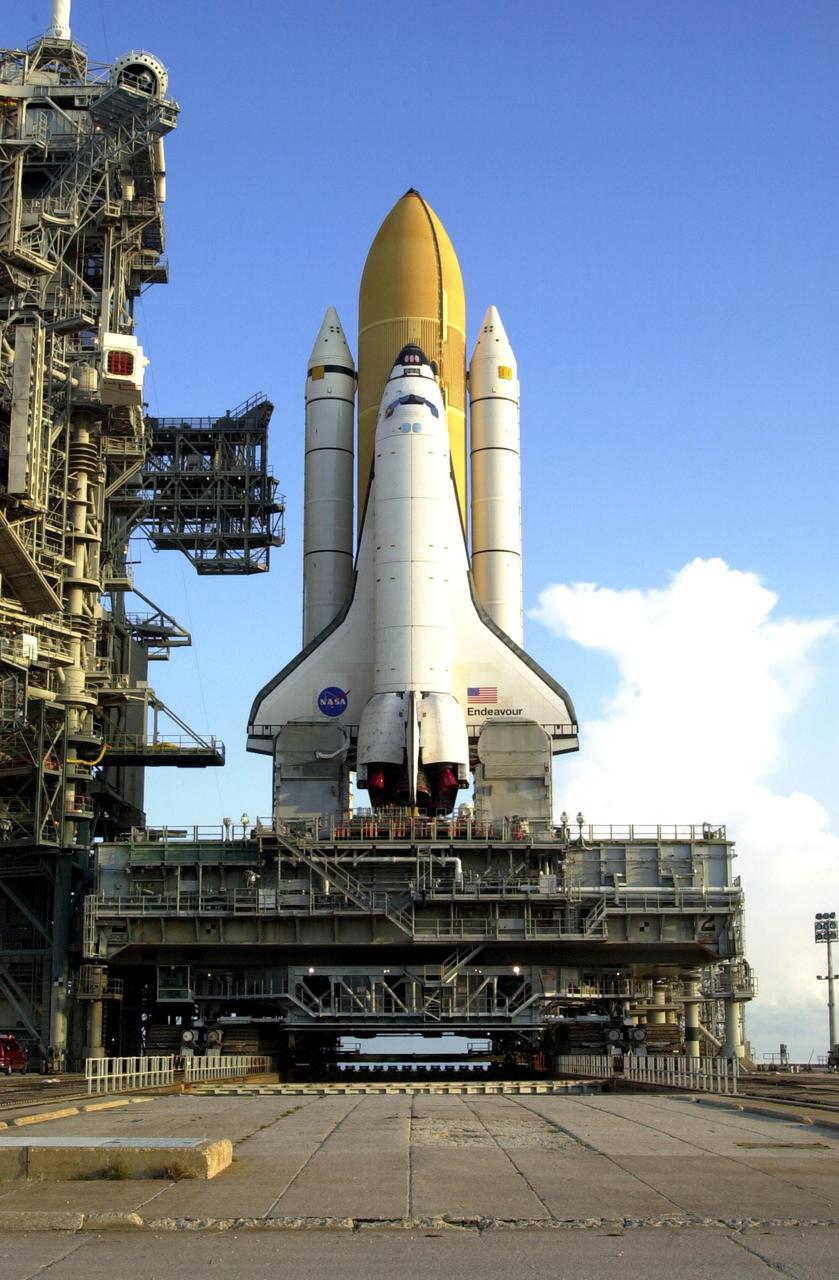
KENNEDY SPACE CENTER, FLA. -- Space Shuttle Endeavour, resting on the Mobile Launcher Platform, sits on Launch Pad 39A after its slow rollout from the Vehicle Assembly Building. Endeavour is scheduled to launch Nov. 10 on mission STS-113, the 16th assembly flight to the International Space Station. The primary payloads on mission STS-113 are the first port truss segment, P1 Truss, and the Crew and Equipment Translation Aid (CETA) Cart B. Once delivered, the P1 truss will remain stowed until flight 12A.1 in 2003 when it will be attached to the central truss segment, S0, on the Space Station. The mission will also deliver the Expedition 6 crew to the Station and return Expedition 5 to Earth.
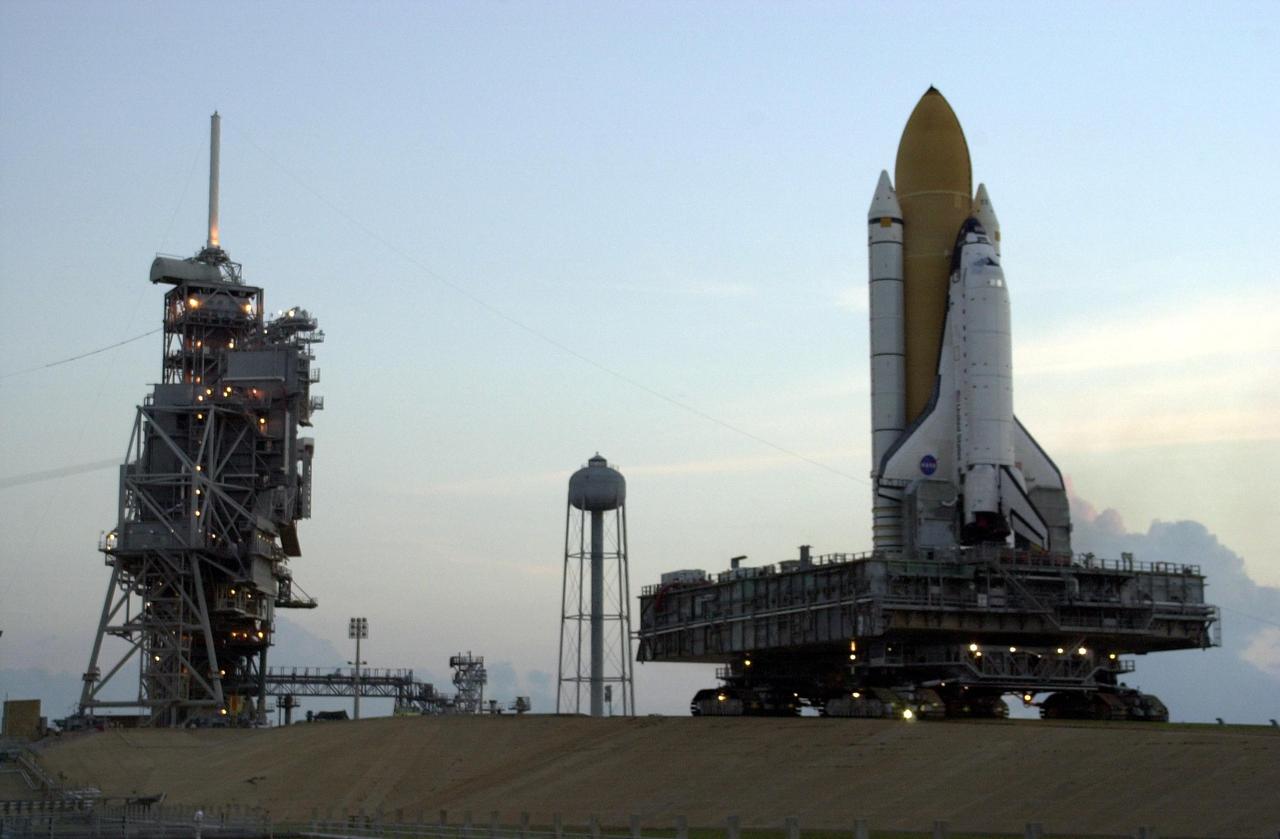
KENNEDY SPACE CENTER, FLA. -- With a brightening sky at dawn in the background, Space Shuttle Endeavour nears the top of Launch Pad 39A after rollout from the Vehicle Assembly Building. The Shuttle sits atop the Mobile Launcher Platform and is transported by the crawler-transporter underneath. Endeavour is scheduled to launch Nov. 10 on mission STS-113, the 16th assembly flight to the International Space Station. The primary payloads on mission STS-113 are the first port truss segment, P1 Truss, and the Crew and Equipment Translation Aid (CETA) Cart B. Once delivered, the P1 truss will remain stowed until flight 12A.1 in 2003 when it will be attached to the central truss segment, S0, on the Space Station. The mission will also deliver the Expedition 6 crew to the Station and return Expedition 5 to Earth.
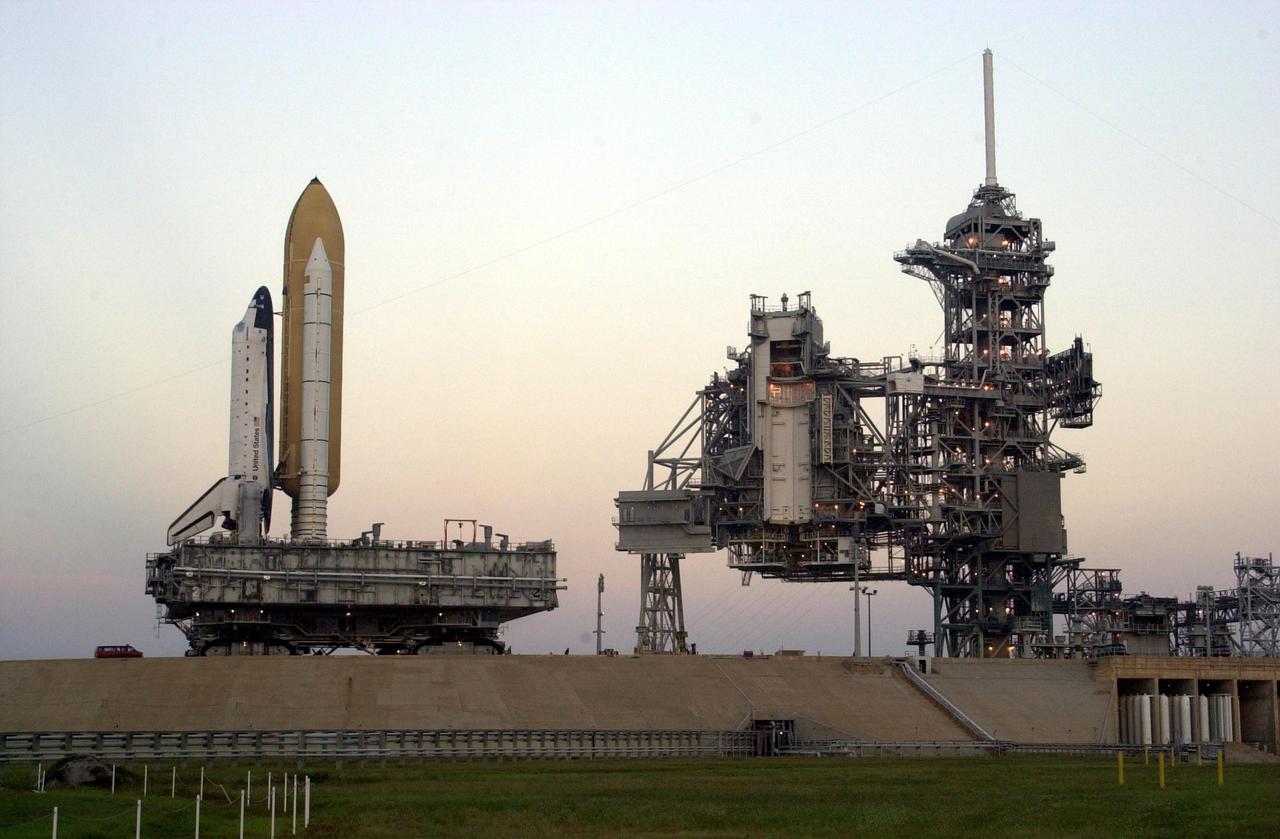
KENNEDY SPACE CENTER, FLA. -- Space Shuttle Endeavour approaches the Rotating and Fixed Service Structures on Launch Pad 39A after rollout from the Vehicle Assembly Building. The Shuttle sits atop the Mobile Launcher Platform and is transported by the crawler-transporter underneath. Endeavour is scheduled to launch Nov. 10 on mission STS-113, the 16th assembly flight to the International Space Station. The primary payloads on mission STS-113 are the first port truss segment, P1 Truss, and the Crew and Equipment Translation Aid (CETA) Cart B. Once delivered, the P1 truss will remain stowed until flight 12A.1 in 2003 when it will be attached to the central truss segment, S0, on the Space Station. The mission will also deliver the Expedition 6 crew to the Station and return Expedition 5 to Earth.
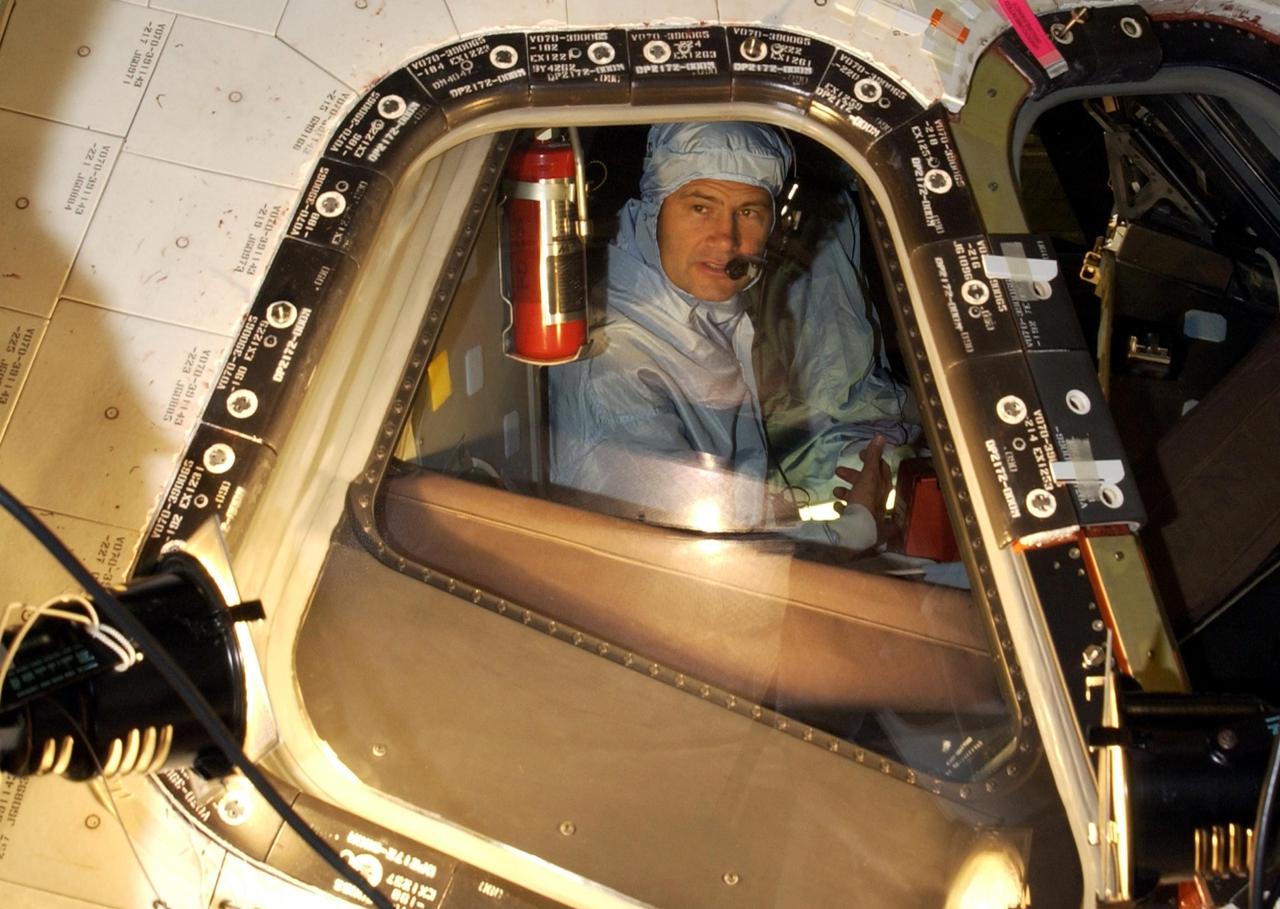
KENNEDY SPACE CENTER, FLA. -- STS-113 Pilot Paul Lockhart checks the cockpit window from inside Endeavour. The check is part of Crew Equipment Interface Test activities, which include familiarization with equipment for the mission. The primary payloads on mission STS-113 are the first port truss segment, P1 Truss, to be attached to the central truss segment, S0, on the International Space Station, and the Crew and Equipment Translation Aid (CETA) Cart B that can be used by spacewalkers to move along the truss with equipment. Once delivered, the P1 truss will remain stowed until flight 12A.1. The mission will also deliver the Expedition 6 crew to the Station and return Expedition 5 to Earth. Space Shuttle Endeavour is scheduled to launch Nov. 10 on the 11-day mission.
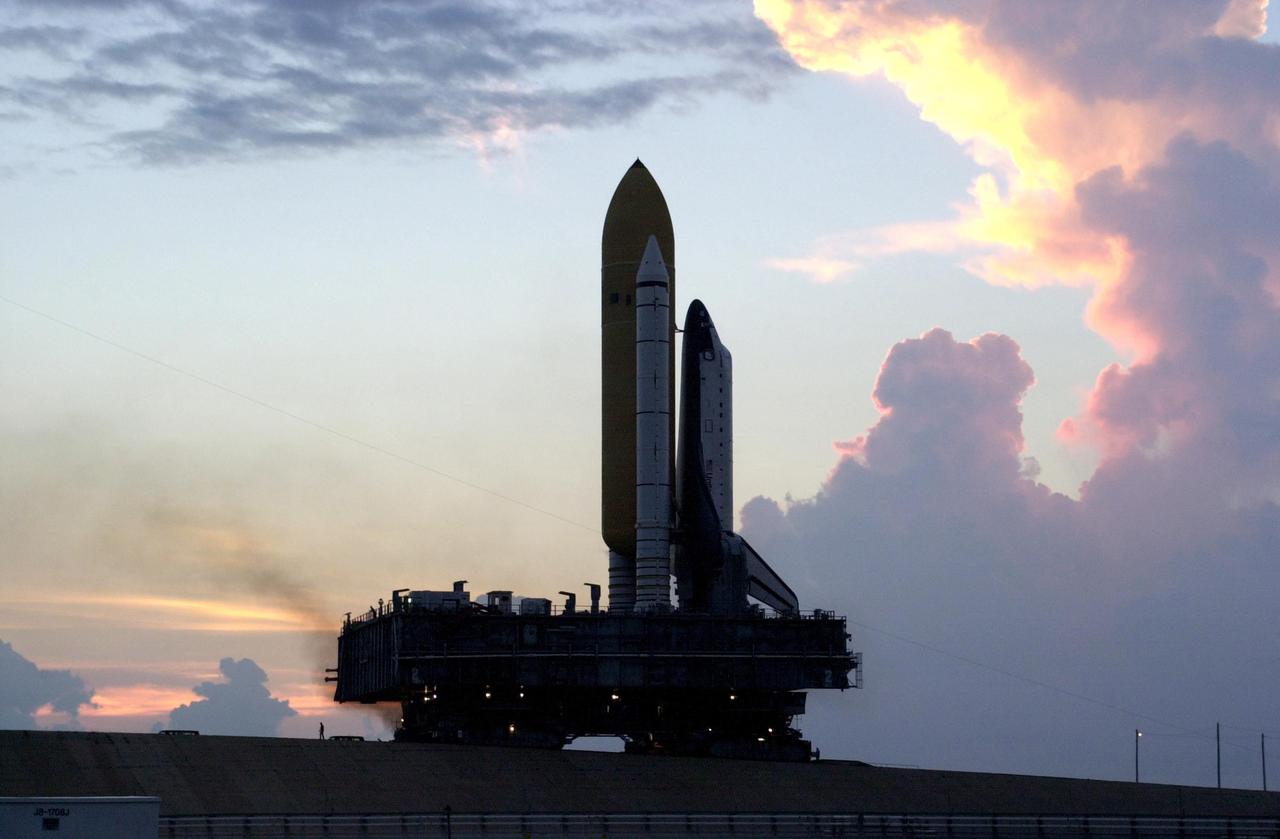
KENNEDY SPACE CENTER, FLA. -- Against a lavender and pink dawn sky, Space Shuttle Endeavour inches up the ramp of Launch Pad 39A after its rollout from the Vehicle Assembly Building. The Shuttle sits atop the Mobile Launcher Platform and is transported by the crawler-transporter underneath. Endeavour is scheduled to launch Nov. 10 on mission STS-113, the 16th assembly flight to the International Space Station. The primary payloads on mission STS-113 are the first port truss segment, P1 Truss, and the Crew and Equipment Translation Aid (CETA) Cart B. Once delivered, the P1 truss will remain stowed until flight 12A.1 in 2003 when it will be attached to the central truss segment, S0, on the Space Station. The mission will also deliver the Expedition 6 crew to the Station and return Expedition 5 to Earth.

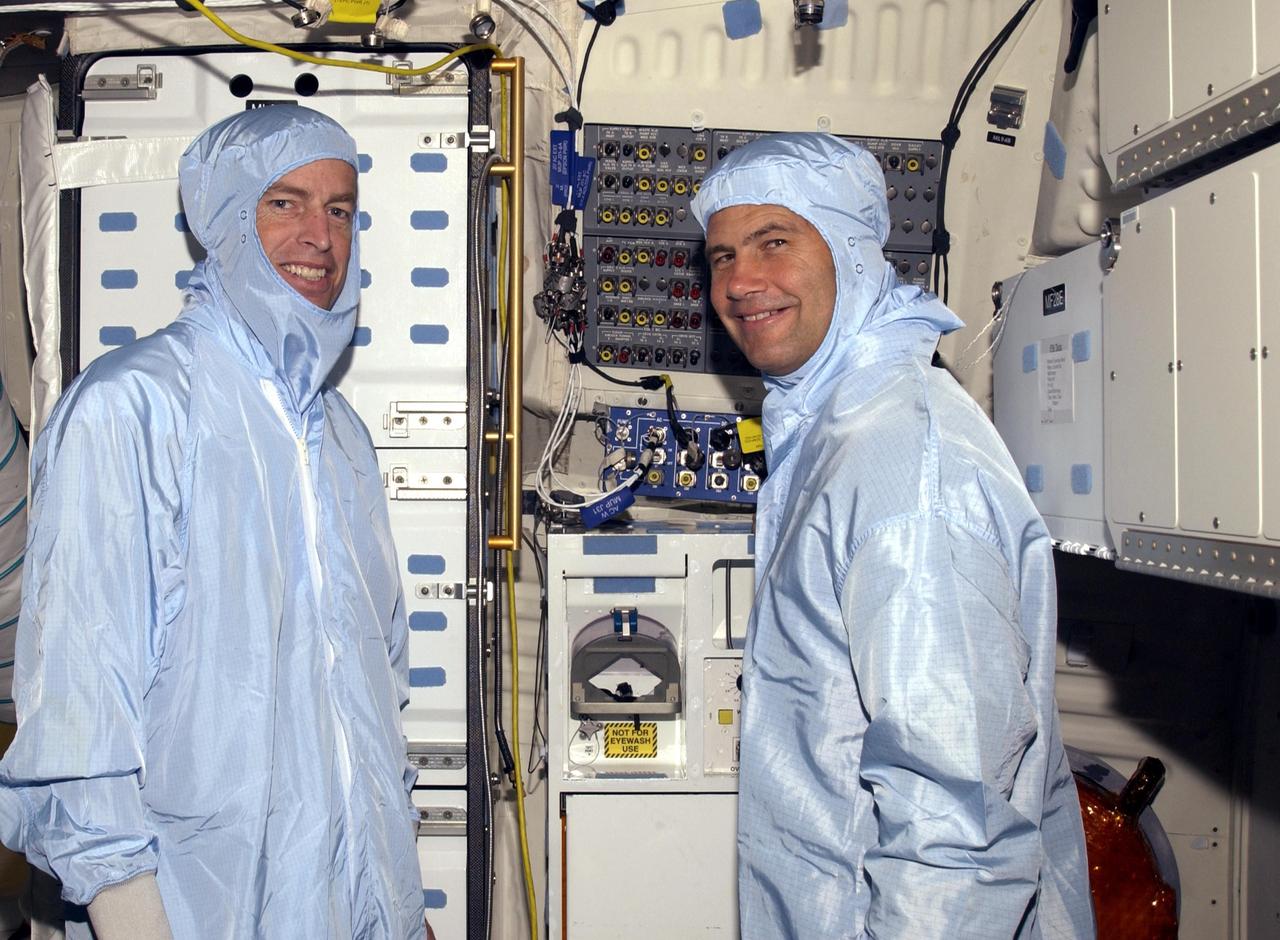
KENNEDY SPACE CENTER, FLA. -- As part of Crew Equipment Interface Test activities, STS-113 Mission Specialists John Herrington (left) and Michael Lopez-Alegria (center) practice working with equipment in Endeavour. The primary payloads on mission STS-113 are the first port truss segment, P1 Truss, to be attached to the central truss segment, S0, on the International Space Station, and the Crew and Equipment Translation Aid (CETA) Cart B that can be used by spacewalkers to move along the truss with equipment. Once delivered, the P1 truss will remain stowed until flight 12A.1. The mission will also deliver the Expedition 6 crew to the Station and return Expedition 5 to Earth. Space Shuttle Endeavour is scheduled to launch Nov. 10 on the 11-day mission.
KENNEDY SPACE CENTER, FLA. - STS-113 Commander James Wetherbee (left) andPilot Paul Lockhart (right) look over equipment inside Endeavour as part of Crew Equipment Interface Test activities. The primary payloads on mission STS-113 are the first port truss segment, P1 Truss, to be attached to the central truss segment, S0, on the International Space Station, and the Crew and Equipment Translation Aid (CETA) Cart B that can be used by spacewalkers to move along the truss with equipment. Once delivered, the P1 truss will remain stowed until flight 12A.1. The mission will also deliver the Expedition 6 crew to the Station and return Expedition 5 to Earth. Space Shuttle Endeavour is scheduled to launch Nov. 10 on the 11-day mission.

KENNEDY SPACE CENTER, FLA. -- As part of Crew Equipment Interface Test activities, STS-113 Mission Specialist John Herrington looks over paperwork for equipment in Endeavour that will be carried on the mission. The primary payloads on mission STS-113 are the first port truss segment, P1 Truss, to be attached to the central truss segment, S0, on the International Space Station, and the Crew and Equipment Translation Aid (CETA) Cart B that can be used by spacewalkers to move along the truss with equipment. Once delivered, the P1 truss will remain stowed until flight 12A.1. The mission will also deliver the Expedition 6 crew to the Station and return Expedition 5 to Earth. Space Shuttle Endeavour is scheduled to launch Nov. 10 on the 11-day mission.
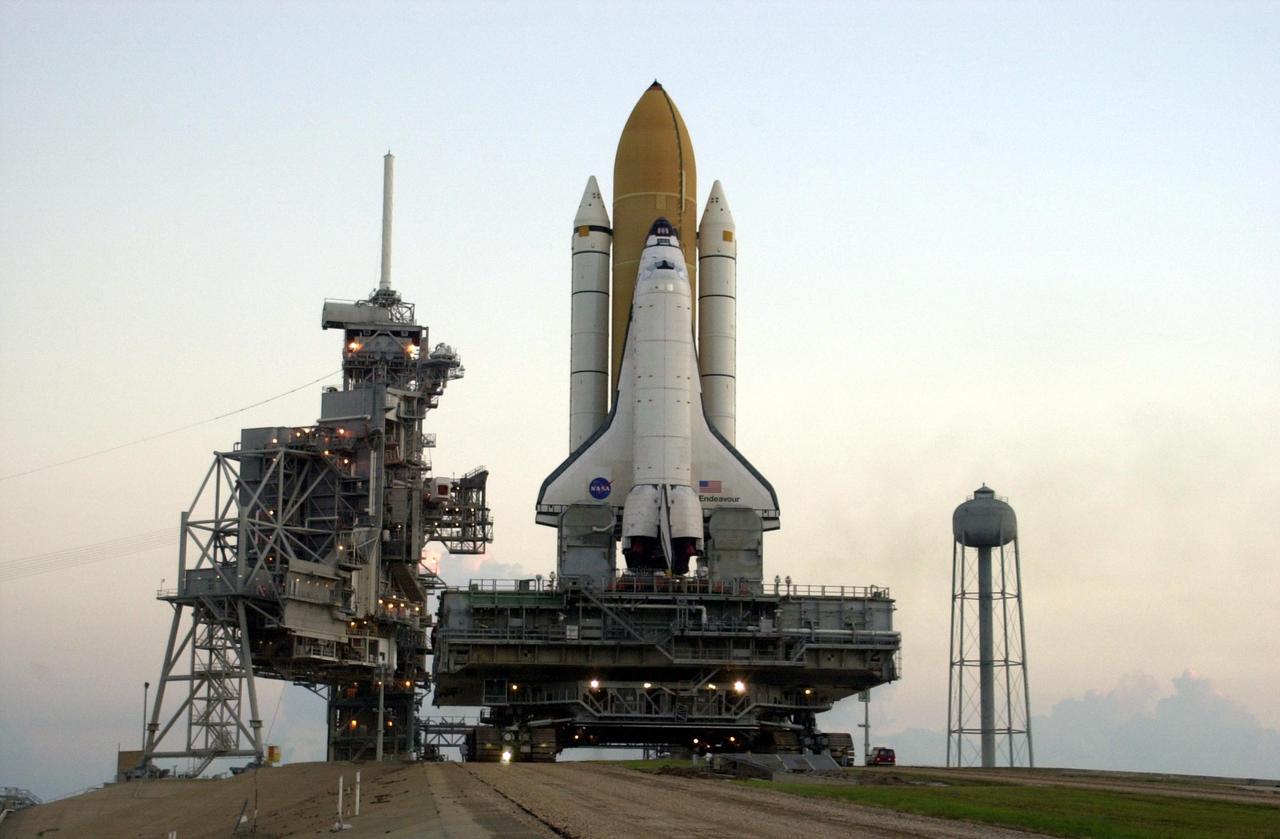
KENNEDY SPACE CENTER, FLA. -- In the early morning, Space Shuttle Endeavour approaches the Rotating and Fixed Service Structures on Launch Pad 39A after rollout from the Vehicle Assembly Building. The Shuttle sits atop the Mobile Launcher Platform and is transported by the crawler-transporter underneath. Endeavour is scheduled to launch Nov. 10 on mission STS-113, the 16th assembly flight to the International Space Station. The primary payloads on mission STS-113 are the first port truss segment, P1 Truss, and the Crew and Equipment Translation Aid (CETA) Cart B. Once delivered, the P1 truss will remain stowed until flight 12A.1 in 2003 when it will be attached to the central truss segment, S0, on the Space Station. The mission will also deliver the Expedition 6 crew to the Station and return Expedition 5 to Earth.
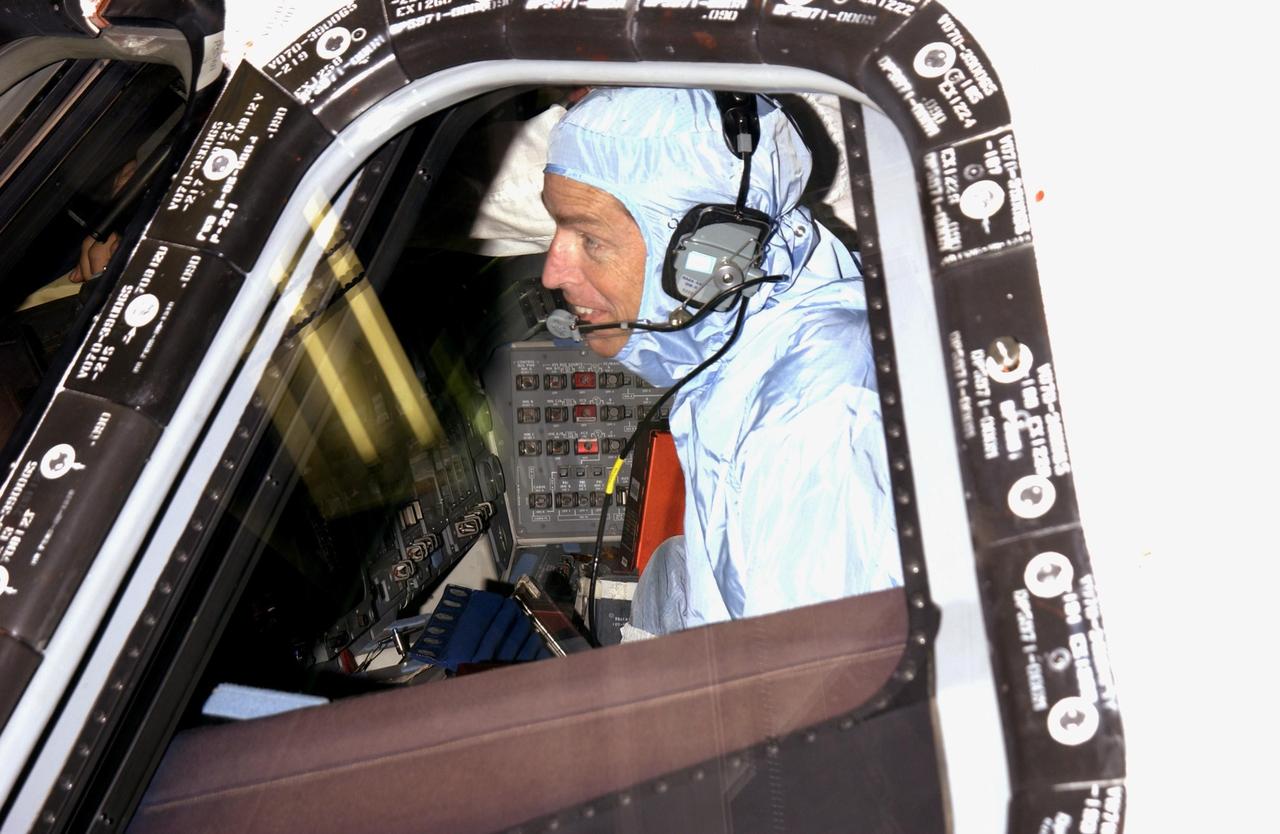
KENNEDY SPACE CENTER, FLA. -- STS-113 Commander James Wetherbee checks the cockpit window from inside Endeavour. The check is part of Crew Equipment Interface Test activities, which include familiarization with equipment for the mission. The primary payloads on mission STS-113 are the first port truss segment, P1 Truss, to be attached to the central truss segment, S0, on the International Space Station, and the Crew and Equipment Translation Aid (CETA) Cart B that can be used by spacewalkers to move along the truss with equipment. Once delivered, the P1 truss will remain stowed until flight 12A.1. The mission will also deliver the Expedition 6 crew to the Station and return Expedition 5 to Earth. Space Shuttle Endeavour is scheduled to launch Nov. 10 on the 11-day mission.
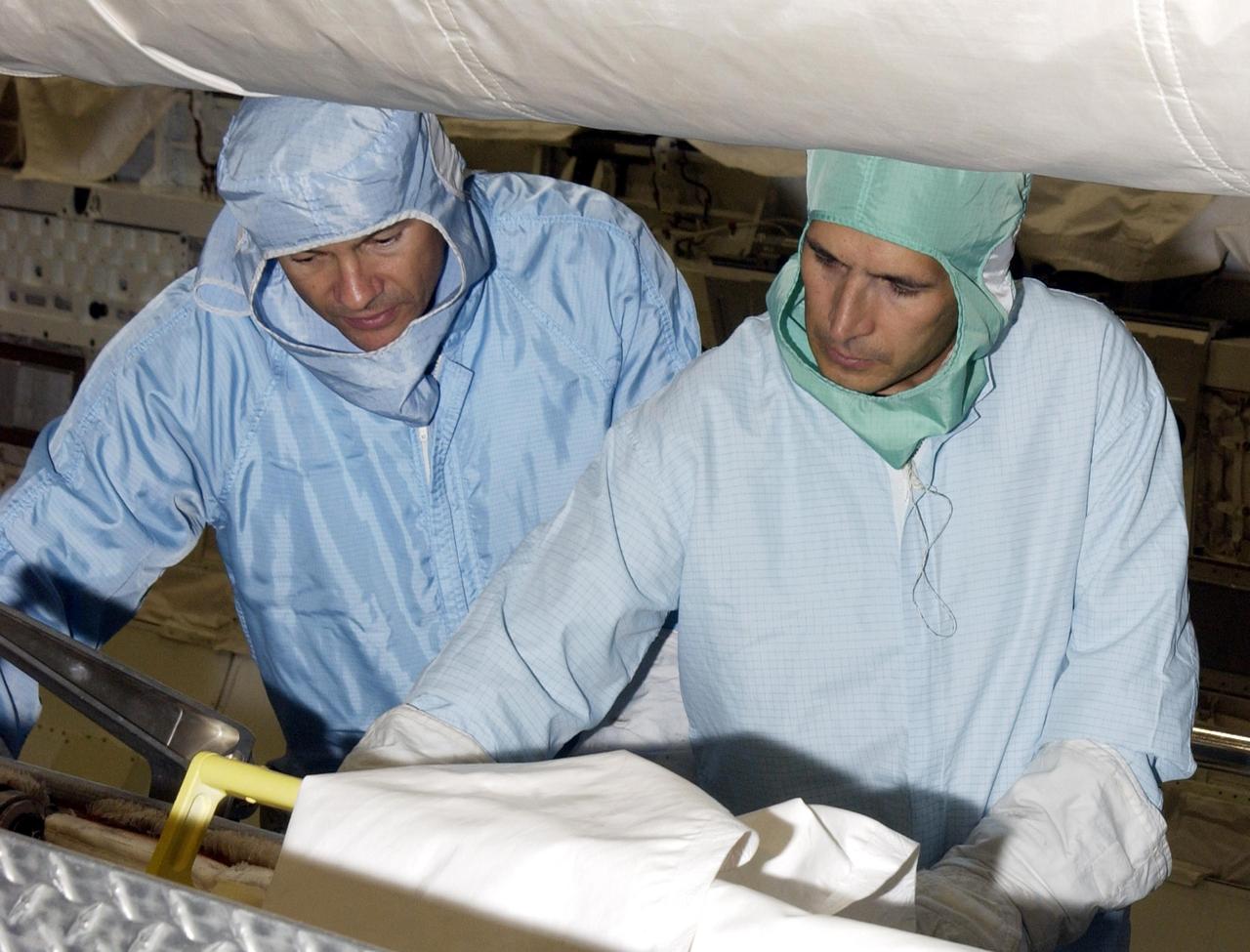
KENNEDY SPACE CENTER, FLA. -- As part of Crew Equipment Interface Test activities, STS-113 Mission Specialists Michael Lopez-Alegria (left) and John Herrington (right) practice working with flight equipment in Endeavour. The primary payloads on mission STS-113 are the first port truss segment, P1 Truss, to be attached to the central truss segment, S0, on the International Space Station, and the Crew and Equipment Translation Aid (CETA) Cart B that can be used by spacewalkers to move along the truss with equipment. Once delivered, the P1 truss will remain stowed until flight 12A.1. The mission will also deliver the Expedition 6 crew to the Station and return Expedition 5 to Earth. Space Shuttle Endeavour is scheduled to launch Nov. 10 on the 11-day mission.
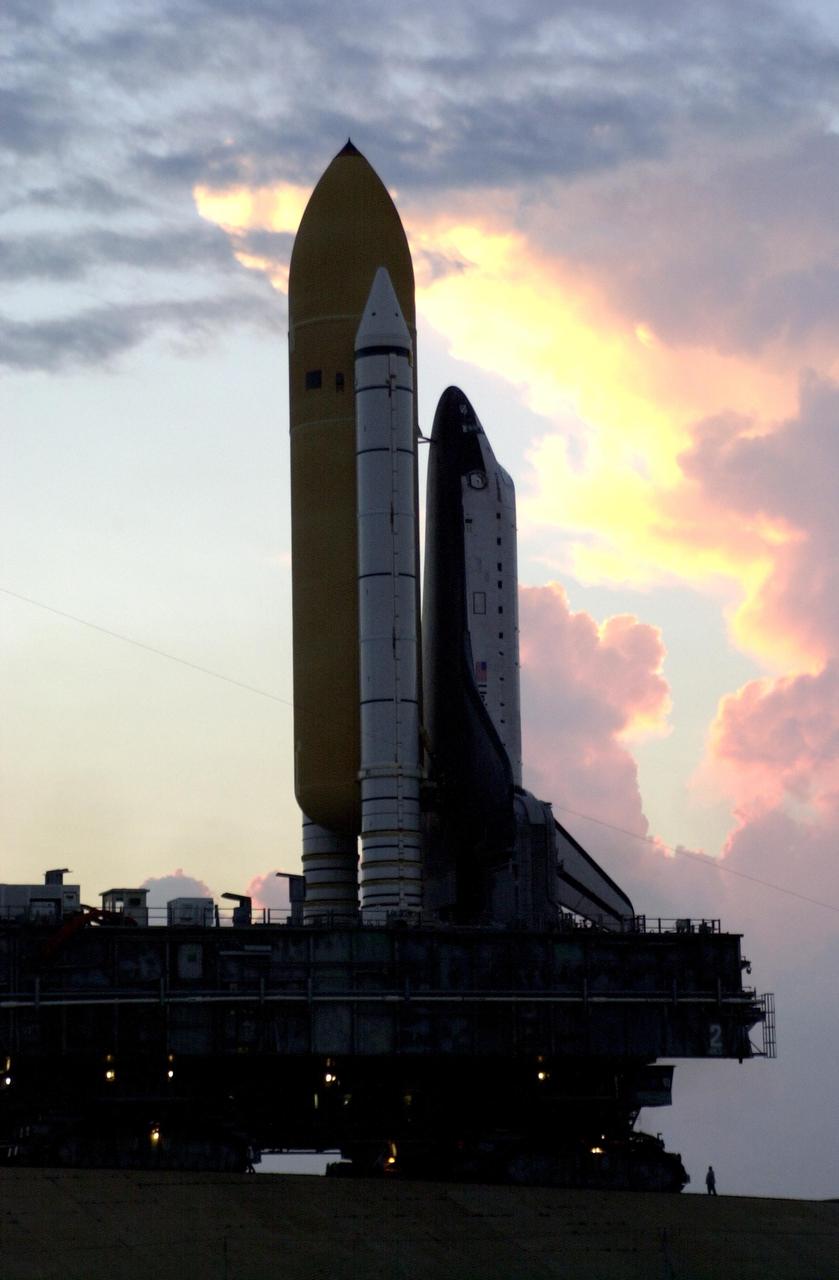
KENNEDY SPACE CENTER, FLA. -- A lavender, pink and yellow dawn sky silhouettes Space Shuttle Endeavour as it inches up the ramp toward the top of Launch Pad 39A. The Shuttle sits atop the Mobile Launcher Platform and is transported by the crawler-transporter underneath. Endeavour is scheduled to launch Nov. 10 on mission STS-113, the 16th assembly flight to the International Space Station. The primary payloads on mission STS-113 are the first port truss segment, P1 Truss, and the Crew and Equipment Translation Aid (CETA) Cart B. Once delivered, the P1 truss will remain stowed until flight 12A.1 in 2003 when it will be attached to the central truss segment, S0, on the Space Station. The mission will also deliver the Expedition 6 crew to the Station and return Expedition 5 to Earth.
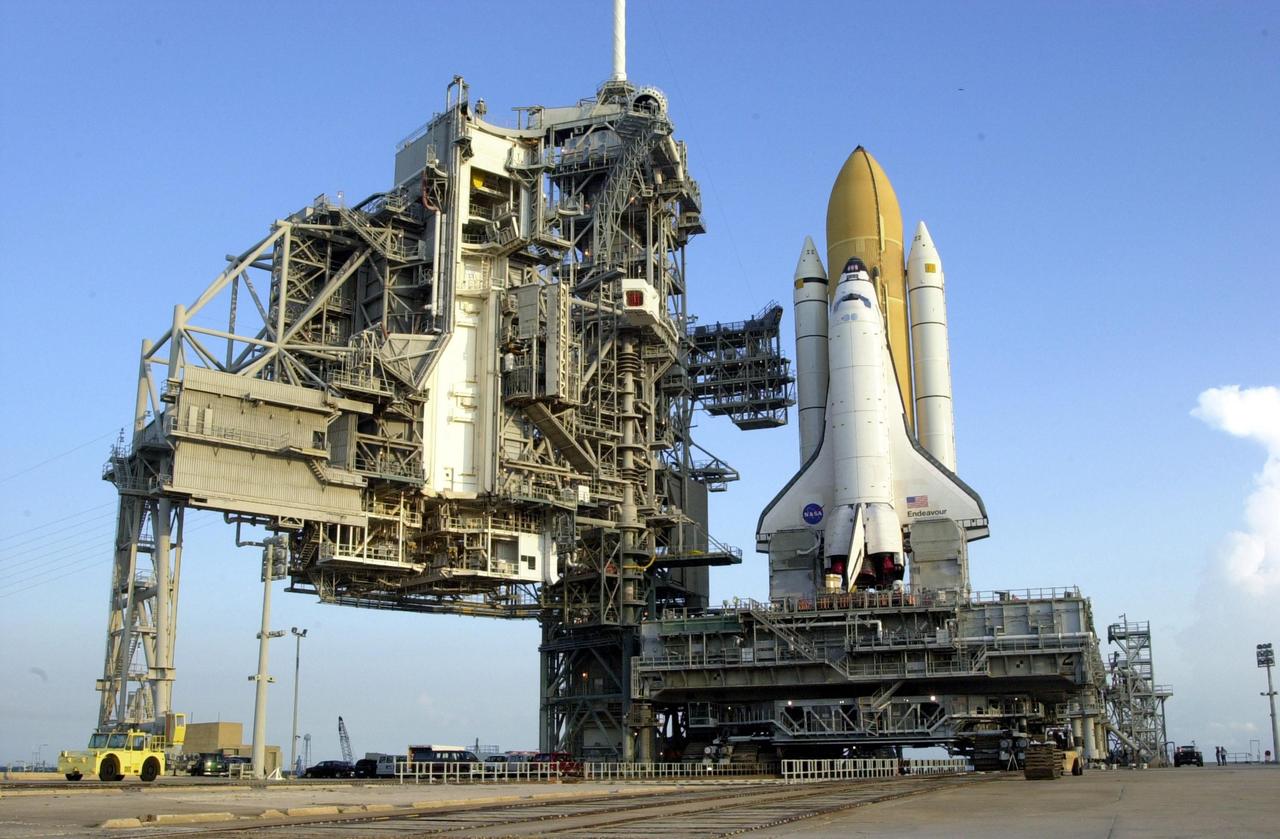
KENNEDY SPACE CENTER, FLA. -- Space Shuttle Endeavour, resting on the Mobile Launcher Platform, sits on Launch Pad 39A after its slow rollout from the Vehicle Assembly Building. On the left is the Rotating Service Structure, which is still open. The RSS will rotate around the Shuttle to provide protected access to the orbiter. Endeavour is scheduled to launch Nov. 10 on mission STS-113, the 16th assembly flight to the International Space Station. The primary payloads on mission STS-113 are the first port truss segment, P1 Truss, and the Crew and Equipment Translation Aid (CETA) Cart B. Once delivered, the P1 truss will remain stowed until flight 12A.1 in 2003 when it will be attached to the central truss segment, S0, on the Space Station. The mission will also deliver the Expedition 6 crew to the Station and return Expedition 5 to Earth.

KENNEDY SPACE CENTER, FLA. -- Space Shuttle Endeavour, resting on the Mobile Launcher Platform, sits on Launch Pad 39A after its slow rollout from the Vehicle Assembly Building. At left is the White Room, situated at the end of the orbiter access arm, which, when extended, provides entry into the orbiter for the crew. Endeavour is scheduled to launch Nov. 10 on mission STS-113, the 16th assembly flight to the International Space Station. The primary payloads on mission STS-113 are the first port truss segment, P1 Truss, and the Crew and Equipment Translation Aid (CETA) Cart B. Once delivered, the P1 truss will remain stowed until flight 12A.1 in 2003 when it will be attached to the central truss segment, S0, on the Space Station. The mission will also deliver the Expedition 6 crew to the Station and return Expedition 5 to Earth.
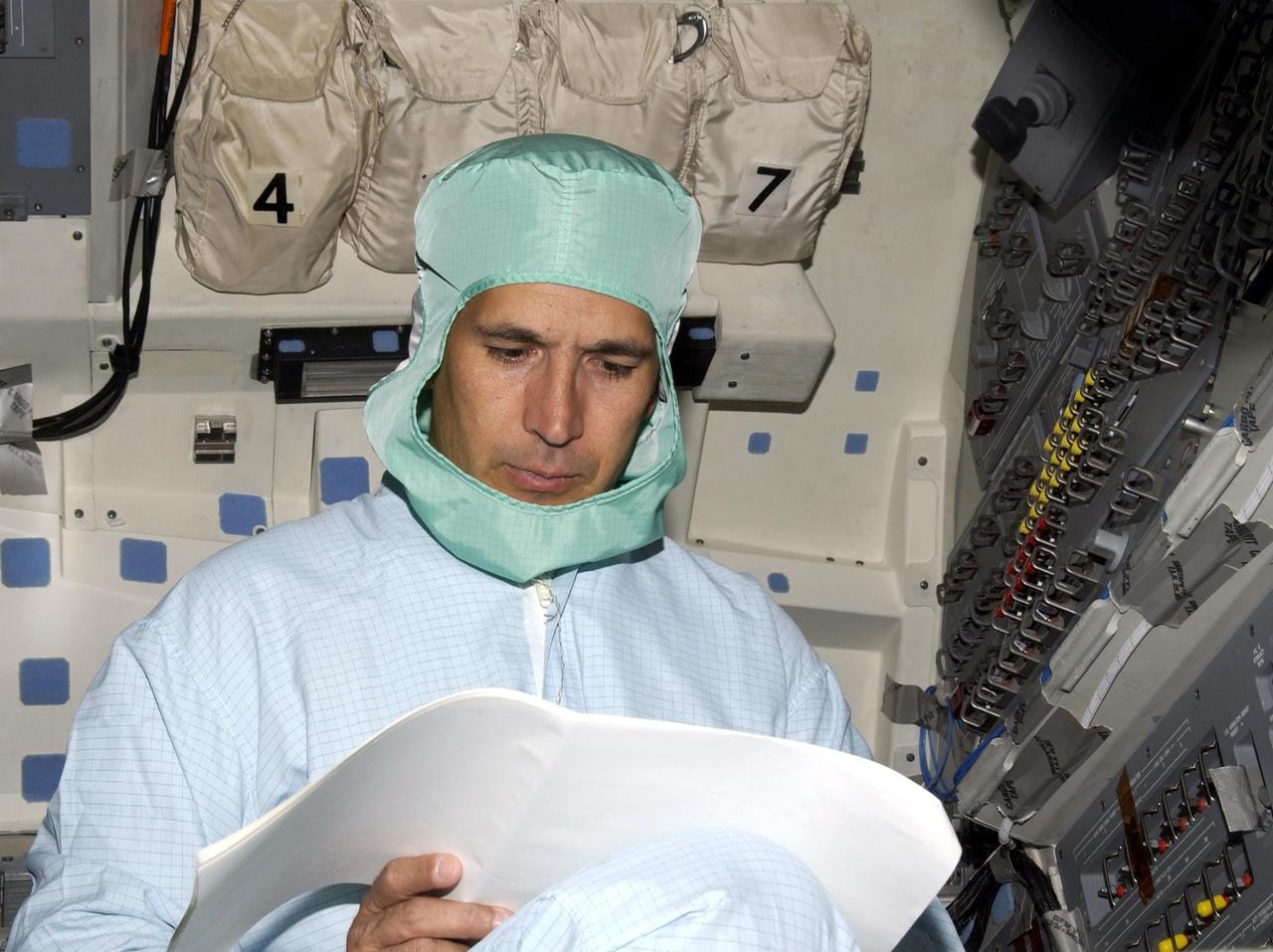
KENNEDY SPACE CENTER, FLA. - As part of Crew Equipment Interface Test activities, STS-113 Mission Specialists Michael Lopez-Alegria (left) and John Herrington (center) look over equipment that will be carried on the mission. The primary payloads on mission STS-113 are the first port truss segment, P1 Truss, to be attached to the central truss segment, S0, on the International Space Station, and the Crew and Equipment Translation Aid (CETA) Cart B that can be used by spacewalkers to move along the truss with equipment. Once delivered, the P1 truss will remain stowed until flight 12A.1. The mission will also deliver the Expedition 6 crew to the Station and return Expedition 5 to Earth. Space Shuttle Endeavour is scheduled to launch Nov. 10 on the 11-day mission.
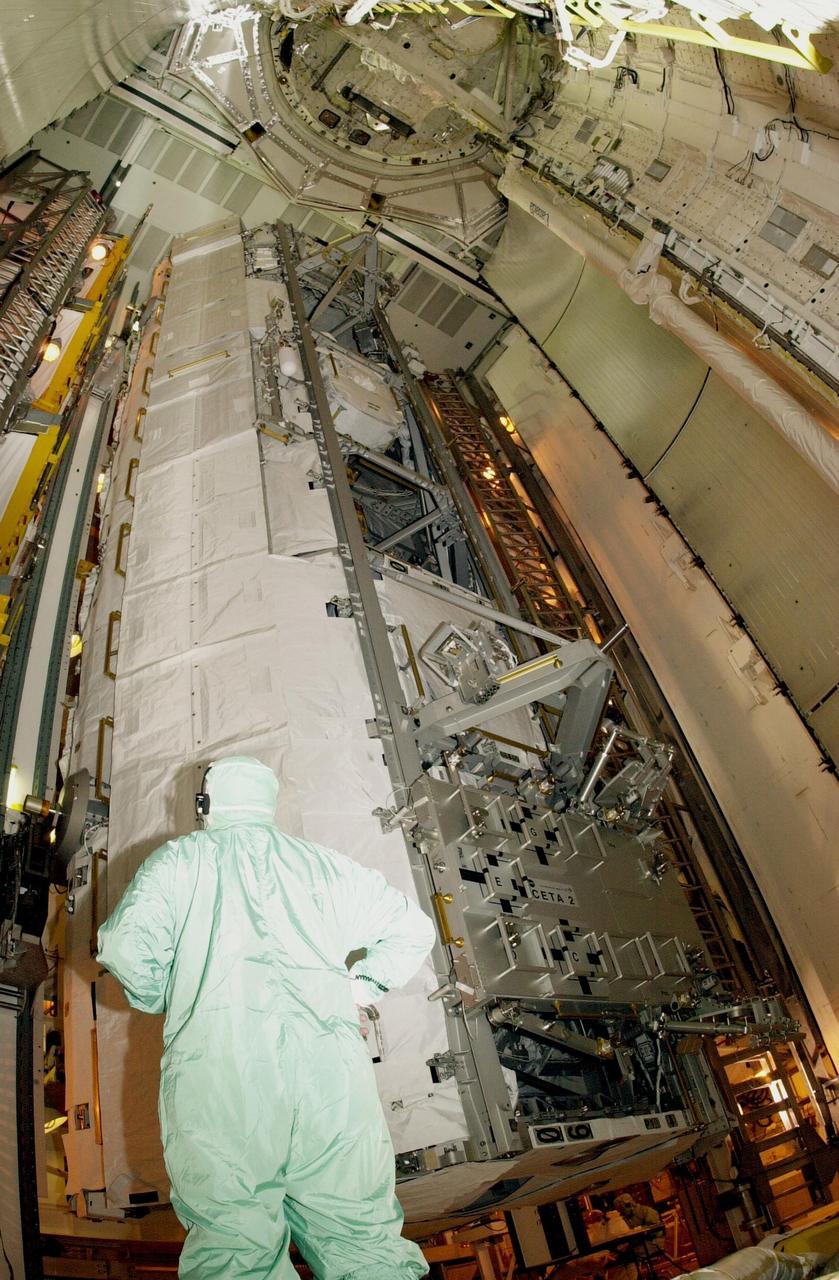
KENNEDY SPACE CENTER, FLA. -- A worker in the Payload Changeout Room on Launch Pad 39A watches as the P1 truss payload, plus the Crew and Equipment Translation Aid (CETA) cart B, move into the payload bay of Space Shuttle Endeavour. Scheduled to launch Nov. 10 on mission STS-113, Endeavour will make the 16th assembly flight to the International Space Station. Once delivered, the P1 truss will remain stowed until flight 12A.1 in 2003 when it will be attached to the central truss segment, S0, on the Space Station. The mission will also deliver the Expedition 6 crew to the Station and return Expedition 5 to Earth.
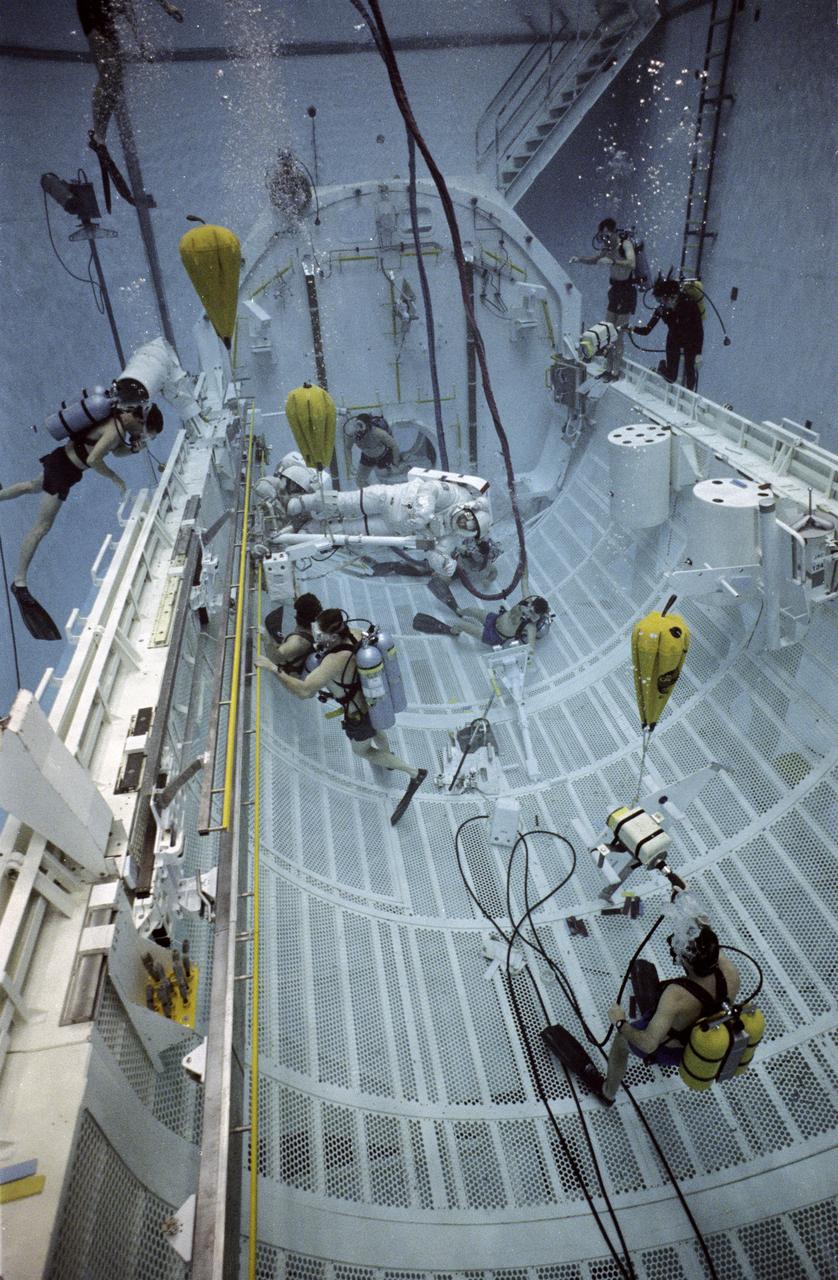
STS-37 Atlantis, Orbiter Vehicle (OV) 104, Mission Specialist (MS) Jerry L. Ross generates electrical power using hand pedals to move crew and equipment translation aid (CETA) cart along a rail during underwater session in JSC's Weightless Environment Training Facility (WETF) Bldg 29. Wearing an extravehicular mobility unit (EMU), Ross operates CETA electrical cart as MS Jerome Apt holds onto the back of the cart. The two crewmembers are practicing a extravehicular activity (EVA) spacewalk they will perform in OV-104's payload bay during STS-37. CETA is a type of railroad hand cart planned as a spacewalker's transportation system along the truss of Space Station Freedom (SSF). SCUBA divers monitor astronauts' underwater activity.
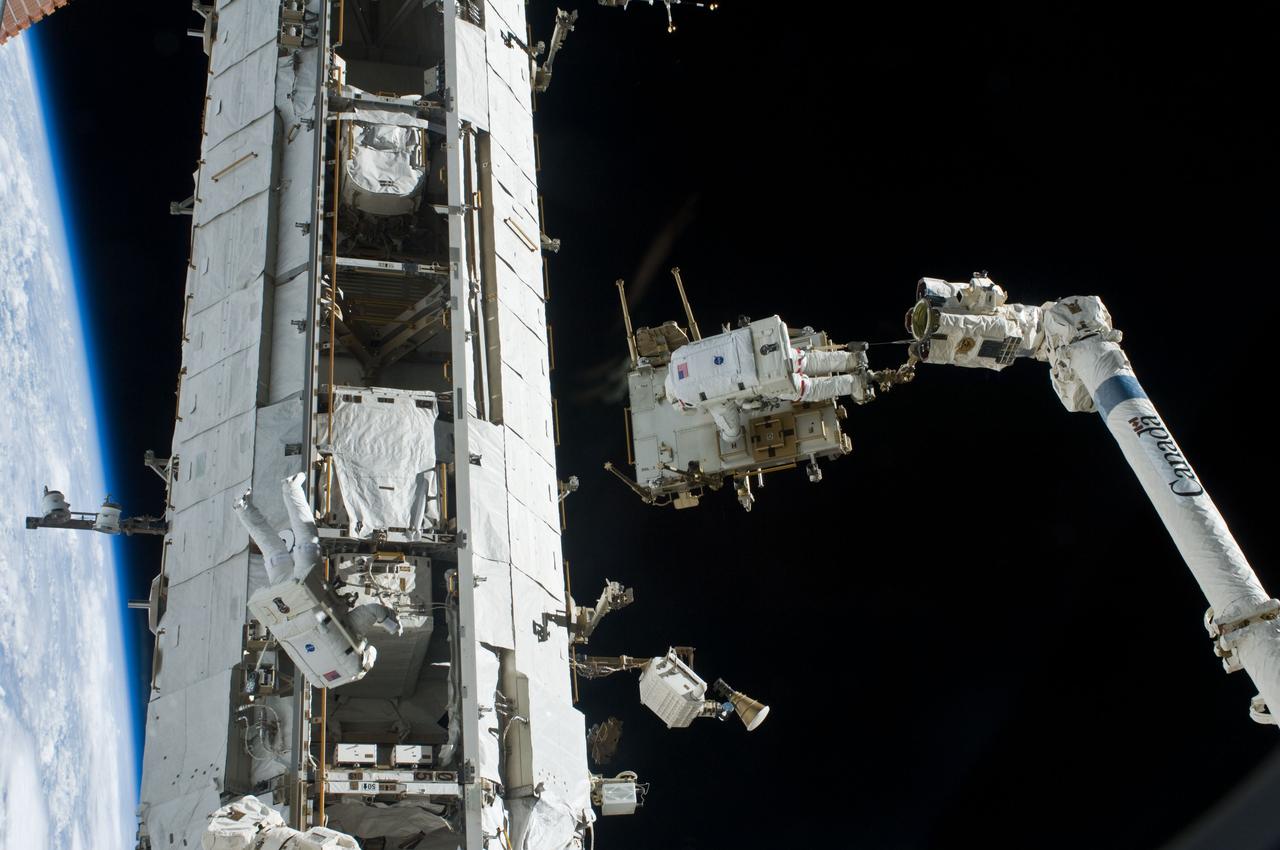
S119-E-007259 (23 March 2009) --- Astronauts Richard Arnold (left) and Joseph Acaba, both STS-119 mission specialists, participate in the mission's third scheduled session of extravehicular activity (EVA) as construction and maintenance continue on the International Space Station. During the six-hour, 27-minute spacewalk, Arnold and Acaba helped robotic arm operators relocate the Crew Equipment Translation Aid (CETA) cart from the Port 1 to Starboard 1 truss segment, installed a new coupler on the CETA cart, lubricated snares on the "B" end of the space station's robotic arm and performed a few "get ahead" tasks.
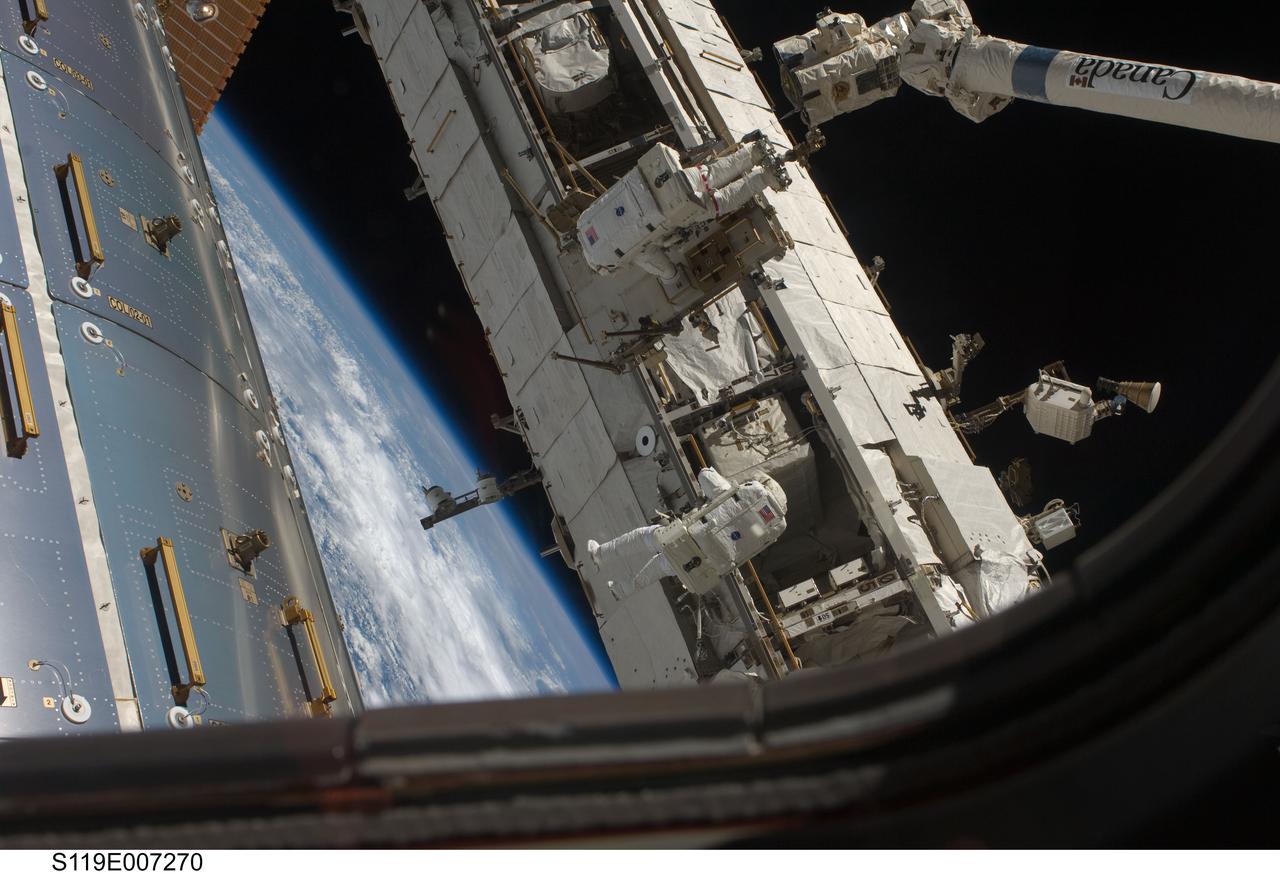
S119-E-007270 (23 March 2009) --- Astronauts Richard Arnold (bottom) and Joseph Acaba, both STS-119 mission specialists, participate in the mission's third scheduled session of extravehicular activity (EVA) as construction and maintenance continue on the International Space Station. During the six-hour, 27-minute spacewalk, Arnold and Acaba helped robotic arm operators relocate the Crew Equipment Translation Aid (CETA) cart from the Port 1 to Starboard 1 truss segment, installed a new coupler on the CETA cart, lubricated snares on the "B" end of the space station's robotic arm and performed a few "get ahead" tasks.
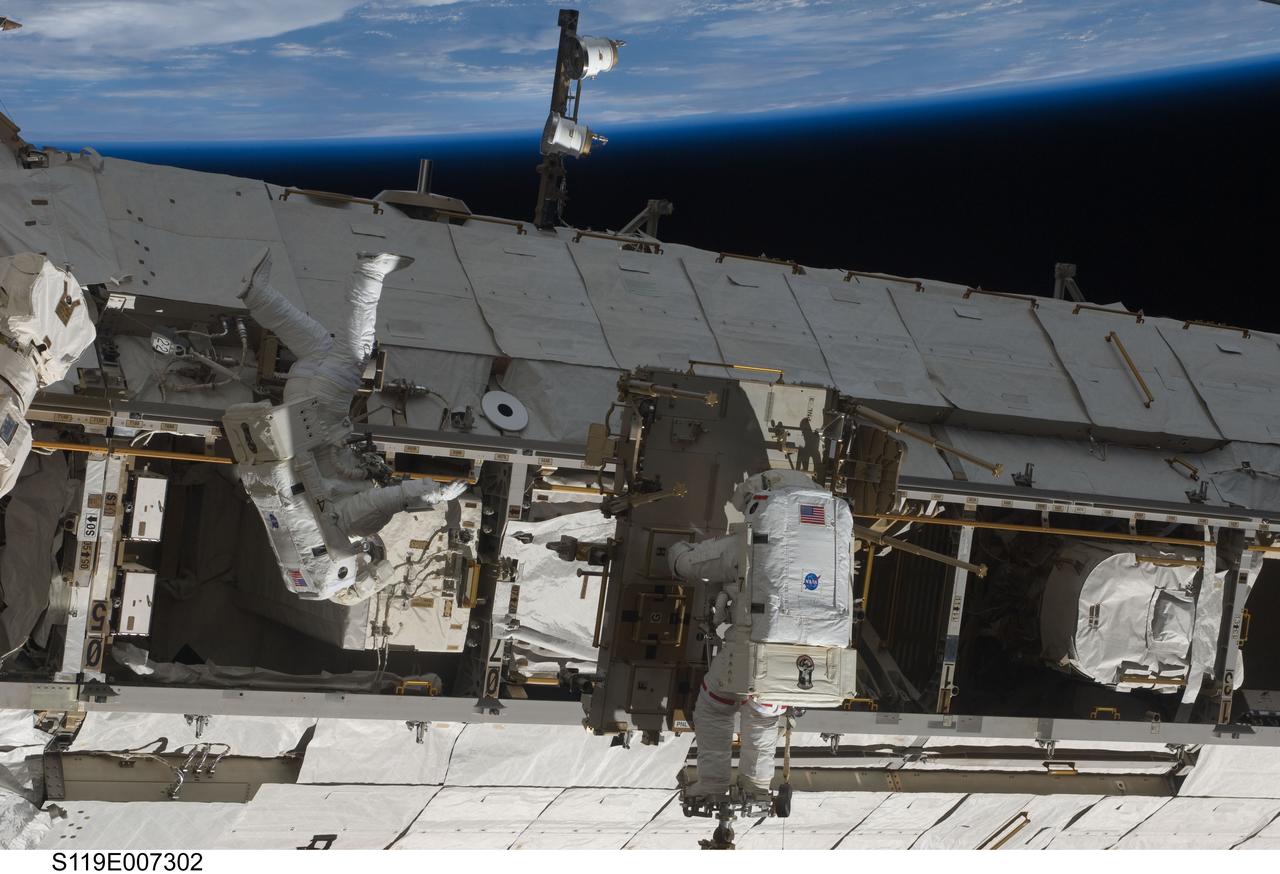
S119-E-007302 (23 March 2009) --- Astronauts Richard Arnold (left) and Joseph Acaba, both STS-119 mission specialists, participate in the mission's third scheduled session of extravehicular activity (EVA) as construction and maintenance continue on the International Space Station. During the six-hour, 27-minute spacewalk, Arnold and Acaba helped robotic arm operators relocate the Crew Equipment Translation Aid (CETA) cart from the Port 1 to Starboard 1 truss segment, installed a new coupler on the CETA cart, lubricated snares on the "B" end of the space station's robotic arm and performed a few "get ahead" tasks.
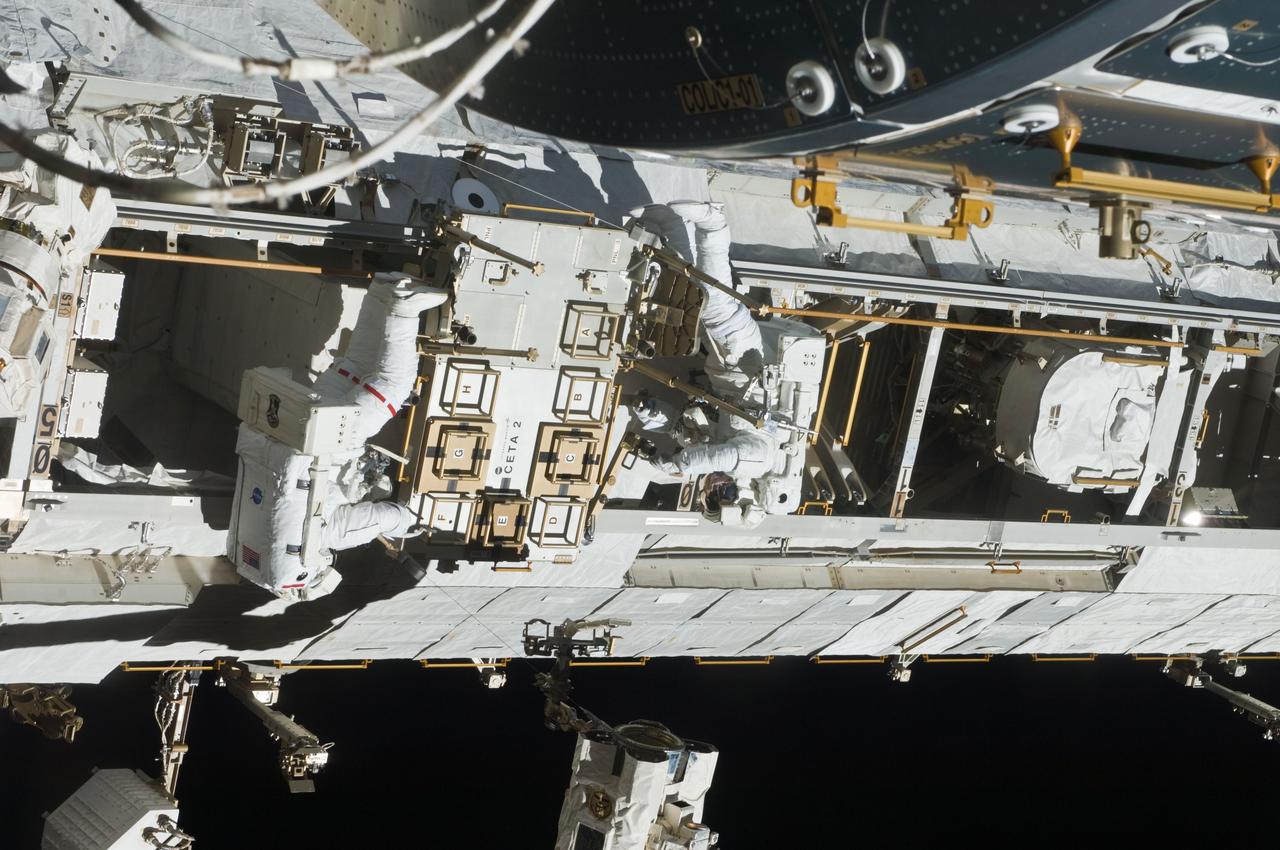
S119-E-007332 (23 March 2009) --- Astronauts Richard Arnold (right) and Joseph Acaba, both STS-119 mission specialists, participate in the mission's third scheduled session of extravehicular activity (EVA) as construction and maintenance continue on the International Space Station. During the six-hour, 27-minute spacewalk, Arnold and Acaba helped robotic arm operators relocate the Crew Equipment Translation Aid (CETA) cart from the Port 1 to Starboard 1 truss segment, installed a new coupler on the CETA cart, lubricated snares on the "B" end of the space station's robotic arm and performed a few "get ahead" tasks.
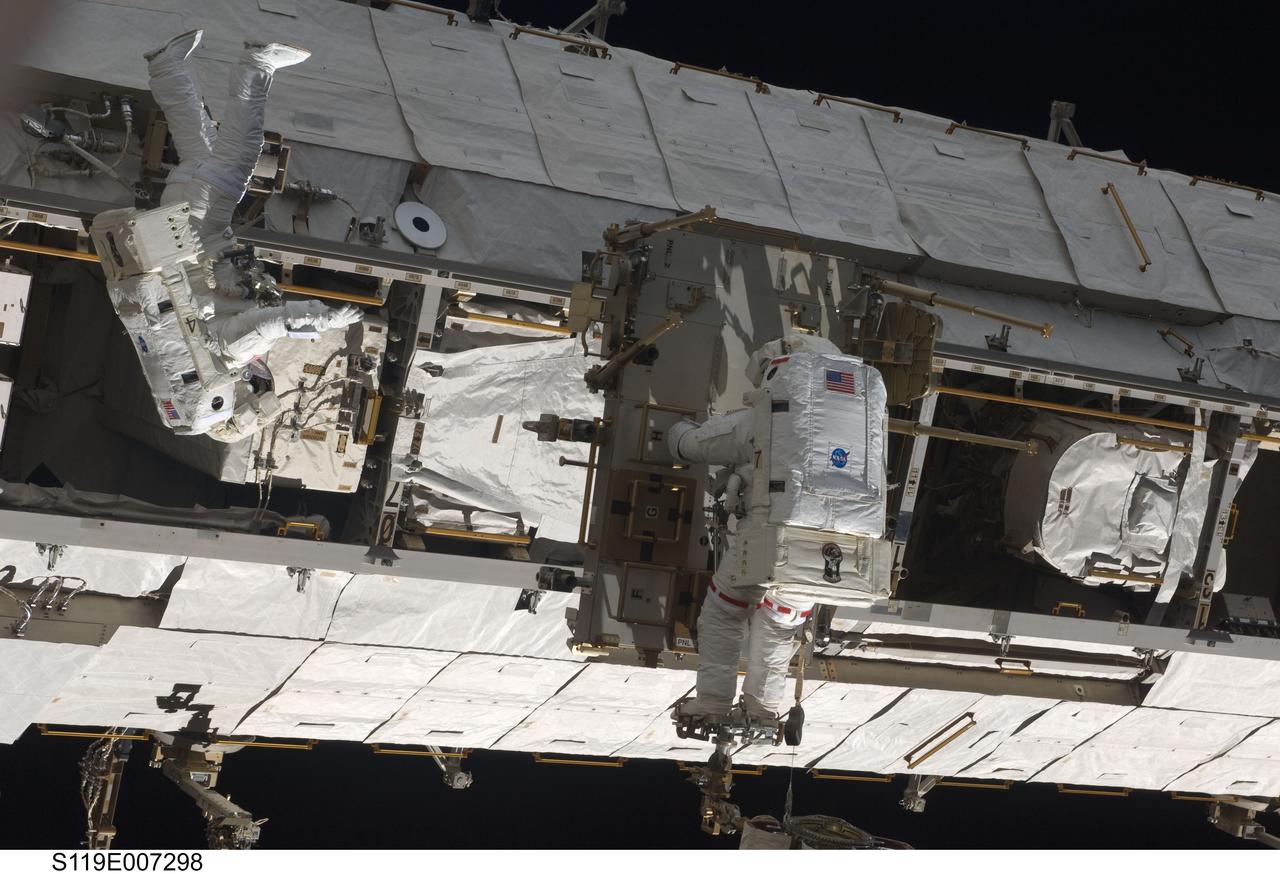
S119-E-007298 (23 March 2009) --- Astronauts Richard Arnold (left) and Joseph Acaba, both STS-119 mission specialists, participate in the mission's third scheduled session of extravehicular activity (EVA) as construction and maintenance continue on the International Space Station. During the six-hour, 27-minute spacewalk, Arnold and Acaba helped robotic arm operators relocate the Crew Equipment Translation Aid (CETA) cart from the Port 1 to Starboard 1 truss segment, installed a new coupler on the CETA cart, lubricated snares on the "B" end of the space station's robotic arm and performed a few "get ahead" tasks.
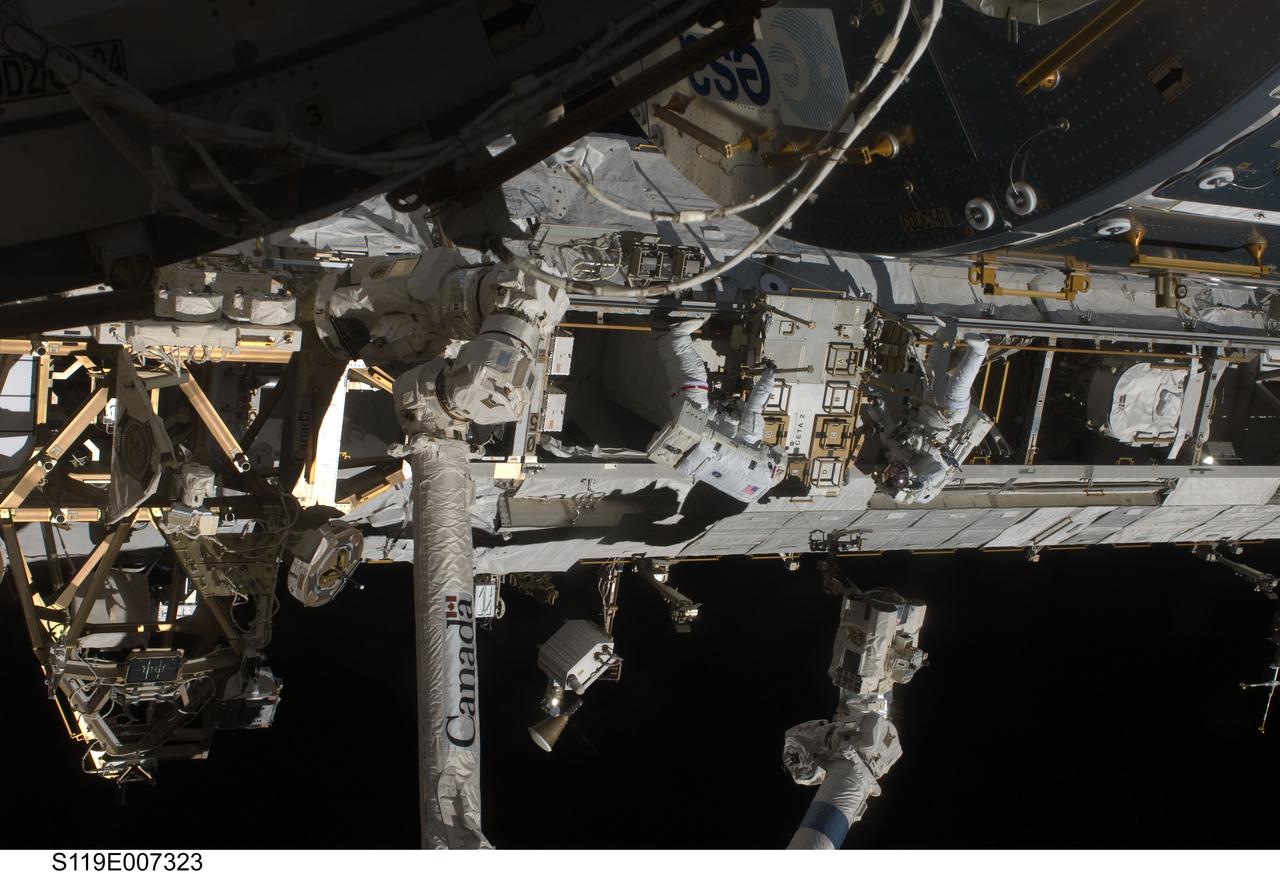
S119-E-007323 (23 March 2009) --- Astronauts Richard Arnold (right) and Joseph Acaba, both STS-119 mission specialists, participate in the mission's third scheduled session of extravehicular activity (EVA) as construction and maintenance continue on the International Space Station. During the six-hour, 27-minute spacewalk, Arnold and Acaba helped robotic arm operators relocate the Crew Equipment Translation Aid (CETA) cart from the Port 1 to Starboard 1 truss segment, installed a new coupler on the CETA cart, lubricated snares on the "B" end of the space station's robotic arm and performed a few "get ahead" tasks.
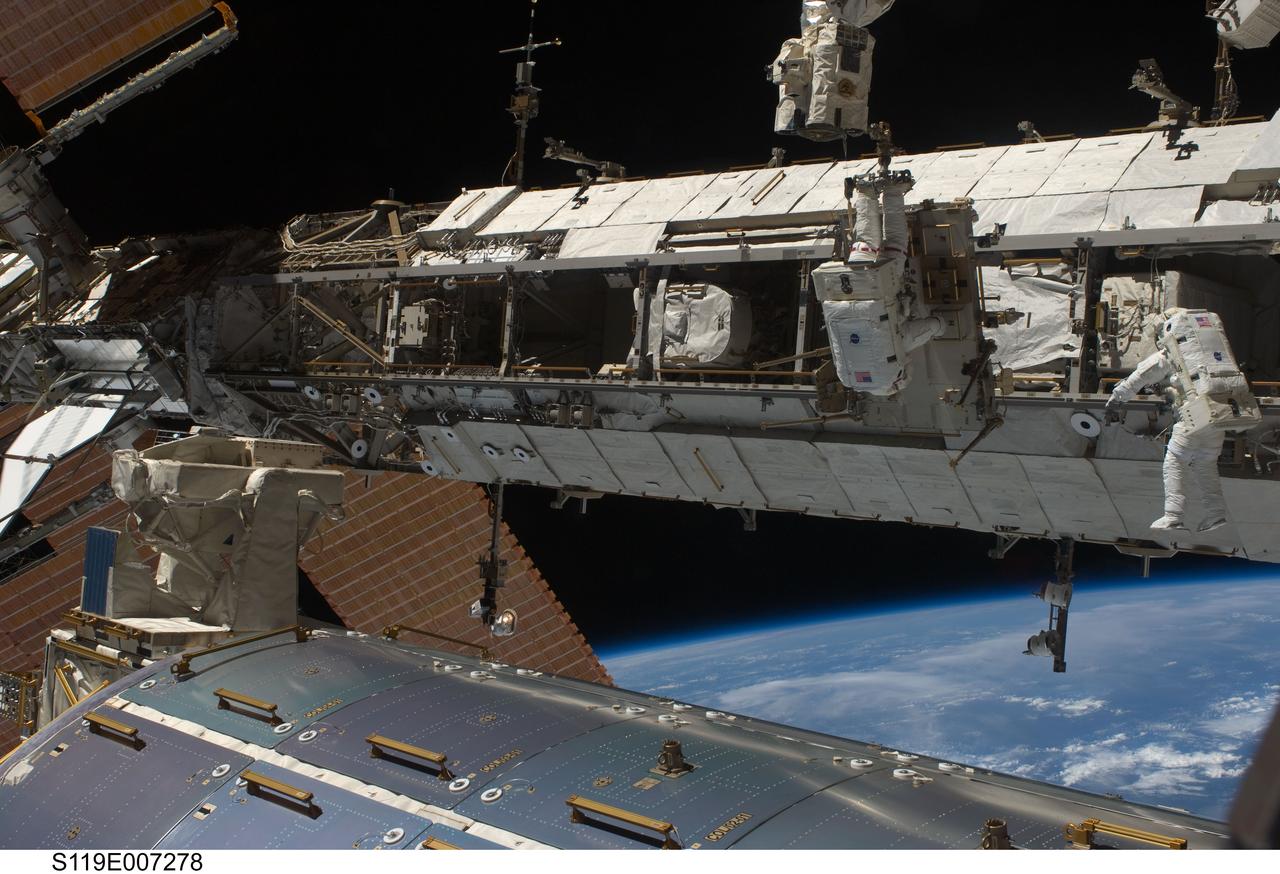
S119-E-007278 (23 March 2009) --- Astronauts Richard Arnold (right) and Joseph Acaba, both STS-119 mission specialists, participate in the mission's third scheduled session of extravehicular activity (EVA) as construction and maintenance continue on the International Space Station. During the six-hour, 27-minute spacewalk, Arnold and Acaba helped robotic arm operators relocate the Crew Equipment Translation Aid (CETA) cart from the Port 1 to Starboard 1 truss segment, installed a new coupler on the CETA cart, lubricated snares on the "B" end of the space station's robotic arm and performed a few "get ahead" tasks.
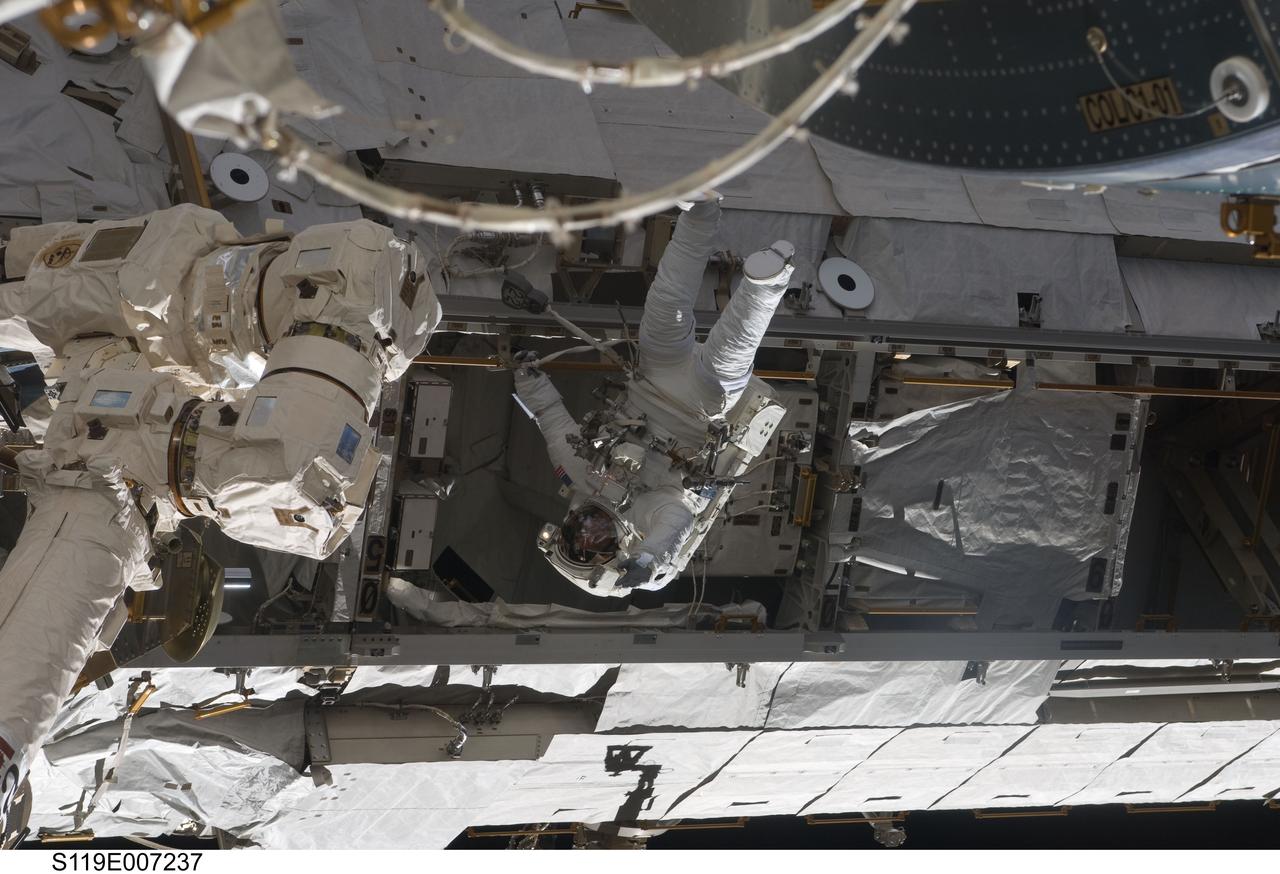
S119-E-007237 (23 March 2009) --- Astronaut Richard Arnold, STS-119 mission specialist, participates in the mission's third scheduled session of extravehicular activity (EVA) as construction and maintenance continue on the International Space Station. During the six-hour, 27-minute spacewalk, Arnold and Joseph Acaba (out of frame), mission specialist, helped robotic arm operators relocate the Crew Equipment Translation Aid (CETA) cart from the Port 1 to Starboard 1 truss segment, installed a new coupler on the CETA cart, lubricated snares on the "B" end of the space station's robotic arm and performed a few "get ahead" tasks.
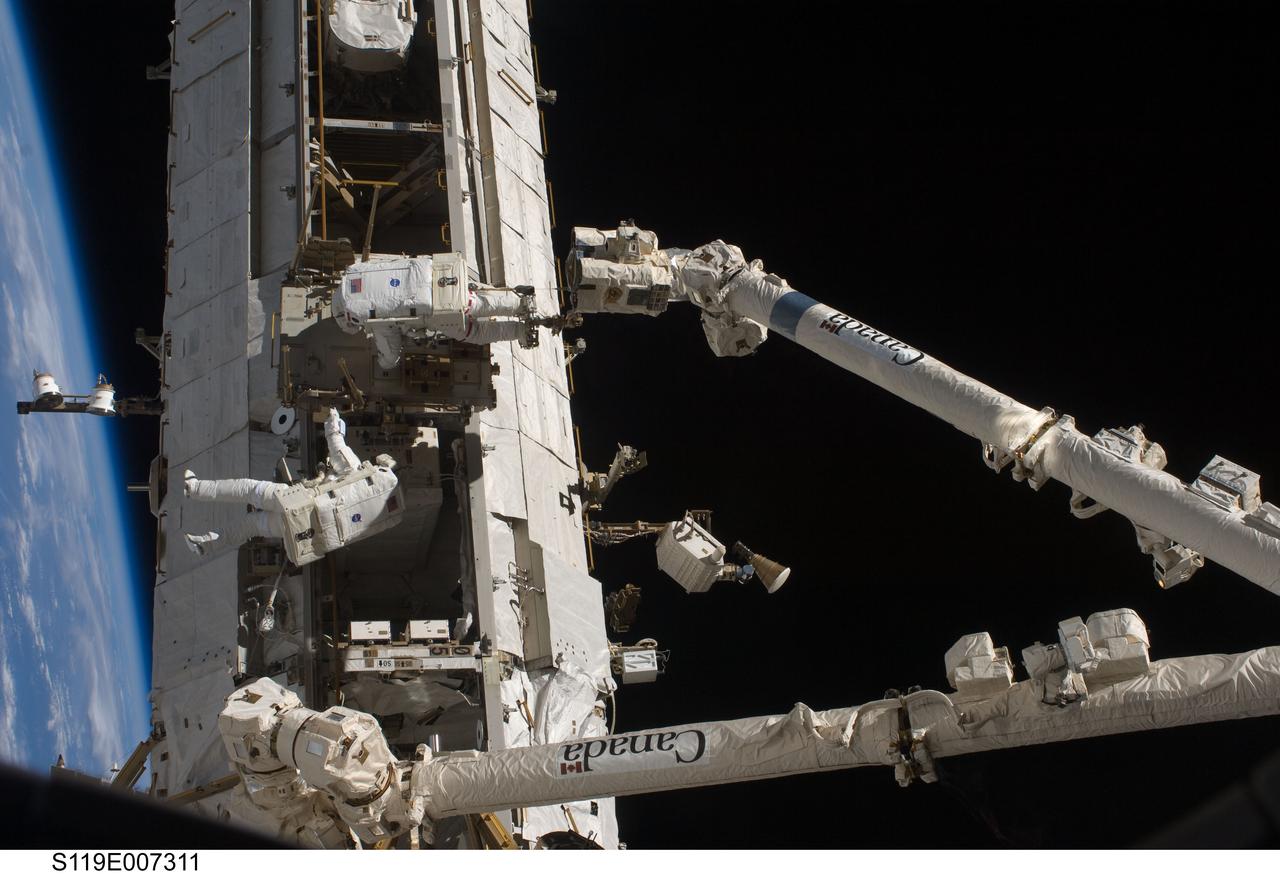
S119-E-007311 (23 March 2009) --- Astronauts Richard Arnold (bottom) and Joseph Acaba, both STS-119 mission specialists, participate in the mission's third scheduled session of extravehicular activity (EVA) as construction and maintenance continue on the International Space Station. During the six-hour, 27-minute spacewalk, Arnold and Acaba helped robotic arm operators relocate the Crew Equipment Translation Aid (CETA) cart from the Port 1 to Starboard 1 truss segment, installed a new coupler on the CETA cart, lubricated snares on the "B" end of the space station's robotic arm and performed a few "get ahead" tasks.
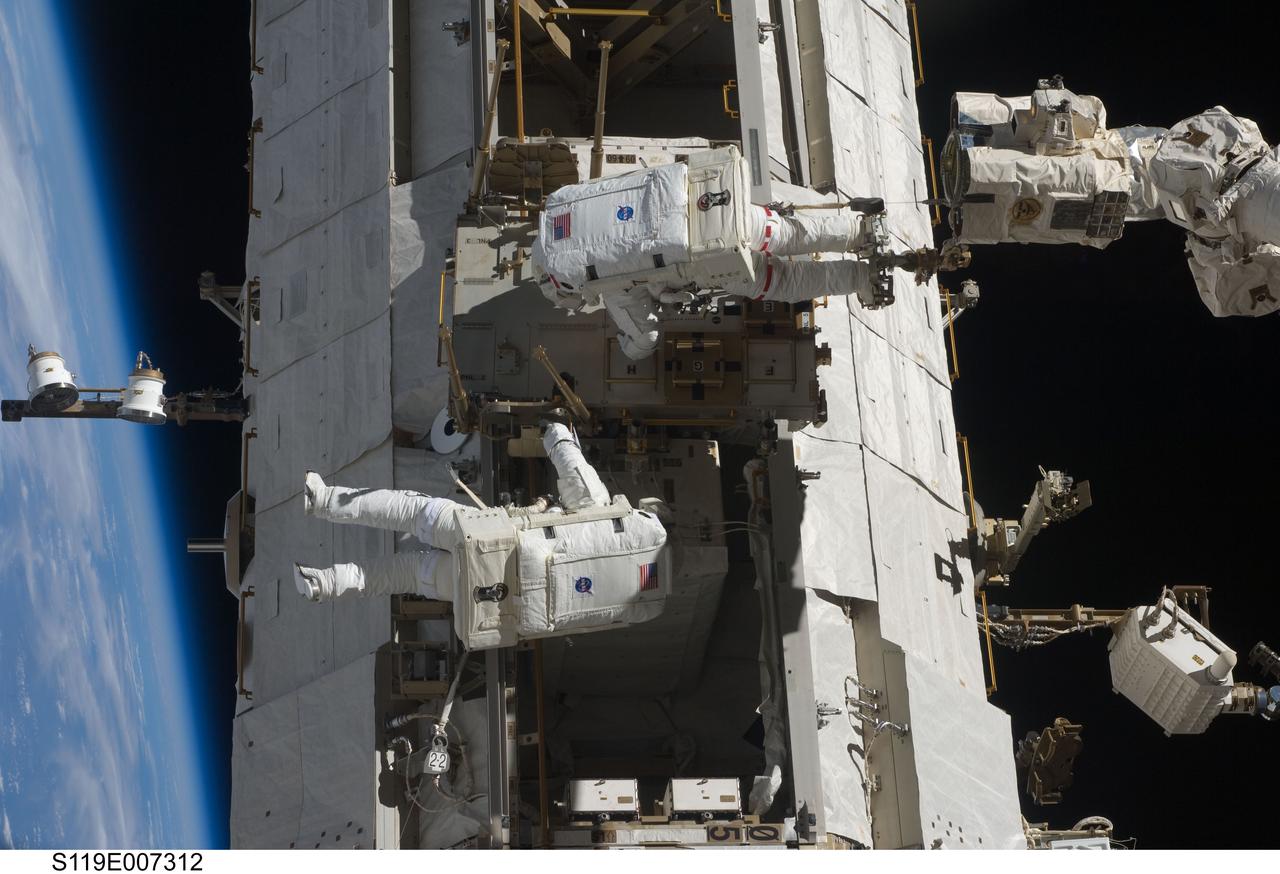
S119-E-007312 (23 March 2009) --- Astronauts Richard Arnold (bottom) and Joseph Acaba, both STS-119 mission specialists, participate in the mission's third scheduled session of extravehicular activity (EVA) as construction and maintenance continue on the International Space Station. During the six-hour, 27-minute spacewalk, Arnold and Acaba helped robotic arm operators relocate the Crew Equipment Translation Aid (CETA) cart from the Port 1 to Starboard 1 truss segment, installed a new coupler on the CETA cart, lubricated snares on the "B" end of the space station's robotic arm and performed a few "get ahead" tasks.
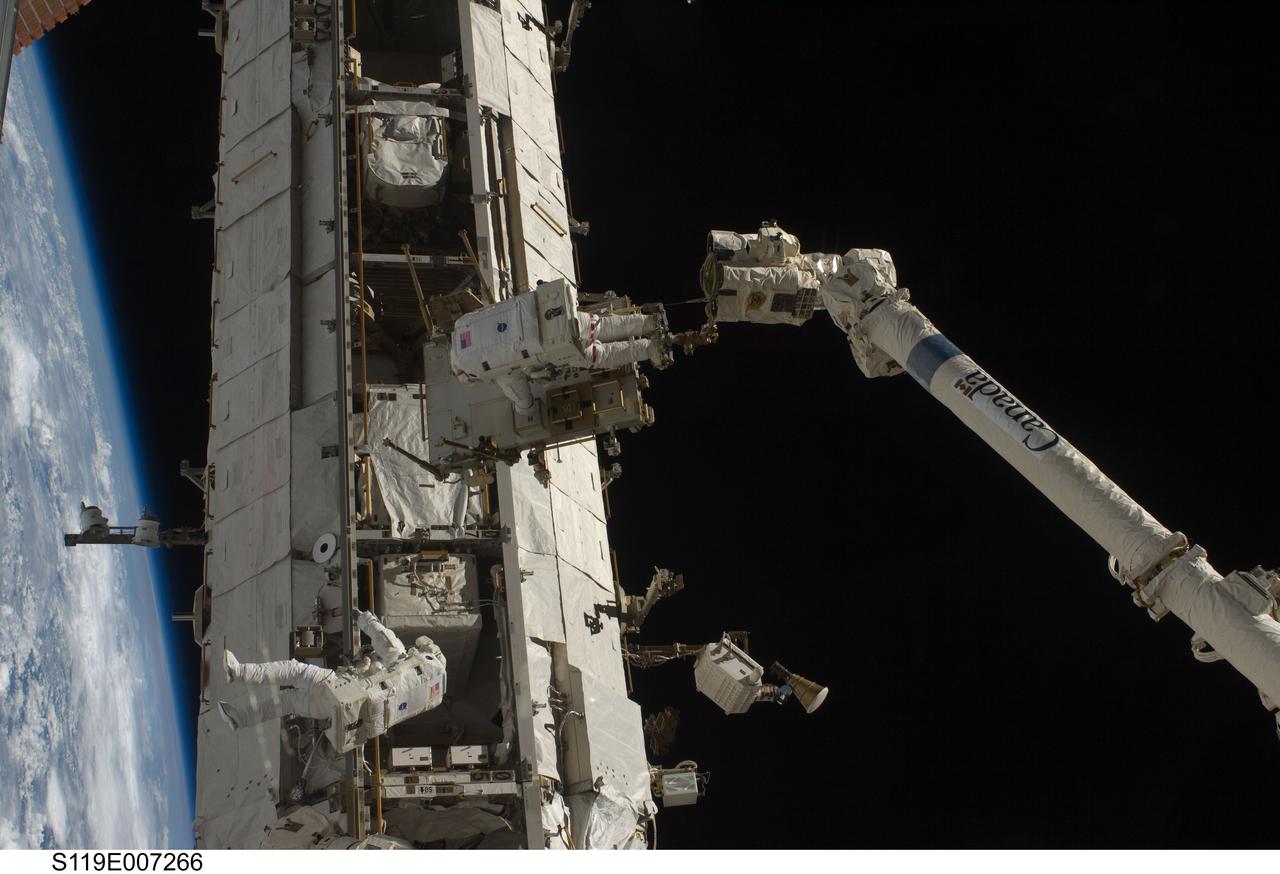
S119-E-007266 (23 March 2009) --- Astronauts Richard Arnold (bottom) and Joseph Acaba, both STS-119 mission specialists, participate in the mission's third scheduled session of extravehicular activity (EVA) as construction and maintenance continue on the International Space Station. During the six-hour, 27-minute spacewalk, Arnold and Acaba helped robotic arm operators relocate the Crew Equipment Translation Aid (CETA) cart from the Port 1 to Starboard 1 truss segment, installed a new coupler on the CETA cart, lubricated snares on the "B" end of the space station's robotic arm and performed a few "get ahead" tasks.
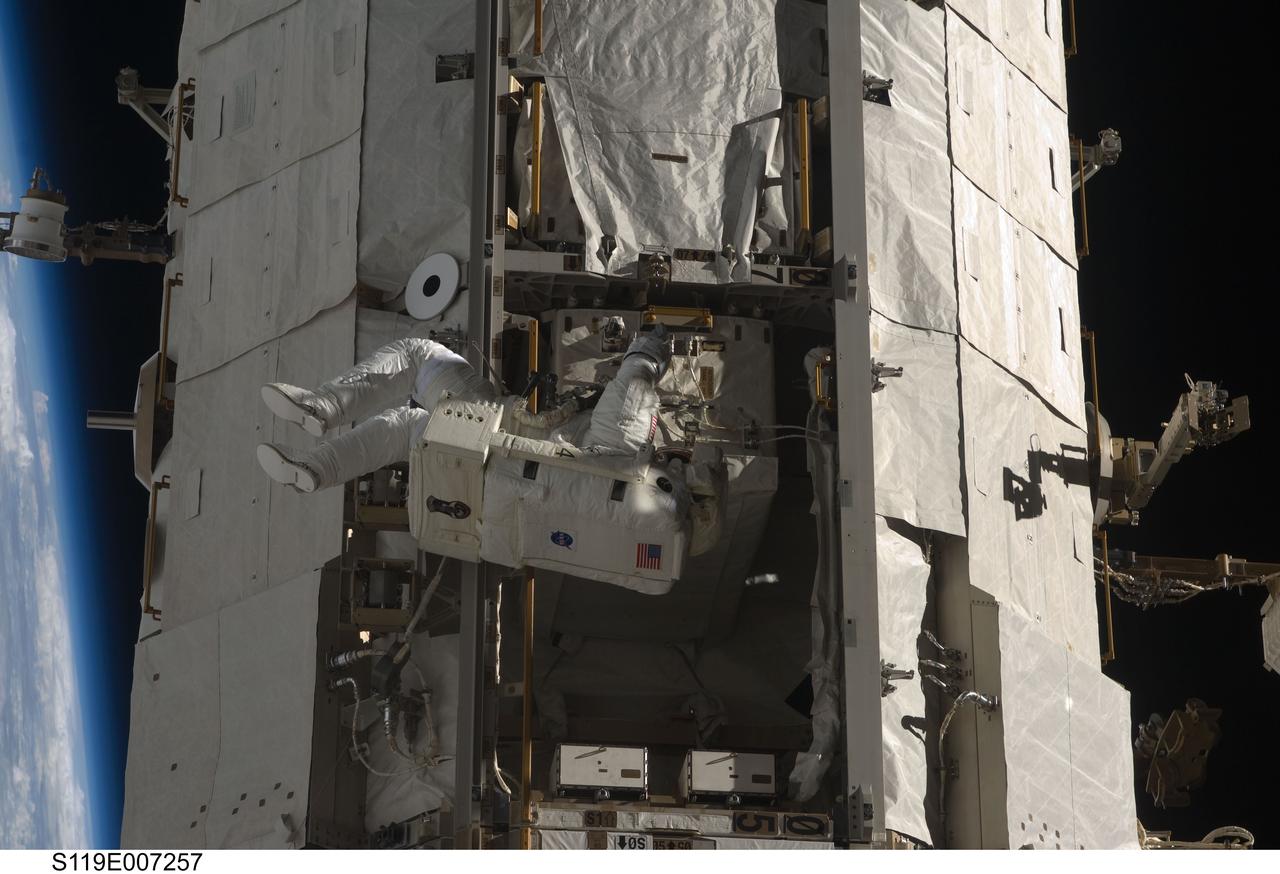
S119-E-007257 (23 March 2009) --- Astronaut Richard Arnold, STS-119 mission specialist, participates in the mission's third scheduled session of extravehicular activity (EVA) as construction and maintenance continue on the International Space Station. During the six-hour, 27-minute spacewalk, Arnold and Joseph Acaba (out of frame), mission specialist, helped robotic arm operators relocate the Crew Equipment Translation Aid (CETA) cart from the Port 1 to Starboard 1 truss segment, installed a new coupler on the CETA cart, lubricated snares on the "B" end of the space station's robotic arm and performed a few "get ahead" tasks.
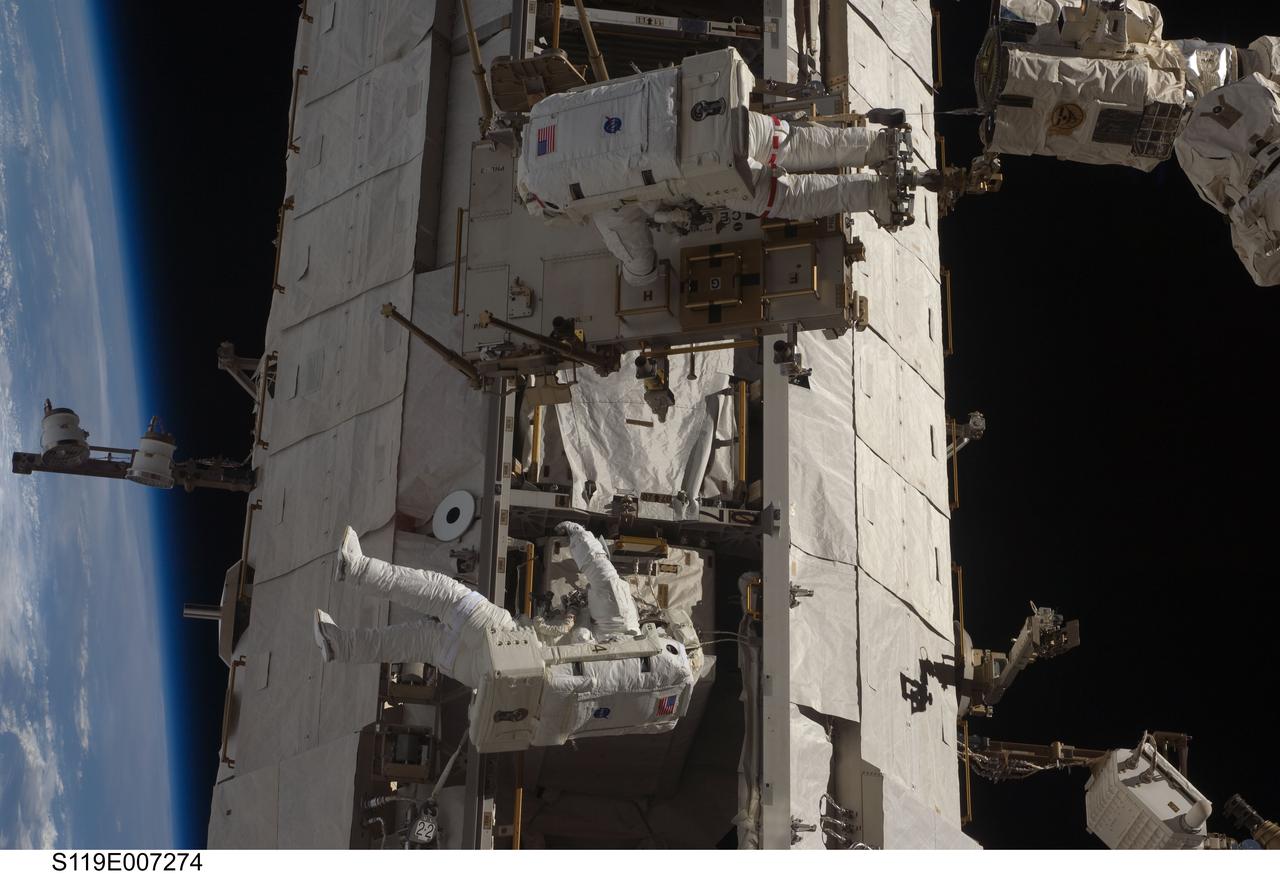
S119-E-007274 (23 March 2009) --- Astronauts Richard Arnold (bottom) and Joseph Acaba, both STS-119 mission specialists, participate in the mission's third scheduled session of extravehicular activity (EVA) as construction and maintenance continue on the International Space Station. During the six-hour, 27-minute spacewalk, Arnold and Acaba helped robotic arm operators relocate the Crew Equipment Translation Aid (CETA) cart from the Port 1 to Starboard 1 truss segment, installed a new coupler on the CETA cart, lubricated snares on the "B" end of the space station's robotic arm and performed a few "get ahead" tasks.
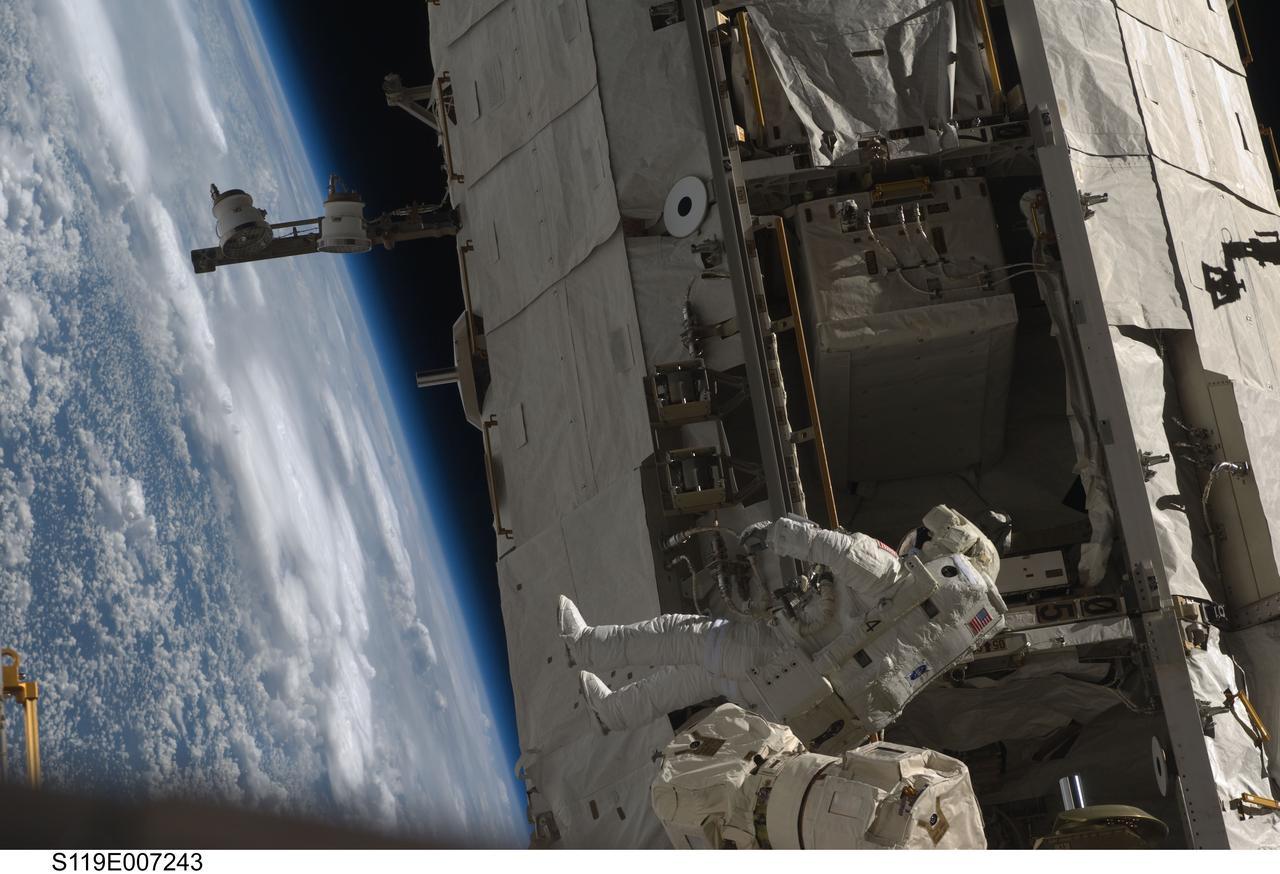
S119-E-007243 (23 March 2009) --- Astronaut Richard Arnold, STS-119 mission specialist, participates in the mission's third scheduled session of extravehicular activity (EVA) as construction and maintenance continue on the International Space Station. During the six-hour, 27-minute spacewalk, Arnold and Joseph Acaba (out of frame), mission specialist, helped robotic arm operators relocate the Crew Equipment Translation Aid (CETA) cart from the Port 1 to Starboard 1 truss segment, installed a new coupler on the CETA cart, lubricated snares on the "B" end of the space station's robotic arm and performed a few "get ahead" tasks.

KENNEDY SPACE CENTER, FLA. -- The STS-112 crew pauses for a photo after their arrival at the KSC Shuttle Landing Facility. Standing, left to right, are Mission Specialist Piers Sellers, Pilot Pamela Melroy, Commander Jeffrey Ashby, and Mission Specialists David Wolf, Sandra Magnus and cosmonaut Fyodor Yurchikhin. Sellers, Magnus and Yurchikhin are making their first Shuttle flights. STS-112, aboard Space Shuttle Atlantis, is the 15th assembly mission to the International Space Station. Atlantis will be carrying the S1 Integrated Truss Structure, the first starboard truss segment, to be attached to the central truss segment, S0, and the Crew and Equipment Translation Aid (CETA) Cart A. The CETA is the first of two human-powered carts that will ride along the ISS railway, providing mobile work platforms for future spacewalking astronauts. The 11-day mission includes three spacewalks. Launch is scheduled for Oct. 2 between 2 and 6 p.m.
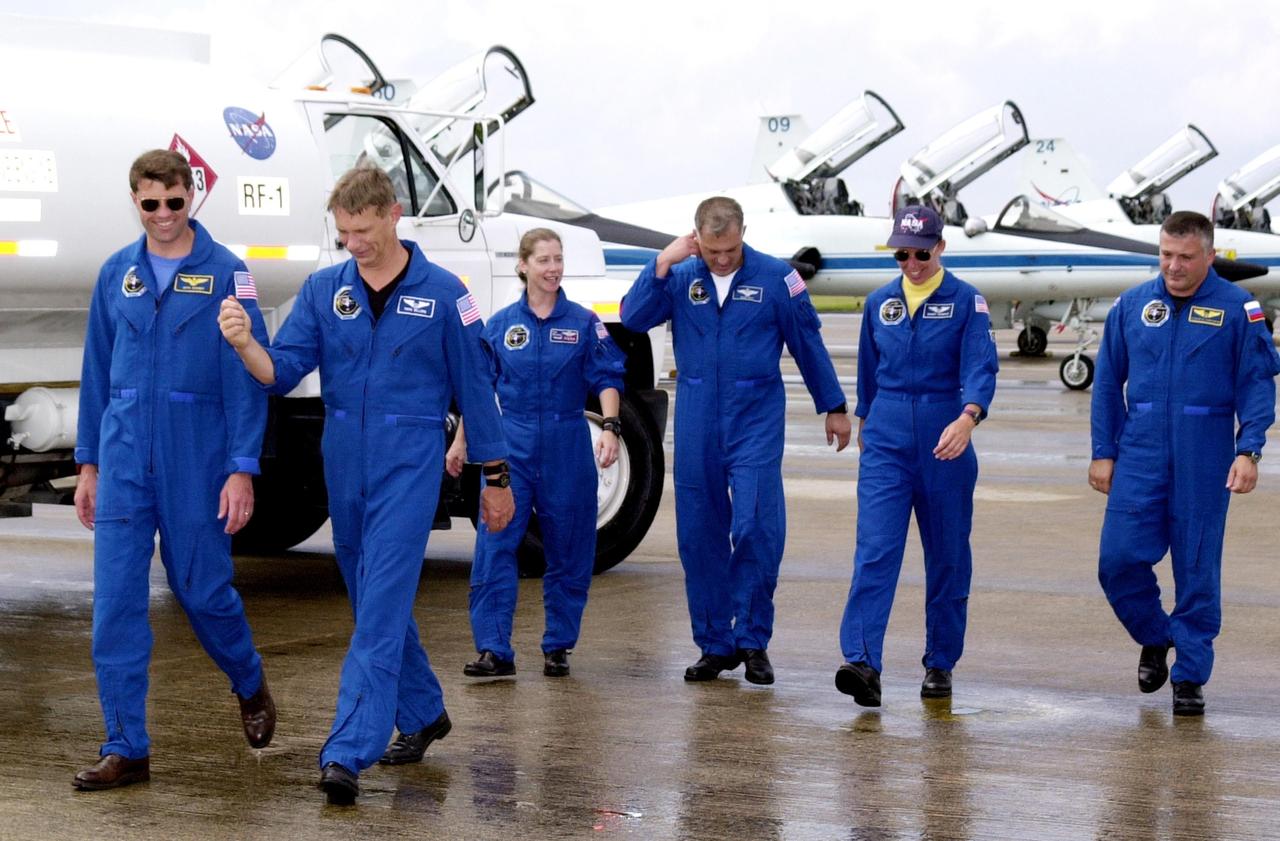
KENNEDY SPACE CENTER, FLA. -- After their arrival at the KSC Shuttle Landing Facility, the STS-112 crew members stride happily to the side of the parking apron and a photo opportunity. From left are Commander Jeffrey Ashby, Mission Specialist Piers Sellers, Pilot Pamela Melroy and Mission Specialists David Wolf, Sandra Magnus and Fyodor Yurchikhin, who is with the Russian Space Agency. Launch is scheduled for Oct. 2 between 2 and 6 p.m. STS-112, aboard Space Shuttle Atlantis, is the 15th assembly mission to the International Space Station. Atlantis will be carrying the S1 Integrated Truss Structure, the first starboard truss segment, to be attached to the central truss segment, S0, and the Crew and Equipment Translation Aid (CETA) Cart A. The CETA is the first of two human-powered carts that will ride along the ISS railway, providing mobile work platforms for future spacewalking astronauts. The 11-day mission includes three spacewalks.
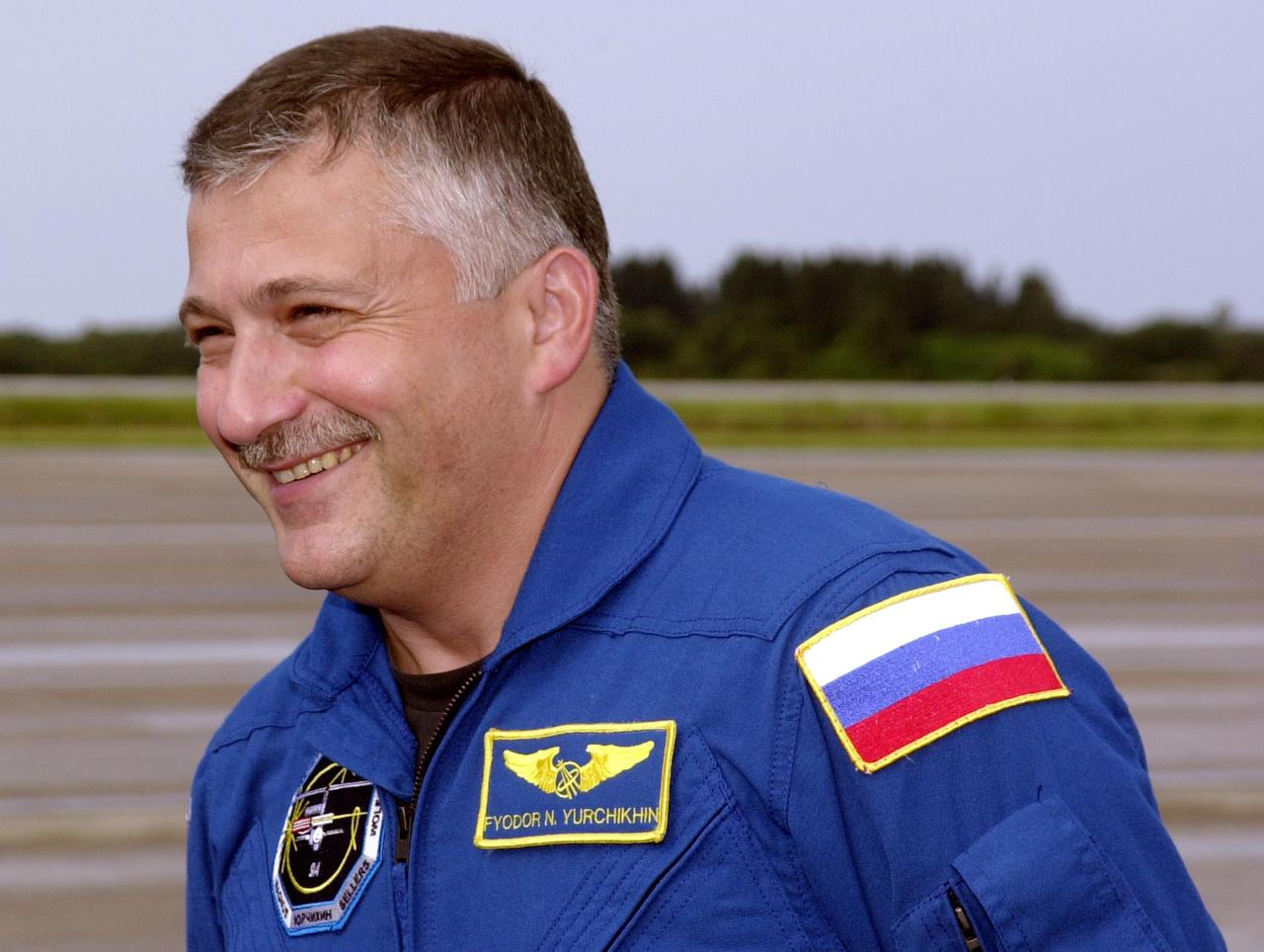
KENNEDY SPACE CENTER, FLA. -- STS-112 Mission Specialist Fyodor Yurchikhin, who is with the Russian Space Agency, shows his happiness at returning to KSC to prepare for launch. He will be making his first Shuttle flight. STS-112, aboard Space Shuttle Atlantis, is the 15th assembly mission to the International Space Station. Atlantis will be carrying the S1 Integrated Truss Structure, the first starboard truss segment, to be attached to the central truss segment, S0, and the Crew and Equipment Translation Aid (CETA) Cart A. The CETA is the first of two human-powered carts that will ride along the ISS railway, providing mobile work platforms for future spacewalking astronauts. The 11-day mission includes three spacewalks. Launch is scheduled for Oct. 2 between 2 and 6 p.m.

KENNEDY SPACE CENTER, FLA. -- STS-112 Mission Specialist Sandra Magnus is happy to return to KSC to prepare for launch. She will be making her first Shuttle flight. STS-112, aboard Space Shuttle Atlantis, is the 15th assembly mission to the International Space Station. Atlantis will be carrying the S1 Integrated Truss Structure, the first starboard truss segment, to be attached to the central truss segment, S0, and the Crew and Equipment Translation Aid (CETA) Cart A. The CETA is the first of two human-powered carts that will ride along the ISS railway, providing mobile work platforms for future spacewalking astronauts. The 11-day mission includes three spacewalks. Launch is scheduled for Oct. 2 between 2 and 6 p.m.
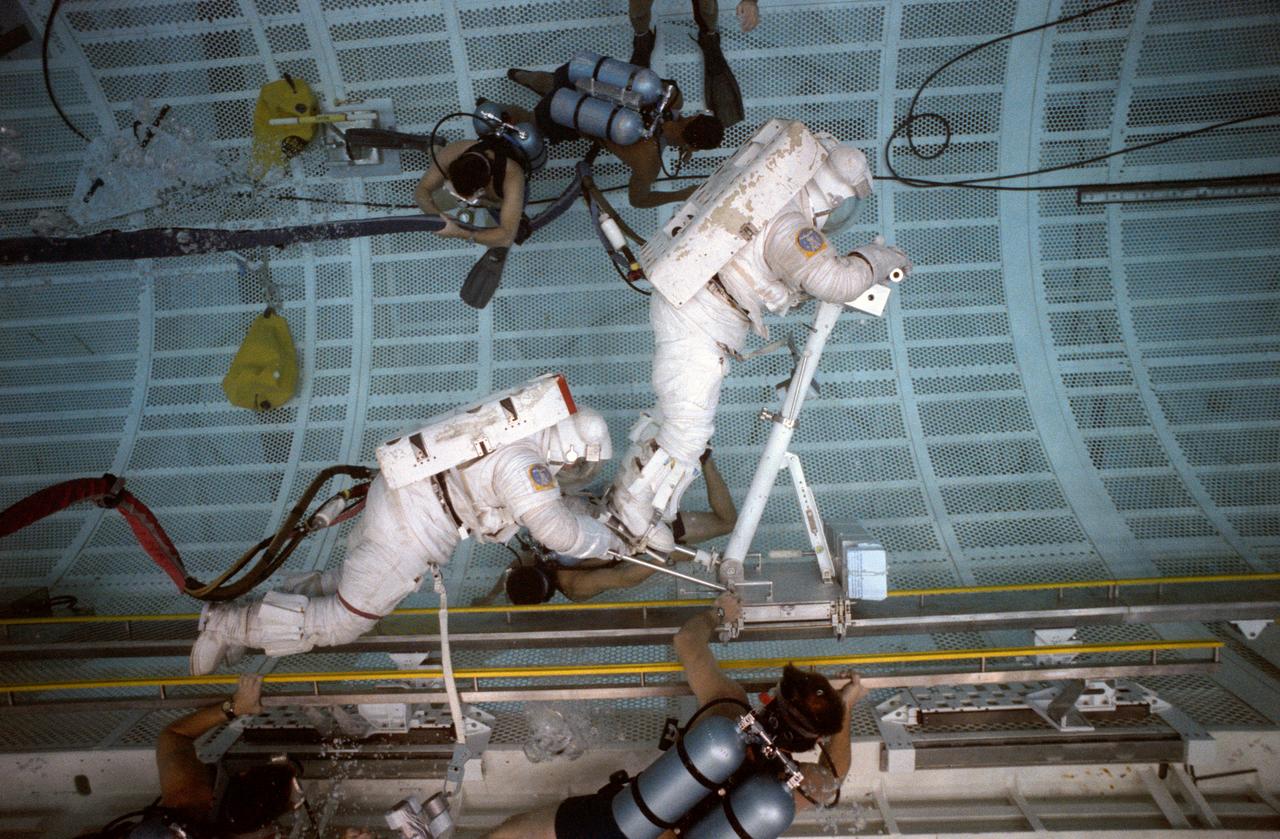
S89-46985 (October 1989) --- Astronauts Jerry L Ross and Jerome (Jay) Apt, STS-37 mission specialists, practice a spacewalk they will perform on that flight. The experiment uses an electrically powered version of the Crew and Equipment Translation Aid (CETA), a type of railroad handcart planned as a spacewalker's transportation system along the truss of Space Station Freedom. Apt is pulling Ross along to test the cart's ability to carry a person plus cargo.
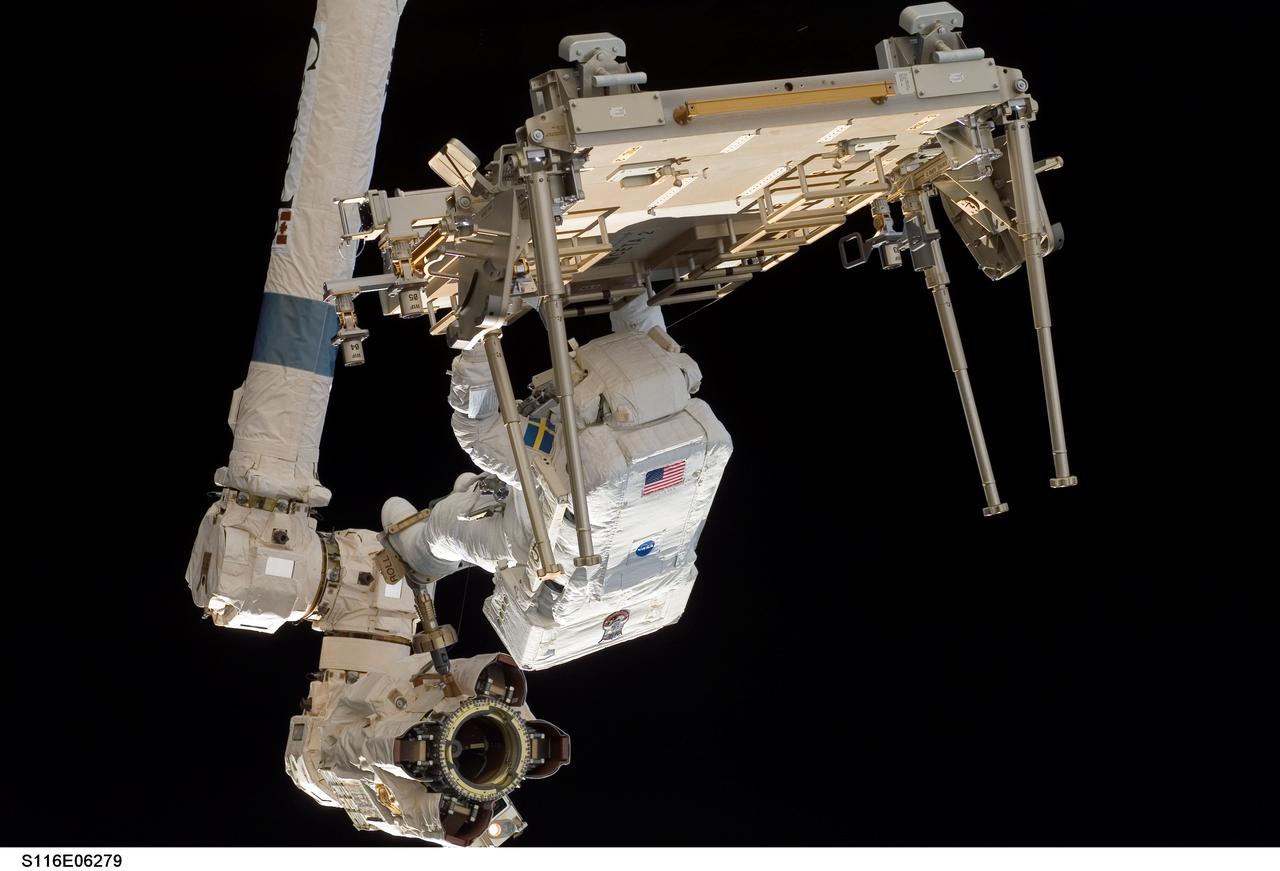
S116-E-06279 (14 Dec. 2006) --- With his feet secured on the Canadarm2, European Space Agency astronaut Christer Fuglesang, STS-116 mission specialist, works to relocate one of the two Crew Equipment Translation Aid (CETA) carts during EVA 2 on Dec. 14. Astronaut Robert L. Curbeam Jr., who is sharing two spacewalks with Fuglesang on this flight, is out of frame.
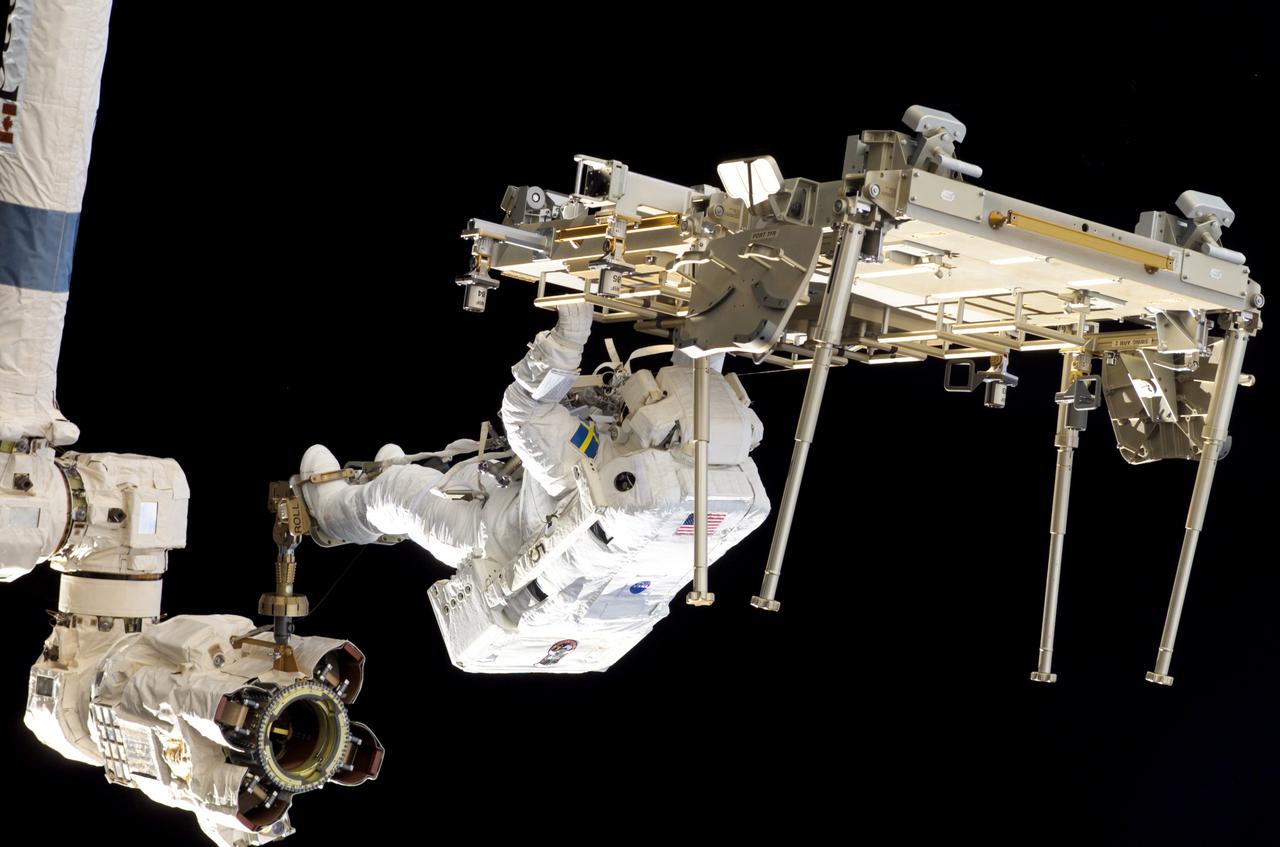
S116-E-06275 (14 Dec. 2006) --- With his feet secured on the Canadarm2, European Space Agency astronaut Christer Fuglesang, STS-116 mission specialist, works to relocate one of the two Crew Equipment Translation Aid (CETA) carts during EVA 2 on Dec. 14. Astronaut Robert L. Curbeam Jr., who is sharing two spacewalks with Fuglesang on this flight, is out of frame.
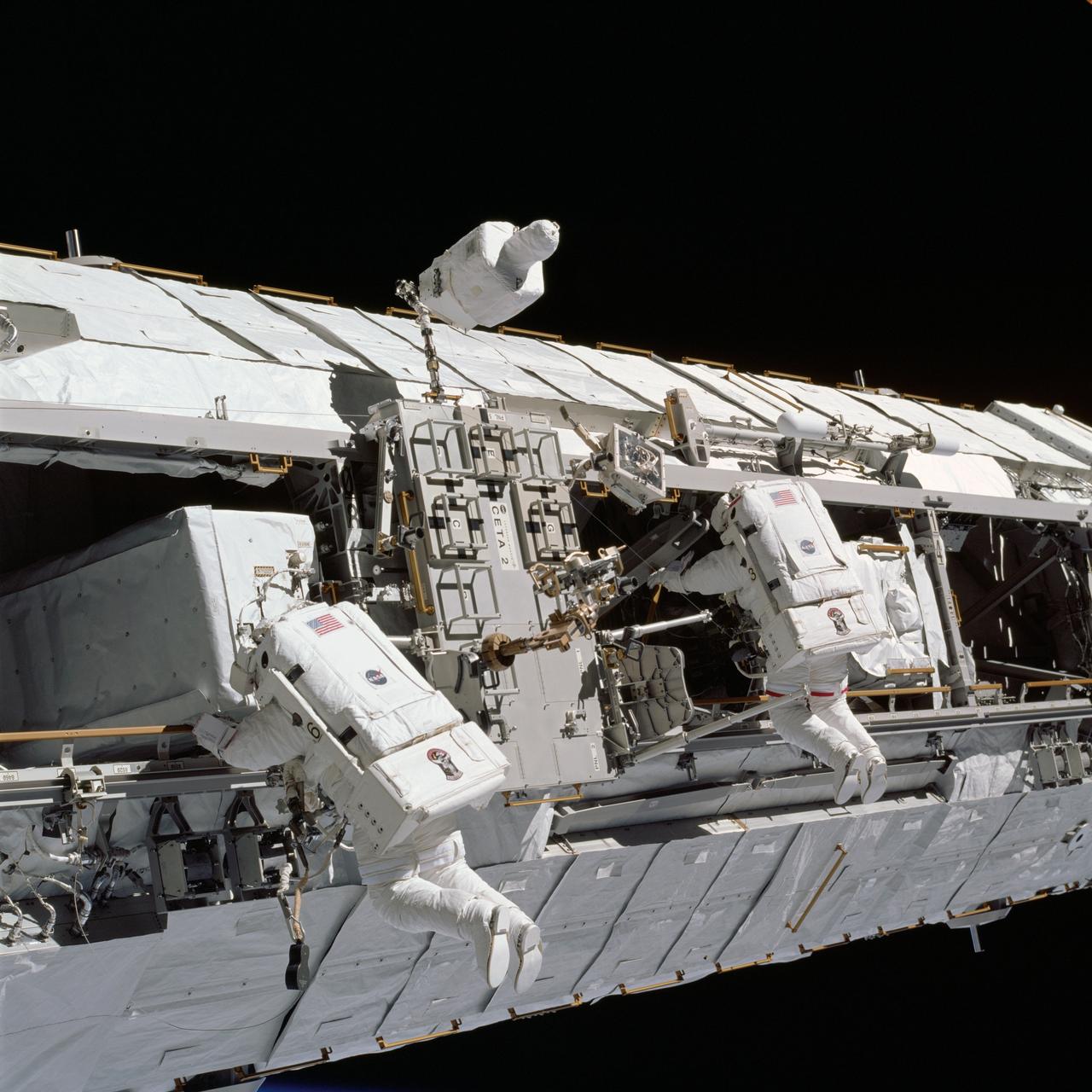
STS113-714-033 (26-30 November 2002) --- Astronauts Michael E. Lopez-Alegria (right) and John B. Herrington, STS-113 mission specialists, work near the Crew and Equipment Translation Aid (CETA) cart on a truss on the International Space Station (ISS) during a scheduled spacewalk for the mission.
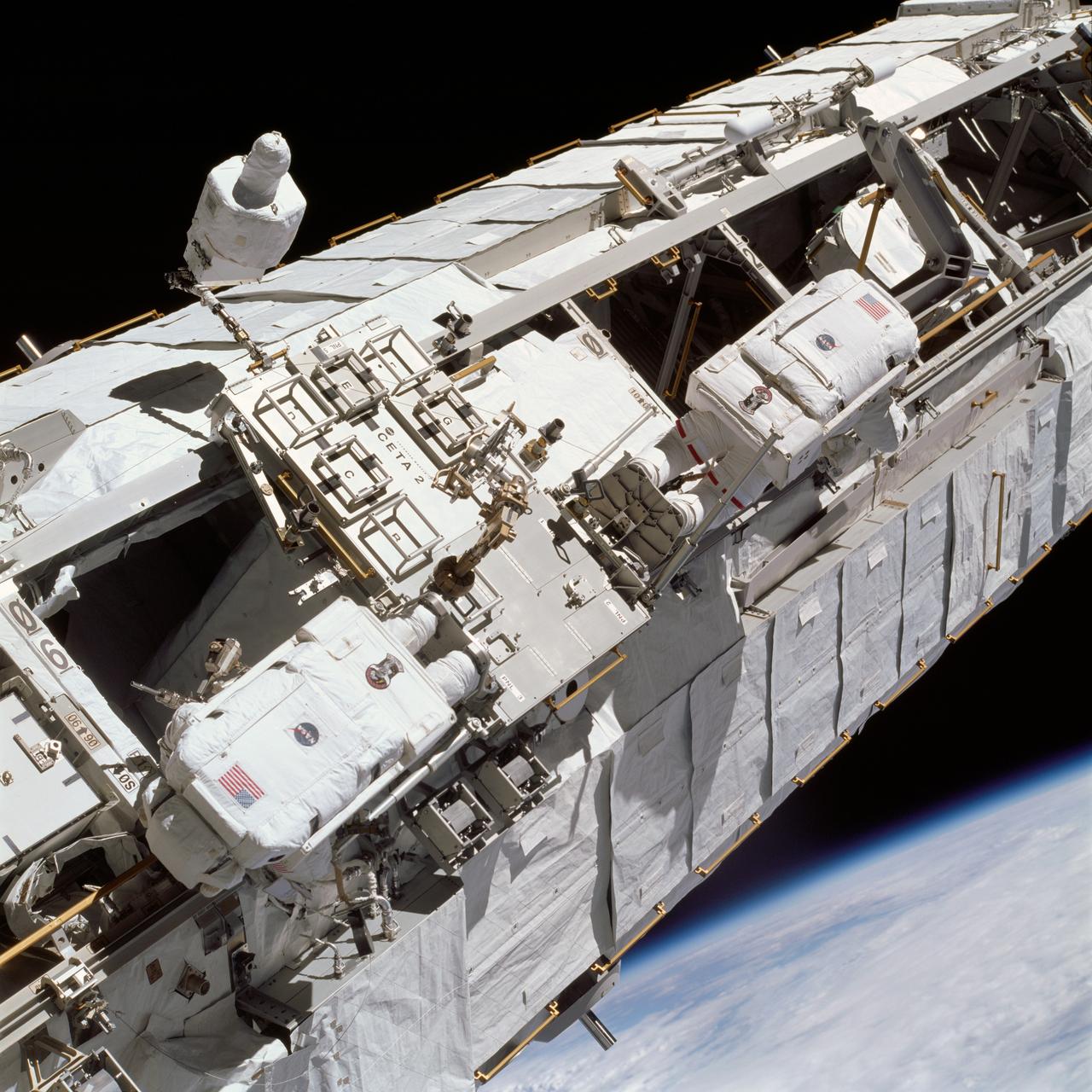
STS113-714-024 (26-30 November 2002) --- Astronauts Michael E. Lopez-Alegria (right) and John B. Herrington, STS-113 mission specialists, work near the Crew and Equipment Translation Aid (CETA) cart on a truss on the International Space Station (ISS) during a scheduled spacewalk for the mission.
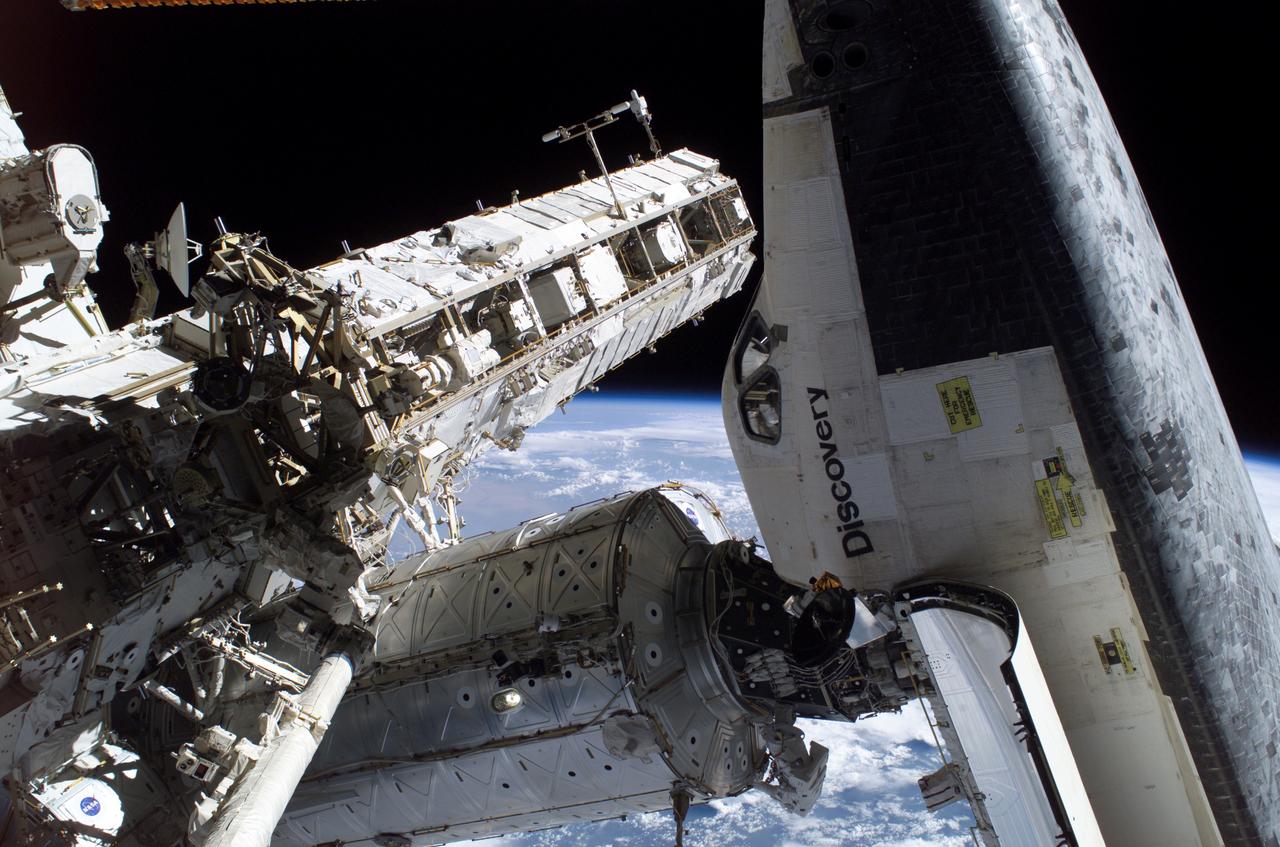
S114-E-6455 (3 August 2005) --- This image features a view of Space Shuttle Discovery docked to the Pressurized Mating Adapter 2 (PMA-2) on the Destiny laboratory of the international space station. The Crew Equipment Translation Aid (CETA) cart and the Mobile Base System (MBS), mounted on the S0 truss, are visible at left. Part of the P1 truss is also visible in the background. Dwarfed by the station and shuttle, Japan Aerospace Exploration Agency (JAXA) astronaut Soichi Noguchi, STS-114 mission specialist, is visible near the PMA-2 during the mission’s third session of extravehicular activity (EVA). The blackness of space and a blue and white Earth form the backdrop for the image.
![KENNEDY SPACE CENTER, FLA. -- At the Shuttle Landing Facility, KSC videographer Glen Benson films with HDTV the Shuttle Training Aircraft (STA) taxiing away. The STA is a modified Grumman Gulfstream II aircraft with an onboard special computer system to enable the aircraft to simulate the orbiter. [Photo by Walt Lindblom, Marshall SFC]](https://images-assets.nasa.gov/image/KSC-02pd1531/KSC-02pd1531~medium.jpg)
KENNEDY SPACE CENTER, FLA. -- At the Shuttle Landing Facility, KSC videographer Glen Benson films with HDTV the Shuttle Training Aircraft (STA) taxiing away. The STA is a modified Grumman Gulfstream II aircraft with an onboard special computer system to enable the aircraft to simulate the orbiter. [Photo by Walt Lindblom, Marshall SFC]

KENNEDY SPACE CENTER, FLA. -- STS-112 crew members share a few words after their arrival at the KSC Shuttle Landing Facility to begin launch preparations. In the center are Commander Jeffrey Ashby (left) and Mission Specialist David Wolf (right). With their backs to the camera are Mission Specialists Piers Sellers (far left) and Sandra Magnus (far right). Not shown are Pilot Pamela Melroy and Mission Specialist Fyodor Yurchikhin, who is with the Russian Space Agency. STS-112, aboard Space Shuttle Atlantis, is the 15th assembly mission to the International Space Station. Atlantis will be carrying the S1 Integrated Truss Structure, the first starboard truss segment, to be attached to the central truss segment, S0, and the Crew and Equipment Translation Aid (CETA) Cart A. The CETA is the first of two human-powered carts that will ride along the ISS railway, providing mobile work platforms for future spacewalking astronauts. The 11-day mission includes three spacewalks. Launch is scheduled for Oct. 2 between 2 and 6 p.m.
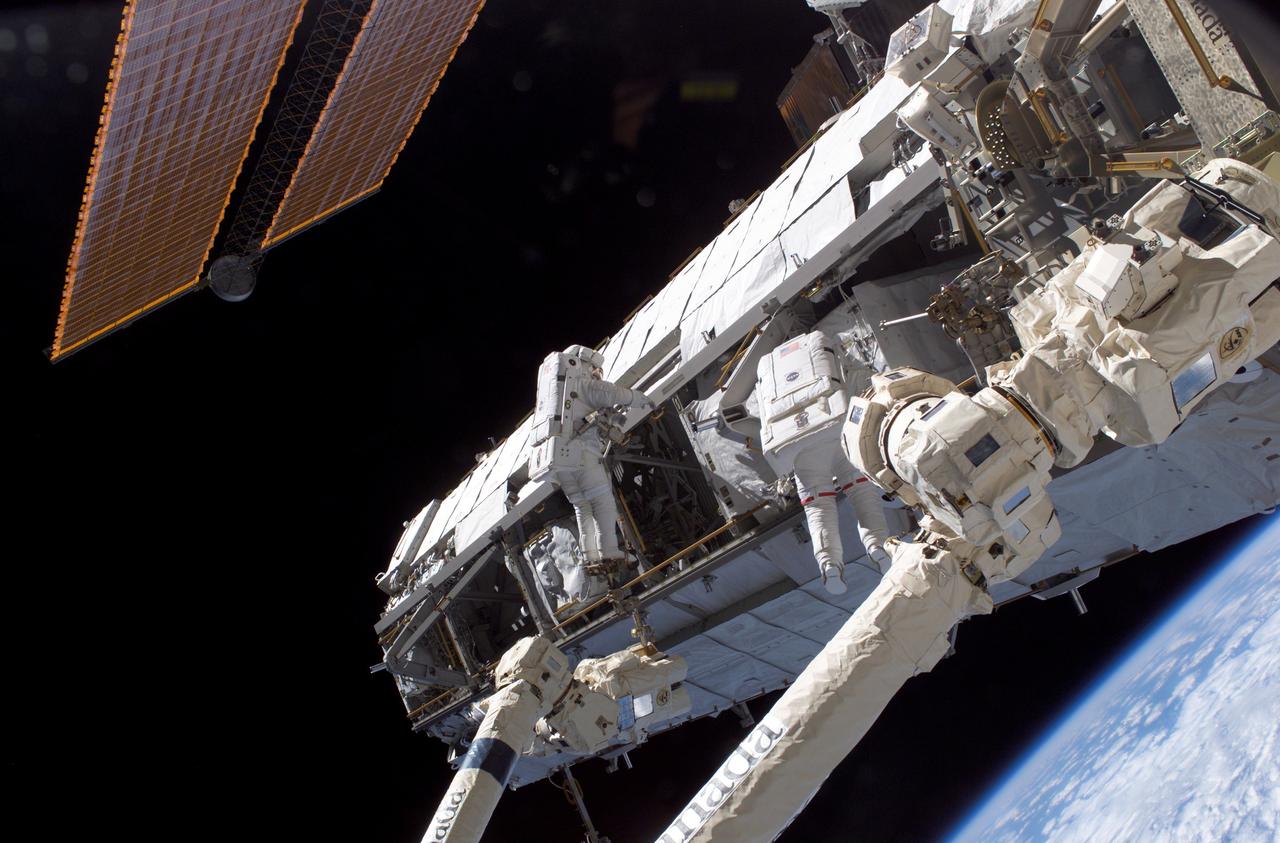
Astronauts Piers J. Sellers (left ) and David A. Wolf work on the newly installed Starboard One (S1) truss to the International Space Station (ISS) during the STS-112 mission. The primary payloads of this mission, ISS Assembly Mission 9A, were the Integrated Truss Assembly S1 (S One), the starboard side thermal radiator truss, and the Crew Equipment Translation Aid (CETA) cart to the ISS. The S1 truss provides structural support for the orbiting research facility's radiator panels, which use ammonia to cool the Station's complex power system. The S1 truss was attached to the S0 (S Zero) truss, which was launched on April 8, 2002 aboard the STS-110, and flows 637 pounds of anhydrous ammonia through three heat-rejection radiators. The truss is 45-feet long, 15-feet wide, 10-feet tall, and weighs approximately 32,000 pounds. The CETA cart was attached to the Mobil Transporter and will be used by assembly crews on later missions. Manufactured by the Boeing Company in Huntington Beach, California, the truss primary structure was transferred to the Marshall Space Flight Center in February 1999 for hardware installations and manufacturing acceptance testing. The launch of the STS-112 mission occurred on October 7, 2002, and its 11-day mission ended on October 18, 2002.

KENNEDY SPACE CENTER, FLA. - The afternoon sun casts a shadow on Space Shuttle Atlantis as it launches on its journey to the International Space Station. Liftoff occurred on time at 3:46 p.m. EDT. Along with a crew of six, Atlantis carries the S1 Integrated Truss Structure and the Crew and Equipment Translation Aid (CETA) Cart A. The CETA is the first of two human-powered carts that will ride along the ISS railway, providing mobile work platforms for future spacewalking astronauts. On the 11-day mission, three spacewalks are planned to attach the S1 truss and CETA cart.
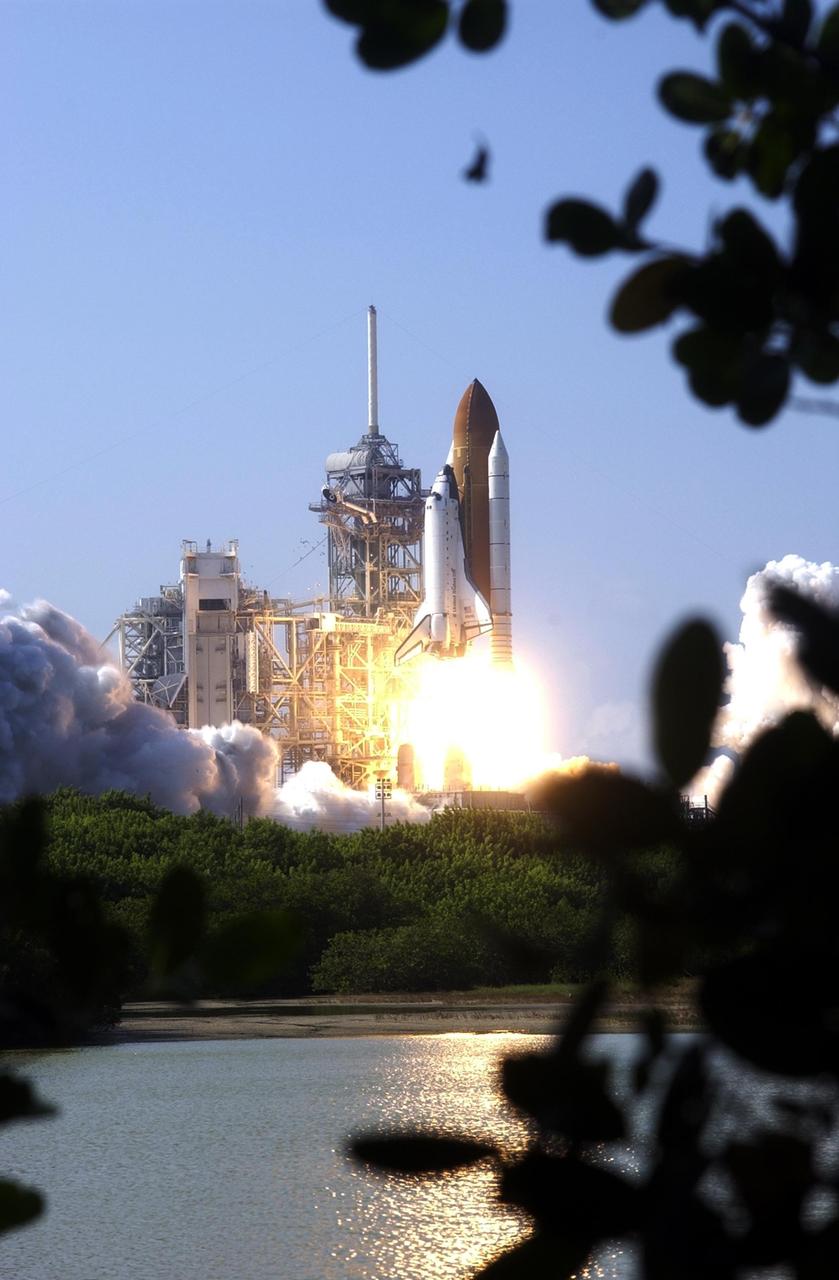
KENNEDY SPACE CENTER, FLA. - A distant view creates a frame of leaves around the launch of Space Shuttle Atlantis on mission STS-112. Liftoff occurred on time at 3:46 p.m. EDT. Along with a crew of six, Atlantis carries the S1 Integrated Truss Structure and the Crew and Equipment Translation Aid (CETA) Cart A. The CETA is the first of two human-powered carts that will ride along the ISS railway, providing mobile work platforms for future spacewalking astronauts. On the 11-day mission, three spacewalks are planned to attach the S1 truss and CETA Cart A.
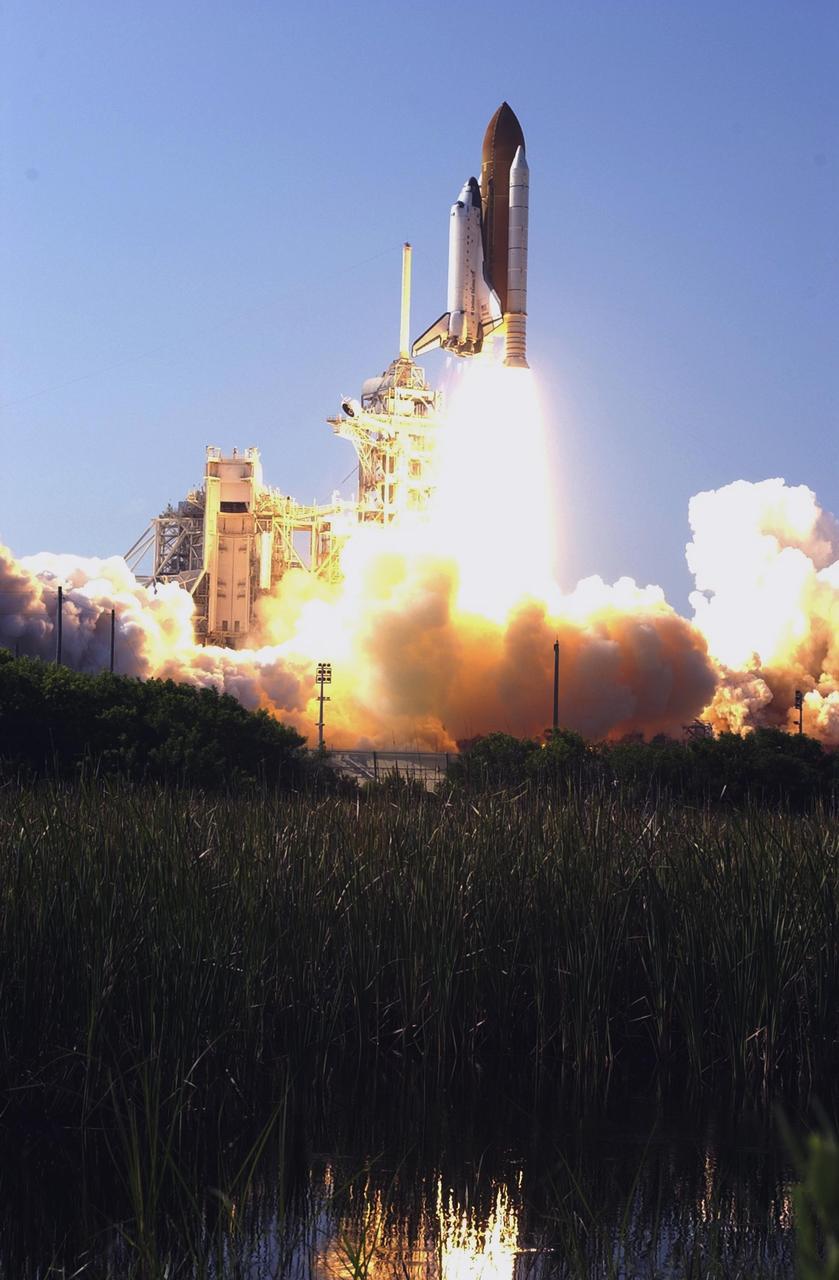
KENNEDY SPACE CENTER, FLA. -- The brilliance of the launch of Space Shuttle Atlantis is reflected in nearby waters. Liftoff of the Shuttle on mission STS-112 occurred on time at 3:46 p.m. EDT. Along with a crew of six, Atlantis carries the S1 Integrated Truss Structure and the Crew and Equipment Translation Aid (CETA) Cart A. The CETA is the first of two human-powered carts that will ride along the ISS railway, providing mobile work platforms for future spacewalking astronauts. On the 11-day mission, three spacewalks are planned to attach the S1 truss.
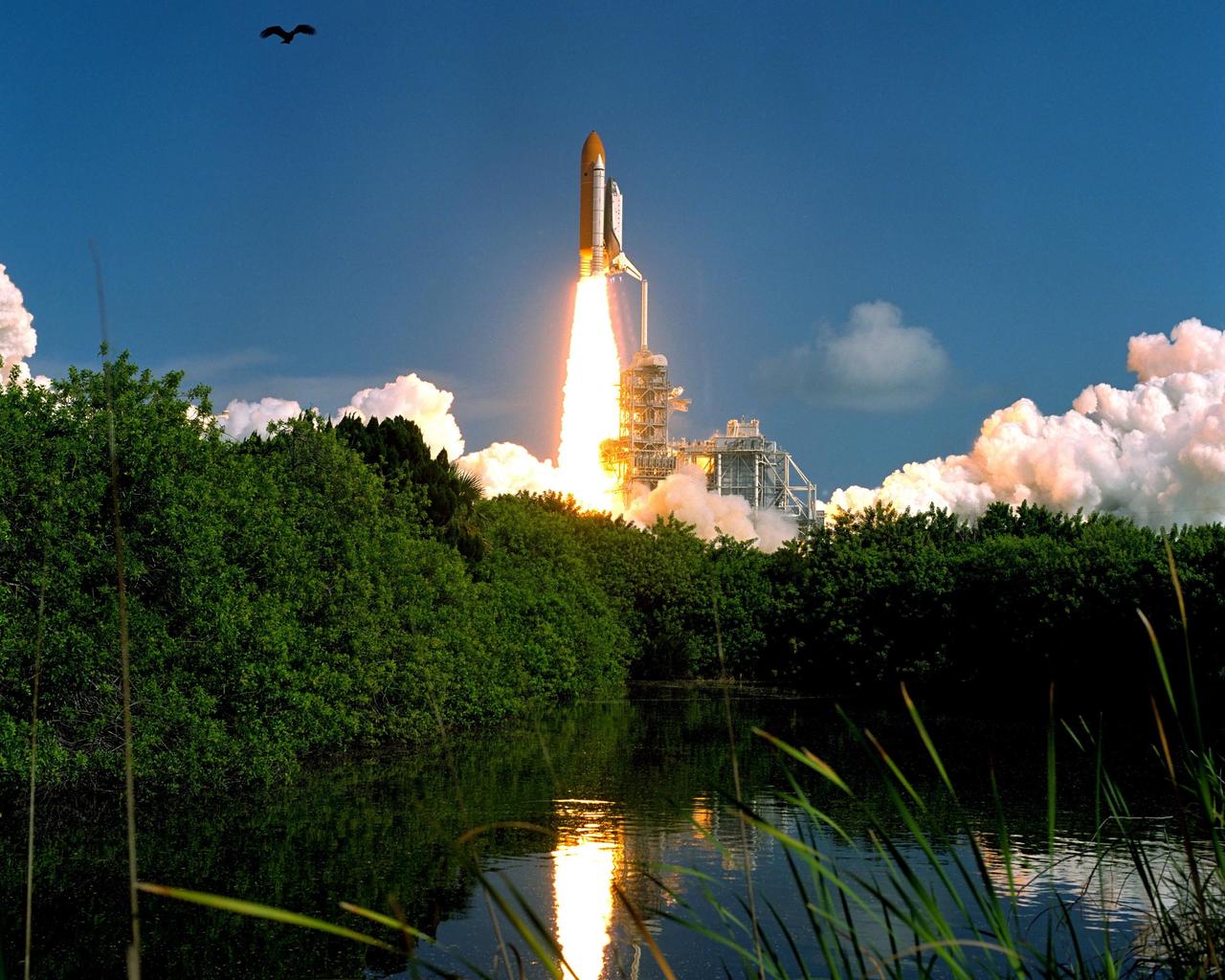
KENNEDY SPACE CENTER, FLA. -- The brilliance of the launch of Space Shuttle Atlantis is reflected in nearby waters. Liftoff of the Shuttle on mission STS-112 occurred on time at 3:46 p.m. EDT. Along with a crew of six, Atlantis carries the S1 Integrated Truss Structure and the Crew and Equipment Translation Aid (CETA) Cart A. The CETA is the first of two human-powered carts that will ride along the ISS railway, providing mobile work platforms for future spacewalking astronauts. On the 11-day mission, three spacewalks are planned to attach the S1 truss.
![KENNEDY SPACE CENTER, FLA. -- Twin columns of white flames from the solid rocket boosters propel Space Shuttle Atlantis toward space after an on-time liftoff of 3:46 p.m. EDT on mission STS-112. Along with a crew of six, Atlantis carries the S1 Integrated Truss Structure and the Crew and Equipment Translation Aid (CETA) Cart A. The CETA is the first of two human-powered carts that will ride along the ISS railway, providing mobile work platforms for future spacewalking astronauts. On the 11-day mission, three spacewalks are planned to attach the S1 truss. [Photo courtesy of Scott Andrews]](https://images-assets.nasa.gov/image/KSC-02pd1463/KSC-02pd1463~medium.jpg)
KENNEDY SPACE CENTER, FLA. -- Twin columns of white flames from the solid rocket boosters propel Space Shuttle Atlantis toward space after an on-time liftoff of 3:46 p.m. EDT on mission STS-112. Along with a crew of six, Atlantis carries the S1 Integrated Truss Structure and the Crew and Equipment Translation Aid (CETA) Cart A. The CETA is the first of two human-powered carts that will ride along the ISS railway, providing mobile work platforms for future spacewalking astronauts. On the 11-day mission, three spacewalks are planned to attach the S1 truss. [Photo courtesy of Scott Andrews]
![KENNEDY SPACE CENTER, FLA. -- The brilliance of the launch of Space Shuttle Atlantis is reflected in nearby waters. Liftoff of the Shuttle on mission STS-112 occurred on time at 3:46 p.m. EDT. Along with a crew of six, Atlantis carries the S1 Integrated Truss Structure and the Crew and Equipment Translation Aid (CETA) Cart A. The CETA is the first of two human-powered carts that will ride along the ISS railway, providing mobile work platforms for future spacewalking astronauts. On the 11-day mission, three spacewalks are planned to attach the S1 truss. [Photo courtesy of Scott Andrews]](https://images-assets.nasa.gov/image/KSC-02pd1464/KSC-02pd1464~medium.jpg)
KENNEDY SPACE CENTER, FLA. -- The brilliance of the launch of Space Shuttle Atlantis is reflected in nearby waters. Liftoff of the Shuttle on mission STS-112 occurred on time at 3:46 p.m. EDT. Along with a crew of six, Atlantis carries the S1 Integrated Truss Structure and the Crew and Equipment Translation Aid (CETA) Cart A. The CETA is the first of two human-powered carts that will ride along the ISS railway, providing mobile work platforms for future spacewalking astronauts. On the 11-day mission, three spacewalks are planned to attach the S1 truss. [Photo courtesy of Scott Andrews]

KENNEDY SPACE CENTER, FLA. - -- Space Shuttle Atlantis leaves a billowingclouds of smoke and steam behind just after liftoff from Launch Pad 39B on mission STS-112. Liftoff occurred on time at 3:46 p.m. EDT. Along with a crew of six, Atlantis carries the S1 Integrated Truss Structure and the Crew and Equipment Translation Aid (CETA) Cart A to the International Space Station (ISS). The CETA is the first of two human-powered carts that will ride along the ISS railway, providing mobile work platforms for future spacewalking astronauts. On the 11-day mission, three spacewalks are planned to attach the S1 truss.
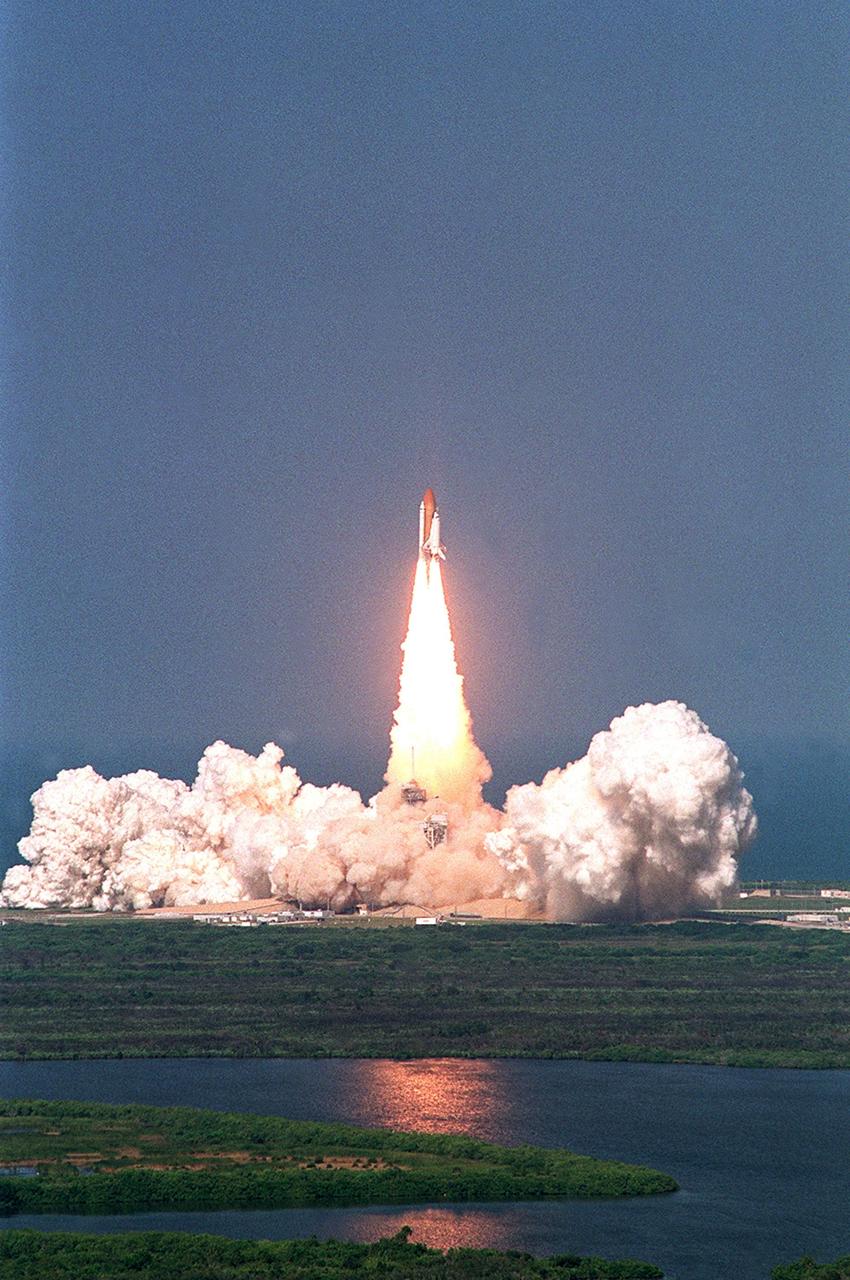
KENNEDY SPACE CENTER, FLA. - Space Shuttle Atlantis leaps clear of the billowing steam and smoke on Launch Pad 39B after an on-time liftoff of 3:46 p.m. EDT on mission STS-112. Along with a crew of six, Atlantis carries the S1 Integrated Truss Structure and the Crew and Equipment Translation Aid (CETA) Cart A. The CETA is the first of two human-powered carts that will ride along the ISS railway, providing mobile work platforms for future spacewalking astronauts. On the 11-day mission, three spacewalks are planned to attach the S1 truss.
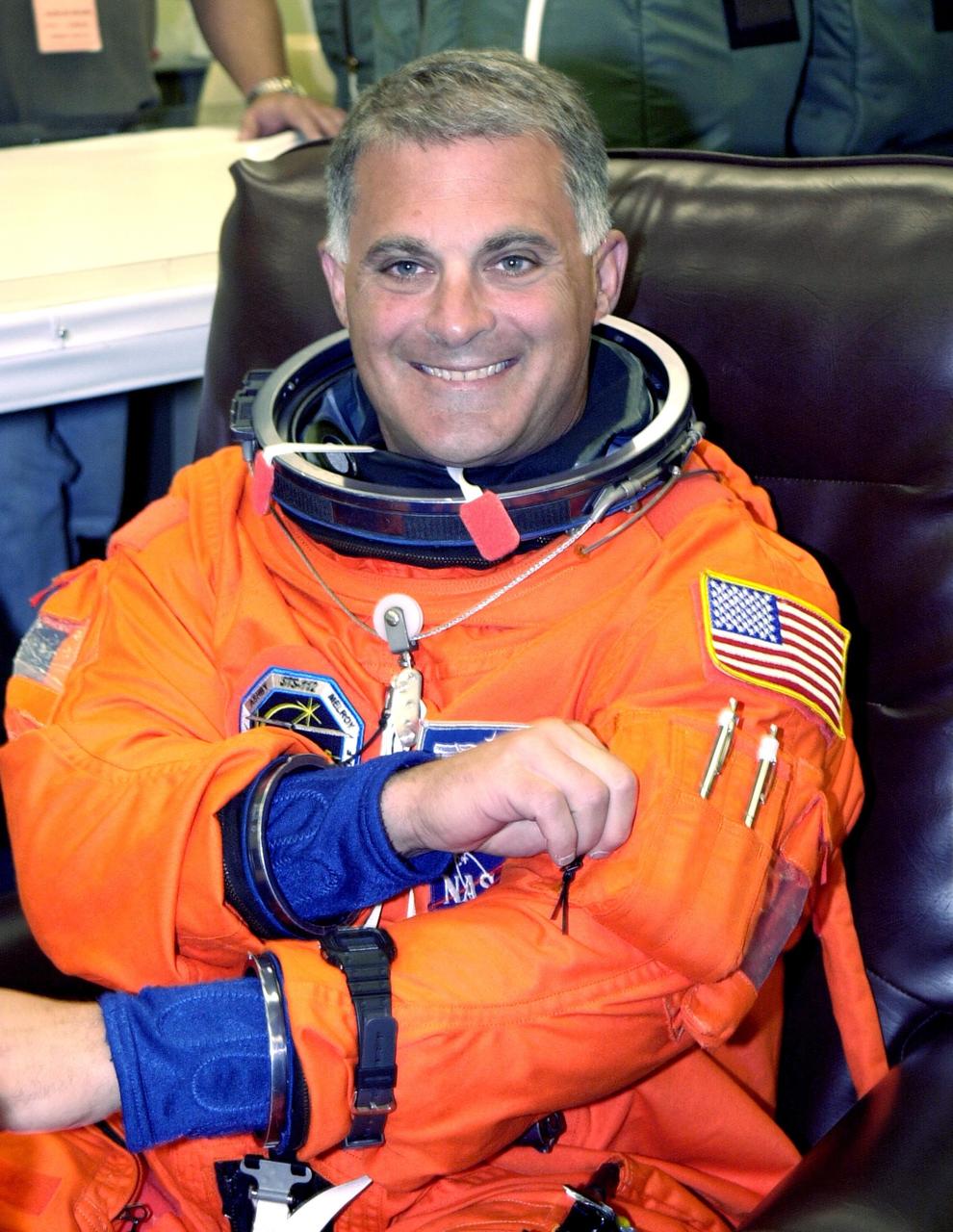
KENNEDY SPACE CENTER, FLA. -- STS-112 Mission Specialist David Wolf suits up for launch, just hours away. STS-112 is the 15th assembly flight to the International Space Station, carrying the S1 Integrated Truss Structure and the Crew and Equipment Translation Aid (CETA) Cart A. The CETA is the first of two human-powered carts that will ride along the ISS railway, providing mobile work platforms for future spacewalking astronauts. On the 11-day mission, three spacewalks are planned to attach the S1 truss to the Station. Launch is scheduled for 3:46 p.m. EDT from Launch Pad 39B. .
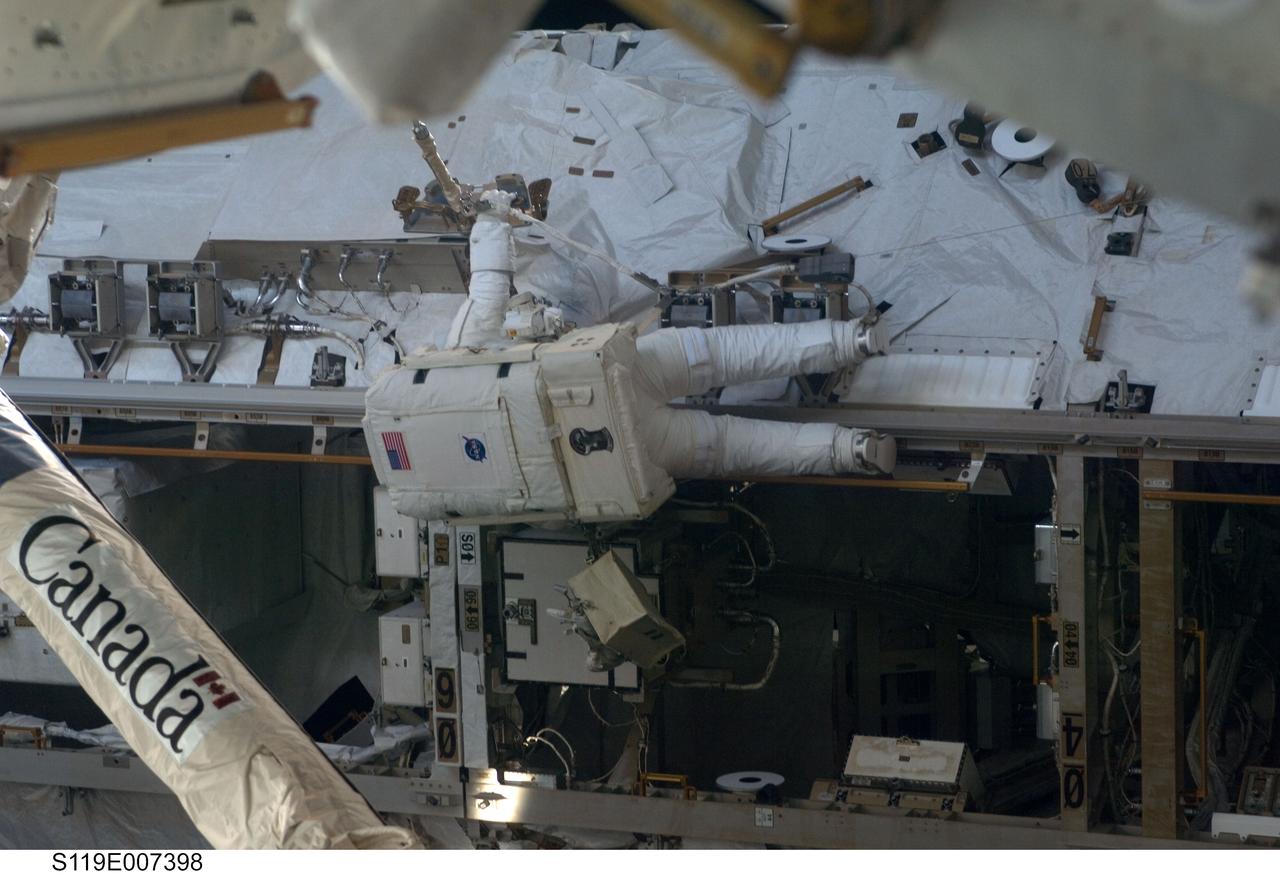
S119-E-007398 (23 March 2009) --- Astronaut Richard Arnold, STS-119 mission specialist, participates in the mission's third scheduled session of extravehicular activity (EVA) as construction and maintenance continue on the International Space Station. During the six-hour, 27-minute spacewalk, Arnold and Joseph Acaba (out of frame), mission specialist, helped robotic arm operators relocate the Crew Equipment Translation Aid (CETA) cart from the Port 1 to Starboard 1 truss segment, installed a new coupler on the CETA cart, lubricated snares on the "B" end of the space station's robotic arm and performed a few "get ahead" tasks.
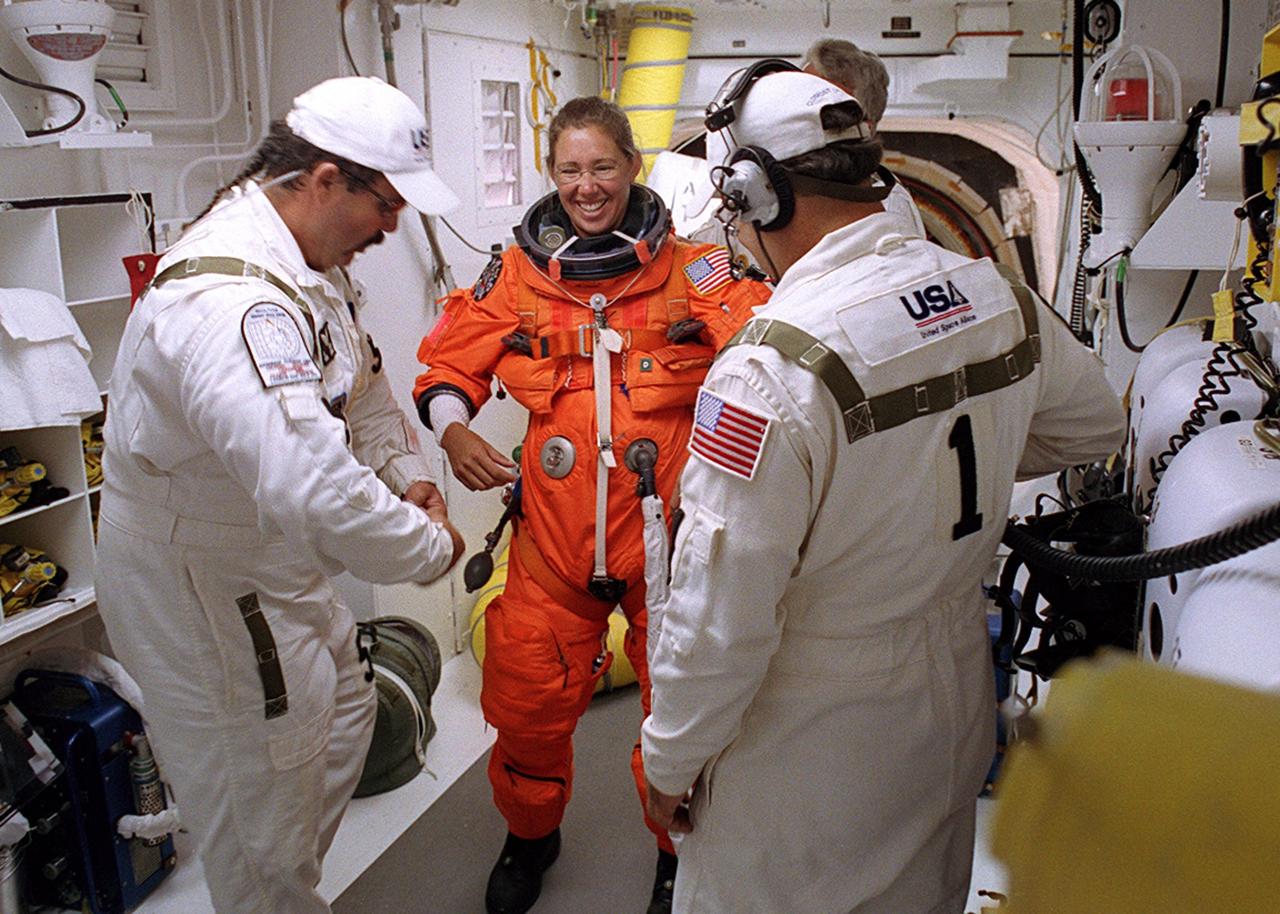
KENNEDY SPACE CENTER, FLA. - -- In the White Room at Launch Pad 39B, STS-112 Mission Specialist Sandra H. Magnus, Ph.D., receives assistance with her spacesuit before boarding Space Shuttle Atlantis. Liftoff is schedued for 3:46 p.m. EDT. Along with a crew of six, Atlantis will carry the S1 Integrated Truss Structure and the Crew and Equipment Translation Aid (CETA) Cart A to the International Space Station (ISS). The CETA is the first of two human-powered carts that will ride along the ISS railway, providing mobile work platforms for future spacewalking astronauts. On the 11-day mission, three spacewalks are planned to attach the S1 truss.
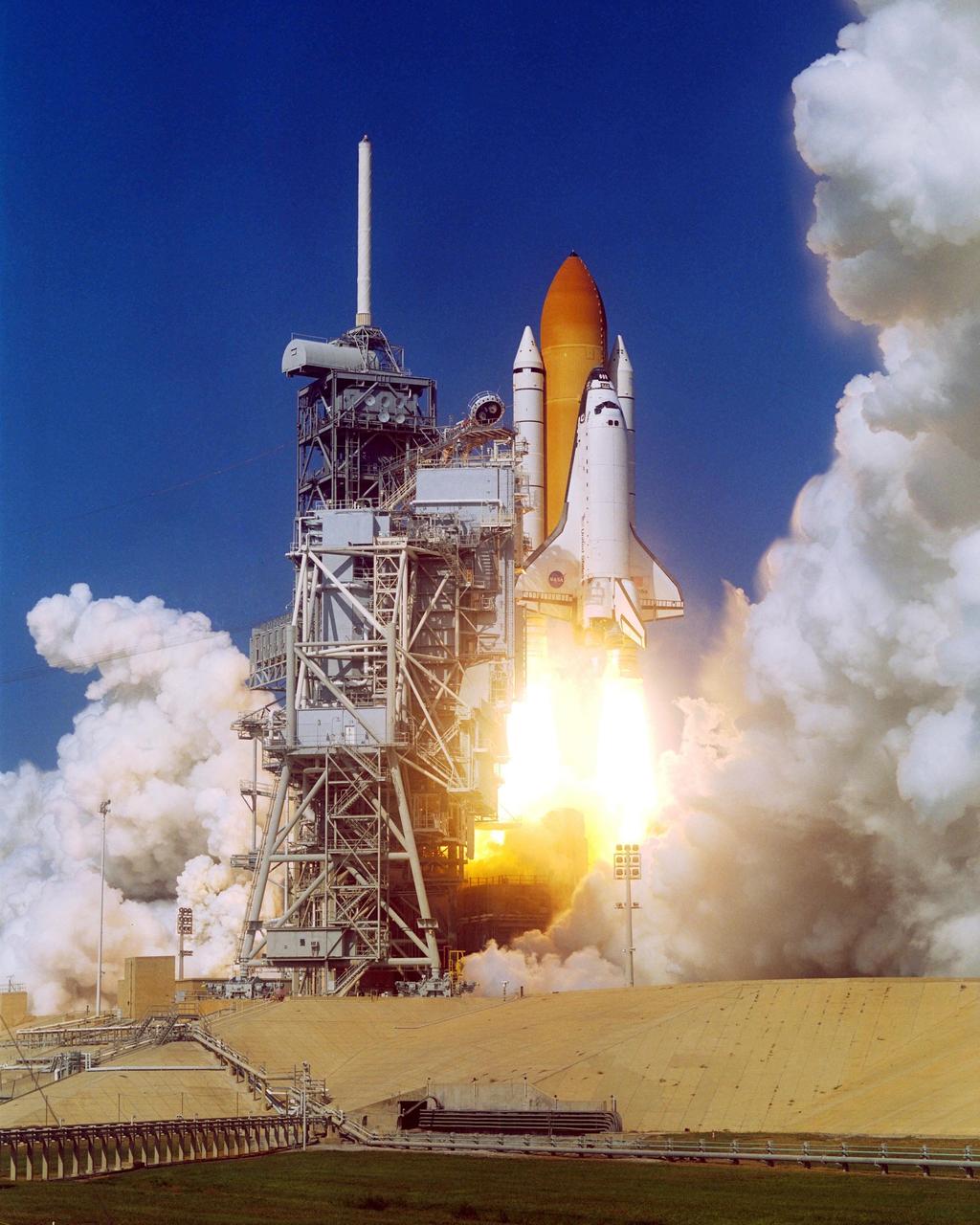
KENNEDY SPACE CENTER, FLA. - -- Space Shuttle Atlantis begins its journey to the International Space Station (ISS) as it lifts off from Launch Pad 39B on mission STS-112. Liftoff occurred on time at 3:46 p.m. EDT. Along with a crew of six, Atlantis carries the S1 Integrated Truss Structure and the Crew and Equipment Translation Aid (CETA) Cart A to the Space Station. The CETA is the first of two human-powered carts that will ride along the ISS railway, providing mobile work platforms for future spacewalking astronauts. On the 11-day mission, three spacewalks are planned to attach the S1 truss.
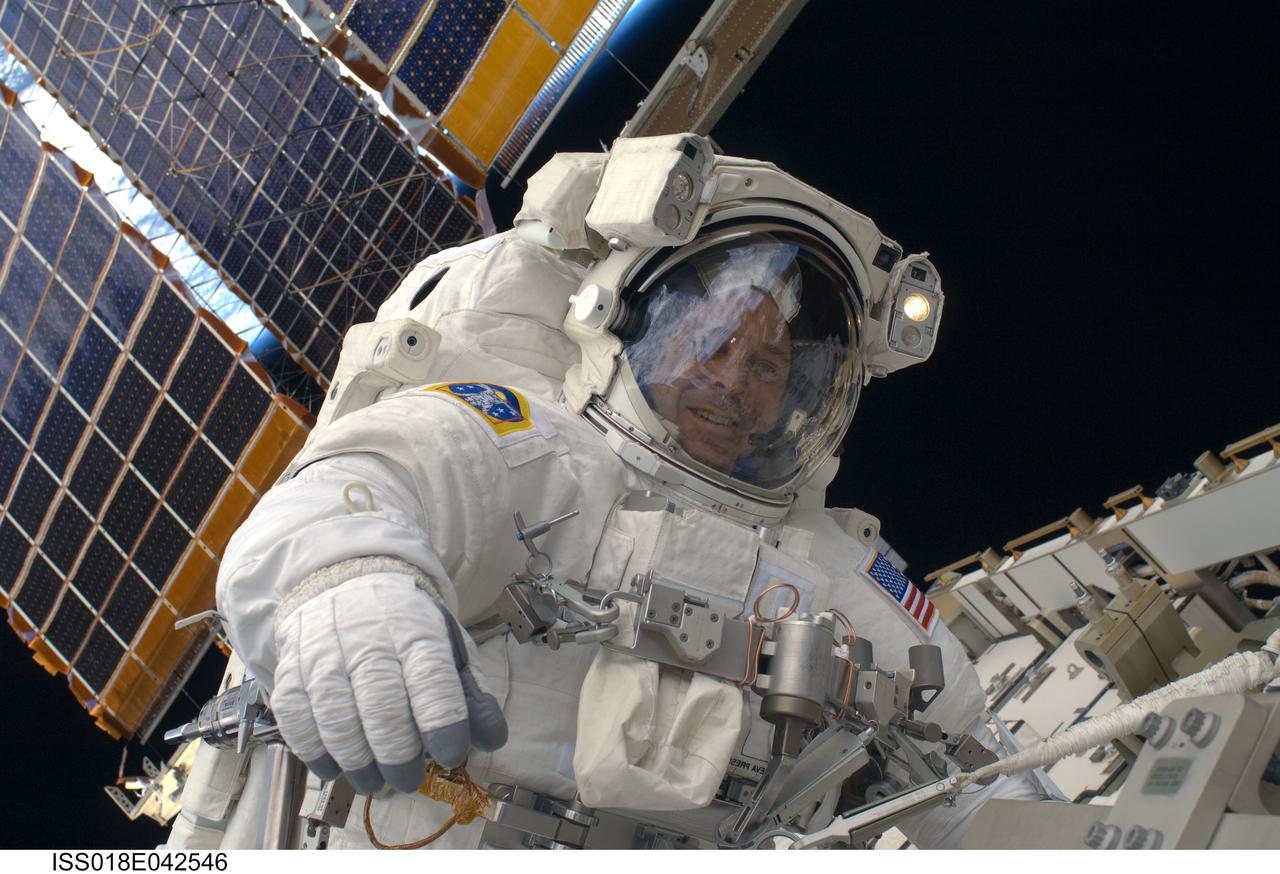
ISS018-E-042546 (23 March 2009) --- Astronaut Richard Arnold, STS-119 mission specialist, participates in the mission's third scheduled session of extravehicular activity (EVA) as construction and maintenance continue on the International Space Station. During the six-hour, 27-minute spacewalk, Arnold and Joseph Acaba (out of frame), mission specialist, helped robotic arm operators relocate the Crew Equipment Translation Aid (CETA) cart from the Port 1 to Starboard 1 truss segment, installed a new coupler on the CETA cart, lubricated snares on the "B" end of the space station's robotic arm and performed a few "get ahead" tasks.
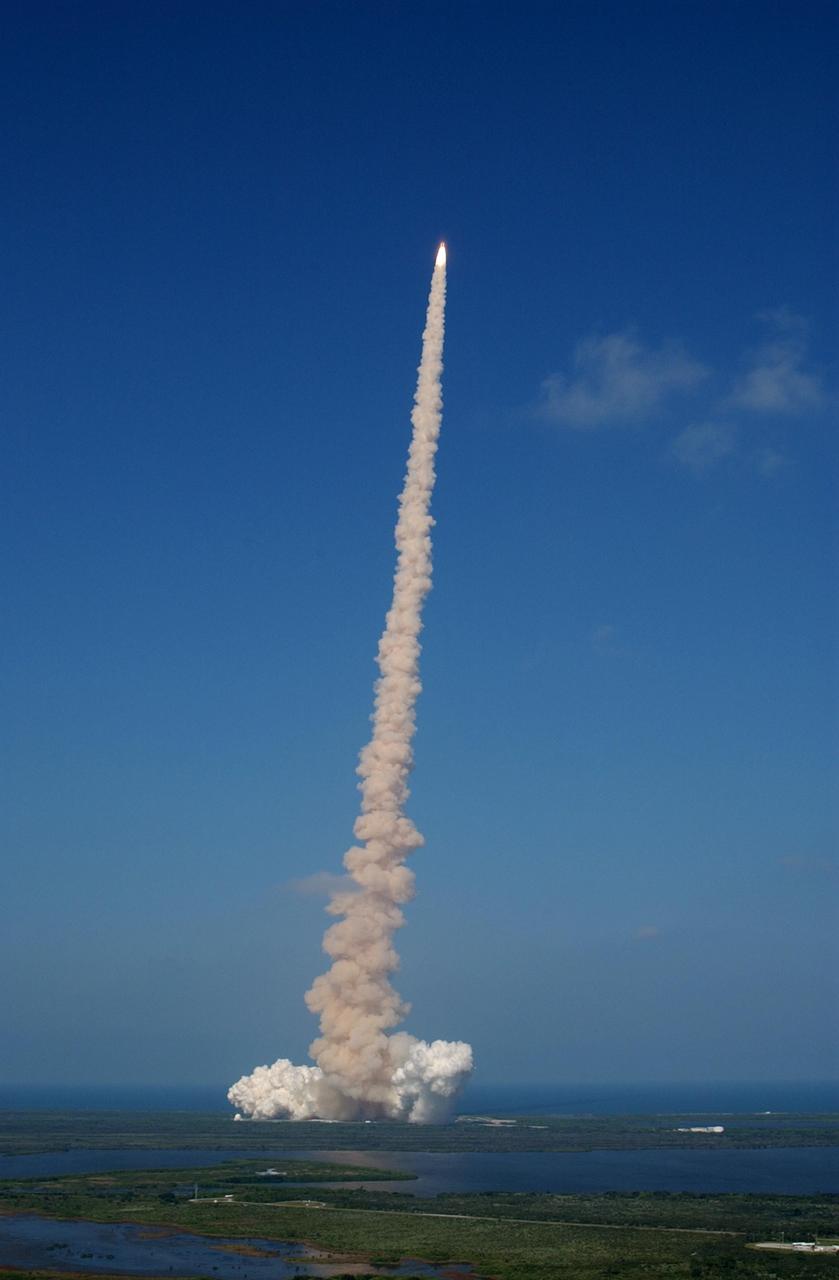
KENNEDY SPACE CENTER, FLA. - Looking like a star balanced on a stem of smoke, Space Shuttle Atlantis shoots through the clear blue sky after launch on mission STS-112, the 15th assembly flight to the International Space Station. Liftoff from Launch Pad 39B occurred at 3:46 p.m. EDT. Atlantis carries the S1 Integrated Truss Structure and the Crew and Equipment Translation Aid (CETA) Cart A. The CETA is the first of two human-powered carts that will ride along the ISS railway, providing mobile work platforms for future spacewalking astronauts. On the 11-day mission, three spacewalks are planned to attach the S1 truss.
![KENNEDY SPACE CENTER, FLA. - Space Shuttle Atlantis leaps clear of the billowing steam and smoke on Launch Pad 39B after an on-time liftoff of 3:46 p.m. EDT on mission STS-112. Along with a crew of six, Atlantis carries the S1 Integrated Truss Structure and the Crew and Equipment Translation Aid (CETA) Cart A. The CETA is the first of two human-powered carts that will ride along the ISS railway, providing mobile work platforms for future spacewalking astronauts. On the 11-day mission, three spacewalks are planned to attach the S1 truss. [Photo courtesy of Scott Andrews]](https://images-assets.nasa.gov/image/KSC-02pd1457/KSC-02pd1457~medium.jpg)
KENNEDY SPACE CENTER, FLA. - Space Shuttle Atlantis leaps clear of the billowing steam and smoke on Launch Pad 39B after an on-time liftoff of 3:46 p.m. EDT on mission STS-112. Along with a crew of six, Atlantis carries the S1 Integrated Truss Structure and the Crew and Equipment Translation Aid (CETA) Cart A. The CETA is the first of two human-powered carts that will ride along the ISS railway, providing mobile work platforms for future spacewalking astronauts. On the 11-day mission, three spacewalks are planned to attach the S1 truss. [Photo courtesy of Scott Andrews]