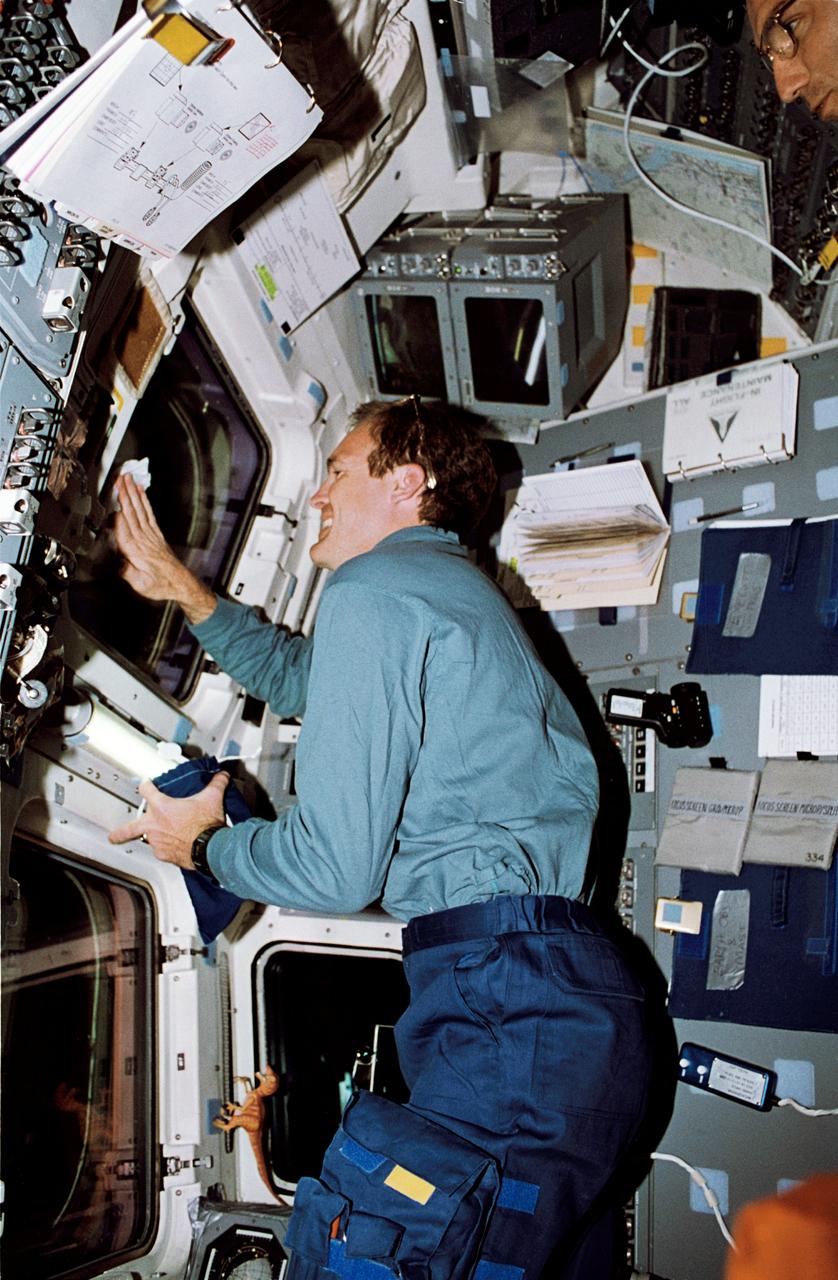
STS065-52-034 (8-23 July 1994) --- On the Space Shuttle Columbia's aft flight deck, astronaut James D. Halsel,l Jr., pilot, cleans off one of the overhead windows. Astronaut Carl E. Walz, mission specialist, looks on (photo's edge). The two shared over fourteen days in Earth-orbit with four other NASA astronauts and a Japanese payload specialist in support of the second International Microgravity Laboratory (IML-2) mission.
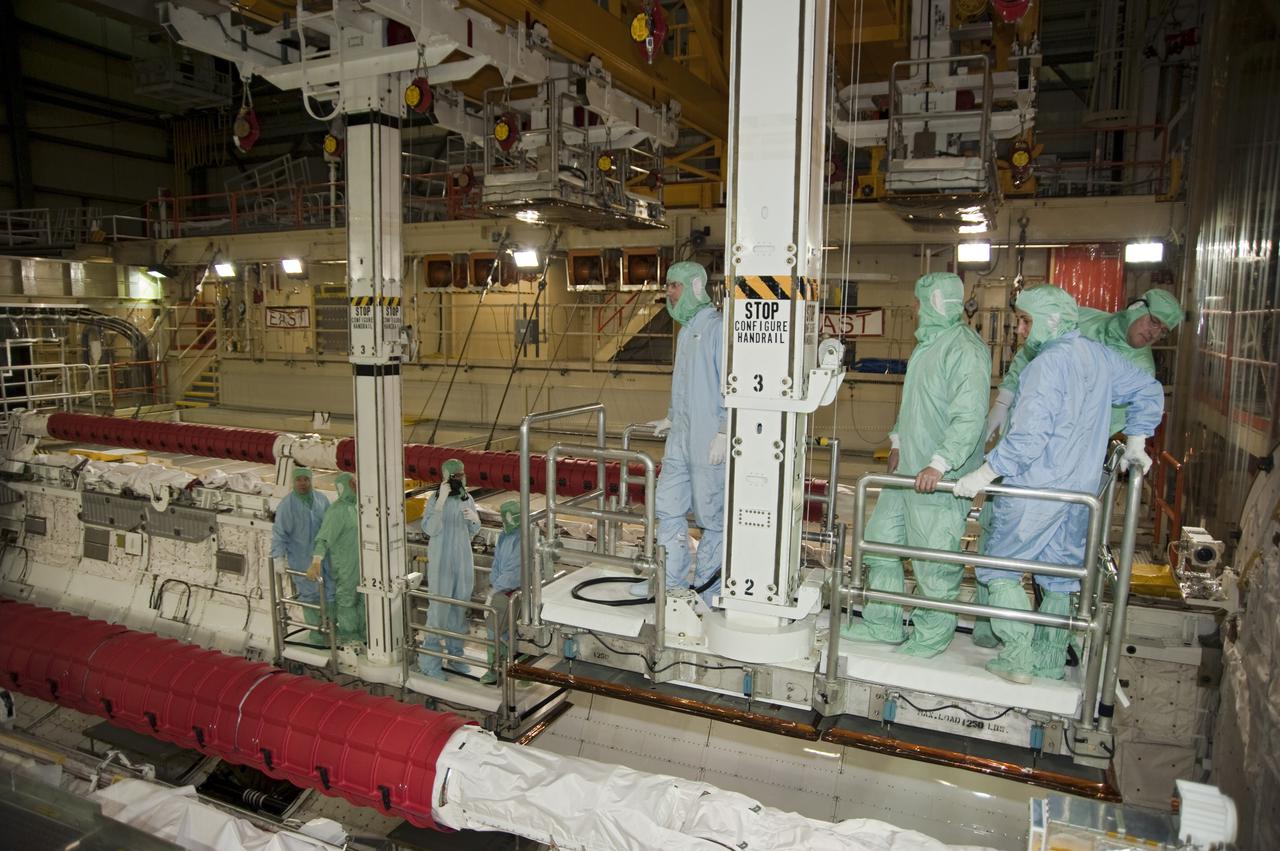
CAPE CANAVERAL, Fla. -- Attired in clean-room gear, known as 'bunny suits,' the STS-133 crew members look into the shuttle's payload bay in Orbiter Processing Facility-3 at NASA's Kennedy Space Center in Florida. The astronauts are at Kennedy for the Crew Equipment Interface Test, or CEIT, which provides the crew with hands-on training and observation of shuttle and flight hardware for their mission to the International Space Station. Launch of the STS-133 mission on space shuttle Discovery is targeted for Nov. 1 at 4:33 p.m. EDT. Photo credit: NASA_Kim Shiflett
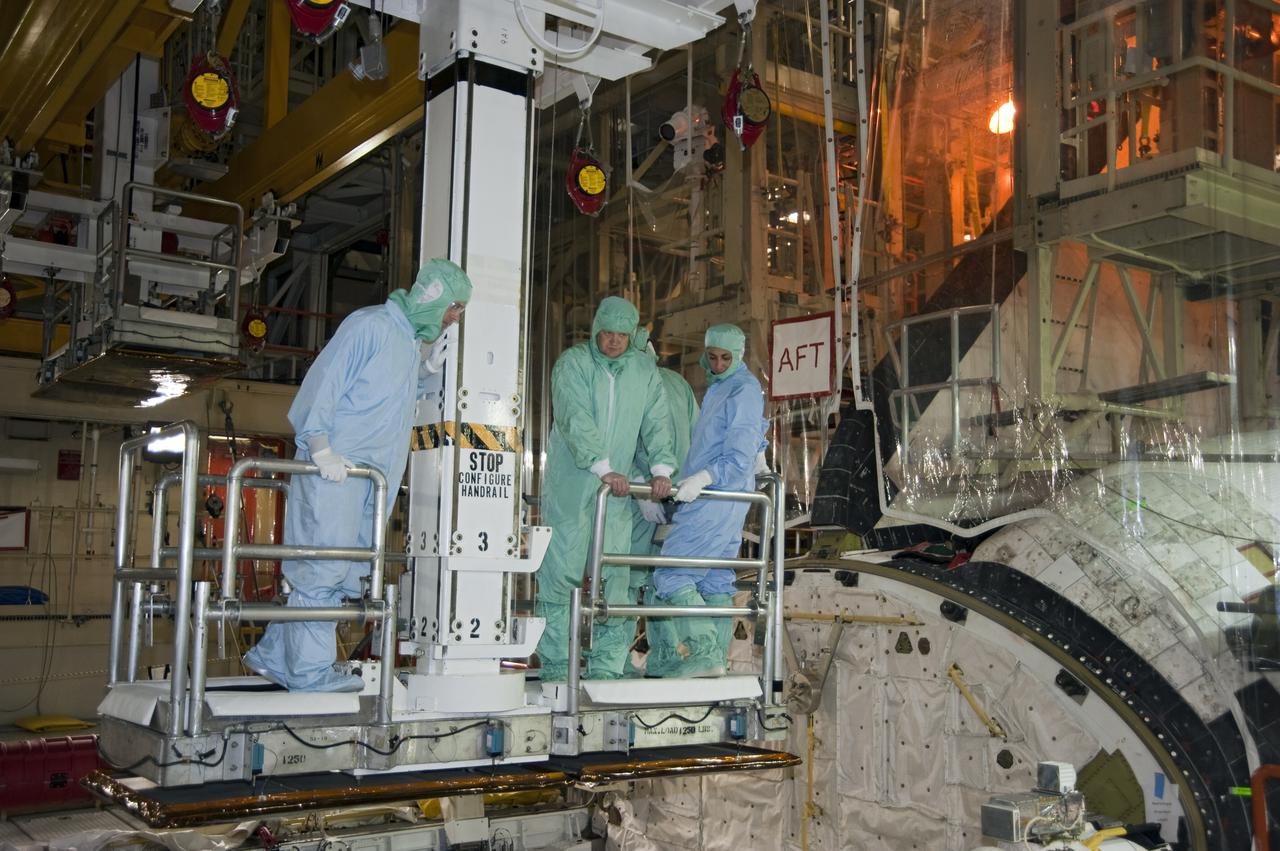
CAPE CANAVERAL, Fla. -- Attired in clean-room gear, known as 'bunny suits,' STS-133 Pilot Eric Boe and Mission Specialist Nicole Stott peer into the shuttle's payload bay under the watchful eye of a technician in Orbiter Processing Facility-3 at NASA's Kennedy Space Center in Florida. The astronauts are at Kennedy for the Crew Equipment Interface Test, or CEIT, which provides the crew with hands-on training and observation of shuttle and flight hardware for their mission to the International Space Station. Launch of the STS-133 mission on space shuttle Discovery is targeted for Nov. 1 at 4:33 p.m. EDT. Photo credit: NASA_Kim Shiflett
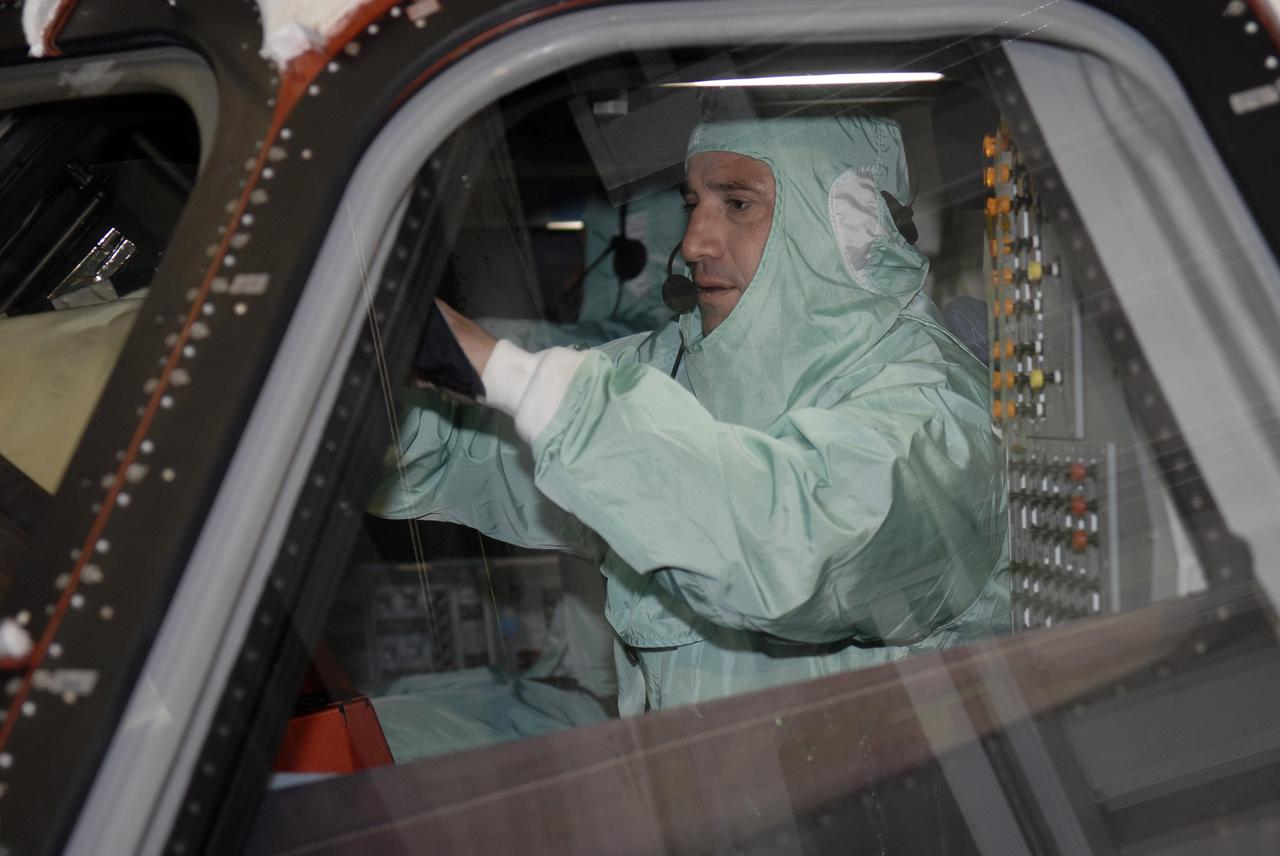
CAPE CANAVERAL, Fla. – In Orbiter Processing Facility-3 at NASA's Kennedy Space Center in Florida, STS-130 Commander George Zamka dressed in clean-room attire, known as a "bunny suit," gets the feel of the cockpit of space shuttle Endeavour. The crew is at Kennedy for a crew equipment interface test, or CEIT, which provides hands-on training and observation of shuttle and flight hardware. The STS-130 flight will carry the Tranquility pressurized module with a built-in cupola to the International Space Station aboard Endeavour. Launch is targeted for Feb. 4, 2010. Photo credit: NASA/Kim Shiflett
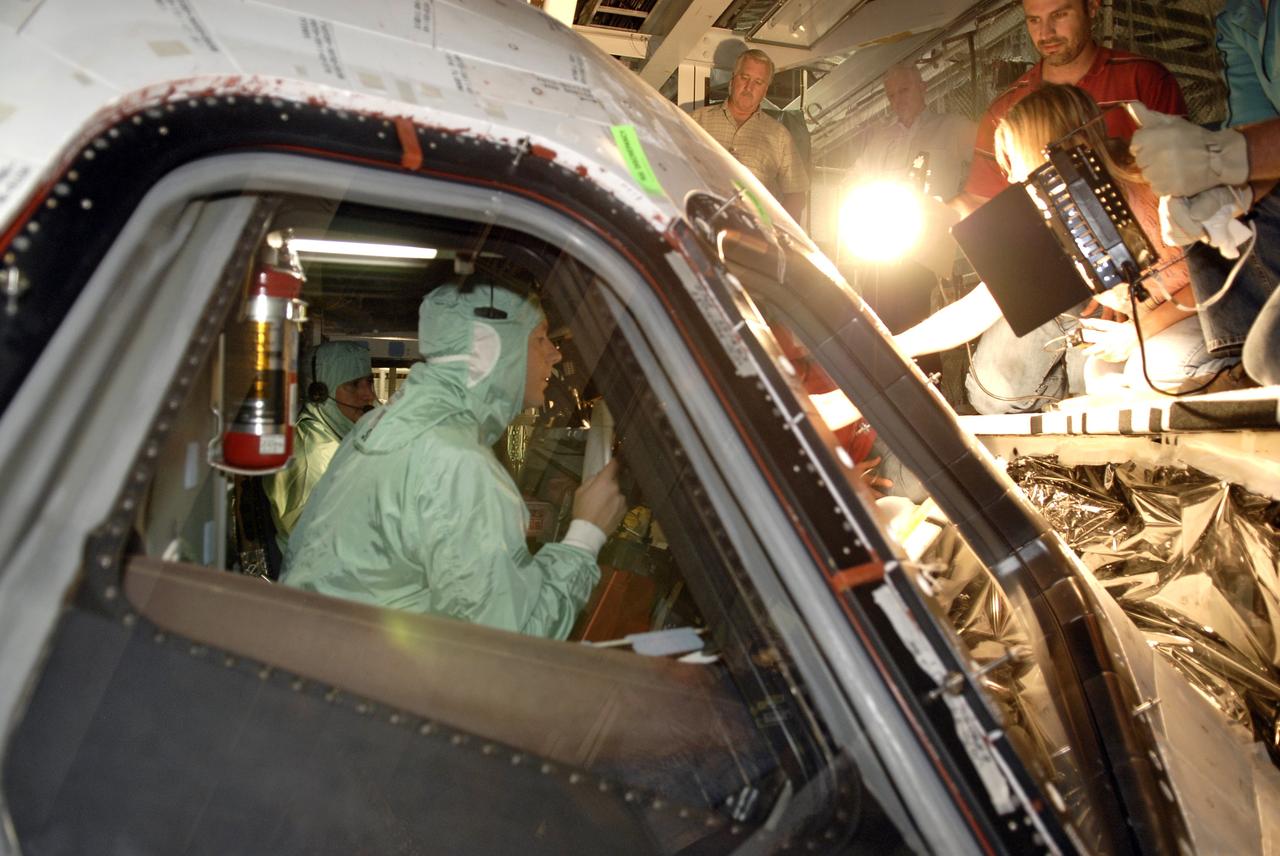
CAPE CANAVERAL, Fla. – In Orbiter Processing Facility-3 at NASA's Kennedy Space Center in Florida, STS-130 Pilot Terry Virts Jr. dressed in clean-room attire, known as a "bunny suit," tries out the cockpit of space shuttle Endeavour. The crew is at Kennedy for a crew equipment interface test, or CEIT, which provides hands-on training and observation of shuttle and flight hardware. The STS-130 flight will carry the Tranquility pressurized module with a built-in cupola to the International Space Station aboard Endeavour. Launch is targeted for Feb. 4, 2010. Photo credit: NASA/Kim Shiflett
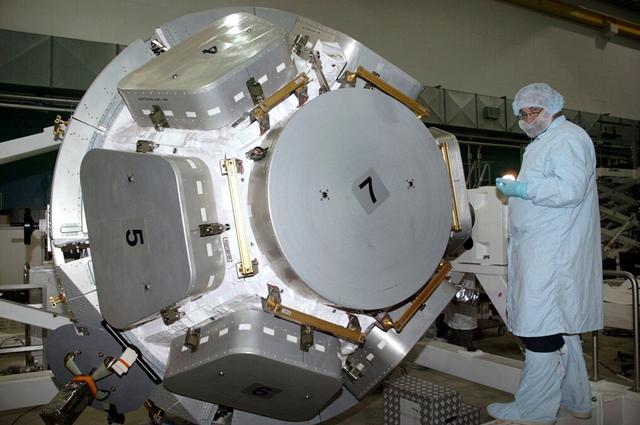
JSC2004-E-44648 (September 2004) --- A technician checks the International Space Station's Cupola in the Alenia Spazio clean room in Turin, Italy. Personnel are preparing the hardware for shipment to NASA's launch facility at Cape Kennedy, Florida. From inside the Cupola, a dome-shaped module with seven windows, astronauts have a panoramic view for observing operations on the outside of the orbiting complex. The Cupola module provides external observation capabilities during spacewalks, docking operations, hardware surveys and for Earth and celestial studies. It also serves as the primary location for executing robot arm operations of Canadarm2. Until the Cupola is installed, crews have been using a robotic control computer station located in the Destiny Laboratory to operate the arm. The Cupola’s windows enhance the robotic arm operator's situational awareness, supplementing camera and graphic views provided by the computer workstation. Photo Credit: Alenia Spazio
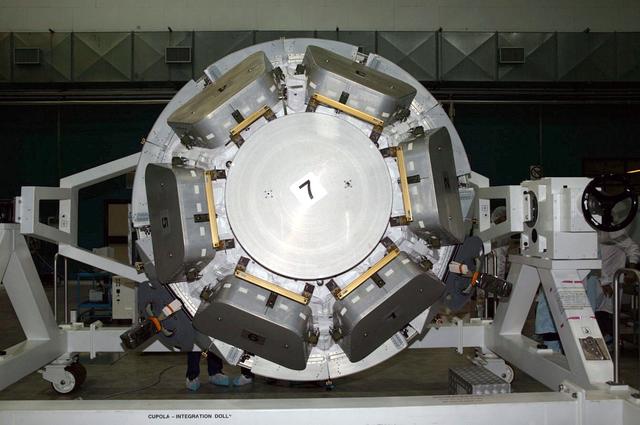
JSC2004-E-44649 (September 2004) --- Engineers and technicians (partially visible in right background) check the International Space Station's Cupola in the Alenia Spazio clean room in Turin, Italy. Personnel are preparing the hardware for shipment to NASA's launch facility at Cape Kennedy, Florida. From inside the Cupola, a dome-shaped module with seven windows, astronauts have a panoramic view for observing operations on the outside of the orbiting complex. The Cupola module provides external observation capabilities during spacewalks, docking operations, hardware surveys and for Earth and celestial studies. It also serves as the primary location for executing robot arm operations of Canadarm2. Until the Cupola is installed, crews have been using a robotic control computer station located in the Destiny Laboratory to operate the arm. The Cupola’s windows enhance the robotic arm operator's situational awareness, supplementing camera and graphic views provided by the computer workstation. Photo Credit: Alenia Spazio

JSC2004-E-42739 (August 2004) --- A low angle view shows the interior of the International Space Station's Cupola in the Alenia Spazio clean room in Turin, Italy. Personnel are preparing the hardware for shipment to NASA's launch facility at Cape Kennedy, Florida. From inside the Cupola, a dome-shaped module with seven windows, astronauts have a panoramic view for observing operations on the outside of the orbiting complex. The Cupola module provides external observation capabilities during spacewalks, docking operations, hardware surveys and for Earth and celestial studies. It also serves as the primary location for executing robot arm operations of Canadarm2. Until the Cupola is installed, crews have been using a robotic control computer station located in the Destiny Laboratory to operate the arm. The Cupola’s windows enhance the robotic arm operator's situational awareness, supplementing camera and graphic views provided by the computer workstation. Photo Credit: Alenia Spazio
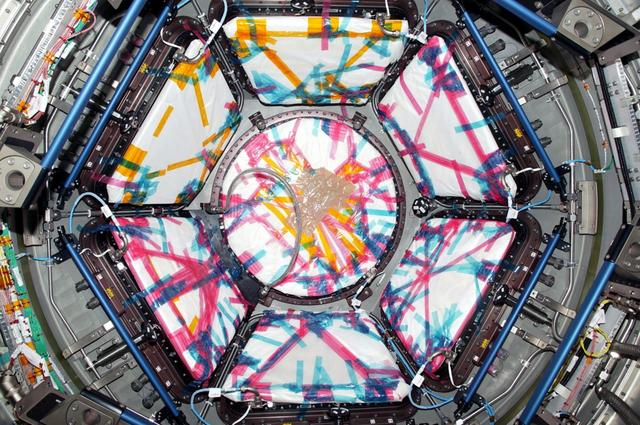
JSC2004-E-44650 (September 2004) --- A crewmember-eye view of the International Space Station's Cupola in the Alenia Spazio clean room in Turin, Italy. Personnel are preparing the hardware for shipment to NASA's launch facility at Cape Kennedy, Florida. From inside the Cupola, a dome-shaped module with seven windows (seen here under a protective cover), astronauts have a panoramic view for observing operations on the outside of the orbiting complex. The Cupola module provides external observation capabilities during spacewalks, docking operations, hardware surveys and for Earth and celestial studies. It also serves as the primary location for executing robot arm operations of Canadarm2. Until the Cupola is installed, crews have been using a robotic control computer station located in the Destiny Laboratory to operate the arm. The Cupola’s windows enhance the robotic arm operator's situational awareness, supplementing camera and graphic views provided by the computer workstation. Photo Credit: Alenia Spazio
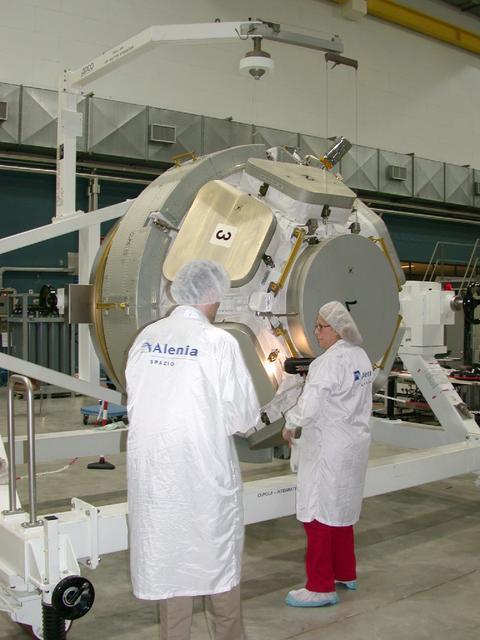
JSC2004-E-42742 (August 2004) --- Engineers and technicians check the International Space Station's Cupola in the Alenia Spazio clean room in Turin, Italy. Personnel are preparing the hardware for shipment to NASA's launch facility at Cape Kennedy, Florida. From inside the Cupola, a dome-shaped module with seven windows, astronauts have a panoramic view for observing operations on the outside of the orbiting complex. The Cupola module provides external observation capabilities during spacewalks, docking operations, hardware surveys and for Earth and celestial studies. It also serves as the primary location for executing robot arm operations of Canadarm2. Until the Cupola is installed, crews have been using a robotic control computer station located in the Destiny Laboratory to operate the arm. The Cupola’s windows enhance the robotic arm operator's situational awareness, supplementing camera and graphic views provided by the computer workstation. Photo Credit: Alenia Spazio
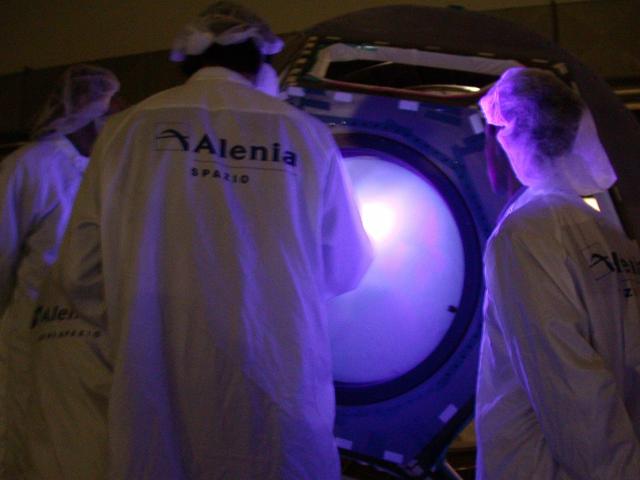
JSC2004-E-42740 (August 2004) --- Engineers and technicians check the International Space Station's Cupola in the Alenia Spazio clean room in Turin, Italy. Personnel are preparing the hardware for shipment to NASA's launch facility at Cape Kennedy, Florida. From inside the Cupola, a dome-shaped module with seven windows, astronauts have a panoramic view for observing operations on the outside of the orbiting complex. The Cupola module provides external observation capabilities during spacewalks, docking operations, hardware surveys and for Earth and celestial studies. It also serves as the primary location for executing robot arm operations of Canadarm2. Until the Cupola is installed, crews have been using a robotic control computer station located in the Destiny Laboratory to operate the arm. The Cupola’s windows enhance the robotic arm operator's situational awareness, supplementing camera and graphic views provided by the computer workstation. Photo Credit: Alenia Spazio
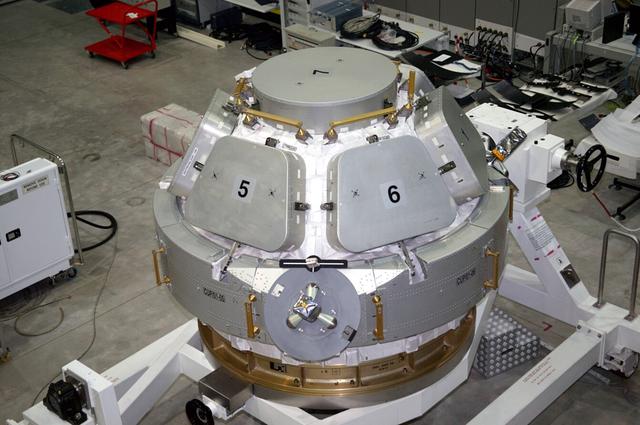
JSC2004-E-44647 (September 2004) --- A slightly high-angle view of the International Space Station's Cupola in the Alenia Spazio clean room in Turin, Italy. Personnel are preparing the hardware for shipment to NASA's launch facility at Cape Kennedy, Florida. From inside the Cupola, a dome-shaped module with seven windows, astronauts have a panoramic view for observing operations on the outside of the orbiting complex. The Cupola module provides external observation capabilities during spacewalks, docking operations, hardware surveys and for Earth and celestial studies. It also serves as the primary location for executing robot arm operations of Canadarm2. Until the Cupola is installed, crews have been using a robotic control computer station located in the Destiny Laboratory to operate the arm. The Cupola’s windows enhance the robotic arm operator's situational awareness, supplementing camera and graphic views provided by the computer workstation. Photo Credit: Alenia Spazio
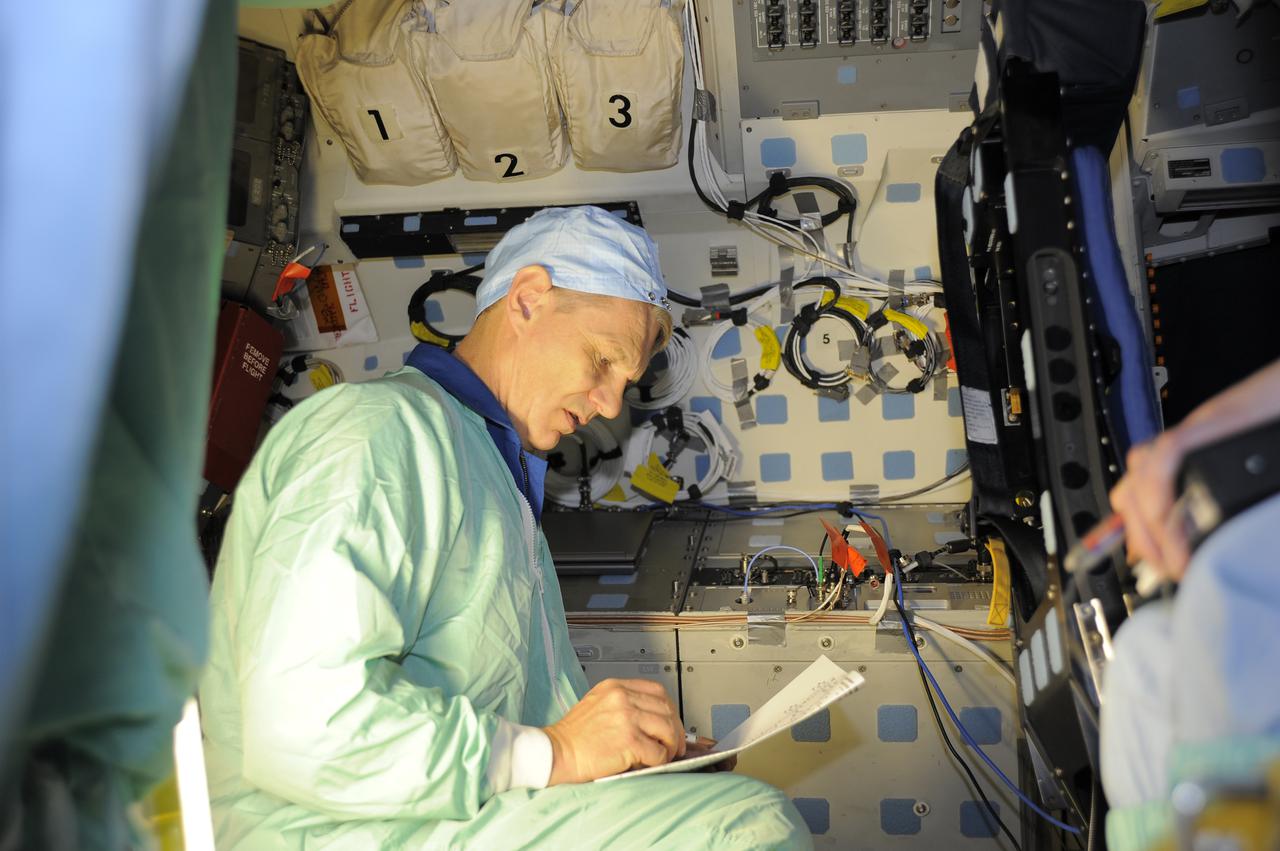
CAPE CANAVERAL, Fla. – In Orbiter Processing Facility-1 at NASA's Kennedy Space Center in Florida, members of space shuttle Atlantis' STS-132 crew participate in training activities during the Crew Equipment Interface Test, or CEIT, for their mission. Here, Mission Specialist Piers Sellers reviews instructions on the operation of the hardware that will fly on Atlantis' middeck. Sellers is dressed in clean room attire, known as a bunny suit. CEIT provides the crew with hands-on training and observation of shuttle and flight hardware. The six-member crew of Atlantis' STS-132 mission will deliver an Integrated Cargo Carrier and the Russian-built Mini-Research Module-1 to the International Space Station. STS-132 is the 34th mission to the station and the 132nd space shuttle mission. Launch is targeted for May 14. For information on the STS-132 mission, visit http:__www.nasa.gov_mission_pages_shuttle_shuttlemissions_sts132_index.html. Photo credit: NASA_Kim Shiflett
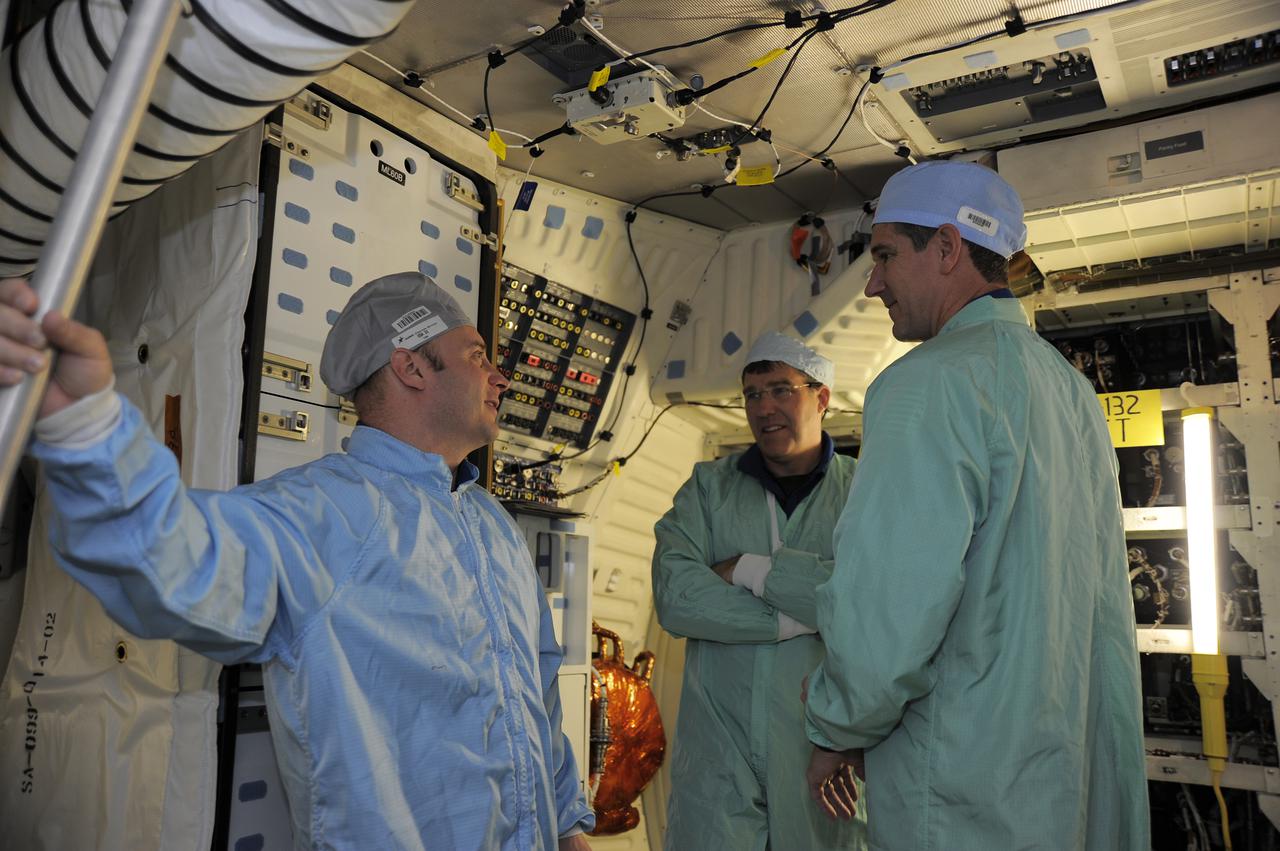
CAPE CANAVERAL, Fla. – In Orbiter Processing Facility-1 at NASA's Kennedy Space Center in Florida, members of space shuttle Atlantis' STS-132 crew participate in training activities during the Crew Equipment Interface Test, or CEIT, for their mission. Here, from left, Mission Specialists Garrett Reisman, Steve Bowen and Michael Good take the opportunity to compare notes in Atlantis' middeck. They are dressed in clean room attire, known as bunny suits. CEIT provides the crew with hands-on training and observation of shuttle and flight hardware. The six-member crew of Atlantis' STS-132 mission will deliver an Integrated Cargo Carrier and the Russian-built Mini-Research Module-1 to the International Space Station. STS-132 is the 34th mission to the station and the 132nd space shuttle mission. Launch is targeted for May 14. For information on the STS-132 mission, visit http:__www.nasa.gov_mission_pages_shuttle_shuttlemissions_sts132_index.html. Photo credit: NASA_Kim Shiflett

JSC2004-E-44645 (September 2004) --- This view of the International Space Station's Cupola features the portion where the grapple fixture is located. The Canadian-built remote manipulator system on either the Station or Space Shuttle will be able to grasp the Cupola with this fixture. This is one of a series of photos showing completed work on the hardware at the Alenia Spazio clean room in Turin, Italy. The personnel have been preparing the hardware for shipment to NASA's launch facility at Cape Kennedy, Florida. From inside the Cupola, a dome-shaped module with seven windows, astronauts have a panoramic view for observing operations on the outside of the orbiting complex. The Cupola module provides external observation capabilities during spacewalks, docking operations, hardware surveys and for Earth and celestial studies. It also serves as the primary location for executing robot arm operations of Canadarm2. Until the Cupola is installed, crews have been using a robotic control computer station located in the Destiny Laboratory to operate the arm. The Cupola’s windows enhance the robotic arm operator's situational awareness, supplementing camera and graphic views provided by the computer workstation. Photo Credit: Alenia Spazio
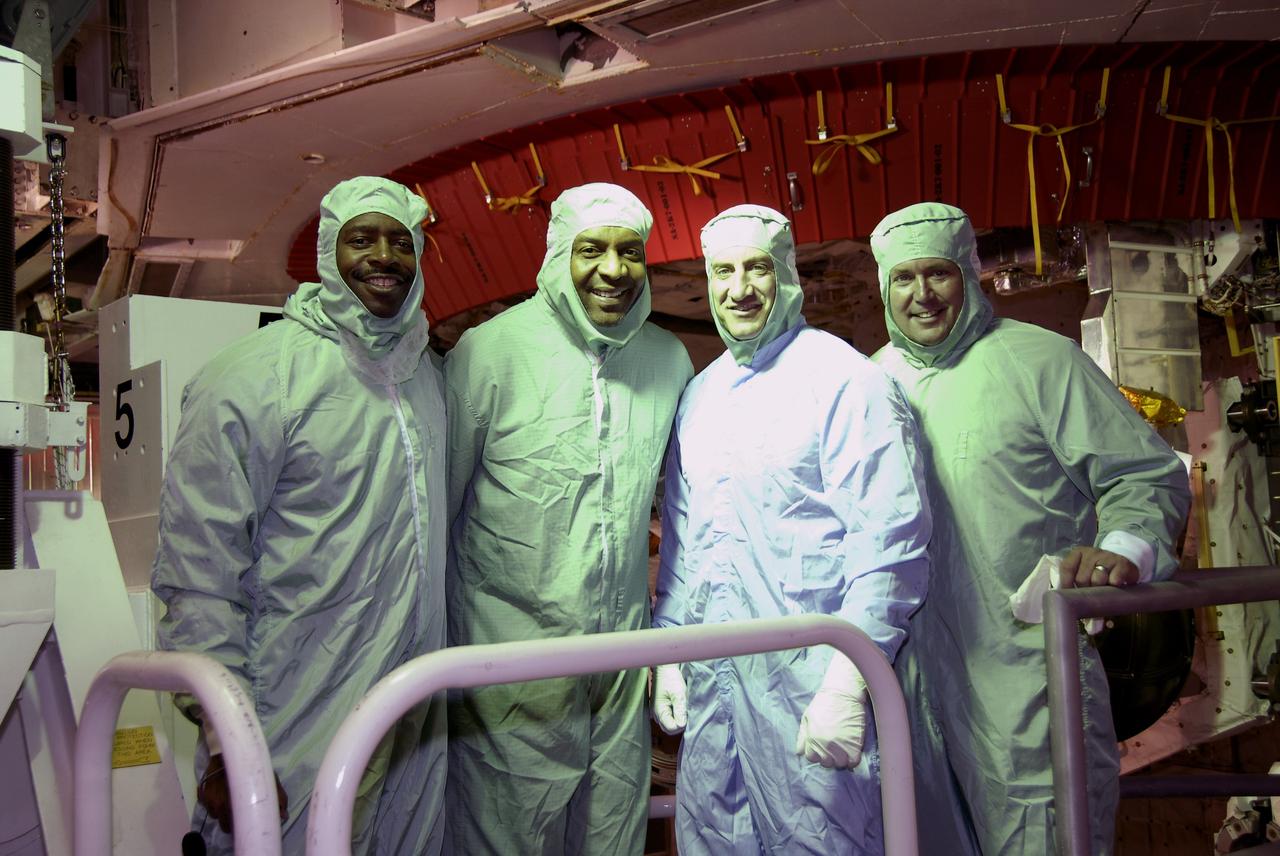
CAPE CANAVERAL, Fla. - In the Payload Changeout Room on Launch Pad 39A at NASA's Kennedy Space Center in Florida, members of the STS-129 crew, dressed in clean-room attire known as "bunny suits," take a break from their payload familiarization training for a photo. From left are Mission Specialists Leland Melvin and Robert L. Satcher Jr., Commander Charles O. Hobaugh and Mission Specialist Mike Foreman. The training affords the crew an opportunity to observe the placement of the Express Logistics Carriers 1 and 2 in space shuttle Atlantis' payload bay before launch. The six astronauts for space shuttle Atlantis’ STS-129 mission came to Kennedy to participate in their launch dress rehearsal, the Terminal Countdown Demonstration Test. Additional training associated with the test was done last month, but the simulated countdown was postponed because of a scheduling conflict with the launch of NASA’s Ares I-X test rocket. Launch of Atlantis on its STS-129 mission to the International Space Station is set for Nov. 16. On STS-129, the crew will deliver to the station two spare gyroscopes, two nitrogen tank assemblies, two pump modules, an ammonia tank assembly and a spare latching end effector for the station's robotic arm. For information on the STS-129 crew and mission objectives, visit http://www.nasa.gov/mission_pages/shuttle/shuttlemissions/sts129/index.html. Photo credit: NASA/Kim Shiflett
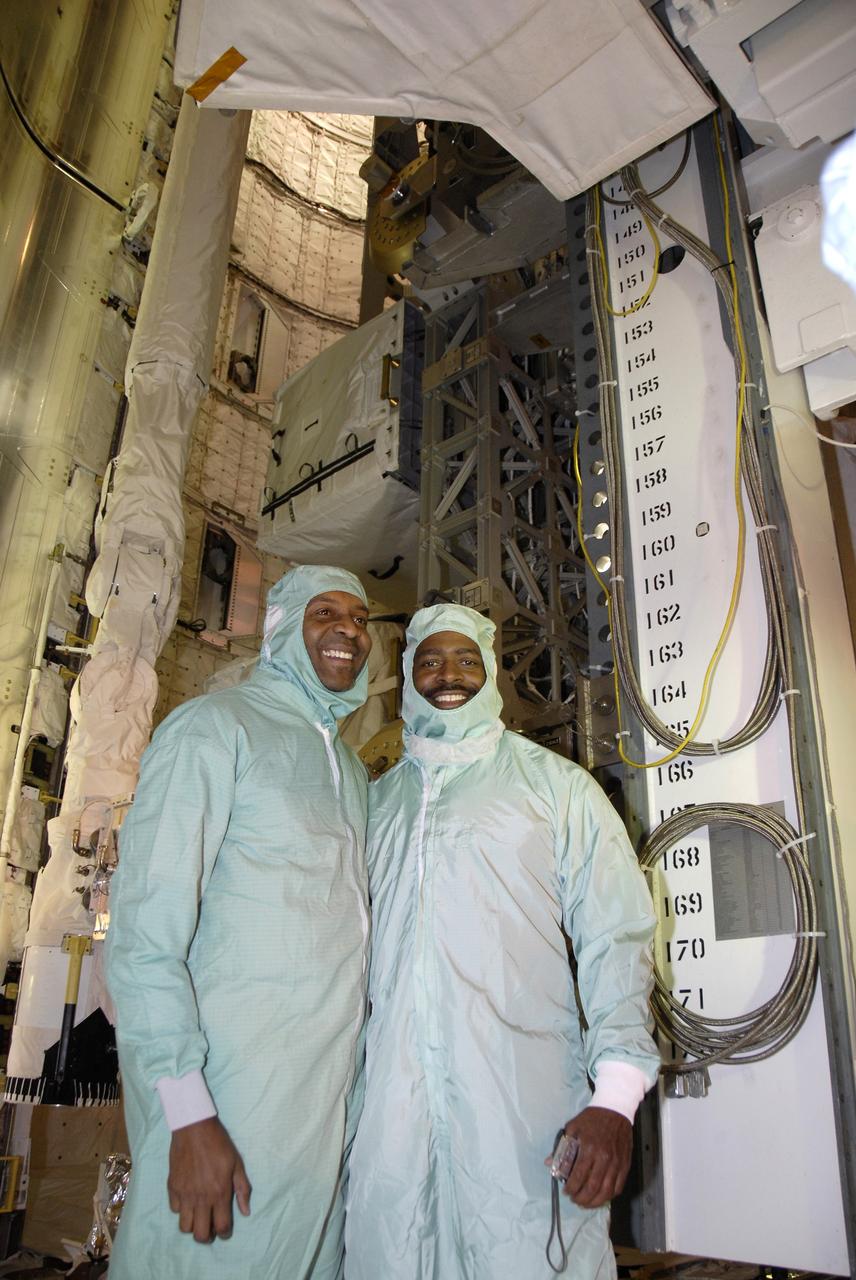
CAPE CANAVERAL, Fla. - In the Payload Changeout Room on Launch Pad 39A at NASA's Kennedy Space Center in Florida, members of the STS-129 crew, dressed in clean-room attire known as "bunny suits," pause a moment during their payload familiarization training for a photo. From left are Mission Specialists Robert L. Satcher Jr. and Leland Melvin. The training affords the crew an opportunity to observe the placement of the Express Logistics Carriers 1 and 2 in space shuttle Atlantis' payload bay before launch. The six astronauts for space shuttle Atlantis’ STS-129 mission came to Kennedy to participate in their launch dress rehearsal, the Terminal Countdown Demonstration Test. Additional training associated with the test was done last month, but the simulated countdown was postponed because of a scheduling conflict with the launch of NASA’s Ares I-X test rocket. Launch of Atlantis on its STS-129 mission to the International Space Station is set for Nov. 16. On STS-129, the crew will deliver to the station two spare gyroscopes, two nitrogen tank assemblies, two pump modules, an ammonia tank assembly and a spare latching end effector for the station's robotic arm. For information on the STS-129 crew and mission objectives, visit http://www.nasa.gov/mission_pages/shuttle/shuttlemissions/sts129/index.html. Photo credit: NASA/Kim Shiflett
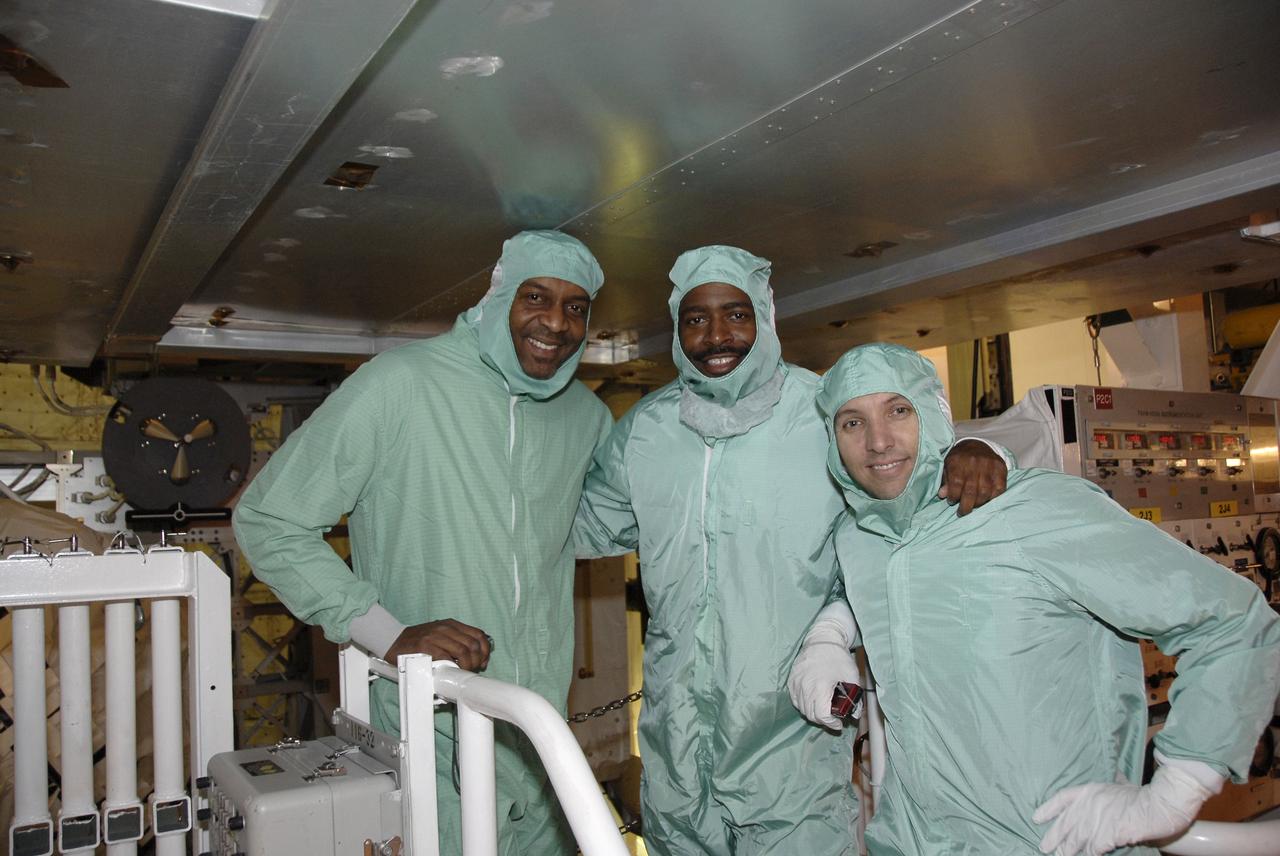
CAPE CANAVERAL, Fla. - In the Payload Changeout Room on Launch Pad 39A at NASA's Kennedy Space Center in Florida, members of the STS-129 crew, dressed in clean-room attire known as "bunny suits," take time out from their payload familiarization training for a photo. From left are Mission Specialists Robert L. Satcher Jr., Leland Melvin, and Randy Bresnik. The training affords the crew an opportunity to observe the placement of the Express Logistics Carriers 1 and 2 in space shuttle Atlantis' payload bay before launch. The six astronauts for space shuttle Atlantis’ STS-129 mission came to Kennedy to participate in their launch dress rehearsal, the Terminal Countdown Demonstration Test. Additional training associated with the test was done last month, but the simulated countdown was postponed because of a scheduling conflict with the launch of NASA’s Ares I-X test rocket. Launch of Atlantis on its STS-129 mission to the International Space Station is set for Nov. 16. On STS-129, the crew will deliver to the station two spare gyroscopes, two nitrogen tank assemblies, two pump modules, an ammonia tank assembly and a spare latching end effector for the station's robotic arm. For information on the STS-129 crew and mission objectives, visit http://www.nasa.gov/mission_pages/shuttle/shuttlemissions/sts129/index.html. Photo credit: NASA/Kim Shiflett
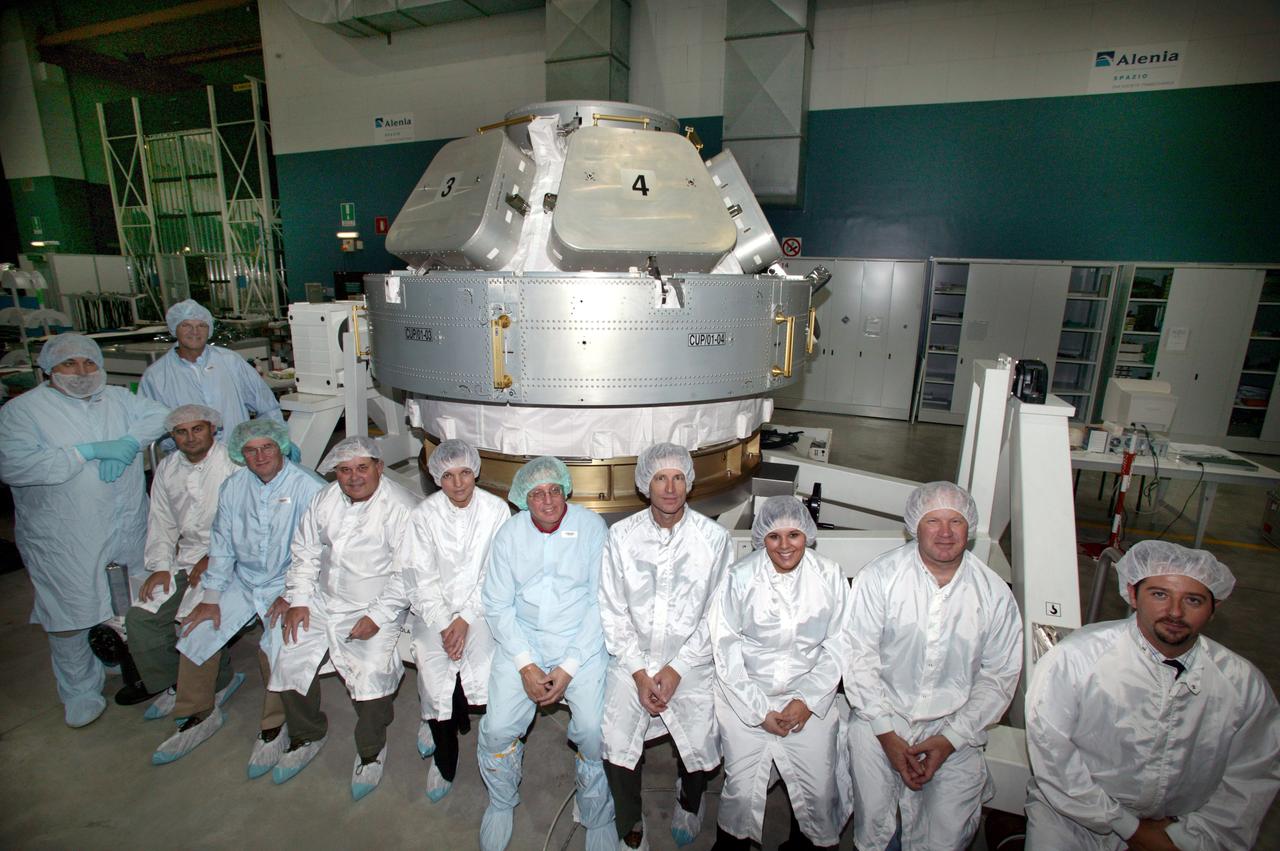
JSC2004-E-44646 (September 2004) --- Engineers and technicians who have been working hard on the International Space Station's Cupola are pictured with the hardware in the Alenia Spazio clean room in Turin, Italy. The personnel have been preparing the hardware for shipment to NASA's launch facility at Cape Kennedy, Florida. From inside the Cupola, a dome-shaped module with seven windows, astronauts have a panoramic view for observing operations on the outside of the orbiting complex. The Cupola module provides external observation capabilities during spacewalks, docking operations, hardware surveys and for Earth and celestial studies. It also serves as the primary location for executing robot arm operations of Canadarm2. Until the Cupola is installed, crews have been using a robotic control computer station located in the Destiny Laboratory to operate the arm. The Cupola’s windows enhance the robotic arm operator's situational awareness, supplementing camera and graphic views provided by the computer workstation. Photo Credit: Alenia Spazio