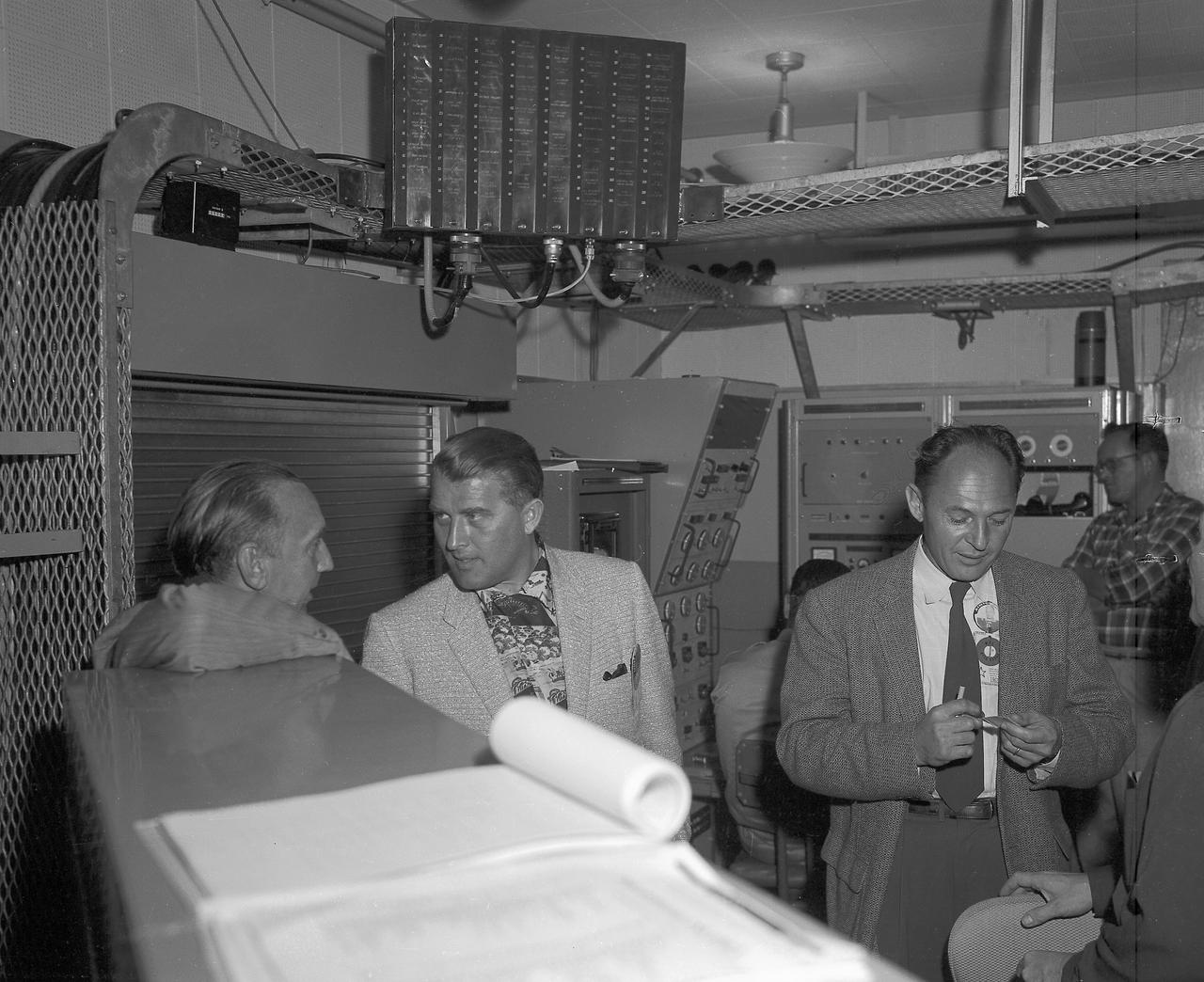
In this photo, (left to right) Army Ballistic Missile Agency (ABMA) Missile Firing Laboratory Chief Dr. Kurt Debus, Director of the ABMA Development Operations Division, Dr. von Braun and an unidentified individual in blockhouse during the CM-21 (Jupiter) firing. The Jupiter missile CM-21 became the first Chrysler production qualification missile to be fired and in March 1959 launched the Pioneer IV.
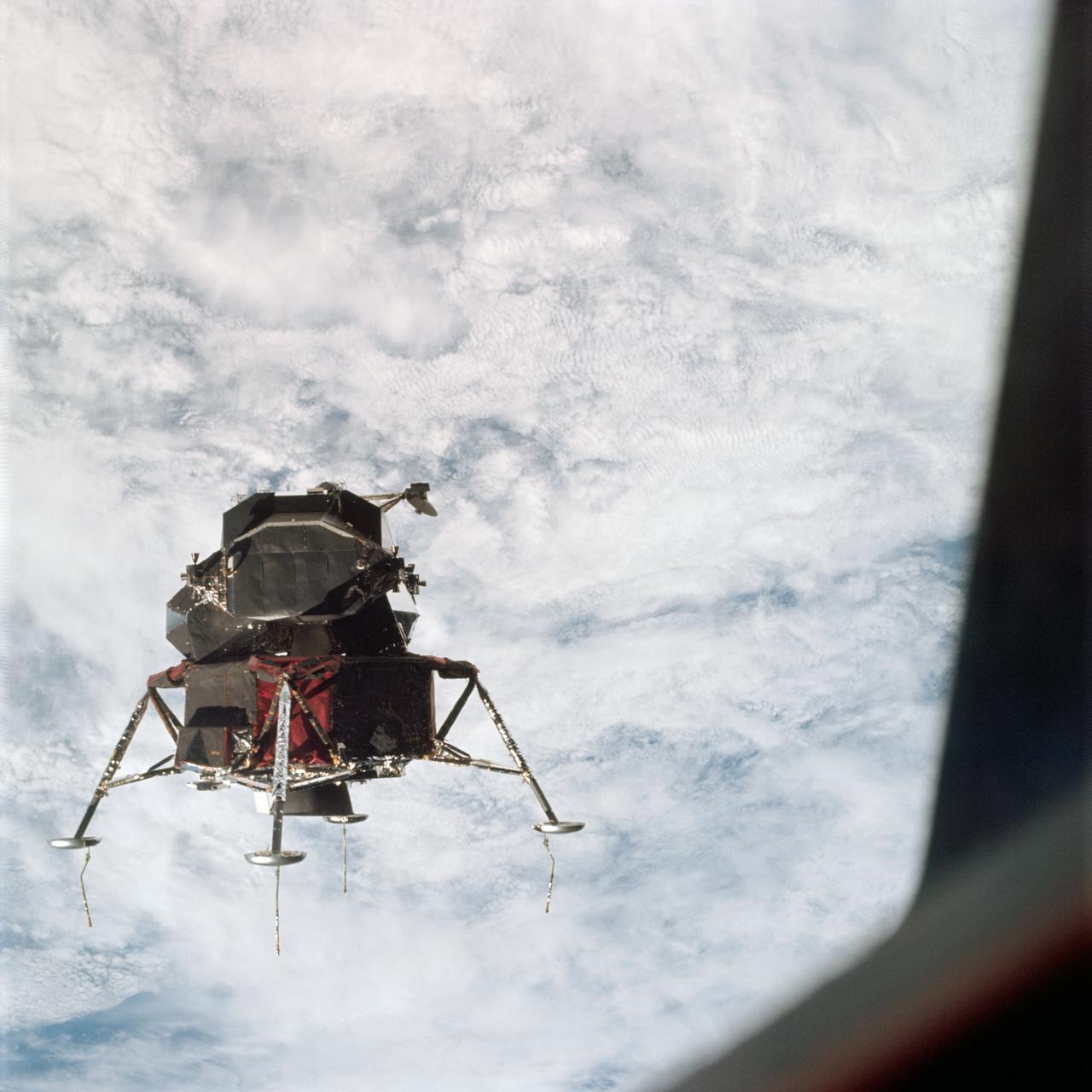
AS09-21-3197 (7 March 1969) --- A view of the Apollo 9 Lunar Module (LM) "Spider" in a lunar landing configuration, as photographed from the Command and Service Modules (CSM) on the fifth day of the Apollo 9 Earth-orbital mission. The landing gear on the "Spider" has been deployed. Lunar surface probes (sensors) extend out from the landing gear foot pads. Inside the "Spider" were astronauts James A. McDivitt, Apollo 9 commander; and Russell L. Schweickart, lunar module pilot. Astronaut David R. Scott, command module pilot, remained at the controls in the Command Module (CM), "Gumdrop," while the other two astronauts checked out the LM. Schweickart, lunar module pilot, is photographed from the CM "Gumdrop" during his extravehicular activity (EVA) on the fourth day of the Apollo 9 Earth-orbital mission. The CSM is docked with the LM. Astronaut James A. McDivitt, Apollo 9 commander, was inside the LM "Spider." Astronaut David R. Scott, command module pilot, remained at the controls in the CM.
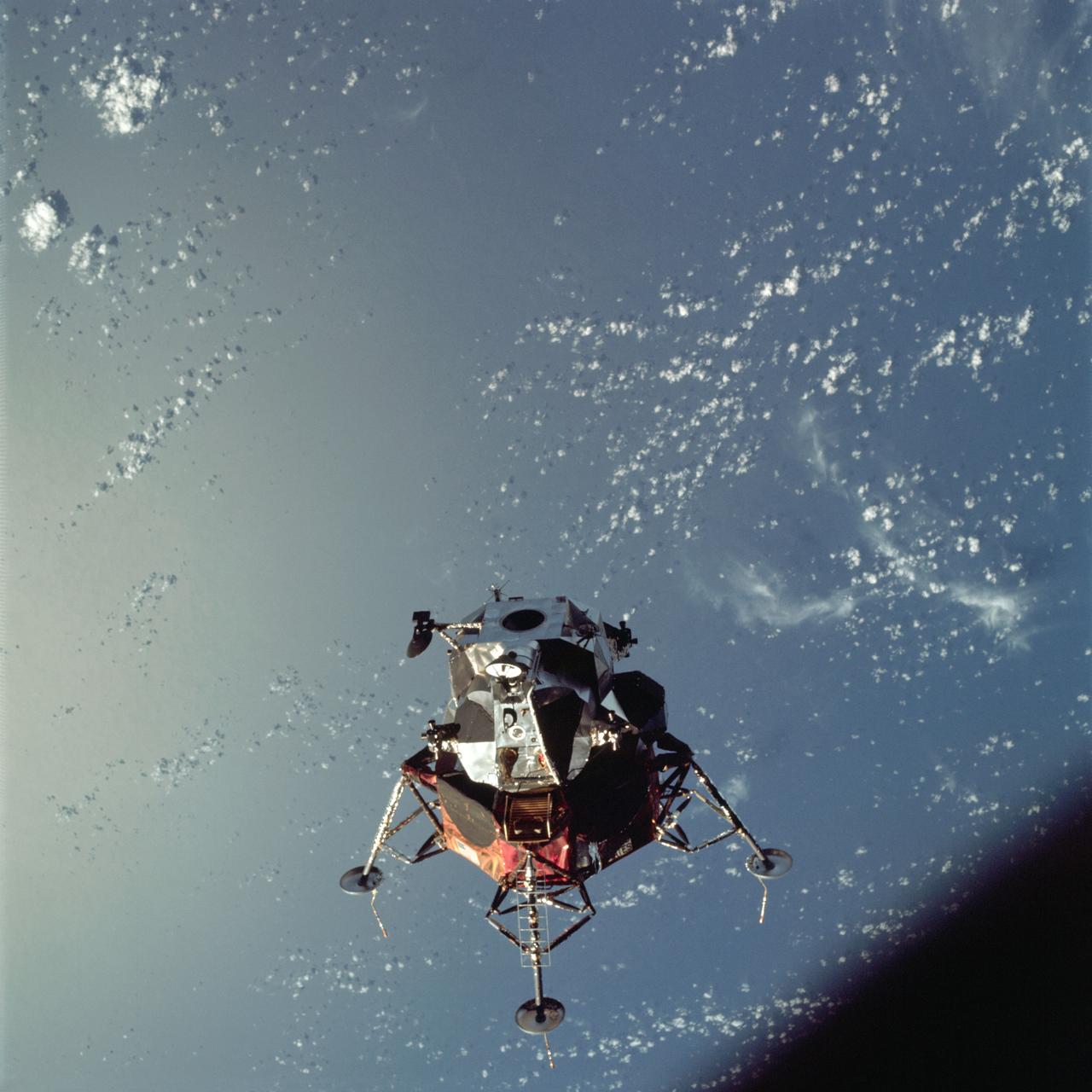
AS09-21-3183 (7 March 1969) --- A view of the Apollo 9 Lunar Module (LM) "Spider" in a lunar landing configuration, as photographed from the Command and Service Modules (CSM) on the fifth day of the Apollo 9 Earth-orbital mission. The landing gear on the "Spider" has been deployed. Lunar surface probes (sensors) extend out from the landing gear foot pads. Inside the "Spider" were astronauts James A. McDivitt, Apollo 9 commander; and Russell L. Schweickart, lunar module pilot. Astronaut David R. Scott, command module pilot, remained at the controls in the Command Module (CM), "Gumdrop," while the other two astronauts checked out the LM. Schweickart, lunar module pilot, is photographed from the CM "Gumdrop" during his extravehicular activity (EVA) on the fourth day of the Apollo 9 Earth-orbital mission. The CSM is docked with the LM. Astronaut James A. McDivitt, Apollo 9 commander, was inside the LM "Spider." Astronaut David R. Scott, command module pilot, remained at the controls in the CM.
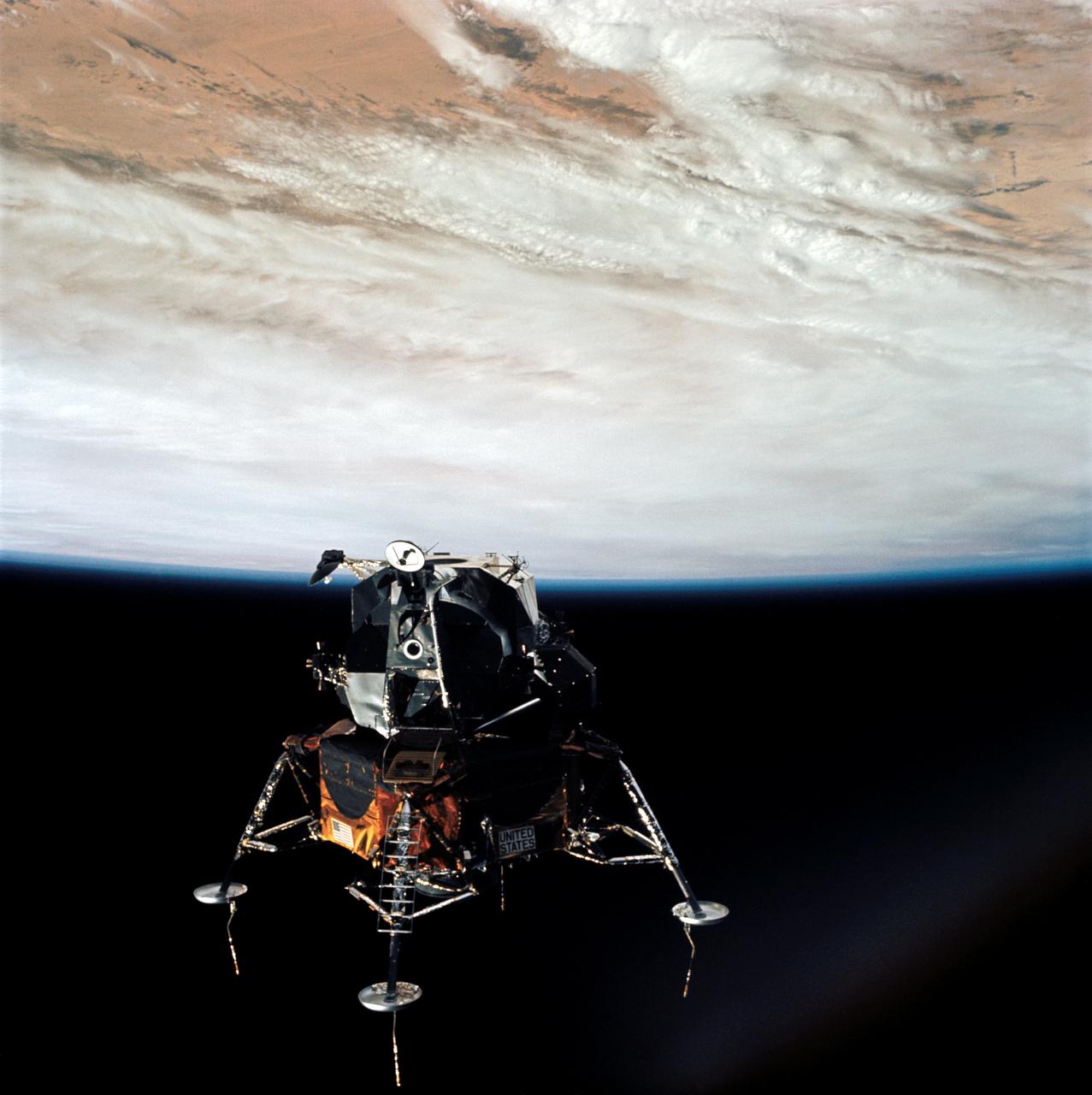
AS09-21-3212 (7 March 1969) --- A view of the Apollo 9 Lunar Module (LM), "Spider", in a lunar landing configuration, as photographed from the Command and Service Modules (CSM) on the fifth day of the Apollo 9 Earth-orbital mission. The landing gear on the "Spider" has been deployed. Lunar surface probes (sensors) extend out from landing gear foot pads. Inside the "Spider" were astronauts James A. McDivitt, Apollo 9 commander, and Russell L. Schweickart, lunar module pilot. Astronaut David R. Scott, command module pilot, remained at the controls in the Command Module (CM), "Gumdrop", while the other two astronauts checked out the Lunar Module.
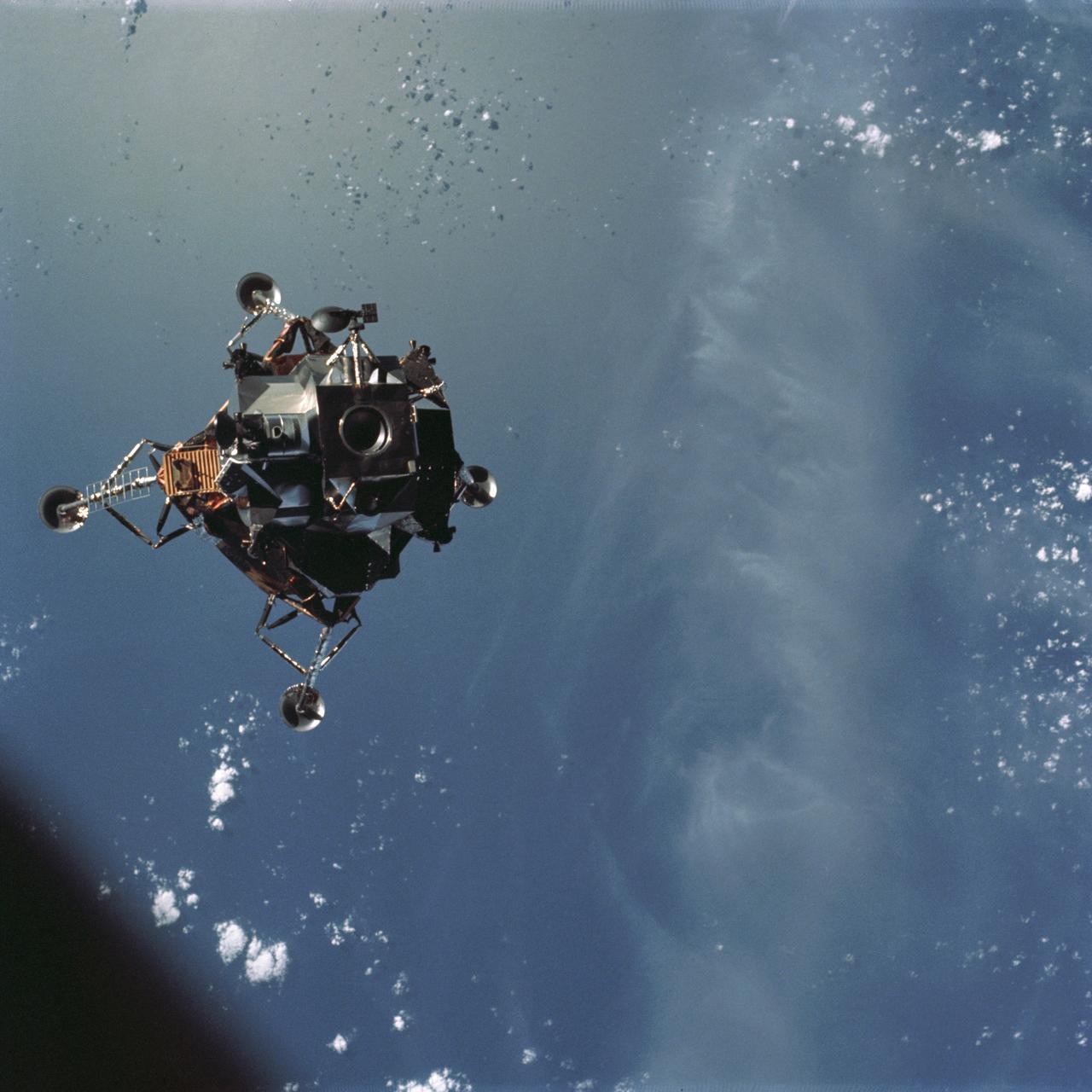
AS09-21-3181 (7 March 1969) --- A View of the Apollo 9 Lunar Module (LM), "Spider," in a lunar lading configuration, as photographed from the Command and Service Modules (CSM) on the fifth day of the Apollo 9 Earth-orbital mission. The landing gear on the "Spider" has been deployed. Inside the "Spider" were astronauts James A. McDivitt, Apollo 9 commander; and Russell L. Schweickart, lunar module pilot. Astronaut David R. Scott, command module pilot, remained at the controls in the Command Module (CM), "Gumdrop," while the other two astronauts checked out the LM.
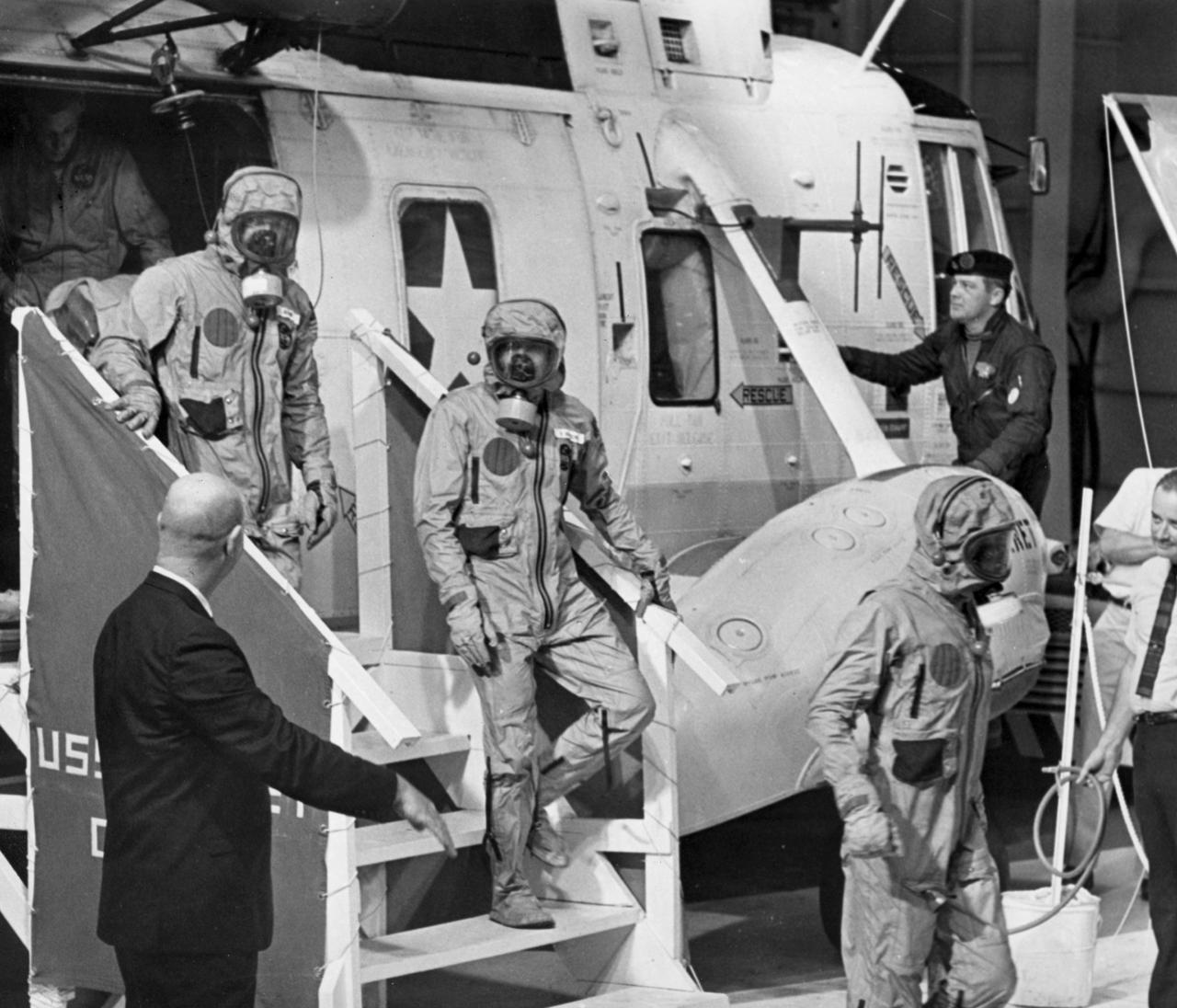
The Apollo 11 mission, the first manned lunar mission, launched from the Kennedy Space Center, Florida via the Marshall Space Flight Center (MSFC) developed Saturn V launch vehicle on July 16, 1969 and safely returned to Earth on July 24, 1969. Aboard the space craft were astronauts Neil A. Armstrong, commander; Michael Collins, Command Module (CM) pilot; and Edwin E. Aldrin Jr., Lunar Module (LM) pilot. The CM, piloted by Michael Collins remained in a parking orbit around the Moon while the LM, named “Eagle’’, carrying astronauts Neil Armstrong and Edwin Aldrin, landed on the Moon. During 2½ hours of surface exploration, the crew collected 47 pounds of lunar surface material for analysis back on Earth. Shown here are the three astronauts (L-R) Aldrin, Armstrong, and Collins leaving the recovery helicopter aboard the U.S.S. Hornet after their splashdown in the Pacific Ocean. Wearing biological isolation garments donned before leaving the spacecraft, the three went directly into the Mobile Quarantine Facility (MQF) on the aircraft carrier. The MQF served as their home for 21 days following the mission. With the success of Apollo 11, the national objective to land men on the Moon and return them safely to Earth had been accomplished.
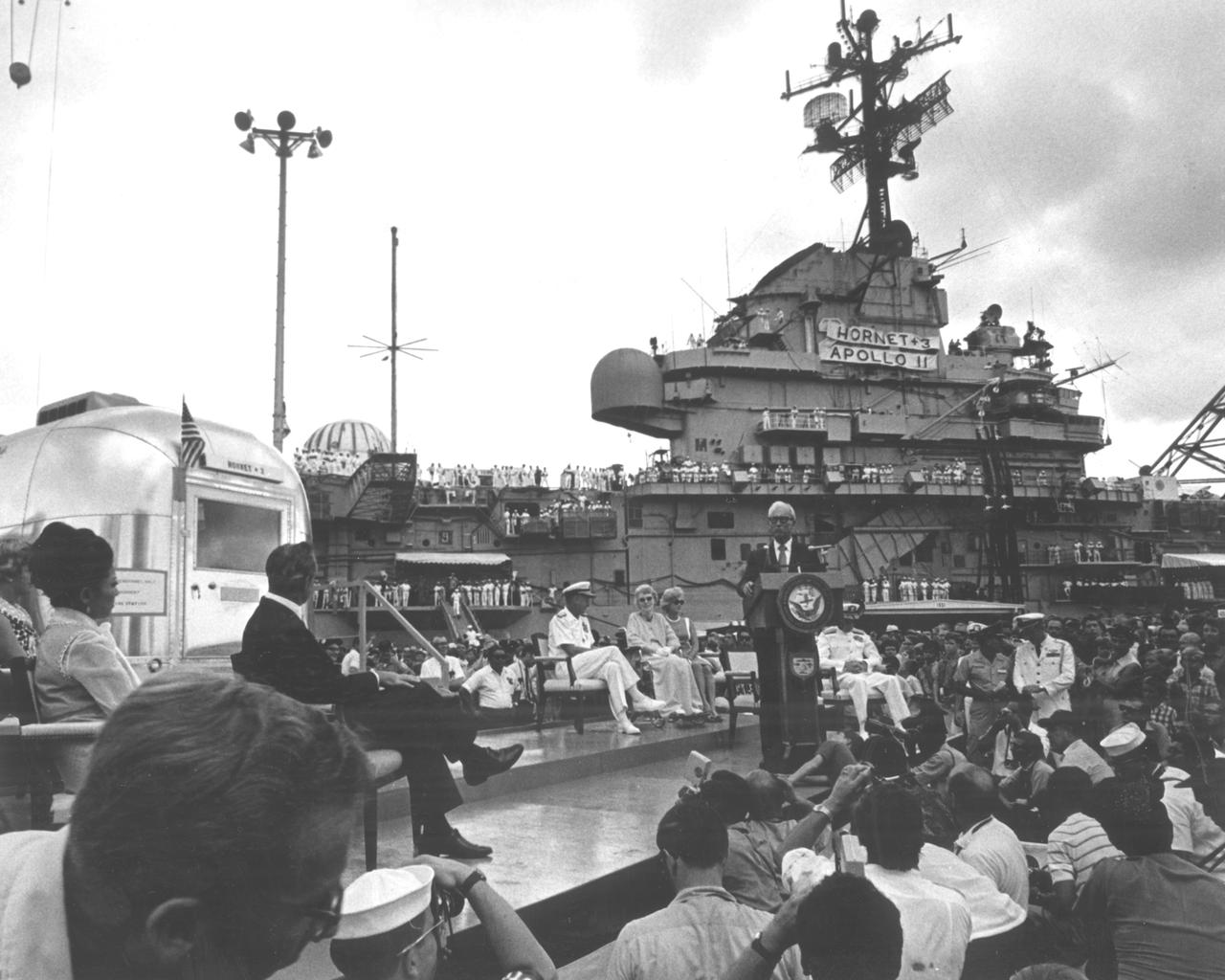
The Apollo 11 mission, the first manned lunar mission, launched from the Kennedy Space Center, Florida via the Marshall Space Flight Center (MSFC) developed Saturn V launch vehicle on July 16, 1969 and safely returned to Earth on July 24, 1969. Aboard the space craft were astronauts Neil A. Armstrong, commander; Michael Collins, Command Module (CM) pilot; and Edwin E. Aldrin Jr., Lunar Module (LM) pilot. The CM, piloted by Michael Collins remained in a parking orbit around the Moon while the LM, named “Eagle’’, carrying astronauts Neil Armstrong and Edwin Aldrin, landed on the Moon. During 2½ hours of surface exploration, the crew collected 47 pounds of lunar surface material for analysis back on Earth. The recovery operation took place in the Pacific Ocean where Navy para-rescue men recovered the capsule housing the 3-man Apollo 11 crew. The crew was airlifted to safety aboard the U.S.S. Hornet recovery ship, where they were quartered in a Mobile Quarantine Facility (MQF) for 21 days. The recovery vessel docked in Pearl Harbor Hawaii, where the occupied MQF was transferred for transport to the to NASA Manned Spacecraft Center (MSC) Lunar Receiving Laboratory in Houston, Texas. In this photo the quarantined astronauts are addressed by Hawaiian Governor John Burns upon their arrival at Pearl Harbor.
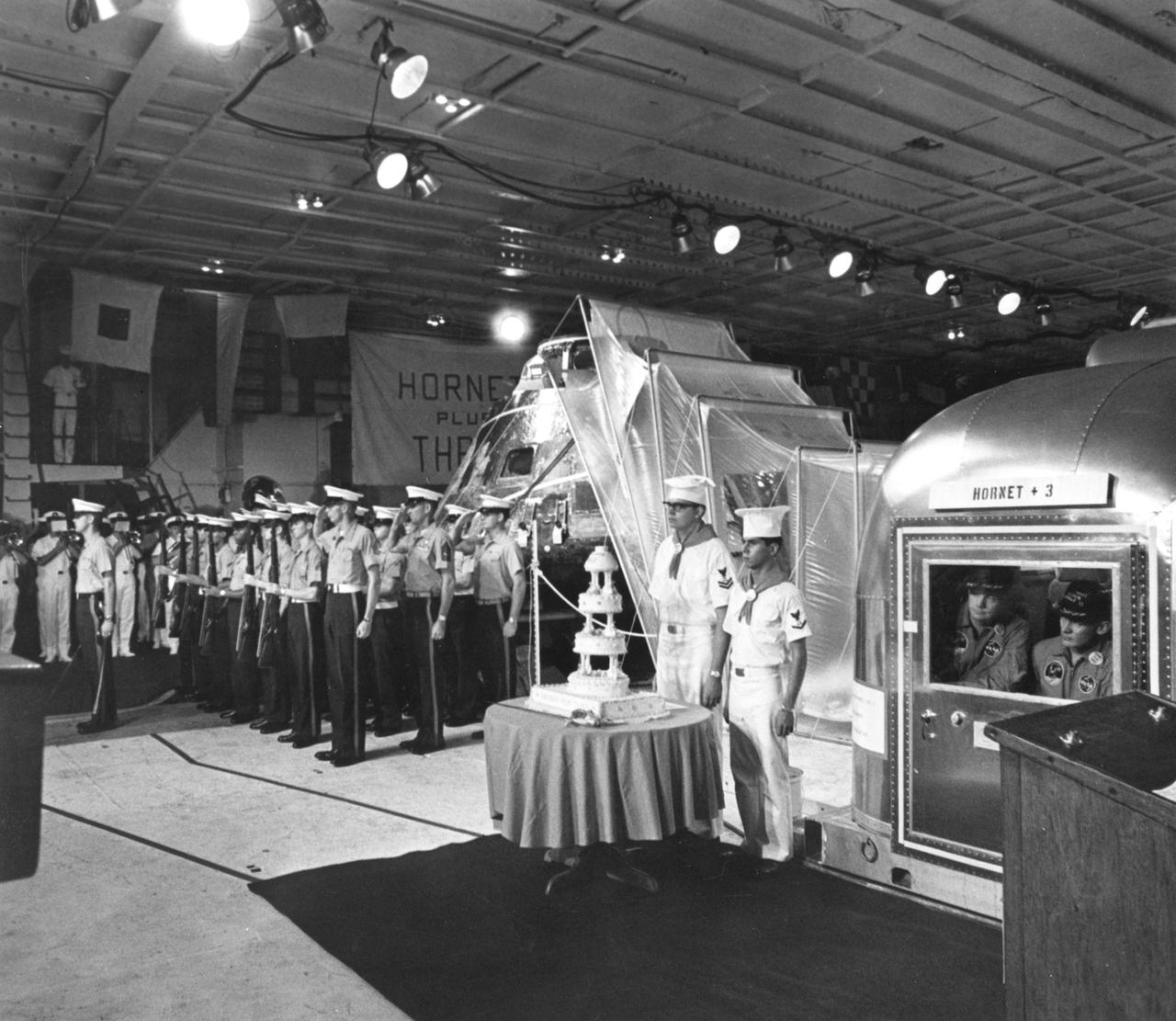
The Apollo 11 mission, the first manned lunar mission, launched from the Kennedy Space Center, Florida via the Space Flight Center (MSFC) developed Saturn V launch vehicle on July 16, 1969 and safely returned to Earth on July 24, 1969. Aboard the space craft were astronauts Neil A. Armstrong, commander; Michael Collins, Command Module (CM) pilot; and Edwin E. Aldrin Jr., Lunar Module (LM) pilot. The CM, piloted by Michael Collins remained in a parking orbit around the Moon while the LM, named “Eagle’’, carrying astronauts Neil Armstrong and Edwin Aldrin, landed on the Moon. During 2½ hours of surface exploration, the crew collected 47 pounds of lunar surface material for analysis back on Earth. The recovery operation took place in the Pacific Ocean where Navy para-rescue men recovered the capsule housing the 3-man Apollo 11 crew. The crew was airlifted to safety aboard the U.S.S. Hornet recovery ship, where they were quartered in a Mobile Quarantine Facility (MQF) which served as their home for 21 days following the mission. In this photograph, the Hornet crew and honor guard snap to attention to begin the official cake cutting ceremony for the Apollo 11 astronauts. Astronauts Armstrong and Aldrin are visible in the window of the MQF.
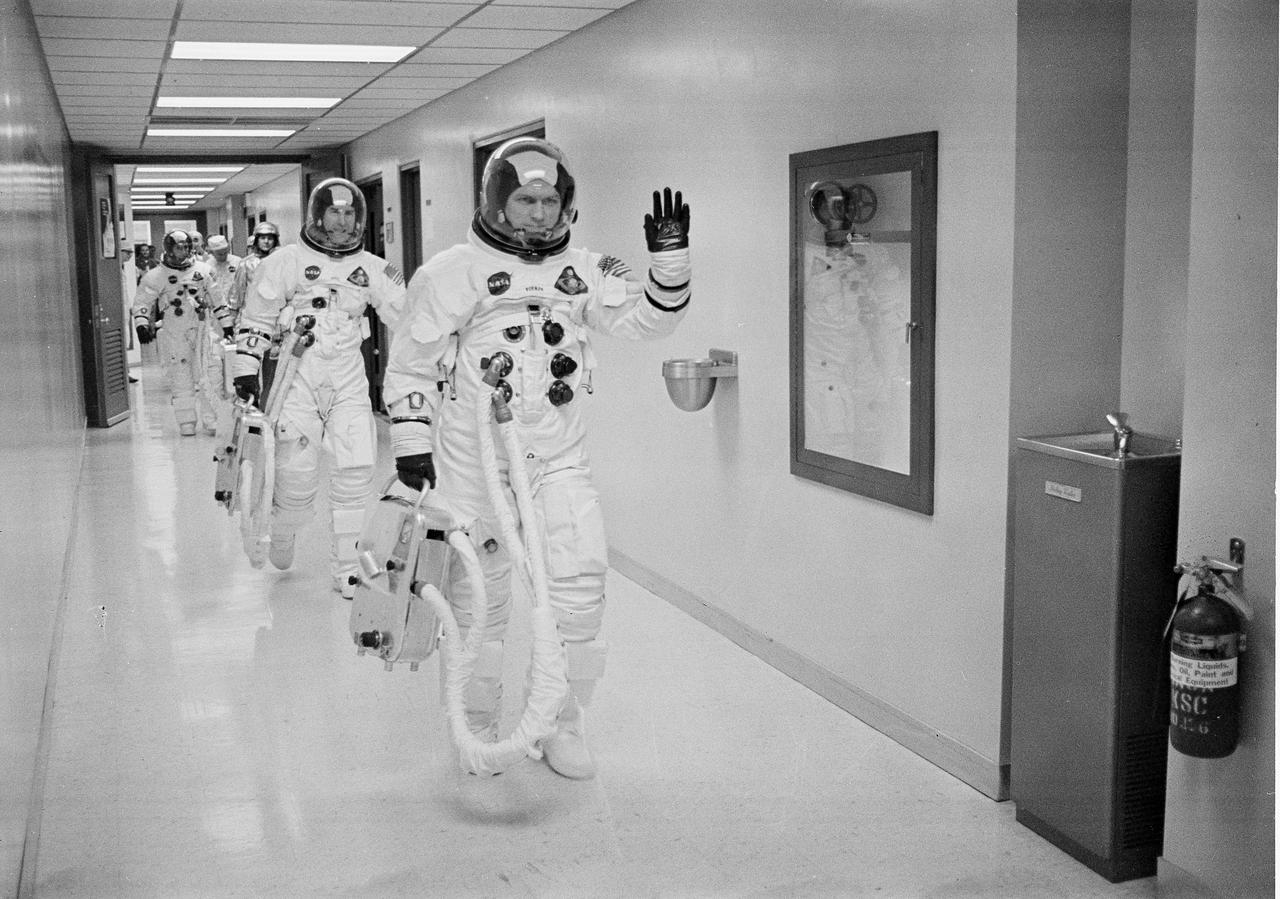
Apollo 8 Astronaut and commander Frank Borman leads the way as he and James Lovell, Command Module (CM) pilot; and William Anders, Lunar Module (LM) Pilot head out to the launch pad for the historical first manned Apollo mission to travel to the lunar vicinity, and first manned mission launched via the Saturn V vehicle. Liftoff occurred on December 21, 1968 and returned safely to Earth on December 27, 1968. The mission achieved operational experience and tested the Apollo command module systems, including communications, tracking, and life-support, in cis-lunar space and lunar orbit, and allowed evaluation of crew performance on a lunar orbiting mission. The crew photographed the lunar surface, both far side and near side, obtaining information on topography and landmarks as well as other scientific information necessary for future Apollo landings. All systems operated within allowable parameters and all objectives of the mission were achieved.
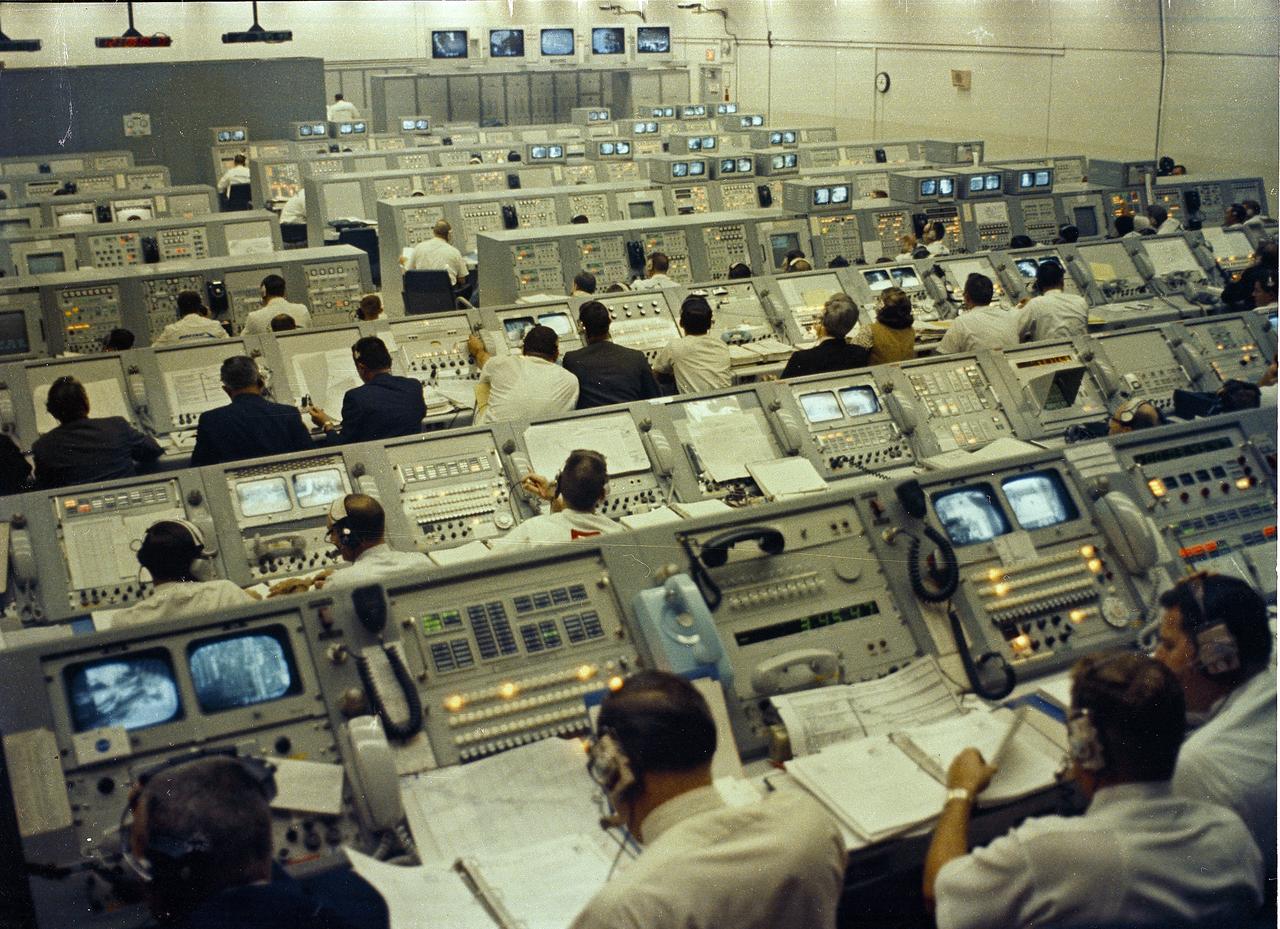
This photograph depicts a busy Launch Control Center at Kennedy Space Center during the Apollo 8 mission launch activities. Apollo 8 served as the first manned lunar orbit mission. Liftoff occurred on December 21, 1968 with a three man crew consiting of astronauts Frank Borman, commander; William Anders, Lunar Module (LM) Pilot; and James Lovell, Command Module (CM) pilot. The three safely returned to Earth on December 27, 1968. The mission achieved operational experience and tested the Apollo command module systems, including communications, tracking, and life-support, in cis-lunar space and lunar orbit, and allowed evaluation of crew performance on a lunar orbiting mission. The crew photographed the lunar surface, both far side and near side, obtaining information on topography and landmarks as well as other scientific information necessary for future Apollo landings. All systems operated within allowable parameters and all objectives of the mission were achieved.
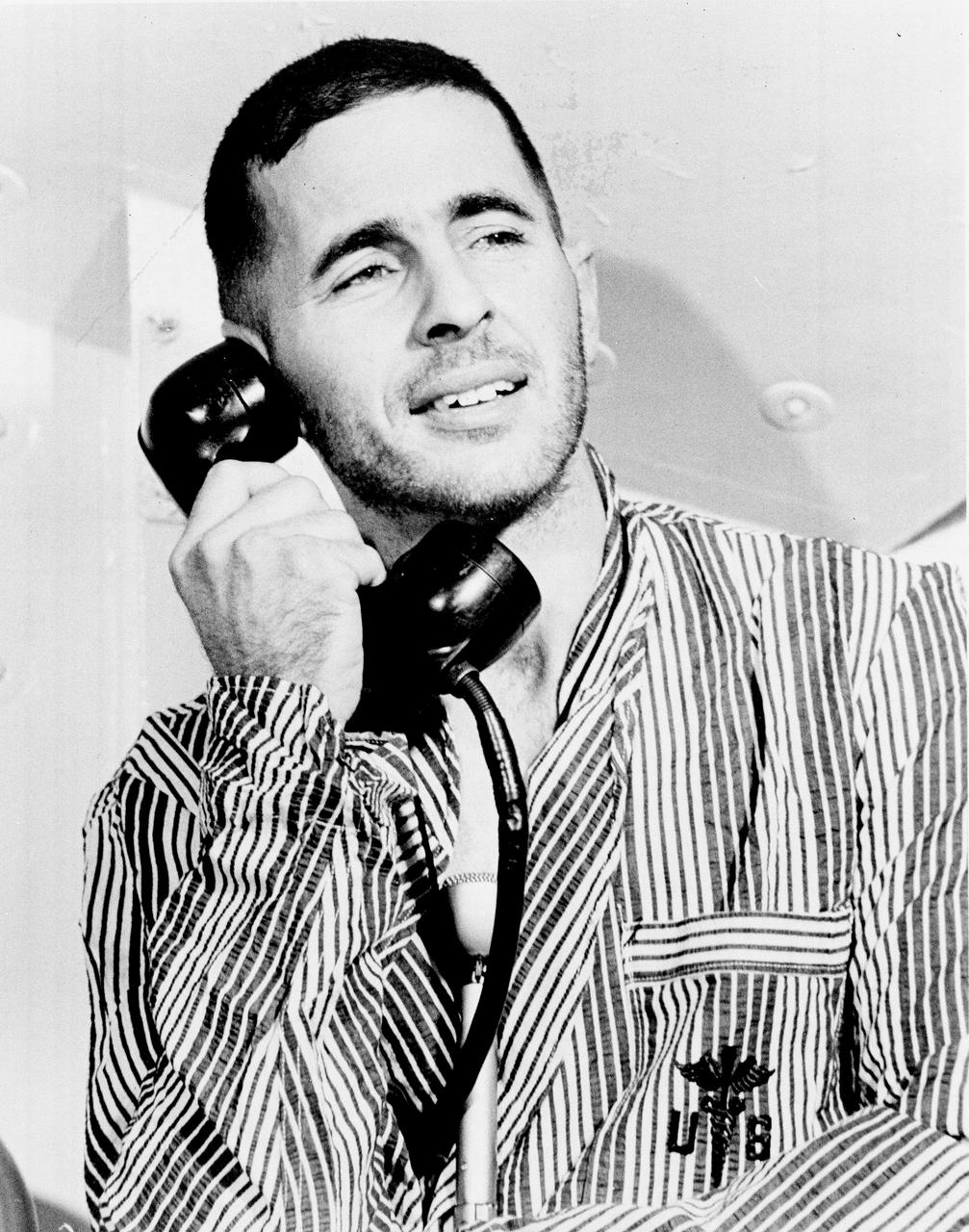
Apollo 8 Astronaut William Anders, Lunar Module (LM) pilot of the first manned Saturn V space flight into Lunar orbit, accepted a phone call from the U.S. President Lyndon B. Johnson prior to launch. Anders, along with astronauts James Lovell, Command Module (CM) pilot, and Frank Borman, commander, launched aboard the Apollo 8 mission on December 21, 1968 and returned safely to Earth on December 27, 1968. The mission achieved operational experience and tested the Apollo command module systems, including communications, tracking, and life-support, in cis-lunar space and lunar orbit, and allowed evaluation of crew performance on a lunar orbiting mission. The crew photographed the lunar surface, both far side and near side, obtaining information on topography and landmarks as well as other scientific information necessary for future Apollo landings. All systems operated within allowable parameters and all objectives of the mission were achieved.
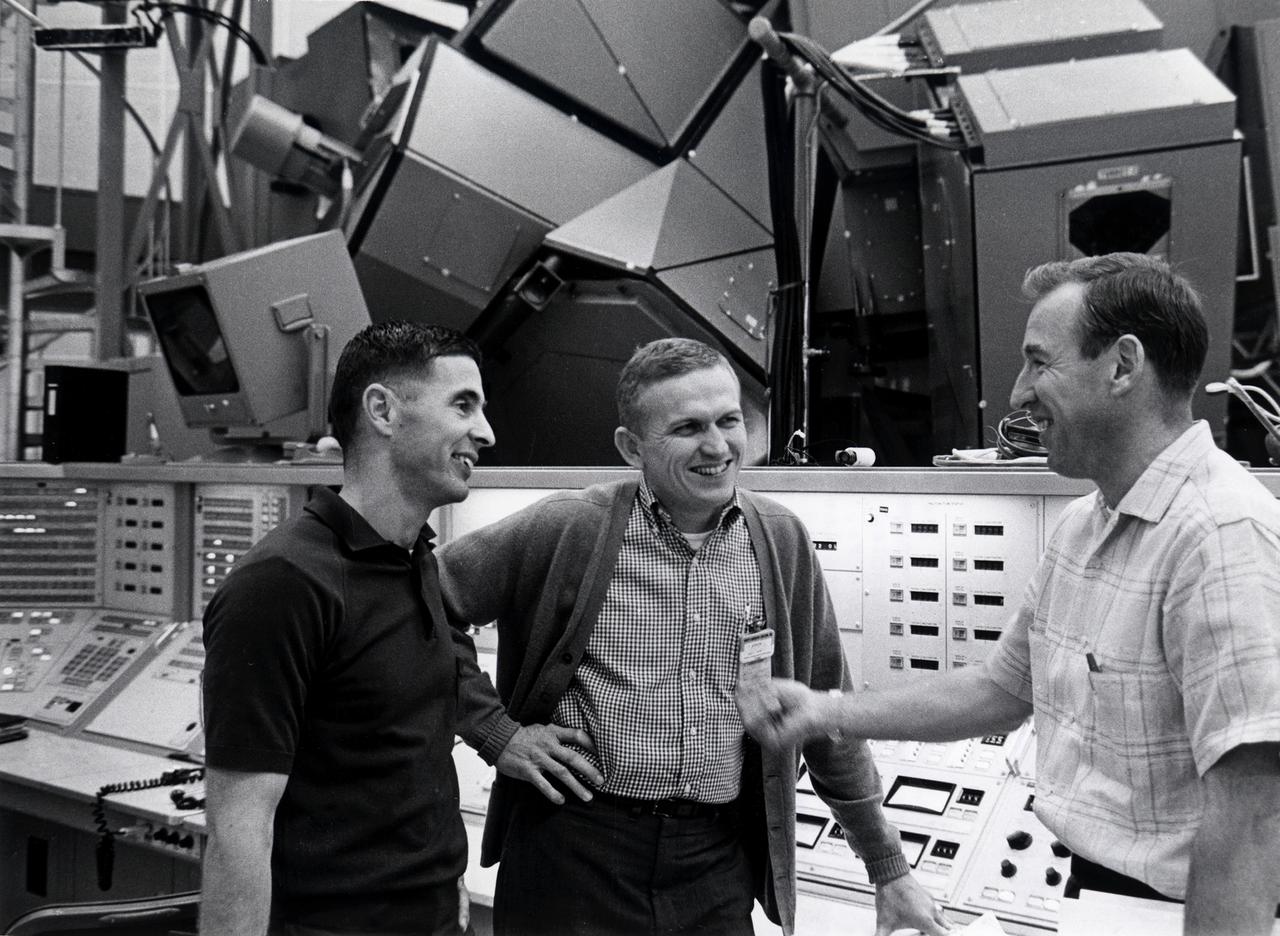
Apollo 8 crew members paused before the mission simulator during training for the first manned lunar orbital mission. Frank Borman, commander; James Lovell, Command Module (CM) pilot; and William Anders, Lunar Module (LM) pilot , were also the first humans to launch aboard the massive Saturn V space vehicle. Lift off occurred on December 21, 1968 and returned safely to Earth on December 27, 1968. The mission achieved operational experience and tested the Apollo command module systems, including communications, tracking, and life-support, in cis-lunar space and lunar orbit, and allowed evaluation of crew performance on a lunar orbiting mission. The crew photographed the lunar surface, both far side and near side, obtaining information on topography and landmarks as well as other scientific information necessary for future Apollo landings. All systems operated within allowable parameters and all objectives of the mission were achieved.
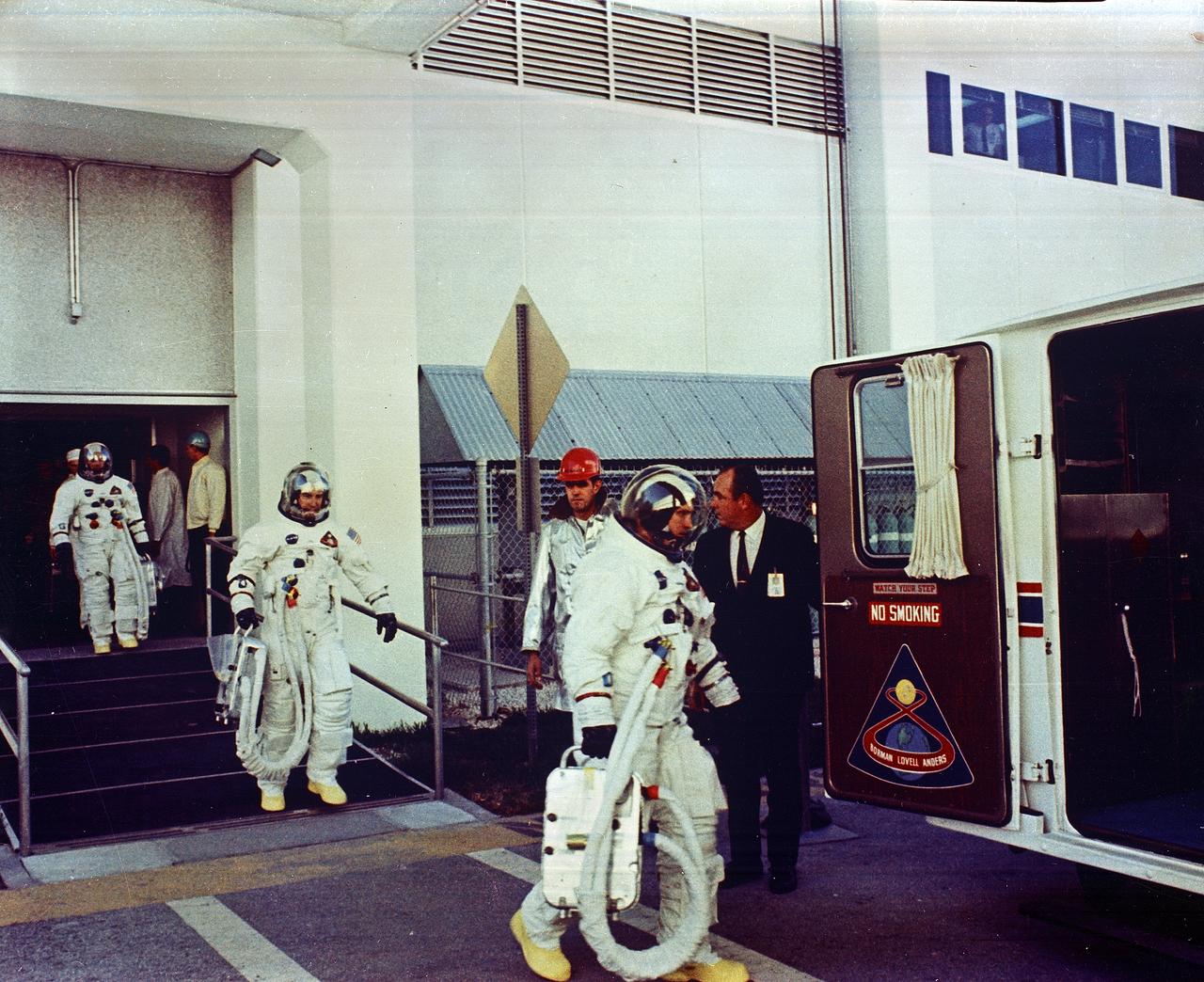
Apollo 8 Astronauts William Anders, Lunar Module (LM) Pilot; James Lovell, Command Module (CM) pilot; and Frank Borman, commander, transfer to the astronaut van for the trip to the launch pad. The first manned Apollo mission launched aboard the Saturn V and first manned Apollo craft to enter lunar orbit, the SA-503, Apollo 8 mission liftoff occurred on December 21, 1968 and returned safely to Earth on December 27, 1968. The mission achieved operational experience and tested the Apollo command module systems, including communications, tracking, and life-support, in cis-lunar space and lunar orbit, and allowed evaluation of crew performance on a lunar orbiting mission. The crew photographed the lunar surface, both far side and near side, obtaining information on topography and landmarks as well as other scientific information necessary for future Apollo landings. All systems operated within allowable parameters and all objectives of the mission were achieved.
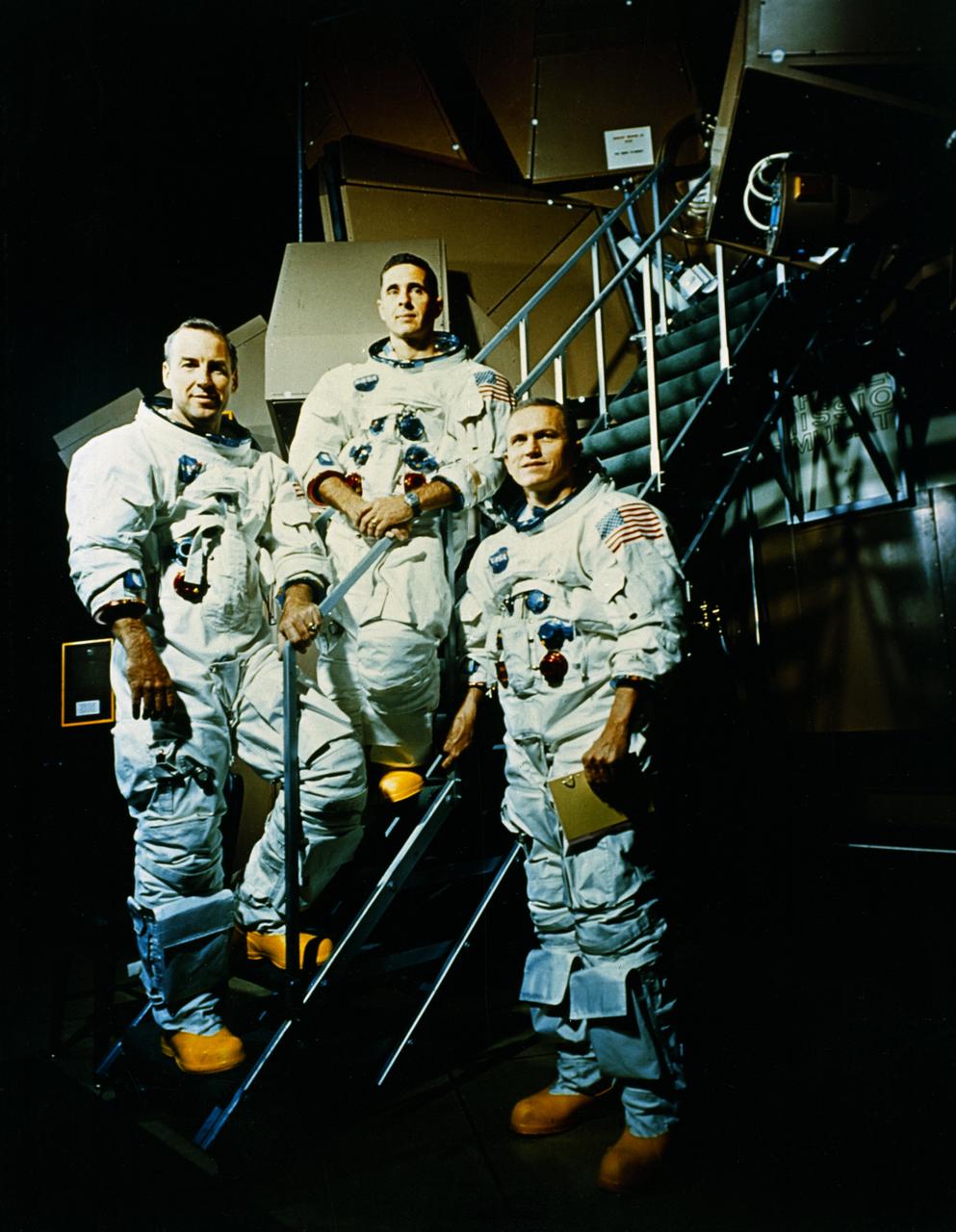
The Apollo 8 Crew included (L to R) James Lovell, Command Module (CM) pilot; William Anders, Lunar Module (LM) Pilot; and Frank Borman, Commander. The first manned Apollo mission launched aboard the Saturn V and first manned Apollo craft to enter lunar orbit, the SA-503, Apollo 8 mission liftoff occurred on December 21, 1968 and returned safely to Earth on December 27, 1968. The mission achieved operational experience and tested the Apollo command module systems, including communications, tracking, and life-support, in cis-lunar space and lunar orbit, and allowed evaluation of crew performance on a lunar orbiting mission. The crew photographed the lunar surface, both far side and near side, obtaining information on topography and landmarks as well as other scientific information necessary for future Apollo landings. All systems operated within allowable parameters and all objectives of the mission were achieved.
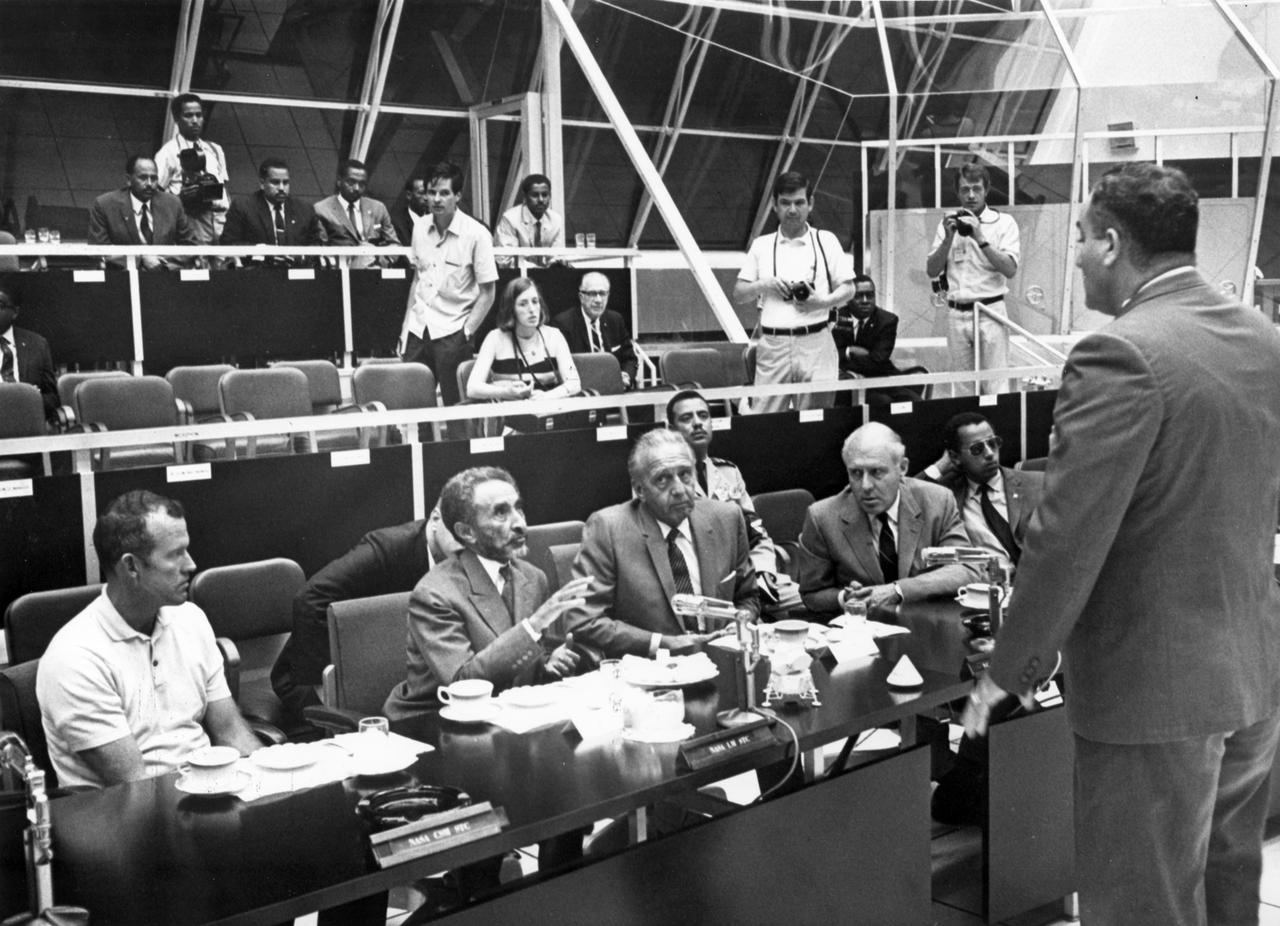
During a Kennedy Space Center (KSC) briefing on the next day’s Apollo 11 launch, Emperor Haile Selassie of Ethiopia (with raised hand) asks a question of Rocco A. Petrone, director of launch operations at KSC. To the right of the emperor is astronaut Gordon Cooper and to his left is Dr. Kurt Debus, director of KSC. The first manned lunar launch occurred at 9:32 am on July 16, 1969. The crew included astronauts Neil A. Armstrong, commander; Michael Collins, Command Module (CM) pilot; and Edwin E. Aldrin Jr., Lunar Module (LM) pilot. After 21/2 hours of collecting samples on the lunar surface, the crew safely splashed down into the Pacific Ocean on July 24, 1969. With the success of Apollo 11, the national objective to land men on the Moon and return them safely to Earth had been accomplished.
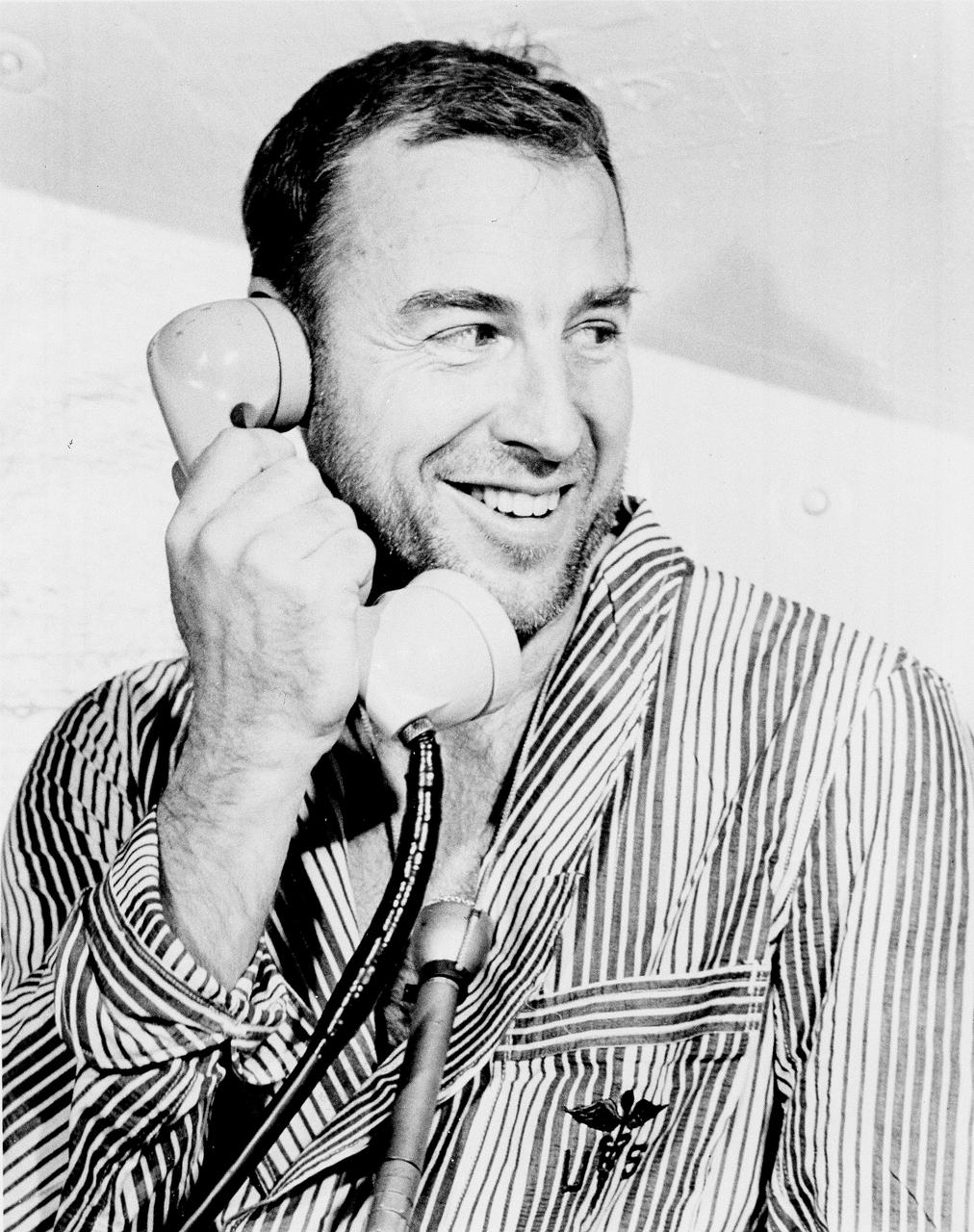
Apollo 8 Astronaut James Lovell, Command Module (CM) pilot of the first manned Saturn V space flight into Lunar orbit, accepted a phone call from the U.S. President Lyndon B. Johnson prior to launch. Lovell, along with astronauts William Anders, Lunar Module (LM) pilot, and Frank Borman, commander, launched aboard the Apollo 8 mission on December 21, 1968 and returned safely to Earth on December 27, 1968. The mission achieved operational experience and tested the Apollo command module systems, including communications, tracking, and life-support, in cis-lunar space and lunar orbit, and allowed evaluation of crew performance on a lunar orbiting mission. The crew photographed the lunar surface, both far side and near side, obtaining information on topography and landmarks as well as other scientific information necessary for future Apollo landings. All systems operated within allowable parameters and all objectives of the mission were achieved.

Apollo 8 Astronaut Frank Borman, commander of the first manned Saturn V space flight into Lunar orbit, accepted a phone call from the U.S. President Lyndon B. Johnson prior to launch. Borman, along with astronauts William Anders, Lunar Module (LM) pilot, and James Lovell, Command Module (CM) pilot, launched aboard the Apollo 8 mission on December 21, 1968 and returned safely to Earth on December 27, 1968. The mission achieved operational experience and tested the Apollo command module systems, including communications, tracking, and life-support, in cis-lunar space and lunar orbit, and allowed evaluation of crew performance on a lunar orbiting mission. The crew photographed the lunar surface, both far side and near side, obtaining information on topography and landmarks as well as other scientific information necessary for future Apollo landings. All systems operated within allowable parameters and all objectives of the mission were achieved.
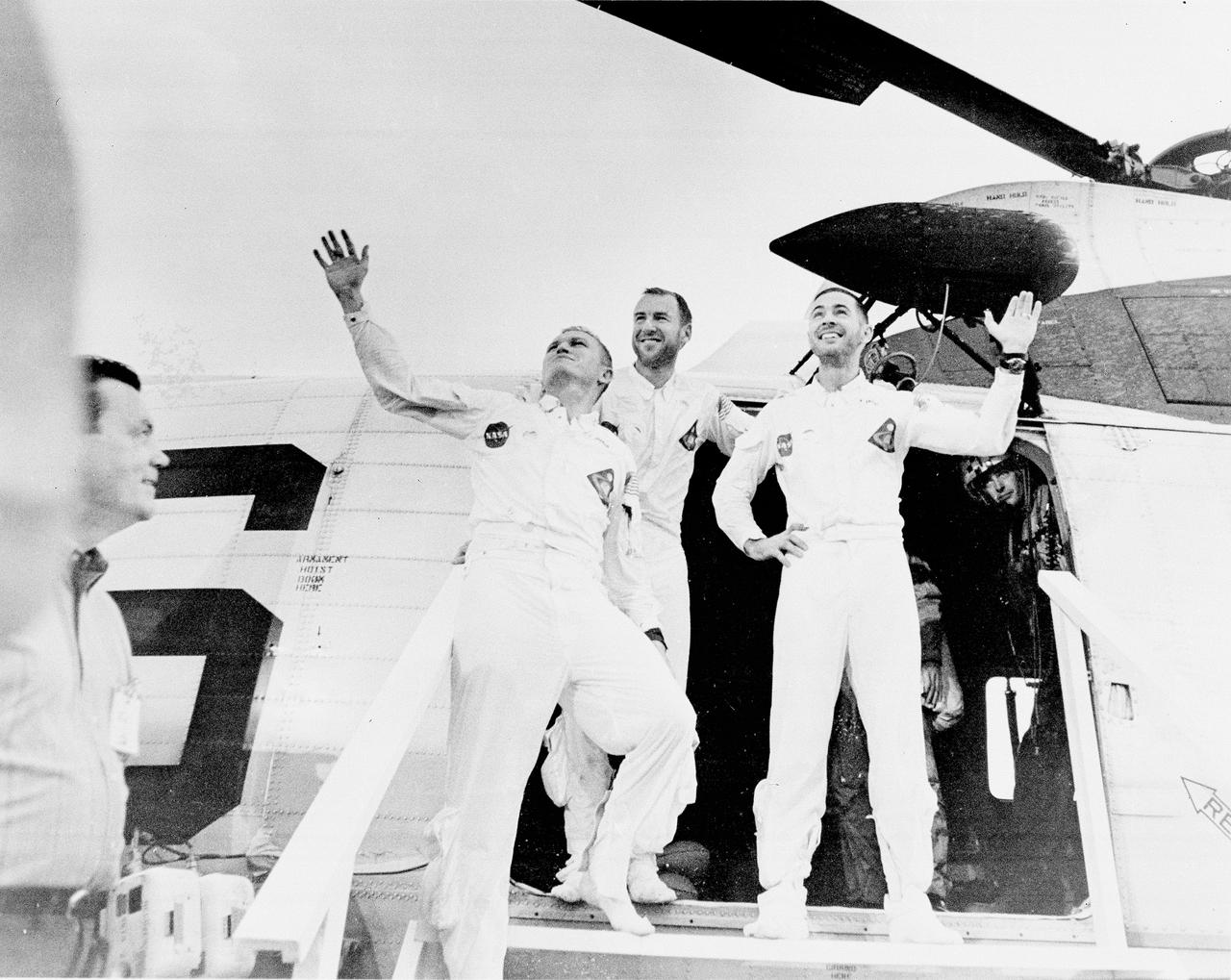
Apollo 8 served as the first manned lunar orbit mission. Liftoff occurred on December 21, 1968, carrying a three man crew consisting of astronauts Frank Borman, commander; William Anders, Lunar Module (LM) Pilot; and James Lovell, Command Module (CM) pilot. The three safely returned to Earth on December 27, 1968. In this photograph, the crew members are waving as they leave the recovery helicopter. The mission achieved operational experience and tested the Apollo command module systems, including communications, tracking, and life-support, in cis-lunar space and lunar orbit, and allowed evaluation of crew performance on a lunar orbiting mission. The crew photographed the lunar surface, both far side and near side, obtaining information on topography and landmarks as well as other scientific information necessary for future Apollo landings. All systems operated within allowable parameters and all objectives of the mission were achieved.
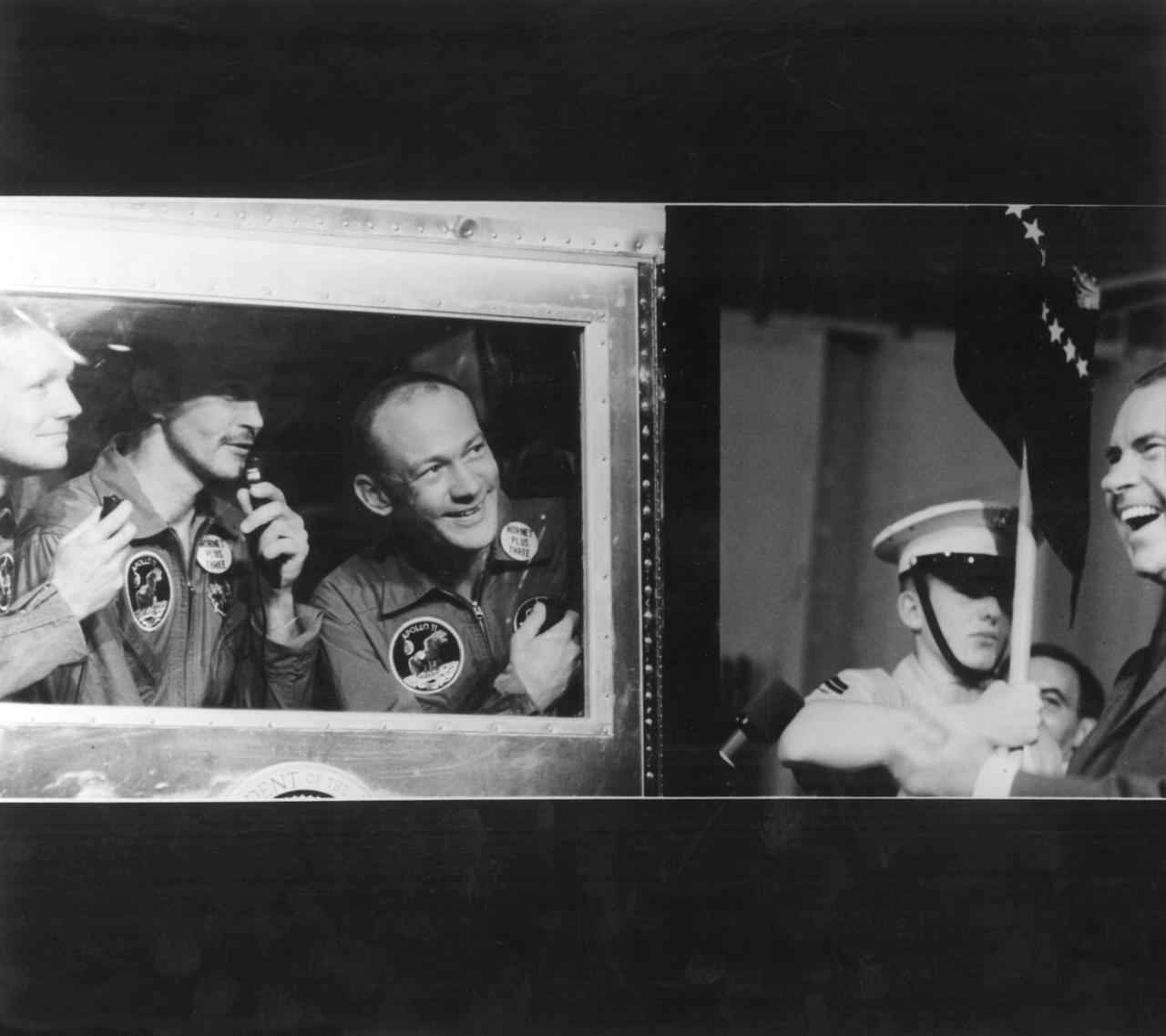
The Apollo 11 mission, the first manned lunar mission, launched from the Kennedy Space Center, Florida via the Marshall Space Flight Center (MSFC) developed Saturn V launch vehicle on July 16, 1969 and safely returned to Earth on July 24, 1969. Aboard the space craft were astronauts Neil A. Armstrong, commander; Michael Collins, Command Module (CM) pilot; and Edwin E. Aldrin Jr., Lunar Module (LM) pilot. The CM, piloted by Michael Collins remained in a parking orbit around the Moon while the LM, named “Eagle’’, carrying astronauts Neil Armstrong and Edwin Aldrin, landed on the Moon. During 2½ hours of surface exploration, the crew collected 47 pounds of lunar surface material for analysis back on Earth. The recovery operation took place in the Pacific Ocean where Navy para-rescue men recovered the capsule housing the 3-man Apollo 11 crew. The crew was airlifted to safety aboard the U.S.S. Hornet, where they were quartered in a Mobile Quarantine Facility (MQF) for 21 days. Here, U.S. President Richard Milhous Nixon gets a good laugh at something being said by Astronaut Collins (center) as astronauts Armstrong (left), and Aldrin (right) listen. The president was aboard the recovery vessel awaiting return of the astronauts. With the success of Apollo 11, the national objective to land men on the Moon and return them safely to Earth had been accomplished.
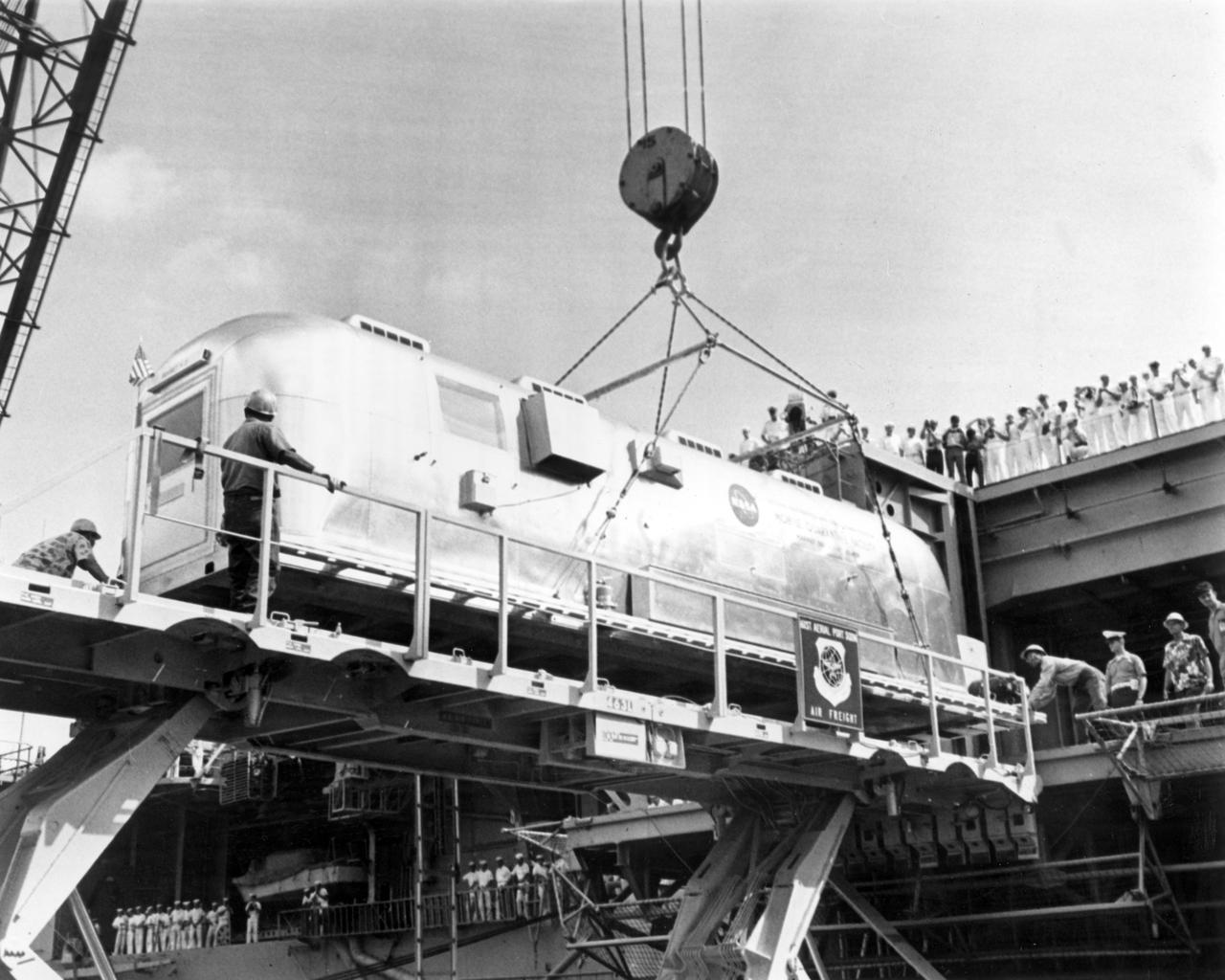
The Apollo 11 mission, the first manned lunar mission, launched from the Kennedy Space Center, Florida via the Marshall Space Flight Center (MSFC) developed Saturn V launch vehicle on July 16, 1969 and safely returned to Earth on July 24, 1969. Aboard the space craft were astronauts Neil A. Armstrong, commander; Michael Collins, Command Module (CM) pilot; and Edwin E. Aldrin Jr., Lunar Module (LM) pilot. The CM, piloted by Michael Collins remained in a parking orbit around the Moon while the LM, named “Eagle’’, carrying astronauts Neil Armstrong and Edwin Aldrin, landed on the Moon. During 2½ hours of surface exploration, the crew collected 47 pounds of lunar surface material for analysis back on Earth. The recovery operation took place in the Pacific Ocean where Navy para-rescue men recovered the capsule housing the 3-man Apollo 11 crew. The crew was airlifted to safety aboard the U.S.S. Hornet recovery ship, where they were quartered in a Mobile Quarantine Facility (MQF) which served as their home for 21 days. In this photo taken at Pearl Harbor, Hawaii, the quarantined housing facility is being lowered from the U.S.S. Hornet, onto a trailer for transport to Hickam Field. From there, it was loaded aboard an Air Force C-141 jet and flown back to Ellington Air Force Base Texas, and then on to the NASA Manned Spacecraft Center (MSC) Lunar Receiving Laboratory in Houston, Texas.
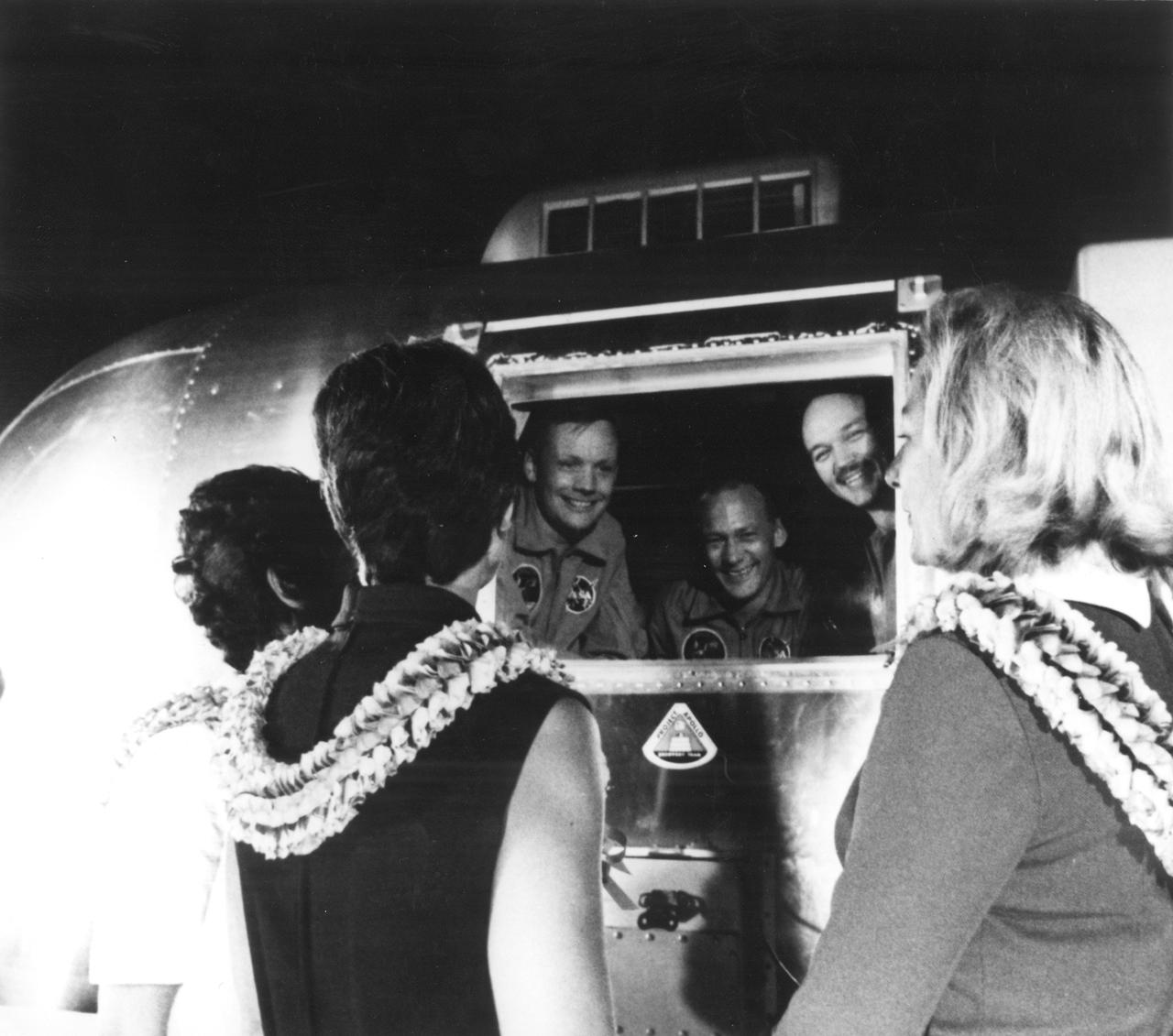
The Apollo 11 mission, the first manned lunar mission, launched from the Kennedy Space Center, Florida via the Marshall Space Flight Center (MSFC) developed Saturn V launch vehicle on July 16, 1969 and safely returned to Earth on July 24, 1969. Aboard the space craft were astronauts Neil A. Armstrong, commander; Michael Collins, Command Module (CM) pilot; and Edwin E. Aldrin Jr., Lunar Module (LM) pilot. The CM, piloted by Michael Collins remained in a parking orbit around the Moon while the LM, named “Eagle’’, carrying astronauts Neil Armstrong and Edwin Aldrin, landed on the Moon. During 2½ hours of surface exploration, the crew collected 47 pounds of lunar surface material for analysis back on Earth. The recovery operation took place in the Pacific Ocean where Navy para-rescue men recovered the capsule housing the 3-man Apollo 11 crew. The crew was airlifted to safety aboard the U.S.S. Hornet, where they were quartered in a Mobile Quarantine Facility (MQF) which served as their home until they reached the NASA Manned Spacecraft Center (MSC) Lunar Receiving Laboratory in Houston, Texas. On arrival at Ellington Air Force base near the MSC, the crew, still under a 21 day quarantine in the MQF are greeted by their wives. Looking out of the facility are (L-R) Armstrong, Aldrin, and Collins. Wives are (L-R) Pat Collins, Jan Armstrong, and Joan Aldrin.
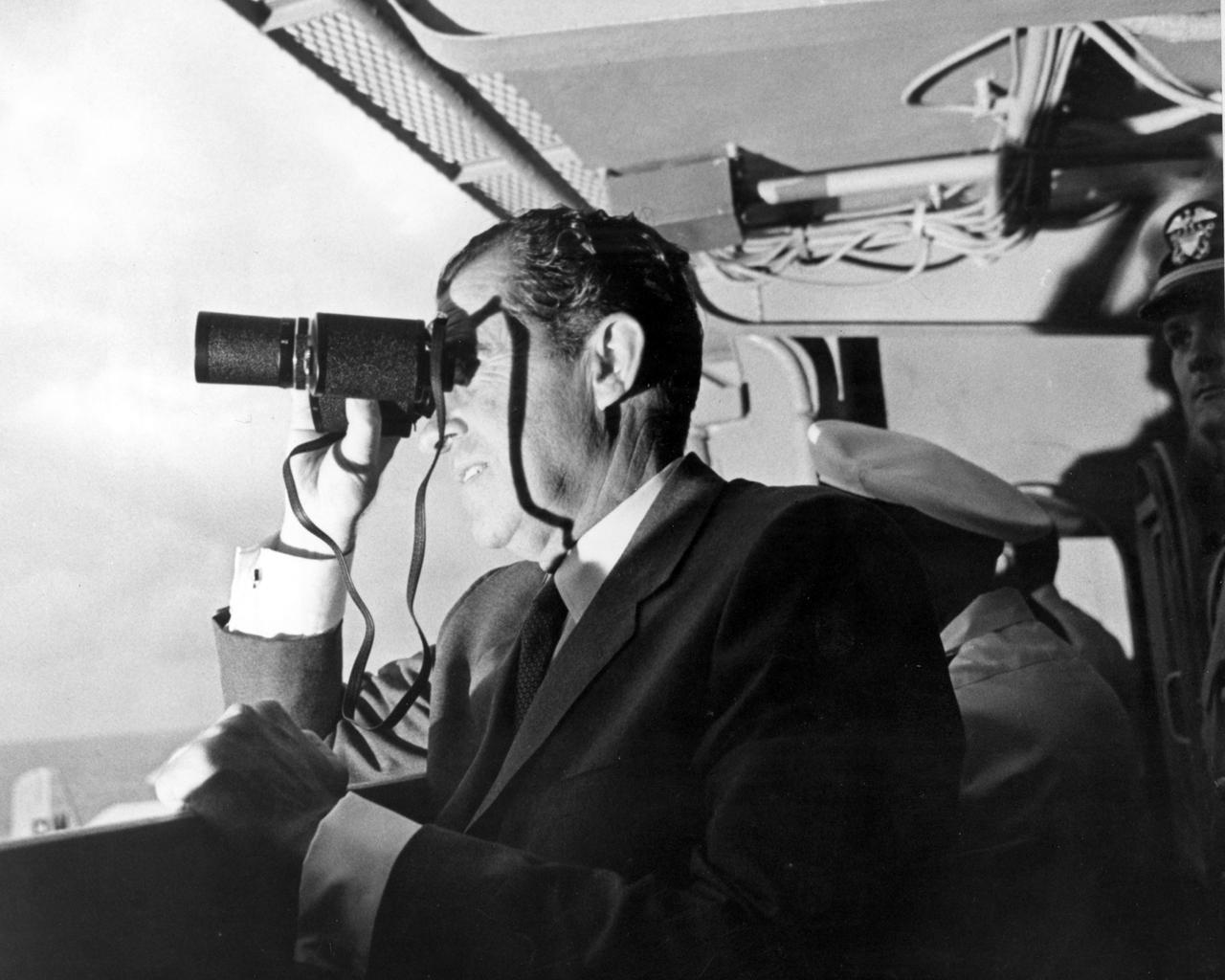
U.S. President Richard Milhous Nixon, aboard the U.S.S. Hornet aircraft carrier, used binoculars to watch the Apollo 11 Lunar Mission recovery. The recovery operation took place in the Pacific Ocean where Navy para-rescue men recovered the capsule housing the 3-man Apollo 11 crew. The crew was airlifted to safety aboard the U.S.S. Hornet, where they were quartered in a Mobile Quarantine Facility (MQF) for 21 days post mission. The Apollo 11 mission, the first manned lunar mission, launched from the Kennedy Space Center, Florida via the Saturn V launch vehicle on July 16, 1969 and safely returned to Earth on July 24, 1969. The Saturn V vehicle was developed by the Marshall Space Flight Center (MSFC) under the direction of Dr. Wernher von Braun. Aboard were Neil A. Armstrong, commander; Michael Collins, Command Module (CM) pilot; and Edwin E. Aldrin Jr., Lunar Module (LM) pilot. The CM, piloted by Michael Collins remained in a parking orbit around the Moon while the LM, named “Eagle’’, carrying astronauts Neil Armstrong and Edwin Aldrin, landed on the Moon. Armstrong was the first human to ever stand on the lunar surface, followed by Edwin (Buzz) Aldrin. During 2½ hours of surface exploration, the crew collected 47 pounds of lunar surface material for analysis back on Earth. With the success of Apollo 11, the national objective to land men on the Moon and return them safely to Earth had been accomplished.
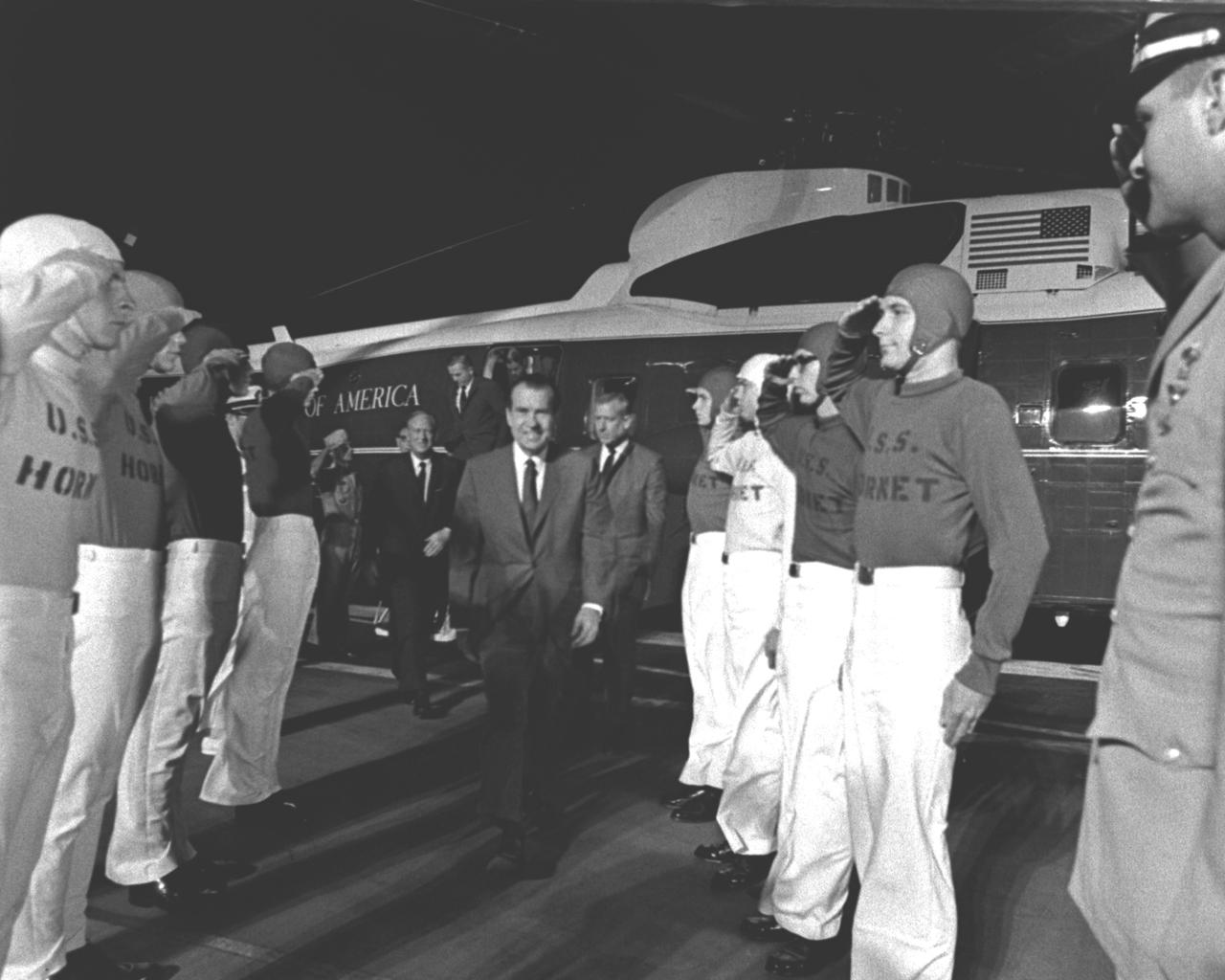
U.S. President Richard Milhous Nixon (center), is saluted by the honor guard of flight deck crewmen when he arrives aboard the U.S.S. Hornet, prime recovery ship for the Apollo 11 mission, to watch recovery operations and welcome the astronauts home. The recovery operation took place in the Pacific Ocean where Navy para-rescue men recovered the capsule housing the 3-man Apollo 11 crew. The crew was airlifted to safety aboard the U.S.S. Hornet, where they were quartered in a Mobile Quarantine Facility (MQF) for 21 days following the mission. The Apollo 11 mission, the first manned lunar mission, launched from the Kennedy Space Center, Florida via the Saturn V launch vehicle on July 16, 1969 and safely returned to Earth on July 24, 1969. Aboard were Neil A. Armstrong, commander; Michael Collins, Command Module (CM) pilot; and Edwin E. Aldrin Jr., Lunar Module (LM) pilot. The CM, piloted by Michael Collins remained in a parking orbit around the Moon while the LM, named “Eagle’’, carrying astronauts Neil Armstrong and Edwin Aldrin, landed on the Moon. Armstrong was the first human to ever stand on the lunar surface, followed by Edwin (Buzz) Aldrin. During 2½ hours of surface exploration, the crew collected 47 pounds of lunar surface material for analysis back on Earth. With the success of Apollo 11, the national objective to land men on the Moon and return them safely to Earth had been accomplished. The Saturn V vehicle was developed by the Marshall Space Flight Center (MSFC) under the direction of Dr. Wernher von Braun.
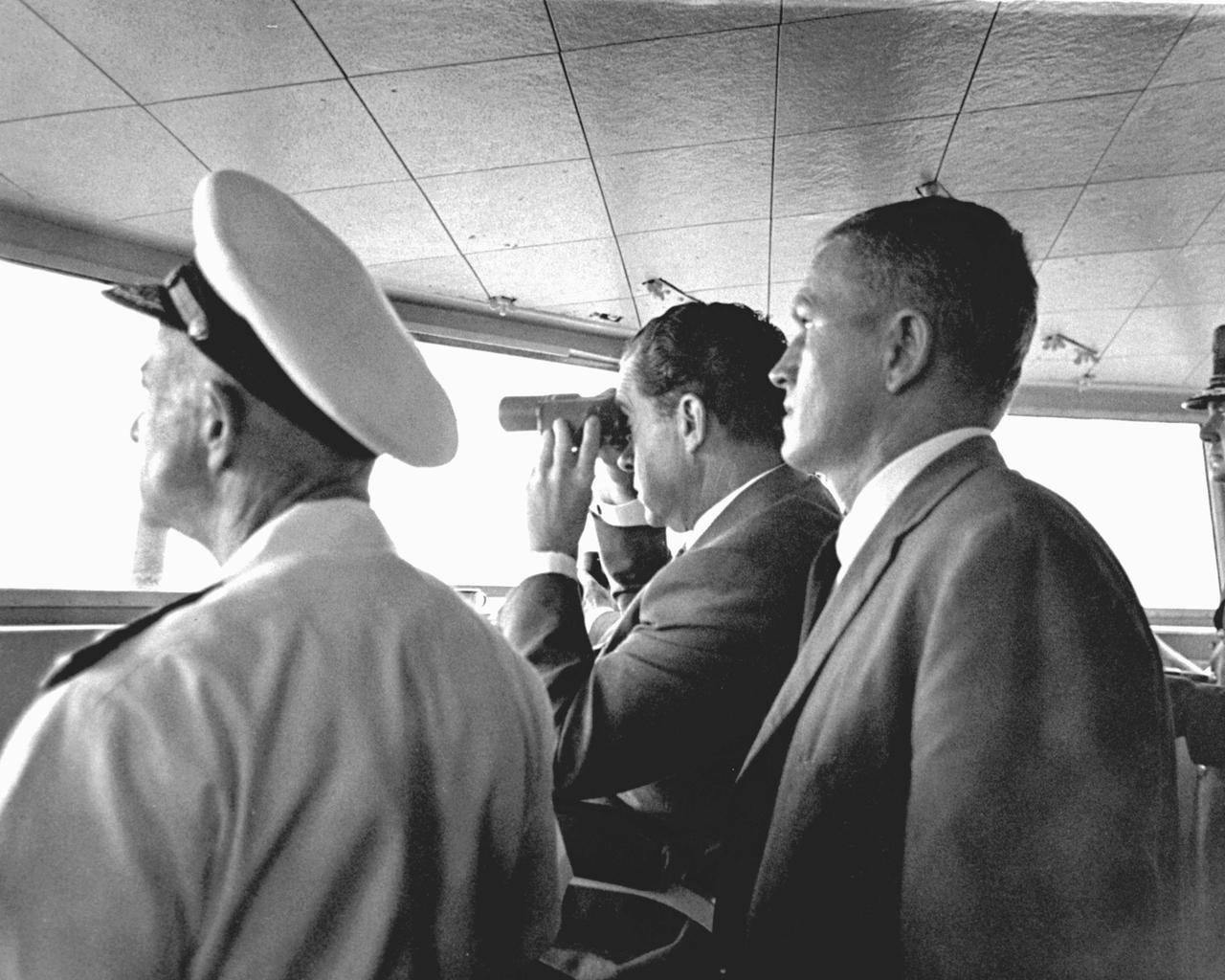
U.S. President Richard Milhous Nixon (center), aboard the U.S.S. Hornet aircraft carrier, used binoculars to watch the Apollo 11 Lunar Mission Recovery. Standing next to the President is astronaut Frank Borman, Apollo 8 Commander. The recovery operation took place in the Pacific Ocean where Navy para-rescue men recovered the capsule housing the 3-man Apollo 11 crew. The crew was airlifted to safety aboard the U.S.S. Hornet where they were quartered in a Mobile Quarantine Facility (MQF) for 21 days post mission. The Apollo 11 mission, the first manned lunar mission, launched from the Kennedy Space Center, Florida via the Saturn V launch vehicle on July 16, 1969 and safely returned to Earth on July 24, 1969. The Saturn V vehicle was developed by the Marshall Space Flight Center (MSFC) under the direction of Dr. Wernher von Braun. Aboard were Neil A. Armstrong, commander; Michael Collins, Command Module (CM) pilot; and Edwin E. Aldrin Jr., Lunar Module (LM) pilot. The CM, piloted by Michael Collins remained in a parking orbit around the Moon while the LM, named “Eagle’’, carrying astronauts Neil Armstrong and Edwin Aldrin, landed on the Moon. Armstrong was the first human to ever stand on the lunar surface, followed by Edwin (Buzz) Aldrin. During 2½ hours of surface exploration, the crew collected 47 pounds of lunar surface material for analysis back on Earth. With the success of Apollo 11, the national objective to land men on the Moon and return them safely to Earth had been accomplished.
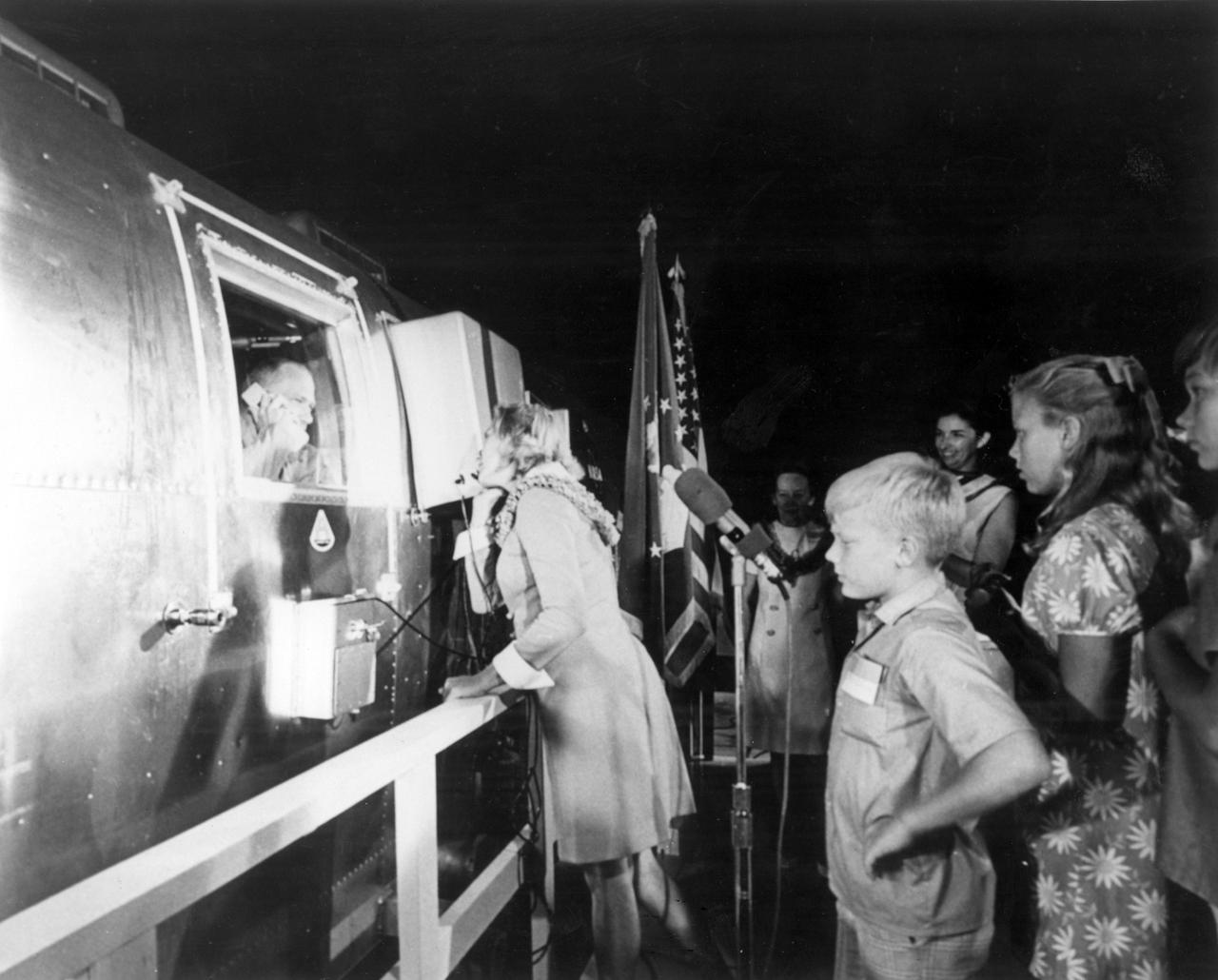
The Apollo 11 mission, the first manned lunar mission, launched from the Kennedy Space Center, Florida via the Marshall Space Flight Center (MSFC) developed Saturn V launch vehicle on July 16, 1969 and safely returned to Earth on July 24, 1969. Aboard the space craft were astronauts Neil A. Armstrong, commander; Michael Collins, Command Module (CM) pilot; and Edwin E. (Buzz) Aldrin Jr., Lunar Module (LM) pilot. The CM, piloted by Michael Collins remained in a parking orbit around the Moon while the LM, named “Eagle’’, carrying astronauts Neil Armstrong and Edwin Aldrin, landed on the Moon. During 2½ hours of surface exploration, the crew collected 47 pounds of lunar surface material for analysis back on Earth. The recovery operation took place in the Pacific Ocean where Navy para-rescue men recovered the capsule housing the 3-man Apollo 11 crew. The crew was airlifted to safety aboard the U.S.S. Hornet, where they were quartered in a Mobile Quarantine Facility (MQF) which served as their home until they reached the NASA Manned Spacecraft Center (MSC) Lunar Receiving Laboratory in Houston, Texas. On arrival at Ellington Air Force base near the MSC, the crew, still under a 21 day quarantine in the MQF, were greeted by their wives. Pictured here is Joan Aldrin, wife of Buzz Aldrin, speaking with her husband via telephone patch.
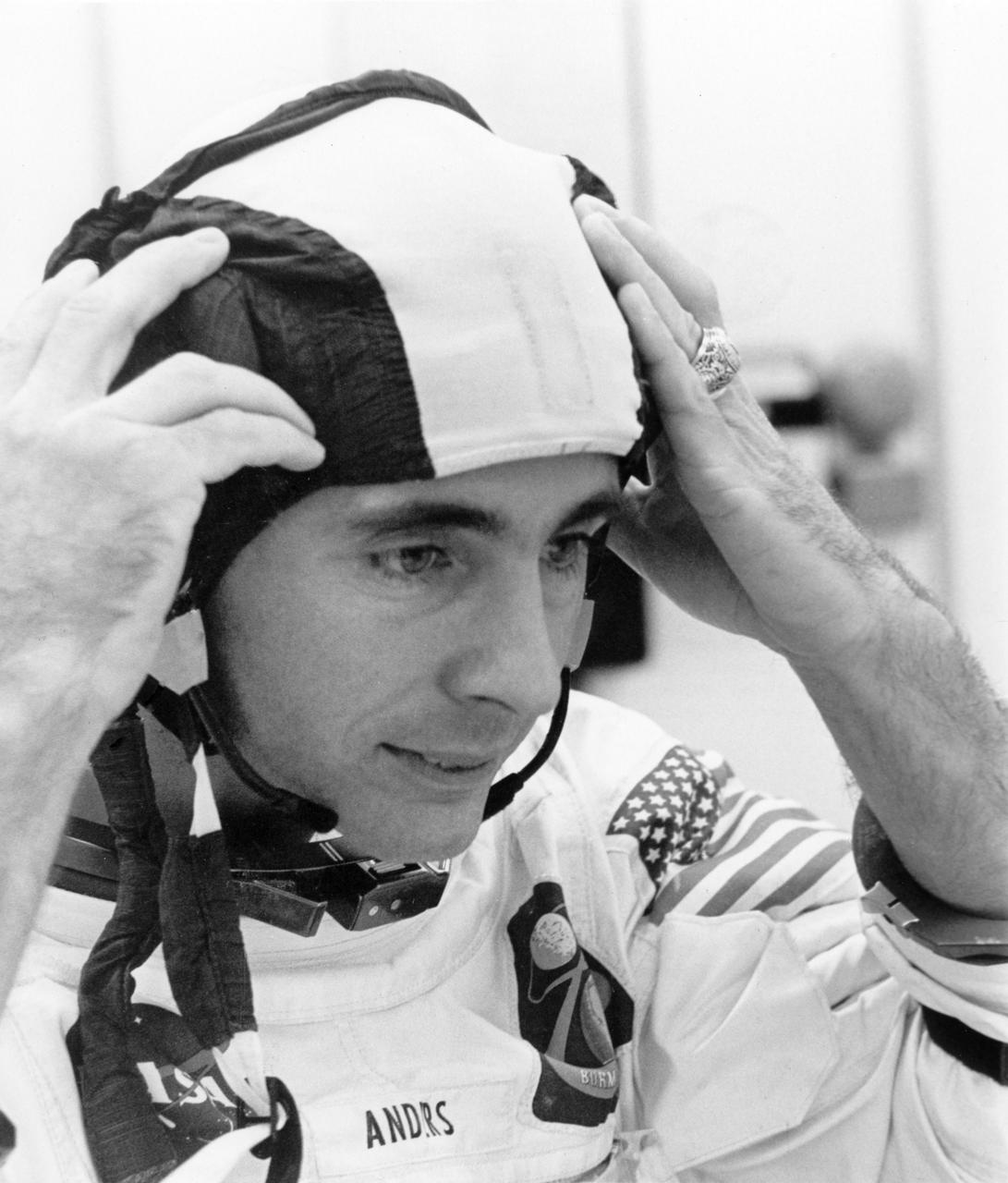
Apollo 8 Astronaut William Anders, Lunar Module (LM) pilot, adjusts his helmet as he suits up for the Apollo 8 mission. The first manned Apollo mission launched aboard the Saturn V and first manned Apollo craft to enter lunar orbit, the SA-503, Apollo 8 mission lift off occurred on December 21, 1968 and returned safely to Earth on December 27, 1968. Aboard were Anders and fellow astronauts James Lovell, Command Module (CM) pilot; and Frank Borman, commander. The mission achieved operational experience and tested the Apollo command module systems, including communications, tracking, and life-support, in cis-lunar space and lunar orbit, and allowed evaluation of crew performance on a lunar orbiting mission. The crew photographed the lunar surface, both far side and near side, obtaining information on topography and landmarks as well as other scientific information necessary for future Apollo landings. All systems operated within allowable parameters and all objectives of the mission were achieved.
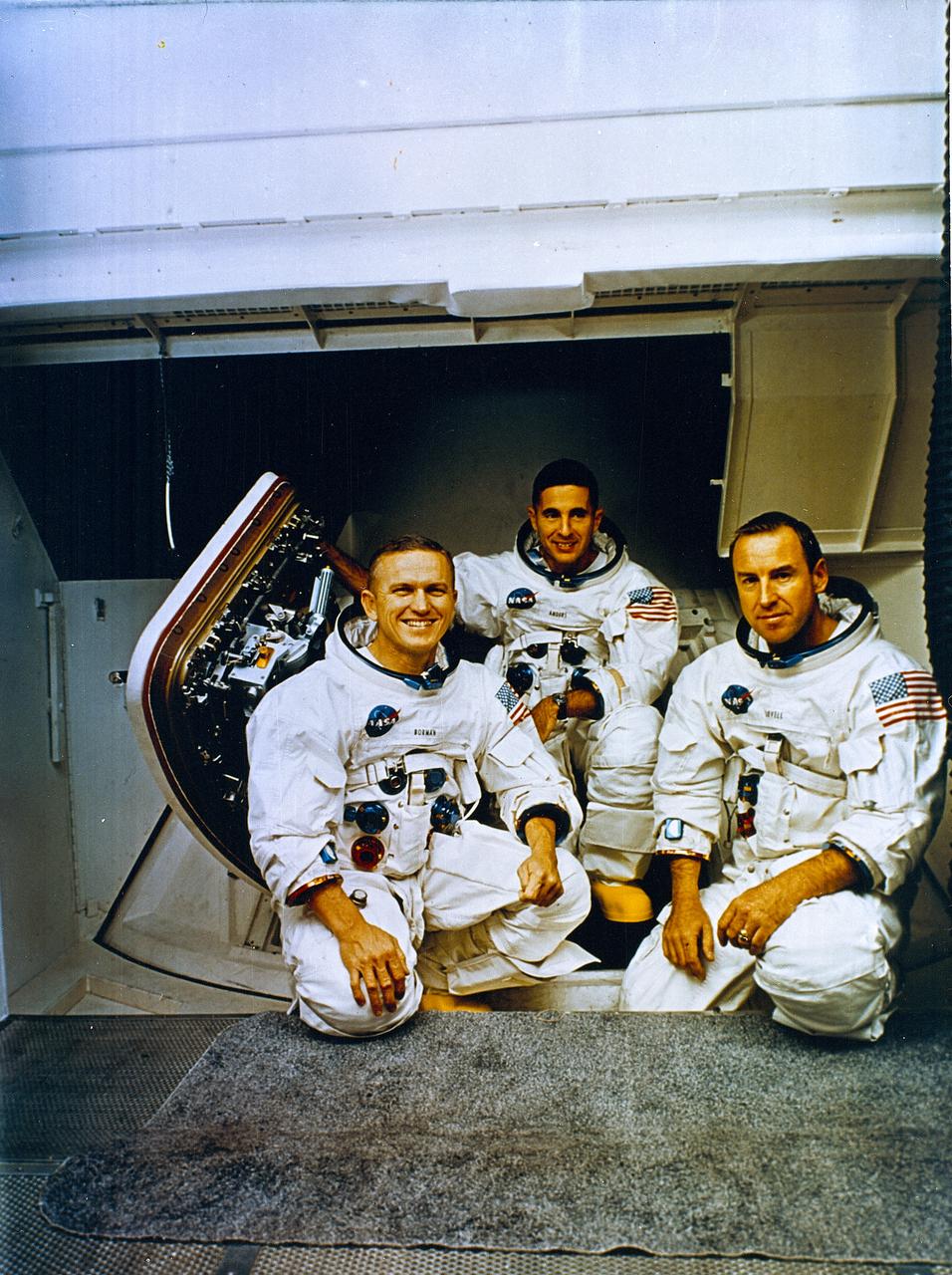
The Apollo 8 Crew (L to R) Frank Borman, commander; William Anders, Lunar Module (LM) Pilot; and James Lovell, Command Module (CM) pilot pose in front of the Apollo mission simulator during training. The three served as the crew for the first manned Apollo mission launched aboard the Saturn V and first manned Apollo craft to enter lunar orbit. Liftoff occurred on December 21, 1968 with a safe return to Earth on December 27, 1968. The mission achieved operational experience and tested the Apollo command module systems, including communications, tracking, and life-support, in cis-lunar space and lunar orbit, and allowed evaluation of crew performance on a lunar orbiting mission. The crew photographed the lunar surface, both far side and near side, obtaining information on topography and landmarks as well as other scientific information necessary for future Apollo landings. All systems operated within allowable parameters and all objectives of the mission were achieved.
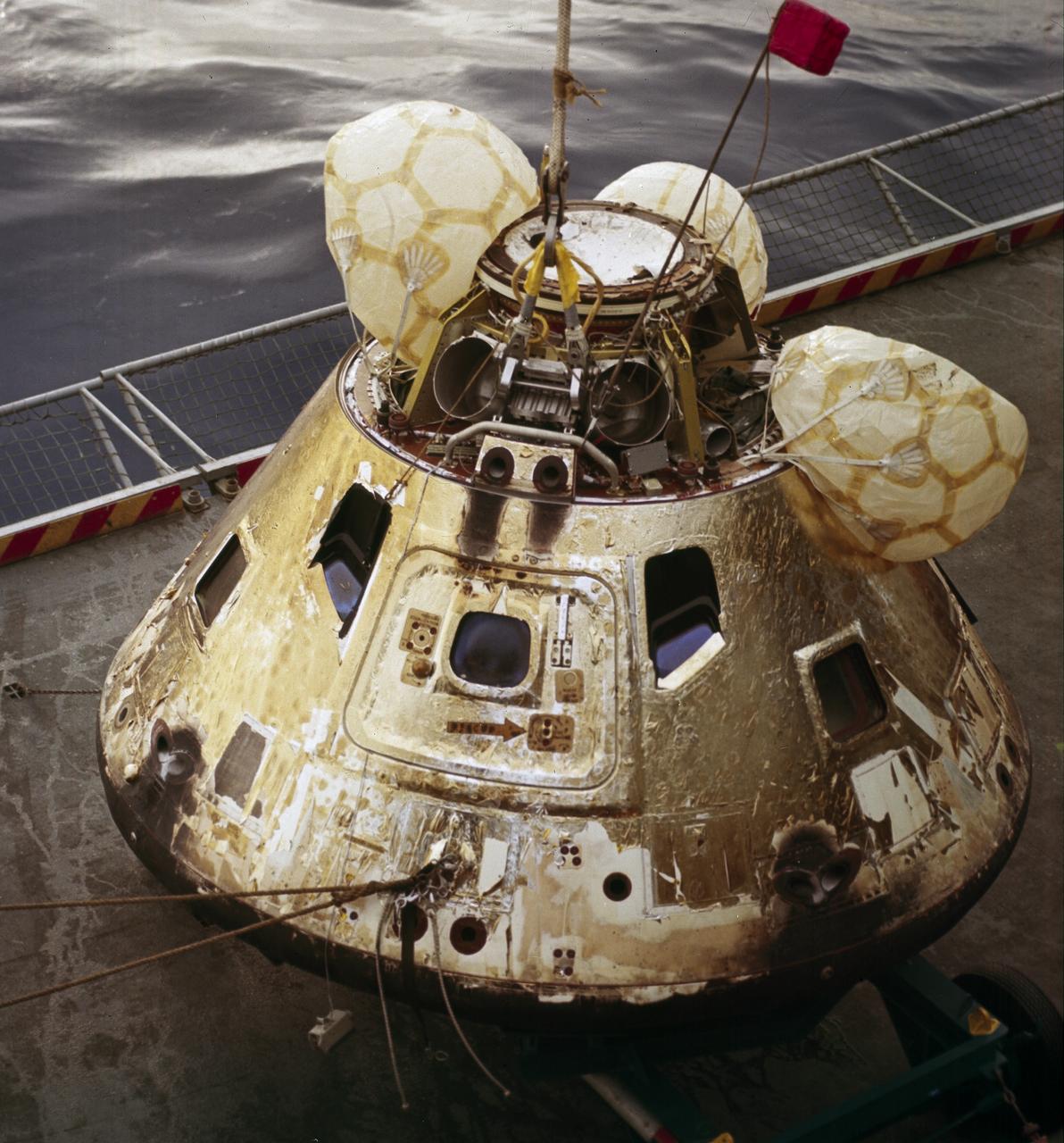
This is a photograph of the Apollo 8 Capsule being hoisted onto the recovery ship following splashdown on December 27, 1968. The first manned Apollo mission to escape Earth’s gravity and travel to the lunar vicinity, the Saturn V, SA-503, Apollo 8 mission liftoff occurred seven days prior, on December 21, 1968. Aboard were astronauts William Anders, Lunar Module (LM) Pilot; James Lovell, Command Module (CM) pilot; and Frank Borman, commander. The mission achieved operational experience and tested the Apollo command module systems, including communications, tracking, and life-support, in cis-lunar space and lunar orbit, and allowed evaluation of crew performance on a lunar orbiting mission. The crew photographed the lunar surface, both far side and near side, obtaining information on topography and landmarks as well as other scientific information necessary for future Apollo landings. All systems operated within allowable parameters and all objectives of the mission were achieved.
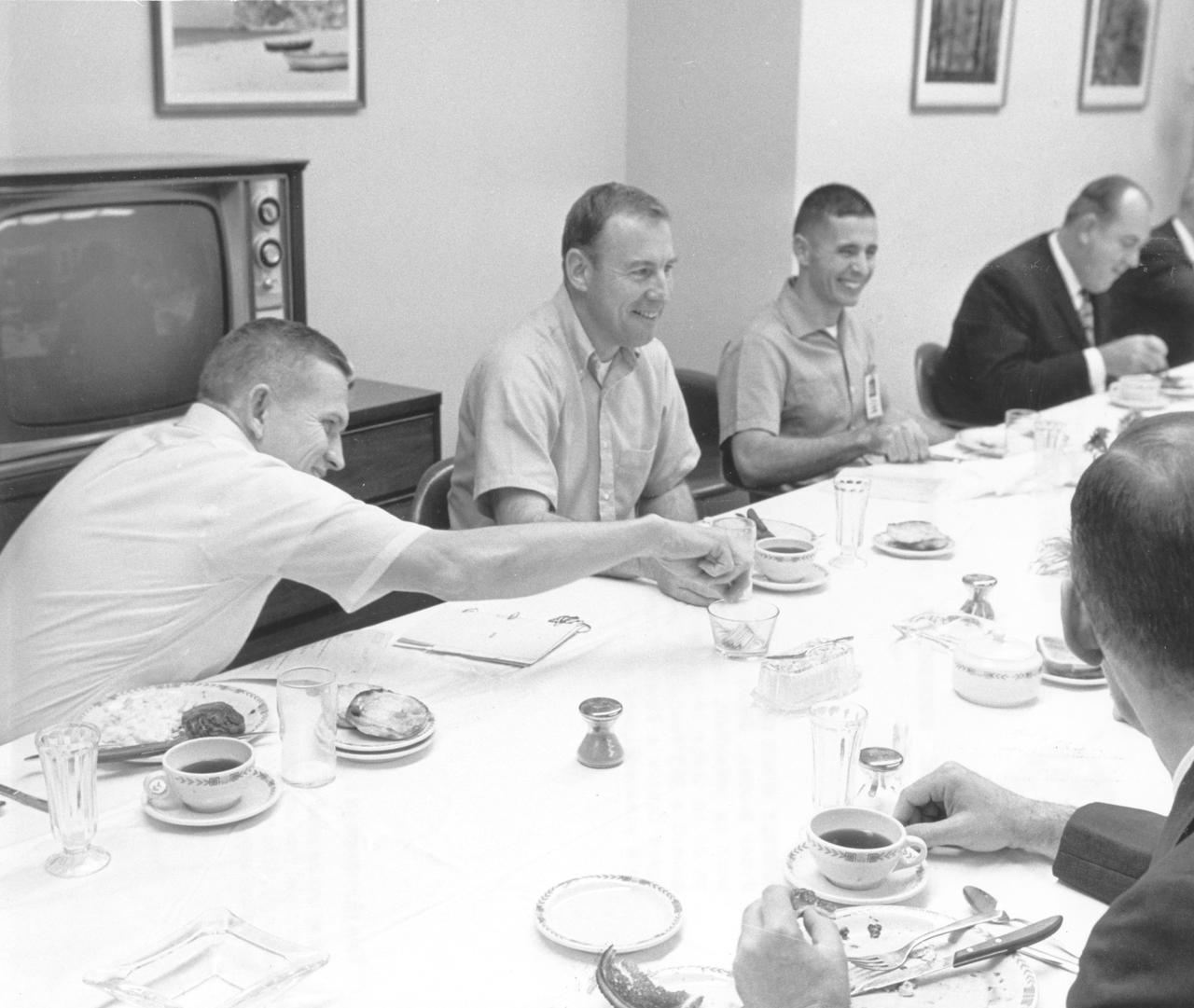
Pictured (left to right) are Apollo 8 crew members Frank Borman, commander; James Lovell, Command Module (CM) pilot; and William Anders, Lunar Module (LM) pilot, having breakfast on the day of launch. The three composed the first manned Apollo mission that launched aboard the Saturn V and the first manned Apollo craft to enter lunar orbit. Apollo 8 mission lift off occurred on December 21, 1968 and returned safely to Earth on December 27, 1968. The mission achieved operational experience and tested the Apollo command module systems, including communications, tracking, and life-support, in cis-lunar space and lunar orbit, and allowed evaluation of crew performance on a lunar orbiting mission. The crew photographed the lunar surface, both far side and near side, obtaining information on topography and landmarks as well as other scientific information necessary for future Apollo landings. All systems operated within allowable parameters and all objectives of the mission were achieved.
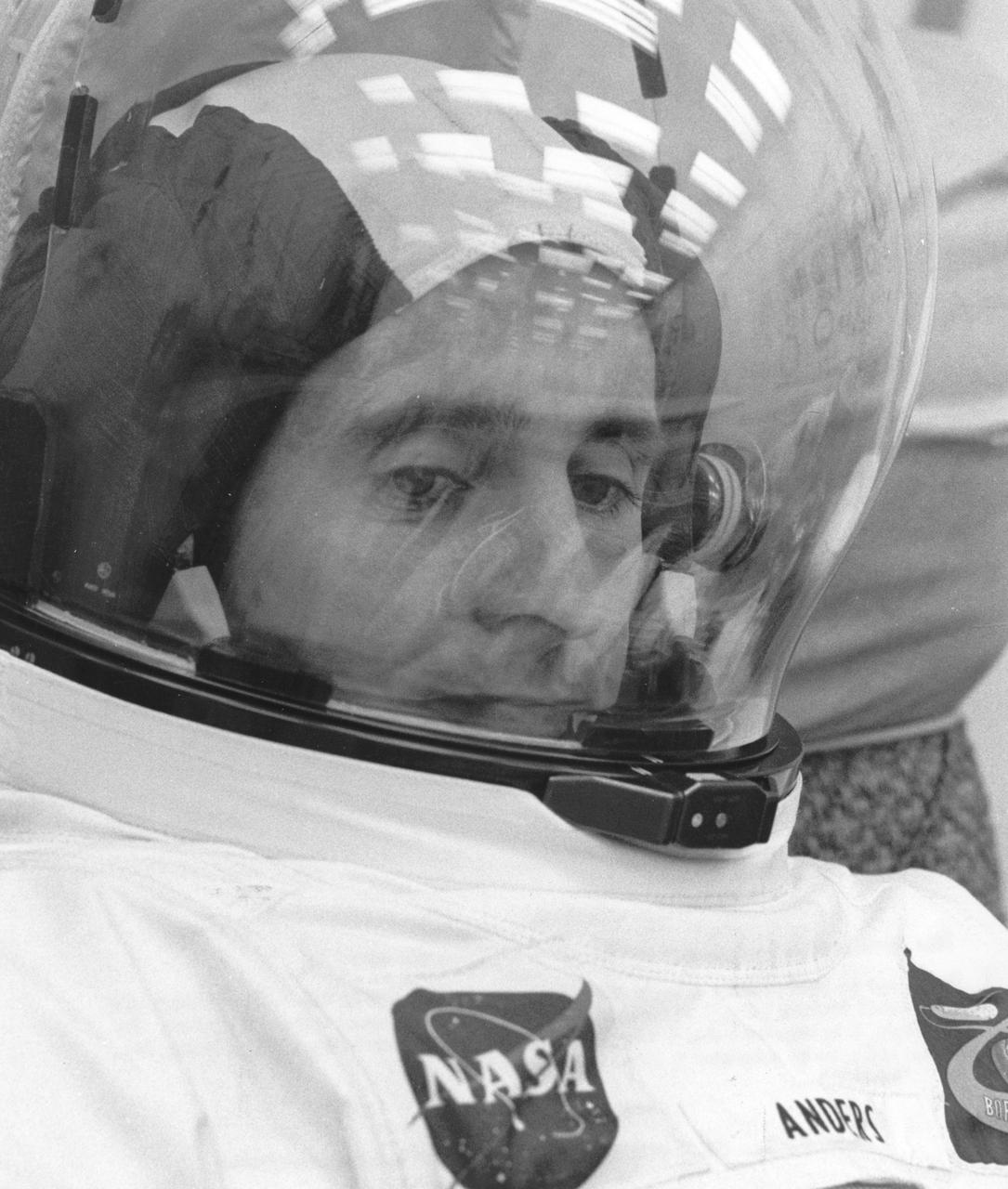
Apollo 8 astronaut William Anders, Lunar Module (LM) pilot, is suited up for the Apollo 8 mission countdown demonstration test. The first manned Apollo mission launched aboard the Saturn V and first manned Apollo craft to enter lunar orbit, the SA-503, Apollo 8 mission lift off occurred on December 21, 1968 and returned safely to Earth on December 27, 1968. Aboard were Anders and fellow astronauts James Lovell, Command Module (CM) pilot; and Frank Borman, commander. The mission achieved operational experience and tested the Apollo command module systems, including communications, tracking, and life-support, in cis-lunar space and lunar orbit, and allowed evaluation of crew performance on a lunar orbiting mission. The crew photographed the lunar surface, both far side and near side, obtaining information on topography and landmarks as well as other scientific information necessary for future Apollo landings. All systems operated within allowable parameters and all objectives of the mission were achieved.
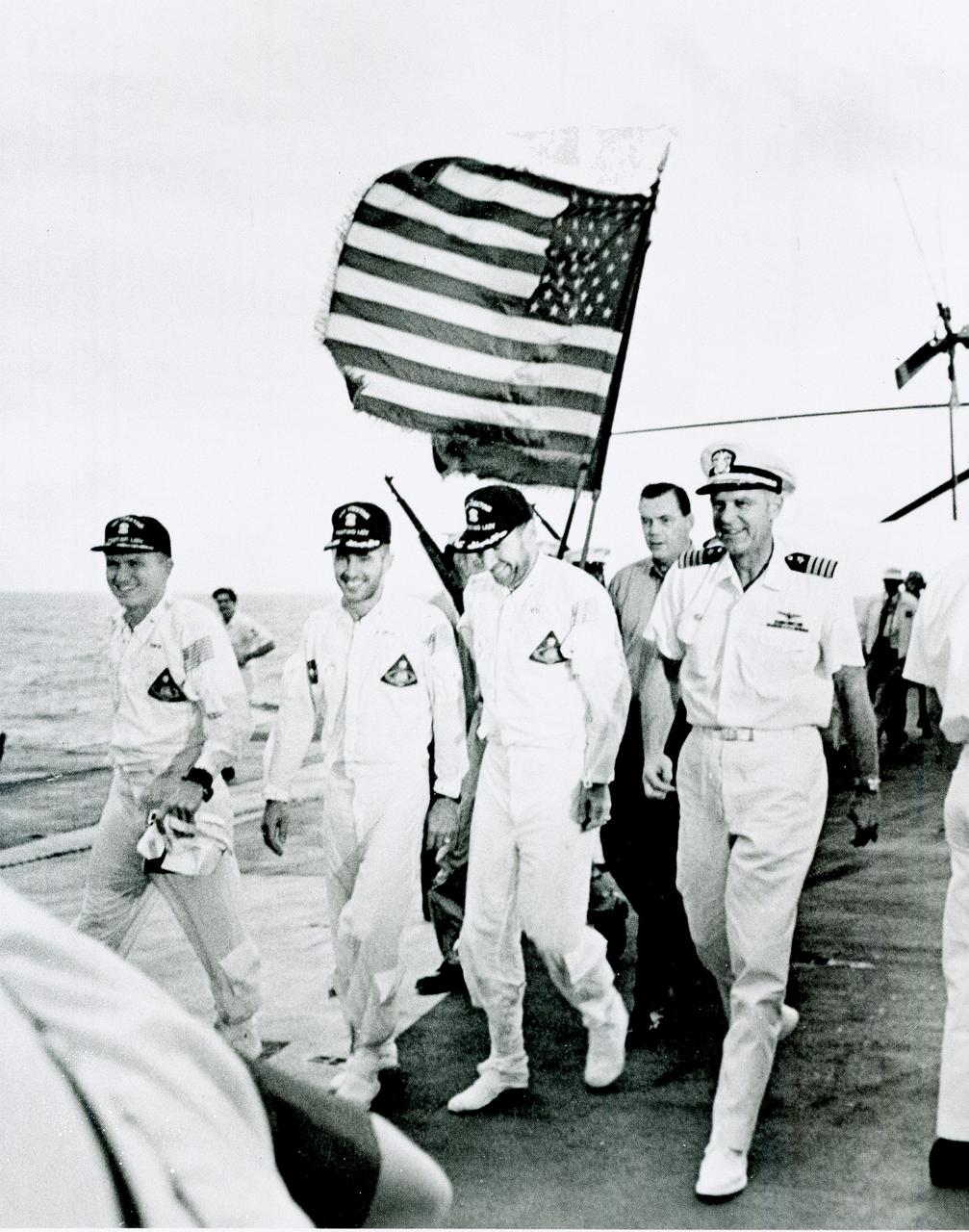
Apollo 8 astronauts and commanding officer of the recovery ship U.S.S. Yorktown walk the red carpet of the flight deck after splashdown recovery in the Pacific Ocean. Apollo 8 served as the first manned lunar orbit mission and the first manned flight of the Saturn V space vehicle, developed by the Marshall Space Flight Center (MSFC). Liftoff occurred on December 21, 1968, carrying astronauts Frank Borman, commander; William Anders, Lunar Module (LM) Pilot; and James Lovell, Command Module (CM) pilot. The three safely returned to Earth on December 27, 1968. The mission achieved operational experience and tested the Apollo command module systems, including communications, tracking, and life-support, in cis-lunar space and lunar orbit, and allowed evaluation of crew performance on a lunar orbiting mission. The crew photographed the lunar surface, both far side and near side, obtaining information on topography and landmarks as well as other scientific information necessary for future Apollo landings. All systems operated within allowable parameters and all objectives of the mission were achieved.
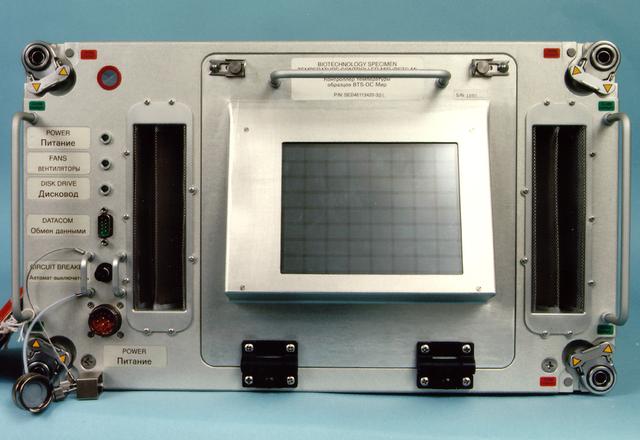
Biotechnology Specimen Temperature Controller (BSTC) will cultivate cells until their turn in the bioreactor; it can also be used in culturing experiments that do not require the bioreactor. The BSTC comprises four incubation/refrigeration chambers individually set at 4 to 50 deg. C (near-freezing to above body temperature). Each chamber holds three rugged tissue chamber modules (12 total), clear Teflon bags holding 30 ml of growth media, all positioned by a metal frame. Every 7 to 21 days (depending on growth rates), an astronaut uses a shrouded syringe and the bags' needleless injection ports to transfer a few cells to a fresh media bag, and to introduce a fixative so that the cells may be studied after flight. The design also lets the crew sample the media to measure glucose, gas, and pH levels, and to inspect cells with a microscope. The controller is monitored by the flight crew through a 23-cm (9-inch) color computer display on the face of the BSTC. This view shows the BTSC with the front panel open. The work is sponsored by NASA's Office of Biological and Physical Research. The bioreactor is managed by the Biotechnology Cell Science Program at NASA's Johnson Space Center (JSC). NASA-sponsored bioreactor research has been instrumental in helping scientists to better understand normal and cancerous tissue development. In cooperation with the medical community, the bioreactor design is being used to prepare better models of human colon, prostate, breast and ovarian tumors. Cartilage, bone marrow, heart muscle, skeletal muscle, pancreatic islet cells, liver and kidney are just a few of the normal tissues being cultured in rotating bioreactors by investigators.
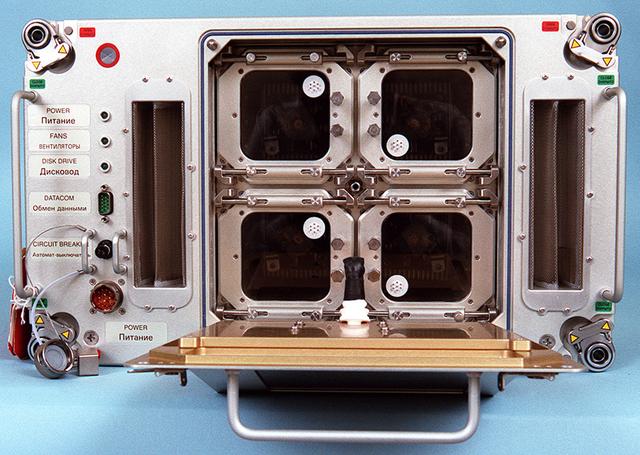
Biotechnology Specimen Temperature Controller (BSTC) will cultivate cells until their turn in the bioreactor; it can also be used in culturing experiments that do not require the bioreactor. The BSTC comprises four incubation/refrigeration chambers individually set at 4 to 50 degreesC (near-freezing to above body temperature). Each chamber holds three rugged tissue chamber modules (12 total), clear Teflon bags holding 30 ml of growth media, all positioned by a metal frame. Every 7 to 21 days (depending on growth rates), an astronaut uses a shrouded syringe and the bags' needleless injection ports to transfer a few cells to a fresh media bag, and to introduce a fixative so that the cells may be studied after flight. The design also lets the crew sample the media to measure glucose, gas, and pH levels, and to inspect cells with a microscope. The controller is monitored by the flight crew through a 23-cm (9-inch) color computer display on the face of the BSTC. This view shows the BTSC with the front panel open. The work is sponsored by NASA's Office of Biological and Physical Research. The bioreactor is managed by the Biotechnology Cell Science Program at NASA's Johnson Space Center (JSC). NASA-sponsored bioreactor research has been instrumental in helping scientists to better understand normal and cancerous tissue development. In cooperation with the medical community, the bioreactor design is being used to prepare better models of human colon, prostate, breast and ovarian tumors. Cartilage, bone marrow, heart muscle, skeletal muscle, pancreatic islet cells, liver and kidney are just a few of the normal tissues being cultured in rotating bioreactors by investigators.