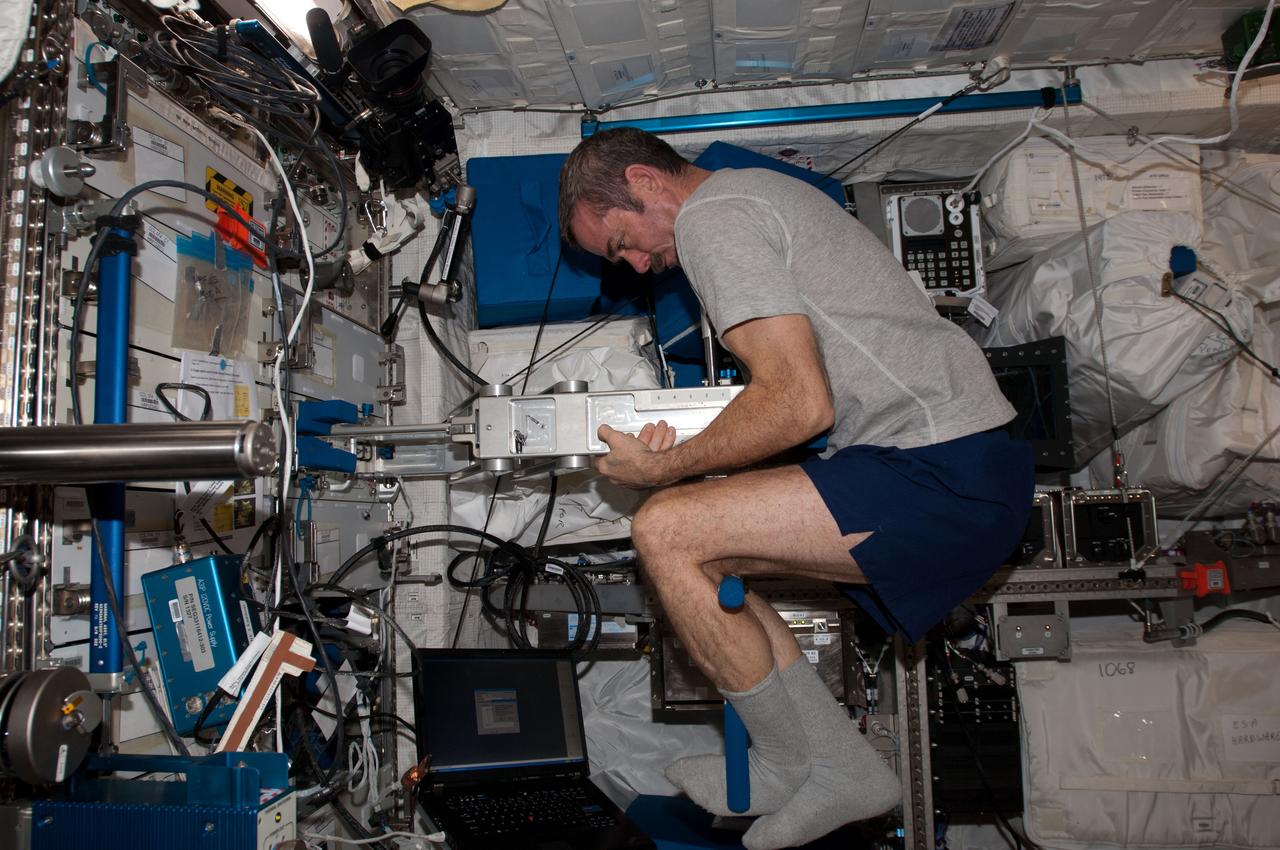
View of Canadian Space Agency (CSA) Chris Hadfield, Expedition 34 Flight Engineer (FE), using the Space Linear Acceleration Mass Measurement Device (SLAMMD) in the Columbus Module. Photo was taken during Expedition 34.
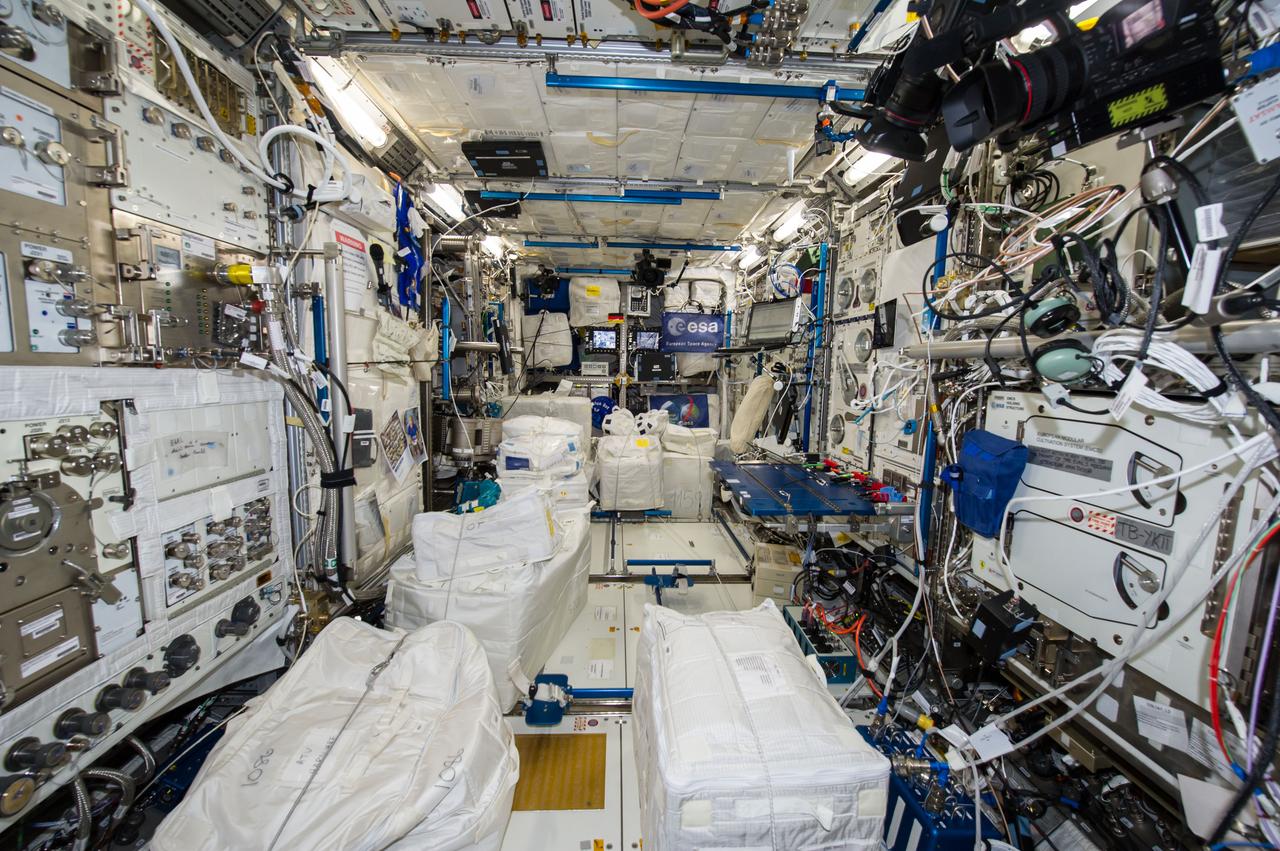
ISS041-E-000169 (11 Sept. 2014) --- An interior view of the Columbus laboratory of the International Space Station is featured in this image photographed by an Expedition 41 crew member aboard the station.
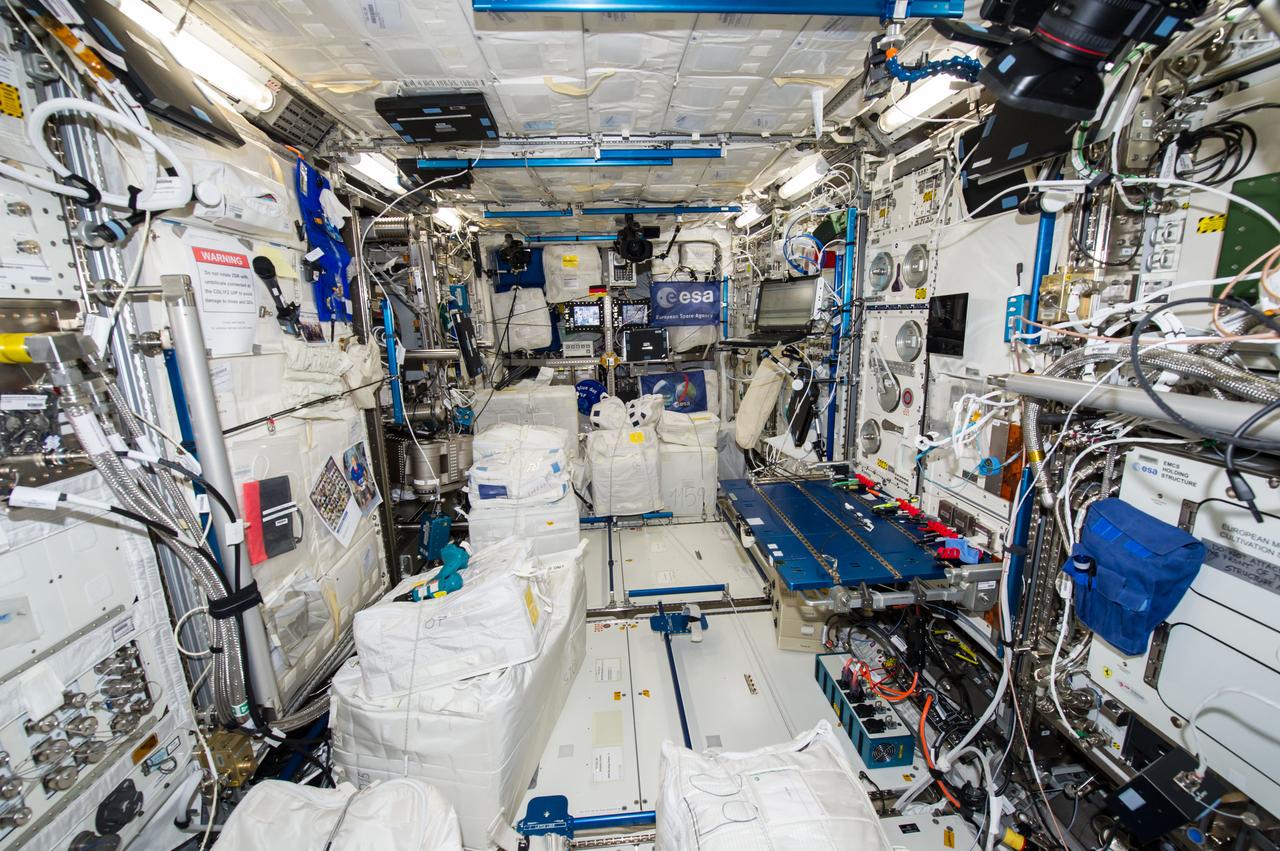
iss041e000170 (9/11/2020) --- A view of the Columbus Module aboard the International Space Stations (ISS). The Columbus laboratory is Europe’s largest contribution to the International Space Station. Columbus is a multifunctional pressurized laboratory permanently attached to the Harmony Module. The lab allows researchers on the ground, aided by the station’s crew, to conduct a wide variety of research in a weightless environment. In addition, experiments and applications can be conducted outside the module in the vacuum of space, thanks to four exterior mounting platforms that can accommodate external payloads in space science, Earth observation and technology.
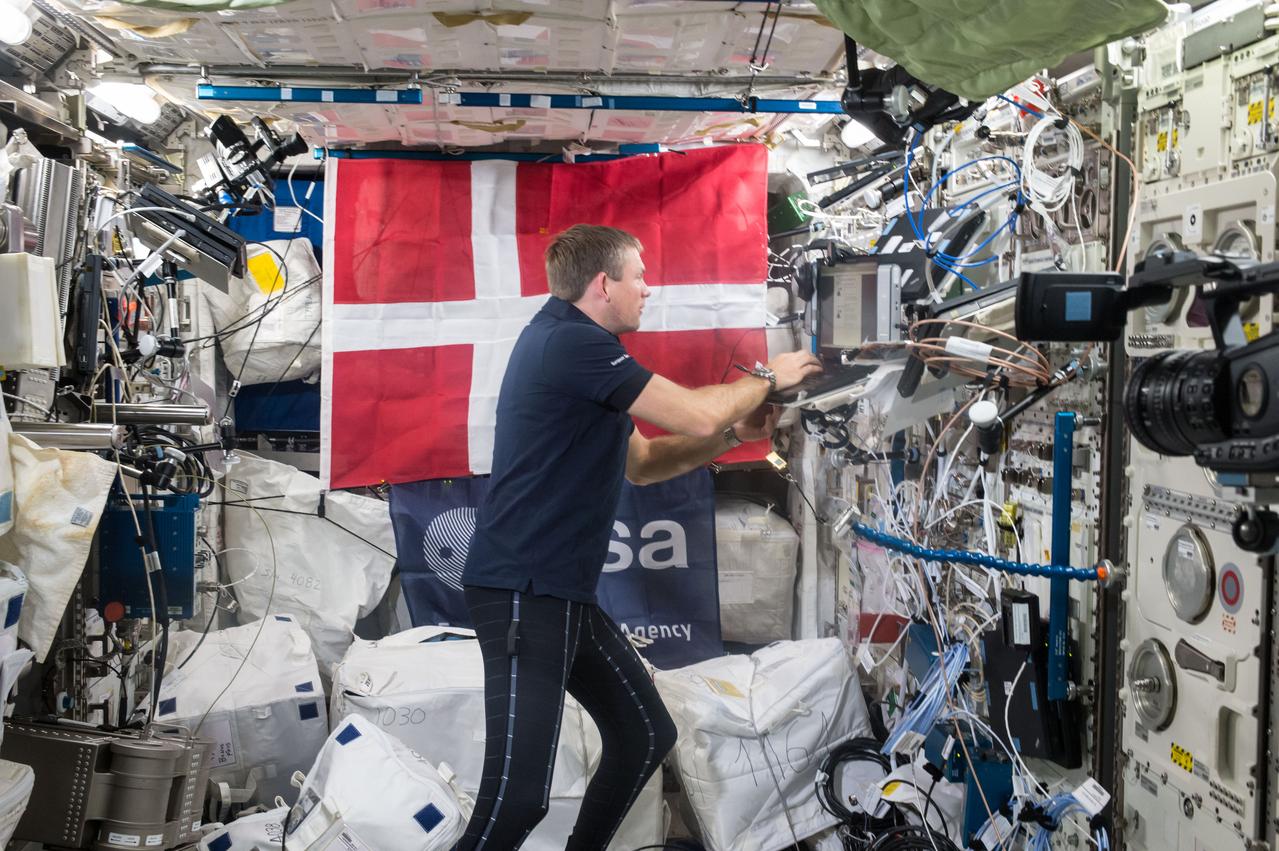
iss044e096164 (9/6/2015) --- European Space Agency (ESA) astronaut Andreas Mogensen is photographed working on the THOR experiment in the Columbus module aboard the International Space Station (ISS).
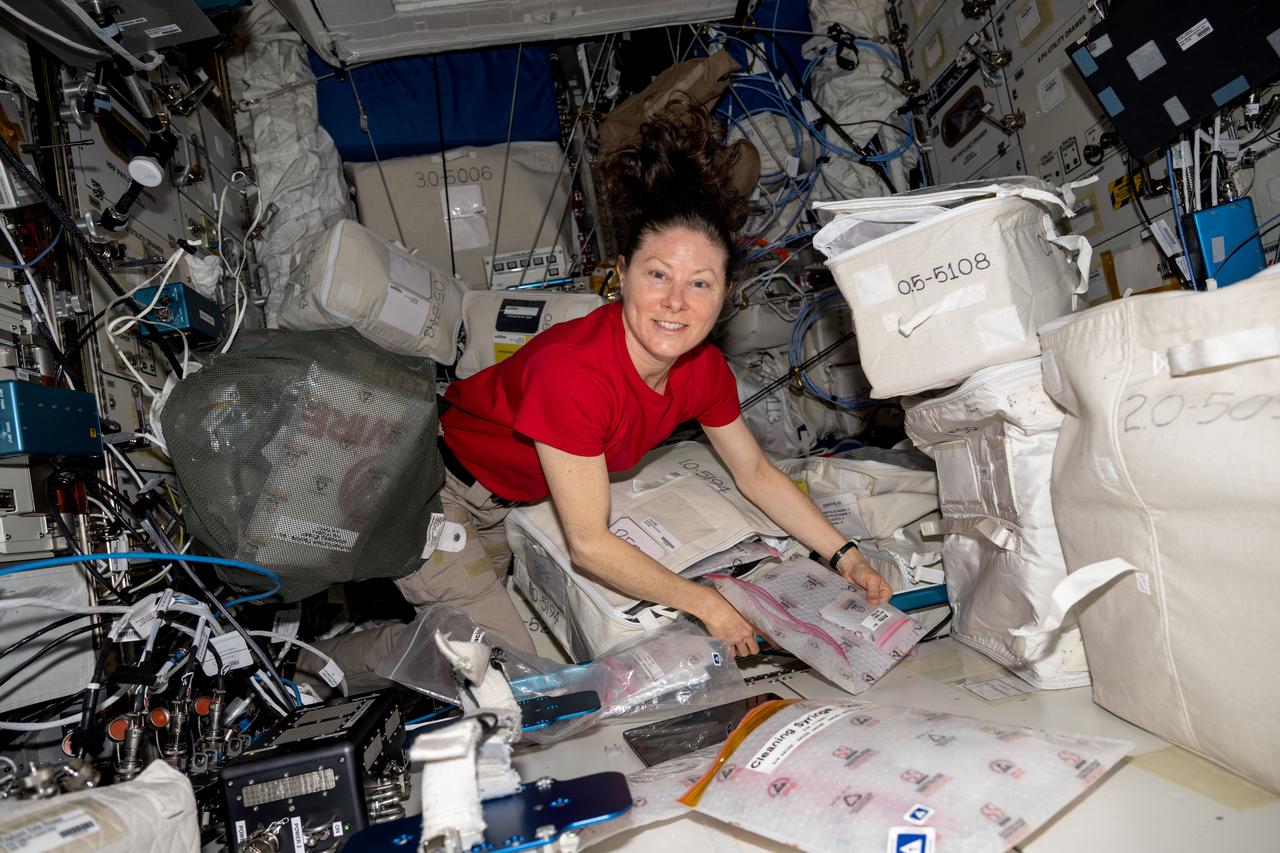
iss071e403579 (July 23, 2024) --- NASA astronaut and Expedition 71 Flight Engineer Tracy C. Dyson unpacks and examines research gear that is part of the BioFabrication Facility (BFF) located inside the International Space Station's Columbus laboratory module. The BFF is a research device being tested for its ability to print organ-like tissues in microgravity.

ISS041-E-000184 (11 Sept. 2014) --- European Space Agency astronaut Alexander Gerst, Expedition 41 flight engineer, works with Electromagnetic Levitation (EML) hardware in the Columbus laboratory of the International Space Station.
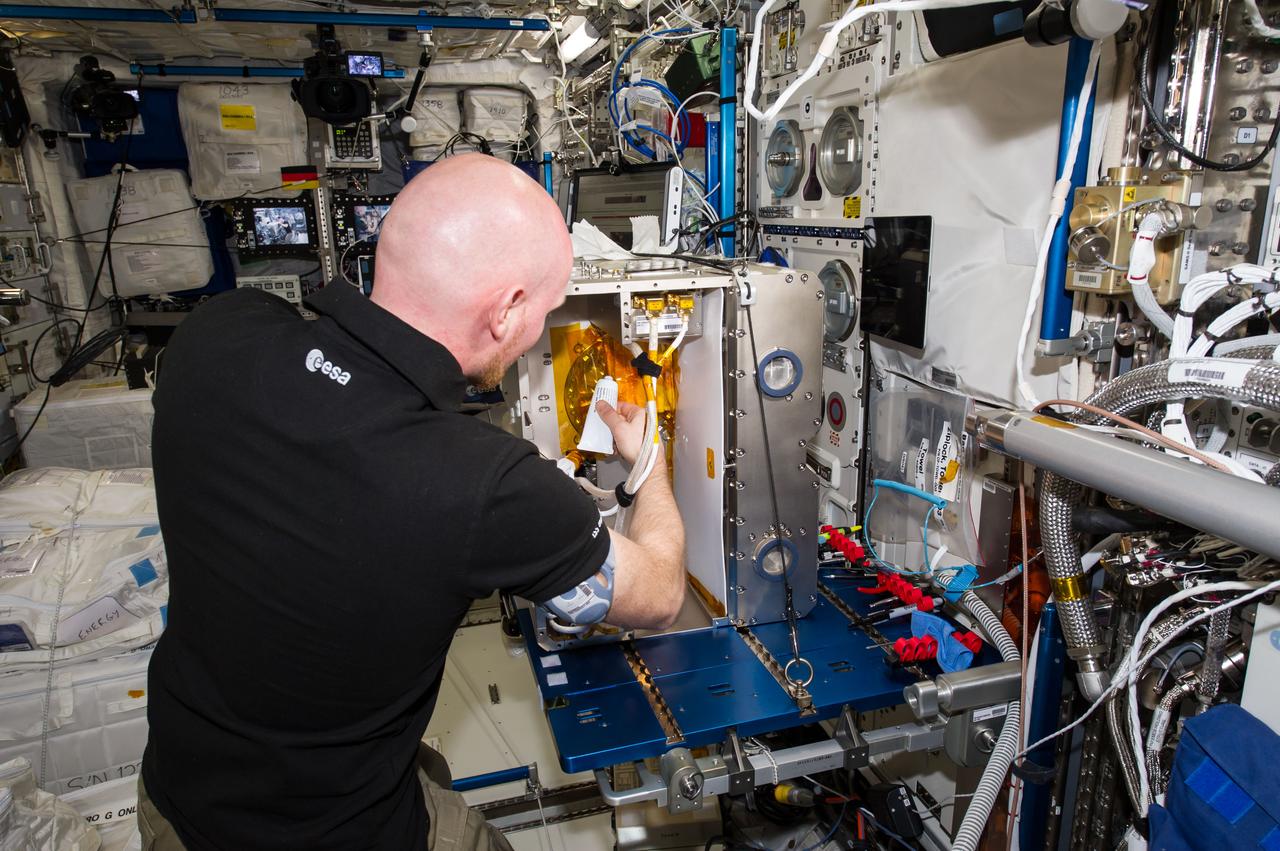
ISS041-E-000173 (11 Sept. 2014) --- European Space Agency astronaut Alexander Gerst, Expedition 41 flight engineer, works with Electromagnetic Levitation (EML) hardware in the Columbus laboratory of the International Space Station.
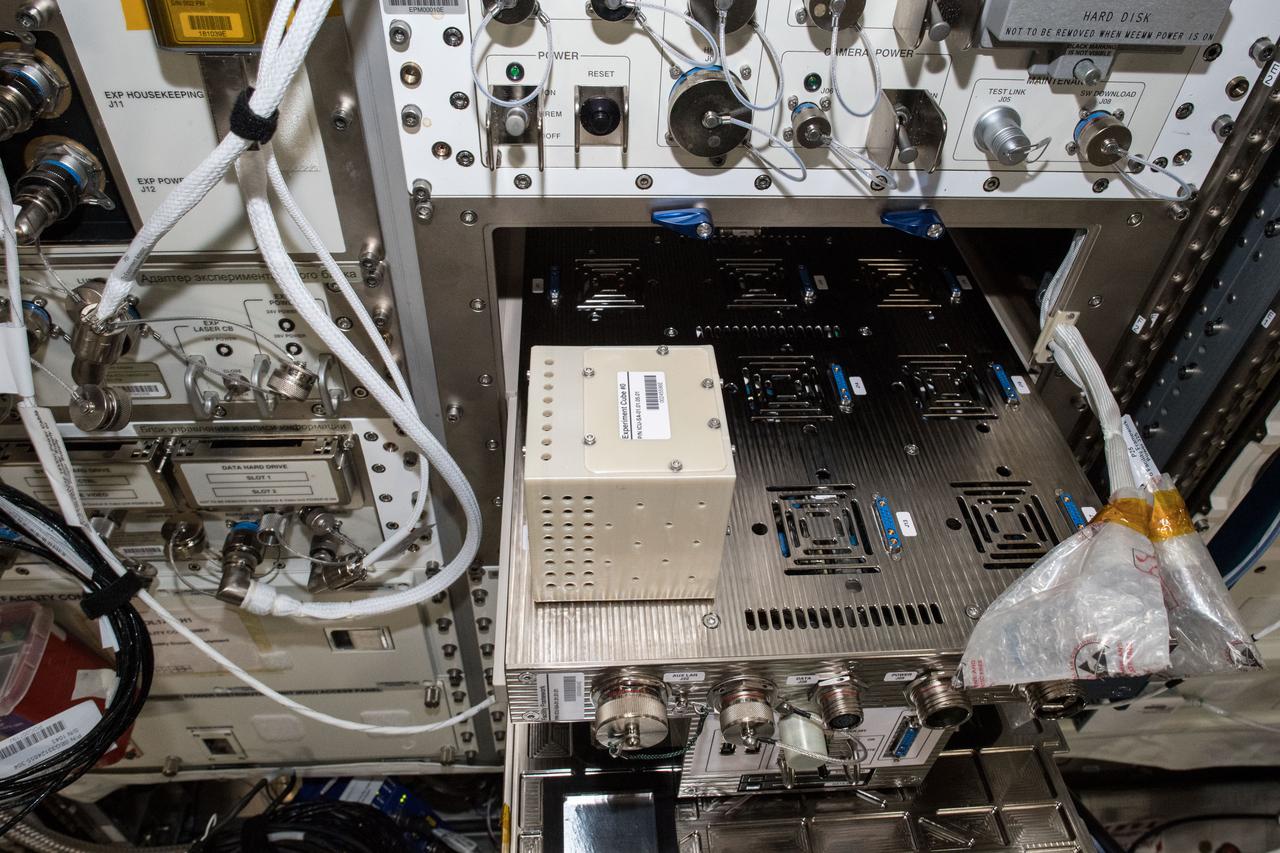
iss056e005012 (6/5/2018) --- The International Commercial Experiment Cubes (ICE Cubes) Facility located in the Columbus European Physiology Module (EPM) rack is a capable experiment platform that offers flexibility to host many different experiments for research, technology demonstration or educational objectives.
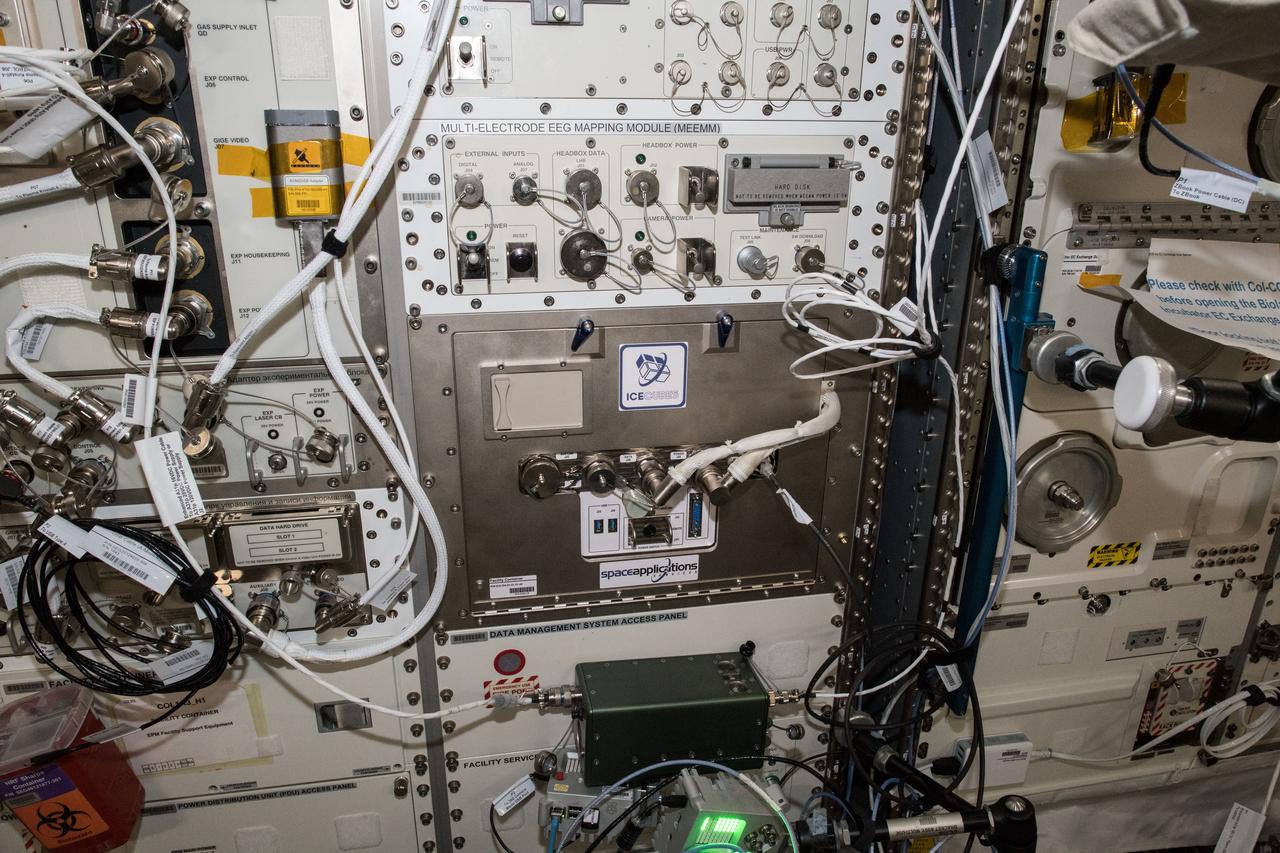
iss056e005017 (6/5/2018) --- The International Commercial Experiment Cubes (ICE Cubes) Facility located in the Columbus European Physiology Module (EPM) rack is a capable experiment platform that offers flexibility to host many different experiments for research, technology demonstration or educational objectives.

iss046e017204 (1/22/2016) --- Close-up view of Zinnia grown as part of VEG-01 experiment in the Columbus module aboard the International Space Station (ISS). The Veg-01 investigation is used to assess on-orbit function and performance of the Veggie facility, focusing on the growth and development of seedlings in the spaceflight environment and the composition of microbial flora on the plants and the facility. For this run, Zinnias were grown for 60 days and produced flowers.
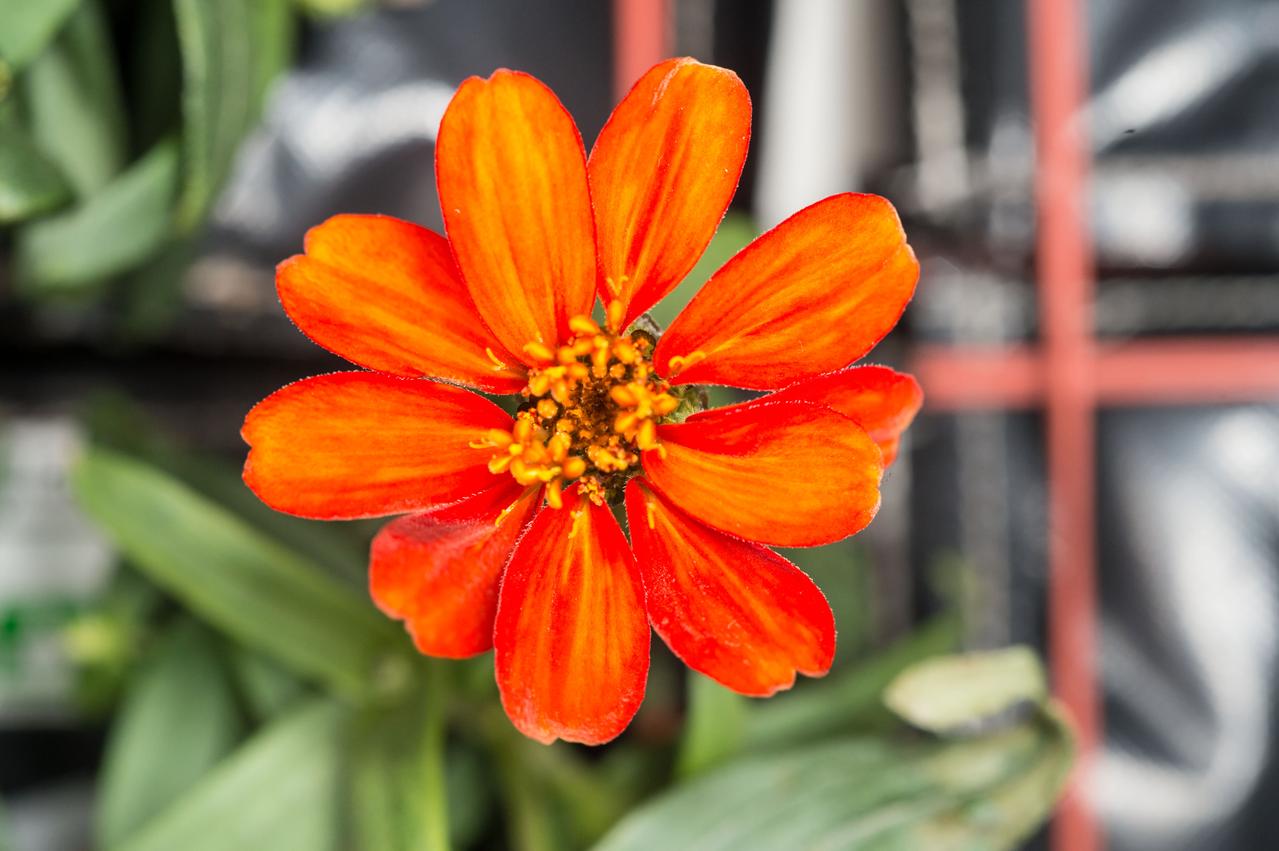
iss046e017198 (1/22/2016) --- Close-up view of Zinnia grown as part of VEG-01 experiment in the Columbus module aboard the International Space Station (ISS). The Veg-01 investigation is used to assess on-orbit function and performance of the Veggie facility, focusing on the growth and development of seedlings in the spaceflight environment and the composition of microbial flora on the plants and the facility. For this run, Zinnias were grown for 60 days and produced flowers.

Close-up view of Zinnia grown as part of VEG-01 experiment floating Columbus module. The Veg-01 investigation is used to assess on-orbit function and performance of the Veggie facility, focusing on the growth and development of seedlings in the spaceflight environment and the composition of microbial flora on the plants and the facility. For this run, Zinnias will be grown for 60 days and are expected to produce flowers.
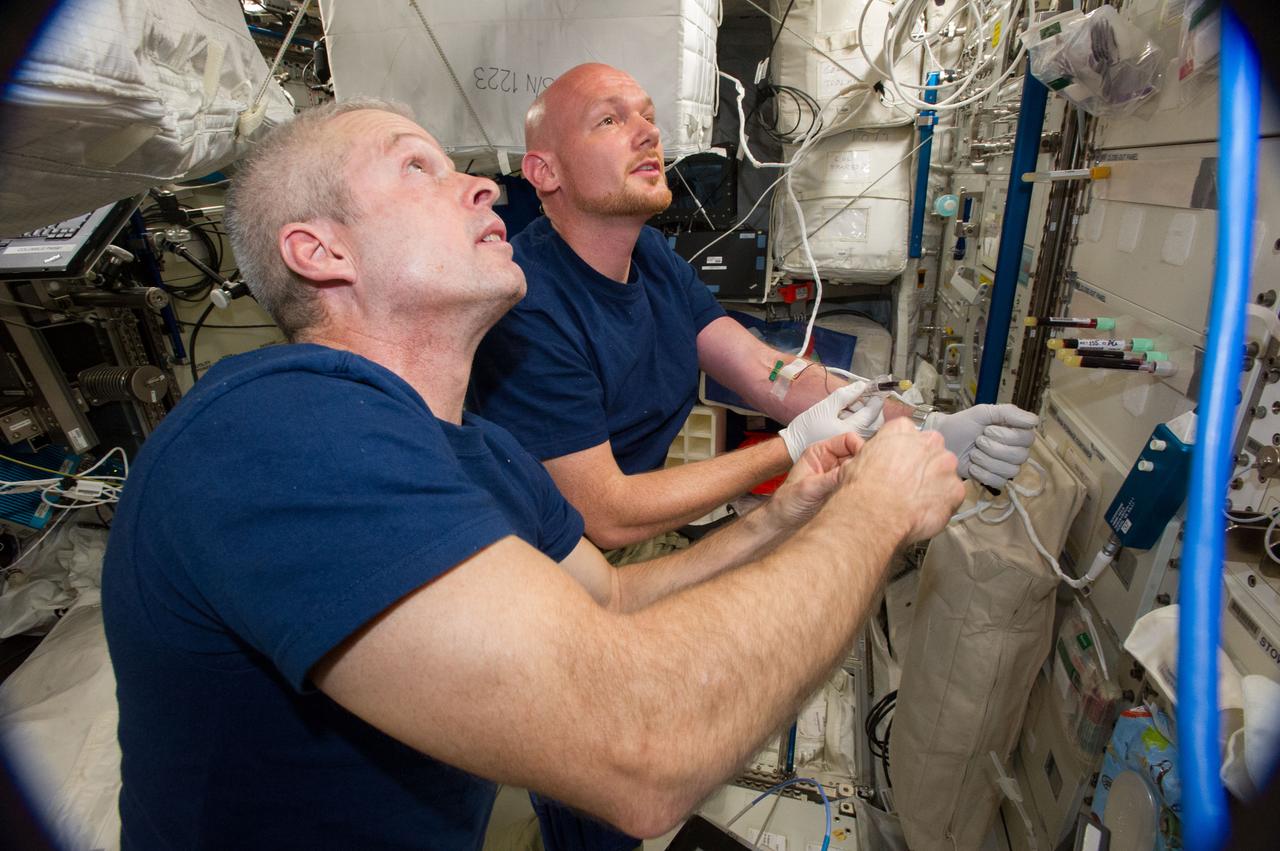
Astronaut Alexander Gerst,Expedition 40 flight engineer (background),and Expedition 40 Commander Steve Swanson are photographed performing blood sample collection in the Columbus module as part of HRF Generic Frozen Blood Collection Operations.
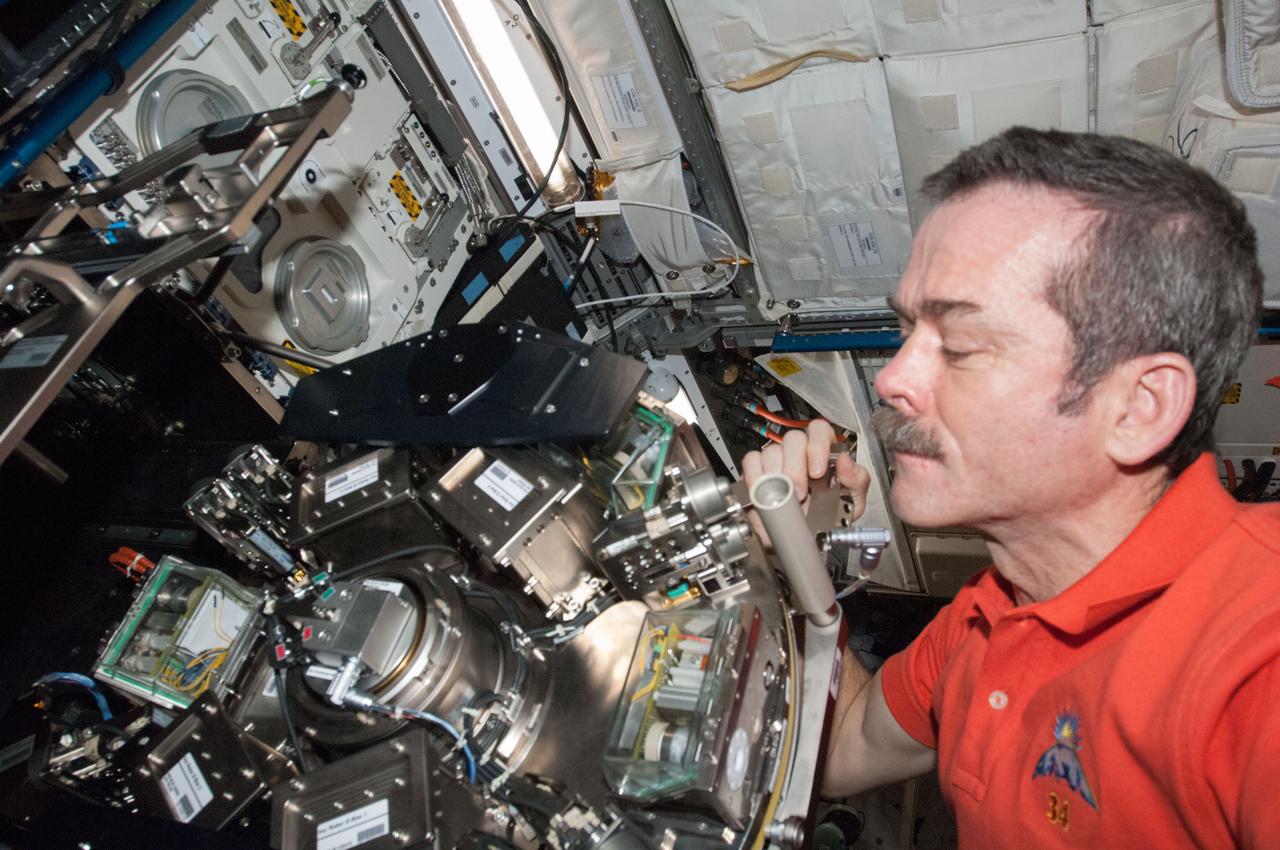
ISS034-E-051715 (20 Feb. 2013) --- Canadian Space Agency astronaut Chris Hadfield, Expedition 34 flight engineer, performs routine maintenance on Biolab in the Columbus Module aboard the International Space Station.
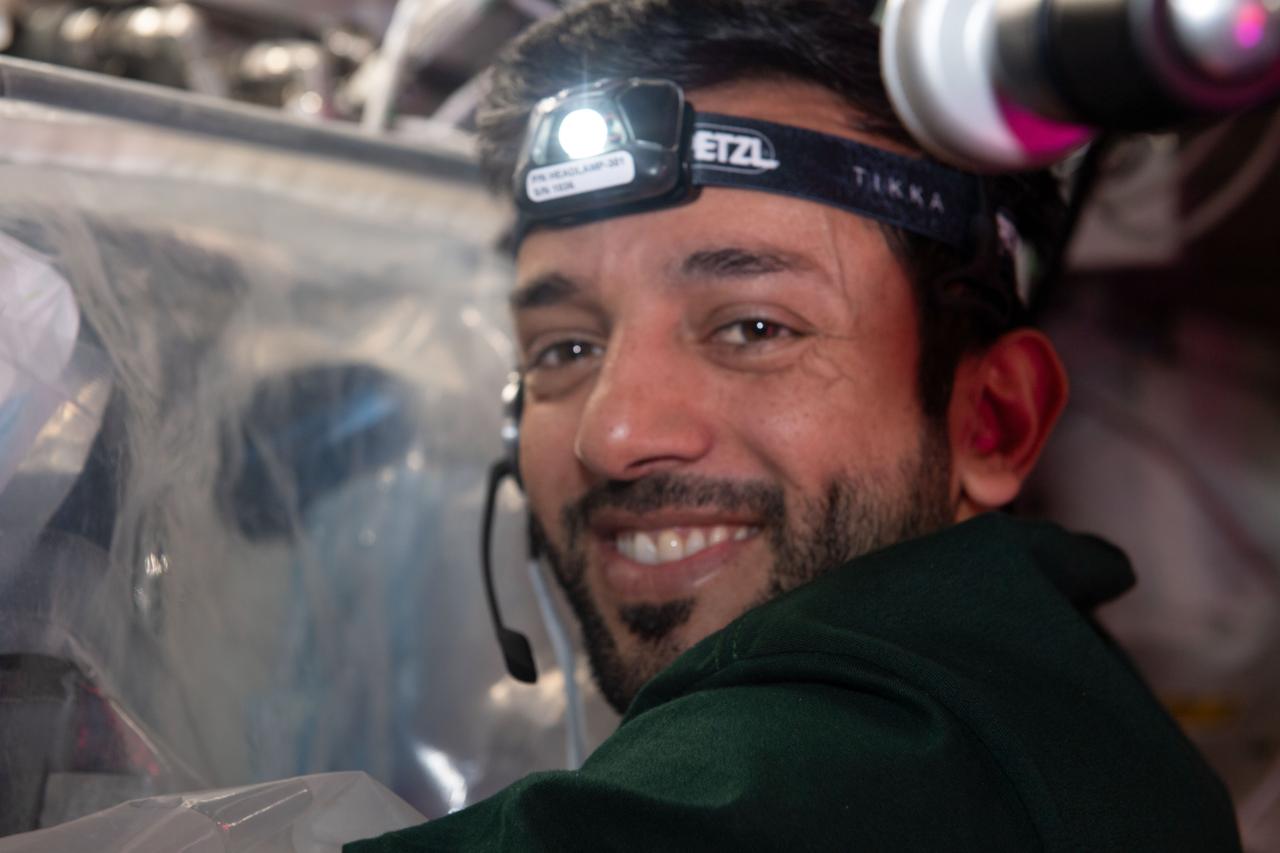
iss069e000087 (March 29, 2023) --- UAE (United Arab Emirates) astronaut and Expedition 69 Flight Engineer Sultan Alneyadi services tissue sample cassettes inside the Columbus laboratory Module's BioFabrication Facility (BFF). The BFF-Meniscus study investigates bioprinting tissues to heal musculoskeletal injuries both in space and on Earth,
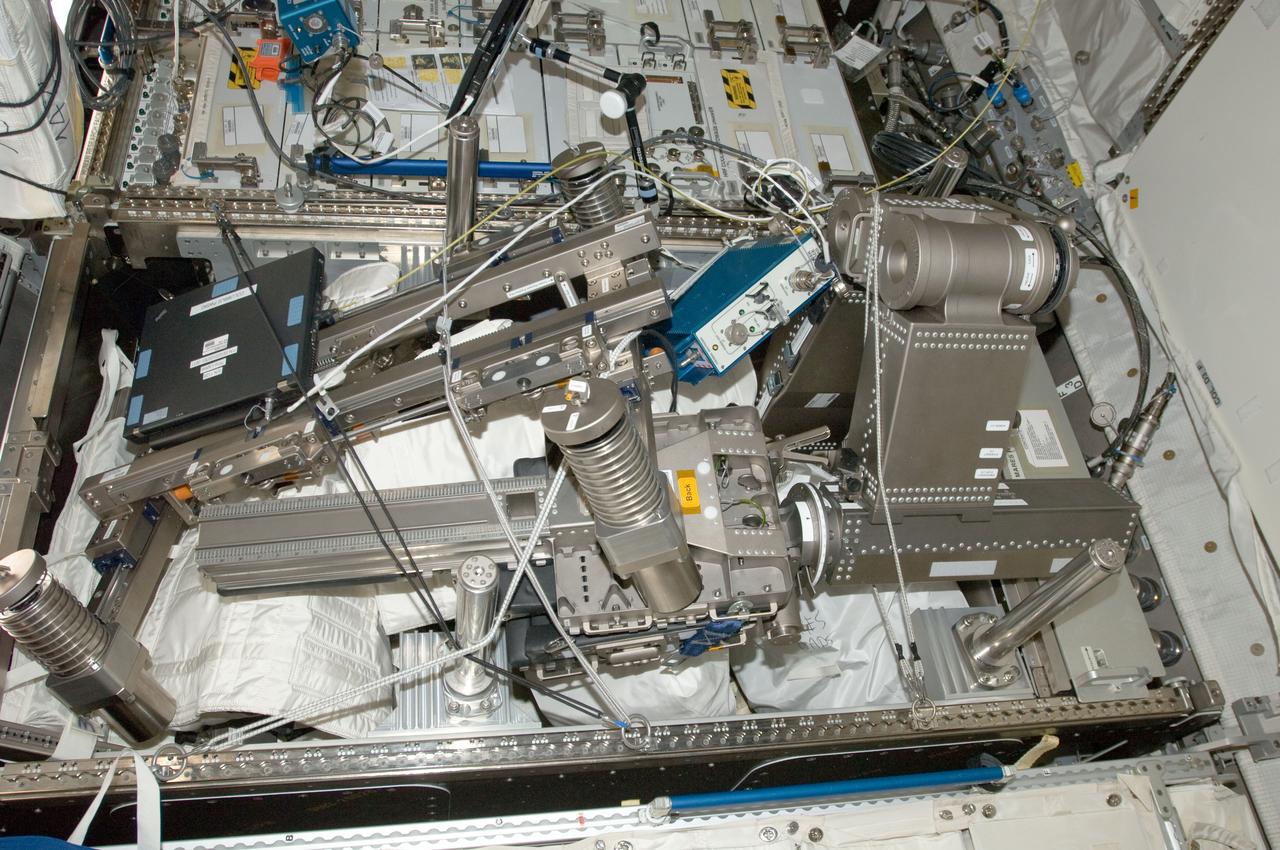
View of the Muscle Atrophy Research and Exercise System (MARES),in the Columbus Module (COL1F3). MARES will carry out research on musculoskeletal,bio-mechanical,and neuromuscular human physiology. Photo was taken during Expedition 34.
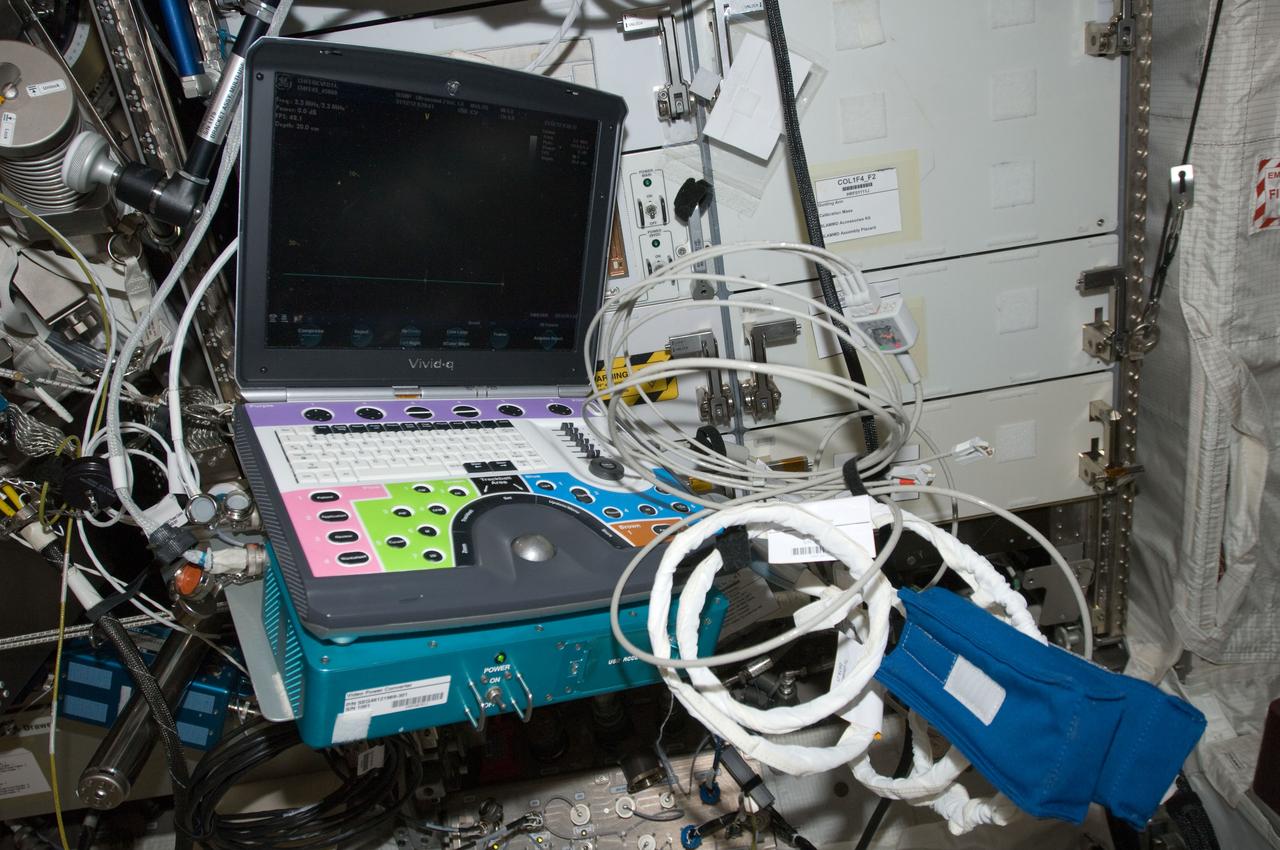
View of Integrated Cardiovascular (ICV) Echo Ultrasound Scan,in the Columbus module. ICV aims to quantify the extent,time course and clinical significance of cardiac atrophy (decrease in the size of the heart muscle) in space. Photo was taken during Expedition 34.
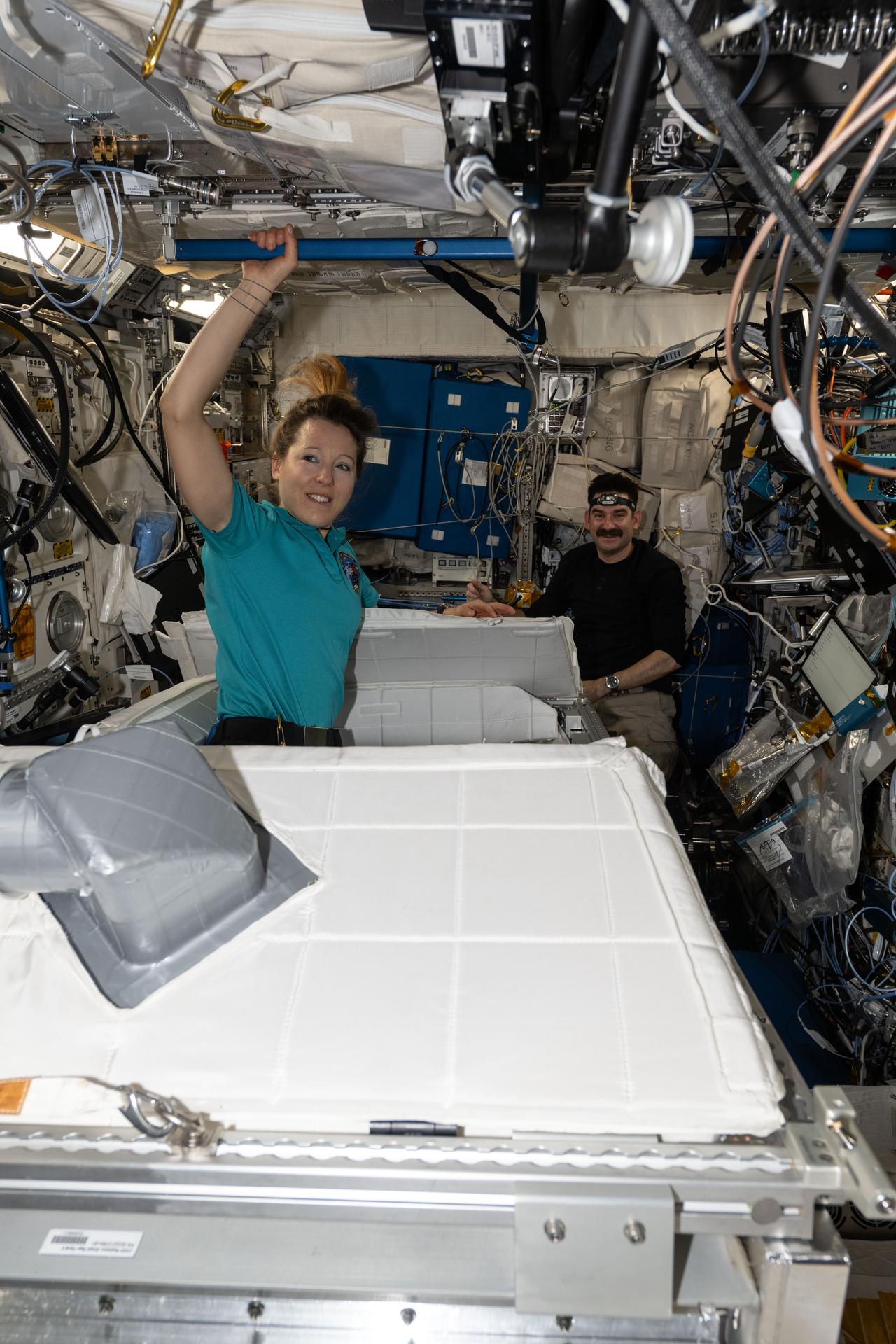
iss074e0792341 (June 7 ,2026) --- Expedition 74 flight engineers Sophie Adenot of ESA (European Space Agency) and Jack Hathaway of NASA (background) are pictured inside the International Space Station's Columbus laboratory module. The astronauts were upgrading a temporary sleep station, also called the Crew Alternate Sleep Accommodation (CASA), aboard Columbus. CASA modifications include a better fit for crew members, improved airflow velocity, an updated lighting configuration, and upgraded side panels and interior liners. Credit: NASA/Jessica Meir
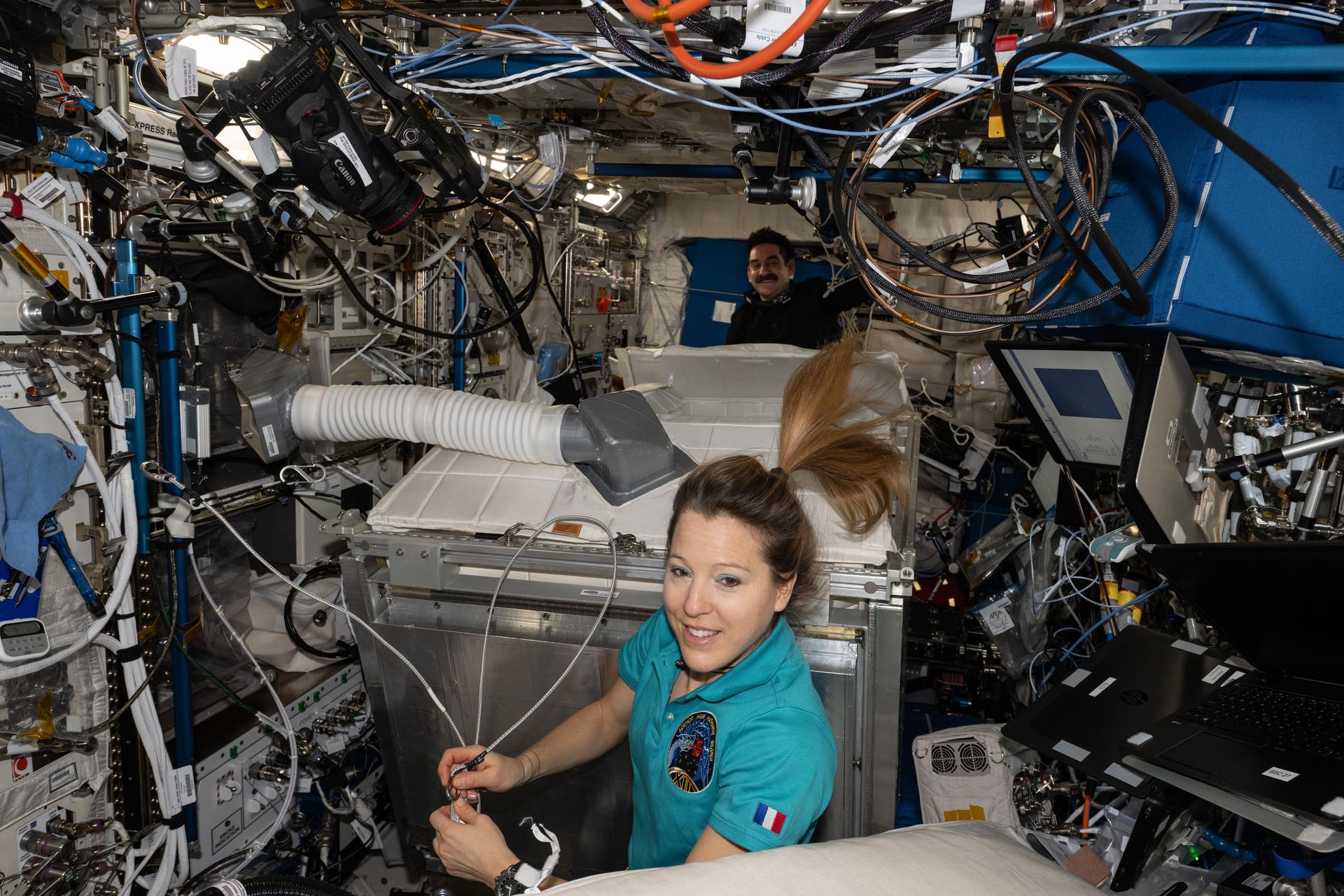
iss074e0792345 (June 7, 2026) --- Expedition 74 flight engineers Sophie Adenot of ESA (European Space Agency) and Jack Hathaway of NASA (background) are pictured inside the International Space Station's Columbus laboratory module. The astronauts were upgrading a temporary sleep station, also called the Crew Alternate Sleep Accommodation (CASA), aboard Columbus. CASA modifications include a better fit for crew members, improved airflow velocity, an updated lighting configuration, and upgraded side panels and interior liners. Credit: NASA/Jessica Meir
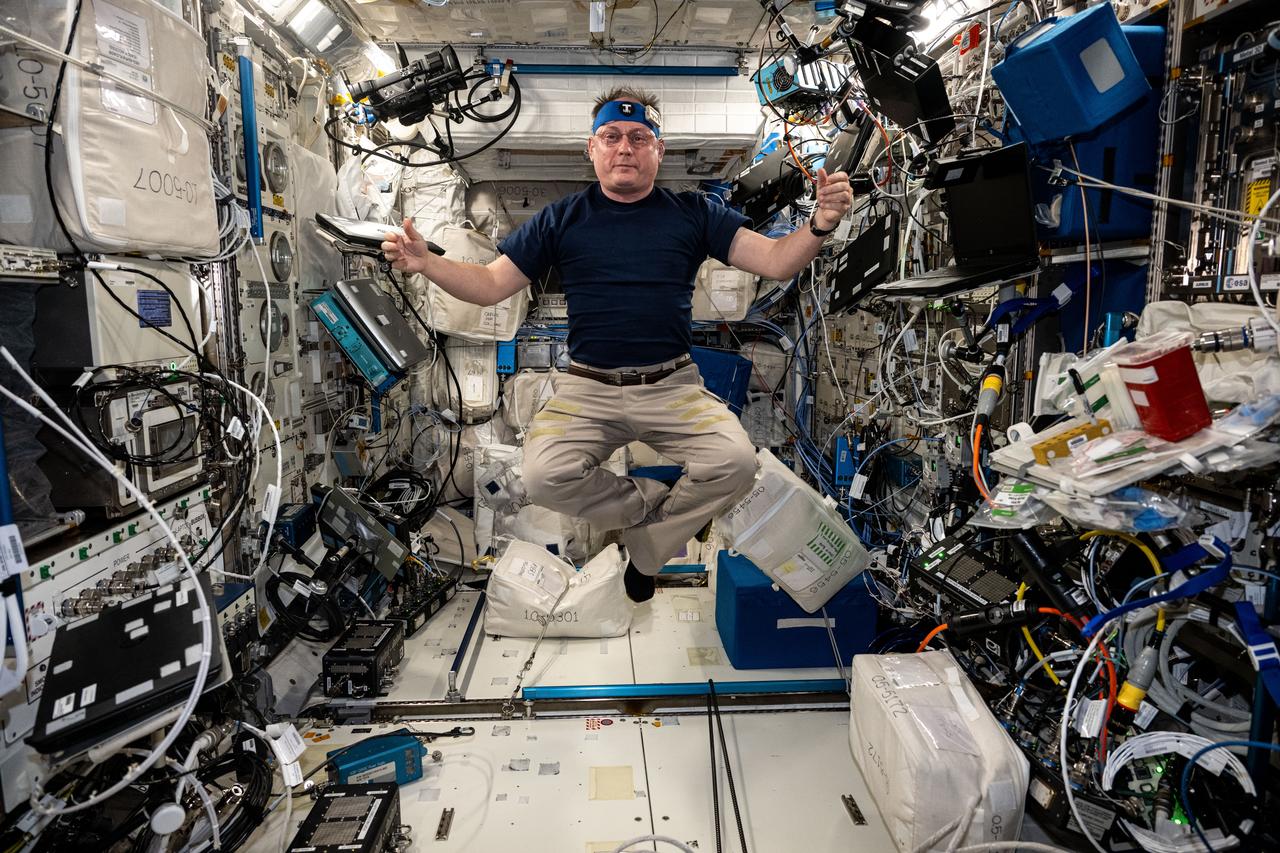
iss073e0420910 (Aug. 3, 2025) --- NASA astronaut and Expedition 73 Flight Engineer Mike Fincke poses for a portrait inside the International Space Station's Columbus laboratory module during research operations to learn how the body maintains its core temperature in microgravity.
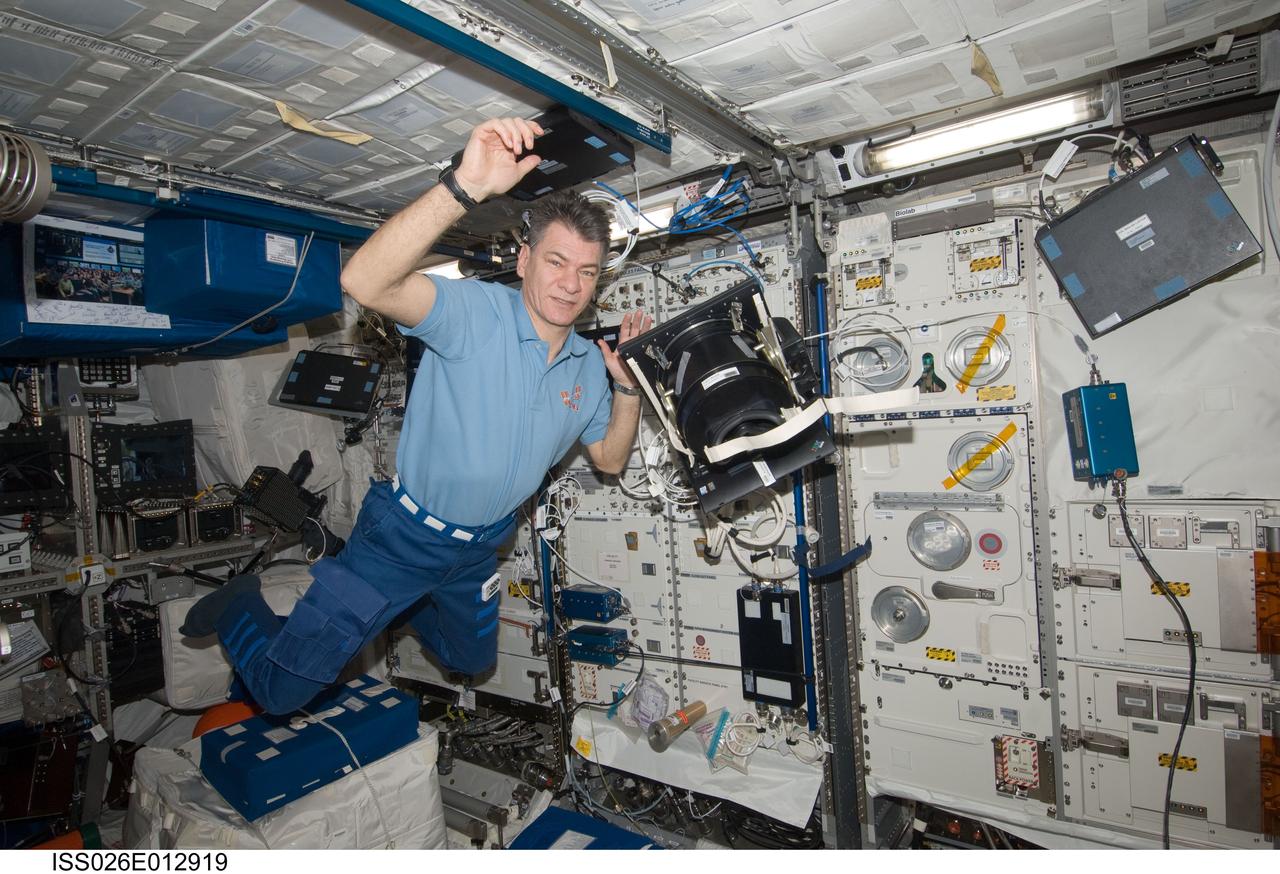
ISS026-E-012919 (20 Dec. 2010) --- European Space Agency astronaut Paolo Nespoli, Expedition 26 flight engineer, moves the Neurospat hardware (including light shield and frame) used for the Bodies in the Space Environment (BISE) experiment, in the Columbus Module aboard the International Space Station.
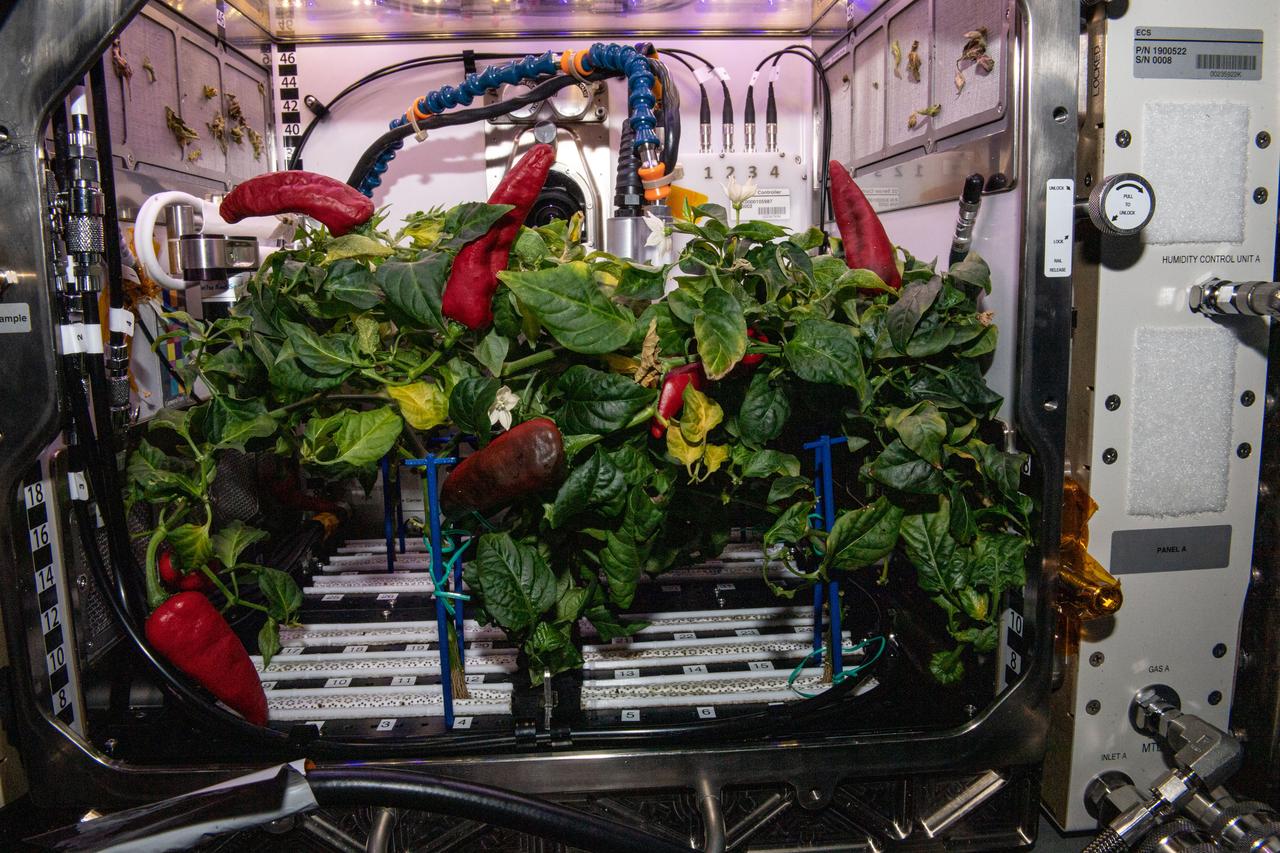
View of Chile Peppers growing inside the Advanced Plant Habitat in the Columbus Module during Expedition 66.

iss058e013244 (Feb. 13, 2019) --- The forward end of the International Space Station is pictured showing portions of five modules. From right to left is a portion of the U.S. Destiny laboratory module linking forward to the Harmony module. Attached to the port side of Harmony (left foreground) is the Kibo laboratory module from the Japan Aerospace Exploration Agency (JAXA) with its logistics module berthed on top. On Harmony's starboard side (center background) is the Columbus laboratory module from ESA (European Space Agency).
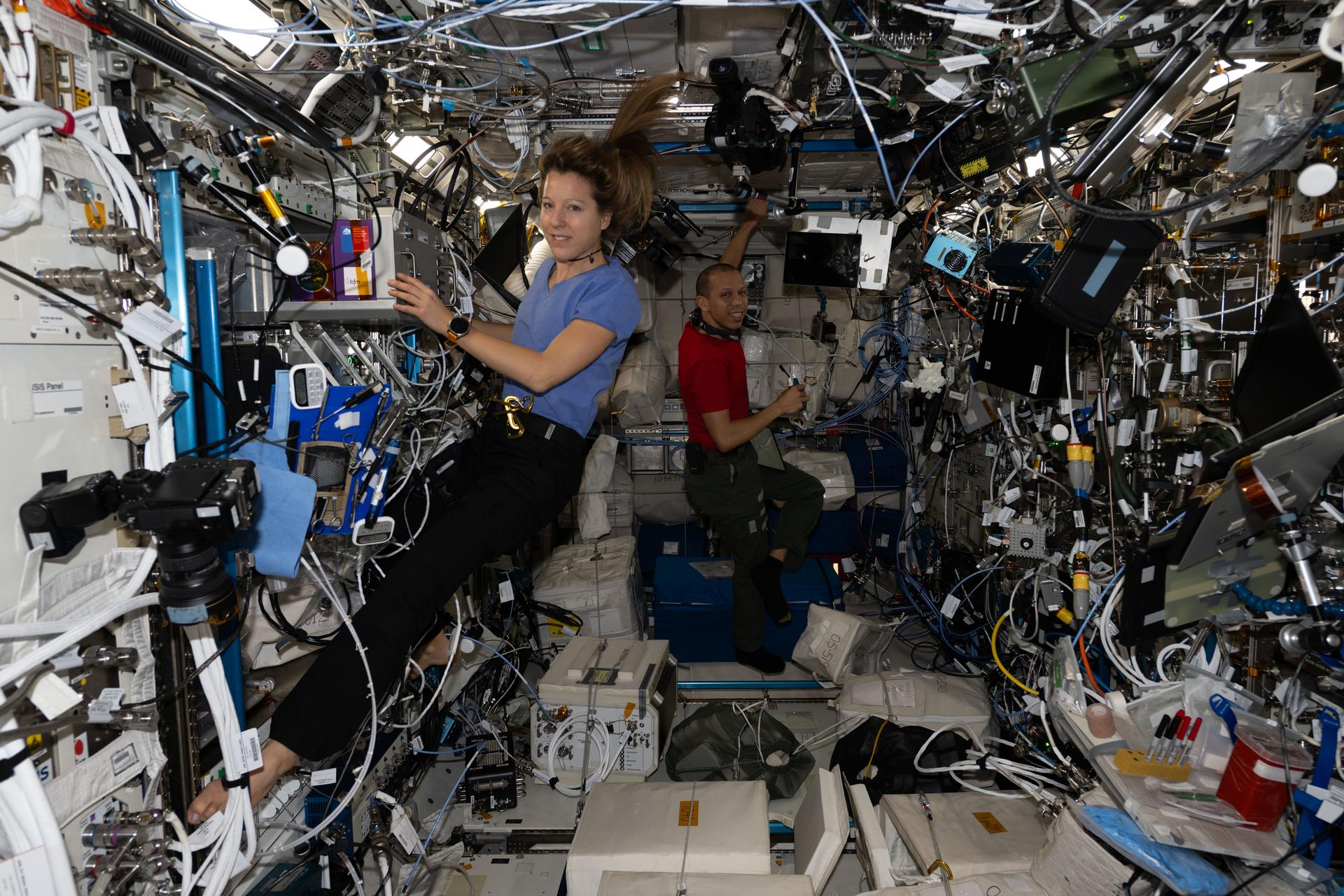
iss074e0490810 (April 15, 2026) --- Expedition 74 flight engineers Sophie Adenot of ESA (European Space Agency) and Chris Williams of NASA work together inside the International Space Station’s Columbus laboratory module to install and activate new research gear delivered on Northrop Grumman’s second Cygnus XL cargo mission. Williams was configuring the new European Enhanced Exploration Exercise Device, while Adenot was installing advanced biotechnology experiment hardware. Credit: NASA/Jessica Meir
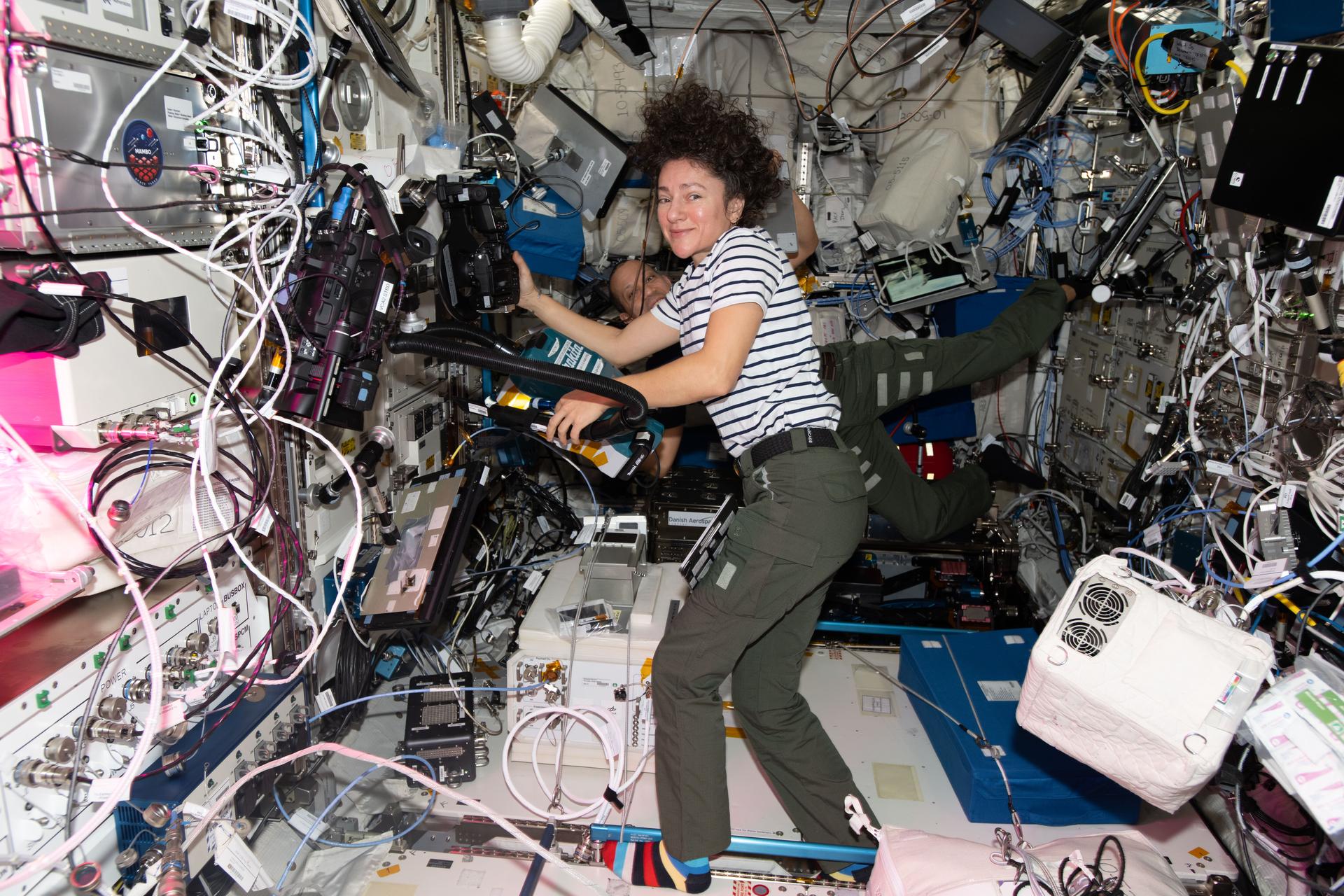
iss074e0503707 (April 22, 2026) --- NASA astronauts Jessica Meir and Chris Williams (in the background) work on separate tasks inside the International Space Station’s Columbus laboratory module. Meir swapped scientific hardware inside the BioLab research incubator to study how DNA damaged by space radiation repairs itself. Williams installed new laptop software and checked computer connections to the station’s Wi‑Fi system. Credit: NASA/Jack Hathaway
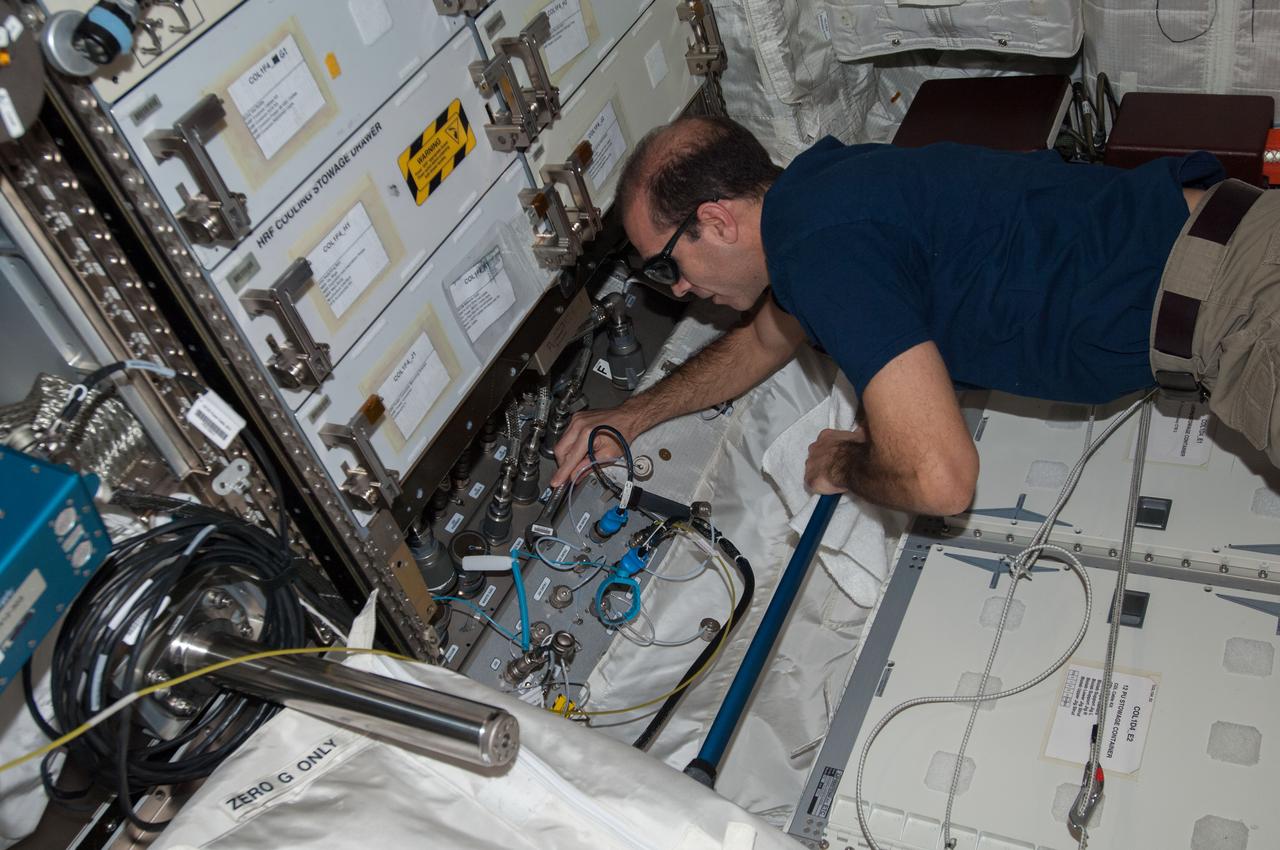
ISS038-E-013718 (9 Dec. 2013) --- NASA astronaut Rick Mastracchio, Expedition 38 flight engineer, performs routine in-flight maintenance in the Columbus laboratory of the International Space Station.
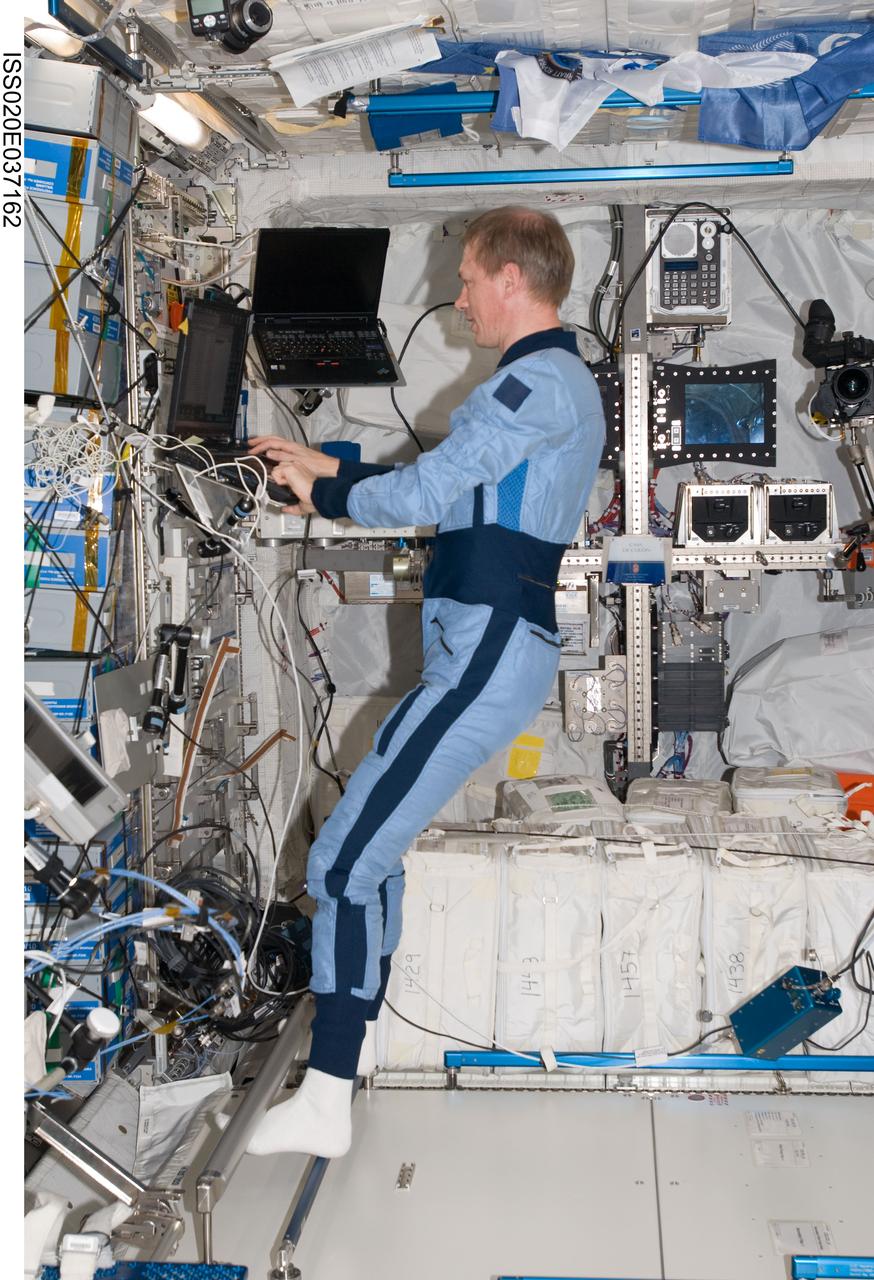
ISS020-E-037162 (30 Aug. 2009) --- European Space Agency astronaut Frank De Winne, Expedition 20 flight engineer, uses a computer in the Columbus laboratory of the International Space Station while Space Shuttle Discovery (STS-128) remains docked with the station.
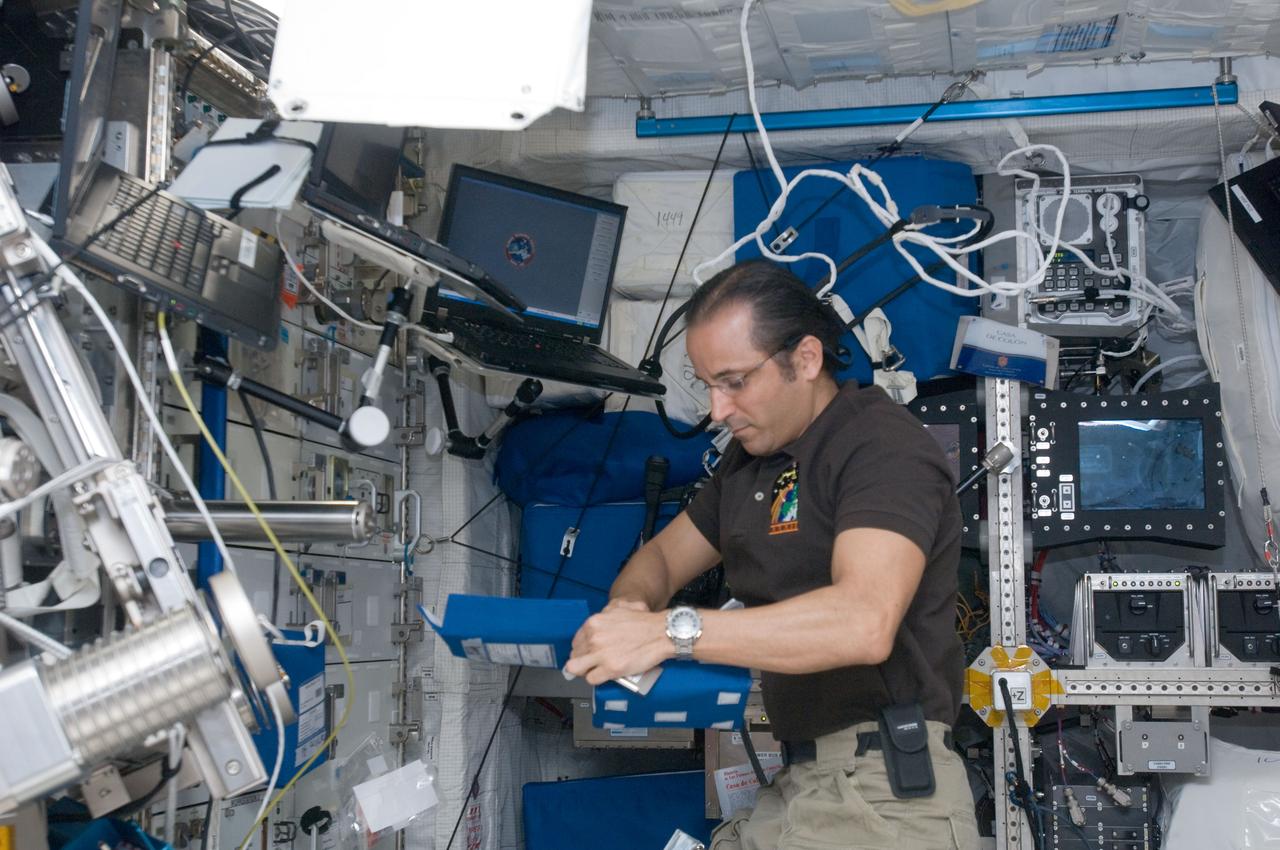
ISS032-E-016872 (8 Aug. 2012) --- NASA astronaut Joe Acaba, Expedition 32 flight engineer, works in the Columbus laboratory of the International Space Station.
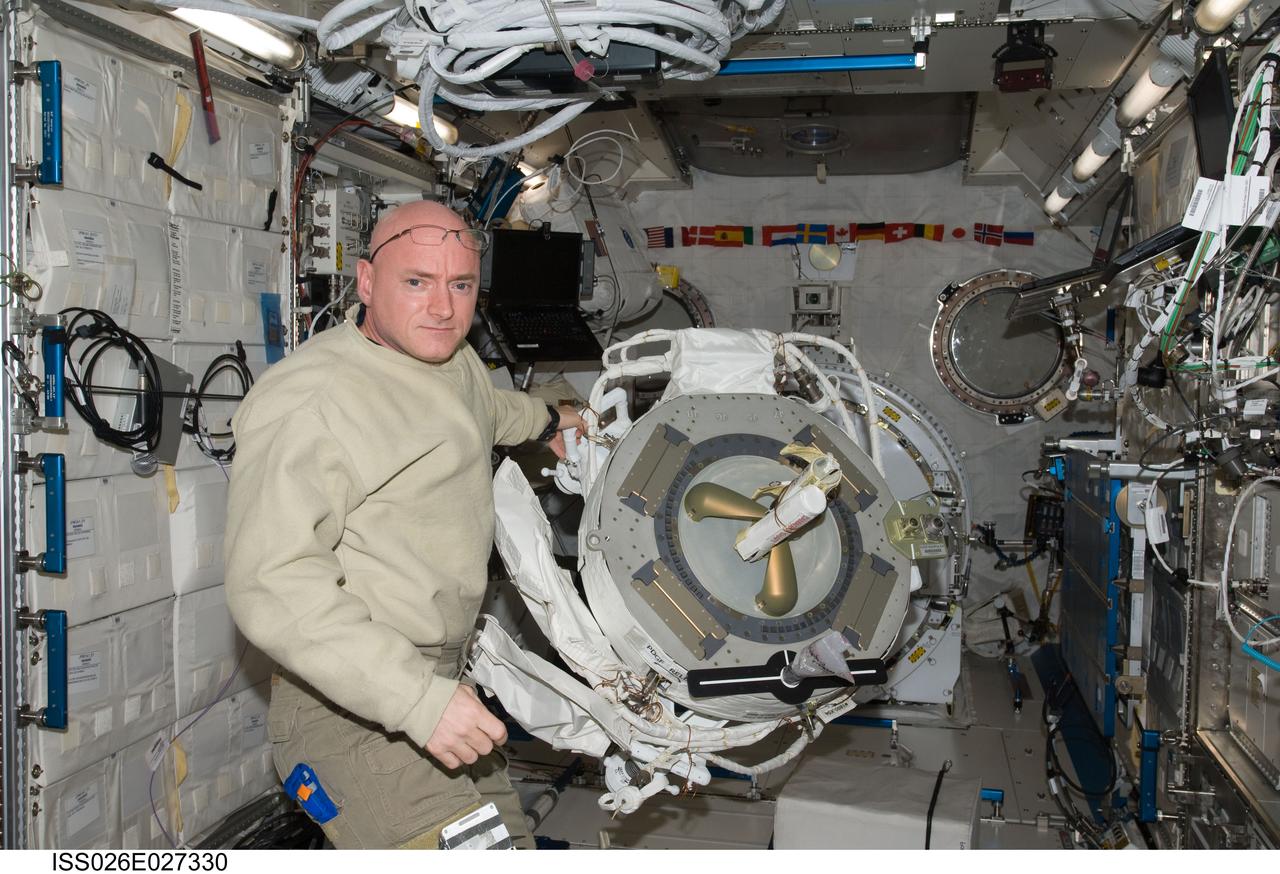
ISS026-E-027330 (16 Feb. 2011) --- NASA astronaut Scott Kelly, Expedition 26 commander, is pictured with Power and Data Grapple Fixture (PDGF) hardware in the Kibo laboratory of the International Space Station.
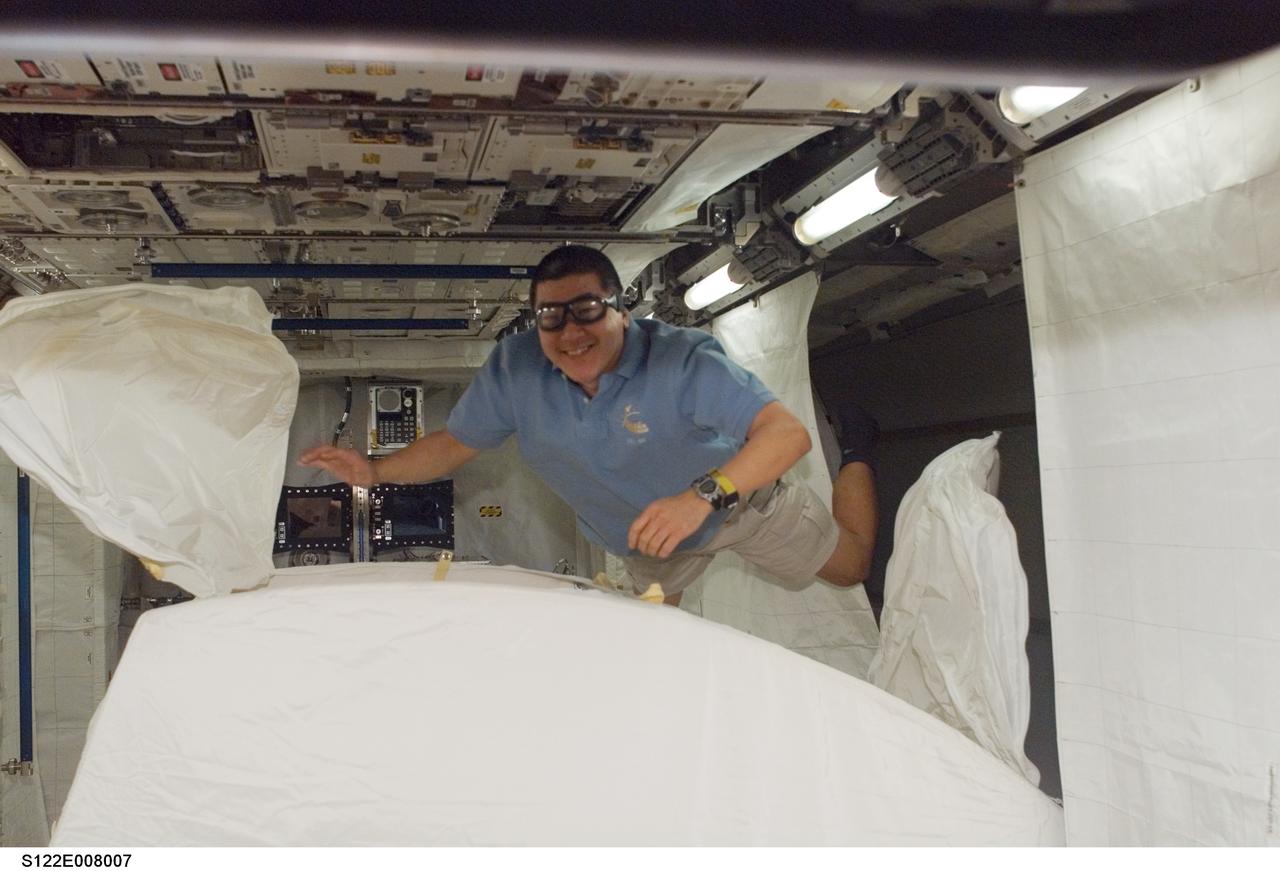
S122-E-008007 (12 Feb. 2008) --- Astronaut Daniel Tani, STS-122 mission specialist, works in the Columbus laboratory -- the newest addition to the International Space Station -- while Space Shuttle Atlantis is docked with the station.
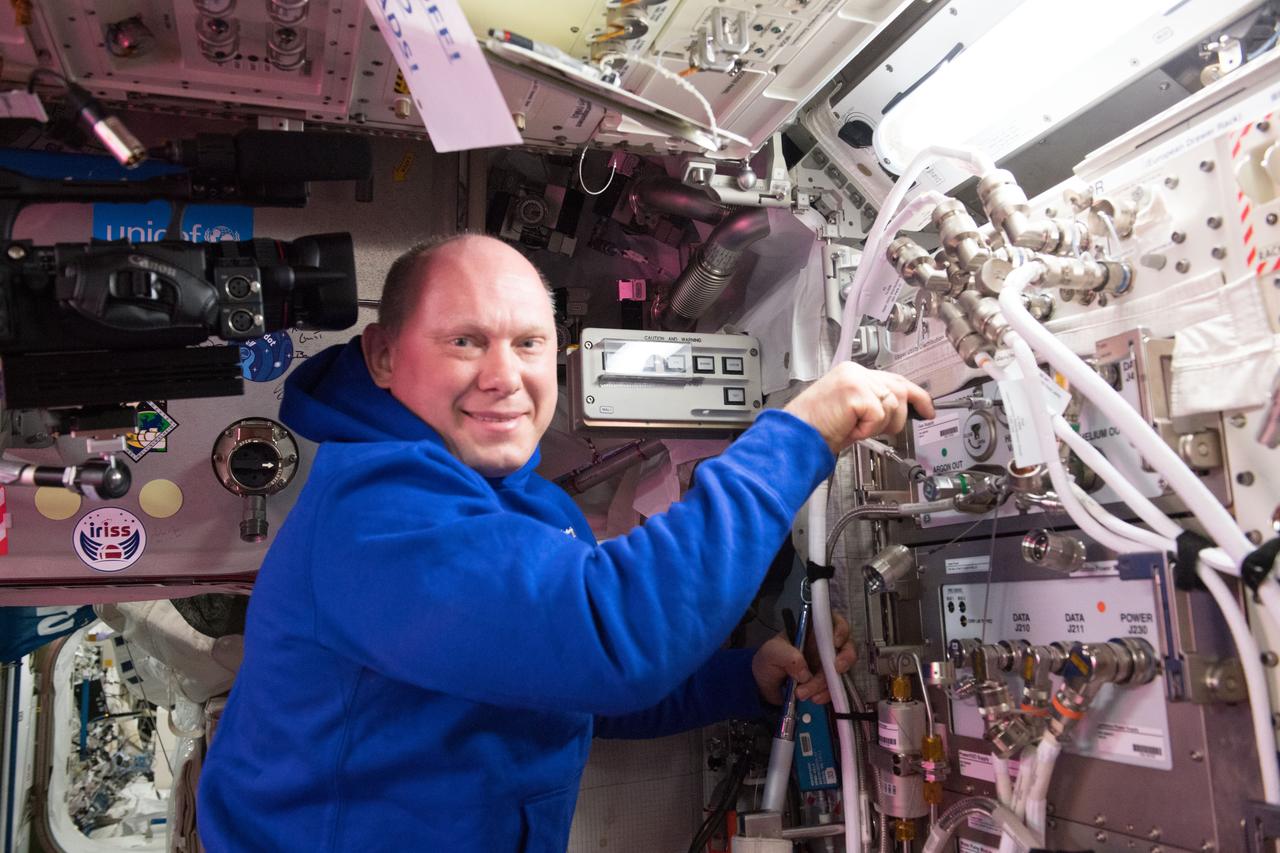
iss055e035350 (April 16, 2018) --- Cosmonaut Oleg Artemyev works on space station hardware at the end of his workday.
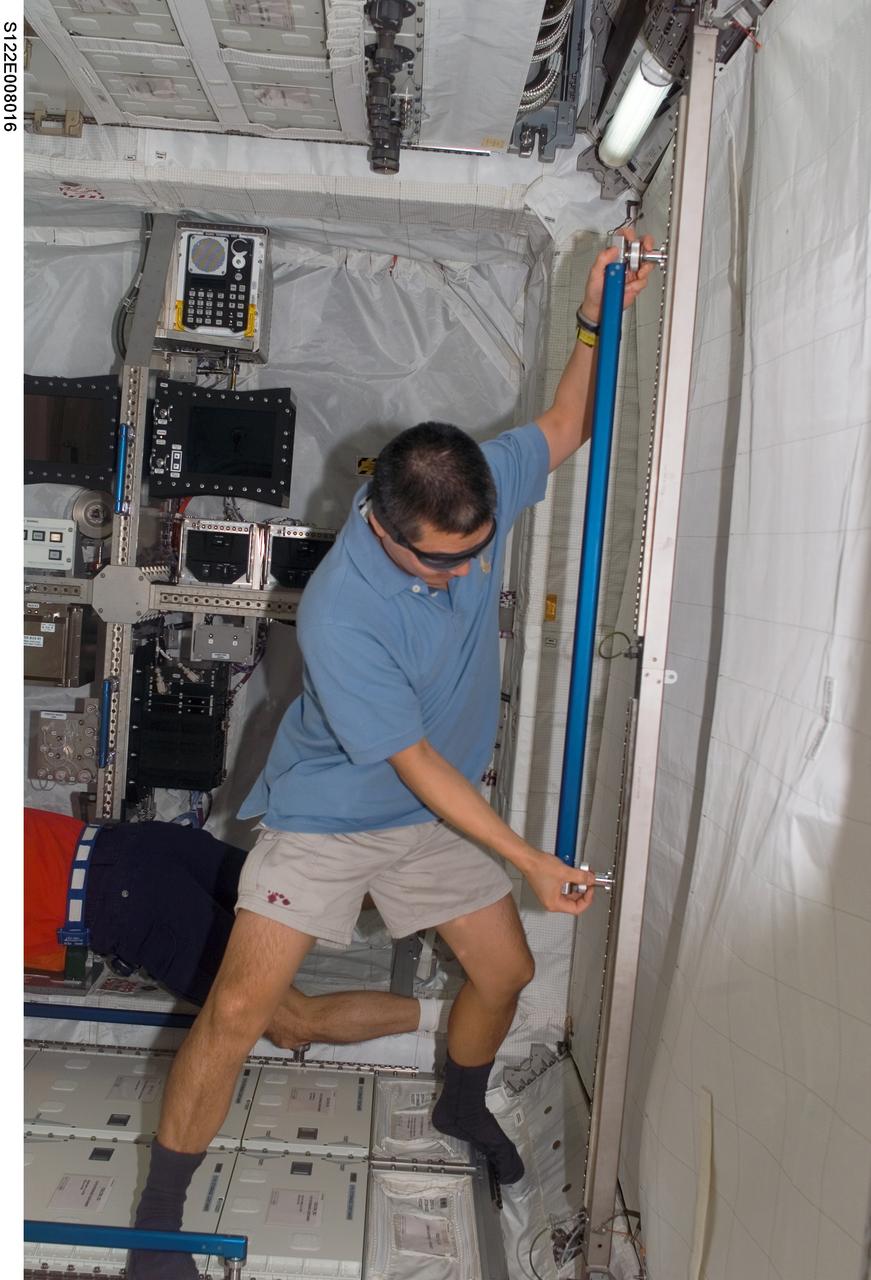
S122-E-008016 (12 Feb. 2008) --- Astronaut Daniel Tani, STS-122 mission specialist, works in the Columbus laboratory -- the newest addition to the International Space Station -- while Space Shuttle Atlantis is docked with the station.
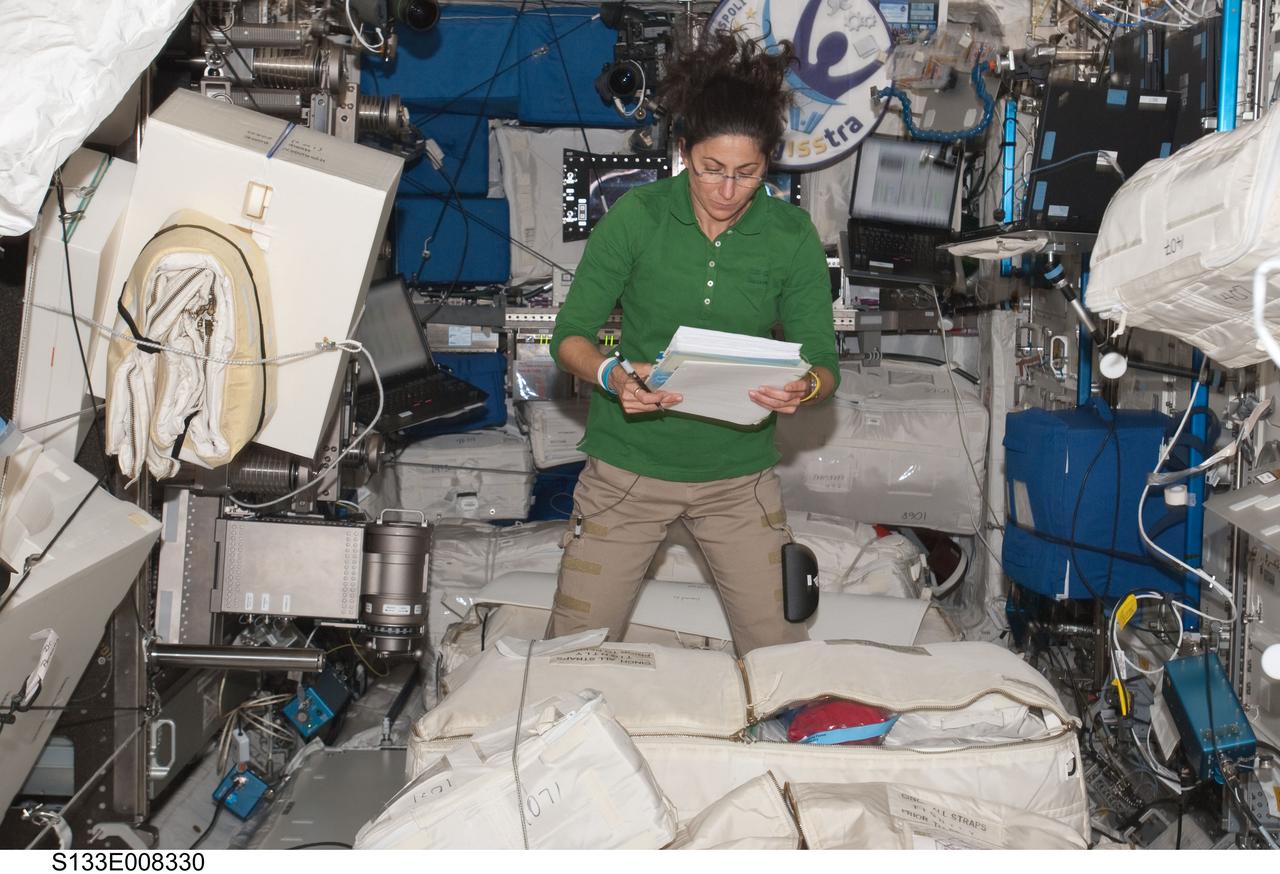
S133-E-008330 (3 March 2011) --- NASA astronaut Nicole Stott, STS-133 mission specialist, reads a checklist in the Columbus laboratory of the International Space Station while space shuttle Discovery remains docked with the station. Photo credit: NASA or National Aeronautics and Space Administration
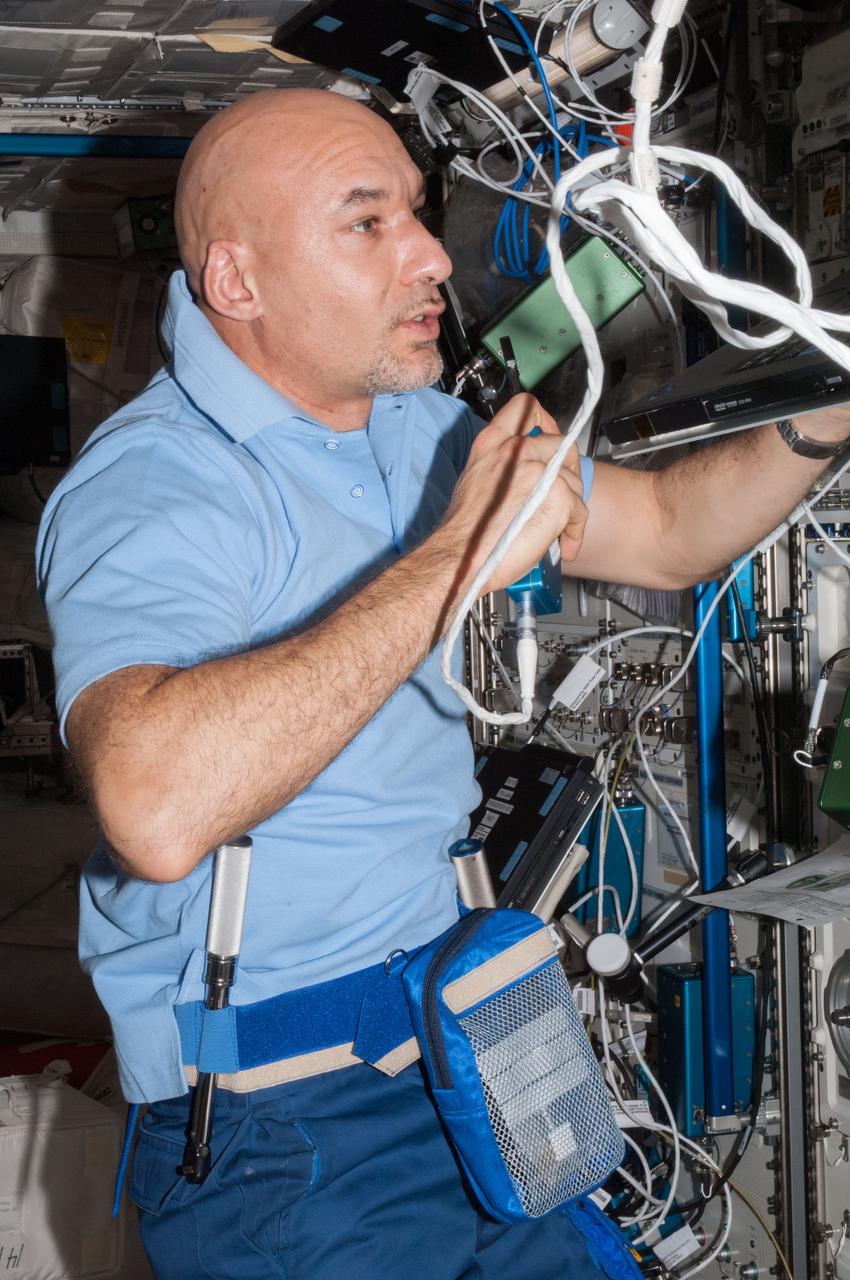
ISS036-E-023749 (21 July 2013) --- European Space Agency astronaut Luca Parmitano, Expedition 36 flight engineer, speaks in a microphone while working in the Columbus laboratory of the International Space Station.
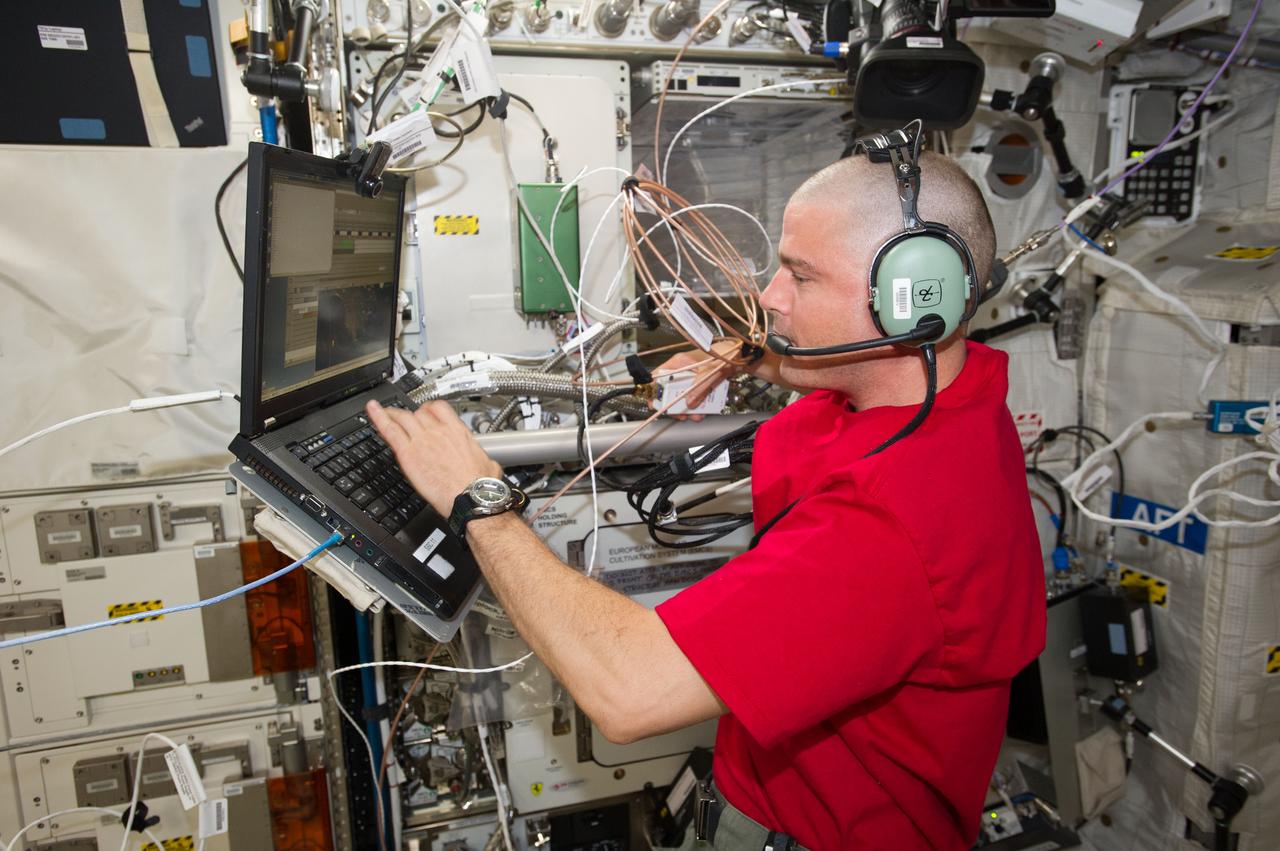
ISS040-E-024110 (28 June 2014) --- NASA astronaut Reid Wiseman, Expedition 40 flight engineer, wearing a communication headset, uses a computer in the Columbus laboratory of the International Space Station.
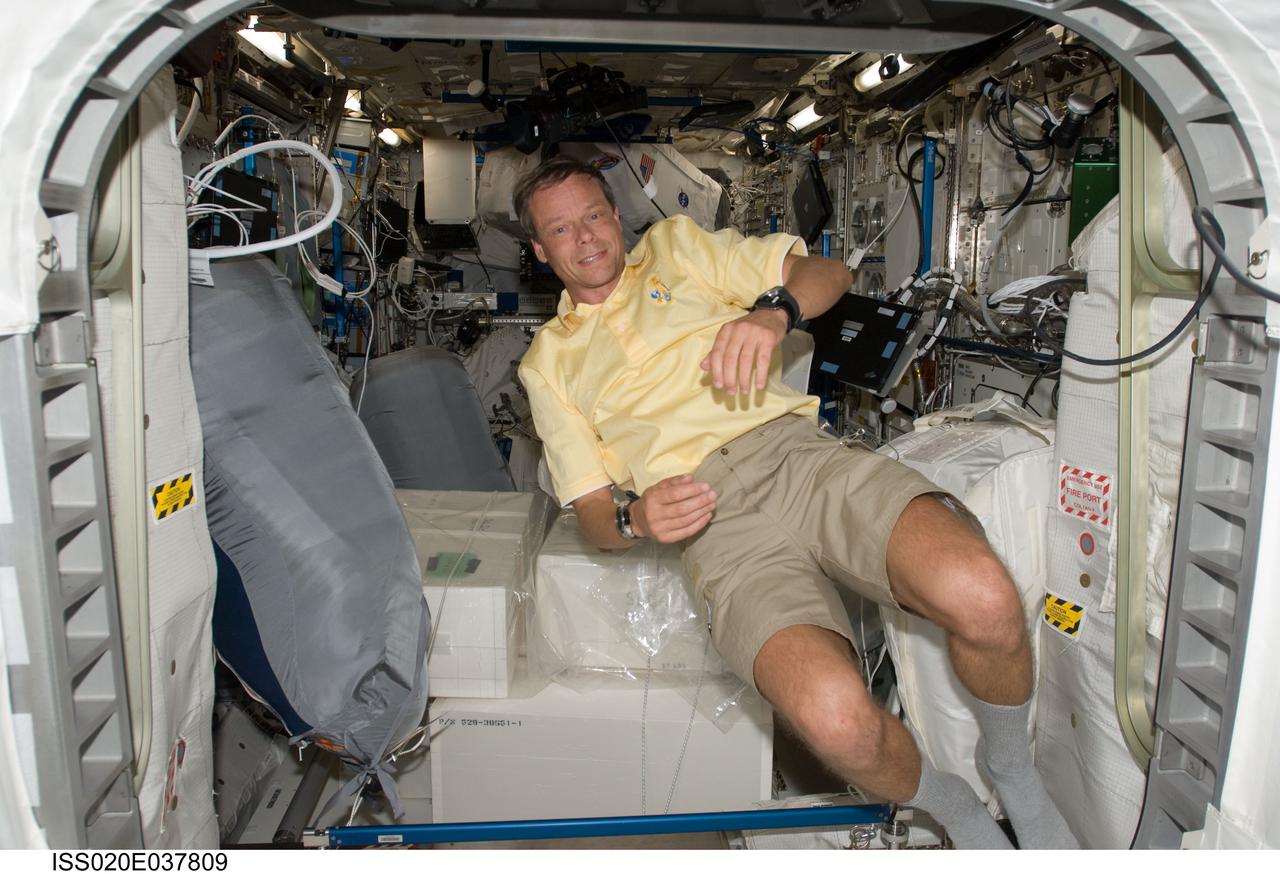
ISS020-E-037809 (2 Sept. 2009) --- European Space Agency astronaut Christer Fuglesang, STS-128 mission specialist, is pictured in the Columbus laboratory of the International Space Station while Space Shuttle Discovery remains docked with the station.
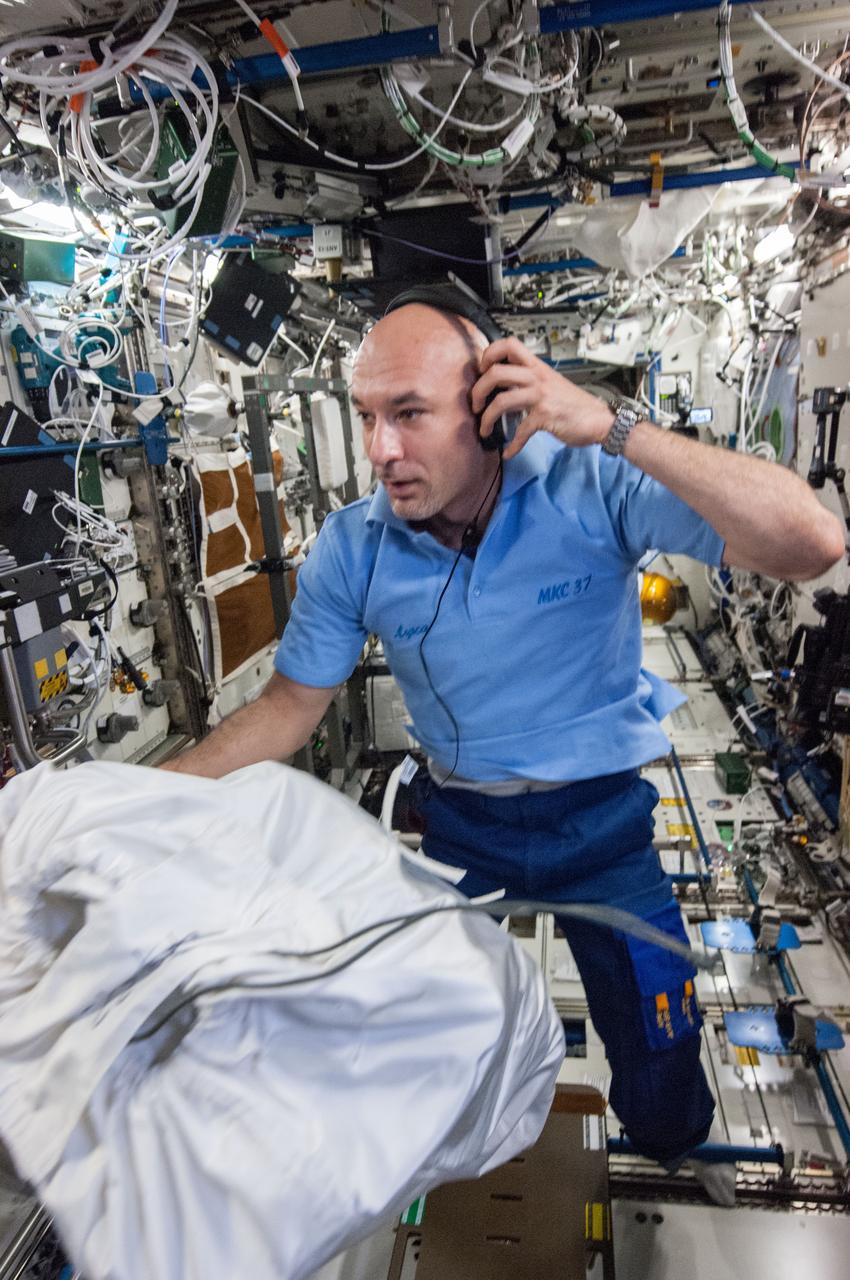
ISS036-E-022498 (22 July 2013) --- European Space Agency astronaut Luca Parmitano, Expedition 36 flight engineer, wearing a communication headset, moves a stowage bag in the Destiny laboratory of the International Space Station.
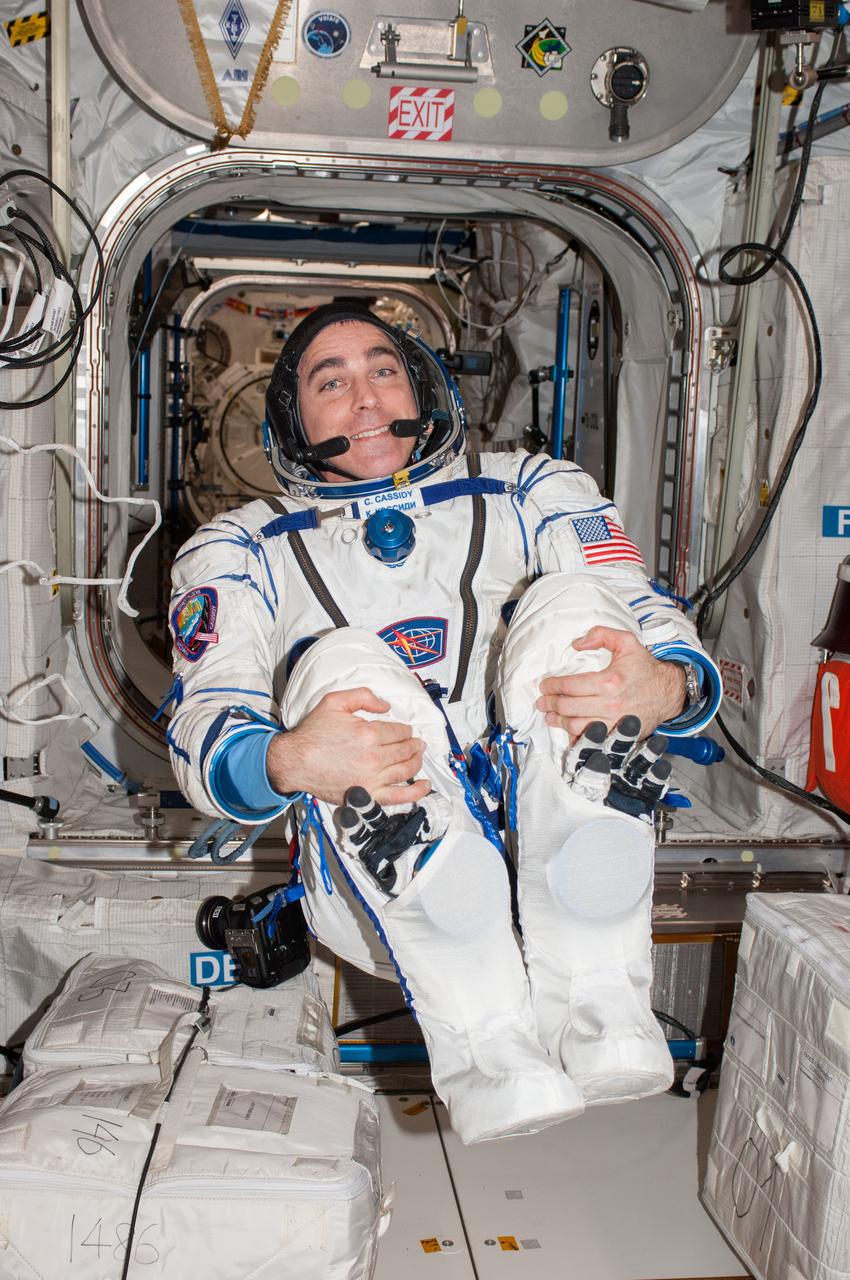
ISS036-E-039045 (29 Aug. 2013) --- NASA astronaut Chris Cassidy, Expedition 36 flight engineer, wearing a Russian Sokol launch and entry suit, poses for a photo in the Columbus laboratory of the International Space Station.
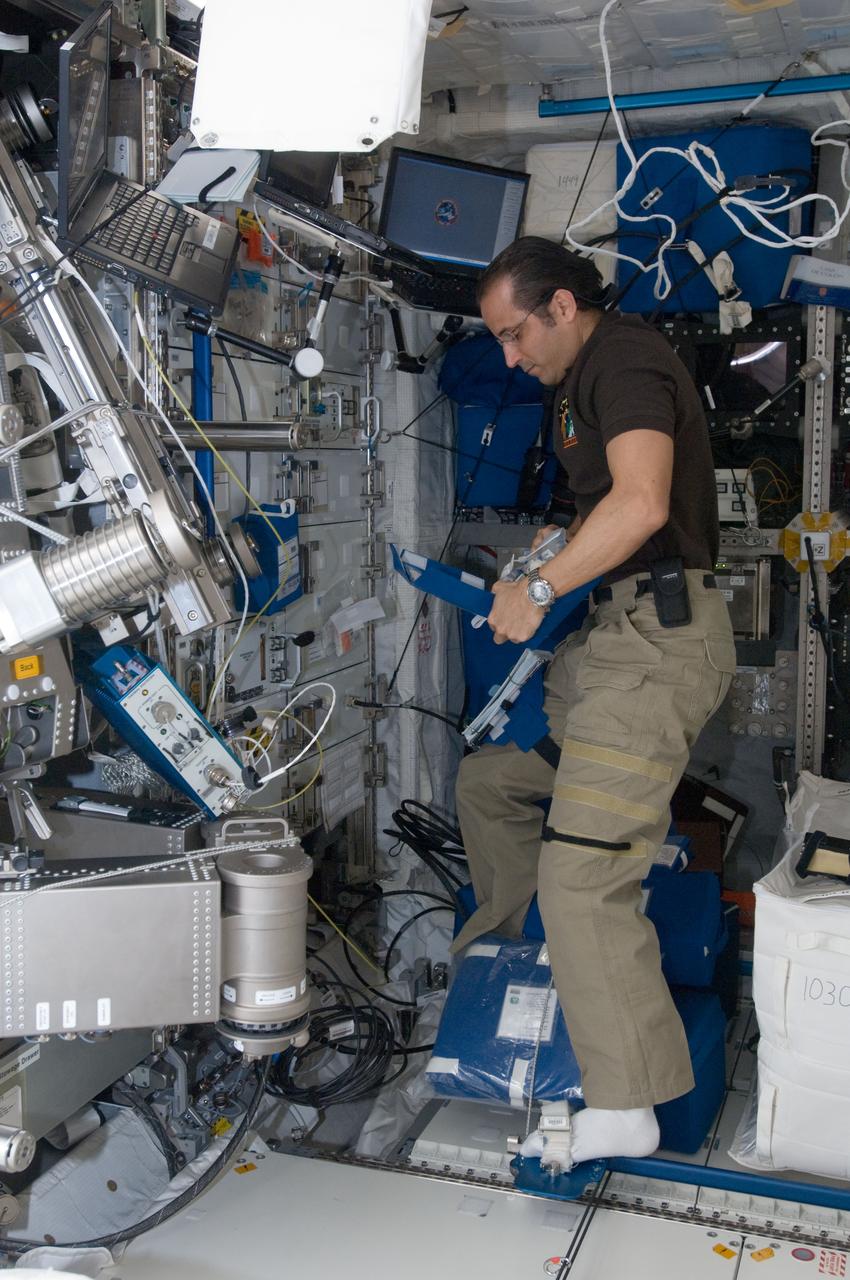
ISS032-E-016871 (8 Aug. 2012) --- NASA astronaut Joe Acaba, Expedition 32 flight engineer, works in the Columbus laboratory of the International Space Station.
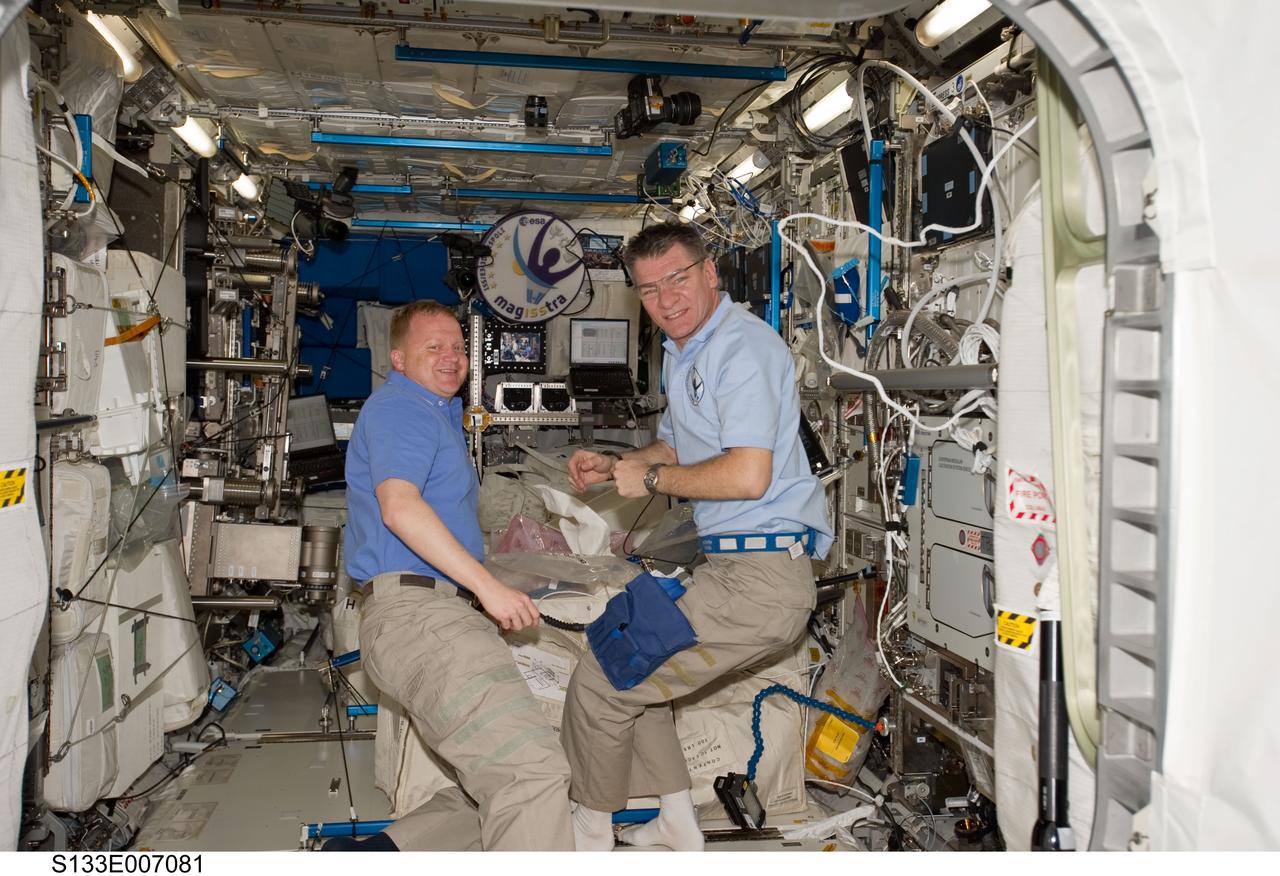
S133-E-007081 (27 Feb. 2011) --- NASA astronaut Eric Boe (left), STS-133 pilot; and European Space Agency astronaut Paolo Nespoli, Expedition 26 flight engineer, work in the Columbus laboratory of the International Space Station while space shuttle Discovery remains docked with the station. Photo credit: NASA or National Aeronautics and Space Administration
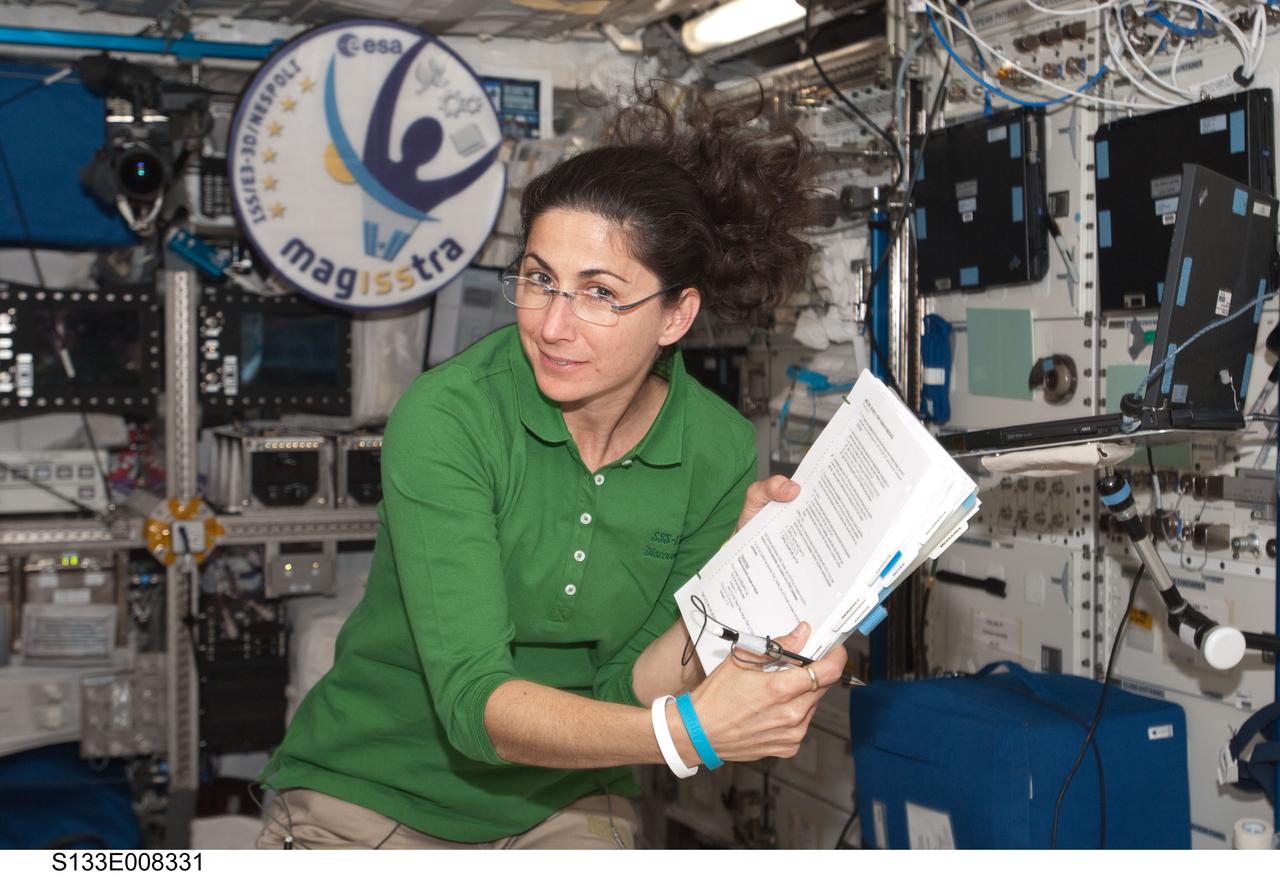
S133-E-008331 (3 March 2011) --- NASA astronaut Nicole Stott, STS-133 mission specialist, is pictured in the Columbus laboratory of the International Space Station while space shuttle Discovery remains docked with the station. Photo credit: NASA or National Aeronautics and Space Administration
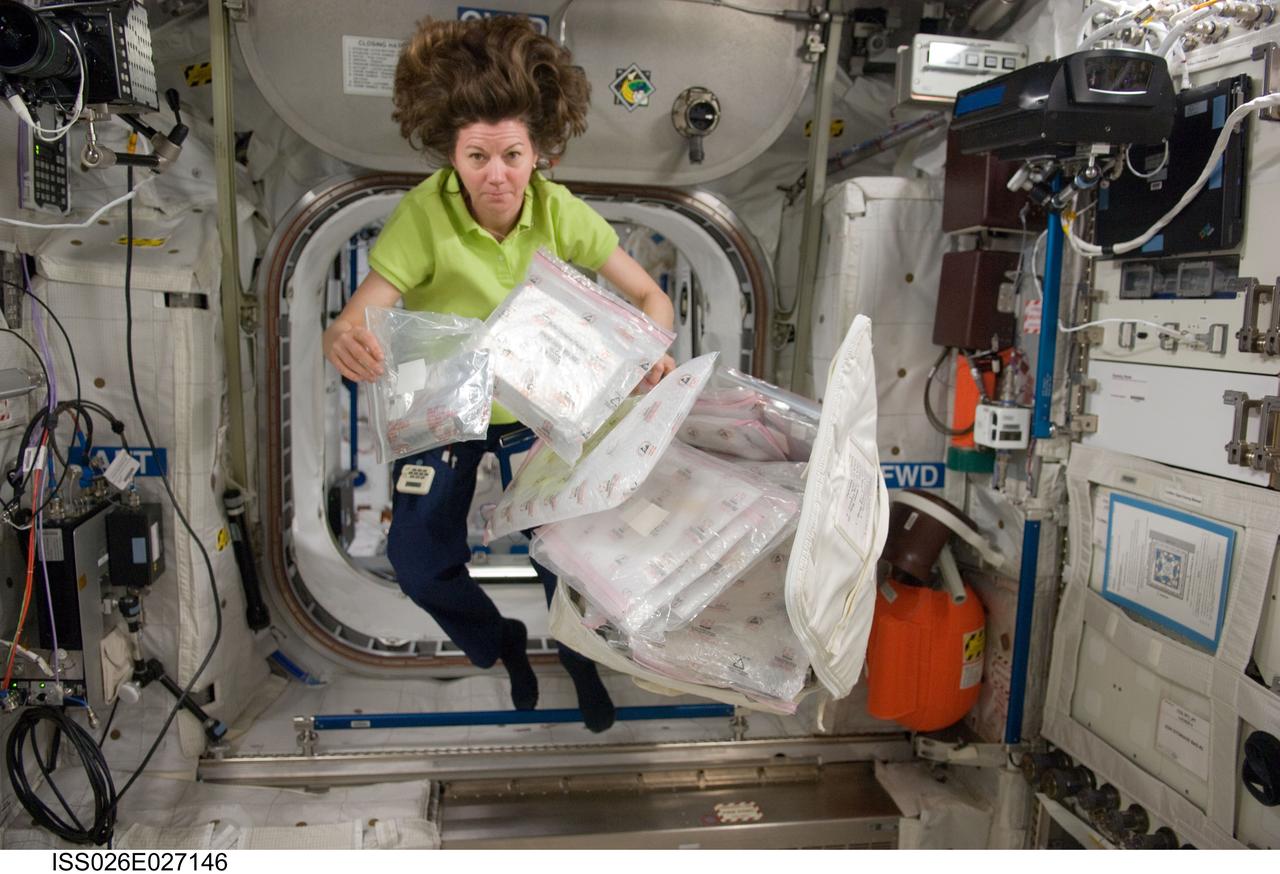
ISS026-E-027146 (16 Feb. 2011) --- NASA astronaut Catherine (Cady) Coleman, Expedition 26 flight engineer, is pictured with plastic stowage containers while floating freely in the Columbus laboratory of the International Space Station.
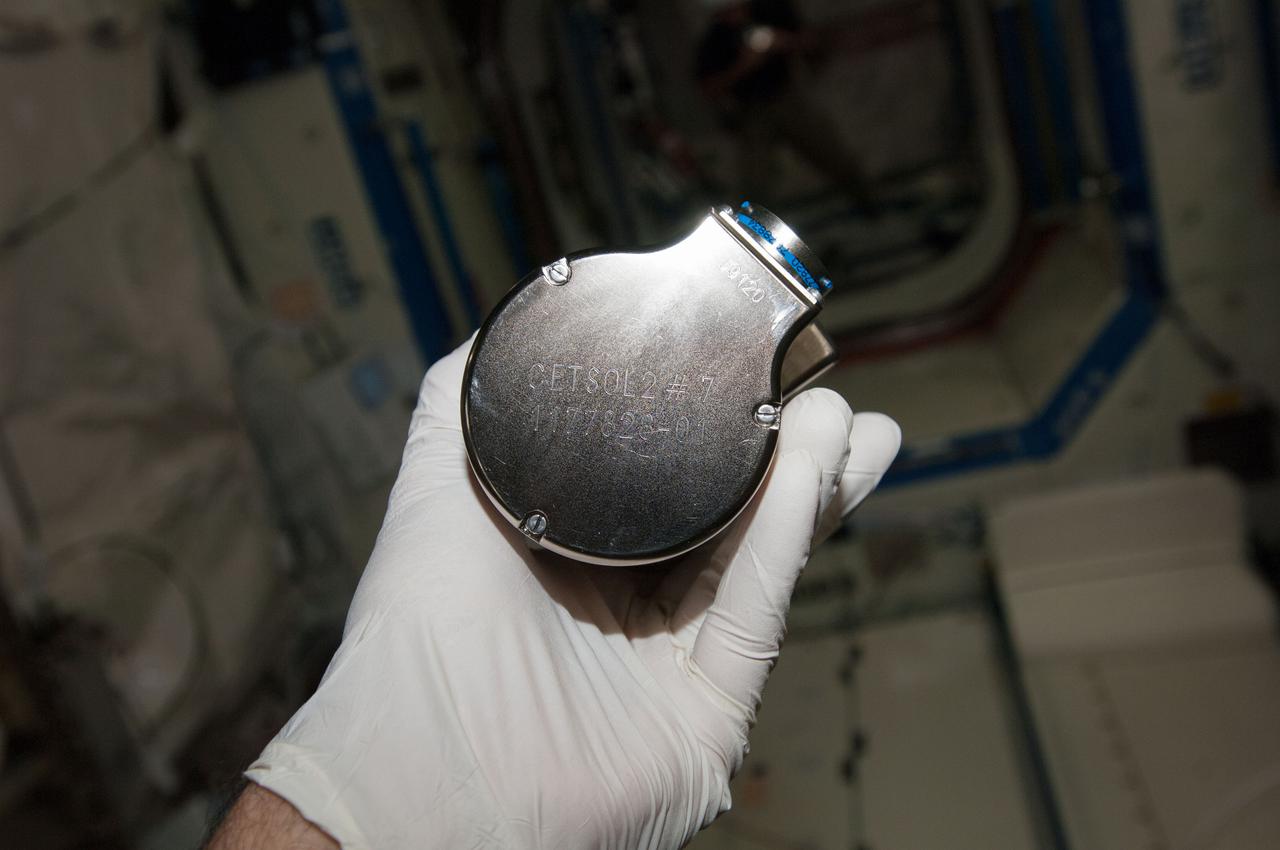
iss038e045758 (2/12/2014) --- A view of Columnar-to-Equiaxed Transition in Solidification Processing-2 (CETSOL-2) test sample 7 which is to be installed into the Material Science Laboratory (MSL) Solidification and Quench Furnace (SQF). This investigation aims to deepen the understanding of the physical principles that govern solidification processes in metal alloys. The patterns of the crystals resulting from transitions of liquids to solids is important for processes used to produce materials such as solar cells, thermoelectrics, and metal alloys.
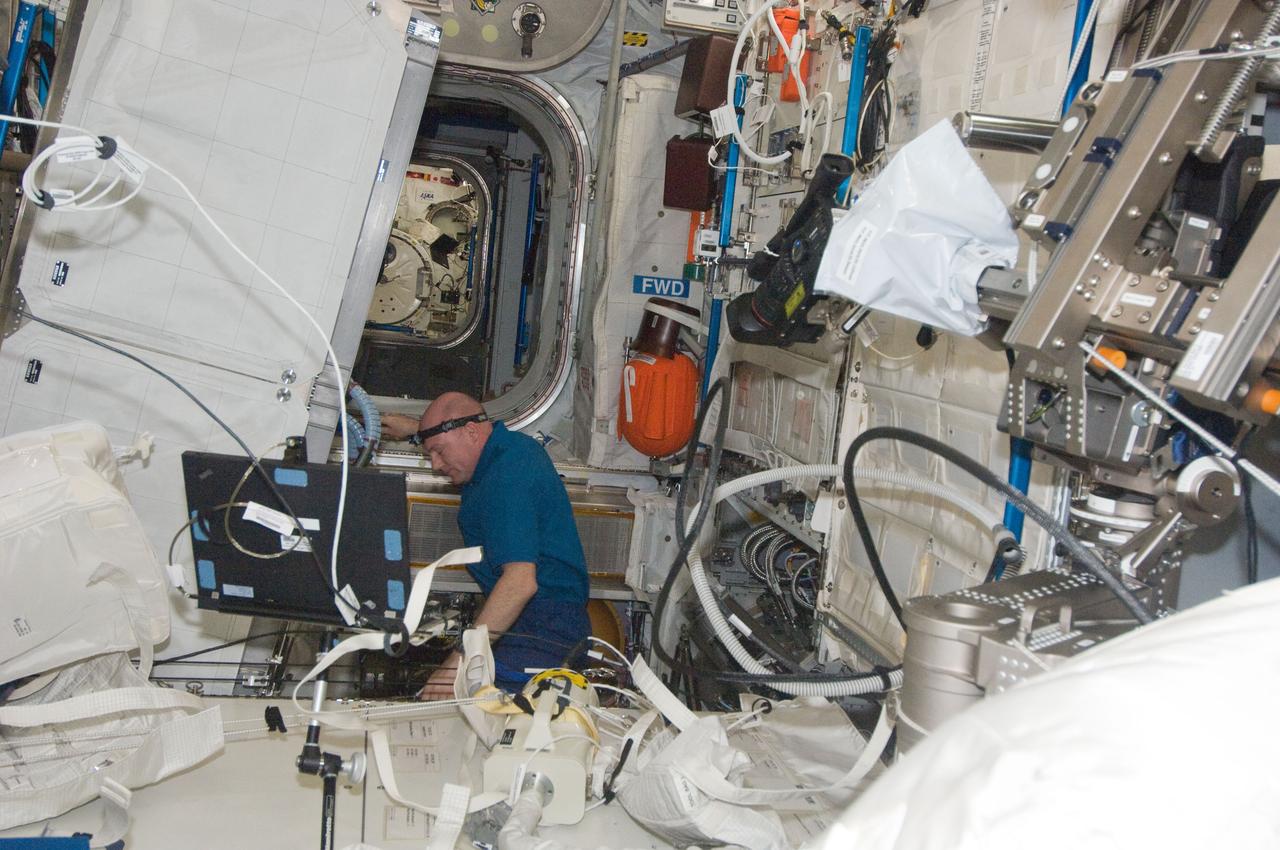
ISS030-E-094534 (23 Feb. 2012) --- European Space Agency astronaut Andre Kuipers, Expedition 30 flight engineer, performs the scheduled inspection and extensive cleanup of ventilation systems in the Columbus laboratory of the International Space Station.
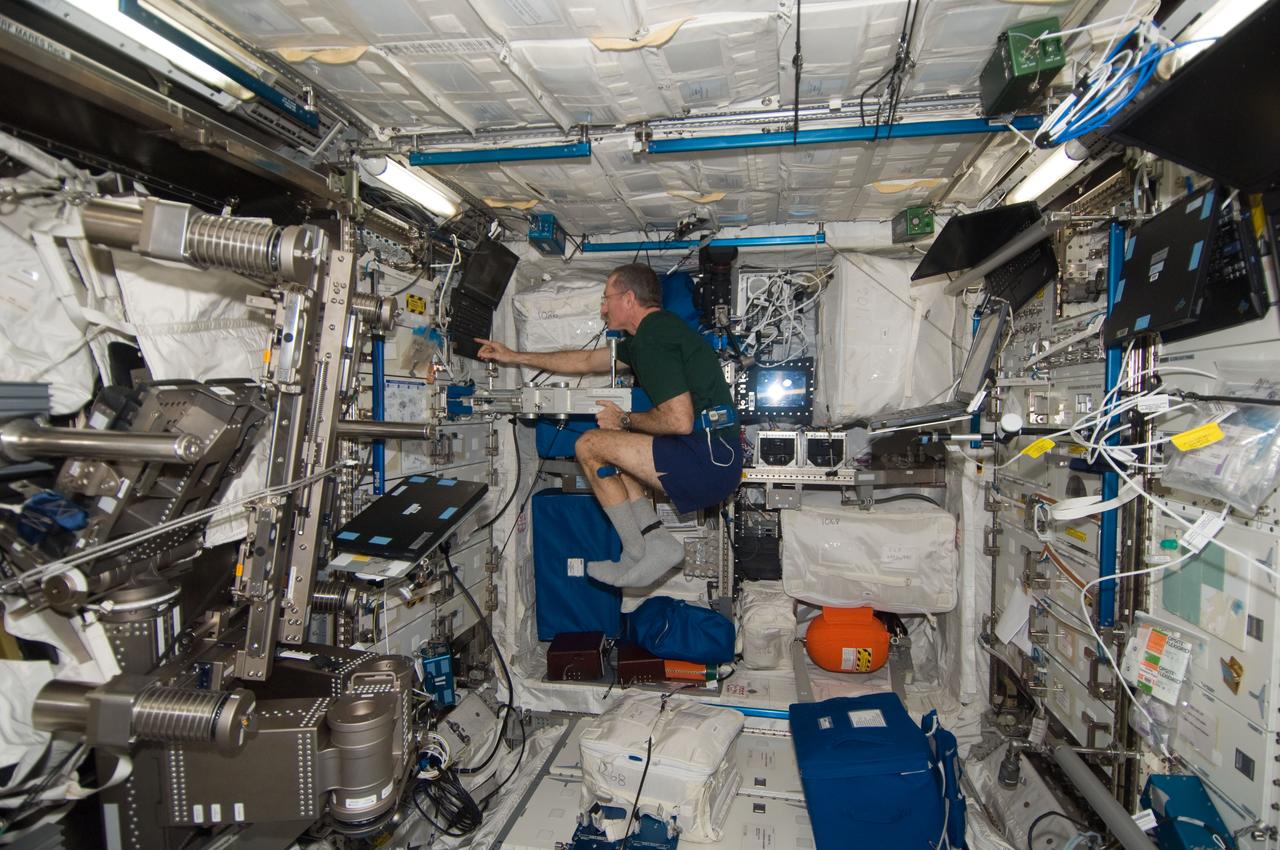
ISS030-E-117437 (1 Feb. 2012) --- NASA astronaut Dan Burbank, Expedition 30 commander, uses the Space Linear Acceleration Mass Measurement Device (SLAMMD) in the Columbus laboratory of the International Space Station.
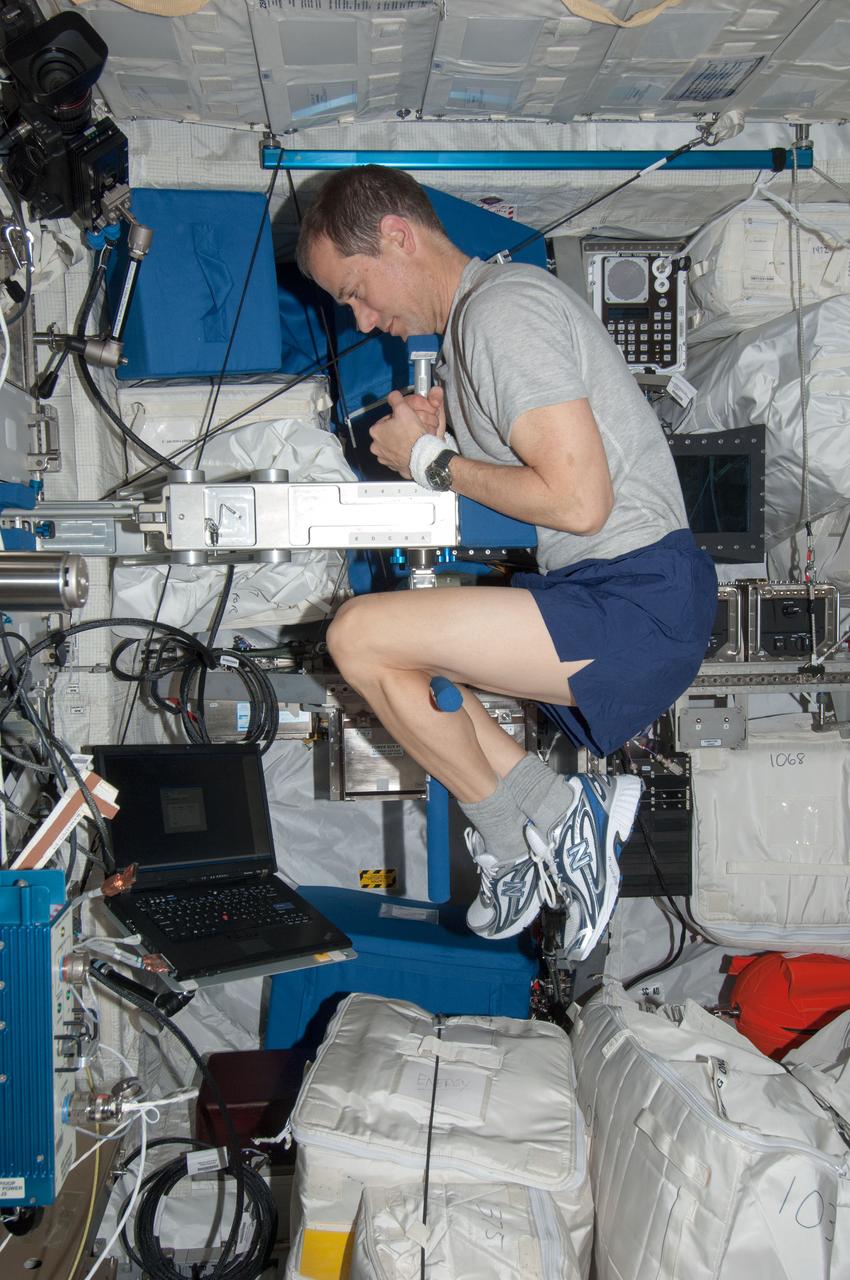
ISS034-E-026654 (11 Jan. 2013) --- NASA astronaut Tom Marshburn, Expedition 34 flight engineer, uses the Space Linear Acceleration Mass Measurement Device (SLAMMD) in the Columbus laboratory of the International Space Station.
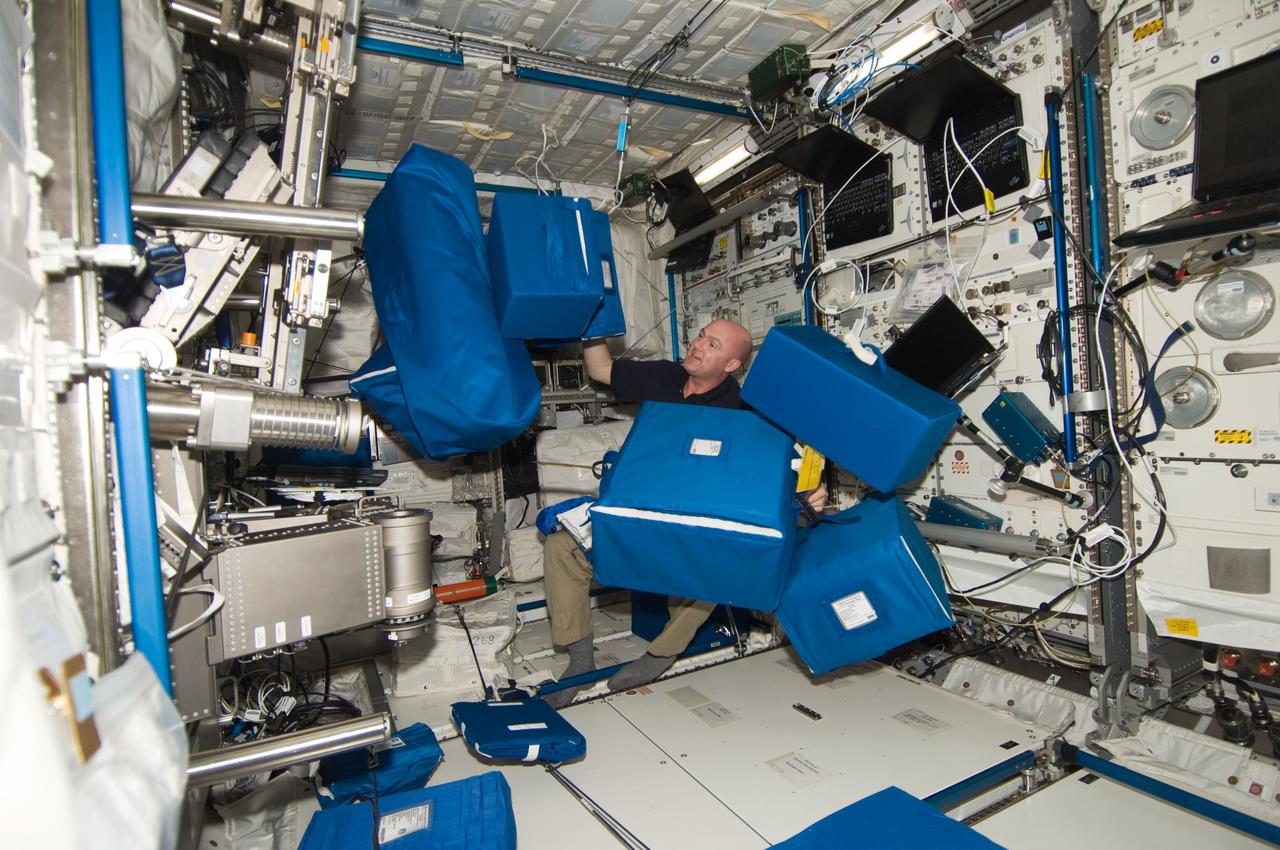
ISS030-E-155920 (16 Jan. 2012) --- European Space Agency astronaut Andre Kuipers, Expedition 30 flight engineer, works with various stowage containers in the Columbus laboratory of the International Space Station.
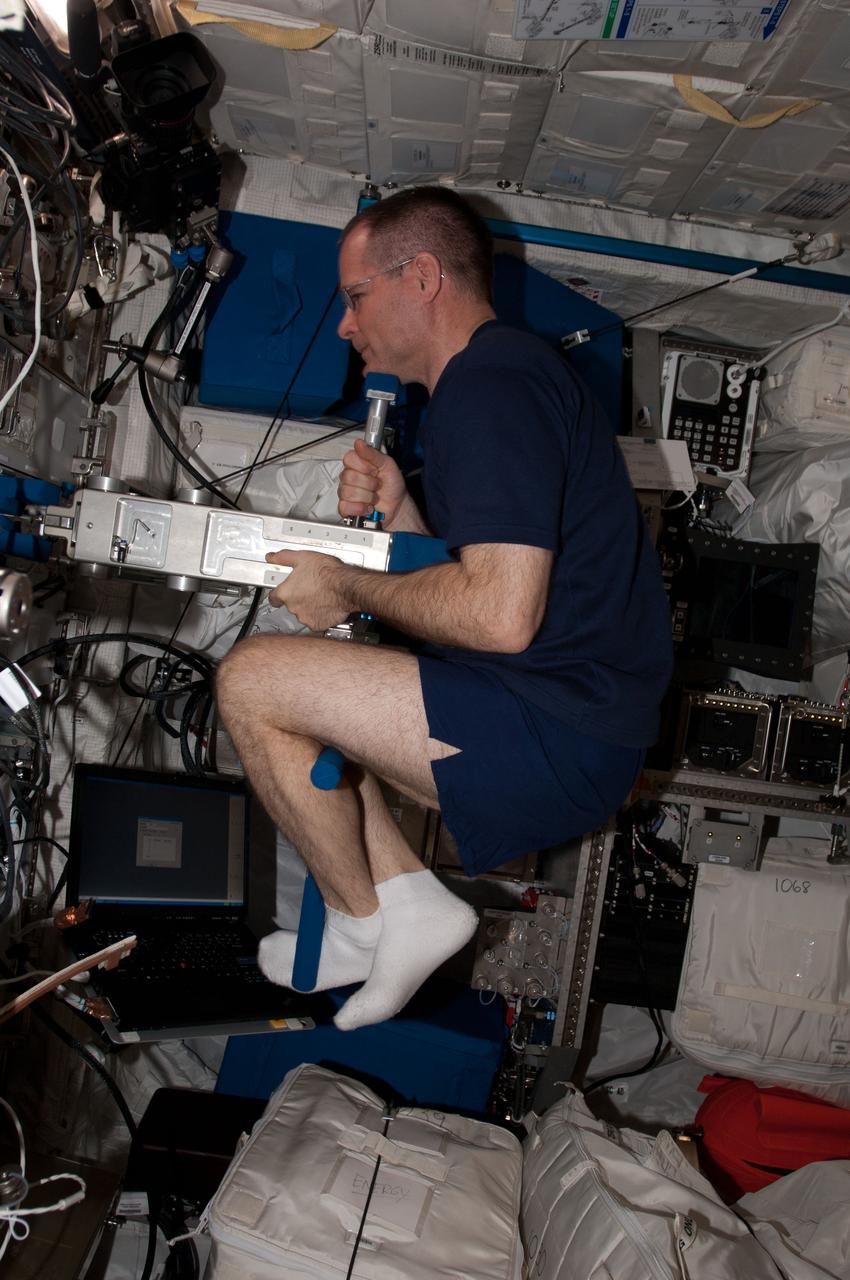
ISS034-E-026569 (11 Jan. 2013) --- NASA astronaut Kevin Ford, Expedition 34 commander, uses the Space Linear Acceleration Mass Measurement Device (SLAMMD) in the Columbus laboratory of the International Space Station.
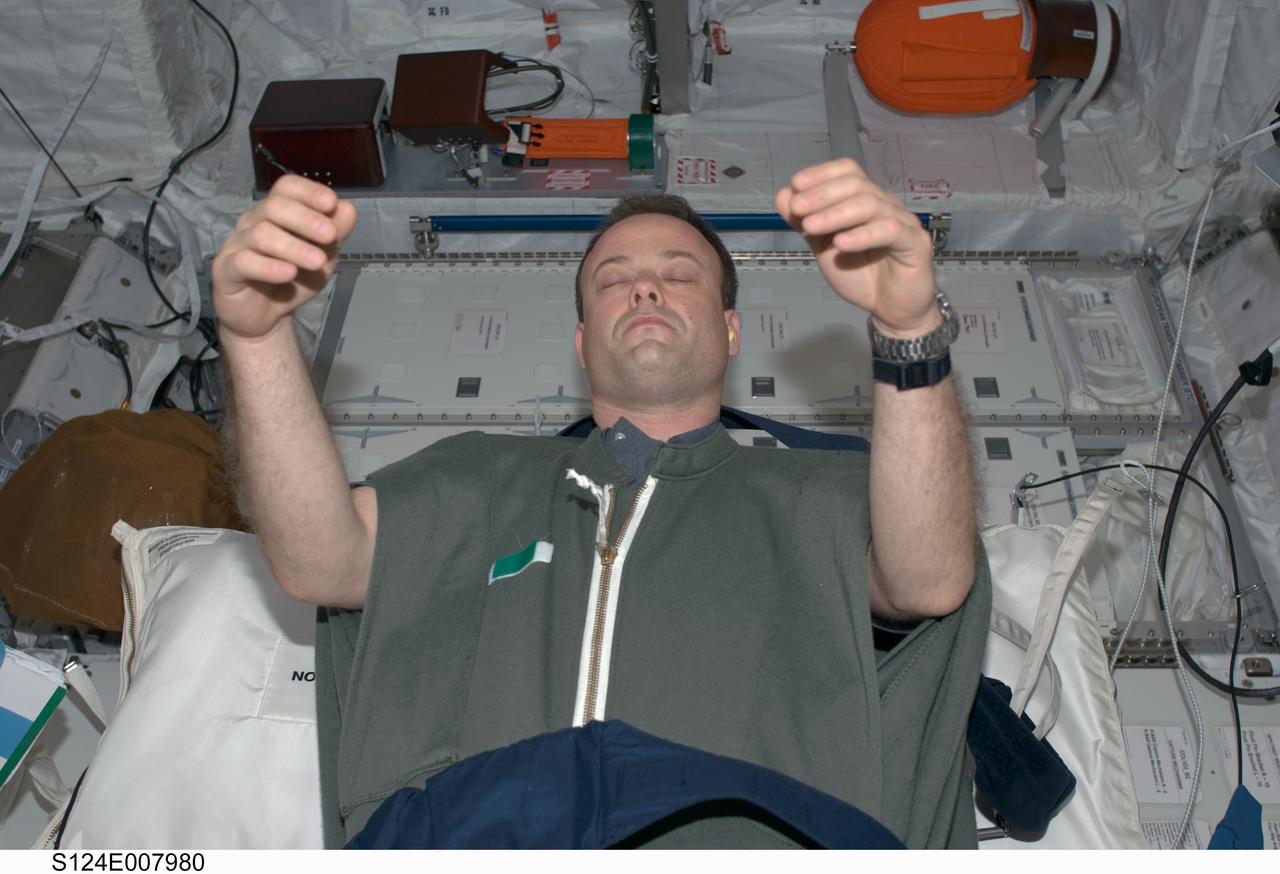
S124-E-007980 (9 June 2008) --- Astronaut Ron Garan, STS-124 mission specialist, sleeps in his sleeping bag in the Columbus laboratory of the International Space Station while Space Shuttle Discovery is docked with the station.
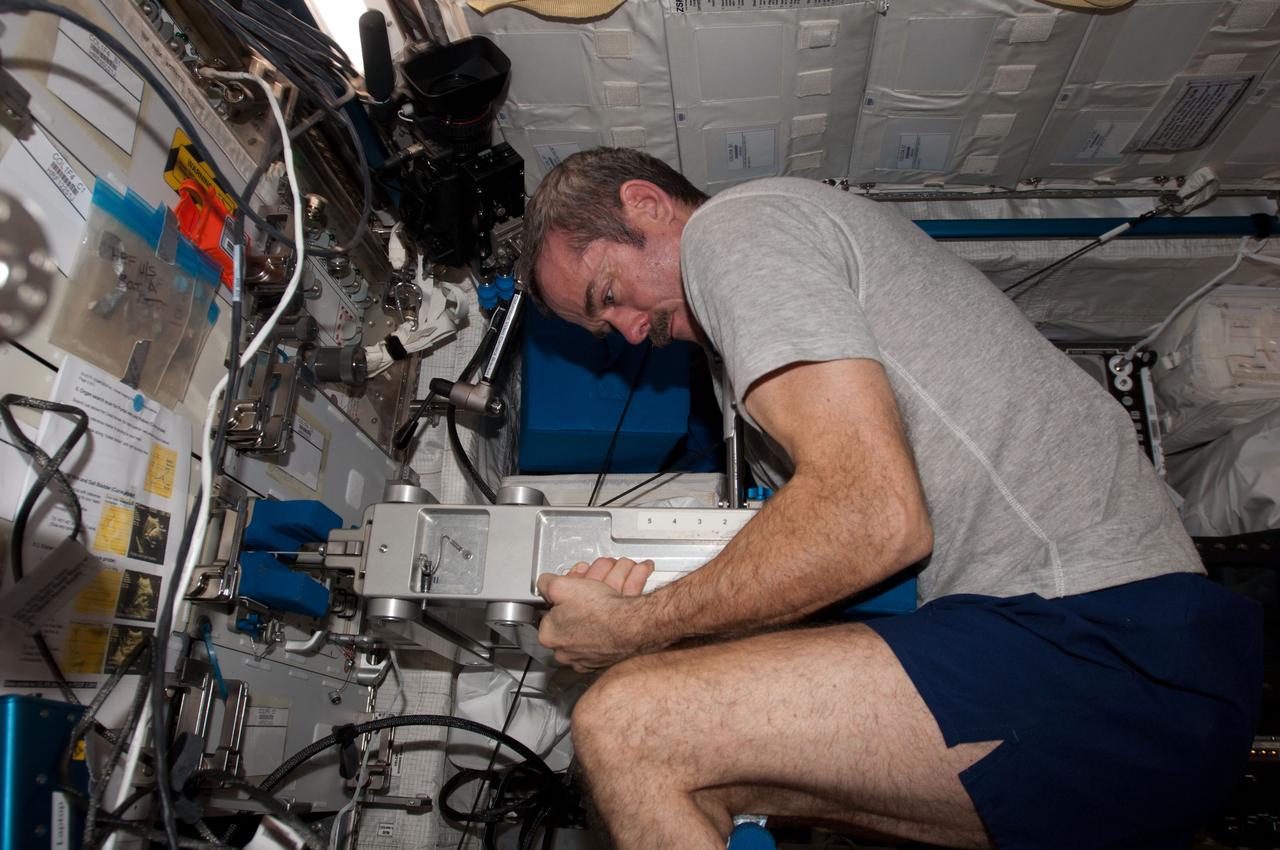
ISS034-E-026582 (11 Jan. 2013) --- Canadian Space Agency astronaut Chris Hadfield, Expedition 34 flight engineer, uses the Space Linear Acceleration Mass Measurement Device (SLAMMD) in the Columbus laboratory of the International Space Station.

ISS029-E-011072 (27 Sept. 2011) --- NASA astronaut Mike Fossum, Expedition 29 commander, is photographed during the periodic inspection of the Desiccant Module of the Condensate Water Separator Assembly (CWSA) to check on its drying ability and to replace it with a spare if required.
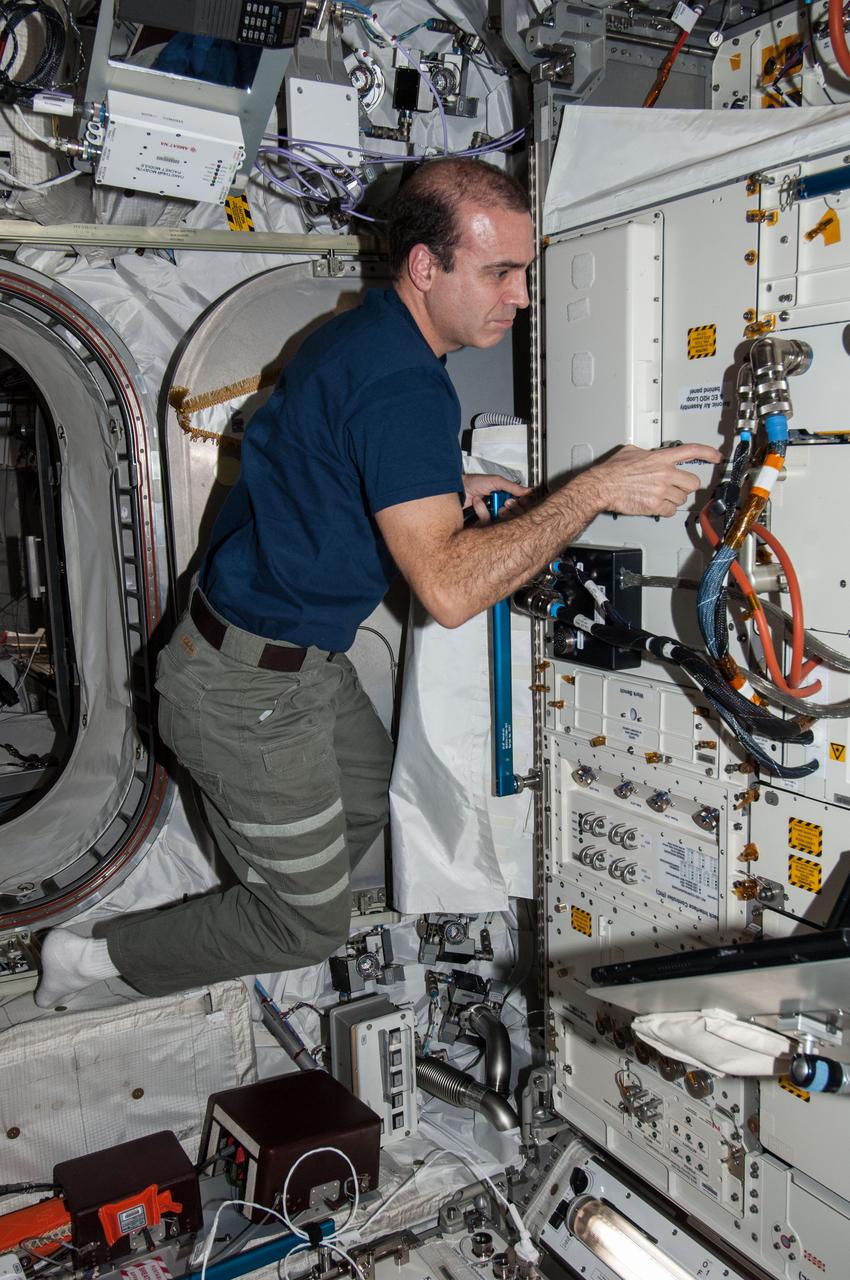
ISS038-E-027224 (9 Jan. 2014) --- NASA astronaut Rick Mastracchio, Expedition 38 flight engineer, works at the Fluid Science Laboratory (FSL) in the Columbus laboratory of the International Space Station.
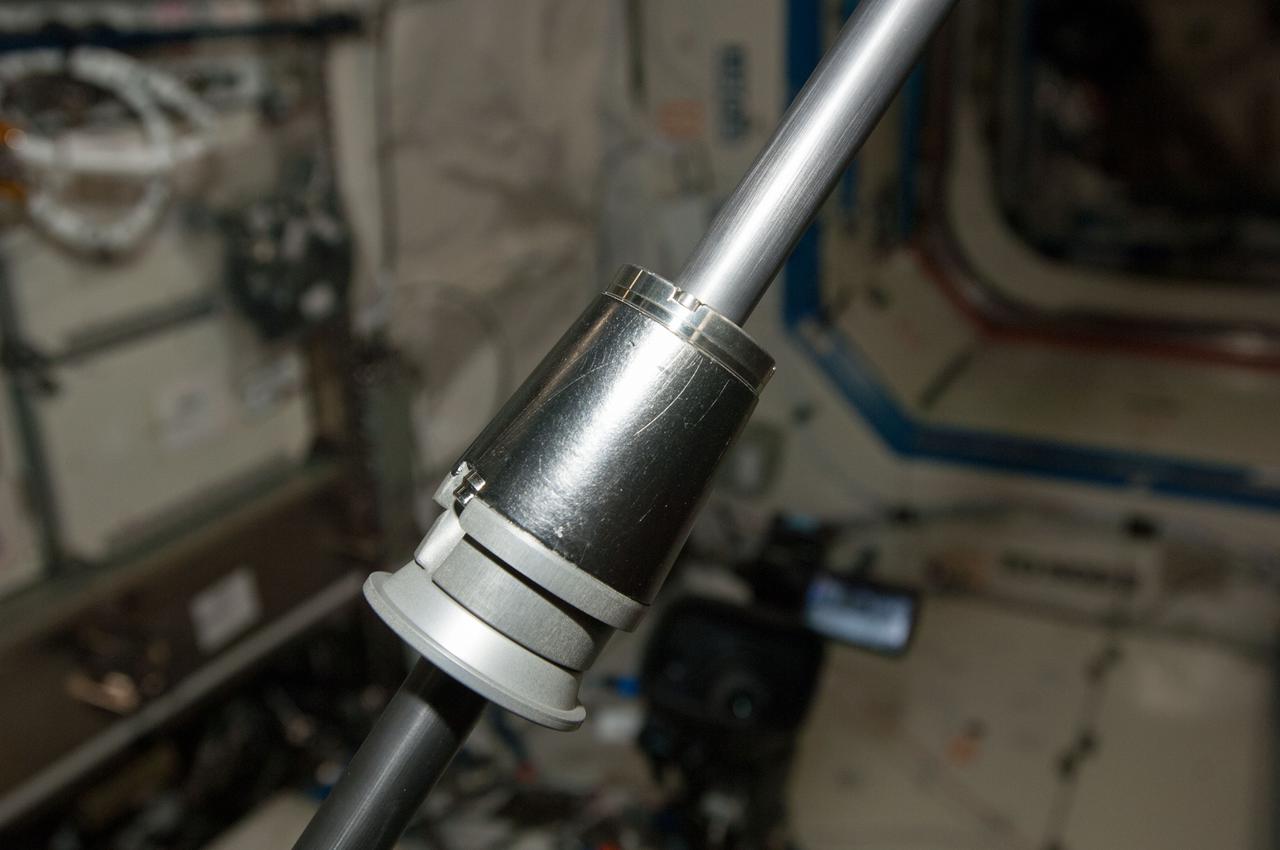
iss038e045760 92/12/2014) --- A view of Columnar-to-Equiaxed Transition in Solidification Processing-2 (CETSOL-2) test sample 7 which is to be installed into the Material Science Laboratory (MSL) Solidification and Quench Furnace (SQF). This investigation aims to deepen the understanding of the physical principles that govern solidification processes in metal alloys. The patterns of the crystals resulting from transitions of liquids to solids is important for processes used to produce materials such as solar cells, thermoelectrics, and metal alloys.
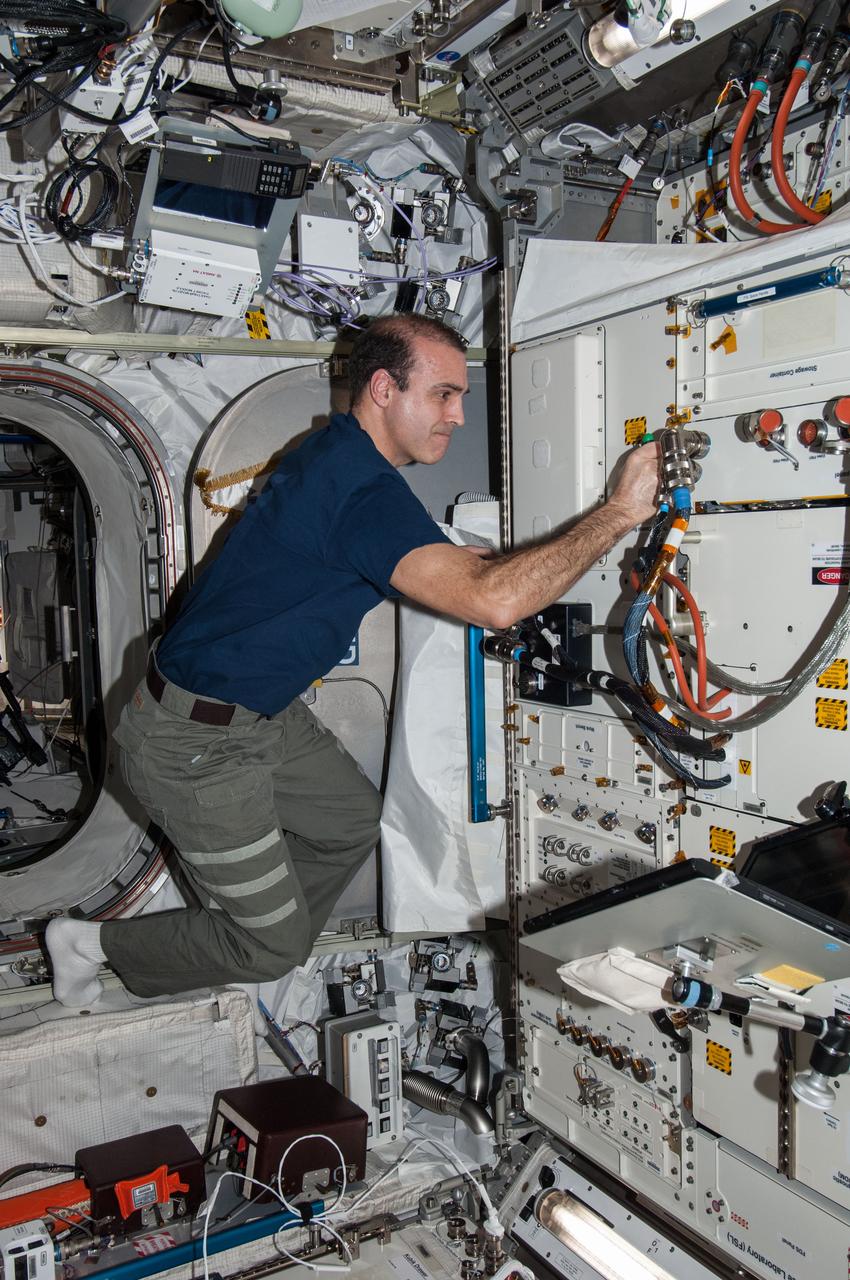
ISS038-E-027223 (9 Jan. 2014) --- NASA astronaut Rick Mastracchio, Expedition 38 flight engineer, works at the Fluid Science Laboratory (FSL) in the Columbus laboratory of the International Space Station.
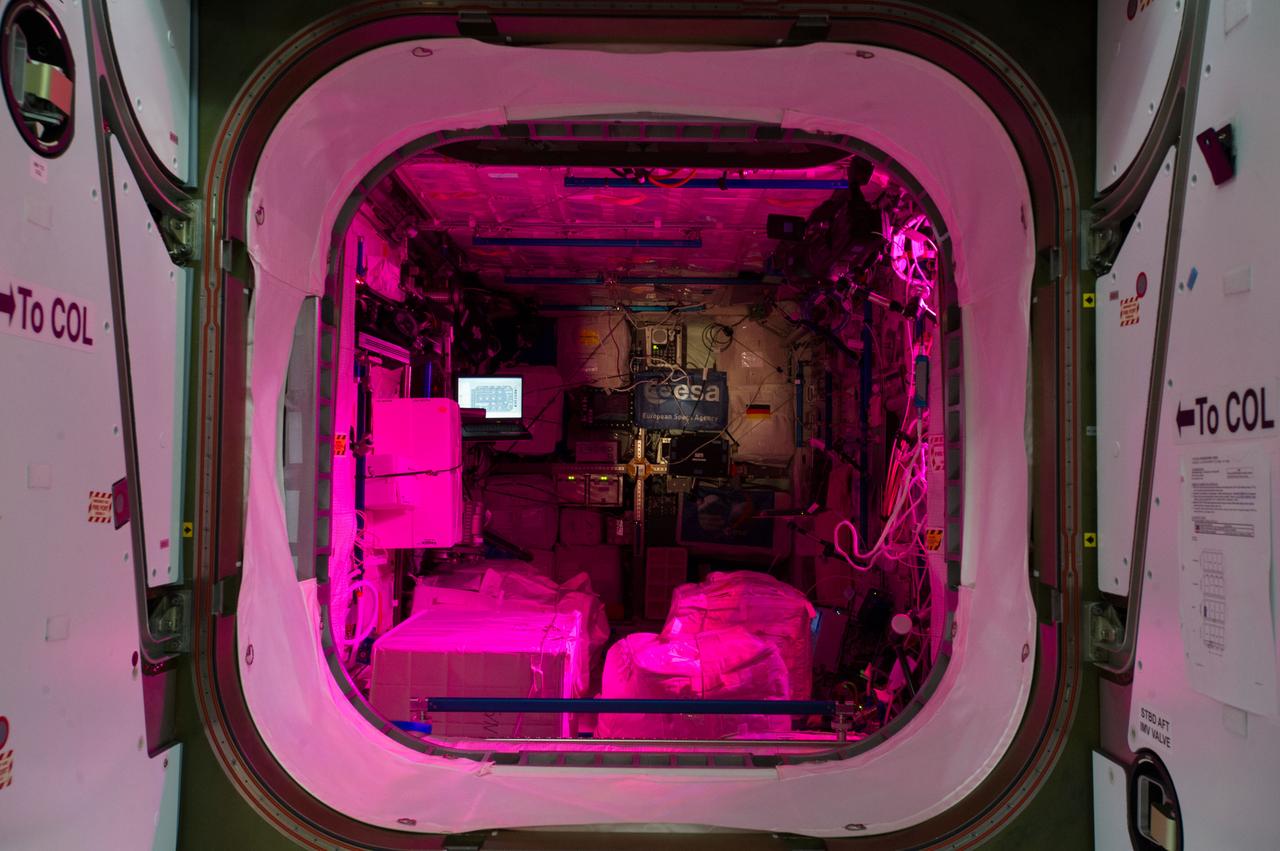
ISS040-E-007560 (5 June 2014) --- A colorful view of the interior of the Columbus laboratory of the International Space Station is featured in this image photographed by an Expedition 40 crew member on the station. The colored lighting is from the Veggie experiment in Columbus.
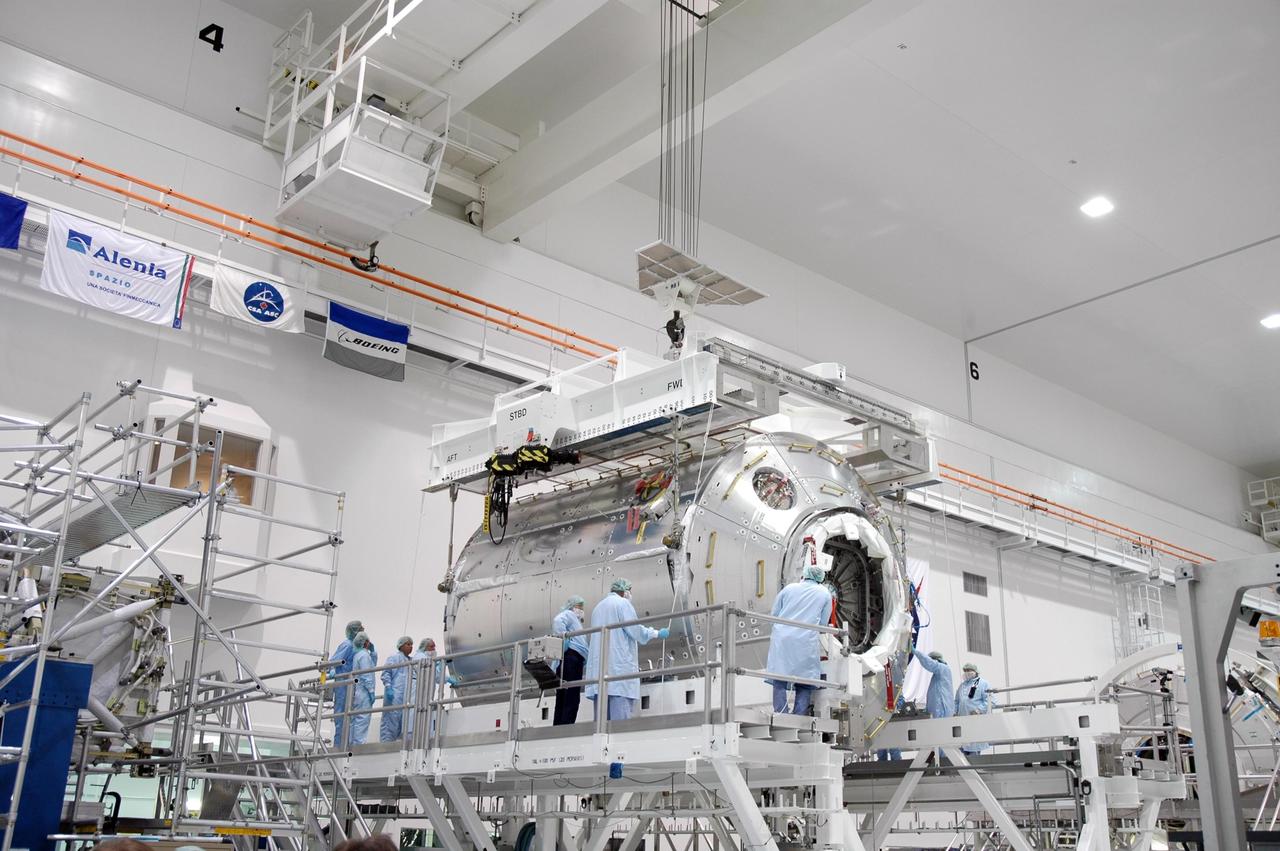
KENNEDY SPACE CENTER, FLA. - Inside the Space Station Processing Facility at NASA's Kennedy Space Center, an overhead crane settles the Columbus module onto a work stand. Columbus is the European Space Agency's research laboratory for the International Space Station. The module will be prepared for delivery to the space station on a future space shuttle mission. Columbus will expand the research facilities of the station and provide researchers with the ability to conduct numerous experiments in the area of life, physical and materials sciences. Photo credit: NASA/Jim Grossmann

KENNEDY SPACE CENTER, FLA. - Jim Kennedy, director of NASA's Kennedy Space Center, addresses the audience attending a ceremony in the Space Station Processing Facility to welcome the European Space Agency's Columbus module. Columbus is the European Space Agency's research laboratory for the International Space Station. The module will be prepared in the SSPF for delivery to the space station on a future space shuttle mission. Columbus will expand the research facilities of the station and provide researchers with the ability to conduct numerous experiments in the life, physical and materials sciences. Photo credit: NASA/Amanda Diller
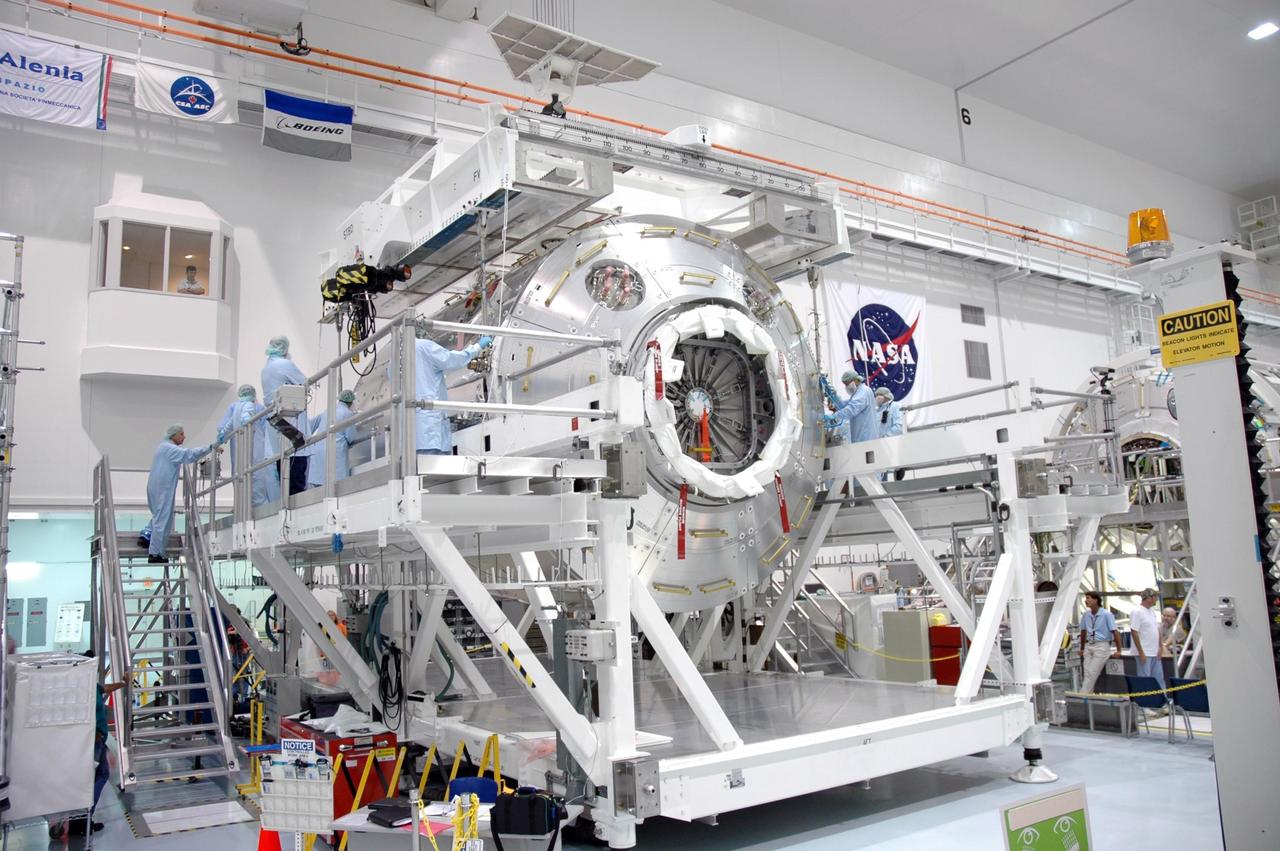
KENNEDY SPACE CENTER, FLA. - Inside the Space Station Processing Facility at NASA's Kennedy Space Center, workers release the cables around the Columbus module from the overhead crane. Columbus is the European Space Agency's research laboratory for the International Space Station. The module will be prepared for delivery to the space station on a future space shuttle mission. Columbus will expand the research facilities of the station and provide researchers with the ability to conduct numerous experiments in the area of life, physical and materials sciences. Photo credit: NASA/Jim Grossmann
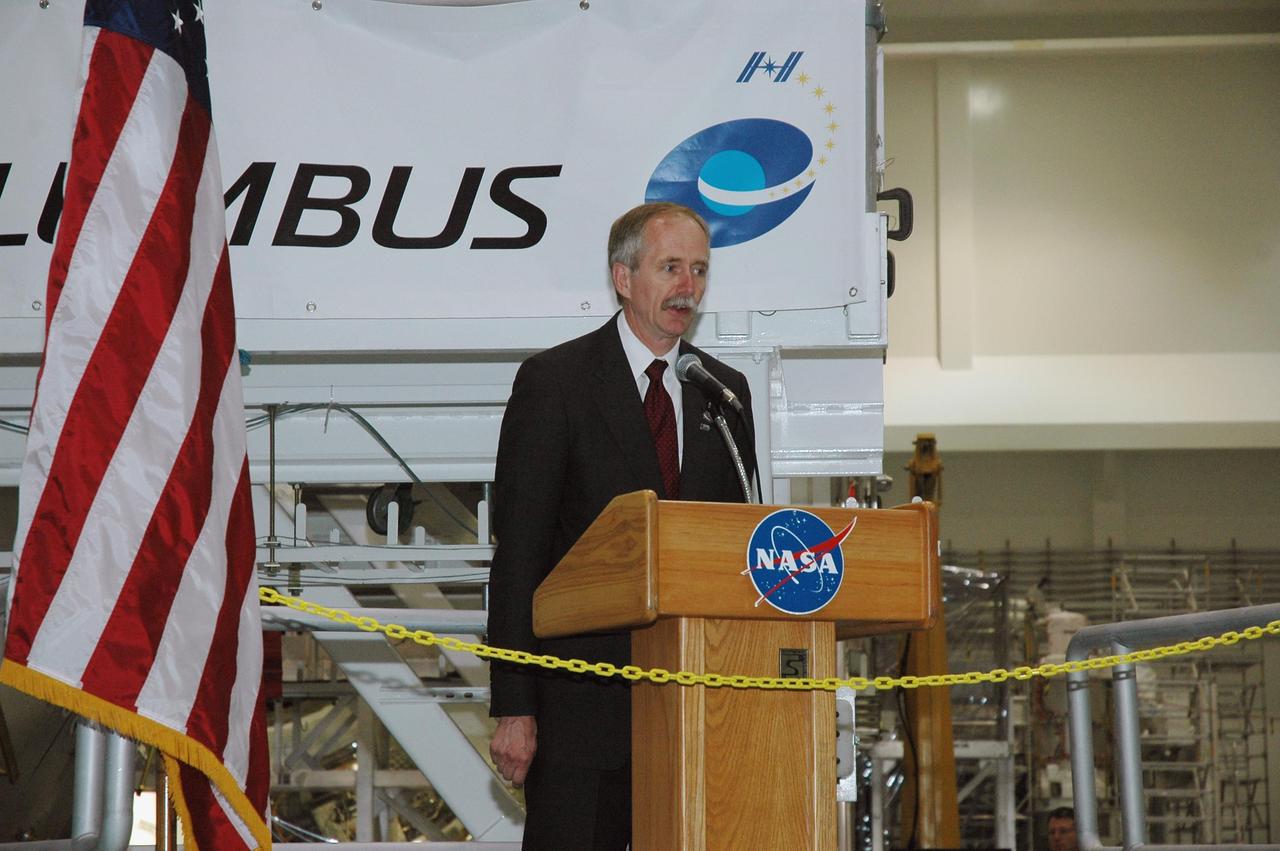
KENNEDY SPACE CENTER, FLA. - William Gerstenmaier, NASA associate administrator for Space Operations, welcomes the delivery of the European Space Agency's Columbus module at a ceremony in the Space Station Processing Facility. Columbus is the European Space Agency's research laboratory for the International Space Station. The module will be prepared in the SSPF for delivery to the space station on a future space shuttle mission. Columbus will expand the research facilities of the station and provide researchers with the ability to conduct numerous experiments in the life, physical and materials sciences. Photo credit: NASA/Amanda Diller
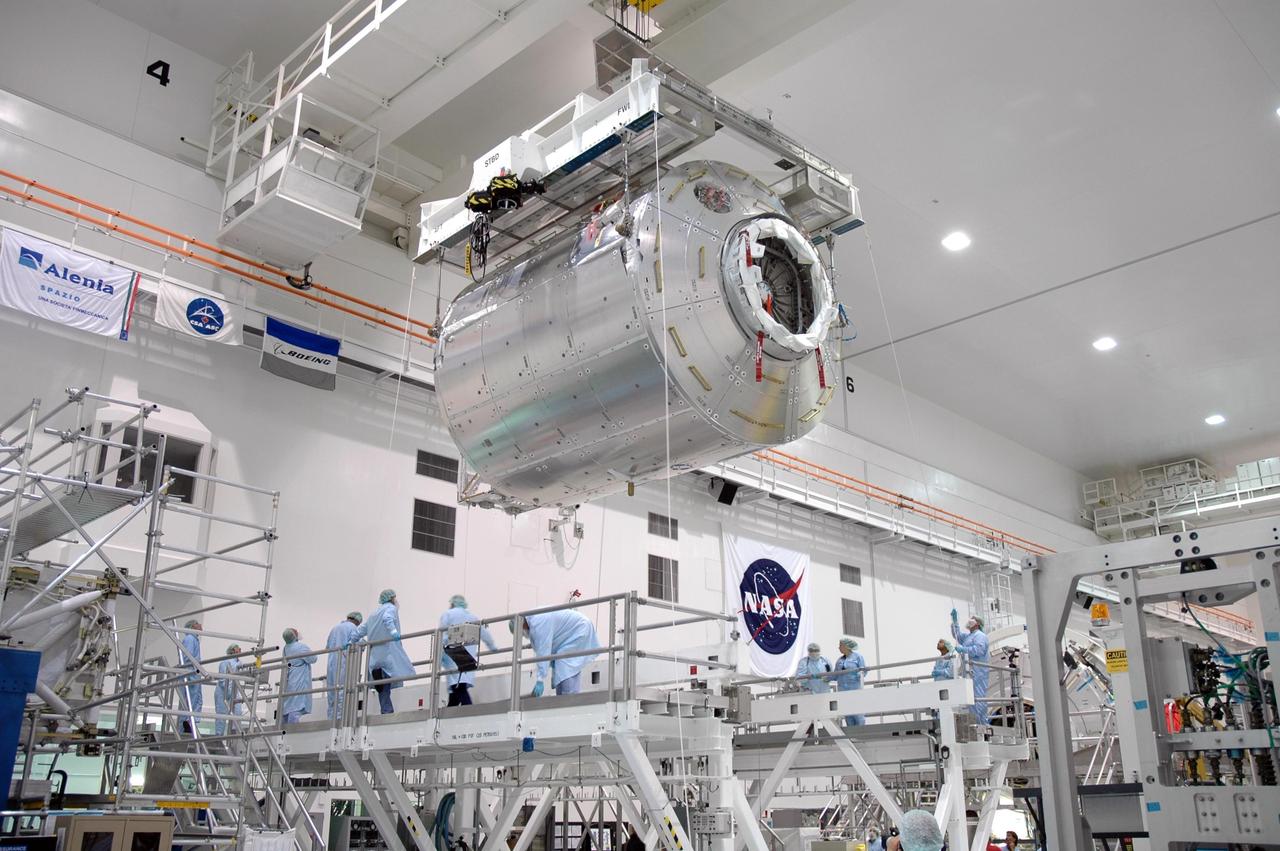
KENNEDY SPACE CENTER, FLA. - Inside the Space Station Processing Facility at NASA's Kennedy Space Center, an overhead crane lowers the Columbus module toward a work stand. Columbus is the European Space Agency's research laboratory for the International Space Station. The module will be prepared for delivery to the space station on a future space shuttle mission. Columbus will expand the research facilities of the station and provide researchers with the ability to conduct numerous experiments in the area of life, physical and materials sciences. Photo credit: NASA/Jim Grossmann
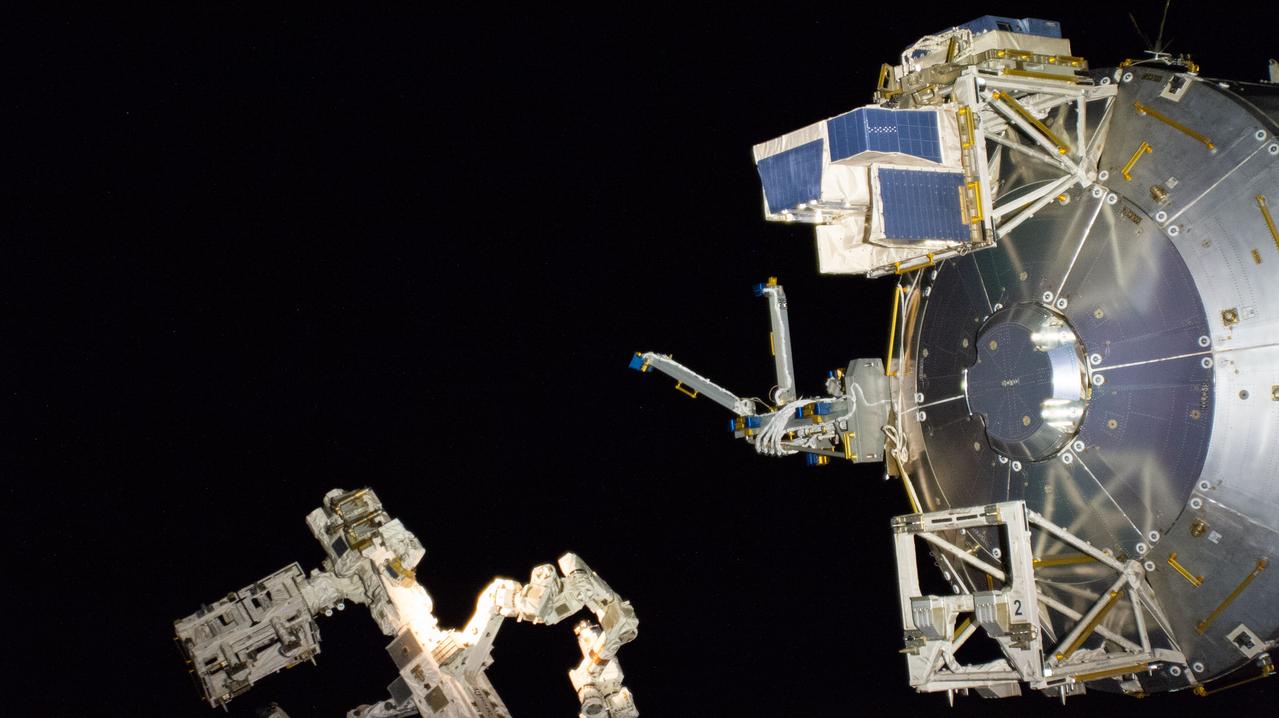
ss062e118892 4/2/2020) --- A view of Bartolomeo in its final position on the Columbus module of the International Space Station (ISS). The European external platform Bartolomeo is an enhancement of the International Space Station (ISS) European Columbus Module and its infrastructure. Designed to meet user requirements from the commercial and institutional sector, Bartolomeo is a new external payload hosting facility on the ram side of Columbus.
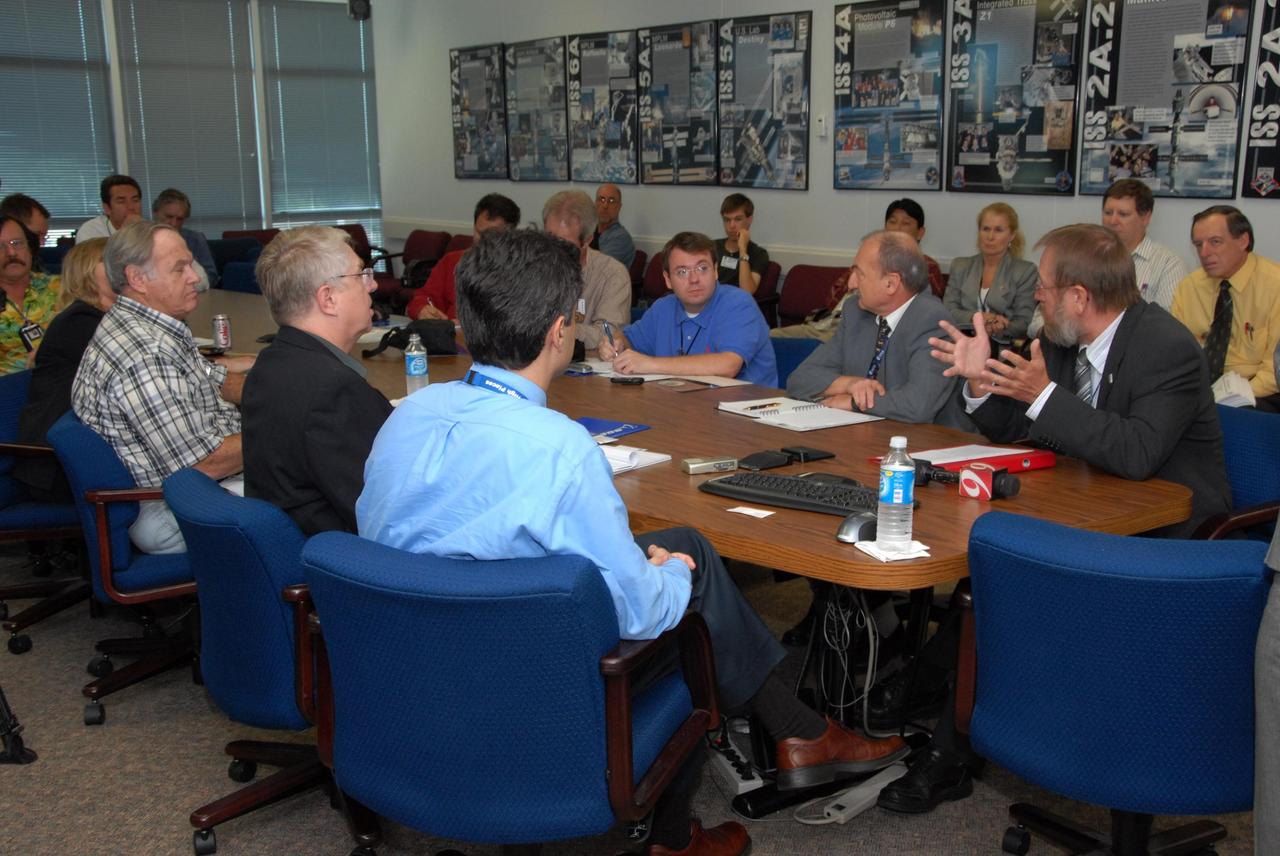
KENNEDY SPACE CENTER, FLA. -- Prior to a showing of the European Space Agency's Columbus Laboratory module, Gregor Woop (seated at right) talks to the media about the module. Woop is the European Space Agency's product assurance and safety manager. Columbus is the European Space Agency 's largest single contribution to the International Space Station. The laboratory module will expand the research facilities of the station, providing crew members and scientists around the world the ability to conduct a variety of life, physical and materials science experiments. The module is approximately 23 feet long and 15 feet wide, allowing it to hold 10 large racks of experiments. Columbus is scheduled to be transferred to Launch Pad 39A in early November, in preparation for its journey to the station. Columbus will fly aboard space shuttle Atlantis on the STS-122 mission, targeted for launch Dec. 6. Photo credit: NASA/George Shelton
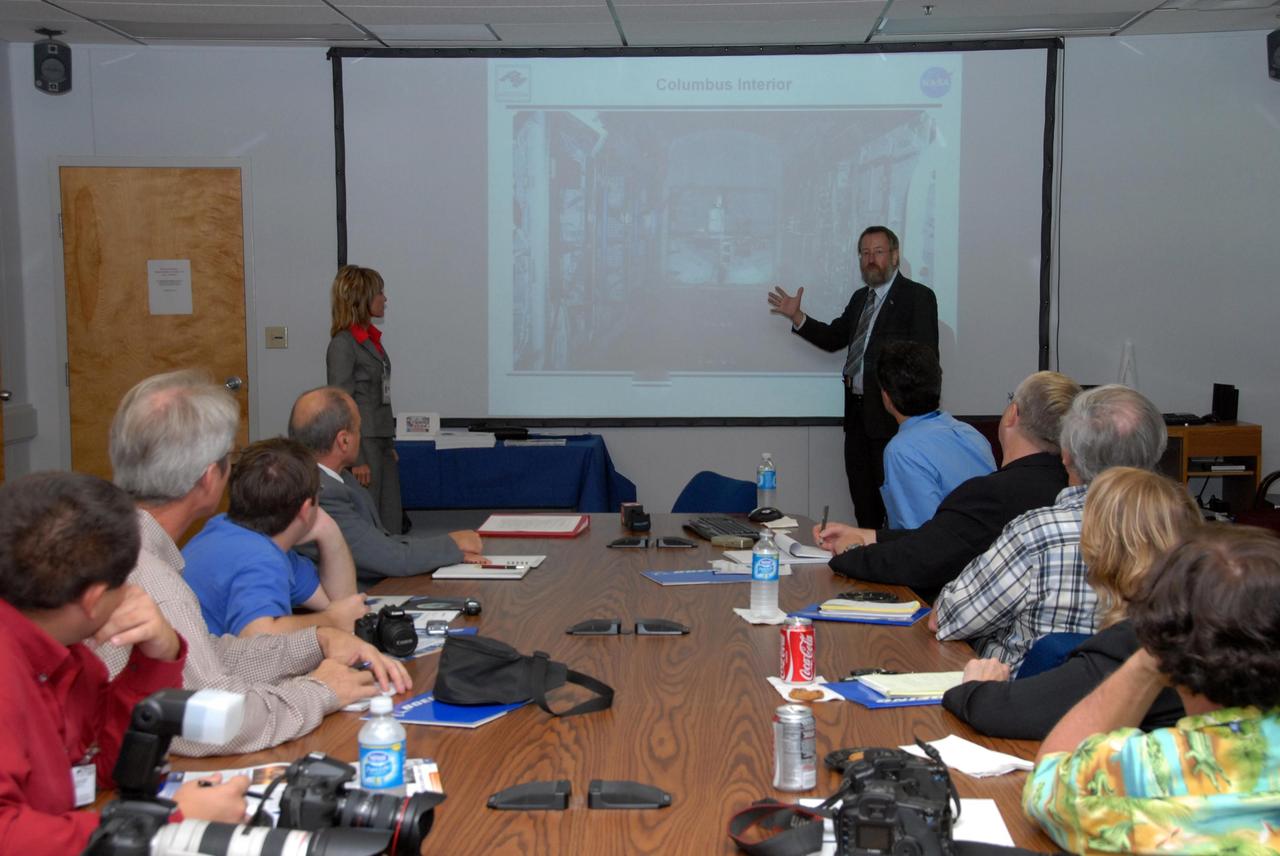
KENNEDY SPACE CENTER, FLA. -- Prior to a showing of the European Space Agency's Columbus Laboratory module, Gregor Woop, in front of the screen, provides information about the module for the media gathered at the table. Woop is the European Space Agency's product assurance and safety manager. Standing at left is Debbie Hahn, NASA mission manager. Columbus is the European Space Agency 's largest single contribution to the International Space Station. The laboratory module will expand the research facilities of the station, providing crew members and scientists around the world the ability to conduct a variety of life, physical and materials science experiments. The module is approximately 23 feet long and 15 feet wide, allowing it to hold 10 large racks of experiments. Columbus is scheduled to be transferred to Launch Pad 39A in early November, in preparation for its journey to the station. Columbus will fly aboard space shuttle Atlantis on the STS-122 mission, targeted for launch Dec. 6. Photo credit: NASA/George Shelton
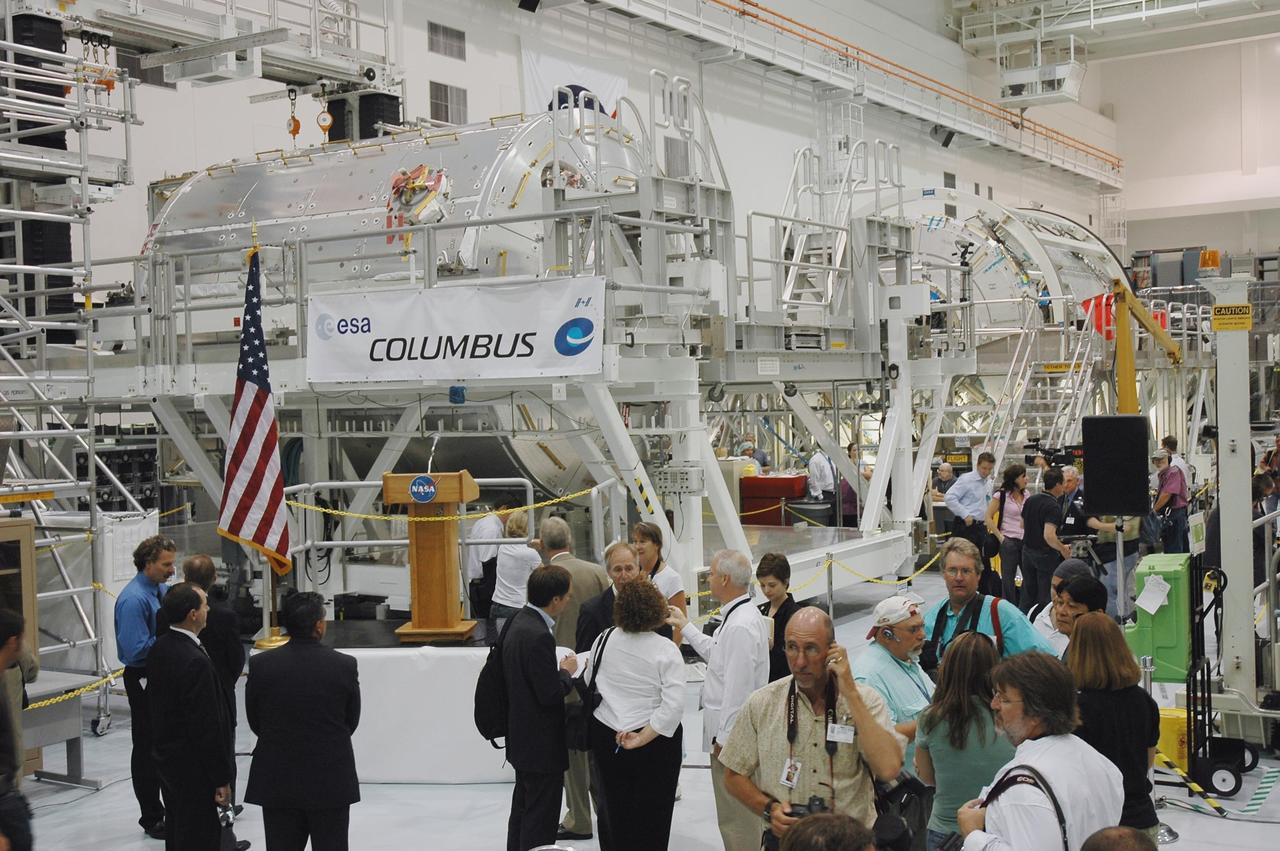
KENNEDY SPACE CENTER, FLA. - The European Space Agency's Columbus module rests on a work stand in view of media representatives and invited guests following a ceremony to welcome the module into the Space Station Processing Facility (SSPF). Columbus is the European Space Agency's research laboratory for the International Space Station. The module will be prepared in the SSPF for delivery to the space station on a future space shuttle mission. Columbus will expand the research facilities of the station and provide researchers with the ability to conduct numerous experiments in the life, physical and materials sciences. Photo credit: NASA/Amanda Diller
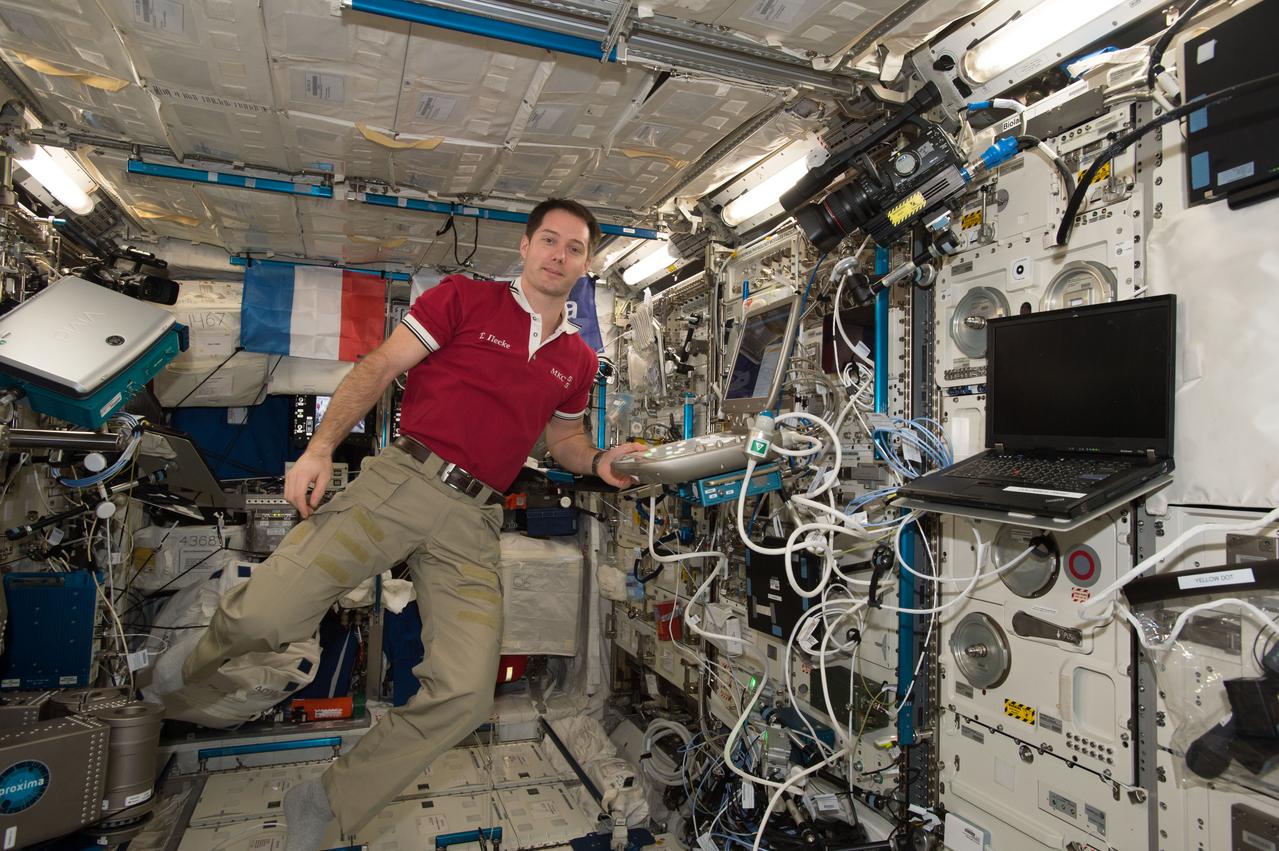
iss051e019007 (April 18, 2017) --- European Space Agency astronaut Thomas Pesquet works inside the Columbus laboratory module.
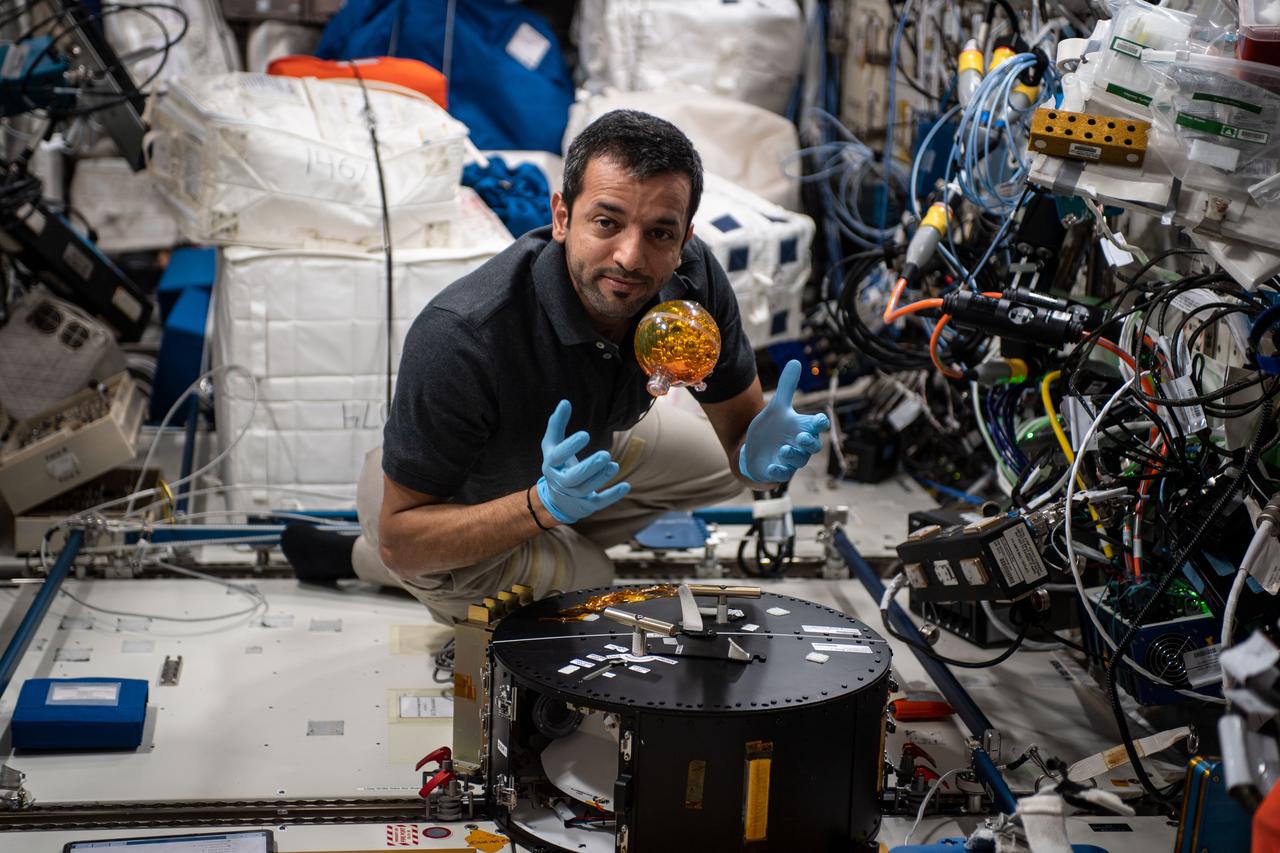
View of UAE (United Arab Emirates) Sultan Alneyadi working with Fluidics Experiment in the Columbus Module during Expedition 69.
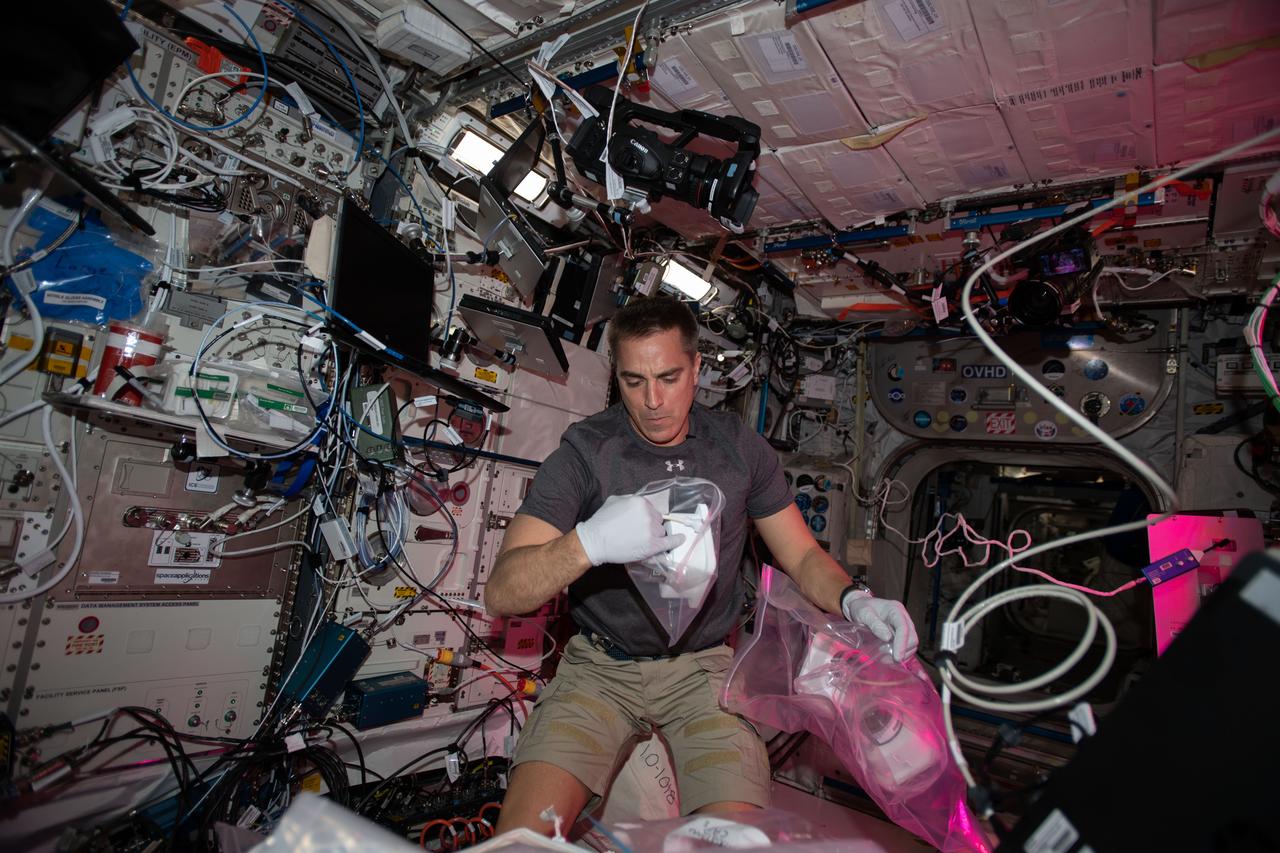
iss063e001883 (April 22, 2020) --- NASA astronaut and Expedition 63 Commander Chris Cassidy services botany research hardware inside the European Space Agency's Columbus laboratory module. The Veggie PONDS research facility in Columbus supports the growing and harvesting of lettuce and mizuna greens to demonstrate reliable vegetable growth during spaceflight.

iss063e001873 (April 22, 2020) --- NASA astronaut and Expedition 63 Commander Chris Cassidy services botany research hardware inside the European Space Agency's Columbus laboratory module. The Veggie PONDS research facility in Columbus supports the growing and harvesting of lettuce and mizuna greens to demonstrate reliable vegetable growth during spaceflight.
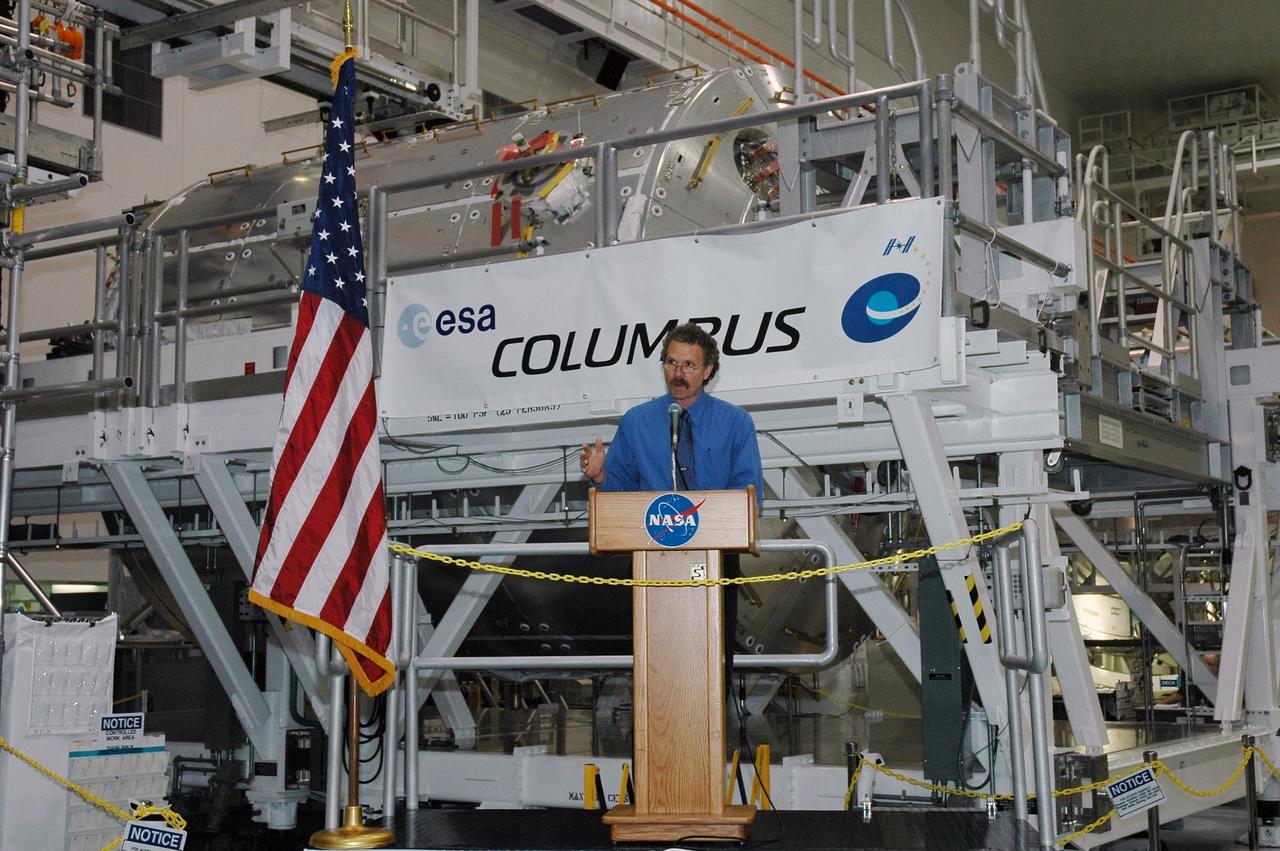
KENNEDY SPACE CENTER, FLA. - At ceremony in the Space Station Processing Facility, Russell Romanella, director of International Space Station and Payloads Processing at Kennedy Space Center, relays his team's readiness to prepare the European Space Agency's Columbus module (seen behind him) for flight. Columbus is the European Space Agency's research laboratory for the International Space Station. The module will be prepared in the SSPF for delivery to the space station on a future space shuttle mission. Columbus will expand the research facilities of the station and provide researchers with the ability to conduct numerous experiments in the life, physical and materials sciences. Photo credit: NASA/Amanda Diller
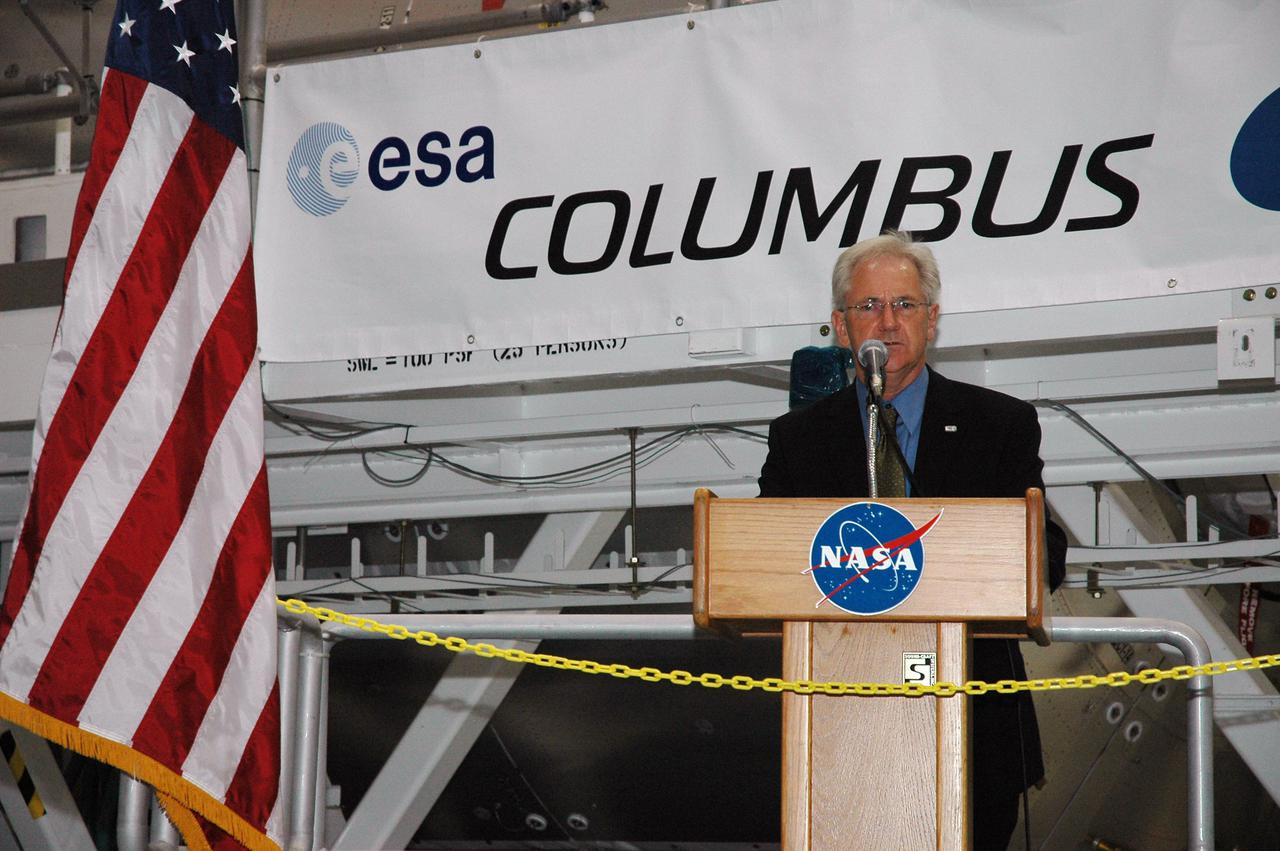
KENNEDY SPACE CENTER, FLA. - Alan Thirkettle, International Space Station program manager for the European Space Agency (ESA), speaks at a ceremony in the Space Station Processing Facility following the delivery of ESA's Columbus module to Kennedy Space Center. Columbus is the European Space Agency's research laboratory for the International Space Station. The module will be prepared in the SSPF for delivery to the space station on a future space shuttle mission. Columbus will expand the research facilities of the station and provide researchers with the ability to conduct numerous experiments in the life, physical and materials sciences. Photo credit: NASA_Amanda Diller
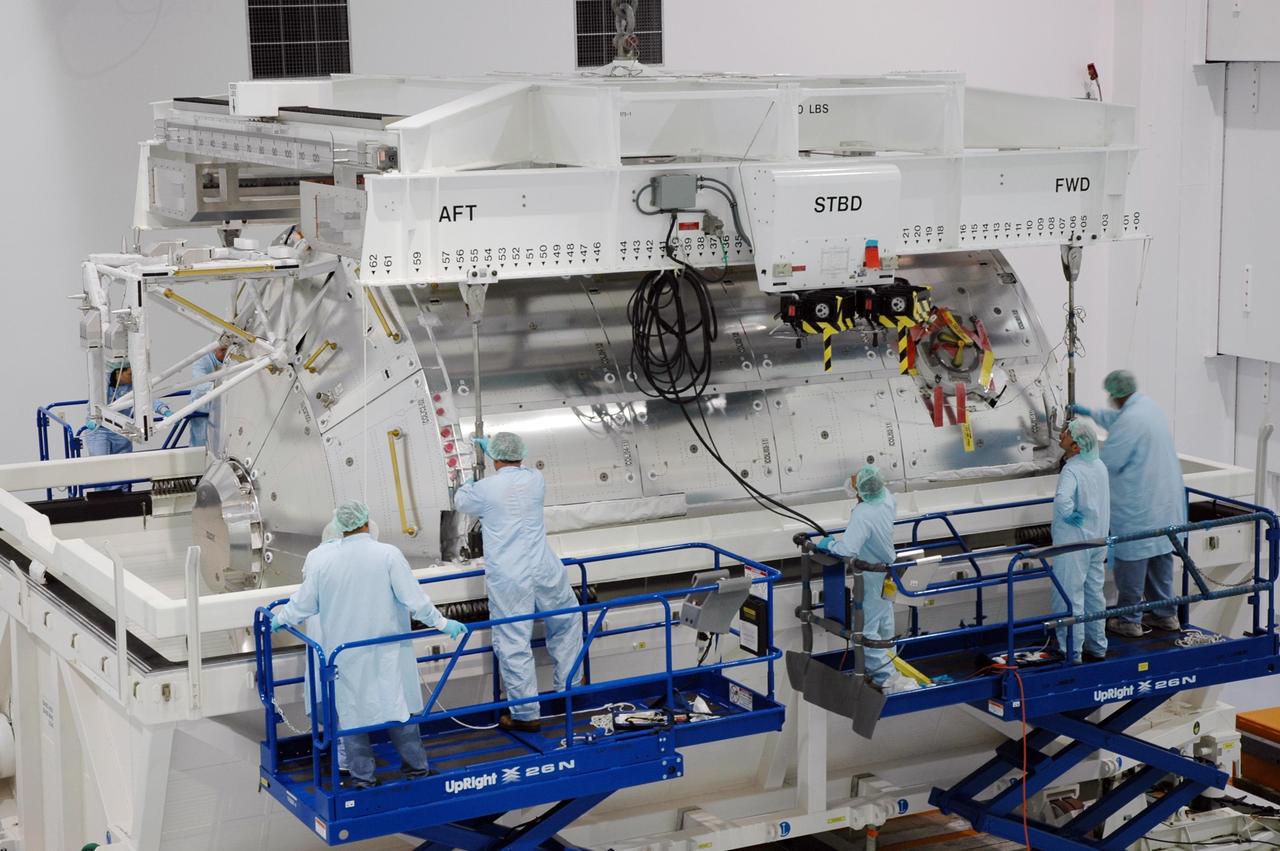
KENNEDY SPACE CENTER, FLA. - Inside the Space Station Processing Facility at NASA's Kennedy Space Center, an overhead crane is lowered onto the Columbus module to lift it out of its transportation canister. Columbus is the European Space Agency's research laboratory for the International Space Station. The module will be moved to a work stand and prepared for delivery to the space station on a future space shuttle mission. Columbus will expand the research facilities of the station and provide researchers with the ability to conduct numerous experiments in the area of life, physical and materials sciences. Photo credit: NASA/Jim Grossmann
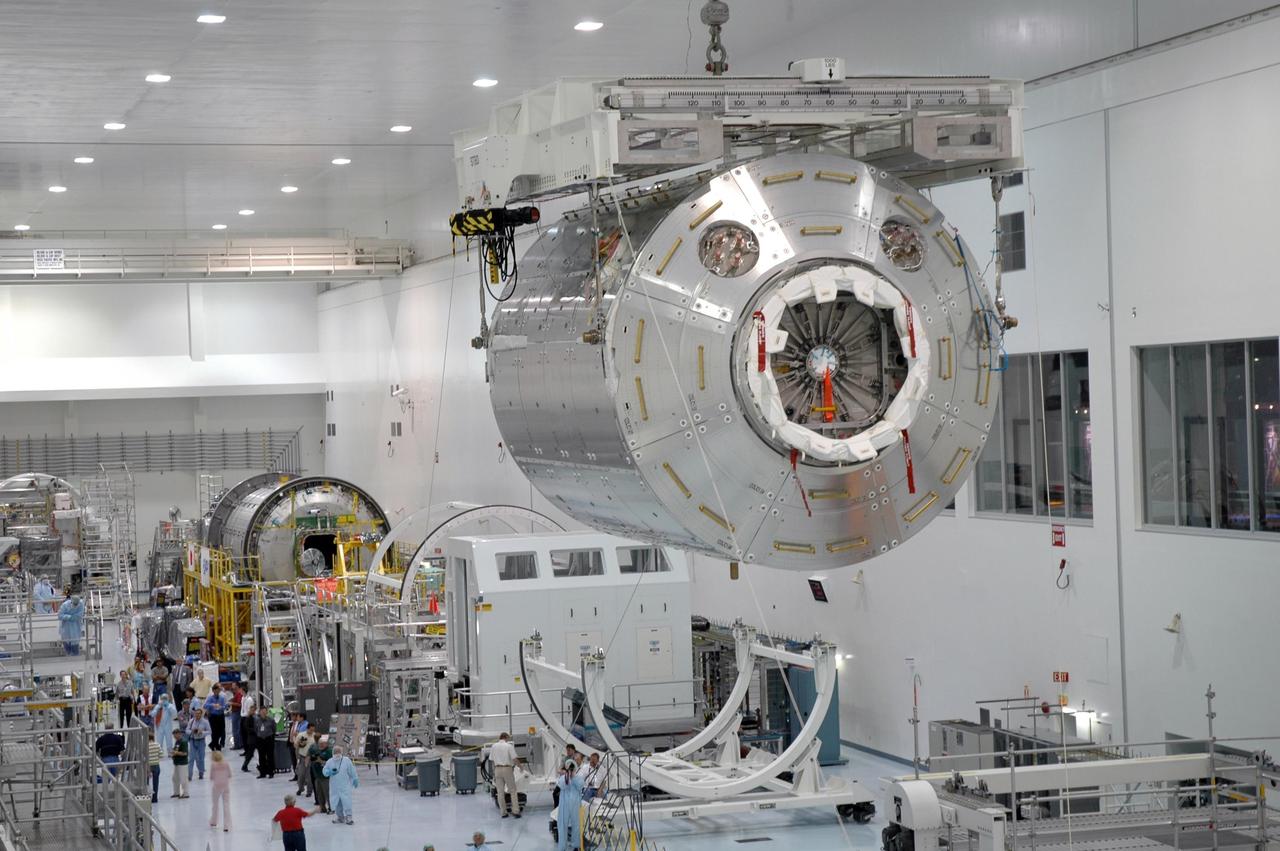
KENNEDY SPACE CENTER, FLA. - Inside the Space Station Processing Facility at NASA's Kennedy Space Center, an overhead crane carries the Columbus module away from its transportation canister. Columbus is the European Space Agency's research laboratory for the International Space Station. The module is being moved to a work stand to prepare it for delivery to the space station on a future space shuttle mission. Columbus will expand the research facilities of the station and provide researchers with the ability to conduct numerous experiments in the area of life, physical and materials sciences. Photo credit: NASA/Jim Grossmann
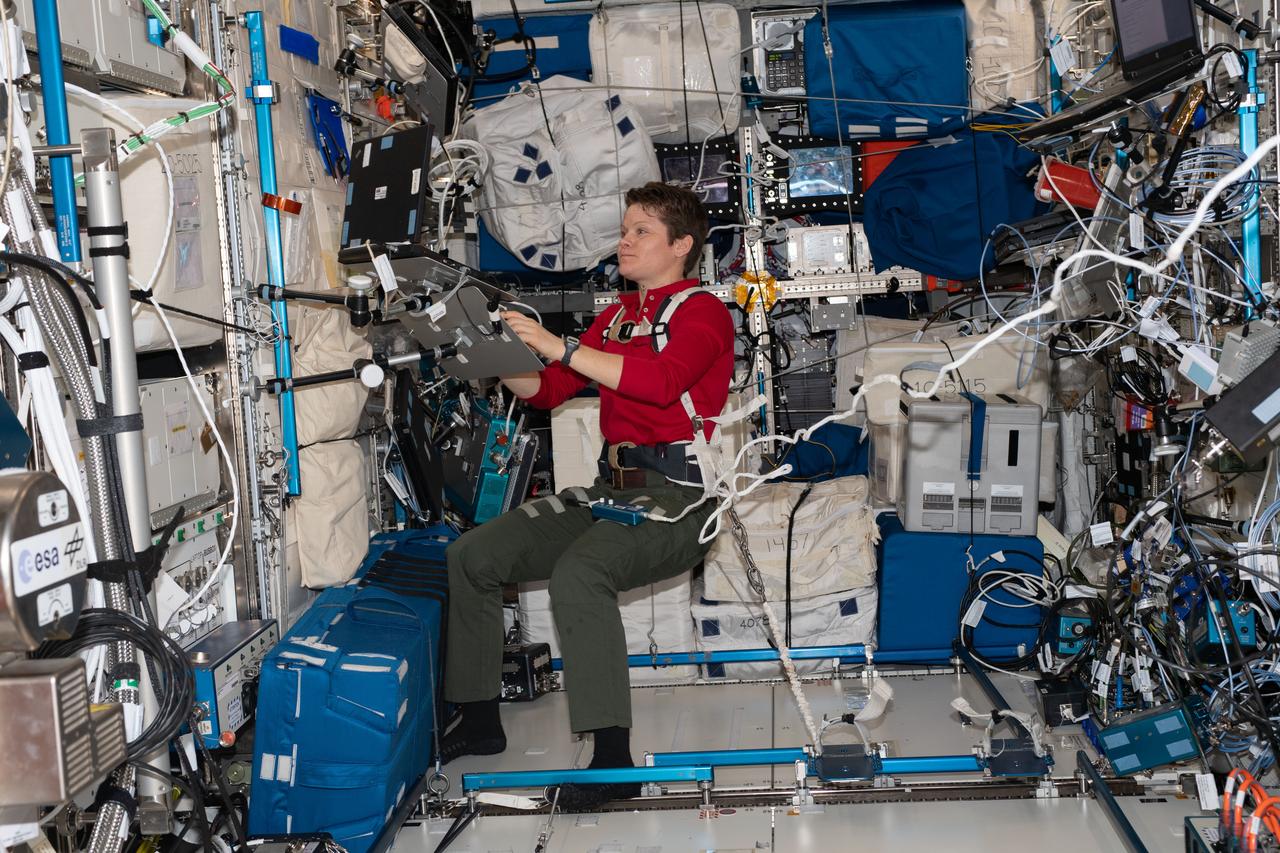
iss058e001965 (Jan. 4, 2019) --- NASA astronaut and Expedition 58 Flight Engineer Anne McClain is inside the European Columbus laboratory module participating in the NeuroMapping experiment. The long-running experiment studies whether long-duration spaceflight causes any changes to the brain, including brain structure and function, motor control, and multi-tasking abilities.
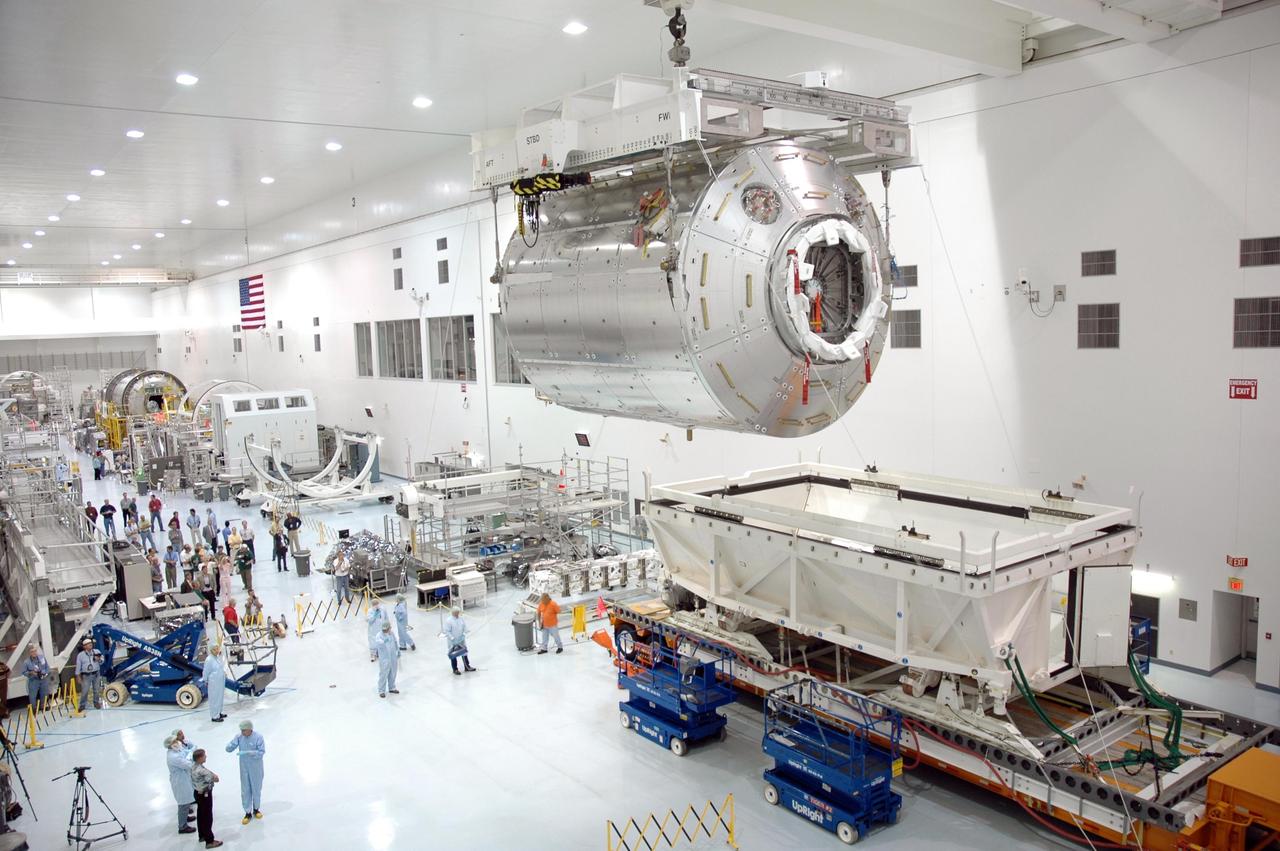
KENNEDY SPACE CENTER, FLA. - Inside the Space Station Processing Facility at NASA's Kennedy Space Center, an overhead crane carries the Columbus module toward a work stand. Columbus is the European Space Agency's research laboratory for the International Space Station. Once on the work stand , it will be prepared for delivery to the space station on a future space shuttle mission. Columbus will expand the research facilities of the station and provide researchers with the ability to conduct numerous experiments in the area of life, physical and materials sciences. Photo credit: NASA/Jim Grossmann
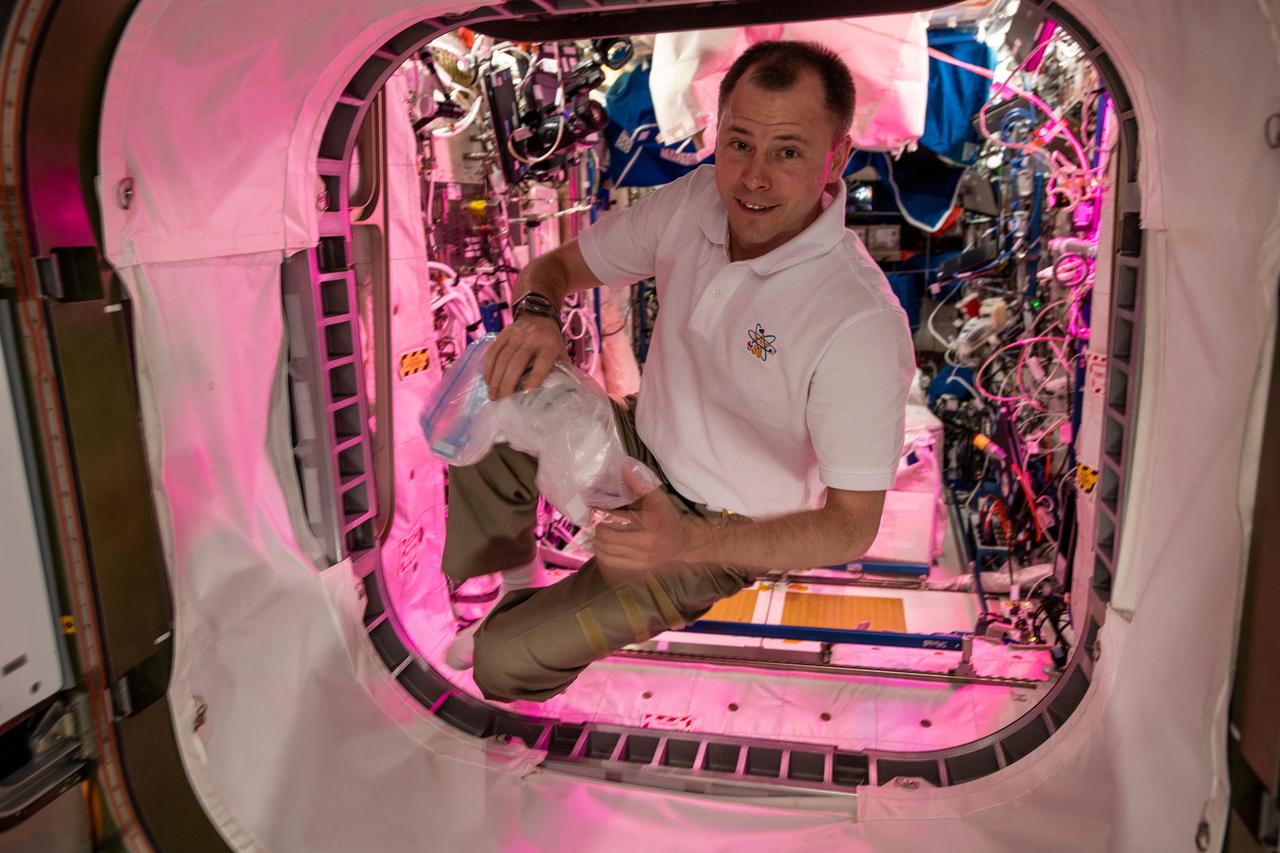
iss059e078446 (May 28, 2019) --- NASA astronaut Nick Hague floats inside the vestibule that connects the European Space Agency's Columbus laboratory module with NASA's Harmony module.

KENNEDY SPACE CENTER, FLA. -- In the Space Station Processing Facility at NASA's Kennedy Space Center, the Columbus Laboratory module is lowered into the waiting payload canister. The canister will transport the module and other payloads to Launch Pad 39A in preparation for its journey to the International Space Station. The European Space Agency 's largest single contribution to the International Space Station, Columbus will expand the research facilities of the station, providing crew members and scientists around the world the ability to conduct a variety of life, physical and materials science experiments. The module is approximately 23 feet long and 15 feet wide, allowing it to hold 10 large racks of experiments. The module is scheduled to be transferred to Launch Pad 39A in early November, in preparation for its journey to the station. Columbus will fly aboard space shuttle Atlantis on the STS-122 mission, targeted for launch Dec. 6. Photo credit: NASA/George Shelton

KENNEDY SPACE CENTER, FLA. -- In the Space Station Processing Facility at NASA's Kennedy Space Center, the Columbus Laboratory module is moved toward a weigh station. After being weighed, the module will be transferred to the payload canister. The European Space Agency 's largest single contribution to the International Space Station, Columbus will expand the research facilities of the station, providing crew members and scientists around the world the ability to conduct a variety of life, physical and materials science experiments. The module is approximately 23 feet long and 15 feet wide, allowing it to hold 10 large racks of experiments. The module is scheduled to be transferred to Launch Pad 39A in early November, in preparation for its journey to the station. Columbus will fly aboard space shuttle Atlantis on the STS-122 mission, targeted for launch Dec. 6. Photo credit: NASA/George Shelton
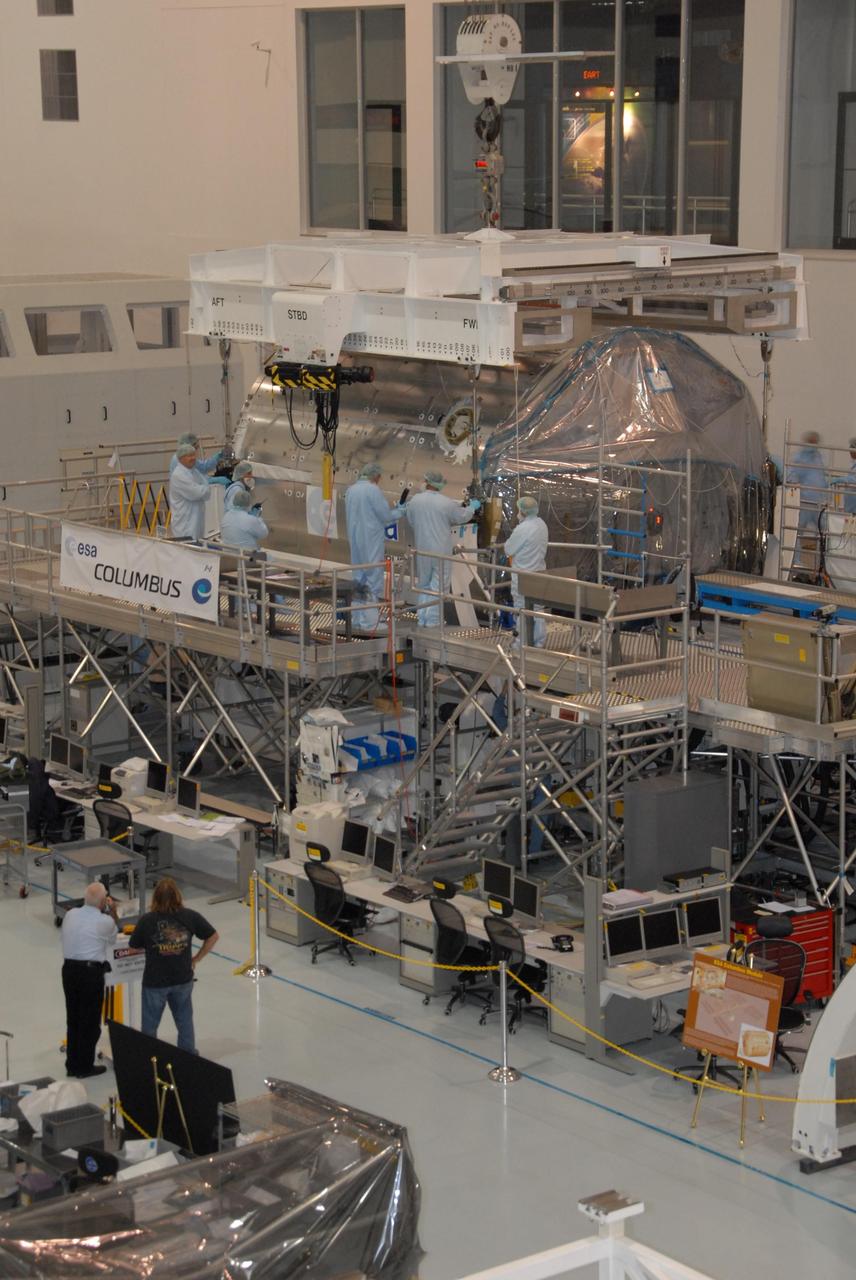
KENNEDY SPACE CENTER, FLA. -- In the Space Station Processing Facility at NASA's Kennedy Space Center, workers attach an overhead crane to the Columbus Laboratory module. The module will be moved to a weigh station before transfer to the payload canister. The European Space Agency 's largest single contribution to the International Space Station, Columbus will expand the research facilities of the station, providing crew members and scientists around the world the ability to conduct a variety of life, physical and materials science experiments. The module is approximately 23 feet long and 15 feet wide, allowing it to hold 10 large racks of experiments. The module is scheduled to be transferred to Launch Pad 39A in early November, in preparation for its journey to the station. Columbus will fly aboard space shuttle Atlantis on the STS-122 mission, targeted for launch Dec. 6. Photo credit: NASA/George Shelton
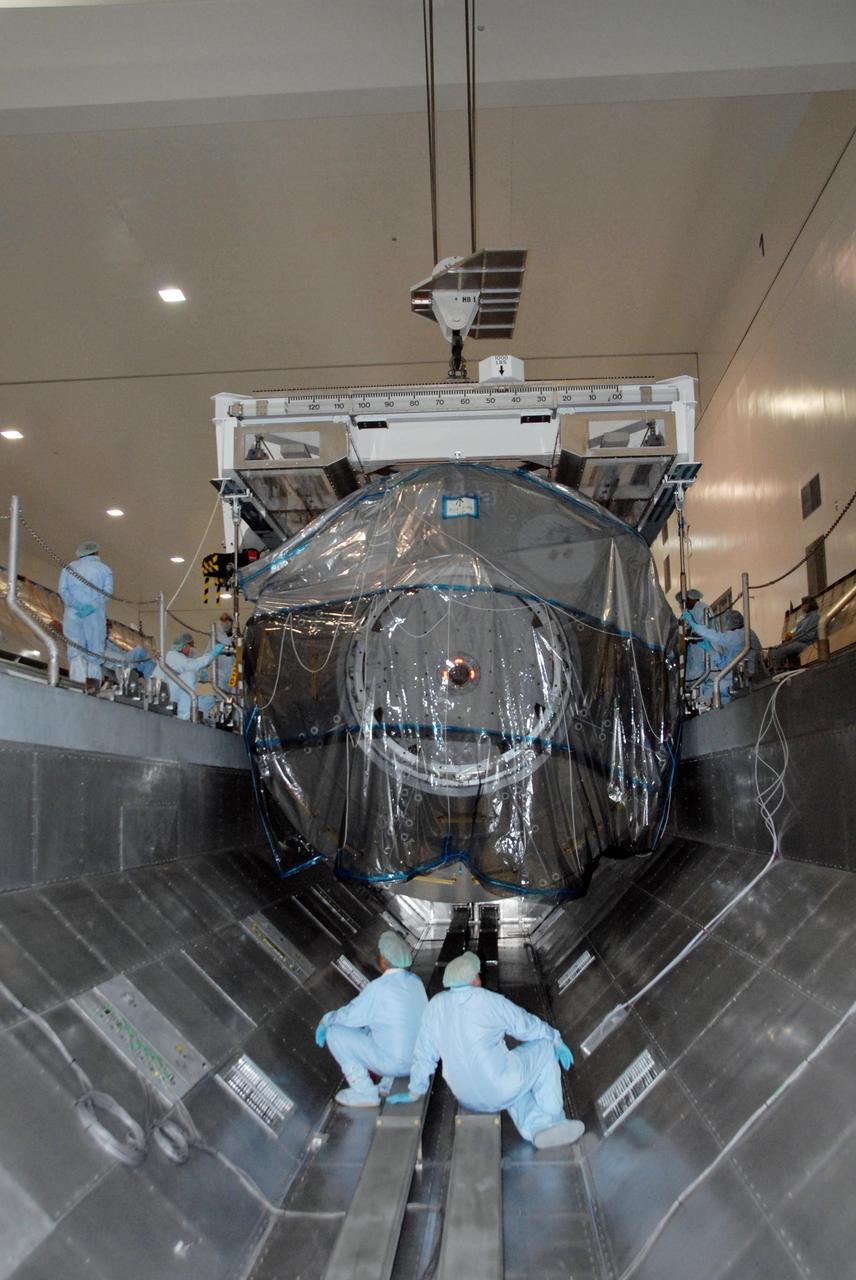
KENNEDY SPACE CENTER, FLA. -- In the Space Station Processing Facility at NASA's Kennedy Space Center, technicians inside the payload canister monitor movement of the Columbus Laboratory module as it is lowered into the canister. The canister will transport the module and other payloads to Launch Pad 39A in preparation for its journey to the International Space Station. The European Space Agency 's largest single contribution to the International Space Station, Columbus will expand the research facilities of the station, providing crew members and scientists around the world the ability to conduct a variety of life, physical and materials science experiments. The module is approximately 23 feet long and 15 feet wide, allowing it to hold 10 large racks of experiments. The module is scheduled to be transferred to Launch Pad 39A in early November, in preparation for its journey to the station. Columbus will fly aboard space shuttle Atlantis on the STS-122 mission, targeted for launch Dec. 6. Photo credit: NASA/George Shelton
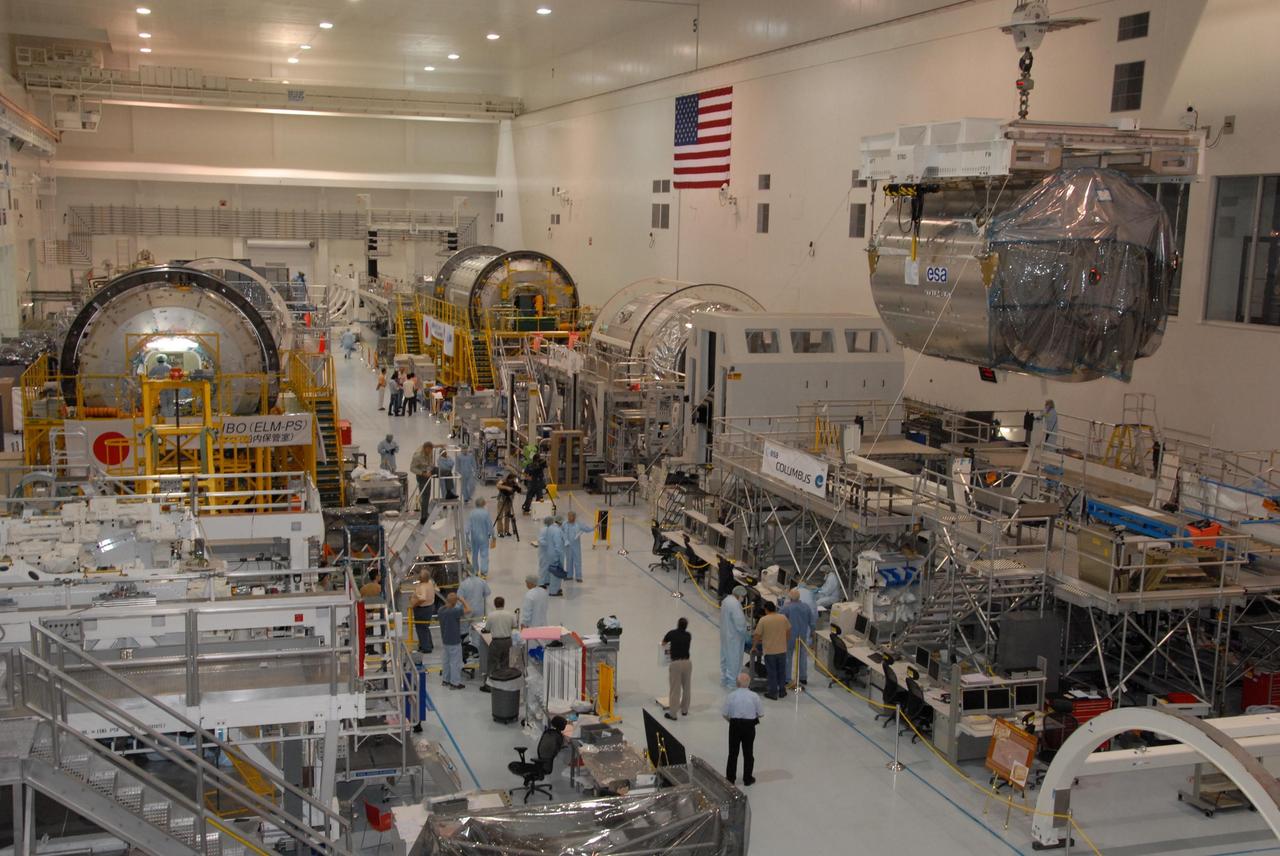
KENNEDY SPACE CENTER, FLA. -- In the Space Station Processing Facility at NASA's Kennedy Space Center, an overhead crane lifts the Columbus Laboratory module away from its stand. The module is being moved to a weigh station before transfer to the payload canister. The European Space Agency 's largest single contribution to the International Space Station, Columbus will expand the research facilities of the station, providing crew members and scientists around the world the ability to conduct a variety of life, physical and materials science experiments. The module is approximately 23 feet long and 15 feet wide, allowing it to hold 10 large racks of experiments. The module is scheduled to be transferred to Launch Pad 39A in early November, in preparation for its journey to the station. Columbus will fly aboard space shuttle Atlantis on the STS-122 mission, targeted for launch Dec. 6. Photo credit: NASA/George Shelton
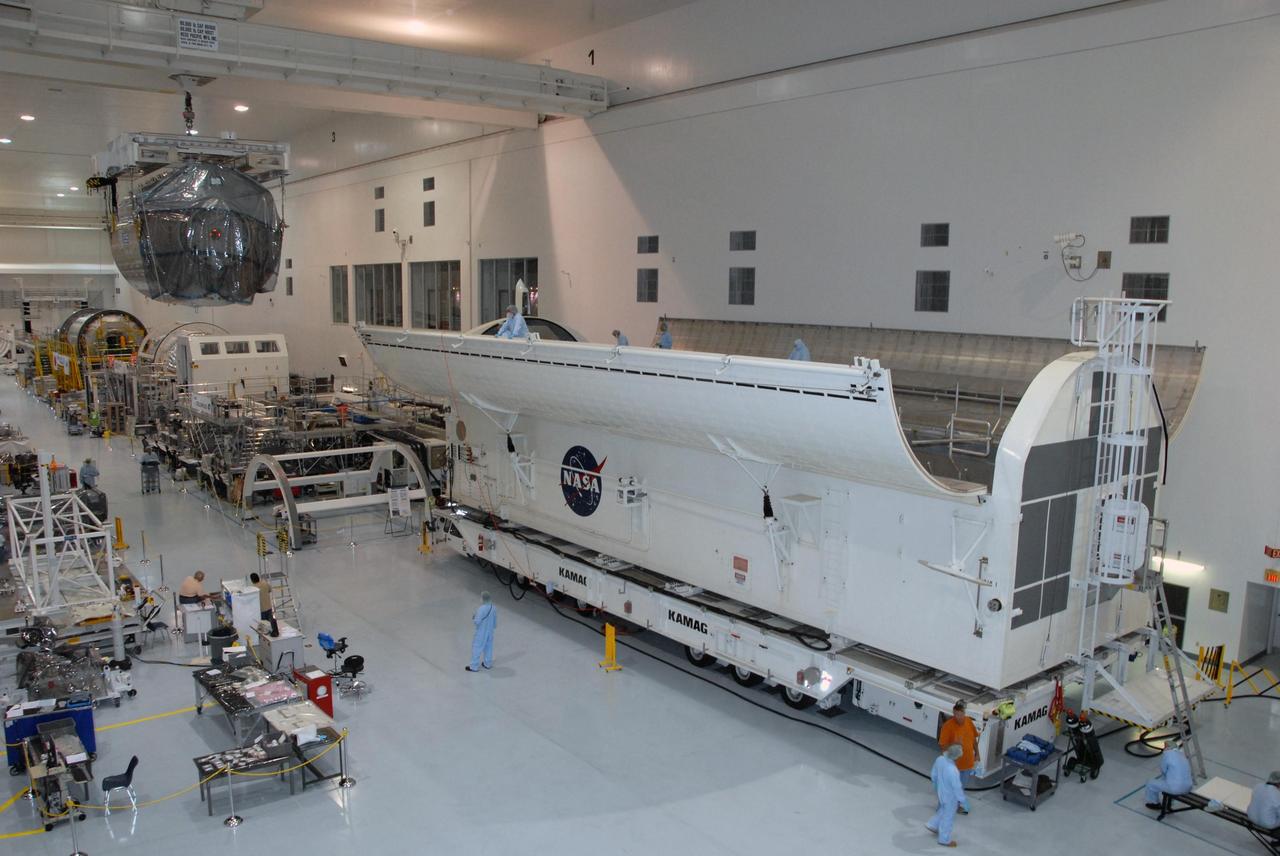
KENNEDY SPACE CENTER, FLA. -- In the Space Station Processing Facility at NASA's Kennedy Space Center, the Columbus Laboratory module moves across the facility to the waiting payload canister at right. The canister will transport the module and other payloads to Launch Pad 39A in preparation for its journey to the International Space Station. The European Space Agency 's largest single contribution to the International Space Station, Columbus will expand the research facilities of the station, providing crew members and scientists around the world the ability to conduct a variety of life, physical and materials science experiments. The module is approximately 23 feet long and 15 feet wide, allowing it to hold 10 large racks of experiments. The module is scheduled to be transferred to Launch Pad 39A in early November, in preparation for its journey to the station. Columbus will fly aboard space shuttle Atlantis on the STS-122 mission, targeted for launch Dec. 6. Photo credit: NASA/George Shelton
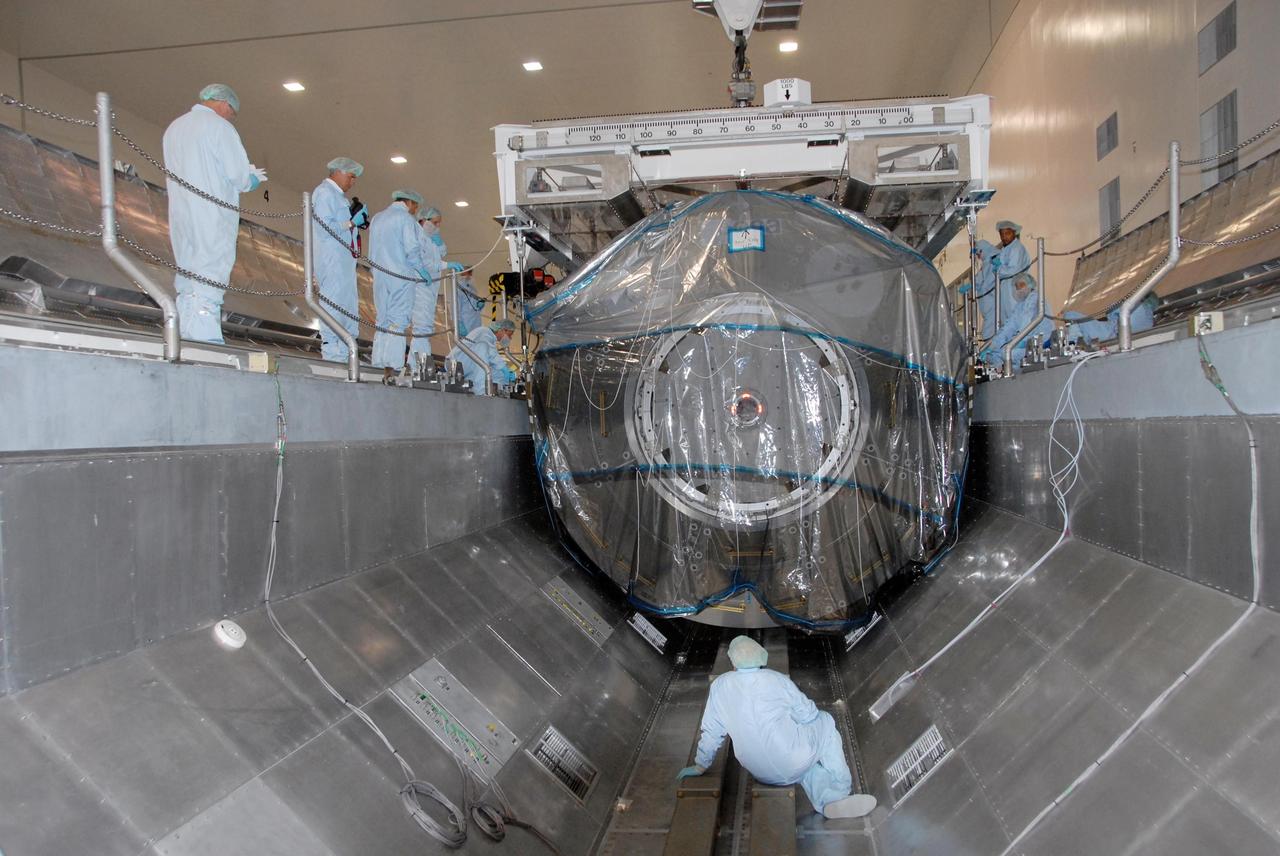
KENNEDY SPACE CENTER, FLA. -- In the Space Station Processing Facility at NASA's Kennedy Space Center, technicians inside and around the payload canister monitor movement of the Columbus Laboratory module as it is lowered into the canister. The canister will transport the module and other payloads to Launch Pad 39A in preparation for its journey to the International Space Station. The European Space Agency 's largest single contribution to the International Space Station, Columbus will expand the research facilities of the station, providing crew members and scientists around the world the ability to conduct a variety of life, physical and materials science experiments. The module is approximately 23 feet long and 15 feet wide, allowing it to hold 10 large racks of experiments. The module is scheduled to be transferred to Launch Pad 39A in early November, in preparation for its journey to the station. Columbus will fly aboard space shuttle Atlantis on the STS-122 mission, targeted for launch Dec. 6. Photo credit: NASA/George Shelton
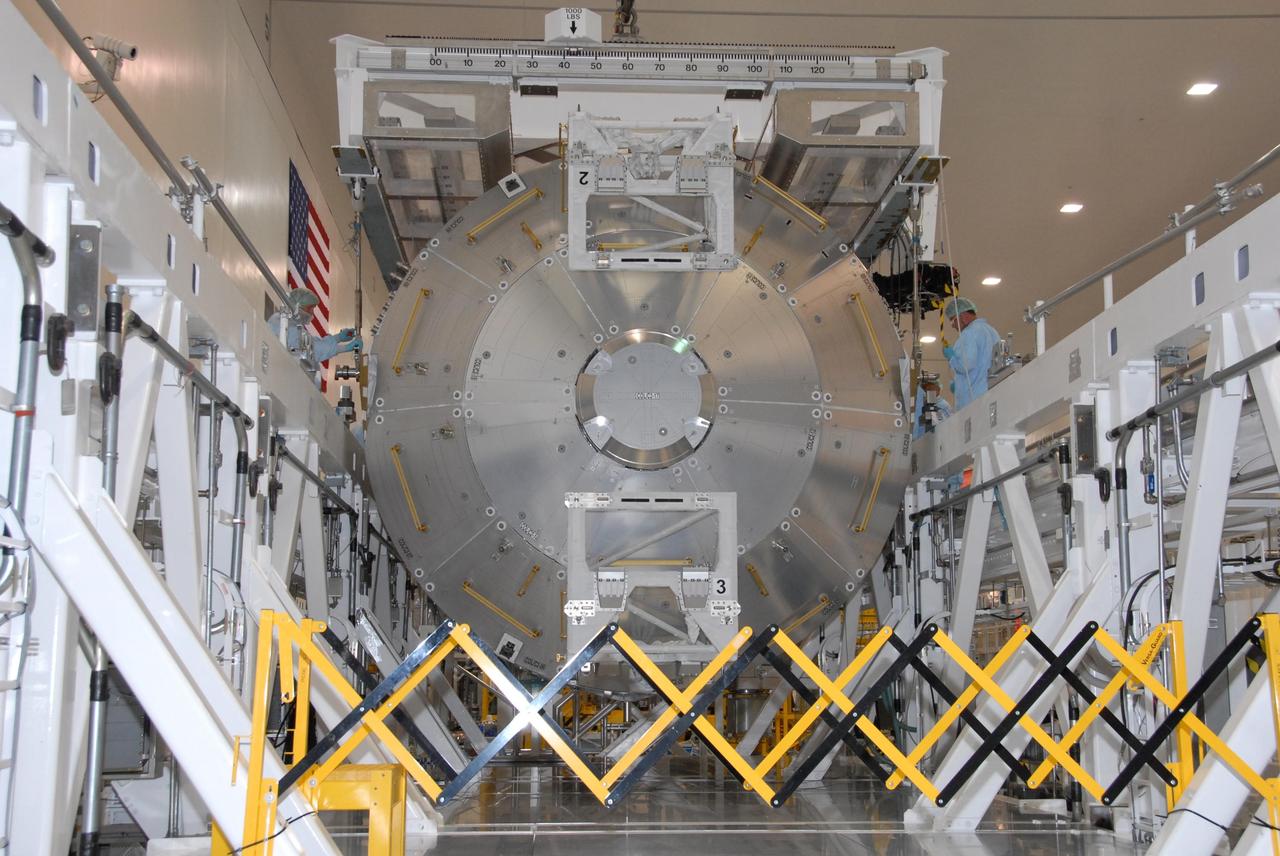
KENNEDY SPACE CENTER, FLA. -- In the Space Station Processing Facility at NASA's Kennedy Space Center, the Columbus Laboratory module is lowered onto a weigh station. After being weighed, the module will be transferred to the payload canister. The European Space Agency 's largest single contribution to the International Space Station, Columbus will expand the research facilities of the station, providing crew members and scientists around the world the ability to conduct a variety of life, physical and materials science experiments. The module is approximately 23 feet long and 15 feet wide, allowing it to hold 10 large racks of experiments. The module is scheduled to be transferred to Launch Pad 39A in early November, in preparation for its journey to the station. Columbus will fly aboard space shuttle Atlantis on the STS-122 mission, targeted for launch Dec. 6. Photo credit: NASA/George Shelton

KENNEDY SPACE CENTER, FLA. -- In the Space Station Processing Facility at NASA's Kennedy Space Center, workers attach an overhead crane to the Columbus Laboratory module, situated underneath the windows at right. The module will be moved to a weigh station before transfer to the payload canister. The European Space Agency 's largest single contribution to the International Space Station, Columbus will expand the research facilities of the station, providing crew members and scientists around the world the ability to conduct a variety of life, physical and materials science experiments. The module is approximately 23 feet long and 15 feet wide, allowing it to hold 10 large racks of experiments. The module is scheduled to be transferred to Launch Pad 39A in early November, in preparation for its journey to the station. Columbus will fly aboard space shuttle Atlantis on the STS-122 mission, targeted for launch Dec. 6. Photo credit: NASA/George Shelton
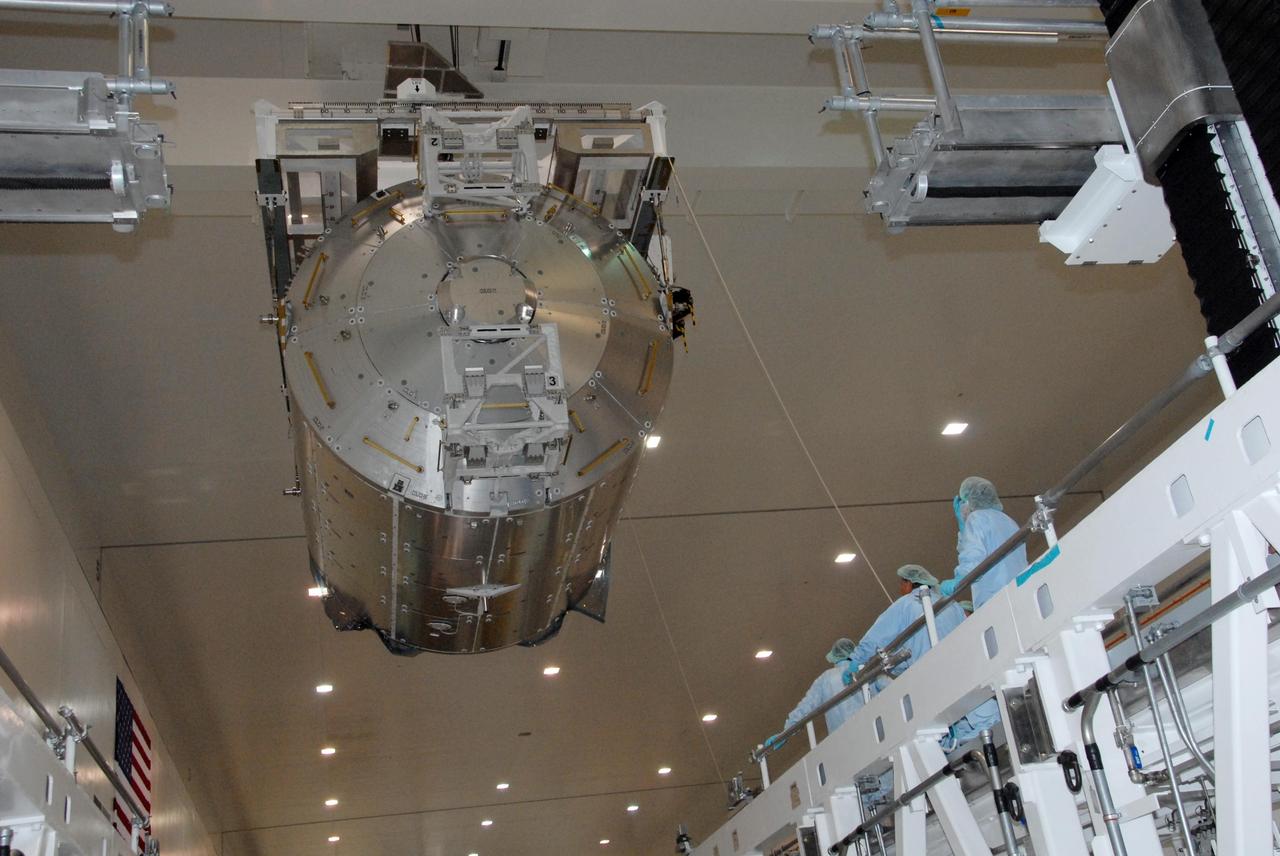
KENNEDY SPACE CENTER, FLA. -- In the Space Station Processing Facility at NASA's Kennedy Space Center, the Columbus Laboratory module is lowered toward a weigh station. After being weighed, the module will be transferred to the payload canister. The European Space Agency 's largest single contribution to the International Space Station, Columbus will expand the research facilities of the station, providing crew members and scientists around the world the ability to conduct a variety of life, physical and materials science experiments. The module is approximately 23 feet long and 15 feet wide, allowing it to hold 10 large racks of experiments. The module is scheduled to be transferred to Launch Pad 39A in early November, in preparation for its journey to the station. Columbus will fly aboard space shuttle Atlantis on the STS-122 mission, targeted for launch Dec. 6. Photo credit: NASA/George Shelton
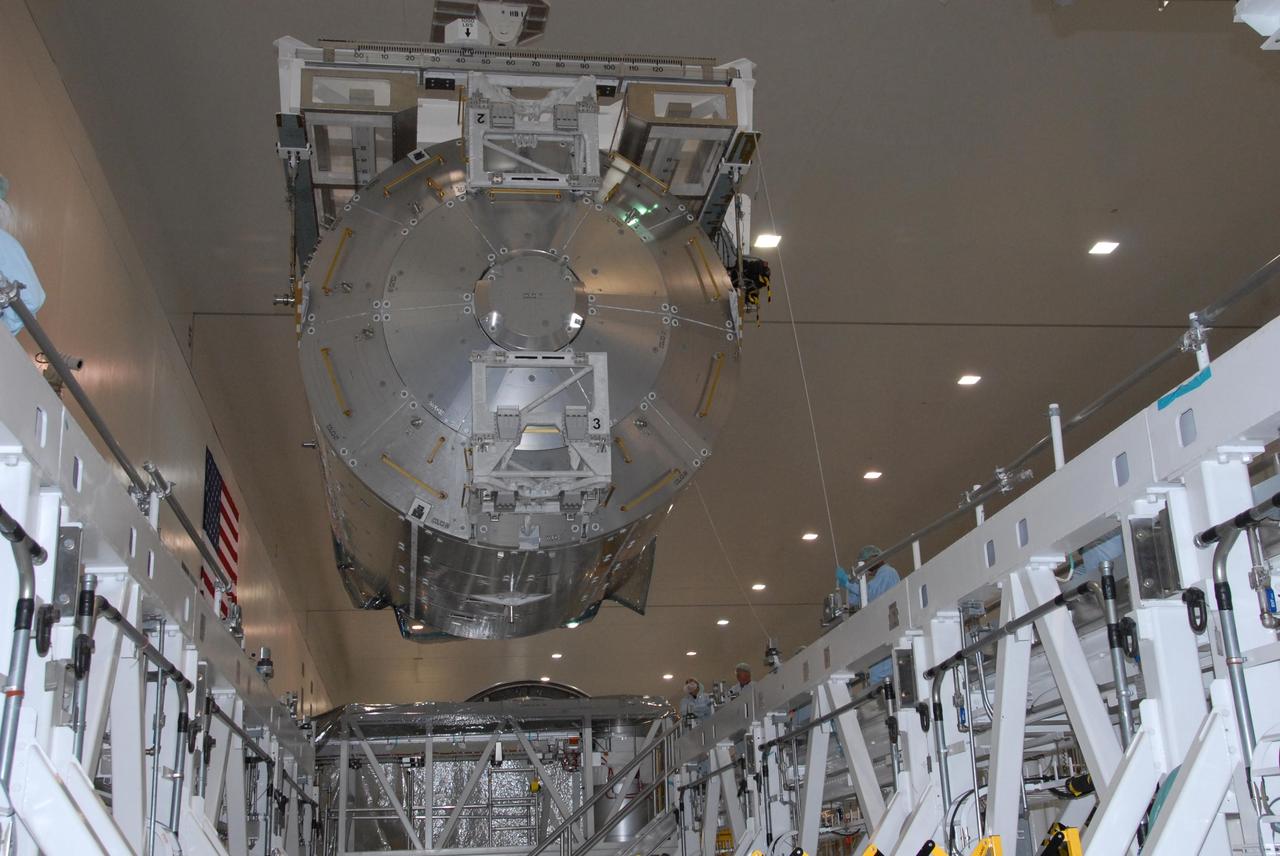
KENNEDY SPACE CENTER, FLA. -- In the Space Station Processing Facility at NASA's Kennedy Space Center, the Columbus Laboratory module is lowered toward a weigh station. After being weighed, the module will be transferred to the payload canister. The European Space Agency 's largest single contribution to the International Space Station, Columbus will expand the research facilities of the station, providing crew members and scientists around the world the ability to conduct a variety of life, physical and materials science experiments. The module is approximately 23 feet long and 15 feet wide, allowing it to hold 10 large racks of experiments. The module is scheduled to be transferred to Launch Pad 39A in early November, in preparation for its journey to the station. Columbus will fly aboard space shuttle Atlantis on the STS-122 mission, targeted for launch Dec. 6. Photo credit: NASA/George Shelton
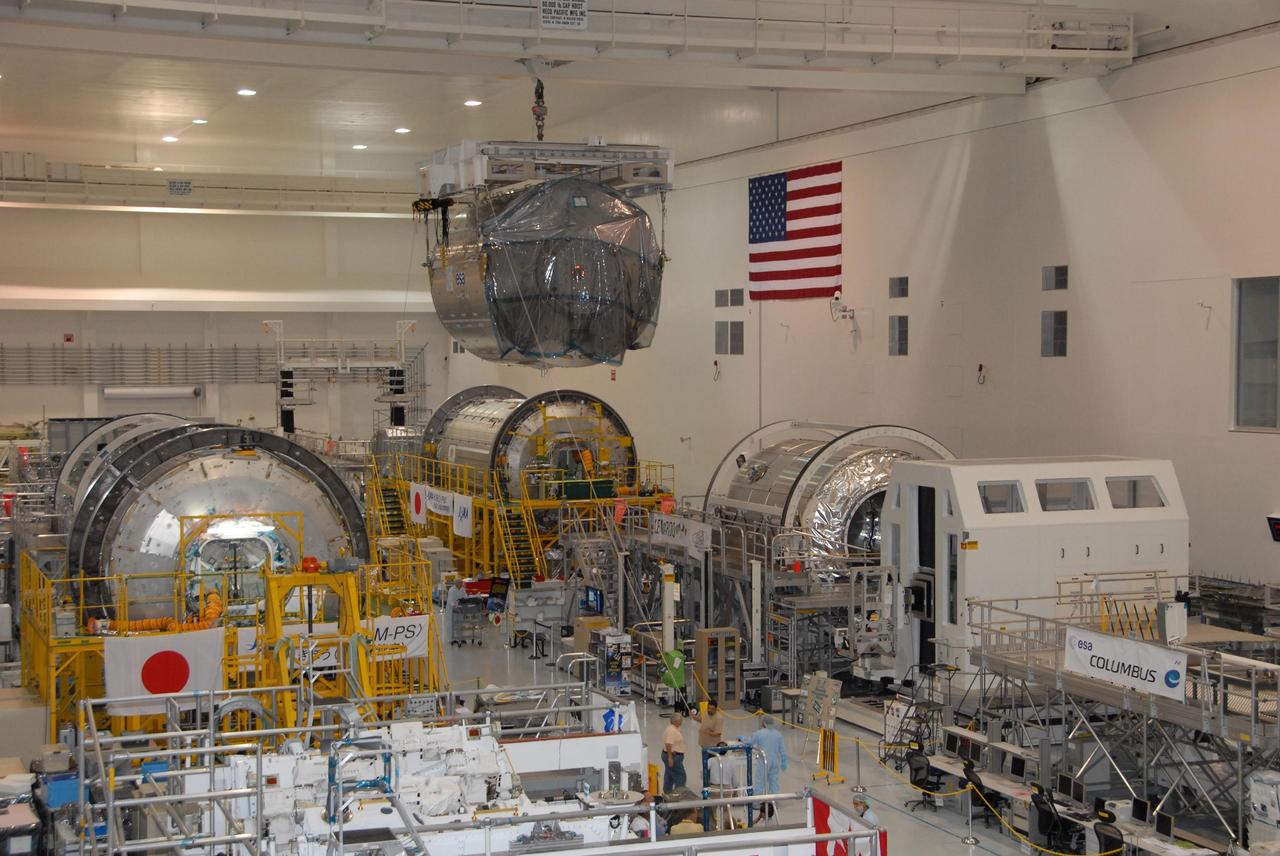
KENNEDY SPACE CENTER, FLA. -- In the Space Station Processing Facility at NASA's Kennedy Space Center, the Columbus Laboratory module moves across the facility to a payload canister. The canister will transport the module and other payloads to Launch Pad 39A in preparation for its journey to the International Space Station. The European Space Agency 's largest single contribution to the International Space Station, Columbus will expand the research facilities of the station, providing crew members and scientists around the world the ability to conduct a variety of life, physical and materials science experiments. The module is approximately 23 feet long and 15 feet wide, allowing it to hold 10 large racks of experiments. The module is scheduled to be transferred to Launch Pad 39A in early November, in preparation for its journey to the station. Columbus will fly aboard space shuttle Atlantis on the STS-122 mission, targeted for launch Dec. 6. Photo credit: NASA/George Shelton
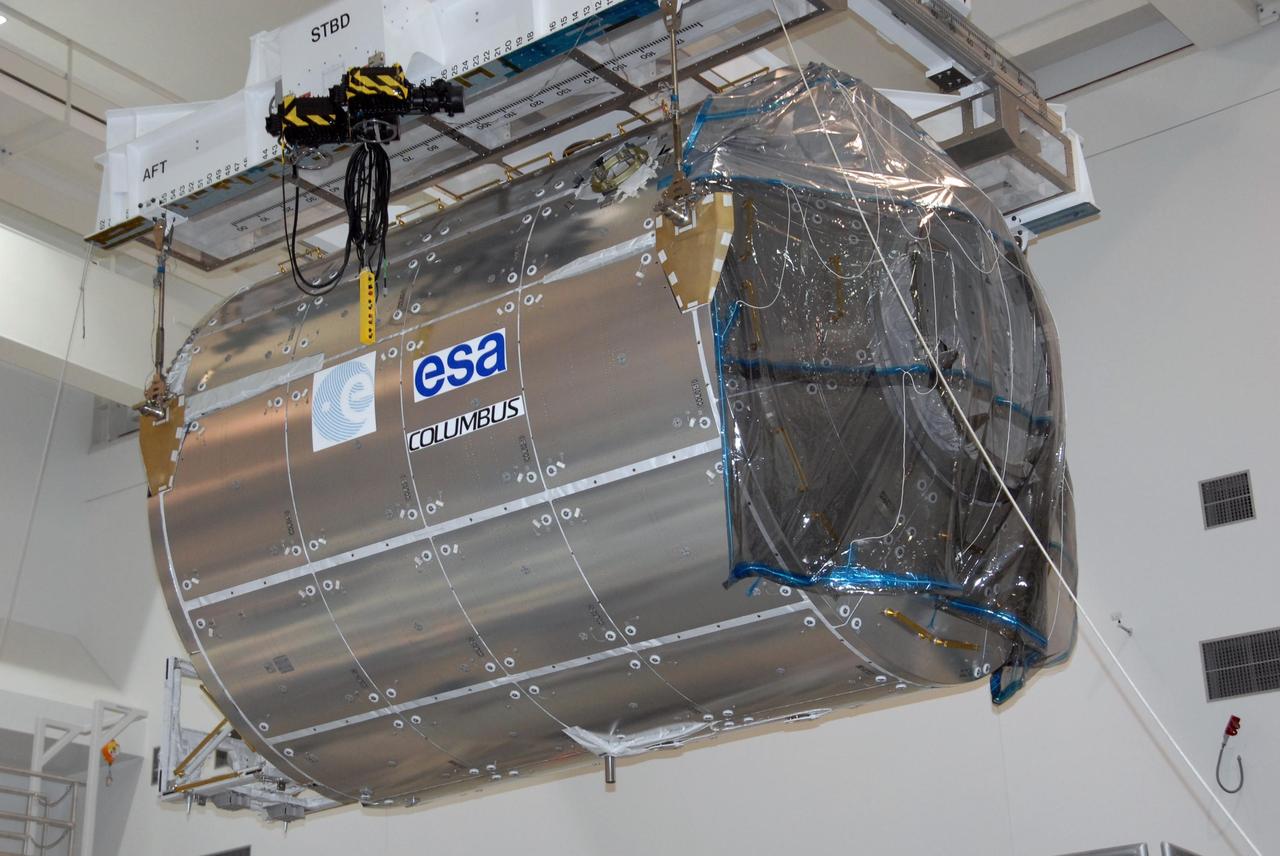
KENNEDY SPACE CENTER, FLA. -- In the Space Station Processing Facility at NASA's Kennedy Space Center, the Columbus Laboratory module is being moved across the facility for its transfer to a payload canister. The canister will transport the module and other payloads to Launch Pad 39A in preparation for its journey to the International Space Station. The European Space Agency 's largest single contribution to the International Space Station, Columbus will expand the research facilities of the station, providing crew members and scientists around the world the ability to conduct a variety of life, physical and materials science experiments. The module is approximately 23 feet long and 15 feet wide, allowing it to hold 10 large racks of experiments. The module is scheduled to be transferred to Launch Pad 39A in early November, in preparation for its journey to the station. Columbus will fly aboard space shuttle Atlantis on the STS-122 mission, targeted for launch Dec. 6. Photo credit: NASA/George Shelton
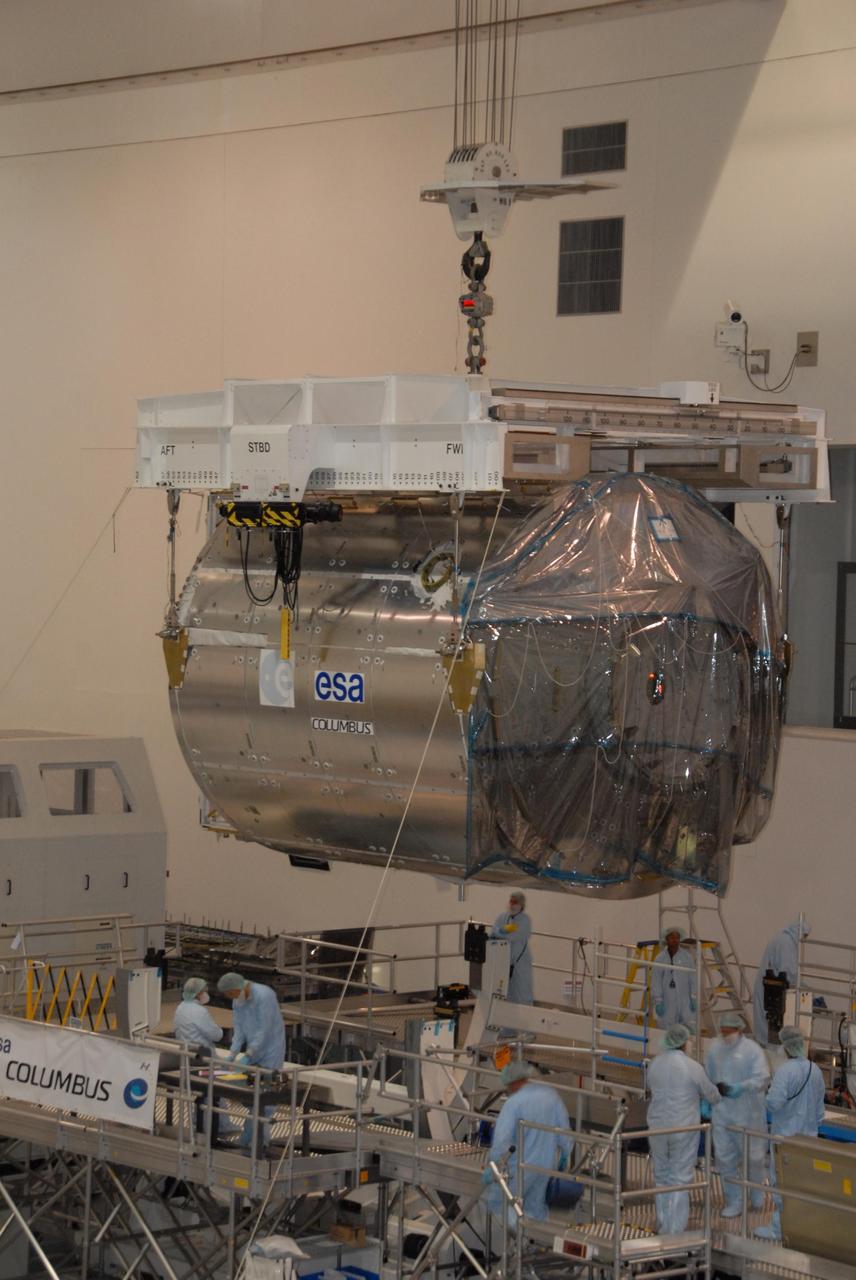
KENNEDY SPACE CENTER, FLA. -- In the Space Station Processing Facility at NASA's Kennedy Space Center, an overhead crane lifts the Columbus Laboratory module from its stand. The module is being moved to a weigh station before transfer to the payload canister. The European Space Agency 's largest single contribution to the International Space Station, Columbus will expand the research facilities of the station, providing crew members and scientists around the world the ability to conduct a variety of life, physical and materials science experiments. The module is approximately 23 feet long and 15 feet wide, allowing it to hold 10 large racks of experiments. The module is scheduled to be transferred to Launch Pad 39A in early November, in preparation for its journey to the station. Columbus will fly aboard space shuttle Atlantis on the STS-122 mission, targeted for launch Dec. 6. Photo credit: NASA/George Shelton
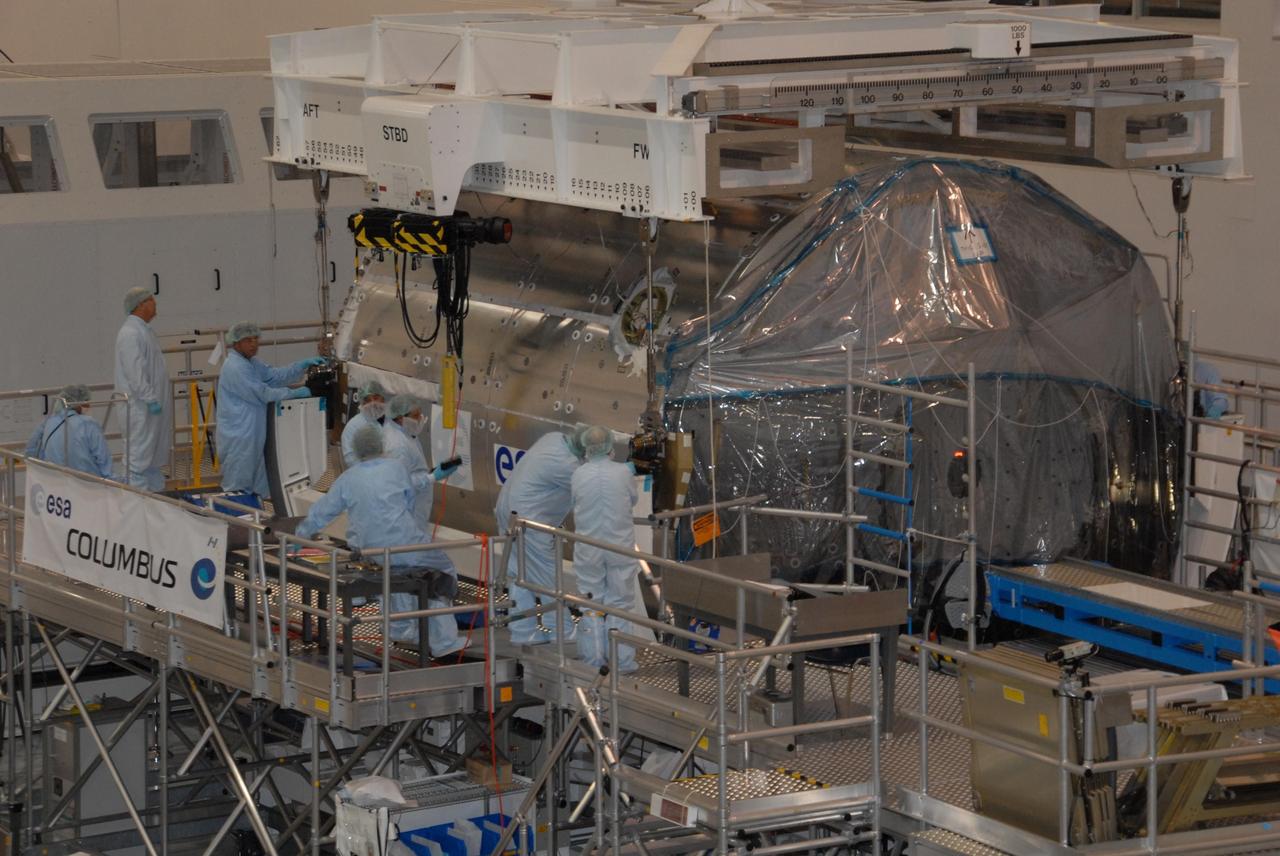
KENNEDY SPACE CENTER, FLA. -- In the Space Station Processing Facility at NASA's Kennedy Space Center, workers attach an overhead crane to the Columbus Laboratory module. The module will be moved to a weigh station before transfer to the payload canister. The European Space Agency 's largest single contribution to the International Space Station, Columbus will expand the research facilities of the station, providing crew members and scientists around the world the ability to conduct a variety of life, physical and materials science experiments. The module is approximately 23 feet long and 15 feet wide, allowing it to hold 10 large racks of experiments. The module is scheduled to be transferred to Launch Pad 39A in early November, in preparation for its journey to the station. Columbus will fly aboard space shuttle Atlantis on the STS-122 mission, targeted for launch Dec. 6. Photo credit: NASA/George Shelton
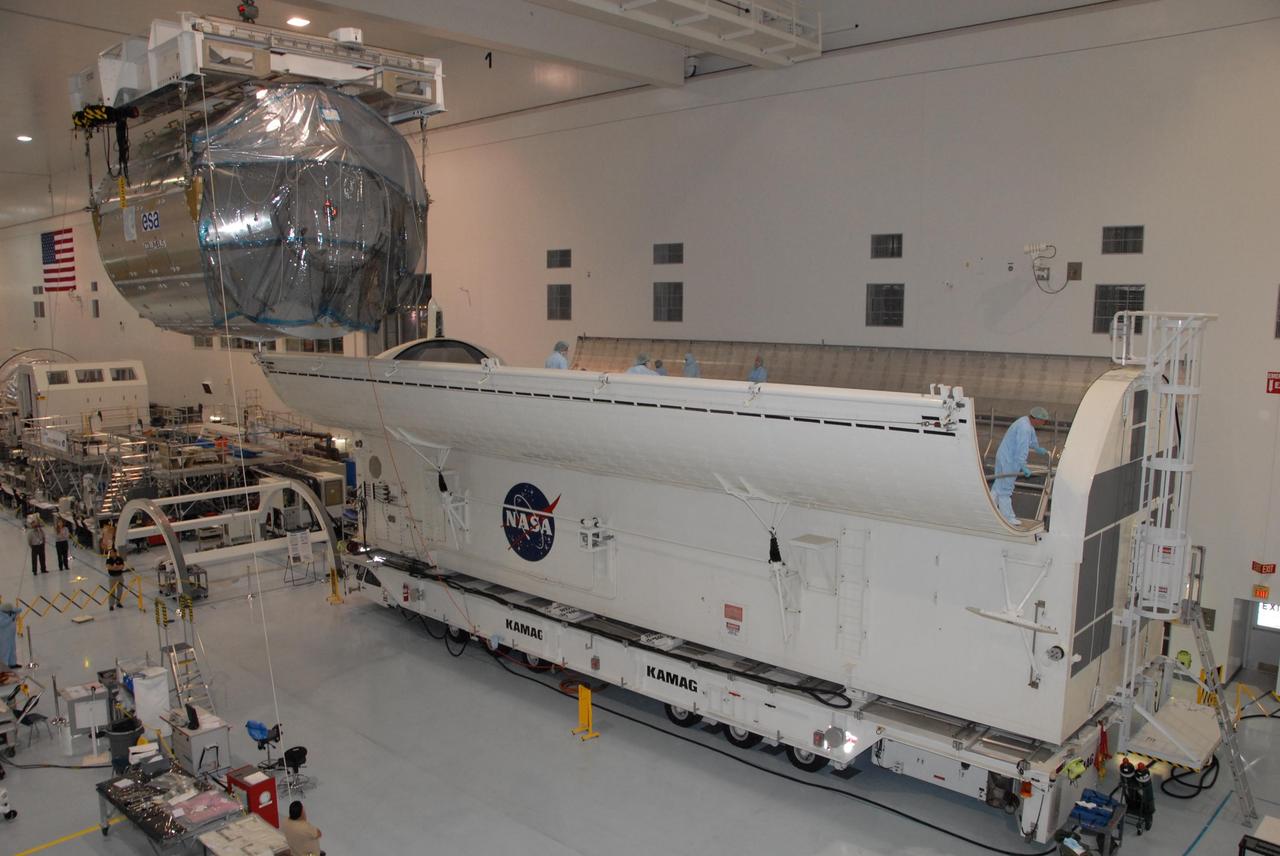
KENNEDY SPACE CENTER, FLA. -- In the Space Station Processing Facility at NASA's Kennedy Space Center, the Columbus Laboratory module moves toward the waiting payload canister at right. The canister will transport the module and other payloads to Launch Pad 39A in preparation for its journey to the International Space Station. The European Space Agency 's largest single contribution to the International Space Station, Columbus will expand the research facilities of the station, providing crew members and scientists around the world the ability to conduct a variety of life, physical and materials science experiments. The module is approximately 23 feet long and 15 feet wide, allowing it to hold 10 large racks of experiments. The module is scheduled to be transferred to Launch Pad 39A in early November, in preparation for its journey to the station. Columbus will fly aboard space shuttle Atlantis on the STS-122 mission, targeted for launch Dec. 6. Photo credit: NASA/George Shelton
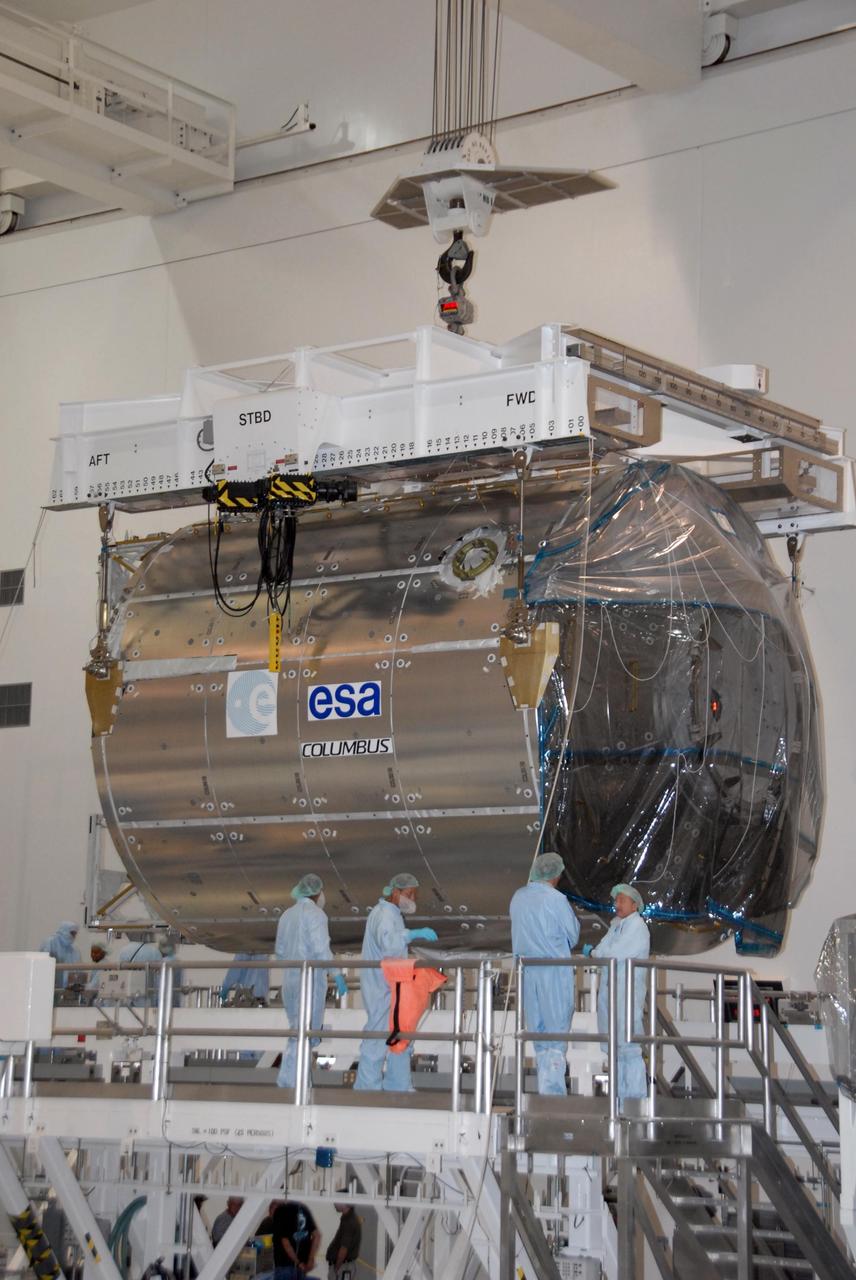
KENNEDY SPACE CENTER, FLA. -- In the Space Station Processing Facility at NASA's Kennedy Space Center, the Columbus Laboratory module is lifted for its transfer to a payload canister. The canister will transport the module and other payloads to Launch Pad 39A in preparation for its journey to the International Space Station. The European Space Agency 's largest single contribution to the International Space Station, Columbus will expand the research facilities of the station, providing crew members and scientists around the world the ability to conduct a variety of life, physical and materials science experiments. The module is approximately 23 feet long and 15 feet wide, allowing it to hold 10 large racks of experiments. The module is scheduled to be transferred to Launch Pad 39A in early November, in preparation for its journey to the station. Columbus will fly aboard space shuttle Atlantis on the STS-122 mission, targeted for launch Dec. 6. Photo credit: NASA/George Shelton
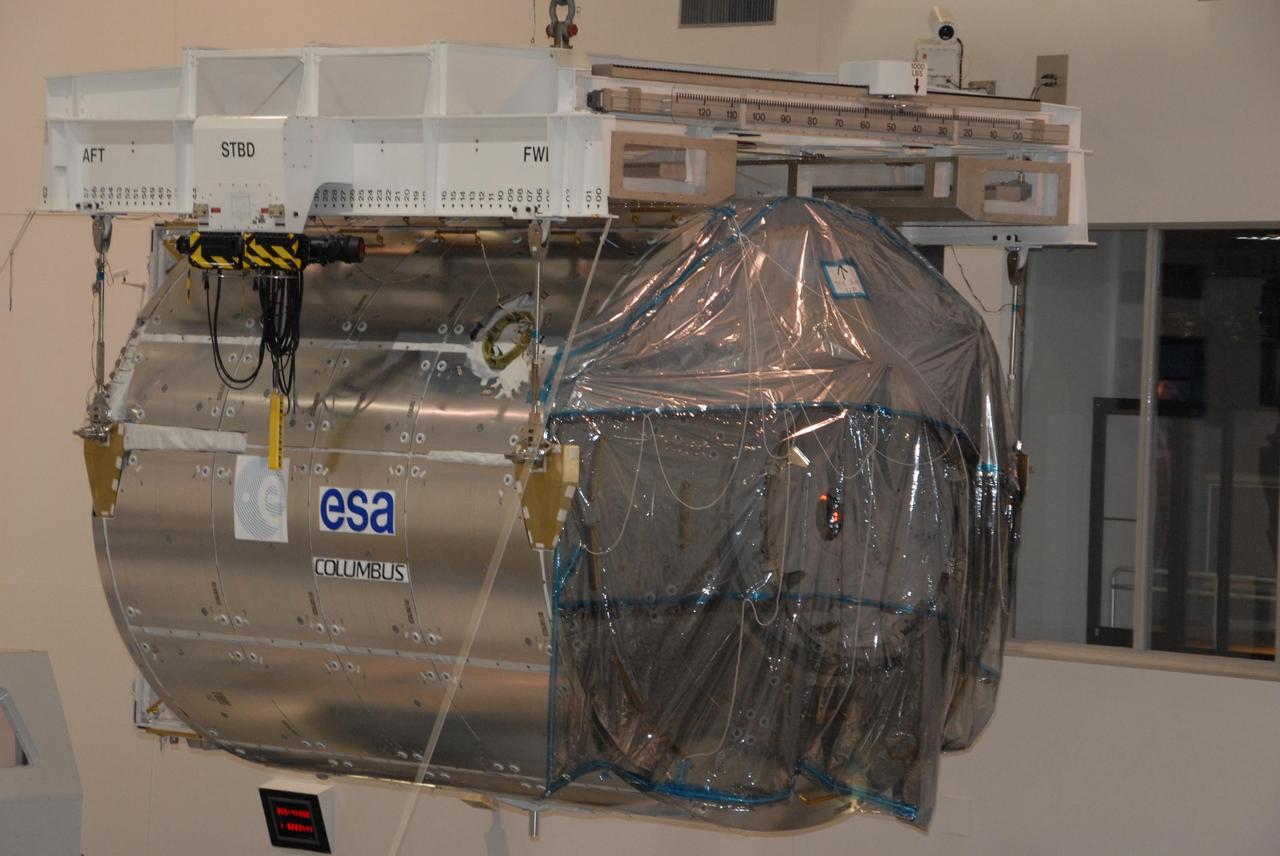
KENNEDY SPACE CENTER, FLA. -- In the Space Station Processing Facility at NASA's Kennedy Space Center, an overhead crane lifts the Columbus Laboratory module from its stand. The module is being moved to a weigh station before transfer to the payload canister. The European Space Agency 's largest single contribution to the International Space Station, Columbus will expand the research facilities of the station, providing crew members and scientists around the world the ability to conduct a variety of life, physical and materials science experiments. The module is approximately 23 feet long and 15 feet wide, allowing it to hold 10 large racks of experiments. The module is scheduled to be transferred to Launch Pad 39A in early November, in preparation for its journey to the station. Columbus will fly aboard space shuttle Atlantis on the STS-122 mission, targeted for launch Dec. 6. Photo credit: NASA/George Shelton
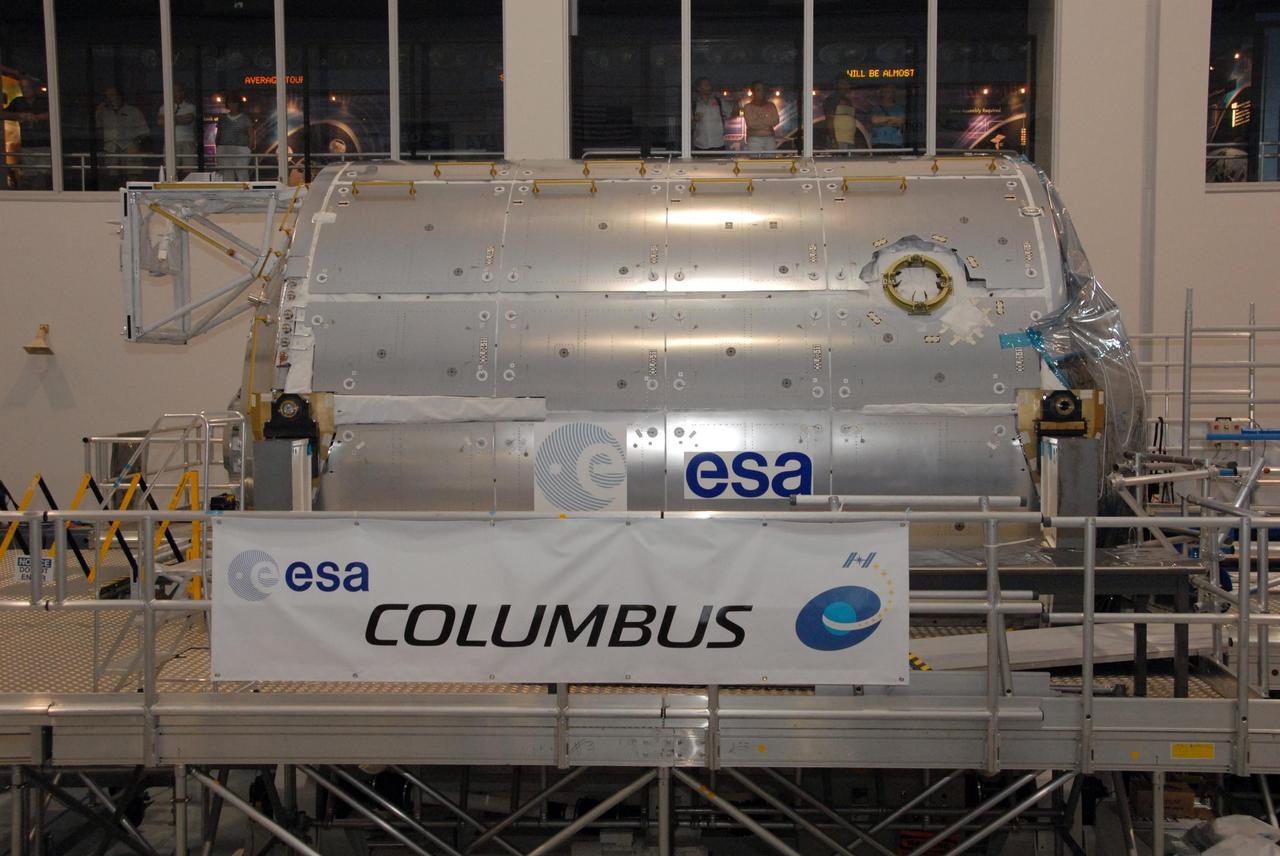
KENNEDY SPACE CENTER, FLA. -- In the Space Station Processing Facility at NASA's Kennedy Space Center, the Columbus Laboratory is positioned on a stand where it is being displayed to the media at a special showing. Columbus is the European Space Agency 's largest single contribution to the International Space Station. The laboratory module will expand the research facilities of the station, providing crew members and scientists around the world the ability to conduct a variety of life, physical and materials science experiments. The module is approximately 23 feet long and 15 feet wide, allowing it to hold 10 large racks of experiments. Columbus is scheduled to be transferred to Launch Pad 39A in early November, in preparation for its journey to the station. Columbus will fly aboard space shuttle Atlantis on the STS-122 mission, targeted for launch Dec. 6. Photo credit: NASA/George Shelton

KENNEDY SPACE CENTER, FLA. -- In the Space Station Processing Facility at NASA's Kennedy Space Center, Jose Nunez (center), NASA mission project engineer, points to the Columbus Laboratory above, being displayed to the media at a special showing. Columbus is the European Space Agency 's largest single contribution to the International Space Station. The laboratory module will expand the research facilities of the station, providing crew members and scientists around the world the ability to conduct a variety of life, physical and materials science experiments. The module is approximately 23 feet long and 15 feet wide, allowing it to hold 10 large racks of experiments. Columbus is scheduled to be transferred to Launch Pad 39A in early November, in preparation for its journey to the station. Columbus will fly aboard space shuttle Atlantis on the STS-122 mission, targeted for launch Dec. 6. Photo credit: NASA/George Shelton

KENNEDY SPACE CENTER, FLA. -- In the Space Station Processing Facility at NASA's Kennedy Space Center, the Columbus Laboratory is positioned on a stand where it will be displayed to the media at a special showing. Columbus is the European Space Agency 's largest single contribution to the International Space Station. The laboratory module will expand the research facilities of the station, providing crew members and scientists around the world the ability to conduct a variety of life, physical and materials science experiments. The module is approximately 23 feet long and 15 feet wide, allowing it to hold 10 large racks of experiments. Columbus is scheduled to be transferred to Launch Pad 39A in early November, in preparation for its journey to the station. Columbus will fly aboard space shuttle Atlantis on the STS-122 mission, targeted for launch Dec. 6. Photo credit: NASA/George Shelton
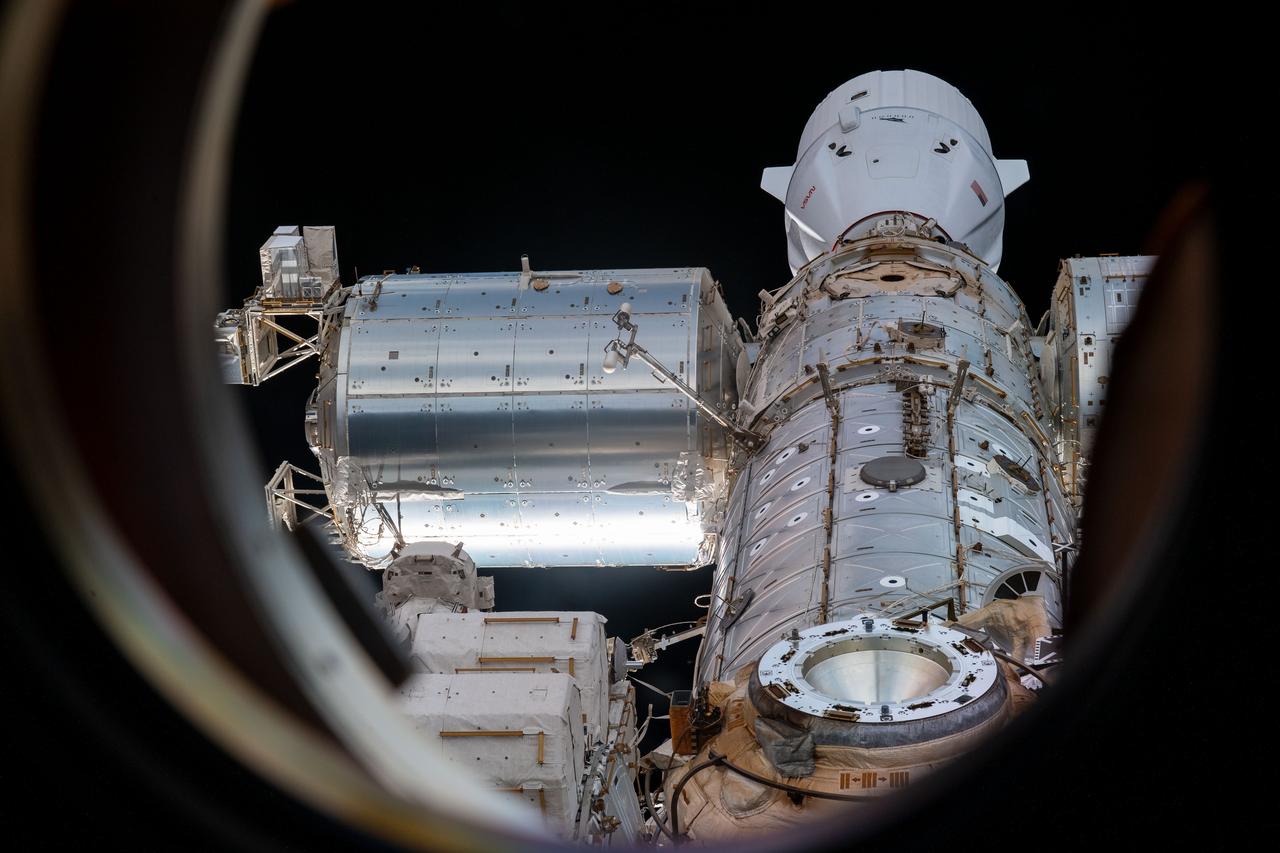
iss067e214074 (Aug. 2, 2022) --- This view of the International Space Station from a window on the orbiting lab's Russian segment shows portions of the Rassvet module's docking port, the U.S. Destiny laboratory module, the Harmony module, Columbus laboratory module, and the Kibo laboratory module. Docked to Harmony at top, is the SpaceX Dragon resupply ship.
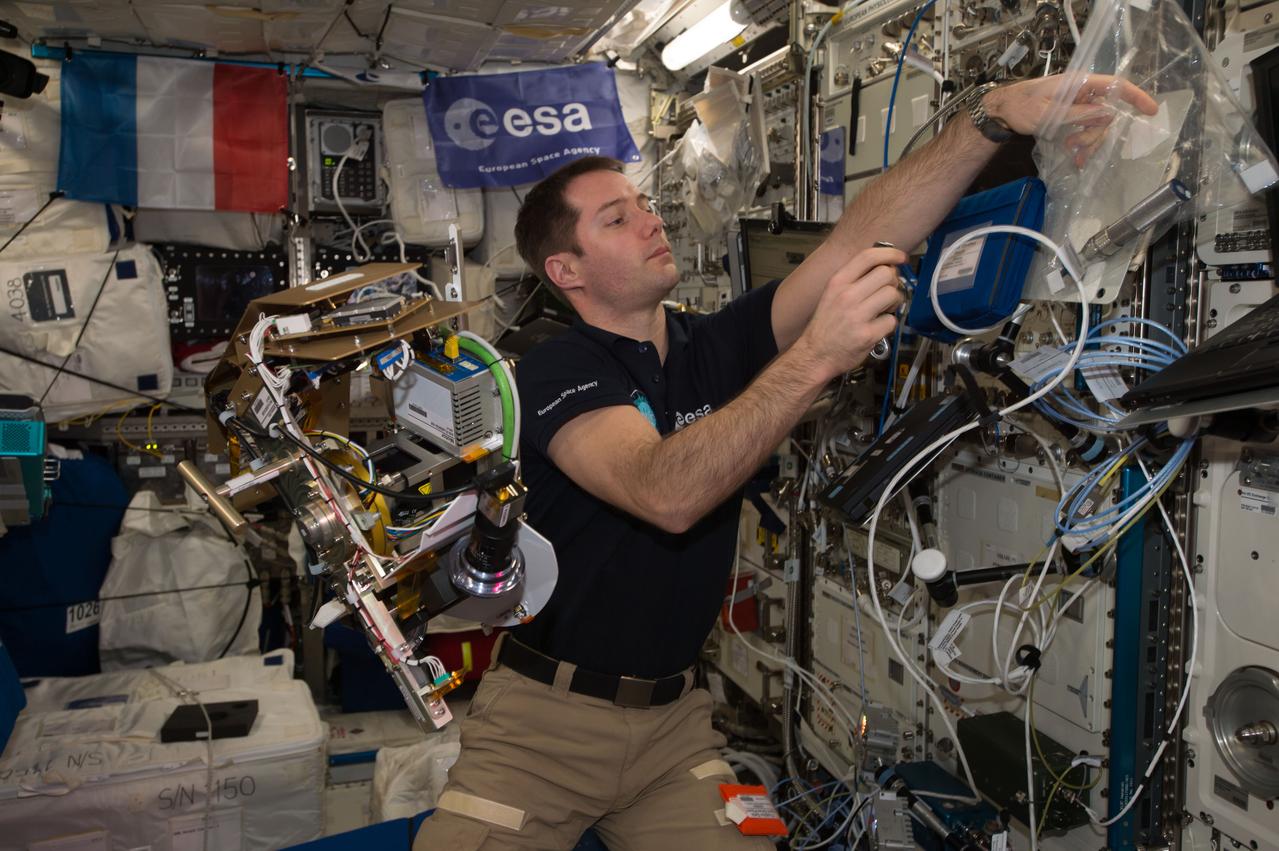
iss051e033992 (May 2, 2017) --- Astronaut Thomas Pesquet, of the European Space Agency (ESA), is at work inside the Columbus laboratory module developed by ESA.
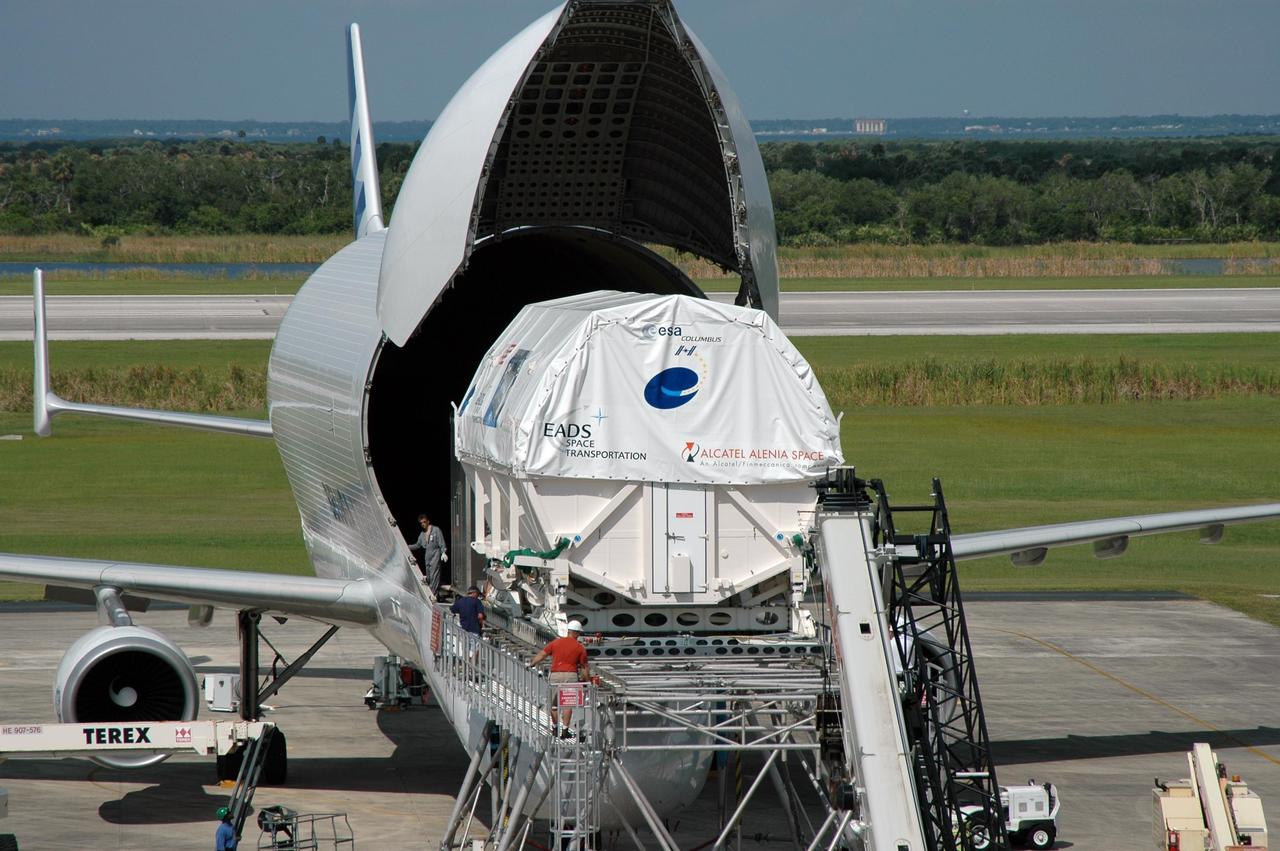
KENNEDY SPACE CENTER, FLA. - At the Shuttle Landing Facility, the European Space Agency's research laboratory, designated Columbus, slides out onto an Airbus Transport International platform. The module will be lifted onto a flat bed truck and transported to the Space Station Processing Facility. In the SSPF, the module will be prepared for delivery to the International Space Station on a future space shuttle mission. Columbus will expand the research facilities of the station and provide researchers with the ability to conduct numerous experiments in the area of life, physical and materials sciences. Photo credit: NASA/Jim Grossmann
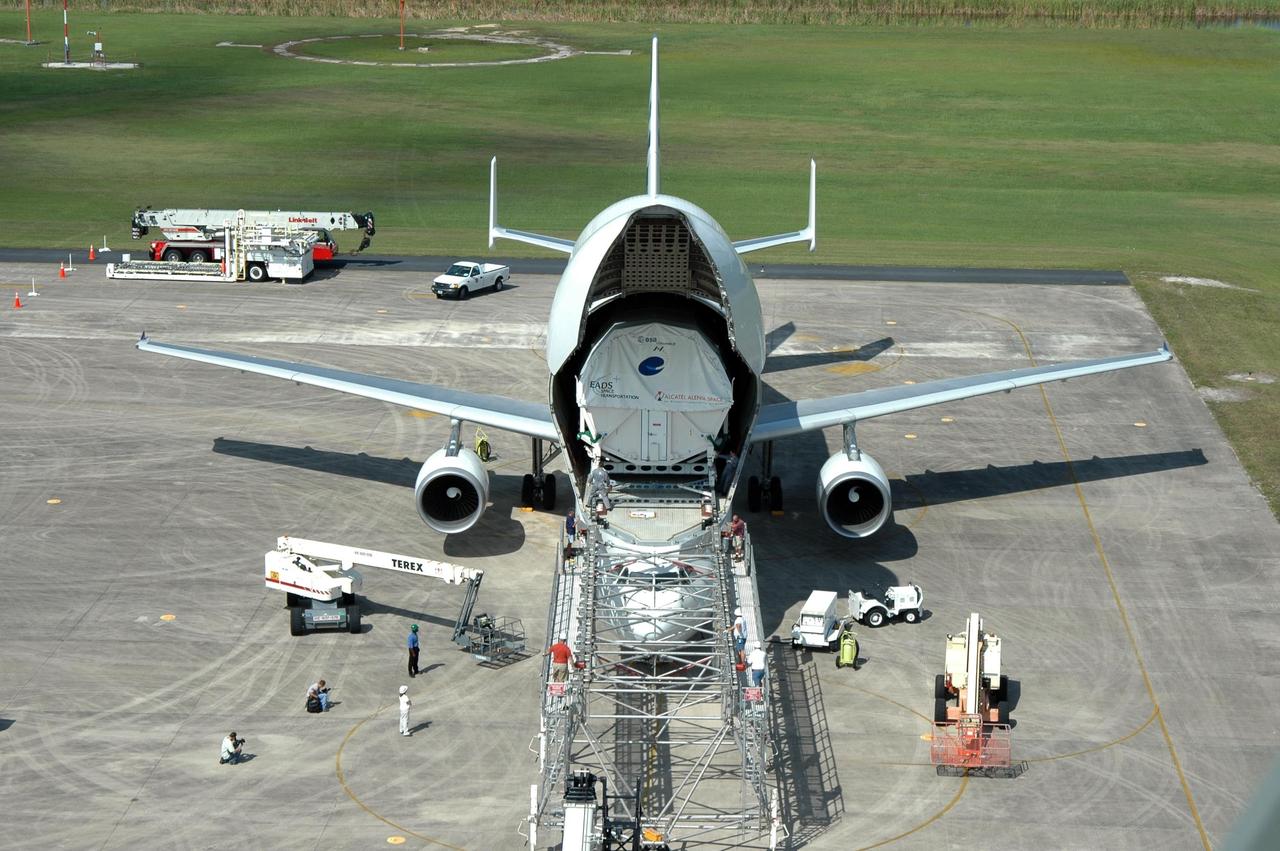
KENNEDY SPACE CENTER, FLA. - At the Shuttle Landing Facility, the European Space Agency's research laboratory, designated Columbus, is being offloaded onto an Airbus Transport International platform. The module will be lifted onto a flat bed truck and transported to the Space Station Processing Facility. There the module will be prepared for delivery to the International Space Station on a future space shuttle mission. Columbus will expand the research facilities of the station and provide researchers with the ability to conduct numerous experiments in the area of life, physical and materials sciences. Photo credit: NASA/Jim Grossmann