
ISS040-E-098545 (17 Aug. 2014) --- One of the Expedition 40 crew members aboard the International Space Station recorded this image of the Orbital Sciences Corporation's Cygnus cargo carrier spacecraft breaking up in Earth's atmosphere after being released from the orbital outpost. The breakup started around 13:22 GMT on Aug. 17, 2014 and this photo was taken at 13:23:08 GMT.
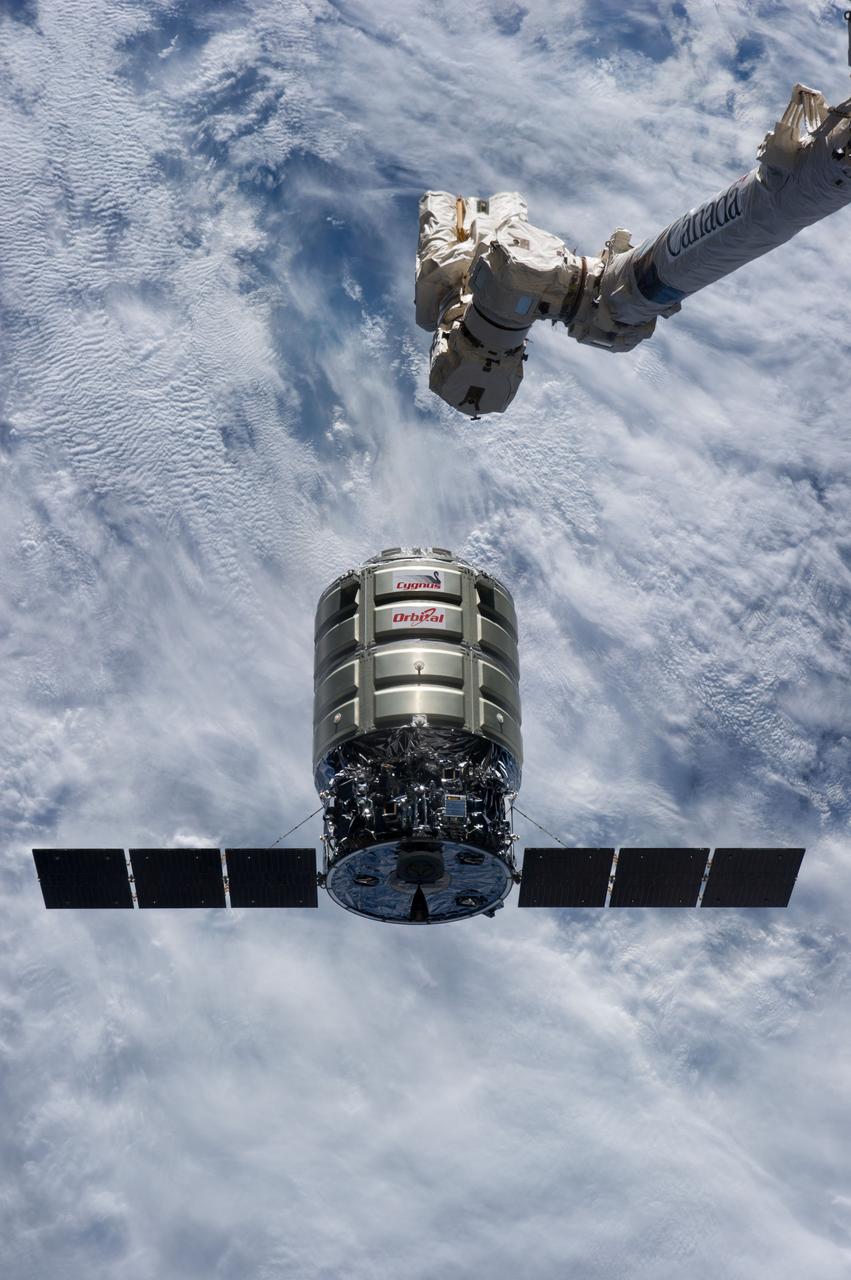
ISS040-E-069105 (16 July 2014) --- Operated by an Expedition 40 crew member inside the station?s Cupola, the Canadarm2 moves toward the Orbital Sciences? Cygnus cargo craft as it approaches the International Space Station. The two spacecraft converged at 6:36 a.m. (EDT) on July 16, 2014.
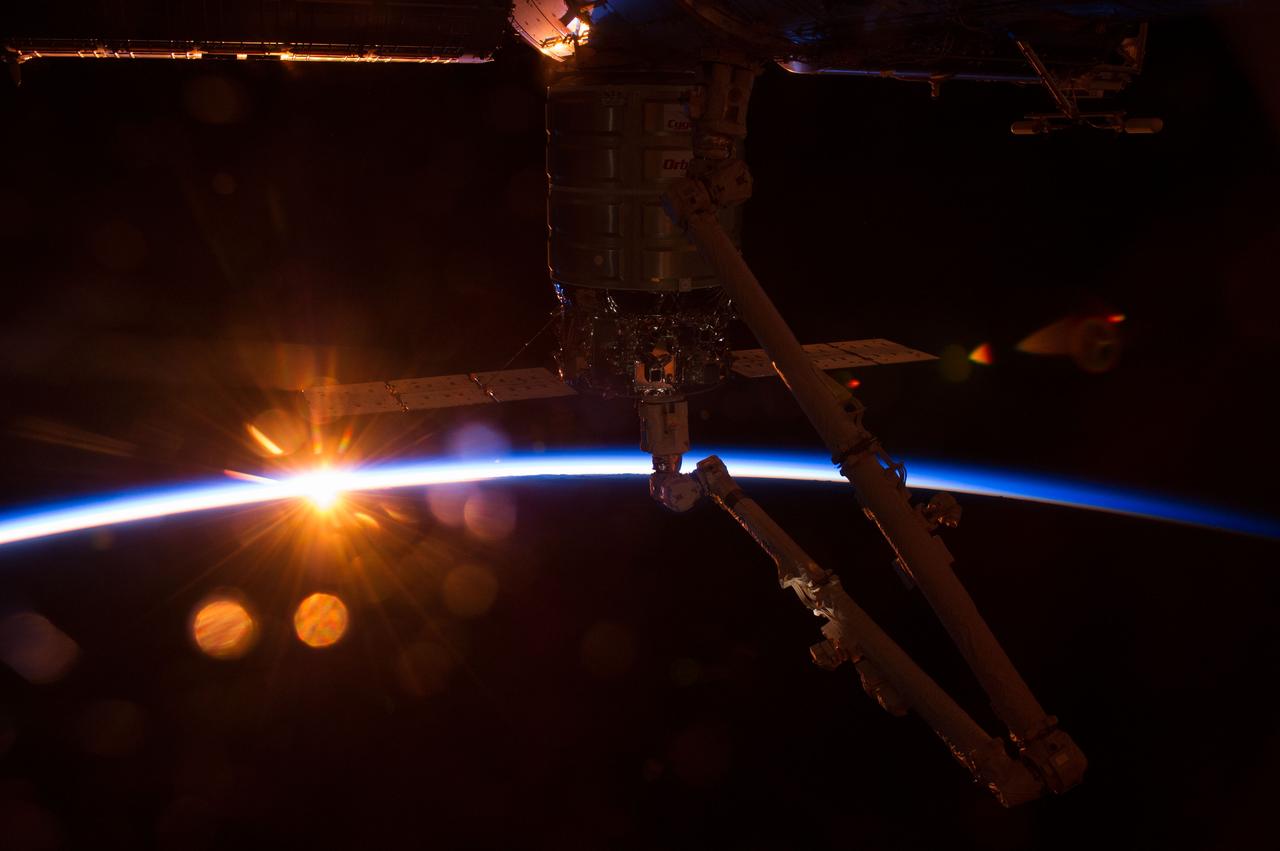
ISS040-E-069192 (16 July 2014) --- Intersecting the thin line of Earth’s atmosphere during an orbital sunrise, the Orbital Sciences’ Cygnus cargo craft attached to the end of the Canadarm2 robotic arm is berthed to the nadir port of the Harmony node of the International Space Station.
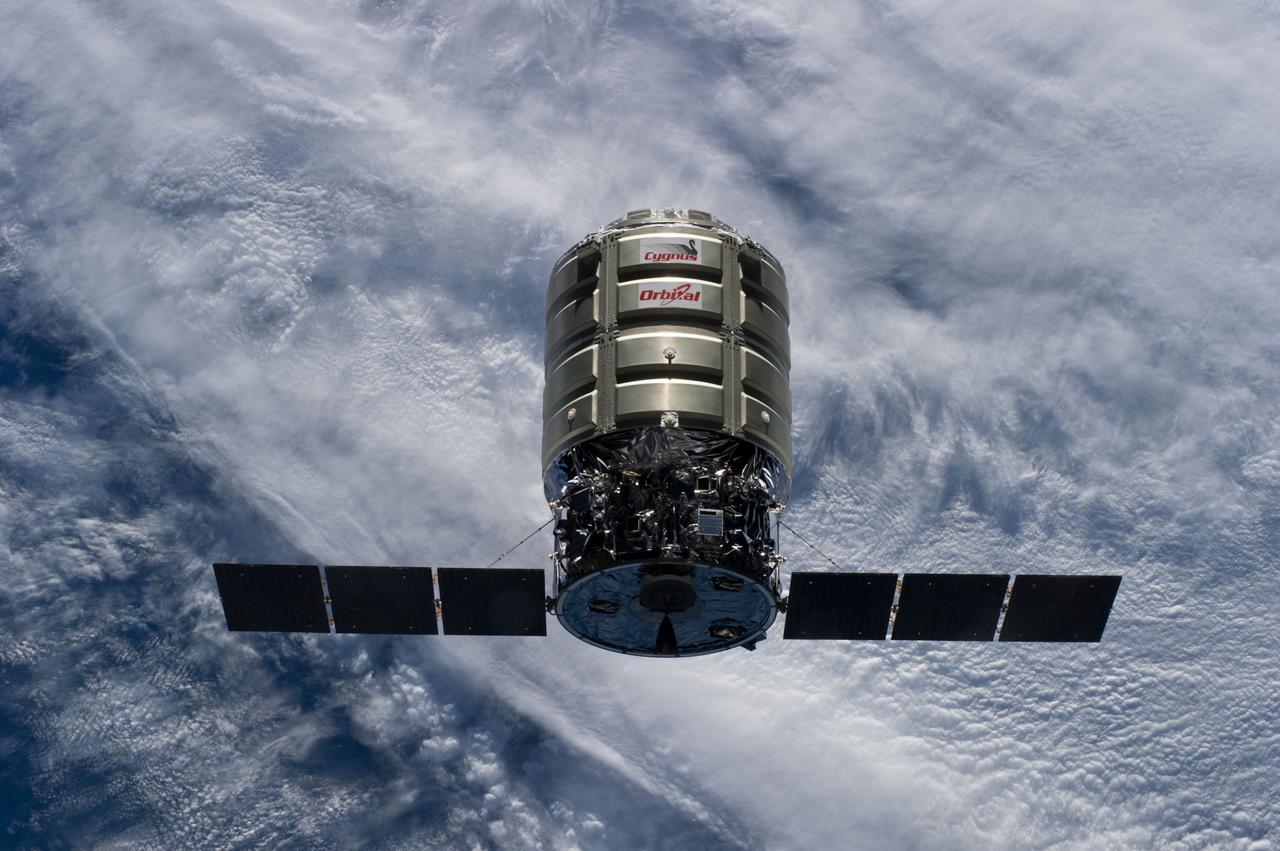
ISS040-E-069311 (16 July 2014) --- Backdropped by a cloud-covered part of Earth, the Orbital Sciences? Cygnus cargo craft approaches the International Space Station, photographed by an Expedition 40 crew member. The two spacecraft converged at 6:36 a.m. (EDT) on July 16, 2014.
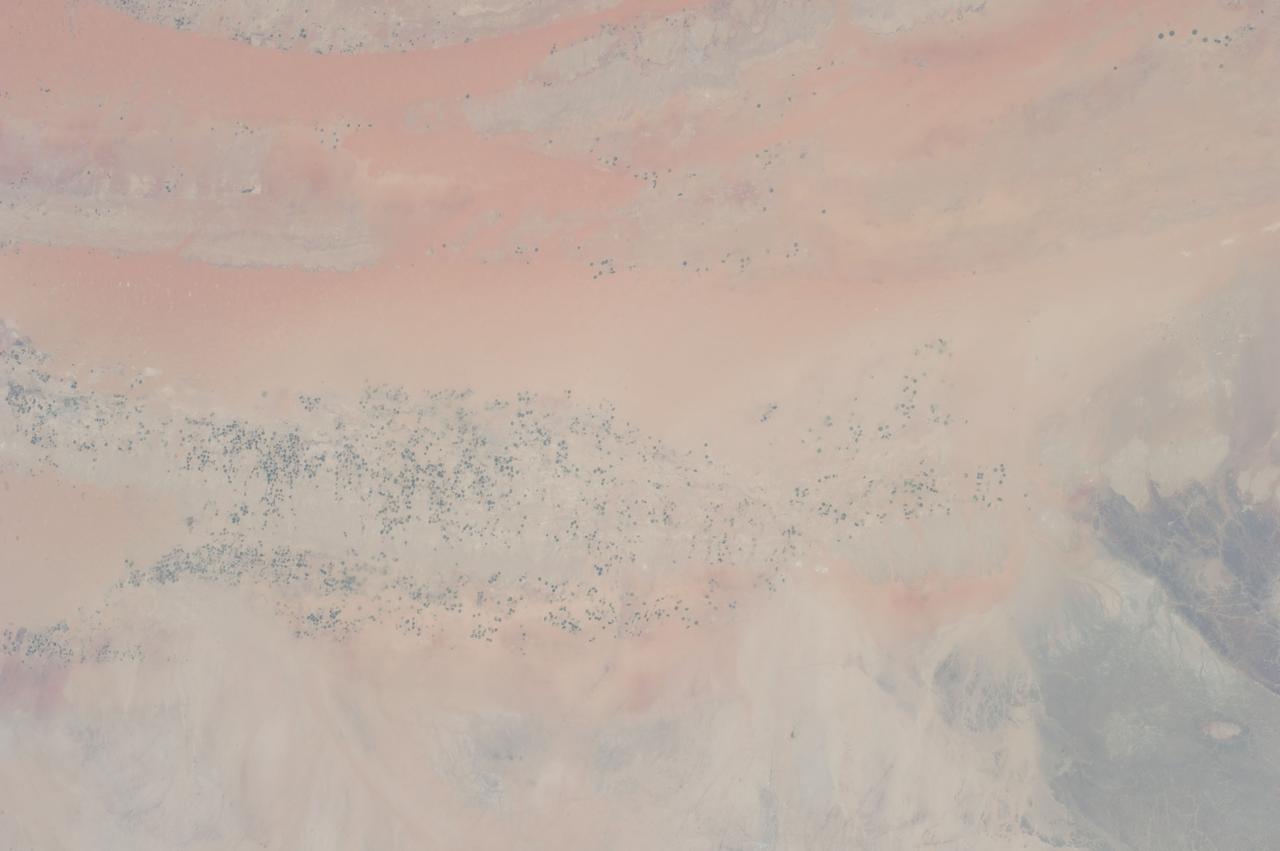
Distant view of the Orbital Sciences Cygnus cargo craft approaching the International Space Station, photographed by an Expedition 40 crew member. The two spacecraft converged at 6:36 a.m. (EDT) on July 16, 2014.
Distant view of the Orbital Sciences Cygnus cargo craft approaching the International Space Station, photographed by an Expedition 40 crew member. The two spacecraft converged at 6:36 a.m. (EDT) on July 16, 2014.
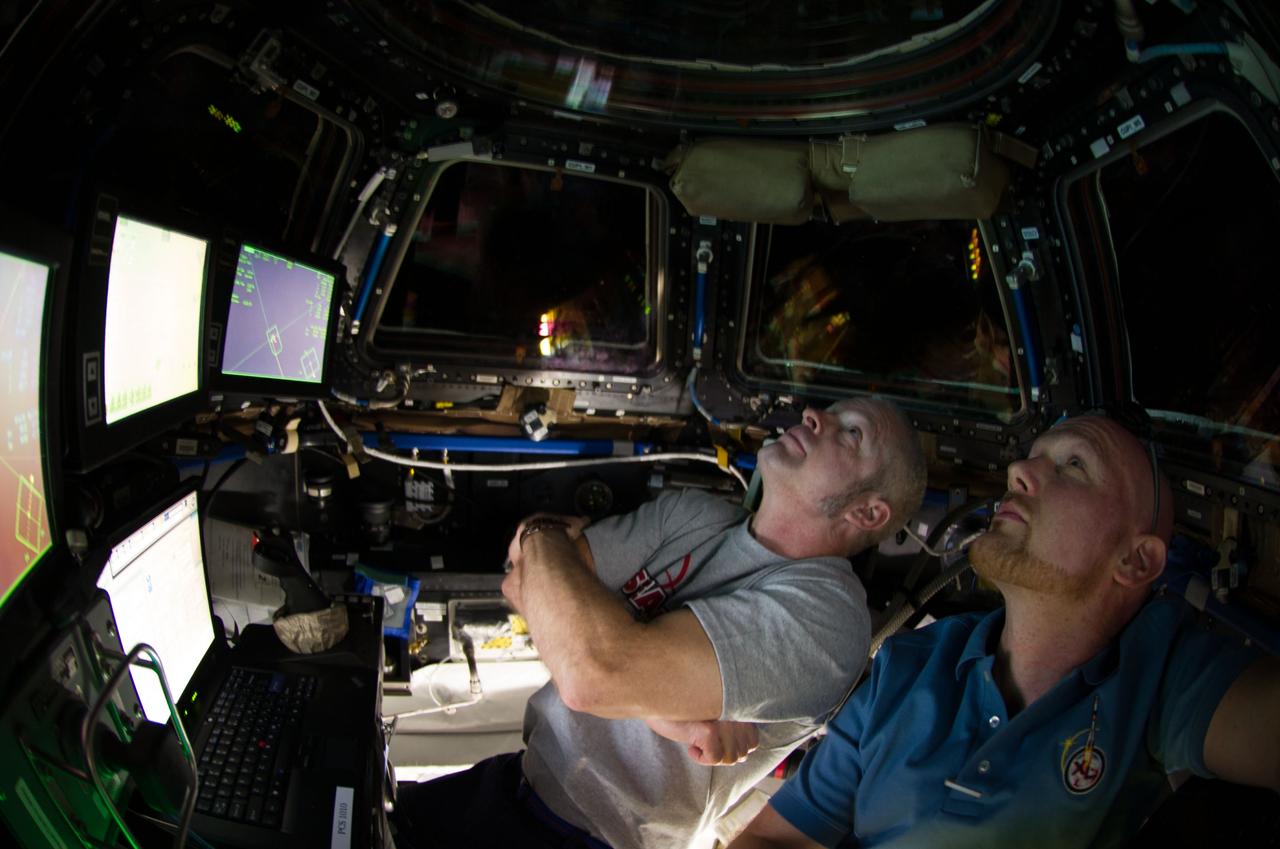
ISS040-E-067869 (16 July 2014) --- NASA astronaut Steve Swanson (left), Expedition 40 commander; and European Space Agency astronaut Alexander Gerst, flight engineer, are pictured in the International Space Station?s Cupola during rendezvous and capture operations of the Orbital Sciences? Cygnus cargo craft.
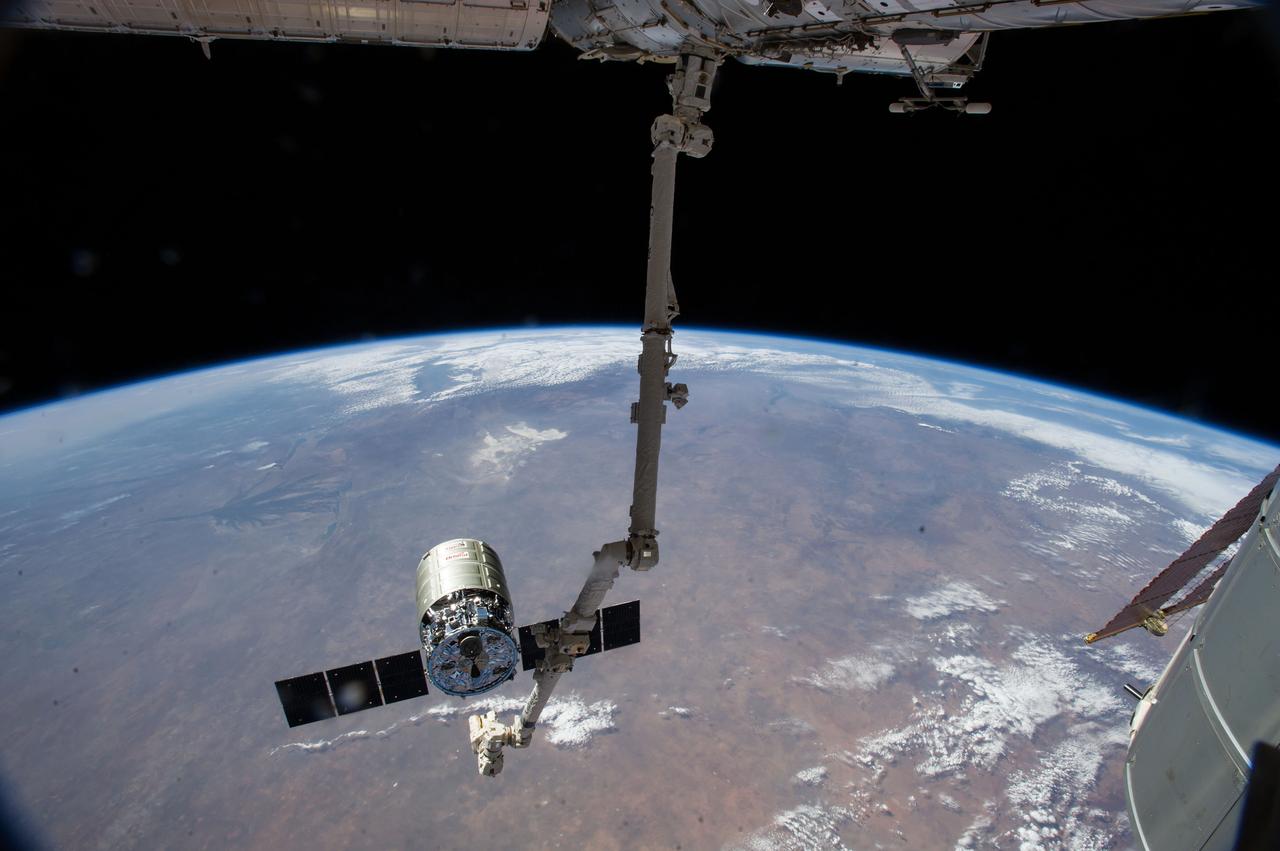
ISS040-E-095229 (15 Aug. 2014) --- The International Space Station's Canadarm2 prepares to release the Orbital Sciences Corporation's commercial cargo craft after a month visiting the orbital outpost. European Space Agency astronaut Alexander Gerst and NASA astronaut Reid Wiseman, both Expedition 40 flight engineers, were at the controls of the robotics workstation in the Cupola removing Cygnus from the Harmony node then safely releasing it at 6:40 a.m. (EDT) Aug. 15, 2014. Much of lower the continent of Africa provides the panoramic background for the scene with Botswana's Okavango Delta being the most conspicuous feature at left center.
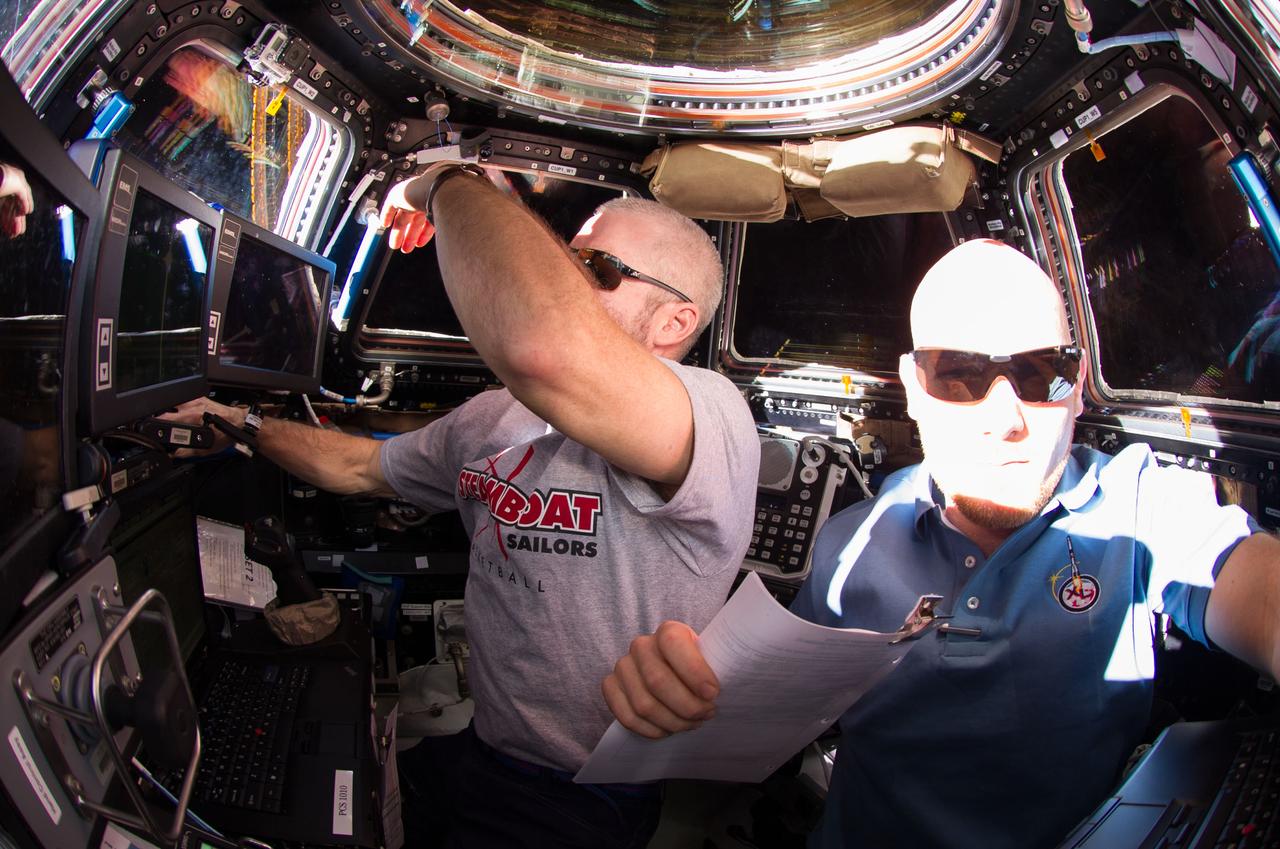
NASA astronaut Steve Swanson (left), Expedition 40 commander; and European Space Agency astronaut Alexander Gerst, flight engineer, are pictured in the International Space Station's Cupola during rendezvous and capture operations of the Orbital Sciences' Cygnus cargo craft.
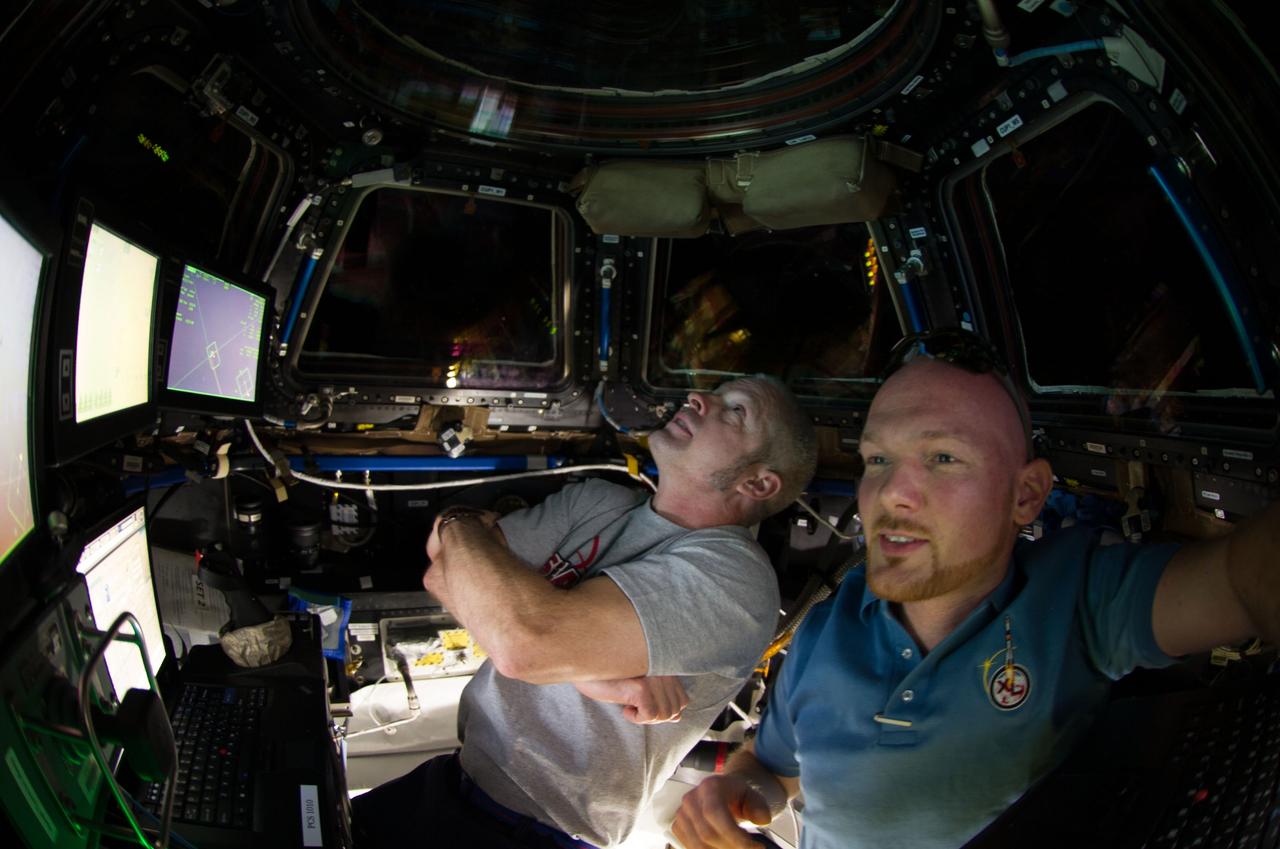
ISS040-E-067864 (16 July 2014) --- NASA astronaut Steve Swanson (left), Expedition 40 commander; and European Space Agency astronaut Alexander Gerst, flight engineer, are pictured in the International Space Station?s Cupola during rendezvous and capture operations of the Orbital Sciences? Cygnus cargo craft.
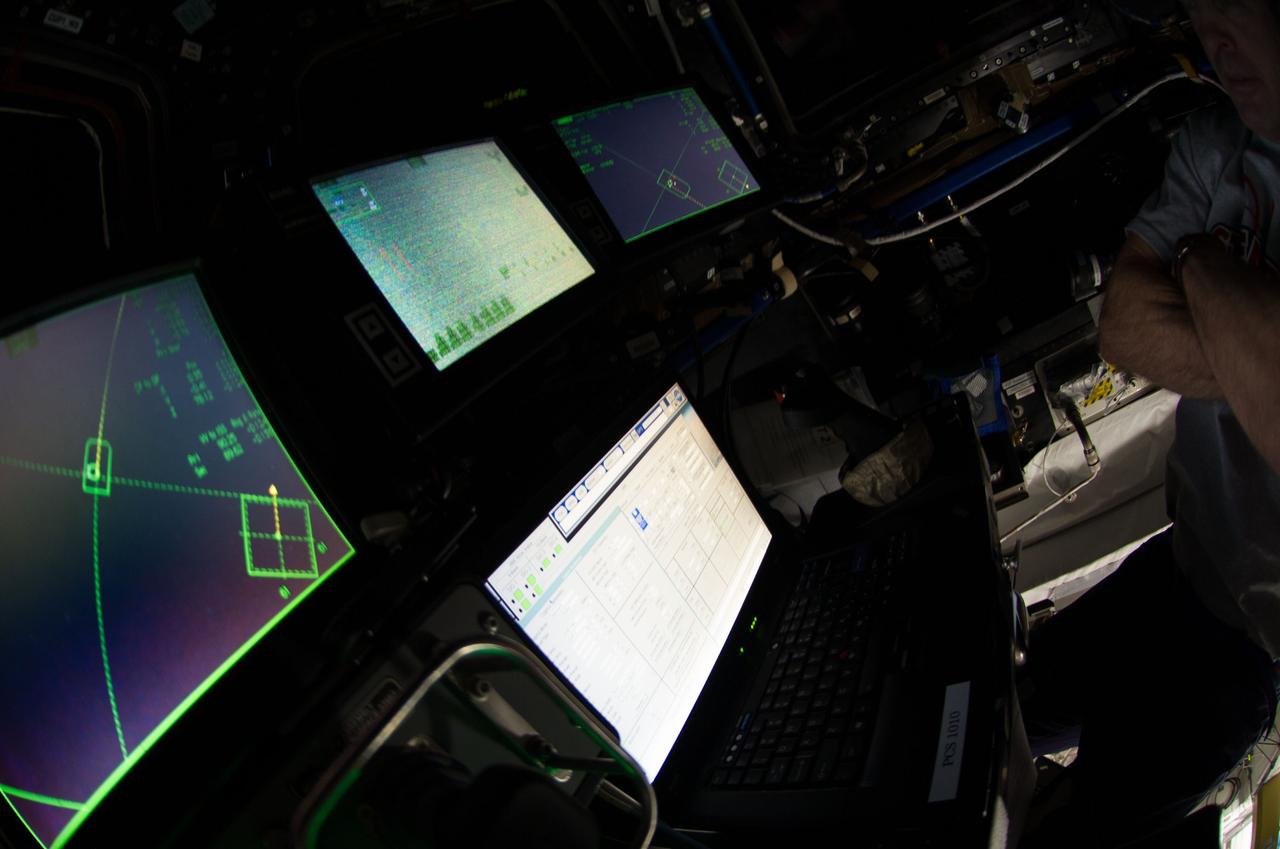
Control boards pictured in the International Space Stations Cupola during rendezvous and capture operations of the Orbital Sciences Cygnus cargo craft.
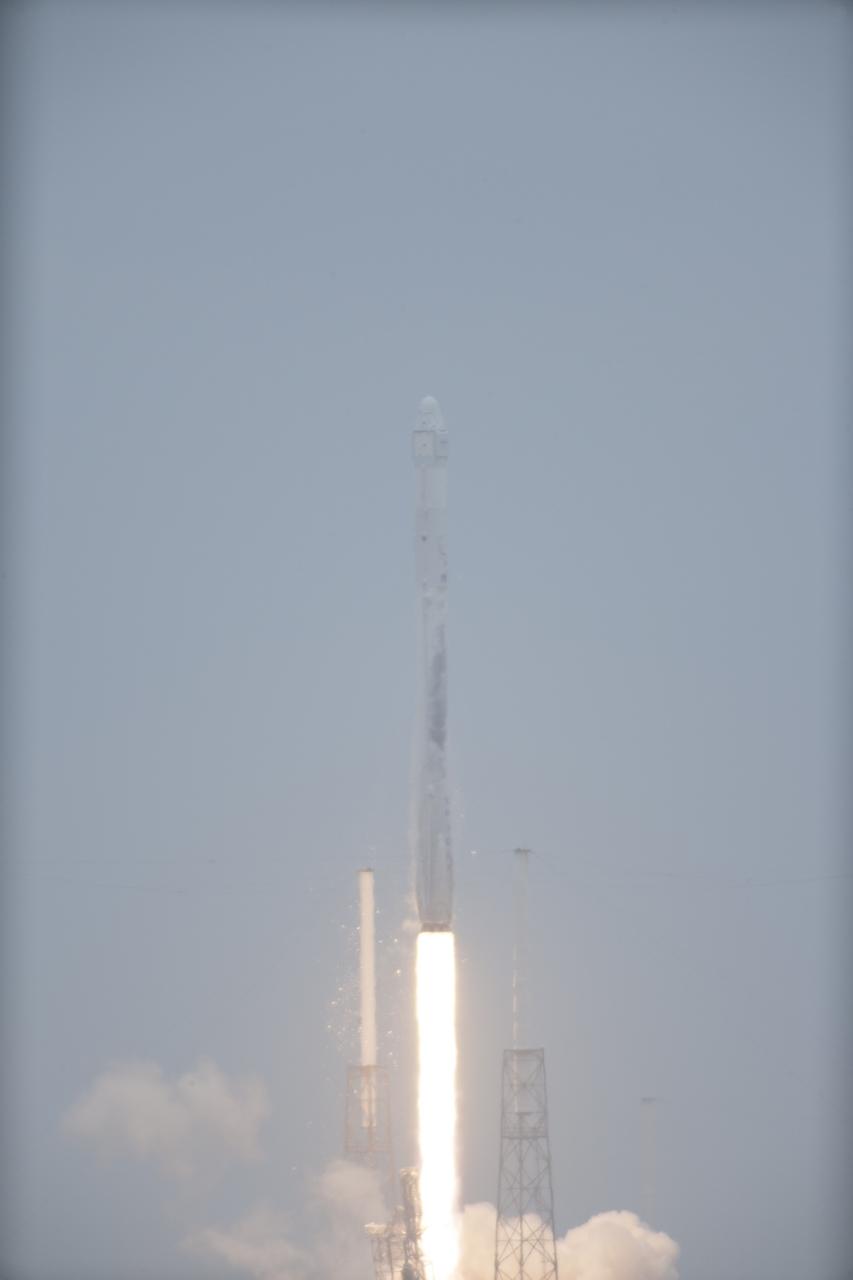
CAPE CANAVERAL, Fla. - The SpaceX-3 mission lifts off into the clouds over Space Launch Complex 40 on Cape Canaveral Air Force Station aboard a Falcon 9 rocket, sending the Dragon resupply spacecraft on its way to the International Space Station. Launch was during an instantaneous window at 3:25 p.m. EDT. Dragon is making its fourth trip to the space station. The SpaceX-3 mission, carrying almost 2.5 tons of supplies, technology and science experiments, is the third of 12 flights through a $1.6 billion NASA Commercial Resupply Services contract. Dragon's cargo will support more than 150 experiments that will be conducted during the station's Expeditions 39 and 40. For more information, visit http://www.nasa.gov/mission_pages/station/structure/launch/index.html. Photo credit: NASA/Tony Gray
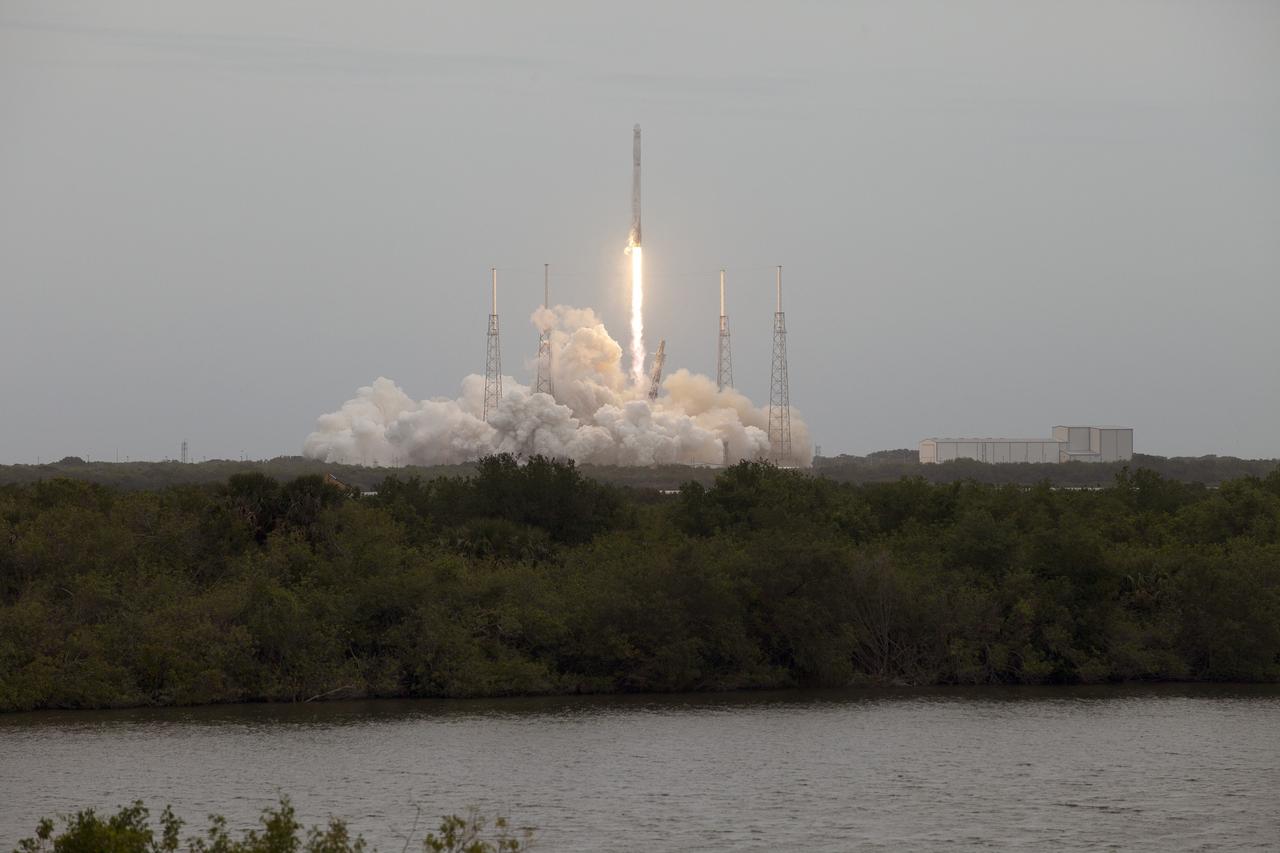
CAPE CANAVERAL, Fla. - An exhaust cloud builds under the Falcon 9 rocket on Space Launch Complex 40 on Cape Canaveral Air Force Station as the SpaceX-3 mission lifts off, carrying the Dragon resupply spacecraft to the International Space Station. Liftoff was during an instantaneous window at 3:25 p.m. EDT. Dragon is making its fourth trip to the space station. The SpaceX-3 mission, carrying almost 2.5 tons of supplies, technology and science experiments, is the third of 12 flights through a $1.6 billion NASA Commercial Resupply Services contract. Dragon's cargo will support more than 150 experiments that will be conducted during the station's Expeditions 39 and 40. For more information, visit http://www.nasa.gov/mission_pages/station/structure/launch/index.html. Photo credit: NASA/Dan Casper
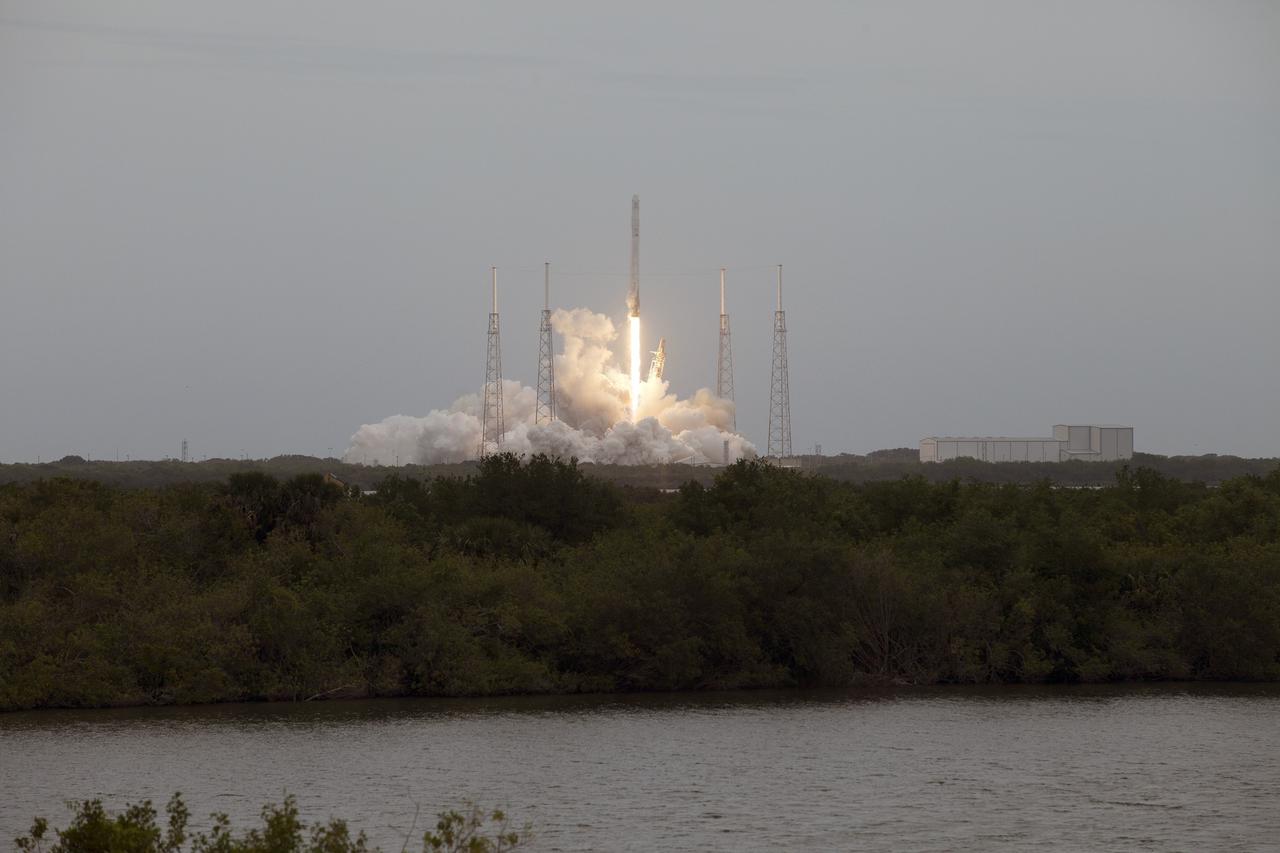
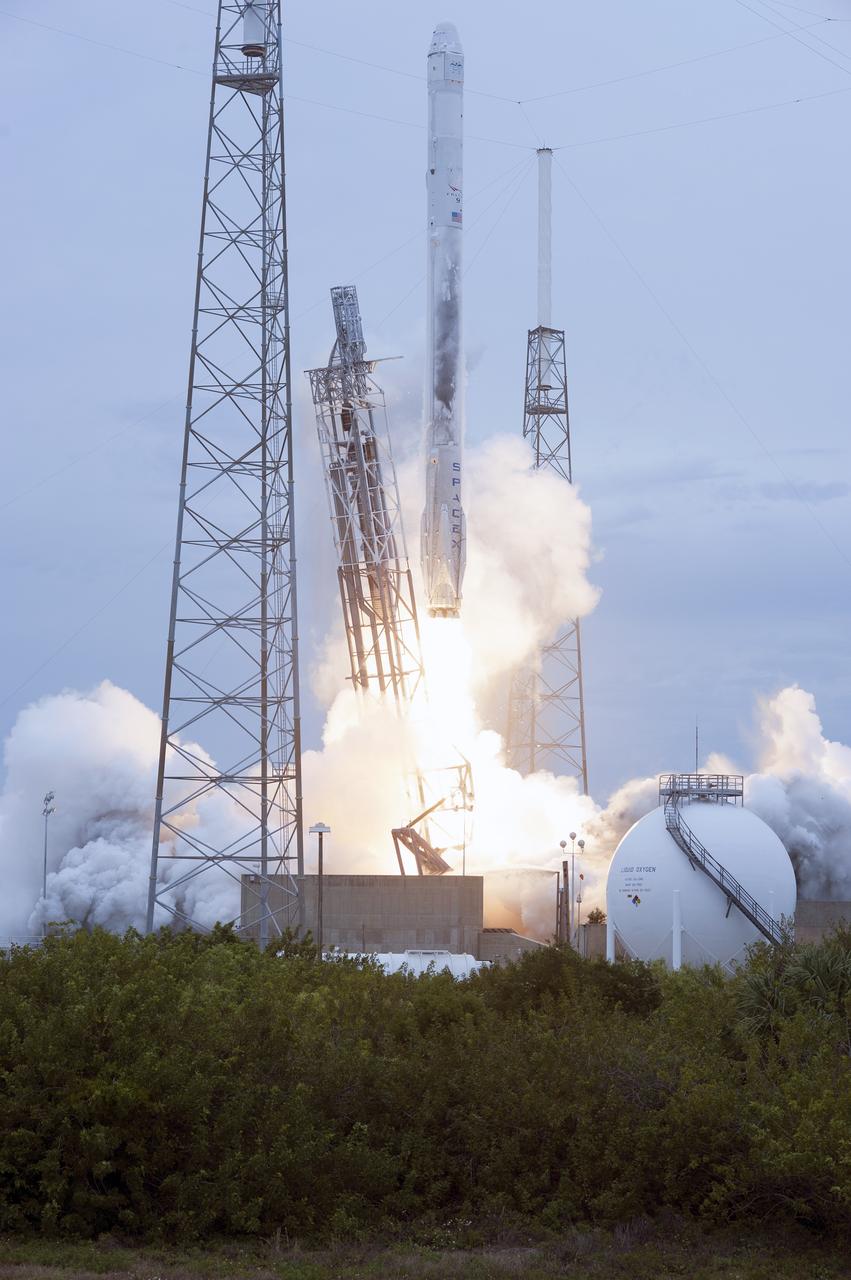
CAPE CANAVERAL, Fla. - Nine rocket engines roar to life on the SpaceX Falcon 9 rocket, lifting it off Space Launch Complex 40 on Cape Canaveral Air Force Station and boosting the Dragon resupply spacecraft to the International Space Station. Liftoff was at 3:25 p.m. EDT. Dragon is making its fourth trip to the space station. The SpaceX-3 mission, carrying almost 2.5 tons of supplies, technology and science experiments, is the third of 12 flights through a $1.6 billion NASA Commercial Resupply Services contract. Dragon's cargo will support more than 150 experiments that will be conducted during the station's Expeditions 39 and 40. For more information, visit http://www.nasa.gov/mission_pages/station/structure/launch/index.html. Photo credit: NASA/Dan Casper
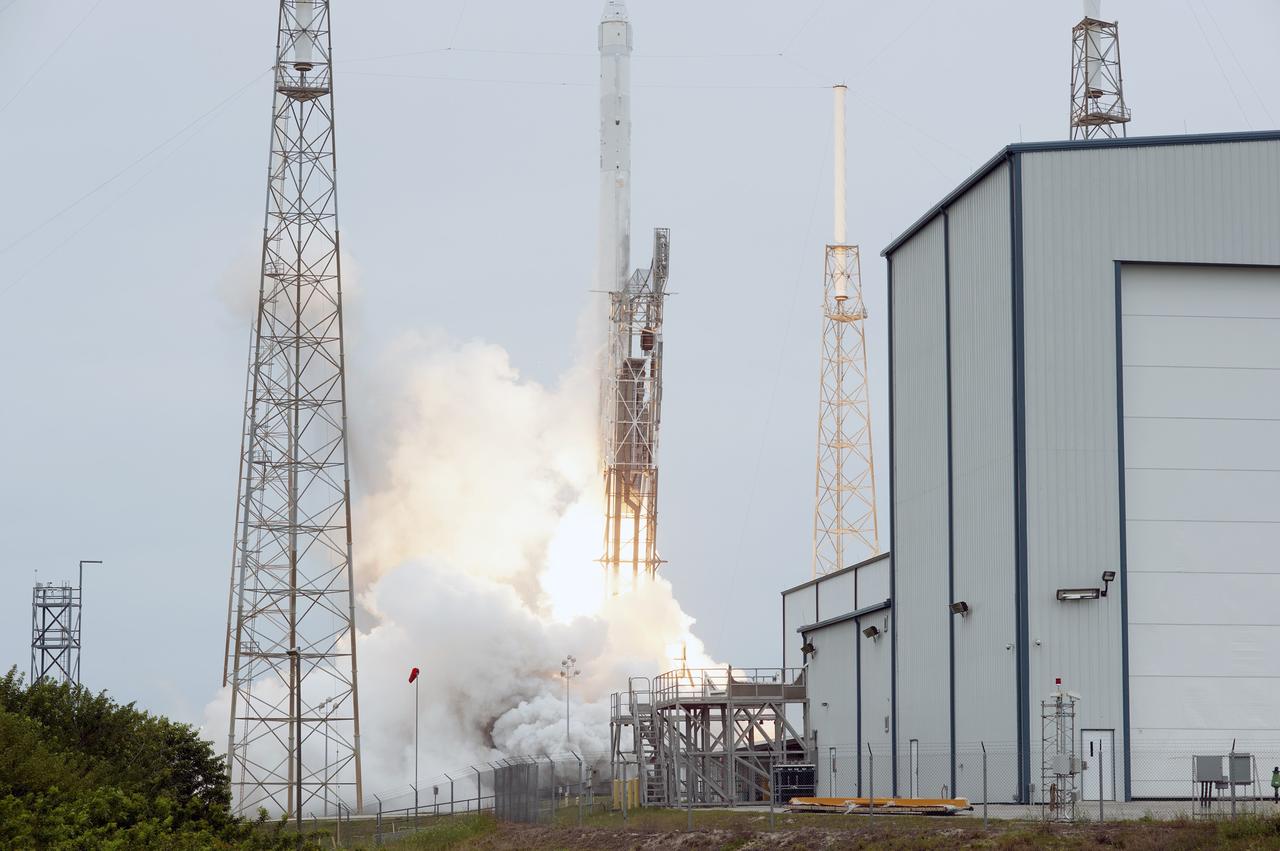
CAPE CANAVERAL, Fla. - An exhaust cloud forms around the Falcon 9 rocket at Space Launch Complex 40 on Cape Canaveral Air Force Station as the SpaceX-3 mission lifts off, carrying the Dragon resupply spacecraft to the International Space Station. Launch was during an instantaneous window at 3:25 p.m. EDT. Dragon is making its fourth trip to the space station. The SpaceX-3 mission, carrying almost 2.5 tons of supplies, technology and science experiments, is the third of 12 flights through a $1.6 billion NASA Commercial Resupply Services contract. Dragon's cargo will support more than 150 experiments that will be conducted during the station's Expeditions 39 and 40. For more information, visit http://www.nasa.gov/mission_pages/station/structure/launch/index.html. Photo credit: NASA/Tony Gray and Tim Powers
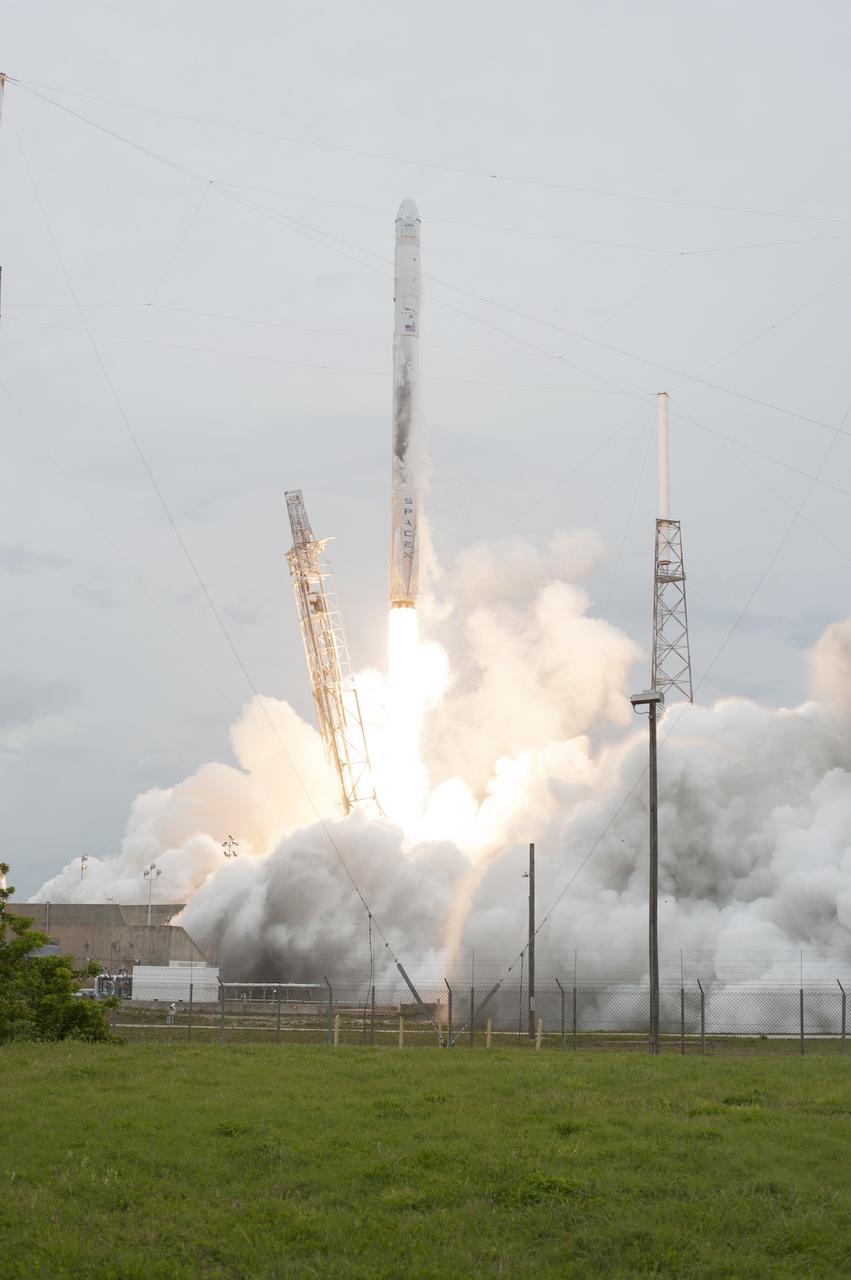
CAPE CANAVERAL, Fla. - The SpaceX Falcon 9 rocket rises above the lightning masts on Space Launch Complex 40 at Cape Canaveral Air Force Station, as the SpaceX-3 mission begins, carrying the Dragon resupply spacecraft to the International Space Station. Liftoff was during an instantaneous window at 3:25 p.m. EDT. Dragon is making its fourth trip to the space station. The SpaceX-3 mission, carrying almost 2.5 tons of supplies, technology and science experiments, is the third of 12 flights through a $1.6 billion NASA Commercial Resupply Services contract. Dragon's cargo will support more than 150 experiments that will be conducted during the station's Expeditions 39 and 40. For more information, visit http://www.nasa.gov/mission_pages/station/structure/launch/index.html. Photo credit: NASA/Tony Gray and Tim Powers
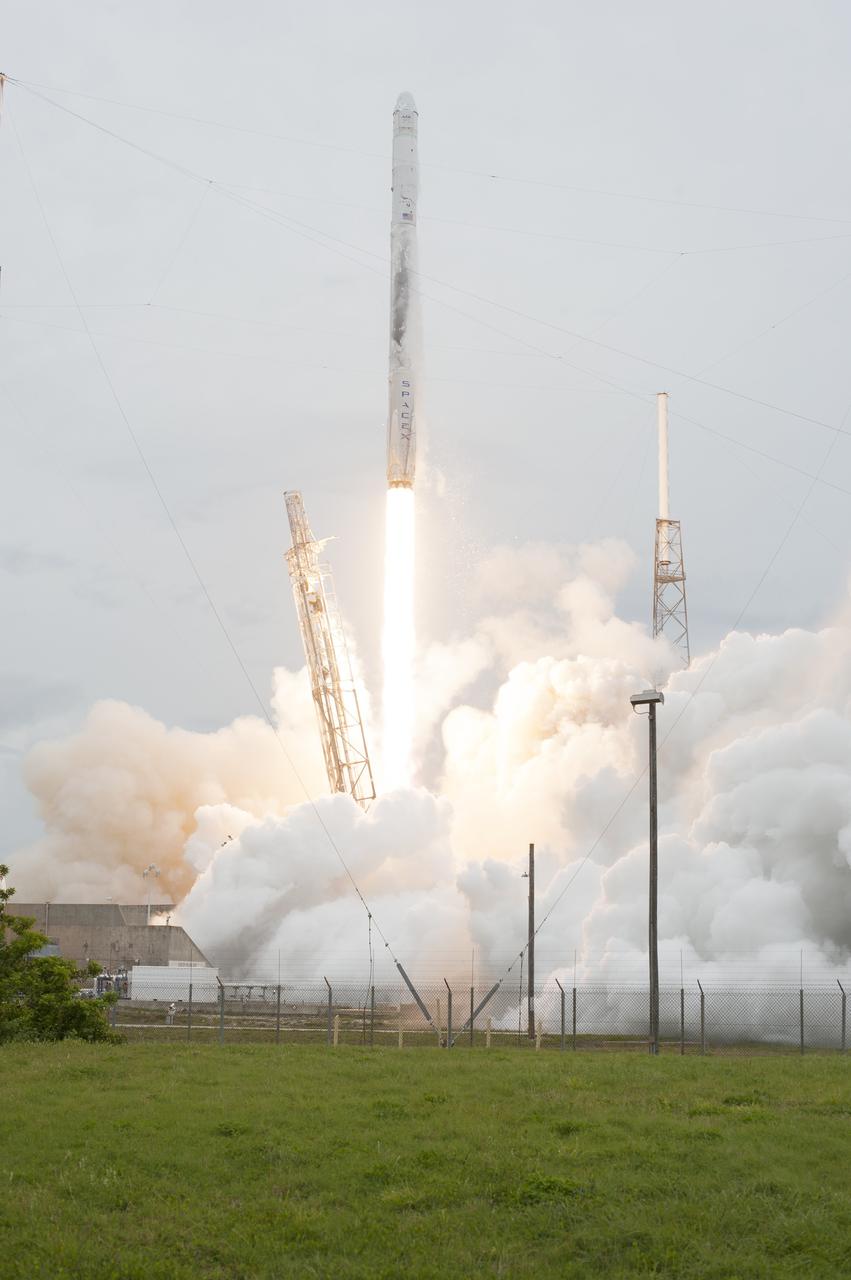
CAPE CANAVERAL, Fla. - The SpaceX-3 mission soars into the clouds over Space Launch Complex 40 on Cape Canaveral Air Force Station aboard a Falcon 9 rocket, carrying the Dragon resupply spacecraft to the International Space Station. Liftoff was during an instantaneous window at 3:25 p.m. EDT. Dragon is making its fourth trip to the space station. The SpaceX-3 mission, carrying almost 2.5 tons of supplies, technology and science experiments, is the third of 12 flights through a $1.6 billion NASA Commercial Resupply Services contract. Dragon's cargo will support more than 150 experiments that will be conducted during the station's Expeditions 39 and 40. For more information, visit http://www.nasa.gov/mission_pages/station/structure/launch/index.html. Photo credit: NASA/Tony Gray and Tim Powers
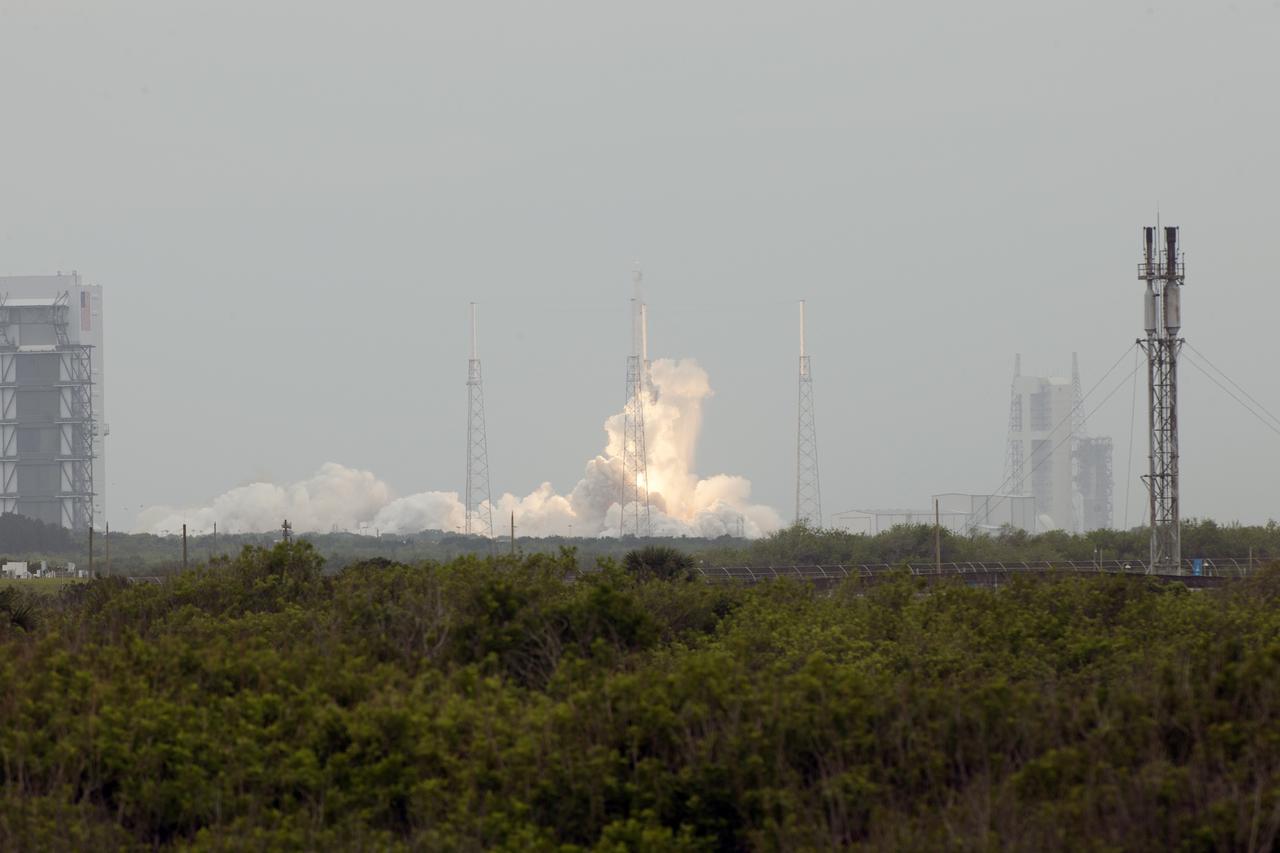
CAPE CANAVERAL, Fla. - The SpaceX-3 mission lifts off from Space Launch Complex 40 on Cape Canaveral Air Force Station aboard a Falcon 9 rocket, carrying the Dragon resupply spacecraft to the International Space Station. Liftoff was at 3:25 p.m. EDT. Dragon is making its fourth trip to the space station. The SpaceX-3 mission, carrying almost 2.5 tons of supplies, technology and science experiments, is the third of 12 flights through a $1.6 billion NASA Commercial Resupply Services contract. Dragon's cargo will support more than 150 experiments that will be conducted during the station's Expeditions 39 and 40. For more information, visit http://www.nasa.gov/mission_pages/station/structure/launch/index.html. Photo credit: NASA/George Roberts
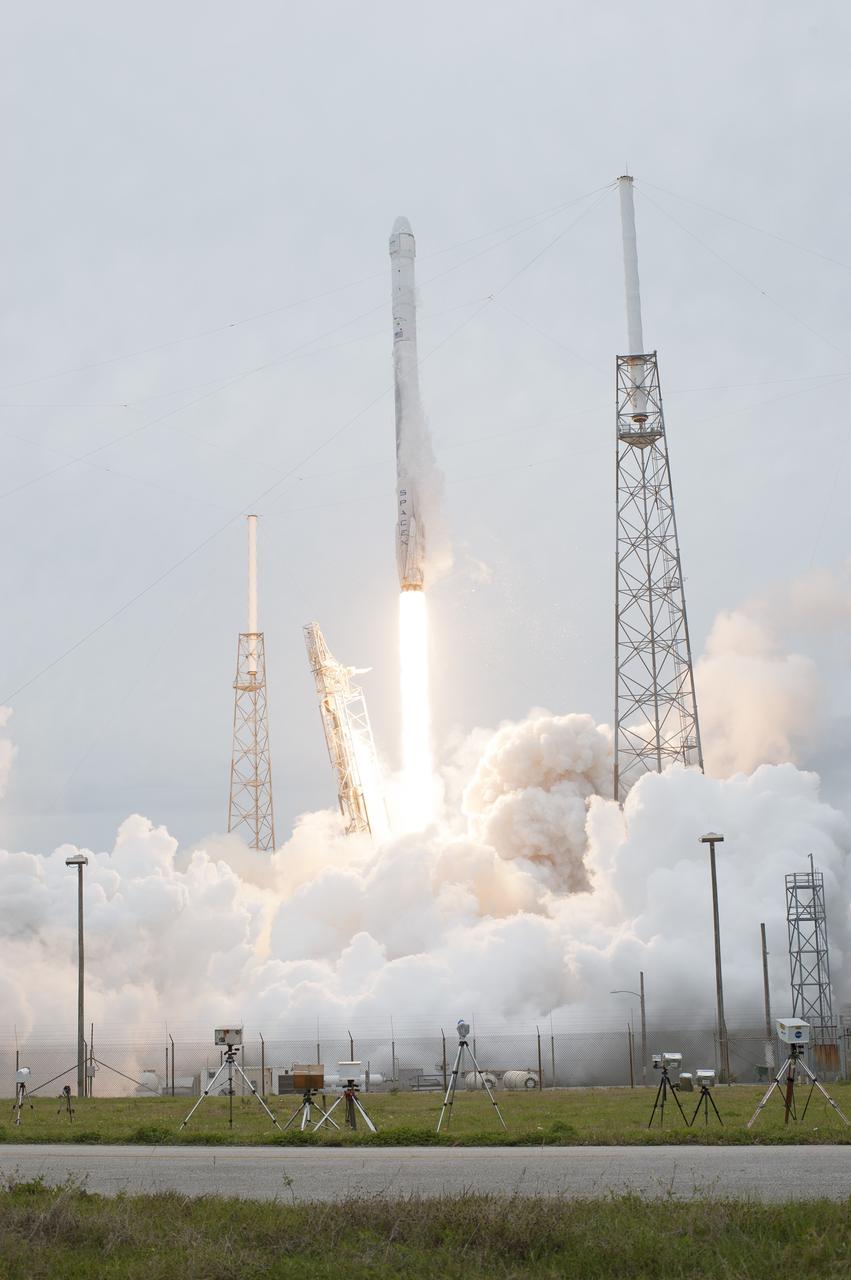
CAPE CANAVERAL, Fla. - The SpaceX Falcon 9 rocket rises above the lightning masts on Space Launch Complex 40 at Cape Canaveral Air Force Station, sending the Dragon resupply spacecraft on its way to the International Space Station. Liftoff was during an instantaneous window at 3:25 p.m. EDT. Dragon is making its fourth trip to the space station. The SpaceX-3 mission, carrying almost 2.5 tons of supplies, technology and science experiments, is the third of 12 flights through a $1.6 billion NASA Commercial Resupply Services contract. Dragon's cargo will support more than 150 experiments that will be conducted during the station's Expeditions 39 and 40. For more information, visit http://www.nasa.gov/mission_pages/station/structure/launch/index.html. Photo credit: NASA/Tony Gray and Tim Terry
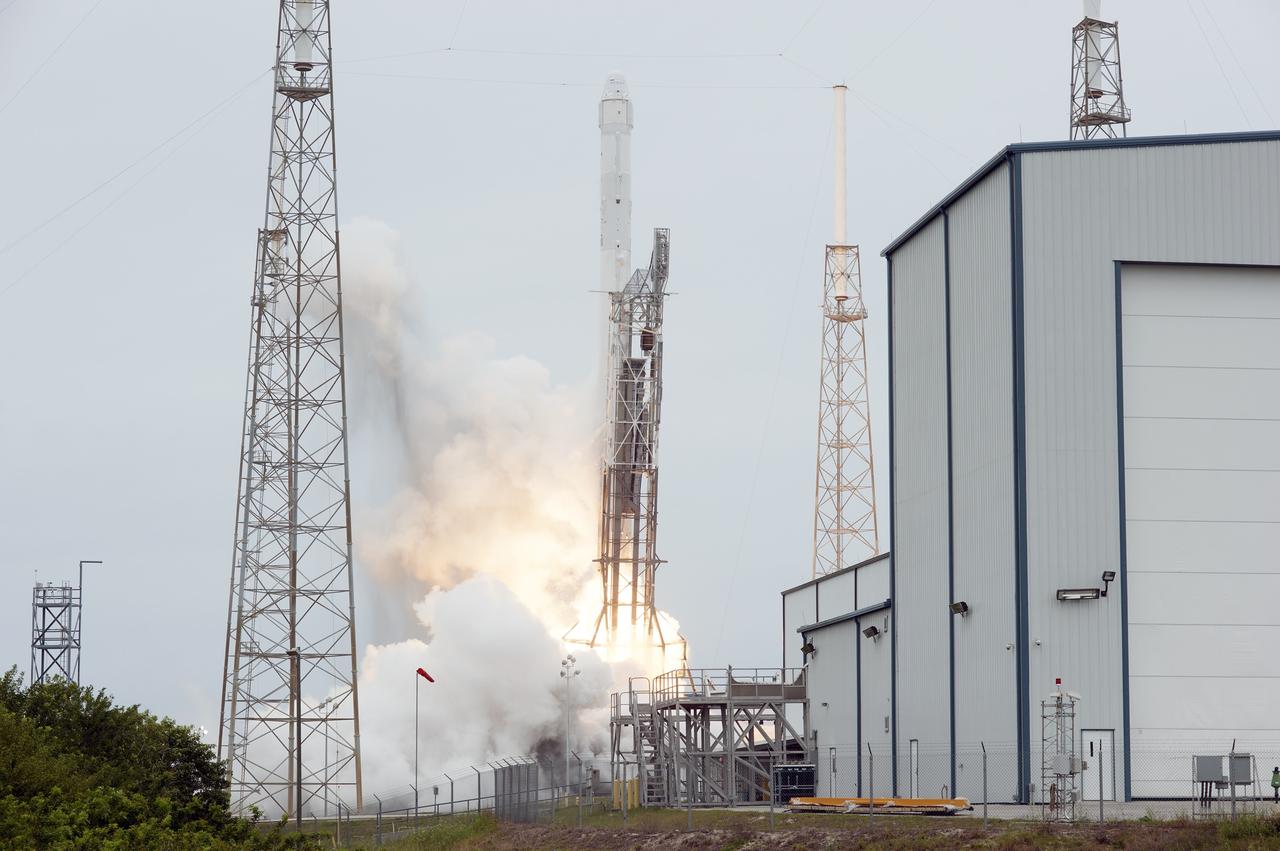
CAPE CANAVERAL, Fla. - As nine engines ignite under the SpaceX Falcon 9, the rocket springs to life at Space Launch Complex 40 on Cape Canaveral Air Force Station, boosting the Dragon resupply spacecraft on the SpaceX-3 mission to the International Space Station. Launch was at 3:25 p.m. EDT. Dragon is making its fourth trip to the space station. The SpaceX-3 mission, carrying almost 2.5 tons of supplies, technology and science experiments, is the third of 12 flights through a $1.6 billion NASA Commercial Resupply Services contract. Dragon's cargo will support more than 150 experiments that will be conducted during the station's Expeditions 39 and 40. For more information, visit http://www.nasa.gov/mission_pages/station/structure/launch/index.html. Photo credit: NASA/Tony Gray and Tim Powers
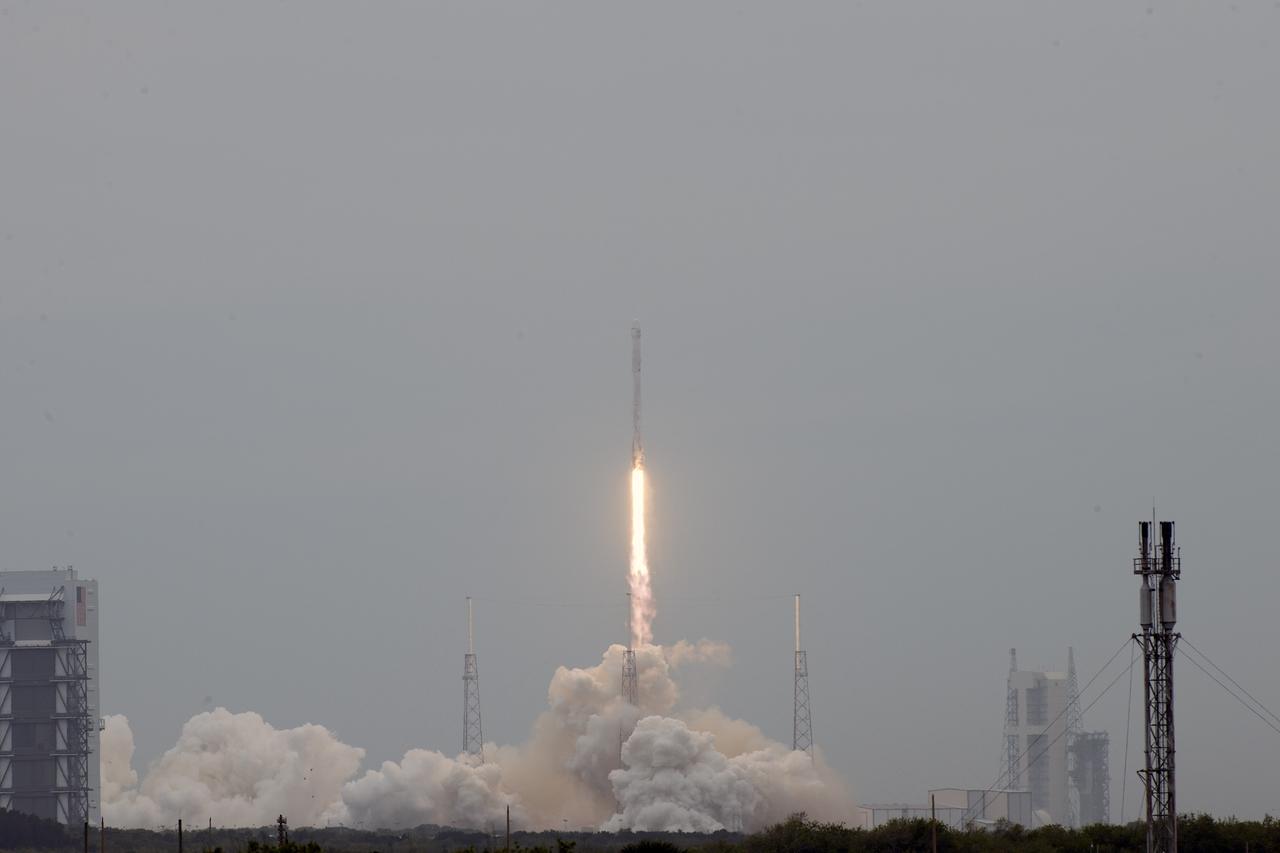
CAPE CANAVERAL, Fla. - The SpaceX-3 mission lifts off into the clouds over Space Launch Complex 40 on Cape Canaveral Air Force Station aboard a Falcon 9 rocket, carrying the Dragon resupply spacecraft to the International Space Station. Liftoff was during an instantaneous window at 3:25 p.m. EDT. Dragon is making its fourth trip to the space station. The SpaceX-3 mission, carrying almost 2.5 tons of supplies, technology and science experiments, is the third of 12 flights through a $1.6 billion NASA Commercial Resupply Services contract. Dragon's cargo will support more than 150 experiments that will be conducted during the station's Expeditions 39 and 40. For more information, visit http://www.nasa.gov/mission_pages/station/structure/launch/index.html. Photo credit: NASA/George Roberts
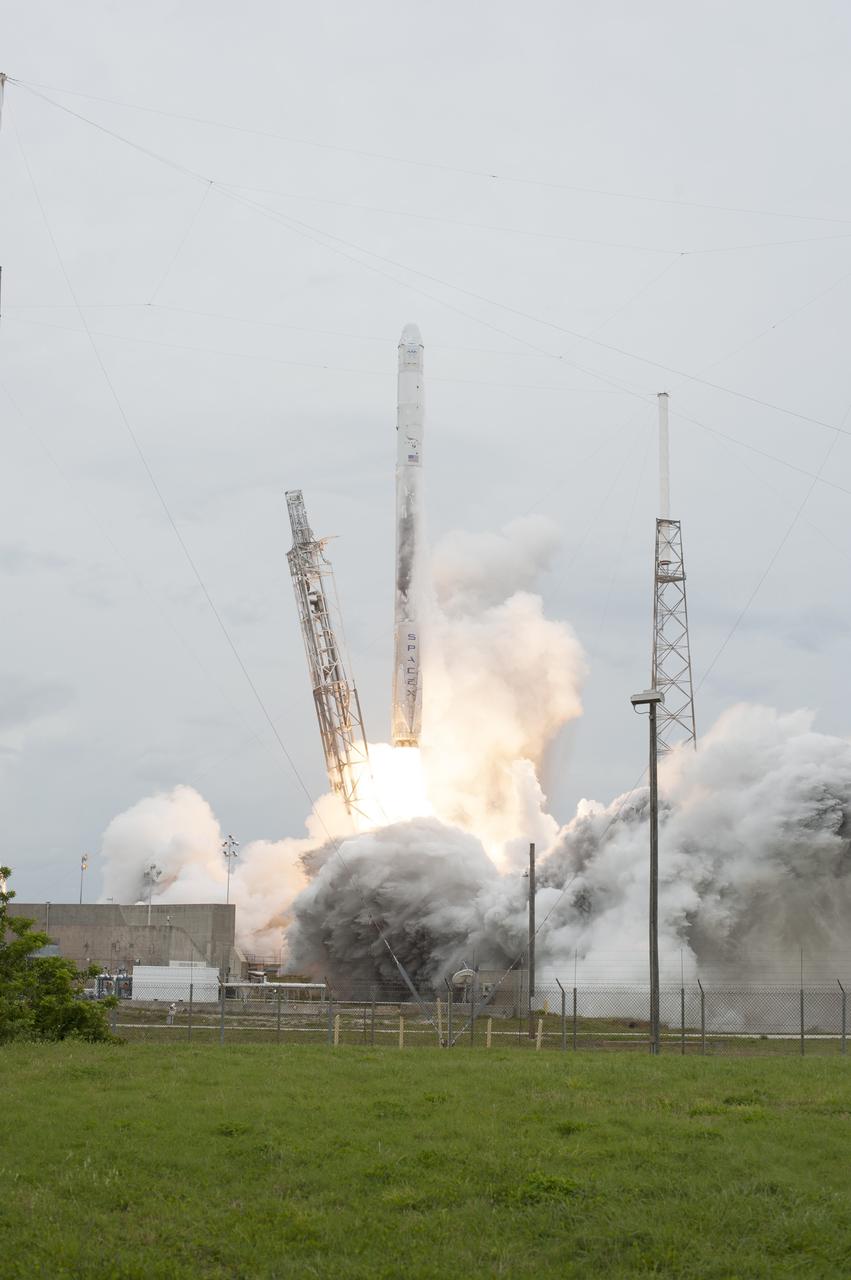
CAPE CANAVERAL, Fla. - An exhaust cloud builds under the Falcon 9 rocket on Space Launch Complex 40 on Cape Canaveral Air Force Station as the SpaceX-3 mission lifts off, carrying the Dragon resupply spacecraft to the International Space Station. Liftoff was during an instantaneous window at 3:25 p.m. EDT. Dragon is making its fourth trip to the space station. The SpaceX-3 mission, carrying almost 2.5 tons of supplies, technology and science experiments, is the third of 12 flights through a $1.6 billion NASA Commercial Resupply Services contract. Dragon's cargo will support more than 150 experiments that will be conducted during the station's Expeditions 39 and 40. For more information, visit http://www.nasa.gov/mission_pages/station/structure/launch/index.html. Photo credit: NASA/Tony Gray and Tim Powers
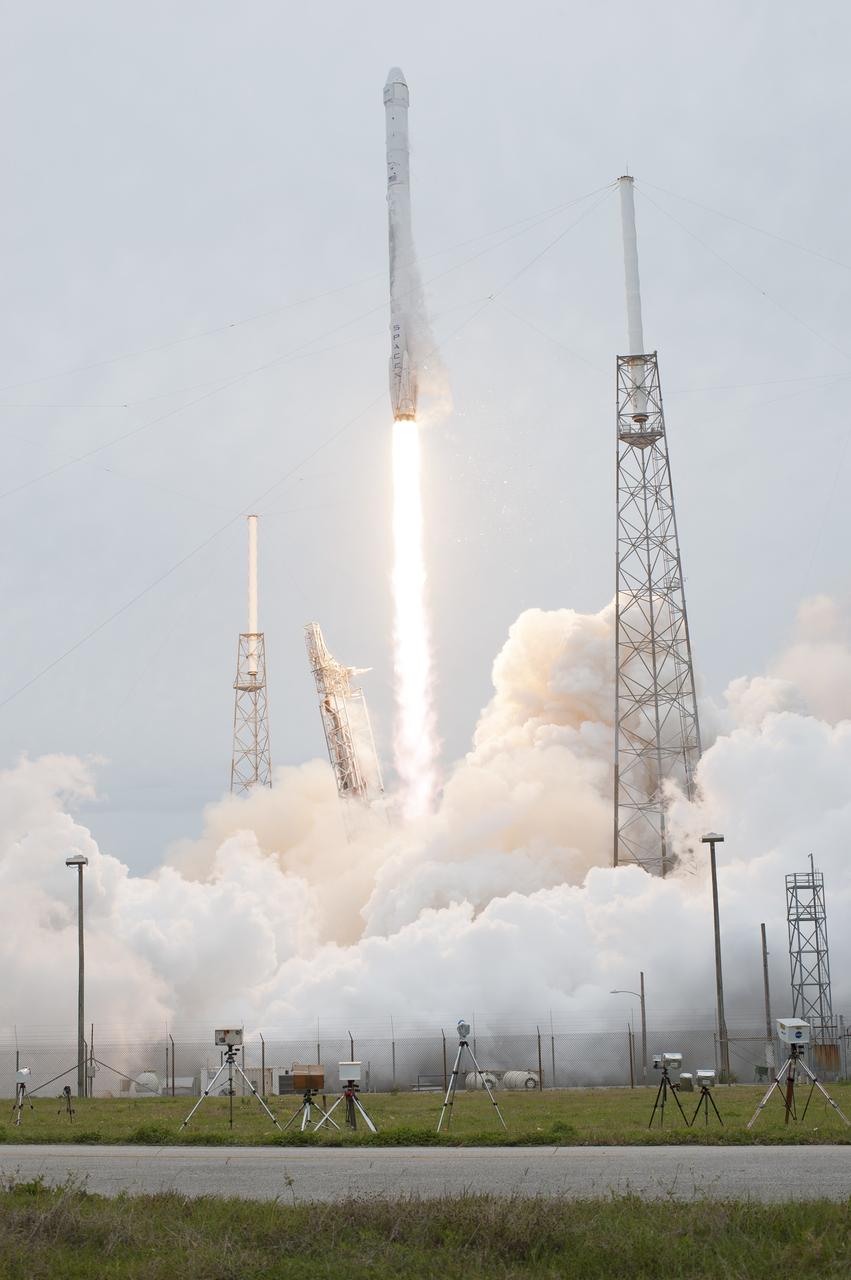
CAPE CANAVERAL, Fla. - The SpaceX-3 mission lifts off into the clouds over Space Launch Complex 40 on Cape Canaveral Air Force Station aboard a Falcon 9 rocket, sending the Dragon resupply spacecraft on its way to the International Space Station. Launch was during an instantaneous window at 3:25 p.m. EDT. Dragon is making its fourth trip to the space station. The SpaceX-3 mission, carrying almost 2.5 tons of supplies, technology and science experiments, is the third of 12 flights through a $1.6 billion NASA Commercial Resupply Services contract. Dragon's cargo will support more than 150 experiments that will be conducted during the station's Expeditions 39 and 40. For more information, visit http://www.nasa.gov/mission_pages/station/structure/launch/index.html. Photo credit: NASA/Tony Gray and Tim Terry
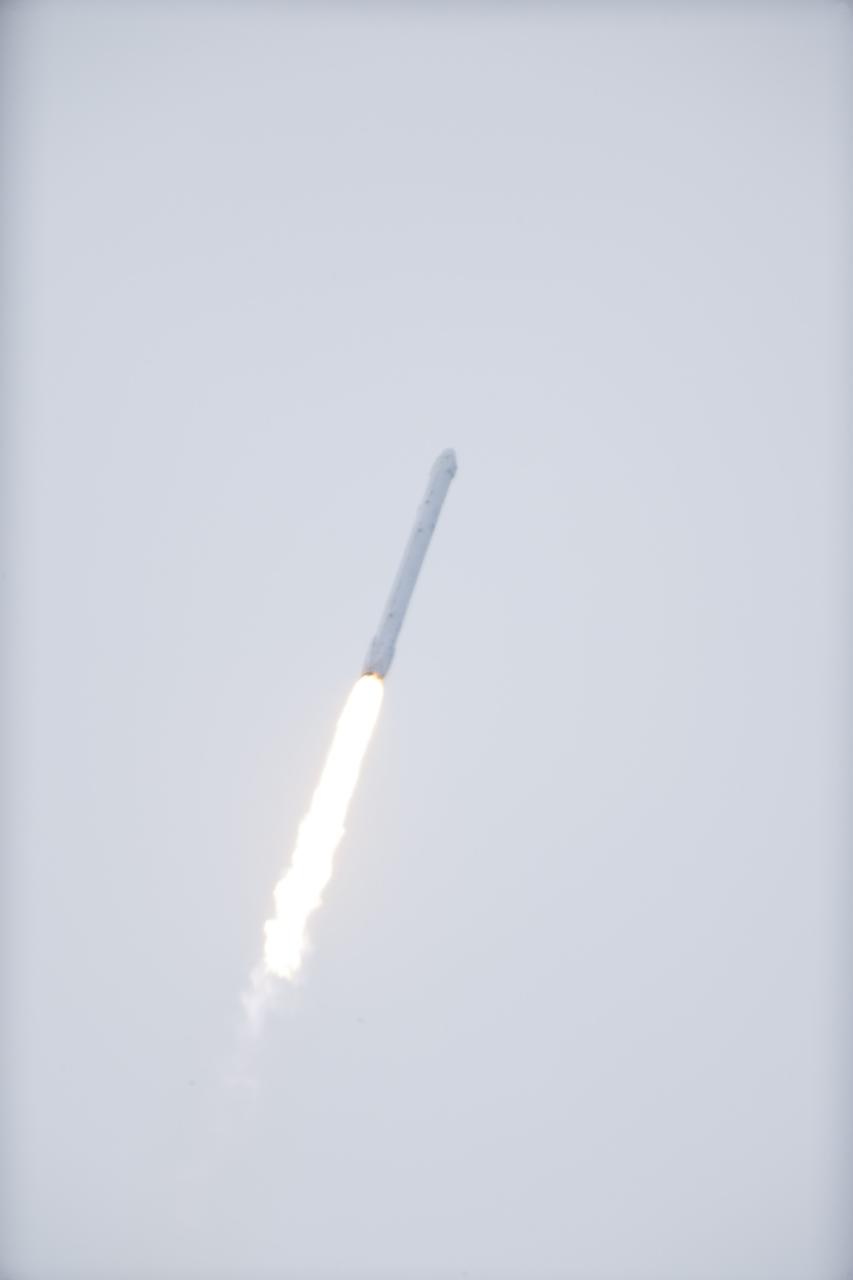
CAPE CANAVERAL, Fla. - The SpaceX-3 mission bolts into the clouds over Space Launch Complex 40 on Cape Canaveral Air Force Station aboard a Falcon 9 rocket, sending the Dragon resupply spacecraft on its way to the International Space Station. Liftoff was during an instantaneous window at 3:25 p.m. EDT. Dragon is making its fourth trip to the space station. The SpaceX-3 mission, carrying almost 2.5 tons of supplies, technology and science experiments, is the third of 12 flights through a $1.6 billion NASA Commercial Resupply Services contract. Dragon's cargo will support more than 150 experiments that will be conducted during the station's Expeditions 39 and 40. For more information, visit http://www.nasa.gov/mission_pages/station/structure/launch/index.html. Photo credit: NASA/Tony Gray
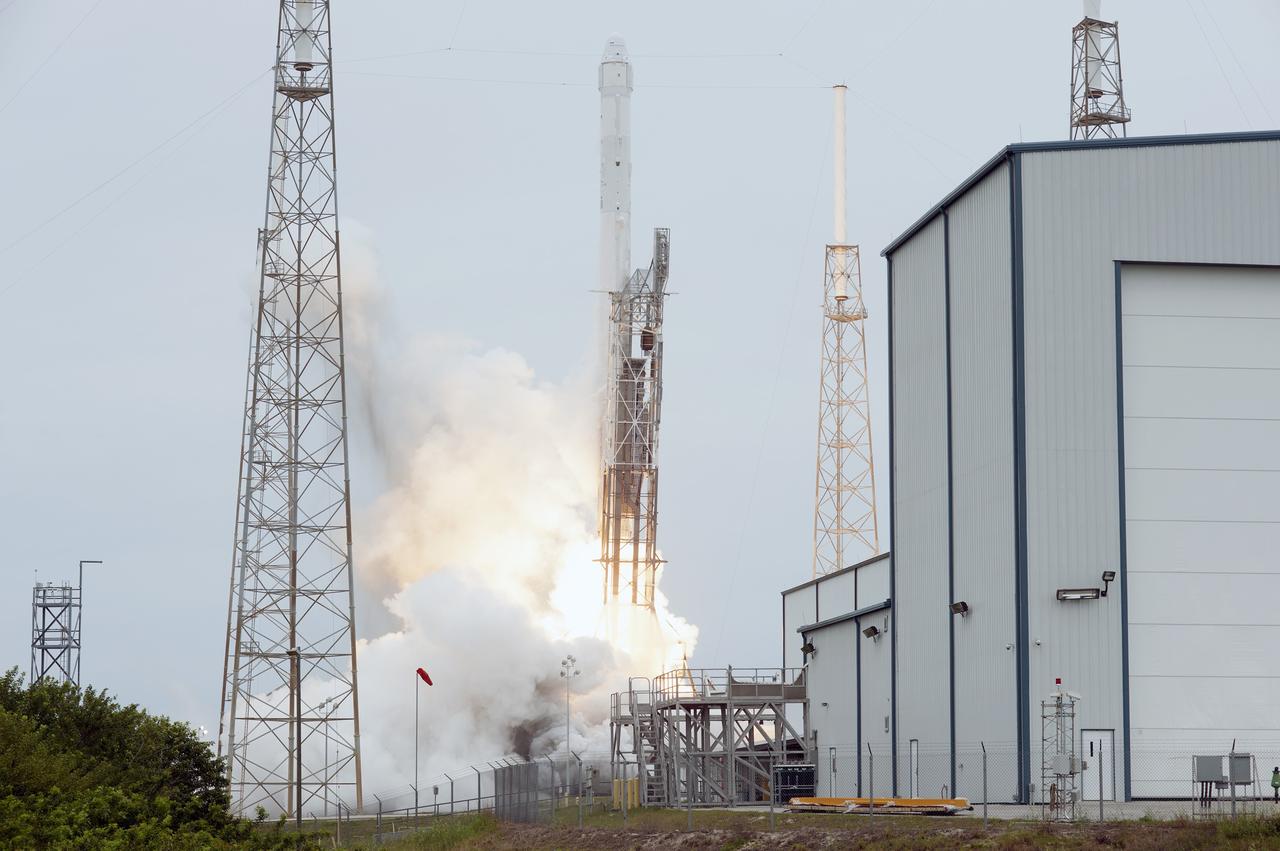
CAPE CANAVERAL, Fla. - An exhaust cloud forms under the Falcon 9 rocket on Space Launch Complex 40 on Cape Canaveral Air Force Station as the SpaceX-3 mission lifts off, carrying the Dragon resupply spacecraft to the International Space Station. Liftoff was during an instantaneous window at 3:25 p.m. EDT. Dragon is making its fourth trip to the space station. The SpaceX-3 mission, carrying almost 2.5 tons of supplies, technology and science experiments, is the third of 12 flights through a $1.6 billion NASA Commercial Resupply Services contract. Dragon's cargo will support more than 150 experiments that will be conducted during the station's Expeditions 39 and 40. For more information, visit http://www.nasa.gov/mission_pages/station/structure/launch/index.html. Photo credit: NASA/Tony Gray and Tim Powers
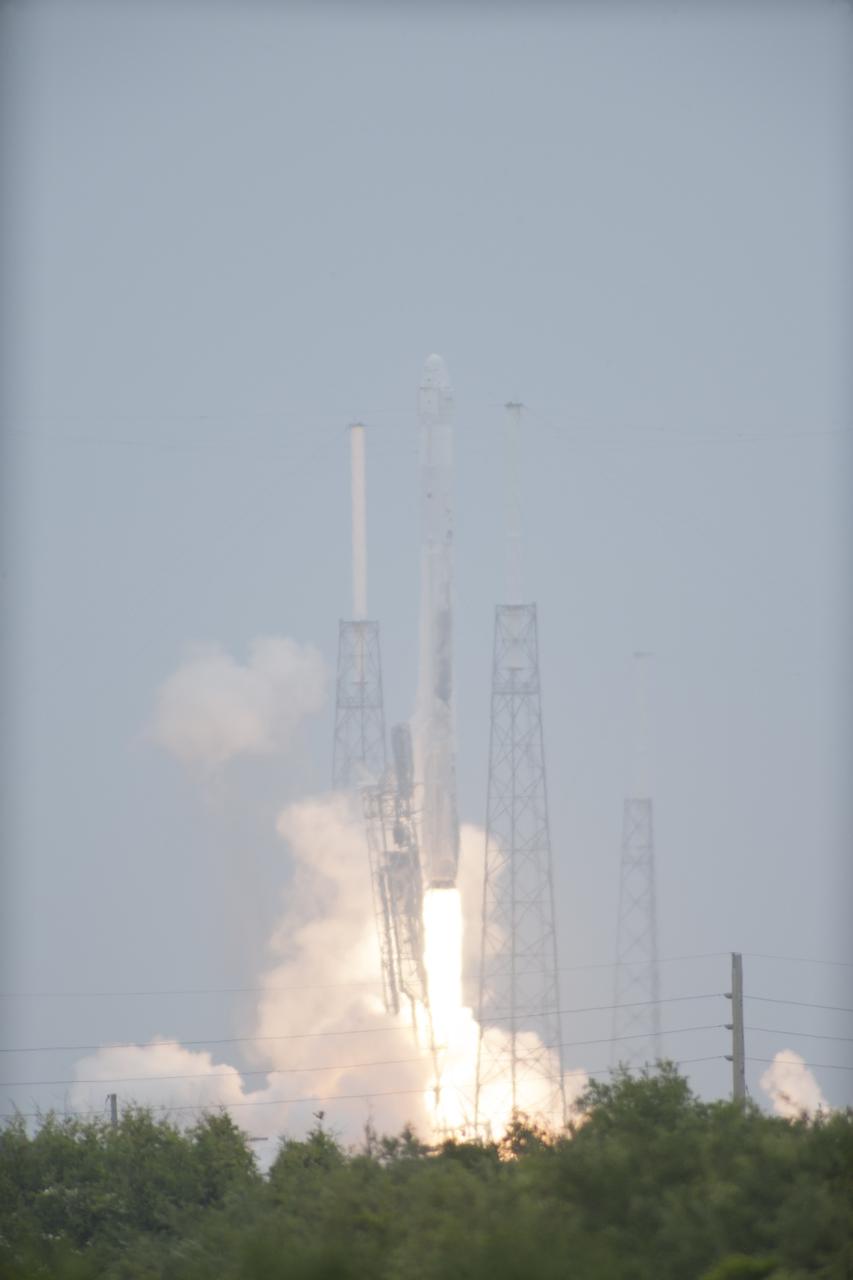
CAPE CANAVERAL, Fla. - The SpaceX Falcon 9 rocket rises above the lightning masts on Space Launch Complex 40 at Cape Canaveral Air Force Station, sending the Dragon resupply spacecraft on its way to the International Space Station. Liftoff was during an instantaneous window at 3:25 p.m. EDT. Dragon is making its fourth trip to the space station. The SpaceX-3 mission, carrying almost 2.5 tons of supplies, technology and science experiments, is the third of 12 flights through a $1.6 billion NASA Commercial Resupply Services contract. Dragon's cargo will support more than 150 experiments that will be conducted during the station's Expeditions 39 and 40. For more information, visit http://www.nasa.gov/mission_pages/station/structure/launch/index.html. Photo credit: NASA/Tony Gray
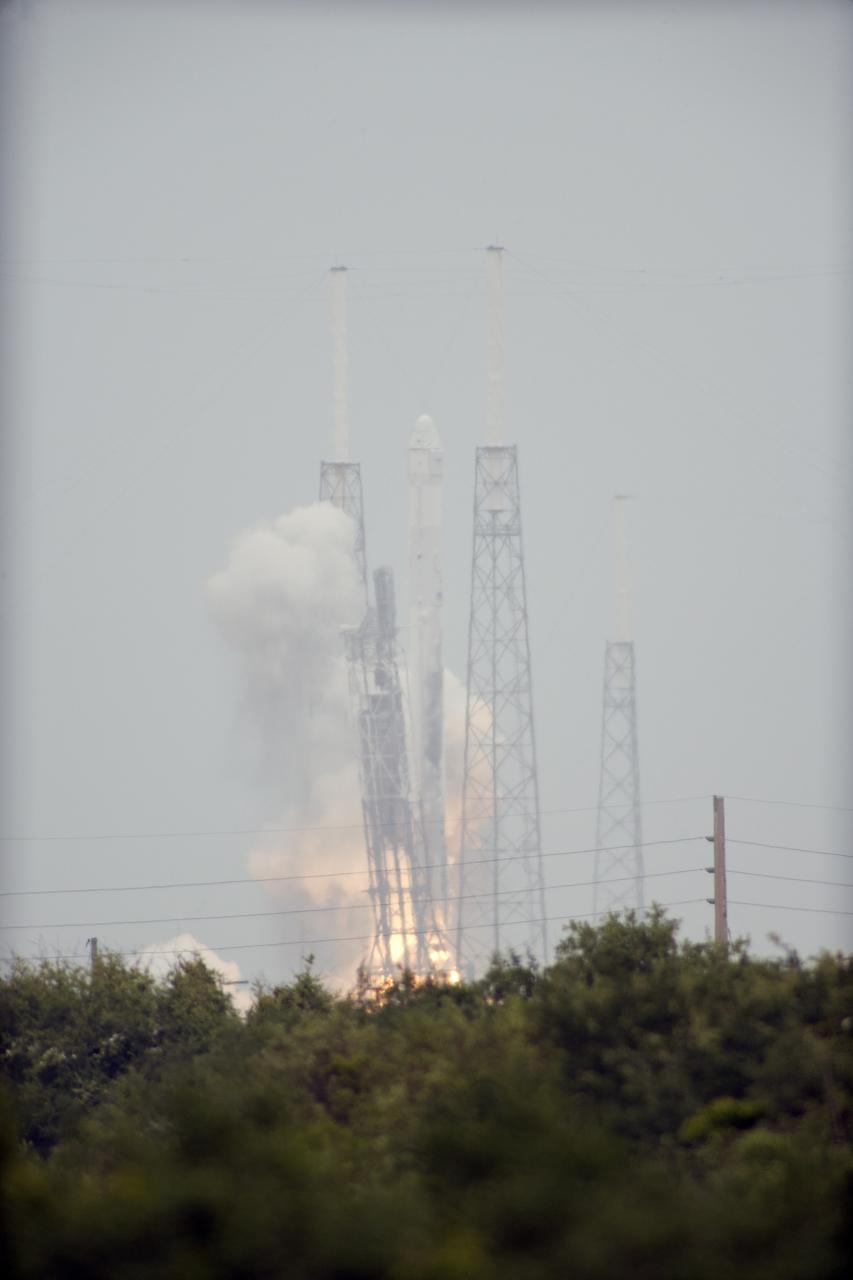
CAPE CANAVERAL, Fla. - An exhaust cloud and flash of light under the Falcon 9 rocket signals liftoff of the SpaceX-3 mission from Space Launch Complex 40 on Cape Canaveral Air Force Station, sending the Dragon resupply spacecraft on its way to the International Space Station. Launch was during an instantaneous window at 3:25 p.m. EDT. Dragon is making its fourth trip to the space station. The SpaceX-3 mission, carrying almost 2.5 tons of supplies, technology and science experiments, is the third of 12 flights through a $1.6 billion NASA Commercial Resupply Services contract. Dragon's cargo will support more than 150 experiments that will be conducted during the station's Expeditions 39 and 40. For more information, visit http://www.nasa.gov/mission_pages/station/structure/launch/index.html. Photo credit: NASA/Tony Gray

CAPE CANAVERAL, Fla. - An exhaust cloud builds around the Falcon 9 rocket at Space Launch Complex 40 on Cape Canaveral Air Force Station as the SpaceX-3 mission lifts off, starting the Dragon resupply spacecraft on its way to the International Space Station. Launch was during an instantaneous window at 3:25 p.m. EDT. Dragon is making its fourth trip to the space station. The SpaceX-3 mission, carrying almost 2.5 tons of supplies, technology and science experiments, is the third of 12 flights through a $1.6 billion NASA Commercial Resupply Services contract. Dragon's cargo will support more than 150 experiments that will be conducted during the station's Expeditions 39 and 40. For more information, visit http://www.nasa.gov/mission_pages/station/structure/launch/index.html. Photo credit: NASA/Tony Gray and Tim Powers
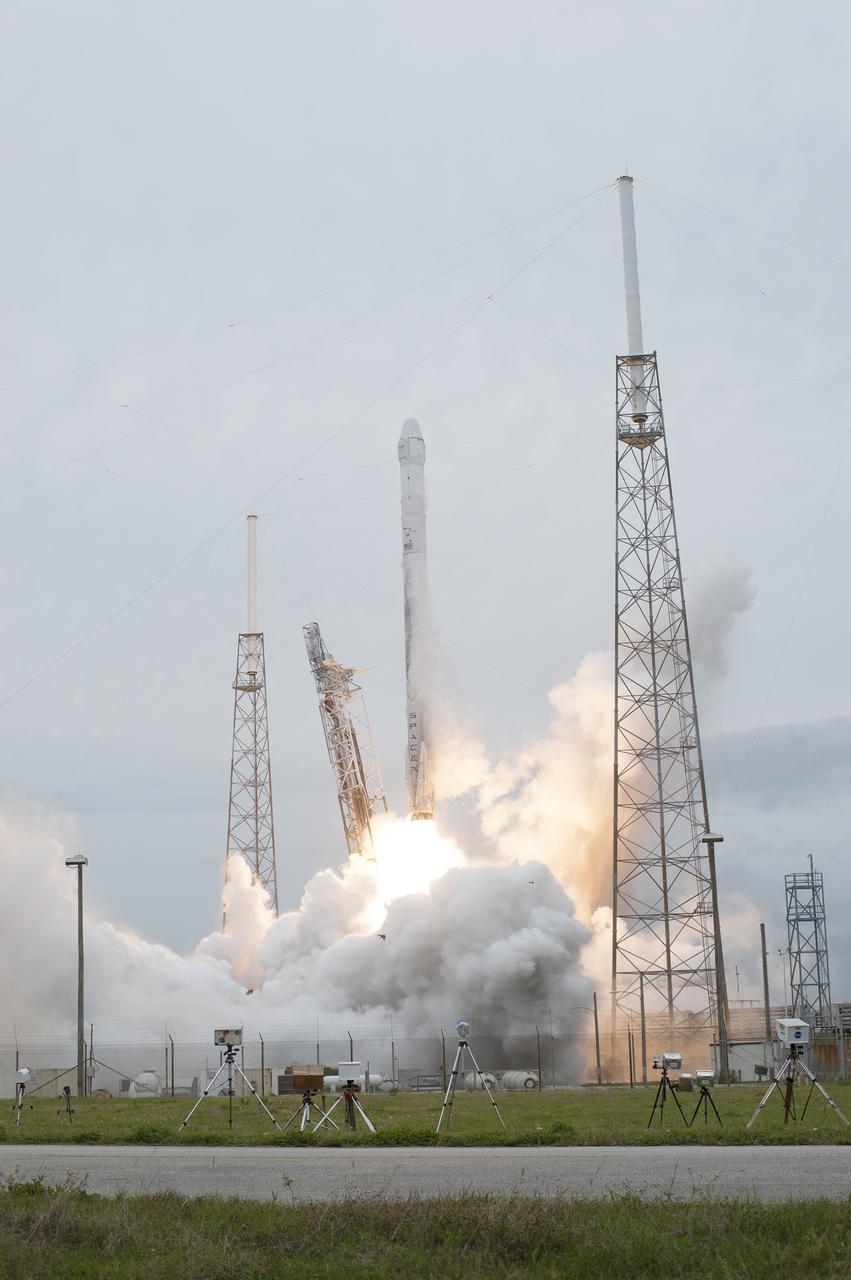
CAPE CANAVERAL, Fla. - An exhaust cloud and flash of light under the Falcon 9 rocket signals liftoff of the SpaceX-3 mission from Space Launch Complex 40 on Cape Canaveral Air Force Station, sending the Dragon resupply spacecraft on its way to the International Space Station. Launch was during an instantaneous window at 3:25 p.m. EDT. Dragon is making its fourth trip to the space station. The SpaceX-3 mission, carrying almost 2.5 tons of supplies, technology and science experiments, is the third of 12 flights through a $1.6 billion NASA Commercial Resupply Services contract. Dragon's cargo will support more than 150 experiments that will be conducted during the station's Expeditions 39 and 40. For more information, visit http://www.nasa.gov/mission_pages/station/structure/launch/index.html. Photo credit: NASA/Tony Gray and Tim Terry
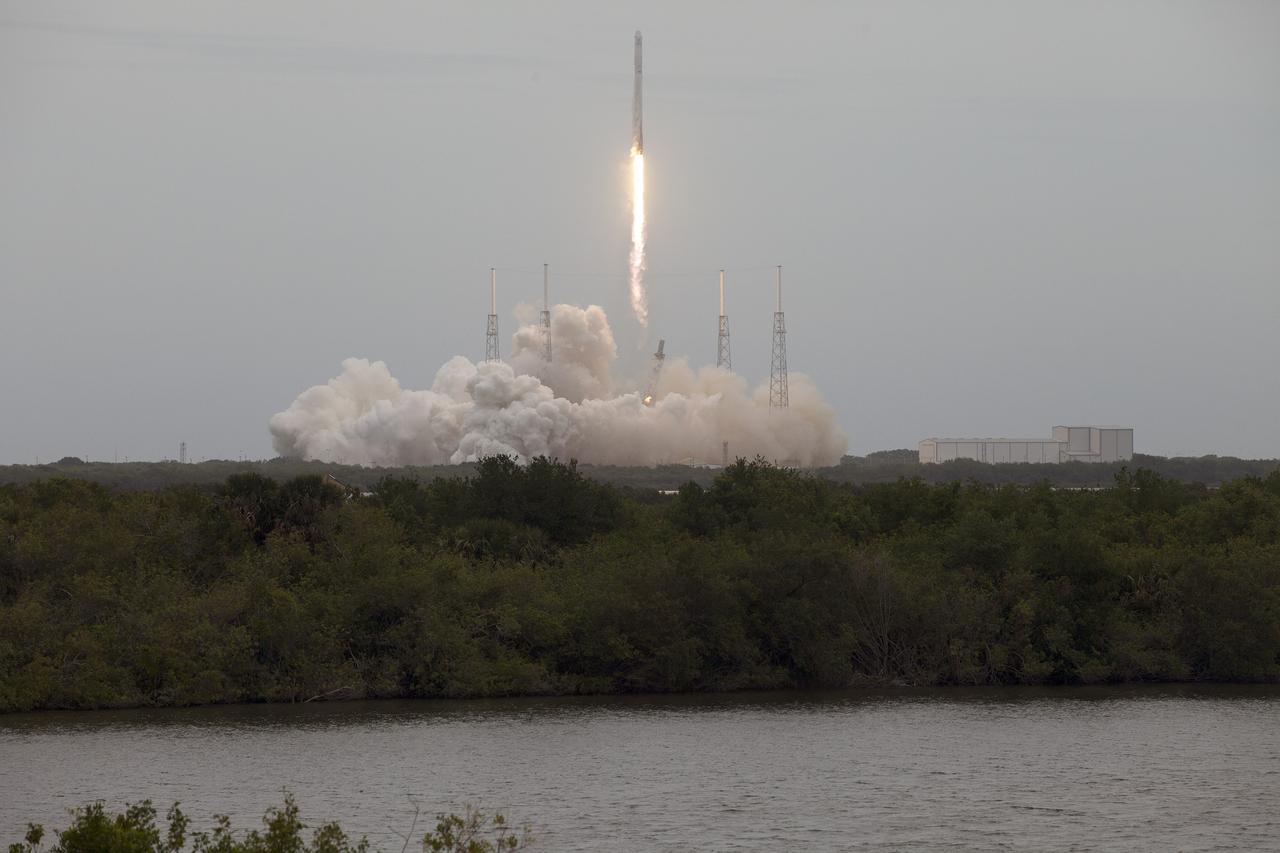
CAPE CANAVERAL, Fla. - The SpaceX-3 mission soars into the clouds over Space Launch Complex 40 on Cape Canaveral Air Force Station aboard a Falcon 9 rocket, carrying the Dragon resupply spacecraft to the International Space Station. Liftoff was during an instantaneous window at 3:25 p.m. EDT. Dragon is making its fourth trip to the space station. The SpaceX-3 mission, carrying almost 2.5 tons of supplies, technology and science experiments, is the third of 12 flights through a $1.6 billion NASA Commercial Resupply Services contract. Dragon's cargo will support more than 150 experiments that will be conducted during the station's Expeditions 39 and 40. For more information, visit http://www.nasa.gov/mission_pages/station/structure/launch/index.html. Photo credit: NASA/Dan Casper
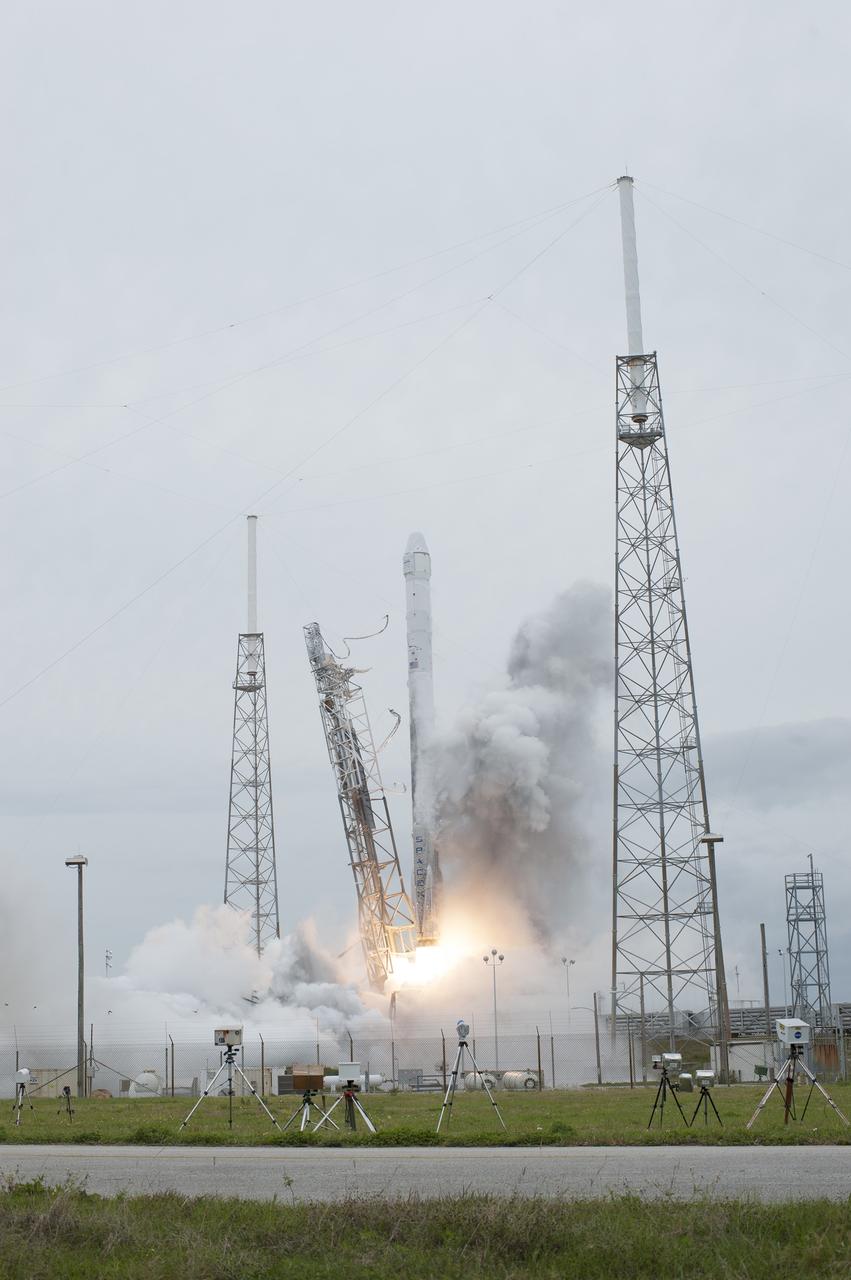
CAPE CANAVERAL, Fla. - An exhaust cloud builds around the Falcon 9 rocket at Space Launch Complex 40 on Cape Canaveral Air Force Station as the SpaceX-3 mission lifts off, starting the Dragon resupply spacecraft on its way to the International Space Station. Launch was during an instantaneous window at 3:25 p.m. EDT. Dragon is making its fourth trip to the space station. The SpaceX-3 mission, carrying almost 2.5 tons of supplies, technology and science experiments, is the third of 12 flights through a $1.6 billion NASA Commercial Resupply Services contract. Dragon's cargo will support more than 150 experiments that will be conducted during the station's Expeditions 39 and 40. For more information, visit http://www.nasa.gov/mission_pages/station/structure/launch/index.html. Photo credit: NASA/Tony Gray and Tim Terry
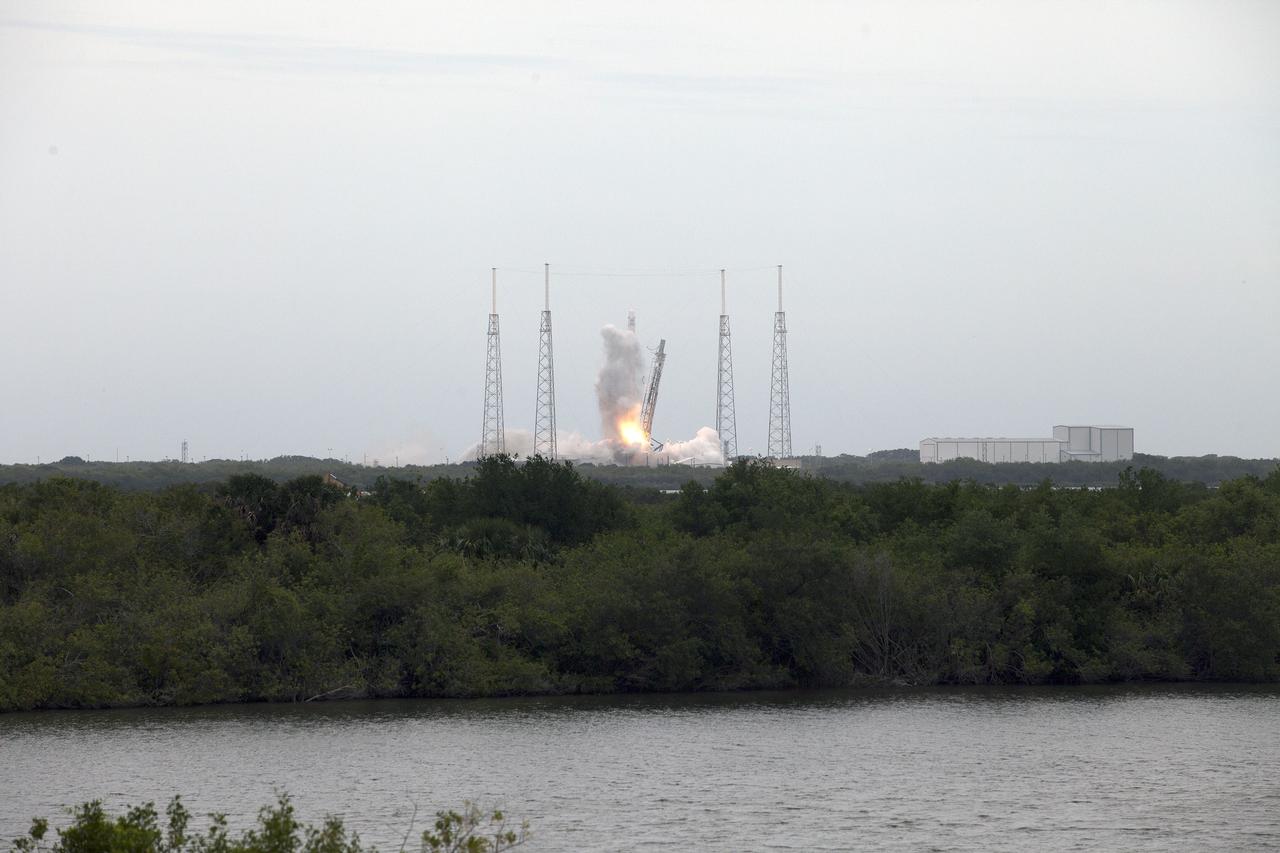
CAPE CANAVERAL, Fla. - The SpaceX-3 mission lifts off through the clouds over Space Launch Complex 40 on Cape Canaveral Air Force Station aboard a Falcon 9 rocket, carrying the Dragon resupply spacecraft to the International Space Station. Liftoff was during an instantaneous window at 3:25 p.m. EDT. Dragon is making its fourth trip to the space station. The SpaceX-3 mission, carrying almost 2.5 tons of supplies, technology and science experiments, is the third of 12 flights through a $1.6 billion NASA Commercial Resupply Services contract. Dragon's cargo will support more than 150 experiments that will be conducted during the station's Expeditions 39 and 40. For more information, visit http://www.nasa.gov/mission_pages/station/structure/launch/index.html. Photo credit: NASA/Dan Casper
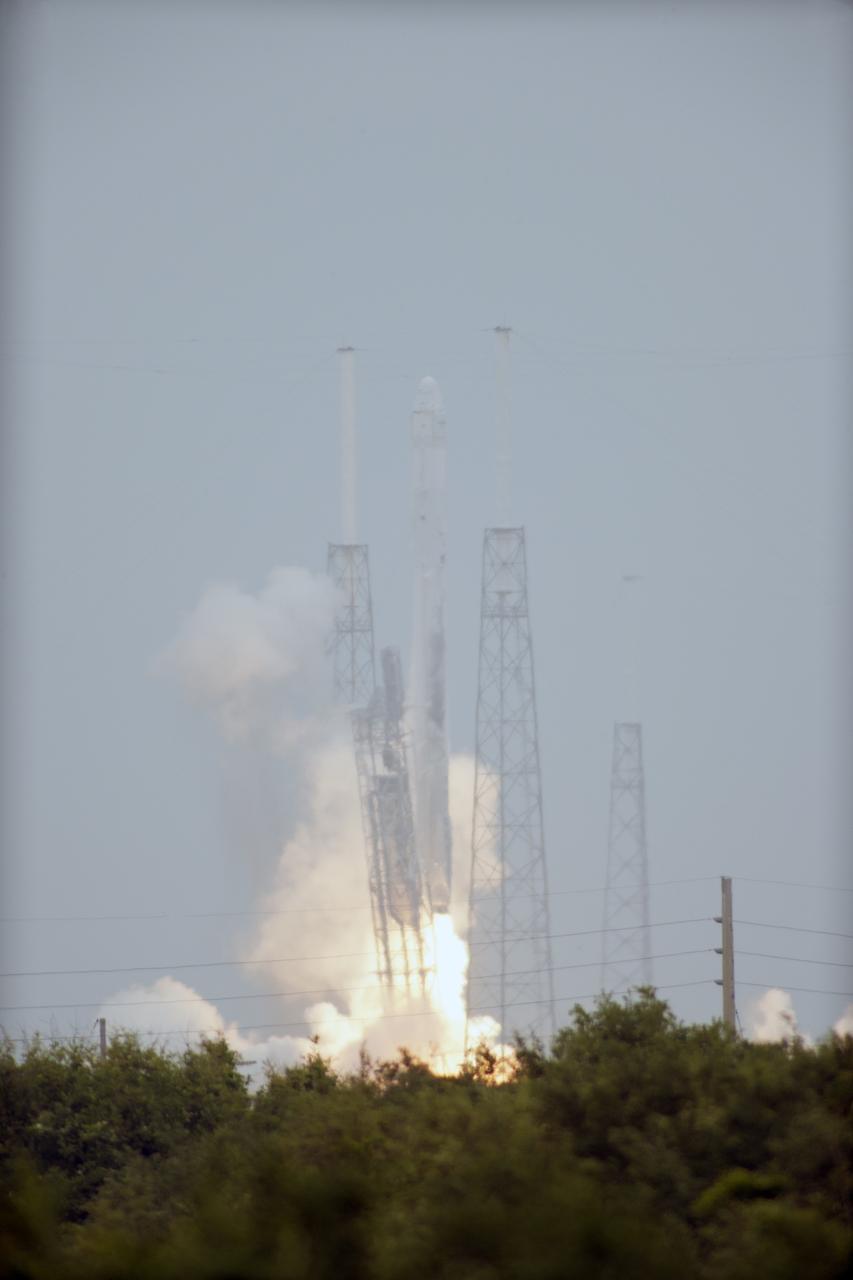
CAPE CANAVERAL, Fla. - An exhaust cloud grows around the Falcon 9 rocket at Space Launch Complex 40 on Cape Canaveral Air Force Station as the SpaceX-3 mission lifts off, sending the Dragon resupply spacecraft on its way to the International Space Station. Launch was during an instantaneous window at 3:25 p.m. EDT. Dragon is making its fourth trip to the space station. The SpaceX-3 mission, carrying almost 2.5 tons of supplies, technology and science experiments, is the third of 12 flights through a $1.6 billion NASA Commercial Resupply Services contract. Dragon's cargo will support more than 150 experiments that will be conducted during the station's Expeditions 39 and 40. For more information, visit http://www.nasa.gov/mission_pages/station/structure/launch/index.html. Photo credit: NASA/Tony Gray
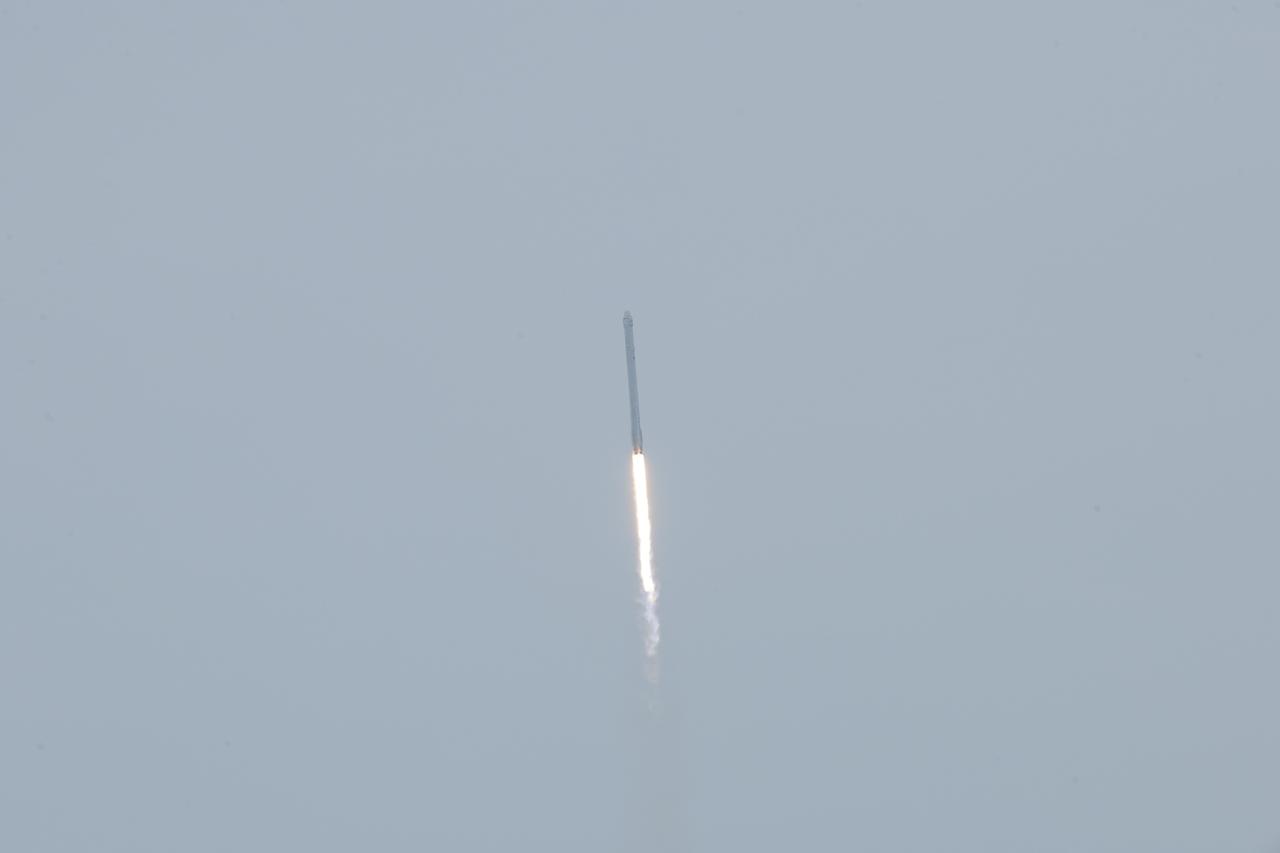
CAPE CANAVERAL, Fla. - Try as it may, the weather could not stop the launch of the SpaceX Falcon 9 rocket from Space Launch Complex 40 on Cape Canaveral Air Force Station, carrying the Dragon resupply spacecraft to the International Space Station. Liftoff was at 3:25 p.m. EDT. Dragon is making its fourth trip to the space station. The SpaceX-3 mission, carrying almost 2.5 tons of supplies, technology and science experiments, is the third of 12 flights through a $1.6 billion NASA Commercial Resupply Services contract. Dragon's cargo will support more than 150 experiments that will be conducted during the station's Expeditions 39 and 40. For more information, visit http://www.nasa.gov/mission_pages/station/structure/launch/index.html. Photo credit: NASA/George Roberts
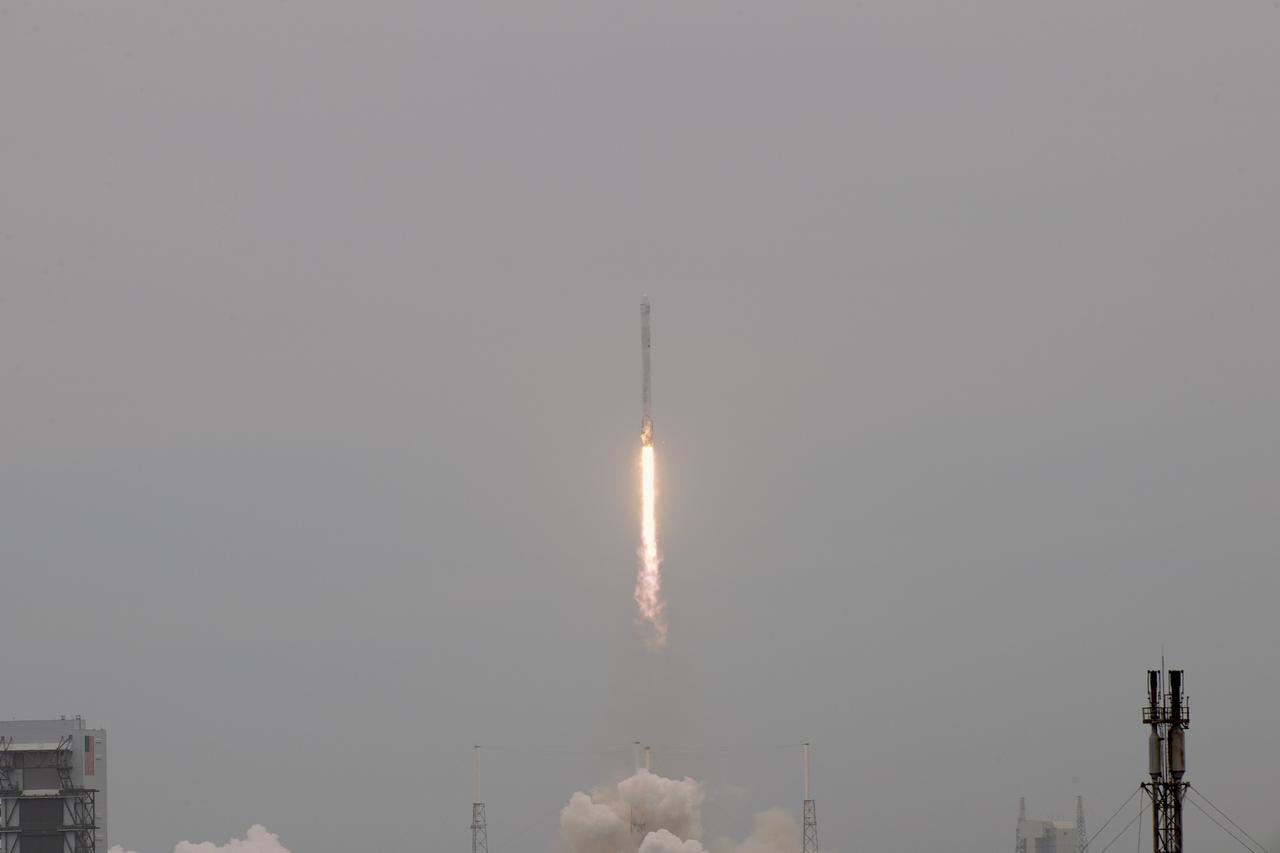
CAPE CANAVERAL, Fla. - The SpaceX-3 mission lifts off into the clouds over Space Launch Complex 40 on Cape Canaveral Air Force Station aboard a Falcon 9 rocket, carrying the Dragon resupply spacecraft to the International Space Station. Liftoff was during an instantaneous window at 3:25 p.m. EDT. Dragon is making its fourth trip to the space station. The SpaceX-3 mission, carrying almost 2.5 tons of supplies, technology and science experiments, is the third of 12 flights through a $1.6 billion NASA Commercial Resupply Services contract. Dragon's cargo will support more than 150 experiments that will be conducted during the station's Expeditions 39 and 40. For more information, visit http://www.nasa.gov/mission_pages/station/structure/launch/index.html. Photo credit: NASA/George Roberts
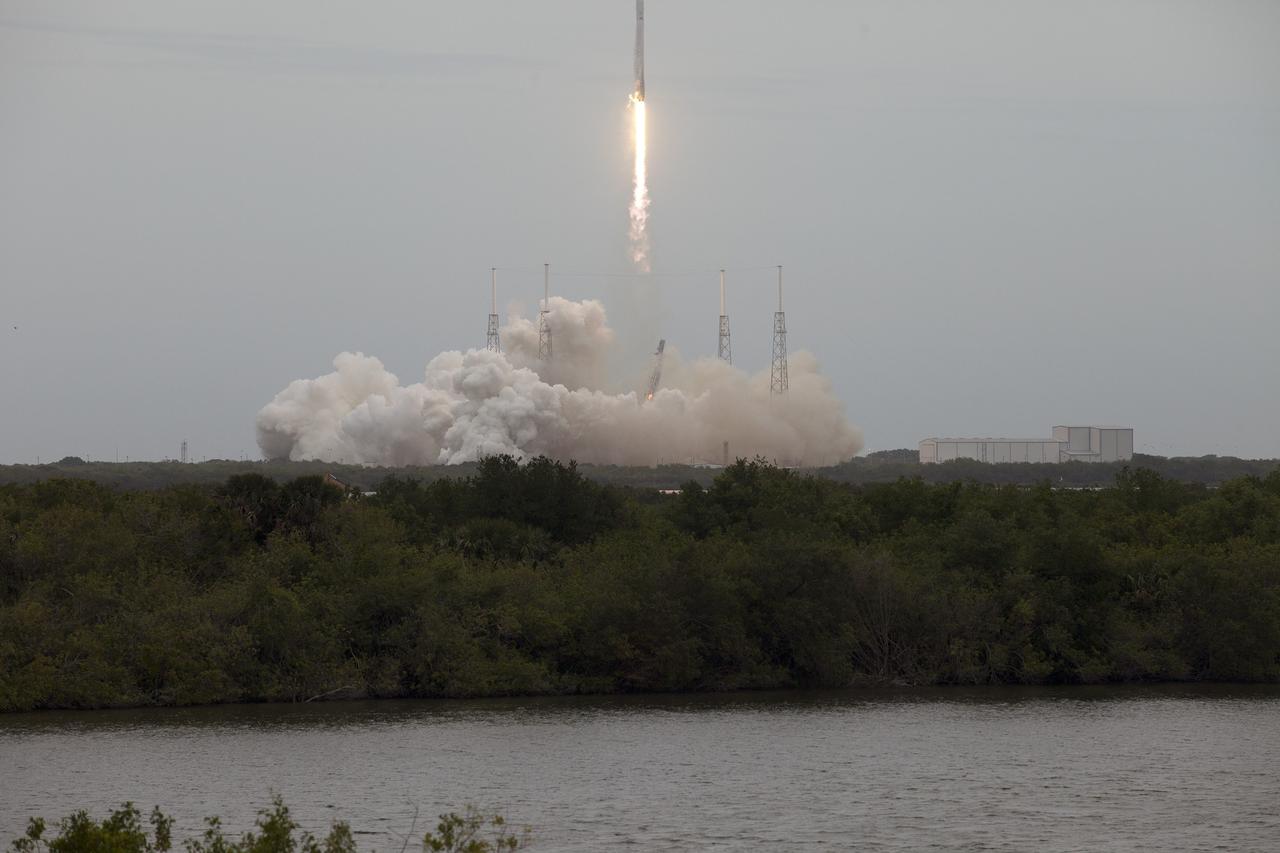
CAPE CANAVERAL, Fla. - Try as it may, the weather could not stop the launch of the SpaceX Falcon 9 rocket from Space Launch Complex 40 on Cape Canaveral Air Force Station, boosting the Dragon resupply spacecraft to the International Space Station. Liftoff was at 3:25 p.m. EDT. Dragon is making its fourth trip to the space station. The SpaceX-3 mission, carrying almost 2.5 tons of supplies, technology and science experiments, is the third of 12 flights through a $1.6 billion NASA Commercial Resupply Services contract. Dragon's cargo will support more than 150 experiments that will be conducted during the station's Expeditions 39 and 40. For more information, visit http://www.nasa.gov/mission_pages/station/structure/launch/index.html. Photo credit: NASA/Dan Casper
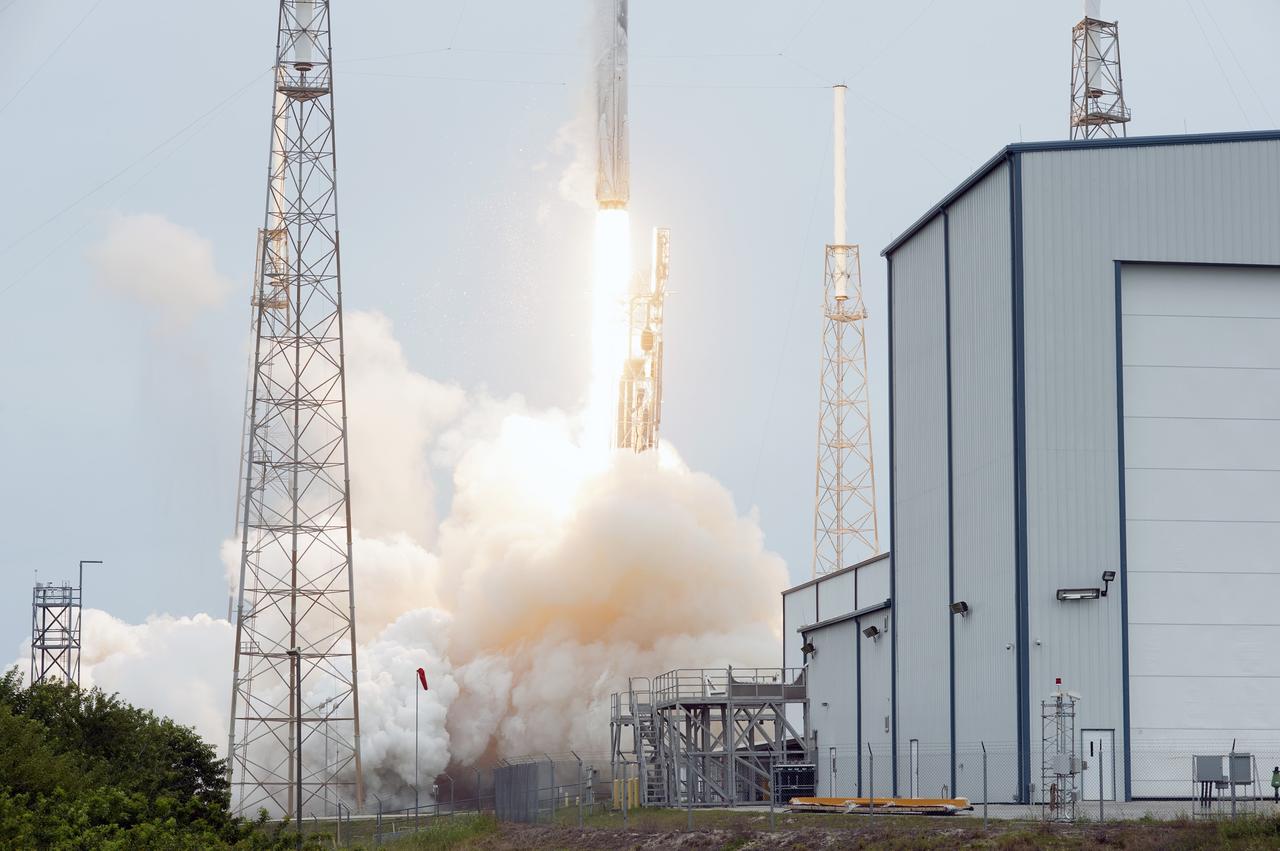
CAPE CANAVERAL, Fla. - The SpaceX Falcon 9 rocket roars past the lightning masts on Space Launch Complex 40 at Cape Canaveral Air Force Station as the SpaceX-3 mission begins, boosting the Dragon resupply spacecraft to the International Space Station. Liftoff was during an instantaneous window at 3:25 p.m. EDT. Dragon is making its fourth trip to the space station. The SpaceX-3 mission, carrying almost 2.5 tons of supplies, technology and science experiments, is the third of 12 flights through a $1.6 billion NASA Commercial Resupply Services contract. Dragon's cargo will support more than 150 experiments that will be conducted during the station's Expeditions 39 and 40. For more information, visit http://www.nasa.gov/mission_pages/station/structure/launch/index.html. Photo credit: NASA/Tony Gray and Tim Powers
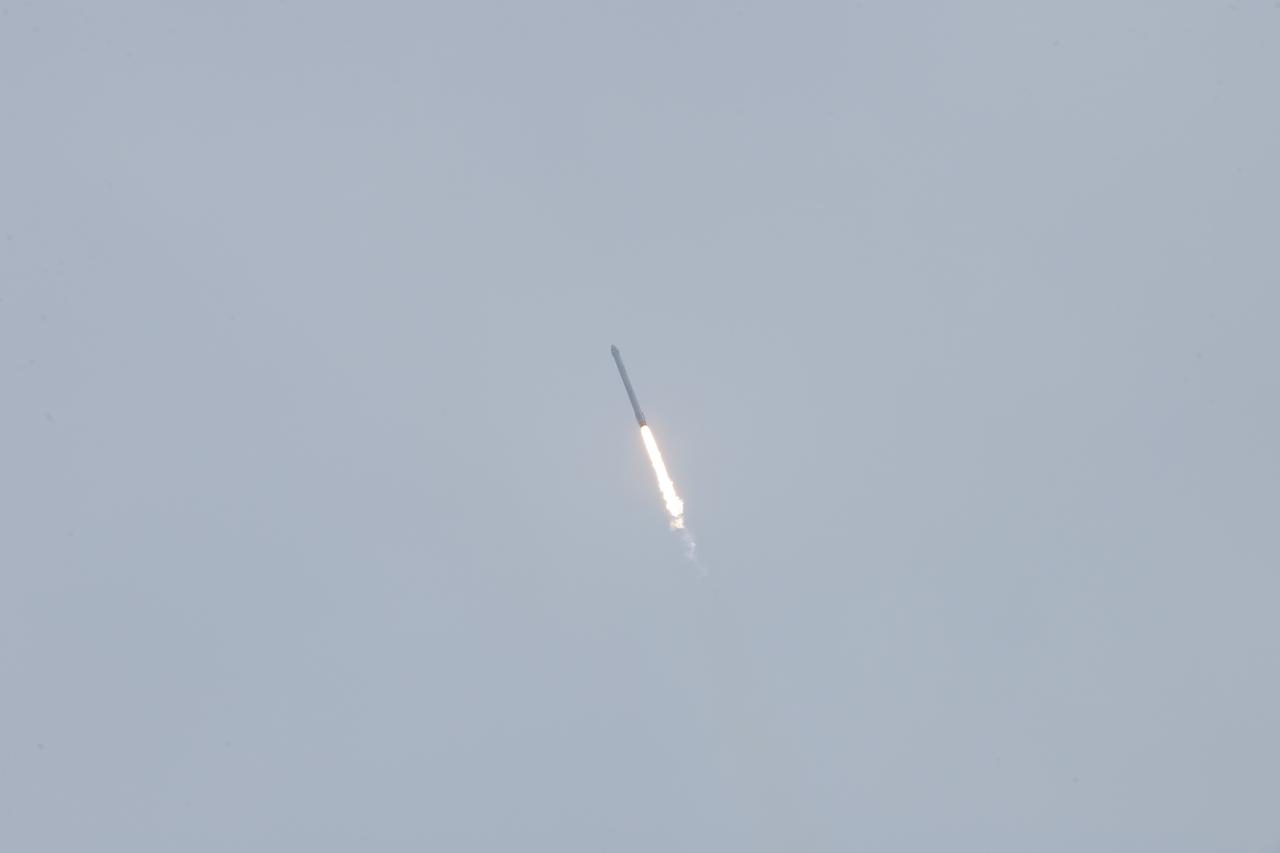
CAPE CANAVERAL, Fla. - The SpaceX-3 mission lifts off through the clouds over Space Launch Complex 40 on Cape Canaveral Air Force Station aboard a Falcon 9 rocket, carrying the Dragon resupply spacecraft to the International Space Station. Liftoff was during an instantaneous window at 3:25 p.m. EDT. Dragon is making its fourth trip to the space station. The SpaceX-3 mission, carrying almost 2.5 tons of supplies, technology and science experiments, is the third of 12 flights through a $1.6 billion NASA Commercial Resupply Services contract. Dragon's cargo will support more than 150 experiments that will be conducted during the station's Expeditions 39 and 40. For more information, visit http://www.nasa.gov/mission_pages/station/structure/launch/index.html. Photo credit: NASA/George Roberts
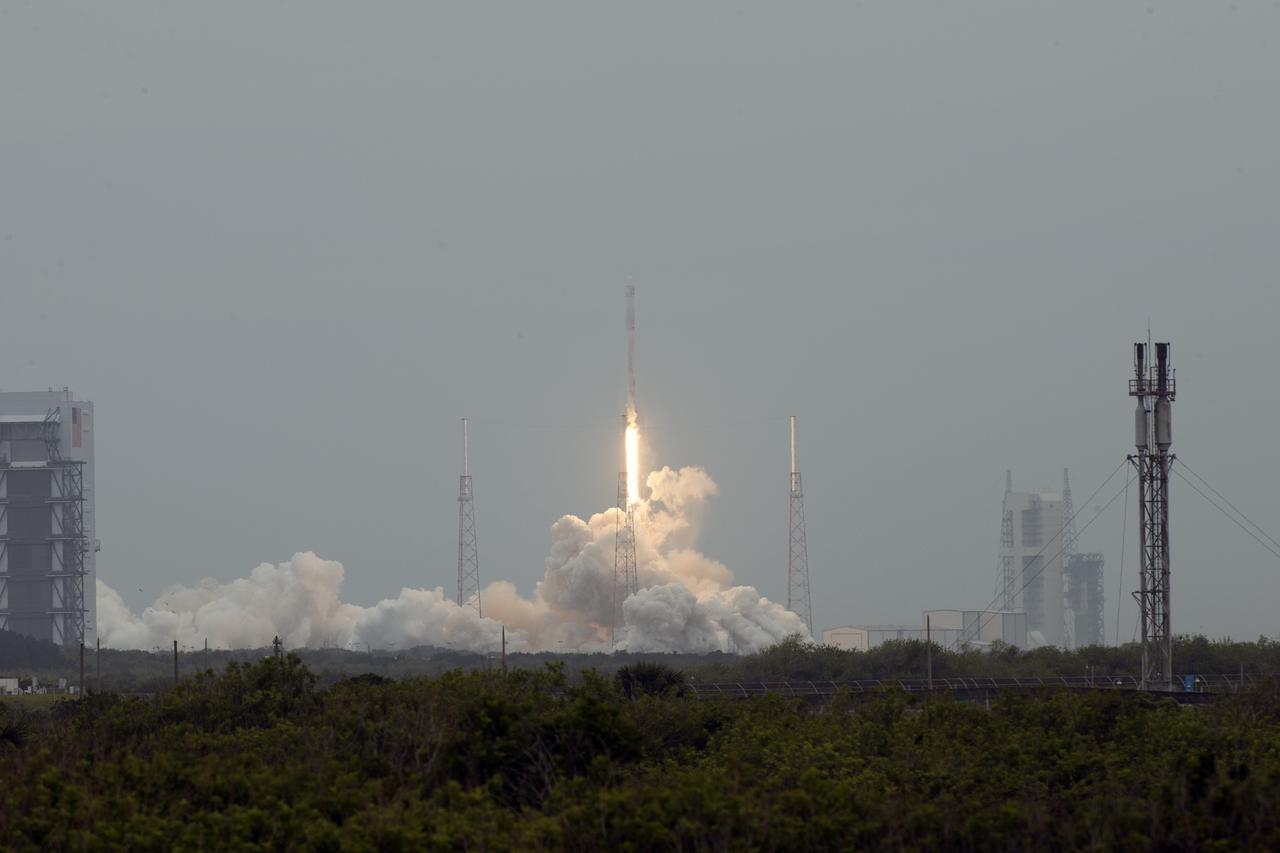
CAPE CANAVERAL, Fla. - The SpaceX Falcon 9 rocket rises above the lightning masts on Space Launch Complex 40 at Cape Canaveral Air Force Station, carrying the Dragon resupply spacecraft to the International Space Station. Liftoff was during an instantaneous window at 3:25 p.m. EDT. Dragon is making its fourth trip to the space station. The SpaceX-3 mission, carrying almost 2.5 tons of supplies, technology and science experiments, is the third of 12 flights through a $1.6 billion NASA Commercial Resupply Services contract. Dragon's cargo will support more than 150 experiments that will be conducted during the station's Expeditions 39 and 40. For more information, visit http://www.nasa.gov/mission_pages/station/structure/launch/index.html. Photo credit: NASA/George Roberts
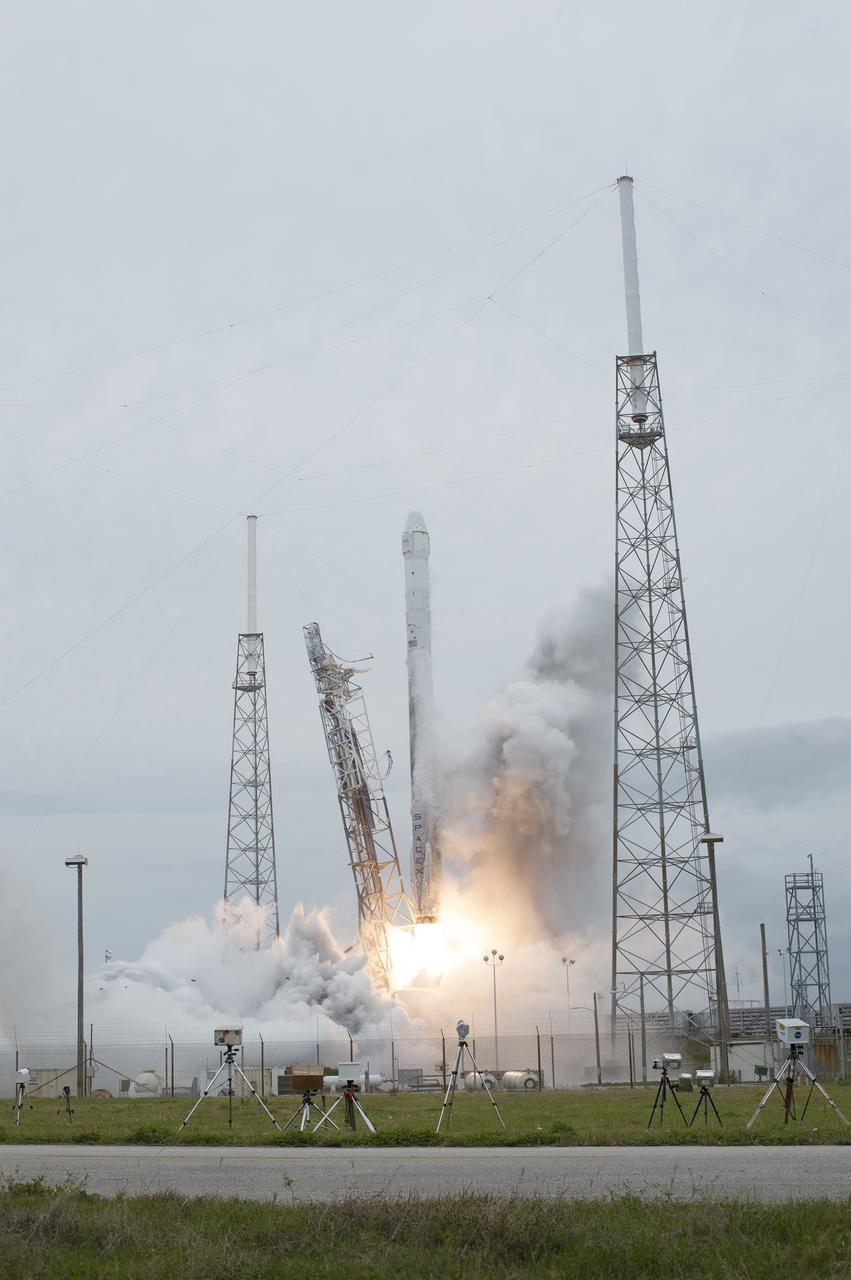
CAPE CANAVERAL, Fla. - Muddy water standing on the pad surface contributes to the formation of a dark exhaust cloud around the Falcon 9 rocket at Space Launch Complex 40 on Cape Canaveral Air Force Station as the SpaceX-3 mission lifts off, sendng the Dragon resupply spacecraft on its way to the International Space Station. Launch was during an instantaneous window at 3:25 p.m. EDT. Dragon is making its fourth trip to the space station. The SpaceX-3 mission, carrying almost 2.5 tons of supplies, technology and science experiments, is the third of 12 flights through a $1.6 billion NASA Commercial Resupply Services contract. Dragon's cargo will support more than 150 experiments that will be conducted during the station's Expeditions 39 and 40. For more information, visit http://www.nasa.gov/mission_pages/station/structure/launch/index.html. Photo credit: NASA/Tony Gray and Tim Terry
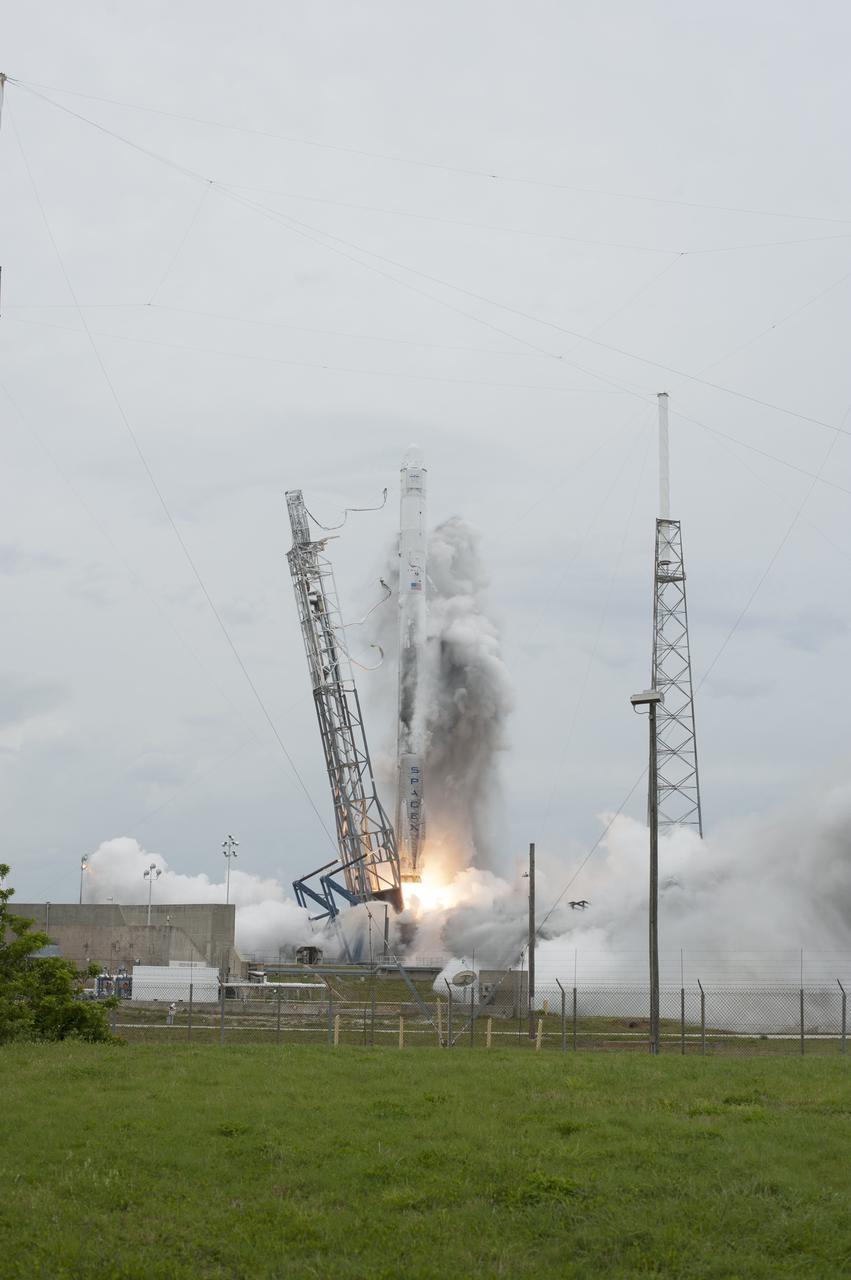
CAPE CANAVERAL, Fla. - A SpaceX Falcon 9 rocket lifts off Space Launch Complex 40 on Cape Canaveral Air Force Station in Florida leaving an exhaust cloud in its wake. Launch of the SpaceX-3 mission was during an instantaneous window at 3:25 p.m. EDT, starting the Dragon resupply spacecraft on its way to the International Space Station. Dragon is making its fourth trip to the space station. The SpaceX-3 mission, carrying almost 2.5 tons of supplies, technology and science experiments, is the third of 12 flights through a $1.6 billion NASA Commercial Resupply Services contract. Dragon's cargo will support more than 150 experiments that will be conducted during the station's Expeditions 39 and 40. For more information, visit http://www.nasa.gov/mission_pages/station/structure/launch/index.html. Photo credit: NASA/Tony Gray and Tim Powers

CAPE CANAVERAL, Fla. - The SpaceX Falcon 9 rocket rises above the lightning masts on Space Launch Complex 40 at Cape Canaveral Air Force Station, carrying the Dragon resupply spacecraft to the International Space Station. Liftoff was during an instantaneous window at 3:25 p.m. EDT. Dragon is making its fourth trip to the space station. The SpaceX-3 mission, carrying almost 2.5 tons of supplies, technology and science experiments, is the third of 12 flights through a $1.6 billion NASA Commercial Resupply Services contract. Dragon's cargo will support more than 150 experiments that will be conducted during the station's Expeditions 39 and 40. For more information, visit http://www.nasa.gov/mission_pages/station/structure/launch/index.html. Photo credit: NASA/Dan Casper
CAPE CANAVERAL, Fla. - Nine rocket engines roar to life on the SpaceX Falcon 9 rocket, lifting it off Space Launch Complex 40 on Cape Canaveral Air Force Station and boosting the Dragon resupply spacecraft to the International Space Station. Liftoff was at 3:25 p.m. EDT. Dragon is making its fourth trip to the space station. The SpaceX-3 mission, carrying almost 2.5 tons of supplies, technology and science experiments, is the third of 12 flights through a $1.6 billion NASA Commercial Resupply Services contract. Dragon's cargo will support more than 150 experiments that will be conducted during the station's Expeditions 39 and 40. For more information, visit http://www.nasa.gov/mission_pages/station/structure/launch/index.html. Photo credit: NASA/Tony Gray and Tim Powers
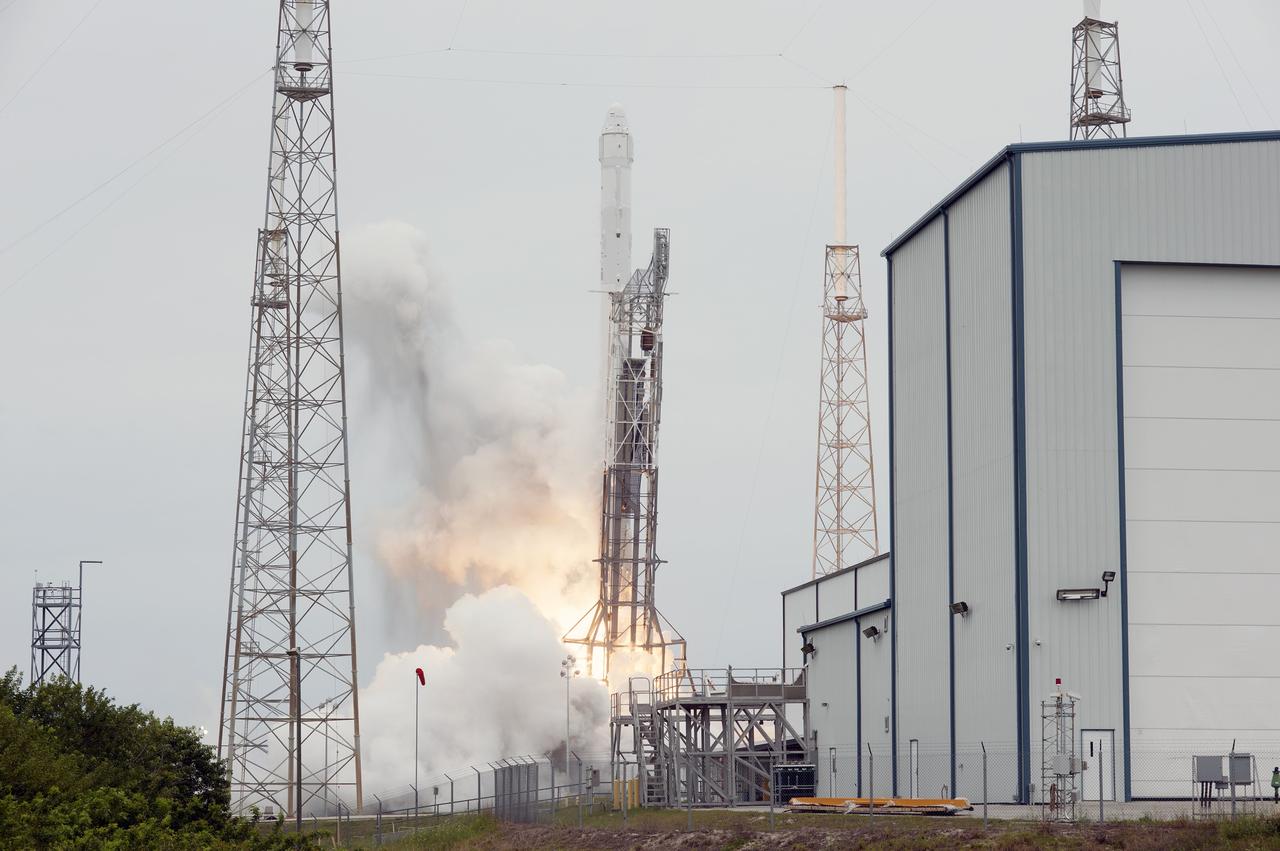
CAPE CANAVERAL, Fla. - Nine engines roar to life under the SpaceX Falcon 9 rocket, lifting it off Space Launch Complex 40 on Cape Canaveral Air Force Station and boosting the Dragon resupply spacecraft on the SpaceX-3 mission to the International Space Station. Launch was at 3:25 p.m. EDT. Dragon is making its fourth trip to the space station. The SpaceX-3 mission, carrying almost 2.5 tons of supplies, technology and science experiments, is the third of 12 flights through a $1.6 billion NASA Commercial Resupply Services contract. Dragon's cargo will support more than 150 experiments that will be conducted during the station's Expeditions 39 and 40. For more information, visit http://www.nasa.gov/mission_pages/station/structure/launch/index.html. Photo credit: NASA/Tony Gray and Tim Powers
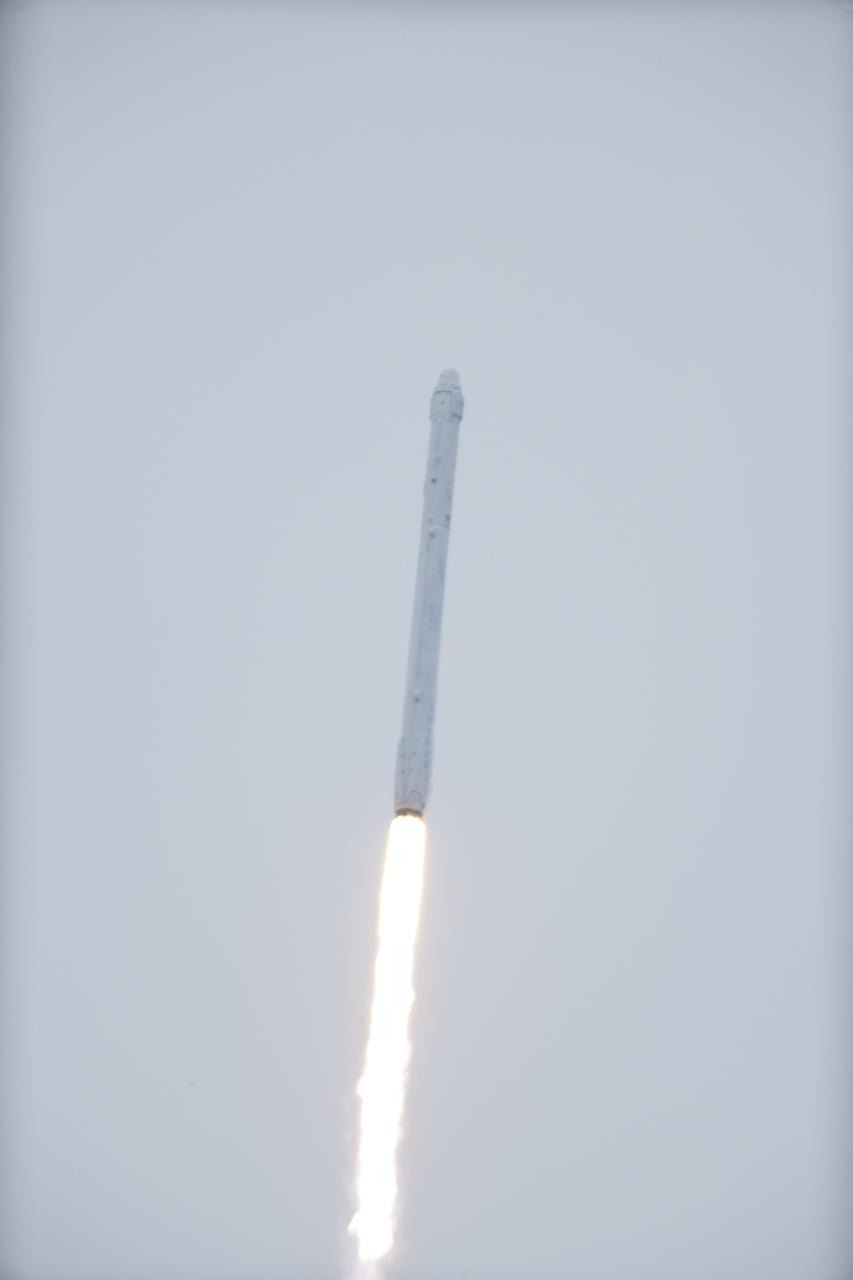
CAPE CANAVERAL, Fla. - The SpaceX Falcon 9 rocket heads into the clouds over Space Launch Complex 40 on Cape Canaveral Air Force Station, sending the SpaceX-3 Dragon resupply spacecraft on its way to the International Space Station. Liftoff was during an instantaneous window at 3:25 p.m. EDT. Dragon is making its fourth trip to the space station. The SpaceX-3 mission, carrying almost 2.5 tons of supplies, technology and science experiments, is the third of 12 flights through a $1.6 billion NASA Commercial Resupply Services contract. Dragon's cargo will support more than 150 experiments that will be conducted during the station's Expeditions 39 and 40. For more information, visit http://www.nasa.gov/mission_pages/station/structure/launch/index.html. Photo credit: NASA/Tony Gray
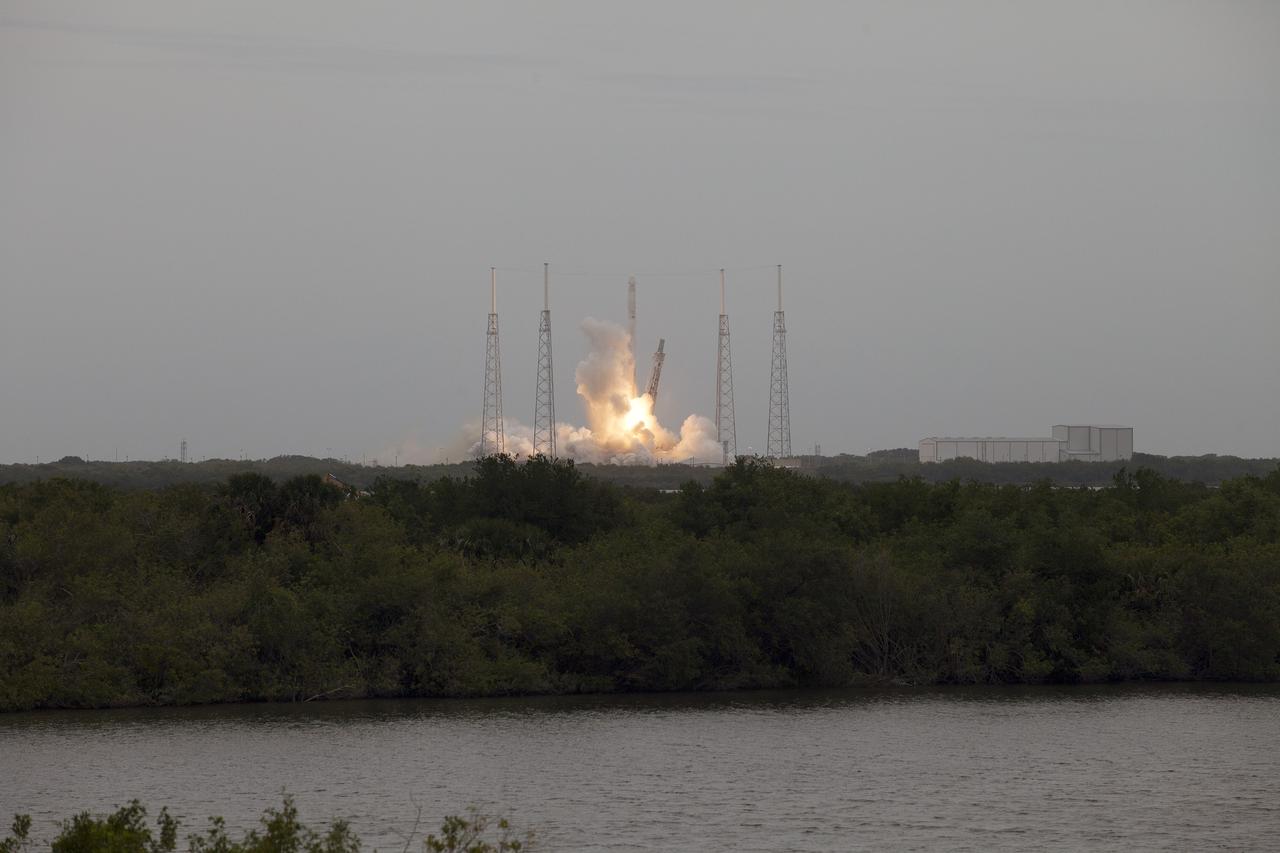
CAPE CANAVERAL, Fla. - An exhaust cloud builds around the Falcon 9 rocket on Space Launch Complex 40 on Cape Canaveral Air Force Station as the SpaceX-3 mission lifts off, carrying the Dragon resupply spacecraft to the International Space Station. Liftoff was during an instantaneous window at 3:25 p.m. EDT. Dragon is making its fourth trip to the space station. The SpaceX-3 mission, carrying almost 2.5 tons of supplies, technology and science experiments, is the third of 12 flights through a $1.6 billion NASA Commercial Resupply Services contract. Dragon's cargo will support more than 150 experiments that will be conducted during the station's Expeditions 39 and 40. For more information, visit http://www.nasa.gov/mission_pages/station/structure/launch/index.html. Photo credit: NASA/Dan Casper
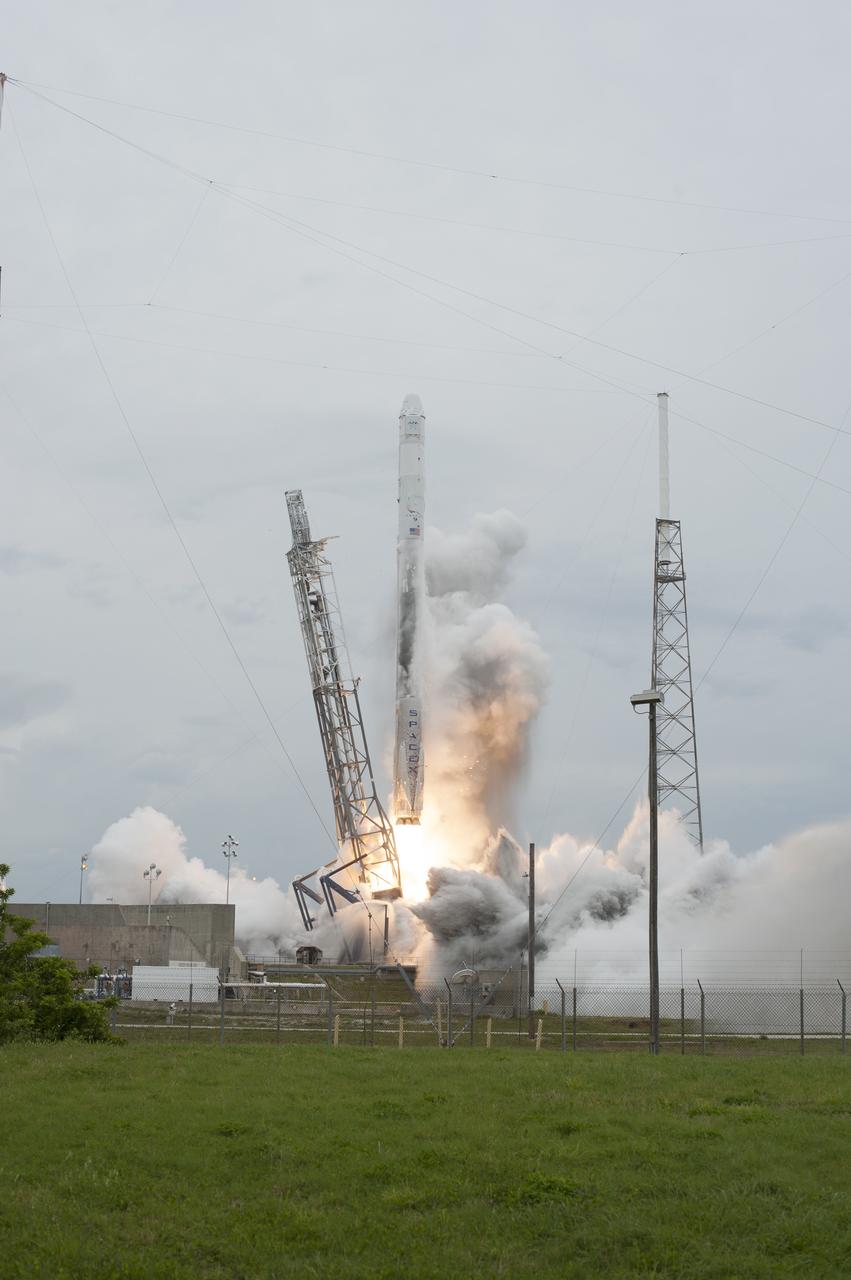
CAPE CANAVERAL, Fla. - An exhaust cloud forms around the Falcon 9 rocket on Space Launch Complex 40 on Cape Canaveral Air Force Station as the SpaceX-3 mission lifts off, carrying the Dragon resupply spacecraft to the International Space Station. Liftoff was during an instantaneous window at 3:25 p.m. EDT. Dragon is making its fourth trip to the space station. The SpaceX-3 mission, carrying almost 2.5 tons of supplies, technology and science experiments, is the third of 12 flights through a $1.6 billion NASA Commercial Resupply Services contract. Dragon's cargo will support more than 150 experiments that will be conducted during the station's Expeditions 39 and 40. For more information, visit http://www.nasa.gov/mission_pages/station/structure/launch/index.html. Photo credit: NASA/Tony Gray and Tim Powers
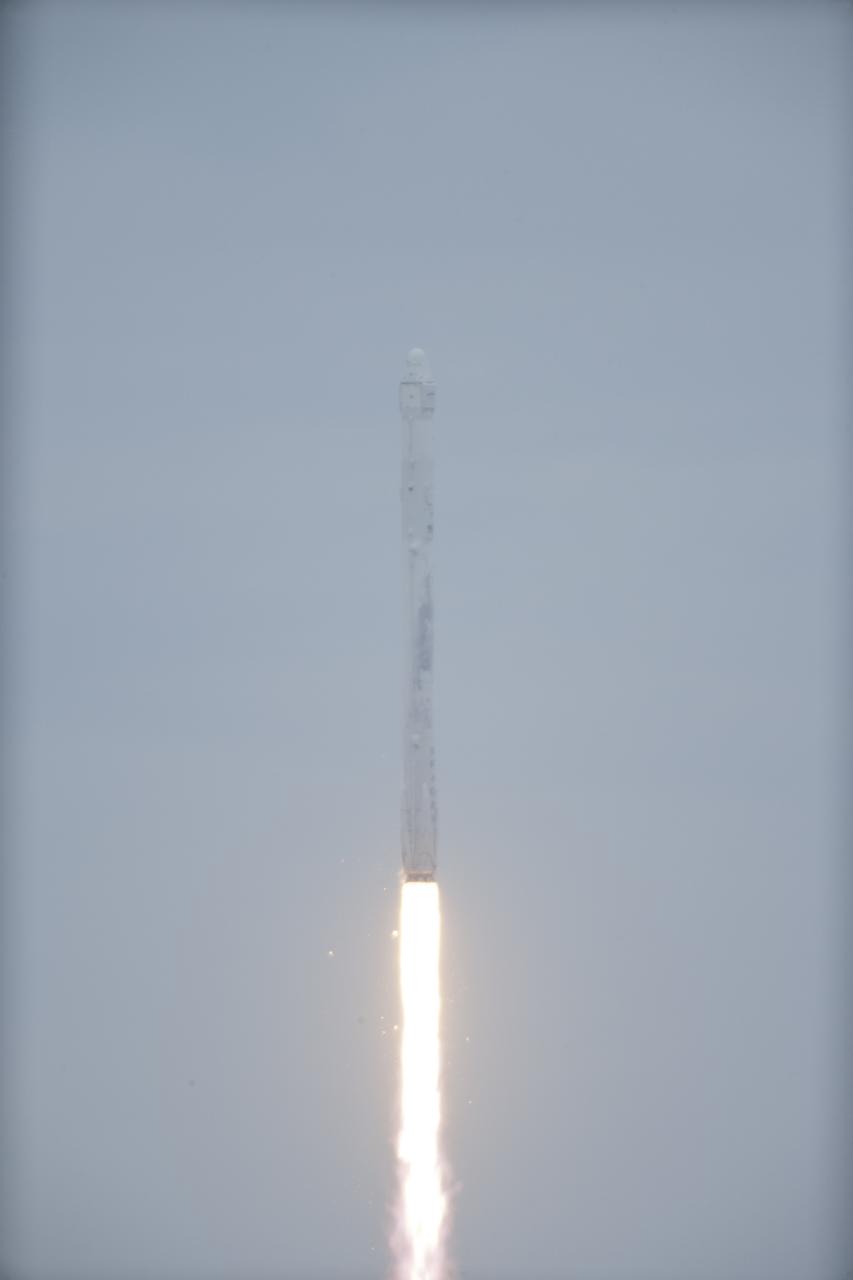
CAPE CANAVERAL, Fla. - Try as it may, the weather could not delay the launch of the SpaceX Falcon 9 rocket from Space Launch Complex 40 on Cape Canaveral Air Force Station, sending the Dragon resupply spacecraft on its way to the International Space Station. Liftoff was during an instantaneous window at 3:25 p.m. EDT. Dragon is making its fourth trip to the space station. The SpaceX-3 mission, carrying almost 2.5 tons of supplies, technology and science experiments, is the third of 12 flights through a $1.6 billion NASA Commercial Resupply Services contract. Dragon's cargo will support more than 150 experiments that will be conducted during the station's Expeditions 39 and 40. For more information, visit http://www.nasa.gov/mission_pages/station/structure/launch/index.html. Photo credit: NASA/Tony Gray
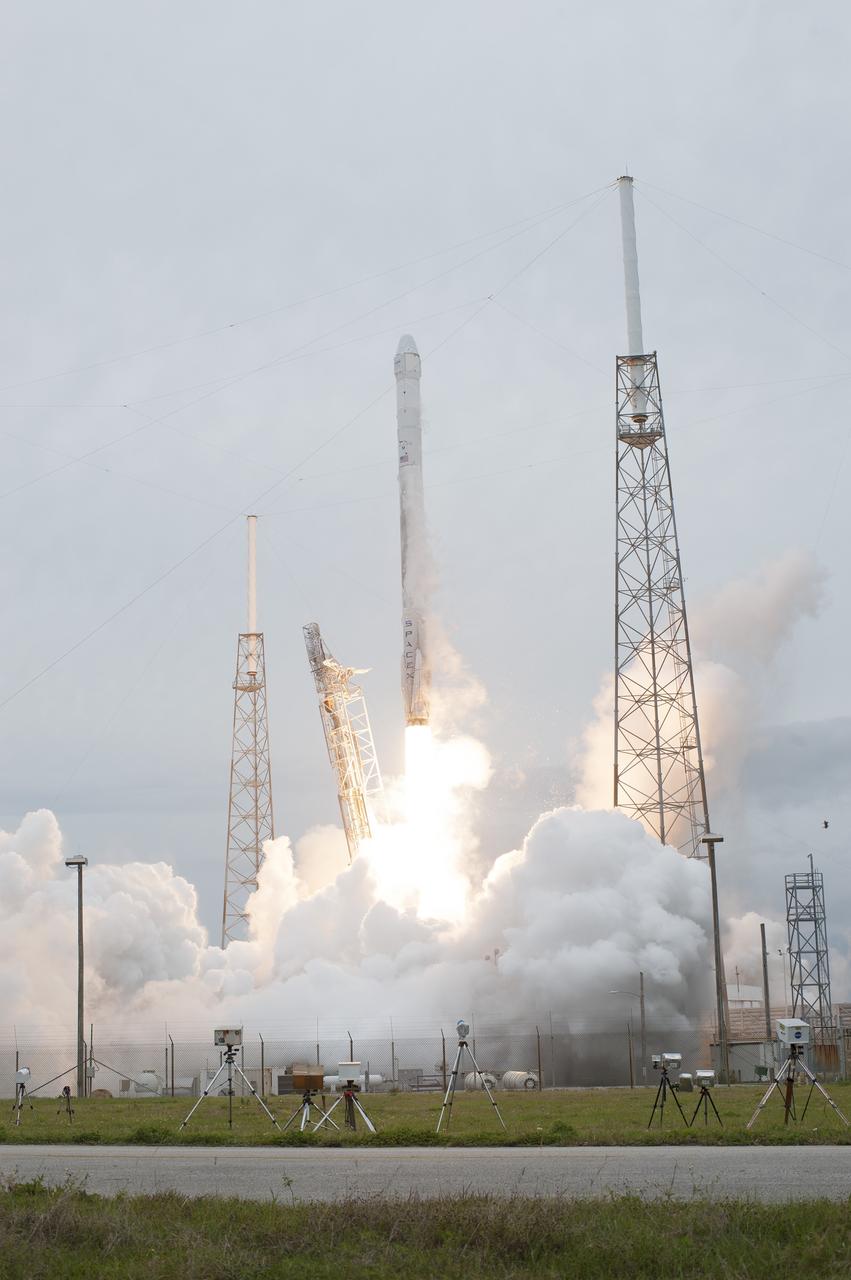
CAPE CANAVERAL, Fla. - A SpaceX Falcon 9 rocket lifts off Space Launch Complex 40 on Cape Canaveral Air Force Station in Florida leaving an exhaust cloud in its wake. Launch of the SpaceX-3 mission was during an instantaneous window at 3:25 p.m. EDT, sending the Dragon resupply spacecraft on its way to the International Space Station. Dragon is making its fourth trip to the space station. The SpaceX-3 mission, carrying almost 2.5 tons of supplies, technology and science experiments, is the third of 12 flights through a $1.6 billion NASA Commercial Resupply Services contract. Dragon's cargo will support more than 150 experiments that will be conducted during the station's Expeditions 39 and 40. For more information, visit http://www.nasa.gov/mission_pages/station/structure/launch/index.html. Photo credit: NASA/Tony Gray and Tim Terry
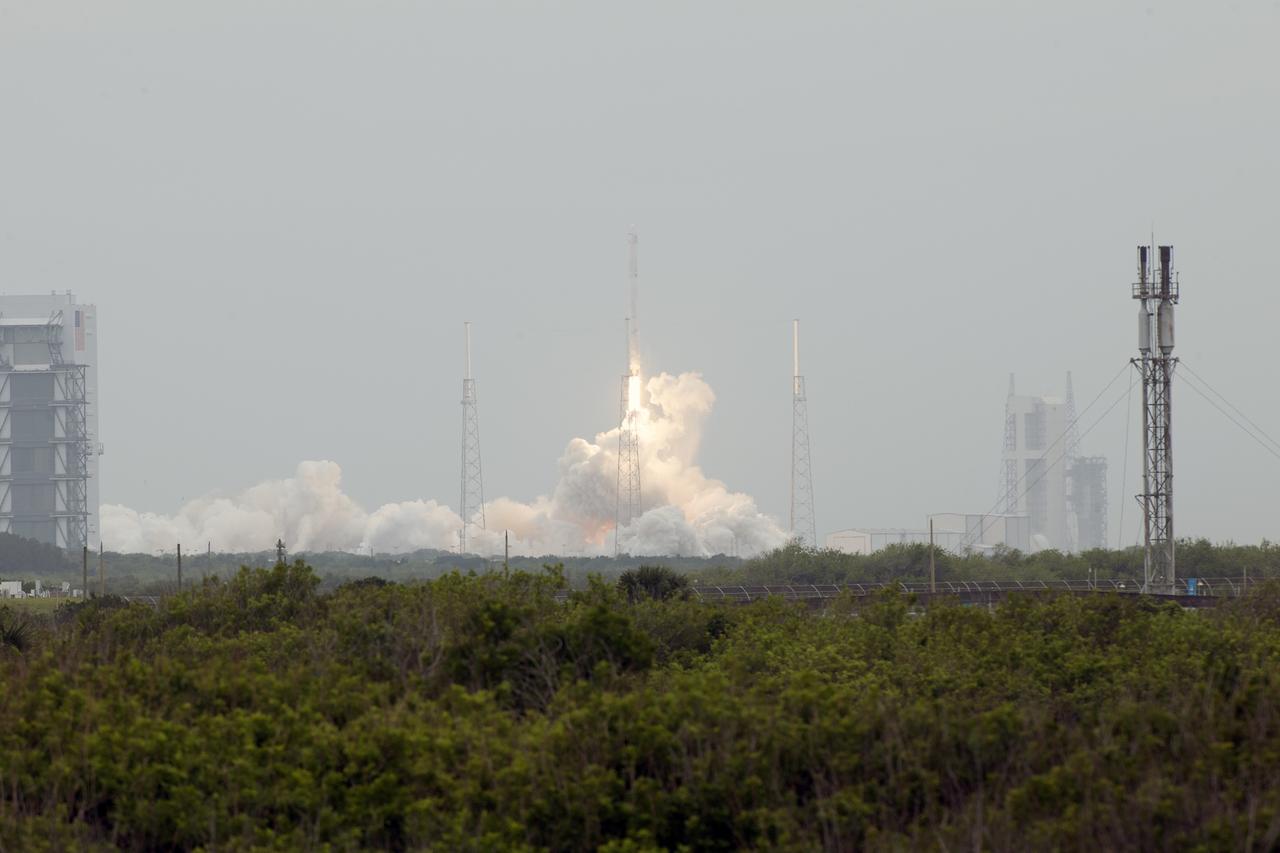
CAPE CANAVERAL, Fla. - An exhaust cloud builds under the Falcon 9 rocket on Space Launch Complex 40 on Cape Canaveral Air Force Station as the SpaceX-3 mission lifts off, carrying the Dragon resupply spacecraft to the International Space Station. Liftoff was during an instantaneous window at 3:25 p.m. EDT. Dragon is making its fourth trip to the space station. The SpaceX-3 mission, carrying almost 2.5 tons of supplies, technology and science experiments, is the third of 12 flights through a $1.6 billion NASA Commercial Resupply Services contract. Dragon's cargo will support more than 150 experiments that will be conducted during the station's Expeditions 39 and 40. For more information, visit http://www.nasa.gov/mission_pages/station/structure/launch/index.html. Photo credit: NASA/George Roberts
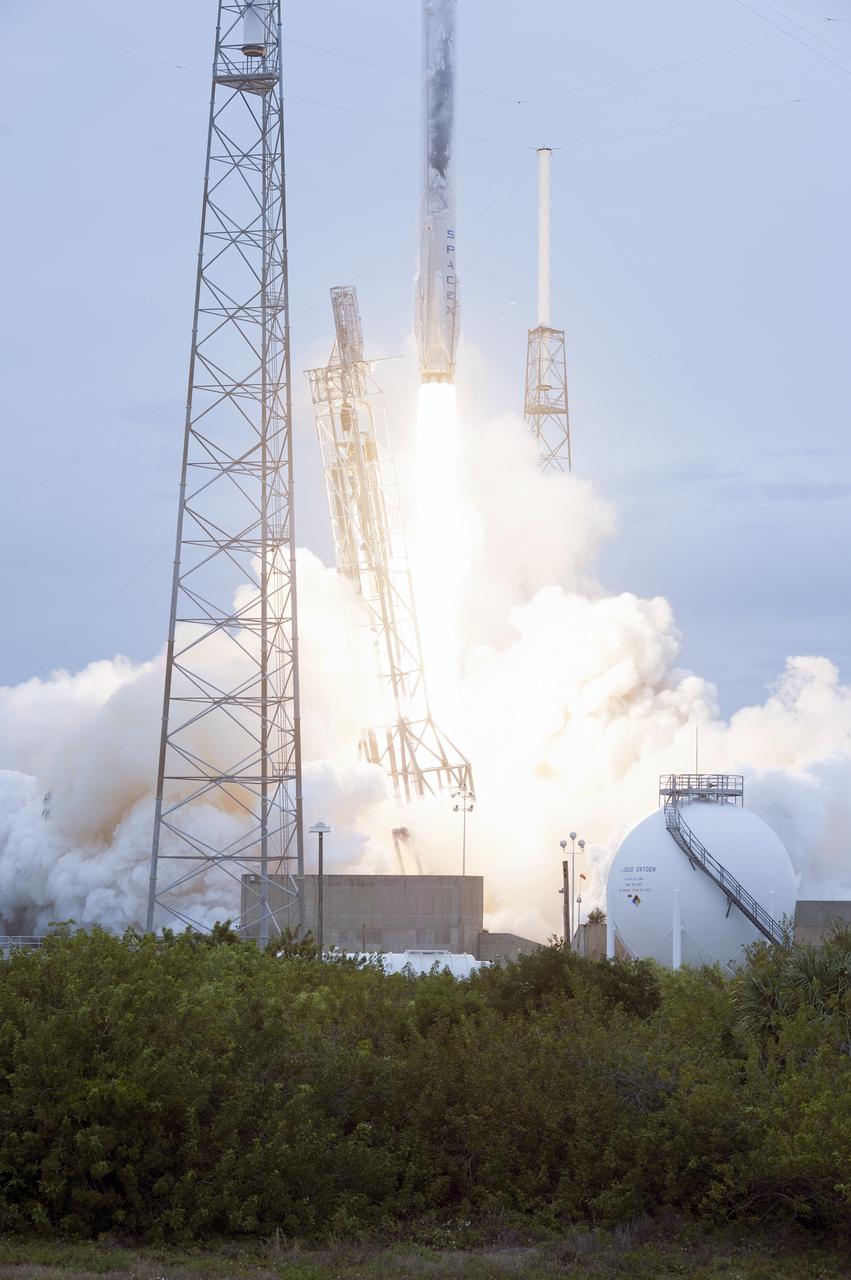
CAPE CANAVERAL, Fla. - An exhaust cloud builds under the Falcon 9 rocket on Space Launch Complex 40 at Cape Canaveral Air Force Station in Florida as the SpaceX-3 mission lifts off, starting the Dragon resupply spacecraft on its way to the International Space Station. Launch was during an instantaneous window at 3:25 p.m. EDT. Dragon is making its fourth trip to the space station. The SpaceX-3 mission, carrying almost 2.5 tons of supplies, technology and science experiments, is the third of 12 flights through a $1.6 billion NASA Commercial Resupply Services contract. Dragon's cargo will support more than 150 experiments that will be conducted during the station's Expeditions 39 and 40. For more information, visit http://www.nasa.gov/mission_pages/station/structure/launch/index.html. Photo credit: NASA/Tony Gray and Tim Powers
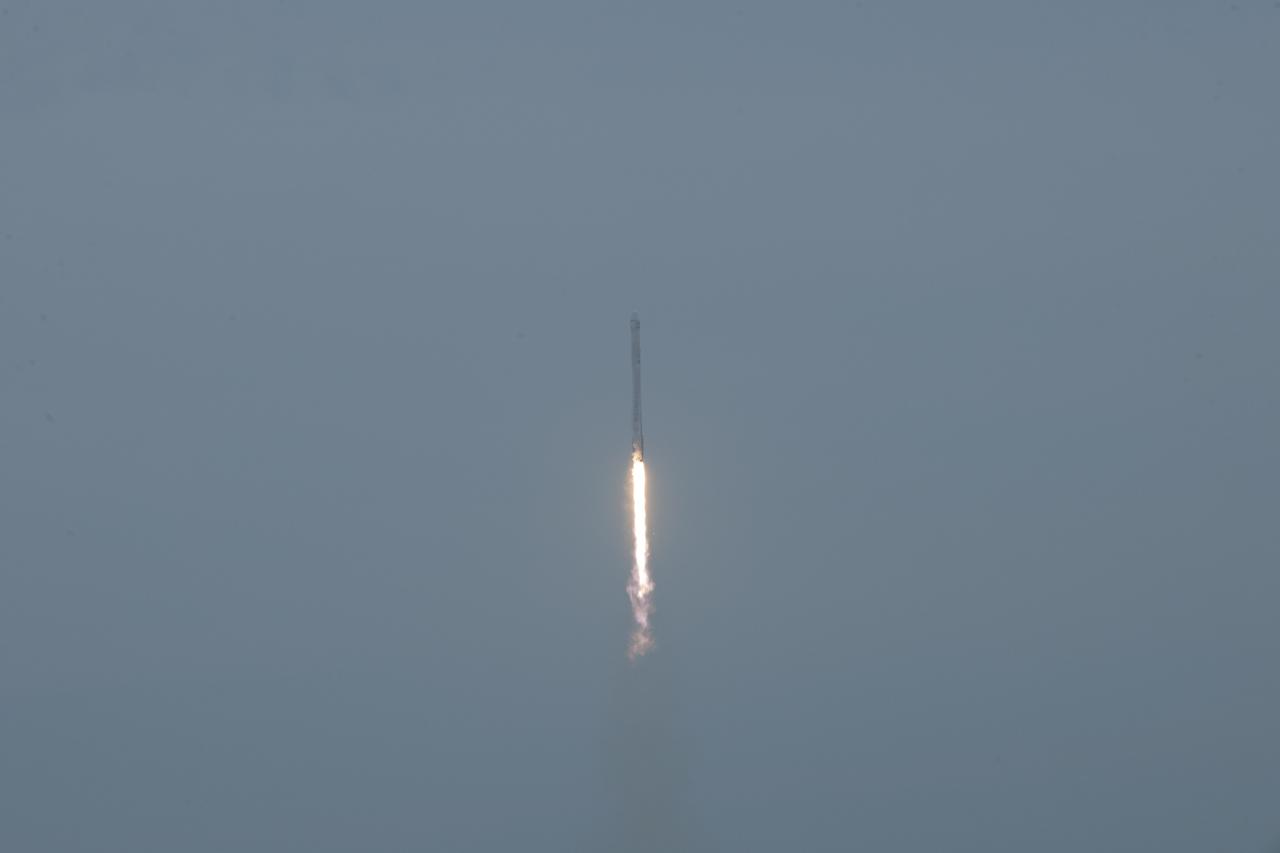
CAPE CANAVERAL, Fla. - The SpaceX-3 mission soars into the clouds over Space Launch Complex 40 on Cape Canaveral Air Force Station aboard a Falcon 9 rocket, carrying the Dragon resupply spacecraft to the International Space Station. Liftoff was during an instantaneous window at 3:25 p.m. EDT. Dragon is making its fourth trip to the space station. The SpaceX-3 mission, carrying almost 2.5 tons of supplies, technology and science experiments, is the third of 12 flights through a $1.6 billion NASA Commercial Resupply Services contract. Dragon's cargo will support more than 150 experiments that will be conducted during the station's Expeditions 39 and 40. For more information, visit http://www.nasa.gov/mission_pages/station/structure/launch/index.html. Photo credit: NASA/George Roberts
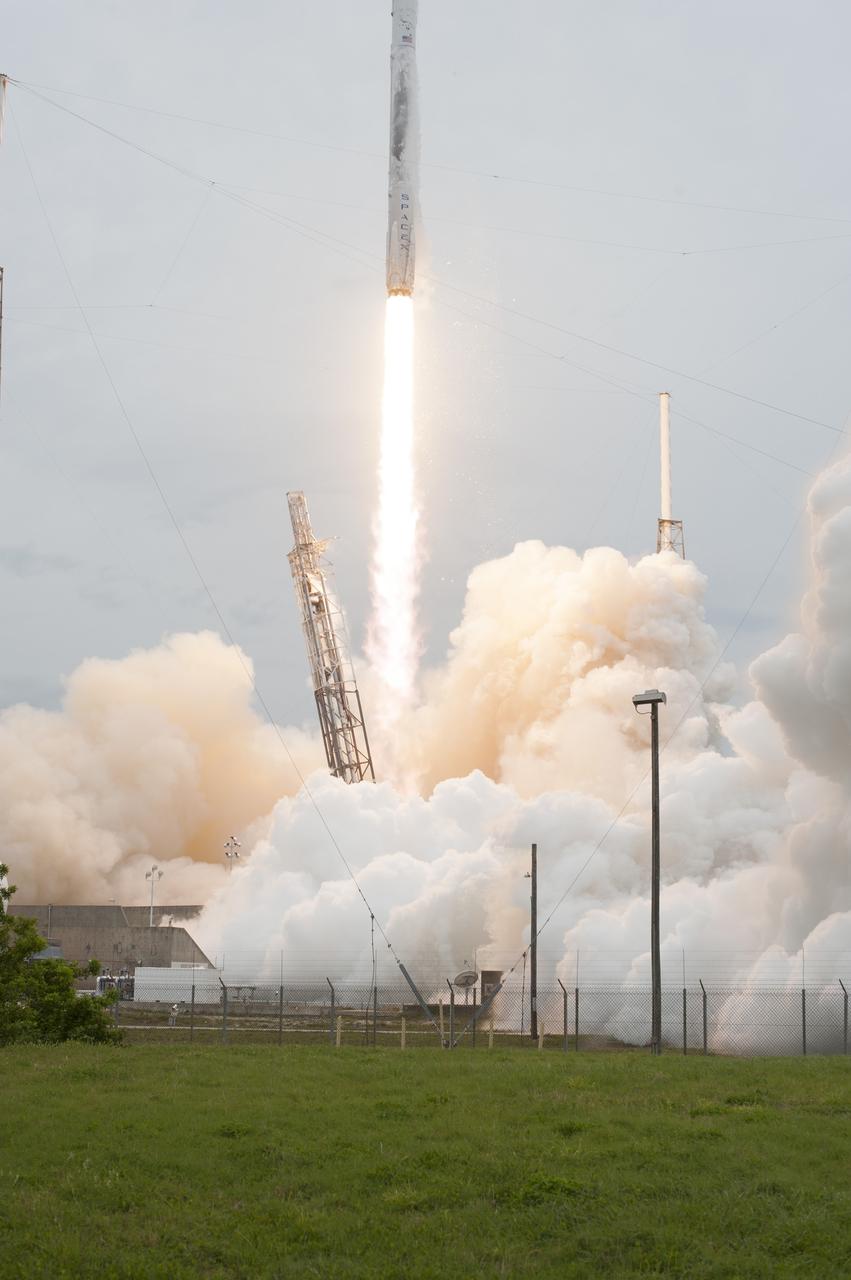
CAPE CANAVERAL, Fla. - The SpaceX-3 mission bolts into the clouds over Space Launch Complex 40 on Cape Canaveral Air Force Station aboard a Falcon 9 rocket, carrying the Dragon resupply spacecraft to the International Space Station. Liftoff was during an instantaneous window at 3:25 p.m. EDT. Dragon is making its fourth trip to the space station. The SpaceX-3 mission, carrying almost 2.5 tons of supplies, technology and science experiments, is the third of 12 flights through a $1.6 billion NASA Commercial Resupply Services contract. Dragon's cargo will support more than 150 experiments that will be conducted during the station's Expeditions 39 and 40. For more information, visit http://www.nasa.gov/mission_pages/station/structure/launch/index.html. Photo credit: NASA/Tony Gray and Tim Powers
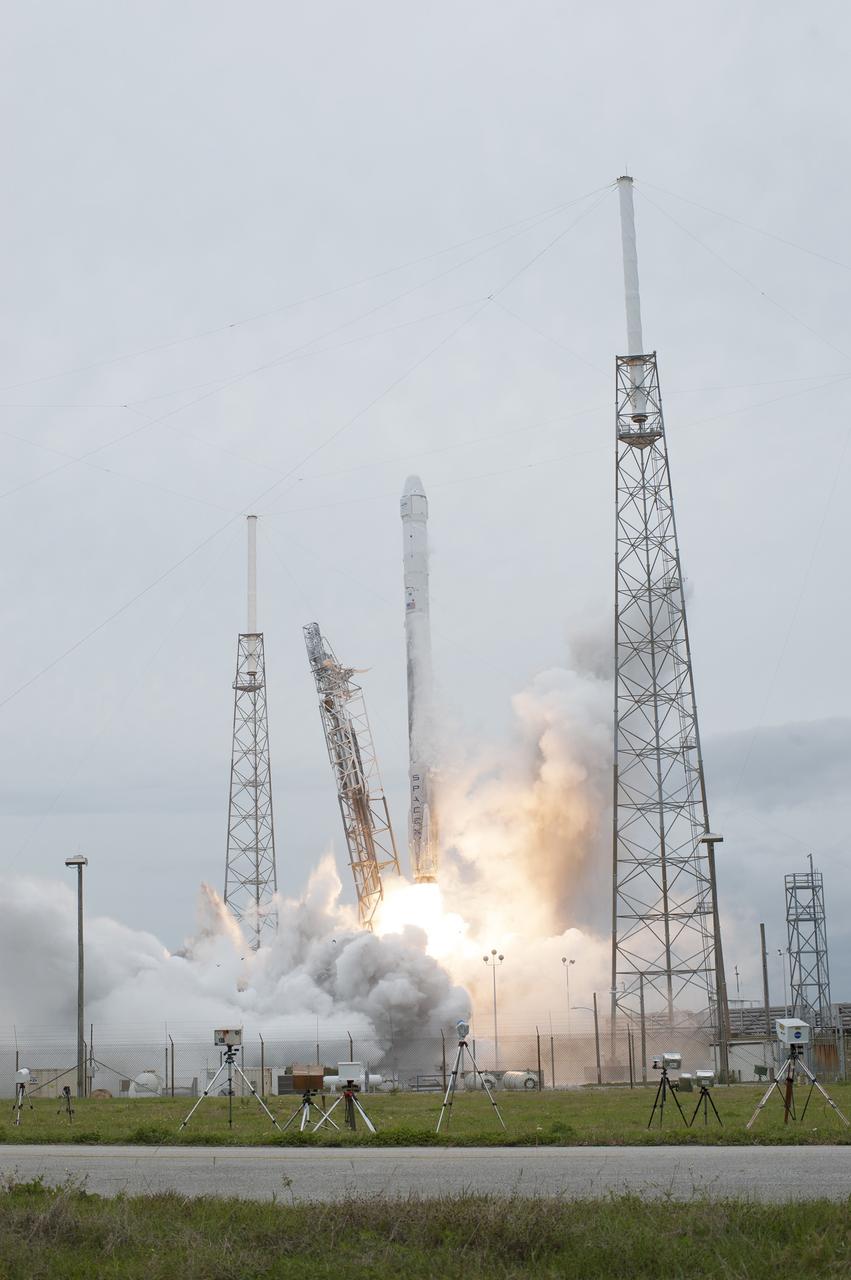
CAPE CANAVERAL, Fla. - An exhaust cloud grows around the Falcon 9 rocket at Space Launch Complex 40 on Cape Canaveral Air Force Station as the SpaceX-3 mission lifts off, sending the Dragon resupply spacecraft on its way to the International Space Station. Launch was during an instantaneous window at 3:25 p.m. EDT. Dragon is making its fourth trip to the space station. The SpaceX-3 mission, carrying almost 2.5 tons of supplies, technology and science experiments, is the third of 12 flights through a $1.6 billion NASA Commercial Resupply Services contract. Dragon's cargo will support more than 150 experiments that will be conducted during the station's Expeditions 39 and 40. For more information, visit http://www.nasa.gov/mission_pages/station/structure/launch/index.html. Photo credit: NASA/Tony Gray and Tim Terry

CAPE CANAVERAL, Fla. - A blinding flash of light under the Falcon 9 rocket signals engine ignition and liftoff of the SpaceX-3 mission from Space Launch Complex 40 on Cape Canaveral Air Force Station, sending the Dragon resupply spacecraft on its way to the International Space Station. Launch was during an instantaneous window at 3:25 p.m. EDT. Dragon is making its fourth trip to the space station. The SpaceX-3 mission, carrying almost 2.5 tons of supplies, technology and science experiments, is the third of 12 flights through a $1.6 billion NASA Commercial Resupply Services contract. Dragon's cargo will support more than 150 experiments that will be conducted during the station's Expeditions 39 and 40. For more information, visit http://www.nasa.gov/mission_pages/station/structure/launch/index.html. Photo credit: NASA/Tony Gray
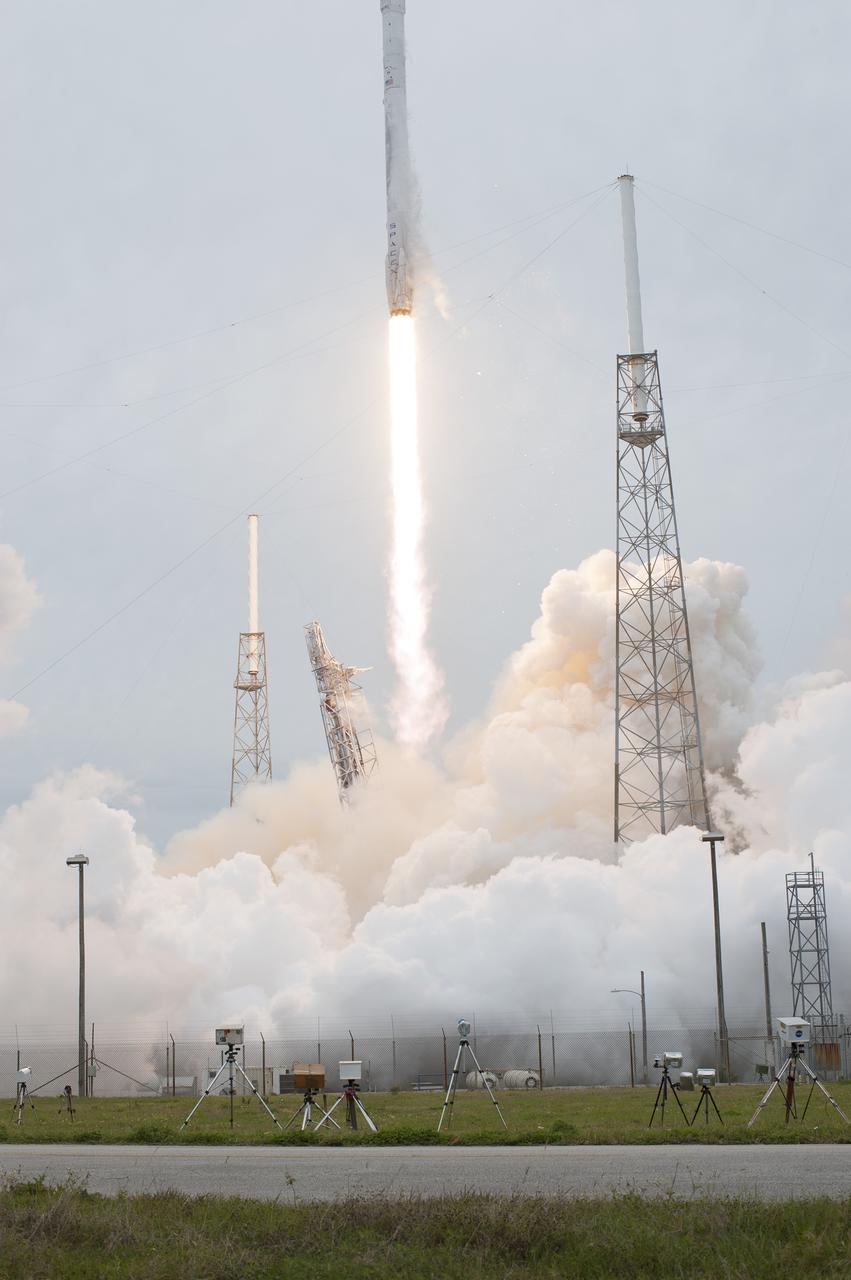
CAPE CANAVERAL, Fla. - Remote-controlled and sound-activated cameras placed around the perimeter of the pad by media organizations capture images of the SpaceX Falcon 9 rocket as it rises off Space Launch Complex 40 at Cape Canaveral Air Force Station, sending the Dragon resupply spacecraft on its way to the International Space Station. Liftoff was during an instantaneous window at 3:25 p.m. EDT. Dragon is making its fourth trip to the space station. The SpaceX-3 mission, carrying almost 2.5 tons of supplies, technology and science experiments, is the third of 12 flights through a $1.6 billion NASA Commercial Resupply Services contract. Dragon's cargo will support more than 150 experiments that will be conducted during the station's Expeditions 39 and 40. For more information, visit http://www.nasa.gov/mission_pages/station/structure/launch/index.html. Photo credit: NASA/Tony Gray and Tim Terry
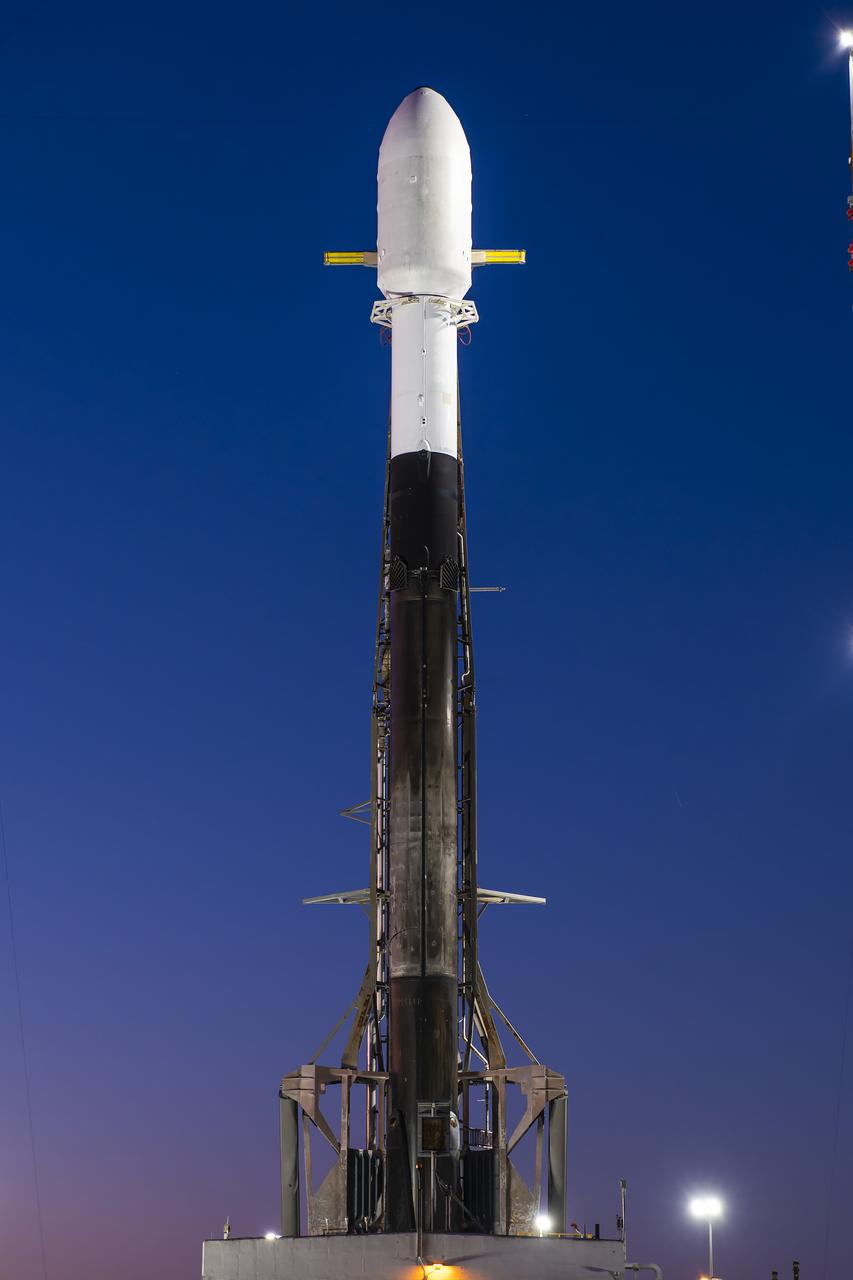
A Northrop Grumman Cygnus resupply spacecraft, atop a SpaceX Falcon 9 rocket, stands tall at sunrise at Space Launch Complex 40 at Cape Canaveral Space Force Station in Florida on Tuesday, Jan. 30, 2024, in preparations for a launch to the International Space Station. Northrop Grumman’s 20th commercial resupply mission includes multiple science investigations, such as tests of a 3D metal printer, semiconductor manufacturing, and thermal protection systems for reentry to Earth to support the agency’s Expedition 70 crew. Liftoff is scheduled for 12:07p.m. EST Tuesday, Jan. 30, 2024.
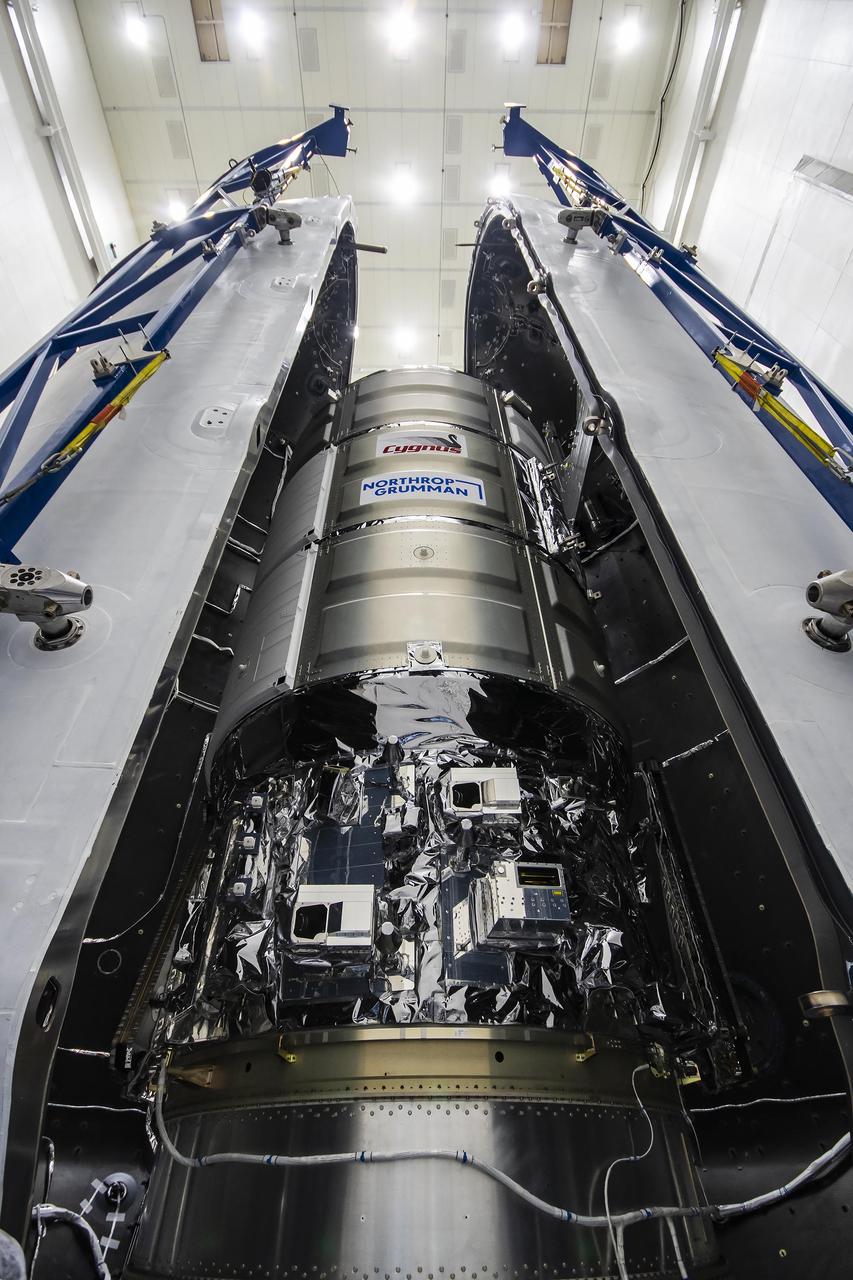
On Wednesday, Jan. 24, 2024, the Northrop Grumman Cygnus resupply spacecraft is seen being encapsulated inside the SpaceX Falcon 9 payload fairing as it prepares to launch from Space Launch Complex 40 at Cape Canaveral Space Force Station in Florida for the 20th Northrop Grumman commercial resupply services for NASA. The mission will carry 8,200 pounds of science investigations, supplies, and equipment to the International Space Station to support the agency’s Expedition 70 crew. Liftoff is scheduled no earlier than 12:07 p.m. EST Tuesday, Jan. 30, 2024.
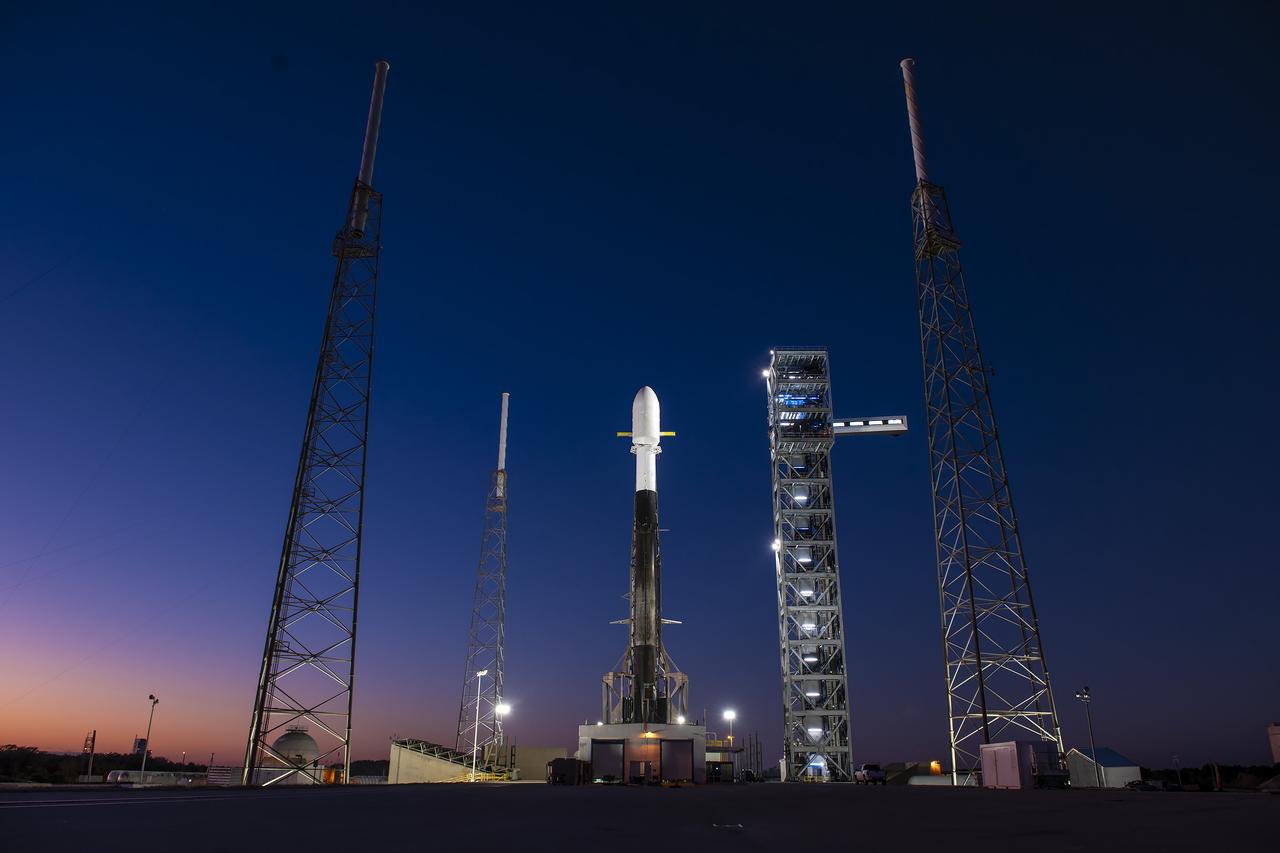
A Northrop Grumman Cygnus resupply spacecraft, atop a SpaceX Falcon 9 rocket, stands tall at sunrise at Space Launch Complex 40 at Cape Canaveral Space Force Station in Florida on Tuesday, Jan. 30, 2024, in preparations for a launch to the International Space Station. Northrop Grumman’s 20th commercial resupply mission includes multiple science investigations, such as tests of a 3D metal printer, semiconductor manufacturing, and thermal protection systems for reentry to Earth to support the agency’s Expedition 70 crew. Liftoff is scheduled for 12:07p.m. EST Tuesday, Jan. 30, 2024.

The two-stage SpaceX Falcon 9 launch vehicle lifts off from Space Launch Complex 40 at Cape Canaveral Air Force Station, carrying the SpaceX Dragon resupply spacecraft to the International Space Station. Liftoff was at 5:42 a.m. EDT on Friday, June 29, 2018. On the company’s 15th Commercial Resupply Services mission to the International Space Station, Dragon is filled with supplies and payloads, including critical materials to support several science and research investigations that will occur during Expedition 56. The spacecraft’s unpressurized trunk is carrying a Canadian-built Latching End Effector, or LEE. This new LEE will replace a failed unit astronauts removed during a series of spacewalks in the fall of 2017. Each end of the Canadarm2 robotic arm has an identical LEE, and they are used as the “hands” that grapple payloads and visiting cargo spaceships.
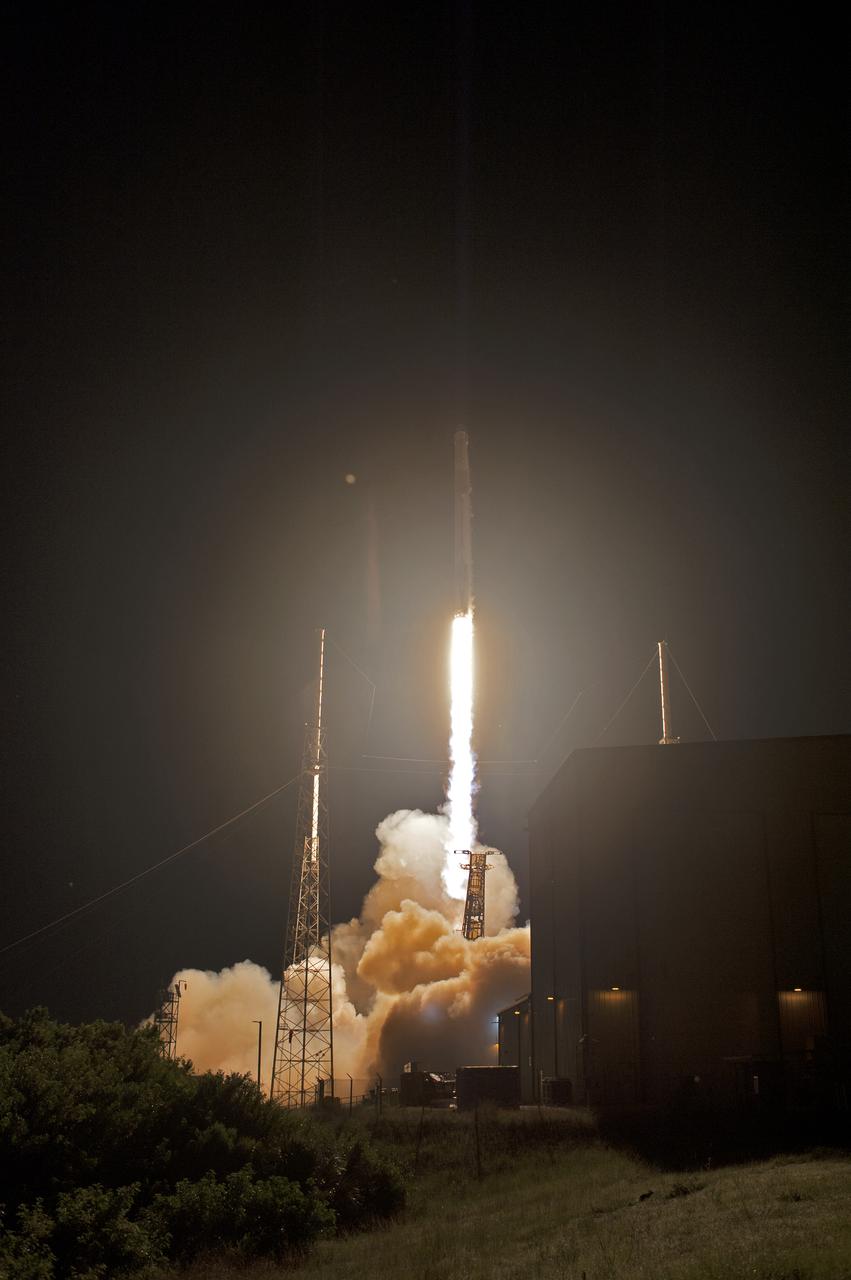
The two-stage SpaceX Falcon 9 launch vehicle lifts off from Space Launch Complex 40 at Cape Canaveral Air Force Station, carrying the SpaceX Dragon resupply spacecraft to the International Space Station. Liftoff was at 5:42 a.m. EDT on Friday, June 29, 2018. On the company’s 15th Commercial Resupply Services mission to the International Space Station, Dragon is filled with supplies and payloads, including critical materials to support several science and research investigations that will occur during Expedition 56. The spacecraft’s unpressurized trunk is carrying a Canadian-built Latching End Effector, or LEE. This new LEE will replace a failed unit astronauts removed during a series of spacewalks in the fall of 2017. Each end of the Canadarm2 robotic arm has an identical LEE, and they are used as the “hands” that grapple payloads and visiting cargo spaceships.

A SpaceX Falcon 9 rocket powers the Dragon spacecraft toward the International Space Station on Friday, June 29, 2018. The two-stage launch vehicle lifted off from Space Launch Complex 40 at Cape Canaveral Air Force Station at 5:42 a.m. EDT. On the company’s 15th Commercial Resupply Services mission to the space station, Dragon is filled with supplies and payloads, including critical materials to support several science and research investigations that will occur during Expedition 56. The spacecraft’s unpressurized trunk is carrying a Canadian-built Latching End Effector, or LEE. This new LEE will replace a failed unit astronauts removed during a series of spacewalks in the fall of 2017. Each end of the Canadarm2 robotic arm has an identical LEE, and they are used as the “hands” that grapple payloads and visiting cargo spaceships.
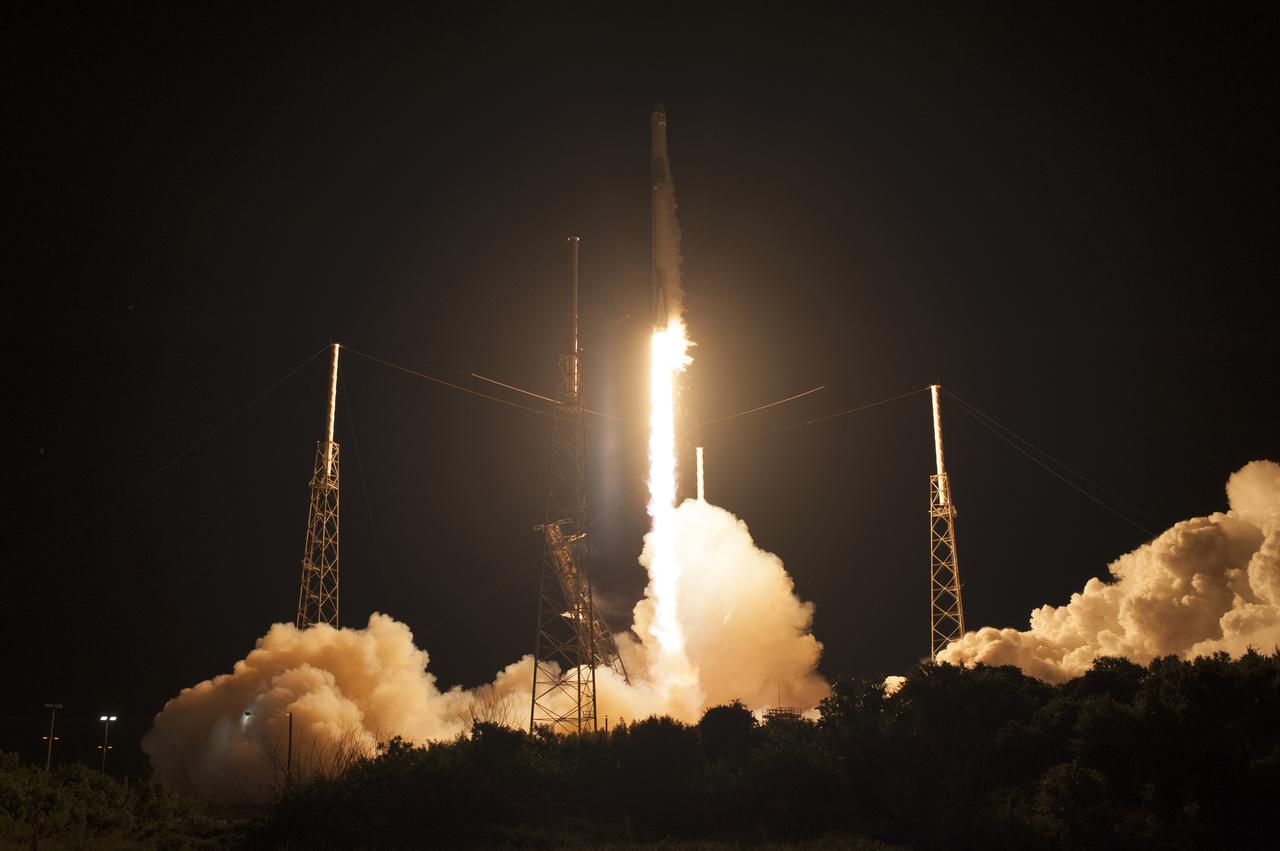
The two-stage SpaceX Falcon 9 launch vehicle lifts off from Space Launch Complex 40 at Cape Canaveral Air Force Station, carrying the SpaceX Dragon resupply spacecraft to the International Space Station. Liftoff was at 5:42 a.m. EDT on Friday, June 29, 2018. On the company’s 15th Commercial Resupply Services mission to the International Space Station, Dragon is filled with supplies and payloads, including critical materials to support several science and research investigations that will occur during Expedition 56. The spacecraft’s unpressurized trunk is carrying a Canadian-built Latching End Effector, or LEE. This new LEE will replace a failed unit astronauts removed during a series of spacewalks in the fall of 2017. Each end of the Canadarm2 robotic arm has an identical LEE, and they are used as the “hands” that grapple payloads and visiting cargo spaceships.
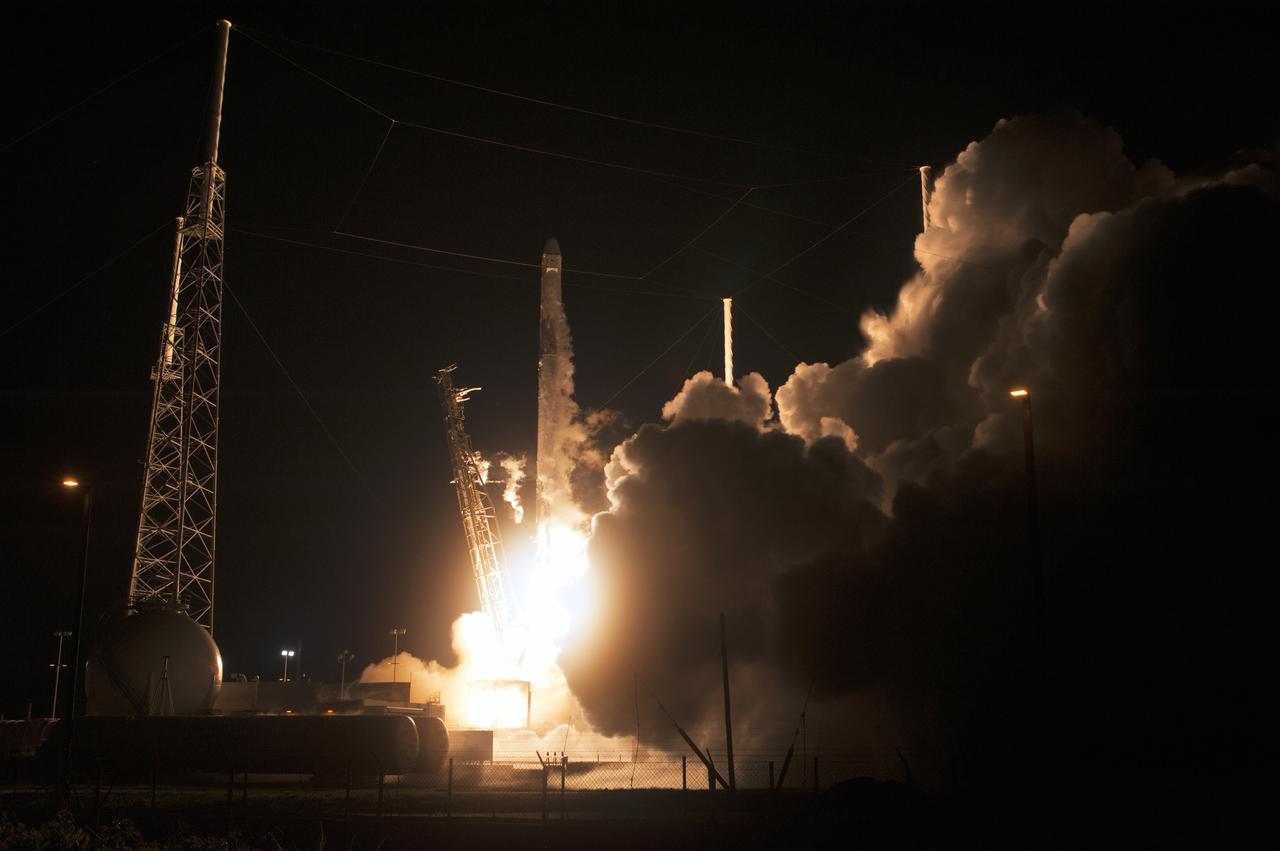
The two-stage SpaceX Falcon 9 launch vehicle lifts off from Space Launch Complex 40 at Cape Canaveral Air Force Station, carrying the SpaceX Dragon resupply spacecraft to the International Space Station. Liftoff was at 5:42 a.m. EDT on Friday, June 29, 2018. On the company’s 15th Commercial Resupply Services mission to the International Space Station, Dragon is filled with supplies and payloads, including critical materials to support several science and research investigations that will occur during Expedition 56. The spacecraft’s unpressurized trunk is carrying a Canadian-built Latching End Effector, or LEE. This new LEE will replace a failed unit astronauts removed during a series of spacewalks in the fall of 2017. Each end of the Canadarm2 robotic arm has an identical LEE, and they are used as the “hands” that grapple payloads and visiting cargo spaceships.
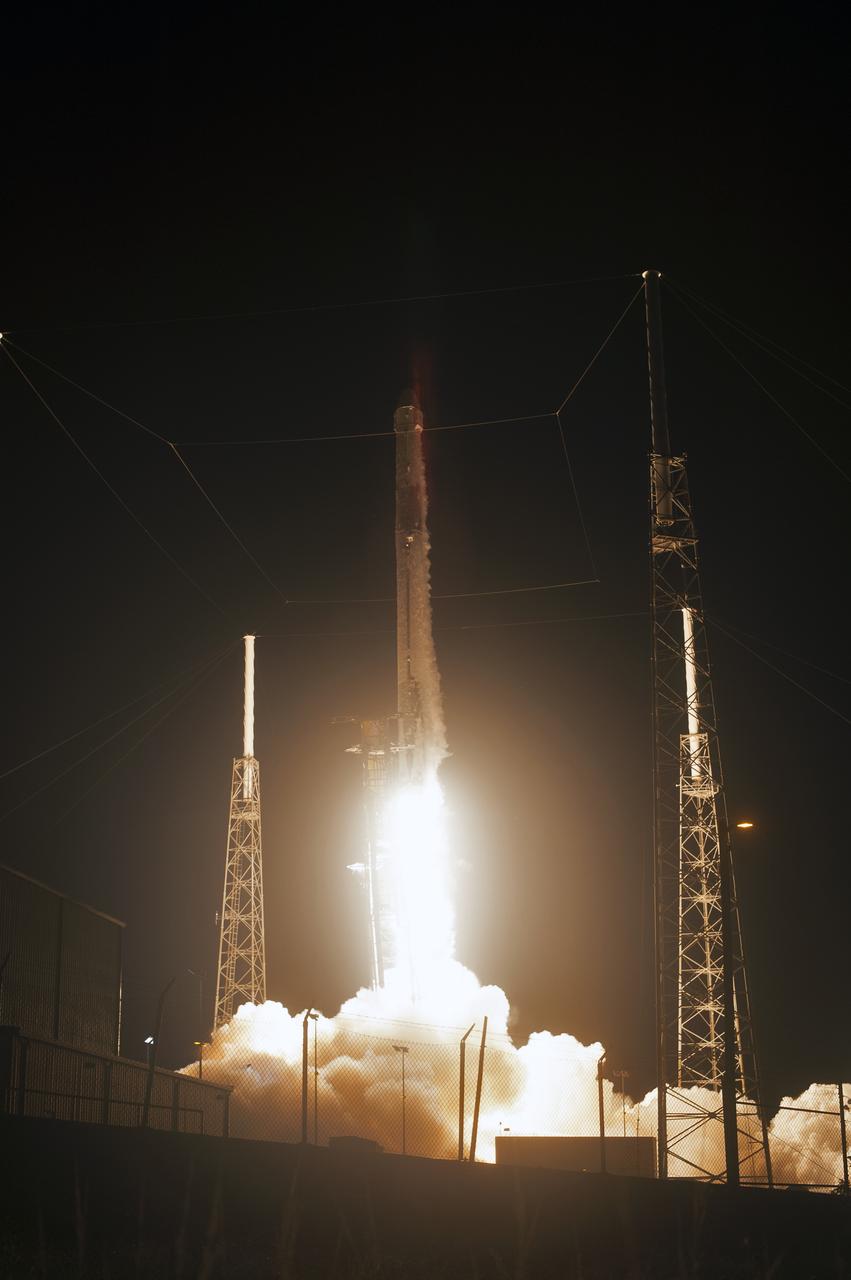
The two-stage SpaceX Falcon 9 launch vehicle lifts off from Space Launch Complex 40 at Cape Canaveral Air Force Station, carrying the SpaceX Dragon resupply spacecraft to the International Space Station. Liftoff was at 5:42 a.m. EDT on Friday, June 29, 2018. On the company’s 15th Commercial Resupply Services mission to the International Space Station, Dragon is filled with supplies and payloads, including critical materials to support several science and research investigations that will occur during Expedition 56. The spacecraft’s unpressurized trunk is carrying a Canadian-built Latching End Effector, or LEE. This new LEE will replace a failed unit astronauts removed during a series of spacewalks in the fall of 2017. Each end of the Canadarm2 robotic arm has an identical LEE, and they are used as the “hands” that grapple payloads and visiting cargo spaceships.
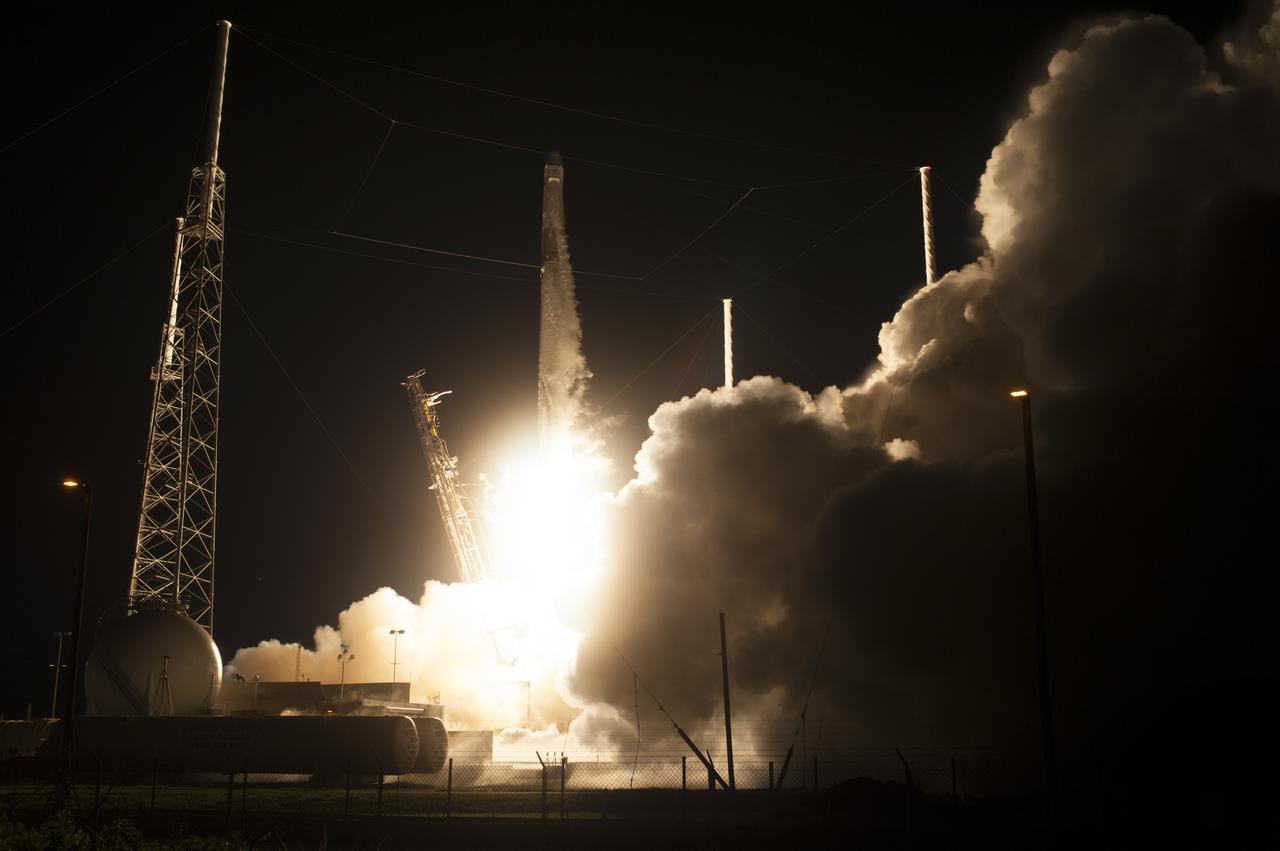
The two-stage SpaceX Falcon 9 launch vehicle lifts off from Space Launch Complex 40 at Cape Canaveral Air Force Station, carrying the SpaceX Dragon resupply spacecraft to the International Space Station. Liftoff was at 5:42 a.m. EDT on Friday, June 29, 2018. On the company’s 15th Commercial Resupply Services mission to the International Space Station, Dragon is filled with supplies and payloads, including critical materials to support several science and research investigations that will occur during Expedition 56. The spacecraft’s unpressurized trunk is carrying a Canadian-built Latching End Effector, or LEE. This new LEE will replace a failed unit astronauts removed during a series of spacewalks in the fall of 2017. Each end of the Canadarm2 robotic arm has an identical LEE, and they are used as the “hands” that grapple payloads and visiting cargo spaceships.
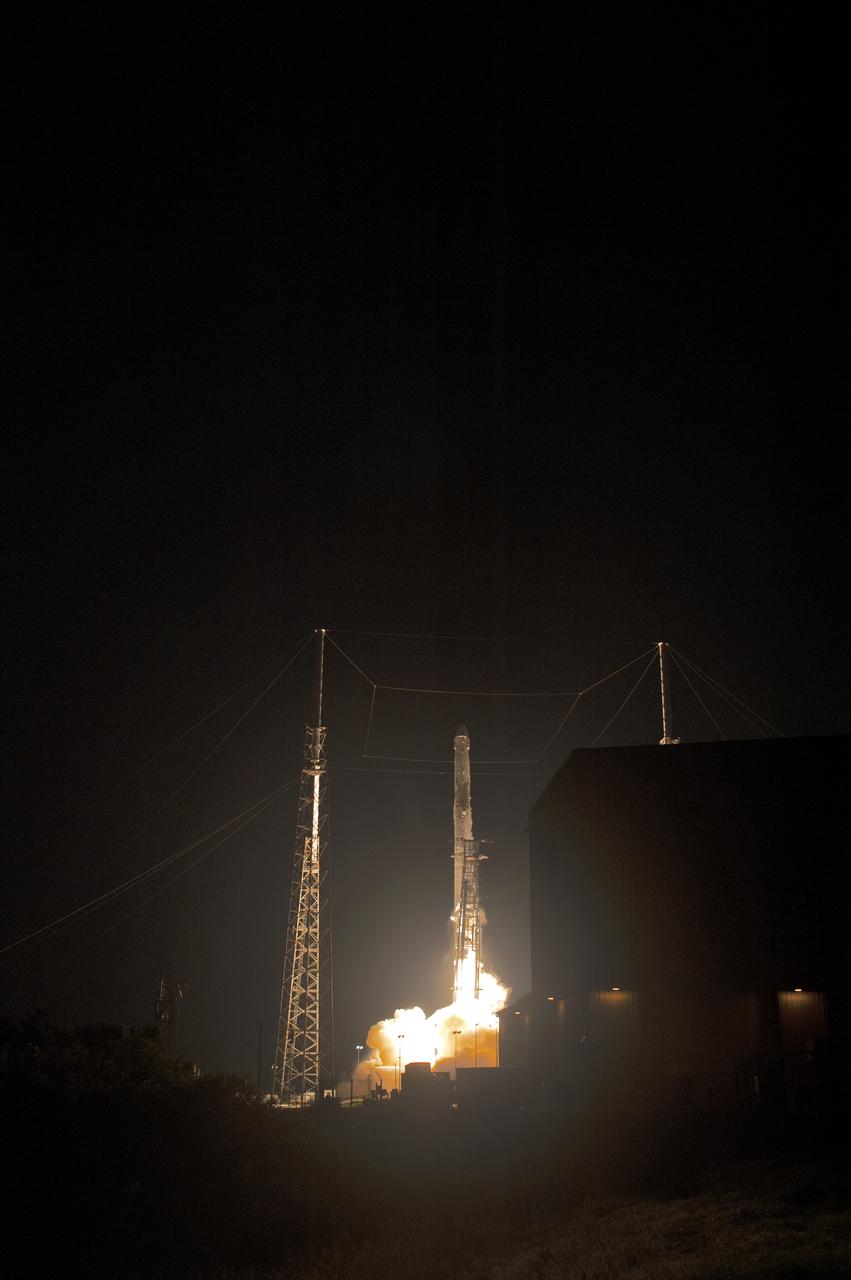
The two-stage SpaceX Falcon 9 launch vehicle lifts off from Space Launch Complex 40 at Cape Canaveral Air Force Station, carrying the SpaceX Dragon resupply spacecraft to the International Space Station. Liftoff was at 5:42 a.m. EDT on Friday, June 29, 2018. On the company’s 15th Commercial Resupply Services mission to the International Space Station, Dragon is filled with supplies and payloads, including critical materials to support several science and research investigations that will occur during Expedition 56. The spacecraft’s unpressurized trunk is carrying a Canadian-built Latching End Effector, or LEE. This new LEE will replace a failed unit astronauts removed during a series of spacewalks in the fall of 2017. Each end of the Canadarm2 robotic arm has an identical LEE, and they are used as the “hands” that grapple payloads and visiting cargo spaceships.
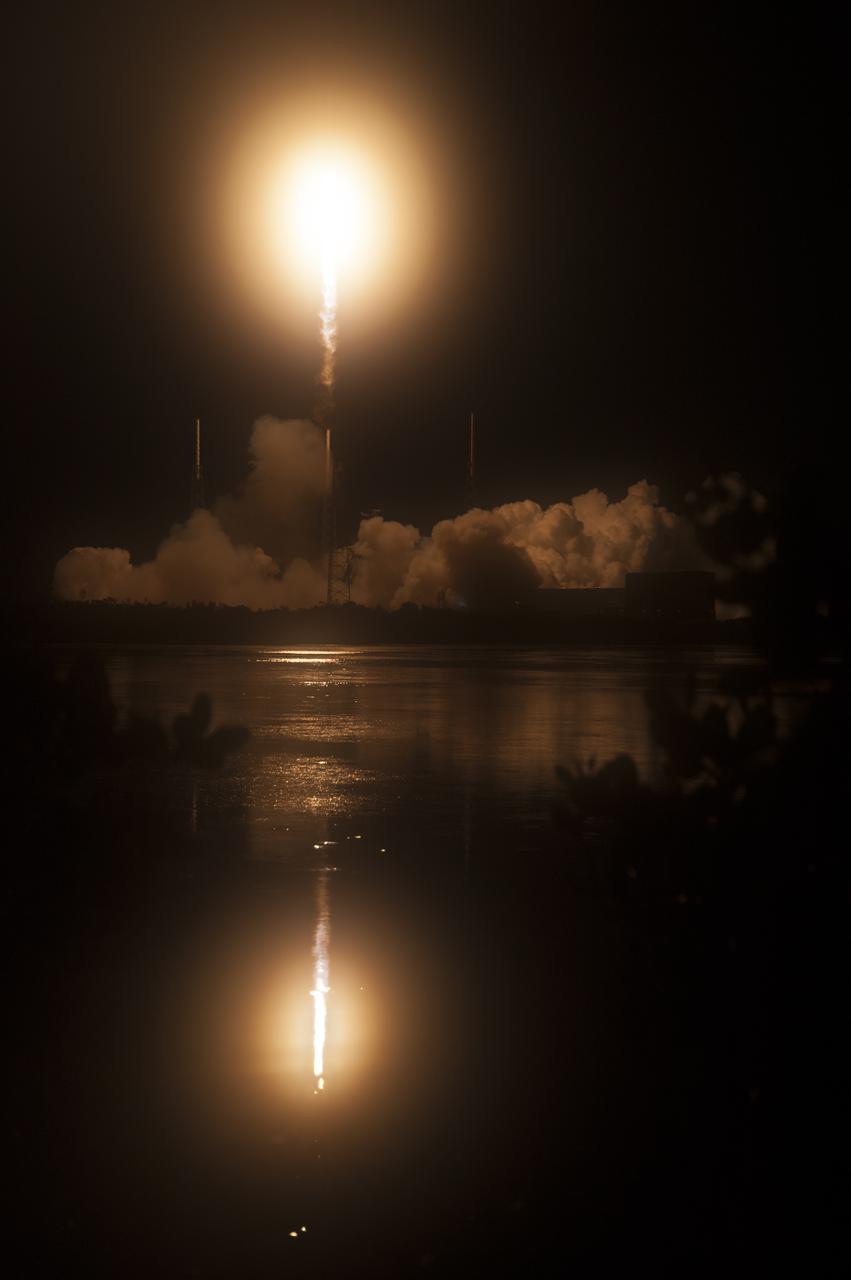
The two-stage SpaceX Falcon 9 launch vehicle lifts off from Space Launch Complex 40 at Cape Canaveral Air Force Station, carrying the SpaceX Dragon resupply spacecraft to the International Space Station. Liftoff was at 5:42 a.m. EDT on Friday, June 29, 2018. On the company’s 15th Commercial Resupply Services mission to the International Space Station, Dragon is filled with supplies and payloads, including critical materials to support several science and research investigations that will occur during Expedition 56. The spacecraft’s unpressurized trunk is carrying a Canadian-built Latching End Effector, or LEE. This new LEE will replace a failed unit astronauts removed during a series of spacewalks in the fall of 2017. Each end of the Canadarm2 robotic arm has an identical LEE, and they are used as the “hands” that grapple payloads and visiting cargo spaceships.
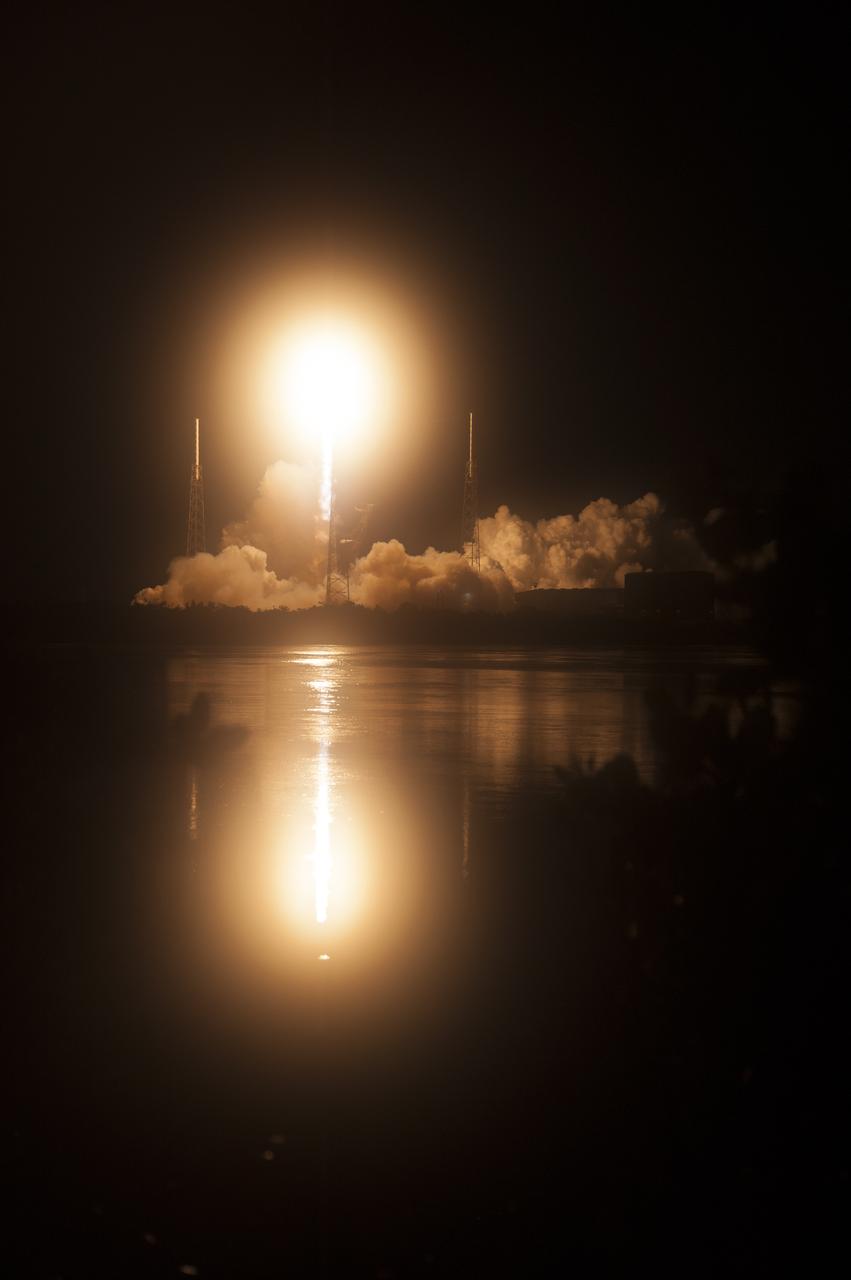
The two-stage SpaceX Falcon 9 launch vehicle lifts off from Space Launch Complex 40 at Cape Canaveral Air Force Station, carrying the SpaceX Dragon resupply spacecraft to the International Space Station. Liftoff was at 5:42 a.m. EDT on Friday, June 29, 2018. On the company’s 15th Commercial Resupply Services mission to the International Space Station, Dragon is filled with supplies and payloads, including critical materials to support several science and research investigations that will occur during Expedition 56. The spacecraft’s unpressurized trunk is carrying a Canadian-built Latching End Effector, or LEE. This new LEE will replace a failed unit astronauts removed during a series of spacewalks in the fall of 2017. Each end of the Canadarm2 robotic arm has an identical LEE, and they are used as the “hands” that grapple payloads and visiting cargo spaceships.
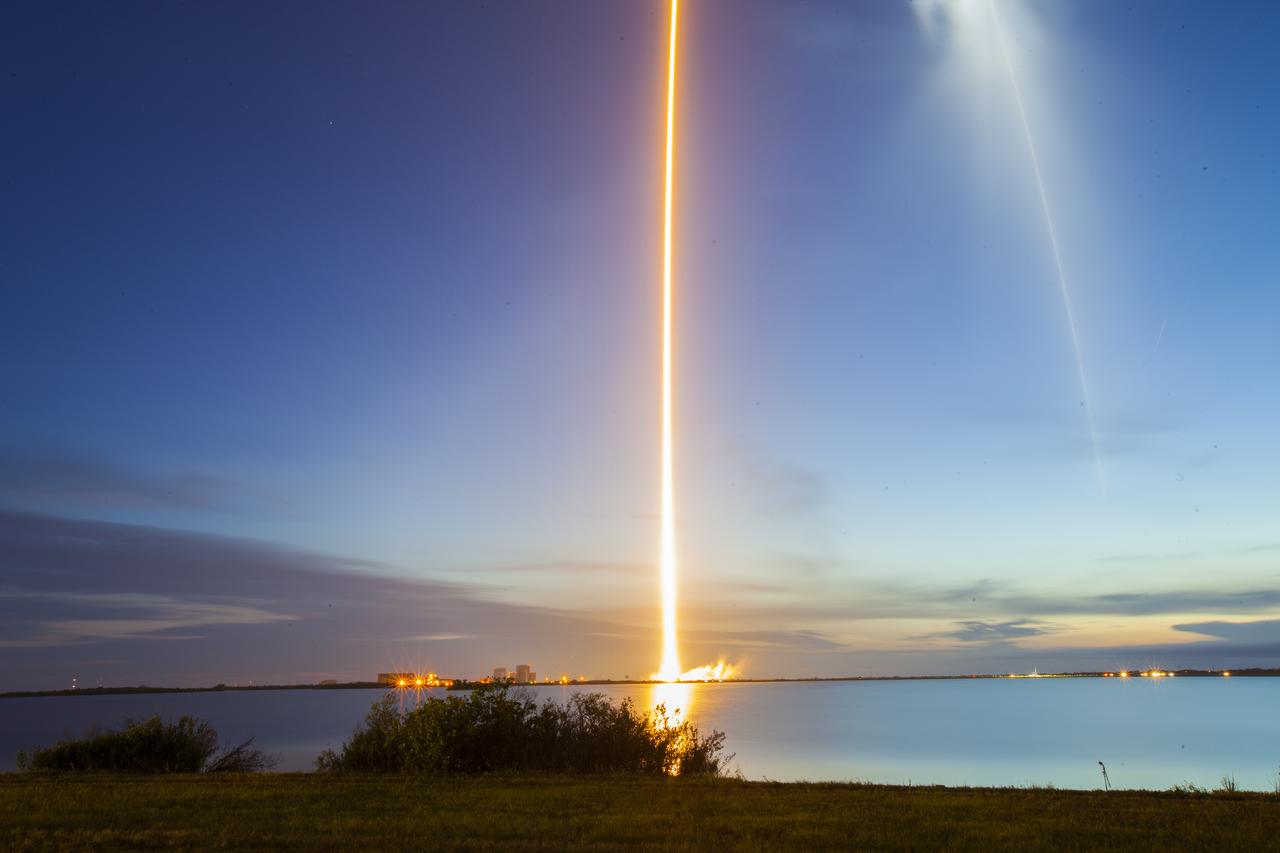
The two-stage SpaceX Falcon 9 launch vehicle lifts off from Space Launch Complex 40 at Cape Canaveral Air Force Station, carrying the SpaceX Dragon resupply spacecraft to the International Space Station. Liftoff was at 5:42 a.m. EDT on Friday, June 29, 2018. On the company’s 15th Commercial Resupply Services mission to the International Space Station, Dragon is filled with supplies and payloads, including critical materials to support several science and research investigations that will occur during Expedition 56. The spacecraft’s unpressurized trunk is carrying a Canadian-built Latching End Effector, or LEE. This new LEE will replace a failed unit astronauts removed during a series of spacewalks in the fall of 2017. Each end of the Canadarm2 robotic arm has an identical LEE, and they are used as the “hands” that grapple payloads and visiting cargo spaceships.
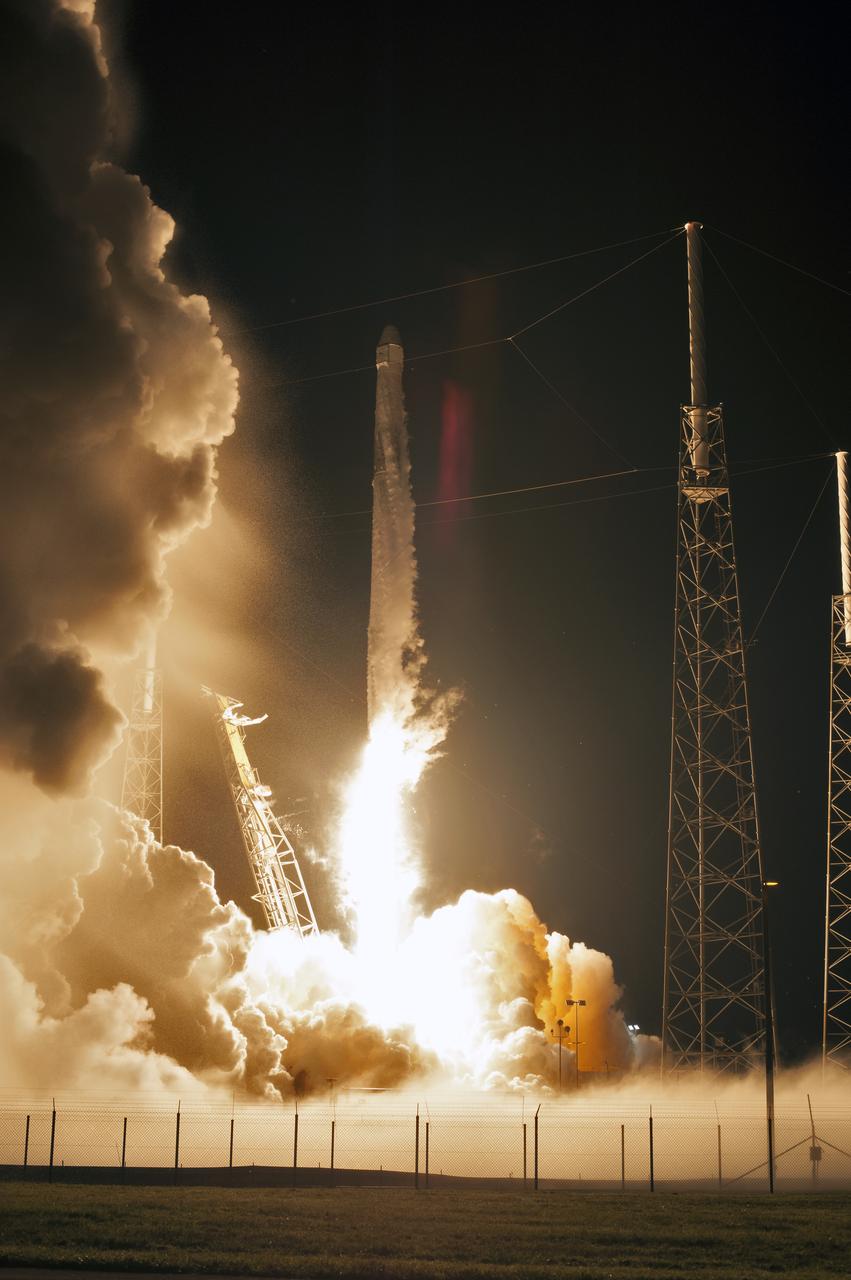
The two-stage SpaceX Falcon 9 launch vehicle lifts off from Space Launch Complex 40 at Cape Canaveral Air Force Station, carrying the SpaceX Dragon resupply spacecraft to the International Space Station. Liftoff was at 5:42 a.m. EDT on Friday, June 29, 2018. On the company’s 15th Commercial Resupply Services mission to the International Space Station, Dragon is filled with supplies and payloads, including critical materials to support several science and research investigations that will occur during Expedition 56. The spacecraft’s unpressurized trunk is carrying a Canadian-built Latching End Effector, or LEE. This new LEE will replace a failed unit astronauts removed during a series of spacewalks in the fall of 2017. Each end of the Canadarm2 robotic arm has an identical LEE, and they are used as the “hands” that grapple payloads and visiting cargo spaceships.
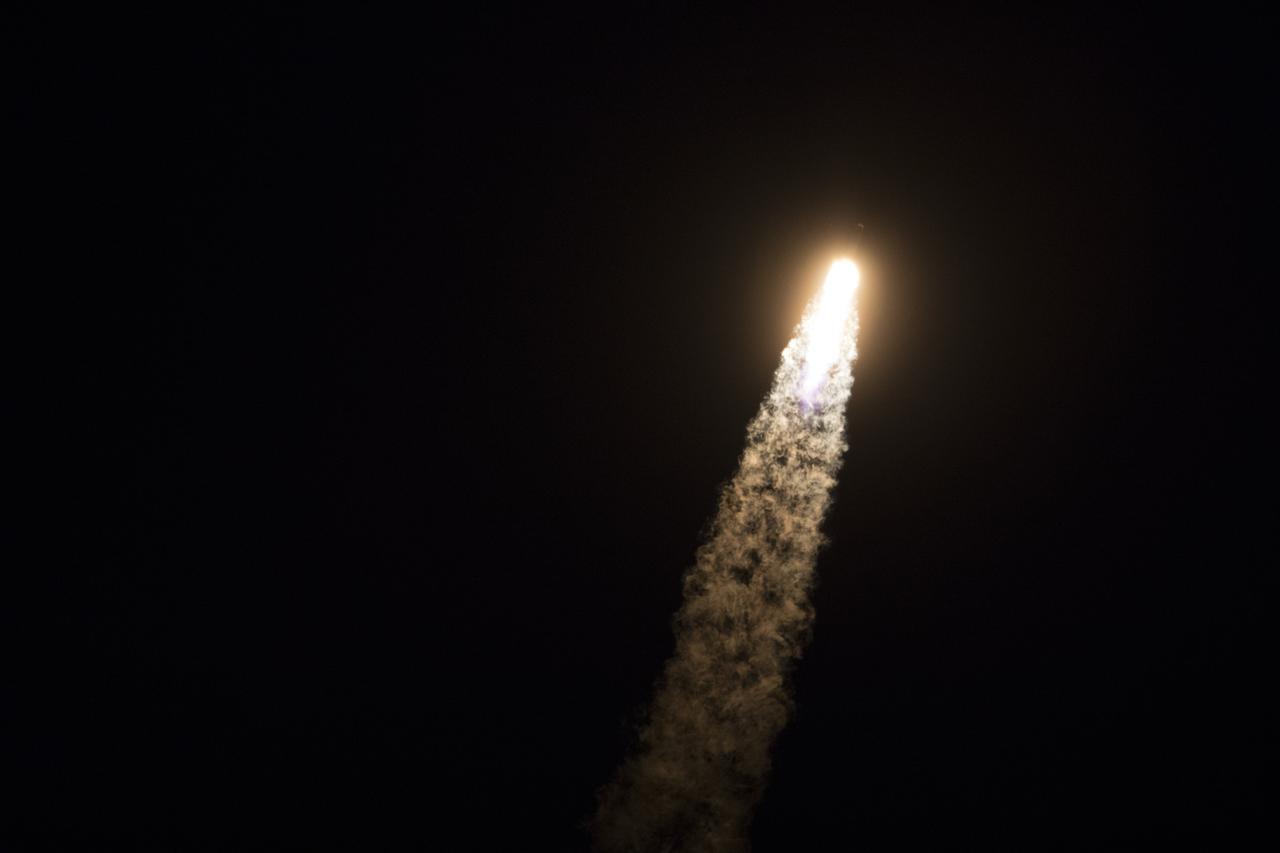
The two-stage SpaceX Falcon 9 launch vehicle soars into the sky from Space Launch Complex 40 at Cape Canaveral Air Force Station, carrying the SpaceX Dragon resupply spacecraft to the International Space Station. Liftoff was at 5:42 a.m. EDT on Friday, June 29, 2018. On the company’s 15th Commercial Resupply Services mission to the International Space Station, Dragon is filled with supplies and payloads, including critical materials to support several science and research investigations that will occur during Expedition 56. The spacecraft’s unpressurized trunk is carrying a Canadian-built Latching End Effector, or LEE. This new LEE will replace a failed unit astronauts removed during a series of spacewalks in the fall of 2017. Each end of the Canadarm2 robotic arm has an identical LEE, and they are used as the “hands” that grapple payloads and visiting cargo spaceships.
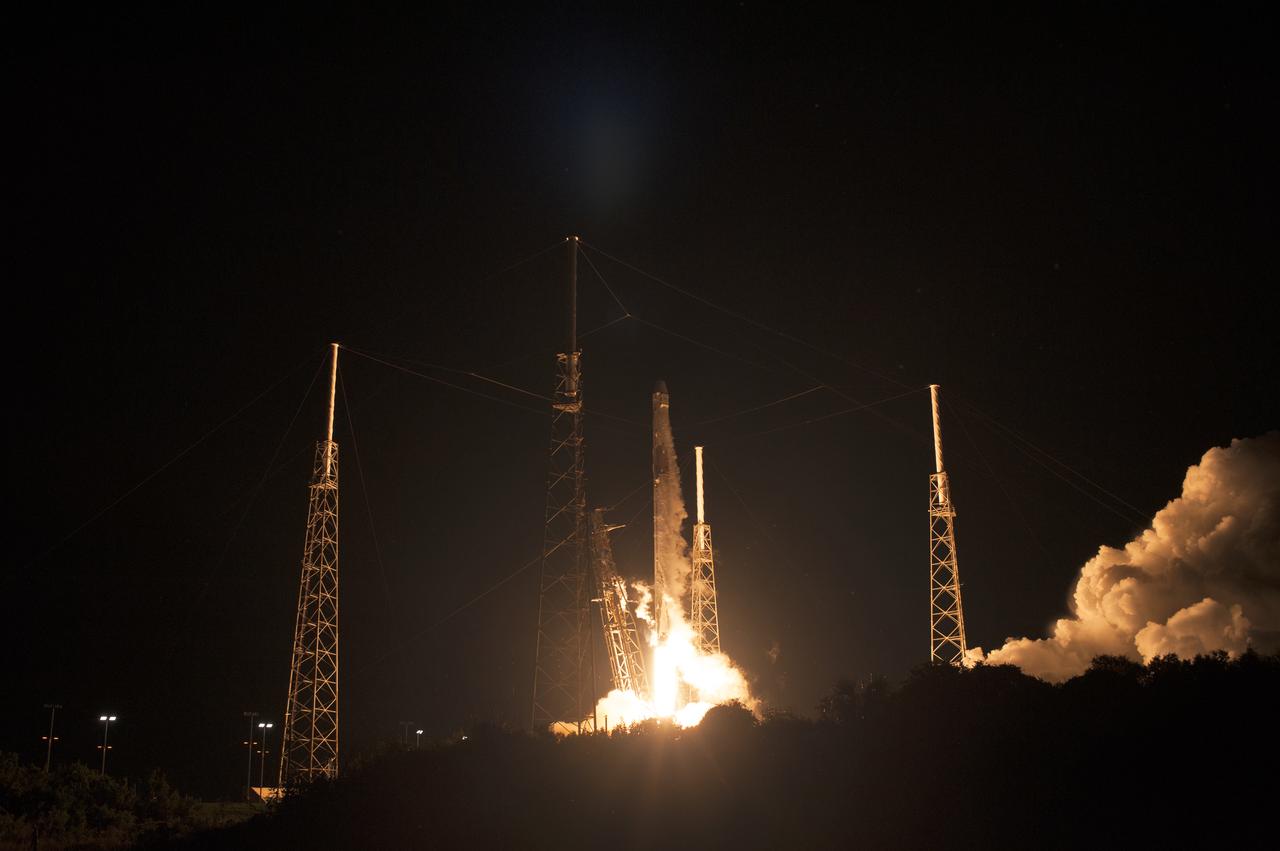
The two-stage SpaceX Falcon 9 launch vehicle lifts off from Space Launch Complex 40 at Cape Canaveral Air Force Station, carrying the SpaceX Dragon resupply spacecraft to the International Space Station. Liftoff was at 5:42 a.m. EDT on Friday, June 29, 2018. On the company’s 15th Commercial Resupply Services mission to the International Space Station, Dragon is filled with supplies and payloads, including critical materials to support several science and research investigations that will occur during Expedition 56. The spacecraft’s unpressurized trunk is carrying a Canadian-built Latching End Effector, or LEE. This new LEE will replace a failed unit astronauts removed during a series of spacewalks in the fall of 2017. Each end of the Canadarm2 robotic arm has an identical LEE, and they are used as the “hands” that grapple payloads and visiting cargo spaceships.
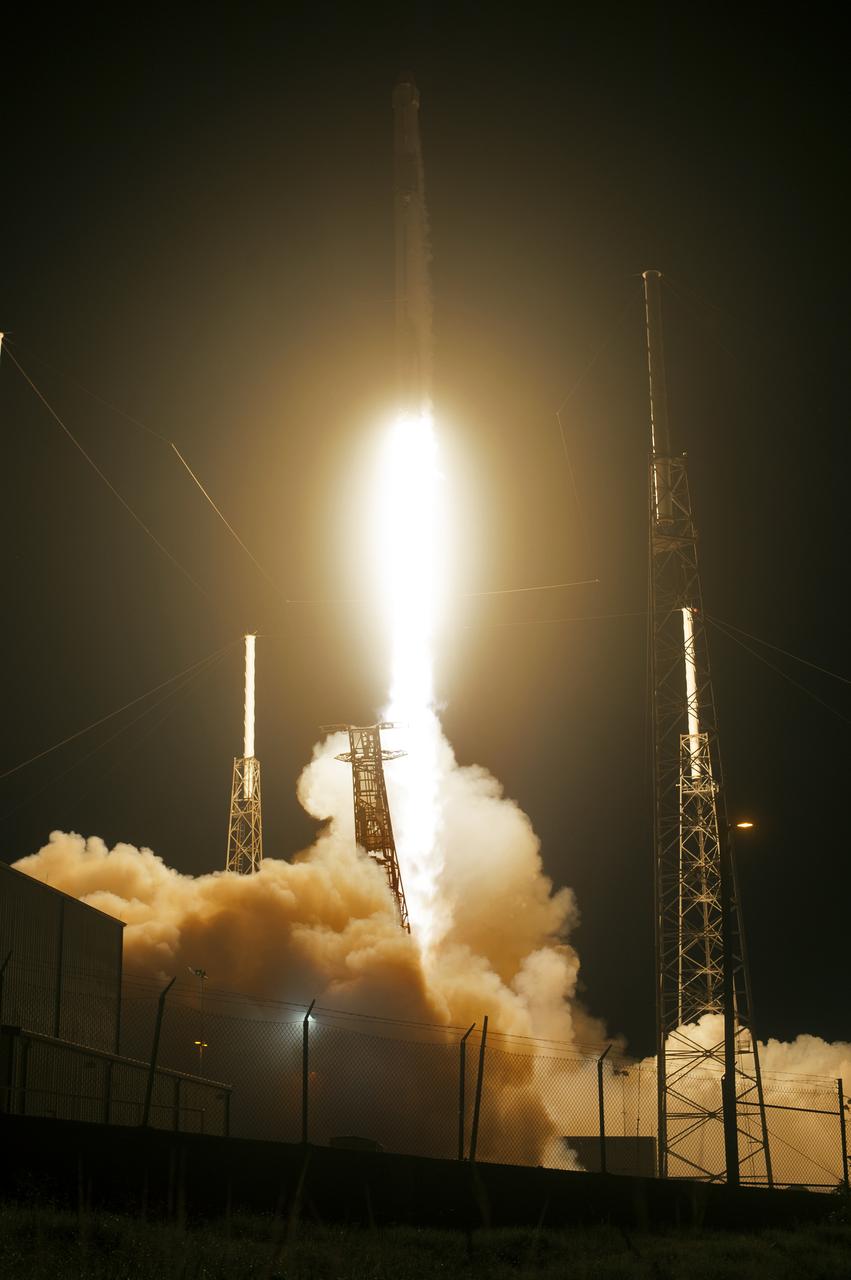
The two-stage SpaceX Falcon 9 launch vehicle lifts off from Space Launch Complex 40 at Cape Canaveral Air Force Station, carrying the SpaceX Dragon resupply spacecraft to the International Space Station. Liftoff was at 5:42 a.m. EDT on Friday, June 29, 2018. On the company’s 15th Commercial Resupply Services mission to the International Space Station, Dragon is filled with supplies and payloads, including critical materials to support several science and research investigations that will occur during Expedition 56. The spacecraft’s unpressurized trunk is carrying a Canadian-built Latching End Effector, or LEE. This new LEE will replace a failed unit astronauts removed during a series of spacewalks in the fall of 2017. Each end of the Canadarm2 robotic arm has an identical LEE, and they are used as the “hands” that grapple payloads and visiting cargo spaceships.
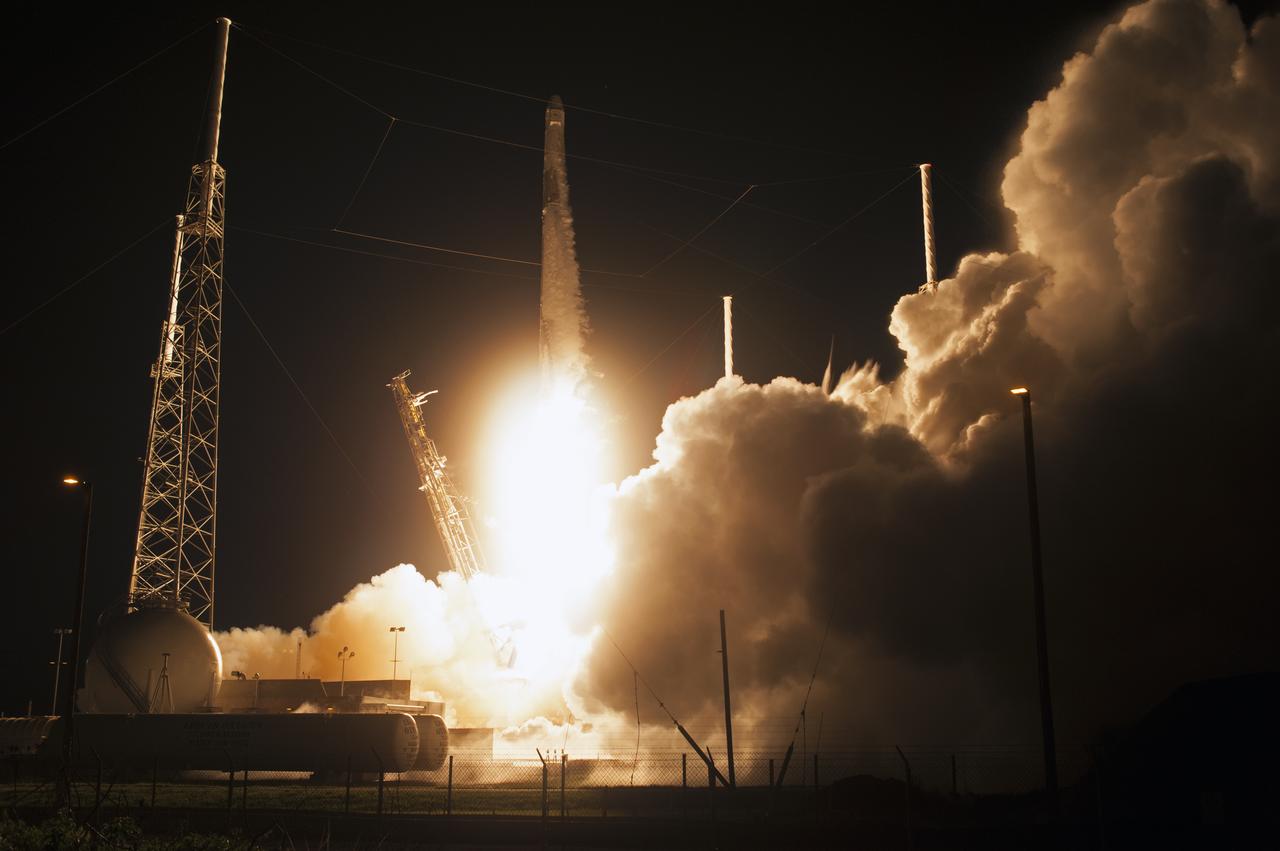
The two-stage SpaceX Falcon 9 launch vehicle lifts off from Space Launch Complex 40 at Cape Canaveral Air Force Station, carrying the SpaceX Dragon resupply spacecraft to the International Space Station. Liftoff was at 5:42 a.m. EDT on Friday, June 29, 2018. On the company’s 15th Commercial Resupply Services mission to the International Space Station, Dragon is filled with supplies and payloads, including critical materials to support several science and research investigations that will occur during Expedition 56. The spacecraft’s unpressurized trunk is carrying a Canadian-built Latching End Effector, or LEE. This new LEE will replace a failed unit astronauts removed during a series of spacewalks in the fall of 2017. Each end of the Canadarm2 robotic arm has an identical LEE, and they are used as the “hands” that grapple payloads and visiting cargo spaceships.
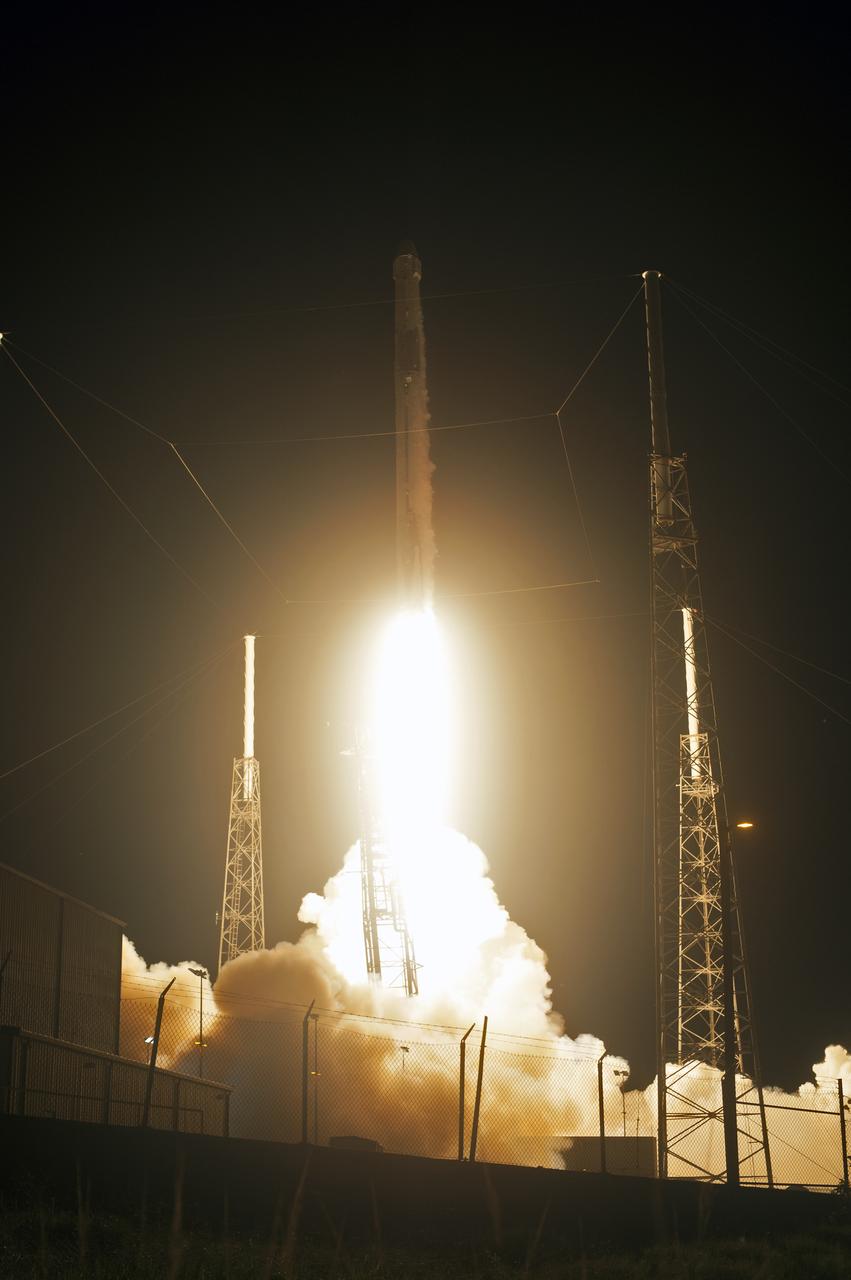
The two-stage SpaceX Falcon 9 launch vehicle lifts off from Space Launch Complex 40 at Cape Canaveral Air Force Station, carrying the SpaceX Dragon resupply spacecraft to the International Space Station. Liftoff was at 5:42 a.m. EDT on Friday, June 29, 2018. On the company’s 15th Commercial Resupply Services mission to the International Space Station, Dragon is filled with supplies and payloads, including critical materials to support several science and research investigations that will occur during Expedition 56. The spacecraft’s unpressurized trunk is carrying a Canadian-built Latching End Effector, or LEE. This new LEE will replace a failed unit astronauts removed during a series of spacewalks in the fall of 2017. Each end of the Canadarm2 robotic arm has an identical LEE, and they are used as the “hands” that grapple payloads and visiting cargo spaceships.
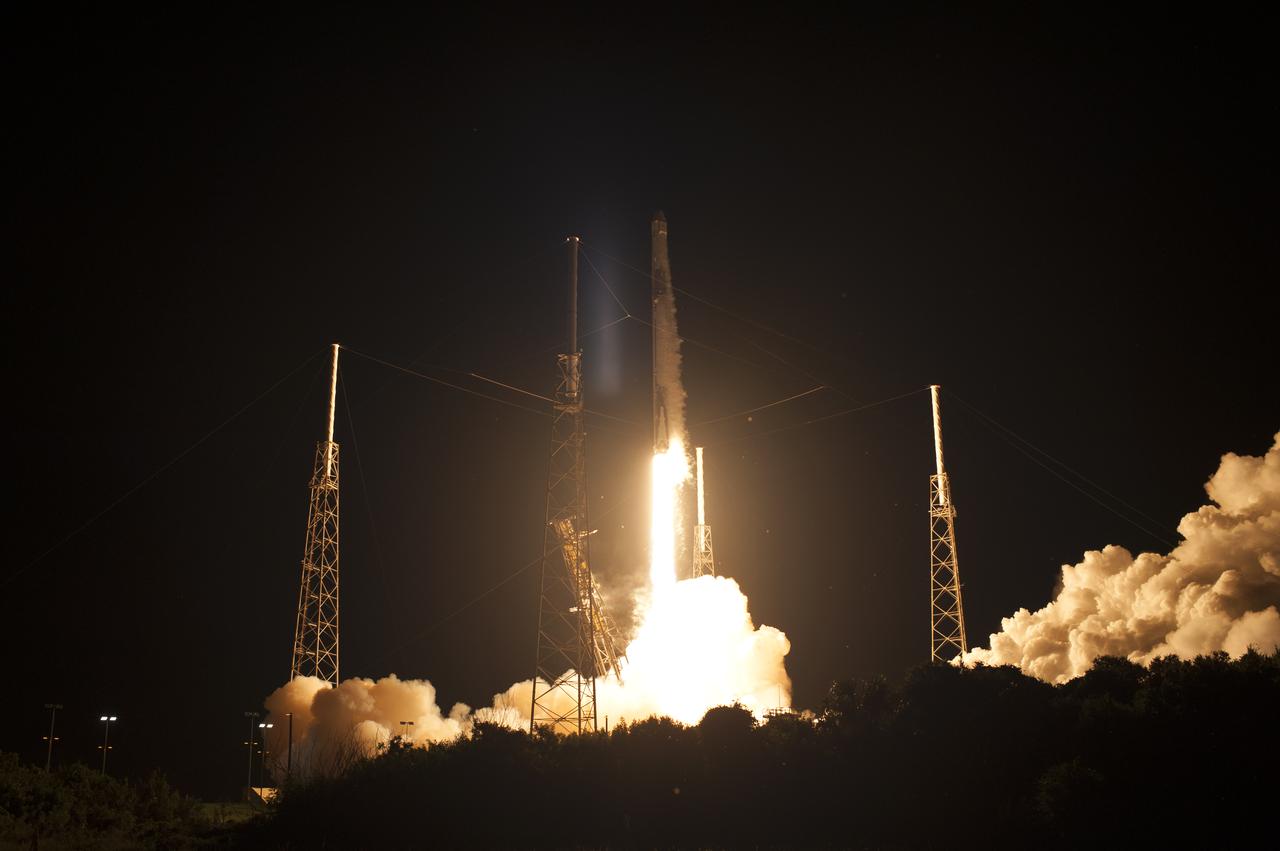
The two-stage SpaceX Falcon 9 launch vehicle lifts off from Space Launch Complex 40 at Cape Canaveral Air Force Station, carrying the SpaceX Dragon resupply spacecraft to the International Space Station. Liftoff was at 5:42 a.m. EDT on Friday, June 29, 2018. On the company’s 15th Commercial Resupply Services mission to the International Space Station, Dragon is filled with supplies and payloads, including critical materials to support several science and research investigations that will occur during Expedition 56. The spacecraft’s unpressurized trunk is carrying a Canadian-built Latching End Effector, or LEE. This new LEE will replace a failed unit astronauts removed during a series of spacewalks in the fall of 2017. Each end of the Canadarm2 robotic arm has an identical LEE, and they are used as the “hands” that grapple payloads and visiting cargo spaceships.
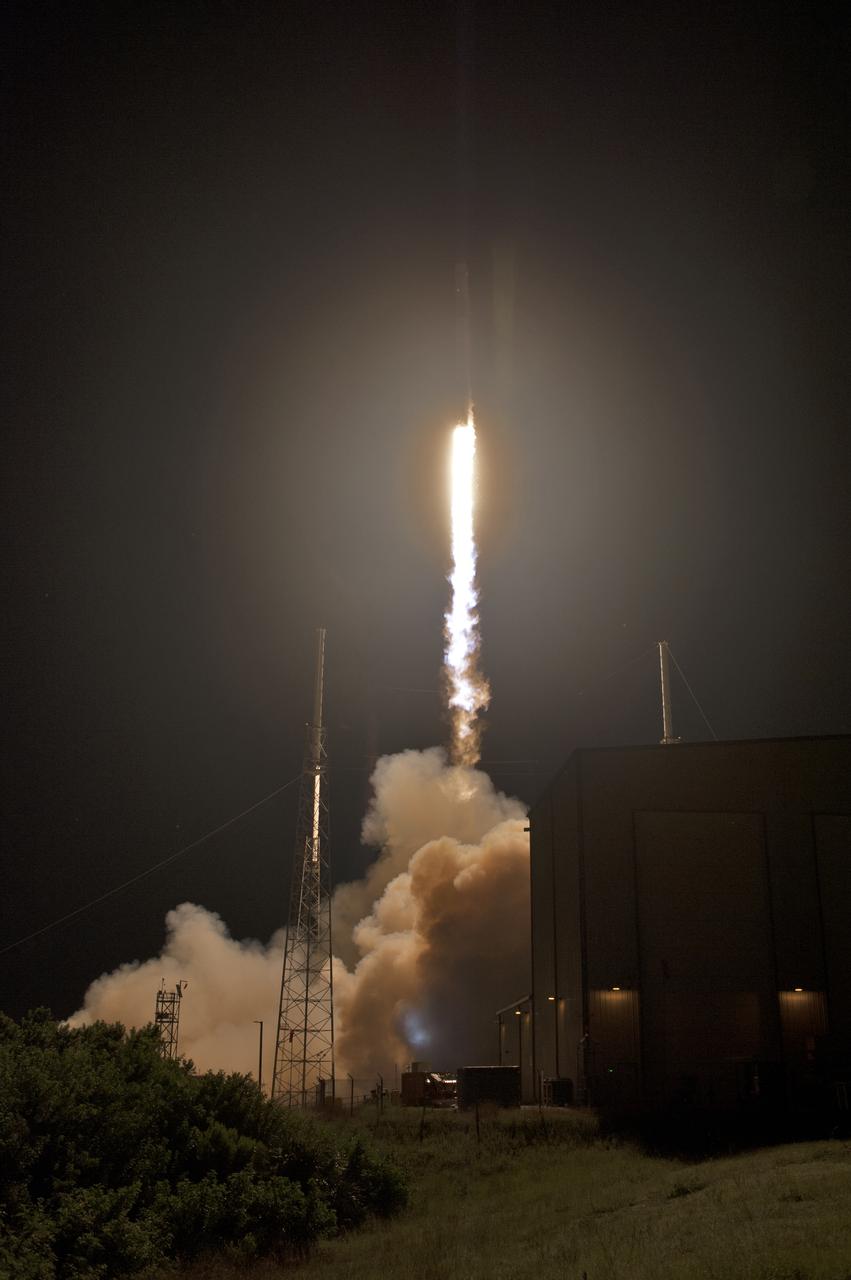
The two-stage SpaceX Falcon 9 launch vehicle lifts off from Space Launch Complex 40 at Cape Canaveral Air Force Station, carrying the SpaceX Dragon resupply spacecraft to the International Space Station. Liftoff was at 5:42 a.m. EDT on Friday, June 29, 2018. On the company’s 15th Commercial Resupply Services mission to the International Space Station, Dragon is filled with supplies and payloads, including critical materials to support several science and research investigations that will occur during Expedition 56. The spacecraft’s unpressurized trunk is carrying a Canadian-built Latching End Effector, or LEE. This new LEE will replace a failed unit astronauts removed during a series of spacewalks in the fall of 2017. Each end of the Canadarm2 robotic arm has an identical LEE, and they are used as the “hands” that grapple payloads and visiting cargo spaceships.

The two-stage SpaceX Falcon 9 launch vehicle lifts off from Space Launch Complex 40 at Cape Canaveral Air Force Station, carrying the SpaceX Dragon resupply spacecraft to the International Space Station. Liftoff was at 5:42 a.m. EDT on Friday, June 29, 2018. On the company’s 15th Commercial Resupply Services mission to the International Space Station, Dragon is filled with supplies and payloads, including critical materials to support several science and research investigations that will occur during Expedition 56. The spacecraft’s unpressurized trunk is carrying a Canadian-built Latching End Effector, or LEE. This new LEE will replace a failed unit astronauts removed during a series of spacewalks in the fall of 2017. Each end of the Canadarm2 robotic arm has an identical LEE, and they are used as the “hands” that grapple payloads and visiting cargo spaceships.
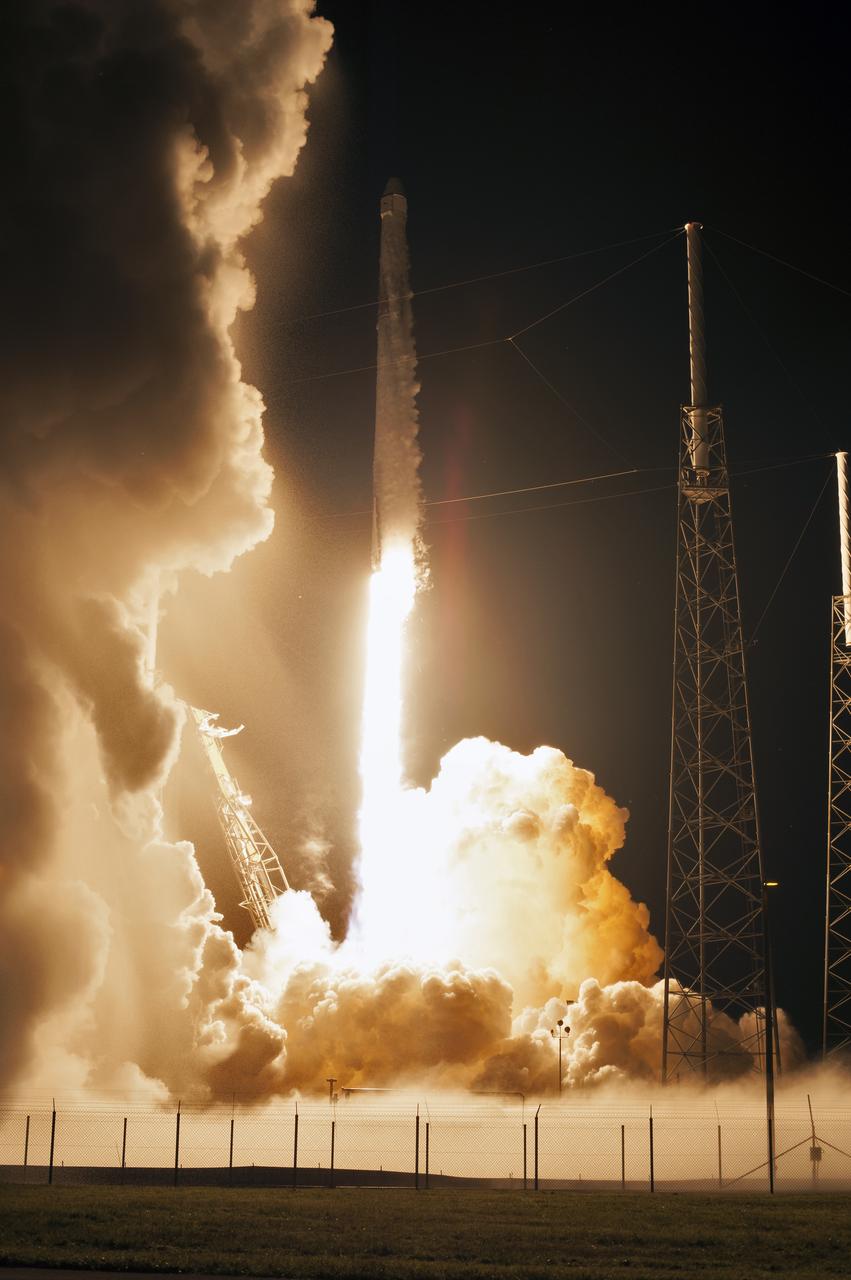
The two-stage SpaceX Falcon 9 launch vehicle lifts off from Space Launch Complex 40 at Cape Canaveral Air Force Station, carrying the SpaceX Dragon resupply spacecraft to the International Space Station. Liftoff was at 5:42 a.m. EDT on Friday, June 29, 2018. On the company’s 15th Commercial Resupply Services mission to the International Space Station, Dragon is filled with supplies and payloads, including critical materials to support several science and research investigations that will occur during Expedition 56. The spacecraft’s unpressurized trunk is carrying a Canadian-built Latching End Effector, or LEE. This new LEE will replace a failed unit astronauts removed during a series of spacewalks in the fall of 2017. Each end of the Canadarm2 robotic arm has an identical LEE, and they are used as the “hands” that grapple payloads and visiting cargo spaceships.
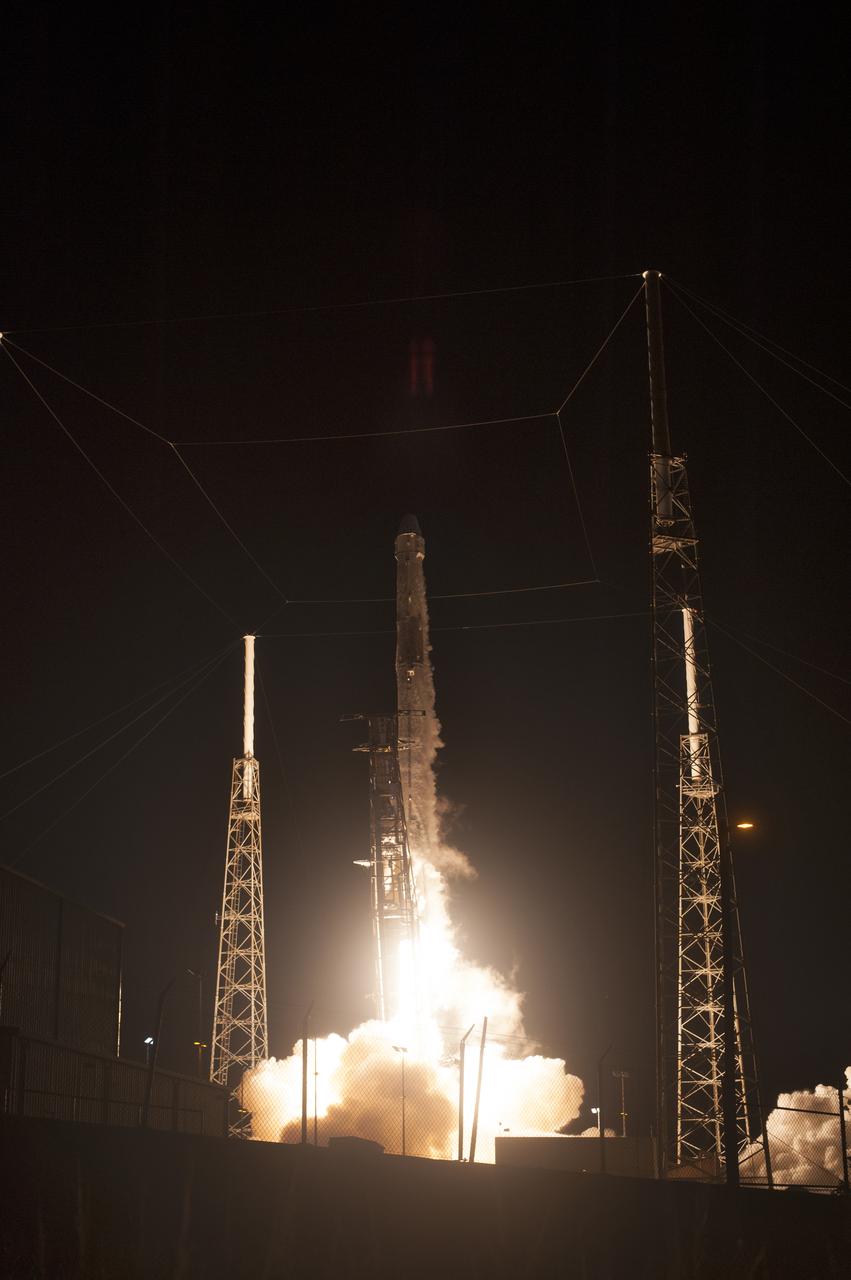
The two-stage SpaceX Falcon 9 launch vehicle lifts off from Space Launch Complex 40 at Cape Canaveral Air Force Station, carrying the SpaceX Dragon resupply spacecraft to the International Space Station. Liftoff was at 5:42 a.m. EDT on Friday, June 29, 2018. On the company’s 15th Commercial Resupply Services mission to the International Space Station, Dragon is filled with supplies and payloads, including critical materials to support several science and research investigations that will occur during Expedition 56. The spacecraft’s unpressurized trunk is carrying a Canadian-built Latching End Effector, or LEE. This new LEE will replace a failed unit astronauts removed during a series of spacewalks in the fall of 2017. Each end of the Canadarm2 robotic arm has an identical LEE, and they are used as the “hands” that grapple payloads and visiting cargo spaceships.

The two-stage SpaceX Falcon 9 launch vehicle lifts off from Space Launch Complex 40 at Cape Canaveral Air Force Station, carrying the SpaceX Dragon resupply spacecraft to the International Space Station. Liftoff was at 5:42 a.m. EDT on Friday, June 29, 2018. On the company’s 15th Commercial Resupply Services mission to the International Space Station, Dragon is filled with supplies and payloads, including critical materials to support several science and research investigations that will occur during Expedition 56. The spacecraft’s unpressurized trunk is carrying a Canadian-built Latching End Effector, or LEE. This new LEE will replace a failed unit astronauts removed during a series of spacewalks in the fall of 2017. Each end of the Canadarm2 robotic arm has an identical LEE, and they are used as the “hands” that grapple payloads and visiting cargo spaceships.
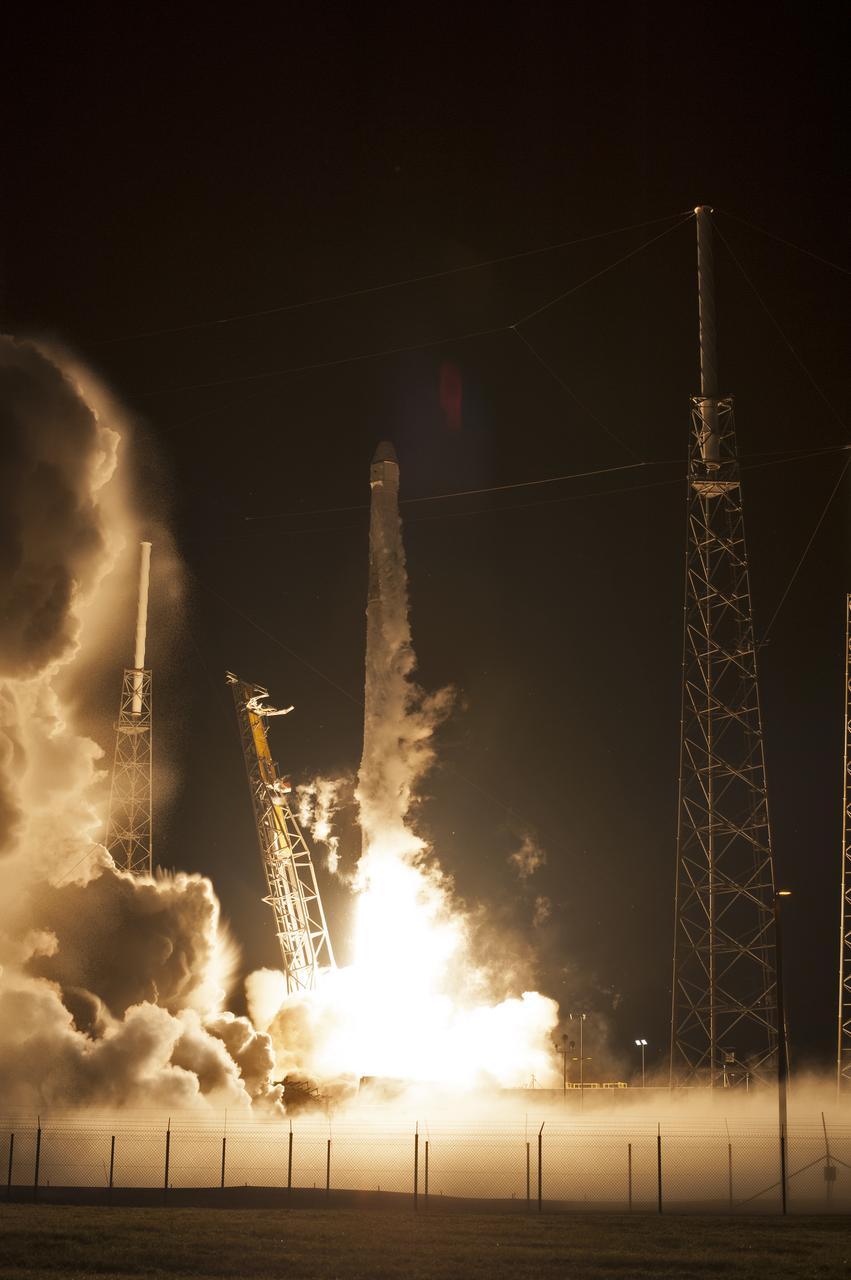
The two-stage SpaceX Falcon 9 launch vehicle lifts off from Space Launch Complex 40 at Cape Canaveral Air Force Station, carrying the SpaceX Dragon resupply spacecraft to the International Space Station. Liftoff was at 5:42 a.m. EDT on Friday, June 29, 2018. On the company’s 15th Commercial Resupply Services mission to the International Space Station, Dragon is filled with supplies and payloads, including critical materials to support several science and research investigations that will occur during Expedition 56. The spacecraft’s unpressurized trunk is carrying a Canadian-built Latching End Effector, or LEE. This new LEE will replace a failed unit astronauts removed during a series of spacewalks in the fall of 2017. Each end of the Canadarm2 robotic arm has an identical LEE, and they are used as the “hands” that grapple payloads and visiting cargo spaceships.
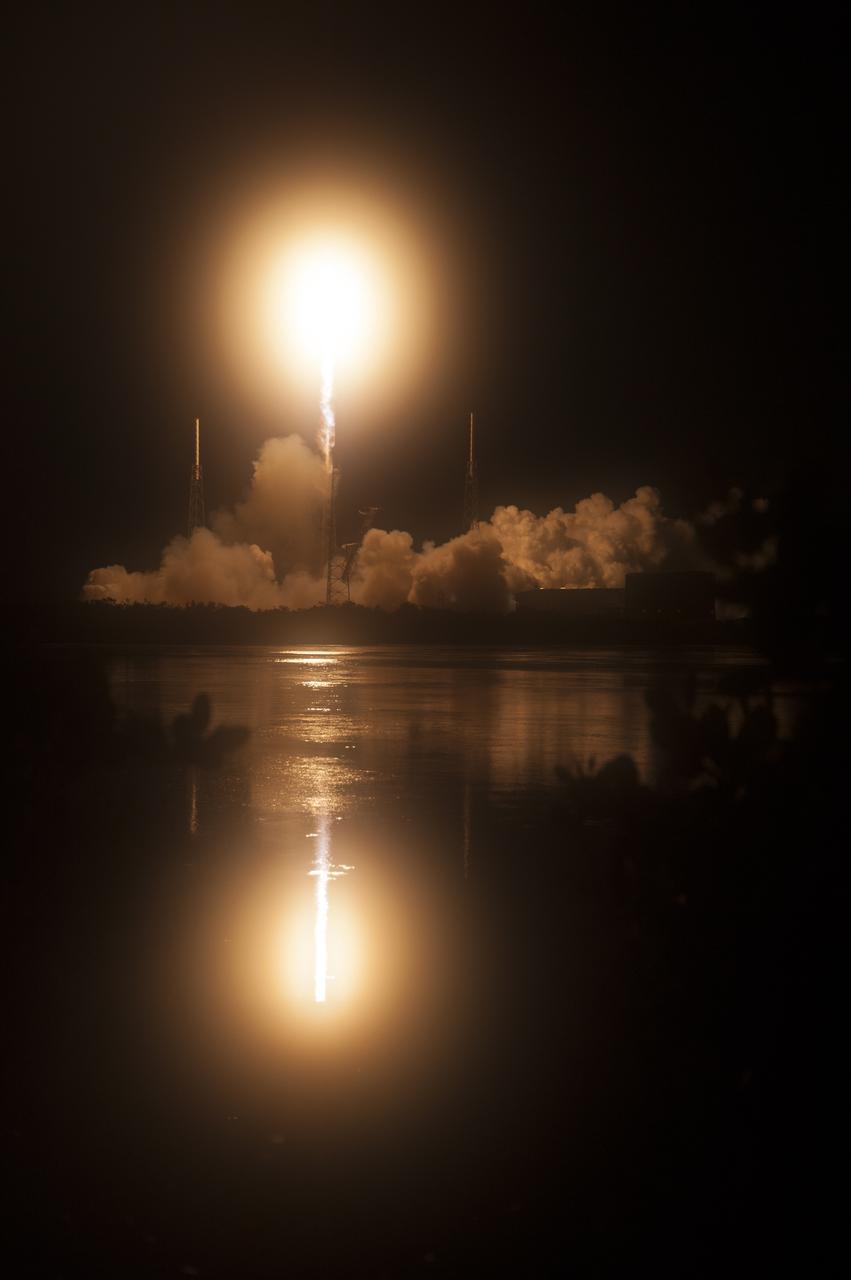
The two-stage SpaceX Falcon 9 launch vehicle lifts off from Space Launch Complex 40 at Cape Canaveral Air Force Station, carrying the SpaceX Dragon resupply spacecraft to the International Space Station. Liftoff was at 5:42 a.m. EDT on Friday, June 29, 2018. On the company’s 15th Commercial Resupply Services mission to the International Space Station, Dragon is filled with supplies and payloads, including critical materials to support several science and research investigations that will occur during Expedition 56. The spacecraft’s unpressurized trunk is carrying a Canadian-built Latching End Effector, or LEE. This new LEE will replace a failed unit astronauts removed during a series of spacewalks in the fall of 2017. Each end of the Canadarm2 robotic arm has an identical LEE, and they are used as the “hands” that grapple payloads and visiting cargo spaceships.
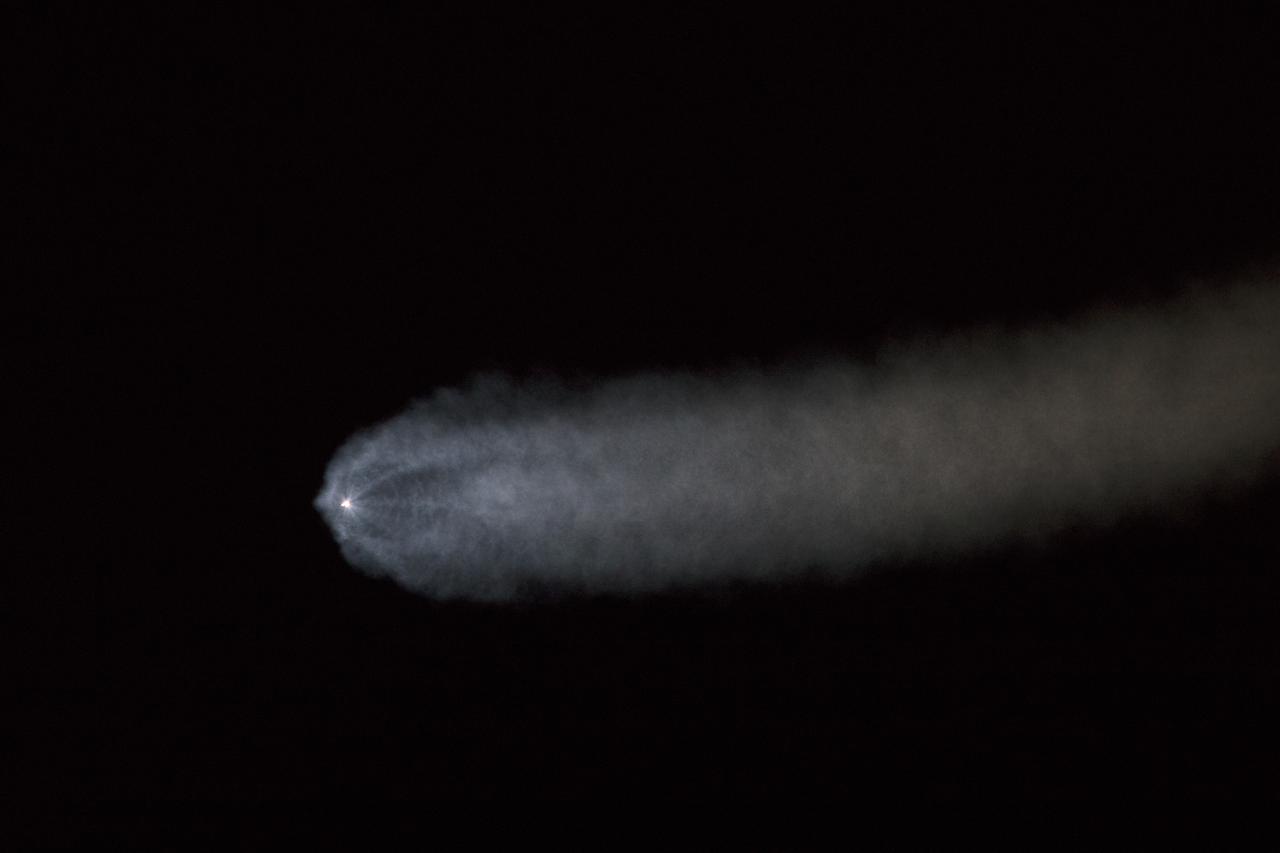
A SpaceX Falcon 9 rocket powers the Dragon spacecraft toward the International Space Station on Friday, June 29, 2018. The two-stage launch vehicle lifted off from Space Launch Complex 40 at Cape Canaveral Air Force Station at 5:42 a.m. EDT. On the company’s 15th Commercial Resupply Services mission to the space station, Dragon is filled with supplies and payloads, including critical materials to support several science and research investigations that will occur during Expedition 56. The spacecraft’s unpressurized trunk is carrying a Canadian-built Latching End Effector, or LEE. This new LEE will replace a failed unit astronauts removed during a series of spacewalks in the fall of 2017. Each end of the Canadarm2 robotic arm has an identical LEE, and they are used as the “hands” that grapple payloads and visiting cargo spaceships.
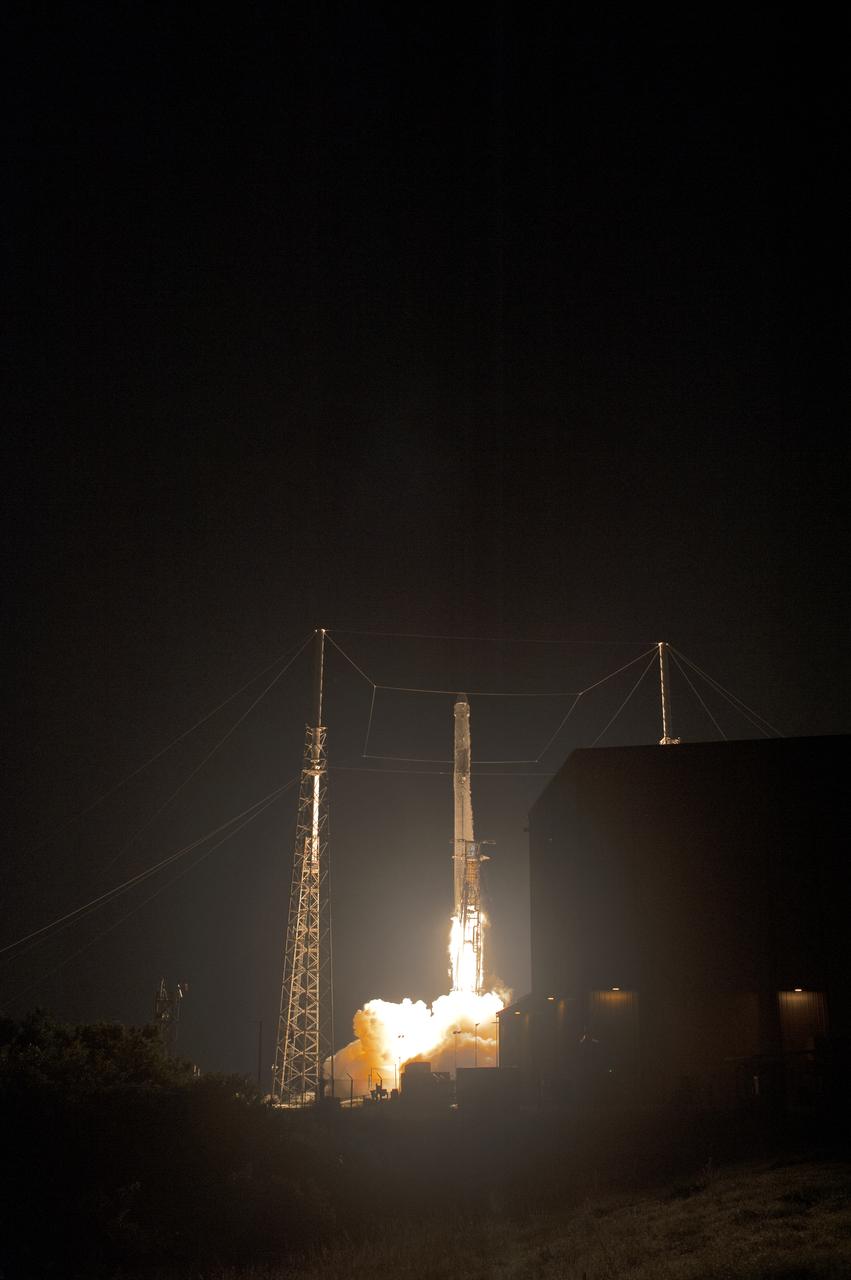
The two-stage SpaceX Falcon 9 launch vehicle lifts off from Space Launch Complex 40 at Cape Canaveral Air Force Station, carrying the SpaceX Dragon resupply spacecraft to the International Space Station. Liftoff was at 5:42 a.m. EDT on Friday, June 29, 2018. On the company’s 15th Commercial Resupply Services mission to the International Space Station, Dragon is filled with supplies and payloads, including critical materials to support several science and research investigations that will occur during Expedition 56. The spacecraft’s unpressurized trunk is carrying a Canadian-built Latching End Effector, or LEE. This new LEE will replace a failed unit astronauts removed during a series of spacewalks in the fall of 2017. Each end of the Canadarm2 robotic arm has an identical LEE, and they are used as the “hands” that grapple payloads and visiting cargo spaceships.
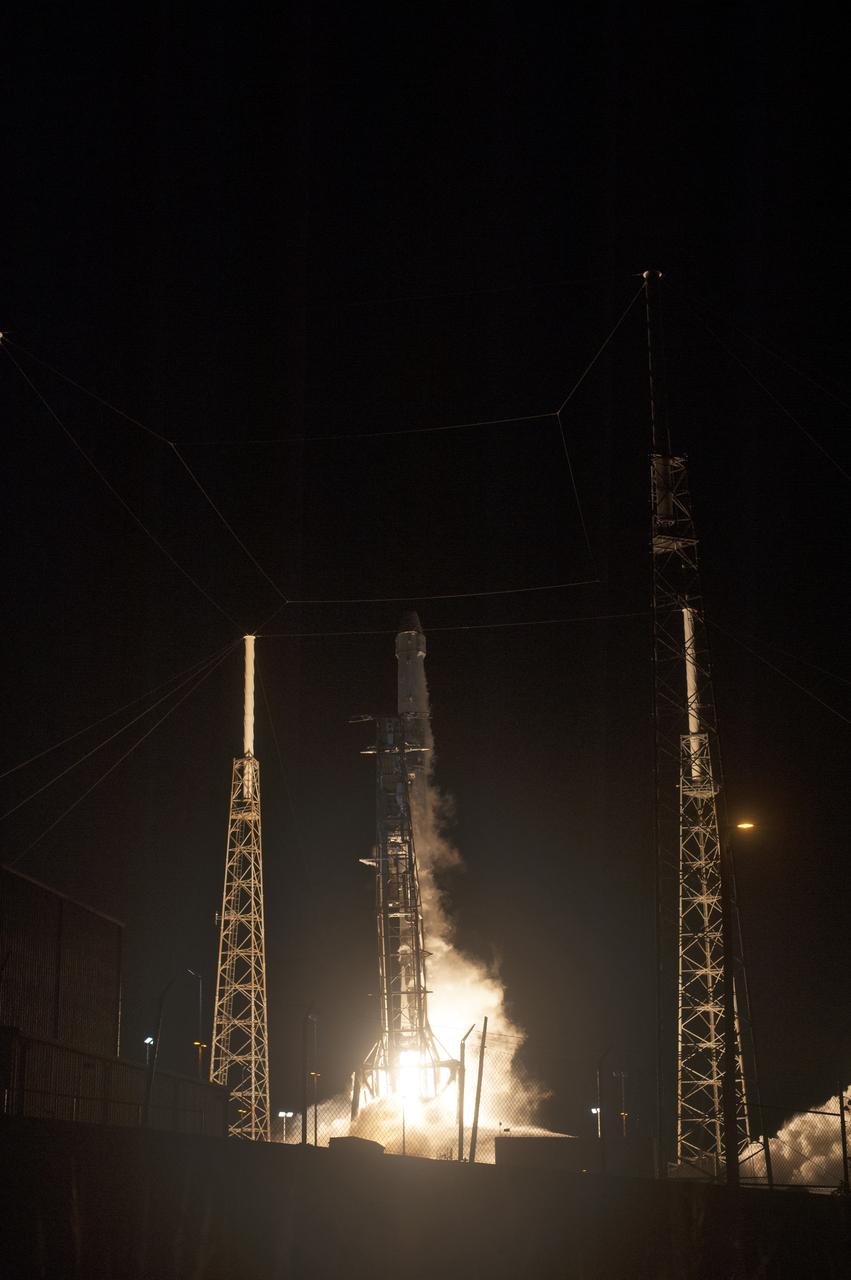
The two-stage SpaceX Falcon 9 launch vehicle lifts off from Space Launch Complex 40 at Cape Canaveral Air Force Station, carrying the SpaceX Dragon resupply spacecraft to the International Space Station. Liftoff was at 5:42 a.m. EDT on Friday, June 29, 2018. On the company’s 15th Commercial Resupply Services mission to the International Space Station, Dragon is filled with supplies and payloads, including critical materials to support several science and research investigations that will occur during Expedition 56. The spacecraft’s unpressurized trunk is carrying a Canadian-built Latching End Effector, or LEE. This new LEE will replace a failed unit astronauts removed during a series of spacewalks in the fall of 2017. Each end of the Canadarm2 robotic arm has an identical LEE, and they are used as the “hands” that grapple payloads and visiting cargo spaceships.
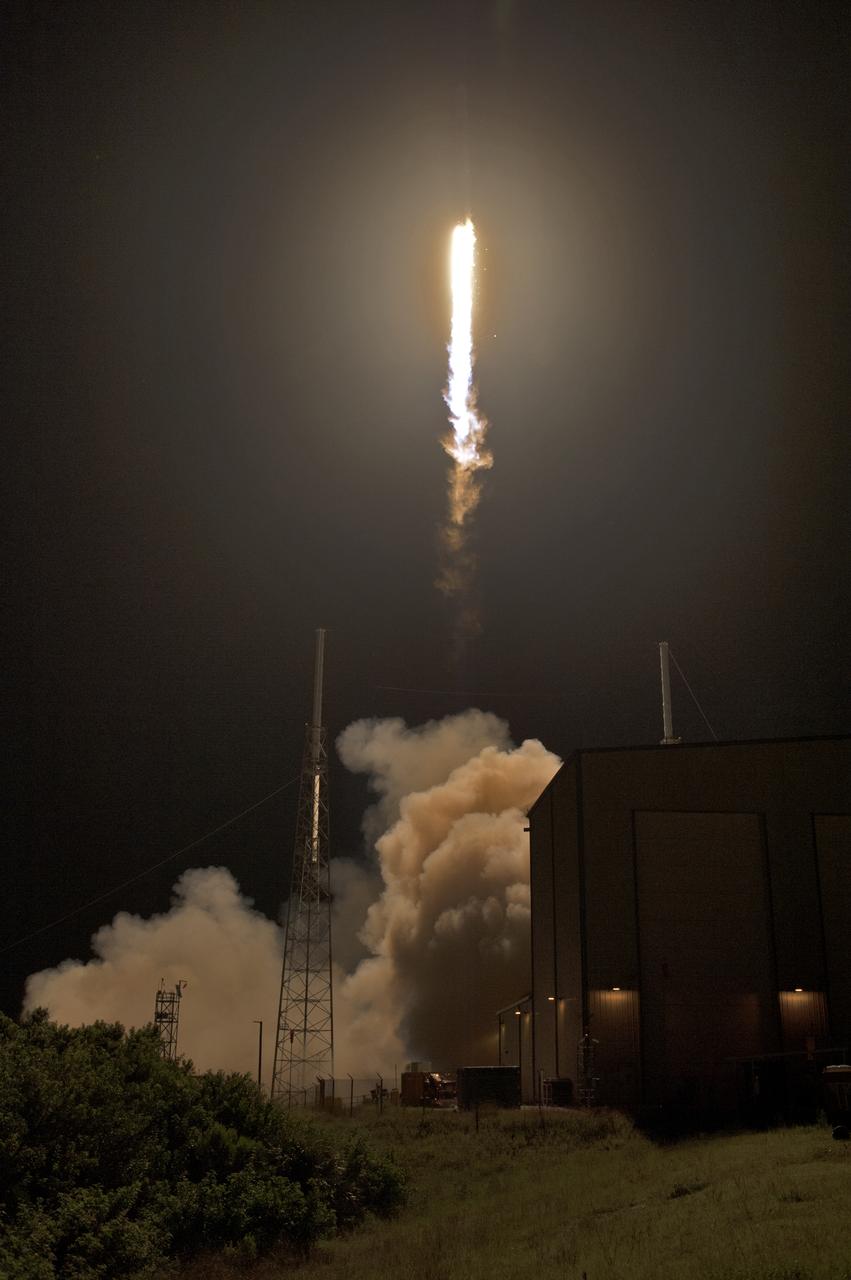
The two-stage SpaceX Falcon 9 launch vehicle lifts off from Space Launch Complex 40 at Cape Canaveral Air Force Station, carrying the SpaceX Dragon resupply spacecraft to the International Space Station. Liftoff was at 5:42 a.m. EDT on Friday, June 29, 2018. On the company’s 15th Commercial Resupply Services mission to the International Space Station, Dragon is filled with supplies and payloads, including critical materials to support several science and research investigations that will occur during Expedition 56. The spacecraft’s unpressurized trunk is carrying a Canadian-built Latching End Effector, or LEE. This new LEE will replace a failed unit astronauts removed during a series of spacewalks in the fall of 2017. Each end of the Canadarm2 robotic arm has an identical LEE, and they are used as the “hands” that grapple payloads and visiting cargo spaceships.
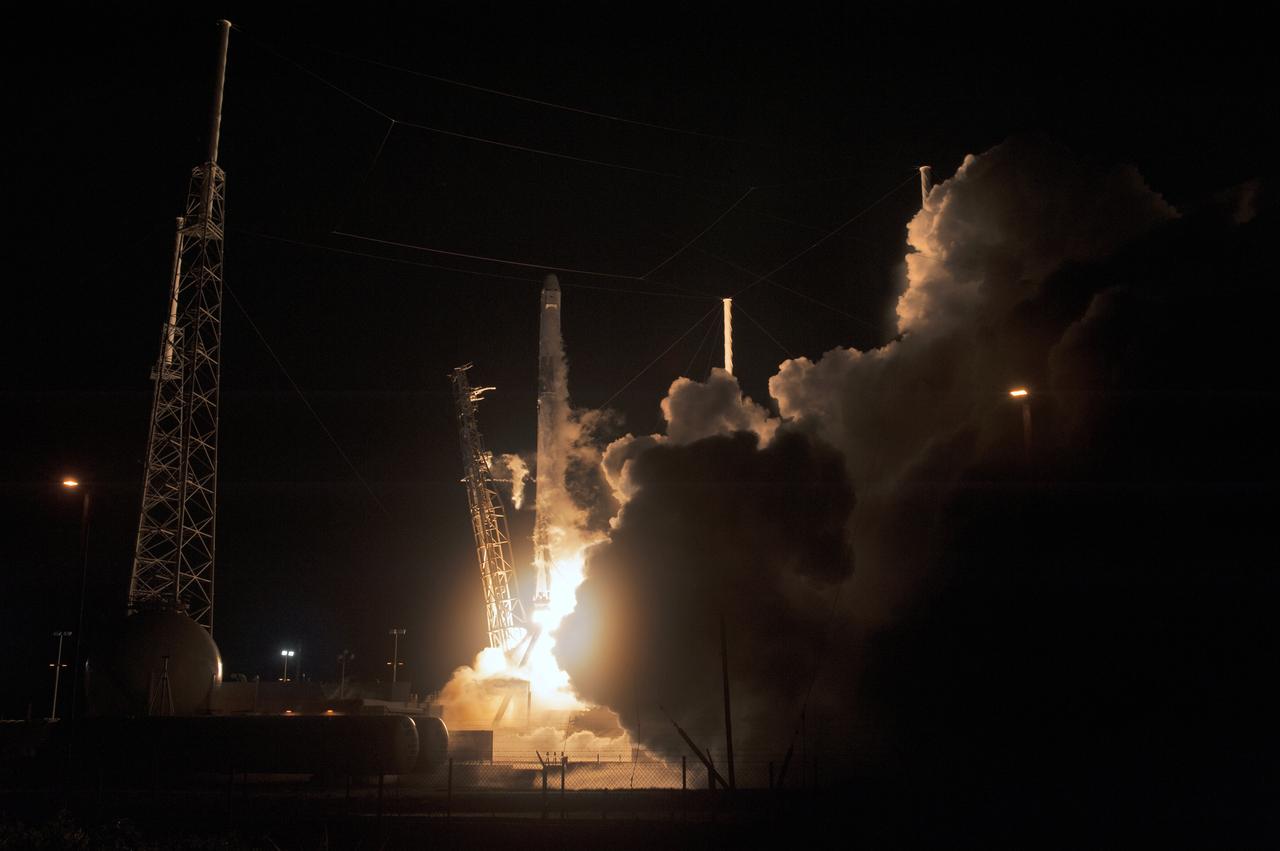
The two-stage SpaceX Falcon 9 launch vehicle lifts off from Space Launch Complex 40 at Cape Canaveral Air Force Station, carrying the SpaceX Dragon resupply spacecraft to the International Space Station. Liftoff was at 5:42 a.m. EDT on Friday, June 29, 2018. On the company’s 15th Commercial Resupply Services mission to the International Space Station, Dragon is filled with supplies and payloads, including critical materials to support several science and research investigations that will occur during Expedition 56. The spacecraft’s unpressurized trunk is carrying a Canadian-built Latching End Effector, or LEE. This new LEE will replace a failed unit astronauts removed during a series of spacewalks in the fall of 2017. Each end of the Canadarm2 robotic arm has an identical LEE, and they are used as the “hands” that grapple payloads and visiting cargo spaceships.
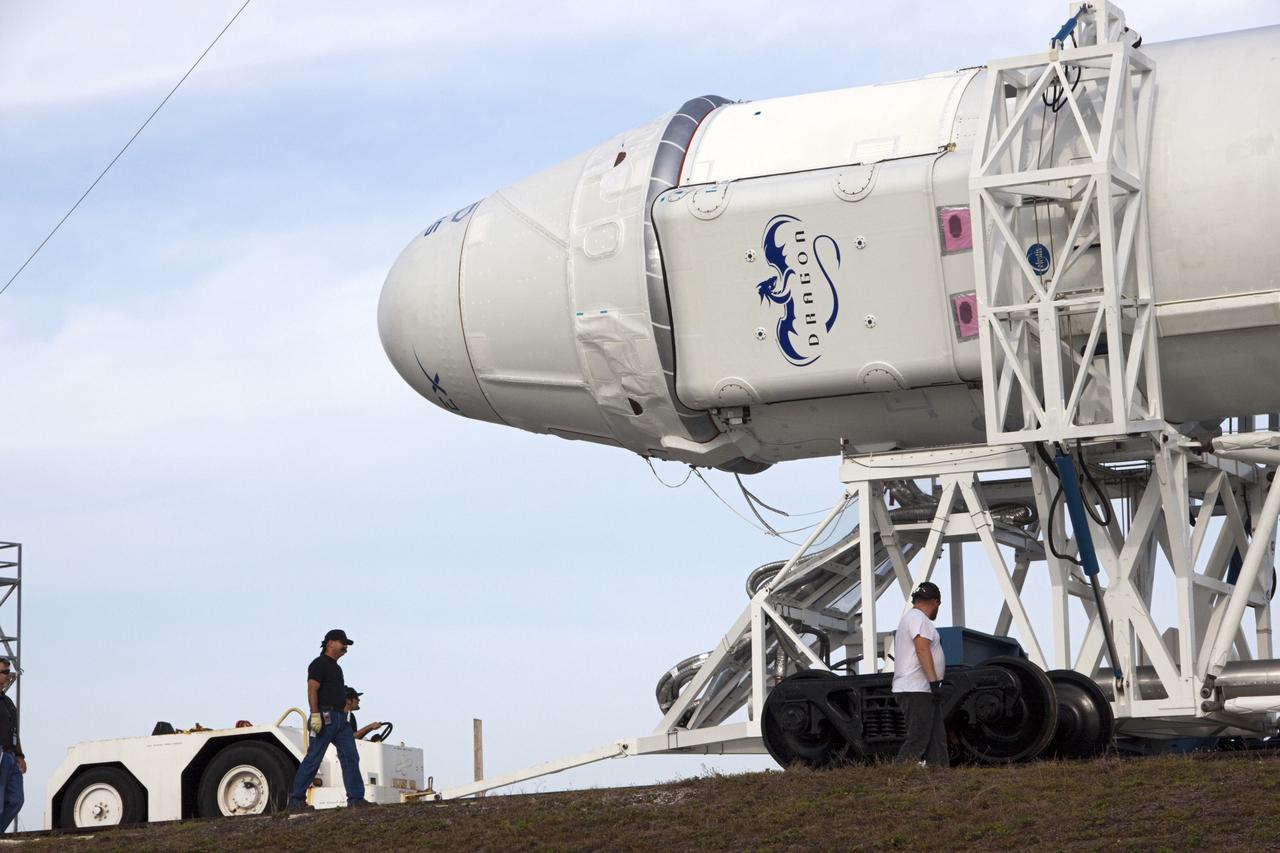
CAPE CANAVERAL, Fla. – As technicians monitor the progress of the transporter, the SpaceX Falcon 9 rocket with its Dragon spacecraft arrive at Space Launch Complex-40 on Cape Canaveral Air Force Station in Florida. Liftoff with the SpaceX Falcon 9 is set for 4:55 a.m. EDT on May 19. The launch will be the company's second demonstration test flight for NASA's Commercial Orbital Transportation Services Program, or COTS. During the flight, the capsule will conduct a series of check-out procedures to test and prove its systems, including rendezvous and berthing with the International Space Station. If the capsule performs as planned, the cargo and experiments it is carrying will be transferred to the station. The cargo includes food, water and provisions for the station’s Expedition crews, such as clothing, batteries and computer equipment. Under COTS, NASA has partnered with two aerospace companies to deliver cargo to the station. For more information, visit http://www.nasa.gov/spacex Photo credit: NASA/Jim Grossmann
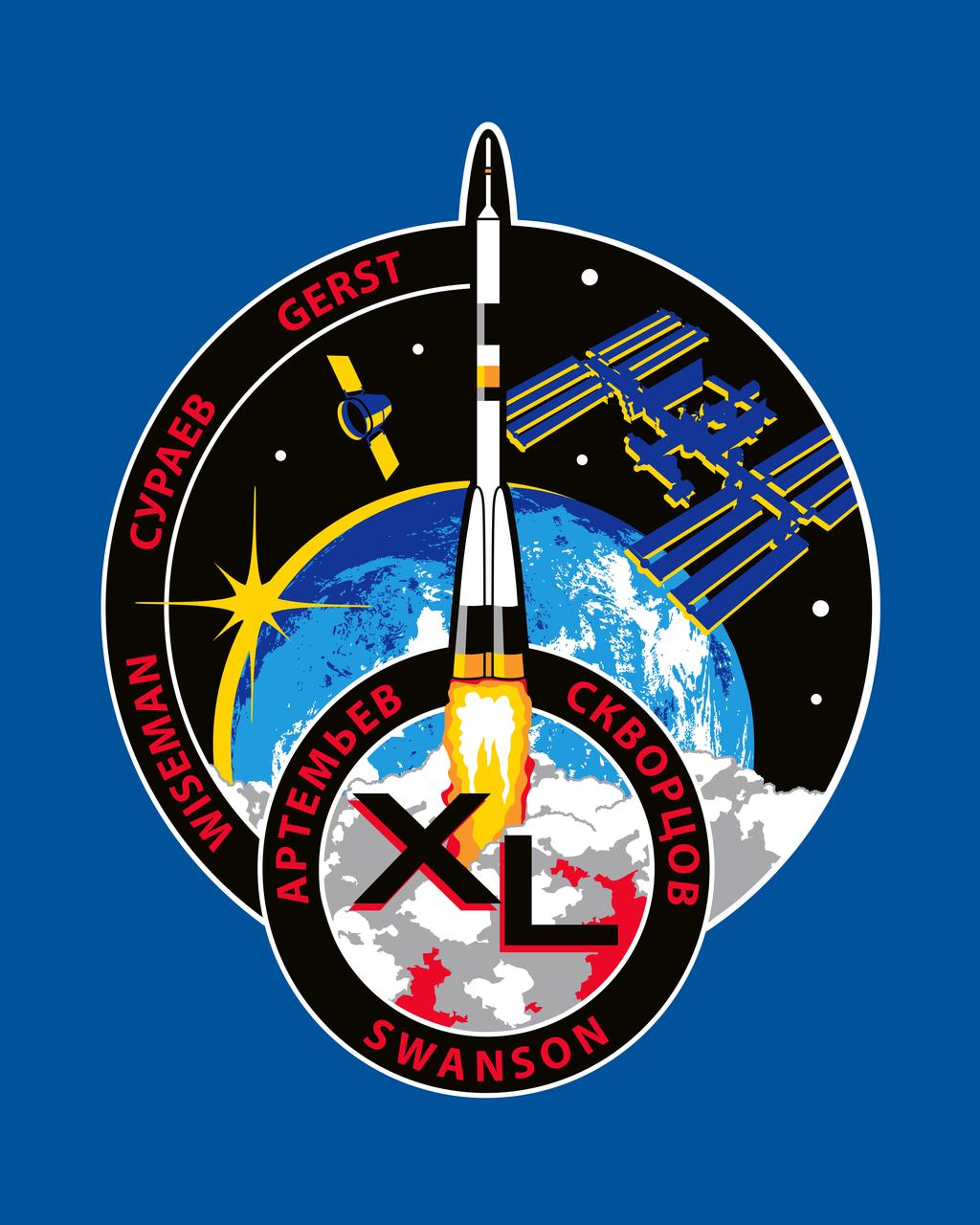
ISS040-S-001 (April 2013) --- The Expedition 40 patch depicts the past, present, and future of human space exploration. The crew wrote the description that follows: The reliable and proven Soyuz, our ride to the International Space Station (ISS), is a part of the past, present, and future. The ISS is the culmination of an enormous effort by many countries partnering to produce a first-class orbiting laboratory, and its image represents the current state of space exploration. The ISS is immensely significant to us as our home away from home and our oasis in the sky. The commercial cargo vehicle is also part of the current human space exploration and is a link to the future. A blend of legacy and future technologies is being used to create the next spacecrafts which will carry humans from our planet to destinations beyond. The sun on Earth?s horizon represents the new achievements and technologies that will come about due to our continued effort in space exploration. The NASA insignia design for shuttle and space station flights is reserved for use by the astronauts and for other official use as the NASA Administrator may authorize. Public availability has been approved only in the form of illustrations by the various news media. When and if there is any change in this policy, which is not anticipated, it will be publicly announced. Photo credit: NASA