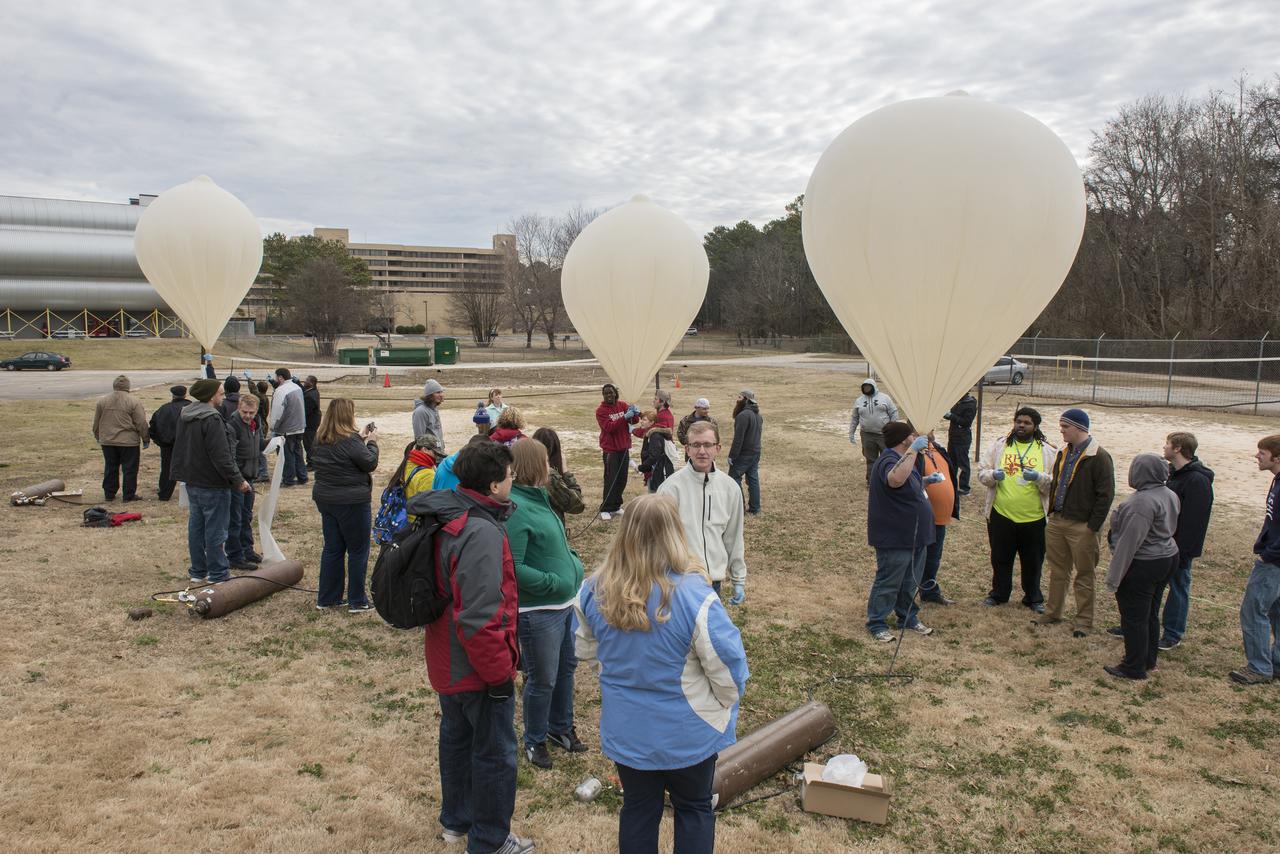
STUDENTS FROM COMMUNITY COLLEGES THROUGHOUT THE SOUTH CAME TOGETHER AT THE U.S. SPACE AND ROCKET CENTER FOR THE BALLOONSAT LAUNCH EVENT. EACH COMMUNITY COLLEGE TEAM ASSEMBLED ITS OWN PAYLOAD, DESIGNED TO DOWNLOAD SCIENTIFIC AND ATMOSPHERIC INFORMATION, AND THEN 2 WEATHER BALLOONS WERE SENT ALOFT TO APPROXIMATELY 100,000 FEET WITH THE PAYLOADS. THE PAYLOADS WERE RECOVERED IN N. GEORGIA AND TAKEN BACK TO THE INDIVIDUAL SCHOOLS FOR DOWNLOADING.
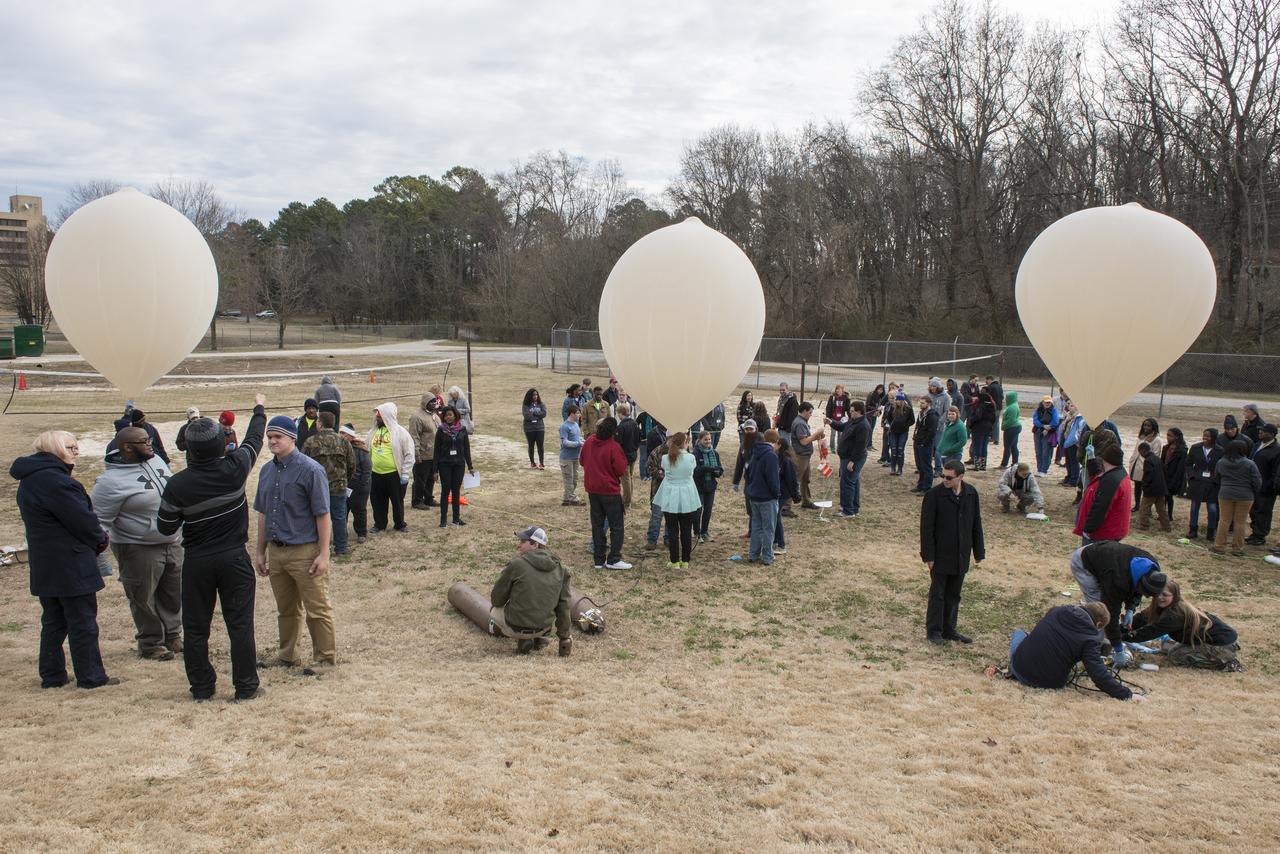
STUDENTS FROM COMMUNITY COLLEGES THROUGHOUT THE SOUTH CAME TOGETHER AT THE U.S. SPACE AND ROCKET CENTER FOR THE BALLOONSAT LAUNCH EVENT. EACH COMMUNITY COLLEGE TEAM ASSEMBLED ITS OWN PAYLOAD, DESIGNED TO DOWNLOAD SCIENTIFIC AND ATMOSPHERIC INFORMATION, AND THEN 2 WEATHER BALLOONS WERE SENT ALOFT TO APPROXIMATELY 100,000 FEET WITH THE PAYLOADS. THE PAYLOADS WERE RECOVERED IN N. GEORGIA AND TAKEN BACK TO THE INDIVIDUAL SCHOOLS FOR DOWNLOADING.
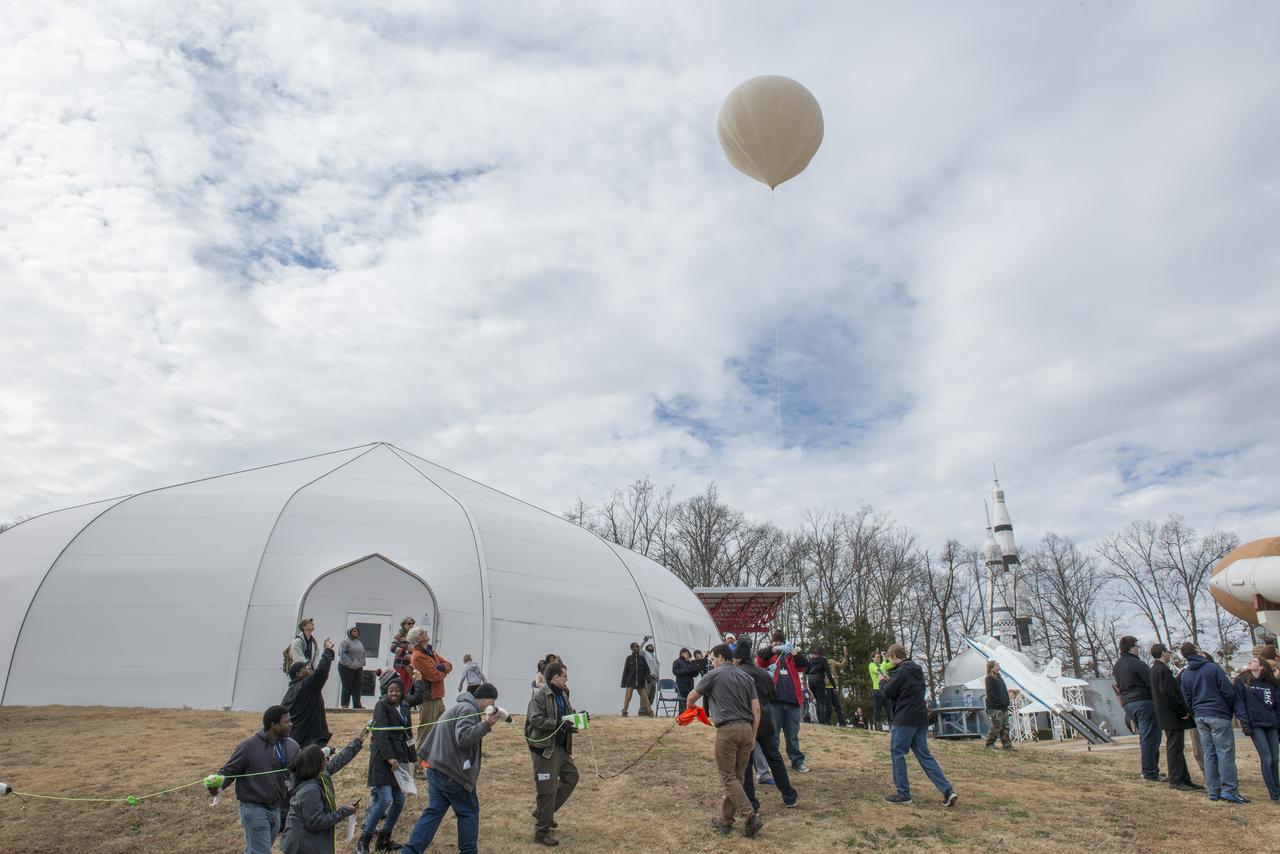
STUDENTS FROM COMMUNITY COLLEGES THROUGHOUT THE SOUTH CAME TOGETHER AT THE U.S. SPACE AND ROCKET CENTER FOR THE BALLOONSAT LAUNCH EVENT. EACH COMMUNITY COLLEGE TEAM ASSEMBLED ITS OWN PAYLOAD, DESIGNED TO DOWNLOAD SCIENTIFIC AND ATMOSPHERIC INFORMATION, AND THEN 2 WEATHER BALLOONS WERE SENT ALOFT TO APPROXIMATELY 100,000 FEET WITH THE PAYLOADS. THE PAYLOADS WERE RECOVERED IN N. GEORGIA AND TAKEN BACK TO THE INDIVIDUAL SCHOOLS FOR DOWNLOADING.
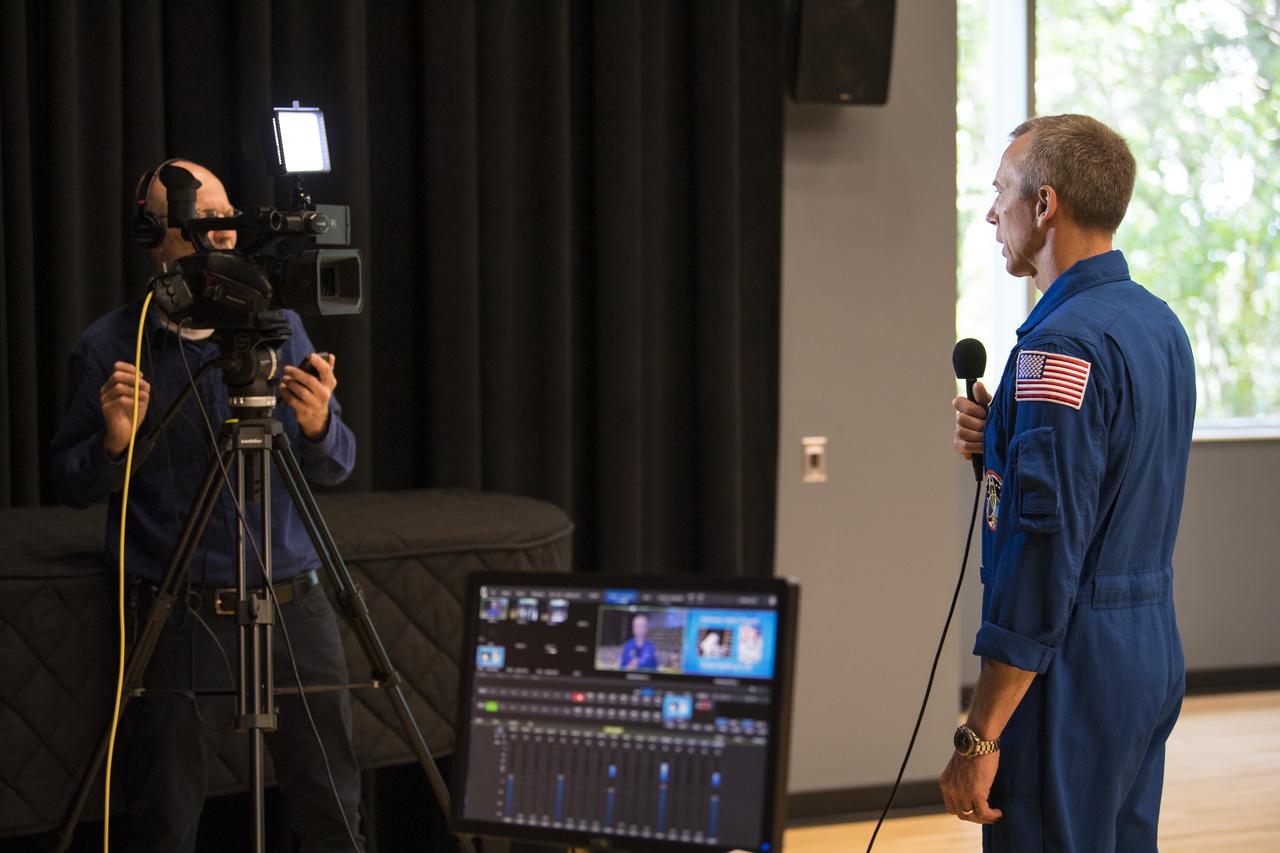
NASA astronaut Drew Feustel is interviewed about his community college experience and why he chose to be an astronaut at Northern Virginia Community College's Alexandria campus, Monday, May 6, 2019 in Virginia. Photo Credit: (NASA/Aubrey Gemignani)

Student Assistant Antoinette Davis (left) of Utica; Carmella Forsythe, 13, of Clinton; Terri Henderson, 14, of Clinton; Tyra Greer, 12, of Port Gibson; and Kala Battle, 14, of Edwards, answer curriculum questions about NASA's Return to Flight mission exhibit at StenniSphere, the visitor center at NASA's Stennis Space Center (SSC) near Bay St. Louis, Miss. The girls were on a field trip to StenniSphere with fellow participants in Hinds Community College's MSEIP (Minority Science Engineering Improvement Program) summer program. MSEIP encourages students to pursue and prepare for careers in science, technology, engineering and math.
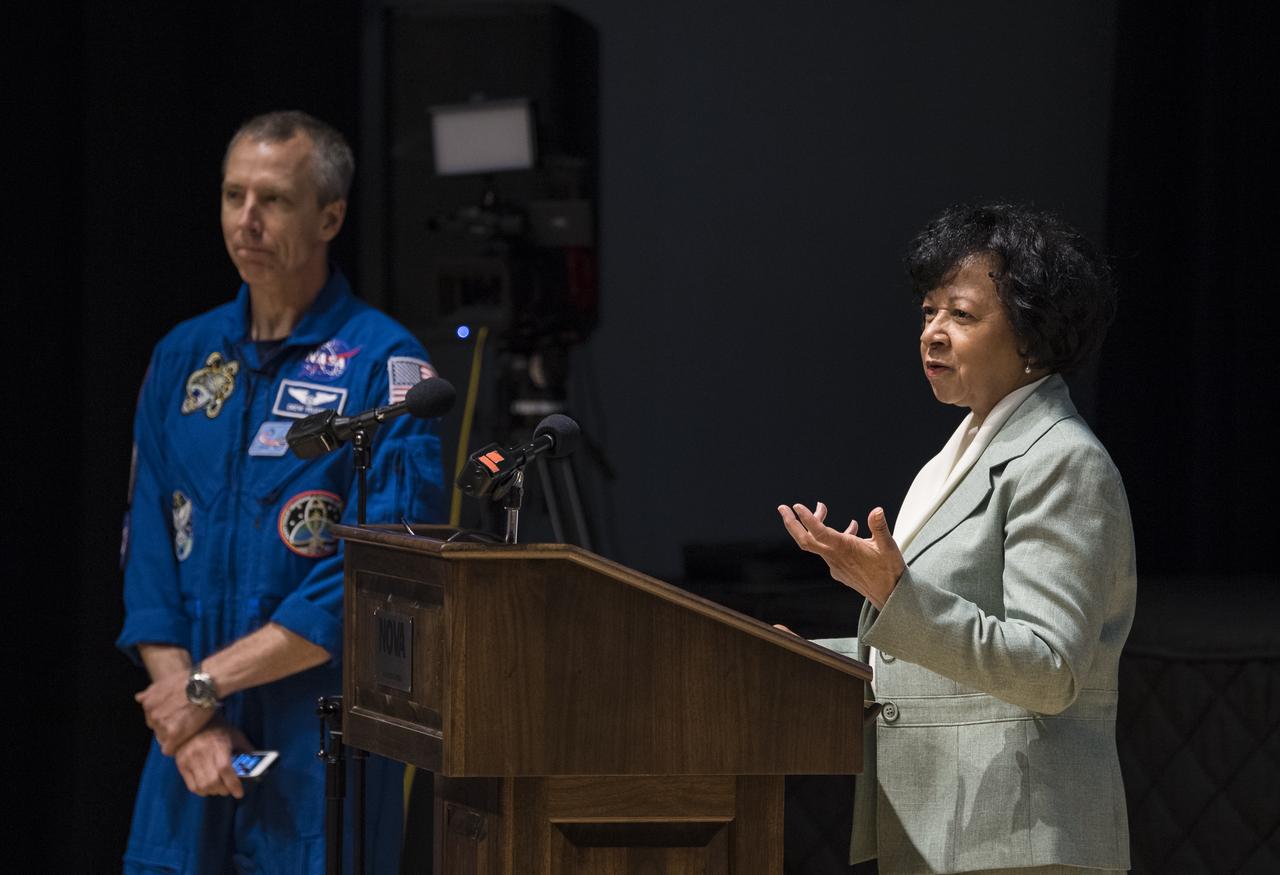
NASA astronaut Drew Feustel is introduced by Northern Virginia Community College's Alexandria campus provost, Dr. Annette Haggray, Monday, May 6, 2019 in Virginia. Photo Credit: (NASA/Aubrey Gemignani)
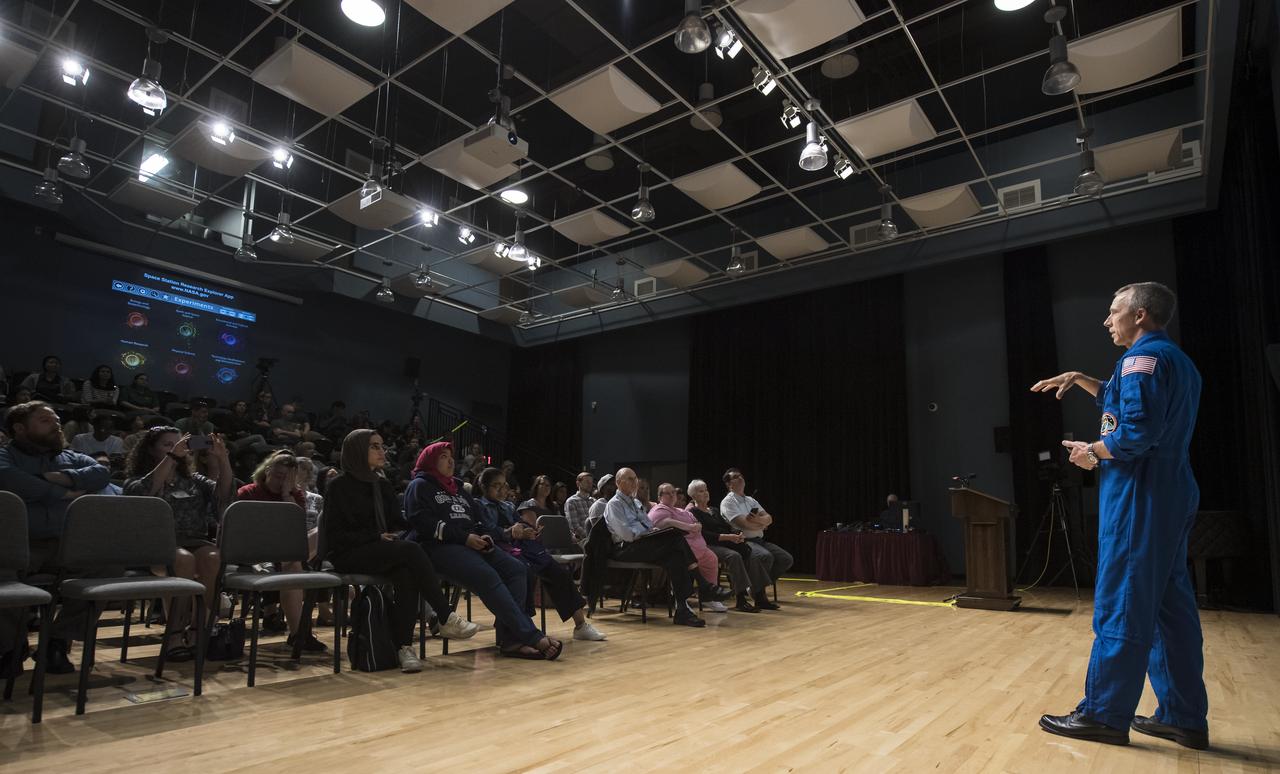
NASA astronaut Drew Feustel speaks about his experience on two shuttle missions, STS-125 and STS-134, as well as Expeditions 55 and 56 on the International Space Station, at Northern Virginia Community College's Alexandria campus, Monday, May 6, 2019 in Virginia. Photo Credit: (NASA/Aubrey Gemignani)
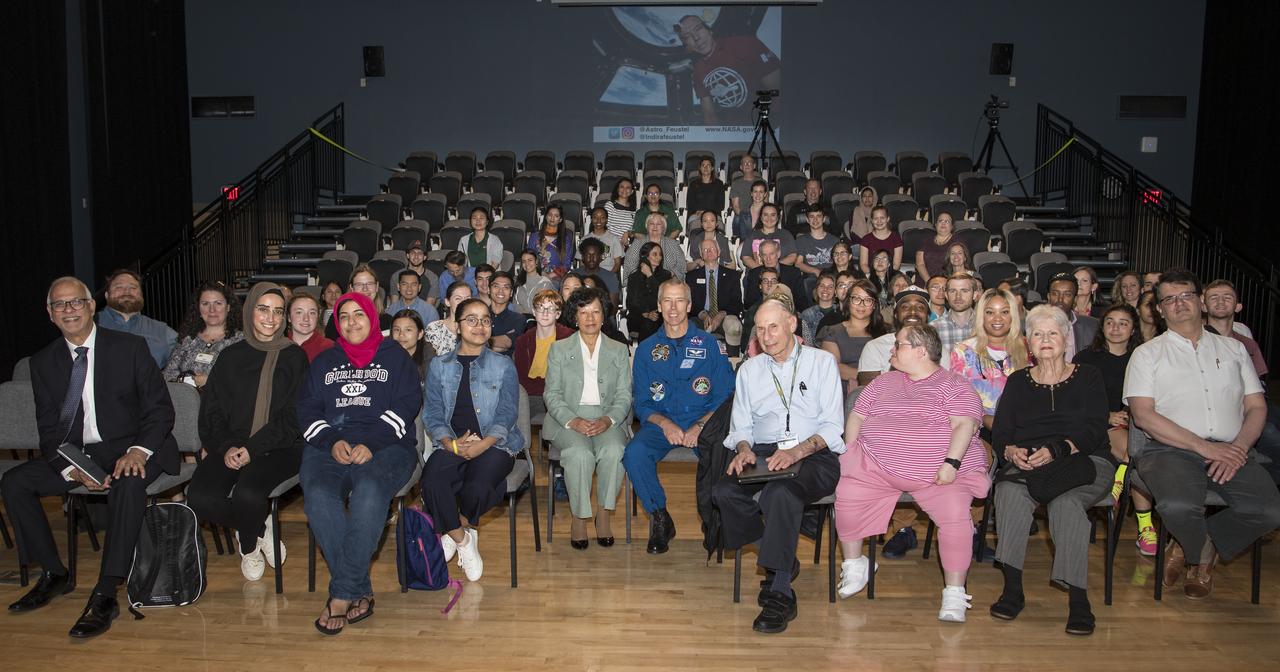
NASA astronaut Drew Feustel, center right, poses for a photo with Northern Virginia Community College's Alexandria campus provost, Dr. Annette Haggray, center left, and attendees of his presentation on spaceflight, Monday, May 6, 2019 in Virginia. Photo Credit: (NASA/Aubrey Gemignani)
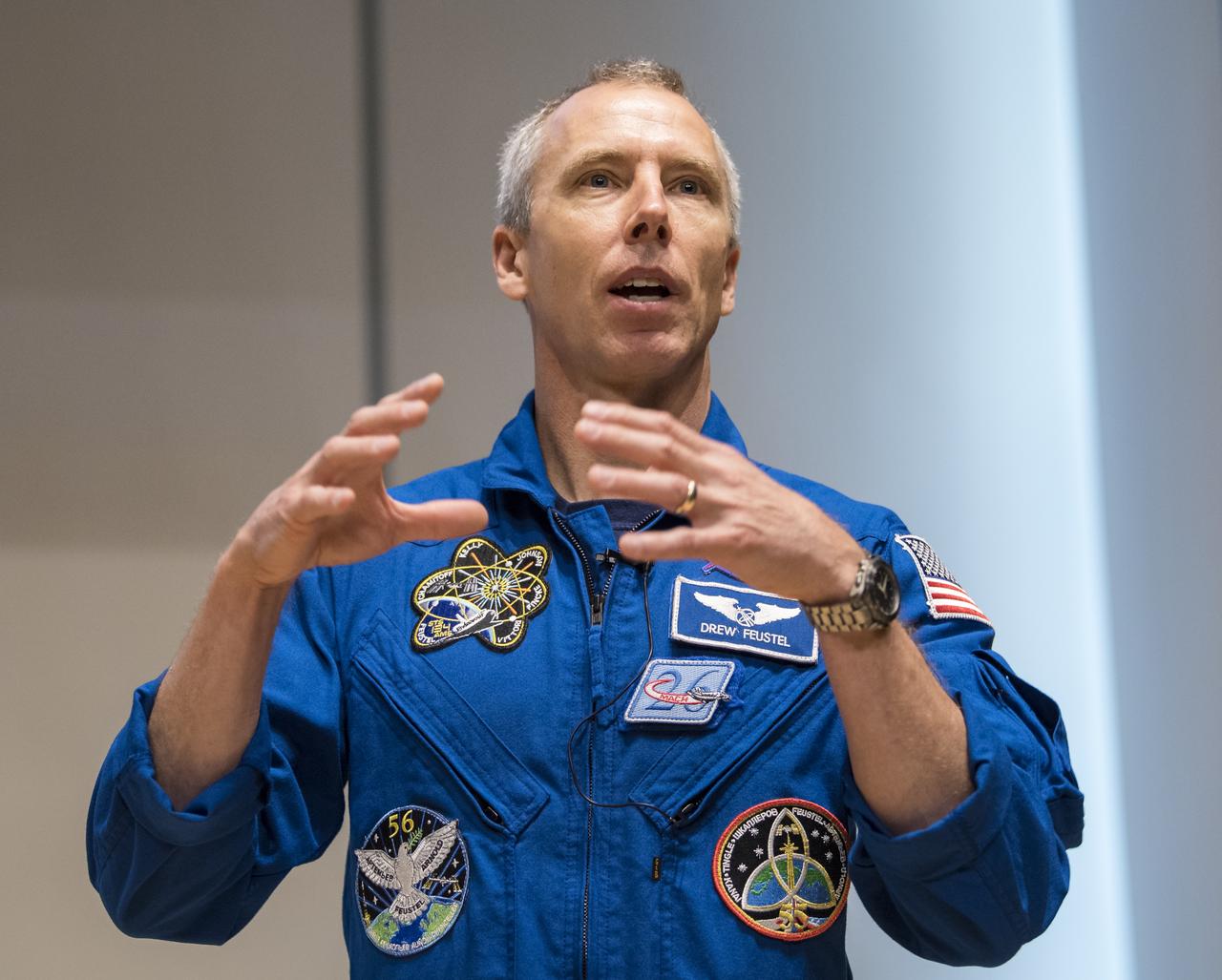
NASA astronaut Drew Feustel speaks about his experience on two shuttle missions, STS-125 and STS-134, as well as Expeditions 55 and 56 on the International Space Station, at Northern Virginia Community College's Alexandria campus, Monday, May 6, 2019 in Virginia. Photo Credit: (NASA/Aubrey Gemignani)
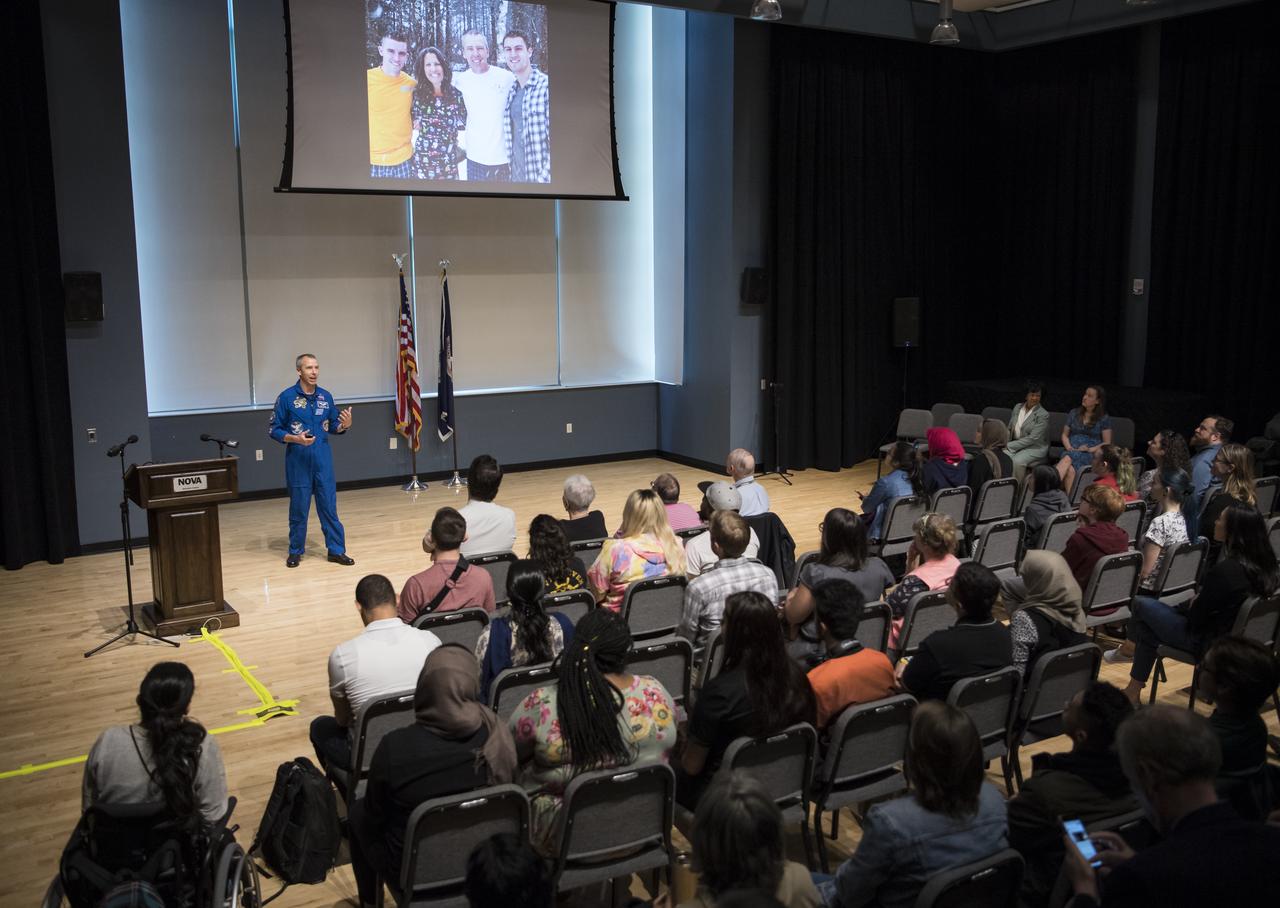
NASA astronaut Drew Feustel speaks about his experience on two shuttle missions, STS-125 and STS-134, as well as Expeditions 55 and 56 on the International Space Station, at Northern Virginia Community College's Alexandria campus, Monday, May 6, 2019 in Virginia. Photo Credit: (NASA/Aubrey Gemignani)
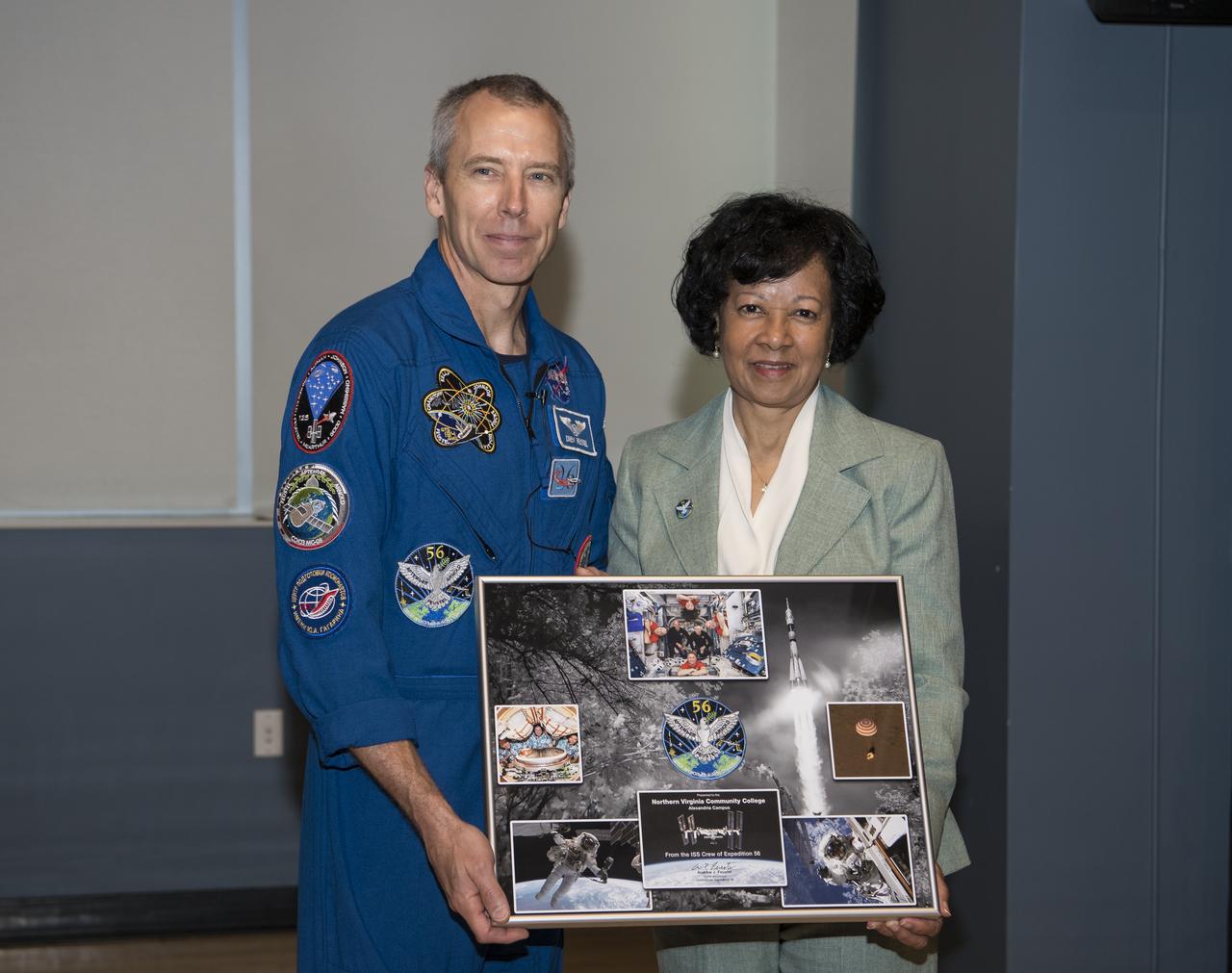
NASA astronaut Drew Feustel, left, poses for a photo with Northern Virginia Community College's Alexandria campus provost, Dr. Annette Haggray, after presenting her with a montage from Expeditions 55 and 56, Monday, May 6, 2019 in Virginia. Photo Credit: (NASA/Aubrey Gemignani)
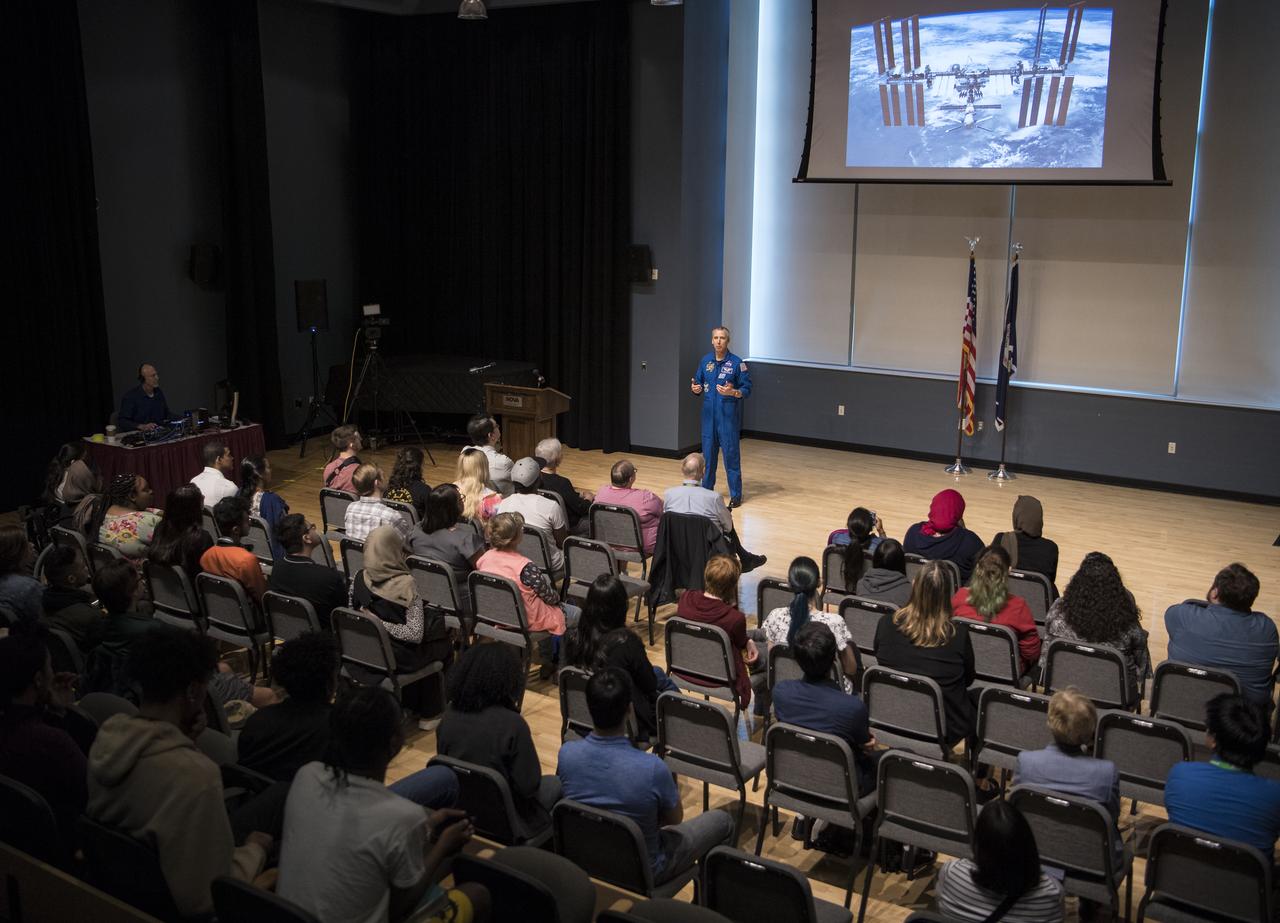
NASA astronaut Drew Feustel speaks about his experience on two shuttle missions, STS-125 and STS-134, as well as Expeditions 55 and 56 on the International Space Station, at Northern Virginia Community College's Alexandria campus, Monday, May 6, 2019 in Virginia. Photo Credit: (NASA/Aubrey Gemignani)
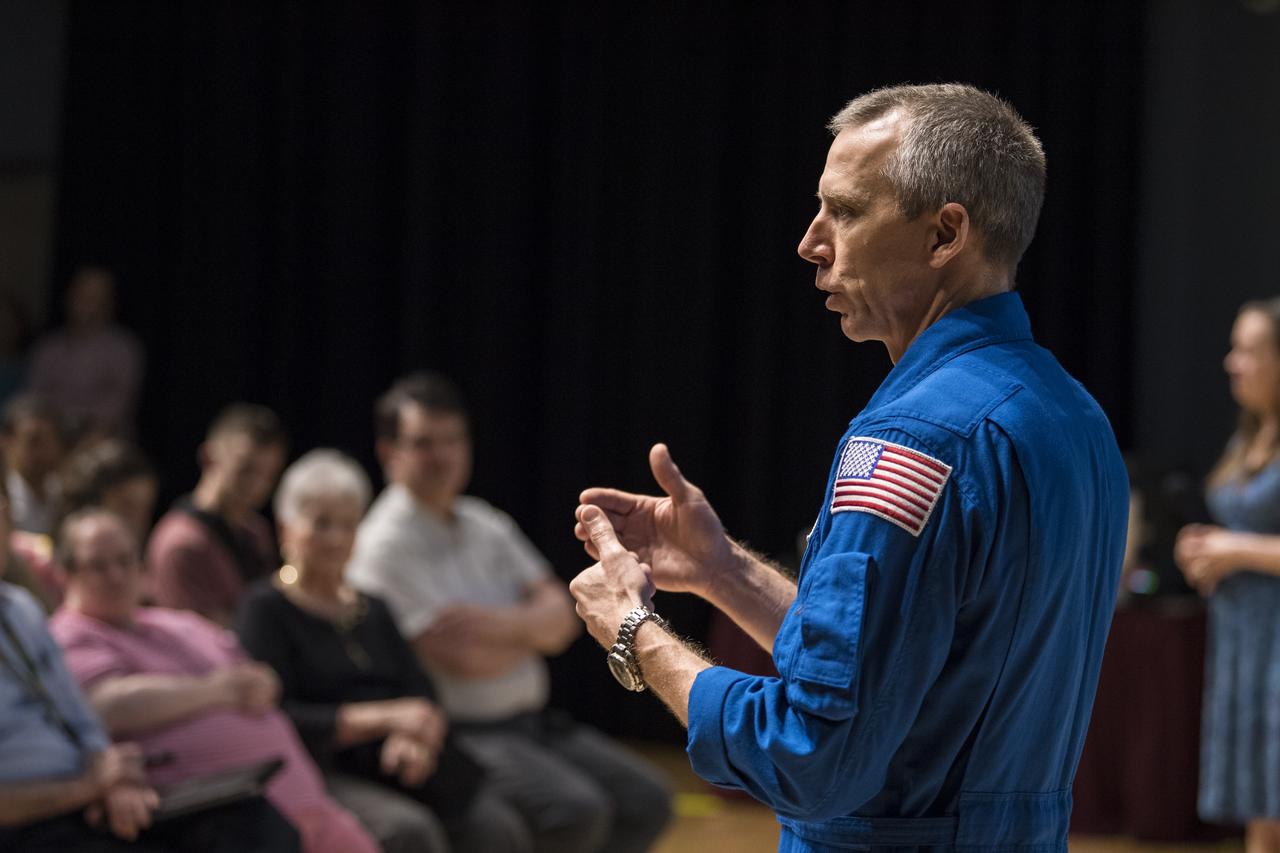
NASA astronaut Drew Feustel speaks about his experience on two shuttle missions, STS-125 and STS-134, as well as Expeditions 55 and 56 on the International Space Station, at Northern Virginia Community College's Alexandria campus, Monday, May 6, 2019 in Virginia. Photo Credit: (NASA/Aubrey Gemignani)
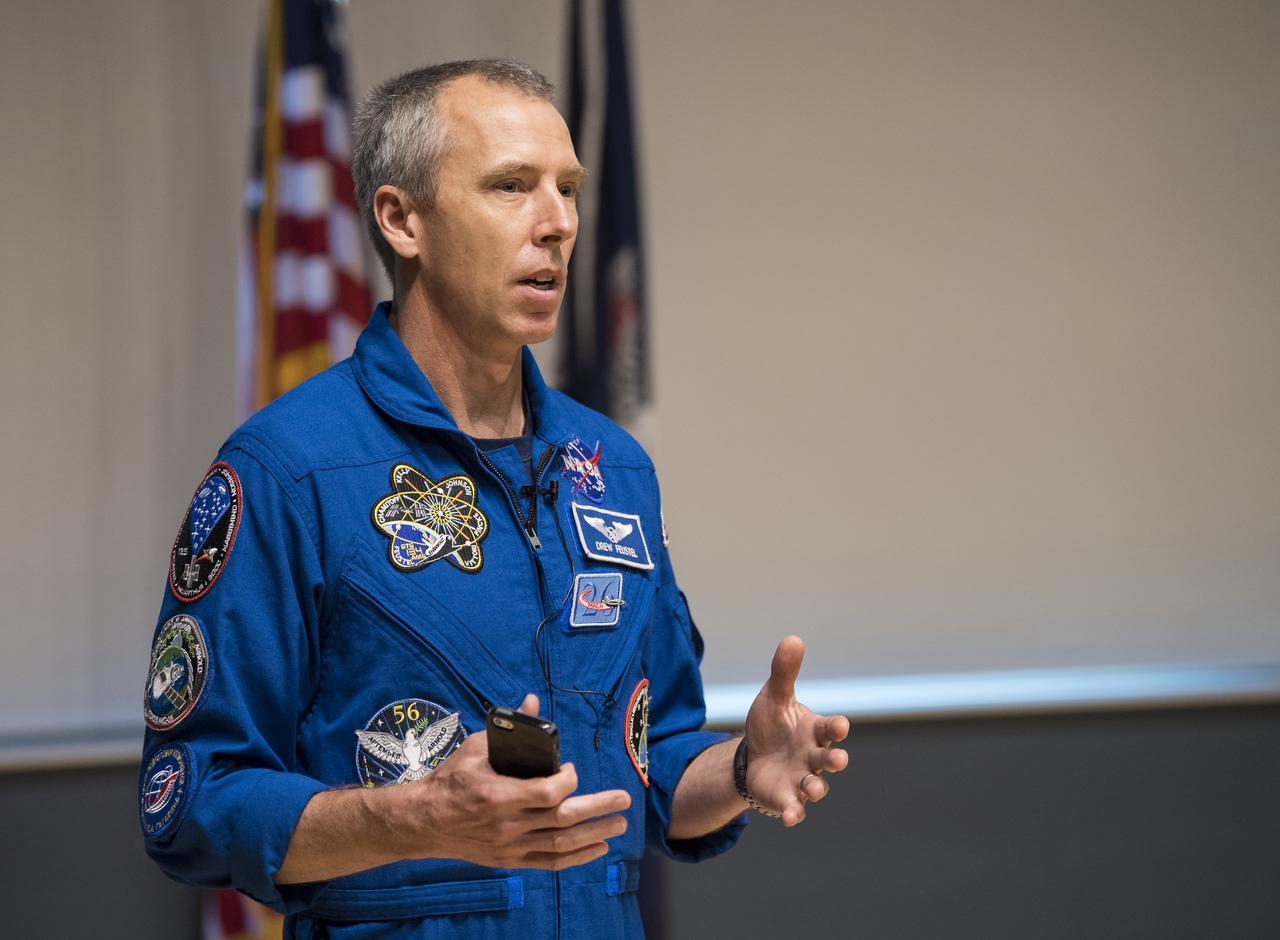
NASA astronaut Drew Feustel speaks about his experience on two shuttle missions, STS-125 and STS-134, as well as Expeditions 55 and 56 on the International Space Station, at Northern Virginia Community College's Alexandria campus, Monday, May 6, 2019 in Virginia. Photo Credit: (NASA/Aubrey Gemignani)
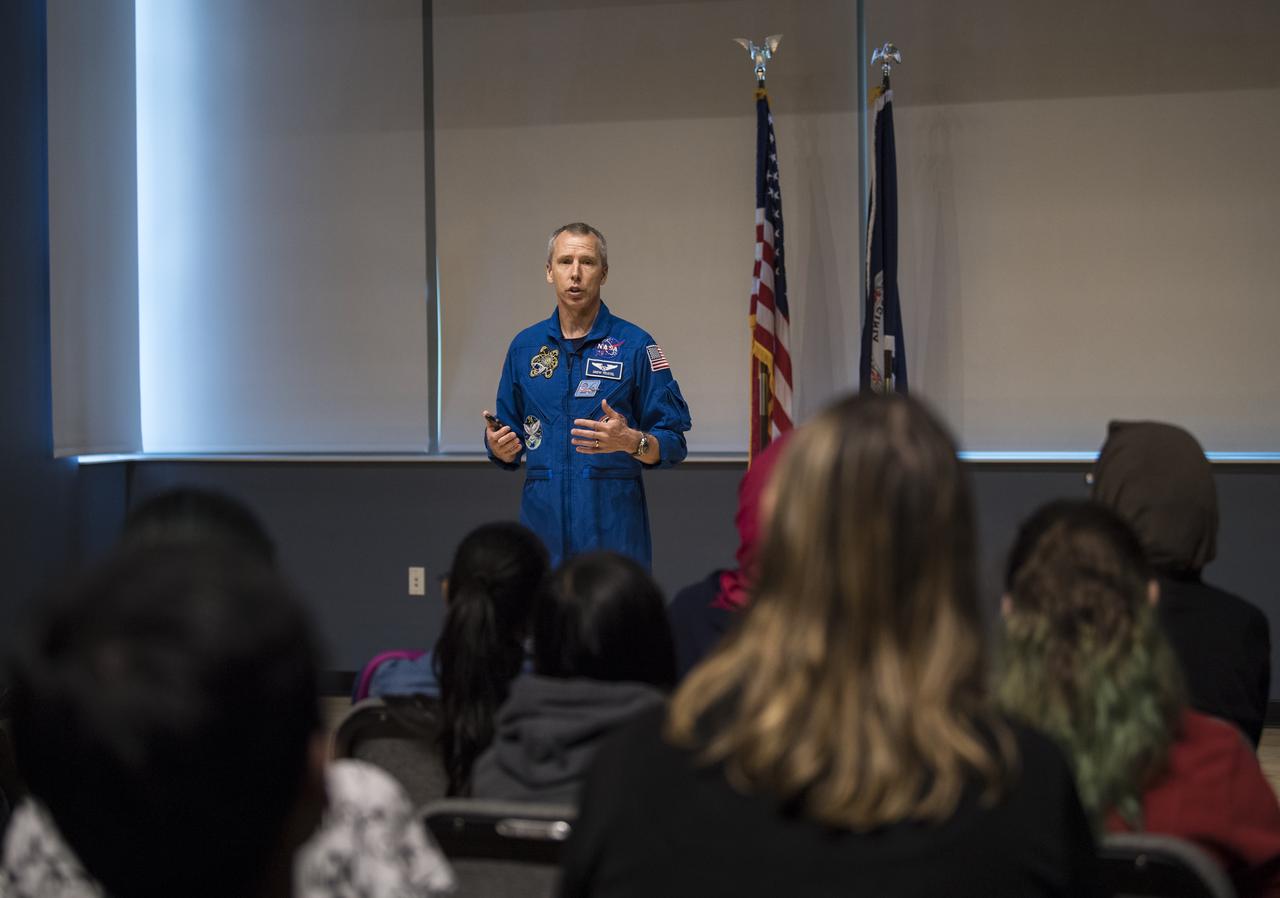
NASA astronaut Drew Feustel speaks about his experience on two shuttle missions, STS-125 and STS-134, as well as Expeditions 55 and 56 on the International Space Station, at Northern Virginia Community College's Alexandria campus, Monday, May 6, 2019 in Virginia. Photo Credit: (NASA/Aubrey Gemignani)
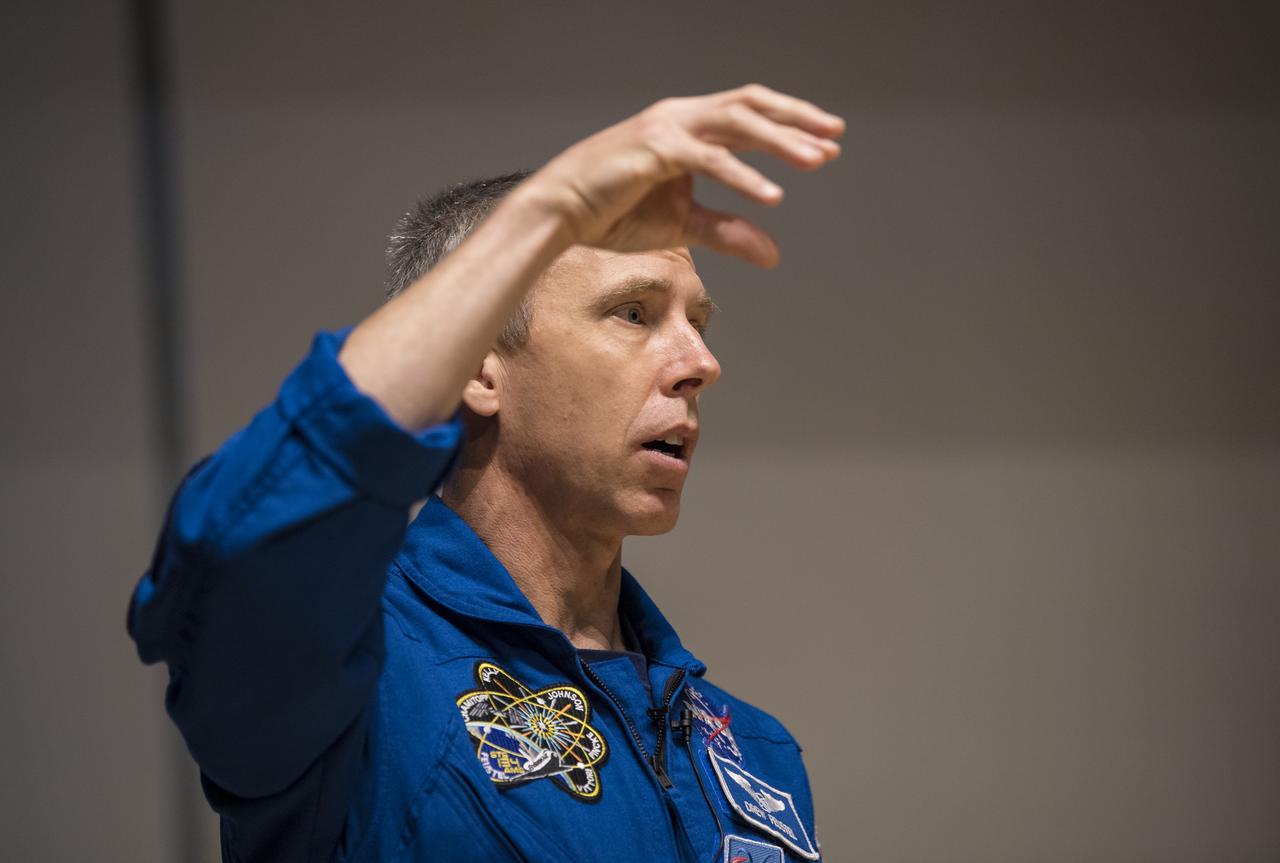
NASA astronaut Drew Feustel speaks about his experience on two shuttle missions, STS-125 and STS-134, as well as Expeditions 55 and 56 on the International Space Station, at Northern Virginia Community College's Alexandria campus, Monday, May 6, 2019 in Virginia. Photo Credit: (NASA/Aubrey Gemignani)
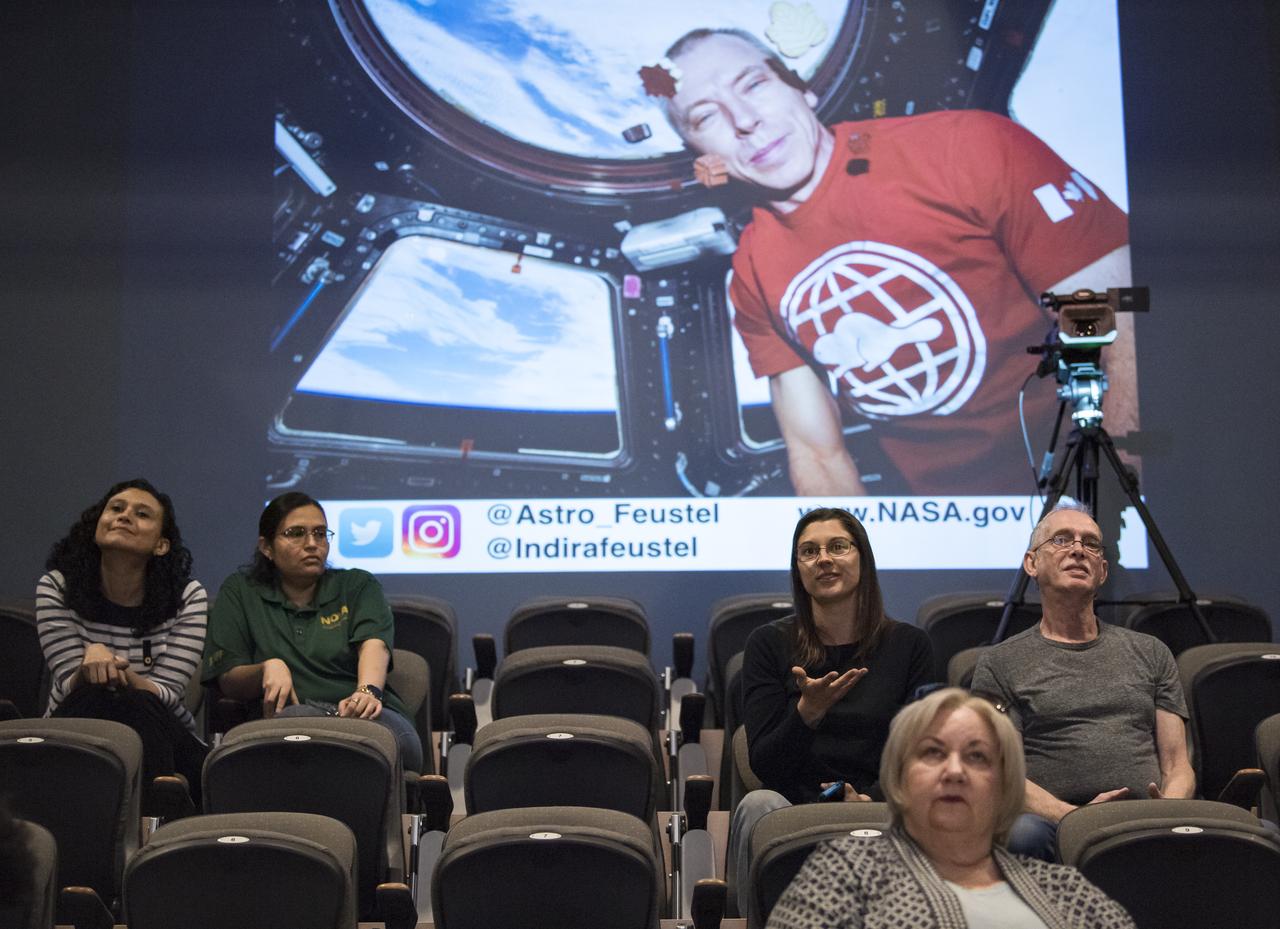
An audience member asks a question after NASA astronaut Drew Feustel gave a presentation about his experience on two shuttle missions, STS-125 and STS-134, as well as Expeditions 55 and 56 on the International Space Station, at Northern Virginia Community College's Alexandria campus, Monday, May 6, 2019 in Virginia. Photo Credit: (NASA/Aubrey Gemignani)
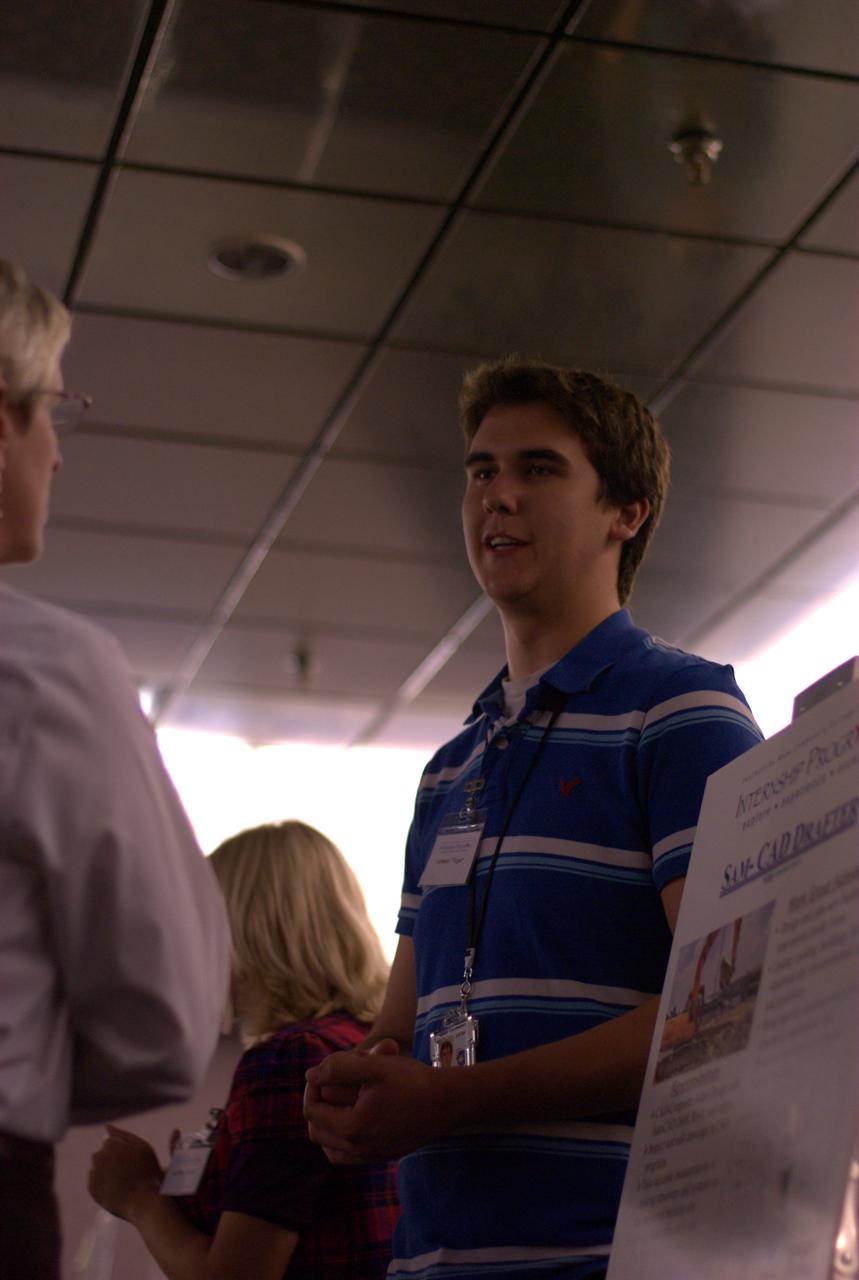
Foothill-DeAnza Community College Dstrict Internship Program poster Session NOTE: Photo taken by Summer Photo Intern Nick Tran.
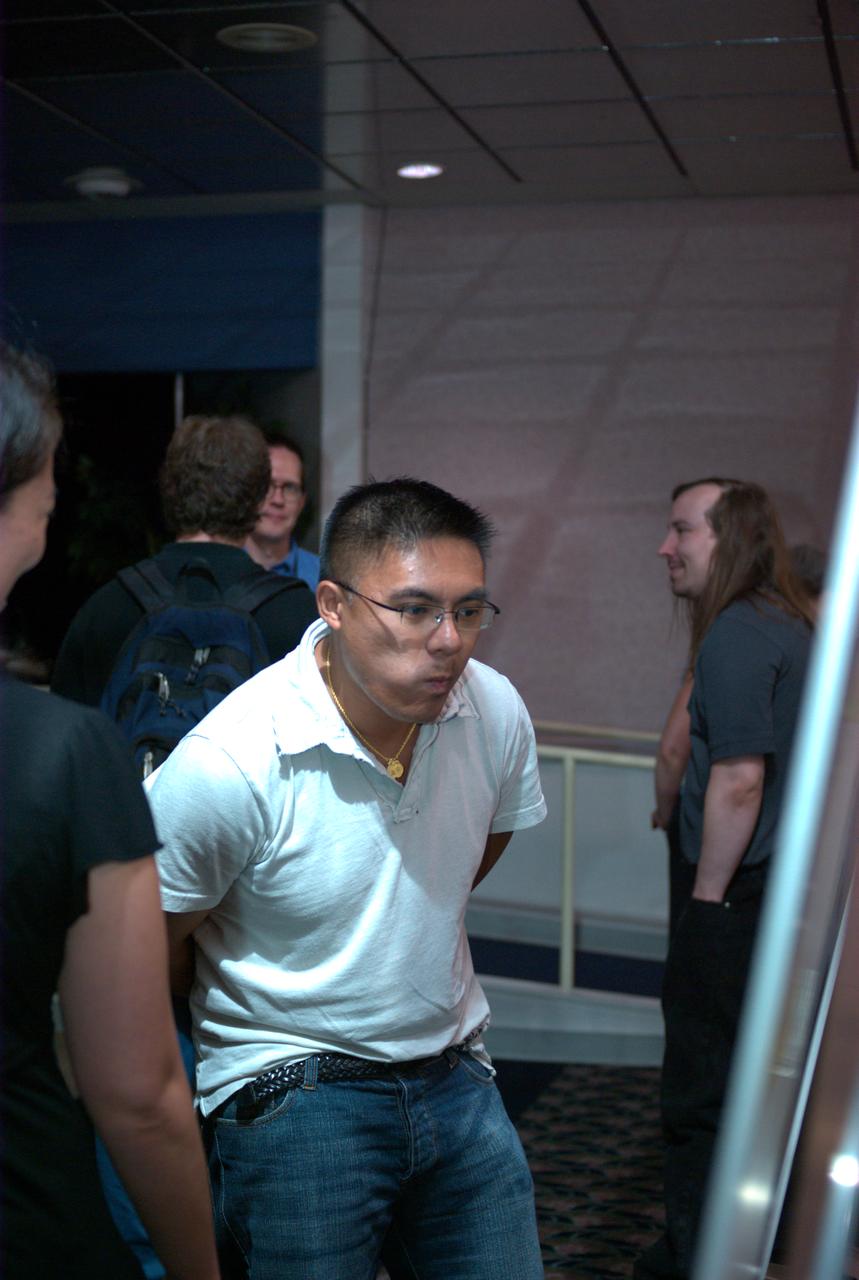
Foothill-DeAnza Community College Dstrict Internship Program poster Session NOTE: Photo taken by Summer Photo Intern Nick Tran.
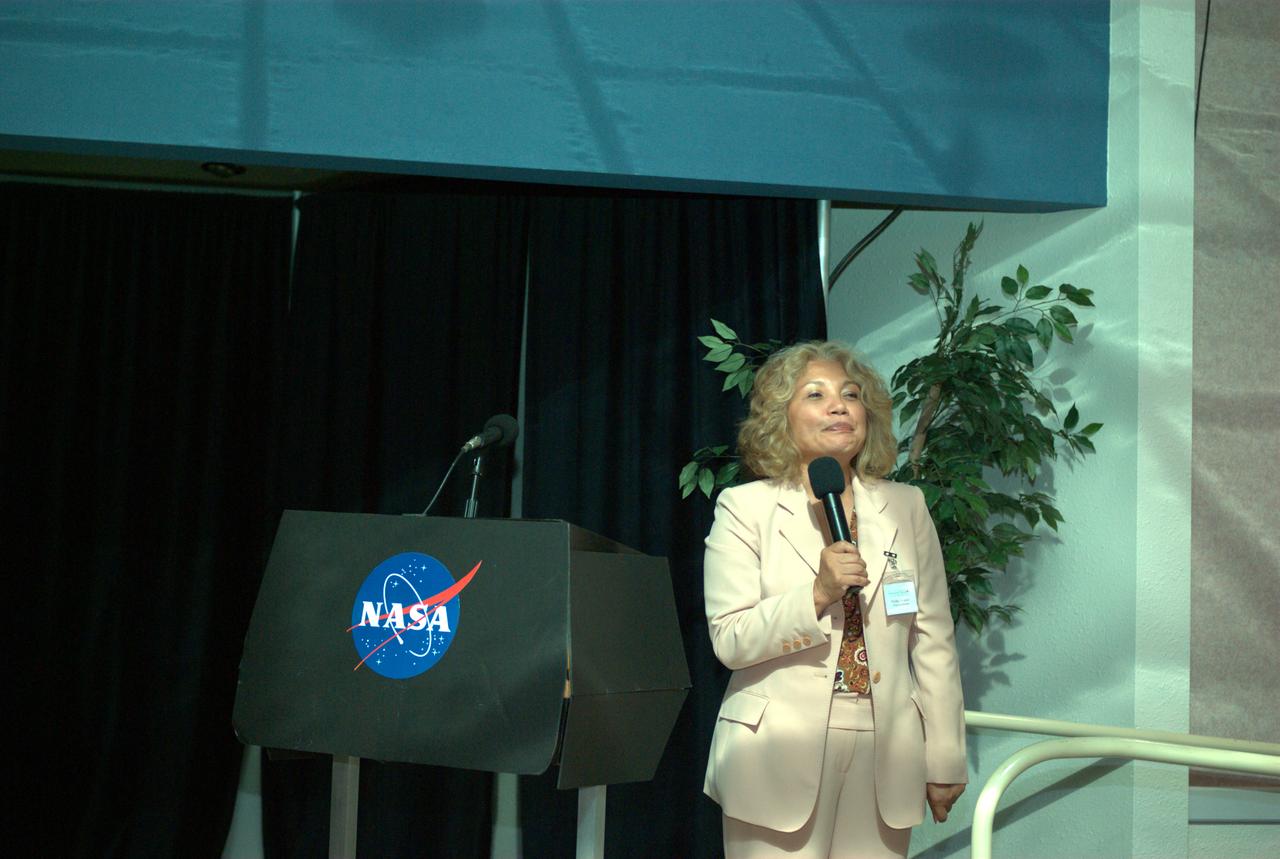
Foothill-DeAnza Community College Dstrict Internship Program poster Session NOTE: Photo taken by Summer Photo Intern Nick Tran.
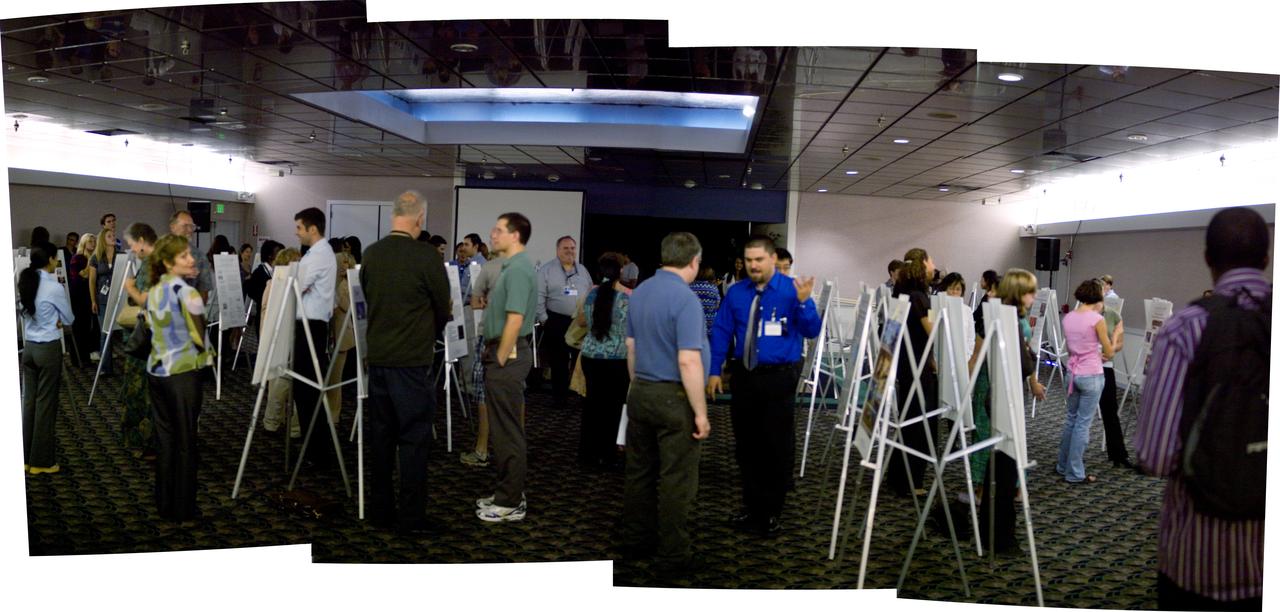
Foothill-DeAnza Community College Dstrict Internship Program poster Session NOTE: Photo taken by Summer Photo Intern Nick Tran.
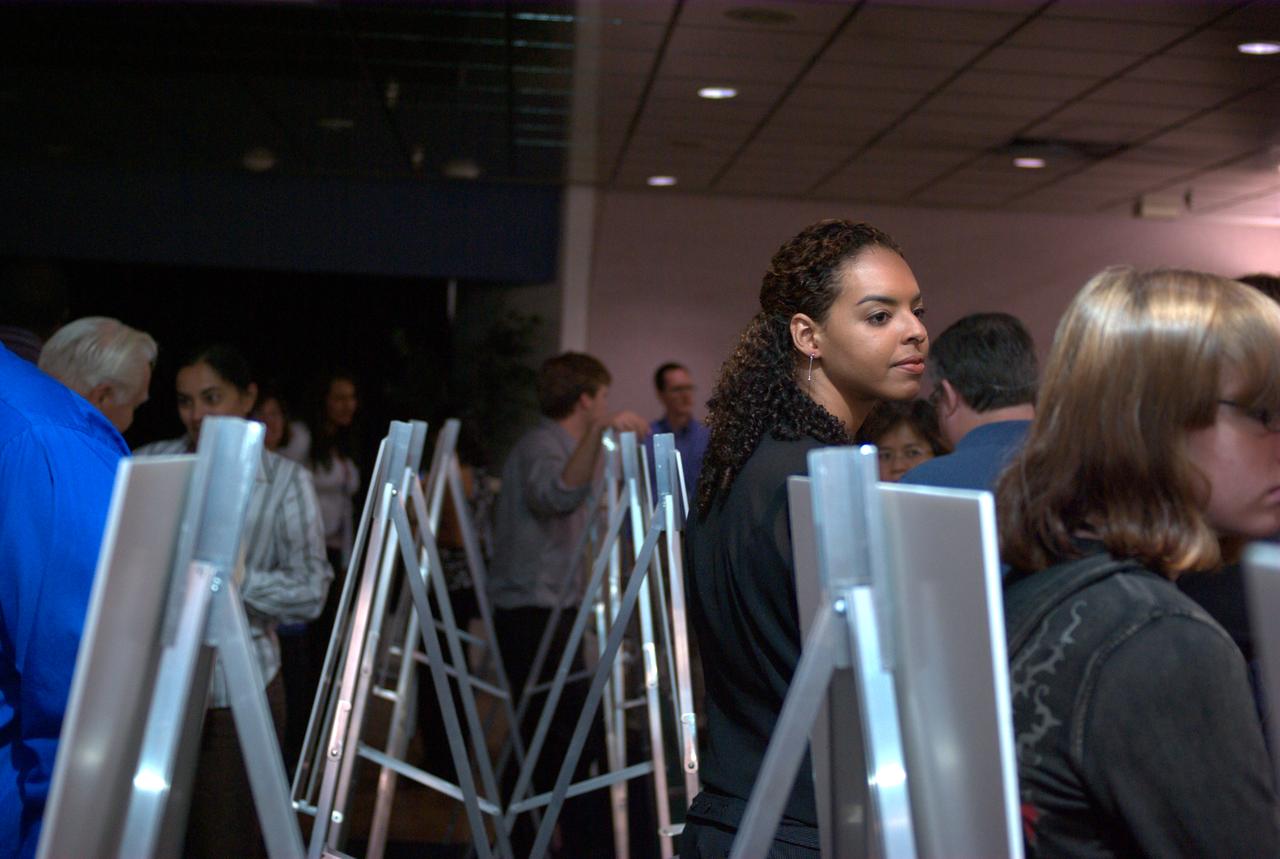
Foothill-DeAnza Community College Dstrict Internship Program poster Session NOTE: Photo taken by Summer Photo Intern Nick Tran.
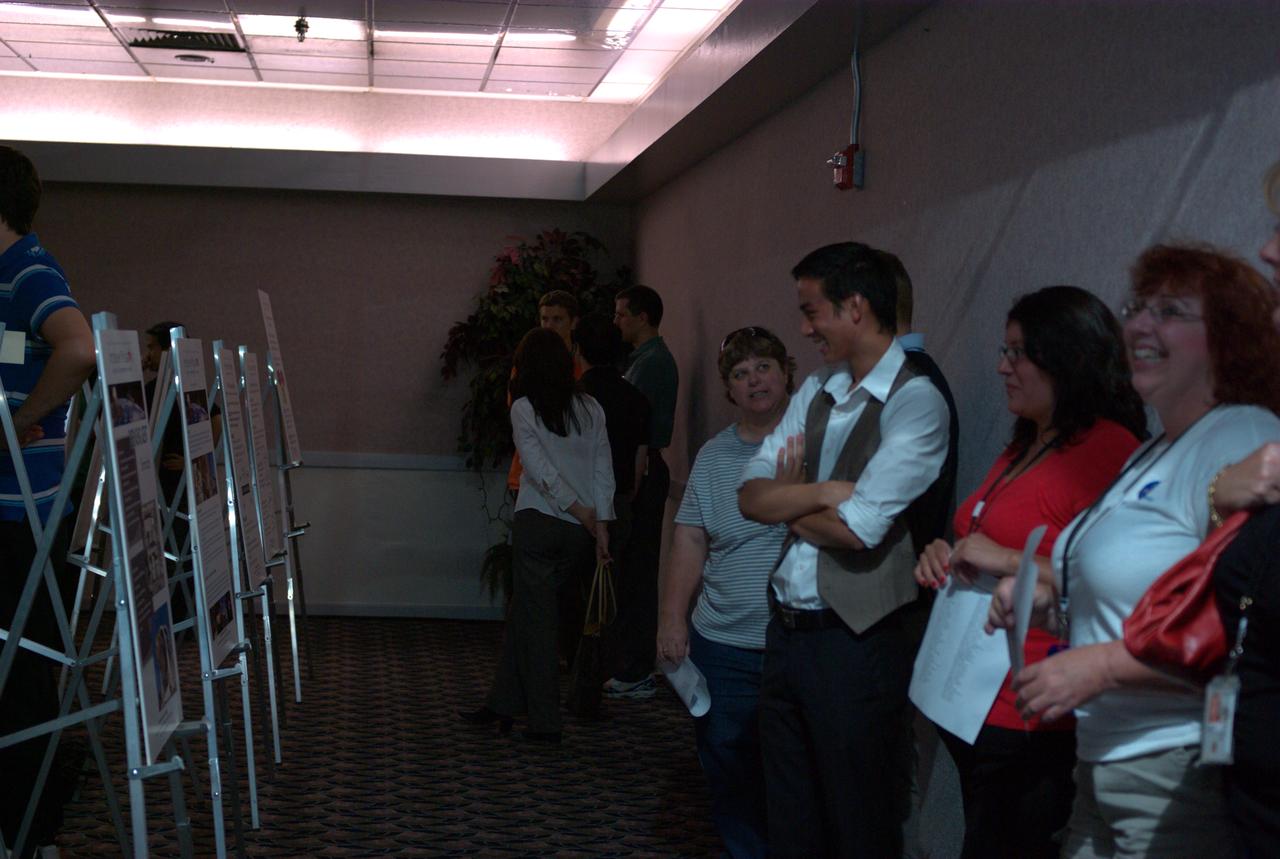
Foothill-DeAnza Community College Dstrict Internship Program poster Session NOTE: Photo taken by Summer Photo Intern Nick Tran.
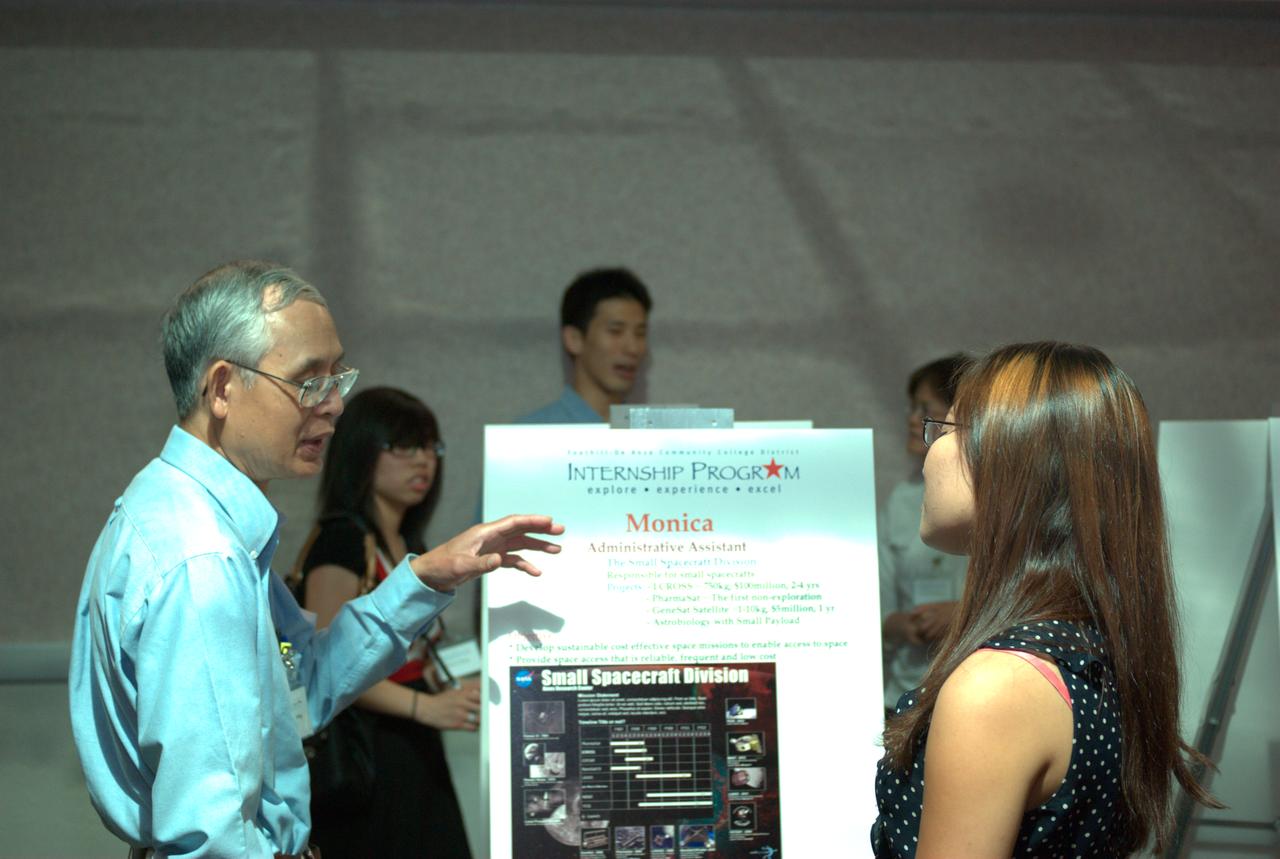
Foothill-DeAnza Community College Dstrict Internship Program poster Session NOTE: Photo taken by Summer Photo Intern Nick Tran.
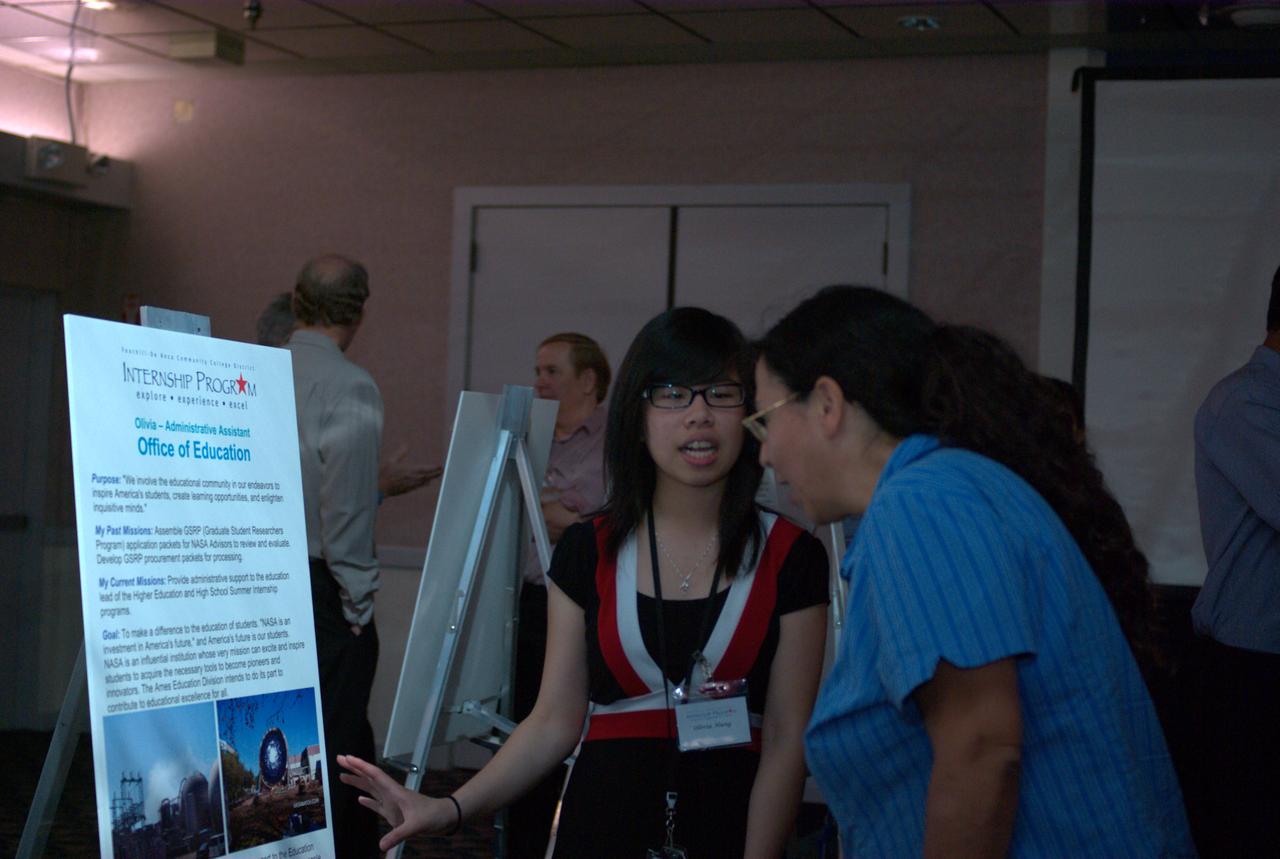
Foothill-DeAnza Community College Dstrict Internship Program poster Session NOTE: Photo taken by Summer Photo Intern Nick Tran.
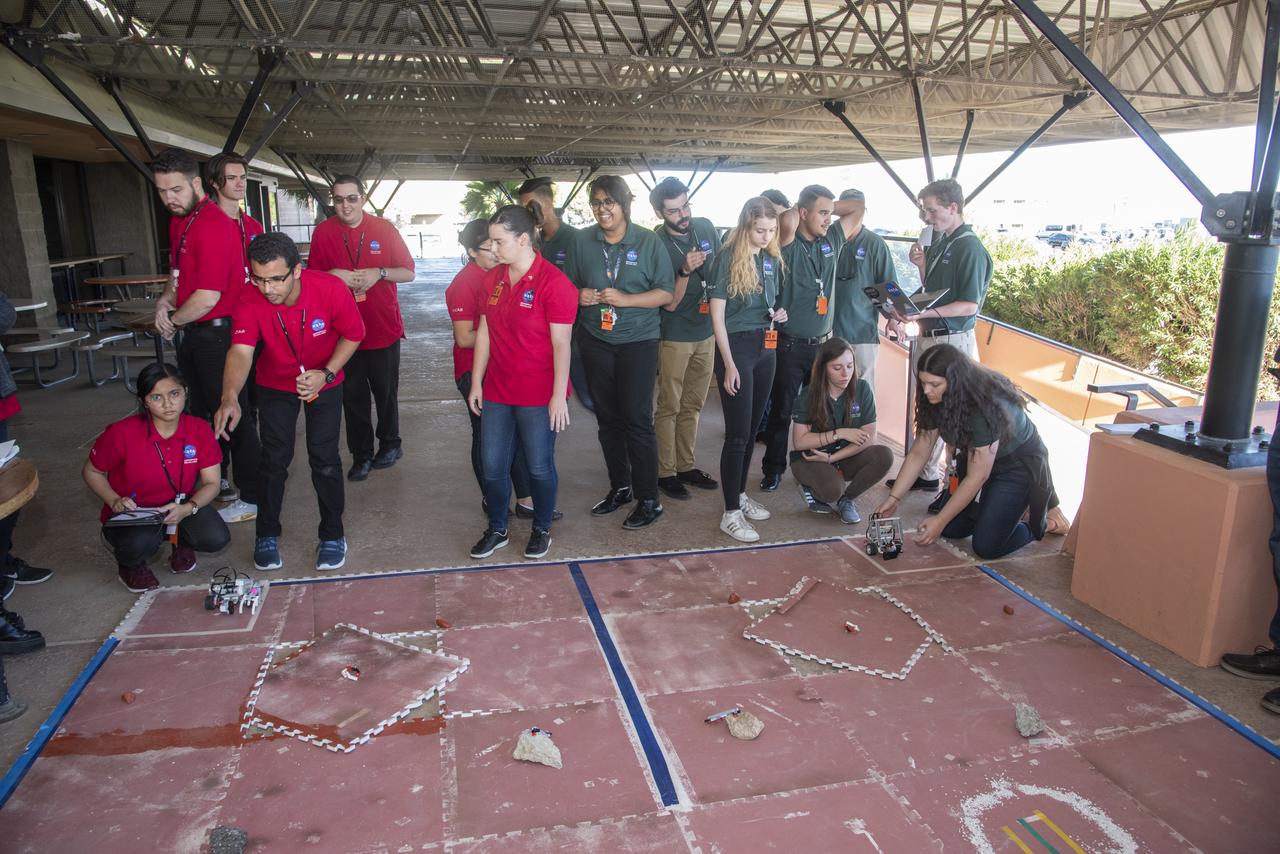
Four student teams: Blue, Gold, Green and Red built, designed and tested a LEGO robotic Martian rover prototype at NASA's Armstrong Flight Research Center. The teams competed against each other during a four-day workshop coordinated by the NASA Community College Aerospace Scholars. Each team prepared a marketing package to "sell" their design to NASA based on the performance of its Martian rover.
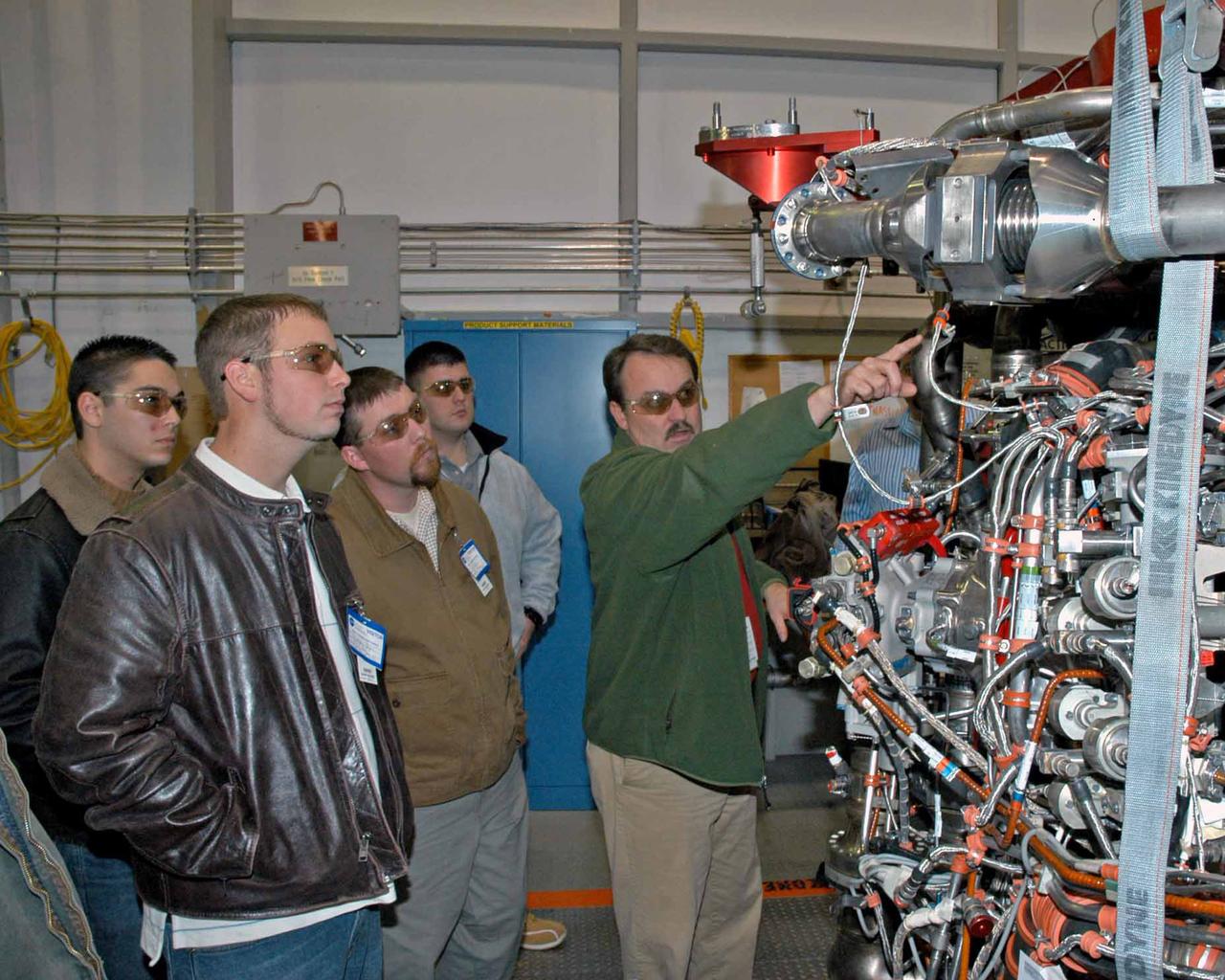
Pratt & Whitney Rocketdyne's Jeff Hansell, right, explains functions of a space shuttle main engine to Pearl River Community College Aviation Maintenance Technology Program students. Christopher Bryon, left, of Bay St. Louis, Ret Tolar of Kiln, Dan Holston of Baxterville and Billy Zugg of Long Beach took a recent tour of the SSME Processing Facility and the E-1 Test Complex at Stennis Space Center in South Mississippi. The students attend class adjacent to the Stennis International Airport tarmac in Kiln, where they get hands-on experience. PRCC's program prepares students to be responsible for the inspection, repair and maintenance of technologically advanced aircraft. A contractor to NASA, Pratt & Whitney Rocketdyne in Canoga Park, Calif., manufactures the space shuttle main engine and its high-pressure turbo pumps. SSC was established in the 1960s to test the huge engines for the Saturn V moon rockets. Now 40 years later, the center tests every main engine for the space shuttle, and is America's largest rocket engine test complex. SSC will soon begin testing the rocket engines that will power spacecraft carrying Americans back to the moon and on to Mars.

Students from Montgomery College in Rockville in Maryland, follow the progress of their Swarmie robots during the Swarmathon competition at the Kennedy Space Center Visitor Complex. Students were asked to develop computer code for the small robots, programming them to look for "resources" in the form of AprilTag cubes, similar to barcodes. Teams developed search algorithms for the Swarmies to operate autonomously, communicating and interacting as a collective swarm similar to ants foraging for food. In the spaceport's third annual Swarmathon, 23 teams represented 24 minority serving universities and community colleges were invited to develop software code to operate these innovative robots known as "Swarmies" to help find resources when astronauts explore distant locations, such as the Moon or Mars.
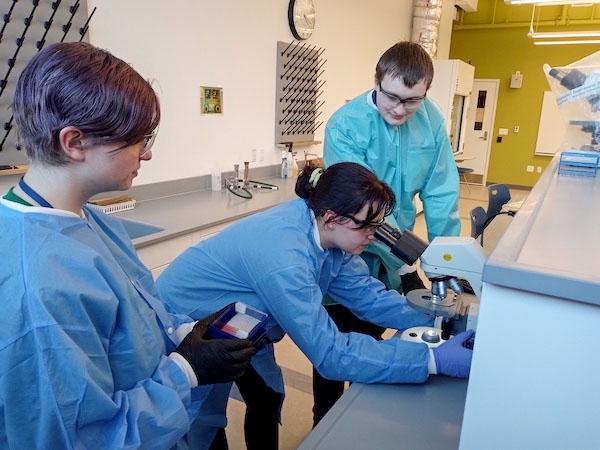
jsc2024e066528 (2/8/2024) --- The Pittsfield team examines onion root tips halted mid-mitosis in preparation for their experiment, The Effects of Microgravity on Mitosis in Onion Root Tip Cells, part of the Nanoracks-National Center for Earth and Space Science Education-Surveyor-Student Spaceflight Experiments Program Mission 18 to ISS (Nanoracks-NCESSE-Surveyor-SSEP).
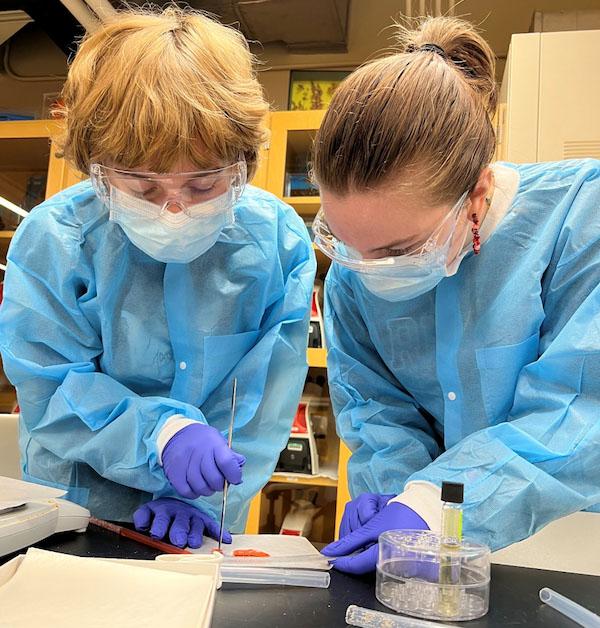
jsc2024e067096 (15/15/2024) --- Maya Burns and Faith Dunn test a mold to create an agar cylinder for assessment of fungal polyurethane degradation. Their experiment, Effect of Microgravity on the Enzymatic Degradation of Polyurethane by Penicillium chrysogenum, is part of the Nanoracks-National Center for Earth and Space Science Education-Surveyor-Student Spaceflight Experiments Program Mission 18 to ISS (Nanoracks-NCESSE-Surveyor-SSEP).
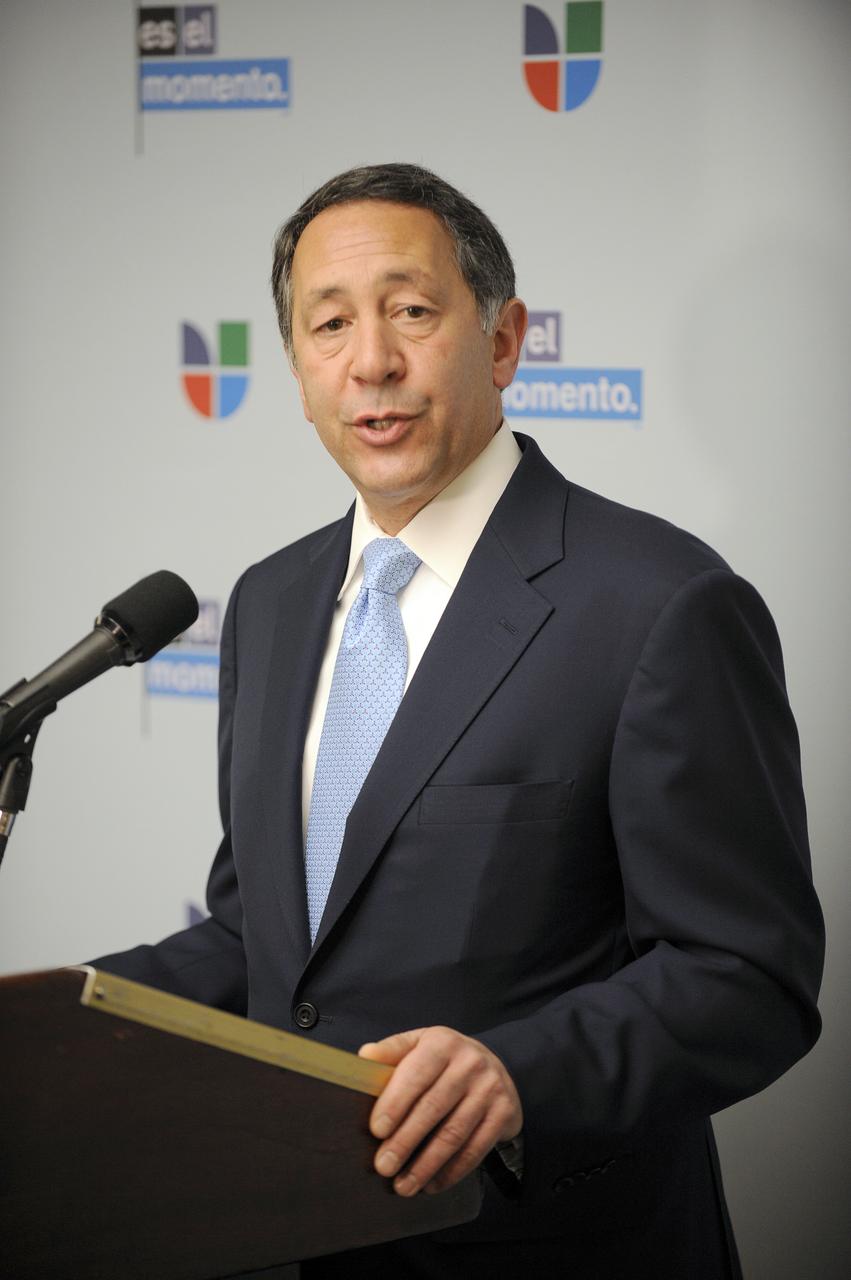
Univision Communications President and Chief Executive Officer Joe Uva speaks at an event at the National Press Club in Washington, Tuesday, Feb. 23, 2010. NASA is working with Univision Communications Inc. to develop a partnership in support of the Spanish-language media outlet's initiative to improve high school graduation rates, prepare Hispanic students for college, and encourage them to pursue careers in science, technology, engineering and mathematics, or STEM, disciplines. Photo Credit: (NASA/Bill Ingalls)
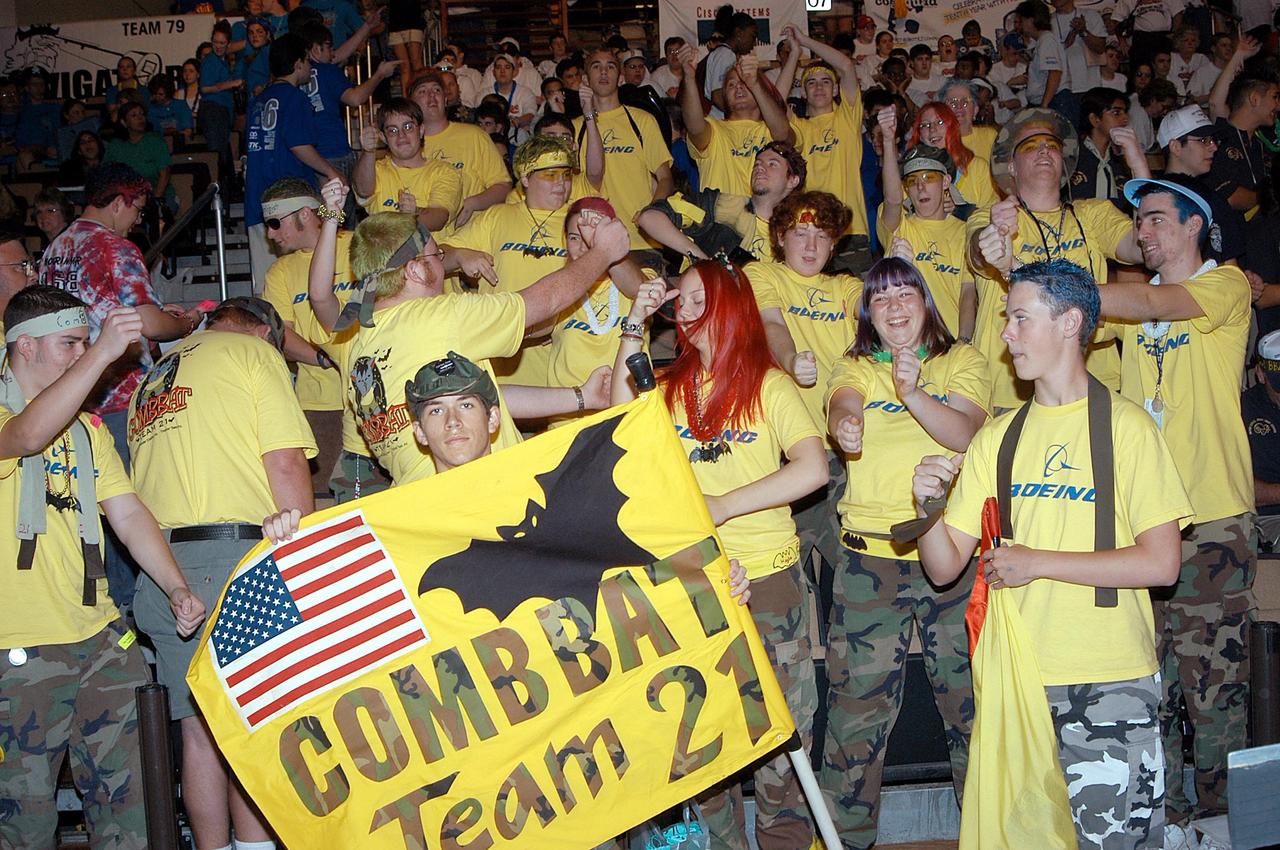
KENNEDY SPACE CENTER, FLA. - The Boeing Company/Brevard Community College-sponsored students, participating in the 2003 Southeastern Regional FIRST Robotic Competition, demonstrate their team spirit. The competition is being held at the University of Central Florida (UCF) in Orlando, March 20-23. The team won the DaimlerChrysler Team Spirit Award and the Johnson & Johnson Sportsmanship Award. Forty teams from around the country are participating in the event that pits team-built gladiator robots against each other in an athletic-style competition. The teams are sponsored by NASA-Kennedy Space Center, The Boeing Company/Brevard Community College, and Lockheed Martin Space Operations/Mission Systems for the nonprofit organization For Inspiration and Recognition of Science and Technology, known as FIRST. The vision of FIRST is to inspire in the youth of our nation an appreciation of science and technology and an understanding that mastering these disciplines can enrich the lives of all mankind.
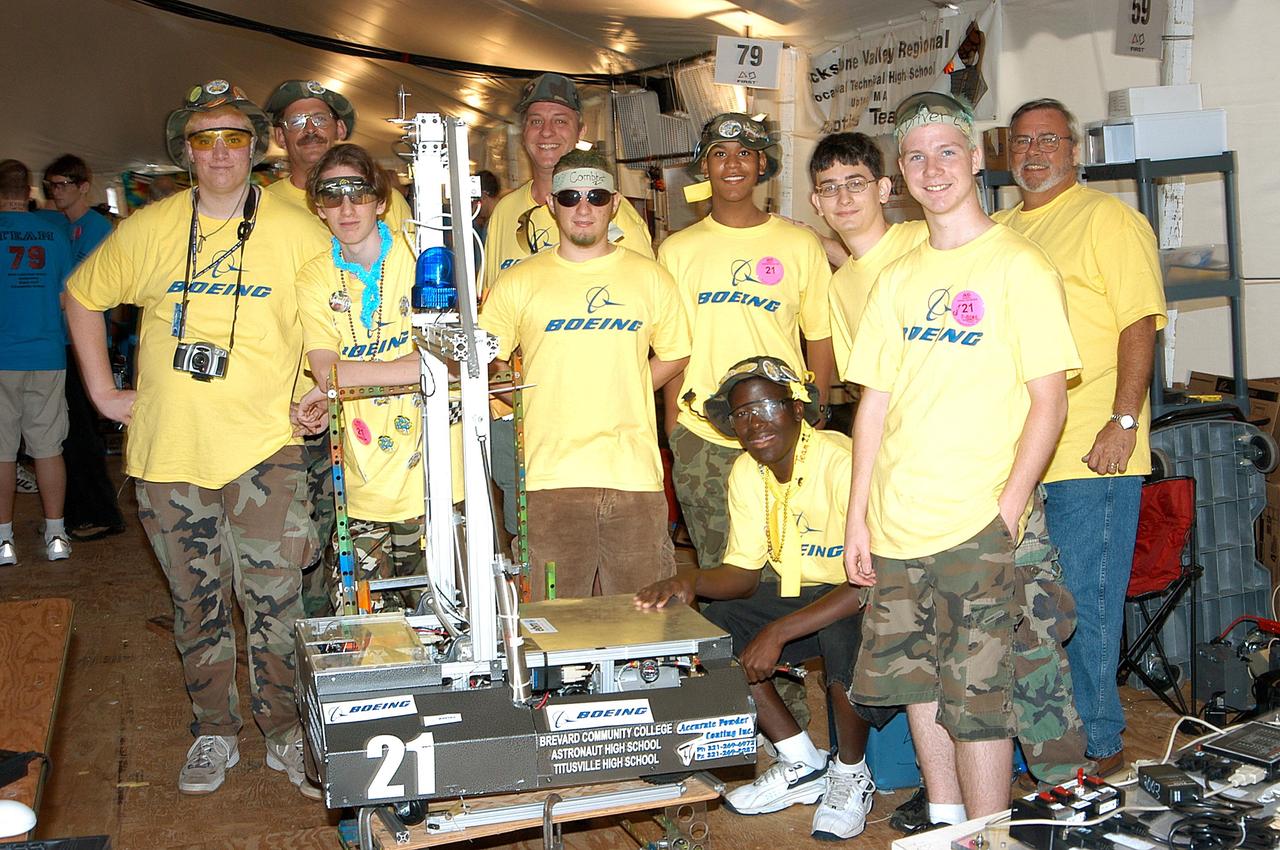
KENNEDY SPACE CENTER, FLA. - The Boeing Company/Brevard Community College-sponsored students, participating in the 2003 Southeastern Regional FIRST Robotic Competition, pose with their team-built robot. The competition is being held at the University of Central Florida (UCF) in Orlando, March 20-23. Forty teams from around the country are participating in the event that pits team-built gladiator robots against each other in an athletic-style competition. The teams are sponsored by NASA/Kennedy Space Center, The Boeing Company/Brevard Community College, and Lockheed Martin Space Operations/Mission Systems for the nonprofit organization For Inspiration and Recognition of Science and Technology, known as FIRST. The vision of FIRST is to inspire in the youth of our nation an appreciation of science and technology and an understanding that mastering these disciplines can enrich the lives of all mankind.
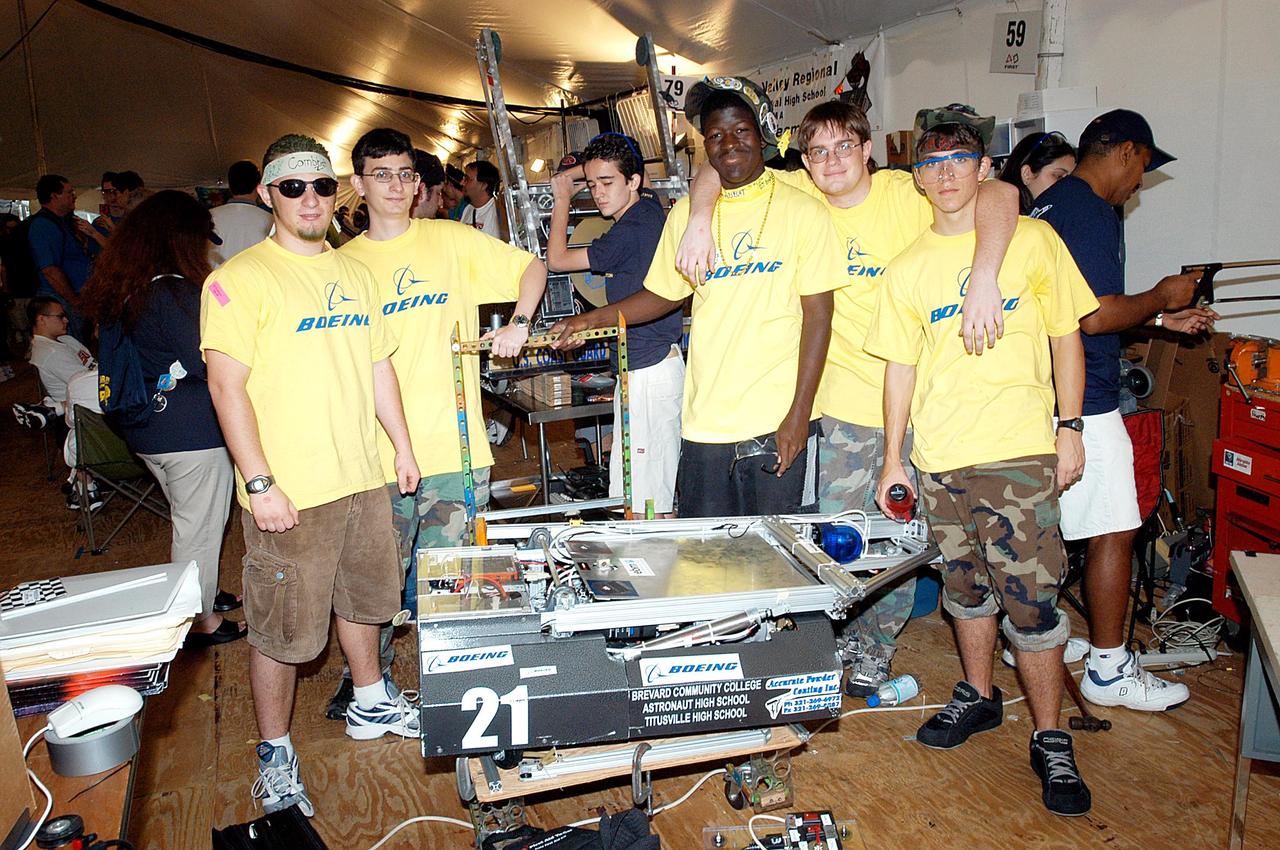
KENNEDY SPACE CENTER, FLA. - The Boeing Company/Brevard Community College-sponsored students, participating in the 2003 Southeastern Regional FIRST Robotic Competition, pose with their team-built robot. The competition is being held at the University of Central Florida (UCF) in Orlando, March 20-23. Forty teams from around the country are participating in the event that pits team-built gladiator robots against each other in an athletic-style competition. The teams are sponsored by NASA-Kennedy Space Center, The Boeing Company/Brevard Community College, and Lockheed Martin Space Operations/Mission Systems for the nonprofit organization For Inspiration and Recognition of Science and Technology, known as FIRST. The vision of FIRST is to inspire in the youth of our nation an appreciation of science and technology and an understanding that mastering these disciplines can enrich the lives of all mankind.
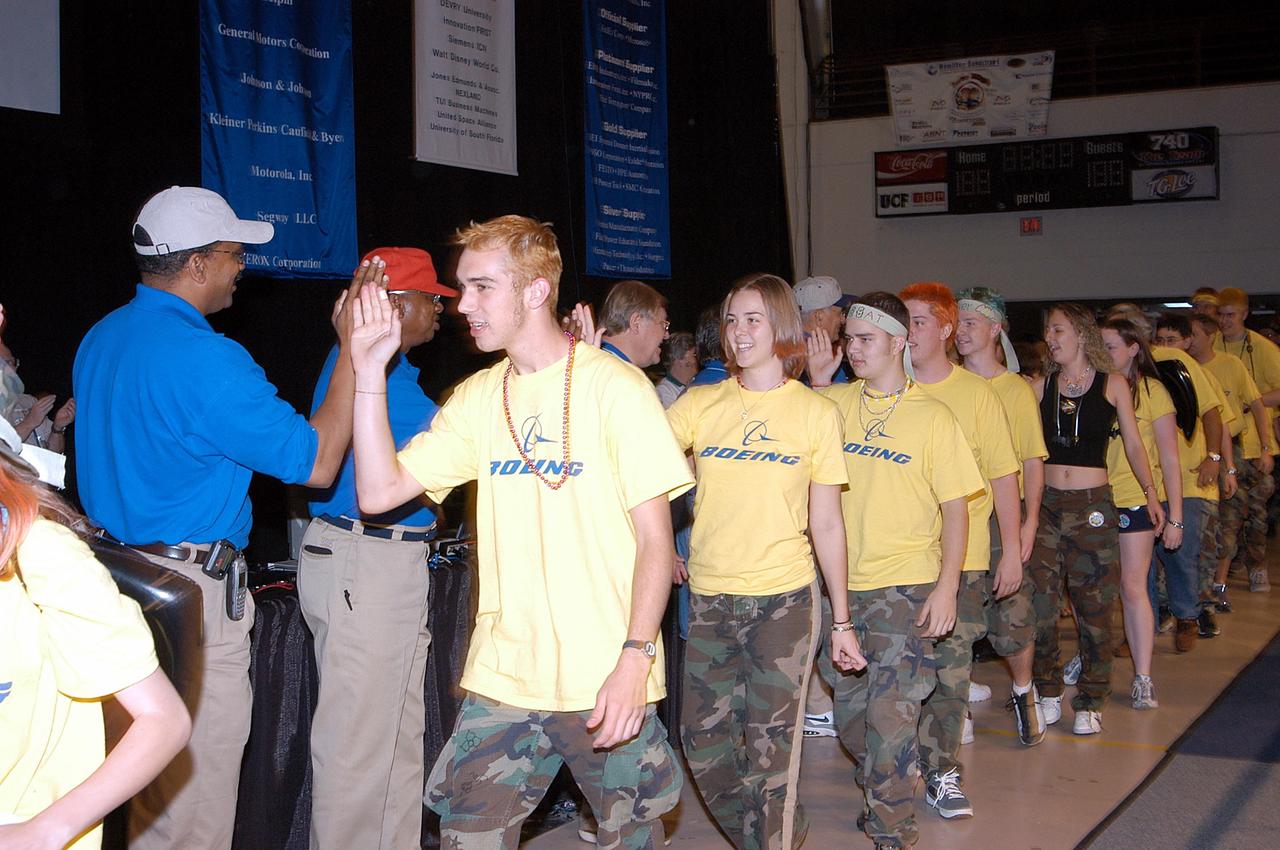
KENNEDY SPACE CENTER, FLA. - The Boeing Company/Brevard Community College-sponsored student team (in yellow shirts) is congratulated by the judges and support staff of the 2003 Southeastern Regional FIRST Robotic Competition. The competition is being held at the University of Central Florida (UCF) in Orlando, March 20-23. The team won the DaimlerChrysler Team Spirit Award and the Johnson & Johnson Sportsmanship Award. Forty student teams from around the country are participating in the event that pits team-built gladiator robots against each other in an athletic-style competition. The teams are sponsored by NASA/Kennedy Space Center, The Boeing Company/Brevard Community College, and Lockheed Martin Space Operations/Mission Systems for the nonprofit organization For Inspiration and Recognition of Science and Technology, known as FIRST. The vision of FIRST is to inspire in the youth of our nation an appreciation of science and technology and an understanding that mastering these disciplines can enrich the lives of all mankind.
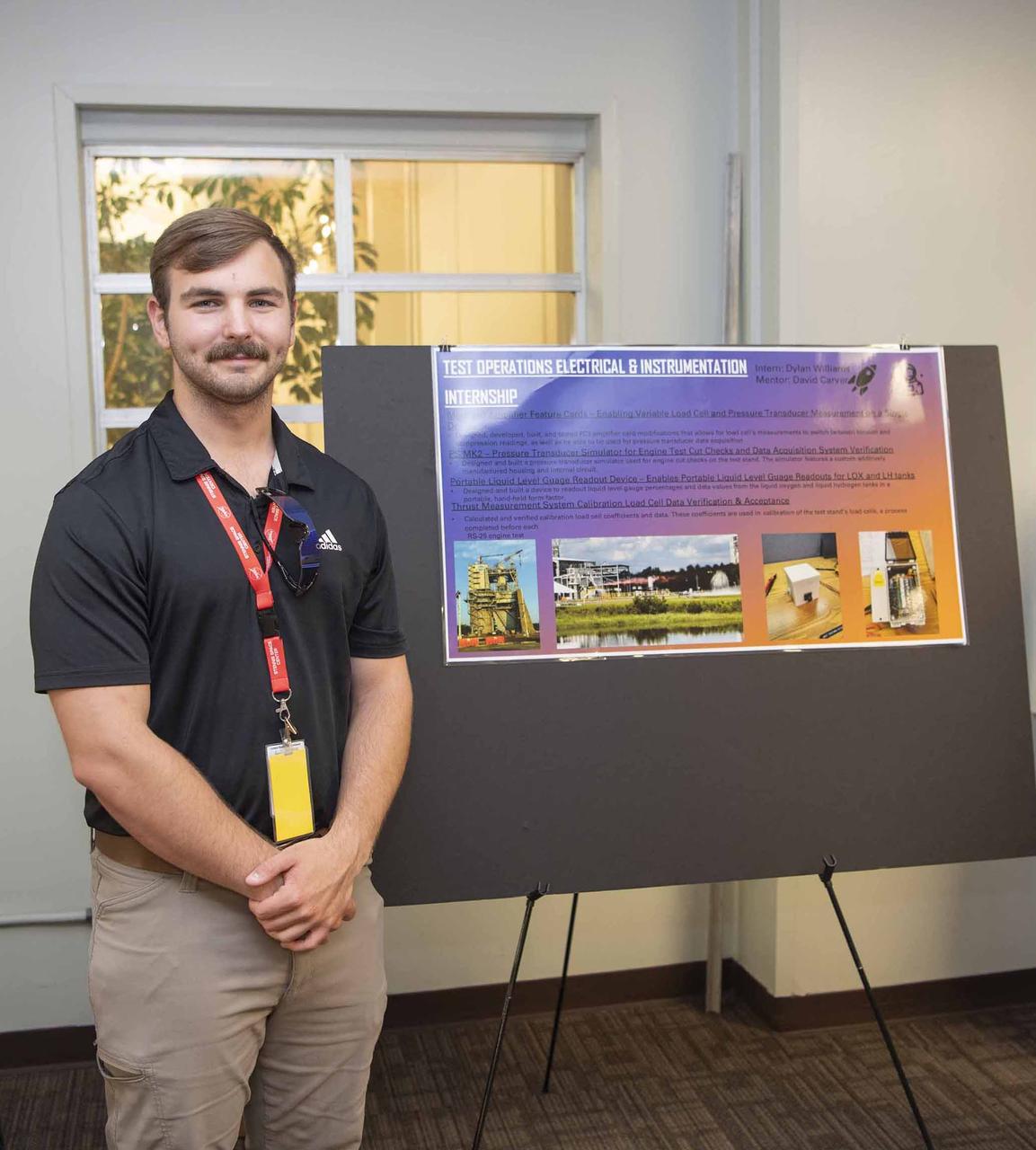
NASA Stennis summer intern Dylan Williams is shown with his presentation highlighting work with test operations during an Aug. 7 event hosted by the Office of STEM Engagement. Williams, a student at Meridian Community College in Meridian, Mississippi, worked with the NASA Stennis Engineering and Test Directorate. The poster symposium highlighted research topics, including propulsion test operations, lunar robotics, autonomous systems, STEM education, and more. NASA’s Office of STEM Engagement paid internships allow high school and college-level students to contribute to the agency’s mission to advance science, technology, aeronautics, and space exploration.
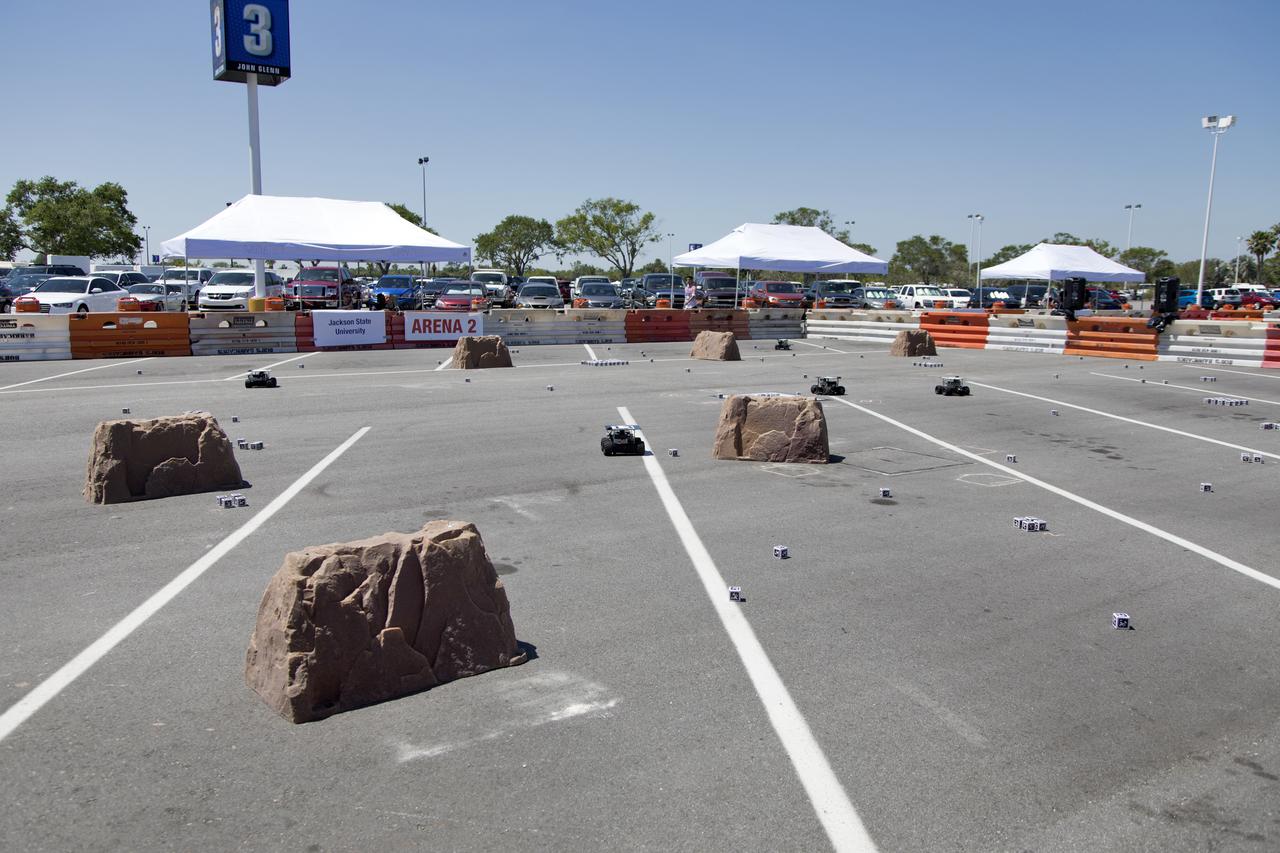
In the Swarmathon competition at the Kennedy Space Center Visitor Complex, students were asked to develop computer code for the small robots, programming them to look for "resources" in the form of AprilTag cubes, similar to barcodes. To add to the challenge, obstacles in the form of simulated rocks were placed in the completion arena. Teams developed search algorithms for the Swarmies to operate autonomously, communicating and interacting as a collective swarm similar to ants foraging for food. In the spaceport's third annual Swarmathon, 23 teams represented 24 minority serving universities and community colleges were invited to develop software code to operate these innovative robots known as "Swarmies" to help find resources when astronauts explore distant locations, such as the Moon or Mars.
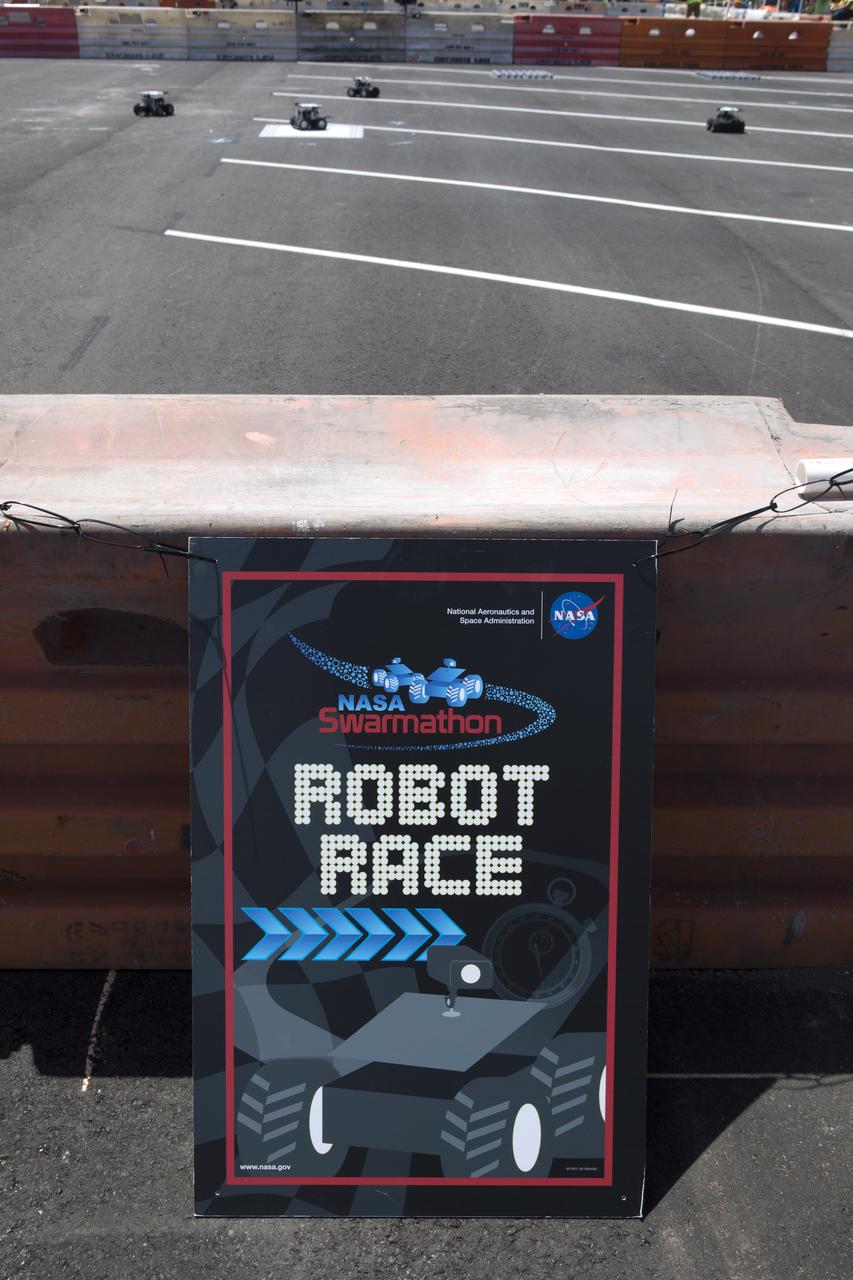
A sign at the Kennedy Space Center Visitor Complex announces the second annual Swarmathon competition. Students were asked to develop computer code for the small robots, programming them to look for "resources" in the form of cubes with AprilTags, similar to barcodes. Teams developed search algorithms for the Swarmies to operate autonomously, communicating and interacting as a collective swarm similar to ants foraging for food. In the spaceport's second annual Swarmathon, 20 teams representing 22 minority serving universities and community colleges were invited to develop software code to operate these innovative robots known as "Swarmies" to help find resources when astronauts explore distant locations, such as the moon or Mars.
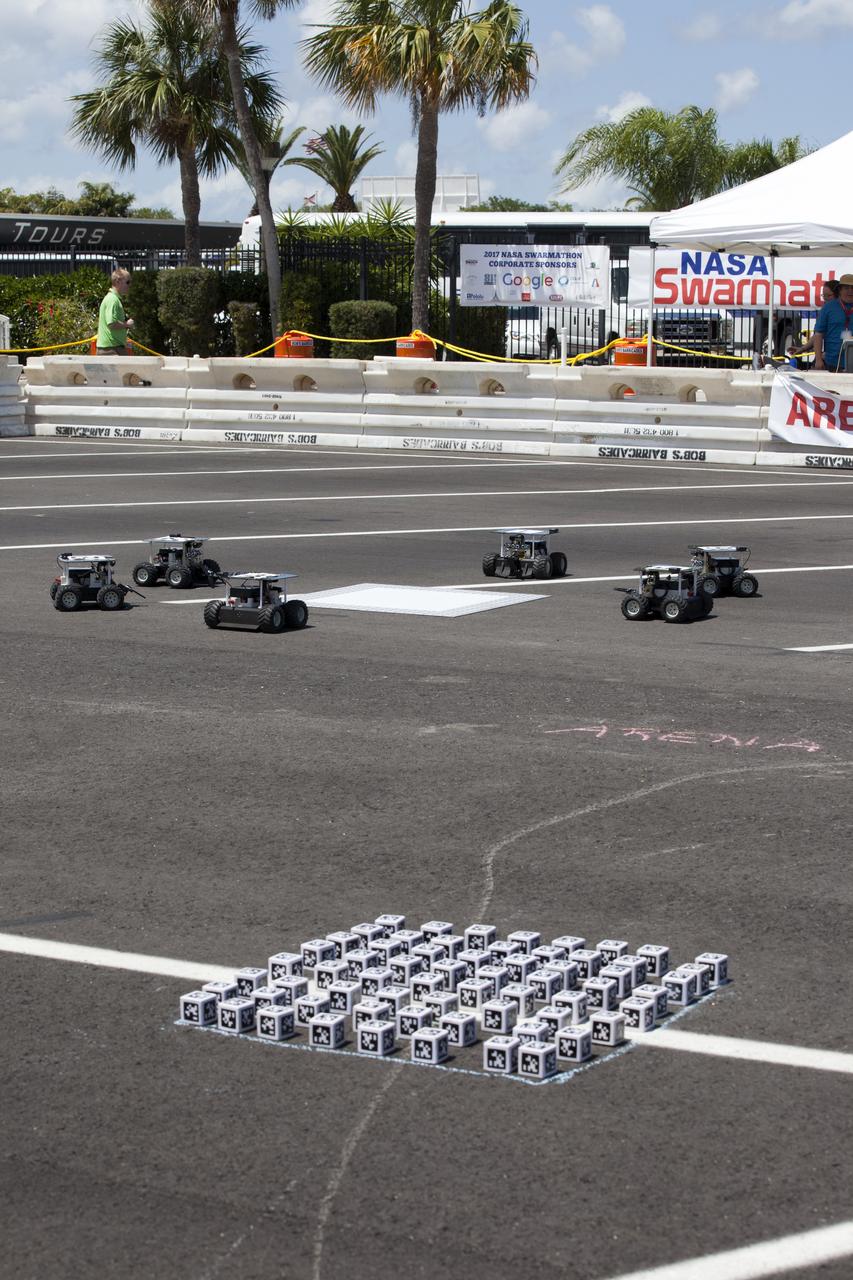
In the Swarmathon competition at the Kennedy Space Center Visitor Complex, students were asked to develop computer code for the small robots, programming them to look for "resources" in the form of AprilTag cubes, similar to barcodes. Teams developed search algorithms for the Swarmies to operate autonomously, communicating and interacting as a collective swarm similar to ants foraging for food. In the spaceport's second annual Swarmathon, 20 teams representing 22 minority serving universities and community colleges were invited to develop software code to operate these innovative robots known as "Swarmies" to help find resources when astronauts explore distant locations, such as the moon or Mars.
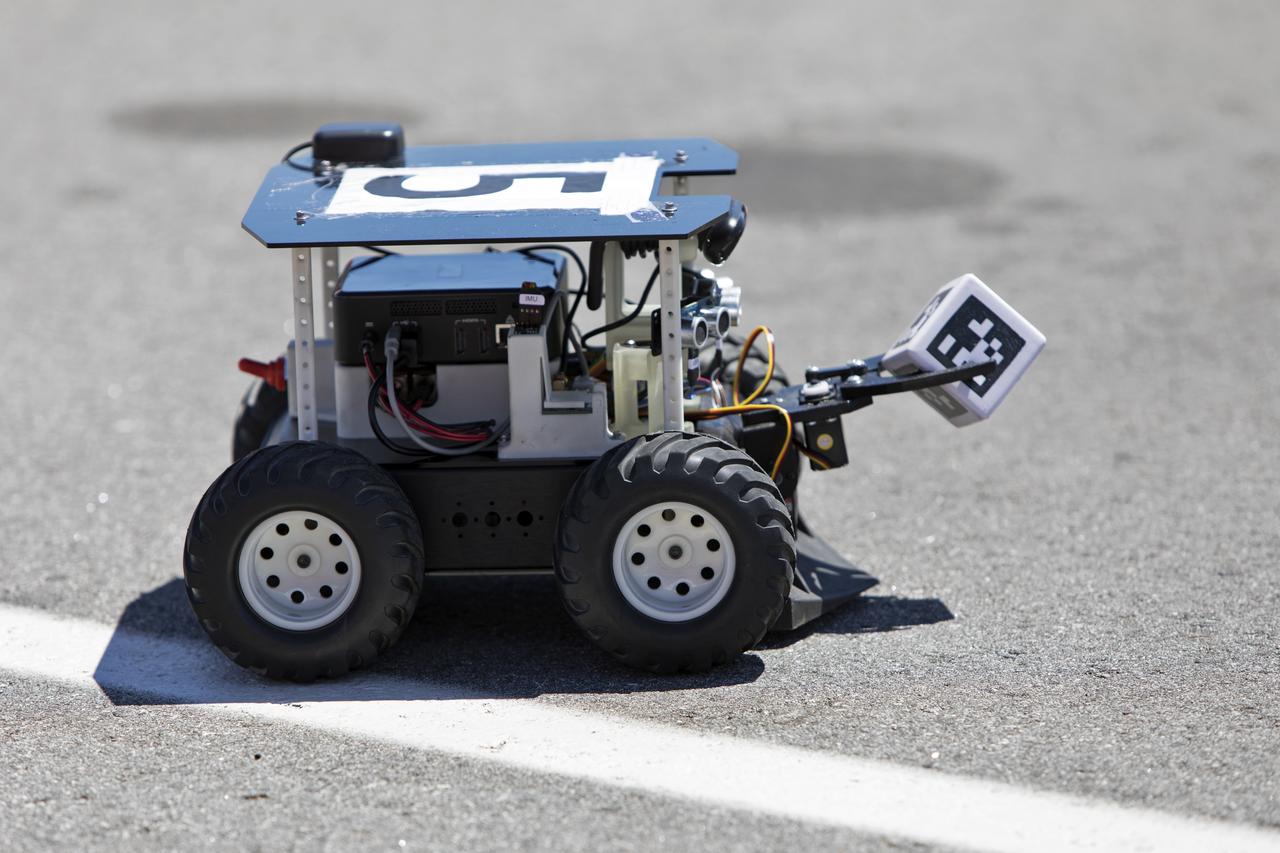
In the Swarmathon competition at the Kennedy Space Center Visitor Complex, students were asked to develop computer code for the small robots, programming them to look for "resources" in the form of AprilTag cubes, similar to barcodes. Teams developed search algorithms for the Swarmies to operate autonomously, communicating and interacting as a collective swarm similar to ants foraging for food. In the spaceport's third annual Swarmathon, 23 teams represented 24 minority serving universities and community colleges were invited to develop software code to operate these innovative robots known as "Swarmies" to help find resources when astronauts explore distant locations, such as the Moon or Mars.
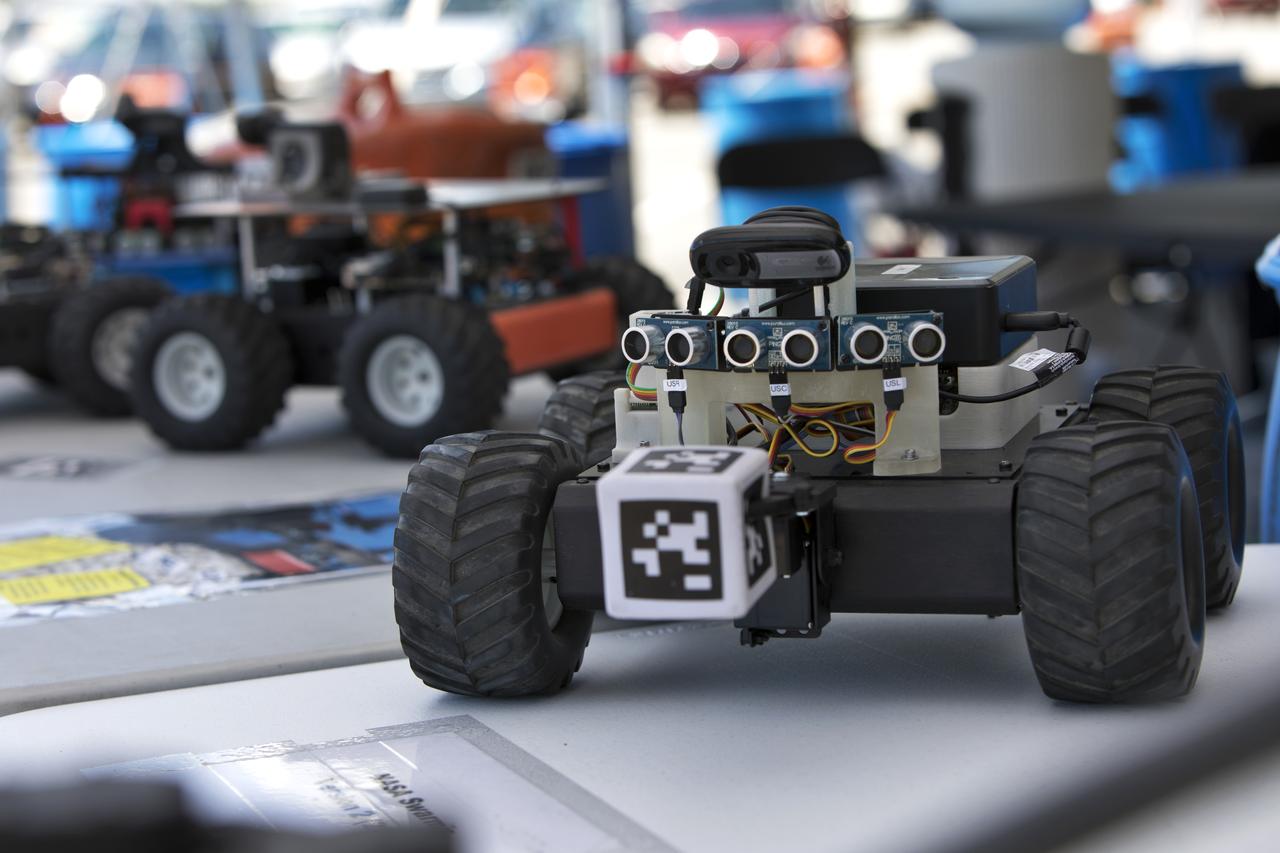
In the Swarmathon competition at the Kennedy Space Center Visitor Complex, students were asked to develop computer code for the small robots, programming them to look for "resources" in the form of AprilTag cubes, similar to barcodes. Teams developed search algorithms for the Swarmies to operate autonomously, communicating and interacting as a collective swarm similar to ants foraging for food. In the spaceport's third annual Swarmathon, 23 teams represented 24 minority serving universities and community colleges were invited to develop software code to operate these innovative robots known as "Swarmies" to help find resources when astronauts explore distant locations, such as the Moon or Mars.
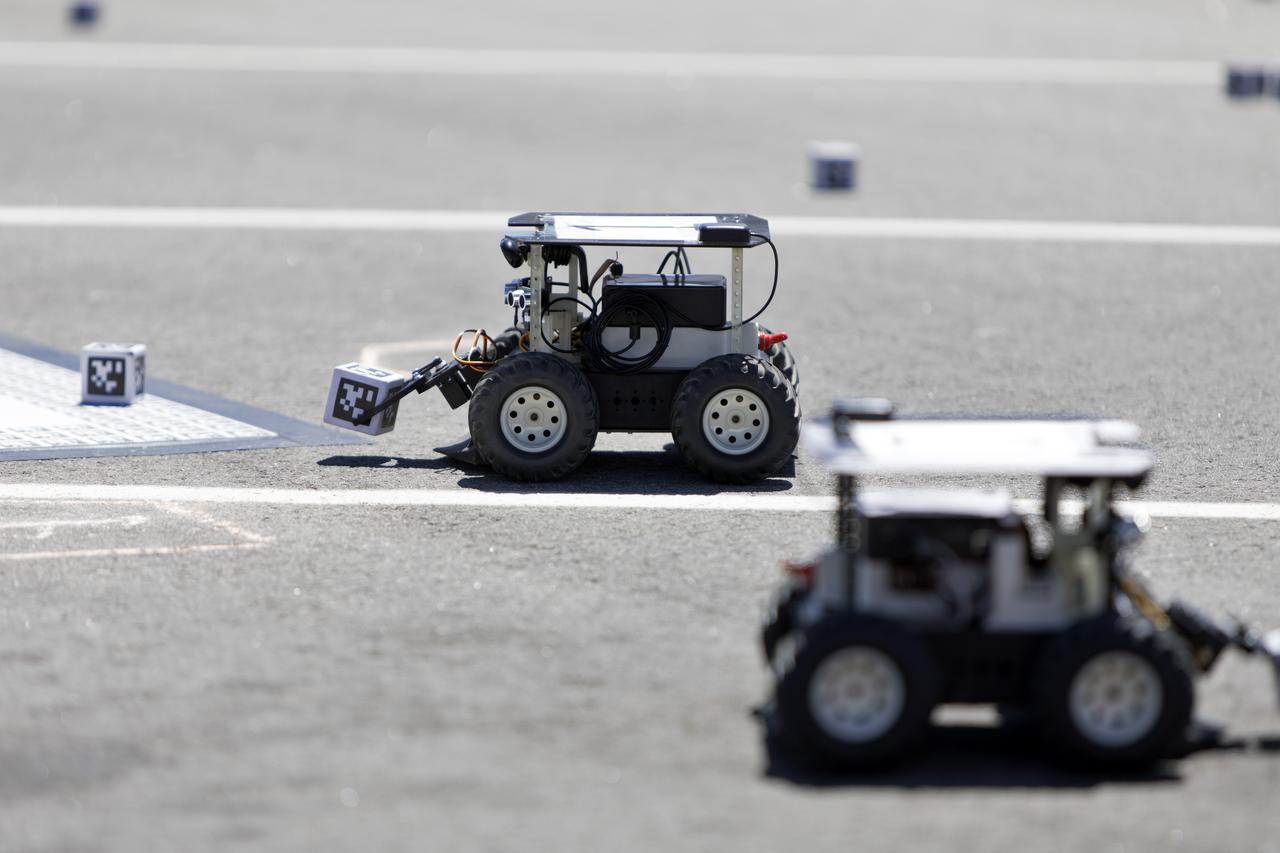
In the Swarmathon competition at the Kennedy Space Center Visitor Complex, students were asked to develop computer code for the small robots, programming them to look for "resources" in the form of AprilTag cubes, similar to barcodes. Teams developed search algorithms for the Swarmies to operate autonomously, communicating and interacting as a collective swarm similar to ants foraging for food. In the spaceport's third annual Swarmathon, 23 teams represented 24 minority serving universities and community colleges were invited to develop software code to operate these innovative robots known as "Swarmies" to help find resources when astronauts explore distant locations, such as the Moon or Mars.
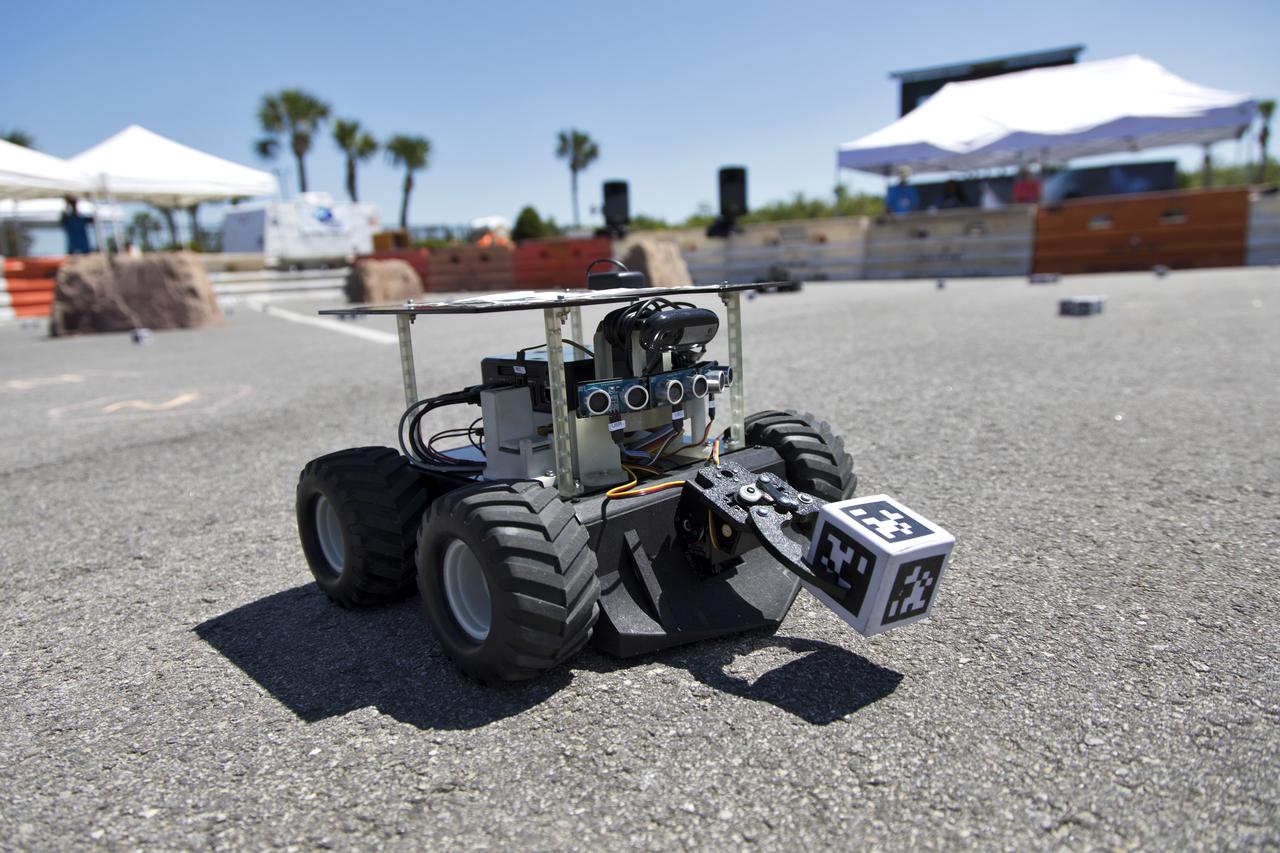
In the Swarmathon competition at the Kennedy Space Center Visitor Complex, students were asked to develop computer code for the small robots, programming them to look for "resources" in the form of AprilTag cubes, similar to barcodes. Teams developed search algorithms for the Swarmies to operate autonomously, communicating and interacting as a collective swarm similar to ants foraging for food. In the spaceport's third annual Swarmathon, 23 teams represented 24 minority serving universities and community colleges were invited to develop software code to operate these innovative robots known as "Swarmies" to help find resources when astronauts explore distant locations, such as the Moon or Mars.
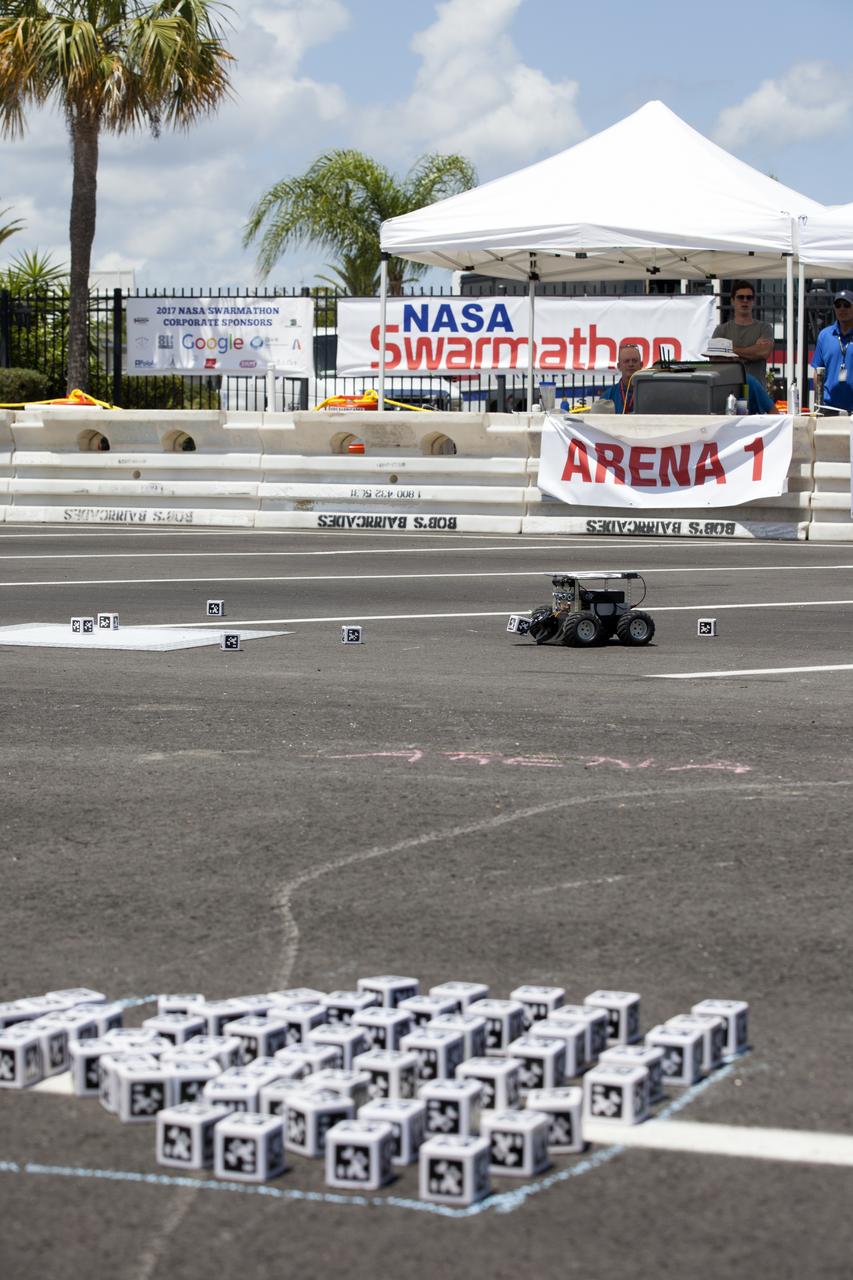
In the Swarmathon competition at the Kennedy Space Center Visitor Complex, students were asked to develop computer code for the small robots, programming them to look for "resources" in the form of AprilTag cubes, similar to barcodes. Teams developed search algorithms for the Swarmies to operate autonomously, communicating and interacting as a collective swarm similar to ants foraging for food. In the spaceport's second annual Swarmathon, 20 teams representing 22 minority serving universities and community colleges were invited to develop software code to operate these innovative robots known as "Swarmies" to help find resources when astronauts explore distant locations, such as the moon or Mars.
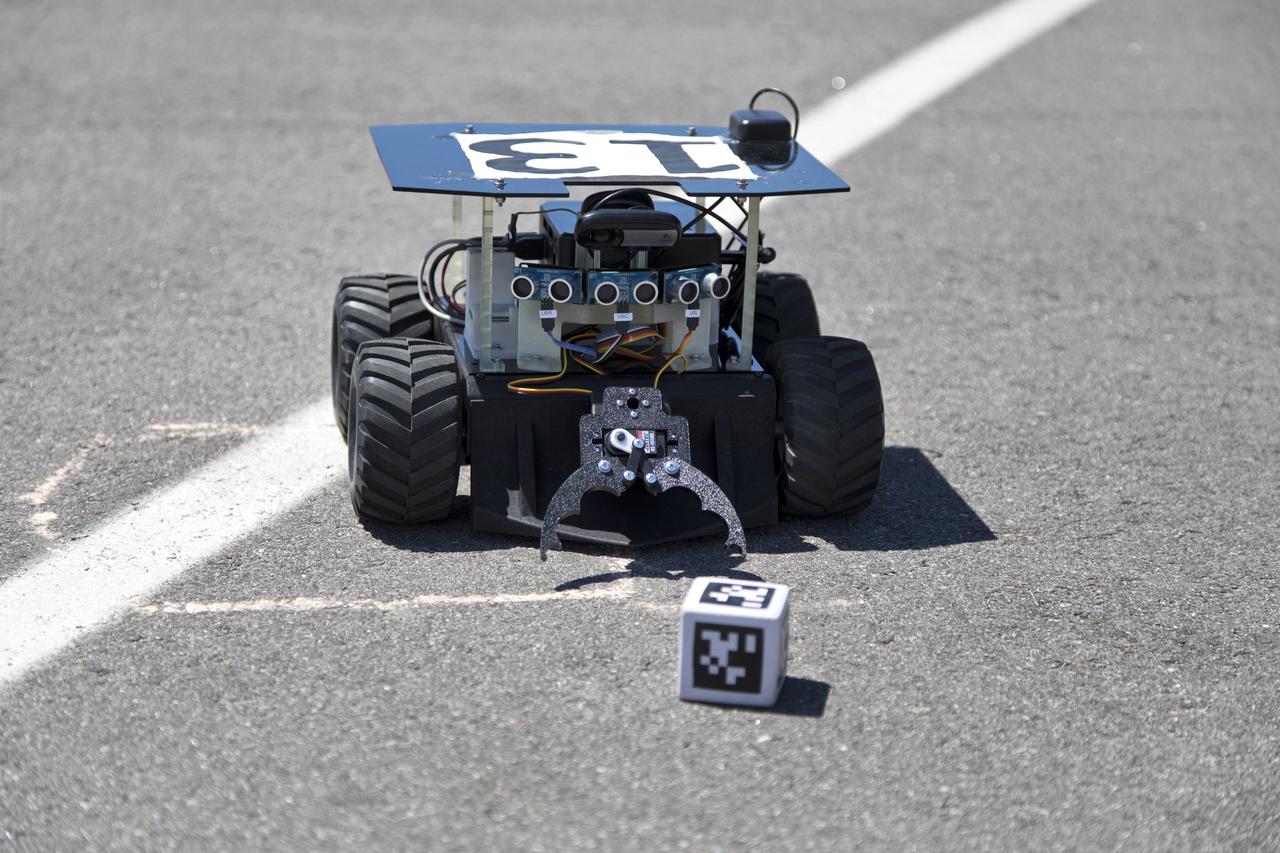
In the Swarmathon competition at the Kennedy Space Center Visitor Complex, students were asked to develop computer code for the small robots, programming them to look for "resources" in the form of AprilTag cubes, similar to barcodes. Teams developed search algorithms for the Swarmies to operate autonomously, communicating and interacting as a collective swarm similar to ants foraging for food. In the spaceport's third annual Swarmathon, 23 teams represented 24 minority serving universities and community colleges were invited to develop software code to operate these innovative robots known as "Swarmies" to help find resources when astronauts explore distant locations, such as the Moon or Mars.
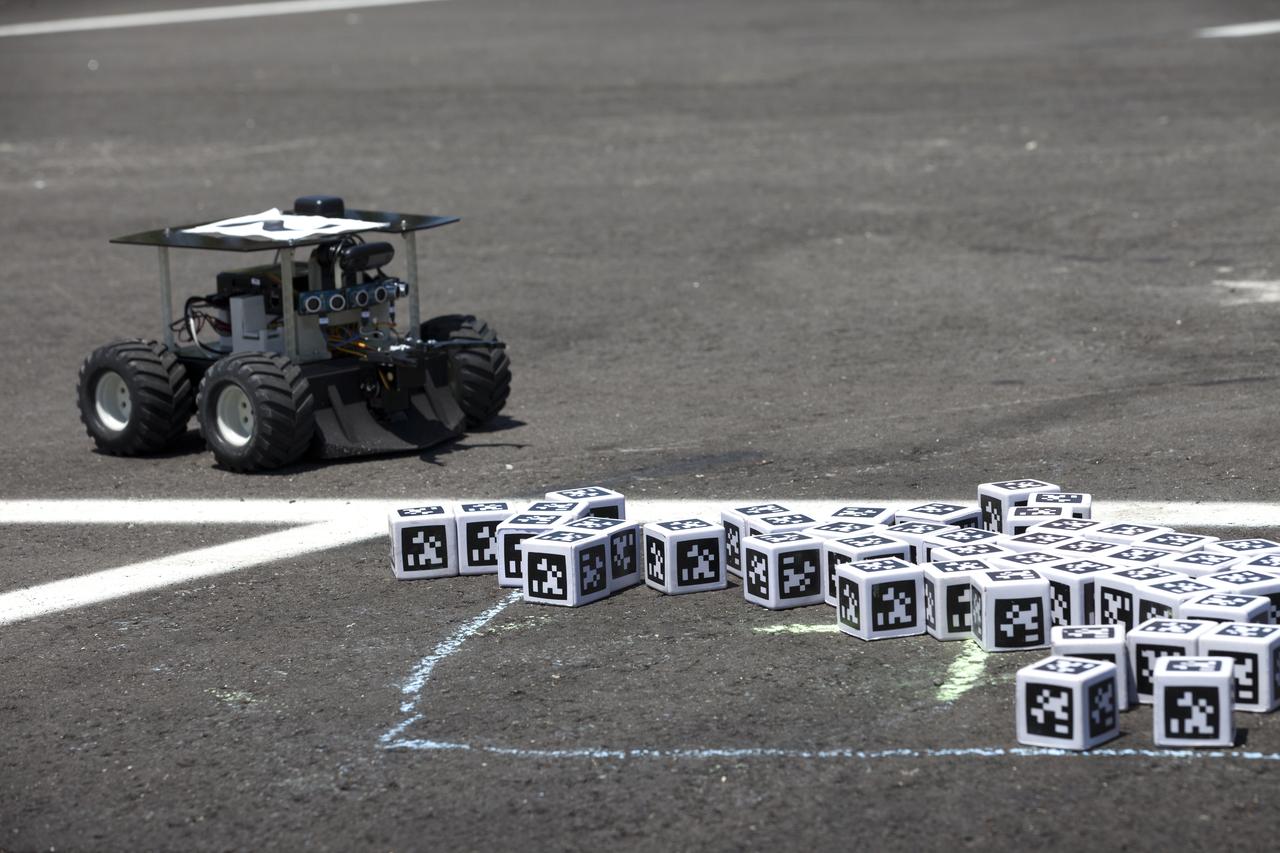
In the Swarmathon competition at the Kennedy Space Center Visitor Complex, students were asked to develop computer code for the small robots, programming them to look for "resources" in the form of AprilTag cubes, similar to barcodes. Teams developed search algorithms for the Swarmies to operate autonomously, communicating and interacting as a collective swarm similar to ants foraging for food. In the spaceport's second annual Swarmathon, 20 teams representing 22 minority serving universities and community colleges were invited to develop software code to operate these innovative robots known as "Swarmies" to help find resources when astronauts explore distant locations, such as the moon or Mars.
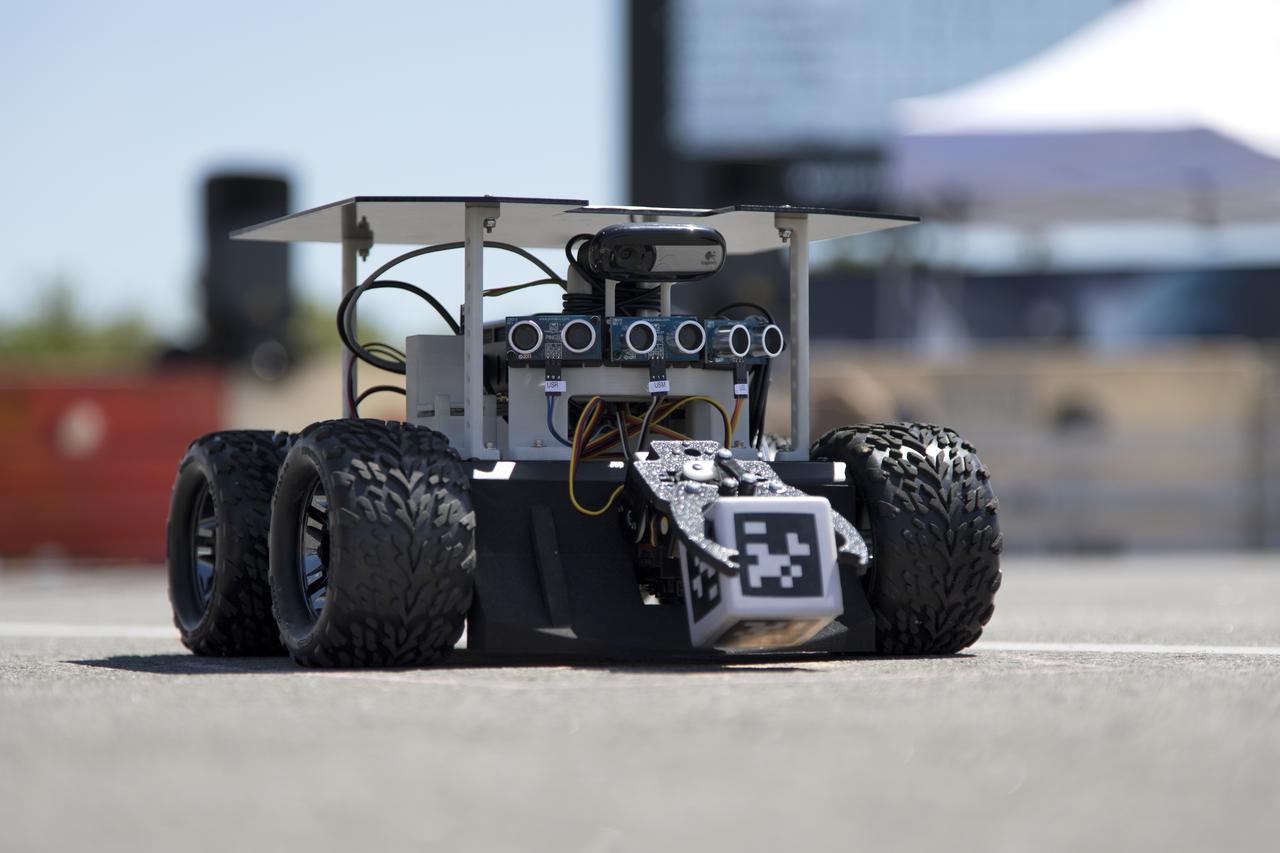
In the Swarmathon competition at the Kennedy Space Center Visitor Complex, students were asked to develop computer code for the small robots, programming them to look for "resources" in the form of AprilTag cubes, similar to barcodes. Teams developed search algorithms for the Swarmies to operate autonomously, communicating and interacting as a collective swarm similar to ants foraging for food. In the spaceport's third annual Swarmathon, 23 teams represented 24 minority serving universities and community colleges were invited to develop software code to operate these innovative robots known as "Swarmies" to help find resources when astronauts explore distant locations, such as the Moon or Mars.

KENNEDY SPACE CENTER, FLA. - Kieta Osteen-Cochrane (left), executive director of the Institute for Business Training and Community Education at Brevard Community College, accepts a check for the WENDI program from Sandra Eliason, president of the Federally Employed Women-Space Coast Chapter at NASA's Kennedy Space Center. The FEW scholarship committee, chaired by Helen Kane, and the chapter’s Board of Directors, recently voted to contribute their educational scholarship money for 2006 to the WENDI program. This donation amounts to $6,000. FEW organizes and sponsors conferences and seminars on issues pertinent to women that have benefited not only their members and women at Kennedy Space Center, but throughout all of Brevard. Photo credit: NASA/George Shelton
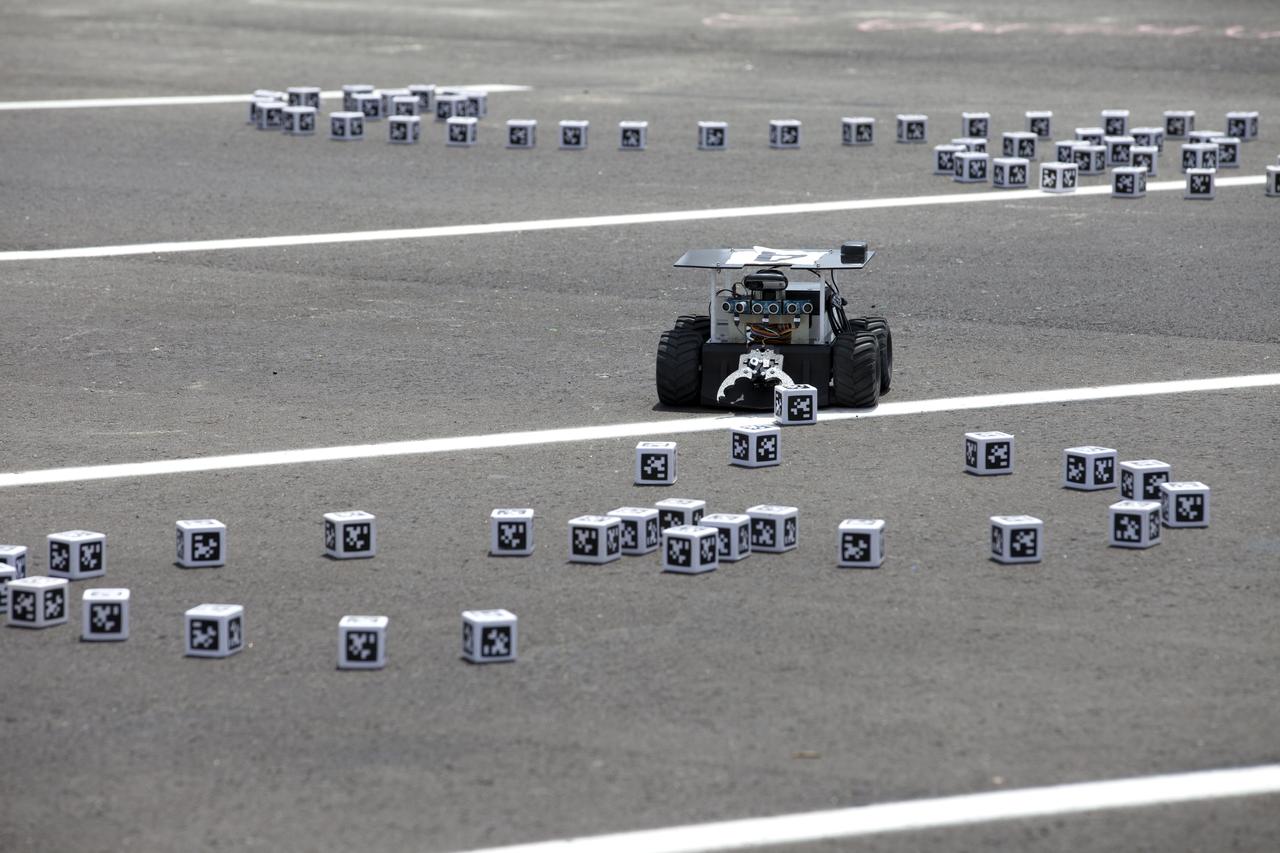
In the Swarmathon competition at the Kennedy Space Center Visitor Complex, students were asked to develop computer code for the small robots, programming them to look for "resources" in the form of cubes with AprilTags, similar to barcodes. Teams developed search algorithms for innovative robots known as "Swarmies" to operate autonomously, communicating and interacting as a collective swarm similar to ants foraging for food. In the spaceport's second annual Swarmathon, 20 teams representing 22 minority serving universities and community colleges were invited to participate. Similar robots could help find resources when astronauts explore distant locations, such as the moon or Mars.
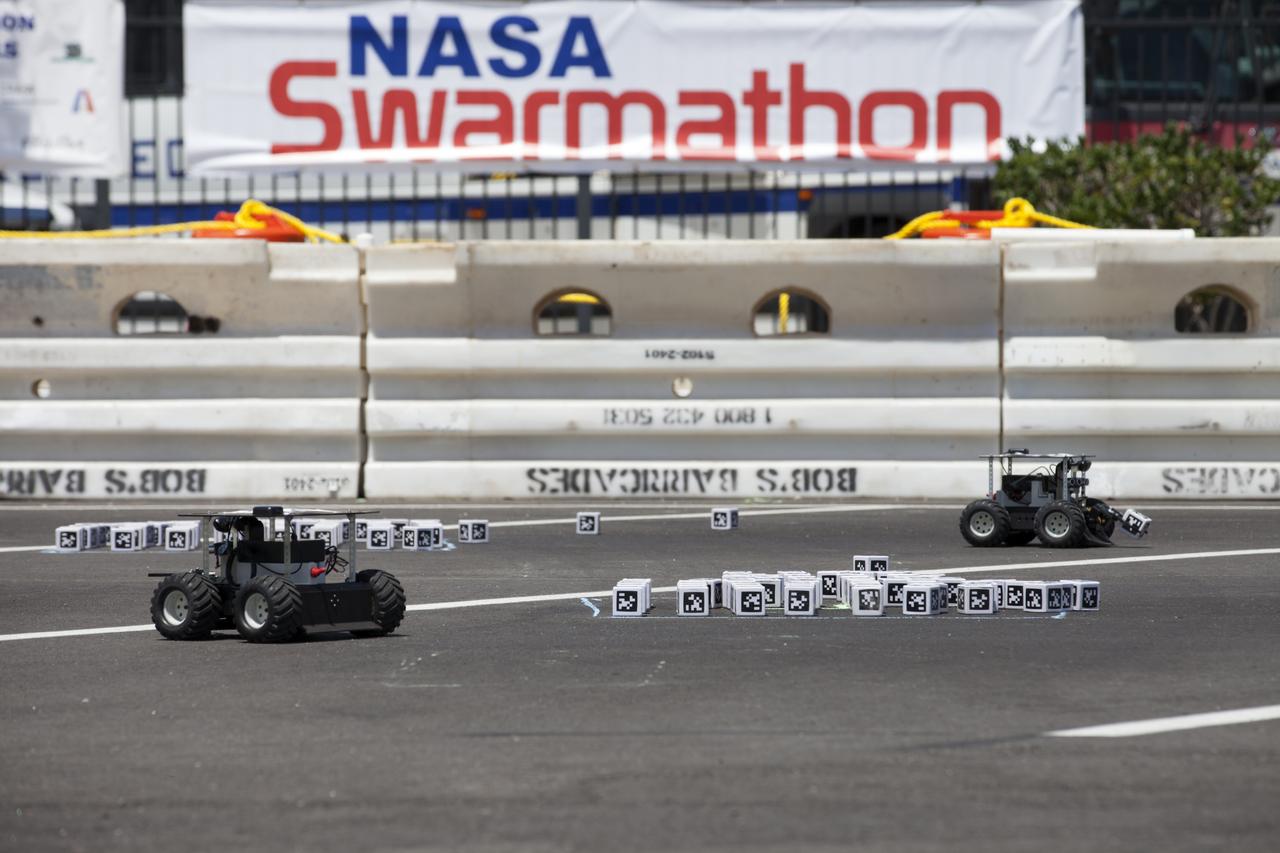
In the Swarmathon competition at the Kennedy Space Center Visitor Complex, students were asked to develop computer code for the small robots, programming them to look for "resources" in the form of AprilTag cubes, similar to barcodes. Teams developed search algorithms for the Swarmies to operate autonomously, communicating and interacting as a collective swarm similar to ants foraging for food. In the spaceport's second annual Swarmathon, 20 teams representing 22 minority serving universities and community colleges were invited to develop software code to operate these innovative robots known as "Swarmies" to help find resources when astronauts explore distant locations, such as the moon or Mars.
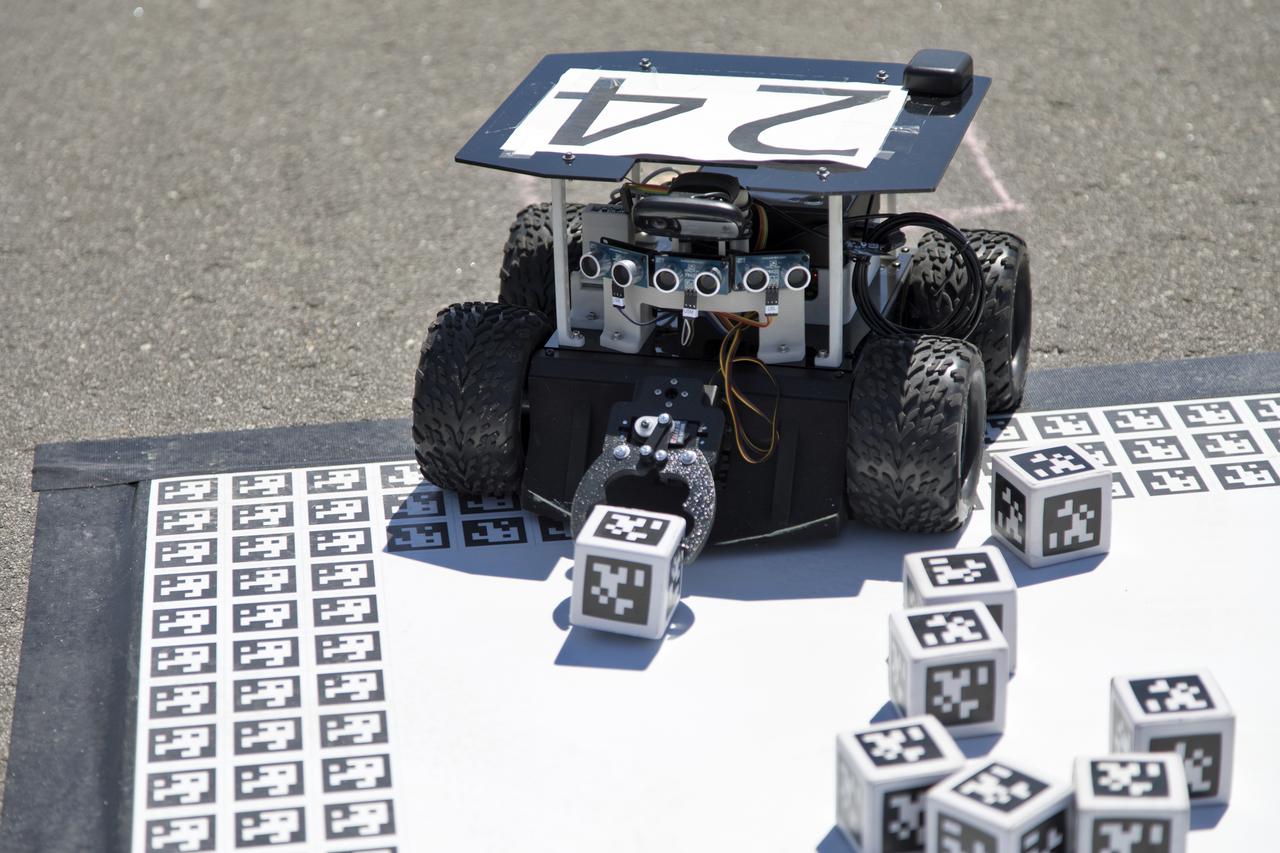
In the Swarmathon competition at the Kennedy Space Center Visitor Complex, students were asked to develop computer code for the small robots, programming them to look for "resources" in the form of AprilTag cubes, similar to barcodes. Teams developed search algorithms for the Swarmies to operate autonomously, communicating and interacting as a collective swarm similar to ants foraging for food. In the spaceport's third annual Swarmathon, 23 teams represented 24 minority serving universities and community colleges were invited to develop software code to operate these innovative robots known as "Swarmies" to help find resources when astronauts explore distant locations, such as the Moon or Mars.
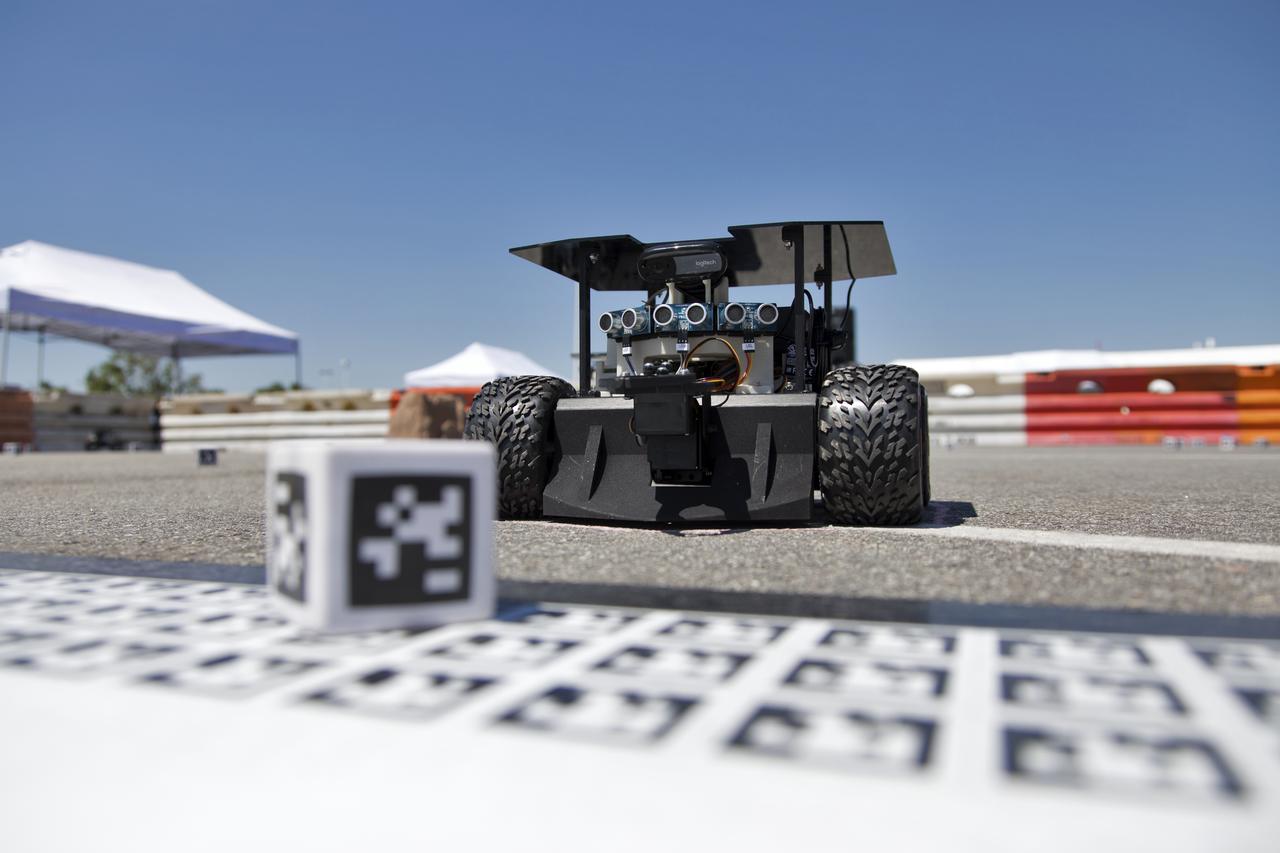
In the Swarmathon competition at the Kennedy Space Center Visitor Complex, students were asked to develop computer code for the small robots, programming them to look for "resources" in the form of AprilTag cubes, similar to barcodes. Teams developed search algorithms for the Swarmies to operate autonomously, communicating and interacting as a collective swarm similar to ants foraging for food. In the spaceport's third annual Swarmathon, 23 teams represented 24 minority serving universities and community colleges were invited to develop software code to operate these innovative robots known as "Swarmies" to help find resources when astronauts explore distant locations, such as the Moon or Mars.
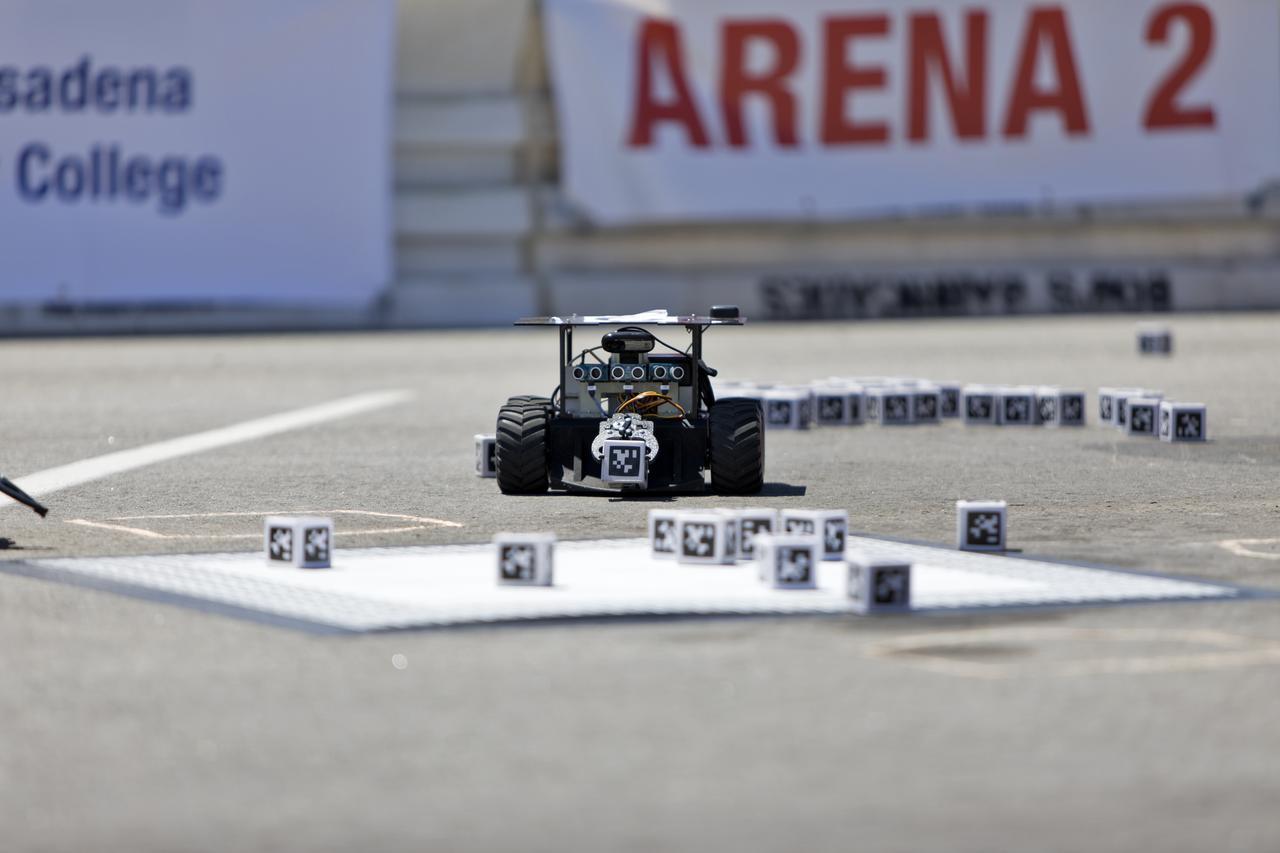
In the Swarmathon competition at the Kennedy Space Center Visitor Complex, students were asked to develop computer code for the small robots, programming them to look for "resources" in the form of AprilTag cubes, similar to barcodes. Teams developed search algorithms for the Swarmies to operate autonomously, communicating and interacting as a collective swarm similar to ants foraging for food. In the spaceport's third annual Swarmathon, 23 teams represented 24 minority serving universities and community colleges were invited to develop software code to operate these innovative robots known as "Swarmies" to help find resources when astronauts explore distant locations, such as the Moon or Mars.
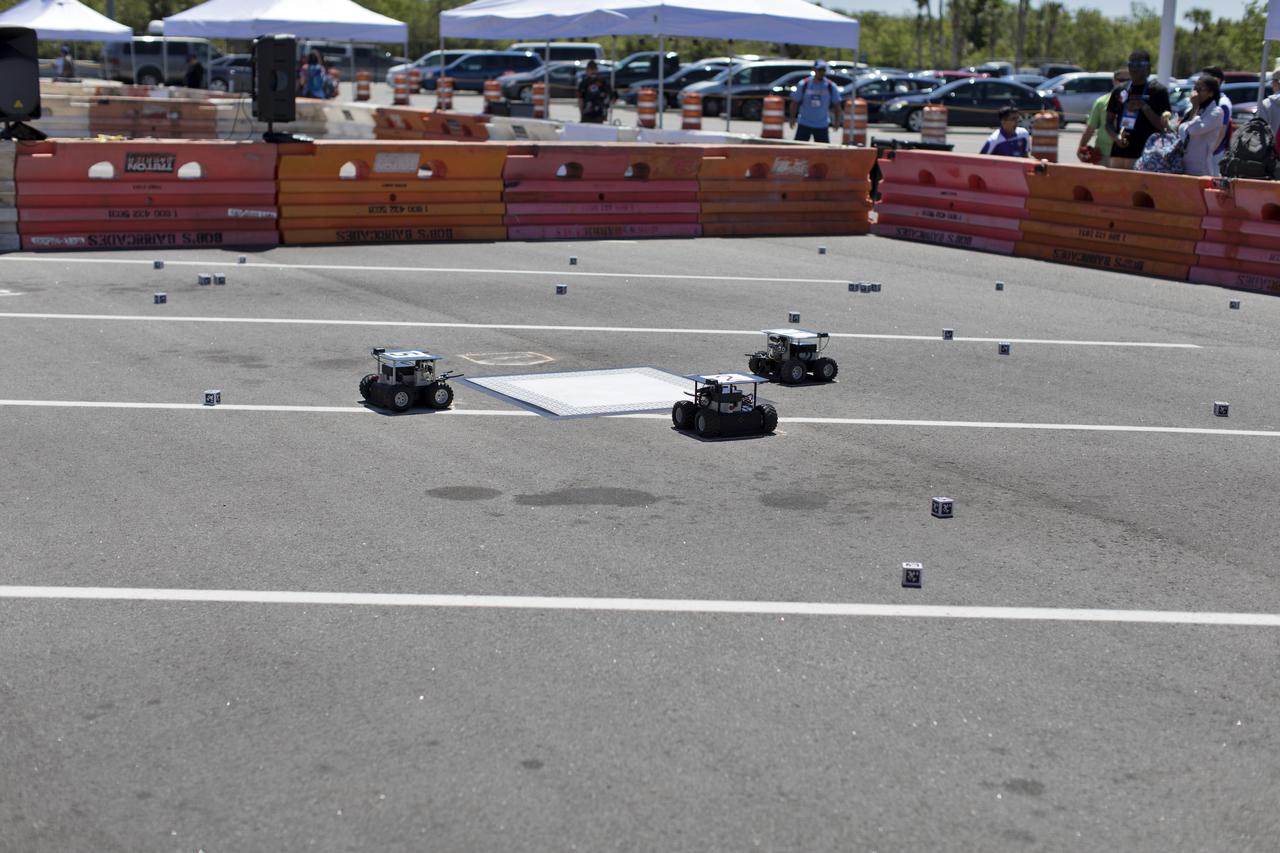
In the Swarmathon competition at the Kennedy Space Center Visitor Complex, students were asked to develop computer code for the small robots, programming them to look for "resources" in the form of AprilTag cubes, similar to barcodes. Teams developed search algorithms for the Swarmies to operate autonomously, communicating and interacting as a collective swarm similar to ants foraging for food. In the spaceport's third annual Swarmathon, 23 teams represented 24 minority serving universities and community colleges were invited to develop software code to operate these innovative robots known as "Swarmies" to help find resources when astronauts explore distant locations, such as the Moon or Mars.
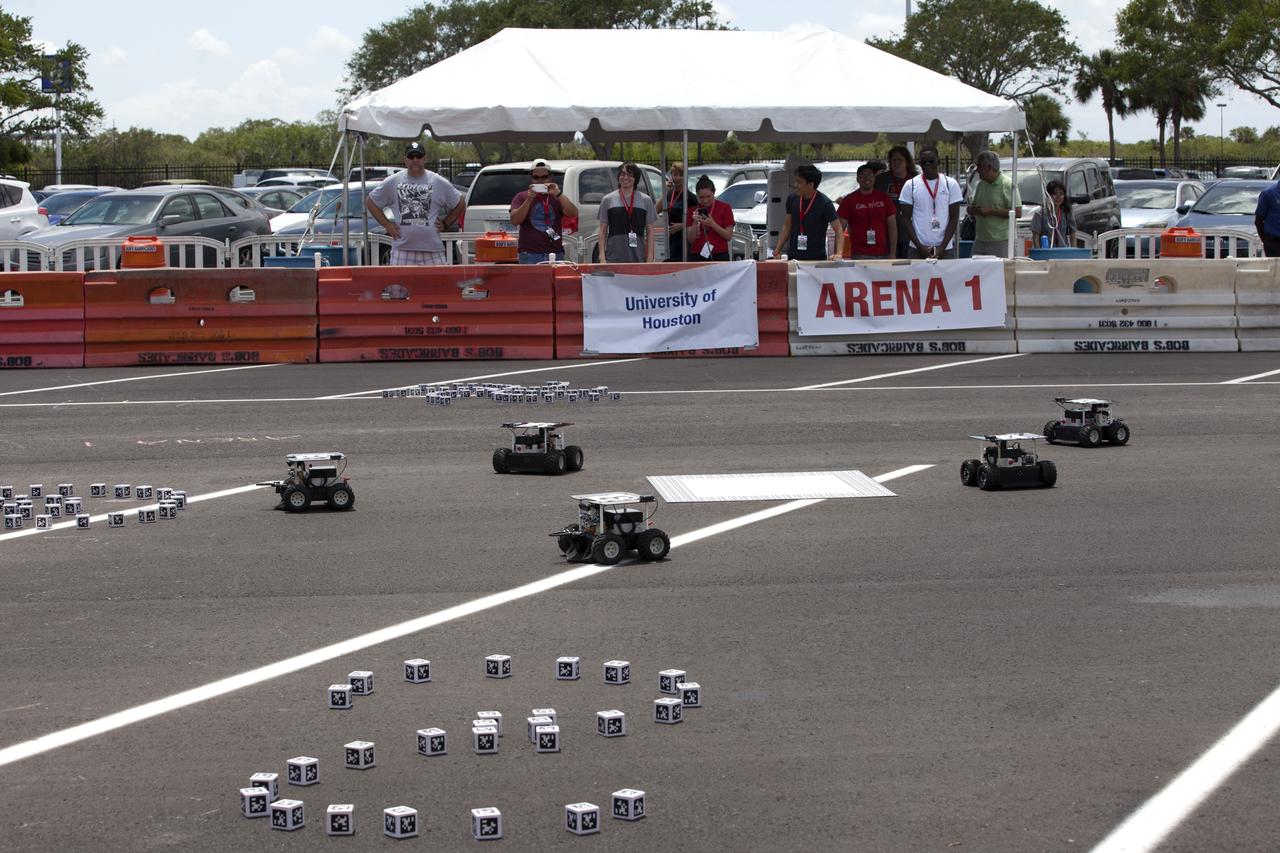
In the Swarmathon competition at the Kennedy Space Center Visitor Complex, students were asked to develop computer code for the small robots, programming them to look for "resources" in the form of cubes with AprilTags, similar to barcodes. Teams developed search algorithms for innovative robots known as "Swarmies" to operate autonomously, communicating and interacting as a collective swarm similar to ants foraging for food. In the spaceport's second annual Swarmathon, 20 teams representing 22 minority serving universities and community colleges were invited to participate. Similar robots could help find resources when astronauts explore distant locations, such as the moon or Mars.
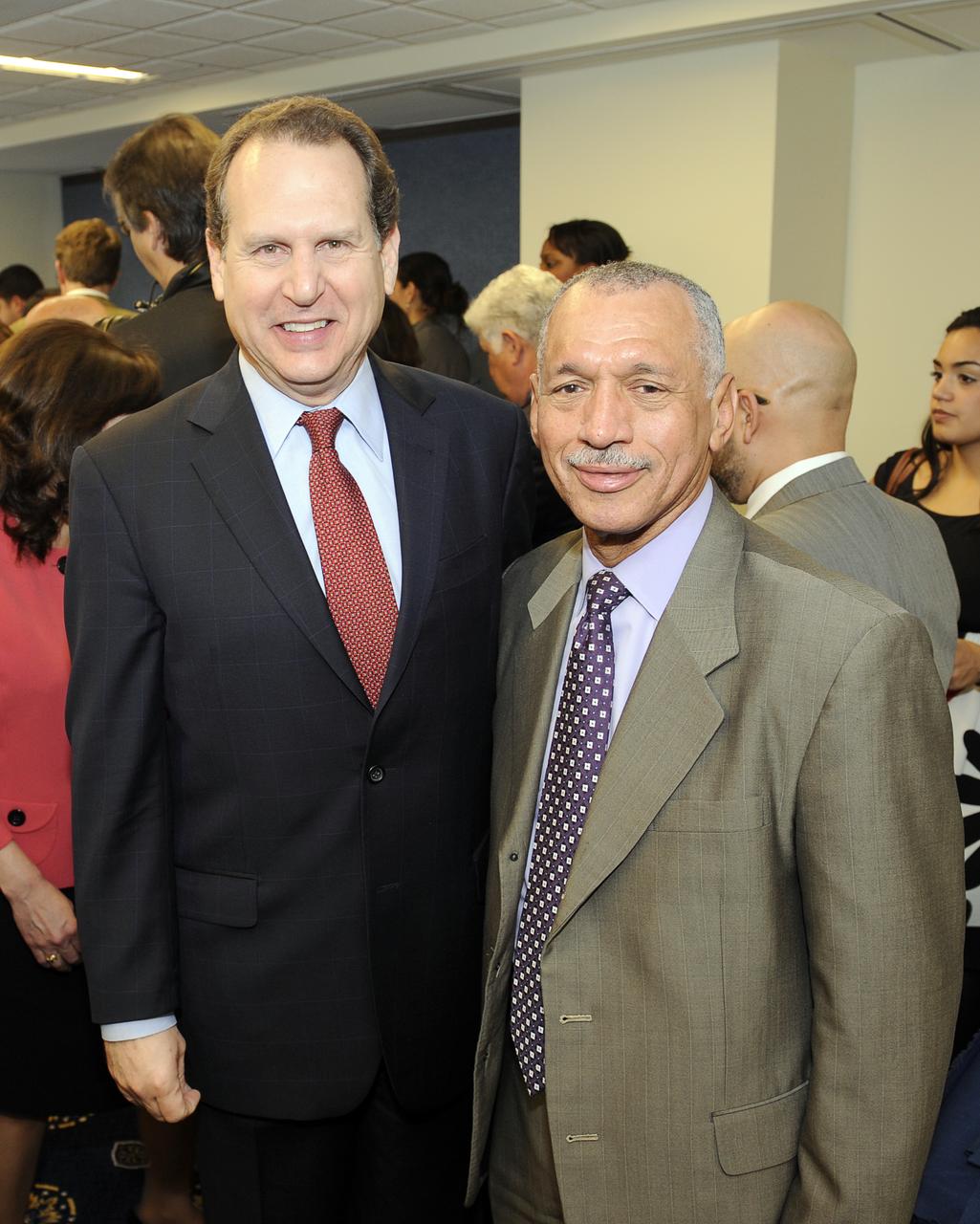
NASA Administrator Charles Bolden, right, poses with U.S. Rep. Lincoln Diaz-Balart, R-Fla., prior to the start of an event at the National Press Club in Washington, Tuesday, Feb. 23, 2010. NASA is working with Univision Communications Inc. to develop a partnership in support of the Spanish-language media outlet's initiative to improve high school graduation rates, prepare Hispanic students for college, and encourage them to pursue careers in science, technology, engineering and mathematics, or STEM, disciplines. Photo Credit: (NASA/Bill Ingalls)
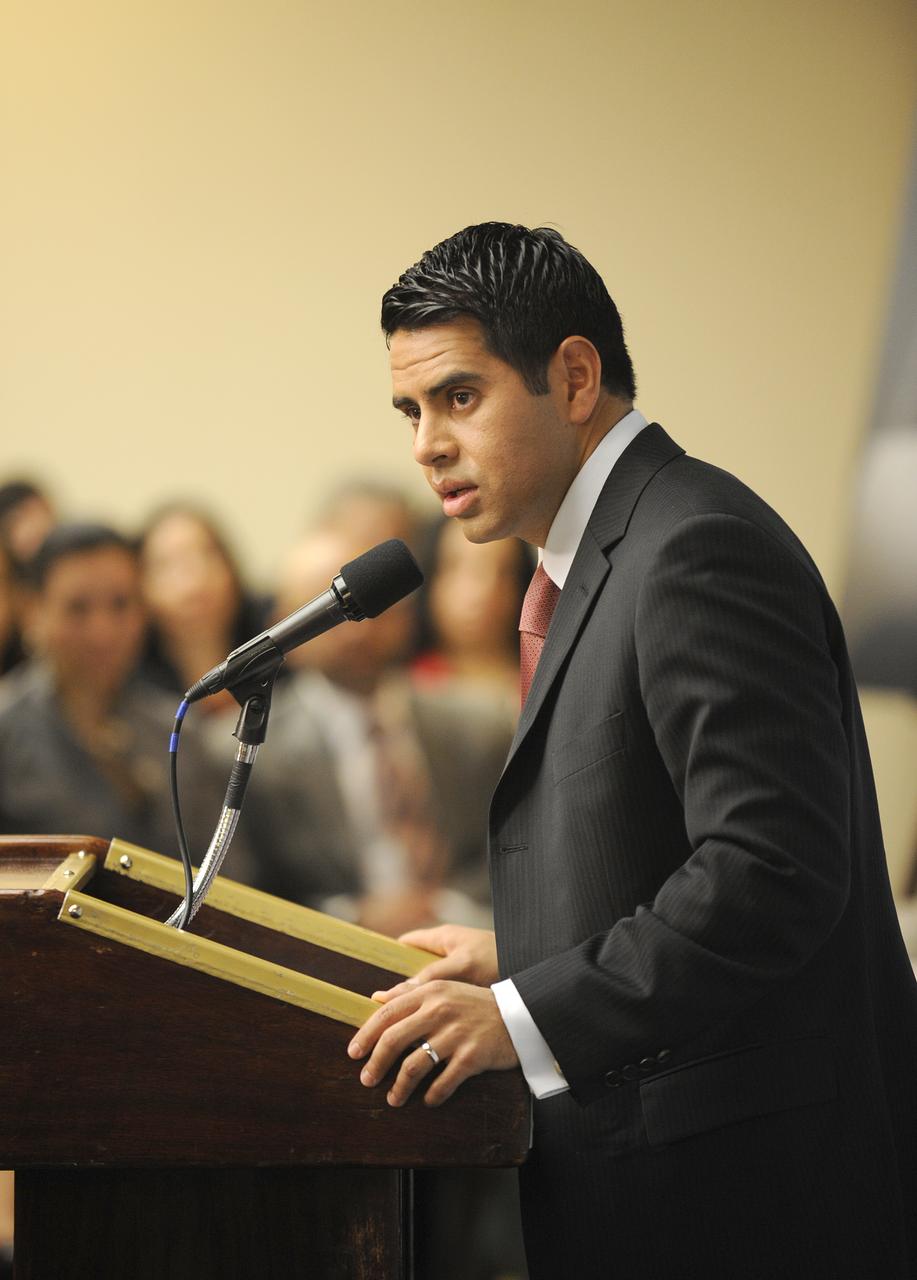
Univision Networks president Cesar Conde speaks at the National Press Club in Washington, Tuesday, Feb. 23, 2010. NASA is working with Univision Communications Inc. to develop a partnership in support of the Spanish-language media outlet's initiative to improve high school graduation rates, prepare Hispanic students for college, and encourage them to pursue careers in science, technology, engineering and mathematics, or STEM, disciplines. Photo Credit: (NASA/Bill Ingalls)
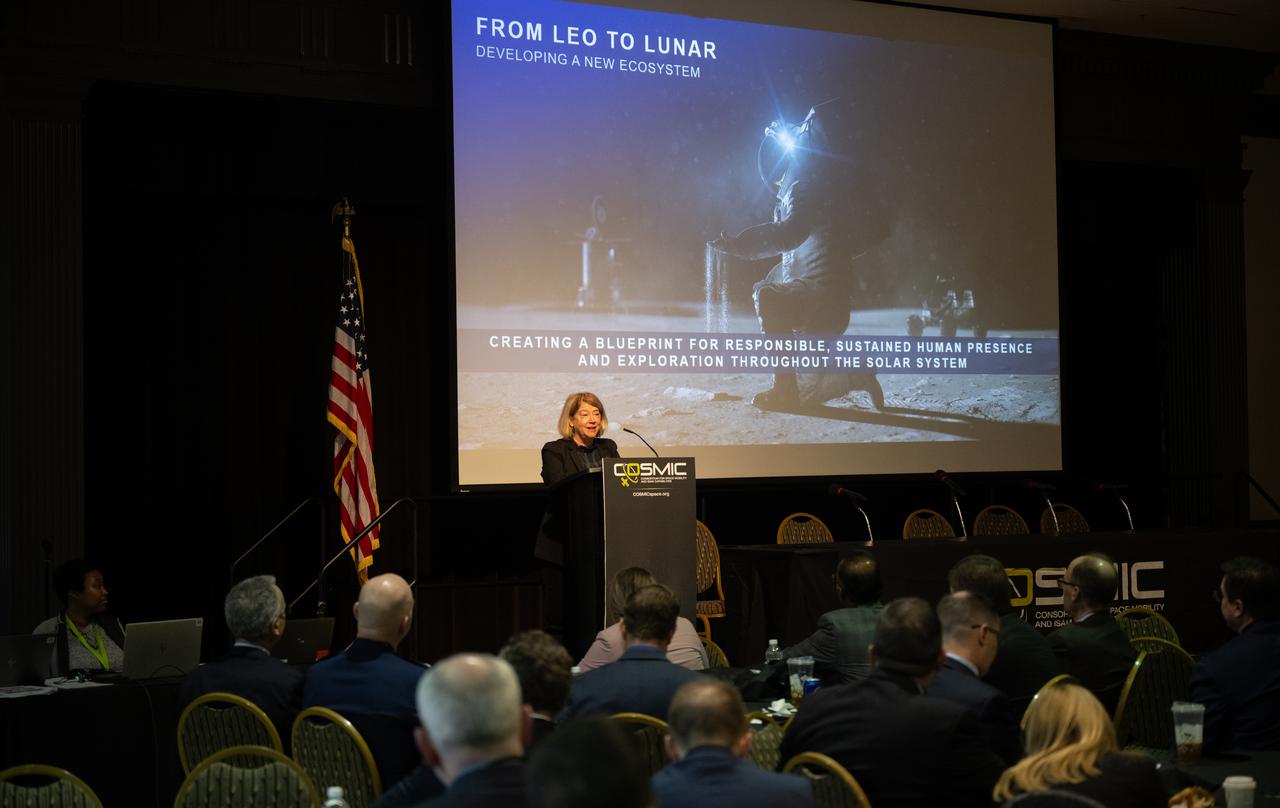
NASA Deputy Administrator Pam Melroy delivers keynote remarks at the Consortium for Space Mobility and ISAM Capabilities (COSMIC) workshop, Tuesday, Nov. 7, 2023, at the University of Maryland in College Park, Md. NASA’s Space Technology Mission Directorate formulated and funds COSMIC, aiming to create a nationwide aerospace community alliance that provides global leadership in space mobility and in-space servicing, assembly, and manufacturing (ISAM) for use in Earth orbit, lunar orbit, deep space, and on planetary surfaces. Photo Credit: (NASA/Joel Kowsky)
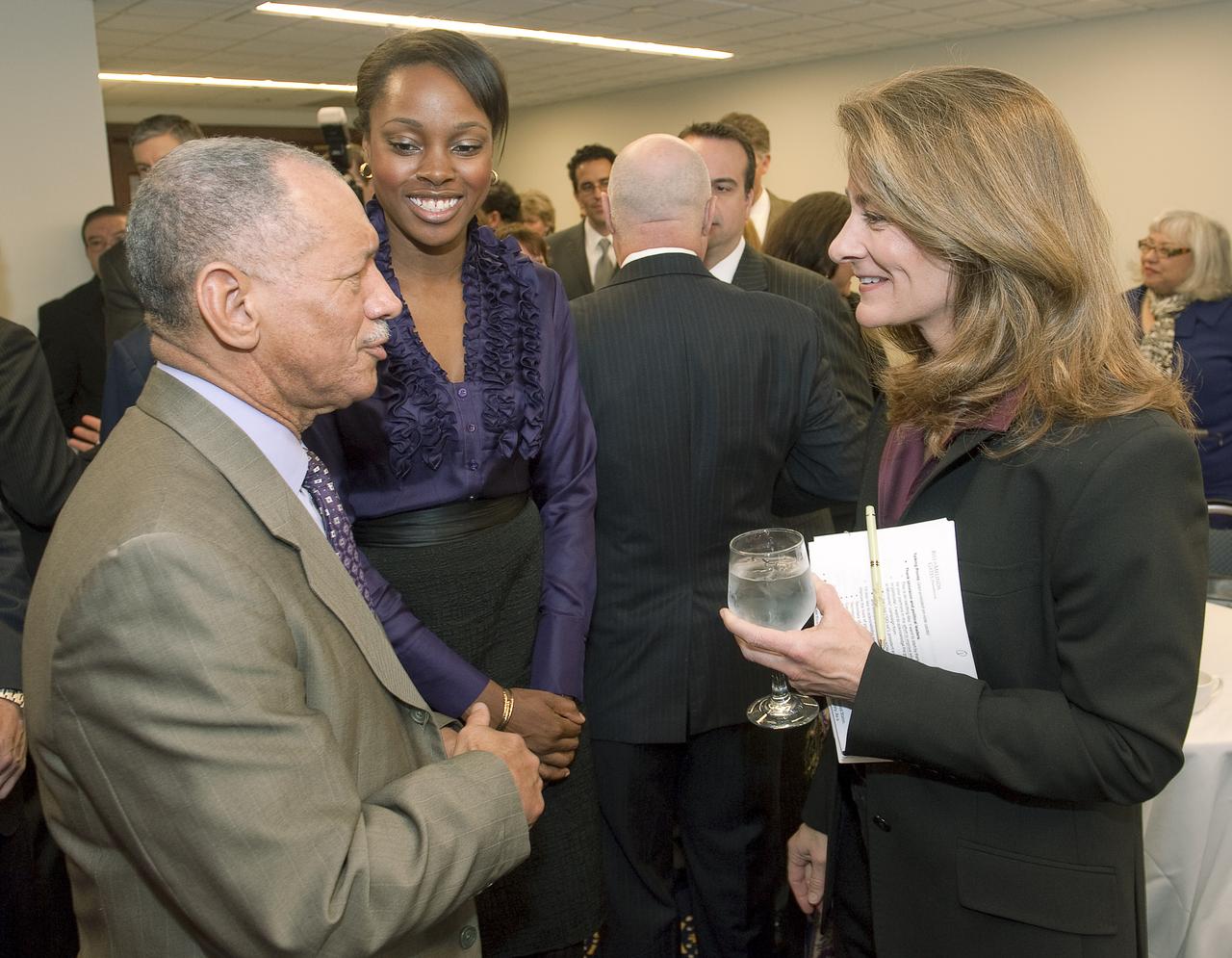
NASA Administrator Charles Bolden, left, speaks with Melinda French Gates, of the Bill & Melinda Gates Foundation, right, prior to the start of an event at the National Press Club in Washington, Tuesday, Feb. 23, 2010. NASA is working with Univision Communications Inc. to develop a partnership in support of the Spanish-language media outlet's initiative to improve high school graduation rates, prepare Hispanic students for college, and encourage them to pursue careers in science, technology, engineering and mathematics, or STEM, disciplines. Photo Credit: (NASA/Bill Ingalls)
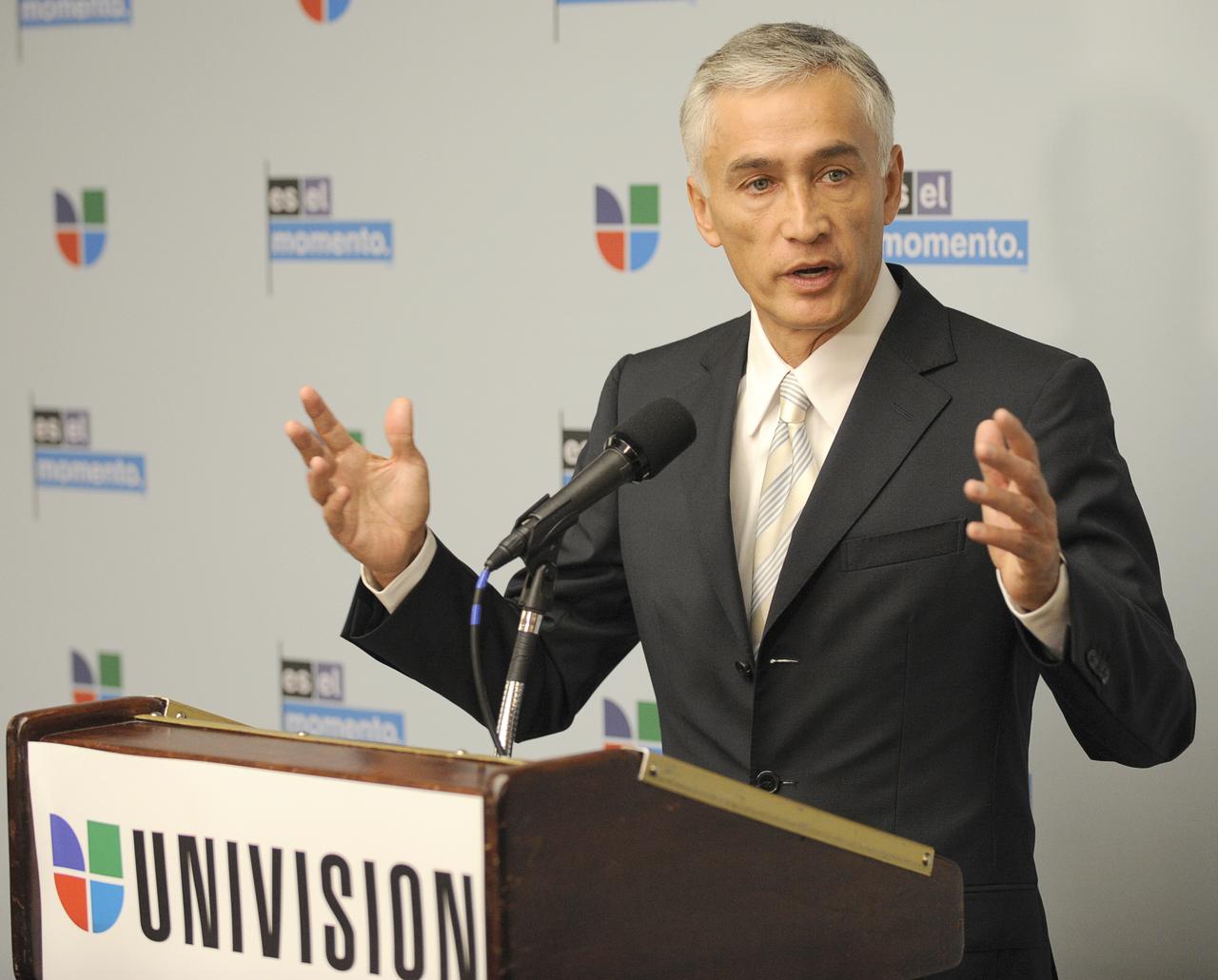
Univision news anchor Jorge Ramos speaks at an event at the National Press Club in Washington, Tuesday, Feb. 23, 2010. NASA is working with Univision Communications Inc. to develop a partnership in support of the Spanish-language media outlet's initiative to improve high school graduation rates, prepare Hispanic students for college, and encourage them to pursue careers in science, technology, engineering and mathematics, or STEM, disciplines. Photo Credit: (NASA/Bill Ingalls)
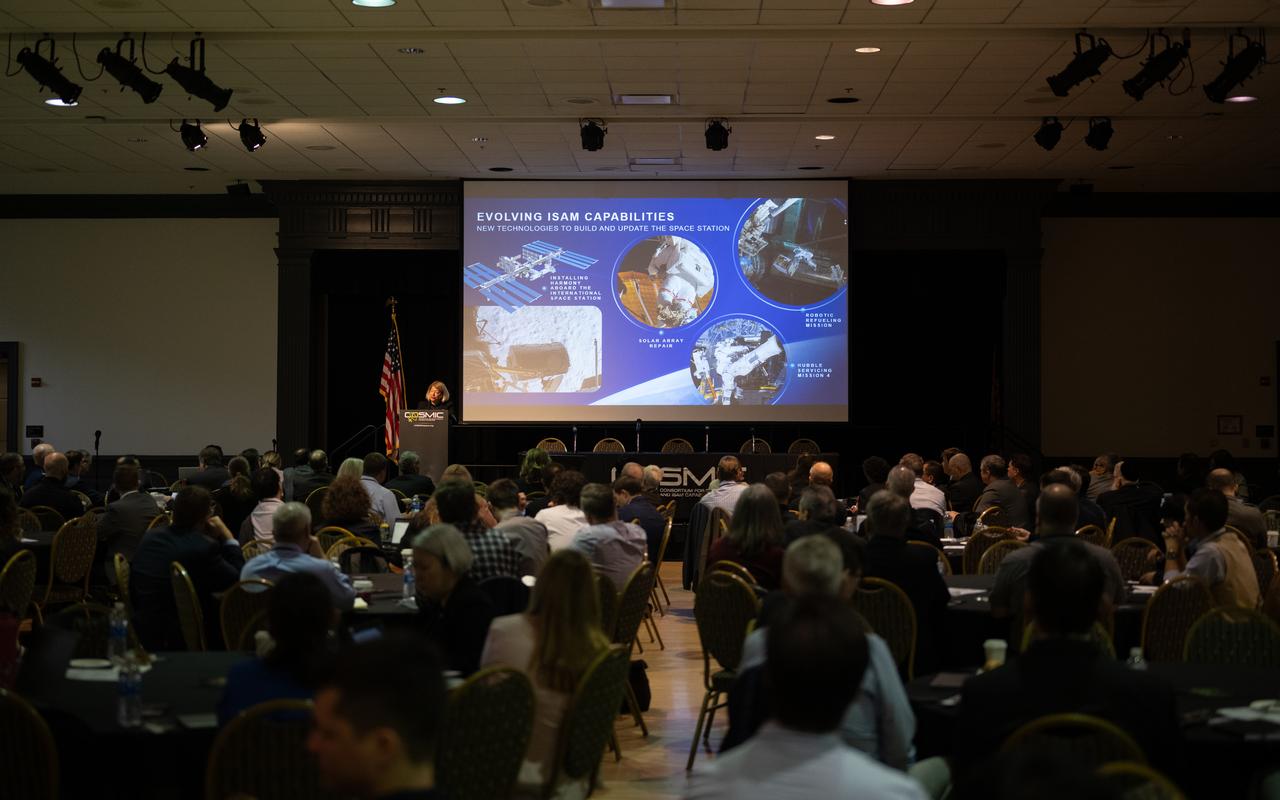
NASA Deputy Administrator Pam Melroy delivers keynote remarks at the Consortium for Space Mobility and ISAM Capabilities (COSMIC) workshop, Tuesday, Nov. 7, 2023, at the University of Maryland in College Park, Md. NASA’s Space Technology Mission Directorate formulated and funds COSMIC, aiming to create a nationwide aerospace community alliance that provides global leadership in space mobility and in-space servicing, assembly, and manufacturing (ISAM) for use in Earth orbit, lunar orbit, deep space, and on planetary surfaces. Photo Credit: (NASA/Joel Kowsky)
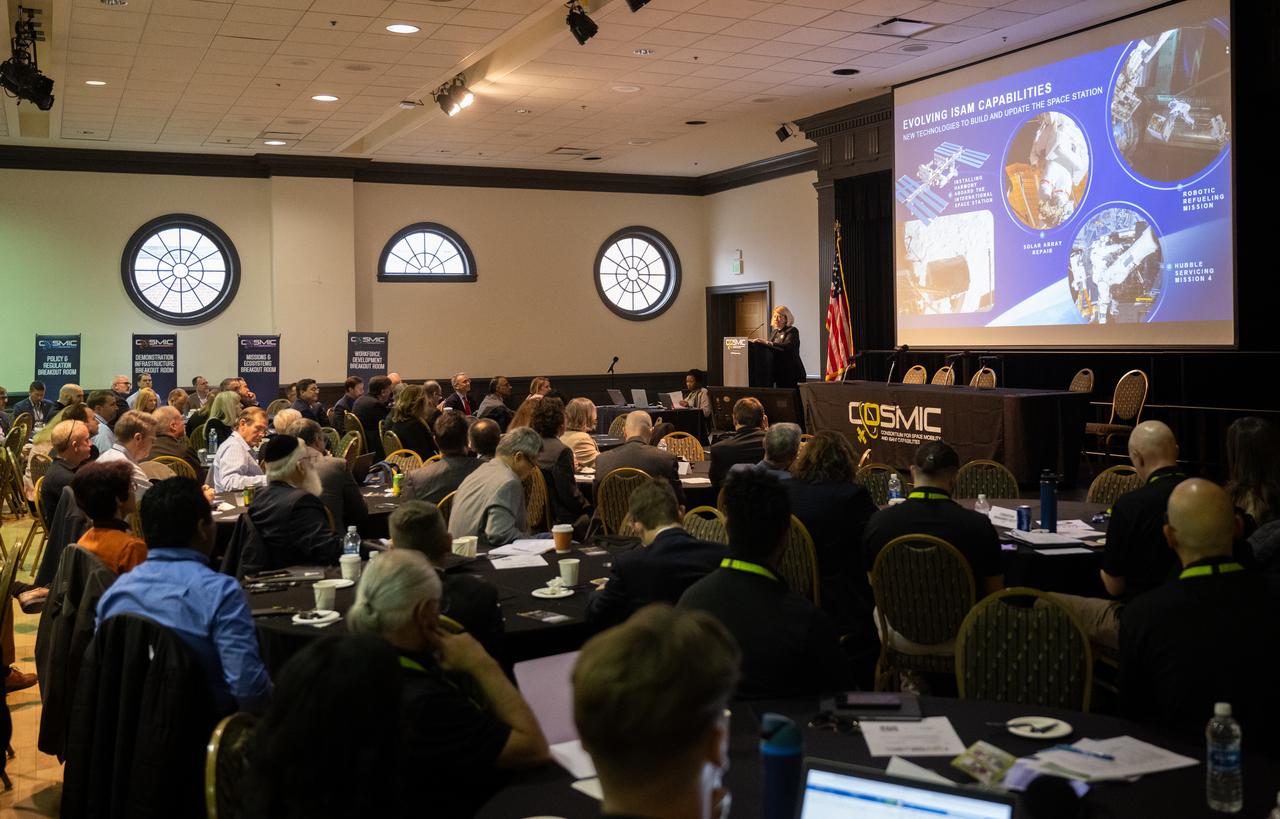
NASA Deputy Administrator Pam Melroy delivers keynote remarks at the Consortium for Space Mobility and ISAM Capabilities (COSMIC) workshop, Tuesday, Nov. 7, 2023, at the University of Maryland in College Park, Md. NASA’s Space Technology Mission Directorate formulated and funds COSMIC, aiming to create a nationwide aerospace community alliance that provides global leadership in space mobility and in-space servicing, assembly, and manufacturing (ISAM) for use in Earth orbit, lunar orbit, deep space, and on planetary surfaces. Photo Credit: (NASA/Joel Kowsky)
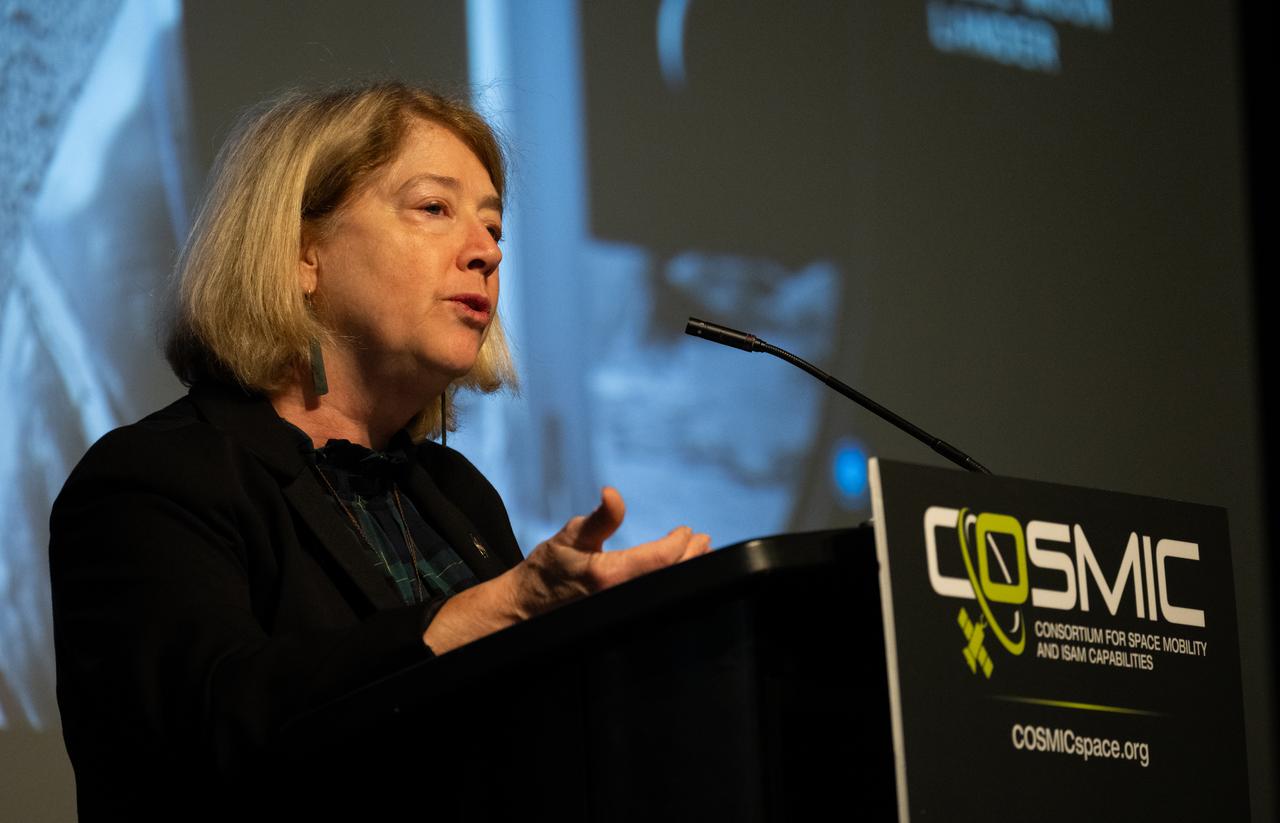
NASA Deputy Administrator Pam Melroy delivers keynote remarks at the Consortium for Space Mobility and ISAM Capabilities (COSMIC) workshop, Tuesday, Nov. 7, 2023, at the University of Maryland in College Park, Md. NASA’s Space Technology Mission Directorate formulated and funds COSMIC, aiming to create a nationwide aerospace community alliance that provides global leadership in space mobility and in-space servicing, assembly, and manufacturing (ISAM) for use in Earth orbit, lunar orbit, deep space, and on planetary surfaces. Photo Credit: (NASA/Joel Kowsky)
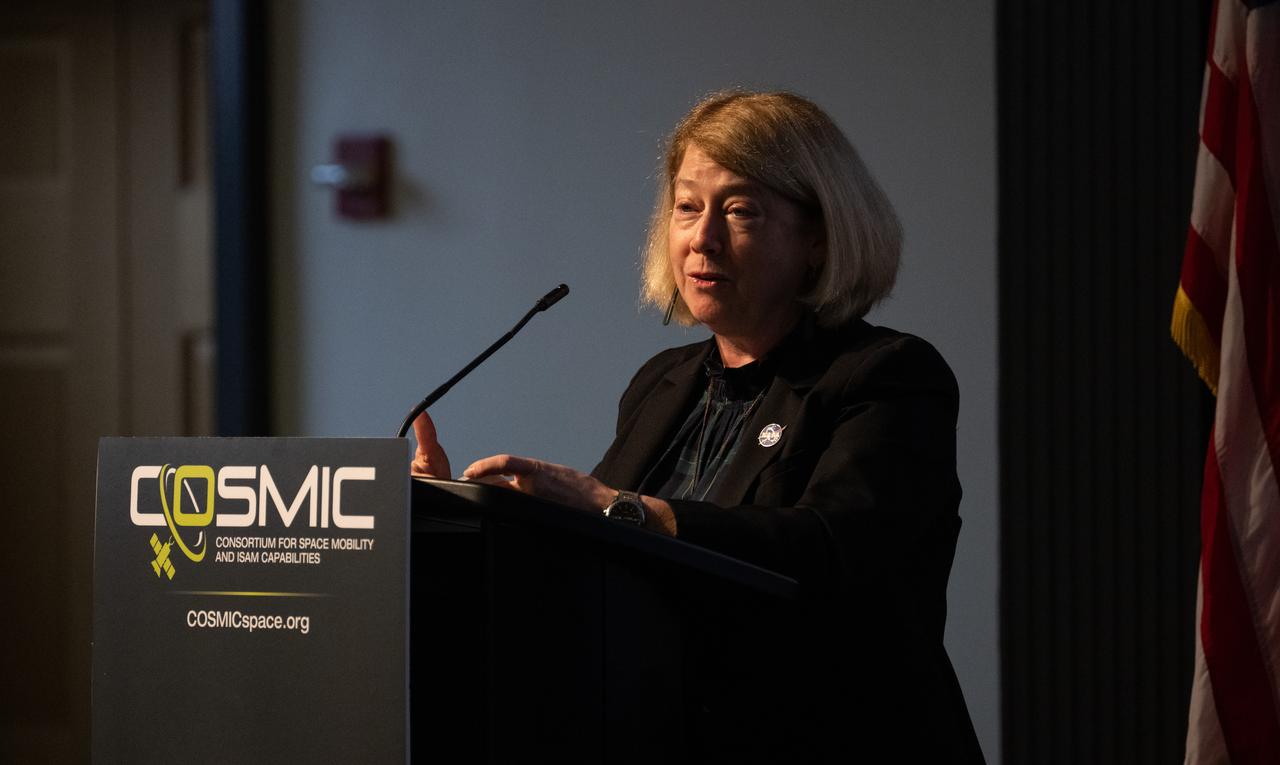
NASA Deputy Administrator Pam Melroy delivers keynote remarks at the Consortium for Space Mobility and ISAM Capabilities (COSMIC) workshop, Tuesday, Nov. 7, 2023, at the University of Maryland in College Park, Md. NASA’s Space Technology Mission Directorate formulated and funds COSMIC, aiming to create a nationwide aerospace community alliance that provides global leadership in space mobility and in-space servicing, assembly, and manufacturing (ISAM) for use in Earth orbit, lunar orbit, deep space, and on planetary surfaces. Photo Credit: (NASA/Joel Kowsky)
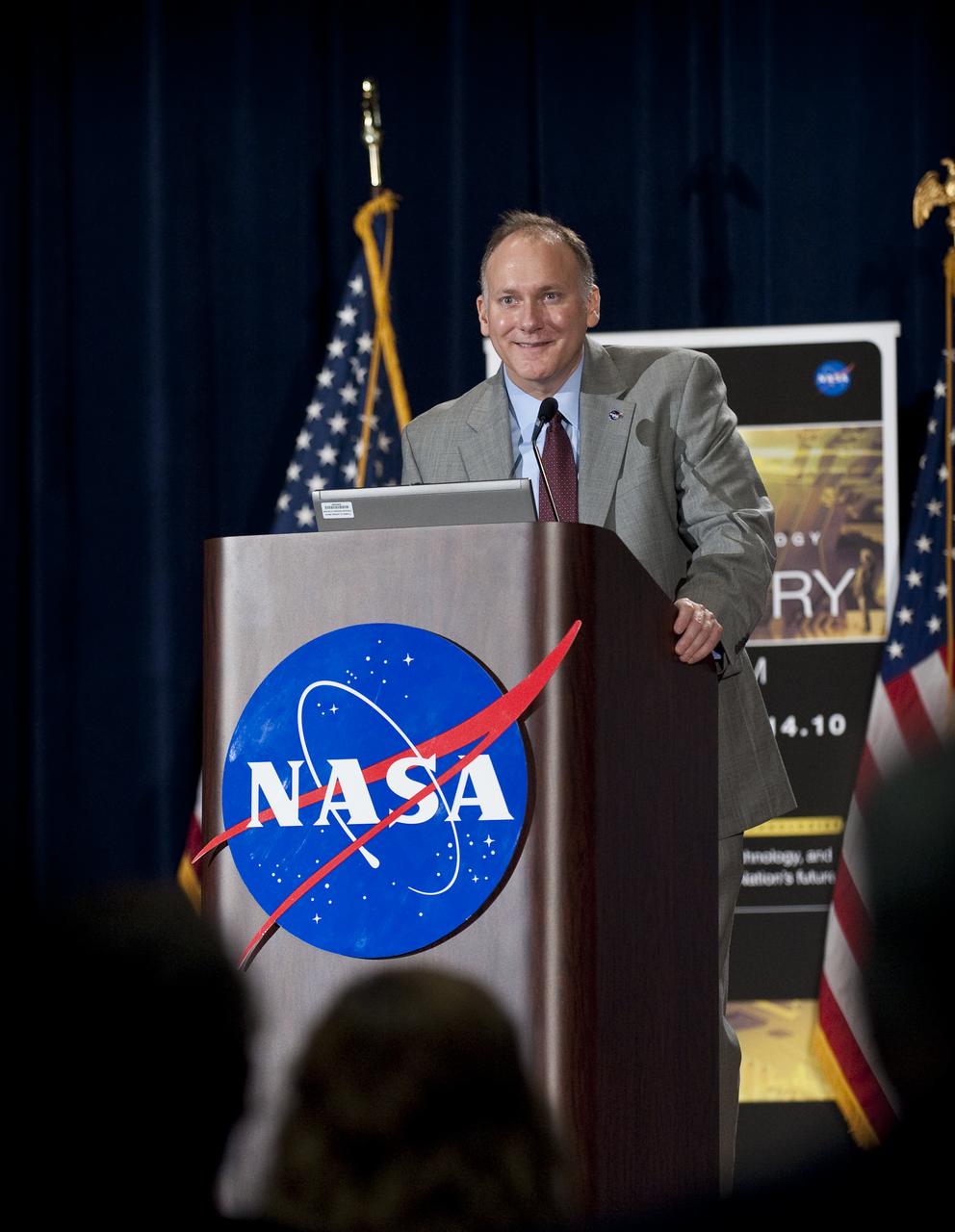
David Steitz, from NASA's Office of Communications, kicks off the NASA New Space Technology Industry Forum being held at the University of Maryland in College Park on Tuesday, July 13, 2010. During the two-day event, speakers are focusing on the president's fiscal year 2011 budget request for NASA's new Space Technology Program. Representatives from industry, academia and the federal government are in attendance to discuss strategy, development and implementation of NASA's proposed new technology-enabled exploration. Photo Credit: (NASA/Bill Ingalls)
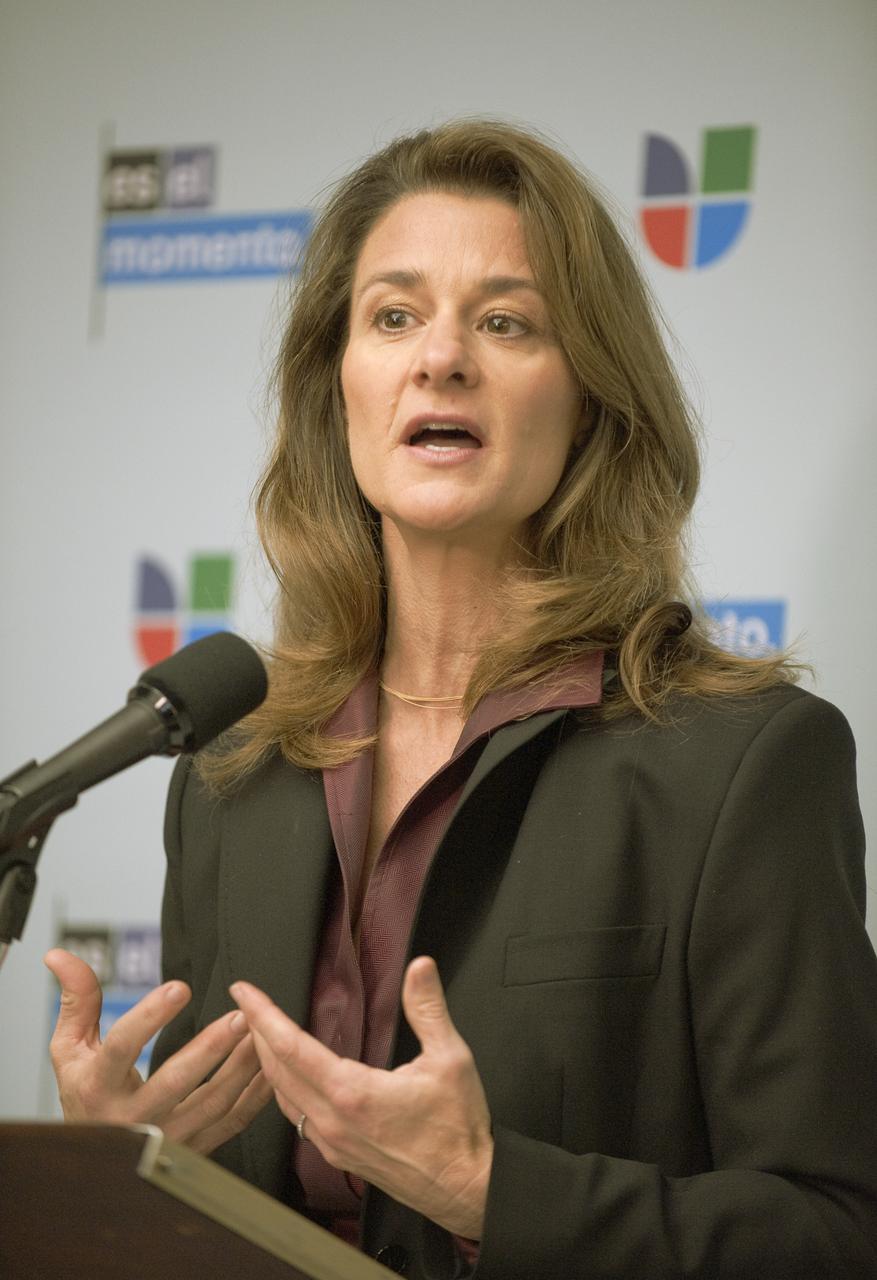
Melinda French Gates, of the Bill & Melinda Gates Foundation, speaks during an event at the National Press Club in Washington, Tuesday, Feb. 23, 2010. NASA is working with Univision Communications Inc. to develop a partnership in support of the Spanish-language media outlet's initiative to improve high school graduation rates, prepare Hispanic students for college, and encourage them to pursue careers in science, technology, engineering and mathematics, or STEM, disciplines. Photo Credit: (NASA/Bill Ingalls)
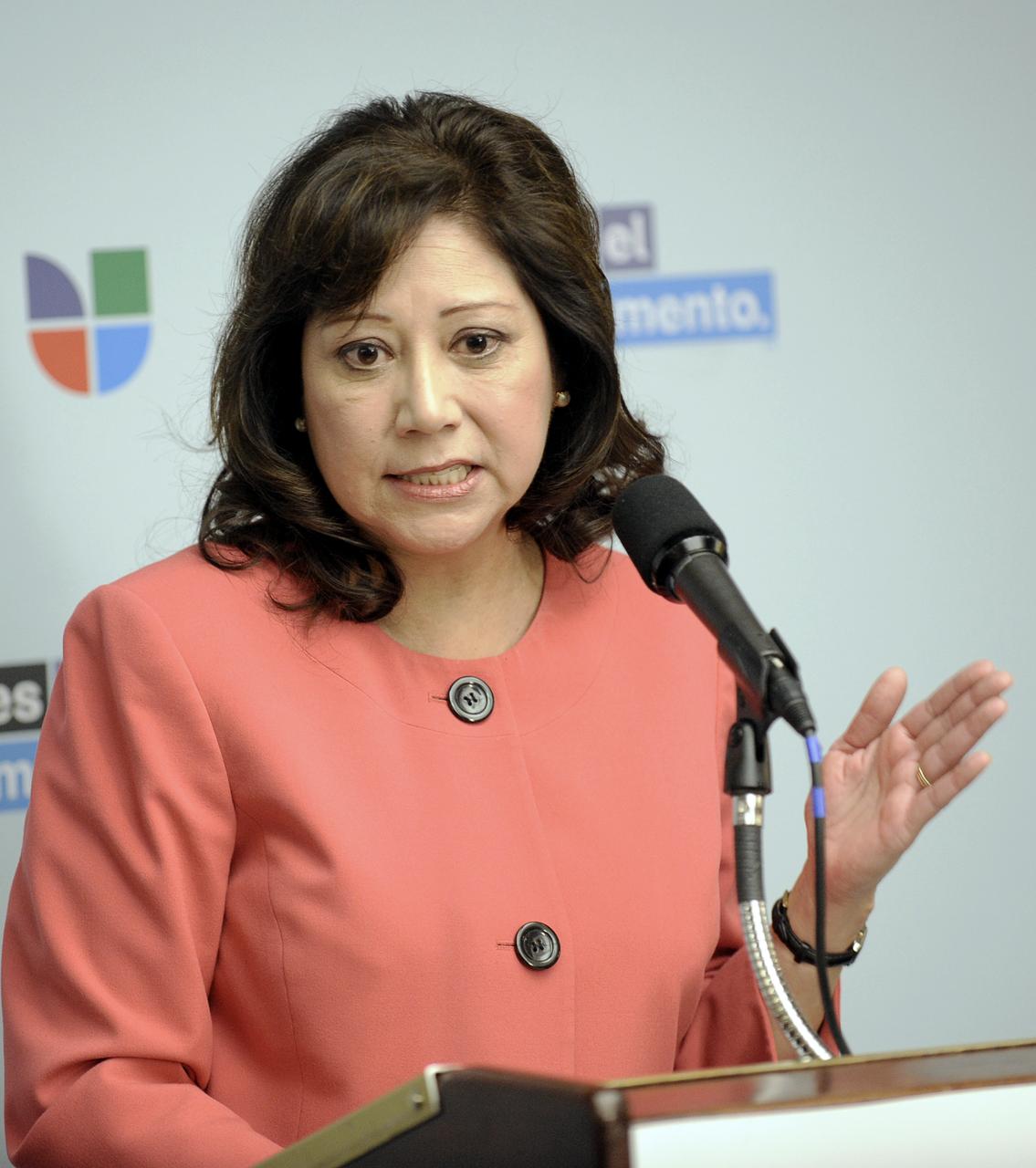
U.S. Secretary of Labor Hilda Solis speaks at an event at the National Press Club in Washington, Tuesday, Feb. 23, 2010. NASA is working with Univision Communications Inc. to develop a partnership in support of the Spanish-language media outlet's initiative to improve high school graduation rates, prepare Hispanic students for college, and encourage them to pursue careers in science, technology, engineering and mathematics, or STEM, disciplines. Photo Credit: (NASA/Bill Ingalls)
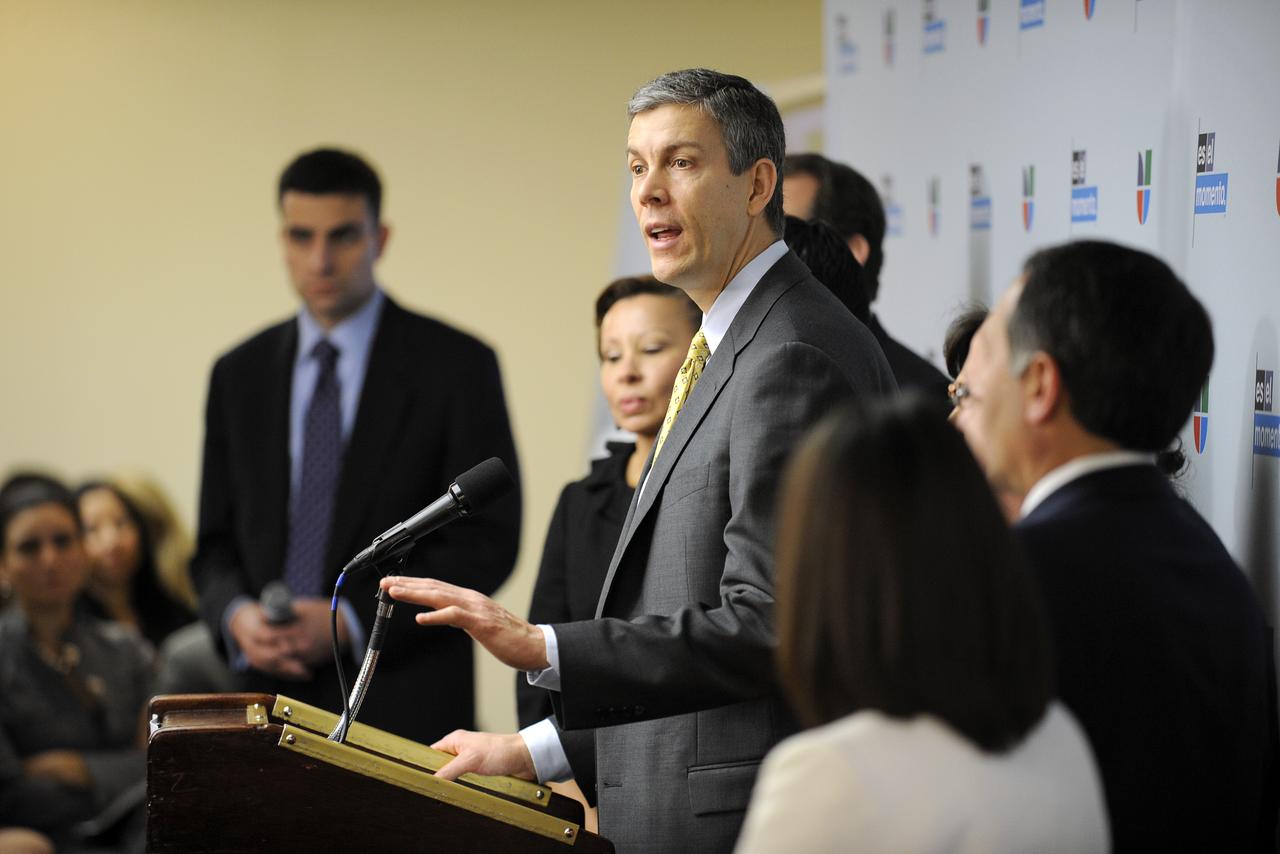
U.S. Secretary of Education Arne Duncan speaks during an event at the National Press Club in Washington, Tuesday, Feb. 23, 2010. NASA is working with Univision Communications Inc. to develop a partnership in support of the Spanish-language media outlet's initiative to improve high school graduation rates, prepare Hispanic students for college, and encourage them to pursue careers in science, technology, engineering and mathematics, or STEM, disciplines. Photo Credit: (NASA/Bill Ingalls)
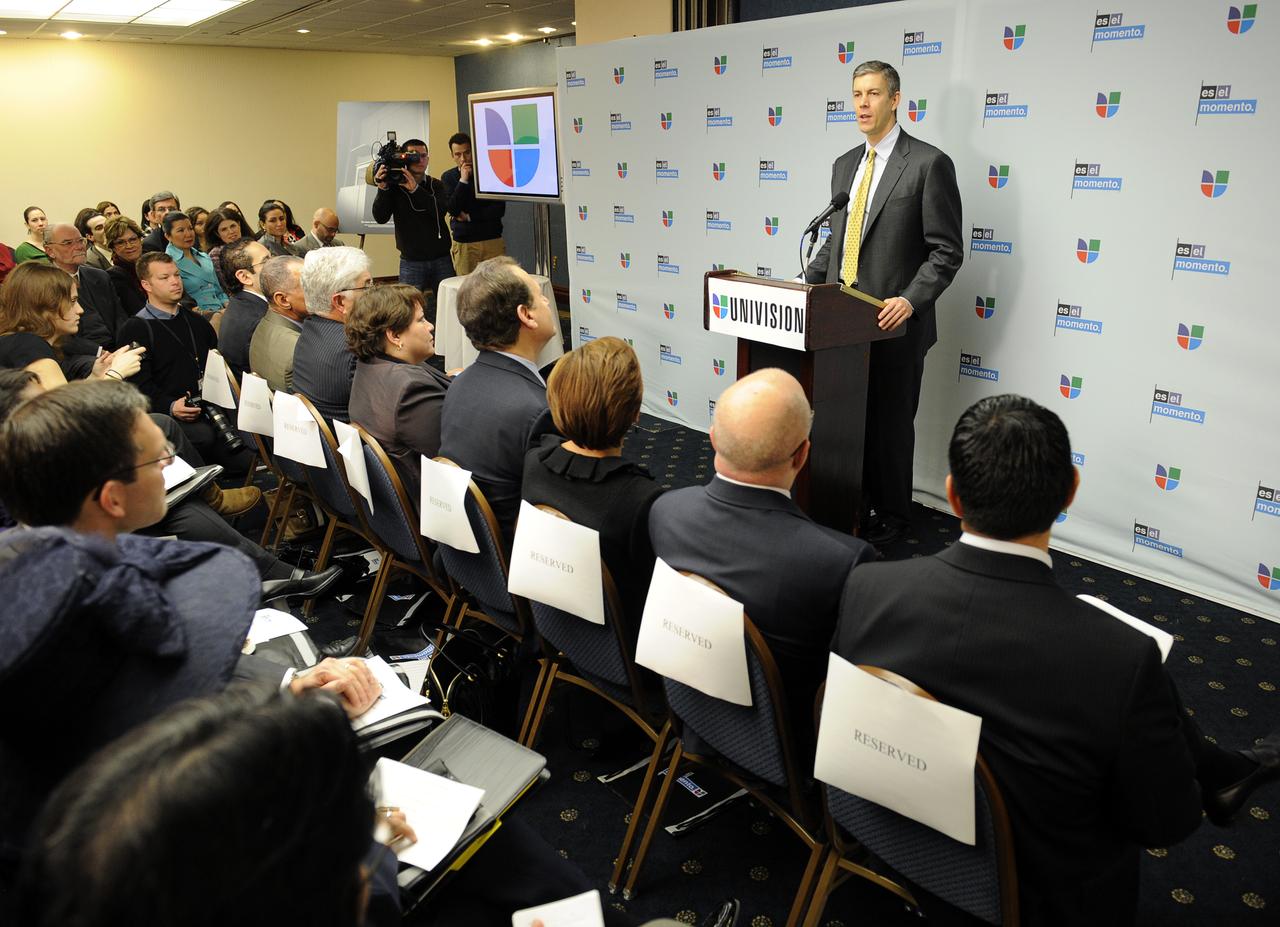
U.S. Secretary of Education Arne Duncan speaks at an event at the National Press Club in Washington, Tuesday, Feb. 23, 2010. NASA is working with Univision Communications Inc. to develop a partnership in support of the Spanish-language media outlet's initiative to improve high school graduation rates, prepare Hispanic students for college, and encourage them to pursue careers in science, technology, engineering and mathematics, or STEM, disciplines. Photo Credit: (NASA/Bill Ingalls)
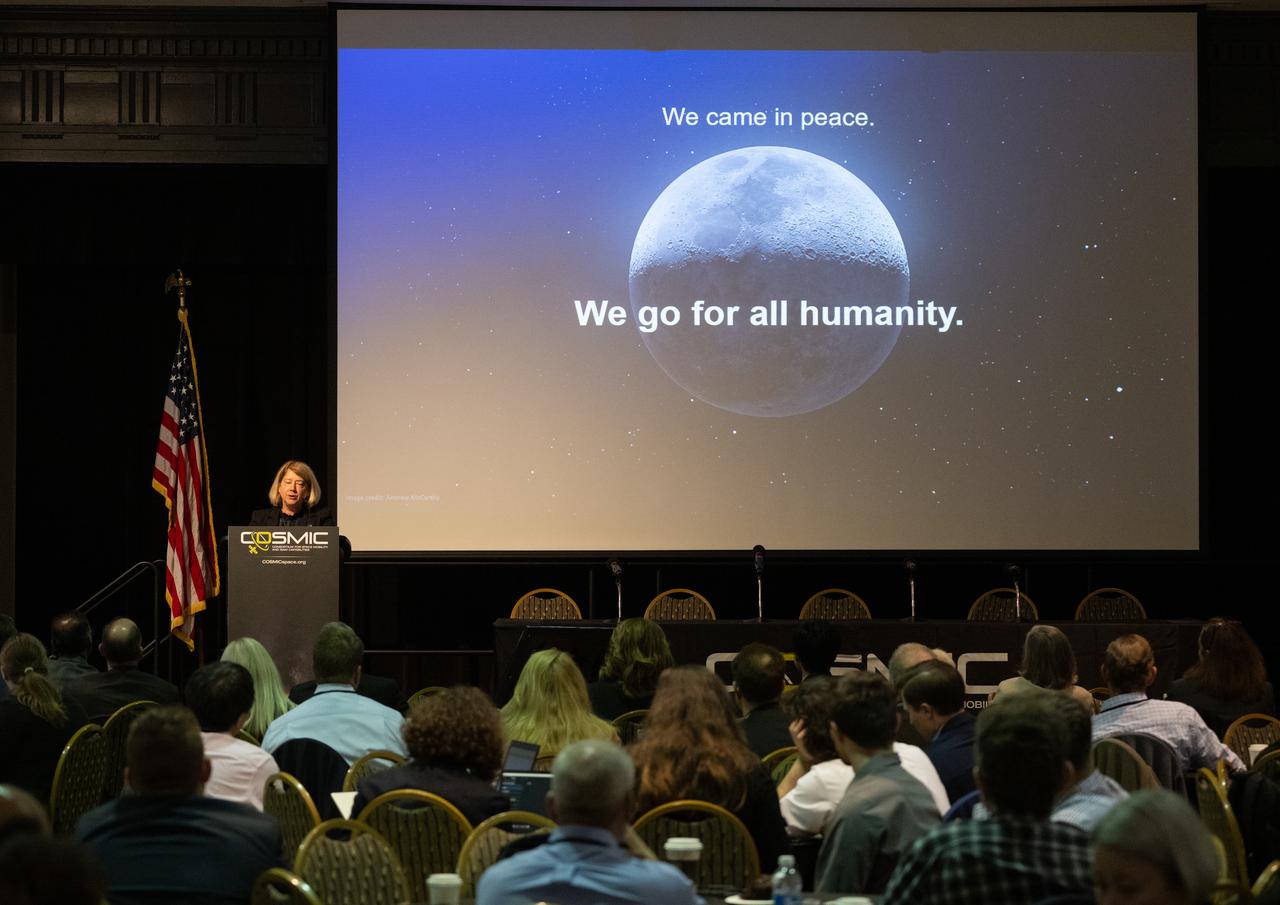
NASA Deputy Administrator Pam Melroy delivers keynote remarks at the Consortium for Space Mobility and ISAM Capabilities (COSMIC) workshop, Tuesday, Nov. 7, 2023, at the University of Maryland in College Park, Md. NASA’s Space Technology Mission Directorate formulated and funds COSMIC, aiming to create a nationwide aerospace community alliance that provides global leadership in space mobility and in-space servicing, assembly, and manufacturing (ISAM) for use in Earth orbit, lunar orbit, deep space, and on planetary surfaces. Photo Credit: (NASA/Joel Kowsky)
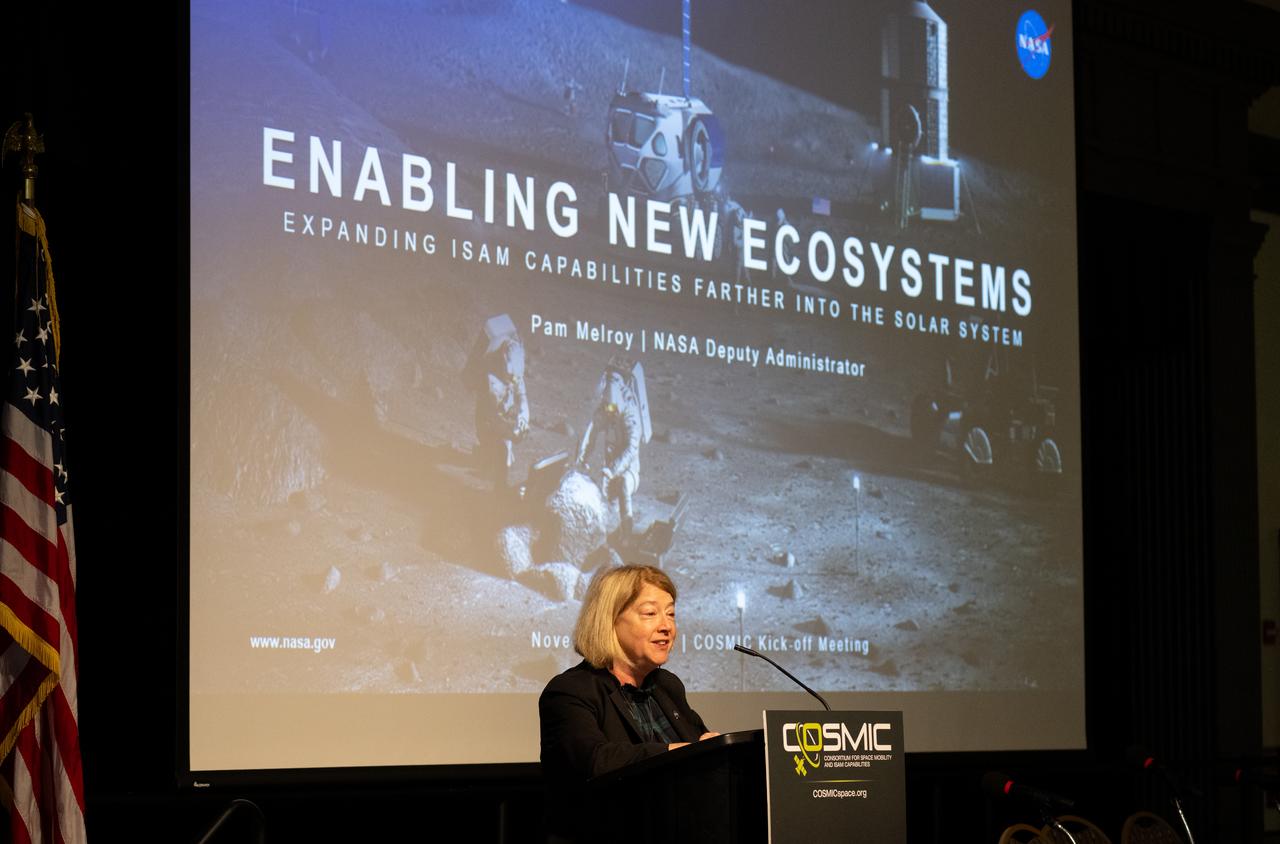
NASA Deputy Administrator Pam Melroy delivers keynote remarks at the Consortium for Space Mobility and ISAM Capabilities (COSMIC) workshop, Tuesday, Nov. 7, 2023, at the University of Maryland in College Park, Md. NASA’s Space Technology Mission Directorate formulated and funds COSMIC, aiming to create a nationwide aerospace community alliance that provides global leadership in space mobility and in-space servicing, assembly, and manufacturing (ISAM) for use in Earth orbit, lunar orbit, deep space, and on planetary surfaces. Photo Credit: (NASA/Joel Kowsky)
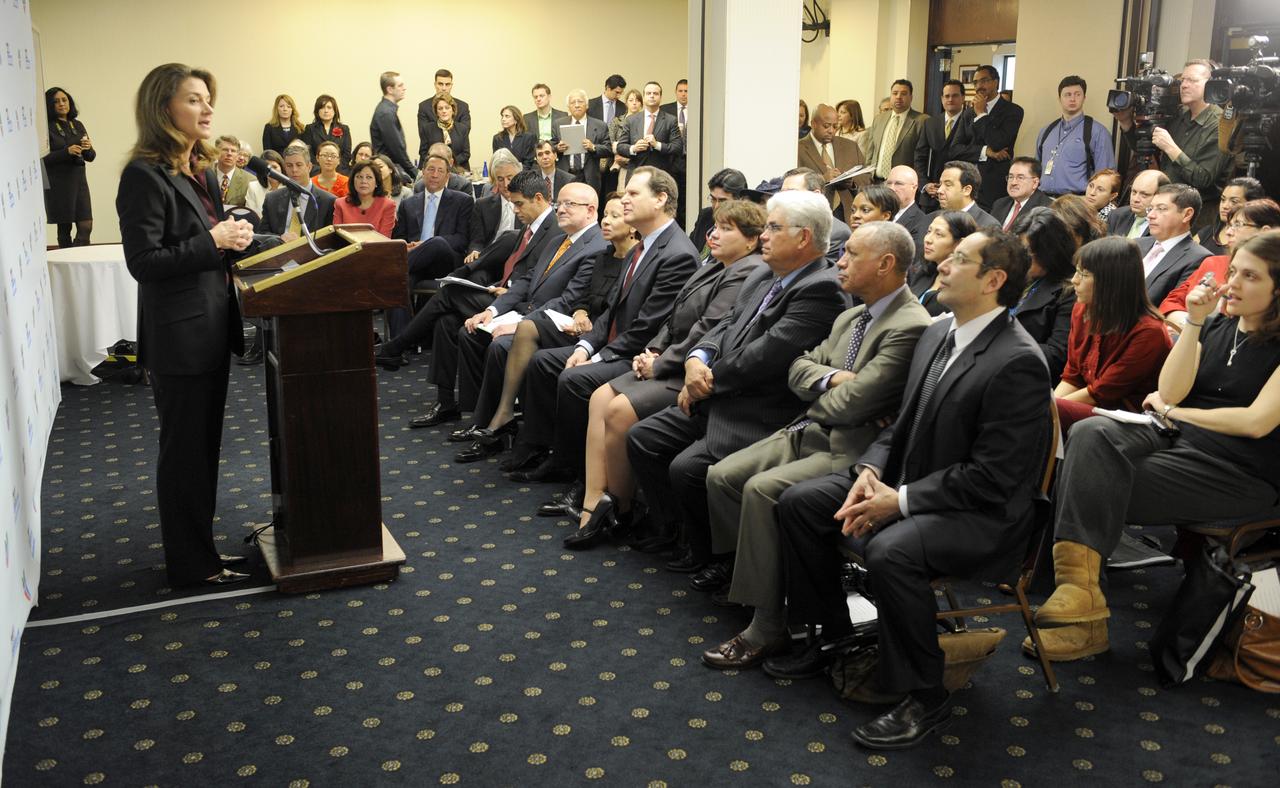
Melinda French Gates, of the Bill & Melinda Gates Foundation speaks at an event at the National Press Club in Washington, Tuesday, Feb. 23, 2010. NASA is working with Univision Communications Inc. to develop a partnership in support of the Spanish-language media outlet's initiative to improve high school graduation rates, prepare Hispanic students for college, and encourage them to pursue careers in science, technology, engineering and mathematics, or STEM, disciplines. Photo Credit: (NASA/Bill Ingalls)
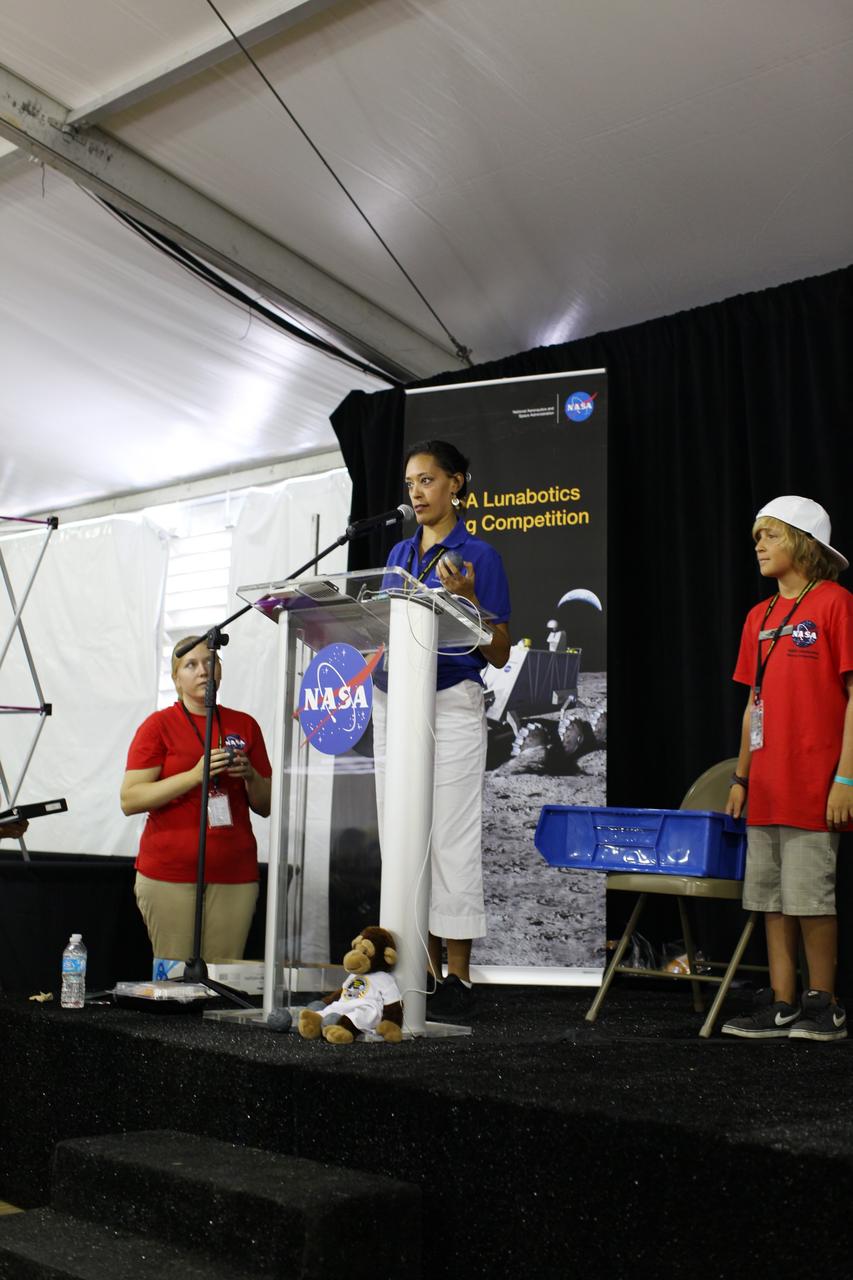
CAPE CANAVERAL, Fla. - At NASA’s Kennedy Space Center Visitor Complex in Florida, Lunabotics Emcee Kimberly Land welcomes U.S. and international college students to NASA’s Lunabotics Mining Competition. Land is the Education, Public Outreach and Communications manager for NASA’s Game Changing Development Program and Earth System Science Pathfinder Program. The mining competition is sponsored by NASA Kennedy Space Center’s Education Office for the agency’s Exploration Systems Mission Directorate. Undergraduate and graduate students from more than 50 universities and colleges in the U.S. and other countries use their remote-controlled Lunabots to maneuver and dig in a supersized sandbox filled with a crushed material that has characteristics similar to lunar soil. For more information, visit www.nasa.gov/lunabotics. Photo credit: NASA/Frankie Martin
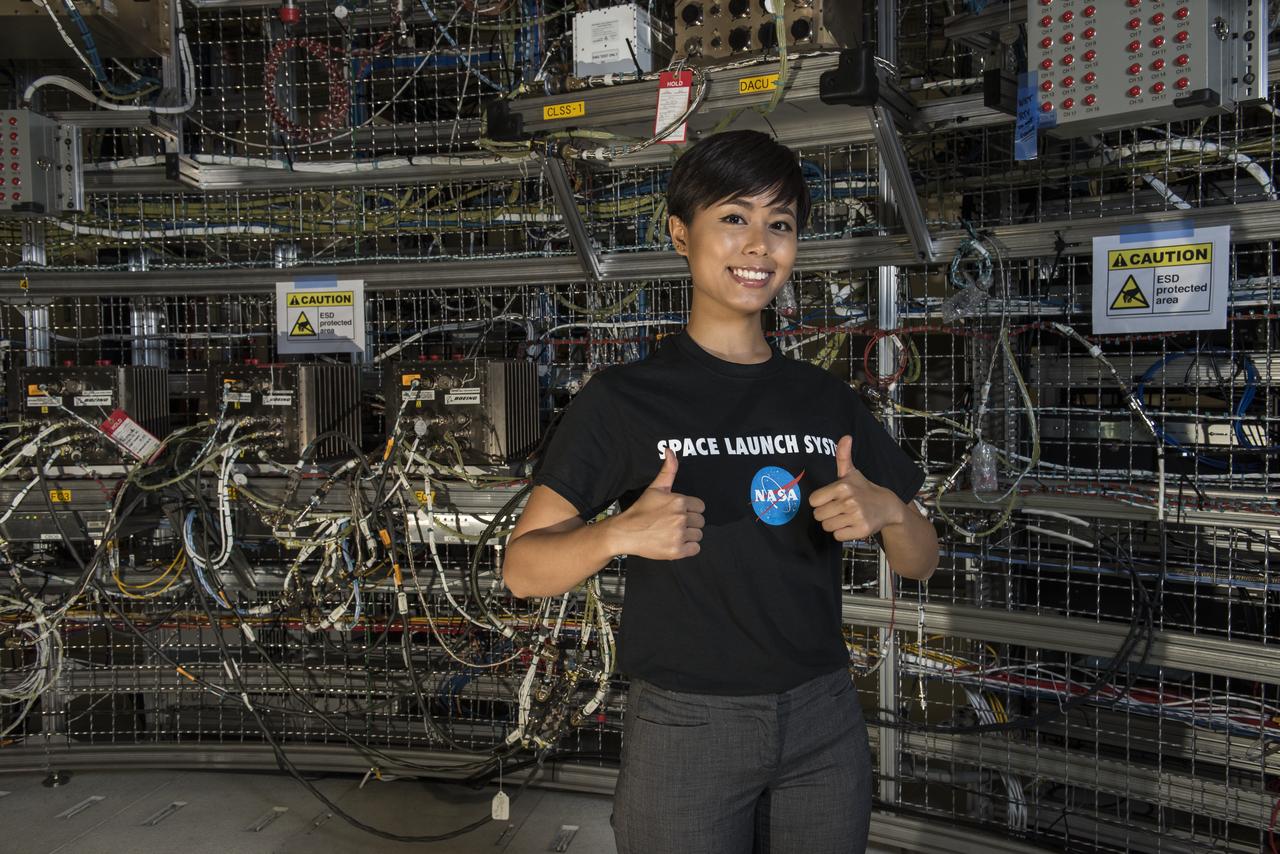
RATANA MEEKHAM, AN ELECTRICAL INTEGRATION TECHNICIAN FOR QUALIS CORP. OF HUNTSVILLE, ALABAMA, HELPS TEST AVIONICS -- COMPLEX VEHICLE SYSTEMS ENABLING NAVIGATION, COMMUNICATIONS AND OTHER FUNCTIONS CRITICAL TO HUMAN SPACEFLIGHT -- FOR THE SPACE LAUNCH SYSTEM PROGRAM AT NASA’S MARSHALL SPACE FLIGHT CENTER IN HUNTSVILLE, ALABAMA. HER WORK SUPPORTS THE NASA ENGINEERING & SCIENCE SERVICES AND SKILLS AUGMENTATION CONTRACT LED BY JACOBS ENGINEERING OF HUNTSVILLE. MEEKHAM WORKS FULL-TIME AT MARSHALL WHILE FINISHING HER ASSOCIATE'S DEGREE IN MACHINE TOOL TECHNOLOGY AT CALHOUN COMMUNITY COLLEGE IN DECATUR, ALABAMA. THE SPACE LAUNCH SYSTEM, NASA’S NEXT HEAVY-LIFT LAUNCH VEHICLE, IS THE WORLD’S MOST POWERFUL ROCKET, SET TO FLY ITS FIRST UNCREWED LUNAR ORBITAL MISSION IN 2018. ITS FIRST.
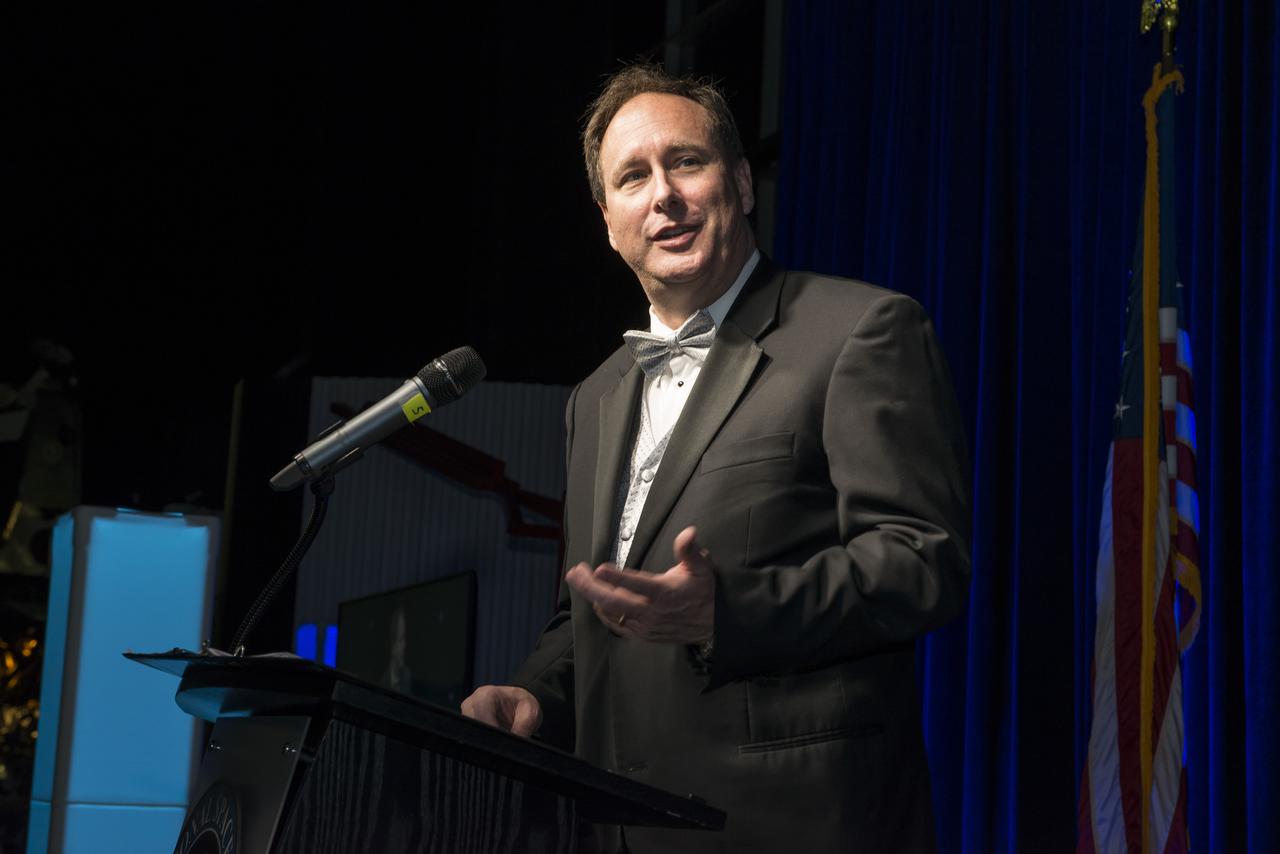
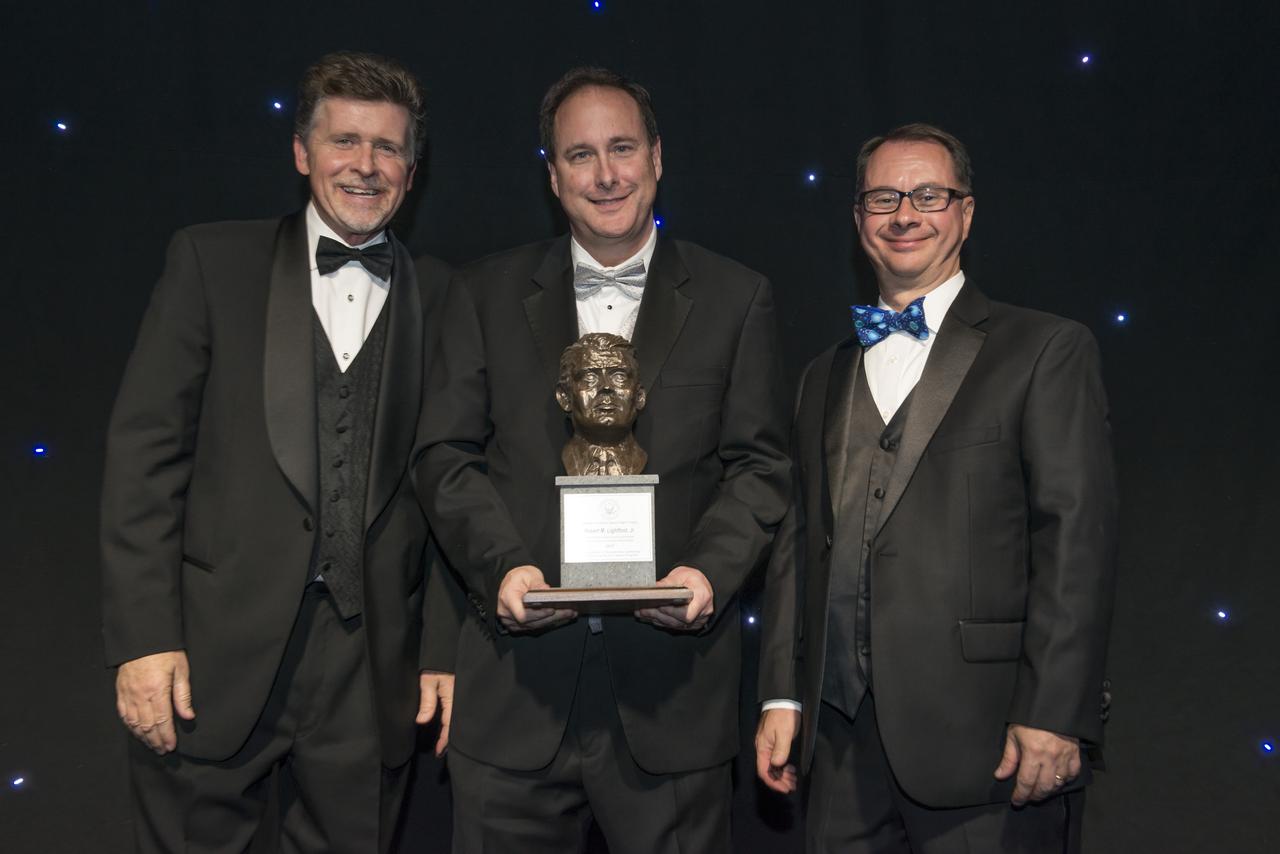
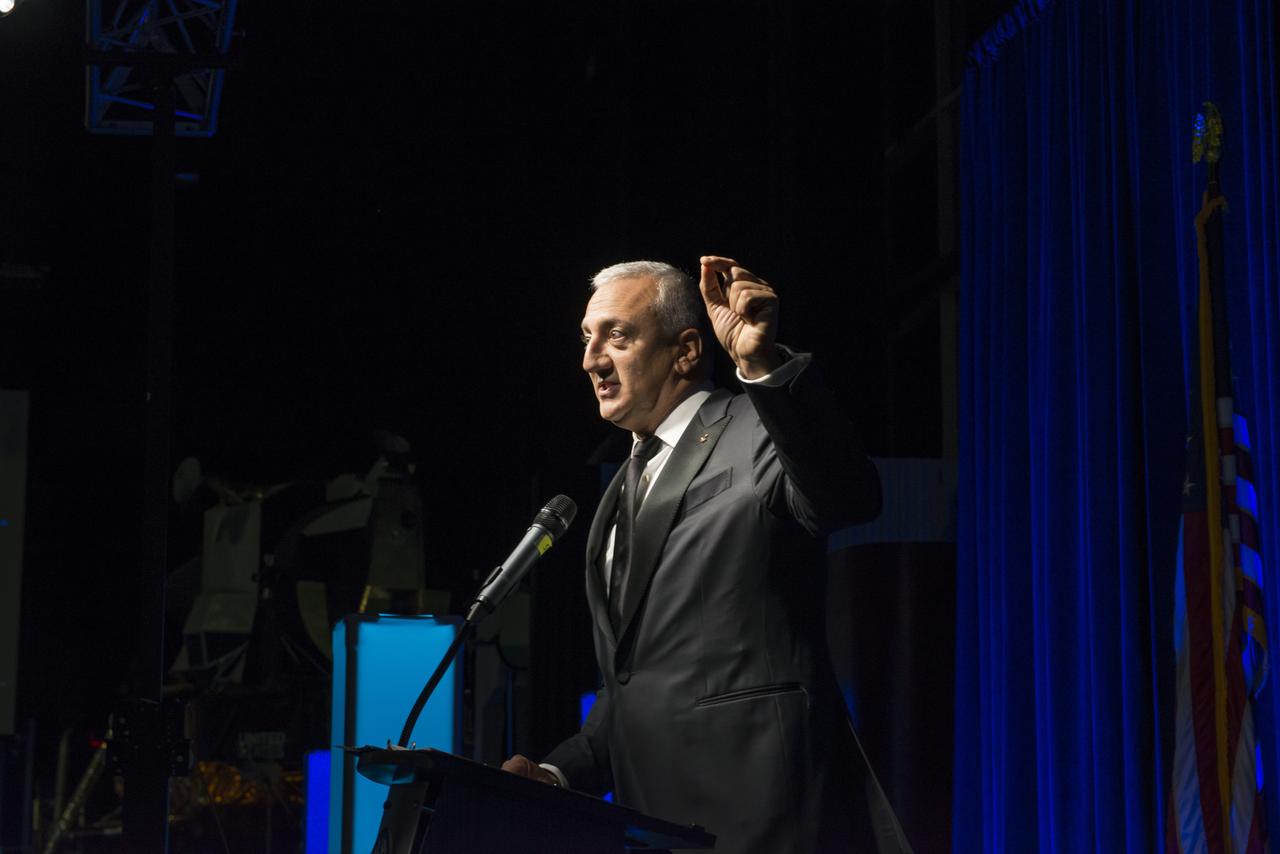
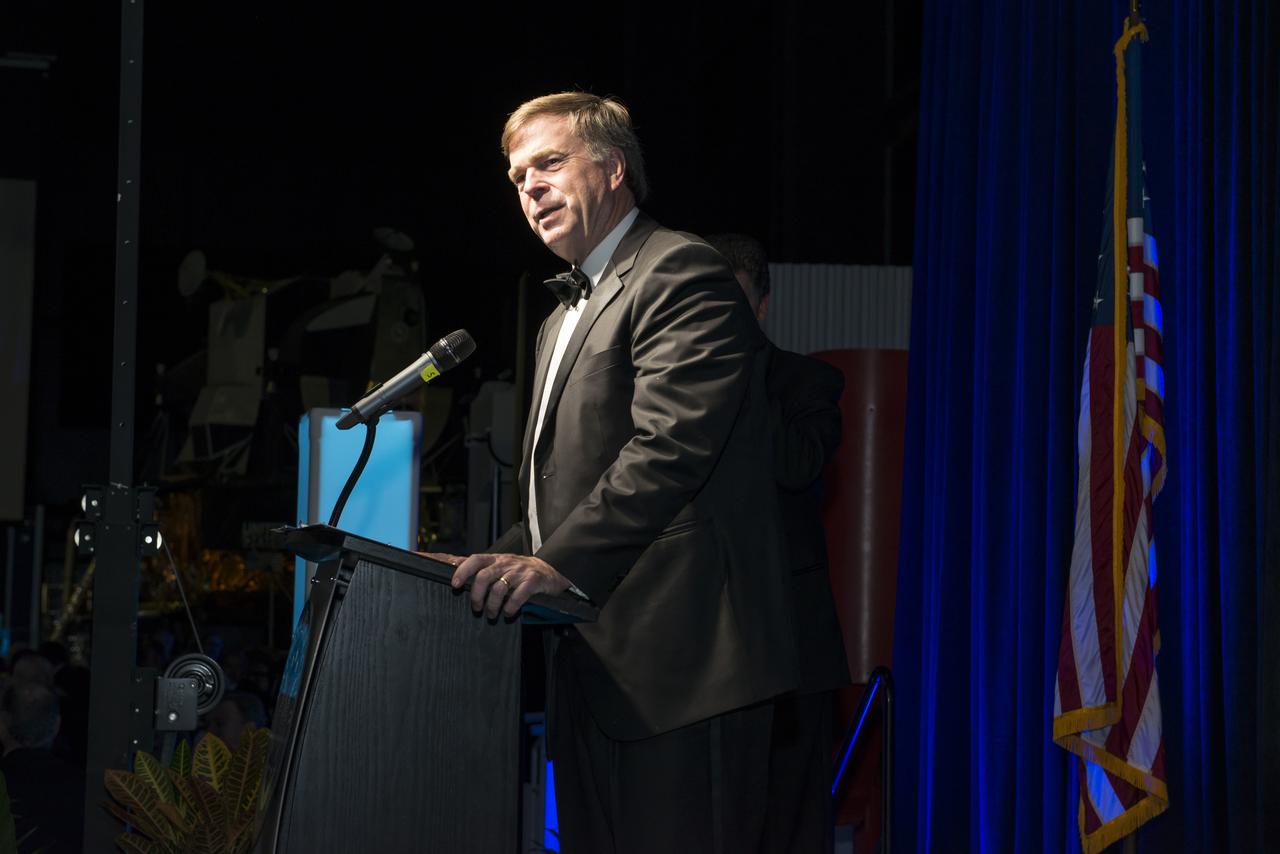
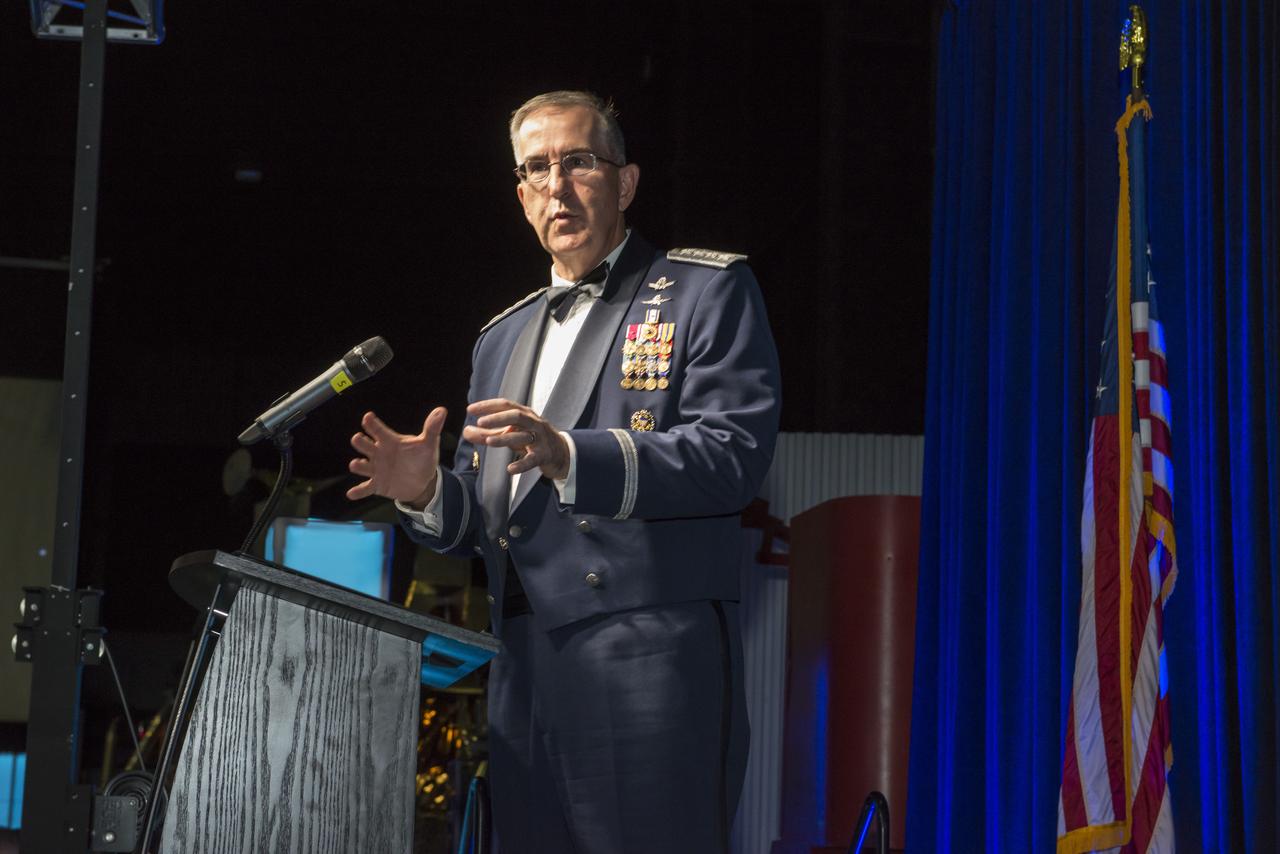
The annual Dr. Wernher Von Braun Memorial Dinner was held at the U.S. Space and Rocket Center's Davidson Center on October 26, 2017 with Keynote speaker General John Hyten, Commander of U.S. Strategic Command. Emcee was Mark Larson of Mark Larson Media Services, Inc. Dr. Wernher Von Braun Memorial Scholarships were presented to 8 college students by the National Space Club. Educator of the Year was awarded to Tammy Thorpe; Community Service award was presented to Huntsville, Al. Mayor Tommy Battle. The Communications Award was presented to retired astronaut Dr. Mike Massimino. The Distinguished Science Award was presented to Dr. Martin Weisskopf. The Astronautics Engineer Award was presented to Douglas R. Cooke. The Dr. Wernher Von Braun Space Flight Trophy was presented to Robert Lightfoot.
The annual Dr. Wernher Von Braun Memorial Dinner was held at the U.S. Space and Rocket Center's Davidson Center on October 26, 2017 with Keynote speaker General John Hyten, Commander of U.S. Strategic Command. Emcee was Mark Larson of Mark Larson Media Services, Inc. Dr. Wernher Von Braun Memorial Scholarships were presented to 8 college students by the National Space Club. Educator of the Year was awarded to Tammy Thorpe; Community Service award was presented to Huntsville, Al. Mayor Tommy Battle. The Communications Award was presented to retired astronaut Dr. Mike Massimino. The Distinguished Science Award was presented to Dr. Martin Weisskopf. The Astronautics Engineer Award was presented to Douglas R. Cooke. The Dr. Wernher Von Braun Space Flight Trophy was presented to Robert Lightfoot.
The annual Dr. Wernher Von Braun Memorial Dinner was held at the U.S. Space and Rocket Center's Davidson Center on October 26, 2017 with Keynote speaker General John Hyten, Commander of U.S. Strategic Command. Emcee was Mark Larson of Mark Larson Media Services, Inc. Dr. Wernher Von Braun Memorial Scholarships were presented to 8 college students by the National Space Club. Educator of the Year was awarded to Tammy Thorpe; Community Service award was presented to Huntsville, Al. Mayor Tommy Battle. The Communications Award was presented to retired astronaut Dr. Mike Massimino. The Distinguished Science Award was presented to Dr. Martin Weisskopf. The Astronautics Engineer Award was presented to Douglas R. Cooke. The Dr. Wernher Von Braun Space Flight Trophy was presented to Robert Lightfoot.
The annual Dr. Wernher Von Braun Memorial Dinner was held at the U.S. Space and Rocket Center's Davidson Center on October 26, 2017 with Keynote speaker General John Hyten, Commander of U.S. Strategic Command. Emcee was Mark Larson of Mark Larson Media Services, Inc. Dr. Wernher Von Braun Memorial Scholarships were presented to 8 college students by the National Space Club. Educator of the Year was awarded to Tammy Thorpe; Community Service award was presented to Huntsville, Al. Mayor Tommy Battle. The Communications Award was presented to retired astronaut Dr. Mike Massimino. The Distinguished Science Award was presented to Dr. Martin Weisskopf. The Astronautics Engineer Award was presented to Douglas R. Cooke. The Dr. Wernher Von Braun Space Flight Trophy was presented to Robert Lightfoot.
The annual Dr. Wernher Von Braun Memorial Dinner was held at the U.S. Space and Rocket Center's Davidson Center on October 26, 2017 with Keynote speaker General John Hyten, Commander of U.S. Strategic Command. Emcee was Mark Larson of Mark Larson Media Services, Inc. Dr. Wernher Von Braun Memorial Scholarships were presented to 8 college students by the National Space Club. Educator of the Year was awarded to Tammy Thorpe; Community Service award was presented to Huntsville, Al. Mayor Tommy Battle. The Communications Award was presented to retired astronaut Dr. Mike Massimino. The Distinguished Science Award was presented to Dr. Martin Weisskopf. The Astronautics Engineer Award was presented to Douglas R. Cooke. The Dr. Wernher Von Braun Space Flight Trophy was presented to Robert Lightfoot.
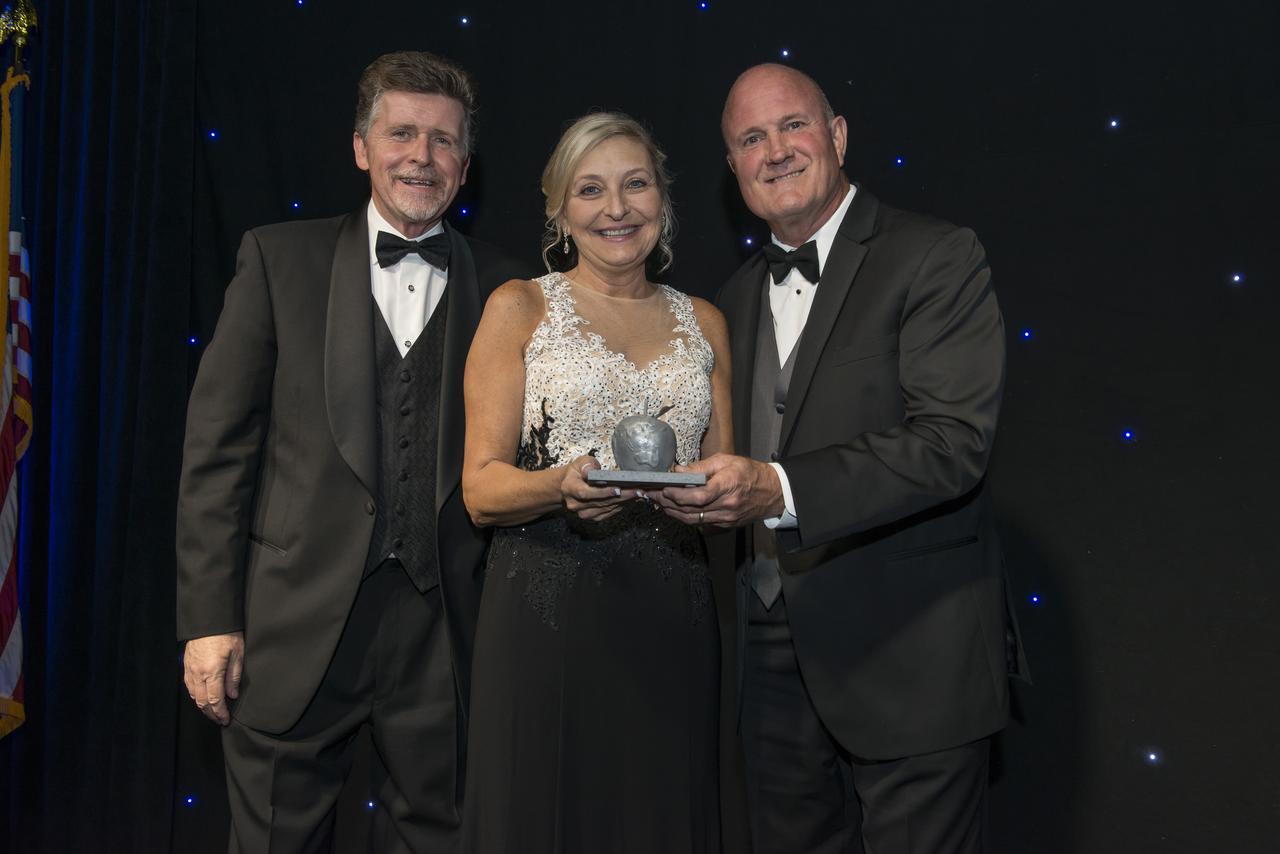
The annual Dr. Wernher Von Braun Memorial Dinner was held at the U.S. Space and Rocket Center's Davidson Center on October 26, 2017 with Keynote speaker General John Hyten, Commander of U.S. Strategic Command. Emcee was Mark Larson of Mark Larson Media Services, Inc. Dr. Wernher Von Braun Memorial Scholarships were presented to 8 college students by the National Space Club. Educator of the Year was awarded to Tammy Thorpe; Community Service award was presented to Huntsville, Al. Mayor Tommy Battle. The Communications Award was presented to retired astronaut Dr. Mike Massimino. The Distinguished Science Award was presented to Dr. Martin Weisskopf. The Astronautics Engineer Award was presented to Douglas R. Cooke. The Dr. Wernher Von Braun Space Flight Trophy was presented to Robert Lightfoot.
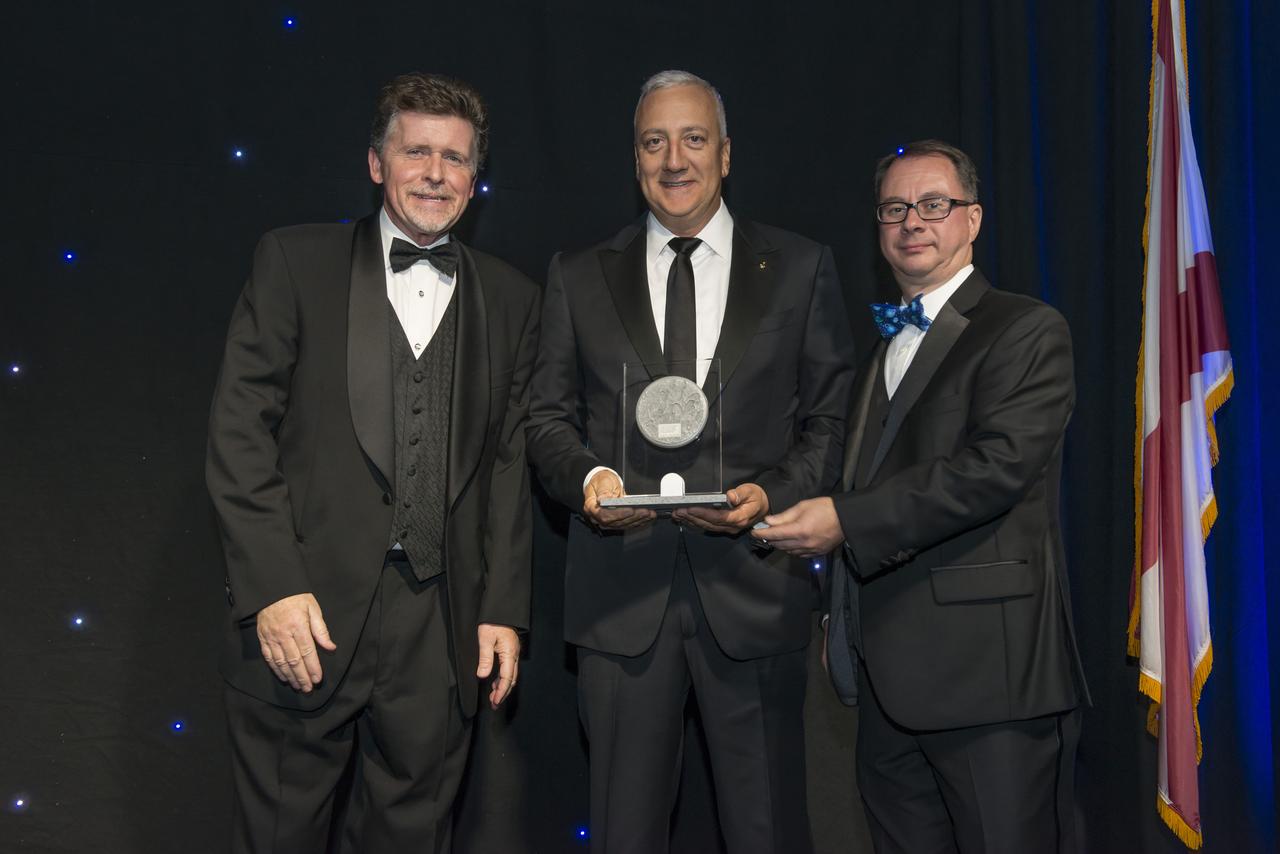
The annual Dr. Wernher Von Braun Memorial Dinner was held at the U.S. Space and Rocket Center's Davidson Center on October 26, 2017 with Keynote speaker General John Hyten, Commander of U.S. Strategic Command. Emcee was Mark Larson of Mark Larson Media Services, Inc. Dr. Wernher Von Braun Memorial Scholarships were presented to 8 college students by the National Space Club. Educator of the Year was awarded to Tammy Thorpe; Community Service award was presented to Huntsville, Al. Mayor Tommy Battle. The Communications Award was presented to retired astronaut Dr. Mike Massimino. The Distinguished Science Award was presented to Dr. Martin Weisskopf. The Astronautics Engineer Award was presented to Douglas R. Cooke. The Dr. Wernher Von Braun Space Flight Trophy was presented to Robert Lightfoot.
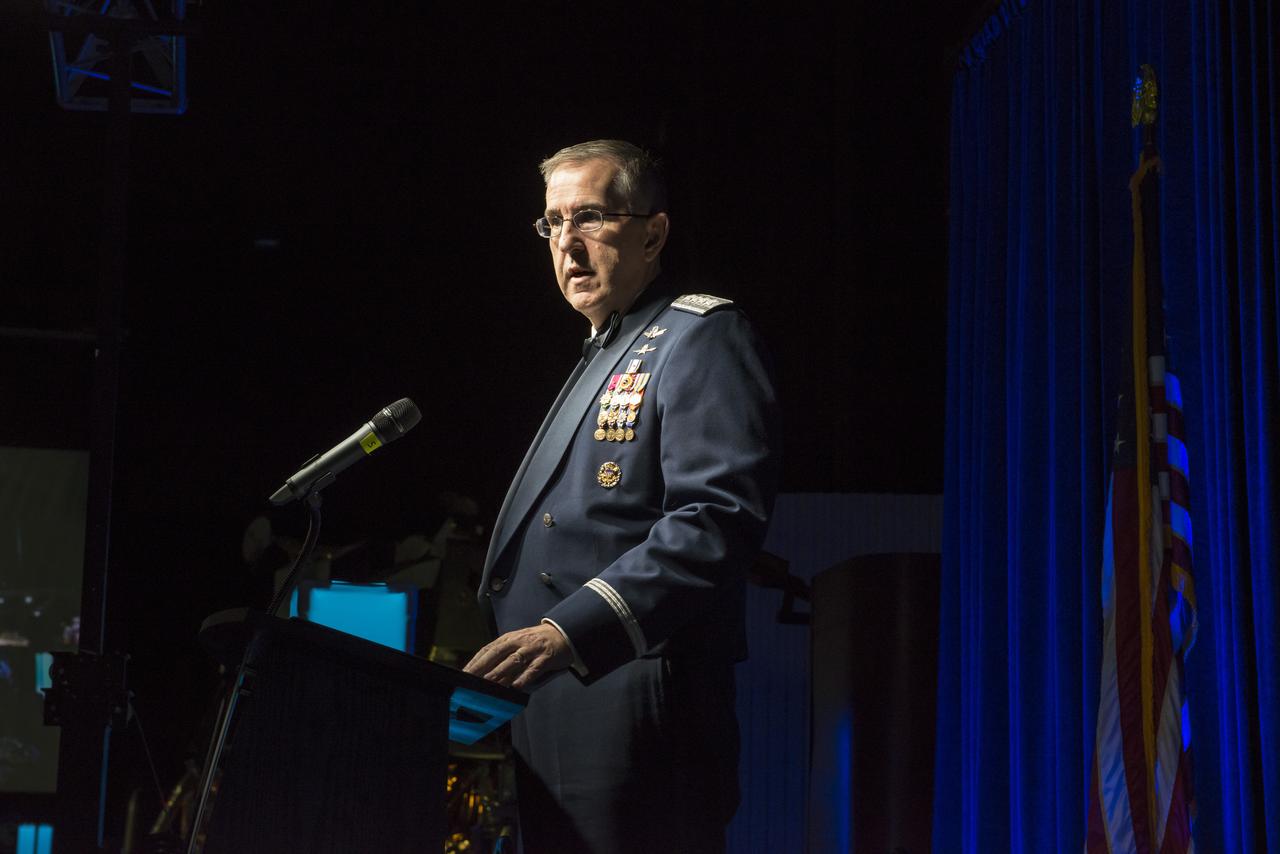
The annual Dr. Wernher Von Braun Memorial Dinner was held at the U.S. Space and Rocket Center's Davidson Center on October 26, 2017 with Keynote speaker General John Hyten, Commander of U.S. Strategic Command. Emcee was Mark Larson of Mark Larson Media Services, Inc. Dr. Wernher Von Braun Memorial Scholarships were presented to 8 college students by the National Space Club. Educator of the Year was awarded to Tammy Thorpe; Community Service award was presented to Huntsville, Al. Mayor Tommy Battle. The Communications Award was presented to retired astronaut Dr. Mike Massimino. The Distinguished Science Award was presented to Dr. Martin Weisskopf. The Astronautics Engineer Award was presented to Douglas R. Cooke. The Dr. Wernher Von Braun Space Flight Trophy was presented to Robert Lightfoot.
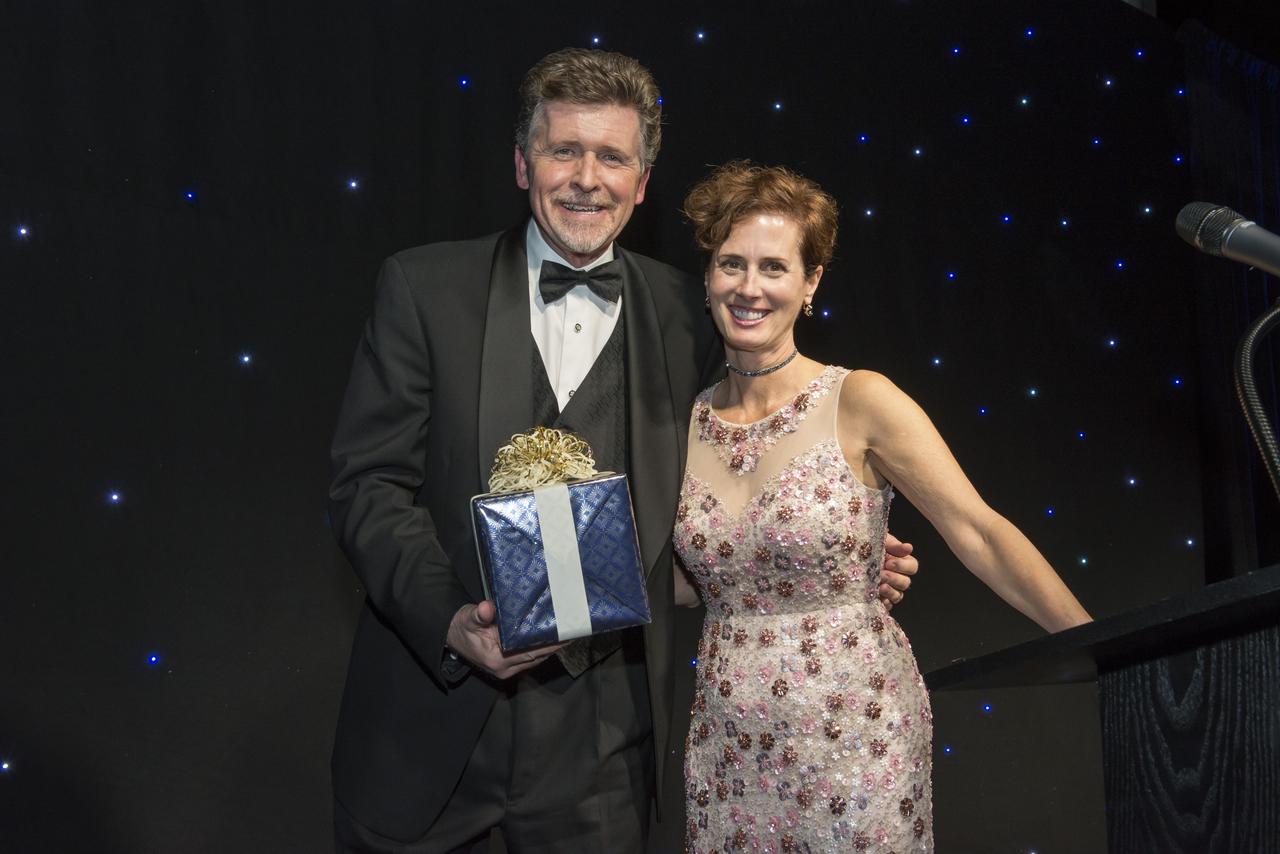
The annual Dr. Wernher Von Braun Memorial Dinner was held at the U.S. Space and Rocket Center's Davidson Center on October 26, 2017 with Keynote speaker General John Hyten, Commander of U.S. Strategic Command. Emcee was Mark Larson of Mark Larson Media Services, Inc. Dr. Wernher Von Braun Memorial Scholarships were presented to 8 college students by the National Space Club. Educator of the Year was awarded to Tammy Thorpe; Community Service award was presented to Huntsville, Al. Mayor Tommy Battle. The Communications Award was presented to retired astronaut Dr. Mike Massimino. The Distinguished Science Award was presented to Dr. Martin Weisskopf. The Astronautics Engineer Award was presented to Douglas R. Cooke. The Dr. Wernher Von Braun Space Flight Trophy was presented to Robert Lightfoot.

The annual Dr. Wernher Von Braun Memorial Dinner was held at the U.S. Space and Rocket Center's Davidson Center on October 26, 2017 with Keynote speaker General John Hyten, Commander of U.S. Strategic Command. Emcee was Mark Larson of Mark Larson Media Services, Inc. Dr. Wernher Von Braun Memorial Scholarships were presented to 8 college students by the National Space Club. Educator of the Year was awarded to Tammy Thorpe; Community Service award was presented to Huntsville, Al. Mayor Tommy Battle. The Communications Award was presented to retired astronaut Dr. Mike Massimino. The Distinguished Science Award was presented to Dr. Martin Weisskopf. The Astronautics Engineer Award was presented to Douglas R. Cooke. The Dr. Wernher Von Braun Space Flight Trophy was presented to Robert Lightfoot.
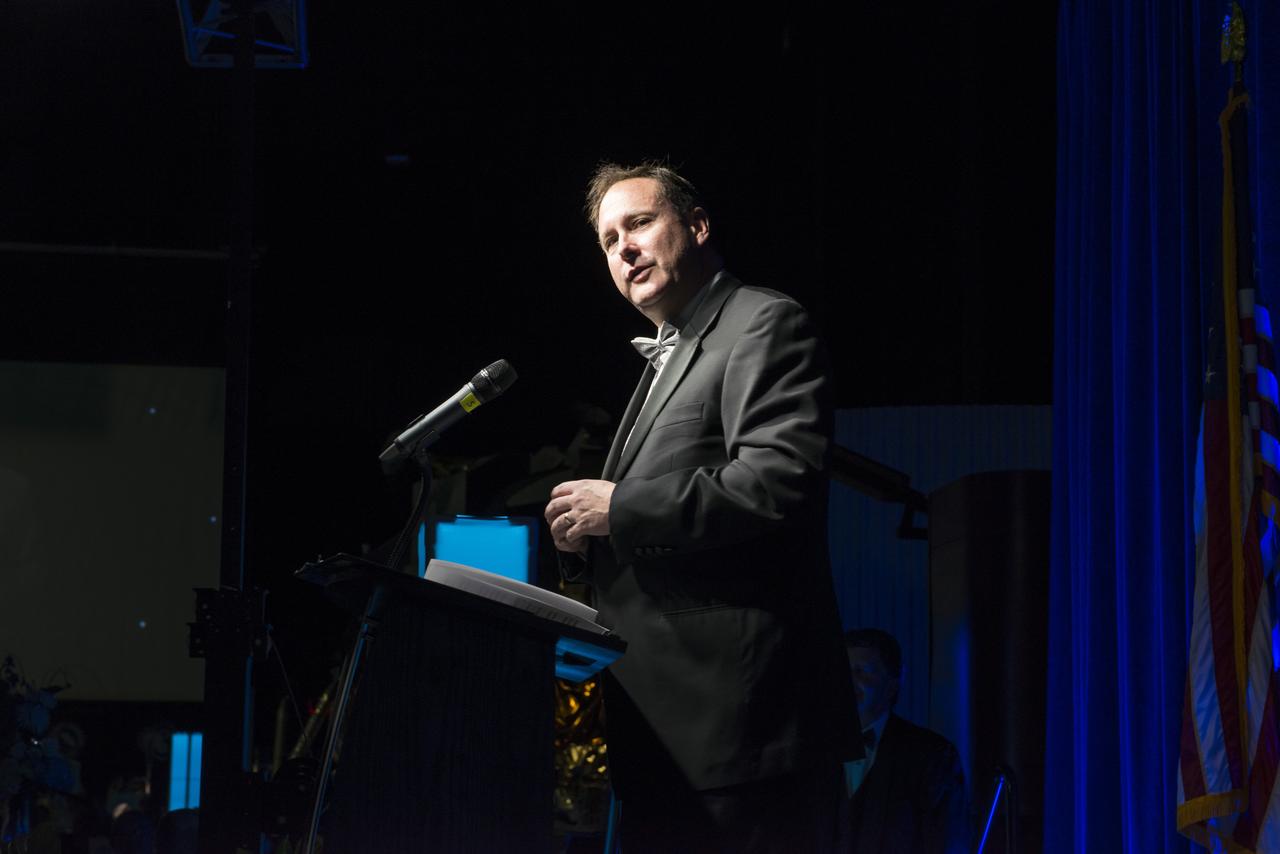
The annual Dr. Wernher Von Braun Memorial Dinner was held at the U.S. Space and Rocket Center's Davidson Center on October 26, 2017 with Keynote speaker General John Hyten, Commander of U.S. Strategic Command. Emcee was Mark Larson of Mark Larson Media Services, Inc. Dr. Wernher Von Braun Memorial Scholarships were presented to 8 college students by the National Space Club. Educator of the Year was awarded to Tammy Thorpe; Community Service award was presented to Huntsville, Al. Mayor Tommy Battle. The Communications Award was presented to retired astronaut Dr. Mike Massimino. The Distinguished Science Award was presented to Dr. Martin Weisskopf. The Astronautics Engineer Award was presented to Douglas R. Cooke. The Dr. Wernher Von Braun Space Flight Trophy was presented to Robert Lightfoot.
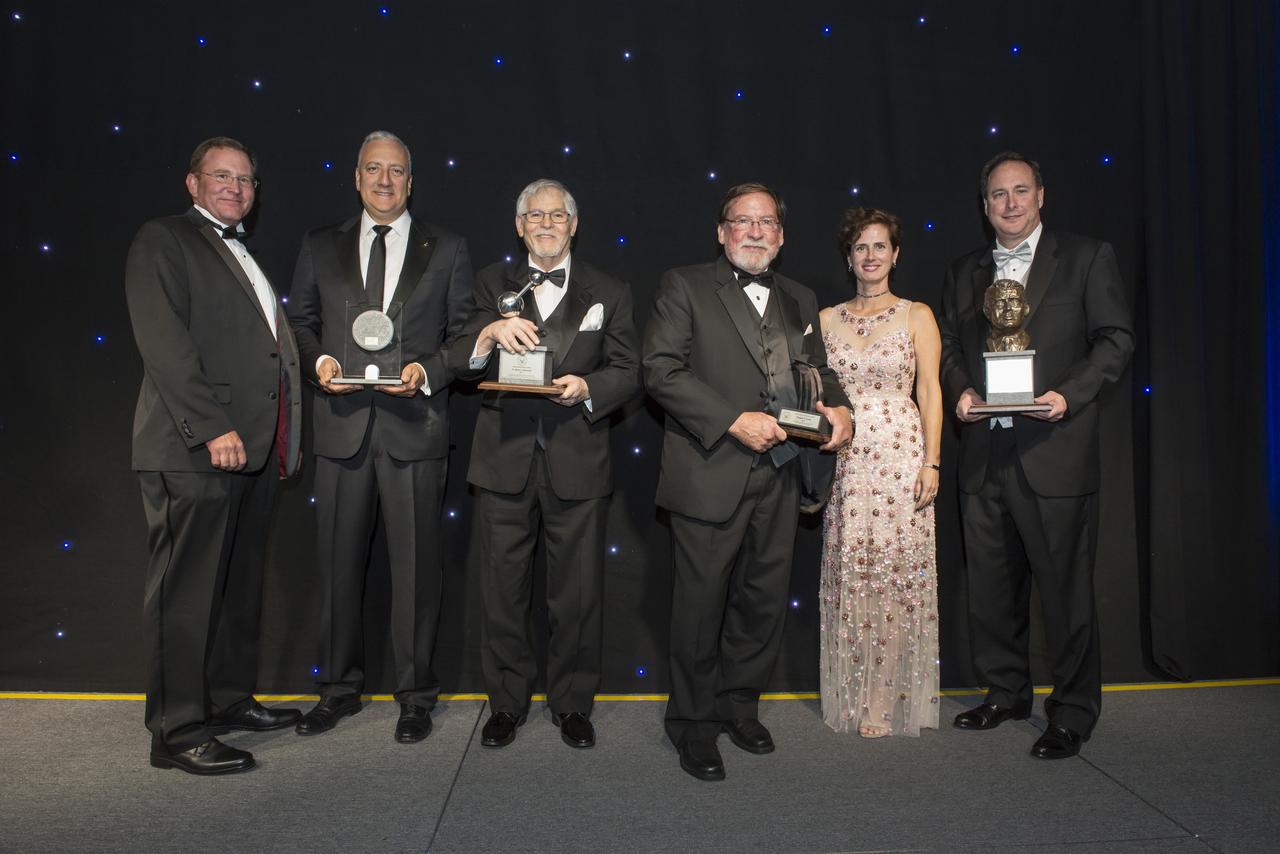
The annual Dr. Wernher Von Braun Memorial Dinner was held at the U.S. Space and Rocket Center's Davidson Center on October 26, 2017 with Keynote speaker General John Hyten, Commander of U.S. Strategic Command. Emcee was Mark Larson of Mark Larson Media Services, Inc. Dr. Wernher Von Braun Memorial Scholarships were presented to 8 college students by the National Space Club. Educator of the Year was awarded to Tammy Thorpe; Community Service award was presented to Huntsville, Al. Mayor Tommy Battle. The Communications Award was presented to retired astronaut Dr. Mike Massimino. The Distinguished Science Award was presented to Dr. Martin Weisskopf. The Astronautics Engineer Award was presented to Douglas R. Cooke. The Dr. Wernher Von Braun Space Flight Trophy was presented to Robert Lightfoot.
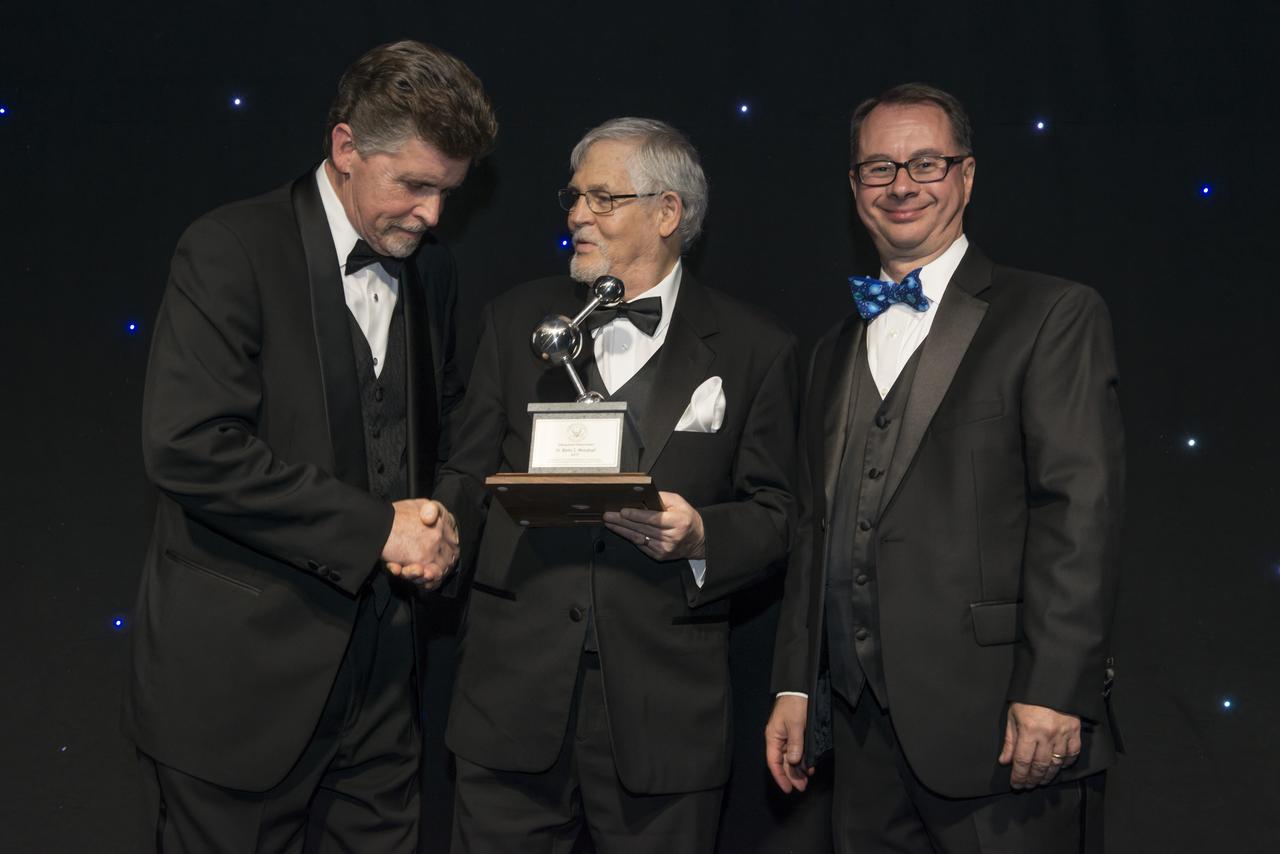
The annual Dr. Wernher Von Braun Memorial Dinner was held at the U.S. Space and Rocket Center's Davidson Center on October 26, 2017 with Keynote speaker General John Hyten, Commander of U.S. Strategic Command. Emcee was Mark Larson of Mark Larson Media Services, Inc. Dr. Wernher Von Braun Memorial Scholarships were presented to 8 college students by the National Space Club. Educator of the Year was awarded to Tammy Thorpe; Community Service award was presented to Huntsville, Al. Mayor Tommy Battle. The Communications Award was presented to retired astronaut Dr. Mike Massimino. The Distinguished Science Award was presented to Dr. Martin Weisskopf. The Astronautics Engineer Award was presented to Douglas R. Cooke. The Dr. Wernher Von Braun Space Flight Trophy was presented to Robert Lightfoot.
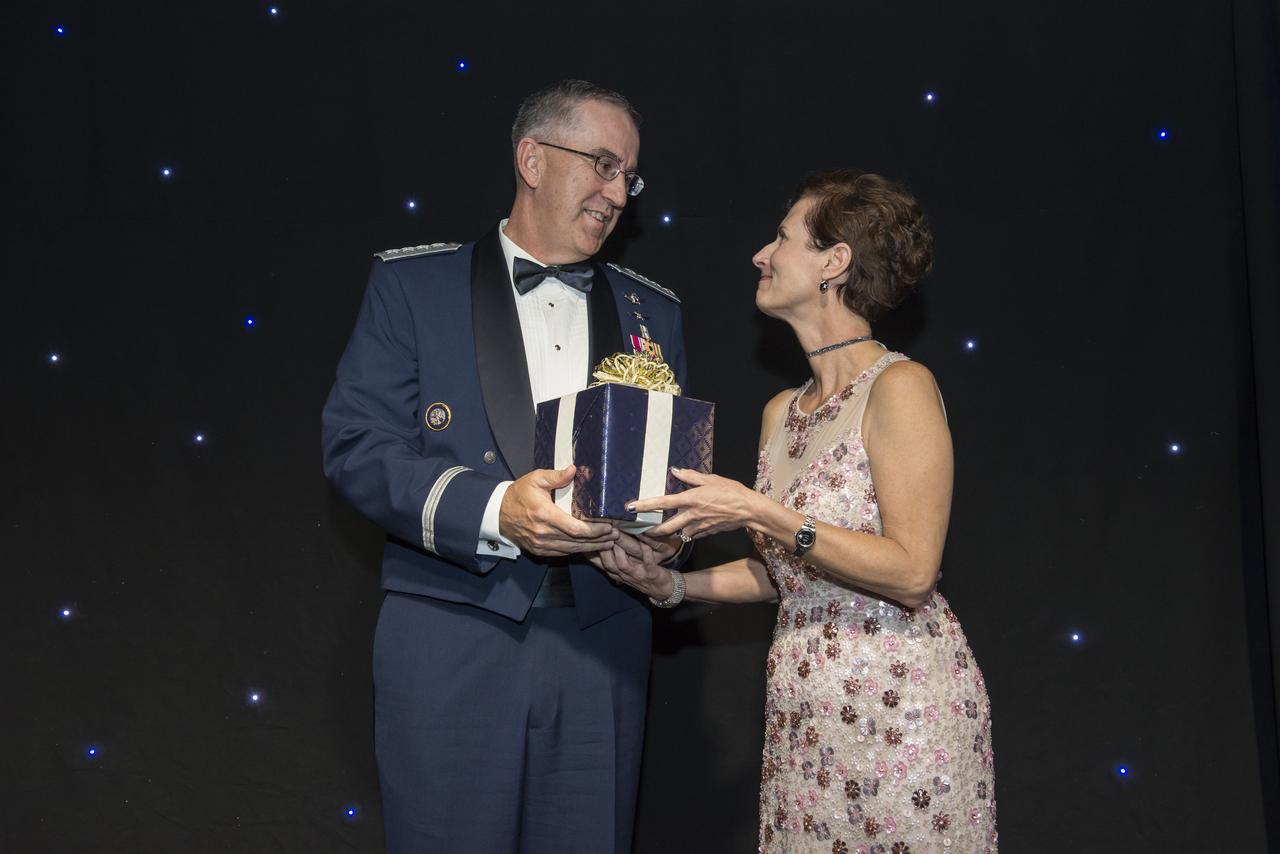
The annual Dr. Wernher Von Braun Memorial Dinner was held at the U.S. Space and Rocket Center's Davidson Center on October 26, 2017 with Keynote speaker General John Hyten, Commander of U.S. Strategic Command. Emcee was Mark Larson of Mark Larson Media Services, Inc. Dr. Wernher Von Braun Memorial Scholarships were presented to 8 college students by the National Space Club. Educator of the Year was awarded to Tammy Thorpe; Community Service award was presented to Huntsville, Al. Mayor Tommy Battle. The Communications Award was presented to retired astronaut Dr. Mike Massimino. The Distinguished Science Award was presented to Dr. Martin Weisskopf. The Astronautics Engineer Award was presented to Douglas R. Cooke. The Dr. Wernher Von Braun Space Flight Trophy was presented to Robert Lightfoot.
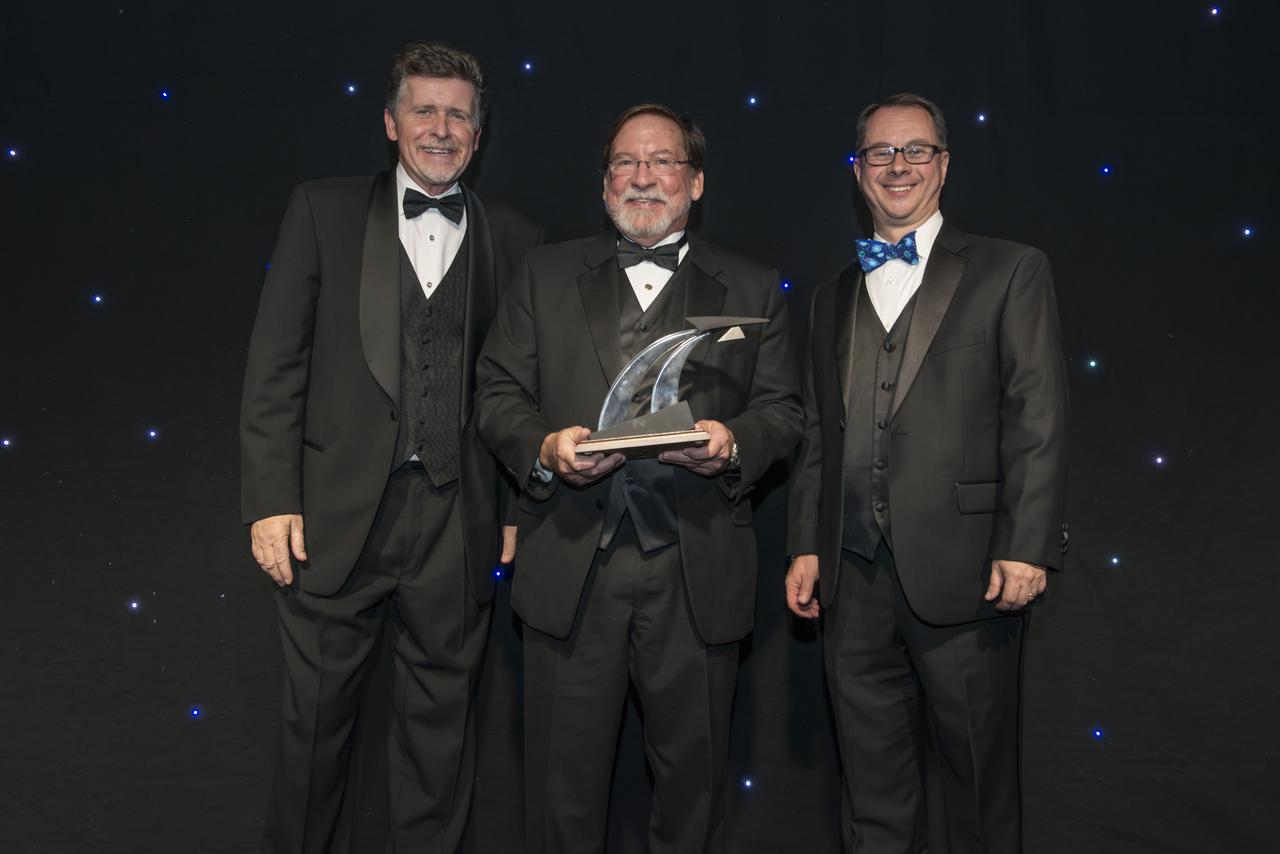
The annual Dr. Wernher Von Braun Memorial Dinner was held at the U.S. Space and Rocket Center's Davidson Center on October 26, 2017 with Keynote speaker General John Hyten, Commander of U.S. Strategic Command. Emcee was Mark Larson of Mark Larson Media Services, Inc. Dr. Wernher Von Braun Memorial Scholarships were presented to 8 college students by the National Space Club. Educator of the Year was awarded to Tammy Thorpe; Community Service award was presented to Huntsville, Al. Mayor Tommy Battle. The Communications Award was presented to retired astronaut Dr. Mike Massimino. The Distinguished Science Award was presented to Dr. Martin Weisskopf. The Astronautics Engineer Award was presented to Douglas R. Cooke. The Dr. Wernher Von Braun Space Flight Trophy was presented to Robert Lightfoot.
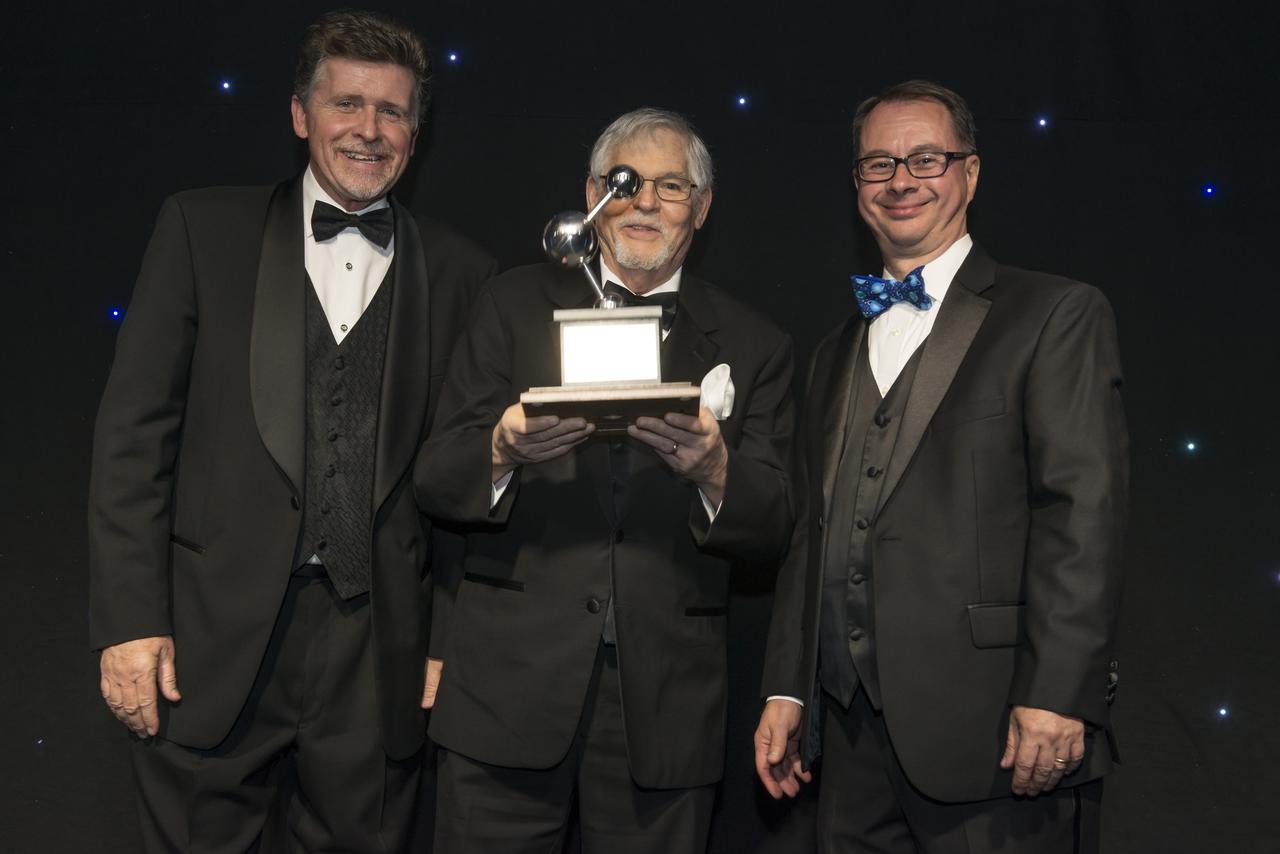
The annual Dr. Wernher Von Braun Memorial Dinner was held at the U.S. Space and Rocket Center's Davidson Center on October 26, 2017 with Keynote speaker General John Hyten, Commander of U.S. Strategic Command. Emcee was Mark Larson of Mark Larson Media Services, Inc. Dr. Wernher Von Braun Memorial Scholarships were presented to 8 college students by the National Space Club. Educator of the Year was awarded to Tammy Thorpe; Community Service award was presented to Huntsville, Al. Mayor Tommy Battle. The Communications Award was presented to retired astronaut Dr. Mike Massimino. The Distinguished Science Award was presented to Dr. Martin Weisskopf. The Astronautics Engineer Award was presented to Douglas R. Cooke. The Dr. Wernher Von Braun Space Flight Trophy was presented to Robert Lightfoot.
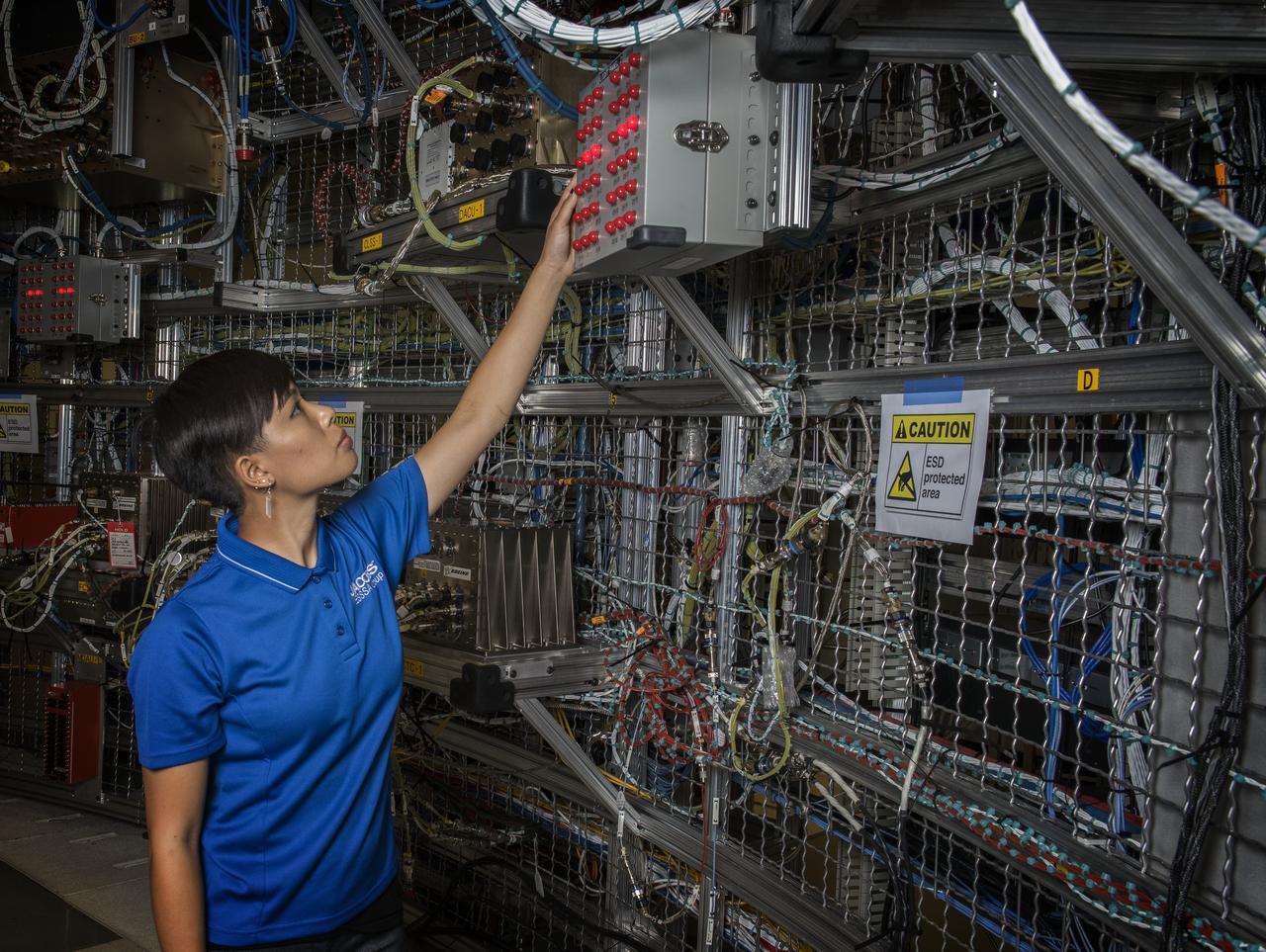
RATANA MEEKHAM, AN ELECTRICAL INTEGRATION TECHNICIAN FOR QUALIS CORP. OF HUNTSVILLE, ALABAMA, HELPS TEST AVIONICS -- COMPLEX VEHICLE SYSTEMS ENABLING NAVIGATION, COMMUNICATIONS AND OTHER FUNCTIONS CRITICAL TO HUMAN SPACEFLIGHT -- FOR THE SPACE LAUNCH SYSTEM PROGRAM AT NASA’S MARSHALL SPACE FLIGHT CENTER IN HUNTSVILLE, ALABAMA. HER WORK SUPPORTS THE NASA ENGINEERING & SCIENCE SERVICES AND SKILLS AUGMENTATION CONTRACT LED BY JACOBS ENGINEERING OF HUNTSVILLE. MEEKHAM WORKS FULL-TIME AT MARSHALL WHILE FINISHING HER ASSOCIATE'S DEGREE IN MACHINE TOOL TECHNOLOGY AT CALHOUN COMMUNITY COLLEGE IN DECATUR, ALABAMA. THE SPACE LAUNCH SYSTEM, NASA’S NEXT HEAVY-LIFT LAUNCH VEHICLE, IS THE WORLD’S MOST POWERFUL ROCKET, SET TO FLY ITS FIRST UNCREWED LUNAR ORBITAL MISSION IN 2018. ITS FIRST.
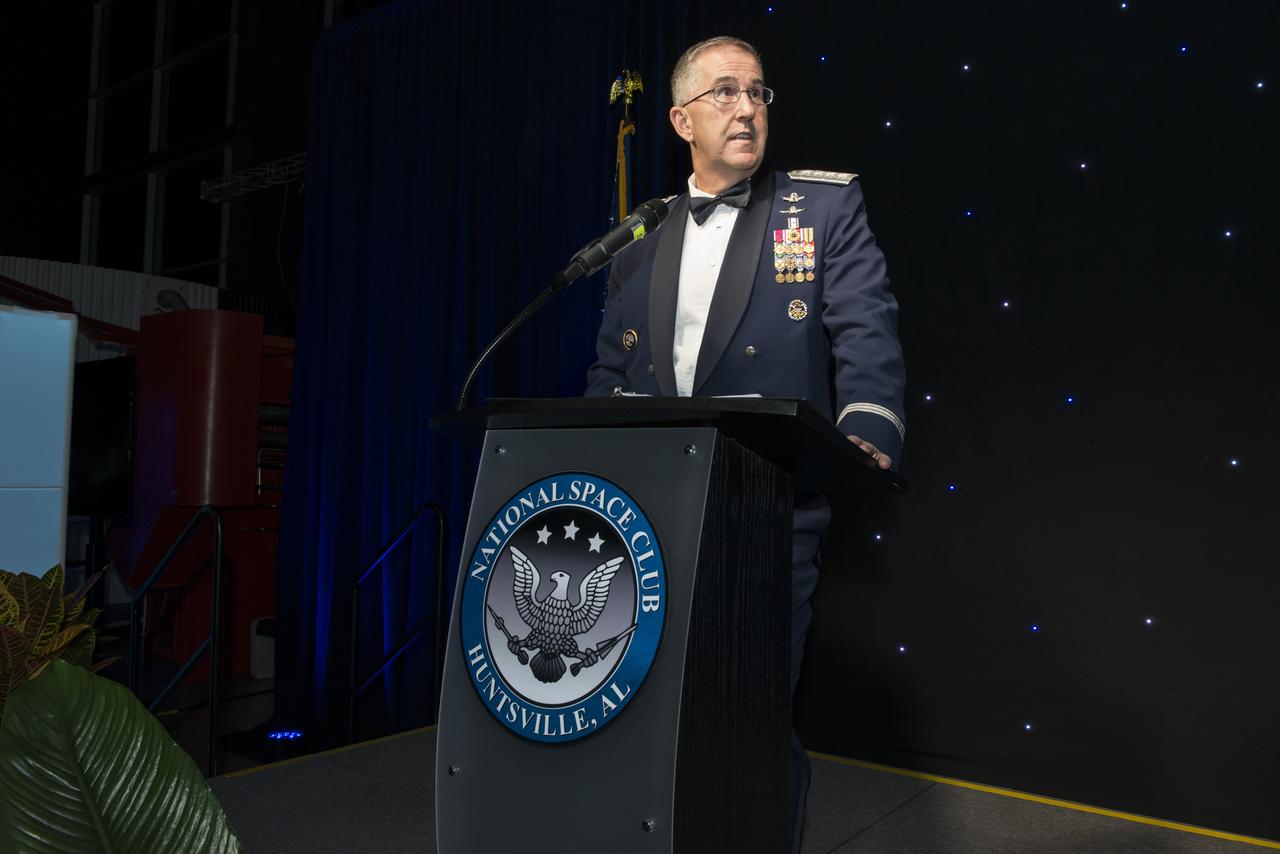
The annual Dr. Wernher Von Braun Memorial Dinner was held at the U.S. Space and Rocket Center's Davidson Center on October 26, 2017 with Keynote speaker General John Hyten, Commander of U.S. Strategic Command. Emcee was Mark Larson of Mark Larson Media Services, Inc. Dr. Wernher Von Braun Memorial Scholarships were presented to 8 college students by the National Space Club. Educator of the Year was awarded to Tammy Thorpe; Community Service award was presented to Huntsville, Al. Mayor Tommy Battle. The Communications Award was presented to retired astronaut Dr. Mike Massimino. The Distinguished Science Award was presented to Dr. Martin Weisskopf. The Astronautics Engineer Award was presented to Douglas R. Cooke. The Dr. Wernher Von Braun Space Flight Trophy was presented to Robert Lightfoot.
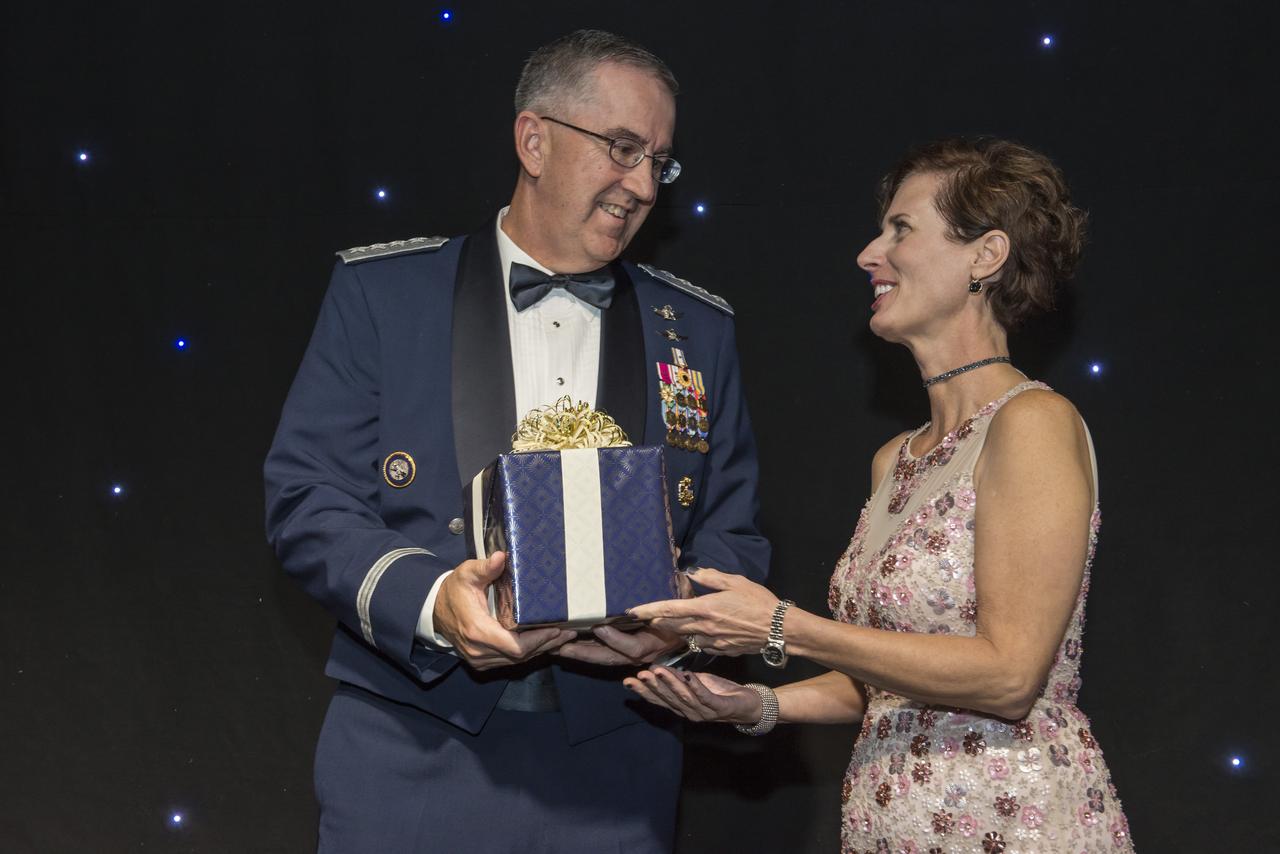
The annual Dr. Wernher Von Braun Memorial Dinner was held at the U.S. Space and Rocket Center's Davidson Center on October 26, 2017 with Keynote speaker General John Hyten, Commander of U.S. Strategic Command. Emcee was Mark Larson of Mark Larson Media Services, Inc. Dr. Wernher Von Braun Memorial Scholarships were presented to 8 college students by the National Space Club. Educator of the Year was awarded to Tammy Thorpe; Community Service award was presented to Huntsville, Al. Mayor Tommy Battle. The Communications Award was presented to retired astronaut Dr. Mike Massimino. The Distinguished Science Award was presented to Dr. Martin Weisskopf. The Astronautics Engineer Award was presented to Douglas R. Cooke. The Dr. Wernher Von Braun Space Flight Trophy was presented to Robert Lightfoot.
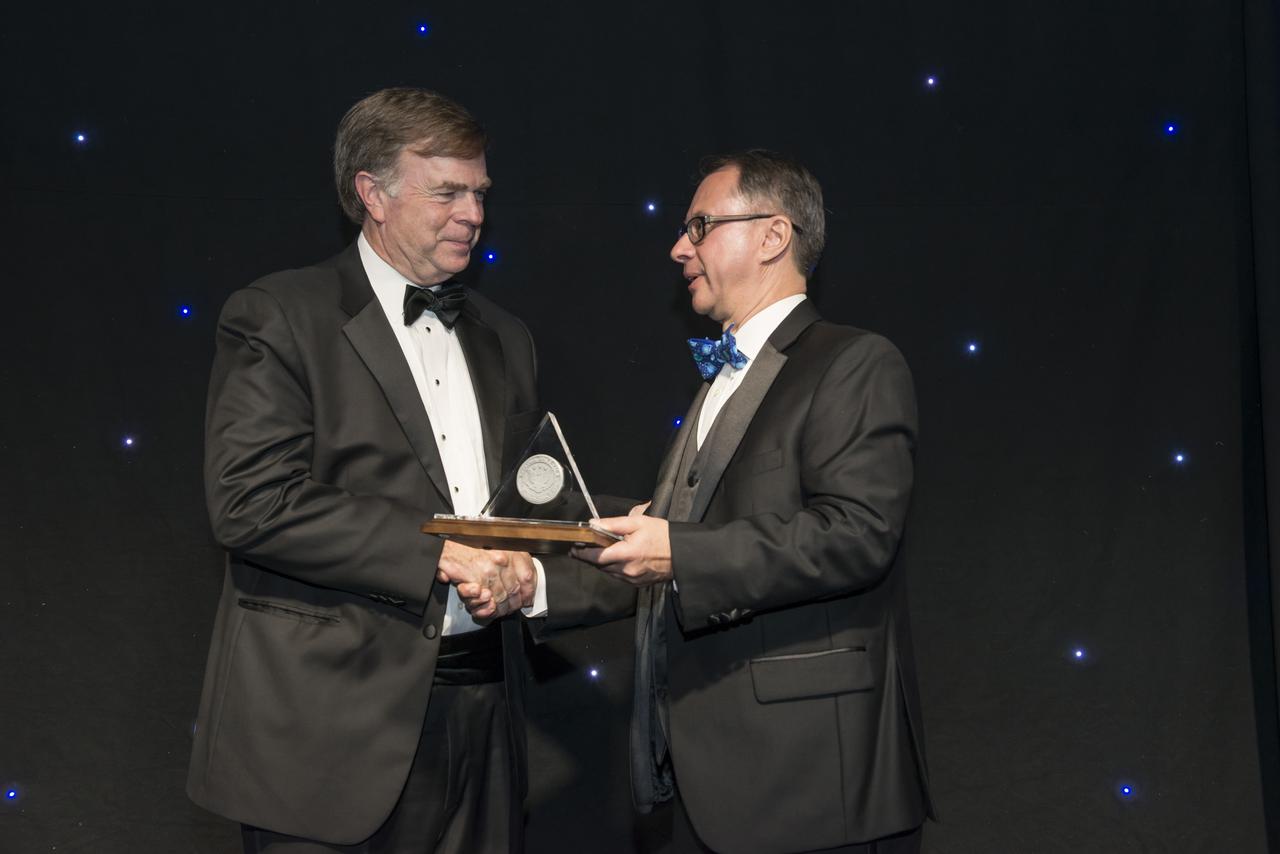
The annual Dr. Wernher Von Braun Memorial Dinner was held at the U.S. Space and Rocket Center's Davidson Center on October 26, 2017 with Keynote speaker General John Hyten, Commander of U.S. Strategic Command. Emcee was Mark Larson of Mark Larson Media Services, Inc. Dr. Wernher Von Braun Memorial Scholarships were presented to 8 college students by the National Space Club. Educator of the Year was awarded to Tammy Thorpe; Community Service award was presented to Huntsville, Al. Mayor Tommy Battle. The Communications Award was presented to retired astronaut Dr. Mike Massimino. The Distinguished Science Award was presented to Dr. Martin Weisskopf. The Astronautics Engineer Award was presented to Douglas R. Cooke. The Dr. Wernher Von Braun Space Flight Trophy was presented to Robert Lightfoot.
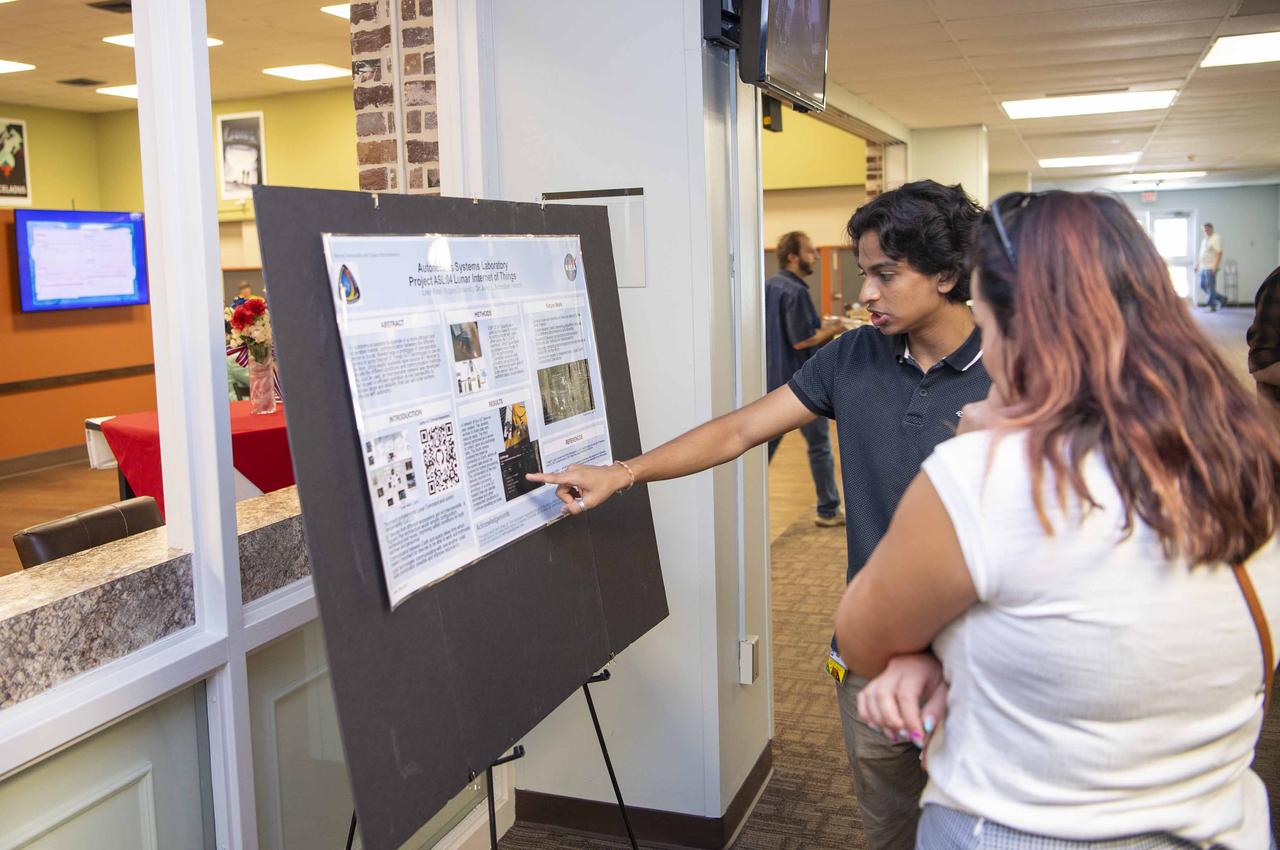
NASA Stennis summer intern Lekh Patel shares about his work on lunar communications during an Aug. 7 event hosted by the Office of STEM Engagement. Patel, a student at Rutgers University in Newark, New Jersey, worked with the NASA Stennis Autonomous Systems Laboratory. The poster symposium highlighted research topics, including propulsion test operations, lunar robotics, autonomous systems, STEM education, and more. NASA’s Office of STEM Engagement paid internships allow high school and college-level students to contribute to the agency’s mission to advance science, technology, aeronautics, and space exploration.
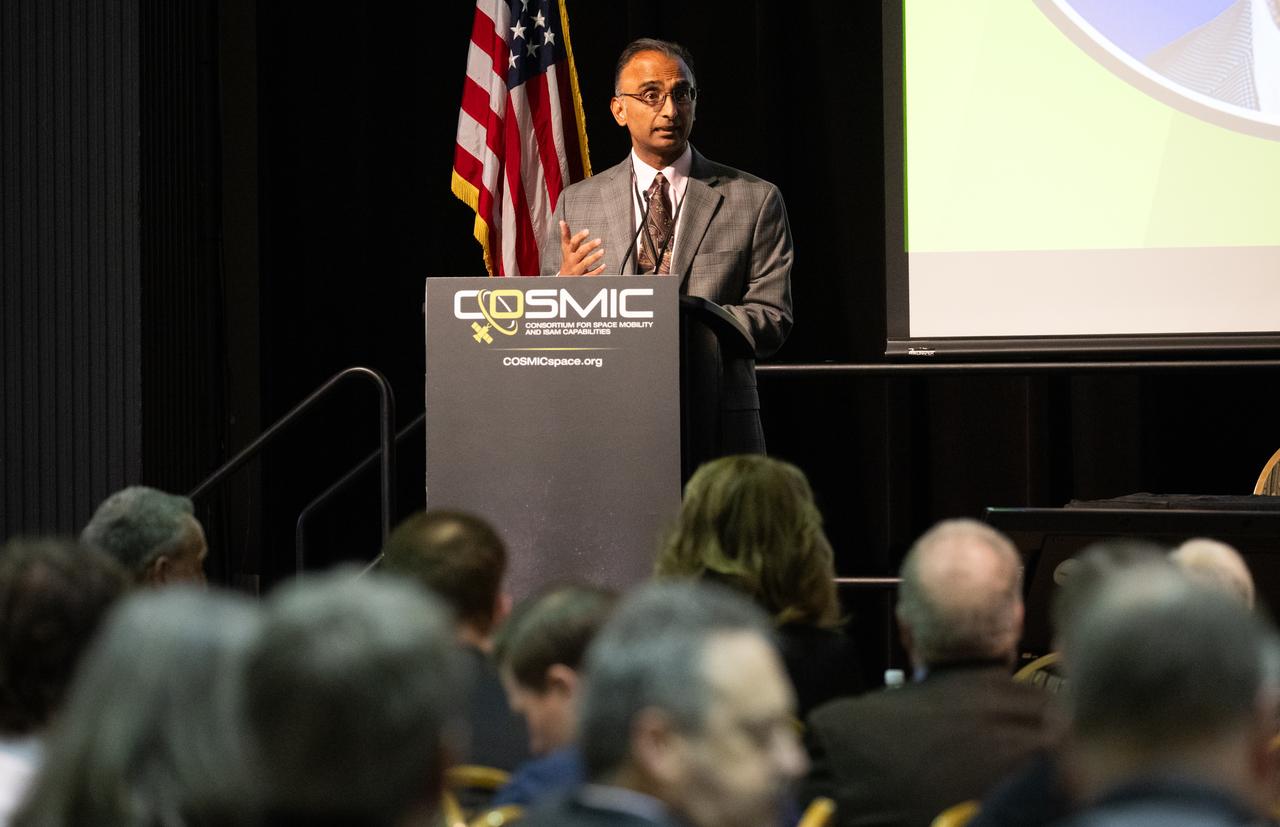
Prasun Desai, acting associate administrator for NASA's Space Technology Mission Directorate, delivers opening remarks at the Consortium for Space Mobility and ISAM Capabilities (COSMIC) workshop, Tuesday, Nov. 7, 2023, at the University of Maryland in College Park, Md. NASA’s Space Technology Mission Directorate formulated and funds COSMIC, aiming to create a nationwide aerospace community alliance that provides global leadership in space mobility and in-space servicing, assembly, and manufacturing (ISAM) for use in Earth orbit, lunar orbit, deep space, and on planetary surfaces. Photo Credit: (NASA/Joel Kowsky)
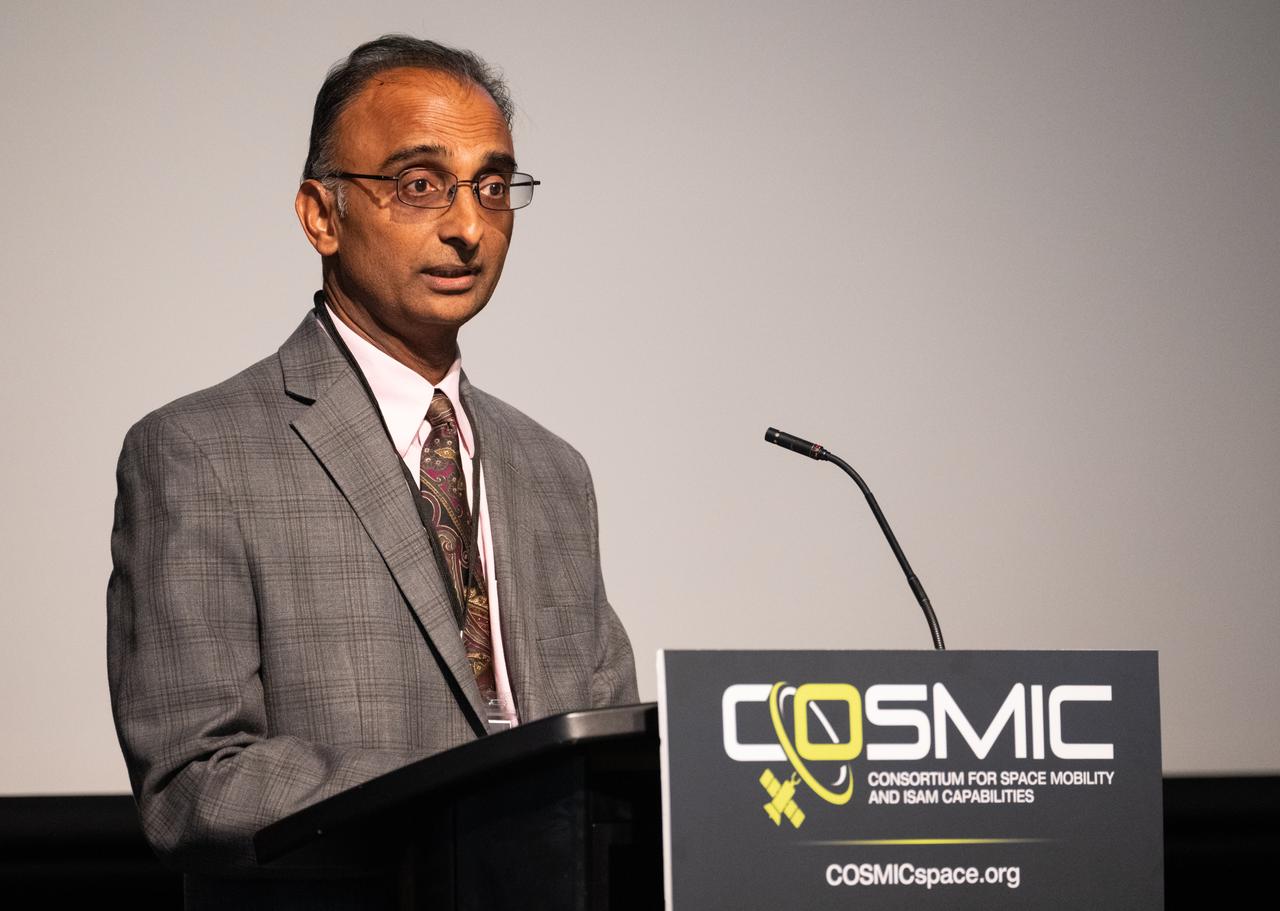
Prasun Desai, acting associate administrator for NASA's Space Technology Mission Directorate, delivers opening remarks at the Consortium for Space Mobility and ISAM Capabilities (COSMIC) workshop, Tuesday, Nov. 7, 2023, at the University of Maryland in College Park, Md. NASA’s Space Technology Mission Directorate formulated and funds COSMIC, aiming to create a nationwide aerospace community alliance that provides global leadership in space mobility and in-space servicing, assembly, and manufacturing (ISAM) for use in Earth orbit, lunar orbit, deep space, and on planetary surfaces. Photo Credit: (NASA/Joel Kowsky)
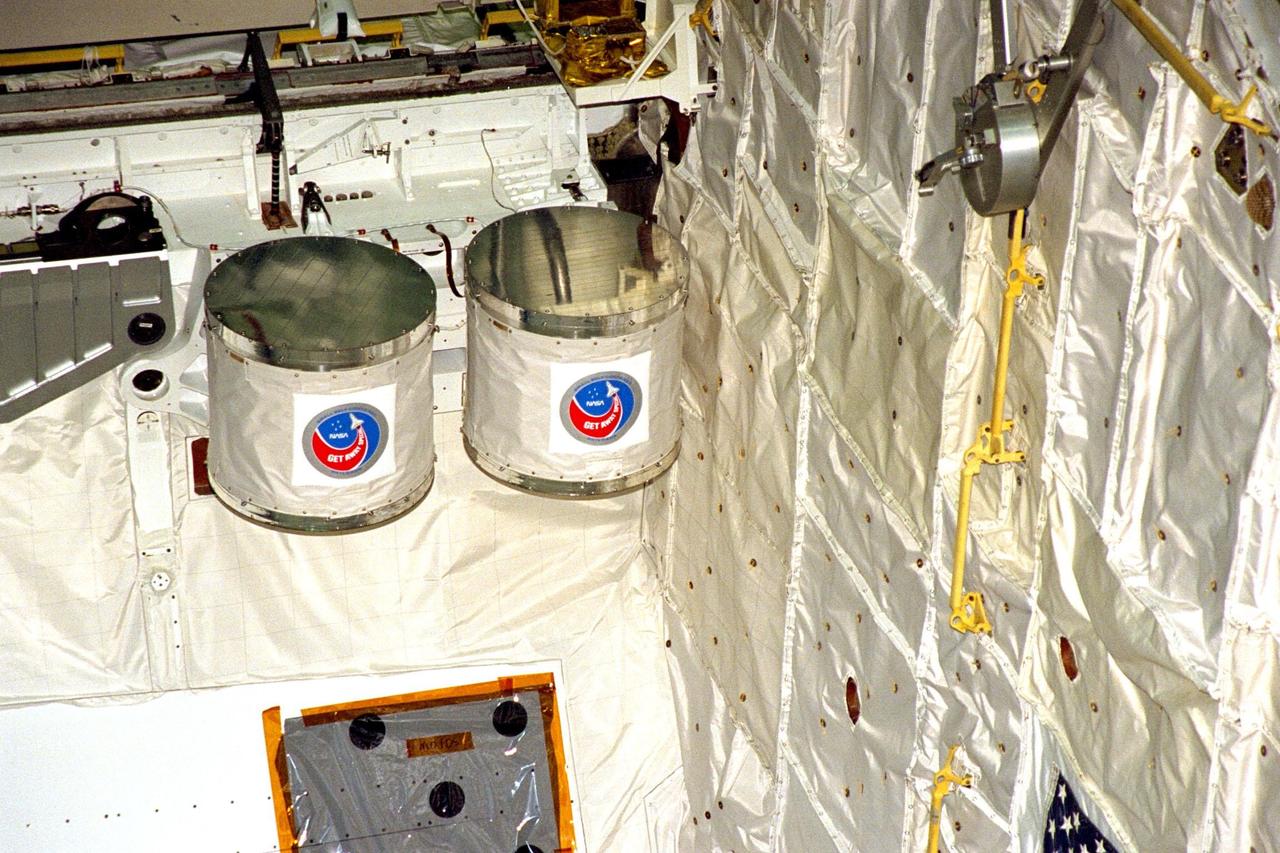
Processing activities for STS-91 continue in KSC's Orbiter Processing Facility Bay 2. Two Get Away Special (GAS) canisters are shown after their installation into Discovery's payload bay. At left is G-090, containing three educational experiments sponsored by Utah State University, and at right is G-743, an experiment sponsored by Broward Community College in Florida to test DNA exposed to cosmic radiation in a microgravity environment. STS-91 is scheduled to launch aboard the Space Shuttle Discovery for the ninth and final docking with the Russian Space Station Mir from KSC's Launch Pad 39A on June 2 with a launch window opening around 6:04 p.m. EDT
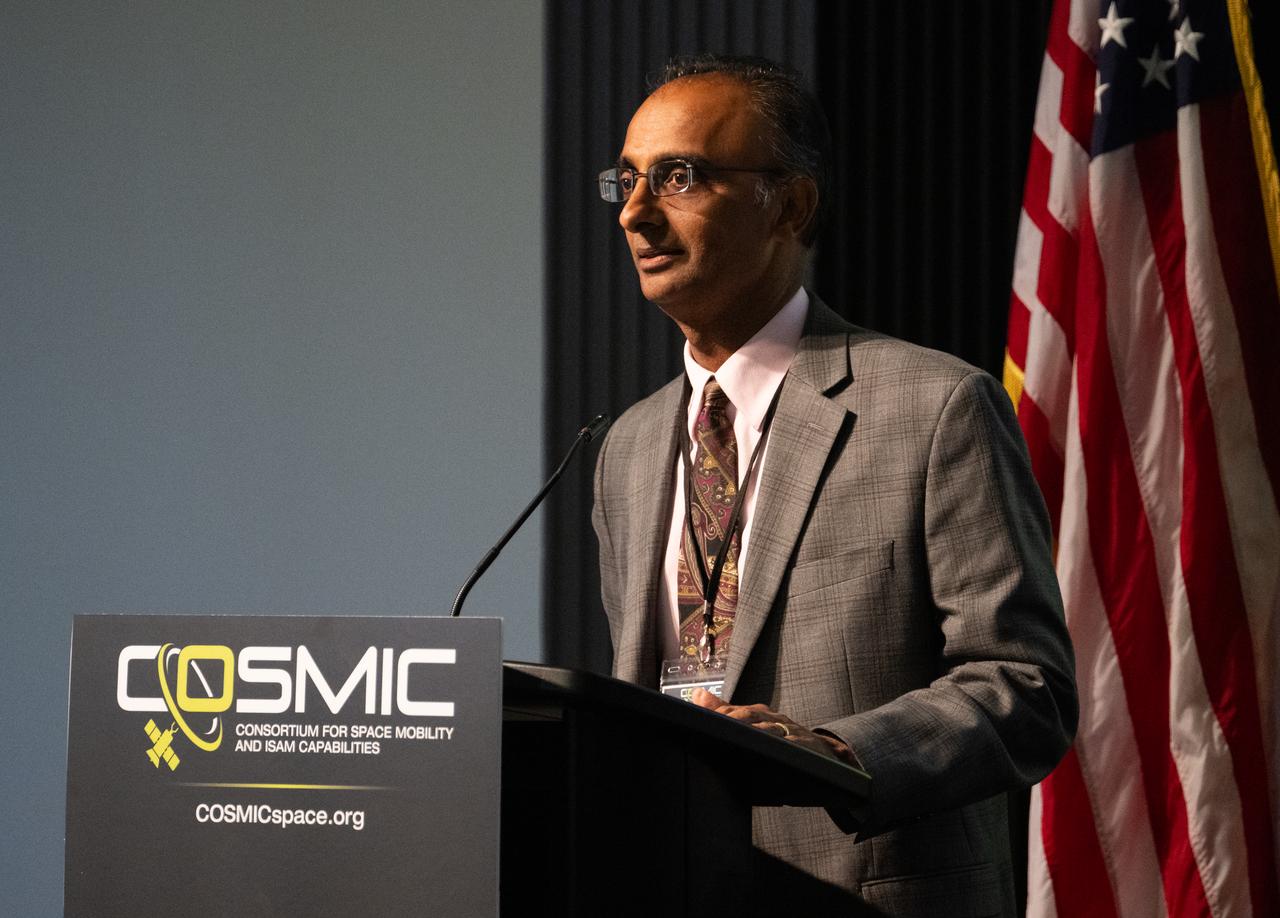
Prasun Desai, acting associate administrator for NASA's Space Technology Mission Directorate, delivers opening remarks at the Consortium for Space Mobility and ISAM Capabilities (COSMIC) workshop, Tuesday, Nov. 7, 2023, at the University of Maryland in College Park, Md. NASA’s Space Technology Mission Directorate formulated and funds COSMIC, aiming to create a nationwide aerospace community alliance that provides global leadership in space mobility and in-space servicing, assembly, and manufacturing (ISAM) for use in Earth orbit, lunar orbit, deep space, and on planetary surfaces. Photo Credit: (NASA/Joel Kowsky)
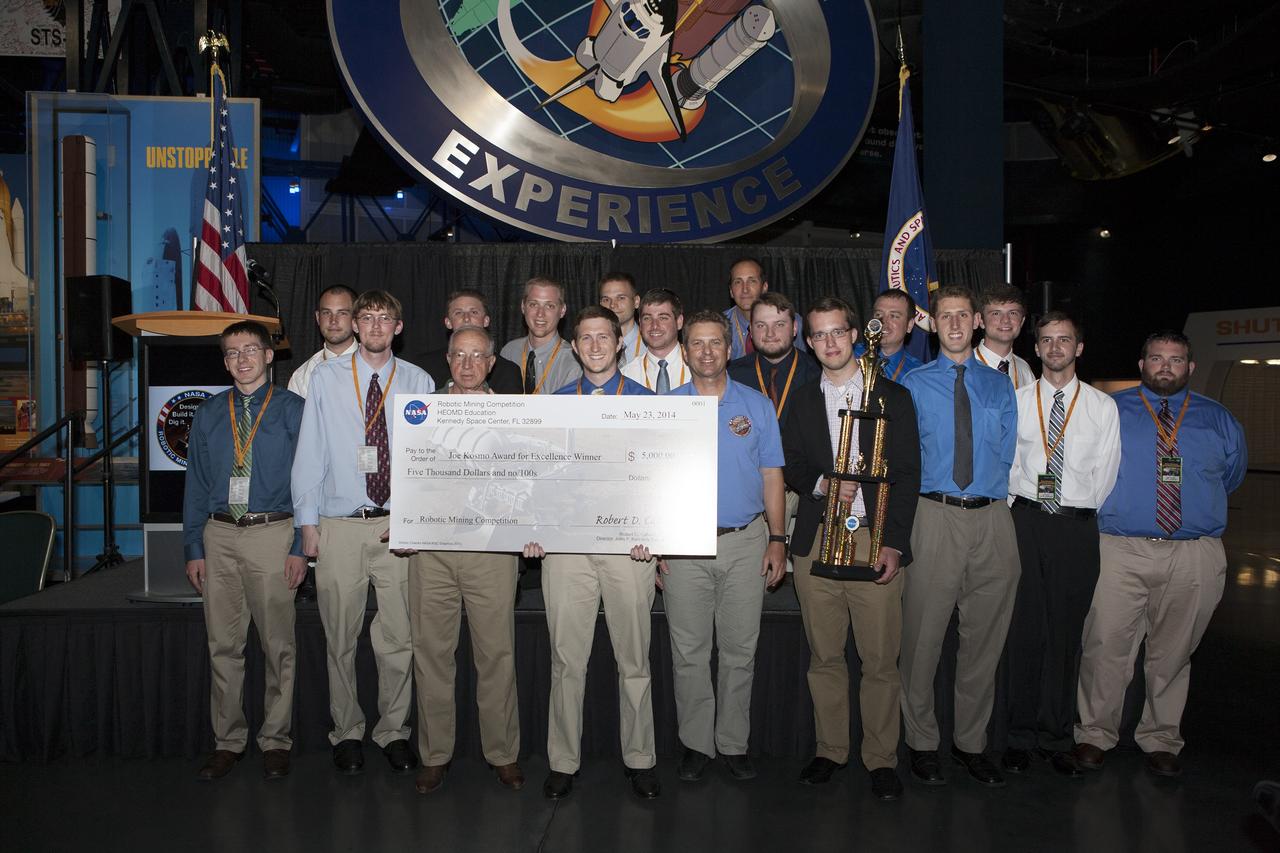
CAPE CANAVERAL, Fla. -- The University of Alabama team Astrobotics in collaboration with Shelton State Community College received the highest award, the Joe Kosmo Award for Excellence, during NASA's 2014 Robotic Mining Competition awards ceremony inside the Space Shuttle Atlantis attraction at the Kennedy Space Center Visitor Complex in Florida. More than 35 teams from colleges and universities around the U.S. designed and built remote-controlled robots for the mining competition. The competition is a NASA Human Exploration and Operations Mission Directorate project designed to engage and retain students in science, technology, engineering and mathematics, or STEM, fields by expanding opportunities for student research and design. Teams use their remote-controlled robotics to maneuver and dig in a supersized sandbox filled with a crushed material that has characteristics similar to Martian soil. The objective of the challenge is to see which team’s robot can collect and move the most regolith within a specified amount of time. The competition includes on-site mining, writing a systems engineering paper, performing outreach projects for K-12 students, slide presentation and demonstrations, and team spirit. For more information, visit www.nasa.gov/nasarmc. Photo credit: NASA/Kim Shiflett