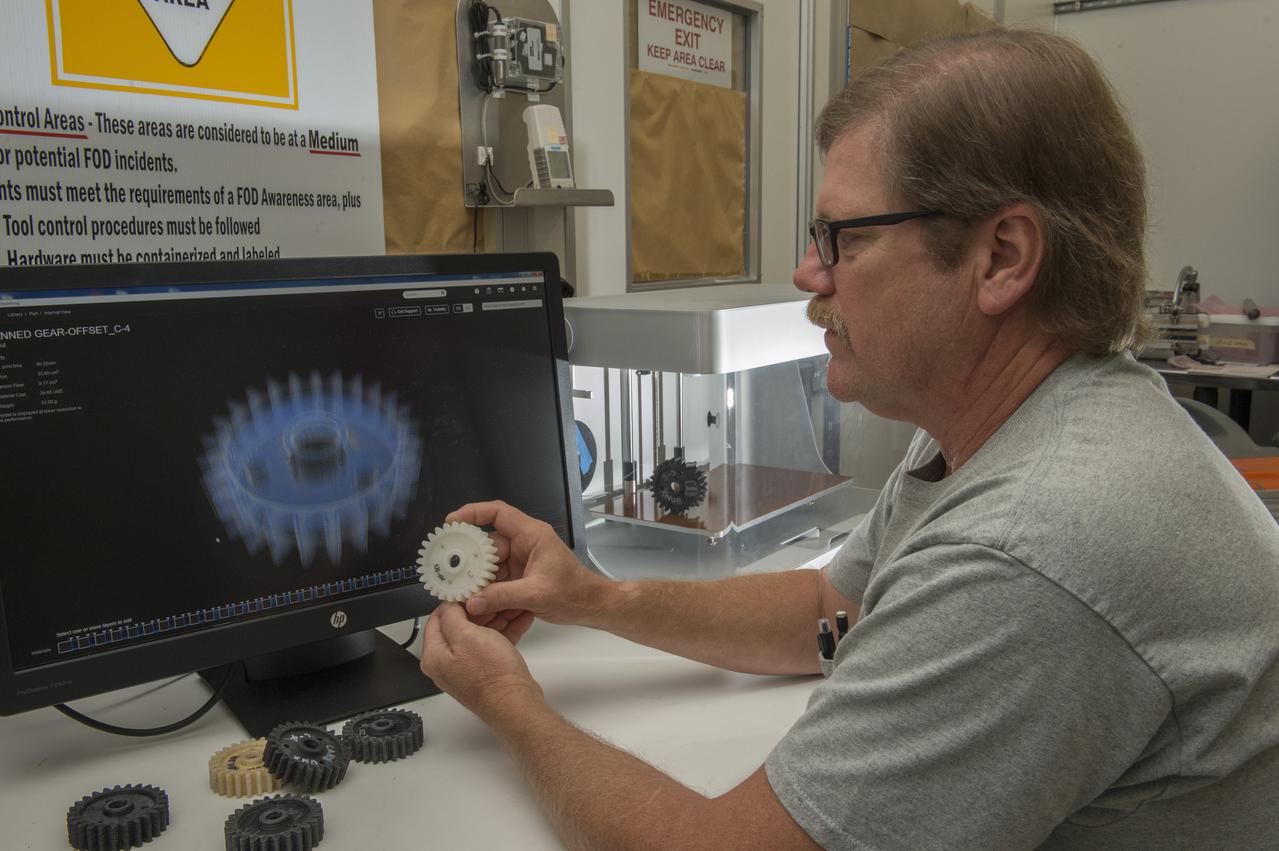
Phillip Steele (EM42/ESSSA) examines composite material gears printed with Marshall’s MarkForged® 3D Printer (background).
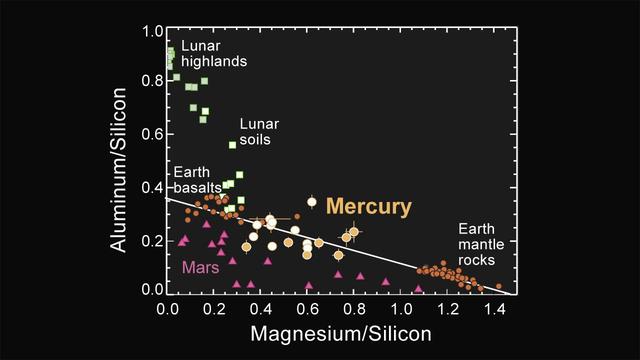
Major-element Composition of Mercury Surface Materials
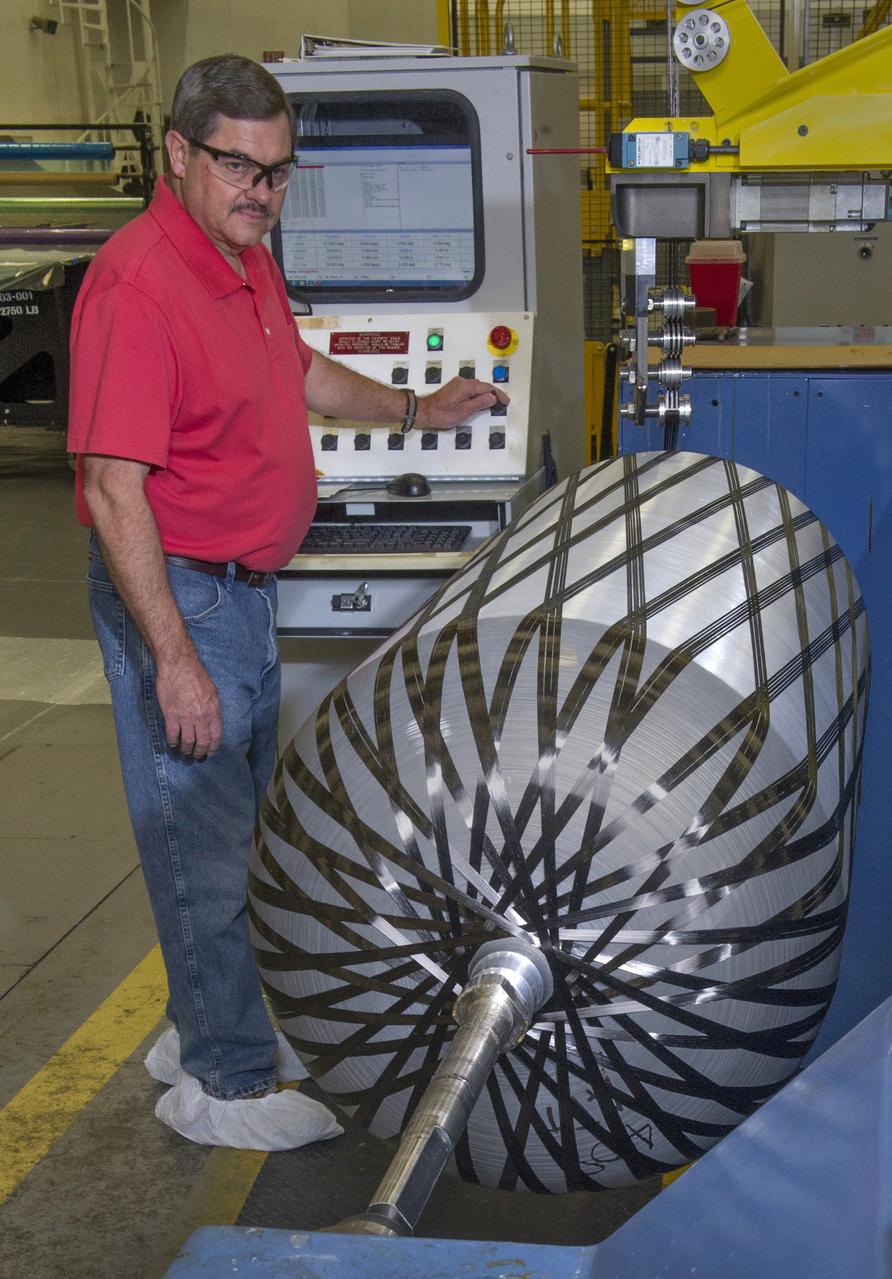
PHILLIP THOMPSON WRAPS PRESSURE VESSEL WITH COMPOSITE MATERIAL
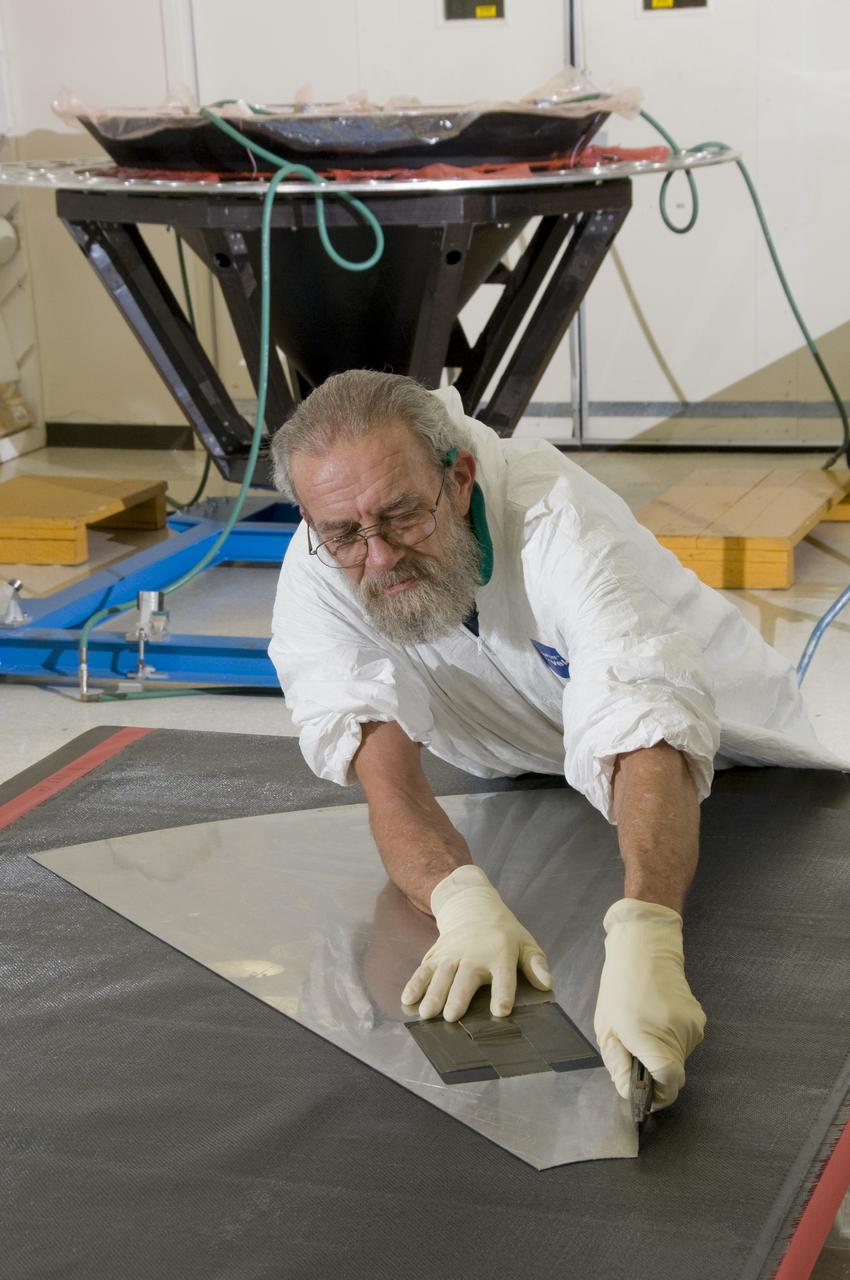
ED KIRCH, A LOCKHEED MARTIN TECHNICIAN, CUTS A PATTERN FROM COMPOSITE MATERIAL THAT WILL BE PLACED IN A MOLD TO BUILD A SPACE SHUTTLE EXTERNAL TANK COMPOSITE NOSE CONE.

This Mars Global Surveyor MGS Mars Orbiter Camera MOC image shows layered material exposed on a slope in the south polar region of Mars. The composition of the layers, and whether they contain ice, is not known
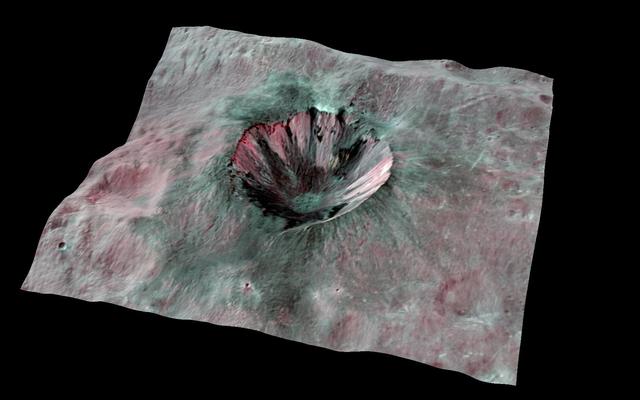
This composite-color view from NASA Dawn mission shows Cornelia Crater, streaked with dark materials, on the giant asteroid Vesta. You need 3D glasses to view this image.
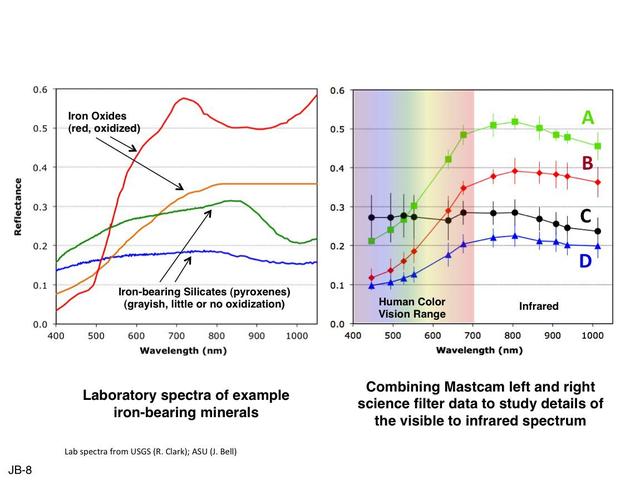
This set of images illustrates how the science filters of the Mast Camera Mastcam on NASA Mars rover Curiosity can be used to investigate aspects of the composition and mineralogy of materials on Mars.

This false-color mosaic, made from infrared data collected by NASA Cassini spacecraft, reveals the differences in the composition of surface materials around hydrocarbon lakes at Titan, Saturn largest moon.

This MOC image shows remnants of layered materials near the west rim of South Crater, Mars. The composition of these layered rocks is unknown -- are they the remains of sedimentary rocks or accumulations of dust and ice?
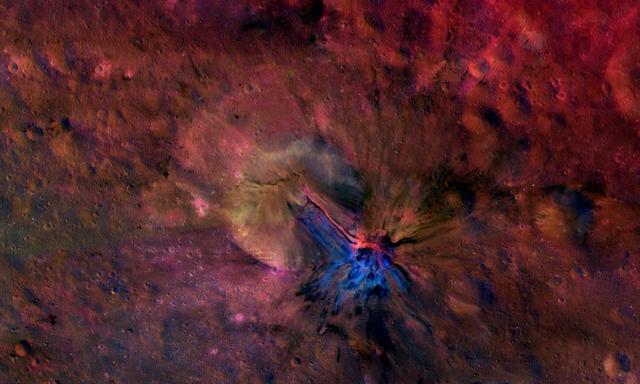
This colorful composite image from NASA Dawn mission shows the flow of material inside and outside a crater called Aelia on the giant asteroid Vesta. To the naked eye, these structures would not be seen. But here, they stand out in blue and red.
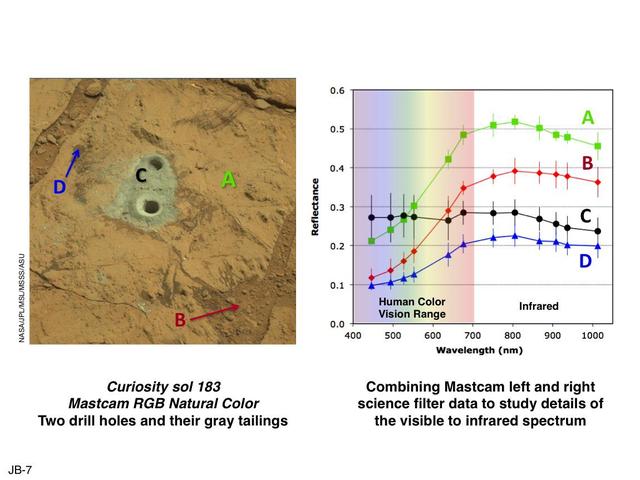
This set of images illustrates how the science filters of the Mast Camera Mastcam on NASA Mars rover Curiosity can be used to investigate aspects of the composition and mineralogy of materials on Mars.

Impact test results and 22 caliber gun set-up.

This enhanced color composite image from Dawn's visible and infrared mapping spectrometer shows the area around Ernutet Crater on Ceres. The instrument detected the evidence of organic materials in this area, as reported in a 2017 study in the journal Science. In this view, areas that appear pink with respect to the background appear to be rich in organics, and green areas are where organic material appears to be less abundant. Light with a wavelength of 2000 nanometers is shown in blue, 3400 nanometers is shown in green and 1700 nanometers is shown in red. http://photojournal.jpl.nasa.gov/catalog/PIA21420
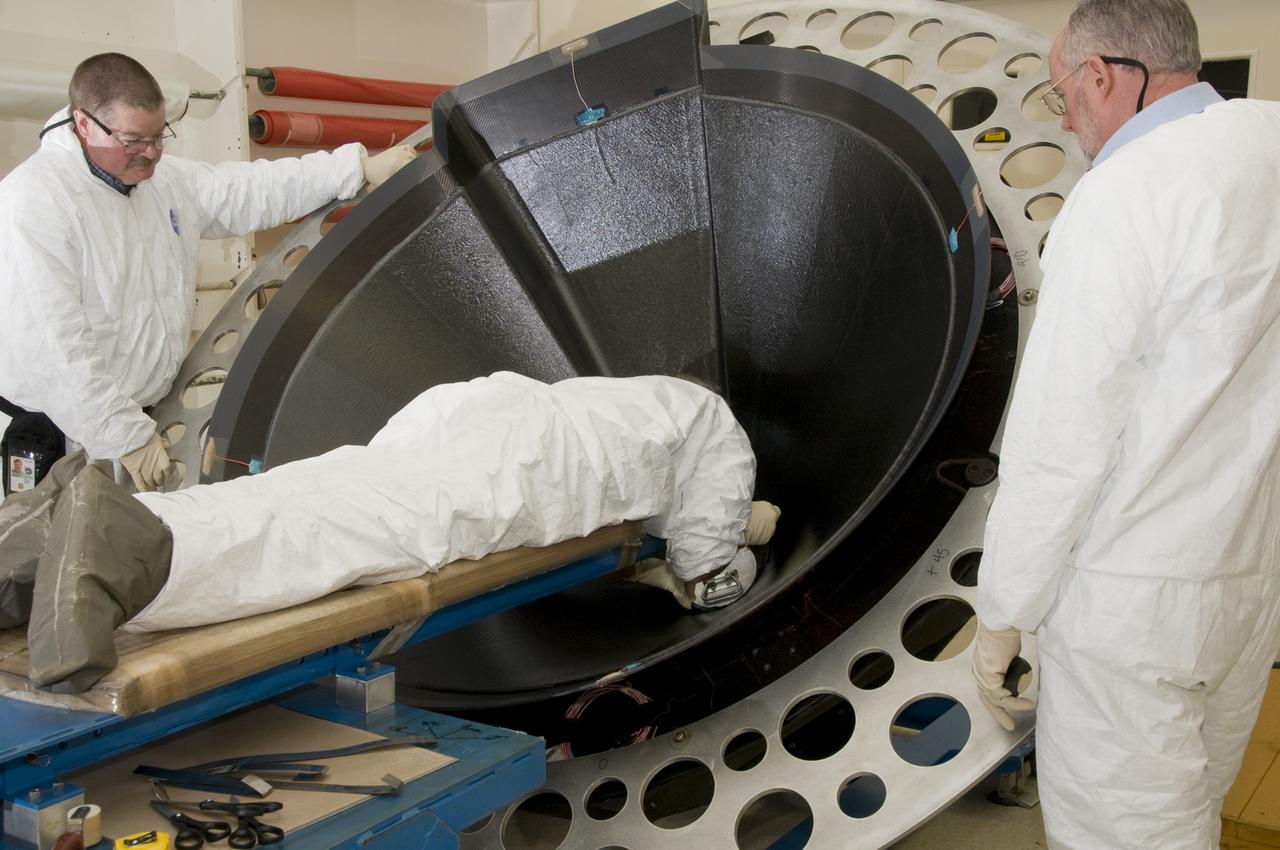
STEVE FRANKLIN, LEFT, AND RICHARD WELCH STAND READY TO ASSIST ED KIRSCH AS HE INSTALLS A ROUND PIECE OF COMPOSITE MATERIAL IN THE "BEANIE CAP" AT THE VERY TOP INSIDE THE COMPOSITE NOSE CONE.
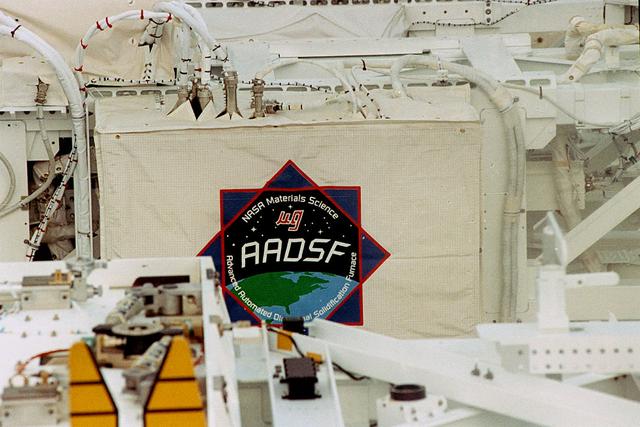
The purpose of the experiments for the Advanced Automated Directional Solidification Furnace (AADSF) is to determine how gravity-driven convection affects the composition and properties of alloys (mixtures of two or more materials, usually metal). During the USMP-4 mission, the AADSF will solidify crystals of lead tin telluride and mercury cadmium telluride, alloys of compound semiconductor materials used to make infrared detectors and lasers, as experiment samples. Although these materials are used for the same type application their properties and compositional uniformity are affected differently during the solidification process.
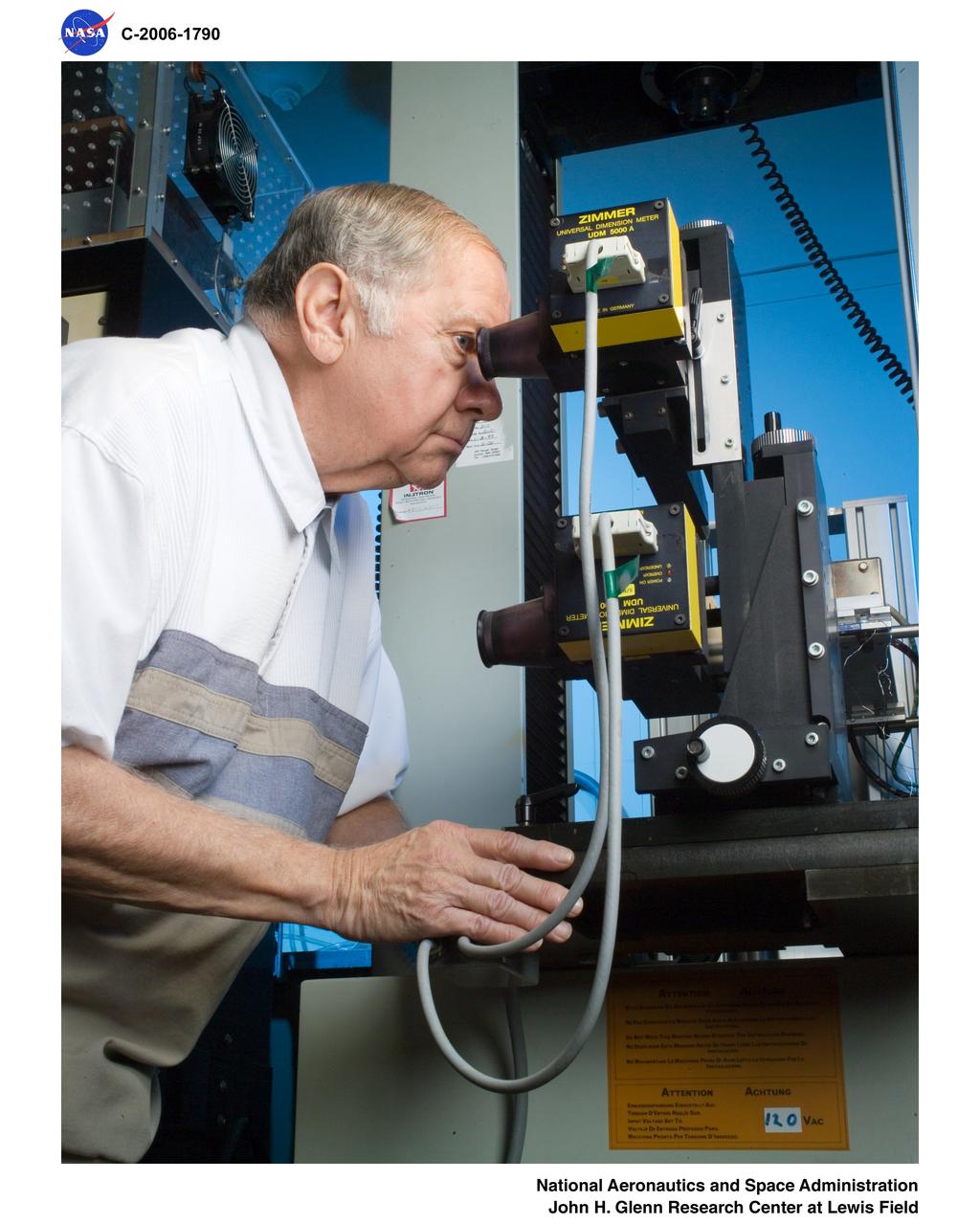
Instron Testing Machine studying the strength of Ceramic Matrix Composite (CMC) Material to develop and improve their mechanical properties
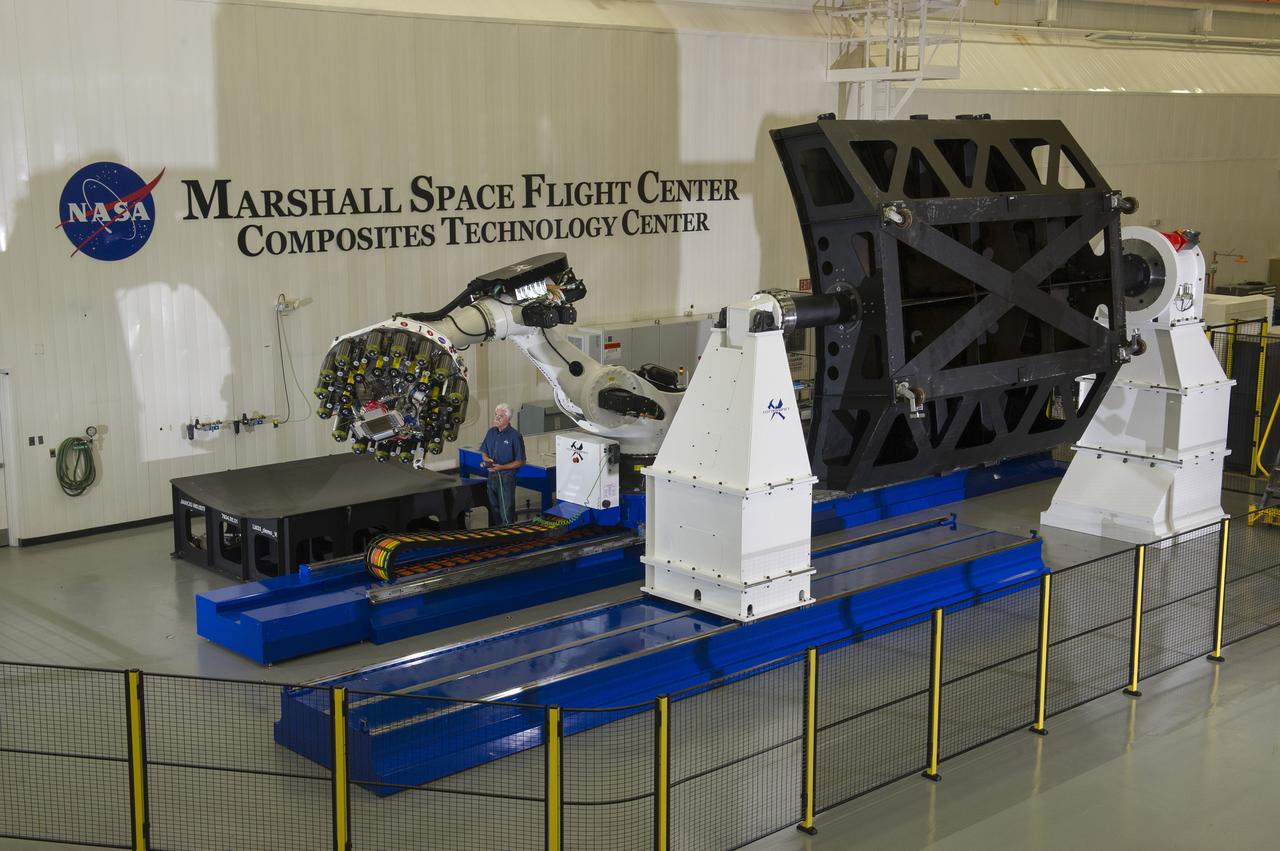
OVERVIEW OF MSFC COMPOSITES TECHNOLOGY CENTER AND THE AUTOMATED FIBER PLACEMENT TOOL WITH MATERIALS ENGINEER LARRY PELHAM
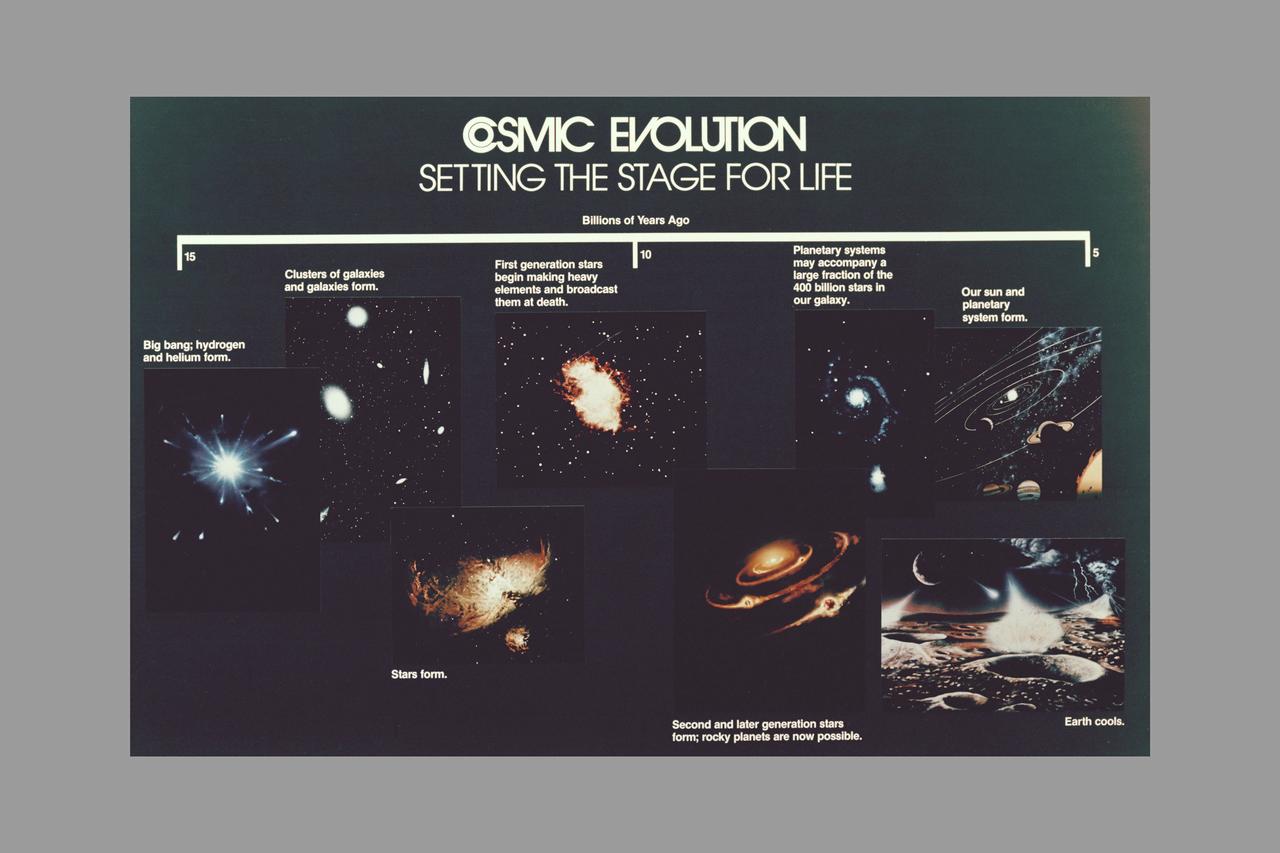
Composite Artwork Cosmic Evolution. Setting the stage. Life on and off Earth. (contains some copyrighted materials - no for general release)
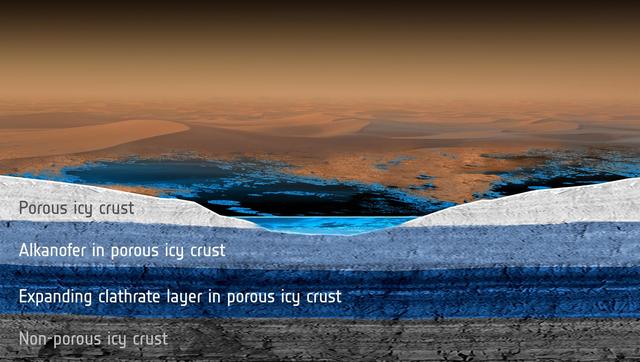
Scientists modeled how methane rainfall runoff would interact with the porous, icy crust of Saturn moon Titan and found that a subsurface methane aquifer might have its composition changed over time due to the formation of materials called clathrates.
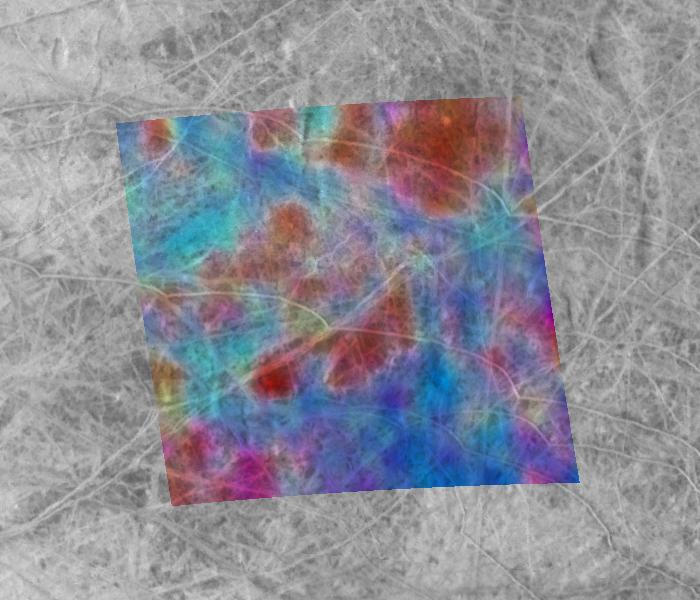
This composite image of the Jupiter-facing hemisphere of Europa was obtained on Nov. 25, 1999 by NASA Galileo spacecraft. Blue areas show cleanest, brightest icy surfaces, while the red areas have the highest concentrations of darker, non-ice materials.
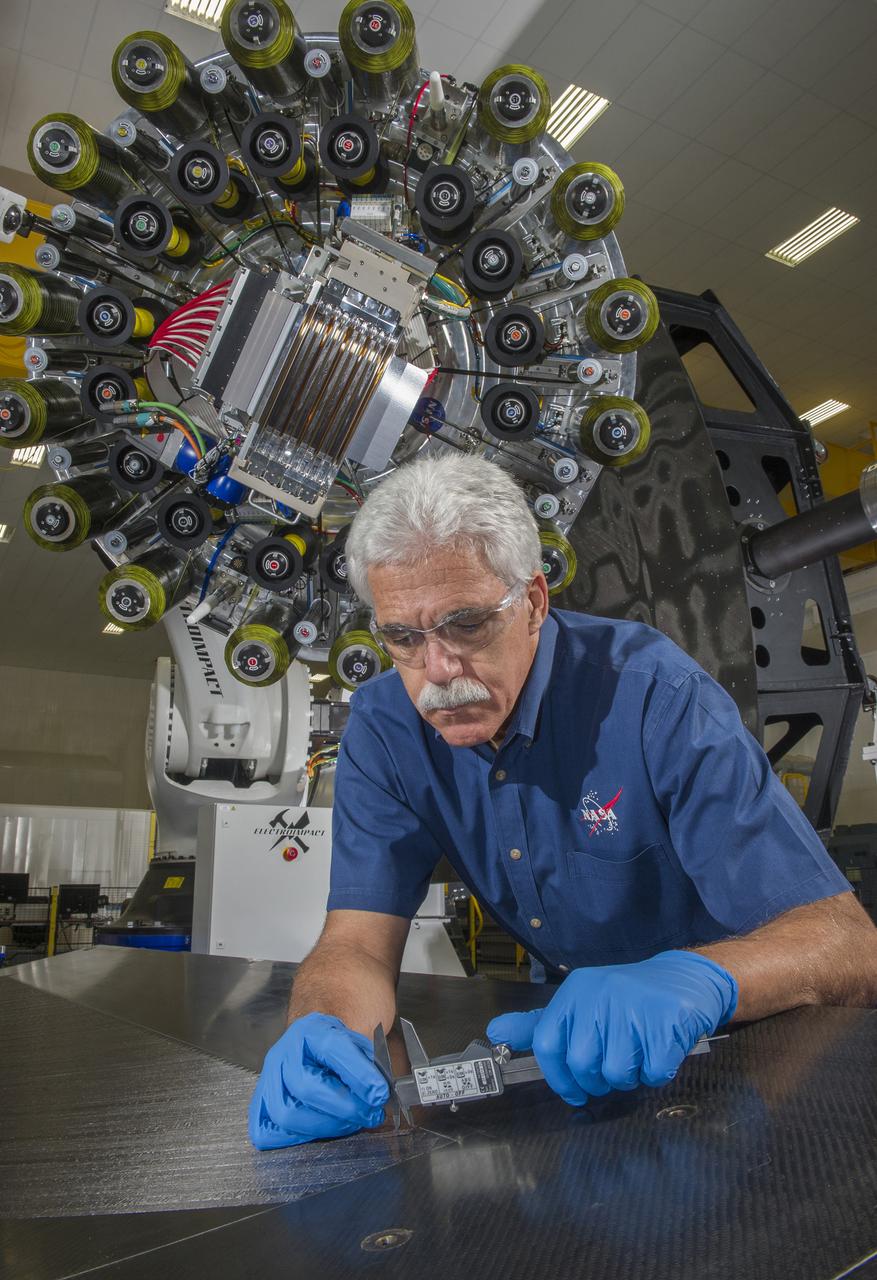
MATERIALS ENGINEER LARRY PELHAM OF NASA’S MARSHALL SPACE FLIGHT CENTER IN HUNTSVILLE, ALABAMA, OPERATES THE CEUS AUTOMATED FIBER PLACEMENT CYLINDRICAL MANUFACTURING TOOL IN BUILDING 4707. THE TOOL WILL BE USED BY THE COMPOSITES FOR EXPLORATION UPPER STAGE PROJECT AT MARSHALL, WHICH IS ANALYZING COMPOSITE MATERIALS TO SUPPORT FUTURE HARDWARE FOR NASA’S SPACE LAUNCH SYSTEM AND OTHER NEXT-GENERATION SPACECRAFT…
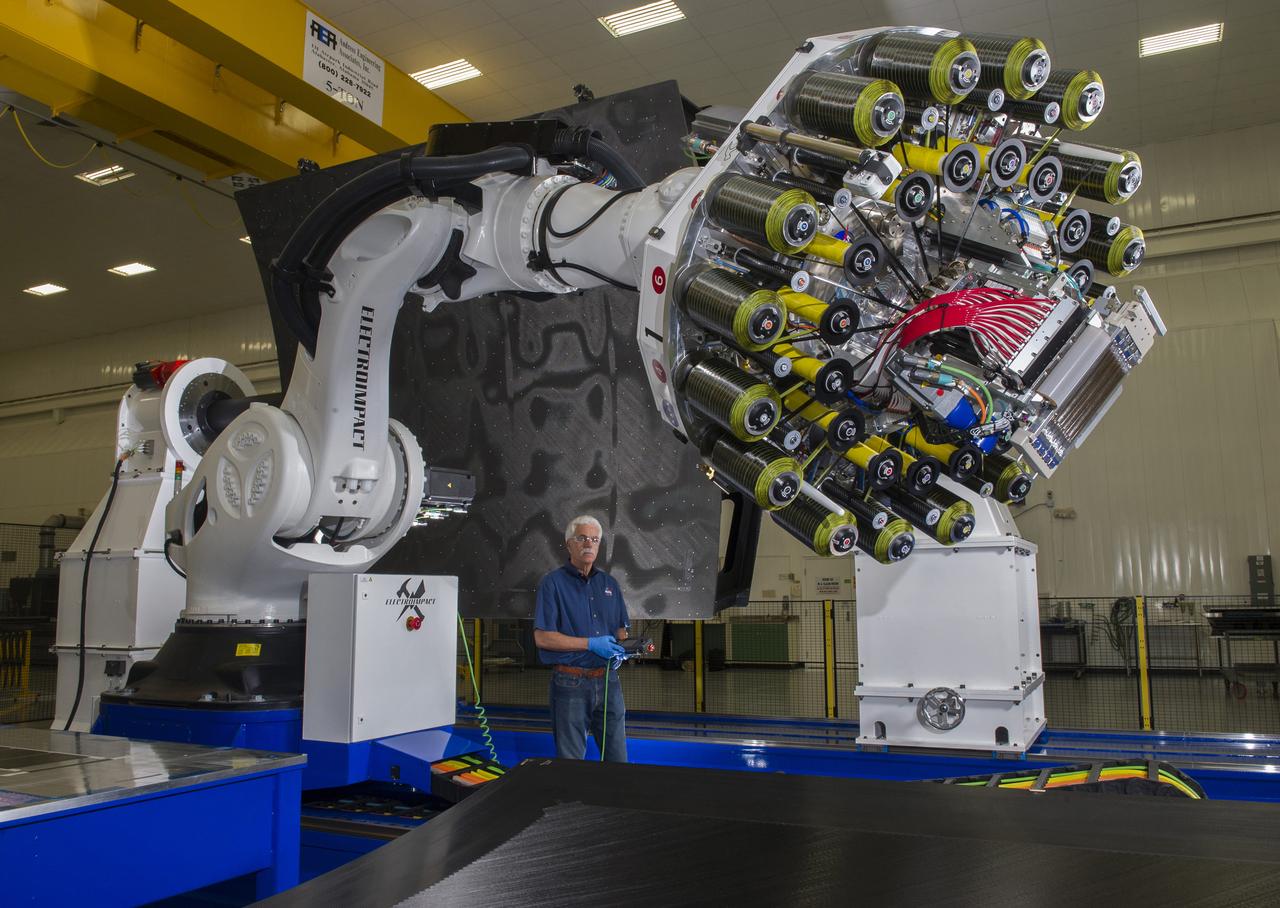
MATERIALS ENGINEER LARRY PELHAM OF NASA’S MARSHALL SPACE FLIGHT CENTER IN HUNTSVILLE, ALABAMA, OPERATES THE CEUS AUTOMATED FIBER PLACEMENT CYLINDRICAL MANUFACTURING TOOL IN BUILDING 4707. THE TOOL WILL BE USED BY THE COMPOSITES FOR EXPLORATION UPPER STAGE PROJECT AT MARSHALL, WHICH IS ANALYZING COMPOSITE MATERIALS TO SUPPORT FUTURE HARDWARE FOR NASA’S SPACE LAUNCH SYSTEM AND OTHER NEXT-GENERATION SPACECRAFT…
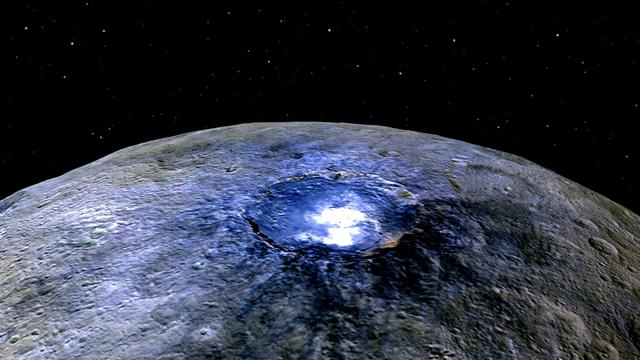
This representation of Ceres' Occator Crater in false colors shows differences in the surface composition. Red corresponds to a wavelength range around 0.97 micrometers (near infrared), green to a wavelength range around 0.75 micrometers (red, visible light) and blue to a wavelength range of around 0.44 micrometers (blue, visible light). Occator measures about 60 miles (90 kilometers) wide. Scientists use false color to examine differences in surface materials. The color blue on Ceres is generally associated with bright material, found in more than 130 locations, and seems to be consistent with salts, such as sulfates. It is likely that silicate materials are also present. The images were obtained by the framing camera on NASA's Dawn spacecraft from a distance of about 2,700 miles (4,400 kilometers). http://photojournal.jpl.nasa.gov/catalog/PIA20180
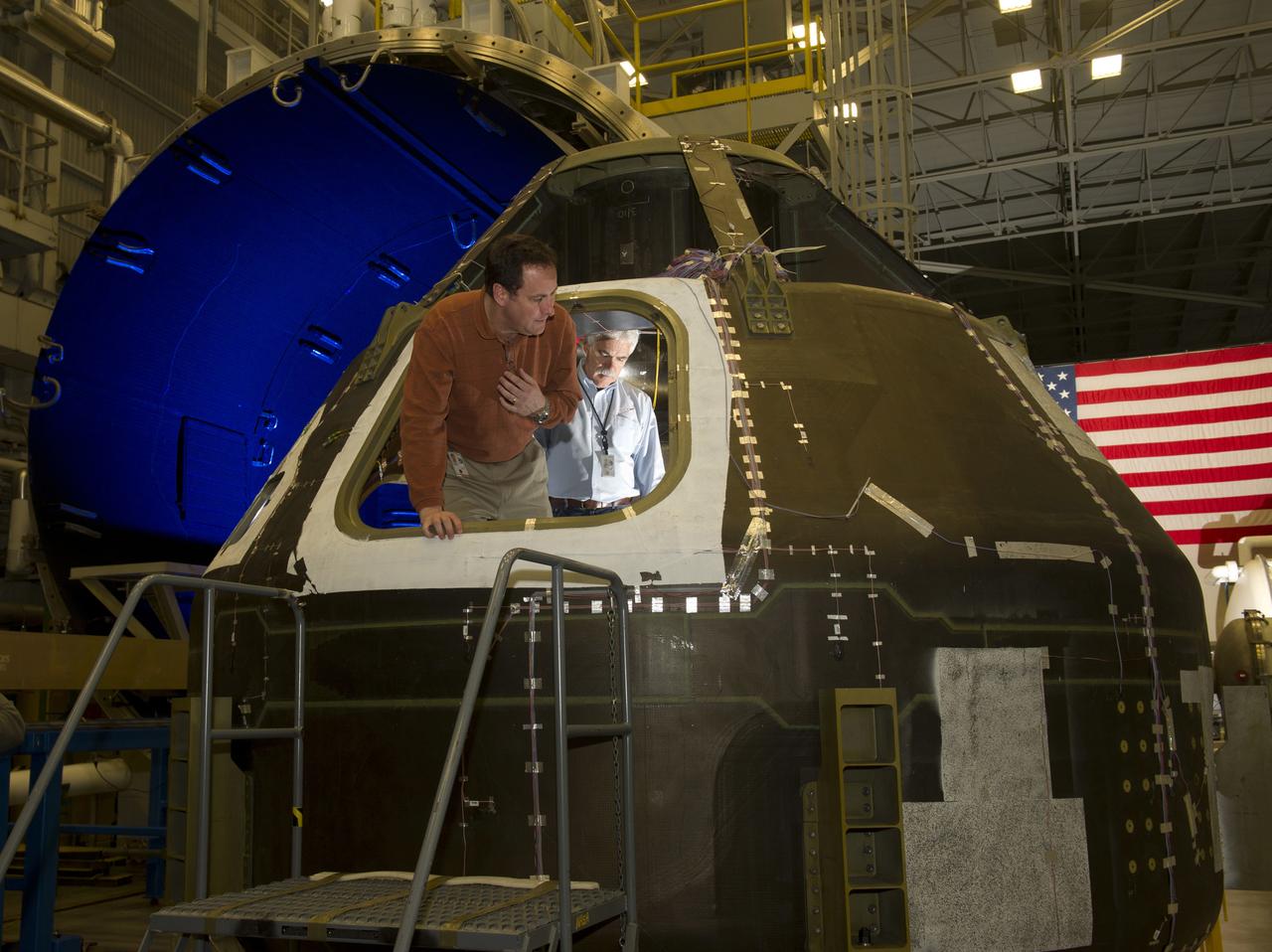
CENTER DIRECTOR ROBERT LIGHTFOOT AND MATERIALS ENGINEER LARRY PELHAM, EXAMINE COMPOSITE CREW MODULE AT THE ENVIRONMENTAL TEST FACILITY IN BLDG. 4619 AS MODULE IS BEING PREPARED FOR SPACE ENVIRONMENTAL TESTING.

Draftsmen in the Materials and Stresses Building at the National Advisory Committee for Aeronautics (NACA) Lewis Flight Propulsion Laboratory create a template for a compressor using actual compressor blades. The Compressor and Turbine Division contained four sections of researchers dedicated to creating better engine components. The Materials and Thermodynamics Division studied the strength, durability, heat transfer characteristics, and physical composition of various materials. The two divisions were important to the research and development of new aircraft engines. The constant battle to increase the engine’s thrust while decreasing its overall weight resulted in additional stress on jet engine components, particularly compressors. As speed and maneuverability were enhanced, the strain on the engines and inlets grew. For decades NACA Lewis researchers continually sought to improve compressor blade design, develop stronger composite materials, and minimize flutter and inlet distortions.

A materials researcher at the NACA’s Lewis Flight Propulsion Laboratory examines a surface crack detection apparatus in the Materials and Stresses Building during December 1952. Materials research was an important aspect of propulsion technology. Advanced engine systems relied upon alloys, and later composites, that were strong, lightweight, and impervious to high temperatures. Jet engines which became increasingly popular in the late 1940s, produced much higher temperatures than piston engines. These higher temperatures stressed engine components, particularly turbines. Although Lewis materials research began during World War II, the Materials and Thermodynamics Division was not created until 1949. Its primary laboratories were located in the Materials and Stresses Building. The group sought to create new, improved materials and to improve engine design through increased understanding of materials. The Lewis materials researchers of the 1950s made contributions to nickel-aluminum alloys, cermet blades, metal matrix composites, oxide dispersion strengthened superalloys, and universal slopes.
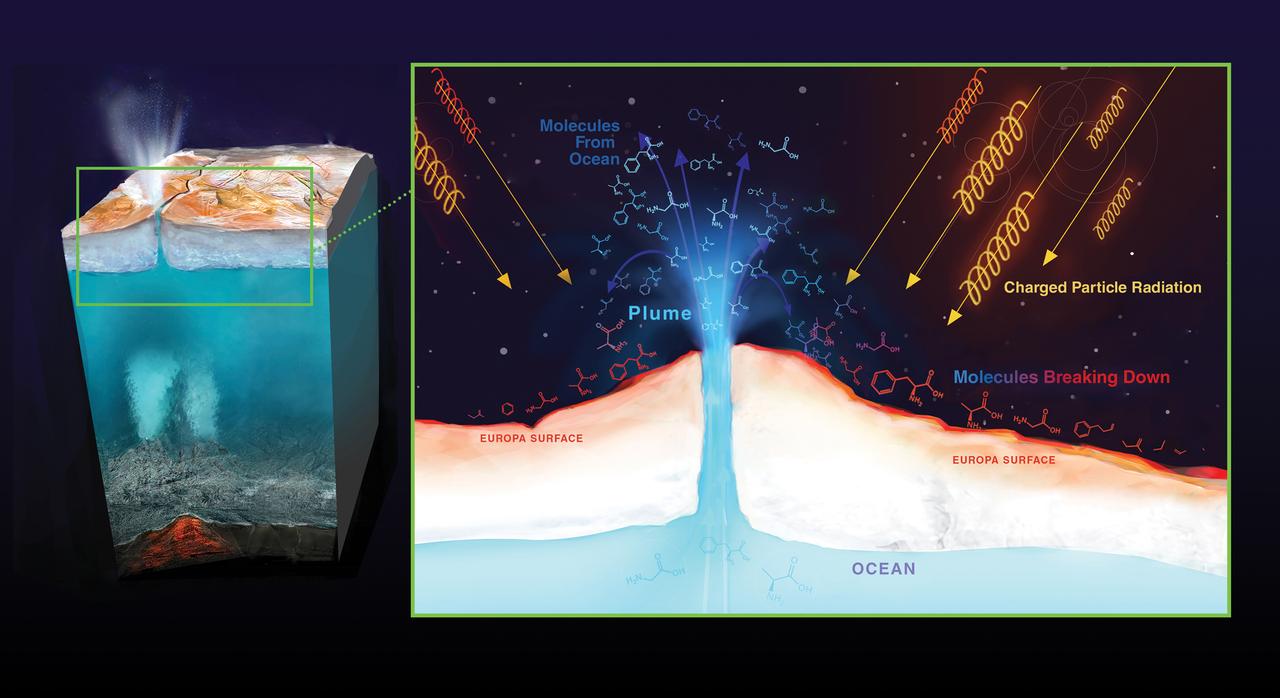
Radiation from Jupiter can destroy molecules on Europa's surface. Material from Europa's ocean that ends up on the surface of Europa will be bombarded by radiation. The radiation breaks apart molecules and changes the chemical composition of the material, possibly destroying any biosignatures, or chemical signs that could imply the presence of life. To interpret what future space missions find on the surface of Europa we must first understand how material has been modified by radiation. https://photojournal.jpl.nasa.gov/catalog/PIA22479
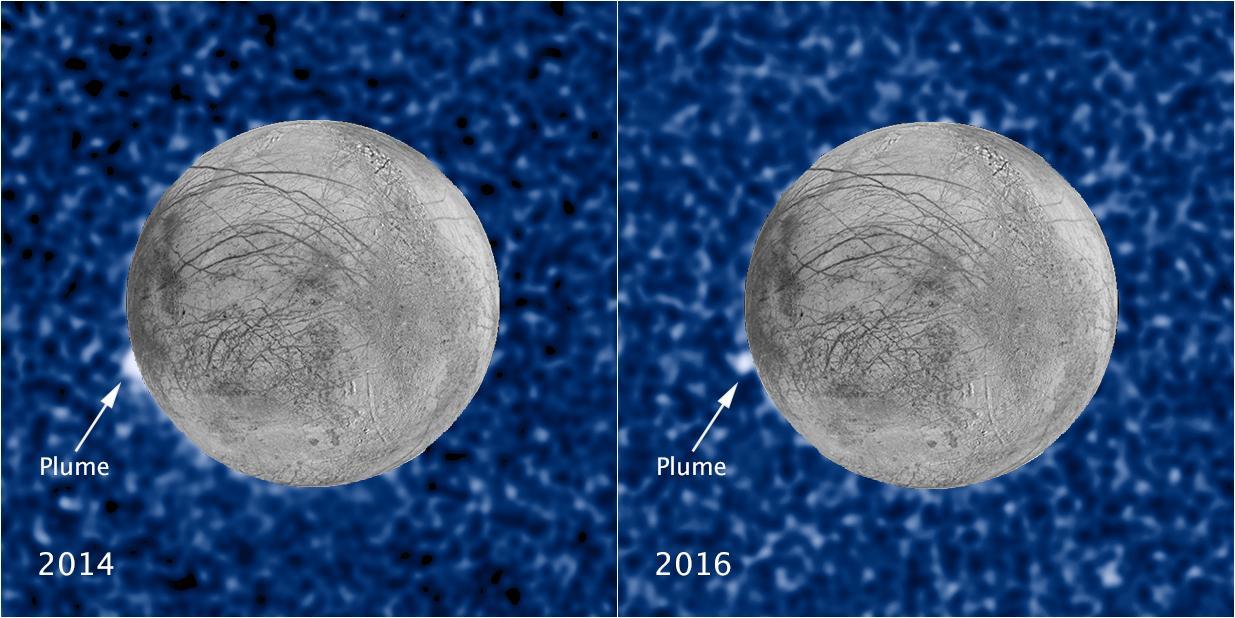
These composite images show a suspected plume of material erupting two years apart from the same location on Jupiter's icy moon Europa. The images bolster evidence that the plumes are a real phenomenon, flaring up intermittently in the same region on the satellite. Both plumes, photographed in ultraviolet light by NASA's Hubble's Space Telescope Imaging Spectrograph, were seen in silhouette as the moon passed in front of Jupiter. The newly imaged plume, shown at right, rises about 62 miles (100 kilometers) above Europa's frozen surface. The image was taken Feb. 22, 2016. The plume in the image at left, observed by Hubble on March 17, 2014, originates from the same location. It is estimated to be about 30 miles (50 kilometers) high. The snapshot of Europa, superimposed on the Hubble image, was assembled from data from NASA's Galileo mission to Jupiter. The plumes correspond to the location of an unusually warm spot on the moon's icy crust, seen in the late 1990s by the Galileo spacecraft (see PIA21444). Researchers speculate that this might be circumstantial evidence for water venting from the moon's subsurface. The material could be associated with the global ocean that is believed to be present beneath the frozen crust. https://photojournal.jpl.nasa.gov/catalog/PIA21443
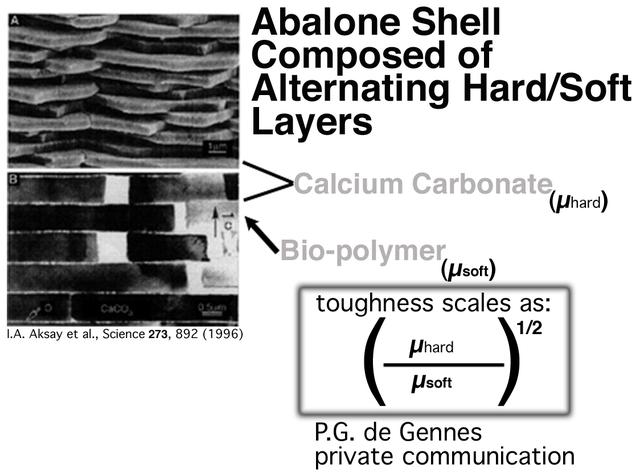
NASA is looking to biological techniques that are millions of years old to help it develop new materials and technologies for the 21st century. Sponsored by NASA, Jeffrey Brinker of the University of New Mexico is studying how multiple elements can assemble themselves into a composite material that is clear, tough, and impermeable. His research is based on the model of how an abalone builds the nacre, also called mother-of-pearl, inside its shell. The mollusk layers bricks of calcium carbonate (the main ingredient in classroom chalk) and mortar of biopolymer to form a new material (top and bottom left) that is twice as hard and 1,000 times as tough as either of the original building materials.
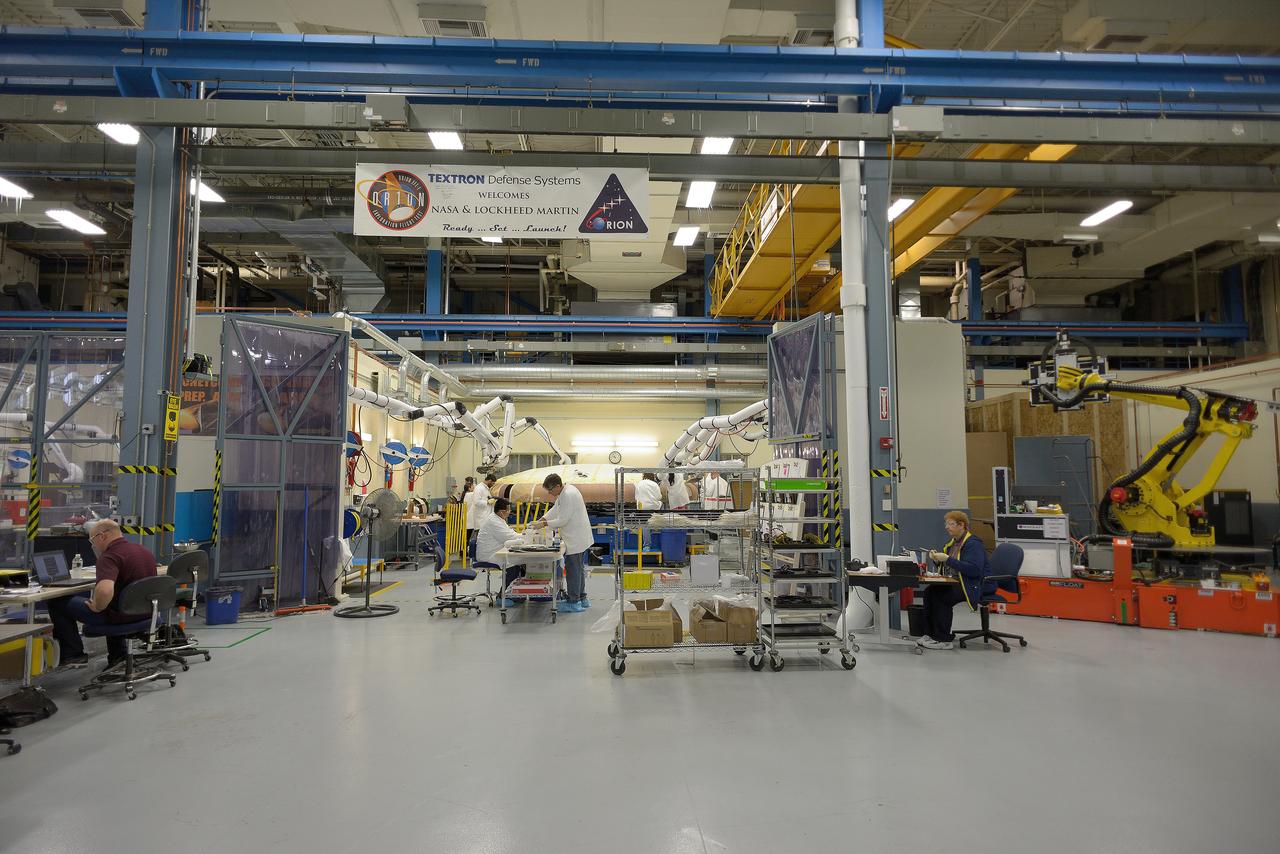
Technicians at Textron in Wimington, MA, apply Avcoat ablative material to the composite honeycomb structure attached to the Exploration Flight Test-1 (EFT-1) Orion heat shield carrier structure on May 22, 2013. Part of Batch image transfer from Flickr.
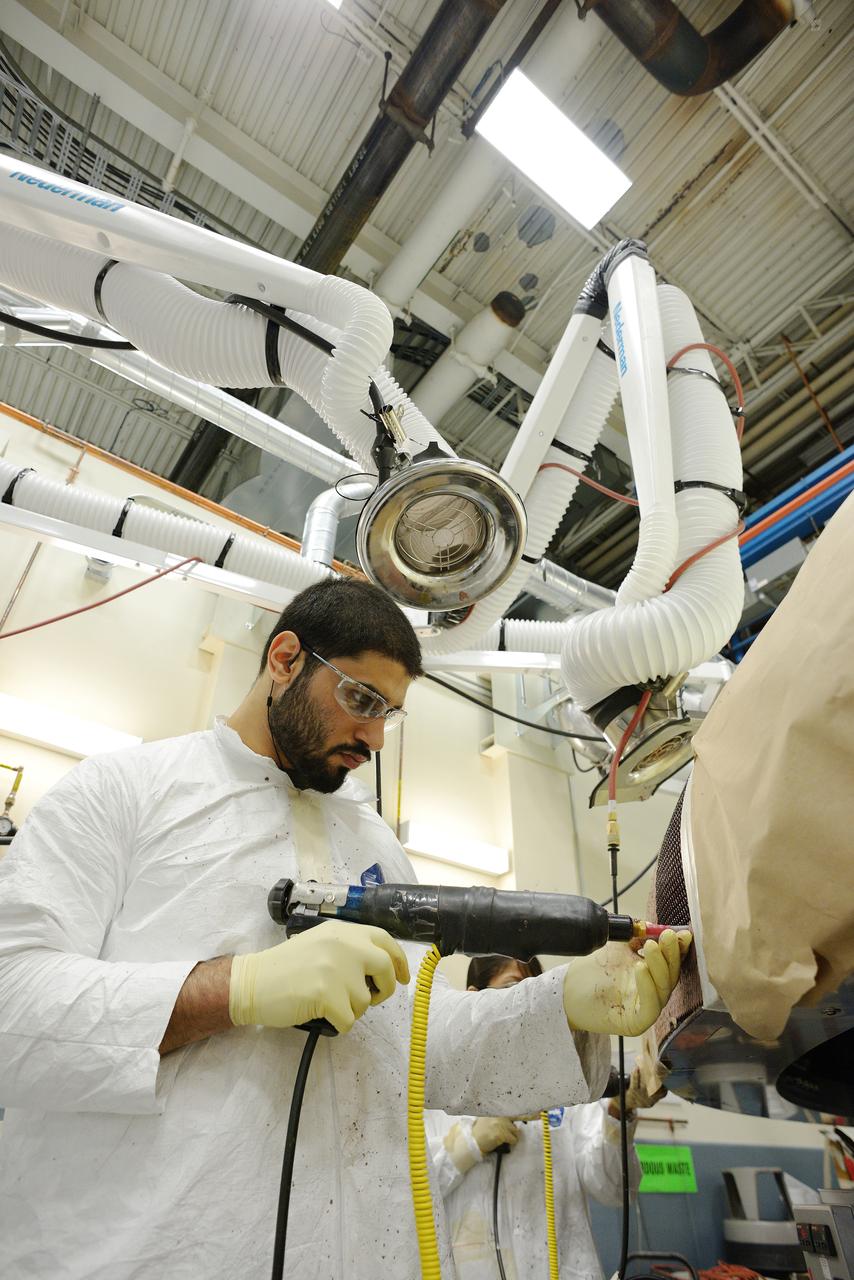
Technicians at Textron in Wimington, MA, apply Avcoat ablative material to the composite honeycomb structure attached to the Exploration Flight Test-1 (EFT-1) Orion heat shield carrier structure on May 22, 2013. Part of Batch image transfer from Flickr.
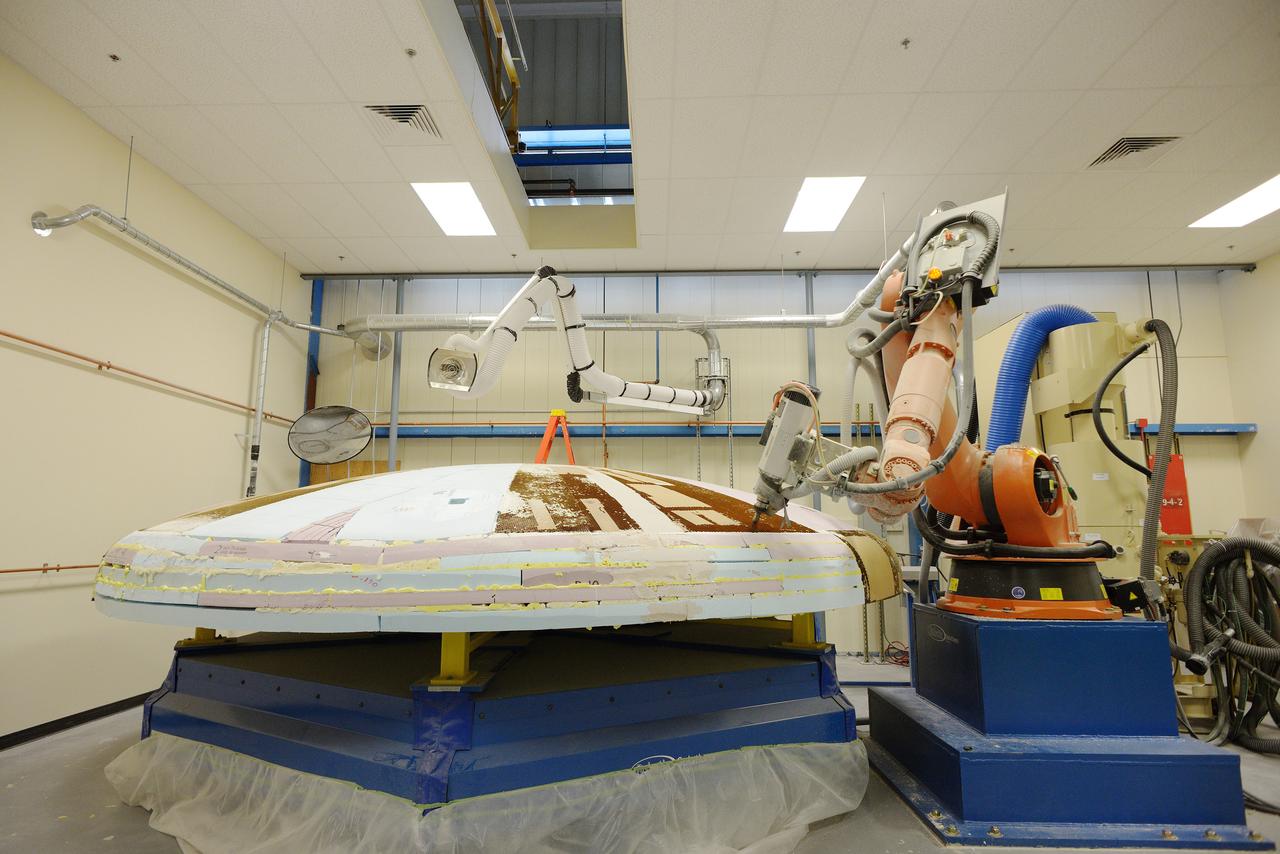
Technicians at Textron in Wimington, MA, apply Avcoat ablative material to the composite honeycomb structure attached to the Exploration Flight Test-1 (EFT-1) Orion heat shield carrier structure on May 22, 2013. Part of Batch image transfer from Flickr.
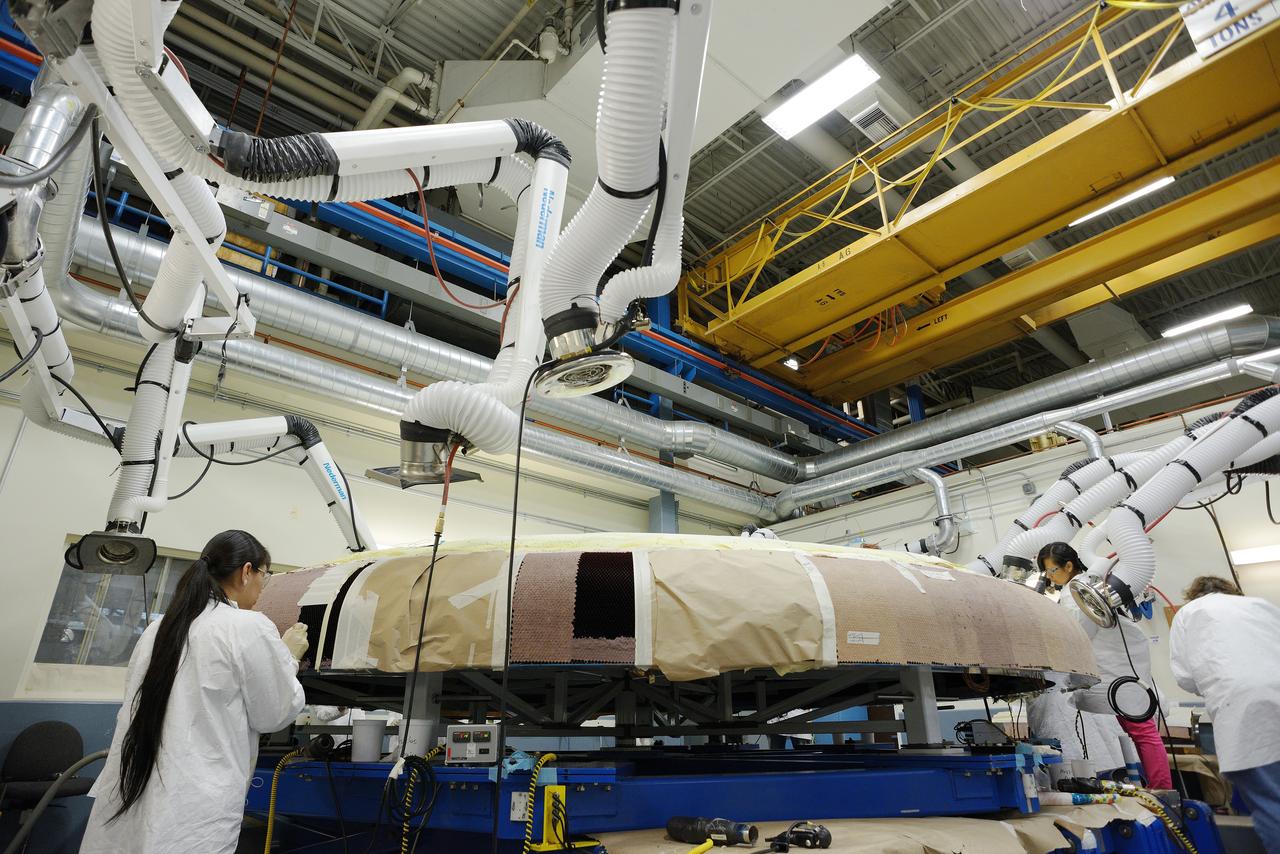
Technicians at Textron in Wimington, MA, apply Avcoat ablative material to the composite honeycomb structure attached to the Exploration Flight Test-1 (EFT-1) Orion heat shield carrier structure on May 22, 2013. Part of Batch image transfer from Flickr.
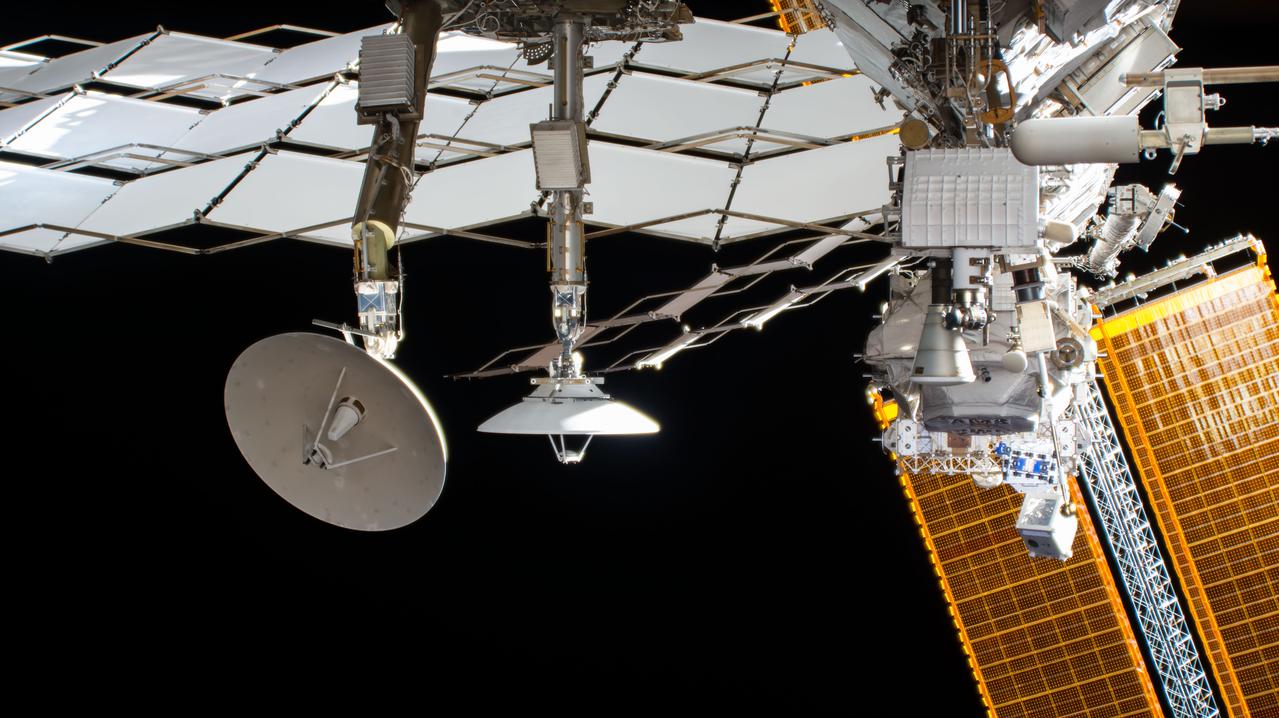
iss055e024025 (4/15/2018) - View of a radiator pane, solar array and the Alpha Magnetic Spectrometer - 02 (AMS-02) as seen by the External High Definition Camera (EHDC1). Also visible are Neutron Star Interior Composition Explorer (NICER) and Materials ISS Experiment Flight Facility (MISSE-FF).
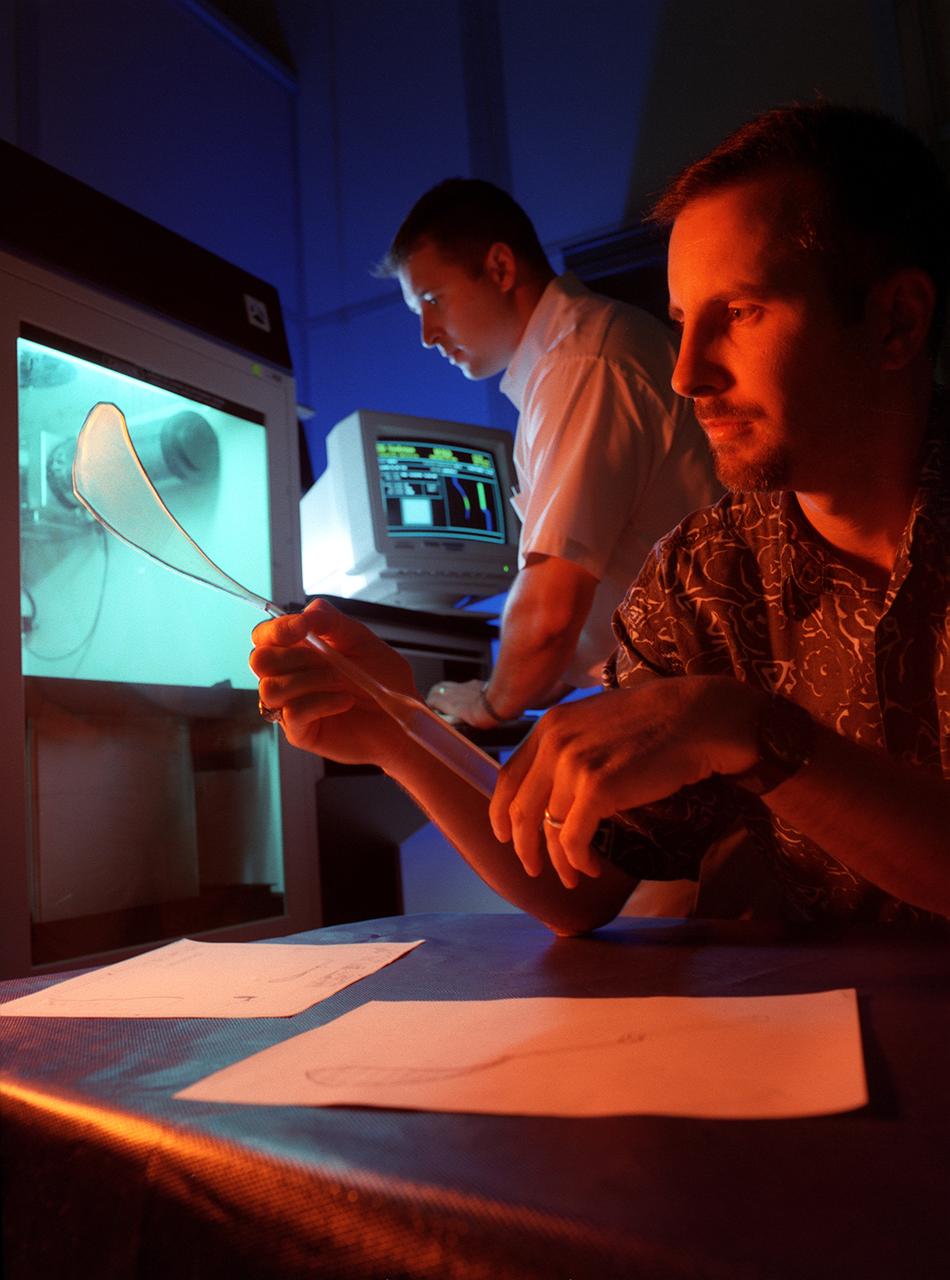
Marshall inventors Seth Lawson and Stanley Smeltzer display a pair of obstetrical forceps they designed. The forceps, made from composite space-age materials, measure the force applied during instrument-assisted delivery. The new forceps will help medical students get a feel for instrument-assisted deliveries before entering practice.
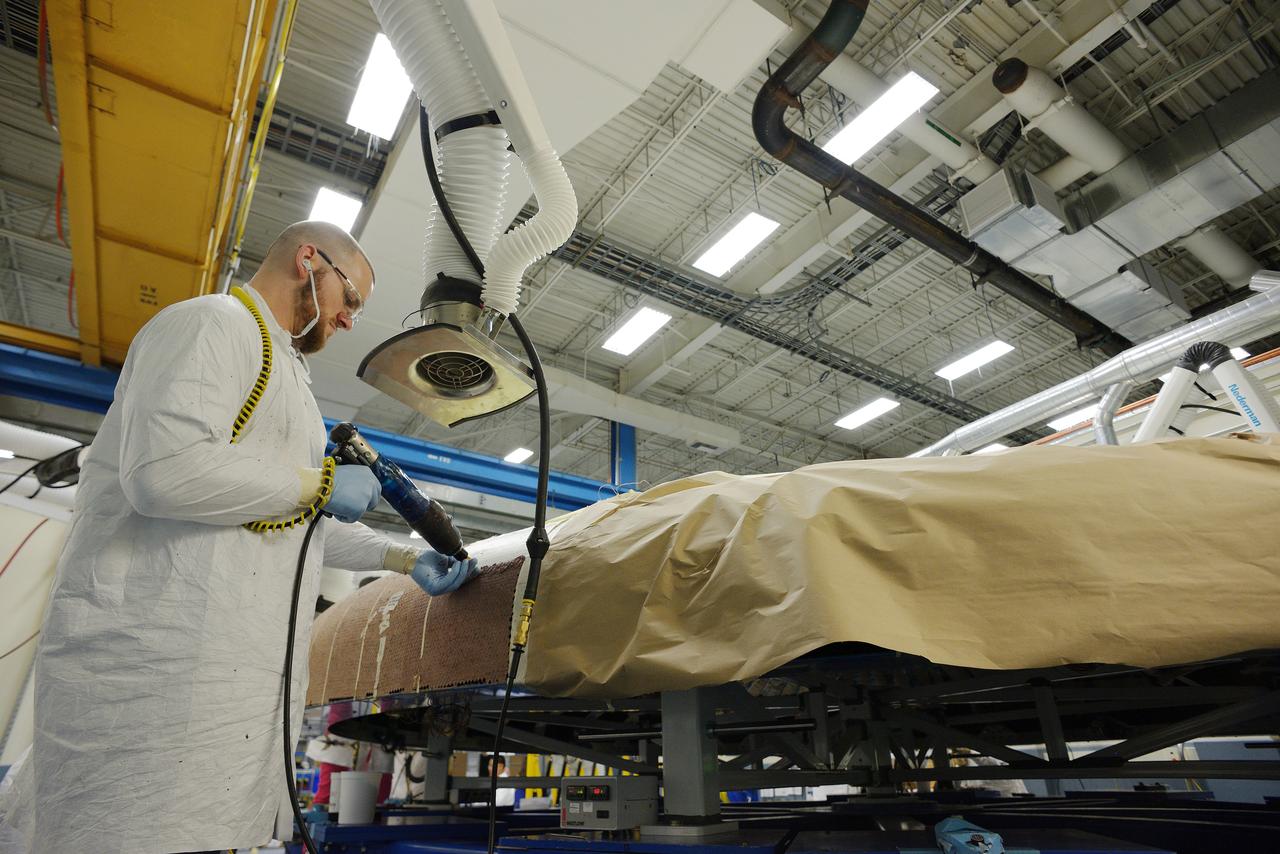
Technicians at Textron in Wimington, MA, apply Avcoat ablative material to the composite honeycomb structure attached to the Exploration Flight Test-1 (EFT-1) Orion heat shield carrier structure on May 22, 2013. Part of Batch image transfer from Flickr.
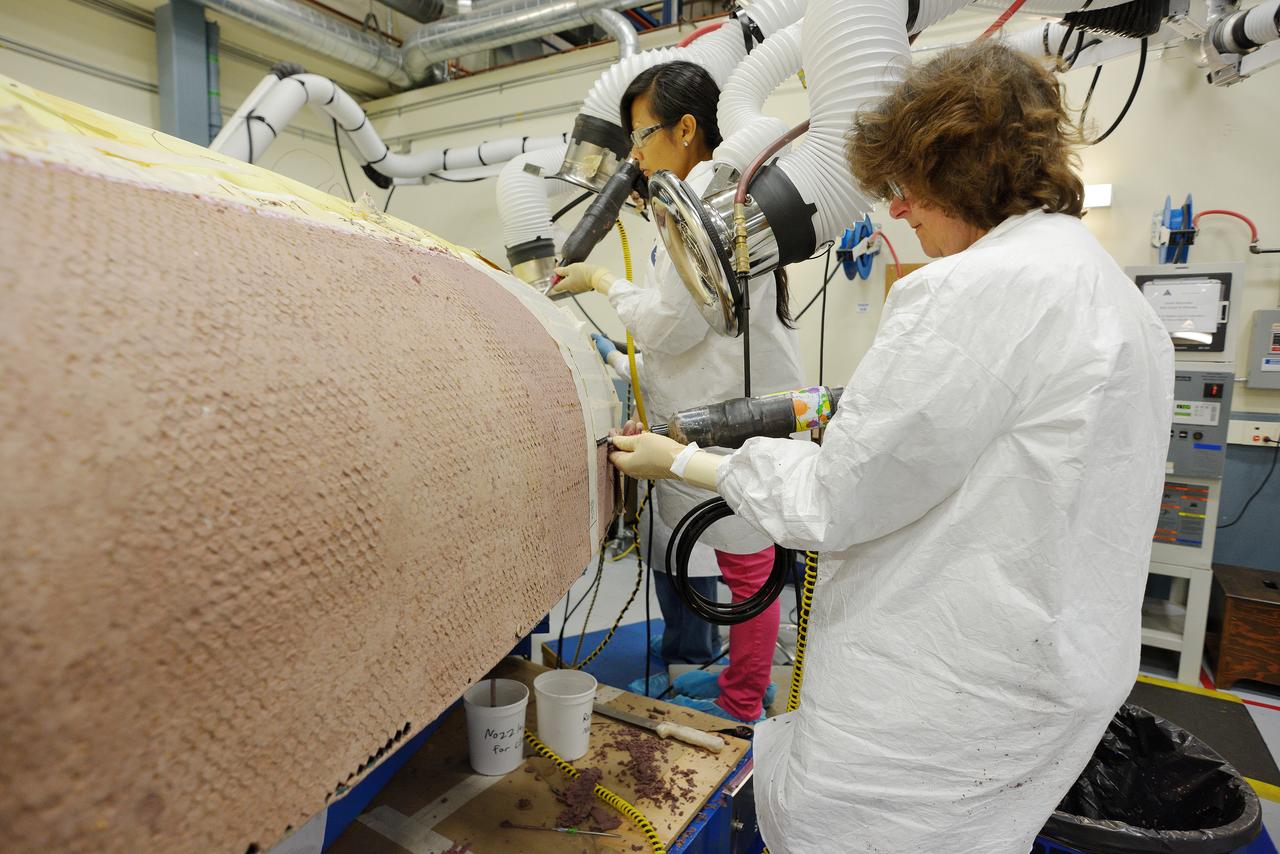
Technicians at Textron in Wimington, MA, apply Avcoat ablative material to the composite honeycomb structure attached to the Exploration Flight Test-1 (EFT-1) Orion heat shield carrier structure on May 22, 2013. Part of Batch image transfer from Flickr.
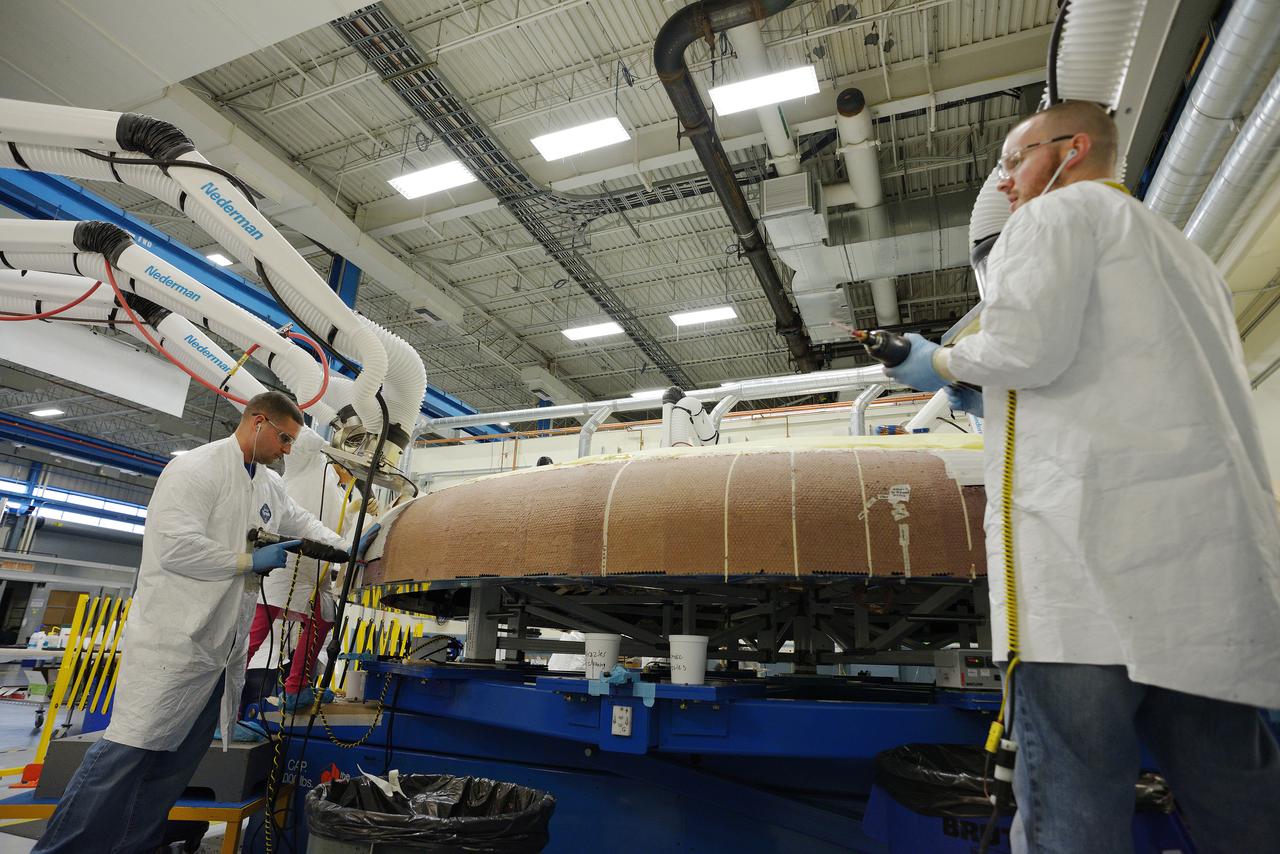
Technicians at Textron in Wimington, MA, apply Avcoat ablative material to the composite honeycomb structure attached to the Exploration Flight Test-1 (EFT-1) Orion heat shield carrier structure on May 22, 2013. Part of Batch image transfer from Flickr.
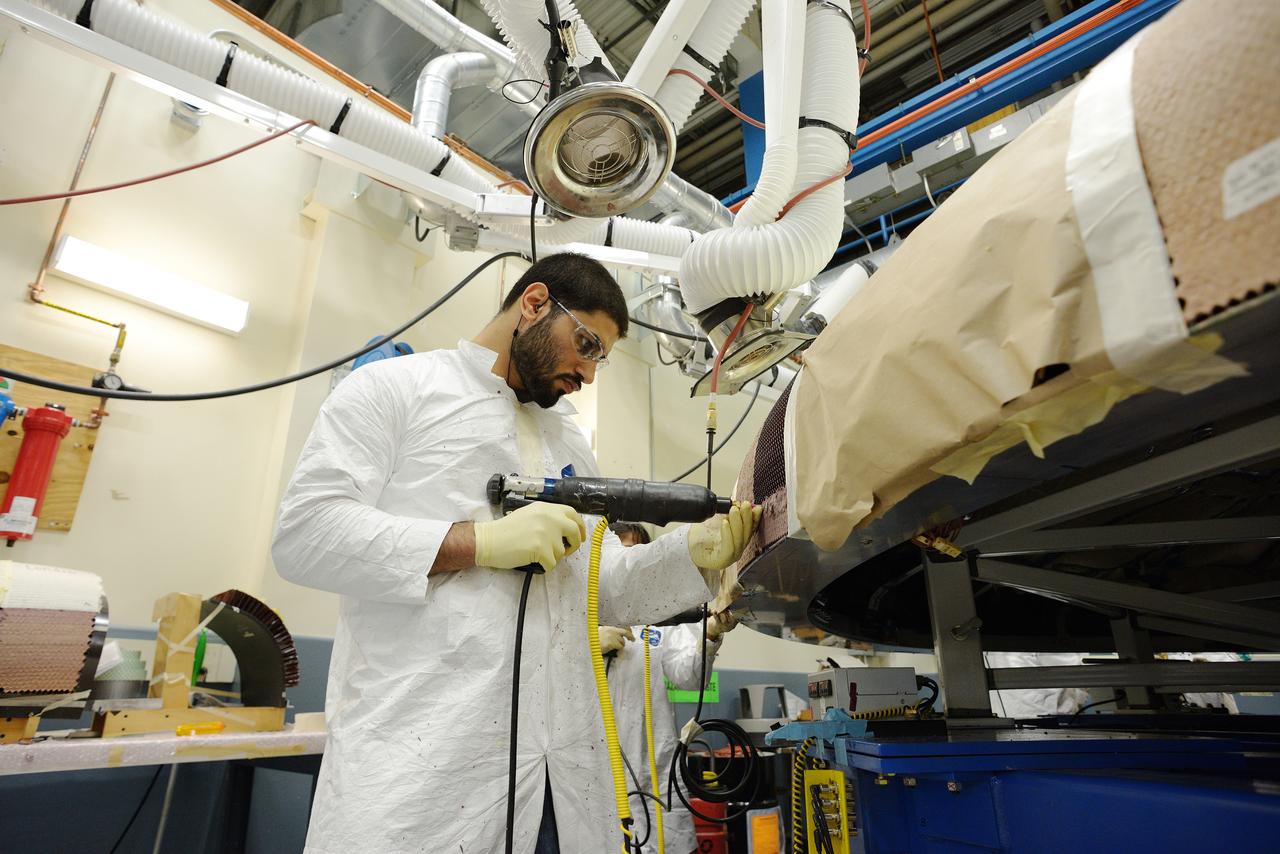
Technicians at Textron in Wimington, MA, apply Avcoat ablative material to the composite honeycomb structure attached to the Exploration Flight Test-1 (EFT-1) Orion heat shield carrier structure on May 22, 2013. Part of Batch image transfer from Flickr.
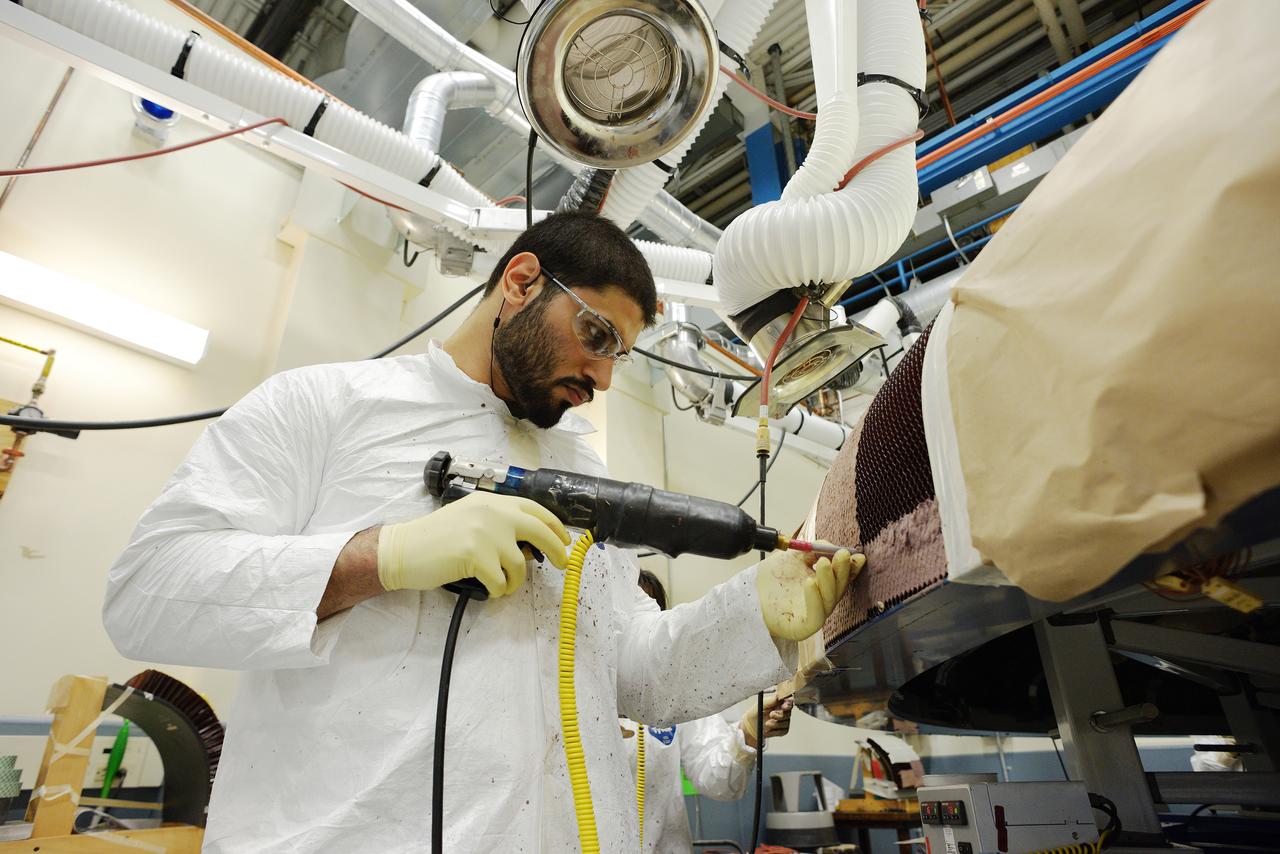
Technicians at Textron in Wimington, MA, apply Avcoat ablative material to the composite honeycomb structure attached to the Exploration Flight Test-1 (EFT-1) Orion heat shield carrier structure on May 22, 2013. Part of Batch image transfer from Flickr.
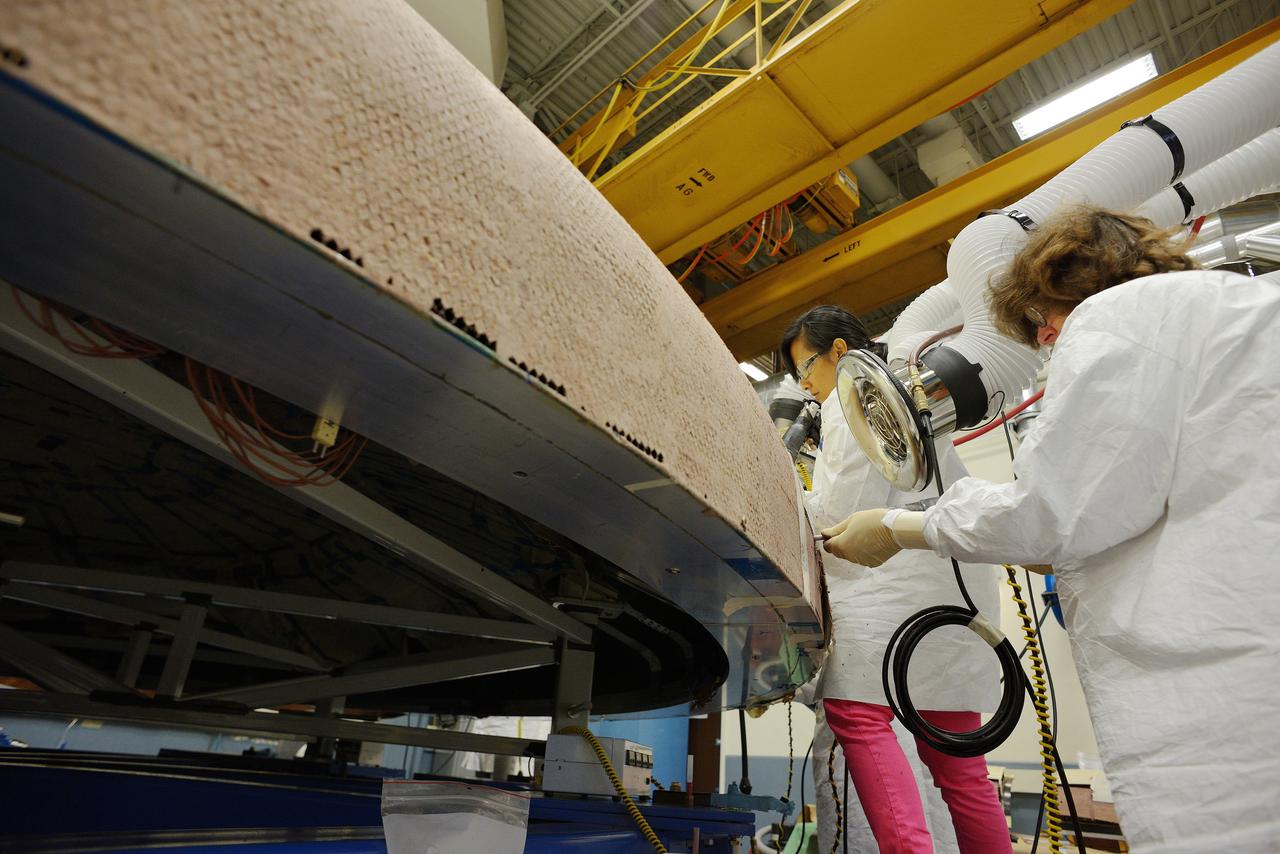
Technicians at Textron in Wimington, MA, apply Avcoat ablative material to the composite honeycomb structure attached to the Exploration Flight Test-1 (EFT-1) Orion heat shield carrier structure on May 22, 2013. Part of Batch image transfer from Flickr.

Technicians at Textron in Wimington, MA, apply Avcoat ablative material to the composite honeycomb structure attached to the Exploration Flight Test-1 (EFT-1) Orion heat shield carrier structure on May 22, 2013. Part of Batch image transfer from Flickr.
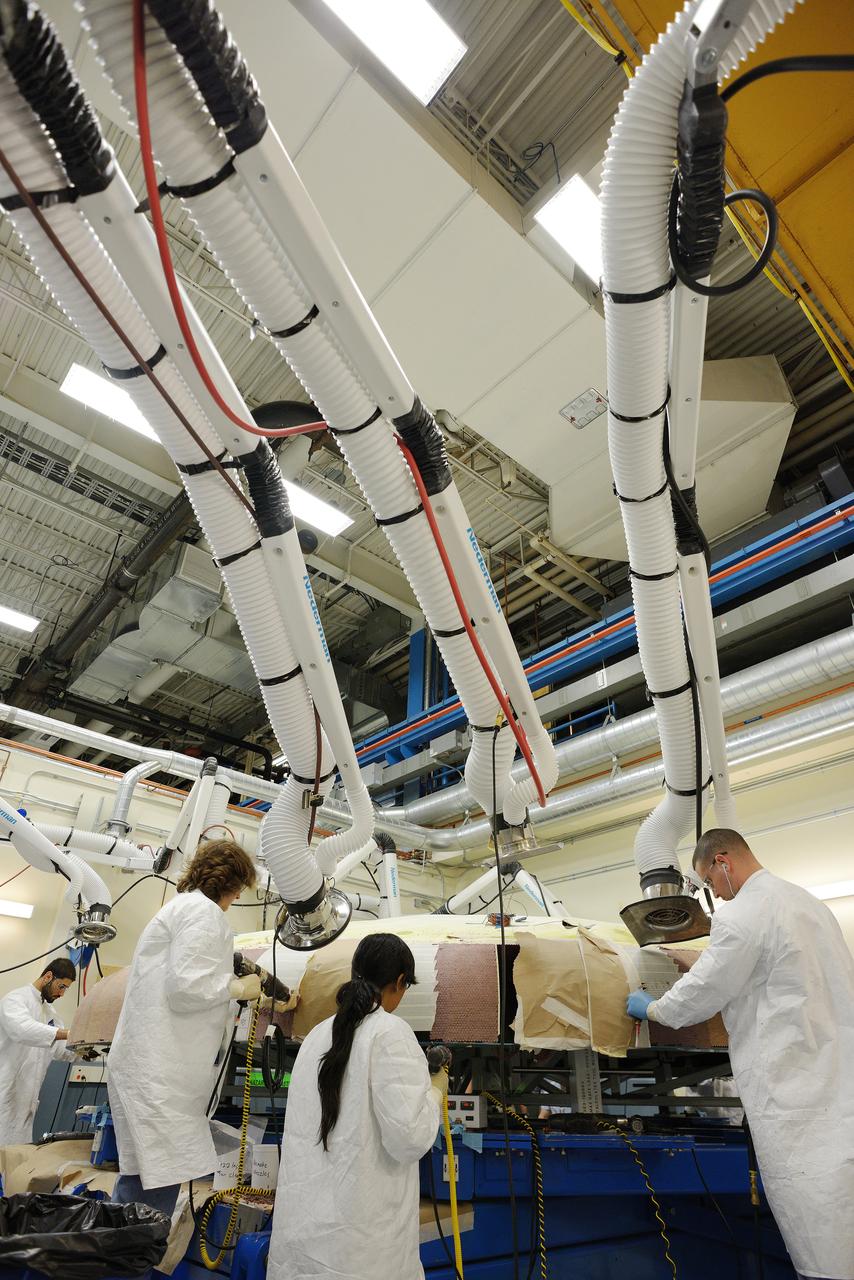
Technicians at Textron in Wimington, MA, apply Avcoat ablative material to the composite honeycomb structure attached to the Exploration Flight Test-1 (EFT-1) Orion heat shield carrier structure on May 22, 2013. Part of Batch image transfer from Flickr.
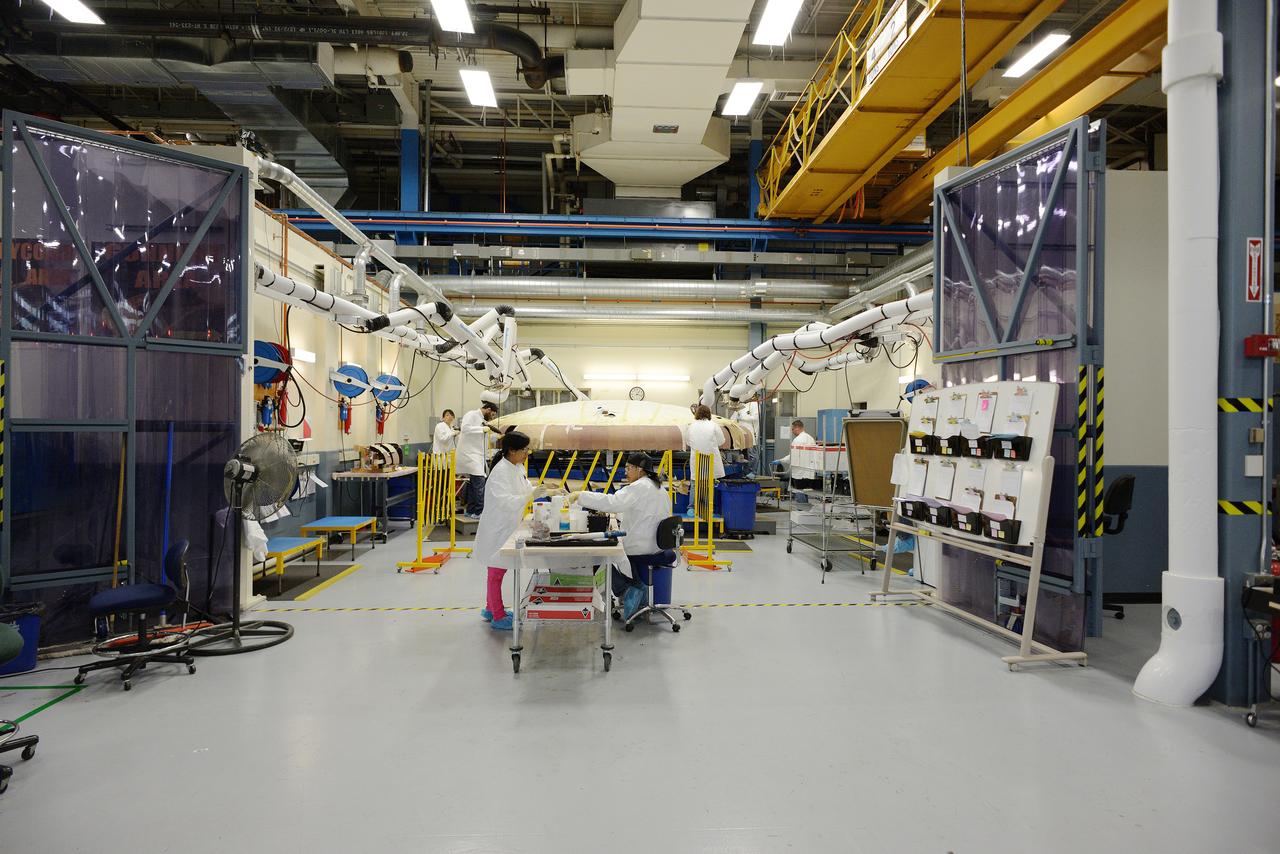
Technicians at Textron in Wimington, MA, apply Avcoat ablative material to the composite honeycomb structure attached to the Exploration Flight Test-1 (EFT-1) Orion heat shield carrier structure on May 22, 2013. Part of Batch image transfer from Flickr.
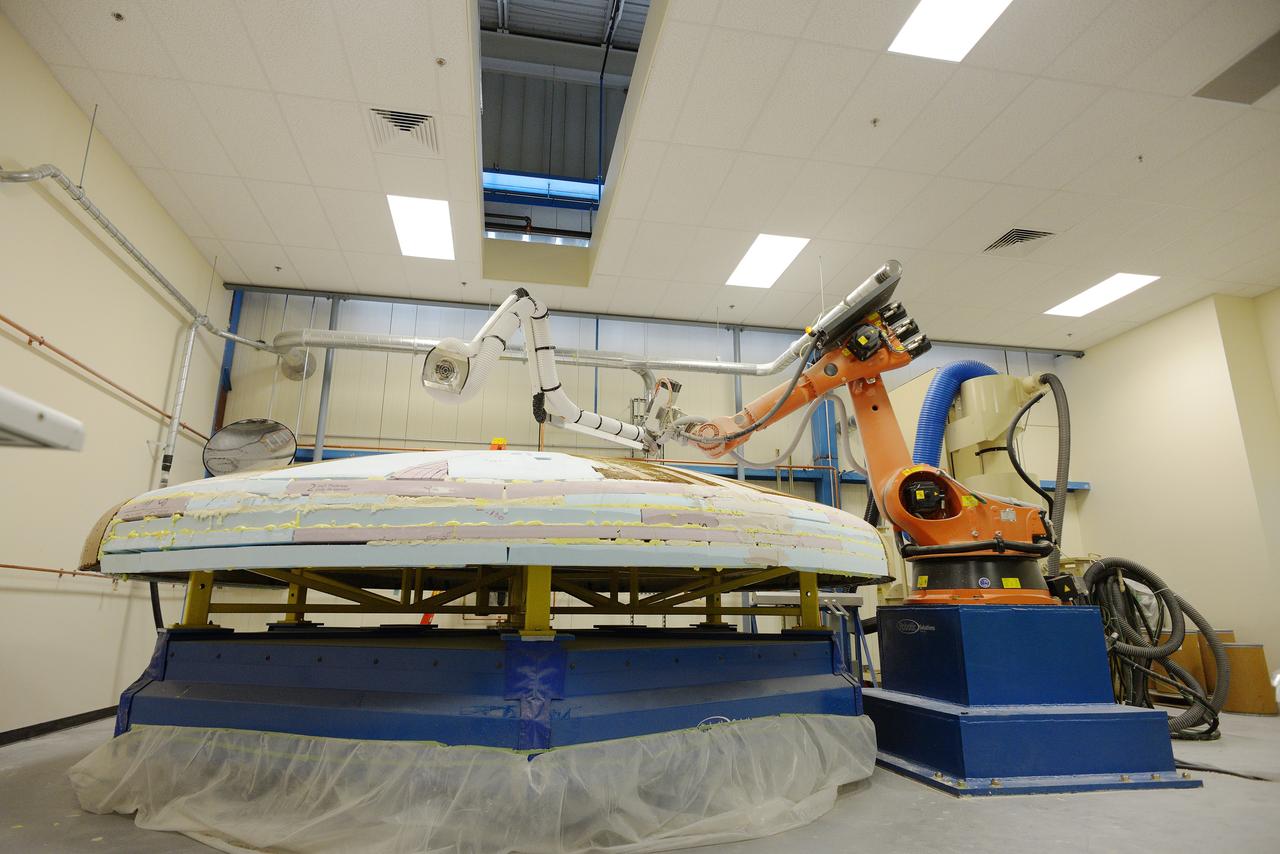
Technicians at Textron in Wimington, MA, apply Avcoat ablative material to the composite honeycomb structure attached to the Exploration Flight Test-1 (EFT-1) Orion heat shield carrier structure on May 22, 2013. Part of Batch image transfer from Flickr.
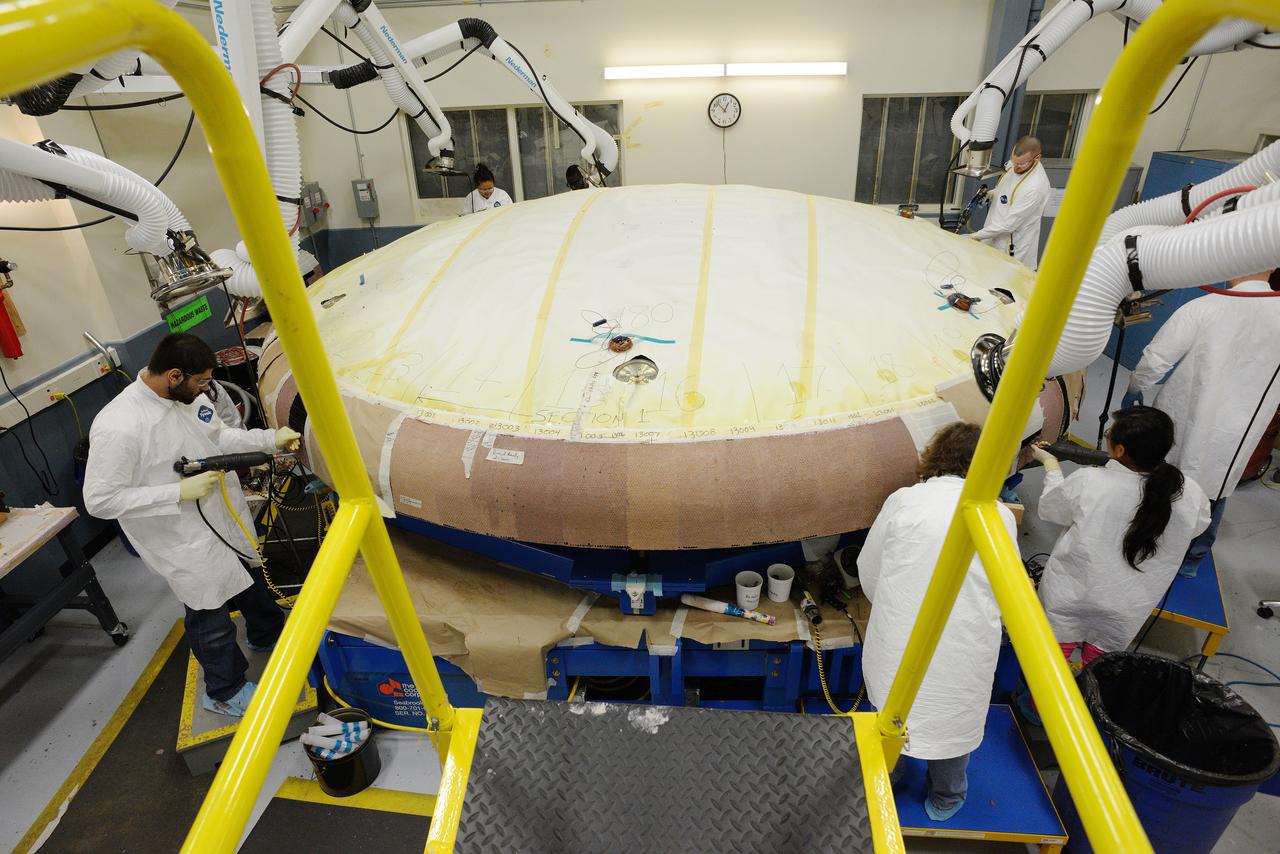
Technicians at Textron in Wimington, MA, apply Avcoat ablative material to the composite honeycomb structure attached to the Exploration Flight Test-1 (EFT-1) Orion heat shield carrier structure on May 22, 2013. Part of Batch image transfer from Flickr.
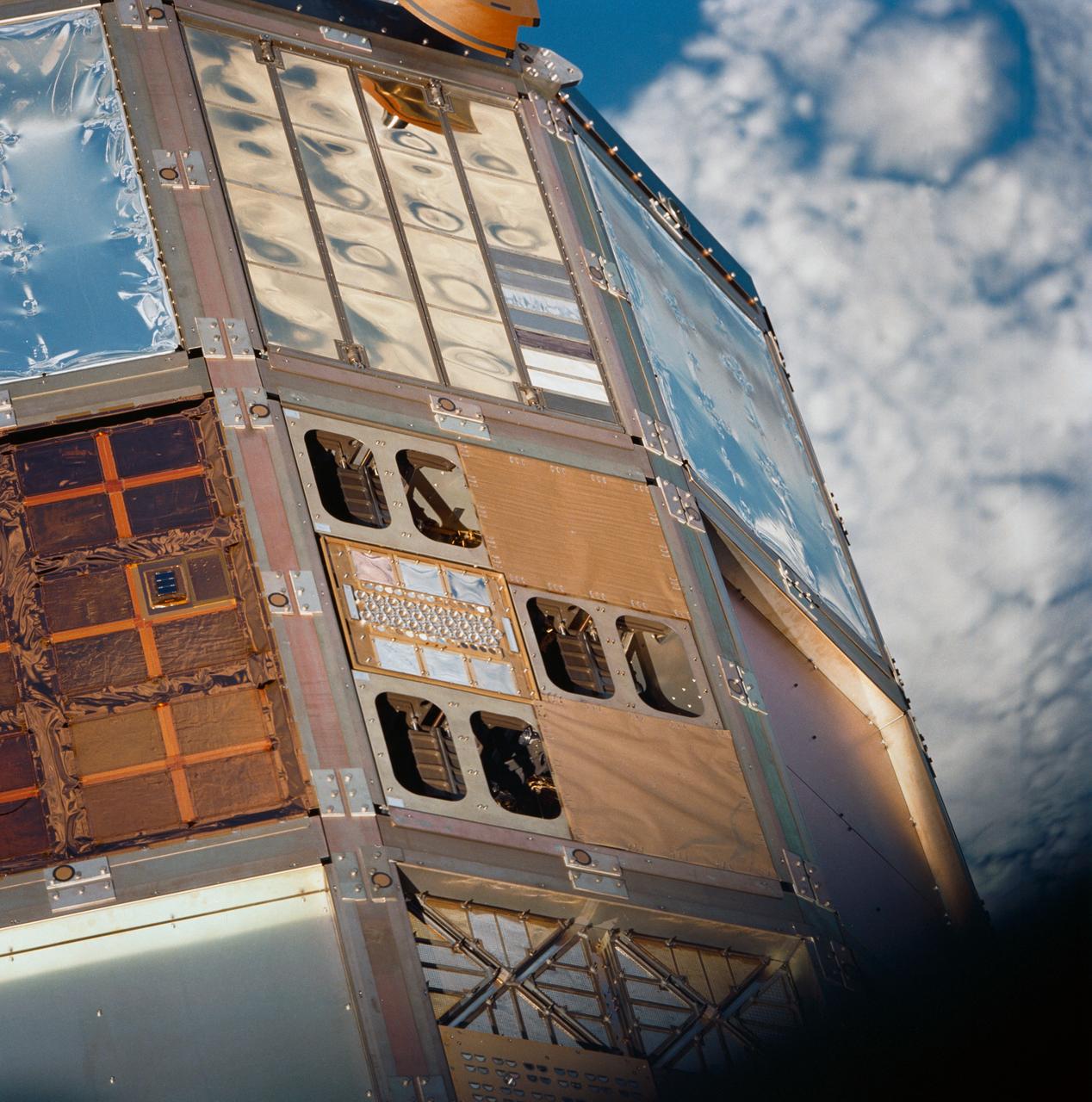
Closeup of Long Duration Exposure Facility (LDEF) experiment trays is documented during STS-32 retrieval activity and photo survey conducted by crewmembers onboard Columbia, Orbiter Vehicle (OV) 102. Partially visible is the Polymer Matrix Composite Materials Experiment. In the background is the surface of the Earth.
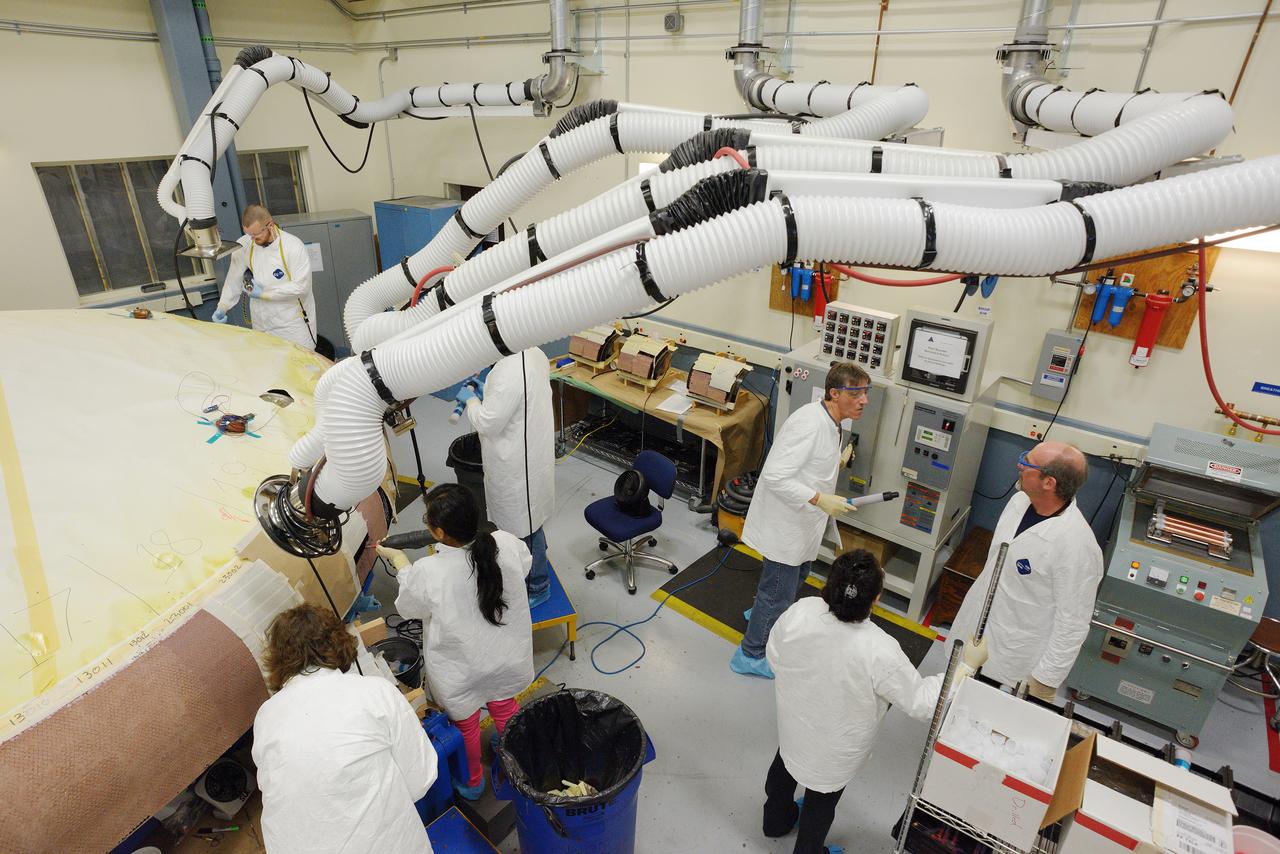
Technicians at Textron in Wimington, MA, apply Avcoat ablative material to the composite honeycomb structure attached to the Exploration Flight Test-1 (EFT-1) Orion heat shield carrier structure on May 22, 2013. Part of Batch image transfer from Flickr.
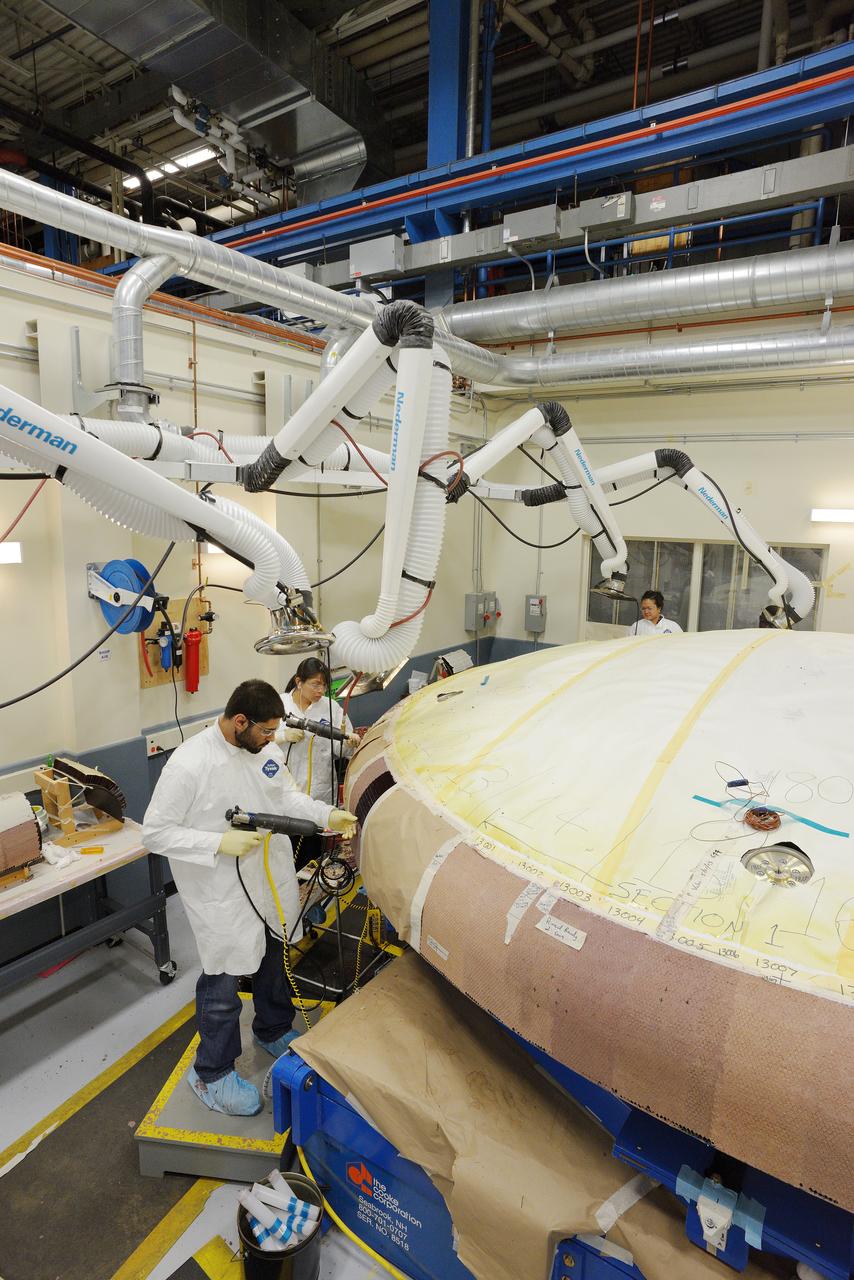
Technicians at Textron in Wimington, MA, apply Avcoat ablative material to the composite honeycomb structure attached to the Exploration Flight Test-1 (EFT-1) Orion heat shield carrier structure on May 22, 2013. Part of Batch image transfer from Flickr.

Technicians at Textron in Wimington, MA, apply Avcoat ablative material to the composite honeycomb structure attached to the Exploration Flight Test-1 (EFT-1) Orion heat shield carrier structure on May 22, 2013. Part of Batch image transfer from Flickr.
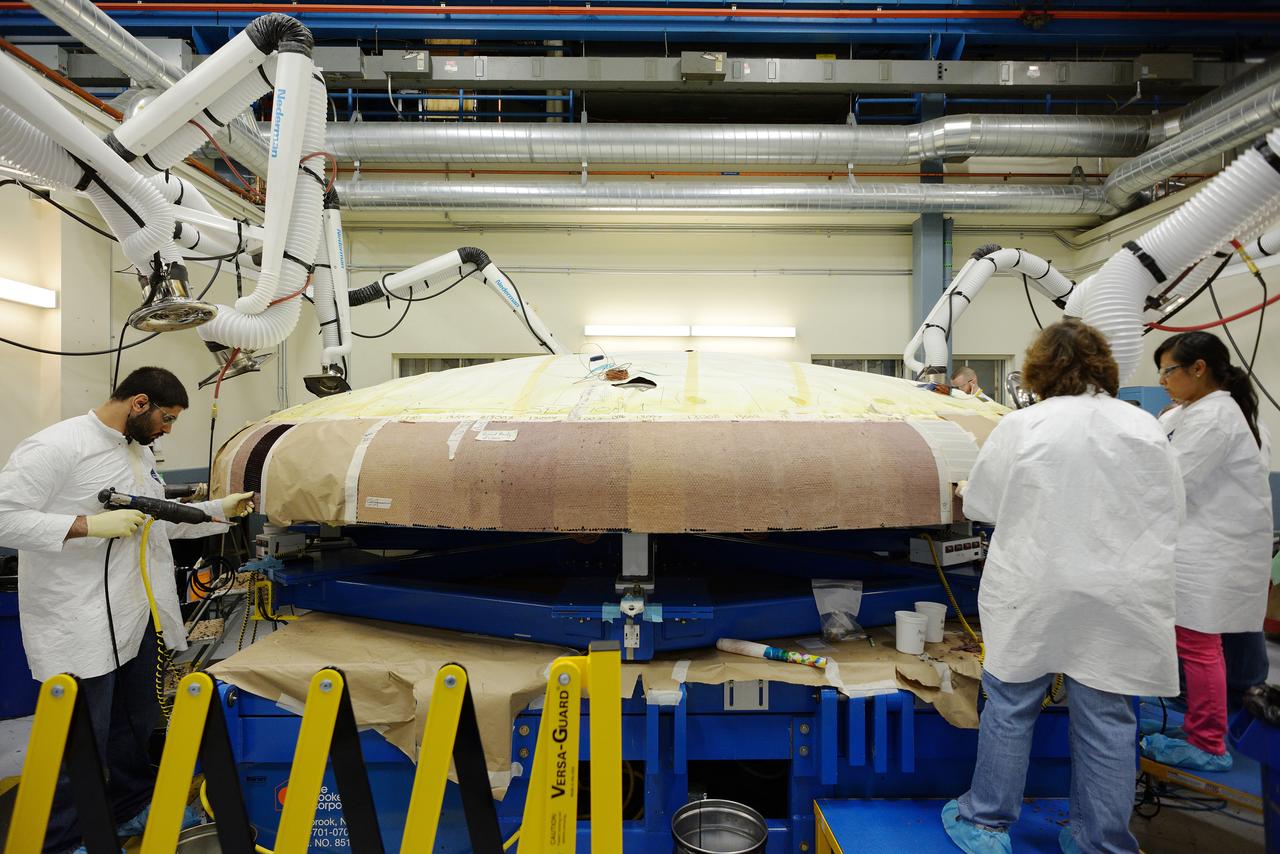
Technicians at Textron in Wimington, MA, apply Avcoat ablative material to the composite honeycomb structure attached to the Exploration Flight Test-1 (EFT-1) Orion heat shield carrier structure on May 22, 2013. Part of Batch image transfer from Flickr.
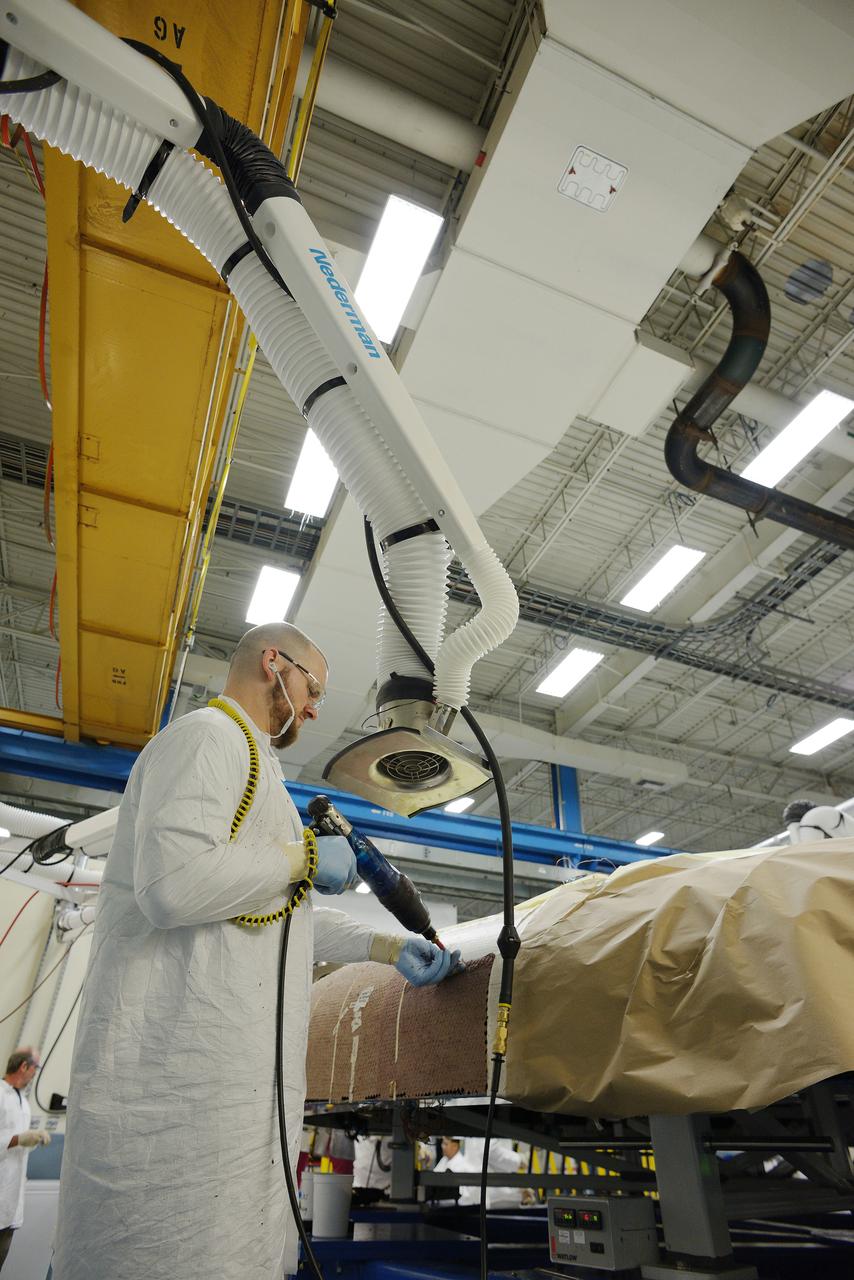
Technicians at Textron in Wimington, MA, apply Avcoat ablative material to the composite honeycomb structure attached to the Exploration Flight Test-1 (EFT-1) Orion heat shield carrier structure on May 22, 2013. Part of Batch image transfer from Flickr.
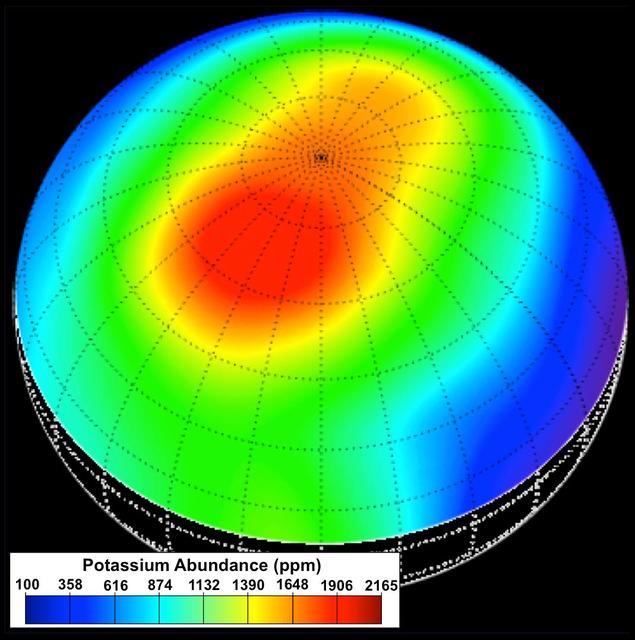
During the first year of NASA MESSENGER orbital mission, the spacecraft GRS instrument measured the elemental composition of Mercury surface materials. mong the most important discoveries from the GRS was the observation of higher abundances of the moderately volatile elements potassium, sodium, and chlorine than expected from previous scientific models and theories. Particularly high concentrations of these elements were observed at high northern latitudes, as illustrated in this potassium abundance map, which provides a view of the surface centered at 60° N latitude and 120° E longitude. This map was the first elemental map ever made of Mercury's surface and is to-date the only map to report absolute elemental concentrations, in comparison to element ratios. Prior to MESSENGER's arrival at Mercury, scientists expected that the planet would be depleted in moderately volatile elements, as is the case for our Moon. The unexpectedly high abundances observed with the GRS have forced a reevaluation of our understanding of the formation and evolution of Mercury. In addition, the K map provided the first evidence for distinct geochemical terranes on Mercury, as the high-potassium region was later found to also be distinct in its low Mg/Si, Ca/Si, S/Si, and high Na/Si and Cl/Si abundances. Instrument: Gamma-Ray Spectrometer (GRS) http://photojournal.jpl.nasa.gov/catalog/PIA19414
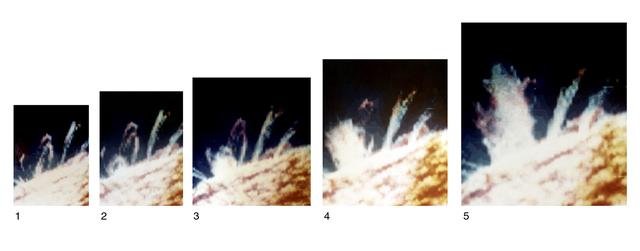
Breaking the grip of the closed magnetic loops that constrain other gases around it, a spray of chromospheric material surges upward, free of the Sun. Views 1 through 5 were recorded about 5 minutes apart by Skylab and comprise a composite of separate images made in chromospheric (red), transition region (green), and coronal (blue) temperatures of an ultraviolet sequence that depicts a solar eruption. Eruption begins (view 2) as material in or near a small, compact loop develops enough energy to overcome the Sun's magnetic bonds.

In this observation from NASA Mars Reconnaissance Orbiter made for a study of ancient craters, we see the craters filled with smooth material that has subsequently degraded into scallops. These formations might be possibly due to ground ice sublimation. High resolution can help to estimate any differences in roughness on the smoother main mantle and in the eroded hollows. With the enhanced color swath, we might be able to view composition variations of the material. http://photojournal.jpl.nasa.gov/catalog/PIA19288

An impressionist painting? No, it's a new impact crater that has appeared on the surface of Mars, formed at most between September 2016 and February 2019. What makes this stand out is the darker material exposed beneath the reddish dust. It looks blue because it’s a false color image, which combines several color filters to enhance differences between material compositions. The light blue indicates an absence of brighter, redder dust where the impact blast scoured the surface, revealing bedrock below. The very bright blue could be ejecta with a different composition that was thrown by the impact. The blue color isn’t ice. This impact was near the equator, not in a region where we’d expect shallow ice below the surface. https://photojournal.jpl.nasa.gov/catalog/PIA23304
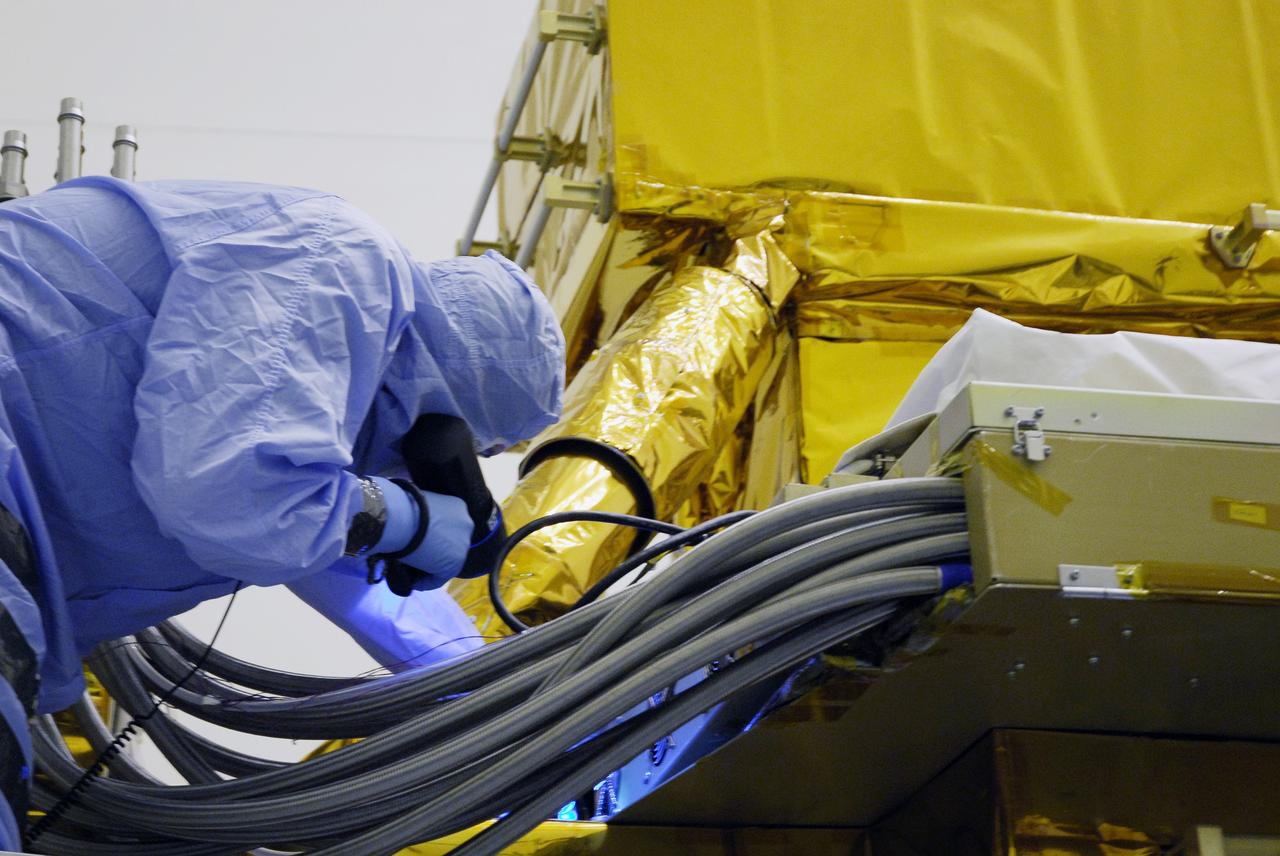
CAPE CANAVERAL, Fla. - In the Payload Hazardous Servicing Facility at NASA's Kennedy Space Center, a technician cleans contamination from the Super Lightweight Interchangeable Carrier, or SLIC. Contamination discovered Sept. 17 during preparations to deliver NASA's Hubble Space Telescope servicing payload to Launch Pad 39A. Cleanliness is extremely important for space shuttle Atlantis’ STS-125 mission to Hubble, and the teams have insured that the SLIC is ready to fly. The SLIC, which holds battery module assemblies, is built with state-of-the-art, lightweight, composite materials - carbon fiber with a cyanate ester resin and a titanium metal matrix composite. These composites have greater strength-to-mass ratios than the metals typically used in spacecraft design. The carrier is one of four being transferred to Launch Pad 39A. At the pad, the carriers will be loaded into Atlantis’ payload bay. Launch of Atlantis is targeted for Oct. 10. Photo credit: NASA/Jack Pfaller
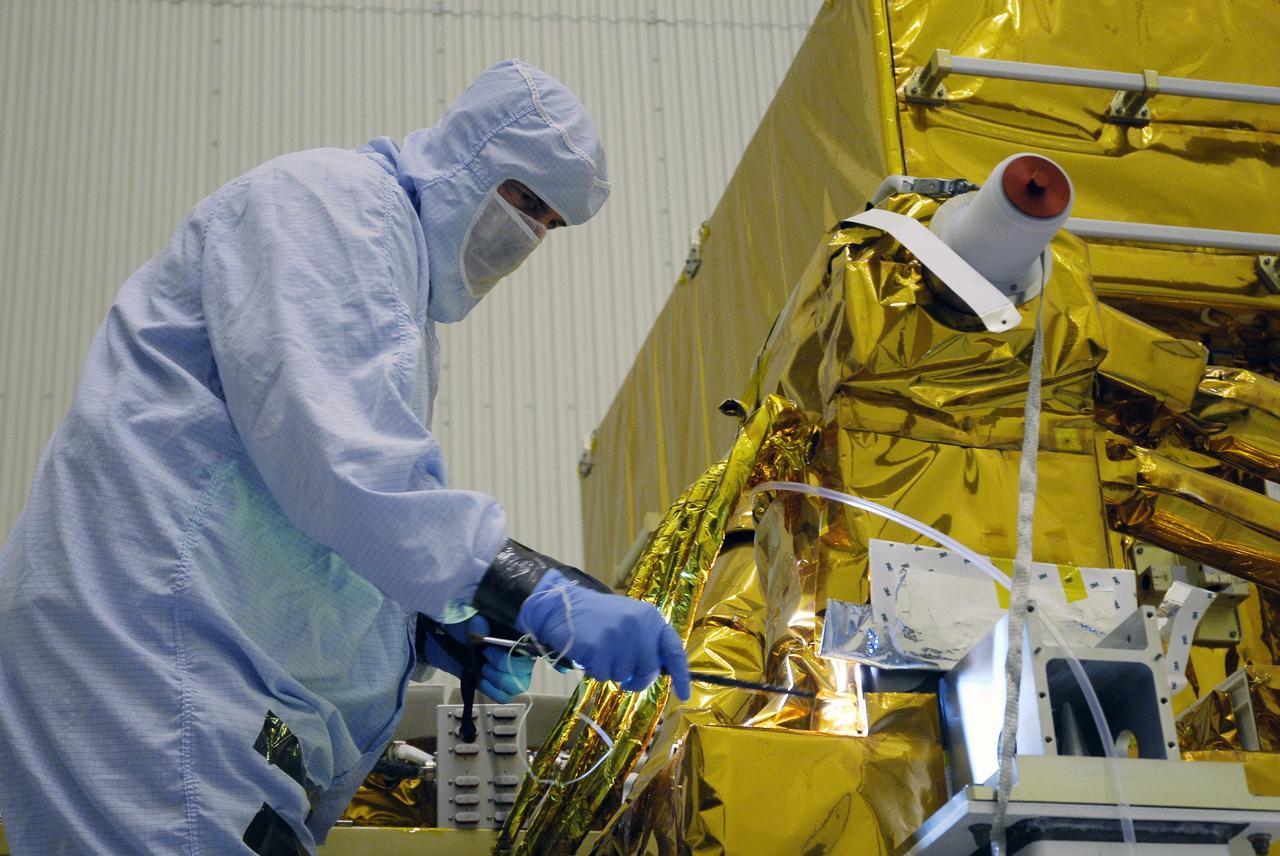
CAPE CANAVERAL, Fla. - In the Payload Hazardous Servicing Facility at NASA's Kennedy Space Center, a technician cleans contamination from the Super Lightweight Interchangeable Carrier, or SLIC. Contamination discovered Sept. 17 during preparations to deliver NASA's Hubble Space Telescope servicing payload to Launch Pad 39A. Cleanliness is extremely important for space shuttle Atlantis’ STS-125 mission to Hubble, and the teams have insured that the SLIC is ready to fly. The SLIC, which holds battery module assemblies, is built with state-of-the-art, lightweight, composite materials - carbon fiber with a cyanate ester resin and a titanium metal matrix composite. These composites have greater strength-to-mass ratios than the metals typically used in spacecraft design. The carrier is one of four being transferred to Launch Pad 39A. At the pad, the carriers will be loaded into Atlantis’ payload bay. Launch of Atlantis is targeted for Oct. 10. Photo credit: NASA/Jack Pfaller
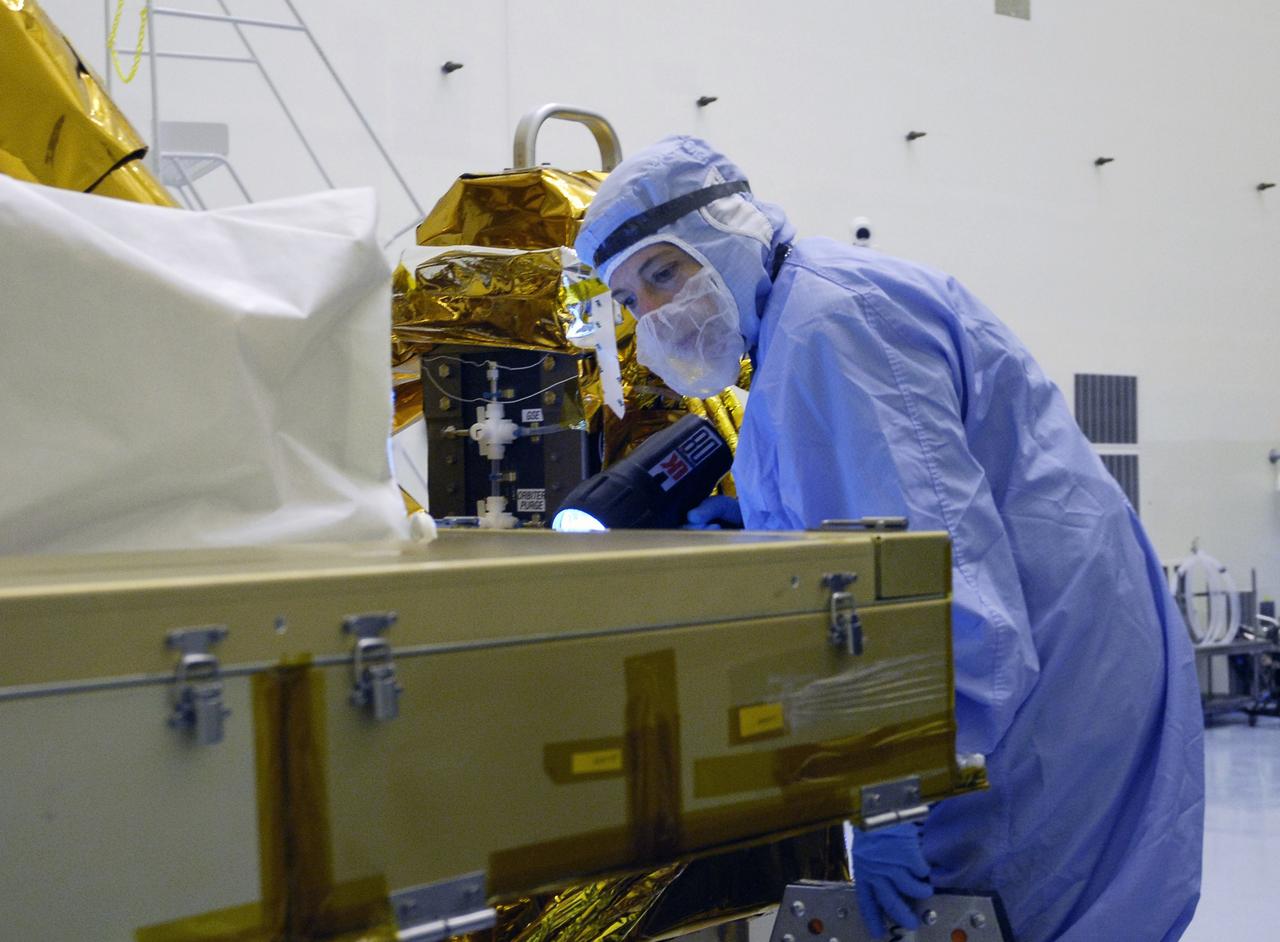
CAPE CANAVERAL, Fla. - In the Payload Hazardous Servicing Facility at NASA's Kennedy Space Center, a technician cleans contamination from the Super Lightweight Interchangeable Carrier, or SLIC. Contamination discovered Sept. 17 during preparations to deliver NASA's Hubble Space Telescope servicing payload to Launch Pad 39A. Cleanliness is extremely important for space shuttle Atlantis’ STS-125 mission to Hubble, and the teams have insured that the SLIC is ready to fly. The SLIC, which holds battery module assemblies, is built with state-of-the-art, lightweight, composite materials - carbon fiber with a cyanate ester resin and a titanium metal matrix composite. These composites have greater strength-to-mass ratios than the metals typically used in spacecraft design. The carrier is one of four being transferred to Launch Pad 39A. At the pad, the carriers will be loaded into Atlantis’ payload bay. Launch of Atlantis is targeted for Oct. 10. Photo credit: NASA/Jack Pfaller
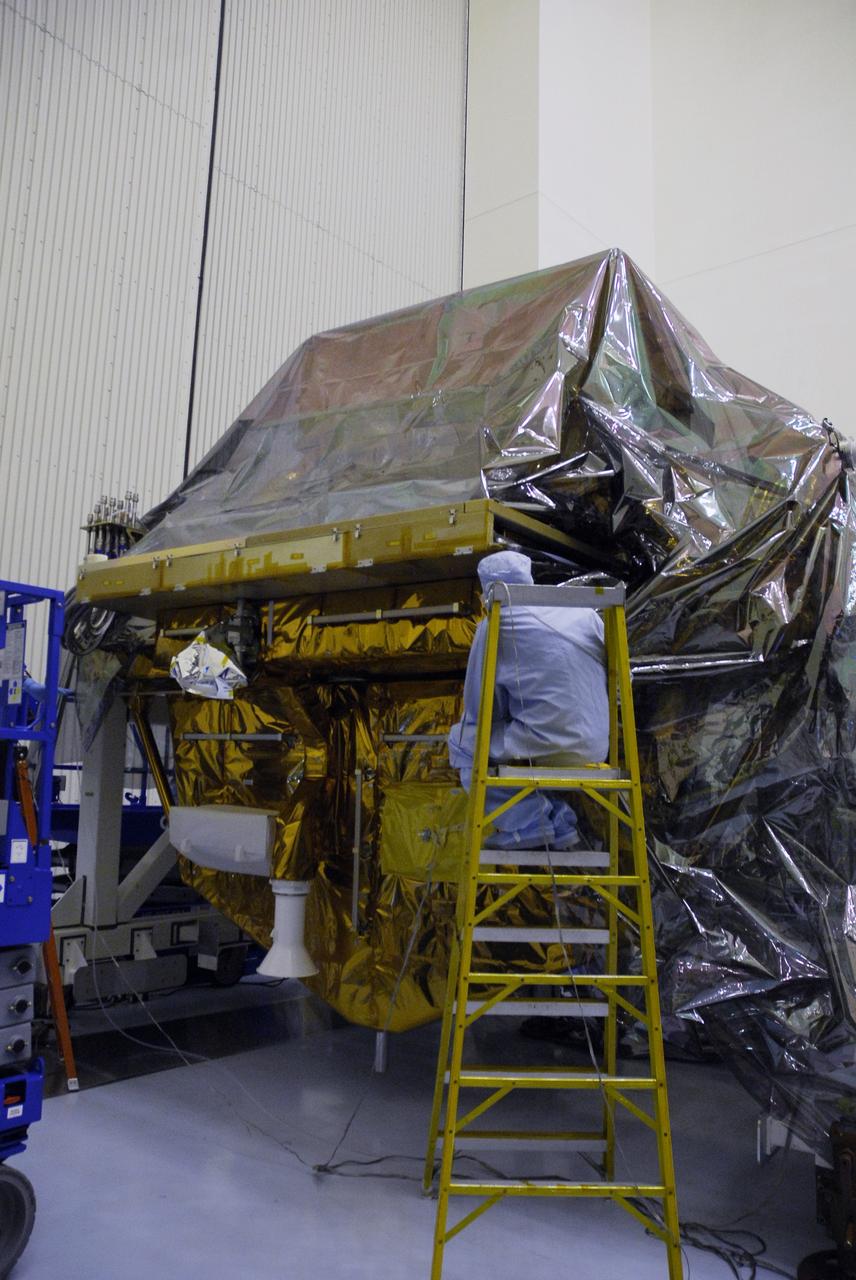
CAPE CANAVERAL, Fla. - In the Payload Hazardous Servicing Facility at NASA's Kennedy Space Center, the protective cover is being replaced on the Super Lightweight Interchangeable Carrier, or SLIC. The cover was removed to clean the carrier of contaminants found Sept. 17 during preparations to deliver NASA's Hubble Space Telescope servicing payload to Launch Pad 39A. Cleanliness is extremely important for space shuttle Atlantis’ STS-125 mission to Hubble, and the teams have insured that the SLIC is ready to fly. The SLIC, which holds battery module assemblies, is built with state-of-the-art, lightweight, composite materials - carbon fiber with a cyanate ester resin and a titanium metal matrix composite. These composites have greater strength-to-mass ratios than the metals typically used in spacecraft design. The carrier is one of four being transferred to Launch Pad 39A. At the pad, the carriers will be loaded into Atlantis’ payload bay. Launch of Atlantis is targeted for Oct. 10. Photo credit: NASA/Jack Pfaller
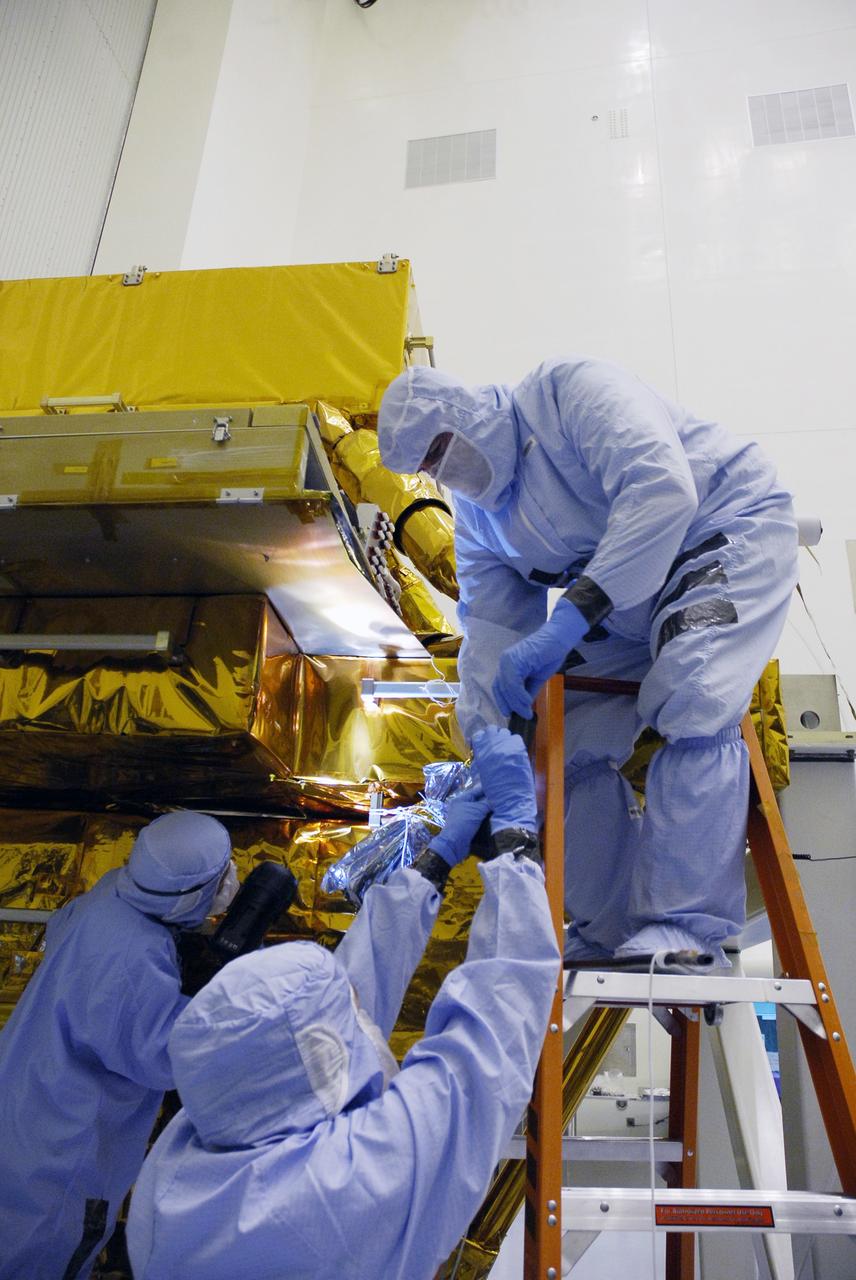
CAPE CANAVERAL, Fla. - In the Payload Hazardous Servicing Facility at NASA's Kennedy Space Center, technicians clean contamination from the Super Lightweight Interchangeable Carrier, or SLIC. Contamination discovered Sept. 17 during preparations to deliver NASA's Hubble Space Telescope servicing payload to Launch Pad 39A. Cleanliness is extremely important for space shuttle Atlantis’ STS-125 mission to Hubble, and the teams have insured that the SLIC is ready to fly. The SLIC, which holds battery module assemblies, is built with state-of-the-art, lightweight, composite materials - carbon fiber with a cyanate ester resin and a titanium metal matrix composite. These composites have greater strength-to-mass ratios than the metals typically used in spacecraft design. The carrier is one of four being transferred to Launch Pad 39A. At the pad, the carriers will be loaded into Atlantis’ payload bay. Launch of Atlantis is targeted for Oct. 10. Photo credit: NASA/Jack Pfaller
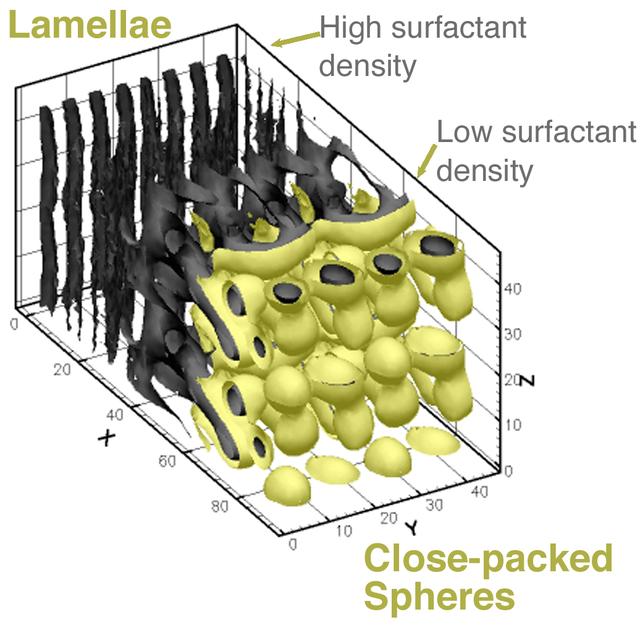
NASA is looking to biological techniques that are millions of years old to help it develop new materials and technologies for the 21st century. Sponsored by NASA, Jeffrey Brinker of the University of New Mexico is studying how multiple elements can assemble themselves into a composite material that is clear, tough, and impermeable. His research is based on the model of how an abalone builds the nacre, also called mother-of-pearl, inside its shell. Strong thin coatings, or lamellae, in Brinker's research are formed when objects are dip-coated. Evaporation drives the self-assembly of molecular aggregates (micelles) of surfactant, soluble silica, and organic monomers and their further self-organization into layered organic and inorganic assemblies.
![Layers, probably sedimentary in origin, have undergone extensive erosion in this image from NASA's Mars Reconnaissance Orbiter (MRO) of Shalbatana Valles, a prominent channel that cuts through Xanthe Terra. This erosion has produced several small mesas and exposed light-toned material that may differ in composition from the surrounding material. The map is projected here at a scale of 25 centimeters (9.8 inches) per pixel. [The original image scale is 27.5 centimeters (10.8 inches) per pixel (with 1 x 1 binning); objects on the order of 82 centimeters (32.3 inches) across are resolved.] North is up. https://photojournal.jpl.nasa.gov/catalog/PIA22182](https://images-assets.nasa.gov/image/PIA22182/PIA22182~medium.jpg)
Layers, probably sedimentary in origin, have undergone extensive erosion in this image from NASA's Mars Reconnaissance Orbiter (MRO) of Shalbatana Valles, a prominent channel that cuts through Xanthe Terra. This erosion has produced several small mesas and exposed light-toned material that may differ in composition from the surrounding material. The map is projected here at a scale of 25 centimeters (9.8 inches) per pixel. [The original image scale is 27.5 centimeters (10.8 inches) per pixel (with 1 x 1 binning); objects on the order of 82 centimeters (32.3 inches) across are resolved.] North is up. https://photojournal.jpl.nasa.gov/catalog/PIA22182

Impact craters are common on all solar system bodies. They offer many clues to scientists regarding the geologic history of a planetary surface, particularly regarding its age, evolution with time, and composition. For instance, this image covers an impact crater on the southeastern flank of Ascraeus Mons, a notable volcano in the Tharsis Plateau. Based on the original science rationale for acquiring this image, by gaining more information about its depth and consequently the stability of the crater wall, we can learn more about the nature of the volcano's flank materials. Also, by carefully studying the materials exposed in the crater walls, we can gain more information about the subsurface. https://photojournal.jpl.nasa.gov/catalog/PIA24919
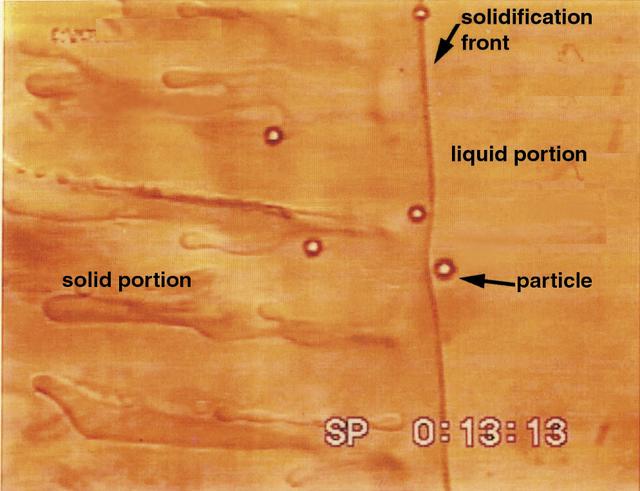
As a liquefied metal solidifies, particles dispersed in the liquid are either pushed ahead of or engulfed by the moving solidification front. Similar effects can be seen when the ground freezes and pushes large particles out of the soil. The Particle Engulfment and Pushing (PEP) experiment, conducted aboard the fourth U.S. Microgravity Payload (USMP-4) mission in 1997, used a glass and plastic beads suspended in a transparent liquid. The liquid was then frozen, trapping or pushing the particles as the solidifying front moved. This simulated the formation of advanced alloys and composite materials. Such studies help scientists to understand how to improve the processes for making advanced materials on Earth. The principal investigator is Dr. Doru Stefanescu of the University of Alabama. This image is from a video downlink.
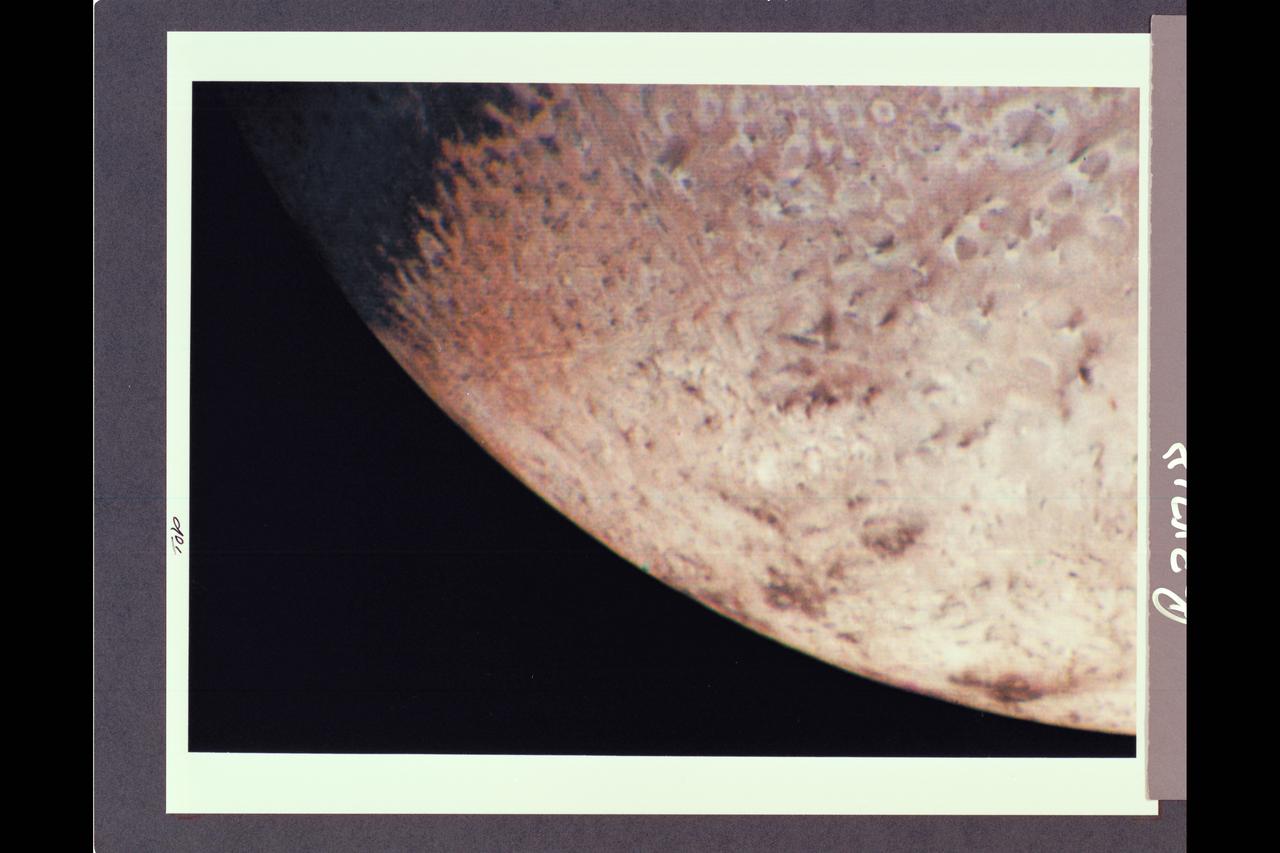
P-34718 Range: 210,000 kilometers (128,000 miles) This natural color image of the limb of Triton shows the largest surface features at about 3 miles across. The picture is a composite of images taken through the violet, green and clear filters and shows a geologic boundary between a rough, pitted surface to the right and a smoother surface to the left. The change between surface types is gradual. The image also shows a color boundary between pinkish material in the upper part of the image and whiter material in the lower part. The geologic and color boundaries are not the same. That implies that whatever supplies the color is a very thin coating over a different underlying material in which the geologic boundary occurs. The colored coating may be a seasonal frost composed of compounds volatile enough to be sublimated at the very low temperatures (40 K to 50 K or -387.4 F to -369.4 F) prevailing near Triton's surface. Possible compositions of the frost layer include methane (which turns red when irradiated), carbon monoxide or nitrogen. The color in this image is somewhat exaggerated: Triton is primarily a white object with a pinkish cast in some areas.
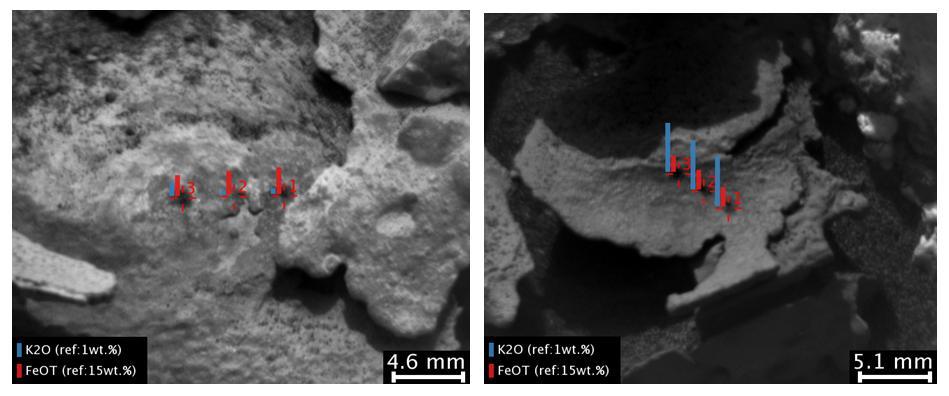
These images and overlay bar charts from the Chemistry and Camera (ChemCam) instrument on NASA's Curiosity Mars rover indicate where some high-potassium material is localized within mineral veins at "Garden City." The two images are from ChemCam's Remote Micro-Imager. Each covers an area just over an inch wide (scale bars are in millimeters) in veins at the Garden City site on lower Mount Sharp. The overlay charts show comparisons of potassium (blue) and iron (red) in the mineral veins' compositions determined by reading the spectra of light induced by zapping points in each area with ChemCam's laser. Mineral veins such as these form where fluids move through fractured rocks, depositing minerals in the fractures and affecting chemistry of the surrounding rock. The thin layer of dark fracture-filling material in the image on the right contains much more potassium than the other local material on the left, indicating either different fluid compositions or local variations in the rock. The image on the left was taken on April 4, 2015, during the 946th Martian day, or sol, of Curiosity's work on Mars. The image on the right was taken on Sol 936, on March 25, 2015. A broader view of the prominent mineral veins at Garden City is at PIA19161. http://photojournal.jpl.nasa.gov/catalog/PIA19923

This illustration shows three possible interiors of the seven rocky exoplanets in the TRAPPIST-1 system, based on precision measurements of the planet densities. Overall the TRAPPIST-1 worlds have remarkably similar densities, which suggests they may share the same ratio of common planet-forming elements. The planet densities are slightly lower than those of Earth or Venus, which could mean they contain fractionally less iron (a highly dense material) or more low-density materials, such as water or oxygen. In the first model (left), the interior of the planet is composed of rock mixed with iron bound to oxygen. There is no solid iron core, which is the case with Earth and the other rocky planets in our own solar system. The second model shows an overall composition similar to Earth's, in which the densest materials have settled to the center of the planet, forming an iron-rich core proportionally smaller than Earth's core. A variation is shown in the third panel, where a larger, denser core could be balanced by an extensive low-density ocean on the planet's surface. However, this scenario can be applied only to the outer four planets in the TRAPPIST-1 system. On the inner three planets, any oceans would vaporize due to the higher temperatures near their star, and a different composition model is required. Since all seven planets have remarkably similar densities, it is more likely that all the planets share a similar bulk composition, making this fourth scenario unlikely but not impossible. The high-precision mass and diameter measurements of the exoplanets in the TRAPPIST-1 system have allowed astronomers to calculate the overall densities of these worlds with an unprecedented degree of accuracy in exoplanet research. Density measurements are a critical first step in determining the composition and structure of exoplanets, but they must be interpreted through the lens of scientific models of planetary structure. https://photojournal.jpl.nasa.gov/catalog/PIA24372
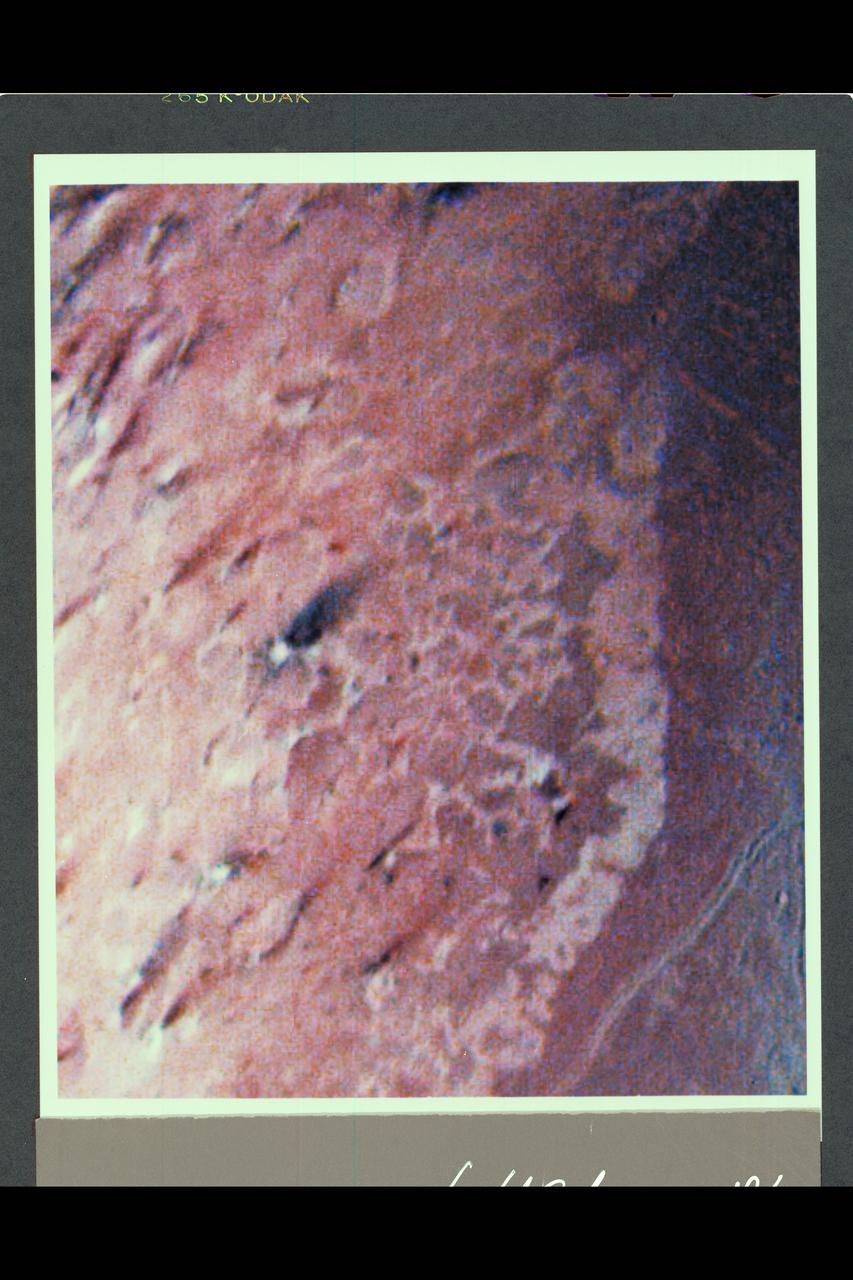
Range : 190,000 km ( 118,000 mi.) This false color image of Triton is a composite of images taken through the violet, green and ultraviolet filters. The smallest visible features are about 4 km (2.5 mi.) across. The image shows a geologic boundary between completely dark materials and patchy light/dark materials. A layer of pinkish material stretches across the center of the image. The pinkish layer must be thin because underlying albedo patterns show through. Several features appear to be affected by the thin atmosphere; the elongated dark streaks may represent particulate materials blown in the same direction by previaling winds, and the white material may be frost deposits. Other features appear to be volcanic deposits including the smooth, dark materials alongside the long, narrow canyons. The streaks themselves appear to originate from very small circular sources, some of which are white, like the source of the prominent streak near the center of the image. The sources may be small volcanic vents with fumarolic-like activity. The colors may be due to irradiated methane, which is pink to red, and nitrogen, which is white.
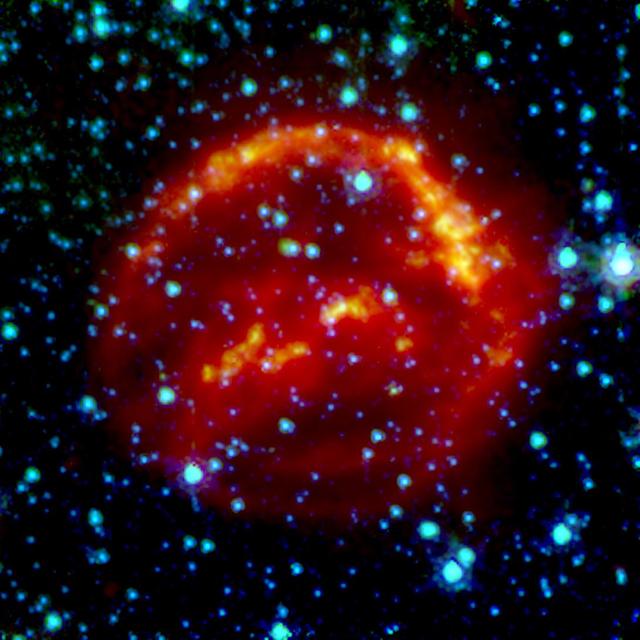
This Spitzer false-color image is a composite of data from the 24 micron channel of Spitzer's multiband imaging photometer (red), and three channels of its infrared array camera: 8 micron (yellow), 5.6 micron (blue), and 4.8 micron (green). Stars are most prominent in the two shorter wavelengths, causing them to show up as turquoise. The supernova remnant is most prominent at 24 microns, arising from dust that has been heated by the supernova shock wave, and re-radiated in the infrared. The 8 micron data shows infrared emission from regions closely associated with the optically emitting regions. These are the densest regions being encountered by the shock wave, and probably arose from condensations in the surrounding material that was lost by the supernova star before it exploded. The composite above (PIA06908, PIA06909, and PIA06910) represent views of Kepler's supernova remnant taken in X-rays, visible light, and infrared radiation. Each top panel in the composite above shows the entire remnant. Each color in the composite represents a different region of the electromagnetic spectrum, from X-rays to infrared light. The X-ray and infrared data cannot be seen with the human eye. Astronomers have color-coded those data so they can be seen in these images. http://photojournal.jpl.nasa.gov/catalog/PIA06910
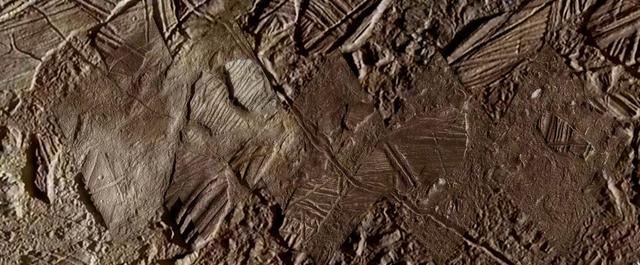
This image shows a close-up view of terrain within the region of Europa's surface named Conamara. This region sports ice rafts that look like those at Earth's poles, where large chunks of ice break away and float freely on the ocean. Much of the region bears the reddish/brownish discoloration seen here – the same as seen along many of Europa's fractures. Scientists believe this material may contain clues about the composition of an ocean beneath the icy surface, if it is proven to exist. https://photojournal.jpl.nasa.gov/catalog/PIA26446
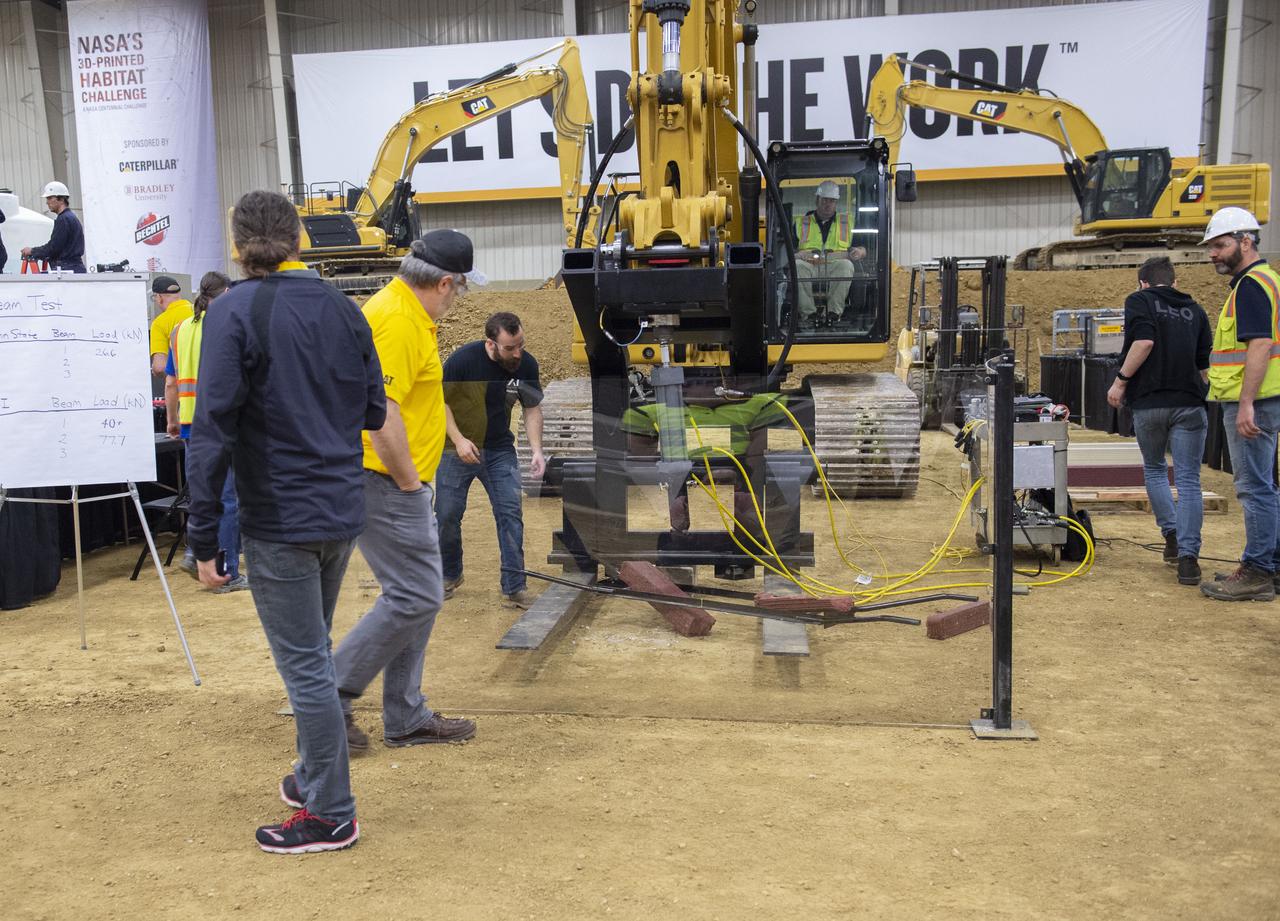
AI. SpaceFactory of New York and Pennsylvania State University of College Park print subscale habitat structures at NASA's 3D-Printed Habitat Challenge, held at the Caterpillar Edwards Demonstration & Learning Center in Edwards, Illinois, May 1-4, 2019. The habitat print is the final level of the multi-phase competition, which began in in 2015. The challenge is managed by NASA's Centennial Challenges program, and partner Bradley University of Peoria, Illinois. Strength testing of composite material used for habitat construction by AI Spacefactory.

Sand dunes often accumulate in the floors of craters. In this region of Lyot Crater NASA's Mars Reconnaissance Orbiter (MRO) shows a field of classic barchan dunes. Just to the south of the group of barchan dunes is one large dune with a more complex structure. This particular dune, appearing like turquoise blue in enhanced color, is made of finer material and/or has a different composition than the surrounding. https://photojournal.jpl.nasa.gov/catalog/PIA22512
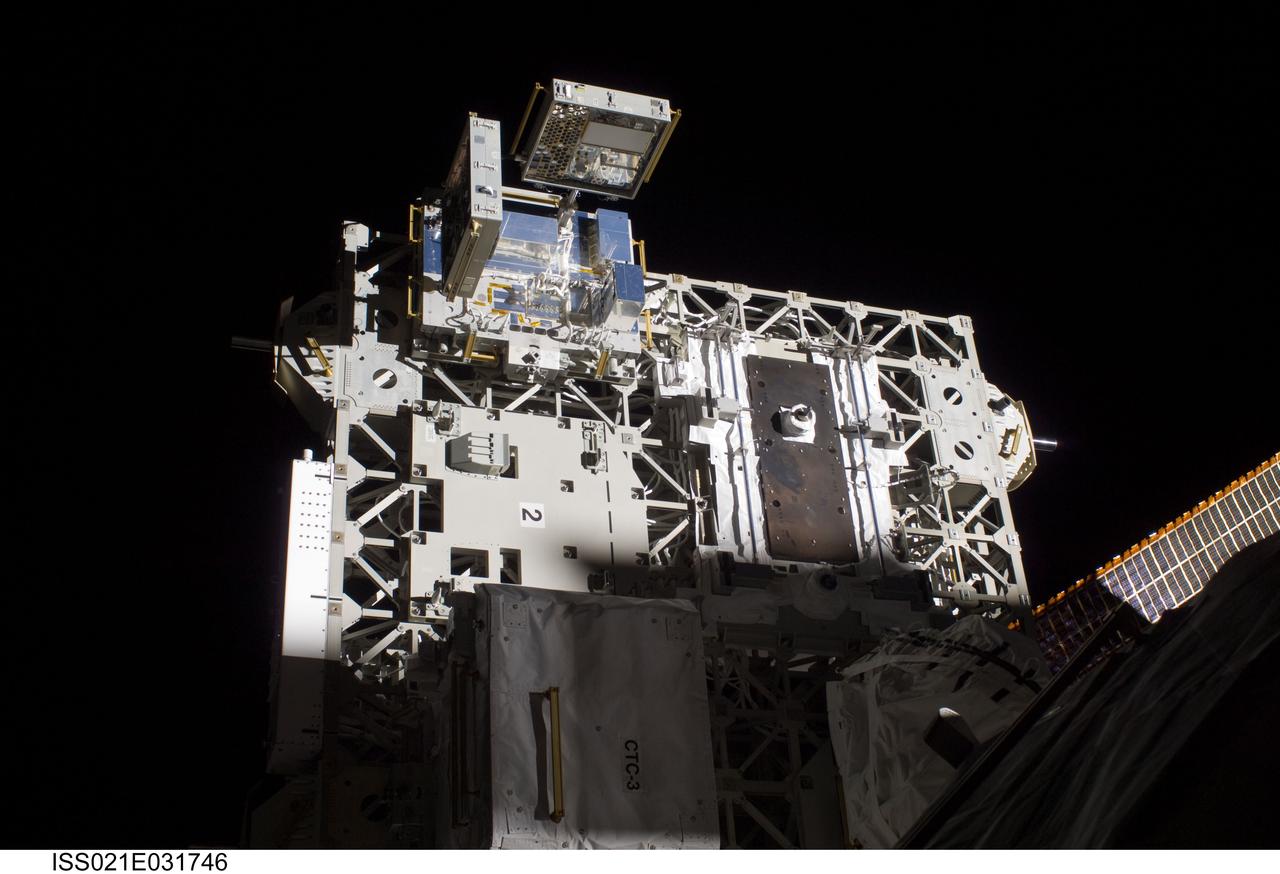
ISS021-E-031746 (23 Nov. 2009) --- The MISSE 7 experiment on the Express Logistics Carrier 2 of the International Space Station was photographed by a space-walking STS-129 astronaut during the mission's third and final session of extravehicular activity (EVA). This is the latest in a series of experiments that expose materials and composite samples to space for several months before they are returned for experts to analyze. This MISSE experiment actually is plugged into the space station’s power supply.

AI. SpaceFactory of New York and Pennsylvania State University of College Park print subscale habitat structures at NASA's 3D-Printed Habitat Challenge, held at the Caterpillar Edwards Demonstration & Learning Center in Edwards, Illinois, May 1-4, 2019. The habitat print is the final level of the multi-phase competition, which began in in 2015. The challenge is managed by NASA's Centennial Challenges program, and partner Bradley University of Peoria, Illinois. Strength testing of composite material used for habitat construction by AI Spacefactory.

Today's VIS image crosses part of the flank of Tyrrhenus Mons. Tyrrhenus Mons is one of the oldest martian volcanoes. Unlike most of the other Martian volcanoes, it is made of layers that include softer volcanic ash rather than just basaltic flows. This difference is evident in how the volcano is being eroded, creating broad intersecting sinuous channels. On Earth basaltic flows form broad shield volcanoes like Hawaii. Shield volcanoes can erupt from the central crater, as well as along the flanks. Volcanoes with ash layers, called composite volcanoes, form steeper sides like Mt Rainier and Mt Fuji, with material erupting only from the central caldera. Tyrrhenus Mons more closely resembles composite volcanoes. Orbit Number: 88182 Latitude: -20.6084 Longitude: 105.788 Instrument: VIS Captured: 2021-10-31 04:55 https://photojournal.jpl.nasa.gov/catalog/PIA25159
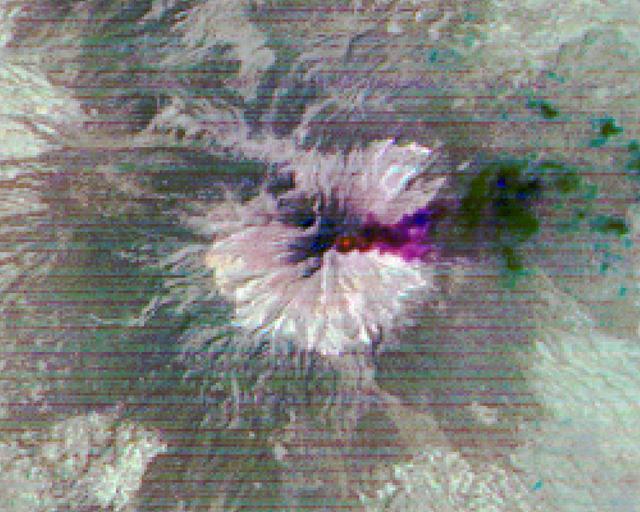
Popocatepetl, Mexico's most active volcano, erupted on February 23, sending blocks and bombs down the volcano's flanks, and emitting an ash column 1 km above the summit. Two days later, an ash cloud was still seen coming from the volcano. The thermal infrared color composite reveals a hot spot (red) at the summit crater. The dark red color near the vent of the east-blowing ash cloud suggests that its composition is dominantly ash material; further downwind, the color changes to purple, suggesting that some of the ash particles may be ice-covered. The images were acquired February 25, 2020, cover an area of 18 by 22.5 km, and are located at 19 degrees north, 98.6 degrees west. https://photojournal.jpl.nasa.gov/catalog/PIA23680

Coprates Chasma is located in the huge canyon system, Vallis Marineris. NASA Mars Reconnaissance Orbiter finds indications of high thermal inertia. What do we mean when we describe a surface as having "high thermal inertia"? The term refers to the ability of a material to conduct and store heat, and in planetary science, its measure of the subsurface's ability to store heat during the day and reradiate it during the night. What causes thermal inertia? It depends on the composition of the terrain that we're studying. Here in Coprates Chasma, the site of this observation, we find indications of such high thermal inertia, so an image at high resolution may help us determine the composition and structure to give us an answer. http://photojournal.jpl.nasa.gov/catalog/PIA19357

Haulani Crater (21 miles, 34 kilometers in diameter) is one of the youngest craters on Ceres, as evidenced by its sharp rims and bright, bluish material in enhanced color composite images from the framing camera on NASA's Dawn spacecraft. Haulani is also a good example of a polygonal crater. This high-resolution topography map of the crater's floor and northern rim displays a prime example of pitted terrains. Those features were likely formed through the rapid vaporization of subsurface water upon impact, and suggest that there is abundant water in Ceres' crust. Pitted terrains have also been found on Mars and Vesta. This topographic map was produced from the combination of images acquired under multiple illumination angles while the Dawn spacecraft was in its low-altitude mapping orbit, at a distance of about 240 miles (385 kilometers) above the surface. The colors represent elevations ranging from 1.3 miles (2.1 kilometers) below the surface to 0.75 miles (1.2 kilometers) above the surface. The center coordinates of the crater are 5.8 degree north latitude and 10.77 east longitude. An unannotated version of this image is also available. Haulani is named after the Hawaiian plant goddess. https://photojournal.jpl.nasa.gov/catalog/PIA21748
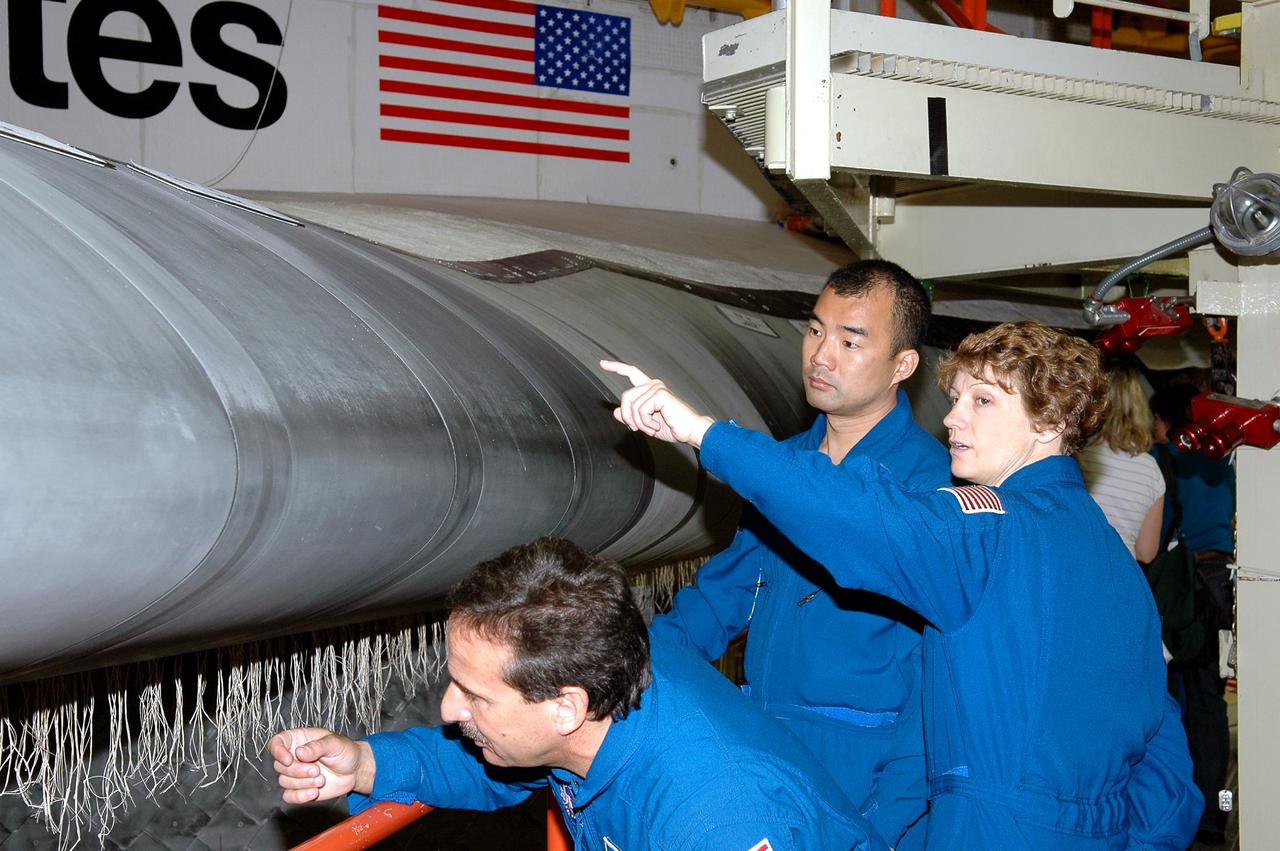
KENNEDY SPACE CENTER, FLA. - In the Orbiter Processing Facility, members of the STS-114 crew take a close look at the Reinforced Carbon-Carbon on the wing’s leading edge on Discovery. From left are Mission Specialists Charles Camarda and Soichi Noguchi (with the Japanese Space Agency), and Commander Eileen Collins. They and other crew members are at KSC for Crew Equipment Interface Test activities. The leading edge panels of the orbiters’ wings have 22 RCC panels, made entirely of carbon composite material. The molded components are approximately 0.25-inch to 0.5-inch thick. The leading edge panels of the orbiters’ wings have 22 Reinforced Carbon-Carbon panels, made entirely of carbon composite material. The molded components are approximately 0.25-inch to 0.5-inch thick. During CEIT, the crew has an opportunity to get a hands-on look at the orbiter and equipment they will be working with on the mission. Return to Flight Mission STS-114 will carry the Multi-Purpose Logistics Module Raffaello, filled with supplies for the International Space Station, and a replacement Control Moment Gyroscope. Launch of STS-114 has a launch window of May 12 to June 3.
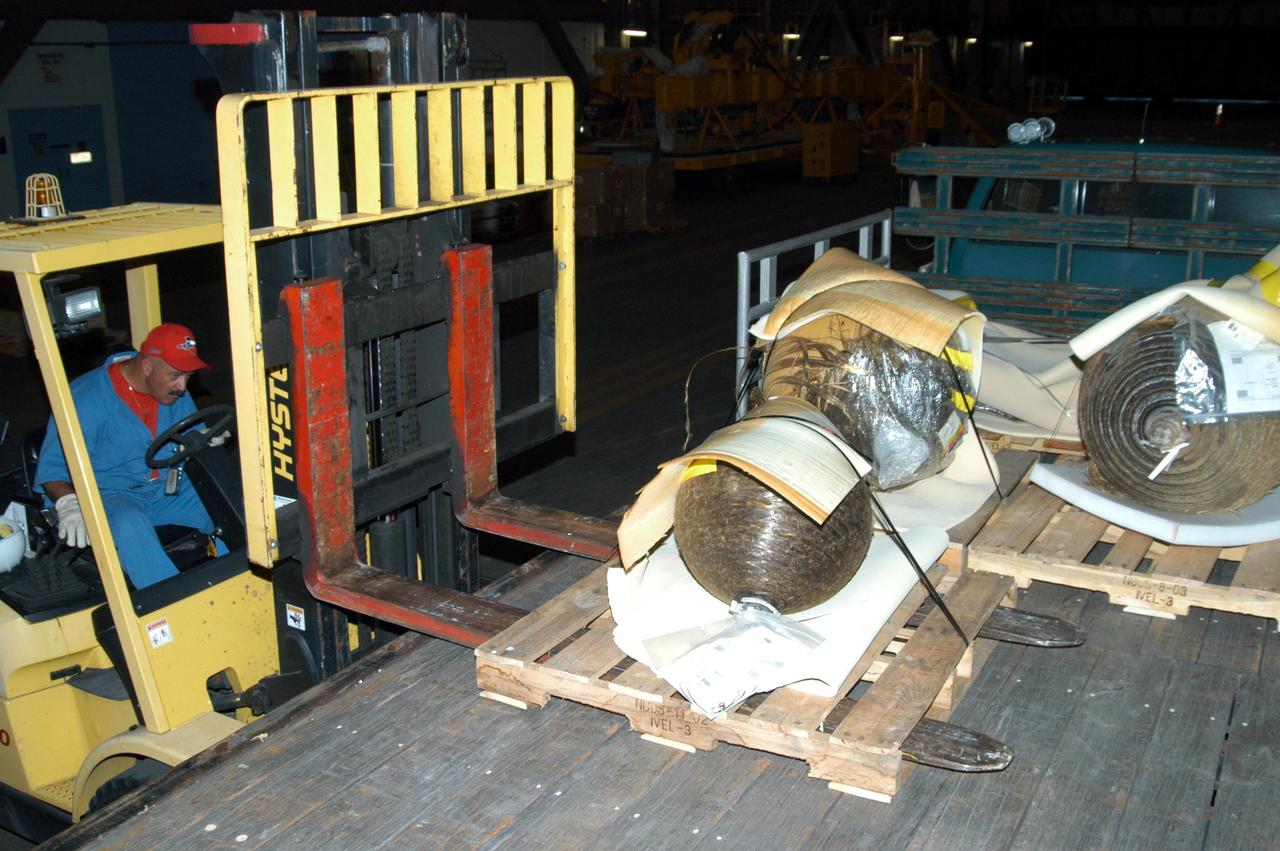
KENNEDY SPACE CENTER, FLA. - After being wrapped and secured on pallets, pieces of Columbia debris are loaded onto a truck to transport them to the shipping facility for travel to The Aerospace Corporation in El Segundo, Calif. The pieces have been released for loan to the non-governmental agency for testing and research. The Aerospace Corporation requested and will receive graphite/epoxy honeycomb skins from an Orbital Maneuvering System pod, Main Propulsion System Helium tanks, a Reaction Control System Helium tank and a Power Reactant Storage Distribution system tank. The company will use the parts to study re-entry effects on composite materials. NASA notified the Columbia crew’s families about the loan before releasing the items for study. Researchers believe the testing will show how materials are expected to respond to various heating and loads' environments. The findings will help calibrate tools and models used to predict hazards to people and property from reentering hardware. The Aerospace Corporation will have the debris for one year to perform analyses to estimate maximum temperatures during reentry based upon the geometry and mass of the recovered composite. Columbia’s debris is stored in the VAB.
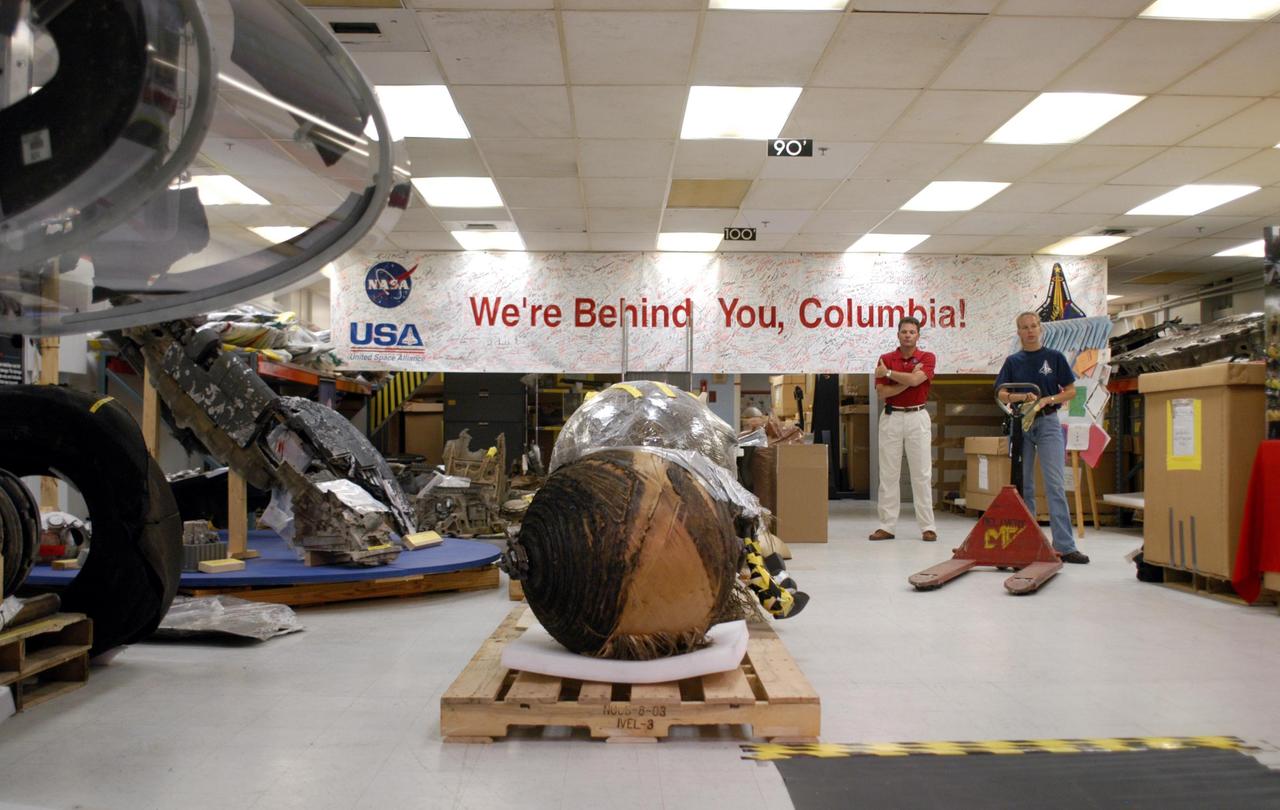
KENNEDY SPACE CENTER, FLA. - In the Vehicle Assembly Building (VAB), Scott Thurston (red shirt) stands by while a United Space Alliance worker (blue shirt) gets ready to start moving pieces of Columbia debris, such as the PRSD tank in front, for transfer to a shipping facility and delivery to The Aerospace Corporation in El Segundo, Calif. Thurston is the Columbia debris coordinator. The pieces have been released for loan to the non-governmental agency for testing and research. The Aerospace Corporation requested and will receive graphite/epoxy honeycomb skins from an Orbital Maneuvering System pod, Main Propulsion System Helium tanks, a Reaction Control System Helium tank and a Power Reactant Storage Distribution system tank. The company will use the parts to study re-entry effects on composite materials. NASA notified the Columbia crew’s families about the loan before releasing the items for study. Researchers believe the testing will show how materials are expected to respond to various heating and loads' environments. The findings will help calibrate tools and models used to predict hazards to people and property from reentering hardware. The Aerospace Corporation will have the debris for one year to perform analyses to estimate maximum temperatures during reentry based upon the geometry and mass of the recovered composite. Columbia’s debris is stored in the VAB.
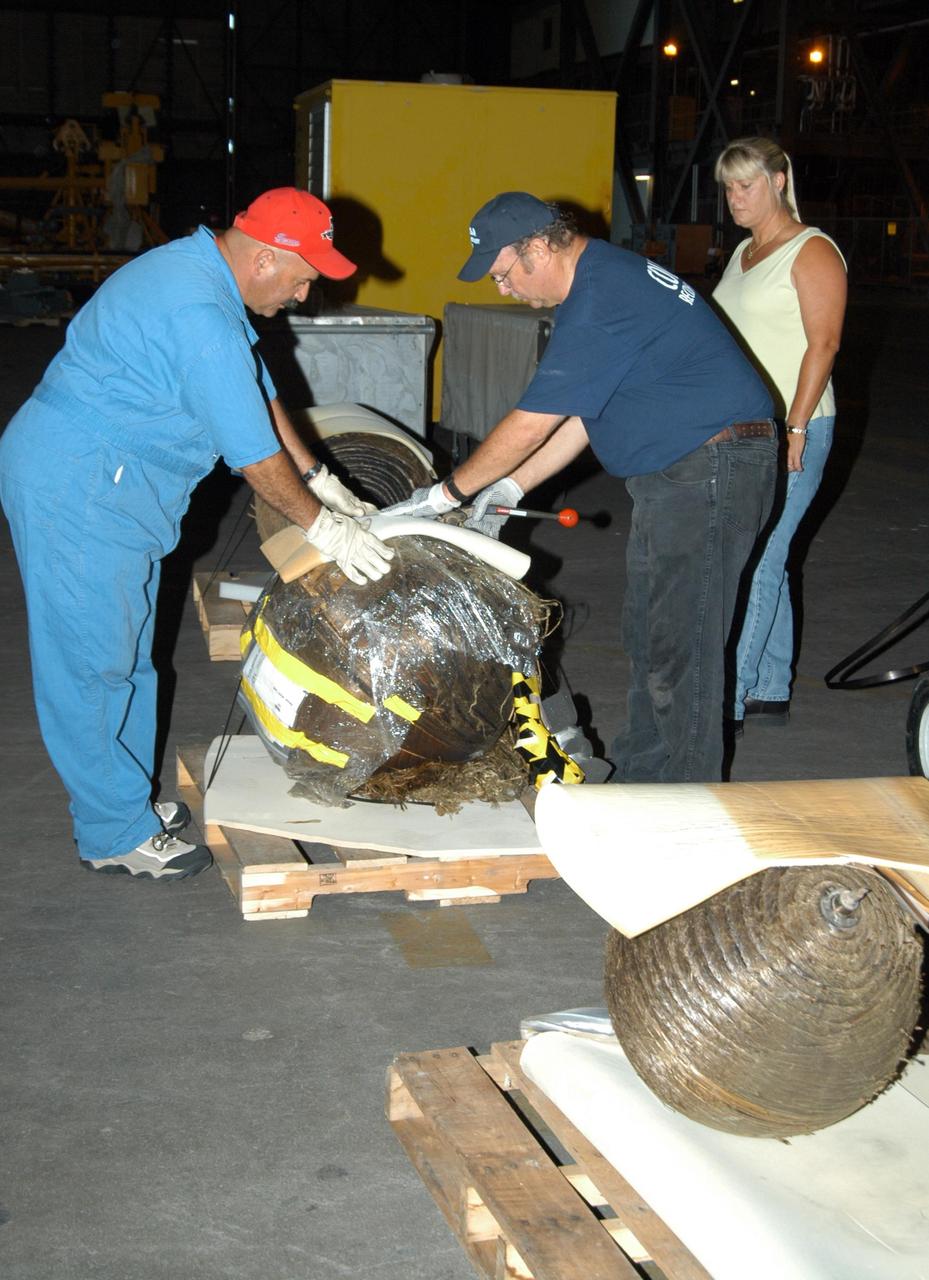
KENNEDY SPACE CENTER, FLA. - United Space Alliance workers begin packing pieces of Columbia debris for shipment to The Aerospace Corporation in El Segundo, Calif. The pieces have been released for loan to the non-governmental agency for testing and research. The Aerospace Corporation requested and will receive graphite/epoxy honeycomb skins from an Orbital Maneuvering System pod, Main Propulsion System Helium tanks, a Reaction Control System Helium tank and a Power Reactant Storage Distribution system tank. The company will use the parts to study re-entry effects on composite materials. NASA notified the Columbia crew’s families about the loan before releasing the items for study. Researchers believe the testing will show how materials are expected to respond to various heating and loads' environments. The findings will help calibrate tools and models used to predict hazards to people and property from reentering hardware. The Aerospace Corporation will have the debris for one year to perform analyses to estimate maximum temperatures during reentry based upon the geometry and mass of the recovered composite. Columbia’s debris is stored in the VAB.
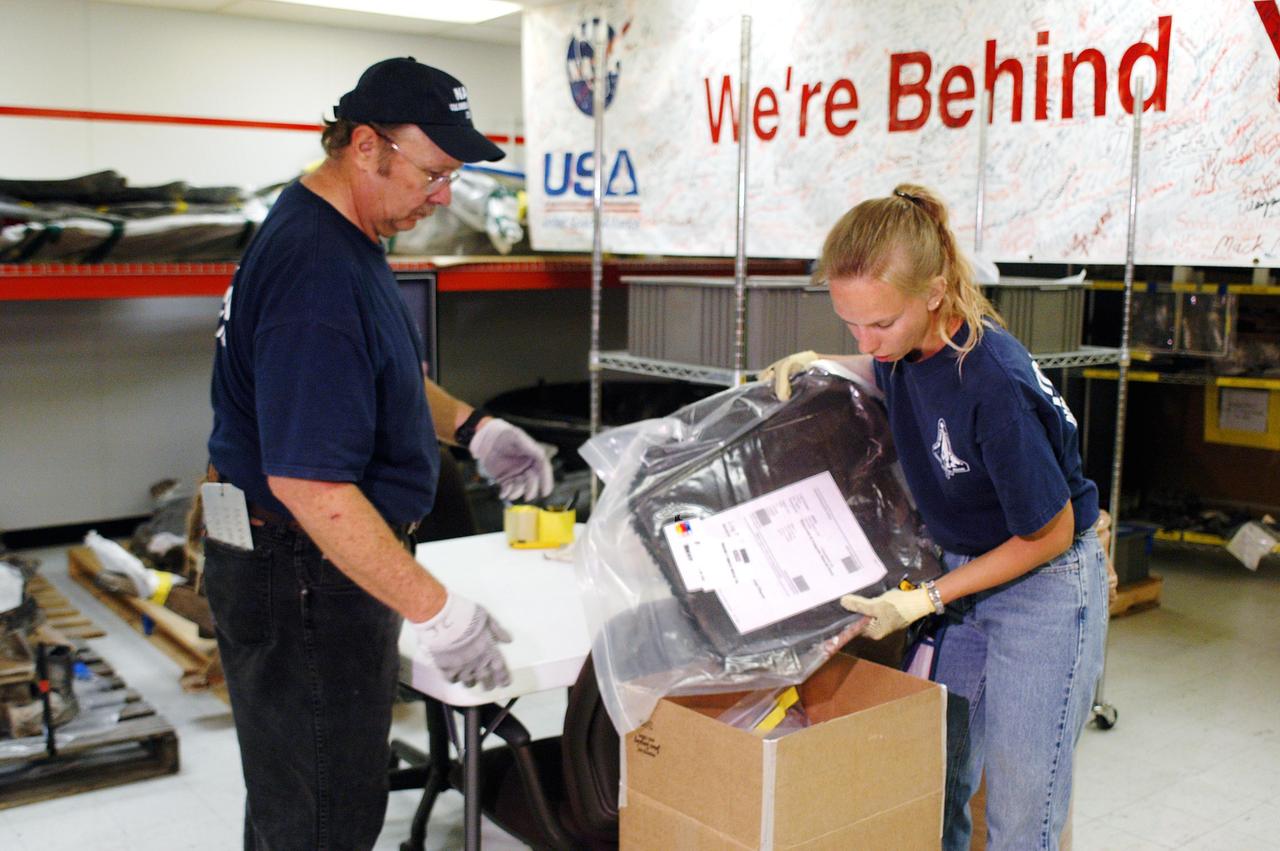
KENNEDY SPACE CENTER, FLA. - United Space Alliance workers J.C. Harrison (left) and Amy Mangiacapra (right) pack up pieces of Columbia debris for shipment to The Aerospace Corporation in El Segundo, Calif. The pieces have been released for loan to the non-governmental agency for testing and research. The Aerospace Corporation requested and will receive graphite/epoxy honeycomb skins from an Orbital Maneuvering System pod, Main Propulsion System Helium tanks, a Reaction Control System Helium tank and a Power Reactant Storage Distribution system tank. The company will use the parts to study re-entry effects on composite materials. NASA notified the Columbia crew’s families about the loan before releasing the items for study. Researchers believe the testing will show how materials are expected to respond to various heating and loads' environments. The findings will help calibrate tools and models used to predict hazards to people and property from reentering hardware. The Aerospace Corporation will have the debris for one year to perform analyses to estimate maximum temperatures during reentry based upon the geometry and mass of the recovered composite. Columbia’s debris is stored in the VAB.
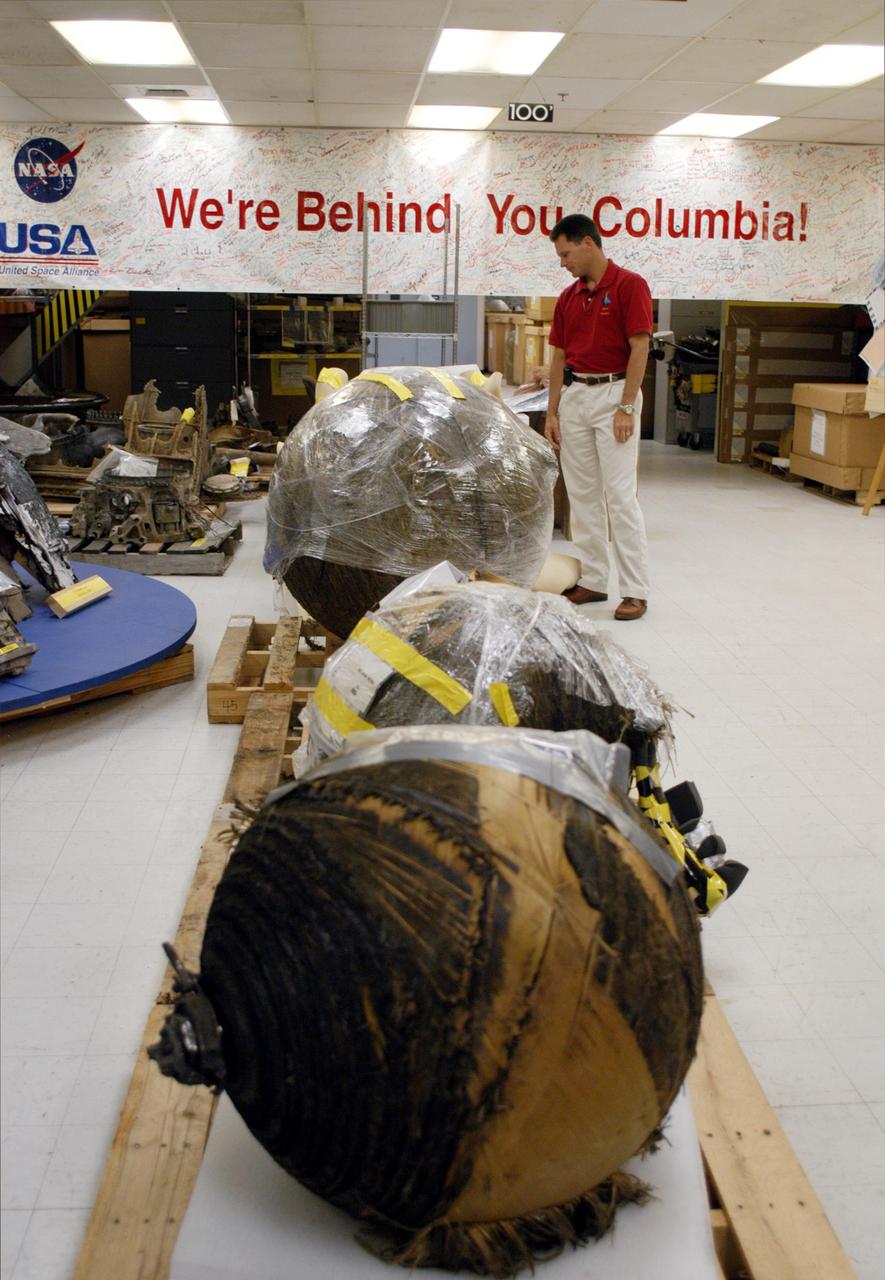
KENNEDY SPACE CENTER, FLA. - In the Vehicle Assembly Building (VAB), Scott Thurston looks at pieces of Columbia debris being prepared for transfer to the shipping facility before their delivery to The Aerospace Corporation in El Segundo, Calif. Thurston is the Columbia debris coordinator. The pieces have been released for loan to the non-governmental agency for testing and research. The Aerospace Corporation requested and will receive graphite/epoxy honeycomb skins from an Orbital Maneuvering System pod, Main Propulsion System Helium tanks, a Reaction Control System Helium tank and a Power Reactant Storage Distribution system tank. The company will use the parts to study re-entry effects on composite materials. NASA notified the Columbia crew’s families about the loan before releasing the items for study. Researchers believe the testing will show how materials are expected to respond to various heating and loads' environments. The findings will help calibrate tools and models used to predict hazards to people and property from reentering hardware. The Aerospace Corporation will have the debris for one year to perform analyses to estimate maximum temperatures during reentry based upon the geometry and mass of the recovered composite. Columbia’s debris is stored in the VAB.
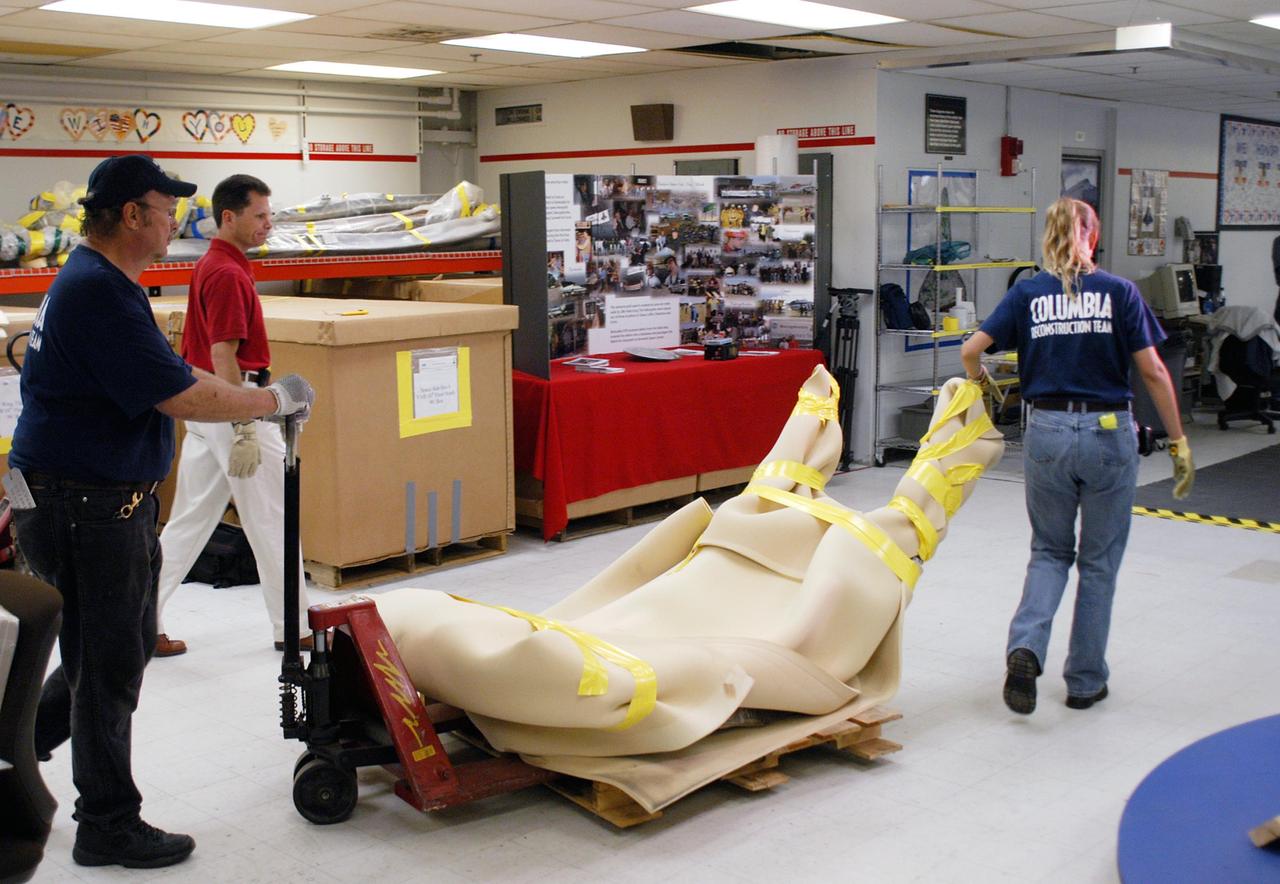
KENNEDY SPACE CENTER, FLA. - United Space Alliance workers J.C. Harrison (far left) and Amy Mangiacapra guide a wrapped piece of Columbia debris through the Vehicle Assembly Building, where it is stored. Alongside is NASA’s Scott Thurston, who is the Columbia debris coordinator. This piece is one of eight being released to The Aerospace Corporation in El Segundo, Calif., for testing and research. The Aerospace Corporation requested and will receive graphite/epoxy honeycomb skins from an Orbital Maneuvering System pod, Main Propulsion System Helium tanks, a Reaction Control System Helium tank and a Power Reactant Storage Distribution system tank. The company will use the parts to study re-entry effects on composite materials. NASA notified the Columbia crew’s families about the loan before releasing the items for study. Researchers believe the testing will show how materials are expected to respond to various heating and loads' environments. The findings will help calibrate tools and models used to predict hazards to people and property from reentering hardware. The Aerospace Corporation will have the debris for one year to perform analyses to estimate maximum temperatures during reentry based upon the geometry and mass of the recovered composite.
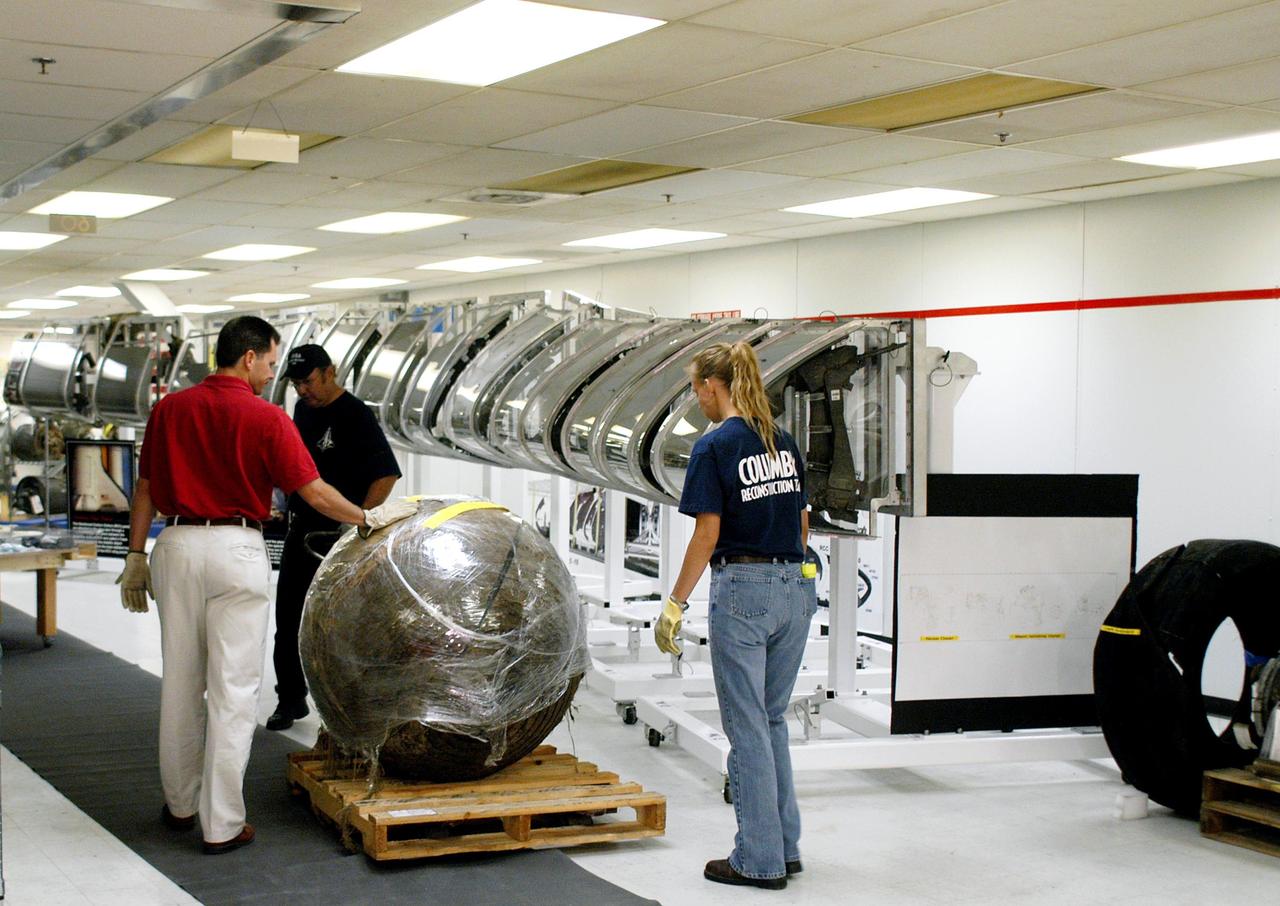
KENNEDY SPACE CENTER, FLA. - With NASA’s Scott Thurston (left) alongside, United Space Alliance workers J.C. Harrison (in cap) and Amy Mangiacapra (right) begin moving a piece of Columbia debris being shipped to The Aerospace Corporation in El Segundo, Calif. Thurston is the Columbia debris coordinator. The pieces have been released for loan to the non-governmental agency for testing and research. The Aerospace Corporation requested and will receive graphite/epoxy honeycomb skins from an Orbital Maneuvering System pod, Main Propulsion System Helium tanks, a Reaction Control System Helium tank and a Power Reactant Storage Distribution system tank. The company will use the parts to study re-entry effects on composite materials. NASA notified the Columbia crew’s families about the loan before releasing the items for study. Researchers believe the testing will show how materials are expected to respond to various heating and loads' environments. The findings will help calibrate tools and models used to predict hazards to people and property from reentering hardware. The Aerospace Corporation will have the debris for one year to perform analyses to estimate maximum temperatures during reentry based upon the geometry and mass of the recovered composite. Columbia’s debris is stored in the VAB.

KENNEDY SPACE CENTER, FLA. - United Space Alliance technician J.C. Harrison steers while NASA’s Scott Thurston guides a piece of Columbia debris through a gate in the Vehicle Assembly Building, where the debris is stored. This piece is one of eight being released to The Aerospace Corporation in El Segundo, Calif., for testing and research. Thurston is the Columbia debris coordinator. The Aerospace Corporation requested and will receive graphite/epoxy honeycomb skins from an Orbital Maneuvering System pod, Main Propulsion System Helium tanks, a Reaction Control System Helium tank and a Power Reactant Storage Distribution system tank. The company will use the parts to study re-entry effects on composite materials. NASA notified the Columbia crew’s families about the loan before releasing the items for study. Researchers believe the testing will show how materials are expected to respond to various heating and loads' environments. The findings will help calibrate tools and models used to predict hazards to people and property from reentering hardware. The Aerospace Corporation will have the debris for one year to perform analyses to estimate maximum temperatures during reentry based upon the geometry and mass of the recovered composite.
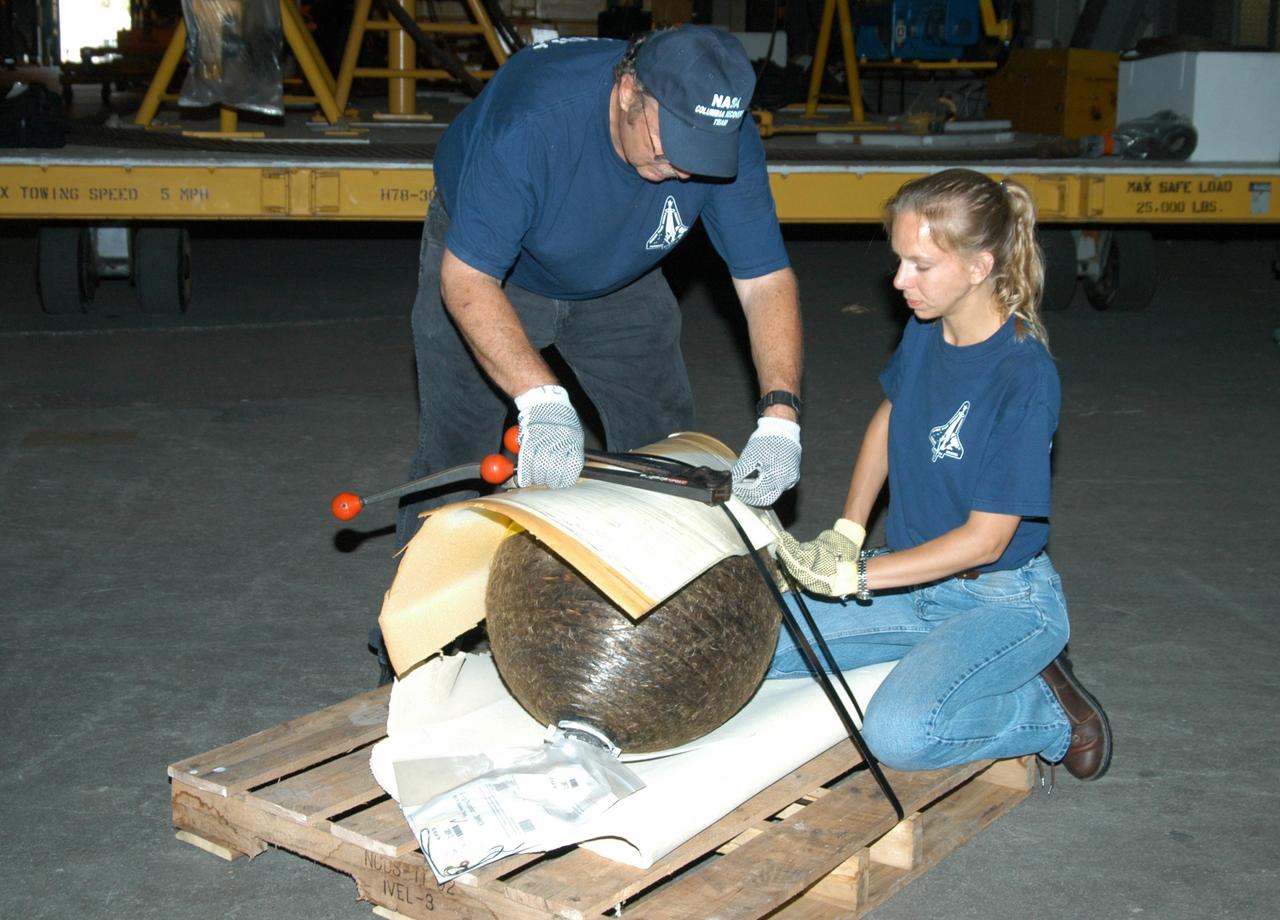
KENNEDY SPACE CENTER, FLA. - United Space Alliance workers J.C. Harrison (left) and Amy Mangiacapra pack pieces of Columbia debris for transfer to the shipping facility for travel to The Aerospace Corporation in El Segundo, Calif. The pieces have been released for loan to the non-governmental agency for testing and research. The Aerospace Corporation requested and will receive graphite/epoxy honeycomb skins from an Orbital Maneuvering System pod, Main Propulsion System Helium tanks, a Reaction Control System Helium tank and a Power Reactant Storage Distribution system tank. The company will use the parts to study re-entry effects on composite materials. NASA notified the Columbia crew’s families about the loan before releasing the items for study. Researchers believe the testing will show how materials are expected to respond to various heating and loads' environments. The findings will help calibrate tools and models used to predict hazards to people and property from reentering hardware. The Aerospace Corporation will have the debris for one year to perform analyses to estimate maximum temperatures during reentry based upon the geometry and mass of the recovered composite. Columbia’s debris is stored in the VAB.
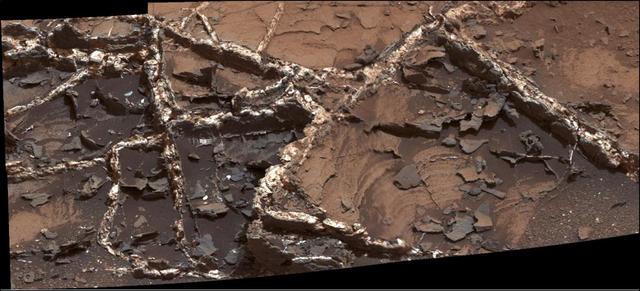
Prominent mineral veins at the "Garden City" site examined by NASA's Curiosity Mars rover vary in thickness and brightness, as seen in this image from Curiosity's Mast Camera (Mastcam). The image covers and area roughly 2 feet (60 centimeters) across. Types of vein material evident in the area include: 1) thin, dark-toned fracture filling material; 2) thick, dark-toned vein material in large fractures; 3) light-toned vein material, which was deposited last. Figure 1 includes annotations identifying each of those three major kinds and a scale bar indicating 10 centimeters (3.9 inches). Researchers used the Mastcam and other instruments on Curiosity in March and April 2015 to study the structure and composition of mineral veins at Garden City, for information about fluids that deposited minerals in fractured rock there. Malin Space Science Systems, San Diego, built and operates Curiosity's Mastcam. NASA's Jet Propulsion Laboratory, a division of the California Institute of Technology, Pasadena, built the rover and manages the project for NASA's Science Mission Directorate, Washington. http://photojournal.jpl.nasa.gov/catalog/PIA19922
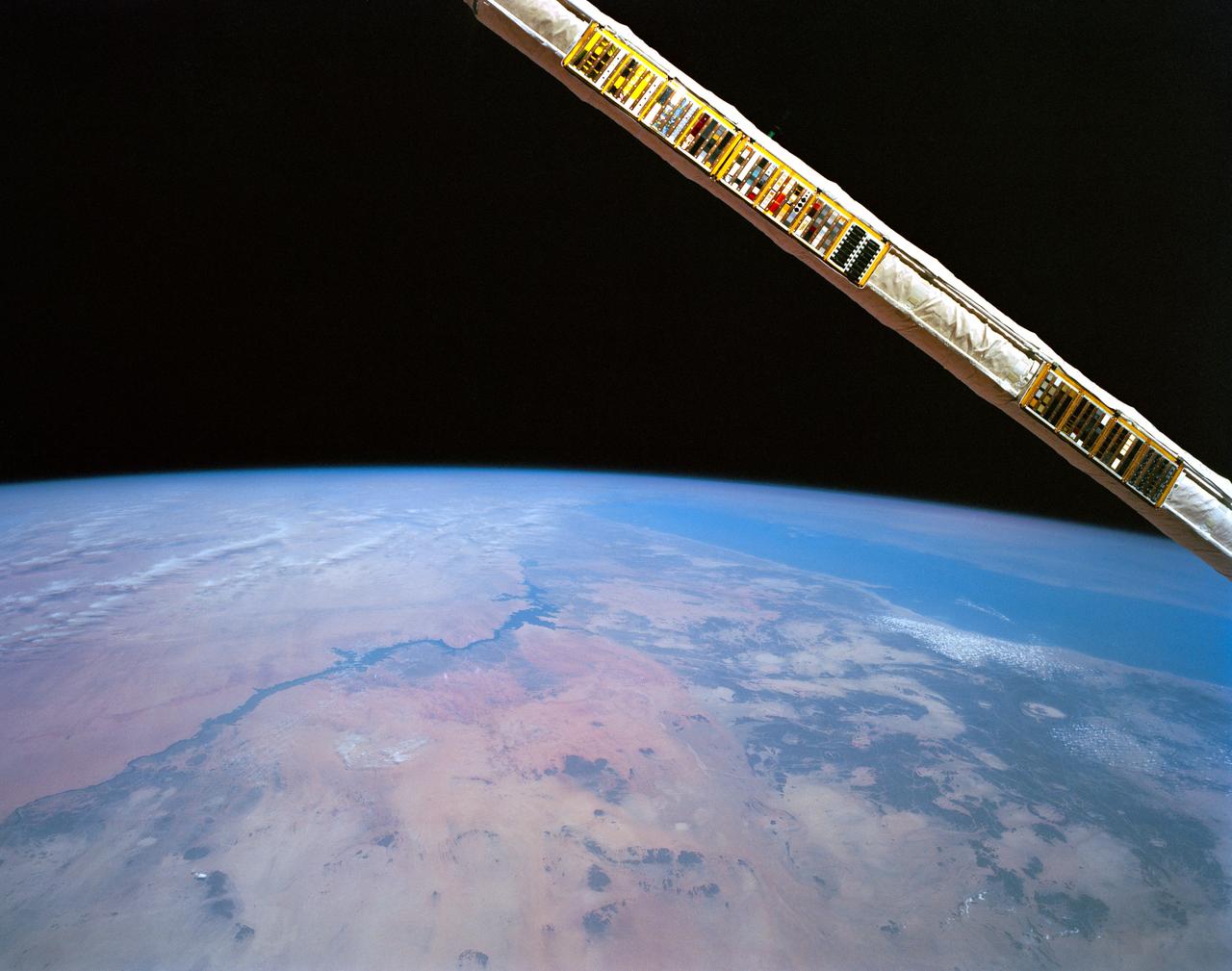
STS052-152-026 (22Oct-1 Nov 1992) --- Backdropped over eastern Egypt, the Canadian-built remote manipulator system (RMS) attached to NASA's Earth-orbiting Space Shuttle Columbia displays a Canadian Space Agency (CSA) experiment. Materials Exposure in Low Earth Orbit (MELEO) is one of a number of Canadian experiments which flew aboard Columbia for the ten-day STS-52 mission. Principal investigator for the experiment is Dr. David G. Zimick of the CSA. Plastic and composite materials used on the external surfaces of spacecraft have been found to degrade in the harsh environment of space. Evidence suggests that this degradation is caused by interaction with atomic oxygen which induces damaging chemical and physical reactions. The result is a loss in mass, strength, stiffness and stability of size and shape. During the mission, MELEO exposed over 350 material specimens mounted on "witness plates" on the RMS arm. The specimen collection will be analyzed in the weeks following the mission. Typical spacecraft materials and new developments in protective measures against atomic oxygen were tested as part of the MELEO experiment.
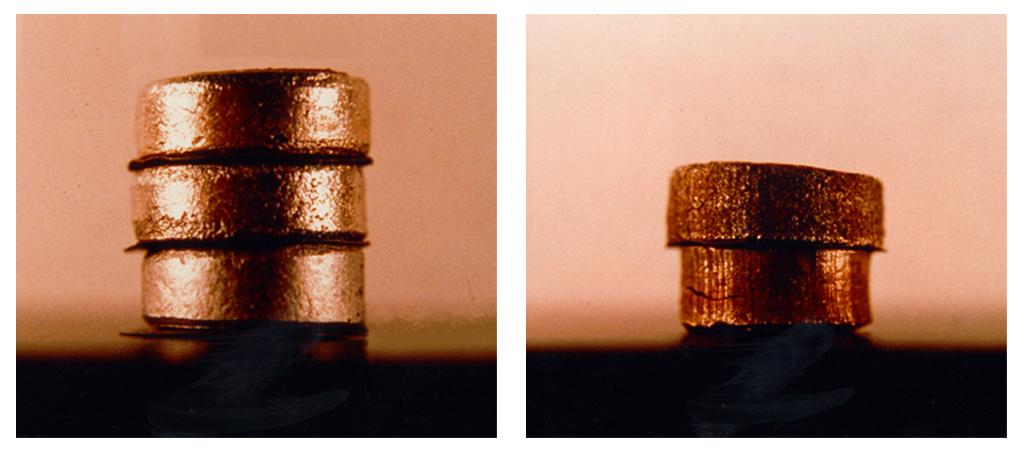
Industry spends billions of dollars each year on machine tools to manufacture products out of metal. This includes tools for cutting every kind of metal part from engine blocks to Shuttle main engine components. Cutting tool tips often break because of weak spots or defects in their composition. Based on a new concept called defect trapping, space offers a novel environment to study defect formation in molten metal materials as they solidify. After the return of these materials from space, researchers can evaluate the source of the defect and seek ways to eliminate them in products prepared on Earth. A widely used process for cutting tip manufacturing is liquid phase sintering. Compared to Earth-sintered samples which slump due to buoyancy induced by gravity, space samples are uniformly shaped and defects remain where they are formed. By studying metals sintered in space the US tool industry can potentially enhance its worldwide competitiveness. The Consortium for Materials Development in Space along with Wyle Labs, Teledyne Advanced Materials, and McDornell Douglas have conducted experiments in space.
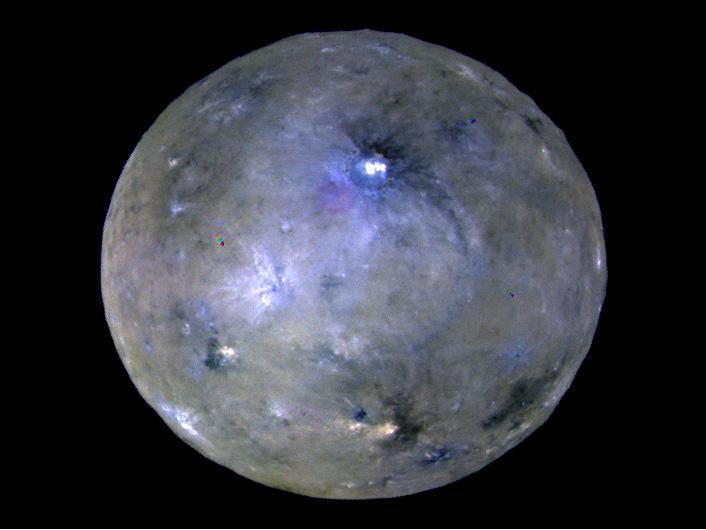
This enhanced color image of Ceres' surface was made from data obtained on April 29, 2017, when NASA's Dawn spacecraft was exactly between the sun and Ceres. Dawn's framing cameras took images of Ceres with a clear filter as well as five different color filters. Images combining these different color filter perspectives reveal fine details of Ceres' surface. For example, they emphasize the distinct compositions and textures of the material ejected from craters. The brightest region on Ceres, called Cerealia Facula, is highlighted in Occator Crater in the center of this image. Vinalia Faculae, the set of secondary bright spots in the same crater, are located to the right of Cerealia Facula. One of the darkest regions on Ceres is next to Occator, and represents ejected material from the impact that formed the crater. The ejected material forms a large arc that extends over several hundred kilometers, below the center of Ceres in this image. That material's distribution is partly determined by Ceres' rotation. Other craters also show a mixture of bright and dark regions. While the bright areas are generally identified as salt-rich material excavated from Ceres' crust, the origin of the dark material remains to be explained. It may have been excavated from a different layer within Ceres' subsurface than the rest of the ejecta blanket. Scientists will continue analyzing the color data to look for clues about the nature of the different materials on Ceres. The blueish color is generally found in association with young craters. Scientists believe the color relates to processes that occur when an impact ejects and redistributes material on the surface. The continuous bombardment of Ceres' surface by micrometeorites alters the texture of the exposed material, leading to its reddening. This image was taken altitude of about 12,000 miles (20,000 kilometers). https://photojournal.jpl.nasa.gov/catalog/PIA21406
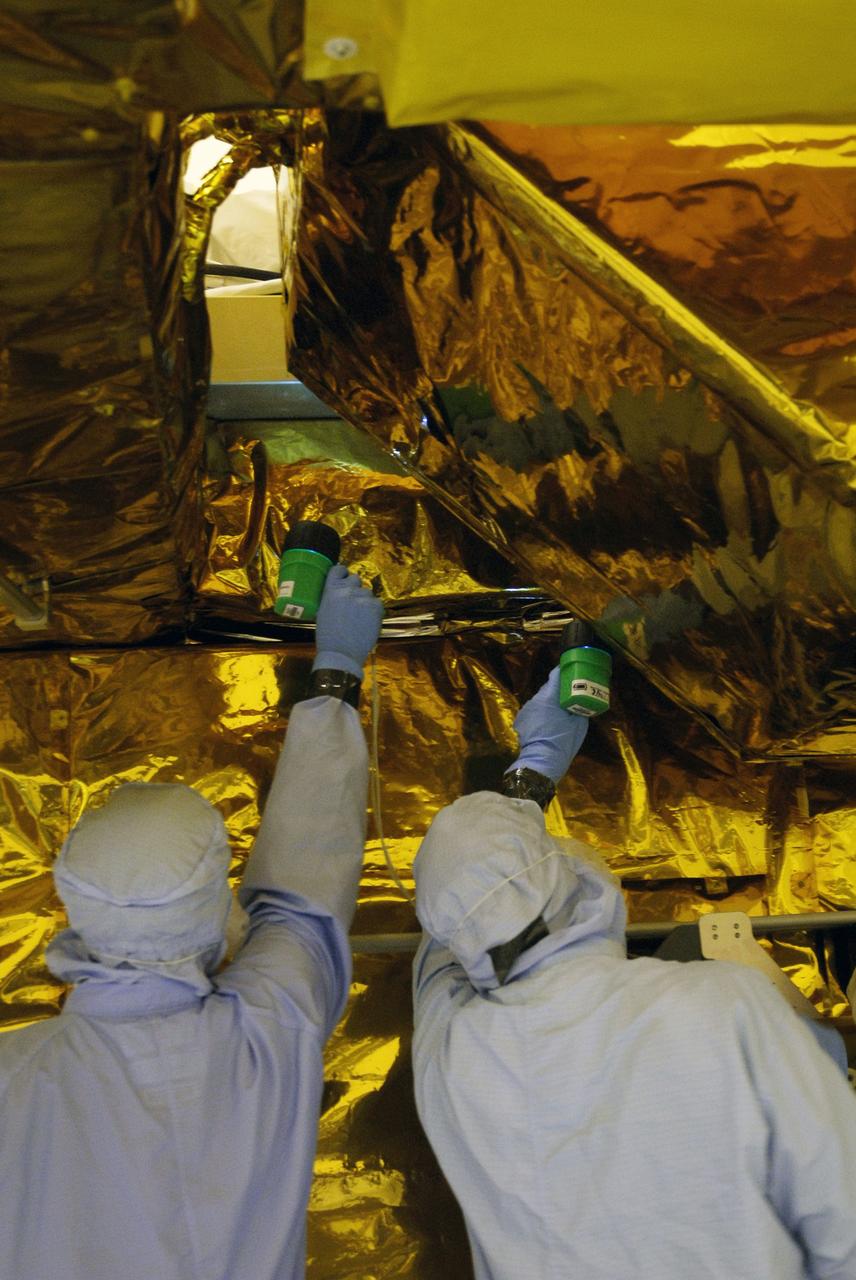
CAPE CANAVERAL, Fla. - In the Payload Hazardous Servicing Facility at NASA's Kennedy Space Center, technicians inspect areas of the Super Lightweight Interchangeable Carrier, or SLIC, for contamination. Contamination discovered Sept. 17 during preparations to deliver NASA's Hubble Space Telescope servicing payload to Launch Pad 39A will be removed. Cleanliness is extremely important for space shuttle Atlantis’ STS-125 mission to Hubble, and the teams have insured that the SLIC is ready to fly. The SLIC, which holds battery module assemblies for servicing of the Hubble Space Telescope on the STS-125 mission, is built with state-of-the-art, lightweight, composite materials - carbon fiber with a cyanate ester resin and a titanium metal matrix composite. These composites have greater strength-to-mass ratios than the metals typically used in spacecraft design. The carrier is one of four being transferred to Launch Pad 39A. At the pad, the carriers will be loaded into Atlantis’ payload bay. Launch of Atlantis is targeted for Oct. 10. Photo credit: NASA/Jack Pfaller

Impact craters are natural "road cuts," exposing planetary layers in cross-section. However, the violent process of impact can also disrupt existing layers. A kilometer-wide cutout shows layers sloping from the crater's rim at right downward toward its floor off to the left. A gradient of enhanced colors indicates diverse compositions. Clay minerals have been detected here, and one interpretation is that they formed through weathering under a wetter ancient climate, with layers near the surface having more water-altered compositions than deeper ones. Another interpretation is that the layers of different compositions were laid down at different times, from different processes and source materials. Elsewhere, the lower layers appear abruptly offset along a fault, a common feature in impact craters of this size (roughly 20 kilometers). In addition, the upper layers show a patchy distribution of colors, with some blocks that might have been ejected from deeper locations within the crater during impact. https://photojournal.jpl.nasa.gov/catalog/PIA24861
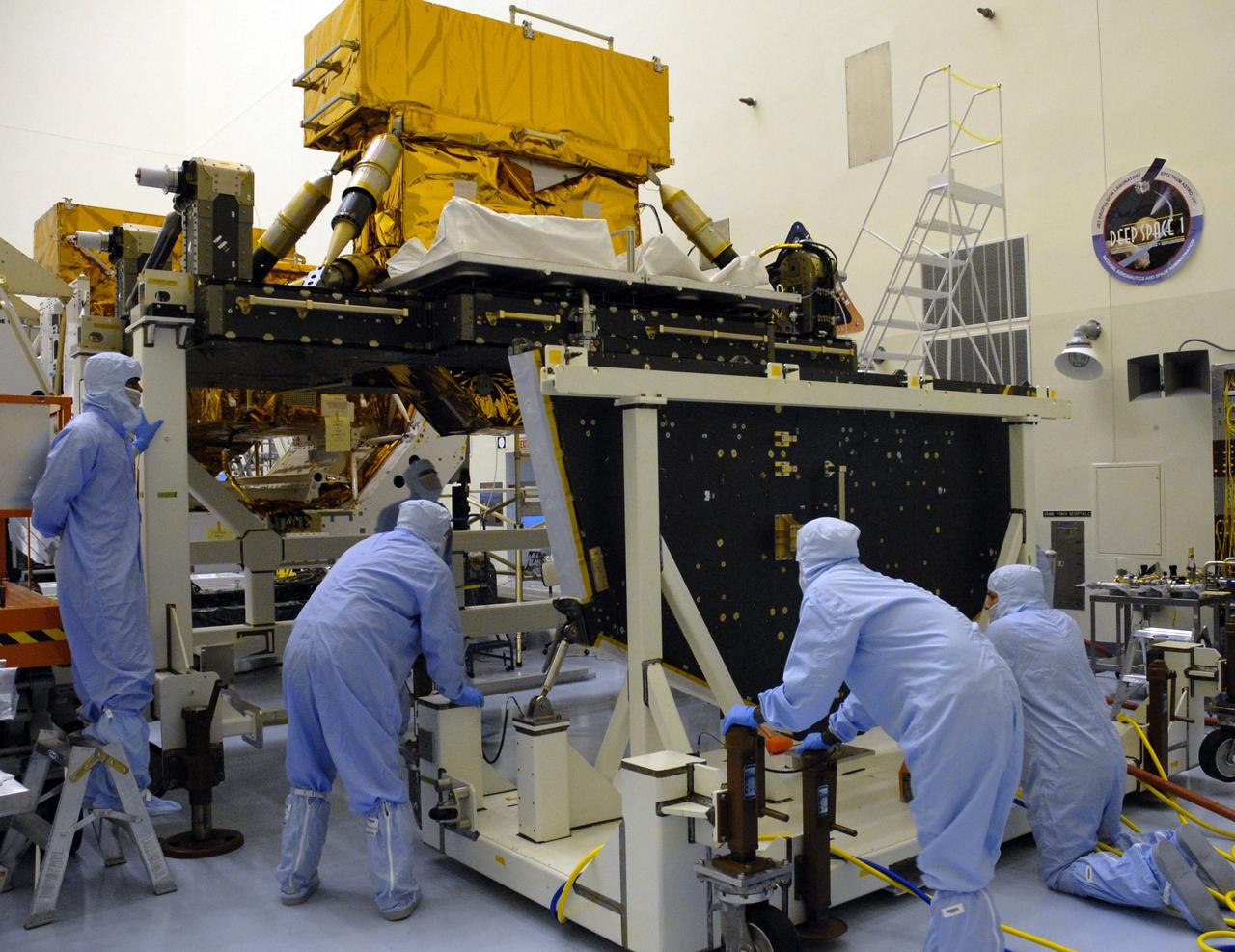
CAPE CANAVERAL, Fla. – In the high bay of the Payload Hazardous Servicing Facility at NASA's Kennedy Space Center, workers from NASA's Goddard Space Flight Center move the Hubble vertical platform toward the Super Lightweight Interchangeable Carrier for the Hubble Space Telescope, to which it will be mated. The Super Lightweight Interchangeable Carrier, or SLIC, is one of four carriers supporting hardware for space shuttle Atlantis' STS-125 mission to service the telescope. SLIC is built with state-of-the-art, lightweight, composite materials - carbon fiber with a cyanate ester resin and a titanium metal matrix composite. These composites have greater strength-to-mass ratios than the metals typically used in spacecraft design. The Orbital Replacement Unit Carrier, or ORUC, and the Flight Support System, or FSS, have also arrived at Kennedy. The Multi-Use Lightweight Equipment carrier will be delivered in early August. The carriers will be prepared for the integration of telescope science instruments, both internal and external replacement components, as well as the flight support equipment to be used by the astronauts during the Hubble servicing mission, targeted for launch Oct. 8. Photo credit: NASA/Jack Pfaller
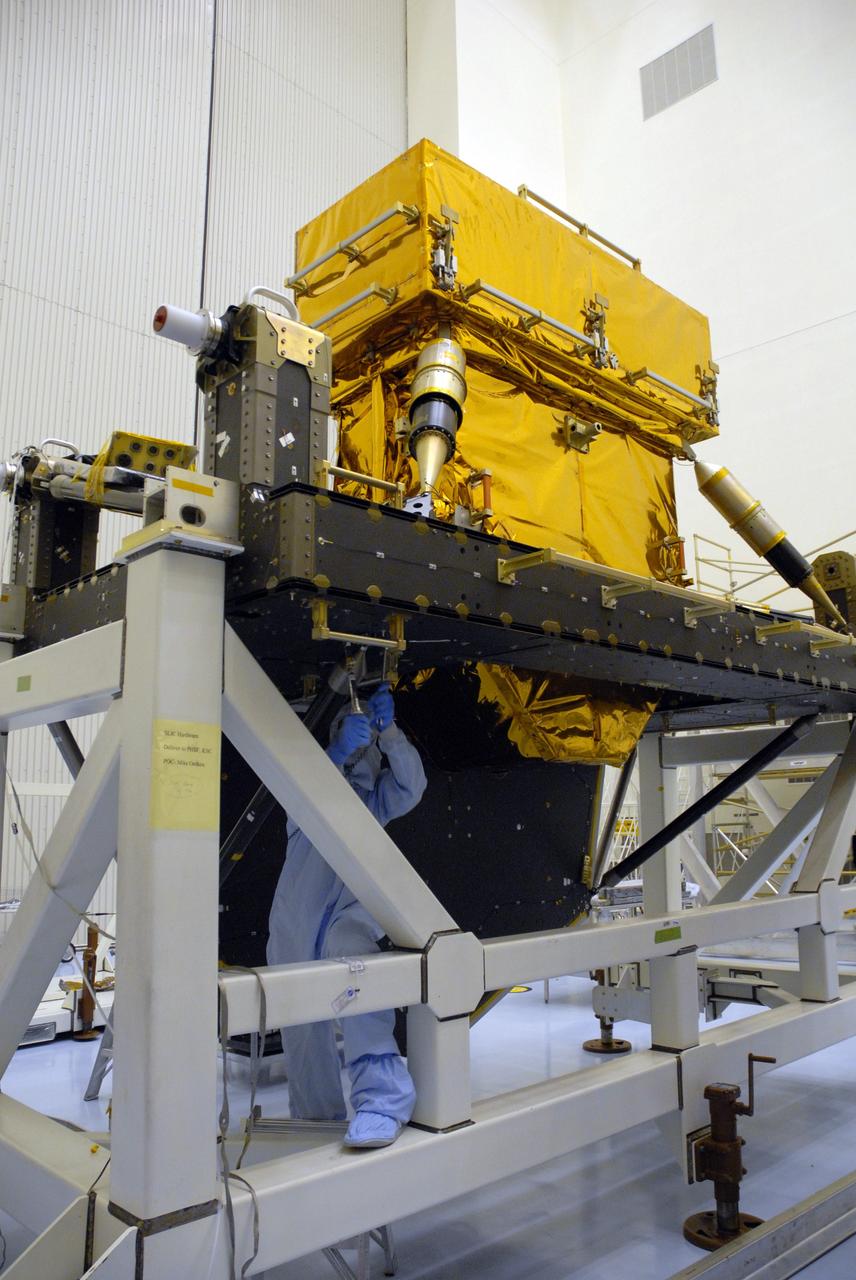
CAPE CANAVERAL, Fla. -- In the high bay of the Payload Hazardous Servicing Facility at NASA's Kennedy Space Center, a worker from NASA's Goddard Space Flight Center installs a pallet support strut on the Super Lightweight Interchangeable Carrier for the Hubble Space Telescope. The Super Lightweight Interchangeable Carrier, or SLIC, is one of four carriers supporting hardware for space shuttle Atlantis' STS-125 mission to service the telescope. SLIC is built with state-of-the-art, lightweight, composite materials - carbon fiber with a cyanate ester resin and a titanium metal matrix composite. These composites have greater strength-to-mass ratios than the metals typically used in spacecraft design. The Orbital Replacement Unit Carrier, or ORUC, and the Flight Support System, or FSS, have also arrived at Kennedy. The Multi-Use Lightweight Equipment carrier will be delivered in early August. The carriers will be prepared for the integration of telescope science instruments, both internal and external replacement components, as well as the flight support equipment to be used by the astronauts during the Hubble servicing mission, targeted for launch Oct. 8. Photo credit: NASA/Jack Pfaller
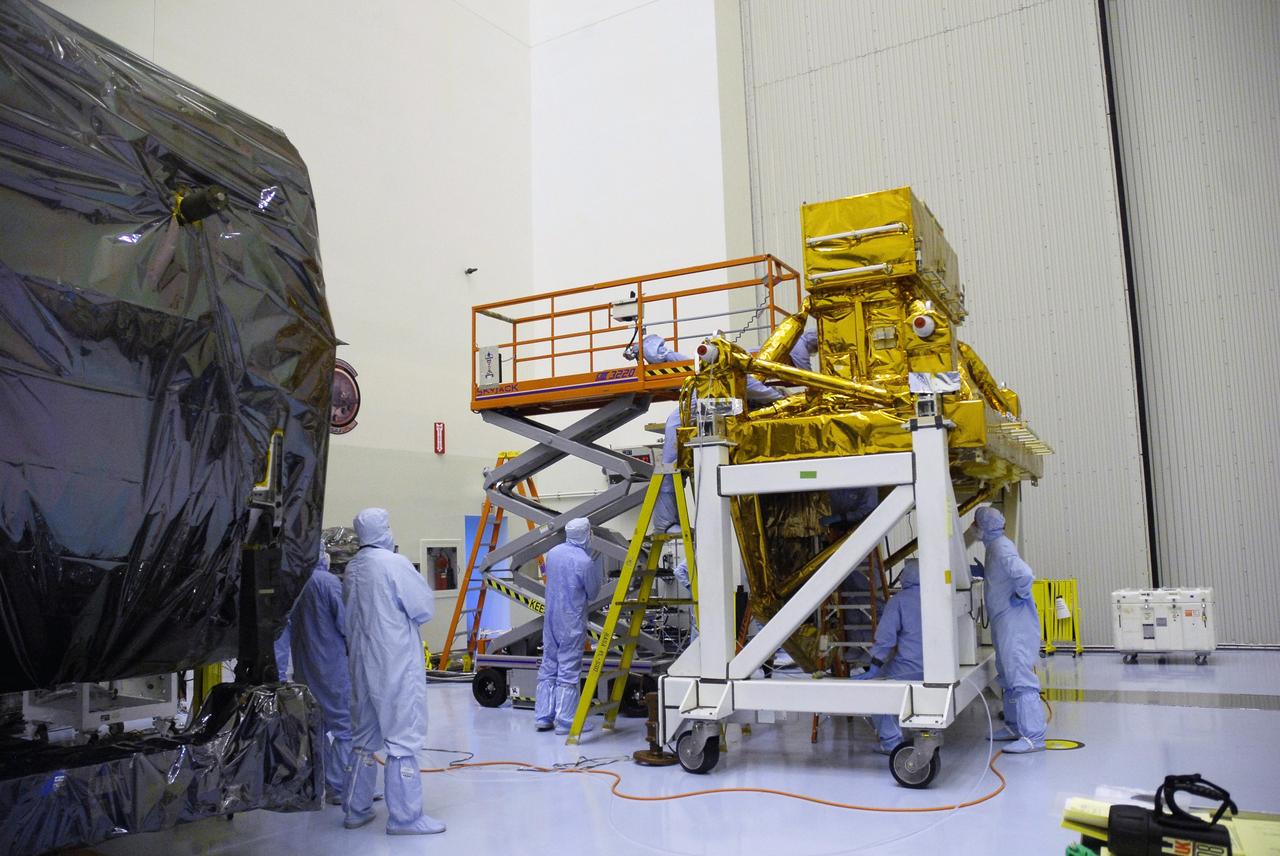
CAPE CANAVERAL, Fla. - In the Payload Hazardous Servicing Facility at NASA's Kennedy Space Center, technicians inspect areas of the Super Lightweight Interchangeable Carrier, or SLIC, for contamination. Contamination discovered Sept. 17 during preparations to deliver NASA's Hubble Space Telescope servicing payload to Launch Pad 39A will be removed. Cleanliness is extremely important for space shuttle Atlantis’ STS-125 mission to Hubble, and the teams have insured that the SLIC is ready to fly. The SLIC, which holds battery module assemblies for servicing of the Hubble Space Telescope on the STS-125 mission, is built with state-of-the-art, lightweight, composite materials - carbon fiber with a cyanate ester resin and a titanium metal matrix composite. These composites have greater strength-to-mass ratios than the metals typically used in spacecraft design. The carrier is one of four being transferred to Launch Pad 39A. At the pad, the carriers will be loaded into Atlantis’ payload bay. Launch of Atlantis is targeted for Oct. 10. Photo credit: NASA/Jack Pfaller
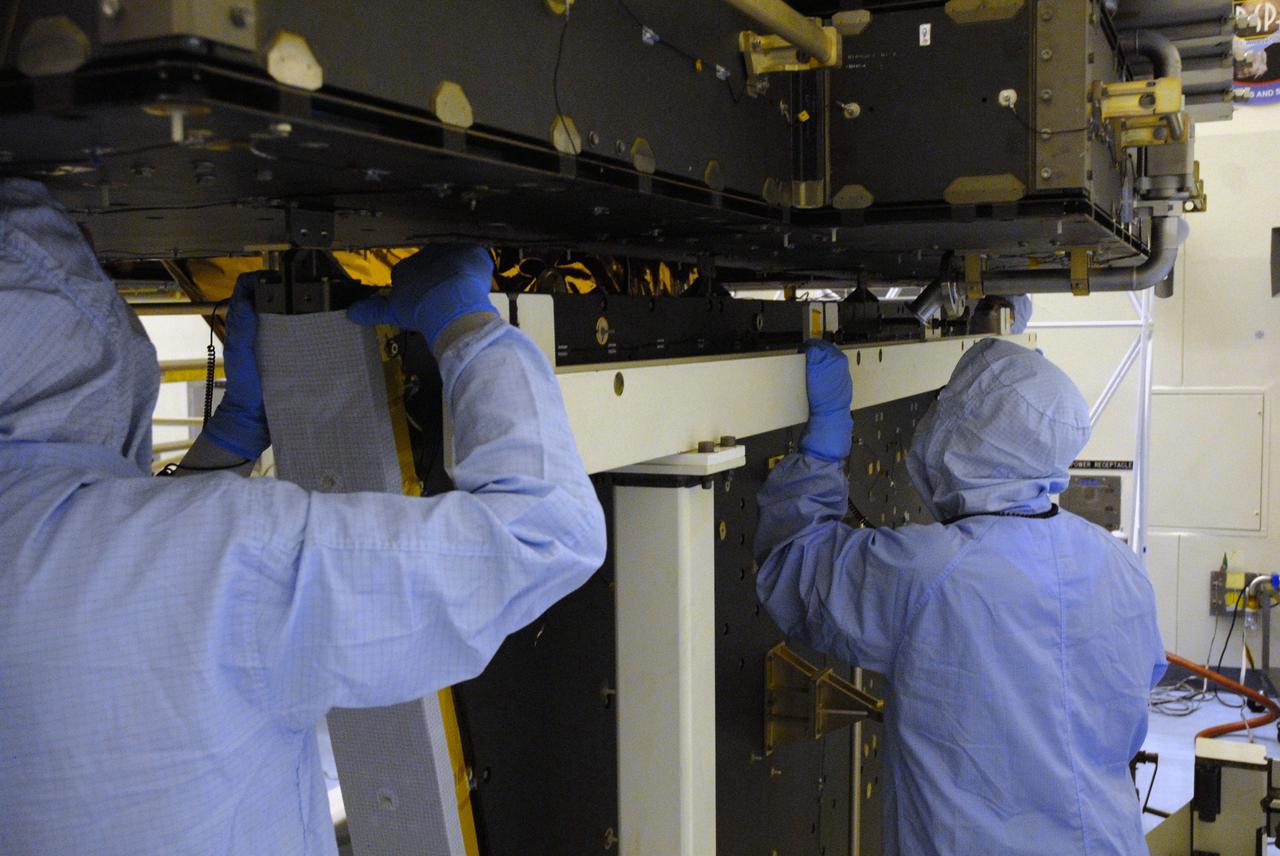
CAPE CANAVERAL, Fla. – In the high bay of the Payload Hazardous Servicing Facility at NASA's Kennedy Space Center, workers from NASA's Goddard Space Flight Center secure the Hubble vertical platform to the Super Lightweight Interchangeable Carrier for the Hubble Space Telescope. The Super Lightweight Interchangeable Carrier, or SLIC, is one of four carriers supporting hardware for space shuttle Atlantis' STS-125 mission to service the telescope. SLIC is built with state-of-the-art, lightweight, composite materials - carbon fiber with a cyanate ester resin and a titanium metal matrix composite. These composites have greater strength-to-mass ratios than the metals typically used in spacecraft design. The Orbital Replacement Unit Carrier, or ORUC, and the Flight Support System, or FSS, have also arrived at Kennedy. The Multi-Use Lightweight Equipment carrier will be delivered in early August. The carriers will be prepared for the integration of telescope science instruments, both internal and external replacement components, as well as the flight support equipment to be used by the astronauts during the Hubble servicing mission, targeted for launch Oct. 8. Photo credit: NASA/Jack Pfaller
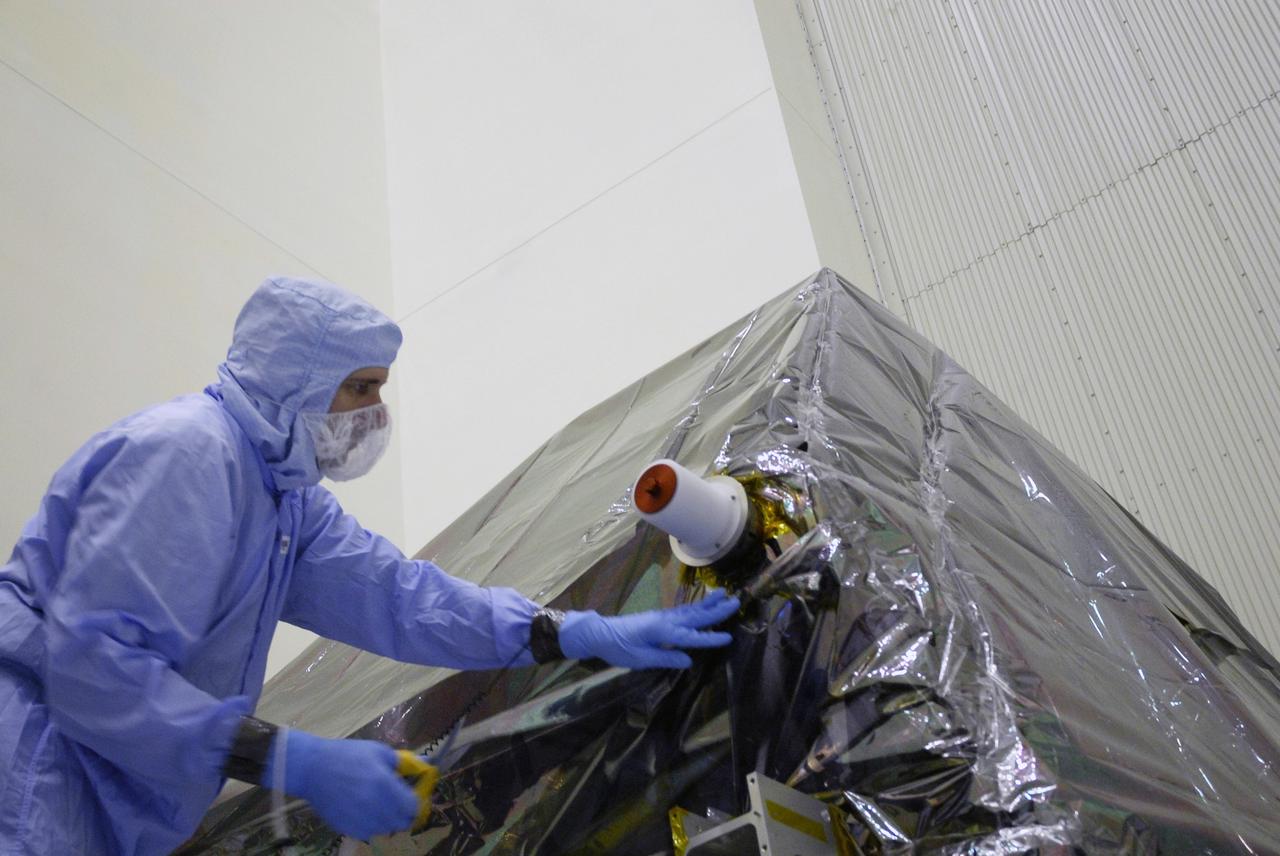
CAPE CANAVERAL, Fla. - In the Payload Hazardous Servicing Facility at NASA's Kennedy Space Center, a technician begins uncovering the Super Lightweight Interchangeable Carrier, or SLIC. Contamination discovered Sept. 17 during preparations to deliver NASA's Hubble Space Telescope servicing payload to Launch Pad 39A will be removed. Cleanliness is extremely important for space shuttle Atlantis’ STS-125 mission to Hubble, and the teams have insured that the SLIC is ready to fly. The SLIC, which holds battery module assemblies for servicing of the Hubble Space Telescope on the STS-125 mission, is built with state-of-the-art, lightweight, composite materials - carbon fiber with a cyanate ester resin and a titanium metal matrix composite. These composites have greater strength-to-mass ratios than the metals typically used in spacecraft design. The carrier is one of four being transferred to Launch Pad 39A. At the pad, the carriers will be loaded into Atlantis’ payload bay. Launch of Atlantis is targeted for Oct. 10. Photo credit: NASA/Jack Pfaller