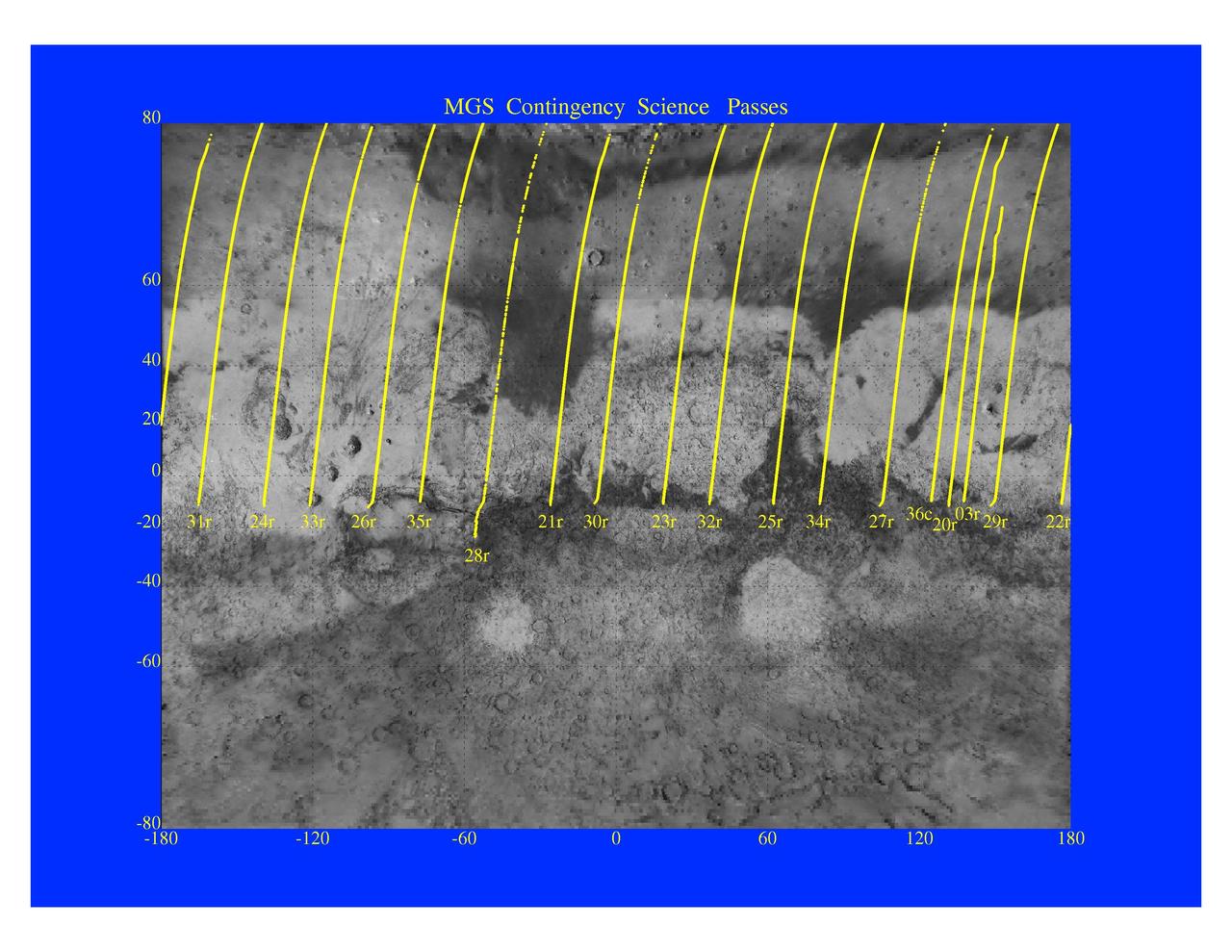
MGS Contingency Science Passes
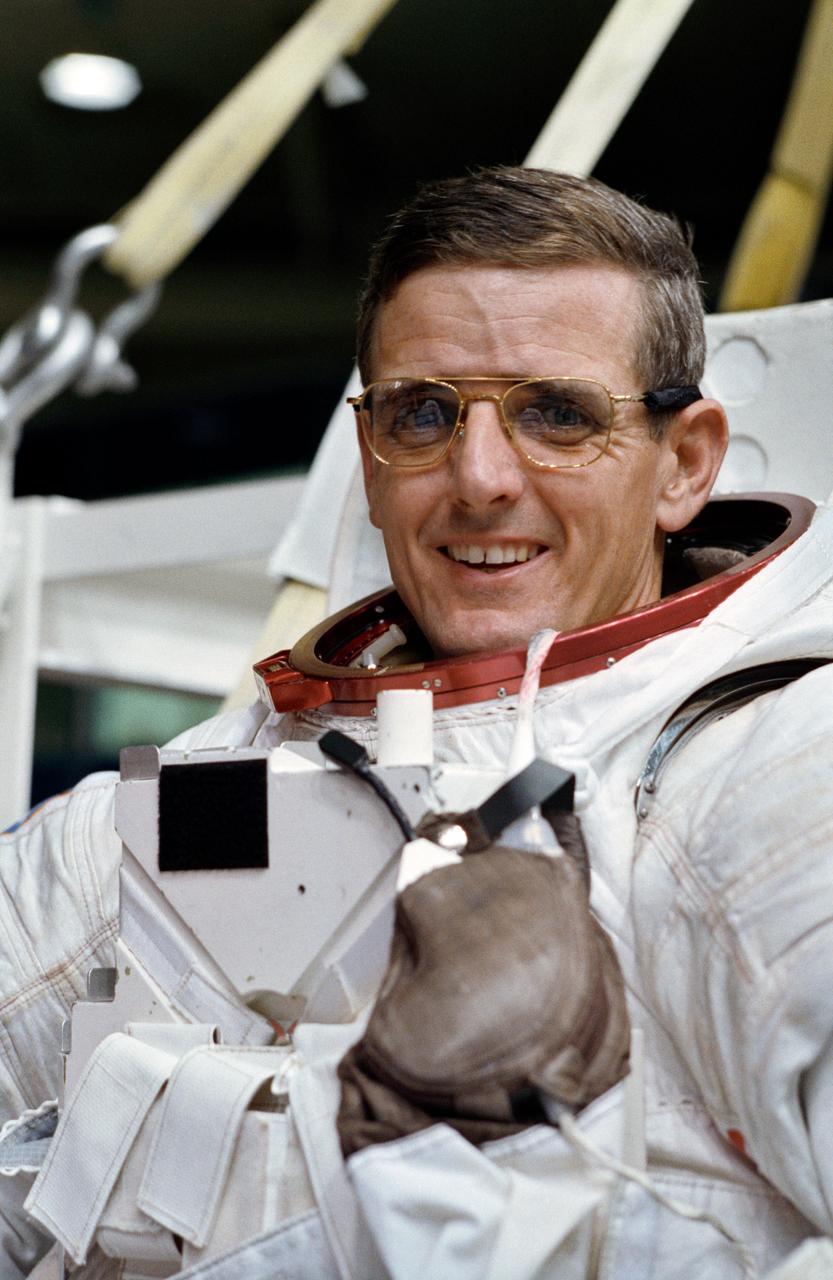
S93-43840 (6 Sept 1993) --- Astronaut William S. McArthur, mission specialist, participates in training for contingency Extravehicular Activity (EVA) for the STS-58 mission. For simulation purposes, McArthur was about to be submerged to a point of neutral buoyancy in the Johnson Space Center's (JSC) Weightless Environment Training Facility (WET-F). Though the Spacelab Life Sciences (SLS-2) mission does not include a planned EVA, all crews designate members to learn proper procedures to perform outside the spacecraft in the event of failure of remote means to accomplish those tasks.
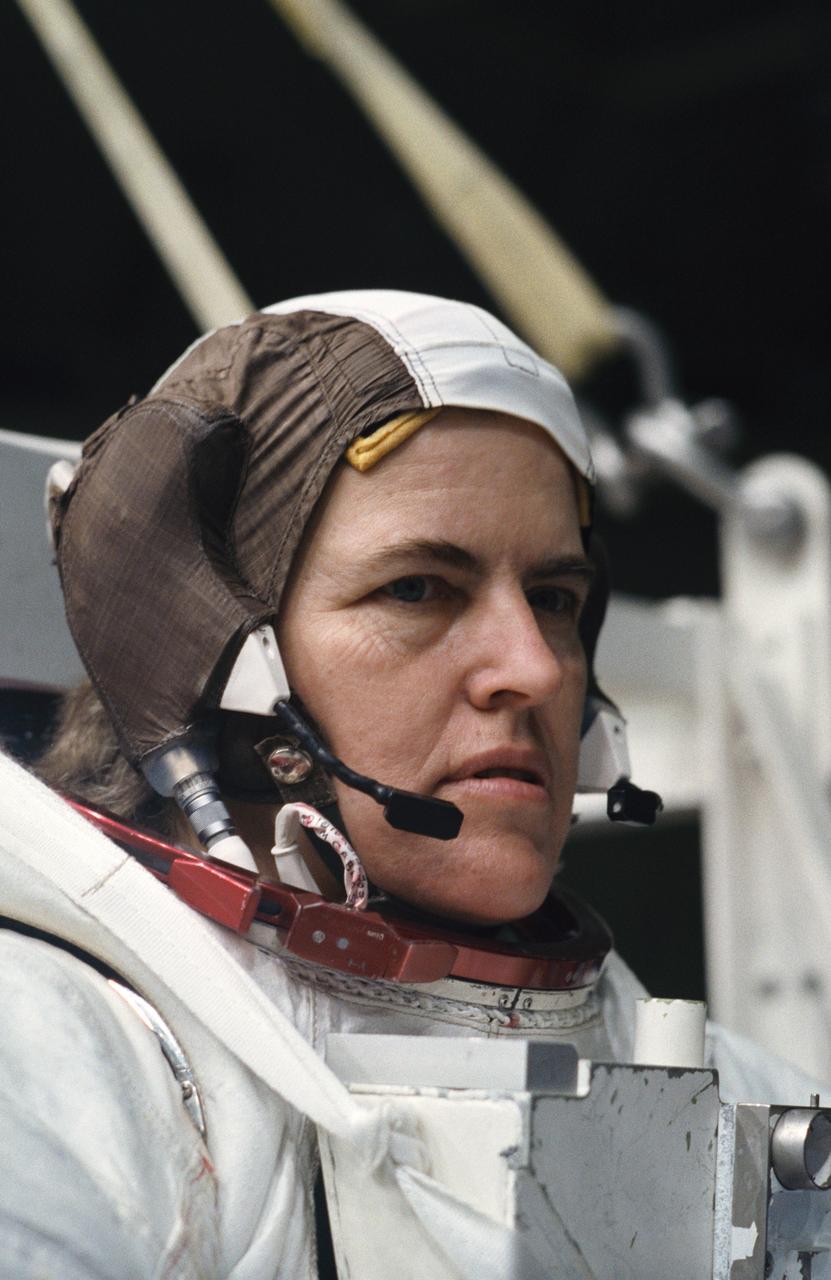
S93-31697 (3 April 1993) --- Astronaut Shannon W. Lucid participates in training for contingency Extravehicular Activity (EVA) for the STS-58 mission. Behind Lucid, sharing a moveable platform with her, is astronaut David A. Wolf (out of frame). For simulation purposes, the two mission specialists were about to be submerged to a point of neutral buoyancy in the Johnson Space Center's (JSC) Weightless Environment Training Facility (WET-F). Though the Spacelab Life Sciences (SLS-2) mission does not include a planned EVA, all crews designate members to learn proper procedures to perform outside the spacecraft in the event of failure of remote means to accomplish those tasks.
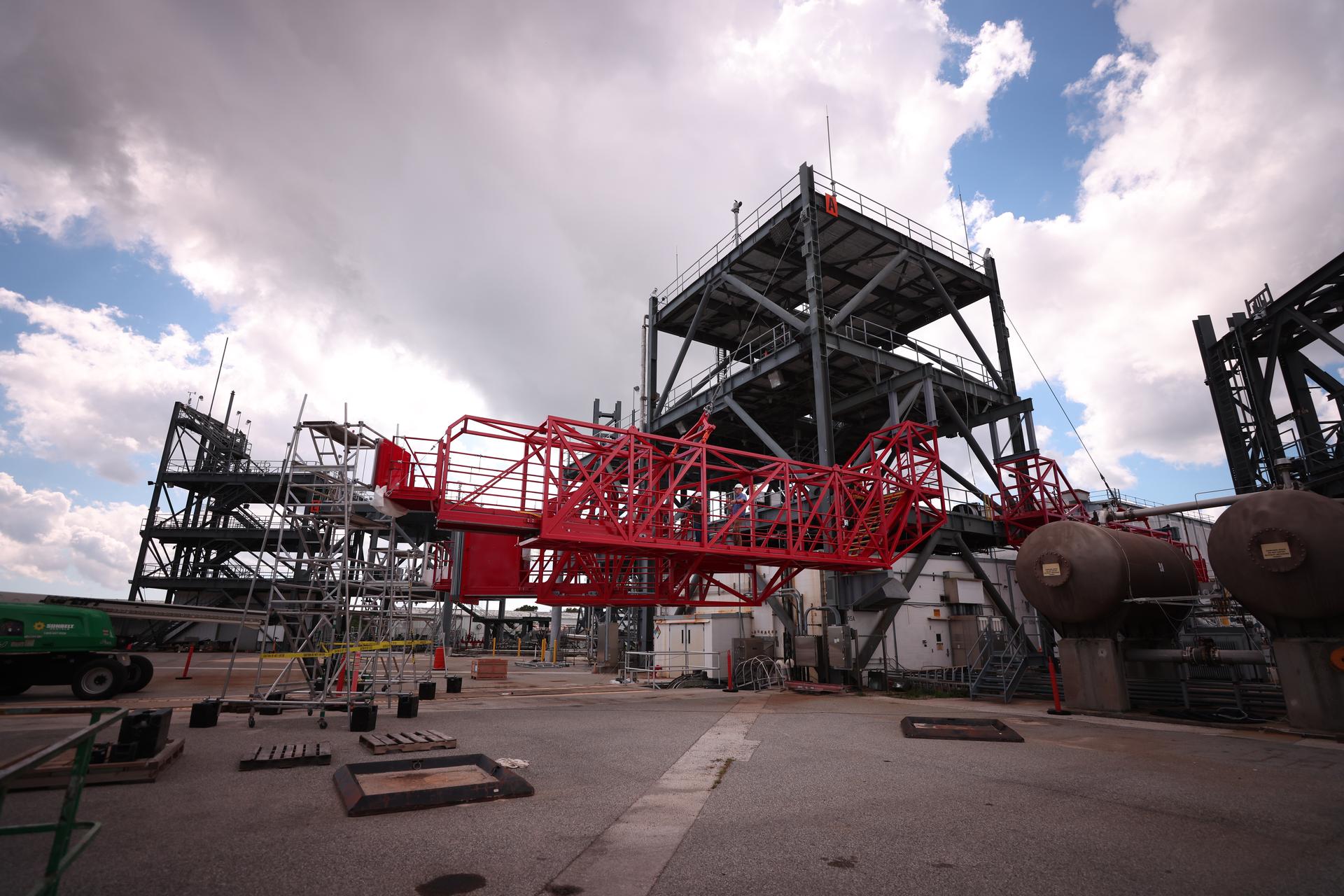
Crews test temporary contingency access platforms on the mobile launcher simulator tower on Wednesday, Oct. 29, 2025, at the Launch Equipment Test Facility at NASA’s Kennedy Space Center in Florida. The platforms will allow engineers to access the vehicle’s flight termination system on the rocket and the mobile launcher while at the pad rather than rolling back to the Vehicle Assembly Building to retest them. For Artemis II, four astronauts will venture around the Moon in early 2026, the first crewed mission on NASA’s path to establishing a long-term presence for science and exploration through Artemis.
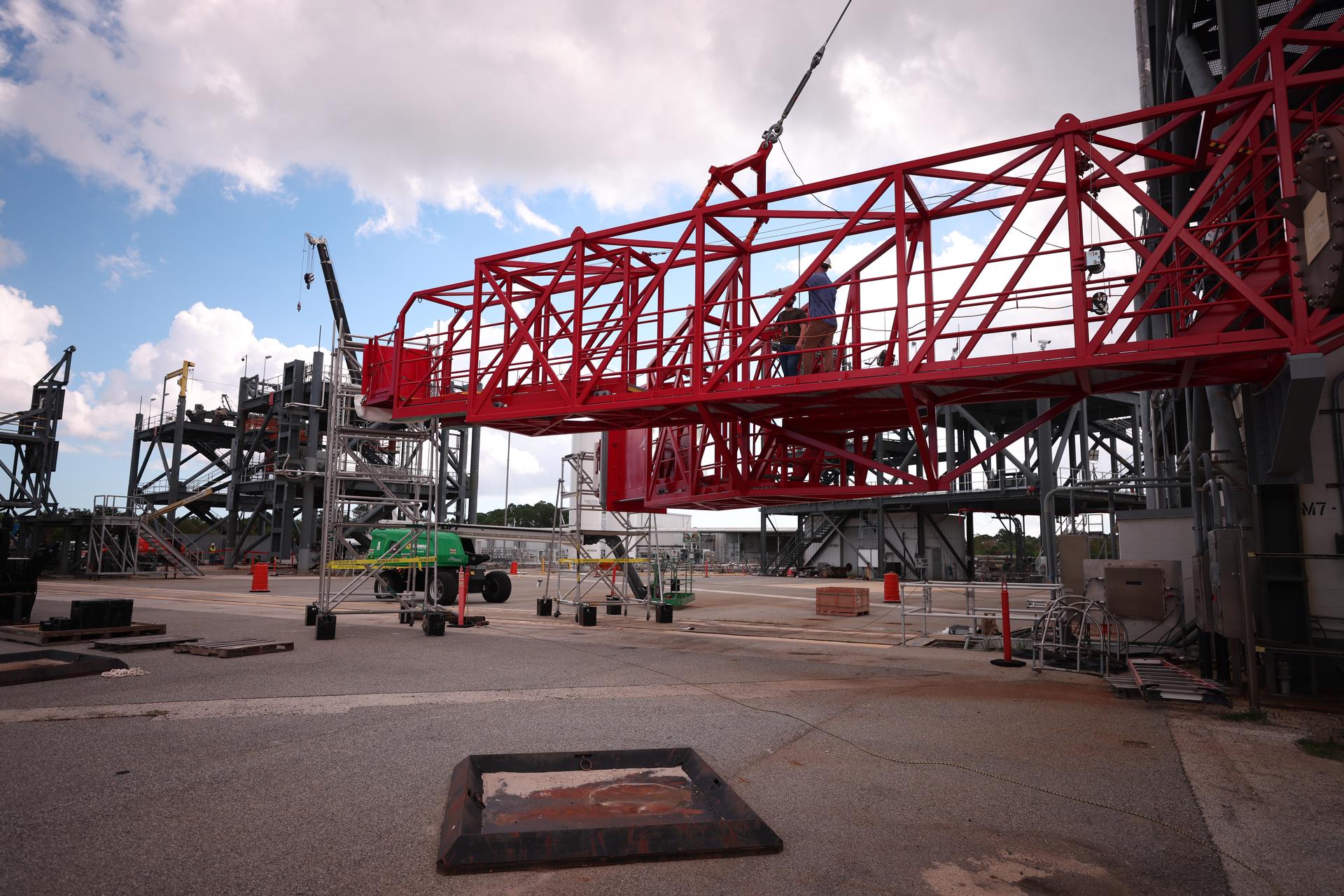
Crews test temporary contingency access platforms on the mobile launcher simulator tower on Wednesday, Oct. 29, 2025, at the Launch Equipment Test Facility at NASA’s Kennedy Space Center in Florida. The platforms will allow engineers to access the vehicle’s flight termination system on the rocket and the mobile launcher while at the pad rather than rolling back to the Vehicle Assembly Building to retest them. For Artemis II, four astronauts will venture around the Moon in early 2026, the first crewed mission on NASA’s path to establishing a long-term presence for science and exploration through Artemis.
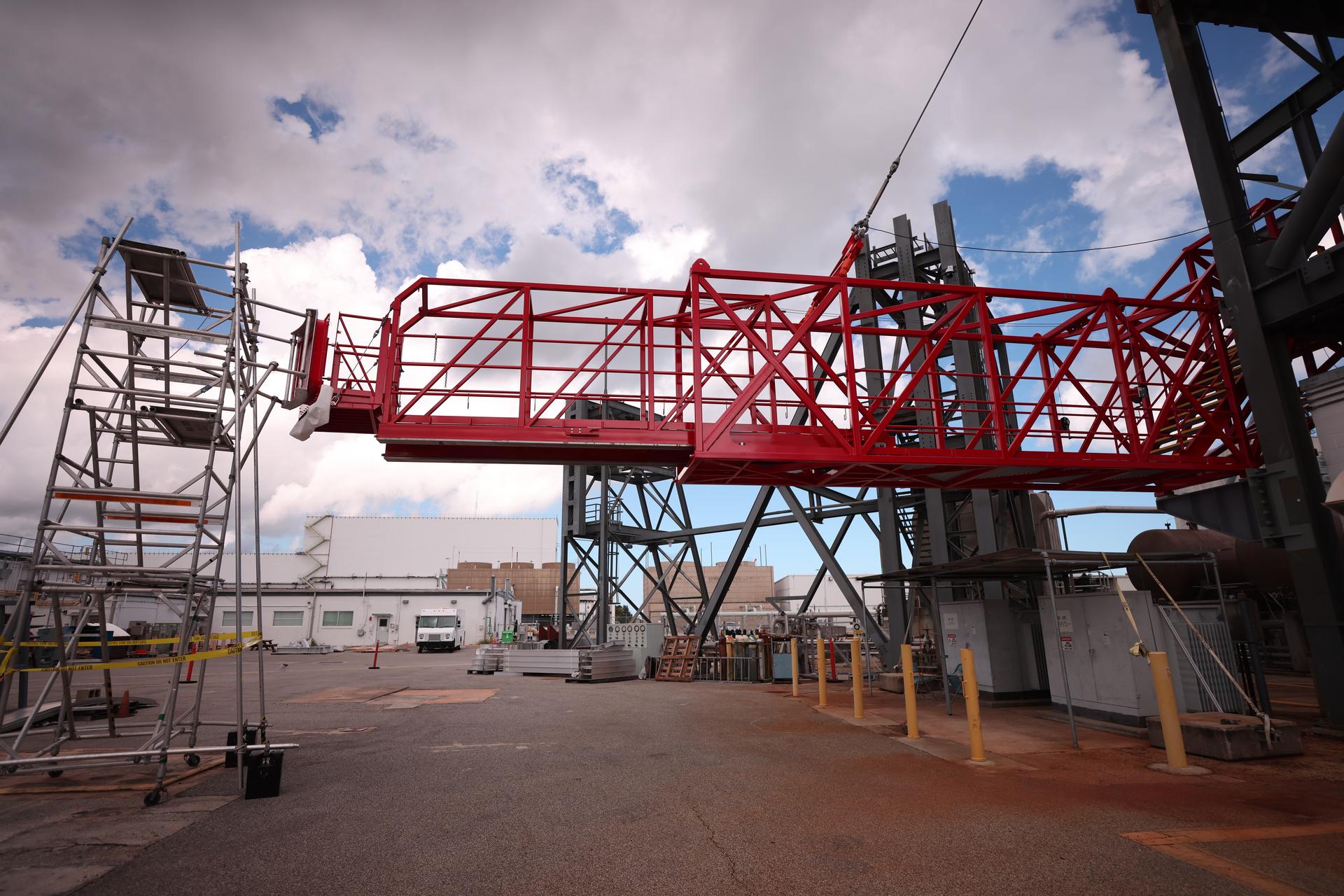
Crews test temporary contingency access platforms on the mobile launcher simulator tower on Wednesday, Oct. 29, 2025, at the Launch Equipment Test Facility at NASA’s Kennedy Space Center in Florida. The platforms will allow engineers to access the vehicle’s flight termination system on the rocket and the mobile launcher while at the pad rather than rolling back to the Vehicle Assembly Building to retest them. For Artemis II, four astronauts will venture around the Moon in early 2026, the first crewed mission on NASA’s path to establishing a long-term presence for science and exploration through Artemis.
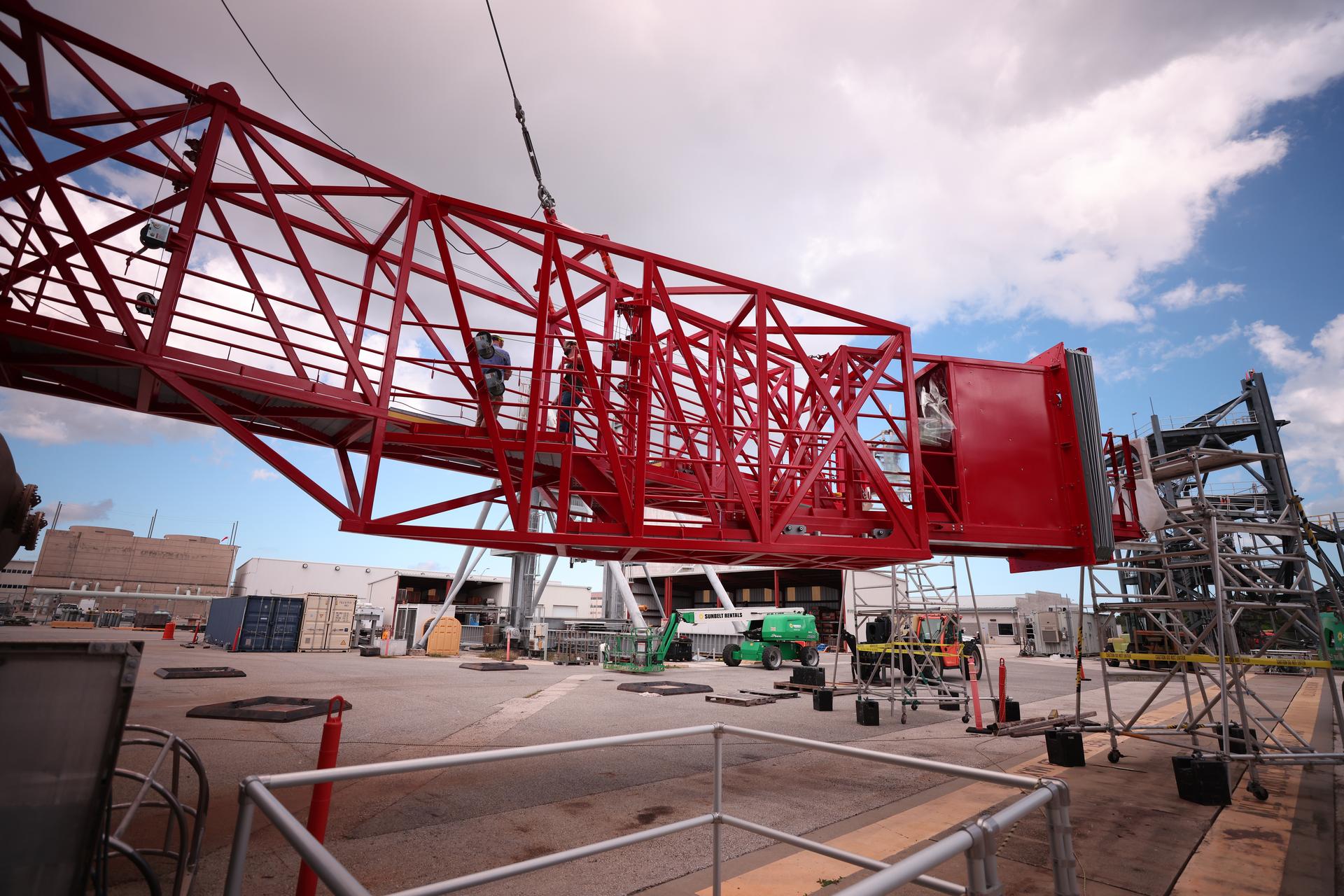
Crews test temporary contingency access platforms on the mobile launcher simulator tower on Wednesday, Oct. 29, 2025, at the Launch Equipment Test Facility at NASA’s Kennedy Space Center in Florida. The platforms will allow engineers to access the vehicle’s flight termination system on the rocket and the mobile launcher while at the pad rather than rolling back to the Vehicle Assembly Building to retest them. For Artemis II, four astronauts will venture around the Moon in early 2026, the first crewed mission on NASA’s path to establishing a long-term presence for science and exploration through Artemis.
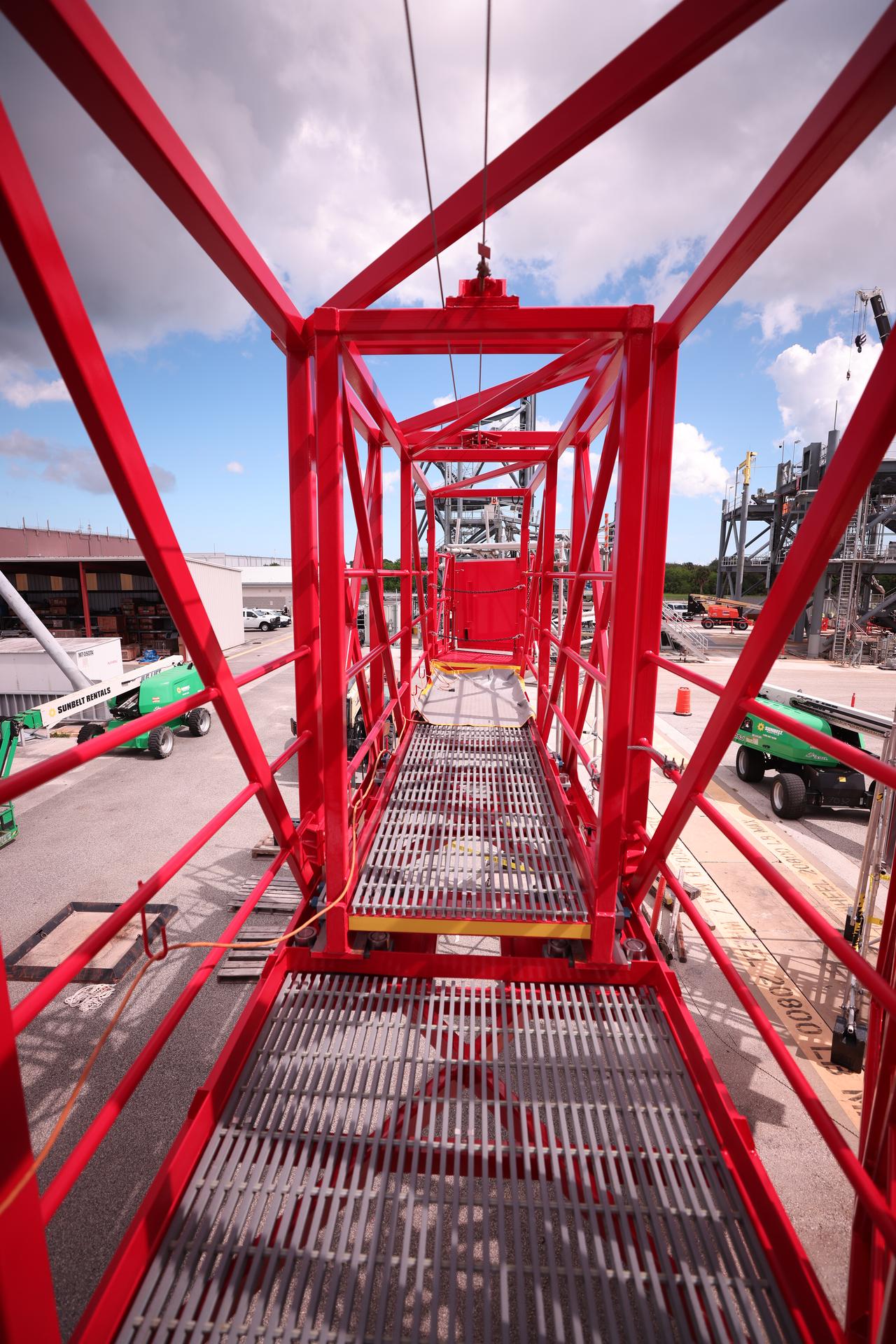
Crews test temporary contingency access platforms on the mobile launcher simulator tower on Wednesday, Oct. 29, 2025, at the Launch Equipment Test Facility at NASA’s Kennedy Space Center in Florida. The platforms will allow engineers to access the vehicle’s flight termination system on the rocket and the mobile launcher while at the pad rather than rolling back to the Vehicle Assembly Building to retest them. For Artemis II, four astronauts will venture around the Moon in early 2026, the first crewed mission on NASA’s path to establishing a long-term presence for science and exploration through Artemis.
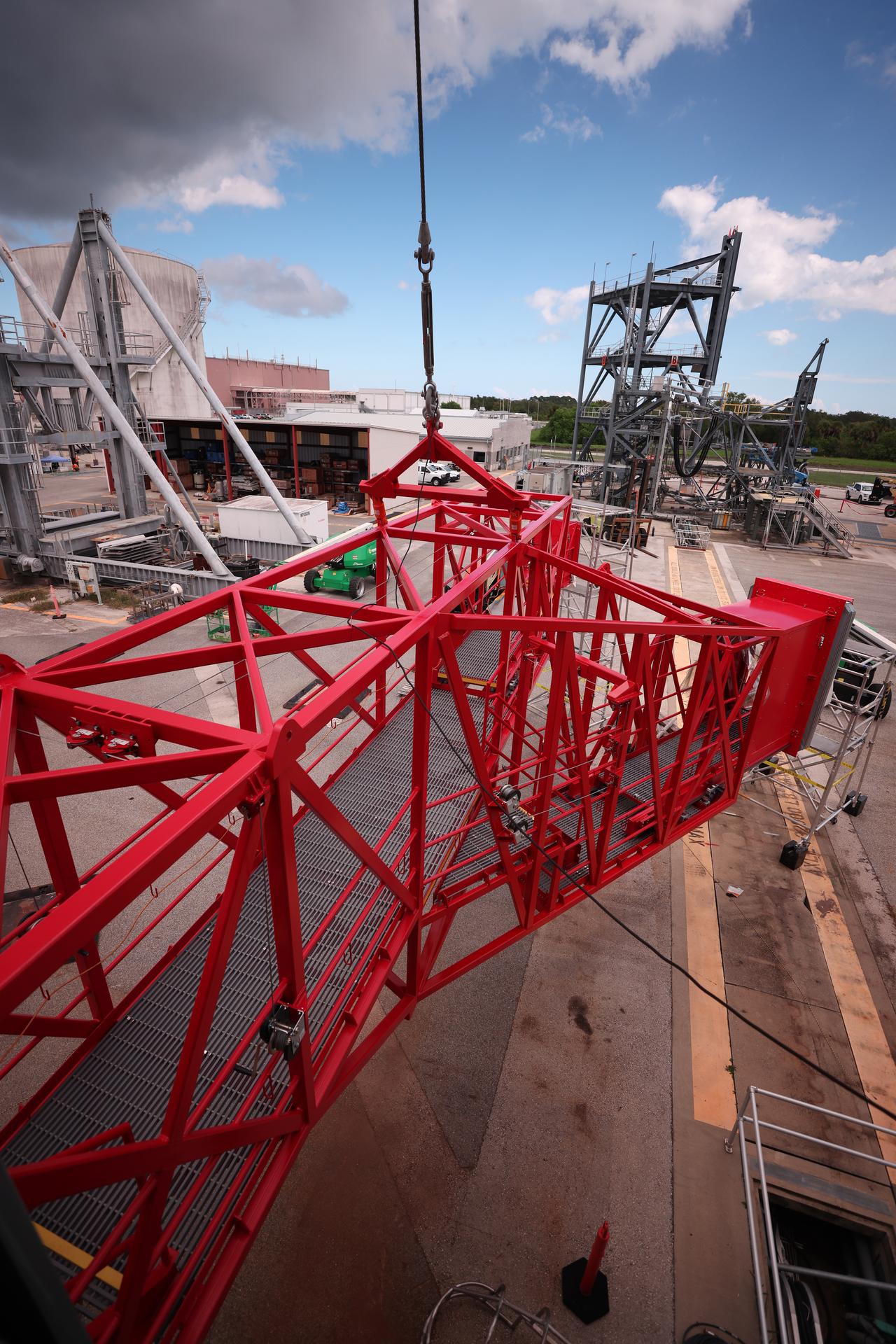
Crews test temporary contingency access platforms on the mobile launcher simulator tower on Wednesday, Oct. 29, 2025, at the Launch Equipment Test Facility at NASA’s Kennedy Space Center in Florida. The platforms will allow engineers to access the vehicle’s flight termination system on the rocket and the mobile launcher while at the pad rather than rolling back to the Vehicle Assembly Building to retest them. For Artemis II, four astronauts will venture around the Moon in early 2026, the first crewed mission on NASA’s path to establishing a long-term presence for science and exploration through Artemis.
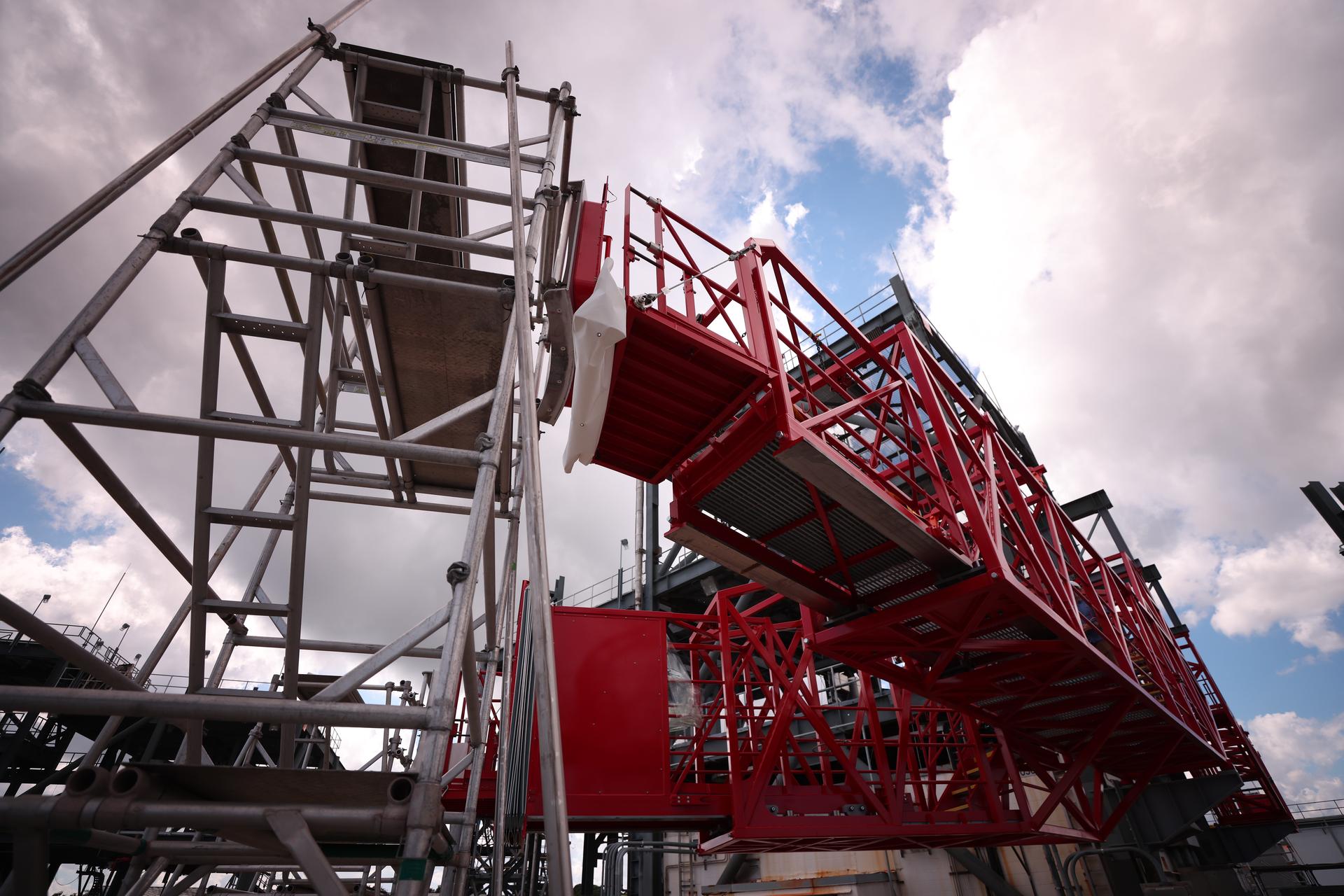
Crews test temporary contingency access platforms on the mobile launcher simulator tower on Wednesday, Oct. 29, 2025, at the Launch Equipment Test Facility at NASA’s Kennedy Space Center in Florida. The platforms will allow engineers to access the vehicle’s flight termination system on the rocket and the mobile launcher while at the pad rather than rolling back to the Vehicle Assembly Building to retest them. For Artemis II, four astronauts will venture around the Moon in early 2026, the first crewed mission on NASA’s path to establishing a long-term presence for science and exploration through Artemis.
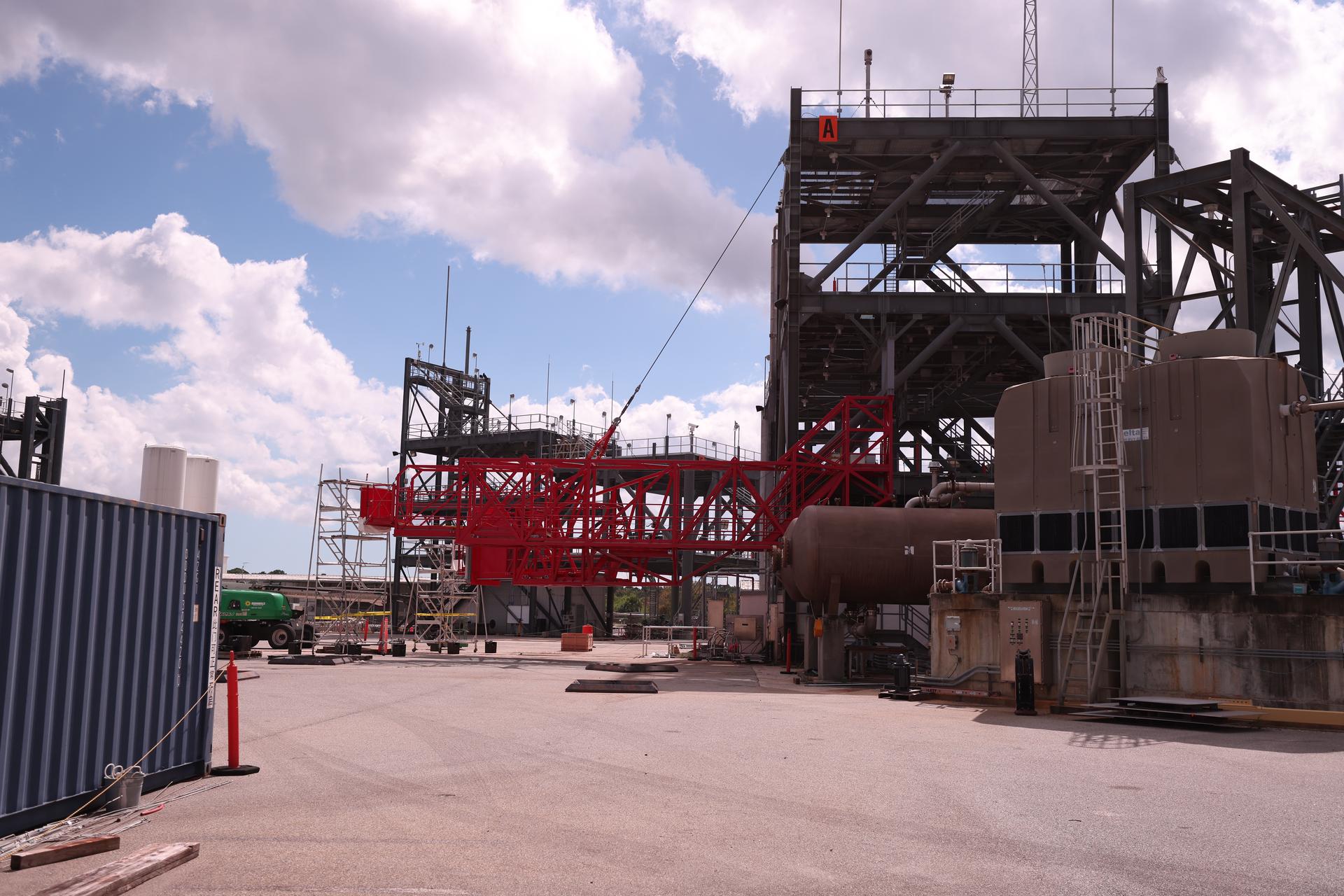
Crews test temporary contingency access platforms on the mobile launcher simulator tower on Wednesday, Oct. 29, 2025, at the Launch Equipment Test Facility at NASA’s Kennedy Space Center in Florida. The platforms will allow engineers to access the vehicle’s flight termination system on the rocket and the mobile launcher while at the pad rather than rolling back to the Vehicle Assembly Building to retest them. For Artemis II, four astronauts will venture around the Moon in early 2026, the first crewed mission on NASA’s path to establishing a long-term presence for science and exploration through Artemis.
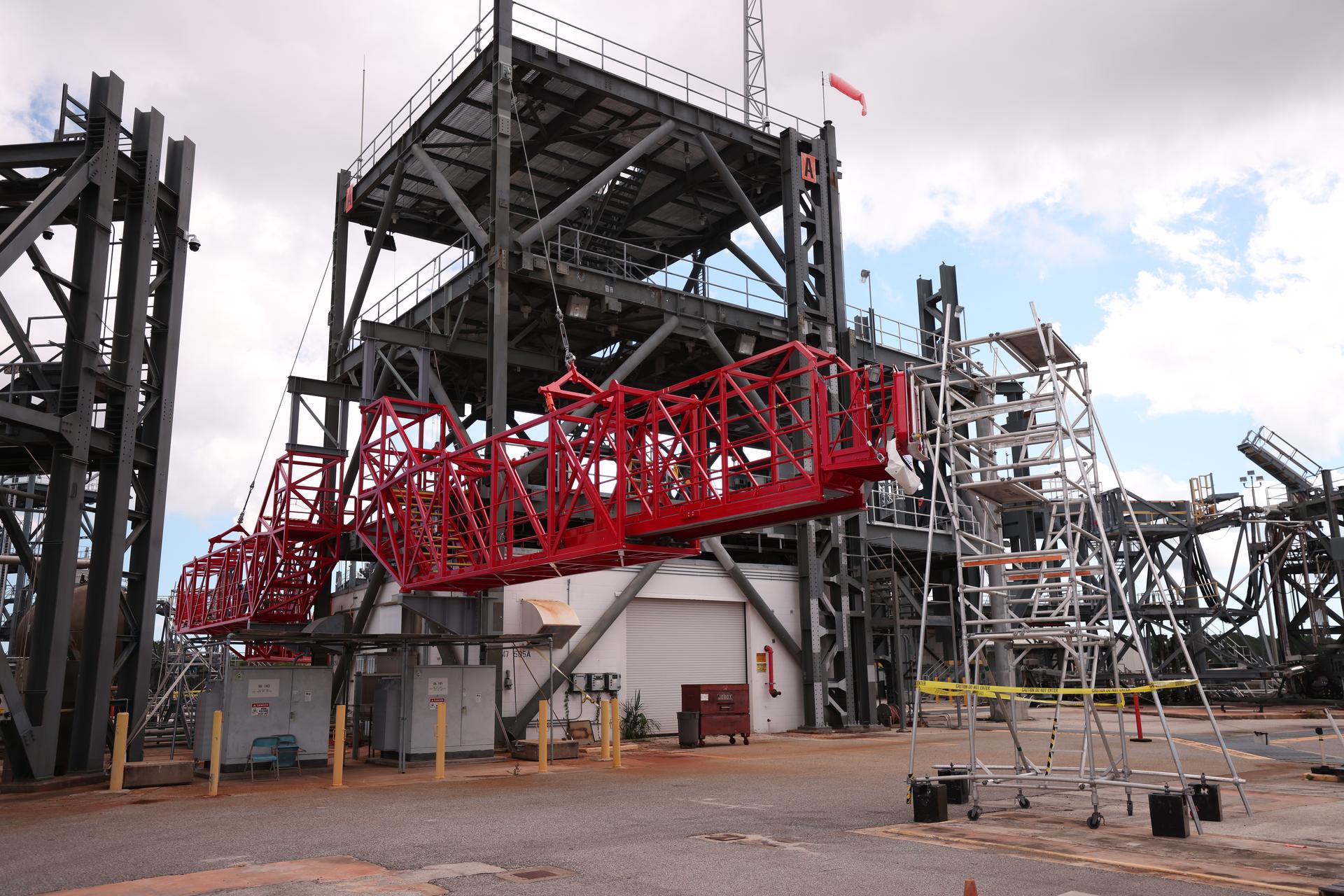
Crews test temporary contingency access platforms on the mobile launcher simulator tower on Wednesday, Oct. 29, 2025, at the Launch Equipment Test Facility at NASA’s Kennedy Space Center in Florida. The platforms will allow engineers to access the vehicle’s flight termination system on the rocket and the mobile launcher while at the pad rather than rolling back to the Vehicle Assembly Building to retest them. For Artemis II, four astronauts will venture around the Moon in early 2026, the first crewed mission on NASA’s path to establishing a long-term presence for science and exploration through Artemis.
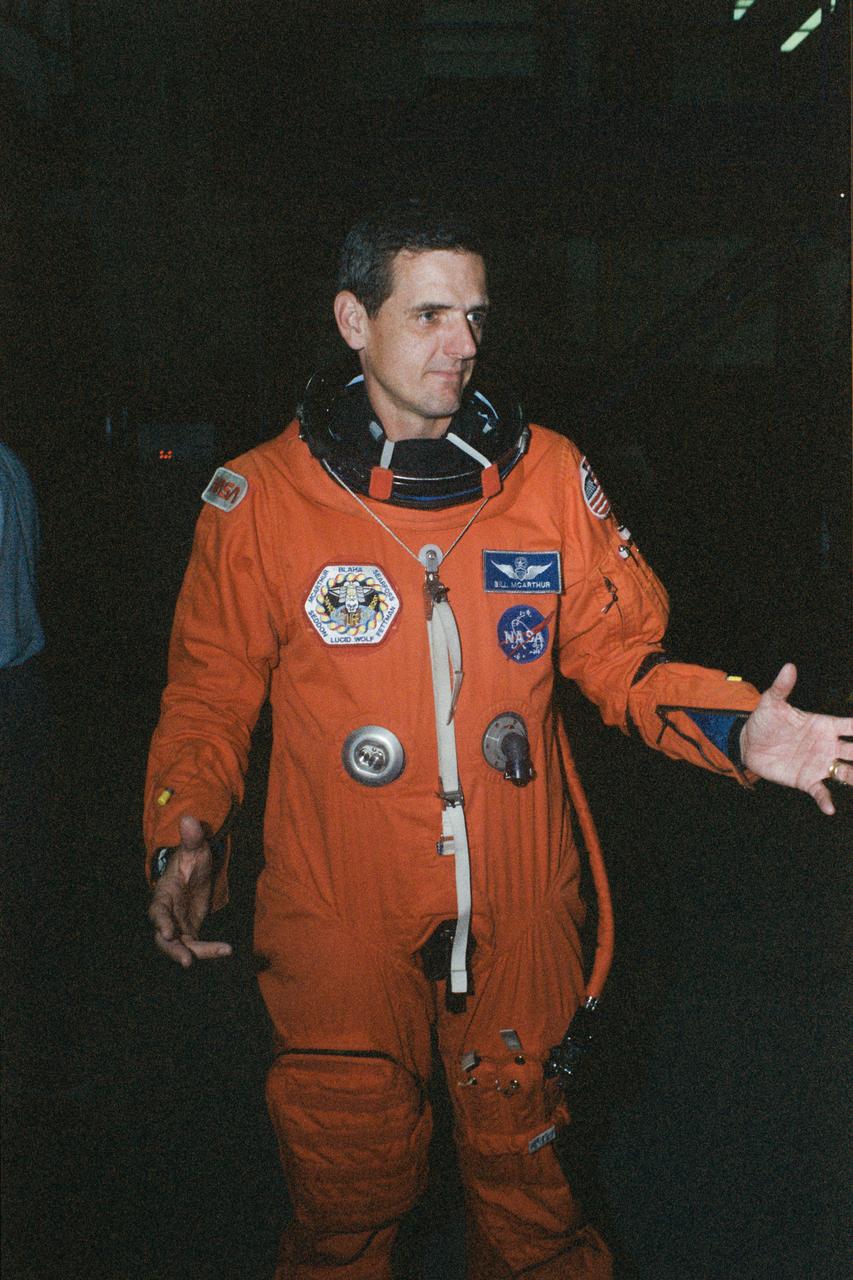
S93-38679 (20 July 1993) --- Wearing a training version of the partial pressure launch and entry garment, astronaut William S. McArthur listens to a briefing on emergency egress procedures for the STS-58 mission. McArthur, along with five other NASA astronauts and a visiting payload specialist assigned to the seven member crew, later rehearsed contingency evacuation procedures. Most of the training session took place in the crew compartment and full fuselage trainers of the Space Shuttle mockup and integration laboratory.
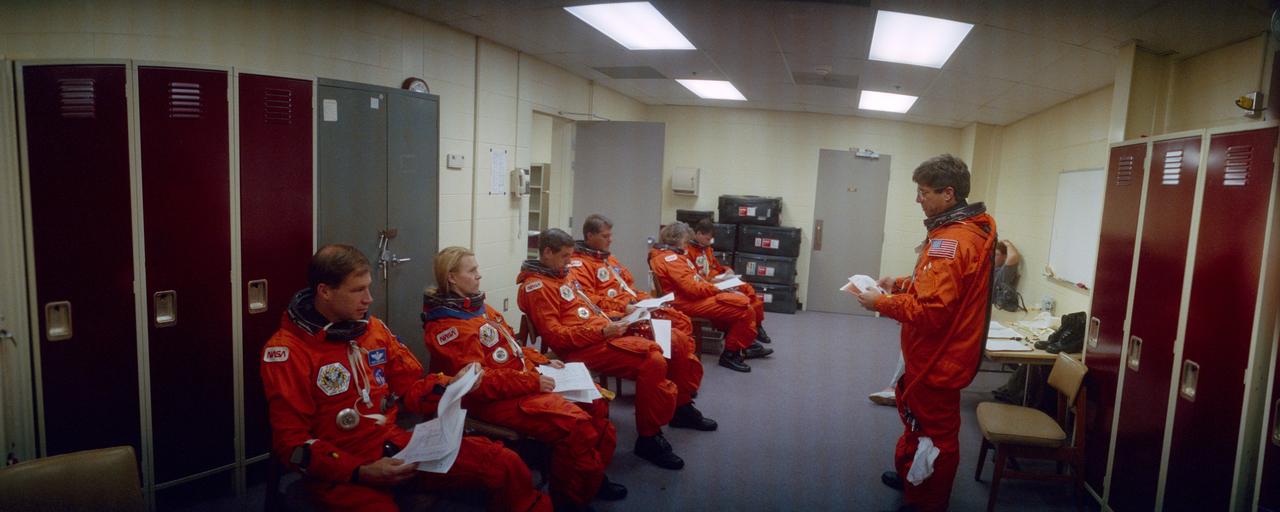
S93-38672 (20 July 1993) --- Wearing training versions of the partial pressure launch and entry garment, the STS-58 crewmembers prepare for a training exercise. After being briefed by astronaut John E. Blaha (right), mission commander, the group rehearsed contingency evacuation procedures. Most of the training session took part in the crew compartment and full fuselage trainers in the Space Shuttle mockup and integration laboratory.
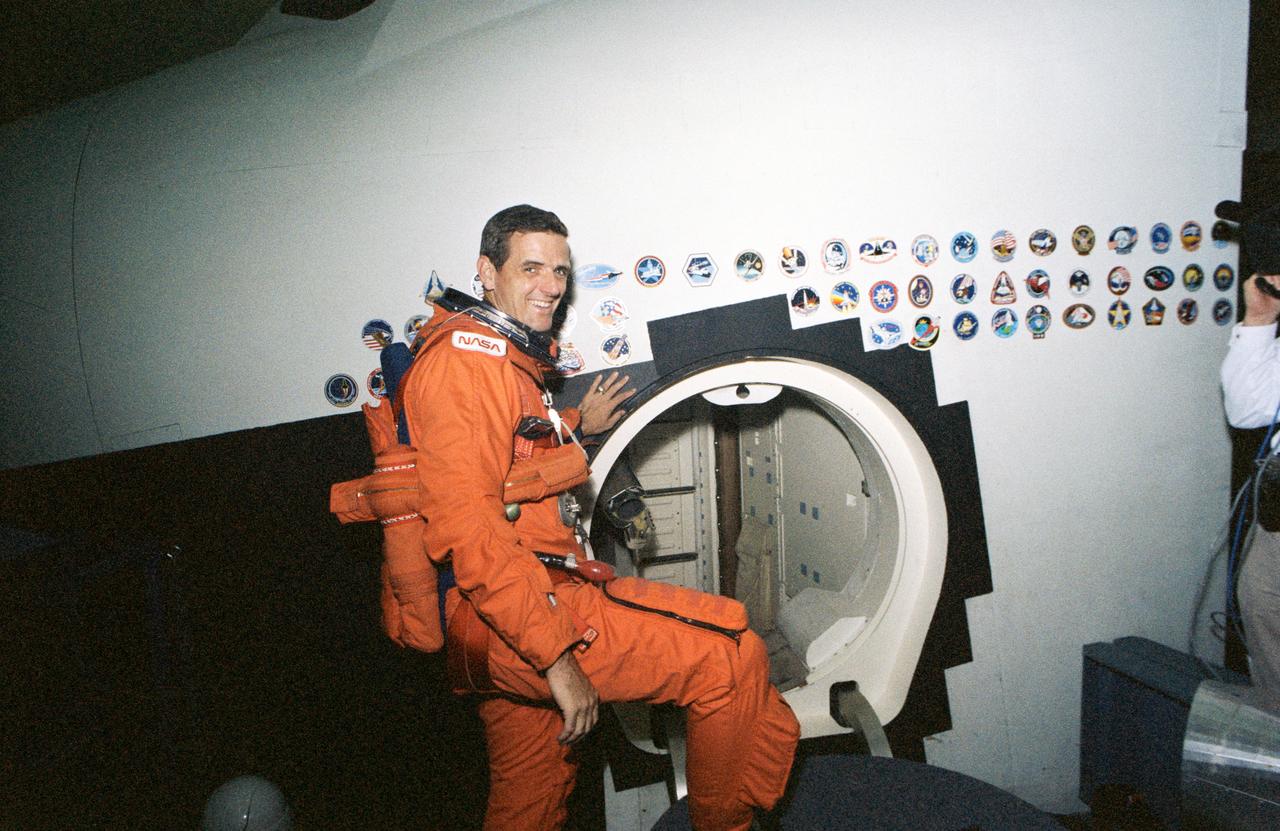
S93-38686 (20 July 1993) --- Wearing a training version of the partial pressure launch and entry garment, astronaut William S. McArthur prepares to rehearse emergency egress procedures for the STS-58 mission. McArthur, along with the five other NASA astronauts and a visiting payload specialist assigned to the seven-member crew, later simulated contingency evacuation procedures. Most of the training session took place in the crew compartment and full fuselage trainers of the Space Shuttle mockup and integration laboratory.
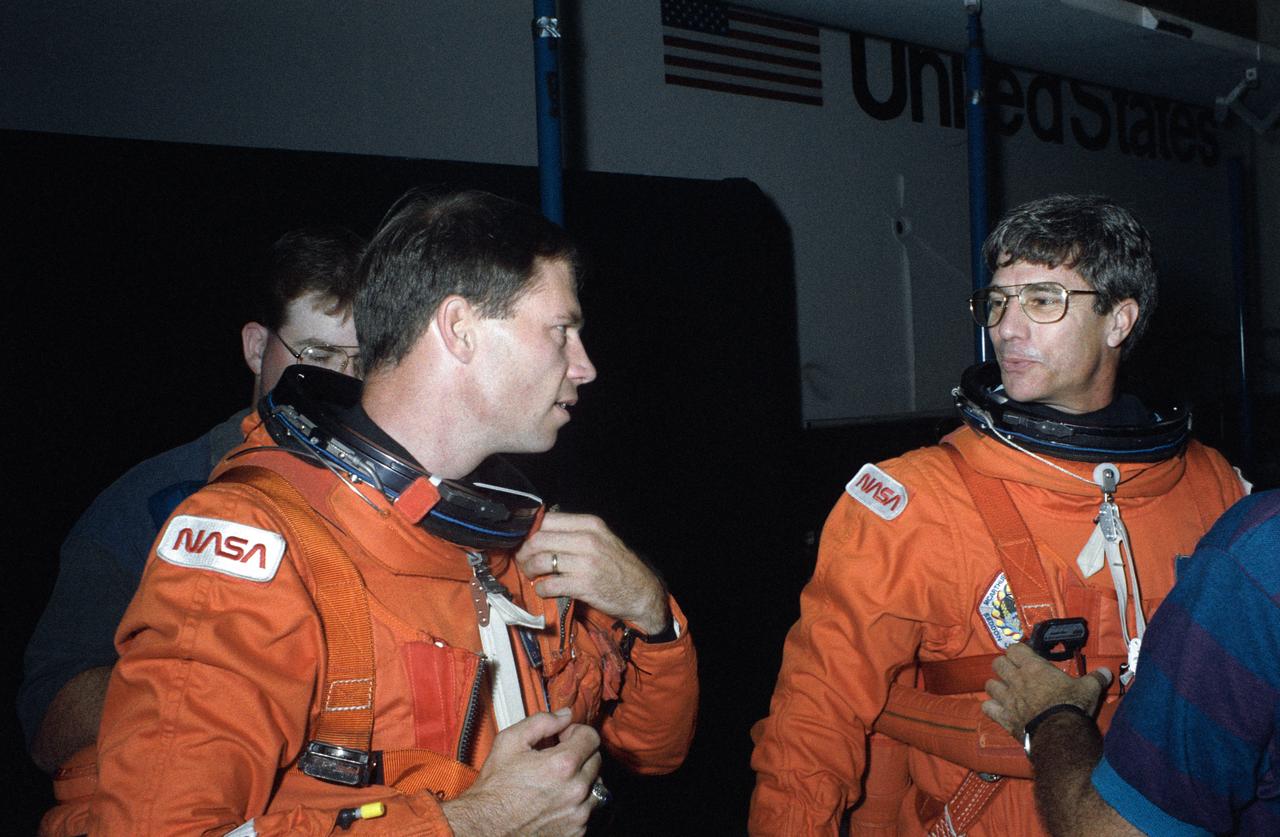
S93-38675 (20 July 1993) --- Wearing training versions of the partial pressure launch and entry garment, astronauts Richard A. Searfoss (left), pilot, and John E. Blaha, mission commander, prepare for a training exercise. The two, along with the four other NASA astronauts and a visiting payload specialist asssigned to the seven-member crew, later rehearsed contingency evacuation procedures. Most of the training session took part in the crew compartment and full fuselage trainers in the Space Shuttle mockup and integration laboratory.
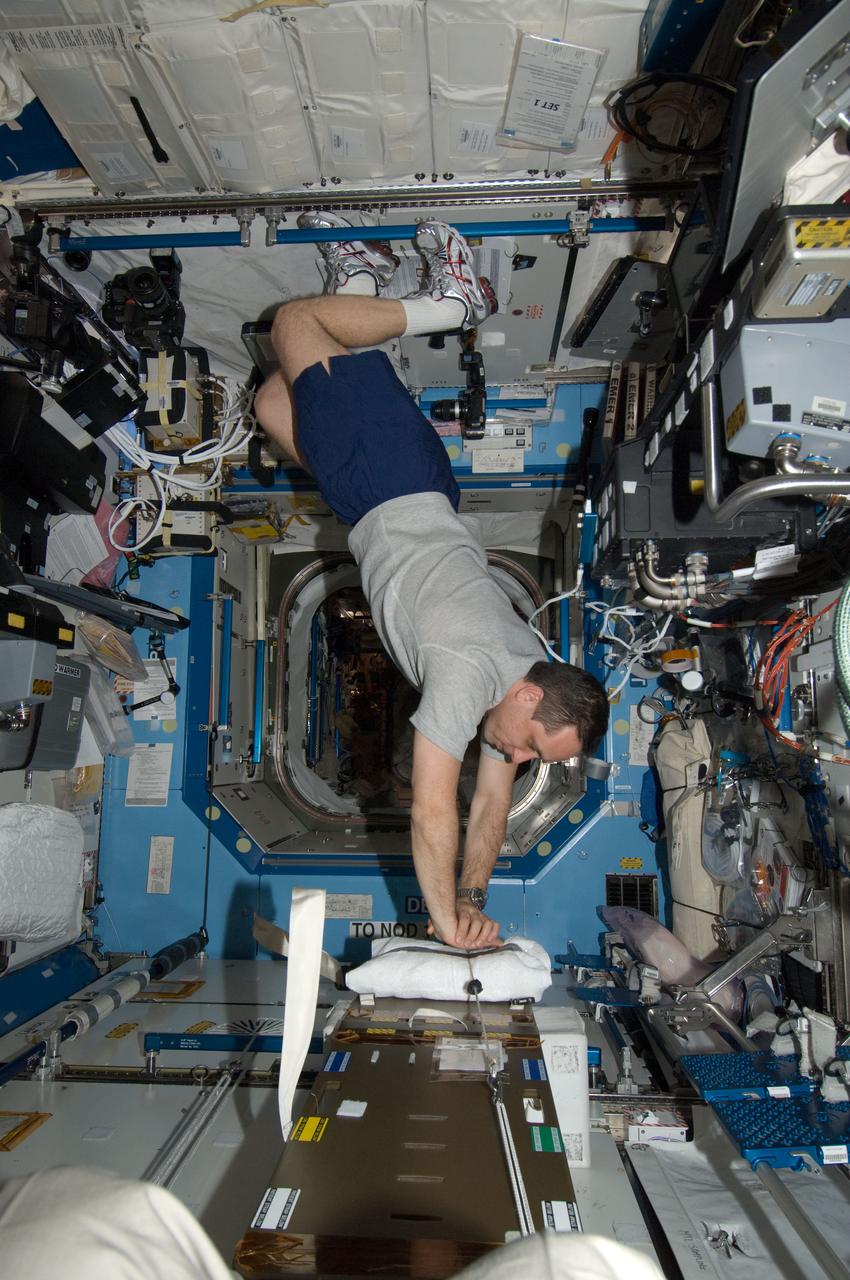
ISS030-E-012600 (16 Dec. 2011) --- Russian cosmonaut Anton Shkaplerov, Expedition 30 flight engineer, participates in a Crew Health Care System (CHeCS) medical contingency drill in the Destiny laboratory of the International Space Station. This drill gives crew members the opportunity to work as a team in resolving a simulated medical emergency onboard the space station.
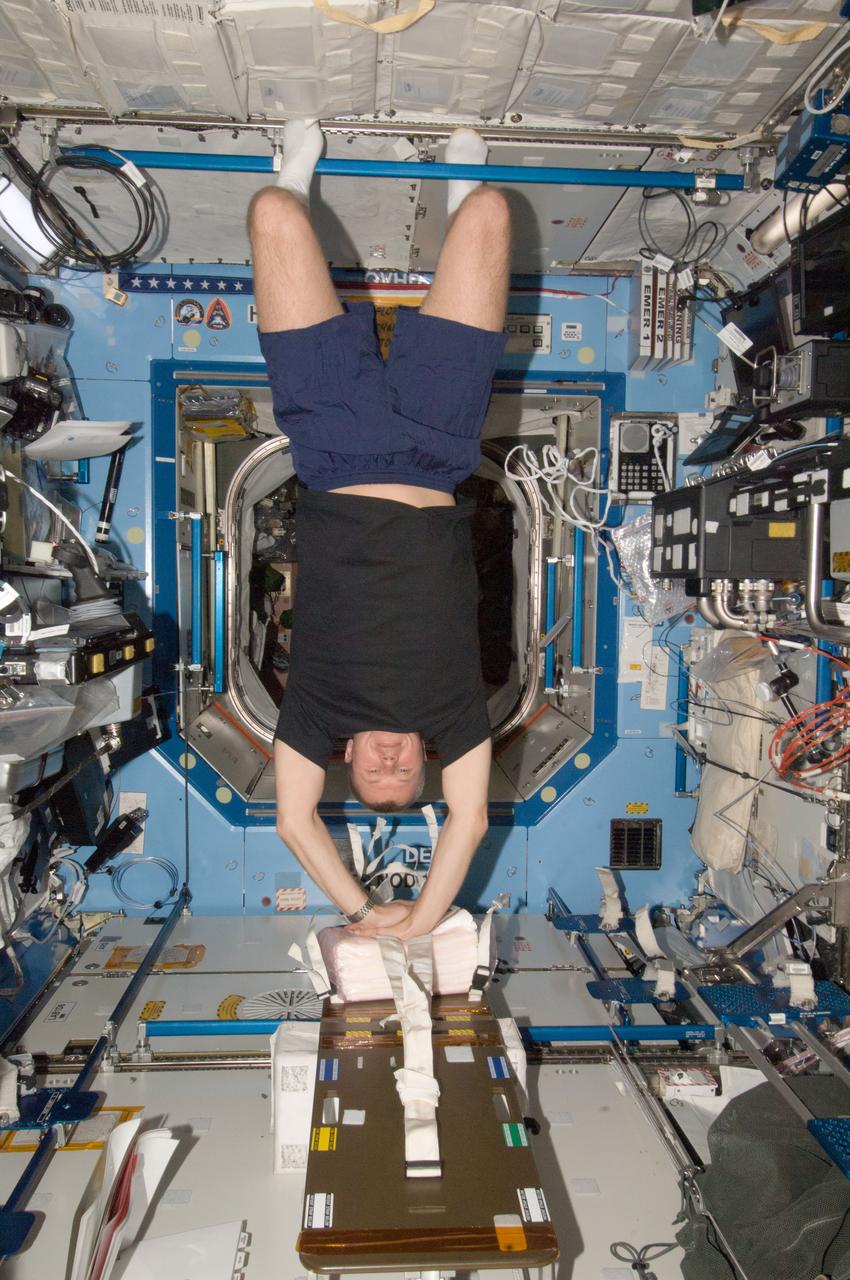
ISS034-E-005260 (26 Nov. 2012) --- Russian cosmonaut Oleg Novitskiy, Expedition 34 flight engineer, participates in a Crew Health Care System (CHeCS) medical contingency drill in the Destiny laboratory of the International Space Station. This drill gives crew members the opportunity to work as a team in resolving a simulated medical emergency onboard the space station.
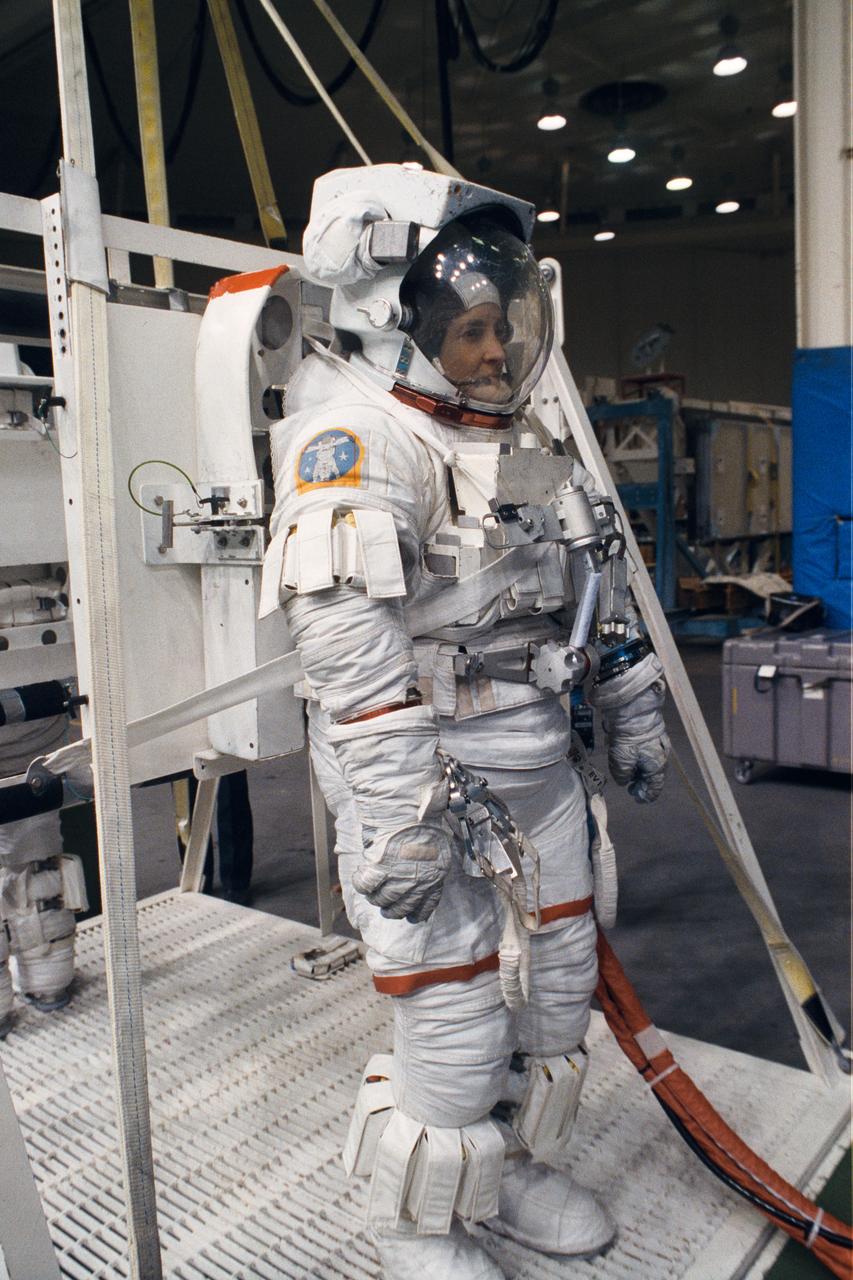
S93-41574 (17 Aug 1993) --- Astronaut Linda M. Godwin, payload commander, prepares to be submerged in a 25-feet deep pool at the Johnson Space Center's (JSC) Weightless Environment Training Facility (WET-F). Astronauts Godwin and Thomas D. Jones (out of frame at left), mission specialist, are using the WET-F to train for contingency space walks for their STS-59 Space Shuttle Endeavour mission next year. No space walks are planned for the flight.
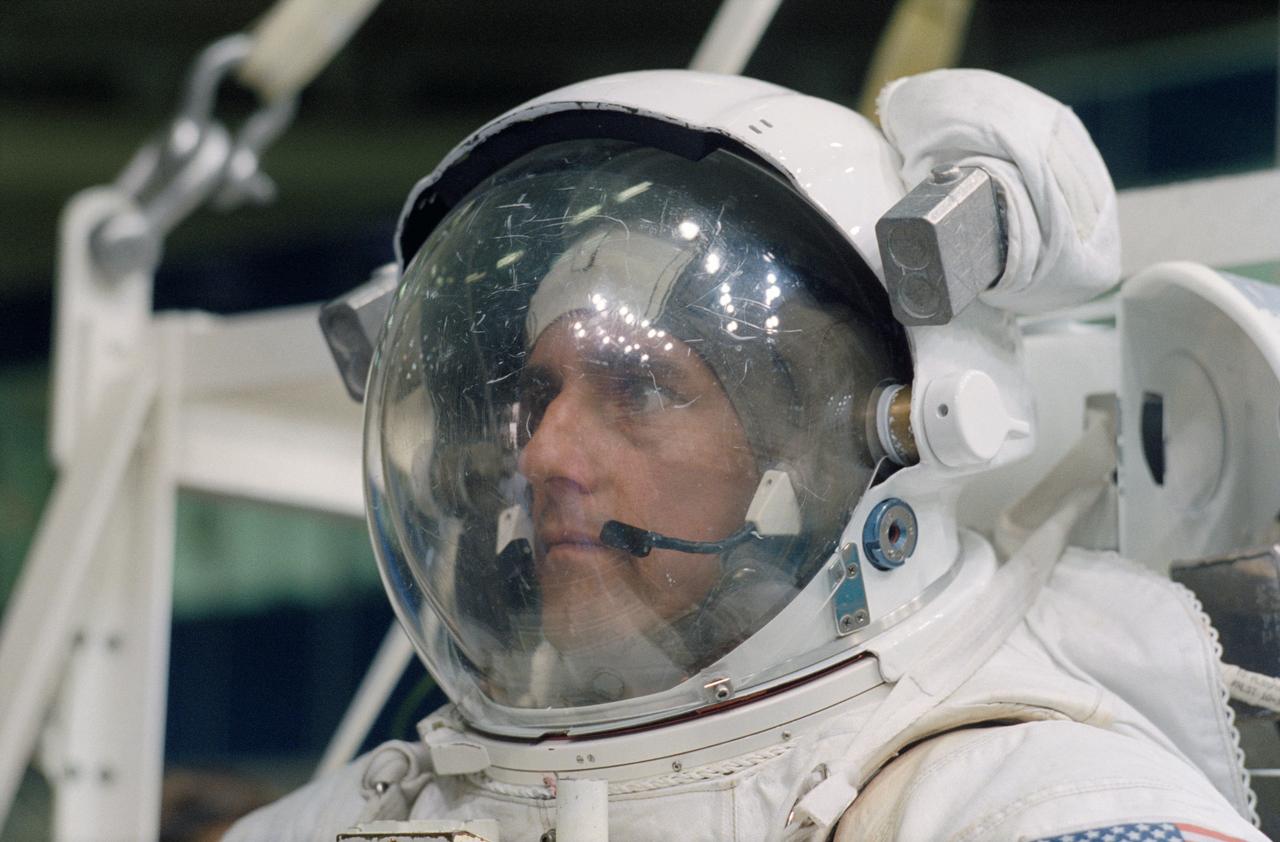
S94-29978 (8 March 1994) --- Astronaut Donald A. Thomas, mission specialist, prepares to be lowered into a 25-feet deep pool at the Johnson Space Center's (JSC) Weightless Environment Training Facility (WET-F). Astronauts Thomas and Leroy Chiao were about to be submerged and made to be neutrally buoyant in order to rehearse several contingency tasks that would require a spacewalk. No spacewalks are scheduled for the International Microgravity Laboratory (IML-2).
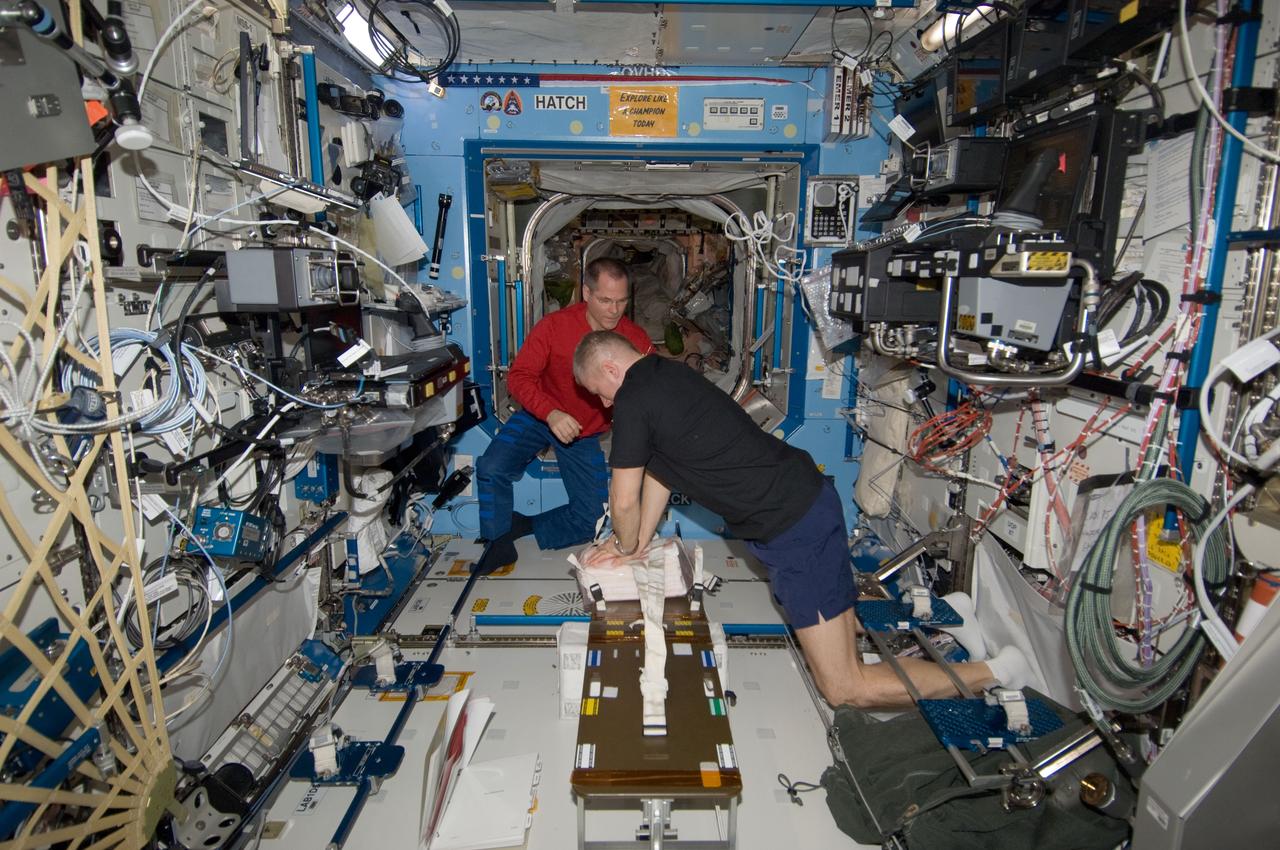
ISS034-E-005268 (26 Nov. 2012) --- NASA astronaut Kevin Ford (background), Expedition 34 commander; and Russian cosmonaut Oleg Novitskiy, flight engineer, participate in a Crew Health Care System (CHeCS) medical contingency drill in the Destiny laboratory of the International Space Station. This drill gives crew members the opportunity to work as a team in resolving a simulated medical emergency onboard the space station.
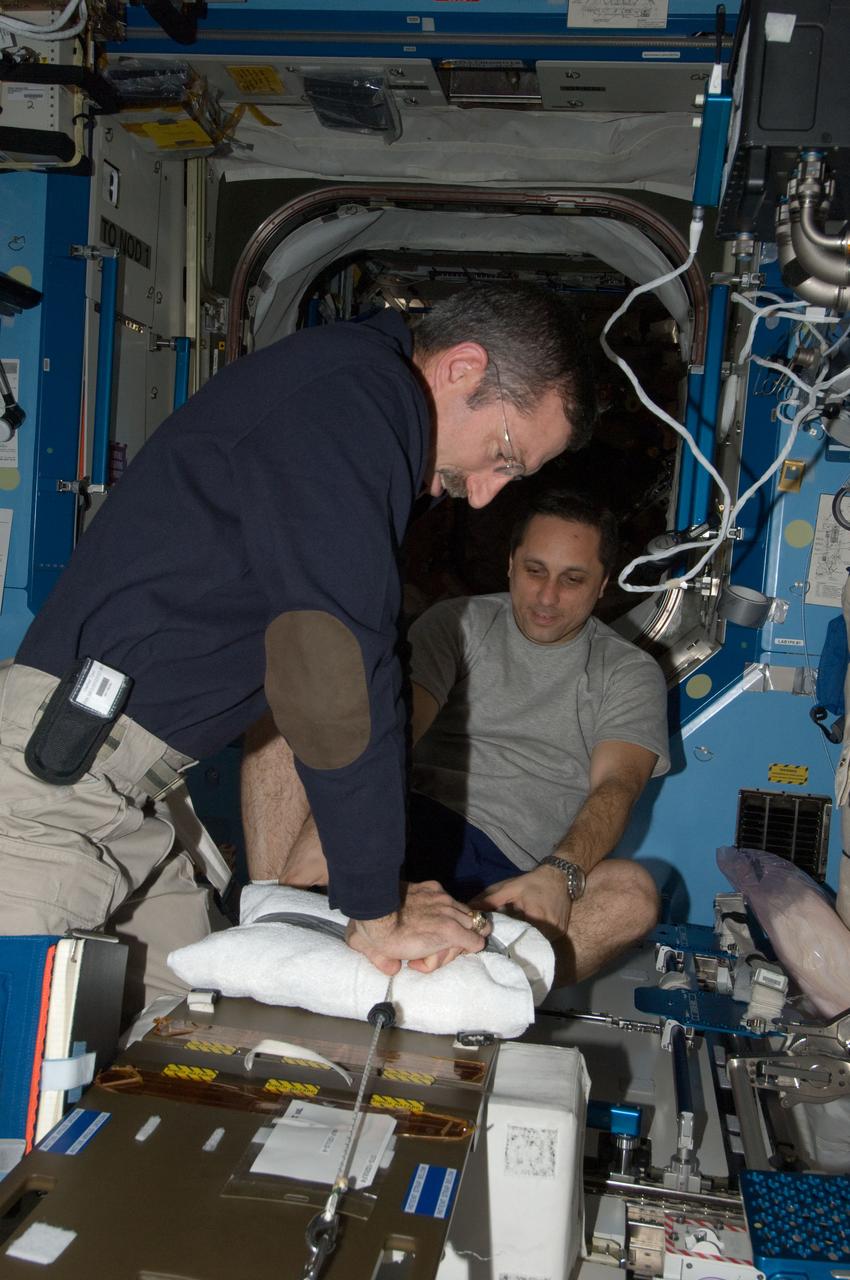
ISS030-E-012609 (16 Dec. 2011) --- NASA astronaut Dan Burbank (foreground), Expedition 30 commander, and Russian cosmonaut Anton Shkaplerov, flight engineer, participate in a Crew Health Care System (CHeCS) medical contingency drill in the Destiny laboratory of the International Space Station. This drill gives crew members the opportunity to work as a team in resolving a simulated medical emergency onboard the space station.
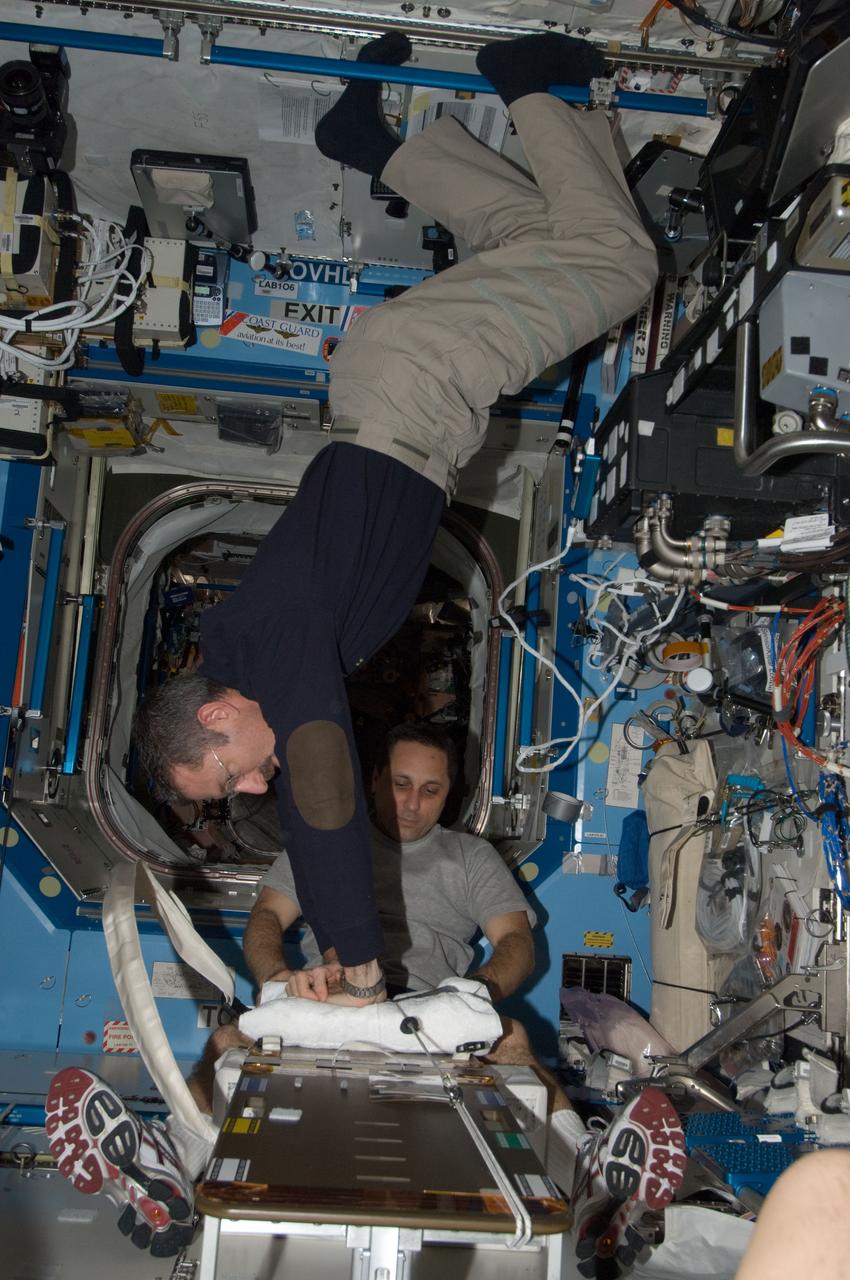
ISS030-E-012613 (16 Dec. 2011) --- NASA astronaut Dan Burbank (foreground), Expedition 30 commander, and Russian cosmonaut Anton Shkaplerov, flight engineer, participate in a Crew Health Care System (CHeCS) medical contingency drill in the Destiny laboratory of the International Space Station. This drill gives crew members the opportunity to work as a team in resolving a simulated medical emergency onboard the space station.
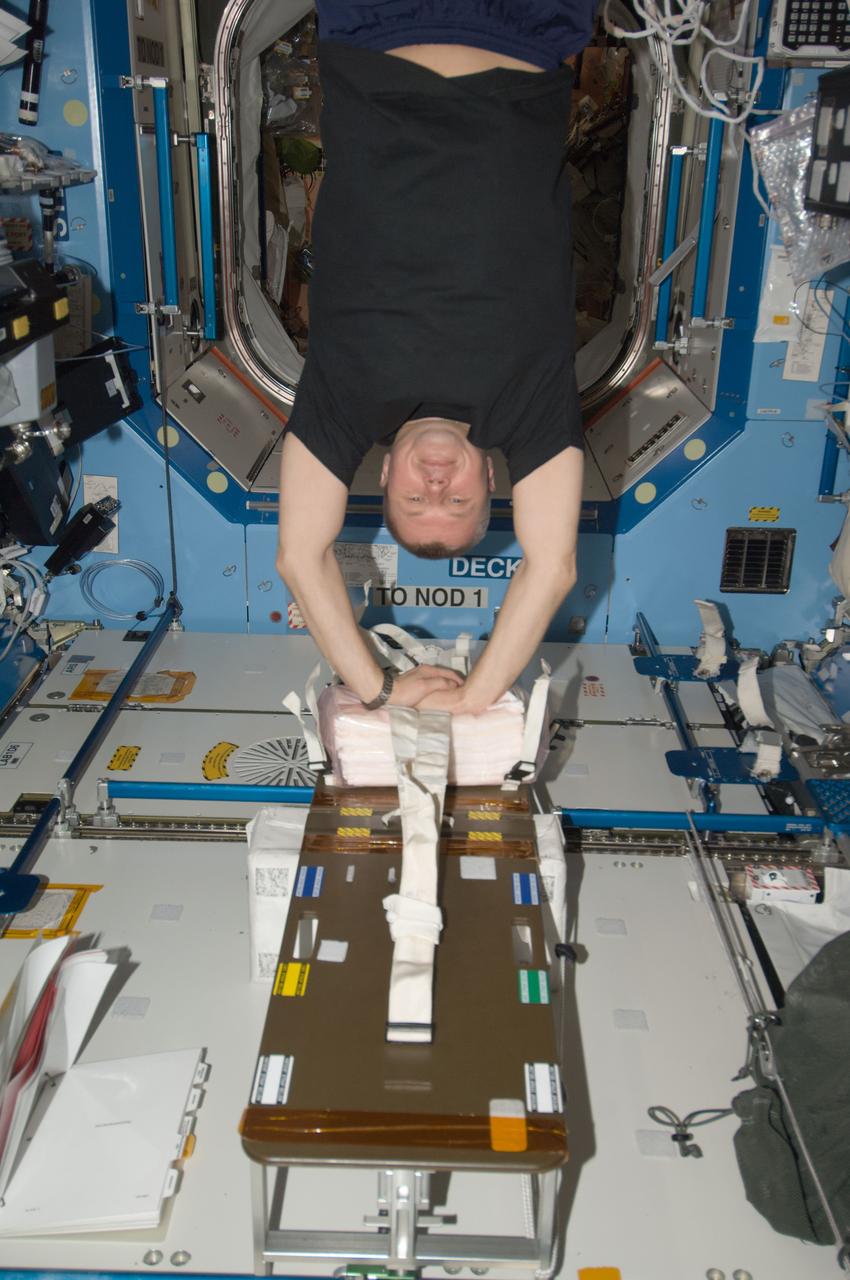
ISS034-E-005266 (26 Nov. 2012) --- Russian cosmonaut Oleg Novitskiy, Expedition 34 flight engineer, participates in a Crew Health Care System (CHeCS) medical contingency drill in the Destiny laboratory of the International Space Station. This drill gives crew members the opportunity to work as a team in resolving a simulated medical emergency onboard the space station.
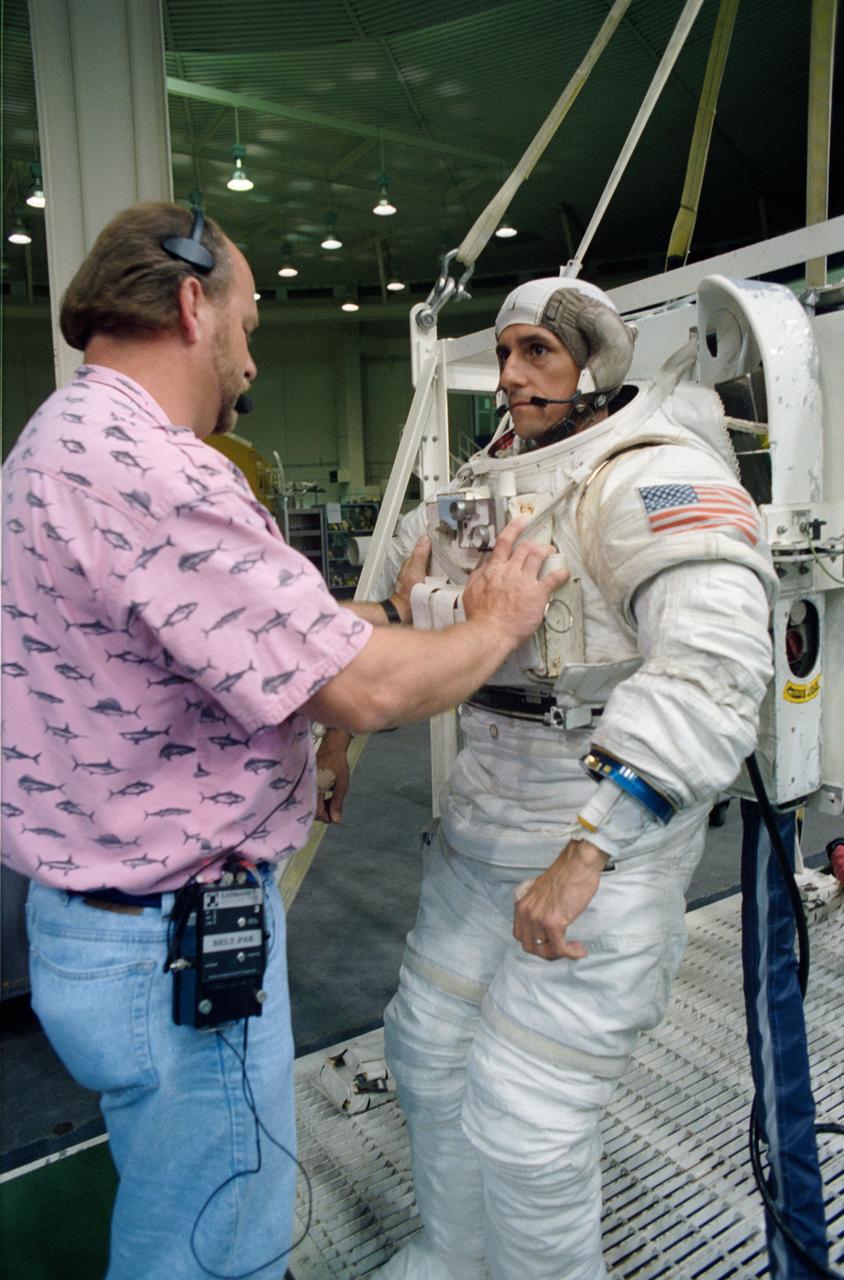
S94-29981 (8 March 1994) --- Astronaut Donald A. Thomas, mission specialist, awaits his helmet as he prepares to be lowered into a 25-feet deep pool at the Johnson Space Center's (JSC) Weightless Environment Training Facility (WET-F). Astronauts Thomas and Leroy Chiao were about to be submerged and made to be neutrally buoyant in order to rehearse several contingency tasks that would require a spacewalk. No spacewalks are scheduled for the International Microgravity Laboratory (IML-2).
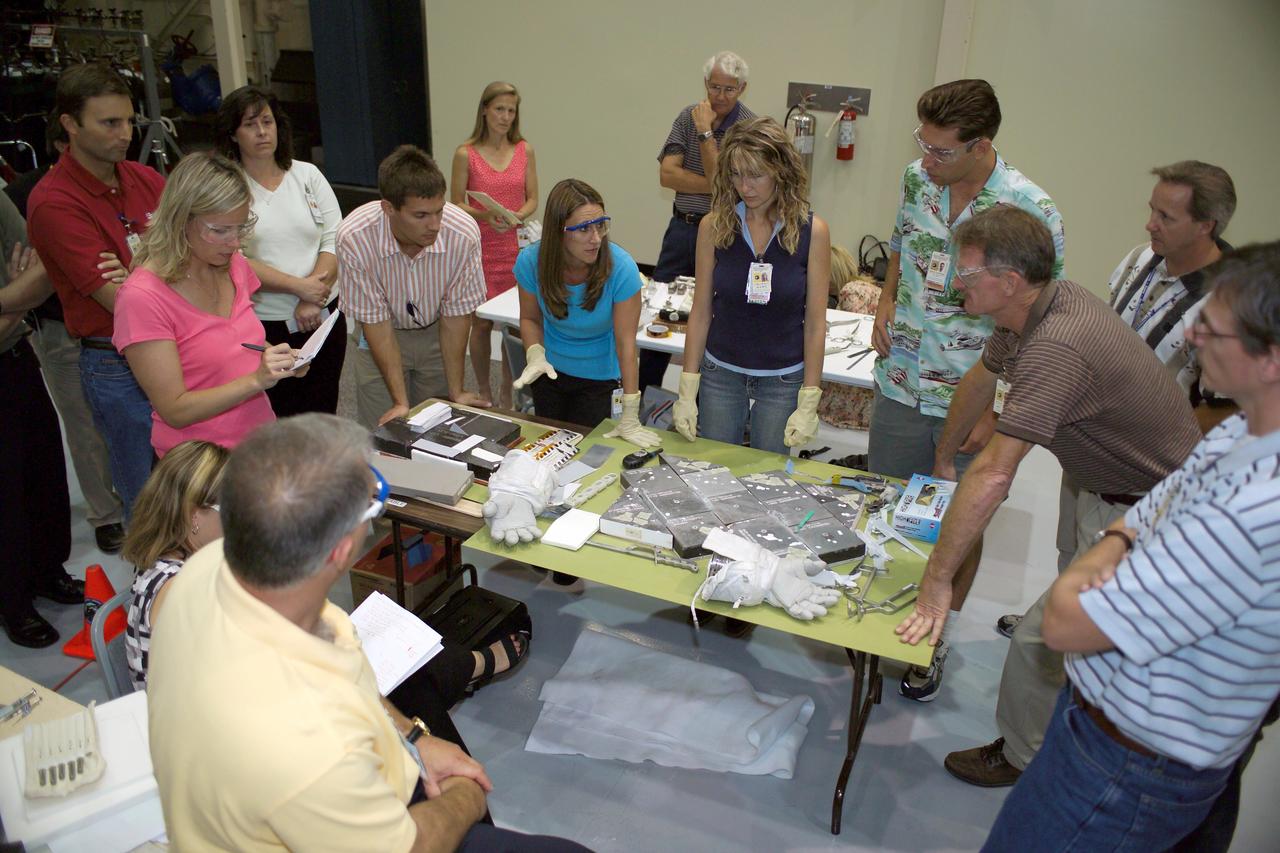
JSC2005-E-30949 (2005) --- NASA engineers Dana Weigel and Lora Bailey, along with astronauts David Wolf and Joe Tanner and other engineers evaluate techniques to eliminate or trim protruding gap fillers as a possible contingency plan for an STS-114 extravehicular activity (EVA). Photo credit: NASA Note: This image does not appear on public sites
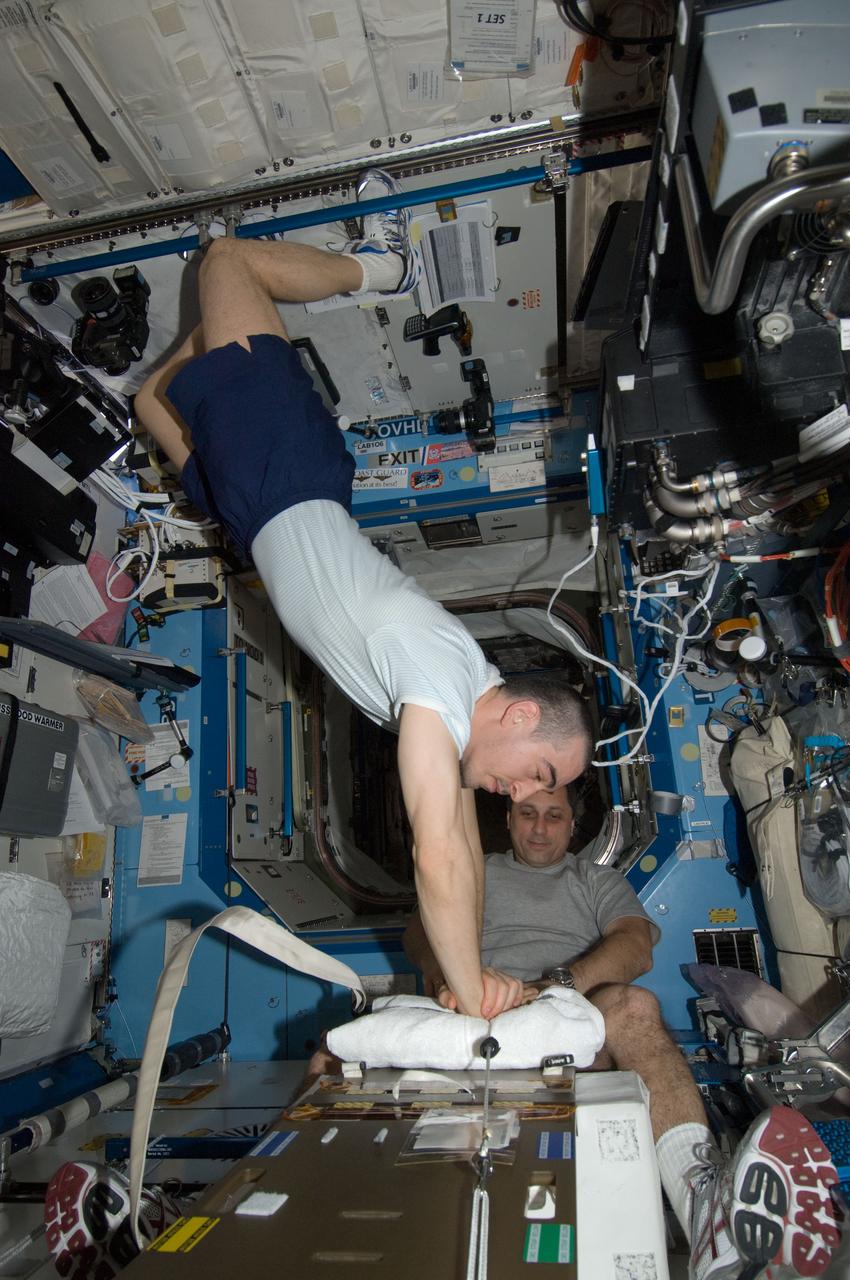
ISS030-E-012604 (16 Dec. 2011) --- Russian cosmonauts Anatoly Ivanishin (foreground) and Anton Shkaplerov, both Expedition 30 flight engineers, participate in a Crew Health Care System (CHeCS) medical contingency drill in the Destiny laboratory of the International Space Station. This drill gives crew members the opportunity to work as a team in resolving a simulated medical emergency onboard the space station.
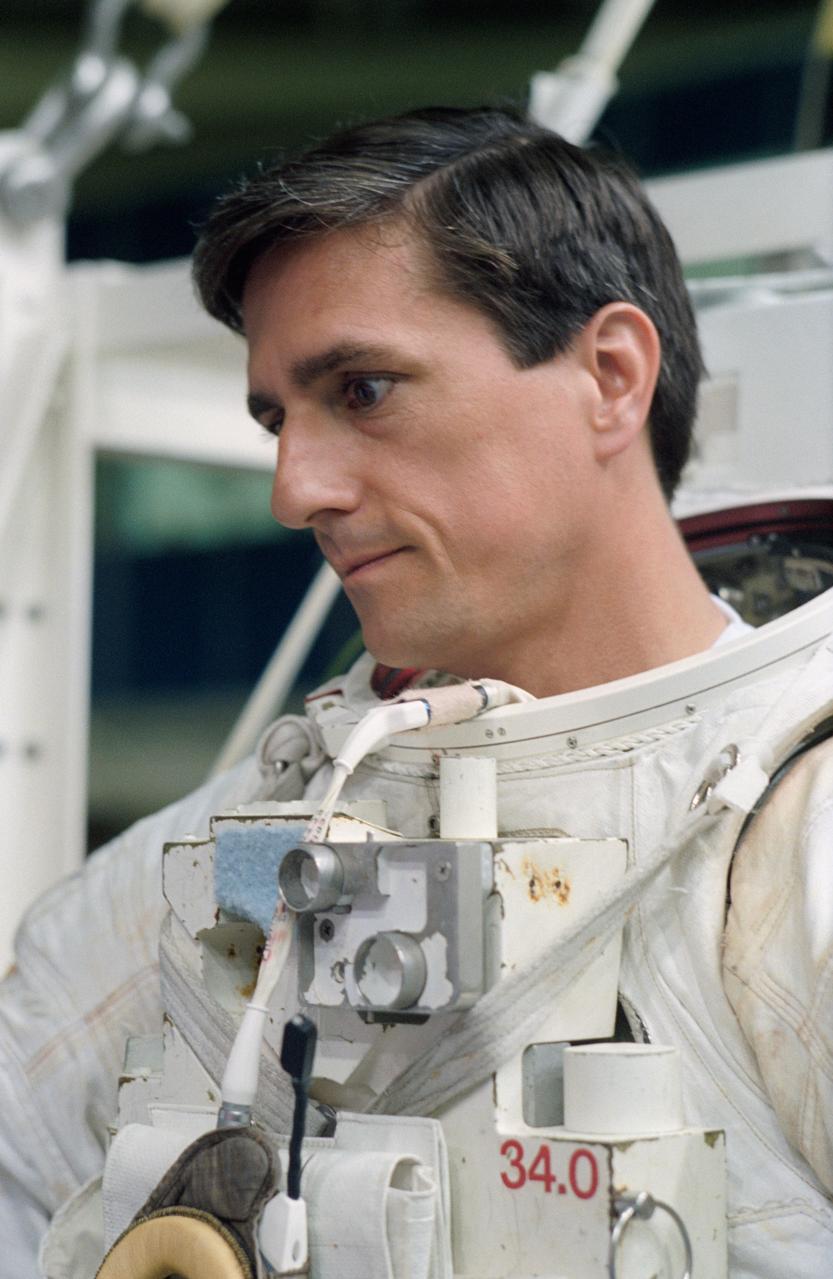
S94-29976 (8 March 1994) --- Astronaut Donald A. Thomas, mission specialist, awaits his helmet as he prepares to be lowered into a 25-feet deep pool at the Johnson Space Center's (JSC) Weightless Environment Training Facility (WET-F). Astronauts Thomas and Leroy Chiao were about to be submerged and made to be neutrally buoyant in order to rehearse several contingency tasks that would require a spacewalk. No spacewalks are scheduled for the International Microgravity Laboratory (IML-2).
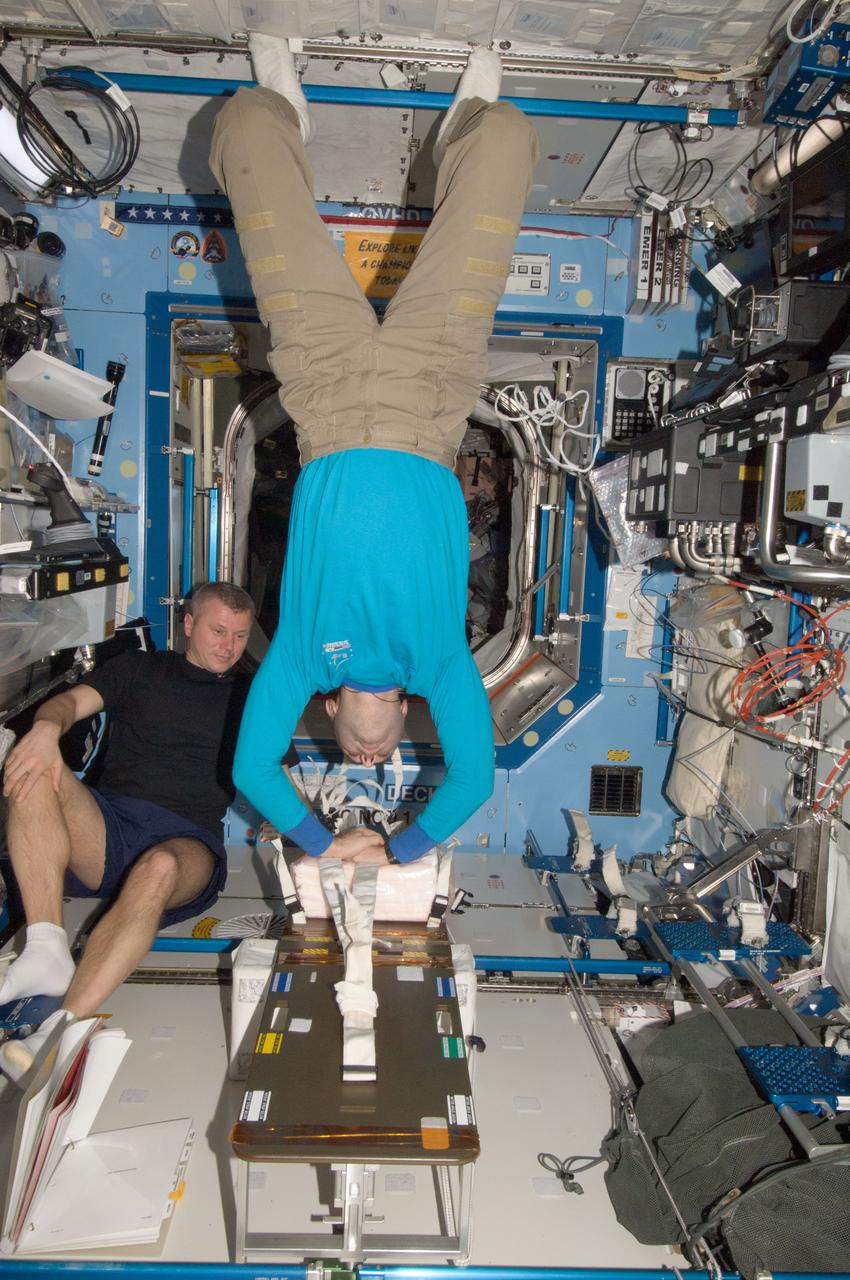
ISS034-E-005261 (26 Nov. 2012) --- Russian cosmonauts Oleg Novitskiy (left) and Evgeny Tarelkin, both Expedition 34 flight engineers, participate in a Crew Health Care System (CHeCS) medical contingency drill in the Destiny laboratory of the International Space Station. This drill gives crew members the opportunity to work as a team in resolving a simulated medical emergency onboard the space station.
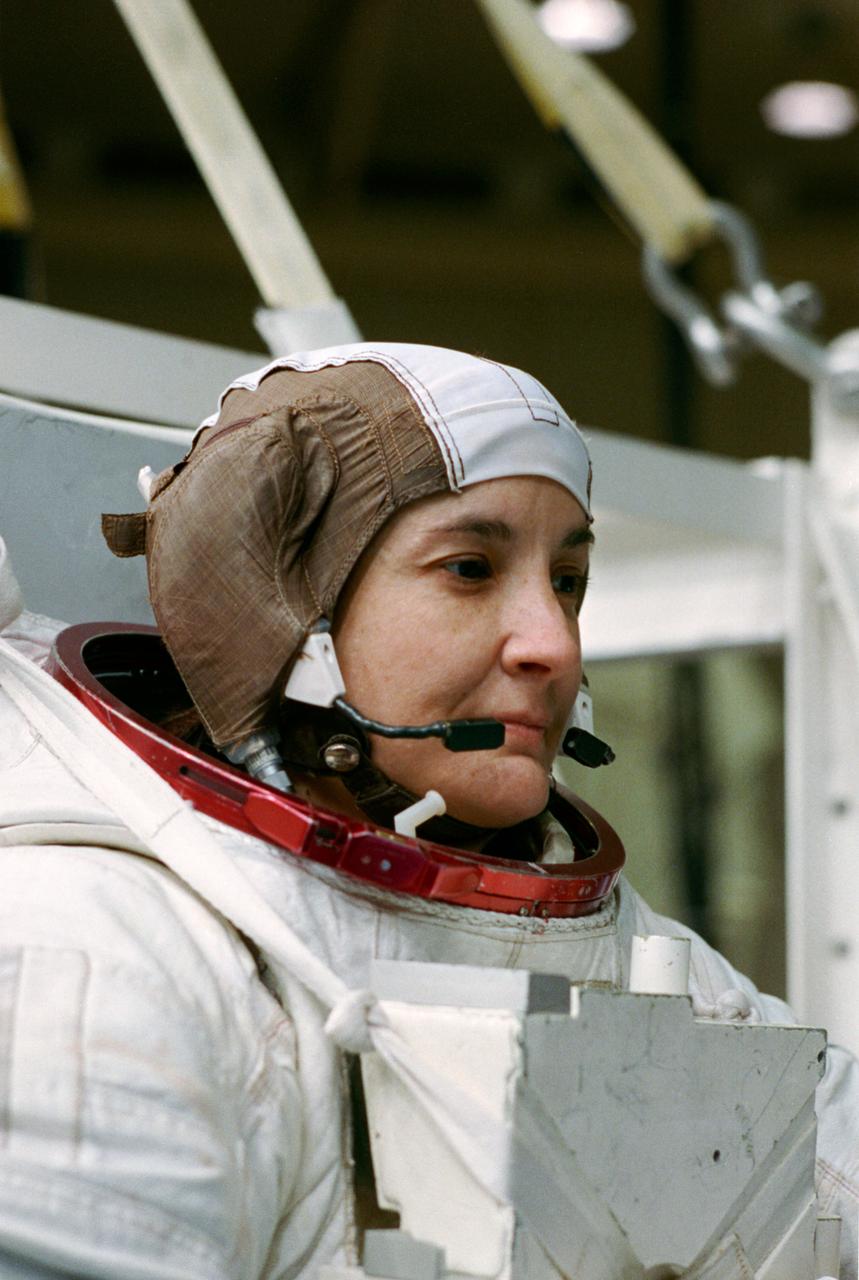
S93-41572 (17 Aug 1993) --- Astronaut Linda M. Godwin, payload commander, prepares to donn her helmet before being submerged in a 25-feet deep pool at the Johnson Space Center's (JSC) Weightless Environment Training Facility (WET-F). Astronauts Godwin and Thomas D. Jones, mission specialist, are using the WET-F to train for contingency space walks for their Space Shuttle Endeavour mission next year. No space walks are planned for the flight.
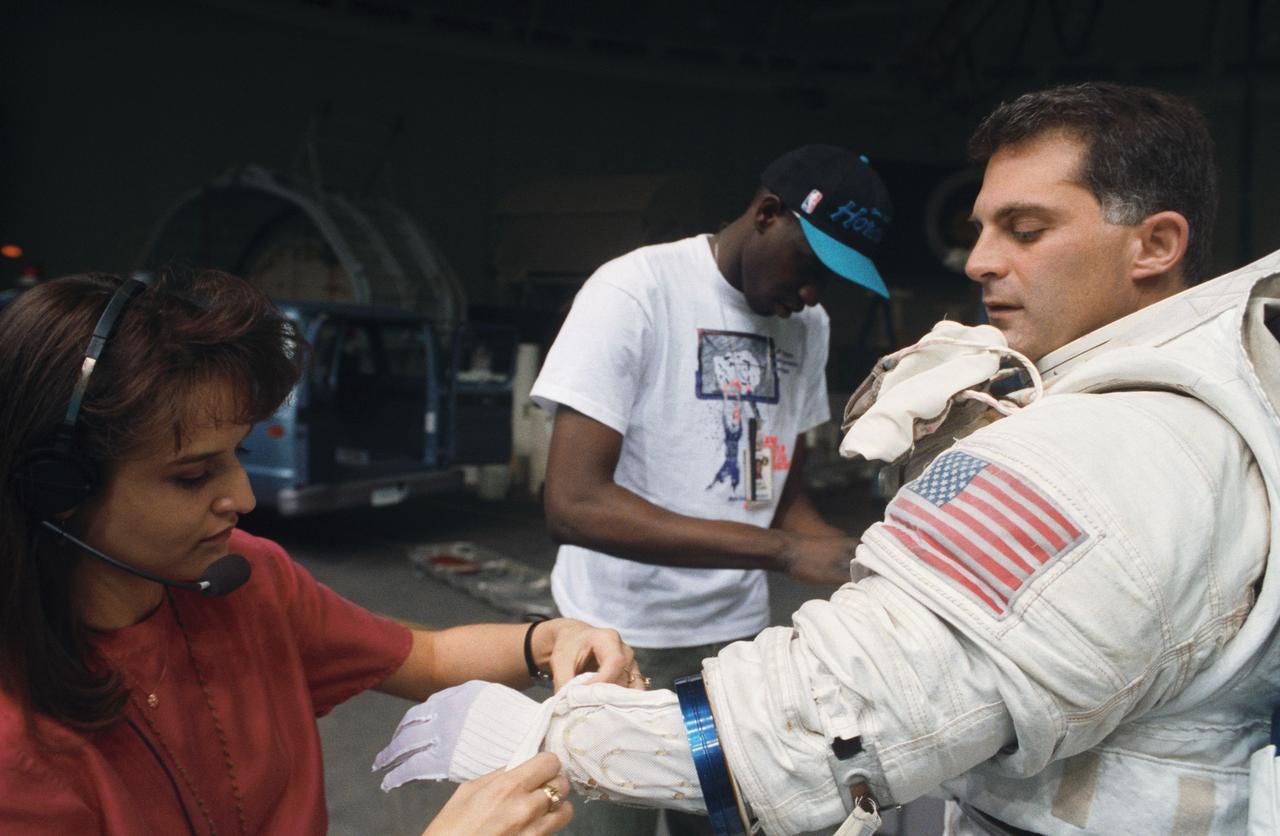
S93-31706 (3 April 1993) --- With the aid of technicians and training staffers astronaut David A. Wolf prepares to participate in training for contingency Extravehicular Activity (EVA) for the STS-58 mission. Sharing a moveable platform with Wolf was astronaut Shannon W. Lucid (out of frame). For simulation purposes, the two mission specialists were about to be submerged to a point of neutral buoyancy in the Johnson Space Center's (JSC) Weightless Environment Training Facility (WET-F). Though the Spacelab Life Sciences (SLS-2) mission does not include a planned EVA, all crews designate members to learn proper procedures to perform outside the spacecraft in the event of failure of remote means to accomplish those tasks.
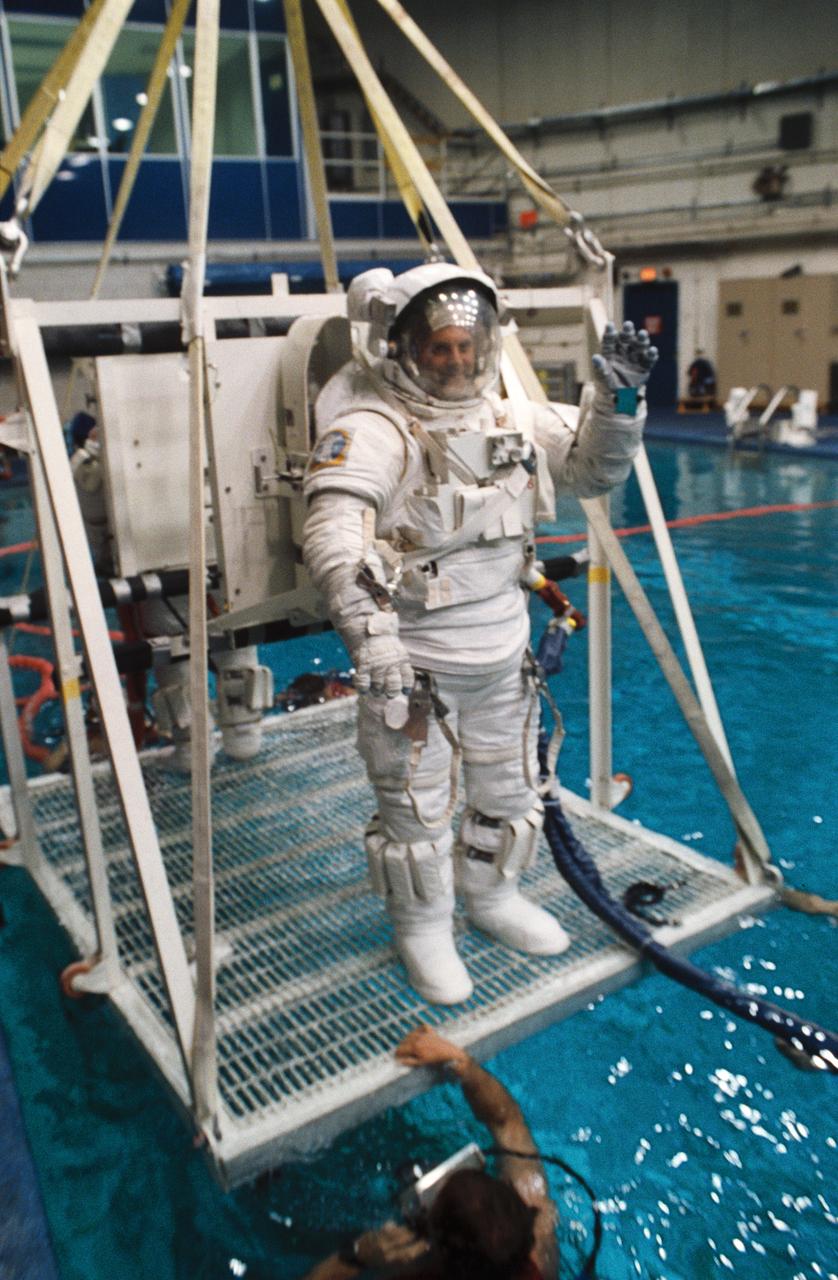
S93-31702 (3 April 1993) --- Astronaut David A. Wolf participates in training for contingency extravehicular activity (EVA) for the STS-58 mission. Behind Wolf, sharing the platform with him is astronaut Shannon W. Lucid. For simulation purposes, the two mission specialists were about to be submerged to a point of neutral buoyancy in the Johnson Space Center's (JSC) Weightless Environment Training Facility (WET-F). Though the Spacelab Life Sciences (SLS-2) mission does not include a planned EVA, all crews designate members to learn proper procedures to perform outside the spacecraft in the event of failure of remote means to accomplish those tasks.
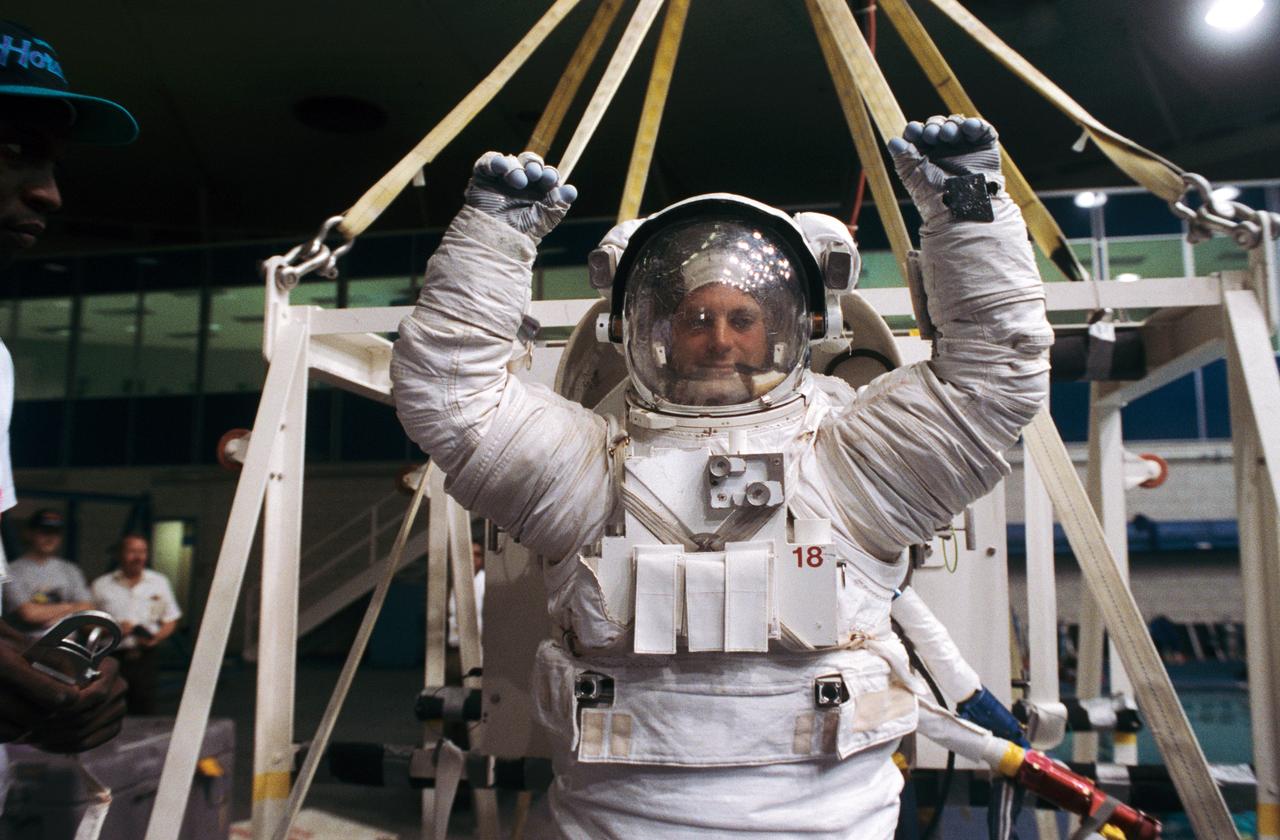
S93-31701 (3 April 1993) --- Displaying the flexibility of his training version of the Shuttle Extravehicular Mobility Unit (EMU) space suit, astronaut David A. Wolf participates in training for contingency Extravehicular Activity (EVA) for the STS-58 mission. Behind Wolf, sharing the platform with him was astronaut Shannon W. Lucid. For simulation purposes, the two mission specialists were about to be submerged to a point of neutral buoyancy in the Johnson Space Center's (JSC) Weightless Environment Training Facility (WET-F). Though the Spacelab Life Sciences (SLS-2) mission does not include a planned EVA, all crews designate members to learn proper procedures to perform outside the spacecraft in the event of failure of remote means to accomplish those tasks.
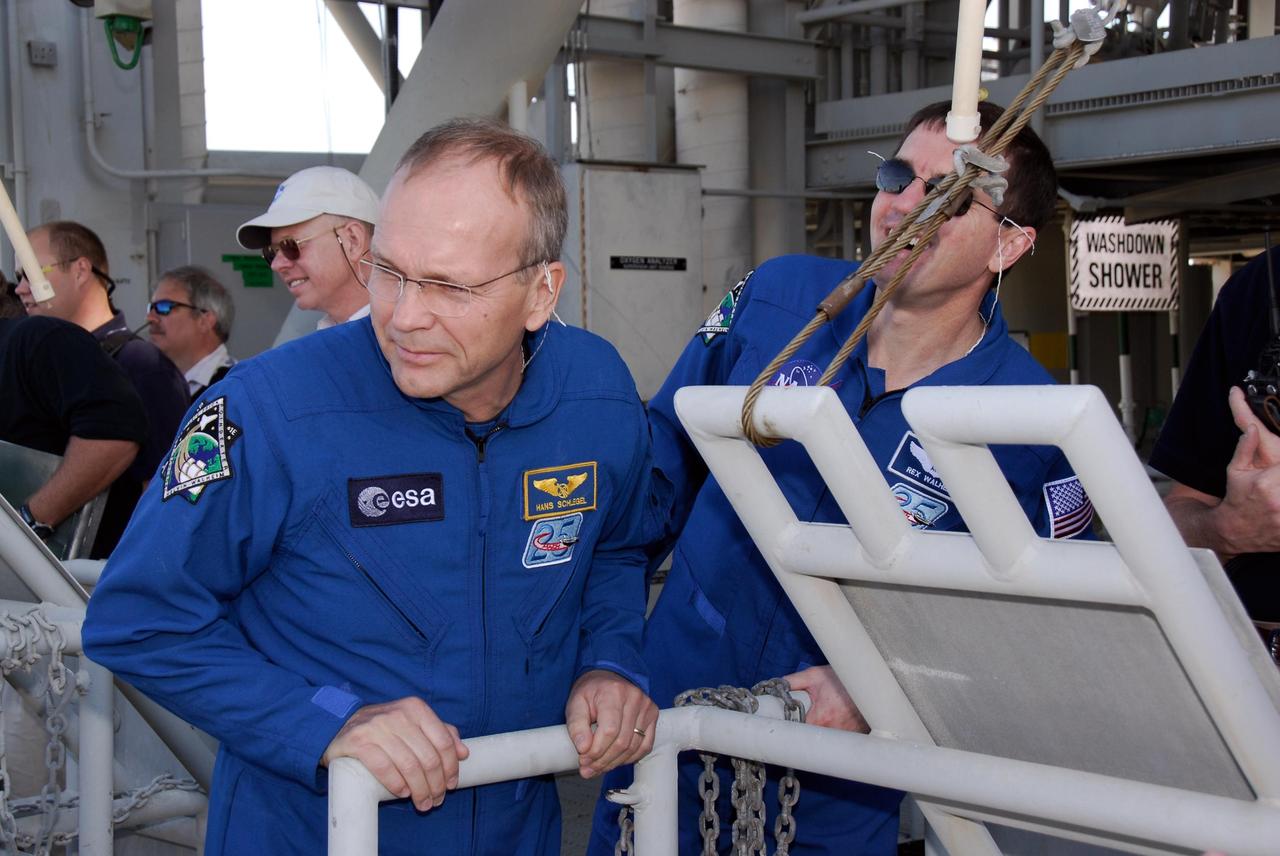
KENNEDY SPACE CENTER, FLA. -- During a training session on emergency exit from the fixed service structure on Launch Pad 39A, space shuttle Atlantis STS-122 Mission Specialists Hans Schlegel, left, and Rex Walheim watch a slidewire basket descend to the landing zone. Schlegel is with the European Space Agency. Seven slidewire baskets are available to carry the crew from the level of the pad's Orbiter Access Arm to a safe landing site below, if needed. Each basket can hold up to three people. A braking system catch net and drag chain slow, and then halt, the baskets as they travel down the wire at approximately 55 miles per hour. The journey takes about half a minute. A bunker is located in the landing zone 1,200 feet west of the pad, with an M-113 armored personnel carrier stationed nearby. The STS-122 crew is at NASA's Kennedy Space Center to take part in terminal countdown demonstration test, or TCDT, activities, a standard part of launch preparations. The TCDT provides astronauts and ground crews with equipment familiarization and a simulated launch countdown before launch. On mission STS-122, Atlantis will deliver the European Space Agency's Columbus module to the International Space Station. Columbus is a multifunctional, pressurized laboratory that will be permanently attached to U.S. Node 2, called Harmony, and will expand the research facilities aboard the station. Launch is targeted for Dec. 6. Photo credit: NASA/Kim Shiflett
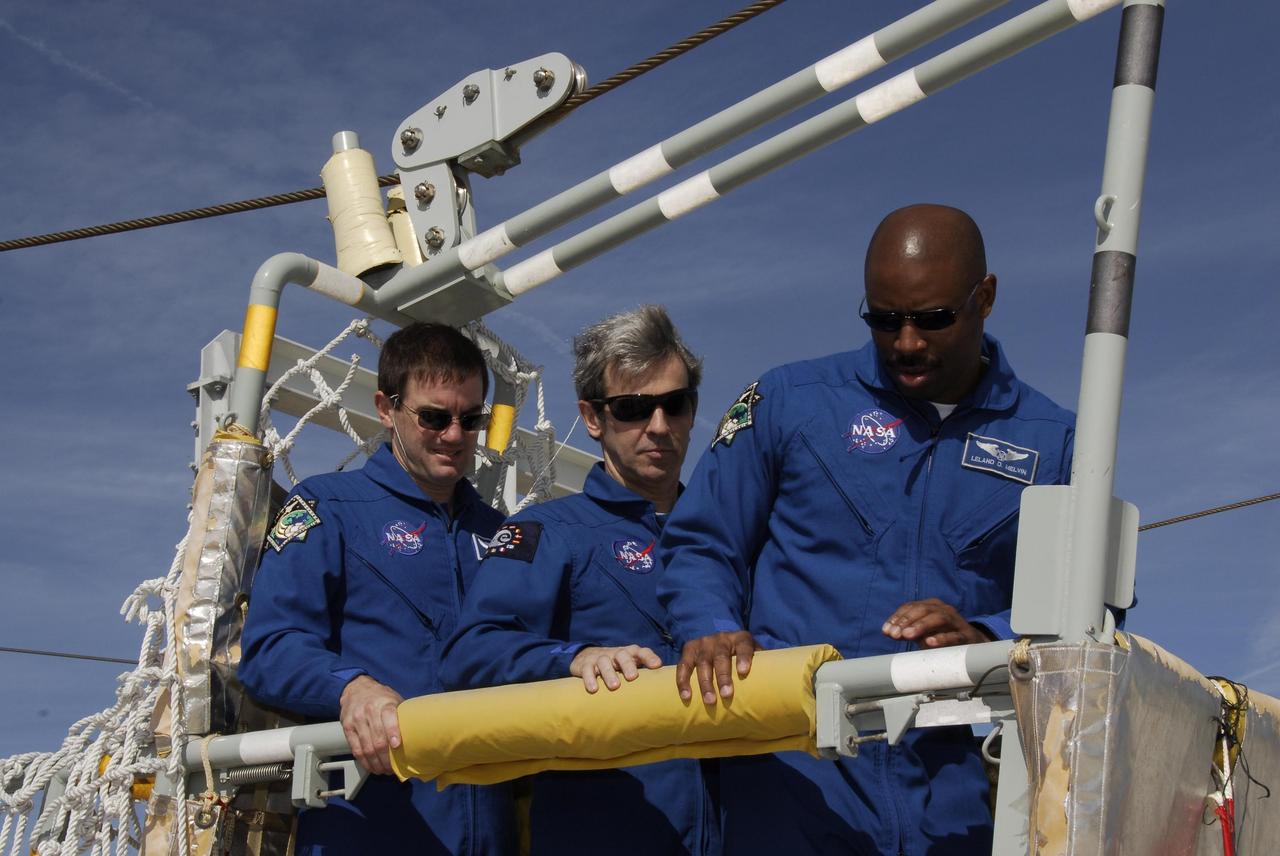
KENNEDY SPACE CENTER, FLA. -- The space shuttle Atlantis STS-122 crew receives instruction on slidewire basket operation, part of the emergency exit system on the fixed service structure on Launch Pad 39A. From left, Mission Specialists Rex Walheim, Leopold Eyharts and Leland Melvin gain first-hand experience inside one of the baskets. Seven slidewire baskets are available to carry the crew from the level of the pad's Orbiter Access Arm to this landing site, if needed. Each basket can hold up to three people. A braking system catch net and drag chain slow, and then halt, the baskets as they travel down the wire at approximately 55 miles per hour. The journey takes about half a minute. A bunker is located in the landing zone 1,200 feet west of the pad, with an M-113 armored personnel carrier stationed nearby. The STS-122 crew is at NASA's Kennedy Space Center to take part in terminal countdown demonstration test, or TCDT, activities, a standard part of launch preparations. The TCDT provides astronauts and ground crews with equipment familiarization and a simulated launch countdown before launch. On mission STS-122, Atlantis will deliver the European Space Agency's Columbus module to the International Space Station. Columbus is a multifunctional, pressurized laboratory that will be permanently attached to U.S. Node 2, called Harmony, and will expand the research facilities aboard the station. Launch is targeted for Dec. 6. Photo credit: NASA/Kim Shiflett
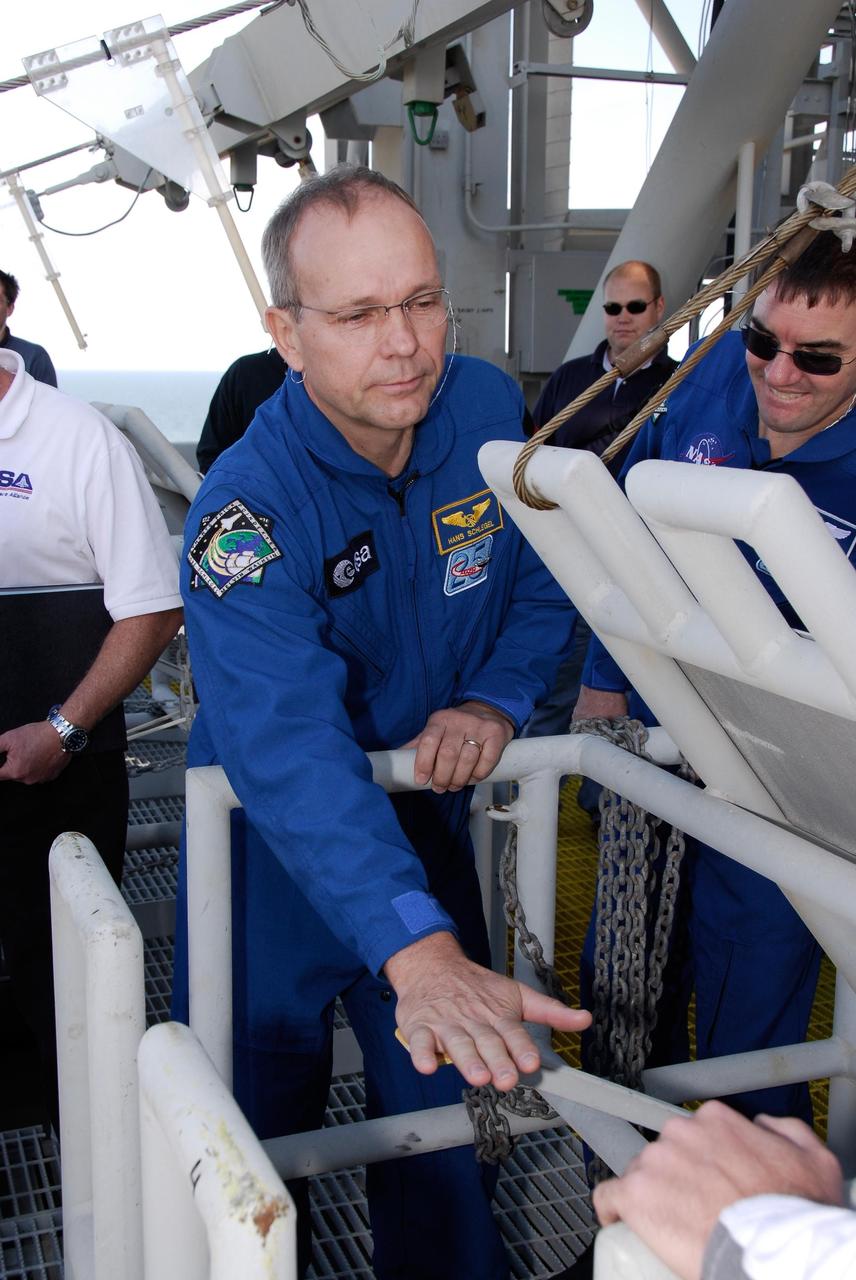
KENNEDY SPACE CENTER, FLA. -- During a training session, space shuttle Atlantis STS-122 Mission Specialist Hans Schlegel releases a slidewire basket, part of the emergency exit system on the fixed service structure on Launch Pad 39A, as Mission Specialist Rex Walheim looks on. Schlegel is with the European Space Agency. Seven slidewire baskets are available to carry the crew from the level of the pad's Orbiter Access Arm to a safe landing site below, if needed. Each basket can hold up to three people. A braking system catch net and drag chain slow, and then halt, the baskets as they travel down the wire at approximately 55 miles per hour. The journey takes about half a minute. A bunker is located in the landing zone 1,200 feet west of the pad, with an M-113 armored personnel carrier stationed nearby. The STS-122 crew is at NASA's Kennedy Space Center to take part in terminal countdown demonstration test, or TCDT, activities, a standard part of launch preparations. The TCDT provides astronauts and ground crews with equipment familiarization and a simulated launch countdown before launch. On mission STS-122, Atlantis will deliver the European Space Agency's Columbus module to the International Space Station. Columbus is a multifunctional, pressurized laboratory that will be permanently attached to U.S. Node 2, called Harmony, and will expand the research facilities aboard the station. Launch is targeted for Dec. 6. Photo credit: NASA/Kim Shiflett
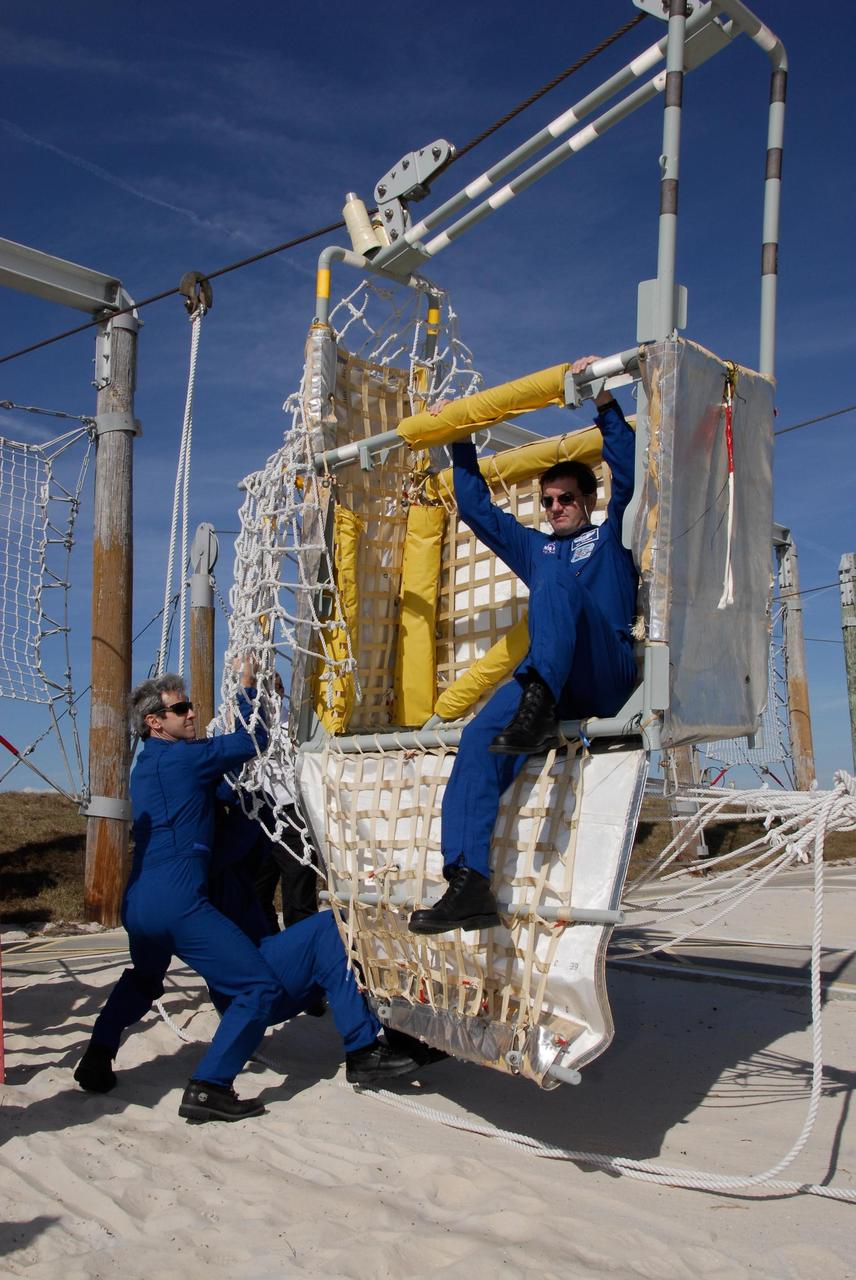
KENNEDY SPACE CENTER, FLA. -- The space shuttle Atlantis STS-122 crew receives instruction on slidewire basket operation, part of the emergency exit system on the fixed service structure on Launch Pad 39A. Here, Mission Specialist Rex Walheim practices getting out of one of the baskets as Mission Specialists Leopold Eyharts and Leland Melvin steady it. Seven slidewire baskets are available to carry the crew from the level of the pad's Orbiter Access Arm to this landing site, if needed. Each basket can hold up to three people. A braking system catch net and drag chain slow, and then halt, the baskets as they travel down the wire at approximately 55 miles per hour. The journey takes about half a minute. A bunker is located in the landing zone 1,200 feet west of the pad, with an M-113 armored personnel carrier stationed nearby. The STS-122 crew is at NASA's Kennedy Space Center to take part in terminal countdown demonstration test, or TCDT, activities, a standard part of launch preparations. The TCDT provides astronauts and ground crews with equipment familiarization and a simulated launch countdown before launch. On mission STS-122, Atlantis will deliver the European Space Agency's Columbus module to the International Space Station. Columbus is a multifunctional, pressurized laboratory that will be permanently attached to U.S. Node 2, called Harmony, and will expand the research facilities aboard the station. Launch is targeted for Dec. 6. Photo credit: NASA/Kim Shiflett
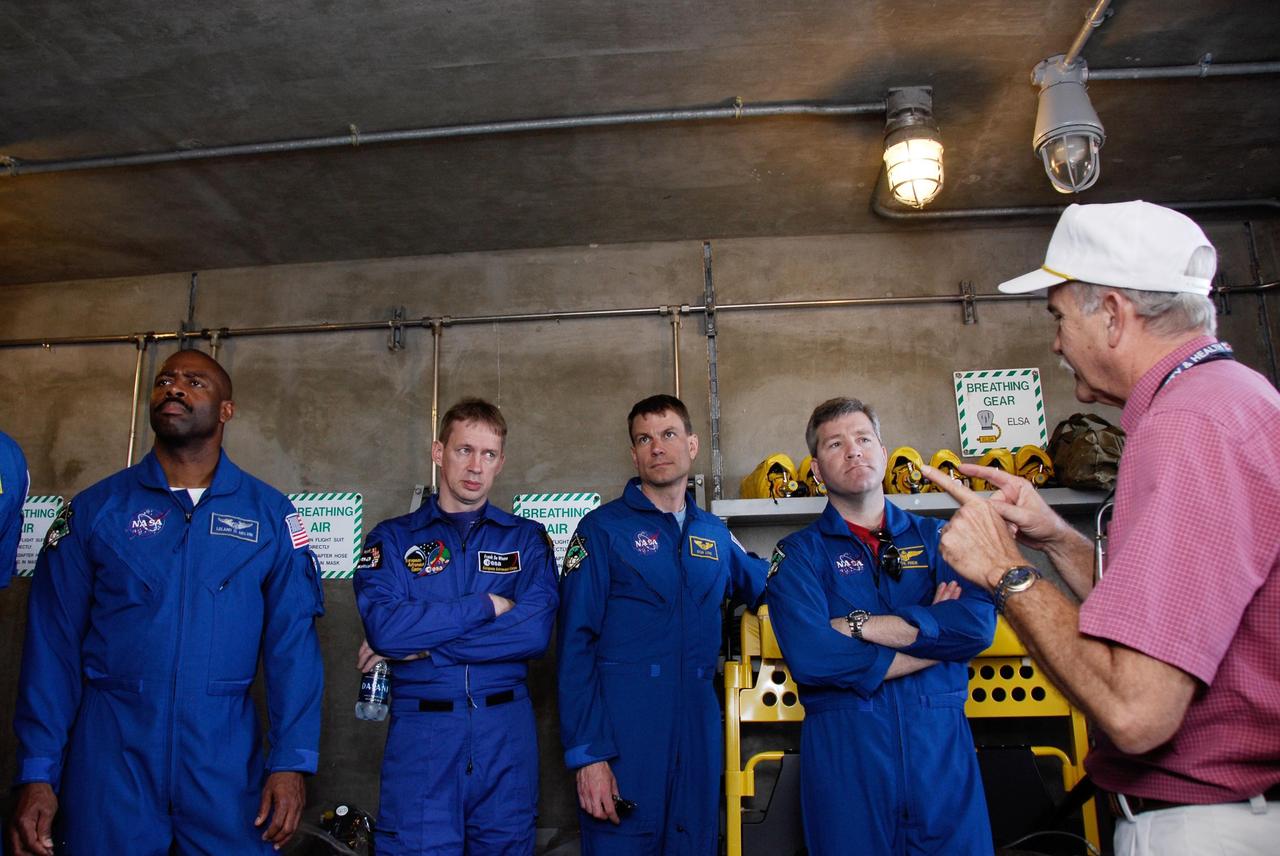
KENNEDY SPACE CENTER, FLA. -- The space shuttle Atlantis STS-122 crew receives instruction on the emergency exit system on Launch Pad 39A. Inside the bunker at the foot of the pad, from left, Mission Specialist Leland Melvin; astronaut Frank De Winne of the European Space Agency, backup for Expedition 16 Flight Engineer Leopold Eyharts; Mission Specialist Stanley Love; and Commander Steve Frick listen intently to their trainer. Seven slidewire baskets are available to carry the crew from the level of the pad's Orbiter Access Arm to a safe landing site below, if needed. Each basket can hold up to three people. A braking system catch net and drag chain slow, and then halt, the baskets as they travel down the wire at approximately 55 miles per hour. The journey takes about half a minute. A bunker is located in the landing zone 1,200 feet west of the pad, with an M-113 armored personnel carrier stationed nearby. The STS-122 crew is at NASA's Kennedy Space Center to take part in terminal countdown demonstration test, or TCDT, activities, a standard part of launch preparations. The TCDT provides astronauts and ground crews with equipment familiarization and a simulated launch countdown before launch. On mission STS-122, Atlantis will deliver the European Space Agency's Columbus module to the International Space Station. Columbus is a multifunctional, pressurized laboratory that will be permanently attached to U.S. Node 2, called Harmony, and will expand the research facilities aboard the station. Launch is targeted for Dec. 6. Photo credit: NASA/Kim Shiflett
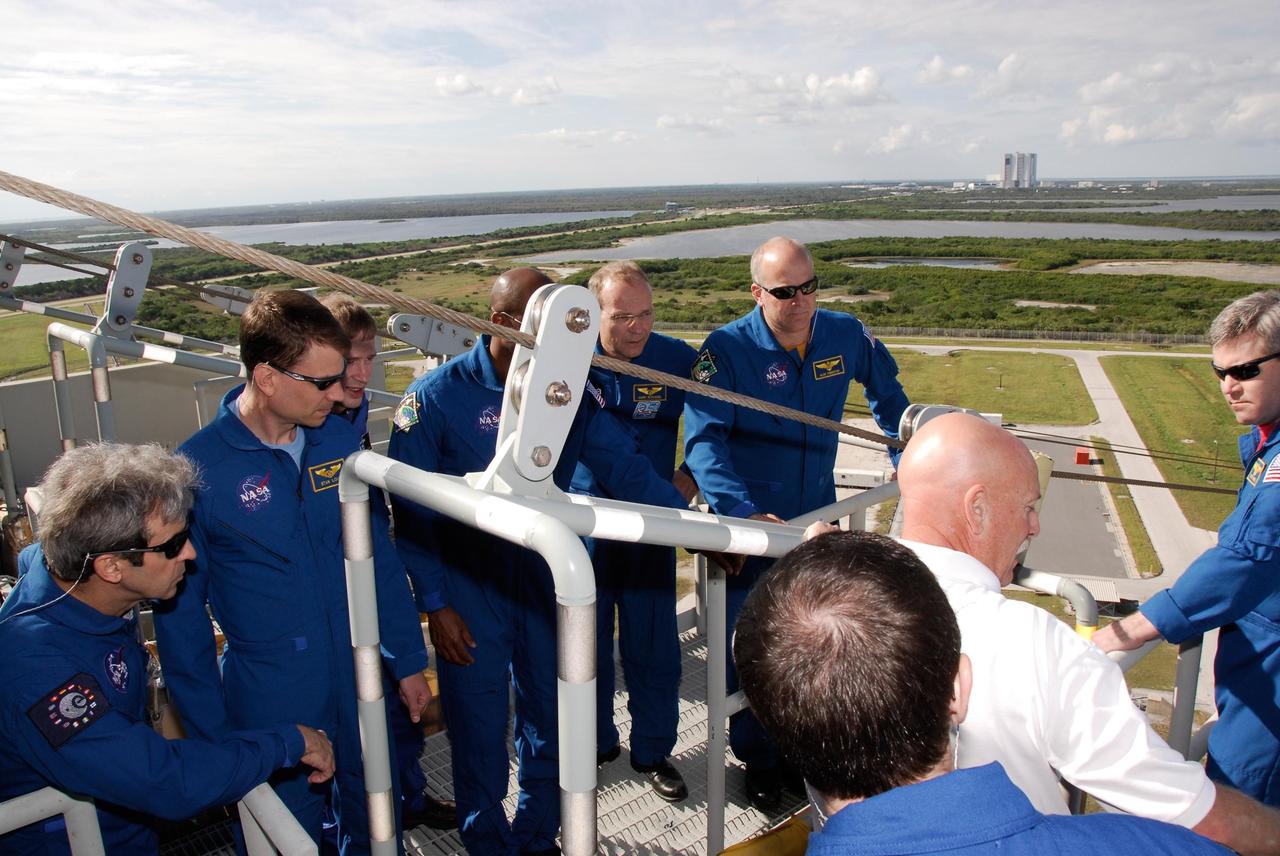
KENNEDY SPACE CENTER, FLA. -- The space shuttle Atlantis STS-122 crew receives instruction on emergency exit from the fixed service structure on Launch Pad 39A. Clockwise, from left, are Mission Specialists Leopold Eyharts and Stanley Love, Eyharts' backup Frank De Winne, Mission Specialists Leland Melvin and Hans Schlegel, Pilot Alan Poindexter, Commander Steve Frick and Mission Specialist Rex Walheim with his back to the camera. Schlegel, Eyharts and De Winne are with the European Space Agency. Eyharts will remain on the International Space Station as a flight engineer for Expedition 16 following the STS-122 mission. The STS-122 crew is at NASA's Kennedy Space Center to take part in terminal countdown demonstration test, or TCDT, activities, a standard part of launch preparations. The TCDT provides astronauts and ground crews with equipment familiarization and a simulated launch countdown before launch. On mission STS-122, Atlantis will deliver the European Space Agency's Columbus module to the International Space Station. Columbus is a multifunctional, pressurized laboratory that will be permanently attached to U.S. Node 2, called Harmony, and will expand the research facilities aboard the station. Launch is targeted for Dec. 6. Photo credit: NASA/Kim Shiflett
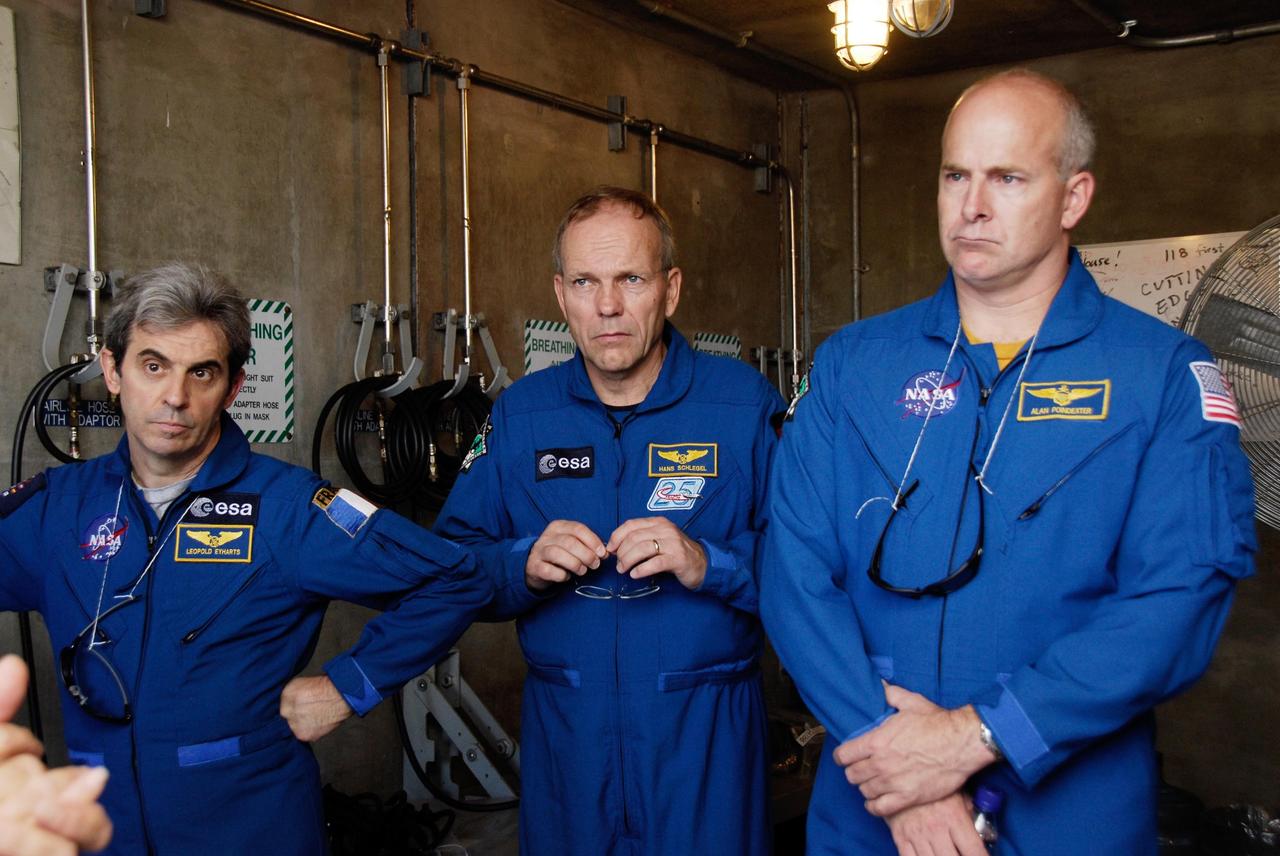
KENNEDY SPACE CENTER, FLA. -- The space shuttle Atlantis STS-122 crew receives instruction on the emergency exit system on Launch Pad 39A. Inside the bunker at the foot of the pad, Mission Specialists Leopold Eyharts and Hans Schlegel, both with the European Space Agency, and Pilot Alan Poindexter give their full attention to their trainer. Seven slidewire baskets are available to carry the crew from the level of the pad's Orbiter Access Arm to a safe landing site below, if needed. Each basket can hold up to three people. A braking system catch net and drag chain slow, and then halt, the baskets as they travel down the wire at approximately 55 miles per hour. The journey takes about half a minute. A bunker is located in the landing zone 1,200 feet west of the pad, with an M-113 armored personnel carrier stationed nearby. The STS-122 crew is at NASA's Kennedy Space Center to take part in terminal countdown demonstration test, or TCDT, activities, a standard part of launch preparations. The TCDT provides astronauts and ground crews with equipment familiarization and a simulated launch countdown before launch. On mission STS-122, Atlantis will deliver the European Space Agency's Columbus module to the International Space Station. Columbus is a multifunctional, pressurized laboratory that will be permanently attached to U.S. Node 2, called Harmony, and will expand the research facilities aboard the station. Launch is targeted for Dec. 6. Photo credit: NASA/Kim Shiflett
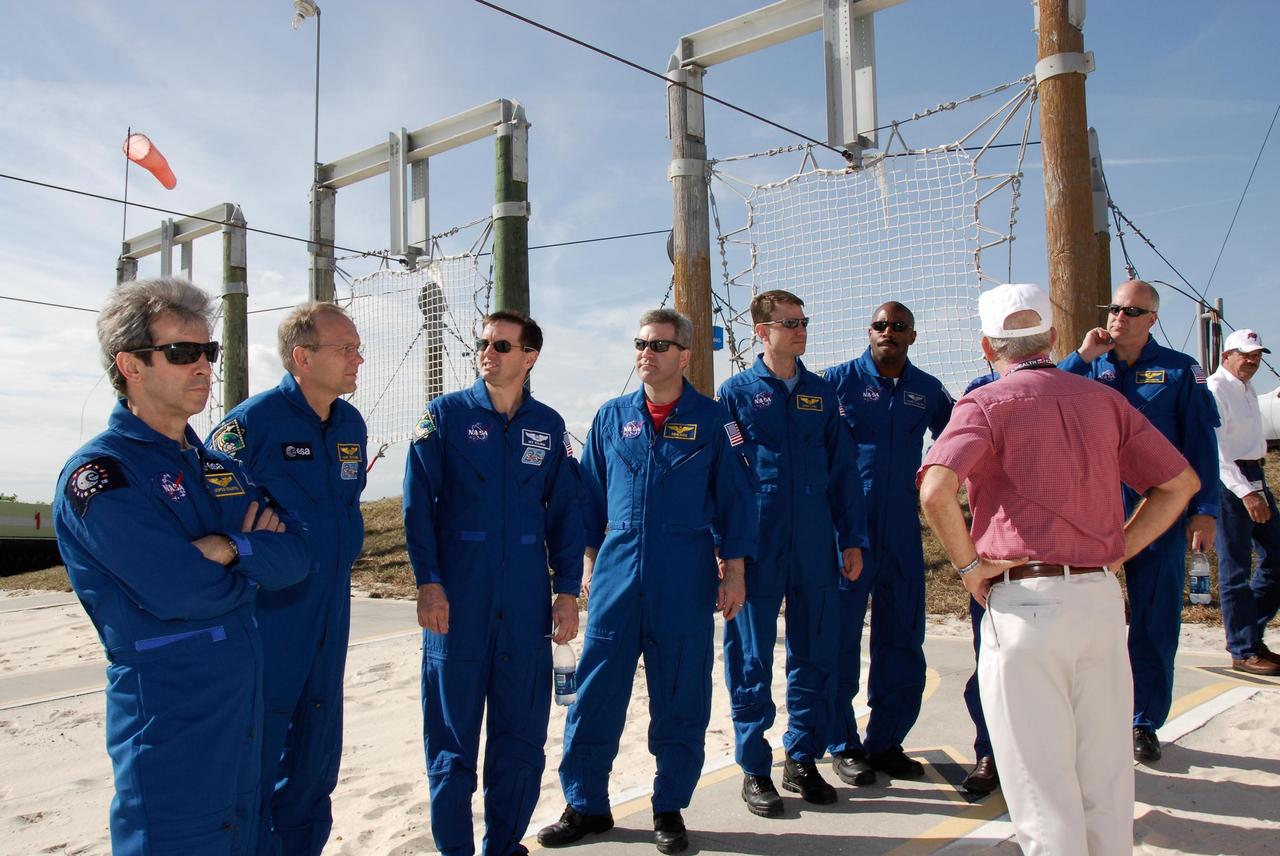
KENNEDY SPACE CENTER, FLA. -- The space shuttle Atlantis STS-122 crew receives instruction on slidewire basket operation, part of the emergency exit system on the fixed service structure on Launch Pad 39A. Seen here near the catch nets in the landing zone are, from left, Mission Specialists Leopold Eyharts, Hans Schlegel and Rex Walheim; Commander Steve Frick; Mission Specialists Stanley Love and Leland Melvin; and Pilot Alan Poindexter. Seven slidewire baskets are available to carry the crew from the level of the pad's Orbiter Access Arm to this landing site, if needed. Each basket can hold up to three people. A braking system catch net and drag chain slow, and then halt, the baskets as they travel down the wire at approximately 55 miles per hour. The journey takes about half a minute. A bunker is located in the landing zone 1,200 feet west of the pad, with an M-113 armored personnel carrier stationed nearby. The STS-122 crew is at NASA's Kennedy Space Center to take part in terminal countdown demonstration test, or TCDT, activities, a standard part of launch preparations. The TCDT provides astronauts and ground crews with equipment familiarization and a simulated launch countdown before launch. On mission STS-122, Atlantis will deliver the European Space Agency's Columbus module to the International Space Station. Columbus is a multifunctional, pressurized laboratory that will be permanently attached to U.S. Node 2, called Harmony, and will expand the research facilities aboard the station. Launch is targeted for Dec. 6. Photo credit: NASA/Kim Shiflett
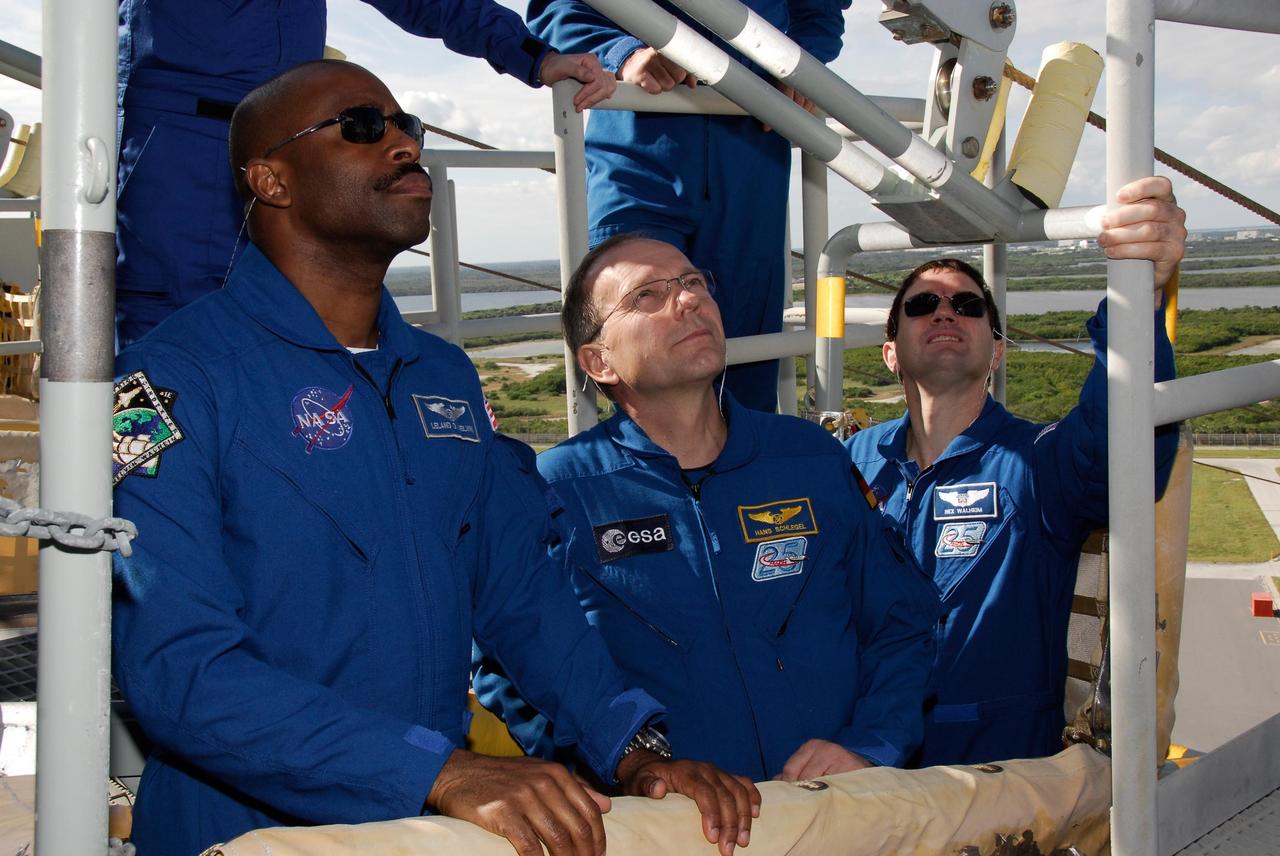
KENNEDY SPACE CENTER, FLA. -- The space shuttle Atlantis STS-122 crew receives instruction on slidewire basket operation, part of the emergency exit system on the fixed service structure on Launch Pad 39A. Standing in the basket, from left, are Mission Specialists Leland Melvin, Hans Schlegel and Rex Walheim. Schlegel is with the European Space Agency. Seven slidewire baskets are available to carry the crew from the level of the pad's Orbiter Access Arm to a safe landing site below, if needed. Each basket can hold up to three people. A braking system catch net and drag chain slow, and then halt, the baskets as they travel down the wire at approximately 55 miles per hour. The journey takes about half a minute. A bunker is located in the landing zone 1,200 feet west of the pad, with an M-113 armored personnel carrier stationed nearby. The STS-122 crew is at NASA's Kennedy Space Center to take part in terminal countdown demonstration test, or TCDT, activities, a standard part of launch preparations. The TCDT provides astronauts and ground crews with equipment familiarization and a simulated launch countdown before launch. On mission STS-122, Atlantis will deliver the European Space Agency's Columbus module to the International Space Station. Columbus is a multifunctional, pressurized laboratory that will be permanently attached to U.S. Node 2, called Harmony, and will expand the research facilities aboard the station. Launch is targeted for Dec. 6. Photo credit: NASA/Kim Shiflett
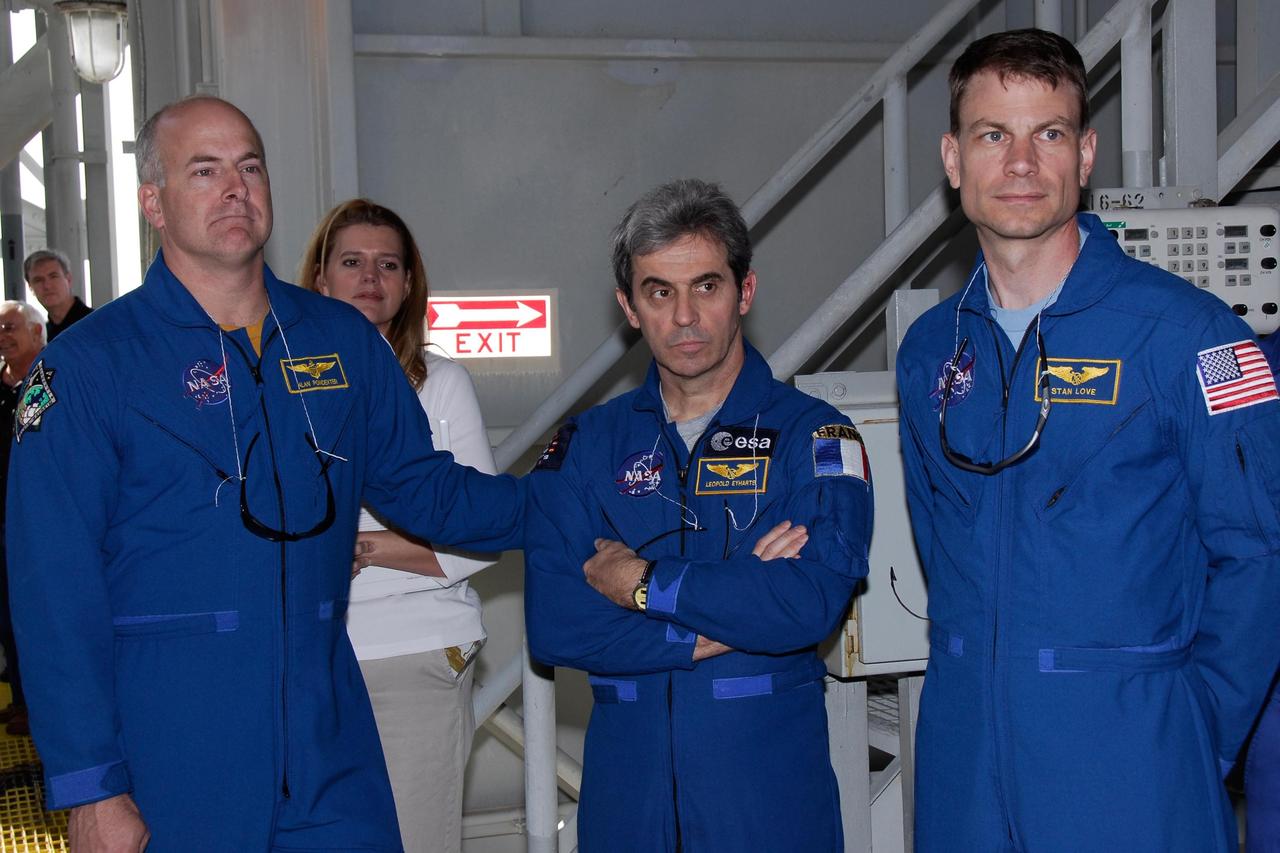
KENNEDY SPACE CENTER, FLA. -- The space shuttle Atlantis STS-122 crew receives instruction on emergency exit from the fixed service structure on Launch Pad 39A. From left are Pilot Alan Poindexter and Mission Specialists Leopold Eyharts and Stanley Love. Eyharts is with the European Space Agency and will remain on the International Space Station as a flight engineer for Expedition 16 following the STS-122 mission. The STS-122 crew is at NASA's Kennedy Space Center to take part in terminal countdown demonstration test, or TCDT, activities, a standard part of launch preparations. The TCDT provides astronauts and ground crews with equipment familiarization and a simulated launch countdown before launch. On mission STS-122, Atlantis will deliver the European Space Agency's Columbus module to the International Space Station. Columbus is a multifunctional, pressurized laboratory that will be permanently attached to U.S. Node 2, called Harmony, and will expand the research facilities aboard the station. Launch is targeted for Dec. 6. Photo credit: NASA/Kim Shiflett
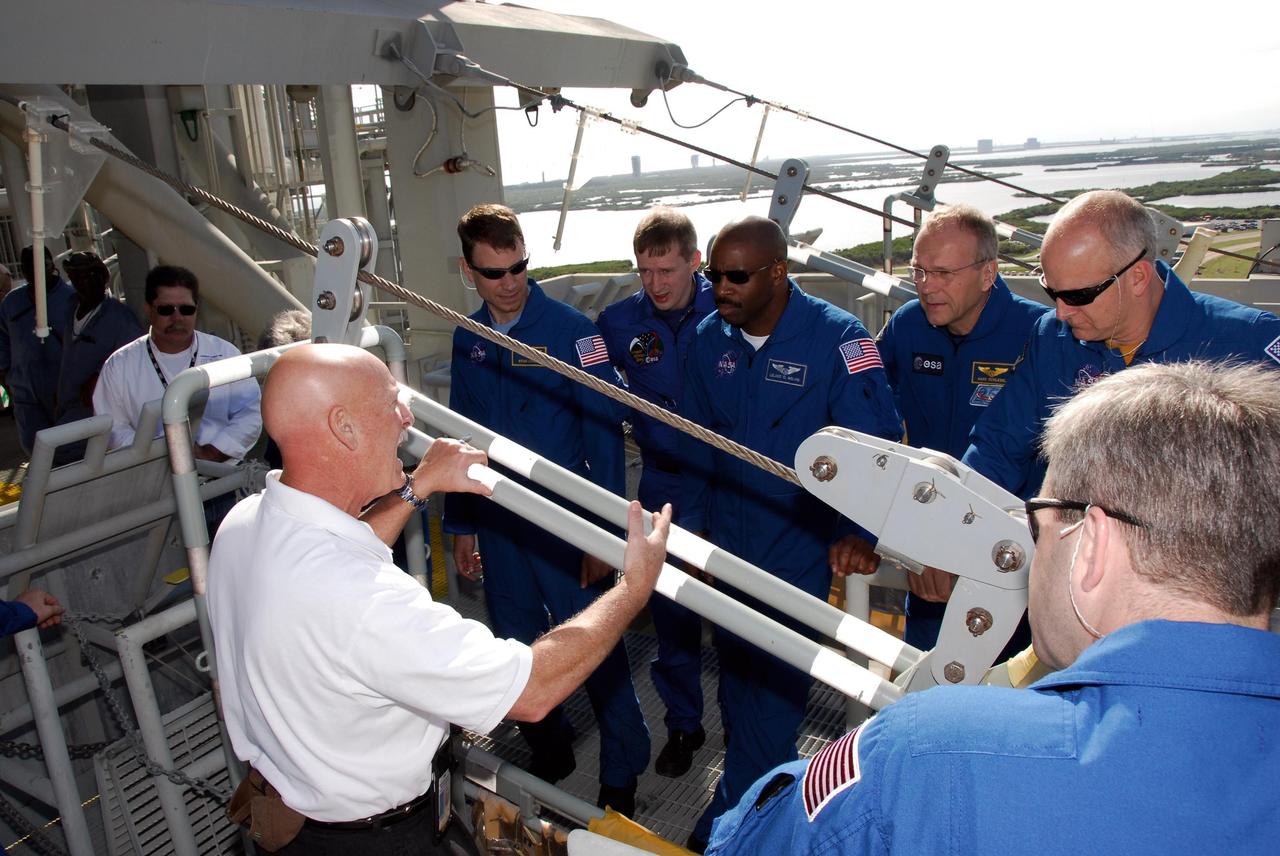
KENNEDY SPACE CENTER, FLA. -- The space shuttle Atlantis STS-122 crew receives instruction on slidewire basket operation, part of the emergency exit system on the fixed service structure on Launch Pad 39A. From left are Mission Specialists Stanley Love; Leopold Eyharts' backup, Frank De Winne; Leland Melvin and Hans Schlegel; Pilot Alan Poindexter; and Commander Steve Frick, with his back to the camera. Schlegel, Eyharts and De Winne are with the European Space Agency. Eyharts will remain on the International Space Station as a flight engineer for Expedition 16 following the STS-122 mission. Seven slidewire baskets are available to carry the crew from the level of the pad's Orbiter Access Arm to a safe landing site below, if needed. Each basket can hold up to three people. A braking system catch net and drag chain slow, and then halt, the baskets as they travel down the wire at approximately 55 miles per hour. The journey takes about half a minute. A bunker is located in the landing zone 1,200 feet west of the pad, with an M-113 armored personnel carrier stationed nearby. The STS-122 crew is at NASA's Kennedy Space Center to take part in terminal countdown demonstration test, or TCDT, activities, a standard part of launch preparations. The TCDT provides astronauts and ground crews with equipment familiarization and a simulated launch countdown before launch. On mission STS-122, Atlantis will deliver the European Space Agency's Columbus module to the International Space Station. Columbus is a multifunctional, pressurized laboratory that will be permanently attached to U.S. Node 2, called Harmony, and will expand the research facilities aboard the station. Launch is targeted for Dec. 6. Photo credit: NASA/Kim Shiflett
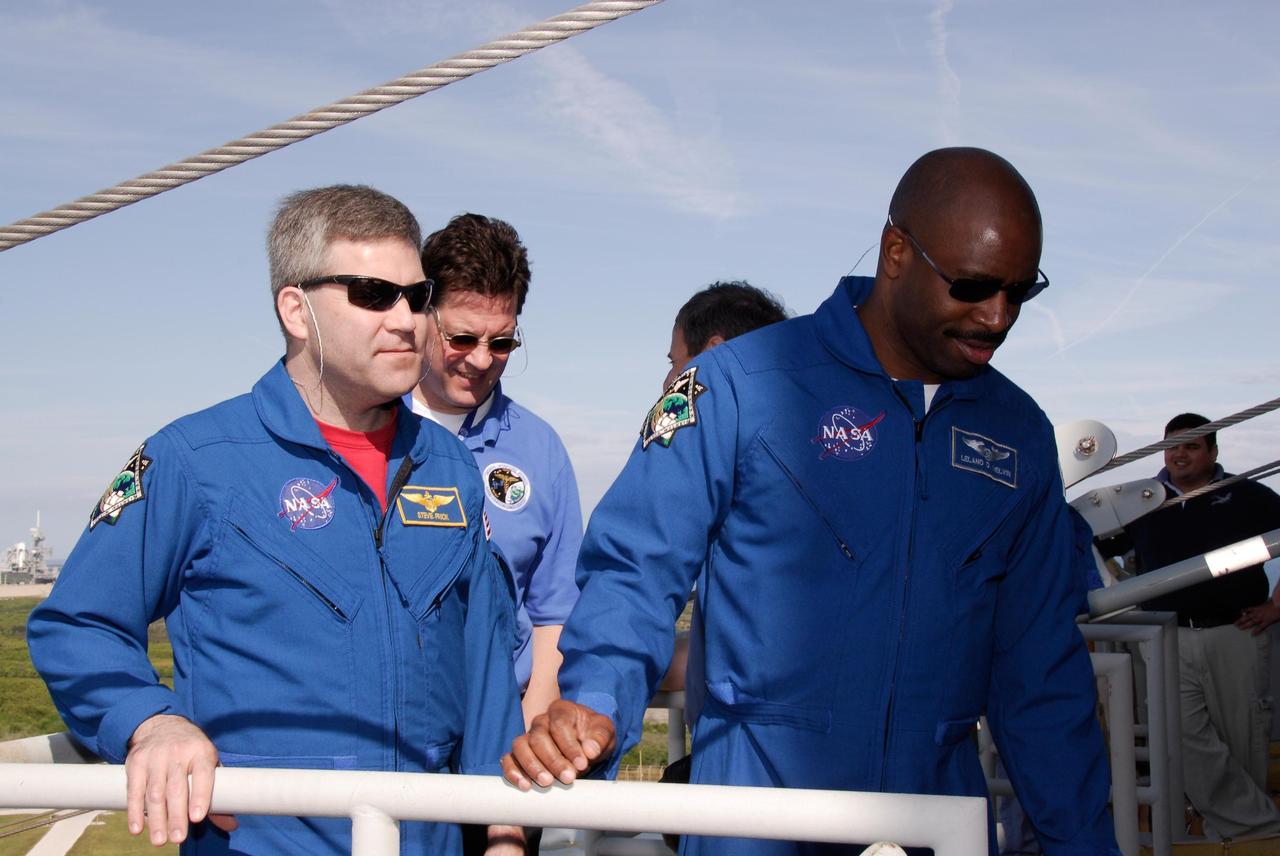
KENNEDY SPACE CENTER, FLA. -- During a training session on emergency exit from the fixed service structure on Launch Pad 39A, space shuttle Atlantis STS-122 Commander Steve Frick, left, and Mission Specialist Leland Melvin watch a slidewire basket descend to the landing zone. Seven slidewire baskets are available to carry the crew from the level of the pad's Orbiter Access Arm to a safe landing site below, if needed. Each basket can hold up to three people. A braking system catch net and drag chain slow, and then halt, the baskets as they travel down the wire at approximately 55 miles per hour. The journey takes about half a minute. A bunker is located in the landing zone 1,200 feet west of the pad, with an M-113 armored personnel carrier stationed nearby. The STS-122 crew is at NASA's Kennedy Space Center to take part in terminal countdown demonstration test, or TCDT, activities, a standard part of launch preparations. The TCDT provides astronauts and ground crews with equipment familiarization and a simulated launch countdown before launch. On mission STS-122, Atlantis will deliver the European Space Agency's Columbus module to the International Space Station. Columbus is a multifunctional, pressurized laboratory that will be permanently attached to U.S. Node 2, called Harmony, and will expand the research facilities aboard the station. Launch is targeted for Dec. 6. Photo credit: NASA/Kim Shiflett
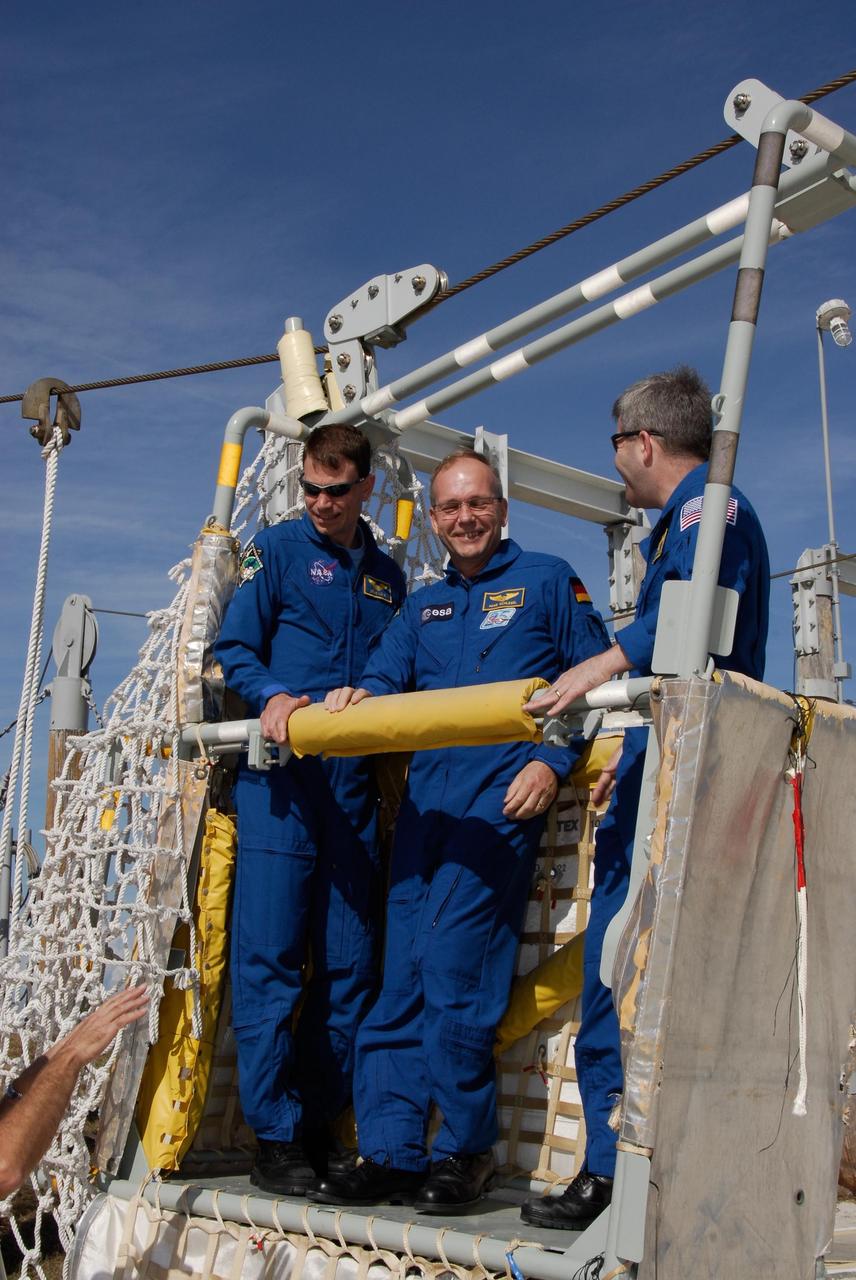
KENNEDY SPACE CENTER, FLA. -- The space shuttle Atlantis STS-122 crew receives instruction on slidewire basket operation, part of the emergency exit system on the fixed service structure on Launch Pad 39A. From left, Mission Specialists Stanley Love and Hans Schlegel and Commander Steve Frick gain first-hand experience inside one of the baskets. Seven slidewire baskets are available to carry the crew from the level of the pad's Orbiter Access Arm to this landing site, if needed. Each basket can hold up to three people. A braking system catch net and drag chain slow, and then halt, the baskets as they travel down the wire at approximately 55 miles per hour. The journey takes about half a minute. A bunker is located in the landing zone 1,200 feet west of the pad, with an M-113 armored personnel carrier stationed nearby. The STS-122 crew is at NASA's Kennedy Space Center to take part in terminal countdown demonstration test, or TCDT, activities, a standard part of launch preparations. The TCDT provides astronauts and ground crews with equipment familiarization and a simulated launch countdown before launch. On mission STS-122, Atlantis will deliver the European Space Agency's Columbus module to the International Space Station. Columbus is a multifunctional, pressurized laboratory that will be permanently attached to U.S. Node 2, called Harmony, and will expand the research facilities aboard the station. Launch is targeted for Dec. 6. Photo credit: NASA/Kim Shiflett
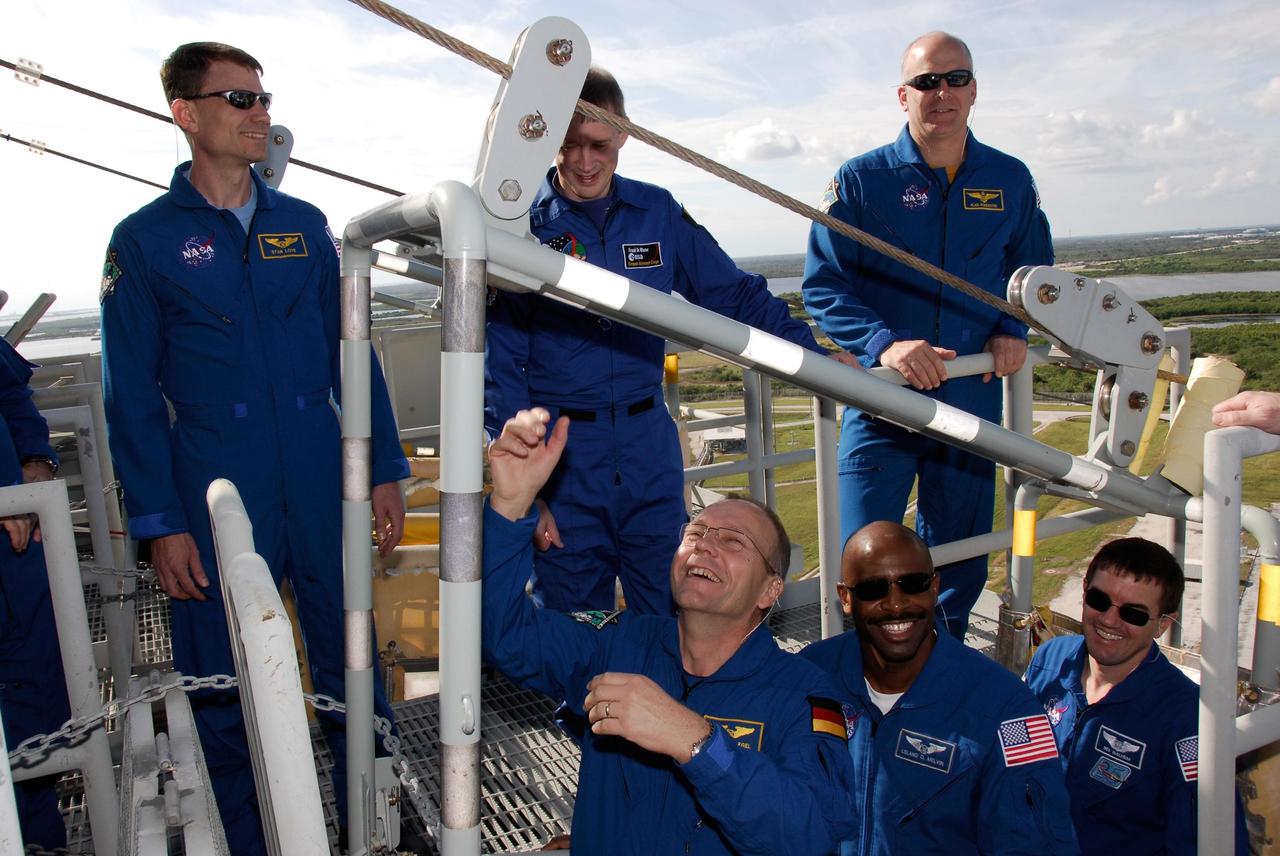
KENNEDY SPACE CENTER, FLA. -- The space shuttle Atlantis STS-122 crew receives instruction on slidewire basket operation, part of the emergency exit system on the fixed service structure on Launch Pad 39A. Standing, from left, are Mission Specialists Stanley Love; Leopold Eyharts' backup, Frank De Winne; and Pilot Alan Poindexter. Standing in the basket, from left, are Mission Specialists Hans Schlegel, Leland Melvin and Rex Walheim. Schlegel, Eyharts and De Winne are with the European Space Agency. Eyharts will remain on the International Space Station as a flight engineer for Expedition 16 following the STS-122 mission. Seven slidewire baskets are available to carry the crew from the level of the pad's Orbiter Access Arm to a safe landing site below, if needed. Each basket can hold up to three people. A braking system catch net and drag chain slow, and then halt, the baskets as they travel down the wire at approximately 55 miles per hour. The journey takes about half a minute. A bunker is located in the landing zone 1,200 feet west of the pad, with an M-113 armored personnel carrier stationed nearby. The STS-122 crew is at NASA's Kennedy Space Center to take part in terminal countdown demonstration test, or TCDT, activities, a standard part of launch preparations. The TCDT provides astronauts and ground crews with equipment familiarization and a simulated launch countdown before launch. On mission STS-122, Atlantis will deliver the European Space Agency's Columbus module to the International Space Station. Columbus is a multifunctional, pressurized laboratory that will be permanently attached to U.S. Node 2, called Harmony, and will expand the research facilities aboard the station. Launch is targeted for Dec. 6. Photo credit: NASA/Kim Shiflett
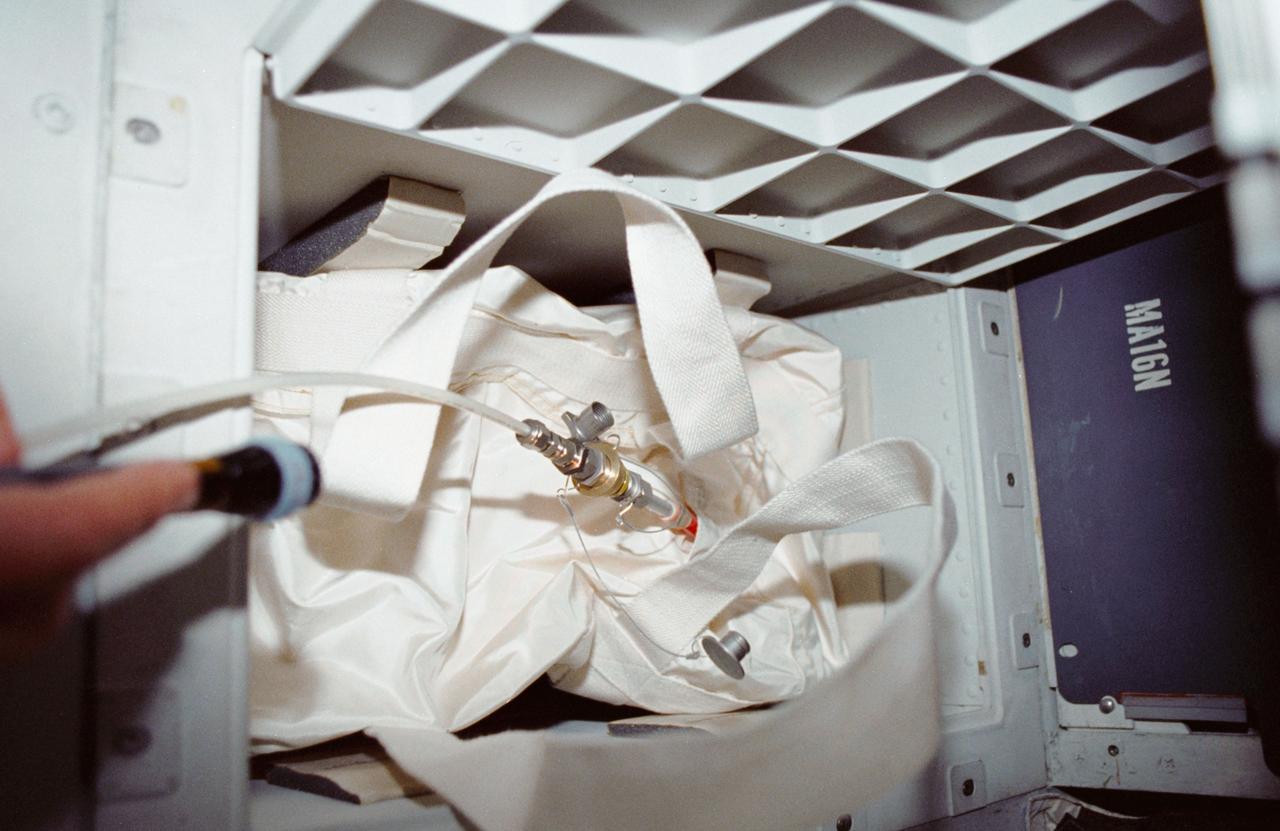
STS035-12-005 (2-10 Dec 1990) --- During STS-35, middeck stowage volume G and a contingency water container (CWC) were utilized to remedy a problem onboard Columbia, Orbiter Vehicle (OV) 102. A hose connecting OV-102's waste water system to the CWC was used in order to bypass a suspected clog in the line from the waste water tank to the exit nozzle. On flight day seven, Pilot Guy S. Gardner carried out an inflight maintenance (IFM) procedure by connecting a spare hose from the line to the container. The CWC is a rubber-lined duffle bag that holds about 95 pounds of water and is used in situations where water cannot be dumped overboard normally.
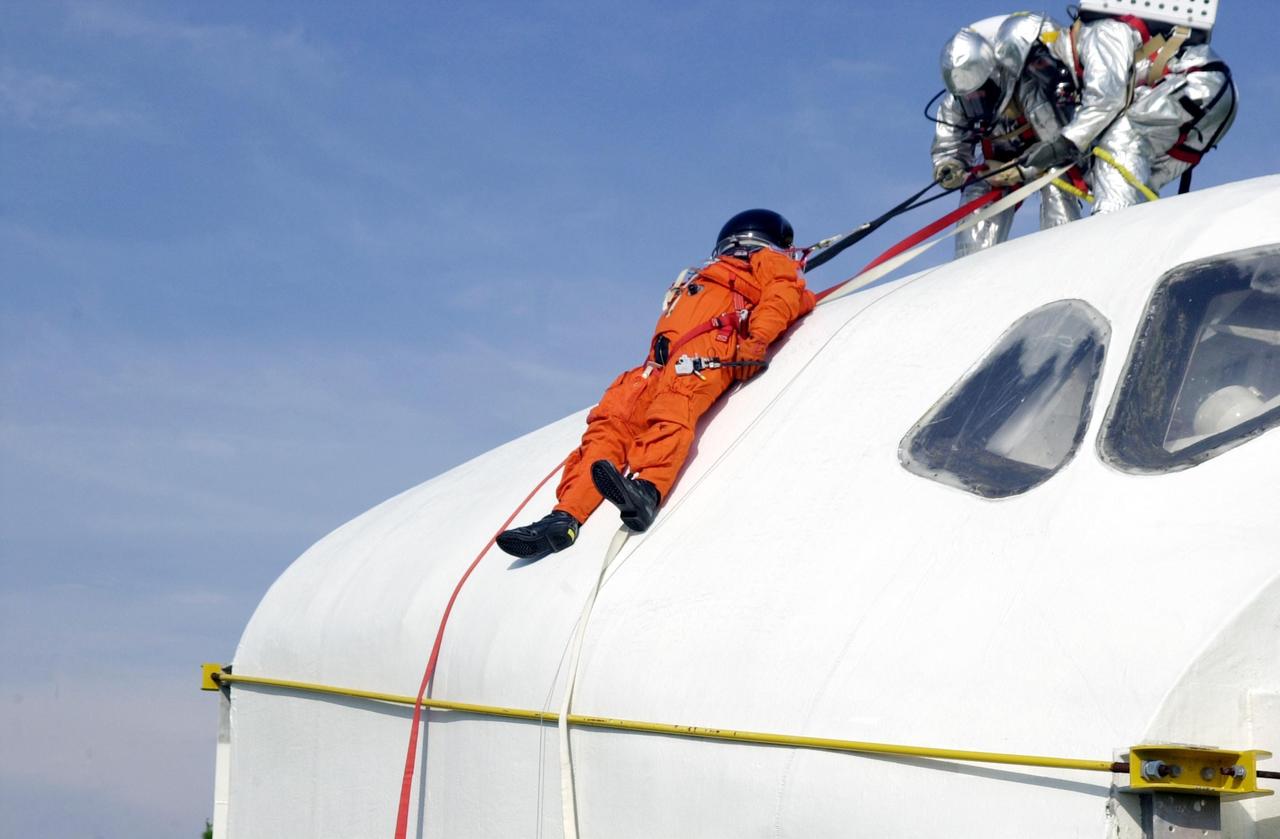
KENNEDY SPACE CENTER, FLA. - "Astronauts" were safely and successfully recovered from a "downed" Space Shuttle in a Mode VII contingency simulation led by Don Hammel, NASA Landing and Recovery Director. KSC Fire/Rescue and Emergency Medical workers, along with Johnson Space Center and Patrick Air Force Base personnel, participated in the drill. Mode simulations are held periodically at KSC to ensure contingency response forces are well prepared to respond to a wide variety of potential emergency situations.
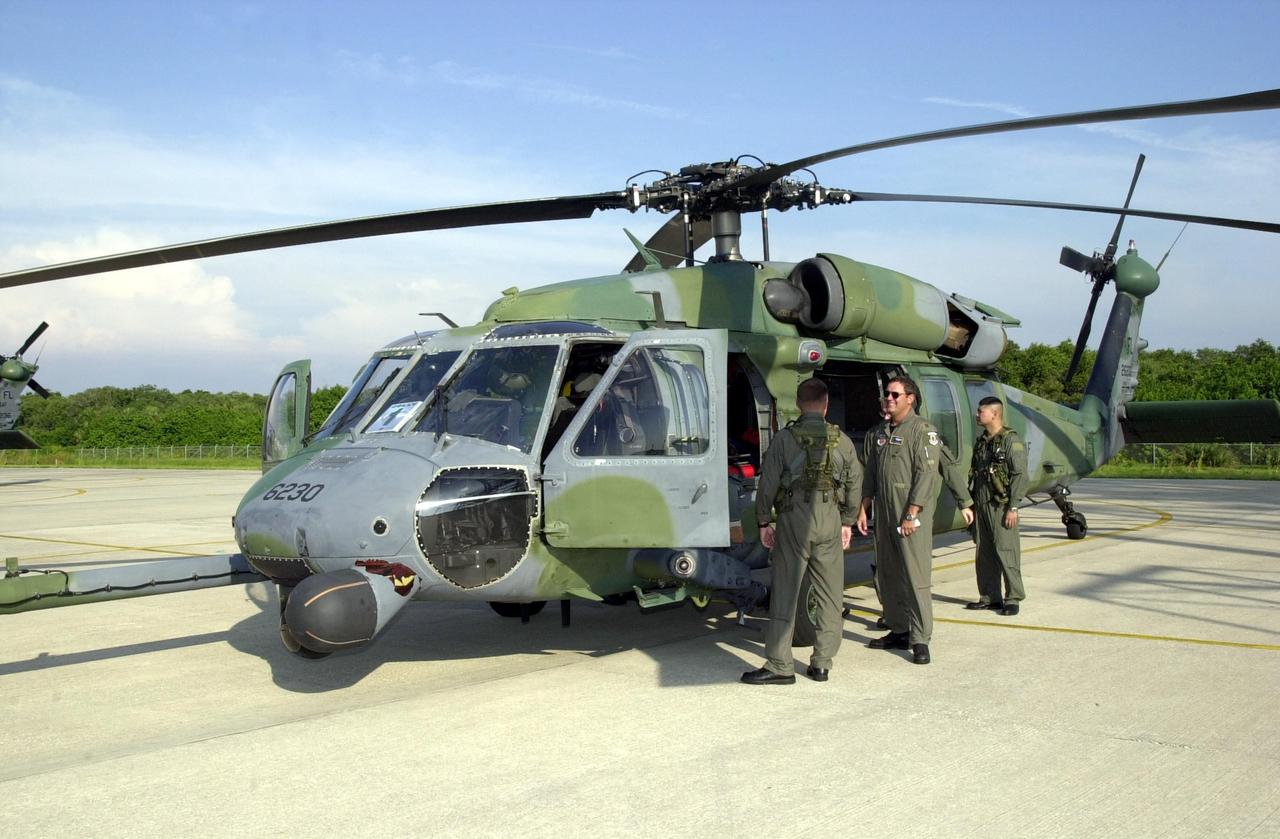
KENNEDY SPACE CENTER, FLA. - "Astronauts" were safely and successfully recovered from a "downed" Space Shuttle in a Mode VII contingency simulation led by Don Hammel, NASA Landing and Recovery Director. KSC Fire/Rescue and Emergency Medical workers, along with Johnson Space Center and Patrick Air Force Base personnel, participated in the drill. Mode simulations are held periodically at KSC to ensure contingency response forces are well prepared to respond to a wide variety of potential emergency situations.
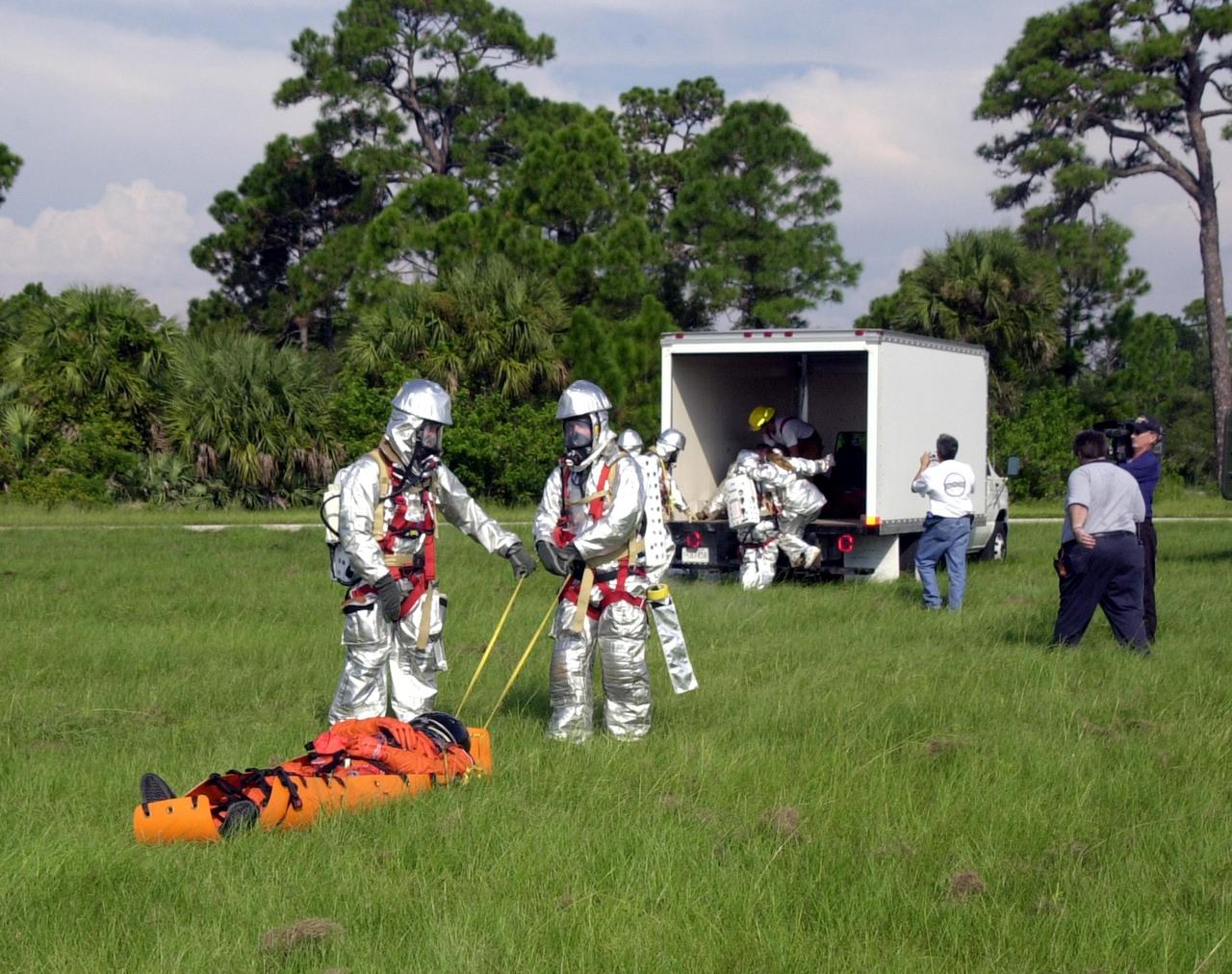
KENNEDY SPACE CENTER, FLA. - "Astronauts" were safely and successfully recovered from a "downed" Space Shuttle in a Mode VII contingency simulation led by Don Hammel, NASA Landing and Recovery Director. KSC Fire/Rescue and Emergency Medical workers, along with Johnson Space Center and Patrick Air Force Base personnel, participated in the drill. Mode simulations are held periodically at KSC to ensure contingency response forces are well prepared to respond to a wide variety of potential emergency situations. s.
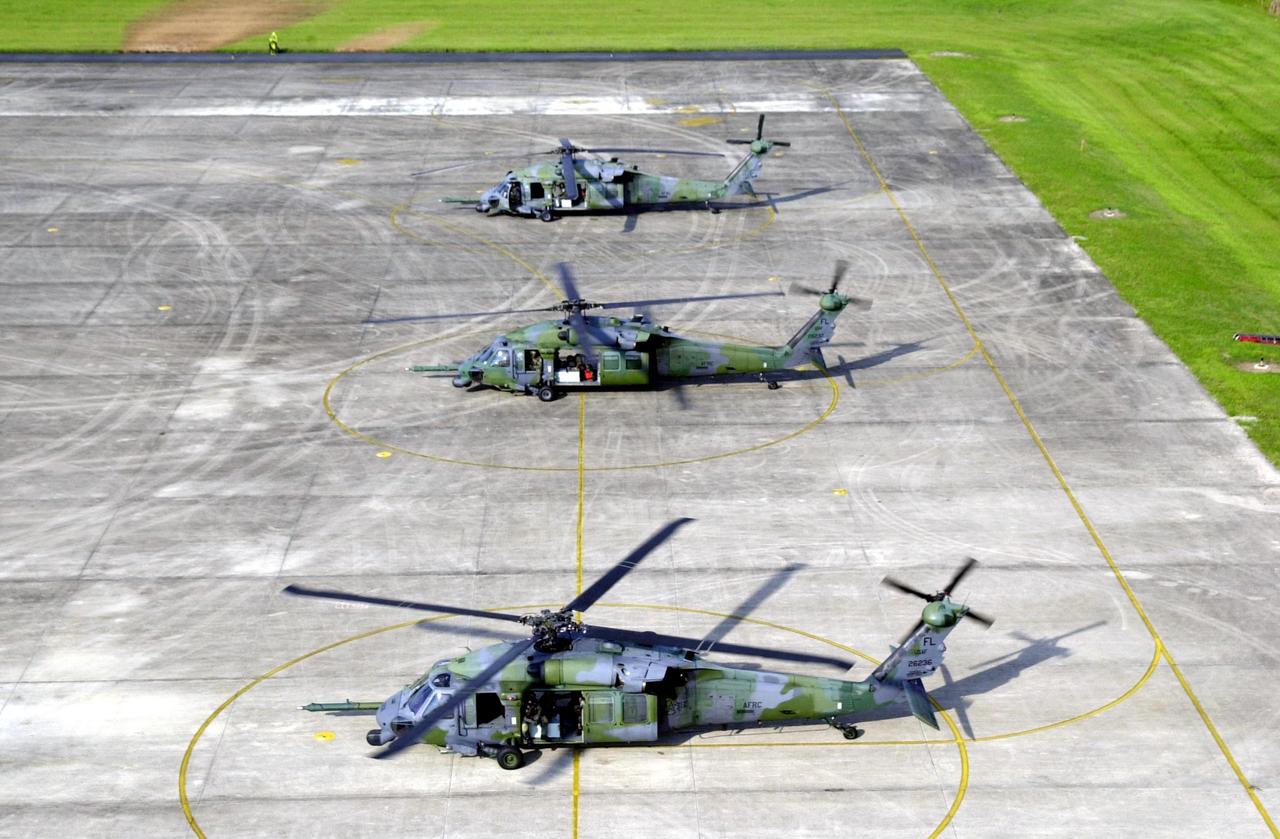
KENNEDY SPACE CENTER, FLA. - "Astronauts" were safely and successfully recovered from a "downed" Space Shuttle in a Mode VII contingency simulation led by Don Hammel, NASA Landing and Recovery Director. KSC Fire/Rescue and Emergency Medical workers, along with Johnson Space Center and Patrick Air Force Base personnel, participated in the drill. Mode simulations are held periodically at KSC to ensure contingency response forces are well prepared to respond to a wide variety of potential emergency situations.
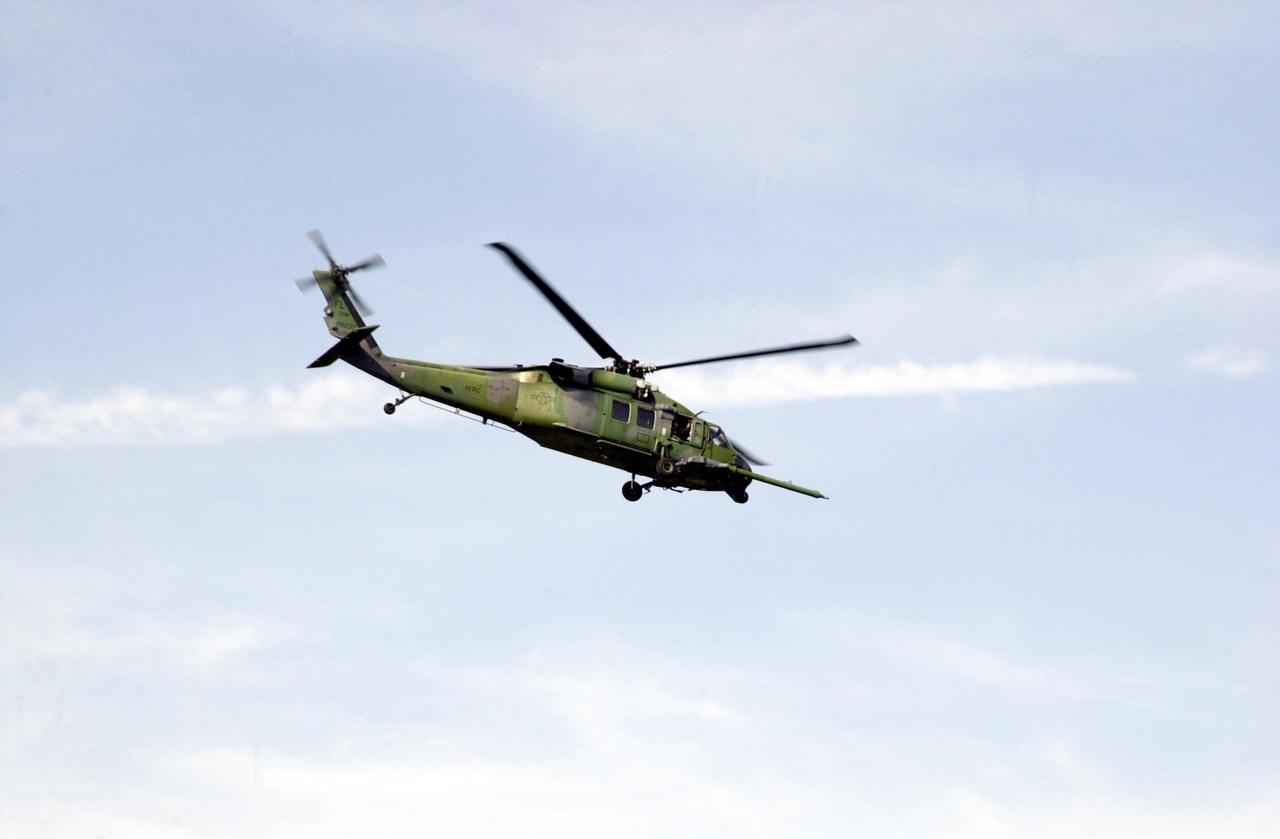
KENNEDY SPACE CENTER, FLA. - "Astronauts" were safely and successfully recovered from a "downed" Space Shuttle in a Mode VII contingency simulation led by Don Hammel, NASA Landing and Recovery Director. KSC Fire/Rescue and Emergency Medical workers, along with Johnson Space Center and Patrick Air Force Base personnel, participated in the drill. Mode simulations are held periodically at KSC to ensure contingency response forces are well prepared to respond to a wide variety of potential emergency situations.

KENNEDY SPACE CENTER, FLA. - "Astronauts" were safely and successfully recovered from a "downed" Space Shuttle in a Mode VII contingency simulation led by Don Hammel, NASA Landing and Recovery Director. KSC Fire/Rescue and Emergency Medical workers, along with Johnson Space Center and Patrick Air Force Base personnel, participated in the drill. Mode simulations are held periodically at KSC to ensure contingency response forces are well prepared to respond to a wide variety of potential emergency situations.
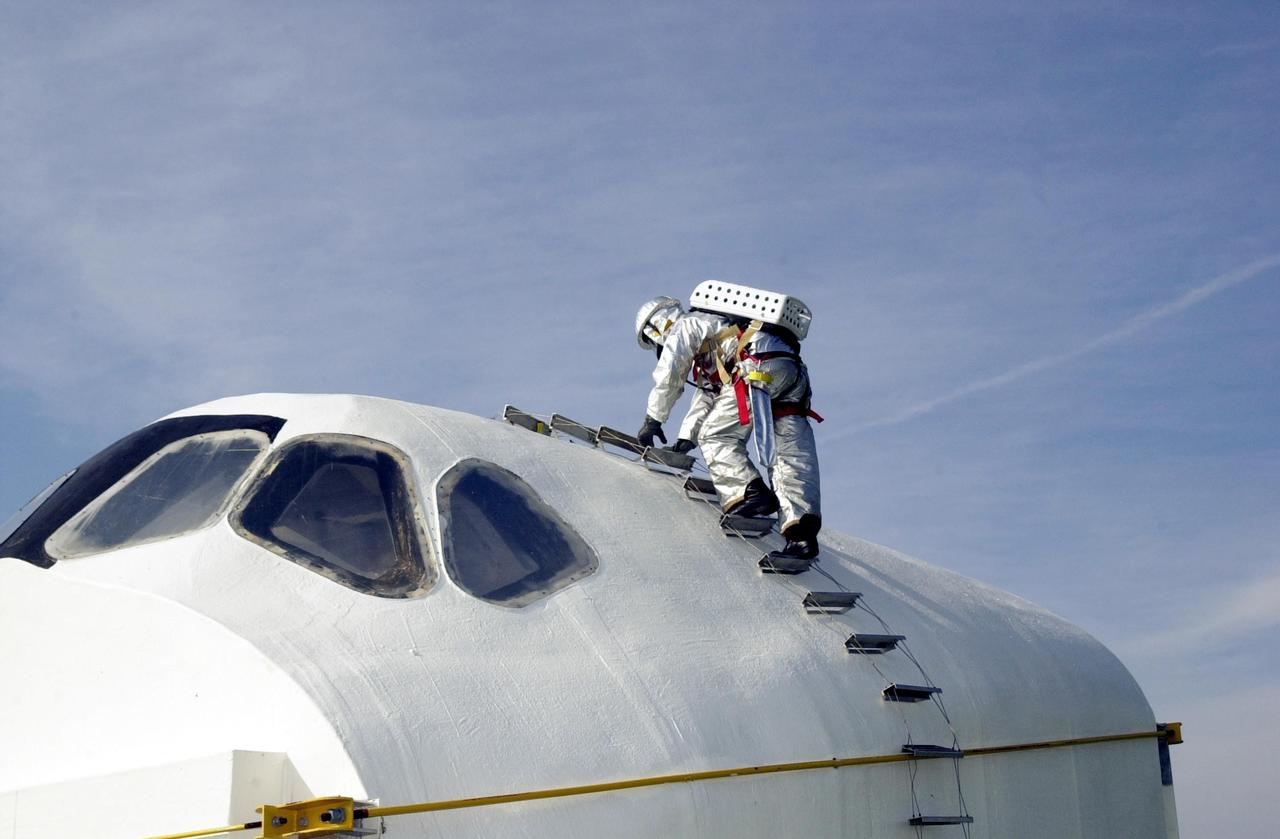
KENNEDY SPACE CENTER, FLA. - "Astronauts" were safely and successfully recovered from a "downed" Space Shuttle in a Mode VII contingency simulation led by Don Hammel, NASA Landing and Recovery Director. KSC Fire/Rescue and Emergency Medical workers, along with Johnson Space Center and Patrick Air Force Base personnel, participated in the drill. Mode simulations are held periodically at KSC to ensure contingency response forces are well prepared to respond to a wide variety of potential emergency situations.
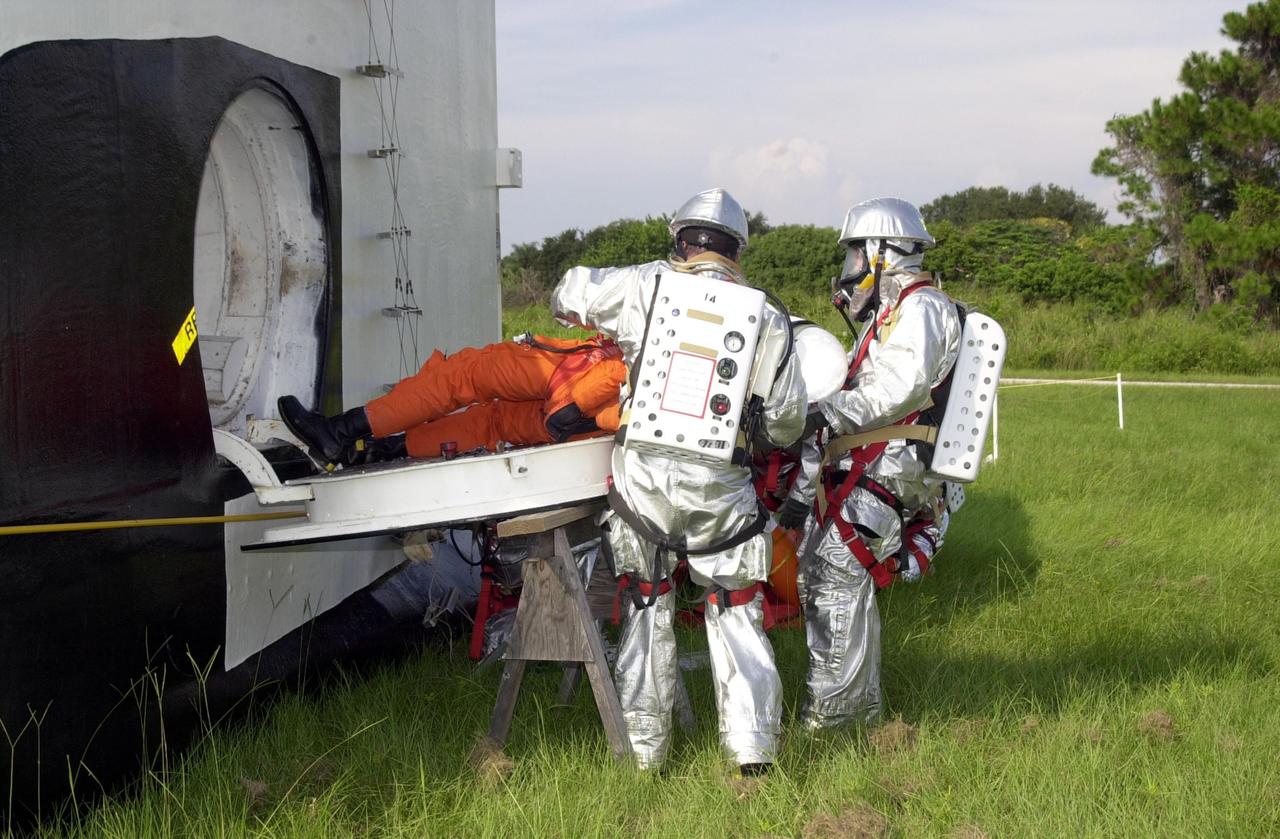
KENNEDY SPACE CENTER, FLA. - "Astronauts" were safely and successfully recovered from a "downed" Space Shuttle in a Mode VII contingency simulation led by Don Hammel, NASA Landing and Recovery Director. KSC Fire/Rescue and Emergency Medical workers, along with Johnson Space Center and Patrick Air Force Base personnel, participated in the drill. Mode simulations are held periodically at KSC to ensure contingency response forces are well prepared to respond to a wide variety of potential emergency situations.
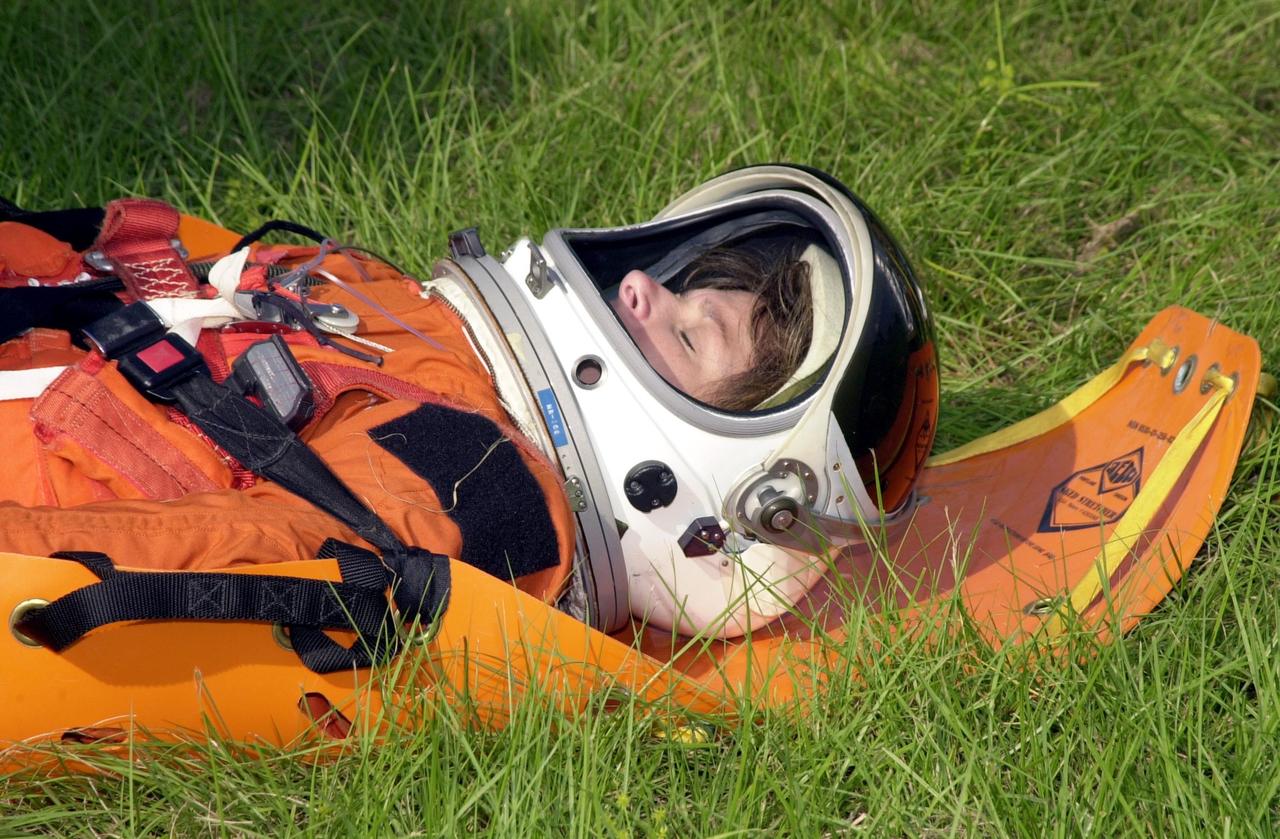
KENNEDY SPACE CENTER, FLA. - "Astronauts" were safely and successfully recovered from a "downed" Space Shuttle in a Mode VII contingency simulation led by Don Hammel, NASA Landing and Recovery Director. KSC Fire/Rescue and Emergency Medical workers, along with Johnson Space Center and Patrick Air Force Base personnel, participated in the drill. Mode simulations are held periodically at KSC to ensure contingency response forces are well prepared to respond to a wide variety of potential emergency situations. s.
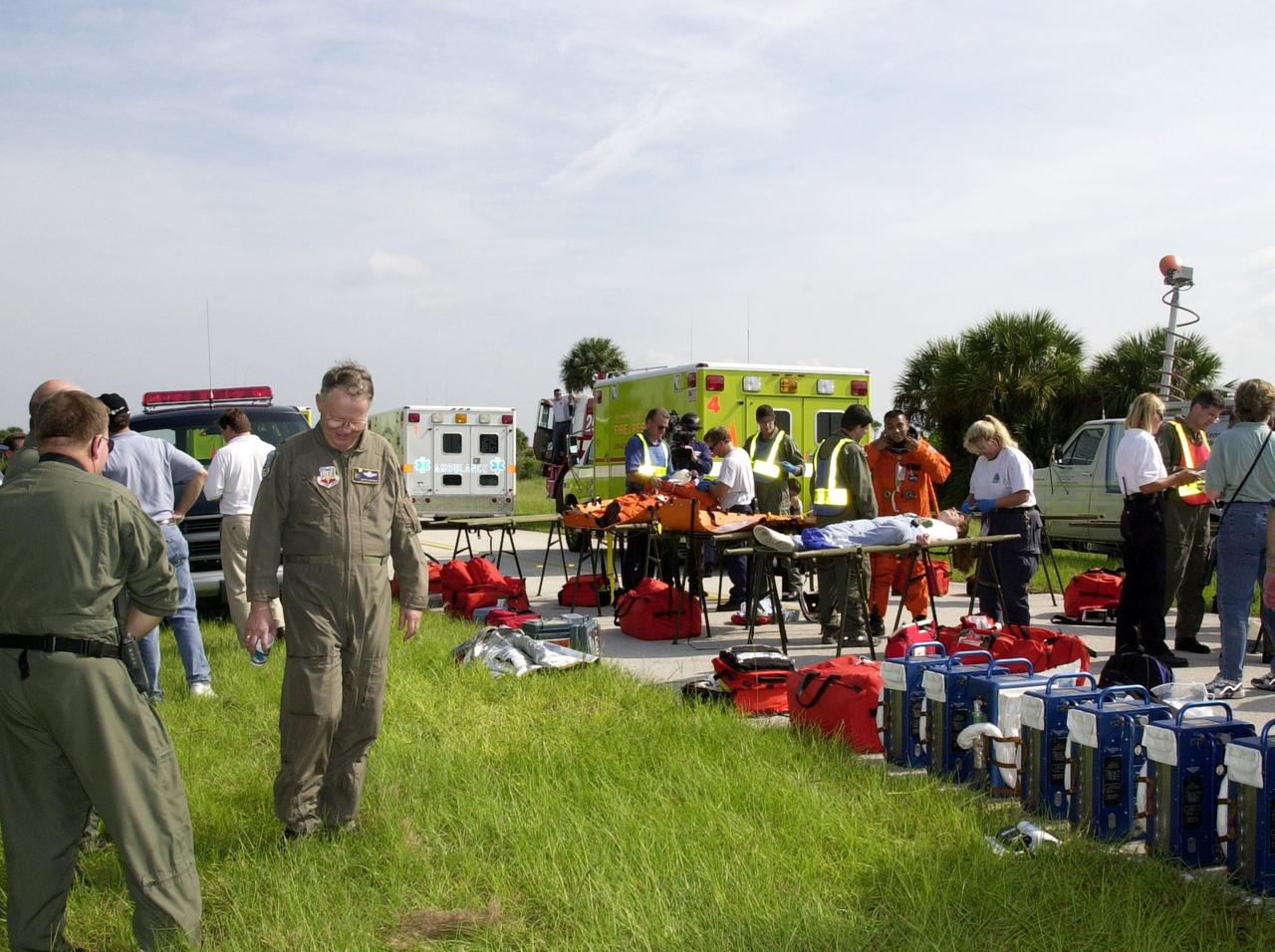
KENNEDY SPACE CENTER, FLA. - "Astronauts" were safely and successfully recovered from a "downed" Space Shuttle in a Mode VII contingency simulation led by Don Hammel, NASA Landing and Recovery Director. KSC Fire/Rescue and Emergency Medical workers, along with Johnson Space Center and Patrick Air Force Base personnel, participated in the drill. Mode simulations are held periodically at KSC to ensure contingency response forces are well prepared to respond to a wide variety of potential emergency situations.
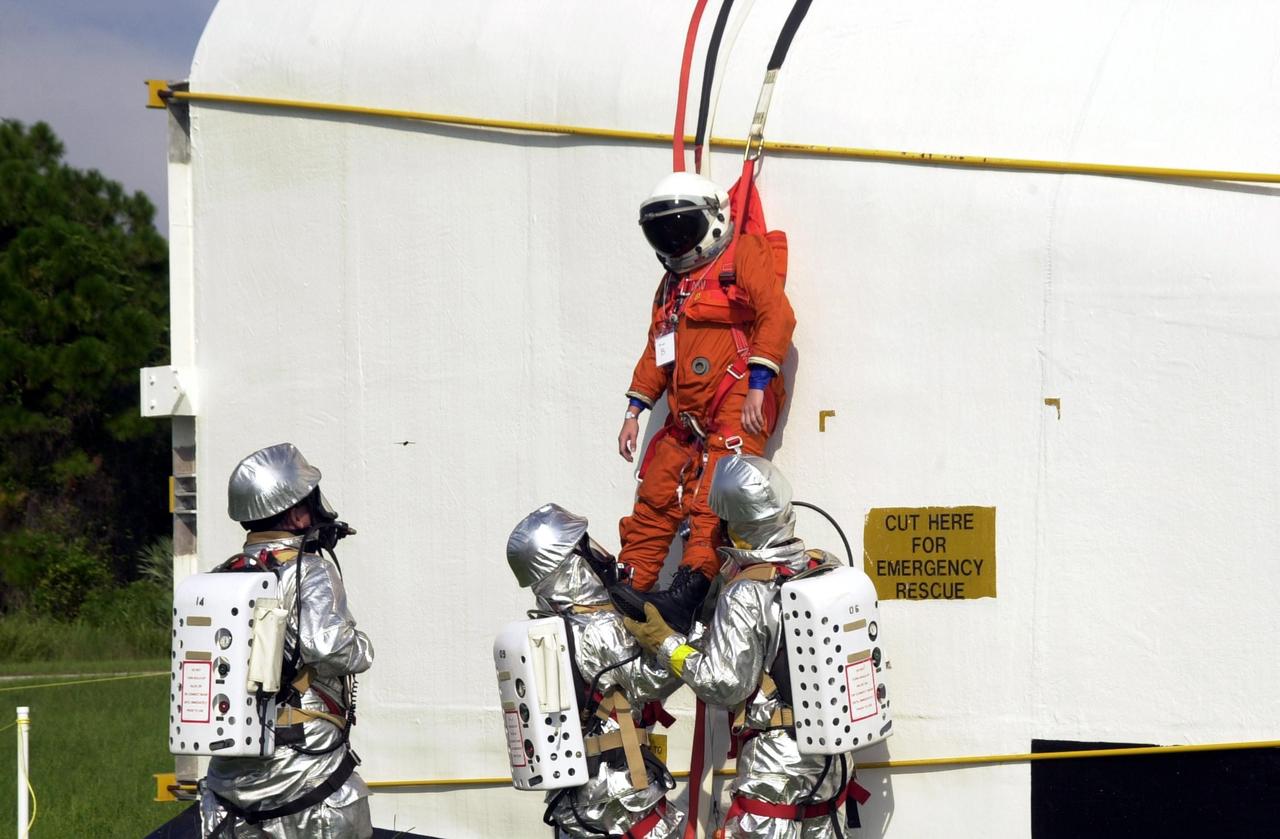
KENNEDY SPACE CENTER, FLA. - "Astronauts" were safely and successfully recovered from a "downed" Space Shuttle in a Mode VII contingency simulation led by Don Hammel, NASA Landing and Recovery Director. KSC Fire/Rescue and Emergency Medical workers, along with Johnson Space Center and Patrick Air Force Base personnel, participated in the drill. Mode simulations are held periodically at KSC to ensure contingency response forces are well prepared to respond to a wide variety of potential emergency situations.
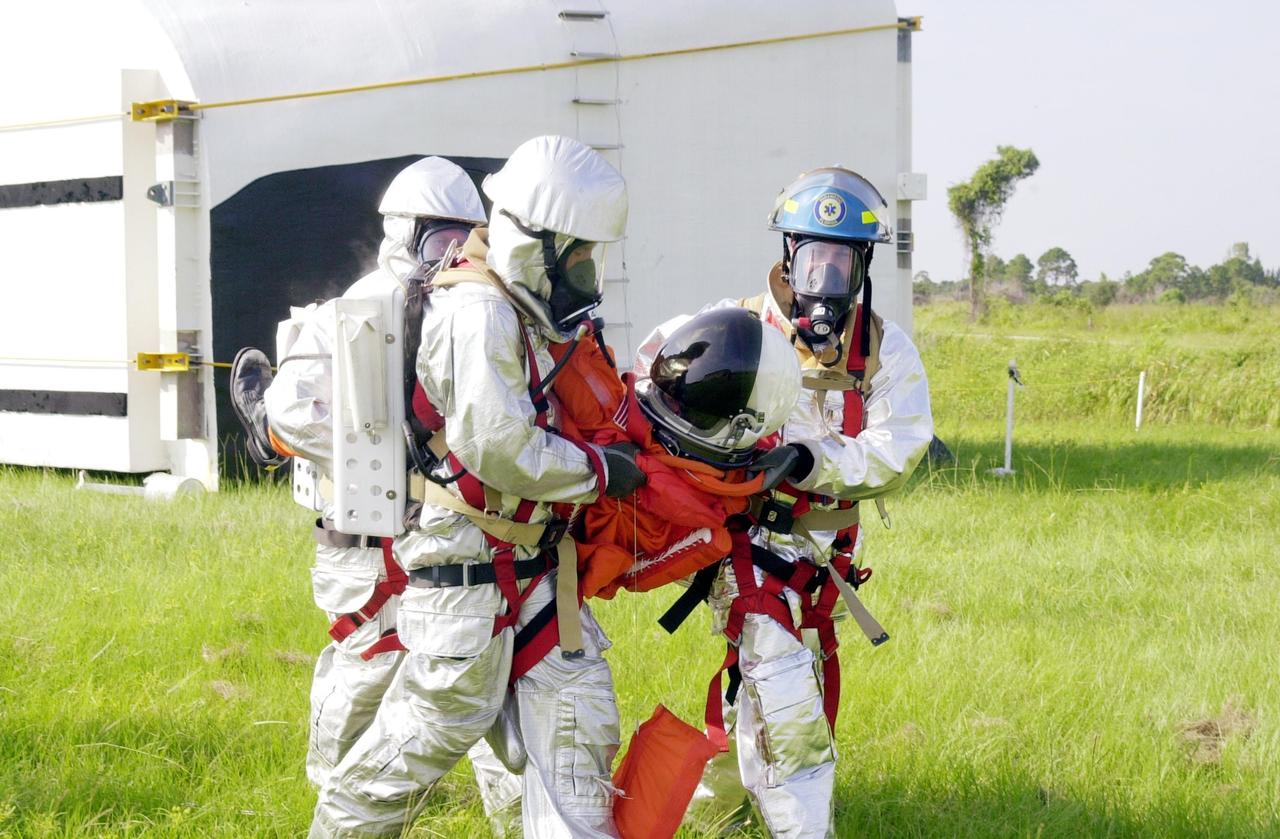
KENNEDY SPACE CENTER, FLA. - "Astronauts" were safely and successfully recovered from a "downed" Space Shuttle in a Mode VII contingency simulation led by Don Hammel, NASA Landing and Recovery Director. KSC Fire/Rescue and Emergency Medical workers, along with Johnson Space Center and Patrick Air Force Base personnel, participated in the drill. Mode simulations are held periodically at KSC to ensure contingency response forces are well prepared to respond to a wide variety of potential emergency situations.
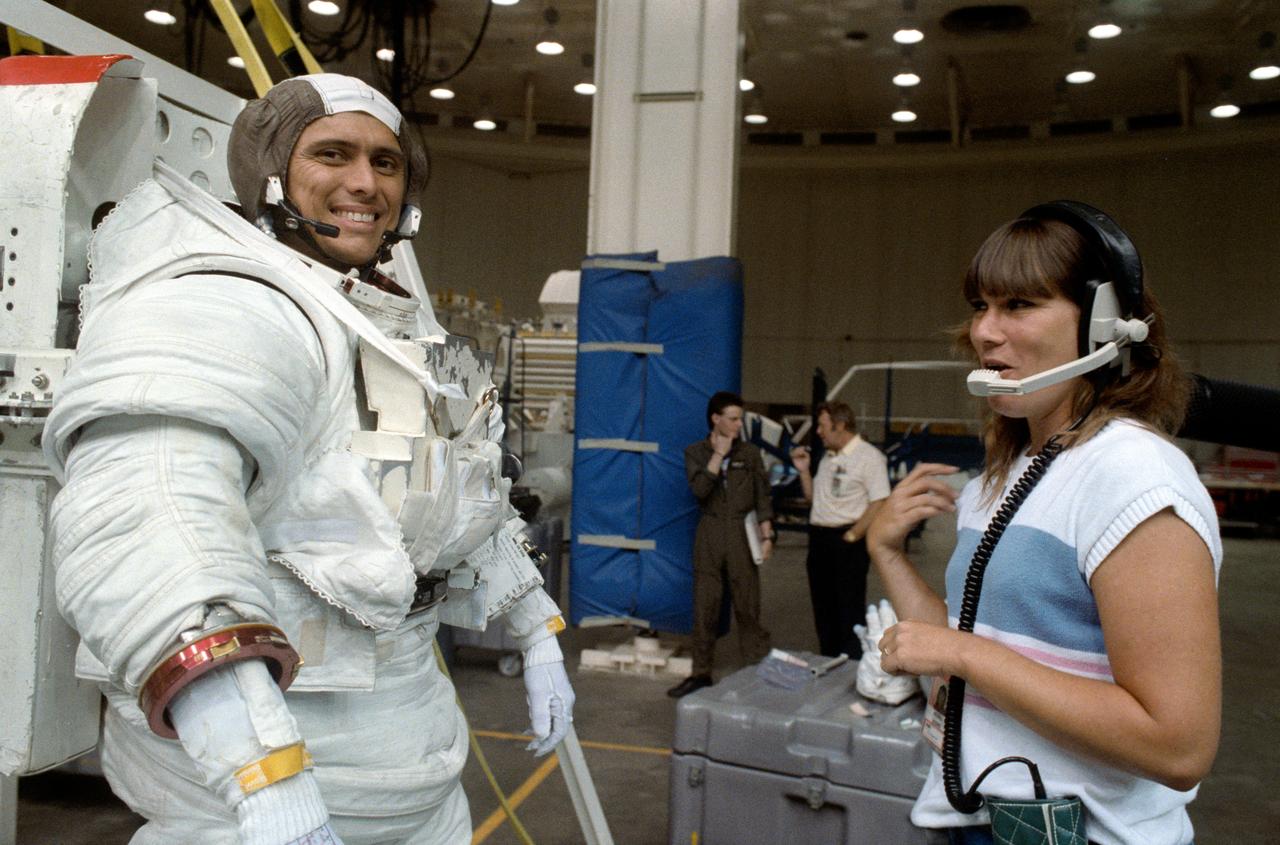
S89-42667 (24 Aug 1989) --- Astronaut Franklin R. Chang-Diaz tests his communications gear with Pam S. Peters of RSO, prior to participating in an underwater simulation of a contingency extravehicular activity (EVA) for his mission specialist assignment on NASA's STS-34 mission. He stands on a platform that will lower him into a 25-ft. deep pool, part of JSC's weightless environmental test facility (WET-F). Also participating in the contingency EVA rehearsal was astronaut Ellen S. Baker (out of frame).
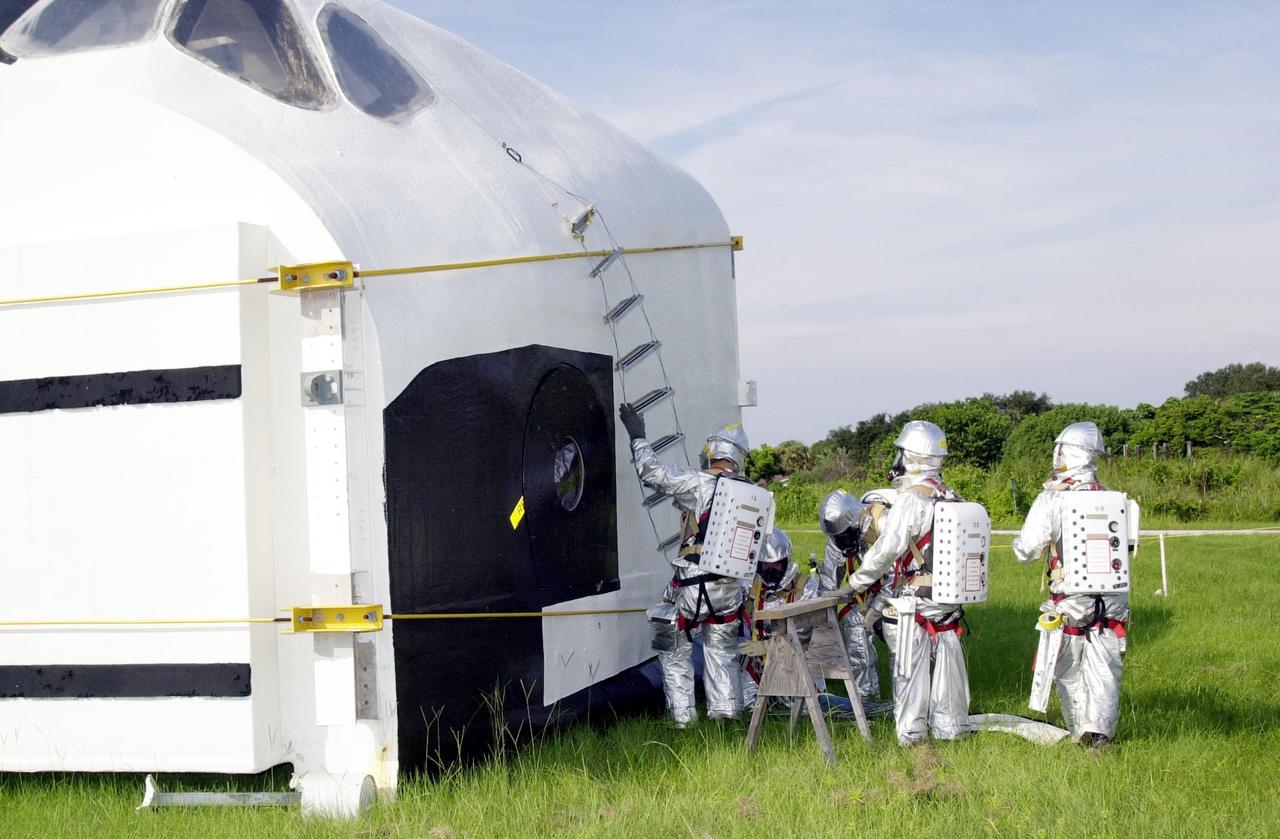
KENNEDY SPACE CENTER, FLA. - "Astronauts" were safely and successfully recovered from a "downed" Space Shuttle in a Mode VII contingency simulation led by Don Hammel, NASA Landing and Recovery Director. KSC Fire/Rescue and Emergency Medical workers, along with Johnson Space Center and Patrick Air Force Base personnel, participated in the drill. Mode simulations are held periodically at KSC to ensure contingency response forces are well prepared to respond to a wide variety of potential emergency situations.
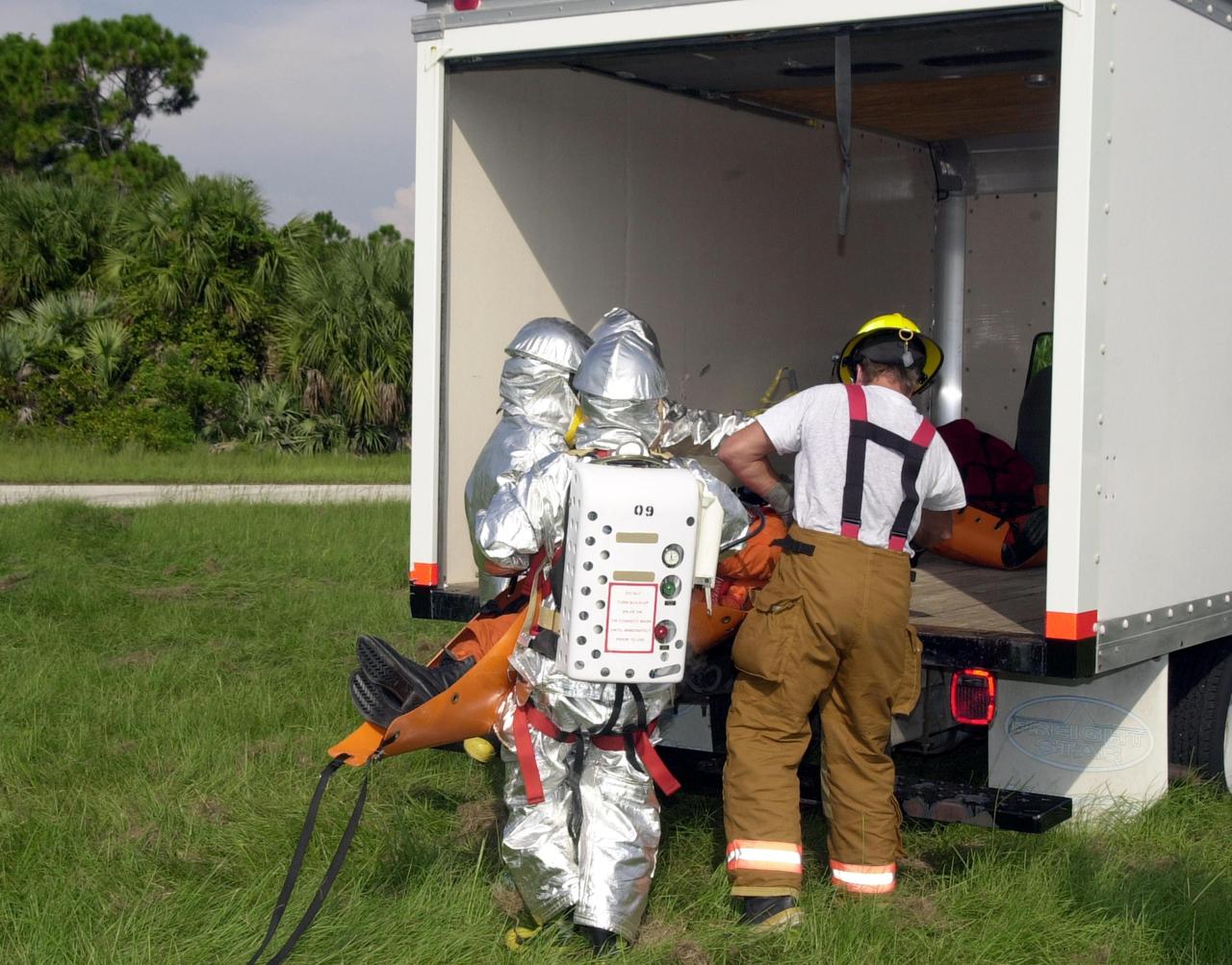
KENNEDY SPACE CENTER, FLA. - "Astronauts" were safely and successfully recovered from a "downed" Space Shuttle in a Mode VII contingency simulation led by Don Hammel, NASA Landing and Recovery Director. KSC Fire/Rescue and Emergency Medical workers, along with Johnson Space Center and Patrick Air Force Base personnel, participated in the drill. Mode simulations are held periodically at KSC to ensure contingency response forces are well prepared to respond to a wide variety of potential emergency situations.
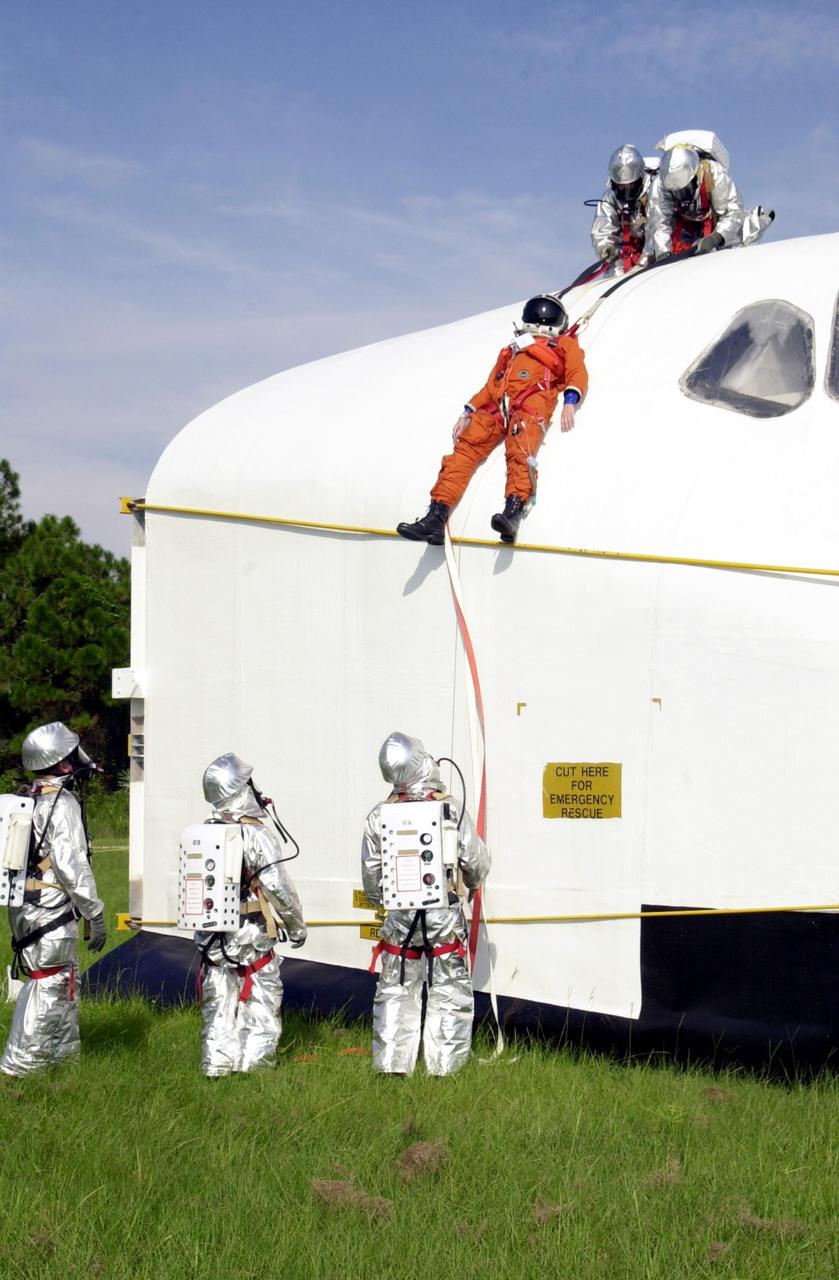
KENNEDY SPACE CENTER, FLA. - "Astronauts" were safely and successfully recovered from a "downed" Space Shuttle in a Mode VII contingency simulation led by Don Hammel, NASA Landing and Recovery Director. KSC Fire/Rescue and Emergency Medical workers, along with Johnson Space Center and Patrick Air Force Base personnel, participated in the drill. Mode simulations are held periodically at KSC to ensure contingency response forces are well prepared to respond to a wide variety of potential emergency situations.
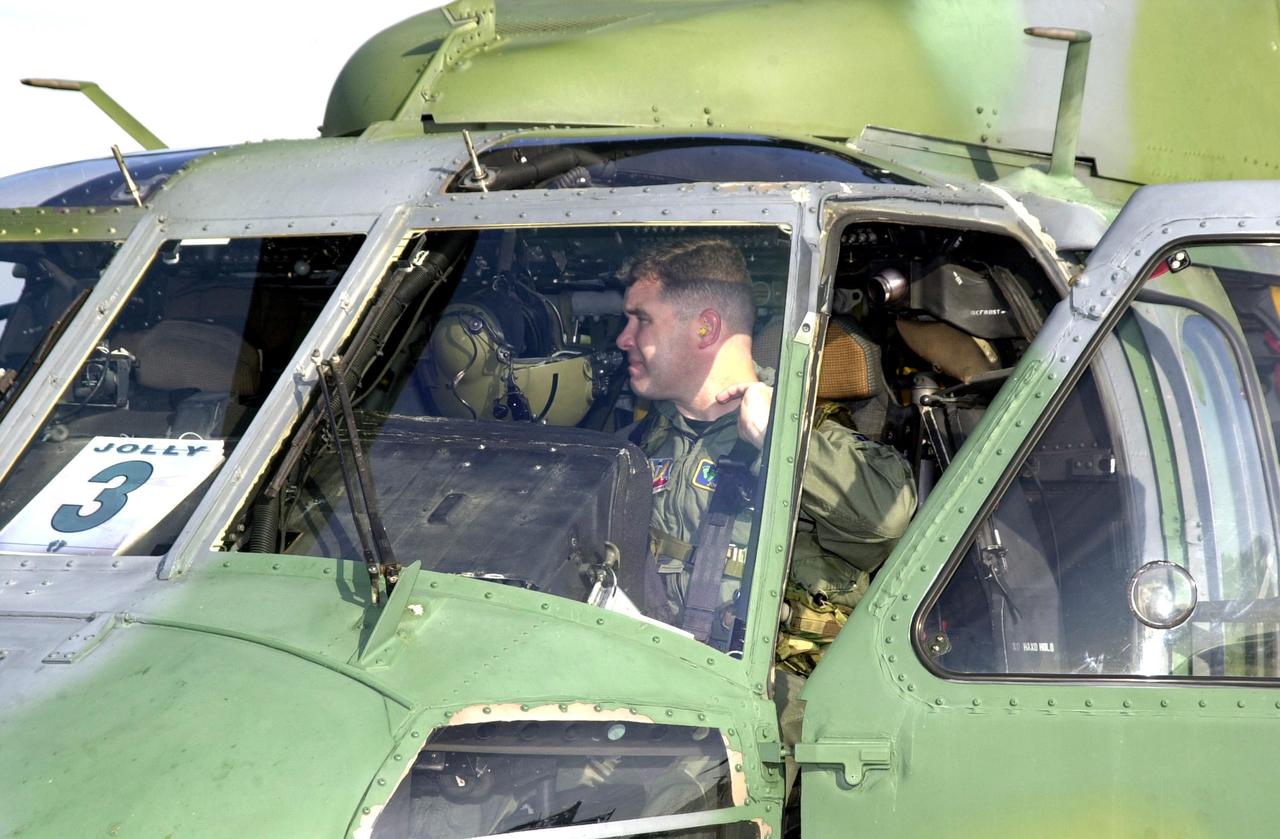
KENNEDY SPACE CENTER, FLA. - "Astronauts" were safely and successfully recovered from a "downed" Space Shuttle in a Mode VII contingency simulation led by Don Hammel, NASA Landing and Recovery Director. KSC Fire/Rescue and Emergency Medical workers, along with Johnson Space Center and Patrick Air Force Base personnel, participated in the drill. Mode simulations are held periodically at KSC to ensure contingency response forces are well prepared to respond to a wide variety of potential emergency situations.
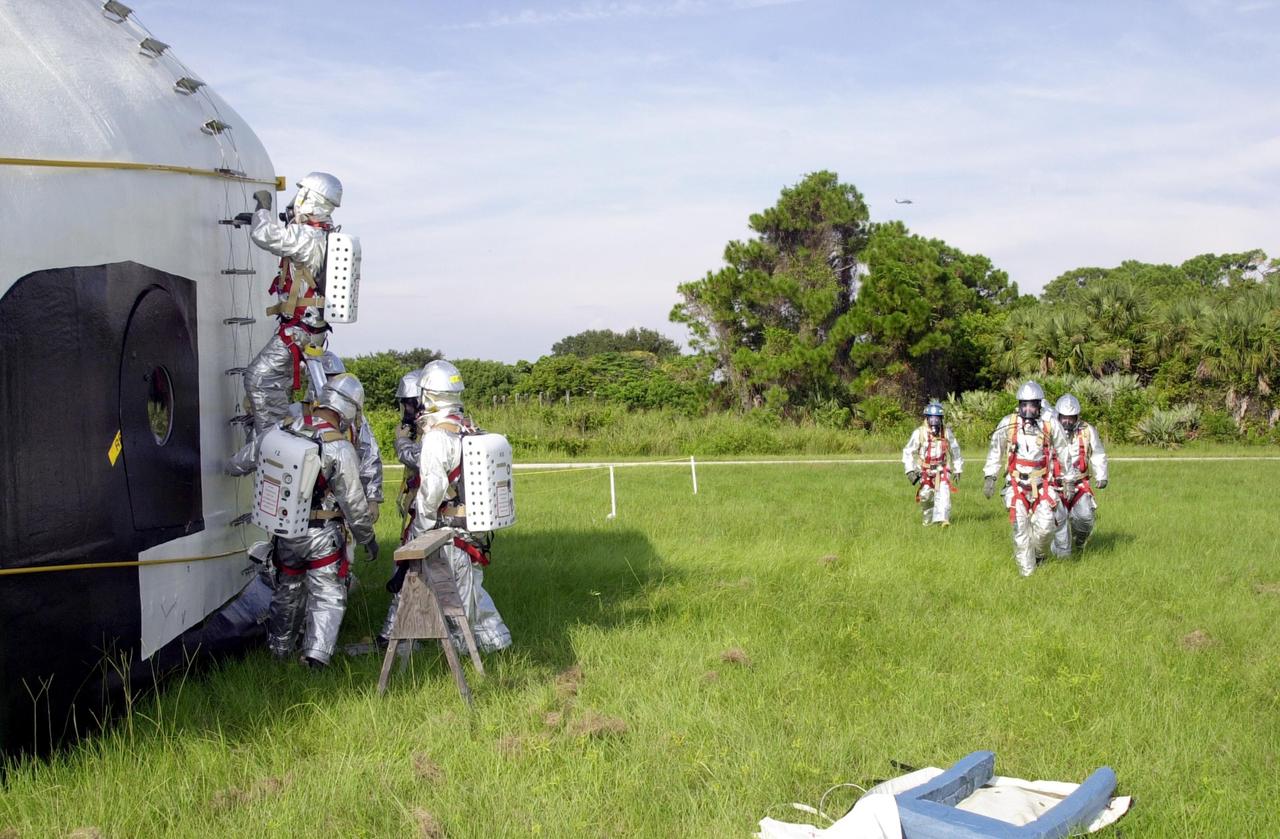
KENNEDY SPACE CENTER, FLA. - "Astronauts" were safely and successfully recovered from a "downed" Space Shuttle in a Mode VII contingency simulation led by Don Hammel, NASA Landing and Recovery Director. KSC Fire/Rescue and Emergency Medical workers, along with Johnson Space Center and Patrick Air Force Base personnel, participated in the drill. Mode simulations are held periodically at KSC to ensure contingency response forces are well prepared to respond to a wide variety of potential emergency situations.
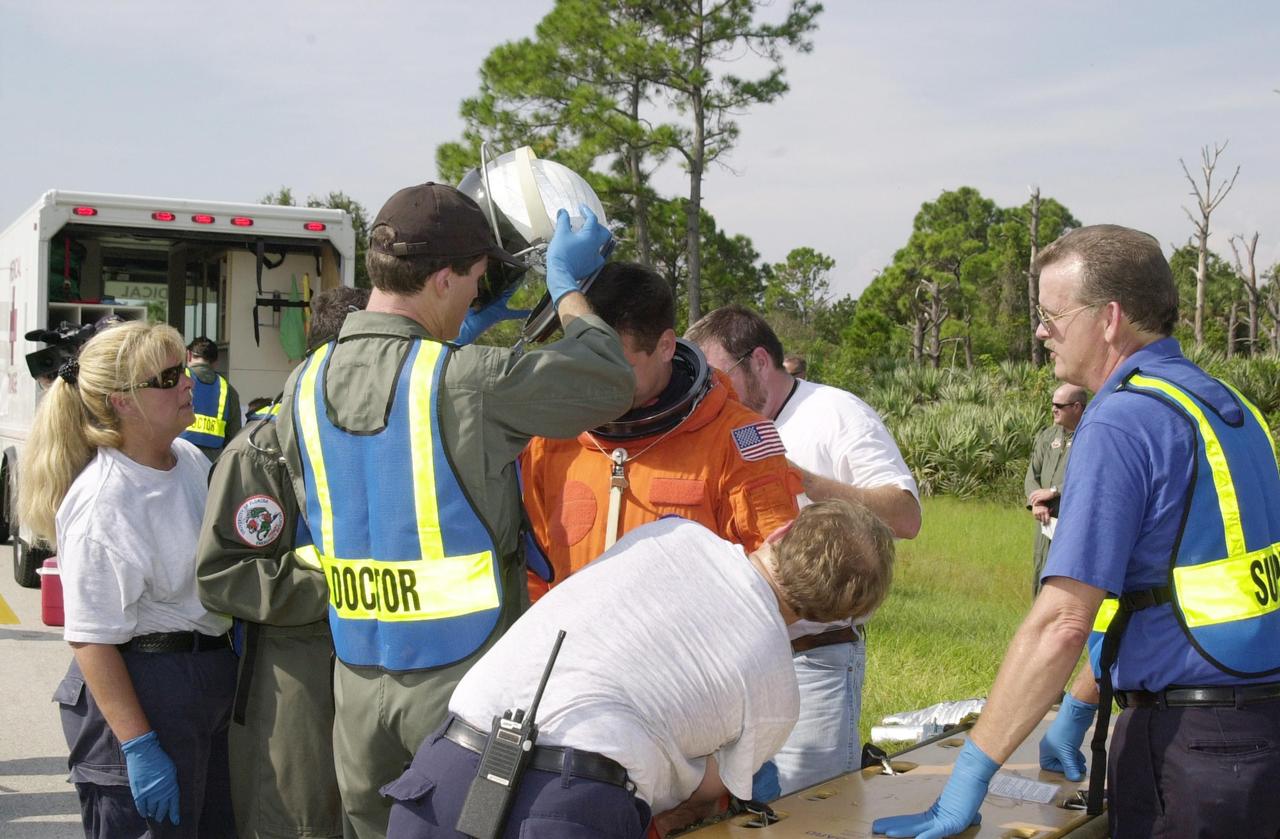
KENNEDY SPACE CENTER, FLA. - "Astronauts" were safely and successfully recovered from a "downed" Space Shuttle in a Mode VII contingency simulation led by Don Hammel, NASA Landing and Recovery Director. KSC Fire/Rescue and Emergency Medical workers, along with Johnson Space Center and Patrick Air Force Base personnel, participated in the drill. Mode simulations are held periodically at KSC to ensure contingency response forces are well prepared to respond to a wide variety of potential emergency situations.
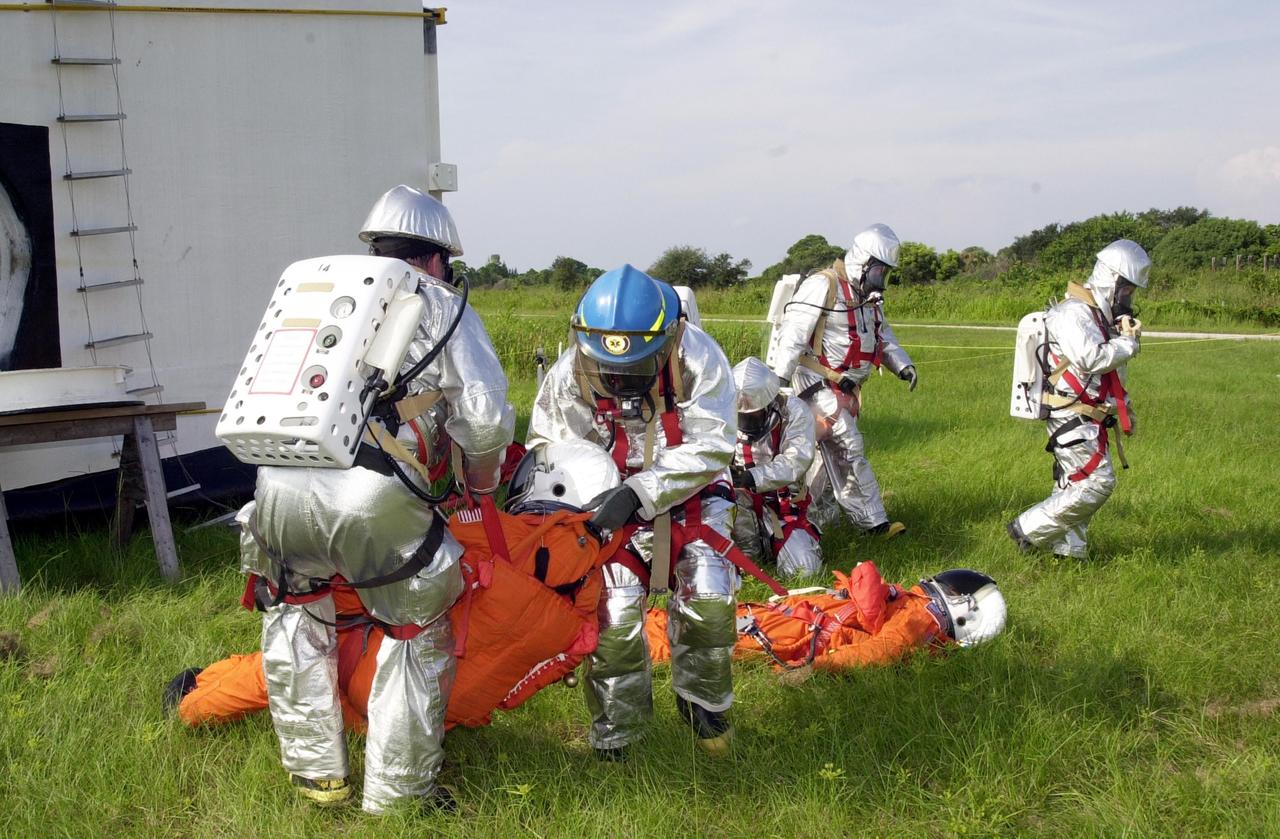
KENNEDY SPACE CENTER, FLA. - "Astronauts" were safely and successfully recovered from a "downed" Space Shuttle in a Mode VII contingency simulation led by Don Hammel, NASA Landing and Recovery Director. KSC Fire/Rescue and Emergency Medical workers, along with Johnson Space Center and Patrick Air Force Base personnel, participated in the drill. Mode simulations are held periodically at KSC to ensure contingency response forces are well prepared to respond to a wide variety of potential emergency situations.
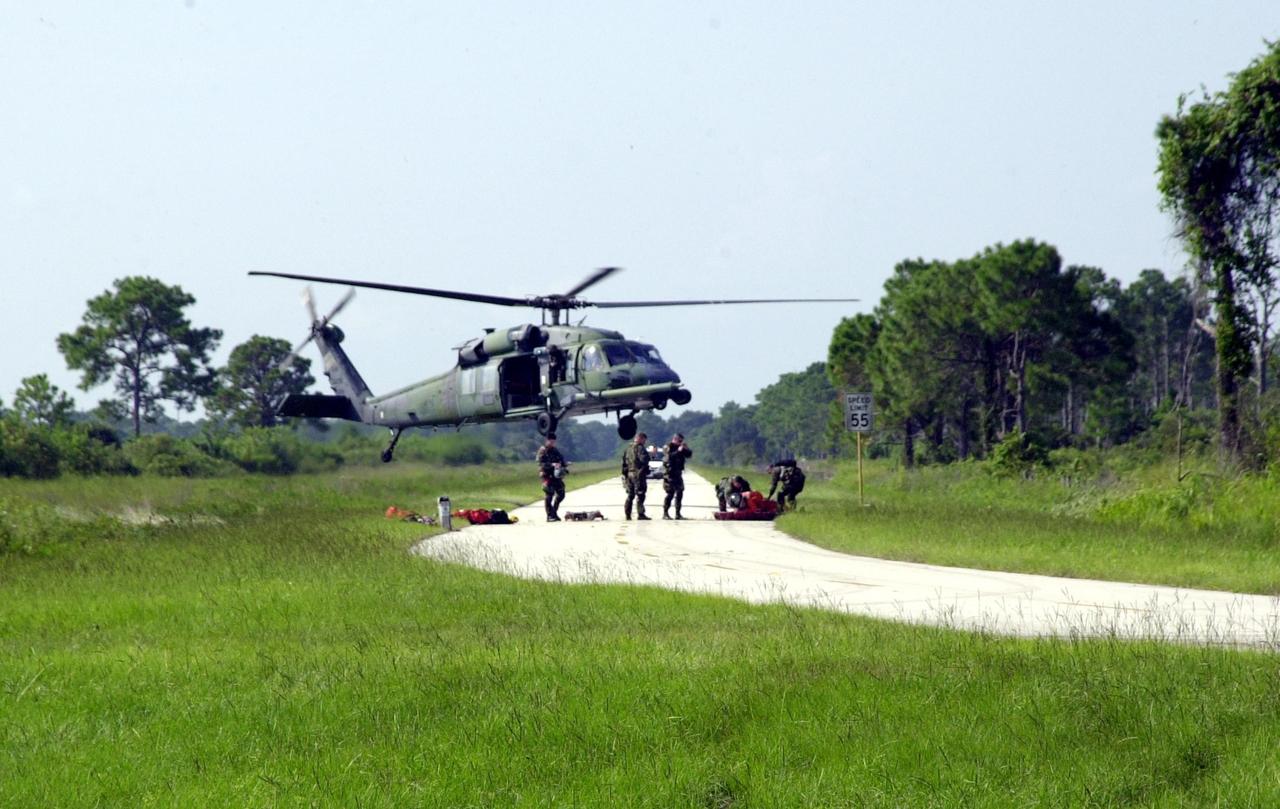
KENNEDY SPACE CENTER, FLA. - "Astronauts" were safely and successfully recovered from a "downed" Space Shuttle in a Mode VII contingency simulation led by Don Hammel, NASA Landing and Recovery Director. KSC Fire/Rescue and Emergency Medical workers, along with Johnson Space Center and Patrick Air Force Base personnel, participated in the drill. Mode simulations are held periodically at KSC to ensure contingency response forces are well prepared to respond to a wide variety of potential emergency situations.
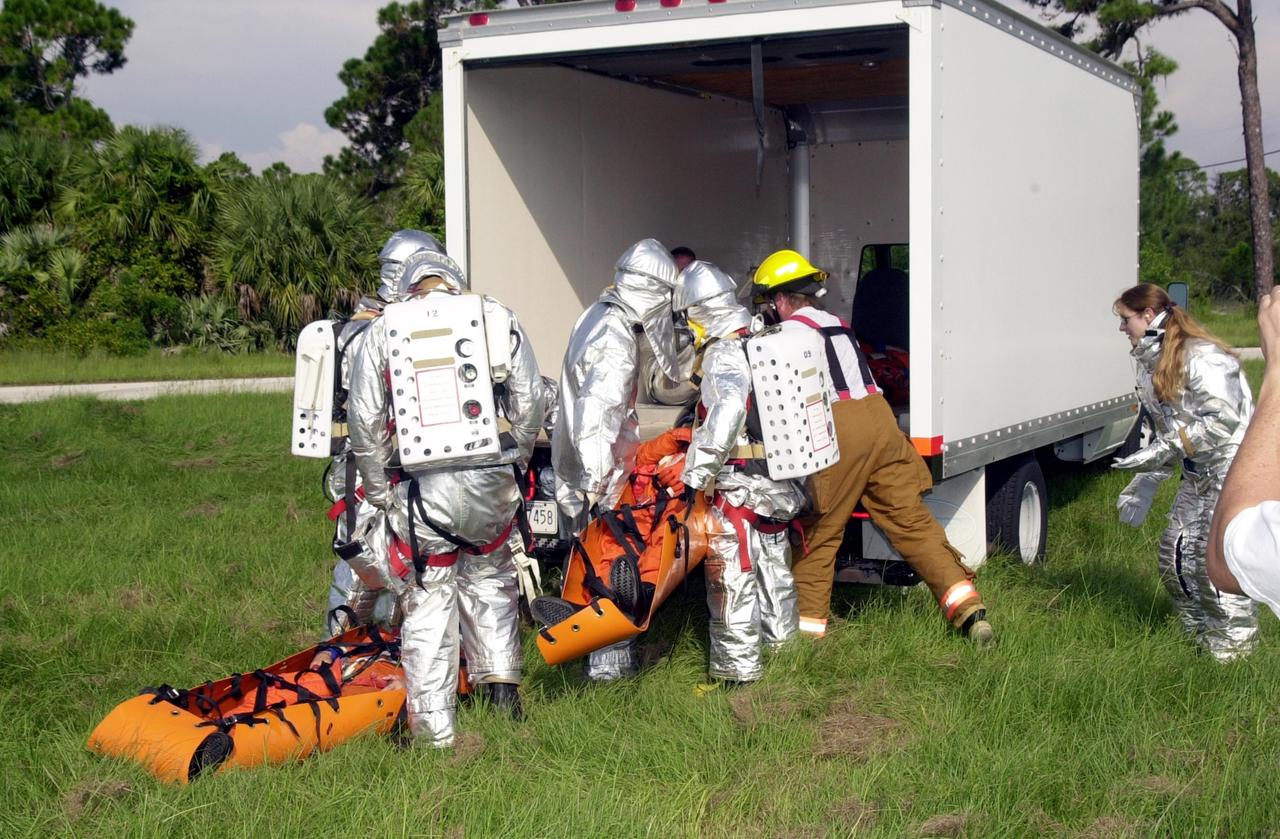
KENNEDY SPACE CENTER, FLA. - "Astronauts" were safely and successfully recovered from a "downed" Space Shuttle in a Mode VII contingency simulation led by Don Hammel, NASA Landing and Recovery Director. KSC Fire/Rescue and Emergency Medical workers, along with Johnson Space Center and Patrick Air Force Base personnel, participated in the drill. Mode simulations are held periodically at KSC to ensure contingency response forces are well prepared to respond to a wide variety of potential emergency situations.
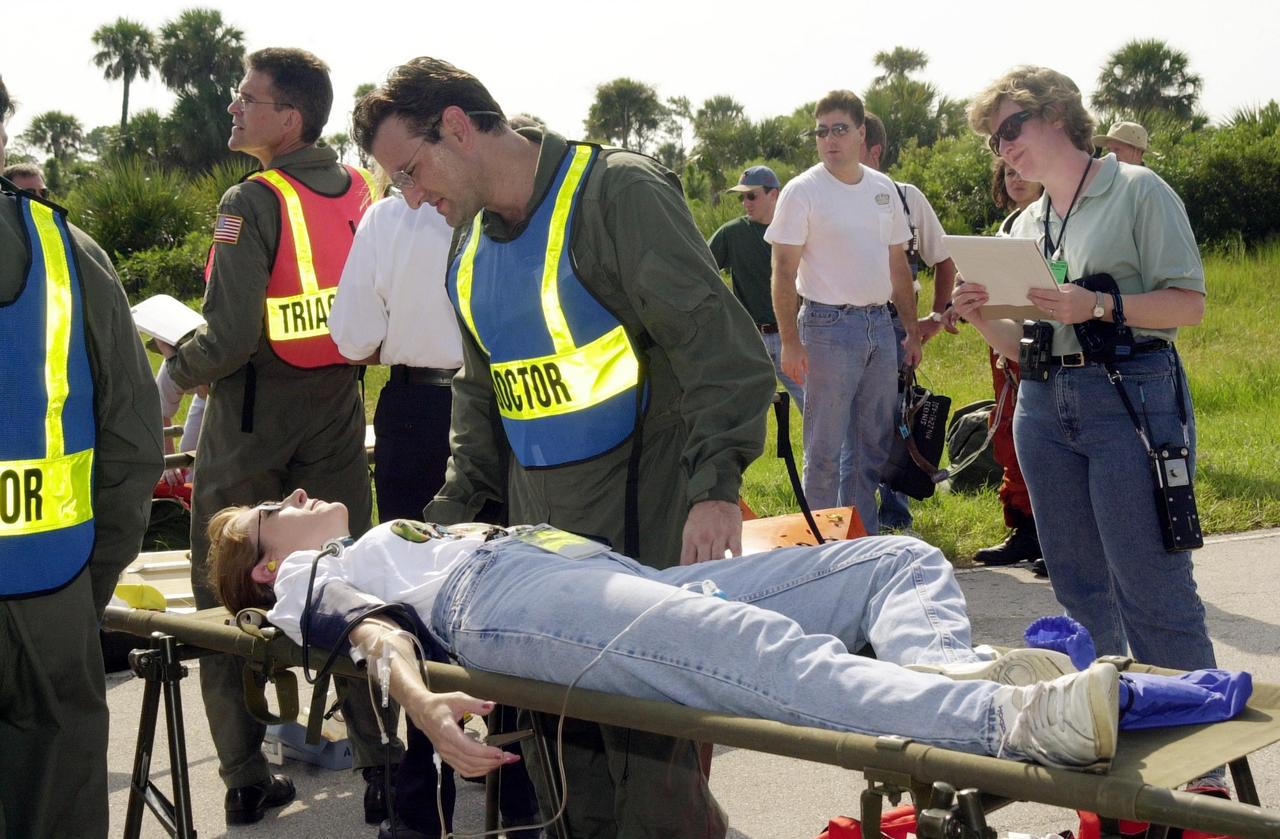
KENNEDY SPACE CENTER, FLA. - "Astronauts" were safely and successfully recovered from a "downed" Space Shuttle in a Mode VII contingency simulation led by Don Hammel, NASA Landing and Recovery Director. KSC Fire/Rescue and Emergency Medical workers, along with Johnson Space Center and Patrick Air Force Base personnel, participated in the drill. Mode simulations are held periodically at KSC to ensure contingency response forces are well prepared to respond to a wide variety of potential emergency situations.
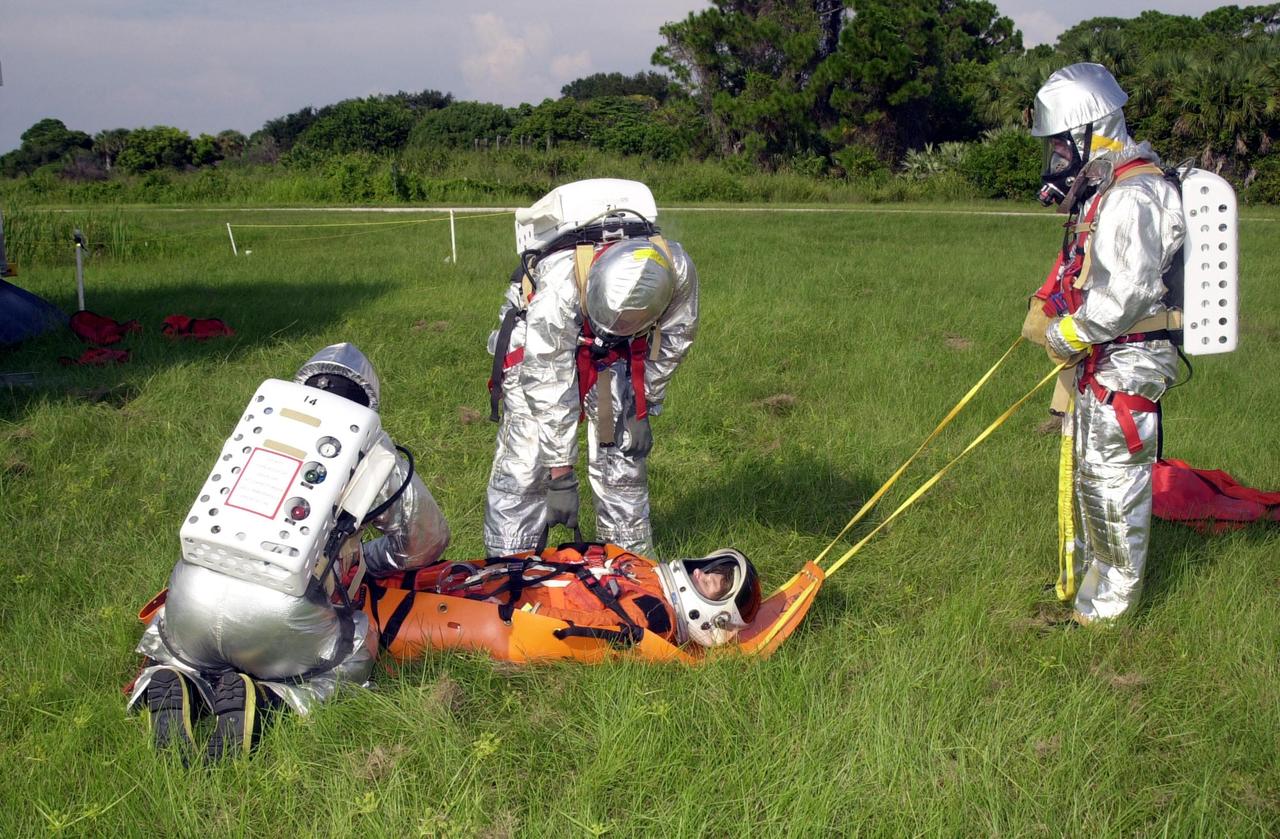
KENNEDY SPACE CENTER, FLA. - "Astronauts" were safely and successfully recovered from a "downed" Space Shuttle in a Mode VII contingency simulation led by Don Hammel, NASA Landing and Recovery Director. KSC Fire/Rescue and Emergency Medical workers, along with Johnson Space Center and Patrick Air Force Base personnel, participated in the drill. Mode simulations are held periodically at KSC to ensure contingency response forces are well prepared to respond to a wide variety of potential emergency situations.
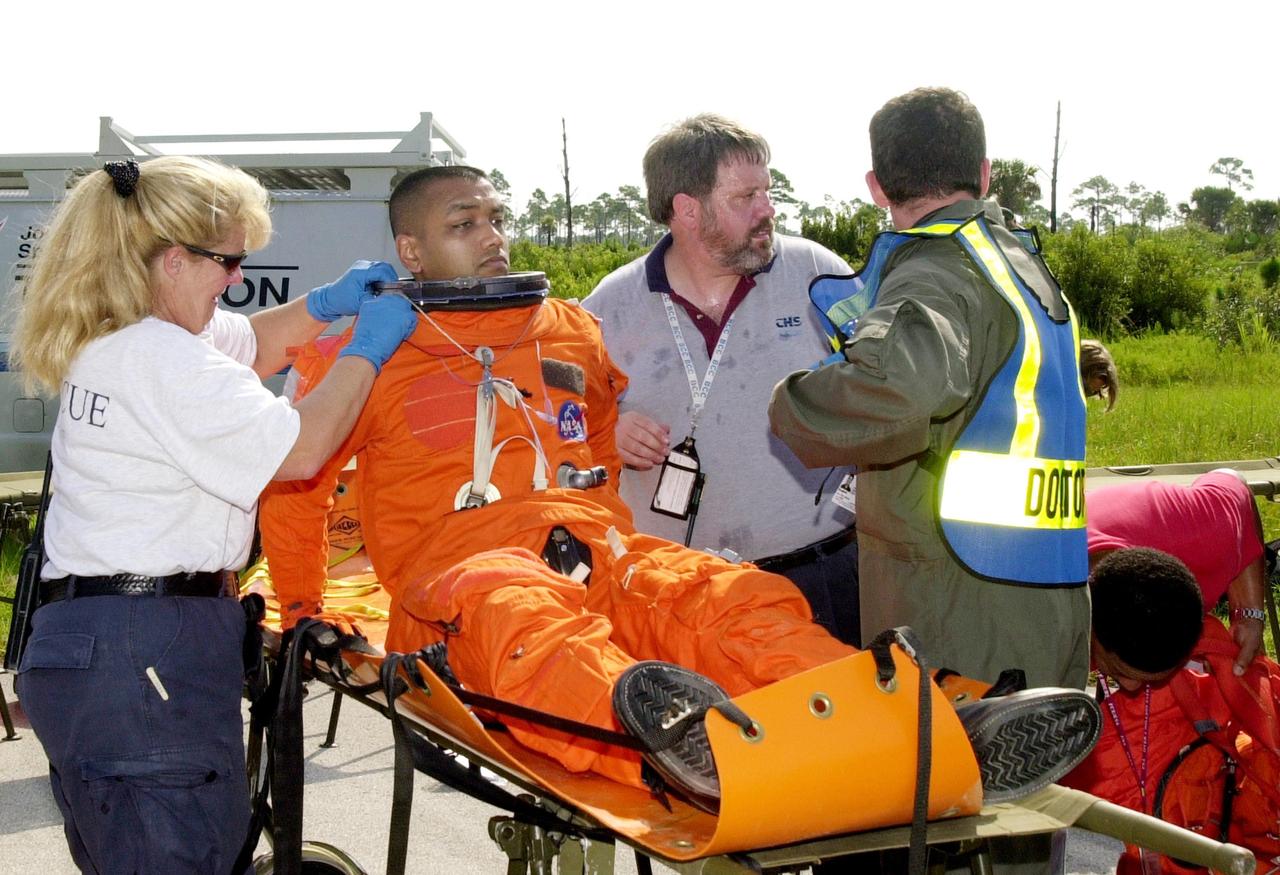
KENNEDY SPACE CENTER, FLA. - "Astronauts" were safely and successfully recovered from a "downed" Space Shuttle in a Mode VII contingency simulation led by Don Hammel, NASA Landing and Recovery Director. KSC Fire/Rescue and Emergency Medical workers, along with Johnson Space Center and Patrick Air Force Base personnel, participated in the drill. Mode simulations are held periodically at KSC to ensure contingency response forces are well prepared to respond to a wide variety of potential emergency situations.
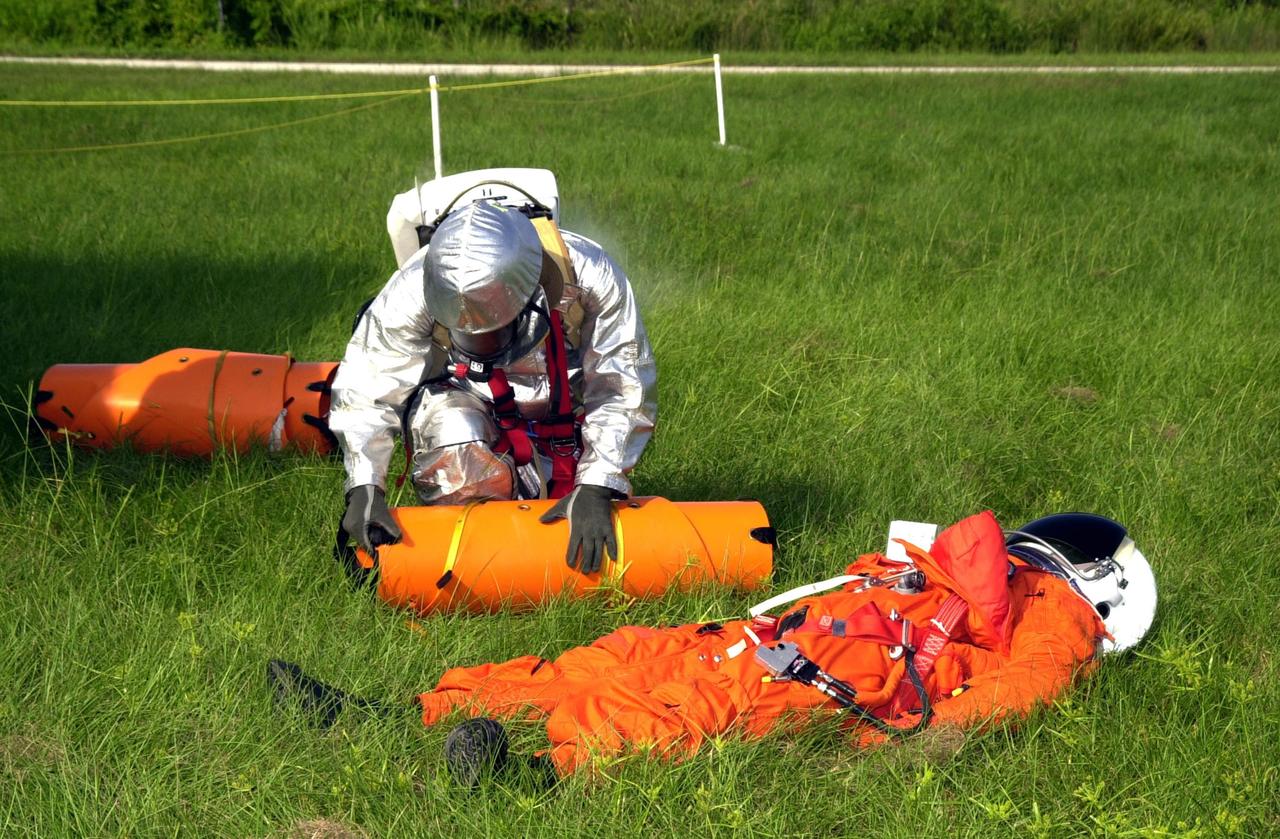
KENNEDY SPACE CENTER, FLA. - "Astronauts" were safely and successfully recovered from a "downed" Space Shuttle in a Mode VII contingency simulation led by Don Hammel, NASA Landing and Recovery Director. KSC Fire/Rescue and Emergency Medical workers, along with Johnson Space Center and Patrick Air Force Base personnel, participated in the drill. Mode simulations are held periodically at KSC to ensure contingency response forces are well prepared to respond to a wide variety of potential emergency situations.
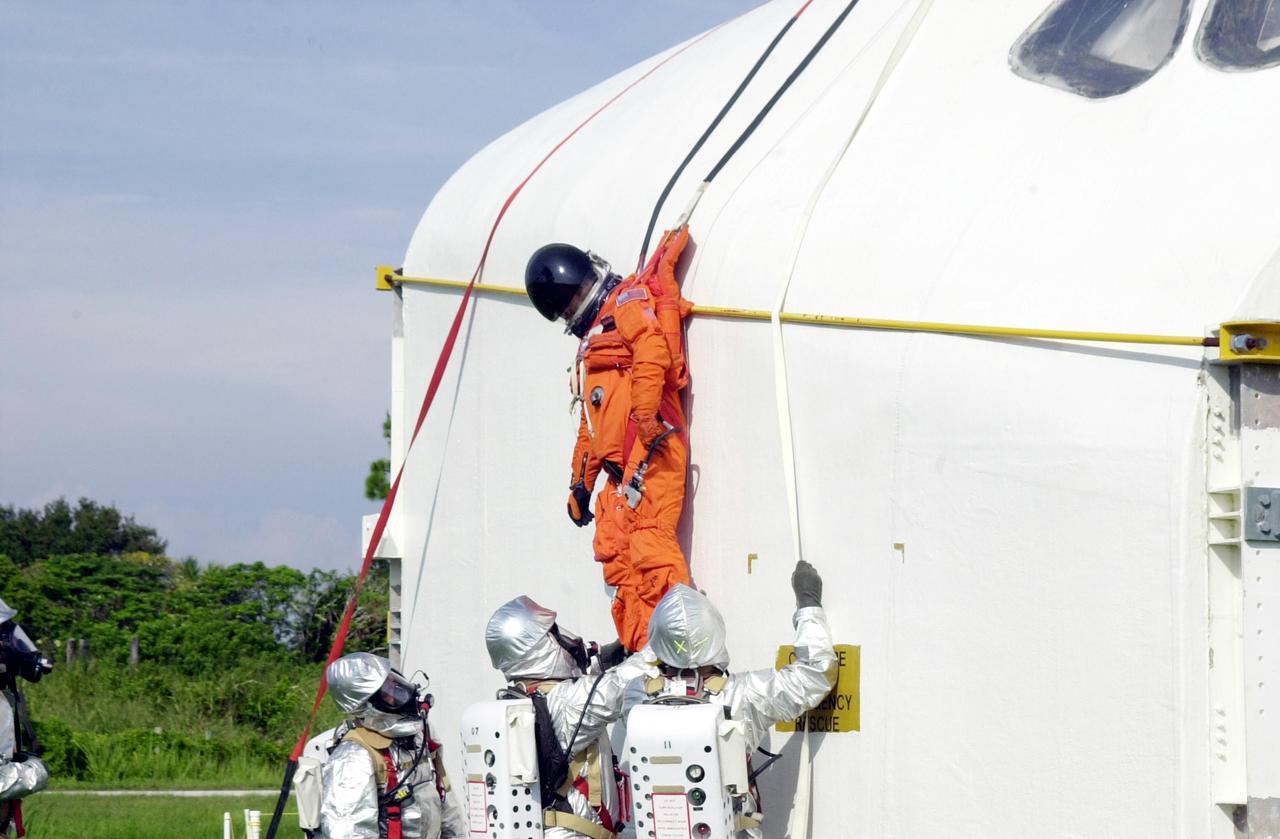
KENNEDY SPACE CENTER, FLA. - "Astronauts" were safely and successfully recovered from a "downed" Space Shuttle in a Mode VII contingency simulation led by Don Hammel, NASA Landing and Recovery Director. KSC Fire/Rescue and Emergency Medical workers, along with Johnson Space Center and Patrick Air Force Base personnel, participated in the drill. Mode simulations are held periodically at KSC to ensure contingency response forces are well prepared to respond to a wide variety of potential emergency situations.
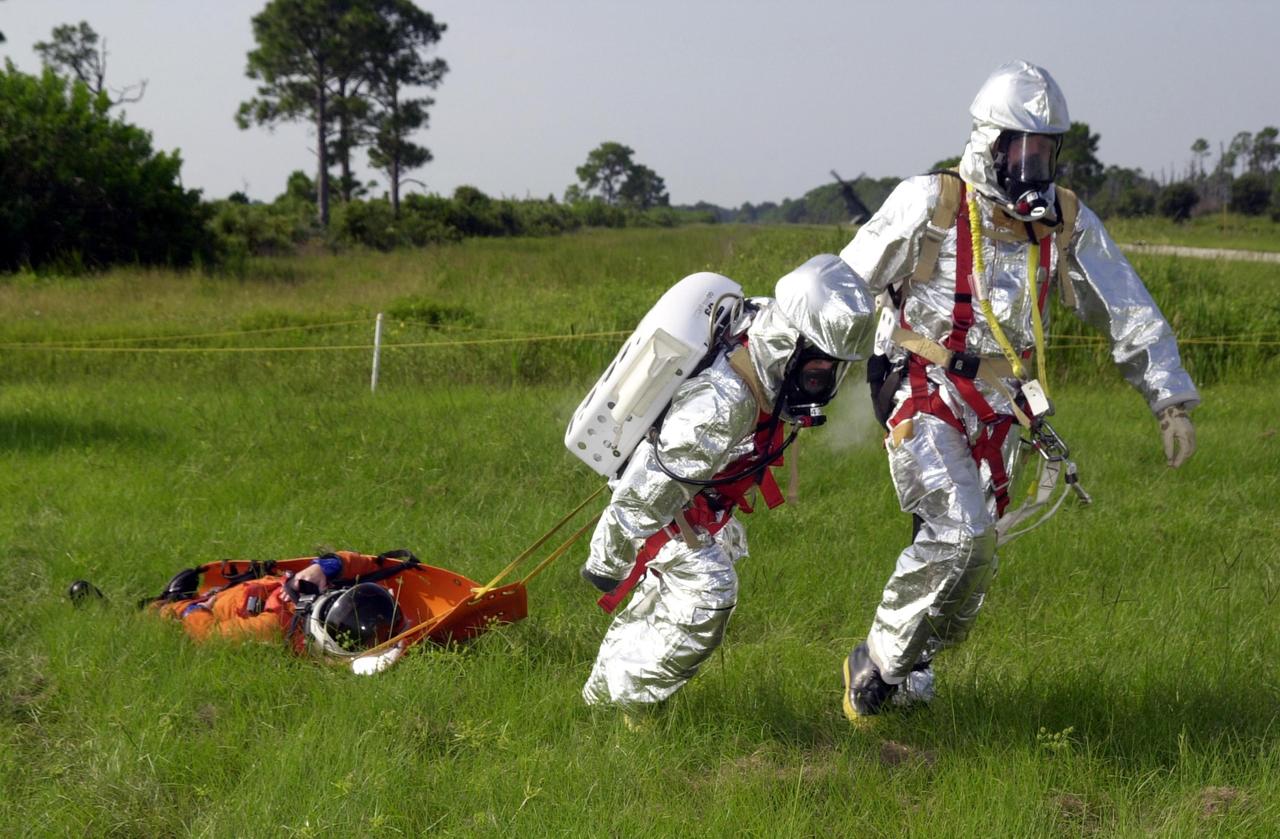
KENNEDY SPACE CENTER, FLA. - "Astronauts" were safely and successfully recovered from a "downed" Space Shuttle in a Mode VII contingency simulation led by Don Hammel, NASA Landing and Recovery Director. KSC Fire/Rescue and Emergency Medical workers, along with Johnson Space Center and Patrick Air Force Base personnel, participated in the drill. Mode simulations are held periodically at KSC to ensure contingency response forces are well prepared to respond to a wide variety of potential emergency situations.
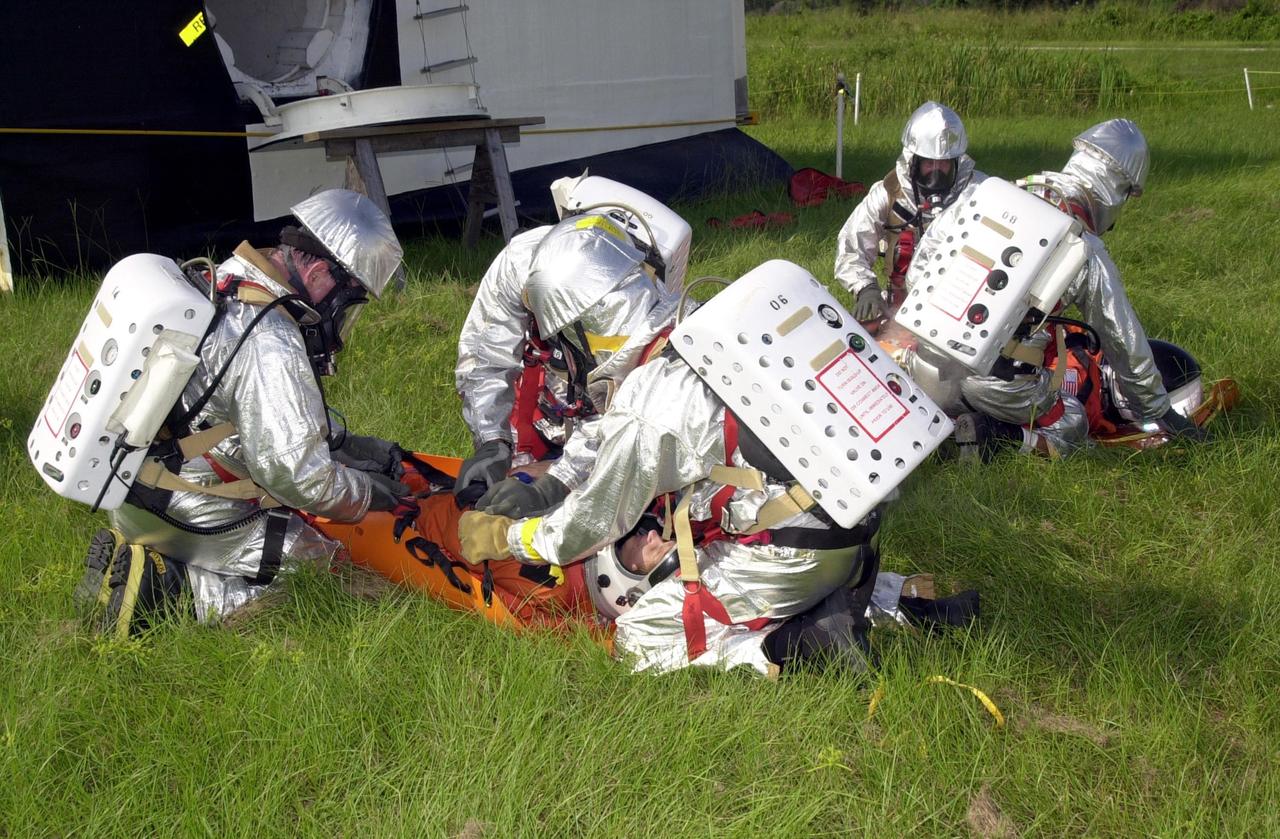
KENNEDY SPACE CENTER, FLA. - "Astronauts" were safely and successfully recovered from a "downed" Space Shuttle in a Mode VII contingency simulation led by Don Hammel, NASA Landing and Recovery Director. KSC Fire/Rescue and Emergency Medical workers, along with Johnson Space Center and Patrick Air Force Base personnel, participated in the drill. Mode simulations are held periodically at KSC to ensure contingency response forces are well prepared to respond to a wide variety of potential emergency situations.
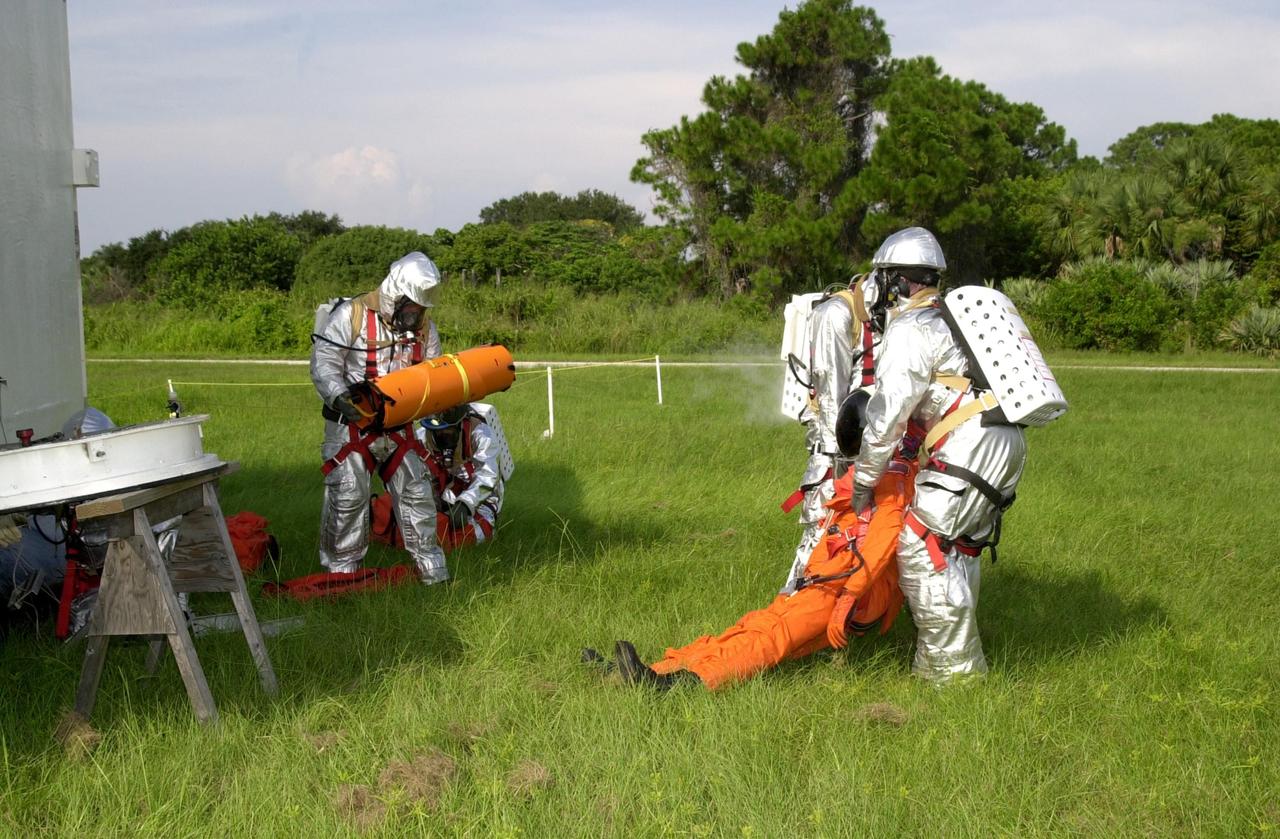
KENNEDY SPACE CENTER, FLA. - "Astronauts" were safely and successfully recovered from a "downed" Space Shuttle in a Mode VII contingency simulation led by Don Hammel, NASA Landing and Recovery Director. KSC Fire/Rescue and Emergency Medical workers, along with Johnson Space Center and Patrick Air Force Base personnel, participated in the drill. Mode simulations are held periodically at KSC to ensure contingency response forces are well prepared to respond to a wide variety of potential emergency situations.
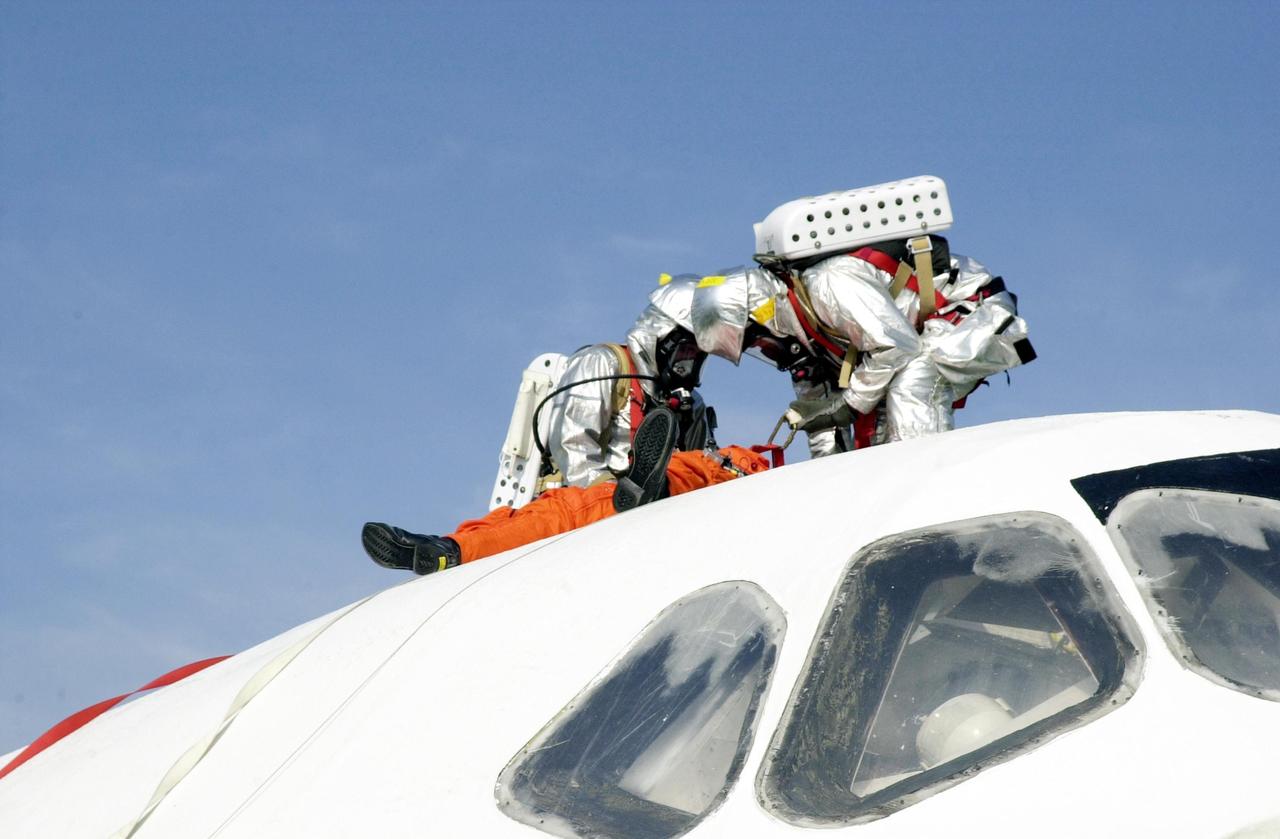
KENNEDY SPACE CENTER, FLA. - "Astronauts" were safely and successfully recovered from a "downed" Space Shuttle in a Mode VII contingency simulation led by Don Hammel, NASA Landing and Recovery Director. KSC Fire/Rescue and Emergency Medical workers, along with Johnson Space Center and Patrick Air Force Base personnel, participated in the drill. Mode simulations are held periodically at KSC to ensure contingency response forces are well prepared to respond to a wide variety of potential emergency situations.
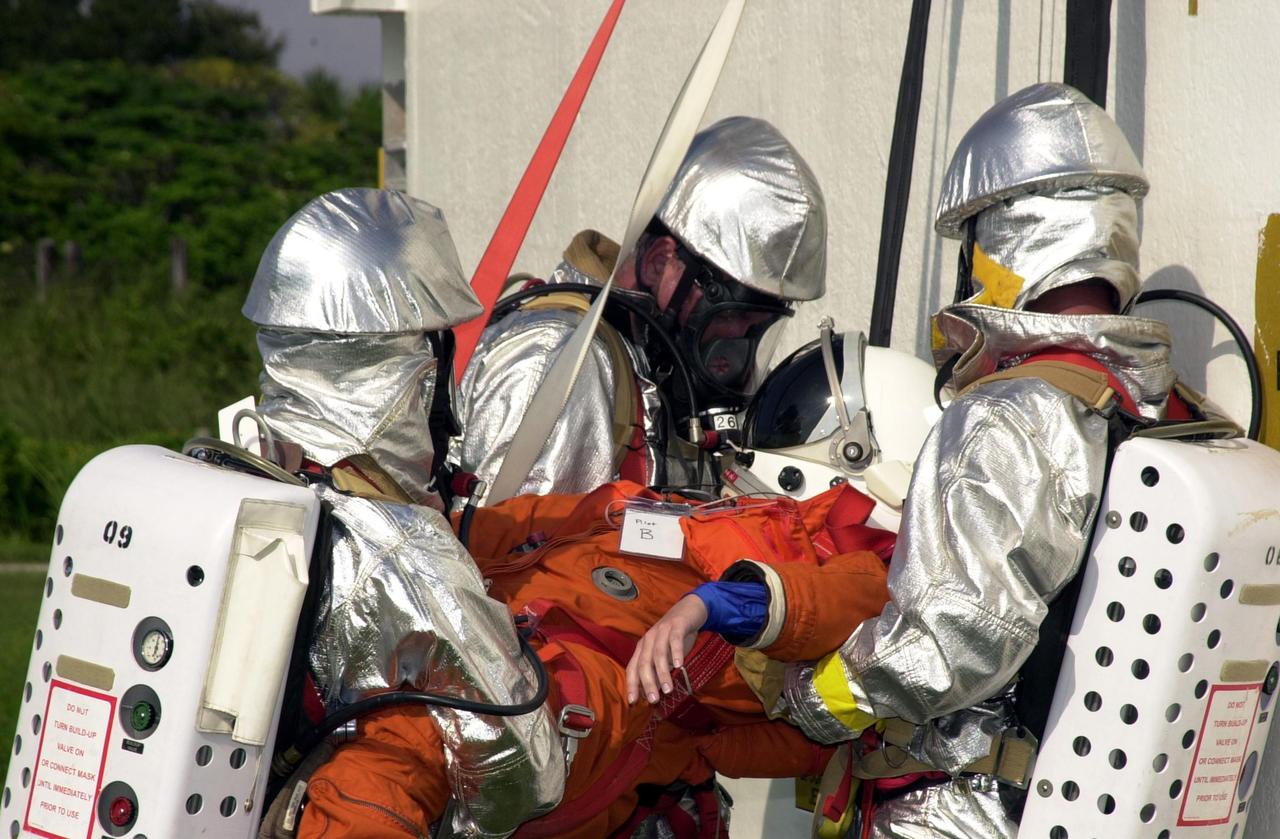
KENNEDY SPACE CENTER, FLA. - "Astronauts" were safely and successfully recovered from a "downed" Space Shuttle in a Mode VII contingency simulation led by Don Hammel, NASA Landing and Recovery Director. KSC Fire/Rescue and Emergency Medical workers, along with Johnson Space Center and Patrick Air Force Base personnel, participated in the drill. Mode simulations are held periodically at KSC to ensure contingency response forces are well prepared to respond to a wide variety of potential emergency situations.
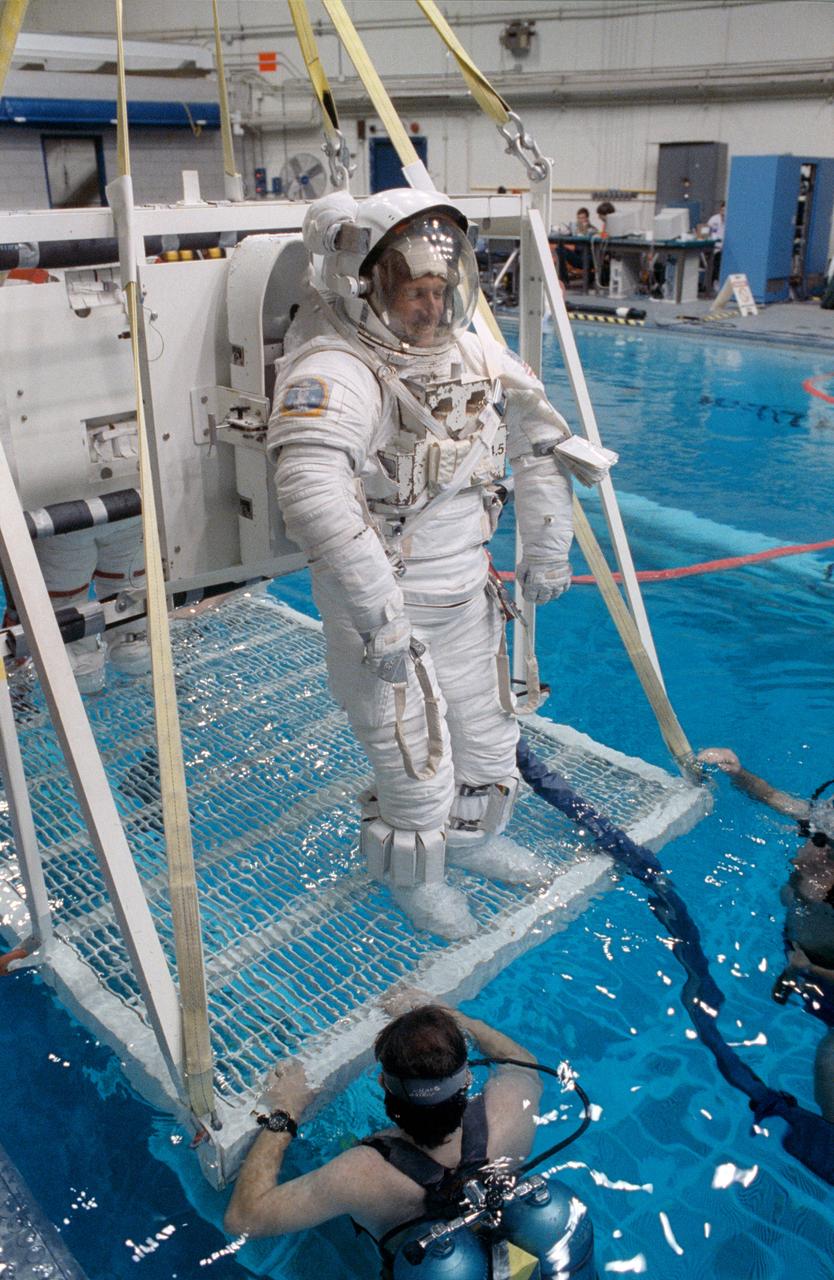
S91-30197 (1 March 1991) --- A wider shot of astronaut C. Michael Foale, mission specialist, standing on a platform which is part of a system that will lower him into a 25-ft. deep pool. Foale used the pool in the weightless environment training facility (WET-F) to rehearse a contingency extravehicular activity (EVA). Two SCUBA-equipped swimmers assist. Astronauts wear pressurized spacesuits configured for achieving a neutrally buoyant condition in the water to simulate both planned and contingency EVAs.
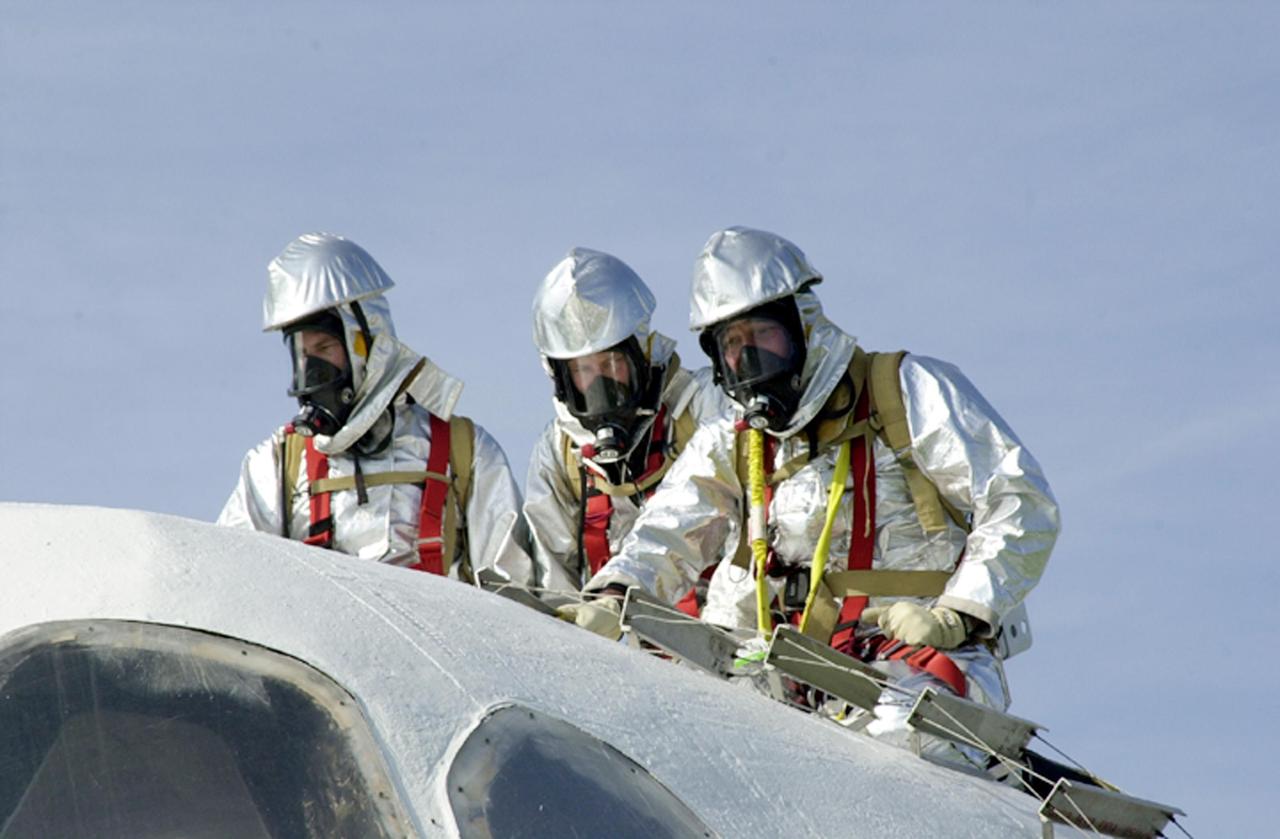
KENNEDY SPACE CENTER, FLA. - "Astronauts" were safely and successfully recovered from a "downed" Space Shuttle in a Mode VII contingency simulation led by Don Hammel, NASA Landing and Recovery Director. KSC Fire/Rescue and Emergency Medical workers, along with Johnson Space Center and Patrick Air Force Base personnel, participated in the drill. Mode simulations are held periodically at KSC to ensure contingency response forces are well prepared to respond to a wide variety of potential emergency situations.
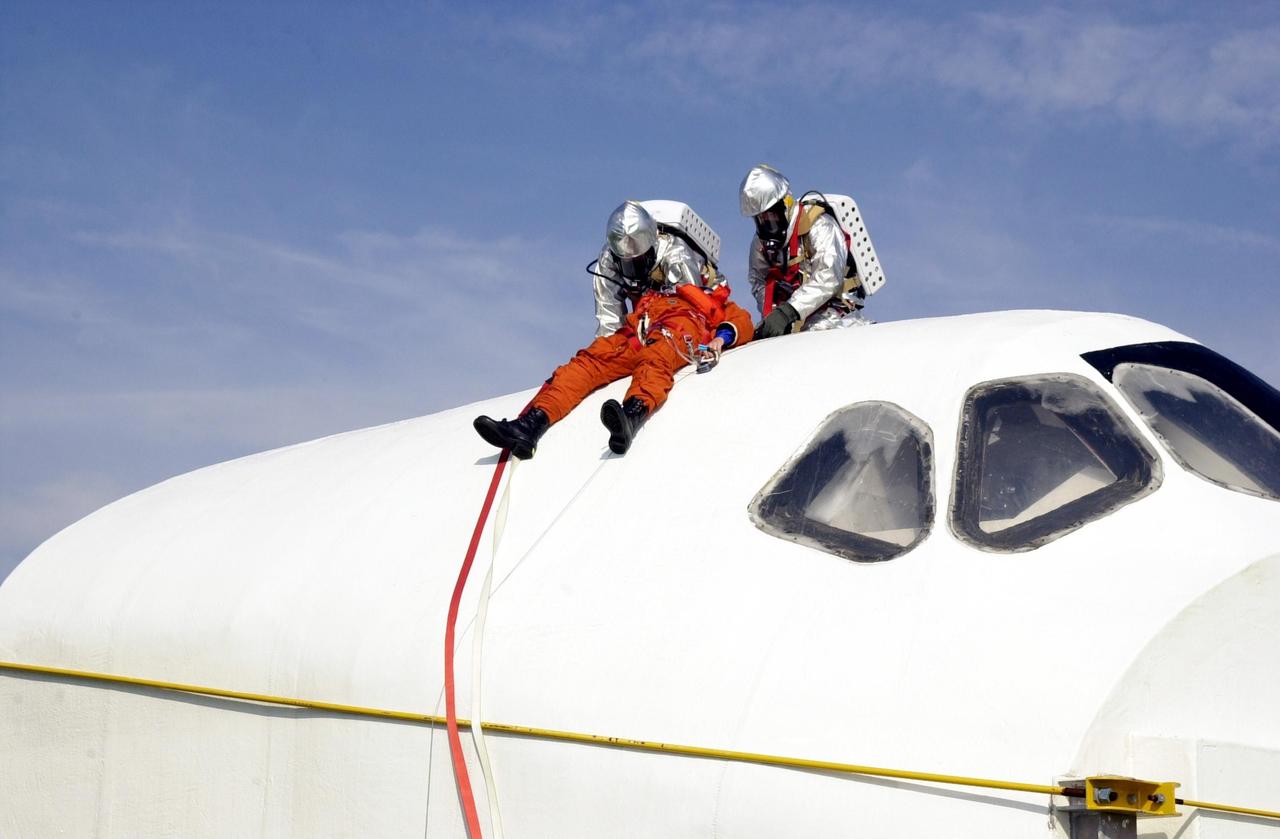
KENNEDY SPACE CENTER, FLA. -- "Astronauts" were safely and successfully recovered from a "downed" Space Shuttle in a Mode VII contingency simulation led by Don Hammel, NASA Landing and Recovery Director. KSC Fire/Rescue and Emergency Medical workers, along with Johnson Space Center and Patrick Air Force Base personnel, participated in the drill. Mode simulations are held periodically at KSC to ensure contingency response forces are well prepared to respond to a wide variety of potential emergency situations.
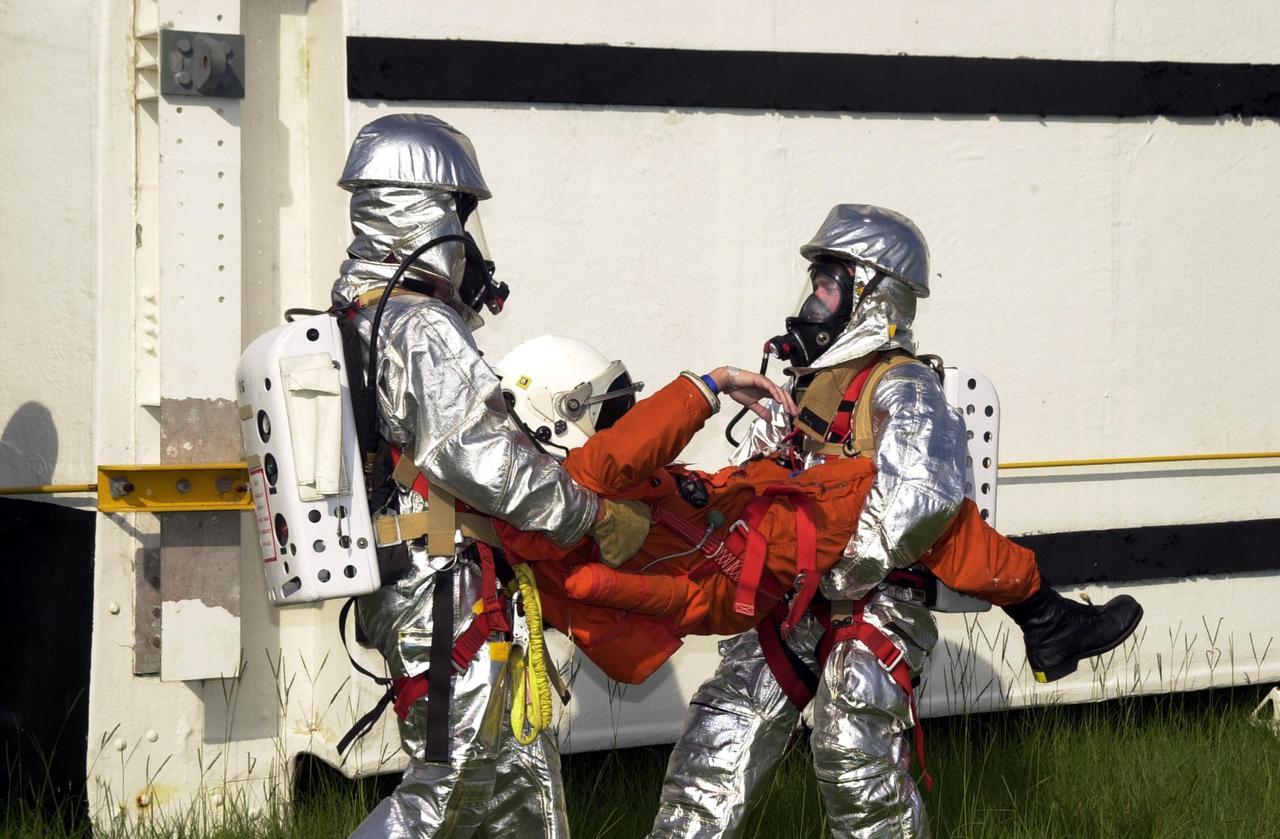
KENNEDY SPACE CENTER, FLA. - "Astronauts" were safely and successfully recovered from a "downed" Space Shuttle in a Mode VII contingency simulation led by Don Hammel, NASA Landing and Recovery Director. KSC Fire/Rescue and Emergency Medical workers, along with Johnson Space Center and Patrick Air Force Base personnel, participated in the drill. Mode simulations are held periodically at KSC to ensure contingency response forces are well prepared to respond to a wide variety of potential emergency situations.
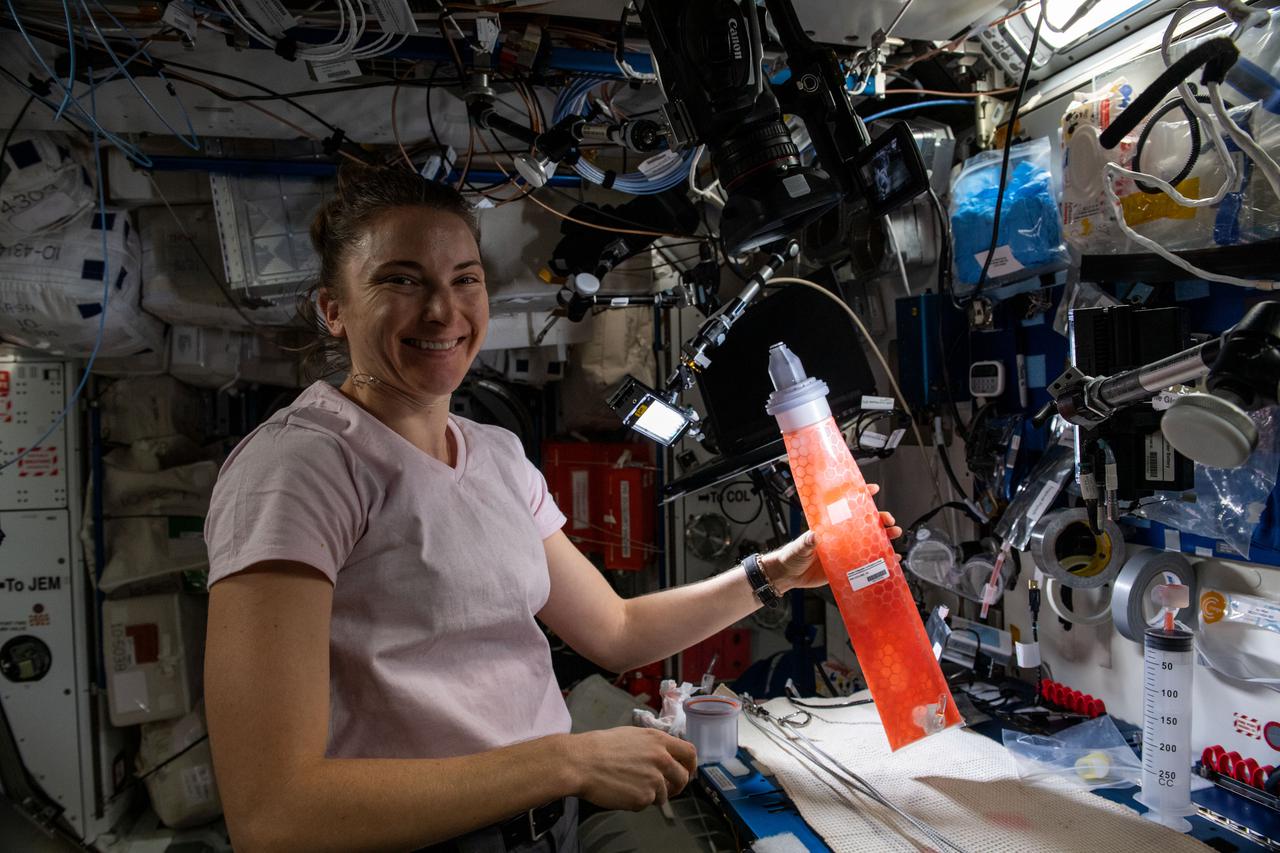
iss066e155768 (March 1, 2022) --- NASA astronaut and Expedition 66 Flight Engineer Kayla Barron works on an orbital plumbing demonstration in the Harmony module observing fill and drain cycles on two different Collapsible Contingency Urinal designs.
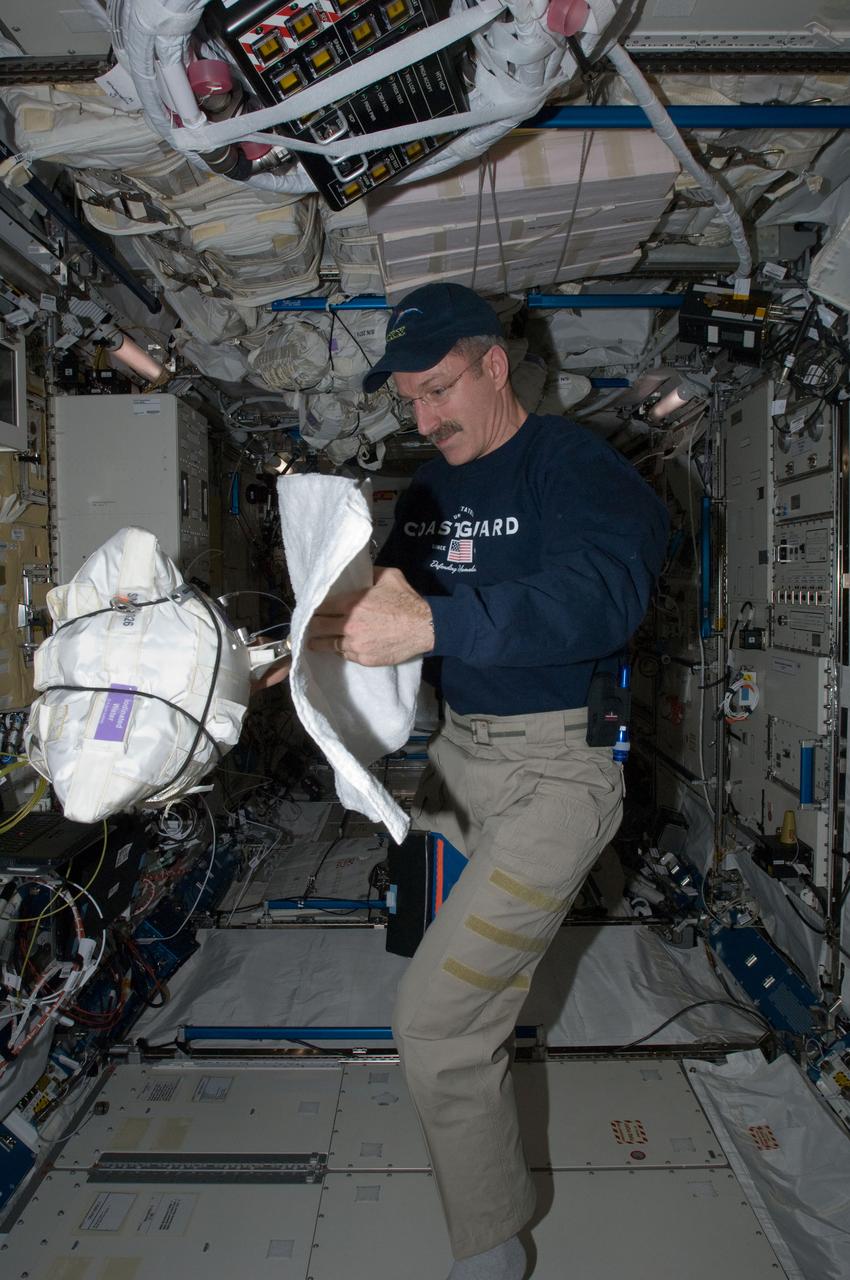
ISS030-E-122089 (6 March 2012) --- NASA astronaut Dan Burbank, Expedition 30 commander, opens a Contingency Water Container-Iodinated (CWC-I) bag in the Kibo laboratory of the International Space Station.
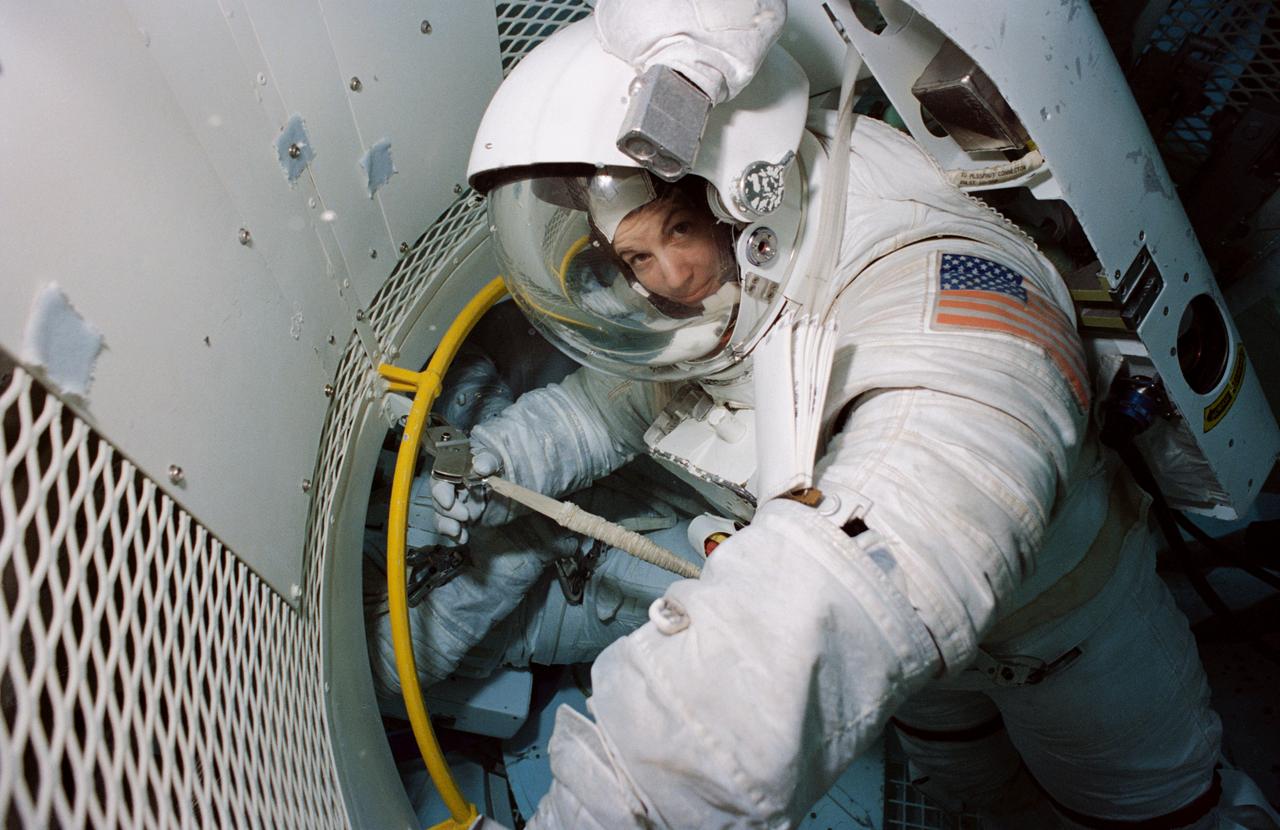
S94-25956 (April 1994) --- Astronaut Catherine G. Coleman, mission specialist, wearing a high-fidelity training version of an Extravehicular Mobility Unit (EMU), trains for a contingency space walk at the Johnson Space Center?s (JSC) Weightless Environment Training Facility (WET-F). Coleman has recently been named as one of seven crew members for the U.S. Microgravity Laboratory (USML-2) mission. The 25-feet deep pool is used to train astronauts for mission specific space walk chores as well as for contingency Extravehicular Activity (EVA) tasks.
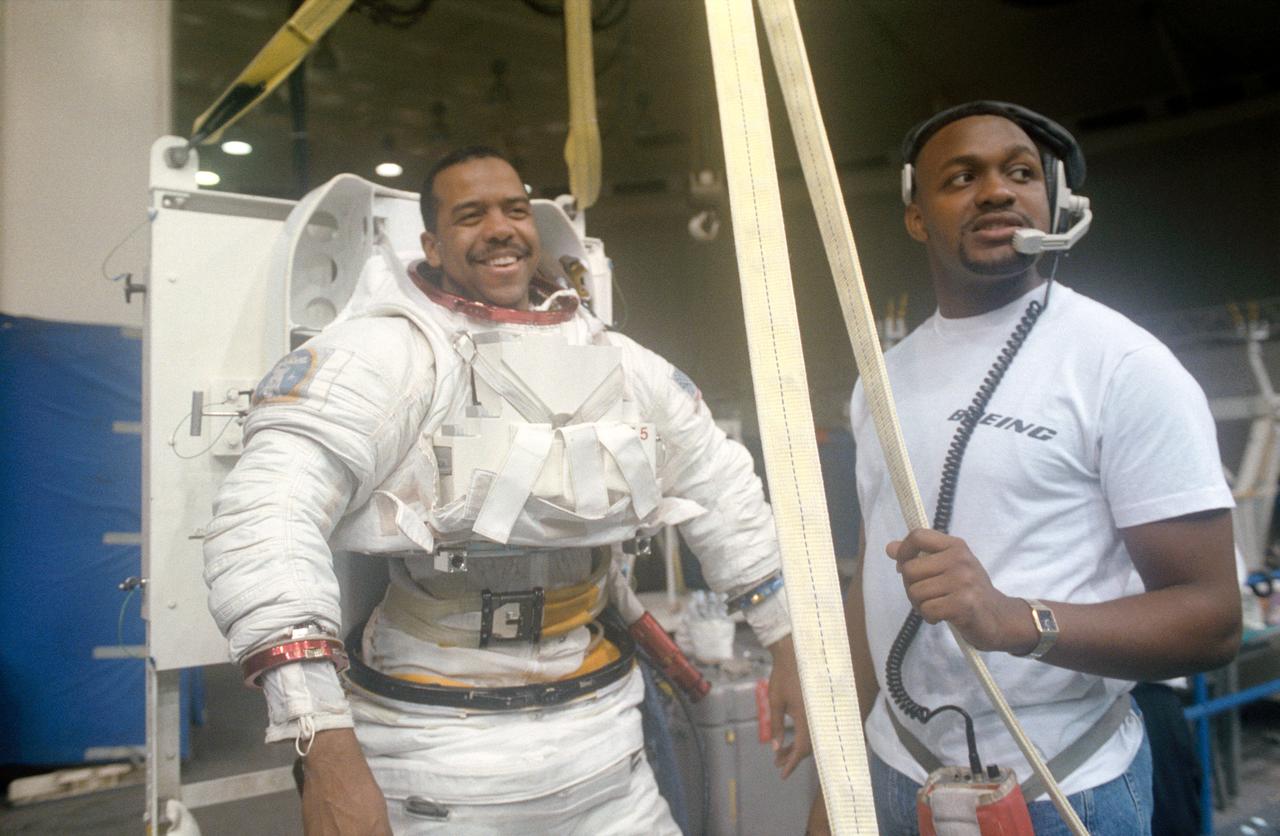
S91-51063 (Dec 1991) --- Partially attired in a special training version of the Extravehicular Mobility Unit (EMU) spacesuit, astronaut Bernard J. Harris Jr. is pictured before a training session at the Johnson Space Center's (JSC) Weightless Environment Training Facility (WET-F). Harris, STS-55 mission specialist, is assisted by Laney Lee. Minutes later, Harris was in a 25-feet deep pool, simulating a contingency extravehicular activity (EVA). There is no scheduled EVA for the 1993 flight but each spaceflight crew includes astronauts trained for a variety of contingency tasks that could require exiting the shirt-sleeve environment of a Shuttle's cabin.
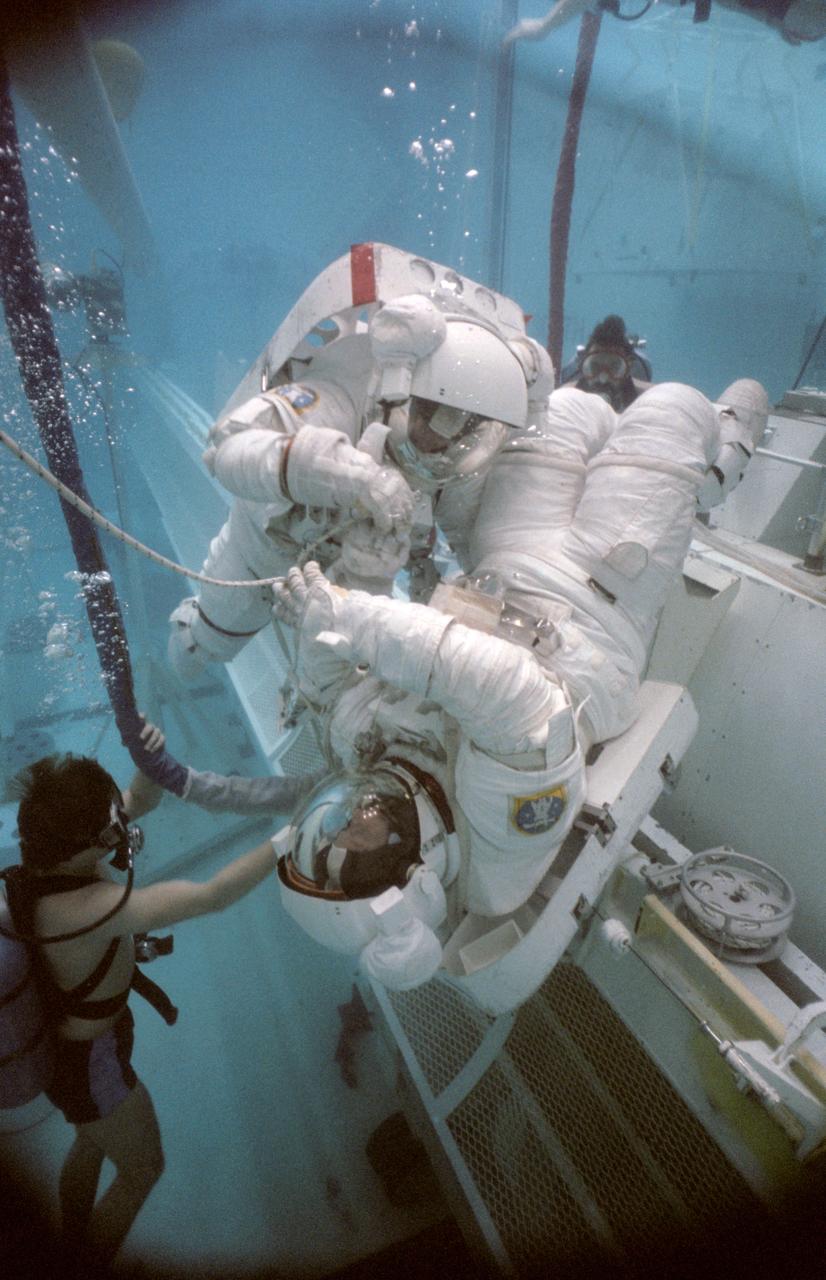
S84-28206 (26 Feb 1984) --- Astronauts Richard M. (Mike) Mullane (with striped suit and PLSS) and Steven A. Hawley participate in and underwater simulation of a 41-D contingency extravehicular activity (EVA) in the Johnson Space Center's weightless environment training facility (WET-F). All Shuttle crews, many of which are not scheduled for definite EVAs, possess team members trained to perform in space certain tasks normally done remotely in the event of systems failures. Among those contingent tasks is the manual closing of the payload bay doors. Mullane and Hawley are two of three mission specialists assigned duty on the seven-day 41-D flight. This photograph was taken by Otis Imboden.
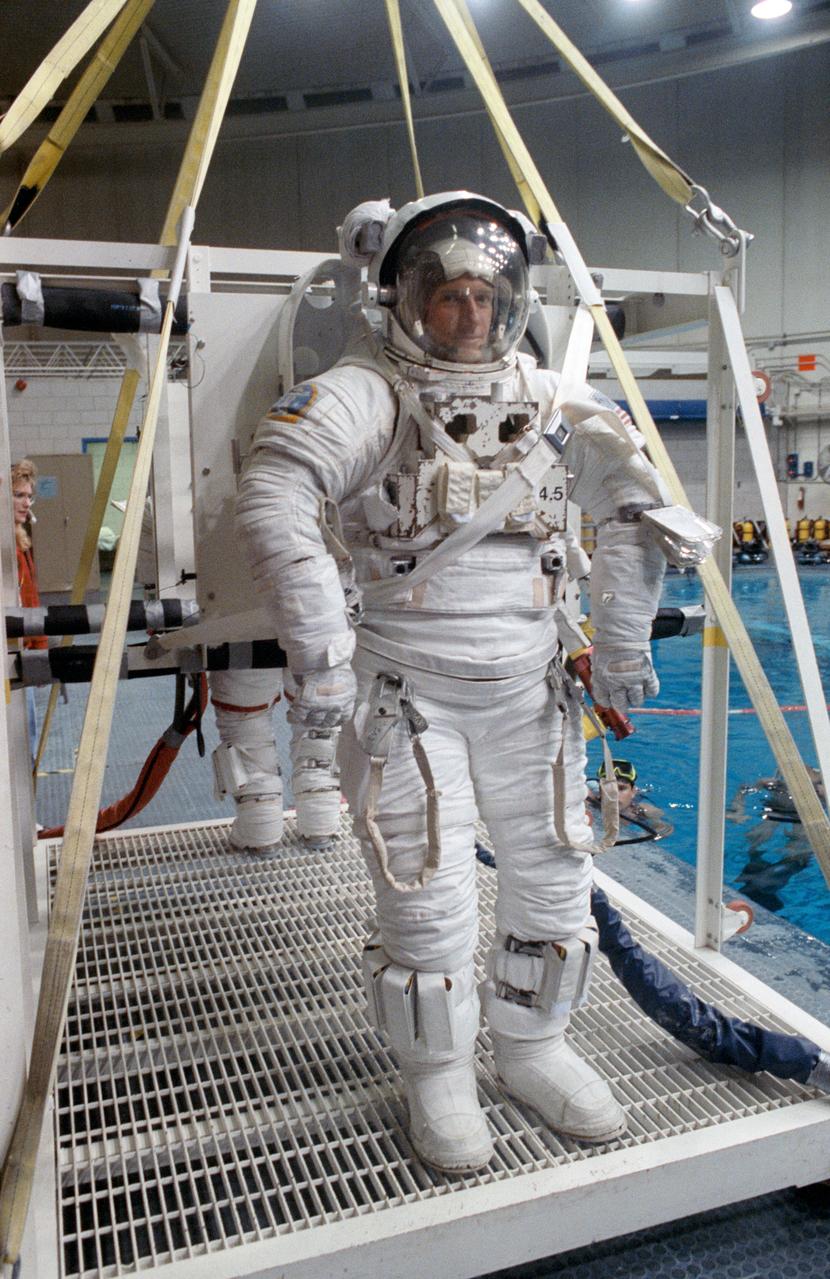
S91-30196 (1 March 1991) --- Astronaut C. Michael Foale, mission specialist, and Kathryn D. Sullivan, payload commander (barely visible in background), stand on a platform (out of frame) which is part of a system that will lower them into a 25-ft. deep pool. The payload commander and mission specialist used the pool in the weightless environment training facility (WET-F) to rehearse a contingency extravehicular activity (EVA). Astronauts wear pressurized spacesuits configured for achieving a neutrally buoyant condition in the water to simulate both planned and contingency EVAs. Two SCUBA-equipped swimmers assisting the training are seen in the background.
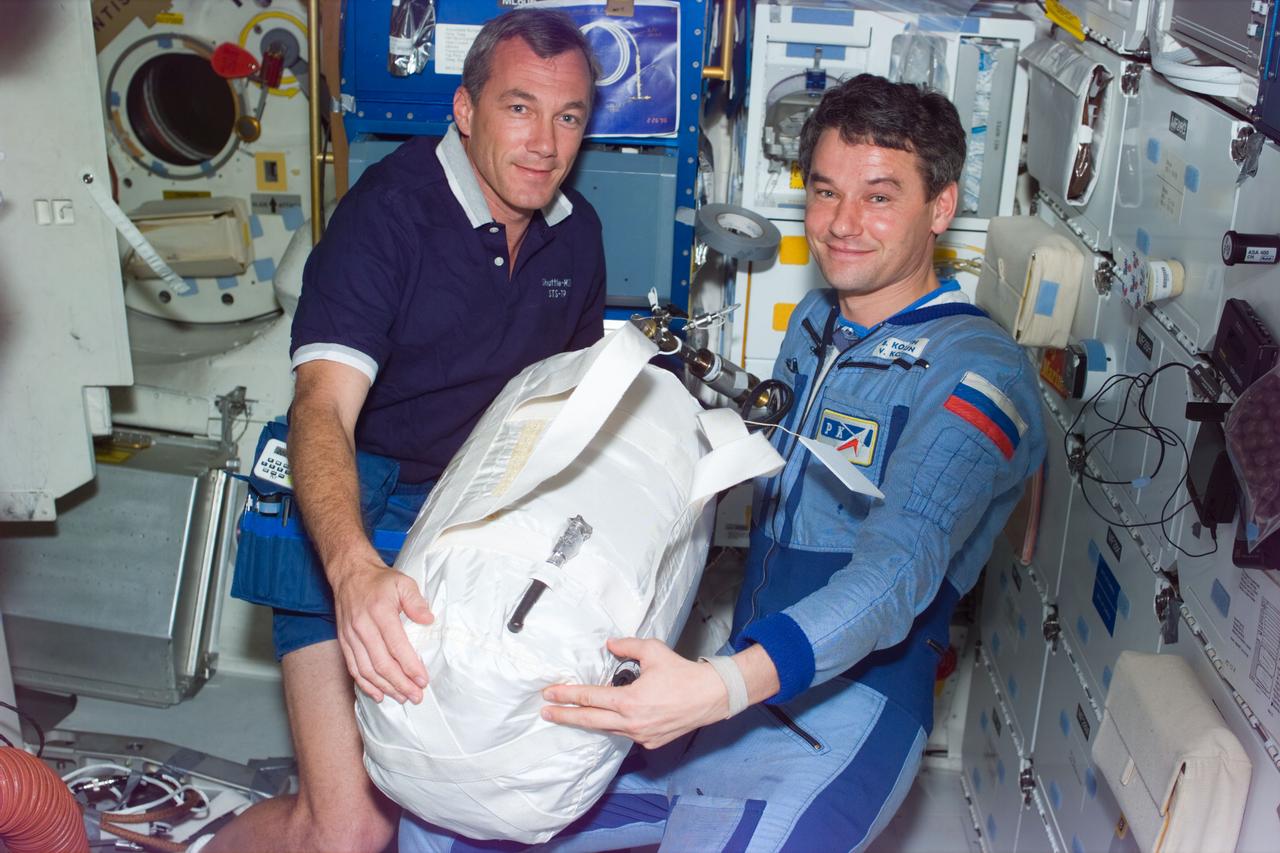
STS79-E-5193 (21 September 1996) --- Astronaut Terrence W. Wilcutt, STS-79 pilot, and cosmonaut Valeri G. Korzun, Mir-22 commander, transfer the Contingency Water Container (CWC), during Flight Day 6.
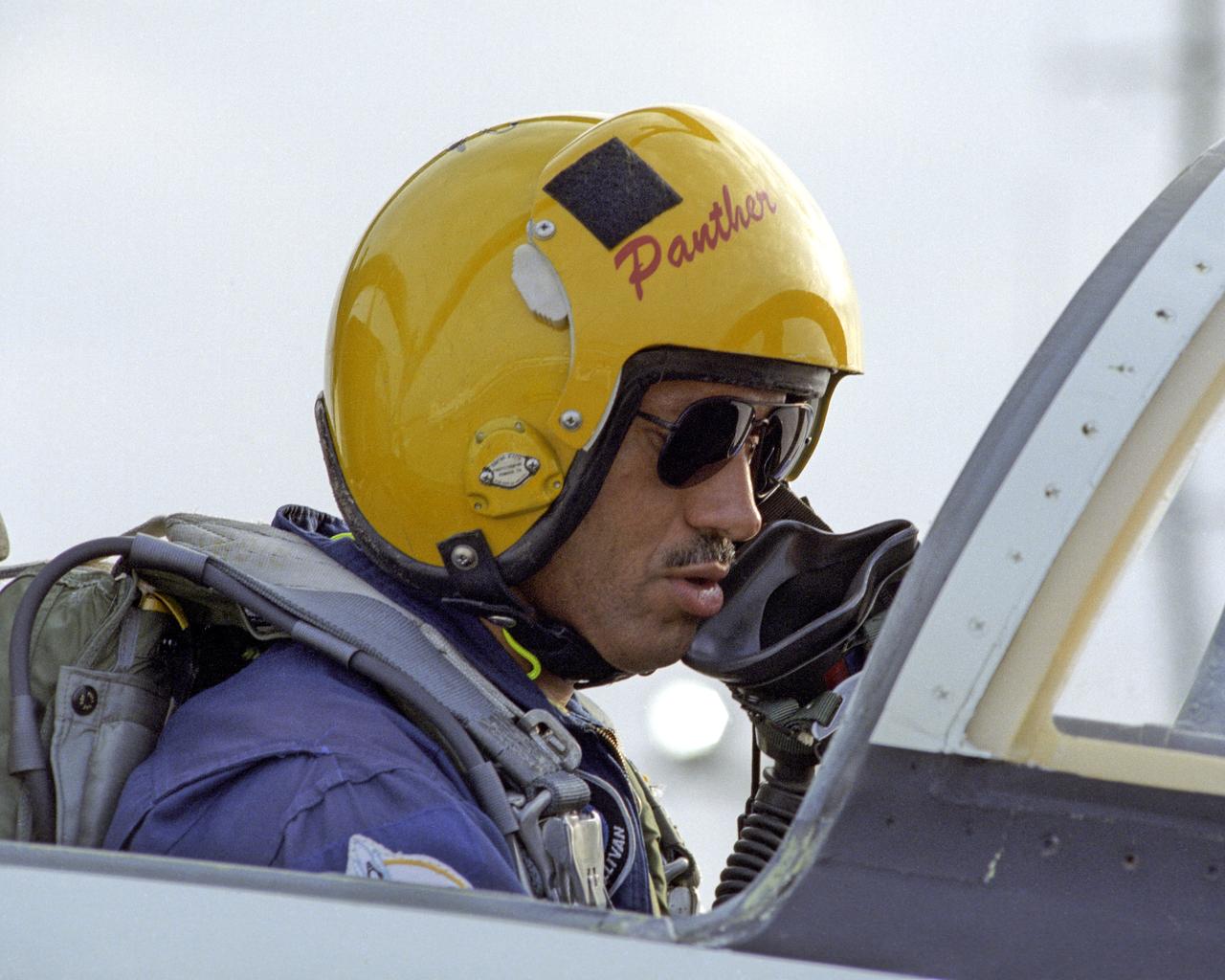
Charles F. Bolden, Jr., Pilot of Space Shuttle Mission STS-31, prepares for rehearsing shuttle contingency landings in the T-38S are among the final pre-launch activities. STS-31, carrying five crew members and the HST is set to liftoff at 8:47 a.m. April 10.
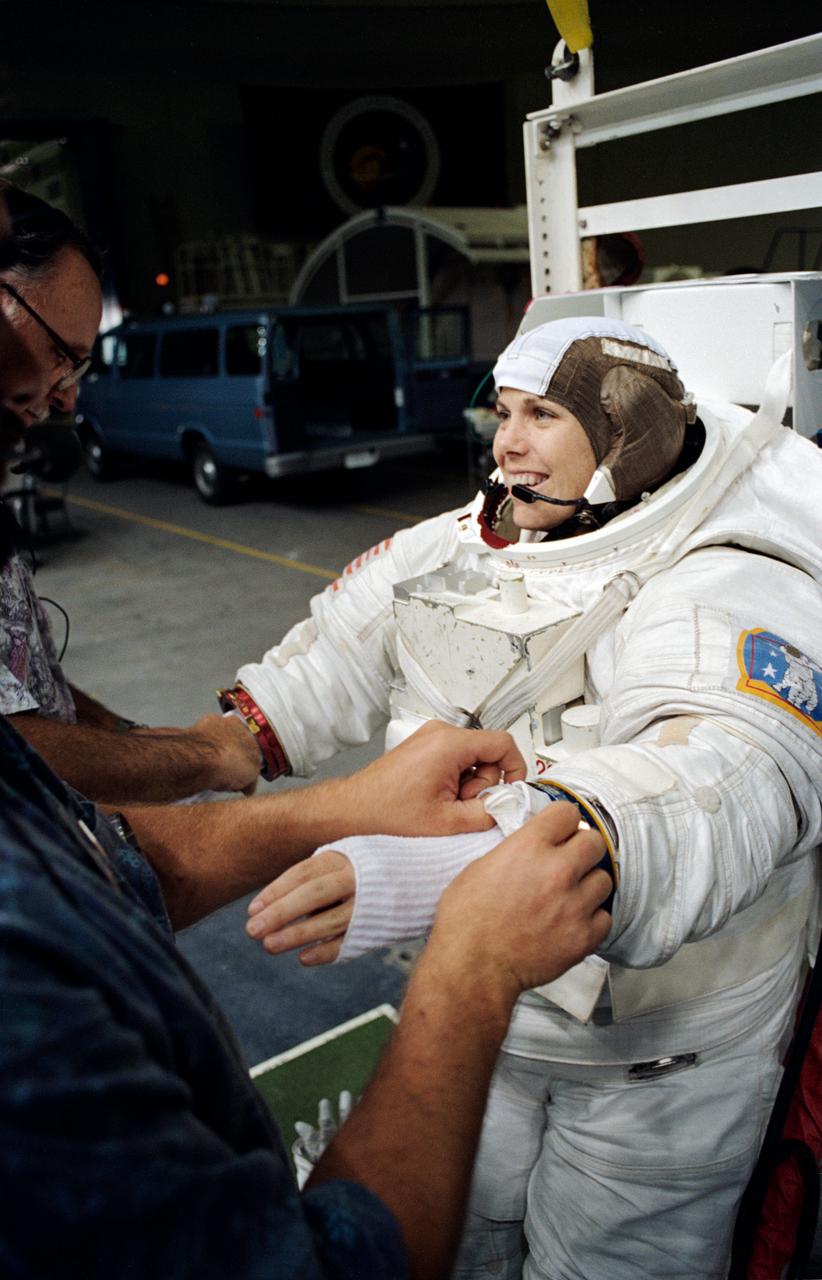
Attired in a training version of the Extravehicular Mobility Unit (EMU), astronaut Mary Ellen Weber gets help with the final touches of suit donning during a training session at JSC's Weightless Environment Training Facility (WETF). Training as a mission specialist for the STS-70 mission, Weber was about to rehearse a contingency space walk.
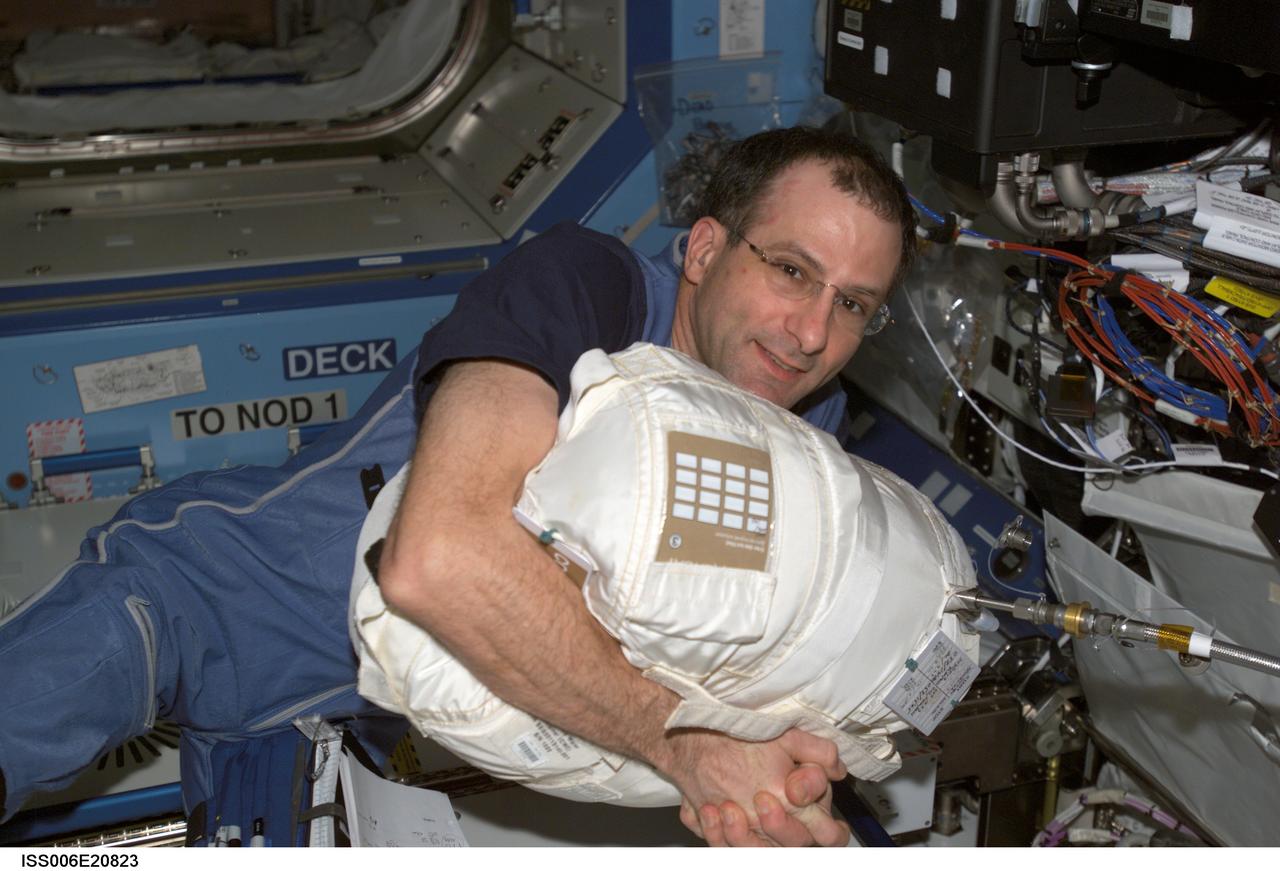
ISS006-E-20823 (22 January 2003) --- Astronaut Donald R. Pettit, Expedition Six NASA ISS science officer, completes a Water Resource Management (WRM) and Contingency Water Container (CWC) function in the Destiny laboratory on the International Space Station (ISS).
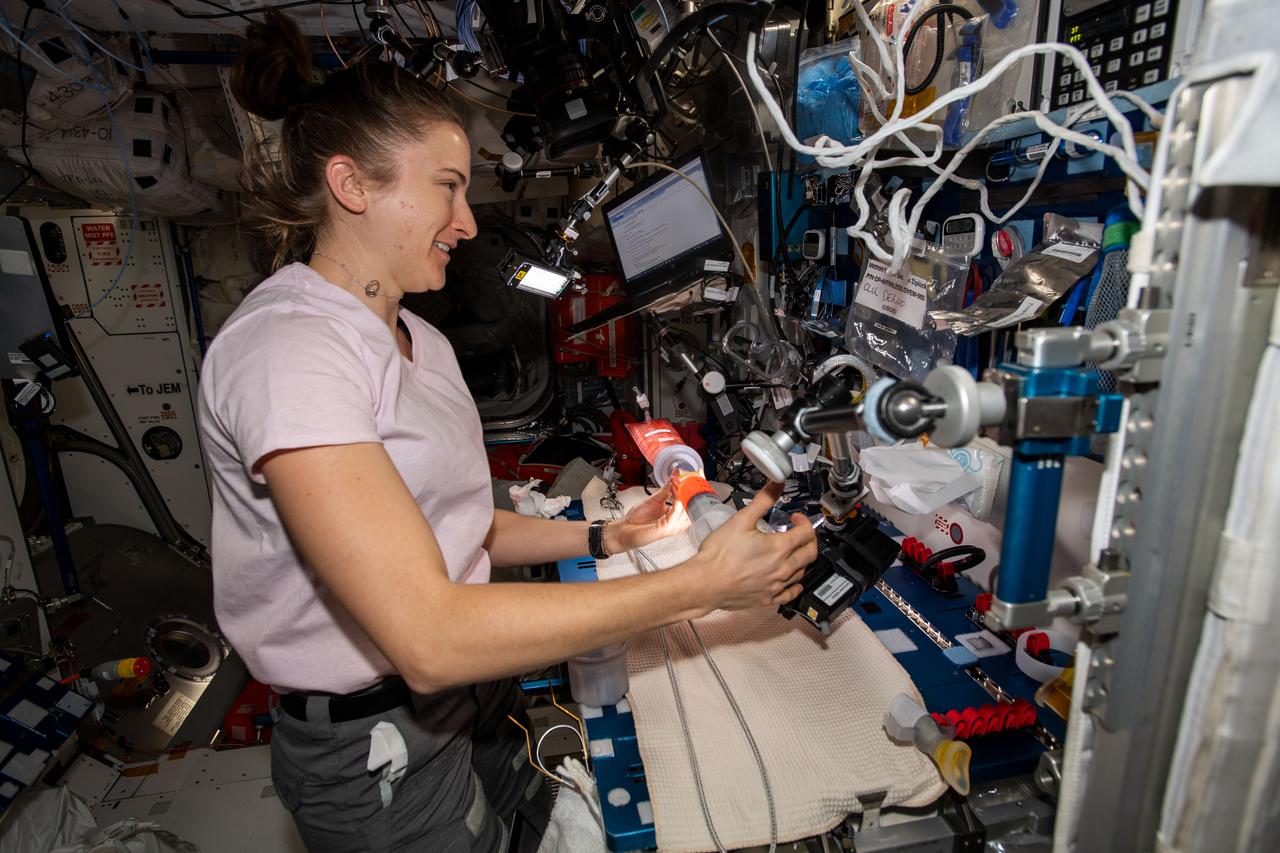
iss066e155429 (March 1, 2022) --- NASA astronaut and Expedition 66 Flight Engineer Kayla Barron conducts an orbital plumbing demonstration aboard the International Space Station's Harmony module. The technology demonstration is observing fill and drain cycles on two different Collapsible Contingency Urinal designs.

A contingent of young stars and star-forming gas clouds is sticking out of one of the Milky Way's spiral arms like a splinter protruding from a plank of wood. Stretching some 3,000 light-years, this is the first major structure identified with such a dramatically different orientation relative to the arm. The background image shows the location of the splinter in the Milky Way. The yellow region in the center of the image is the galaxy's bright and crowded center. The galaxy's arms spiral around the center, and are full of stars and star-forming clouds of gas and dust. A key property of spiral arms is how tightly they wind around a galaxy. This characteristic is measured by the arm's pitch angle. A circle has a pitch angle of 0 degrees; as the spiral becomes more open, the pitch angle increases. Most models of the Milky Way suggest that the Sagittarius Arm forms a spiral that has a pitch angle of about 12 degrees, but the protruding structure has a pitch angle of nearly 60 degrees. Similar structures – sometimes called spurs or feathers – are commonly found jutting out of the arms of other spiral galaxies. For decades scientists have wondered whether our Milky Way's spiral arms are also dotted with these structures or if they are relatively smooth. https://photojournal.jpl.nasa.gov/catalog/PIA24576
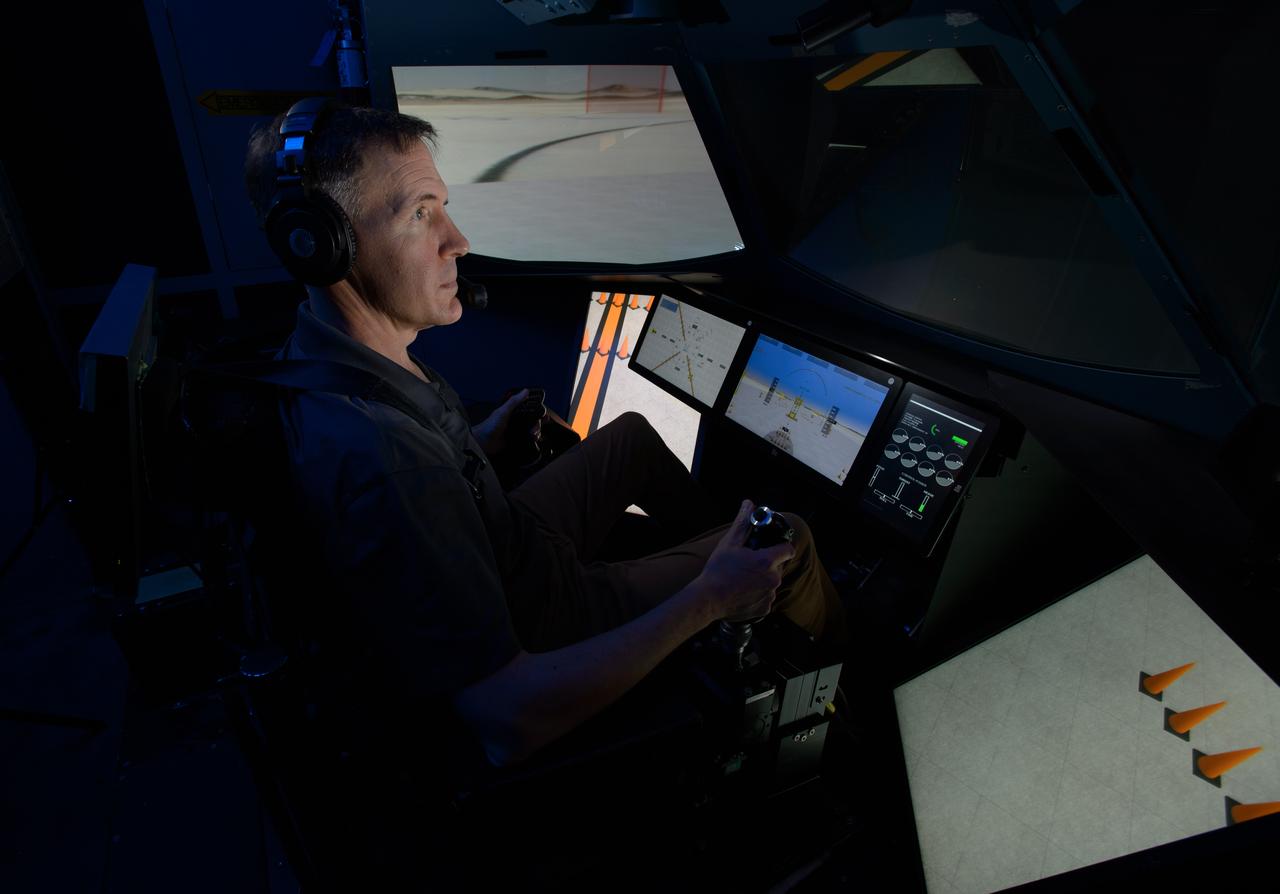
Michael Feary pilots a simulated electric vertical takeoff and landing, or eVTOL, aircraft in the VMS’s R-Cab during the AFCM subproject simulation FAA-2 flight tests in the VMS, N243.
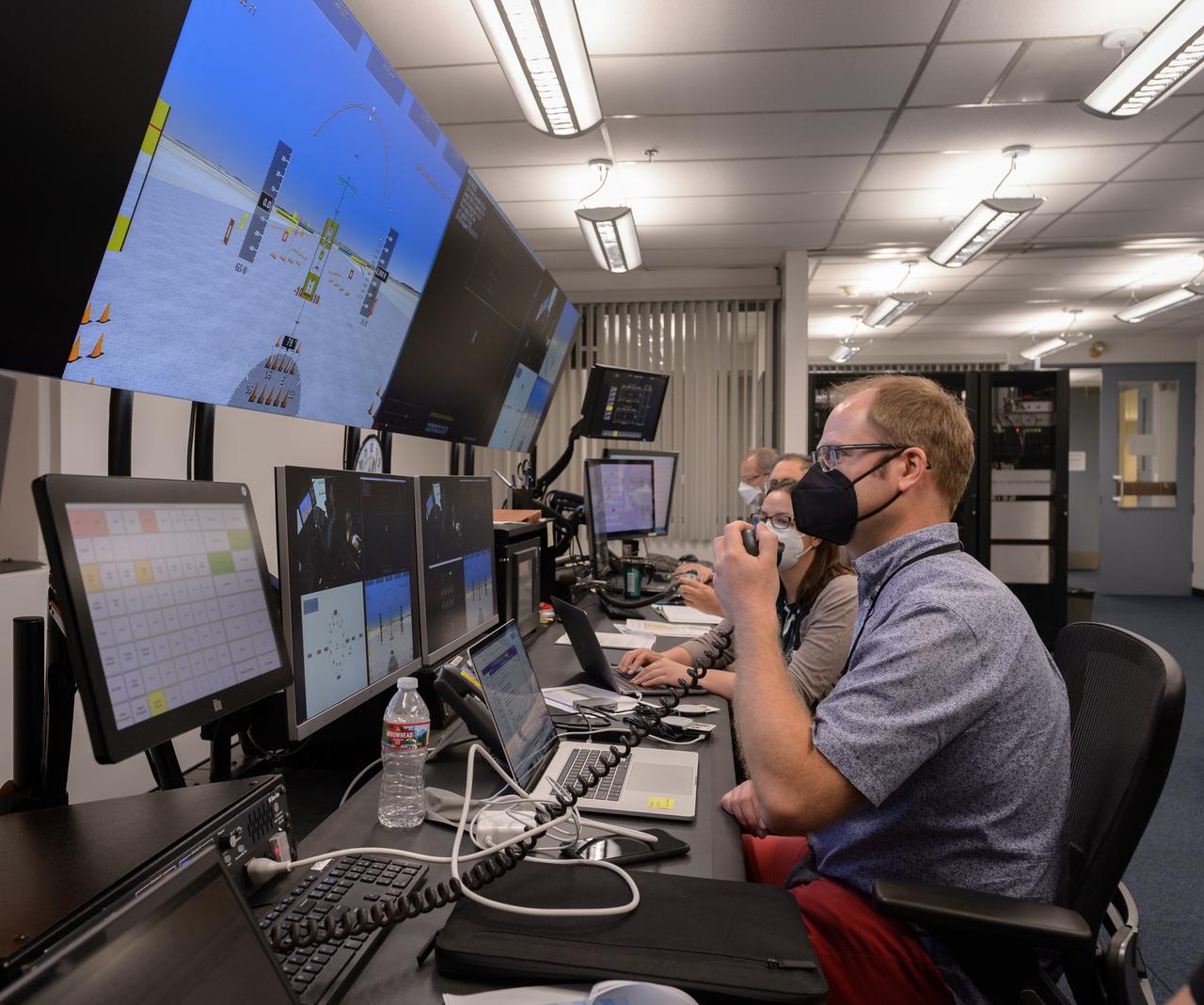
AFCM subproject simulation FAA-2 flight test team member Thomas Lombaerts in the VMS control room, N243, during a simulation.
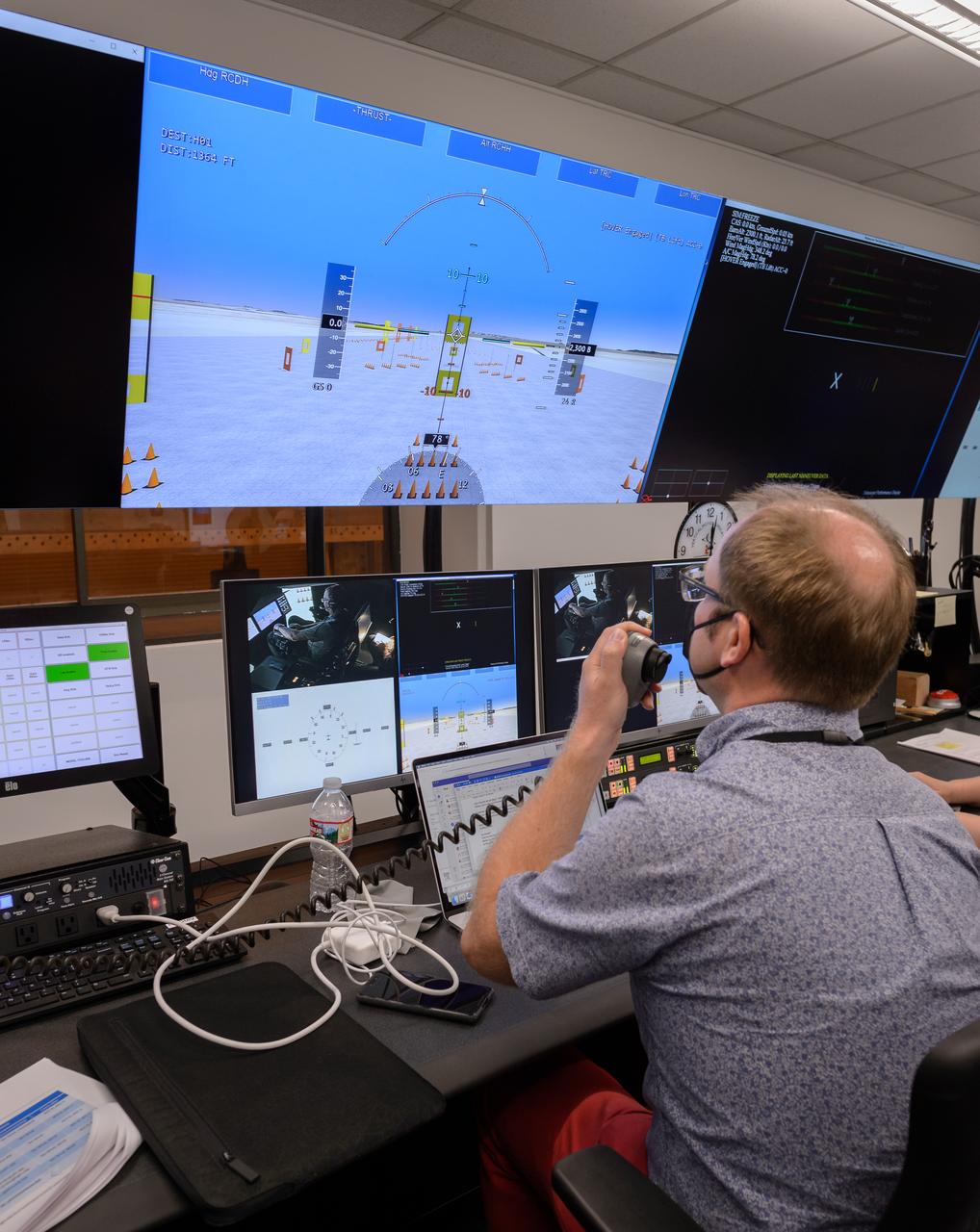
AFCM subproject simulation FAA-2 flight test team member Thomas Lombaerts in the VMS control room, N243, during a simulation.
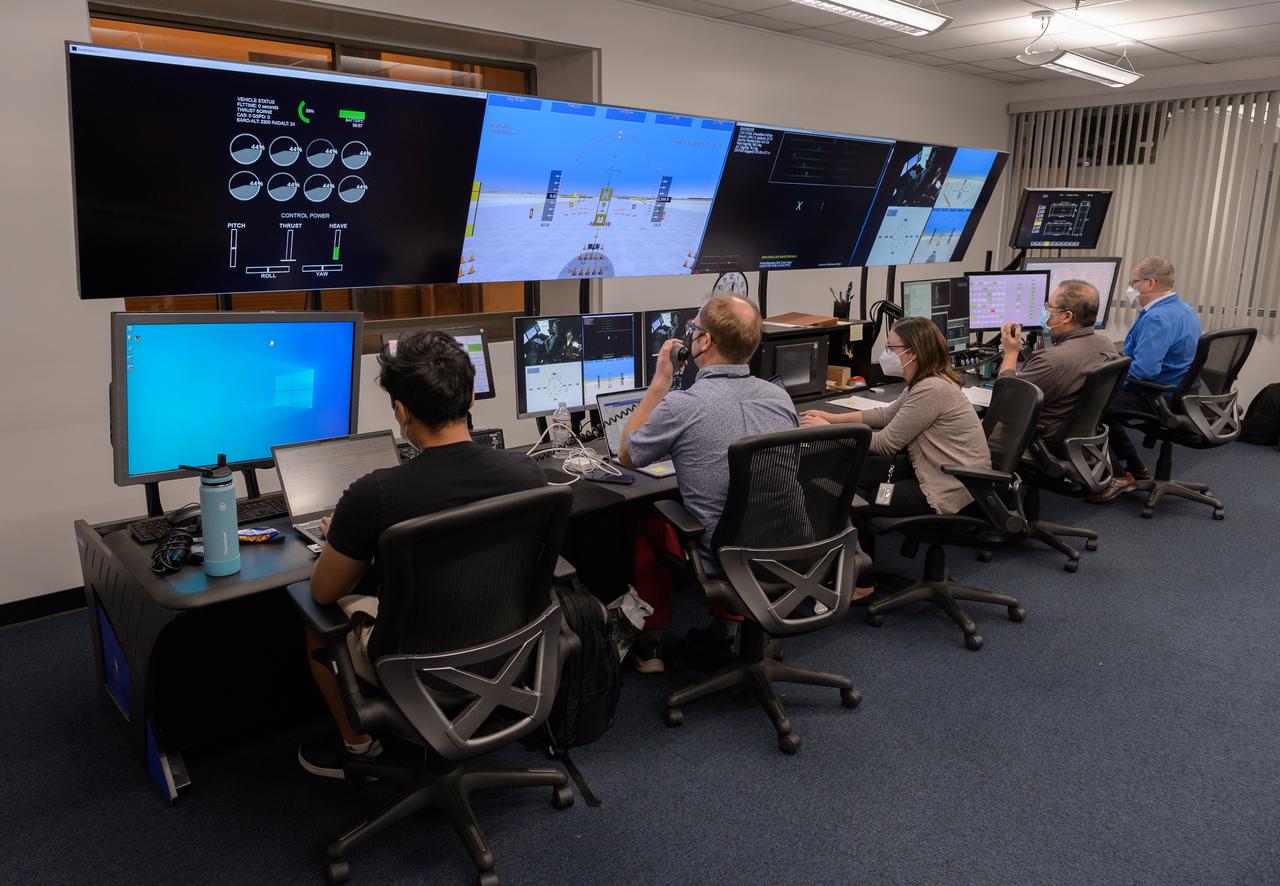
AFCM subproject simulation FAA-2 flight test team members Allen Ruan, left, Thomas Lombaerts, Kimberlee Shish, Edgar Torres, and Stephen Norris, right, in the VMS control room, N243 during a simulation.