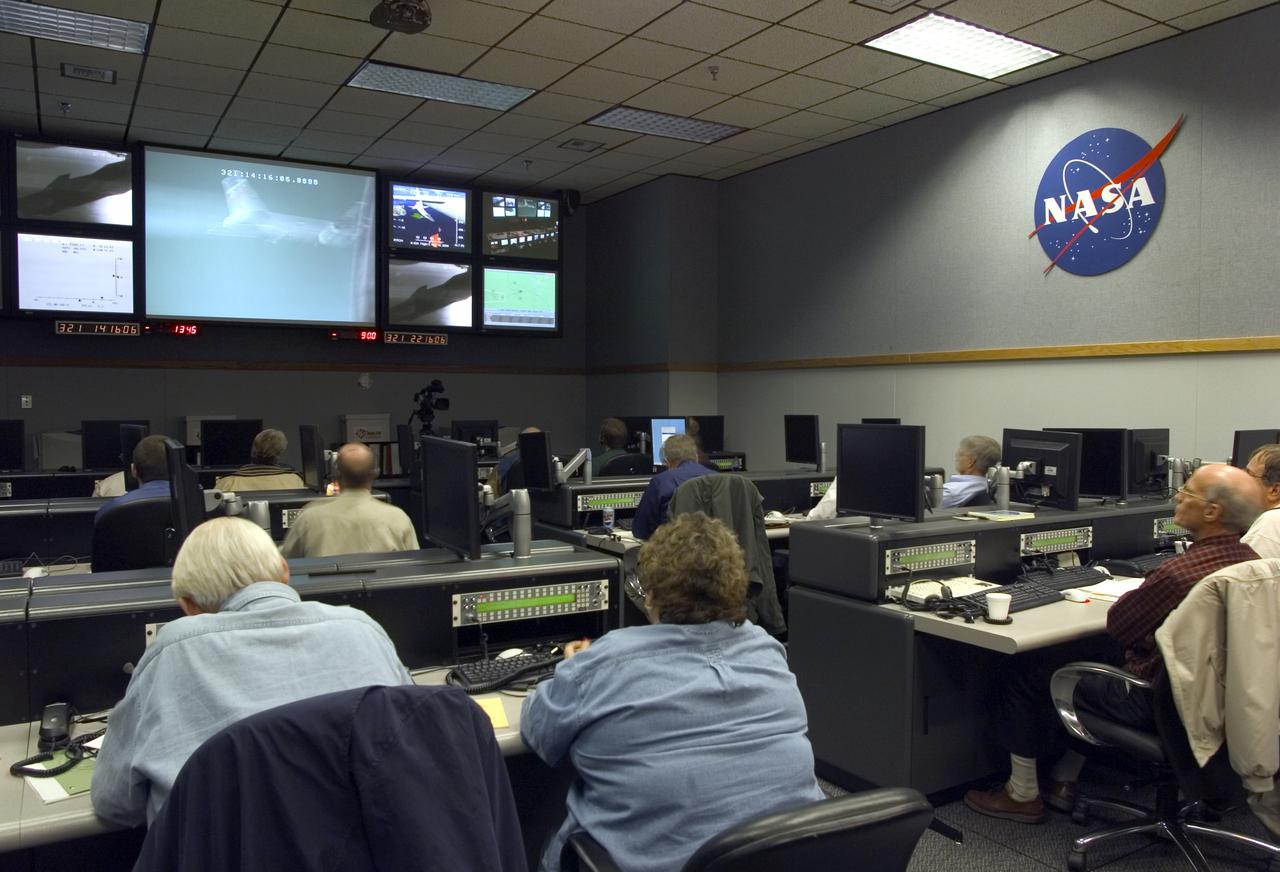
NASA engineers monitor mission progress from a Dryden control room prior to launch of the X-43A scramjet and its booster from NASA's B-52B mothership.
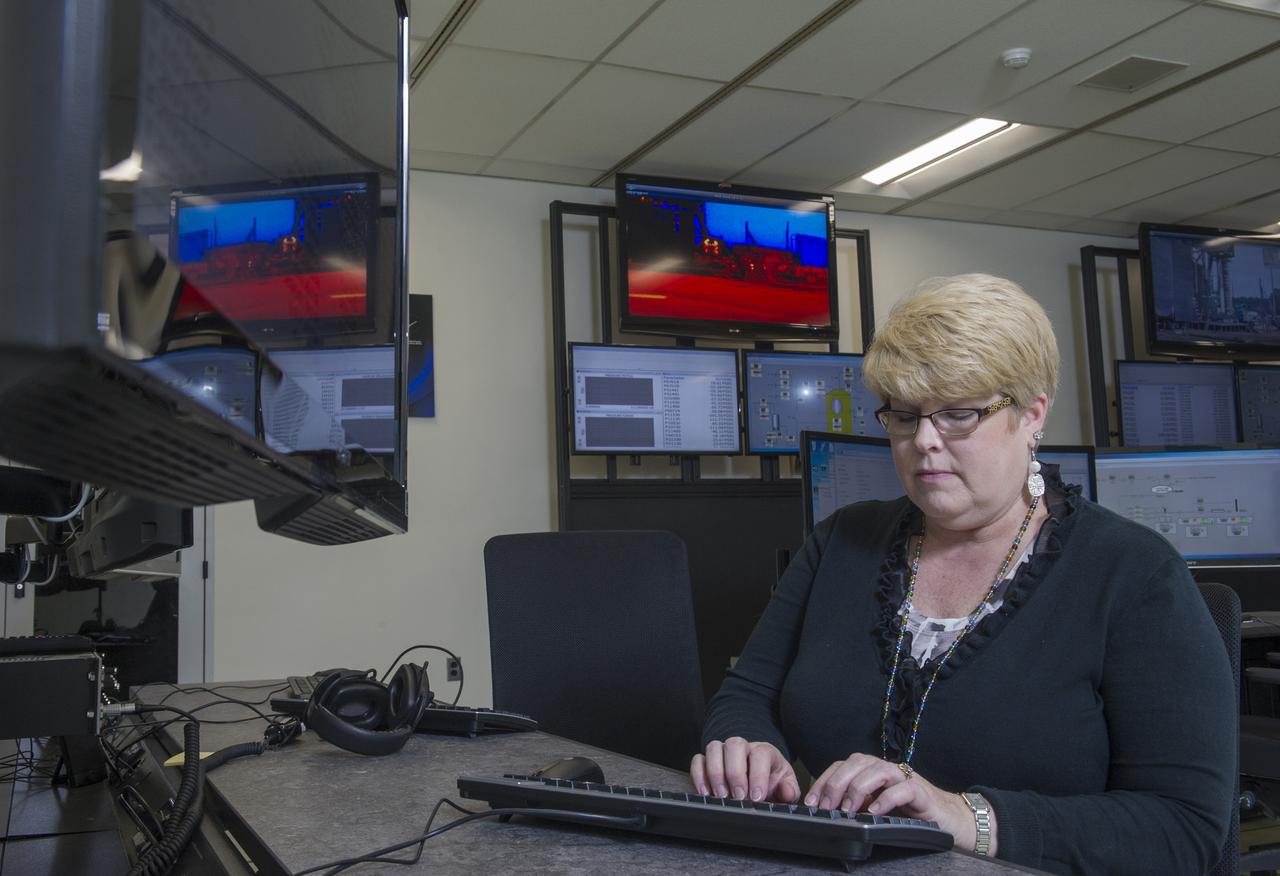
STEVEN SPRAYBERRY, ALICE DANIEL, CHRISTY BASHMAN, ALLEN SHELTON, BEVERELY COURREGE, MATHEW EXELL, JIM EMMENEGGER, IN VARIOUS SETUPS AT WEST TEST AREA CONTROL ROOM-B.
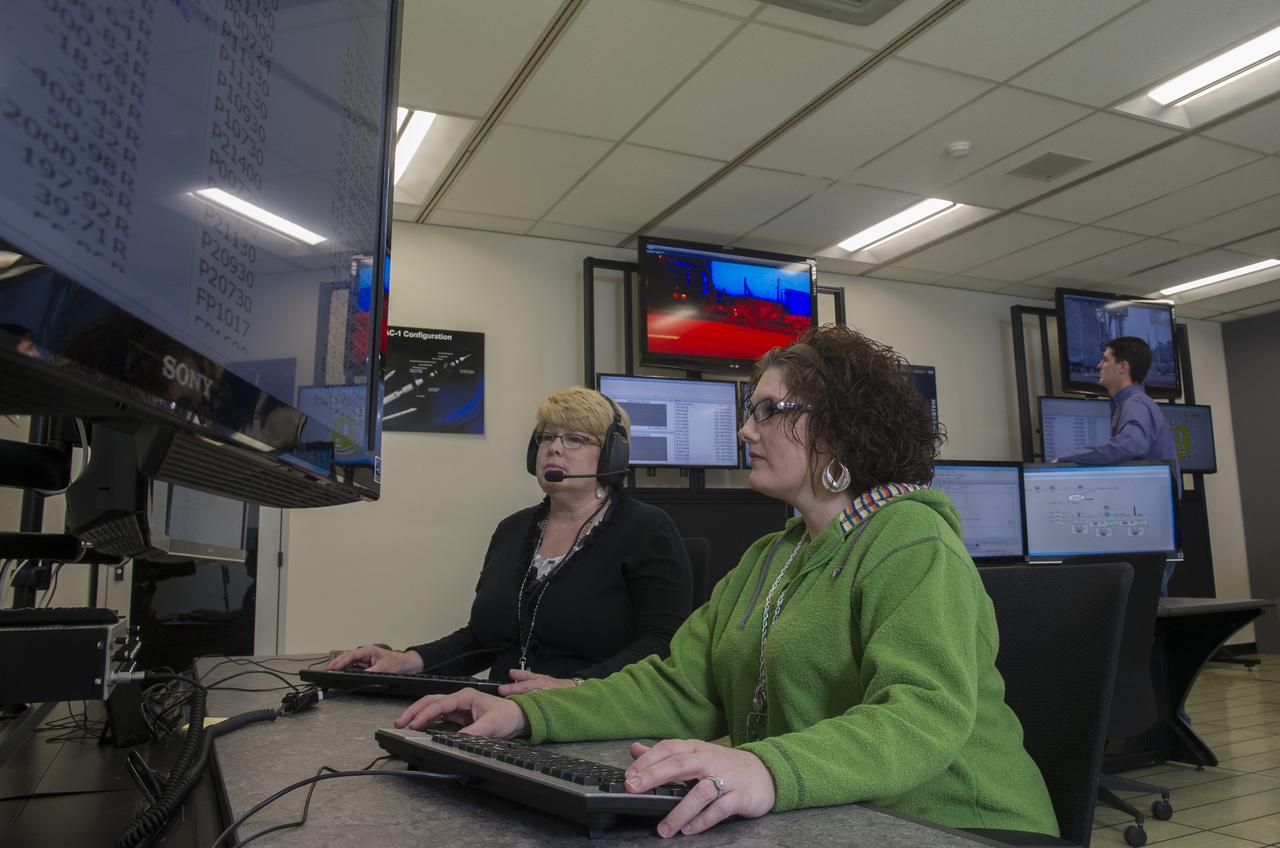
STEVEN SPRAYBERRY, ALICE DANIEL, CHRISTY BASHMAN, ALLEN SHELTON, BEVERELY COURREGE, MATHEW EXELL, JIM EMMENEGGER, IN VARIOUS SETUPS AT WEST TEST AREA CONTROL ROOM-B.
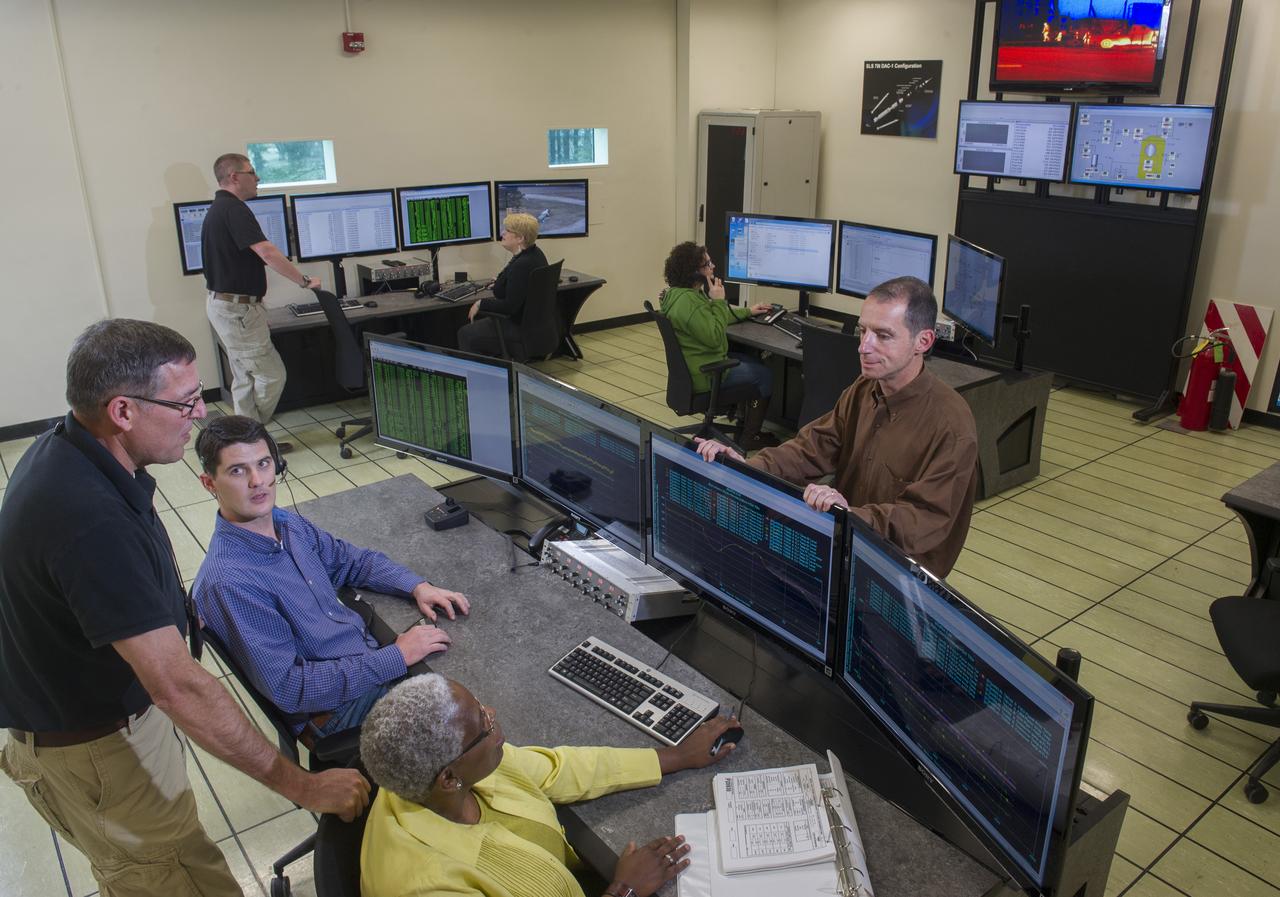
STEVEN SPRAYBERRY, ALICE DANIEL, CHRISTY BASHMAN, ALLEN SHELTON, BEVERELY COURREGE, MATHEW EXELL, JIM EMMENEGGER, IN VARIOUS SETUPS AT WEST TEST AREA CONTROL ROOM-B.
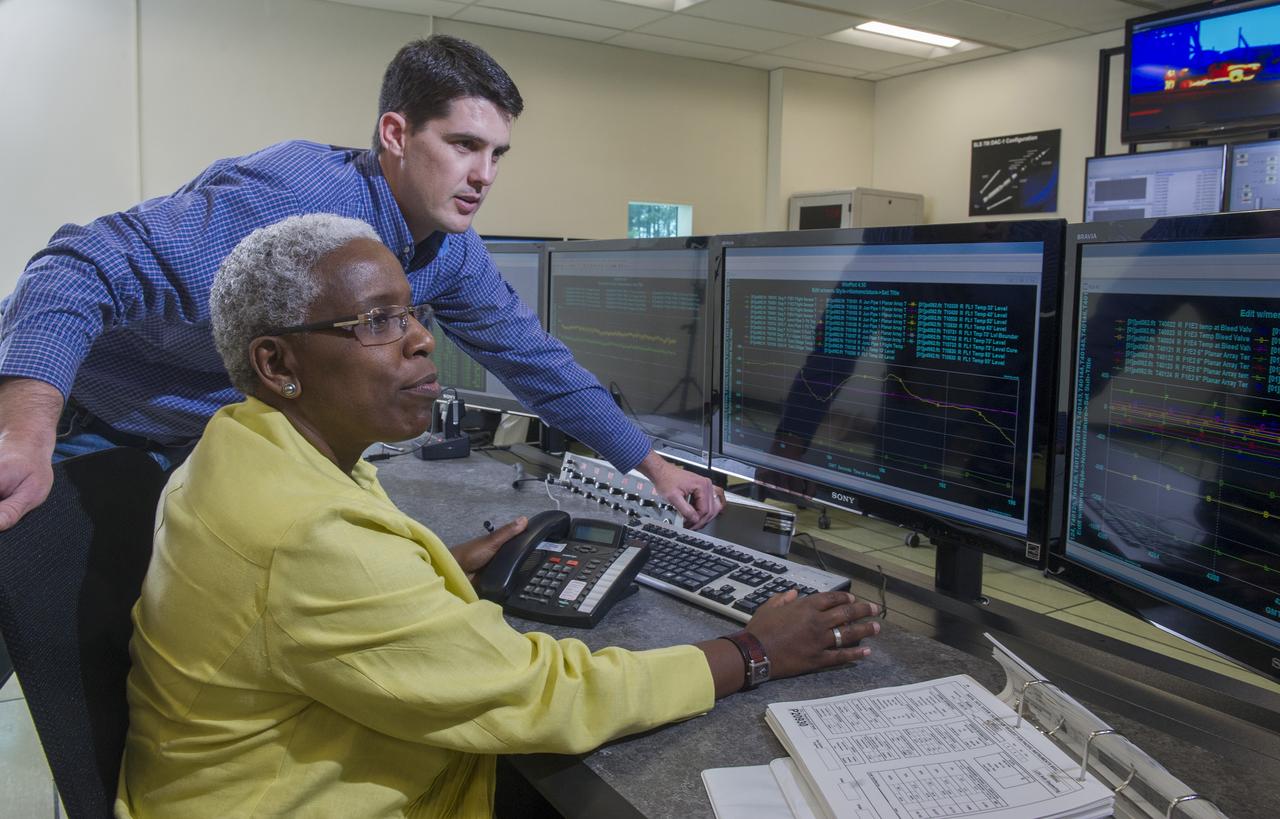
STEVEN SPRAYBERRY, ALICE DANIEL, CHRISTY BASHMAN, ALLEN SHELTON, BEVERELY COURREGE, MATHEW EXELL, JIM EMMENEGGER, IN VARIOUS SETUPS AT WEST TEST AREA CONTROL ROOM-B.
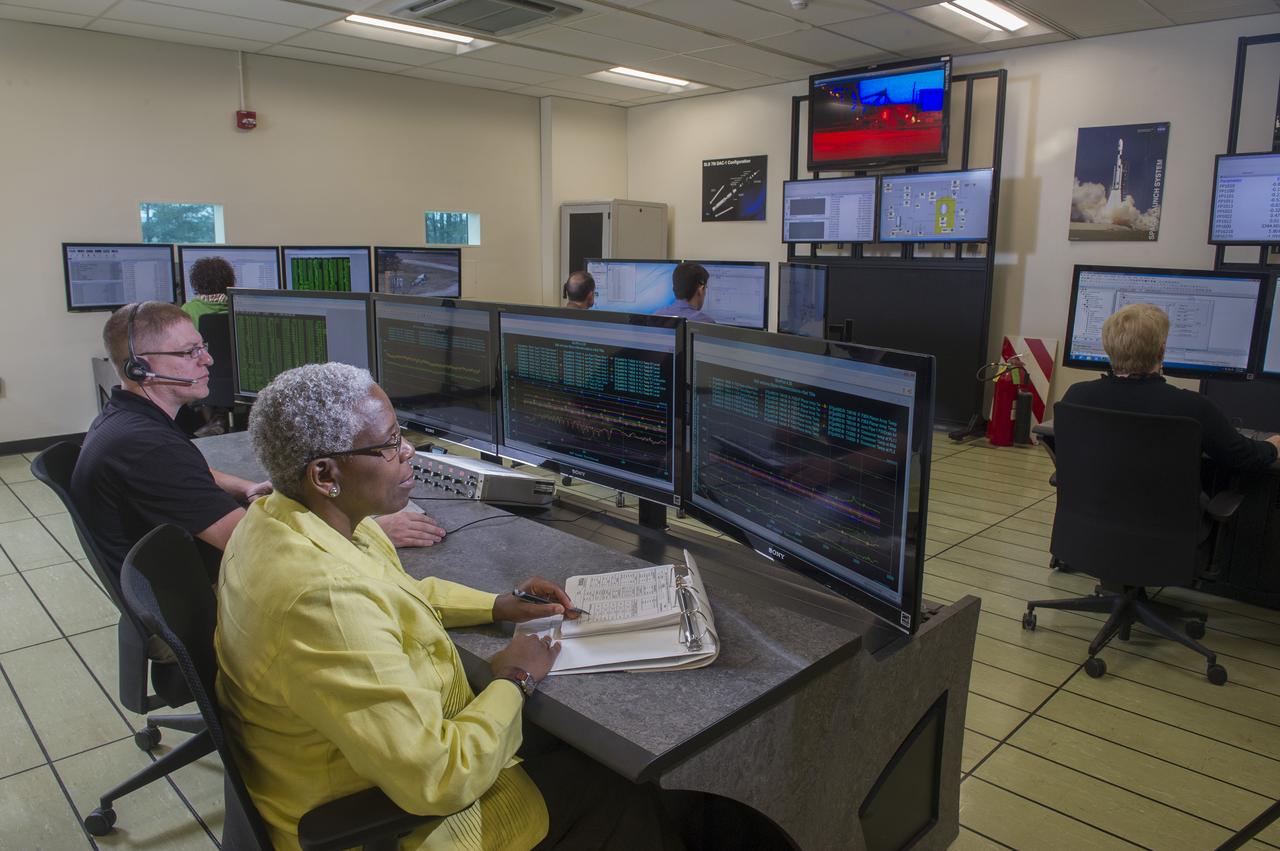
STEVEN SPRAYBERRY, ALICE DANIEL, CHRISTY BASHMAN, ALLEN SHELTON, BEVERELY COURREGE, MATHEW EXELL, JIM EMMENEGGER, IN VARIOUS SETUPS AT WEST TEST AREA CONTROL ROOM-B.
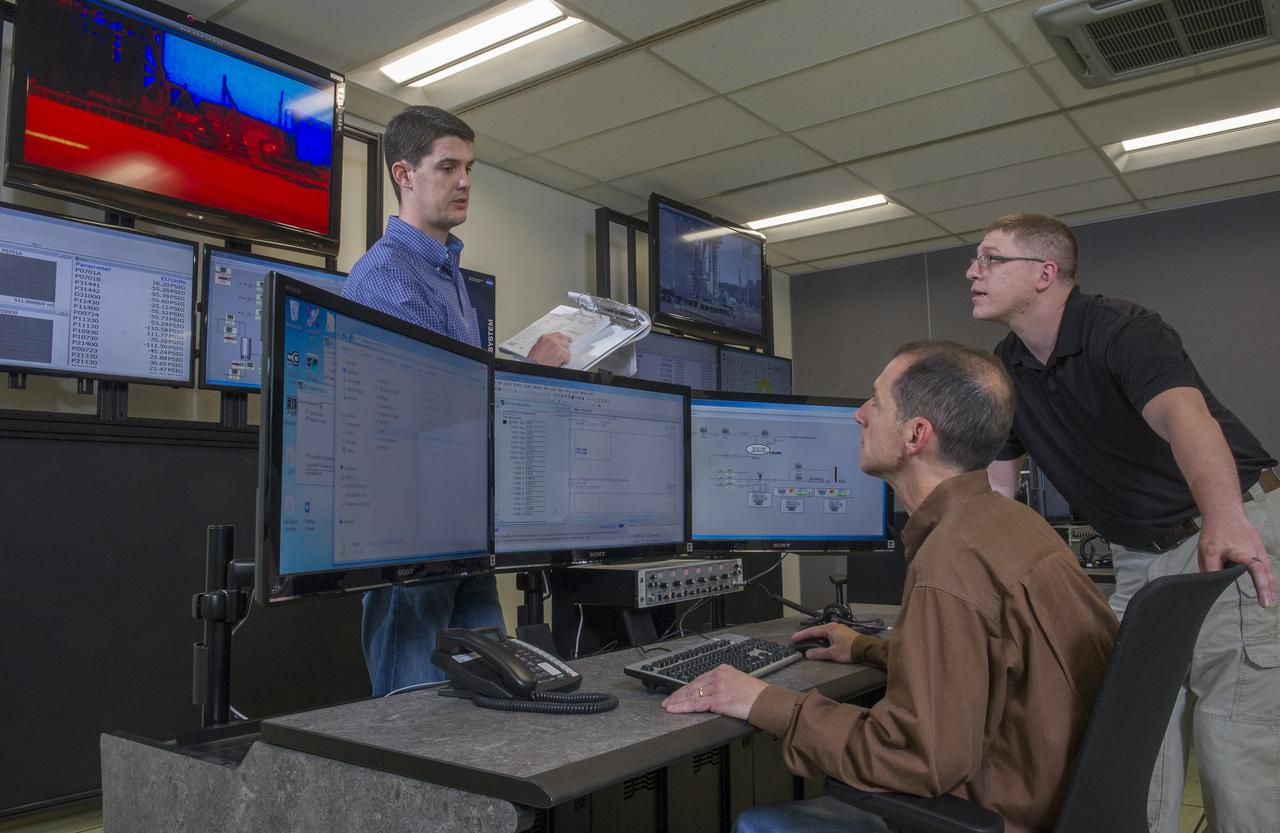
STEVEN SPRAYBERRY, ALICE DANIEL, CHRISTY BASHMAN, ALLEN SHELTON, BEVERELY COURREGE, MATHEW EXELL, JIM EMMENEGGER, IN VARIOUS SETUPS AT WEST TEST AREA CONTROL ROOM-B.
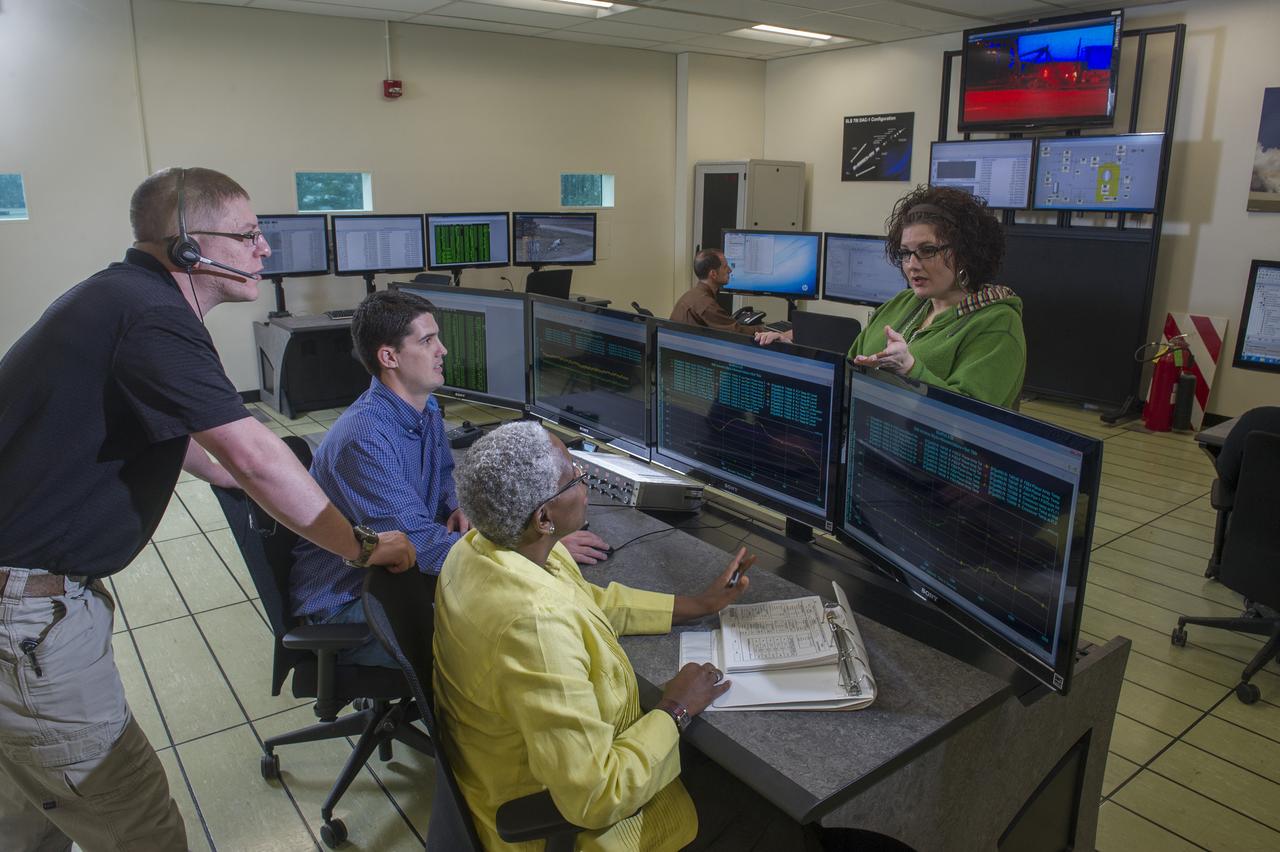
STEVEN SPRAYBERRY, ALICE DANIEL, CHRISTY BASHMAN, ALLEN SHELTON, BEVERELY COURREGE, MATHEW EXELL, JIM EMMENEGGER, IN VARIOUS SETUPS AT WEST TEST AREA CONTROL ROOM-B.
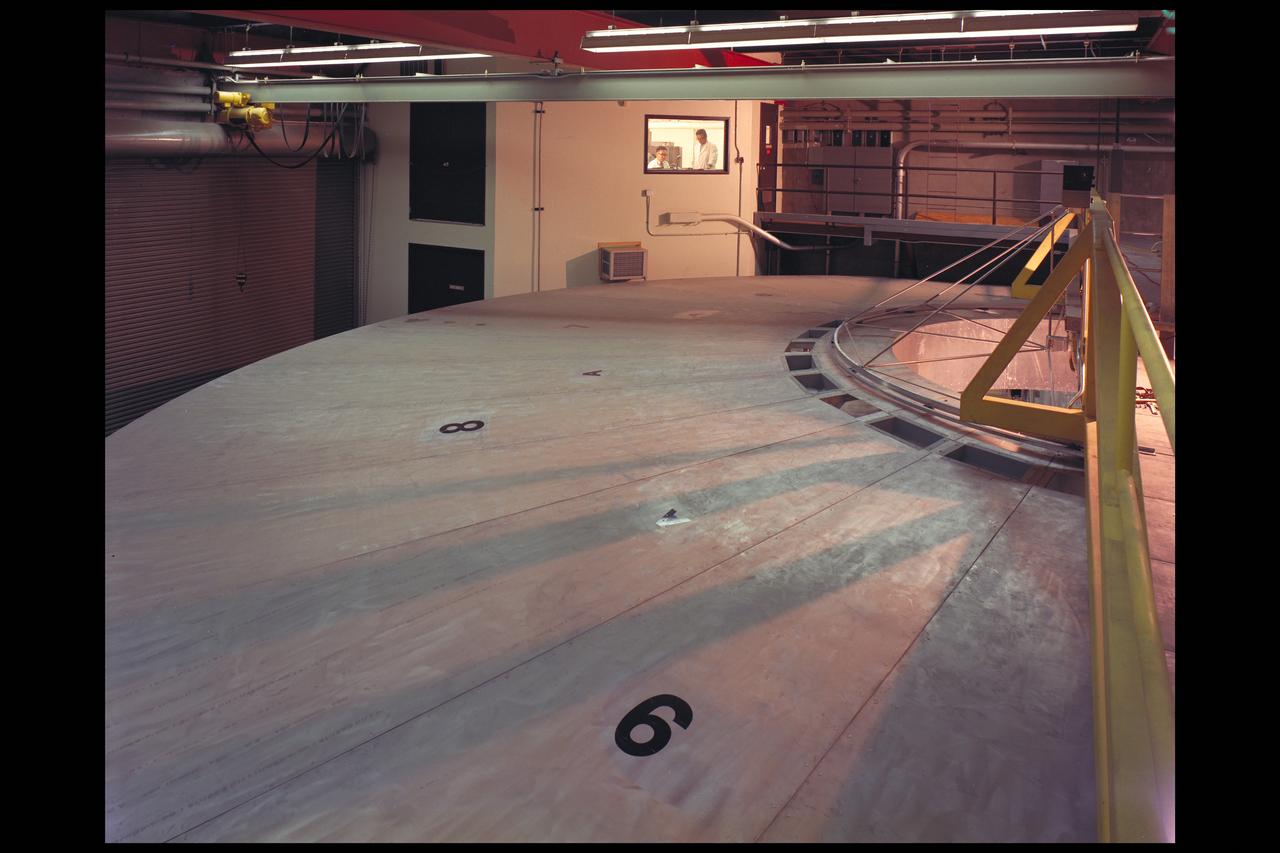
50ft. Low 'G' Centrifuge N-239A (Dr Jiro Oyama and & B Daligcon (r) can be seen through window into control room
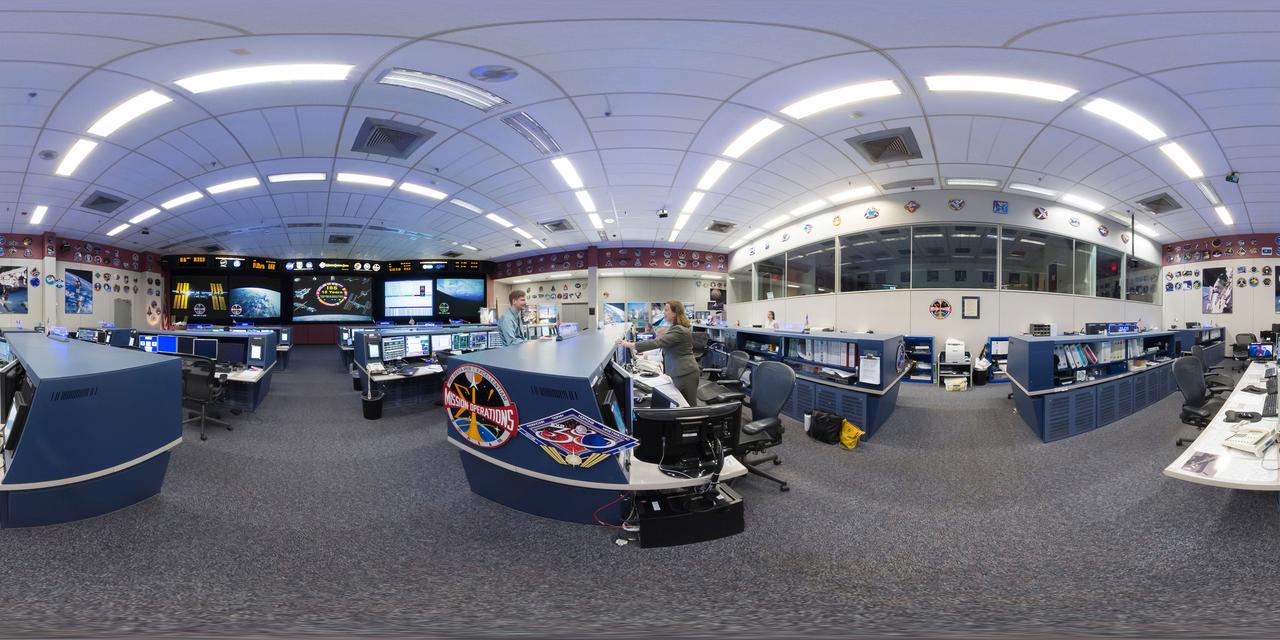
360 VR Panorama of the Building 30 Flight Control Room 1 in honor of the ISS 15th Anniversary. Created with jsc2013e095196 thru jsc2013e095201. VR DATE: 11-20-13 LOCATION: B 30 FCR - 1 SUBJECT: B30 FCR - 1 360 VR Panorama VR PHOTOGRAPHER: Bill Stafford

S73-37251 (23 November 1973) --- Astronaut Bruce McCandless II, left, shows off a mock-up of the occulting disc for the T025 Coronagraph Contamination Measurement Engineering and Technology Experiment to be used by the crewmen of the third manned Skylab mission (Skylab 4), now into their eighth day in Earth orbit. On the right is flight director Neil B. Hutchinson. The men are in the Mission Operations Control Room (MOCR) of the Mission Control Center (MCC) at Johnson Space Center. Photo credit: NASA
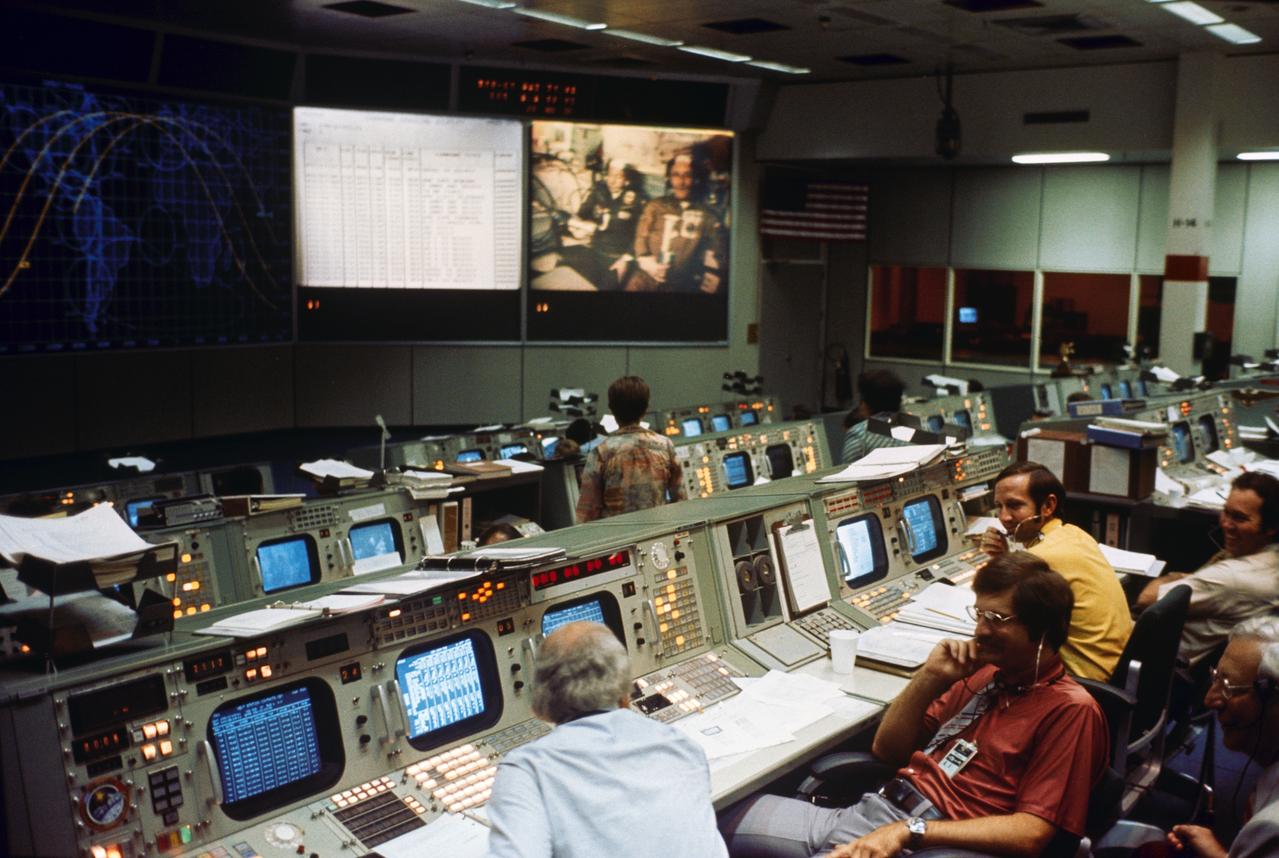
S75-28685 (17 July 1975) --- An overall view of activity in the Mission Operations Control Room in the Mission Control Center during joint U.S.-USSR Apollo Soyuz Test Project (ASTP) docking mission in Earth orbit. The large television monitor shows an interior view of the Soyuz Orbital Module with astronaut Thomas P. Stafford (in front) visiting with cosmonaut Aleksey A. Leonov. Neil B. Hutchinson (right hand to chin) is the flight director for this shift.
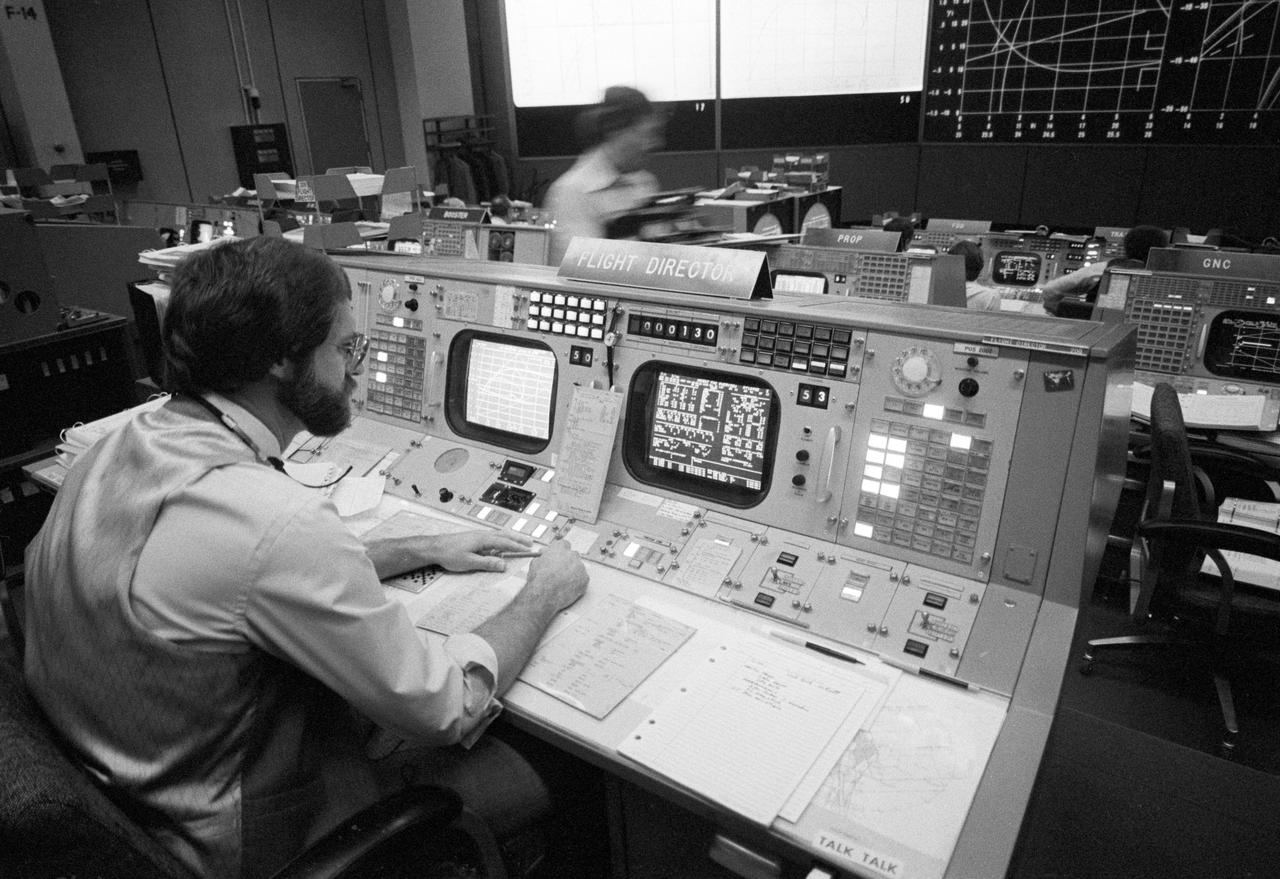
S81-39433 (12 Nov. 1981) --- Flight director Neil B. Hutchinson monitors data displayed on a cathode ray tube (CRT) at his console in the mission operations control room (MOCR) in the Johnson Space Center?s Mission Control Center (MCC) during the launch phase of STS-2. Launch of the Columbia occurred at 9:10 a.m. CST today with astronauts Joe H. Engle and Richard H. Truly aboard the Columbia. Photo credit: NASA
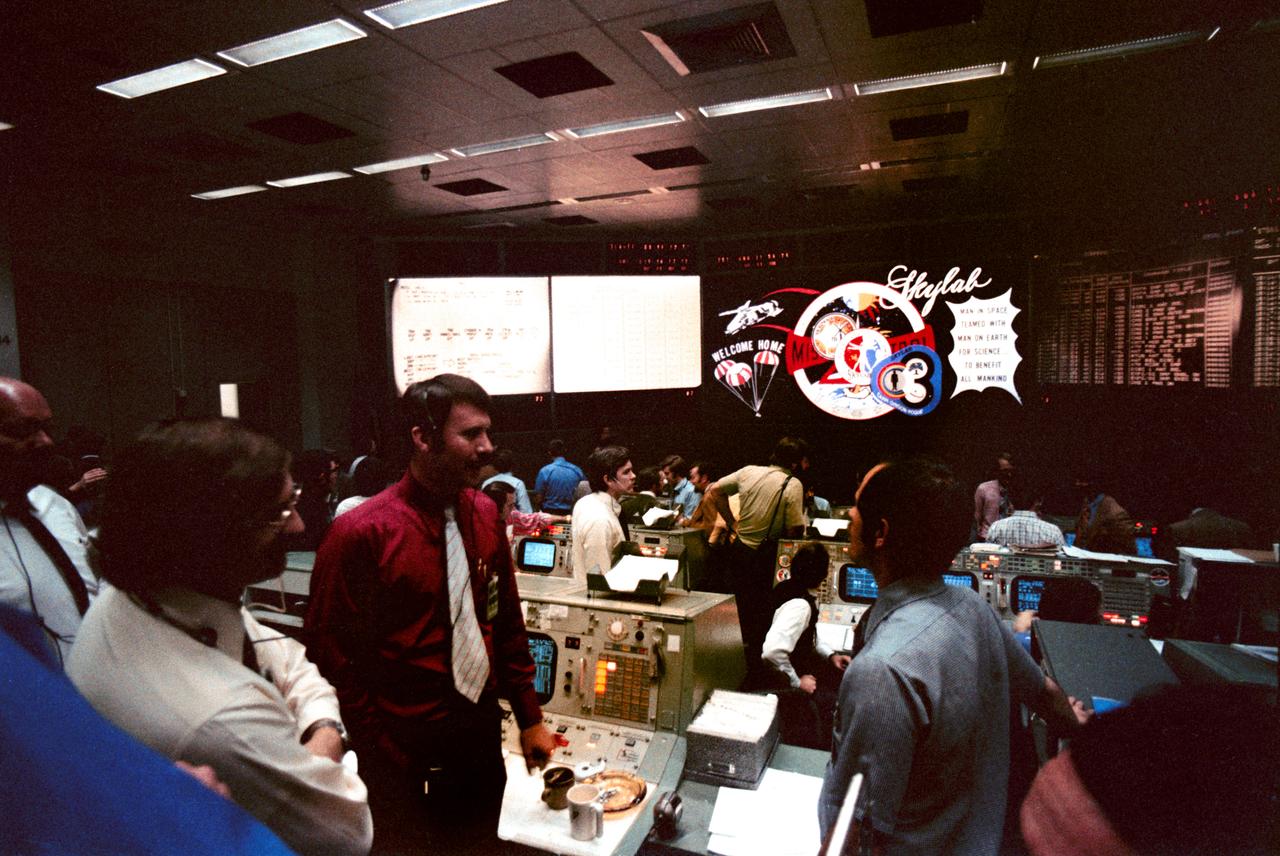
S74-19160 (8 Feb. 1974) --- An overall view of activity in the Mission Operations Control Room in the Mission Control Counter following the successful splashdown of the Skylab 4 command module in the Pacific Ocean. The three flight controllers in the foreground, left to right, are flight director Neil B. Hutchinson; flight director Donald R. Puddy; and astronaut Robert L. Crippen, a spacecraft communicator (CAPCOM). Astronauts Gerald P. Carr, Edward G. Gibson and William R. Pogue had just completed an 84-day mission with the Skylab space station in Earth orbit. Photo credit: NASA
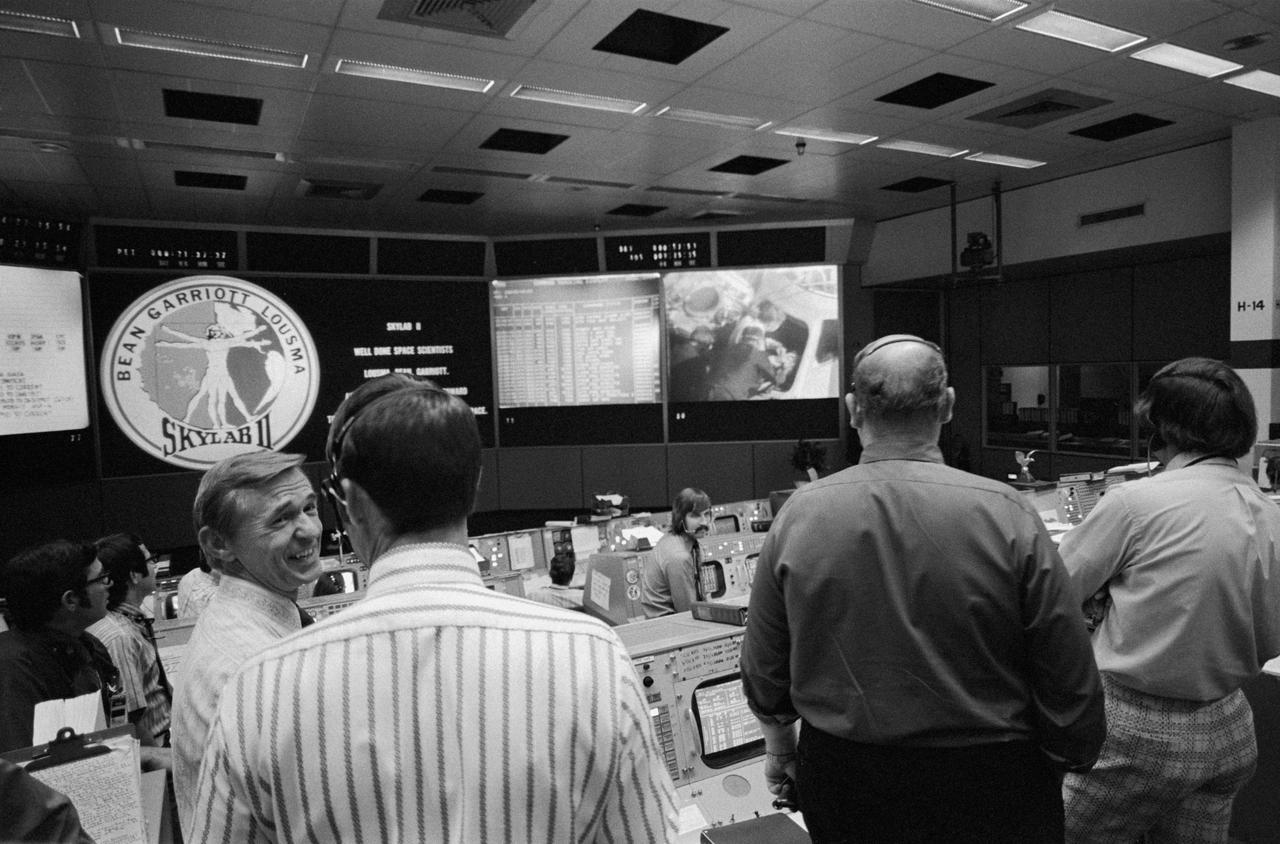
S73-34553 (25 Sept. 1973) --- Skylab flight directors (foreground) and flight controllers (background) view the large screen in the Mission Operations Control Room (MOCR) in the Mission Control Center (MCC) at JSC during recovery operations of the second manned Skylab mission. From left to right in the foreground are flight directors Charles R. Lewis, Donald R. Puffy, Phillip Shaffer and Neil B. Hutchinson. The Skylab 3 crewmen were preparing to egress the spacecraft aboard the USS New Orleans. Television cameras aboard the New Orleans recorded post-recovery activity. Photo credit: NASA
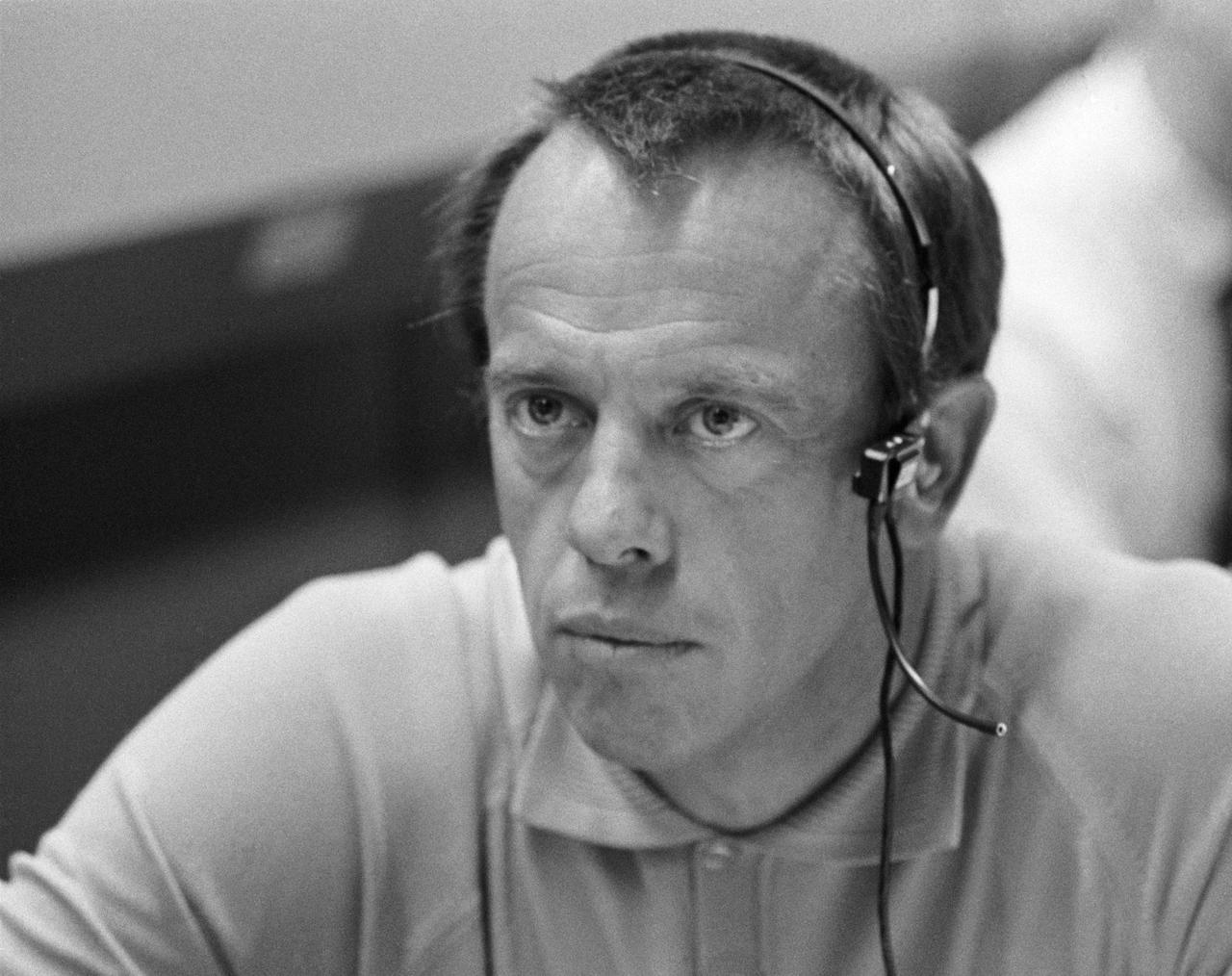
S70-34904 (14 April 1970) --- Astronaut Alan B. Shepard Jr., prime crew commander of the Apollo 14 mission, monitors communications between the Apollo 13 spacecraft and Mission Control Center. He is seated at a console in the Mission Operations Control Room of the MCC, Manned Spacecraft Center. The main concern of the moment was action taken by the three Apollo 13 crewmen - astronauts James A. Lovell Jr., John L. Swigert Jr. and Fred W. Haise Jr. - to make corrections inside the spacecraft following discovery of an oxygen cell failure several hours earlier.
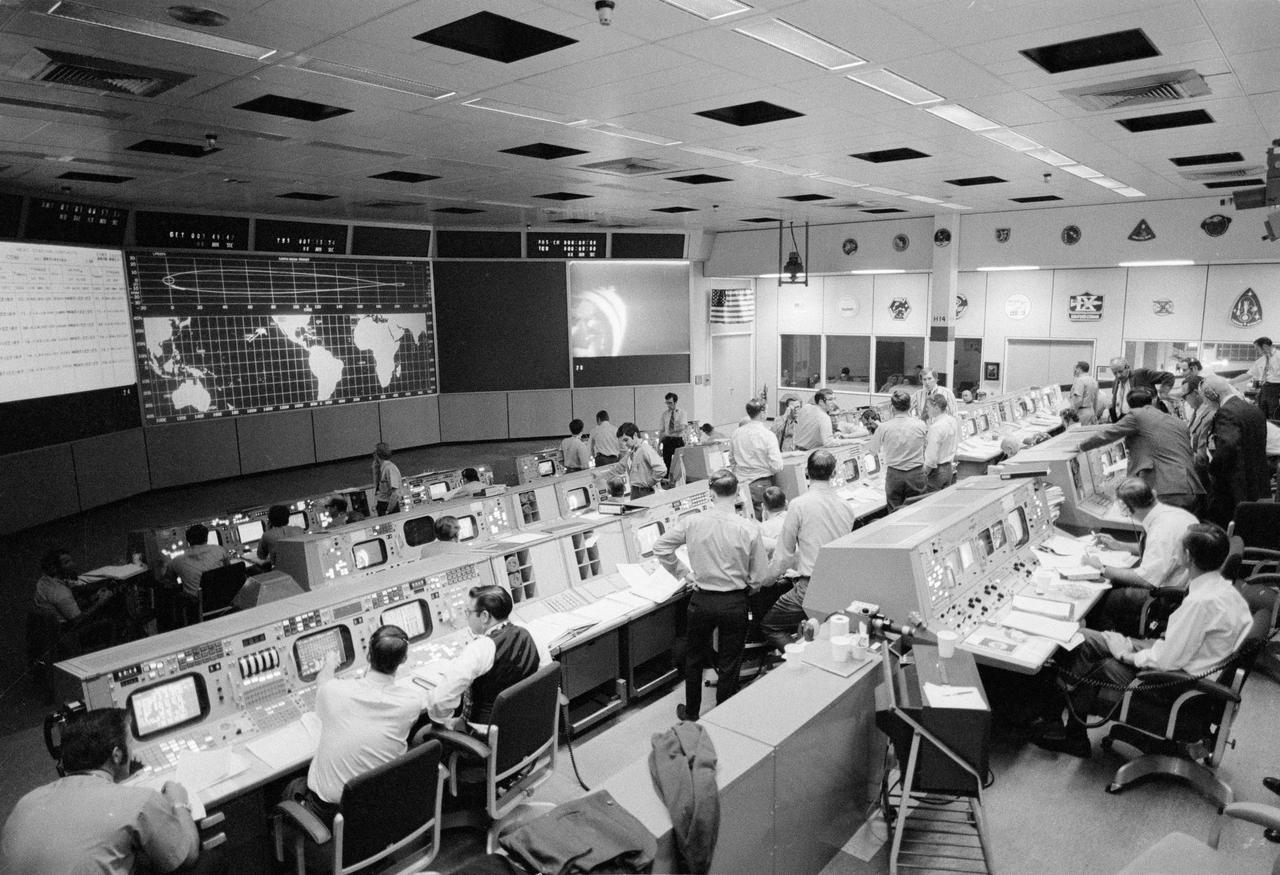
S71-16879 (31 Jan. 1971) --- Overall view of activity in the Mission Operations Control Room in the Mission Control Center during the Apollo 14 transposition and docking maneuvers. The Apollo 14 Lunar Module, still attached to the Saturn IVB stage, can be seen on the large television monitor. Due to difficulty with the docking mechanism six attempts were made before a successful "hard dock" of the Command Module with the Lunar Module was accomplished. Aboard the Command Module were astronauts Alan B. Shepard Jr., Stuart A. Roosa, and Edgar D. Mitchell.
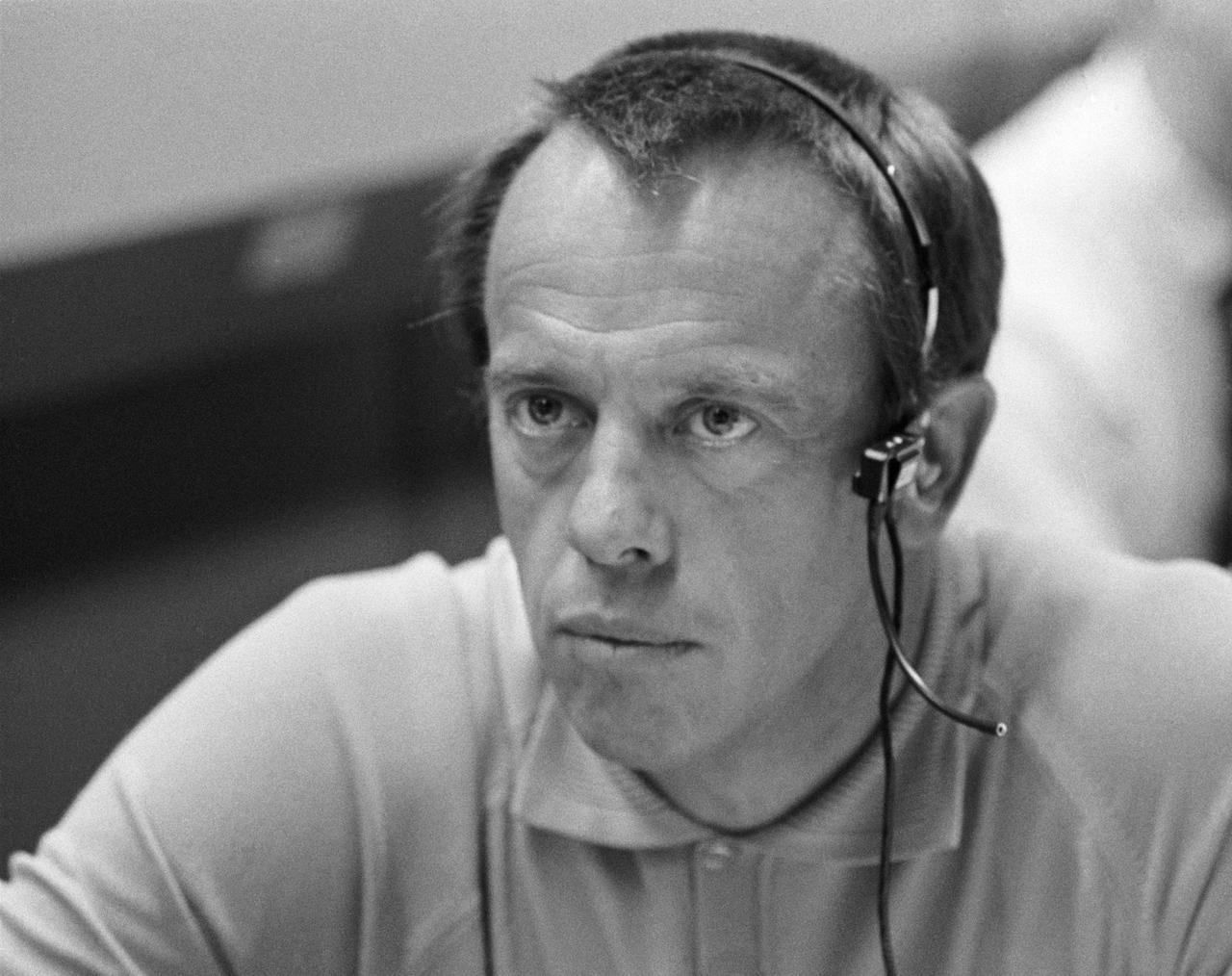
S70-34904 (14 April 1970) --- Astronaut Alan B. Shepard Jr., prime crew commander of the Apollo 14 mission, monitors communications between the Apollo 13 spacecraft and Mission Control Center. He is seated at a console in the Mission Operations Control Room of the MCC, Manned Spacecraft Center. The main concern of the moment was action taken by the three Apollo 13 crewmen - astronauts James A. Lovell Jr., John L. Swigert Jr. and Fred W. Haise Jr. - to make corrections inside the spacecraft following discovery of an oxygen cell failure several hours earlier.
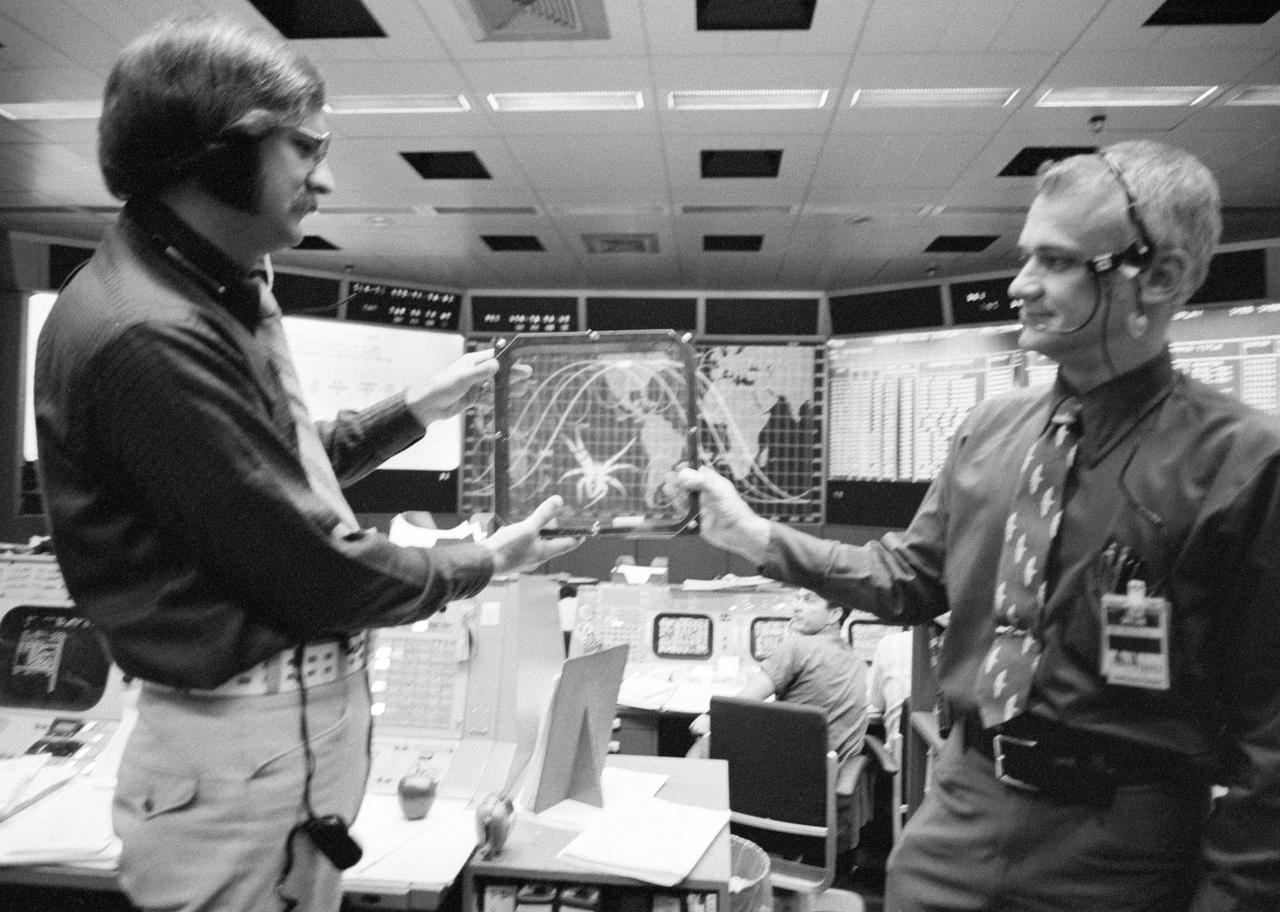
S73-34456 (September 1973) --- Flight Director Neil B. Hutchinson, left, and astronaut Bruce McCandless II hold up a glass enclosure - home for the spider Arachne, which is the same species as the two spiders carried on the Skylab 3 mission. The real spider is the one barely visible at the upper right corner of the square; the larger one is a projected image on the rear-screen-projected map in the front of the Mission Operations Control Room (MOCR) of the Mission Control Center (MCC). McCandless served as backup pilot for the first manned Skylab mission and was a spacecraft communicater (CAPCOM) for the second crew. Photo credit: NASA
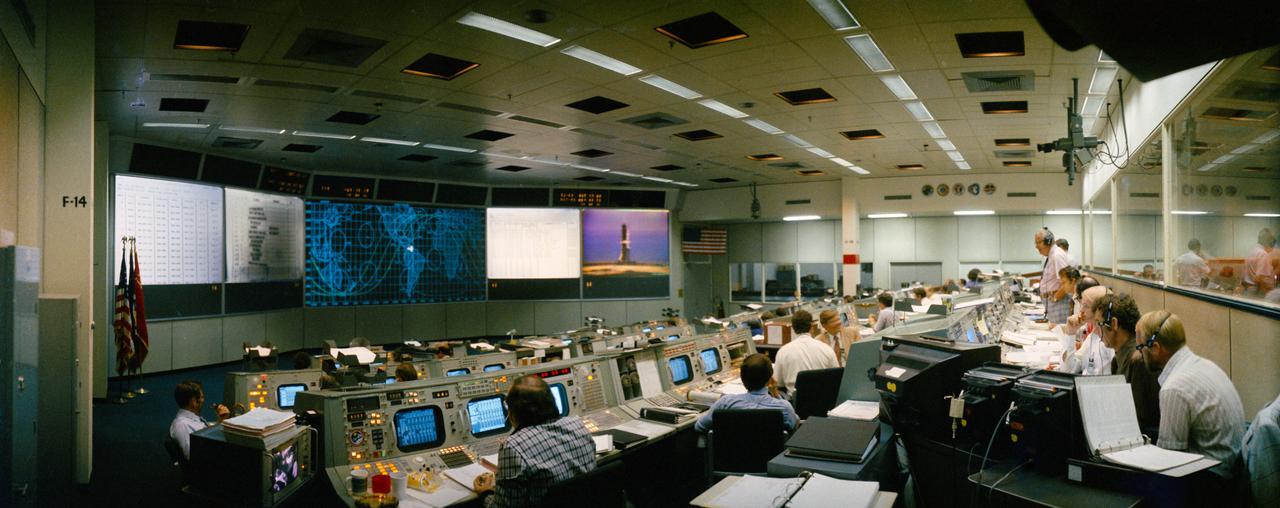
S75-28519 (15 July 1975) --- An overall view of the Mission Operations Control Room in the Mission Control Center, Building 30, Johnson Space Center, on the first day of the Apollo-Soyuz Test Project docking mission in Earth orbit. This photograph was taken shortly before the American ASTP launch from the Kennedy Space Center. The television monitor in the center background shows the ASTP Apollo-Saturn 1B space vehicle on Pad B at KSC?s Launch Complex 39. The American ASTP liftoff followed the Soviet ASTP launch of the Soyuz space vehicle from Baikonur, Kazakhstan by seven and one-half hours.
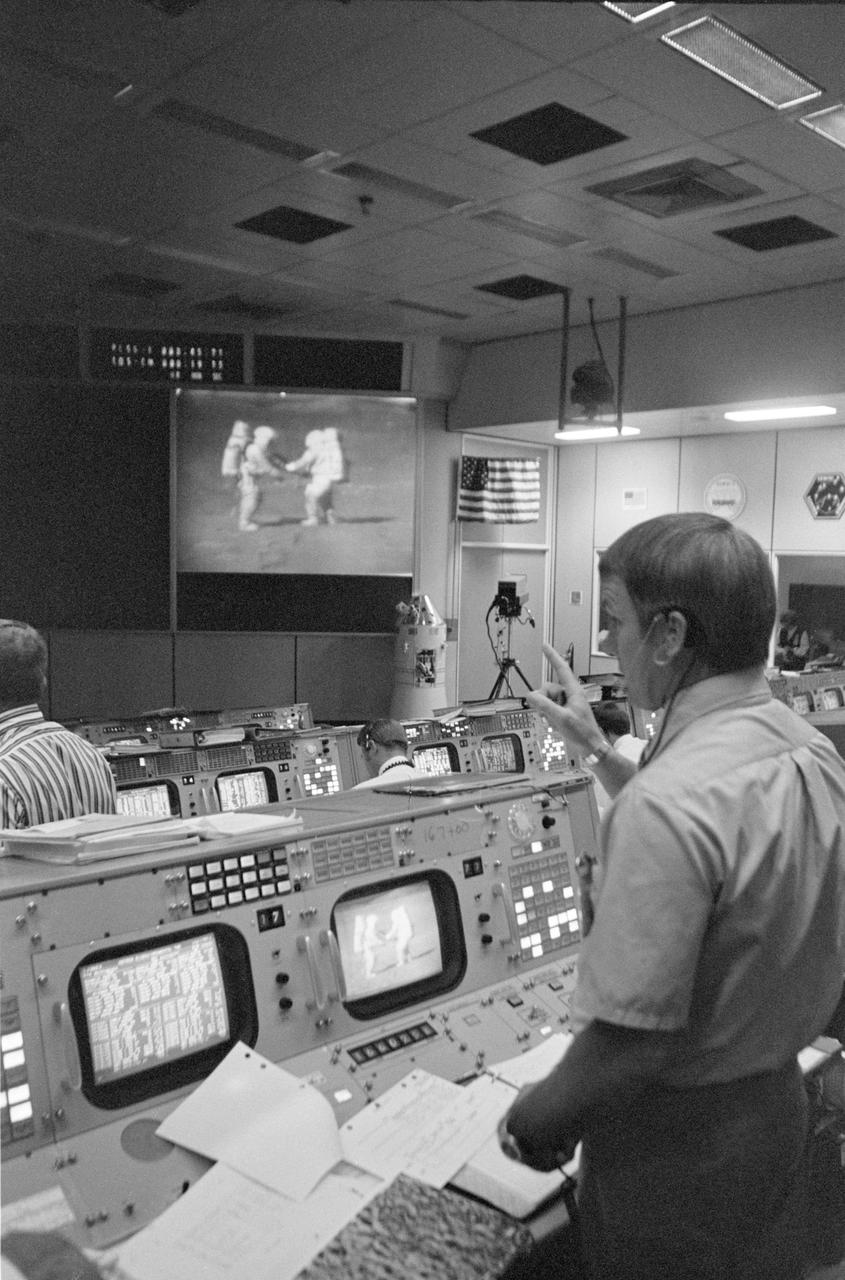
S71-41852 (2 Aug. 1971) --- Gerald D. Griffin, foreground, stands near his console in the Mission Operations Control Room (MOCR) during Apollo 15's third extravehicular activity (EVA) on the lunar surface. Griffin is Gold Team (Shift 1) flight director for the Apollo 15 mission. Astronauts David R. Scott and James B. Irwin can be seen on the large screen at the front of the MOCR as they participate in sample-gathering on the lunar surface.
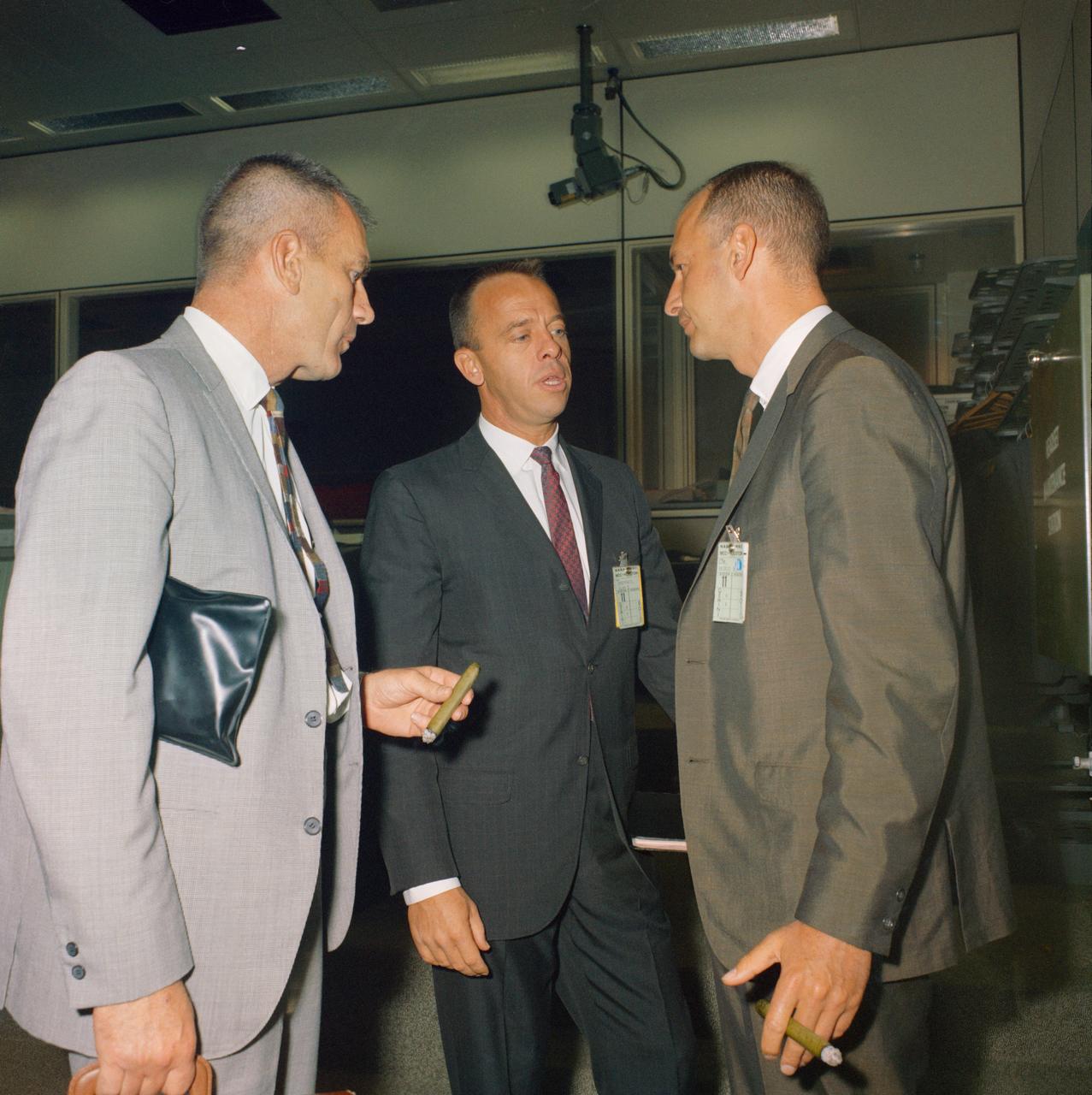
S66-52754 (12 Sept. 1966) --- Three key Manned Spacecraft Center (MSC) officials hold discussion in the Mission Control room during Gemini-11 activity. Left to right, are Donald K. Slayton, MSC Director of Flight Crew Operations; astronaut Alan B. Shepard Jr., Chief, MSC Astronaut Office; and George M. Low, MSC Deputy Director. Photo credit: NASA
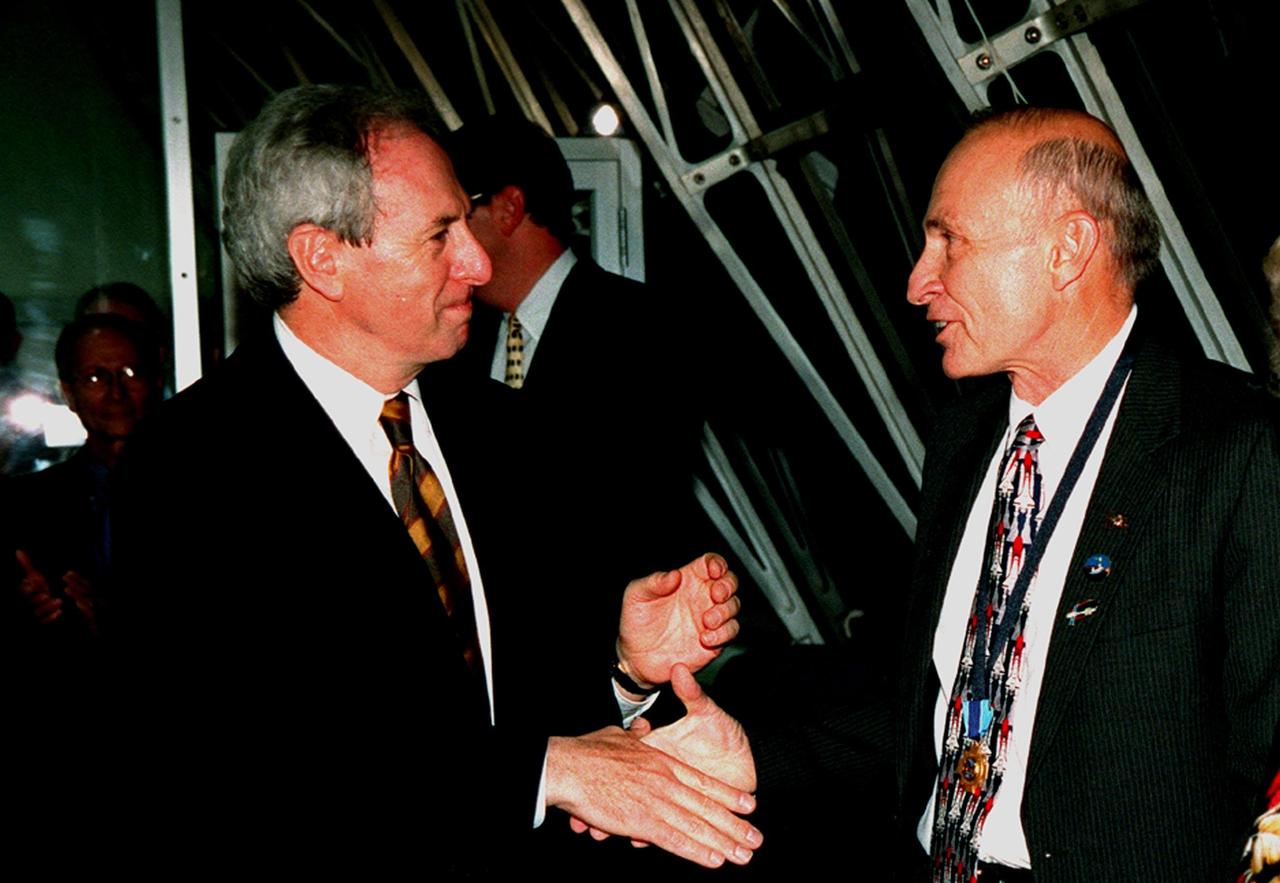
In the firing room of the Launch Control Center after the successful launch of Space Shuttle Endeavour at 3:35:34 a.m. EST, NASA Administrator Daniel Goldin congratulates KSC Director of Shuttle Operations Robert B. Sieck, who is wearing around his neck the Distinguished Service Medal just presented him. Goldin conferred the medal, the highest honor NASA gives a government employee, which recognizes someone who has personally made a contribution representing substantial and extraordinary progress to the mission of NASA
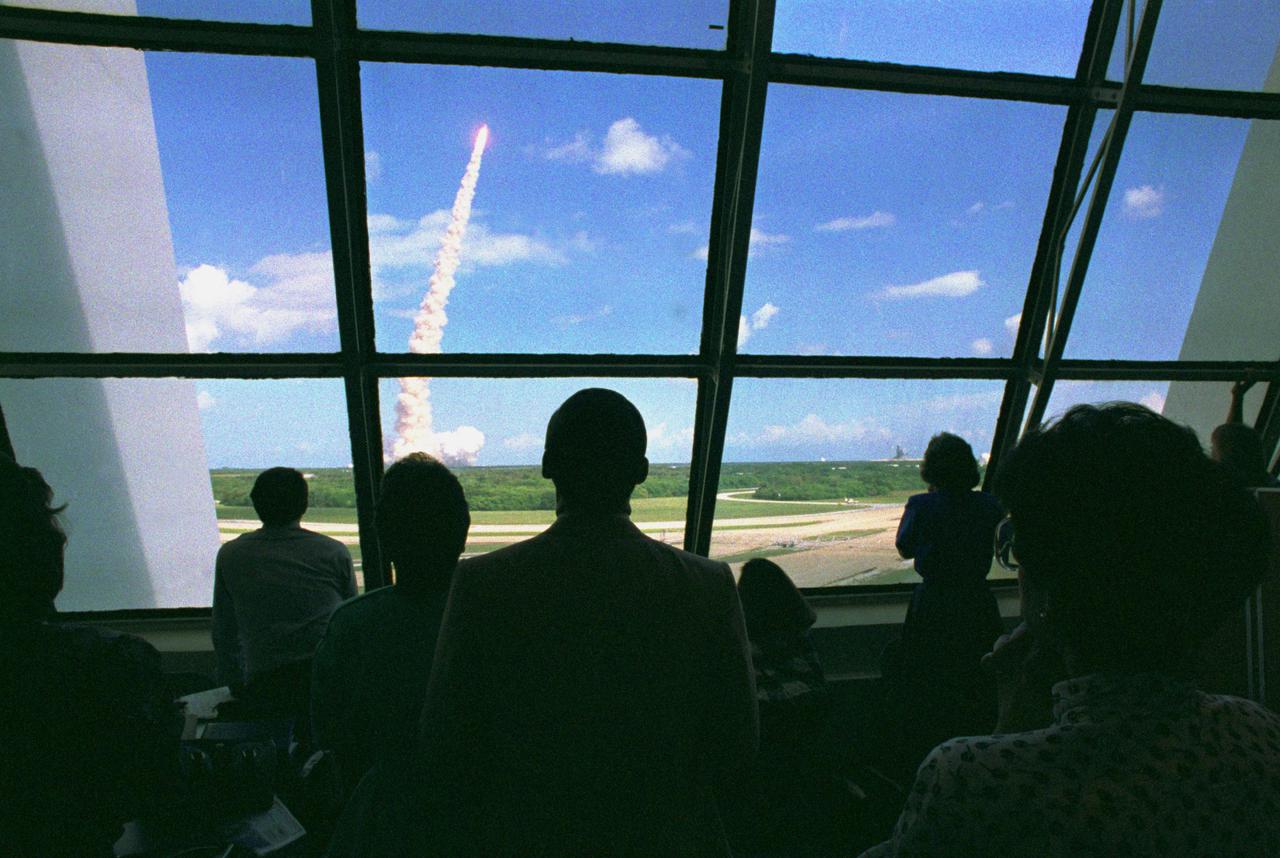
KENNEDY SPACE CENTER, Fla. -- As viewed from Firing Room One in the Launch Control Center, the STS-34 space shuttle Atlantis lifts off from Pad 39-B at 12:53 p.m. EDT, marking the beginning of a five-day mission in space. Atlantis is carrying a crew of five and the spacecraft Galileo, which will be deployed on a six-year trip to Jupiter.
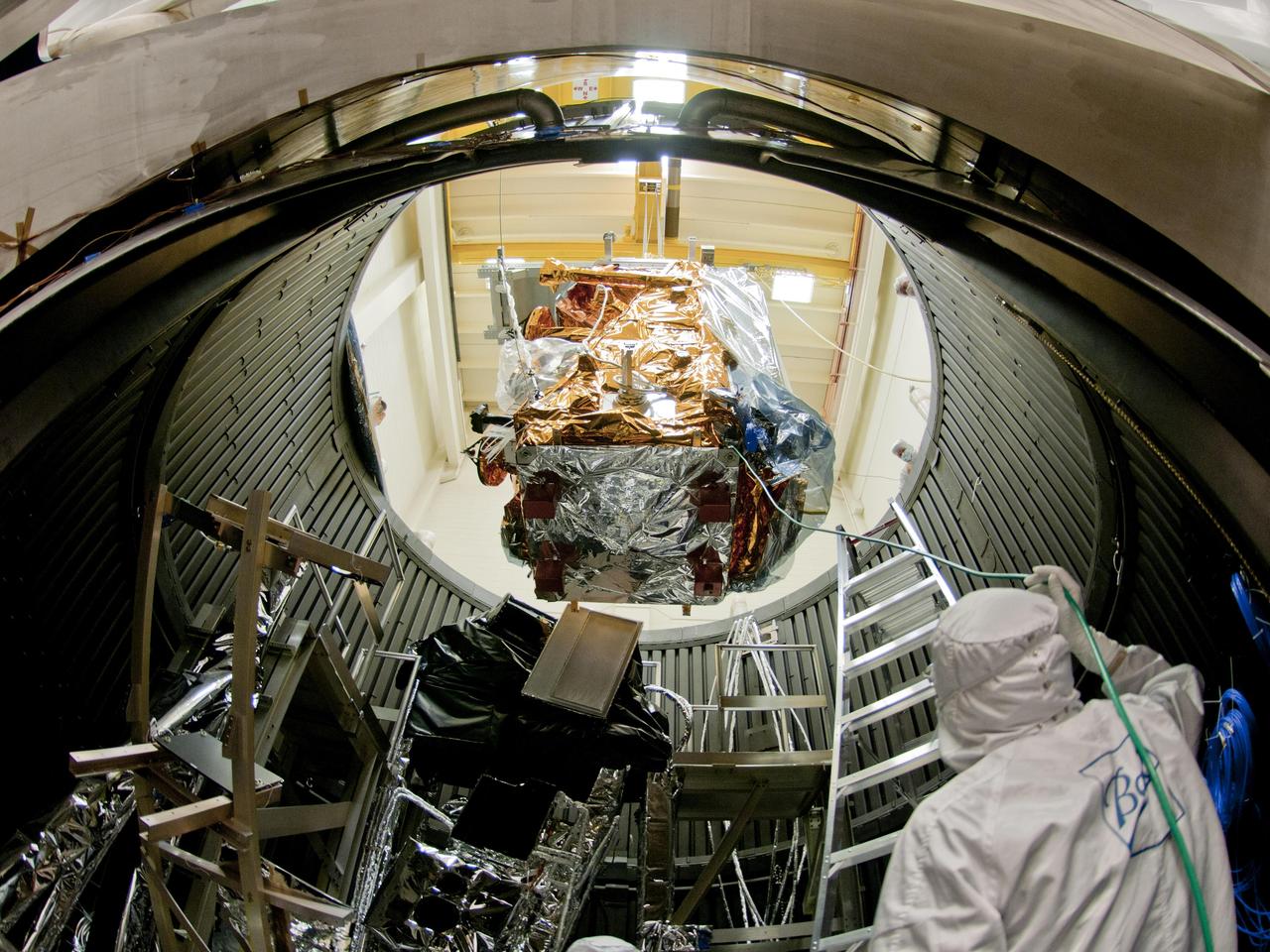
NPP is lowered into the thermal vacuum chamber. Once inside the Iron Maiden (visible in the lower left) is fitted in place. Then air is pumped out of the chamber and temperature extremes are applied to replicate orbit conditions. Credit: Ball Aerospace The NPP satellite sits surrounded by 144 rock concert speakers. They're stacked in a circle 16 feet high in a testing room at Ball Aerospace in Boulder, Colorado. As engineers set up for the environmental test, Pink Floyd's song "Money" plays gently in the background. The music stops. The room clears. Then the sound engineer wearing earplugs and headphones in the control room next door flips a switch. Slowly, the noise of thousands of pounds of exploding rocket fuel builds louder and louder until it blasts the satellite at a deafening 143.6 decibels -- loud enough to cause serious damage and pain to unprotected ears. "I was outside the building when they did the full level acoustics," says Glenn Iona, NPP Chief Engineer at NASA Goddard Space Flight Center, Greenbelt, Md. "and I could feel the ground shaking." To read more go to: <a href="http://www.nasa.gov/mission_pages/NPP/news/npp-testing.html" rel="nofollow">www.nasa.gov/mission_pages/NPP/news/npp-testing.html</a> <b><a href="http://www.nasa.gov/centers/goddard/home/index.html" rel="nofollow">NASA Goddard Space Flight Center</a></b> enables NASA’s mission through four scientific endeavors: Earth Science, Heliophysics, Solar System Exploration, and Astrophysics. Goddard plays a leading role in NASA’s accomplishments by contributing compelling scientific knowledge to advance the Agency’s mission. <b>Follow us on <a href="http://twitter.com/NASA_GoddardPix" rel="nofollow">Twitter</a></b> <b>Like us on <a href="http://www.facebook.com/pages/Greenbelt-MD/NASA-Goddard/395013845897?ref=tsd" rel="nofollow">Facebook</a></b> <b>Find us on <a href="http://web.stagram.com/n/nasagoddard/?vm=grid" rel="nofollow">Instagram</a></b>
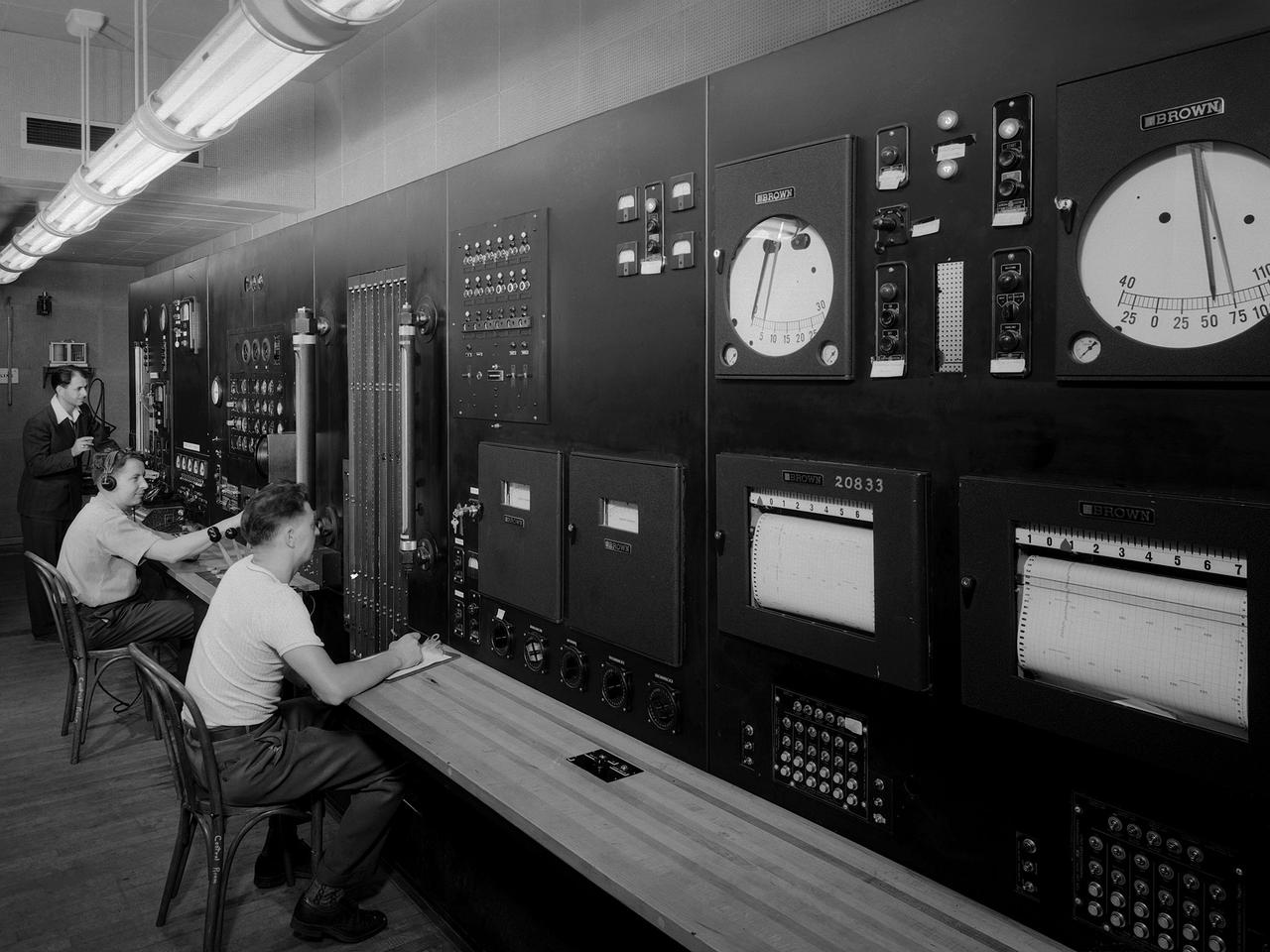
Operators in the control room for the Altitude Wind Tunnel at the National Advisory Committee for Aeronautics (NACA) Aircraft Engine Research Laboratory remotely operate a Wright R–3350 engine in the tunnel’s test section. Four of the engines were used to power the B–29 Superfortress, a critical weapon in the Pacific theater during World War II. The wind tunnel, which had been in operation for approximately six months, was the nation’s only wind tunnel capable of testing full-scale engines in simulated altitude conditions. The soundproof control room was used to operate the wind tunnel and control the engine being run in the test section. The operators worked with assistants in the adjacent Exhauster Building and Refrigeration Building to manage the large altitude simulation systems. The operator at the center console controlled the tunnel’s drive fan and operated the engine in the test section. Two sets of pneumatic levers near his right forearm controlled engine fuel flow, speed, and cooling. Panels on the opposite wall, out of view to the left, were used to manage the combustion air, refrigeration, and exhauster systems. The control panel also displayed the master air speed, altitude, and temperature gauges, as well as a plethora of pressure, temperature, and airflow readings from different locations on the engine. The operator to the right monitored the manometer tubes to determine the pressure levels. Despite just being a few feet away from the roaring engine, the control room remained quiet during the tests.
![Engineers and technicians in the control room at the Dryden Flight Research Center must constantly monitor critical operations and checks during research projects like NASA's hypersonic X-43A. Visible in the photo, taken two days before the X-43's captive carry flight in January 2004, are [foreground to background]; Tony Kawano (Range Safety Officer), Brad Neal (Mission Controller), and Griffin Corpening (Test Conductor).](https://images-assets.nasa.gov/image/ED04-0019-10/ED04-0019-10~medium.jpg)
Engineers and technicians in the control room at the Dryden Flight Research Center must constantly monitor critical operations and checks during research projects like NASA's hypersonic X-43A. Visible in the photo, taken two days before the X-43's captive carry flight in January 2004, are [foreground to background]; Tony Kawano (Range Safety Officer), Brad Neal (Mission Controller), and Griffin Corpening (Test Conductor).
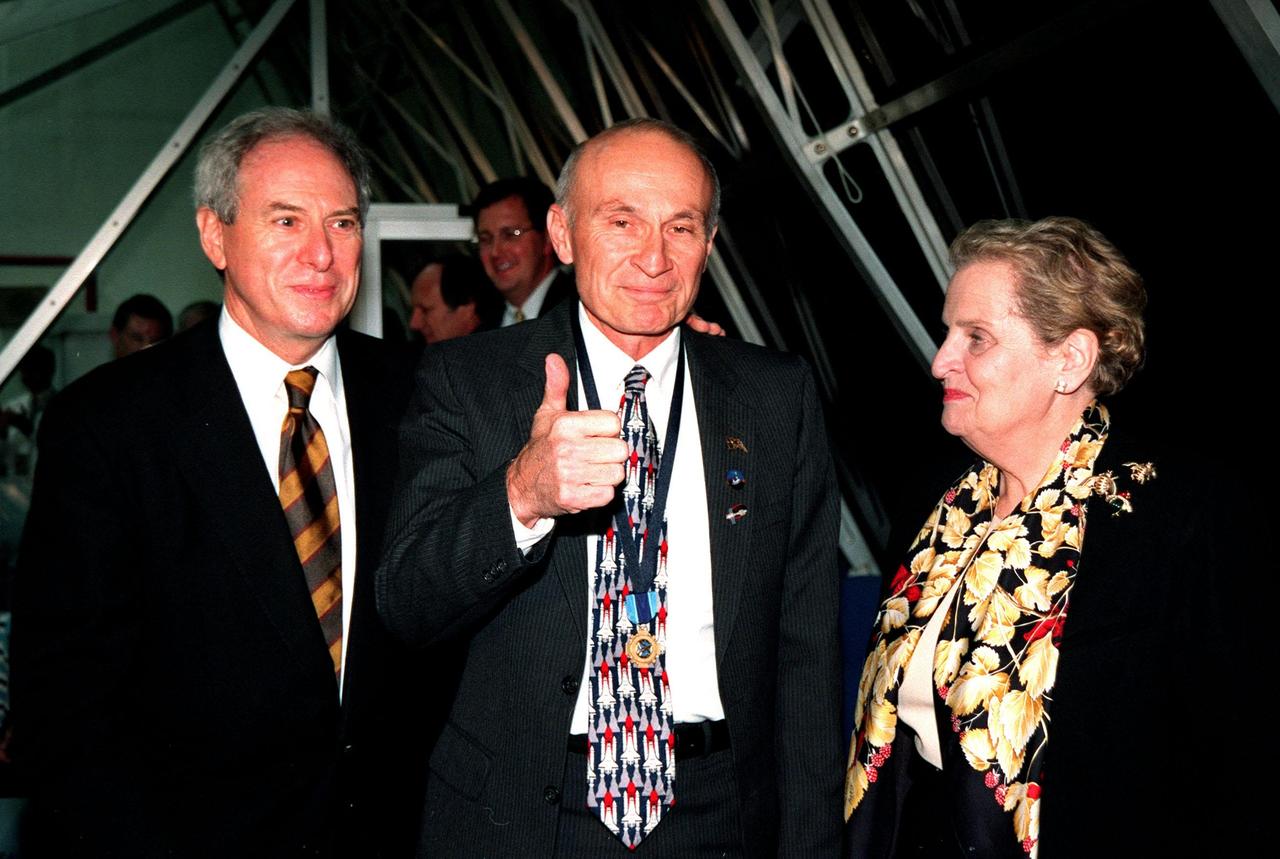
In a firing room of the Launch Control Center, KSC Director of Shuttle Operations Robert B. Sieck (center) gives a thumbs up after the successful launch of Space Shuttle Endeavour on mission STs-88 at 3:35:34 a.m. EST. With him are NASA Administrator Daniel Goldin (left) and U.S. Secretary of State Madeleine Albright (right). Sieck is wearing around his neck the Distinguished Service Medal presented to him by Goldin following the launch. The medal, the highest honor NASA confers on a government employee, recognizes someone who has personally made a contribution representing substantial and extraordinary progress to the mission of NASA
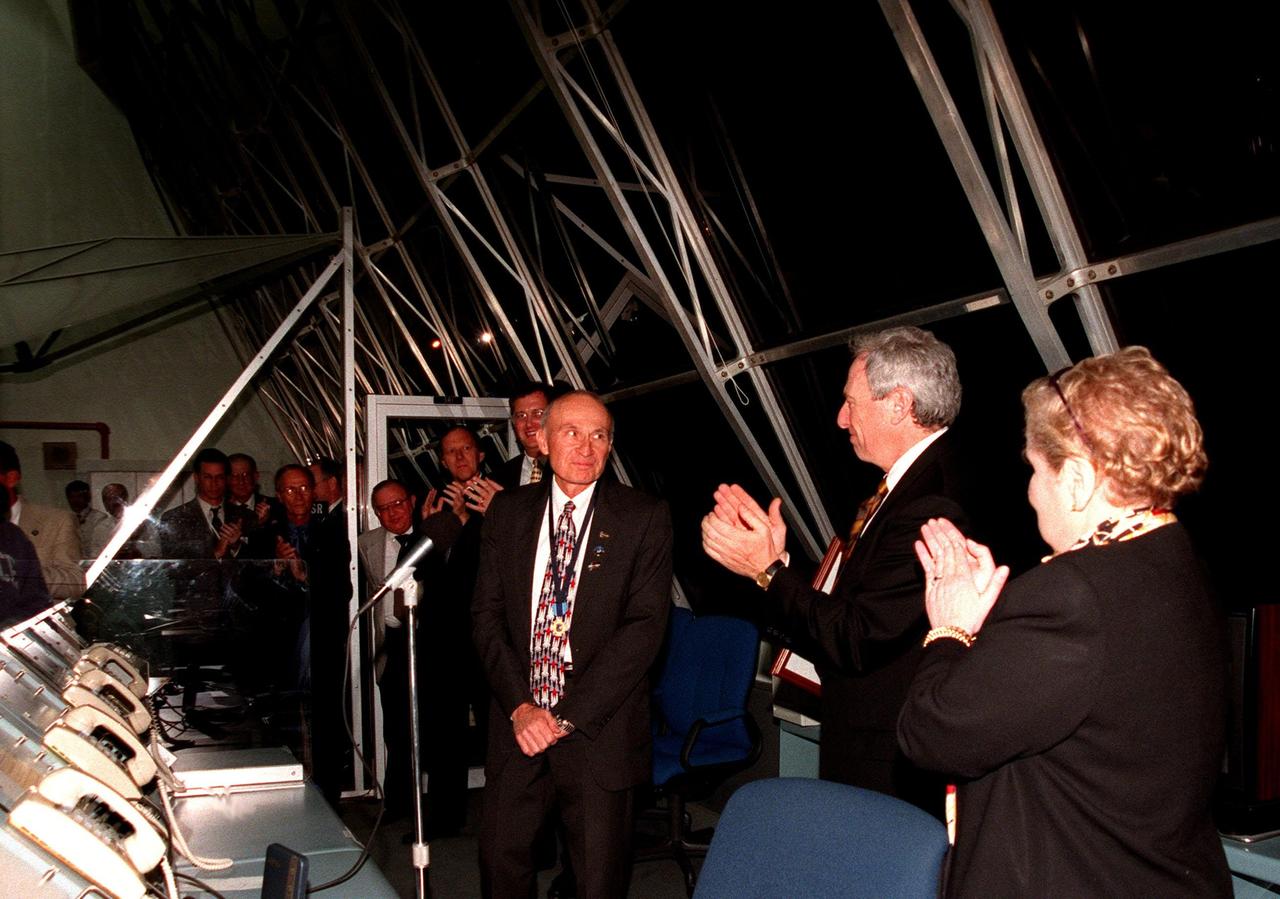
In a firing room in the Launch Control Center, KSC Director of Shuttle Operations Robert B. Sieck (left) is applauded by NASA Administrator Daniel Goldin (center) and U.S. Secretary of State Madeleine Albright for receiving the Distinguished Service Medal (seen around Sieck's neck). Goldin conferred the medal after the successful launch of STS-88, citing Sieck's distinguished service as the Kennedy Space Center launch director and director of Shuttle Processing, outstanding leadership and total dedication to the success of the Space Shuttle Program. The medal is the highest honor NASA gives a government employee
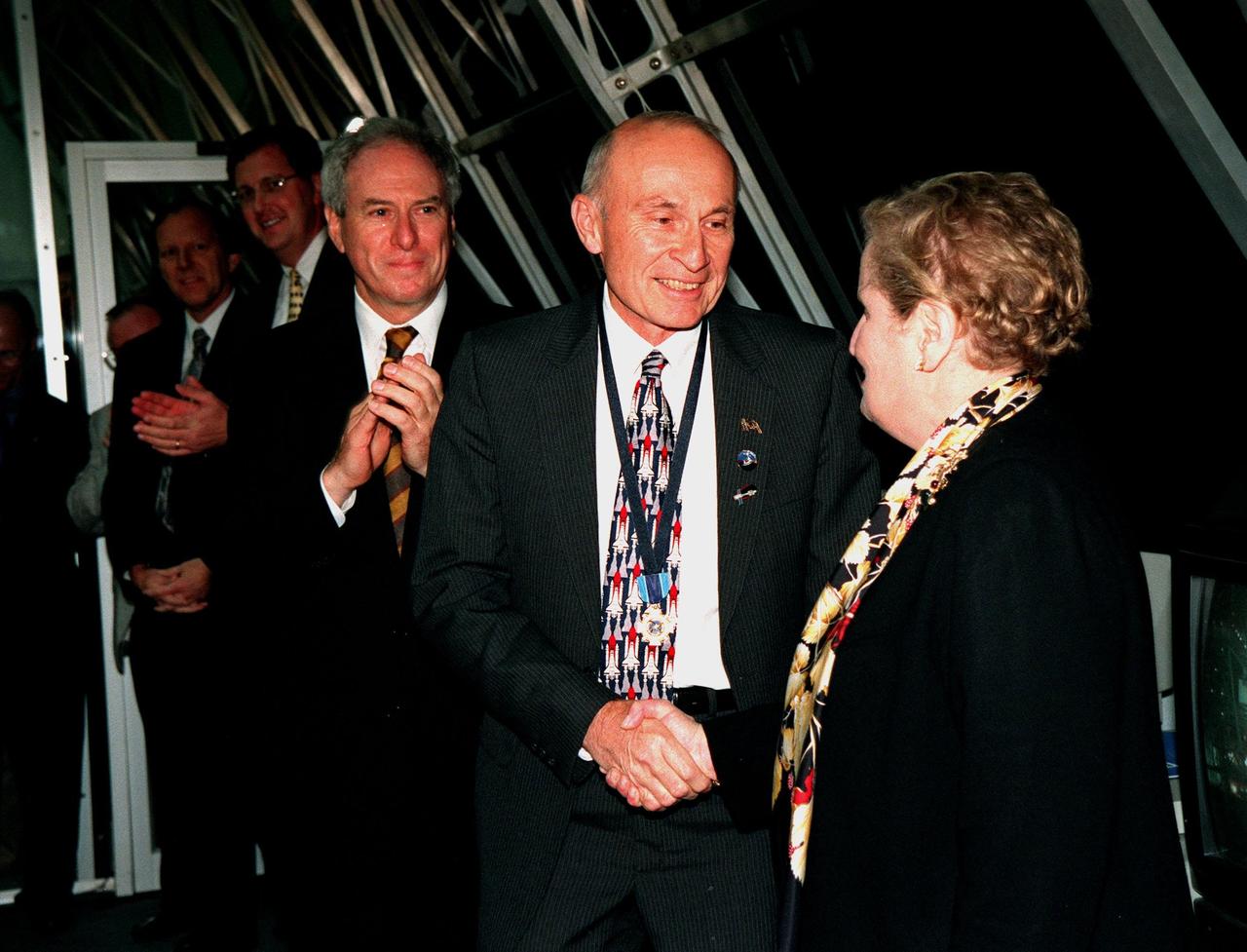
In a firing room of the Launch Control Center , KSC Director of Shuttle Operations Robert B. Sieck (center) shakes hands with Secretary of State Madeleine Albright (right) after the successful launch of Space Shuttle Endeavour on mission STS-88 at 3:35:34 a.m. EST. At left is NASA Administrator Daniel Goldin. Sieck is wearing around his neck the Distinguished Service Medal presented him by Goldin following the launch. The medal, the highest honor NASA confers on a government employee, recognizes someone who has personally made a contribution representing substantial and extraordinary progress to the mission of NASA
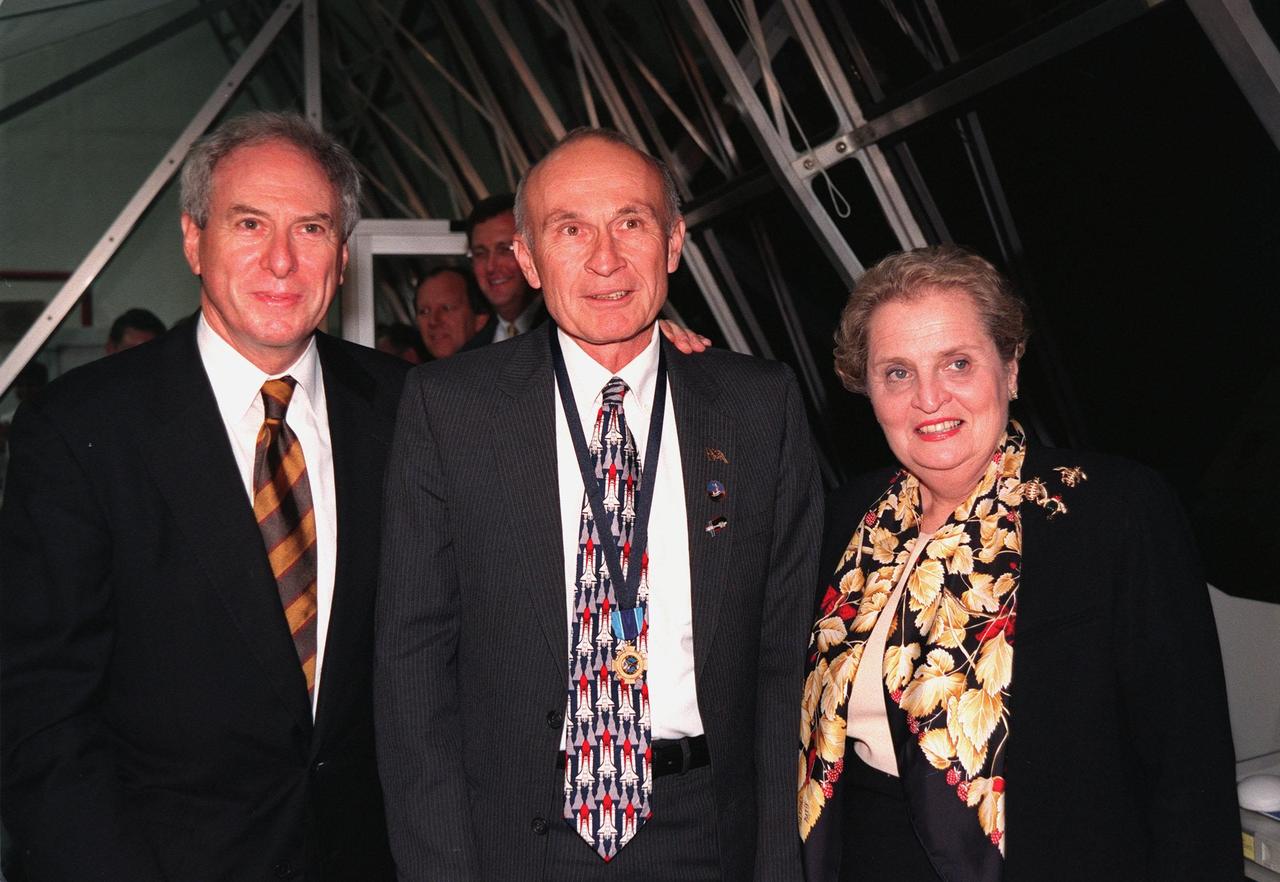
NASA Administrator Daniel Goldin (left), KSC Director of Shuttle Operations Robert B. Sieck (center) and Secretary of State Madeleine Albright (right) pose in the firing room of the Launch Control Center following the successful launch of Space Shuttle Endeavour on mission STS-88 at 3:35:34 a.m. EST. Sieck is wearing around his neck the Distinguished Service Medal presented him by Goldin just after launch. The medal, the highest honor NASA confers on a government employee, recognizes someone who has personally made a contribution representing substantial and extraordinary progress to the mission of NASA
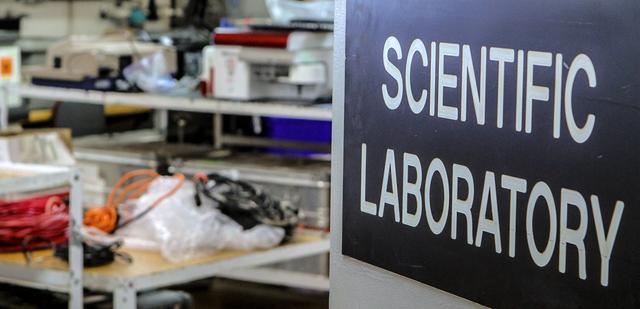
The R/V Atlantis houses sophisticated science laboratories, including rooms for computer use, “wet” work, chemical analysis and more. --- The <b><a href="http://naames.larc.nasa.gov/" rel="nofollow">North Atlantic Aerosols and Marine Ecosystems Study </a></b> (NAAMES) is a five year investigation to resolve key processes controlling ocean system function, their influences on atmospheric aerosols and clouds and their implications for climate. Michael Starobin joined the NAAMES field campaign on behalf of Earth Expeditions and NASA Goddard Space Flight Center’s Office of Communications. He presented stories about the important, multi-disciplinary research being conducted by the NAAMES team, with an eye towards future missions on the NASA drawing board. This is a NAAMES photo essay put together by Starobin, a collection of 49 photographs and captions. Photo and Caption Credit: Michael Starobin <b><a href="http://www.nasa.gov/audience/formedia/features/MP_Photo_Guidelines.html" rel="nofollow">NASA image use policy</a></b> <b><a href="http://www.nasa.gov/centers/goddard/home/index.html" rel="nofollow">NASA Goddard Space Flight Center</a></b> enables NASA’s mission through four scientific endeavors: Earth Science, Heliophysics, Solar System Exploration, and Astrophysics. Goddard plays a leading role in NASA’s accomplishments by contributing compelling scientific knowledge to advance the Agency’s mission. <b>Follow us on <a href="http://twitter.com/NASAGoddardPix" rel="nofollow">Twitter</a></b> <b>Like us on <a href="http://www.facebook.com/pages/Greenbelt-MD/NASA-Goddard/395013845897?ref=tsd" rel="nofollow">Facebook</a></b> <b>Find us on <a href="https://www.instagram.com/nasagoddard/?hl=en" rel="nofollow">Instagram</a></b>
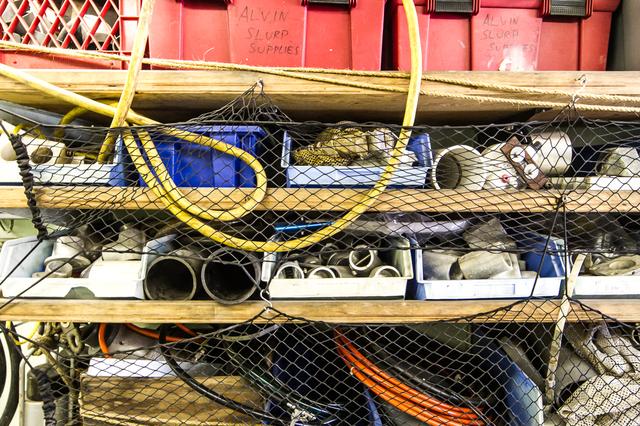
In a room adjacent to the working laboratories on the Atlantis, a storeroom holds spare parts, supplies and various odds and ends—potential solutions for ingenious researchers to solve problems in the field. --- The <b><a href="http://naames.larc.nasa.gov/" rel="nofollow">North Atlantic Aerosols and Marine Ecosystems Study </a></b> (NAAMES) is a five year investigation to resolve key processes controlling ocean system function, their influences on atmospheric aerosols and clouds and their implications for climate. Michael Starobin joined the NAAMES field campaign on behalf of Earth Expeditions and NASA Goddard Space Flight Center’s Office of Communications. He presented stories about the important, multi-disciplinary research being conducted by the NAAMES team, with an eye towards future missions on the NASA drawing board. This is a NAAMES photo essay put together by Starobin, a collection of 49 photographs and captions. Photo and Caption Credit: Michael Starobin <b><a href="http://www.nasa.gov/audience/formedia/features/MP_Photo_Guidelines.html" rel="nofollow">NASA image use policy</a></b> <b><a href="http://www.nasa.gov/centers/goddard/home/index.html" rel="nofollow">NASA Goddard Space Flight Center</a></b> enables NASA’s mission through four scientific endeavors: Earth Science, Heliophysics, Solar System Exploration, and Astrophysics. Goddard plays a leading role in NASA’s accomplishments by contributing compelling scientific knowledge to advance the Agency’s mission. <b>Follow us on <a href="http://twitter.com/NASAGoddardPix" rel="nofollow">Twitter</a></b> <b>Like us on <a href="http://www.facebook.com/pages/Greenbelt-MD/NASA-Goddard/395013845897?ref=tsd" rel="nofollow">Facebook</a></b> <b>Find us on <a href="https://www.instagram.com/nasagoddard/?hl=en" rel="nofollow">Instagram</a></b>
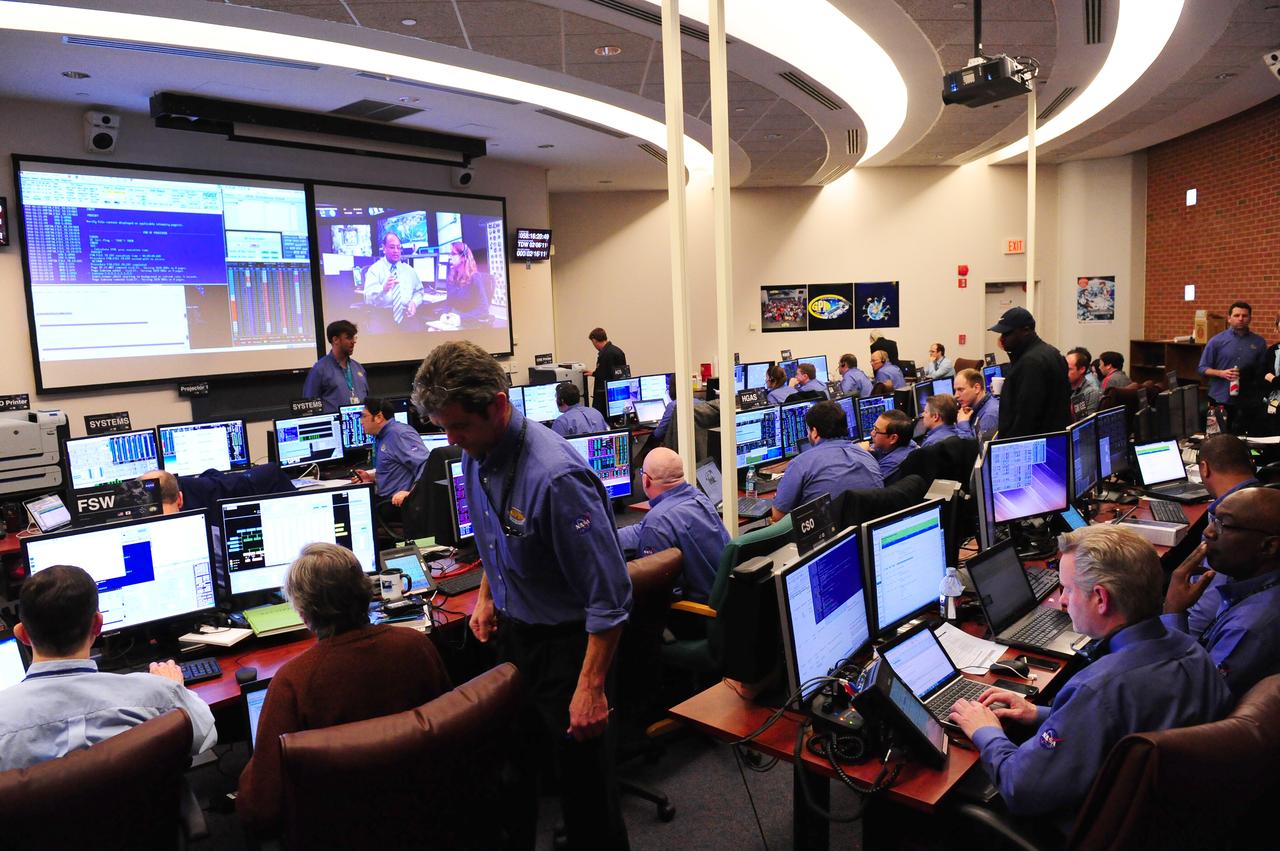
One of the control rooms at NASA’s Goddard Space Flight Center in Greenbelt, Md., prepares for the GPM mission’s Core Observatory on Feb. 27, 2014. <b>Credit: NASA's Goddard Space Flight Center/Debbie McCallum</b> GPM's Core Observatory is poised for launch from the Japan Aerospace Exploration Agency's Tanegashima Space Center, scheduled for the afternoon of Feb. 27, 2014 (EST). GPM is a joint venture between NASA and the Japan Aerospace Exploration Agency. The GPM Core Observatory will link data from a constellation of current and planned satellites to produce next-generation global measurements of rainfall and snowfall from space. The GPM mission is the first coordinated international satellite network to provide near real-time observations of rain and snow every three hours anywhere on the globe. The GPM Core Observatory anchors this network by providing observations on all types of precipitation. The observatory's data acts as the measuring stick by which partner observations can be combined into a unified data set. The data will be used by scientists to study climate change, freshwater resources, floods and droughts, and hurricane formation and tracking. <b><a href="http://www.nasa.gov/audience/formedia/features/MP_Photo_Guidelines.html" rel="nofollow">NASA image use policy.</a></b> <b><a href="http://www.nasa.gov/centers/goddard/home/index.html" rel="nofollow">NASA Goddard Space Flight Center</a></b> enables NASA’s mission through four scientific endeavors: Earth Science, Heliophysics, Solar System Exploration, and Astrophysics. Goddard plays a leading role in NASA’s accomplishments by contributing compelling scientific knowledge to advance the Agency’s mission. <b>Follow us on <a href="http://twitter.com/NASAGoddardPix" rel="nofollow">Twitter</a></b> <b>Like us on <a href="http://www.facebook.com/pages/Greenbelt-MD/NASA-Goddard/395013845897?ref=tsd" rel="nofollow">Facebook</a></b> <b>Find us on <a href="http://instagram.com/nasagoddard?vm=grid" rel="nofollow">Instagram</a></b>
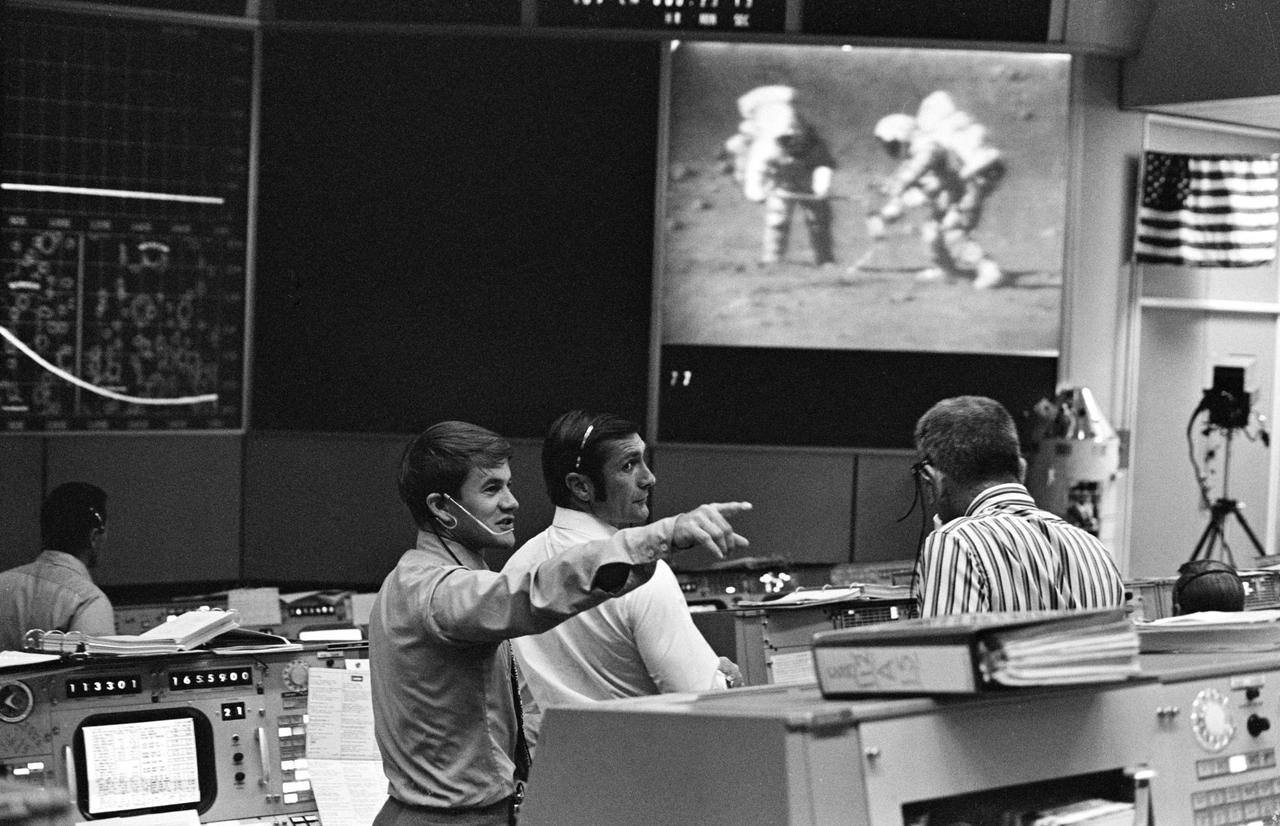
S71-41836 (2 Aug. 1971) --- Scientist-astronaut Joseph P. Allen, left, directs the attention of astronaut Richard F. Gordon Jr., to an occurrence out of view at right in the Mission Control Center's (MCC) Mission Operations Control Room (MOCR), while Dr. Donald K. (Deke) Slayton, on right with back to camera, views activity of Apollo 15 on a large screen at the front of the MOCR. Astronauts David R. Scott and James B. Irwin are seen on the screen performing tasks of the mission's third extravehicular activity (EVA), on Aug. 2, 1971. Dr. Slayton is director of Flight Crew Operations, NASA-MSC; Gordon is Apollo 15 backup commander; and Dr. Allen is an Apollo 15 spacecraft communicator.
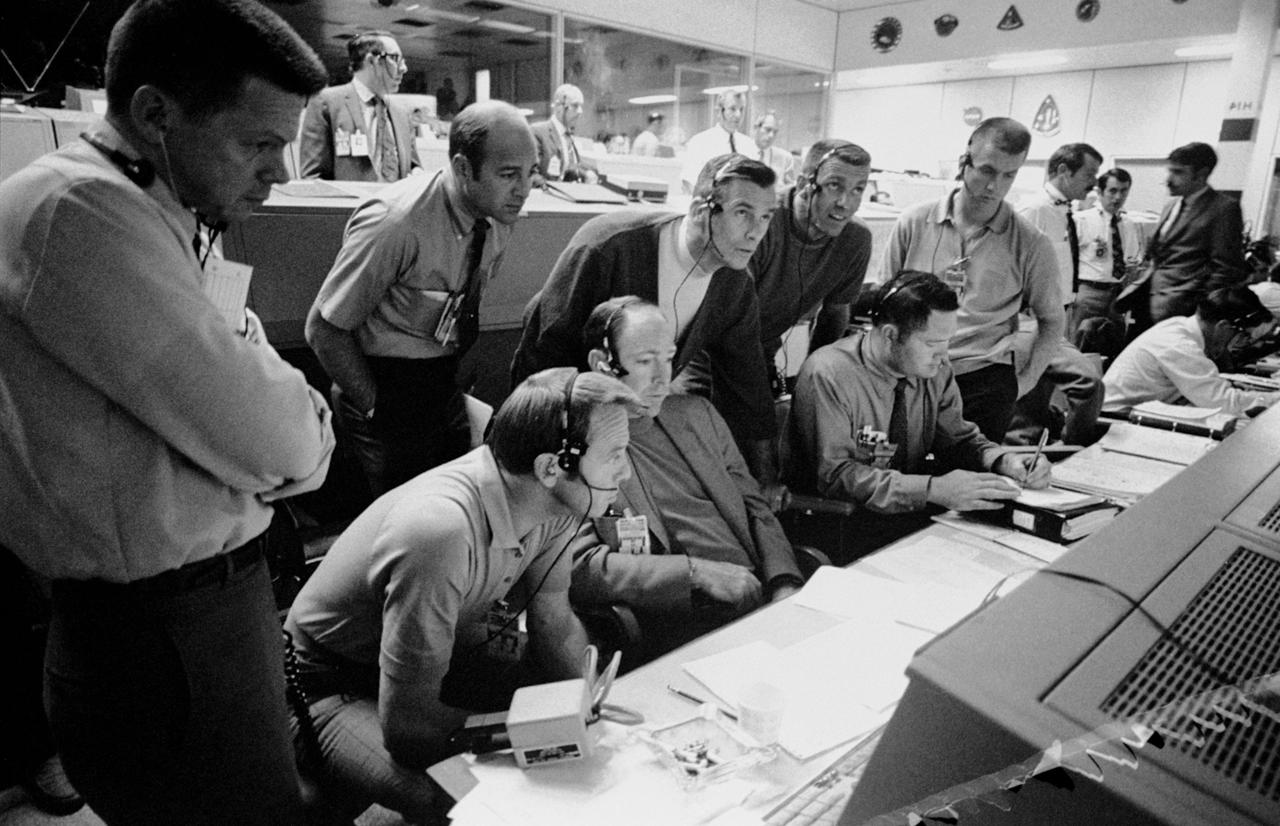
S70-34986 (14 April 1970) --- A group of six astronauts and two flight controllers monitor the console activity in the Mission Operations Control Room (MOCR) of the Mission Control Center (MCC) during the problem-plagued Apollo 13 lunar landing mission. Seated, left to right, are MOCR Guidance Officer Raymond F. Teague; astronaut Edgar D. Mitchell, Apollo 14 prime crew lunar module pilot; and astronaut Alan B. Shepard Jr., Apollo 14 prime crew commander. Standing, left to right, are scientist-astronaut Anthony W. England; astronaut Joe H. Engle, Apollo 14 backup crew lunar module pilot; astronaut Eugene A. Cernan, Apollo 14 backup crew commander; astronaut Ronald E. Evans, Apollo 14 backup crew command module pilot; and M.P. Frank, a flight controller. When this picture was made, the Apollo 13 moon landing had already been canceled, and the Apollo 13 crew men were in trans-Earth trajectory attempting to bring their damaged spacecraft back home.
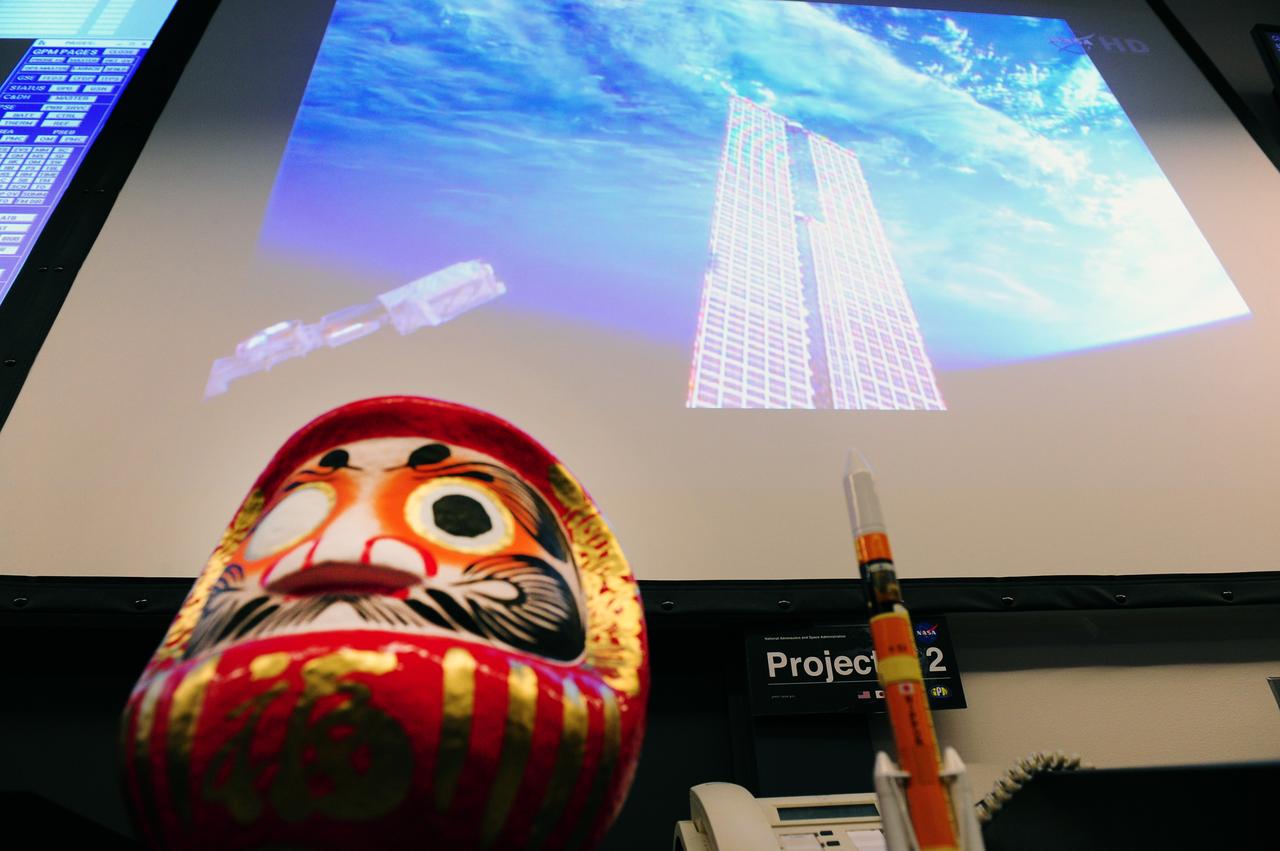
The Daruma doll is a symbol of good luck and in Japan is often given as a gift for encouragement to reach a goal. When the goal is set, one eye is colored in. When the goal is achieved, the other eye is colored. <a href="http://www.flickr.com/photos/nasahqphoto/12714130984/in/set-72157641344480584" target="_blank">An identical doll</a> sits in the control room at the Japan Aerospace Agency’s (JAXA) Tanegashima Space Center, leading up to the launch of the joint NASA-JAXA Global Precipitation Measurement mission’s Core Observatory. <b>Credit: NASA's Goddard Space Flight Center/Debbie McCallum</b> GPM's Core Observatory is poised for launch from the Japan Aerospace Exploration Agency's Tanegashima Space Center, scheduled for the afternoon of Feb. 27, 2014 (EST). GPM is a joint venture between NASA and the Japan Aerospace Exploration Agency. The GPM Core Observatory will link data from a constellation of current and planned satellites to produce next-generation global measurements of rainfall and snowfall from space. The GPM mission is the first coordinated international satellite network to provide near real-time observations of rain and snow every three hours anywhere on the globe. The GPM Core Observatory anchors this network by providing observations on all types of precipitation. The observatory's data acts as the measuring stick by which partner observations can be combined into a unified data set. The data will be used by scientists to study climate change, freshwater resources, floods and droughts, and hurricane formation and tracking. <b><a href="http://www.nasa.gov/audience/formedia/features/MP_Photo_Guidelines.html" rel="nofollow">NASA image use policy.</a></b> <b><a href="http://www.nasa.gov/centers/goddard/home/index.html" rel="nofollow">NASA Goddard Space Flight Center</a></b> enables NASA’s mission through four scientific endeavors: Earth Science, Heliophysics, Solar System Exploration, and Astrophysics. Goddard plays a leading role in NASA’s accomplishments by contributing compelling scientific knowledge to advance the Agency’s mission. <b>Follow us on <a href="http://twitter.com/NASAGoddardPix" rel="nofollow">Twitter</a></b> <b>Like us on <a href="http://www.facebook.com/pages/Greenbelt-MD/NASA-Goddard/395013845897?ref=tsd" rel="nofollow">Facebook</a></b> <b>Find us on <a href="http://instagram.com/nasagoddard?vm=grid" rel="nofollow">Instagram</a></b>

CAPE CANAVERAL, Fla. – At NASA’s Kennedy Space Center in Florida, workers pull cables between the 26th and 29th floors of high bay 3 in the 525-foot-tall Vehicle Assembly Building, or VAB, during part of a centerwide refurbishment initiative under the Ground Systems Development and Operations GSDO Program. The cable replacement project is under way in high bays 1 and 3 on the east side of the building, facing Launch Complex 39’s pads A and B. Approximately 150 miles of existing Apollo/shuttle era cabling is being removed to make room for installation of state-of-the-art command, communication and control systems that will be needed by future users to perform vehicle testing and verification prior to rollout to the launch pad. For more information, visit http://go.nasa.gov/groundsystems. Photo credit: NASA/Jim Grossmann
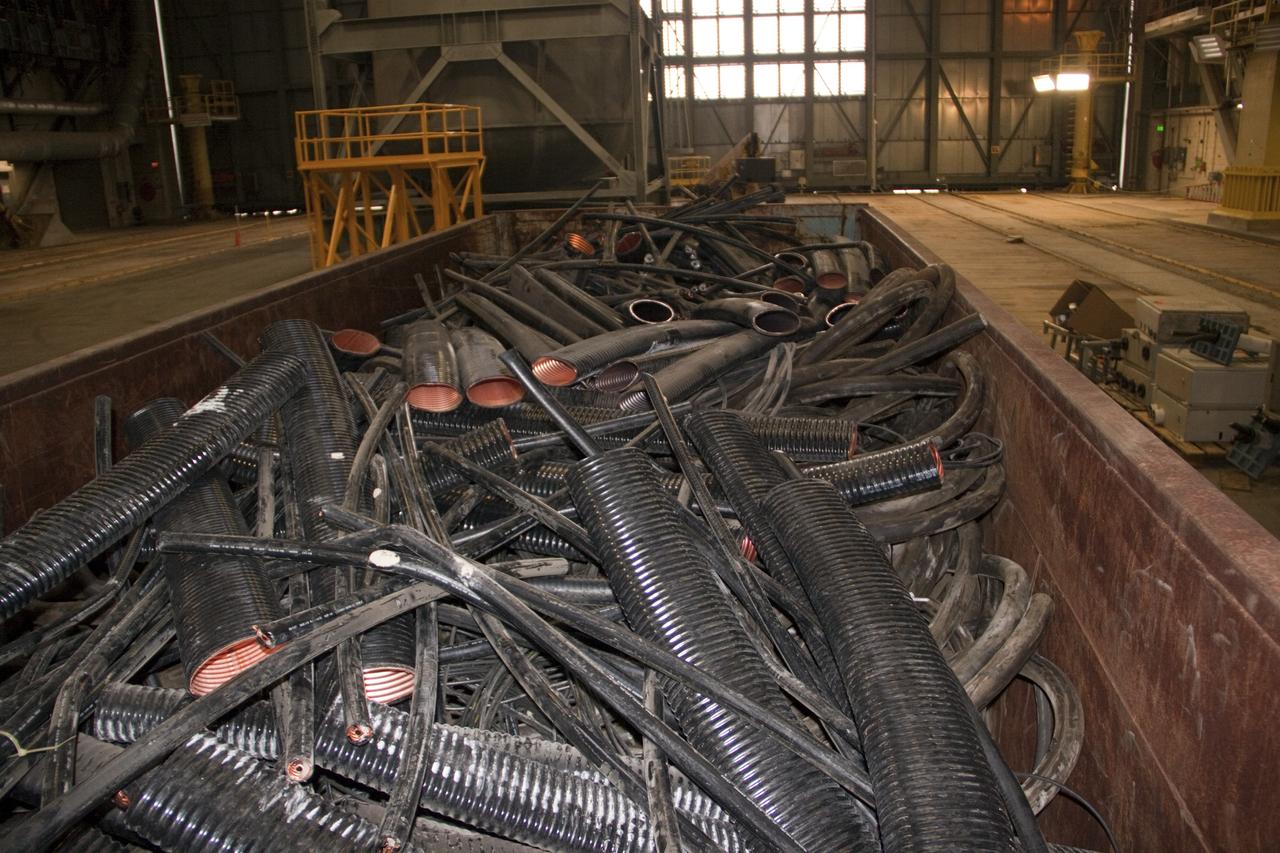
CAPE CANAVERAL, Fla. – At NASA’s Kennedy Space Center in Florida, old cabling is being pulled from high bay 3 in the Vehicle Assembly Building, or VAB, as part of a centerwide refurbishment initiative under the Ground Systems Development and Operations GSDO Program. The cable replacement project is under way in high bays 1 and 3 on the east side of the building, facing Launch Complex 39’s pads A and B. Approximately 150 miles of existing Apollo/shuttle era cabling is being removed to make room for installation of state-of-the-art command, communication and control systems that will be needed by future users to perform vehicle testing and verification prior to rollout to the launch pad. For more information, visit http://go.nasa.gov/groundsystems. Photo credit: NASA/Jim Grossmann
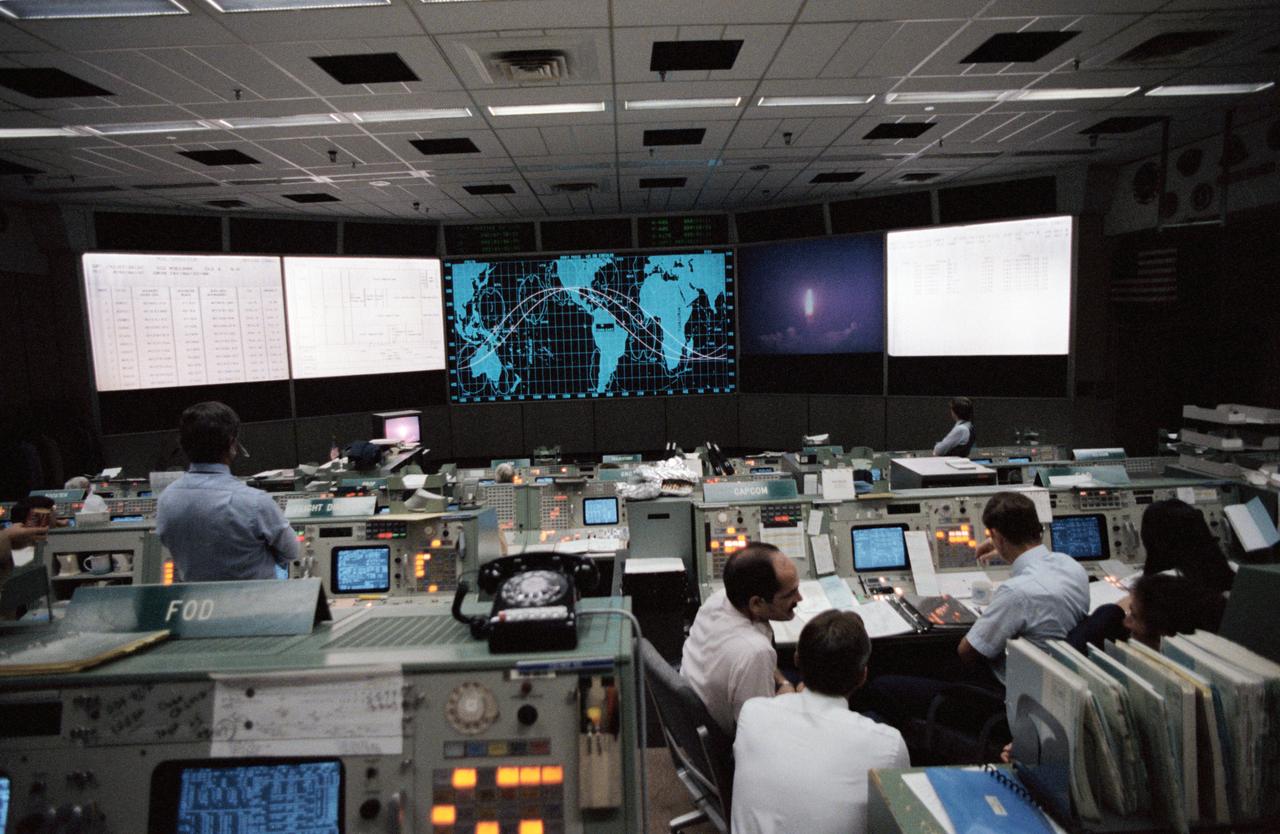
Serving as spacecraft communicators (CAPCOM) are Astronauts Guy S. Gardner (left), William F. Fisher (center), Bryan D. O'Connor (seated facing console), and Jeffrey A. Hoffman. Cheevon B. Lau is seated at the flight activities officer (FAO) console to the right of the CAPCOM console. The scene on the large screen in the mission operations control room (MOCR) is a replay of the launch of the Challenger (39264); Flight Director Jay H. Greene, left, watches a replay of the STS-8 launch on the large screen in the MOCR. He is joined by O'Connor, Jeffrey A. Hoffman, Gardner and Fisher. Lau works at the FAO console near the CAPCOM console (39265); Harold Black, integrated communications officer (INCO) for STS-8 mans the INCO console during the first TV downlink from the Challengers flight. The payload bay can be seen on the screen in the front of the MOCR (39266).
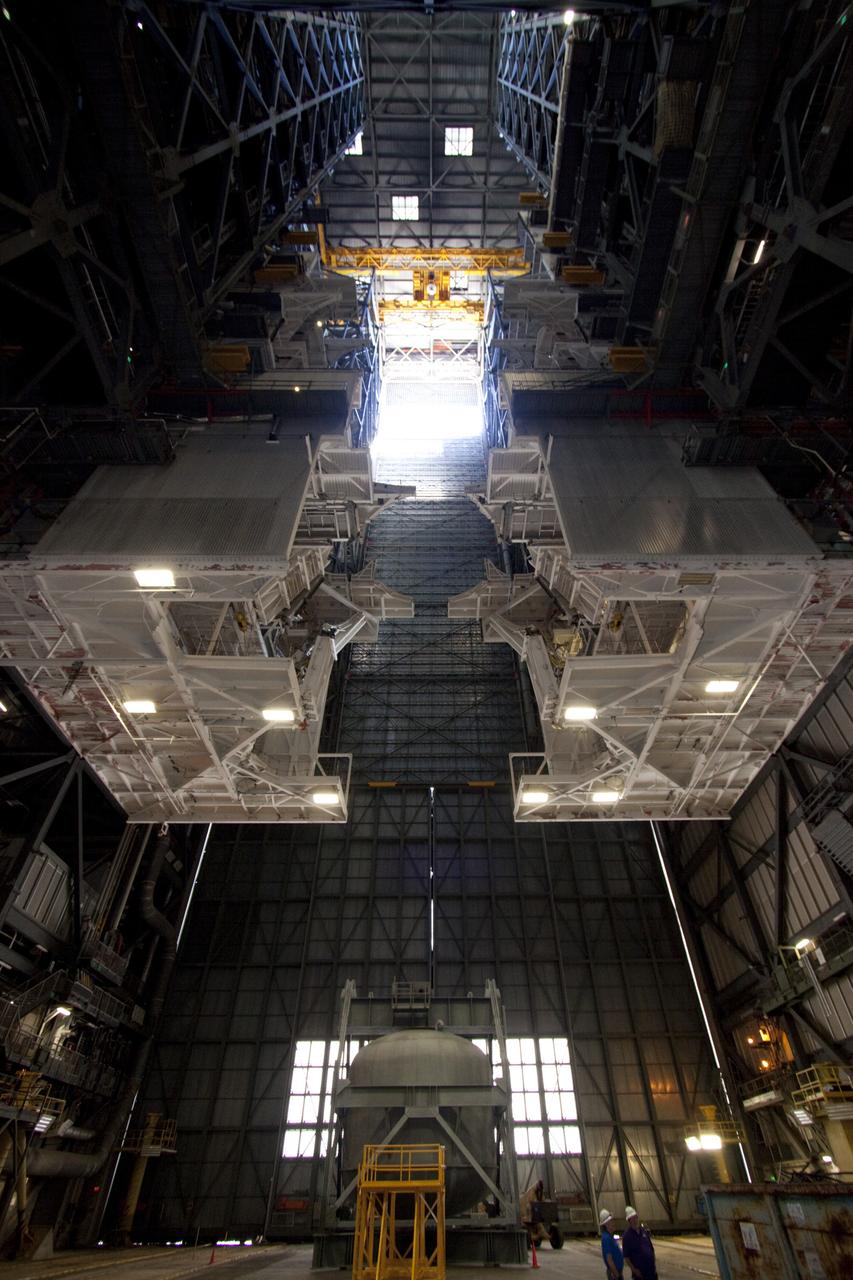
CAPE CANAVERAL, Fla. – At NASA’s Kennedy Space Center in Florida, refurbishment of high bay 3 is under way in the Vehicle Assembly Building, or VAB, as part of a centerwide refurbishment initiative under the Ground Systems Development and Operations GSDO Program. It is 525 feet from the bay’s ceiling to the floor. The cable replacement project is under way in high bays 1 and 3 on the east side of the building, facing Launch Complex 39’s pads A and B. Approximately 150 miles of existing Apollo/shuttle era cabling is being removed to make room for installation of state-of-the-art command, communication and control systems that will be needed by future users to perform vehicle testing and verification prior to rollout to the launch pad. For more information, visit http://go.nasa.gov/groundsystems. Photo credit: NASA/Jim Grossmann
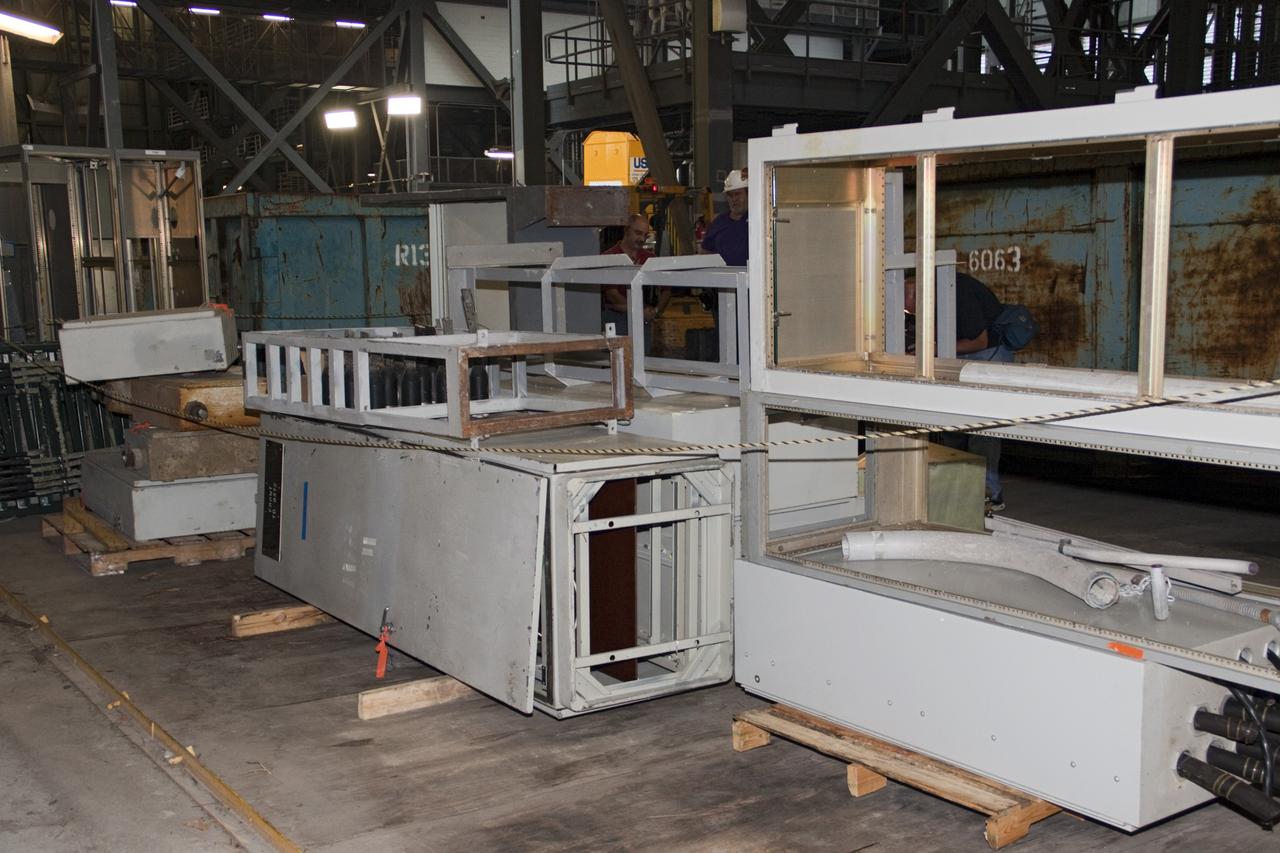
CAPE CANAVERAL, Fla. – At NASA’s Kennedy Space Center in Florida, old racks are being excessed in high bay 3 in the Vehicle Assembly Building, or VAB, as part of a centerwide refurbishment initiative under the Ground Systems Development and Operations GSDO Program The cable replacement project is under way in high bays 1 and 3 on the east side of the building, facing Launch Complex 39’s pads A and B. Approximately 150 miles of existing Apollo/shuttle era cabling is being removed to make room for installation of state-of-the-art command, communication and control systems that will be needed by future users to perform vehicle testing and verification prior to rollout to the launch pad. For more information, visit http://go.nasa.gov/groundsystems. Photo credit: NASA/Jim Grossmann
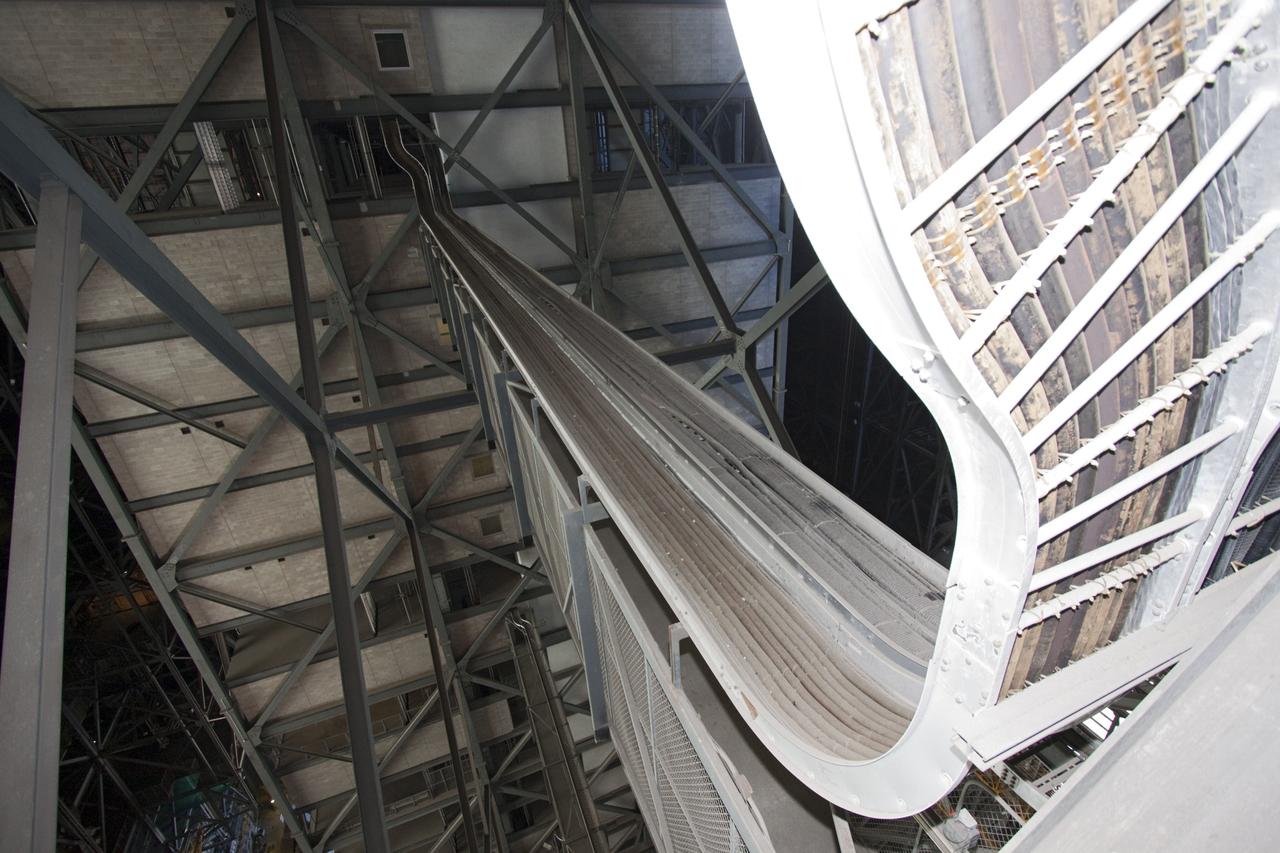
CAPE CANAVERAL, Fla. – At NASA’s Kennedy Space Center in Florida, cable trays wind their way along the grating in high bay 3 in the Vehicle Assembly Building, or VAB, during part of a centerwide refurbishment initiative under the Ground Systems Development and Operations GSDO Program. The cable replacement project is under way in high bays 1 and 3 on the east side of the building, facing Launch Complex 39’s pads A and B. Approximately 150 miles of existing Apollo/shuttle era cabling is being removed to make room for installation of state-of-the-art command, communication and control systems that will be needed by future users to perform vehicle testing and verification prior to rollout to the launch pad. For more information, visit http://go.nasa.gov/groundsystems. Photo credit: NASA/Jim Grossmann

CAPE CANAVERAL, Fla. – At NASA’s Kennedy Space Center in Florida, cable trays run along the walls in high bay 3 in the Vehicle Assembly Building, or VAB, as part of a centerwide refurbishment initiative under the Ground Systems Development and Operations GSDO Program. The cable replacement project is under way in high bays 1 and 3 on the east side of the building, facing Launch Complex 39’s pads A and B. Approximately 150 miles of existing Apollo/shuttle era cabling is being removed to make room for installation of state-of-the-art command, communication and control systems that will be needed by future users to perform vehicle testing and verification prior to rollout to the launch pad. For more information, visit http://go.nasa.gov/groundsystems. Photo credit: NASA/Jim Grossmann
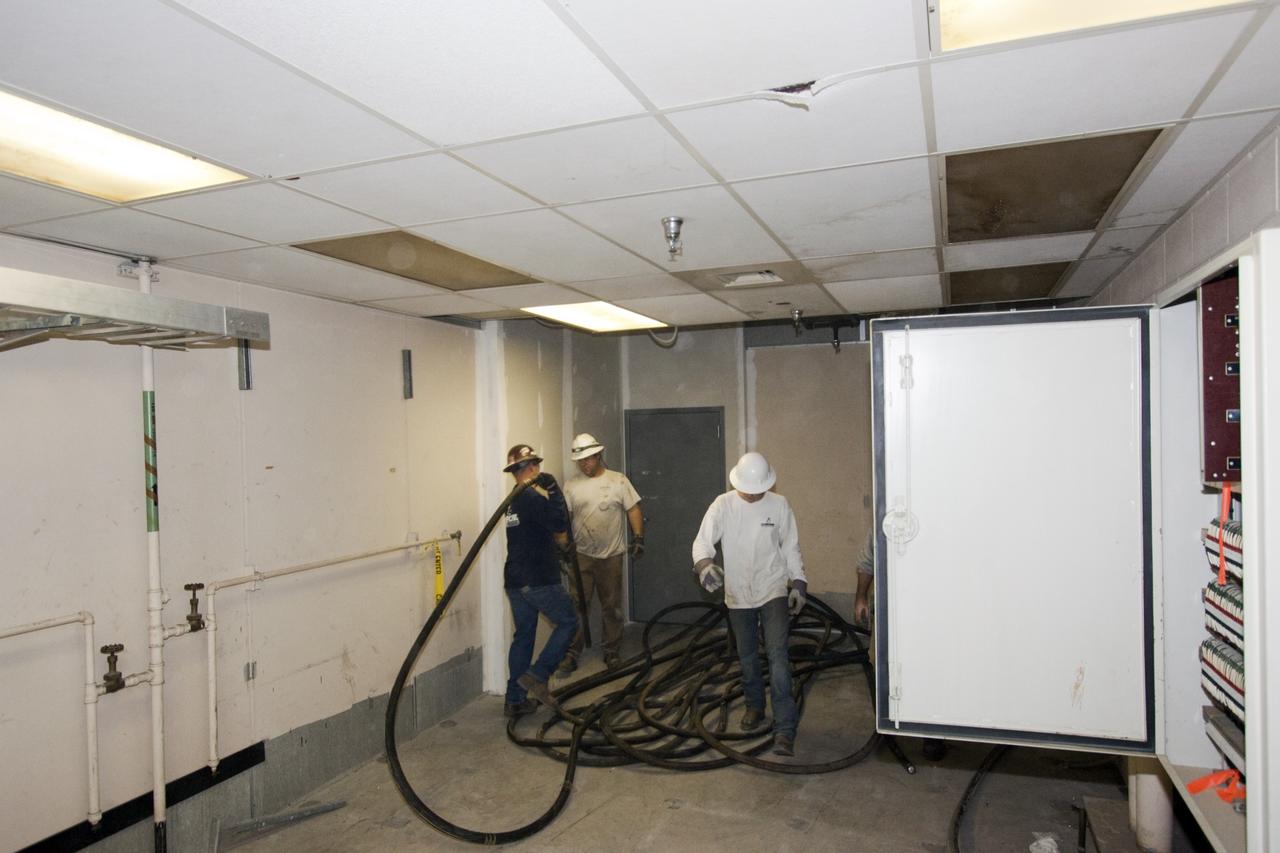
CAPE CANAVERAL, Fla. – At NASA’s Kennedy Space Center in Florida, workers remove cables between the 26th and 29th floors of high bay 3 in the 525-foot-tall Vehicle Assembly Building, or VAB, during part of a centerwide refurbishment initiative under the Ground Systems Development and Operations GSDO Program. The cable replacement project is under way in high bays 1 and 3 on the east side of the building, facing Launch Complex 39’s pads A and B. Approximately 150 miles of existing Apollo/shuttle era cabling is being removed to make room for installation of state-of-the-art command, communication and control systems that will be needed by future users to perform vehicle testing and verification prior to rollout to the launch pad. For more information, visit http://go.nasa.gov/groundsystems. Photo credit: NASA/Jim Grossmann
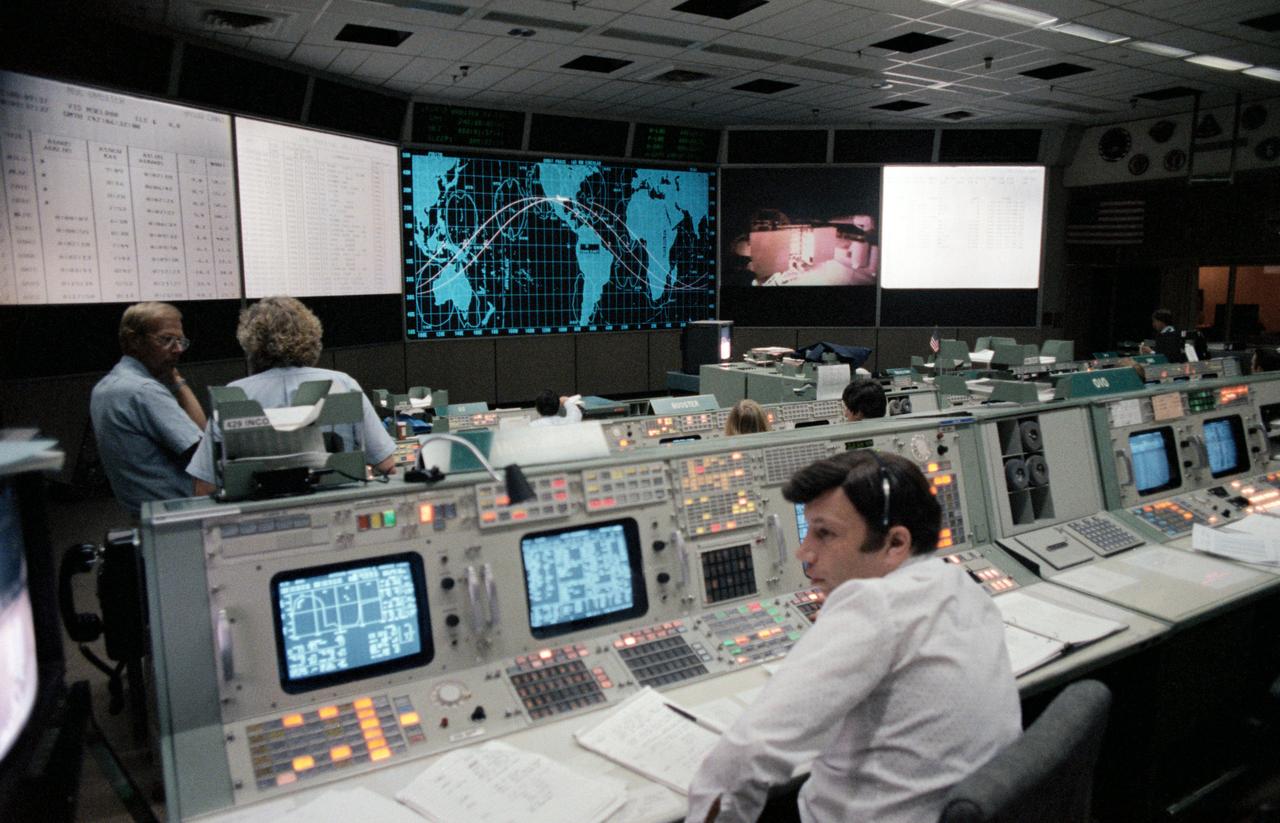
Serving as spacecraft communicators (CAPCOM) are Astronauts Guy S. Gardner (left), William F. Fisher (center), Bryan D. O'Connor (seated facing console), and Jeffrey A. Hoffman. Cheevon B. Lau is seated at the flight activities officer (FAO) console to the right of the CAPCOM console. The scene on the large screen in the mission operations control room (MOCR) is a replay of the launch of the Challenger (39264); Flight Director Jay H. Greene, left, watches a replay of the STS-8 launch on the large screen in the MOCR. He is joined by O'Connor, Jeffrey A. Hoffman, Gardner and Fisher. Lau works at the FAO console near the CAPCOM console (39265); Harold Black, integrated communications officer (INCO) for STS-8 mans the INCO console during the first TV downlink from the Challengers flight. The payload bay can be seen on the screen in the front of the MOCR (39266).
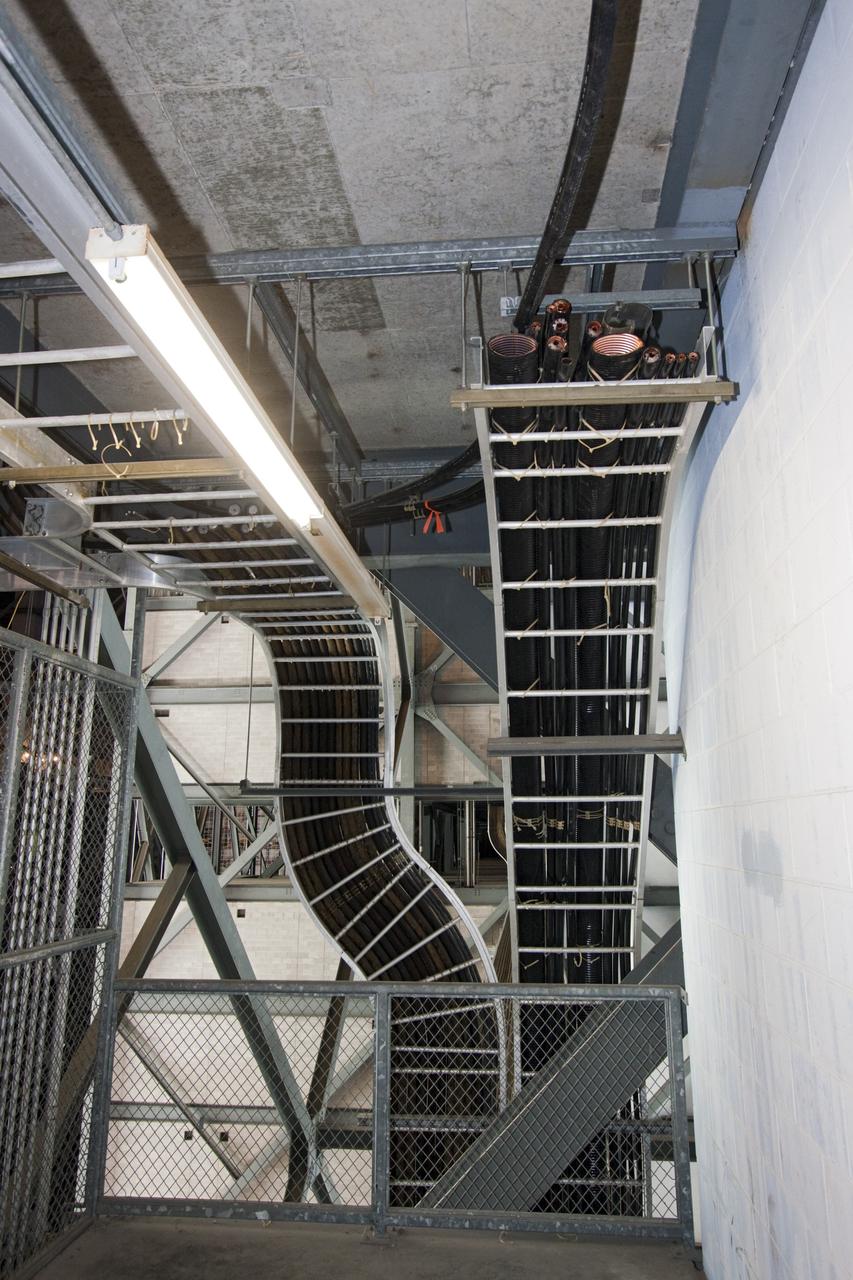
CAPE CANAVERAL, Fla. – At NASA’s Kennedy Space Center in Florida, cable is being pulled from the cable trays lining the walls of high bay 3 in the Vehicle Assembly Building, or VAB, as part of a centerwide refurbishment initiative under the Ground Systems Development and Operations GSDO Program. The cable replacement project is under way in high bays 1 and 3 on the east side of the building, facing Launch Complex 39’s pads A and B. Approximately 150 miles of existing Apollo/shuttle era cabling is being removed to make room for installation of state-of-the-art command, communication and control systems that will be needed by future users to perform vehicle testing and verification prior to rollout to the launch pad. For more information, visit http://go.nasa.gov/groundsystems. Photo credit: NASA/Jim Grossmann
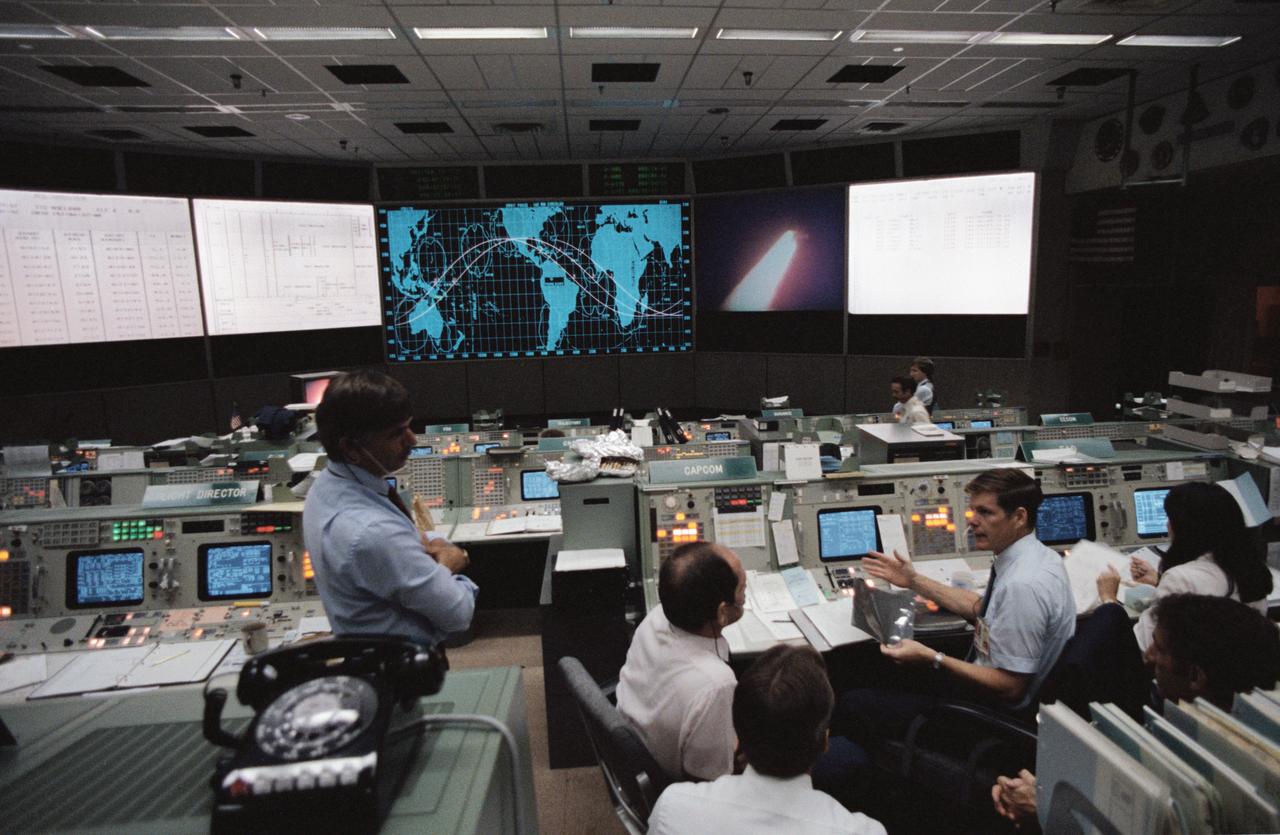
Serving as spacecraft communicators (CAPCOM) are Astronauts Guy S. Gardner (left), William F. Fisher (center), Bryan D. O'Connor (seated facing console), and Jeffrey A. Hoffman. Cheevon B. Lau is seated at the flight activities officer (FAO) console to the right of the CAPCOM console. The scene on the large screen in the mission operations control room (MOCR) is a replay of the launch of the Challenger (39264); Flight Director Jay H. Greene, left, watches a replay of the STS-8 launch on the large screen in the MOCR. He is joined by O'Connor, Jeffrey A. Hoffman, Gardner and Fisher. Lau works at the FAO console near the CAPCOM console (39265); Harold Black, integrated communications officer (INCO) for STS-8 mans the INCO console during the first TV downlink from the Challengers flight. The payload bay can be seen on the screen in the front of the MOCR (39266).
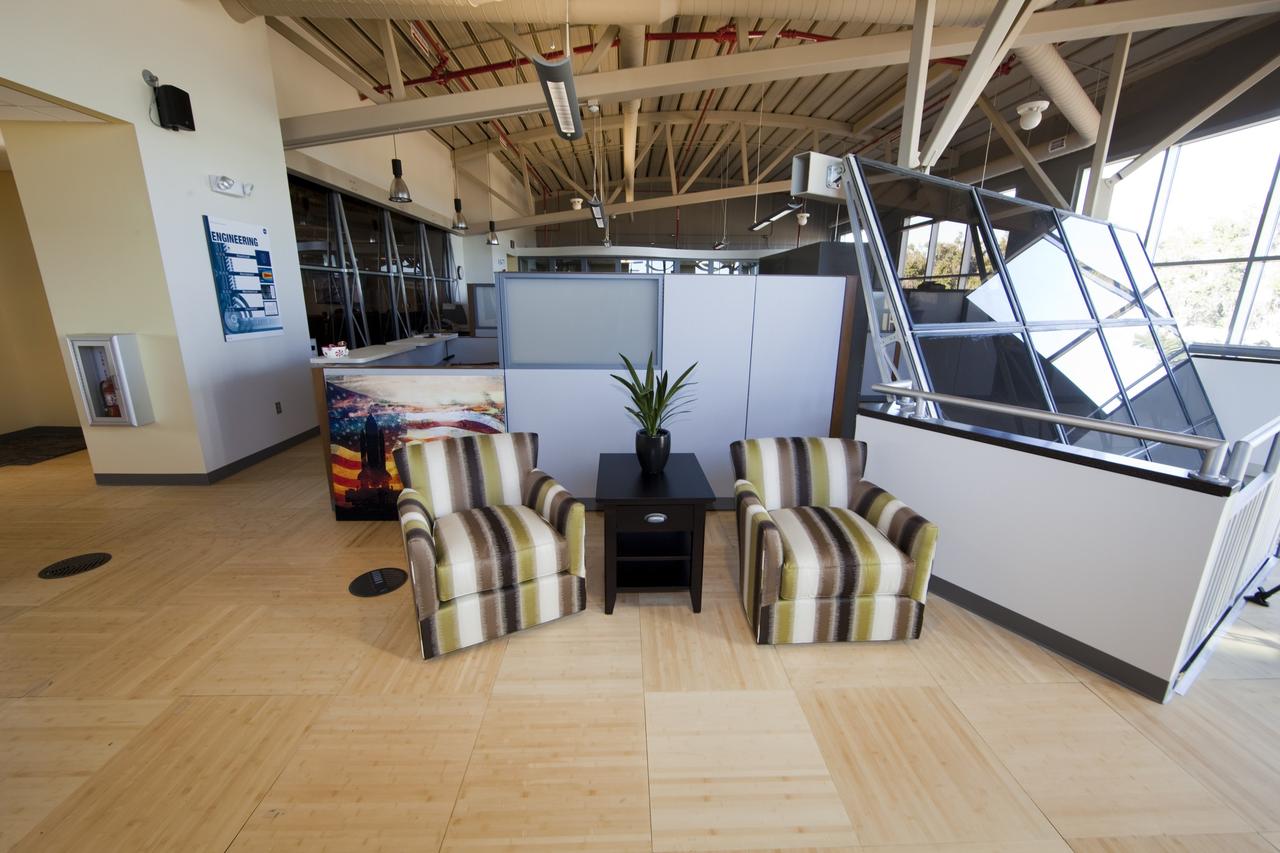
CAPE CANAVERAL, Fla. -- Finishing touches adorn the second-floor lobby of the Propellants North Administrative and Maintenance Facility at NASA's Kennedy Space Center in Florida. At right, are recycled firing room windows that are set at the same angle and orientation as they were in Kennedy's Launch Control Center, looking out toward Launch Pads 39A and B. The environmentally friendly facility is slated to be NASA's second Platinum-rated by the U.S. Green Building Council's (USGBC) Leadership in Environmental and Energy Design (LEED) certification system. It will be the space agency's first net-zero facility, which means it will produce enough energy onsite from renewable sources to offset what it requires to operate. The facility consists of a two-story administrative building to house managers, mechanics and technicians who fuel spacecraft at Kennedy, and a single-story shop to store cryogenic fuel transfer equipment. Photo credit: NASA/Frankie Martin

During the Apollo 15 launch activities in the launch control center's firing room 1 at Kennedy Space Center, Dr. Wernher von Braun, NASA's Deputy Associate Administrator for planning, takes a closer look at the launch pad through binoculars. The fifth manned lunar landing mission, Apollo 15 (SA-510), carrying a crew of three astronauts: Mission commander David R. Scott, Lunar Module pilot James B. Irwin, and Command Module pilot Alfred M. Worden Jr., lifted off on July 26, 1971. Astronauts Scott and Irwin were the first to use a wheeled surface vehicle, the Lunar Roving Vehicle, or the Rover, which was designed and developed by the Marshall Space Flight Center, and built by the Boeing Company. Astronauts spent 13 days, nearly 67 hours, on the Moon's surface to inspect a wide variety of its geological features.
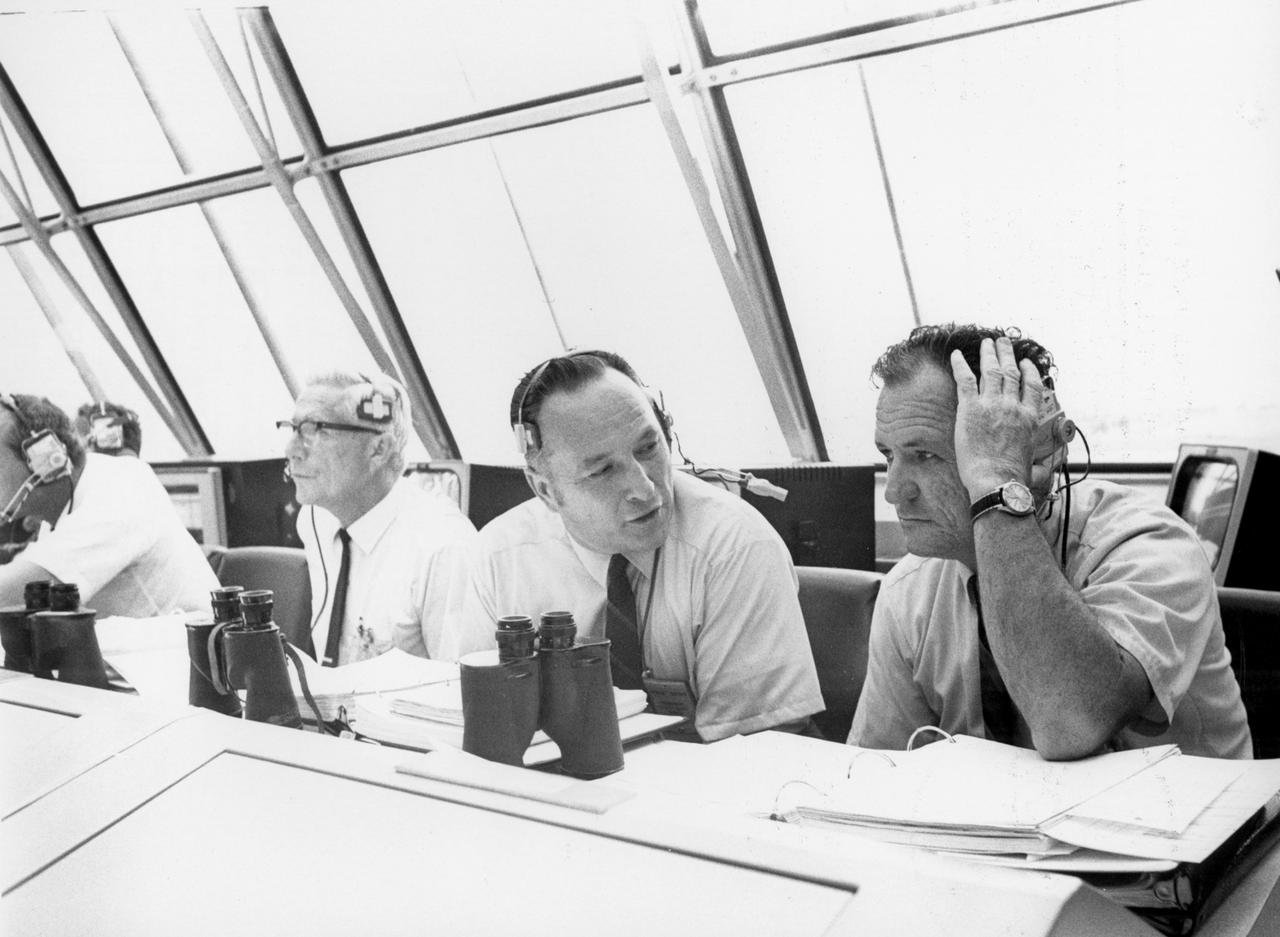
Lee B. James (left), manager of the Saturn Program at the Marshall Space flight Center (MSFC), talks with Isom Pigell in the firing room 1 of the Kennedy Space Center (KSC) control center during the countdown demonstration test for the Apollo 11 mission. At left is Dr. Hans C. Gruen of KSC. The Apollo 11 mission, the first lunar landing mission, launched from the KSC in Florida via the MSFC developed Saturn V launch vehicle on July 16, 1969 and safely returned to Earth on July 24, 1969. Aboard the space craft were astronauts Neil A. Armstrong, commander; Michael Collins, Command Module (CM) pilot; and Edwin E. (Buzz) Aldrin Jr., Lunar Module (LM) pilot. The CM, “Columbia”, piloted by Collins, remained in a parking orbit around the Moon while the LM, “Eagle’’, carrying astronauts Armstrong and Aldrin, landed on the Moon. On July 20, 1969, Armstrong was the first human to ever stand on the lunar surface, followed by Aldrin. During 2½ hours of surface exploration, the crew collected 47 pounds of lunar surface material for analysis back on Earth. With the success of Apollo 11, the national objective to land men on the Moon and return them safely to Earth had been accomplished.
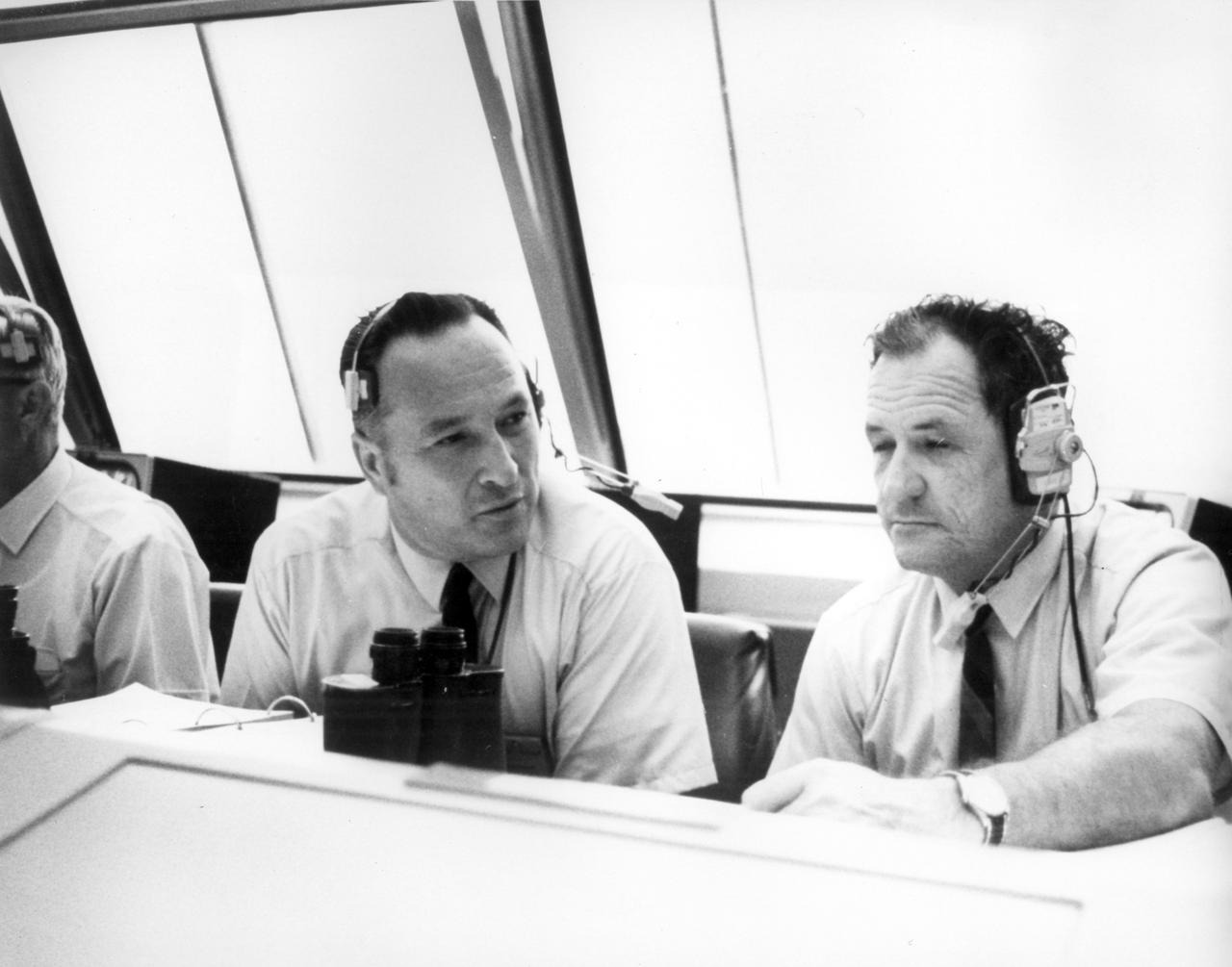
Lee B. James (left), manager of the Saturn Program at the Marshall Space flight Center (MSFC), talks with Isom Pigell in the firing room 1 of the Kennedy Space Center (KSC) control center during the countdown demonstration test for the Apollo 11 mission. The Apollo 11 mission, the first lunar landing mission, launched from the KSC in Florida via the MSFC developed Saturn V launch vehicle on July 16, 1969 and safely returned to Earth on July 24, 1969. Aboard the space craft were astronauts Neil A. Armstrong, commander; Michael Collins, Command Module (CM) pilot; and Edwin E. (Buzz) Aldrin Jr., Lunar Module (LM) pilot. The CM, “Columbia”, piloted by Collins, remained in a parking orbit around the Moon while the LM, “Eagle’’, carrying astronauts Armstrong and Aldrin, landed on the Moon. On July 20, 1969, Armstrong was the first human to ever stand on the lunar surface, followed by Aldrin. During 2½ hours of surface exploration, the crew collected 47 pounds of lunar surface material for analysis back on Earth. With the success of Apollo 11, the national objective to land men on the Moon and return them safely to Earth had been accomplished.
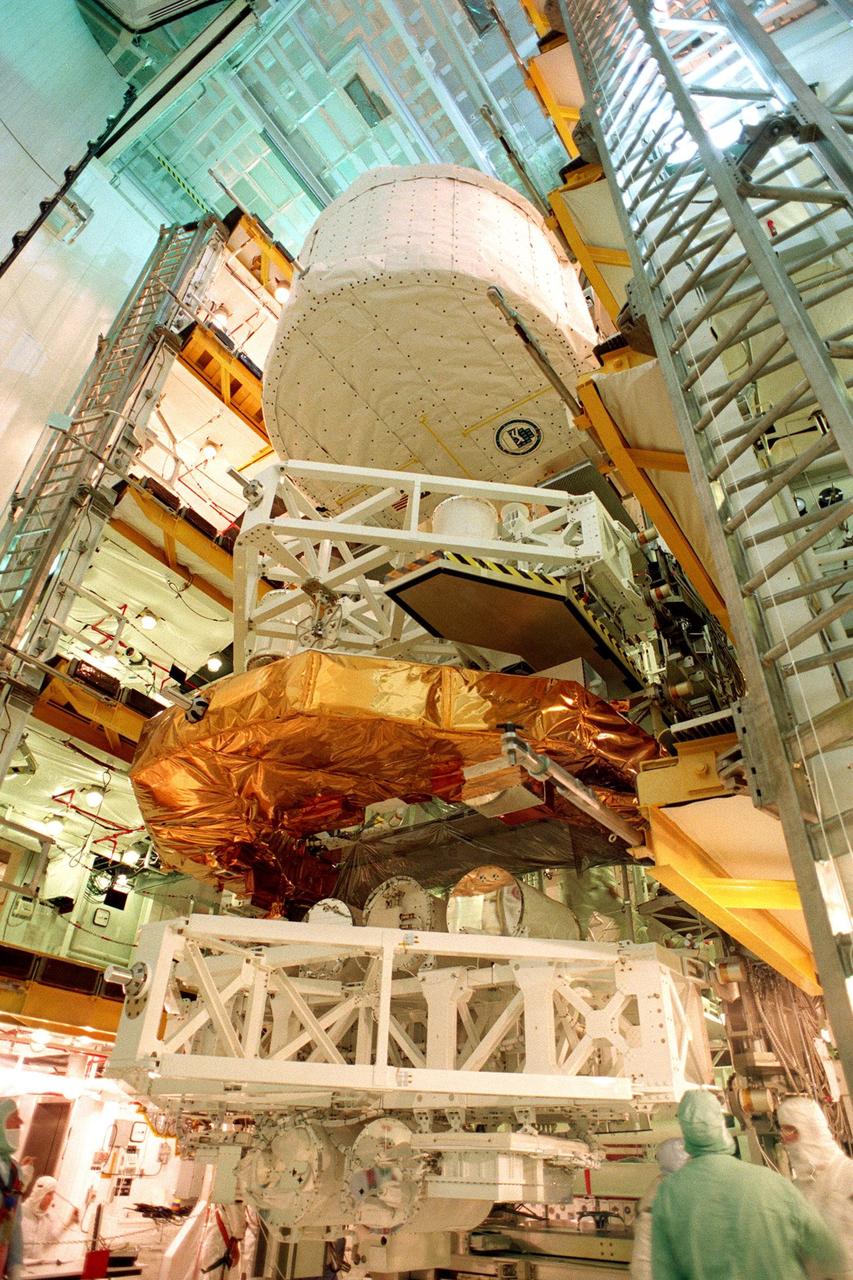
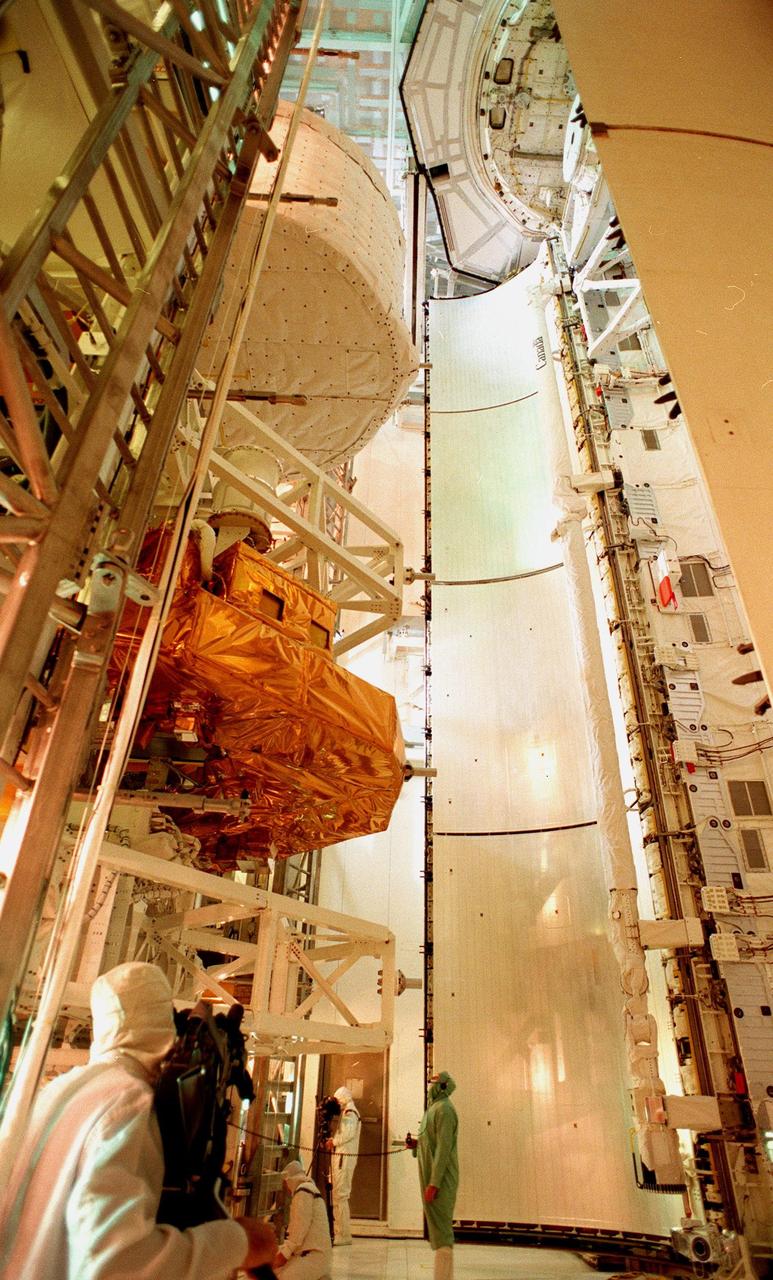
KENNEDY SPACE CENTER, FLA. -- Inside the Payload Changeout Room (PCR) in the Rotating Service Structure (RSS) at Launch Pad 39-B, technicians in clean suits move the payloads for mission STS-95 to the payload bay of Space Shuttle Discovery. At the top of the RSS is the Spacehab module; below it are the Spartan solar-observing deployable spacecraft, the Hubble Space Telescope Orbiting Systems Test Platform (HOST), and the International Extreme Ultraviolet Hitchhiker (IEH-3). The PCR is an environmentally controlled facility with seals around the mating surface that fit against the orbiter or payload canister and permit the payload bay or canister doors to be opened and cargo removed without exposing it to outside air and contaminants. Payloads are installed vertically in the orbiter using the extendable payload ground handling mechanism. Fixed and extendable work platforms provide work access in the PCR. The SPACEHAB single module involves experiments on space flight and the aging process. Spartan is a solar physics spacecraft designed to perform remote sensing of the hot outer layers of the sun's atmosphere or corona. HOST carries four experiments to validate components planned for installation during the third Hubble Space Telescope servicing mission and to evaluate new technologies in an Earth-orbiting environment. IEH-3 comprises several experiments that will study the Jovian planetary system, hot stars, planetary and reflection nebulae, other stellar objects and their environments through remote observation of EUV/FUV emissions; study spacecraft interactions, Shuttle glow, thruster firings, and contamination; and measure the solar constant and identify variations in the value during a solar cycle. Mission STS-95 is scheduled to launch Oct. 29, 1998
KENNEDY SPACE CENTER, FLA. -- Inside the Payload Changeout Room (PCR) in the Rotating Service Structure (RSS) at Launch Pad 39-B, technicians in clean suits and tethers prepare to move the payloads for mission STS-95 through the open doors of the payload bay (right) of Space Shuttle Discovery. At the top of the RSS is the Spacehab module; below it are the Spartan solar-observing deployable spacecraft, the Hubble Space Telescope Orbiting Systems Test Platform (HOST), and International Extreme Ultraviolet Hitchhiker (IEH-3). The PCR is an environmentally controlled facility with seals around the mating surface that fit against the orbiter or payload canister and permit the payload bay or canister doors to be opened and cargo removed without exposing it to outside air and contaminants. Payloads are installed vertically in the orbiter using the extendable payload ground handling mechanism. Fixed and extendable work platforms provide work access in the PCR. The SPACEHAB single module involves experiments on space flight and the aging process. Spartan is a solar physics spacecraft designed to perform remote sensing of the hot outer layers of the sun's atmosphere or corona. HOST carries four experiments to validate components planned for installation during the third Hubble Space Telescope servicing mission and to evaluate new technologies in an Earth-orbiting environment. IEH-3 comprises several experiments that will study the Jovian planetary system, hot stars, planetary and reflection nebulae, other stellar objects and their environments through remote observation of EUV/FUV emissions; study spacecraft interactions, Shuttle glow, thruster firings, and contamination; and measure the solar constant and identify variations in the value during a solar cycle. Mission STS-95 is scheduled to launch Oct. 29, 1998
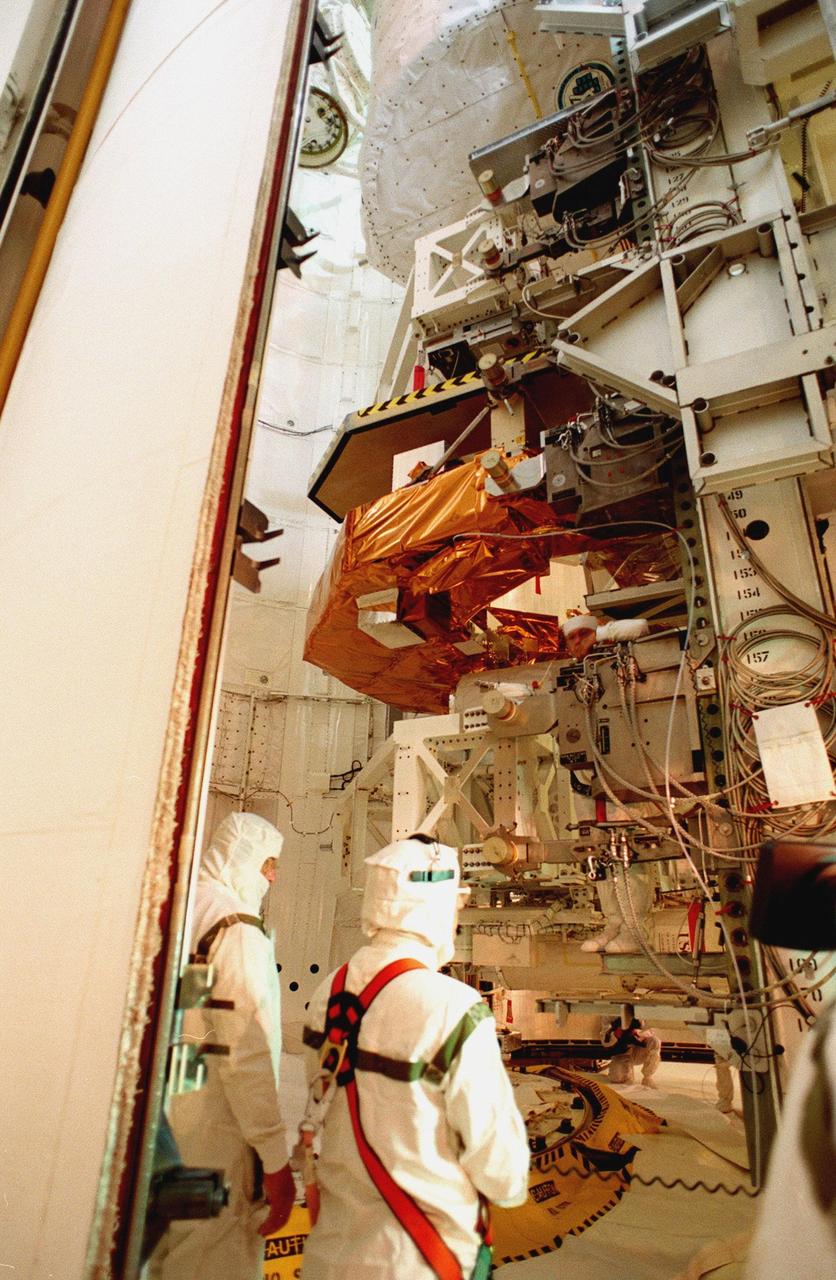
KENNEDY SPACE CENTER,FLA. -- Inside the Payload Changeout Room (PCR) in the Rotating Service Structure (RSS) at Launch Pad 39-B, technicians in clean suits and tethers prepare to move the payloads for mission STS-95 through the open doors of the payload bay (left) of Space Shuttle Discovery. At the top of the RSS is the Spacehab module; below it are the Spartan solar-observing deployable spacecraft, the Hubble Space Telescope Orbiting Systems Test Platform (HOST), and the International Extreme Ultraviolet Hitchhiker (IEH-3). The PCR is an environmentally controlled facility with seals around the mating surface that fit against the orbiter or payload canister and permit the payload bay or canister doors to be opened and cargo removed without exposing it to outside air and contaminants. Payloads are installed vertically in the orbiter using the extendable payload ground handling mechanism. Fixed and extendable work platforms provide work access in the PCR. The SPACEHAB single module involves experiments on space flight and the aging process. Spartan is a solar physics spacecraft designed to perform remote sensing of the hot outer layers of the sun's atmosphere or corona. HOST carries four experiments to validate components planned for installation during the third Hubble Space Telescope servicing mission and to evaluate new technologies in an Earth-orbiting environment. IEH-3 comprises several experiments that will study the Jovian planetary system, hot stars, planetary and reflection nebulae, other stellar objects and their environments through remote observation of EUV/FUV emissions; study spacecraft interactions, Shuttle glow, thruster firings, and contamination; and measure the solar constant and identify variations in the value during a solar cycle. Mission STS-95 is scheduled to launch Oct. 29, 1998