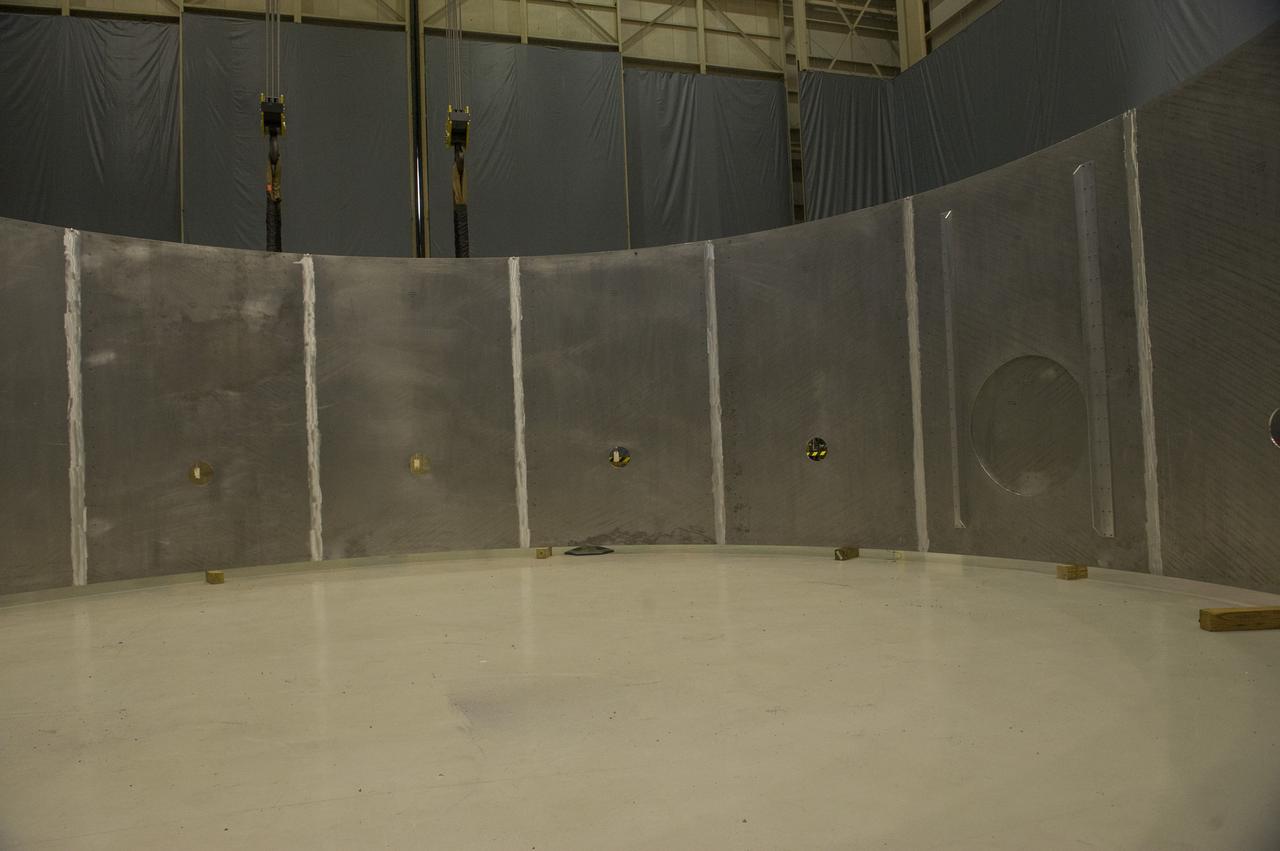
CORE STAGE SIMULATOR, BLDG. 4755, SOUTH HIGHBAY, JANUARY 13, 2015
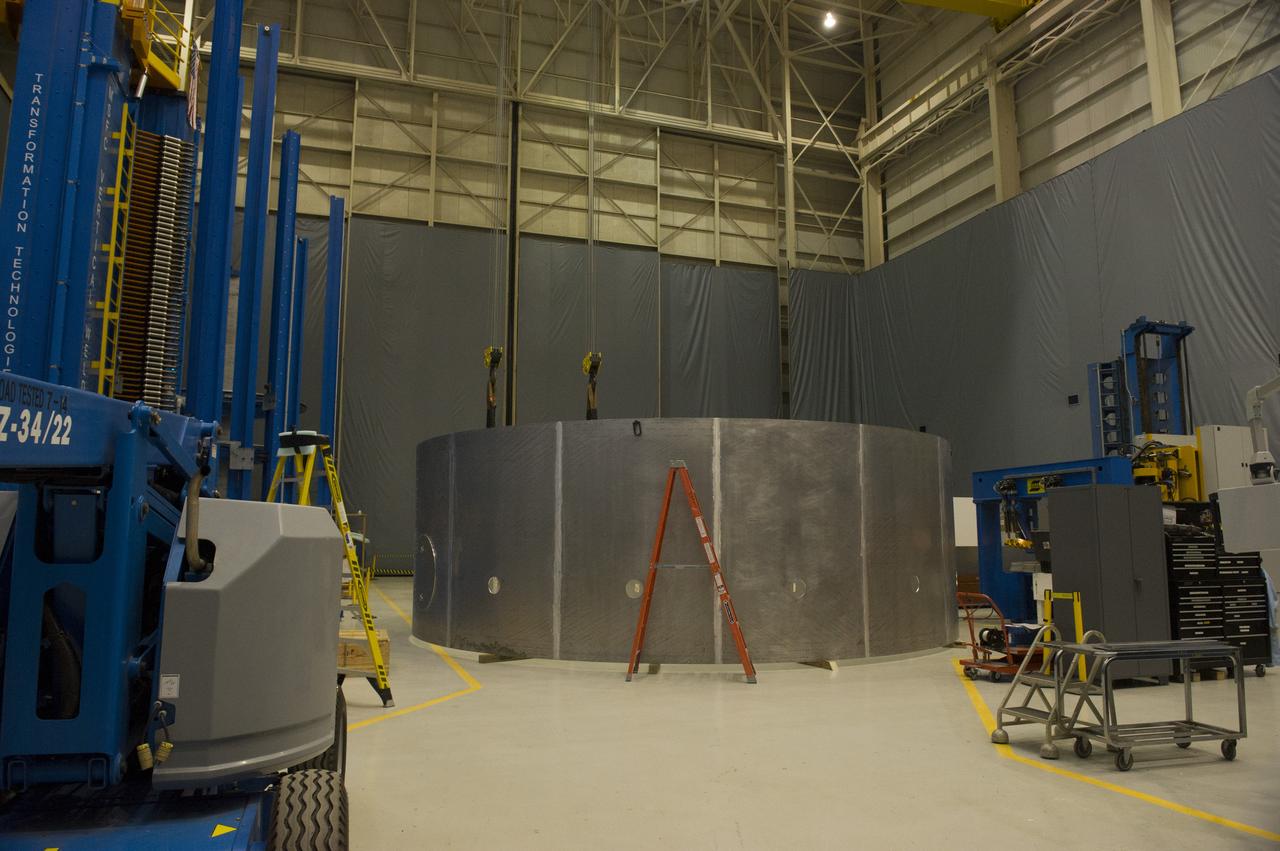
CORE STAGE SIMULATOR, BLDG. 4755, SOUTH HIGHBAY, JANUARY 13, 2015
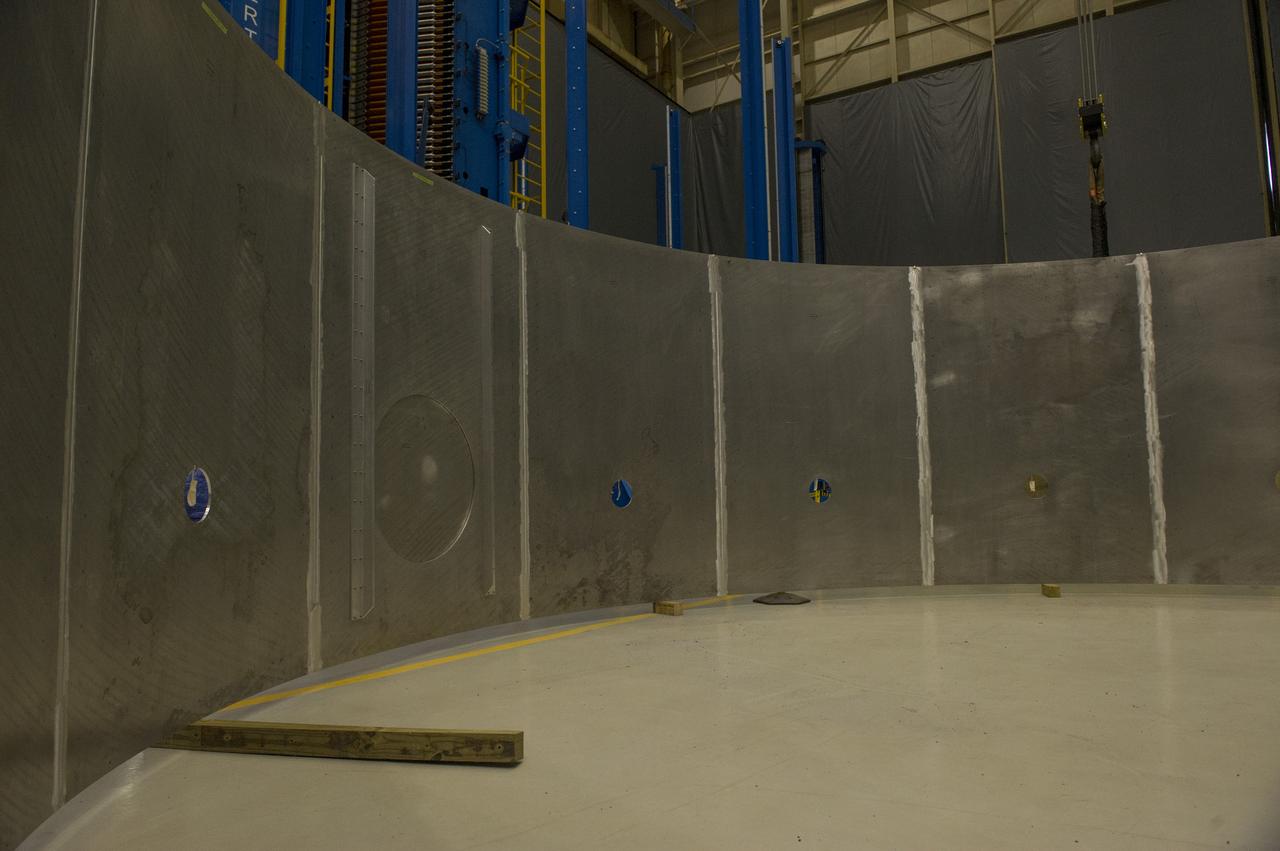
CORE STAGE SIMULATOR, BLDG. 4755, SOUTH HIGHBAY, JANUARY 13, 2015
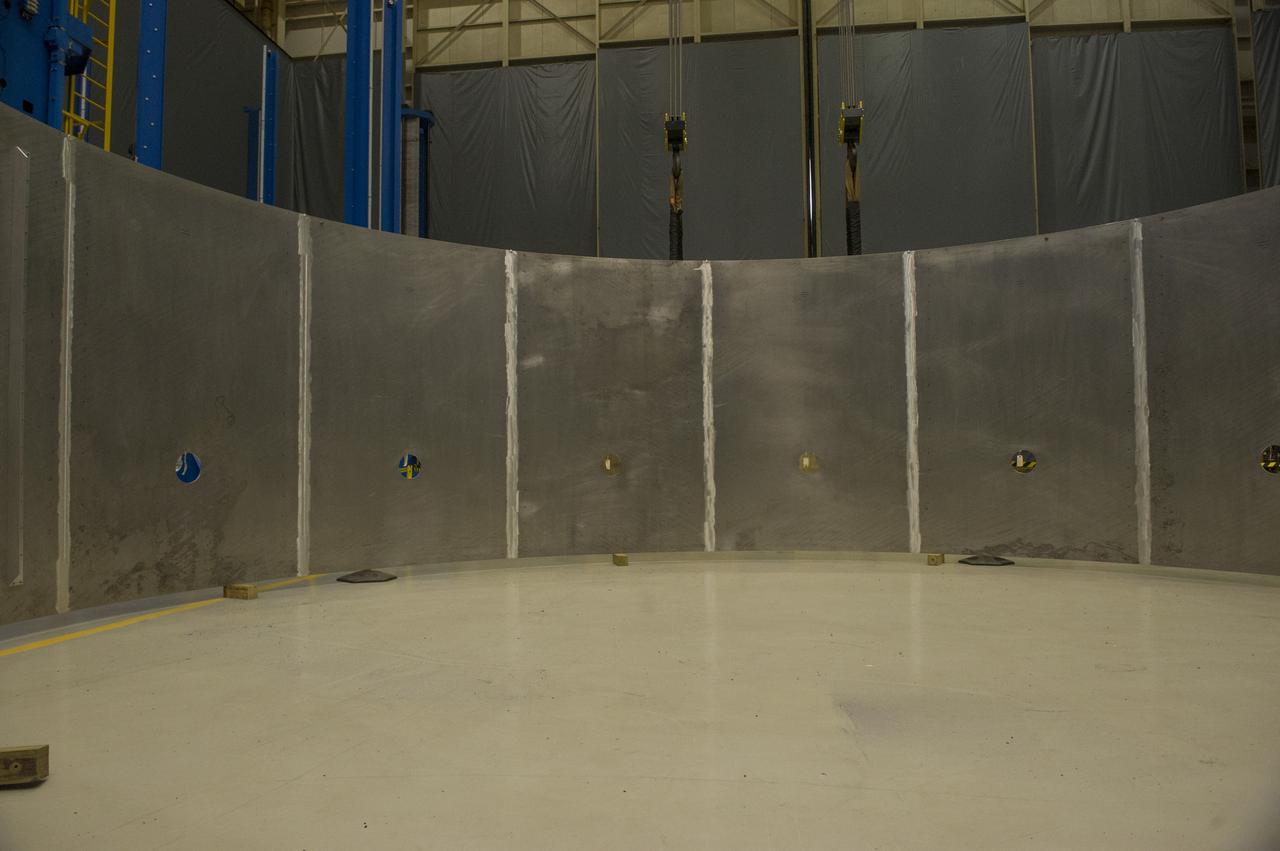
CORE STAGE SIMULATOR, BLDG. 4755, SOUTH HIGHBAY, JANUARY 13, 2015
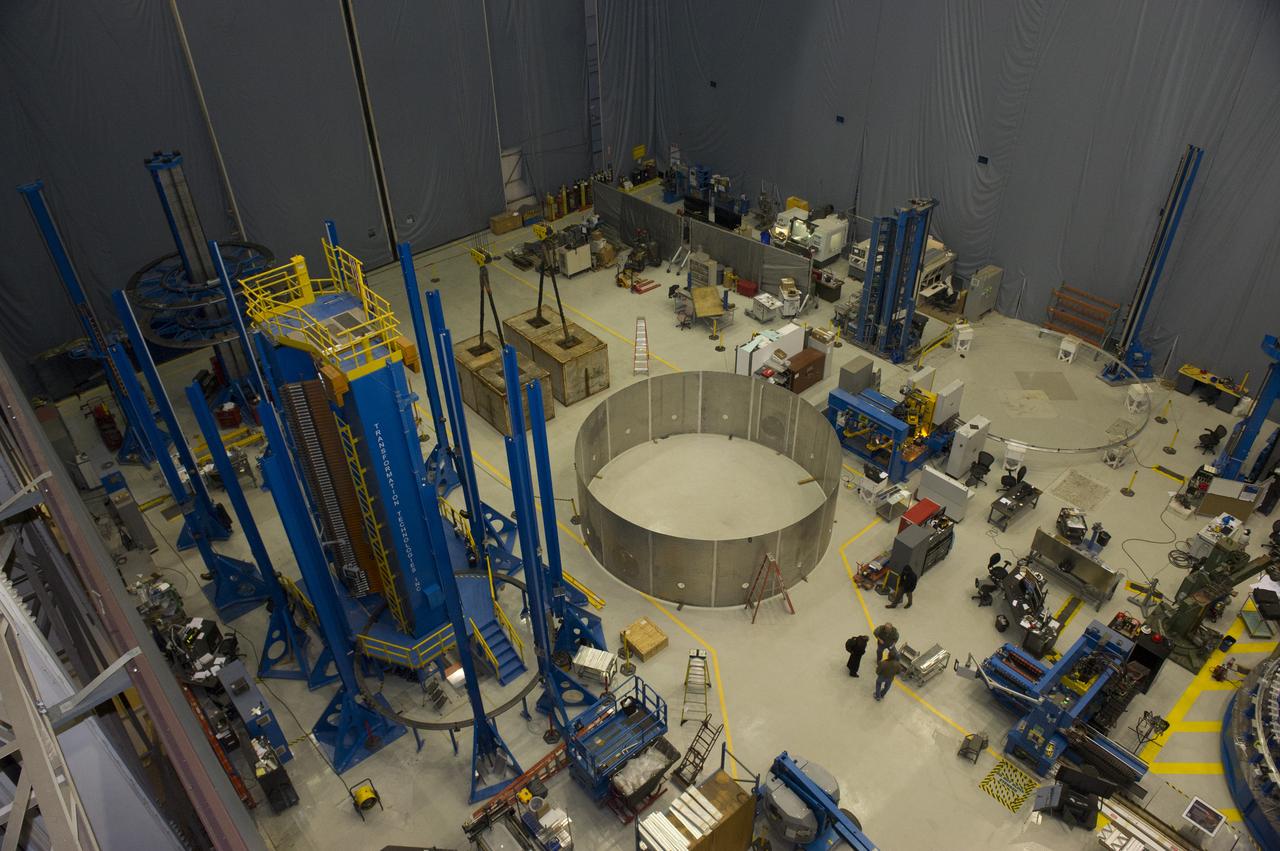
CORE STAGE SIMULATOR, BLDG. 4755, SOUTH HIGHBAY, JANUARY 13, 2015
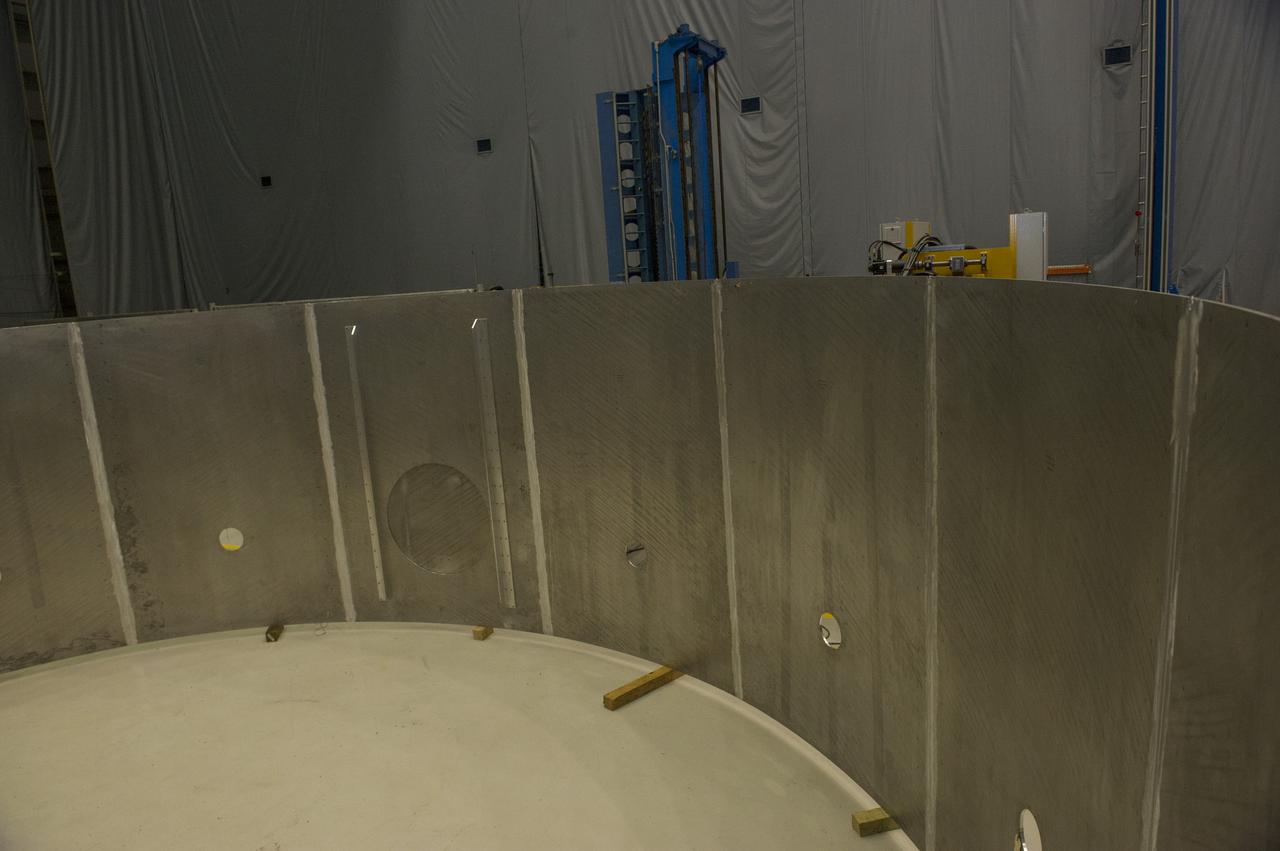
CORE STAGE SIMULATOR, BLDG. 4755, SOUTH HIGHBAY, JANUARY 13, 2015
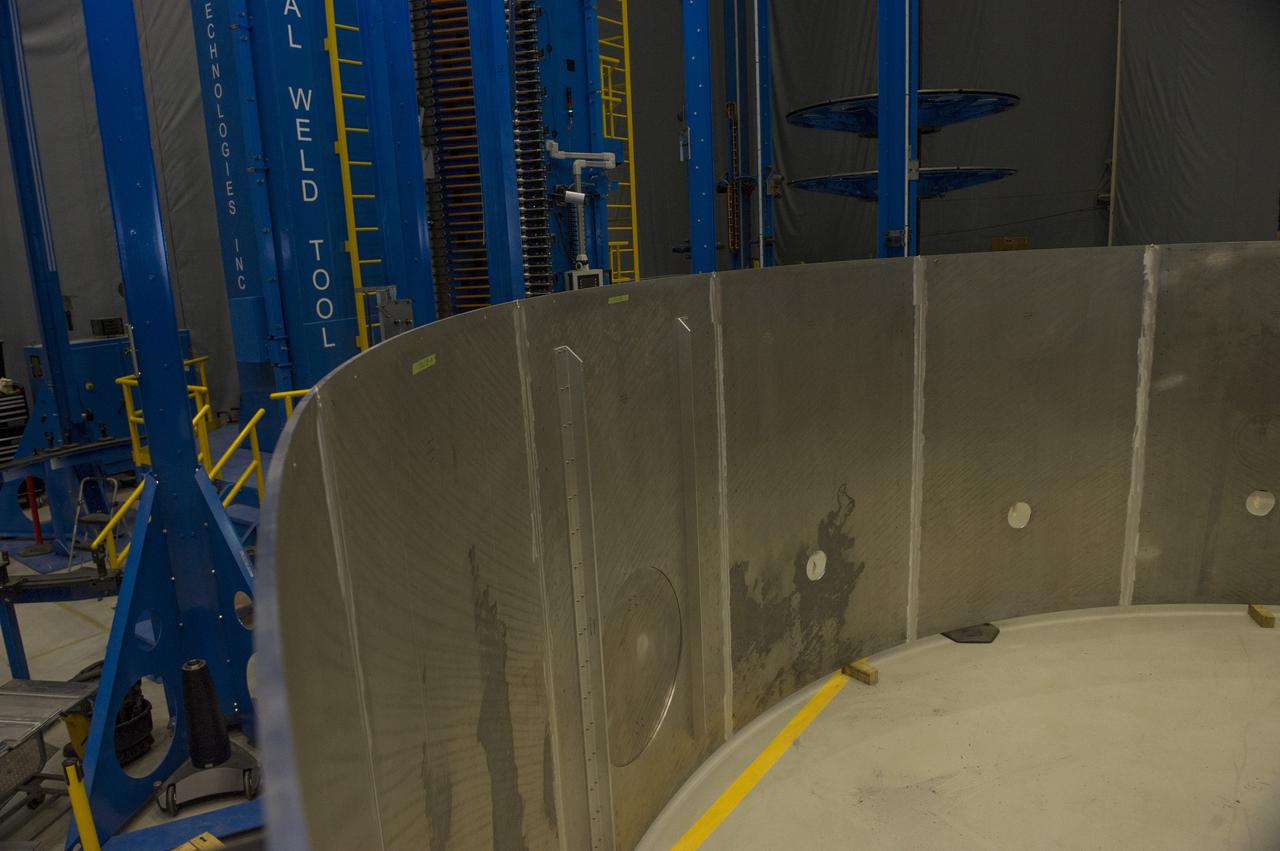
CORE STAGE SIMULATOR, BLDG. 4755, SOUTH HIGHBAY, JANUARY 13, 2015
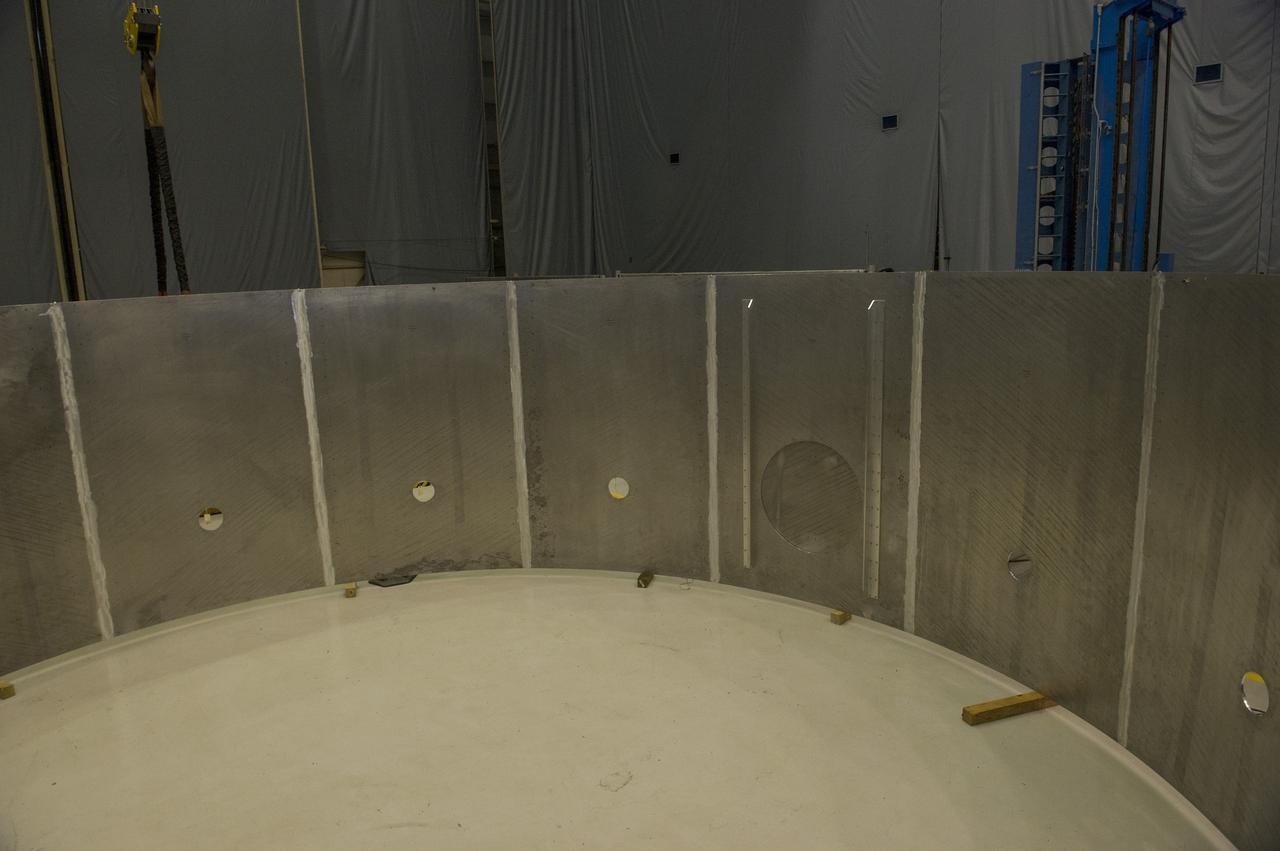
CORE STAGE SIMULATOR, BLDG. 4755, SOUTH HIGHBAY, JANUARY 13, 2015
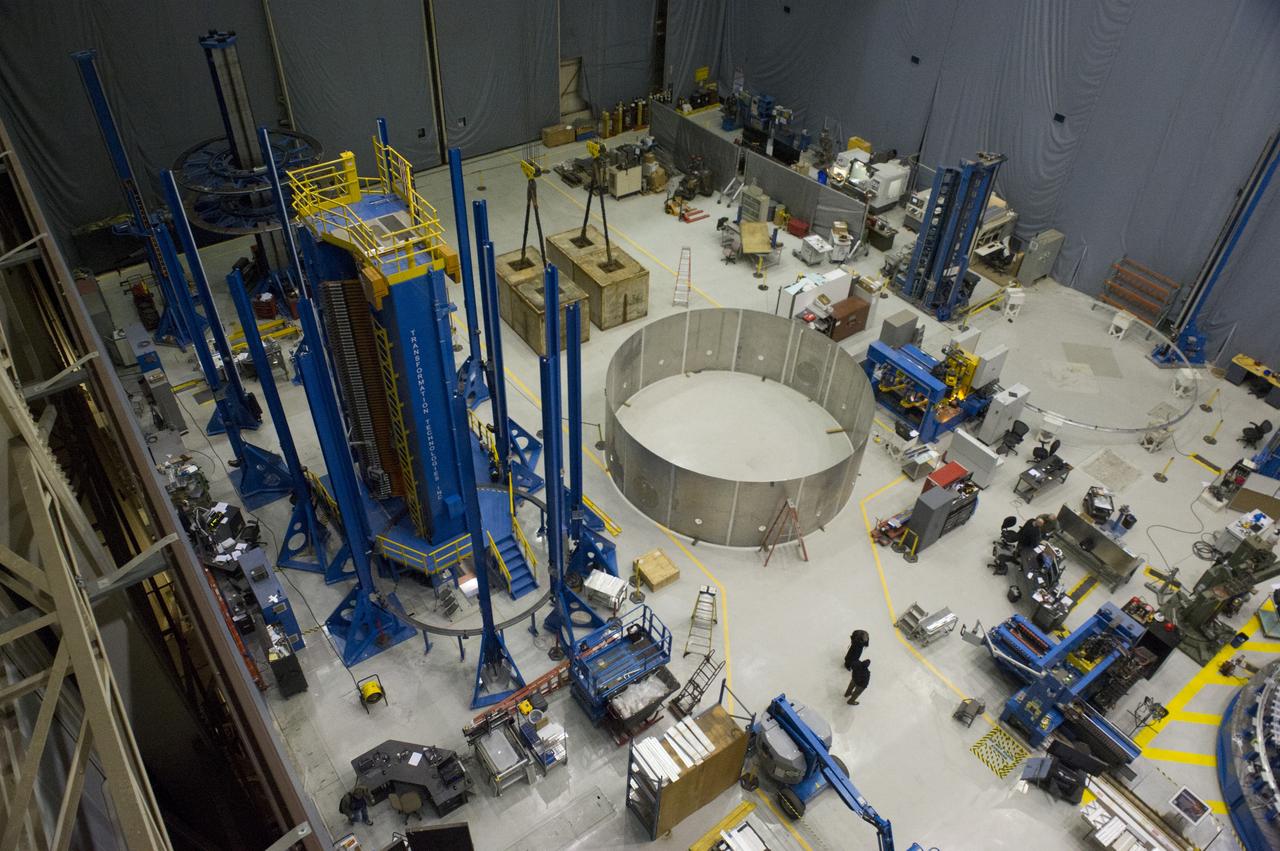
CORE STAGE SIMULATOR, BLDG. 4755, SOUTH HIGHBAY, JANUARY 13, 2015
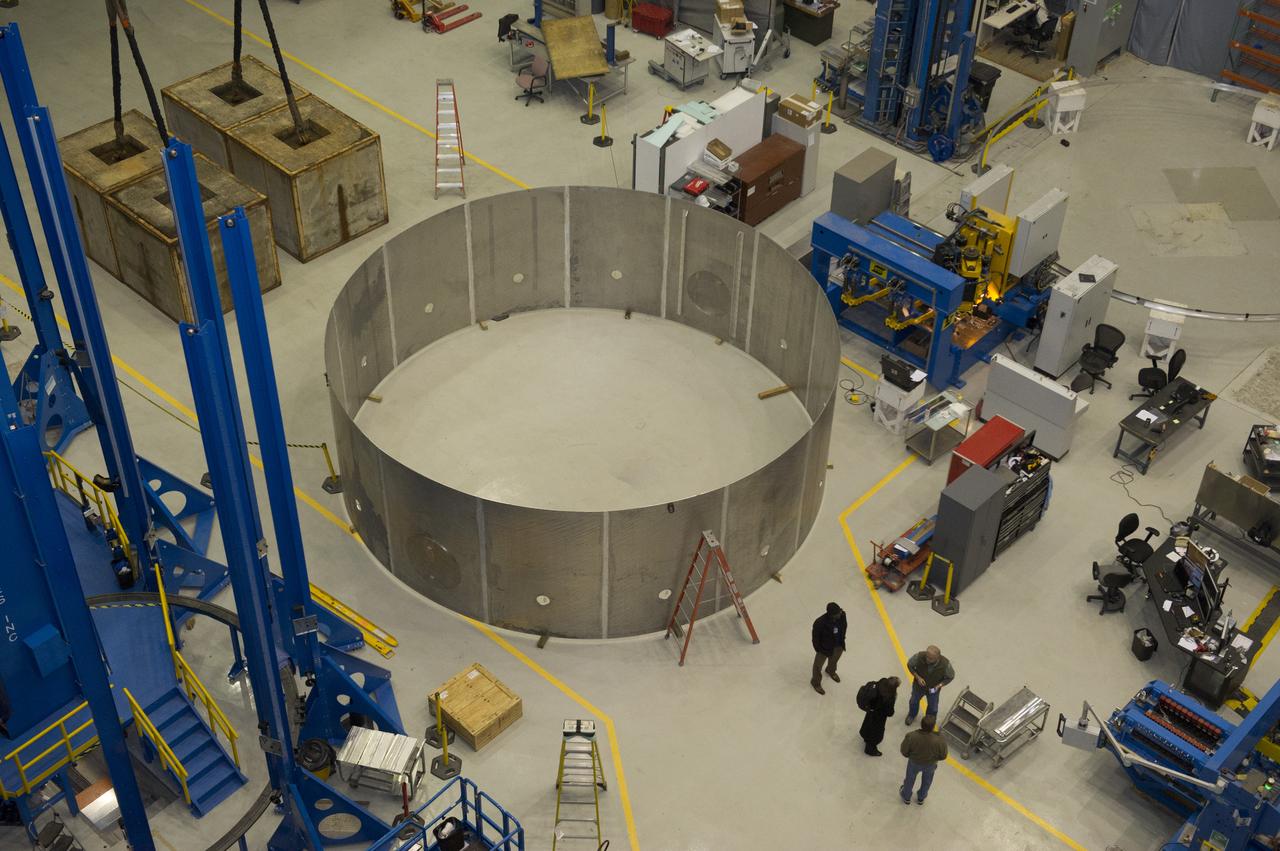
CORE STAGE SIMULATOR, BLDG. 4755, SOUTH HIGHBAY, JANUARY 13, 2015
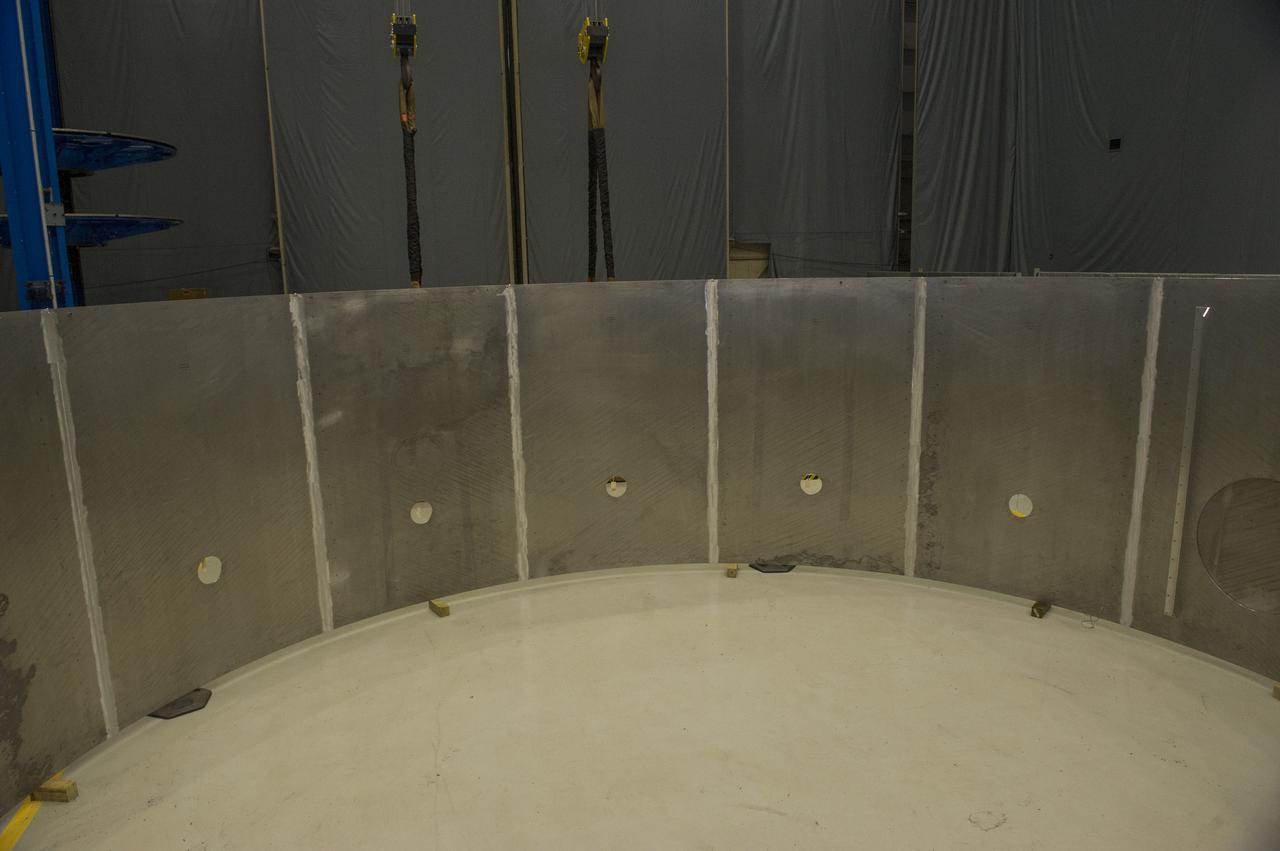
CORE STAGE SIMULATOR, BLDG. 4755, SOUTH HIGHBAY, JANUARY 13, 2015
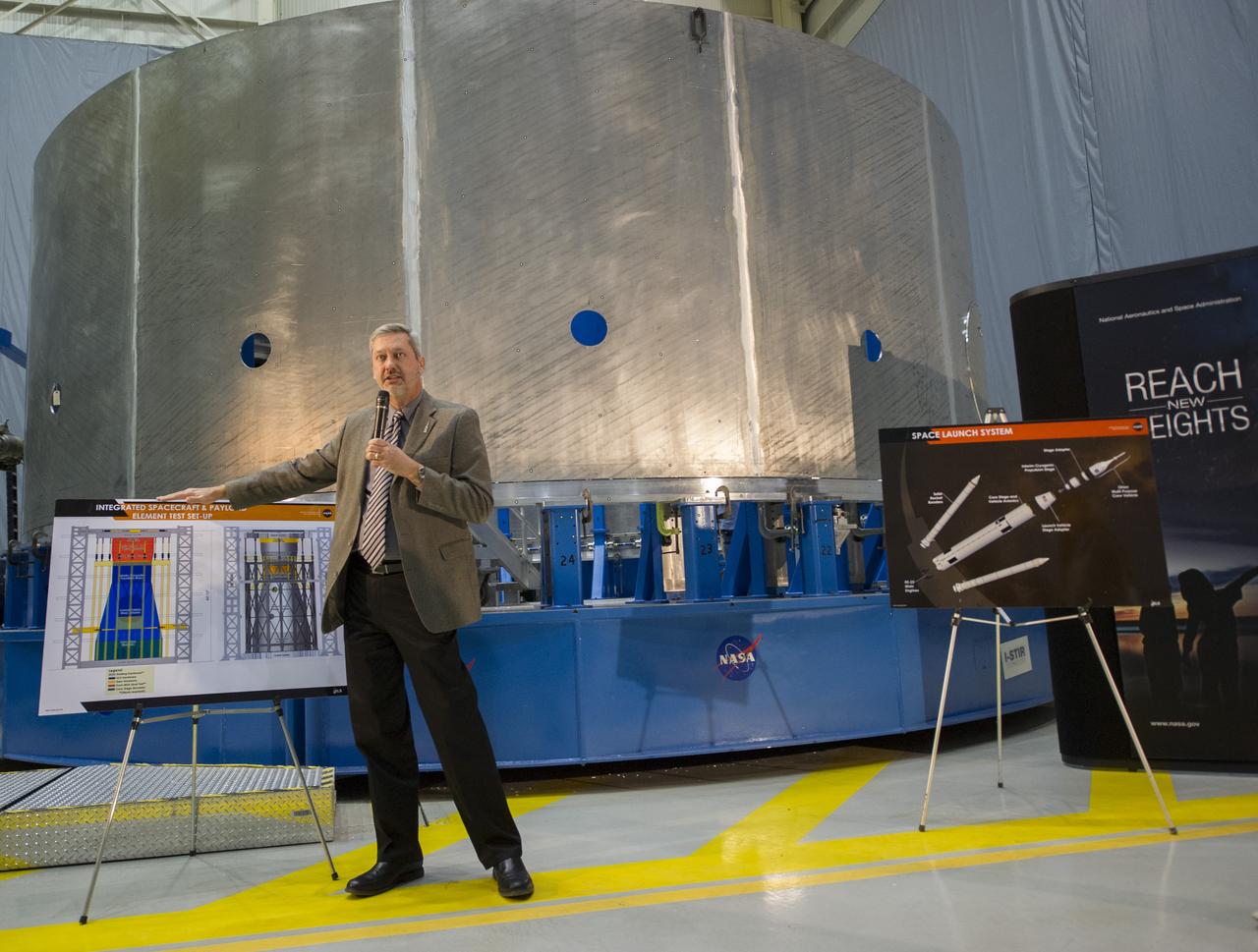
CHRISTOPHER CRUMBLY, MANAGER OF THE SPACECRAFT PAYLOAD INTEGRATION AND EVOLUTION OFFICE, GAVE VISITORS AN INSIDER'S PERSPECTIVE ON THE CORE STAGE SIMULATOR AT MARSHALL AND ITS IMPORTANCE TO DEVELOPMENT OF THE SPACE LAUNCH SYSTEM. CHRISTOPHER CRUMBLY, MANAGER OF THE SPACECRAFT PAYLOAD INTEGRATION AND EVOLUTION OFFICE, GAVE VISITORS AN INSIDER'S PERSPECTIVE ON THE CORE STAGE SIMULATOR AT MARSHALL AND ITS IMPORTANCE TO DEVELOPMENT OF THE SPACE LAUNCH SYSTEM.
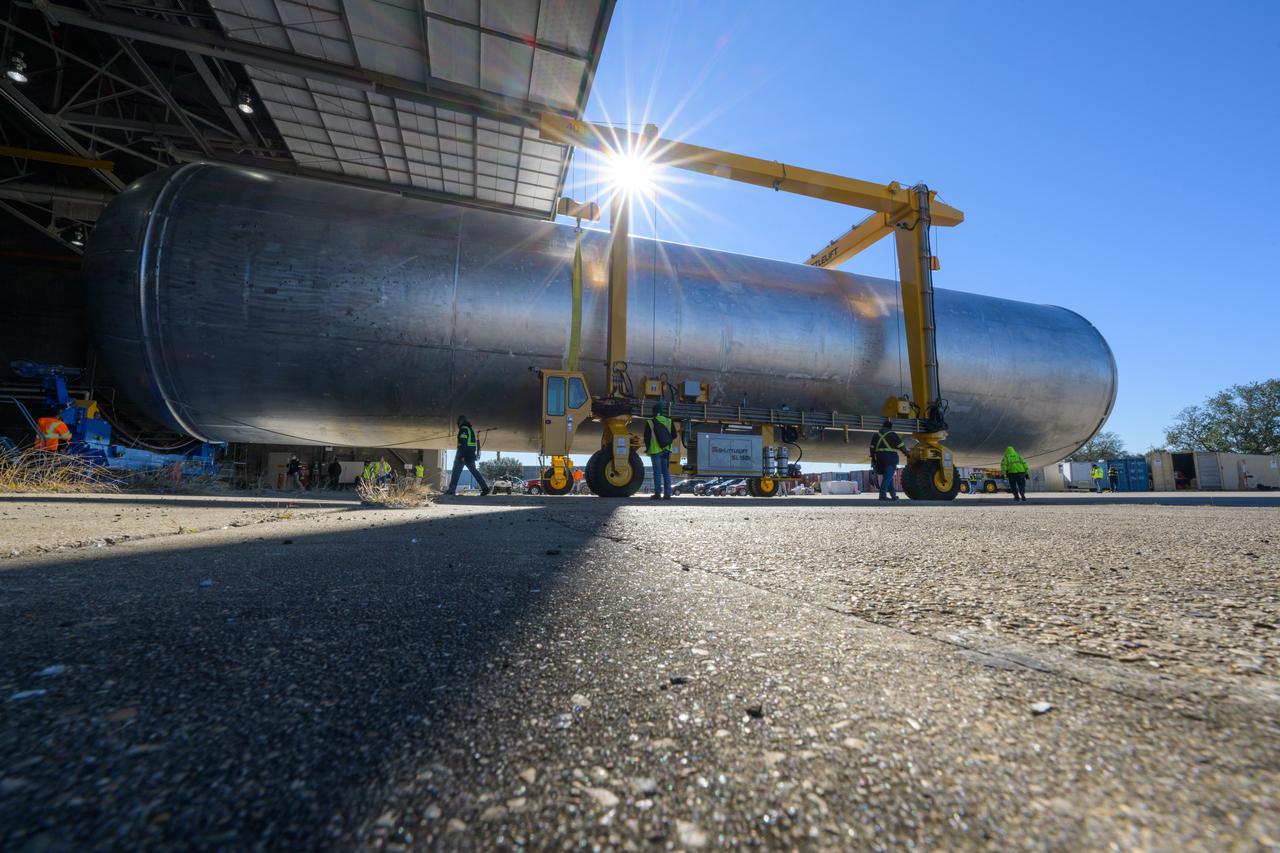
The liquid hydrogen tank that will be part of the Space Launch System rocket’s core stage is being prepared for the Artemis III mission at NASA’s Michoud Assembly Facility in New Orleans. Eventually, the tank will be connected to the engine section that will house the four RS-25 engines. Once the aft simulator is attached, the LH2 tank undergoes non-destructive evaluation, which will test weld strength and ensure the tank is structurally sound. The SLS core stage is made up of five unique elements: the forward skirt, liquid oxygen tank, intertank, liquid hydrogen tank, and the engine section. The tank holds 537,000 gallons of liquid hydrogen cooled to minus 432 degrees Fahrenheit and sits between the core stage’s intertank and engine section. The liquid hydrogen hardware, along with the liquid oxygen tank, will provide propellant to the four RS-25 engines at the bottom of the core stage to produce more than two million pounds of thrust to help launch the Artemis III mission to the Moon. Together with its four RS-25 engines, the rocket’s massive 212-foot-tall core stage — the largest stage NASA has ever built — and its twin solid rocket boosters will produce 8.8 million pounds of thrust to send NASA’s Orion spacecraft, astronauts and supplies beyond Earth’s orbit to the Moon.
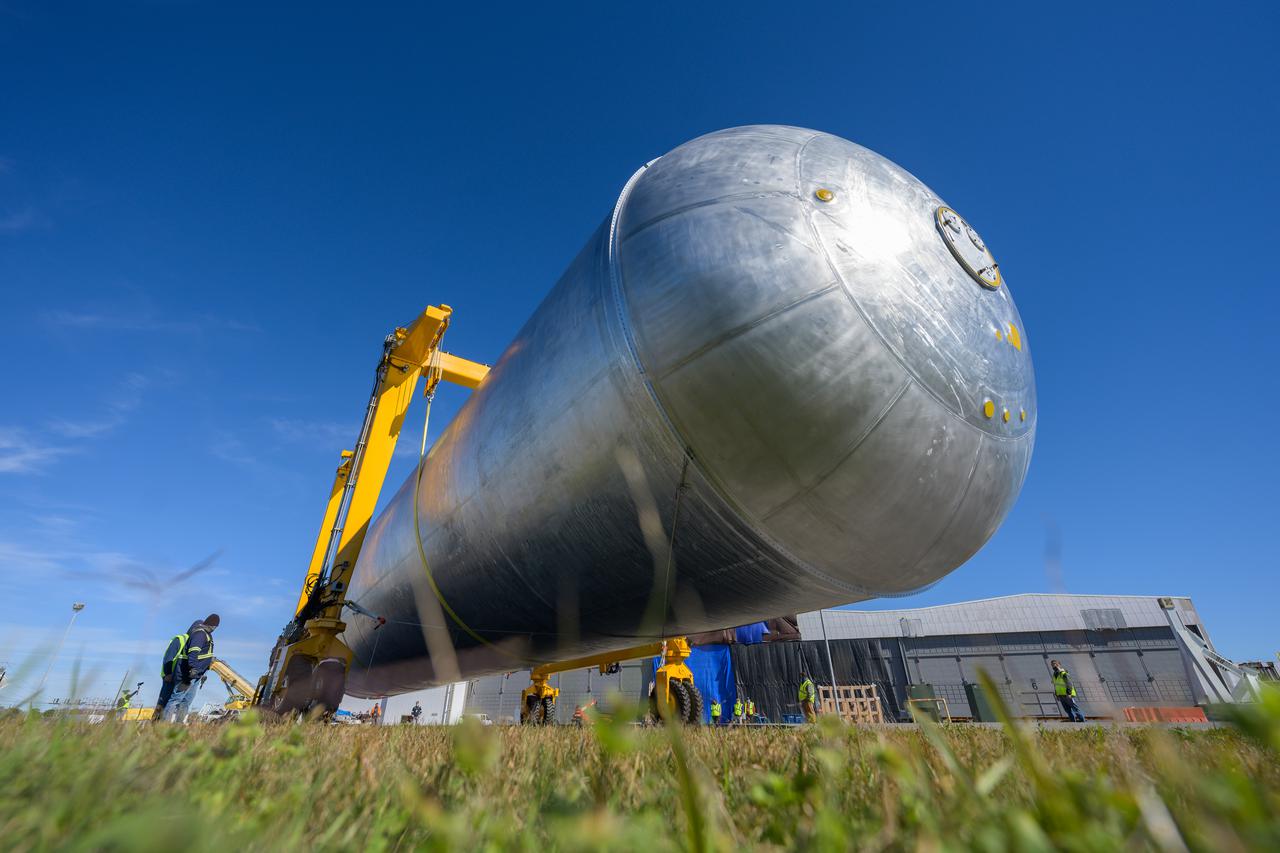
The liquid hydrogen tank that will be part of the Space Launch System rocket’s core stage is being prepared for the Artemis III mission at NASA’s Michoud Assembly Facility in New Orleans. Eventually, the tank will be connected to the engine section that will house the four RS-25 engines. Once the aft simulator is attached, the LH2 tank undergoes non-destructive evaluation, which will test weld strength and ensure the tank is structurally sound. The SLS core stage is made up of five unique elements: the forward skirt, liquid oxygen tank, intertank, liquid hydrogen tank, and the engine section. The tank holds 537,000 gallons of liquid hydrogen cooled to minus 432 degrees Fahrenheit and sits between the core stage’s intertank and engine section. The liquid hydrogen hardware, along with the liquid oxygen tank, will provide propellant to the four RS-25 engines at the bottom of the core stage to produce more than two million pounds of thrust to help launch the Artemis III mission to the Moon. Together with its four RS-25 engines, the rocket’s massive 212-foot-tall core stage — the largest stage NASA has ever built — and its twin solid rocket boosters will produce 8.8 million pounds of thrust to send NASA’s Orion spacecraft, astronauts and supplies beyond Earth’s orbit to the Moon.
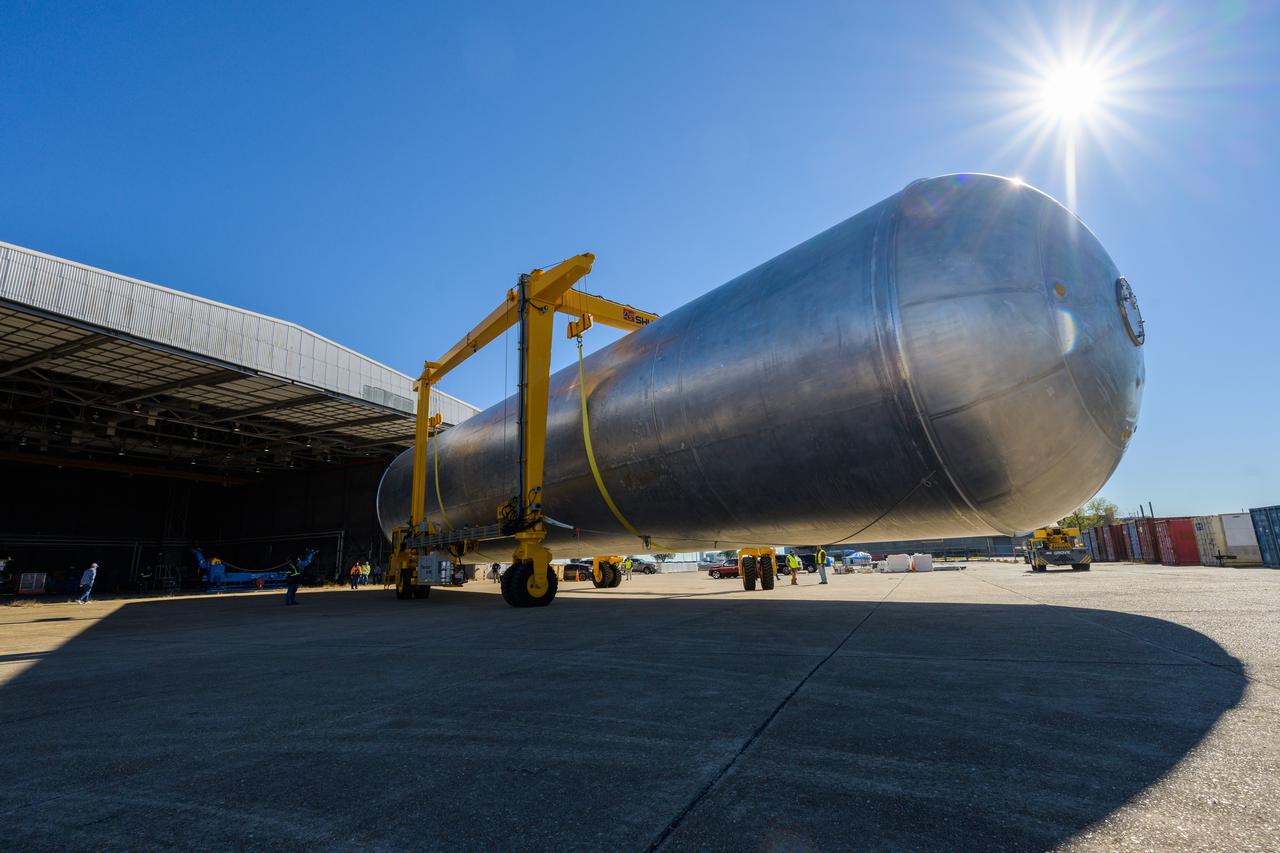
The liquid hydrogen tank that will be part of the Space Launch System rocket’s core stage is being prepared for the Artemis III mission at NASA’s Michoud Assembly Facility in New Orleans. Eventually, the tank will be connected to the engine section that will house the four RS-25 engines. Once the aft simulator is attached, the LH2 tank undergoes non-destructive evaluation, which will test weld strength and ensure the tank is structurally sound. The SLS core stage is made up of five unique elements: the forward skirt, liquid oxygen tank, intertank, liquid hydrogen tank, and the engine section. The tank holds 537,000 gallons of liquid hydrogen cooled to minus 432 degrees Fahrenheit and sits between the core stage’s intertank and engine section. The liquid hydrogen hardware, along with the liquid oxygen tank, will provide propellant to the four RS-25 engines at the bottom of the core stage to produce more than two million pounds of thrust to help launch the Artemis III mission to the Moon. Together with its four RS-25 engines, the rocket’s massive 212-foot-tall core stage — the largest stage NASA has ever built — and its twin solid rocket boosters will produce 8.8 million pounds of thrust to send NASA’s Orion spacecraft, astronauts and supplies beyond Earth’s orbit to the Moon.
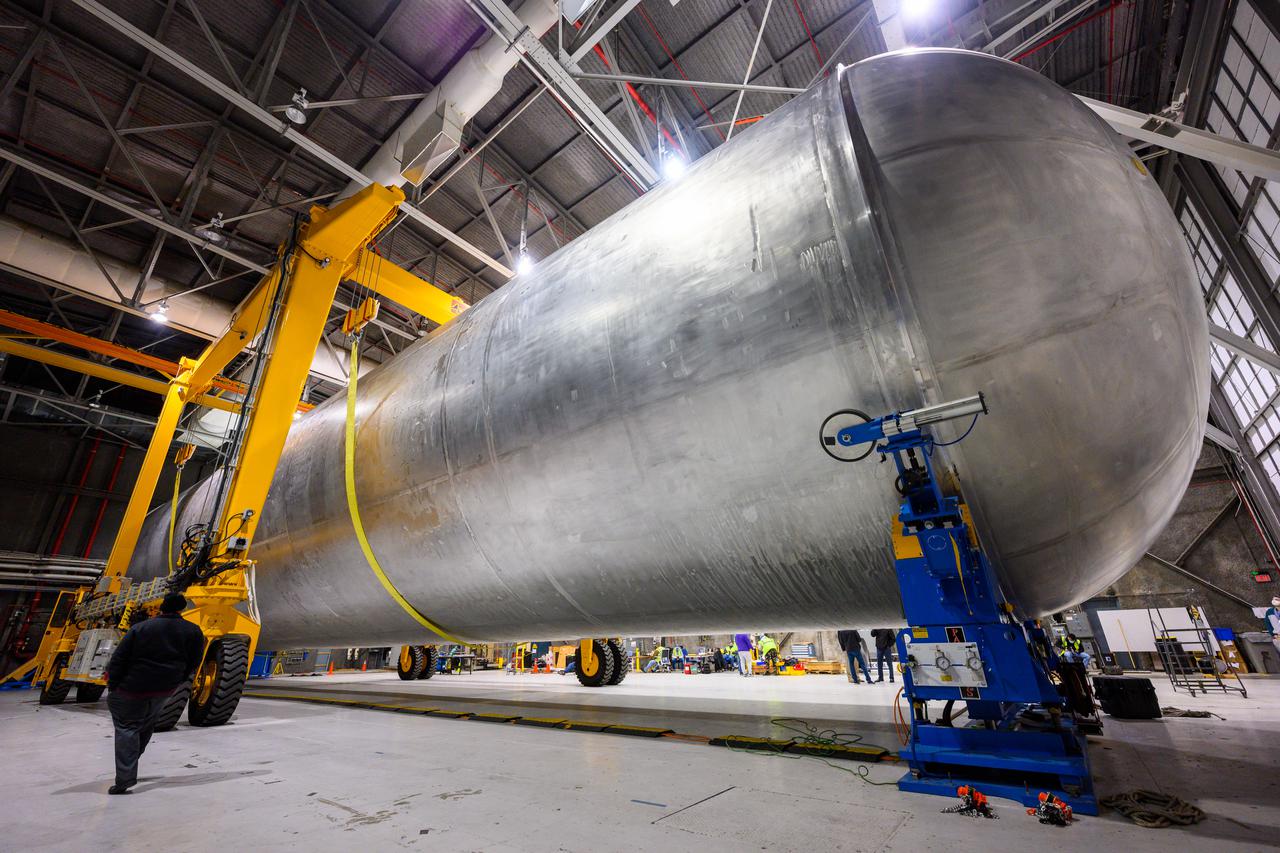
The liquid hydrogen tank that will be part of the Space Launch System rocket’s core stage is being prepared for the Artemis III mission at NASA’s Michoud Assembly Facility in New Orleans. Eventually, the tank will be connected to the engine section that will house the four RS-25 engines. Once the aft simulator is attached, the LH2 tank undergoes non-destructive evaluation, which will test weld strength and ensure the tank is structurally sound. The SLS core stage is made up of five unique elements: the forward skirt, liquid oxygen tank, intertank, liquid hydrogen tank, and the engine section. The tank holds 537,000 gallons of liquid hydrogen cooled to minus 432 degrees Fahrenheit and sits between the core stage’s intertank and engine section. The liquid hydrogen hardware, along with the liquid oxygen tank, will provide propellant to the four RS-25 engines at the bottom of the core stage to produce more than two million pounds of thrust to help launch the Artemis III mission to the Moon. Together with its four RS-25 engines, the rocket’s massive 212-foot-tall core stage — the largest stage NASA has ever built — and its twin solid rocket boosters will produce 8.8 million pounds of thrust to send NASA’s Orion spacecraft, astronauts and supplies beyond Earth’s orbit to the Moon.
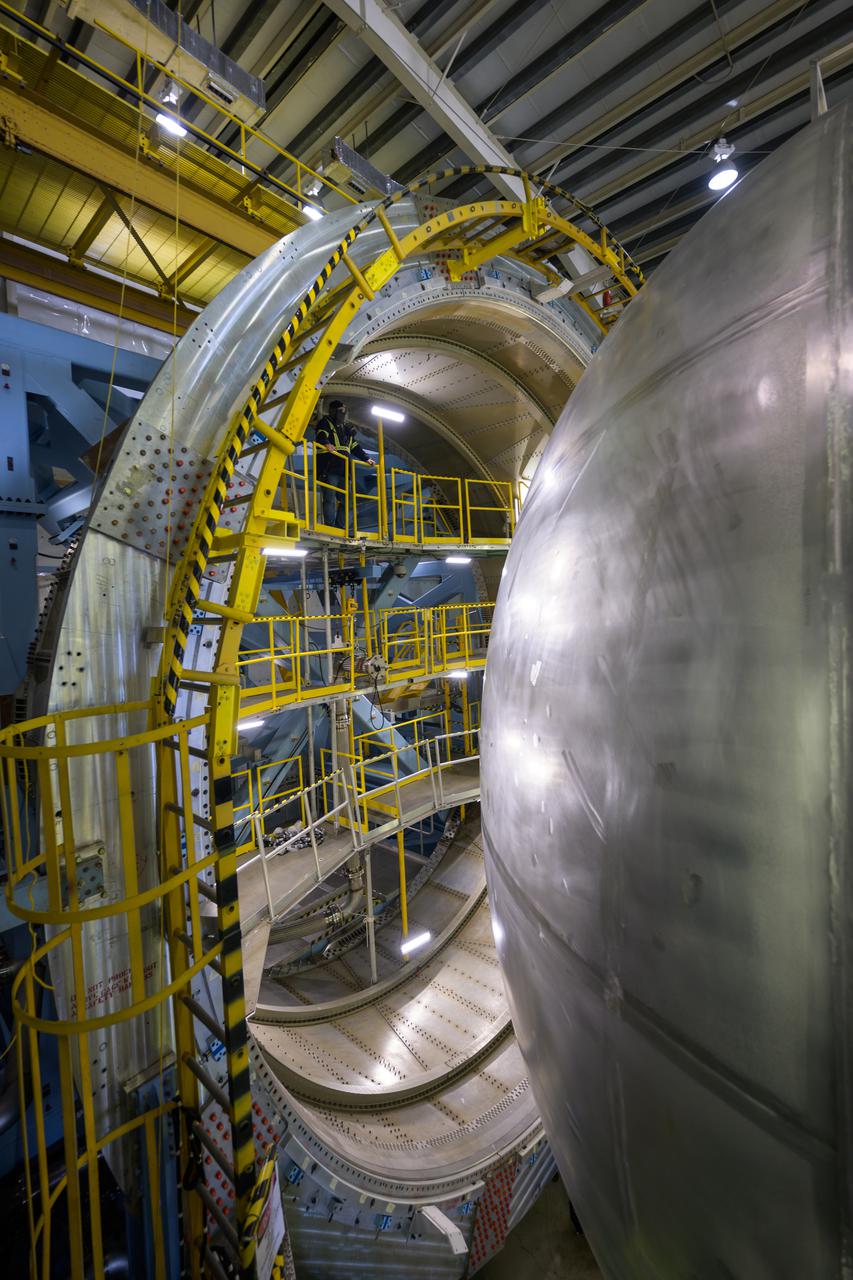
The liquid hydrogen tank that will be part of the Space Launch System rocket’s core stage is being prepared for the Artemis III mission at NASA’s Michoud Assembly Facility in New Orleans. Eventually, the tank will be connected to the engine section that will house the four RS-25 engines. Once the aft simulator is attached, the LH2 tank undergoes non-destructive evaluation, which will test weld strength and ensure the tank is structurally sound. The SLS core stage is made up of five unique elements: the forward skirt, liquid oxygen tank, intertank, liquid hydrogen tank, and the engine section. The tank holds 537,000 gallons of liquid hydrogen cooled to minus 432 degrees Fahrenheit and sits between the core stage’s intertank and engine section. The liquid hydrogen hardware, along with the liquid oxygen tank, will provide propellant to the four RS-25 engines at the bottom of the core stage to produce more than two million pounds of thrust to help launch the Artemis III mission to the Moon. Together with its four RS-25 engines, the rocket’s massive 212-foot-tall core stage — the largest stage NASA has ever built — and its twin solid rocket boosters will produce 8.8 million pounds of thrust to send NASA’s Orion spacecraft, astronauts and supplies beyond Earth’s orbit to the Moon.
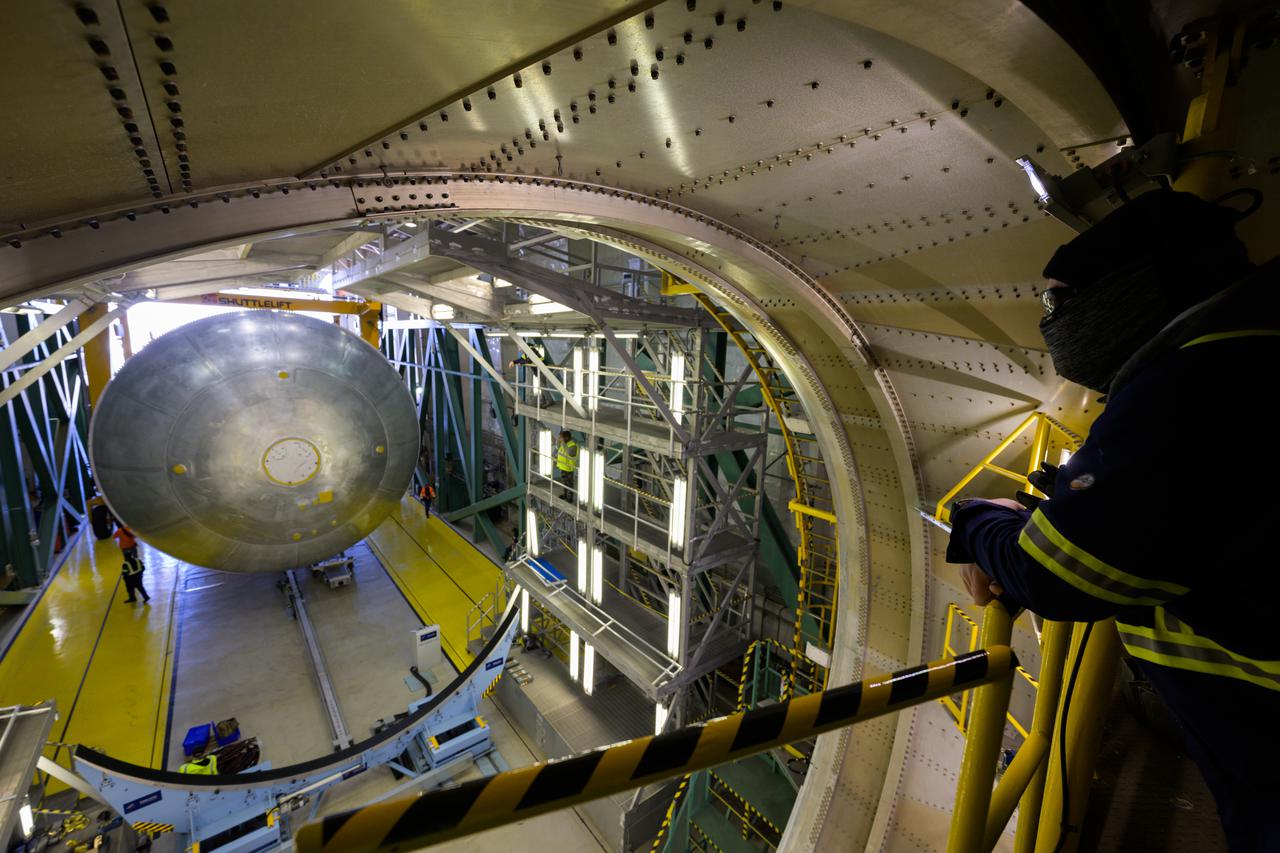
The liquid hydrogen tank that will be part of the Space Launch System rocket’s core stage is being prepared for the Artemis III mission at NASA’s Michoud Assembly Facility in New Orleans. Eventually, the tank will be connected to the engine section that will house the four RS-25 engines. Once the aft simulator is attached, the LH2 tank undergoes non-destructive evaluation, which will test weld strength and ensure the tank is structurally sound. The SLS core stage is made up of five unique elements: the forward skirt, liquid oxygen tank, intertank, liquid hydrogen tank, and the engine section. The tank holds 537,000 gallons of liquid hydrogen cooled to minus 432 degrees Fahrenheit and sits between the core stage’s intertank and engine section. The liquid hydrogen hardware, along with the liquid oxygen tank, will provide propellant to the four RS-25 engines at the bottom of the core stage to produce more than two million pounds of thrust to help launch the Artemis III mission to the Moon. Together with its four RS-25 engines, the rocket’s massive 212-foot-tall core stage — the largest stage NASA has ever built — and its twin solid rocket boosters will produce 8.8 million pounds of thrust to send NASA’s Orion spacecraft, astronauts and supplies beyond Earth’s orbit to the Moon.
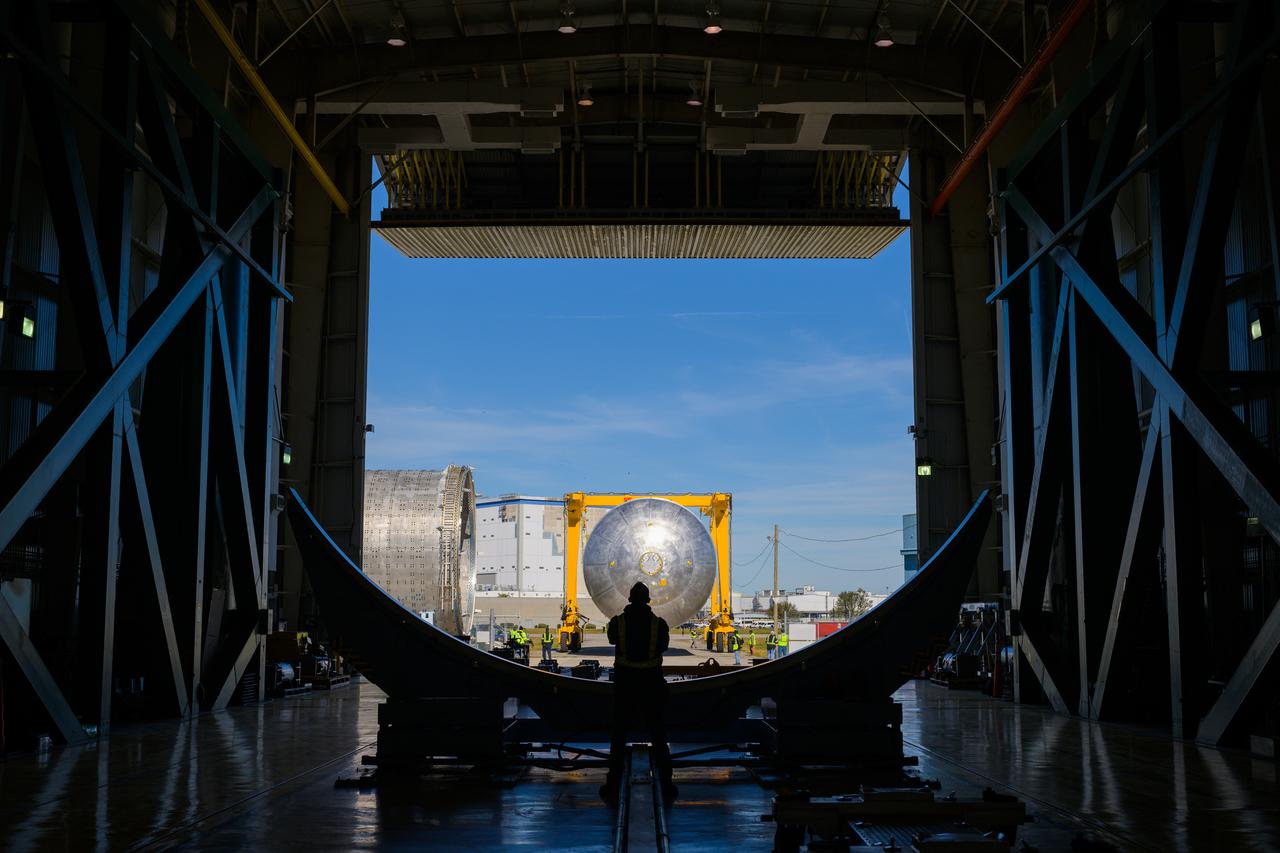
The liquid hydrogen tank that will be part of the Space Launch System rocket’s core stage is being prepared for the Artemis III mission at NASA’s Michoud Assembly Facility in New Orleans. Eventually, the tank will be connected to the engine section that will house the four RS-25 engines. Once the aft simulator is attached, the LH2 tank undergoes non-destructive evaluation, which will test weld strength and ensure the tank is structurally sound. The SLS core stage is made up of five unique elements: the forward skirt, liquid oxygen tank, intertank, liquid hydrogen tank, and the engine section. The tank holds 537,000 gallons of liquid hydrogen cooled to minus 432 degrees Fahrenheit and sits between the core stage’s intertank and engine section. The liquid hydrogen hardware, along with the liquid oxygen tank, will provide propellant to the four RS-25 engines at the bottom of the core stage to produce more than two million pounds of thrust to help launch the Artemis III mission to the Moon. Together with its four RS-25 engines, the rocket’s massive 212-foot-tall core stage — the largest stage NASA has ever built — and its twin solid rocket boosters will produce 8.8 million pounds of thrust to send NASA’s Orion spacecraft, astronauts and supplies beyond Earth’s orbit to the Moon.
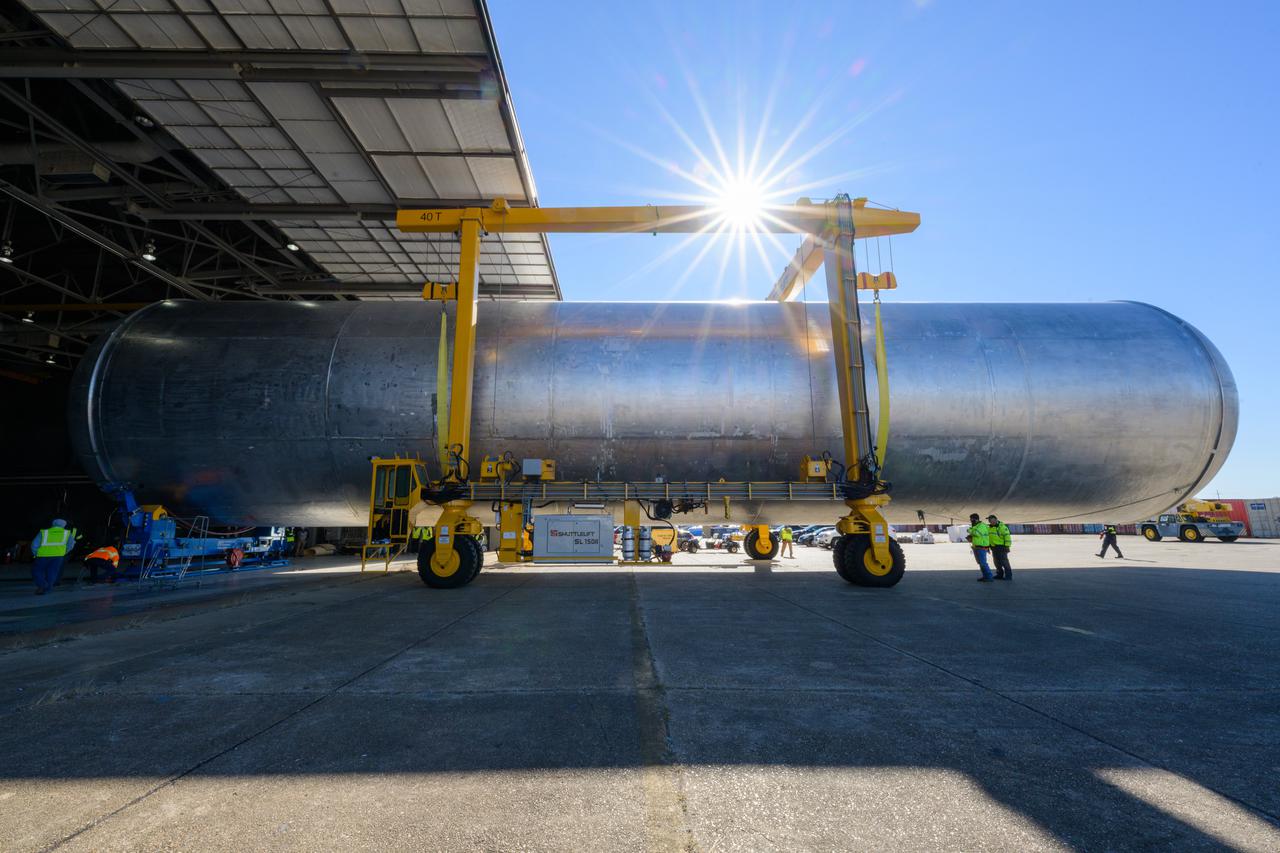
The liquid hydrogen tank that will be part of the Space Launch System rocket’s core stage is being prepared for the Artemis III mission at NASA’s Michoud Assembly Facility in New Orleans. Eventually, the tank will be connected to the engine section that will house the four RS-25 engines. Once the aft simulator is attached, the LH2 tank undergoes non-destructive evaluation, which will test weld strength and ensure the tank is structurally sound. The SLS core stage is made up of five unique elements: the forward skirt, liquid oxygen tank, intertank, liquid hydrogen tank, and the engine section. The tank holds 537,000 gallons of liquid hydrogen cooled to minus 432 degrees Fahrenheit and sits between the core stage’s intertank and engine section. The liquid hydrogen hardware, along with the liquid oxygen tank, will provide propellant to the four RS-25 engines at the bottom of the core stage to produce more than two million pounds of thrust to help launch the Artemis III mission to the Moon. Together with its four RS-25 engines, the rocket’s massive 212-foot-tall core stage — the largest stage NASA has ever built — and its twin solid rocket boosters will produce 8.8 million pounds of thrust to send NASA’s Orion spacecraft, astronauts and supplies beyond Earth’s orbit to the Moon.
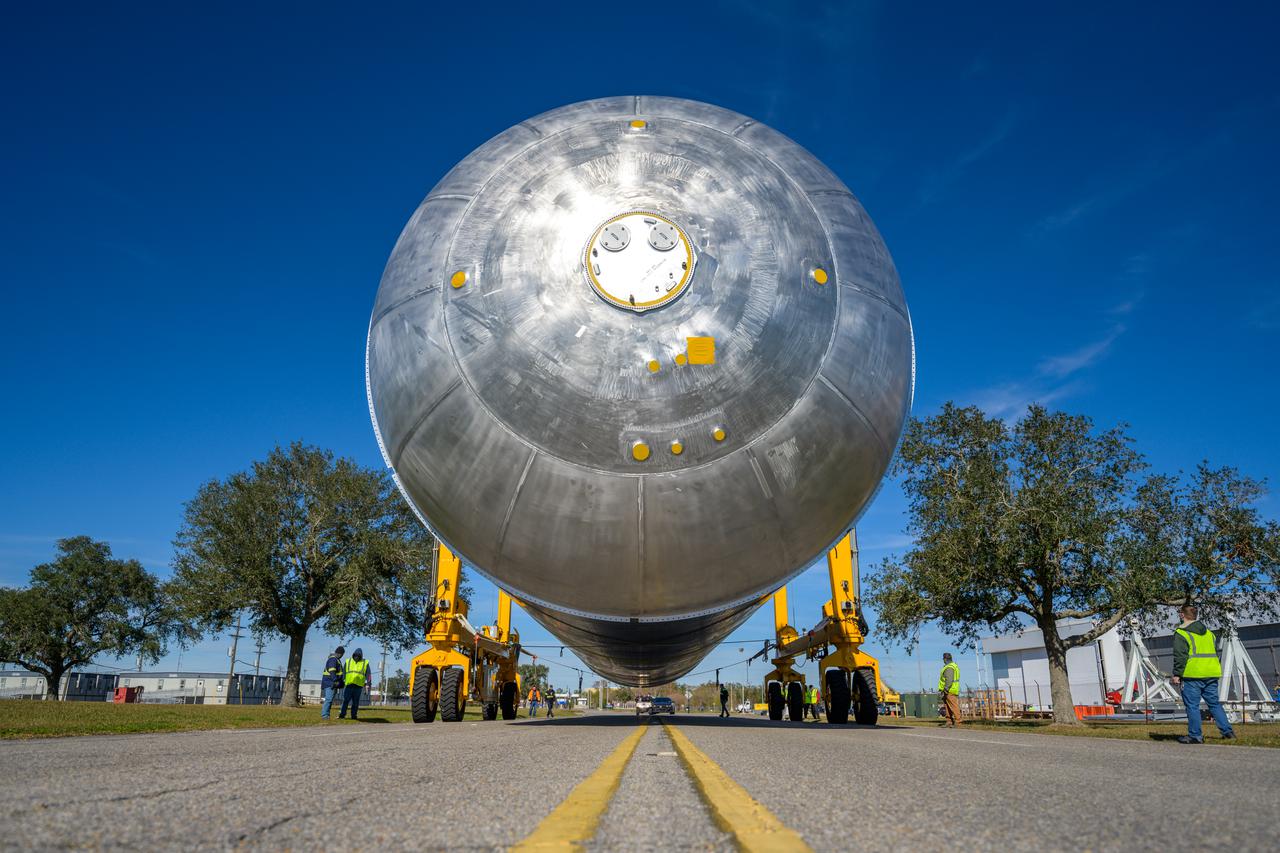
The liquid hydrogen tank that will be part of the Space Launch System rocket’s core stage is being prepared for the Artemis III mission at NASA’s Michoud Assembly Facility in New Orleans. Eventually, the tank will be connected to the engine section that will house the four RS-25 engines. Once the aft simulator is attached, the LH2 tank undergoes non-destructive evaluation, which will test weld strength and ensure the tank is structurally sound. The SLS core stage is made up of five unique elements: the forward skirt, liquid oxygen tank, intertank, liquid hydrogen tank, and the engine section. The tank holds 537,000 gallons of liquid hydrogen cooled to minus 432 degrees Fahrenheit and sits between the core stage’s intertank and engine section. The liquid hydrogen hardware, along with the liquid oxygen tank, will provide propellant to the four RS-25 engines at the bottom of the core stage to produce more than two million pounds of thrust to help launch the Artemis III mission to the Moon. Together with its four RS-25 engines, the rocket’s massive 212-foot-tall core stage — the largest stage NASA has ever built — and its twin solid rocket boosters will produce 8.8 million pounds of thrust to send NASA’s Orion spacecraft, astronauts and supplies beyond Earth’s orbit to the Moon.
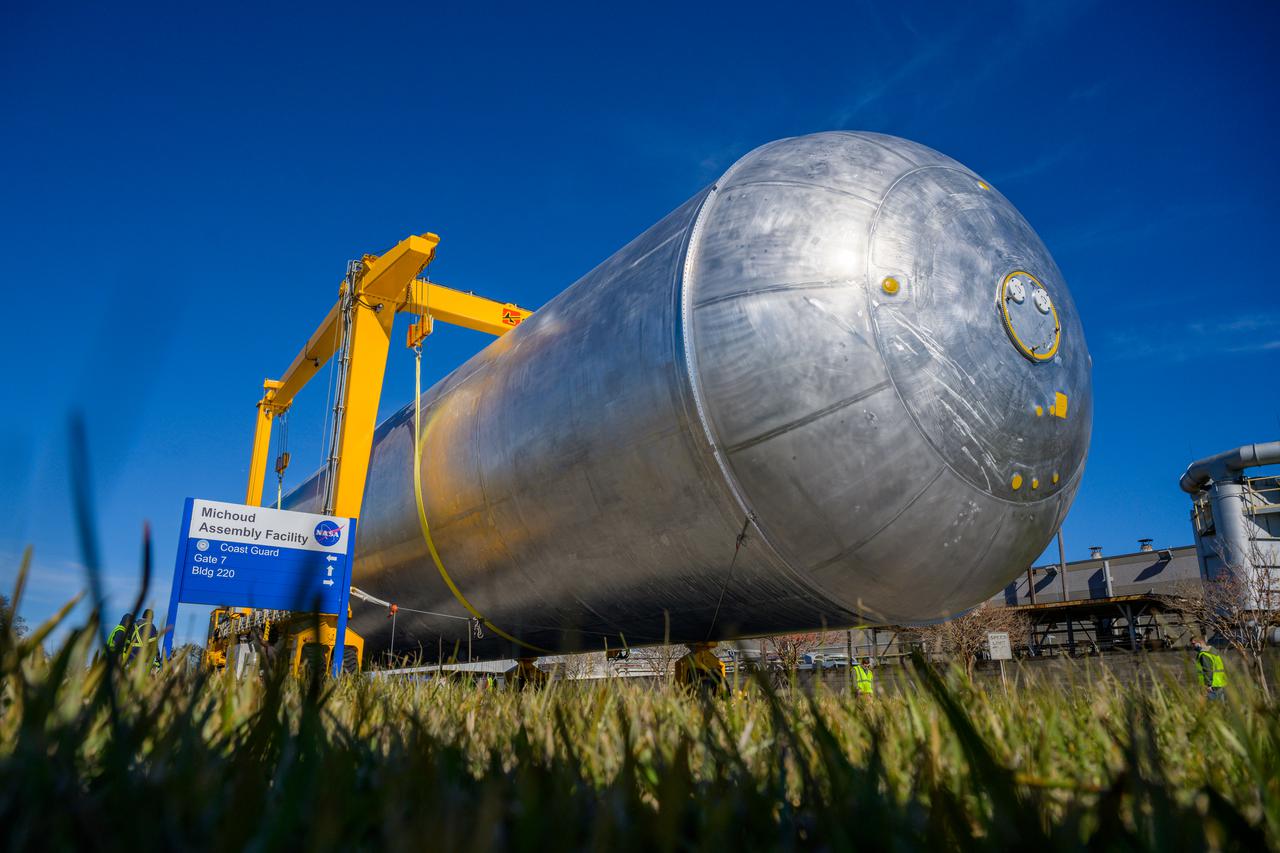
The liquid hydrogen tank that will be part of the Space Launch System rocket’s core stage is being prepared for the Artemis III mission at NASA’s Michoud Assembly Facility in New Orleans. Eventually, the tank will be connected to the engine section that will house the four RS-25 engines. Once the aft simulator is attached, the LH2 tank undergoes non-destructive evaluation, which will test weld strength and ensure the tank is structurally sound. The SLS core stage is made up of five unique elements: the forward skirt, liquid oxygen tank, intertank, liquid hydrogen tank, and the engine section. The tank holds 537,000 gallons of liquid hydrogen cooled to minus 432 degrees Fahrenheit and sits between the core stage’s intertank and engine section. The liquid hydrogen hardware, along with the liquid oxygen tank, will provide propellant to the four RS-25 engines at the bottom of the core stage to produce more than two million pounds of thrust to help launch the Artemis III mission to the Moon. Together with its four RS-25 engines, the rocket’s massive 212-foot-tall core stage — the largest stage NASA has ever built — and its twin solid rocket boosters will produce 8.8 million pounds of thrust to send NASA’s Orion spacecraft, astronauts and supplies beyond Earth’s orbit to the Moon.
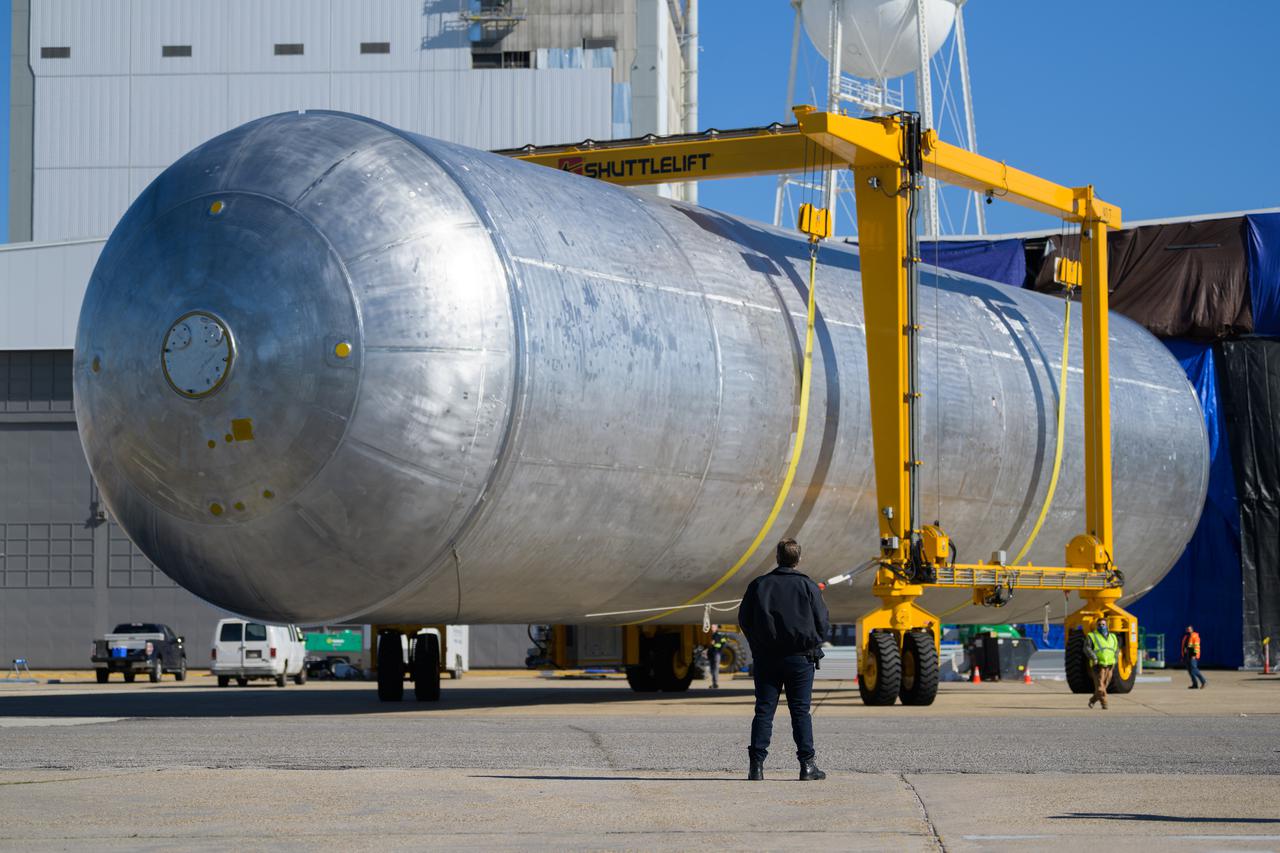
The liquid hydrogen tank that will be part of the Space Launch System rocket’s core stage is being prepared for the Artemis III mission at NASA’s Michoud Assembly Facility in New Orleans. Eventually, the tank will be connected to the engine section that will house the four RS-25 engines. Once the aft simulator is attached, the LH2 tank undergoes non-destructive evaluation, which will test weld strength and ensure the tank is structurally sound. The SLS core stage is made up of five unique elements: the forward skirt, liquid oxygen tank, intertank, liquid hydrogen tank, and the engine section. The tank holds 537,000 gallons of liquid hydrogen cooled to minus 432 degrees Fahrenheit and sits between the core stage’s intertank and engine section. The liquid hydrogen hardware, along with the liquid oxygen tank, will provide propellant to the four RS-25 engines at the bottom of the core stage to produce more than two million pounds of thrust to help launch the Artemis III mission to the Moon. Together with its four RS-25 engines, the rocket’s massive 212-foot-tall core stage — the largest stage NASA has ever built — and its twin solid rocket boosters will produce 8.8 million pounds of thrust to send NASA’s Orion spacecraft, astronauts and supplies beyond Earth’s orbit to the Moon.
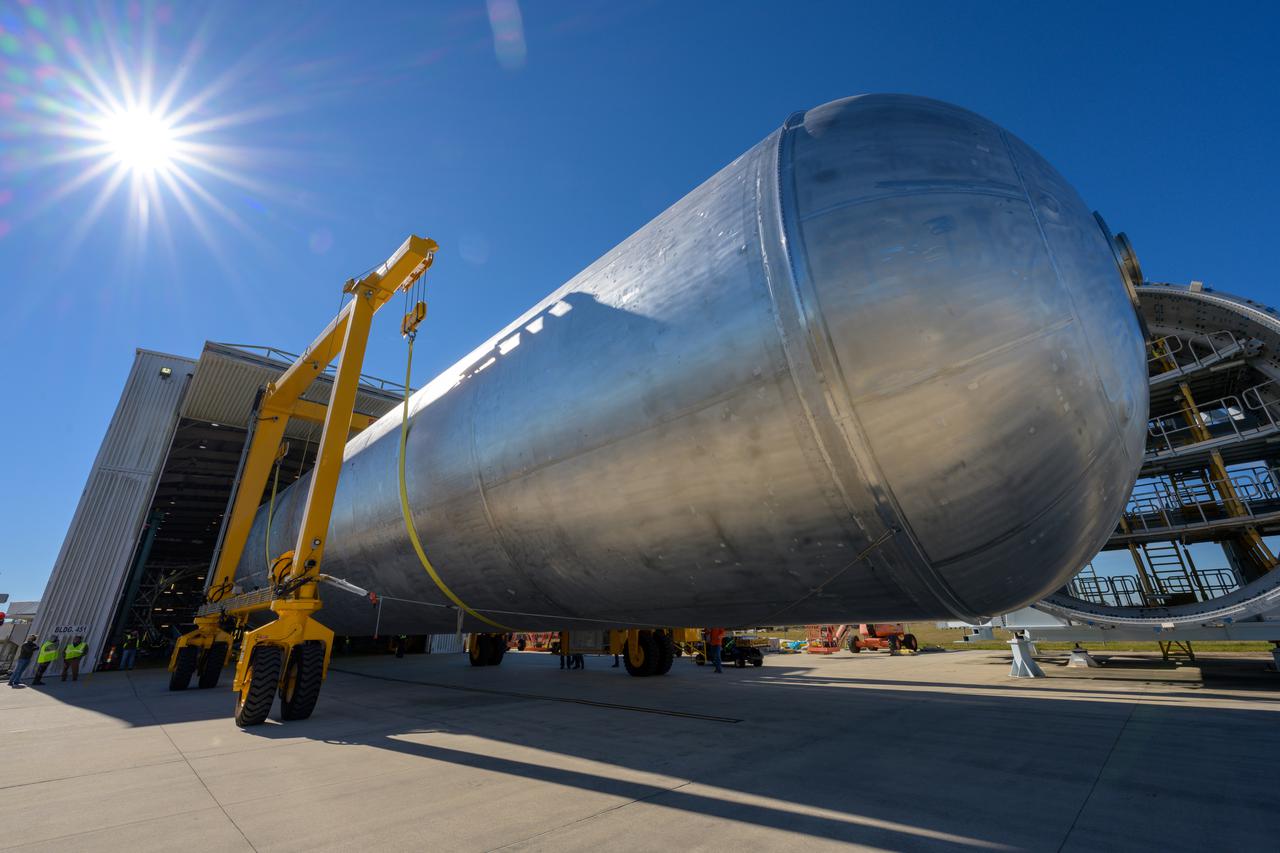
The liquid hydrogen tank that will be part of the Space Launch System rocket’s core stage is being prepared for the Artemis III mission at NASA’s Michoud Assembly Facility in New Orleans. Eventually, the tank will be connected to the engine section that will house the four RS-25 engines. Once the aft simulator is attached, the LH2 tank undergoes non-destructive evaluation, which will test weld strength and ensure the tank is structurally sound. The SLS core stage is made up of five unique elements: the forward skirt, liquid oxygen tank, intertank, liquid hydrogen tank, and the engine section. The tank holds 537,000 gallons of liquid hydrogen cooled to minus 432 degrees Fahrenheit and sits between the core stage’s intertank and engine section. The liquid hydrogen hardware, along with the liquid oxygen tank, will provide propellant to the four RS-25 engines at the bottom of the core stage to produce more than two million pounds of thrust to help launch the Artemis III mission to the Moon. Together with its four RS-25 engines, the rocket’s massive 212-foot-tall core stage — the largest stage NASA has ever built — and its twin solid rocket boosters will produce 8.8 million pounds of thrust to send NASA’s Orion spacecraft, astronauts and supplies beyond Earth’s orbit to the Moon.
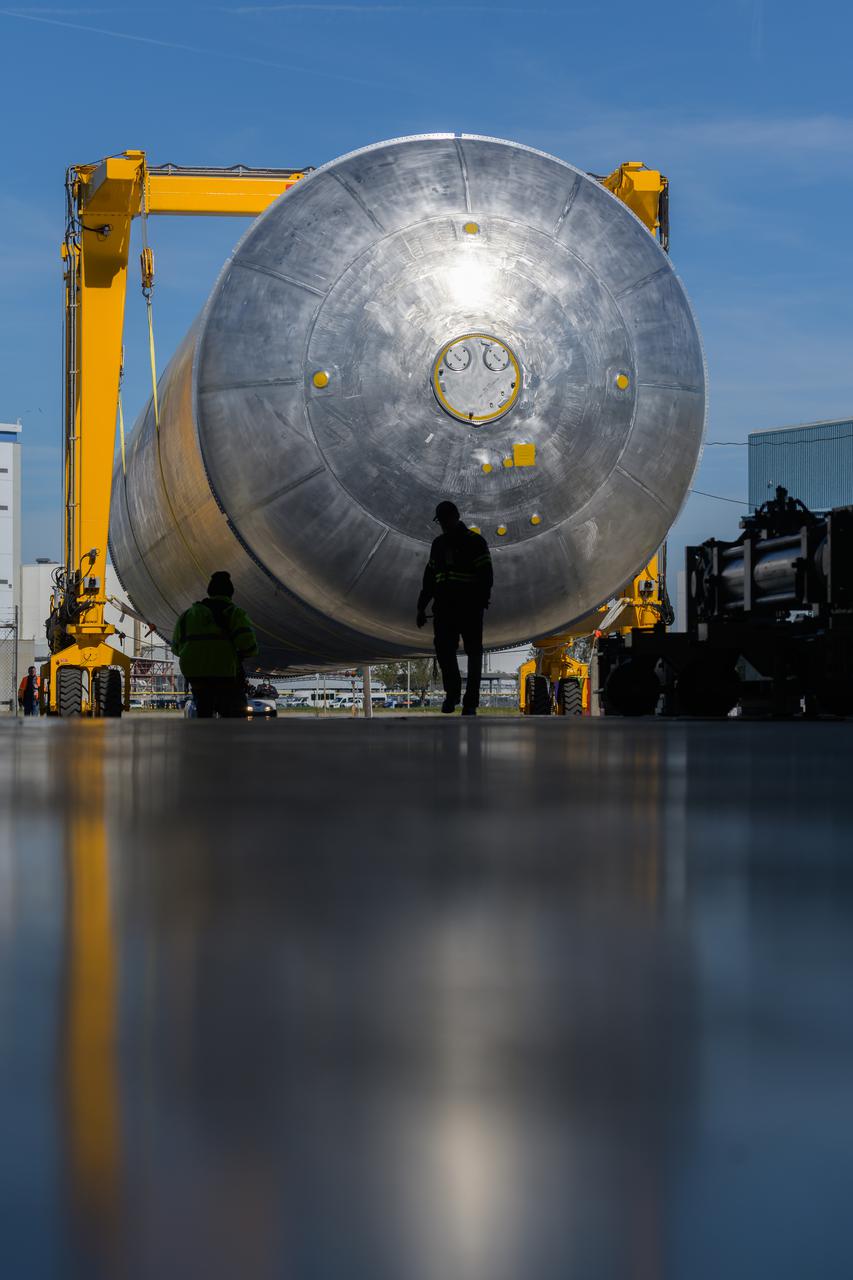
The liquid hydrogen tank that will be part of the Space Launch System rocket’s core stage is being prepared for the Artemis III mission at NASA’s Michoud Assembly Facility in New Orleans. Eventually, the tank will be connected to the engine section that will house the four RS-25 engines. Once the aft simulator is attached, the LH2 tank undergoes non-destructive evaluation, which will test weld strength and ensure the tank is structurally sound. The SLS core stage is made up of five unique elements: the forward skirt, liquid oxygen tank, intertank, liquid hydrogen tank, and the engine section. The tank holds 537,000 gallons of liquid hydrogen cooled to minus 432 degrees Fahrenheit and sits between the core stage’s intertank and engine section. The liquid hydrogen hardware, along with the liquid oxygen tank, will provide propellant to the four RS-25 engines at the bottom of the core stage to produce more than two million pounds of thrust to help launch the Artemis III mission to the Moon. Together with its four RS-25 engines, the rocket’s massive 212-foot-tall core stage — the largest stage NASA has ever built — and its twin solid rocket boosters will produce 8.8 million pounds of thrust to send NASA’s Orion spacecraft, astronauts and supplies beyond Earth’s orbit to the Moon.
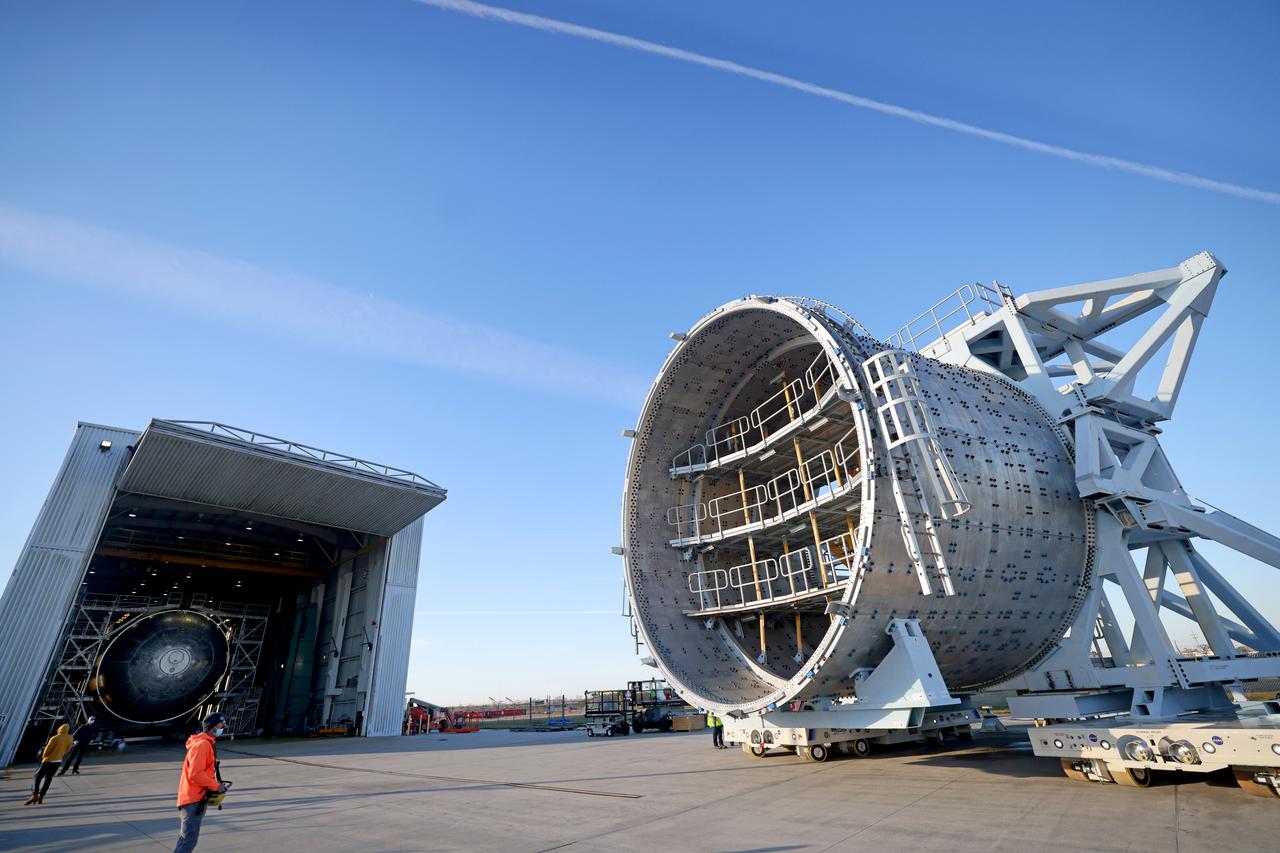
The liquid hydrogen tank that will be part of the Space Launch System rocket’s core stage is being prepared for the Artemis III mission at NASA’s Michoud Assembly Facility in New Orleans. Eventually, the tank will be connected to the engine section that will house the four RS-25 engines. The engine section is still being outfitted, so for this test crews attached an engine section aft simulator during proof testing on January 27, 2022. Once the aft simulator is attached, the LH2 tank undergoes non-destructive evaluation, which will test weld strength and ensure the tank is structurally sound. The SLS core stage is made up of five unique elements: the forward skirt, liquid oxygen tank, intertank, liquid hydrogen tank, and the engine section. The tank holds 537,000 gallons of liquid hydrogen cooled to minus 432 degrees Fahrenheit and sits between the core stage’s intertank and engine section. The liquid hydrogen hardware, along with the liquid oxygen tank, will provide propellant to the four RS-25 engines at the bottom of the core stage to produce more than two million pounds of thrust to help launch the Artemis III mission to the Moon. Together with its four RS-25 engines, the rocket’s massive 212-foot-tall core stage — the largest stage NASA has ever built — and its twin solid rocket boosters will produce 8.8 million pounds of thrust to send NASA’s Orion spacecraft, astronauts and supplies beyond Earth’s orbit to the Moon. Image credit: NASA/Michael DeMocker
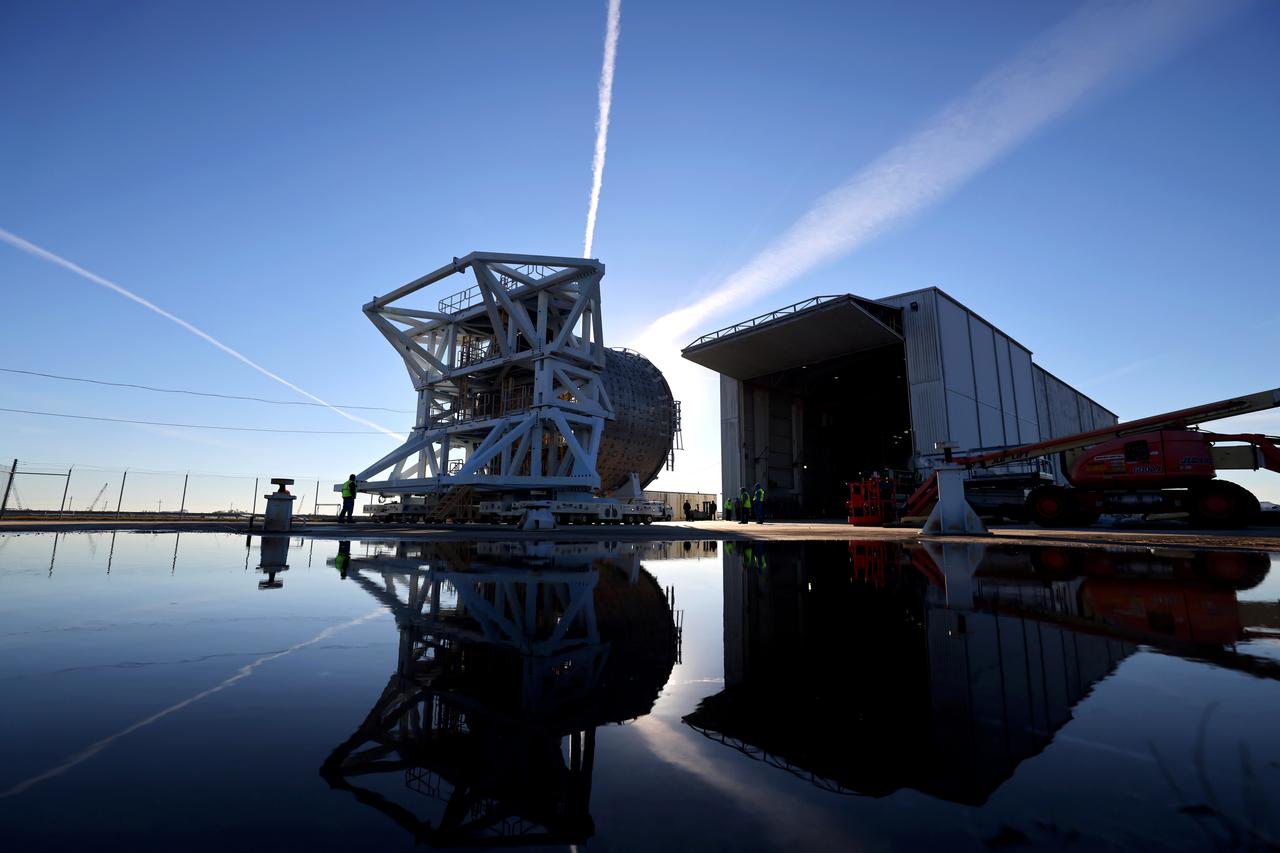
The liquid hydrogen tank that will be part of the Space Launch System rocket’s core stage is being prepared for the Artemis III mission at NASA’s Michoud Assembly Facility in New Orleans. Eventually, the tank will be connected to the engine section that will house the four RS-25 engines. The engine section is still being outfitted, so for this test crews attached an engine section aft simulator during proof testing on January 27, 2022. Once the aft simulator is attached, the LH2 tank undergoes non-destructive evaluation, which will test weld strength and ensure the tank is structurally sound. The SLS core stage is made up of five unique elements: the forward skirt, liquid oxygen tank, intertank, liquid hydrogen tank, and the engine section. The tank holds 537,000 gallons of liquid hydrogen cooled to minus 432 degrees Fahrenheit and sits between the core stage’s intertank and engine section. The liquid hydrogen hardware, along with the liquid oxygen tank, will provide propellant to the four RS-25 engines at the bottom of the core stage to produce more than two million pounds of thrust to help launch the Artemis III mission to the Moon. Together with its four RS-25 engines, the rocket’s massive 212-foot-tall core stage — the largest stage NASA has ever built — and its twin solid rocket boosters will produce 8.8 million pounds of thrust to send NASA’s Orion spacecraft, astronauts and supplies beyond Earth’s orbit to the Moon. Image credit: NASA/Michael DeMocker
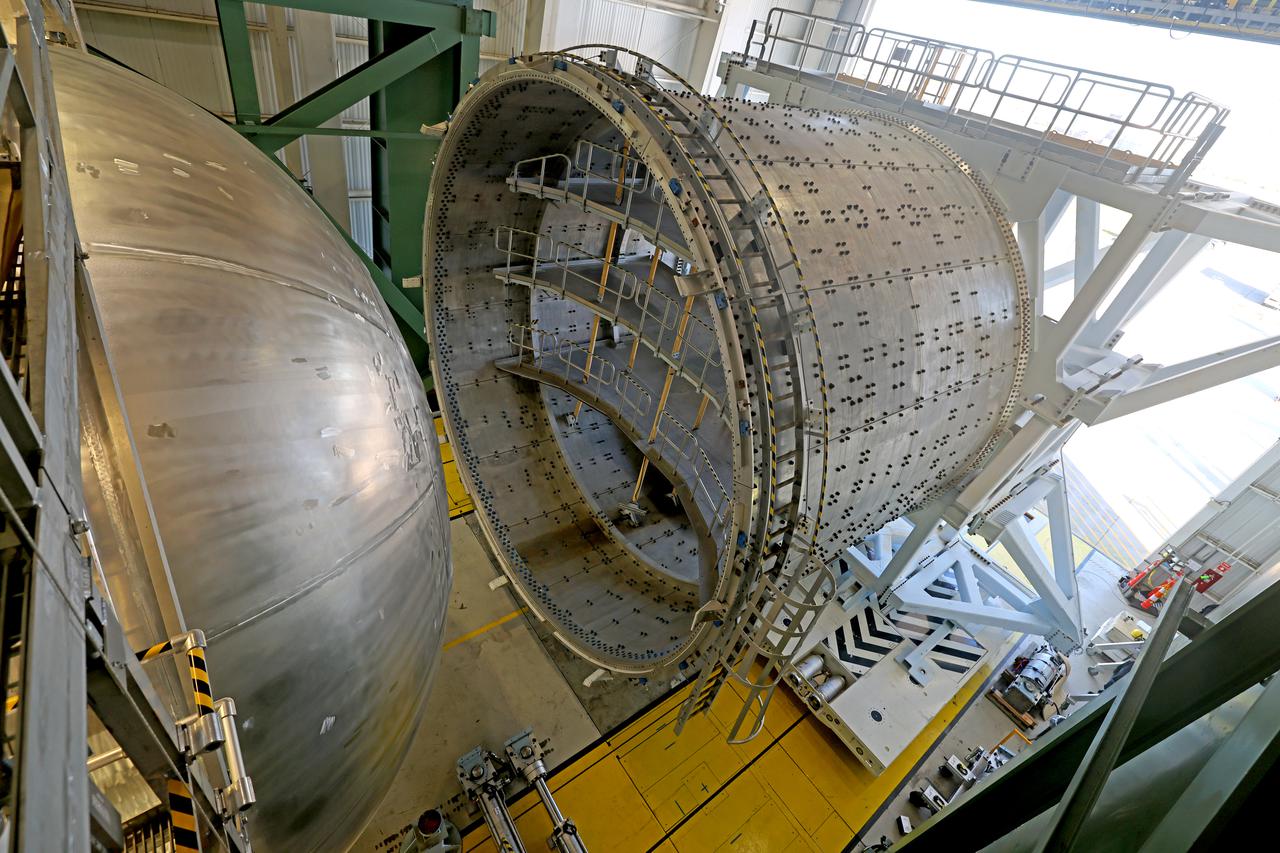
The liquid hydrogen tank that will be part of the Space Launch System rocket’s core stage is being prepared for the Artemis III mission at NASA’s Michoud Assembly Facility in New Orleans. Eventually, the tank will be connected to the engine section that will house the RS-25 engines. The engine section is still being outfitted, so for this test crews attached an engine section aft simulator during proof testing on January 27, 2022. Once the aft simulator is attached, the LH2 tank undergoes non-destructive evaluation, which will test weld strength and ensure the tank is structurally sound. The SLS core stage is made up of five unique elements: the forward skirt, liquid oxygen tank, intertank, liquid hydrogen tank, and the engine section. The tank holds 537,000 gallons of liquid hydrogen cooled to minus 432 degrees Fahrenheit and sits between the core stage’s intertank and engine section. The liquid hydrogen hardware, along with the liquid oxygen tank, will provide propellant to the four RS-25 engines at the bottom of the core stage to produce more than two million pounds of thrust to help launch the Artemis III mission to the Moon. Together with its four RS-25 engines, the rocket’s massive 212-foot-tall core stage — the largest stage NASA has ever built — and its twin solid rocket boosters will produce 8.8 million pounds of thrust to send NASA’s Orion spacecraft, astronauts and supplies beyond Earth’s orbit to the Moon. Image credit: NASA/Michael DeMocker
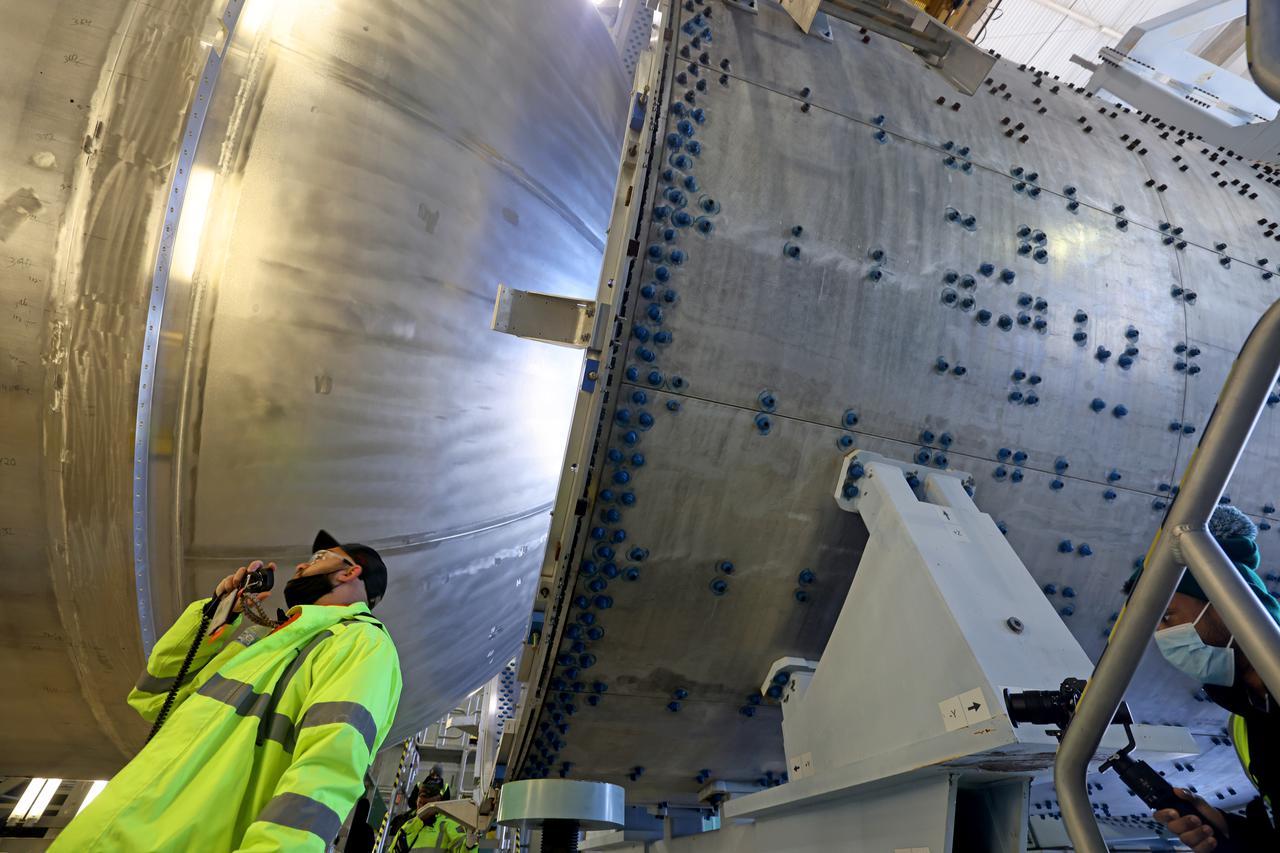
The liquid hydrogen tank that will be part of the Space Launch System rocket’s core stage is being prepared for the Artemis III mission at NASA’s Michoud Assembly Facility in New Orleans. Eventually, the tank will be connected to the engine section that will house the four RS-25 engines. The engine section is still being outfitted, so for this test crews attached an engine section aft simulator during proof testing on January 27, 2022. Once the aft simulator is attached, the LH2 tank undergoes non-destructive evaluation, which will test weld strength and ensure the tank is structurally sound. The SLS core stage is made up of five unique elements: the forward skirt, liquid oxygen tank, intertank, liquid hydrogen tank, and the engine section. The tank holds 537,000 gallons of liquid hydrogen cooled to minus 432 degrees Fahrenheit and sits between the core stage’s intertank and engine section. The liquid hydrogen hardware, along with the liquid oxygen tank, will provide propellant to the four RS-25 engines at the bottom of the core stage to produce more than two million pounds of thrust to help launch the Artemis III mission to the Moon. Together with its four RS-25 engines, the rocket’s massive 212-foot-tall core stage — the largest stage NASA has ever built — and its twin solid rocket boosters will produce 8.8 million pounds of thrust to send NASA’s Orion spacecraft, astronauts and supplies beyond Earth’s orbit to the Moon. Image credit: NASA/Michael DeMocker
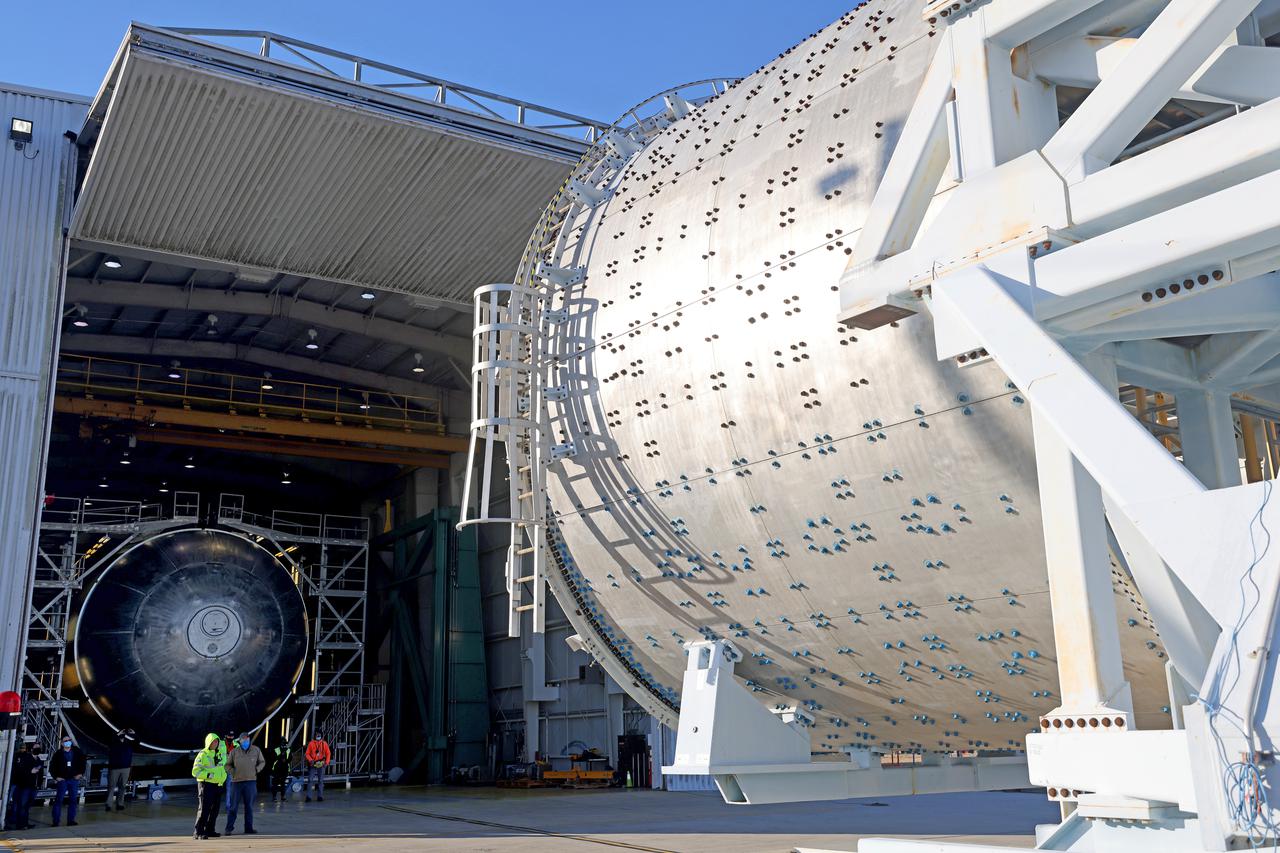
The liquid hydrogen tank that will be part of the Space Launch System rocket’s core stage is being prepared for the Artemis III mission at NASA’s Michoud Assembly Facility in New Orleans. Eventually, the tank will be connected to the engine section that will house the four RS-25 engines. The engine section is still being outfitted, so for this test crews attached an engine section aft simulator during proof testing on January 27, 2022. Once the aft simulator is attached, the LH2 tank undergoes non-destructive evaluation, which will test weld strength and ensure the tank is structurally sound. The SLS core stage is made up of five unique elements: the forward skirt, liquid oxygen tank, intertank, liquid hydrogen tank, and the engine section. The tank holds 537,000 gallons of liquid hydrogen cooled to minus 432 degrees Fahrenheit and sits between the core stage’s intertank and engine section. The liquid hydrogen hardware, along with the liquid oxygen tank, will provide propellant to the four RS-25 engines at the bottom of the core stage to produce more than two million pounds of thrust to help launch the Artemis III mission to the Moon. Together with its four RS-25 engines, the rocket’s massive 212-foot-tall core stage — the largest stage NASA has ever built — and its twin solid rocket boosters will produce 8.8 million pounds of thrust to send NASA’s Orion spacecraft, astronauts and supplies beyond Earth’s orbit to the Moon. Image credit: NASA/Michael DeMocker
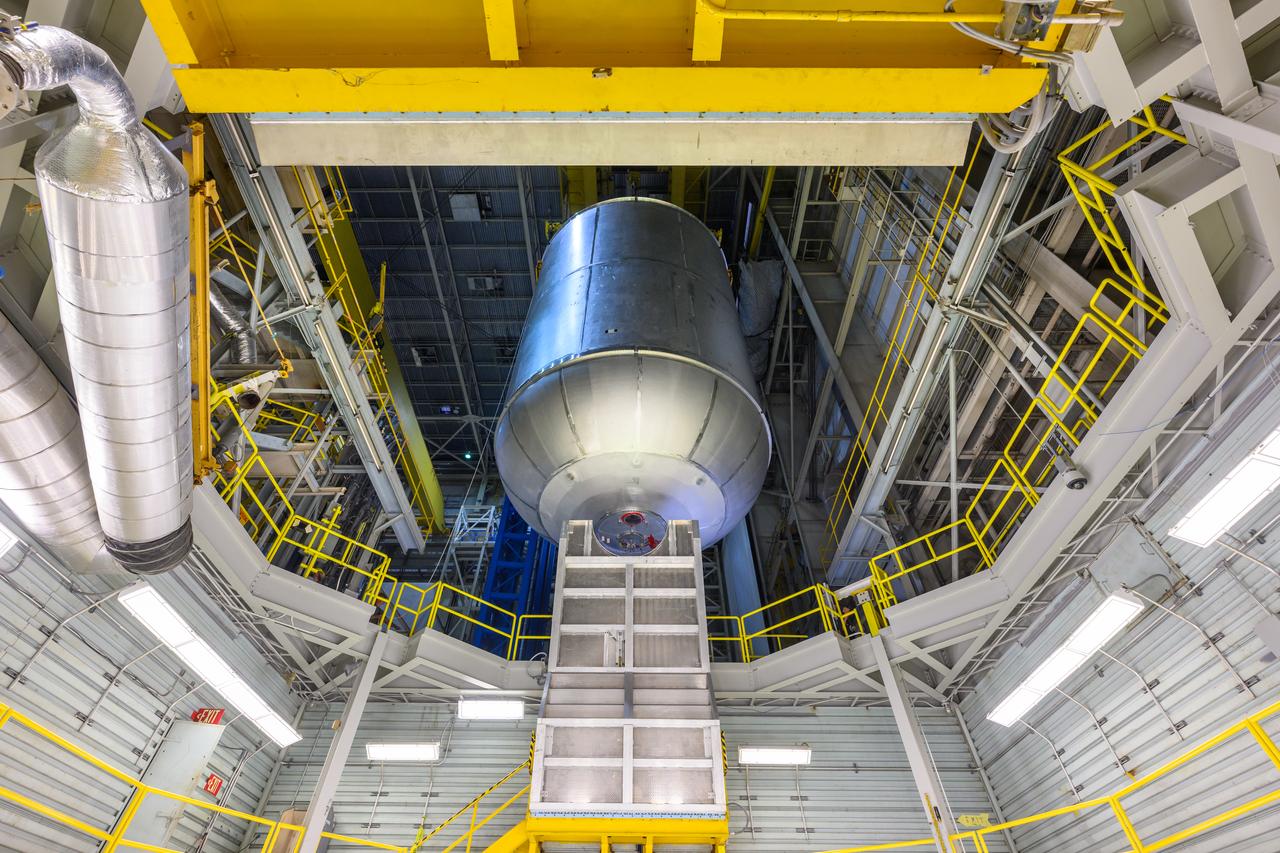
Teams at NASA’s Michoud Assembly Facility in New Orleans successfully completed hydrostatic proof testing of the core stage liquid oxygen tank for the agency’s Artemis III mission. The non-destructive evaluation method tests the structural integrity of the tank’s welds by filling the tank with water, simulating the propellant used during launch. The hardware was then moved to an adjacent cell for internal cleaning. Next, the tank will be readied for primer and application of its thermal protection system. The propellant tank is one of five major elements that make up the 212-foot-tall rocket stage. The core stage, along with its four RS-25 engines, produce two million pounds of thrust to help launch NASA’s Orion spacecraft, astronauts, and supplies beyond Earth’s orbit and to the lunar surface for Artemis.
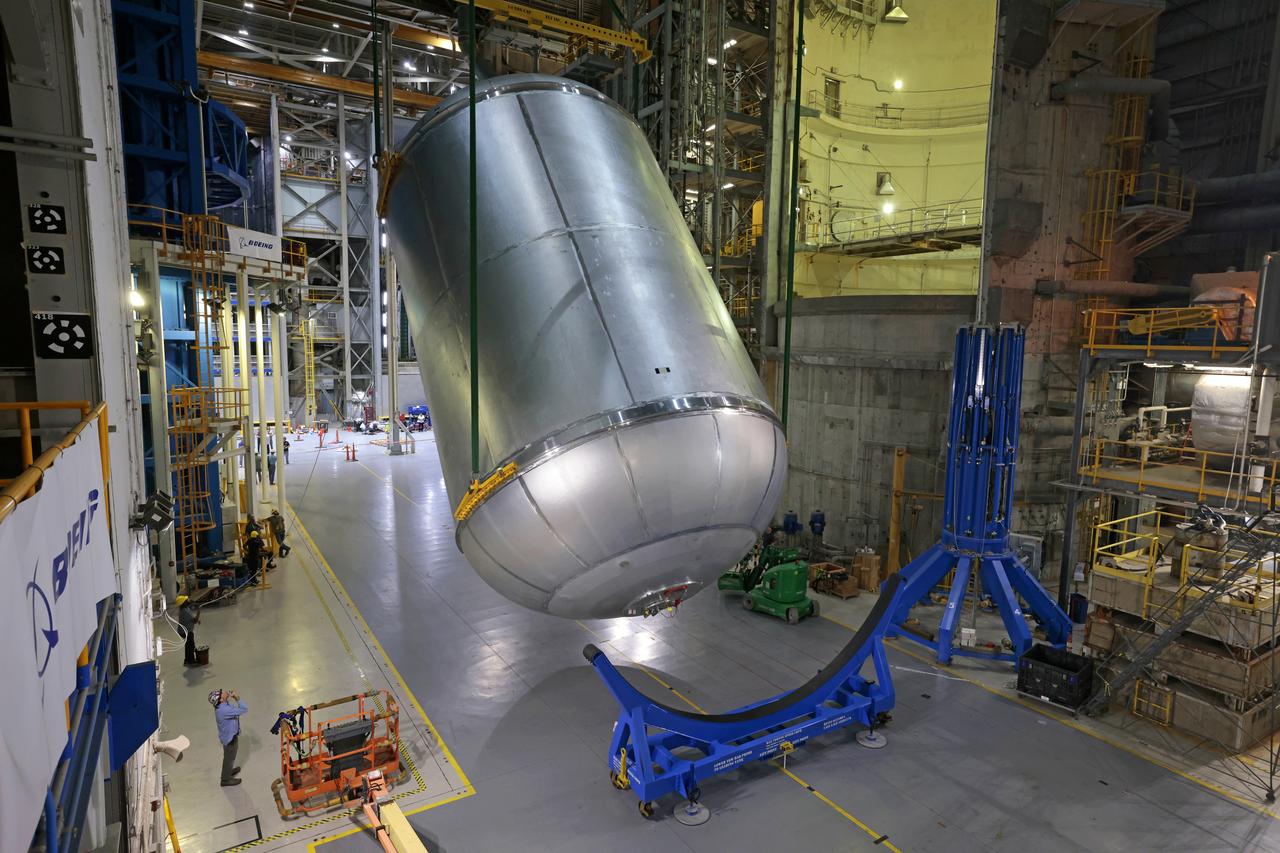
Teams at NASA’s Michoud Assembly Facility in New Orleans successfully completed hydrostatic proof testing of the core stage liquid oxygen tank for the agency’s Artemis III mission. The non-destructive evaluation method tests the structural integrity of the tank’s welds by filling the tank with water, simulating the propellant used during launch. The hardware was then moved to an adjacent cell for internal cleaning. Next, the tank will be readied for primer and application of its thermal protection system. The propellant tank is one of five major elements that make up the 212-foot-tall rocket stage. The core stage, along with its four RS-25 engines, produce two million pounds of thrust to help launch NASA’s Orion spacecraft, astronauts, and supplies beyond Earth’s orbit and to the lunar surface for Artemis. Image credit: NASA/Michael DeMocker
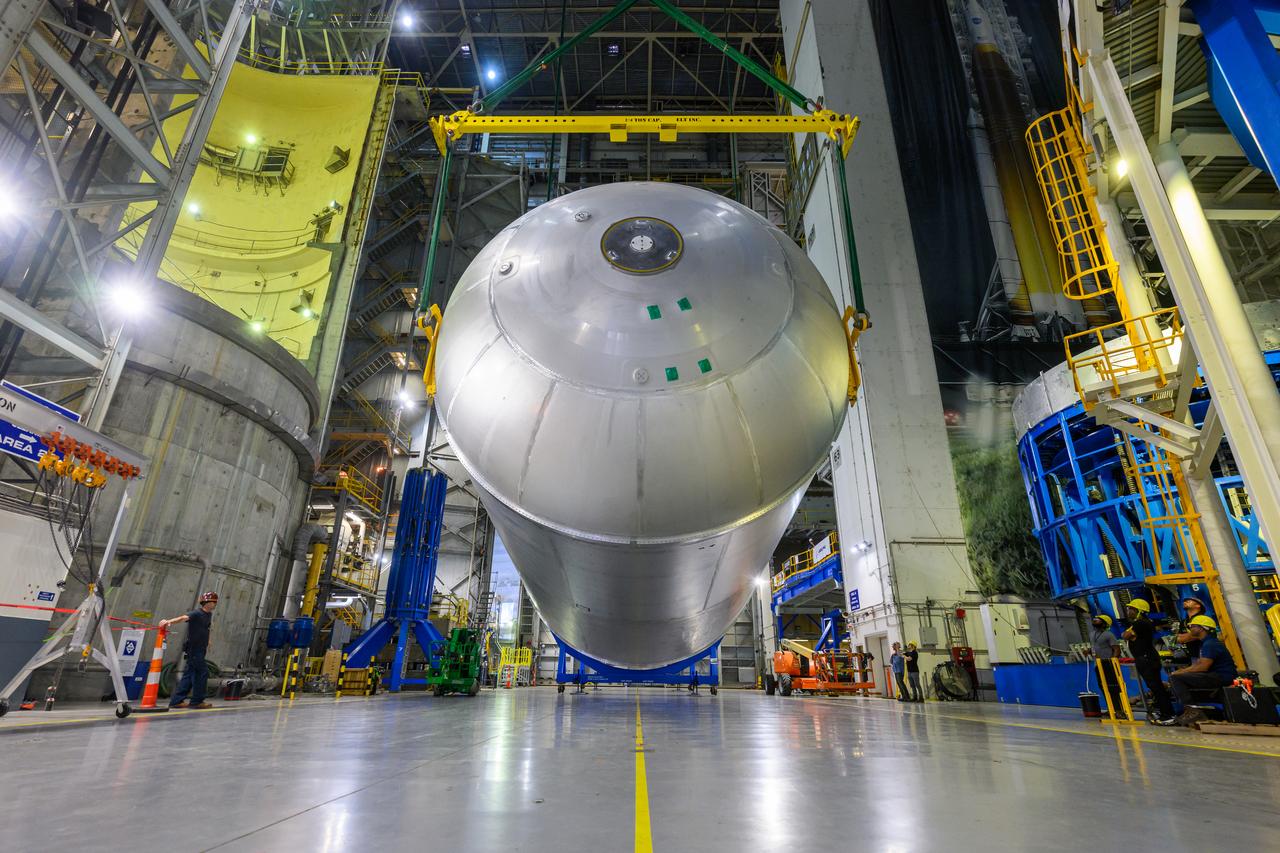
Teams at NASA’s Michoud Assembly Facility in New Orleans successfully completed hydrostatic proof testing of the core stage liquid oxygen tank for the agency’s Artemis III mission. The non-destructive evaluation method tests the structural integrity of the tank’s welds by filling the tank with water, simulating the propellant used during launch. The hardware was then moved to an adjacent cell for internal cleaning. Next, the tank will be readied for primer and application of its thermal protection system. The propellant tank is one of five major elements that make up the 212-foot-tall rocket stage. The core stage, along with its four RS-25 engines, produce two million pounds of thrust to help launch NASA’s Orion spacecraft, astronauts, and supplies beyond Earth’s orbit and to the lunar surface for Artemis.
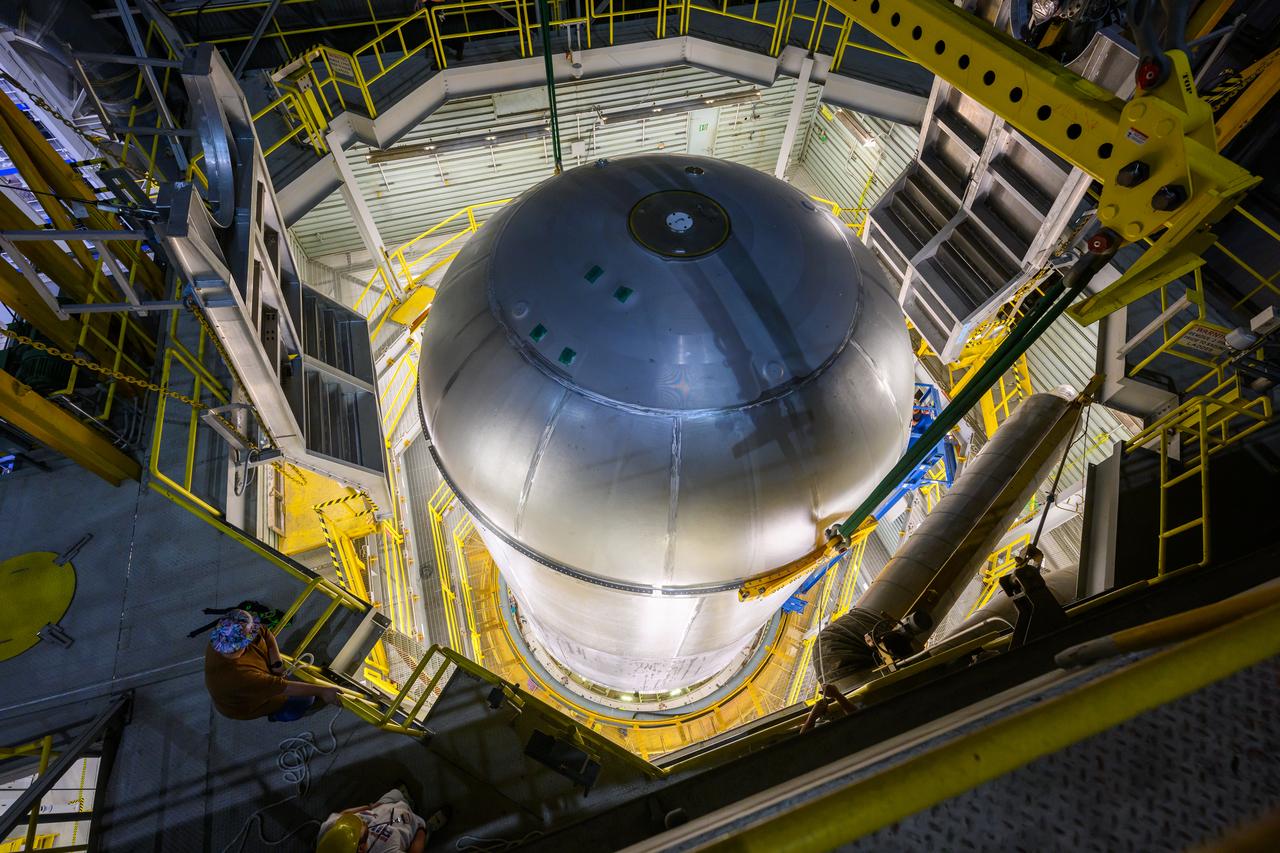
Teams at NASA’s Michoud Assembly Facility in New Orleans successfully completed hydrostatic proof testing of the core stage liquid oxygen tank for the agency’s Artemis III mission. The non-destructive evaluation method tests the structural integrity of the tank’s welds by filling the tank with water, simulating the propellant used during launch. The hardware was then moved to an adjacent cell for internal cleaning. Next, the tank will be readied for primer and application of its thermal protection system. The propellant tank is one of five major elements that make up the 212-foot-tall rocket stage. The core stage, along with its four RS-25 engines, produce two million pounds of thrust to help launch NASA’s Orion spacecraft, astronauts, and supplies beyond Earth’s orbit and to the lunar surface for Artemis.
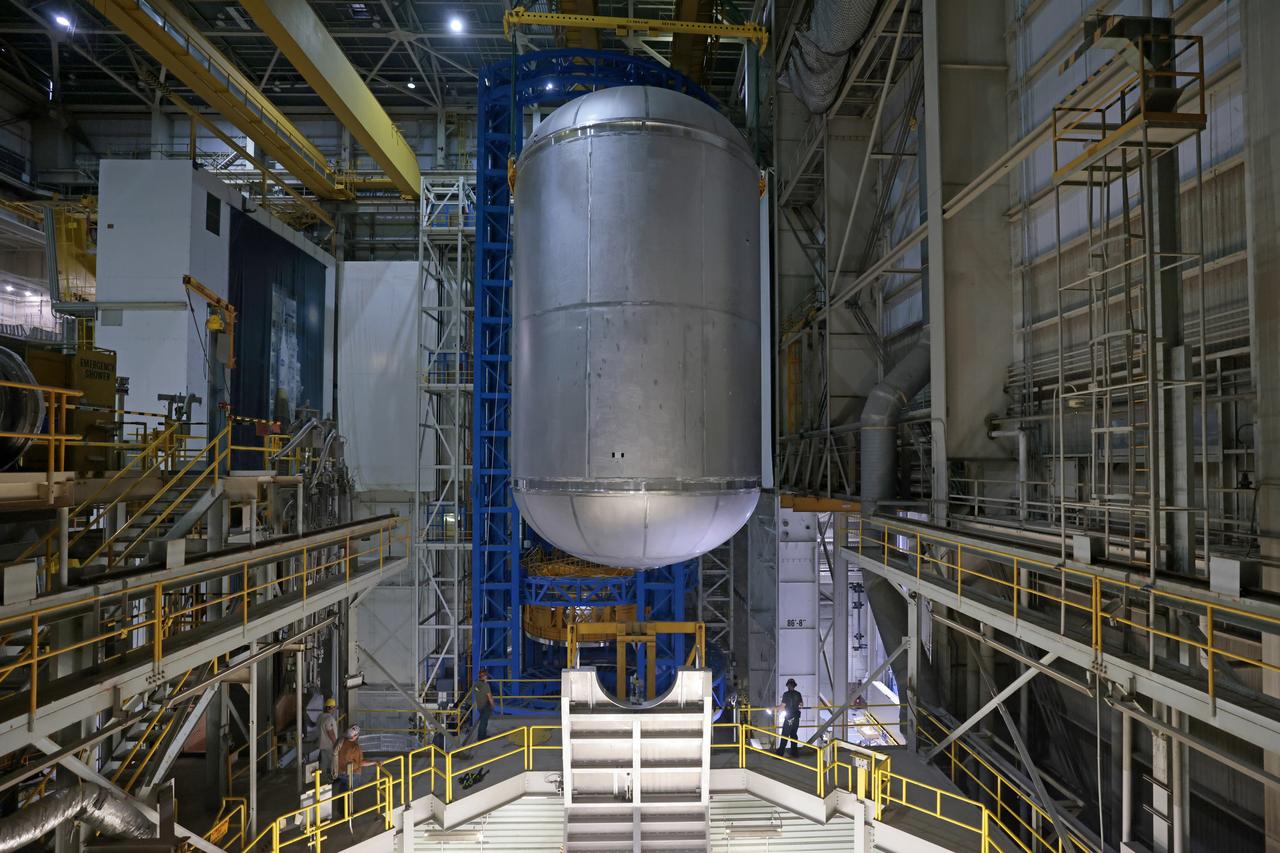
Teams at NASA’s Michoud Assembly Facility in New Orleans successfully completed hydrostatic proof testing of the core stage liquid oxygen tank for the agency’s Artemis III mission. The non-destructive evaluation method tests the structural integrity of the tank’s welds by filling the tank with water, simulating the propellant used during launch. The hardware was then moved to an adjacent cell for internal cleaning. Next, the tank will be readied for primer and application of its thermal protection system. The propellant tank is one of five major elements that make up the 212-foot-tall rocket stage. The core stage, along with its four RS-25 engines, produce two million pounds of thrust to help launch NASA’s Orion spacecraft, astronauts, and supplies beyond Earth’s orbit and to the lunar surface for Artemis. Image credit: NASA/Michael DeMocker
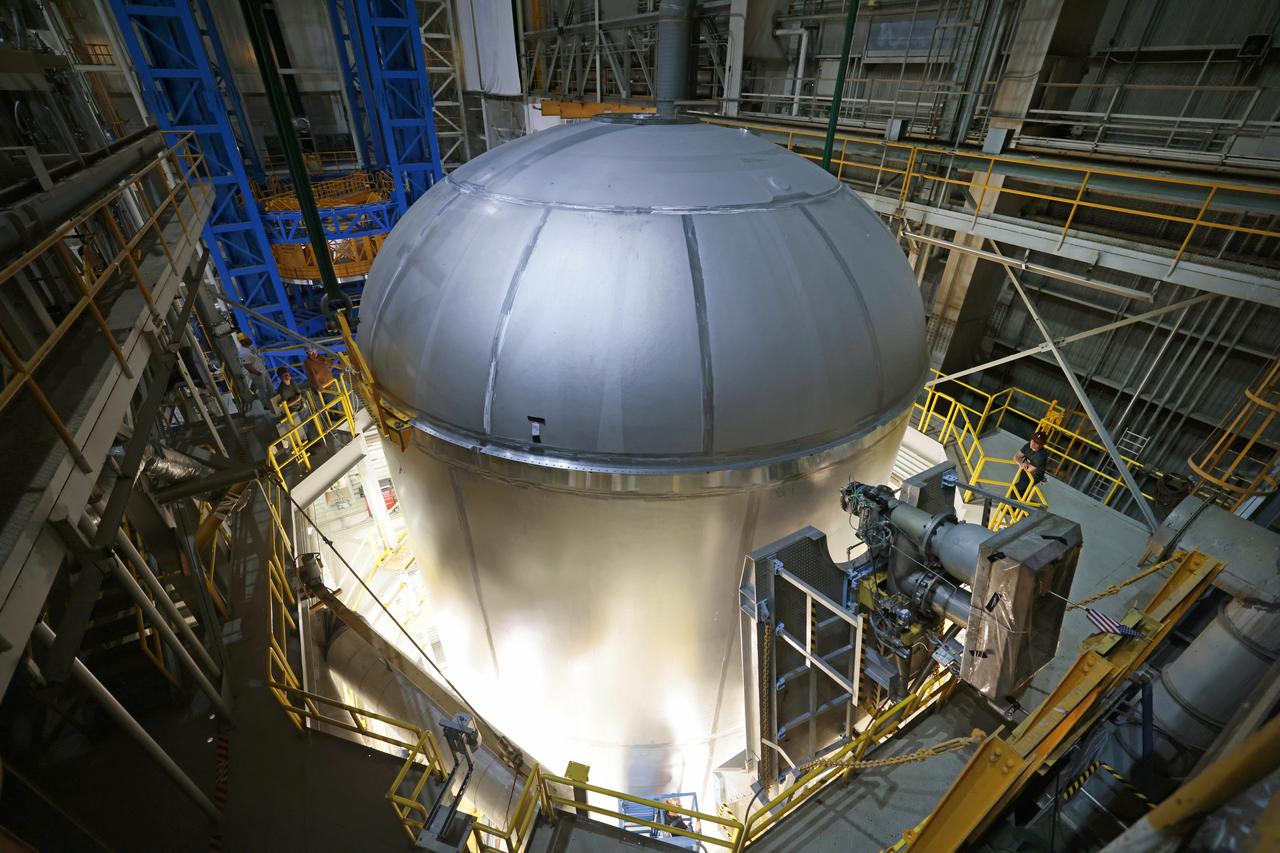
Teams at NASA’s Michoud Assembly Facility in New Orleans successfully completed hydrostatic proof testing of the core stage liquid oxygen tank for the agency’s Artemis III mission. The non-destructive evaluation method tests the structural integrity of the tank’s welds by filling the tank with water, simulating the propellant used during launch. The hardware was then moved to an adjacent cell for internal cleaning. Next, the tank will be readied for primer and application of its thermal protection system. The propellant tank is one of five major elements that make up the 212-foot-tall rocket stage. The core stage, along with its four RS-25 engines, produce two million pounds of thrust to help launch NASA’s Orion spacecraft, astronauts, and supplies beyond Earth’s orbit and to the lunar surface for Artemis. Image credit: NASA/Michael DeMocker
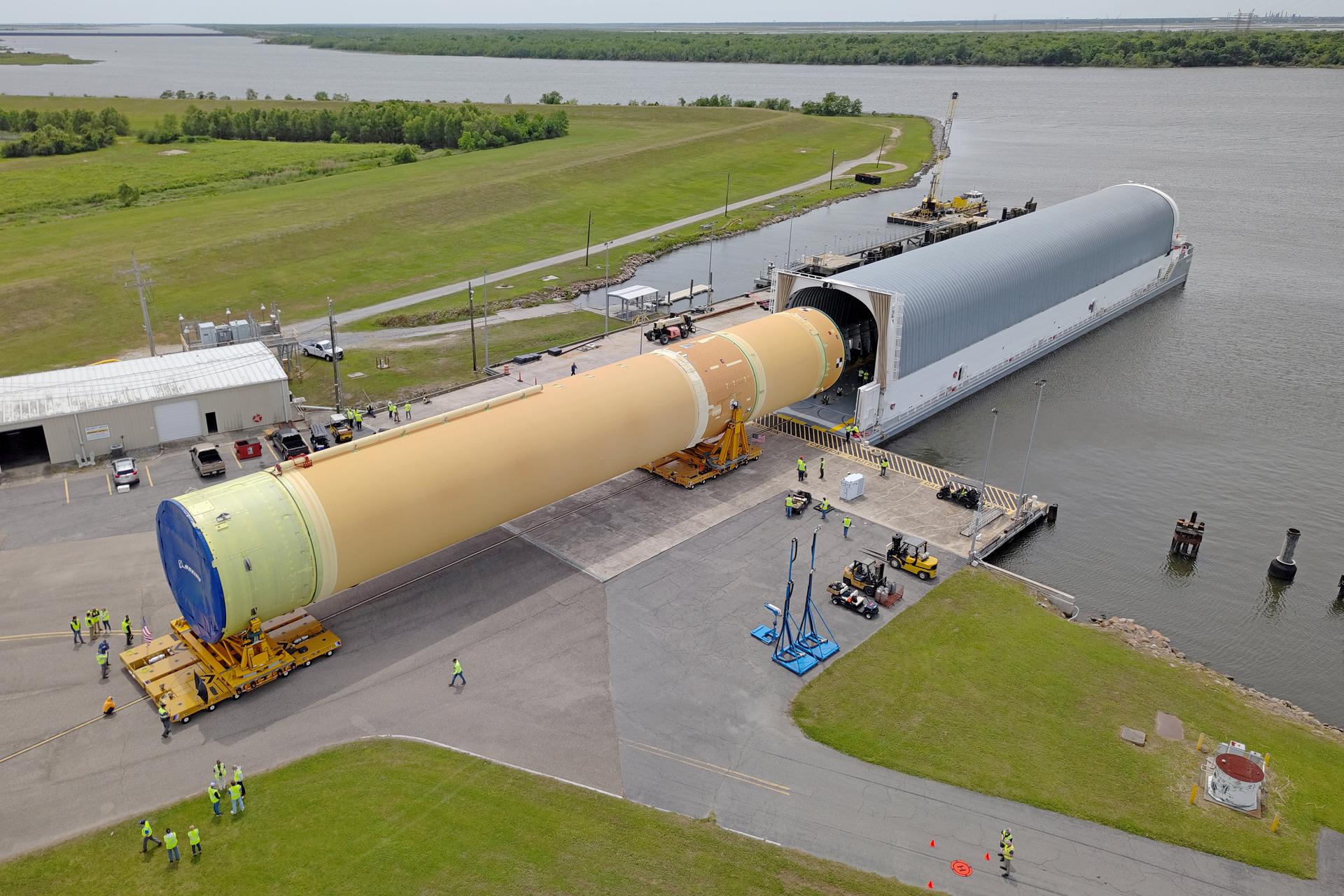
NASA moved the core stage, or the largest section, of the SLS (Space Launch System) rocket that will launch the crewed Artemis III mission in 2027 from the agency’s Michoud Assembly Facility to the agency’s Pegasus barge in New Orleans on April 20. The barge will ferry the top four-fifths – the section containing the liquid hydrogen tank, liquid oxygen tank, intertank, and forward skirt – of the SLS core stage to NASA’s Kennedy Space Center in Florida to complete outfitting and vertical integration. Teams with NASA and Boeing, the SLS core stage lead contractor, used specialized transporters to guide the top four-fifths from the NASA rocket factory to Pegasus. Prior to the move, technicians added an engine section transportation simulator to the rocket stage for shipment to the Space Coast. Next year’s Artemis III mission will launch astronauts to Earth’s orbit aboard the Orion spacecraft on top of SLS to test rendezvous and docking capabilities between Orion and commercial spacecraft needed to land Artemis IV astronauts on the Moon in 2028. NASA’s SLS is the only rocket capable of sending Orion, astronauts, and supplies to the Moon in a single launch.
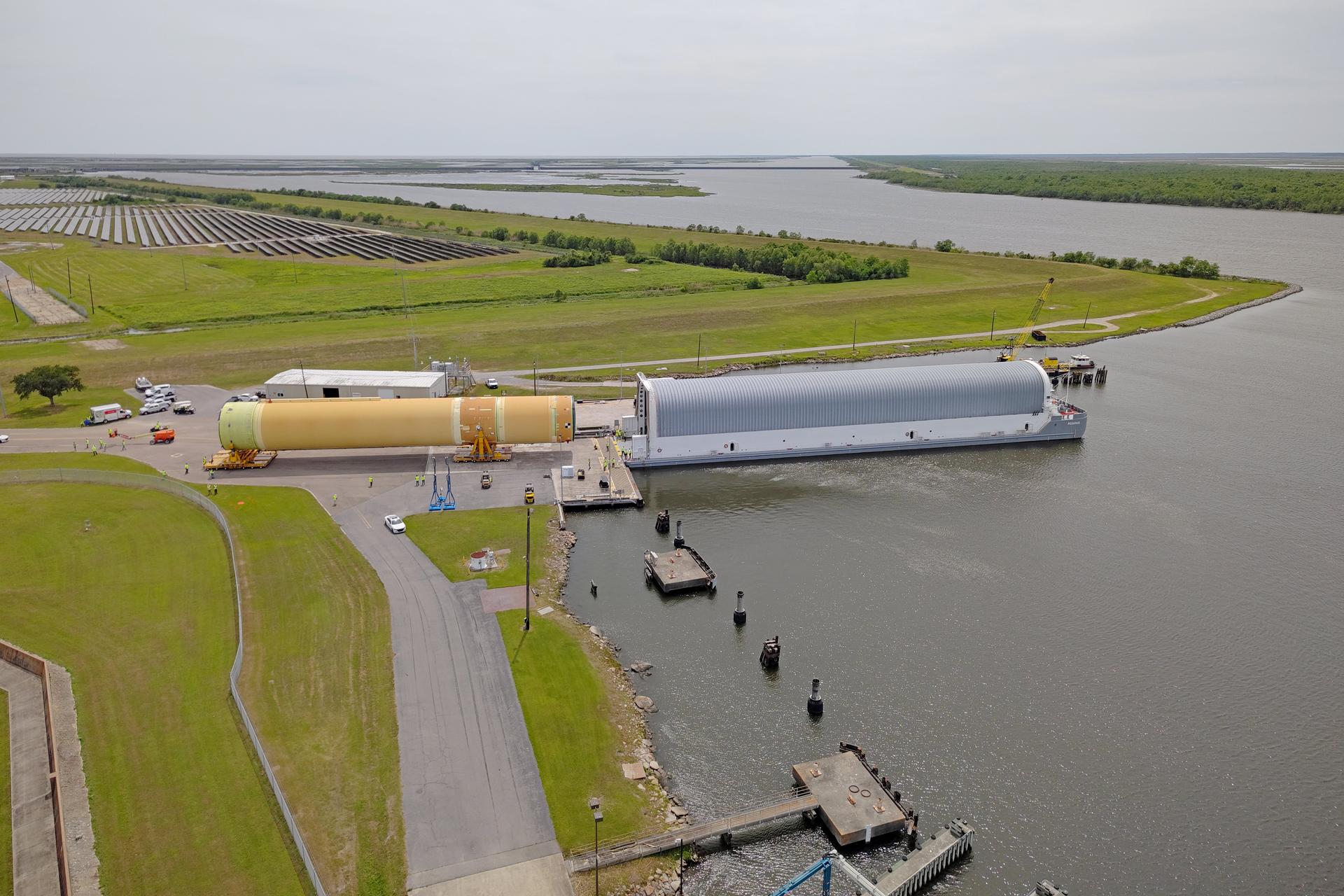
NASA moved the core stage, or the largest section, of the SLS (Space Launch System) rocket that will launch the crewed Artemis III mission in 2027 from the agency’s Michoud Assembly Facility to the agency’s Pegasus barge in New Orleans on April 20. The barge will ferry the top four-fifths – the section containing the liquid hydrogen tank, liquid oxygen tank, intertank, and forward skirt – of the SLS core stage to NASA’s Kennedy Space Center in Florida to complete outfitting and vertical integration. Teams with NASA and Boeing, the SLS core stage lead contractor, used specialized transporters to guide the top four-fifths from the NASA rocket factory to Pegasus. Prior to the move, technicians added an engine section transportation simulator to the rocket stage for shipment to the Space Coast. Next year’s Artemis III mission will launch astronauts to Earth’s orbit aboard the Orion spacecraft on top of SLS to test rendezvous and docking capabilities between Orion and commercial spacecraft needed to land Artemis IV astronauts on the Moon in 2028. NASA’s SLS is the only rocket capable of sending Orion, astronauts, and supplies to the Moon in a single launch.
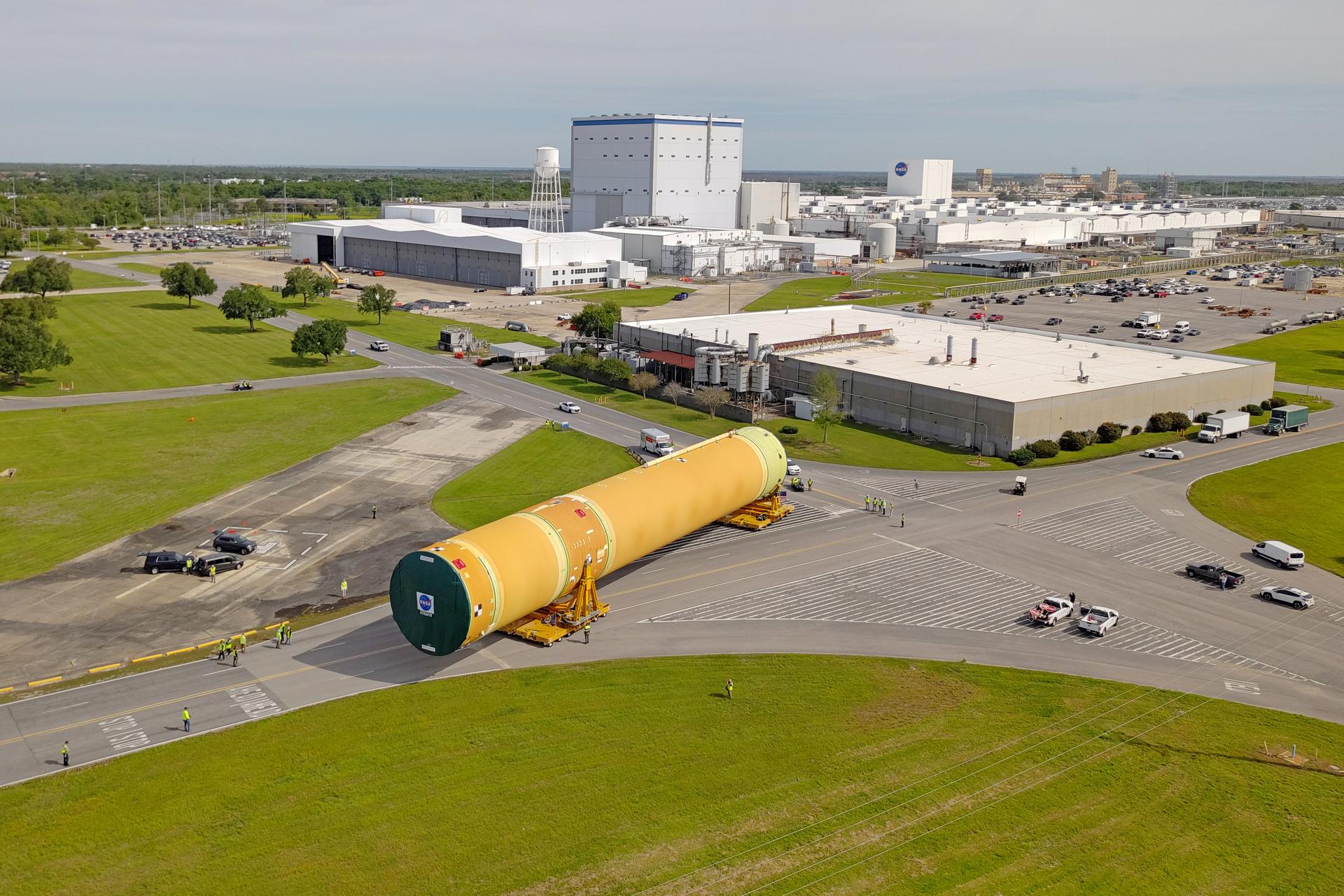
NASA moved the core stage, or the largest section, of the SLS (Space Launch System) rocket that will launch the crewed Artemis III mission in 2027 from the agency’s Michoud Assembly Facility to the agency’s Pegasus barge in New Orleans on April 20. The barge will ferry the top four-fifths – the section containing the liquid hydrogen tank, liquid oxygen tank, intertank, and forward skirt – of the SLS core stage to NASA’s Kennedy Space Center in Florida to complete outfitting and vertical integration. Teams with NASA and Boeing, the SLS core stage lead contractor, used specialized transporters to guide the top four-fifths from the NASA rocket factory to Pegasus. Prior to the move, technicians added an engine section transportation simulator to the rocket stage for shipment to the Space Coast. Next year’s Artemis III mission will launch astronauts to Earth’s orbit aboard the Orion spacecraft on top of SLS to test rendezvous and docking capabilities between Orion and commercial spacecraft needed to land Artemis IV astronauts on the Moon in 2028. NASA’s SLS is the only rocket capable of sending Orion, astronauts, and supplies to the Moon in a single launch.
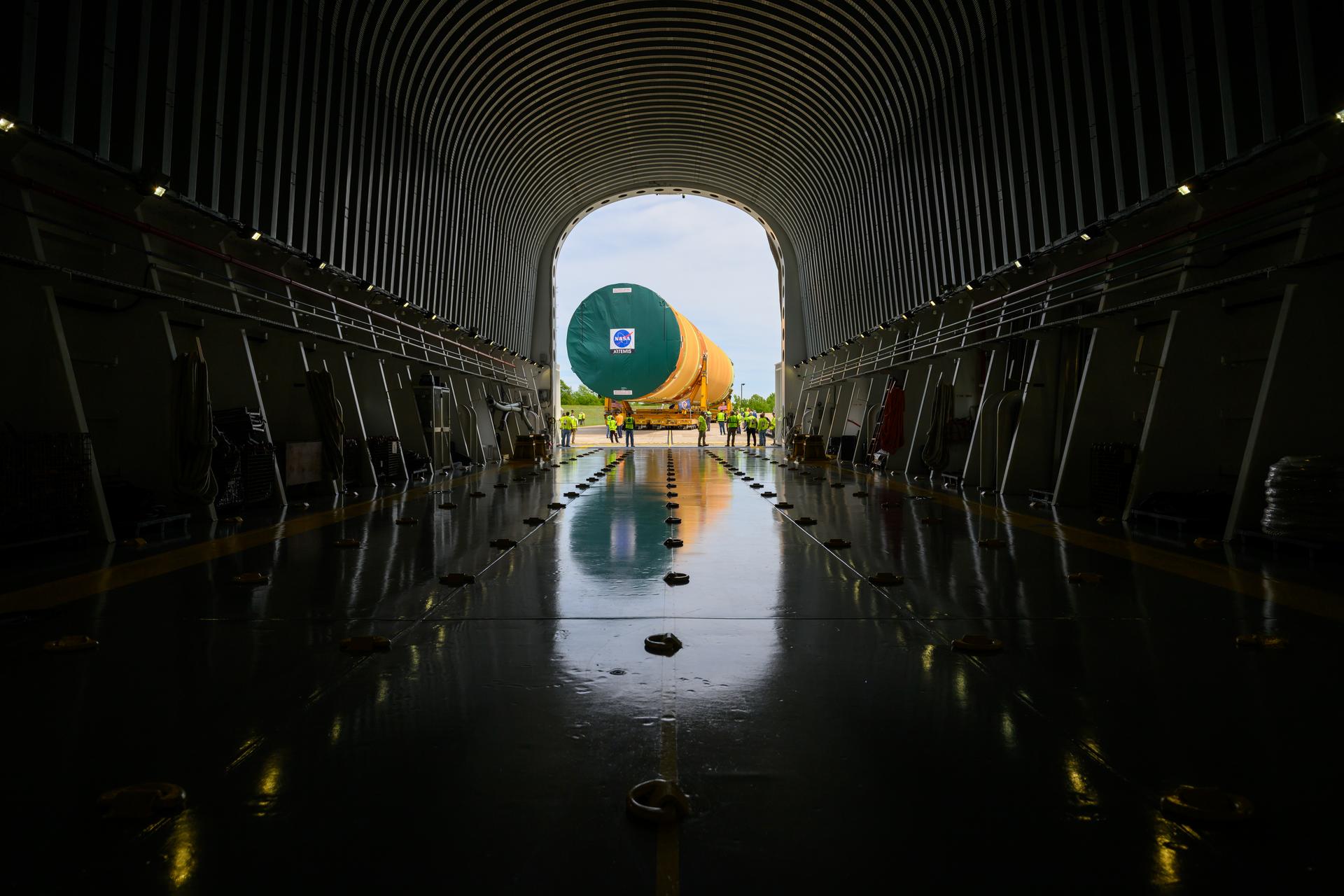
NASA moved the core stage, or the largest section, of the SLS (Space Launch System) rocket that will launch the crewed Artemis III mission in 2027 from the agency’s Michoud Assembly Facility to the agency’s Pegasus barge in New Orleans on April 20. The barge will ferry the top four-fifths – the section containing the liquid hydrogen tank, liquid oxygen tank, intertank, and forward skirt – of the SLS core stage to NASA’s Kennedy Space Center in Florida to complete outfitting and vertical integration. Teams with NASA and Boeing, the SLS core stage lead contractor, used specialized transporters to guide the top four-fifths from the NASA rocket factory to Pegasus. Prior to the move, technicians added an engine section transportation simulator to the rocket stage for shipment to the Space Coast. Next year’s Artemis III mission will launch astronauts to Earth’s orbit aboard the Orion spacecraft on top of SLS to test rendezvous and docking capabilities between Orion and commercial spacecraft needed to land Artemis IV astronauts on the Moon in 2028. NASA’s SLS is the only rocket capable of sending Orion, astronauts, and supplies to the Moon in a single launch.
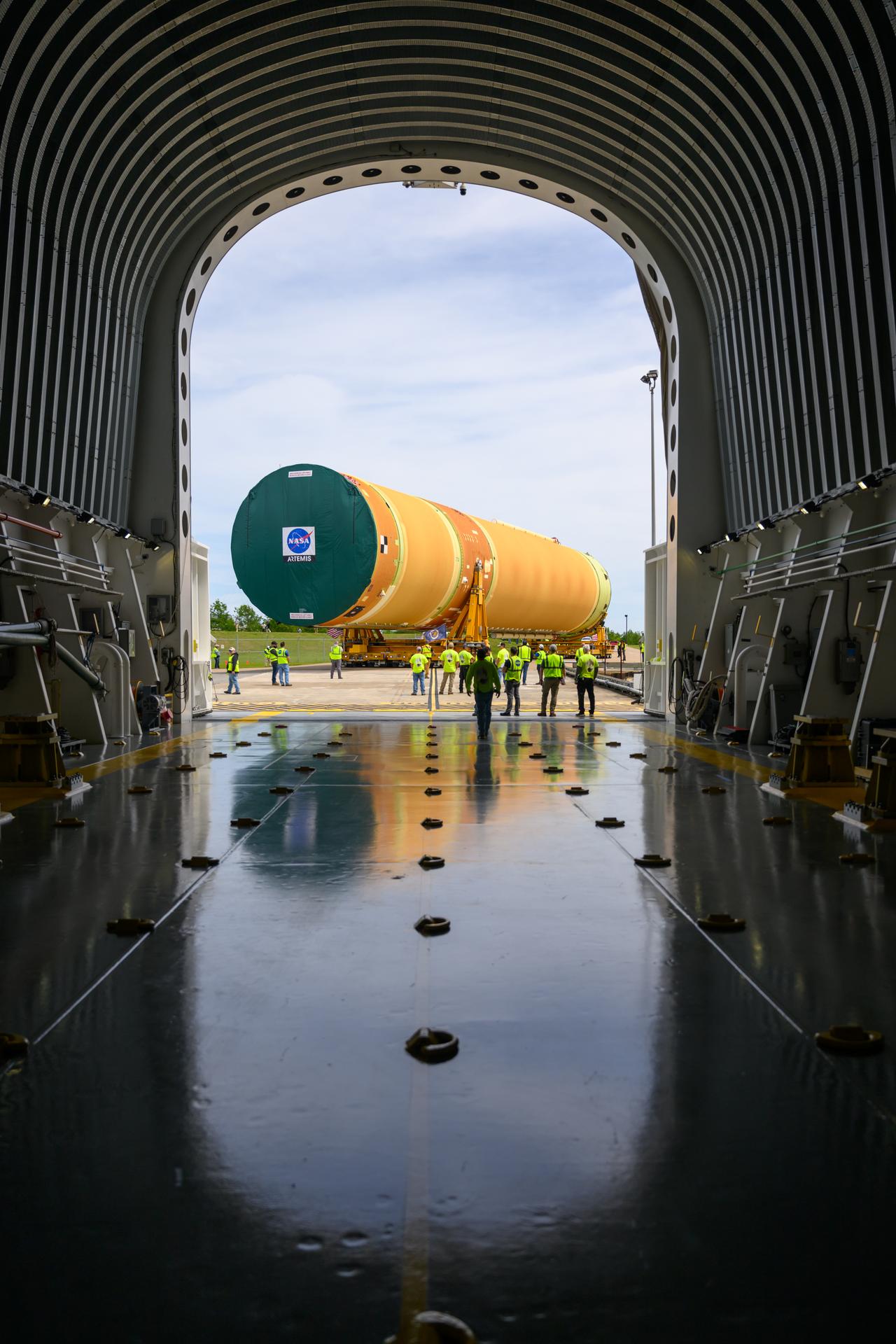
NASA moved the core stage, or the largest section, of the SLS (Space Launch System) rocket that will launch the crewed Artemis III mission in 2027 from the agency’s Michoud Assembly Facility to the agency’s Pegasus barge in New Orleans on April 20. The barge will ferry the top four-fifths – the section containing the liquid hydrogen tank, liquid oxygen tank, intertank, and forward skirt – of the SLS core stage to NASA’s Kennedy Space Center in Florida to complete outfitting and vertical integration. Teams with NASA and Boeing, the SLS core stage lead contractor, used specialized transporters to guide the top four-fifths from the NASA rocket factory to Pegasus. Prior to the move, technicians added an engine section transportation simulator to the rocket stage for shipment to the Space Coast. Next year’s Artemis III mission will launch astronauts to Earth’s orbit aboard the Orion spacecraft on top of SLS to test rendezvous and docking capabilities between Orion and commercial spacecraft needed to land Artemis IV astronauts on the Moon in 2028. NASA’s SLS is the only rocket capable of sending Orion, astronauts, and supplies to the Moon in a single launch.
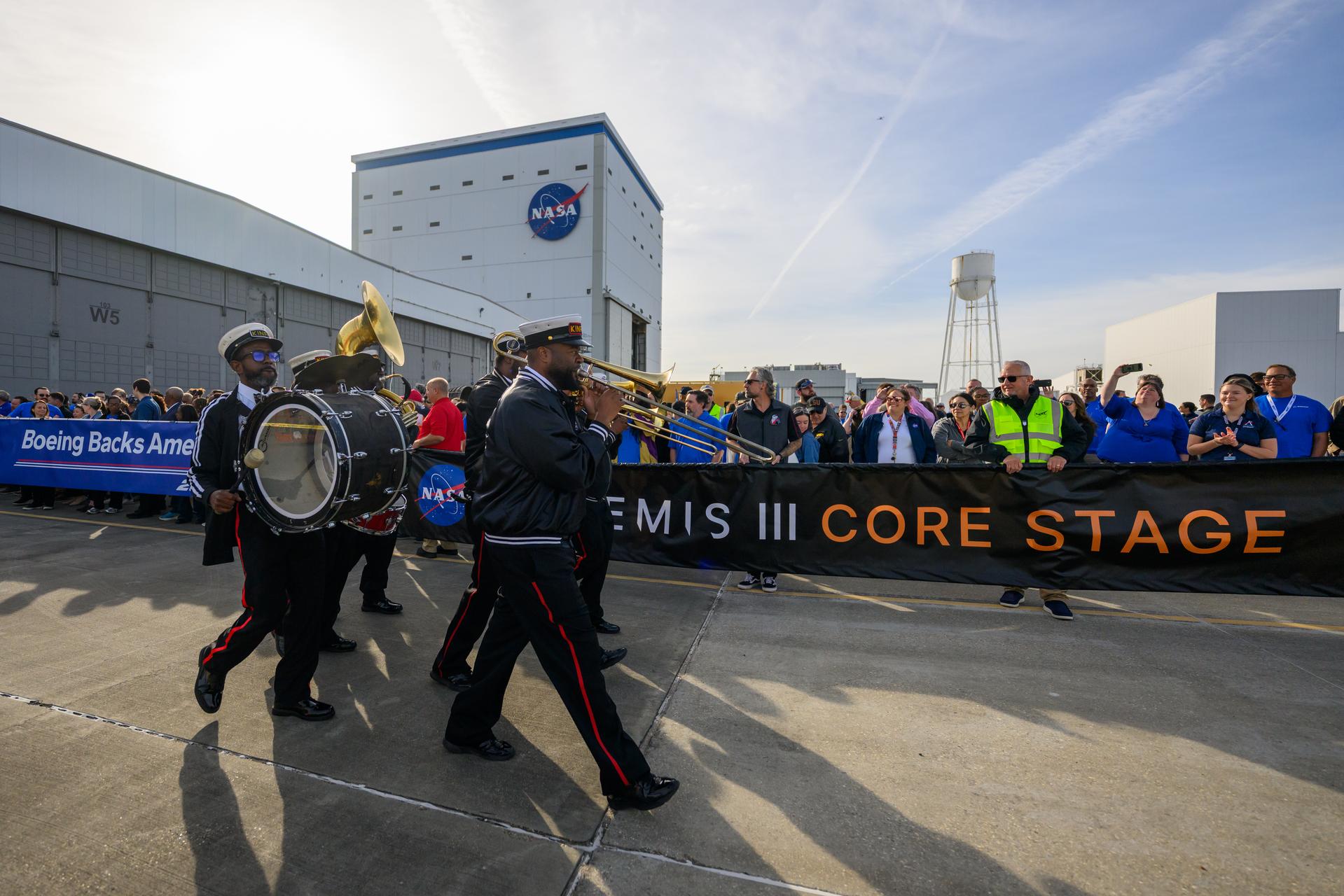
NASA moved the core stage, or the largest section, of the SLS (Space Launch System) rocket that will launch the crewed Artemis III mission in 2027 from the agency’s Michoud Assembly Facility to the agency’s Pegasus barge in New Orleans on April 20. The barge will ferry the top four-fifths – the section containing the liquid hydrogen tank, liquid oxygen tank, intertank, and forward skirt – of the SLS core stage to NASA’s Kennedy Space Center in Florida to complete outfitting and vertical integration. Teams with NASA and Boeing, the SLS core stage lead contractor, used specialized transporters to guide the top four-fifths from the NASA rocket factory to Pegasus. Prior to the move, technicians added an engine section transportation simulator to the rocket stage for shipment to the Space Coast. Next year’s Artemis III mission will launch astronauts to Earth’s orbit aboard the Orion spacecraft on top of SLS to test rendezvous and docking capabilities between Orion and commercial spacecraft needed to land Artemis IV astronauts on the Moon in 2028. NASA’s SLS is the only rocket capable of sending Orion, astronauts, and supplies to the Moon in a single launch.
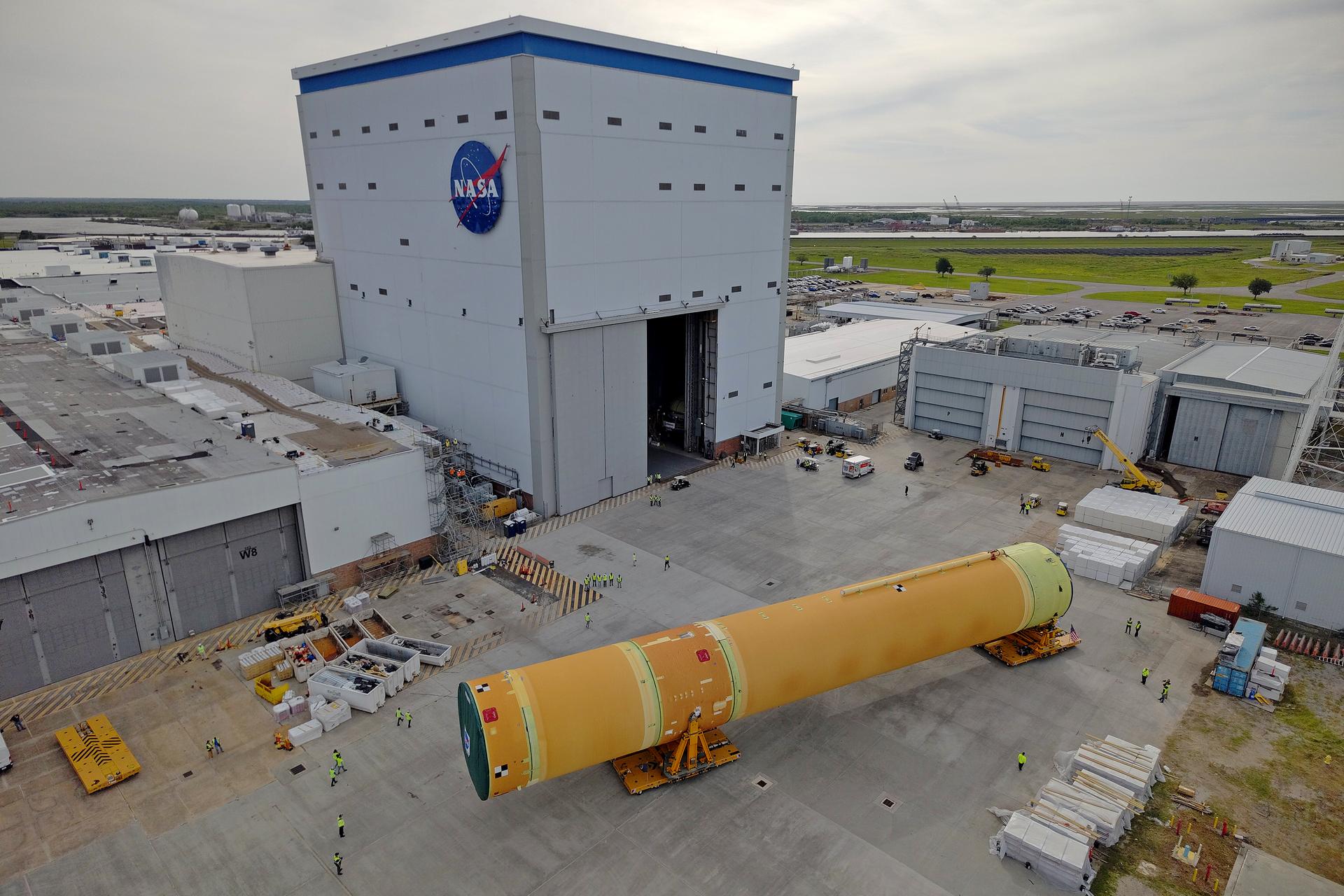
NASA moved the core stage, or the largest section, of the SLS (Space Launch System) rocket that will launch the crewed Artemis III mission in 2027 from the agency’s Michoud Assembly Facility to the agency’s Pegasus barge in New Orleans on April 20. The barge will ferry the top four-fifths – the section containing the liquid hydrogen tank, liquid oxygen tank, intertank, and forward skirt – of the SLS core stage to NASA’s Kennedy Space Center in Florida to complete outfitting and vertical integration. Teams with NASA and Boeing, the SLS core stage lead contractor, used specialized transporters to guide the top four-fifths from the NASA rocket factory to Pegasus. Prior to the move, technicians added an engine section transportation simulator to the rocket stage for shipment to the Space Coast. Next year’s Artemis III mission will launch astronauts to Earth’s orbit aboard the Orion spacecraft on top of SLS to test rendezvous and docking capabilities between Orion and commercial spacecraft needed to land Artemis IV astronauts on the Moon in 2028. NASA’s SLS is the only rocket capable of sending Orion, astronauts, and supplies to the Moon in a single launch.
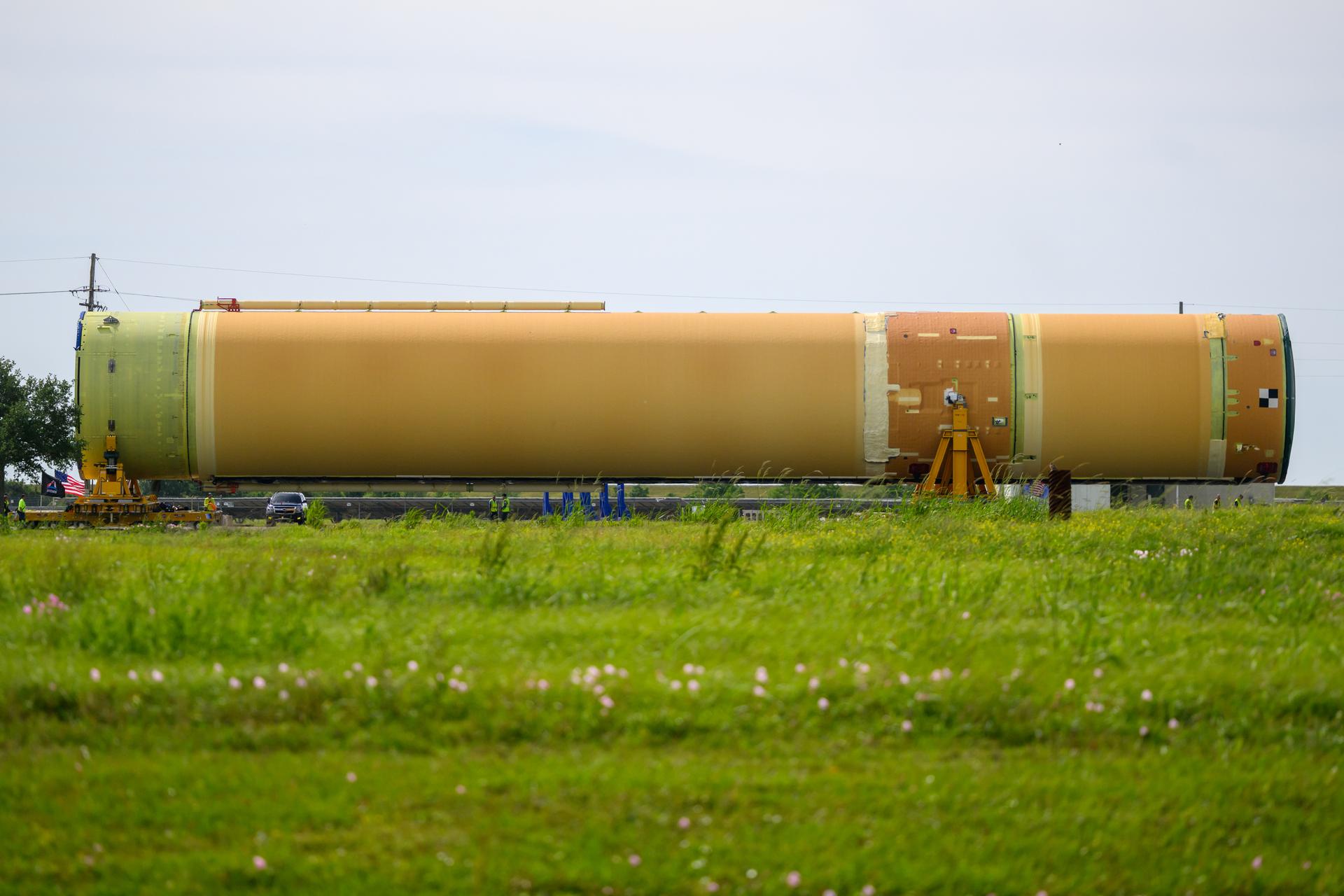
NASA moved the core stage, or the largest section, of the SLS (Space Launch System) rocket that will launch the crewed Artemis III mission in 2027 from the agency’s Michoud Assembly Facility to the agency’s Pegasus barge in New Orleans on April 20. The barge will ferry the top four-fifths – the section containing the liquid hydrogen tank, liquid oxygen tank, intertank, and forward skirt – of the SLS core stage to NASA’s Kennedy Space Center in Florida to complete outfitting and vertical integration. Teams with NASA and Boeing, the SLS core stage lead contractor, used specialized transporters to guide the top four-fifths from the NASA rocket factory to Pegasus. Prior to the move, technicians added an engine section transportation simulator to the rocket stage for shipment to the Space Coast. Next year’s Artemis III mission will launch astronauts to Earth’s orbit aboard the Orion spacecraft on top of SLS to test rendezvous and docking capabilities between Orion and commercial spacecraft needed to land Artemis IV astronauts on the Moon in 2028. NASA’s SLS is the only rocket capable of sending Orion, astronauts, and supplies to the Moon in a single launch.
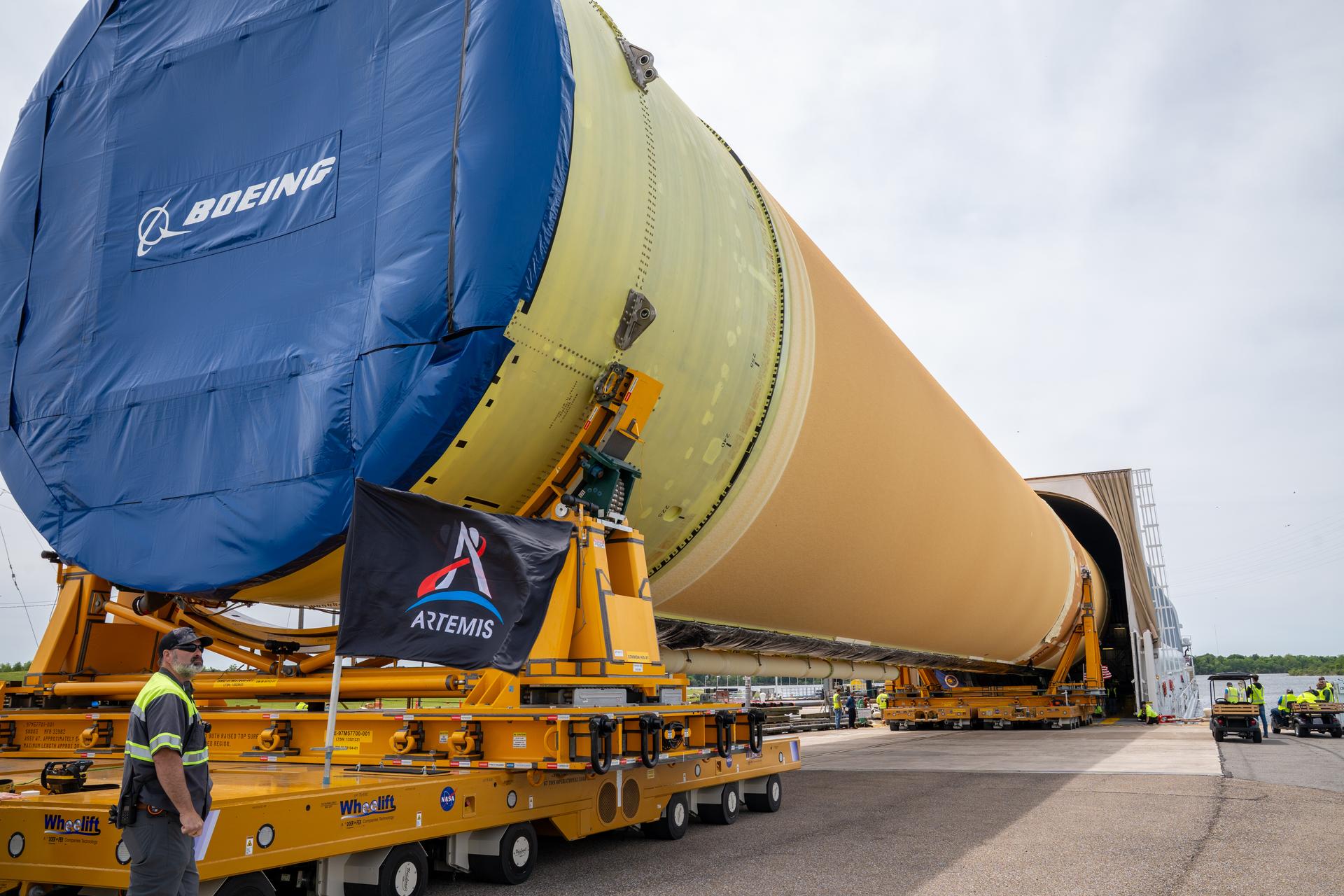
NASA moved the core stage, or the largest section, of the SLS (Space Launch System) rocket that will launch the crewed Artemis III mission in 2027 from the agency’s Michoud Assembly Facility to the agency’s Pegasus barge in New Orleans on April 20. The barge will ferry the top four-fifths – the section containing the liquid hydrogen tank, liquid oxygen tank, intertank, and forward skirt – of the SLS core stage to NASA’s Kennedy Space Center in Florida to complete outfitting and vertical integration. Teams with NASA and Boeing, the SLS core stage lead contractor, used specialized transporters to guide the top four-fifths from the NASA rocket factory to Pegasus. Prior to the move, technicians added an engine section transportation simulator to the rocket stage for shipment to the Space Coast. Next year’s Artemis III mission will launch astronauts to Earth’s orbit aboard the Orion spacecraft on top of SLS to test rendezvous and docking capabilities between Orion and commercial spacecraft needed to land Artemis IV astronauts on the Moon in 2028. NASA’s SLS is the only rocket capable of sending Orion, astronauts, and supplies to the Moon in a single launch. Photo Credit: (NASA/Brandon Hancock)
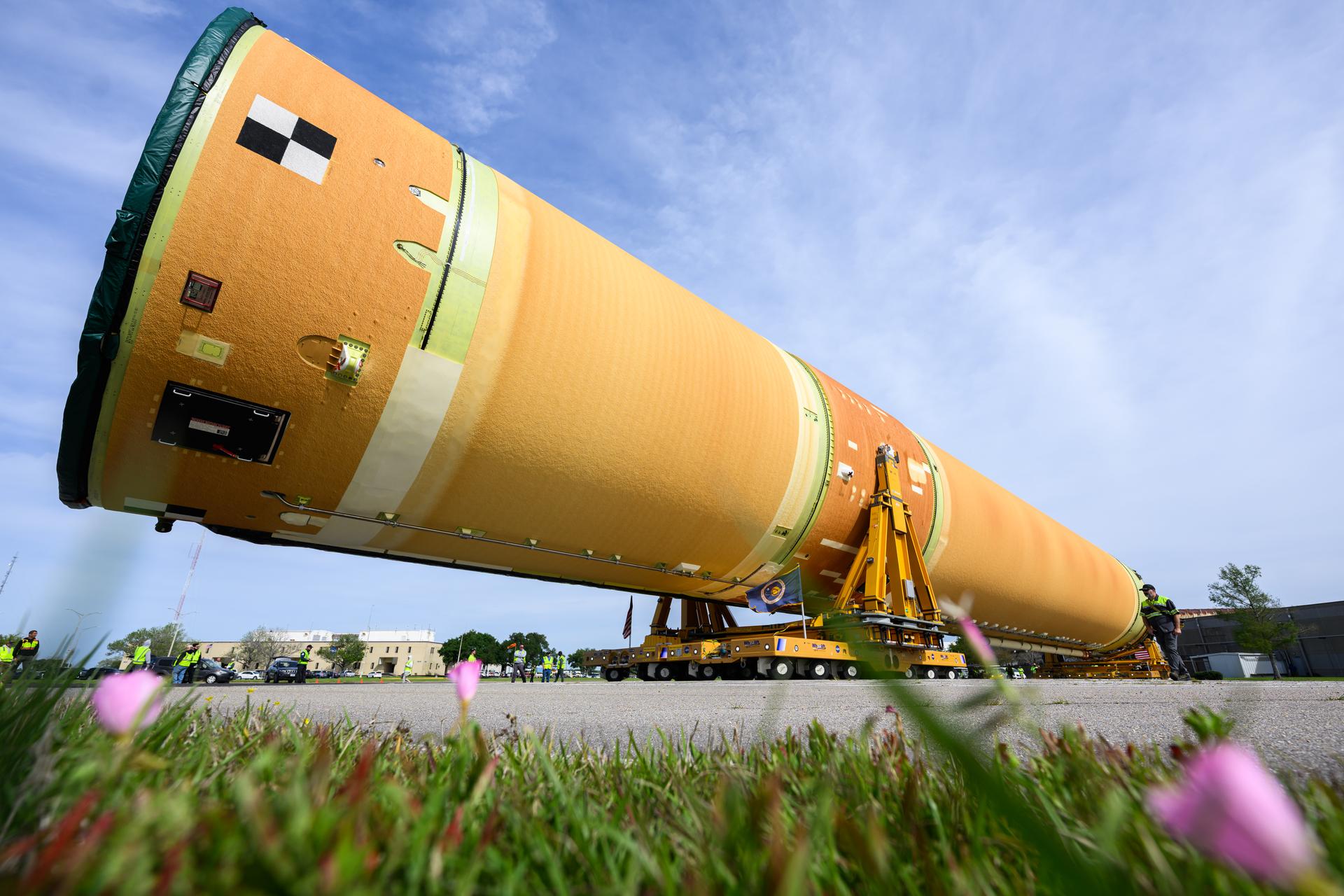
NASA moved the core stage, or the largest section, of the SLS (Space Launch System) rocket that will launch the crewed Artemis III mission in 2027 from the agency’s Michoud Assembly Facility to the agency’s Pegasus barge in New Orleans on April 20. The barge will ferry the top four-fifths – the section containing the liquid hydrogen tank, liquid oxygen tank, intertank, and forward skirt – of the SLS core stage to NASA’s Kennedy Space Center in Florida to complete outfitting and vertical integration. Teams with NASA and Boeing, the SLS core stage lead contractor, used specialized transporters to guide the top four-fifths from the NASA rocket factory to Pegasus. Prior to the move, technicians added an engine section transportation simulator to the rocket stage for shipment to the Space Coast. Next year’s Artemis III mission will launch astronauts to Earth’s orbit aboard the Orion spacecraft on top of SLS to test rendezvous and docking capabilities between Orion and commercial spacecraft needed to land Artemis IV astronauts on the Moon in 2028. NASA’s SLS is the only rocket capable of sending Orion, astronauts, and supplies to the Moon in a single launch. Photo Credit: NASA/Eric Bordelon
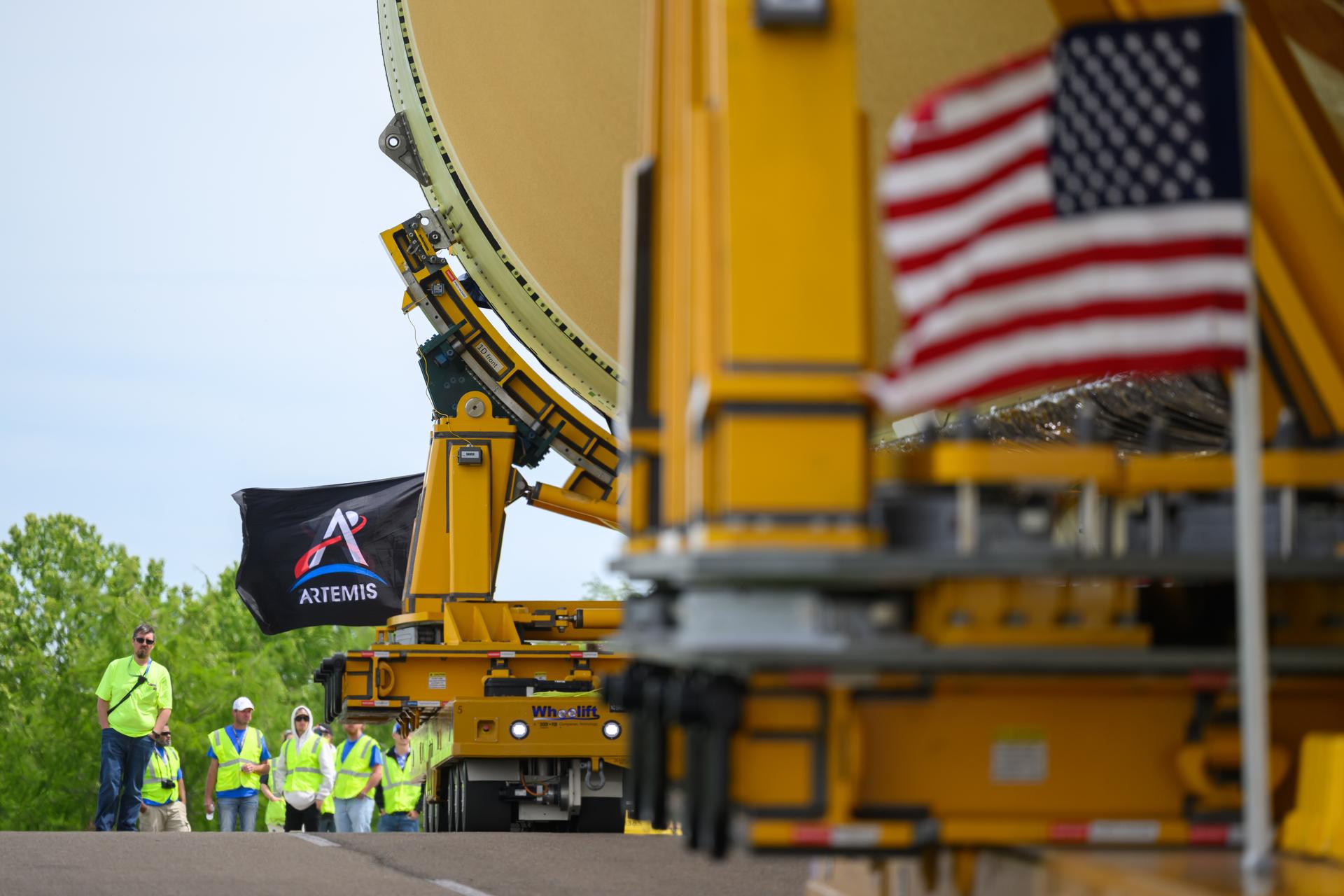
NASA moved the core stage, or the largest section, of the SLS (Space Launch System) rocket that will launch the crewed Artemis III mission in 2027 from the agency’s Michoud Assembly Facility to the agency’s Pegasus barge in New Orleans on April 20. The barge will ferry the top four-fifths – the section containing the liquid hydrogen tank, liquid oxygen tank, intertank, and forward skirt – of the SLS core stage to NASA’s Kennedy Space Center in Florida to complete outfitting and vertical integration. Teams with NASA and Boeing, the SLS core stage lead contractor, used specialized transporters to guide the top four-fifths from the NASA rocket factory to Pegasus. Prior to the move, technicians added an engine section transportation simulator to the rocket stage for shipment to the Space Coast. Next year’s Artemis III mission will launch astronauts to Earth’s orbit aboard the Orion spacecraft on top of SLS to test rendezvous and docking capabilities between Orion and commercial spacecraft needed to land Artemis IV astronauts on the Moon in 2028. NASA’s SLS is the only rocket capable of sending Orion, astronauts, and supplies to the Moon in a single launch. Photo Credit: NASA/Eric Bordelon
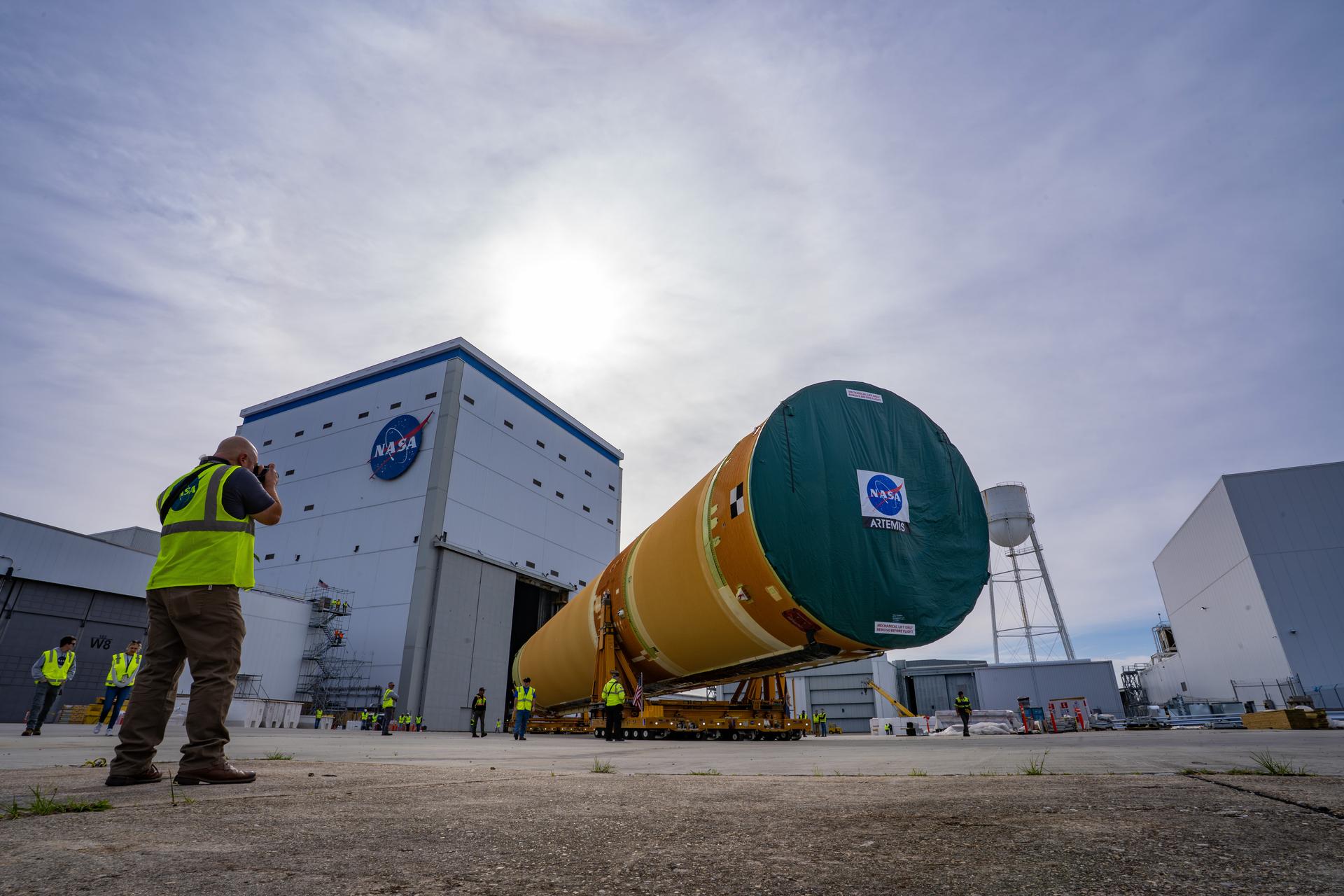
NASA moved the core stage, or the largest section, of the SLS (Space Launch System) rocket that will launch the crewed Artemis III mission in 2027 from the agency’s Michoud Assembly Facility to the agency’s Pegasus barge in New Orleans on April 20. The barge will ferry the top four-fifths – the section containing the liquid hydrogen tank, liquid oxygen tank, intertank, and forward skirt – of the SLS core stage to NASA’s Kennedy Space Center in Florida to complete outfitting and vertical integration. Teams with NASA and Boeing, the SLS core stage lead contractor, used specialized transporters to guide the top four-fifths from the NASA rocket factory to Pegasus. Prior to the move, technicians added an engine section transportation simulator to the rocket stage for shipment to the Space Coast. Next year’s Artemis III mission will launch astronauts to Earth’s orbit aboard the Orion spacecraft on top of SLS to test rendezvous and docking capabilities between Orion and commercial spacecraft needed to land Artemis IV astronauts on the Moon in 2028. NASA’s SLS is the only rocket capable of sending Orion, astronauts, and supplies to the Moon in a single launch.
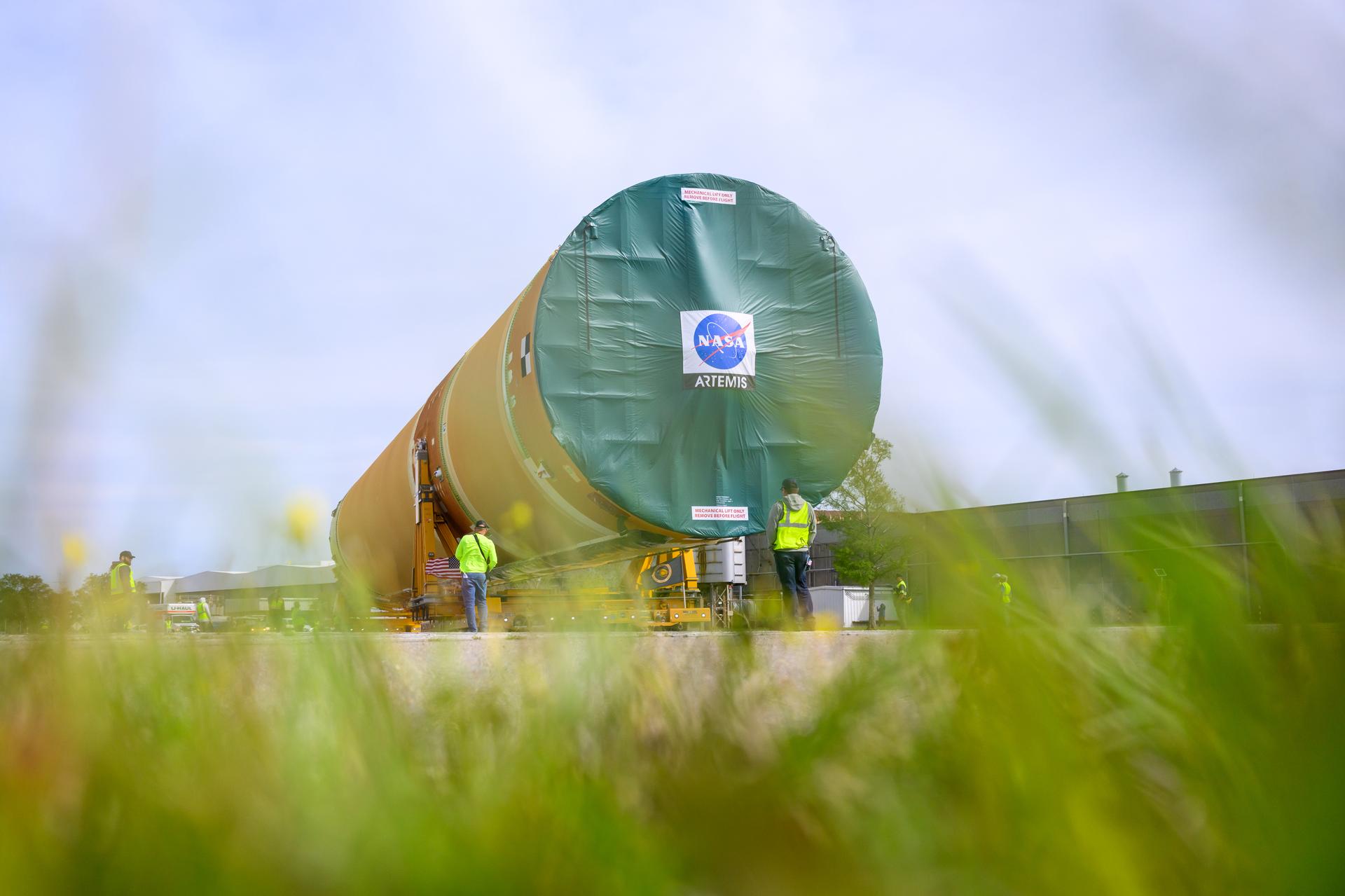
NASA moved the core stage, or the largest section, of the SLS (Space Launch System) rocket that will launch the crewed Artemis III mission in 2027 from the agency’s Michoud Assembly Facility to the agency’s Pegasus barge in New Orleans on April 20. The barge will ferry the top four-fifths – the section containing the liquid hydrogen tank, liquid oxygen tank, intertank, and forward skirt – of the SLS core stage to NASA’s Kennedy Space Center in Florida to complete outfitting and vertical integration. Teams with NASA and Boeing, the SLS core stage lead contractor, used specialized transporters to guide the top four-fifths from the NASA rocket factory to Pegasus. Prior to the move, technicians added an engine section transportation simulator to the rocket stage for shipment to the Space Coast. Next year’s Artemis III mission will launch astronauts to Earth’s orbit aboard the Orion spacecraft on top of SLS to test rendezvous and docking capabilities between Orion and commercial spacecraft needed to land Artemis IV astronauts on the Moon in 2028. NASA’s SLS is the only rocket capable of sending Orion, astronauts, and supplies to the Moon in a single launch. Photo Credit: NASA/Eric Bordelon

NASA moved the core stage, or the largest section, of the SLS (Space Launch System) rocket that will launch the crewed Artemis III mission in 2027 from the agency’s Michoud Assembly Facility to the agency’s Pegasus barge in New Orleans on April 20. The barge will ferry the top four-fifths – the section containing the liquid hydrogen tank, liquid oxygen tank, intertank, and forward skirt – of the SLS core stage to NASA’s Kennedy Space Center in Florida to complete outfitting and vertical integration. Teams with NASA and Boeing, the SLS core stage lead contractor, used specialized transporters to guide the top four-fifths from the NASA rocket factory to Pegasus. Prior to the move, technicians added an engine section transportation simulator to the rocket stage for shipment to the Space Coast. Next year’s Artemis III mission will launch astronauts to Earth’s orbit aboard the Orion spacecraft on top of SLS to test rendezvous and docking capabilities between Orion and commercial spacecraft needed to land Artemis IV astronauts on the Moon in 2028. NASA’s SLS is the only rocket capable of sending Orion, astronauts, and supplies to the Moon in a single launch. Photo Credit: NASA/Eric Bordelon
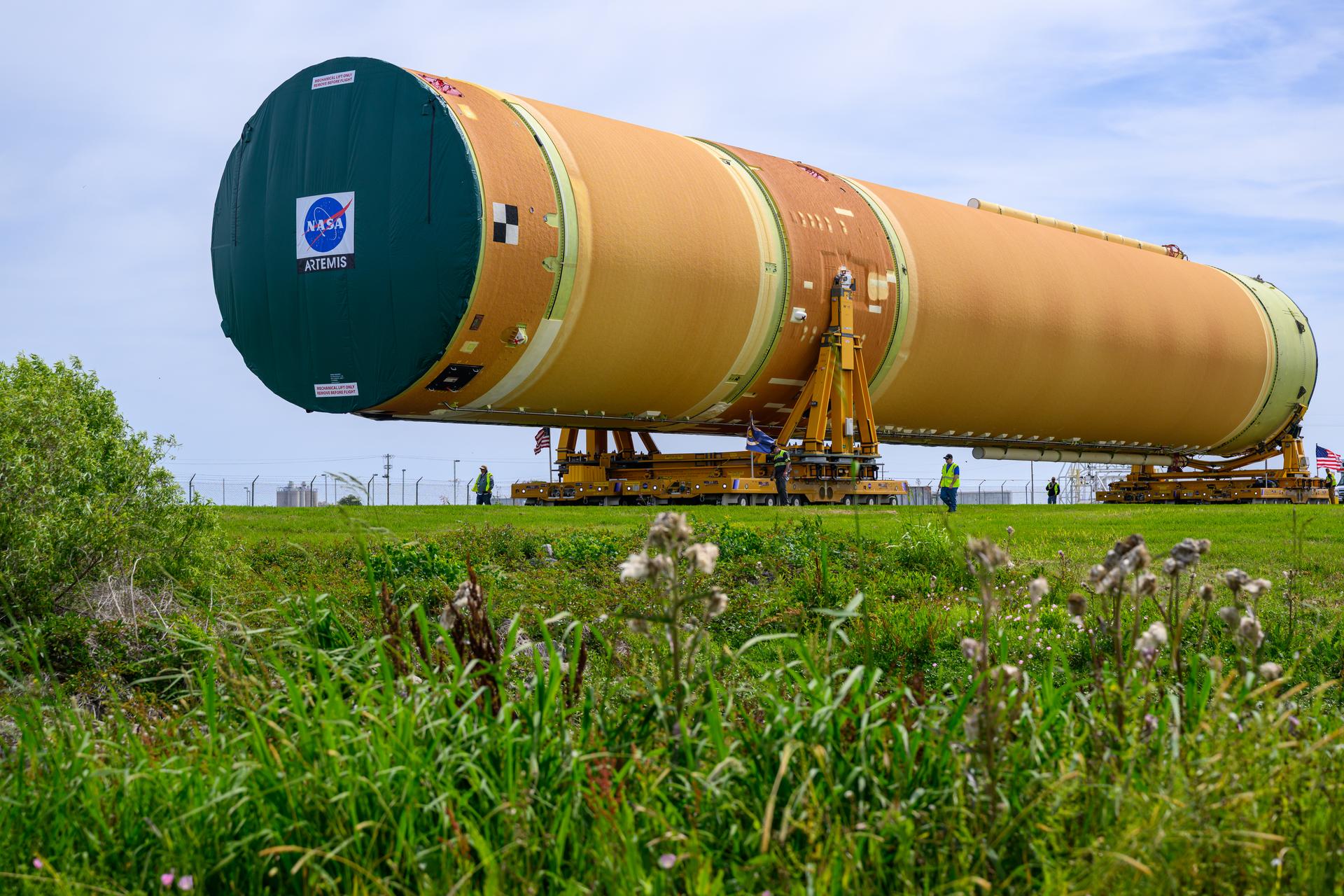
NASA moved the core stage, or the largest section, of the SLS (Space Launch System) rocket that will launch the crewed Artemis III mission in 2027 from the agency’s Michoud Assembly Facility to the agency’s Pegasus barge in New Orleans on April 20. The barge will ferry the top four-fifths – the section containing the liquid hydrogen tank, liquid oxygen tank, intertank, and forward skirt – of the SLS core stage to NASA’s Kennedy Space Center in Florida to complete outfitting and vertical integration. Teams with NASA and Boeing, the SLS core stage lead contractor, used specialized transporters to guide the top four-fifths from the NASA rocket factory to Pegasus. Prior to the move, technicians added an engine section transportation simulator to the rocket stage for shipment to the Space Coast. Next year’s Artemis III mission will launch astronauts to Earth’s orbit aboard the Orion spacecraft on top of SLS to test rendezvous and docking capabilities between Orion and commercial spacecraft needed to land Artemis IV astronauts on the Moon in 2028. NASA’s SLS is the only rocket capable of sending Orion, astronauts, and supplies to the Moon in a single launch. Photo Credit: NASA/Eric Bordelon
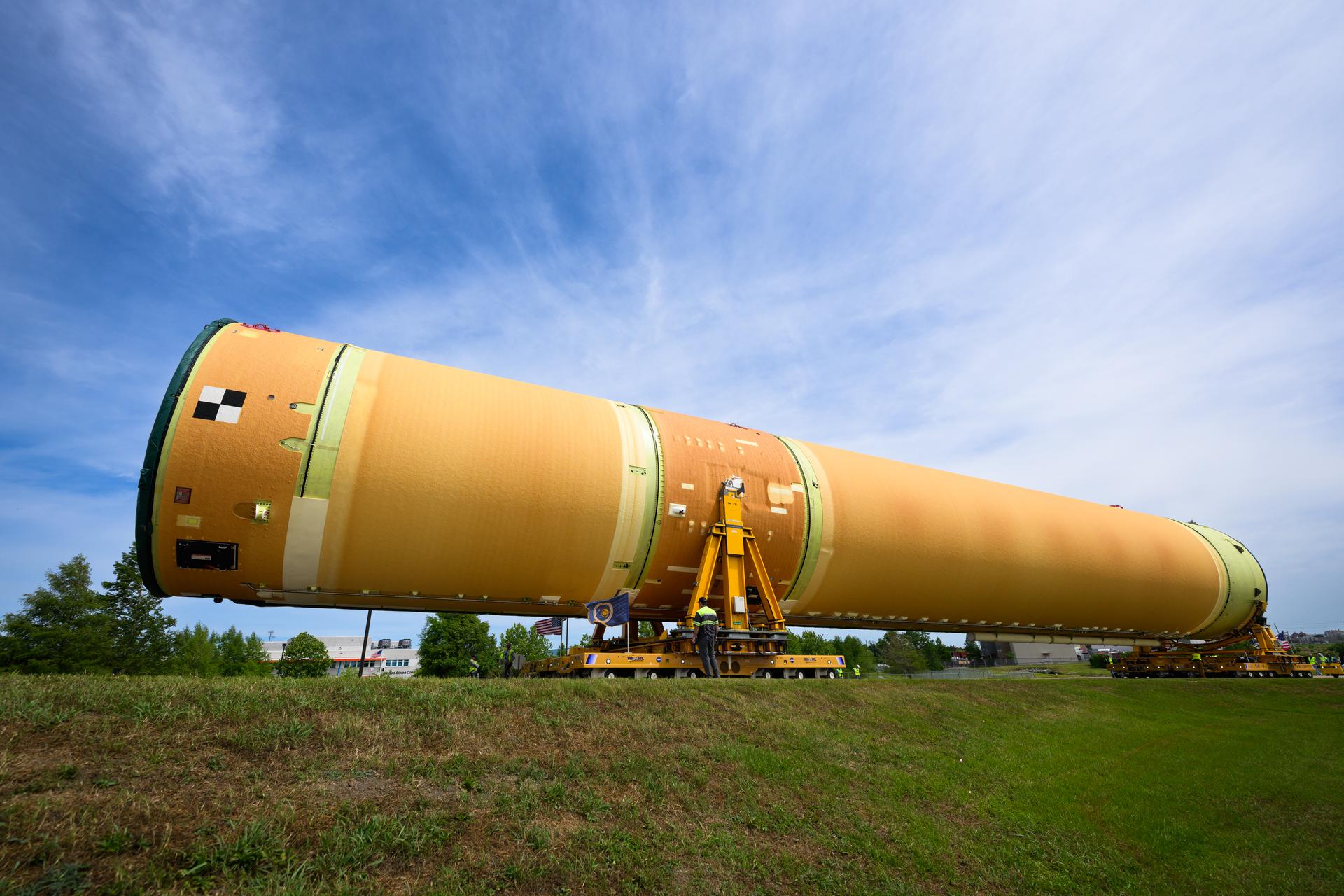
NASA moved the core stage, or the largest section, of the SLS (Space Launch System) rocket that will launch the crewed Artemis III mission in 2027 from the agency’s Michoud Assembly Facility to the agency’s Pegasus barge in New Orleans on April 20. The barge will ferry the top four-fifths – the section containing the liquid hydrogen tank, liquid oxygen tank, intertank, and forward skirt – of the SLS core stage to NASA’s Kennedy Space Center in Florida to complete outfitting and vertical integration. Teams with NASA and Boeing, the SLS core stage lead contractor, used specialized transporters to guide the top four-fifths from the NASA rocket factory to Pegasus. Prior to the move, technicians added an engine section transportation simulator to the rocket stage for shipment to the Space Coast. Next year’s Artemis III mission will launch astronauts to Earth’s orbit aboard the Orion spacecraft on top of SLS to test rendezvous and docking capabilities between Orion and commercial spacecraft needed to land Artemis IV astronauts on the Moon in 2028. NASA’s SLS is the only rocket capable of sending Orion, astronauts, and supplies to the Moon in a single launch. Photo Credit: NASA/Eric Bordelon
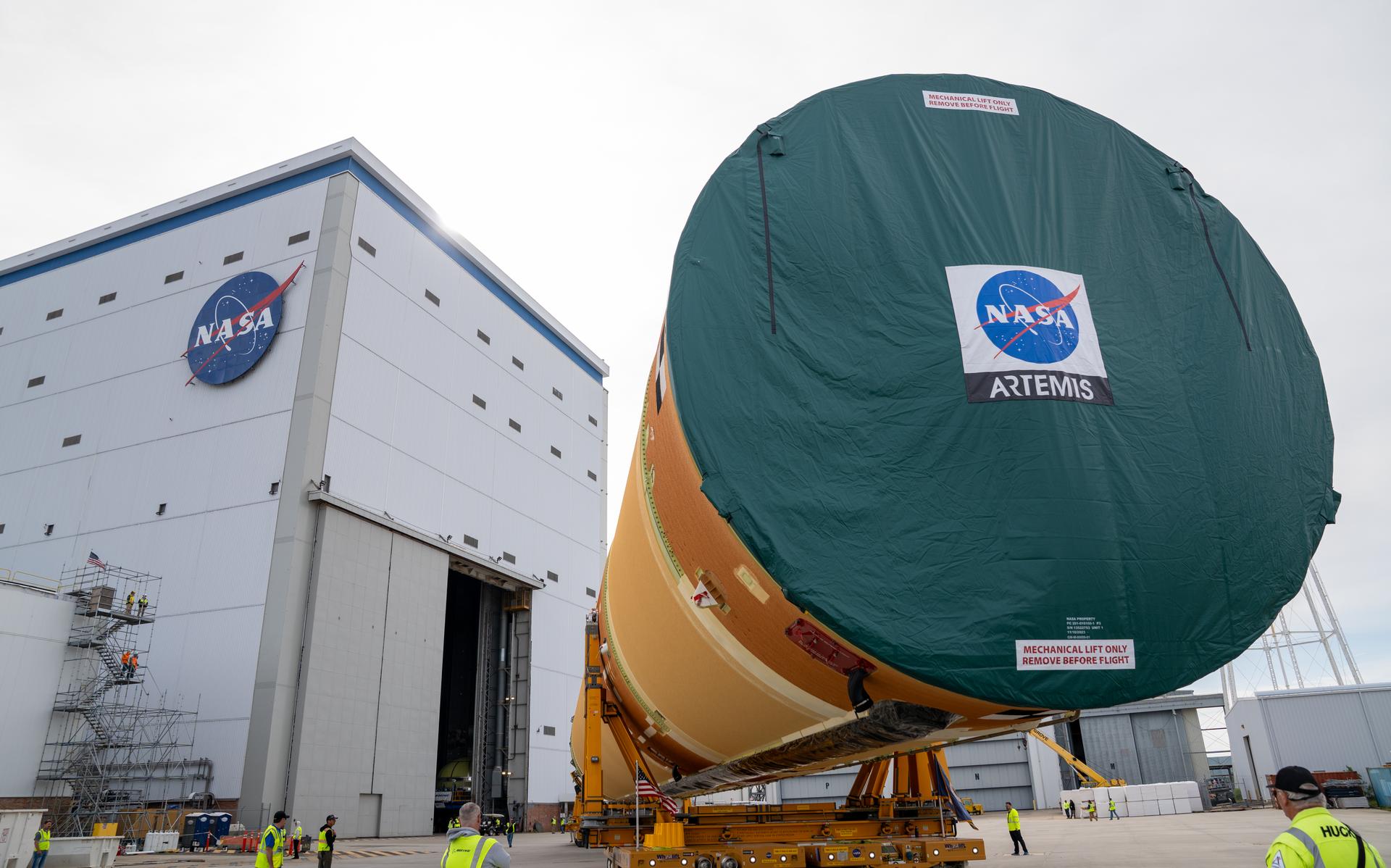
NASA moved the core stage, or the largest section, of the SLS (Space Launch System) rocket that will launch the crewed Artemis III mission in 2027 from the agency’s Michoud Assembly Facility to the agency’s Pegasus barge in New Orleans on April 20. The barge will ferry the top four-fifths – the section containing the liquid hydrogen tank, liquid oxygen tank, intertank, and forward skirt – of the SLS core stage to NASA’s Kennedy Space Center in Florida to complete outfitting and vertical integration. Teams with NASA and Boeing, the SLS core stage lead contractor, used specialized transporters to guide the top four-fifths from the NASA rocket factory to Pegasus. Prior to the move, technicians added an engine section transportation simulator to the rocket stage for shipment to the Space Coast. Next year’s Artemis III mission will launch astronauts to Earth’s orbit aboard the Orion spacecraft on top of SLS to test rendezvous and docking capabilities between Orion and commercial spacecraft needed to land Artemis IV astronauts on the Moon in 2028. NASA’s SLS is the only rocket capable of sending Orion, astronauts, and supplies to the Moon in a single launch. Photo Credit: (NASA/Brandon Hancock)
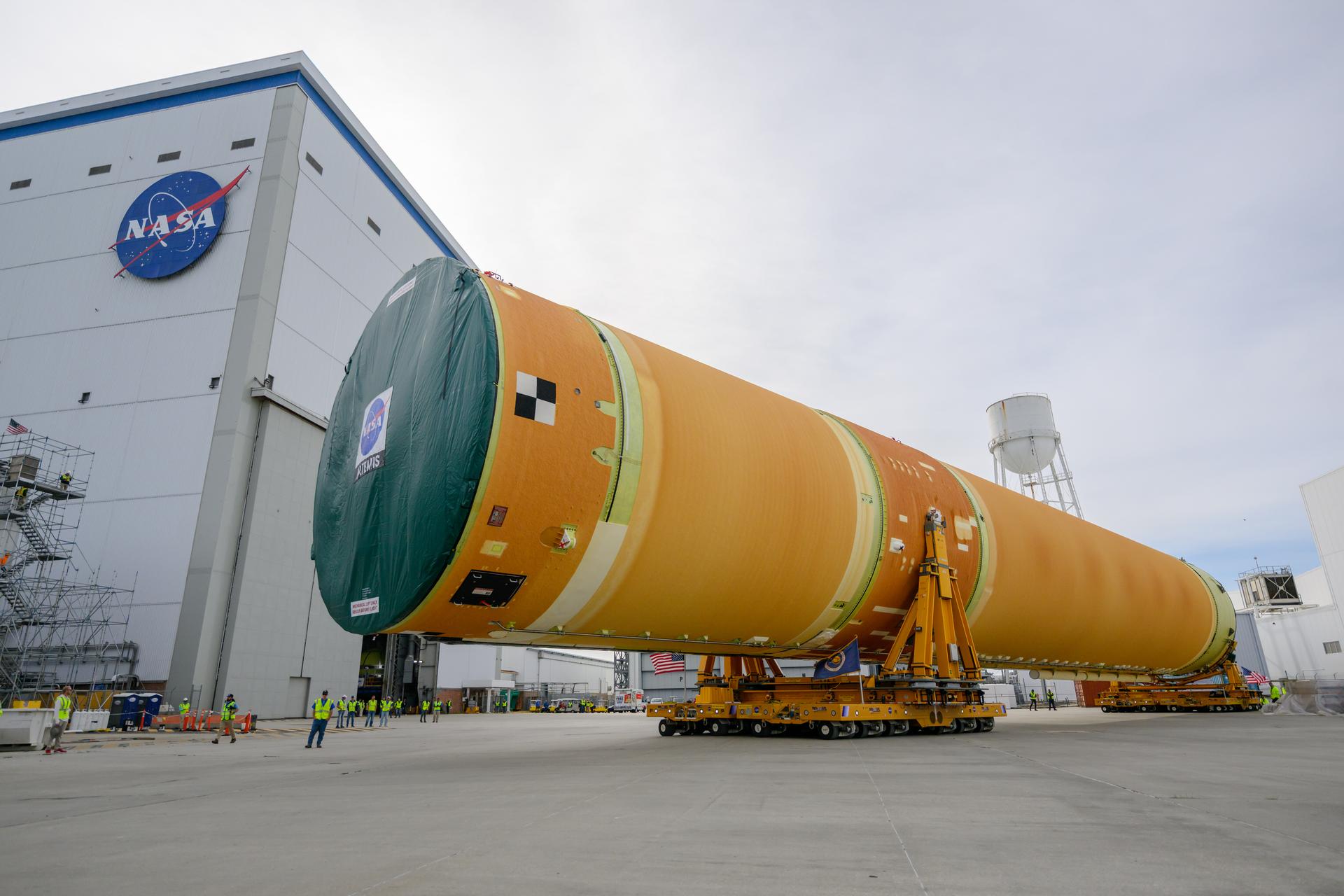
NASA moved the core stage, or the largest section, of the SLS (Space Launch System) rocket that will launch the crewed Artemis III mission in 2027 from the agency’s Michoud Assembly Facility to the agency’s Pegasus barge in New Orleans on April 20. The barge will ferry the top four-fifths – the section containing the liquid hydrogen tank, liquid oxygen tank, intertank, and forward skirt – of the SLS core stage to NASA’s Kennedy Space Center in Florida to complete outfitting and vertical integration. Teams with NASA and Boeing, the SLS core stage lead contractor, used specialized transporters to guide the top four-fifths from the NASA rocket factory to Pegasus. Prior to the move, technicians added an engine section transportation simulator to the rocket stage for shipment to the Space Coast. Next year’s Artemis III mission will launch astronauts to Earth’s orbit aboard the Orion spacecraft on top of SLS to test rendezvous and docking capabilities between Orion and commercial spacecraft needed to land Artemis IV astronauts on the Moon in 2028. NASA’s SLS is the only rocket capable of sending Orion, astronauts, and supplies to the Moon in a single launch. Photo Credit: NASA/Eric Bordelon
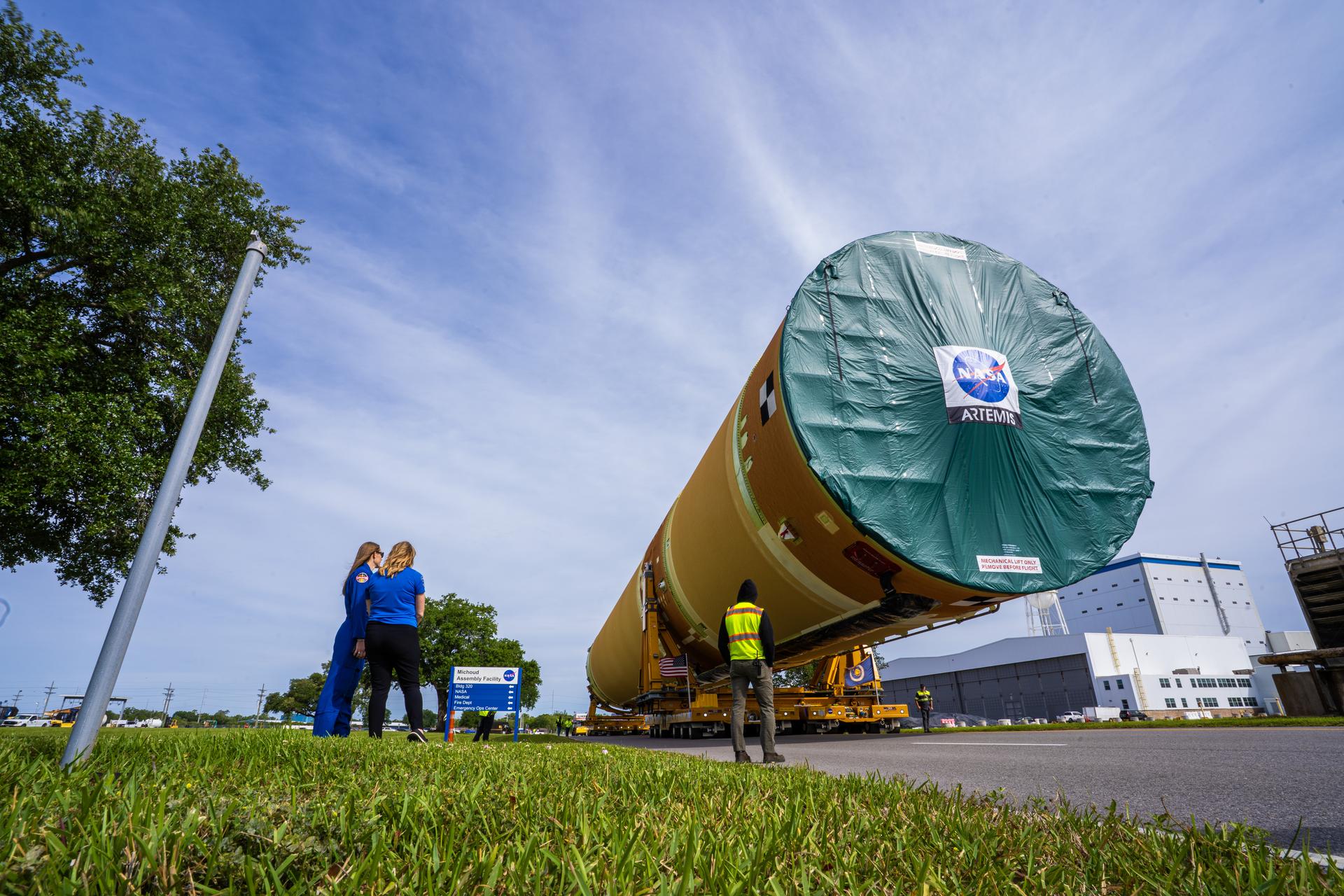
NASA moved the core stage, or the largest section, of the SLS (Space Launch System) rocket that will launch the crewed Artemis III mission in 2027 from the agency’s Michoud Assembly Facility to the agency’s Pegasus barge in New Orleans on April 20. The barge will ferry the top four-fifths – the section containing the liquid hydrogen tank, liquid oxygen tank, intertank, and forward skirt – of the SLS core stage to NASA’s Kennedy Space Center in Florida to complete outfitting and vertical integration. Teams with NASA and Boeing, the SLS core stage lead contractor, used specialized transporters to guide the top four-fifths from the NASA rocket factory to Pegasus. Prior to the move, technicians added an engine section transportation simulator to the rocket stage for shipment to the Space Coast. Next year’s Artemis III mission will launch astronauts to Earth’s orbit aboard the Orion spacecraft on top of SLS to test rendezvous and docking capabilities between Orion and commercial spacecraft needed to land Artemis IV astronauts on the Moon in 2028. NASA’s SLS is the only rocket capable of sending Orion, astronauts, and supplies to the Moon in a single launch.
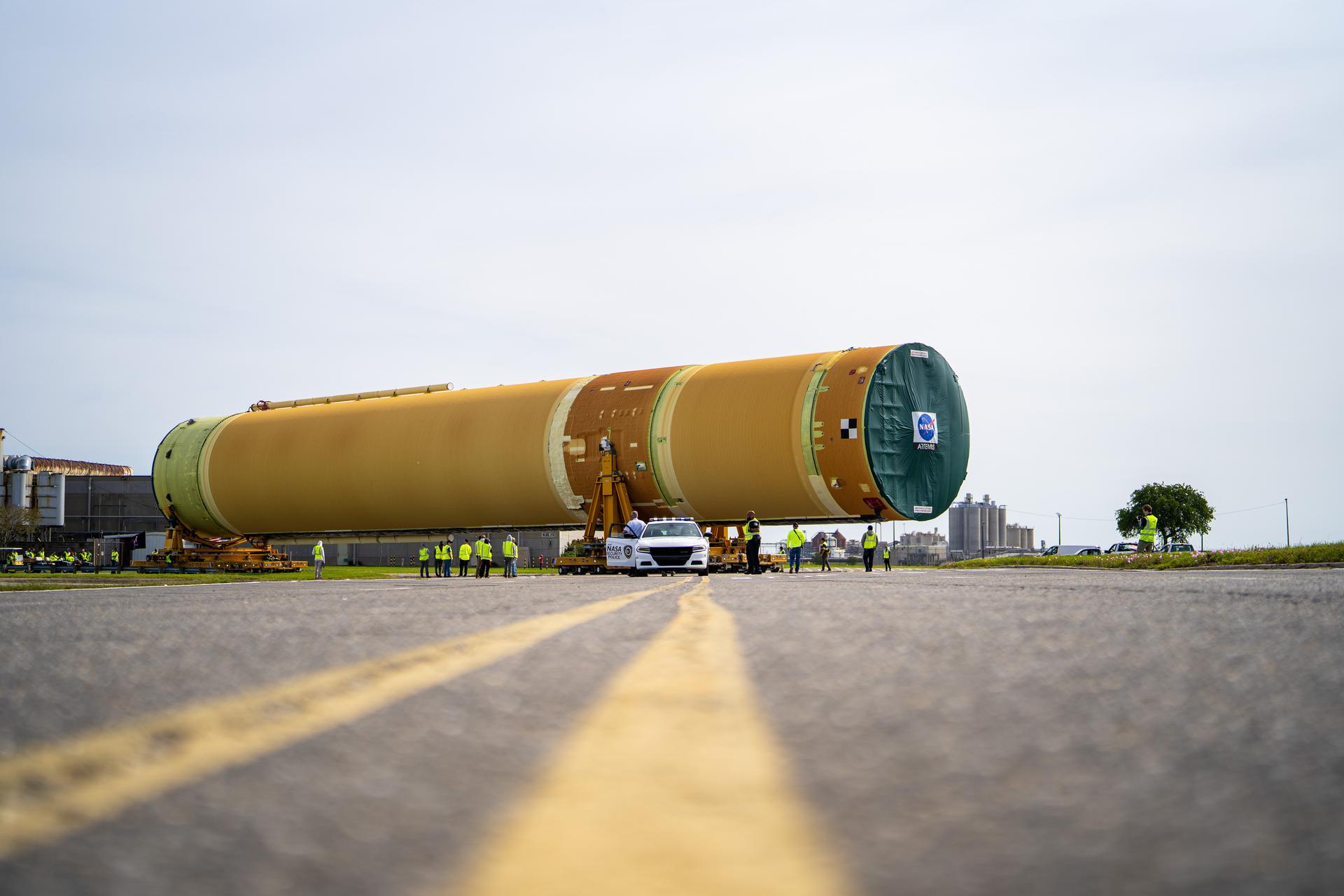
NASA moved the core stage, or the largest section, of the SLS (Space Launch System) rocket that will launch the crewed Artemis III mission in 2027 from the agency’s Michoud Assembly Facility to the agency’s Pegasus barge in New Orleans on April 20. The barge will ferry the top four-fifths – the section containing the liquid hydrogen tank, liquid oxygen tank, intertank, and forward skirt – of the SLS core stage to NASA’s Kennedy Space Center in Florida to complete outfitting and vertical integration. Teams with NASA and Boeing, the SLS core stage lead contractor, used specialized transporters to guide the top four-fifths from the NASA rocket factory to Pegasus. Prior to the move, technicians added an engine section transportation simulator to the rocket stage for shipment to the Space Coast. Next year’s Artemis III mission will launch astronauts to Earth’s orbit aboard the Orion spacecraft on top of SLS to test rendezvous and docking capabilities between Orion and commercial spacecraft needed to land Artemis IV astronauts on the Moon in 2028. NASA’s SLS is the only rocket capable of sending Orion, astronauts, and supplies to the Moon in a single launch.
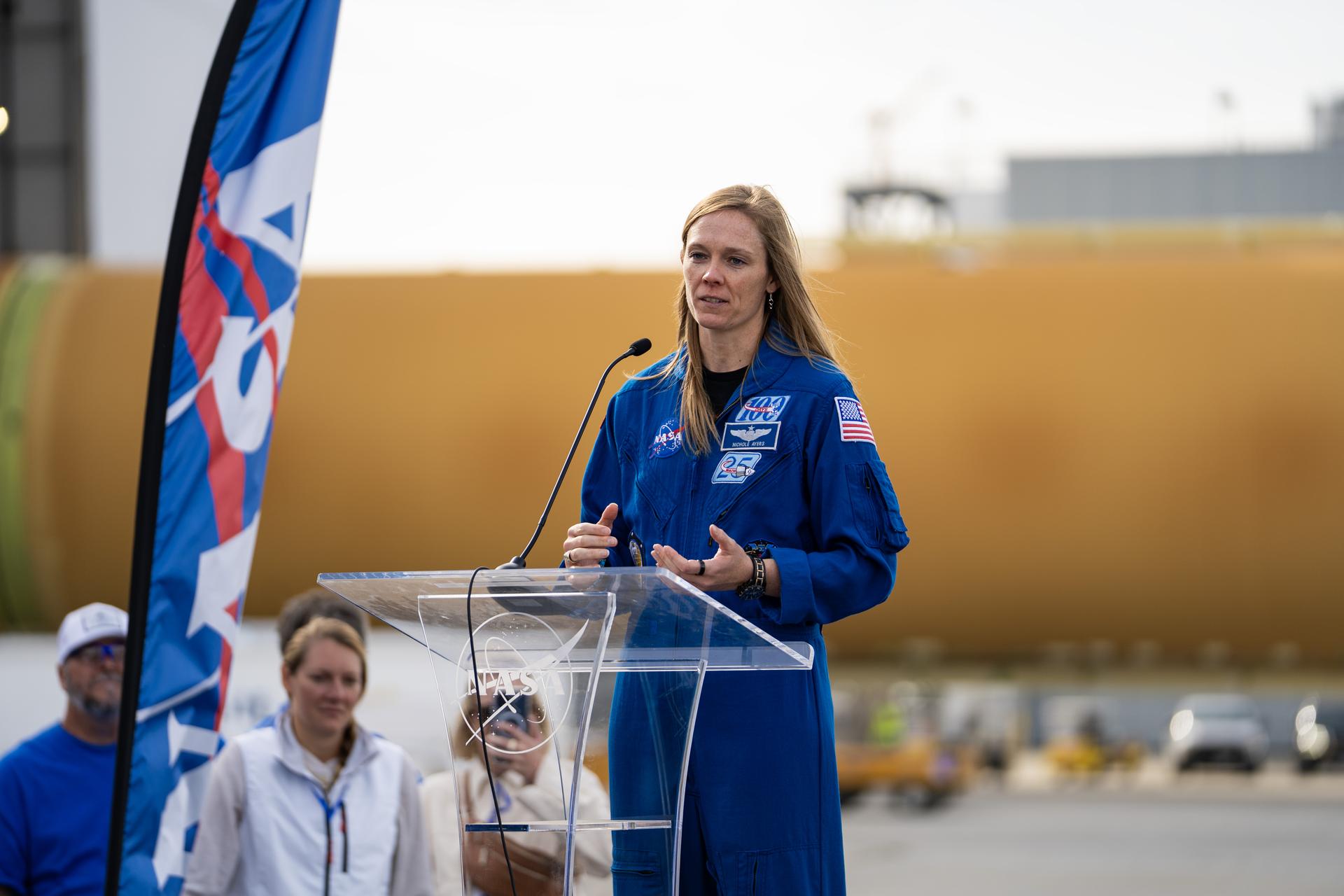
NASA moved the core stage, or the largest section, of the SLS (Space Launch System) rocket that will launch the crewed Artemis III mission in 2027 from the agency’s Michoud Assembly Facility to the agency’s Pegasus barge in New Orleans on April 20. The barge will ferry the top four-fifths – the section containing the liquid hydrogen tank, liquid oxygen tank, intertank, and forward skirt – of the SLS core stage to NASA’s Kennedy Space Center in Florida to complete outfitting and vertical integration. Teams with NASA and Boeing, the SLS core stage lead contractor, used specialized transporters to guide the top four-fifths from the NASA rocket factory to Pegasus. Prior to the move, technicians added an engine section transportation simulator to the rocket stage for shipment to the Space Coast. Next year’s Artemis III mission will launch astronauts to Earth’s orbit aboard the Orion spacecraft on top of SLS to test rendezvous and docking capabilities between Orion and commercial spacecraft needed to land Artemis IV astronauts on the Moon in 2028. NASA’s SLS is the only rocket capable of sending Orion, astronauts, and supplies to the Moon in a single launch.
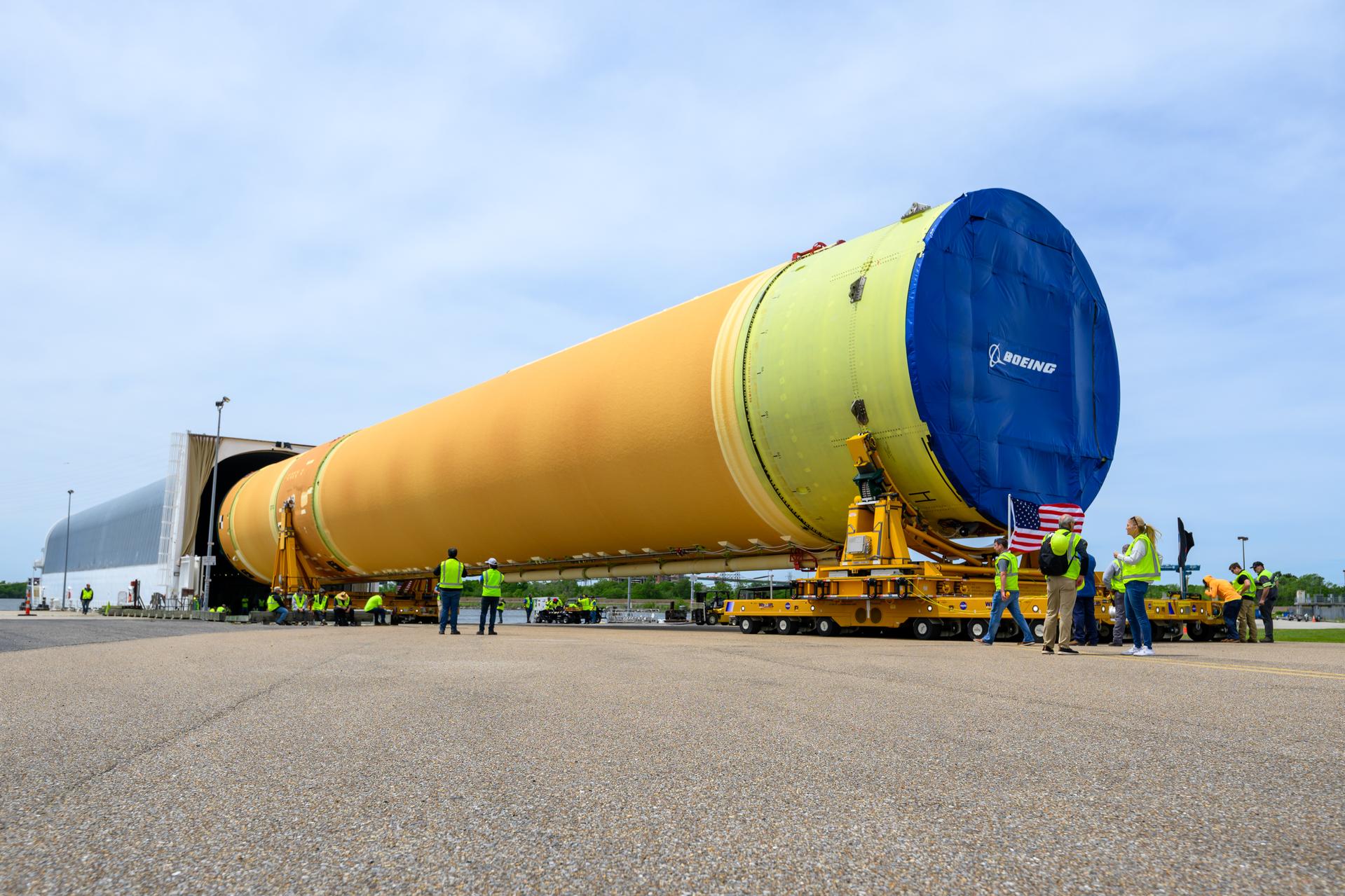
NASA moved the core stage, or the largest section, of the SLS (Space Launch System) rocket that will launch the crewed Artemis III mission in 2027 from the agency’s Michoud Assembly Facility to the agency’s Pegasus barge in New Orleans on April 20. The barge will ferry the top four-fifths – the section containing the liquid hydrogen tank, liquid oxygen tank, intertank, and forward skirt – of the SLS core stage to NASA’s Kennedy Space Center in Florida to complete outfitting and vertical integration. Teams with NASA and Boeing, the SLS core stage lead contractor, used specialized transporters to guide the top four-fifths from the NASA rocket factory to Pegasus. Prior to the move, technicians added an engine section transportation simulator to the rocket stage for shipment to the Space Coast. Next year’s Artemis III mission will launch astronauts to Earth’s orbit aboard the Orion spacecraft on top of SLS to test rendezvous and docking capabilities between Orion and commercial spacecraft needed to land Artemis IV astronauts on the Moon in 2028. NASA’s SLS is the only rocket capable of sending Orion, astronauts, and supplies to the Moon in a single launch. Photo Credit: NASA/Eric Bordelon
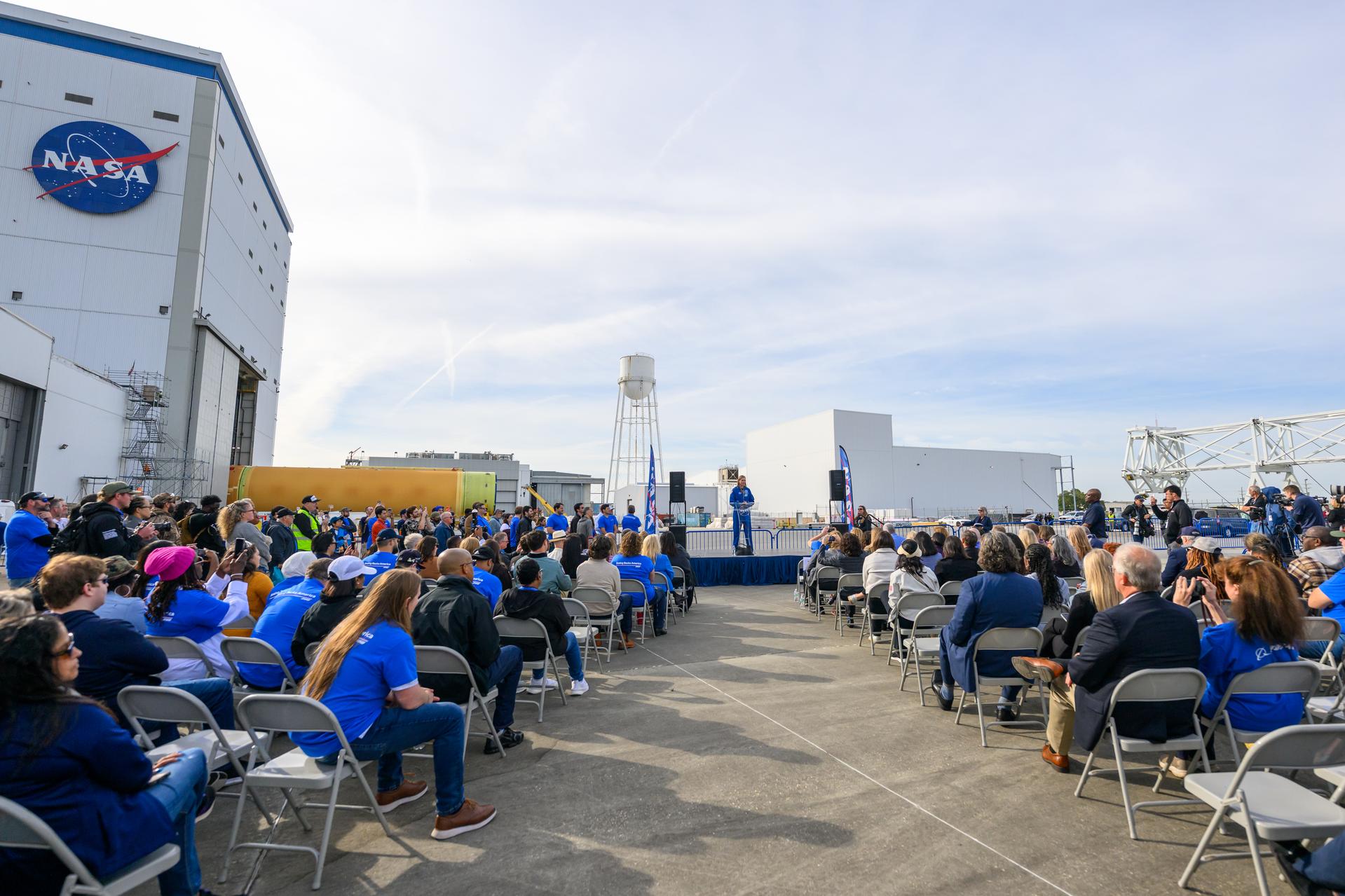
NASA moved the core stage, or the largest section, of the SLS (Space Launch System) rocket that will launch the crewed Artemis III mission in 2027 from the agency’s Michoud Assembly Facility to the agency’s Pegasus barge in New Orleans on April 20. The barge will ferry the top four-fifths – the section containing the liquid hydrogen tank, liquid oxygen tank, intertank, and forward skirt – of the SLS core stage to NASA’s Kennedy Space Center in Florida to complete outfitting and vertical integration. Teams with NASA and Boeing, the SLS core stage lead contractor, used specialized transporters to guide the top four-fifths from the NASA rocket factory to Pegasus. Prior to the move, technicians added an engine section transportation simulator to the rocket stage for shipment to the Space Coast. Next year’s Artemis III mission will launch astronauts to Earth’s orbit aboard the Orion spacecraft on top of SLS to test rendezvous and docking capabilities between Orion and commercial spacecraft needed to land Artemis IV astronauts on the Moon in 2028. NASA’s SLS is the only rocket capable of sending Orion, astronauts, and supplies to the Moon in a single launch. Photo Credit: NASA/Eric Bordelon
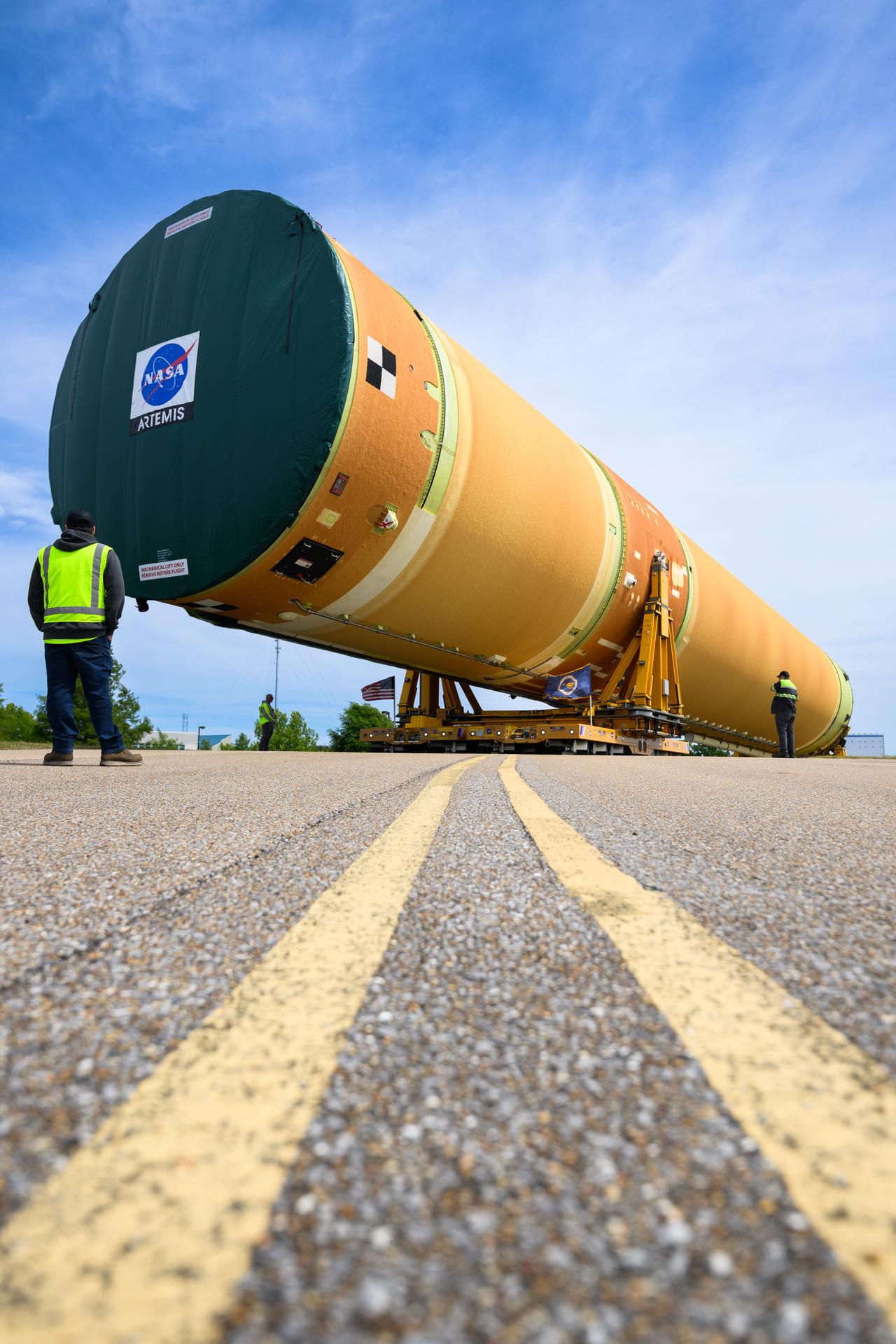
NASA moved the core stage, or the largest section, of the SLS (Space Launch System) rocket that will launch the crewed Artemis III mission in 2027 from the agency’s Michoud Assembly Facility to the agency’s Pegasus barge in New Orleans on April 20. The barge will ferry the top four-fifths – the section containing the liquid hydrogen tank, liquid oxygen tank, intertank, and forward skirt – of the SLS core stage to NASA’s Kennedy Space Center in Florida to complete outfitting and vertical integration. Teams with NASA and Boeing, the SLS core stage lead contractor, used specialized transporters to guide the top four-fifths from the NASA rocket factory to Pegasus. Prior to the move, technicians added an engine section transportation simulator to the rocket stage for shipment to the Space Coast. Next year’s Artemis III mission will launch astronauts to Earth’s orbit aboard the Orion spacecraft on top of SLS to test rendezvous and docking capabilities between Orion and commercial spacecraft needed to land Artemis IV astronauts on the Moon in 2028. NASA’s SLS is the only rocket capable of sending Orion, astronauts, and supplies to the Moon in a single launch. Photo Credit: NASA/Eric Bordelon
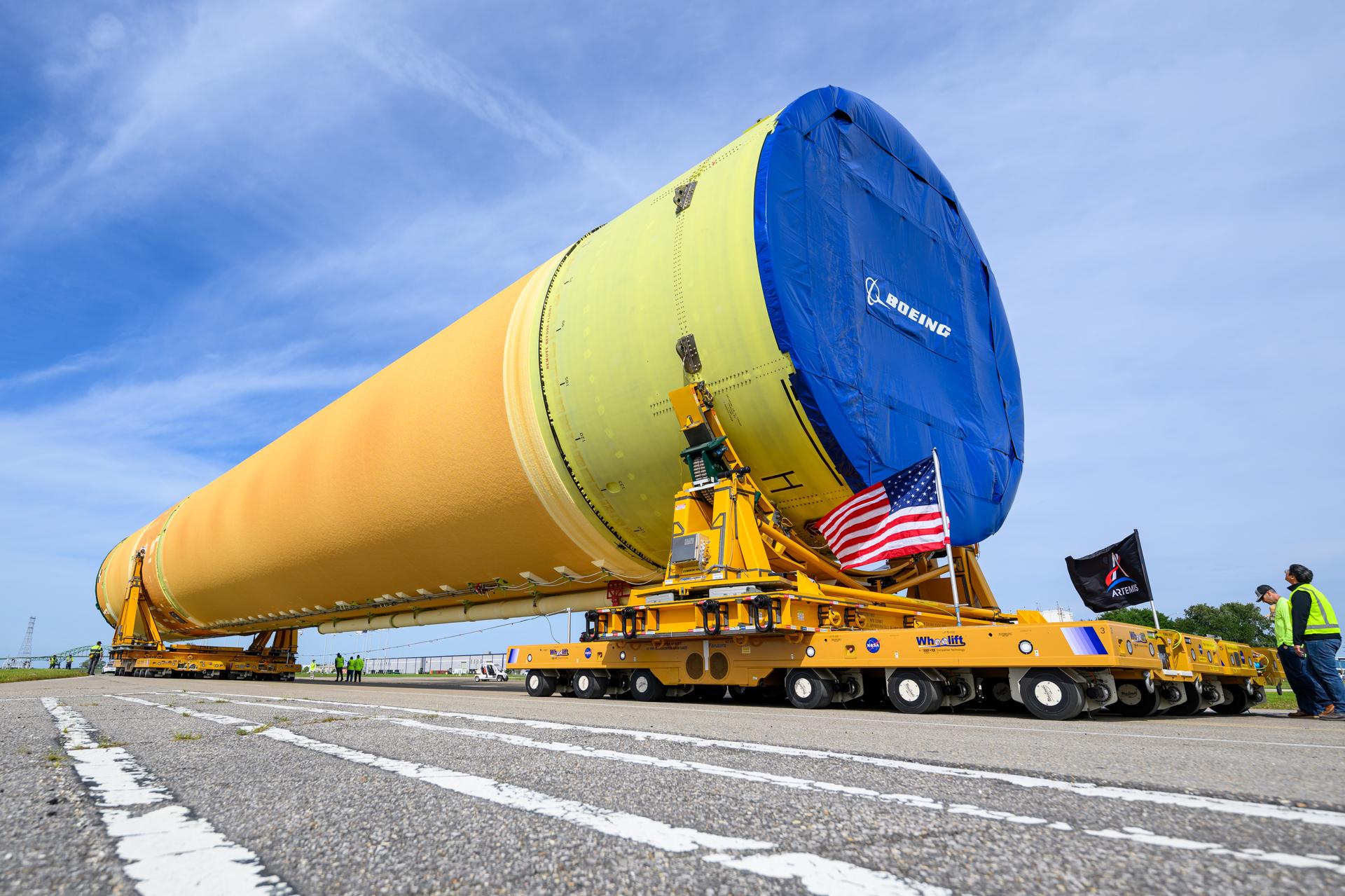
NASA moved the core stage, or the largest section, of the SLS (Space Launch System) rocket that will launch the crewed Artemis III mission in 2027 from the agency’s Michoud Assembly Facility to the agency’s Pegasus barge in New Orleans on April 20. The barge will ferry the top four-fifths – the section containing the liquid hydrogen tank, liquid oxygen tank, intertank, and forward skirt – of the SLS core stage to NASA’s Kennedy Space Center in Florida to complete outfitting and vertical integration. Teams with NASA and Boeing, the SLS core stage lead contractor, used specialized transporters to guide the top four-fifths from the NASA rocket factory to Pegasus. Prior to the move, technicians added an engine section transportation simulator to the rocket stage for shipment to the Space Coast. Next year’s Artemis III mission will launch astronauts to Earth’s orbit aboard the Orion spacecraft on top of SLS to test rendezvous and docking capabilities between Orion and commercial spacecraft needed to land Artemis IV astronauts on the Moon in 2028. NASA’s SLS is the only rocket capable of sending Orion, astronauts, and supplies to the Moon in a single launch. Photo Credit: NASA/Eric Bordelon
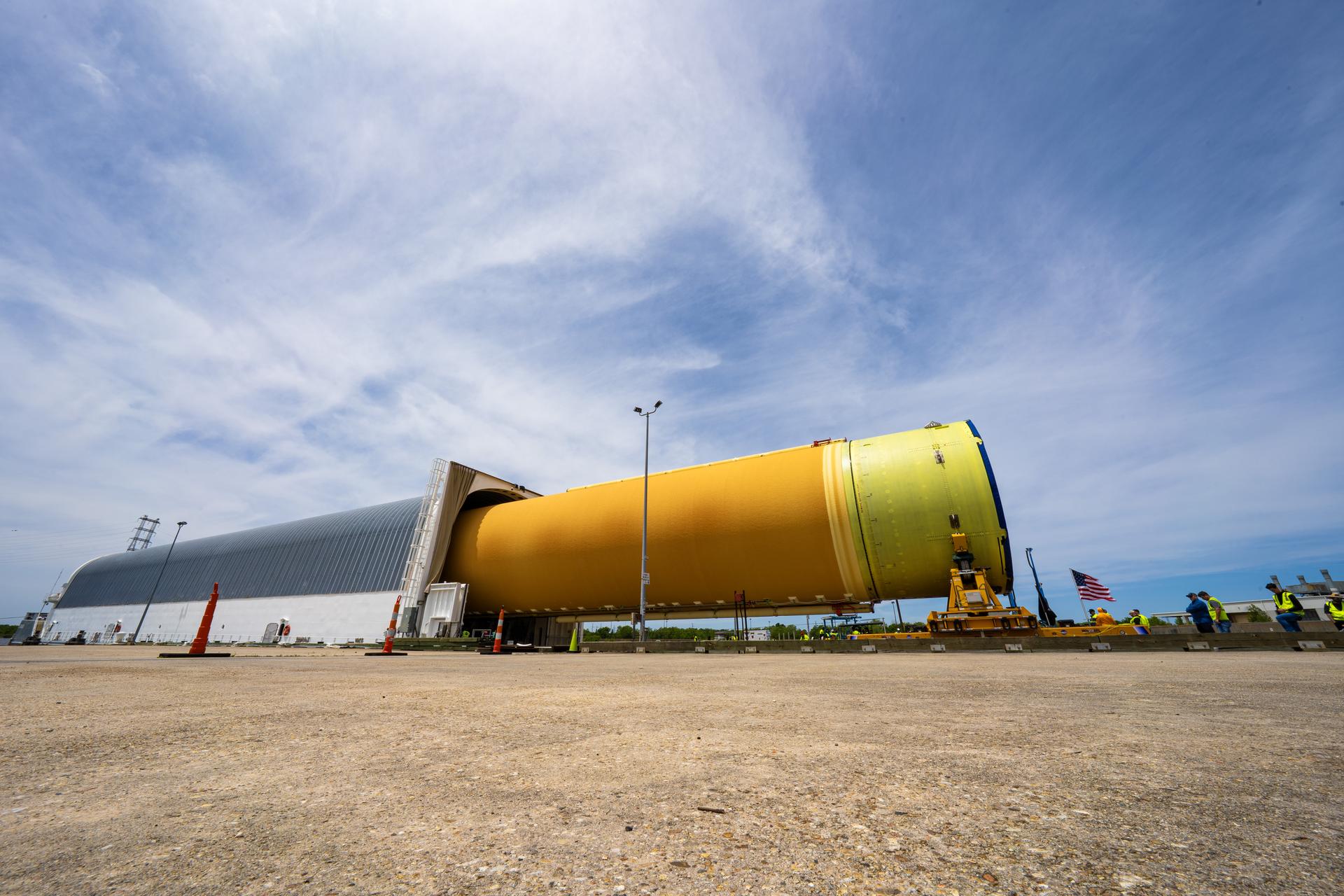
NASA moved the core stage, or the largest section, of the SLS (Space Launch System) rocket that will launch the crewed Artemis III mission in 2027 from the agency’s Michoud Assembly Facility to the agency’s Pegasus barge in New Orleans on April 20. The barge will ferry the top four-fifths – the section containing the liquid hydrogen tank, liquid oxygen tank, intertank, and forward skirt – of the SLS core stage to NASA’s Kennedy Space Center in Florida to complete outfitting and vertical integration. Teams with NASA and Boeing, the SLS core stage lead contractor, used specialized transporters to guide the top four-fifths from the NASA rocket factory to Pegasus. Prior to the move, technicians added an engine section transportation simulator to the rocket stage for shipment to the Space Coast. Next year’s Artemis III mission will launch astronauts to Earth’s orbit aboard the Orion spacecraft on top of SLS to test rendezvous and docking capabilities between Orion and commercial spacecraft needed to land Artemis IV astronauts on the Moon in 2028. NASA’s SLS is the only rocket capable of sending Orion, astronauts, and supplies to the Moon in a single launch.

NASA moved the core stage, or the largest section, of the SLS (Space Launch System) rocket that will launch the crewed Artemis III mission in 2027 from the agency’s Michoud Assembly Facility to the agency’s Pegasus barge in New Orleans on April 20. The barge will ferry the top four-fifths – the section containing the liquid hydrogen tank, liquid oxygen tank, intertank, and forward skirt – of the SLS core stage to NASA’s Kennedy Space Center in Florida to complete outfitting and vertical integration. Teams with NASA and Boeing, the SLS core stage lead contractor, used specialized transporters to guide the top four-fifths from the NASA rocket factory to Pegasus. Prior to the move, technicians added an engine section transportation simulator to the rocket stage for shipment to the Space Coast. Next year’s Artemis III mission will launch astronauts to Earth’s orbit aboard the Orion spacecraft on top of SLS to test rendezvous and docking capabilities between Orion and commercial spacecraft needed to land Artemis IV astronauts on the Moon in 2028. NASA’s SLS is the only rocket capable of sending Orion, astronauts, and supplies to the Moon in a single launch.
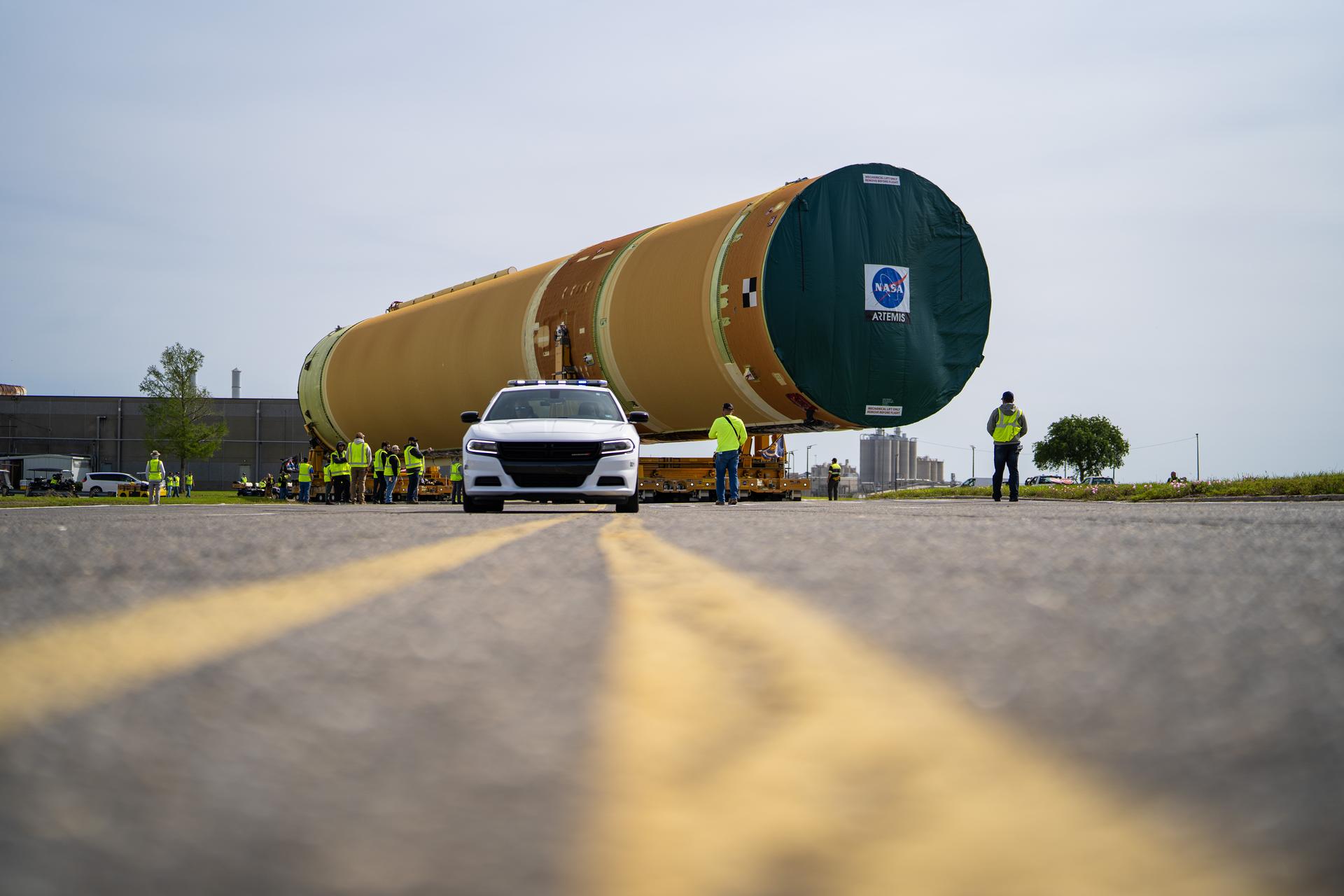
NASA moved the core stage, or the largest section, of the SLS (Space Launch System) rocket that will launch the crewed Artemis III mission in 2027 from the agency’s Michoud Assembly Facility to the agency’s Pegasus barge in New Orleans on April 20. The barge will ferry the top four-fifths – the section containing the liquid hydrogen tank, liquid oxygen tank, intertank, and forward skirt – of the SLS core stage to NASA’s Kennedy Space Center in Florida to complete outfitting and vertical integration. Teams with NASA and Boeing, the SLS core stage lead contractor, used specialized transporters to guide the top four-fifths from the NASA rocket factory to Pegasus. Prior to the move, technicians added an engine section transportation simulator to the rocket stage for shipment to the Space Coast. Next year’s Artemis III mission will launch astronauts to Earth’s orbit aboard the Orion spacecraft on top of SLS to test rendezvous and docking capabilities between Orion and commercial spacecraft needed to land Artemis IV astronauts on the Moon in 2028. NASA’s SLS is the only rocket capable of sending Orion, astronauts, and supplies to the Moon in a single launch.
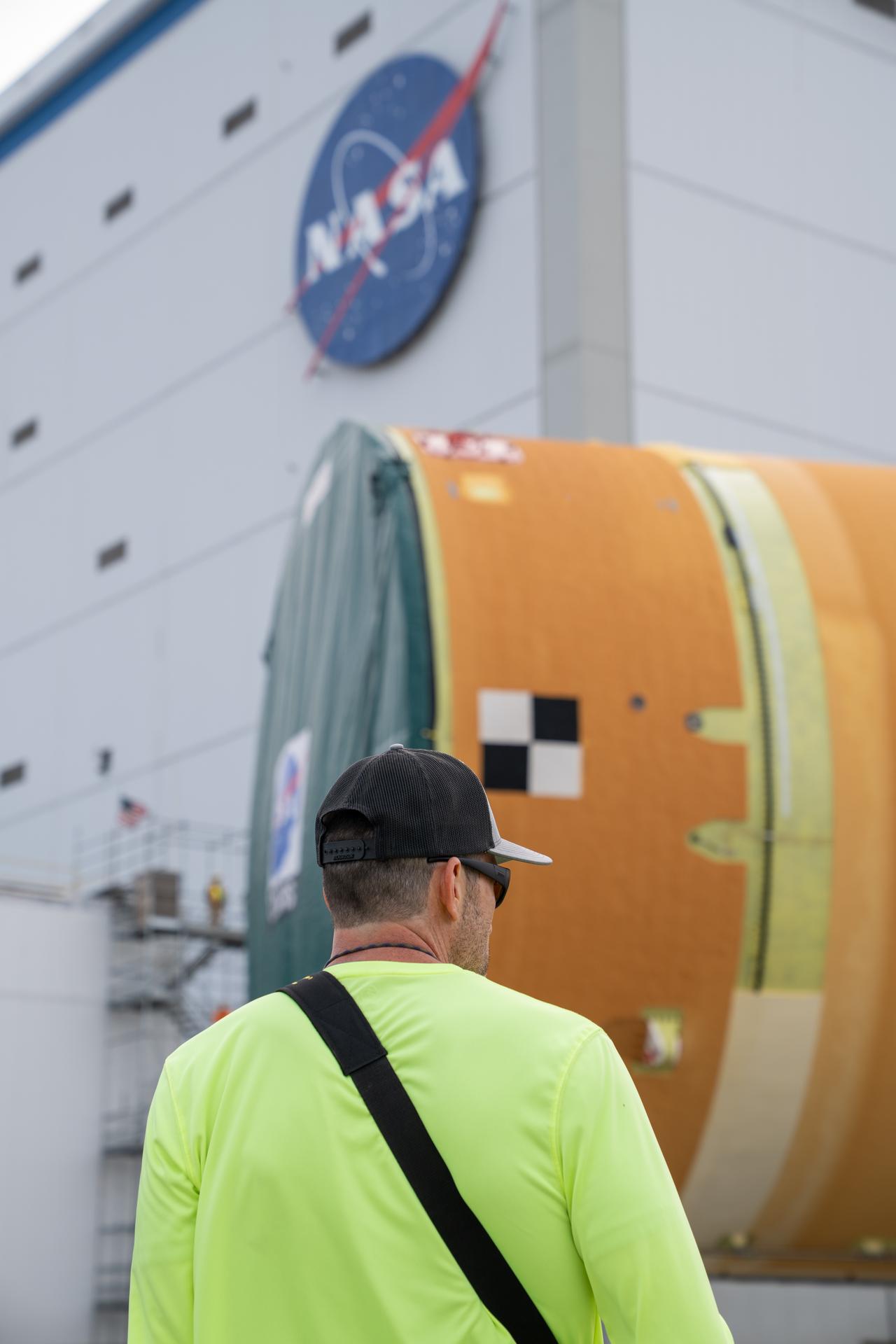
NASA moved the core stage, or the largest section, of the SLS (Space Launch System) rocket that will launch the crewed Artemis III mission in 2027 from the agency’s Michoud Assembly Facility to the agency’s Pegasus barge in New Orleans on April 20. The barge will ferry the top four-fifths – the section containing the liquid hydrogen tank, liquid oxygen tank, intertank, and forward skirt – of the SLS core stage to NASA’s Kennedy Space Center in Florida to complete outfitting and vertical integration. Teams with NASA and Boeing, the SLS core stage lead contractor, used specialized transporters to guide the top four-fifths from the NASA rocket factory to Pegasus. Prior to the move, technicians added an engine section transportation simulator to the rocket stage for shipment to the Space Coast. Next year’s Artemis III mission will launch astronauts to Earth’s orbit aboard the Orion spacecraft on top of SLS to test rendezvous and docking capabilities between Orion and commercial spacecraft needed to land Artemis IV astronauts on the Moon in 2028. NASA’s SLS is the only rocket capable of sending Orion, astronauts, and supplies to the Moon in a single launch. Photo Credit: (NASA/Brandon Hancock)
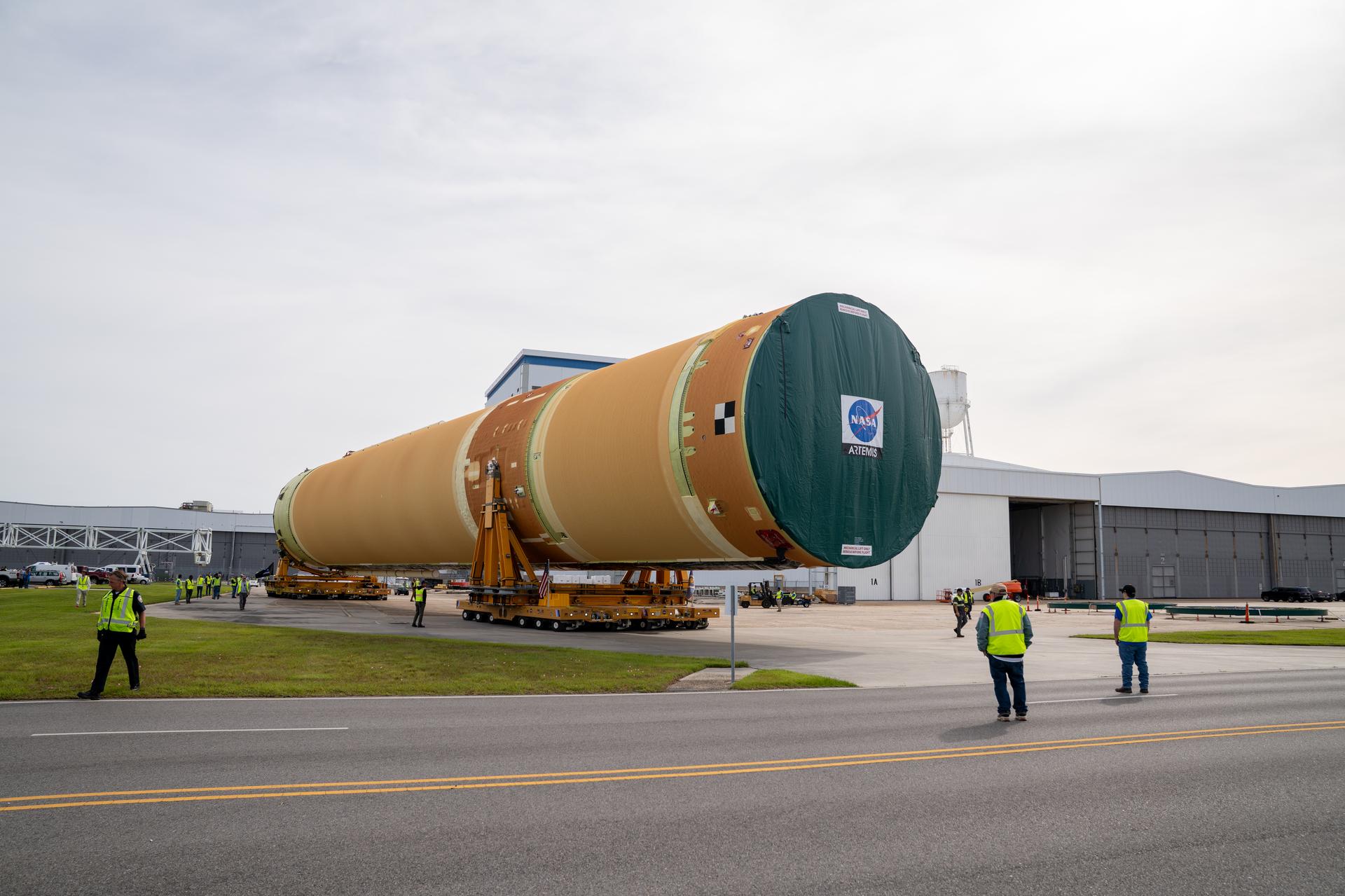
NASA moved the core stage, or the largest section, of the SLS (Space Launch System) rocket that will launch the crewed Artemis III mission in 2027 from the agency’s Michoud Assembly Facility to the agency’s Pegasus barge in New Orleans on April 20. The barge will ferry the top four-fifths – the section containing the liquid hydrogen tank, liquid oxygen tank, intertank, and forward skirt – of the SLS core stage to NASA’s Kennedy Space Center in Florida to complete outfitting and vertical integration. Teams with NASA and Boeing, the SLS core stage lead contractor, used specialized transporters to guide the top four-fifths from the NASA rocket factory to Pegasus. Prior to the move, technicians added an engine section transportation simulator to the rocket stage for shipment to the Space Coast. Next year’s Artemis III mission will launch astronauts to Earth’s orbit aboard the Orion spacecraft on top of SLS to test rendezvous and docking capabilities between Orion and commercial spacecraft needed to land Artemis IV astronauts on the Moon in 2028. NASA’s SLS is the only rocket capable of sending Orion, astronauts, and supplies to the Moon in a single launch. Photo Credit: (NASA/Brandon Hancock)
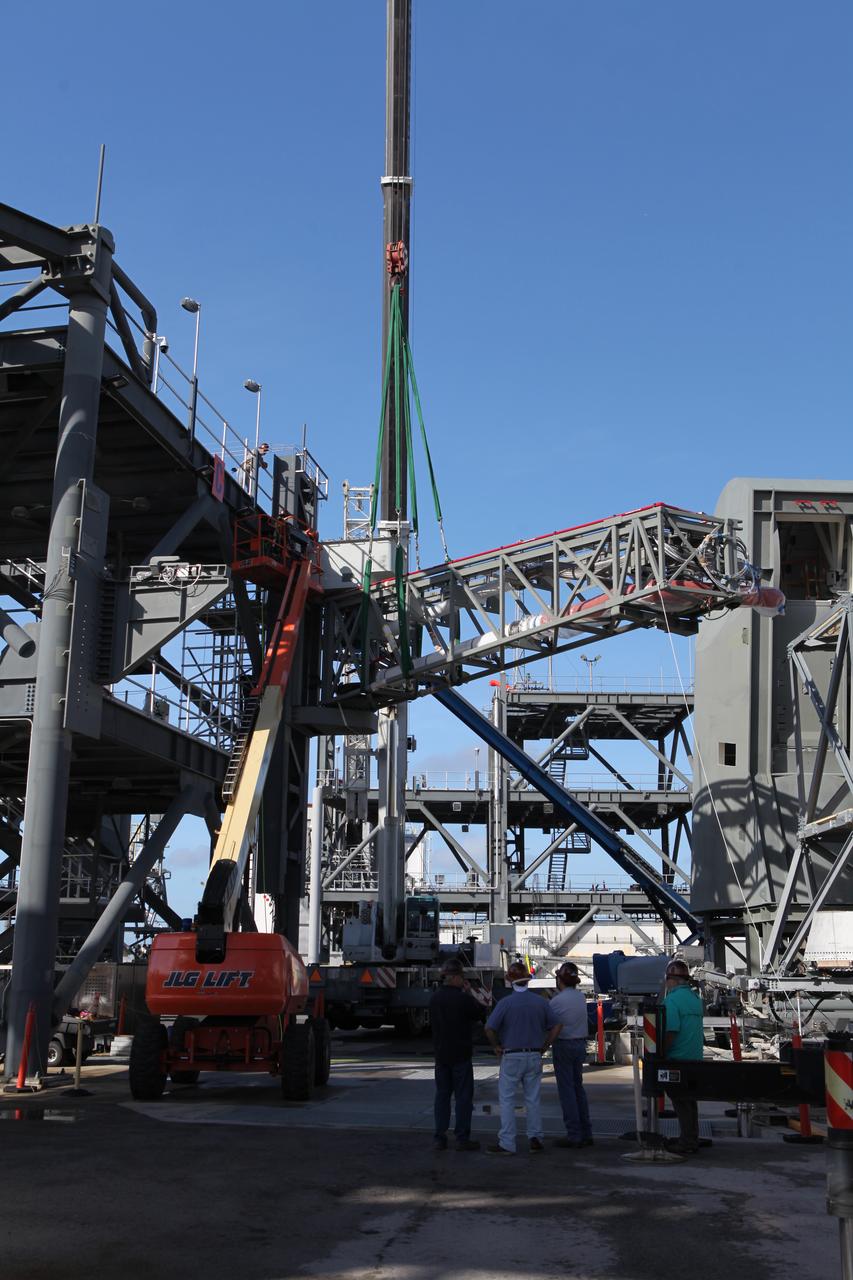
A crane moves the Core State Inter-tank Umbilical (CSITU) for NASA's Space Launch System (SLS) closer for attachment to the "C" tower of the Vehicle Motion Simulator 2 test fixture at the Launch Equipment Test Facility at the agency's Kennedy Space Center in Florida. The umbilical will undergo a series of tests to confirm it is functioning properly and ready to support the SLS rocket for launch. The CSITU is a swing arm umbilical that will connect to the SLS core stage inter-tank. The umbilical's main function is to vent gaseous hydrogen from the core stage. The arm also provides conditioned air, pressurized gases, and power and data connection to the core stage. The center’s Engineering Directorate and the Ground Systems Development and Operations Program are overseeing processing and testing of the umbilicals.
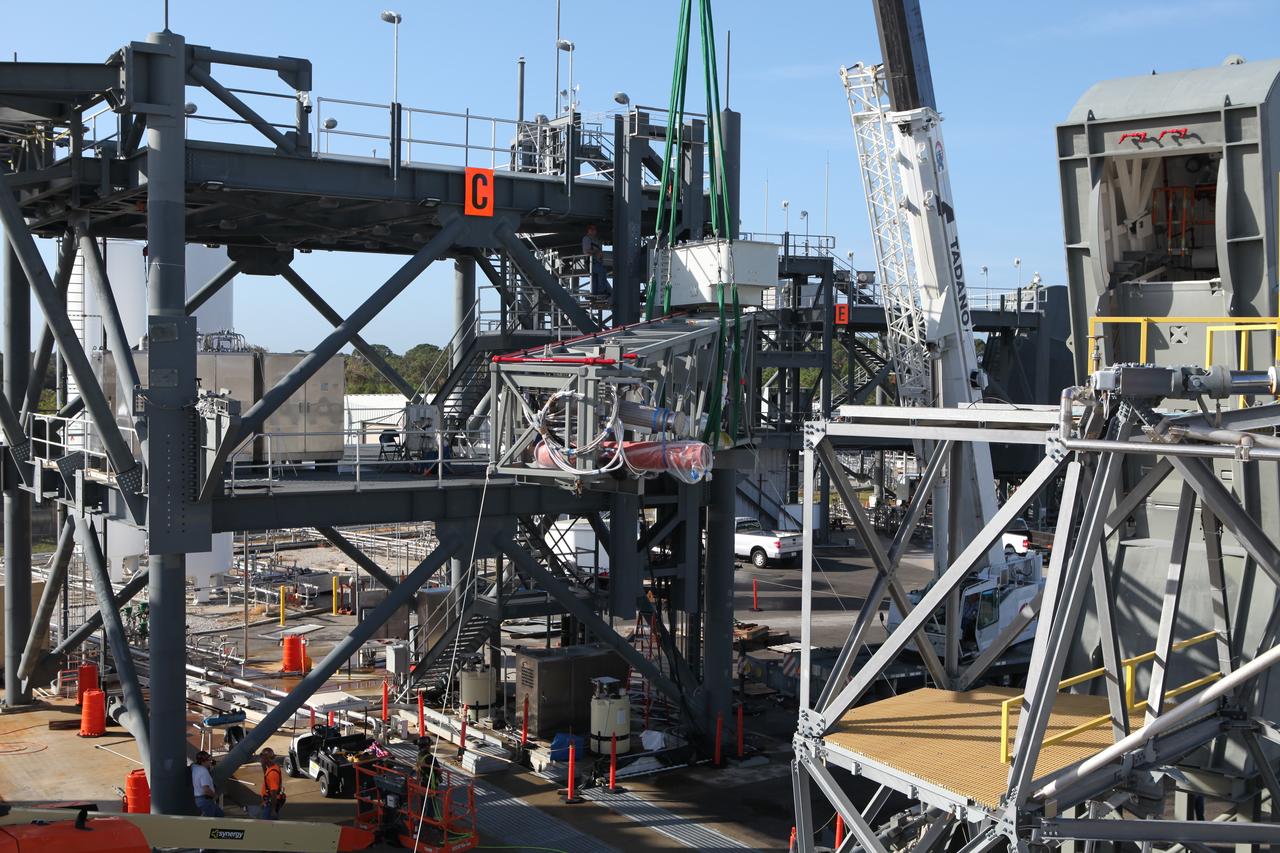
A crane lifts the Core State Inter-tank Umbilical (CSITU) for NASA's Space Launch System (SLS) at the Launch Equipment Test Facility at the agency's Kennedy Space Center in Florida. The CSITU will be attached to the "C" tower of the Vehicle Motion Simulator 2 test fixture. The umbilical will undergo a series of tests to confirm it is functioning properly and ready to support the SLS rocket for launch. The CSITU is a swing arm umbilical that will connect to the SLS core stage inter-tank. The umbilical's main function is to vent gaseous hydrogen from the core stage. The arm also provides conditioned air, pressurized gases, and power and data connection to the core stage. The center’s Engineering Directorate and the Ground Systems Development and Operations Program are overseeing processing and testing of the umbilicals.
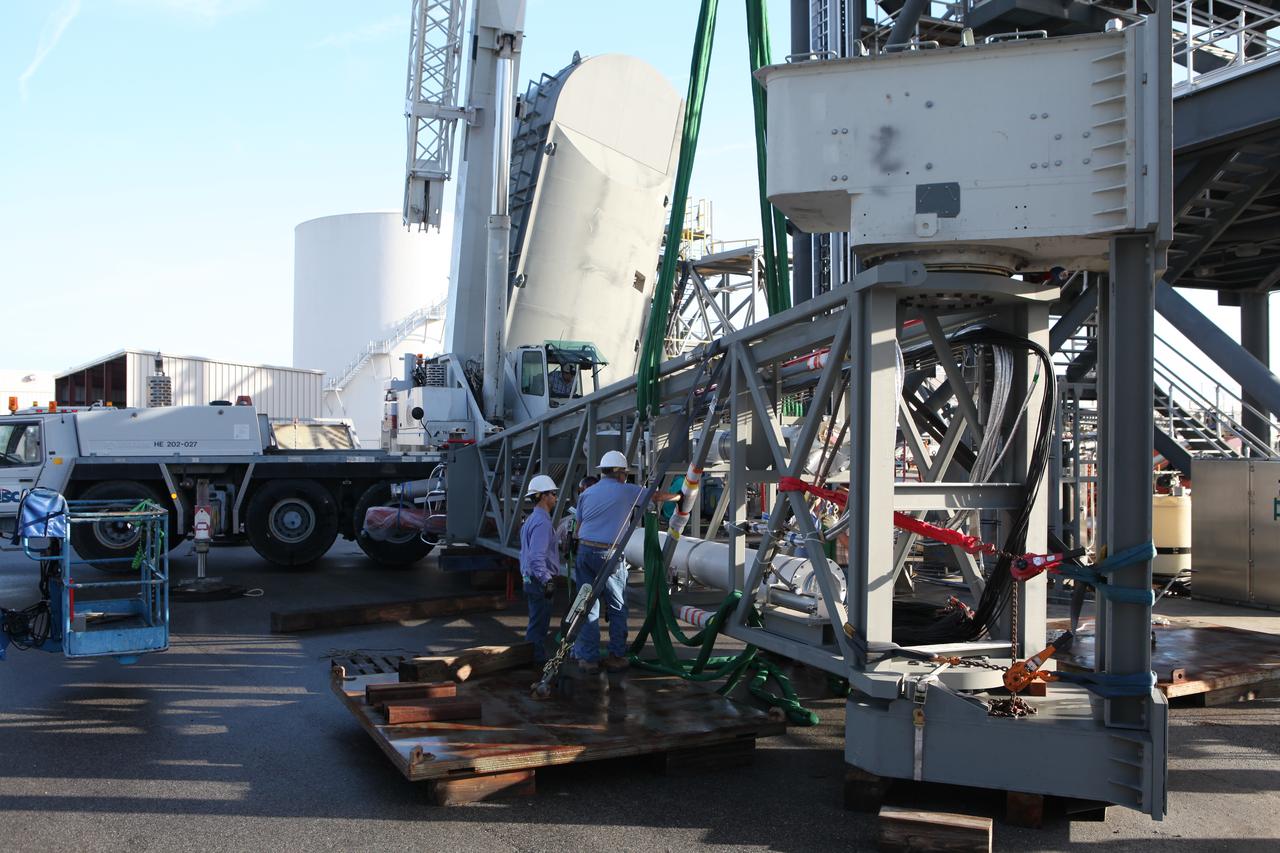
The Core State Inter-tank Umbilical (CSITU) for NASA's Space Launch System (SLS) arrives at the Launch Equipment Test Facility at the agency's Kennedy Space Center in Florida. The CSITU will be attached to the "C" tower of the Vehicle Motion Simulator 2 test fixture. The umbilical will undergo a series of tests to confirm it is functioning properly and ready to support the SLS rocket for launch. The CSITU is a swing arm umbilical that will connect to the SLS core stage inter-tank. The umbilical's main function is to vent gaseous hydrogen from the core stage. The arm also provides conditioned air, pressurized gases, and power and data connection to the core stage. The center’s Engineering Directorate and the Ground Systems Development and Operations Program are overseeing processing and testing of the umbilicals.
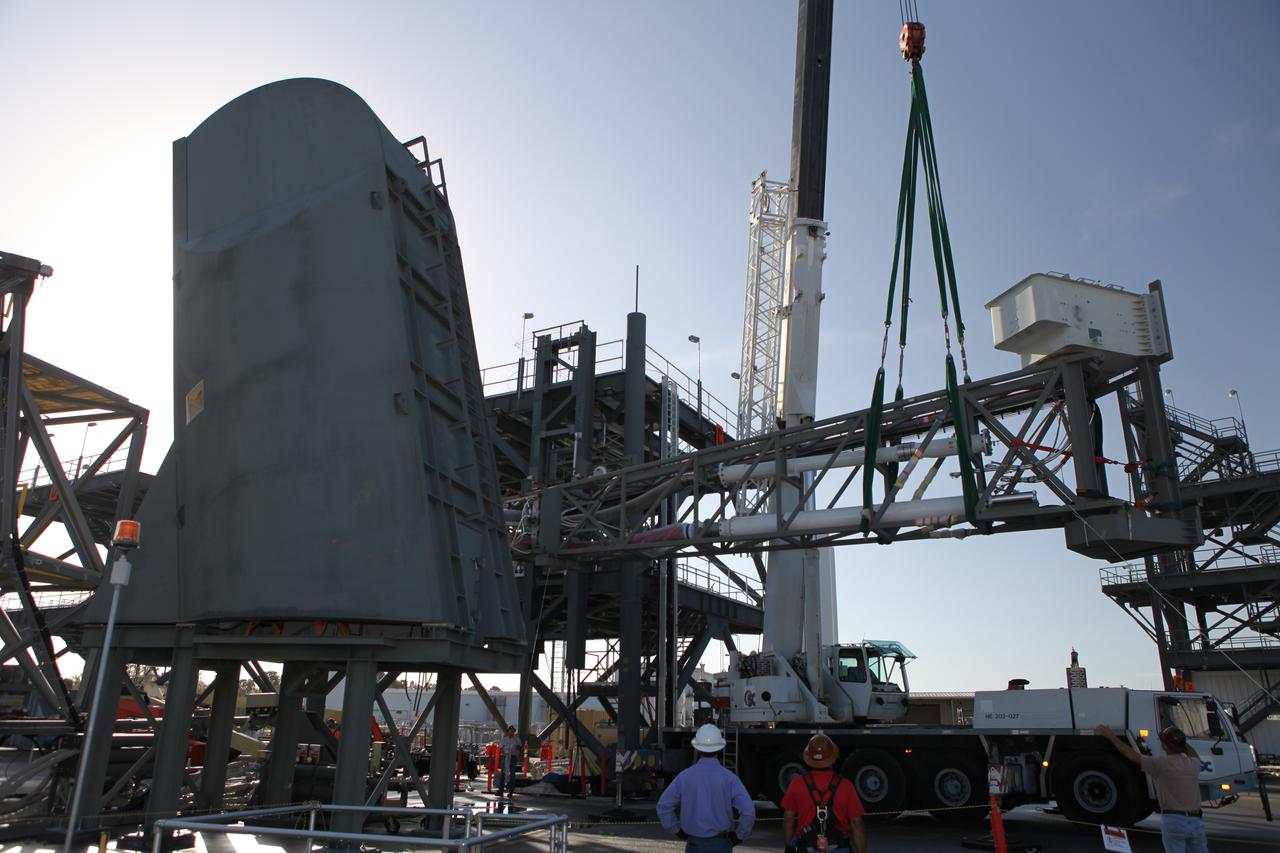
A crane is used to lift the Core State Inter-tank Umbilical (CSITU) for NASA's Space Launch System (SLS) at the Launch Equipment Test Facility at the agency's Kennedy Space Center in Florida. The CSITU will be attached to the "C" tower of the Vehicle Motion Simulator 2 test fixture. The umbilical will undergo a series of tests to confirm it is functioning properly and ready to support the SLS rocket for launch. The CSITU is a swing arm umbilical that will connect to the SLS core stage inter-tank. The umbilical's main function is to vent gaseous hydrogen from the core stage. The arm also provides conditioned air, pressurized gases, and power and data connection to the core stage. The center’s Engineering Directorate and the Ground Systems Development and Operations Program are overseeing processing and testing of the umbilicals.
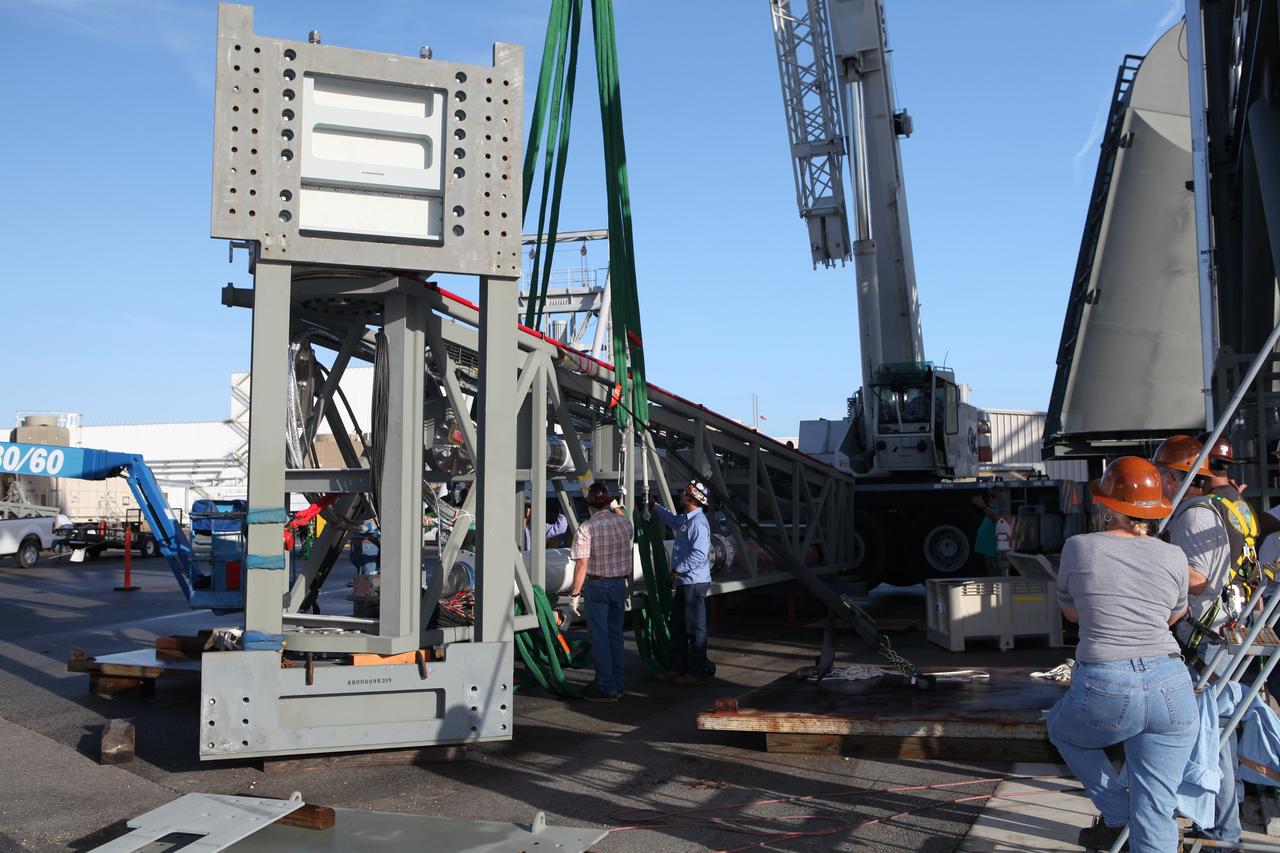
Efforts are underway to lift the Core State Inter-tank Umbilical (CSITU) for NASA's Space Launch System (SLS) at the Launch Equipment Test Facility at the agency's Kennedy Space Center in Florida. The CSITU will be attached to the "C" tower of the Vehicle Motion Simulator 2 test fixture. The umbilical will undergo a series of tests to confirm it is functioning properly and ready to support the SLS rocket for launch. The CSITU is a swing arm umbilical that will connect to the SLS core stage inter-tank. The umbilical's main function is to vent gaseous hydrogen from the core stage. The arm also provides conditioned air, pressurized gases, and power and data connection to the core stage. The center’s Engineering Directorate and the Ground Systems Development and Operations Program are overseeing processing and testing of the umbilicals.
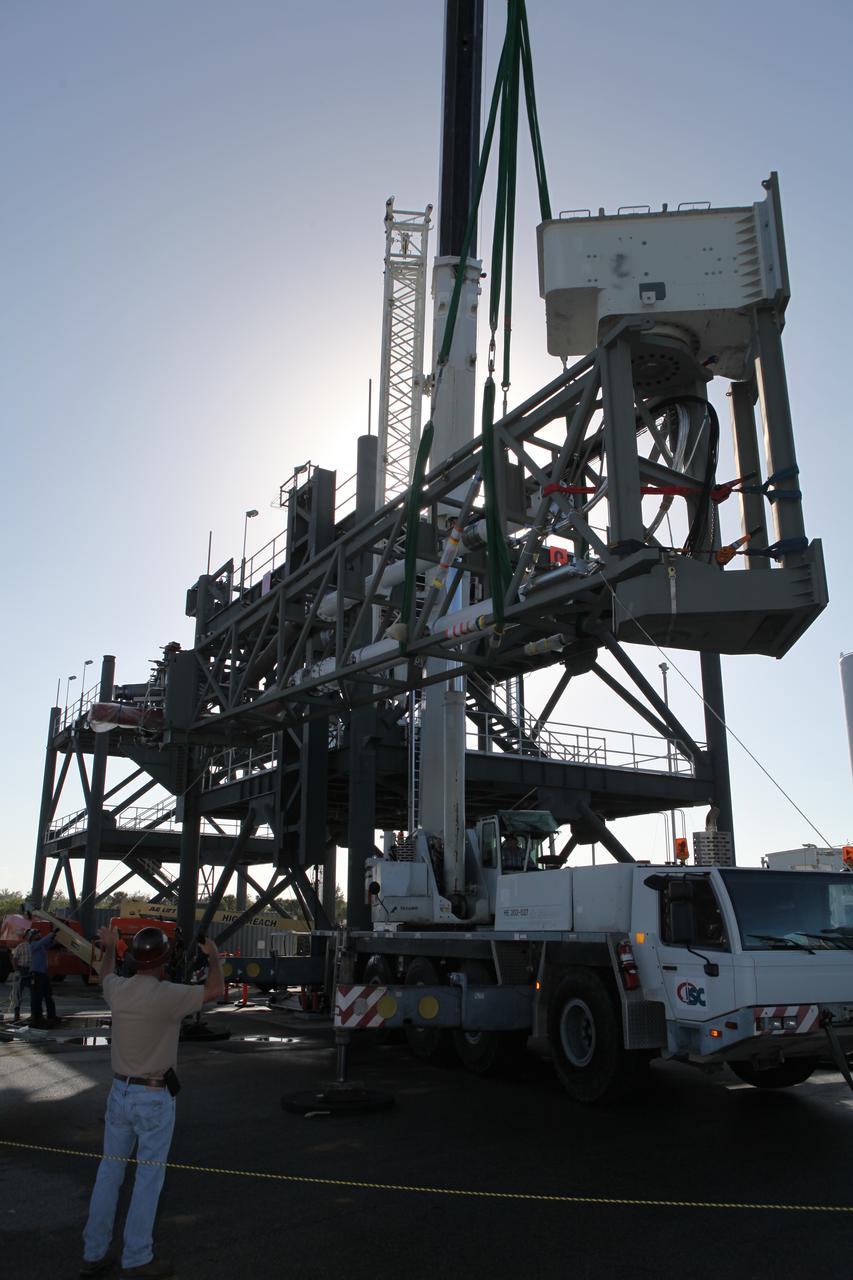
A crane is used to lift the Core State Inter-tank Umbilical (CSITU) for NASA's Space Launch System (SLS) at the Launch Equipment Test Facility at the agency's Kennedy Space Center in Florida. The CSITU will be attached to the "C" tower of the Vehicle Motion Simulator 2 test fixture. The umbilical will undergo a series of tests to confirm it is functioning properly and ready to support the SLS rocket for launch. The CSITU is a swing arm umbilical that will connect to the SLS core stage inter-tank. The umbilical's main function is to vent gaseous hydrogen from the core stage. The arm also provides conditioned air, pressurized gases, and power and data connection to the core stage. The center’s Engineering Directorate and the Ground Systems Development and Operations Program are overseeing processing and testing of the umbilicals.
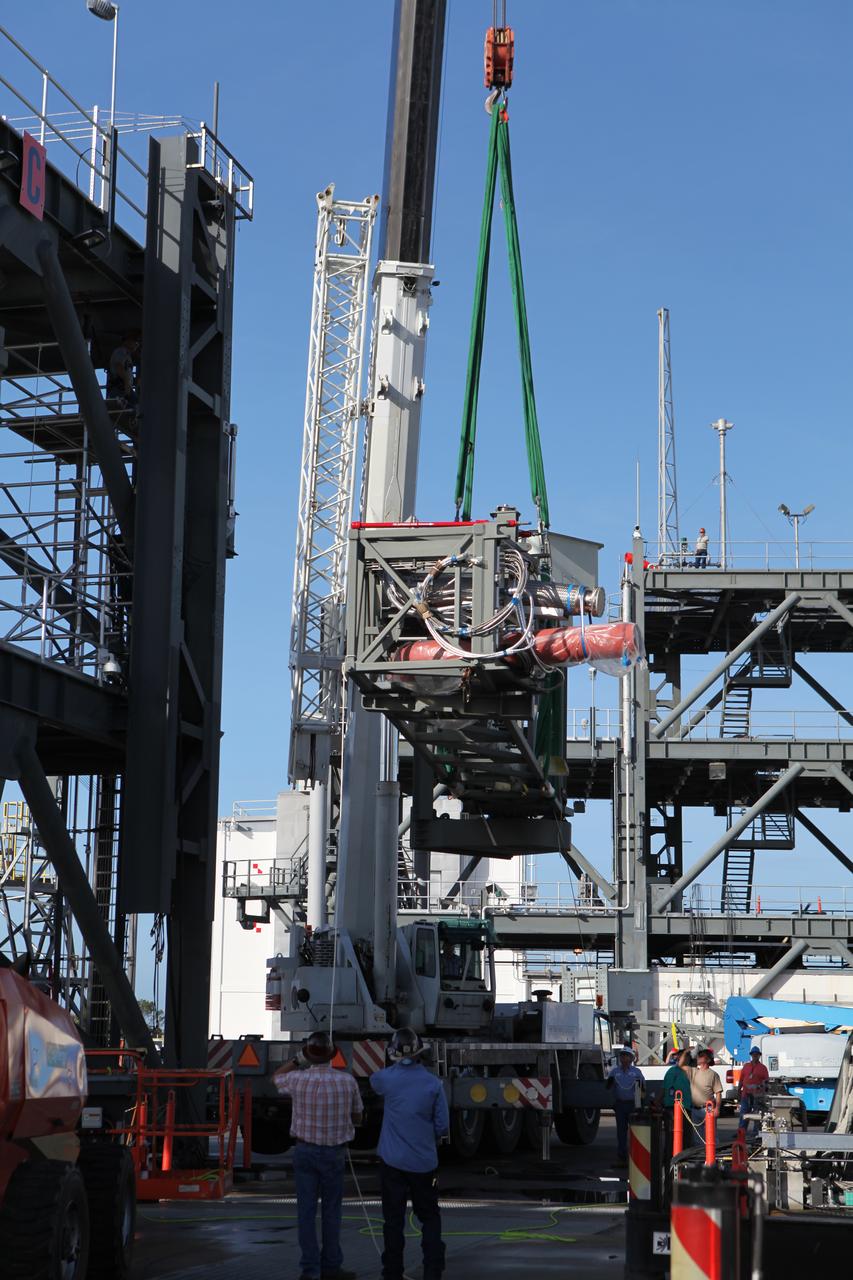
A crane is used to lift the Core State Inter-tank Umbilical (CSITU) for NASA's Space Launch System (SLS) at the Launch Equipment Test Facility at the agency's Kennedy Space Center in Florida. The CSITU will be attached to the "C" tower of the Vehicle Motion Simulator 2 test fixture. The umbilical will undergo a series of tests to confirm it is functioning properly and ready to support the SLS rocket for launch. The CSITU is a swing arm umbilical that will connect to the SLS core stage inter-tank. The umbilical's main function is to vent gaseous hydrogen from the core stage. The arm also provides conditioned air, pressurized gases, and power and data connection to the core stage. The center’s Engineering Directorate and the Ground Systems Development and Operations Program are overseeing processing and testing of the umbilicals.
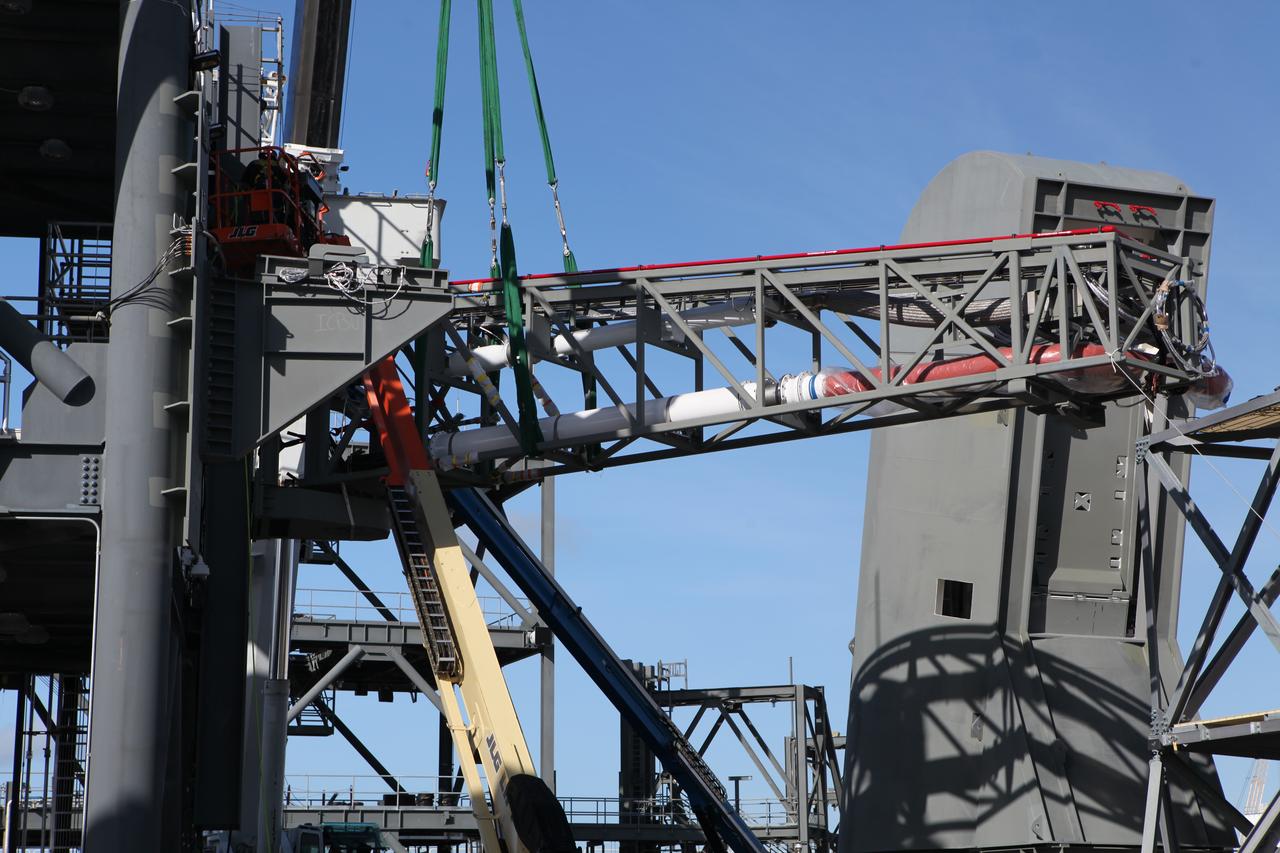
A crane moves the Core State Inter-tank Umbilical (CSITU) for NASA's Space Launch System (SLS) closer for attachment to the "C" tower of the Vehicle Motion Simulator 2 test fixture at the Launch Equipment Test Facility at the agency's Kennedy Space Center in Florida. The umbilical will undergo a series of tests to confirm it is functioning properly and ready to support the SLS rocket for launch. The CSITU is a swing arm umbilical that will connect to the SLS core stage inter-tank. The umbilical's main function is to vent gaseous hydrogen from the core stage. The arm also provides conditioned air, pressurized gases, and power and data connection to the core stage. The center’s Engineering Directorate and the Ground Systems Development and Operations Program are overseeing processing and testing of the umbilicals.
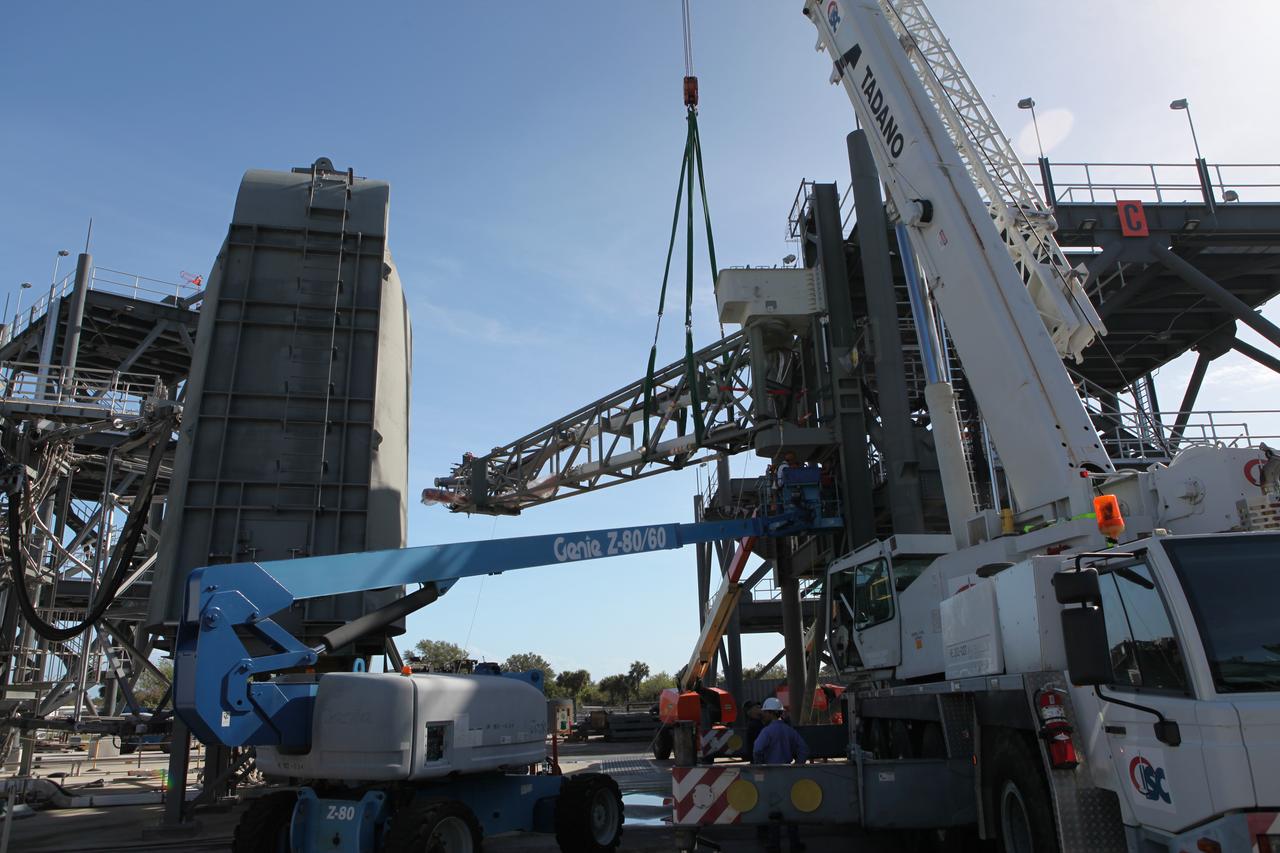
The Core State Inter-tank Umbilical (CSITU) for NASA's Space Launch System (SLS) is attached to the "C" tower of the Vehicle Motion Simulator 2 test fixture at the Launch Equipment Test Facility at the agency's Kennedy Space Center in Florida. The umbilical will undergo a series of tests to confirm it is functioning properly and ready to support the SLS rocket for launch. The CSITU is a swing arm umbilical that will connect to the SLS core stage inter-tank. The umbilical's main function is to vent gaseous hydrogen from the core stage. The arm also provides conditioned air, pressurized gases, and power and data connection to the core stage. The center’s Engineering Directorate and the Ground Systems Development and Operations Program are overseeing processing and testing of the umbilicals.

A crane is used to lift the Core State Inter-tank Umbilical (CSITU) for NASA's Space Launch System (SLS) at the Launch Equipment Test Facility at the agency's Kennedy Space Center in Florida. The CSITU will be attached to the "C" tower of the Vehicle Motion Simulator 2 test fixture. The umbilical will undergo a series of tests to confirm it is functioning properly and ready to support the SLS rocket for launch. The CSITU is a swing arm umbilical that will connect to the SLS core stage inter-tank. The umbilical's main function is to vent gaseous hydrogen from the core stage. The arm also provides conditioned air, pressurized gases, and power and data connection to the core stage. The center’s Engineering Directorate and the Ground Systems Development and Operations Program are overseeing processing and testing of the umbilicals.

The Space Launch System (SLS) rocket’s liquid oxygen tank structural test article was manufactured and stacked in June 2019 at NASA’s Michoud Assembly Facility in New Orleans. To construct the test article, Boeing technicians at Michoud moved the liquid oxygen tank to the Vertical Assemby Building stacking and integration area. Here, they added simulators to mimic the two structures that connect to the tank, the intertank and the forward skirt. This structural hardware for the SLS core stage for America’s new deep space rocket is structurally identical to the flight version of the tank. It will be shipped on the Pegasus barge to NASA’s Marshall Space Flight Center in Hunstville, Alabama, where it will undergo a series of tests that simulate the stresses and loads of liftoff and flight. These tests will help ensure designs are adequate for successful SLS missions to the Moon and beyond. The flight liquid oxygen tank along with the liquid hydrogen tank supplies more than 500,000 gallons of propellant to the core stages four RS-25 engines, which produce 2 million pounds of thrust to help send the SLS rocket to space.
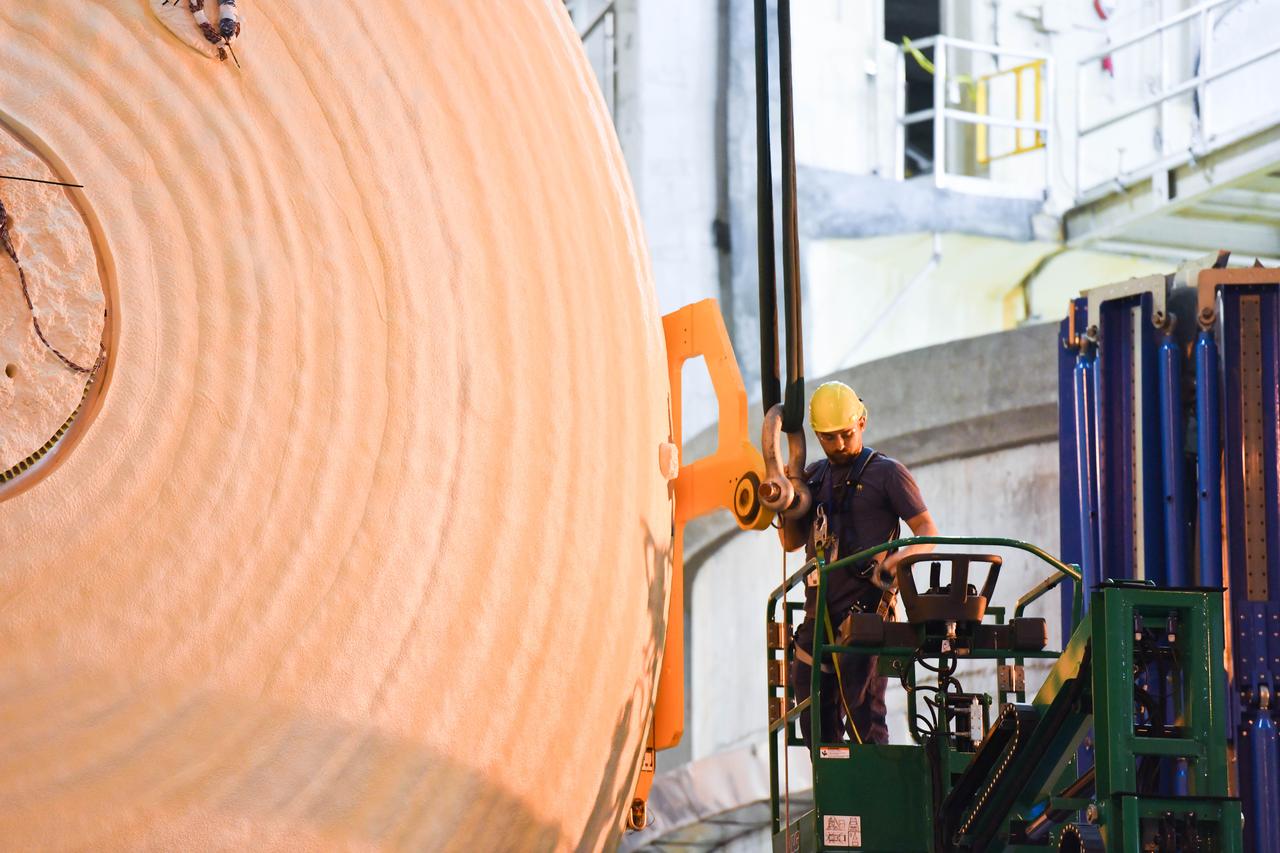
The Space Launch System (SLS) rocket’s liquid oxygen tank structural test article was manufactured and stacked in June 2019 at NASA’s Michoud Assembly Facility in New Orleans. To construct the test article, Boeing technicians at Michoud moved the liquid oxygen tank to the Vertical Assemby Building stacking and integration area. Here, they added simulators to mimic the two structures that connect to the tank, the intertank and the forward skirt. This structural hardware for the SLS core stage for America’s new deep space rocket is structurally identical to the flight version of the tank. It will be shipped on the Pegasus barge to NASA’s Marshall Space Flight Center in Hunstville, Alabama, where it will undergo a series of tests that simulate the stresses and loads of liftoff and flight. These tests will help ensure designs are adequate for successful SLS missions to the Moon and beyond. The flight liquid oxygen tank along with the liquid hydrogen tank supplies more than 500,000 gallons of propellant to the core stages four RS-25 engines, which produce 2 million pounds of thrust to help send the SLS rocket to space.
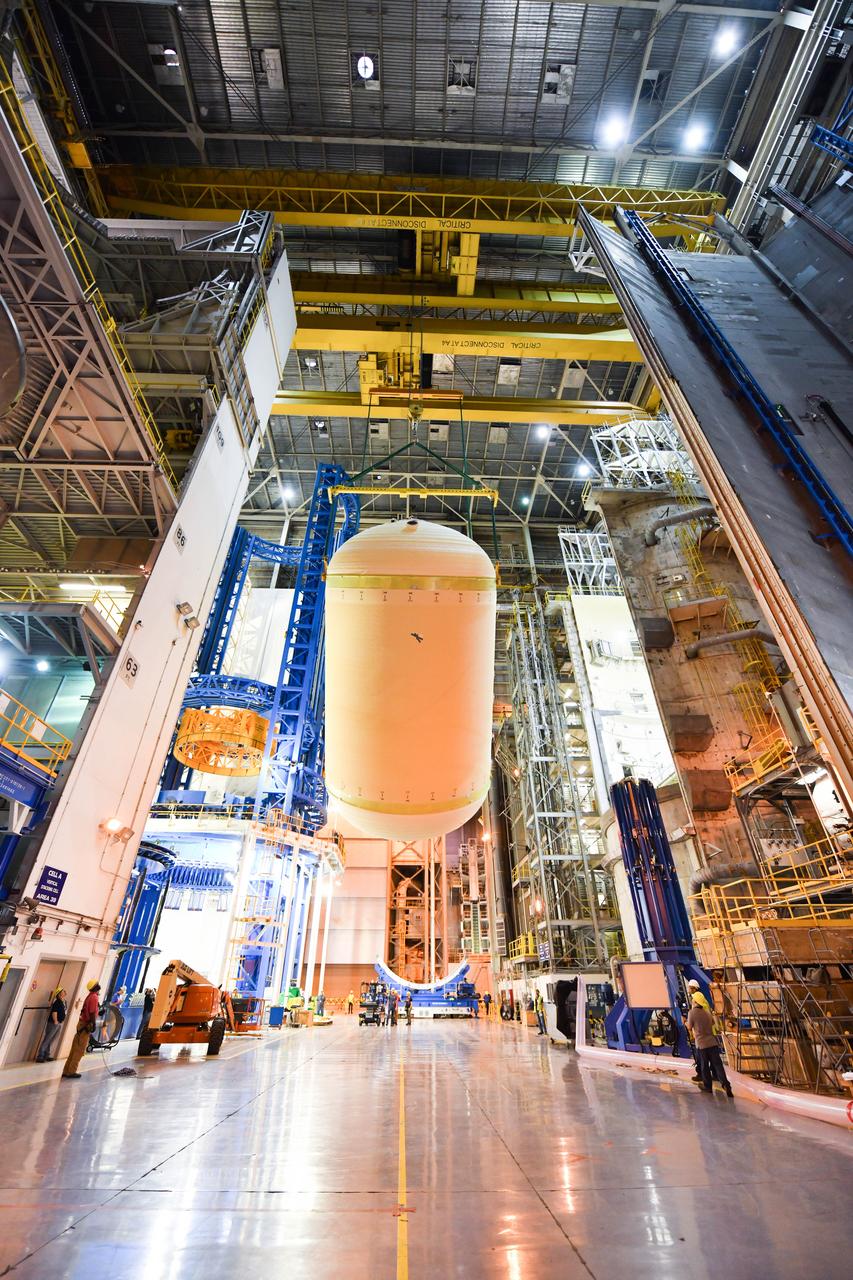
The Space Launch System (SLS) rocket’s liquid oxygen tank structural test article was manufactured and stacked in June 2019 at NASA’s Michoud Assembly Facility in New Orleans. To construct the test article, Boeing technicians at Michoud moved the liquid oxygen tank to the Vertical Assemby Building stacking and integration area. Here, they added simulators to mimic the two structures that connect to the tank, the intertank and the forward skirt. This structural hardware for the SLS core stage for America’s new deep space rocket is structurally identical to the flight version of the tank. It will be shipped on the Pegasus barge to NASA’s Marshall Space Flight Center in Hunstville, Alabama, where it will undergo a series of tests that simulate the stresses and loads of liftoff and flight. These tests will help ensure designs are adequate for successful SLS missions to the Moon and beyond. The flight liquid oxygen tank along with the liquid hydrogen tank supplies more than 500,000 gallons of propellant to the core stages four RS-25 engines, which produce 2 million pounds of thrust to help send the SLS rocket to space.
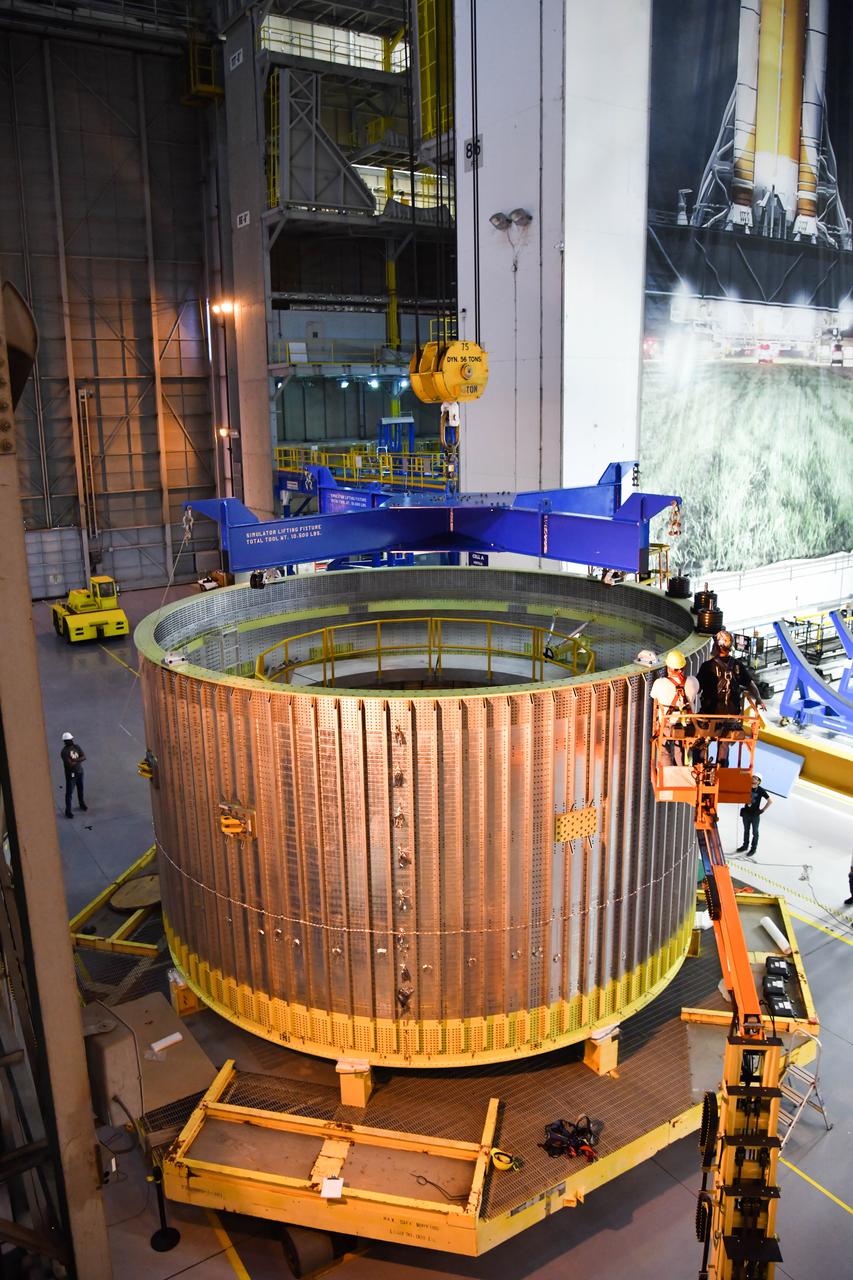
The Space Launch System (SLS) rocket’s liquid oxygen tank structural test article was manufactured and stacked in June 2019 at NASA’s Michoud Assembly Facility in New Orleans. To construct the test article, Boeing technicians at Michoud moved the liquid oxygen tank to the Vertical Assemby Building stacking and integration area. Here, they added simulators to mimic the two structures that connect to the tank, the intertank and the forward skirt. This structural hardware for the SLS core stage for America’s new deep space rocket is structurally identical to the flight version of the tank. It will be shipped on the Pegasus barge to NASA’s Marshall Space Flight Center in Hunstville, Alabama, where it will undergo a series of tests that simulate the stresses and loads of liftoff and flight. These tests will help ensure designs are adequate for successful SLS missions to the Moon and beyond. The flight liquid oxygen tank along with the liquid hydrogen tank supplies more than 500,000 gallons of propellant to the core stages four RS-25 engines, which produce 2 million pounds of thrust to help send the SLS rocket to space.
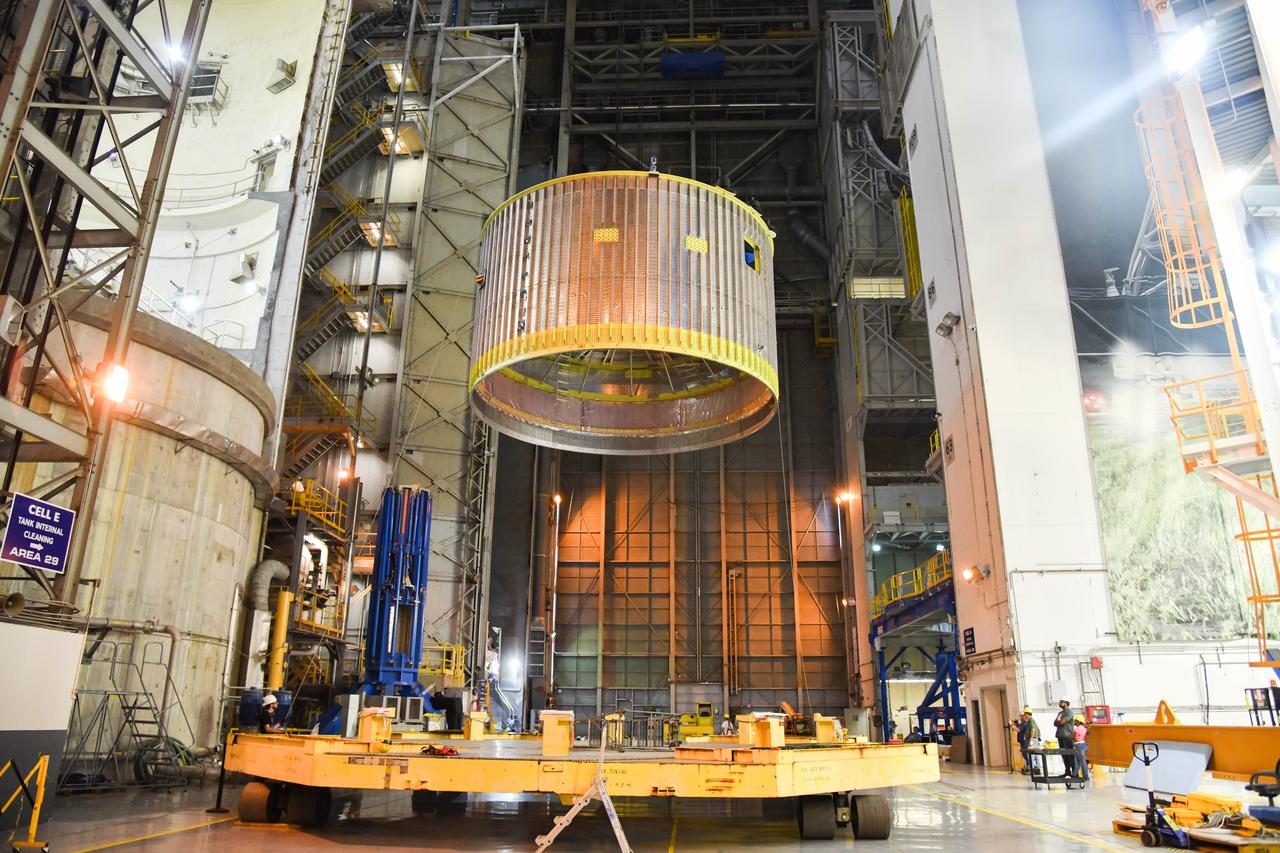
The Space Launch System (SLS) rocket’s liquid oxygen tank structural test article was manufactured and stacked in June 2019 at NASA’s Michoud Assembly Facility in New Orleans. To construct the test article, Boeing technicians at Michoud moved the liquid oxygen tank to the Vertical Assemby Building stacking and integration area. Here, they added simulators to mimic the two structures that connect to the tank, the intertank and the forward skirt. This structural hardware for the SLS core stage for America’s new deep space rocket is structurally identical to the flight version of the tank. It will be shipped on the Pegasus barge to NASA’s Marshall Space Flight Center in Hunstville, Alabama, where it will undergo a series of tests that simulate the stresses and loads of liftoff and flight. These tests will help ensure designs are adequate for successful SLS missions to the Moon and beyond. The flight liquid oxygen tank along with the liquid hydrogen tank supplies more than 500,000 gallons of propellant to the core stages four RS-25 engines, which produce 2 million pounds of thrust to help send the SLS rocket to space.
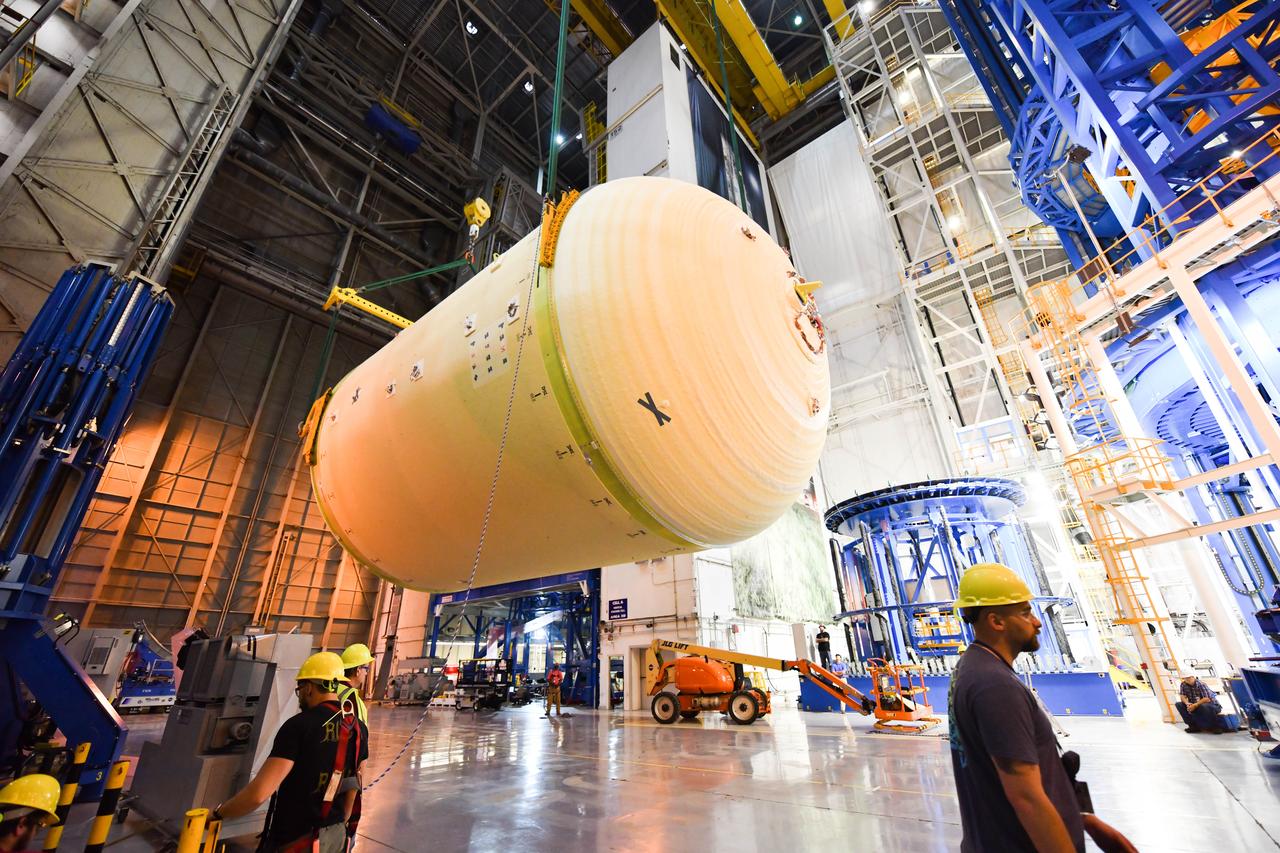
The Space Launch System (SLS) rocket’s liquid oxygen tank structural test article was manufactured and stacked in June 2019 at NASA’s Michoud Assembly Facility in New Orleans. To construct the test article, Boeing technicians at Michoud moved the liquid oxygen tank to the Vertical Assemby Building stacking and integration area. Here, they added simulators to mimic the two structures that connect to the tank, the intertank and the forward skirt. This structural hardware for the SLS core stage for America’s new deep space rocket is structurally identical to the flight version of the tank. It will be shipped on the Pegasus barge to NASA’s Marshall Space Flight Center in Hunstville, Alabama, where it will undergo a series of tests that simulate the stresses and loads of liftoff and flight. These tests will help ensure designs are adequate for successful SLS missions to the Moon and beyond. The flight liquid oxygen tank along with the liquid hydrogen tank supplies more than 500,000 gallons of propellant to the core stages four RS-25 engines, which produce 2 million pounds of thrust to help send the SLS rocket to space.
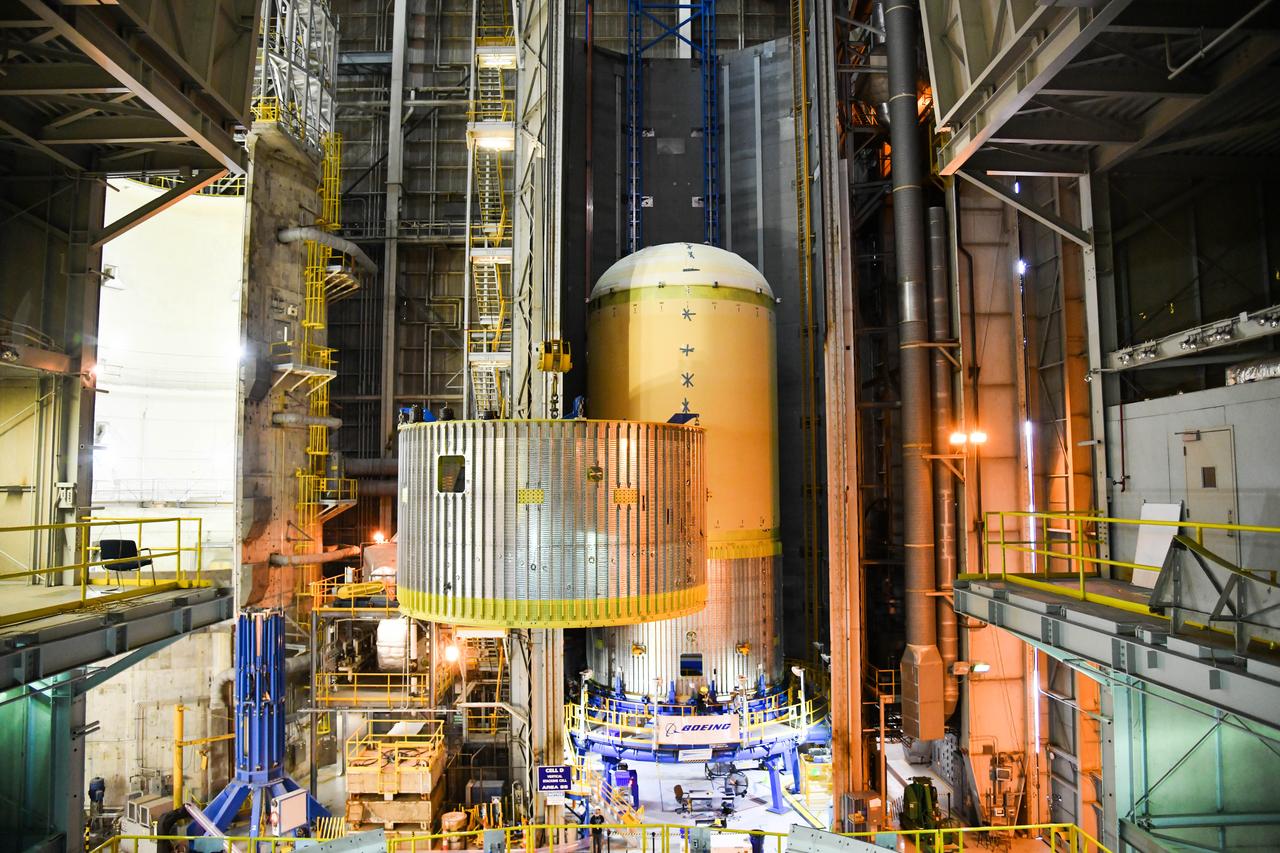
The Space Launch System (SLS) rocket’s liquid oxygen tank structural test article was manufactured and stacked in June 2019 at NASA’s Michoud Assembly Facility in New Orleans. To construct the test article, Boeing technicians at Michoud moved the liquid oxygen tank to the Vertical Assemby Building stacking and integration area. Here, they added simulators to mimic the two structures that connect to the tank, the intertank and the forward skirt. This structural hardware for the SLS core stage for America’s new deep space rocket is structurally identical to the flight version of the tank. It will be shipped on the Pegasus barge to NASA’s Marshall Space Flight Center in Hunstville, Alabama, where it will undergo a series of tests that simulate the stresses and loads of liftoff and flight. These tests will help ensure designs are adequate for successful SLS missions to the Moon and beyond. The flight liquid oxygen tank along with the liquid hydrogen tank supplies more than 500,000 gallons of propellant to the core stages four RS-25 engines, which produce 2 million pounds of thrust to help send the SLS rocket to space.
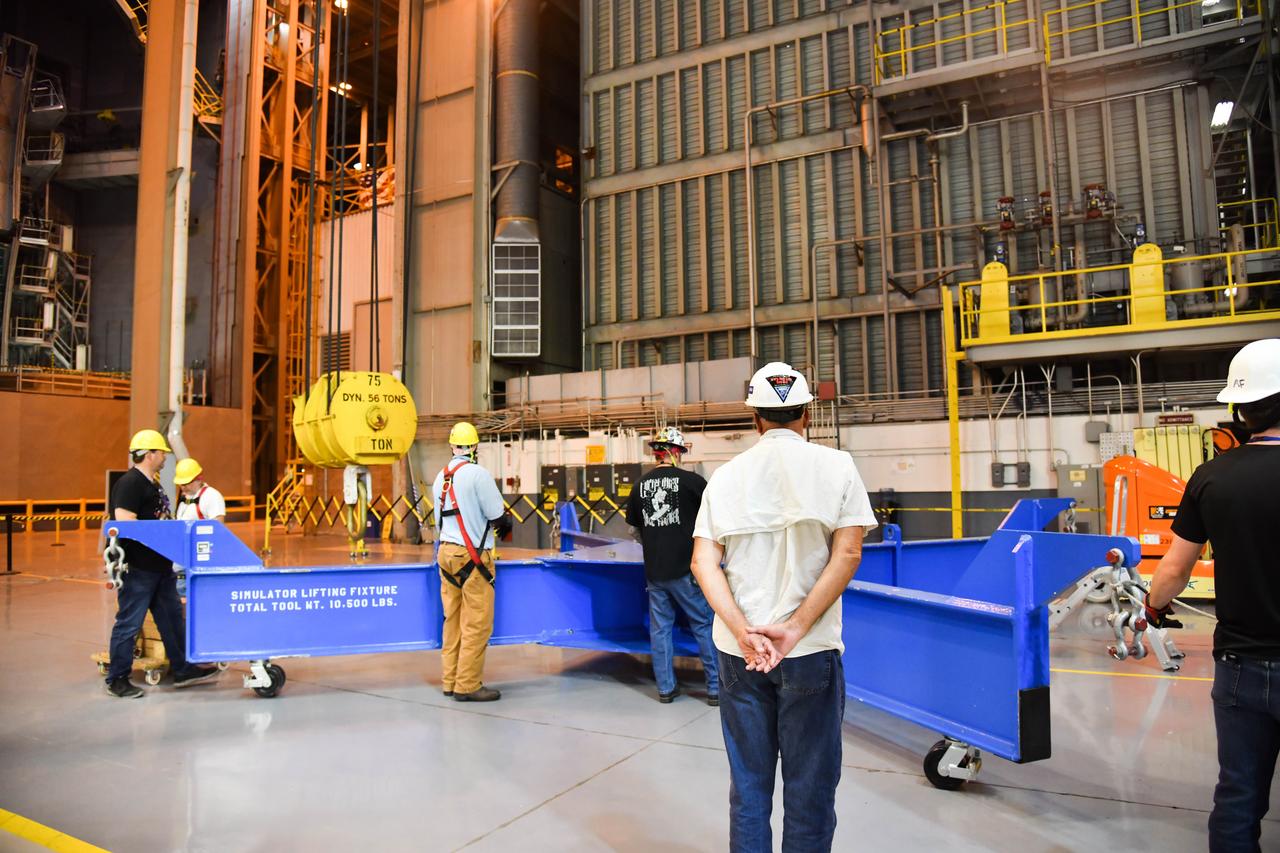
The Space Launch System (SLS) rocket’s liquid oxygen tank structural test article was manufactured and stacked in June 2019 at NASA’s Michoud Assembly Facility in New Orleans. To construct the test article, Boeing technicians at Michoud moved the liquid oxygen tank to the Vertical Assemby Building stacking and integration area. Here, they added simulators to mimic the two structures that connect to the tank, the intertank and the forward skirt. This structural hardware for the SLS core stage for America’s new deep space rocket is structurally identical to the flight version of the tank. It will be shipped on the Pegasus barge to NASA’s Marshall Space Flight Center in Hunstville, Alabama, where it will undergo a series of tests that simulate the stresses and loads of liftoff and flight. These tests will help ensure designs are adequate for successful SLS missions to the Moon and beyond. The flight liquid oxygen tank along with the liquid hydrogen tank supplies more than 500,000 gallons of propellant to the core stages four RS-25 engines, which produce 2 million pounds of thrust to help send the SLS rocket to space.
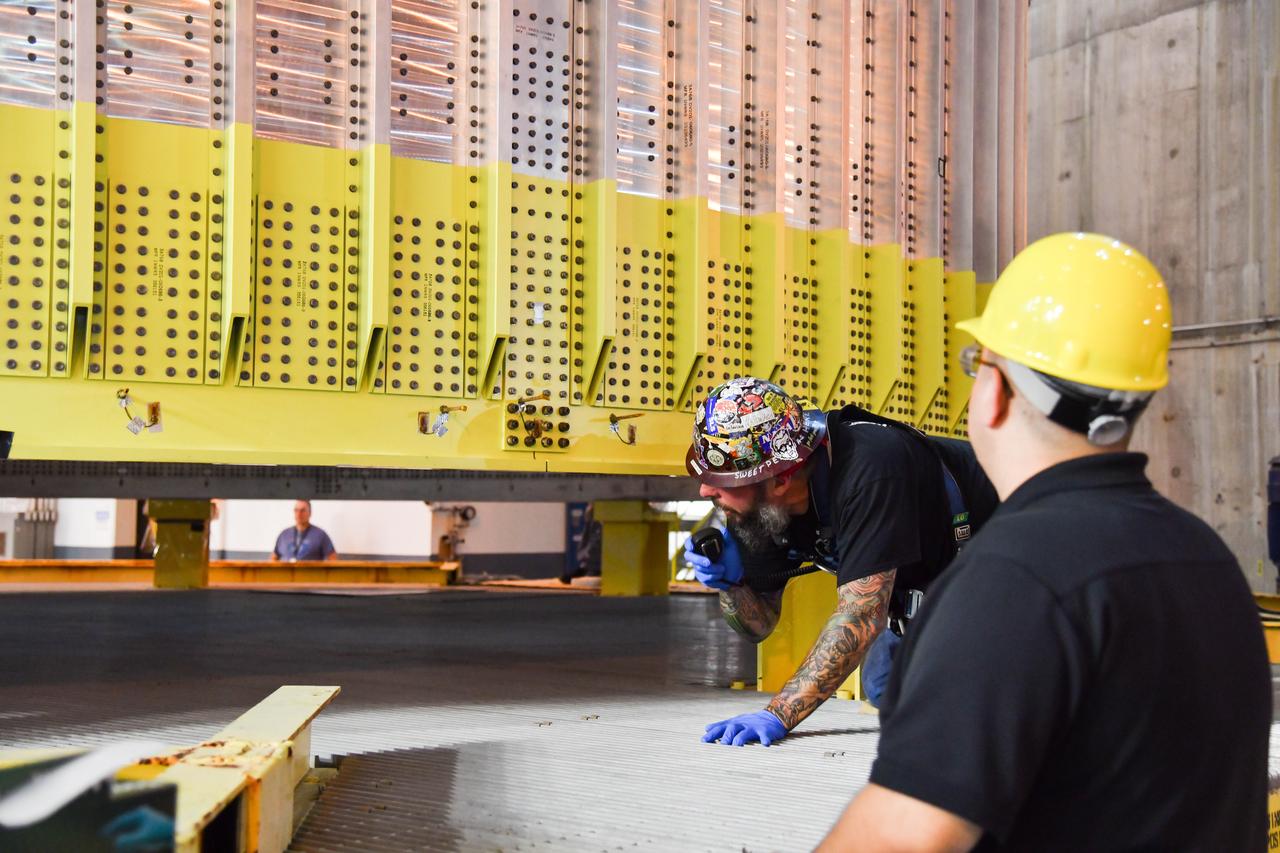
The Space Launch System (SLS) rocket’s liquid oxygen tank structural test article was manufactured and stacked in June 2019 at NASA’s Michoud Assembly Facility in New Orleans. To construct the test article, Boeing technicians at Michoud moved the liquid oxygen tank to the Vertical Assemby Building stacking and integration area. Here, they added simulators to mimic the two structures that connect to the tank, the intertank and the forward skirt. This structural hardware for the SLS core stage for America’s new deep space rocket is structurally identical to the flight version of the tank. It will be shipped on the Pegasus barge to NASA’s Marshall Space Flight Center in Hunstville, Alabama, where it will undergo a series of tests that simulate the stresses and loads of liftoff and flight. These tests will help ensure designs are adequate for successful SLS missions to the Moon and beyond. The flight liquid oxygen tank along with the liquid hydrogen tank supplies more than 500,000 gallons of propellant to the core stages four RS-25 engines, which produce 2 million pounds of thrust to help send the SLS rocket to space.
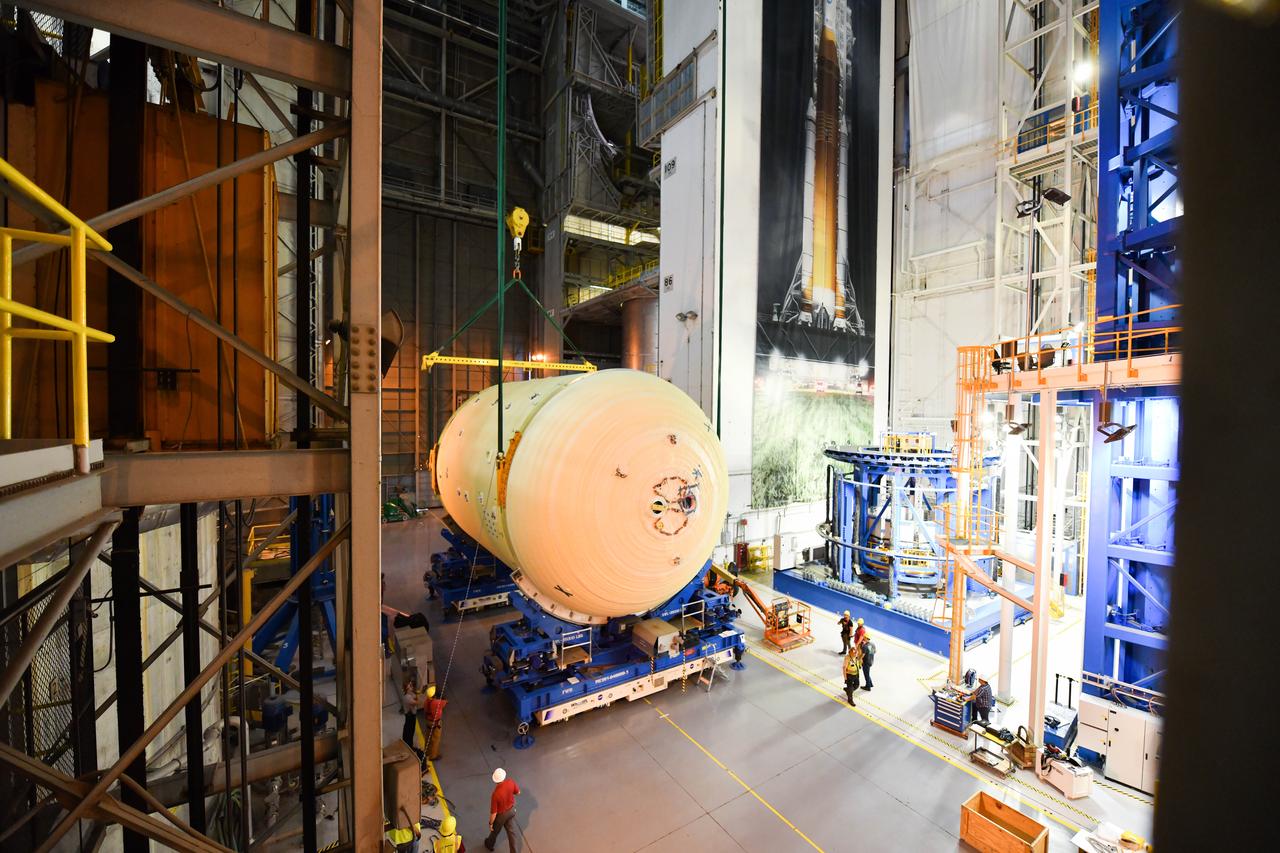
The Space Launch System (SLS) rocket’s liquid oxygen tank structural test article was manufactured and stacked in June 2019 at NASA’s Michoud Assembly Facility in New Orleans. To construct the test article, Boeing technicians at Michoud moved the liquid oxygen tank to the Vertical Assemby Building stacking and integration area. Here, they added simulators to mimic the two structures that connect to the tank, the intertank and the forward skirt. This structural hardware for the SLS core stage for America’s new deep space rocket is structurally identical to the flight version of the tank. It will be shipped on the Pegasus barge to NASA’s Marshall Space Flight Center in Hunstville, Alabama, where it will undergo a series of tests that simulate the stresses and loads of liftoff and flight. These tests will help ensure designs are adequate for successful SLS missions to the Moon and beyond. The flight liquid oxygen tank along with the liquid hydrogen tank supplies more than 500,000 gallons of propellant to the core stages four RS-25 engines, which produce 2 million pounds of thrust to help send the SLS rocket to space.
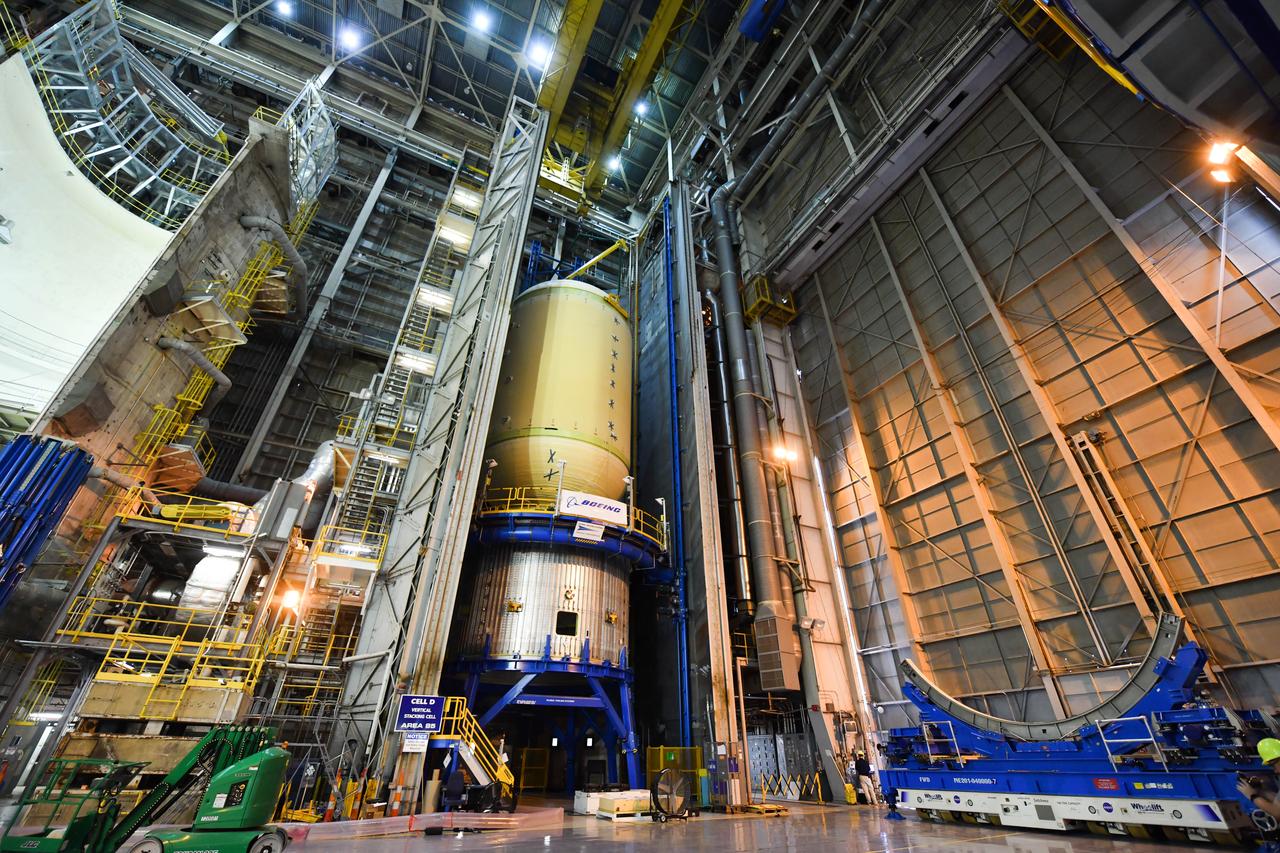
The Space Launch System (SLS) rocket’s liquid oxygen tank structural test article was manufactured and stacked in June 2019 at NASA’s Michoud Assembly Facility in New Orleans. To construct the test article, Boeing technicians at Michoud moved the liquid oxygen tank to the Vertical Assemby Building stacking and integration area. Here, they added simulators to mimic the two structures that connect to the tank, the intertank and the forward skirt. This structural hardware for the SLS core stage for America’s new deep space rocket is structurally identical to the flight version of the tank. It will be shipped on the Pegasus barge to NASA’s Marshall Space Flight Center in Hunstville, Alabama, where it will undergo a series of tests that simulate the stresses and loads of liftoff and flight. These tests will help ensure designs are adequate for successful SLS missions to the Moon and beyond. The flight liquid oxygen tank along with the liquid hydrogen tank supplies more than 500,000 gallons of propellant to the core stages four RS-25 engines, which produce 2 million pounds of thrust to help send the SLS rocket to space.
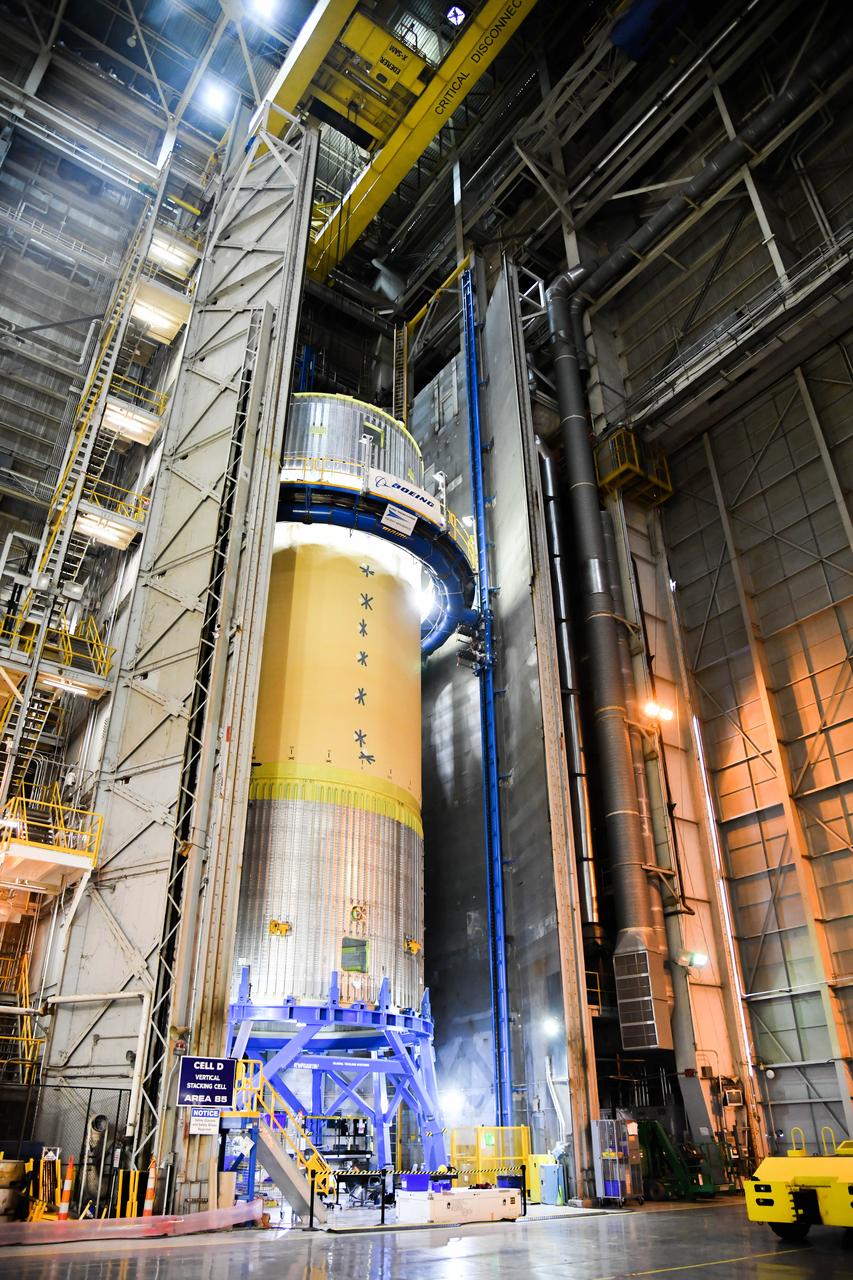
The Space Launch System (SLS) rocket’s liquid oxygen tank structural test article was manufactured and stacked in June 2019 at NASA’s Michoud Assembly Facility in New Orleans. To construct the test article, Boeing technicians at Michoud moved the liquid oxygen tank to the Vertical Assemby Building stacking and integration area. Here, they added simulators to mimic the two structures that connect to the tank, the intertank and the forward skirt. This structural hardware for the SLS core stage for America’s new deep space rocket is structurally identical to the flight version of the tank. It will be shipped on the Pegasus barge to NASA’s Marshall Space Flight Center in Hunstville, Alabama, where it will undergo a series of tests that simulate the stresses and loads of liftoff and flight. These tests will help ensure designs are adequate for successful SLS missions to the Moon and beyond. The flight liquid oxygen tank along with the liquid hydrogen tank supplies more than 500,000 gallons of propellant to the core stages four RS-25 engines, which produce 2 million pounds of thrust to help send the SLS rocket to space.
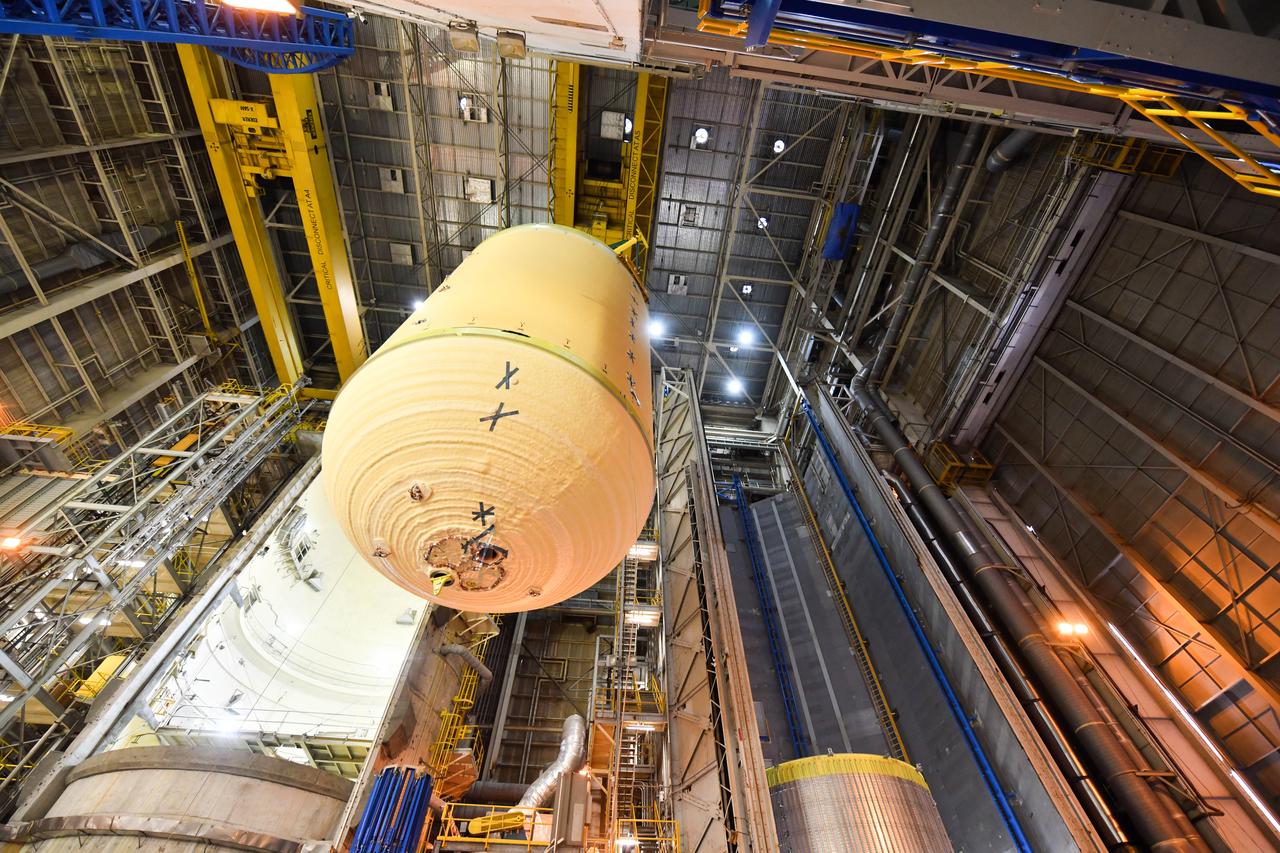
The Space Launch System (SLS) rocket’s liquid oxygen tank structural test article was manufactured and stacked in June 2019 at NASA’s Michoud Assembly Facility in New Orleans. To construct the test article, Boeing technicians at Michoud moved the liquid oxygen tank to the Vertical Assemby Building stacking and integration area. Here, they added simulators to mimic the two structures that connect to the tank, the intertank and the forward skirt. This structural hardware for the SLS core stage for America’s new deep space rocket is structurally identical to the flight version of the tank. It will be shipped on the Pegasus barge to NASA’s Marshall Space Flight Center in Hunstville, Alabama, where it will undergo a series of tests that simulate the stresses and loads of liftoff and flight. These tests will help ensure designs are adequate for successful SLS missions to the Moon and beyond. The flight liquid oxygen tank along with the liquid hydrogen tank supplies more than 500,000 gallons of propellant to the core stages four RS-25 engines, which produce 2 million pounds of thrust to help send the SLS rocket to space.
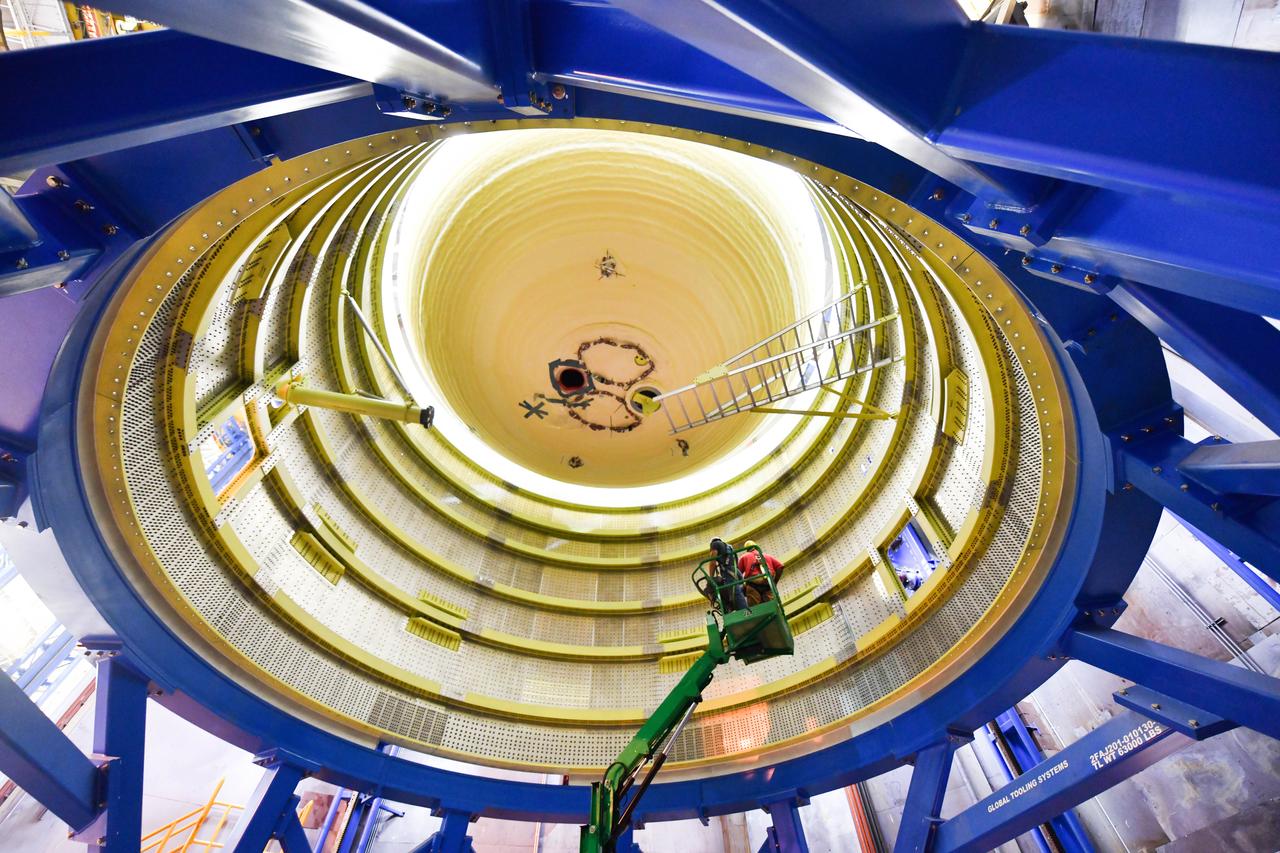
The Space Launch System (SLS) rocket’s liquid oxygen tank structural test article was manufactured and stacked in June 2019 at NASA’s Michoud Assembly Facility in New Orleans. To construct the test article, Boeing technicians at Michoud moved the liquid oxygen tank to the Vertical Assemby Building stacking and integration area. Here, they added simulators to mimic the two structures that connect to the tank, the intertank and the forward skirt. This structural hardware for the SLS core stage for America’s new deep space rocket is structurally identical to the flight version of the tank. It will be shipped on the Pegasus barge to NASA’s Marshall Space Flight Center in Hunstville, Alabama, where it will undergo a series of tests that simulate the stresses and loads of liftoff and flight. These tests will help ensure designs are adequate for successful SLS missions to the Moon and beyond. The flight liquid oxygen tank along with the liquid hydrogen tank supplies more than 500,000 gallons of propellant to the core stages four RS-25 engines, which produce 2 million pounds of thrust to help send the SLS rocket to space.
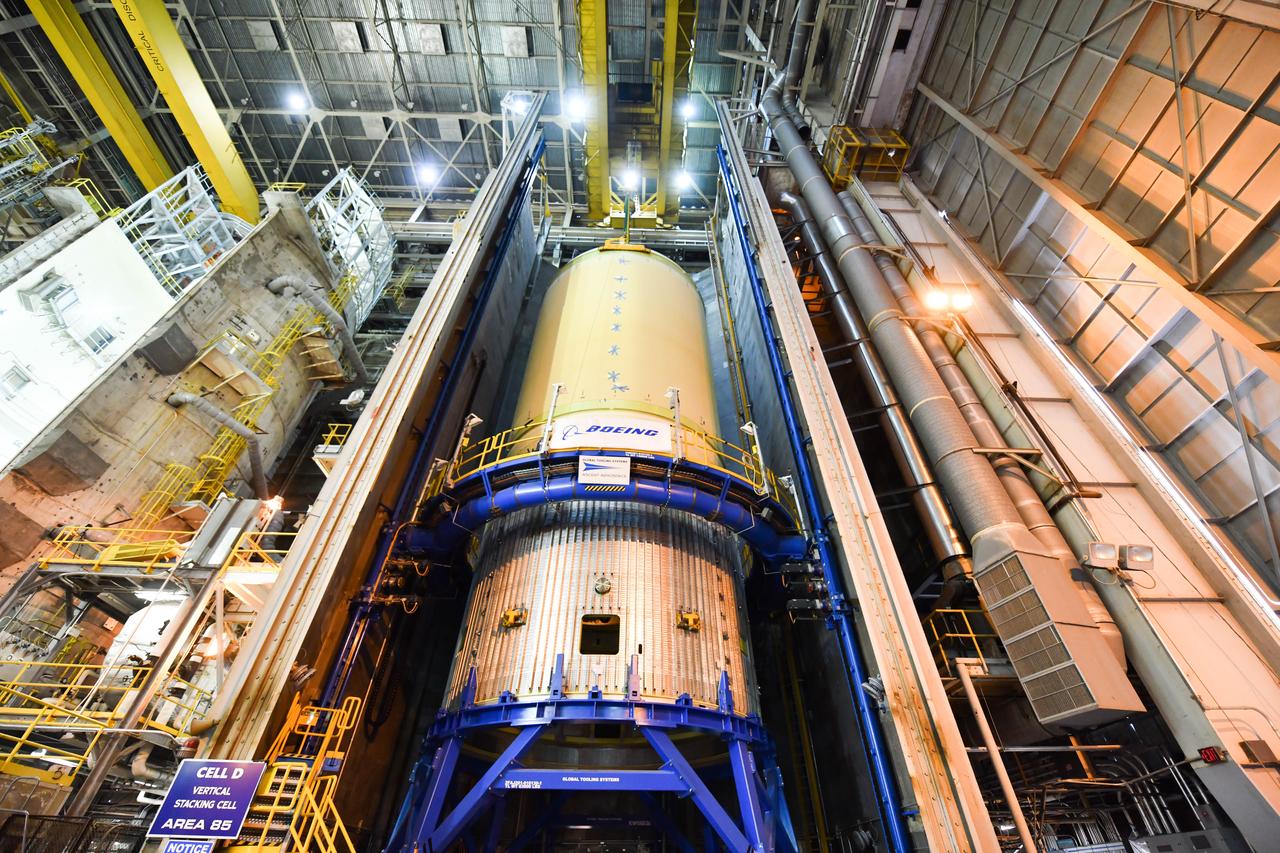
The Space Launch System (SLS) rocket’s liquid oxygen tank structural test article was manufactured and stacked in June 2019 at NASA’s Michoud Assembly Facility in New Orleans. To construct the test article, Boeing technicians at Michoud moved the liquid oxygen tank to the Vertical Assemby Building stacking and integration area. Here, they added simulators to mimic the two structures that connect to the tank, the intertank and the forward skirt. This structural hardware for the SLS core stage for America’s new deep space rocket is structurally identical to the flight version of the tank. It will be shipped on the Pegasus barge to NASA’s Marshall Space Flight Center in Hunstville, Alabama, where it will undergo a series of tests that simulate the stresses and loads of liftoff and flight. These tests will help ensure designs are adequate for successful SLS missions to the Moon and beyond. The flight liquid oxygen tank along with the liquid hydrogen tank supplies more than 500,000 gallons of propellant to the core stages four RS-25 engines, which produce 2 million pounds of thrust to help send the SLS rocket to space.
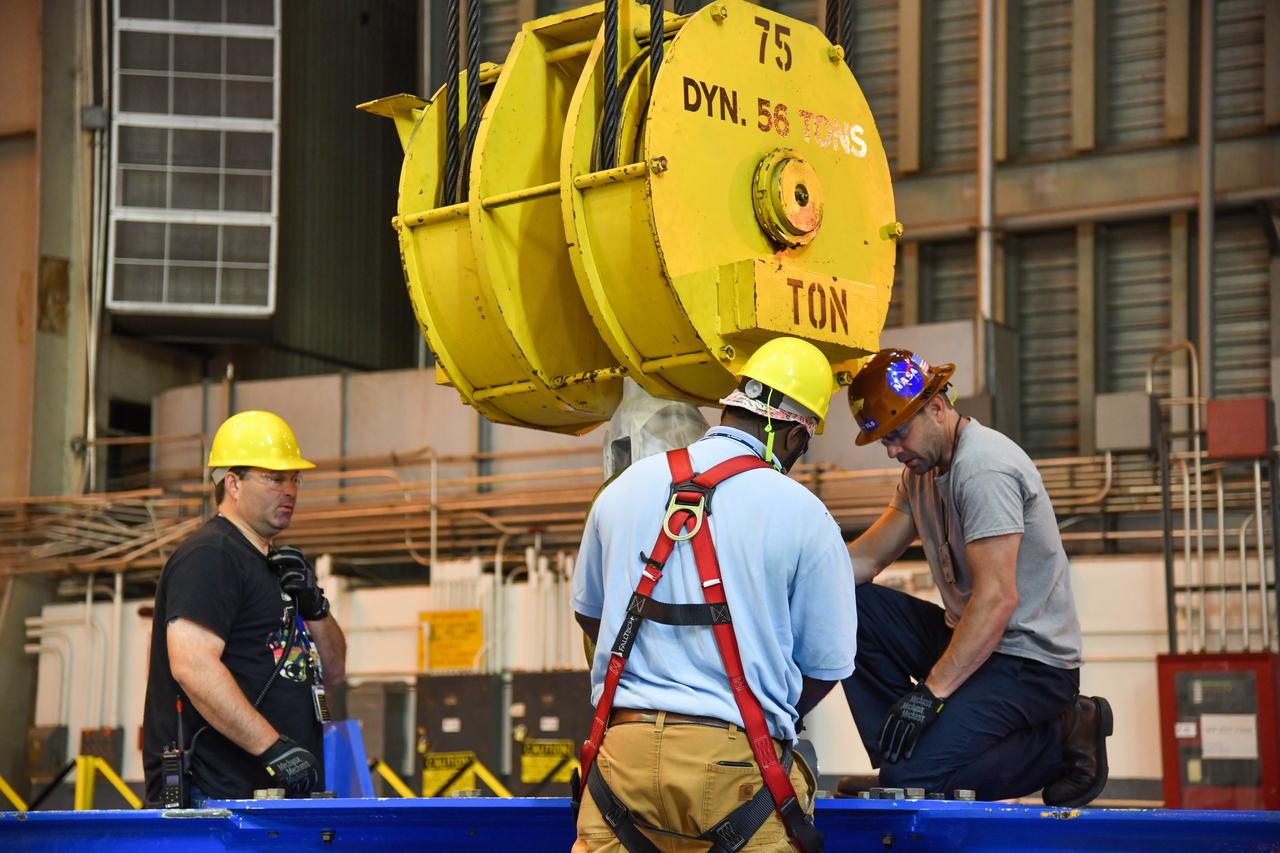
The Space Launch System (SLS) rocket’s liquid oxygen tank structural test article was manufactured and stacked in June 2019 at NASA’s Michoud Assembly Facility in New Orleans. To construct the test article, Boeing technicians at Michoud moved the liquid oxygen tank to the Vertical Assemby Building stacking and integration area. Here, they added simulators to mimic the two structures that connect to the tank, the intertank and the forward skirt. This structural hardware for the SLS core stage for America’s new deep space rocket is structurally identical to the flight version of the tank. It will be shipped on the Pegasus barge to NASA’s Marshall Space Flight Center in Hunstville, Alabama, where it will undergo a series of tests that simulate the stresses and loads of liftoff and flight. These tests will help ensure designs are adequate for successful SLS missions to the Moon and beyond. The flight liquid oxygen tank along with the liquid hydrogen tank supplies more than 500,000 gallons of propellant to the core stages four RS-25 engines, which produce 2 million pounds of thrust to help send the SLS rocket to space.
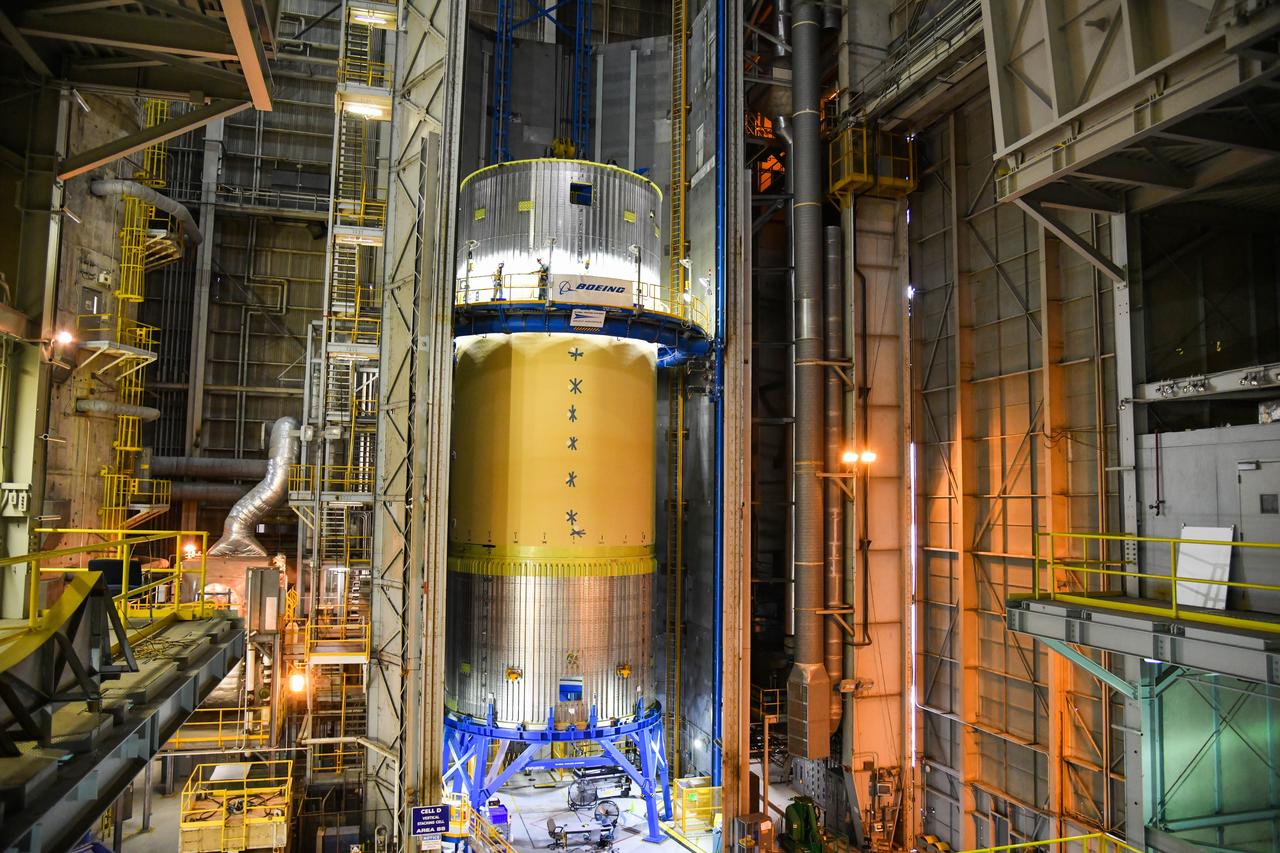
The Space Launch System (SLS) rocket’s liquid oxygen tank structural test article was manufactured and stacked in June 2019 at NASA’s Michoud Assembly Facility in New Orleans. To construct the test article, Boeing technicians at Michoud moved the liquid oxygen tank to the Vertical Assemby Building stacking and integration area. Here, they added simulators to mimic the two structures that connect to the tank, the intertank and the forward skirt. This structural hardware for the SLS core stage for America’s new deep space rocket is structurally identical to the flight version of the tank. It will be shipped on the Pegasus barge to NASA’s Marshall Space Flight Center in Hunstville, Alabama, where it will undergo a series of tests that simulate the stresses and loads of liftoff and flight. These tests will help ensure designs are adequate for successful SLS missions to the Moon and beyond. The flight liquid oxygen tank along with the liquid hydrogen tank supplies more than 500,000 gallons of propellant to the core stages four RS-25 engines, which produce 2 million pounds of thrust to help send the SLS rocket to space.
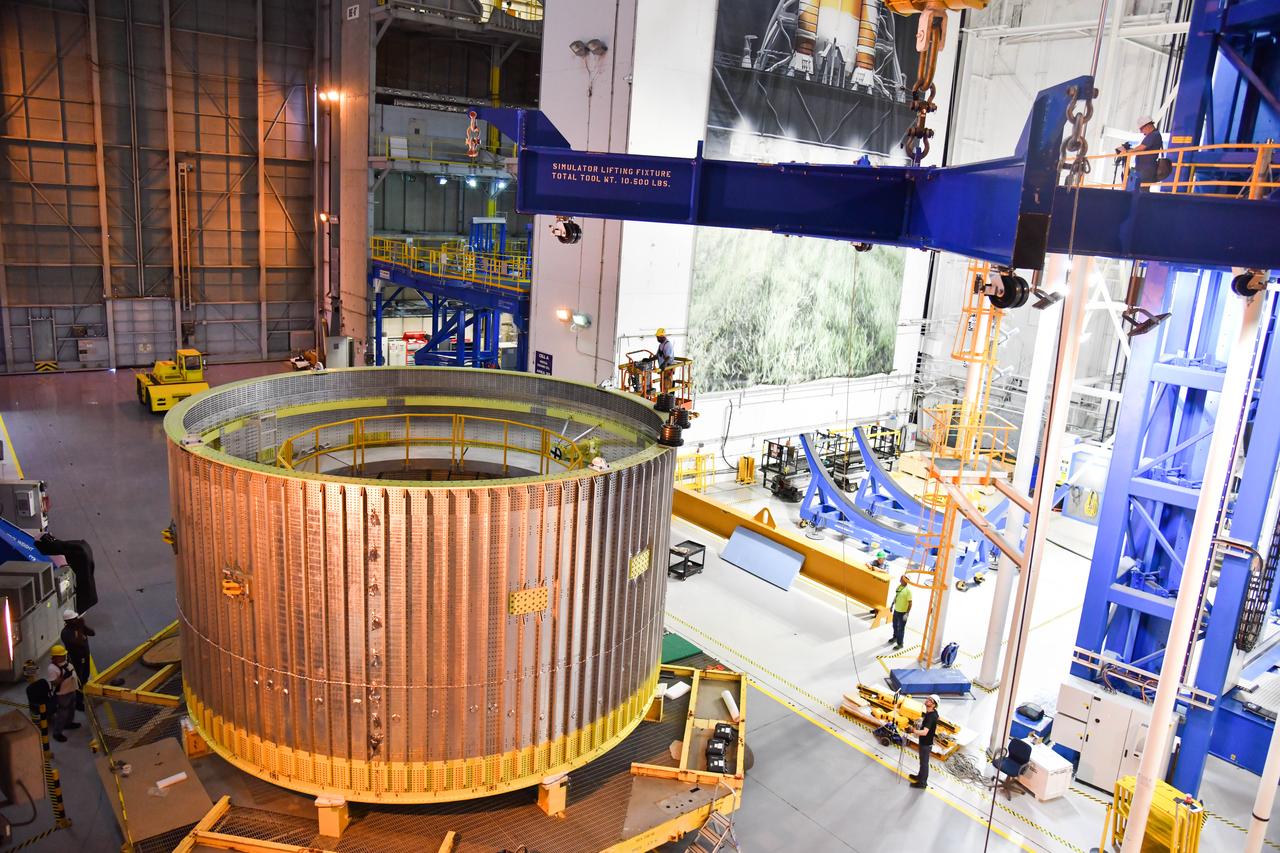
The Space Launch System (SLS) rocket’s liquid oxygen tank structural test article was manufactured and stacked in June 2019 at NASA’s Michoud Assembly Facility in New Orleans. To construct the test article, Boeing technicians at Michoud moved the liquid oxygen tank to the Vertical Assemby Building stacking and integration area. Here, they added simulators to mimic the two structures that connect to the tank, the intertank and the forward skirt. This structural hardware for the SLS core stage for America’s new deep space rocket is structurally identical to the flight version of the tank. It will be shipped on the Pegasus barge to NASA’s Marshall Space Flight Center in Hunstville, Alabama, where it will undergo a series of tests that simulate the stresses and loads of liftoff and flight. These tests will help ensure designs are adequate for successful SLS missions to the Moon and beyond. The flight liquid oxygen tank along with the liquid hydrogen tank supplies more than 500,000 gallons of propellant to the core stages four RS-25 engines, which produce 2 million pounds of thrust to help send the SLS rocket to space.
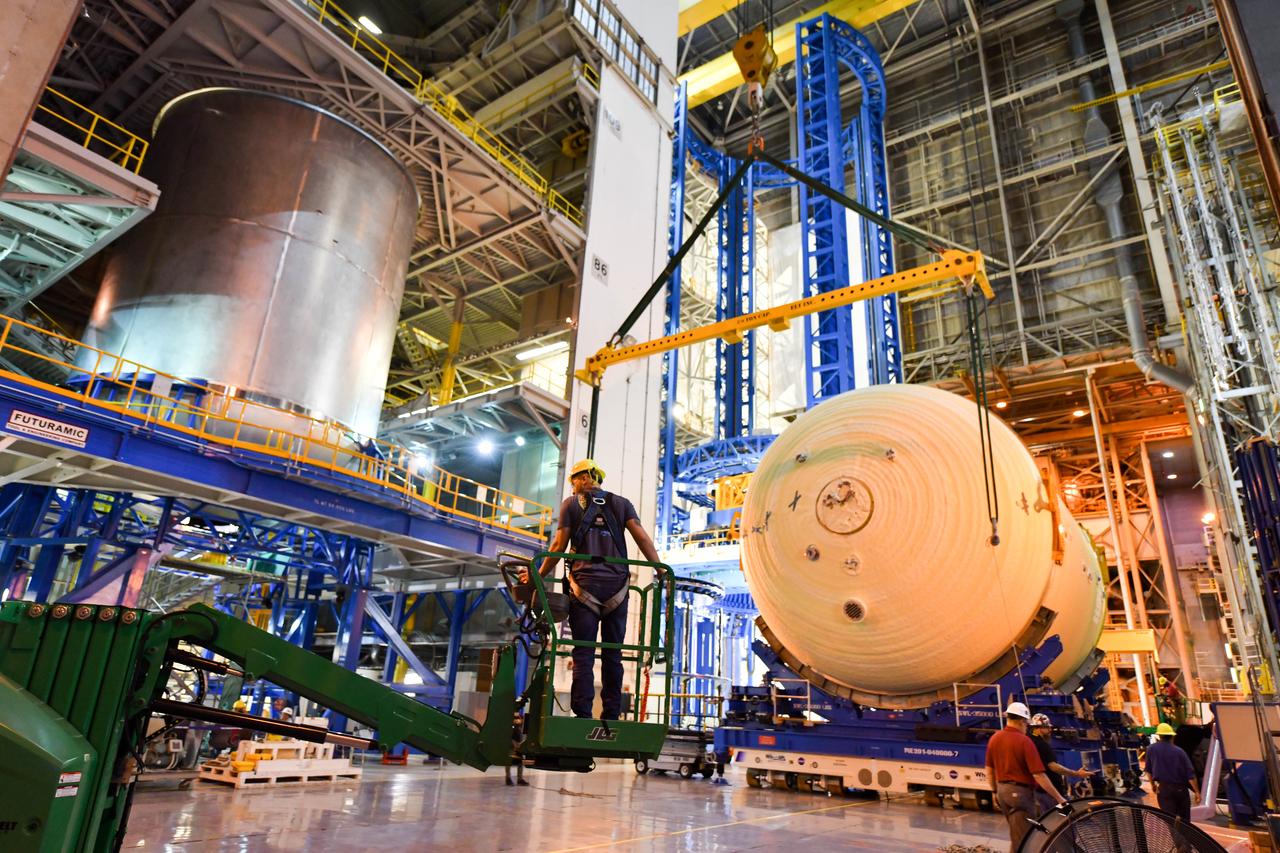
The Space Launch System (SLS) rocket’s liquid oxygen tank structural test article was manufactured and stacked in June 2019 at NASA’s Michoud Assembly Facility in New Orleans. To construct the test article, Boeing technicians at Michoud moved the liquid oxygen tank to the Vertical Assemby Building stacking and integration area. Here, they added simulators to mimic the two structures that connect to the tank, the intertank and the forward skirt. This structural hardware for the SLS core stage for America’s new deep space rocket is structurally identical to the flight version of the tank. It will be shipped on the Pegasus barge to NASA’s Marshall Space Flight Center in Hunstville, Alabama, where it will undergo a series of tests that simulate the stresses and loads of liftoff and flight. These tests will help ensure designs are adequate for successful SLS missions to the Moon and beyond. The flight liquid oxygen tank along with the liquid hydrogen tank supplies more than 500,000 gallons of propellant to the core stages four RS-25 engines, which produce 2 million pounds of thrust to help send the SLS rocket to space.
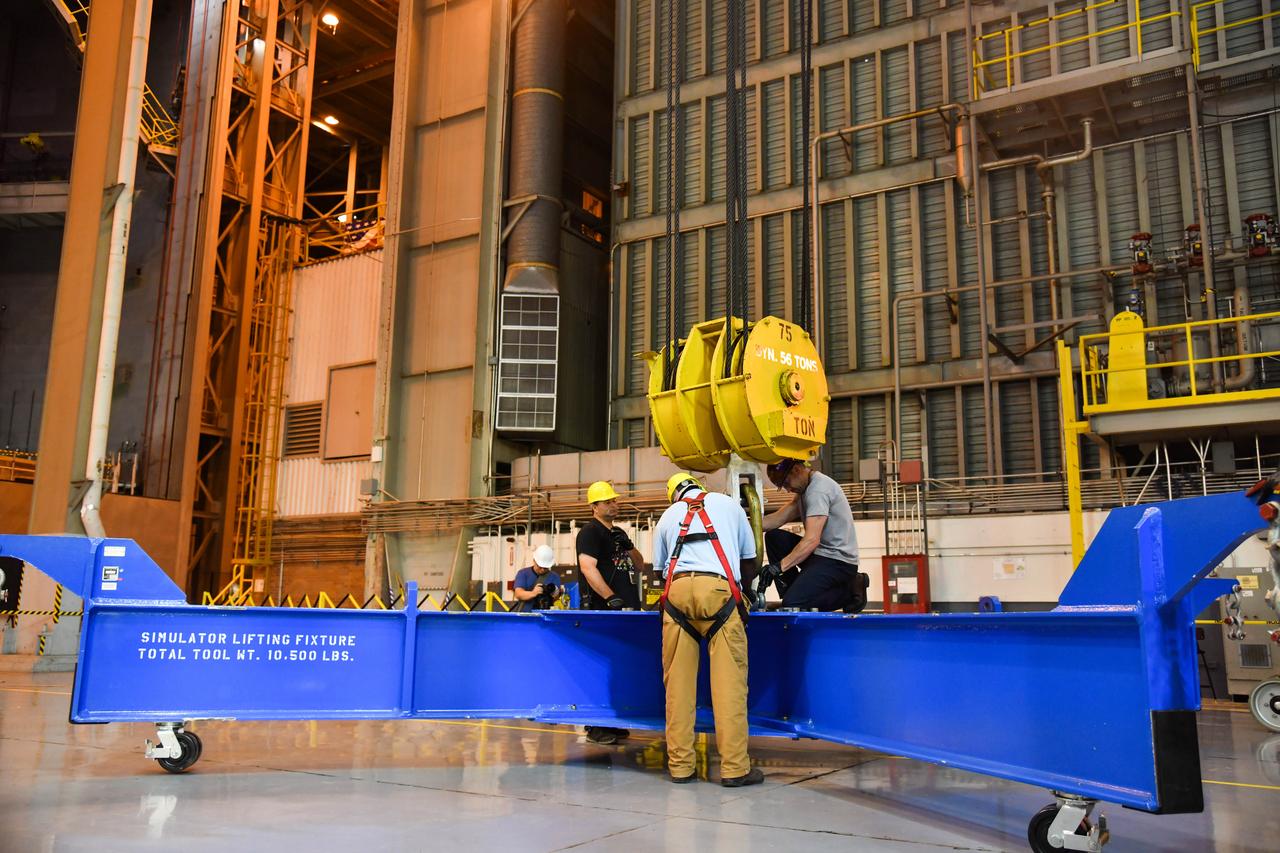
The Space Launch System (SLS) rocket’s liquid oxygen tank structural test article was manufactured and stacked in June 2019 at NASA’s Michoud Assembly Facility in New Orleans. To construct the test article, Boeing technicians at Michoud moved the liquid oxygen tank to the Vertical Assemby Building stacking and integration area. Here, they added simulators to mimic the two structures that connect to the tank, the intertank and the forward skirt. This structural hardware for the SLS core stage for America’s new deep space rocket is structurally identical to the flight version of the tank. It will be shipped on the Pegasus barge to NASA’s Marshall Space Flight Center in Hunstville, Alabama, where it will undergo a series of tests that simulate the stresses and loads of liftoff and flight. These tests will help ensure designs are adequate for successful SLS missions to the Moon and beyond. The flight liquid oxygen tank along with the liquid hydrogen tank supplies more than 500,000 gallons of propellant to the core stages four RS-25 engines, which produce 2 million pounds of thrust to help send the SLS rocket to space.
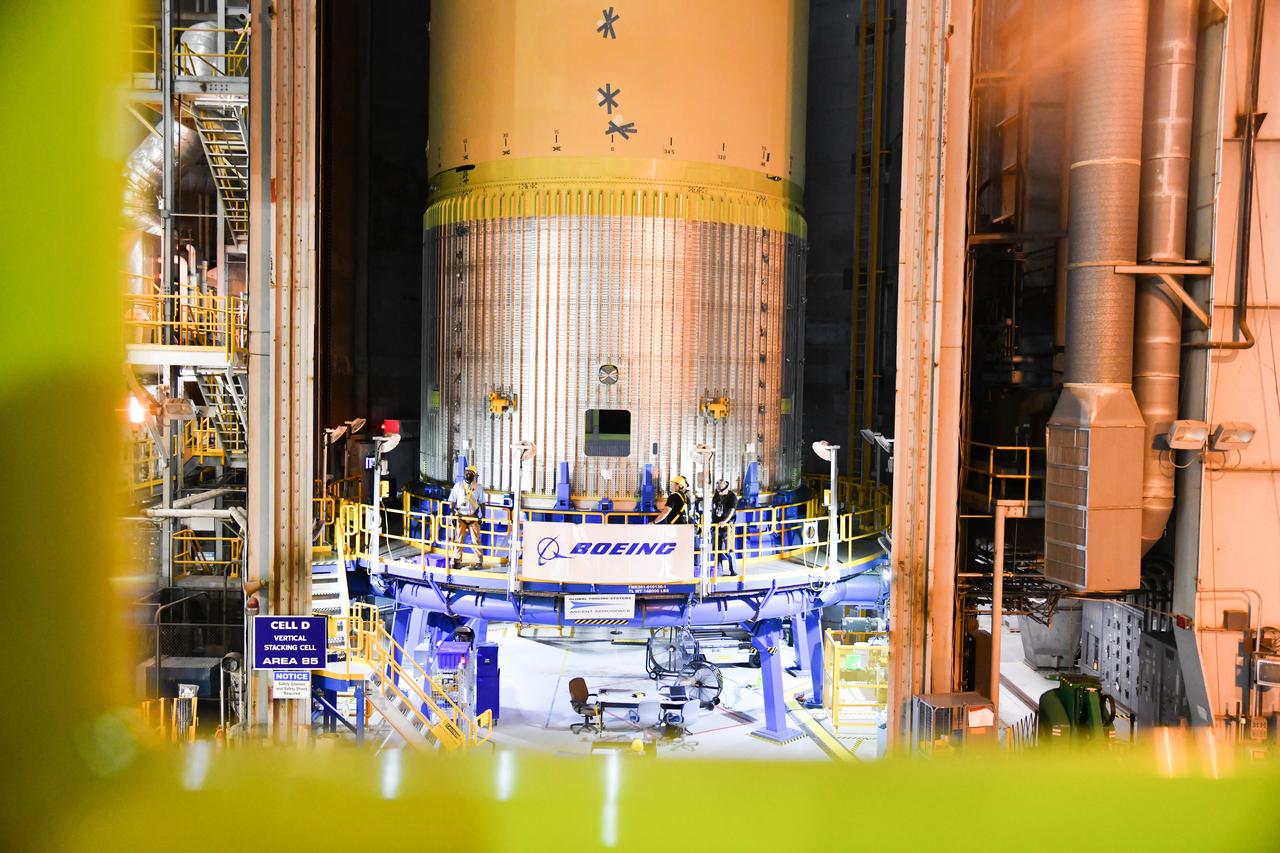
The Space Launch System (SLS) rocket’s liquid oxygen tank structural test article was manufactured and stacked in June 2019 at NASA’s Michoud Assembly Facility in New Orleans. To construct the test article, Boeing technicians at Michoud moved the liquid oxygen tank to the Vertical Assemby Building stacking and integration area. Here, they added simulators to mimic the two structures that connect to the tank, the intertank and the forward skirt. This structural hardware for the SLS core stage for America’s new deep space rocket is structurally identical to the flight version of the tank. It will be shipped on the Pegasus barge to NASA’s Marshall Space Flight Center in Hunstville, Alabama, where it will undergo a series of tests that simulate the stresses and loads of liftoff and flight. These tests will help ensure designs are adequate for successful SLS missions to the Moon and beyond. The flight liquid oxygen tank along with the liquid hydrogen tank supplies more than 500,000 gallons of propellant to the core stages four RS-25 engines, which produce 2 million pounds of thrust to help send the SLS rocket to space.
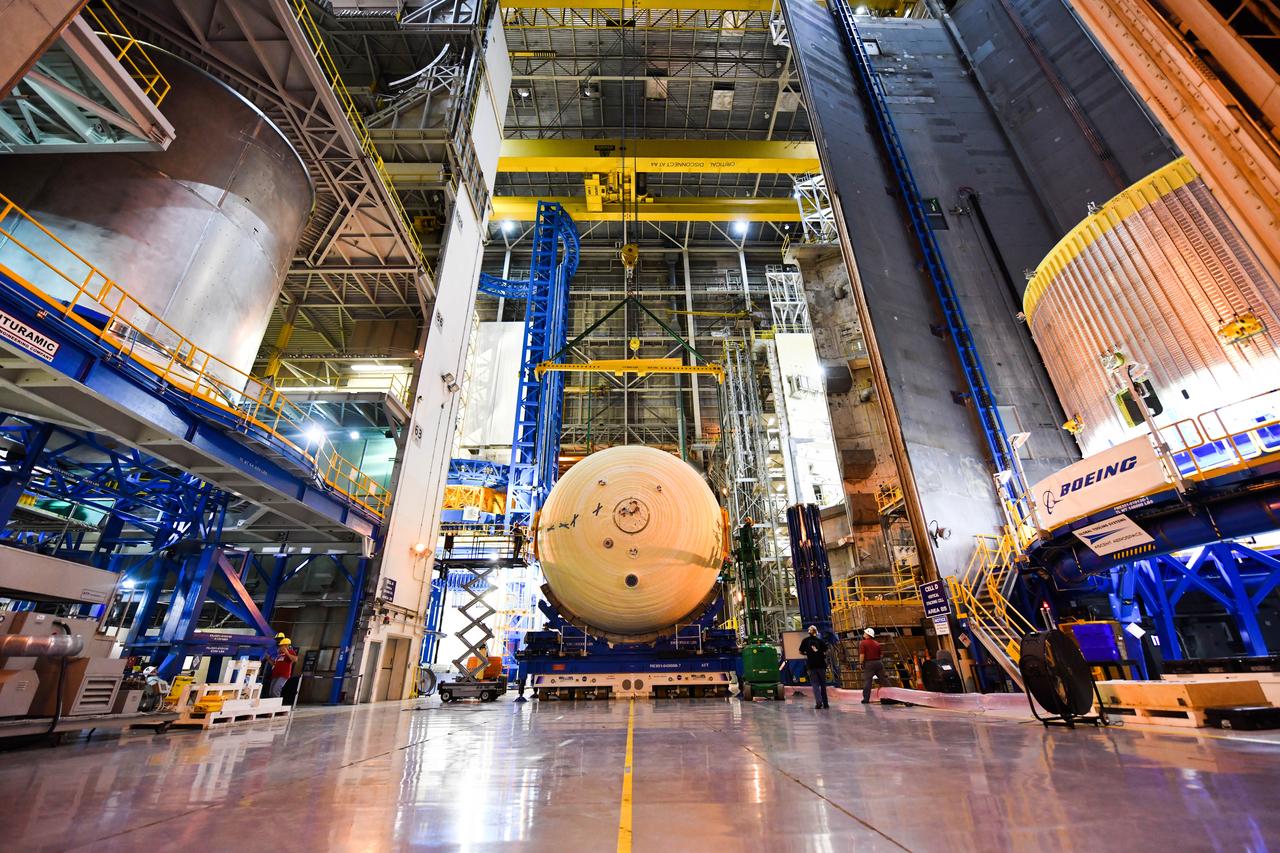
The Space Launch System (SLS) rocket’s liquid oxygen tank structural test article was manufactured and stacked in June 2019 at NASA’s Michoud Assembly Facility in New Orleans. To construct the test article, Boeing technicians at Michoud moved the liquid oxygen tank to the Vertical Assemby Building stacking and integration area. Here, they added simulators to mimic the two structures that connect to the tank, the intertank and the forward skirt. This structural hardware for the SLS core stage for America’s new deep space rocket is structurally identical to the flight version of the tank. It will be shipped on the Pegasus barge to NASA’s Marshall Space Flight Center in Hunstville, Alabama, where it will undergo a series of tests that simulate the stresses and loads of liftoff and flight. These tests will help ensure designs are adequate for successful SLS missions to the Moon and beyond. The flight liquid oxygen tank along with the liquid hydrogen tank supplies more than 500,000 gallons of propellant to the core stages four RS-25 engines, which produce 2 million pounds of thrust to help send the SLS rocket to space.
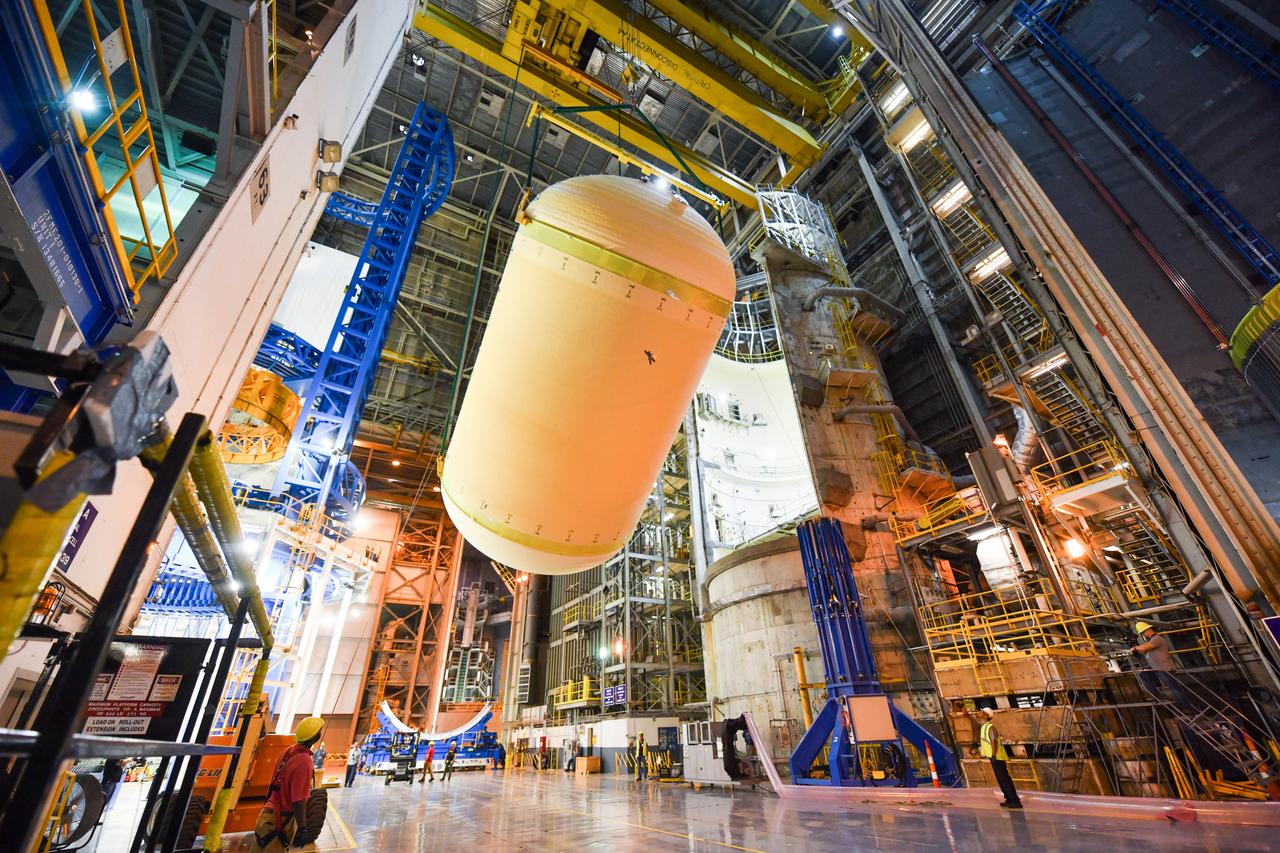
The Space Launch System (SLS) rocket’s liquid oxygen tank structural test article was manufactured and stacked in June 2019 at NASA’s Michoud Assembly Facility in New Orleans. To construct the test article, Boeing technicians at Michoud moved the liquid oxygen tank to the Vertical Assemby Building stacking and integration area. Here, they added simulators to mimic the two structures that connect to the tank, the intertank and the forward skirt. This structural hardware for the SLS core stage for America’s new deep space rocket is structurally identical to the flight version of the tank. It will be shipped on the Pegasus barge to NASA’s Marshall Space Flight Center in Hunstville, Alabama, where it will undergo a series of tests that simulate the stresses and loads of liftoff and flight. These tests will help ensure designs are adequate for successful SLS missions to the Moon and beyond. The flight liquid oxygen tank along with the liquid hydrogen tank supplies more than 500,000 gallons of propellant to the core stages four RS-25 engines, which produce 2 million pounds of thrust to help send the SLS rocket to space.
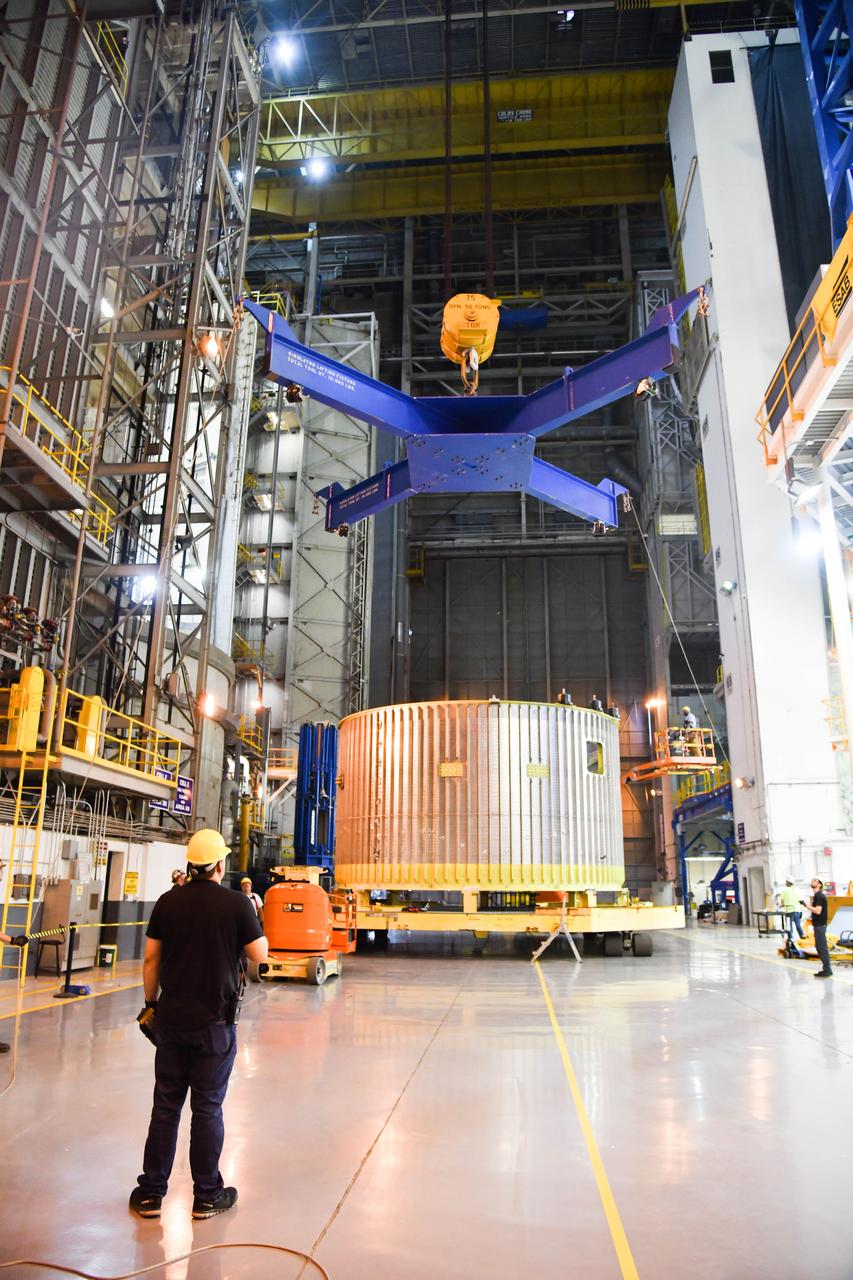
The Space Launch System (SLS) rocket’s liquid oxygen tank structural test article was manufactured and stacked in June 2019 at NASA’s Michoud Assembly Facility in New Orleans. To construct the test article, Boeing technicians at Michoud moved the liquid oxygen tank to the Vertical Assemby Building stacking and integration area. Here, they added simulators to mimic the two structures that connect to the tank, the intertank and the forward skirt. This structural hardware for the SLS core stage for America’s new deep space rocket is structurally identical to the flight version of the tank. It will be shipped on the Pegasus barge to NASA’s Marshall Space Flight Center in Hunstville, Alabama, where it will undergo a series of tests that simulate the stresses and loads of liftoff and flight. These tests will help ensure designs are adequate for successful SLS missions to the Moon and beyond. The flight liquid oxygen tank along with the liquid hydrogen tank supplies more than 500,000 gallons of propellant to the core stages four RS-25 engines, which produce 2 million pounds of thrust to help send the SLS rocket to space.