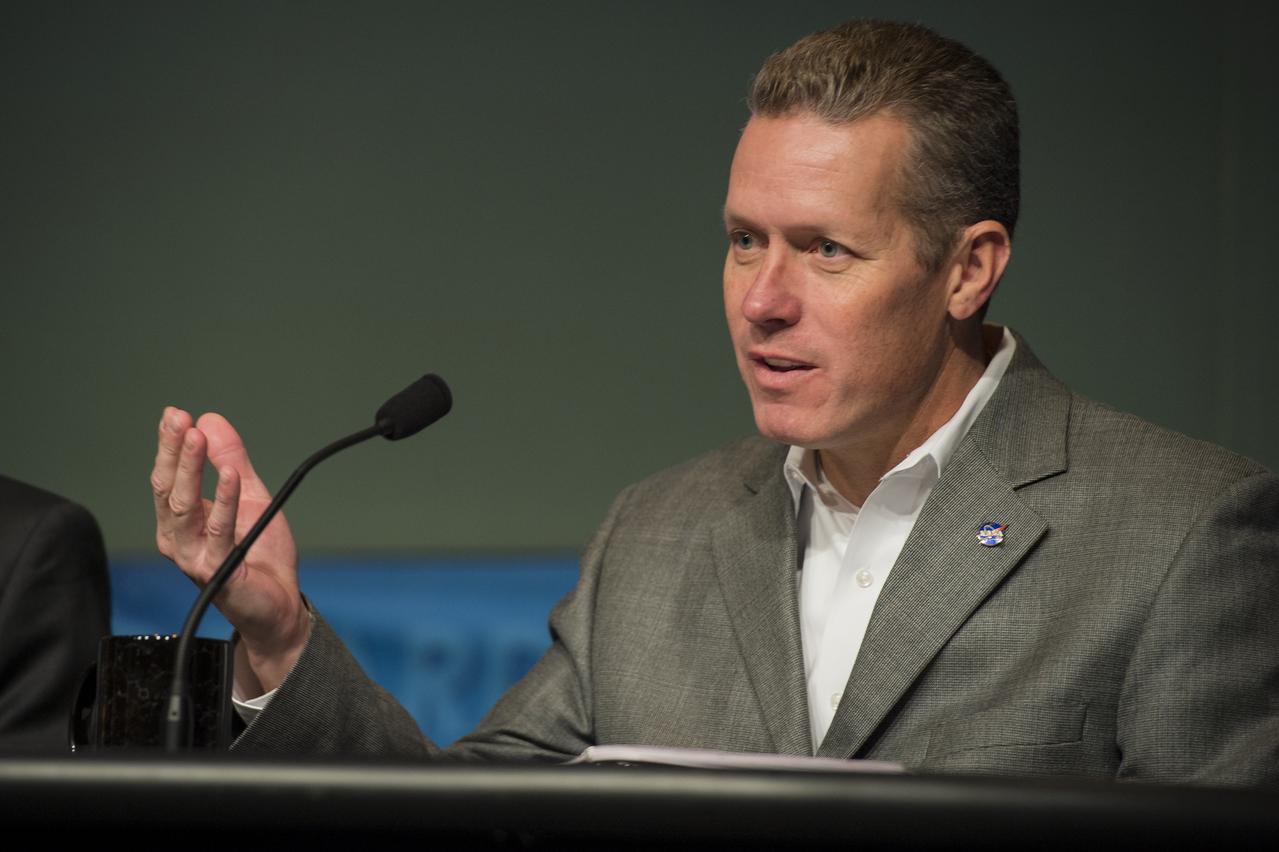
Phil McAlister, Director of Commercial Spaceflight Development at NASA, delivers remarks panel discussion on the Commercial Orbital Transportation Services (COTS) initiative at NASA Headquarters in Washington on Wednesday, November 13, 2013. Through COTS, NASA's partners Space Exploration Technologies Corp. (SpaceX) and Orbital Sciences Corp., developed new U.S. rockets and spacecraft, launched from U.S. soil, capable of transporting cargo to low-Earth orbit and the International Space Station. Photo Credit: (NASA/Jay Westcott)
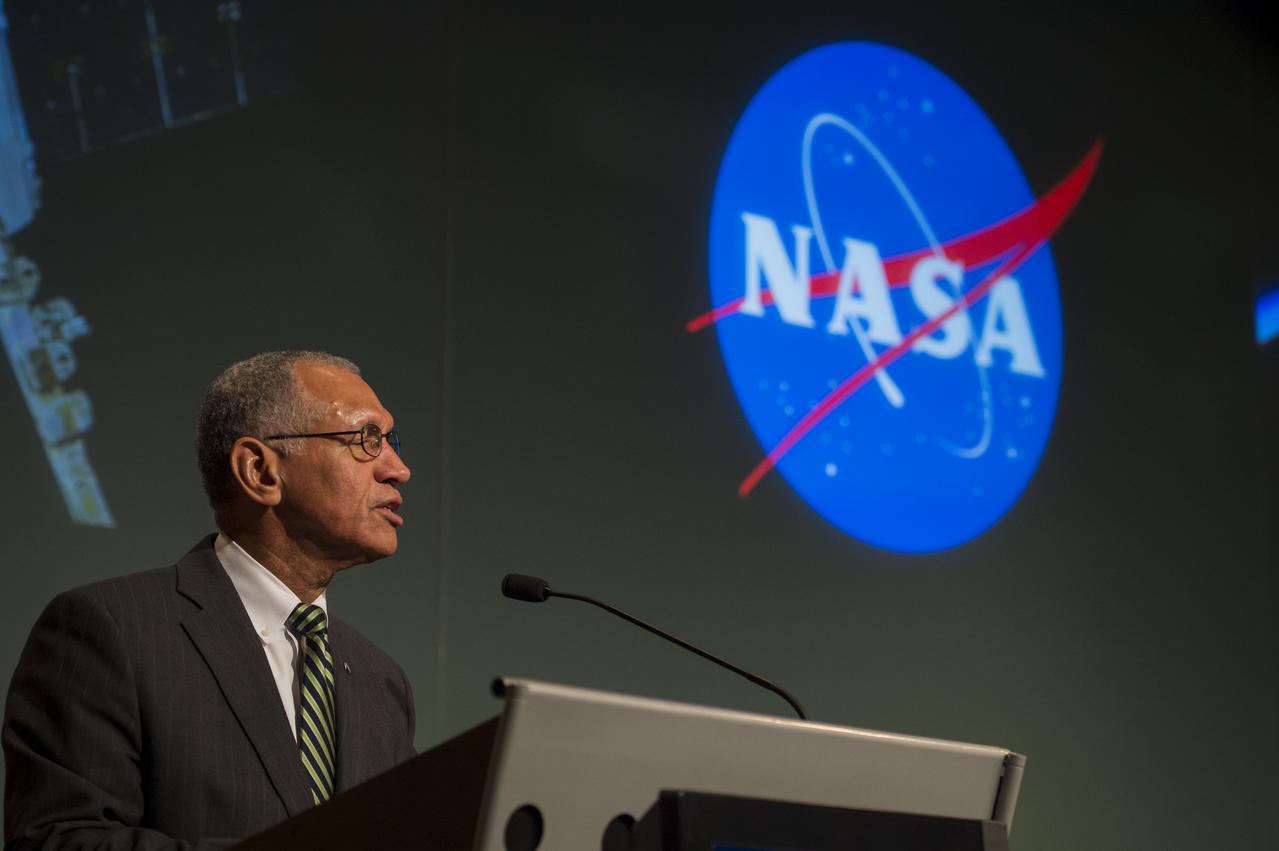
NASA Administrator Charles Bolden delivers remarks before a panel discussion on the Commercial Orbital Transportation Services (COTS) initiative at NASA Headquarters in Washington on Wednesday, November 13, 2013. Through COTS, NASA's partners Space Exploration Technologies Corp. (SpaceX) and Orbital Sciences Corp., developed new U.S. rockets and spacecraft, launched from U.S. soil, capable of transporting cargo to low-Earth orbit and the International Space Station. Photo Credit: (NASA/Jay Westcott)
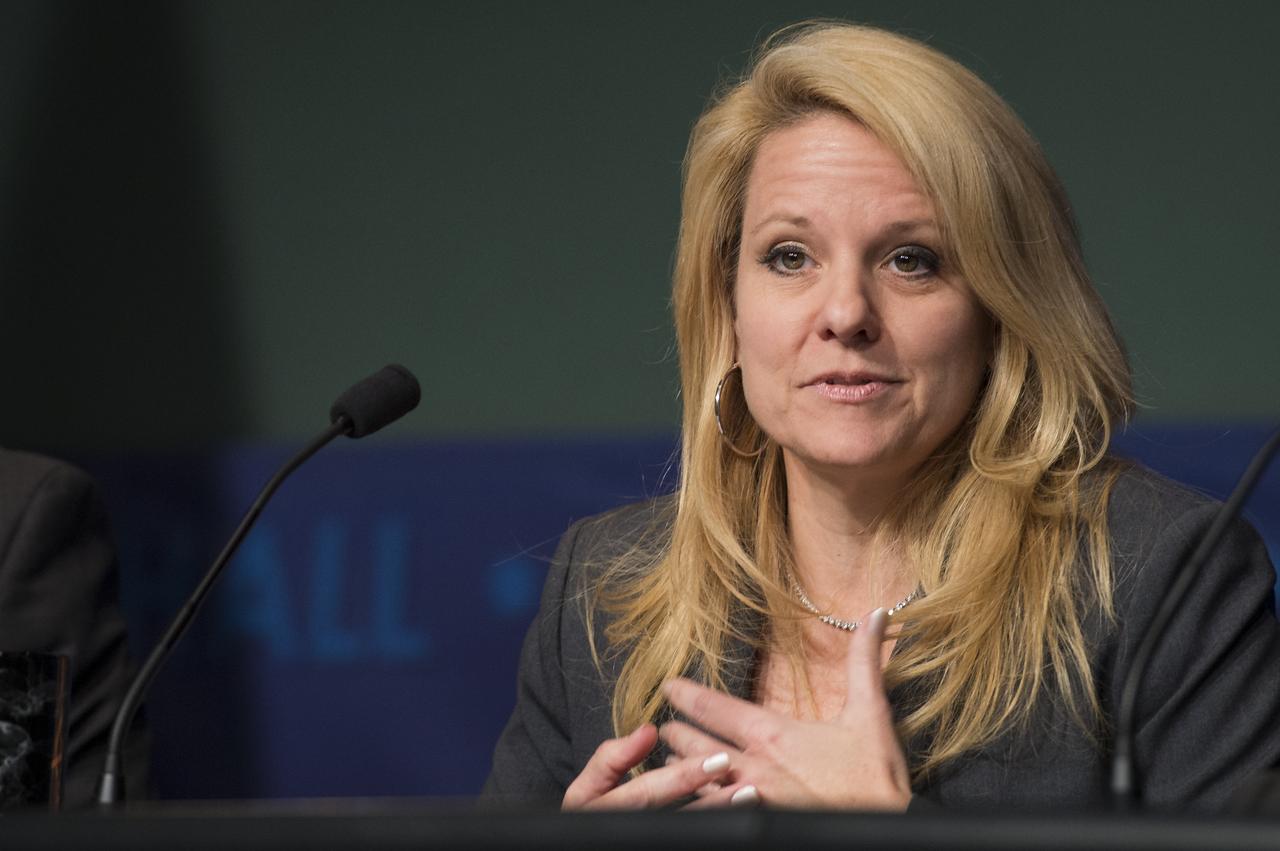
Gwynne Shotwell, President of SpaceX, delivers remarks panel discussion on the Commercial Orbital Transportation Services (COTS) initiative at NASA Headquarters in Washington on Wednesday, November 13, 2013. Through COTS, NASA's partners Space Exploration Technologies Corp. (SpaceX) and Orbital Sciences Corp., developed new U.S. rockets and spacecraft, launched from U.S. soil, capable of transporting cargo to low-Earth orbit and the International Space Station. Photo Credit: (NASA/Jay Westcott)
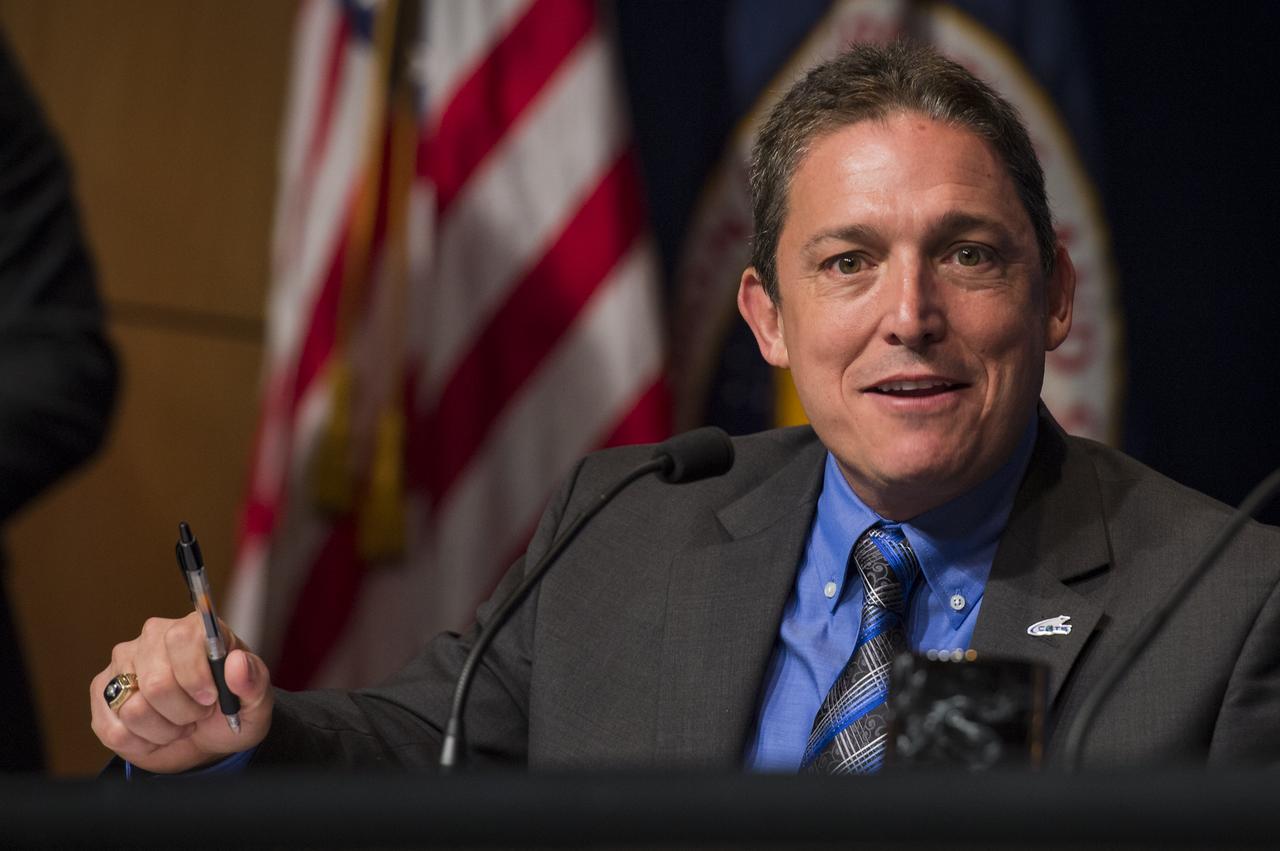
Alan Lindenmoyer, Manager of Commercial Crew and Cargo Program at NASA, delivers remarks panel discussion on the Commercial Orbital Transportation Services (COTS) initiative at NASA Headquarters in Washington on Wednesday, November 13, 2013. Through COTS, NASA's partners Space Exploration Technologies Corp. (SpaceX) and Orbital Sciences Corp., developed new U.S. rockets and spacecraft, launched from U.S. soil, capable of transporting cargo to low-Earth orbit and the International Space Station. Photo Credit: (NASA/Jay Westcott)
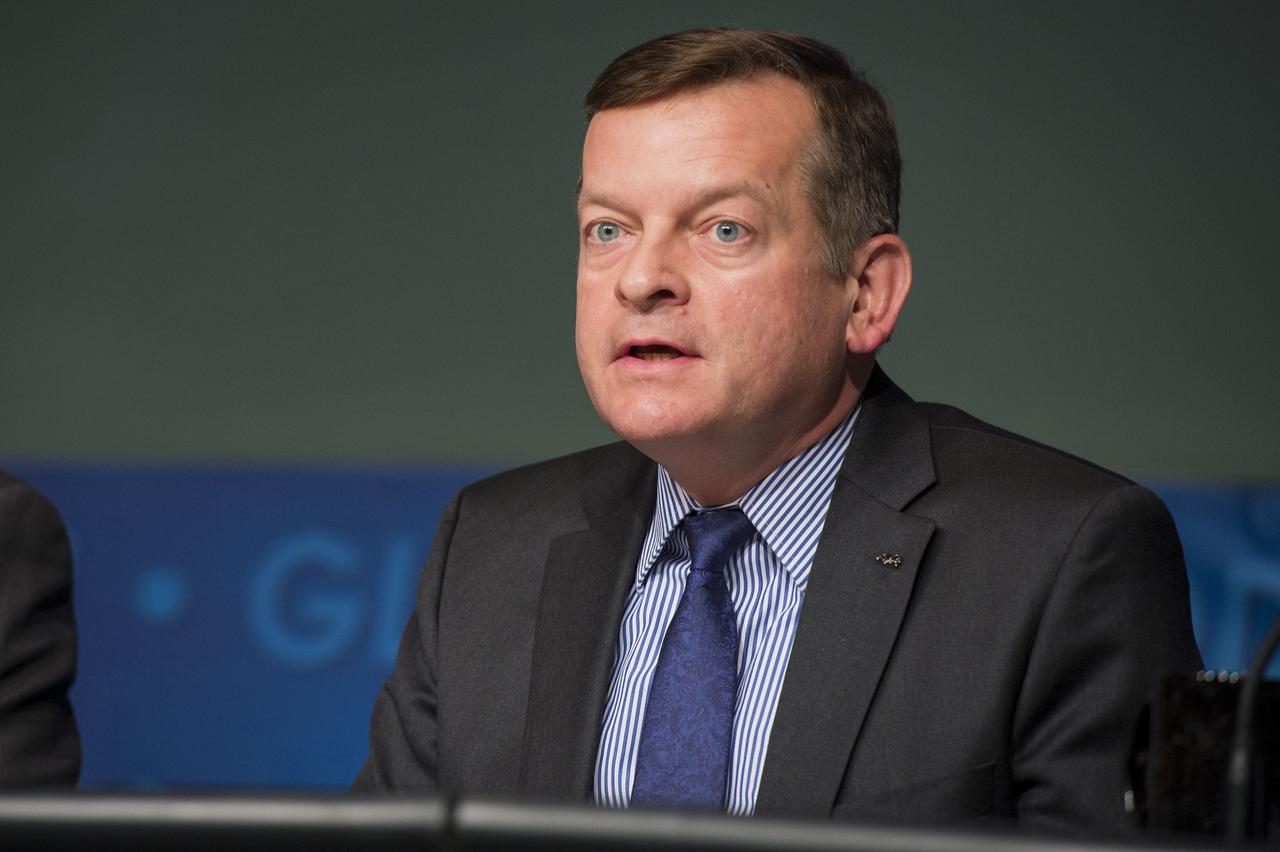
Frank Slazer, Vice President of Space Systems, Aerospace Industries Association, delivers remarks panel discussion on the Commercial Orbital Transportation Services (COTS) initiative at NASA Headquarters in Washington on Wednesday, November 13, 2013. Through COTS, NASA's partners Space Exploration Technologies Corp. (SpaceX) and Orbital Sciences Corp., developed new U.S. rockets and spacecraft, launched from U.S. soil, capable of transporting cargo to low-Earth orbit and the International Space Station. Photo Credit: (NASA/Jay Westcott)
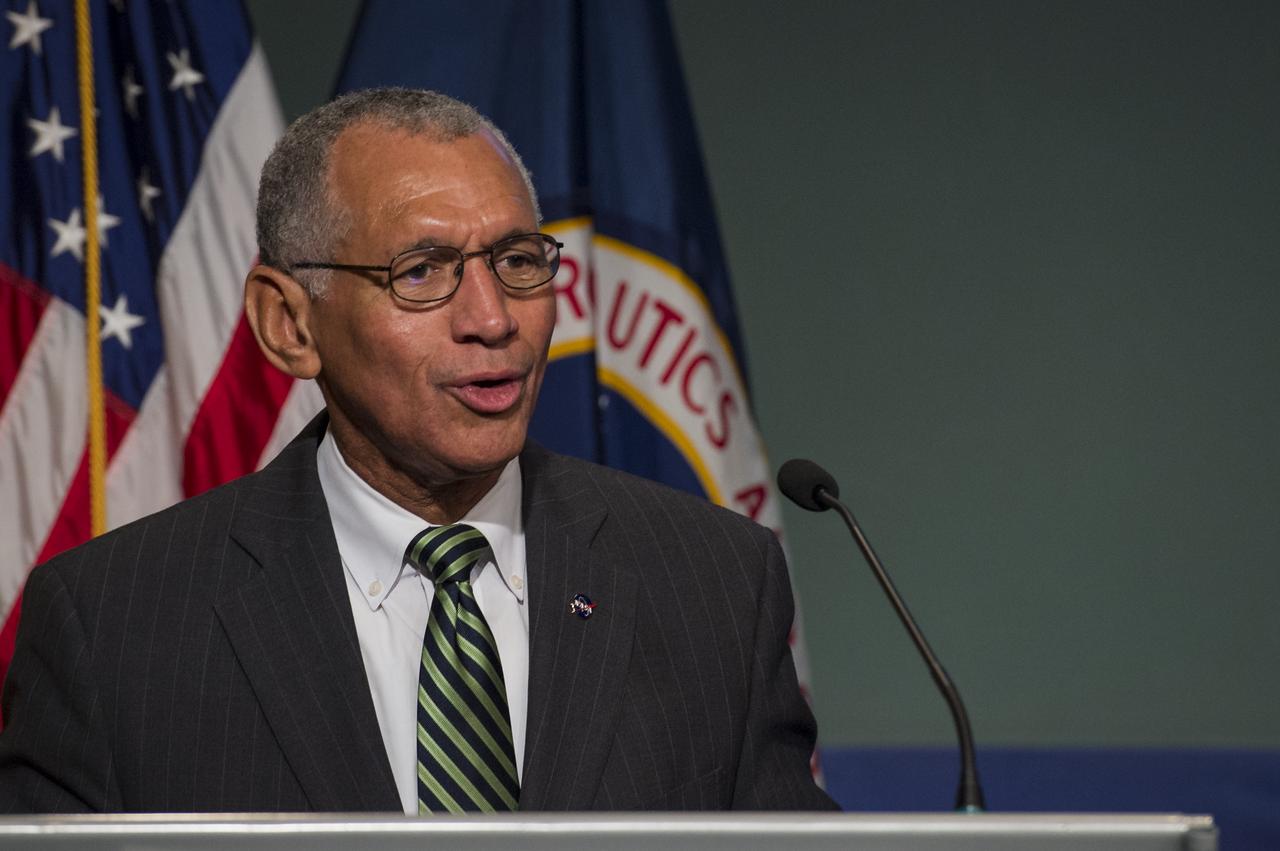
NASA Administrator Charles Bolden delivers remarks before a panel discussion on the Commercial Orbital Transportation Services (COTS) initiative at NASA Headquarters in Washington on Wednesday, November 13, 2013. Through COTS, NASA's partners Space Exploration Technologies Corp. (SpaceX) and Orbital Sciences Corp., developed new U.S. rockets and spacecraft, launched from U.S. soil, capable of transporting cargo to low-Earth orbit and the International Space Station. Photo Credit: (NASA/Jay Westcott)
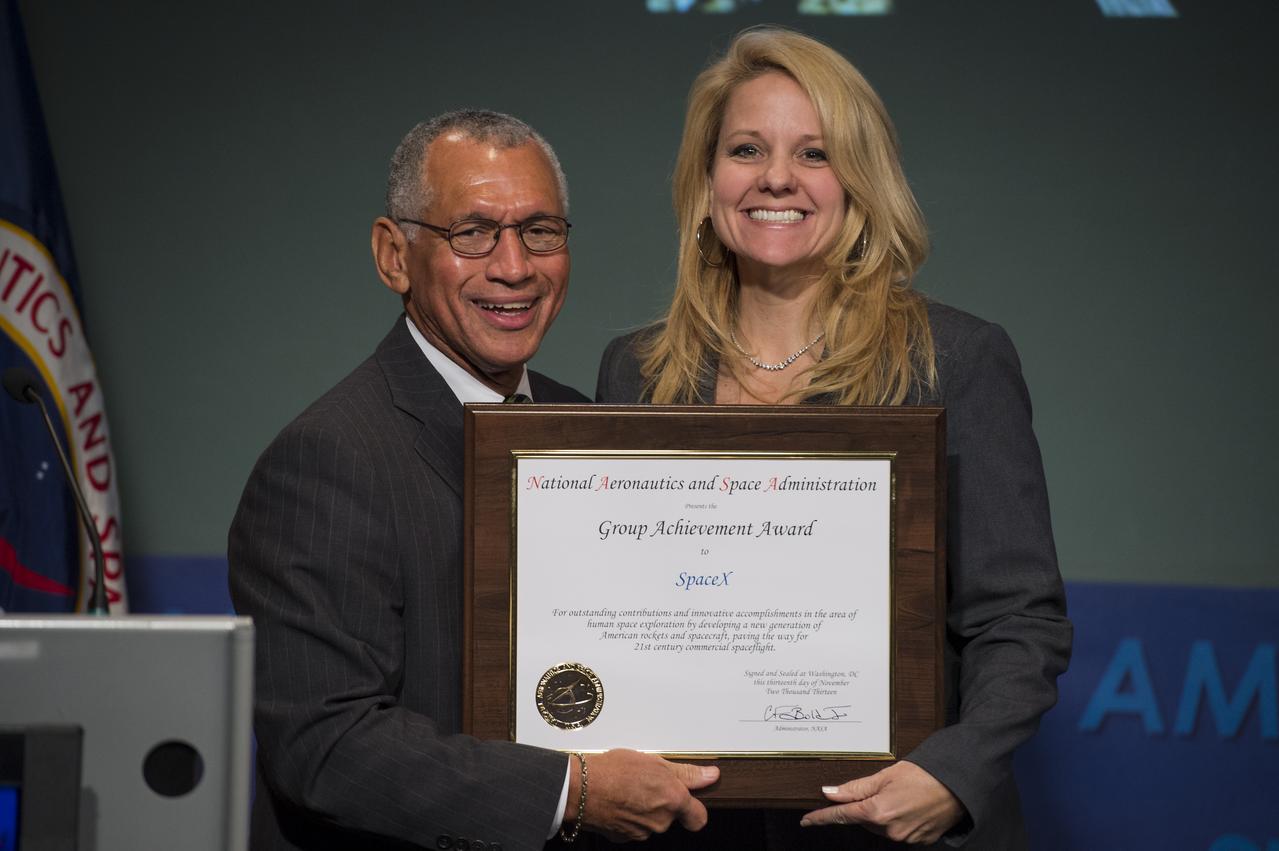
NASA Administrator Charles Bolden, left, presents NASA's Group Achievement Award to Gwynne Shotwell, President, SpaceX, at NASA Headquarters in Washington on Thursday, November 13, 2013. Shotwell received the award for outstanding contributions and innovative accomplishments in the completion of the Commercial Orbital Transportation Services (COTS) initiative. Through COTS, NASA's partners Space Exploration Technologies Corp. (SpaceX) and Orbital Sciences Corp., developed new U.S. rockets and spacecraft, launched from U.S. soil, capable of transporting cargo to low-Earth orbit and the International Space Station. Photo Credit: (NASA/Jay Westcott)
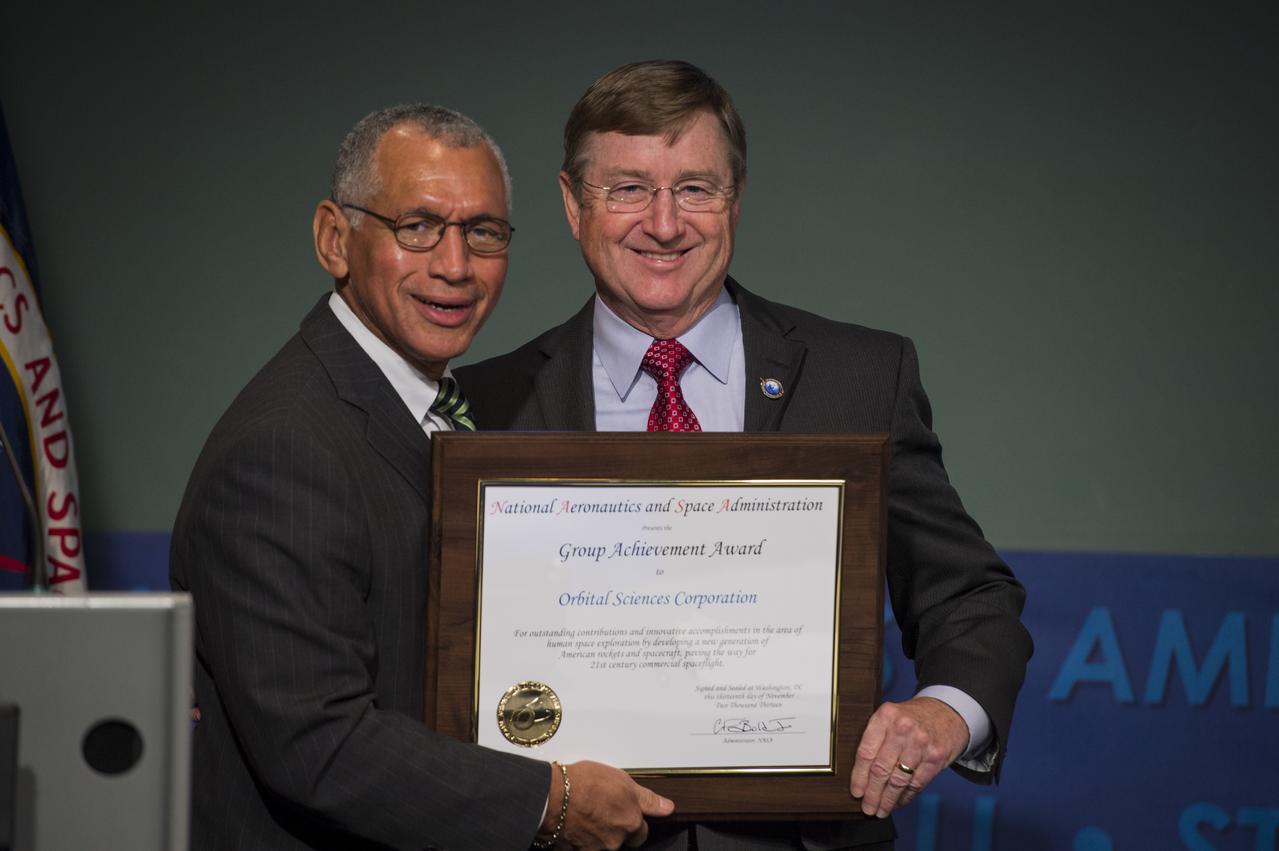
NASA Administrator Charles Bolden, left, presents NASA's Group Achievement Award to (L-R) Frank Culbertson, Executive Vice President and General Manager, Orbital Sciences Advanced Programs Group,at NASA Headquarters in Washington on Thursday, November 13, 2013. Culbertson received the award for outstanding contributions and innovative accomplishments in the completion of the Commercial Orbital Transportation Services (COTS) initiative. Through COTS, NASA's partners Space Exploration Technologies Corp. (SpaceX) and Orbital Sciences Corp., developed new U.S. rockets and spacecraft, launched from U.S. soil, capable of transporting cargo to low-Earth orbit and the International Space Station. Photo Credit: (NASA/Jay Westcott)
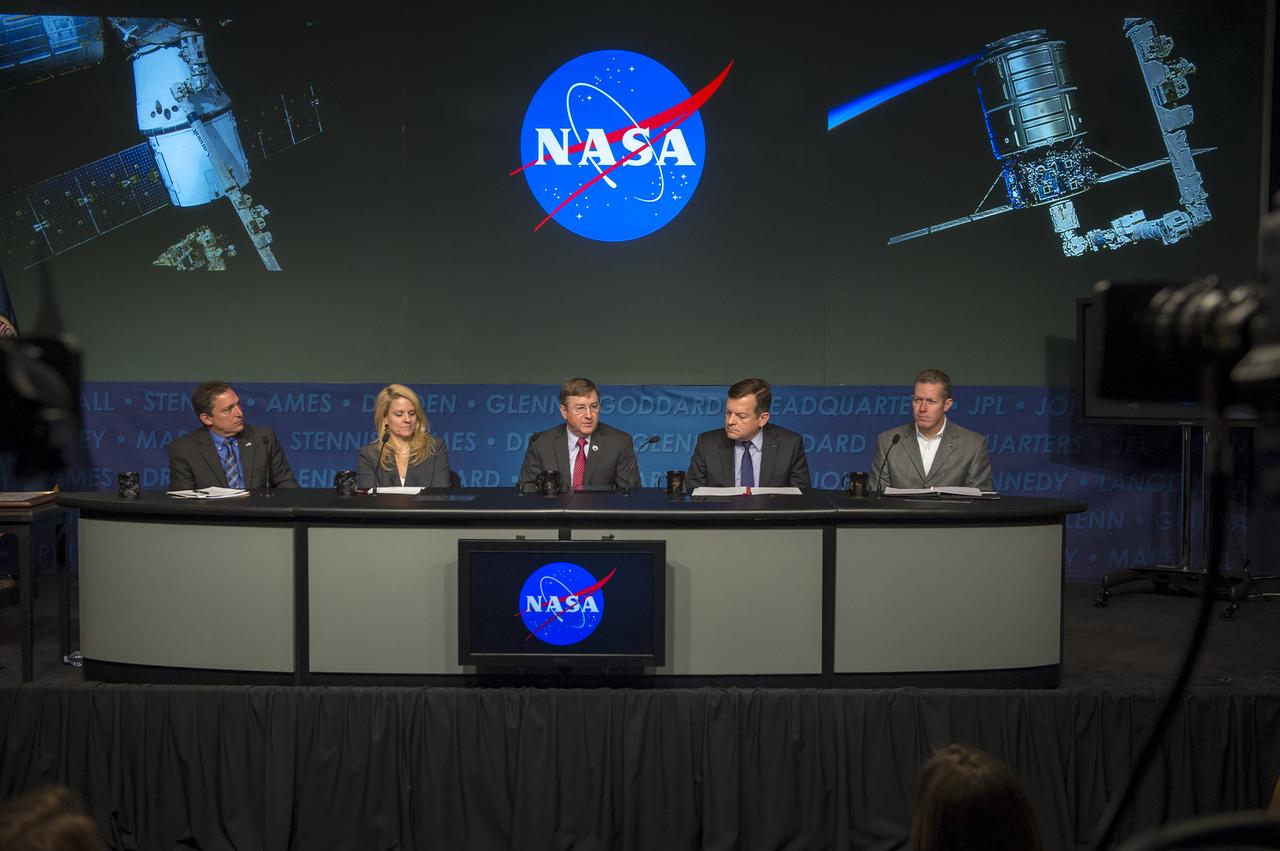
L-R: Alan Lindenmoyer, Manager of Commercial Crew and Cargo Program, NASA; Gwynne Shotwell, President, SpaceX; Frank Culbertson, Executive Vice President and General Manager, Orbital Sciences Advanced Programs Group; Frank Slazer, Vice President of Space Systems, Aerospace Industries Association and Phil McAlister, Director of Commercial Spaceflight Development at NASA, participate in a panel discussion on the Commercial Orbital Transportation Services (COTS) initiative at NASA Headquarters in Washington on Wednesday, November 13, 2013. Through COTS, NASA's partners Space Exploration Technologies Corp. (SpaceX) and Orbital Sciences Corp., developed new U.S. rockets and spacecraft, launched from U.S. soil, capable of transporting cargo to low-Earth orbit and the International Space Station. Photo Credit: (NASA/Jay Westcott)
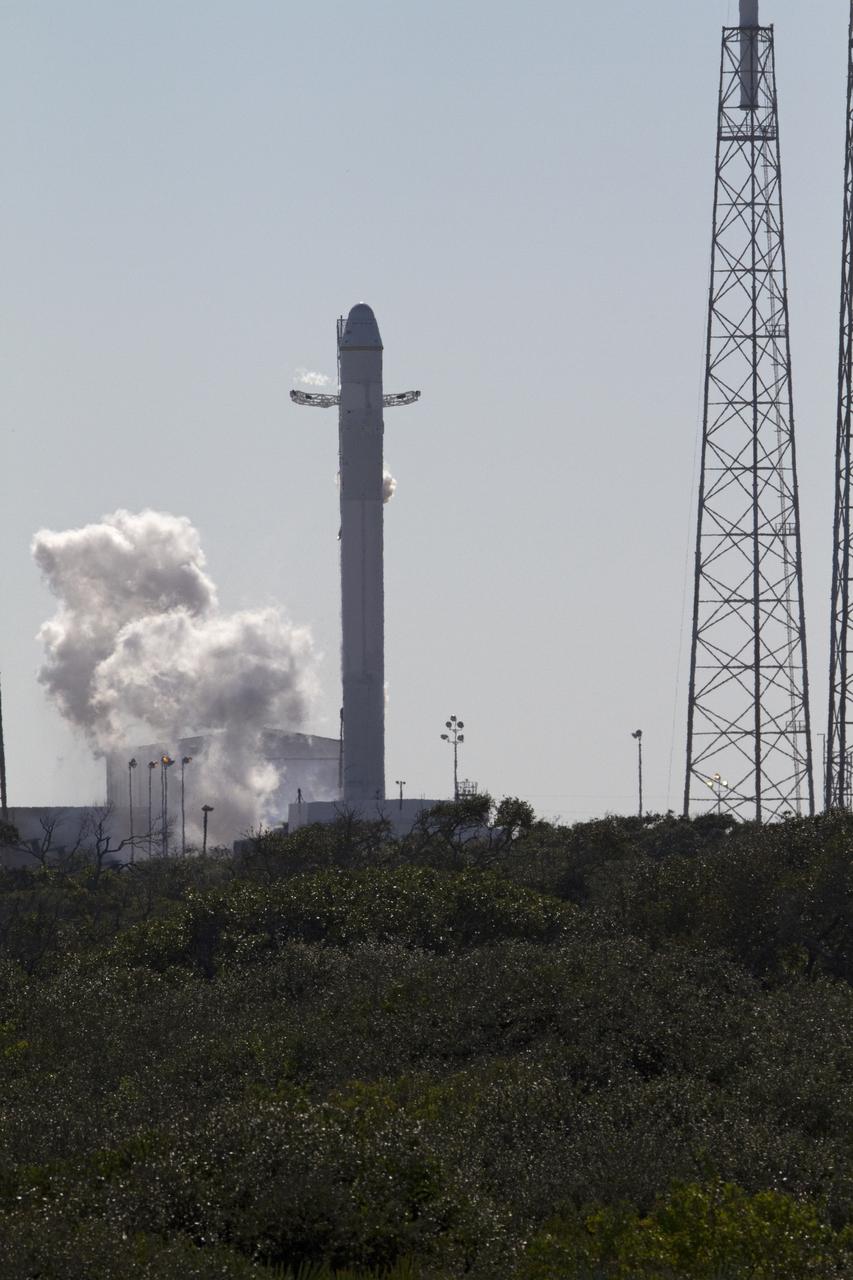
SPACE X FALCON 9 COTS-1 TEST FIRE DAY 1
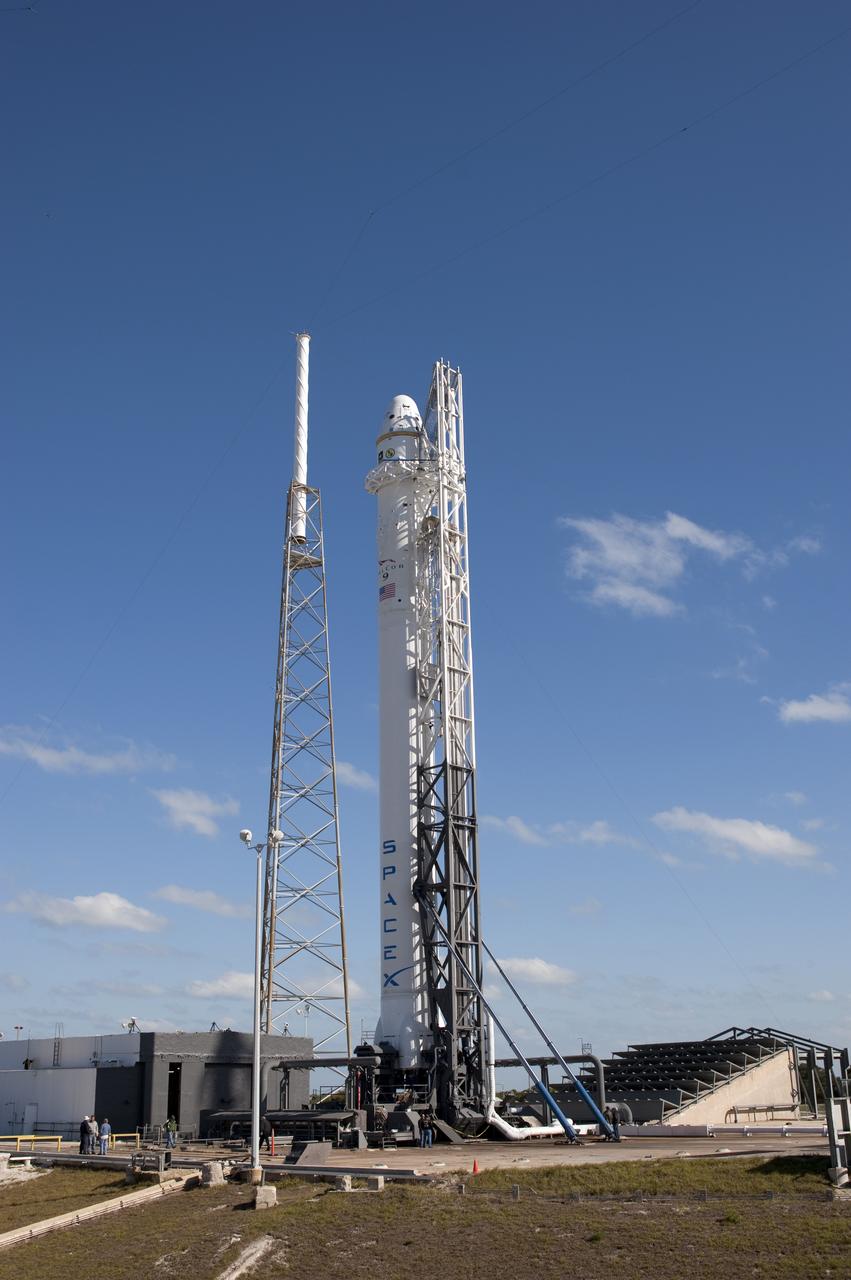
SPACE X FALCON 9 COTS-1 TEST FIRE - DAY 1
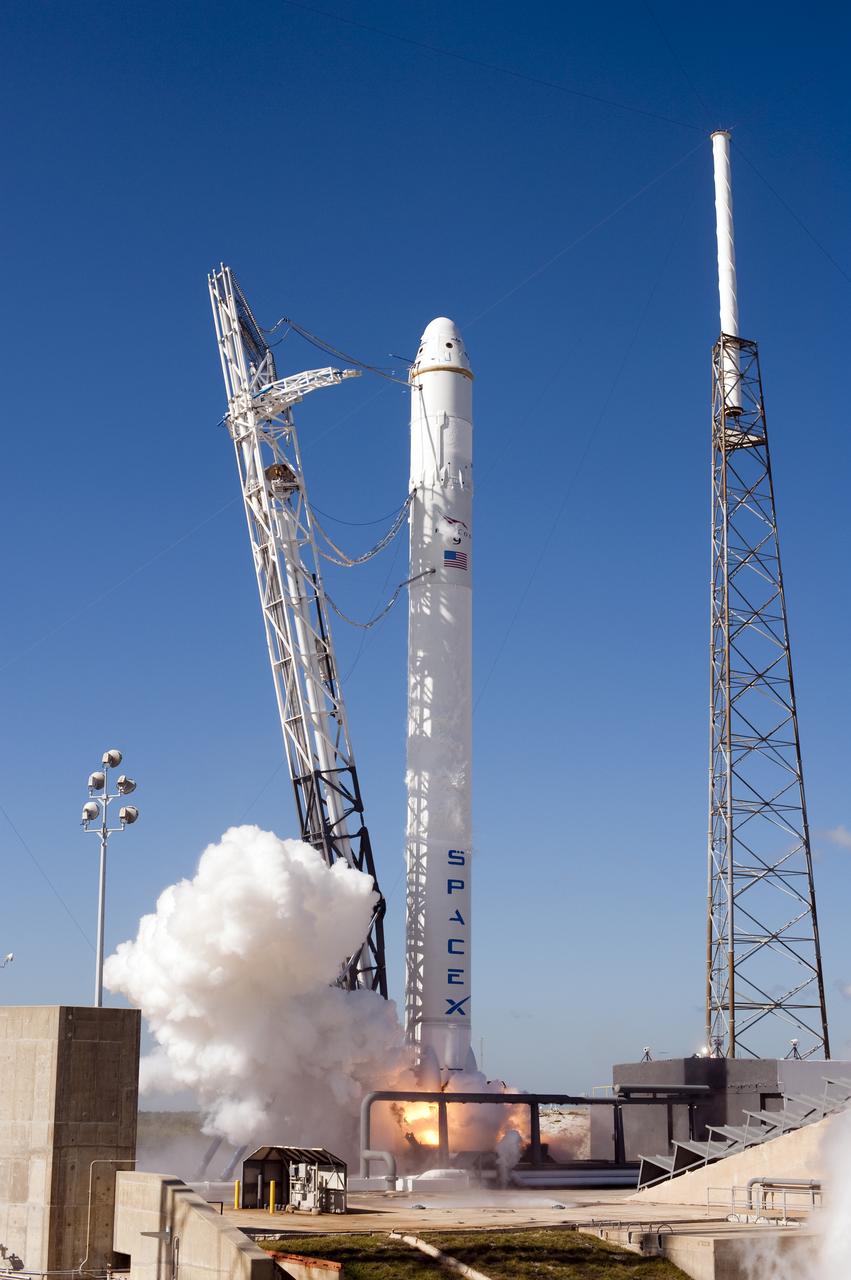
SPACE X FALCON 9 COTS-1 TEST FIRE - DAY 1
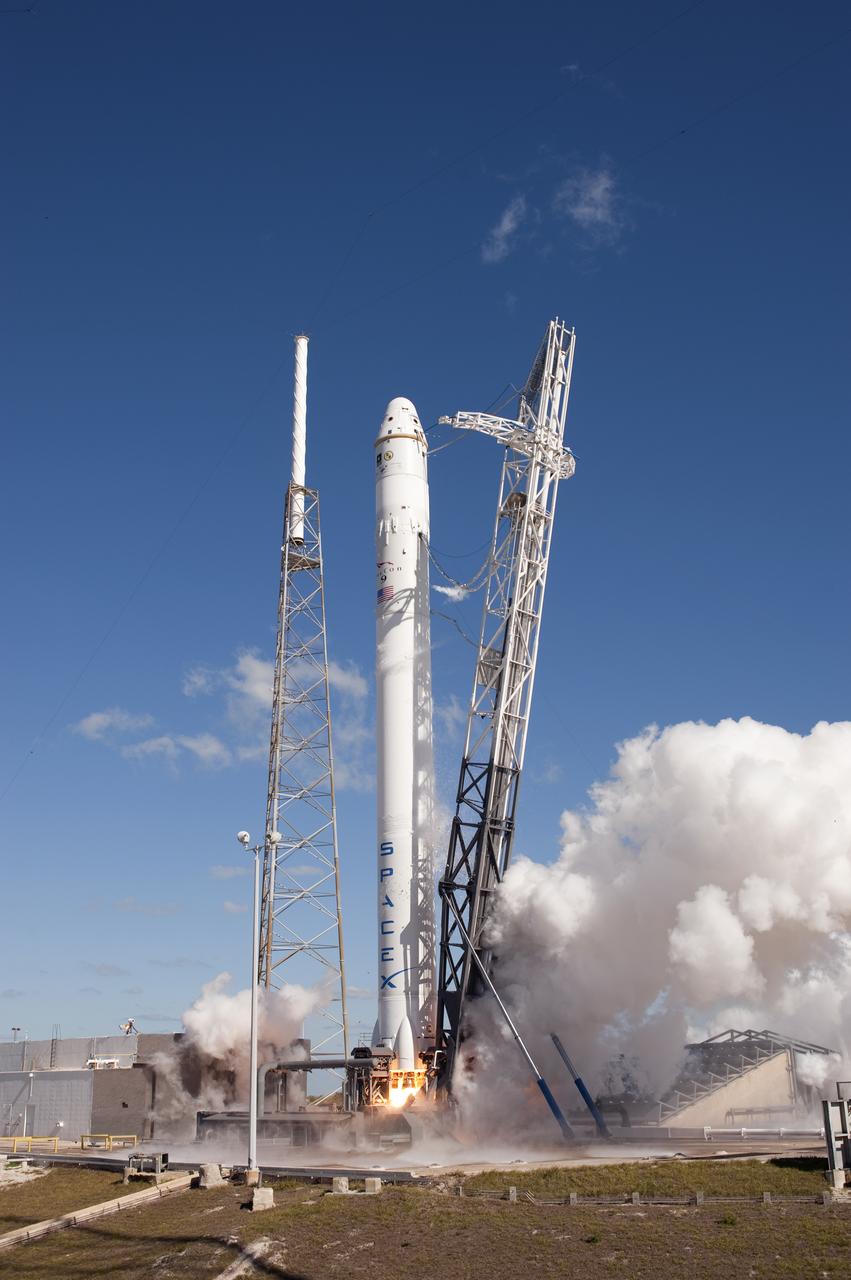
SPACE X FALCON 9 COTS-1 TEST FIRE - DAY 1
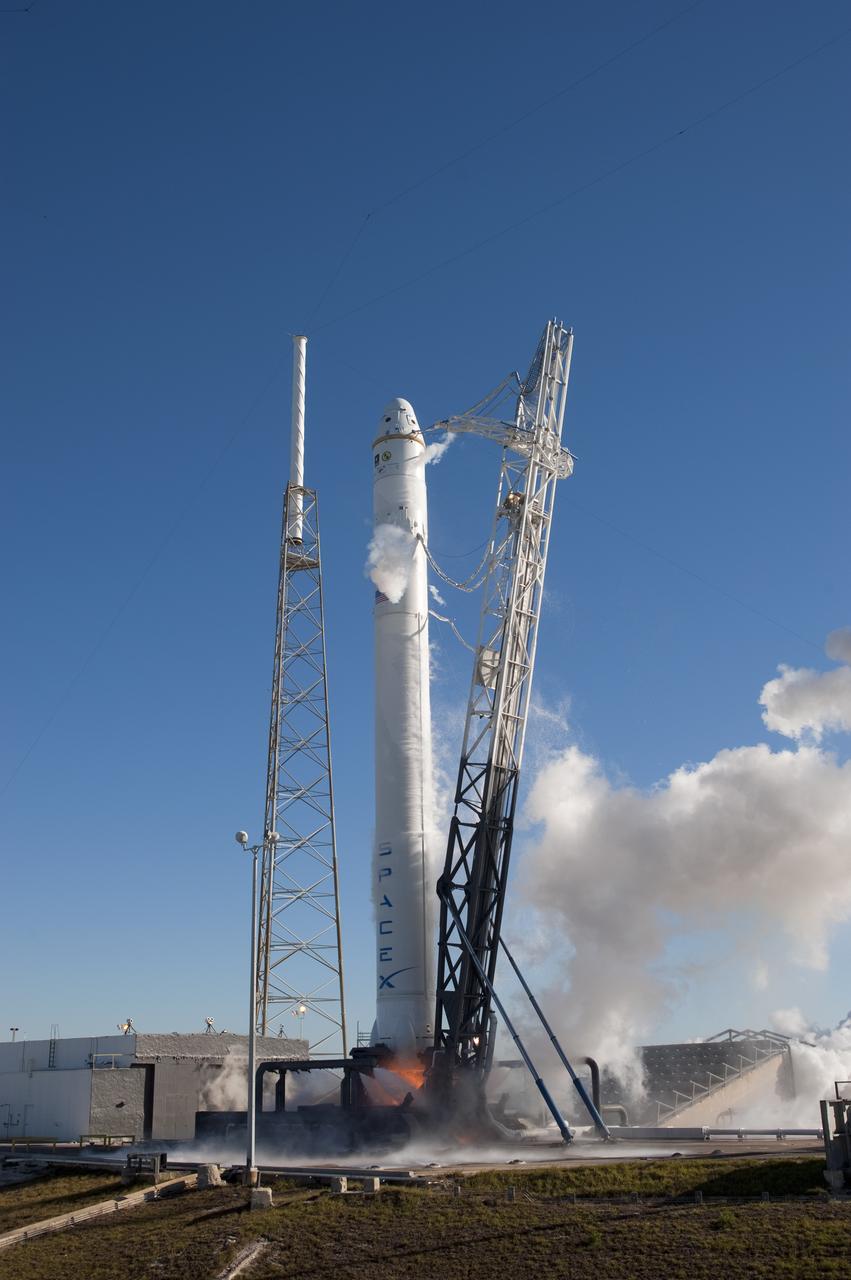
SPACE X FALCON 9 COTS-1 TEST FIRE - DAY 2
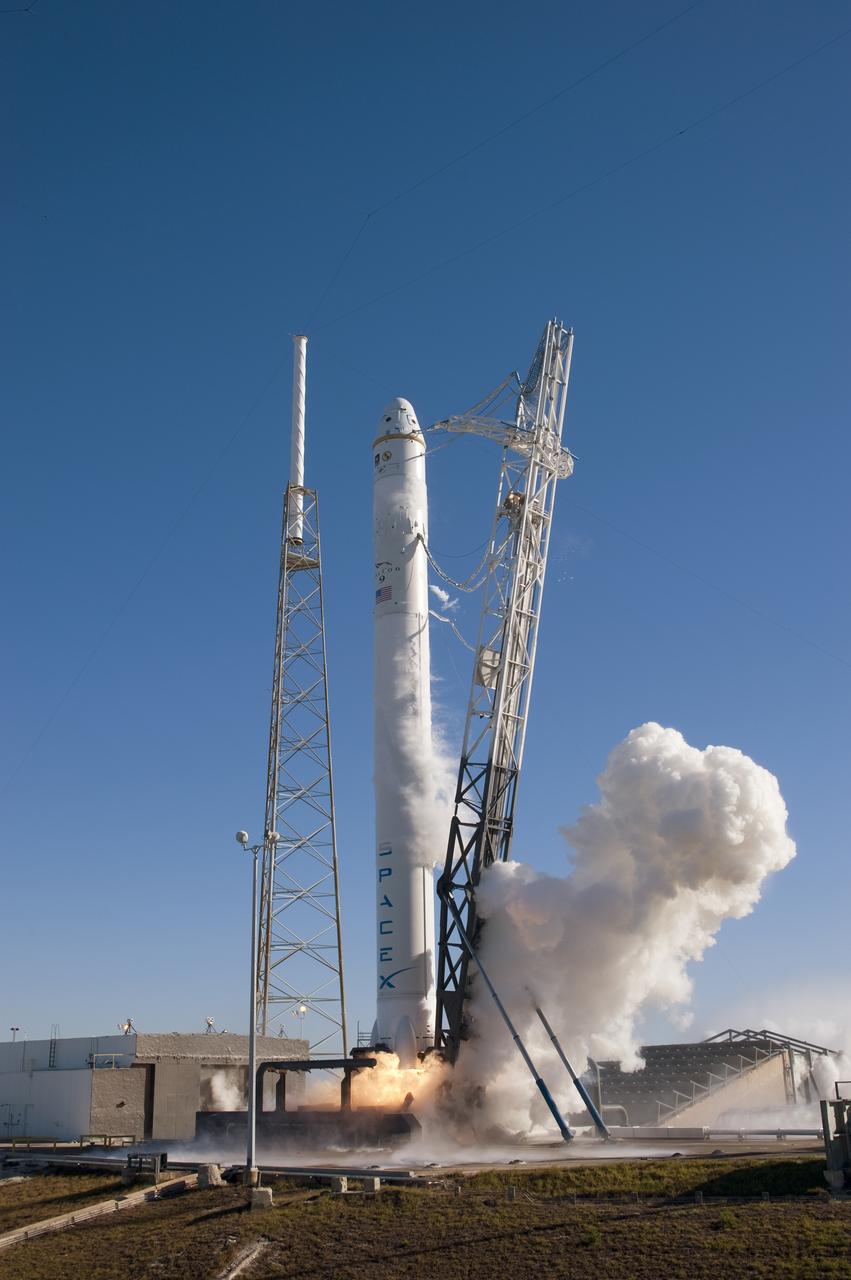
SPACE X FALCON 9 COTS-1 TEST FIRE - DAY 2
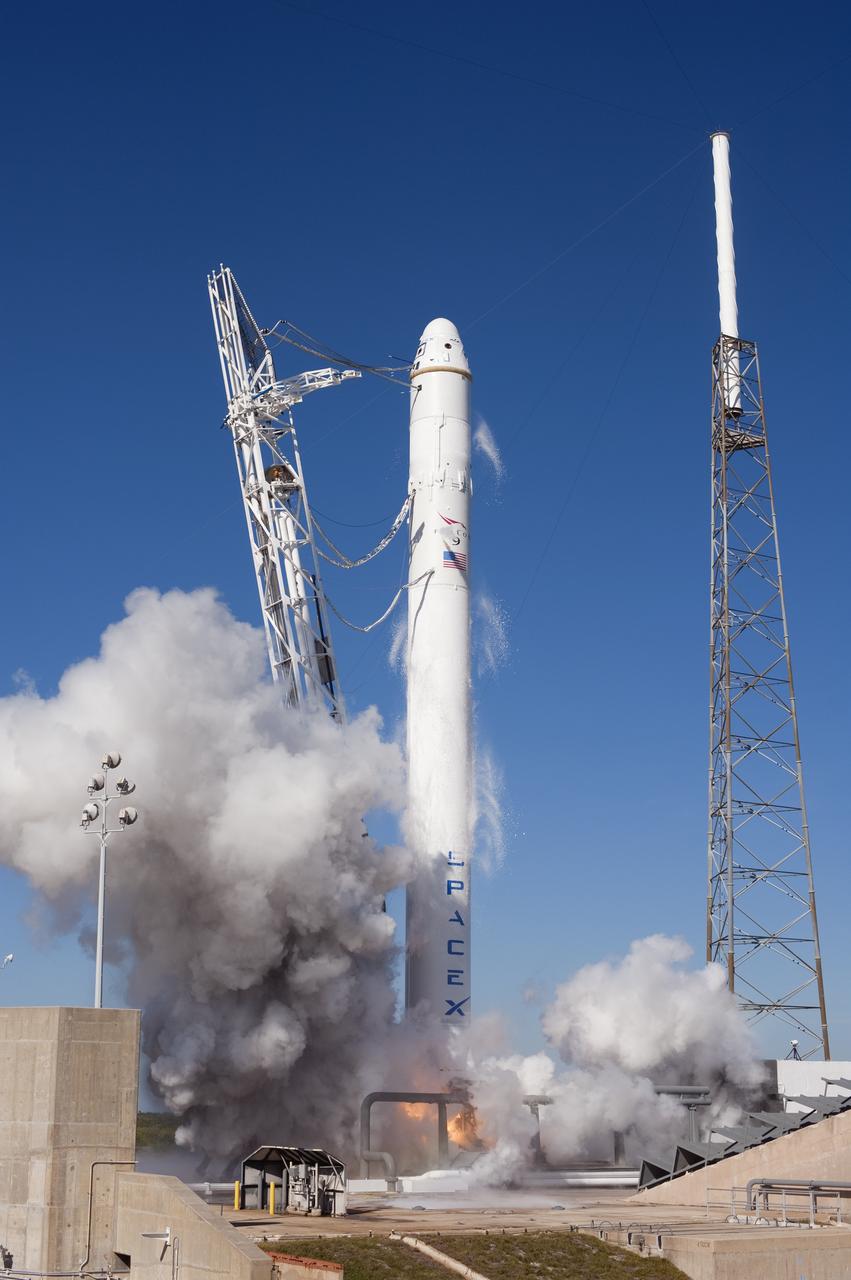
SPACE X FALCON 9 COTS-1 TEST FIRE - DAY 2
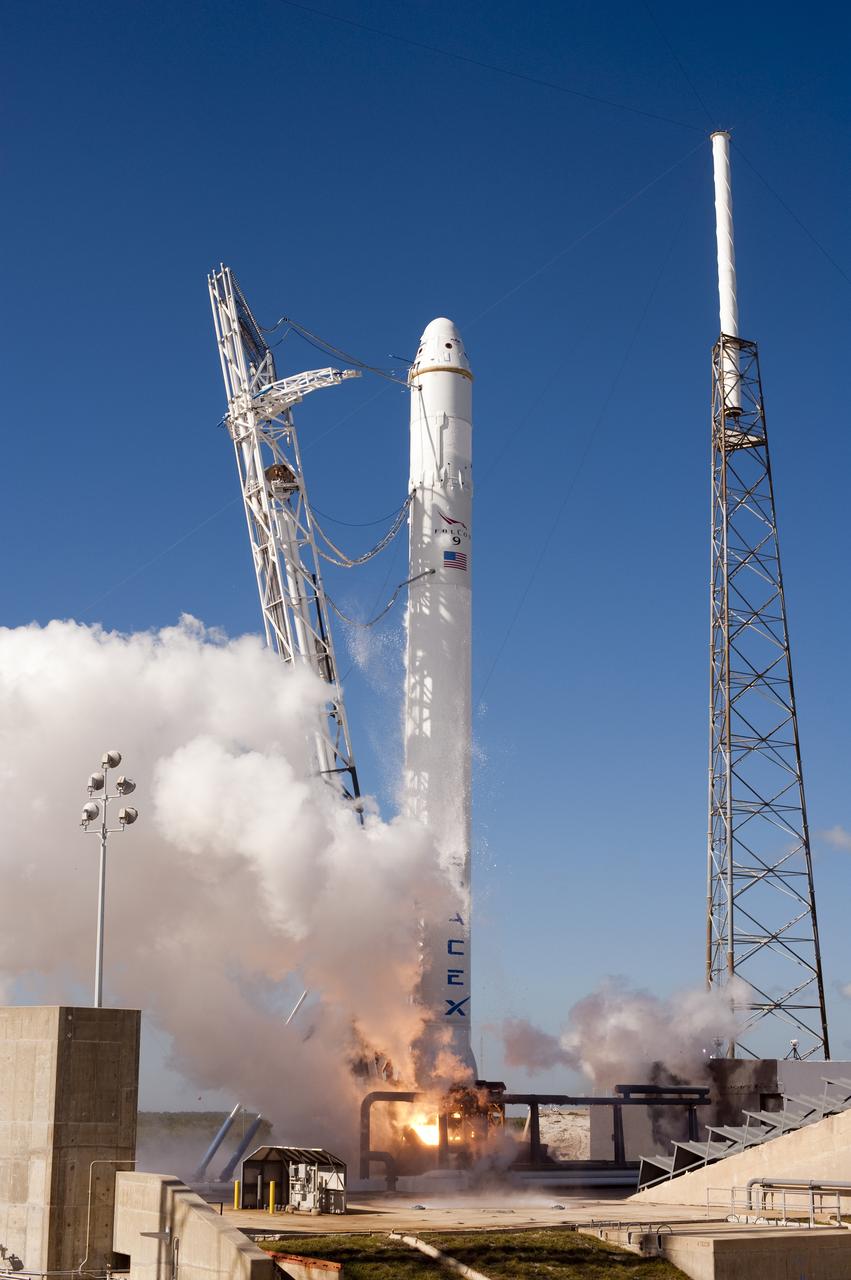
SPACE X FALCON 9 COTS-1 TEST FIRE - DAY 1
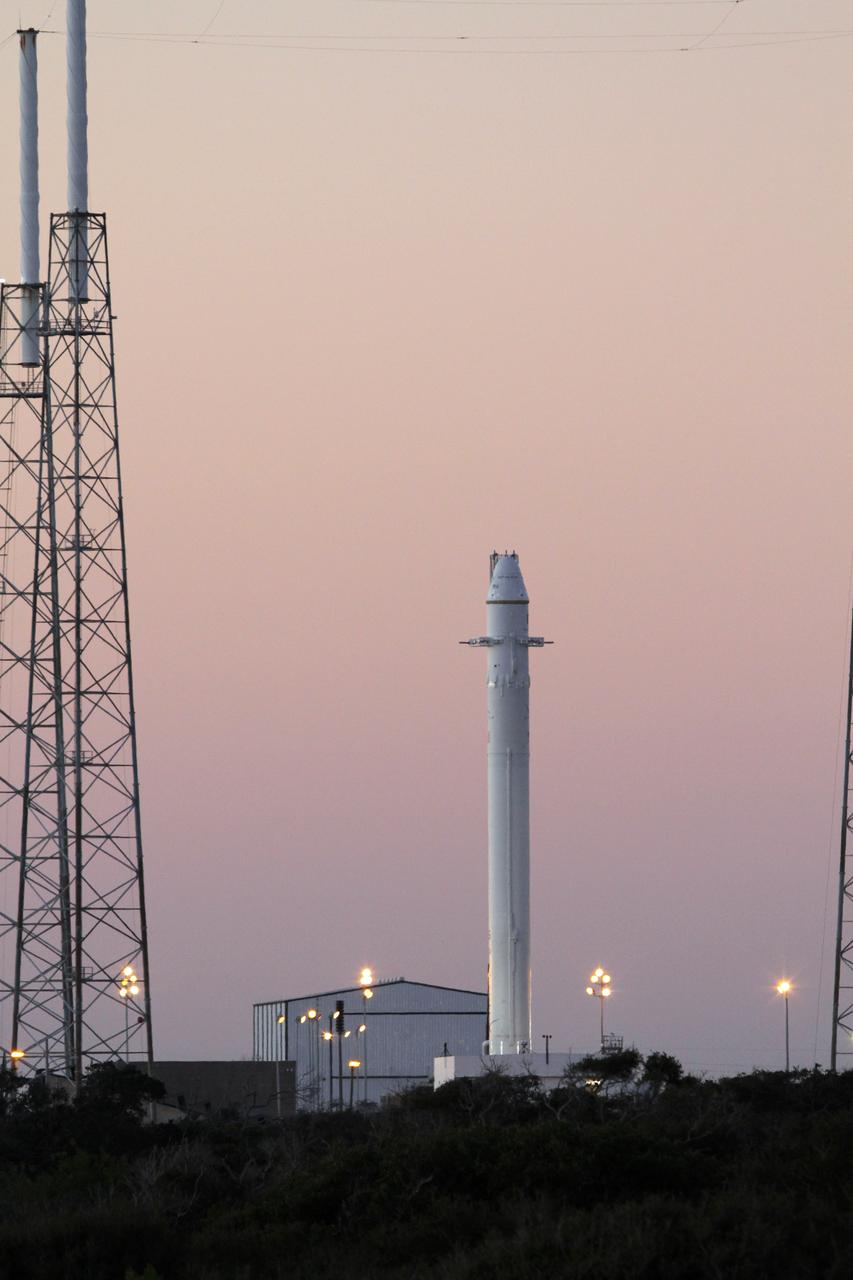
SPACE X FALCON 9 COTS-1 TEST FIRE DAY 1
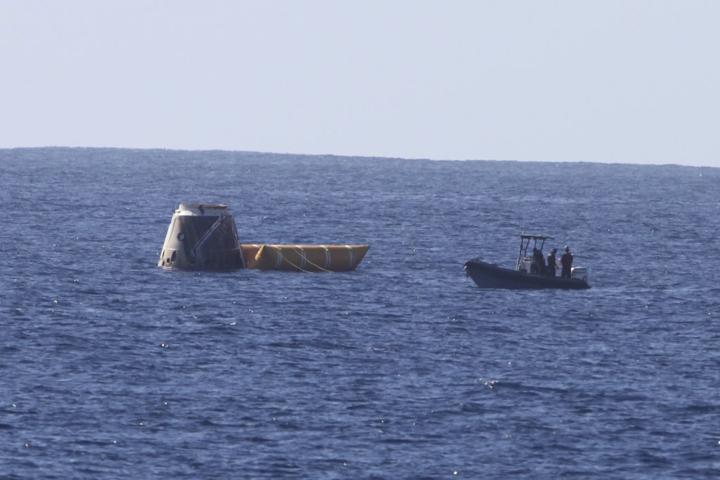
The Dragon capsule that launched from Launch Complex-40 at Cape Canaveral Air Force Station aboard a SpaceX Falcon 9 rocket is recovered in the Pacific Ocean about 500 miles west of the coast of Mexico. The rocket lifted off at 10:43 a.m. EST. The spacecraft went through several maneuvers before it re-entered the atmosphere and splashed down at about 2 p.m. EST. This is first demonstration flight for NASA's Commercial Orbital Transportation Services (COTS) program, which will provide cargo flights to the International Space Station in the future. Photo credit: Courtesy SpaceX
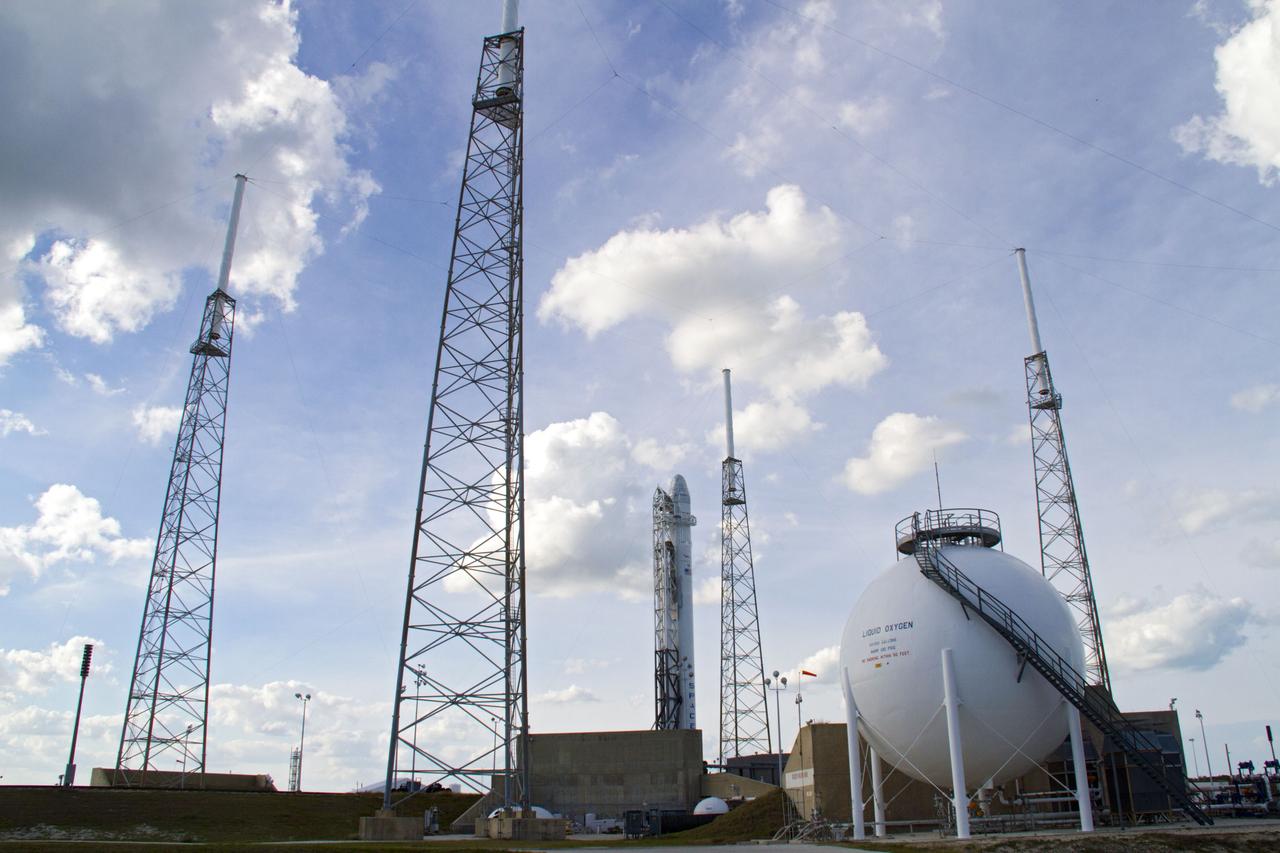
CAPE CANAVERAL, Fla. – Lightning catenary masts stand ready to protect a Falcon 9 rocket if a storm should develop over Space Launch Complex-40 on Cape Canaveral Air Force Station in Florida following a wet dress rehearsal on March 1, which included loading the rocket with its propellants and a simulated countdown. Atop the rocket is a Dragon capsule. The new rocket and capsule were designed and manufactured by Space Exploration Technologies Corp., or SpaceX, for the company’s upcoming demonstration test flight for NASA’s Commercial Orbital Transportation Services, or COTS, program. Under COTS, NASA has partnered with two private companies to develop the capability to deliver cargo to the International Space Station. During the flight, SpaceX's Dragon capsule will conduct a series of checkout procedures that will test and prove its systems. These tests include rendezvous and berthing with the space station and are intended to lead to regular resupply missions to the station. Liftoff is targeted for April 30 at 12:22 p.m. EDT pending official approval at the Flight Readiness Review on April 16. For more information, visit www.nasa.gov/exploration/commercial/cargo/spacex_index.html. Photo credit: NASA/Cory Huston
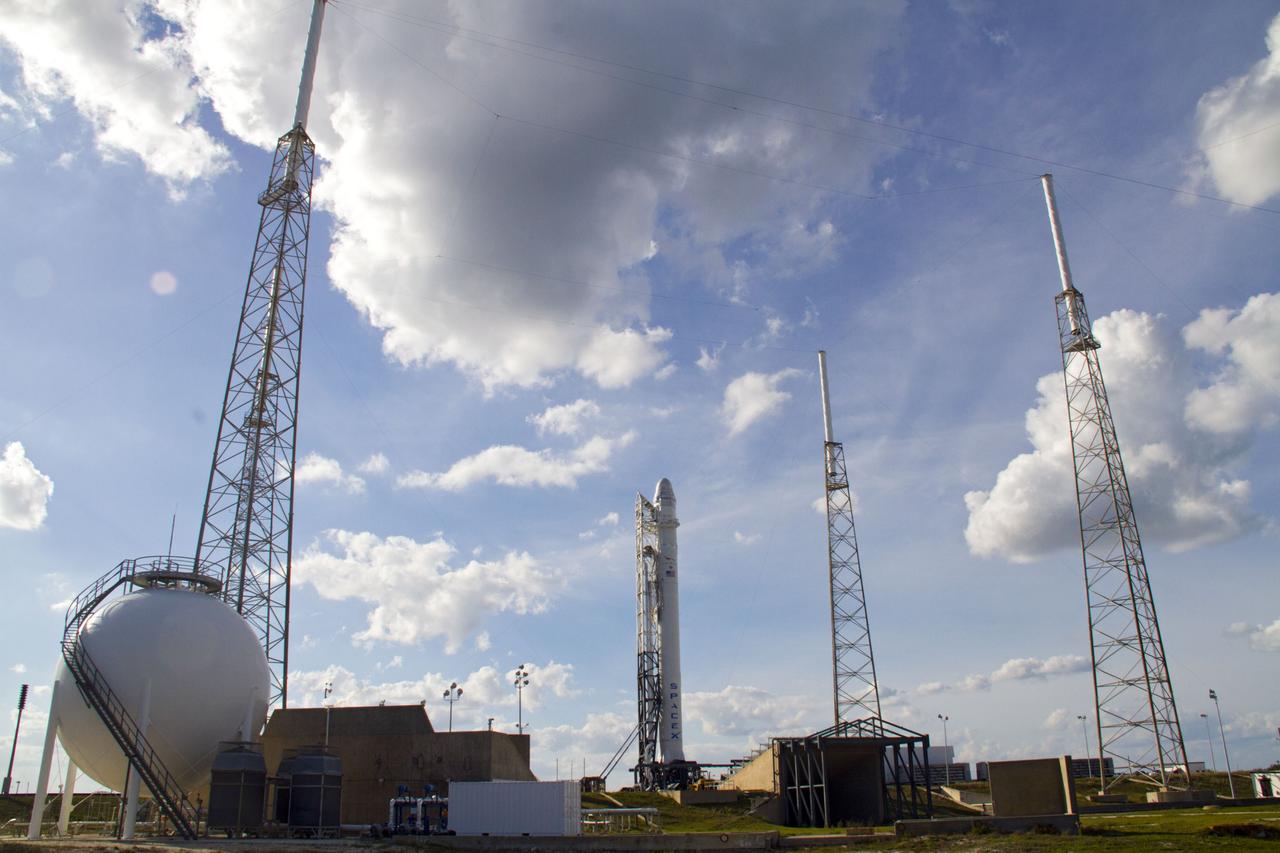
CAPE CANAVERAL, Fla. – The lightning protection system on Space Launch Complex-40 on Cape Canaveral Air Force Station in Florida is in place to protect a Falcon 9 rocket if a storm should develop following a wet dress rehearsal on March 1, which included loading the rocket with its propellants and a simulated countdown. Atop the rocket is a Dragon capsule. The new rocket and capsule were designed and manufactured by Space Exploration Technologies Corp., or SpaceX, for the company’s upcoming demonstration test flight for NASA’s Commercial Orbital Transportation Services, or COTS, program. Under COTS, NASA has partnered with two private companies to develop the capability to deliver cargo to the International Space Station. During the flight, SpaceX's Dragon capsule will conduct a series of checkout procedures that will test and prove its systems. These tests include rendezvous and berthing with the space station and are intended to lead to regular resupply missions to the station. Liftoff is targeted for April 30 at 12:22 p.m. EDT pending official approval at the Flight Readiness Review on April 16. For more information, visit www.nasa.gov/exploration/commercial/cargo/spacex_index.html. Photo credit: NASA/Cory Huston
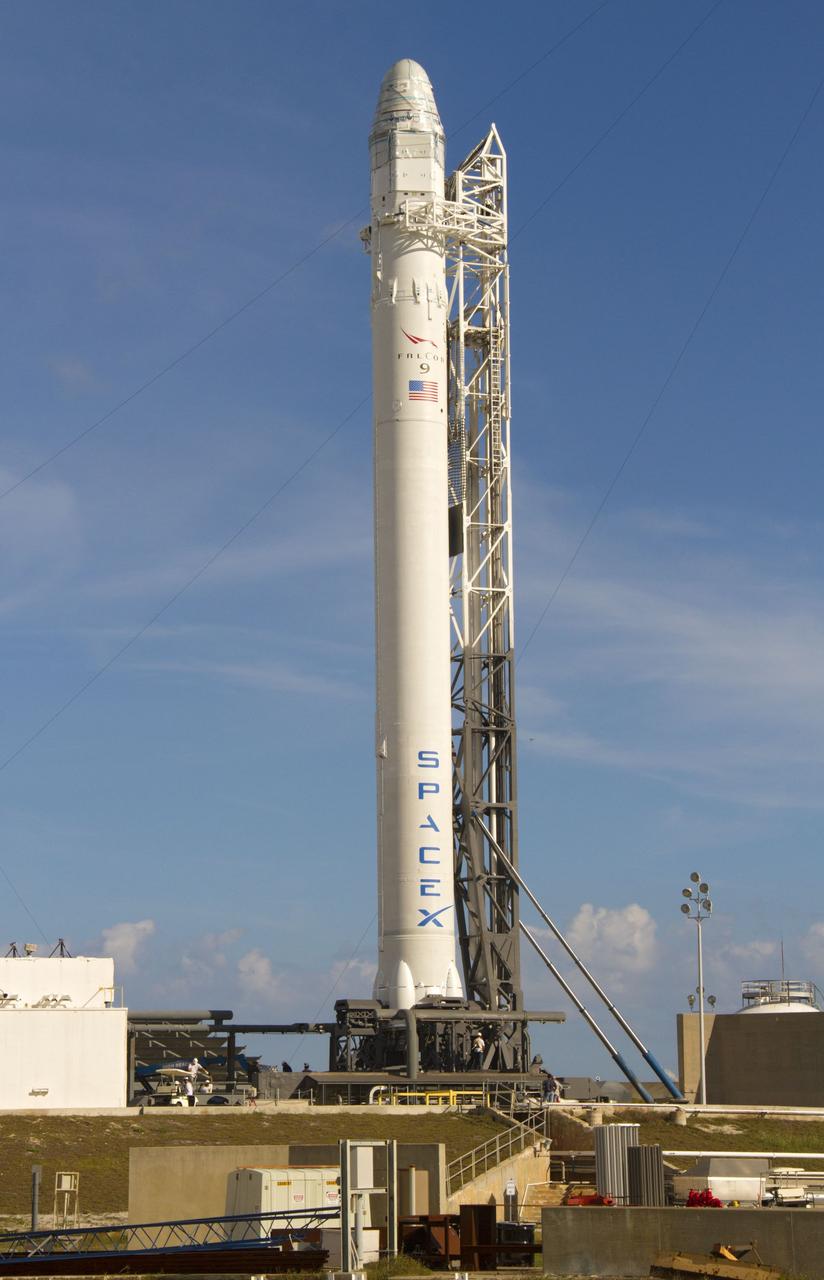
CAPE CANAVERAL, Fla. – Evaluation of a Falcon 9 rocket is under way on Space Launch Complex-40 on Cape Canaveral Air Force Station in Florida following a wet dress rehearsal on March 1, which included loading the rocket with its propellants and a simulated countdown. Atop the rocket is a Dragon capsule. The new rocket and capsule were designed and manufactured by Space Exploration Technologies Corp., or SpaceX, for the company’s upcoming demonstration test flight for NASA’s Commercial Orbital Transportation Services, or COTS, program. Under COTS, NASA has partnered with two private companies to develop the capability to deliver cargo to the International Space Station. During the flight, SpaceX's Dragon capsule will conduct a series of checkout procedures that will test and prove its systems. These tests include rendezvous and berthing with the space station and are intended to lead to regular resupply missions to the station. Liftoff is targeted for April 30 at 12:22 p.m. EDT pending official approval at the Flight Readiness Review on April 16. For more information, visit www.nasa.gov/exploration/commercial/cargo/spacex_index.html. Photo credit: NASA/Cory Huston
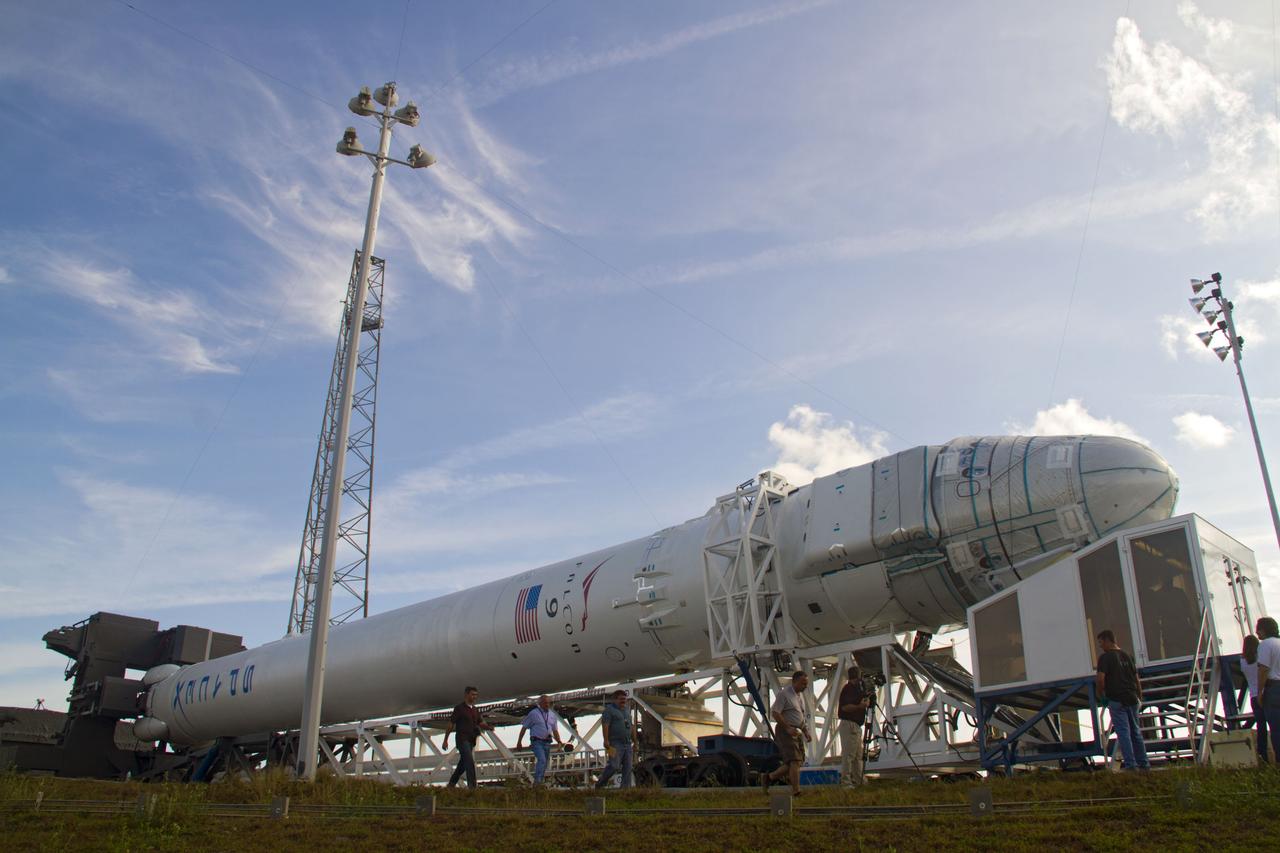
CAPE CANAVERAL, Fla. – The Falcon 9 rocket and its Dragon capsule are secured onto a transporter on Space Launch Complex-40 on Cape Canaveral Air Force Station in Florida. The rocket is being returned to the protection of its hangar following a wet dress rehearsal on the pad March 1, which included loading the rocket with its propellants and a simulated countdown. The new rocket and capsule were designed and manufactured by Space Exploration Technologies Corp., or SpaceX, for the company’s upcoming demonstration test flight for NASA’s Commercial Orbital Transportation Services, or COTS, program. Under COTS, NASA has partnered with two private companies to develop the capability to deliver cargo to the International Space Station. During the flight, SpaceX's Dragon capsule will conduct a series of checkout procedures that will test and prove its systems. These tests include rendezvous and berthing with the space station and are intended to lead to regular resupply missions to the station. Liftoff is targeted for April 30 at 12:22 p.m. EDT pending official approval at the Flight Readiness Review on April 16. For more information, visit www.nasa.gov/exploration/commercial/cargo/spacex_index.html. Photo credit: NASA/Cory Huston
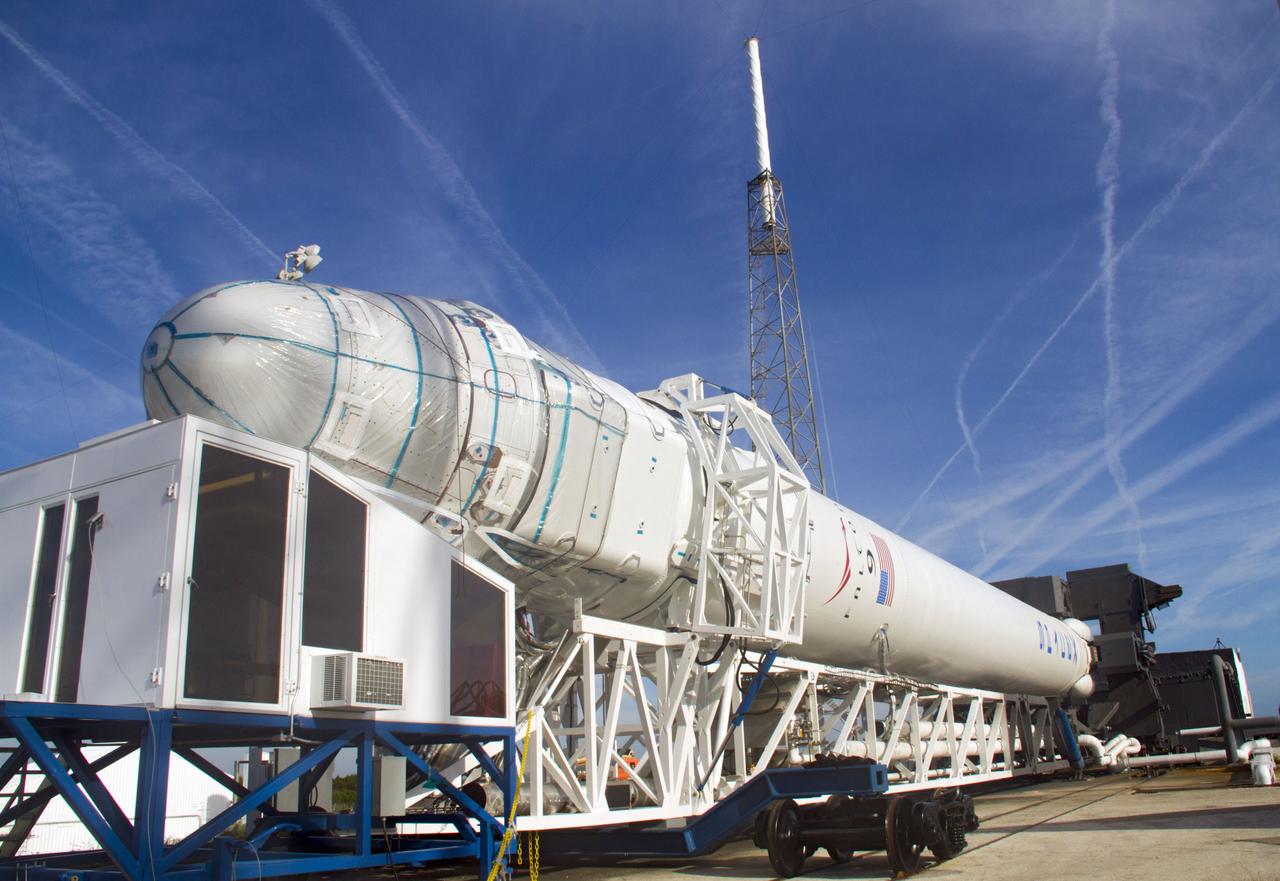
CAPE CANAVERAL, Fla. – The Falcon 9 rocket and its Dragon capsule are lowered onto a transporter on Space Launch Complex-40 on Cape Canaveral Air Force Station in Florida. The rocket is being returned to the protection of its hangar following a wet dress rehearsal on the pad March 1, which included loading the rocket with its propellants and a simulated countdown. The new rocket and capsule were designed and manufactured by Space Exploration Technologies Corp., or SpaceX, for the company’s upcoming demonstration test flight for NASA’s Commercial Orbital Transportation Services, or COTS, program. Under COTS, NASA has partnered with two private companies to develop the capability to deliver cargo to the International Space Station. During the flight, SpaceX's Dragon capsule will conduct a series of checkout procedures that will test and prove its systems. These tests include rendezvous and berthing with the space station and are intended to lead to regular resupply missions to the station. Liftoff is targeted for April 30 at 12:22 p.m. EDT pending official approval at the Flight Readiness Review on April 16. For more information, visit www.nasa.gov/exploration/commercial/cargo/spacex_index.html. Photo credit: NASA/Cory Huston
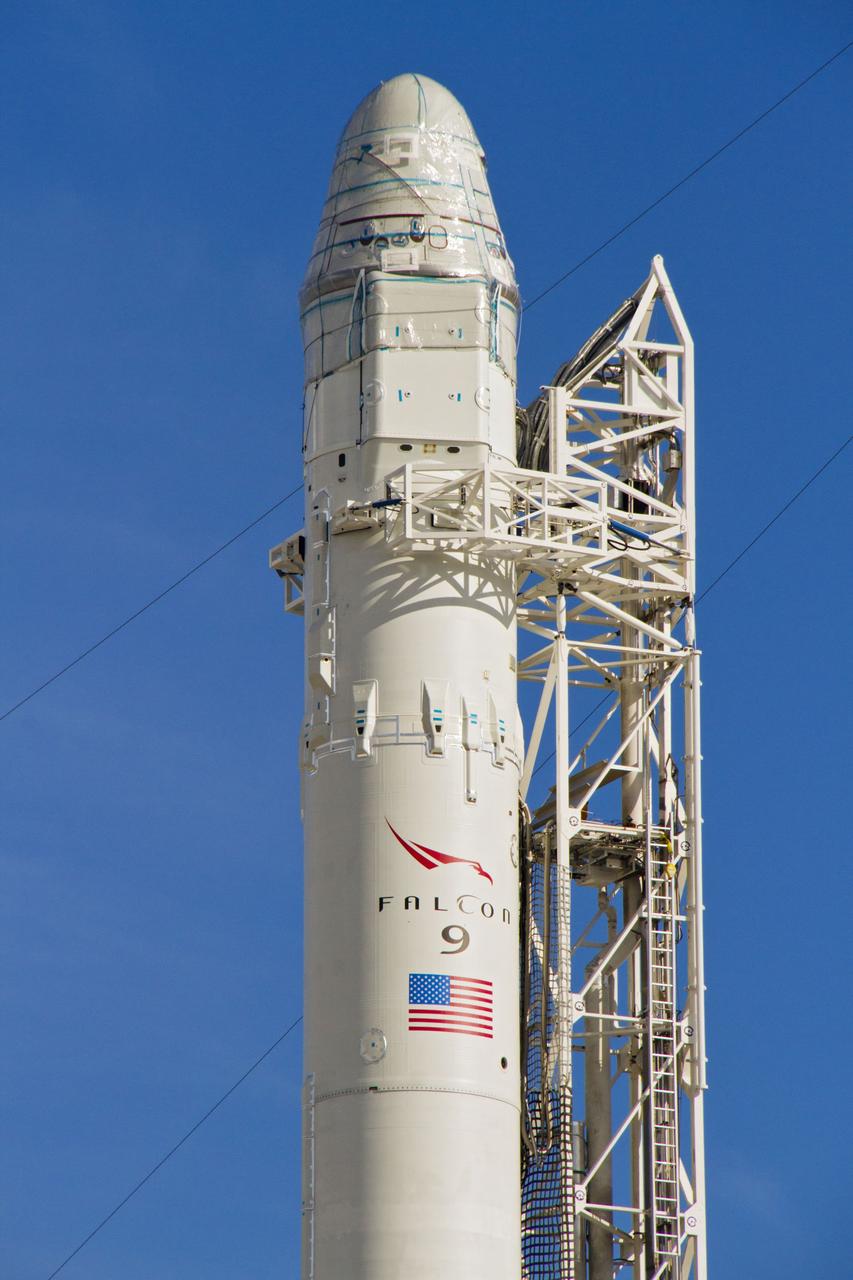
CAPE CANAVERAL, Fla. – Evaluation of a Dragon capsule is under way on Space Launch Complex-40 on Cape Canaveral Air Force Station in Florida following a wet dress rehearsal on March 1, which included loading the rocket with its propellants and a simulated countdown. The rocket sits atop a Falcon 9 rocket. The new rocket and capsule were designed and manufactured by Space Exploration Technologies Corp., or SpaceX, for the company’s upcoming demonstration test flight for NASA’s Commercial Orbital Transportation Services, or COTS, program. Under COTS, NASA has partnered with two private companies to develop the capability to deliver cargo to the International Space Station. During the flight, SpaceX's Dragon capsule will conduct a series of checkout procedures that will test and prove its systems. These tests include rendezvous and berthing with the space station and are intended to lead to regular resupply missions to the station. Liftoff is targeted for April 30 at 12:22 p.m. EDT pending official approval at the Flight Readiness Review on April 16. For more information, visit www.nasa.gov/exploration/commercial/cargo/spacex_index.html. Photo credit: NASA/Cory Huston
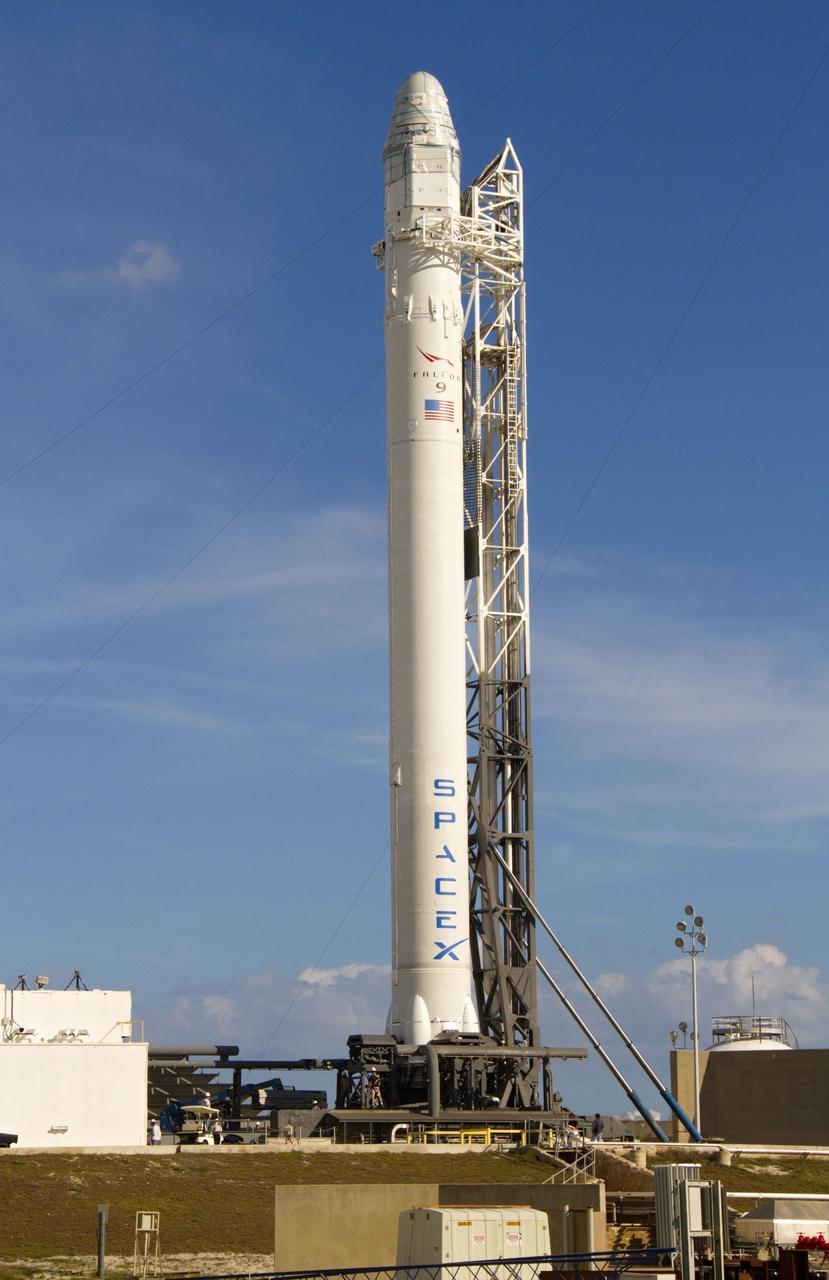
CAPE CANAVERAL, Fla. – Evaluation of a Falcon 9 rocket is under way on Space Launch Complex-40 on Cape Canaveral Air Force Station in Florida following a wet dress rehearsal on March 1, which included loading the rocket with its propellants and a simulated countdown. Atop the rocket is a Dragon capsule. The new rocket and capsule were designed and manufactured by Space Exploration Technologies Corp., or SpaceX, for the company’s upcoming demonstration test flight for NASA’s Commercial Orbital Transportation Services, or COTS, program. Under COTS, NASA has partnered with two private companies to develop the capability to deliver cargo to the International Space Station. During the flight, SpaceX's Dragon capsule will conduct a series of checkout procedures that will test and prove its systems. These tests include rendezvous and berthing with the space station and are intended to lead to regular resupply missions to the station. Liftoff is targeted for April 30 at 12:22 p.m. EDT pending official approval at the Flight Readiness Review on April 16. For more information, visit www.nasa.gov/exploration/commercial/cargo/spacex_index.html. Photo credit: NASA/Cory Huston
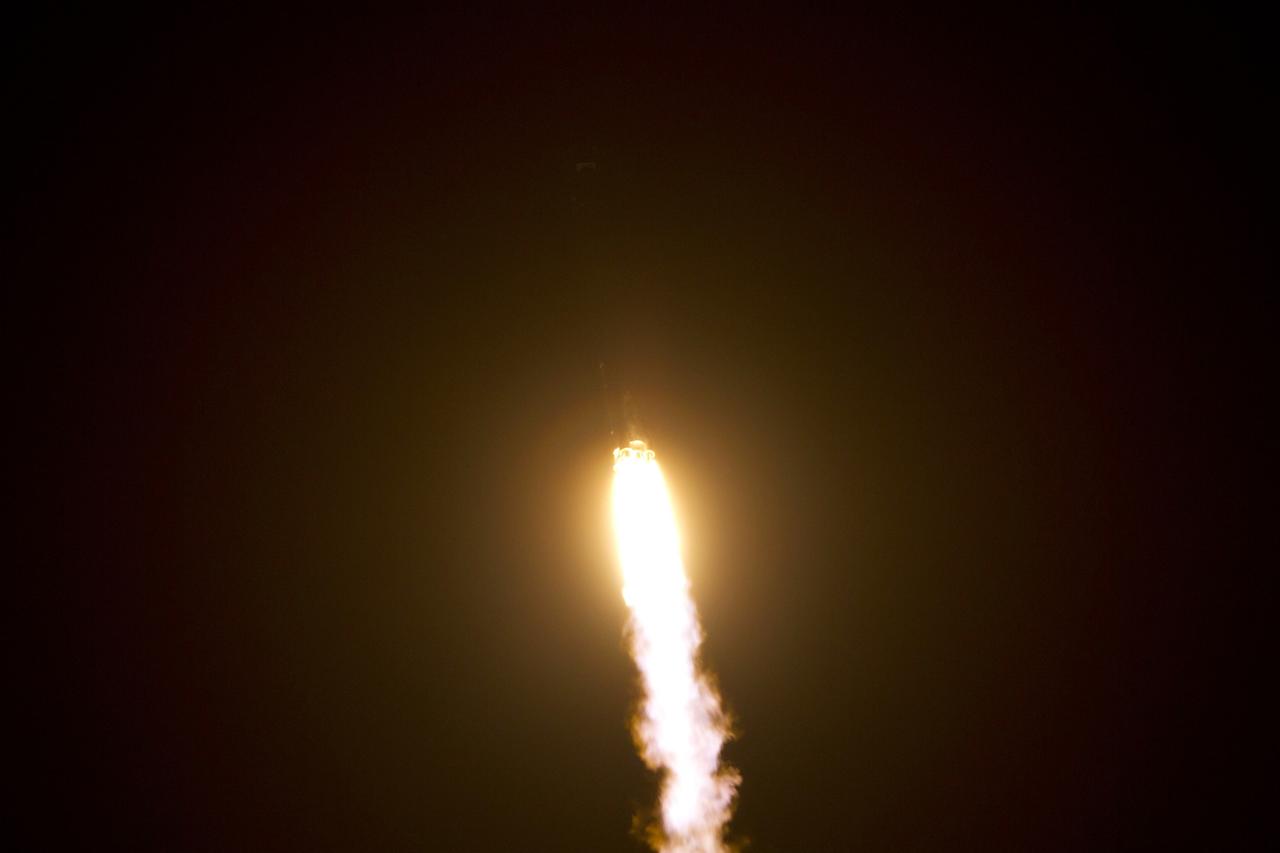
CAPE CANAVERAL, Fla. – On Cape Canaveral Air Force Station in Florida, Space Launch Complex-40 is ablaze as the SpaceX Falcon 9 rocket begins its ascent after liftoff at 3:44 a.m. EDT. The launch is the company's second demonstration test flight for NASA's Commercial Orbital Transportation Services, or COTS, Program. During the flight, the Dragon capsule will conduct a series of check-out procedures to test and prove its systems, including rendezvous and berthing with the International Space Station. If the capsule performs as planned, the cargo and experiments it is carrying will be transferred to the station. The cargo includes food, water and provisions for the station’s Expedition crews, such as clothing, batteries and computer equipment. Under COTS, NASA has partnered with two aerospace companies to deliver cargo to the station. For more information, visit http://www.nasa.gov/spacex. Photo credit: NASA/Rick Wetherington, Tim Powers and Tim Terry
CAPE CANAVERAL, Fla. – Frost and ice breaks away from the SpaceX Falcon 9 rocket following ignition of its nine Merlin engines at 3:44 a.m. EDT at Space Launch Complex-40 on Cape Canaveral Air Force Station in Florida. The launch is the company's second demonstration test flight for NASA's Commercial Orbital Transportation Services, or COTS, Program. During the flight, the Dragon capsule will conduct a series of check-out procedures to test and prove its systems, including rendezvous and berthing with the International Space Station. If the capsule performs as planned, the cargo and experiments it is carrying will be transferred to the station. The cargo includes food, water and provisions for the station’s Expedition crews, such as clothing, batteries and computer equipment. Under COTS, NASA has partnered with two aerospace companies to deliver cargo to the station. For more information, visit http://www.nasa.gov/spacex. Photo credit: NASA/Rick Wetherington, Tim Powers and Tim Terry
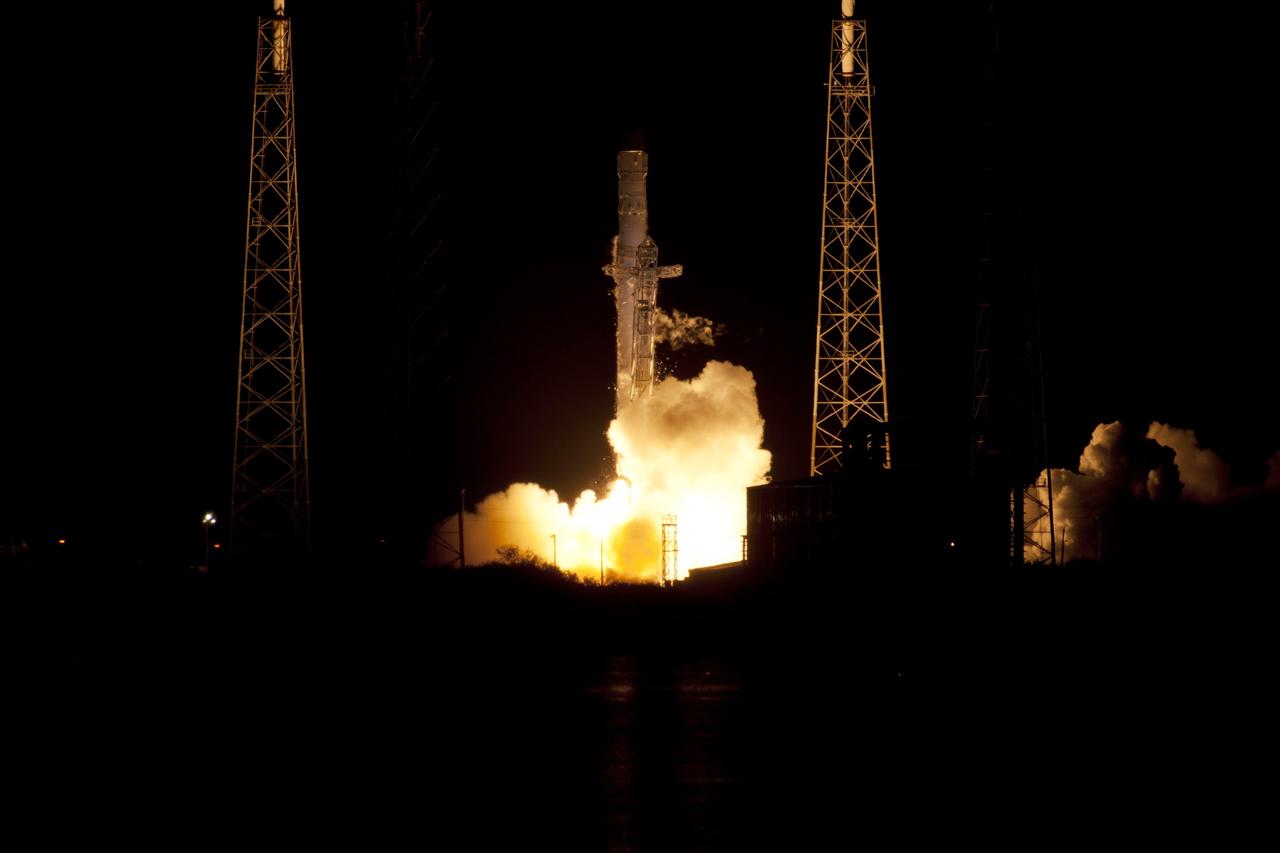
CAPE CANAVERAL, Fla. – The nine Merlin engines beneath the SpaceX Falcon 9 rocket roar to life at 3:44 a.m. EDT at Space Launch Complex-40 on Cape Canaveral Air Force Station in Florida. The launch is the company's second demonstration test flight for NASA's Commercial Orbital Transportation Services, or COTS, Program. During the flight, the Dragon capsule will conduct a series of check-out procedures to test and prove its systems, including rendezvous and berthing with the International Space Station. If the capsule performs as planned, the cargo and experiments it is carrying will be transferred to the station. The cargo includes food, water and provisions for the station’s Expedition crews, such as clothing, batteries and computer equipment. Under COTS, NASA has partnered with two aerospace companies to deliver cargo to the station. For more information, visit http://www.nasa.gov/spacex. Photo credit: NASA/Rick Wetherington, Tim Powers and Tim Terry

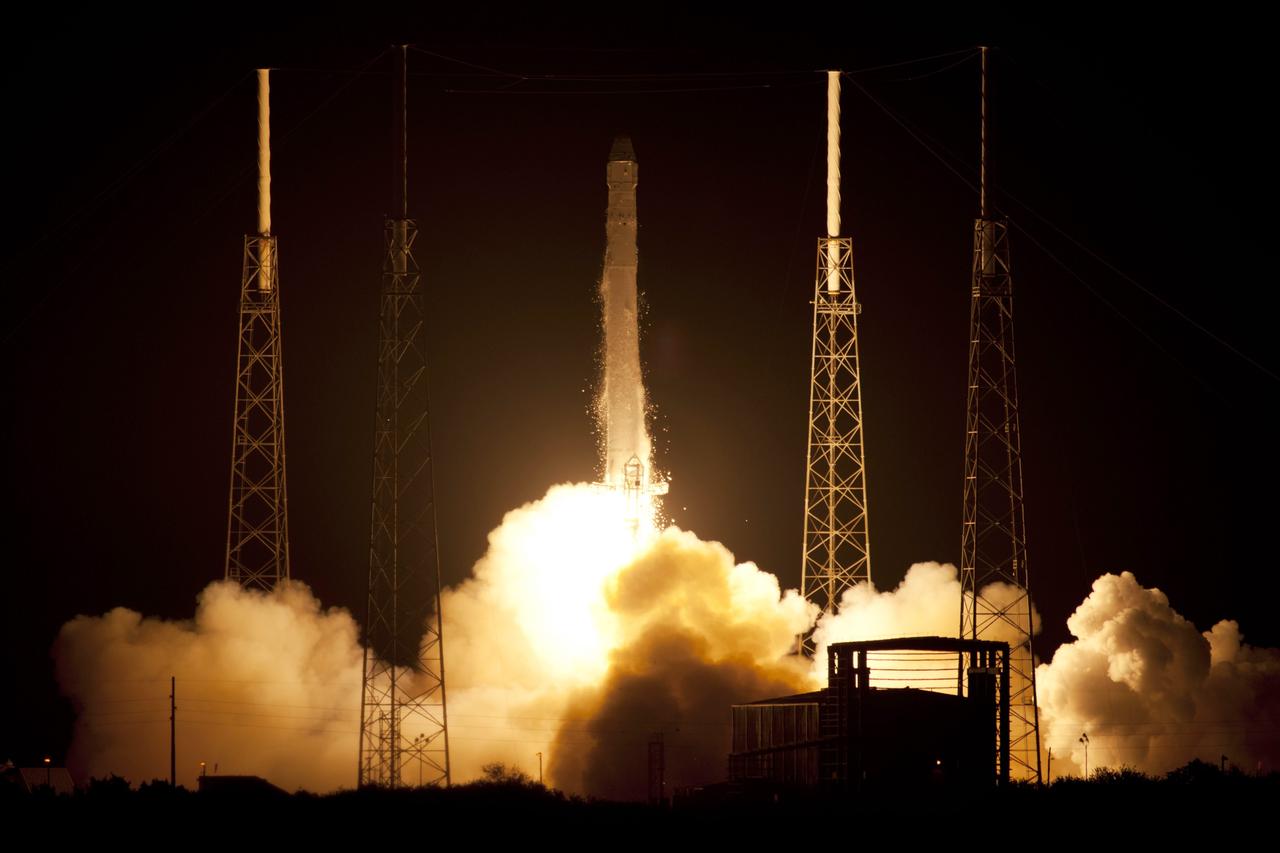
CAPE CANAVERAL, Fla. – On Cape Canaveral Air Force Station in Florida, Space Launch Complex-40 is ablaze as the SpaceX Falcon 9 rocket lifts off at 3:44 a.m. EDT. The launch is the company's second demonstration test flight for NASA's Commercial Orbital Transportation Services, or COTS, Program. During the flight, the Dragon capsule will conduct a series of check-out procedures to test and prove its systems, including rendezvous and berthing with the International Space Station. If the capsule performs as planned, the cargo and experiments it is carrying will be transferred to the station. The cargo includes food, water and provisions for the station’s Expedition crews, such as clothing, batteries and computer equipment. Under COTS, NASA has partnered with two aerospace companies to deliver cargo to the station. For more information, visit http://www.nasa.gov/spacex. Photo credit: NASA/Rick Wetherington, Tim Powers and Tim Terry
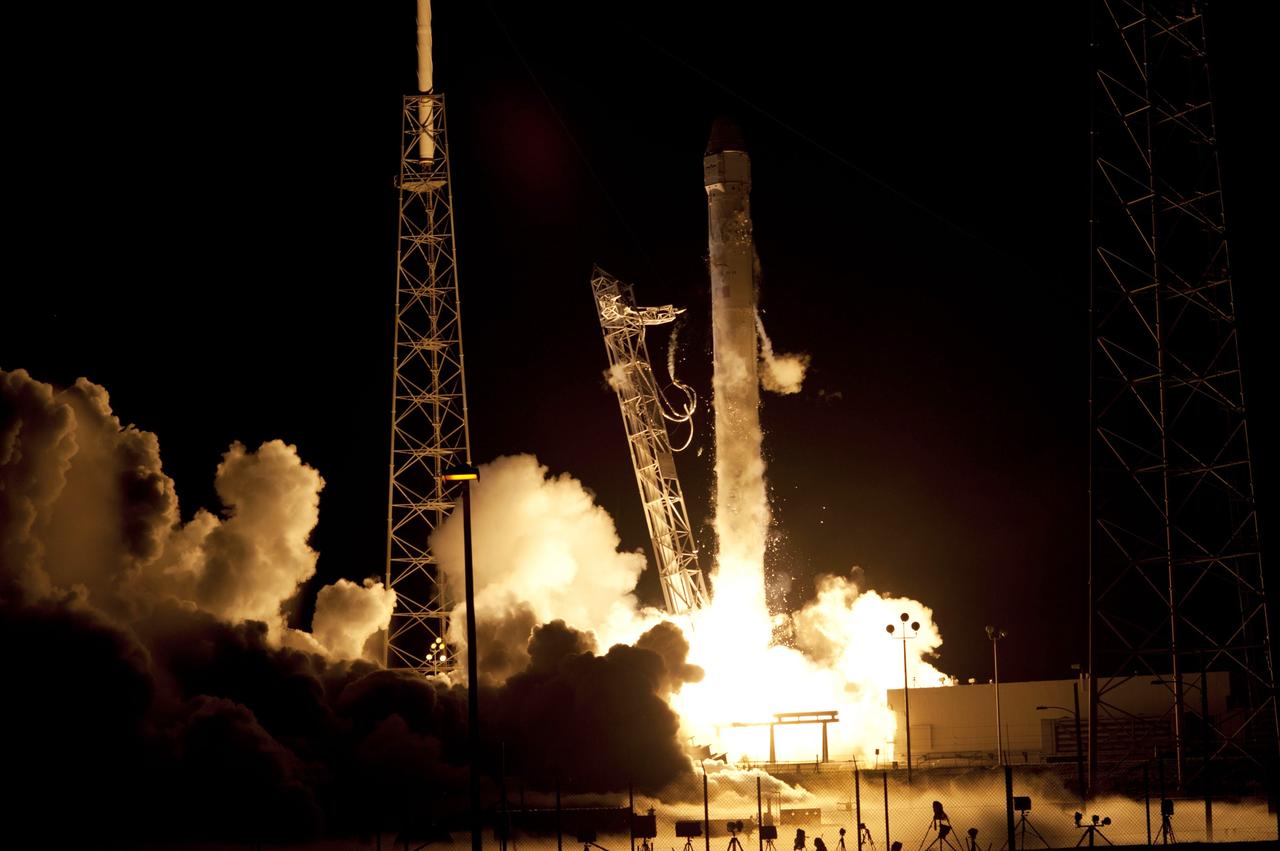
CAPE CANAVERAL, Fla. – Frost and ice breaks away from the SpaceX Falcon 9 rocket following ignition of its nine Merlin engines at 3:44 a.m. EDT at Space Launch Complex-40 on Cape Canaveral Air Force Station in Florida. The launch is the company's second demonstration test flight for NASA's Commercial Orbital Transportation Services, or COTS, Program. During the flight, the Dragon capsule will conduct a series of check-out procedures to test and prove its systems, including rendezvous and berthing with the International Space Station. If the capsule performs as planned, the cargo and experiments it is carrying will be transferred to the station. The cargo includes food, water and provisions for the station’s Expedition crews, such as clothing, batteries and computer equipment. Under COTS, NASA has partnered with two aerospace companies to deliver cargo to the station. For more information, visit http://www.nasa.gov/spacex. Photo credit: NASA/Rick Wetherington, Tim Powers and Tim Terry
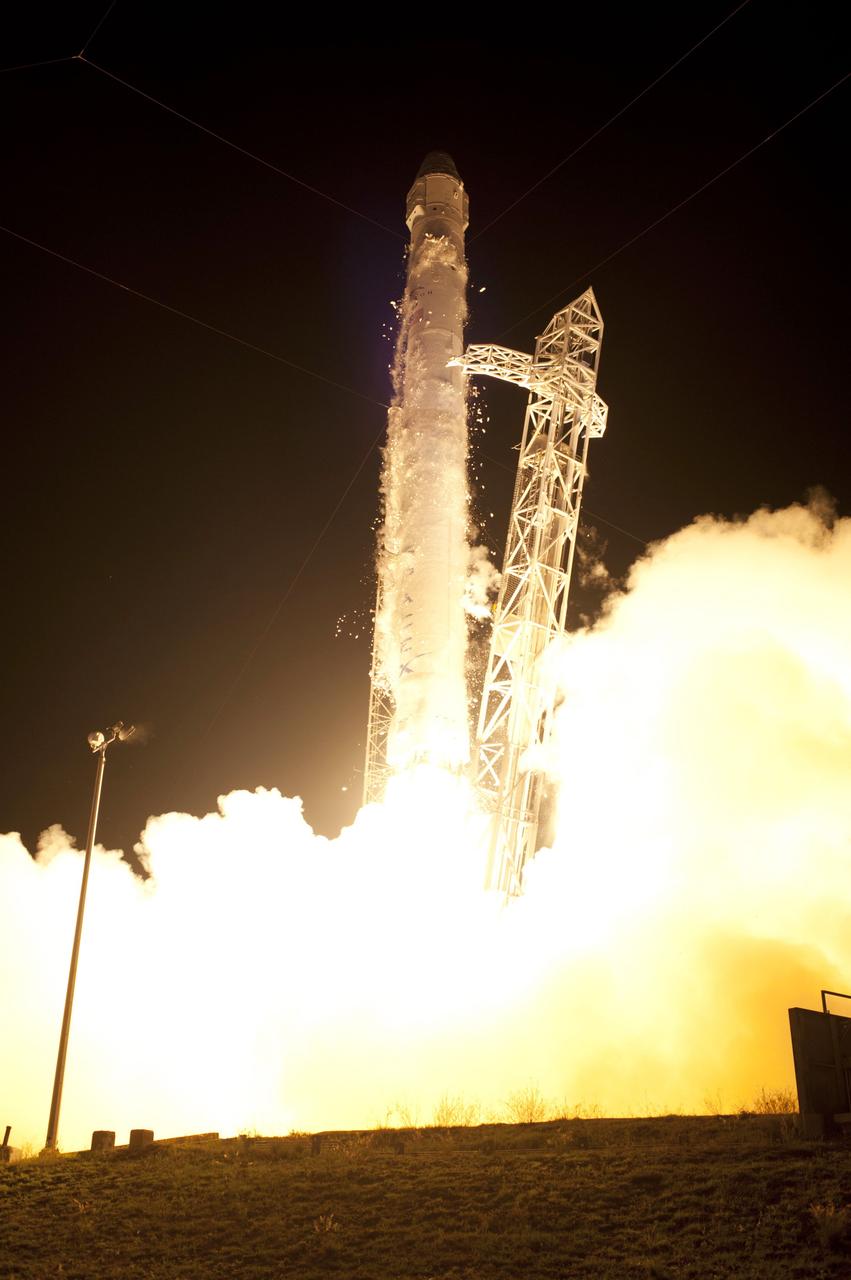
CAPE CANAVERAL, Fla. – Nine Merlin engines ignite under the SpaceX Falcon 9 rocket at 3:44 a.m. EDT at Space Launch Complex-40 on Cape Canaveral Air Force Station in Florida. The launch is the company's second demonstration test flight for NASA's Commercial Orbital Transportation Services, or COTS, Program. During the flight, the Dragon capsule will conduct a series of check-out procedures to test and prove its systems, including rendezvous and berthing with the International Space Station. If the capsule performs as planned, the cargo and experiments it is carrying will be transferred to the station. The cargo includes food, water and provisions for the station’s Expedition crews, such as clothing, batteries and computer equipment. Under COTS, NASA has partnered with two aerospace companies to deliver cargo to the station. For more information, visit http://www.nasa.gov/spacex. Photo credit: NASA/Rick Wetherington, Tim Powers and Tim Terry
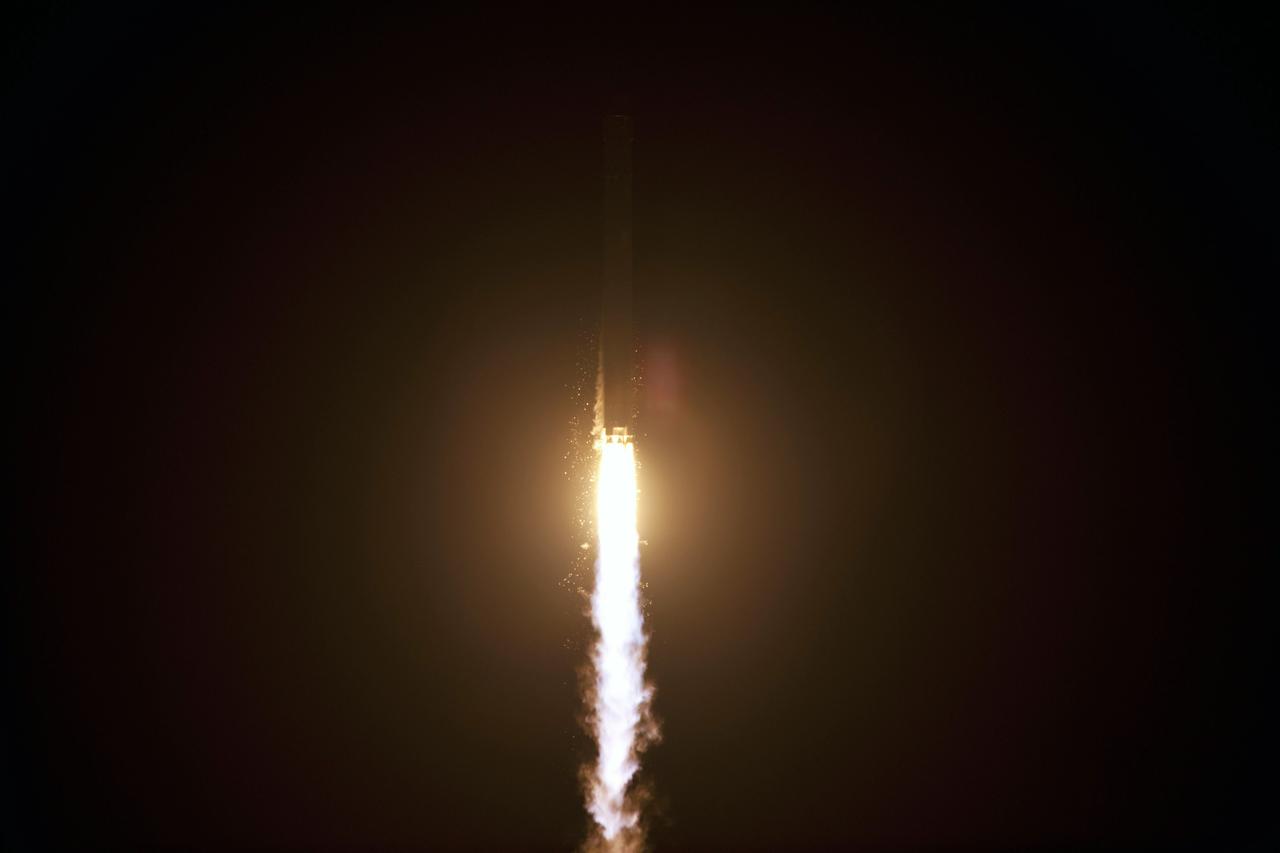
CAPE CANAVERAL, Fla. – On Cape Canaveral Air Force Station in Florida, Space Launch Complex-40 is ablaze as the SpaceX Falcon 9 rocket begins its ascent after liftoff at 3:44 a.m. EDT. The launch is the company's second demonstration test flight for NASA's Commercial Orbital Transportation Services, or COTS, Program. During the flight, the Dragon capsule will conduct a series of check-out procedures to test and prove its systems, including rendezvous and berthing with the International Space Station. If the capsule performs as planned, the cargo and experiments it is carrying will be transferred to the station. The cargo includes food, water and provisions for the station’s Expedition crews, such as clothing, batteries and computer equipment. Under COTS, NASA has partnered with two aerospace companies to deliver cargo to the station. For more information, visit http://www.nasa.gov/spacex. Photo credit: NASA/Rick Wetherington, Tim Powers and Tim Terry

CAPE CANAVERAL, Fla. – Frost and ice breaks away from the SpaceX Falcon 9 rocket following ignition of its nine Merlin engines at 3:44 a.m. EDT at Space Launch Complex-40 on Cape Canaveral Air Force Station in Florida. The launch is the company's second demonstration test flight for NASA's Commercial Orbital Transportation Services, or COTS, Program. During the flight, the Dragon capsule will conduct a series of check-out procedures to test and prove its systems, including rendezvous and berthing with the International Space Station. If the capsule performs as planned, the cargo and experiments it is carrying will be transferred to the station. The cargo includes food, water and provisions for the station’s Expedition crews, such as clothing, batteries and computer equipment. Under COTS, NASA has partnered with two aerospace companies to deliver cargo to the station. For more information, visit http://www.nasa.gov/spacex. Photo credit: NASA/Rick Wetherington, Tim Powers and Tim Terry
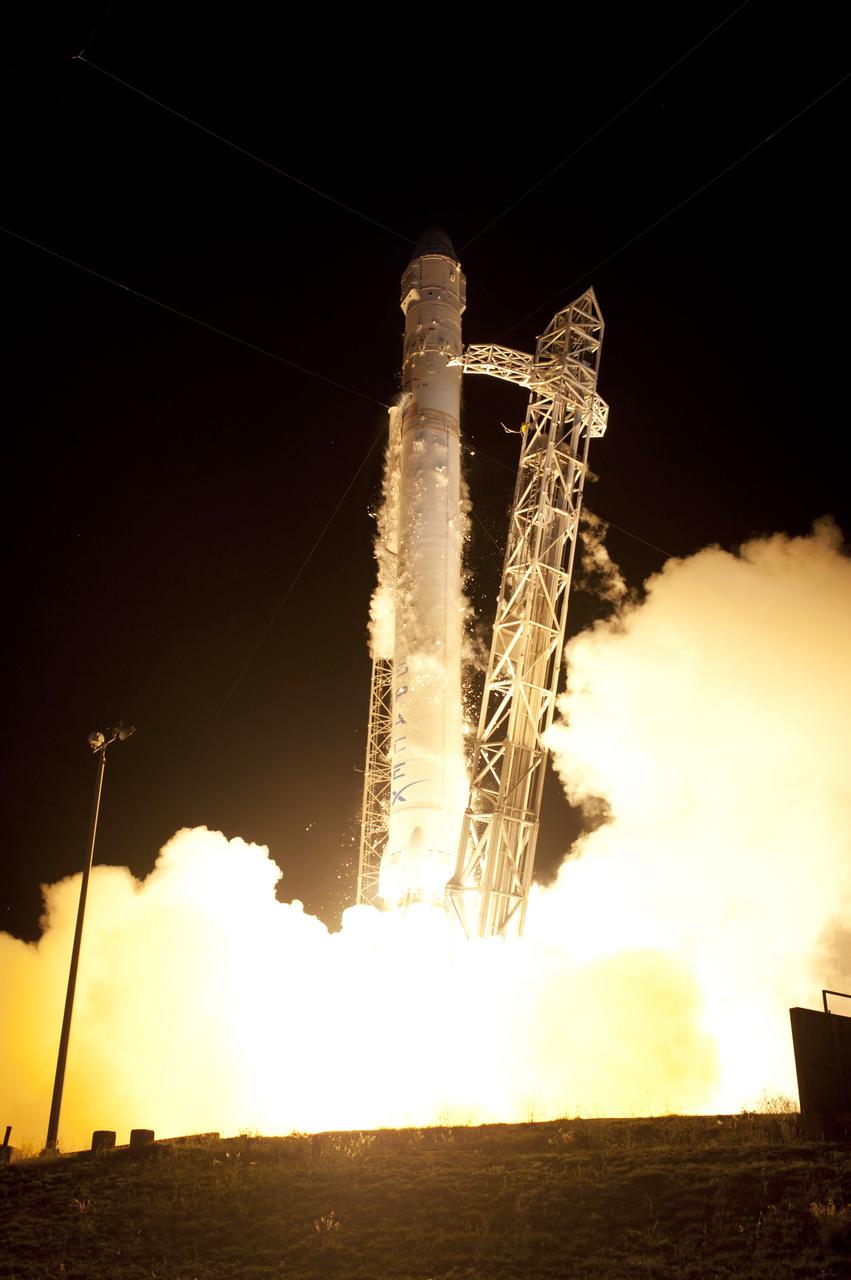
CAPE CANAVERAL, Fla. – Nine Merlin engines ignite under the SpaceX Falcon 9 rocket at 3:44 a.m. EDT at Space Launch Complex-40 on Cape Canaveral Air Force Station in Florida. The launch is the company's second demonstration test flight for NASA's Commercial Orbital Transportation Services, or COTS, Program. During the flight, the Dragon capsule will conduct a series of check-out procedures to test and prove its systems, including rendezvous and berthing with the International Space Station. If the capsule performs as planned, the cargo and experiments it is carrying will be transferred to the station. The cargo includes food, water and provisions for the station’s Expedition crews, such as clothing, batteries and computer equipment. Under COTS, NASA has partnered with two aerospace companies to deliver cargo to the station. For more information, visit http://www.nasa.gov/spacex. Photo credit: NASA/Rick Wetherington, Tim Powers and Tim Terry
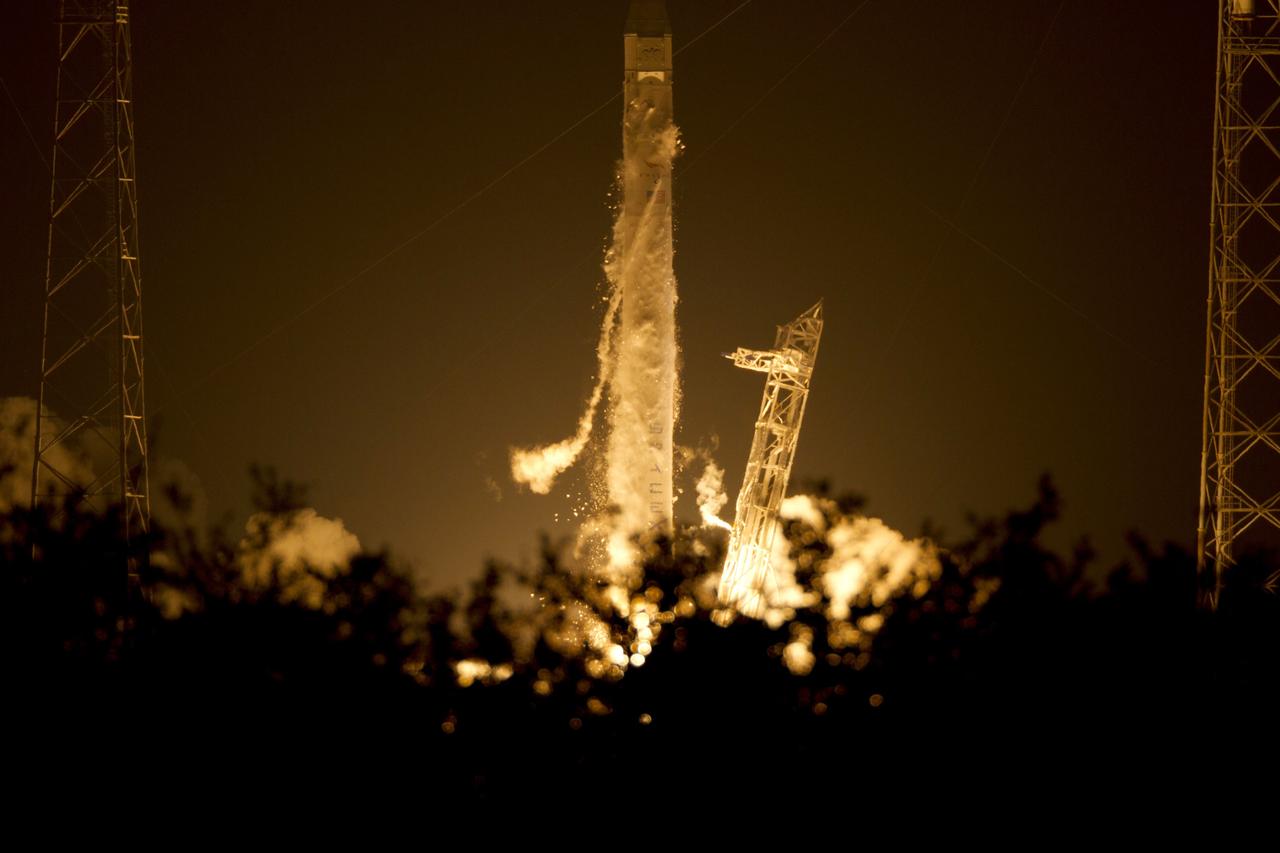
CAPE CANAVERAL, Fla. – Nine Merlin engines ignite under the SpaceX Falcon 9 rocket at 3:44 a.m. EDT at Space Launch Complex-40 on Cape Canaveral Air Force Station in Florida. The launch is the company's second demonstration test flight for NASA's Commercial Orbital Transportation Services, or COTS, Program. During the flight, the Dragon capsule will conduct a series of check-out procedures to test and prove its systems, including rendezvous and berthing with the International Space Station. If the capsule performs as planned, the cargo and experiments it is carrying will be transferred to the station. The cargo includes food, water and provisions for the station’s Expedition crews, such as clothing, batteries and computer equipment. Under COTS, NASA has partnered with two aerospace companies to deliver cargo to the station. For more information, visit http://www.nasa.gov/spacex. Photo credit: NASA/Rick Wetherington, Tim Powers and Tim Terry
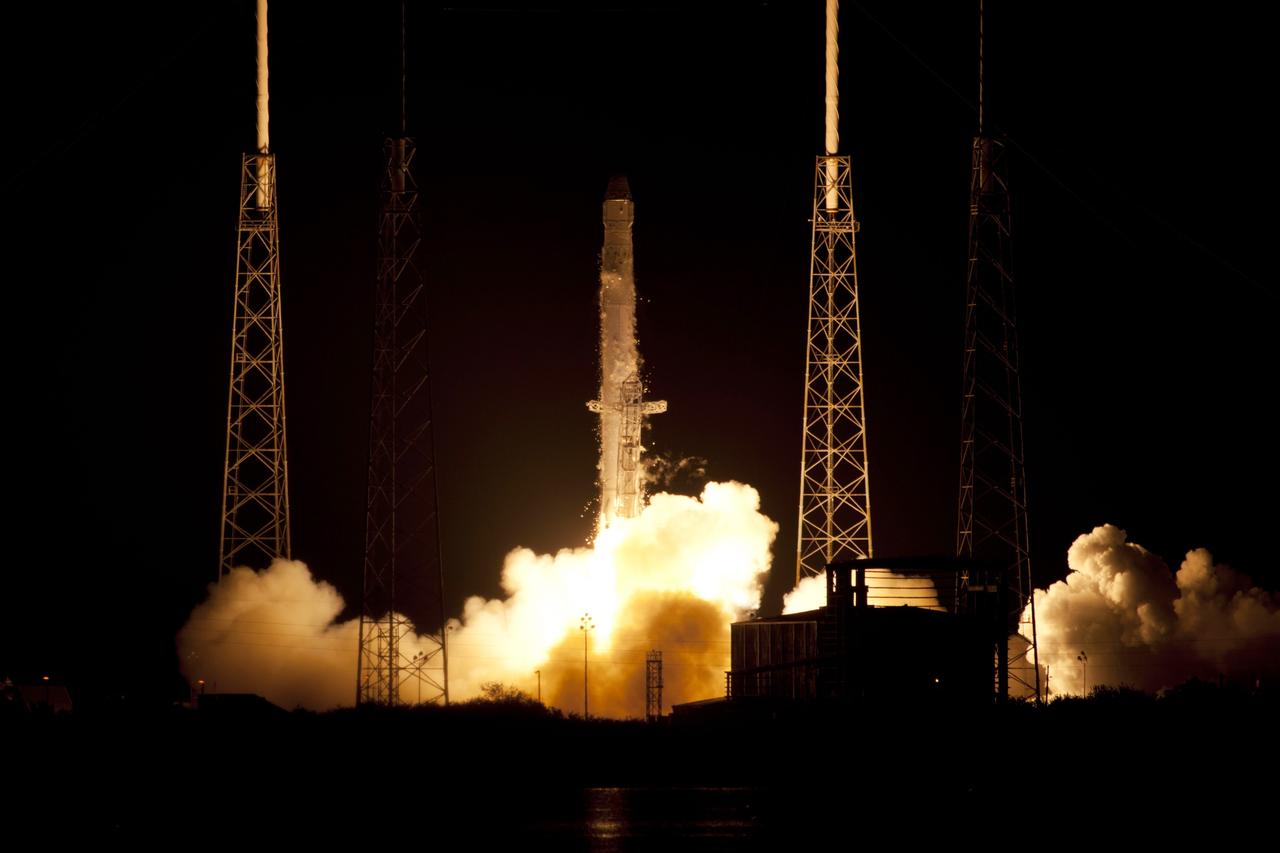
CAPE CANAVERAL, Fla. – Frost and ice breaks away from the SpaceX Falcon 9 rocket following ignition of its nine Merlin engines at 3:44 a.m. EDT at Space Launch Complex-40 on Cape Canaveral Air Force Station in Florida. The launch is the company's second demonstration test flight for NASA's Commercial Orbital Transportation Services, or COTS, Program. During the flight, the Dragon capsule will conduct a series of check-out procedures to test and prove its systems, including rendezvous and berthing with the International Space Station. If the capsule performs as planned, the cargo and experiments it is carrying will be transferred to the station. The cargo includes food, water and provisions for the station’s Expedition crews, such as clothing, batteries and computer equipment. Under COTS, NASA has partnered with two aerospace companies to deliver cargo to the station. For more information, visit http://www.nasa.gov/spacex. Photo credit: NASA/Rick Wetherington, Tim Powers and Tim Terry
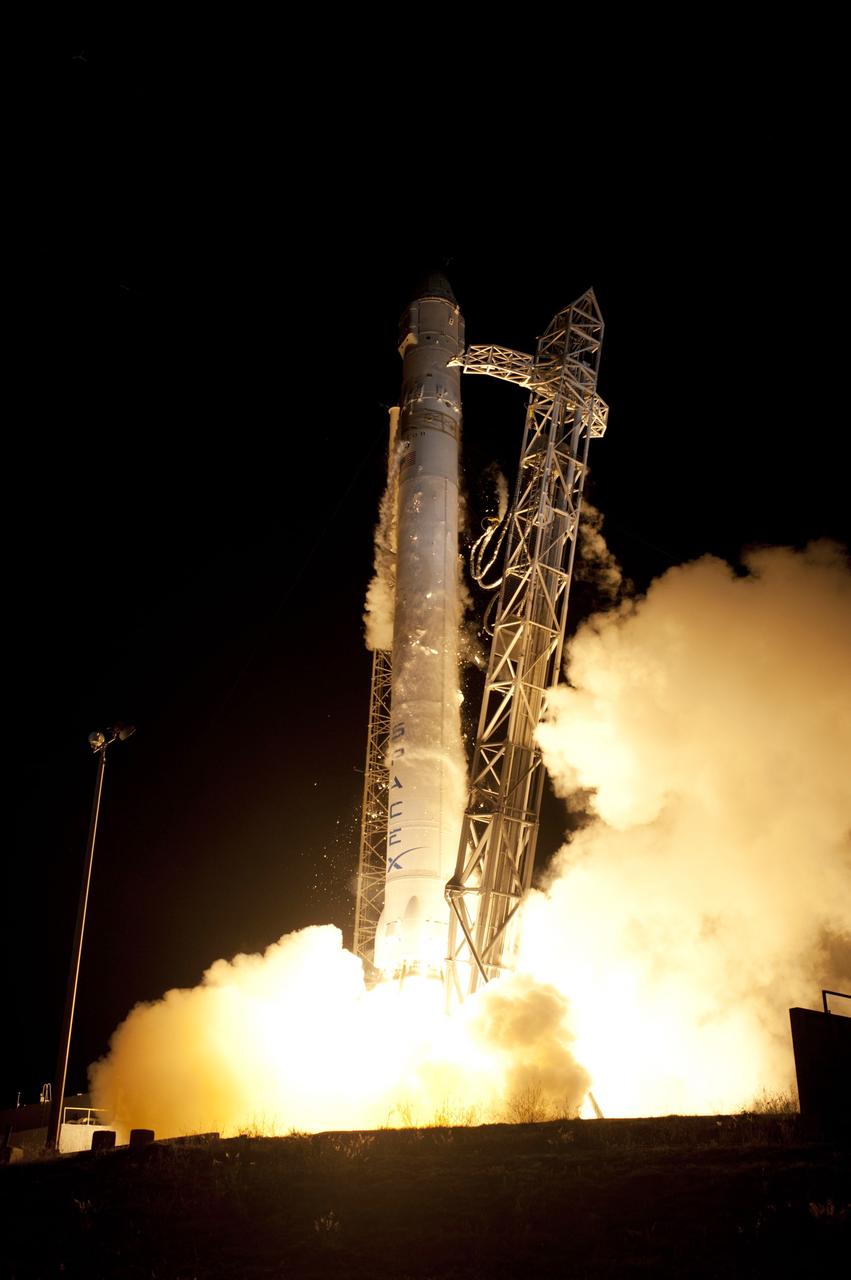
CAPE CANAVERAL, Fla. – Nine Merlin engines ignite under the SpaceX Falcon 9 rocket at 3:44 a.m. EDT at Space Launch Complex-40 on Cape Canaveral Air Force Station in Florida. The launch is the company's second demonstration test flight for NASA's Commercial Orbital Transportation Services, or COTS, Program. During the flight, the Dragon capsule will conduct a series of check-out procedures to test and prove its systems, including rendezvous and berthing with the International Space Station. If the capsule performs as planned, the cargo and experiments it is carrying will be transferred to the station. The cargo includes food, water and provisions for the station’s Expedition crews, such as clothing, batteries and computer equipment. Under COTS, NASA has partnered with two aerospace companies to deliver cargo to the station. For more information, visit http://www.nasa.gov/spacex. Photo credit: NASA/Rick Wetherington, Tim Powers and Tim Terry
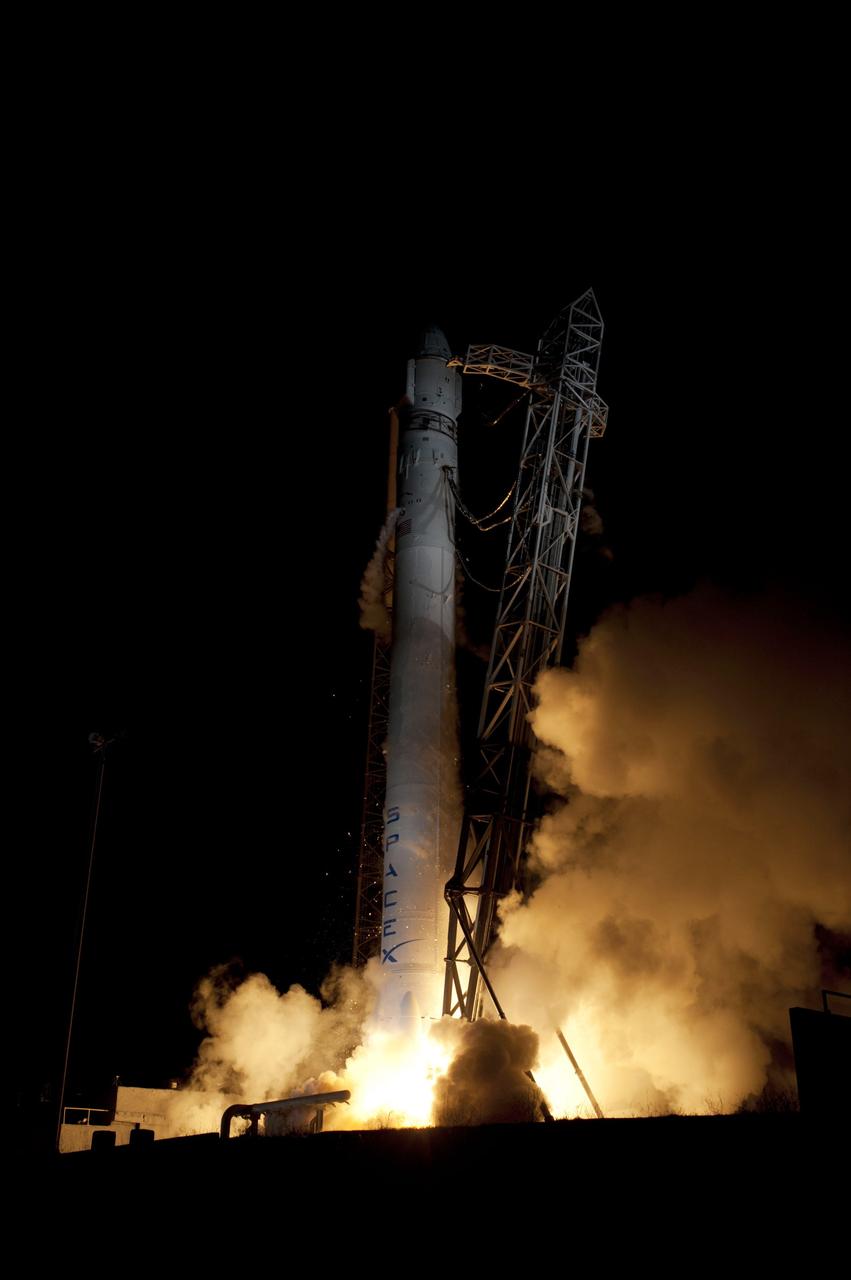
CAPE CANAVERAL, Fla. – Nine Merlin engines ignite under the SpaceX Falcon 9 rocket at 3:44 a.m. EDT at Space Launch Complex-40 on Cape Canaveral Air Force Station in Florida. The launch is the company's second demonstration test flight for NASA's Commercial Orbital Transportation Services, or COTS, Program. During the flight, the Dragon capsule will conduct a series of check-out procedures to test and prove its systems, including rendezvous and berthing with the International Space Station. If the capsule performs as planned, the cargo and experiments it is carrying will be transferred to the station. The cargo includes food, water and provisions for the station’s Expedition crews, such as clothing, batteries and computer equipment. Under COTS, NASA has partnered with two aerospace companies to deliver cargo to the station. For more information, visit http://www.nasa.gov/spacex. Photo credit: NASA/Rick Wetherington, Tim Powers and Tim Terry
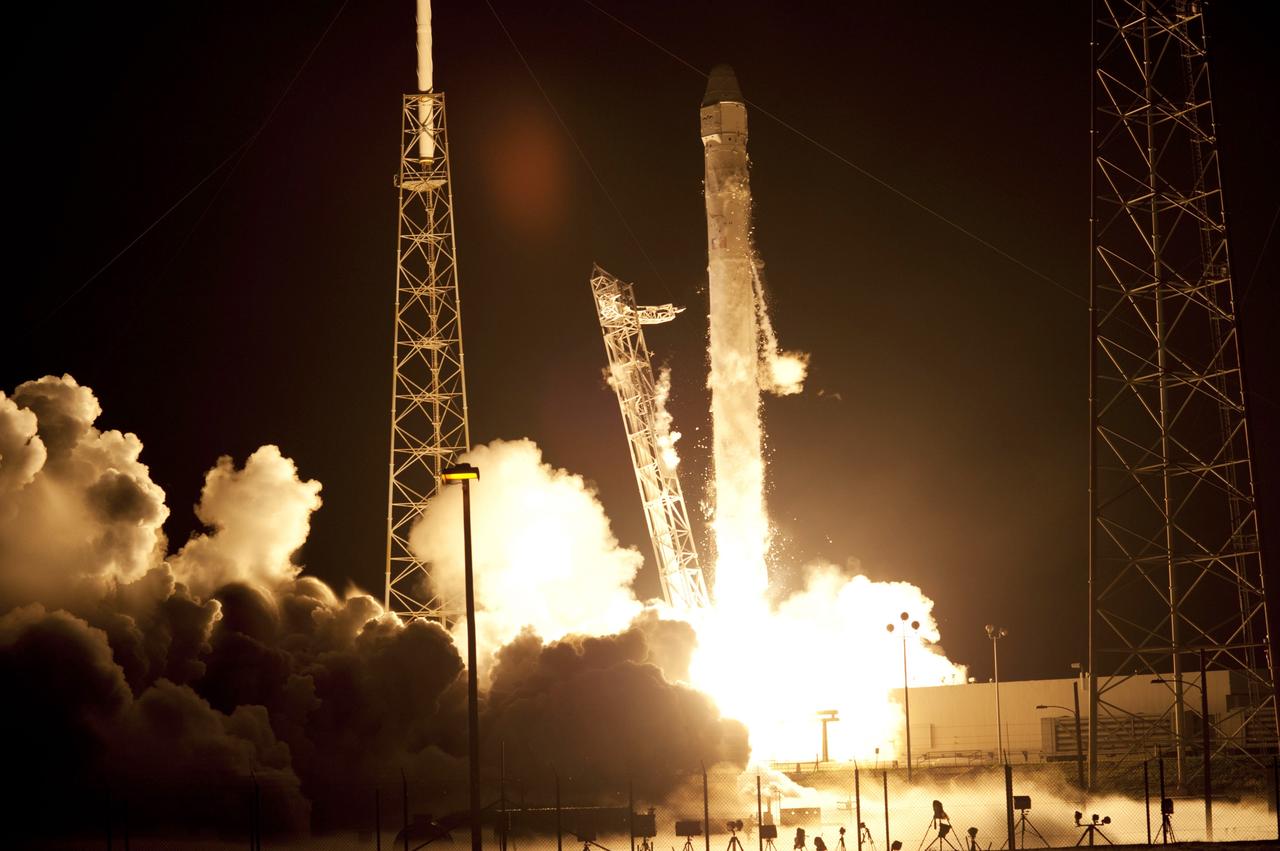
CAPE CANAVERAL, Fla. – Frost and ice breaks away from the SpaceX Falcon 9 rocket following ignition of its nine Merlin engines at 3:44 a.m. EDT at Space Launch Complex-40 on Cape Canaveral Air Force Station in Florida. The launch is the company's second demonstration test flight for NASA's Commercial Orbital Transportation Services, or COTS, Program. During the flight, the Dragon capsule will conduct a series of check-out procedures to test and prove its systems, including rendezvous and berthing with the International Space Station. If the capsule performs as planned, the cargo and experiments it is carrying will be transferred to the station. The cargo includes food, water and provisions for the station’s Expedition crews, such as clothing, batteries and computer equipment. Under COTS, NASA has partnered with two aerospace companies to deliver cargo to the station. For more information, visit http://www.nasa.gov/spacex. Photo credit: NASA/Rick Wetherington, Tim Powers and Tim Terry
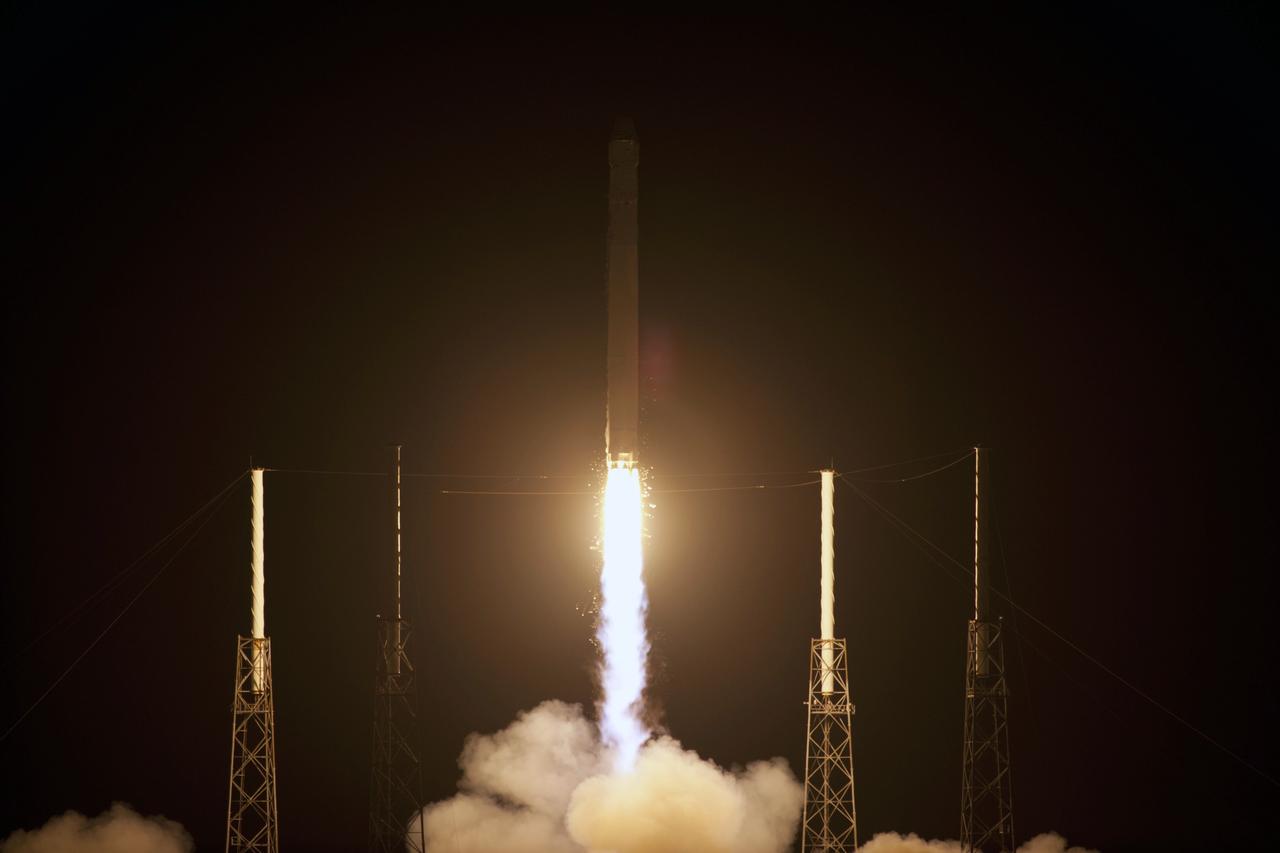
CAPE CANAVERAL, Fla. – On Cape Canaveral Air Force Station in Florida, Space Launch Complex-40 is ablaze as the SpaceX Falcon 9 rocket begins its ascent after liftoff at 3:44 a.m. EDT. The launch is the company's second demonstration test flight for NASA's Commercial Orbital Transportation Services, or COTS, Program. During the flight, the Dragon capsule will conduct a series of check-out procedures to test and prove its systems, including rendezvous and berthing with the International Space Station. If the capsule performs as planned, the cargo and experiments it is carrying will be transferred to the station. The cargo includes food, water and provisions for the station’s Expedition crews, such as clothing, batteries and computer equipment. Under COTS, NASA has partnered with two aerospace companies to deliver cargo to the station. For more information, visit http://www.nasa.gov/spacex. Photo credit: NASA/Rick Wetherington, Tim Powers and Tim Terry
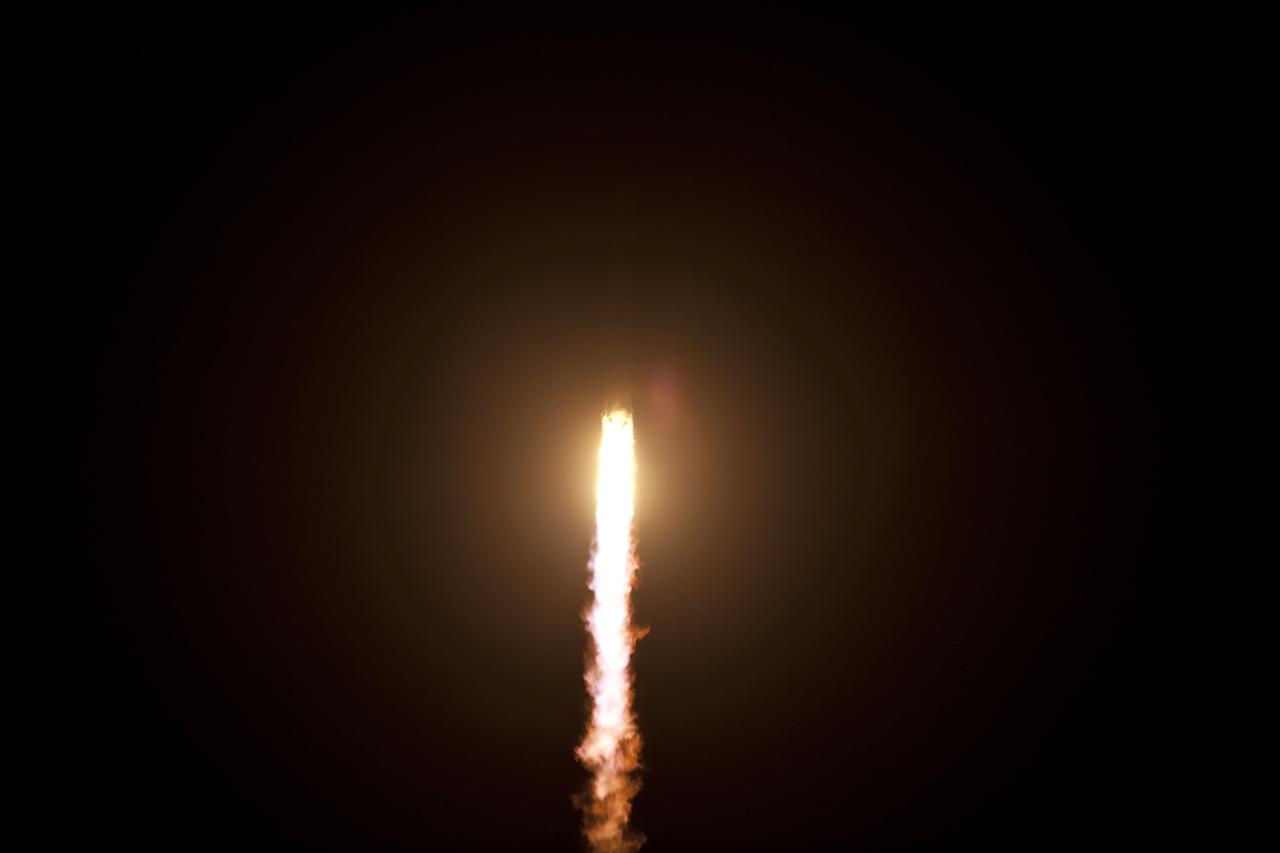
CAPE CANAVERAL, Fla. – On Cape Canaveral Air Force Station in Florida, Space Launch Complex-40 is ablaze as the SpaceX Falcon 9 rocket begins its ascent after liftoff at 3:44 a.m. EDT. The launch is the company's second demonstration test flight for NASA's Commercial Orbital Transportation Services, or COTS, Program. During the flight, the Dragon capsule will conduct a series of check-out procedures to test and prove its systems, including rendezvous and berthing with the International Space Station. If the capsule performs as planned, the cargo and experiments it is carrying will be transferred to the station. The cargo includes food, water and provisions for the station’s Expedition crews, such as clothing, batteries and computer equipment. Under COTS, NASA has partnered with two aerospace companies to deliver cargo to the station. For more information, visit http://www.nasa.gov/spacex. Photo credit: NASA/Rick Wetherington, Tim Powers and Tim Terry
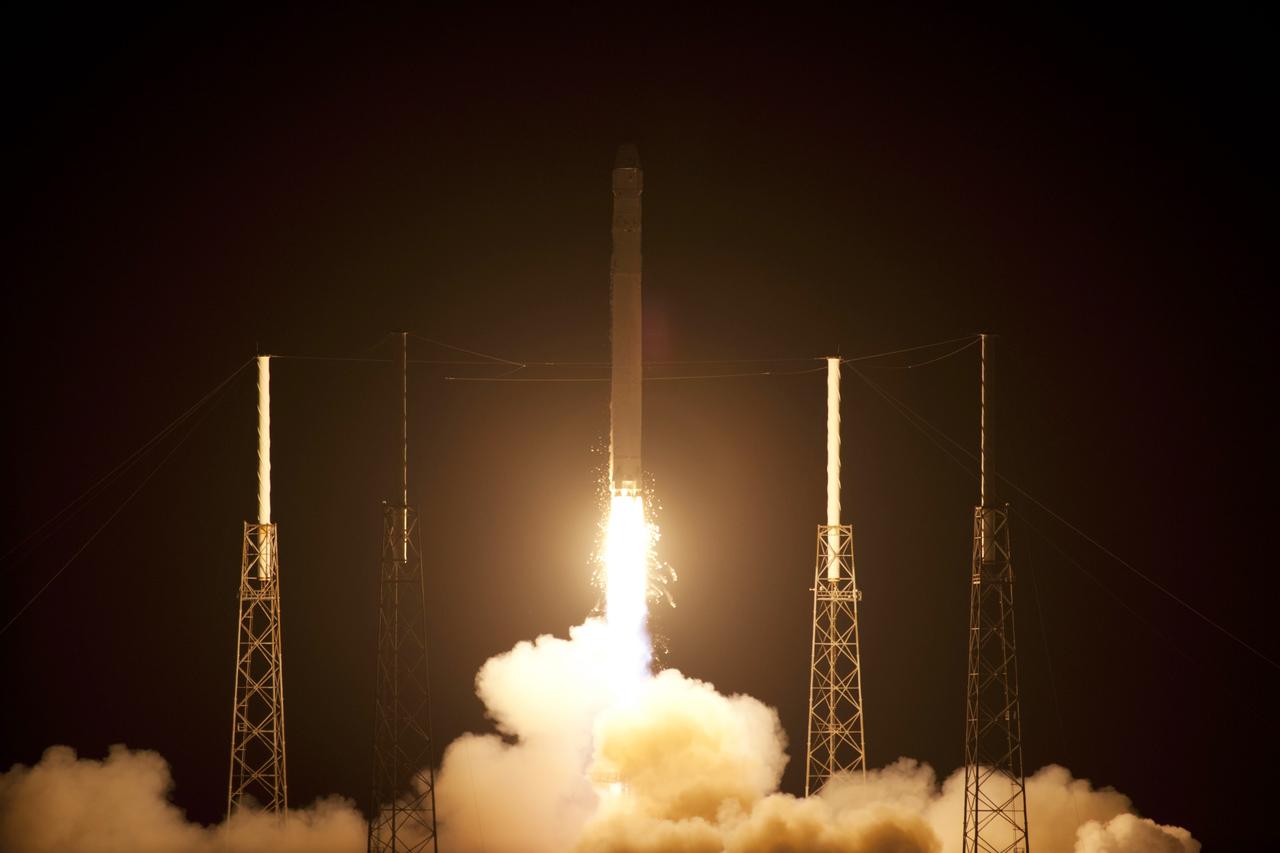
CAPE CANAVERAL, Fla. – On Cape Canaveral Air Force Station in Florida, Space Launch Complex-40 is ablaze as the SpaceX Falcon 9 rocket begins its ascent after liftoff at 3:44 a.m. EDT. The launch is the company's second demonstration test flight for NASA's Commercial Orbital Transportation Services, or COTS, Program. During the flight, the Dragon capsule will conduct a series of check-out procedures to test and prove its systems, including rendezvous and berthing with the International Space Station. If the capsule performs as planned, the cargo and experiments it is carrying will be transferred to the station. The cargo includes food, water and provisions for the station’s Expedition crews, such as clothing, batteries and computer equipment. Under COTS, NASA has partnered with two aerospace companies to deliver cargo to the station. For more information, visit http://www.nasa.gov/spacex. Photo credit: NASA/Rick Wetherington, Tim Powers and Tim Terry
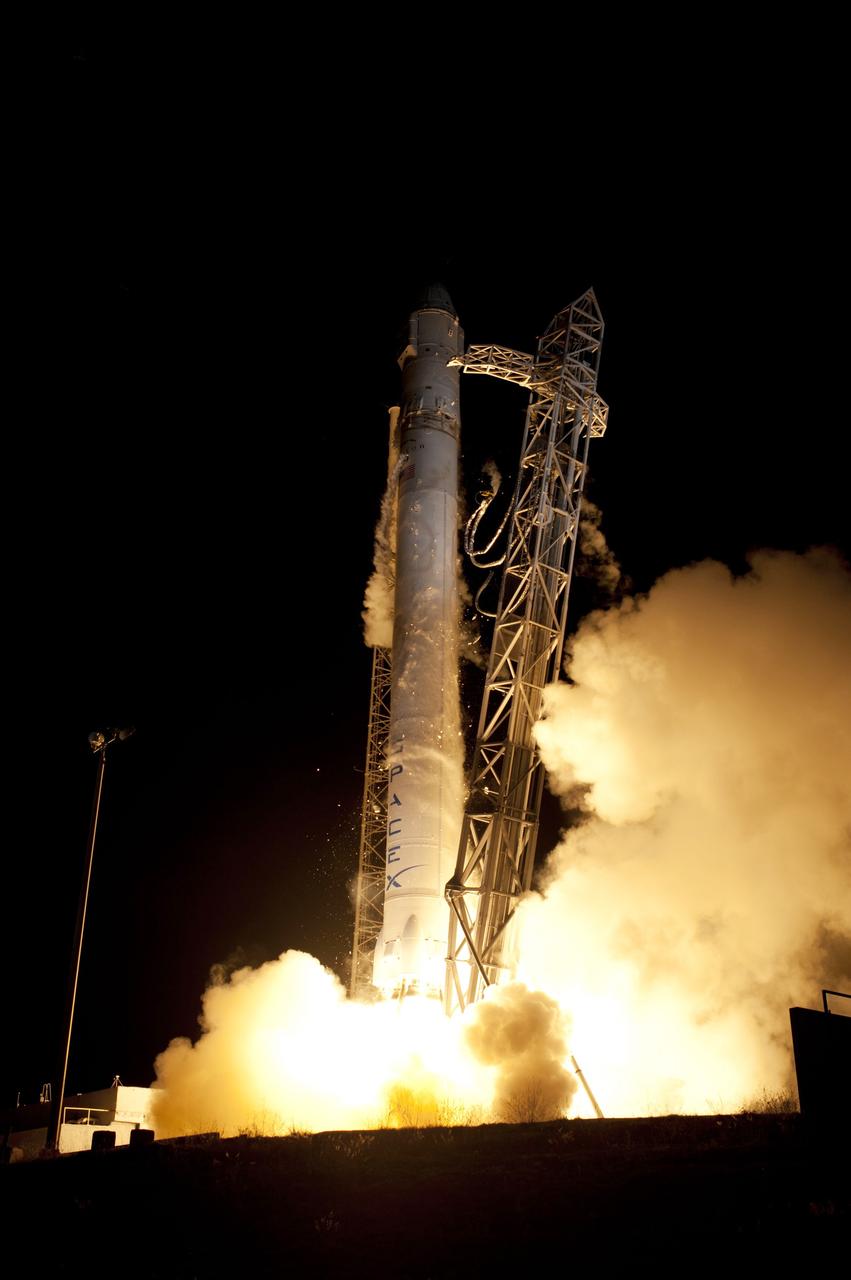
CAPE CANAVERAL, Fla. – Nine Merlin engines ignite under the SpaceX Falcon 9 rocket at 3:44 a.m. EDT at Space Launch Complex-40 on Cape Canaveral Air Force Station in Florida. The launch is the company's second demonstration test flight for NASA's Commercial Orbital Transportation Services, or COTS, Program. During the flight, the Dragon capsule will conduct a series of check-out procedures to test and prove its systems, including rendezvous and berthing with the International Space Station. If the capsule performs as planned, the cargo and experiments it is carrying will be transferred to the station. The cargo includes food, water and provisions for the station’s Expedition crews, such as clothing, batteries and computer equipment. Under COTS, NASA has partnered with two aerospace companies to deliver cargo to the station. For more information, visit http://www.nasa.gov/spacex. Photo credit: NASA/Rick Wetherington, Tim Powers and Tim Terry
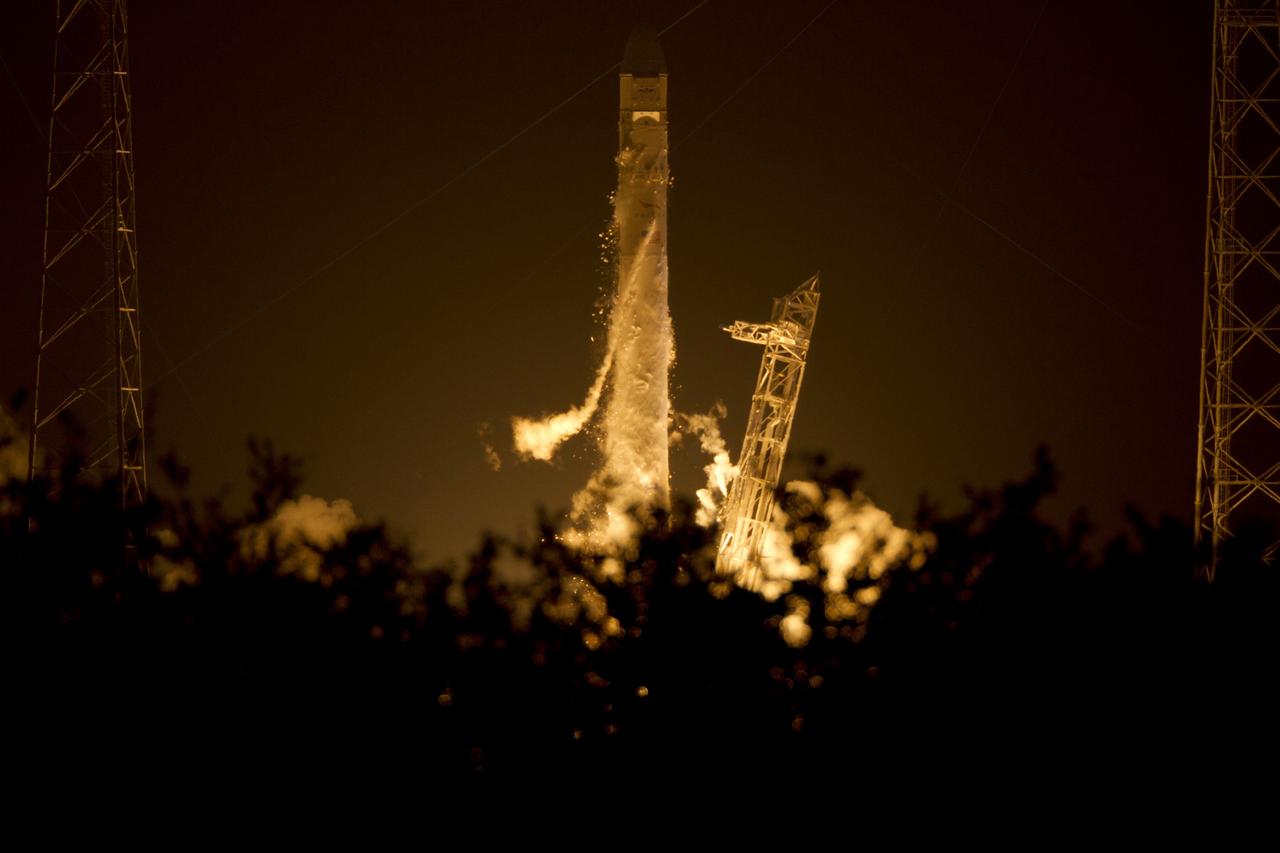
CAPE CANAVERAL, Fla. – Nine Merlin engines ignite under the SpaceX Falcon 9 rocket at 3:44 a.m. EDT at Space Launch Complex-40 on Cape Canaveral Air Force Station in Florida. The launch is the company's second demonstration test flight for NASA's Commercial Orbital Transportation Services, or COTS, Program. During the flight, the Dragon capsule will conduct a series of check-out procedures to test and prove its systems, including rendezvous and berthing with the International Space Station. If the capsule performs as planned, the cargo and experiments it is carrying will be transferred to the station. The cargo includes food, water and provisions for the station’s Expedition crews, such as clothing, batteries and computer equipment. Under COTS, NASA has partnered with two aerospace companies to deliver cargo to the station. For more information, visit http://www.nasa.gov/spacex. Photo credit: NASA/Rick Wetherington, Tim Powers and Tim Terry
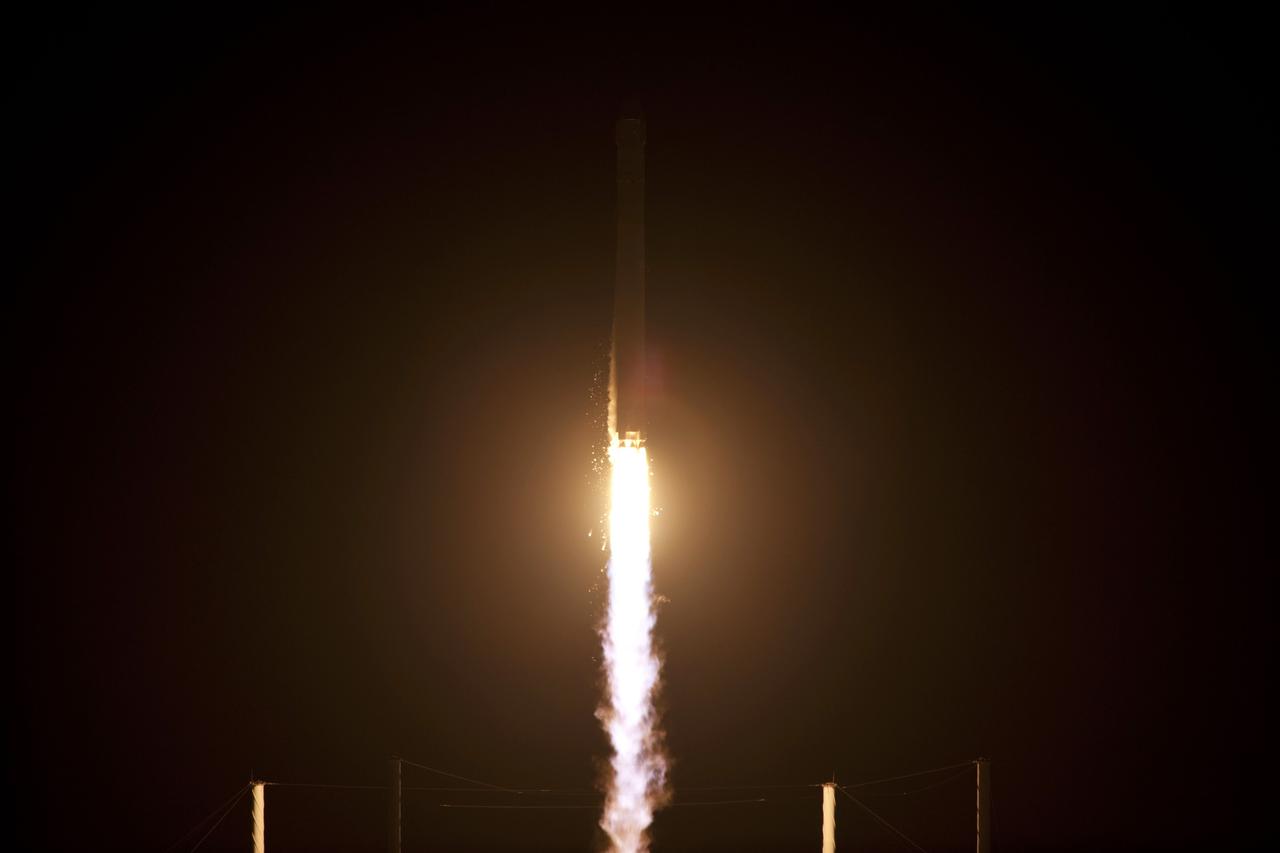
CAPE CANAVERAL, Fla. – On Cape Canaveral Air Force Station in Florida, Space Launch Complex-40 is ablaze as the SpaceX Falcon 9 rocket begins its ascent after liftoff at 3:44 a.m. EDT. The launch is the company's second demonstration test flight for NASA's Commercial Orbital Transportation Services, or COTS, Program. During the flight, the Dragon capsule will conduct a series of check-out procedures to test and prove its systems, including rendezvous and berthing with the International Space Station. If the capsule performs as planned, the cargo and experiments it is carrying will be transferred to the station. The cargo includes food, water and provisions for the station’s Expedition crews, such as clothing, batteries and computer equipment. Under COTS, NASA has partnered with two aerospace companies to deliver cargo to the station. For more information, visit http://www.nasa.gov/spacex. Photo credit: NASA/Rick Wetherington, Tim Powers and Tim Terry
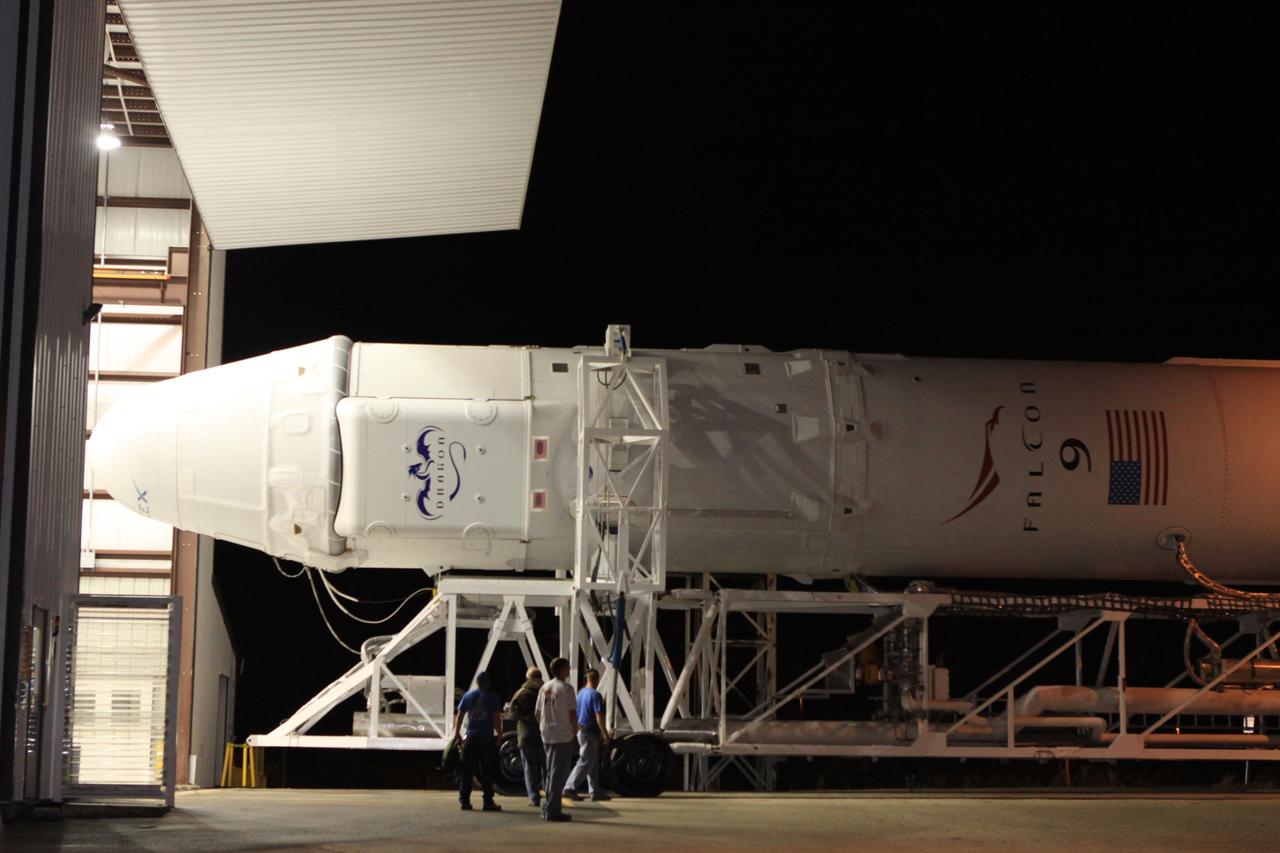
CAPE CANAVERAL, Fla. – The SpaceX Falcon 9 rocket begins its move from the processing facility to the pad at Space Launch Complex-40 on Cape Canaveral Air Force Station in Florida. Liftoff with the SpaceX Dragon capsule aboard is set for 4:55 a.m. EDT on May 19. The launch will be the company's second demonstration test flight for NASA's Commercial Orbital Transportation Services Program, or COTS. During the flight, the capsule will conduct a series of check-out procedures to test and prove its systems, including rendezvous and berthing with the International Space Station. If the capsule performs as planned, the cargo and experiments it is carrying will be transferred to the station. The cargo includes food, water and provisions for the station’s Expedition crews, such as clothing, batteries and computer equipment. Under COTS, NASA has partnered with two aerospace companies to deliver cargo to the station. For more information, visit http://www.nasa.gov/spacex. Photo credit: NASA/Jim Grossmann
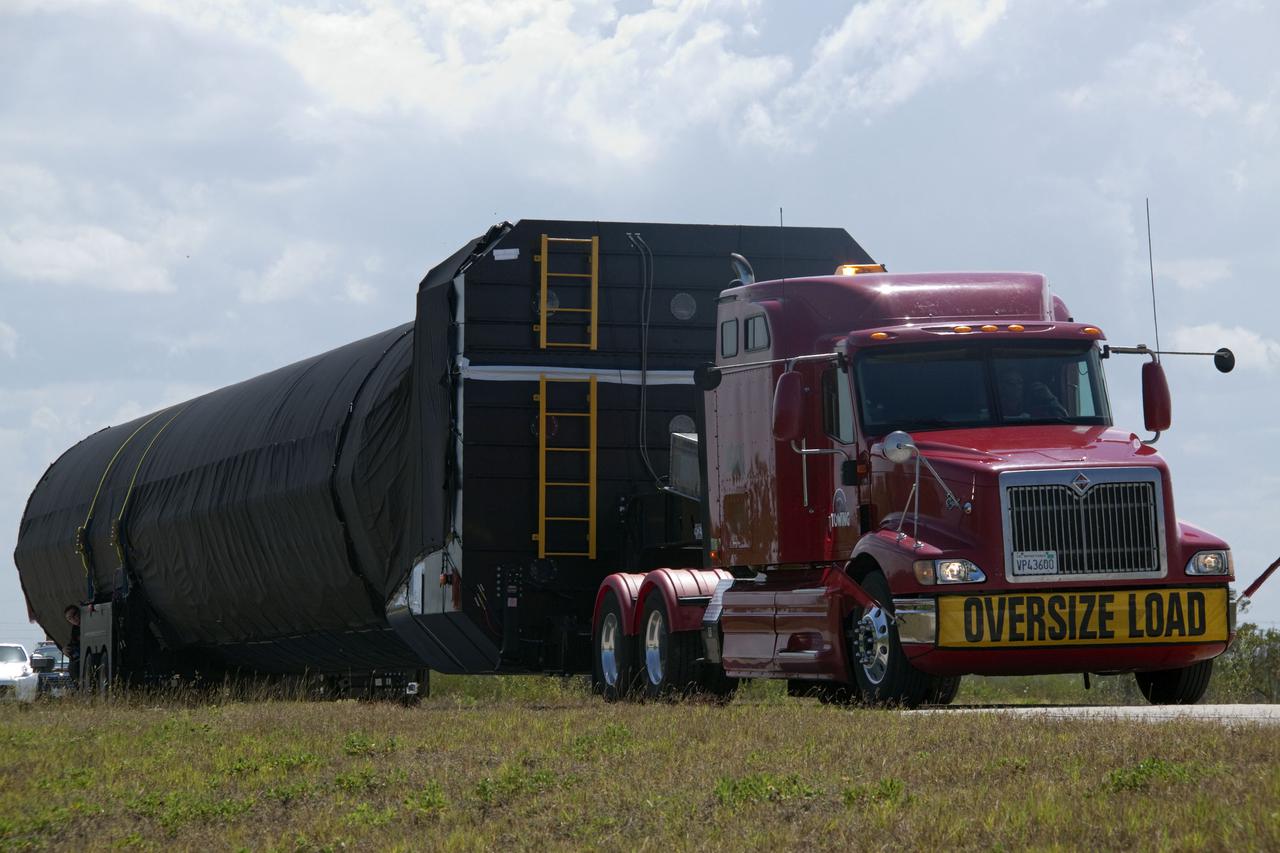
CAPE CANAVERAL, Fla. -- The first stage of the SpaceX COTS-2 Falcon 9 rocket is being transported to a SpaceX hangar at Pad 40 at Cape Canaveral Air Force Station in Florida. Once assembled, it will be a two-stage fully integrated launch vehicle, consisting of a first stage powered by nine SpaceX-developed Merlin 1C engines, a second stage, an interstage, an unpressurized trunk and the Dragon spacecraft qualification unit. SpaceX was awarded procurement for three demonstration flights under the Commercial Orbital Transportation Services, or COTS, program managed by NASA's Johnson Space Center in Houston. A subsequent contract for Commercial Resupply Services, or CRS, was awarded in late 2008 to resupply the International Space Station. The SpaceX CRS contract provides for 12 missions to resupply the station from 2011 through 2015. Photo credit: NASA_Jack Pfaller
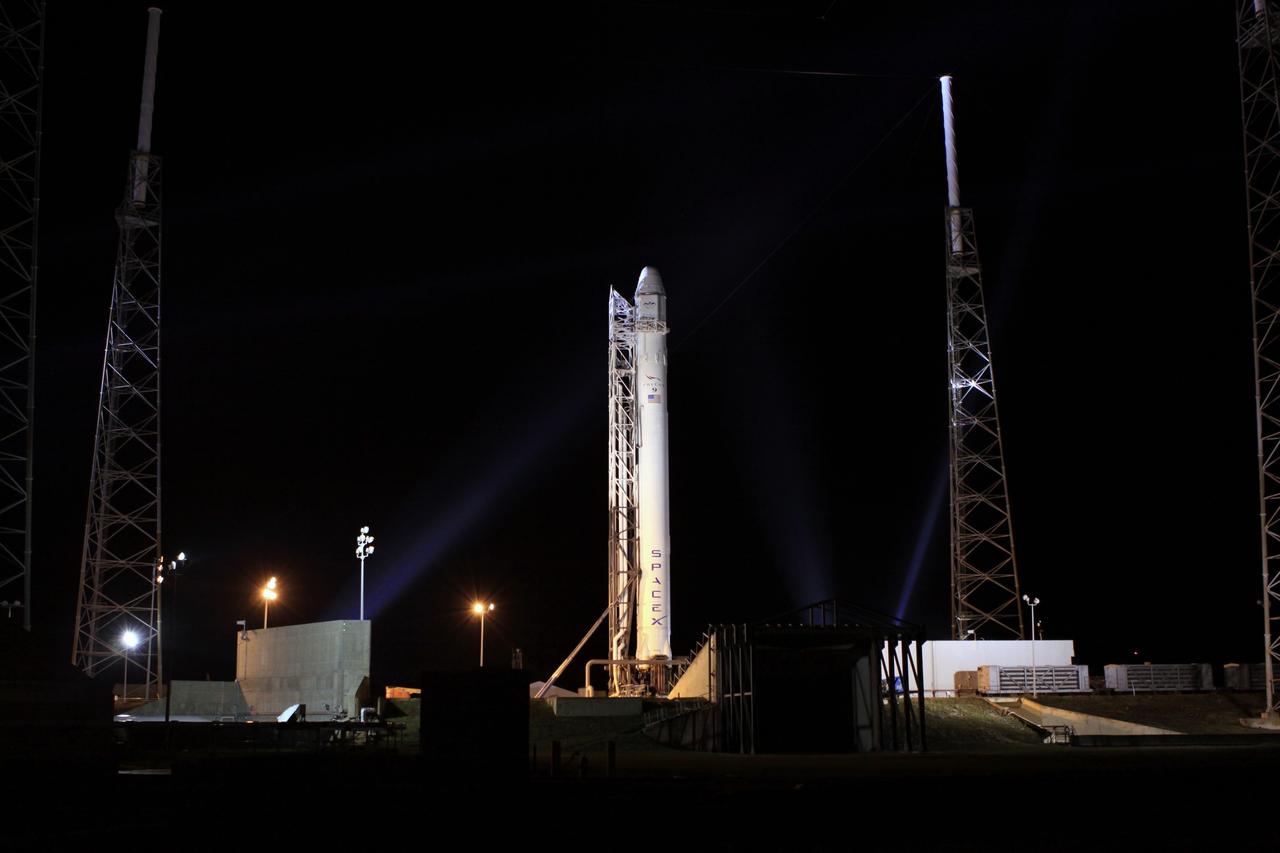
CAPE CANAVERAL, Fla. – The SpaceX Falcon 9 rocket is nestled between the lightning protection system towers surrounding the pad at Space Launch Complex-40 on Cape Canaveral Air Force Station in Florida. Liftoff with the SpaceX Dragon capsule aboard is set for 4:55 a.m. EDT on May 19. The launch will be the company's second demonstration test flight for NASA's Commercial Orbital Transportation Services Program, or COTS. During the flight, the capsule will conduct a series of check-out procedures to test and prove its systems, including rendezvous and berthing with the International Space Station. If the capsule performs as planned, the cargo and experiments it is carrying will be transferred to the station. The cargo includes food, water and provisions for the station’s Expedition crews, such as clothing, batteries and computer equipment. Under COTS, NASA has partnered with two aerospace companies to deliver cargo to the station. For more information, visit http://www.nasa.gov/spacex. Photo credit: NASA/Jim Grossmann
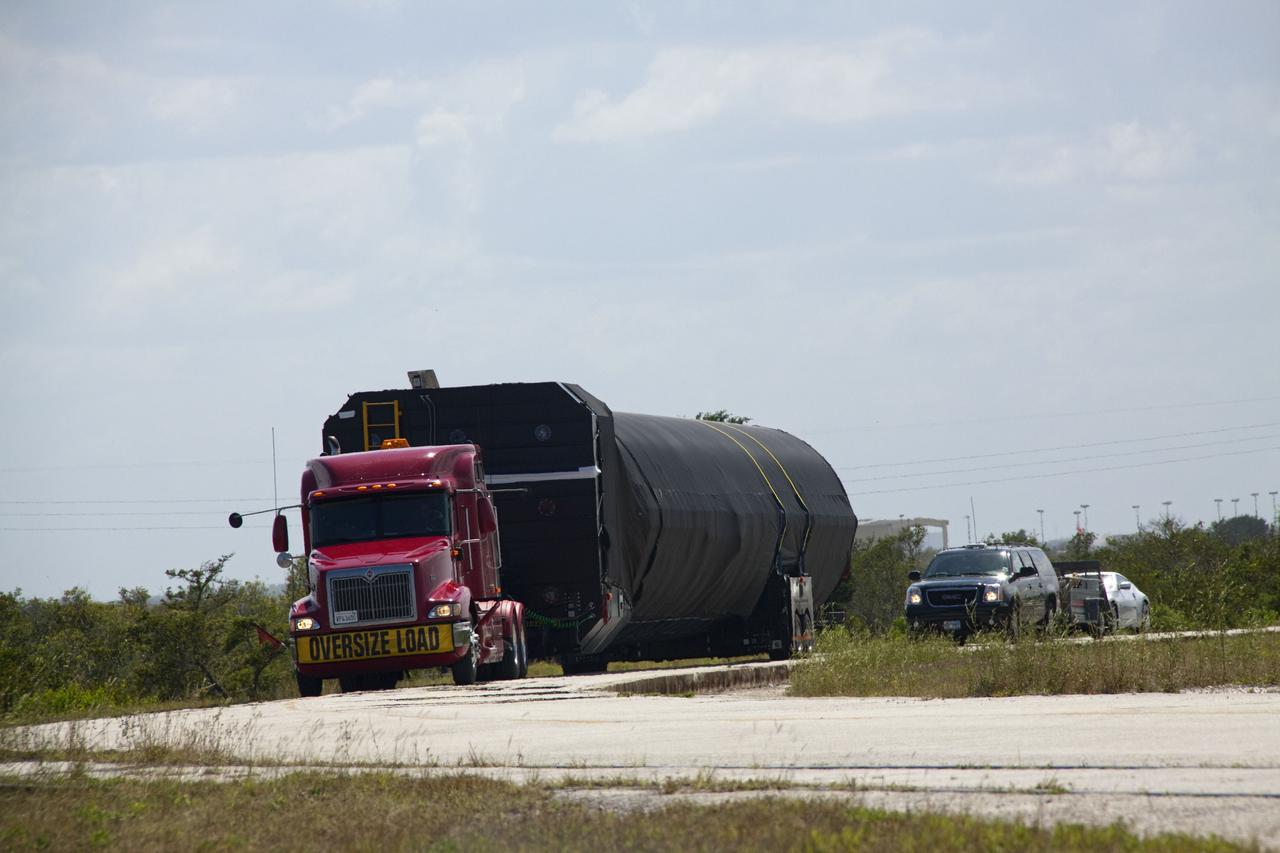
CAPE CANAVERAL, Fla. -- The first stage of the SpaceX COTS-2 Falcon 9 rocket is being transported to a SpaceX hangar at Pad 40 at Cape Canaveral Air Force Station in Florida. Once assembled, it will be a two-stage fully integrated launch vehicle, consisting of a first stage powered by nine SpaceX-developed Merlin 1C engines, a second stage, an interstage, an unpressurized trunk and the Dragon spacecraft qualification unit. SpaceX was awarded procurement for three demonstration flights under the Commercial Orbital Transportation Services, or COTS, program managed by NASA's Johnson Space Center in Houston. A subsequent contract for Commercial Resupply Services, or CRS, was awarded in late 2008 to resupply the International Space Station. The SpaceX CRS contract provides for 12 missions to resupply the station from 2011 through 2015. Photo credit: NASA_Jack Pfaller
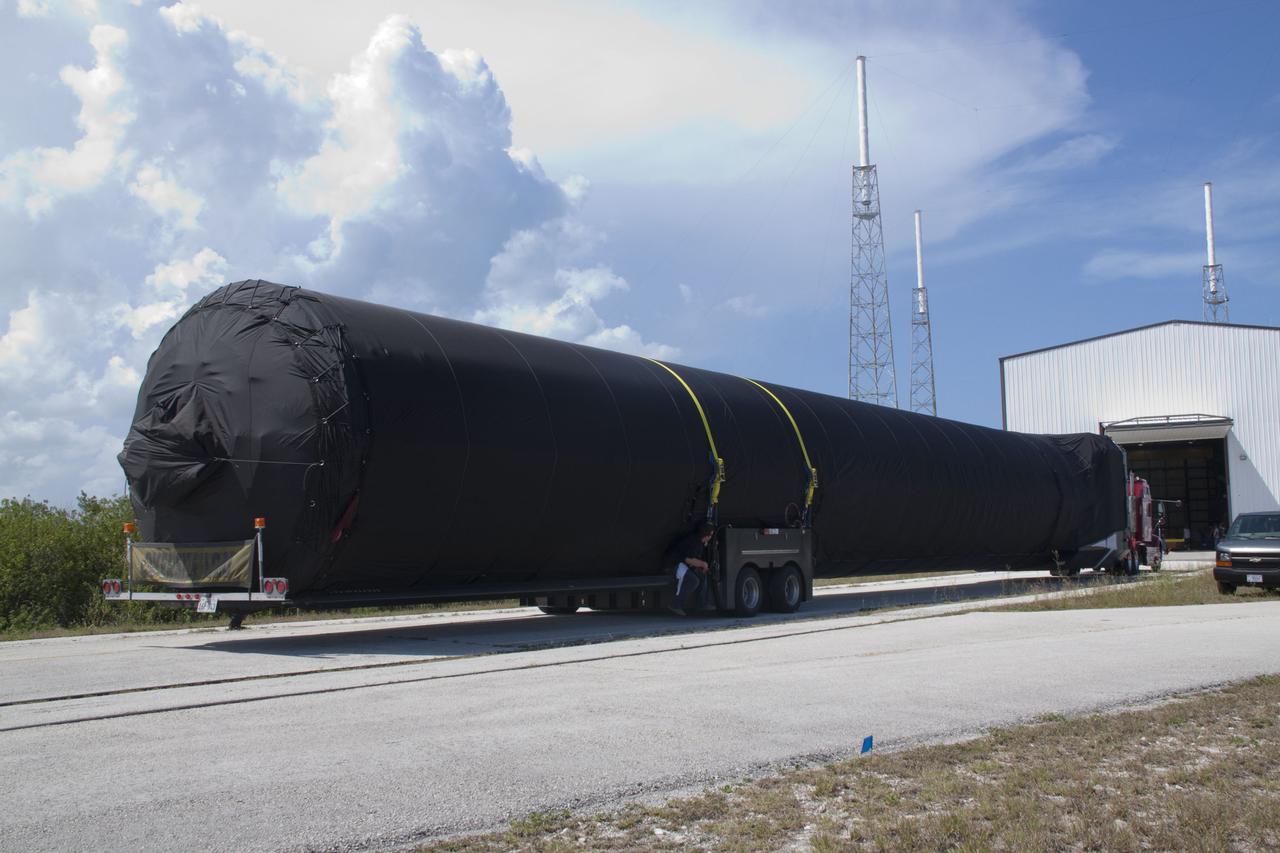
CAPE CANAVERAL, Fla. -- The first stage of the SpaceX COTS-2 Falcon 9 rocket is being transported to a SpaceX hangar at Pad 40 at Cape Canaveral Air Force Station in Florida. Once assembled, it will be a two-stage fully integrated launch vehicle, consisting of a first stage powered by nine SpaceX-developed Merlin 1C engines, a second stage, an interstage, an unpressurized trunk and the Dragon spacecraft qualification unit. SpaceX was awarded procurement for three demonstration flights under the Commercial Orbital Transportation Services, or COTS, program managed by NASA's Johnson Space Center in Houston. A subsequent contract for Commercial Resupply Services, or CRS, was awarded in late 2008 to resupply the International Space Station. The SpaceX CRS contract provides for 12 missions to resupply the station from 2011 through 2015. Photo credit: NASA_Jack Pfaller
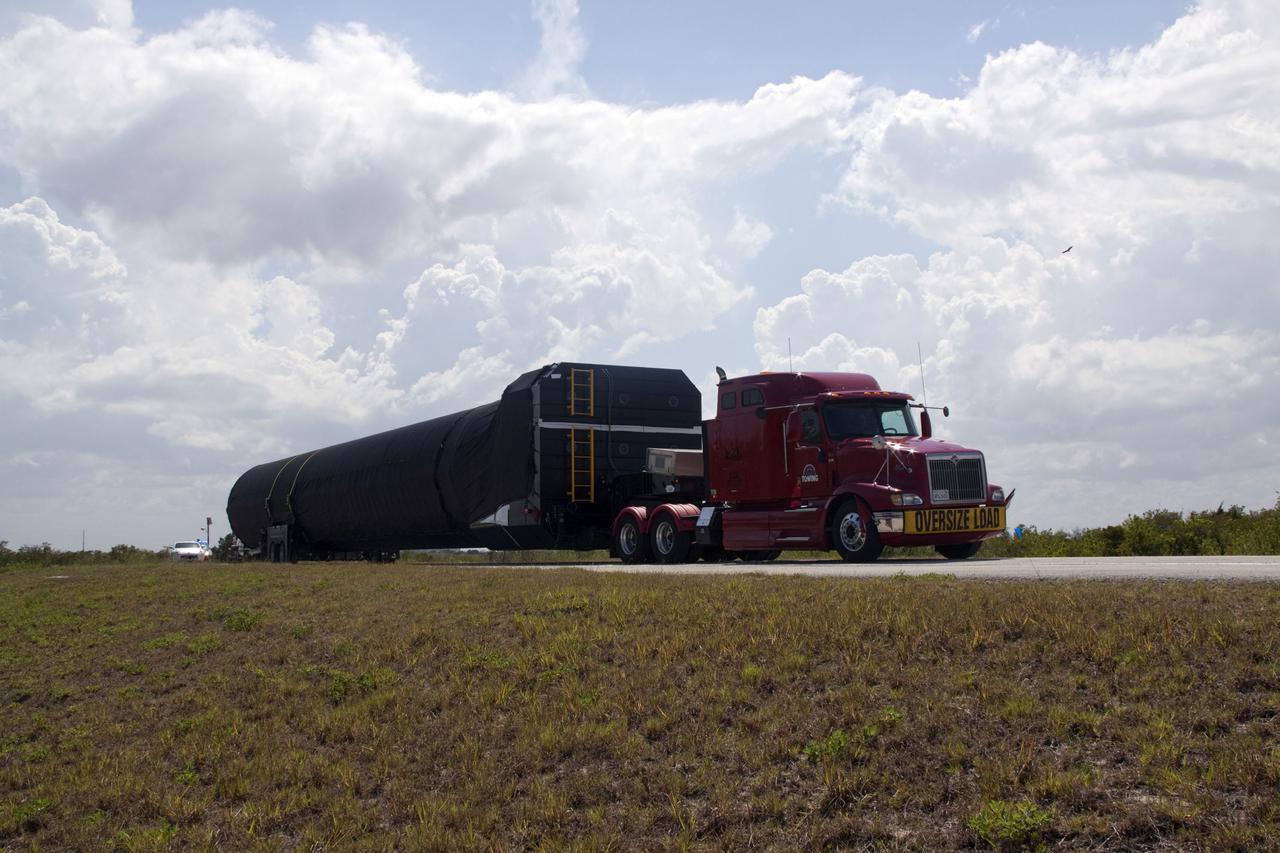
CAPE CANAVERAL, Fla. -- The first stage of the SpaceX COTS-2 Falcon 9 rocket is being transported to a SpaceX hangar at Pad 40 at Cape Canaveral Air Force Station in Florida. Once assembled, it will be a two-stage fully integrated launch vehicle, consisting of a first stage powered by nine SpaceX-developed Merlin 1C engines, a second stage, an interstage, an unpressurized trunk and the Dragon spacecraft qualification unit. SpaceX was awarded procurement for three demonstration flights under the Commercial Orbital Transportation Services, or COTS, program managed by NASA's Johnson Space Center in Houston. A subsequent contract for Commercial Resupply Services, or CRS, was awarded in late 2008 to resupply the International Space Station. The SpaceX CRS contract provides for 12 missions to resupply the station from 2011 through 2015. Photo credit: NASA_Jack Pfaller
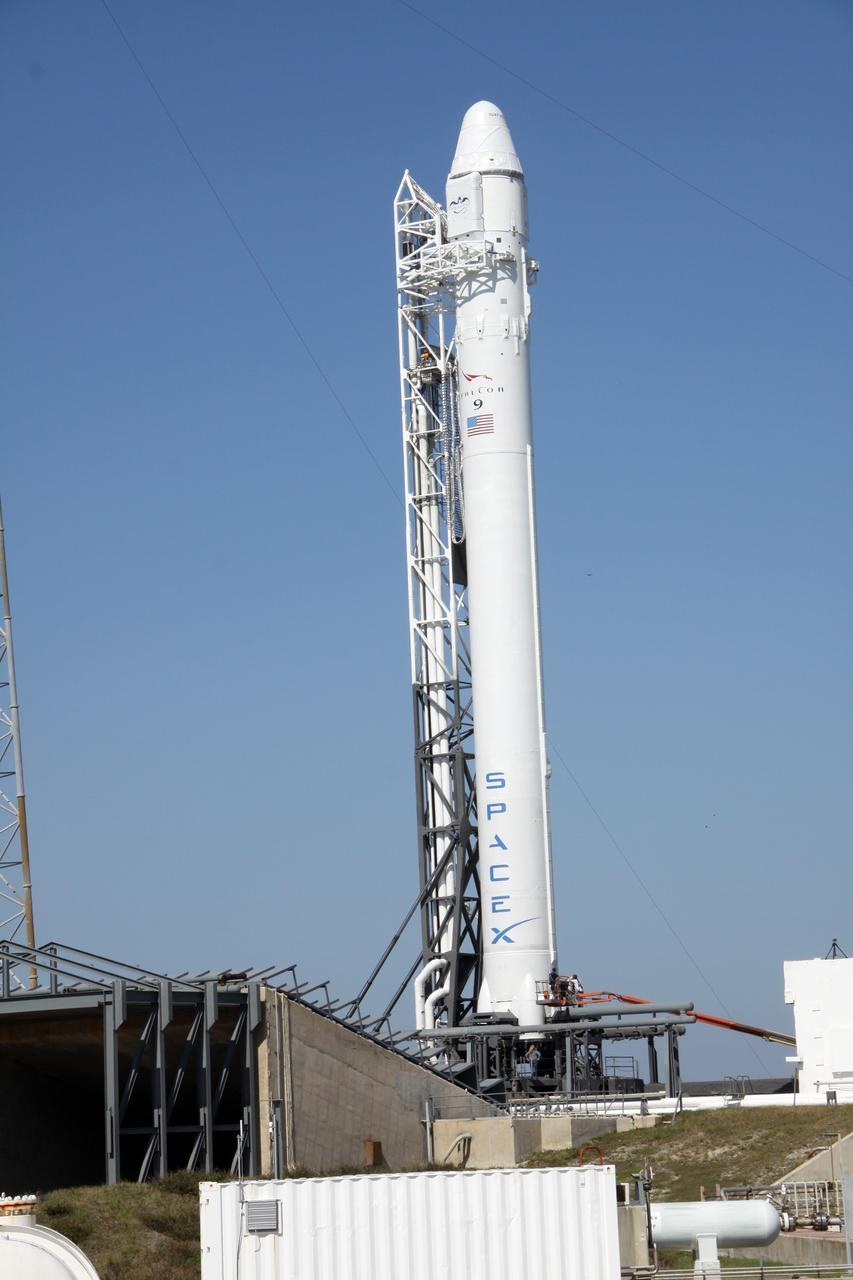
CAPE CANAVERAL, Fla. – A strongback provides connections to the SpaceX Falcon 9 rocket as final preparations for launch are completed at Space Launch Complex-40 on Cape Canaveral Air Force Station in Florida. Liftoff with the Dragon capsule on top is set for 4:55 a.m. EDT on May 19. The launch will be the company's second demonstration test flight for NASA's Commercial Orbital Transportation Services Program, or COTS. During the flight, the capsule will conduct a series of check-out procedures to test and prove its systems, including rendezvous and berthing with the International Space Station. If the capsule performs as planned, the cargo and experiments it is carrying will be transferred to the station. The cargo includes food, water and provisions for the station’s Expedition crews, such as clothing, batteries and computer equipment. Under COTS, NASA has partnered with two aerospace companies to deliver cargo to the station. For more information, visit http://www.nasa.gov/spacex. Photo credit: NASA/Ken Thornsley
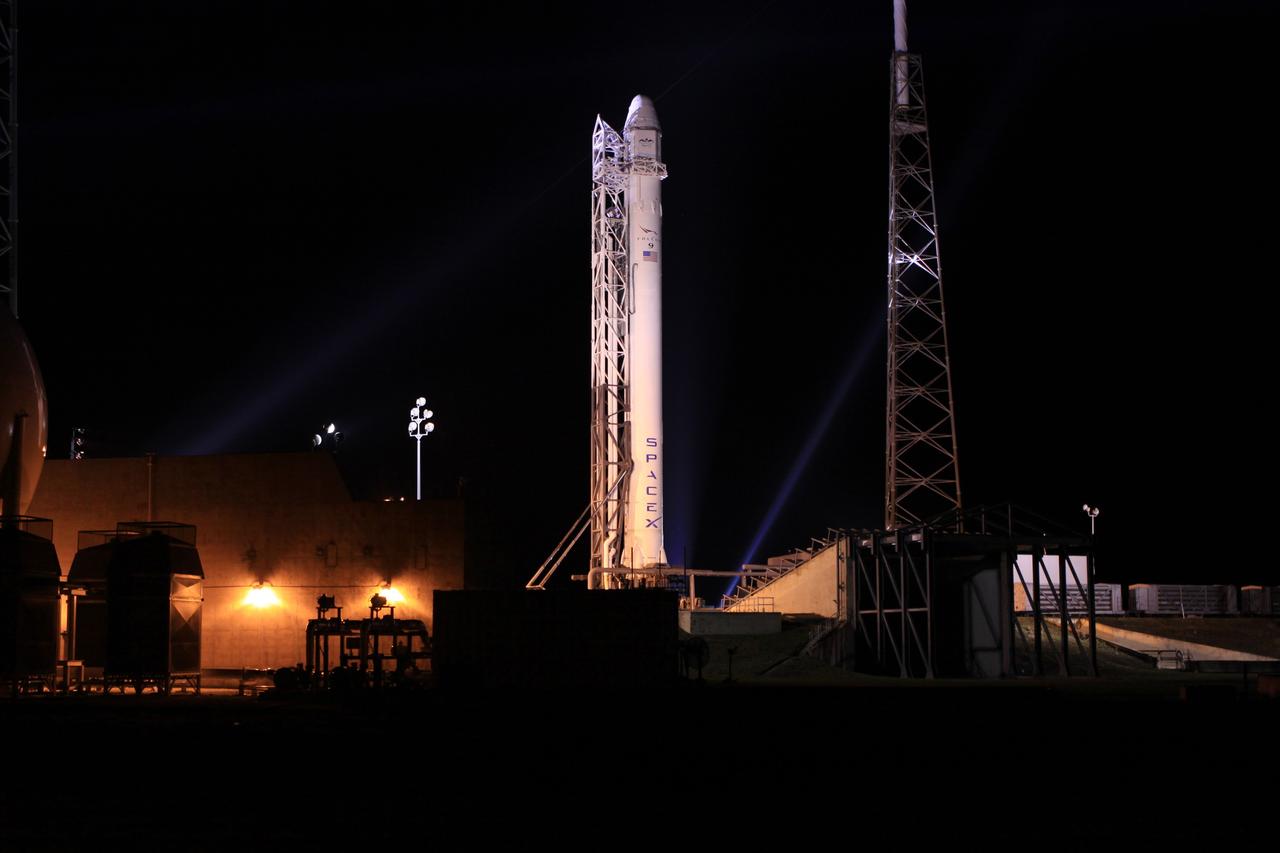
CAPE CANAVERAL, Fla. – A strongback lifts the SpaceX Falcon 9 rocket into a vertical position on the pad at Space Launch Complex-40 on Cape Canaveral Air Force Station in Florida. Liftoff with the SpaceX Dragon capsule aboard is set for 4:55 a.m. EDT on May 19. The launch will be the company's second demonstration test flight for NASA's Commercial Orbital Transportation Services Program, or COTS. During the flight, the capsule will conduct a series of check-out procedures to test and prove its systems, including rendezvous and berthing with the International Space Station. If the capsule performs as planned, the cargo and experiments it is carrying will be transferred to the station. The cargo includes food, water and provisions for the station’s Expedition crews, such as clothing, batteries and computer equipment. Under COTS, NASA has partnered with two aerospace companies to deliver cargo to the station. For more information, visit http://www.nasa.gov/spacex. Photo credit: NASA/Jim Grossmann
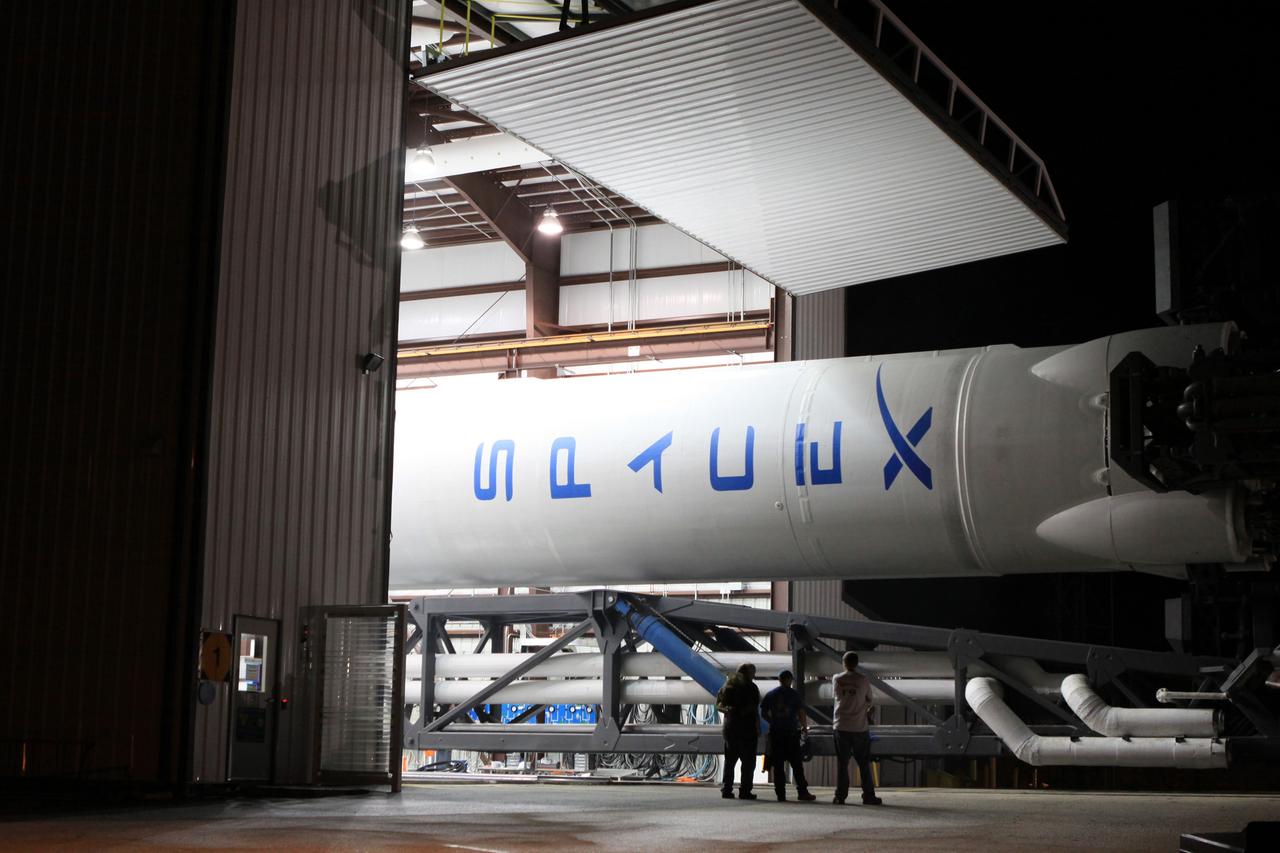
CAPE CANAVERAL, Fla. – Preparations are under way to roll the SpaceX Falcon 9 rocket out of the processing facility to the pad at Space Launch Complex-40 on Cape Canaveral Air Force Station in Florida. Liftoff with the SpaceX Dragon capsule aboard is set for 4:55 a.m. EDT on May 19. The launch will be the company's second demonstration test flight for NASA's Commercial Orbital Transportation Services Program, or COTS. During the flight, the capsule will conduct a series of check-out procedures to test and prove its systems, including rendezvous and berthing with the International Space Station. If the capsule performs as planned, the cargo and experiments it is carrying will be transferred to the station. The cargo includes food, water and provisions for the station’s Expedition crews, such as clothing, batteries and computer equipment. Under COTS, NASA has partnered with two aerospace companies to deliver cargo to the station. For more information, visit http://www.nasa.gov/spacex. Photo credit: NASA/Jim Grossmann
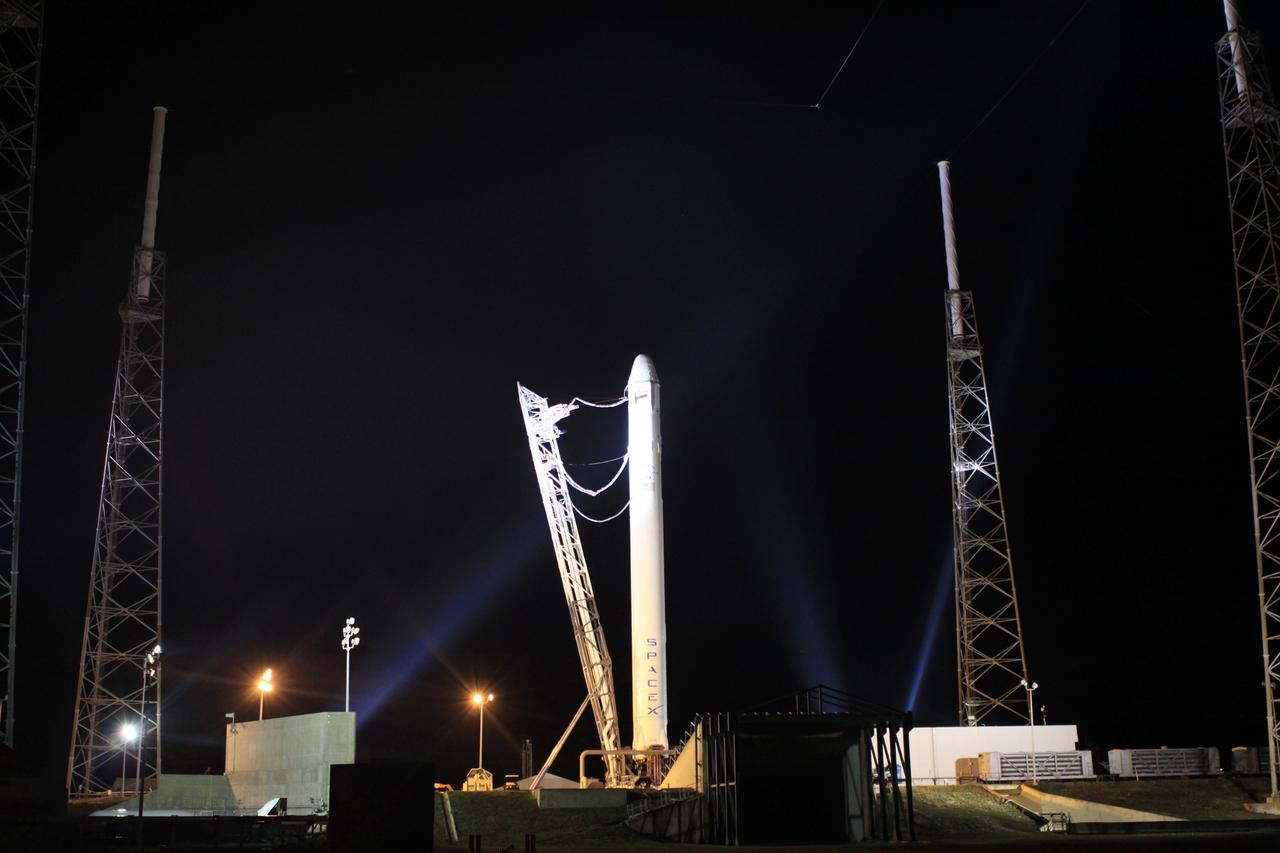
CAPE CANAVERAL, Fla. – Umbilical lines connect the strongback to the SpaceX Falcon 9 rocket which has just arrived on the pad at Space Launch Complex-40 on Cape Canaveral Air Force Station in Florida. Liftoff with the SpaceX Dragon capsule aboard is set for 4:55 a.m. EDT on May 19. The launch will be the company's second demonstration test flight for NASA's Commercial Orbital Transportation Services Program, or COTS. During the flight, the capsule will conduct a series of check-out procedures to test and prove its systems, including rendezvous and berthing with the International Space Station. If the capsule performs as planned, the cargo and experiments it is carrying will be transferred to the station. The cargo includes food, water and provisions for the station’s Expedition crews, such as clothing, batteries and computer equipment. Under COTS, NASA has partnered with two aerospace companies to deliver cargo to the station. For more information, visit http://www.nasa.gov/spacex. Photo credit: NASA/Jim Grossmann
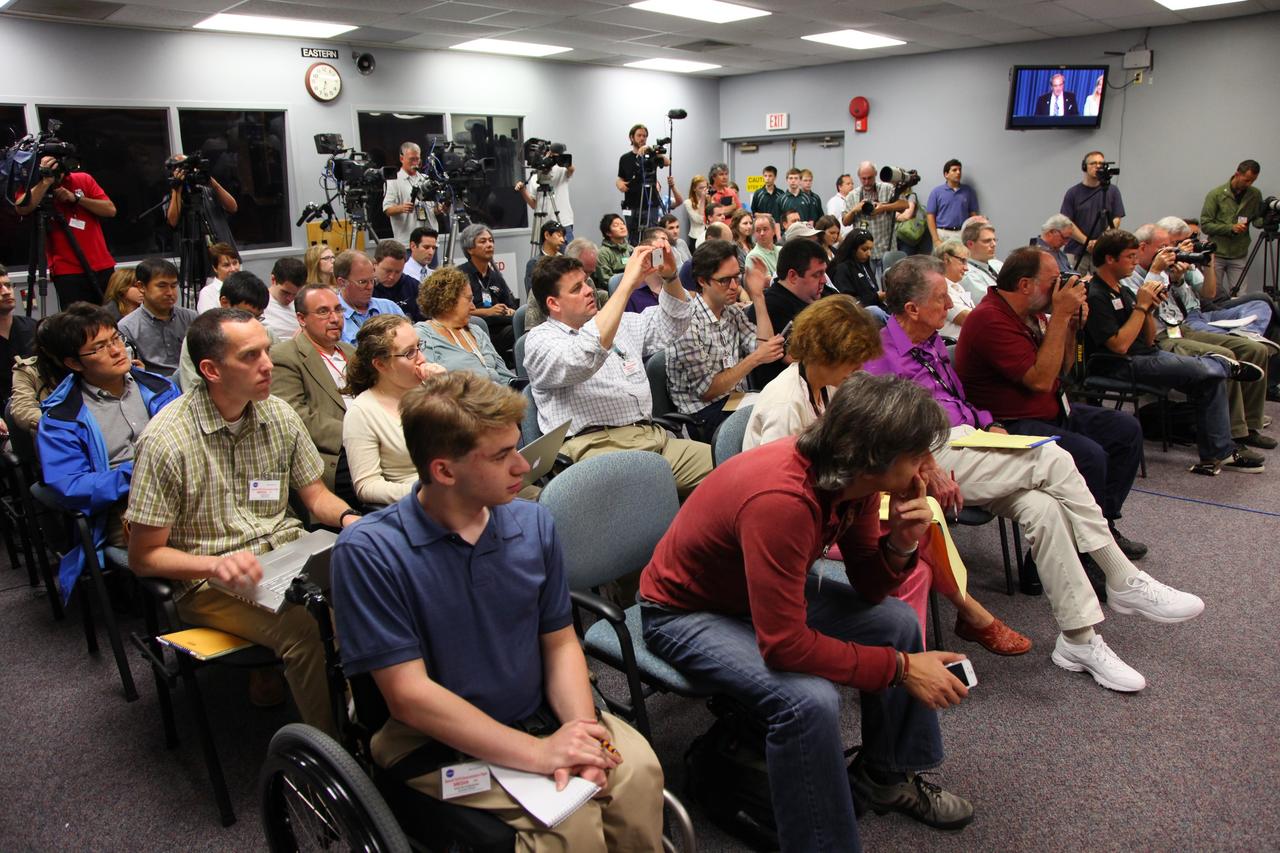
CAPE CANAVERAL, Fla. – Media representatives pack the Press Site auditorium at NASA’s Kennedy Space Center in Florida for a news conference following the launch abort of the SpaceX demonstration test flight. The next opportunity for liftoff of the SpaceX Falcon 9 rocket to carry the Dragon capsule to orbit is 4:33 a.m. EDT on May 22. The launch will be the company's second demonstration test flight for NASA's Commercial Orbital Transportation Services Program, or COTS. During the flight, the capsule will conduct a series of check-out procedures to test and prove its systems, including rendezvous and berthing with the International Space Station. If the capsule performs as planned, the cargo and experiments it is carrying will be transferred to the station. The cargo includes food, water and provisions for the station’s Expedition crews, such as clothing, batteries and computer equipment. Under COTS, NASA has partnered with two aerospace companies to deliver cargo to the station. For more information, visit http://www.nasa.gov/spacex. Photo credit: NASA/Gianni Woods
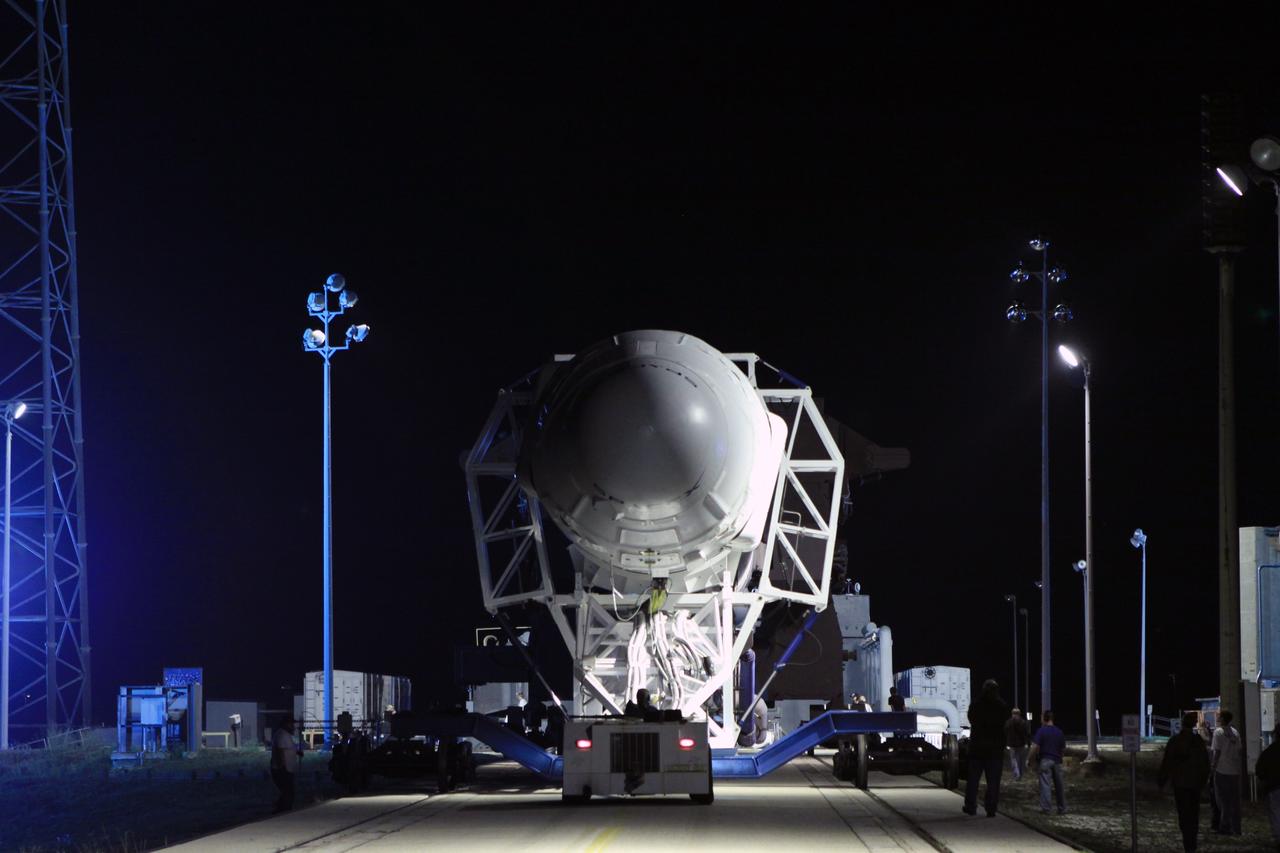
CAPE CANAVERAL, Fla. – The SpaceX Falcon 9 rocket makes its way to the pad at Space Launch Complex-40 on Cape Canaveral Air Force Station in Florida. Liftoff with the SpaceX Dragon capsule aboard is set for 4:55 a.m. EDT on May 19. The launch will be the company's second demonstration test flight for NASA's Commercial Orbital Transportation Services Program, or COTS. During the flight, the capsule will conduct a series of check-out procedures to test and prove its systems, including rendezvous and berthing with the International Space Station. If the capsule performs as planned, the cargo and experiments it is carrying will be transferred to the station. The cargo includes food, water and provisions for the station’s Expedition crews, such as clothing, batteries and computer equipment. Under COTS, NASA has partnered with two aerospace companies to deliver cargo to the station. For more information, visit http://www.nasa.gov/spacex. Photo credit: NASA/Jim Grossmann
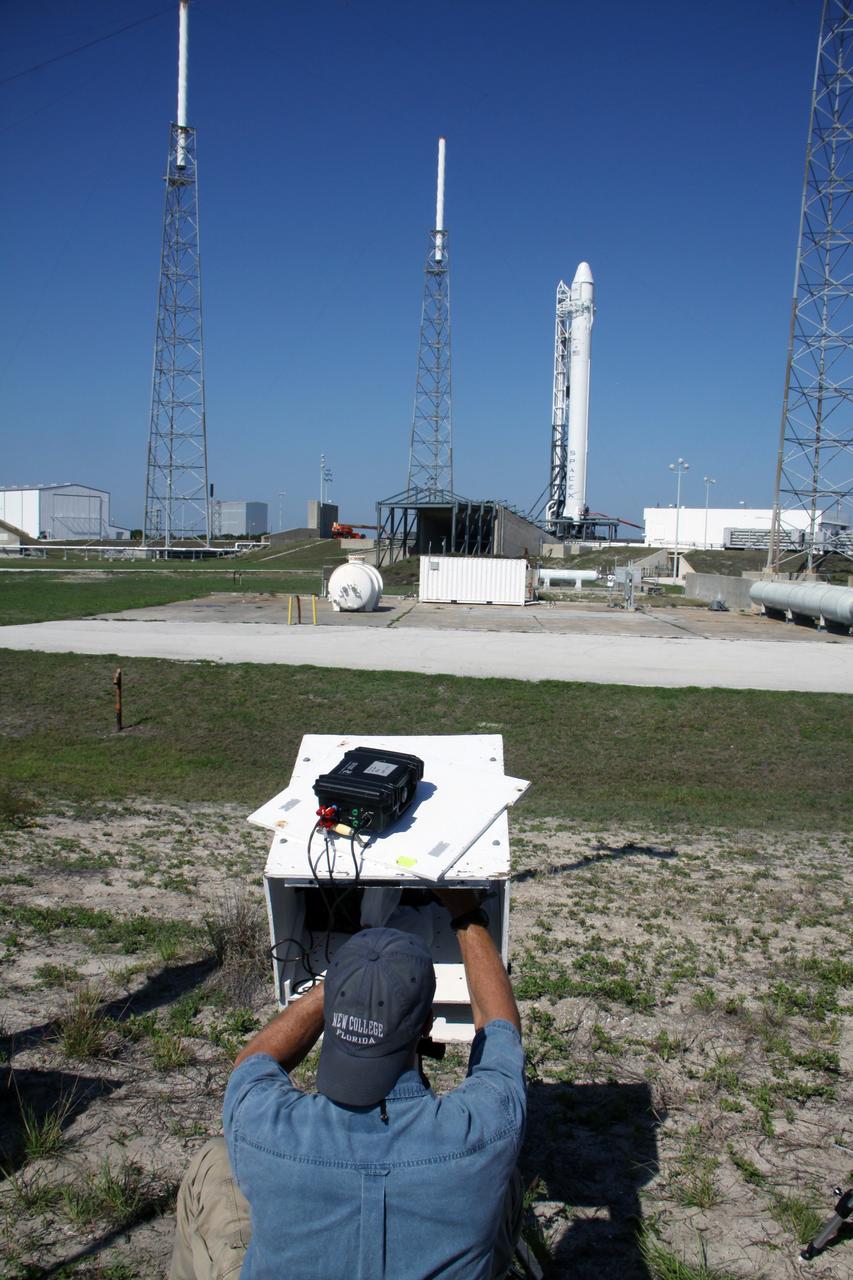
CAPE CANAVERAL, Fla. – A photographer sets up his remote camera at Space Launch Complex-40 on Cape Canaveral Air Force Station in Florida. In the background, final preparations are under way to launch the SpaceX Falcon 9 rocket. Liftoff with the Dragon capsule on top is set for 4:55 a.m. EDT on May 19. The launch will be the company's second demonstration test flight for NASA's Commercial Orbital Transportation Services Program, or COTS. During the flight, the capsule will conduct a series of check-out procedures to test and prove its systems, including rendezvous and berthing with the International Space Station. If the capsule performs as planned, the cargo and experiments it is carrying will be transferred to the station. The cargo includes food, water and provisions for the station’s Expedition crews, such as clothing, batteries and computer equipment. Under COTS, NASA has partnered with two aerospace companies to deliver cargo to the station. For more information, visit http://www.nasa.gov/spacex. Photo credit: NASA/Ken Thornsley
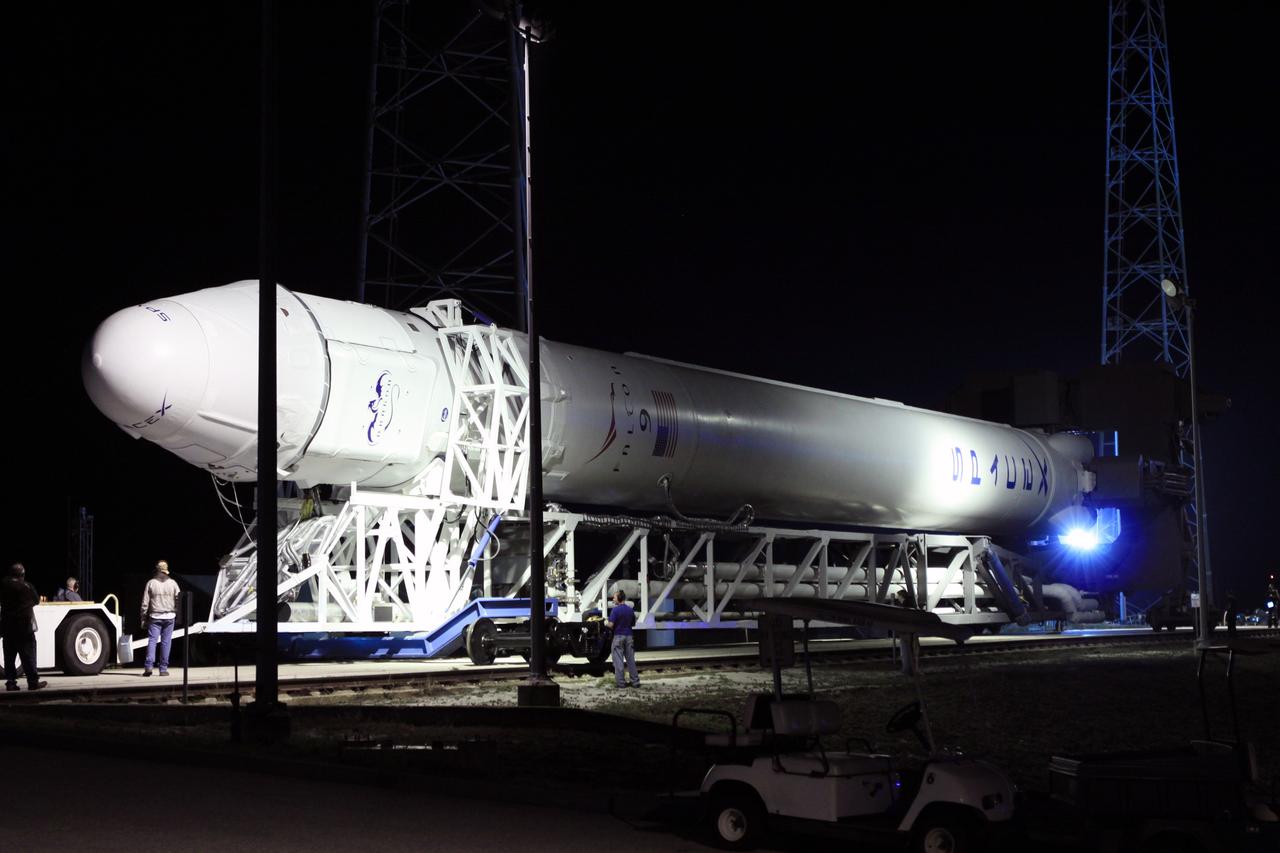
CAPE CANAVERAL, Fla. – The SpaceX Falcon 9 rocket rolls between the lightning protection system towers surrounding the pad at Space Launch Complex-40 on Cape Canaveral Air Force Station in Florida. Liftoff with the SpaceX Dragon capsule aboard is set for 4:55 a.m. EDT on May 19. The launch will be the company's second demonstration test flight for NASA's Commercial Orbital Transportation Services Program, or COTS. During the flight, the capsule will conduct a series of check-out procedures to test and prove its systems, including rendezvous and berthing with the International Space Station. If the capsule performs as planned, the cargo and experiments it is carrying will be transferred to the station. The cargo includes food, water and provisions for the station’s Expedition crews, such as clothing, batteries and computer equipment. Under COTS, NASA has partnered with two aerospace companies to deliver cargo to the station. For more information, visit http://www.nasa.gov/spacex. Photo credit: NASA/Jim Grossmann
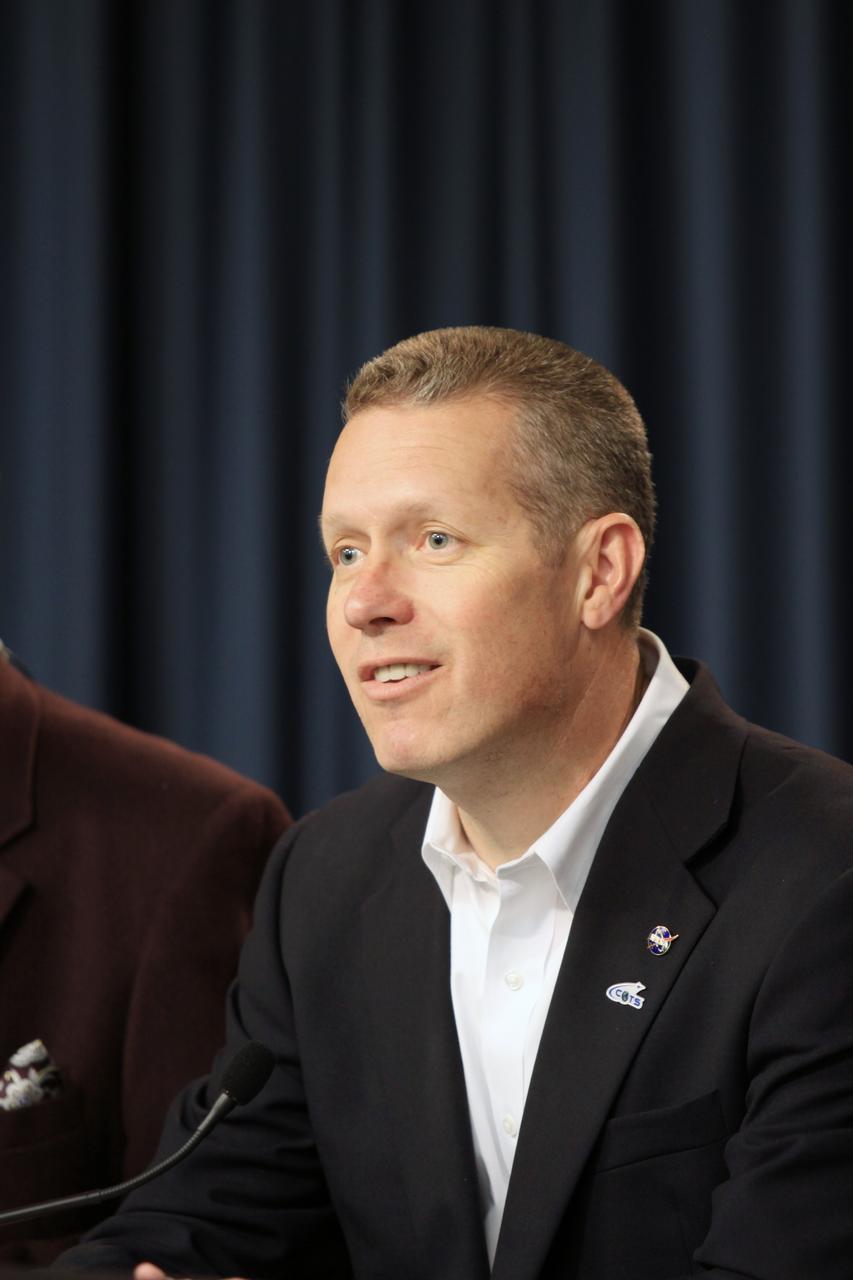
CAPE CANAVERAL, Fla. – Phil McAlister, director, NASA Commercial Spaceflight Development, participates in a prelaunch news conference in the Press Site Auditorium at NASA’s Kennedy Space Center in Florida. Liftoff of the SpaceX Falcon 9 rocket carrying a Dragon capsule to orbit is set for 4:55 a.m. EDT on May 19. The launch will be the company's second demonstration test flight for NASA's Commercial Orbital Transportation Services Program, or COTS. During the flight, the capsule will conduct a series of check-out procedures to test and prove its systems, including rendezvous and berthing with the International Space Station. If the capsule performs as planned, the cargo and experiments it is carrying will be transferred to the station. The cargo includes food, water and provisions for the station’s Expedition crews, such as clothing, batteries and computer equipment. Under COTS, NASA has partnered with two aerospace companies to deliver cargo to the station. For more information, visit http://www.nasa.gov/spacex. Photo credit: NASA/Jim Grossmann
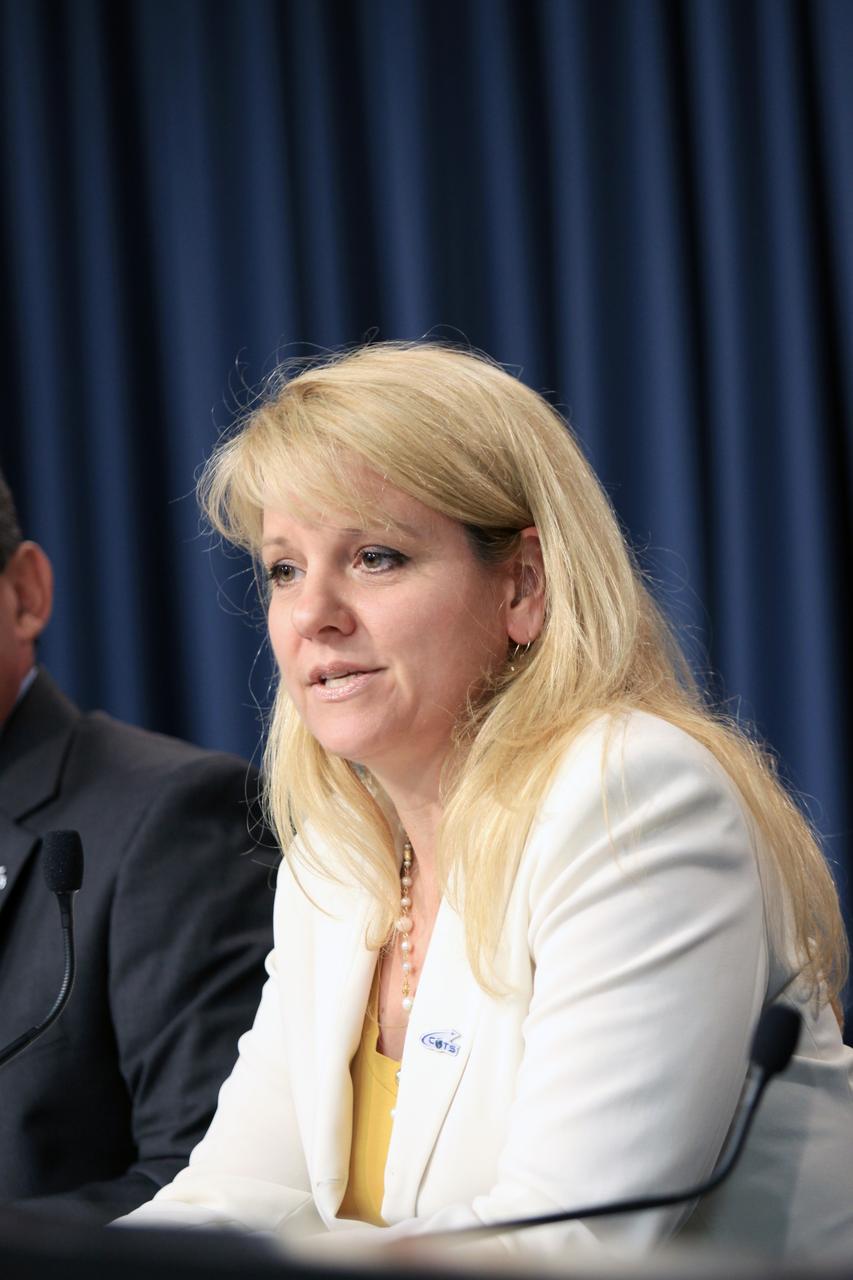
CAPE CANAVERAL, Fla. – Gwynne Shotwell, president of SpaceX, participates in a prelaunch news conference in the Press Site Auditorium at NASA’s Kennedy Space Center in Florida. Liftoff of the SpaceX Falcon 9 rocket carrying a Dragon capsule to orbit is set for 4:55 a.m. EDT on May 19. The launch will be the company's second demonstration test flight for NASA's Commercial Orbital Transportation Services Program, or COTS. During the flight, the capsule will conduct a series of check-out procedures to test and prove its systems, including rendezvous and berthing with the International Space Station. If the capsule performs as planned, the cargo and experiments it is carrying will be transferred to the station. The cargo includes food, water and provisions for the station’s Expedition crews, such as clothing, batteries and computer equipment. Under COTS, NASA has partnered with two aerospace companies to deliver cargo to the station. For more information, visit http://www.nasa.gov/spacex. Photo credit: NASA/Jim Grossmann
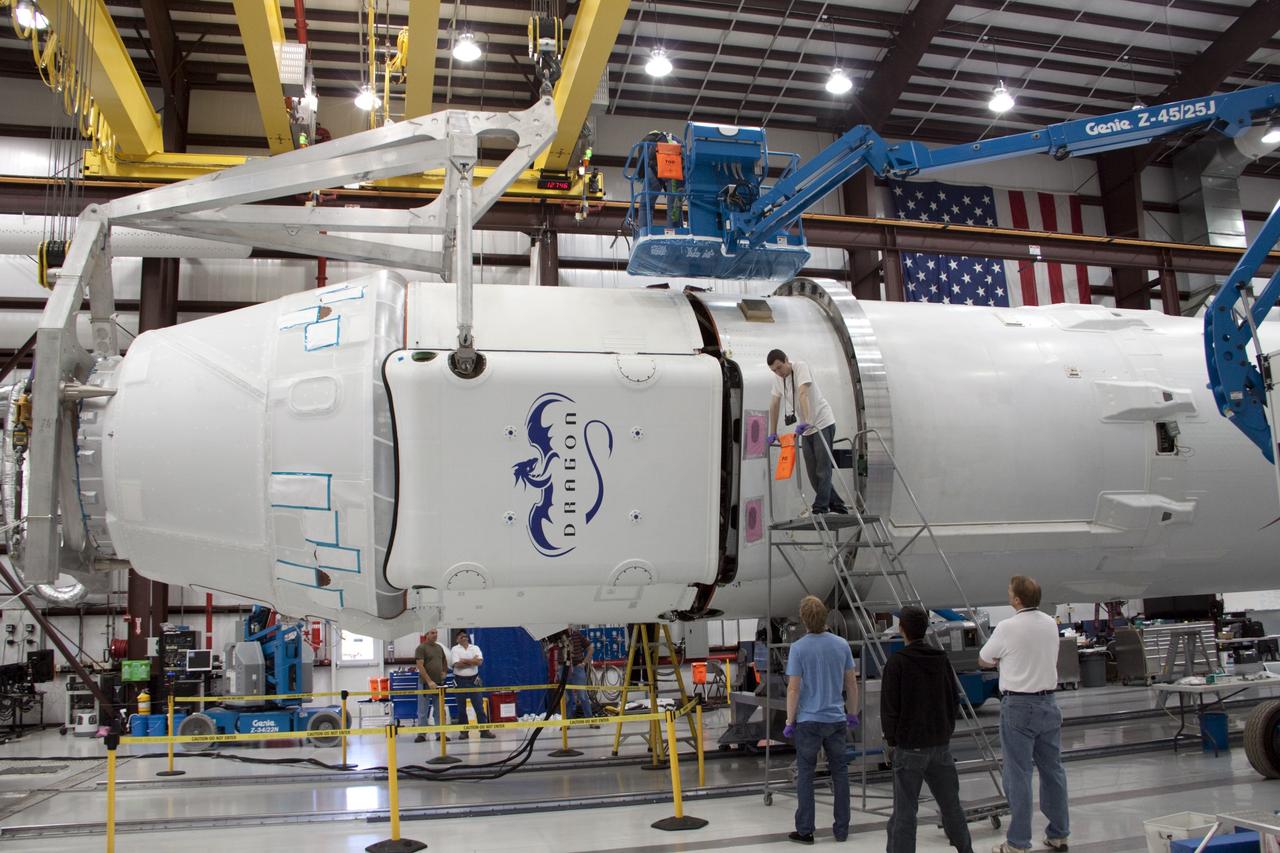
CAPE CANAVERAL, Fla. – In a processing facility at Space Launch Complex-40 on Cape Canaveral Air Force Station in Florida, Space Exploration Technologies technicians prepare to attach the Dragon capsule to the second stage of the company’s Falcon 9 rocket. Known as SpaceX, the launch will be the company's second demonstration test flight for NASA's Commercial Orbital Transportation Services program, or COTS. During the flight, the capsule will conduct a series of check-out procedures to test and prove its systems, including rendezvous and berthing with the International Space Station. If the capsule performs as planned, the NanoRacks-CubeLabs Module-9 experiments and other cargo aboard Dragon will be transferred to the station. The cargo includes food, water and provisions for the station’s Expedition crews, such as clothing, batteries and computer equipment. Under COTS, NASA has partnered with two private companies to provide resupply missions to the station. The launch is scheduled for 9:38 a.m. EDT on May 7. For more information, visit http://www.nasa.gov/spacex. Photo credit: NASA/Jim Grossmann

CAPE CANAVERAL, Fla. - Space Exploration Technologies, or SpaceX, technicians rotate a Dragon spacecraft for mating with its Falcon 9 launch vehicle. The rocket is being prepared for the company's first Commercial Resupply Services, or CRS-1, mission to the International Space Station. The capsule is scheduled to lift off on Oct. 7, 2012 from Space Launch Complex 40 at Cape Canaveral Air Force Station in Florida aboard a Falcon 9 rocket. The mission will be the company's second demonstration test flight for NASA's Commercial Orbital Transportation Services Program, or COTS. The SpaceX CRS contract with NASA provides for 12 cargo resupply missions to the station through 2015, the first of which is targeted to launch in October 2012.SpaceX became the first private company to berth a spacecraft with the space station in 2012 during its final demonstration flight under the Commercial Orbital Transportation Services, or COTS, program managed by NASA's Johnson Space Center in Houston. For more information, visit http://www.nasa.gov/mission_pages/station/living/launch/index.htmlPhoto credit: NASA/Ben Smegelsky

CAPE CANAVERAL, Fla. – In a processing facility at Space Launch Complex-40 on Cape Canaveral Air Force Station in Florida, aerospace technicians prepare a cargo container for installation into a Dragon capsule for launch aboard a Falcon 9 rocket. The new rocket and capsule were designed and manufactured by Space Exploration Technologies Corp., or SpaceX, for the company’s upcoming demonstration test flight for NASA’s Commercial Orbital Transportation Services, or COTS, program. Under COTS, NASA has partnered with two private companies to develop the capability to deliver cargo to the International Space Station. During the flight, SpaceX's Dragon capsule will conduct a series of checkout procedures that will test and prove its systems. These tests include rendezvous and berthing with the space station and are intended to lead to regular resupply missions to the station. Liftoff is targeted for April 30 at 12:22 p.m. EDT pending official approval at the Flight Readiness Review on April 16. For more information, visit www.nasa.gov/exploration/commercial/cargo/spacex_index.html. Photo credit: NASA/Cory Huston
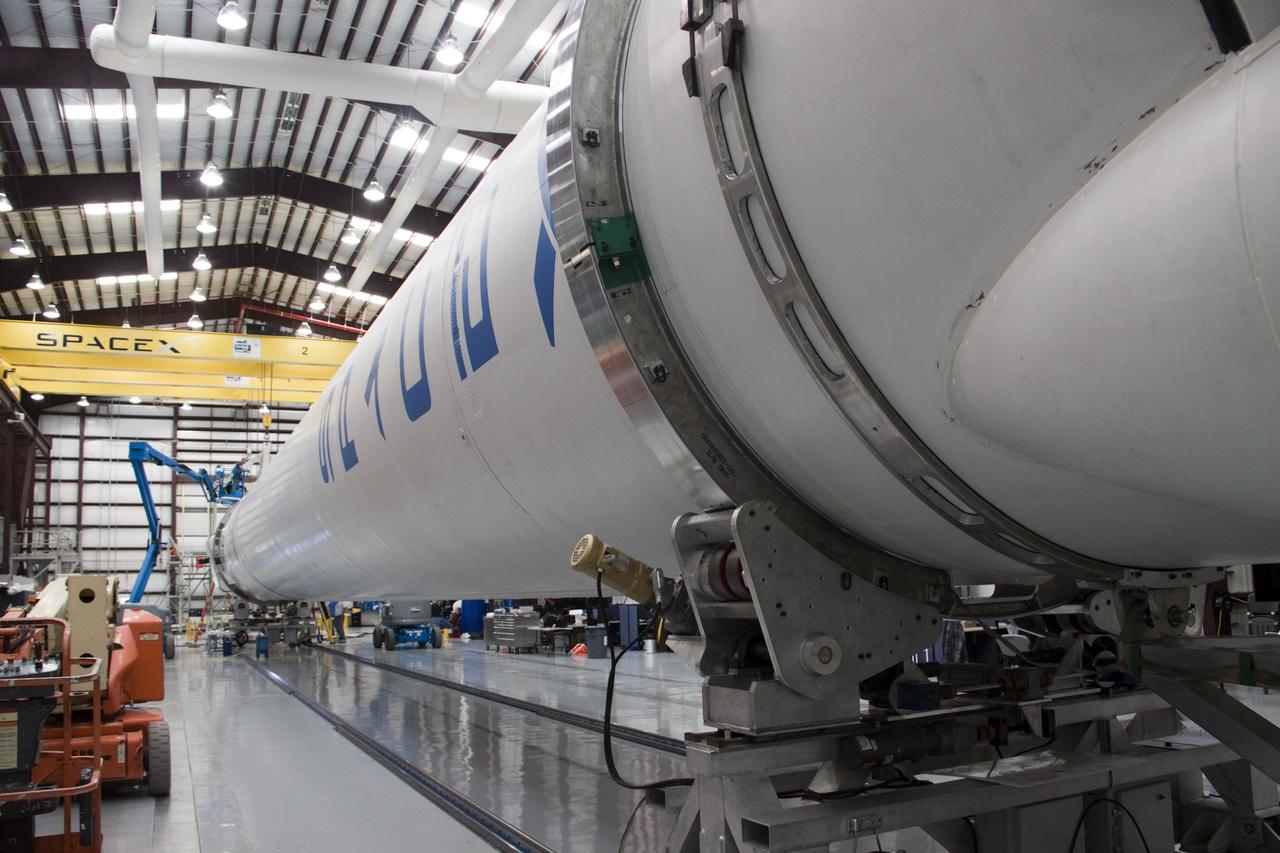
CAPE CANAVERAL, Fla. – In a processing facility at Space Launch Complex-40 on Cape Canaveral Air Force Station in Florida, mating of the Space Exploration Technologies Dragon capsule to the second stage of the company’s Falcon 9 rocket is nearly complete. Known as SpaceX, the launch will be the company's second demonstration test flight for NASA's Commercial Orbital Transportation Services program, or COTS. During the flight, the capsule will conduct a series of check-out procedures to test and prove its systems, including rendezvous and berthing with the International Space Station. If the capsule performs as planned, the NanoRacks-CubeLabs Module-9 experiments and other cargo aboard Dragon will be transferred to the station. The cargo includes food, water and provisions for the station’s Expedition crews, such as clothing, batteries and computer equipment. Under COTS, NASA has partnered with two private companies to provide resupply missions to the station. The launch is scheduled for 9:38 a.m. EDT on May 7. For more information, visit http://www.nasa.gov/spacex. Photo credit: NASA/Jim Grossmann
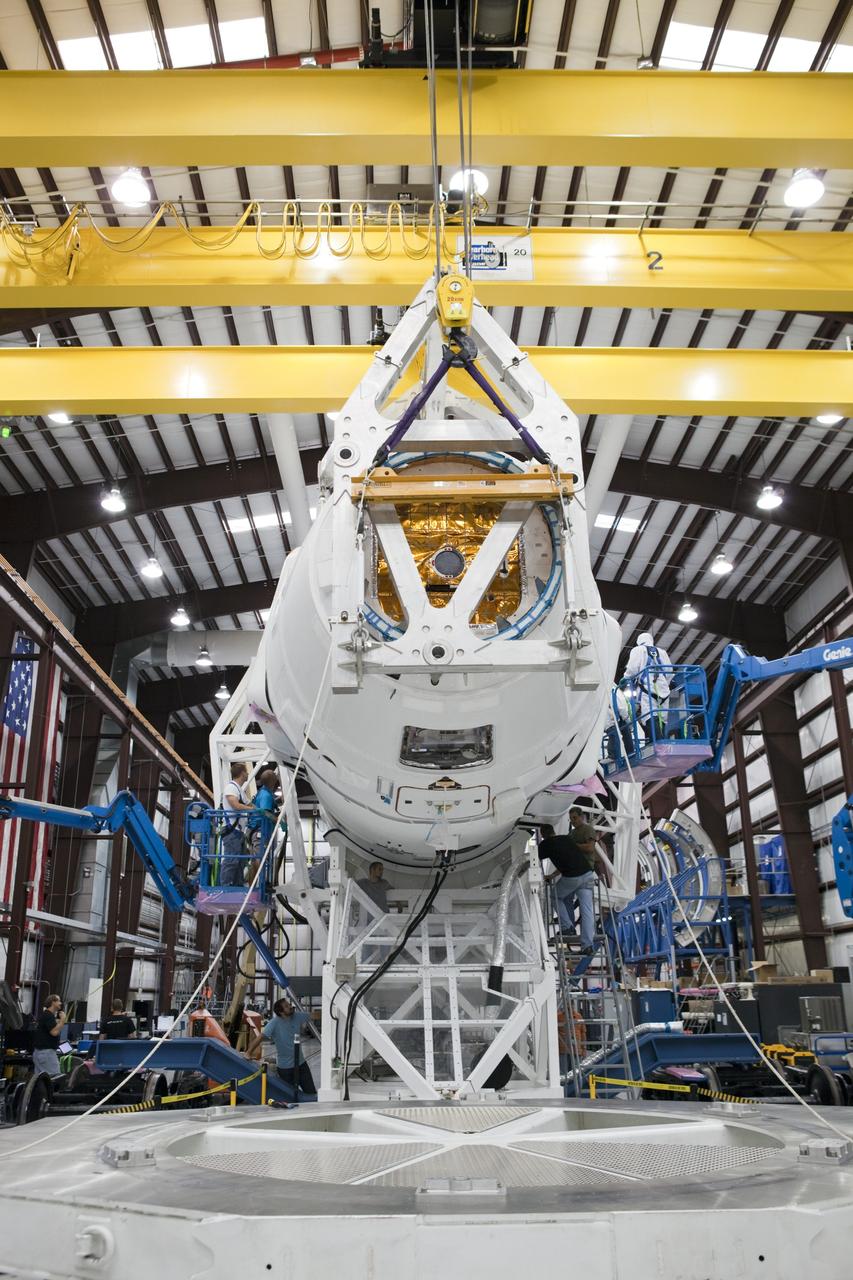
CAPE CANAVERAL, Fla. - Space Exploration Technologies, or SpaceX, technicians use lifts to inspect a Dragon spacecraft as it is being attached to its Falcon 9 launch vehicle. The rocket is being prepared for the company's first Commercial Resupply Services, or CRS-1, mission to the International Space Station. The capsule is scheduled to lift off on Oct. 7, 2012 from Space Launch Complex 40 at Cape Canaveral Air Force Station in Florida aboard a Falcon 9 rocket. The mission will be the company's second demonstration test flight for NASA's Commercial Orbital Transportation Services Program, or COTS. The SpaceX CRS contract with NASA provides for 12 cargo resupply missions to the station through 2015, the first of which is targeted to launch in October 2012.SpaceX became the first private company to berth a spacecraft with the space station in 2012 during its final demonstration flight under the Commercial Orbital Transportation Services, or COTS, program managed by NASA's Johnson Space Center in Houston. For more information, visit http://www.nasa.gov/mission_pages/station/living/launch/index.htmlPhoto credit: NASA/Ben Smegelsky
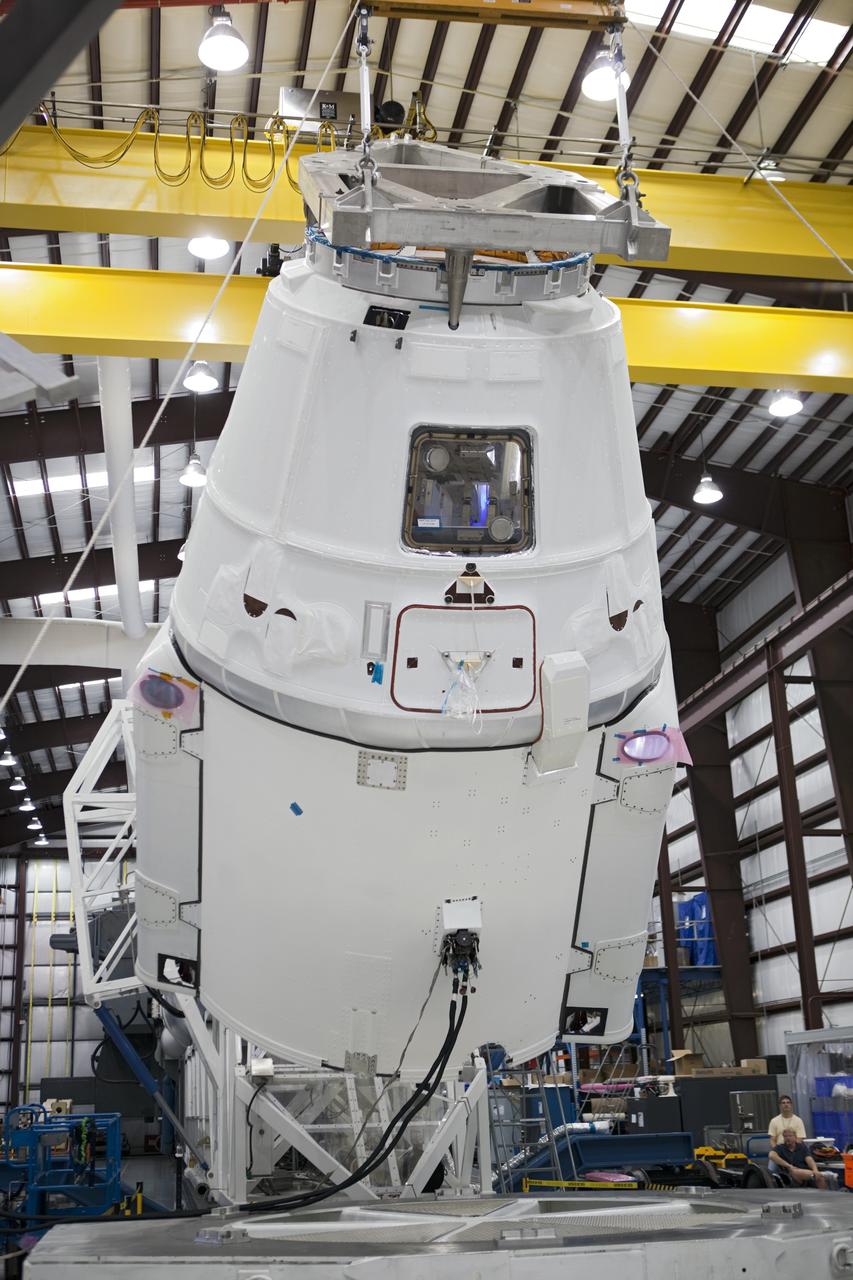
CAPE CANAVERAL, Fla. - A Space Exploration Technologies, or SpaceX, Dragon spacecraft is rotated for mating with its Falcon 9 launch vehicle. The rocket is being prepared for the company's first Commercial Resupply Services, or CRS-1, mission to the International Space Station. The capsule is scheduled to lift off on Oct. 7, 2012 from Space Launch Complex 40 at Cape Canaveral Air Force Station in Florida aboard a Falcon 9 rocket. The mission will be the company's second demonstration test flight for NASA's Commercial Orbital Transportation Services Program, or COTS. The SpaceX CRS contract with NASA provides for 12 cargo resupply missions to the station through 2015, the first of which is targeted to launch in October 2012.SpaceX became the first private company to berth a spacecraft with the space station in 2012 during its final demonstration flight under the Commercial Orbital Transportation Services, or COTS, program managed by NASA's Johnson Space Center in Houston. For more information, visit http://www.nasa.gov/mission_pages/station/living/launch/index.htmlPhoto credit: NASA/Ben Smegelsky
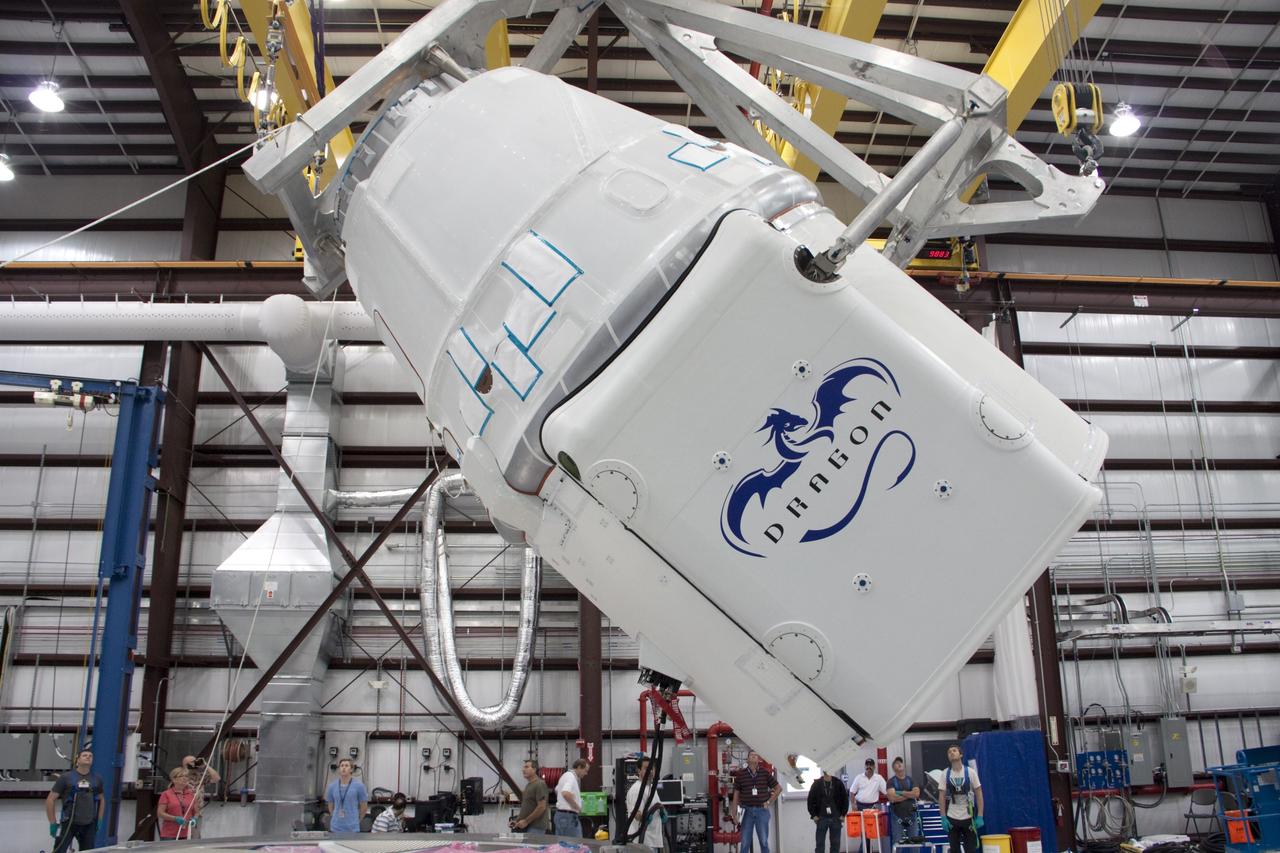
CAPE CANAVERAL, Fla. – In a processing facility at Space Launch Complex-40 on Cape Canaveral Air Force Station in Florida, the Space Exploration Technologies Dragon capsule is rotated into a horizontal position for mating with the second stage of the company’s Falcon 9 rocket. Known as SpaceX, the launch will be the company's second demonstration test flight for NASA's Commercial Orbital Transportation Services program, or COTS. During the flight, the capsule will conduct a series of check-out procedures to test and prove its systems, including rendezvous and berthing with the International Space Station. If the capsule performs as planned, the NanoRacks-CubeLabs Module-9 experiments and other cargo aboard Dragon will be transferred to the station. The cargo includes food, water and provisions for the station’s Expedition crews, such as clothing, batteries and computer equipment. Under COTS, NASA has partnered with two private companies to provide resupply missions to the station. The launch is scheduled for 9:38 a.m. EDT on May 7. For more information, visit http://www.nasa.gov/spacex. Photo credit: NASA/Jim Grossmann
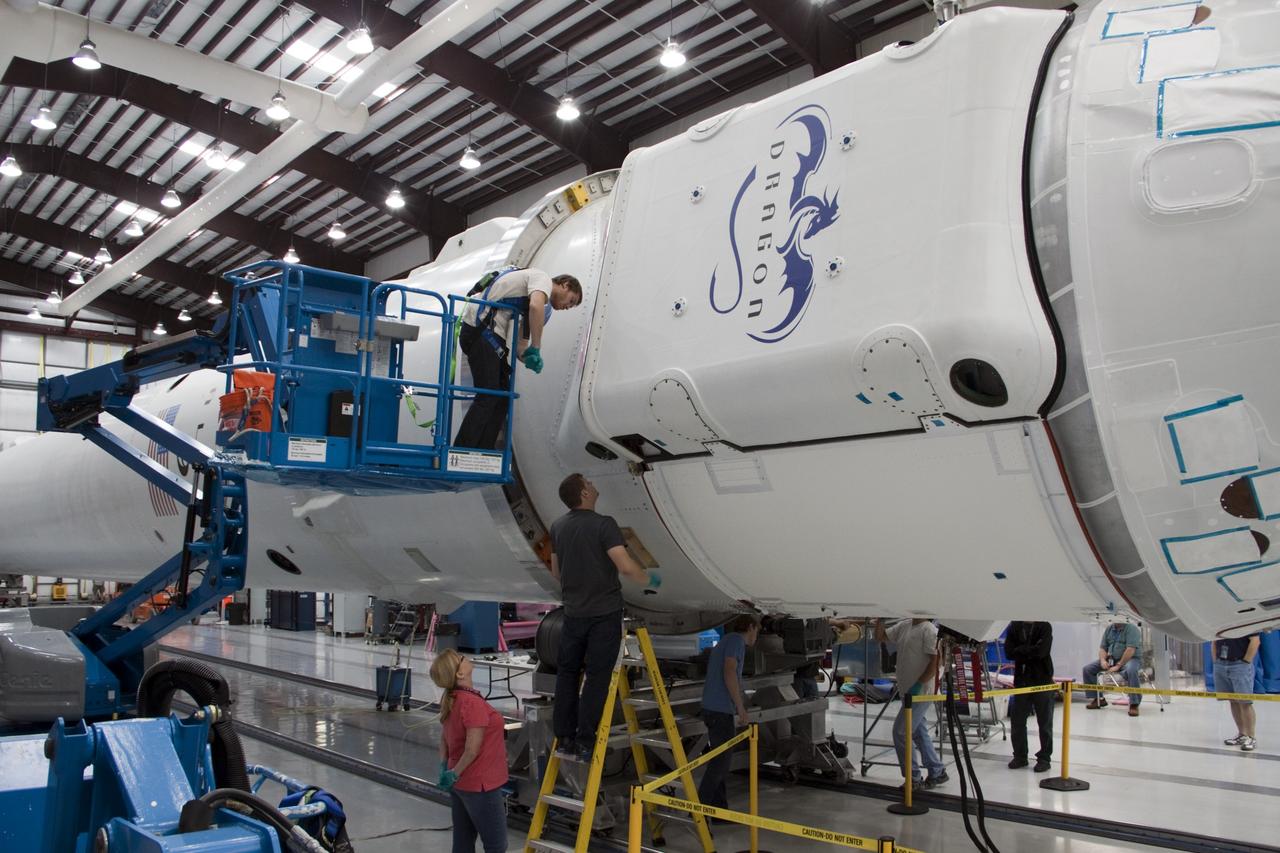
CAPE CANAVERAL, Fla. – In a processing facility at Space Launch Complex-40 on Cape Canaveral Air Force Station in Florida, Space Exploration Technologies technicians attach the Dragon capsule to the second stage of the company’s Falcon 9 rocket. Known as SpaceX, the launch will be the company's second demonstration test flight for NASA's Commercial Orbital Transportation Services program, or COTS. During the flight, the capsule will conduct a series of check-out procedures to test and prove its systems, including rendezvous and berthing with the International Space Station. If the capsule performs as planned, the NanoRacks-CubeLabs Module-9 experiments and other cargo aboard Dragon will be transferred to the station. The cargo includes food, water and provisions for the station’s Expedition crews, such as clothing, batteries and computer equipment. Under COTS, NASA has partnered with two private companies to provide resupply missions to the station. The launch is scheduled for 9:38 a.m. EDT on May 7. For more information, visit http://www.nasa.gov/spacex. Photo credit: NASA/Jim Grossmann
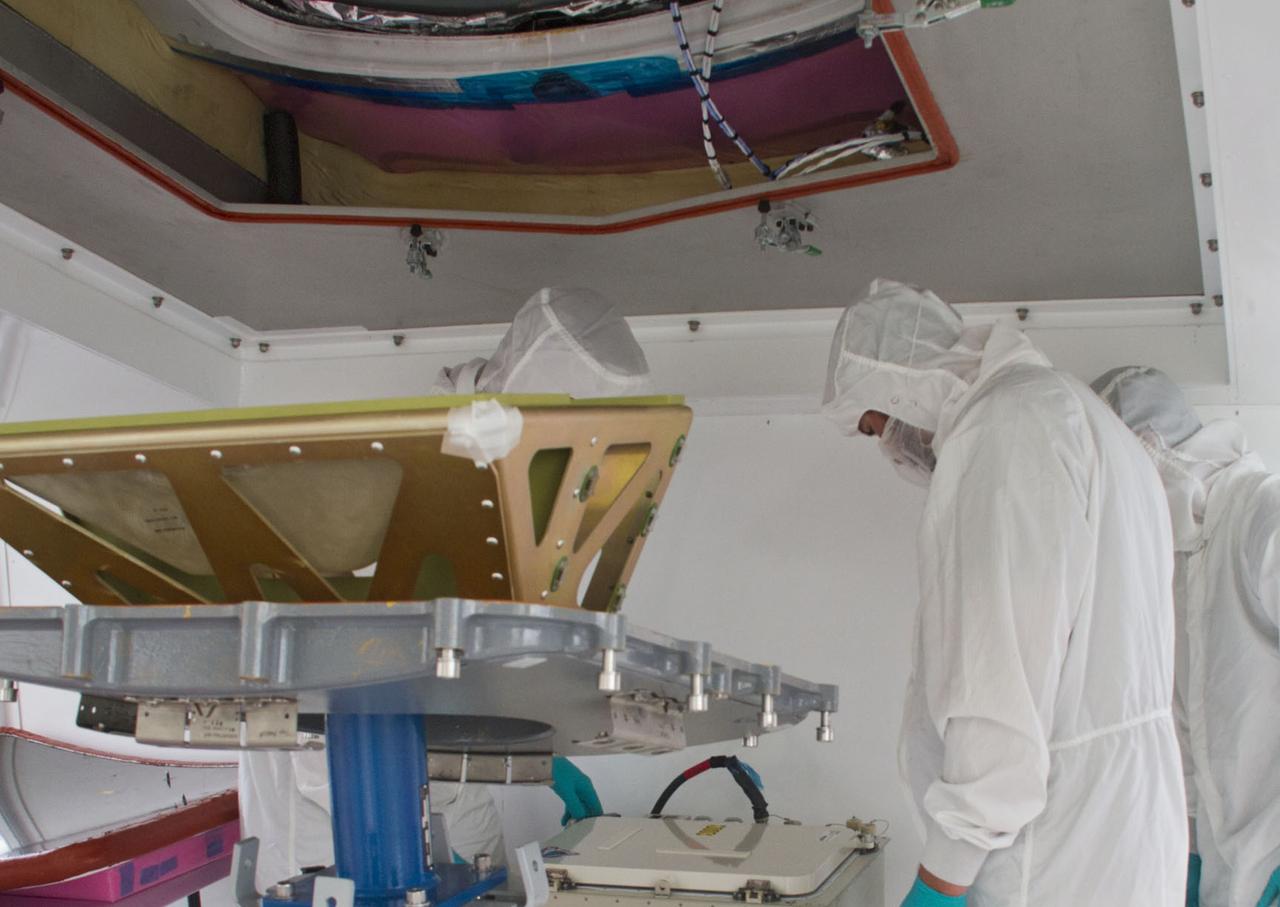
CAPE CANAVERAL, Fla. – In a processing facility at Space Launch Complex-40 on Cape Canaveral Air Force Station in Florida, aerospace technicians prepare to move a cargo container onto a lift to facilitate its installation into a Dragon capsule. The Dragon is set to launch aboard a Falcon 9 rocket. The new rocket and capsule were designed and manufactured by Space Exploration Technologies Corp., or SpaceX, for the company’s upcoming demonstration test flight for NASA’s Commercial Orbital Transportation Services, or COTS, program. Under COTS, NASA has partnered with two private companies to develop the capability to deliver cargo to the International Space Station. During the flight, SpaceX's Dragon capsule will conduct a series of checkout procedures that will test and prove its systems. These tests include rendezvous and berthing with the space station and are intended to lead to regular resupply missions to the station. Liftoff is targeted for April 30 at 12:22 p.m. EDT pending official approval at the Flight Readiness Review on April 16. For more information, visit www.nasa.gov/exploration/commercial/cargo/spacex_index.html. Photo credit: NASA/Cory Huston
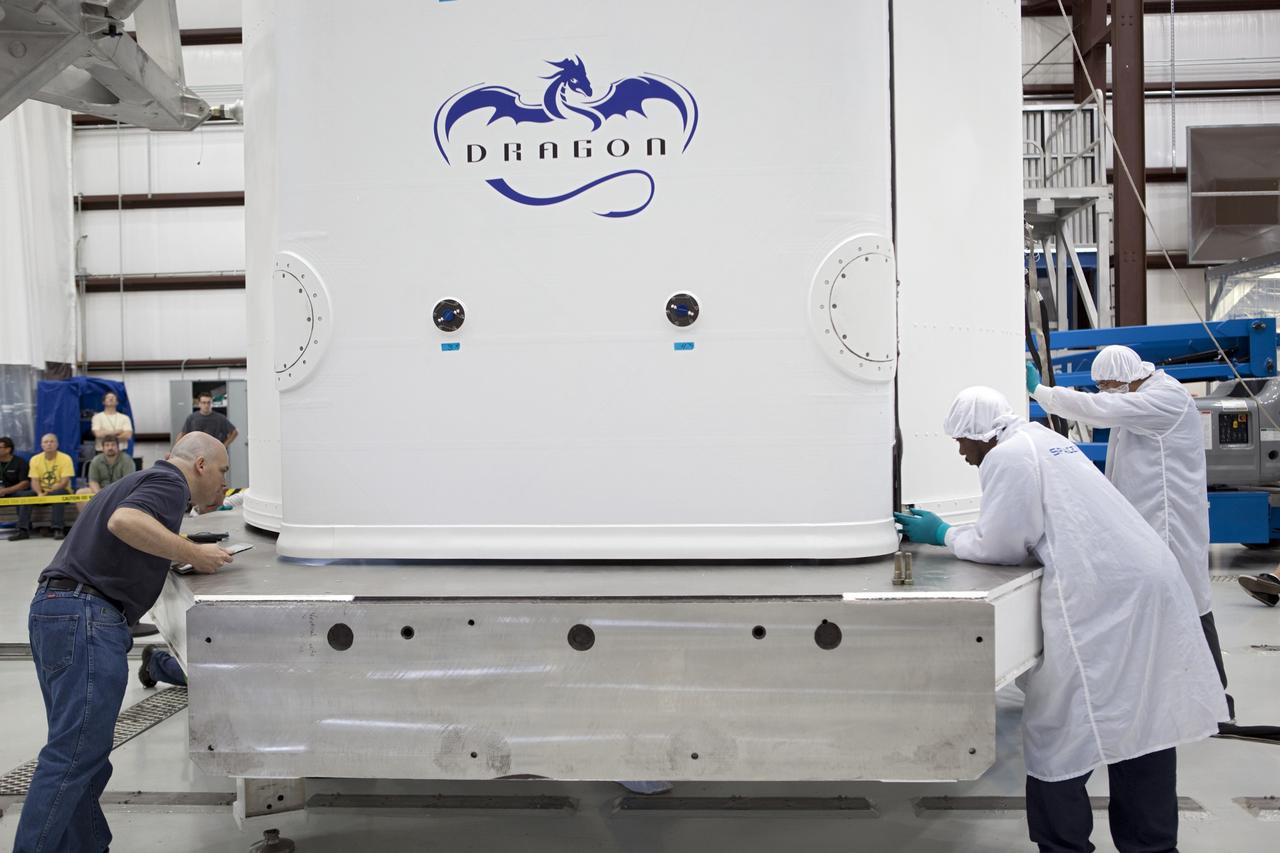
CAPE CANAVERAL, Fla. - Space Exploration Technologies, or SpaceX, technicians inspect a Dragon spacecraft being prepared for the company's first Commercial Resupply Services, or CRS-1, mission to the International Space Station. The capsule is scheduled to lift off from on Oct. 7, 2012 Space Launch Complex 40 at Cape Canaveral Air Force Station in Florida aboard a Falcon 9 rocket. The mission will be the company's second demonstration test flight for NASA's Commercial Orbital Transportation Services Program, or COTS. The SpaceX CRS contract with NASA provides for 12 cargo resupply missions to the station through 2015, the first of which is targeted to launch in October 2012.SpaceX became the first private company to berth a spacecraft with the space station in 2012 during its final demonstration flight under the Commercial Orbital Transportation Services, or COTS, program managed by NASA's Johnson Space Center in Houston. For more information, visit http://www.nasa.gov/mission_pages/station/living/launch/index.htmlPhoto credit: NASA/Ben Smegelsky
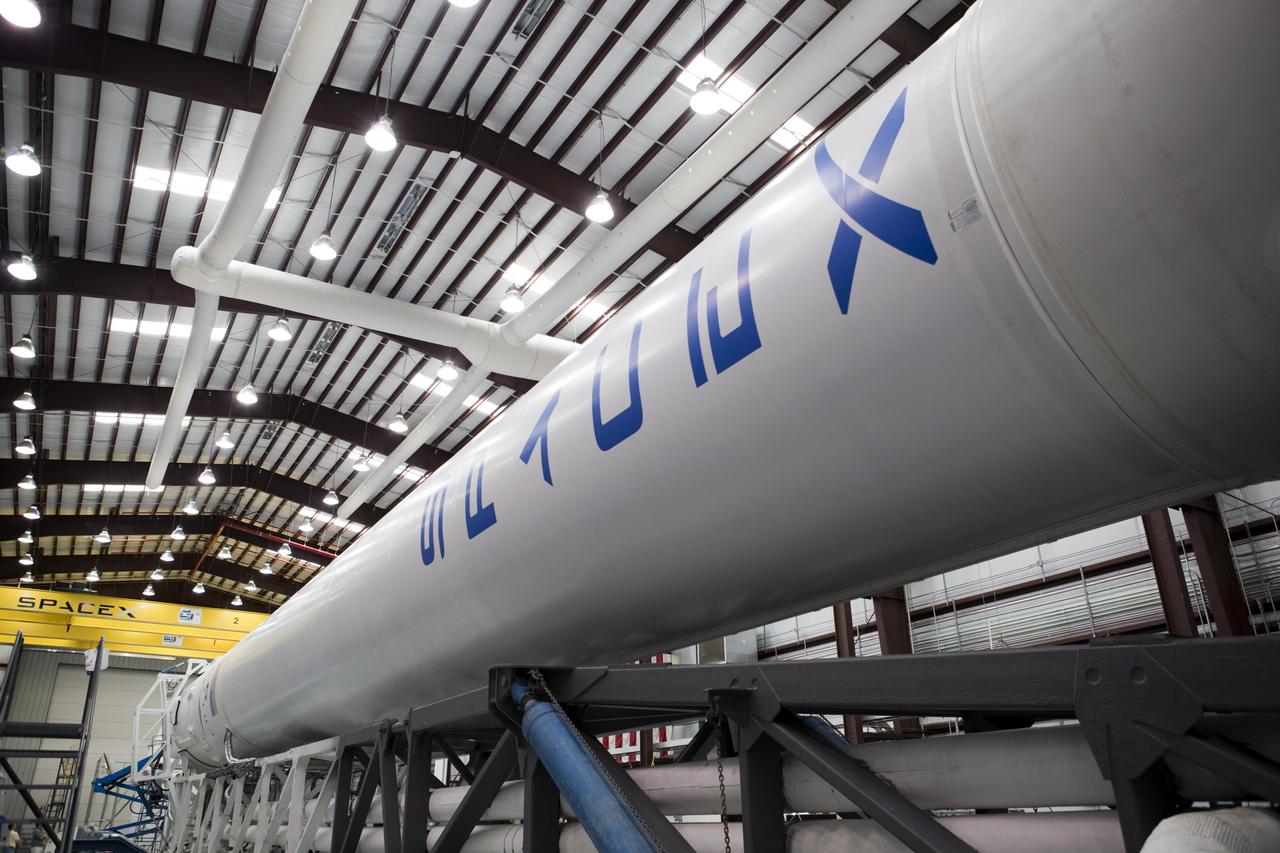
CAPE CANAVERAL, Fla. - A Space Exploration Technologies, or SpaceX, Falcon 9 rocket is being prepared for the company's first Commercial Resupply Services, or CRS-1, mission to send a Dragon spacecraft to the International Space Station. The rocket is scheduled to lift off on Oct. 7, 2012 from Space Launch Complex 40 at Cape Canaveral Air Force Station in Florida. The mission will be the company's second demonstration test flight for NASA's Commercial Orbital Transportation Services Program, or COTS. The SpaceX CRS contract with NASA provides for 12 cargo resupply missions to the station through 2015, the first of which is targeted to launch in October 2012.SpaceX became the first private company to berth a spacecraft with the space station in 2012 during its final demonstration flight under the Commercial Orbital Transportation Services, or COTS, program managed by NASA's Johnson Space Center in Houston. For more information, visit http://www.nasa.gov/mission_pages/station/living/launch/index.htmlPhoto credit: NASA/Ben Smegelsky
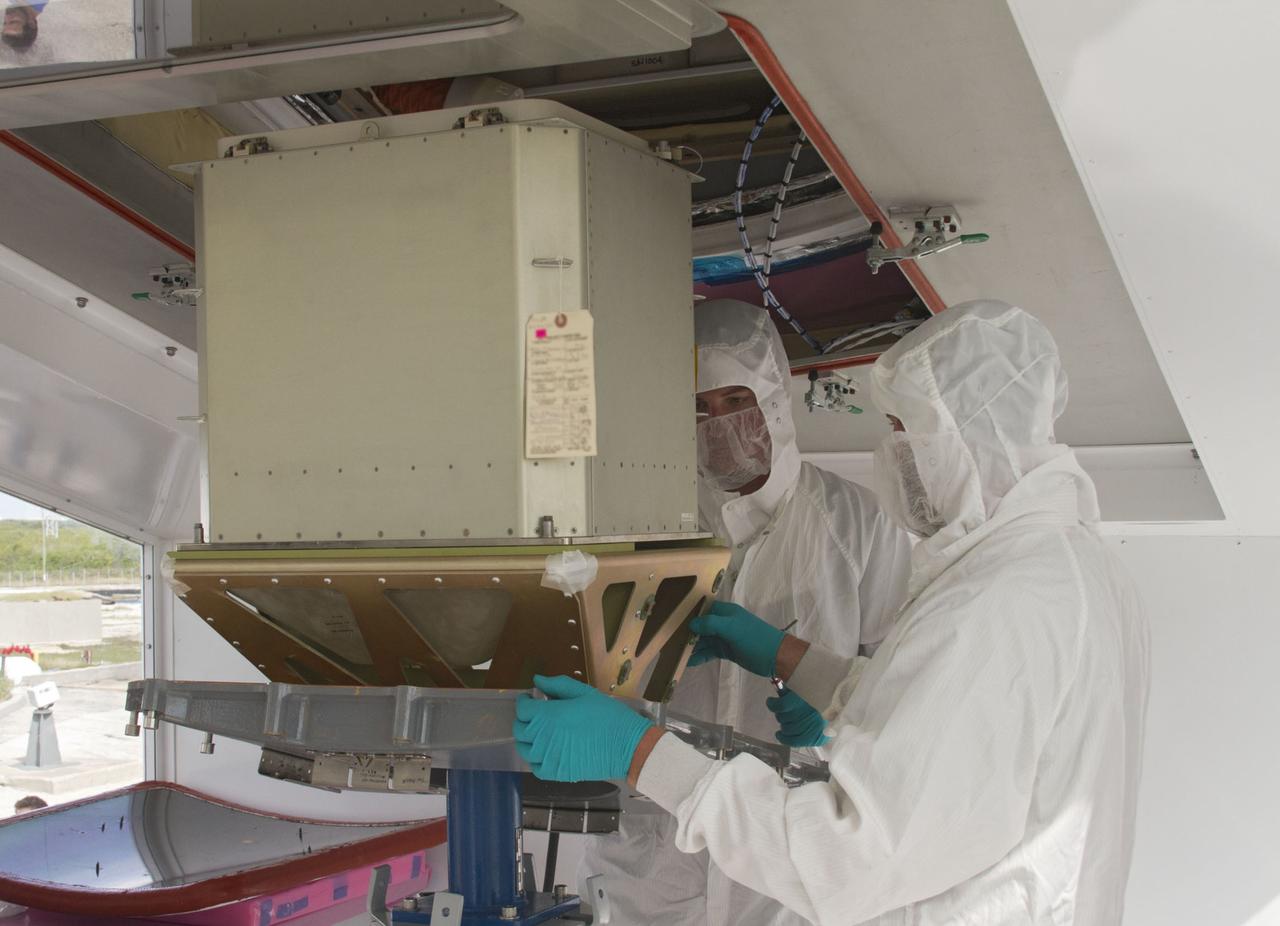
CAPE CANAVERAL, Fla. – In a processing facility at Space Launch Complex-40 on Cape Canaveral Air Force Station in Florida, aerospace technicians prepare to position a cargo container onto a lift to facilitate its installation into a Dragon capsule. The Dragon is set to launch aboard a Falcon 9 rocket. The new rocket and capsule were designed and manufactured by Space Exploration Technologies Corp., or SpaceX, for the company’s upcoming demonstration test flight for NASA’s Commercial Orbital Transportation Services, or COTS, program. Under COTS, NASA has partnered with two private companies to develop the capability to deliver cargo to the International Space Station. During the flight, SpaceX's Dragon capsule will conduct a series of checkout procedures that will test and prove its systems. These tests include rendezvous and berthing with the space station and are intended to lead to regular resupply missions to the station. Liftoff is targeted for April 30 at 12:22 p.m. EDT pending official approval at the Flight Readiness Review on April 16. For more information, visit www.nasa.gov/exploration/commercial/cargo/spacex_index.html. Photo credit: NASA/Cory Huston
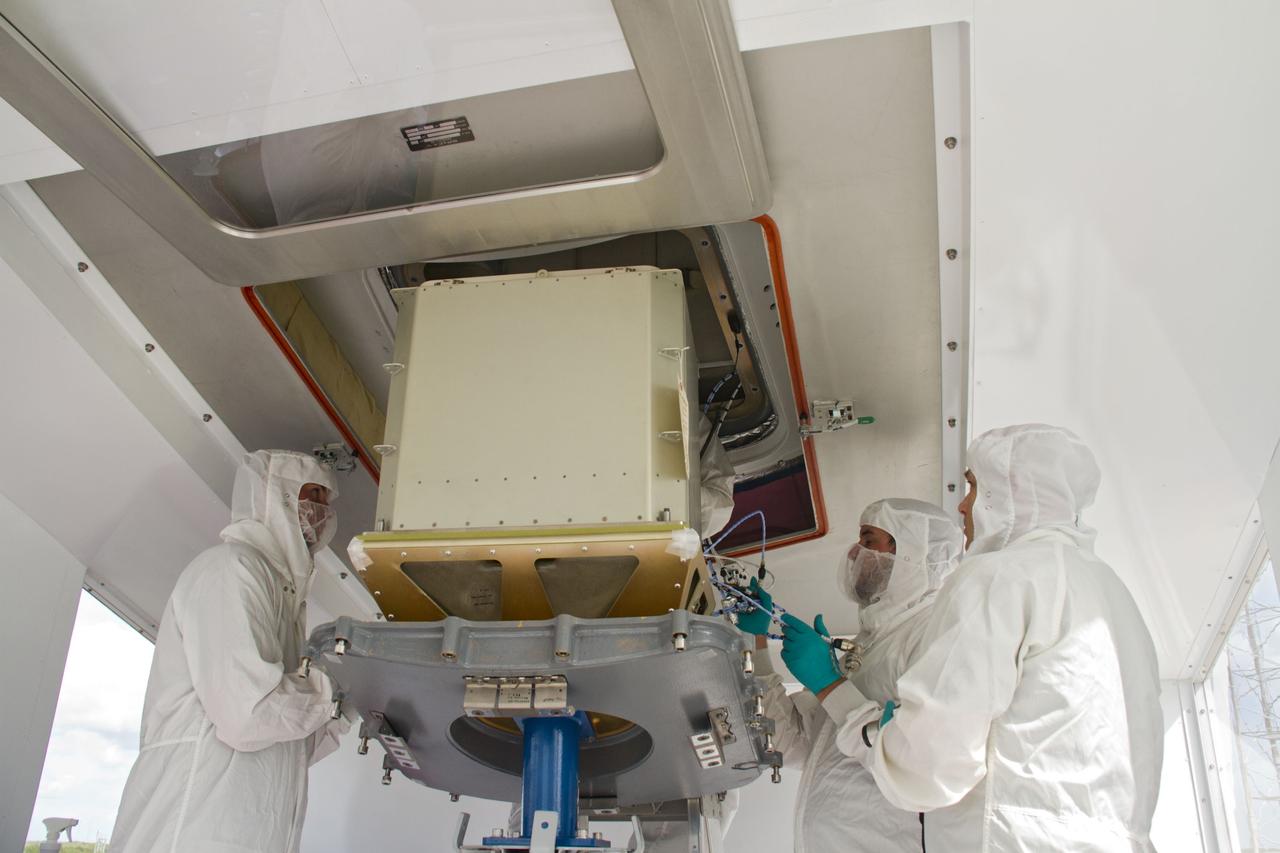
CAPE CANAVERAL, Fla. – In a processing facility at Space Launch Complex-40 on Cape Canaveral Air Force Station in Florida, a cargo container is lifted toward the open hatch of a Dragon capsule. The Dragon is set to launch aboard a Falcon 9 rocket. The new rocket and capsule were designed and manufactured by Space Exploration Technologies Corp., or SpaceX, for the company’s upcoming demonstration test flight for NASA’s Commercial Orbital Transportation Services, or COTS, program. Under COTS, NASA has partnered with two private companies to develop the capability to deliver cargo to the International Space Station. During the flight, SpaceX's Dragon capsule will conduct a series of checkout procedures that will test and prove its systems. These tests include rendezvous and berthing with the space station and are intended to lead to regular resupply missions to the station. Liftoff is targeted for April 30 at 12:22 p.m. EDT pending official approval at the Flight Readiness Review on April 16. For more information, visit www.nasa.gov/exploration/commercial/cargo/spacex_index.html. Photo credit: NASA/Cory Huston
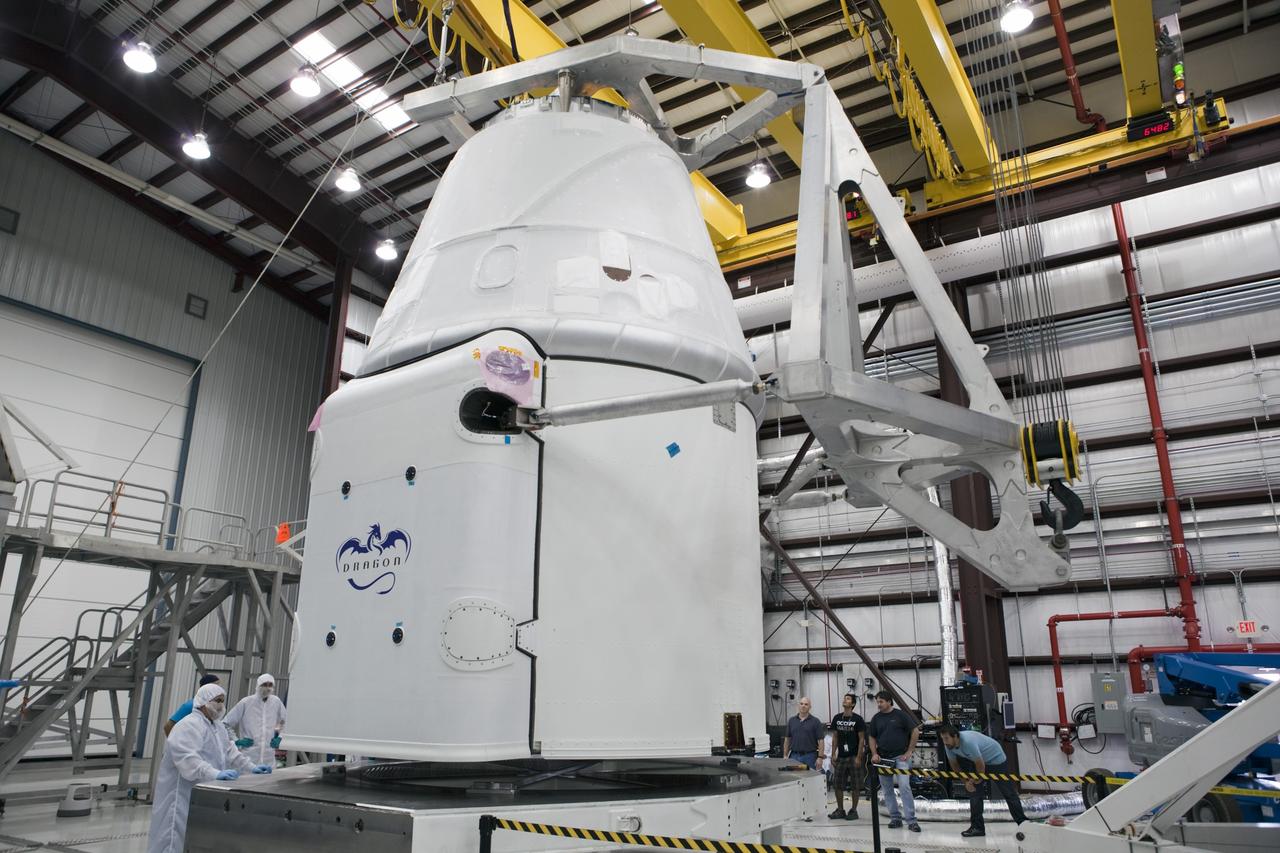
CAPE CANAVERAL, Fla. - Space Exploration Technologies, or SpaceX, technicians inspect a Dragon spacecraft being prepared for the company's first Commercial Resupply Services, or CRS-1, mission to the International Space Station. The capsule is scheduled to lift off on Oct. 7, 2012 from Space Launch Complex 40 at Cape Canaveral Air Force Station in Florida aboard a Falcon 9 rocket. The mission will be the company's second demonstration test flight for NASA's Commercial Orbital Transportation Services Program, or COTS. The SpaceX CRS contract with NASA provides for 12 cargo resupply missions to the station through 2015, the first of which is targeted to launch in October 2012.SpaceX became the first private company to berth a spacecraft with the space station in 2012 during its final demonstration flight under the Commercial Orbital Transportation Services, or COTS, program managed by NASA's Johnson Space Center in Houston. For more information, visit http://www.nasa.gov/mission_pages/station/living/launch/index.htmlPhoto credit: NASA/Ben Smegelsky
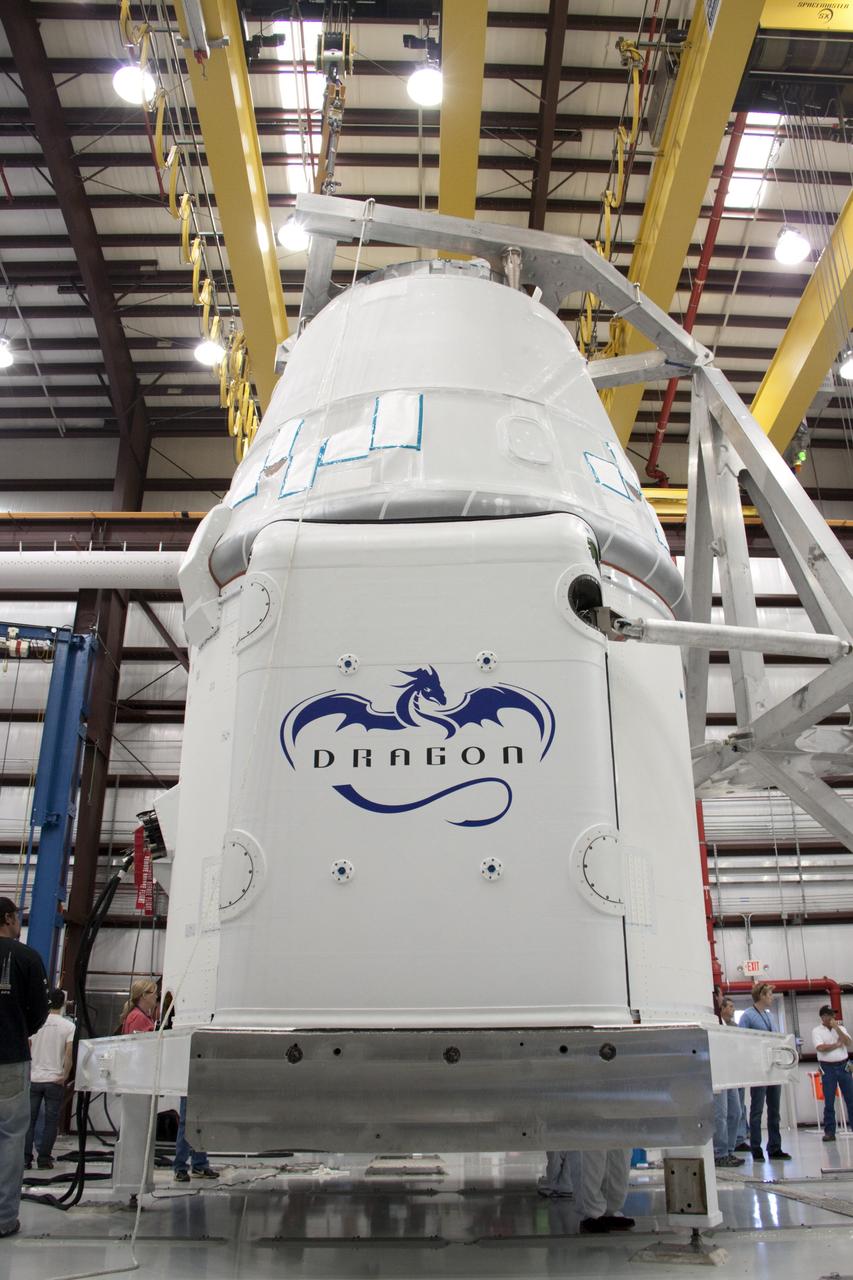
CAPE CANAVERAL, Fla. – In a processing facility at Space Launch Complex-40 on Cape Canaveral Air Force Station in Florida, preparations are under way to mate the Space Exploration Technologies Dragon capsule to the second stage of the company’s Falcon 9 rocket. Known as SpaceX, the launch will be the company's second demonstration test flight for NASA's Commercial Orbital Transportation Services program, or COTS. During the flight, the capsule will conduct a series of check-out procedures to test and prove its systems, including rendezvous and berthing with the International Space Station. If the capsule performs as planned, the NanoRacks-CubeLabs Module-9 experiments and other cargo aboard Dragon will be transferred to the station. The cargo includes food, water and provisions for the station’s Expedition crews, such as clothing, batteries and computer equipment. Under COTS, NASA has partnered with two private companies to provide resupply missions to the station. The launch is scheduled for 9:38 a.m. EDT on May 7. For more information, visit http://www.nasa.gov/spacex. Photo credit: NASA/Jim Grossmann
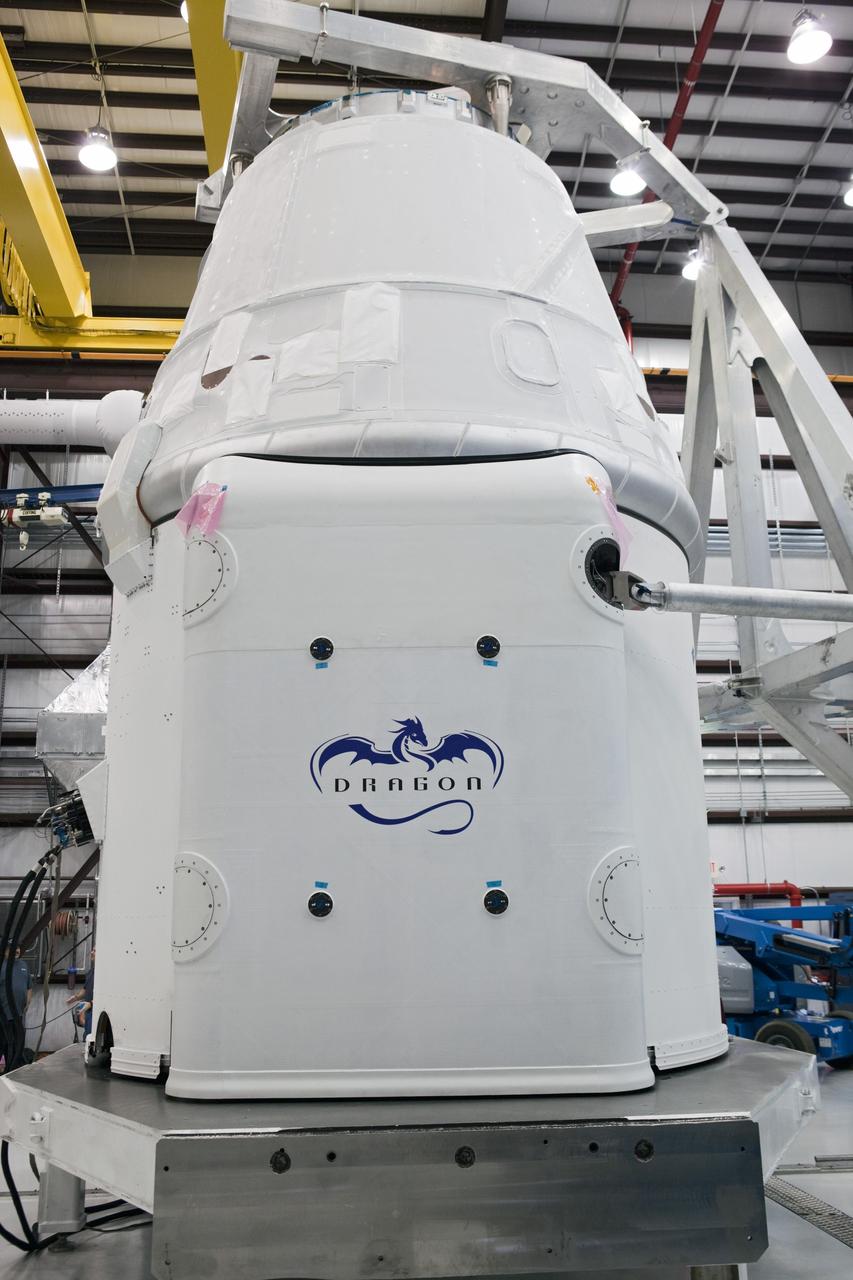
CAPE CANAVERAL, Fla. - A Space Exploration Technologies, or SpaceX, Dragon spacecraft is being prepared for the company's first Commercial Resupply Services, or CRS-1, mission to the International Space Station. The capsule is scheduled to lift off on Oct. 7, 2012 from Space Launch Complex 40 at Cape Canaveral Air Force Station in Florida aboard a Falcon 9 rocket. The mission will be the company's second demonstration test flight for NASA's Commercial Orbital Transportation Services Program, or COTS. The SpaceX CRS contract with NASA provides for 12 cargo resupply missions to the station through 2015, the first of which is targeted to launch in October 2012.SpaceX became the first private company to berth a spacecraft with the space station in 2012 during its final demonstration flight under the Commercial Orbital Transportation Services, or COTS, program managed by NASA's Johnson Space Center in Houston. For more information, visit http://www.nasa.gov/mission_pages/station/living/launch/index.htmlPhoto credit: NASA/Ben Smegelsky
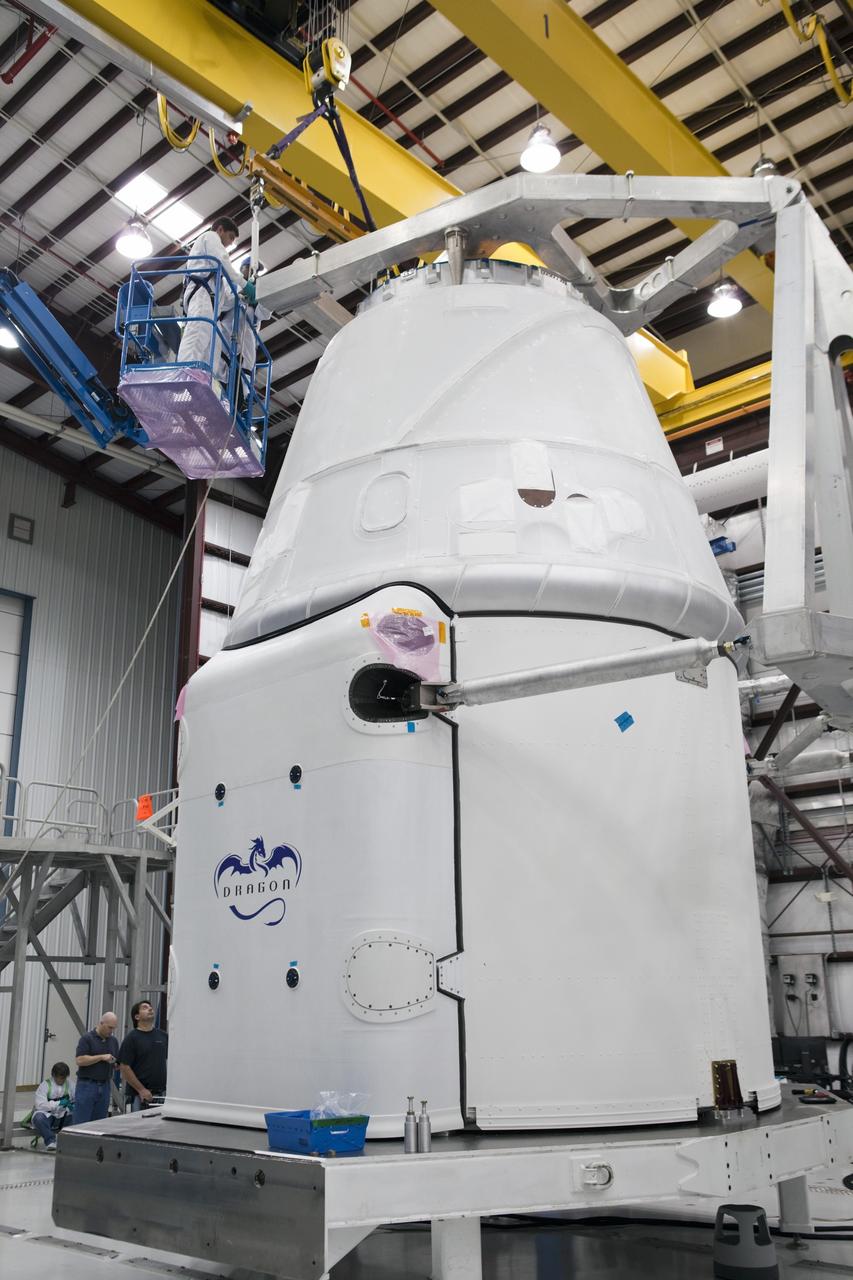
CAPE CANAVERAL, Fla. - A Space Exploration Technologies, or SpaceX, technician uses a lift to check out a Dragon spacecraft being prepared for the company's first Commercial Resupply Services, or CRS-1, mission to the International Space Station. The capsule is scheduled to lift off on Oct. 7, 2012 from Space Launch Complex 40 at Cape Canaveral Air Force Station in Florida aboard a Falcon 9 rocket. The mission will be the company's second demonstration test flight for NASA's Commercial Orbital Transportation Services Program, or COTS. The SpaceX CRS contract with NASA provides for 12 cargo resupply missions to the station through 2015, the first of which is targeted to launch in October 2012.SpaceX became the first private company to berth a spacecraft with the space station in 2012 during its final demonstration flight under the Commercial Orbital Transportation Services, or COTS, program managed by NASA's Johnson Space Center in Houston. For more information, visit http://www.nasa.gov/mission_pages/station/living/launch/index.htmlPhoto credit: NASA/Ben Smegelsky
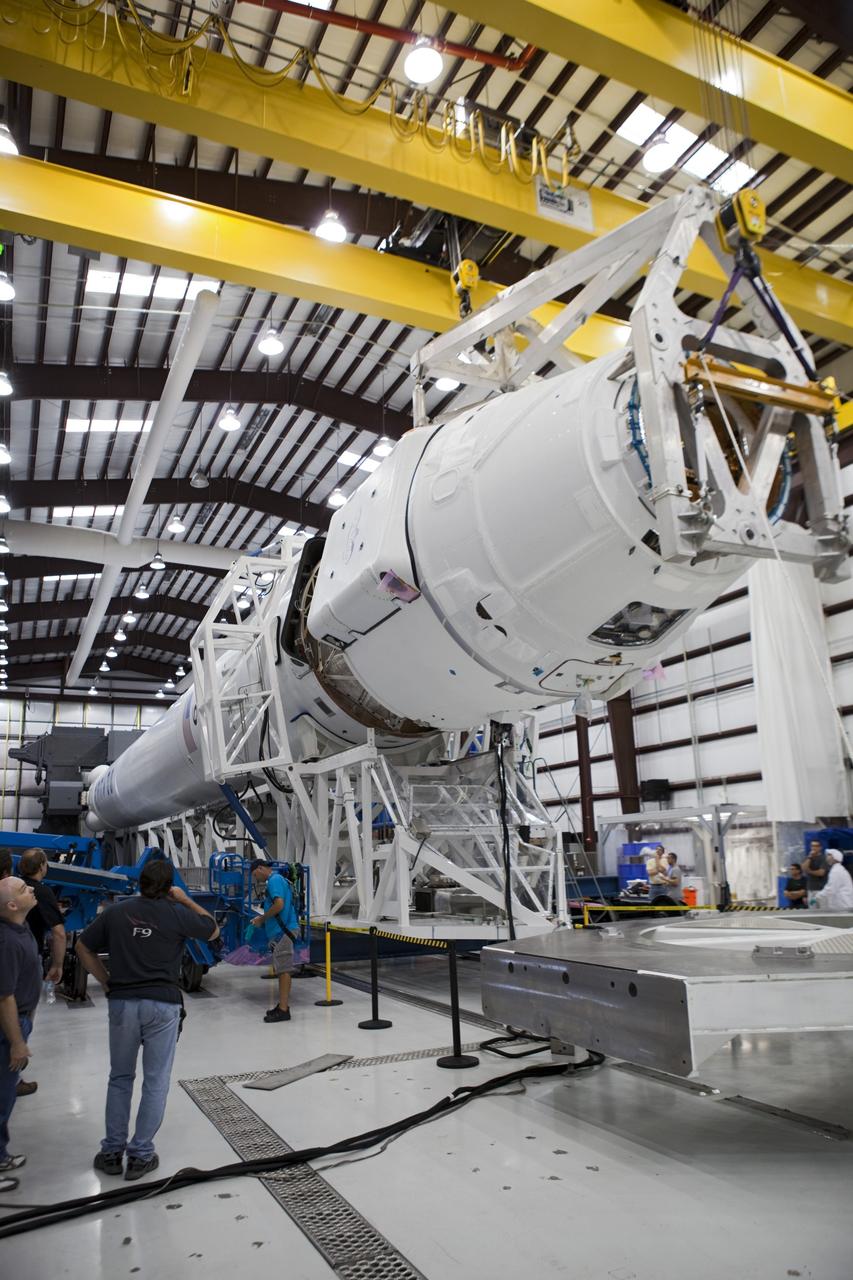
CAPE CANAVERAL, Fla. - Space Exploration Technologies, or SpaceX, technicians attach a Dragon spacecraft to its Falcon 9 launch vehicle. The rocket is being prepared for the company's first Commercial Resupply Services, or CRS-1, mission to the International Space Station. The capsule is scheduled to lift off on Oct. 7, 2012 from Space Launch Complex 40 at Cape Canaveral Air Force Station in Florida aboard a Falcon 9 rocket. The mission will be the company's second demonstration test flight for NASA's Commercial Orbital Transportation Services Program, or COTS. The SpaceX CRS contract with NASA provides for 12 cargo resupply missions to the station through 2015, the first of which is targeted to launch in October 2012.SpaceX became the first private company to berth a spacecraft with the space station in 2012 during its final demonstration flight under the Commercial Orbital Transportation Services, or COTS, program managed by NASA's Johnson Space Center in Houston. For more information, visit http://www.nasa.gov/mission_pages/station/living/launch/index.htmlPhoto credit: NASA/Ben Smegelsky
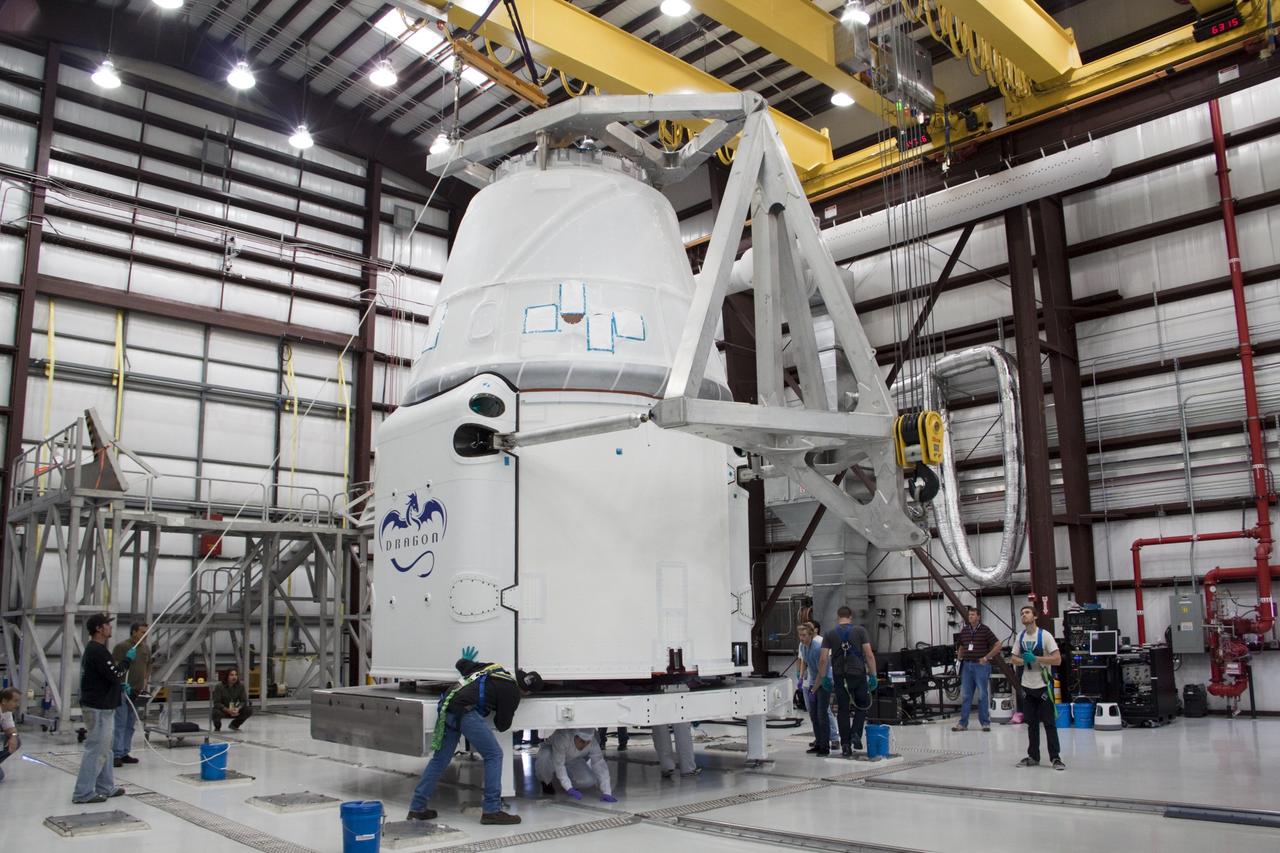
CAPE CANAVERAL, Fla. – In a processing facility at Space Launch Complex-40 on Cape Canaveral Air Force Station in Florida, Space Exploration Technologies technicians prepare to rotate the Dragon capsule into a horizontal position for mating with the second stage of the company’s Falcon 9 rocket. Known as SpaceX, the launch will be the company's second demonstration test flight for NASA's Commercial Orbital Transportation Services program, or COTS. During the flight, the capsule will conduct a series of check-out procedures to test and prove its systems, including rendezvous and berthing with the International Space Station. If the capsule performs as planned, the NanoRacks-CubeLabs Module-9 experiments and other cargo aboard Dragon will be transferred to the station. The cargo includes food, water and provisions for the station’s Expedition crews, such as clothing, batteries and computer equipment. Under COTS, NASA has partnered with two private companies to provide resupply missions to the station. The launch is scheduled for 9:38 a.m. EDT on May 7. For more information, visit http://www.nasa.gov/spacex. Photo credit: NASA/Jim Grossmann
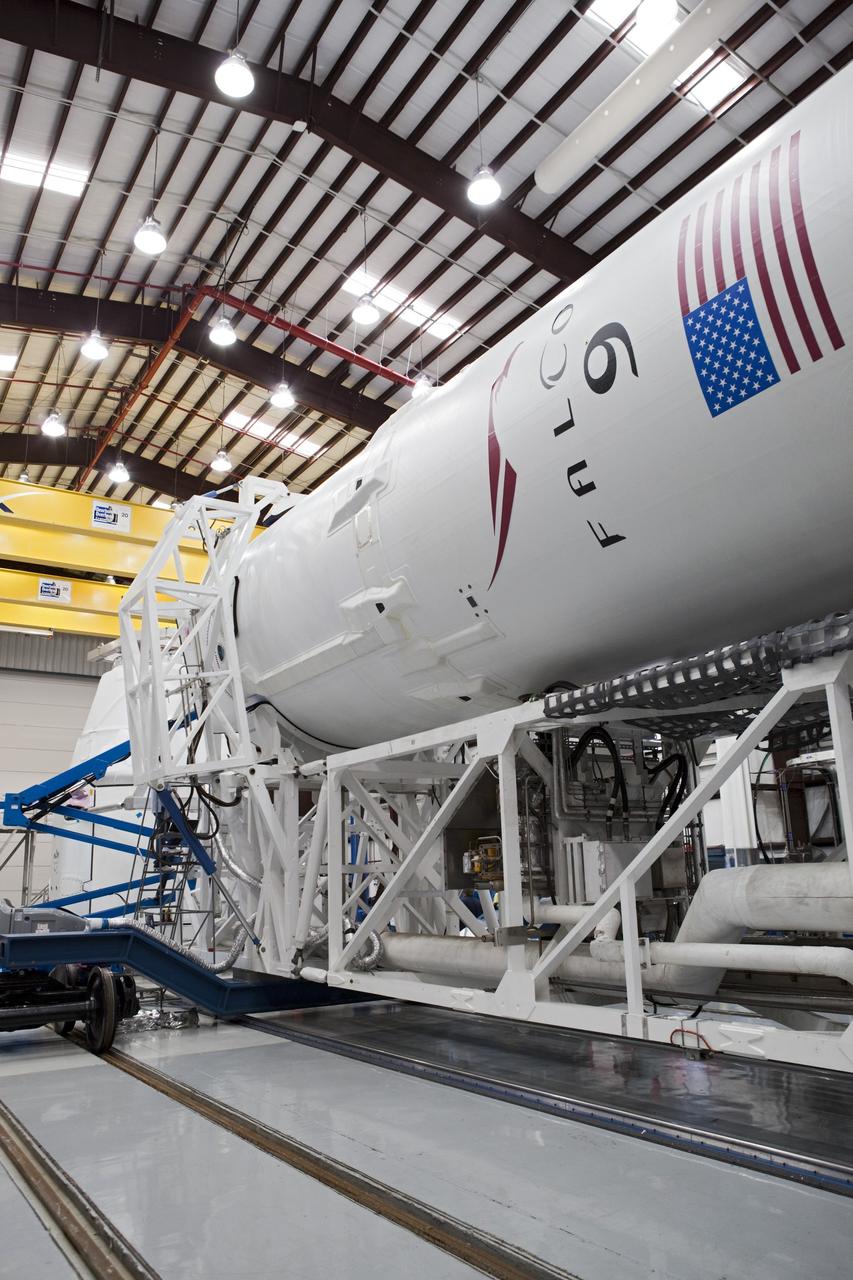
CAPE CANAVERAL, Fla. - A Space Exploration Technologies, or SpaceX, Falcon 9 rocket is being prepared for the company's first Commercial Resupply Services, or CRS-1, mission to send a Dragon spacecraft to the International Space Station. The rocket is scheduled to lift off on Oct. 7, 2012 from Space Launch Complex 40 at Cape Canaveral Air Force Station in Florida. The mission will be the company's second demonstration test flight for NASA's Commercial Orbital Transportation Services Program, or COTS. The SpaceX CRS contract with NASA provides for 12 cargo resupply missions to the station through 2015, the first of which is targeted to launch in October 2012.SpaceX became the first private company to berth a spacecraft with the space station in 2012 during its final demonstration flight under the Commercial Orbital Transportation Services, or COTS, program managed by NASA's Johnson Space Center in Houston. For more information, visit http://www.nasa.gov/mission_pages/station/living/launch/index.htmlPhoto credit: NASA/Ben Smegelsky
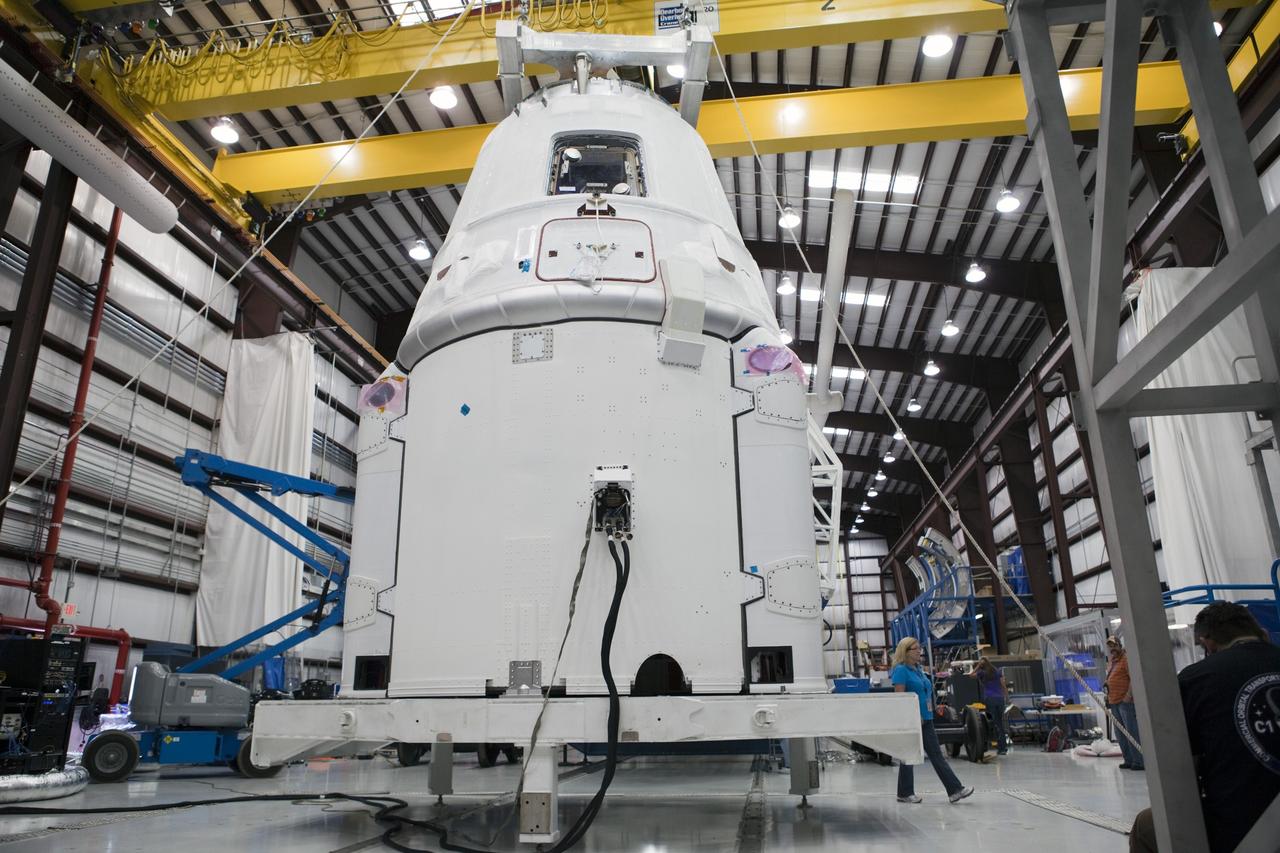
CAPE CANAVERAL, Fla. - A Space Exploration Technologies, or SpaceX, Dragon spacecraft is being prepared for the company's first Commercial Resupply Services, or CRS-1, mission to the International Space Station. The capsule is scheduled to lift off on Oct. 7, 2012 from Space Launch Complex 40 at Cape Canaveral Air Force Station in Florida aboard a Falcon 9 rocket. The mission will be the company's second demonstration test flight for NASA's Commercial Orbital Transportation Services Program, or COTS. The SpaceX CRS contract with NASA provides for 12 cargo resupply missions to the station through 2015, the first of which is targeted to launch in October 2012.SpaceX became the first private company to berth a spacecraft with the space station in 2012 during its final demonstration flight under the Commercial Orbital Transportation Services, or COTS, program managed by NASA's Johnson Space Center in Houston. For more information, visit http://www.nasa.gov/mission_pages/station/living/launch/index.htmlPhoto credit: NASA/Ben Smegelsky
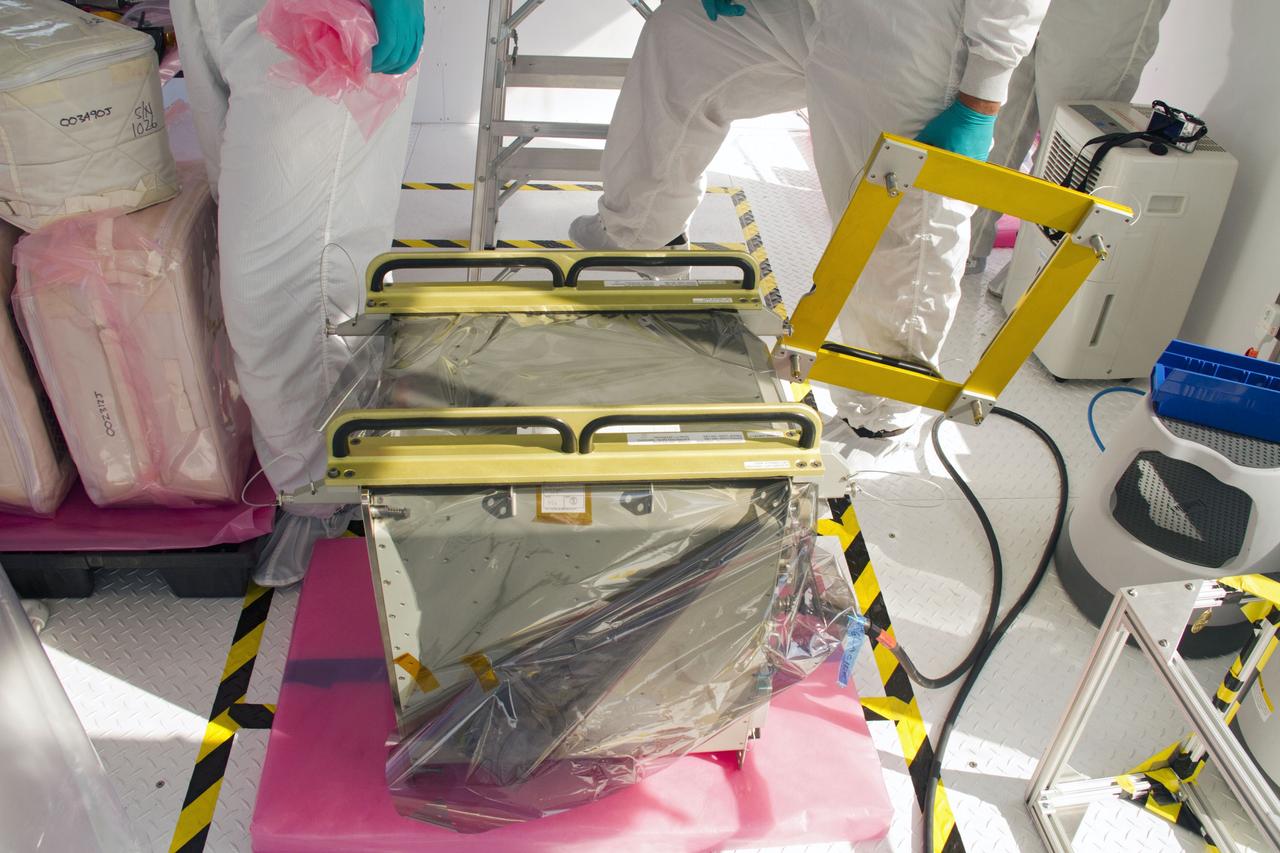
CAPE CANAVERAL, Fla. – In a processing facility at Space Launch Complex-40 on Cape Canaveral Air Force Station in Florida, preparations are under way to install cargo containers into a Dragon capsule for launch aboard a Falcon 9 rocket. The new rocket and capsule were designed and manufactured by Space Exploration Technologies Corp., or SpaceX, for the company’s upcoming demonstration test flight for NASA’s Commercial Orbital Transportation Services, or COTS, program. Under COTS, NASA has partnered with two private companies to develop the capability to deliver cargo to the International Space Station. During the flight, SpaceX's Dragon capsule will conduct a series of checkout procedures that will test and prove its systems. These tests include rendezvous and berthing with the space station and are intended to lead to regular resupply missions to the station. Liftoff is targeted for April 30 at 12:22 p.m. EDT pending official approval at the Flight Readiness Review on April 16. For more information, visit www.nasa.gov/exploration/commercial/cargo/spacex_index.html. Photo credit: NASA/Cory Huston
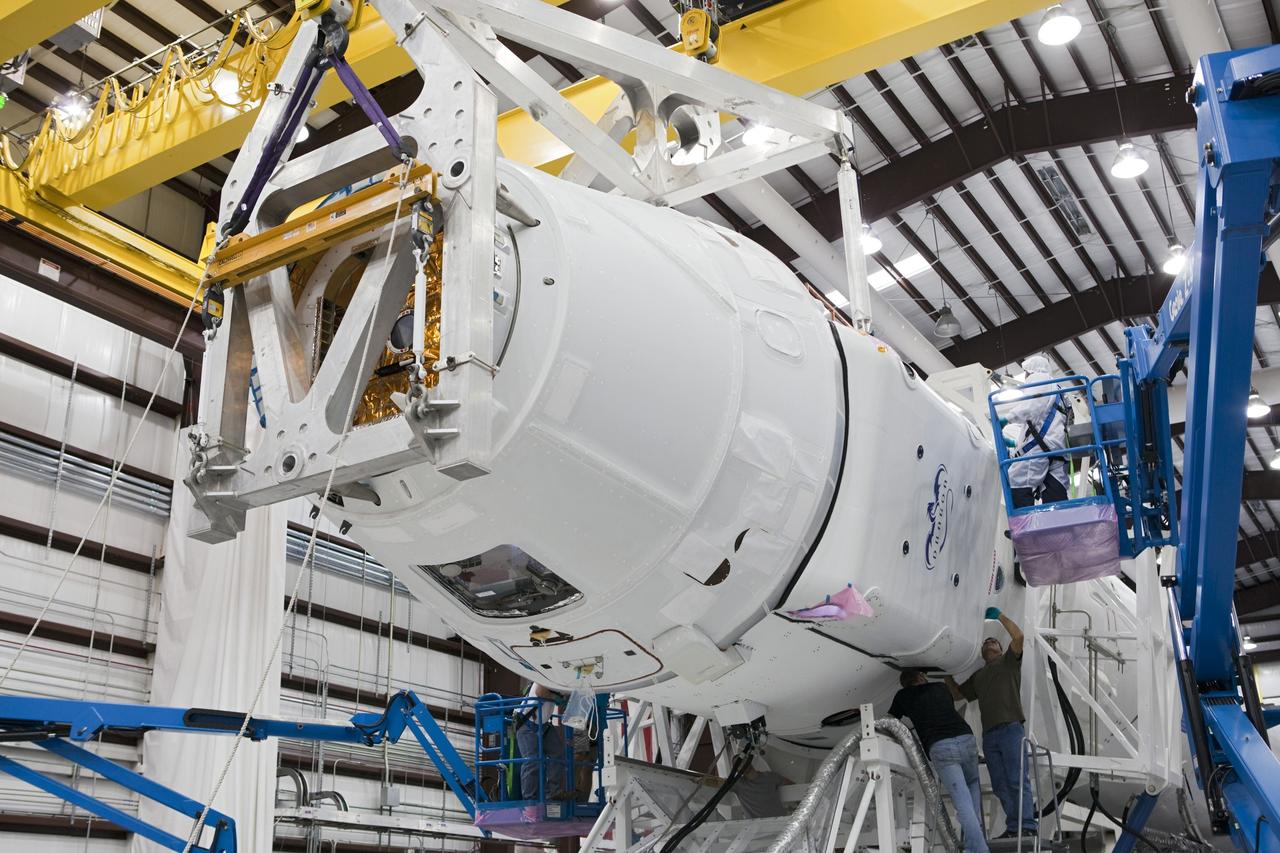
CAPE CANAVERAL, Fla. - Space Exploration Technologies, or SpaceX, technicians use a lift to inspect a Dragon spacecraft as it is being attached to its Falcon 9 launch vehicle. The rocket is being prepared for the company's first Commercial Resupply Services, or CRS-1, mission to the International Space Station. The capsule is scheduled to lift off on Oct. 7, 2012 from Space Launch Complex 40 at Cape Canaveral Air Force Station in Florida aboard a Falcon 9 rocket. The mission will be the company's second demonstration test flight for NASA's Commercial Orbital Transportation Services Program, or COTS. The SpaceX CRS contract with NASA provides for 12 cargo resupply missions to the station through 2015, the first of which is targeted to launch in October 2012.SpaceX became the first private company to berth a spacecraft with the space station in 2012 during its final demonstration flight under the Commercial Orbital Transportation Services, or COTS, program managed by NASA's Johnson Space Center in Houston. For more information, visit http://www.nasa.gov/mission_pages/station/living/launch/index.htmlPhoto credit: NASA/Ben Smegelsky
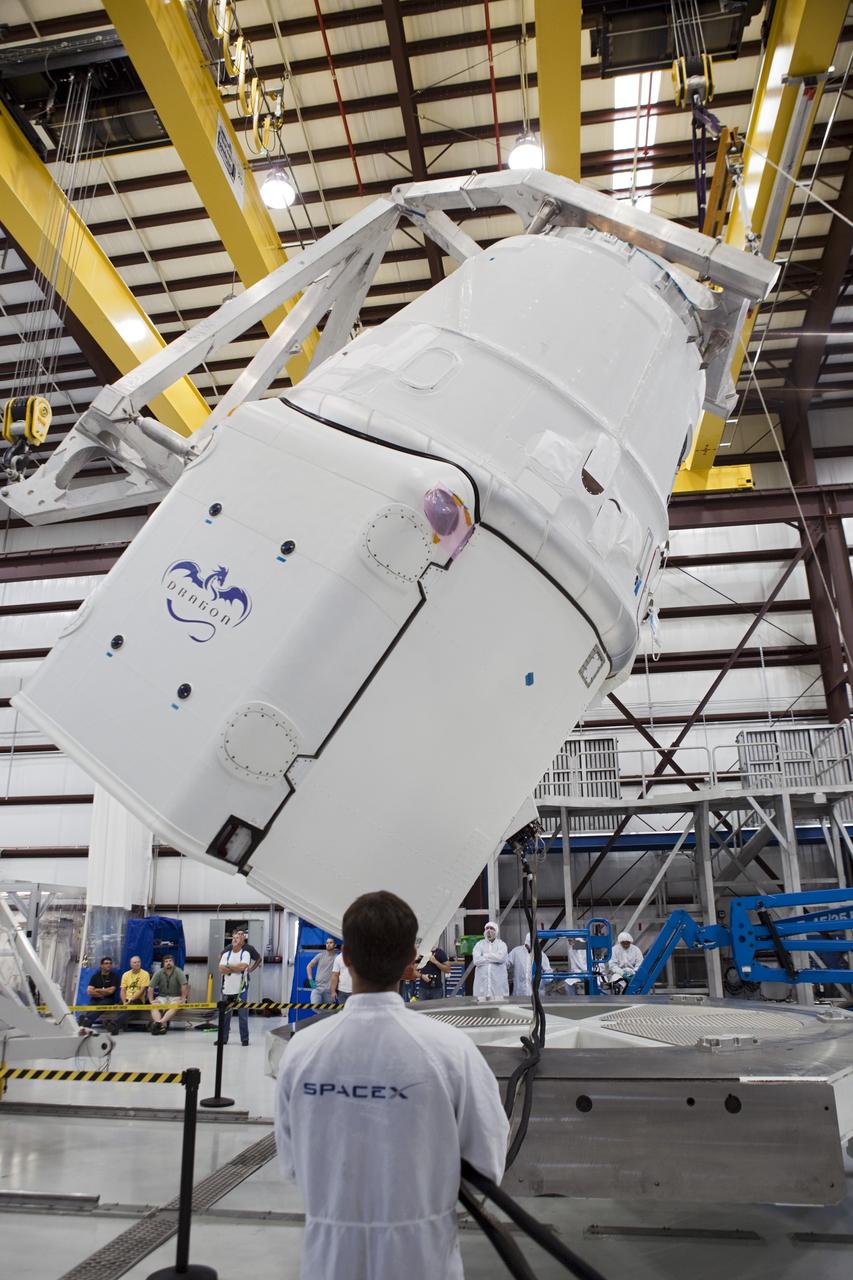
CAPE CANAVERAL, Fla. - Space Exploration Technologies, or SpaceX, technicians rotate a Dragon spacecraft for mating with its Falcon 9 launch vehicle. The rocket is being prepared for the company's first Commercial Resupply Services, or CRS-1, mission to the International Space Station. The capsule is scheduled to lift off on Oct. 7, 2012 from Space Launch Complex 40 at Cape Canaveral Air Force Station in Florida aboard a Falcon 9 rocket. The mission will be the company's second demonstration test flight for NASA's Commercial Orbital Transportation Services Program, or COTS. The SpaceX CRS contract with NASA provides for 12 cargo resupply missions to the station through 2015, the first of which is targeted to launch in October 2012.SpaceX became the first private company to berth a spacecraft with the space station in 2012 during its final demonstration flight under the Commercial Orbital Transportation Services, or COTS, program managed by NASA's Johnson Space Center in Houston. For more information, visit http://www.nasa.gov/mission_pages/station/living/launch/index.htmlPhoto credit: NASA/Ben Smegelsky
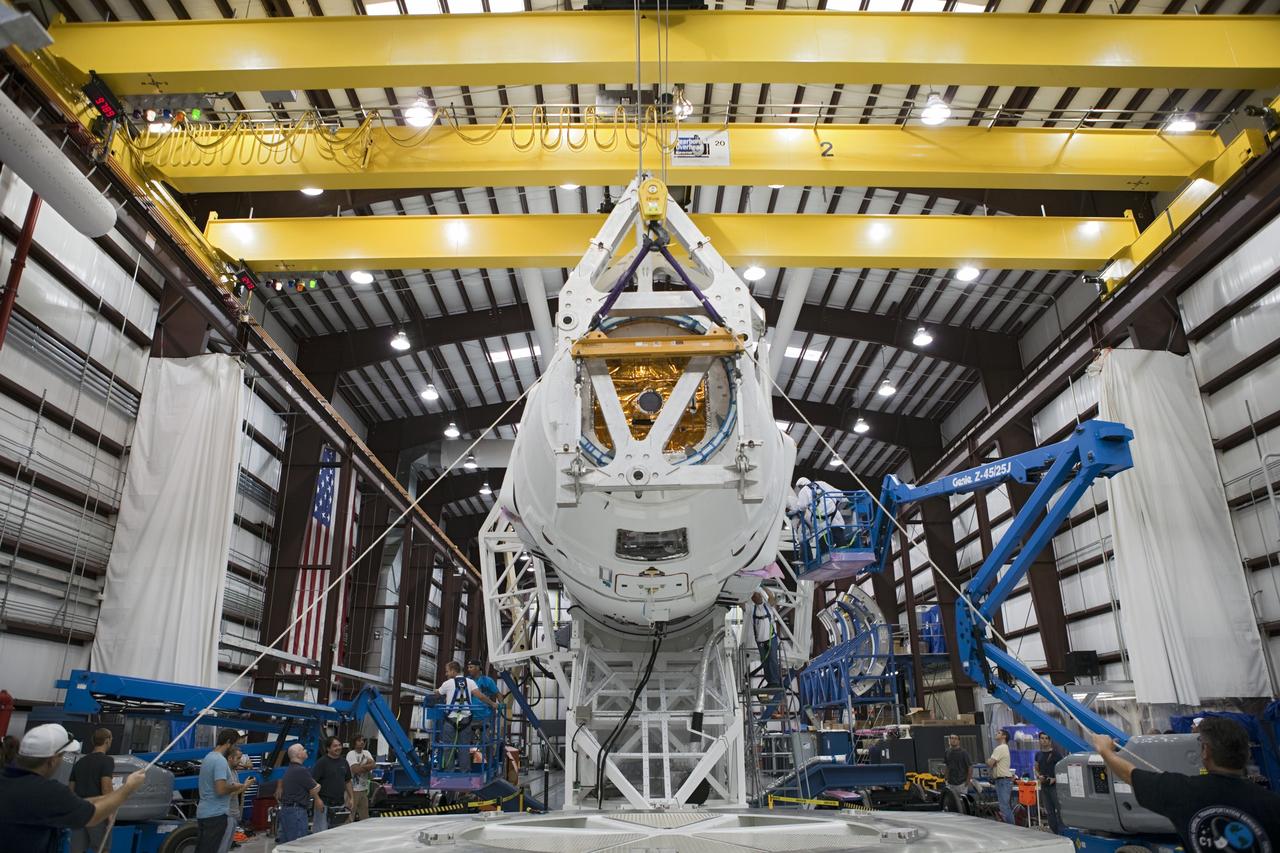
CAPE CANAVERAL, Fla. - Space Exploration Technologies, or SpaceX, technicians attach a Dragon spacecraft to its Falcon 9 launch vehicle. The rocket is being prepared for the company's first Commercial Resupply Services, or CRS-1, mission to the International Space Station. The capsule is scheduled to lift off on Oct. 7, 2012 from Space Launch Complex 40 at Cape Canaveral Air Force Station in Florida aboard a Falcon 9 rocket. The mission will be the company's second demonstration test flight for NASA's Commercial Orbital Transportation Services Program, or COTS. The SpaceX CRS contract with NASA provides for 12 cargo resupply missions to the station through 2015, the first of which is targeted to launch in October 2012.SpaceX became the first private company to berth a spacecraft with the space station in 2012 during its final demonstration flight under the Commercial Orbital Transportation Services, or COTS, program managed by NASA's Johnson Space Center in Houston. For more information, visit http://www.nasa.gov/mission_pages/station/living/launch/index.htmlPhoto credit: NASA/Ben Smegelsky
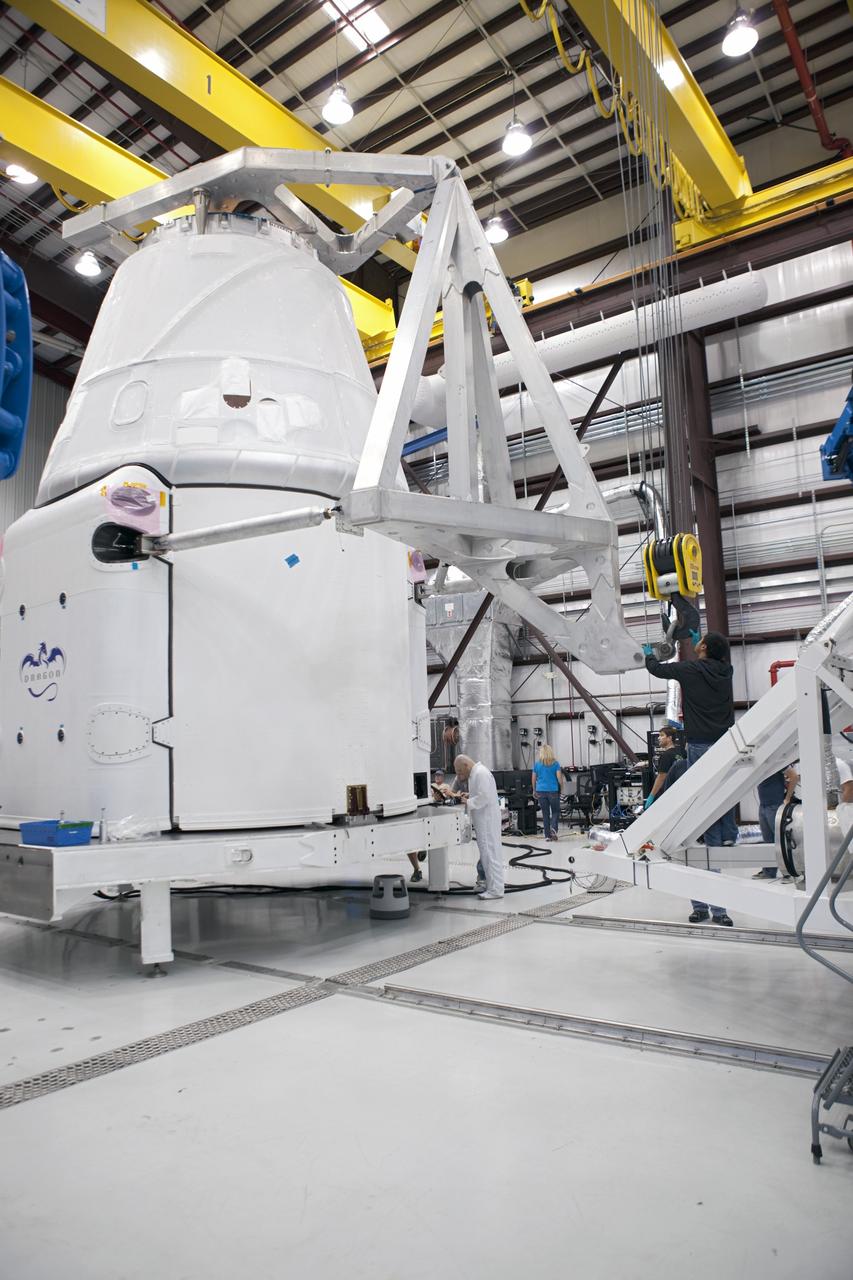
A Space Exploration Technologies, or SpaceX, Dragon spacecraft is being prepared for the company's first Commercial Resupply Services, or CRS-1, mission to the International Space Station. The capsule is scheduled to lift off on Oct. 7, 2012 from Space Launch Complex 40 at Cape Canaveral Air Force Station in Florida aboard a Falcon 9 rocket. The mission will be the company's second demonstration test flight for NASA's Commercial Orbital Transportation Services Program, or COTS. The SpaceX CRS contract with NASA provides for 12 cargo resupply missions to the station through 2015, the first of which is targeted to launch in October 2012.SpaceX became the first private company to berth a spacecraft with the space station in 2012 during its final demonstration flight under the Commercial Orbital Transportation Services, or COTS, program managed by NASA's Johnson Space Center in Houston. For more information, visit http://www.nasa.gov/mission_pages/station/living/launch/index.htmlPhoto credit: NASA/Ben Smegelsky
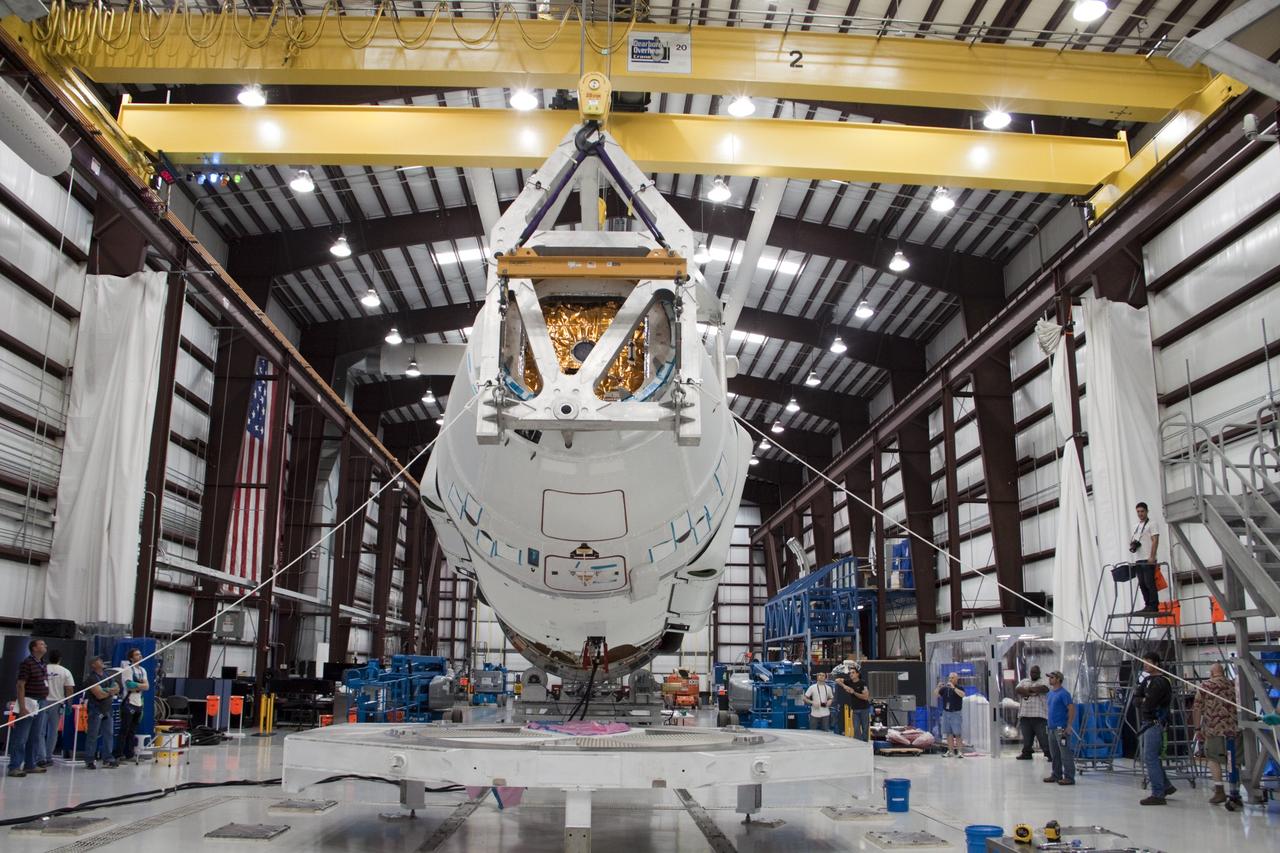
CAPE CANAVERAL, Fla. – In a processing facility at Space Launch Complex-40 on Cape Canaveral Air Force Station in Florida, the Space Exploration Technologies Dragon capsule is positioned against the second stage of the company’s Falcon 9 rocket during mating operations. Known as SpaceX, the launch will be the company's second demonstration test flight for NASA's Commercial Orbital Transportation Services program, or COTS. During the flight, the capsule will conduct a series of check-out procedures to test and prove its systems, including rendezvous and berthing with the International Space Station. If the capsule performs as planned, the NanoRacks-CubeLabs Module-9 experiments and other cargo aboard Dragon will be transferred to the station. The cargo includes food, water and provisions for the station’s Expedition crews, such as clothing, batteries and computer equipment. Under COTS, NASA has partnered with two private companies to provide resupply missions to the station. The launch is scheduled for 9:38 a.m. EDT on May 7. For more information, visit http://www.nasa.gov/spacex. Photo credit: NASA/Jim Grossmann
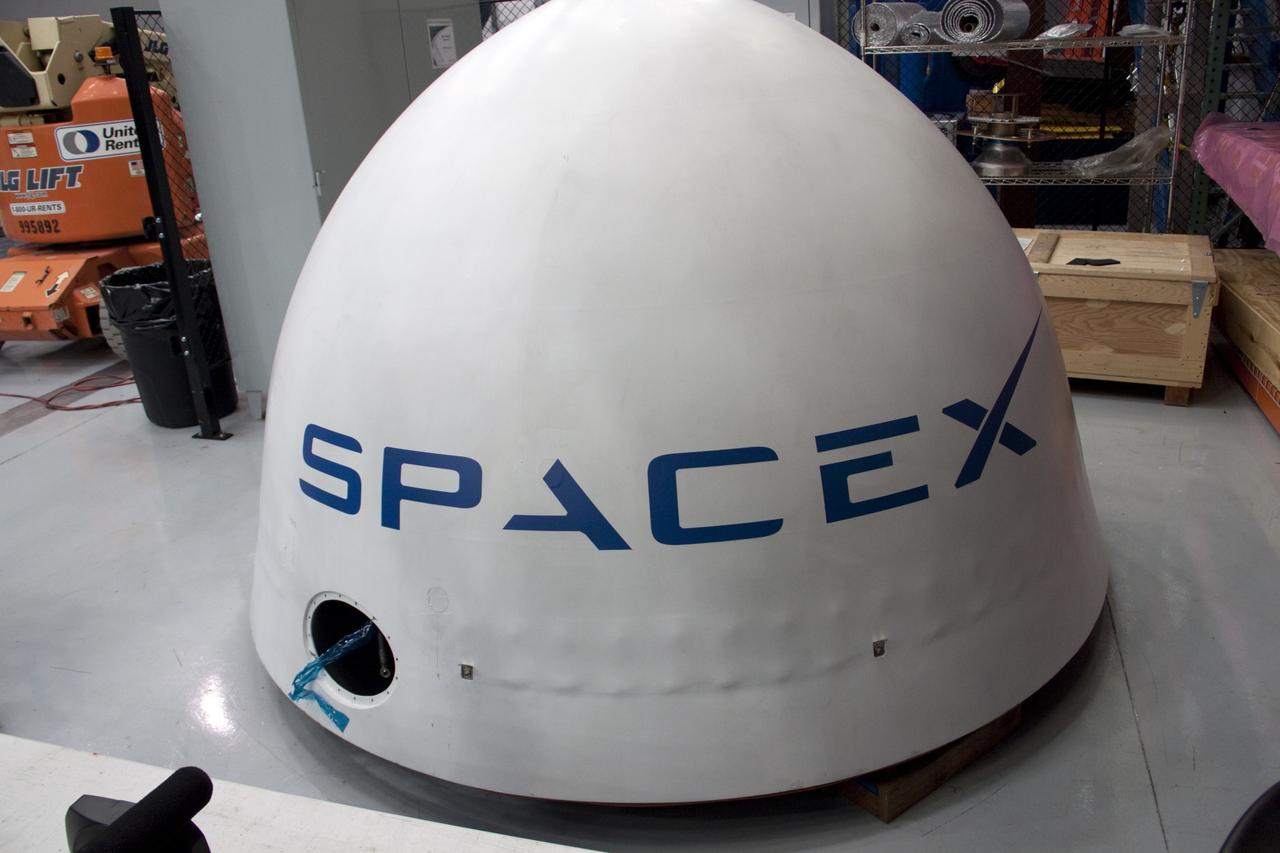
CAPE CANAVERAL, Fla. – A nose cone rests on the floor of a processing facility at Space Launch Complex-40 on Cape Canaveral Air Force Station in Florida awaiting installation on a Space Exploration Technologies Dragon capsule. Operations to attach the capsule to the company’s Falcon 9 rocket are in progress. Known as SpaceX, the launch will be the company's second demonstration test flight for NASA's Commercial Orbital Transportation Services program, or COTS. During the flight, the capsule will conduct a series of check-out procedures to test and prove its systems, including rendezvous and berthing with the International Space Station. If the capsule performs as planned, the NanoRacks-CubeLabs Module-9 experiments and other cargo aboard Dragon will be transferred to the station. The cargo includes food, water and provisions for the station’s Expedition crews, such as clothing, batteries and computer equipment. Under COTS, NASA has partnered with two private companies to provide resupply missions to the station. The launch is scheduled for 9:38 a.m. EDT on May 7. For more information, visit http://www.nasa.gov/spacex. Photo credit: NASA/Jim Grossmann
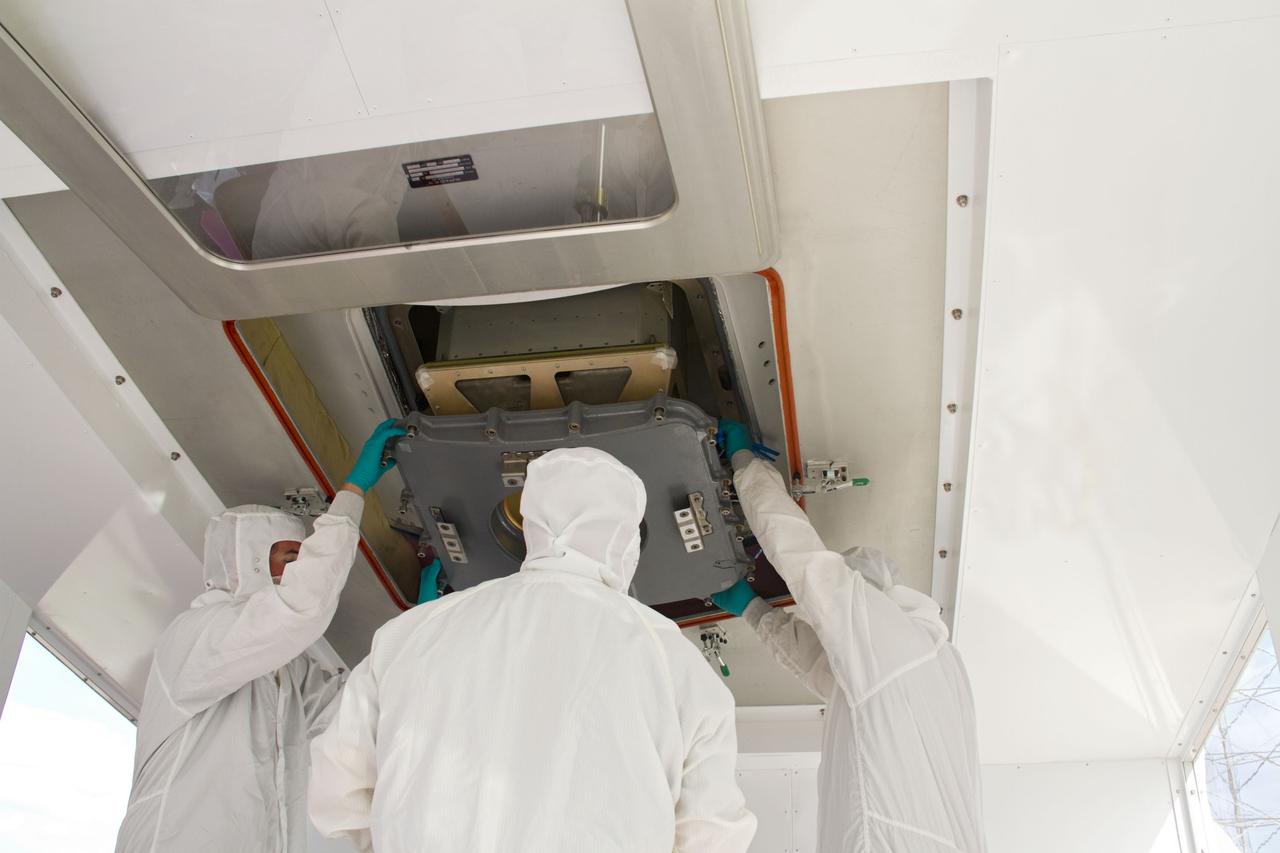
CAPE CANAVERAL, Fla. – In a processing facility at Space Launch Complex-40 on Cape Canaveral Air Force Station in Florida, a cargo container is installed inside a Dragon capsule. The Dragon is set to launch aboard a Falcon 9 rocket. The new rocket and capsule were designed and manufactured by Space Exploration Technologies Corp., or SpaceX, for the company’s upcoming demonstration test flight for NASA’s Commercial Orbital Transportation Services, or COTS, program. Under COTS, NASA has partnered with two private companies to develop the capability to deliver cargo to the International Space Station. During the flight, SpaceX's Dragon capsule will conduct a series of checkout procedures that will test and prove its systems. These tests include rendezvous and berthing with the space station and are intended to lead to regular resupply missions to the station. Liftoff is targeted for April 30 at 12:22 p.m. EDT pending official approval at the Flight Readiness Review on April 16. For more information, visit www.nasa.gov/exploration/commercial/cargo/spacex_index.html. Photo credit: NASA/Cory Huston
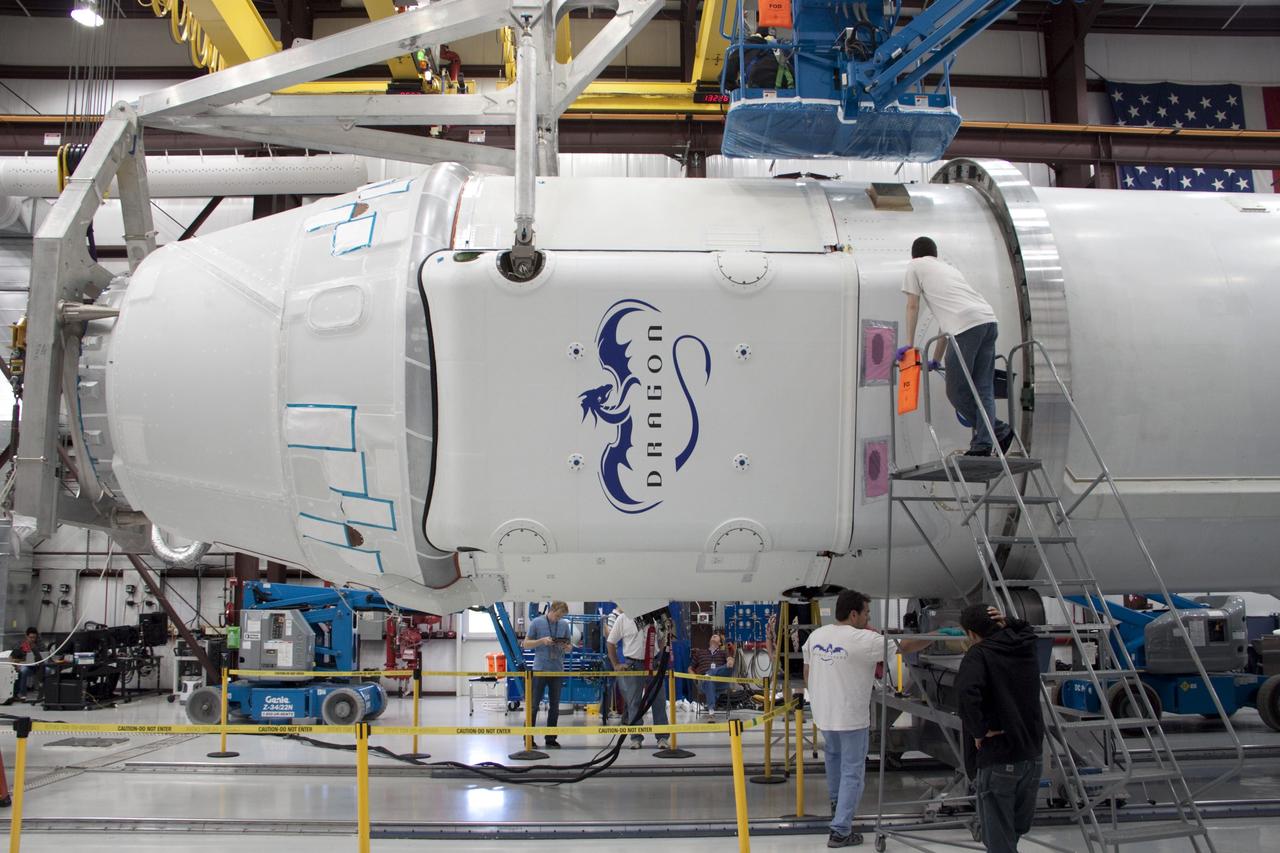
CAPE CANAVERAL, Fla. – In a processing facility at Space Launch Complex-40 on Cape Canaveral Air Force Station in Florida, operations are under way to mate the Space Exploration Technologies Dragon capsule to the second stage of the company’s Falcon 9 rocket. Known as SpaceX, the launch will be the company's second demonstration test flight for NASA's Commercial Orbital Transportation Services program, or COTS. During the flight, the capsule will conduct a series of check-out procedures to test and prove its systems, including rendezvous and berthing with the International Space Station. If the capsule performs as planned, the NanoRacks-CubeLabs Module-9 experiments and other cargo aboard Dragon will be transferred to the station. The cargo includes food, water and provisions for the station’s Expedition crews, such as clothing, batteries and computer equipment. Under COTS, NASA has partnered with two private companies to provide resupply missions to the station. The launch is scheduled for 9:38 a.m. EDT on May 7. For more information, visit http://www.nasa.gov/spacex. Photo credit: NASA/Jim Grossmann
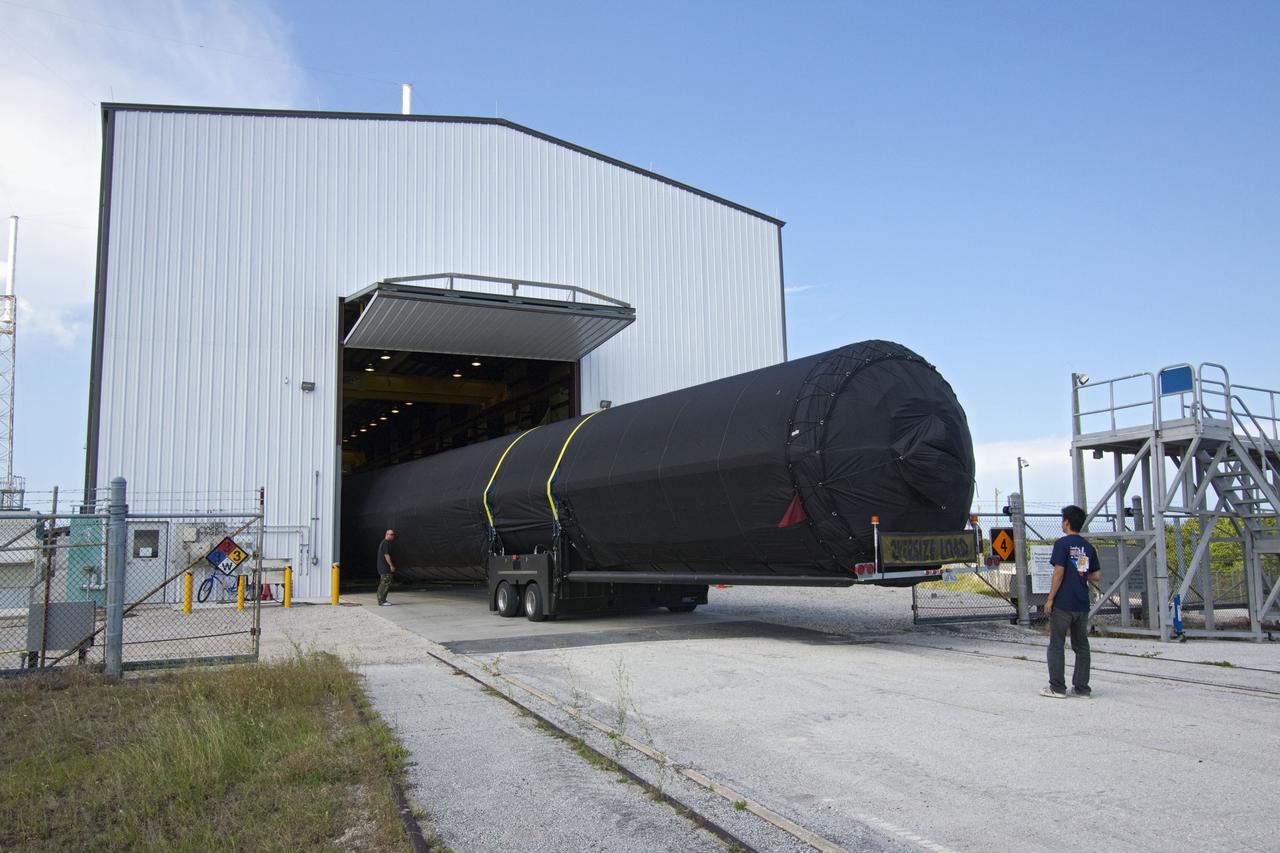
CAPE CANAVERAL, Fla. -- The first stage of the SpaceX COTS-2 Falcon 9 rocket is being moved into a SpaceX hangar at Pad 40 at Cape Canaveral Air Force Station in Florida. Once assembled, it will be a two-stage fully integrated launch vehicle, consisting of a first stage powered by nine SpaceX-developed Merlin 1C engines, a second stage, an interstage, an unpressurized trunk and the Dragon spacecraft qualification unit. SpaceX was awarded procurement for three demonstration flights under the Commercial Orbital Transportation Services, or COTS, program managed by NASA's Johnson Space Center in Houston. A subsequent contract for Commercial Resupply Services, or CRS, was awarded in late 2008 to resupply the International Space Station. The SpaceX CRS contract provides for 12 missions to resupply the station from 2011 through 2015. Photo credit: NASA/Jack Pfaller
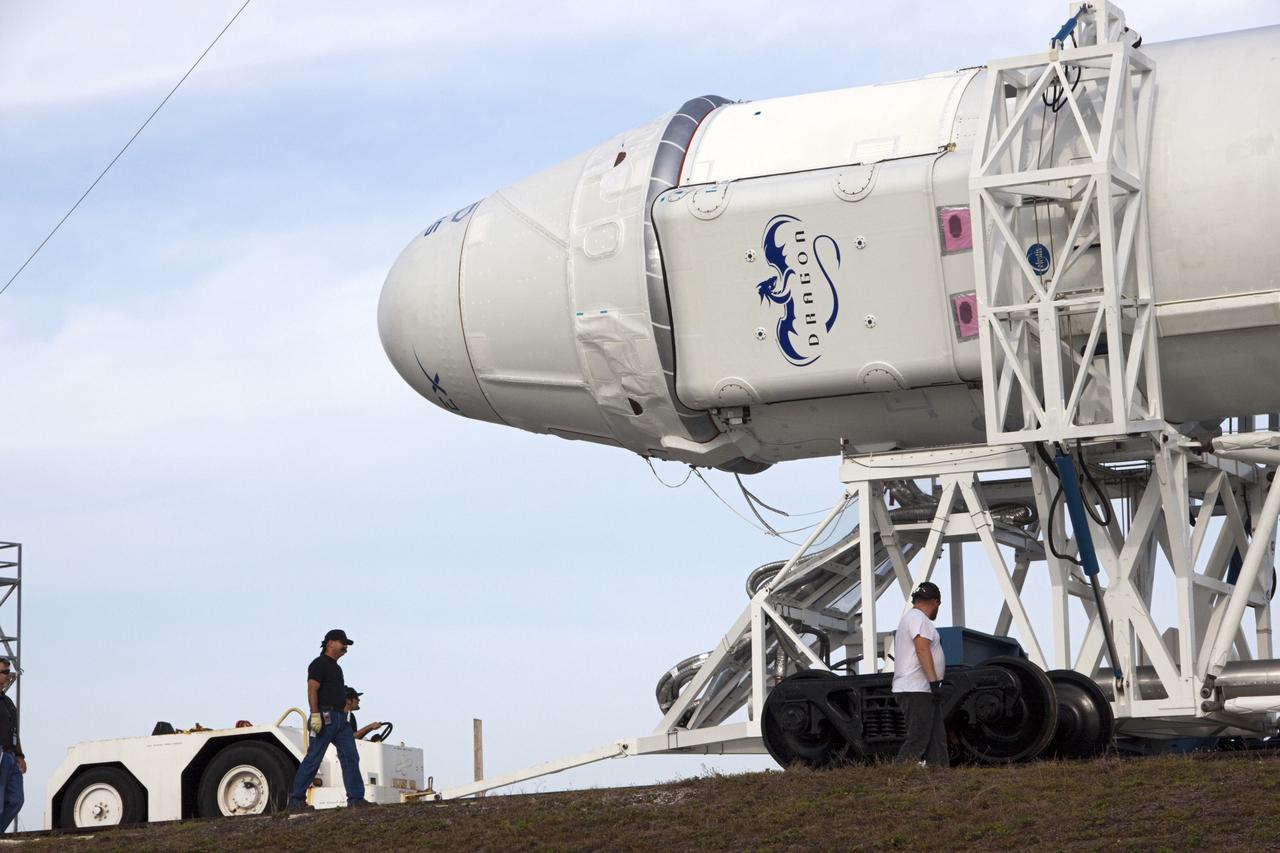
CAPE CANAVERAL, Fla. – As technicians monitor the progress of the transporter, the SpaceX Falcon 9 rocket with its Dragon spacecraft arrive at Space Launch Complex-40 on Cape Canaveral Air Force Station in Florida. Liftoff with the SpaceX Falcon 9 is set for 4:55 a.m. EDT on May 19. The launch will be the company's second demonstration test flight for NASA's Commercial Orbital Transportation Services Program, or COTS. During the flight, the capsule will conduct a series of check-out procedures to test and prove its systems, including rendezvous and berthing with the International Space Station. If the capsule performs as planned, the cargo and experiments it is carrying will be transferred to the station. The cargo includes food, water and provisions for the station’s Expedition crews, such as clothing, batteries and computer equipment. Under COTS, NASA has partnered with two aerospace companies to deliver cargo to the station. For more information, visit http://www.nasa.gov/spacex Photo credit: NASA/Jim Grossmann
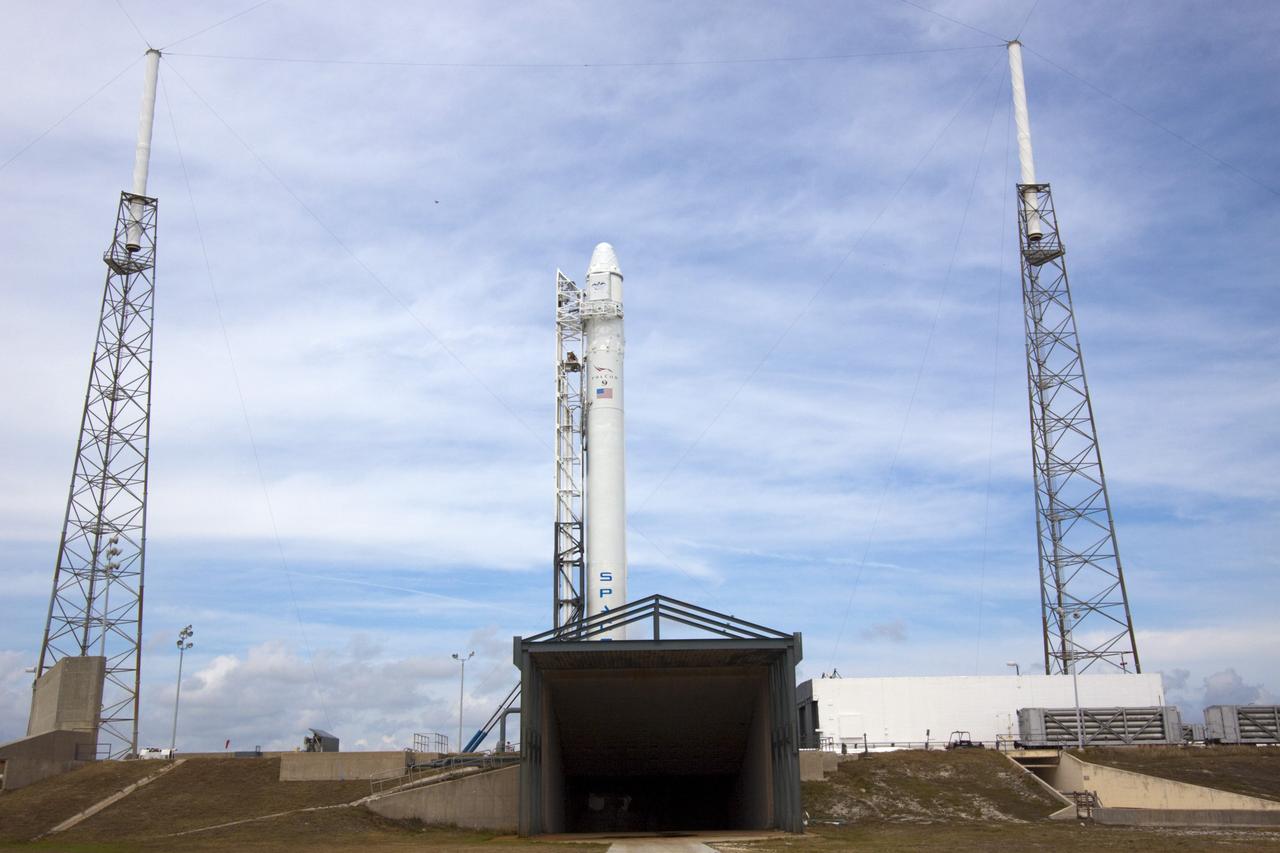
CAPE CANAVERAL, Fla. – Partially hidden behind a flame and exhaust deflector, the SpaceX Falcon 9 rocket stands at Space Launch Complex-40 on Cape Canaveral Air Force Station in Florida. Liftoff with the SpaceX Dragon capsule aboard is set for 4:55 a.m. EDT on May 19. The launch will be the company's second demonstration test flight for NASA's Commercial Orbital Transportation Services Program, or COTS. During the flight, the capsule will conduct a series of check-out procedures to test and prove its systems, including rendezvous and berthing with the International Space Station. If the capsule performs as planned, the cargo and experiments it is carrying will be transferred to the station. The cargo includes food, water and provisions for the station’s Expedition crews, such as clothing, batteries and computer equipment. Under COTS, NASA has partnered with two aerospace companies to deliver cargo to the station. For more information, visit http://www.nasa.gov/spacex Photo credit: NASA/Jim Grossmann
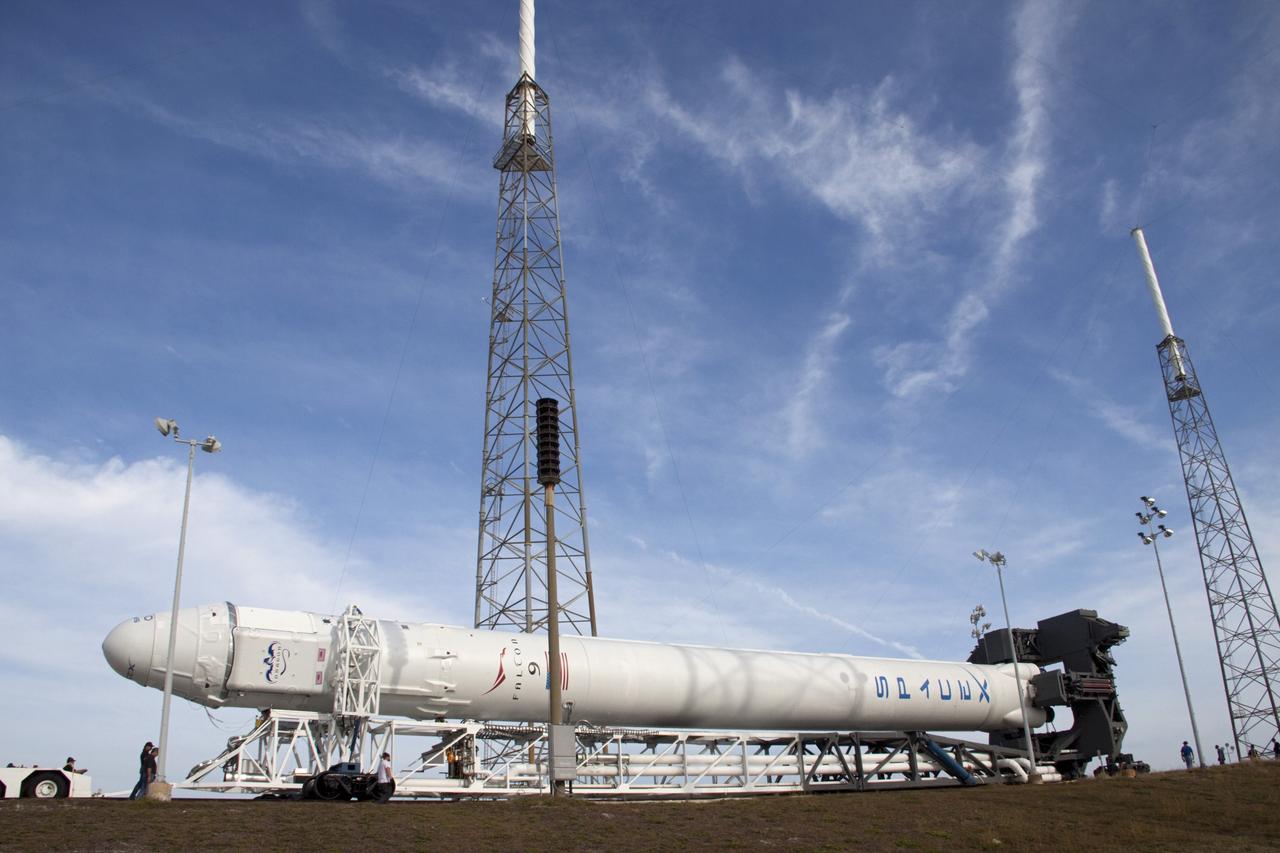
CAPE CANAVERAL, Fla. – The 227-foot-tall 69.2 meter) SpaceX Falcon 9 rocket arrives at Space Launch Complex-40 on Cape Canaveral Air Force Station in Florida. Liftoff with the SpaceX Dragon capsule aboard is set for 4:55 a.m. EDT on May 19. The launch will be the company's second demonstration test flight for NASA's Commercial Orbital Transportation Services Program, or COTS. During the flight, the capsule will conduct a series of check-out procedures to test and prove its systems, including rendezvous and berthing with the International Space Station. If the capsule performs as planned, the cargo and experiments it is carrying will be transferred to the station. The cargo includes food, water and provisions for the station’s Expedition crews, such as clothing, batteries and computer equipment. Under COTS, NASA has partnered with two aerospace companies to deliver cargo to the station. For more information, visit http://www.nasa.gov/spacex Photo credit: NASA/Jim Grossmann
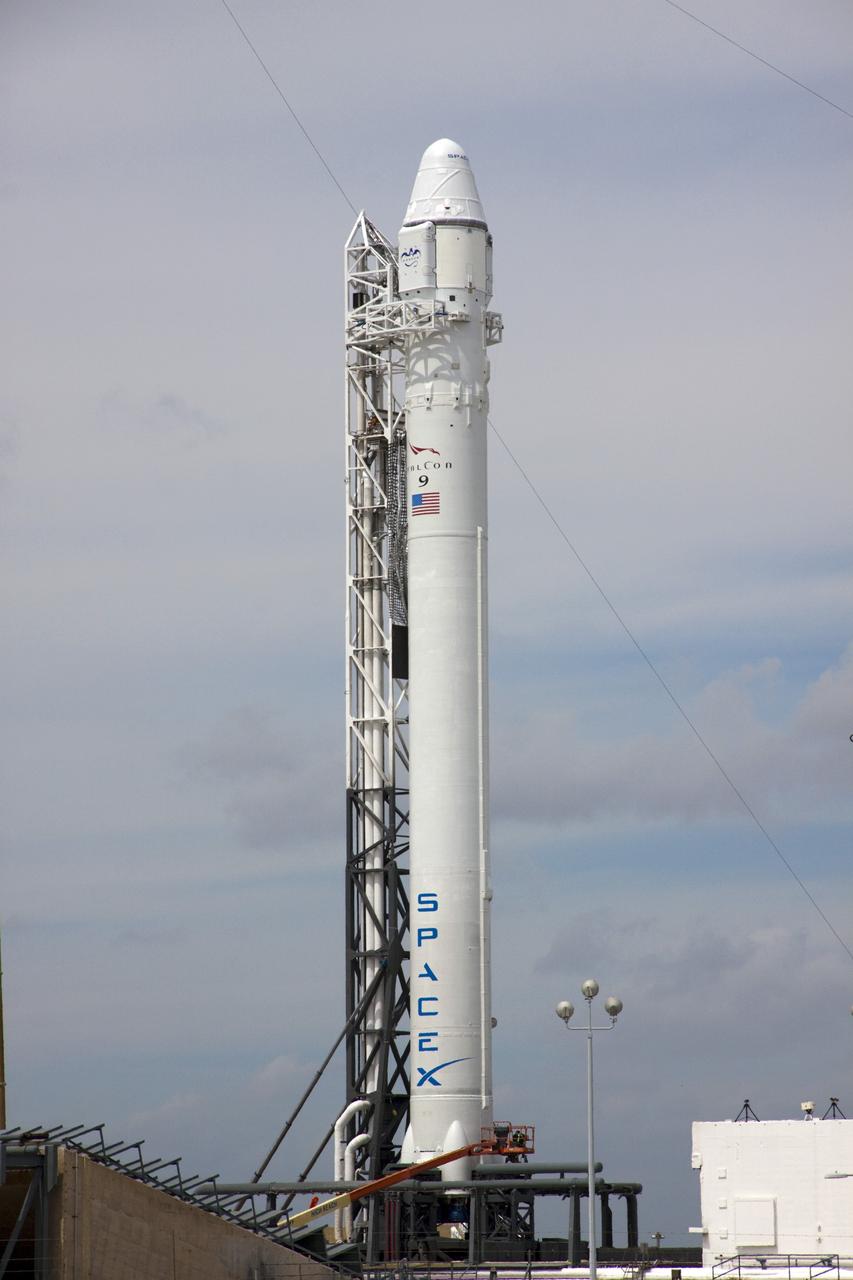
CAPE CANAVERAL, Fla. – The 227-foot-tall 69.2 meter) SpaceX Falcon 9 rocket stands at Space Launch Complex-40 on Cape Canaveral Air Force Station in Florida. Liftoff with the SpaceX Dragon capsule aboard is set for 4:55 a.m. EDT on May 19. The launch will be the company's second demonstration test flight for NASA's Commercial Orbital Transportation Services Program, or COTS. During the flight, the capsule will conduct a series of check-out procedures to test and prove its systems, including rendezvous and berthing with the International Space Station. If the capsule performs as planned, the cargo and experiments it is carrying will be transferred to the station. The cargo includes food, water and provisions for the station’s Expedition crews, such as clothing, batteries and computer equipment. Under COTS, NASA has partnered with two aerospace companies to deliver cargo to the station. For more information, visit http://www.nasa.gov/spacex Photo credit: NASA/Jim Grossmann
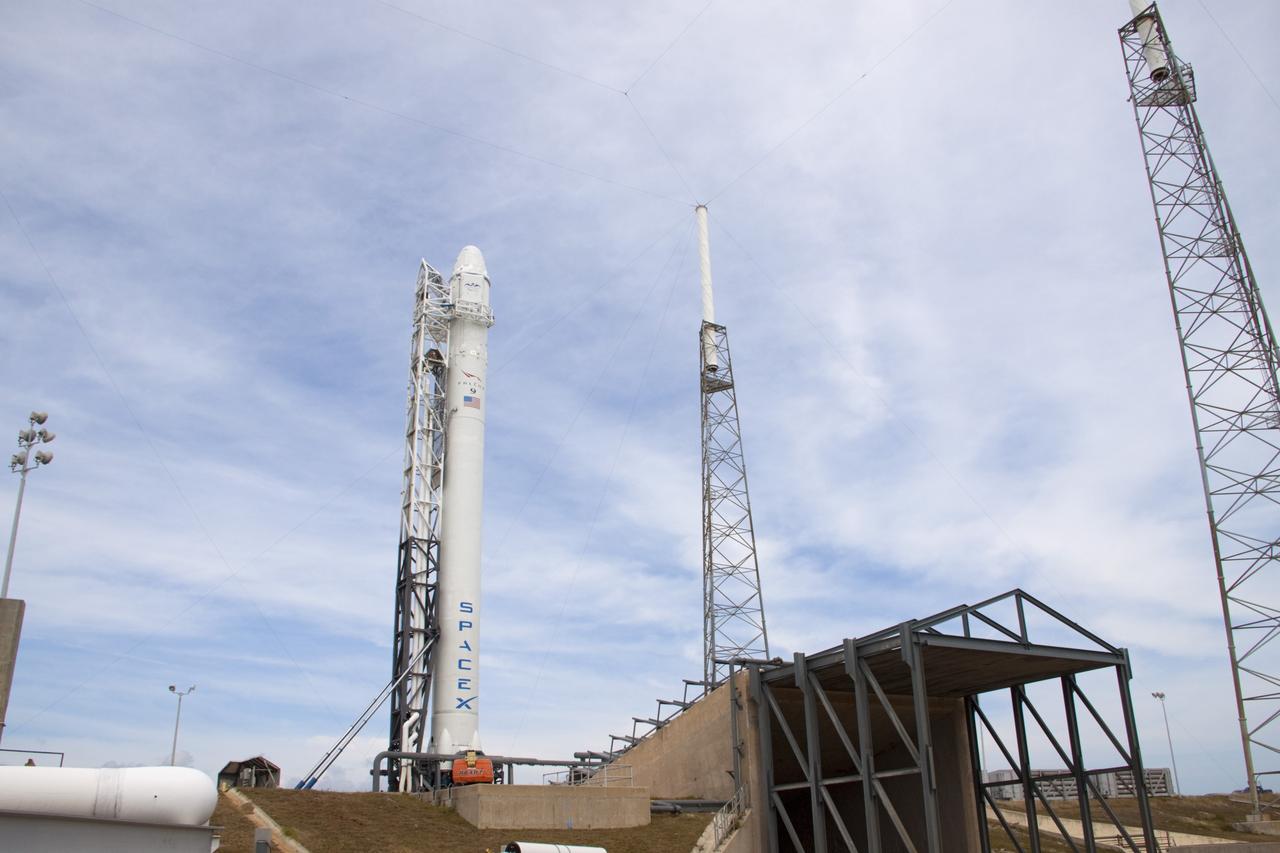
CAPE CANAVERAL, Fla. – The SpaceX Falcon 9 rocket stands at Space Launch Complex-40 on Cape Canaveral Air Force Station in Florida. Liftoff with the SpaceX Dragon capsule aboard is set for 4:55 a.m. EDT on May 19. The launch will be the company's second demonstration test flight for NASA's Commercial Orbital Transportation Services Program, or COTS. During the flight, the capsule will conduct a series of check-out procedures to test and prove its systems, including rendezvous and berthing with the International Space Station. If the capsule performs as planned, the cargo and experiments it is carrying will be transferred to the station. The cargo includes food, water and provisions for the station’s Expedition crews, such as clothing, batteries and computer equipment. Under COTS, NASA has partnered with two aerospace companies to deliver cargo to the station. For more information, visit http://www.nasa.gov/spacex Photo credit: NASA/Jim Grossmann

CAPE CANAVERAL, Fla. – The SpaceX Falcon 9 rocket stands at Space Launch Complex-40 on Cape Canaveral Air Force Station in Florida. Liftoff with the SpaceX Dragon capsule aboard is set for 4:55 a.m. EDT on May 19. The launch will be the company's second demonstration test flight for NASA's Commercial Orbital Transportation Services Program, or COTS. During the flight, the capsule will conduct a series of check-out procedures to test and prove its systems, including rendezvous and berthing with the International Space Station. If the capsule performs as planned, the cargo and experiments it is carrying will be transferred to the station. The cargo includes food, water and provisions for the station’s Expedition crews, such as clothing, batteries and computer equipment. Under COTS, NASA has partnered with two aerospace companies to deliver cargo to the station. For more information, visit http://www.nasa.gov/spacex Photo credit: NASA/Jim Grossmann
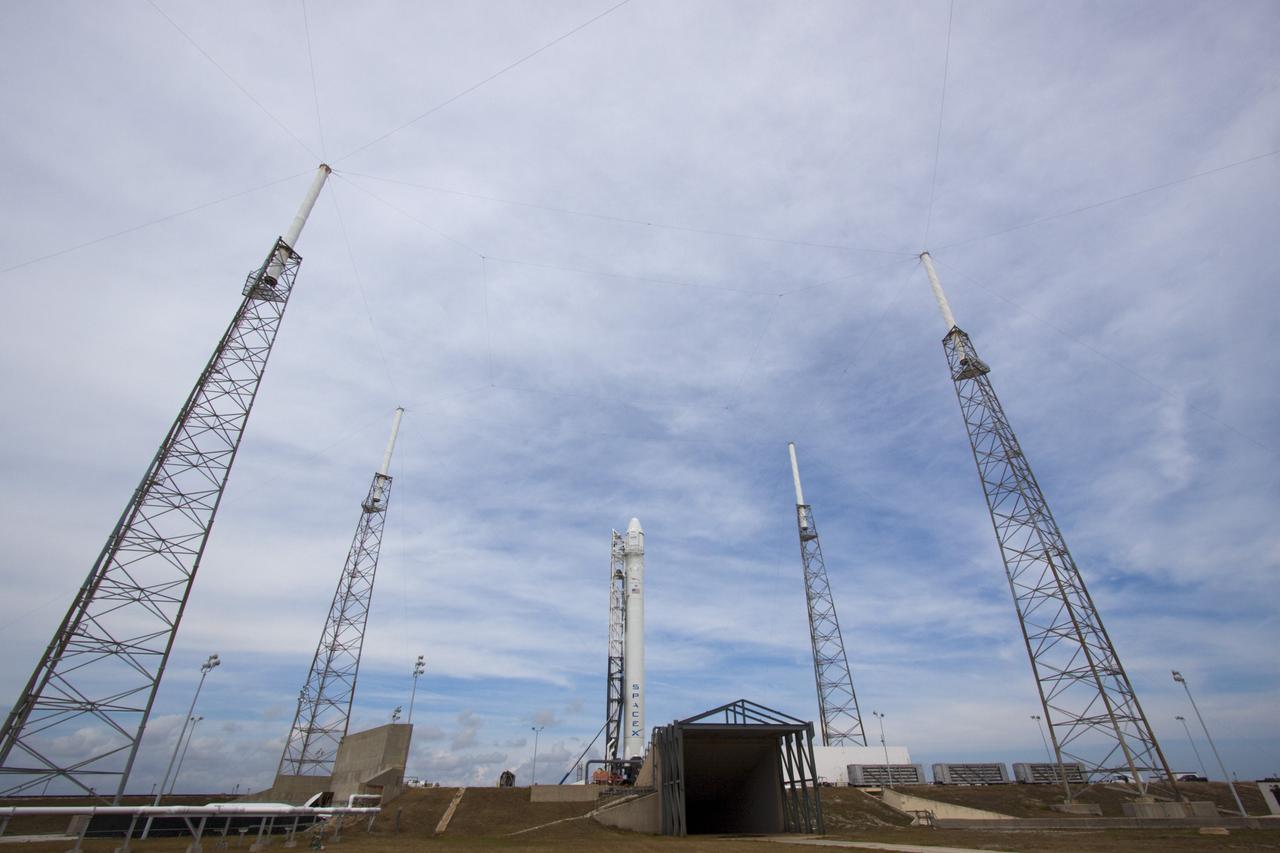
CAPE CANAVERAL, Fla. – Surrounded by four lightning suppression system towers, the SpaceX Falcon 9 rocket stands at Space Launch Complex-40 on Cape Canaveral Air Force Station in Florida. Liftoff with the SpaceX Dragon capsule aboard is set for 4:55 a.m. EDT on May 19. The launch will be the company's second demonstration test flight for NASA's Commercial Orbital Transportation Services Program, or COTS. During the flight, the capsule will conduct a series of check-out procedures to test and prove its systems, including rendezvous and berthing with the International Space Station. If the capsule performs as planned, the cargo and experiments it is carrying will be transferred to the station. The cargo includes food, water and provisions for the station’s Expedition crews, such as clothing, batteries and computer equipment. Under COTS, NASA has partnered with two aerospace companies to deliver cargo to the station. For more information, visit http://www.nasa.gov/spacex Photo credit: NASA/Jim Grossmann