Countdown to Phoebe
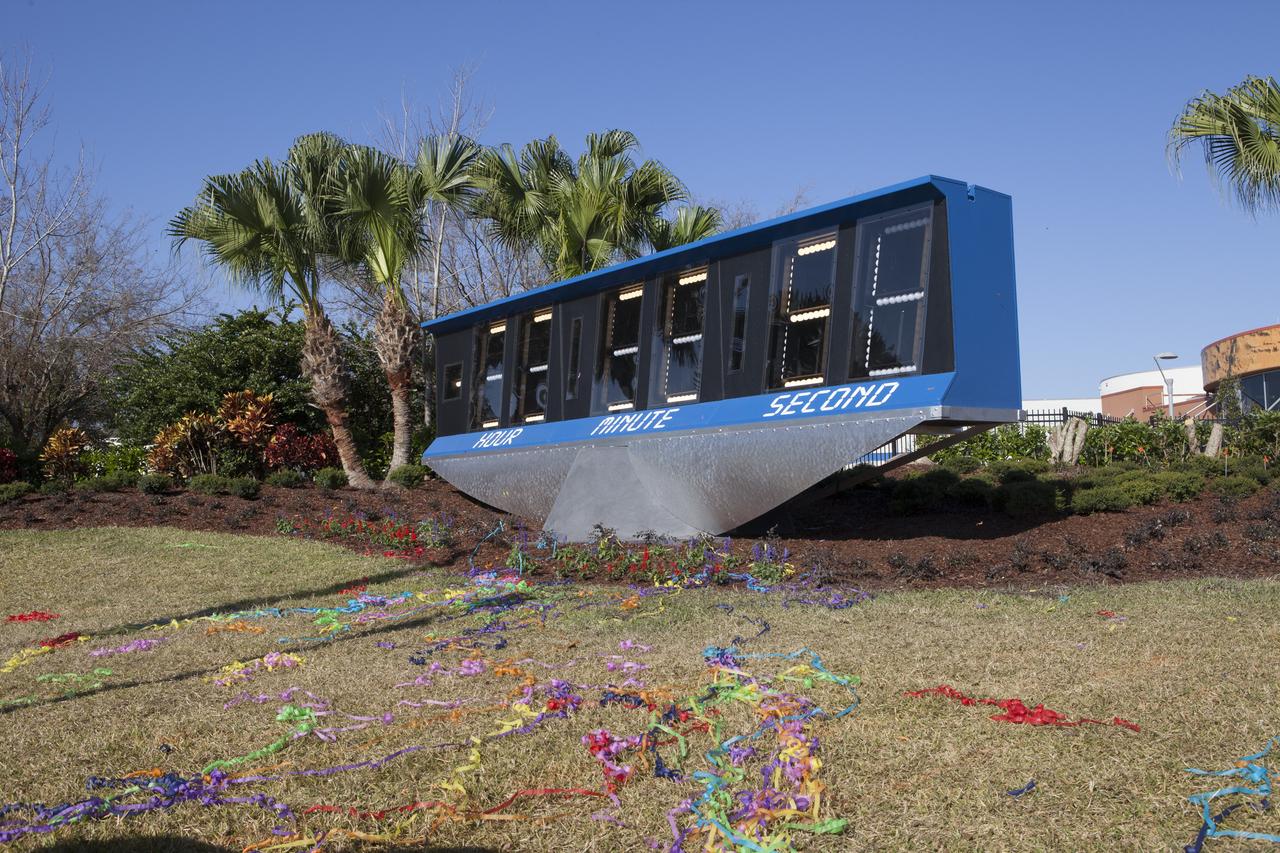
Confetti is launched as the spaceport's historic countdown clock is dedicated as the newest display at the Kennedy Space Center Visitor Complex. Now located at the entrance to the visitor complex, the spaceport's historic countdown clock was used starting with the launch of Apollo 12 on Nov. 14, 1969. Originally set up at the space center's Press Site, the clock operated through the final space shuttle mission, STS-135, launched on July 8, 2011. The old countdown clock was replaced in 2014 with a modern light emitting diode, or LED, display.
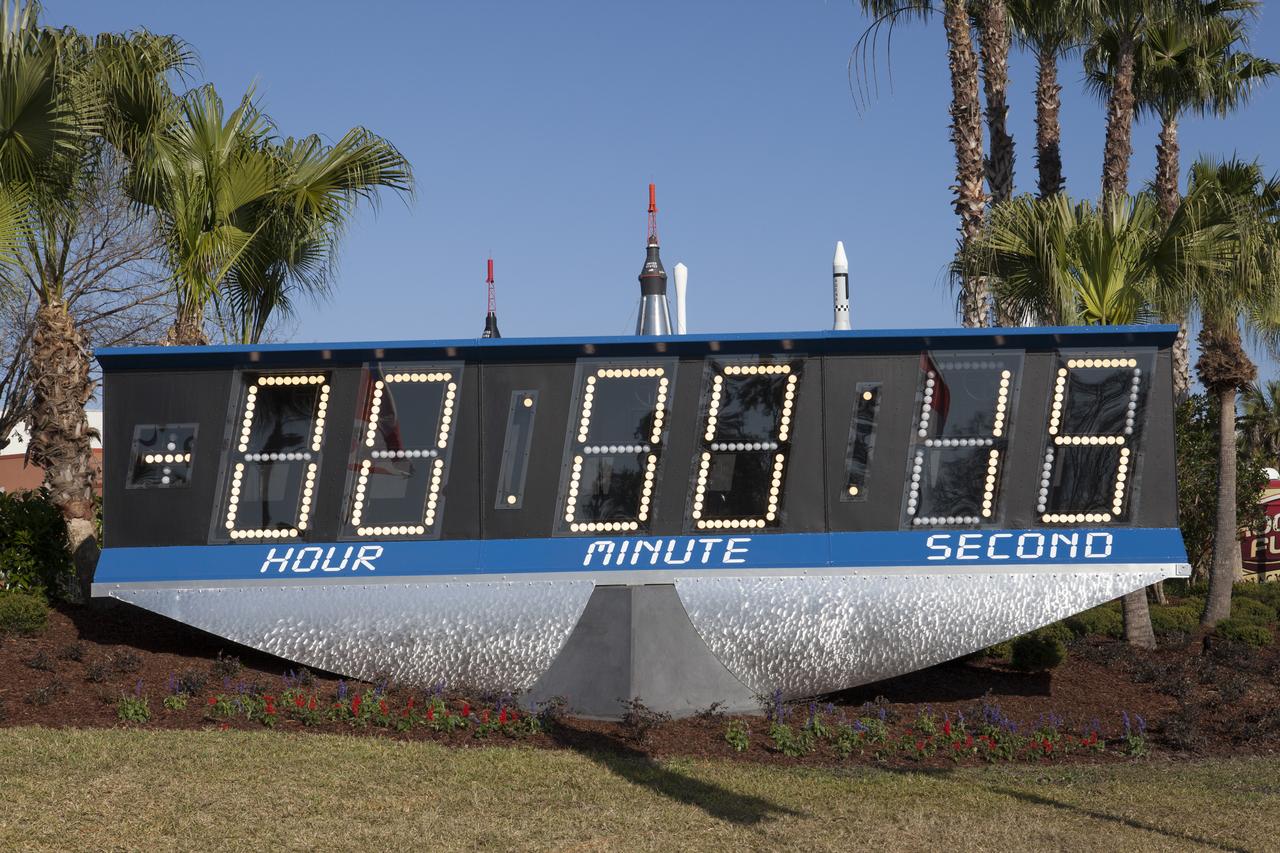
The newest display at the Kennedy Space Center Visitor Complex is the spaceport's historic countdown clock. It is now located at the entrance to the visitor complex. The clock was set up at the space center's Press Site and used from the launch of Apollo 12 on Nov. 14, 1969 to the final space shuttle mission, STS-135, launched on July 8, 2011. The old countdown clock was replaced in 2014 with a modern light emitting diode, or LED, display.
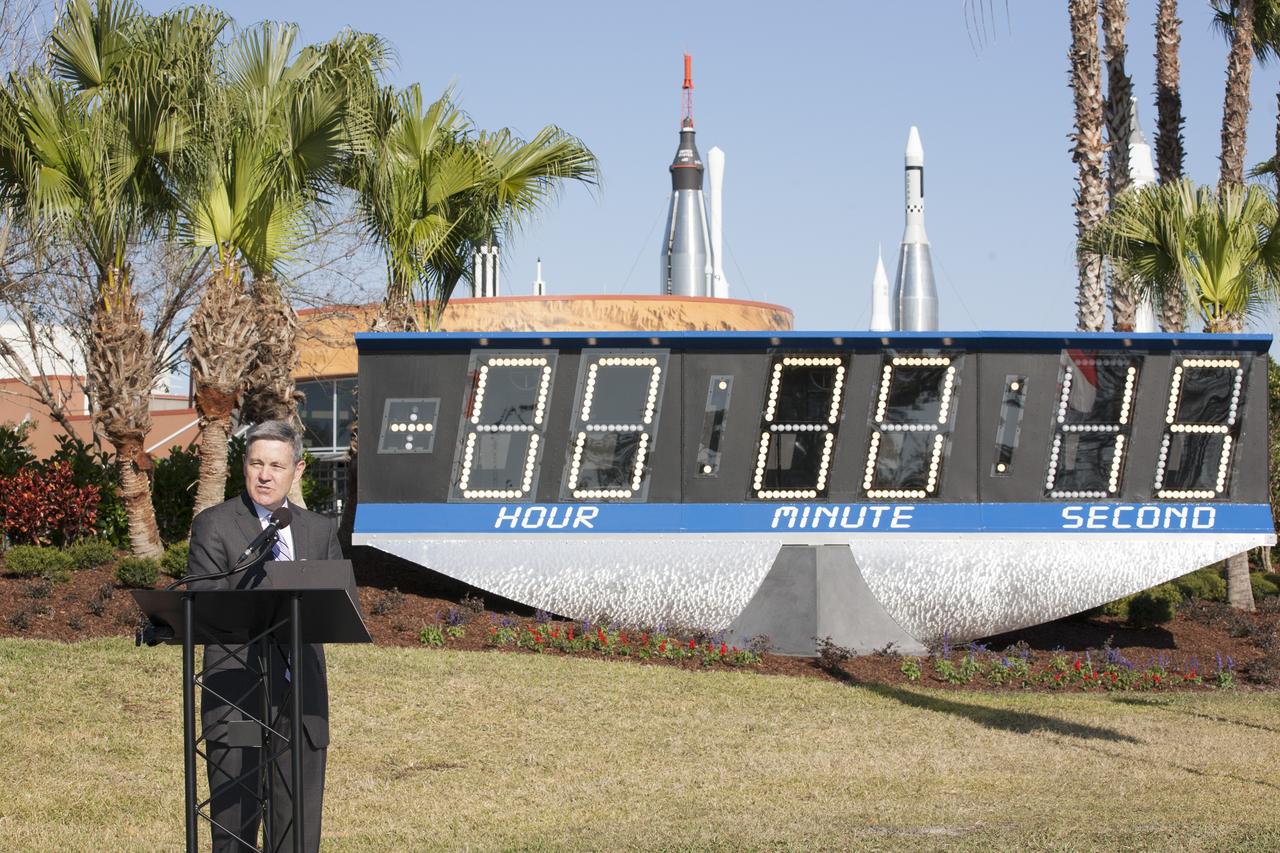
Kennedy Space Center Director Bob Cabana speaks at the dedication of the newest display at the entrance to the center's visitor complex. The historic countdown clock was originally set up at the space center's Press Site and was used from the launch of Apollo 12 on Nov. 14, 1969 to the final space shuttle mission, STS-135, launched on July 8, 2011. The old countdown clock was replaced in 2014 with a modern light emitting diode, or LED, display.
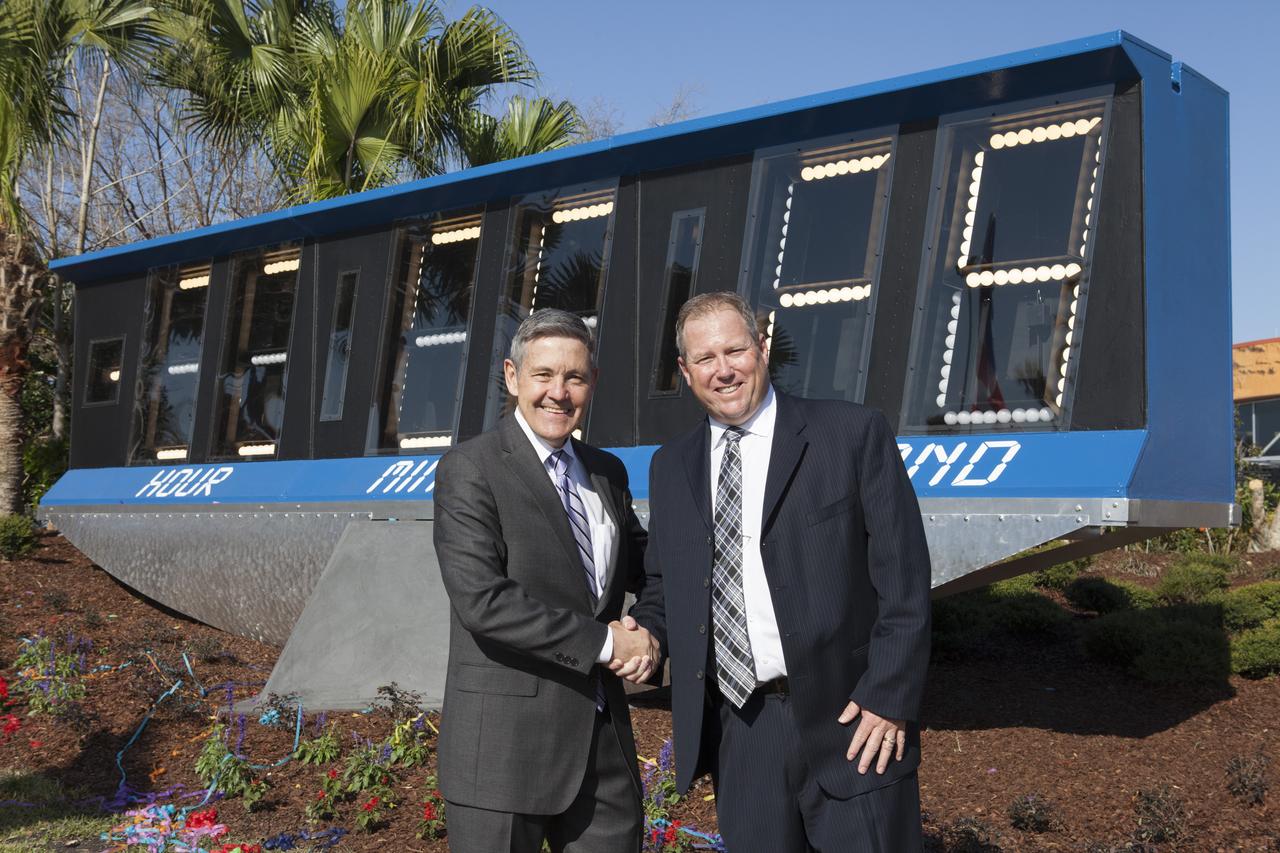
Kennedy Space Center Director Bob Cabana, left, and Therrin Protze, chief operating officer of Kennedy's Visitor Complex, celebrate the dedication of the spaceport's historic countdown clock as the newest display at the center's visitor complex. Now located at the entrance to the visitor complex, the spaceport's historic countdown clock was used starting with the launch of Apollo 12 on Nov. 14, 1969. Originally set up at the space center's Press Site, the clock operated through the final space shuttle mission, STS-135, launched on July 8, 2011. The old countdown clock was replaced in 2014 with a modern light emitting diode, or LED, display.
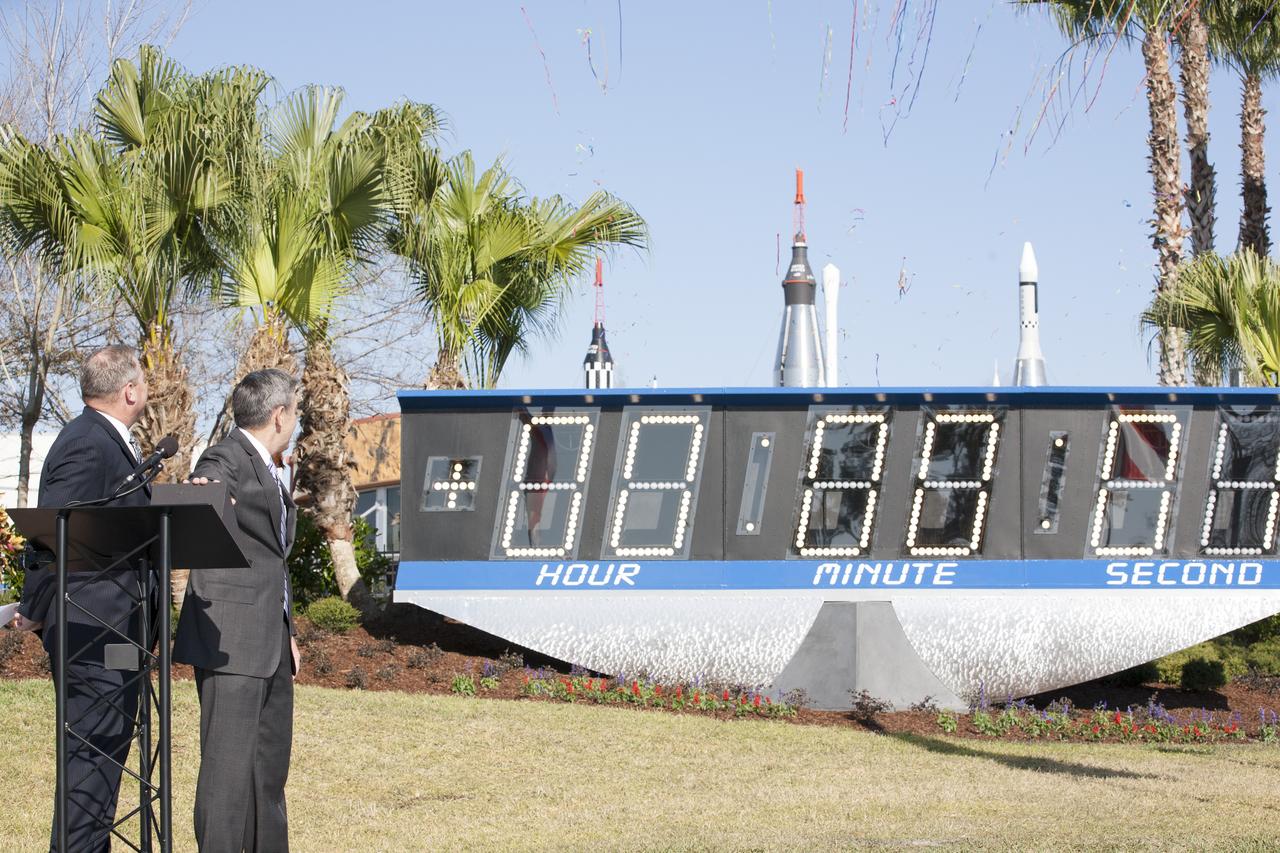
Therrin Protze, chief operating officer of the Kennedy Space Center Visitor Complex, left, and center director Bob Cabana watch as confetti was launched as the spaceport's historic countdown clock is dedicated as the newest display at the entrance to Kennedy's visitor complex. The spaceport's historic countdown clock was used beginning with the launch of Apollo 12 on Nov. 14, 1969. Originally set up at the space center's Press Site, the clock was used through the final space shuttle mission, STS-135, launched on July 8, 2011. The old countdown clock was replaced in 2014 with a modern light emitting diode, or LED, display.
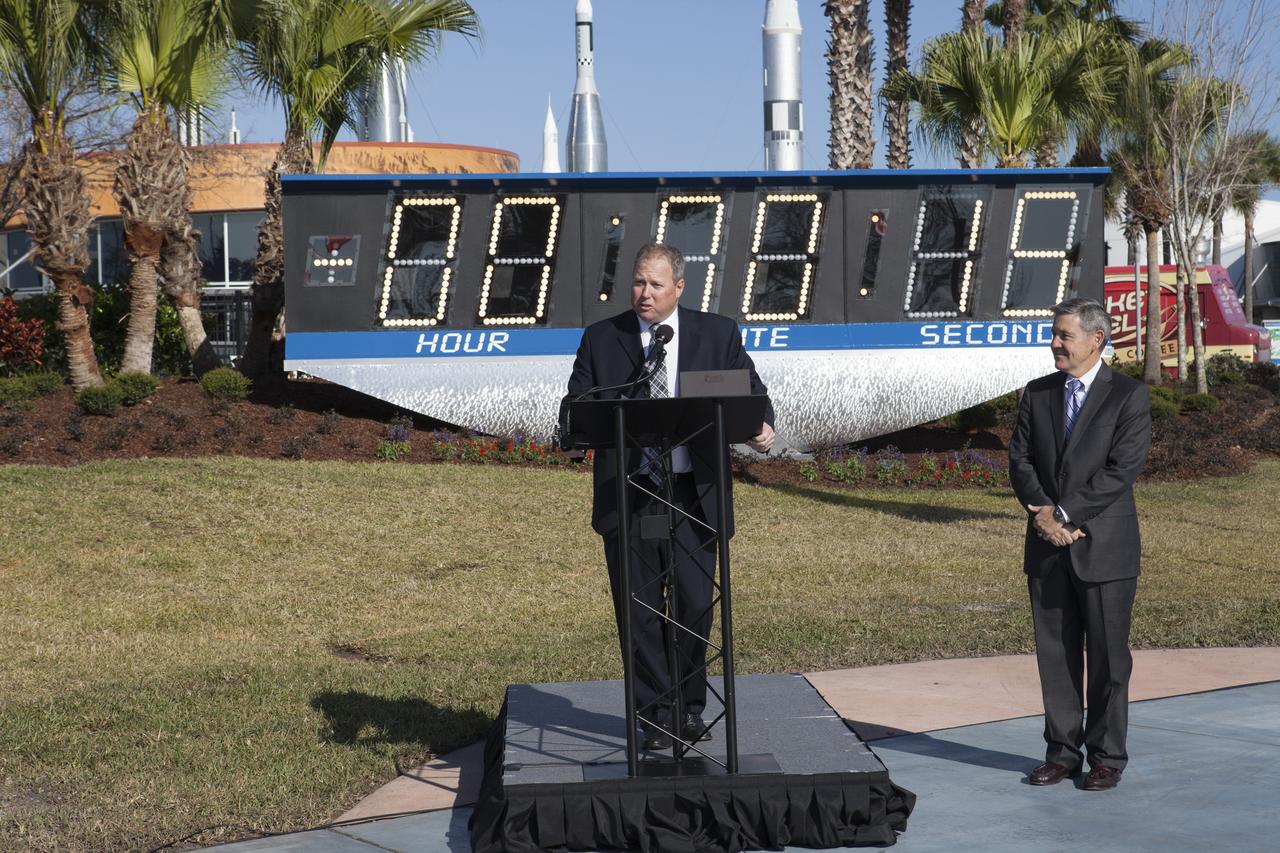
Therrin Protze, chief operating officer of the Kennedy Space Center Visitor Complex, speaks at the dedication of the center's historic countdown clock. To the right is space center director Bob Cabana. Now located at the entrance to the visitor complex, the spaceport's historic countdown clock was used starting with the launch of Apollo 12 on Nov. 14, 1969. Originally set up at the space center's Press Site, the clock was used through the final space shuttle mission, STS-135, launched on July 8, 2011. The old countdown clock was replaced in 2014 with a modern light emitting diode, or LED, display.
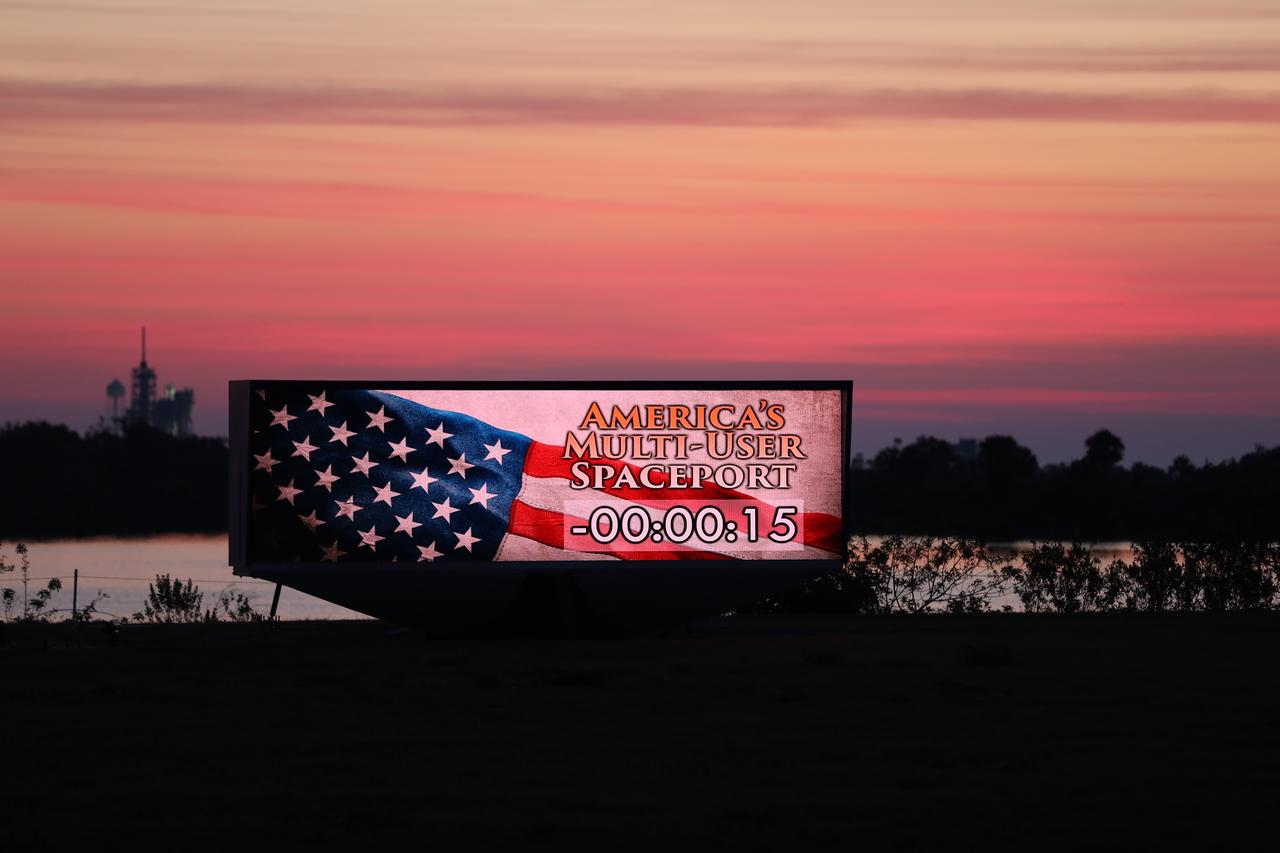
An early morning sunrise serves as the backdrop for the countdown clock near the News Center at NASA's Kennedy Space Center in Florida.
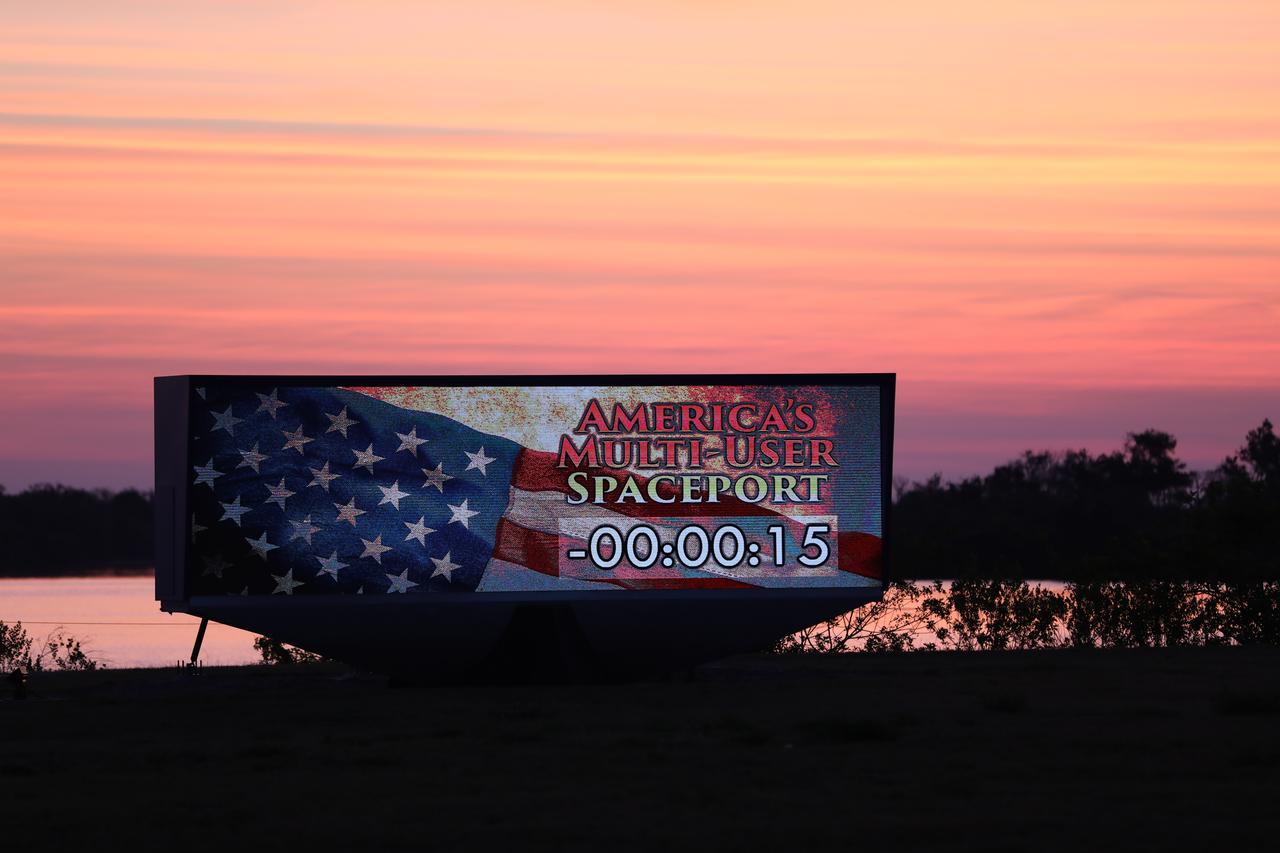
An early morning sunrise serves as the backdrop for the countdown clock near the News Center at NASA's Kennedy Space Center in Florida.
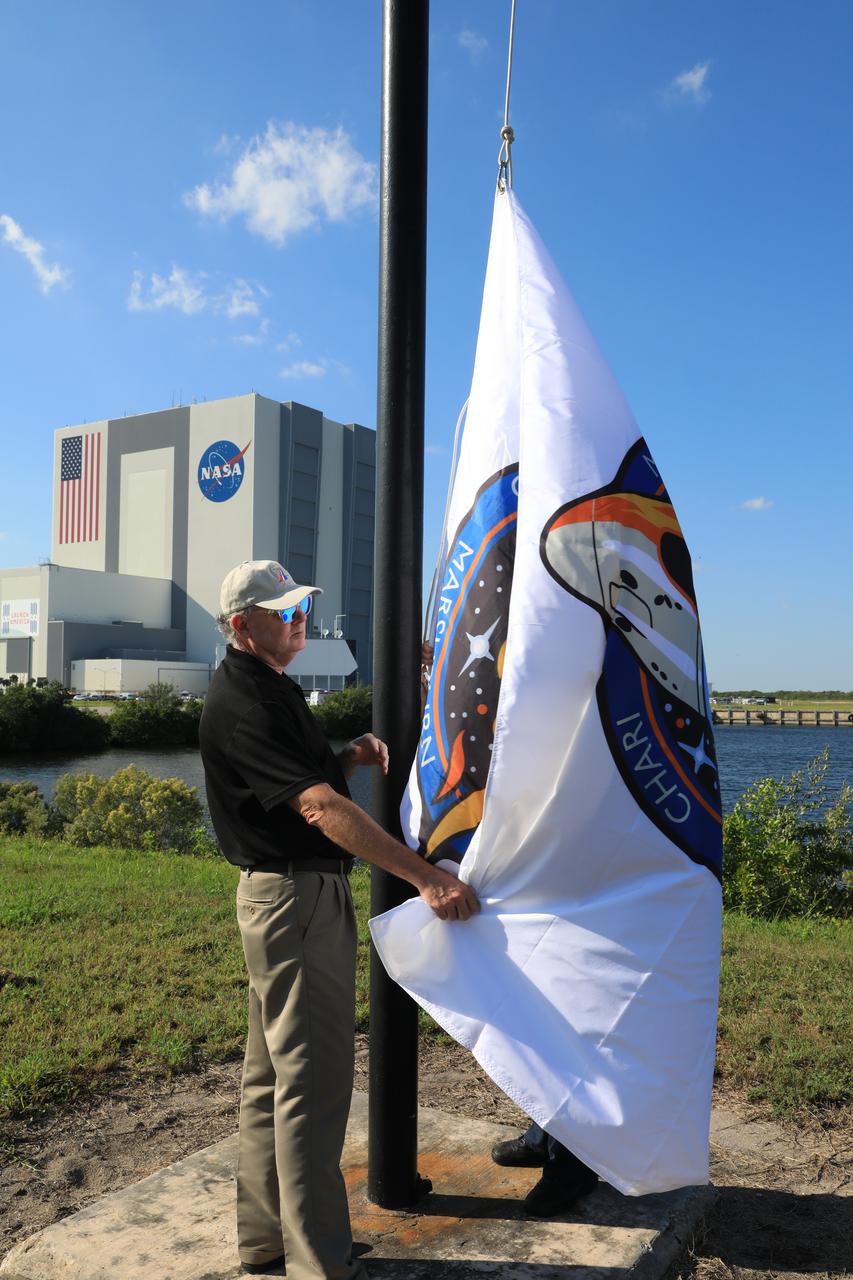
The SpaceX Crew-3 flag is raised near the News Center countdown clock at NASA’s Kennedy Space Center in Florida on Oct. 26, 2021. The SpaceX Falcon 9 with Crew Dragon atop is scheduled to launch no earlier than Nov. 6, at 11:36 p.m. EDT from Launch Complex 39A at Kennedy. Crew Dragon will carry four astronauts to the International Space Station for NASA’s Commercial Crew Program. Crew-3 is the third crew rotation flight to the space station, and the first flight of a new Crew Dragon spacecraft.
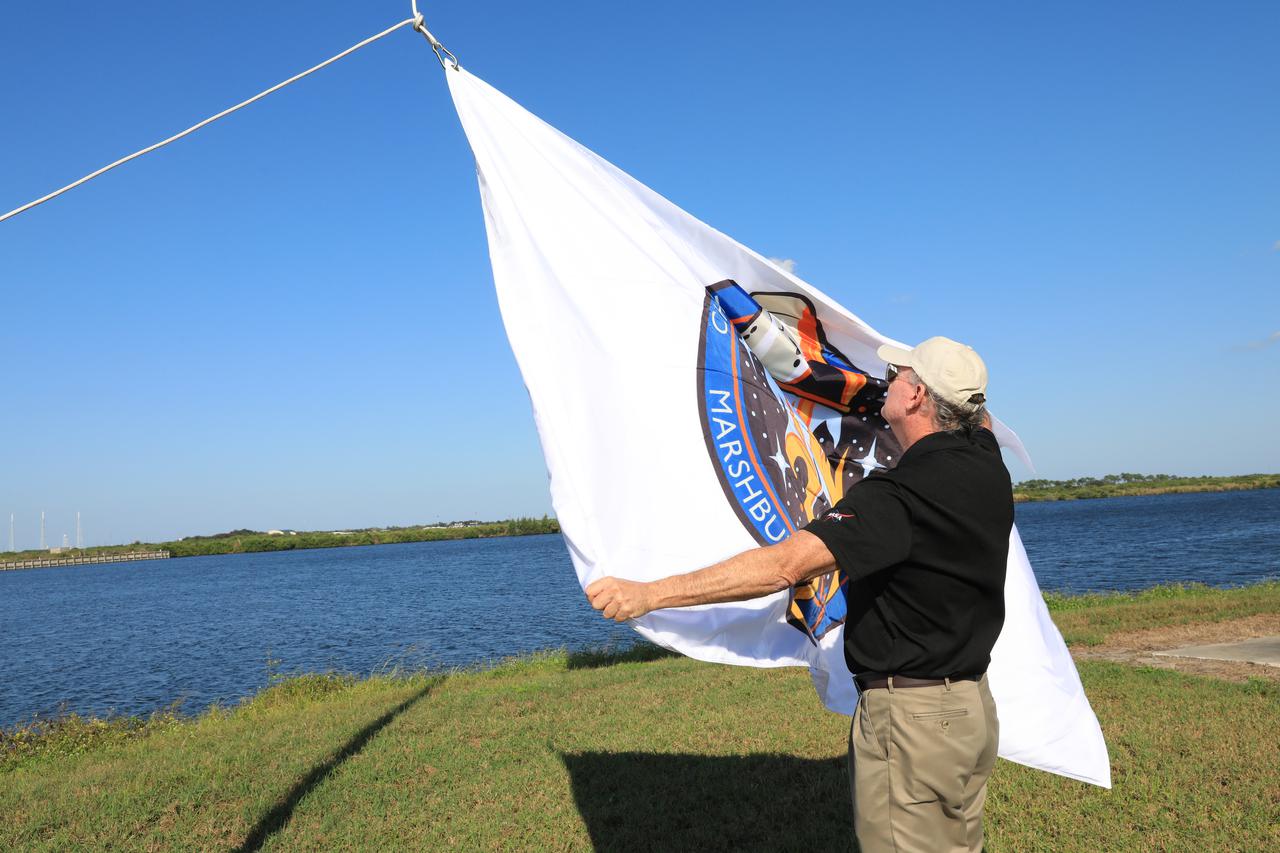
The SpaceX Crew-3 flag is raised near the News Center countdown clock at NASA’s Kennedy Space Center in Florida on Oct. 26, 2021. The SpaceX Falcon 9 with Crew Dragon atop is scheduled to launch no earlier than Nov. 6, at 11:36 p.m. EDT from Launch Complex 39A at Kennedy. Crew Dragon will carry four astronauts to the International Space Station for NASA’s Commercial Crew Program. Crew-3 is the third crew rotation flight to the space station, and the first flight of a new Crew Dragon spacecraft.
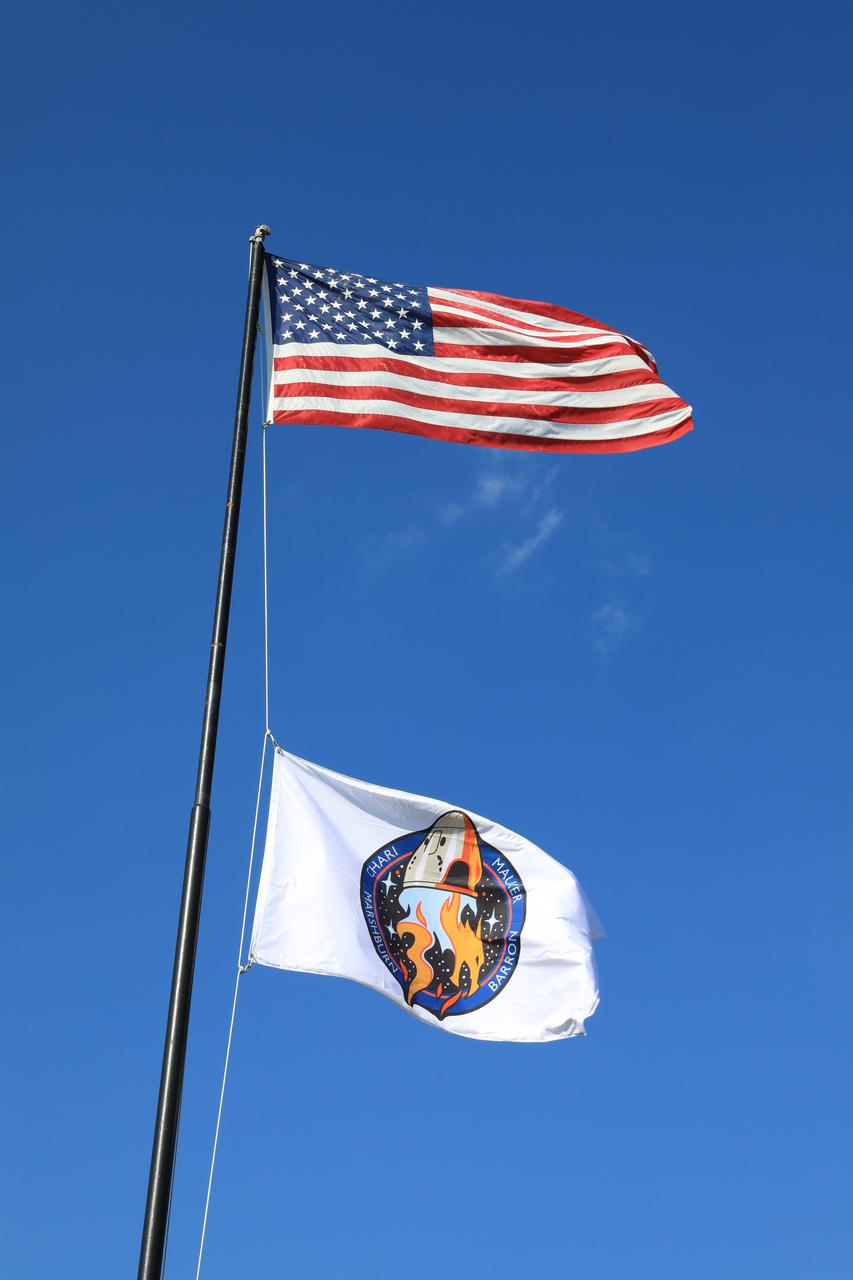
Against the backdrop of a clear blue sky, the SpaceX Crew-3 flag is raised below the American flag near the News Center countdown clock at NASA’s Kennedy Space Center in Florida on Oct. 26, 2021. The SpaceX Falcon 9 with Crew Dragon atop is scheduled to launch no earlier than Nov. 6, at 11:36 p.m. EDT from Launch Complex 39A at Kennedy. Crew Dragon will carry four astronauts to the International Space Station for NASA’s Commercial Crew Program. Crew-3 is the third crew rotation flight to the space station, and the first flight of a new Crew Dragon spacecraft.
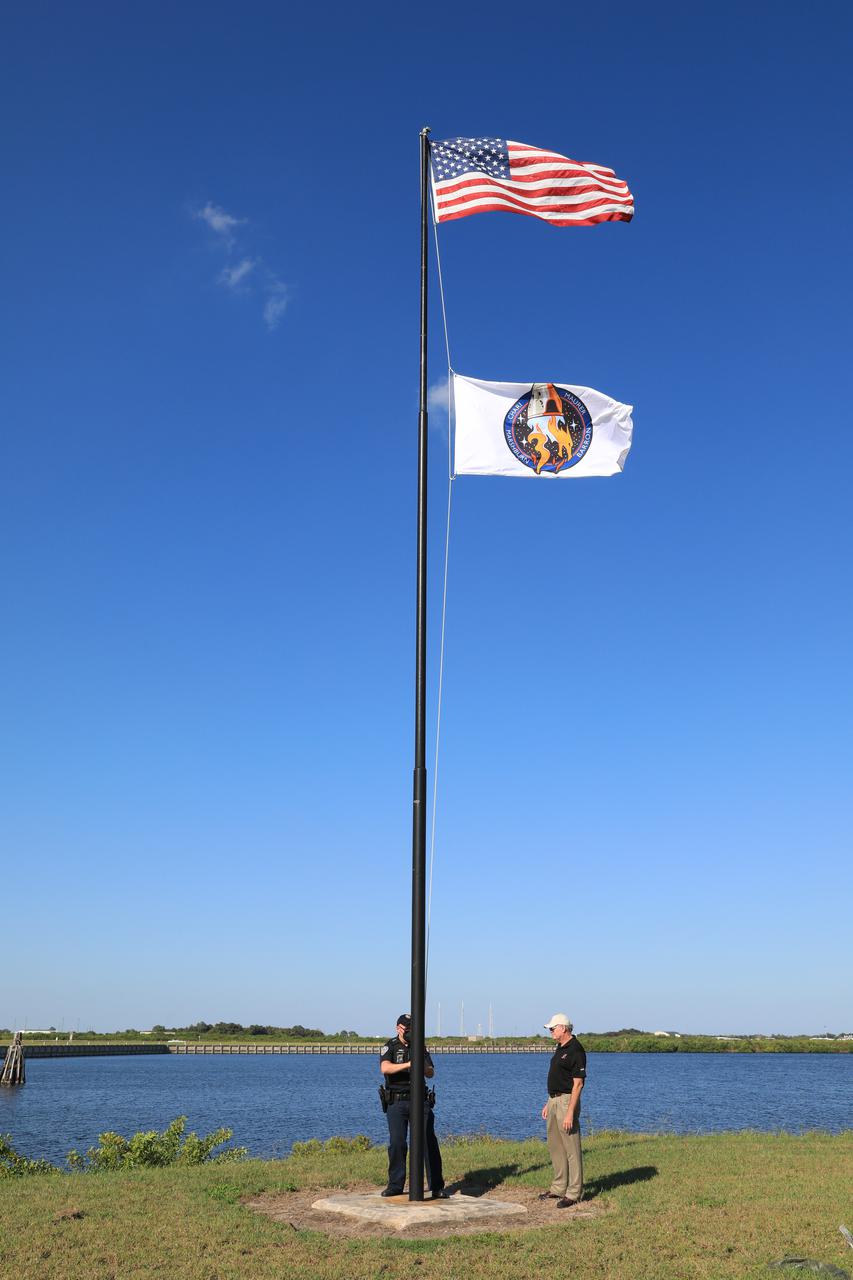
The SpaceX Crew-3 flag is raised below the American flag near the News Center countdown clock at NASA’s Kennedy Space Center in Florida on Oct. 26, 2021. The SpaceX Falcon 9 with Crew Dragon atop is scheduled to launch no earlier than Nov. 6, at 11:36 p.m. EDT from Launch Complex 39A at Kennedy. Crew Dragon will carry four astronauts to the International Space Station for NASA’s Commercial Crew Program. Crew-3 is the third crew rotation flight to the space station, and the first flight of a new Crew Dragon spacecraft.
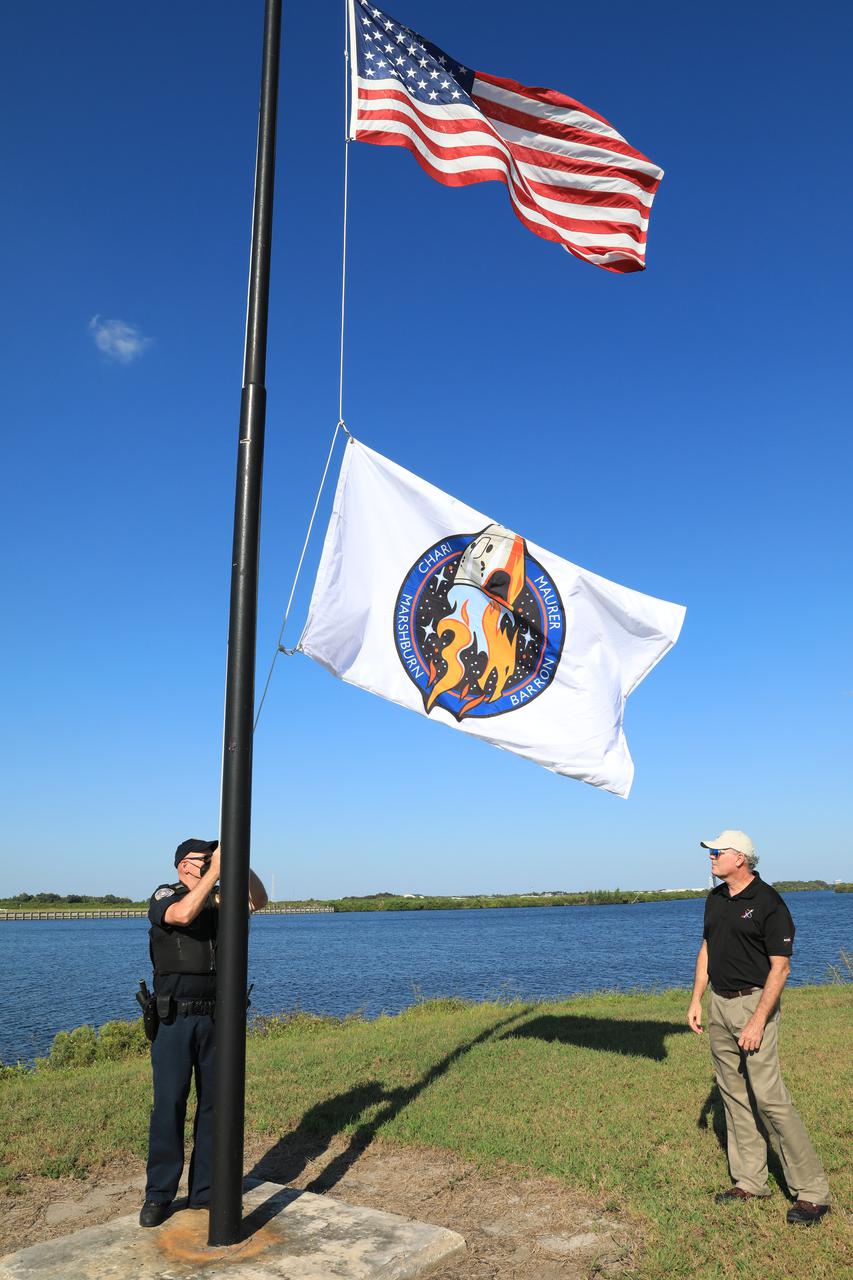
The SpaceX Crew-3 flag is raised below the American flag near the News Center countdown clock at NASA’s Kennedy Space Center in Florida on Oct. 26, 2021. The SpaceX Falcon 9 with Crew Dragon atop is scheduled to launch no earlier than Nov. 6, at 11:36 p.m. EDT from Launch Complex 39A at Kennedy. Crew Dragon will carry four astronauts to the International Space Station for NASA’s Commercial Crew Program. Crew-3 is the third crew rotation flight to the space station, and the first flight of a new Crew Dragon spacecraft.
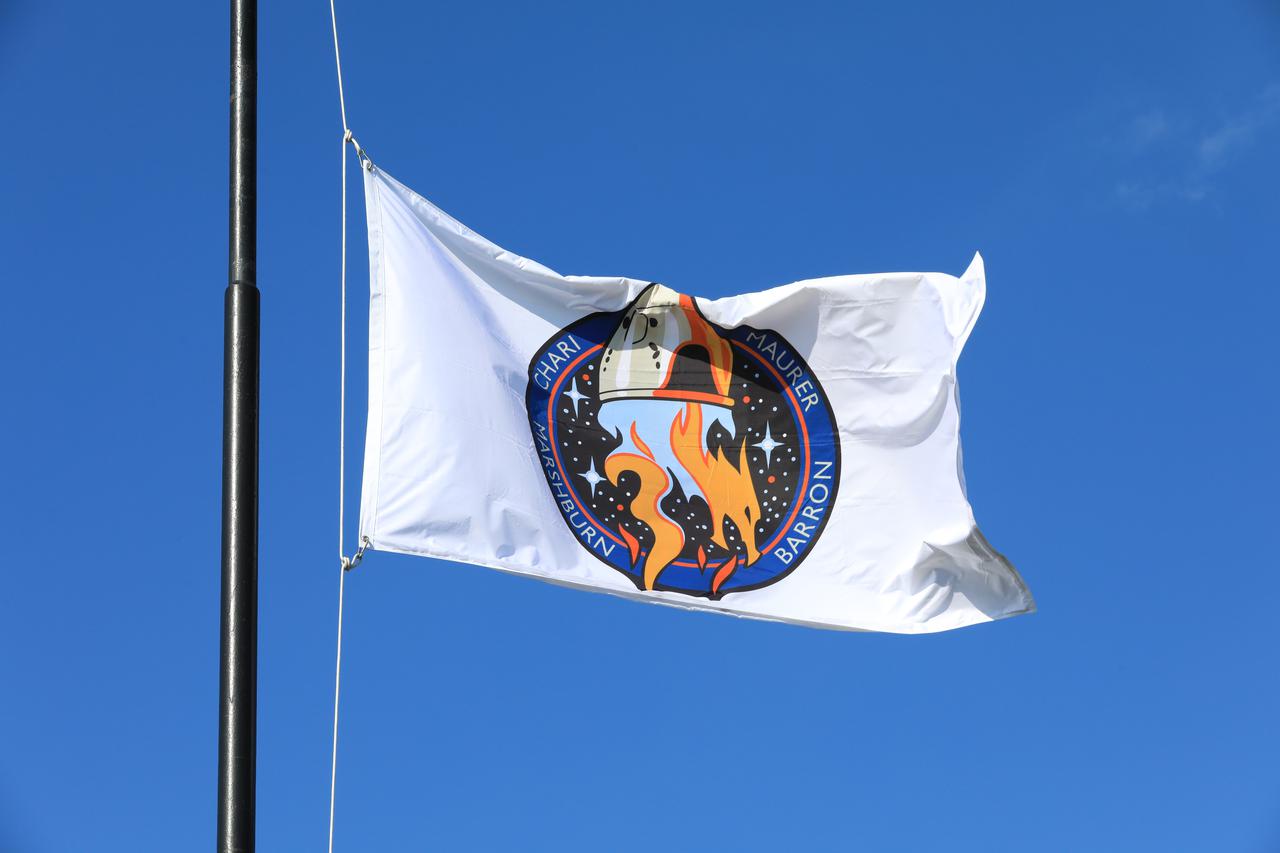
Against the backdrop of a clear blue sky, the SpaceX Crew-3 flag is shown fully raised near the News Center countdown clock at NASA’s Kennedy Space Center in Florida on Oct. 26, 2021. The SpaceX Falcon 9 with Crew Dragon atop is scheduled to launch no earlier than Nov. 6, at 11:36 p.m. EDT from Launch Complex 39A at Kennedy. Crew Dragon will carry four astronauts to the International Space Station for NASA’s Commercial Crew Program. Crew-3 is the third crew rotation flight to the space station, and the first flight of a new Crew Dragon spacecraft.
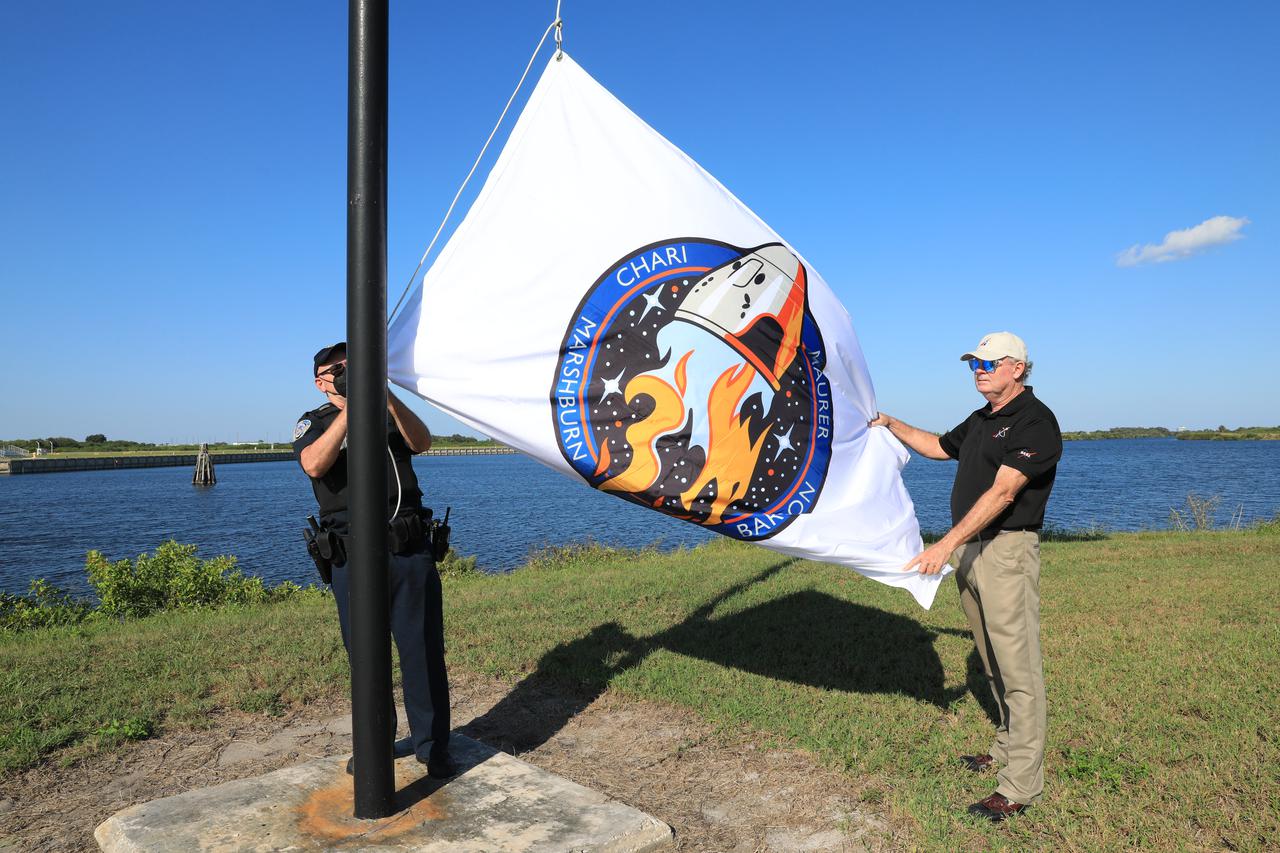
The SpaceX Crew-3 flag is raised near the News Center countdown clock at NASA’s Kennedy Space Center in Florida on Oct. 26, 2021. The SpaceX Falcon 9 with Crew Dragon atop is scheduled to launch no earlier than Nov. 6, at 11:36 p.m. EDT from Launch Complex 39A at Kennedy. Crew Dragon will carry four astronauts to the International Space Station for NASA’s Commercial Crew Program. Crew-3 is the third crew rotation flight to the space station, and the first flight of a new Crew Dragon spacecraft.
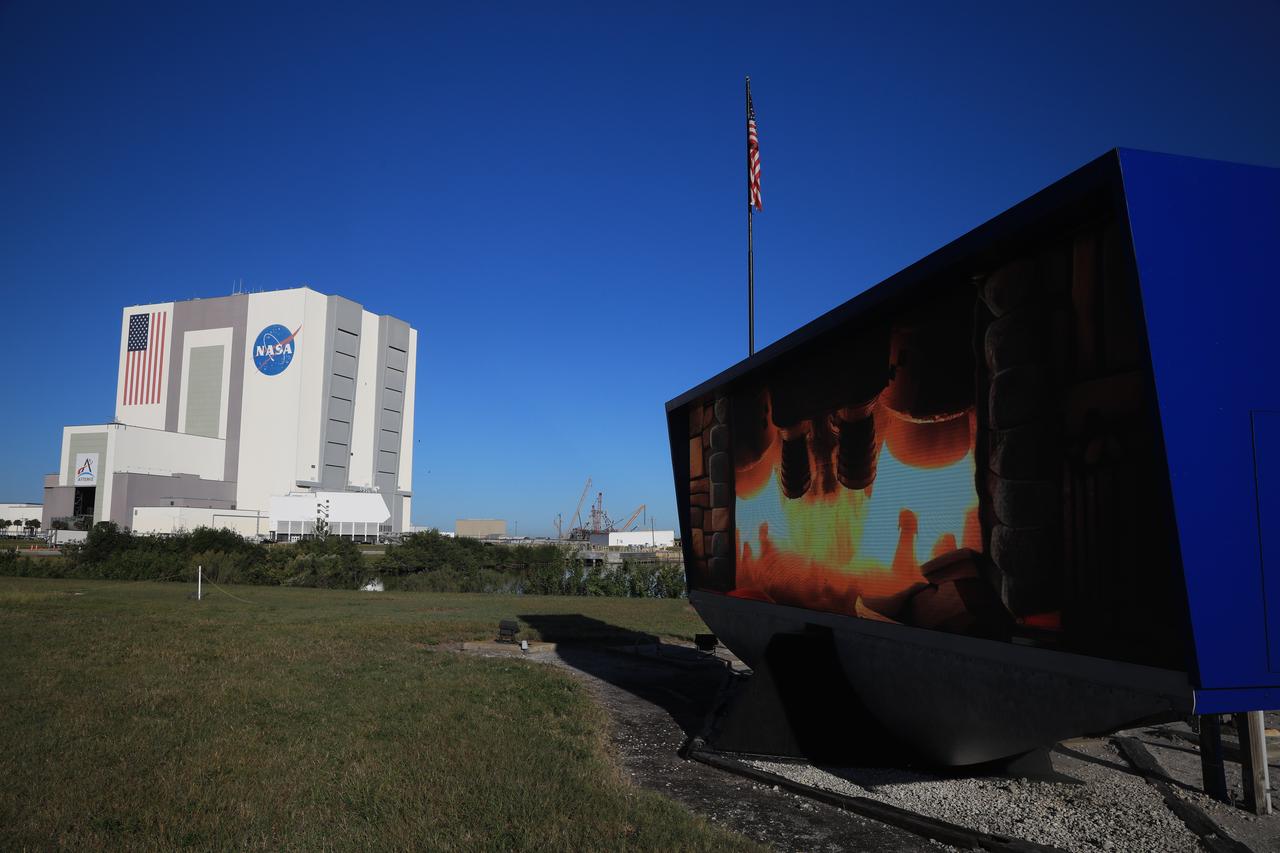
NASA’s SLS (Space Launch System) rocket that launched Artemis I on a mission around the Moon and back becomes a “rocket engine fireplace” back drop video on the historic countdown clock at the NASA News Center at the agency’s Kennedy Space Center on Tuesday, Nov. 26, 2024. The fireplace showcases the SLS rocket’s four RS-25 engines and a pair of solid rocket boosters.
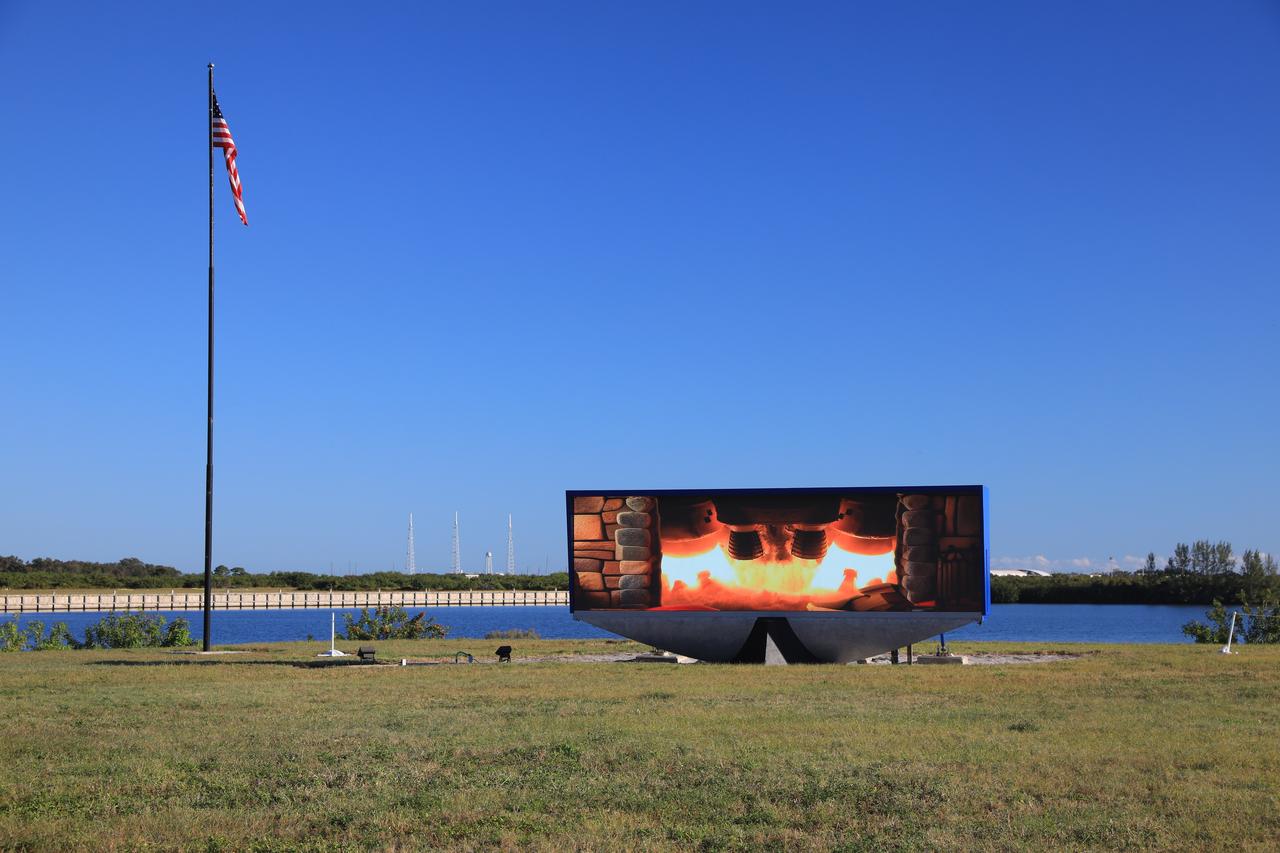
NASA’s SLS (Space Launch System) rocket that launched Artemis I on a mission around the Moon and back becomes a “rocket engine fireplace” back drop video on the historic countdown clock at the NASA News Center at the agency’s Kennedy Space Center on Tuesday, Nov. 26, 2024. The fireplace showcases the SLS rocket’s four RS-25 engines and a pair of solid rocket boosters.
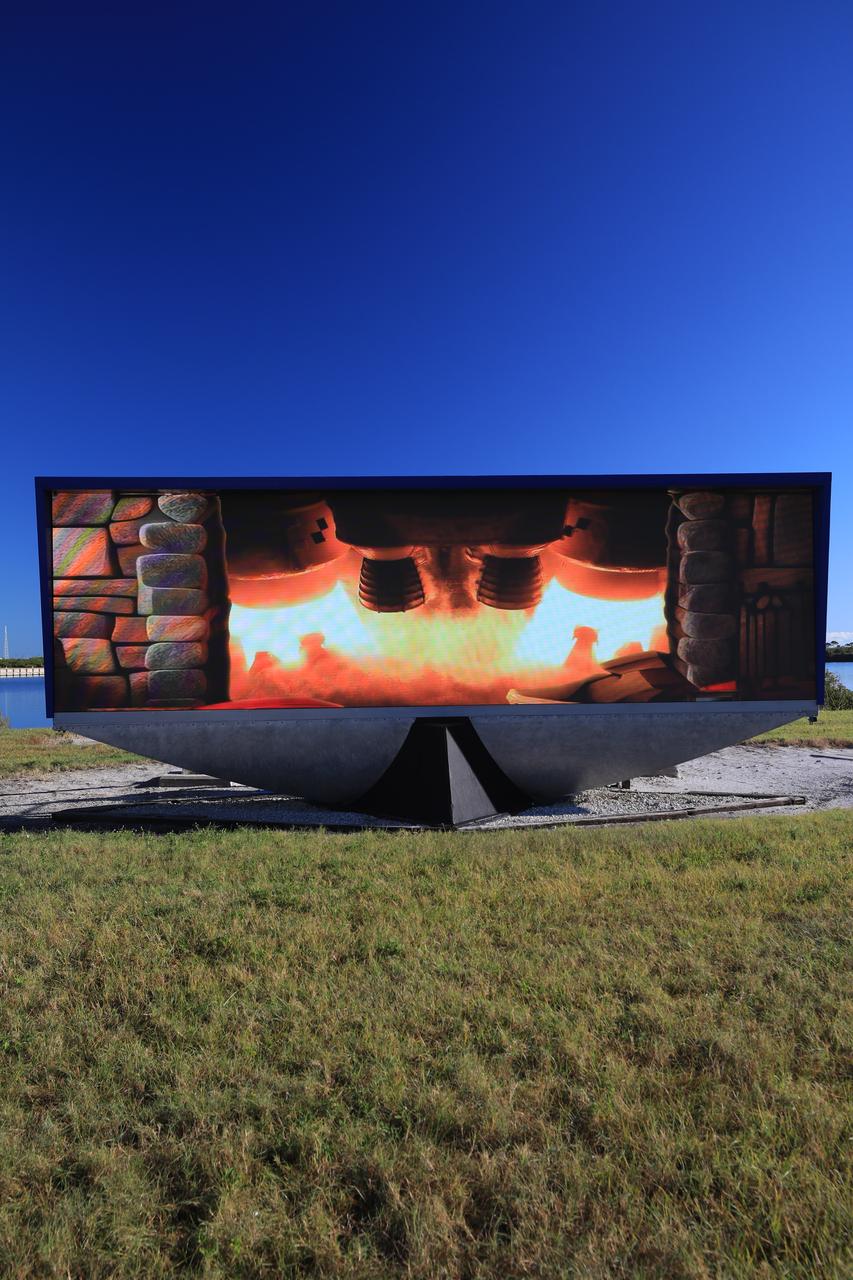
NASA’s SLS (Space Launch System) rocket that launched Artemis I on a mission around the Moon and back becomes a “rocket engine fireplace” back drop video on the historic countdown clock at the NASA News Center at the agency’s Kennedy Space Center on Tuesday, Nov. 26, 2024. The fireplace showcases the SLS rocket’s four RS-25 engines and a pair of solid rocket boosters.
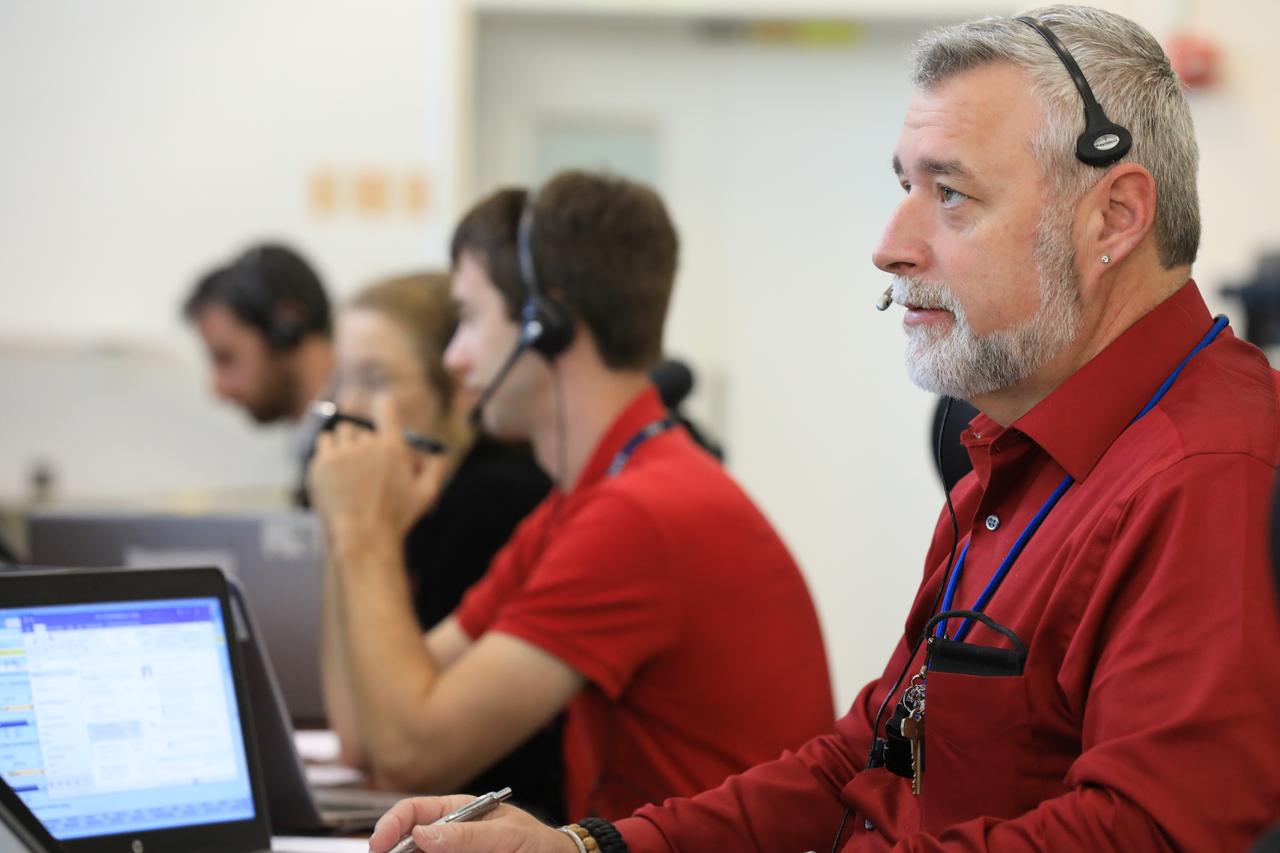
EM-1 Countdown Demonstration with Cryogenic Loading Simulation
EM-1 Countdown Demonstration with Cryogenic Loading Simulation
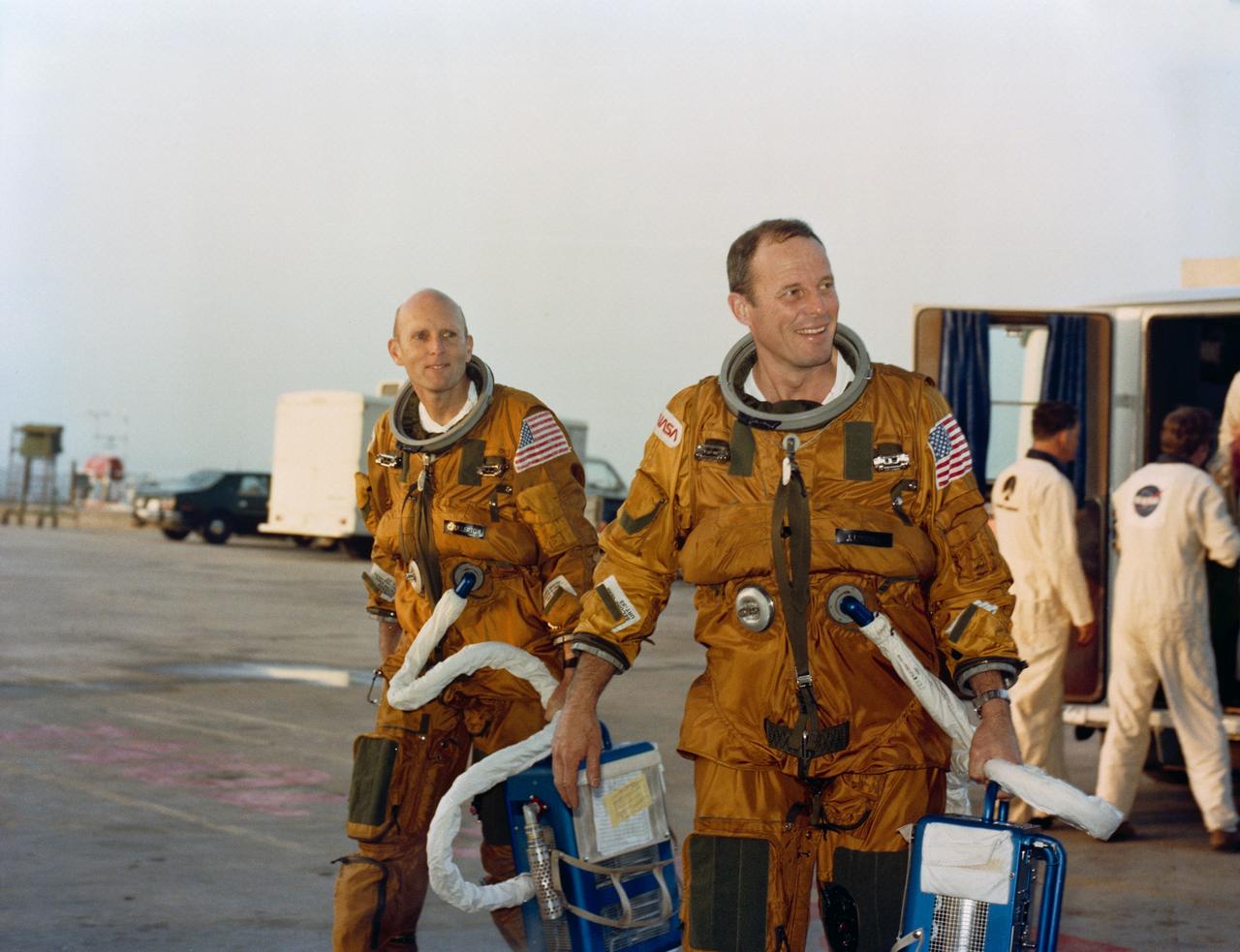
S82-28454 (19 Feb. 1982) --- Astronaut Jack R. Lousma, right, STS-3 commander, and C. Gordon Fullerton, pilot, carry portable spacesuit air controllers as they walk from a transport van to Launch Pad 39A to participate in a simulated countdown and launch. This countdown demonstration test (CDDT) is part of the preparations for NASA?s third orbital flight test in the space shuttle Columbia. The two are scheduled to spend a week orbiting Earth in Columbia this spring. Photo credit: NASA
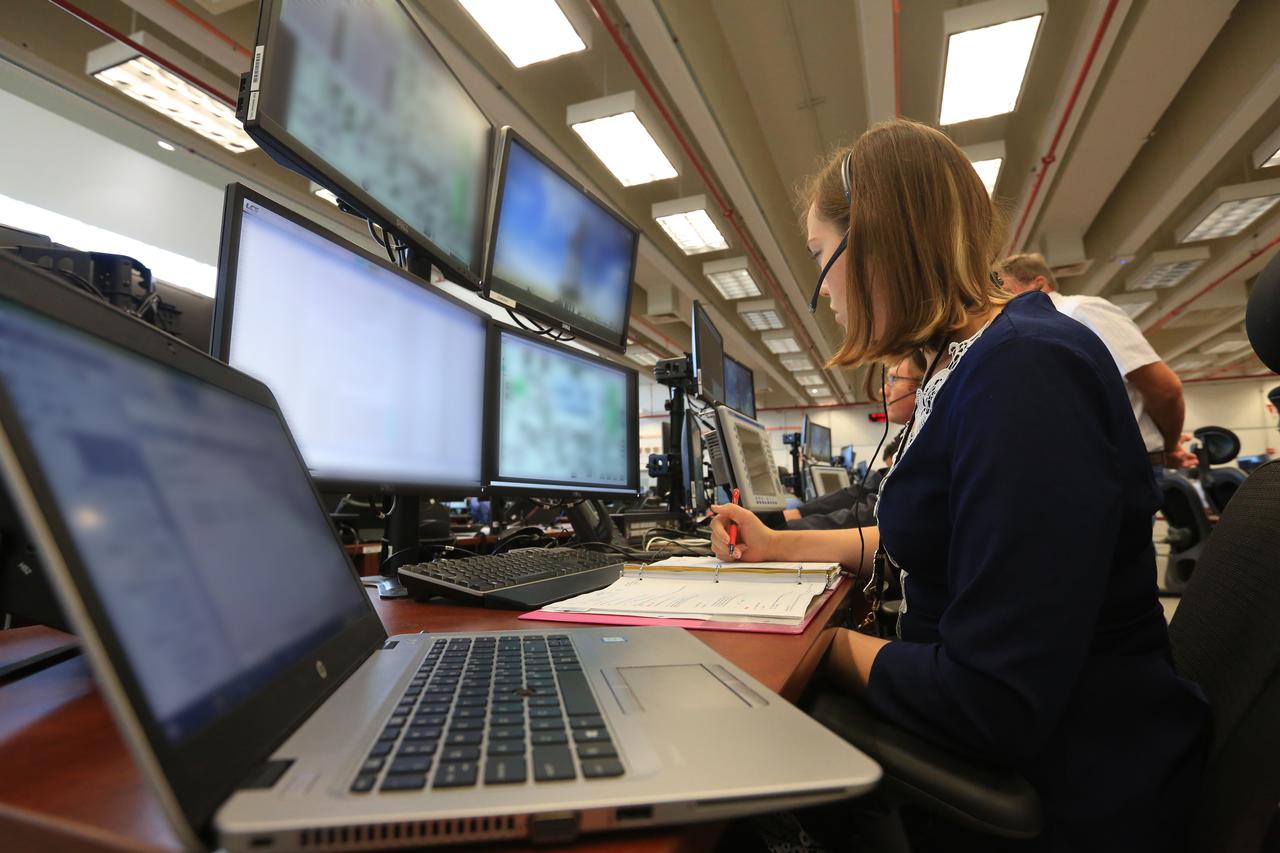
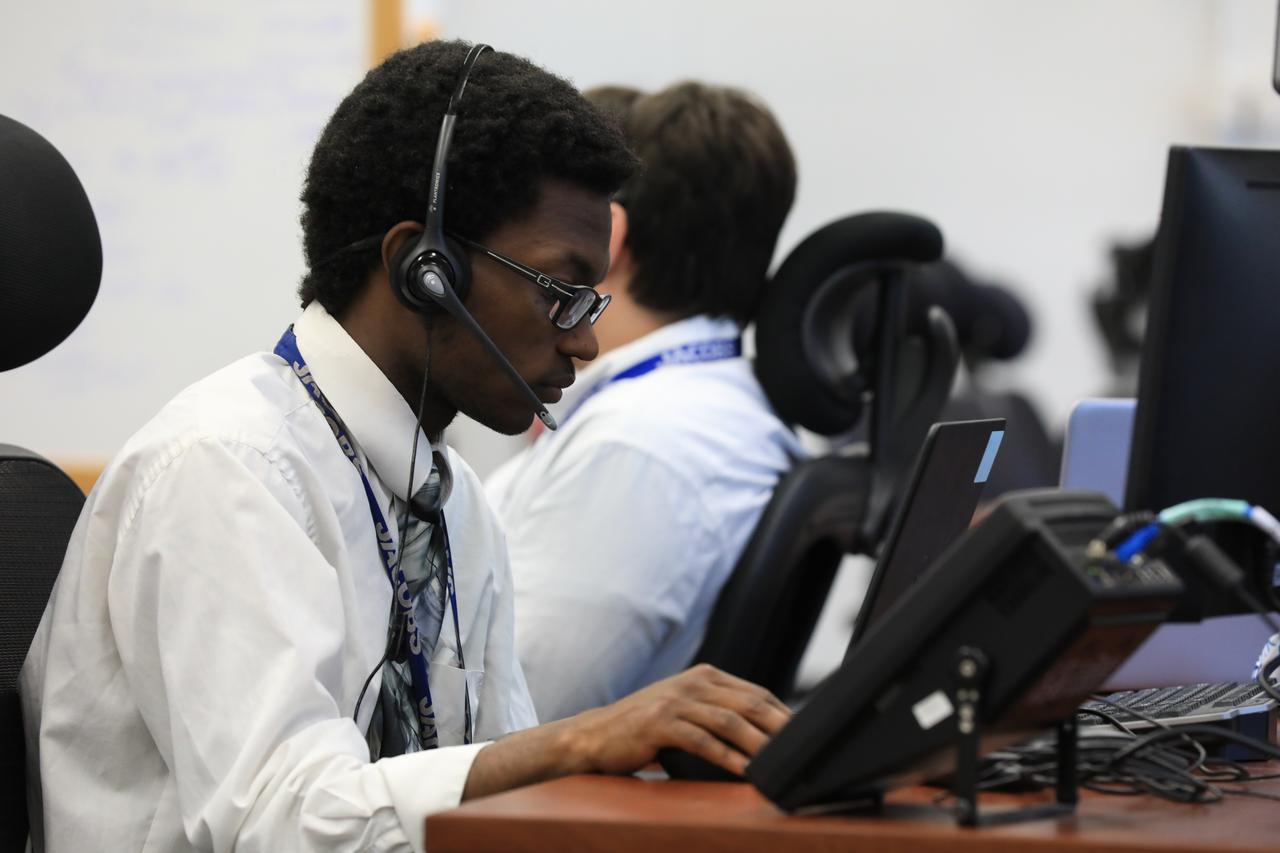
Engineers with NASA and contractor Jacobs monitor their consoles during a countdown demonstration event of cryogenic propellant loading April 12, 2019, inside Firing Room 2 in the Launch Control Center at NASA’s Kennedy Space Center in Florida. The practice simulation involved loading of liquid hydrogen and liquid oxygen into the Space Launch System rocket’s core and upper stages to prepare for Exploration Mission-1 (EM-1). During the tanking exercise, the team worked through surprise issues in real-time. The practice countdown events are training opportunities coordinated by EM-1 Launch Director Charlie Blackwell-Thompson with Exploration Ground Systems.
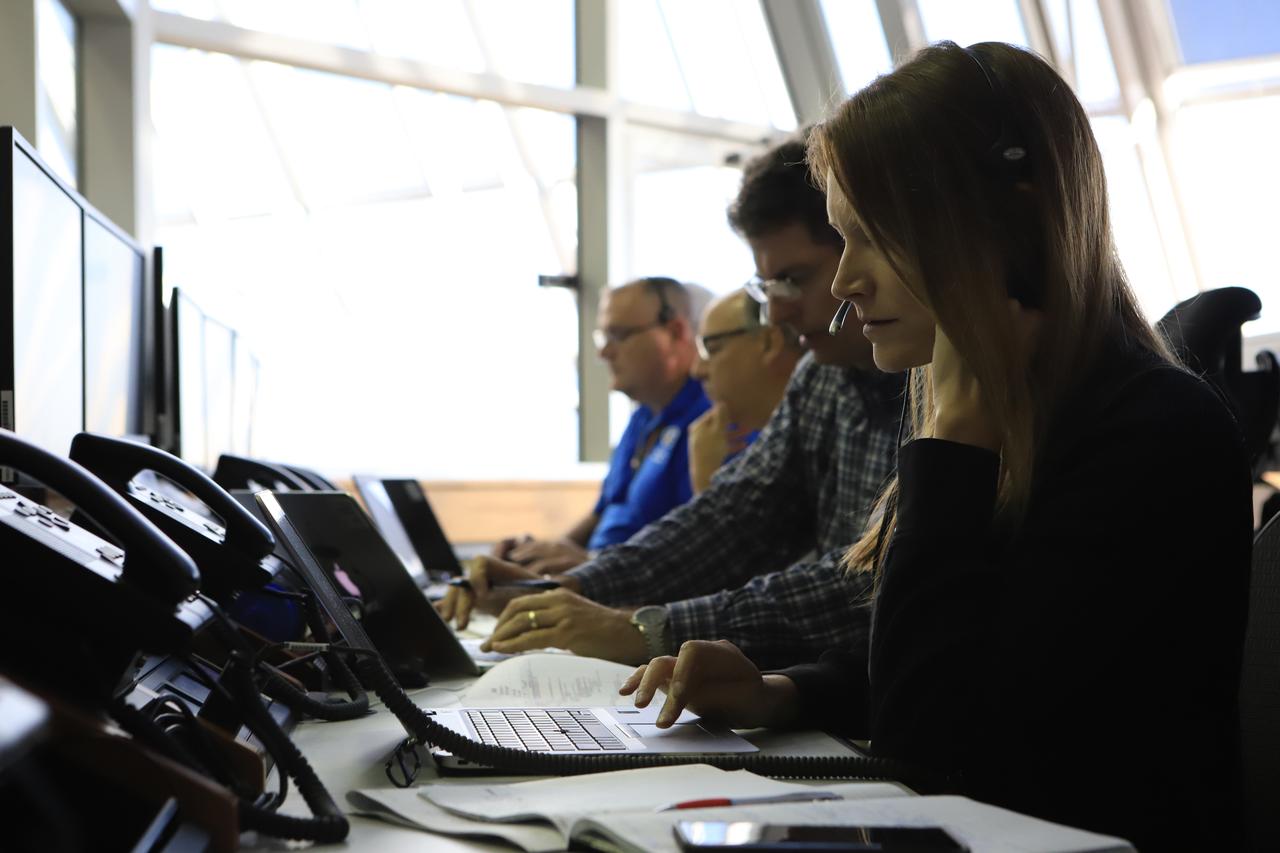
Engineers with NASA and contractor Jacobs monitor their consoles during a countdown demonstration event of cryogenic propellant loading April 12, 2019, inside Firing Room 2 in the Launch Control Center at NASA’s Kennedy Space Center in Florida. The practice simulation involved loading of liquid hydrogen and liquid oxygen into the Space Launch System rocket’s core and upper stages to prepare for Exploration Mission-1 (EM-1). During the tanking exercise, the team worked through surprise issues in real-time. The practice countdown events are training opportunities coordinated by EM-1 Launch Director Charlie Blackwell-Thompson with Exploration Ground Systems.
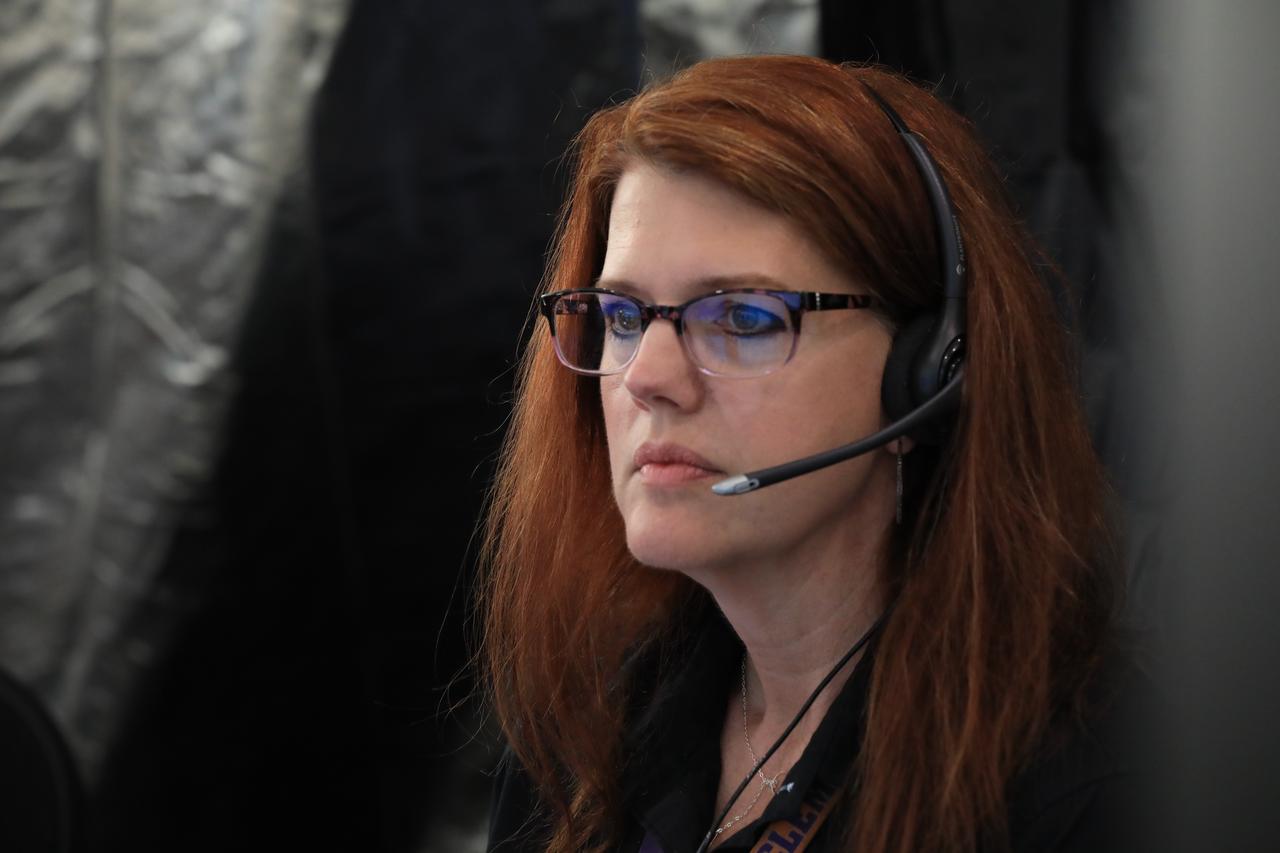
Charlie Blackwell-Thompson, Exploration Mission-1 (EM-1) launch director, leads a countdown demonstration event of cryogenic propellant loading April 12, 2019, inside Firing Room 2 in the Launch Control Center at NASA’s Kennedy Space Center in Florida. The practice simulation involved loading of liquid hydrogen and liquid oxygen into the Space Launch System rocket’s core and upper stages to prepare for EM-1. During the tanking exercise, the team worked through surprise issues in real-time. The practice countdown events are training opportunities coordinated by Blackwell-Thompson with Exploration Ground Systems.
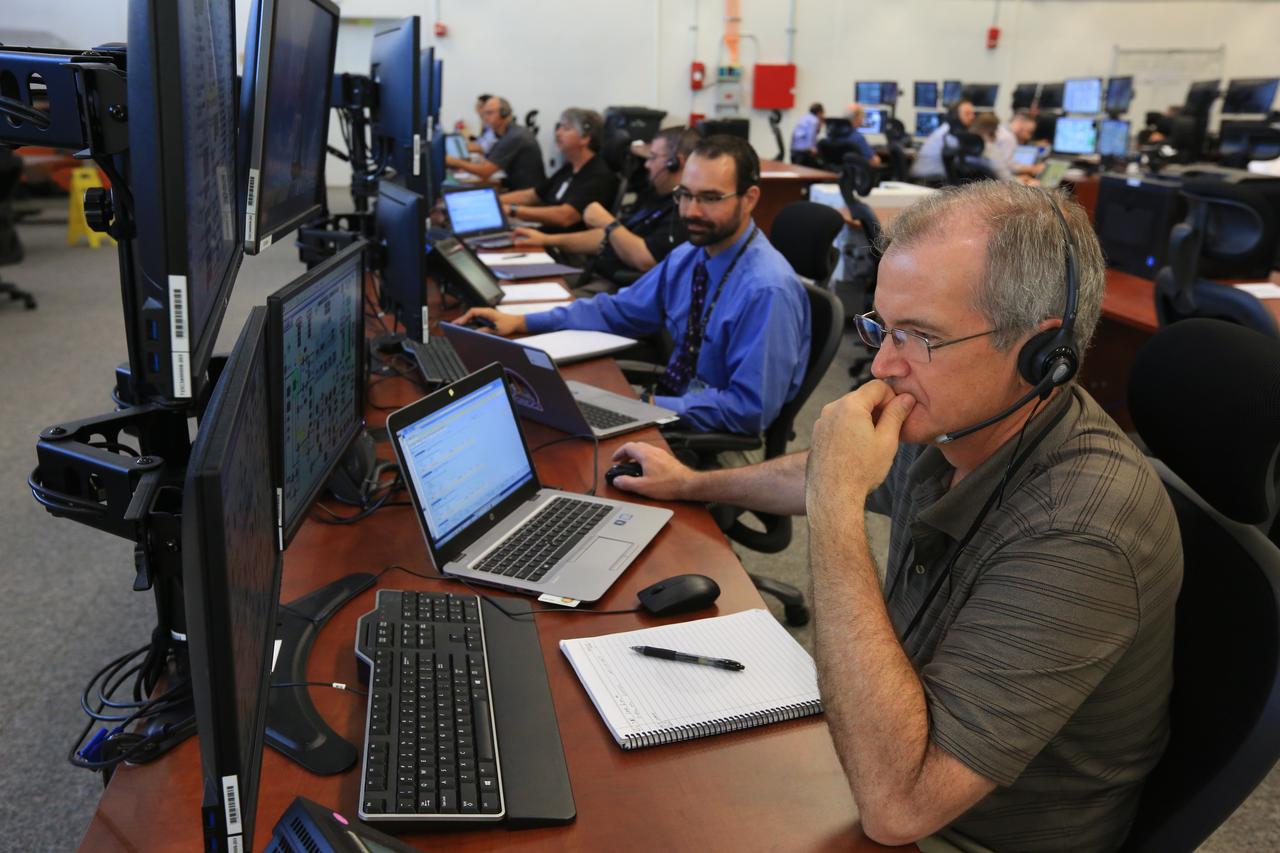
Engineers with NASA and contractor Jacobs monitor their consoles during a countdown demonstration event of cryogenic propellant loading April 12, 2019, inside Firing Room 2 in the Launch Control Center at NASA’s Kennedy Space Center in Florida. The practice simulation involved loading of liquid hydrogen and liquid oxygen into the Space Launch System rocket’s core and upper stages to prepare for Exploration Mission-1 (EM-1). During the tanking exercise, the team worked through surprise issues in real-time. The practice countdown events are training opportunities coordinated by EM-1 Launch Director Charlie Blackwell-Thompson with Exploration Ground Systems.
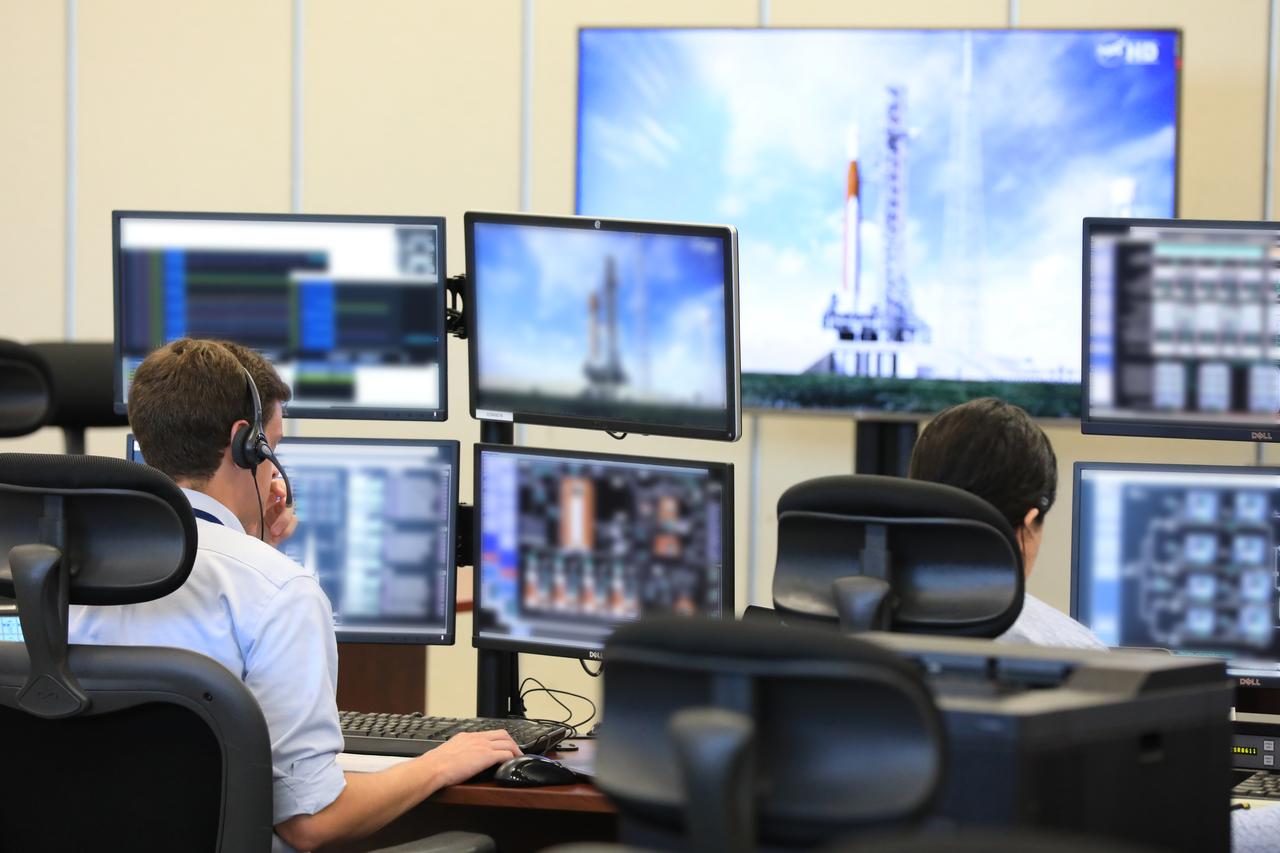
Engineers with Exploration Ground Systems monitor their consoles during a countdown demonstration event of cryogenic propellant loading April 12, 2019, inside Firing Room 2 in the Launch Control Center at NASA’s Kennedy Space Center in Florida. The practice simulation involved loading of liquid hydrogen and liquid oxygen into the Space Launch System rocket’s core and upper stages to prepare for Exploration Mission-1 (EM-1). During the tanking exercise, the team worked through surprise issues in real-time. The practice countdown events are training opportunities coordinated by EM-1 Launch Director Charlie Blackwell-Thompson with Exploration Ground Systems.
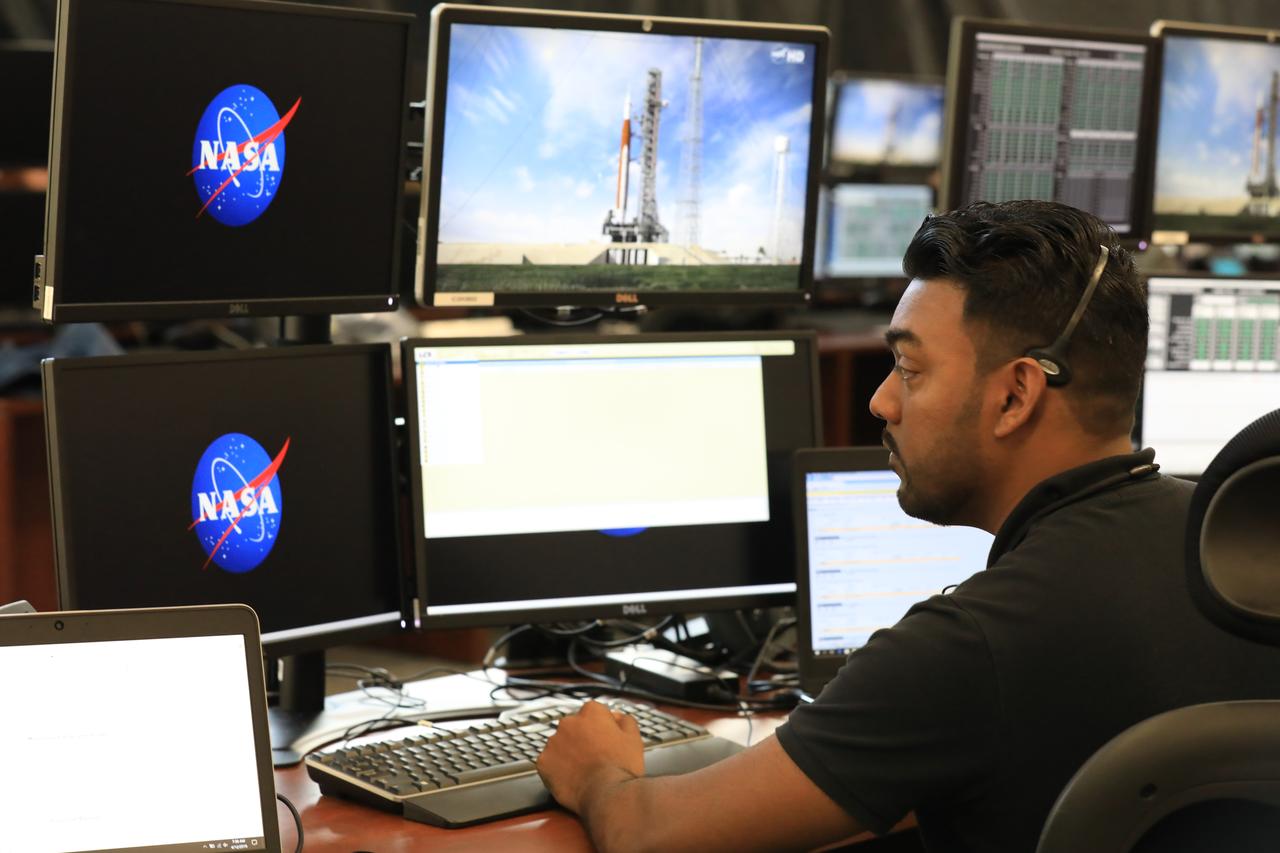
Anthony Bharrat, NASA engine avionics engineer, monitors his console during a countdown demonstration event of cryogenic propellant loading April 12, 2019, inside Firing Room 2 in the Launch Control Center at NASA’s Kennedy Space Center in Florida. The practice simulation involved loading of liquid hydrogen and liquid oxygen into the Space Launch System rocket’s core and upper stages to prepare for Exploration Mission-1 (EM-1). During the tanking exercise, the team worked through surprise issues in real-time. The practice countdown events are training opportunities coordinated by EM-1 Launch Director Charlie Blackwell-Thompson with Exploration Ground Systems.
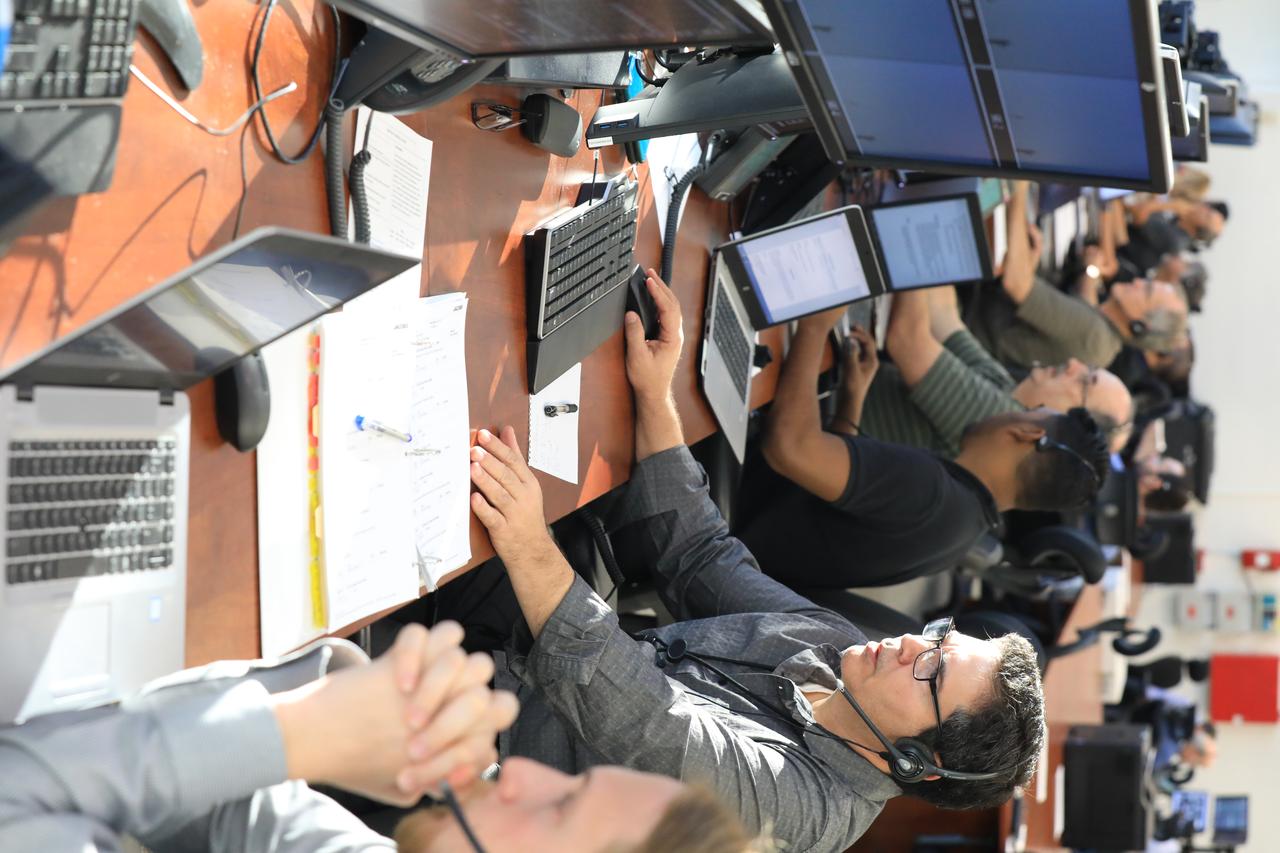
Engineers with NASA and contractor Jacobs monitor their consoles during a countdown demonstration event of cryogenic propellant loading April 12, 2019, inside Firing Room 2 in the Launch Control Center at NASA’s Kennedy Space Center in Florida. The practice simulation involved loading of liquid hydrogen and liquid oxygen into the Space Launch System rocket’s core and upper stages to prepare for Exploration Mission-1 (EM-1). During the tanking exercise, the team worked through surprise issues in real-time. The practice countdown events are training opportunities coordinated by EM-1 Launch Director Charlie Blackwell-Thompson with Exploration Ground Systems.
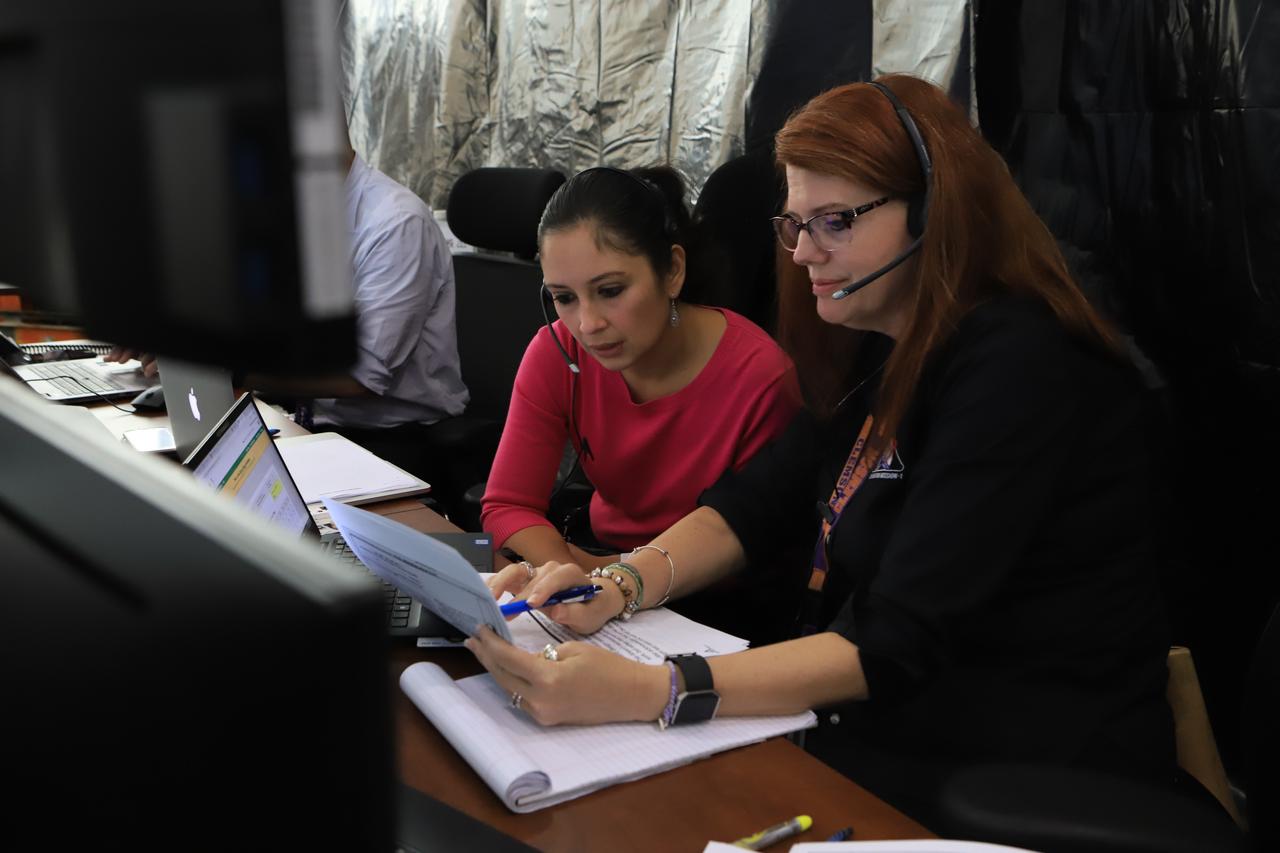
Charlie Blackwell-Thompson, right, Exploration Mission-1 (EM-1) launch director, reviews procedures during a countdown demonstration event of cryogenic propellant loading April 12, 2019, inside Firing Room 2 in the Launch Control Center at NASA’s Kennedy Space Center in Florida. The practice simulation involved loading of liquid hydrogen and liquid oxygen into the Space Launch System rocket’s core and upper stages to prepare for EM-1. During the tanking exercise, the team worked through surprise issues in real-time. The practice countdown events are training opportunities coordinated by Blackwell-Thompson with Exploration Ground Systems.
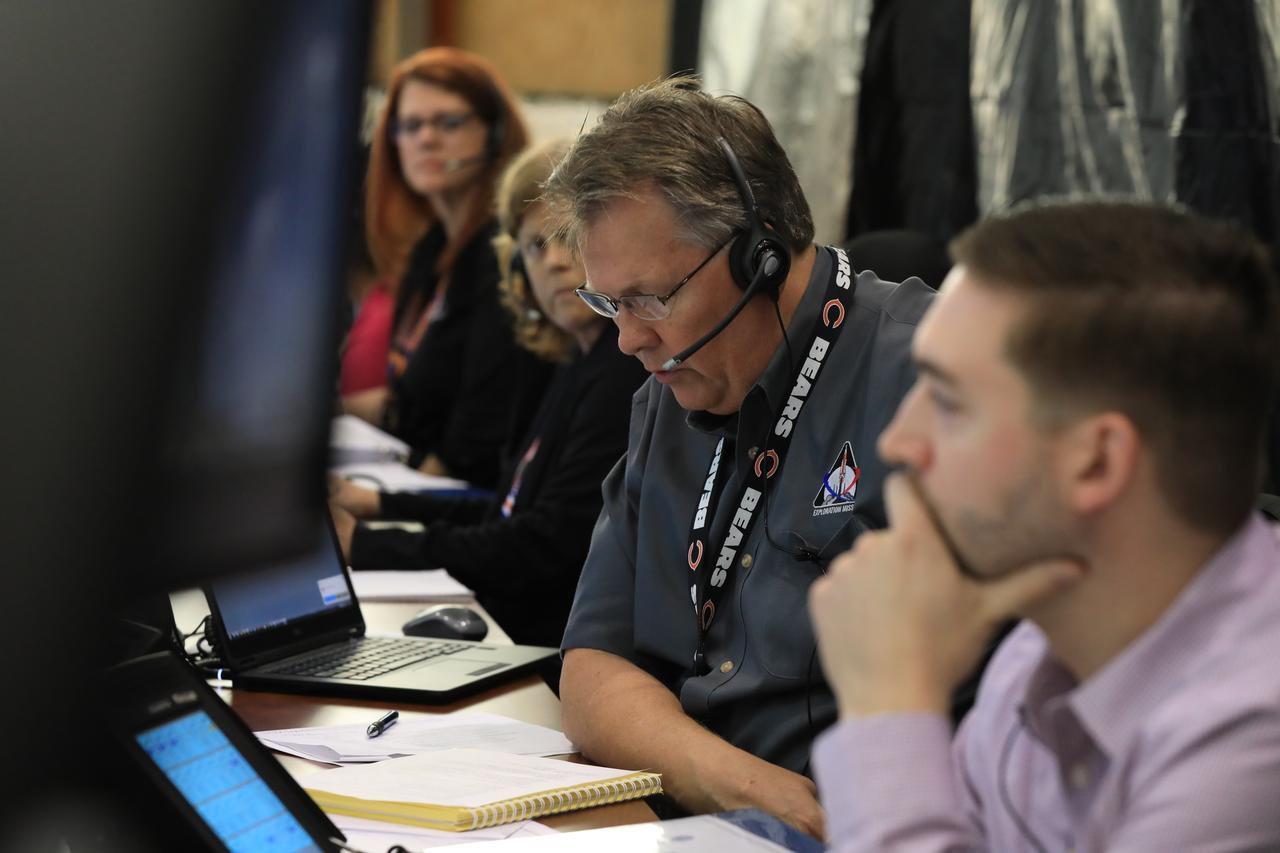
Charlie Blackwell-Thompson, far left, Exploration Mission-1 (EM-1) launch director, and engineers with NASA and Jacobs, participate in a countdown demonstration event of cryogenic propellant loading April 12, 2019, inside Firing Room 2 in the Launch Control Center at NASA’s Kennedy Space Center in Florida. The practice simulation involved loading of liquid hydrogen and liquid oxygen into the Space Launch System rocket’s core and upper stages to prepare for EM-1. During the tanking exercise, the team worked through surprise issues in real-time. The practice countdown events are training opportunities coordinated by Blackwell-Thompson with Exploration Ground Systems.
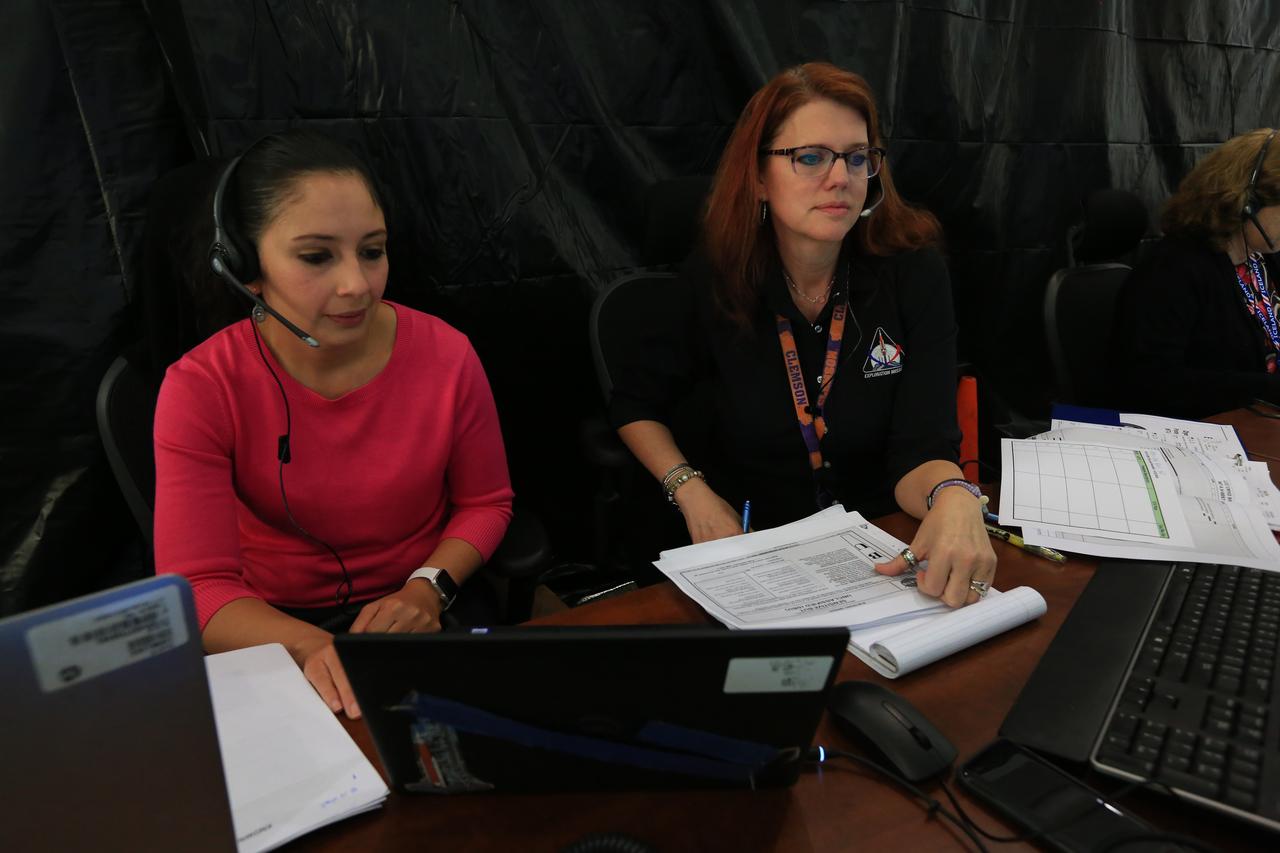
Charlie Blackwell-Thompson, at right, Exploration Mission-1 (EM-1) launch director, leads a countdown demonstration event of cryogenic propellant loading April 12, 2019, inside Firing Room 2 in the Launch Control Center at NASA’s Kennedy Space Center in Florida. Seated next to her is Jessica Parsons, technical assitant to the launch director. The practice simulation involved loading of liquid hydrogen and liquid oxygen into the Space Launch System rocket’s core and upper stages to prepare for EM-1. During the tanking exercise, the team worked through surprise issues in real-time. The practice countdown events are training opportunities coordinated by Blackwell-Thompson with Exploration Ground Systems.
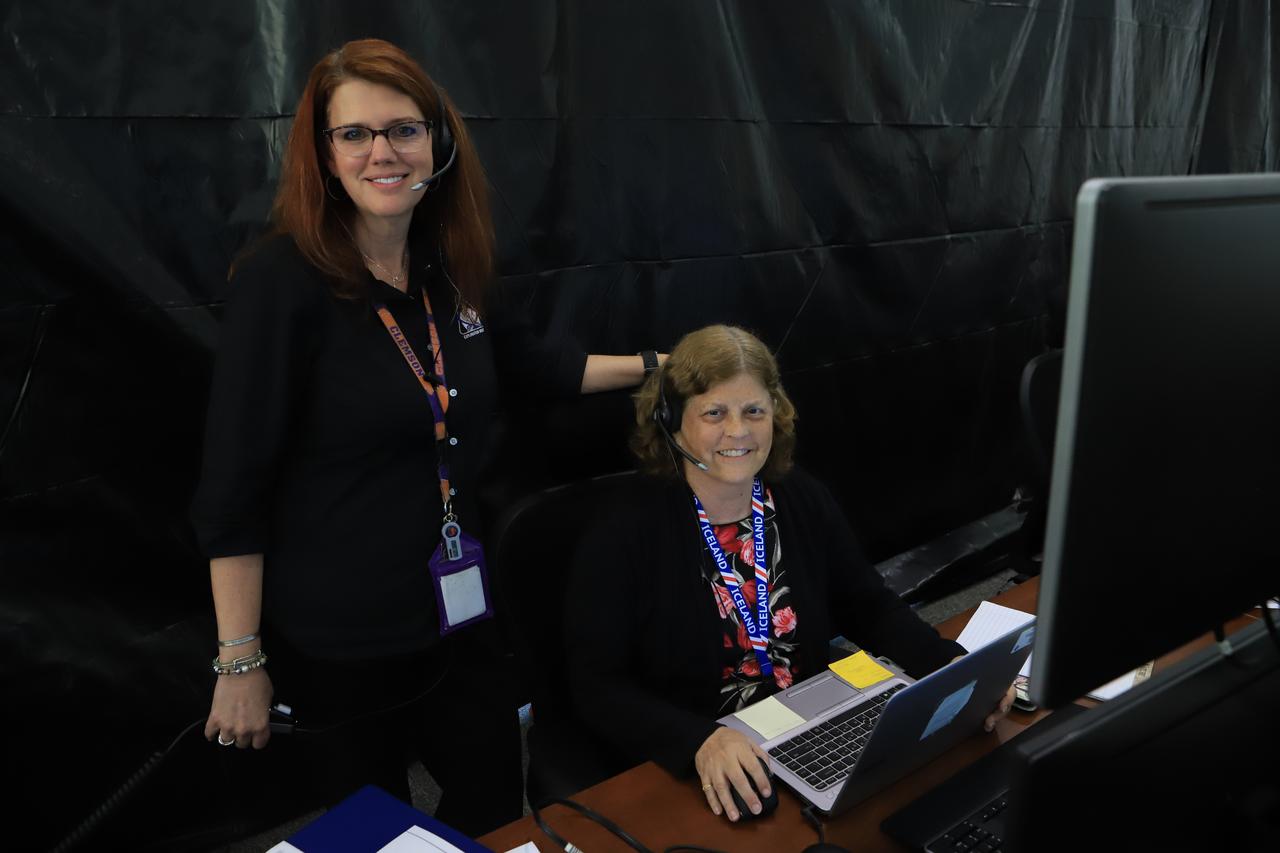
Charlie Blackwell-Thompson, standing, Exploration Mission-1 (EM-1) launch director, leads a countdown demonstration event of cryogenic propellant loading April 12, 2019, inside Firing Room 2 in the Launch Control Center at NASA’s Kennedy Space Center in Florida. Seated is Roberta Wyrick, spacecraft test conductor with contractor Jacobs. The practice simulation involved loading of liquid hydrogen and liquid oxygen into the Space Launch System rocket’s core and upper stages to prepare for EM-1. During the tanking exercise, the team worked through surprise issues in real-time. The practice countdown events are training opportunities coordinated by Blackwell-Thompson with Exploration Ground Systems.
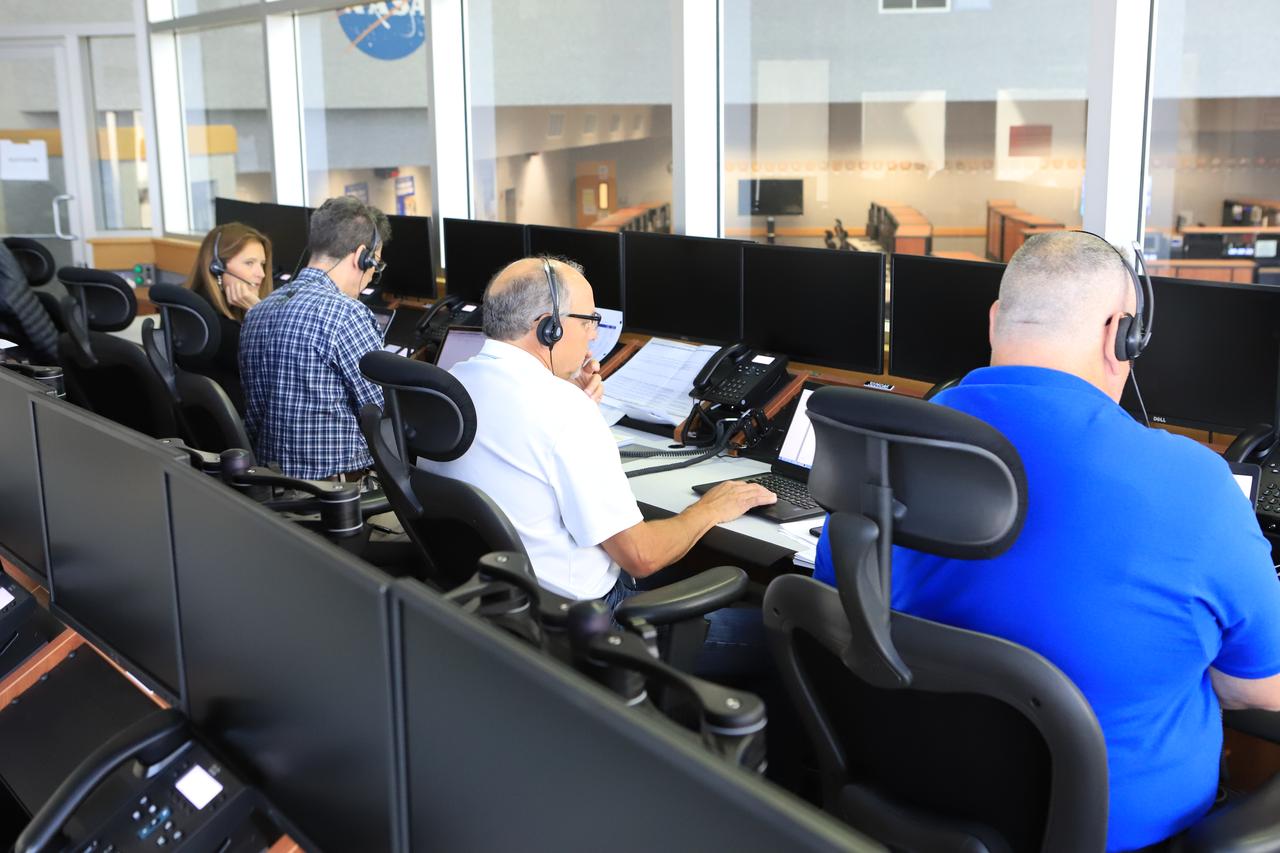
Engineers with NASA and contractor Jacobs monitor their consoles during a countdown demonstration event of cryogenic propellant loading April 12, 2019, inside Firing Room 2 in the Launch Control Center at NASA’s Kennedy Space Center in Florida. The practice simulation involved loading of liquid hydrogen and liquid oxygen into the Space Launch System rocket’s core and upper stages to prepare for Exploration Mission-1 (EM-1). During the tanking exercise, the team worked through surprise issues in real-time. The practice countdown events are training opportunities coordinated by EM-1 Launch Director Charlie Blackwell-Thompson with Exploration Ground Systems.
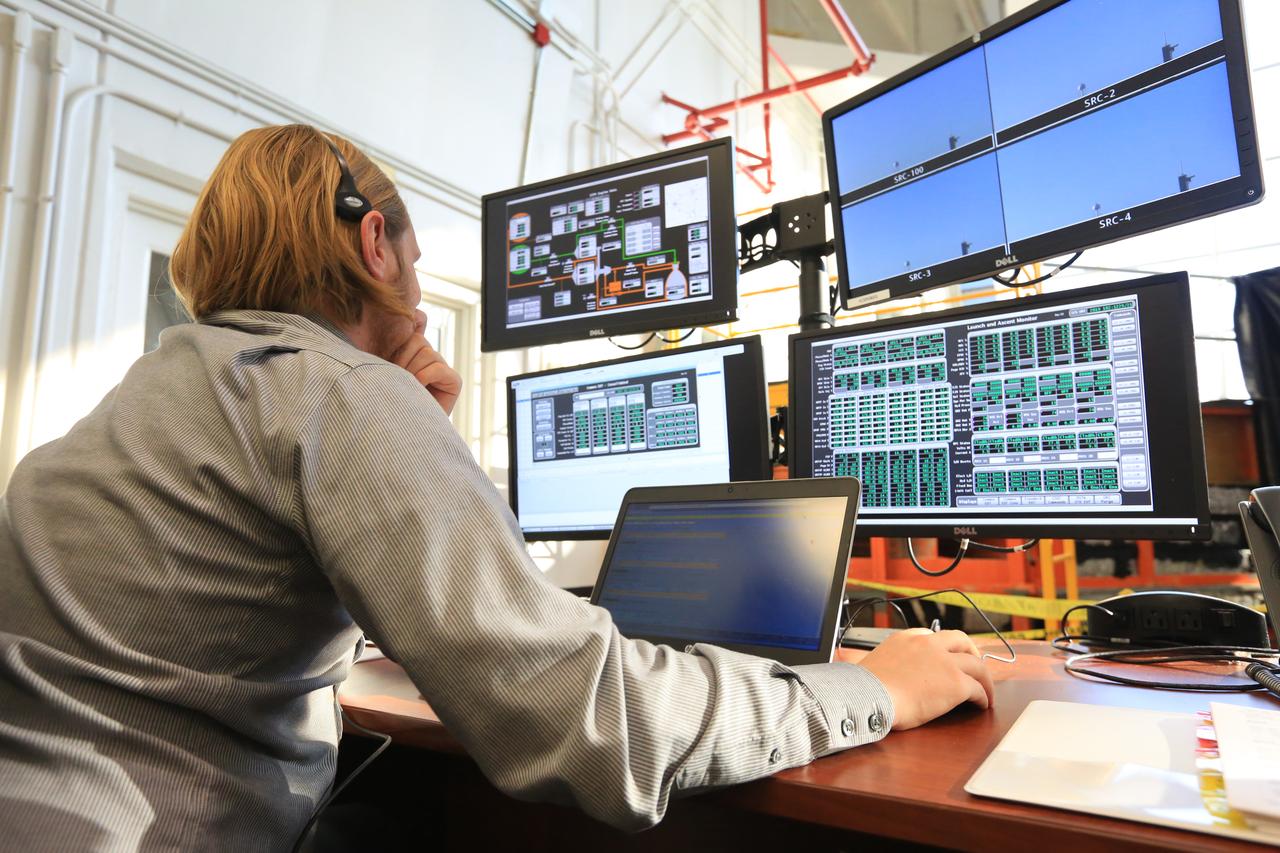
An engineer with NASA monitors his console during a countdown demonstration event of cryogenic propellant loading April 12, 2019, inside Firing Room 2 in the Launch Control Center at NASA’s Kennedy Space Center in Florida. The practice simulation involved loading of liquid hydrogen and liquid oxygen into the Space Launch System rocket’s core and upper stages to prepare for Exploration Mission-1 (EM-1). During the tanking exercise, the team worked through surprise issues in real-time. The practice countdown events are training opportunities coordinated by EM-1 Launch Director Charlie Blackwell-Thompson with Exploration Ground Systems.
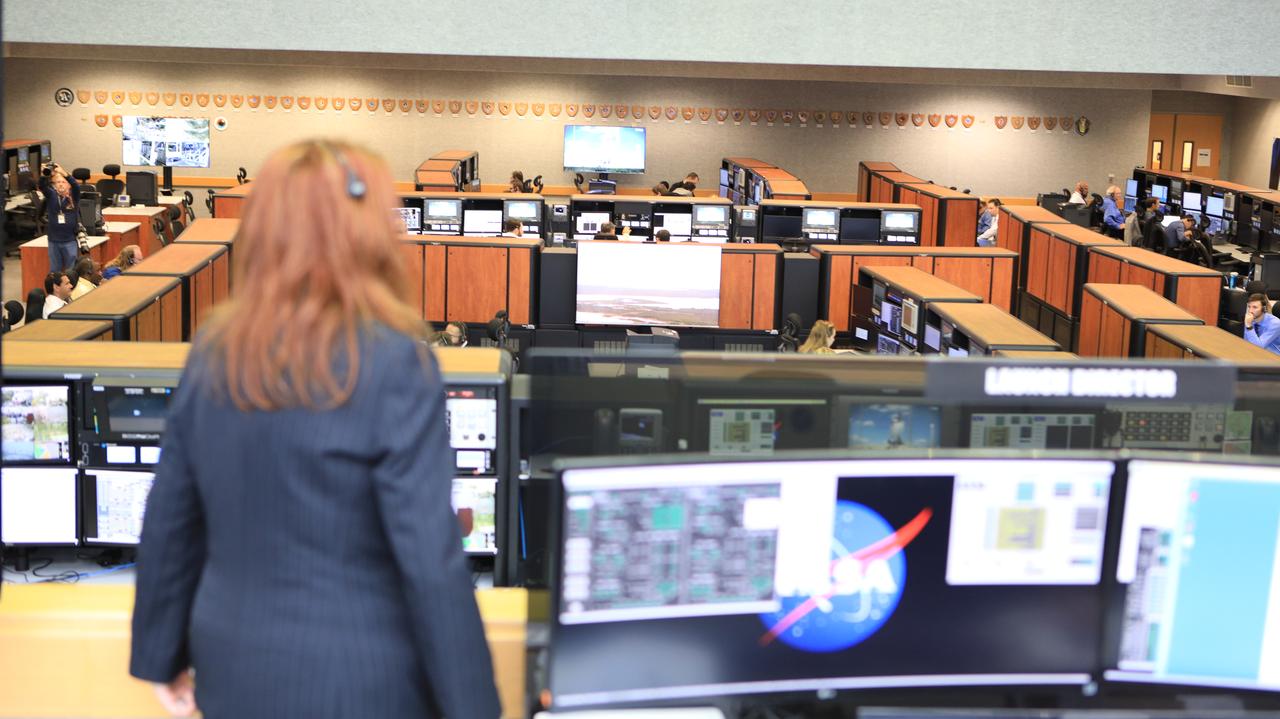
NASA Launch Director Charlie Blackwell-Thompson looks out over Firing Room 1 in the Launch Control Center at NASA’s Kennedy Space Center in Florida during a terminal countdown demonstration for Exploration Mission 1, or EM-1, on Dec. 14, 2018. The launch will be the first integrated test of the Space Launch System rocket and Orion spacecraft that will eventually take astronauts beyond low-Earth orbit to destinations such as the Moon and Mars. The countdown demonstration was intended to validate the launch team's capability to perform an EM-1 countdown and respond to challenges put into the system for practice.
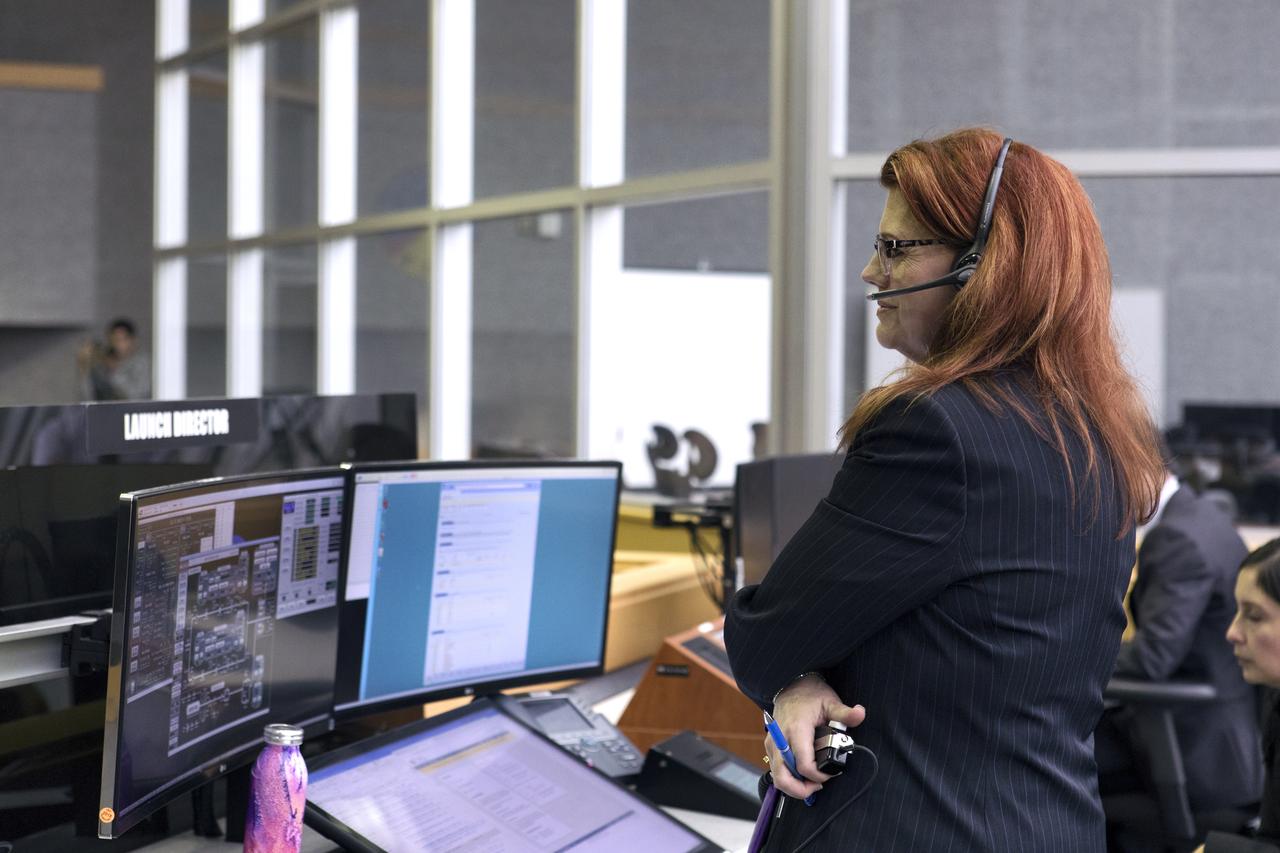
NASA Launch Director Charlie Blackwell-Thompson stands next to her console in Firing Room 1 at the Kennedy Space Center's Launch Control Center during a terminal countdown demonstration for Exploration Mission 1, or EM-1. The launch will be the first integrated test of the Space Launch System rocket and Orion spacecraft that will eventually take astronauts beyond low-Earth orbit to destinations such as the Moon and Mars. Taking place on Dec. 14, 2018, the countdown demonstration was intended to validate the launch team's capability to perform an EM-1 countdown and respond to challenges put into the system for practice.

NASA Launch Director Charlie Blackwell-Thompson stands next to her console in Firing Room 1 at the Kennedy Space Center's Launch Control Center during a terminal countdown demonstration for Exploration Mission 1, or EM-1. The launch will be the first integrated test of the Space Launch System rocket and Orion spacecraft that will eventually take astronauts beyond low-Earth orbit to destinations such as the Moon and Mars. Taking place on Dec. 14, 2018, the countdown demonstration was intended to validate the launch team's capability to perform an EM-1 countdown and respond to challenges put into the system for practice.
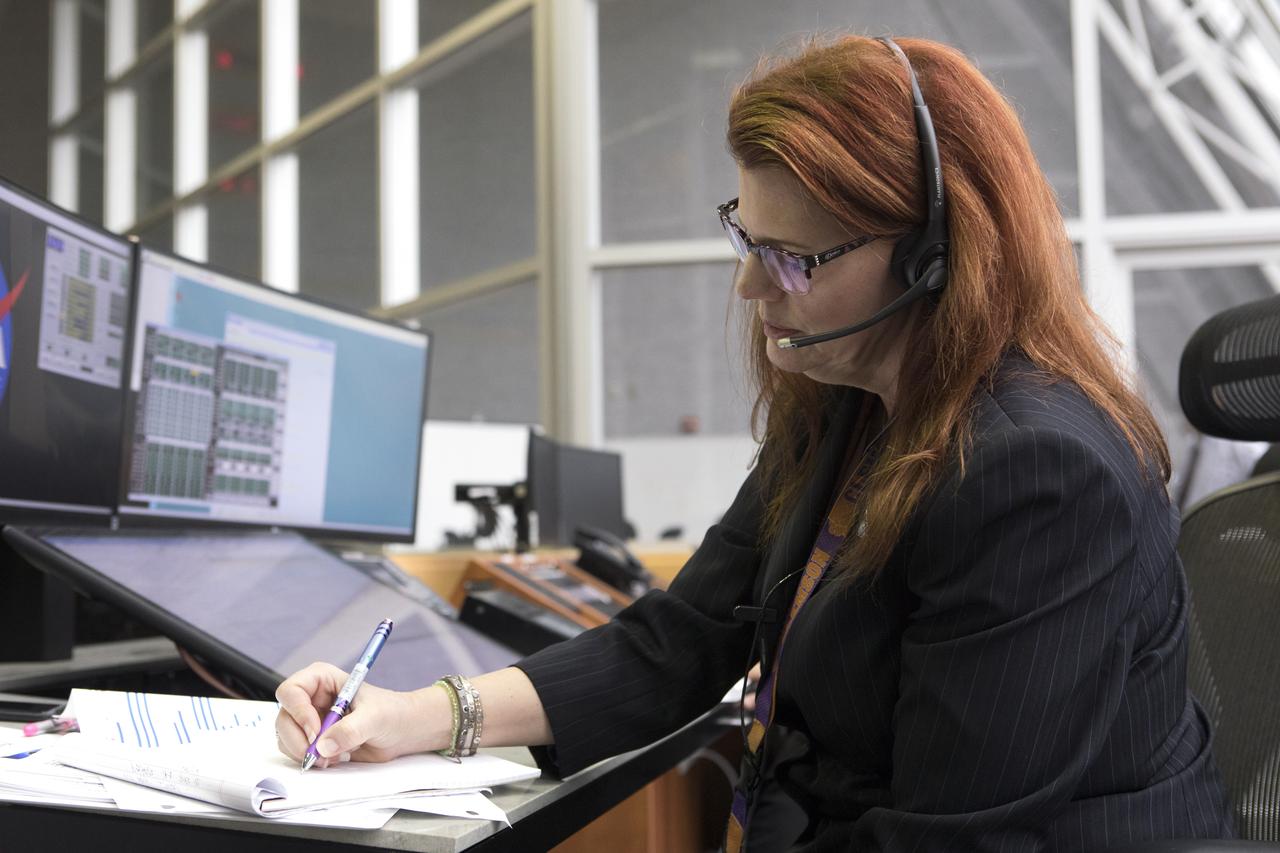
NASA Launch Director Charlie Blackwell-Thompson makes notes at her console in Firing Room 1 at the Kennedy Space Center's Launch Control Center during a terminal countdown demonstration for Exploration Mission 1, or EM-1. The launch will be the first integrated test of the Space Launch System rocket and Orion spacecraft that will eventually take astronauts beyond low-Earth orbit to destinations such as the Moon and Mars. Taking place on Dec. 14, 2018, the countdown demonstration was intended to validate the launch team's capability to perform an EM-1 countdown and respond to challenges put into the system for practice.

An overall view of Firing Room 1 at the Kennedy Space Center's Launch Control Center shows the launch team at work during a terminal countdown demonstration for Exploration Mission 1, or EM-1. The launch will be the first integrated test of the Space Launch System rocket and Orion spacecraft that will eventually take astronauts beyond low-Earth orbit to destinations such as the Moon and Mars. Taking place on Dec. 14, 2018, the countdown demonstration was intended to validate the launch team's capability to perform an EM-1 countdown and respond to challenges put into the system for practice.
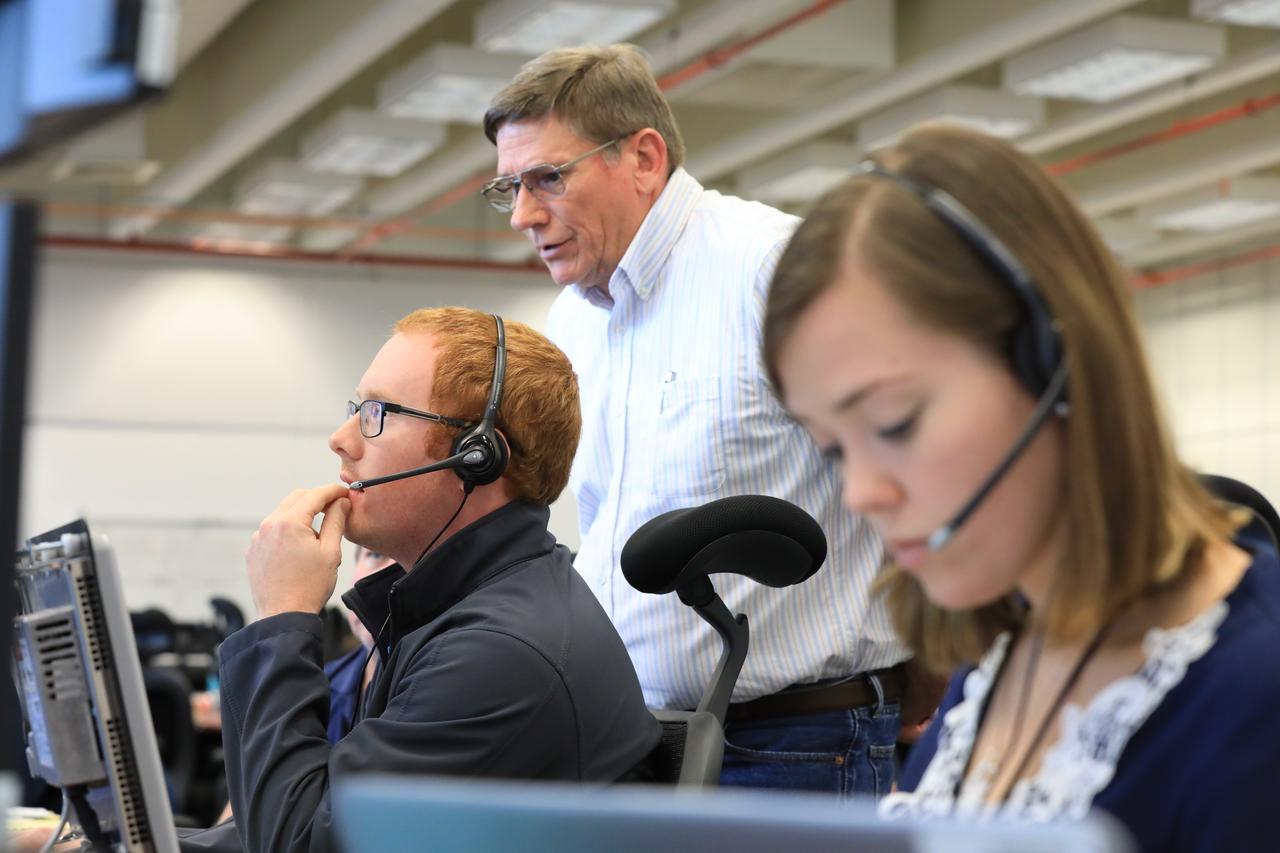
Tom Clark, standing, a manager with contractor ERC, works with Quentin Jones and Emily Hadley, both mechanical engineers for the liquid oxygen system, with ERC, during a countdown demonstration event of cryogenic propellant loading April 12, 2019, inside Firing Room 2 in the Launch Control Center at NASA’s Kennedy Space Center in Florida. The practice simulation involved loading of liquid hydrogen and liquid oxygen into the Space Launch System rocket’s core and upper stages to prepare for Exploration Mission-1 (EM-1). During the tanking exercise, the team worked through surprise issues in real-time. The practice countdown events are training opportunities coordinated by EM-1 Launch Director Charlie Blackwell-Thompson with Exploration Ground Systems.
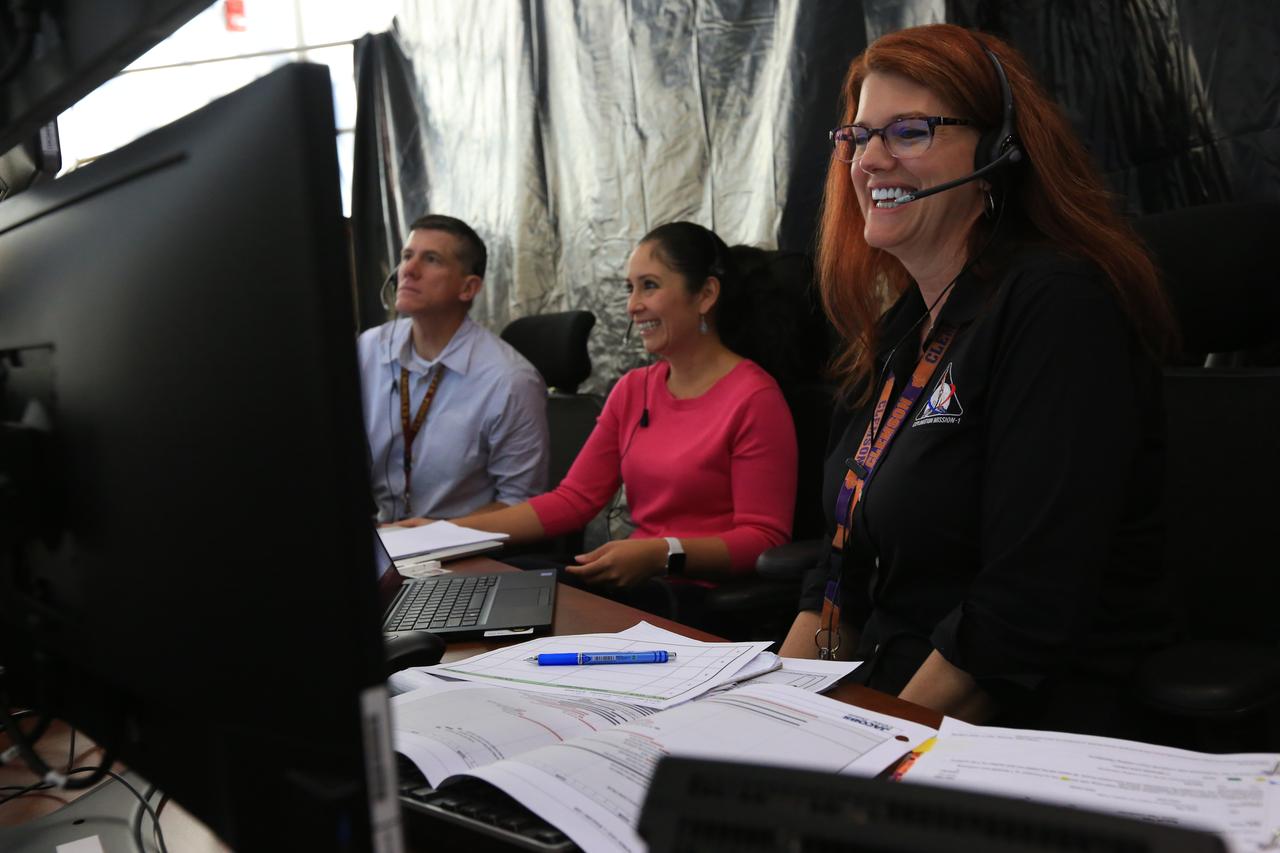
From left, Jeremy Graeber, chief NASA test director; Jessica Parsons, technical assistant to the launch director; and Charlie Blackwell-Thompson, Exploration Mission-1 (EM-1) launch director, participate in a countdown demonstration event of cryogenic propellant loading April 12, 2019, inside Firing Room 2 in the Launch Control Center at NASA’s Kennedy Space Center in Florida. The practice simulation involved loading of liquid hydrogen and liquid oxygen into the Space Launch System rocket’s core and upper stages to prepare for Exploration Mission-1 (EM-1). During the tanking exercise, the team worked through surprise issues in real-time. The practice countdown events are training opportunities coordinated by Blackwell-Thompson with Exploration Ground Systems.
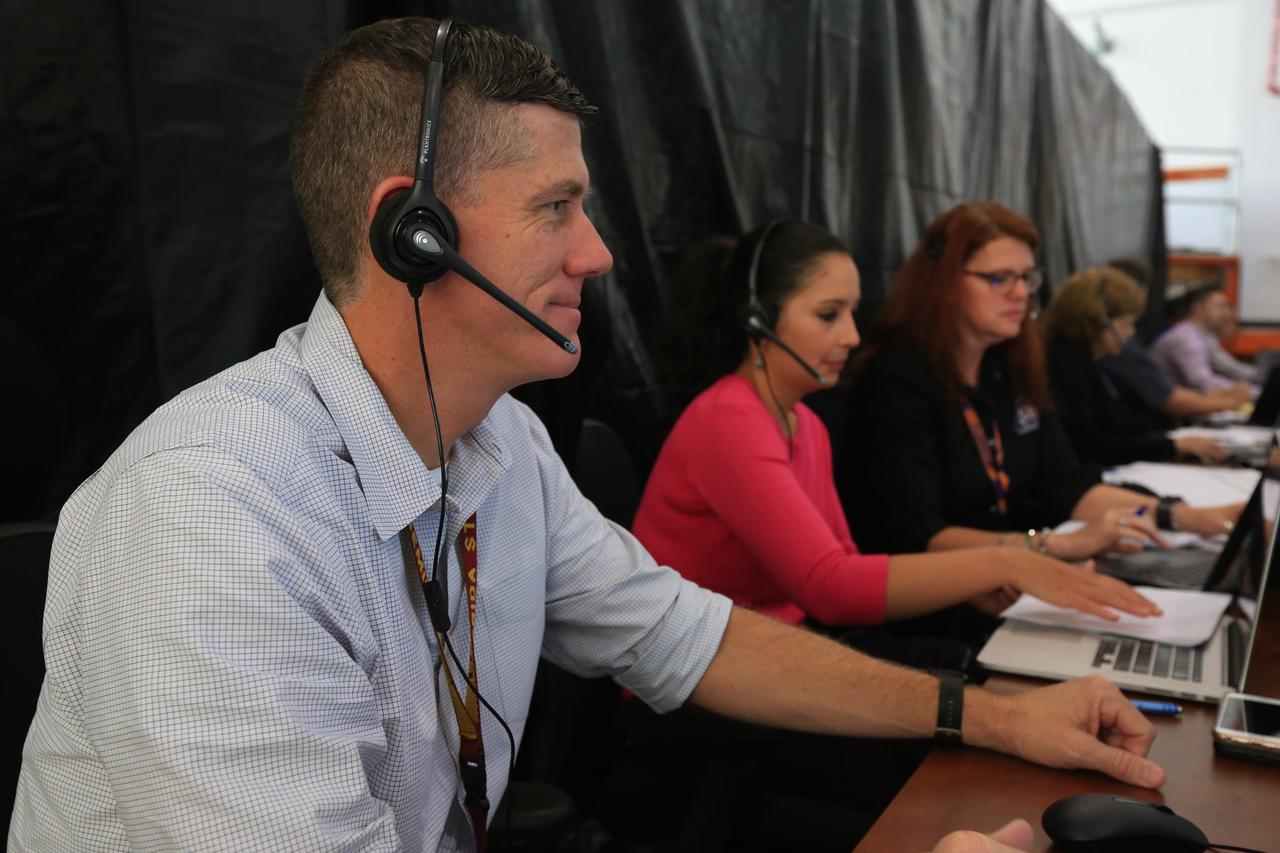
From left, Jeremy Graeber, chief NASA test director; Jessica Parsons, technical assistant to the launch director; and Charlie Blackwell-Thompson, Exploration Mission-1 (EM-1) launch director, participate in a countdown demonstration event of cryogenic propellant loading April 12, 2019, inside Firing Room 2 in the Launch Control Center at NASA’s Kennedy Space Center in Florida. The practice simulation involved loading of liquid hydrogen and liquid oxygen into the Space Launch System rocket’s core and upper stages to prepare for Exploration Mission-1 (EM-1). During the tanking exercise, the team worked through surprise issues in real-time. The practice countdown events are training opportunities coordinated by Blackwell-Thompson with Exploration Ground Systems.
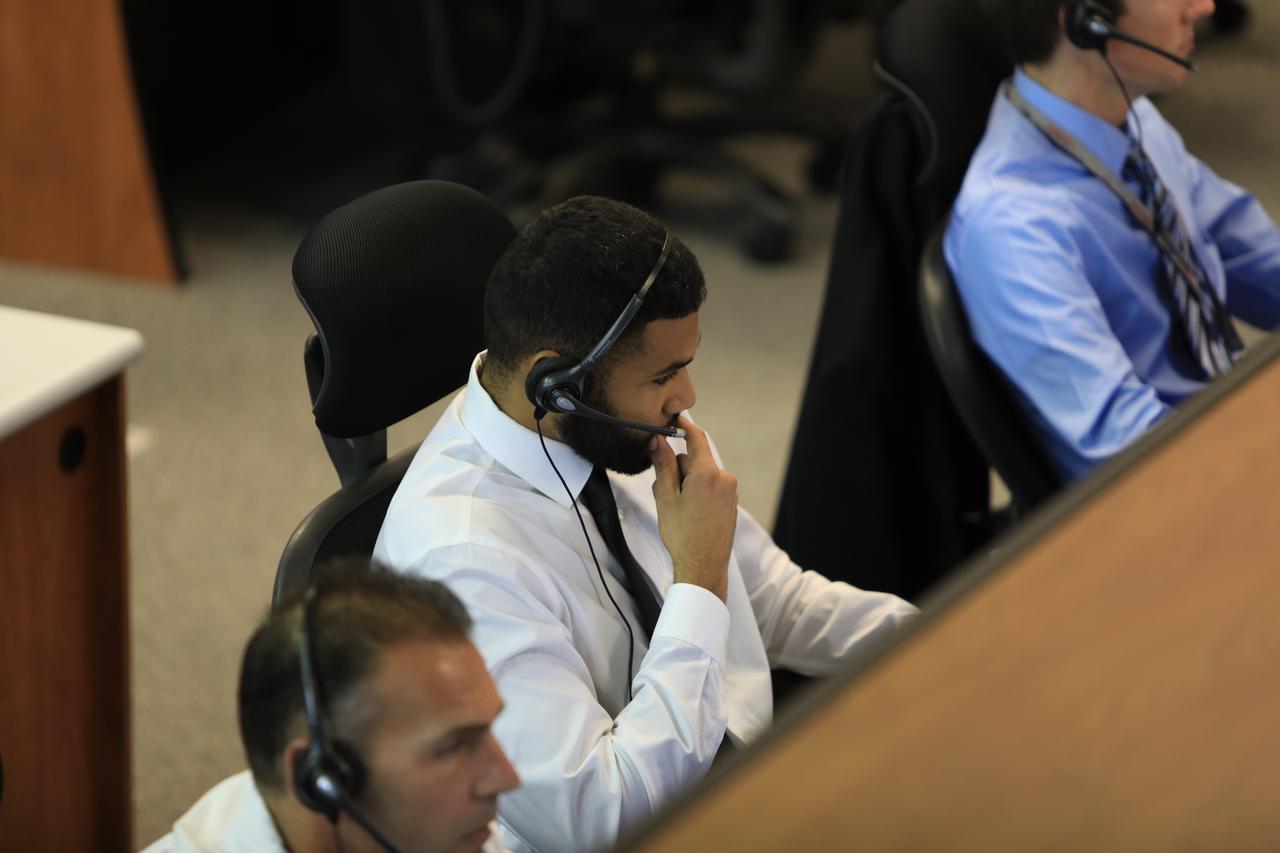
Michael Guzman, an umbilical engineer, monitors his console in Firing Room 1 in the Launch Control Center at NASA’s Kennedy Space Center in Florida, during a terminal countdown demonstration for Exploration Mission 1, or EM-1, on Dec. 14, 2018. The launch will be the first integrated test of the Space Launch System rocket and Orion spacecraft that will eventually take astronauts beyond low-Earth orbit to destinations such as the Moon and Mars. The countdown demonstration was intended to validate the launch team's capability to perform an EM-1 countdown and respond to challenges put into the system for practice.
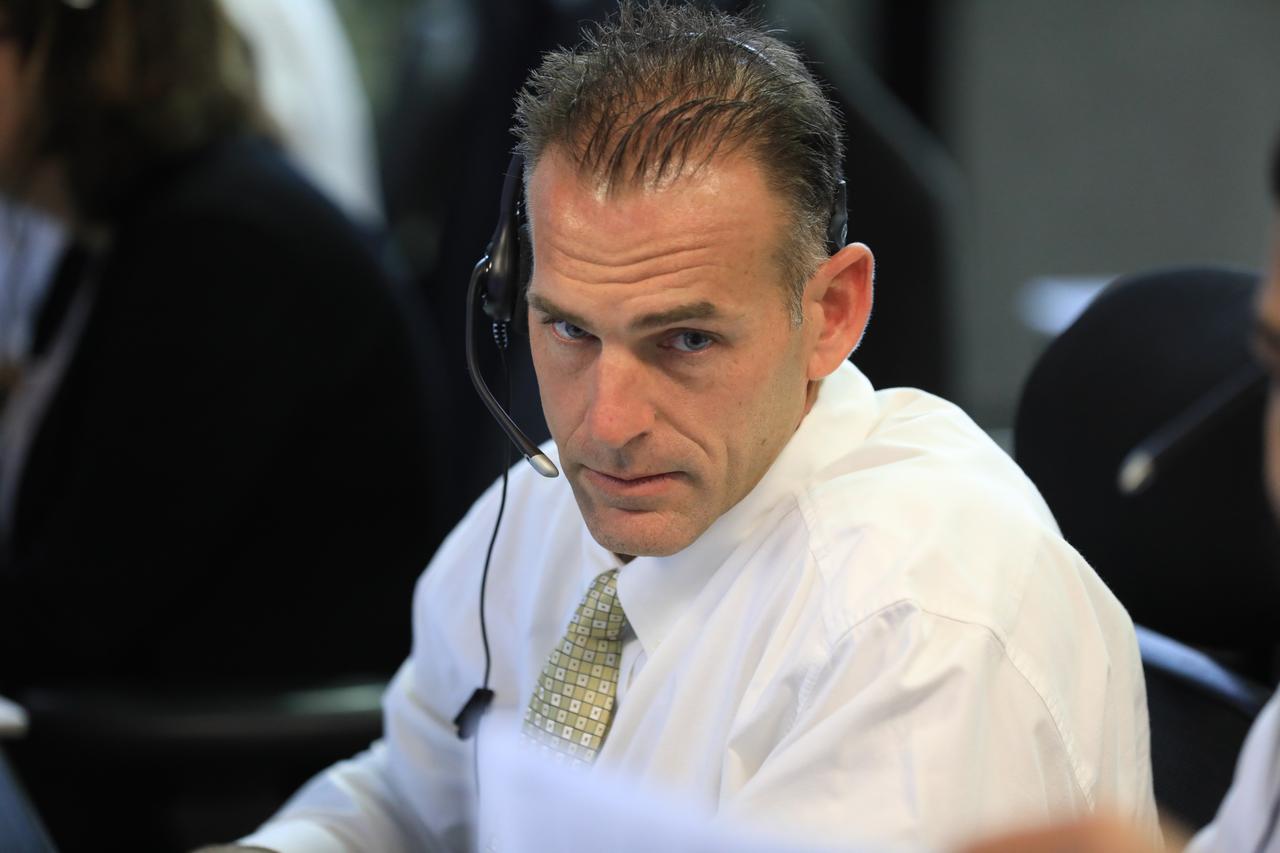
Mark Tripp, center, monitors his console in Firing Room 1 in the Launch Control Center at NASA’s Kennedy Space Center in Florida, during a terminal countdown demonstration for Exploration Mission 1, or EM-1, on Dec. 14, 2018. The launch will be the first integrated test of the Space Launch System rocket and Orion spacecraft that will eventually take astronauts beyond low-Earth orbit to destinations such as the Moon and Mars. The countdown demonstration was intended to validate the launch team's capability to perform an EM-1 countdown and respond to challenges put into the system for practice.

S82-28456 (19 Feb. 1982) --- Astronauts Jack R. Lousma, left, STS-3 commander, and C. Gordon Fullerton, pilot, are briefed on emergency procedures at Launch Pad 39A by Buck Tomlinson, a safety instructor with Wackenhut Services, Inc. Also pictured is astronaut Daniel C. Brandenstein, STS-8 pilot. The men were at Kennedy Space Center (KSC) for participation in a countdown demonstration test (CDDT). Photo credit: NASA
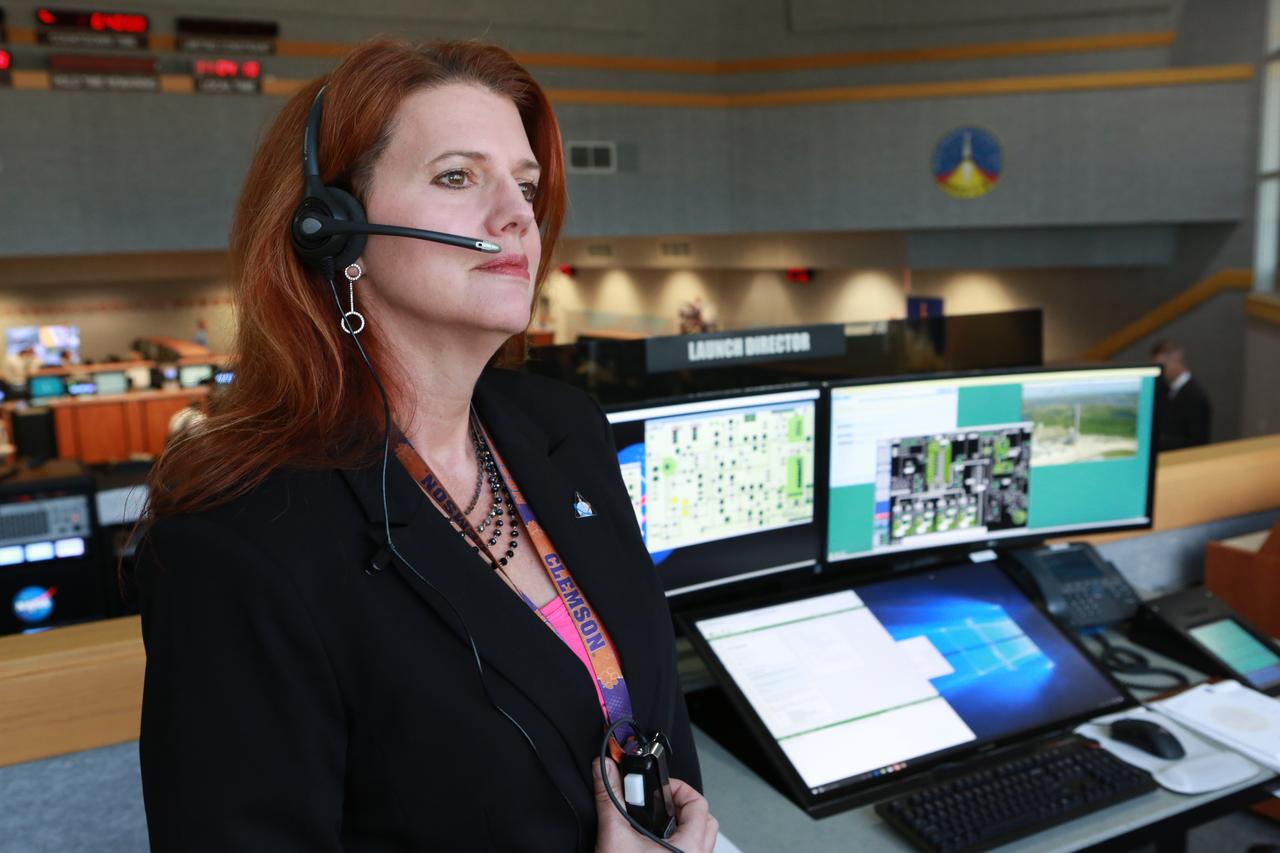
NASA Launch Director Charlie Blackwell-Thompson stands next to her console in Firing Room 1 at the Kennedy Space Center's Launch Control Center during a countdown simulation for Exploration Mission 1. It was the agency's first simulation of a portion of the countdown for the first launch of a Space Launch System rocket and Orion spacecraft that will eventually take astronauts beyond low-Earth orbit to destinations such as the Moon and Mars.
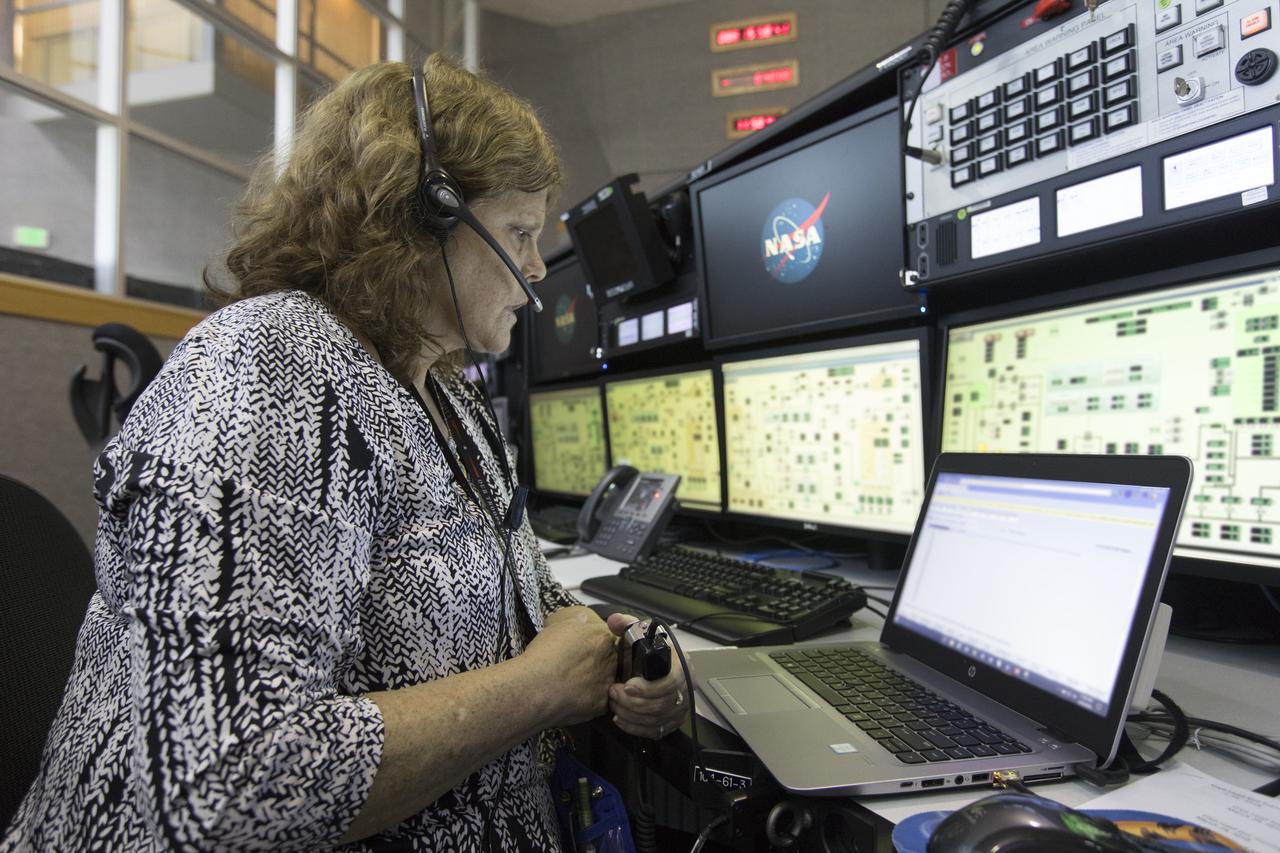
Roberta Wyrick, spacecraft test conductor with Jacobs, NASA's Test and Operations Support Contractor, monitors operations from her console in Firing Room 1 at the Kennedy Space Center's Launch Control Center during a countdown simulation for Exploration Mission 1. It was the agency's first simulation of a portion of the countdown for the first launch of a Space Launch System rocket and Orion spacecraft that will eventually take astronauts beyond low-Earth orbit to destinations such as the Moon and Mars.
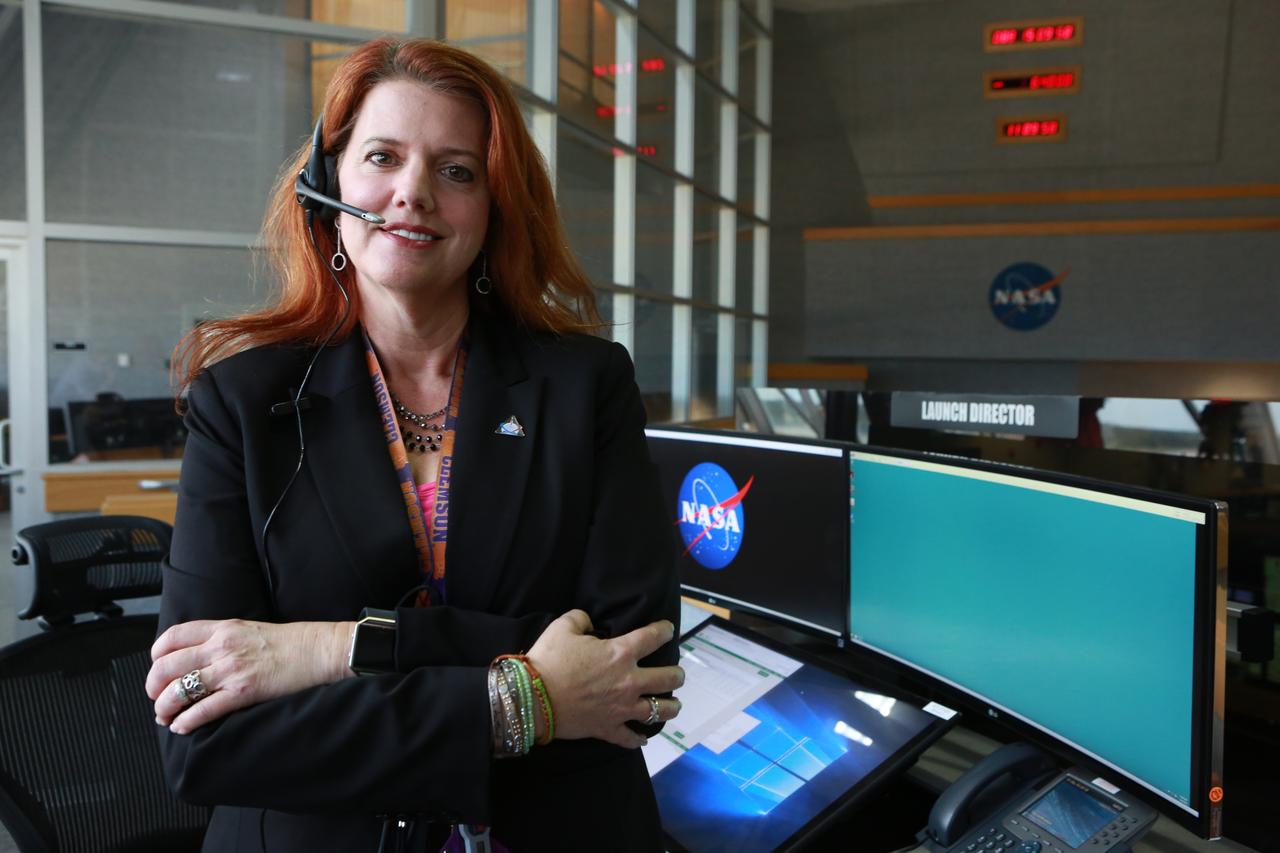
NASA Launch Director Charlie Blackwell-Thompson stands next to her console in Firing Room 1 at the Kennedy Space Center's Launch Control Center during a countdown simulation for Exploration Mission 1. It was the agency's first simulation of a portion of the countdown for the first launch of a Space Launch System rocket and Orion spacecraft that will eventually take astronauts beyond low-Earth orbit to destinations such as the Moon and Mars.
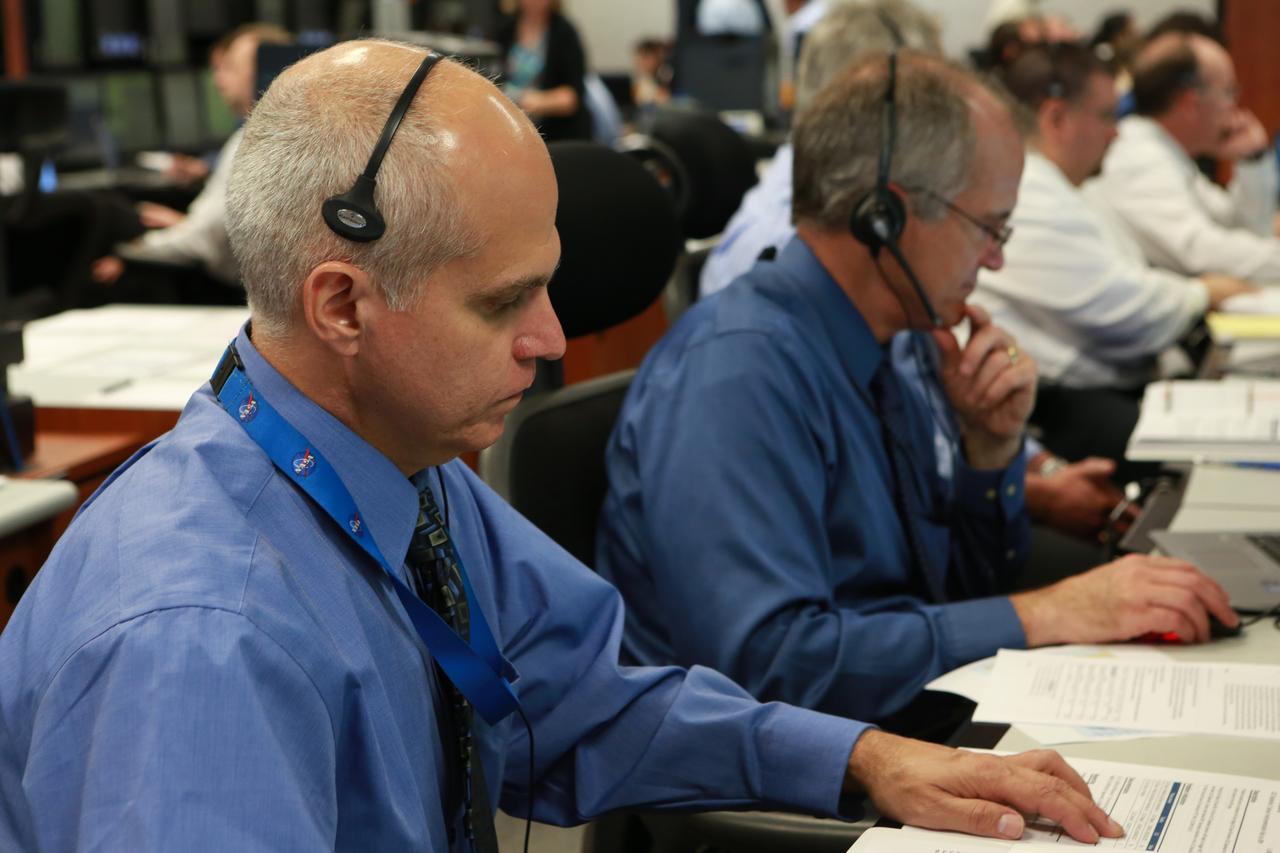
Jacobs Test Project Engineer Don Vinton, left and NASA Operations Project Engineer Doug Robertson, monitor operations from his position in Firing Room 1 at the Kennedy Space Center's Launch Control Center during a countdown simulation for Exploration Mission 1. It was the agency's first simulation of a portion of the countdown for the first launch of a Space Launch System rocket and Orion spacecraft that will eventually take astronauts beyond low-Earth orbit to destinations such as the Moon and Mars.
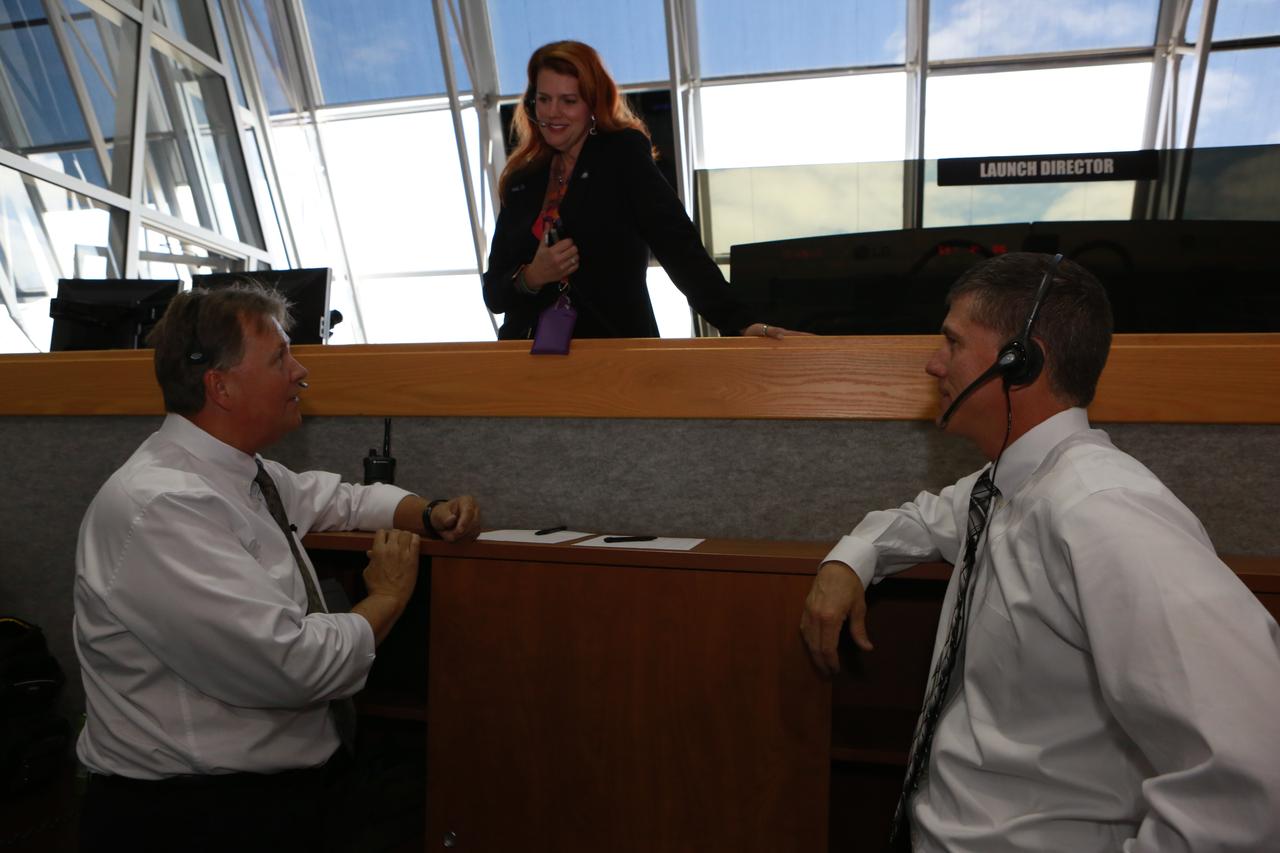
NASA Launch Director Charlie Blackwell-Thompson, above, confers with Senior NASA Test Director Jeff Spaulding, left, and Chief NASA Test Director Jeremy Graeber in Firing Room 1 at the Kennedy Space Center's Launch Control Center during a countdown simulation for Exploration Mission 1. It was the agency's first simulation of a portion of the countdown for the first launch of a Space Launch System rocket and Orion spacecraft that will eventually take astronauts beyond low-Earth orbit to destinations such as the Moon and Mars.
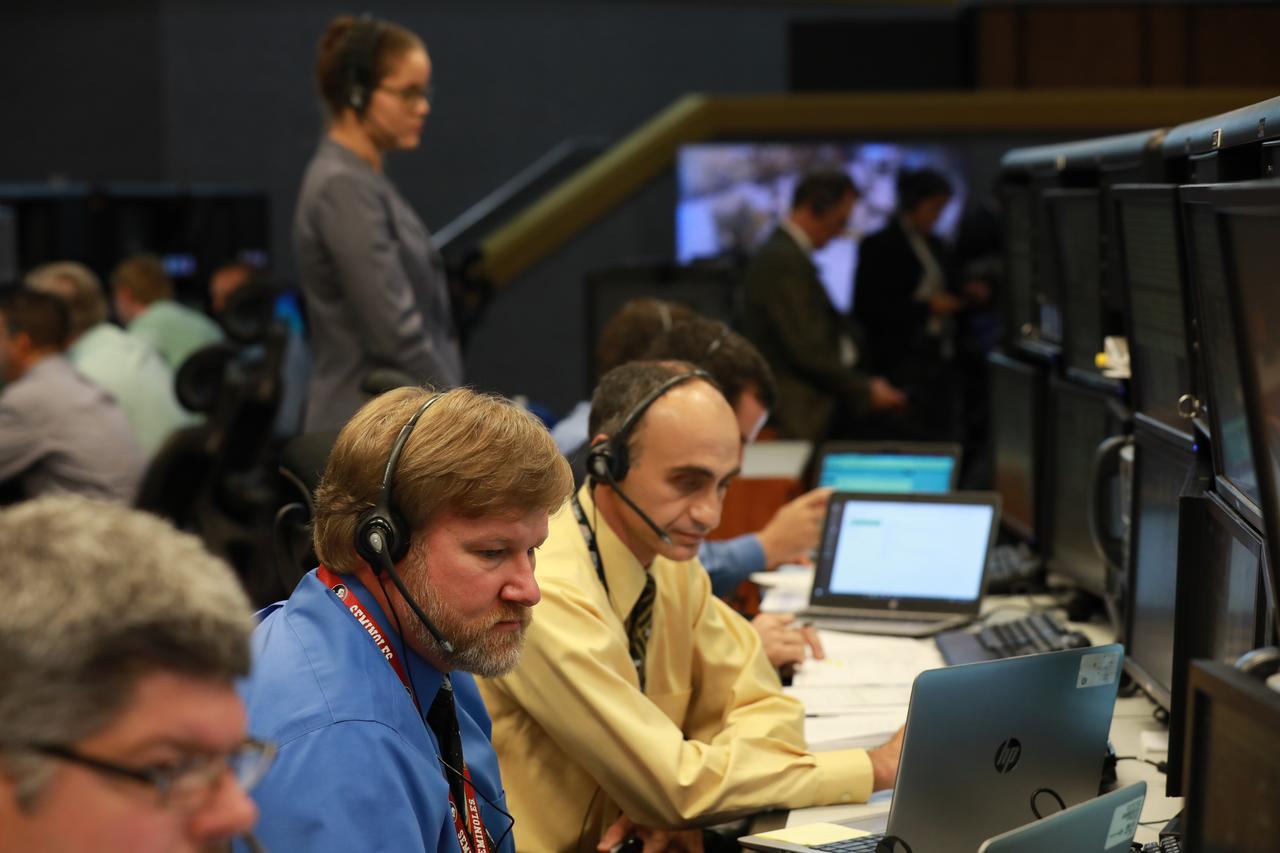
Space Launch System and Orion launch team engineers and managers monitor operations from their console in Firing Room 1 at the Kennedy Space Center's Launch Control Center during a countdown simulation for Exploration Mission 1. It was the agency's first simulation of a portion of the countdown for the first launch of a Space Launch System rocket and Orion spacecraft that will eventually take astronauts beyond low-Earth orbit to destinations such as the Moon and Mars.
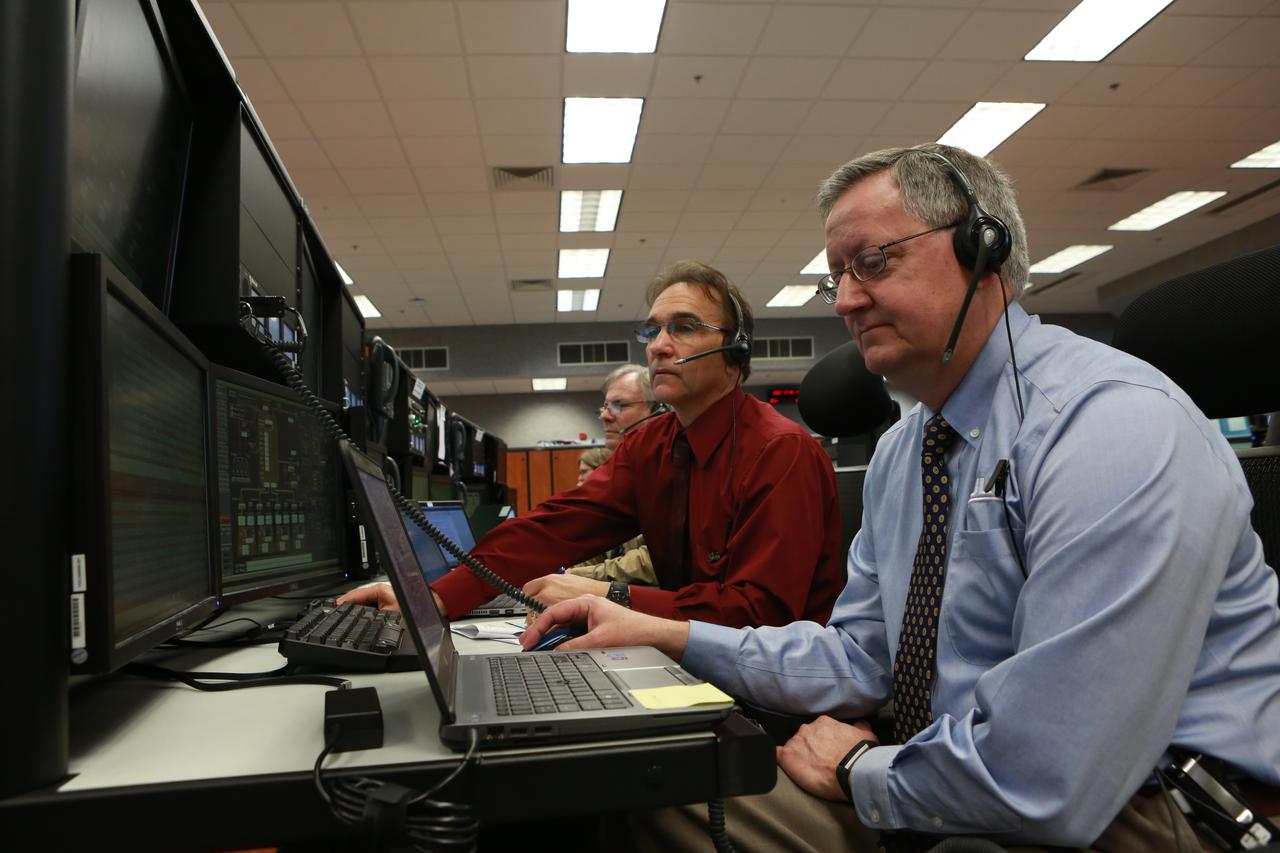
Test Project Engineer Rick Brown, left, and Master Console Operator Jason Robinson, both with Jacobs, monitor operations from their consoles in Firing Room 1 at the Kennedy Space Center's Launch Control Center during a countdown simulation for Exploration Mission 1. It was the agency's first simulation of a portion of the countdown for the first launch of a Space Launch System rocket and Orion spacecraft that will eventually take astronauts beyond low-Earth orbit to destinations such as the Moon and Mars.
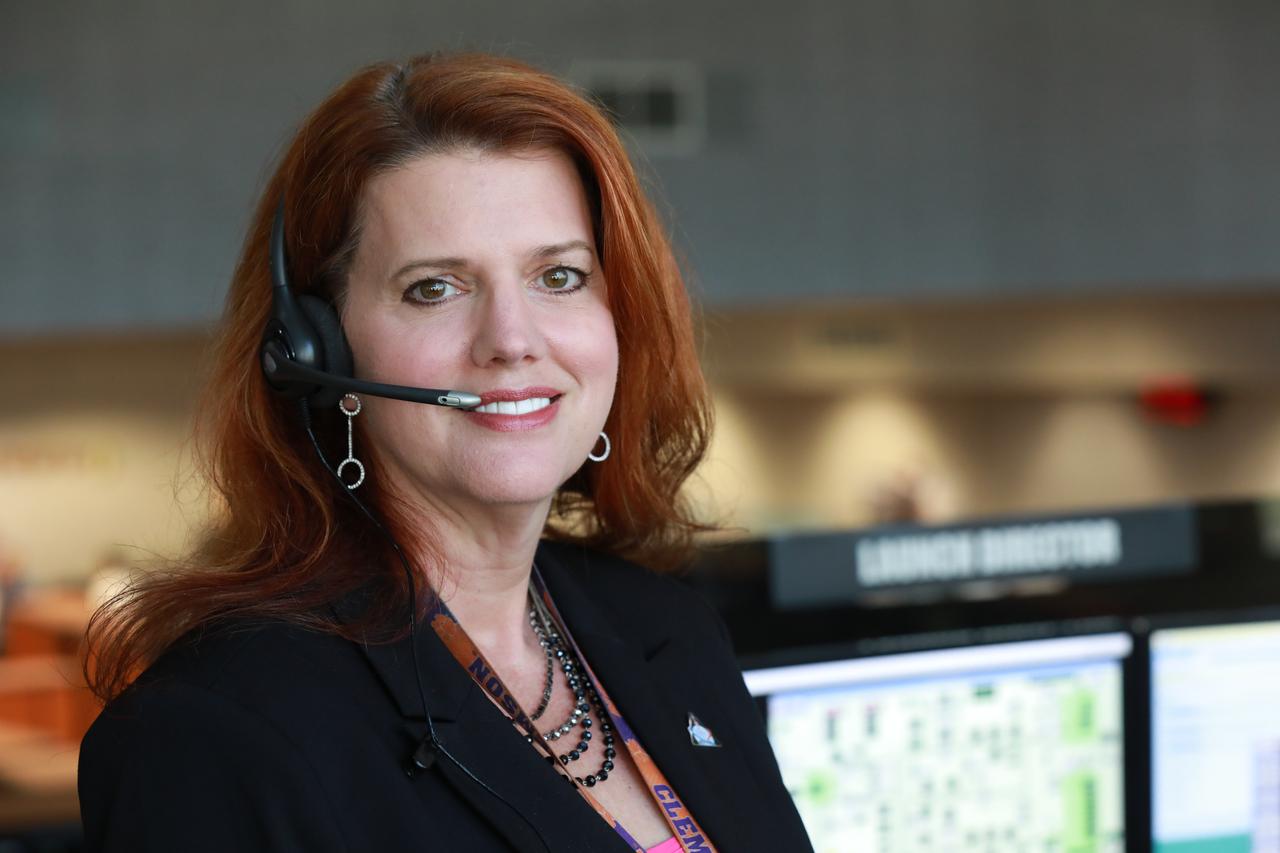
NASA Launch Director Charlie Blackwell-Thompson stands next to her console in Firing Room 1 at the Kennedy Space Center's Launch Control Center during a countdown simulation for Exploration Mission 1. It was the agency's first simulation of a portion of the countdown for the first launch of a Space Launch System rocket and Orion spacecraft that will eventually take astronauts beyond low-Earth orbit to destinations such as the Moon and Mars.
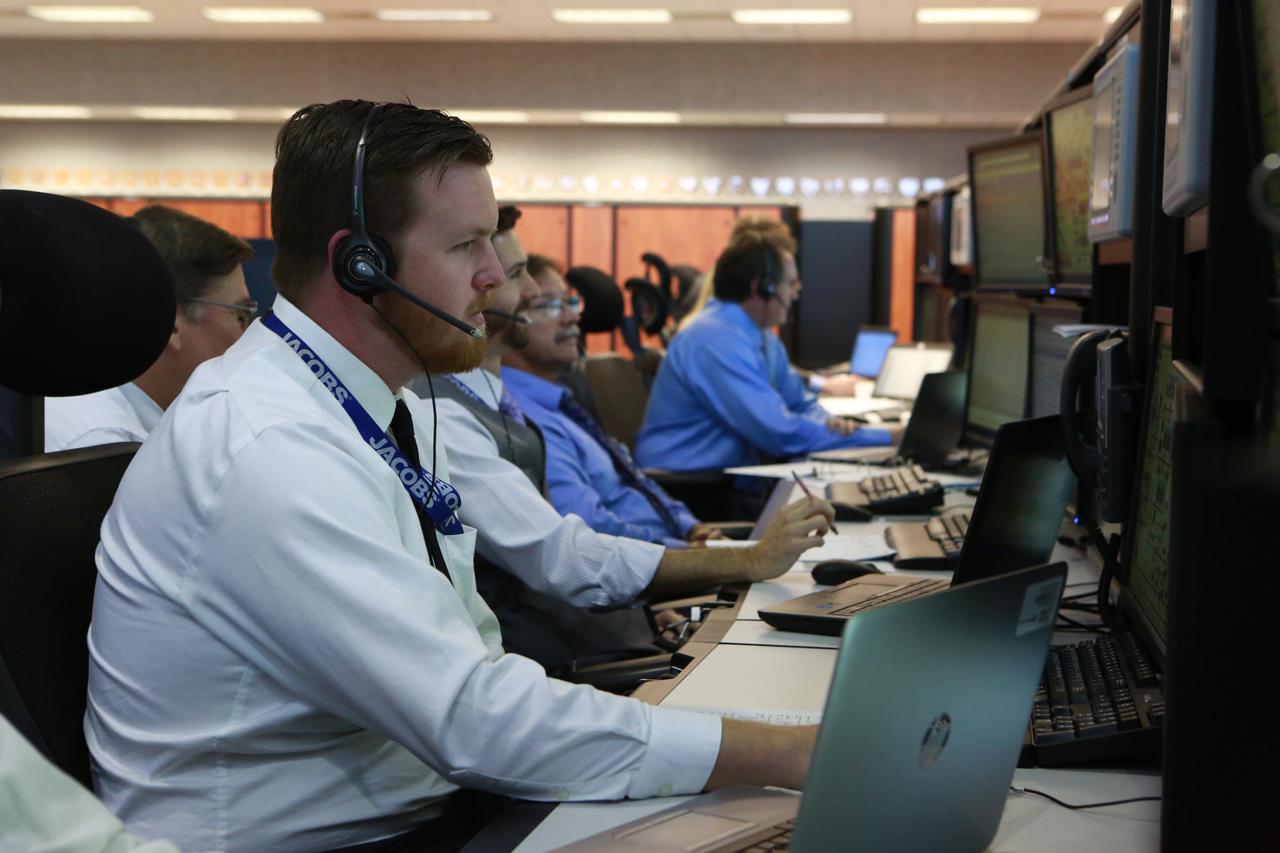
Alex Higgins, a liquid hydrogen operations engineer with Jacobs, monitors operations from his position in Firing Room 1 at the Kennedy Space Center's Launch Control Center during a countdown simulation for Exploration Mission 1. It was the agency's first simulation of a portion of the countdown for the first launch of a Space Launch System rocket and Orion spacecraft that will eventually take astronauts beyond low-Earth orbit to destinations such as the Moon and Mars.
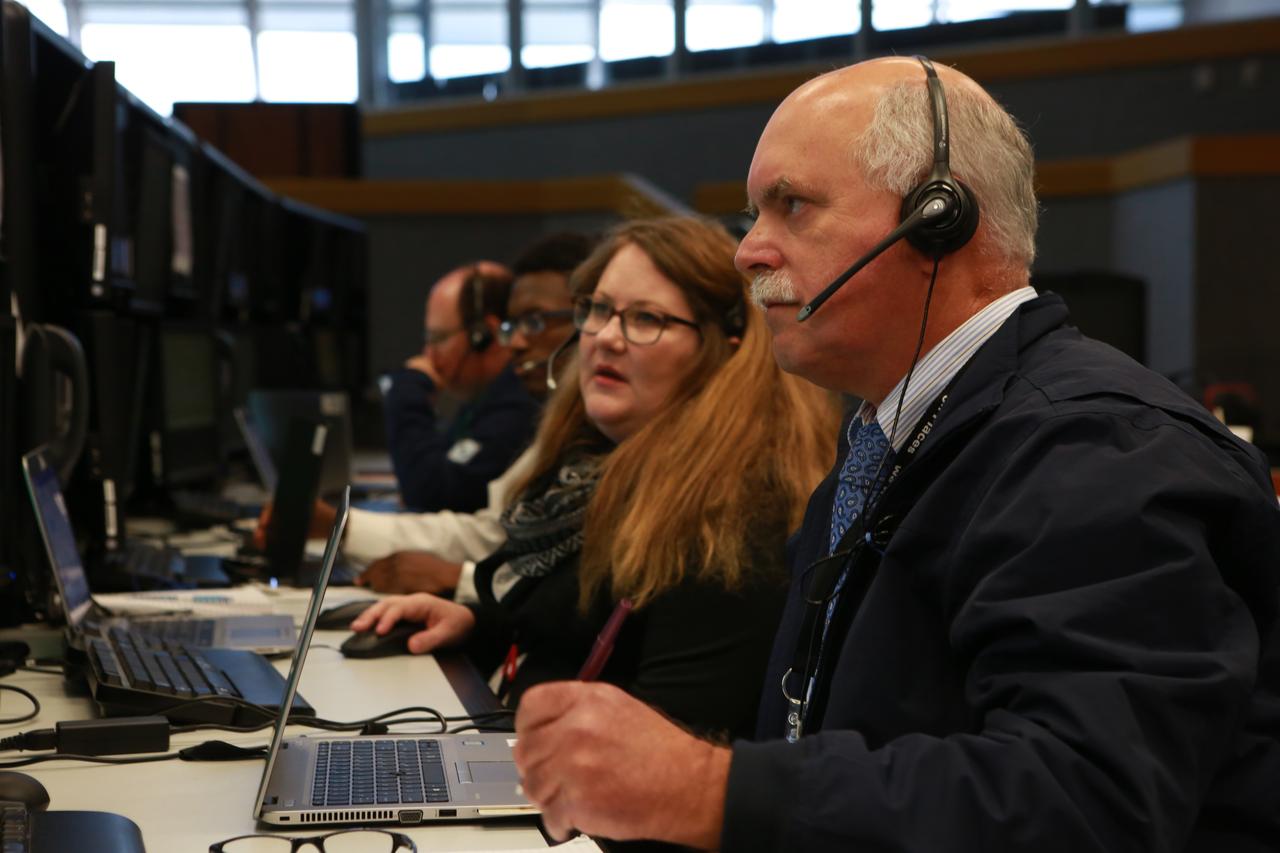
Master Console Operators Andrea Oneill, left and David Walsh, monitor operations from their positions in Firing Room 1 at the Kennedy Space Center's Launch Control Center during a countdown simulation for Exploration Mission 1. It was the agency's first simulation of a portion of the countdown for the first launch of a Space Launch System rocket and Orion spacecraft that will eventually take astronauts beyond low-Earth orbit to destinations such as the Moon and Mars.
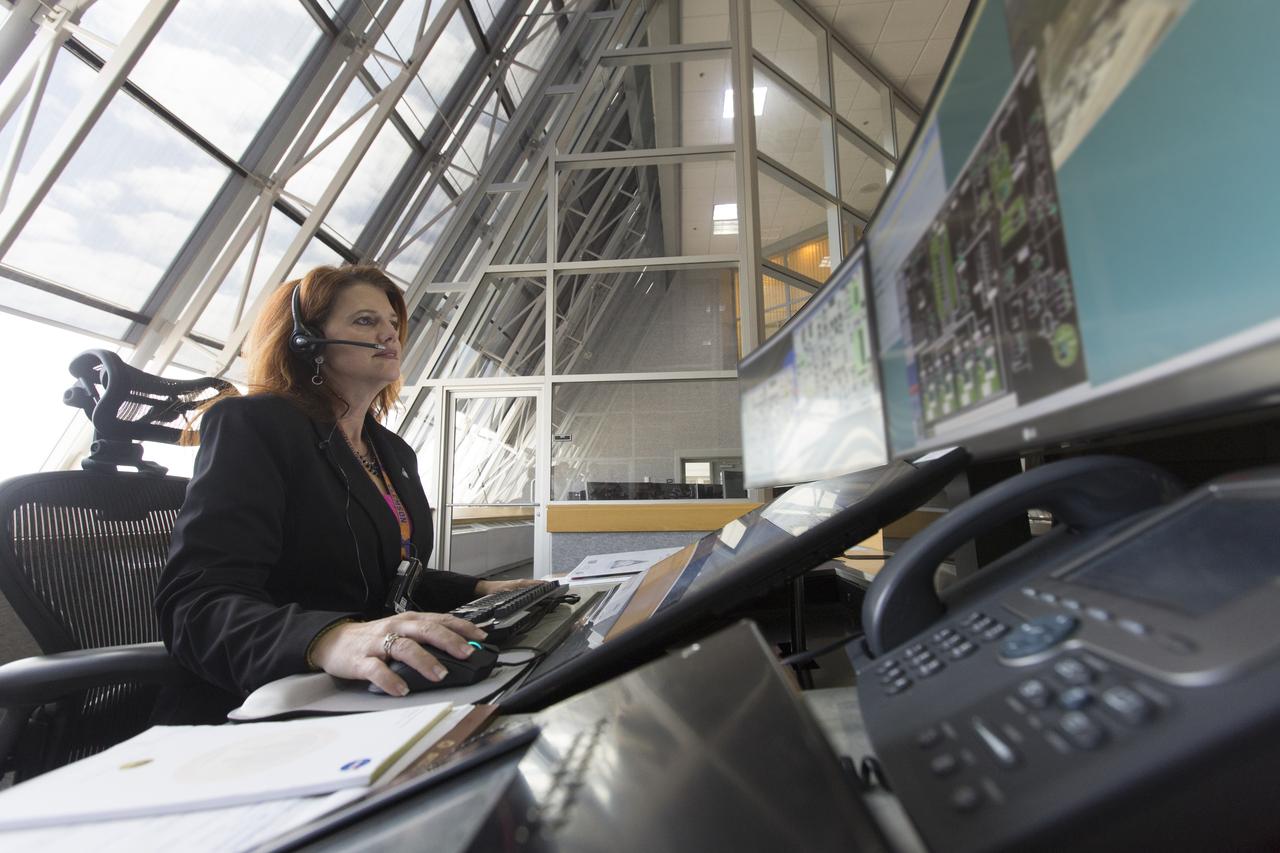
NASA Launch Director Charlie Blackwell-Thompson follows operations at her console in Firing Room 1 at the Kennedy Space Center's Launch Control Center during a countdown simulation for Exploration Mission 1. It was the agency's first simulation of a portion of the countdown for the first launch of a Space Launch System rocket and Orion spacecraft that will eventually take astronauts beyond low-Earth orbit to destinations such as the Moon and Mars.
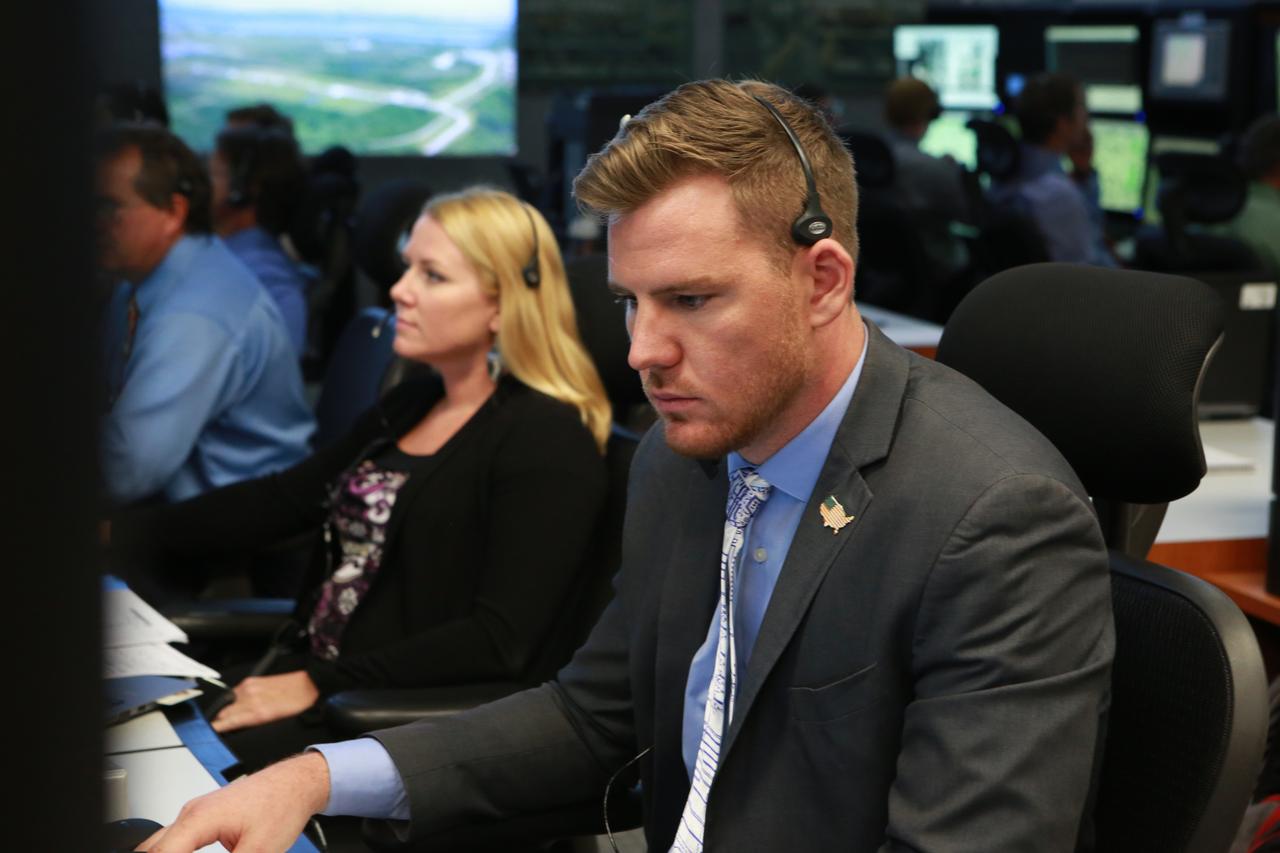
Main Propulsion System Engineers Krista Riggs, left, and Joe Pavicic, both with Jacobs, monitor operations from their consoles in Firing Room 1 at the Kennedy Space Center's Launch Control Center during a countdown simulation for Exploration Mission 1. It was the agency's first simulation of a portion of the countdown for the first launch of a Space Launch System rocket and Orion spacecraft that will eventually take astronauts beyond low-Earth orbit to destinations such as the Moon and Mars.
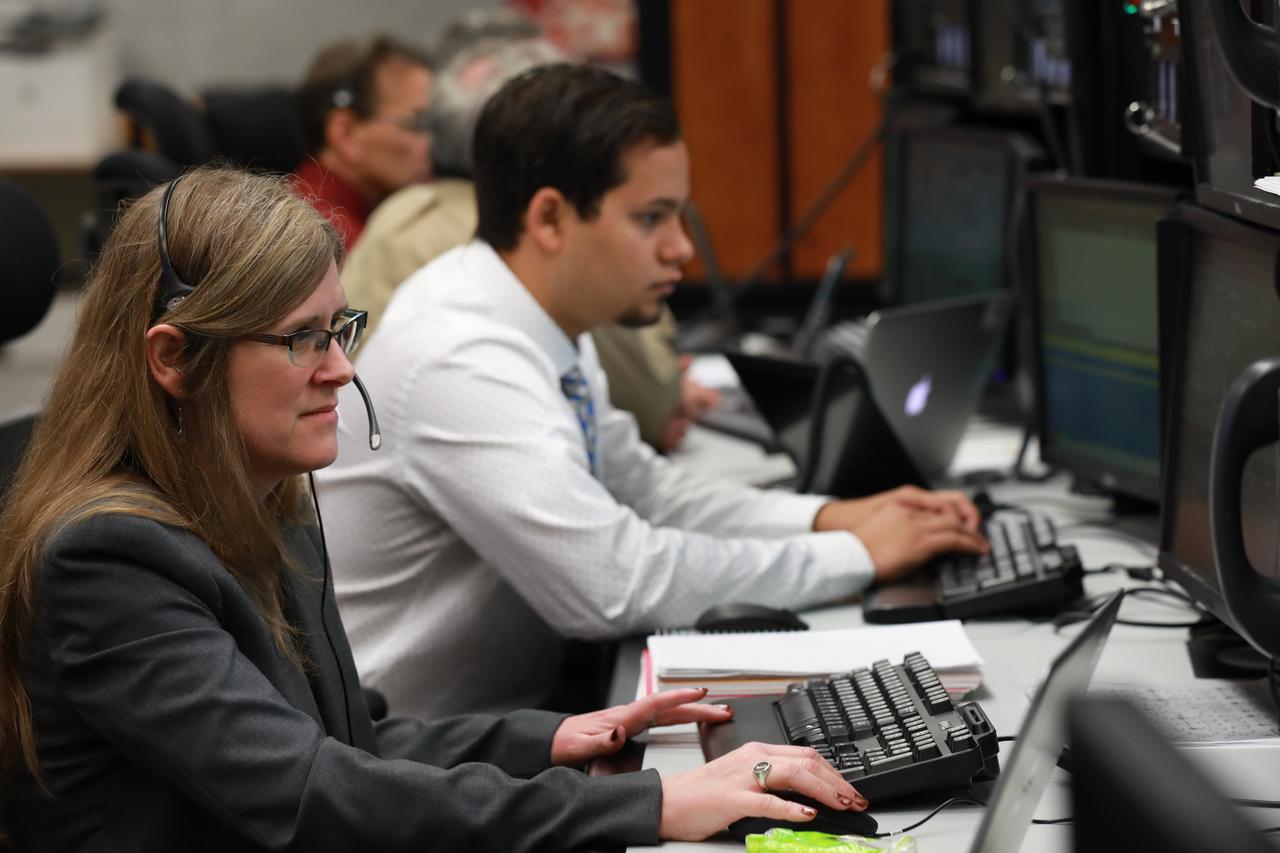
Master Console Operator Jennifer Tschanz, left, and Master Console Operator Diego Diaz, both of Jacobs, monitor operations from their consoles in Firing Room 1 at the Kennedy Space Center's Launch Control Center during a countdown simulation for Exploration Mission 1. It was the agency's first simulation of a portion of the countdown for the first launch of a Space Launch System rocket and Orion spacecraft that will eventually take astronauts beyond low-Earth orbit to destinations such as the Moon and Mars.
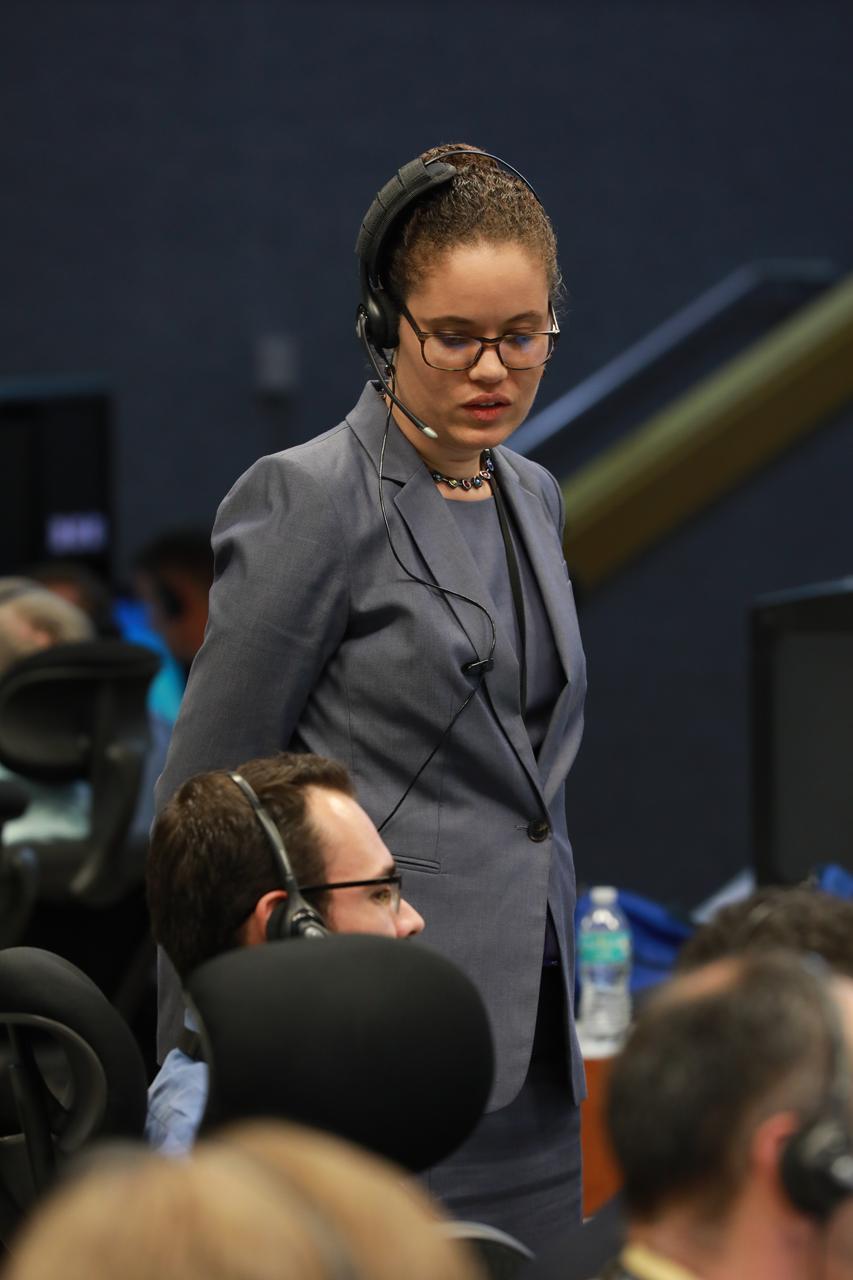
NASA Test Director Christine St. Germain monitors operations in Firing Room 1 at the Kennedy Space Center's Launch Control Center during a countdown simulation for Exploration Mission 1. It was the agency's first simulation of a portion of the countdown for the first launch of a Space Launch System rocket and Orion spacecraft that will eventually take astronauts beyond low-Earth orbit to destinations such as the Moon and Mars.
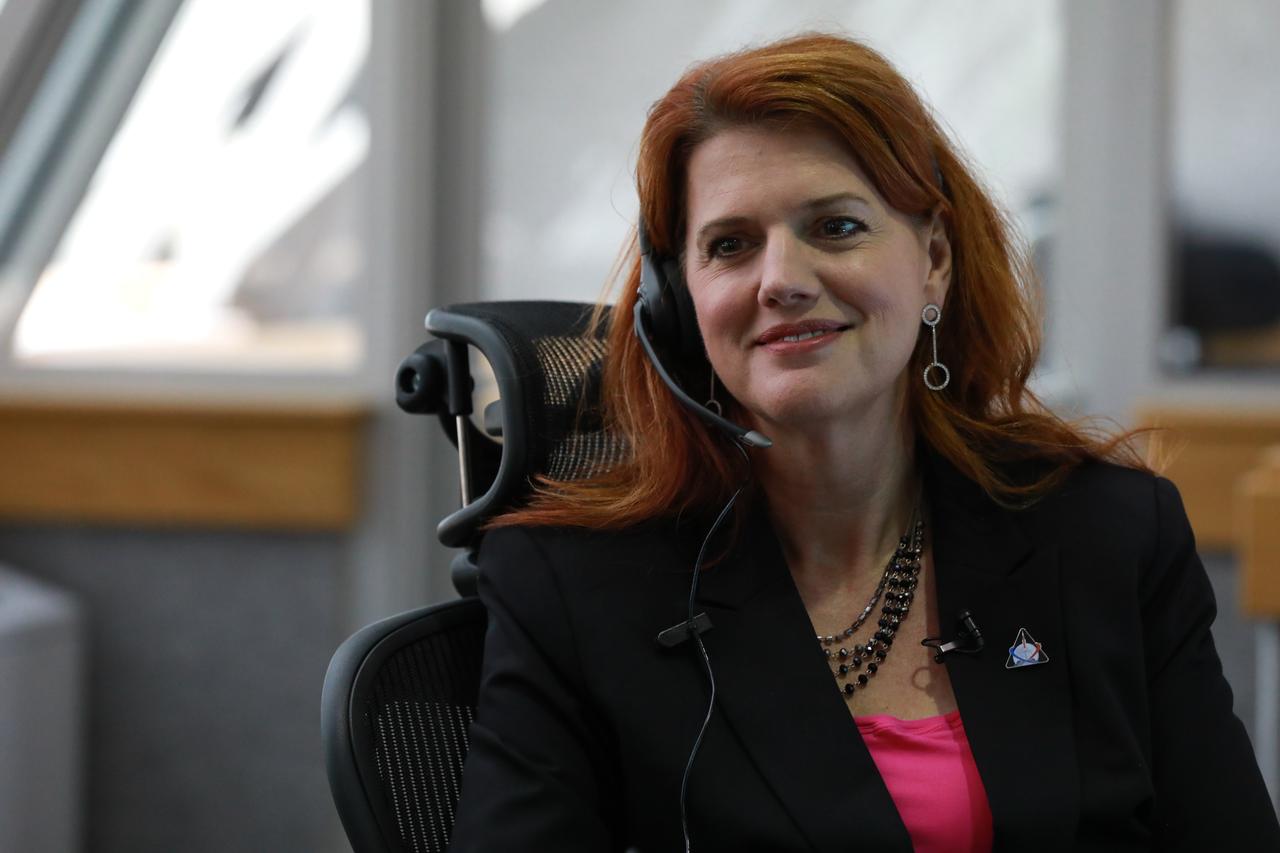
NASA Launch Director Charlie Blackwell-Thompson follows operations at her console in Firing Room 1 at the Kennedy Space Center's Launch Control Center during a countdown simulation for Exploration Mission 1. It was the agency's first simulation of a portion of the countdown for the first launch of a Space Launch System rocket and Orion spacecraft that will eventually take astronauts beyond low-Earth orbit to destinations such as the Moon and Mars.
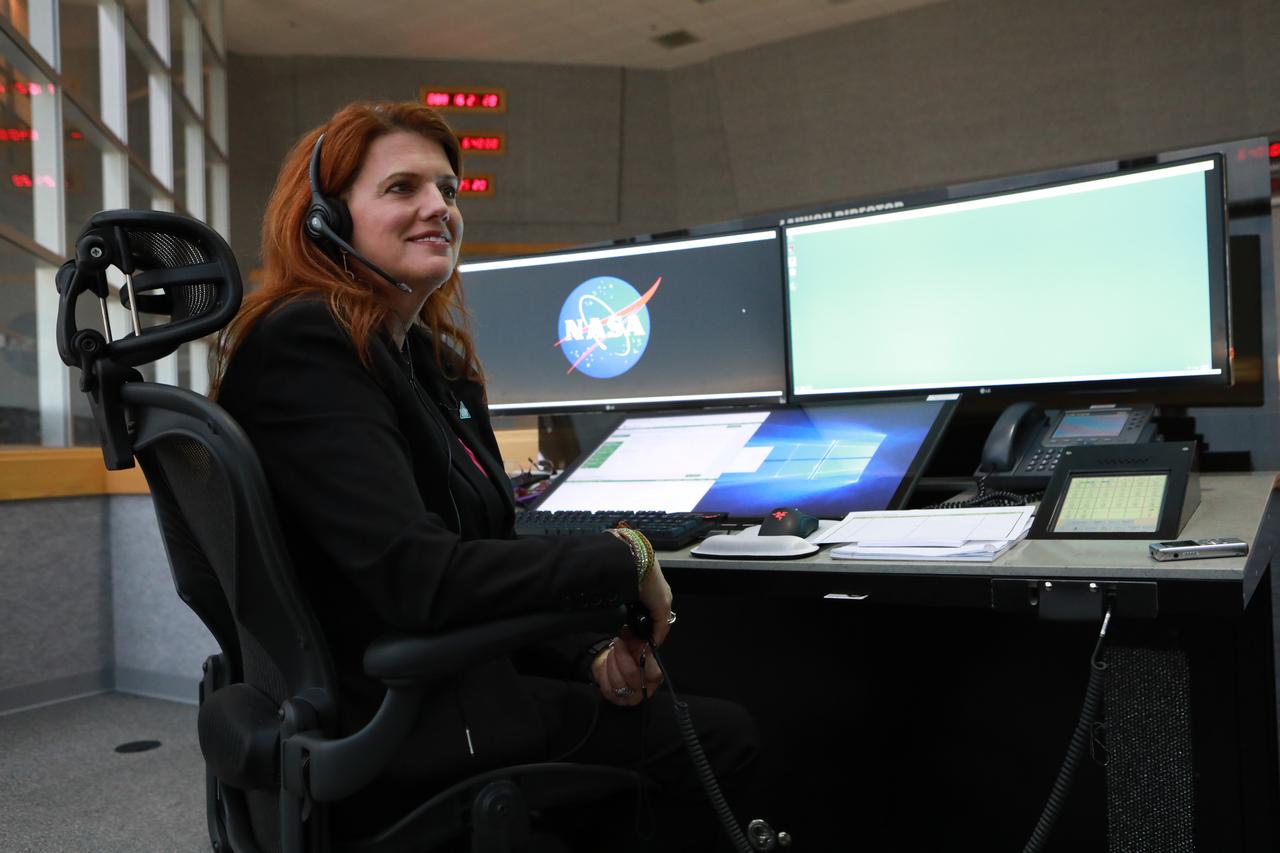
NASA Launch Director Charlie Blackwell-Thompson follows operations at her console in Firing Room 1 at the Kennedy Space Center's Launch Control Center during a countdown simulation for Exploration Mission 1. It was the agency's first simulation of a portion of the countdown for the first launch of a Space Launch System rocket and Orion spacecraft that will eventually take astronauts beyond low-Earth orbit to destinations such as the Moon and Mars.
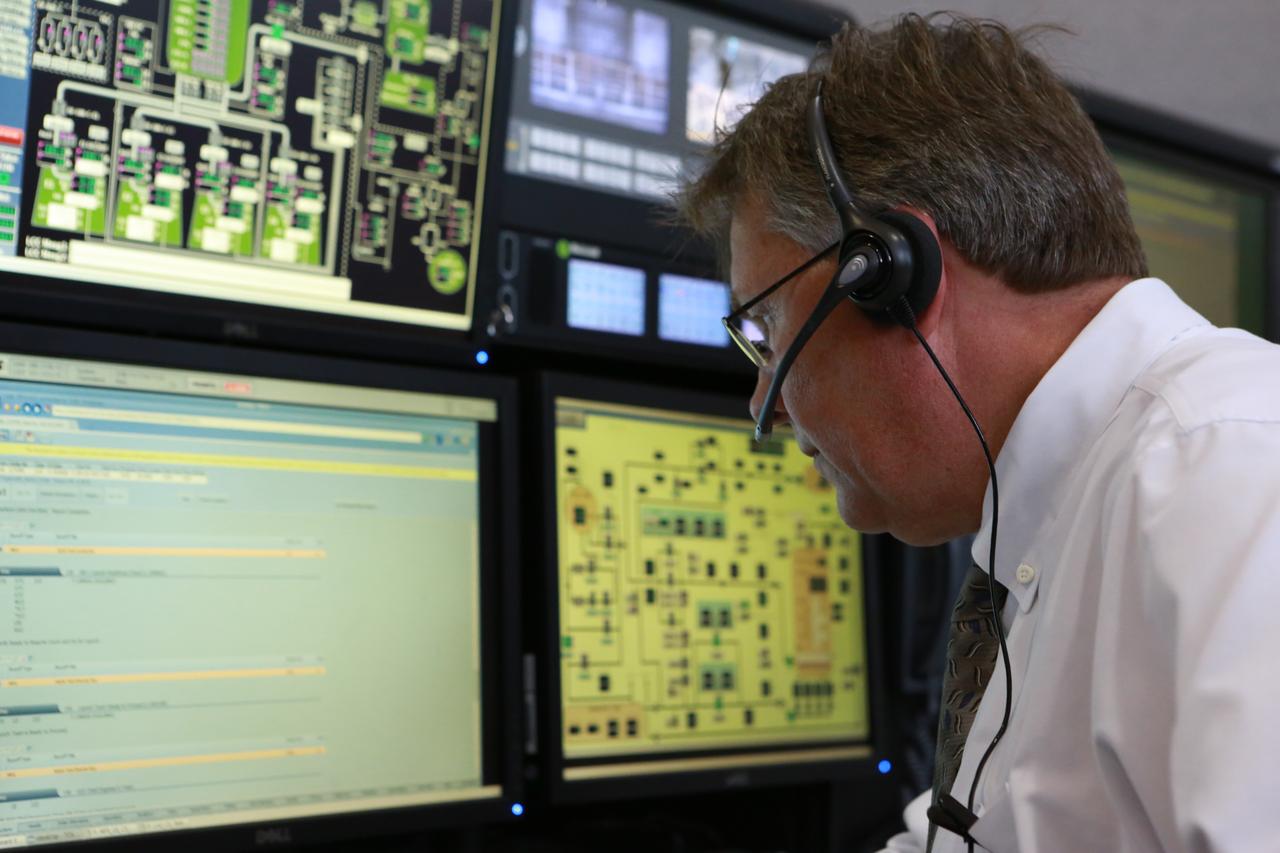
Senior NASA Test Director Jeff Spaulding monitors operations from his position in Firing Room 1 at the Kennedy Space Center's Launch Control Center during a countdown simulation for Exploration Mission 1. It was the agency's first simulation of a portion of the countdown for the first launch of a Space Launch System rocket and Orion spacecraft that will eventually take astronauts beyond low-Earth orbit to destinations such as the Moon and Mars.
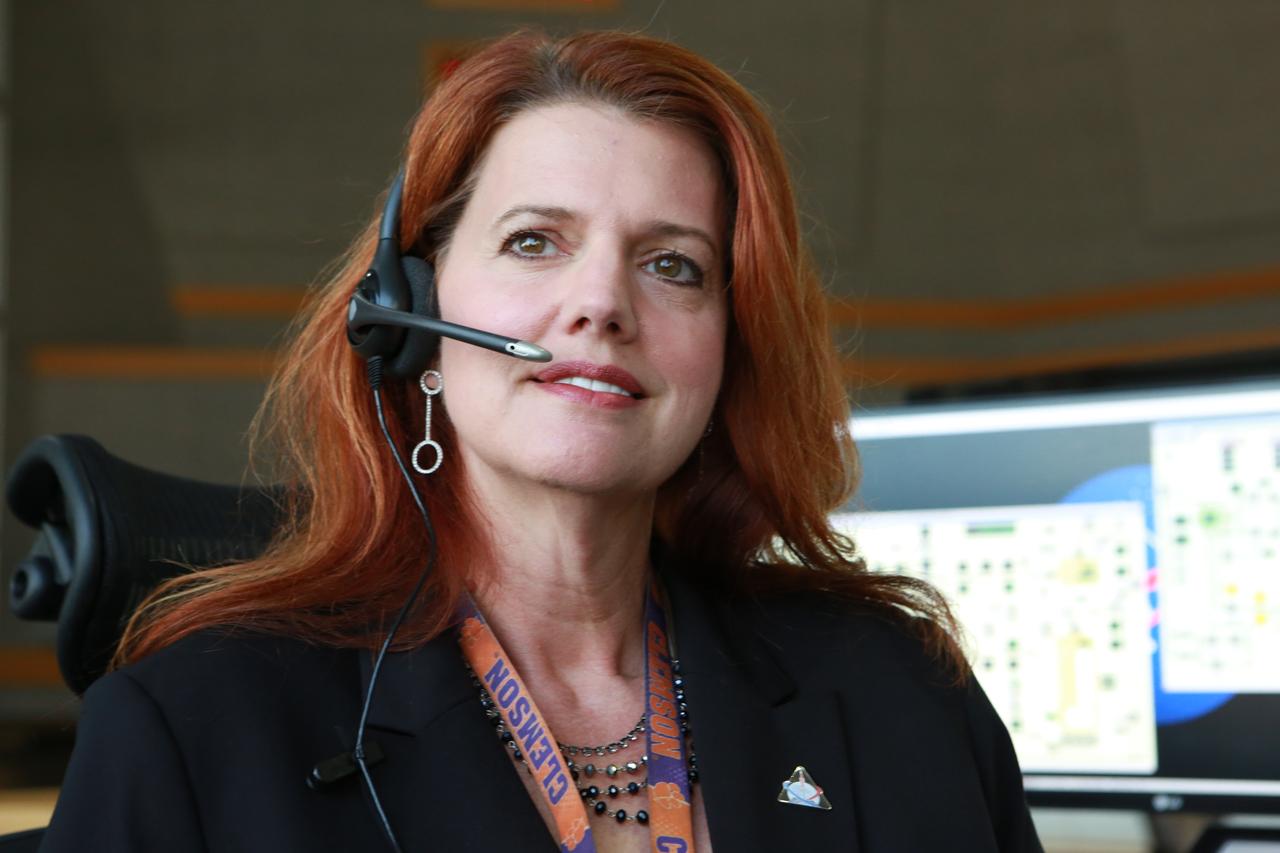
NASA Launch Director Charlie Blackwell-Thompson follows operations at her console in Firing Room 1 at the Kennedy Space Center's Launch Control Center during a countdown simulation for Exploration Mission 1. It was the agency's first simulation of a portion of the countdown for the first launch of a Space Launch System rocket and Orion spacecraft that will eventually take astronauts beyond low-Earth orbit to destinations such as the Moon and Mars.
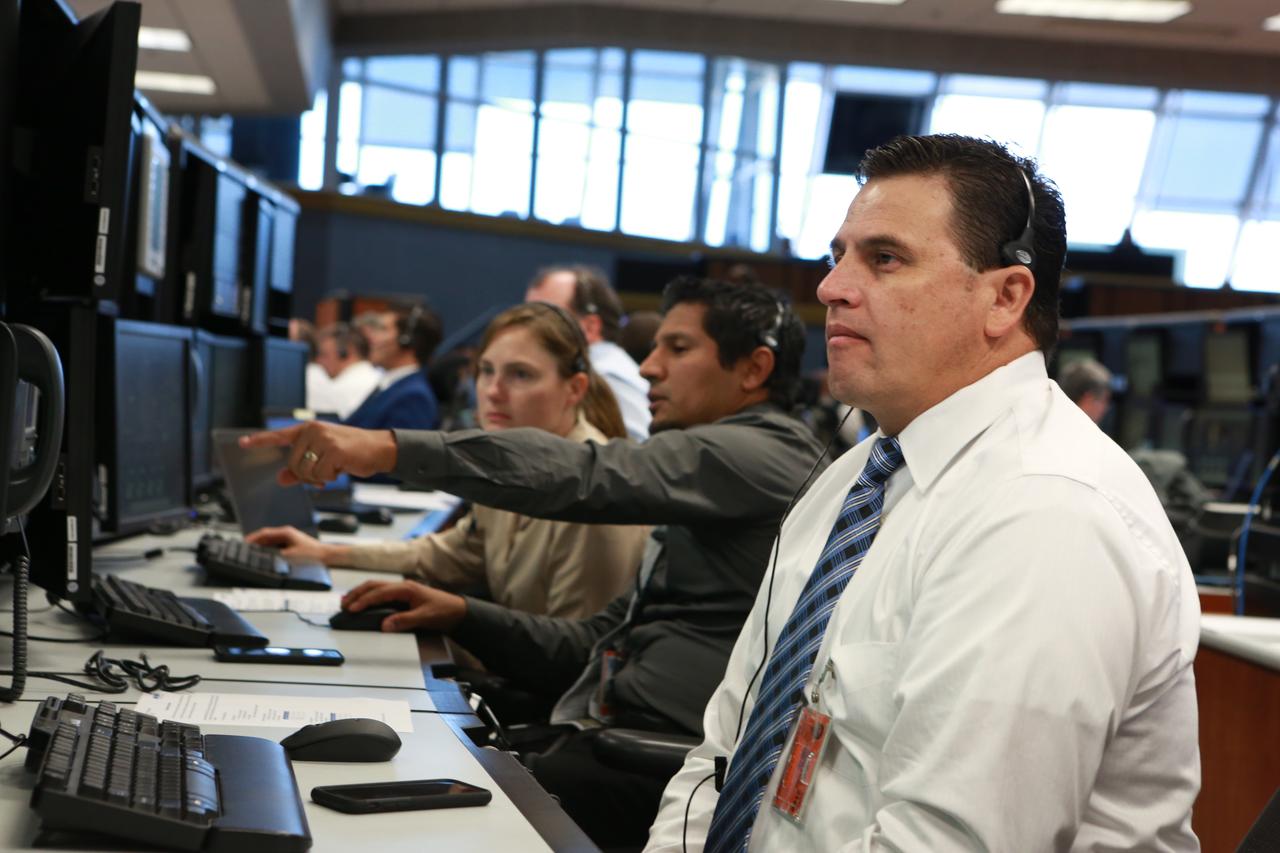
NASA Operation Project Engineer Rommel Rubio monitors operations from his position in Firing Room 1 at the Kennedy Space Center's Launch Control Center during a countdown simulation for Exploration Mission 1. It was the agency's first simulation of a portion of the countdown for the first launch of a Space Launch System rocket and Orion spacecraft that will eventually take astronauts beyond low-Earth orbit to destinations such as the Moon and Mars.
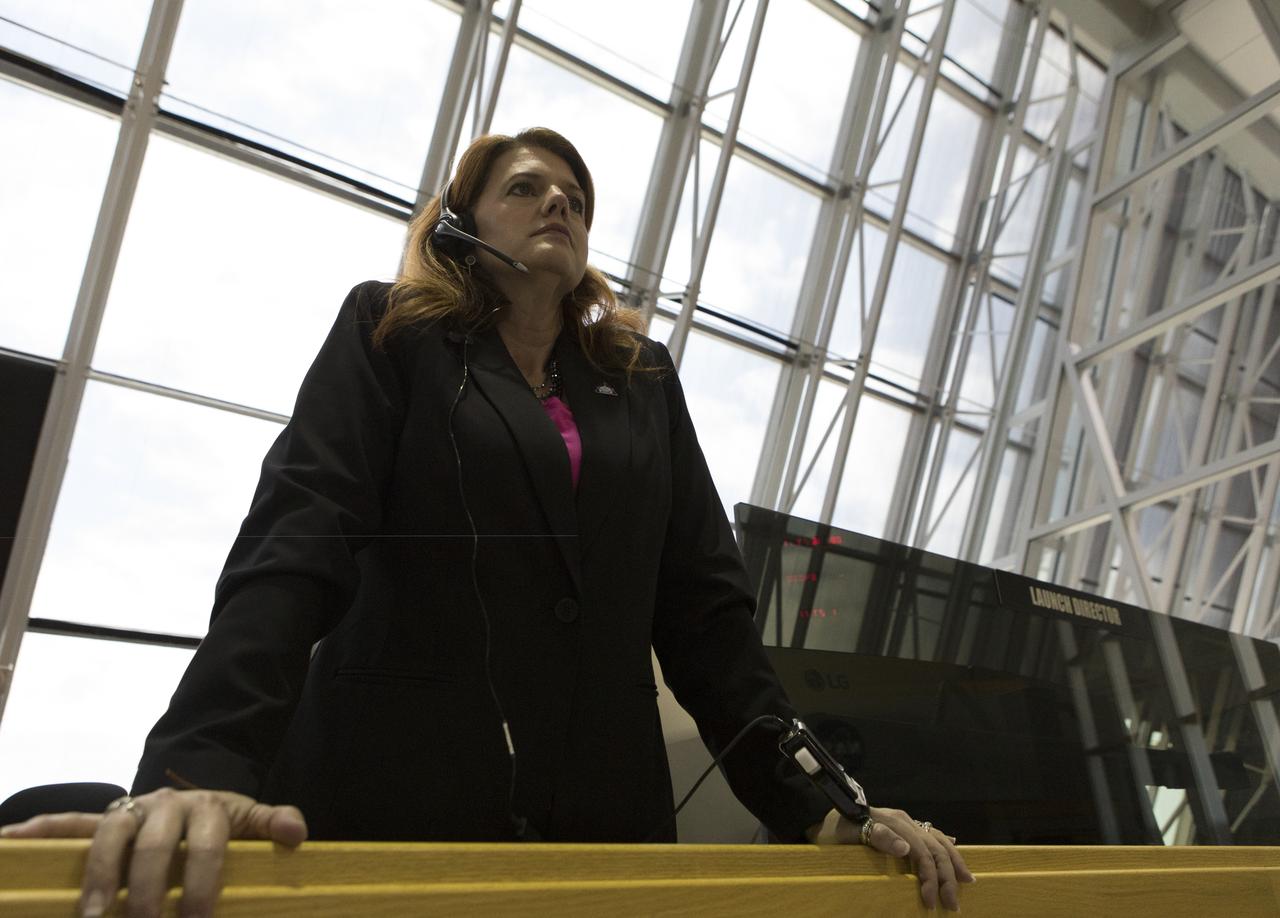
NASA Launch Director Charlie Blackwell-Thompson follows operations in Firing Room 1 at the Kennedy Space Center's Launch Control Center during a countdown simulation for Exploration Mission 1. It was the agency's first simulation of a portion of the countdown for the first launch of a Space Launch System rocket and Orion spacecraft that will eventually take astronauts beyond low-Earth orbit to destinations such as the Moon and Mars.
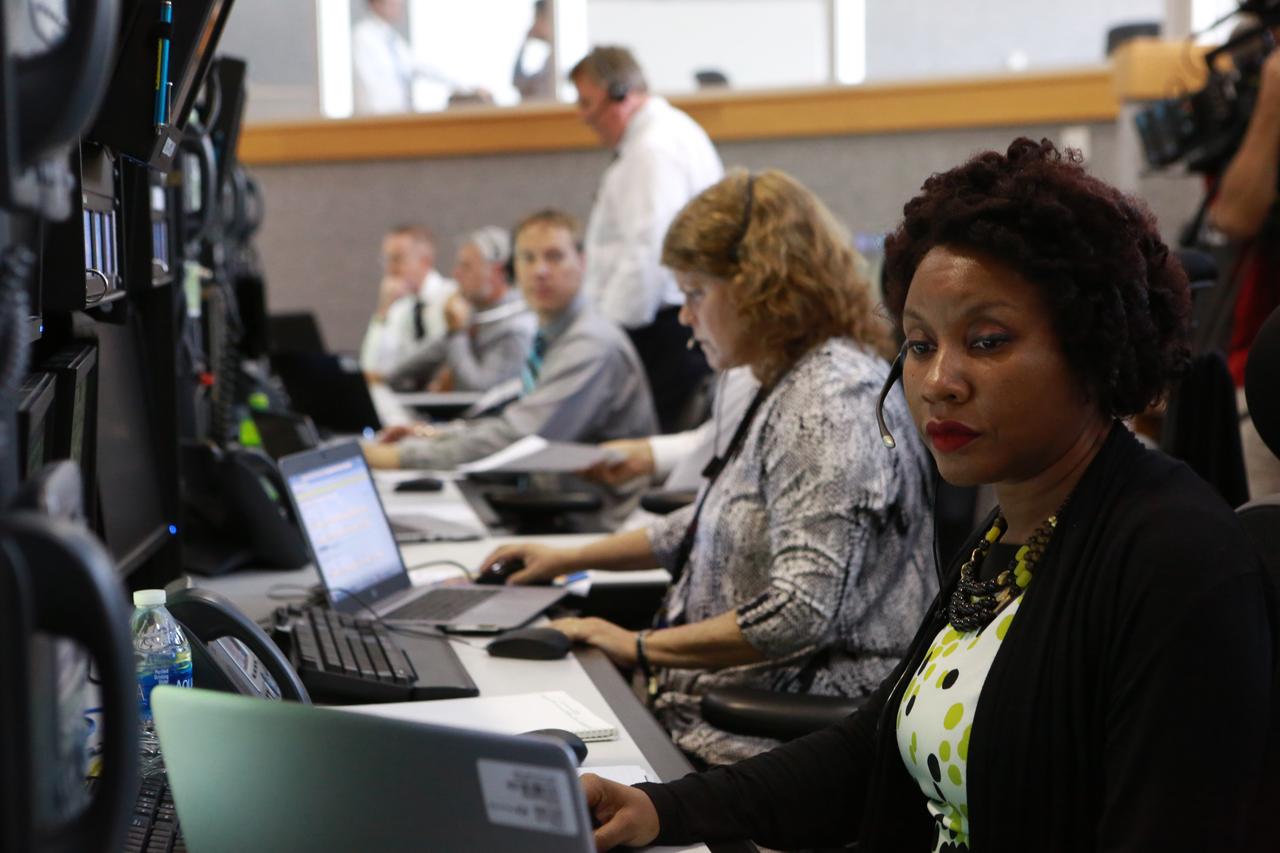
Space Launch System Test Conductors Roberta Wyrick, left, and Tracy Parks, both with Jacobs, NASA's Test and Operations Support Contractor, monitor operations from their consoles in Firing Room 1 at the Kennedy Space Center's Launch Control Center during a countdown simulation for Exploration Mission 1. It was the agency's first simulation of a portion of the countdown for the first launch of a Space Launch System rocket and Orion spacecraft that will eventually take astronauts beyond low-Earth orbit to destinations such as the Moon and Mars.
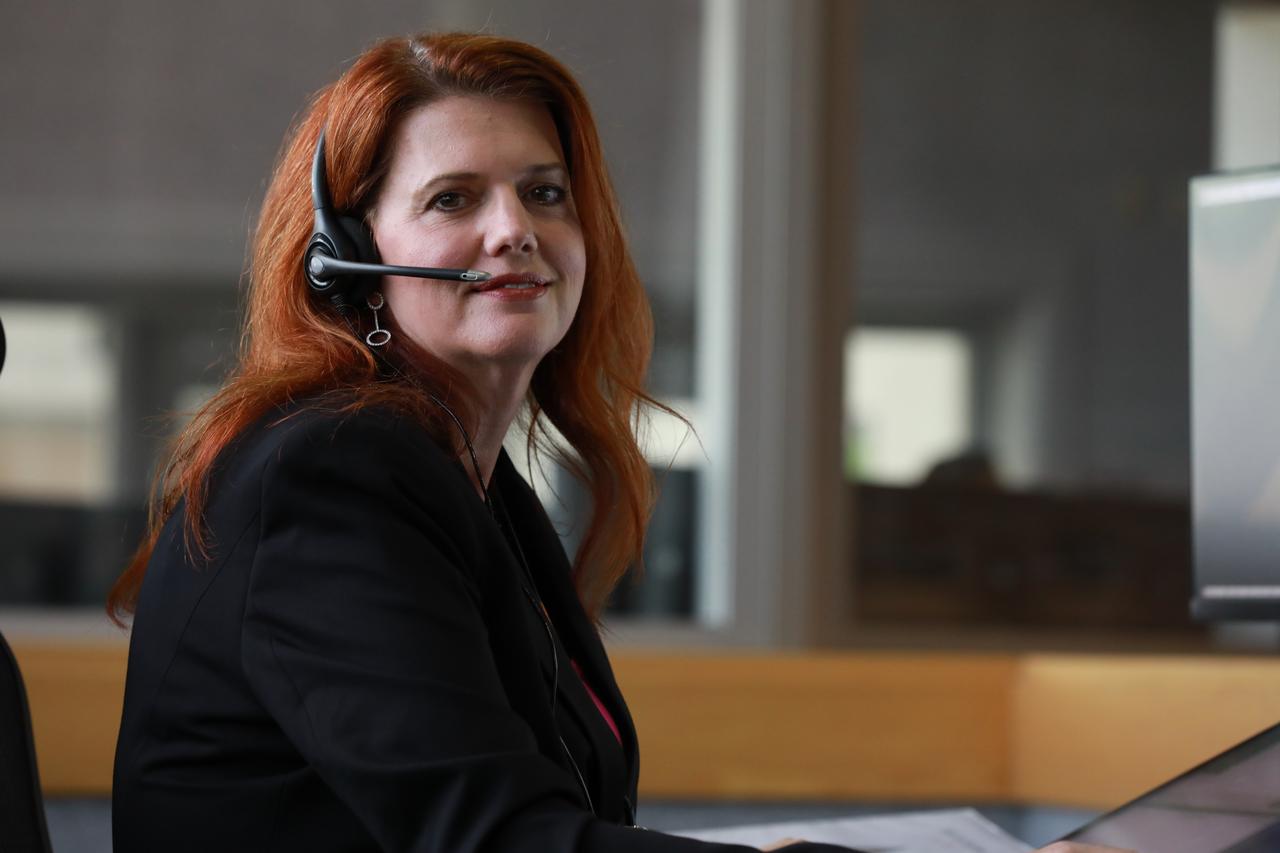
NASA Launch Director Charlie Blackwell-Thompson follows operations at her console in Firing Room 1 at the Kennedy Space Center's Launch Control Center during a countdown simulation for Exploration Mission 1. It was the agency's first simulation of a portion of the countdown for the first launch of a Space Launch System rocket and Orion spacecraft that will eventually take astronauts beyond low-Earth orbit to destinations such as the Moon and Mars.
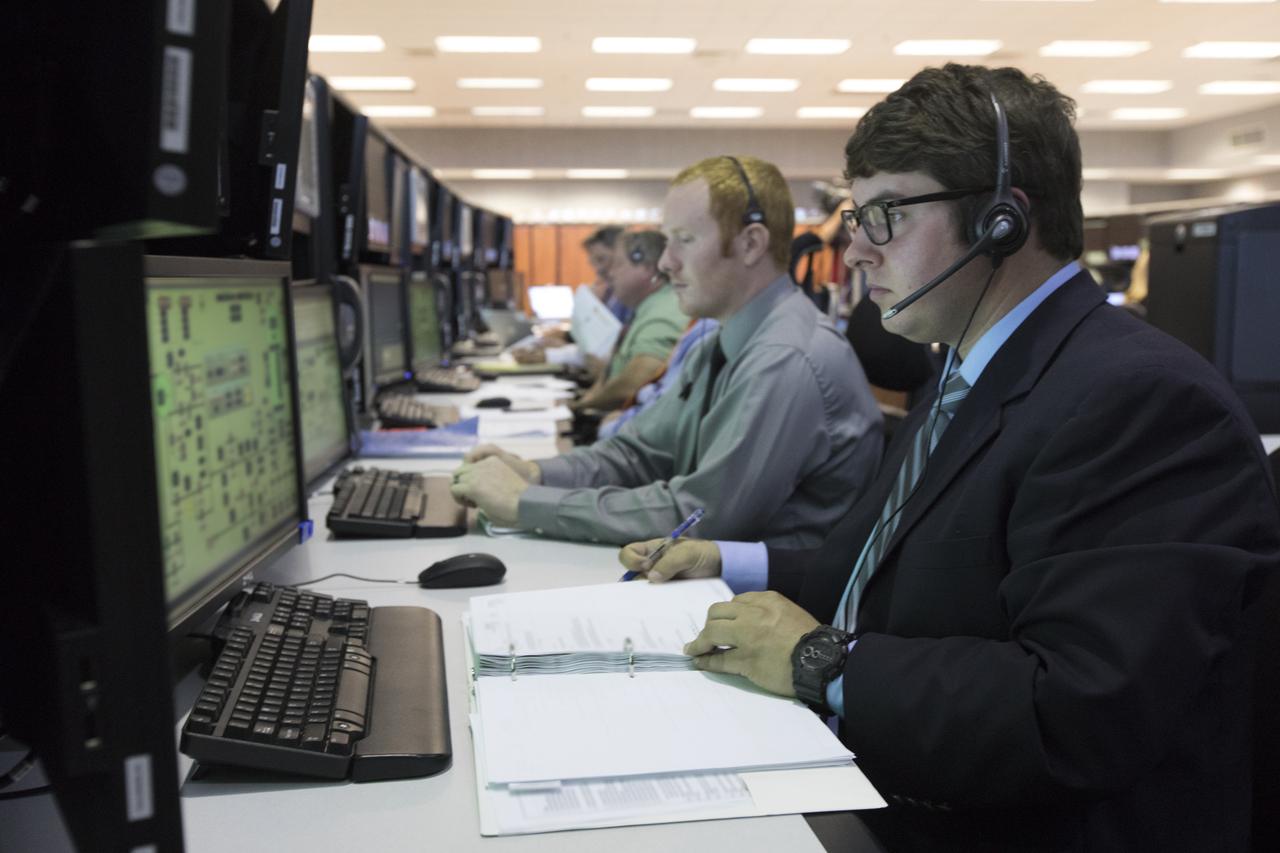
Liquid Oxygen Systems Engineer Quinten Jones, left and Liquid Oxygen Systems Engineer Andrew "Kody" Smitherman, both of Jacobs, monitor operation from his position in Firing Room 1 at the Kennedy Space Center's Launch Control Center during a countdown simulation for Exploration Mission 1. It was the agency's first simulation of a portion of the countdown for the first launch of a Space Launch System rocket and Orion spacecraft that will eventually take astronauts beyond low-Earth orbit to destinations such as the Moon and Mars.
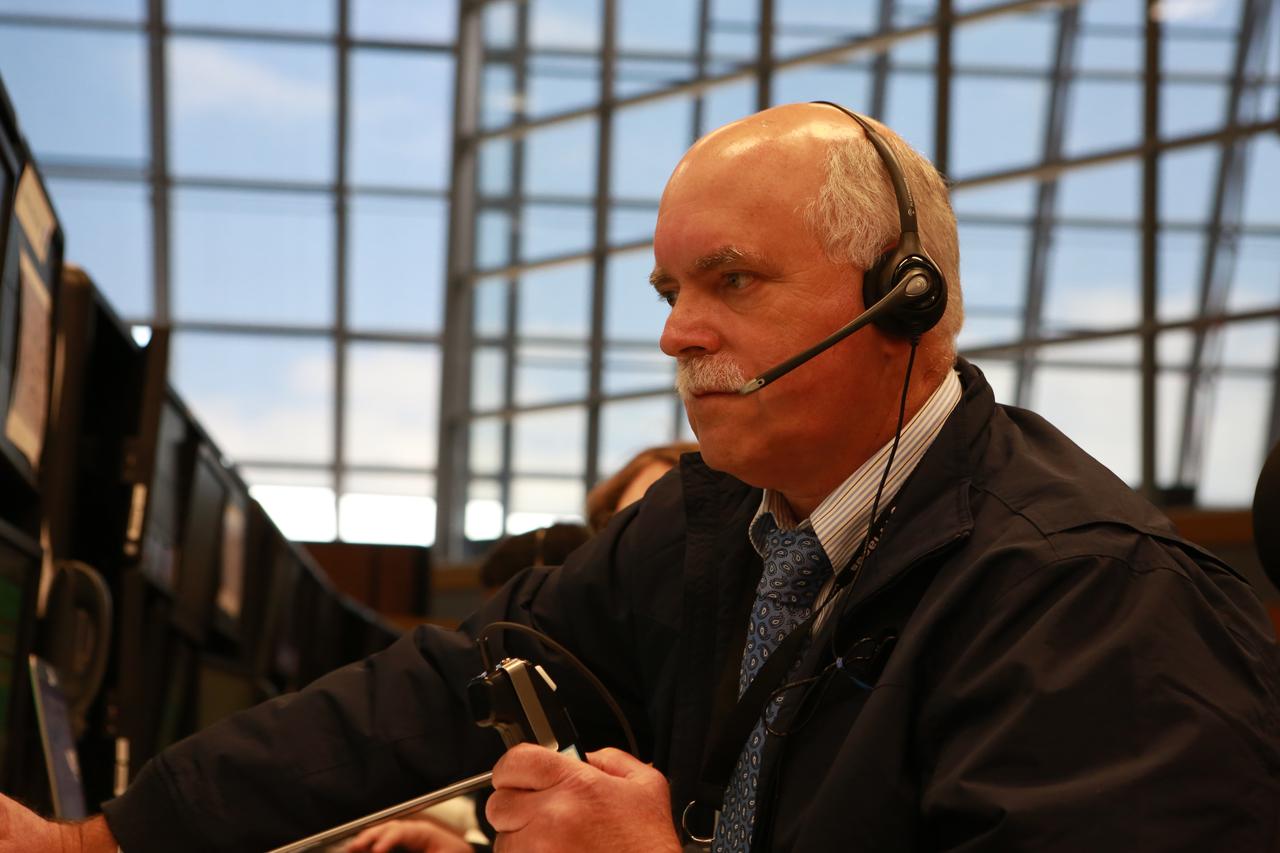
Master console operator David Walsh monitors operations from his position in Firing Room 1 at the Kennedy Space Center's Launch Control Center during a countdown simulation for Exploration Mission 1. It was the agency's first simulation of a portion of the countdown for the first launch of a Space Launch System rocket and Orion spacecraft that will eventually take astronauts beyond low-Earth orbit to destinations such as the Moon and Mars.
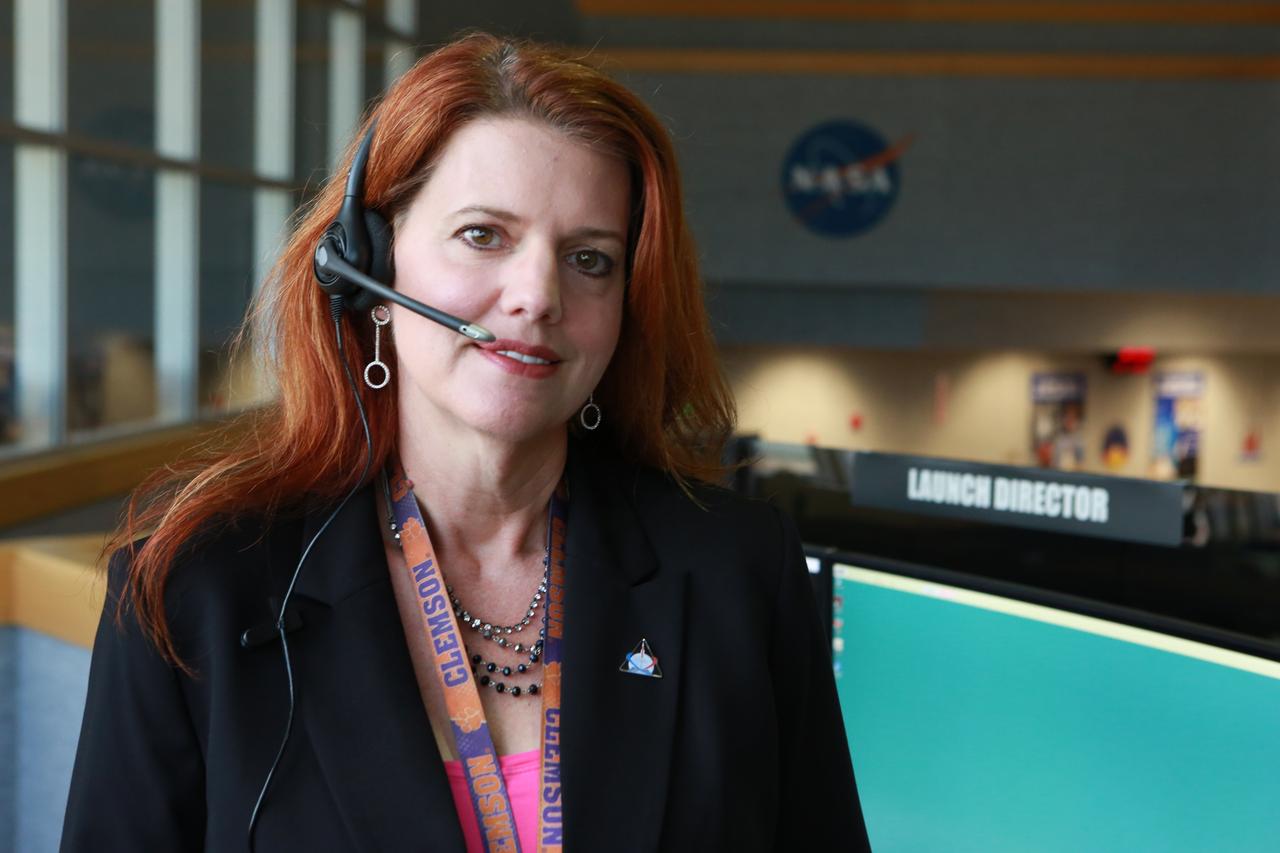
NASA Launch Director Charlie Blackwell-Thompson at her console in Firing Room 1 at the Kennedy Space Center's Launch Control Center during a countdown simulation for Exploration Mission 1. It was the agency's first simulation of a portion of the countdown for the first launch of a Space Launch System rocket and Orion spacecraft that will eventually take astronauts beyond low-Earth orbit to destinations such as the Moon and Mars.
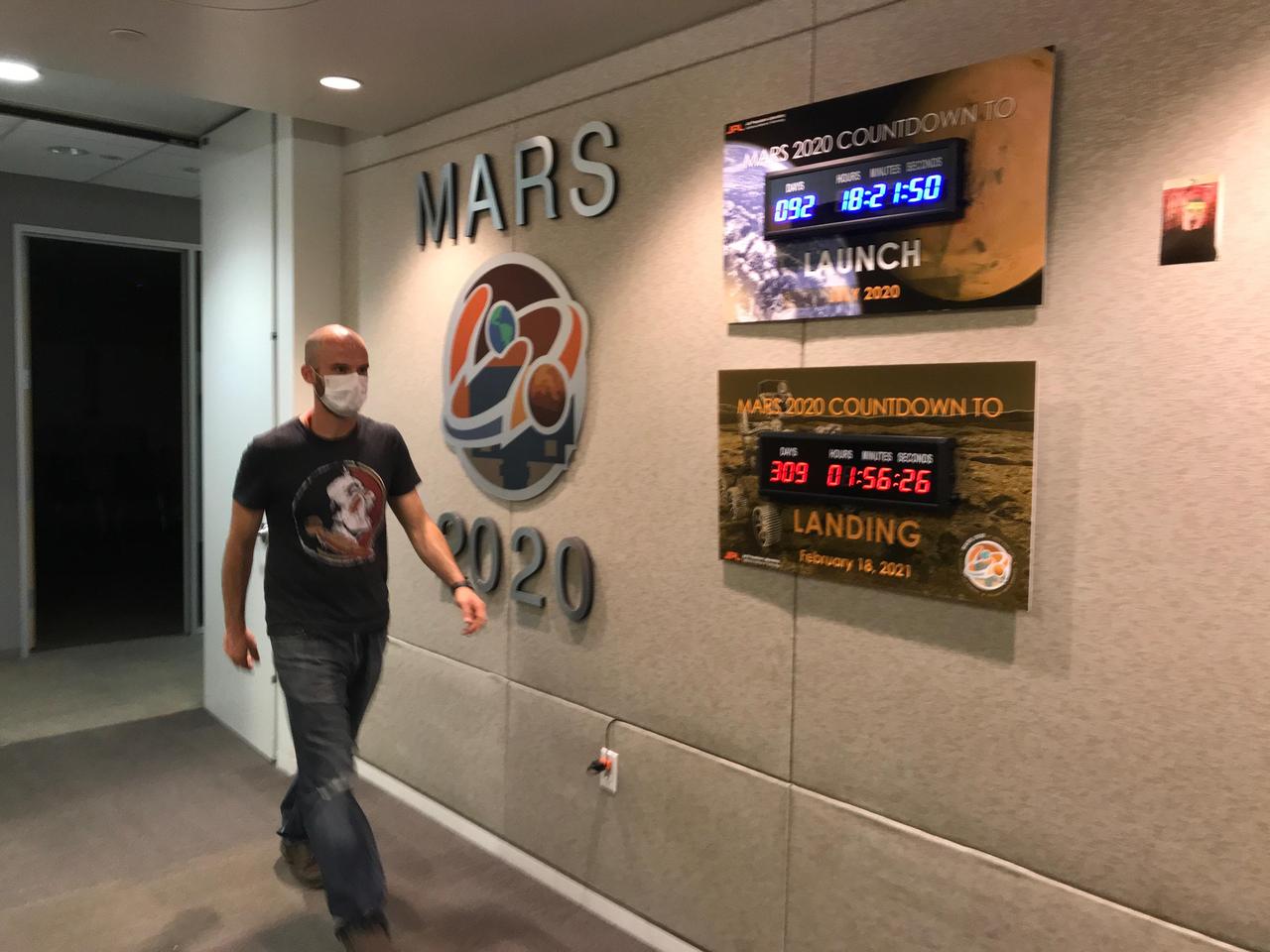
Ian Clark walks past mission countdown clocks in the Perseverance offices at NASA's Jet Propulsion Laboratory in Southern California. The Lab instituted a suite of safe@work procedures — based on the guidance of occupational safety medical personnel — to ensure those working at JPL are social distancing, wearing protective equipment and have ready access to hand sanitizer and other cleaning supplies during the coronavirus pandemic. Clark is one of a small subset of project personnel whose mission-essential job required physical access to the facility. He was on-Lab to supervise the assembly and cleaning of the sample tubes that will hold Martian sediment and rock for return to Earth on a future mission. https://photojournal.jpl.nasa.gov/catalog/PIA23830
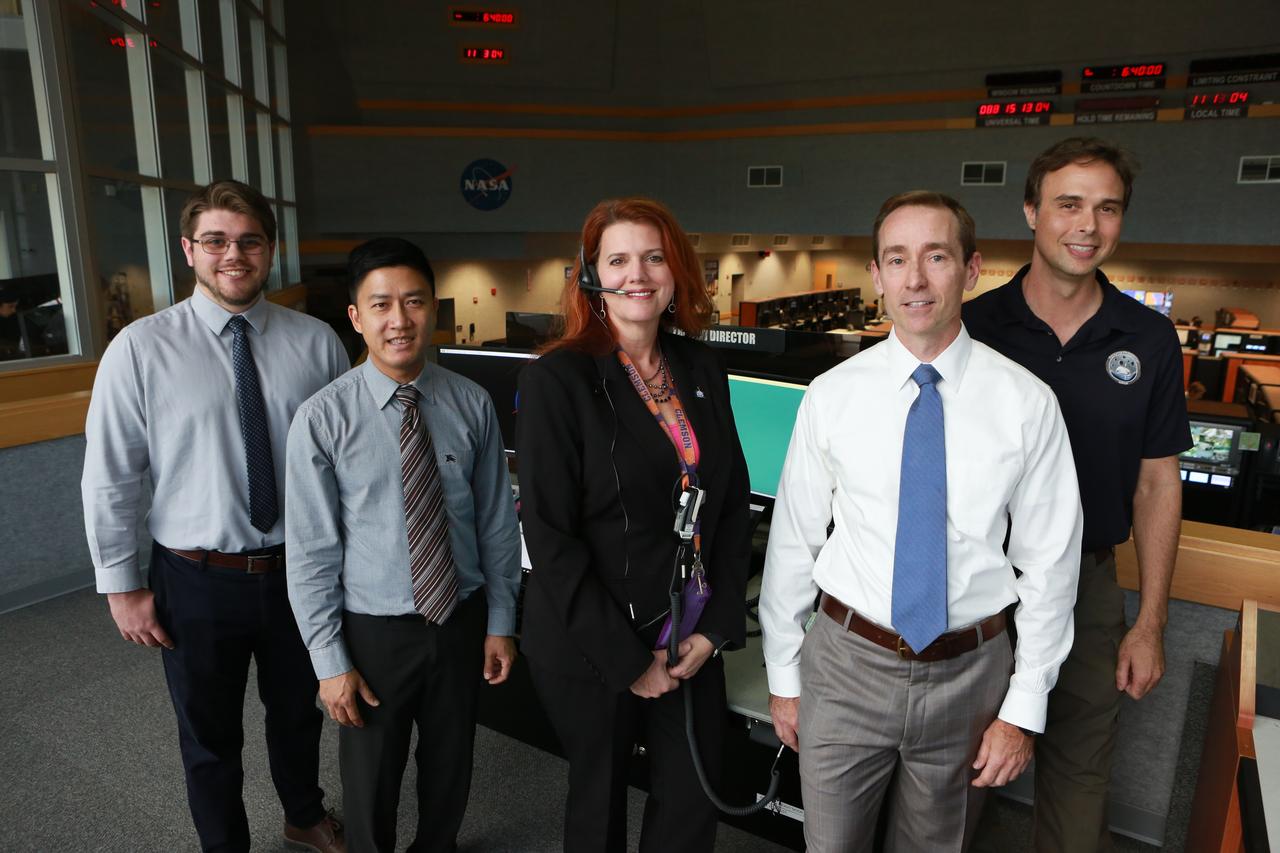
NASA Launch Director Charlie Blackwell-Thompson, center, stands next to her console in Firing Room 1 at the Kennedy Space Center's Launch Control Center. With her, from the left, are NASA intern Justin Connolly, NASA Engineering Project Manager Dan Tran, Blackwell-Thompson, Shawn Reverter, Project Manager for Red Canyon Software, Inc., and NASA Structures and Mechanisms Design Branch Chief Adam Dokos, during a countdown simulation for Exploration Mission 1. It was the agency's first simulation of a portion of the countdown for the first launch of a Space Launch System rocket and Orion spacecraft that will eventually take astronauts beyond low-Earth orbit to destinations such as the Moon and Mars.
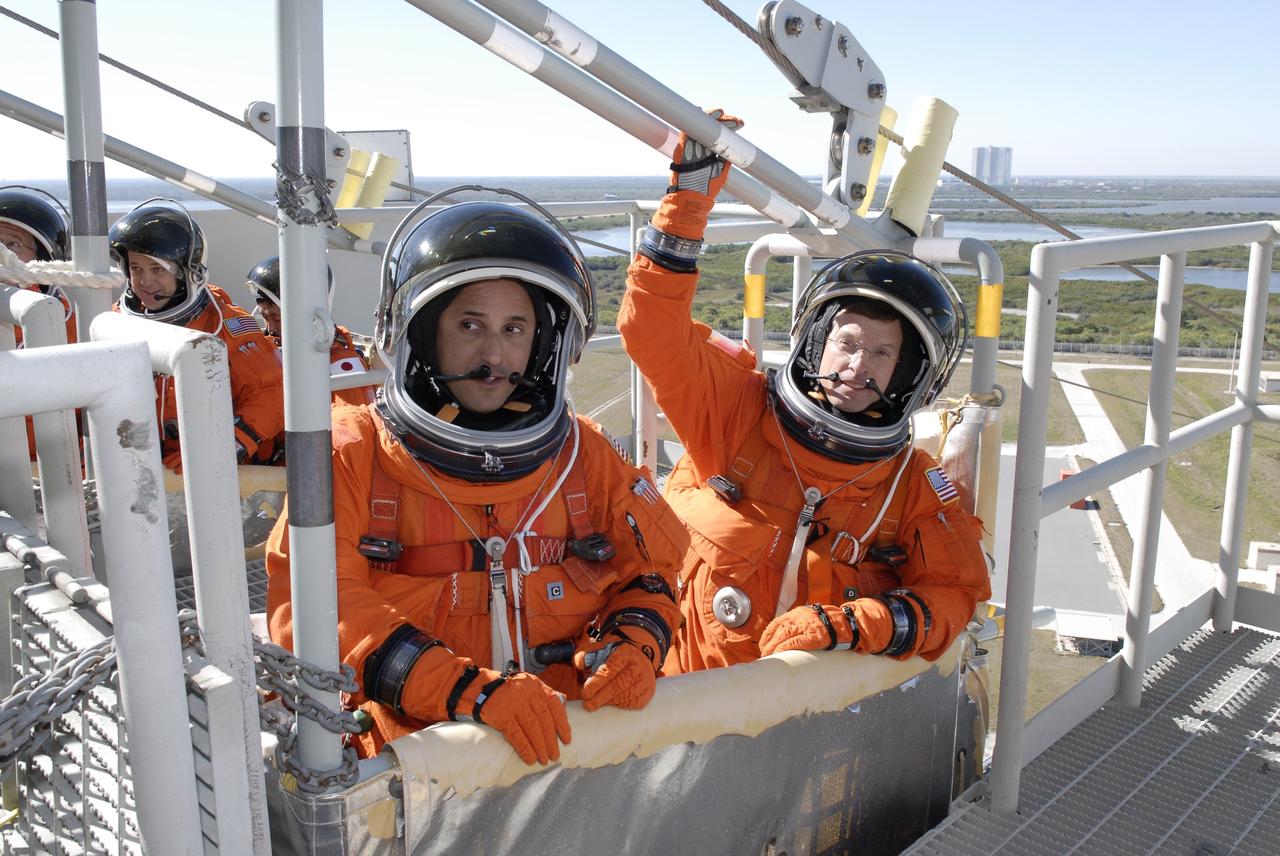
CAPE CANAVERAL, Fla. – Following the simulated launch countdown on Launch Pad 39A at NASA's Kennedy Space Center in Florida, STS-119 Mission Specialists Joseph Acaba (left) and Richard Arnold are seated in a slidewire basket that could propel them to a landing area below. The slidewire basket is used for emergency egress from the pad. In the background at left are Mission Specialists Richard Arnold and Koichi Wakata. The countdown and emergency egress are part of the prelaunch preparation known as Terminal Countdown Demonstration Test. The TCDT also includes equipment familiarization. Discovery is targeted to launch on the STS-119 mission Feb. 12. During the 14-day mission, the crew will install the S6 truss segment and solar arrays to the starboard side of the International Space Station, completing the station's truss, or backbone. Photo credit: NASA/Kim Shiflett
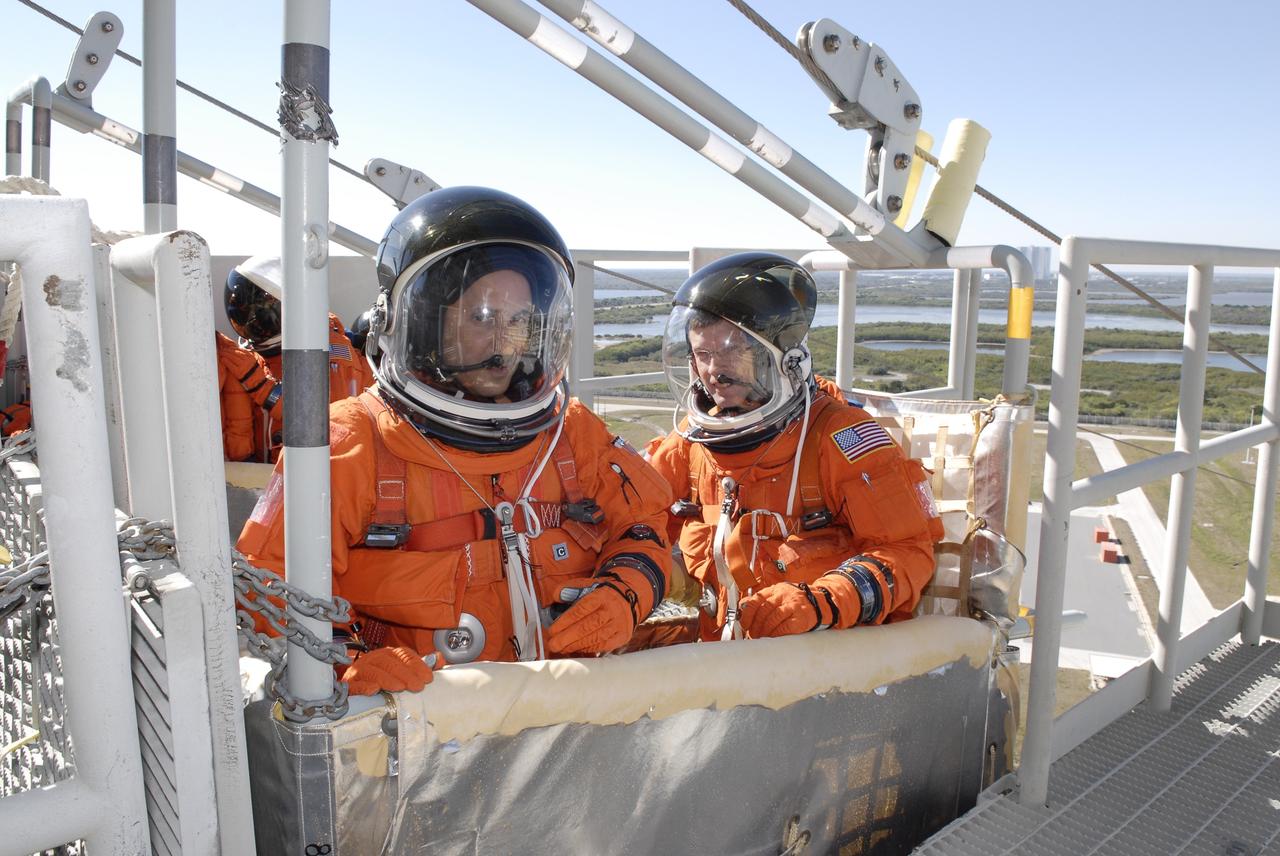
CAPE CANAVERAL, Fla. – Following the simulated launch countdown on Launch Pad 39A at NASA's Kennedy Space Center in Florida, STS-119 Mission Specialists Joseph Acaba (left) and Richard Arnold practice emergency egress from the pad. They are seated in a slidewire basket that could propel them to a landing area below. The countdown and emergency egress are part of the prelaunch preparation known as Terminal Countdown Demonstration Test. The TCDT also includes equipment familiarization. Discovery is targeted to launch on the STS-119 mission Feb. 12. During the 14-day mission, the crew will install the S6 truss segment and solar arrays to the starboard side of the International Space Station, completing the station's truss, or backbone. Photo credit: NASA/Kim Shiflett
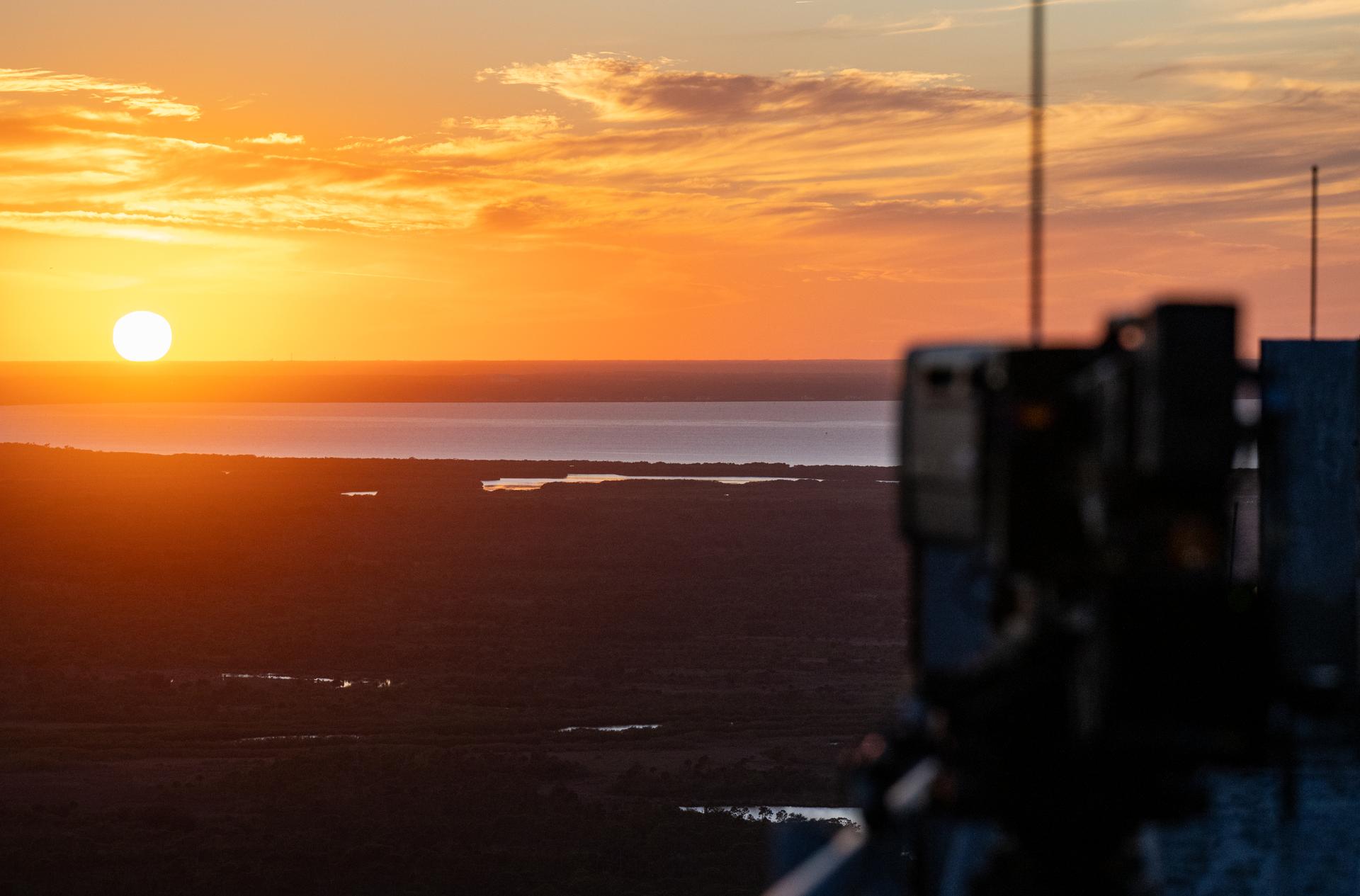
The sun sets as Artemis II crewmembers NASA astronauts Reid Wiseman, commander; Victor Glover, pilot; Christina Koch, mission specialist; and CSA (Canadian Space Agency) astronaut Jeremy Hansen, mission specialist participate in the Artemis II countdown demonstration test, Saturday, Dec. 20, 2025, at NASA’s Kennedy Space Center in Florida. For this operation, the Artemis II crew and launch teams are simulating the launch day timeline including suit-up, walkout, and spacecraft ingress and egress. Through the Artemis campaign, NASA will send astronauts to explore the Moon for scientific discovery, economic benefits, and to build the foundation for the first crewed missions to Mars, for the benefit of all. Photo Credit: (NASA/Keegan Barber)
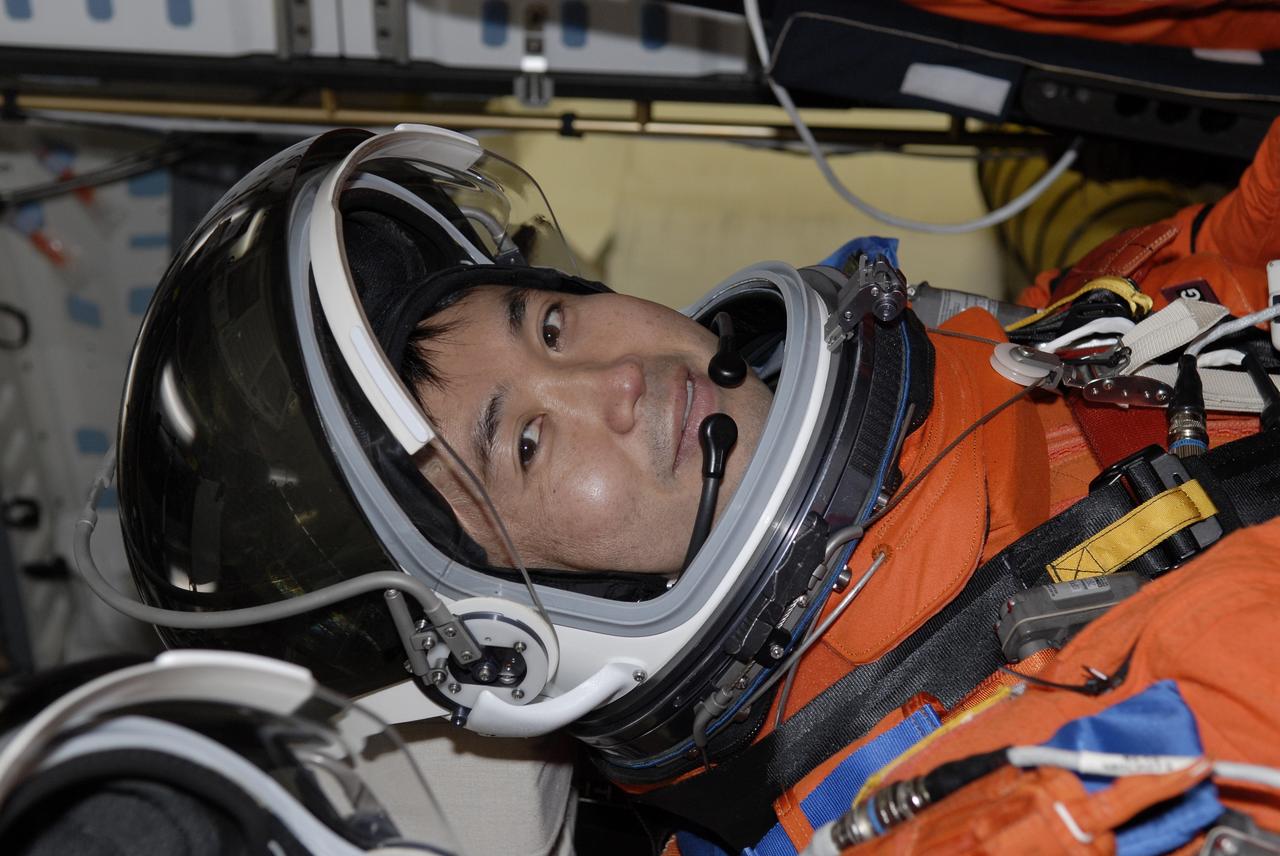
CAPE CANAVERAL, Fla. – On Launch Pad 39A at NASA's Kennedy Space Center in Florida, STS-119 Mission Specialist Koichi Wakata is seated in space shuttle Discovery for a simulated launch countdown as part of the prelaunch preparation known as Terminal Countdown Demonstration Test. The TCDT also includes equipment familiarization. Discovery is targeted to launch on the STS-119 mission Feb. 12. During the 14-day mission, the crew will install the S6 truss segment and solar arrays to the starboard side of the International Space Station, completing the station's truss, or backbone. Photo credit: NASA/Kim Shiflett
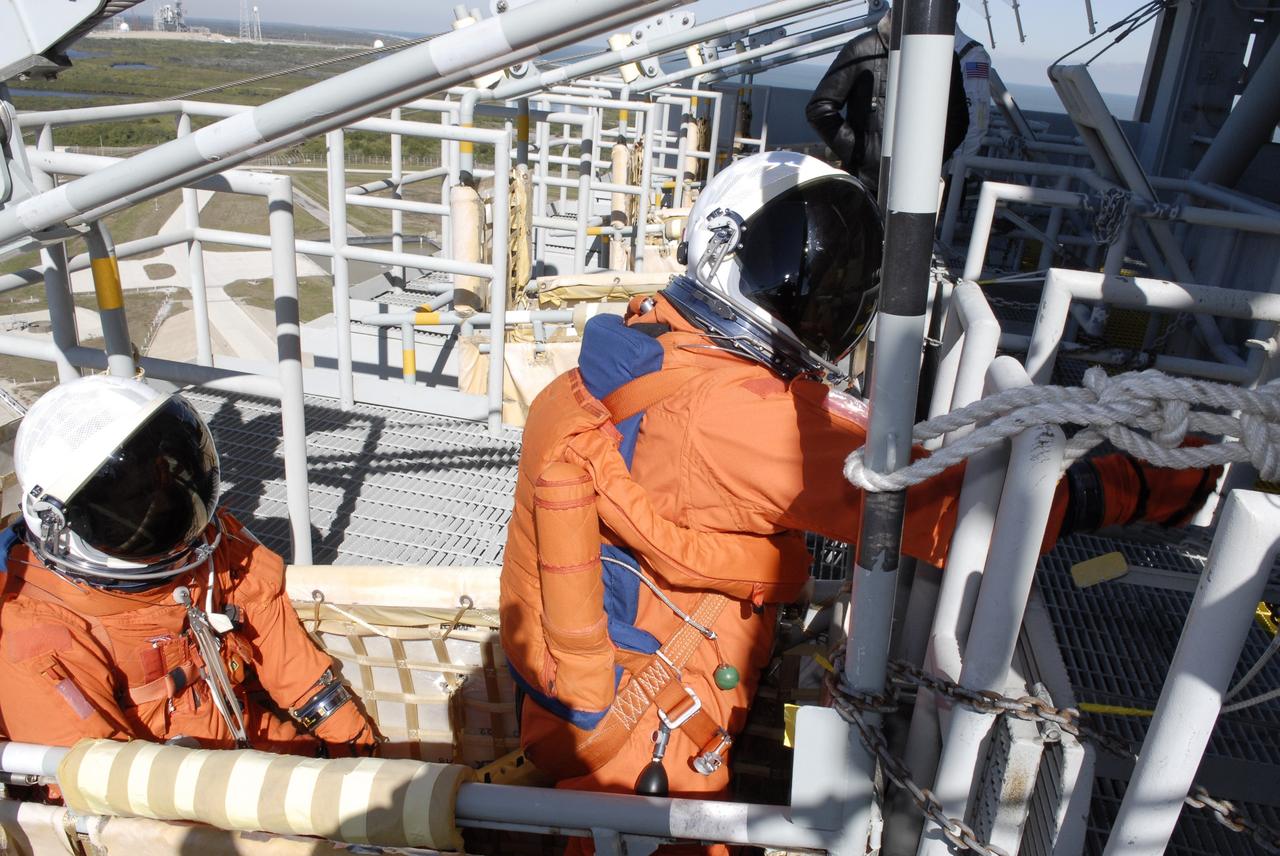
CAPE CANAVERAL, Fla. – Following the simulated launch countdown on Launch Pad 39A at NASA's Kennedy Space Center in Florida, STS-119 crew members are in the slidewire basket they would use during an emergency egress. The slidewire basket could propel them to a landing area below, if needed. The practice egress is part of the prelaunch preparation known as Terminal Countdown Demonstration Test. The TCDT also includes equipment familiarization. Discovery is targeted to launch on the STS-119 mission Feb. 12. During the 14-day mission, the crew will install the S6 truss segment and solar arrays to the starboard side of the International Space Station, completing the station's truss, or backbone. Photo credit: NASA/Kim Shiflett
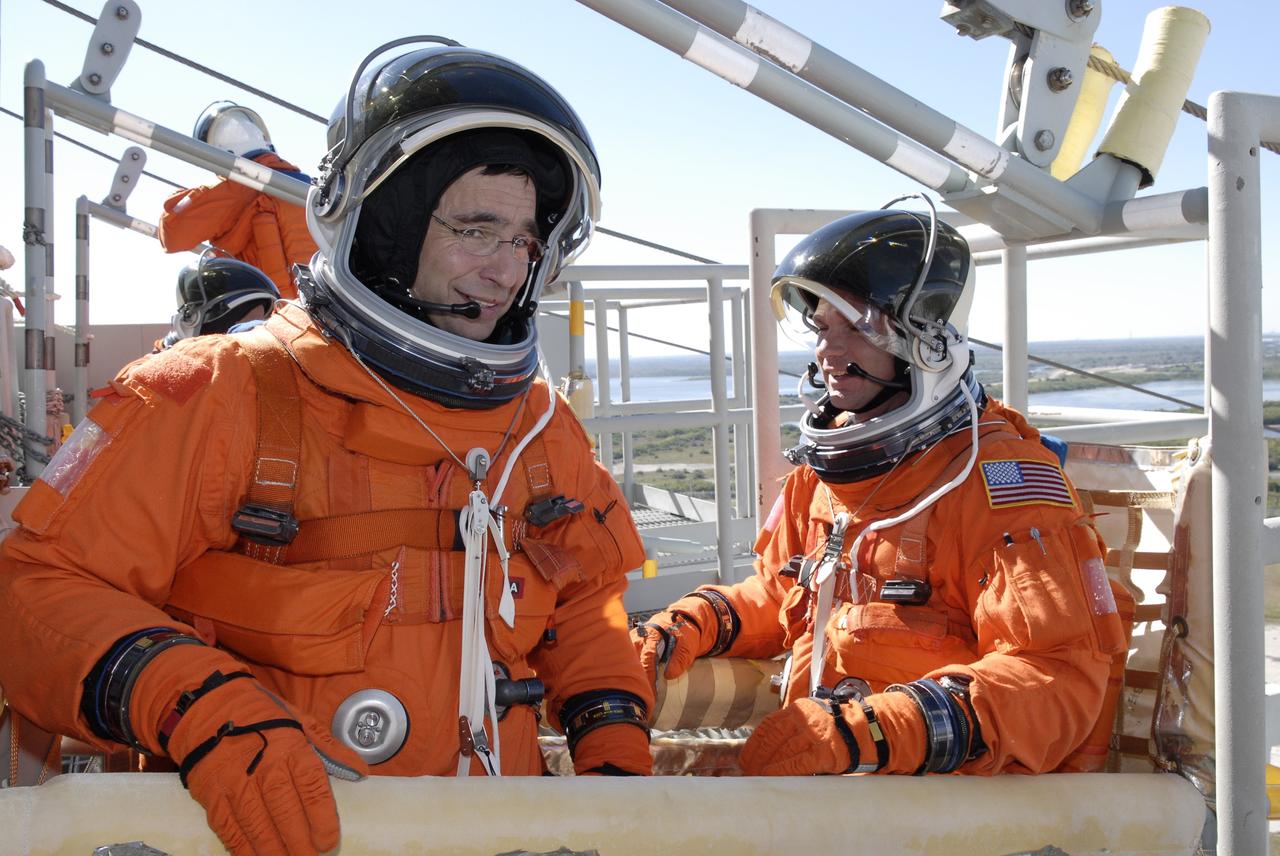
CAPE CANAVERAL, Fla. – Following the simulated launch countdown on Launch Pad 39A at NASA's Kennedy Space Center in Florida, STS-119 Commander Lee Archambault and Pilot Tony Antonelli take seats in the slidewire basket used for emergency egress from the pad. The practice egress is part of the prelaunch preparation known as Terminal Countdown Demonstration Test. The TCDT also includes equipment familiarization. Discovery is targeted to launch on the STS-119 mission Feb. 12. During the 14-day mission, the crew will install the S6 truss segment and solar arrays to the starboard side of the International Space Station, completing the station's truss, or backbone. Photo credit: NASA/Kim Shiflett
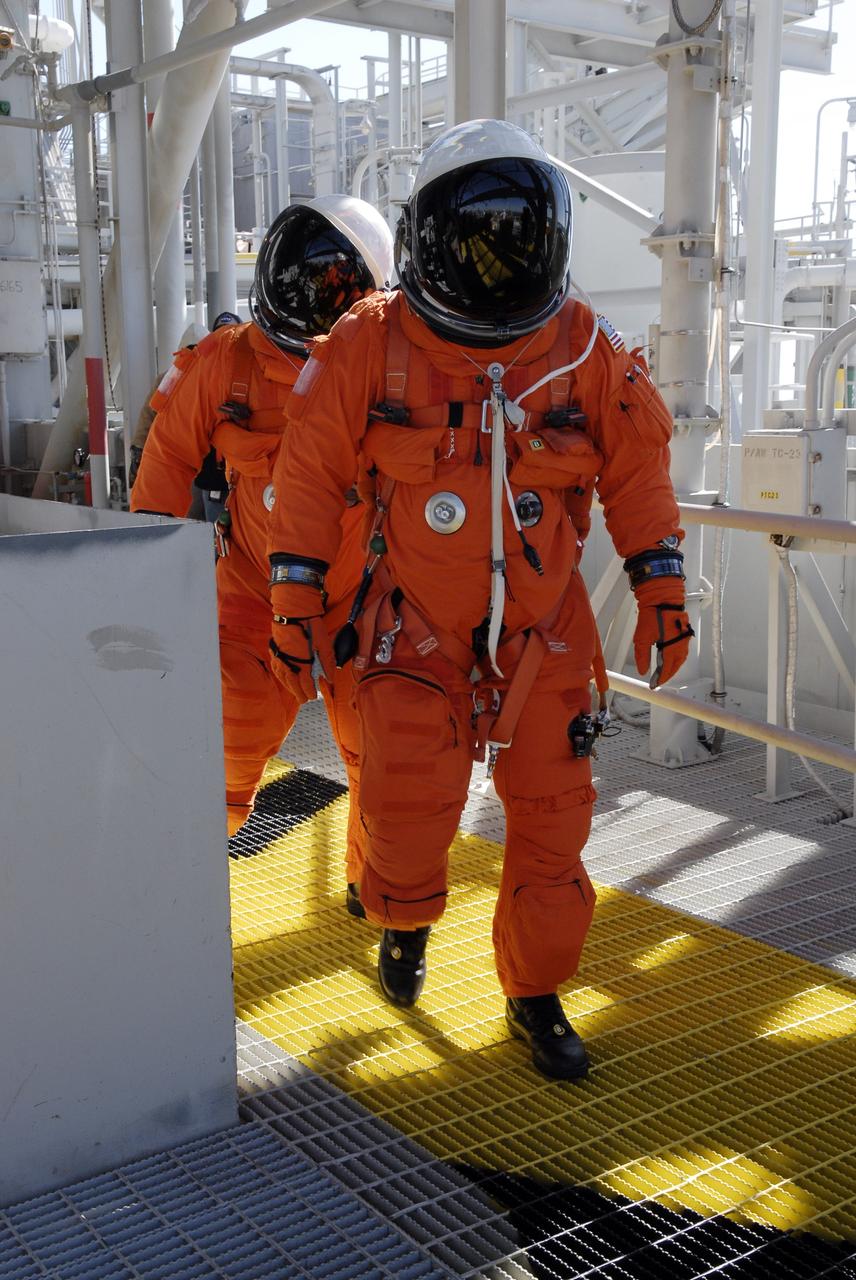
CAPE CANAVERAL, Fla. – Following the simulated launch countdown on Launch Pad 39A at NASA's Kennedy Space Center in Florida, STS-119 crew members practice an emergency egress from the 195-foot level of the fixed service structure as part of the prelaunch preparation known as Terminal Countdown Demonstration Test. The TCDT also includes equipment familiarization. Discovery is targeted to launch on the STS-119 mission Feb. 12. During the 14-day mission, the crew will install the S6 truss segment and solar arrays to the starboard side of the International Space Station, completing the station's truss, or backbone. Photo credit: NASA/Kim Shiflett
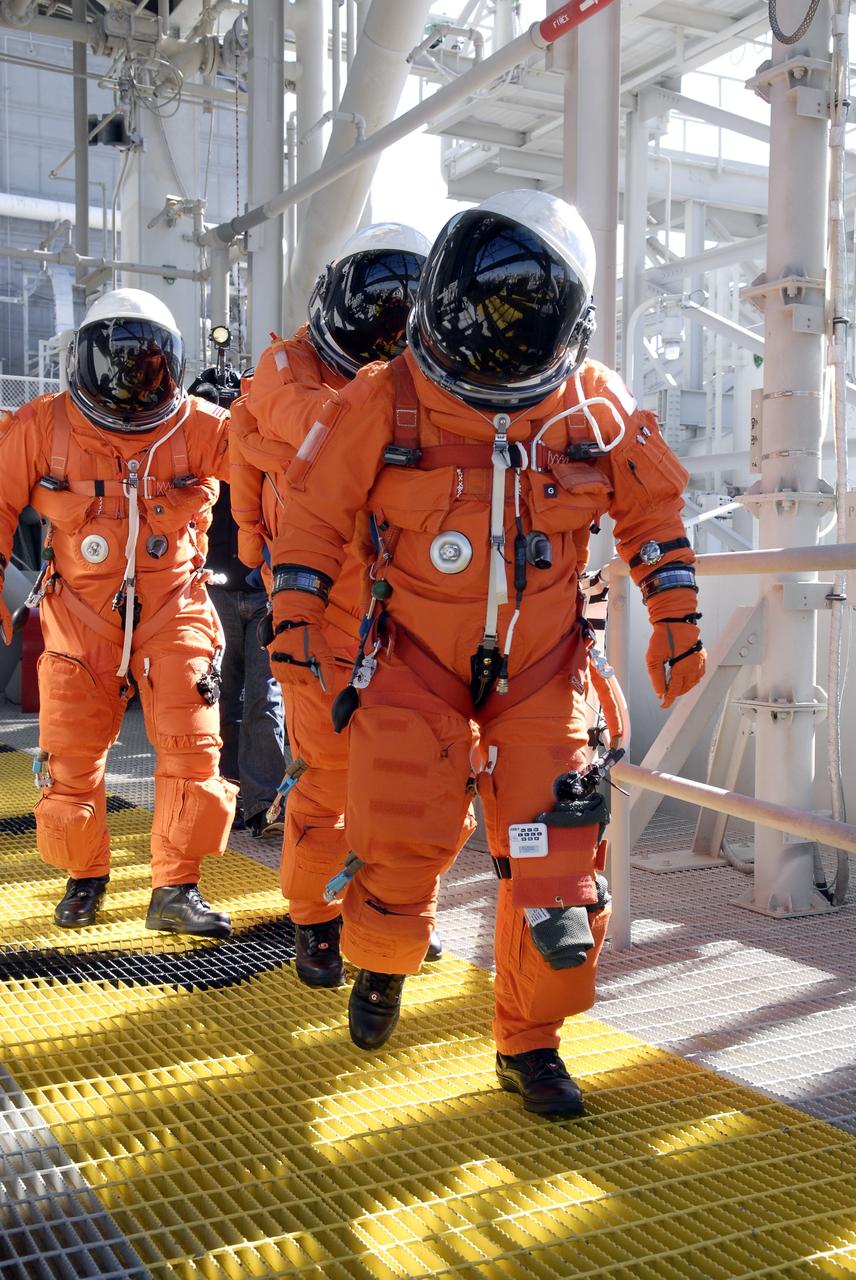
CAPE CANAVERAL, Fla. – Following the simulated launch countdown on Launch Pad 39A at NASA's Kennedy Space Center in Florida, STS-119 crew members practice an emergency egress from the 195-foot level of the fixed service structure as part of the prelaunch preparation known as Terminal Countdown Demonstration Test. The TCDT also includes equipment familiarization. Discovery is targeted to launch on the STS-119 mission Feb. 12. During the 14-day mission, the crew will install the S6 truss segment and solar arrays to the starboard side of the International Space Station, completing the station's truss, or backbone. Photo credit: NASA/Kim Shiflett
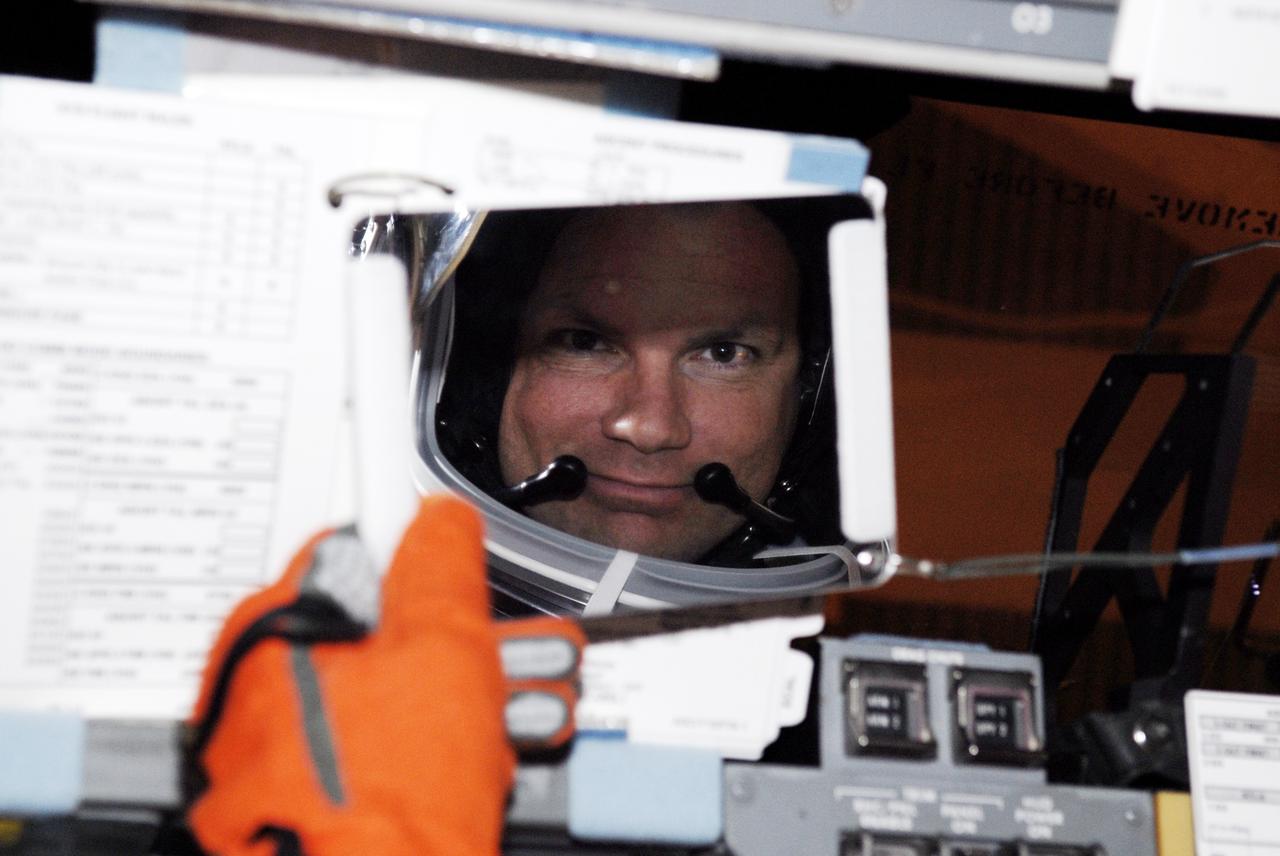
CAPE CANAVERAL, Fla. – Seated in space shuttle Discovery on Launch Pad 39A at NASA's Kennedy Space Center in Florida, STS-119 Pilot Tony Antonelli checks a mirror as he prepares for a simulated launch countdown as part of the prelaunch preparation known as Terminal Countdown Demonstration Test. The TCDT also includes equipment familiarization. Discovery is targeted to launch on the STS-119 mission Feb. 12. During the 14-day mission, the crew will install the S6 truss segment and solar arrays to the starboard side of the International Space Station, completing the station's truss, or backbone. Photo credit: NASA/Kim Shiflett
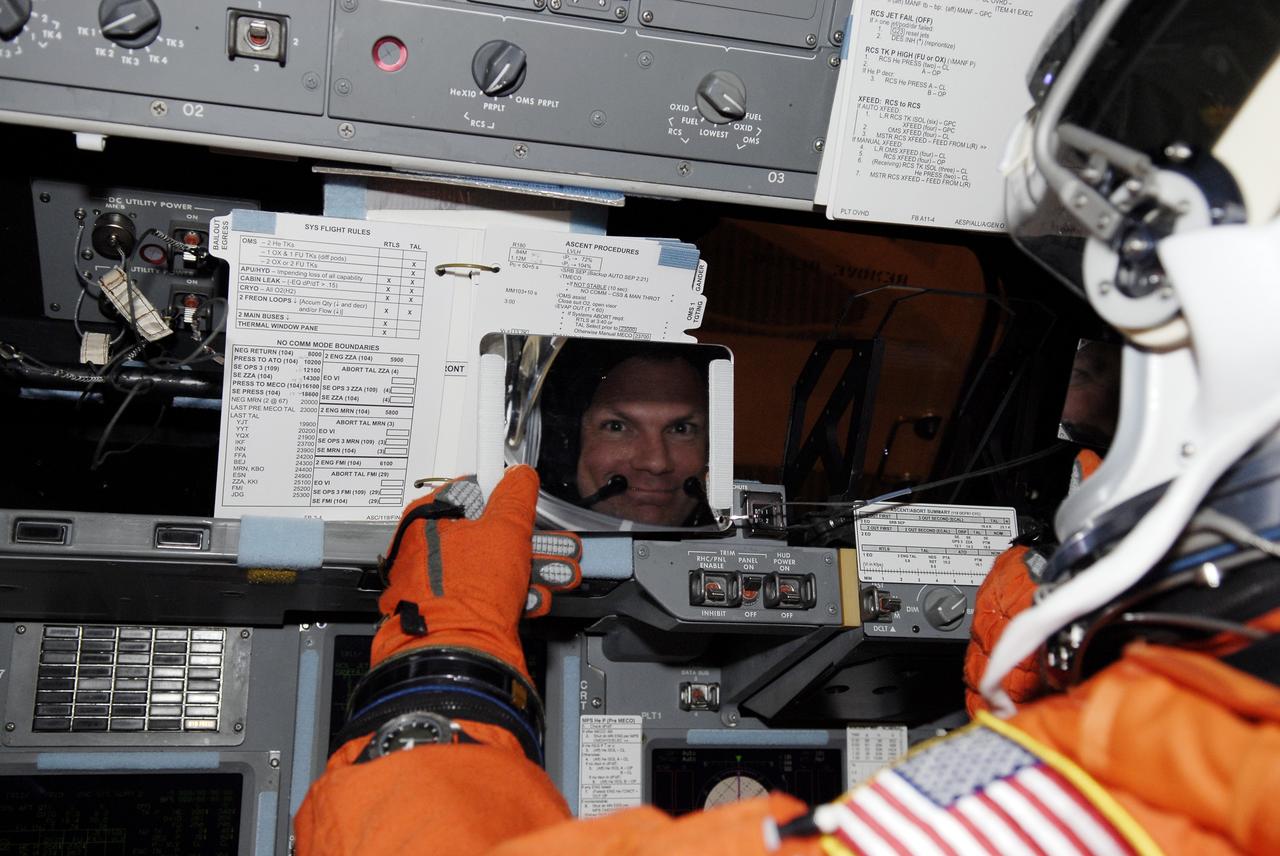
CAPE CANAVERAL, Fla. – Seated in space shuttle Discovery on Launch Pad 39A at NASA's Kennedy Space Center in Florida, STS-119 Pilot Tony Antonelli checks a mirror as he prepares for a simulated launch countdown as part of the prelaunch preparation known as Terminal Countdown Demonstration Test. The TCDT also includes equipment familiarization. Discovery is targeted to launch on the STS-119 mission Feb. 12. During the 14-day mission, the crew will install the S6 truss segment and solar arrays to the starboard side of the International Space Station, completing the station's truss, or backbone. Photo credit: NASA/Kim Shiflett
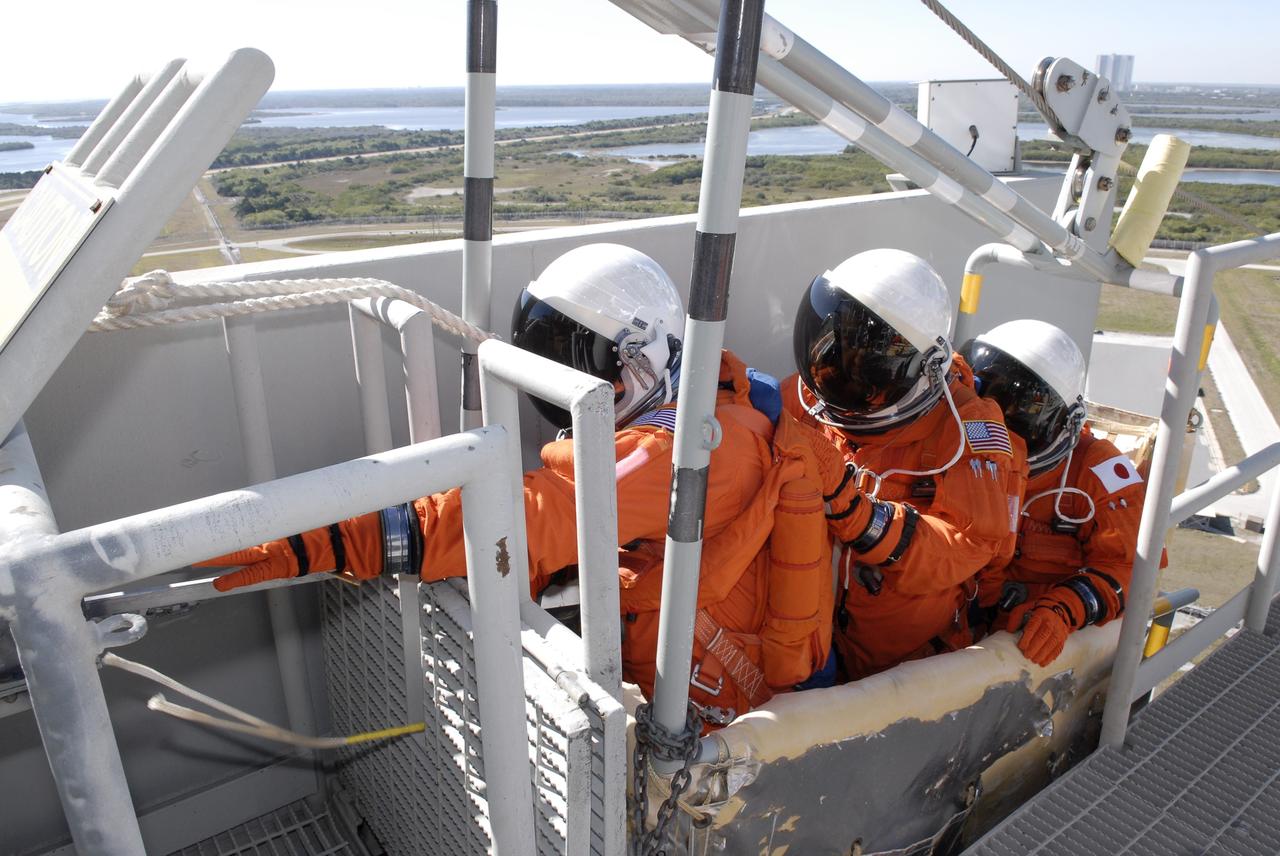
CAPE CANAVERAL, Fla. – Following the simulated launch countdown on Launch Pad 39A at NASA's Kennedy Space Center in Florida, STS-119 crew members are in the slidewire basket they would use during an emergency egress. The slidewire basket could propel them to a landing area below, if needed. The practice egress is part of the prelaunch preparation known as Terminal Countdown Demonstration Test. The TCDT also includes equipment familiarization. Discovery is targeted to launch on the STS-119 mission Feb. 12. During the 14-day mission, the crew will install the S6 truss segment and solar arrays to the starboard side of the International Space Station, completing the station's truss, or backbone. Photo credit: NASA/Kim Shiflett
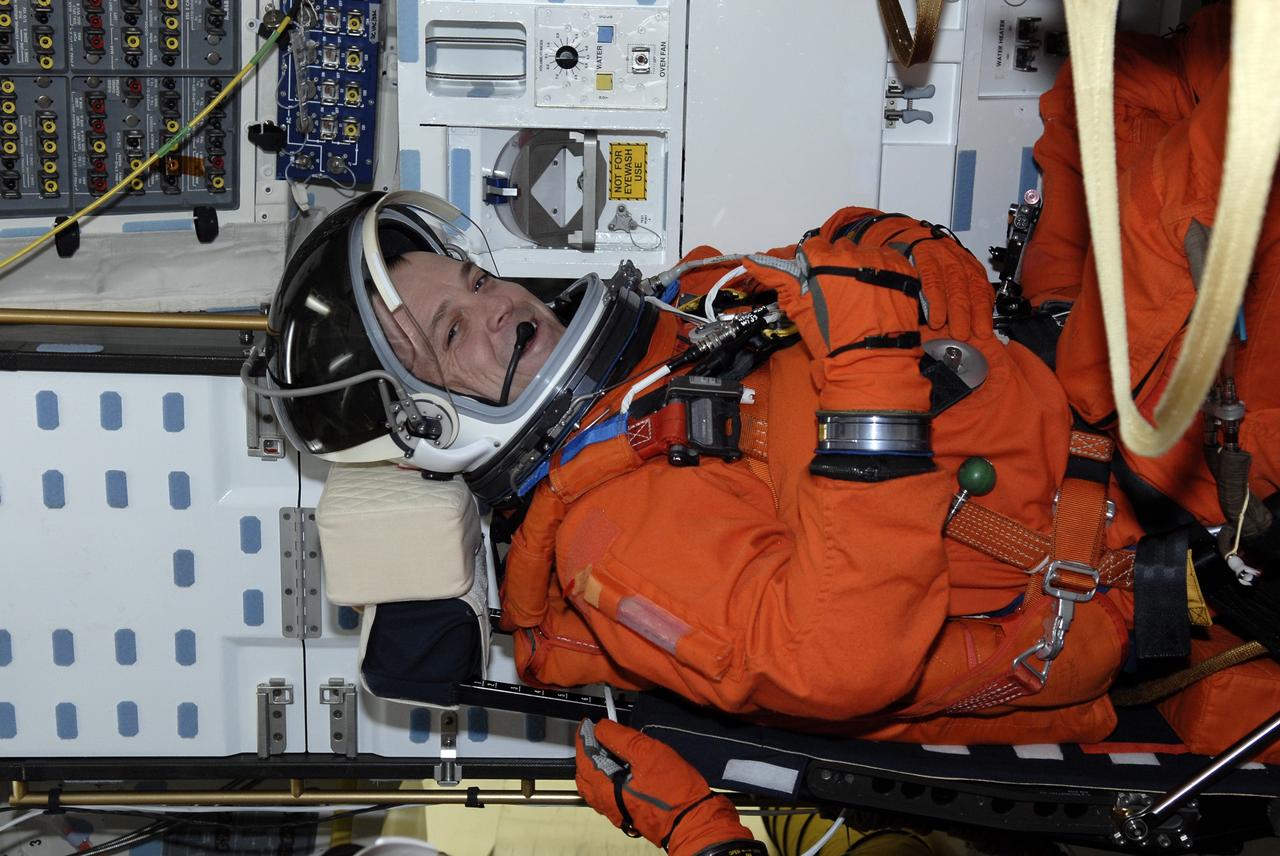
CAPE CANAVERAL, Fla. – On Launch Pad 39A at NASA's Kennedy Space Center in Florida, STS-119 Mission Specialist Richard Arnold is seated in space shuttle Discovery for a simulated launch countdown as part of the prelaunch preparation known as Terminal Countdown Demonstration Test. The TCDT also includes equipment familiarization. Discovery is targeted to launch on the STS-119 mission Feb. 12. During the 14-day mission, the crew will install the S6 truss segment and solar arrays to the starboard side of the International Space Station, completing the station's truss, or backbone. Photo credit: NASA/Kim Shiflett
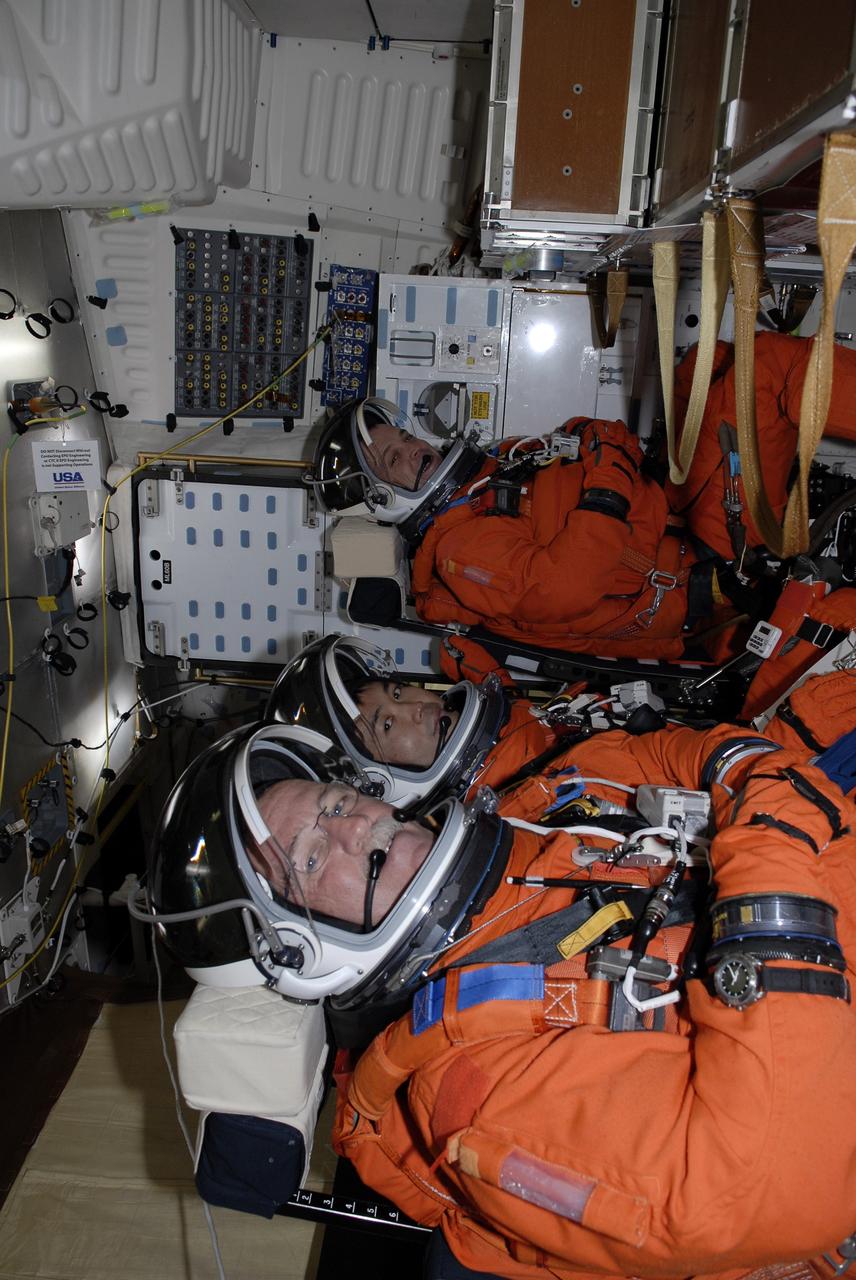
CAPE CANAVERAL, Fla. – On Launch Pad 39A at NASA's Kennedy Space Center in Florida, STS-119 Mission Specialists John Phillips, Koichi Wakata and Richard Arnold are seated in space shuttle Discovery for a simulated launch countdown as part of the prelaunch preparation known as Terminal Countdown Demonstration Test. The TCDT also includes equipment familiarization. Discovery is targeted to launch on the STS-119 mission Feb. 12. During the 14-day mission, the crew will install the S6 truss segment and solar arrays to the starboard side of the International Space Station, completing the station's truss, or backbone. Photo credit: NASA/Kim Shiflett
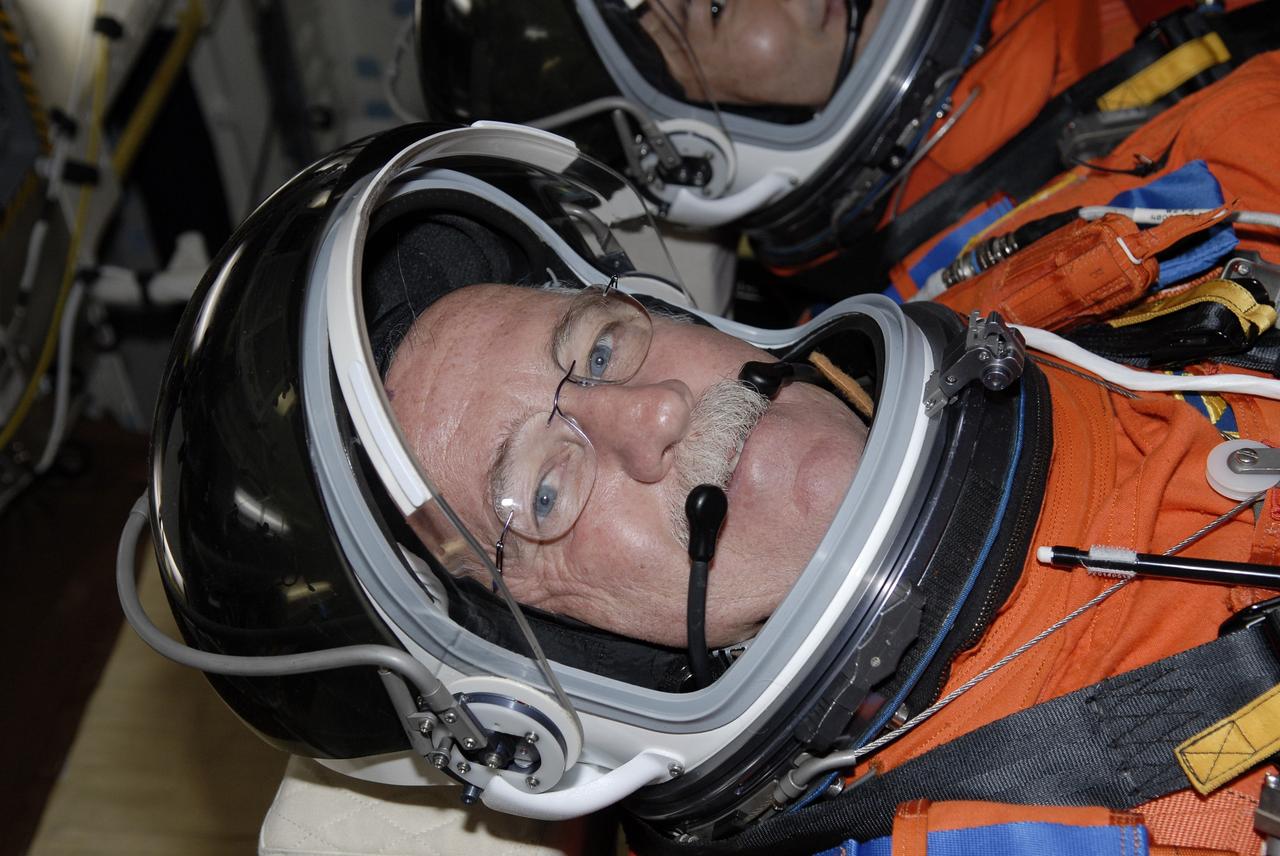
CAPE CANAVERAL, Fla. – On Launch Pad 39A at NASA's Kennedy Space Center in Florida, STS-119 Mission Specialist John Phillips is seated in space shuttle Discovery for a simulated launch countdown as part of the prelaunch preparation known as Terminal Countdown Demonstration Test. The TCDT also includes equipment familiarization. Discovery is targeted to launch on the STS-119 mission Feb. 12. During the 14-day mission, the crew will install the S6 truss segment and solar arrays to the starboard side of the International Space Station, completing the station's truss, or backbone. Photo credit: NASA/Kim Shiflett
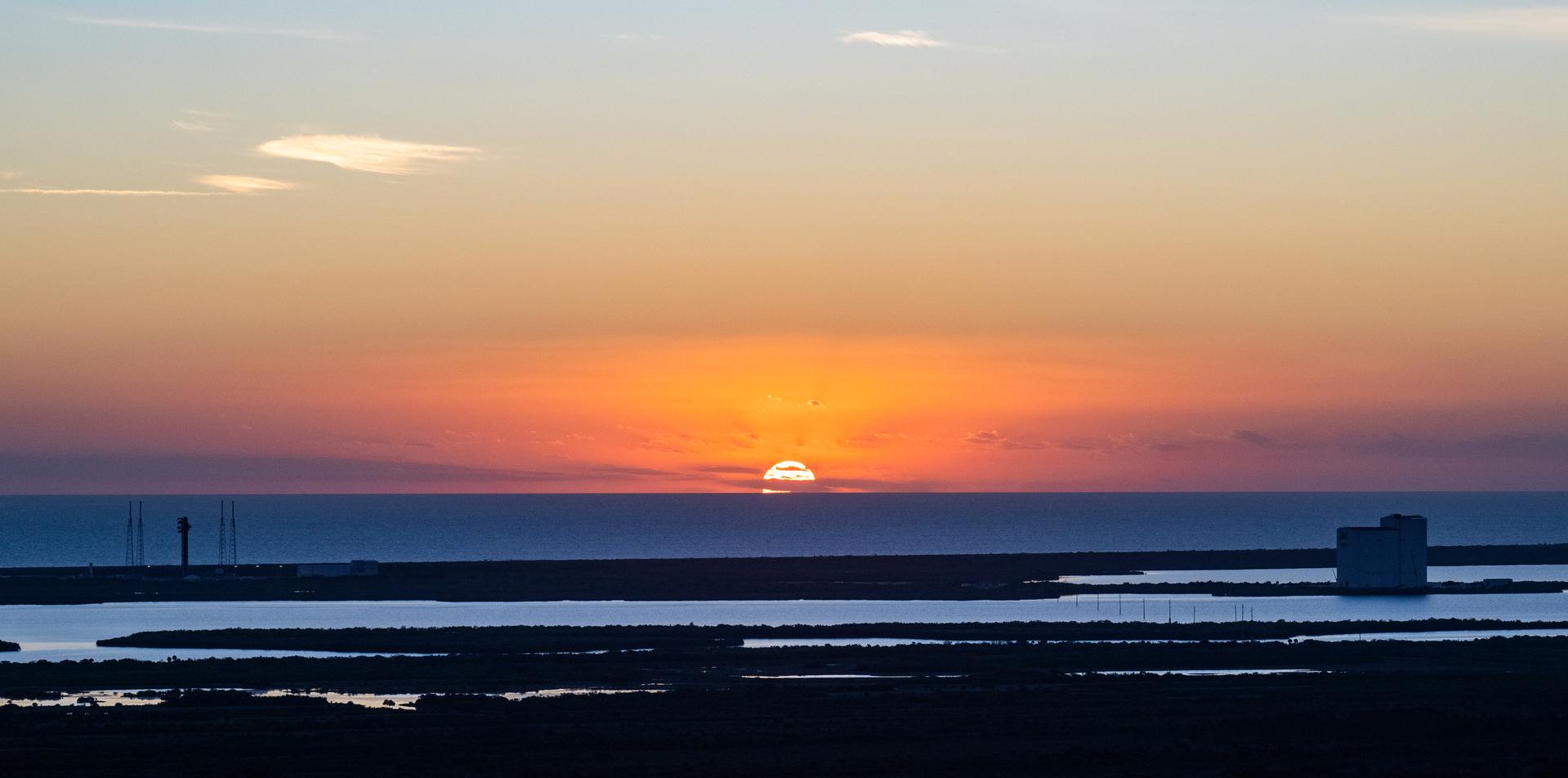
The sun rises shortly before Artemis II crewmembers NASA astronauts Reid Wiseman, commander; Victor Glover, pilot; Christina Koch, mission specialist; and CSA (Canadian Space Agency) astronaut Jeremy Hansen, mission specialist participate in the Artemis II countdown demonstration test, Saturday, Dec. 20, 2025, at NASA’s Kennedy Space Center in Florida. For this operation, the Artemis II crew and launch teams are simulating the launch day timeline including suit-up, walkout, and spacecraft ingress and egress. Through the Artemis campaign, NASA will send astronauts to explore the Moon for scientific discovery, economic benefits, and to build the foundation for the first crewed missions to Mars, for the benefit of all. Photo Credit: (NASA/Keegan Barber)
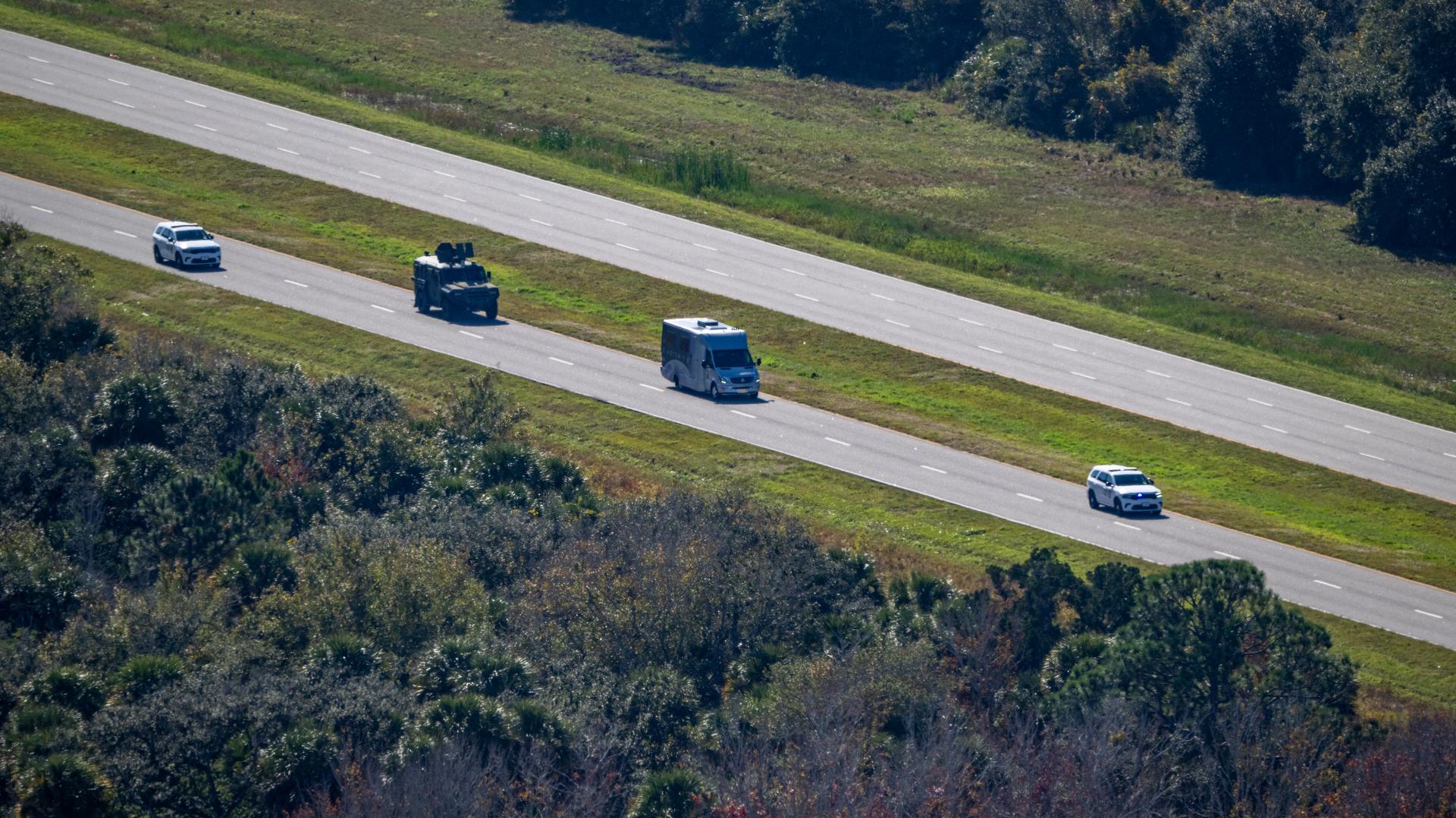
The astronaut transport vehicle carrying Artemis II crewmembers NASA astronauts Reid Wiseman, commander; Victor Glover, pilot; Christina Koch, mission specialist; and CSA (Canadian Space Agency) astronaut Jeremy Hansen, mission specialist is seen as it approaches the Vehicle Assembly Building during the Artemis II countdown demonstration test, Saturday, Dec. 20, 2025, at NASA’s Kennedy Space Center in Florida. For this operation, the Artemis II crew and launch teams are simulating the launch day timeline including suit-up, walkout, and spacecraft ingress and egress. Through the Artemis campaign, NASA will send astronauts to explore the Moon for scientific discovery, economic benefits, and to build the foundation for the first crewed missions to Mars, for the benefit of all. Photo Credit: (NASA/Keegan Barber)
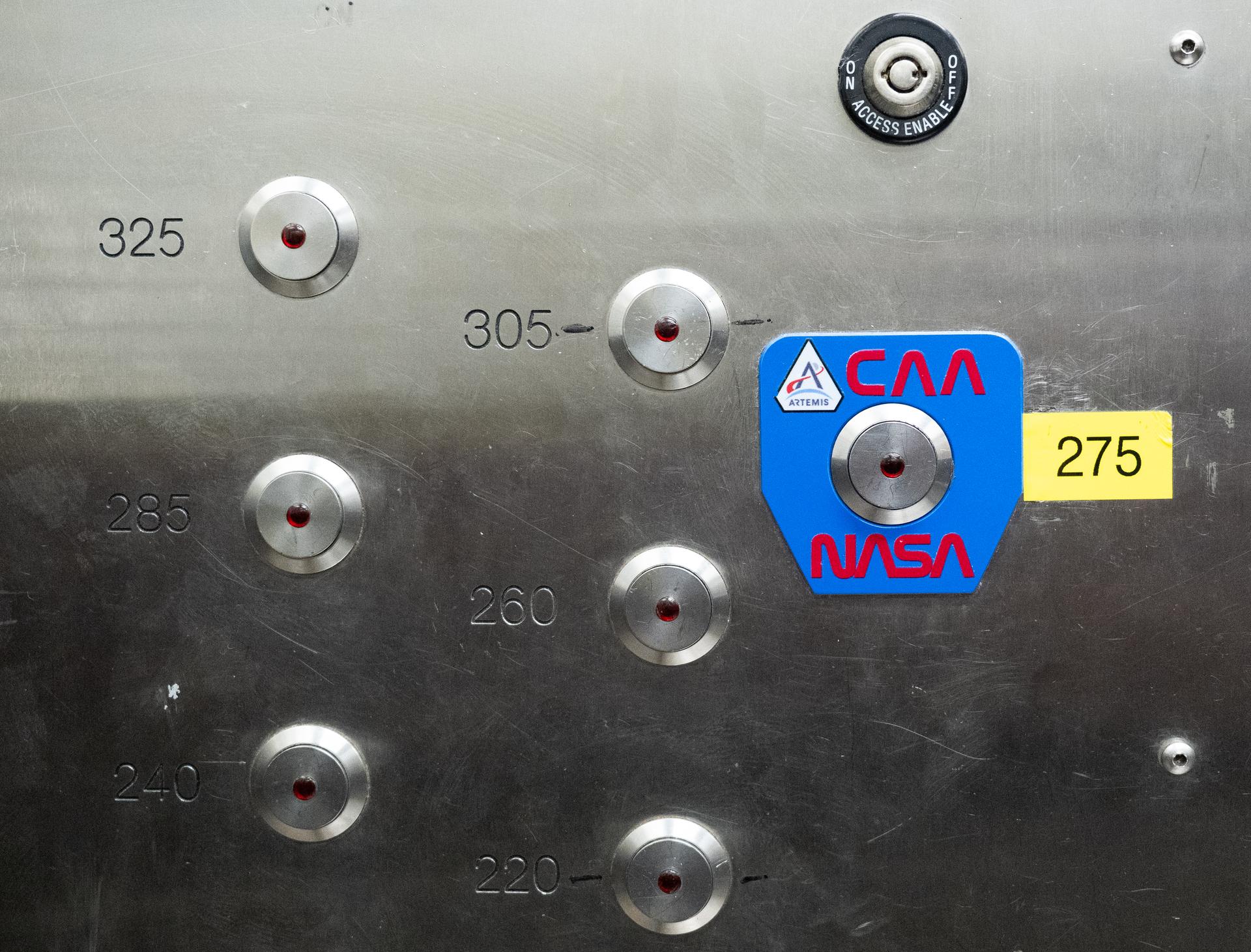
The elevator button for the 275-foot level of the mobile launcher is seen teams prepare for Artemis II crewmembers NASA astronauts Reid Wiseman, commander; Victor Glover, pilot; Christina Koch, mission specialist; and CSA (Canadian Space Agency) astronaut Jeremy Hansen, mission specialist; to arrive and board their Orion spacecraft atop NASA’s Space Launch System rocket during the Artemis II countdown demonstration test, Saturday, Dec. 20, 2025, inside the Vehicle Assembly Building at NASA’s Kennedy Space Center in Florida. For this operation, the Artemis II crew and launch teams are simulating the launch day timeline including suit-up, walkout, and spacecraft ingress and egress. Through the Artemis campaign, NASA will send astronauts to explore the Moon for scientific discovery, economic benefits, and to build the foundation for the first crewed missions to Mars, for the benefit of all. Photo Credit: (NASA/Joel Kowsky)
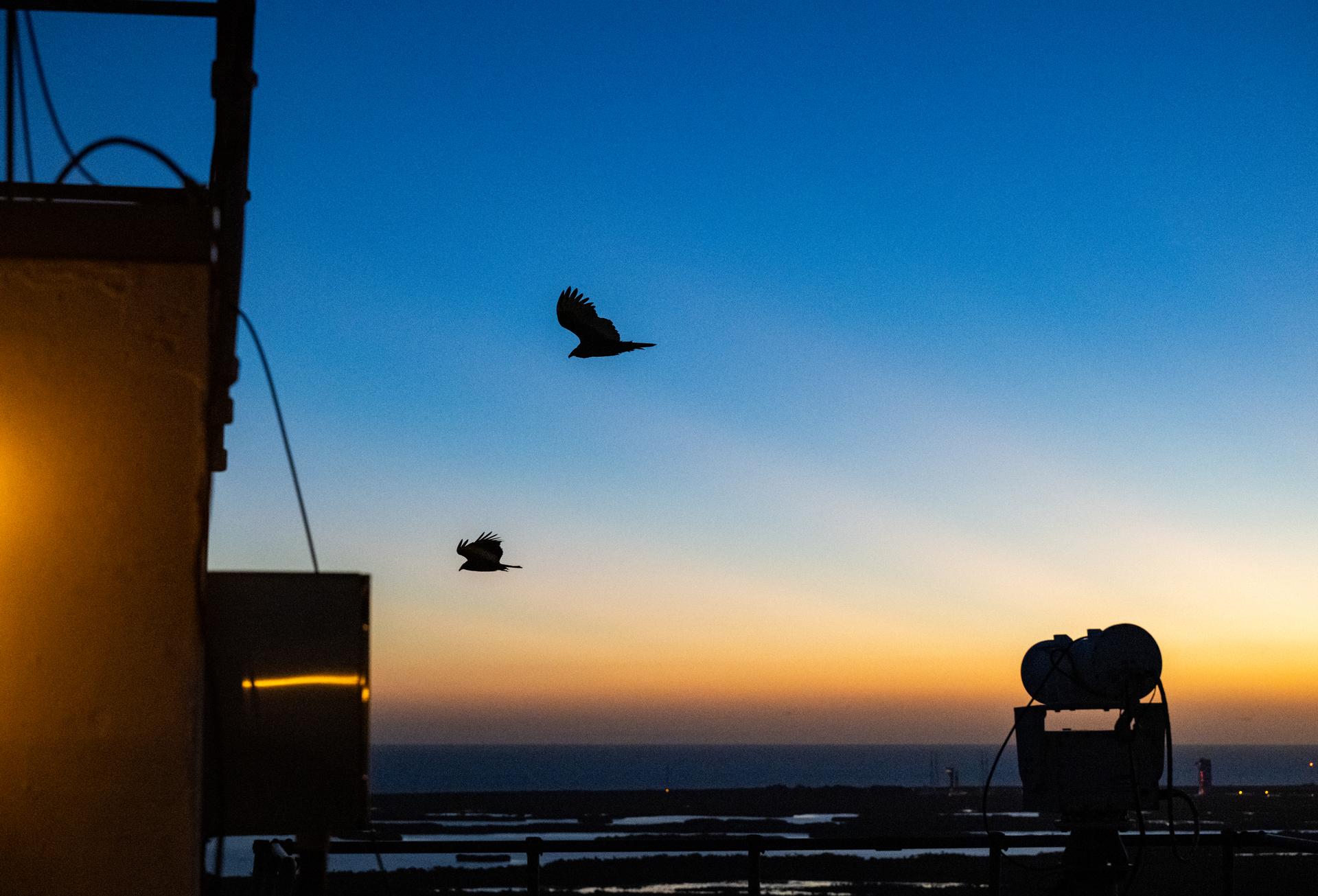
The sun rises shortly before Artemis II crewmembers NASA astronauts Reid Wiseman, commander; Victor Glover, pilot; Christina Koch, mission specialist; and CSA (Canadian Space Agency) astronaut Jeremy Hansen, mission specialist participate in the Artemis II countdown demonstration test, Saturday, Dec. 20, 2025, at NASA’s Kennedy Space Center in Florida. For this operation, the Artemis II crew and launch teams are simulating the launch day timeline including suit-up, walkout, and spacecraft ingress and egress. Through the Artemis campaign, NASA will send astronauts to explore the Moon for scientific discovery, economic benefits, and to build the foundation for the first crewed missions to Mars, for the benefit of all. Photo Credit: (NASA/Keegan Barber)
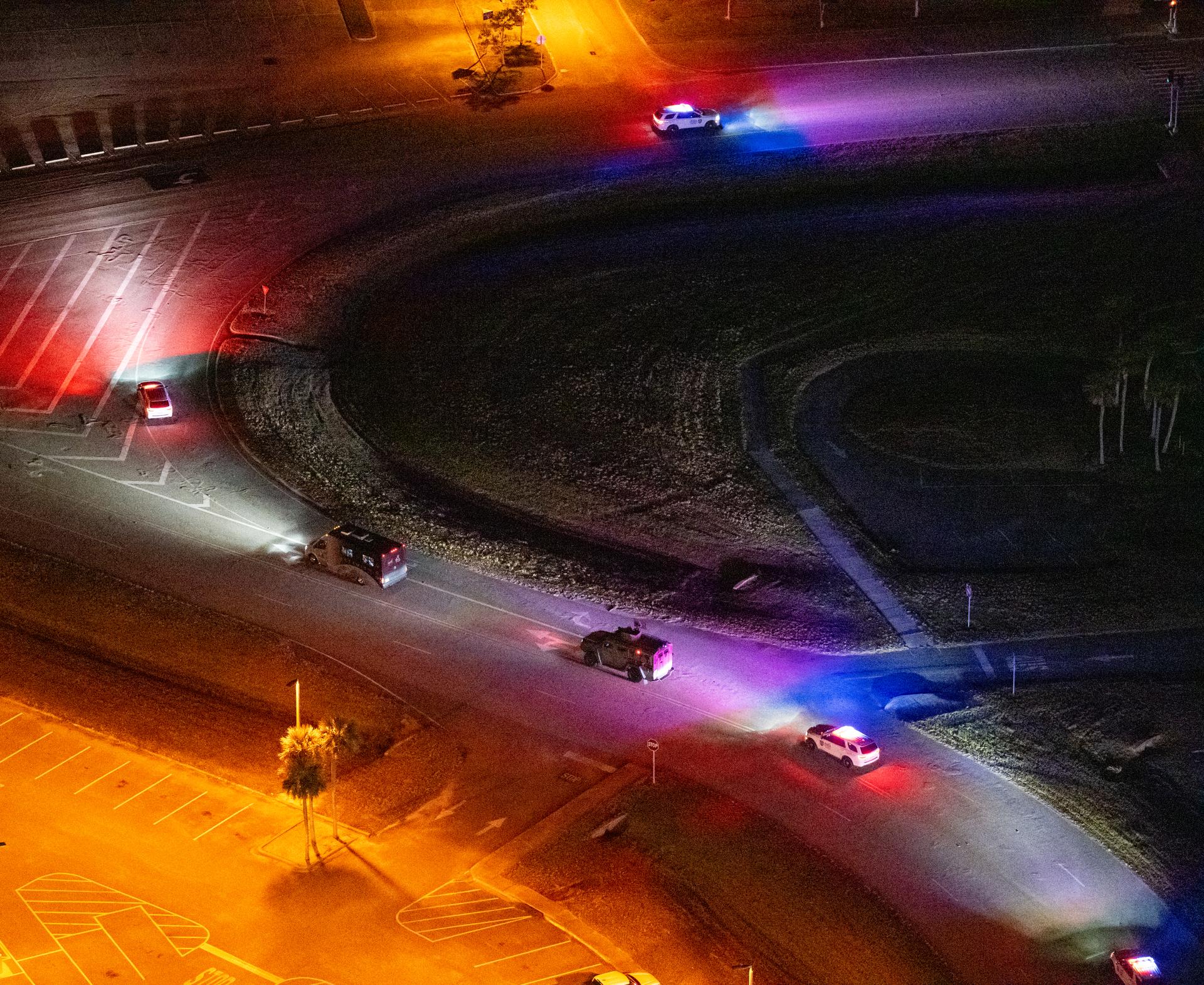
The astronaut transport vehicle carrying Artemis II crewmembers NASA astronauts Reid Wiseman, commander; Victor Glover, pilot; Christina Koch, mission specialist; and CSA (Canadian Space Agency) astronaut Jeremy Hansen, mission specialist is seen as it departs the Vehicle Assembly Building following the Artemis II countdown demonstration test, Saturday, Dec. 20, 2025, at NASA’s Kennedy Space Center in Florida. For this operation, the Artemis II crew and launch teams simulated the launch day timeline including suit-up, walkout, and spacecraft ingress and egress. Through the Artemis campaign, NASA will send astronauts to explore the Moon for scientific discovery, economic benefits, and to build the foundation for the first crewed missions to Mars, for the benefit of all. Photo Credit: (NASA/Keegan Barber)
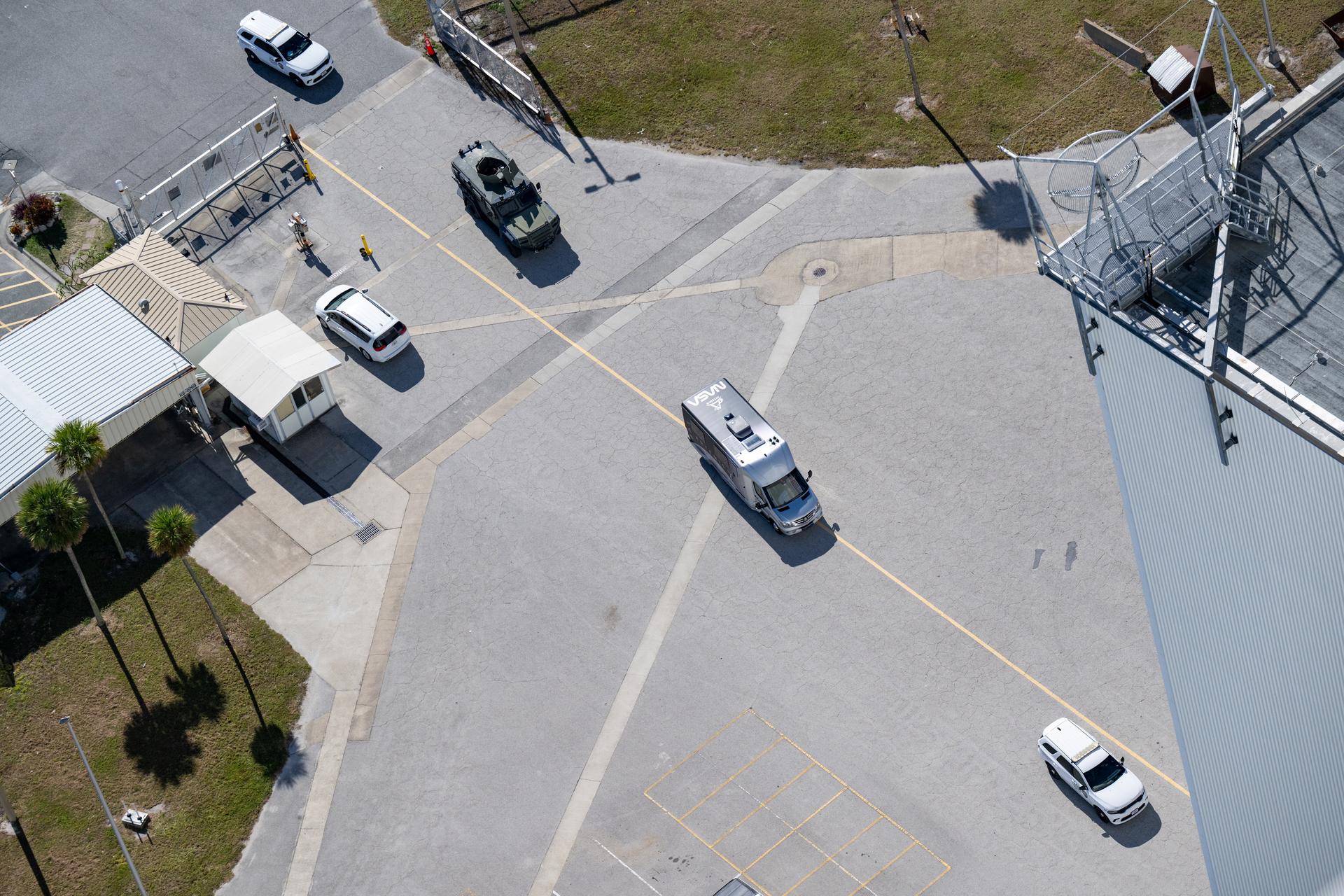
The astronaut transport vehicle carrying Artemis II crewmembers NASA astronauts Reid Wiseman, commander; Victor Glover, pilot; Christina Koch, mission specialist; and CSA (Canadian Space Agency) astronaut Jeremy Hansen, mission specialist is seen as it approaches the Vehicle Assembly Building during the Artemis II countdown demonstration test, Saturday, Dec. 20, 2025, at NASA’s Kennedy Space Center in Florida. For this operation, the Artemis II crew and launch teams are simulating the launch day timeline including suit-up, walkout, and spacecraft ingress and egress. Through the Artemis campaign, NASA will send astronauts to explore the Moon for scientific discovery, economic benefits, and to build the foundation for the first crewed missions to Mars, for the benefit of all. Photo Credit: (NASA/Keegan Barber)
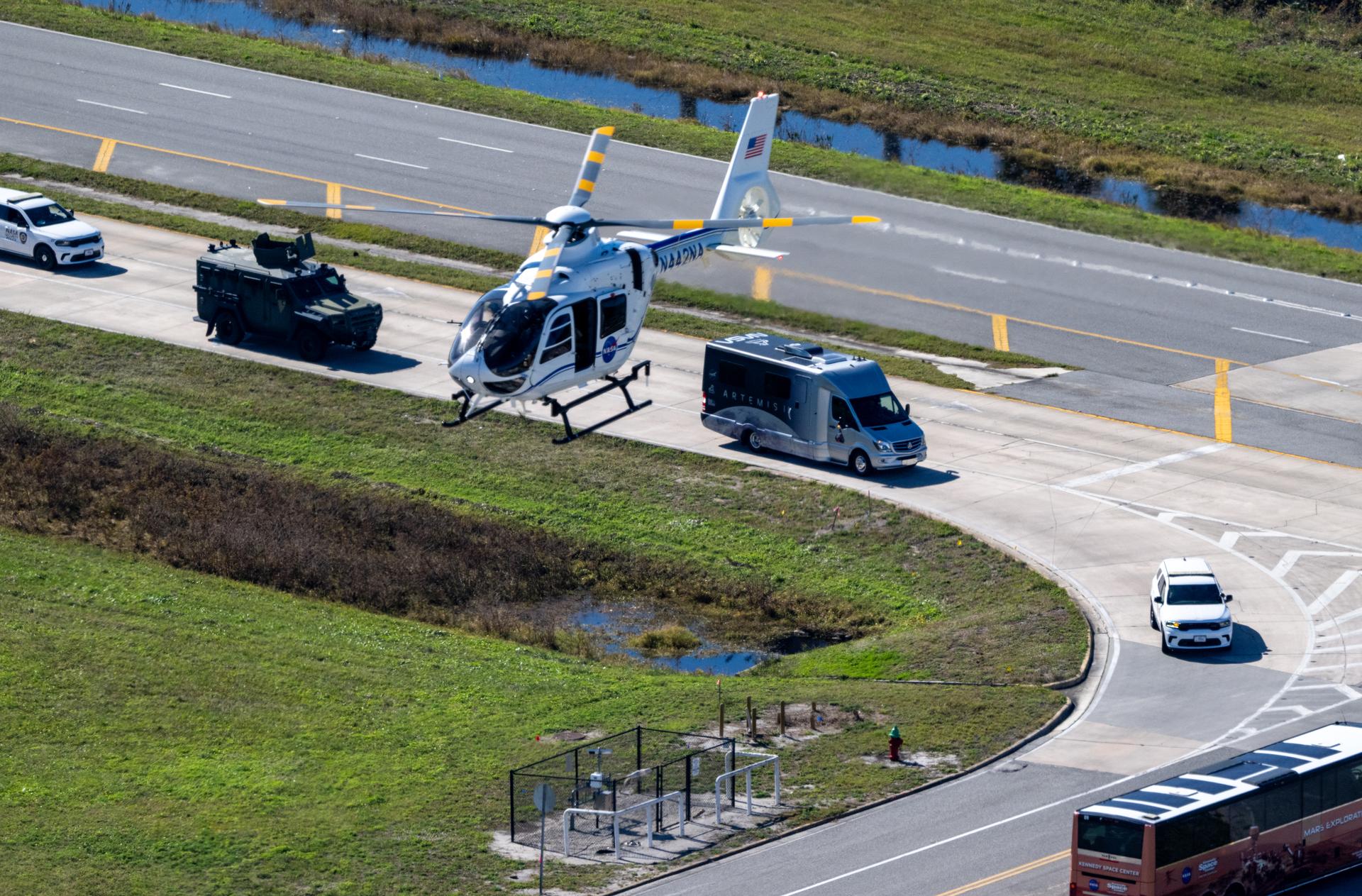
The astronaut transport vehicle carrying Artemis II crewmembers NASA astronauts Reid Wiseman, commander; Victor Glover, pilot; Christina Koch, mission specialist; and CSA (Canadian Space Agency) astronaut Jeremy Hansen, mission specialist is seen as it approaches the Vehicle Assembly Building during the Artemis II countdown demonstration test, Saturday, Dec. 20, 2025, at NASA’s Kennedy Space Center in Florida. For this operation, the Artemis II crew and launch teams are simulating the launch day timeline including suit-up, walkout, and spacecraft ingress and egress. Through the Artemis campaign, NASA will send astronauts to explore the Moon for scientific discovery, economic benefits, and to build the foundation for the first crewed missions to Mars, for the benefit of all. Photo Credit: (NASA/Keegan Barber)

The sun rises shortly before Artemis II crewmembers NASA astronauts Reid Wiseman, commander; Victor Glover, pilot; Christina Koch, mission specialist; and CSA (Canadian Space Agency) astronaut Jeremy Hansen, mission specialist participate in the Artemis II countdown demonstration test, Saturday, Dec. 20, 2025, at NASA’s Kennedy Space Center in Florida. For this operation, the Artemis II crew and launch teams are simulating the launch day timeline including suit-up, walkout, and spacecraft ingress and egress. Through the Artemis campaign, NASA will send astronauts to explore the Moon for scientific discovery, economic benefits, and to build the foundation for the first crewed missions to Mars, for the benefit of all. Photo Credit: (NASA/Keegan Barber)
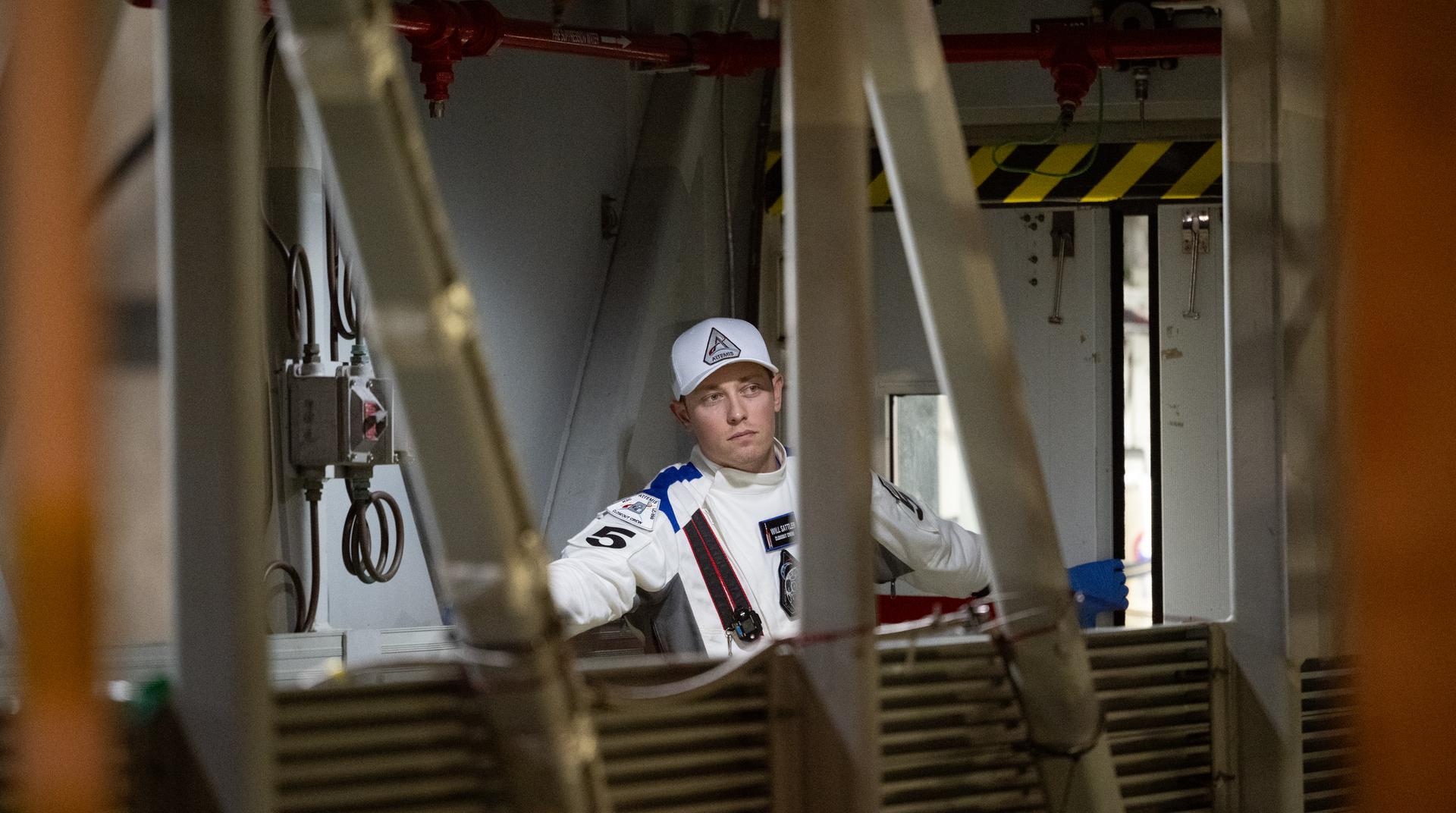
Will Sattler of the Closeout Crew is seen on the crew access arm just outside of the white room awaiting the arrival of Artemis II crewmembers NASA astronauts Reid Wiseman, commander; Victor Glover, pilot; Christina Koch, mission specialist; and CSA (Canadian Space Agency) astronaut Jeremy Hansen, mission specialist; at the 275-foot level of the mobile launcher as they prepare to board their Orion spacecraft atop NASA’s Space Launch System rocket during the Artemis II countdown demonstration test, Saturday, Dec. 20, 2025, inside the Vehicle Assembly Building at NASA’s Kennedy Space Center in Florida. For this operation, the Artemis II crew and launch teams are simulating the launch day timeline including suit-up, walkout, and spacecraft ingress and egress. Through the Artemis campaign, NASA will send astronauts to explore the Moon for scientific discovery, economic benefits, and to build the foundation for the first crewed missions to Mars, for the benefit of all. Photo Credit: (NASA/Joel Kowsky)
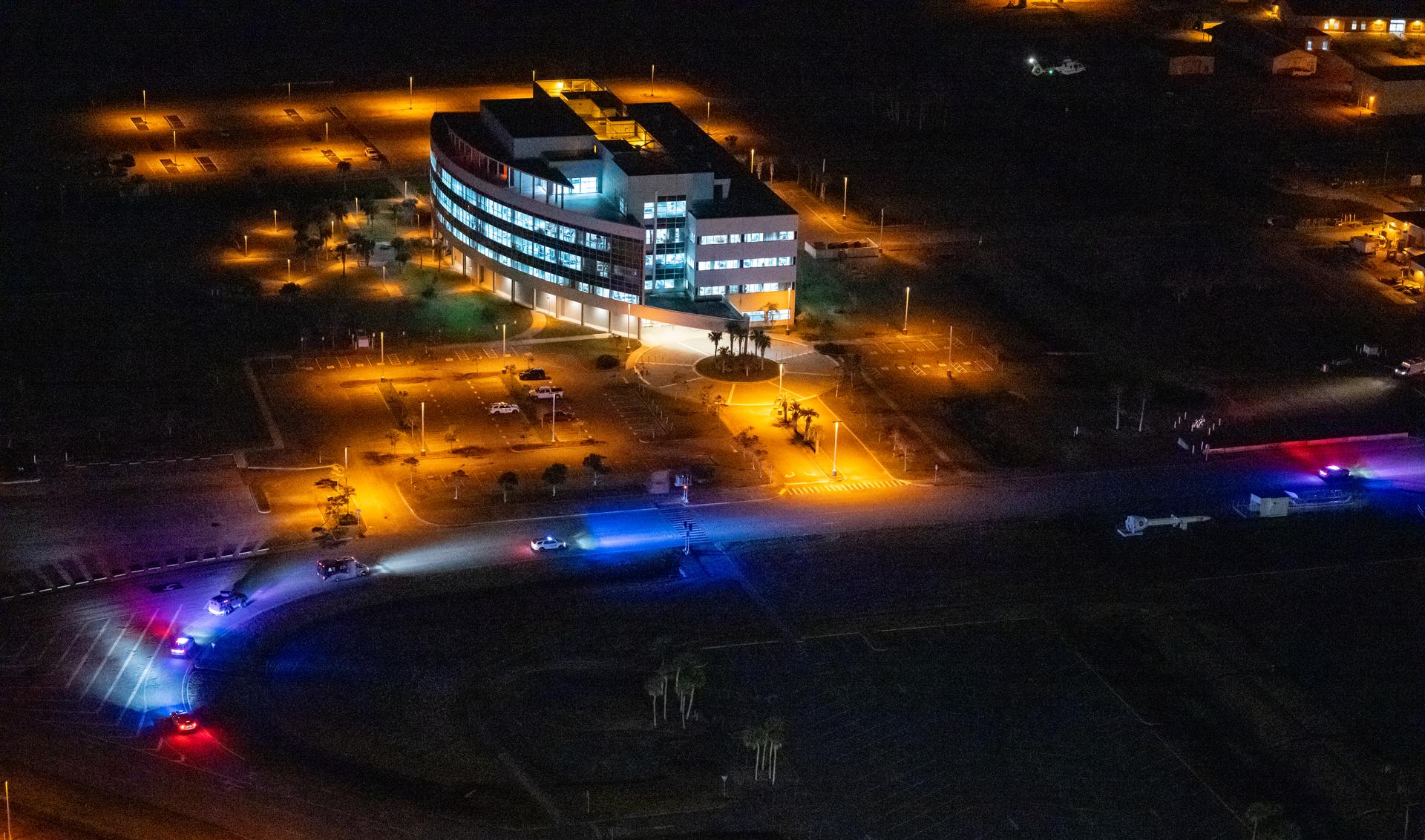
The astronaut transport vehicle carrying Artemis II crewmembers NASA astronauts Reid Wiseman, commander; Victor Glover, pilot; Christina Koch, mission specialist; and CSA (Canadian Space Agency) astronaut Jeremy Hansen, mission specialist is seen as it departs the Vehicle Assembly Building following the Artemis II countdown demonstration test, Saturday, Dec. 20, 2025, at NASA’s Kennedy Space Center in Florida. For this operation, the Artemis II crew and launch teams simulated the launch day timeline including suit-up, walkout, and spacecraft ingress and egress. Through the Artemis campaign, NASA will send astronauts to explore the Moon for scientific discovery, economic benefits, and to build the foundation for the first crewed missions to Mars, for the benefit of all. Photo Credit: (NASA/Keegan Barber)
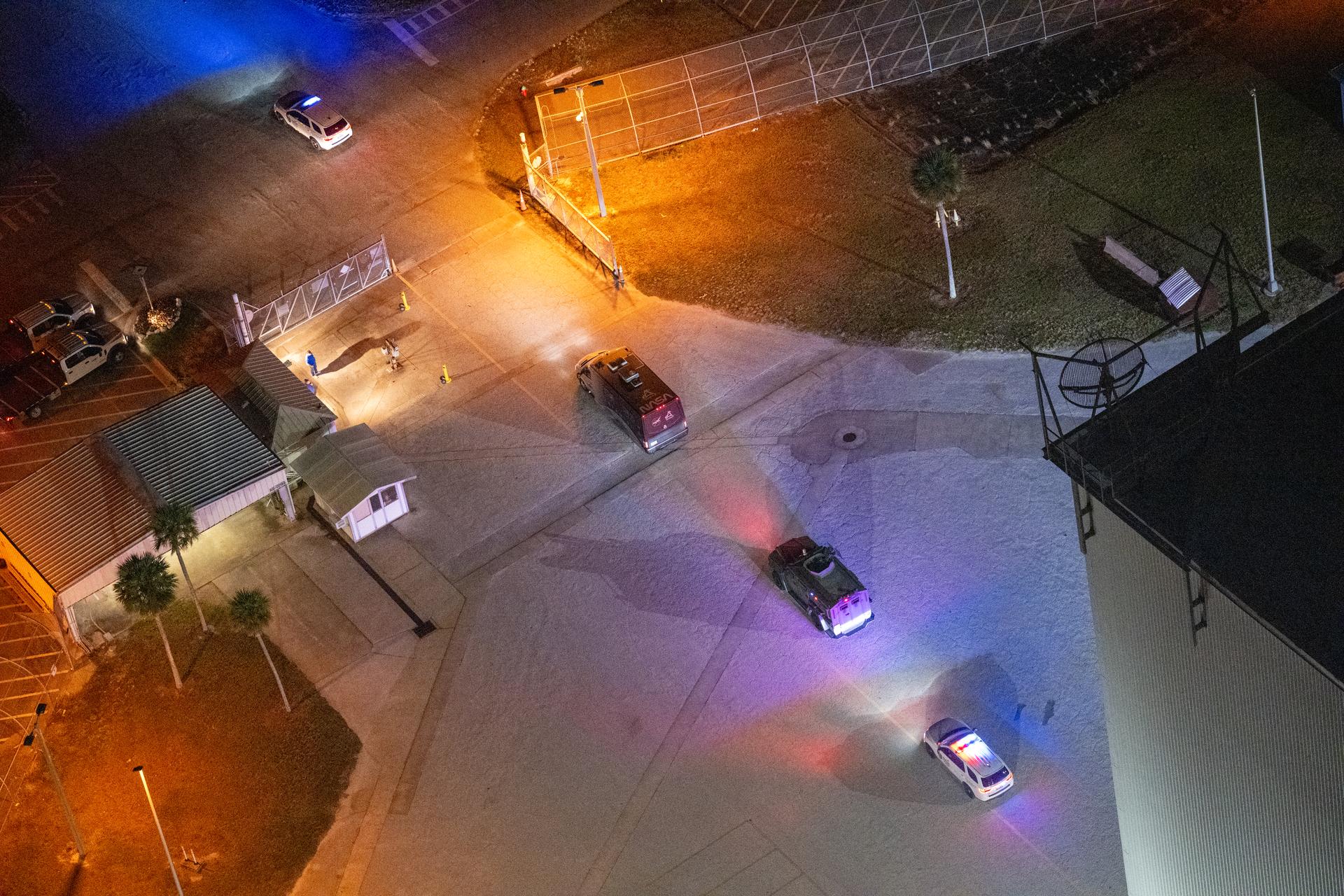
The astronaut transport vehicle carrying Artemis II crewmembers NASA astronauts Reid Wiseman, commander; Victor Glover, pilot; Christina Koch, mission specialist; and CSA (Canadian Space Agency) astronaut Jeremy Hansen, mission specialist is seen as it departs the Vehicle Assembly Building following the Artemis II countdown demonstration test, Saturday, Dec. 20, 2025, at NASA’s Kennedy Space Center in Florida. For this operation, the Artemis II crew and launch teams simulated the launch day timeline including suit-up, walkout, and spacecraft ingress and egress. Through the Artemis campaign, NASA will send astronauts to explore the Moon for scientific discovery, economic benefits, and to build the foundation for the first crewed missions to Mars, for the benefit of all. Photo Credit: (NASA/Keegan Barber)
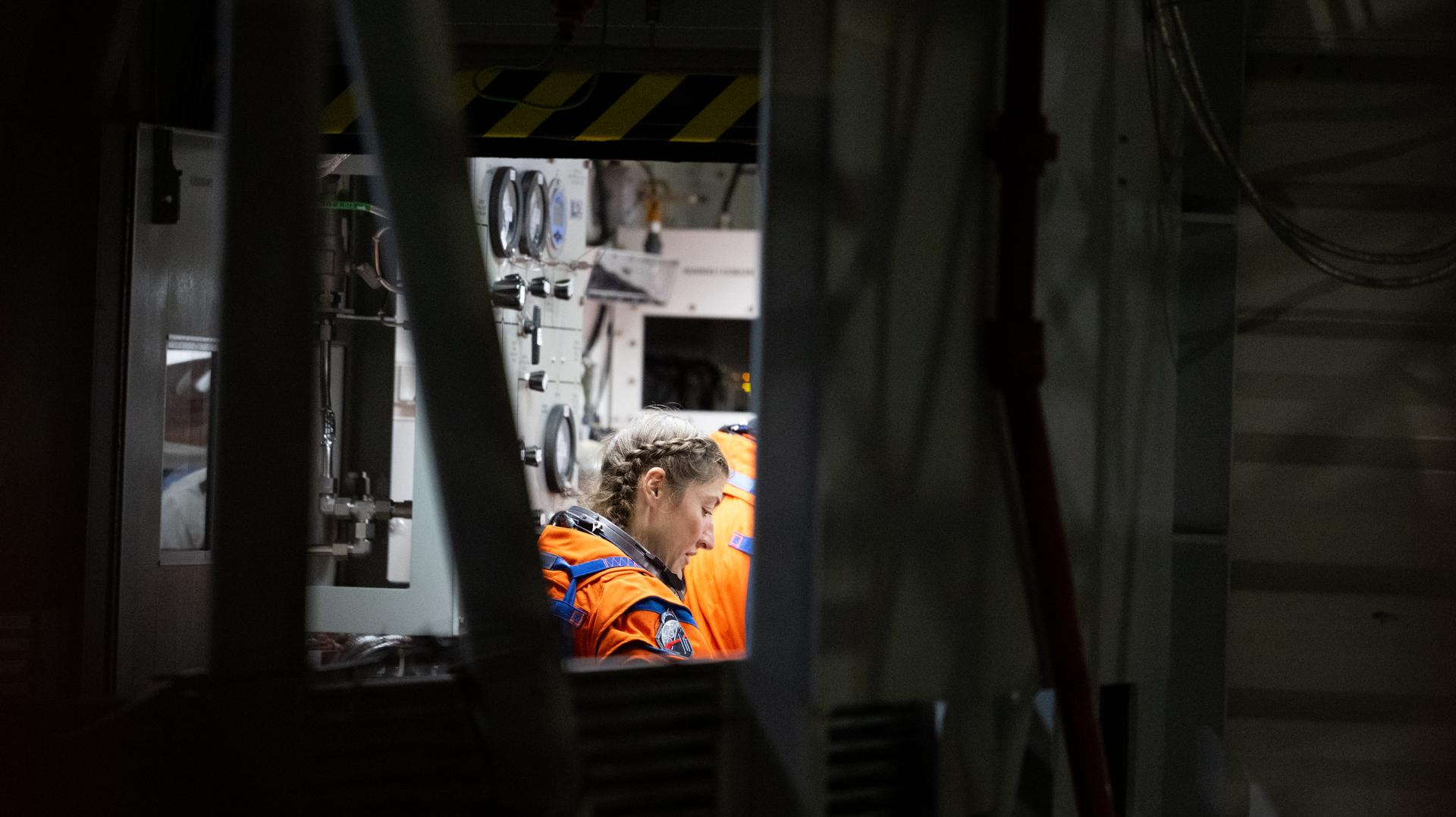
Artemis II crewmember NASA astronaut Christina Koch, mission specialist, is seen inside the white room at the 275-foot level of the mobile launcher she and fellow crewmates NASA astronauts Reid Wiseman, commander; Victor Glover, pilot; and CSA (Canadian Space Agency) astronaut Jeremy Hansen, mission specialist, prepare to board their Orion spacecraft atop NASA’s Space Launch System rocket during the Artemis II countdown demonstration test, Saturday, Dec. 20, 2025, inside the Vehicle Assembly Building at NASA’s Kennedy Space Center in Florida. For this operation, the Artemis II crew and launch teams are simulating the launch day timeline including suit-up, walkout, and spacecraft ingress and egress. Through the Artemis campaign, NASA will send astronauts to explore the Moon for scientific discovery, economic benefits, and to build the foundation for the first crewed missions to Mars, for the benefit of all. Photo Credit: (NASA/Joel Kowsky)

CAPE CANAVERAL, Fla. – After practicing emergency egress from the pad, the STS-119 crew members pose on the 225-foot level for a crew photo. From left are Mission Specialists Richard Arnold and Steve Swanson, Pilot Tony Antonelli, Commander Lee Archambault, and Mission Specialists Koichi Wakata, John Phillips and Joseph Acaba. The crew also took part in a simulated launch countdown, part of the prelaunch preparation known as Terminal Countdown Demonstration Test. The TCDT also includes equipment familiarization. Discovery is targeted to launch on the STS-119 mission Feb. 12. During the 14-day mission, the crew will install the S6 truss segment and solar arrays to the starboard side of the International Space Station, completing the station's truss, or backbone. Photo credit: NASA/Kim Shiflett