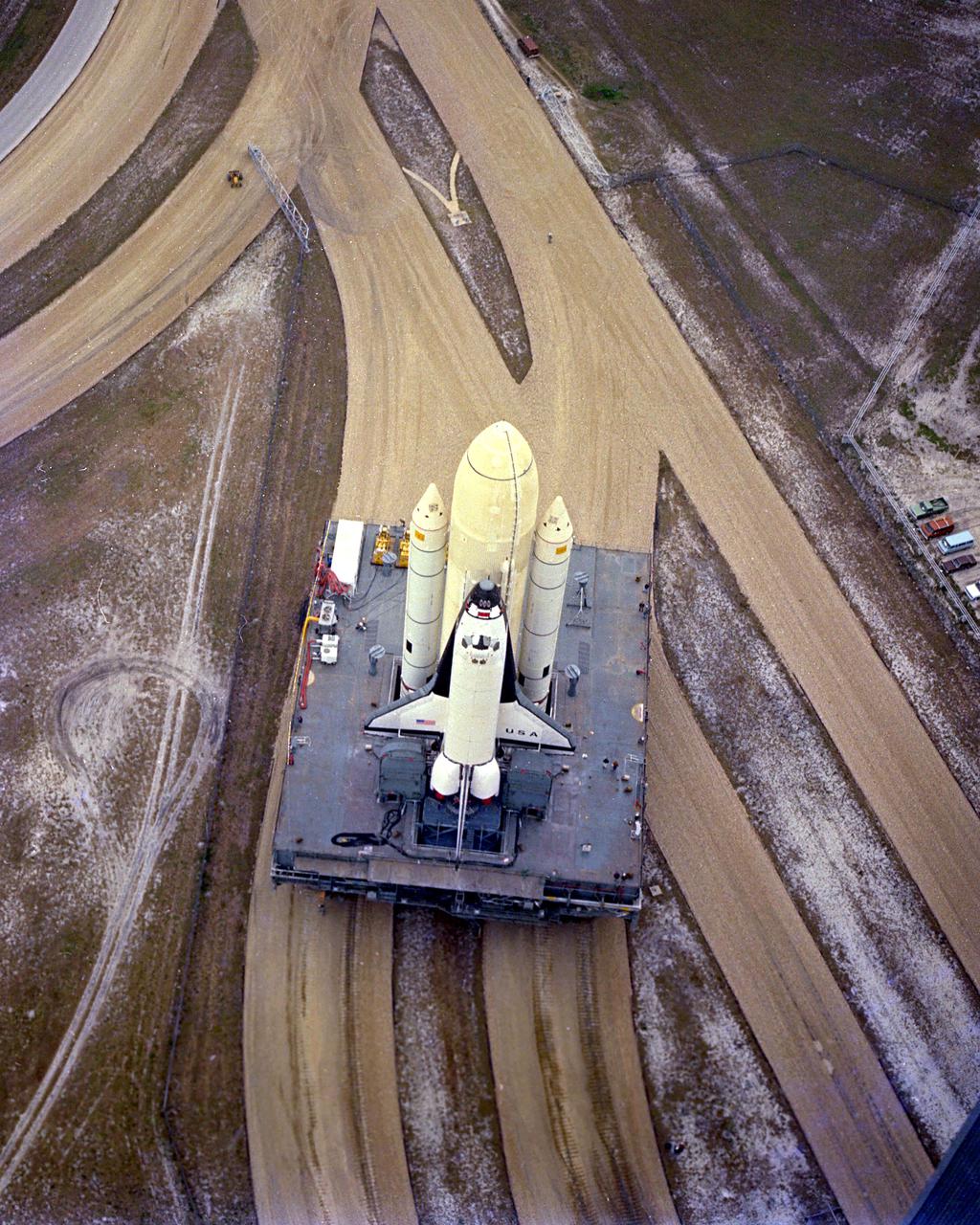
KENNEDY SPACE CENTER, FLA. - The first Space Shuttle vehicle destined to fly in space moves toward Pad A at Complex 39, where it will be launched. The STS-1 vehicle - consisting of America's first reusable spaceship, Columbia, the external propellant tank and twin solid rocket boosters - was assembled on a Mobile Launcher Platform in the Vehicle Assembly Building. A six-million-pound tractor, called the Crawler-Transporter, is used to carry the Space Shuttle from the VAB to the launch pad, about 3.5 miles away.
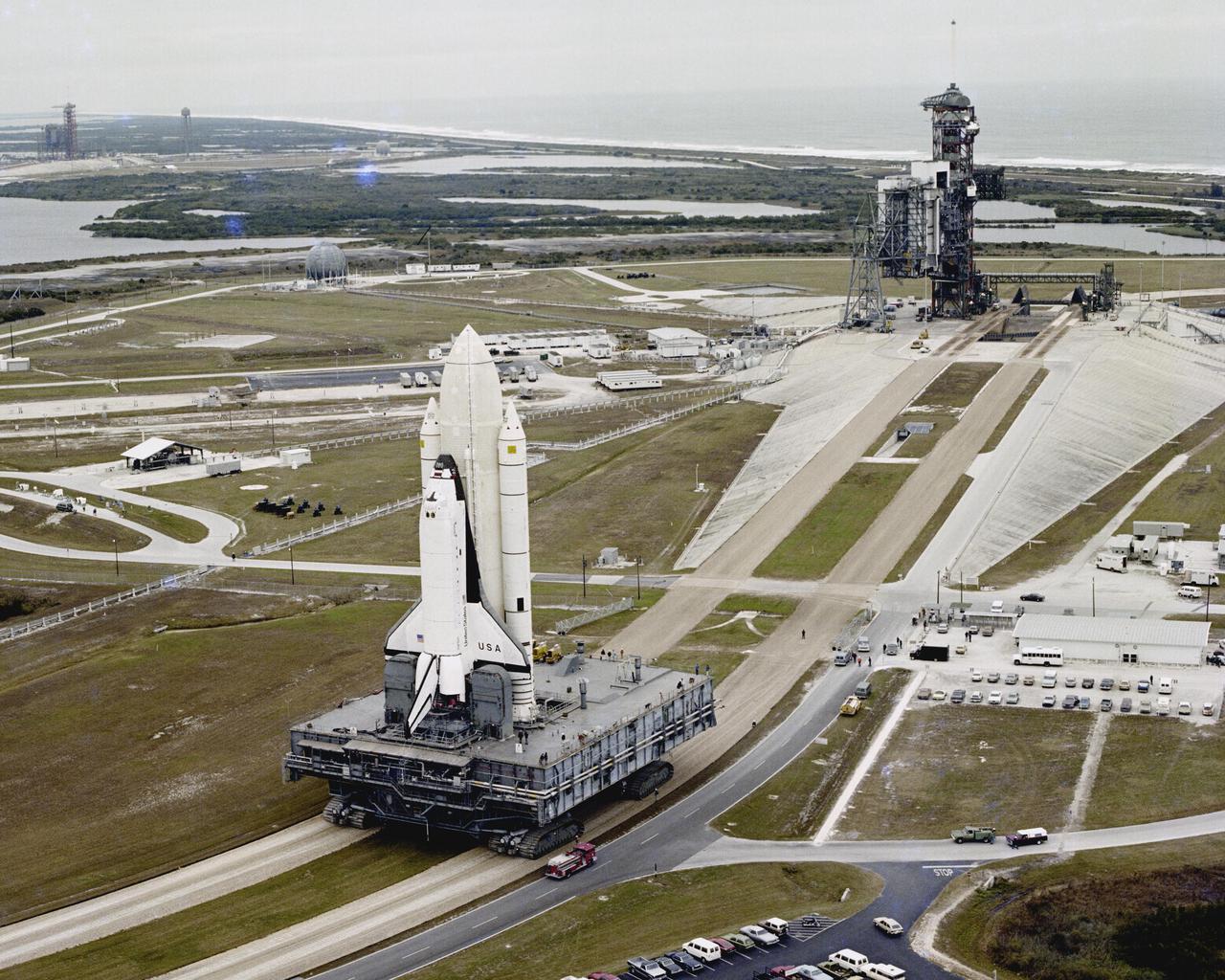
KENNEDY SPACE CENTER, FLA. - The first Space Shuttle vehicle destined to fly in space moves toward Launch Complex 39A where it will be launched. The STS-1 vehicle, consisting of America’s first reusable space ship - the orbiter Columbia, an external propellant tank and two solid rocket boosters, was assembled on a Mobile Launcher Platform in the Vehicle Assembly Building. A six-million pound tractor, called the Crawler-Transporter, is used to carry the Space Shuttle from the VAB to the launch pad, some 3.5 miles away.
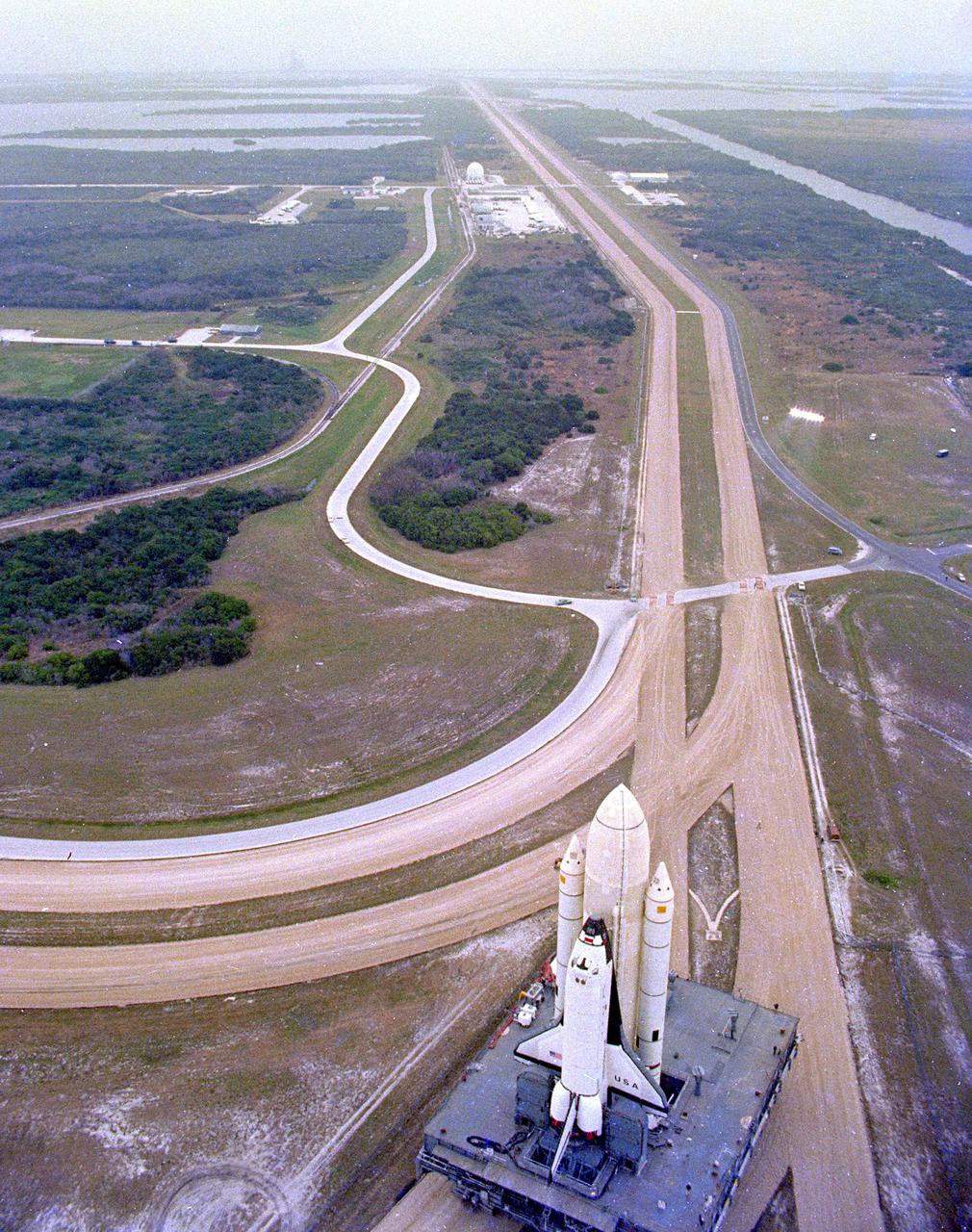
KENNEDY SPACE CENTER, FLA. - The first Space Shuttle vehicle destined to fly in space moves toward Pad A at Complex 39, where it will be launched. The STS-1 vehicle - consisting of America's first reusable spaceship, Columbia, the external propellant tank and twin solid rocket boosters - was assembled on a Mobile Launcher Platform in the Vehicle Assembly Building. A six-million-pound tractor, called the Crawler-Transporter, is used to carry the Space Shuttle from the VAB to the launch pad, about 3.5 miles away.
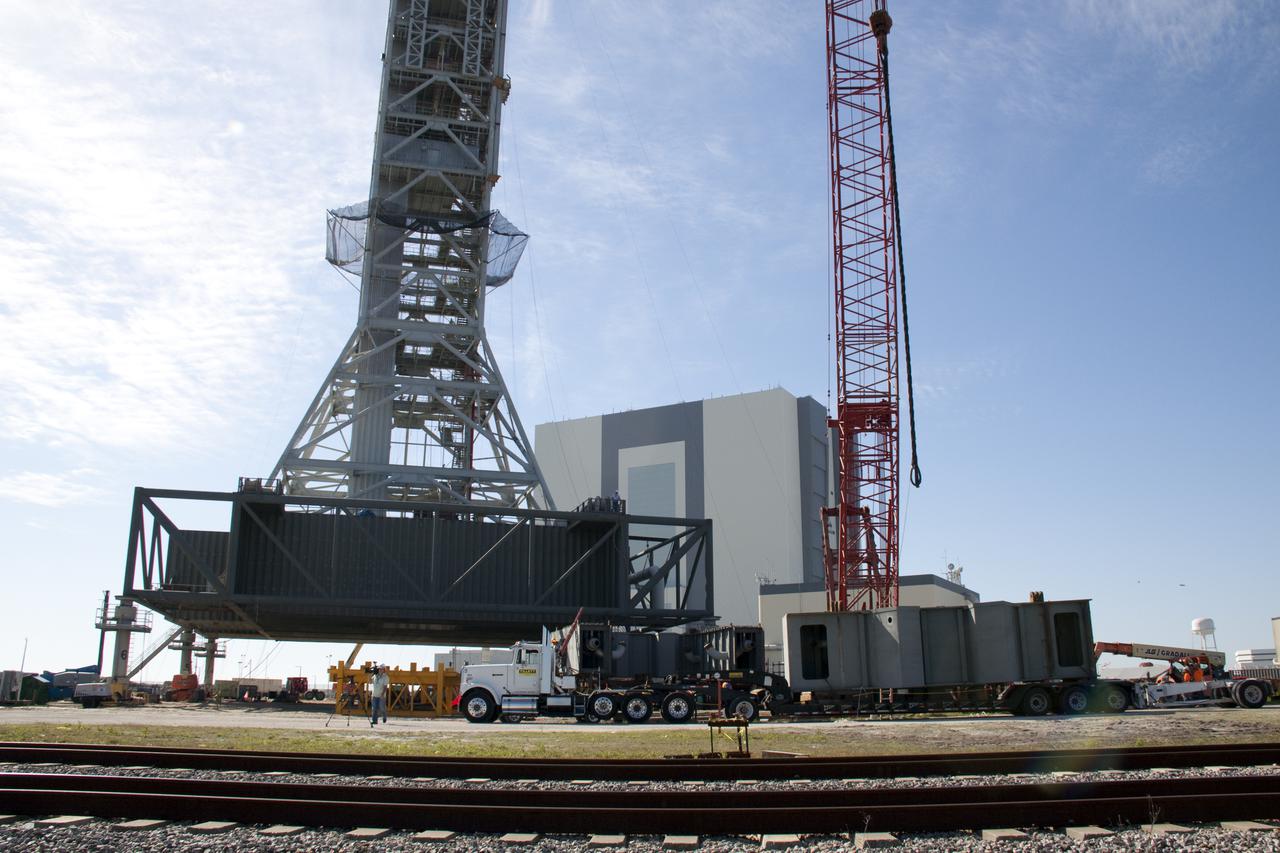
CAPE CANAVERAL, Fla. – At NASA's Kennedy Space Center in Florida, a tractor-trailer delivers the fourth segment of the launch mount for a new mobile launcher, or ML, being constructed to support NASA's future human spaceflight program. The launcher's tower looms over the cab of the tractor. In the background is the 525-foot-tall Vehicle Assembly Building. The construction is taking place in the mobile launcher park site north of Kennedy's Vehicle Assembly Building. The new launcher is 355 feet tall and has multiple platforms for personnel access. The base of the launcher is lighter than space shuttle mobile launcher platforms so the crawler-transporter can pick up the heavier load of the tower and a taller rocket. For information on NASA's future plans, visit http:__www.nasa.gov. Photo credit: NASA_Troy Cryder

KENNEDY SPACE CENTER, FLA. - A tractor-trailer arrives at the Crawler Transporter (CT) area with a new shipment of crawler shoes. The new shoes were manufactured by ME Global in Duluth, Minn. The CT transports the Mobile Launcher Platform, with the assembled Space Shuttle aboard, between the refurbishment area, the VAB and Launch Complex Pads 39A and 39B. The crawlers have 456 shoes, 57 per belt (8 belts in all). Each shoe weighs 2,200 pounds. The original shoes were manufactured for the Apollo Program. Cracks appeared in the shoes in recent years spurring a need for replacement. The new manufacturer, in Duluth, Minn., has improved the design for Return to Flight and use through the balance of the Space Shuttle Program.
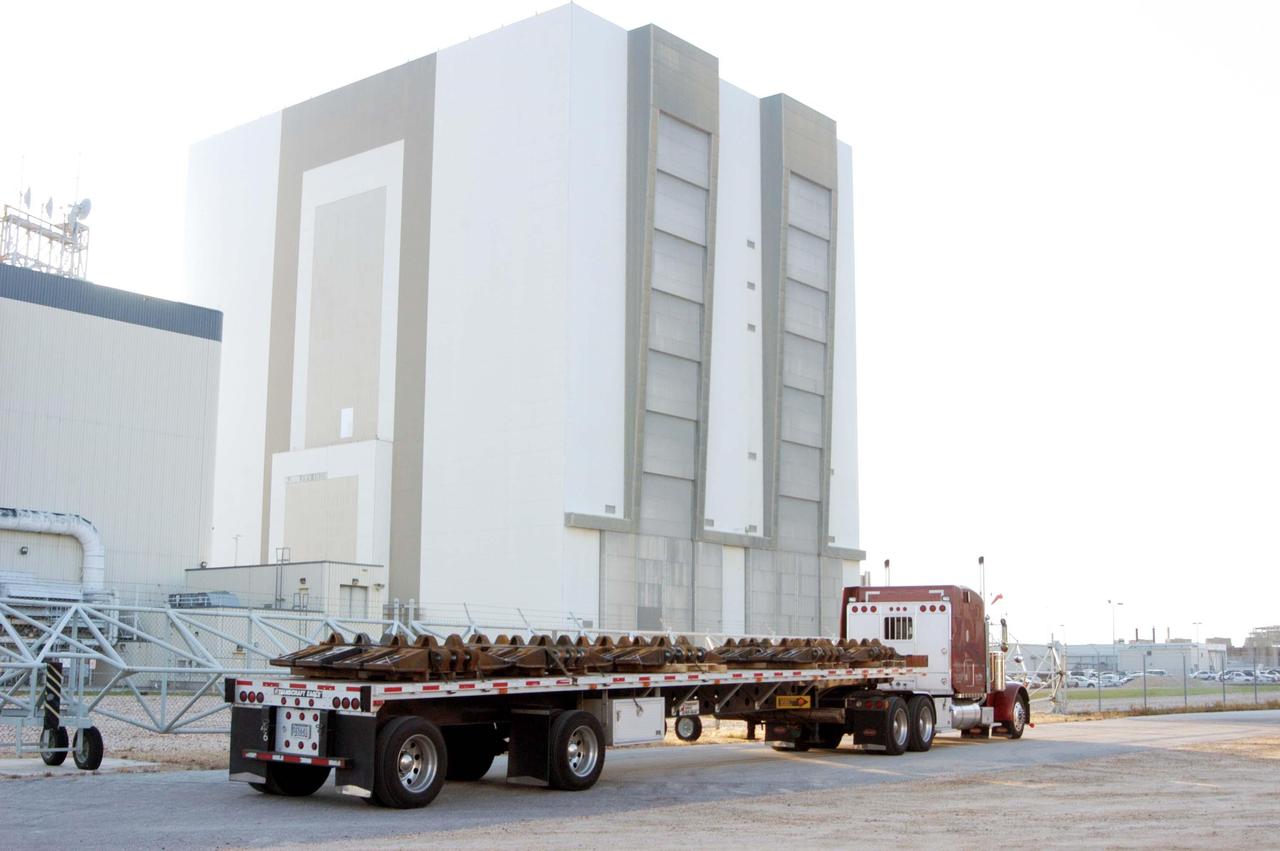
KENNEDY SPACE CENTER, FLA. - A tractor-trailer arrives at the Crawler Transporter (CT) area with a new shipment of crawler shoes. In the background is the Vehicle Assembly Building. The new shoes were manufactured by ME Global in Duluth, Minn. The CT transports the Mobile Launcher Platform, with the assembled Space Shuttle aboard, between the refurbishment area, the VAB and Launch Complex Pads 39A and 39B. The crawlers have 456 shoes, 57 per belt (8 belts in all). Each shoe weighs 2,200 pounds. The original shoes were manufactured for the Apollo Program. Cracks appeared in the shoes in recent years spurring a need for replacement. The new manufacturer, in Duluth, Minn., has improved the design for Return to Flight and use through the balance of the Space Shuttle Program.
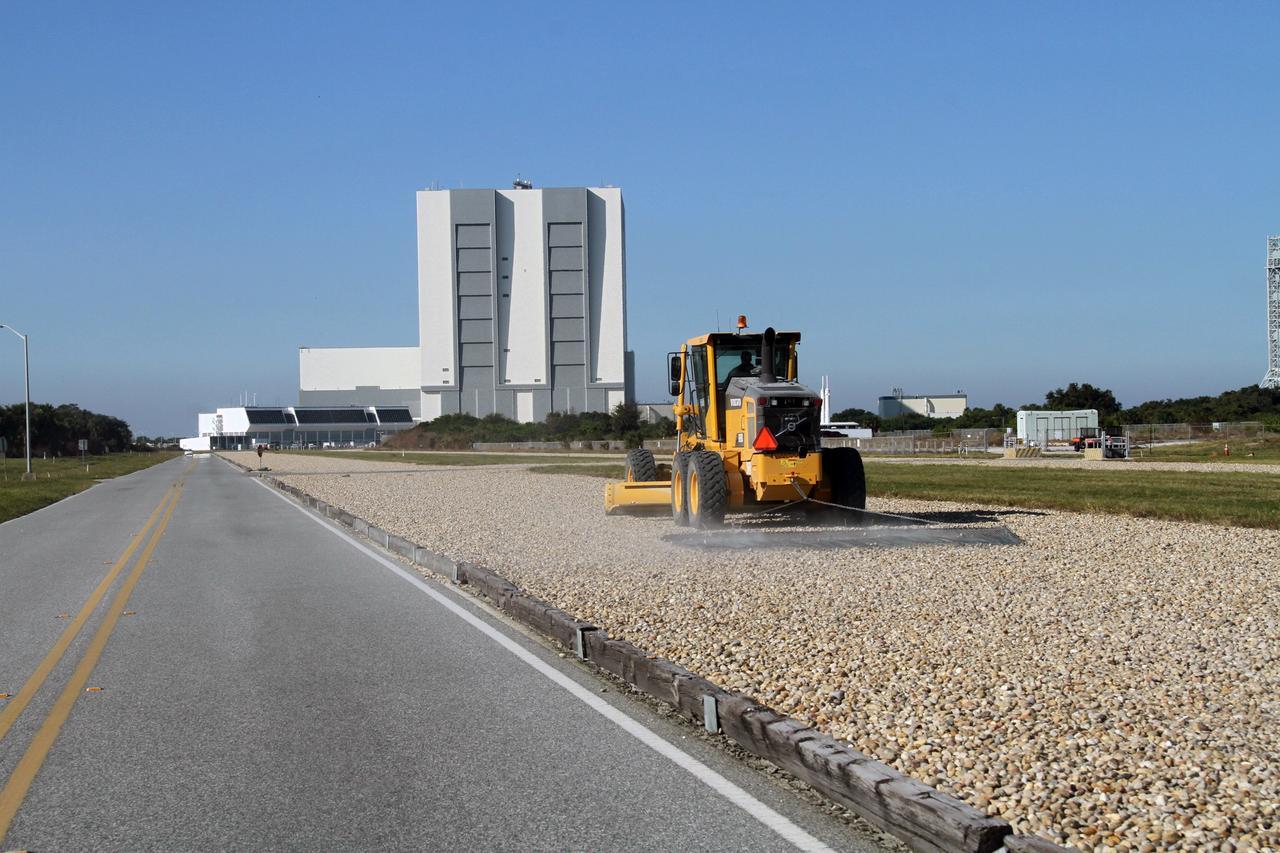
CAPE CANAVERAL, Fla. -- At NASA's Kennedy Space Center in Florida, a tractor levels out the gravel after the six-million-pound crawler-transporter passed by on its way from the Vehicle Assembly Building to Launch Pad 39A. The test drive is designed to check out recently completed modifications to ensure the crawler-transporter's ability to carry launch vehicles such as the space agency's Space Launch System heavy-lift rocket to the pad. NASA's Ground Systems Development and Operations Program is leading the 20-year life-extension project for the crawler. A pair of behemoth machines called crawler-transporters has carried the load of taking rockets and spacecraft to the launch pad for more than 40 years at NASA’s Kennedy Space Center in Florida. Each the size of a baseball infield and powered by locomotive and large electrical power generator engines, the crawler-transporters will stand ready to keep up the work for the next generation of launch vehicles projects to lift astronauts into space. For more information, visit http://www.nasa.gov/exploration/systems/ground/index.html Photo credit: NASA/Ben Smegelsky
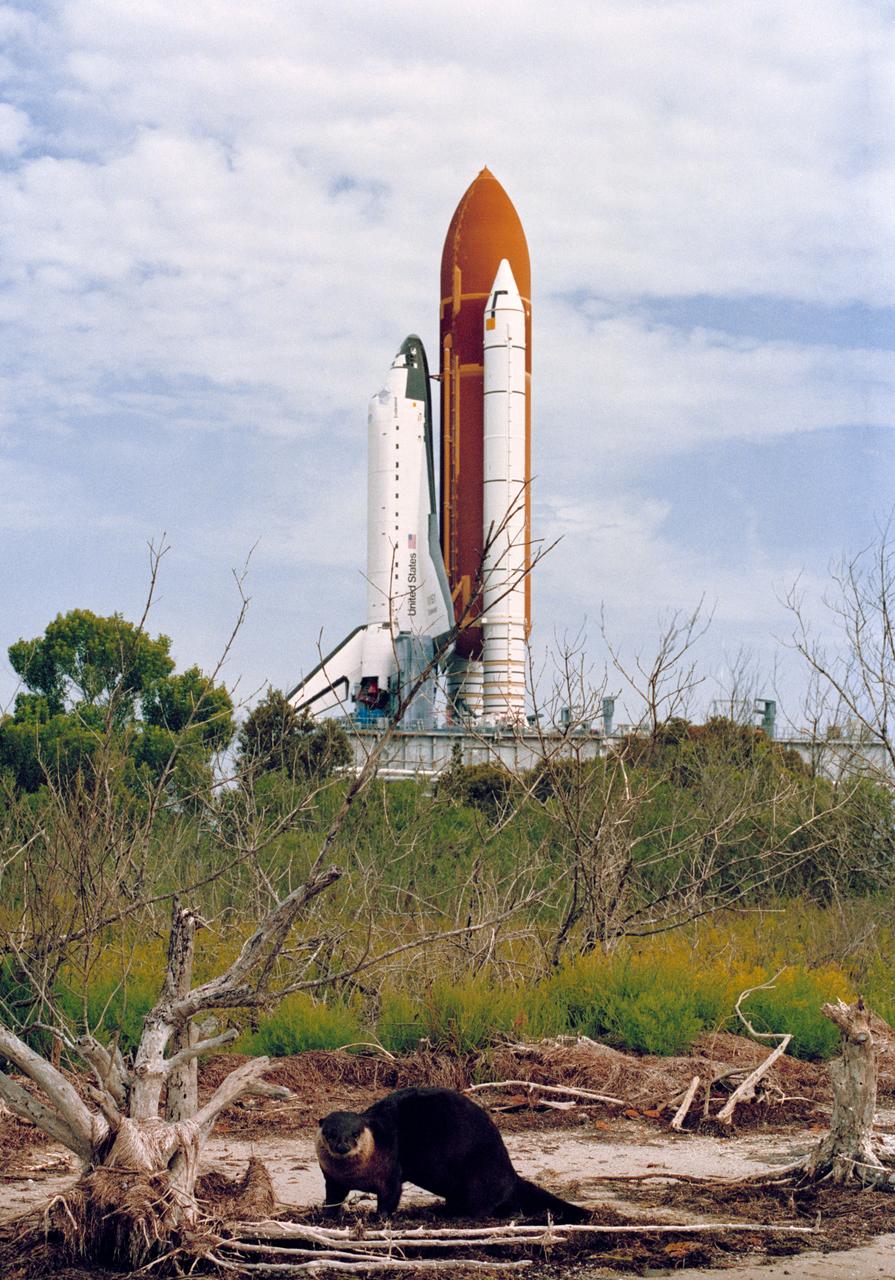
S92-34862 (13 March 1992) --- An otter, surprised by the unexpected presence of the photographer, seems unaware of the Space Shuttle Endeavour rolling behind it to Launch Pad 39B. Endeavour is the newest orbiter in the Shuttle fleet. Still ahead for Endeavour (OV-105) is a Flight Readiness Firing of its three main engines, and the Terminal Countdown Demonstration Test with the flight crew. Endeavour's maiden voyage on NASA's mission STS-49 will occur in late spring.
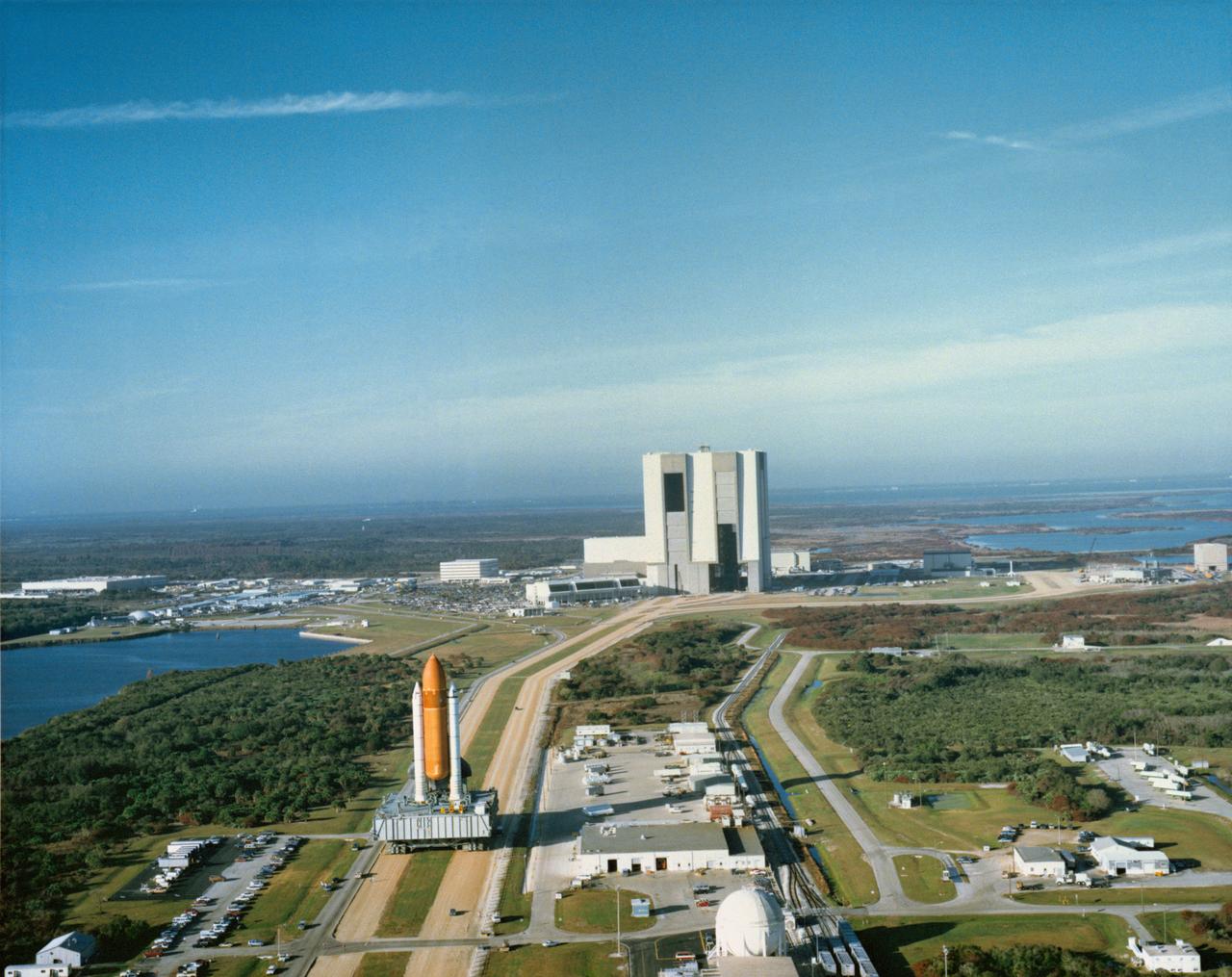
Atlantis, Orbiter Vehicle (OV) 104, is blocked by its large orange external tank (ET) as it leaves Vehicle Assembly Building (VAB) during its rollout to Kennedy Space Center (KSC) Launch Complex (LC) Pad 39A. The crawler transporter heads along the specially designed roadway with OV-104, the ET, and two solid rocket boosters mounted on top of a mobile launcher platform. KSC facilities including the VAB and Launch Control Center (LCC) are visible in the background. OV-104 heads to LC Pad 39A after the shortest stay in the VAB since return-to-flight. OV-104 is being prepared for launch on STS-36, a Department of Defense (DOD) dedicated mission. View provided by KSC with alternate KSC number KSC-90PC-134.
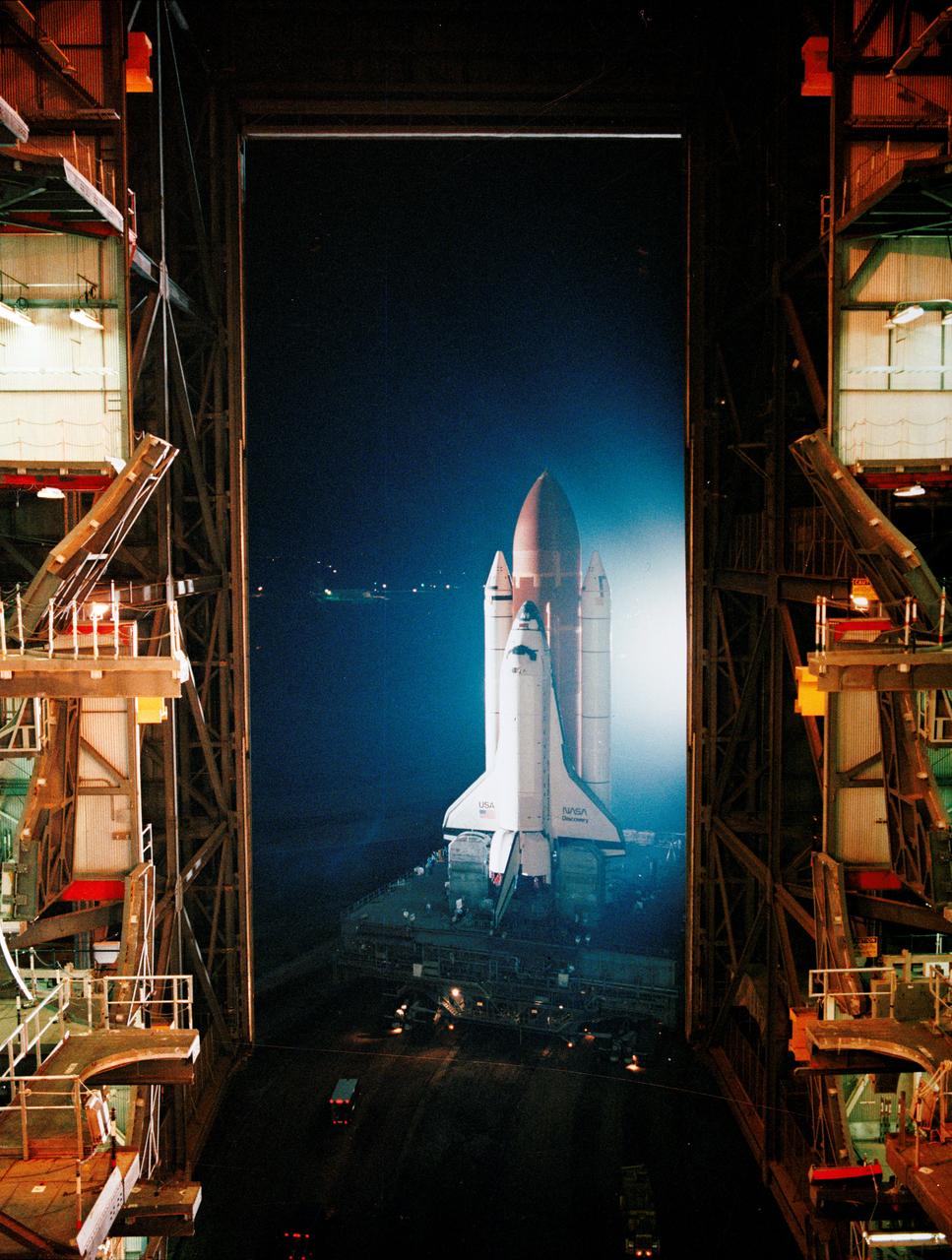
STS-26 Discovery, Orbiter Vehicle (OV) 103, mated with the external tank (ET) and solid rocket boosters (SRBs), is framed by Kennedy Space Center's (KSC's) vehicle assembly building (VAB) doorway as it rolled out. This high angle view shows OV-103 atop the mobile launch pad and crawler transporter as it begins its slow exit from VAB en route to launch complex (LC) pad 39B. The move began shortly after midnight on the nation's 212th birthday. Ceremonies marking the event were held later during daylight hours.
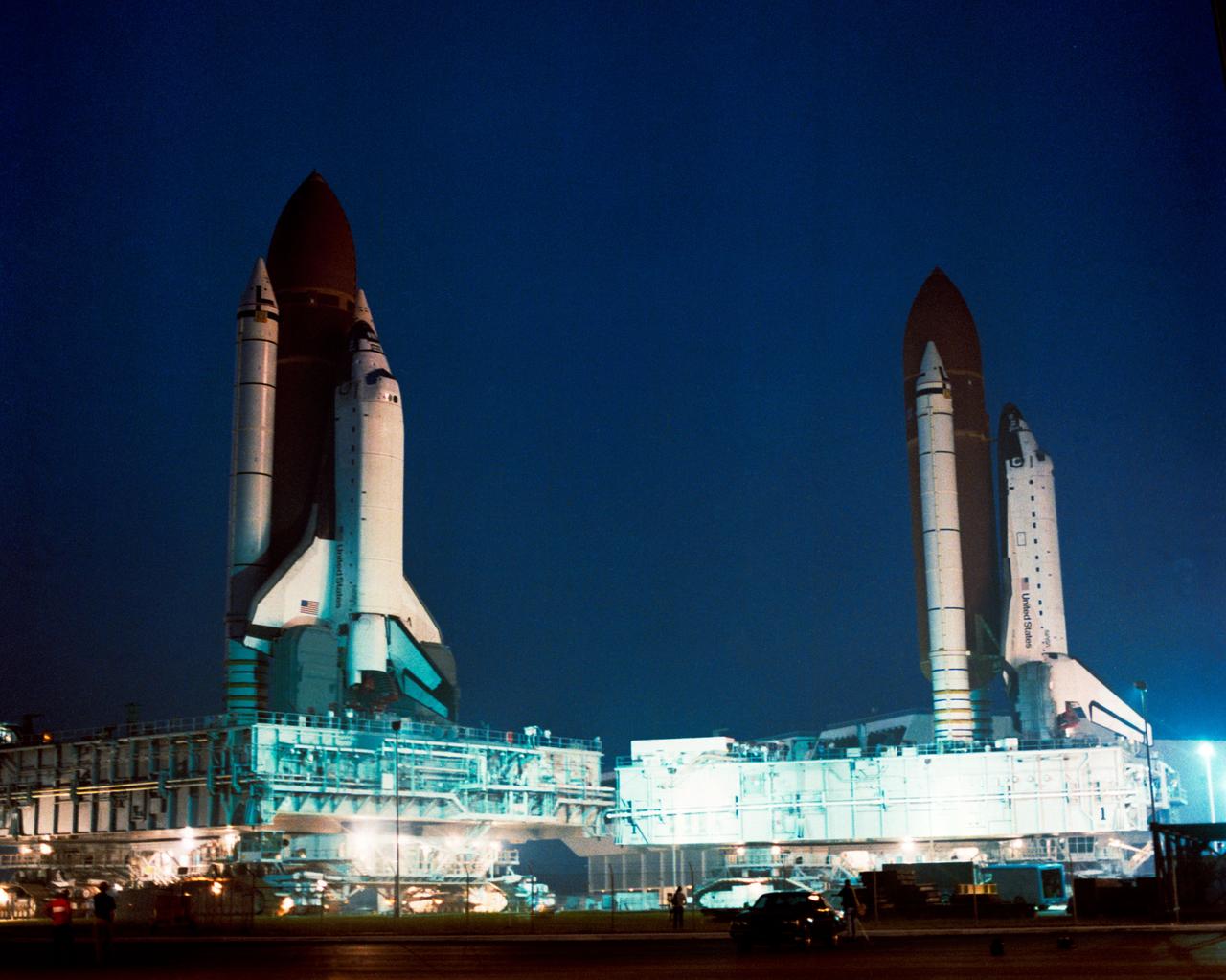
Columbia, Orbiter Vehicle (OV) 102, slated for mission STS-35, left, rolls past Atlantis, OV-104, on its way to Kennedy Space Center (KSC) launch pad 39A. OV-104, being readied for STS-38, is parked in front of the Vehicle Assembly Building (VAB) following its rollback from the pad for liquid hydrogen (LH2) line repairs. View provided by KSC with alternate number KSC-90PC-1152.
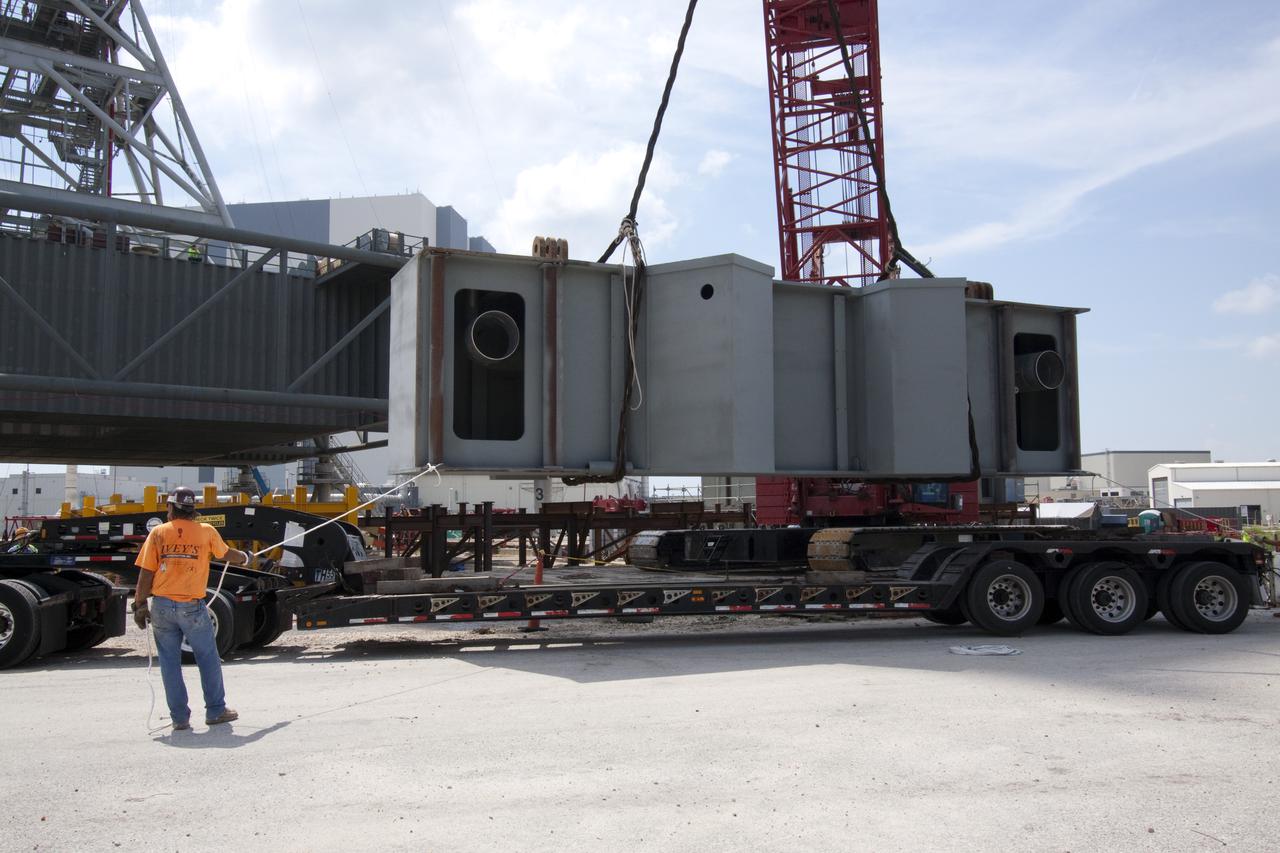
CAPE CANAVERAL, Fla. – At NASA's Kennedy Space Center in Florida, the third segment of the launch mount for a new mobile launcher, or ML, being constructed to support NASA's future human spaceflight program is lifted from the tractor-trailer on which it was delivered. The construction is taking place in the mobile launcher park site north of Kennedy's Vehicle Assembly Building. The new launcher is 355 feet tall and has multiple platforms for personnel access. The base of the launcher is lighter than space shuttle mobile launcher platforms so the crawler-transporter can pick up the heavier load of the tower and a taller rocket. For information on NASA's future plans, visit http:__www.nasa.gov. Photo credit: NASA_Jack Pfaller
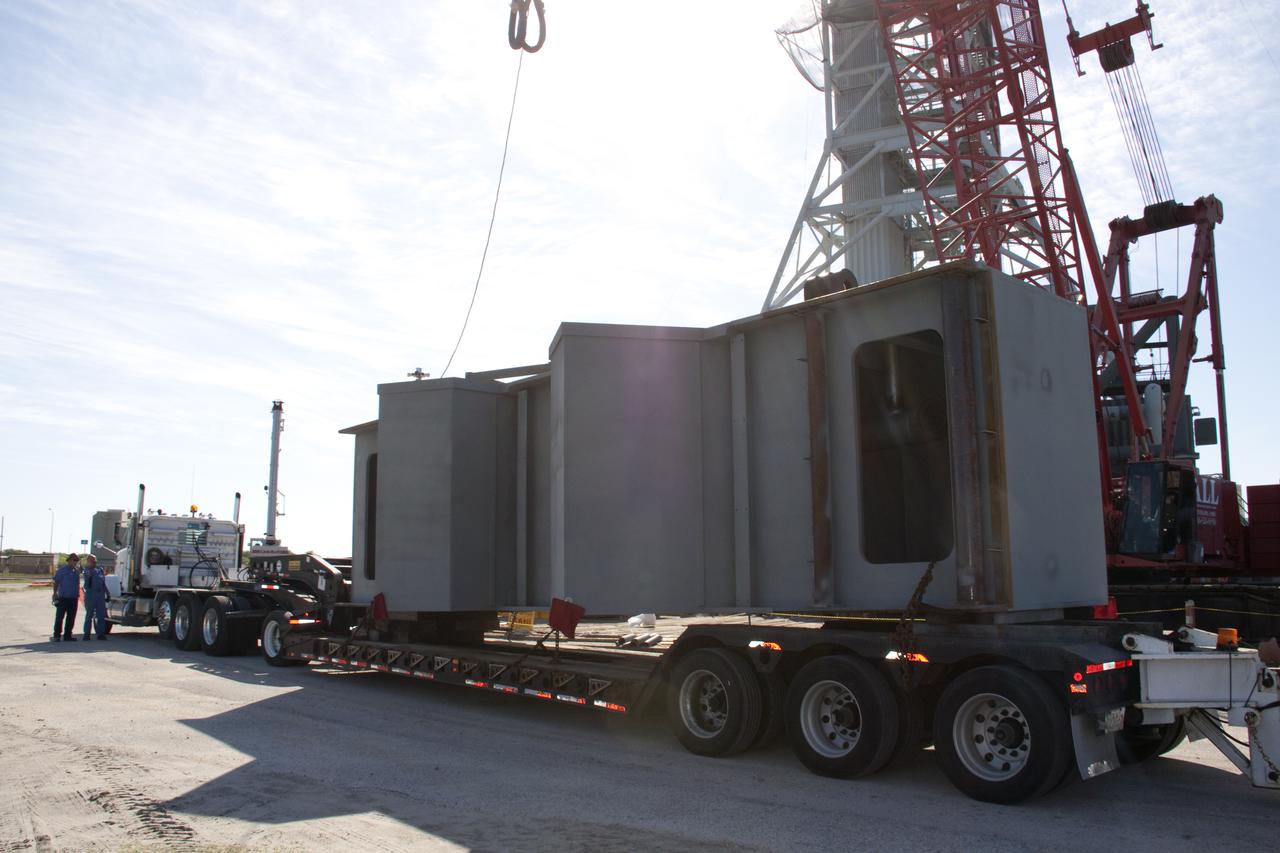
CAPE CANAVERAL, Fla. – At NASA's Kennedy Space Center in Florida, a tractor-trailer delivers the fourth segment of the launch mount for a new mobile launcher, or ML, being constructed to support NASA's future human spaceflight program. The construction is taking place in the mobile launcher park site north of Kennedy's Vehicle Assembly Building. The new launcher is 355 feet tall and has multiple platforms for personnel access. The base of the launcher is lighter than space shuttle mobile launcher platforms so the crawler-transporter can pick up the heavier load of the tower and a taller rocket. For information on NASA's future plans, visit http:__www.nasa.gov. Photo credit: NASA_Troy Cryder
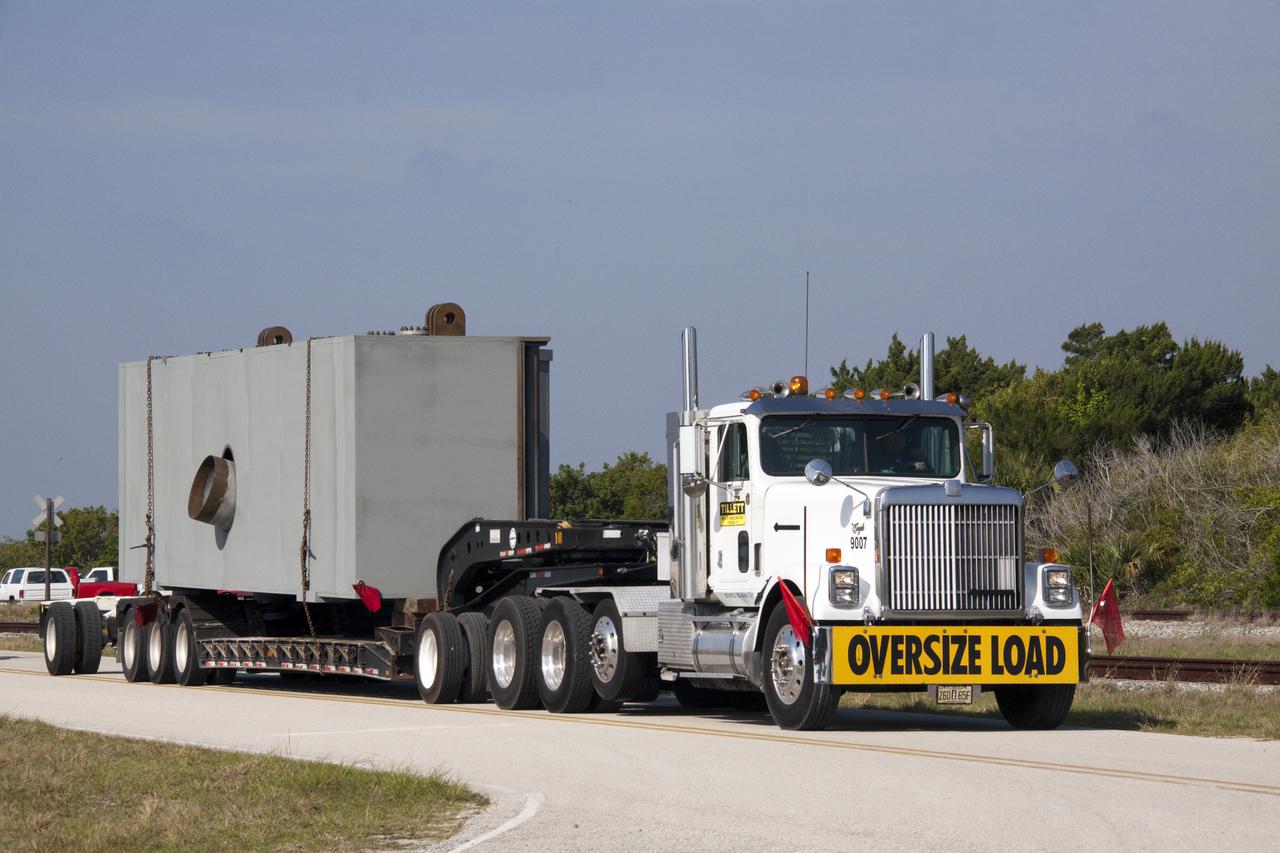
CAPE CANAVERAL, Fla. – At NASA's Kennedy Space Center in Florida, a tractor-trailer delivers the third segment of the launch mount for a new mobile launcher, or ML, being constructed to support NASA's future human spaceflight program. The construction is taking place in the mobile launcher park site north of Kennedy's Vehicle Assembly Building. The new launcher is 355 feet tall and has multiple platforms for personnel access. The base of the launcher is lighter than space shuttle mobile launcher platforms so the crawler-transporter can pick up the heavier load of the tower and a taller rocket. For information on NASA's future plans, visit http:__www.nasa.gov. Photo credit: NASA_Jack Pfaller
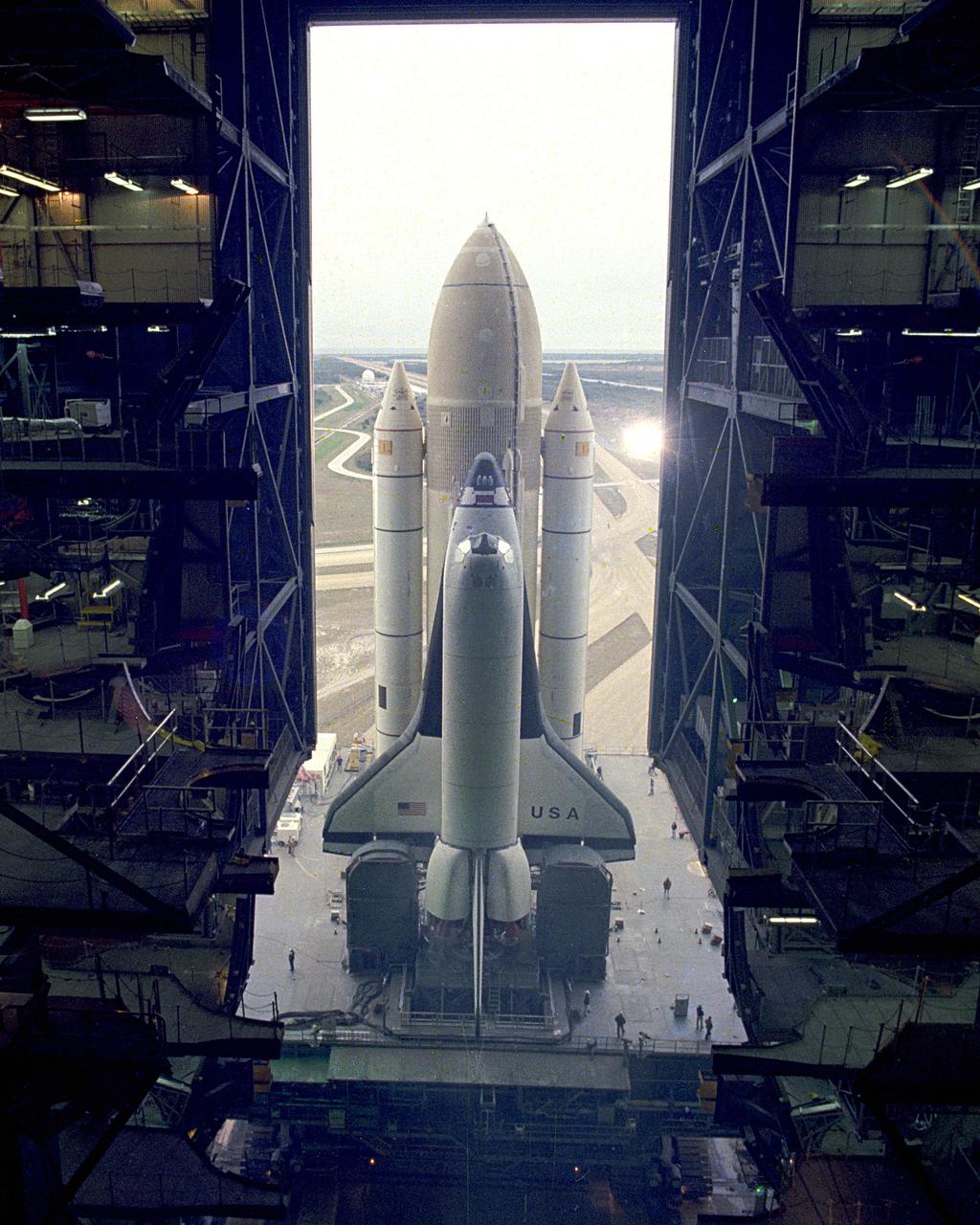
KENNEDY SPACE CENTER, FLA. - The first Space Shuttle vehicle destined to fly in space inches out of the Vehicle Asembly Building on its way to Pad A at Complex 39, where it will be launched. The STS-1 vehicle - consisting of America's first reusable spaceship, Columbia, the external propellant tank and twin solid rocket boosters - was assembled on a Mobile Launcher Platform in the Vehicle Assembly Building. A six-million-pound tractor, called the Crawler-Transporter, is used to carry the Space Shuttle from the VAB to the launch pad, about 3.5 miles away.
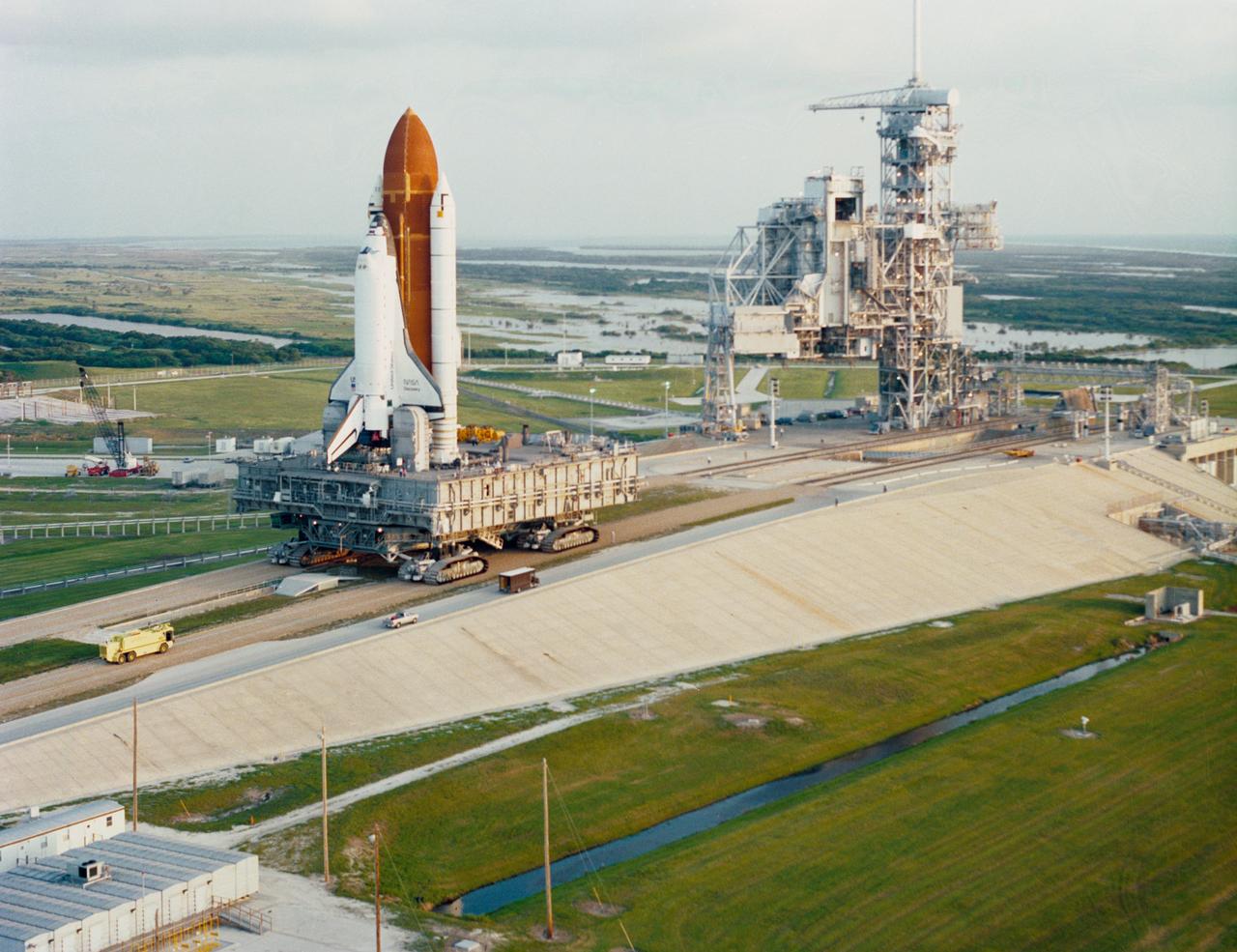
STS-26 Discovery, Orbiter Vehicle (OV) 103, rolls out to Kennedy Space Center (KSC) launch complex (LC) pad 39B on top of the crawler transporter. OV-103 nears LC pad 39B after a six-hour journey from the vehicle assembly building (VAB). When locked onto the nearby rotating service structure (RSS), work will continue to ready the vehicle for the STS-26 launch later in the summer.

S69-27916 (11 March 1969) --- Aerial view at Launch Complex 39, Kennedy Space Center, showing the Apollo 10 (Spacecraft 106/Lunar Module-4/Saturn 505) space vehicle on its way to Pad B. The Saturn V stack and its mobile launch tower are atop a huge crawler-transporter. The Apollo 10 flight is scheduled as a lunar orbit mission. The Apollo 10 crew will be astronauts Thomas P. Stafford, commander; John W. Young, command module pilot; and Eugene A. Cernan, lunar module pilot.
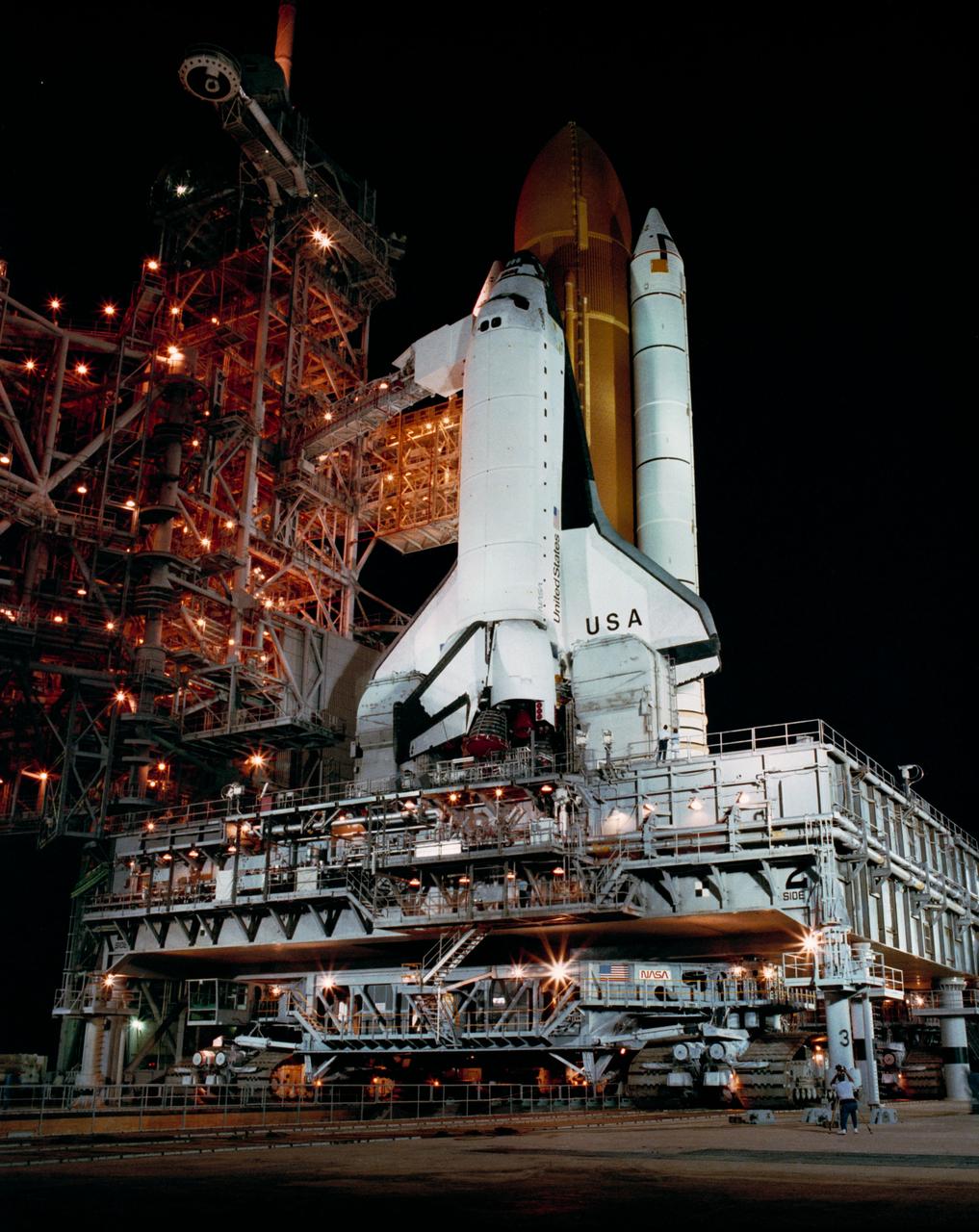
STS-28 Columbia, Orbiter Vehicle (OV) 102, arrives at Kennedy Space Center (KSC) Launch Complex (LC) Pad 39B. View taken from ground level, shows OV-102 with external tank (ET) and solid rocket boosters (SRBs) mounted atop mobile launcher platform and the fixed service structure (rotating service structure (RSS) retracted) alongside. Catwalk at the 195 ft level is in place. Crawler transporter remains in position under mobile launcher platform. Spotlights and floodlights illuminate the launch complex against the darkness of the night. View provided by KSC with alternate number KSC-89PC-683.
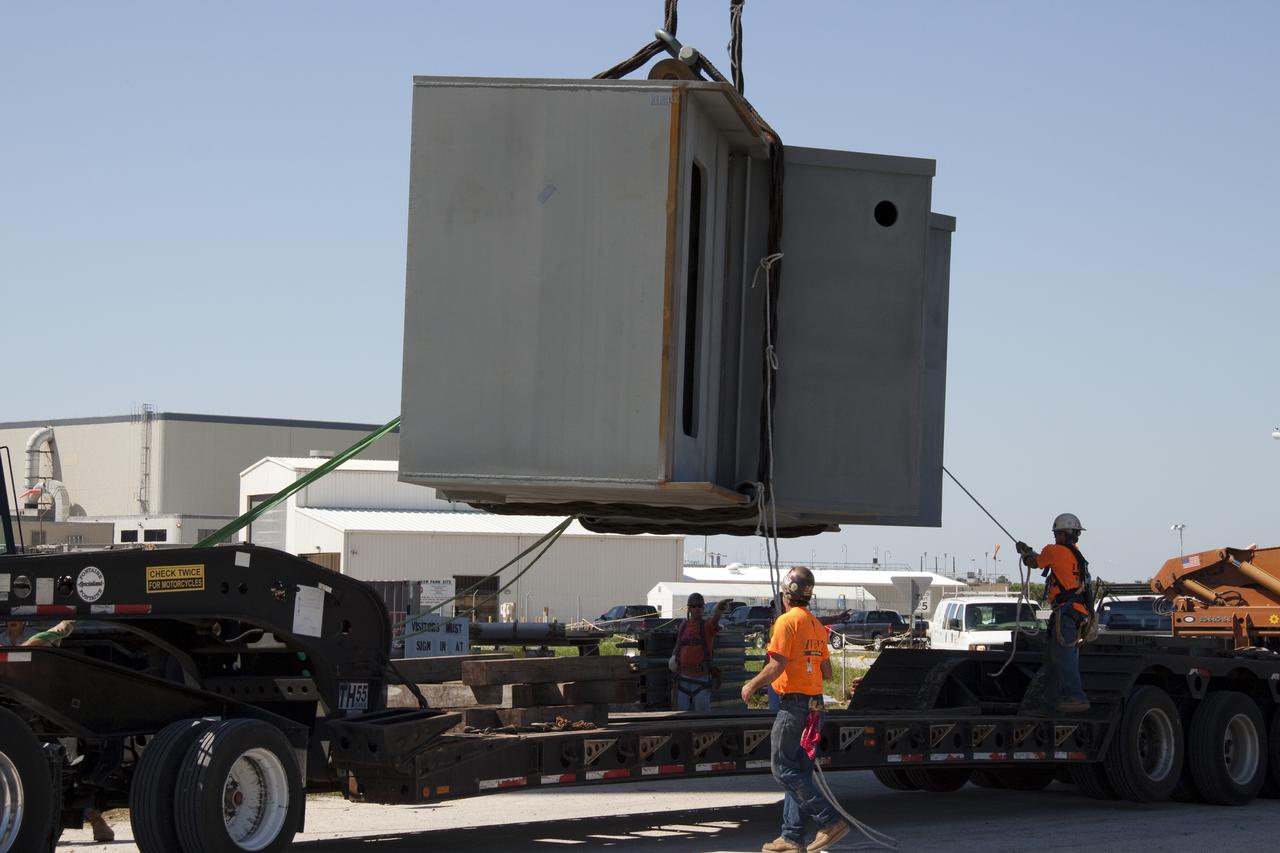
CAPE CANAVERAL, Fla. – At NASA's Kennedy Space Center in Florida, a crane lifts the fourth segment of the launch mount for a new mobile launcher, or ML, being constructed to support NASA's future human spaceflight program, from the tractor-trailer on which it was delivered. The construction is taking place in the mobile launcher park site north of Kennedy's Vehicle Assembly Building. The new launcher is 355 feet tall and has multiple platforms for personnel access. The base of the launcher is lighter than space shuttle mobile launcher platforms so the crawler-transporter can pick up the heavier load of the tower and a taller rocket. For information on NASA's future plans, visit http:__www.nasa.gov. Photo credit: NASA_Troy Cryder
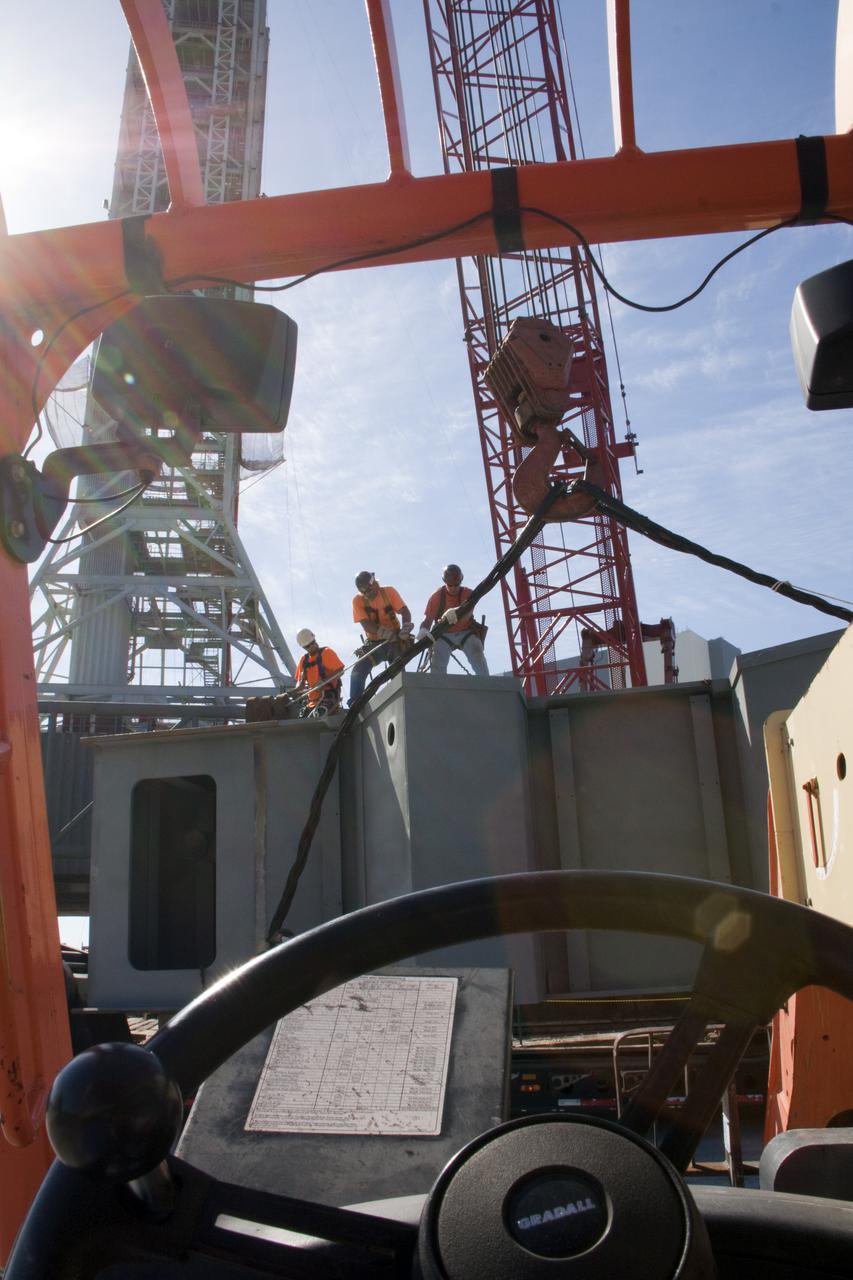
CAPE CANAVERAL, Fla. – At NASA's Kennedy Space Center in Florida, workers attach a crane to the fourth segment of the launch mount for a new mobile launcher, or ML, being constructed to support NASA's future human spaceflight program, to lift it from the tractor-trailer on which it arrived. The construction is taking place in the mobile launcher park site north of Kennedy's Vehicle Assembly Building. The new launcher is 355 feet tall and has multiple platforms for personnel access. The base of the launcher is lighter than space shuttle mobile launcher platforms so the crawler-transporter can pick up the heavier load of the tower and a taller rocket. For information on NASA's future plans, visit http:__www.nasa.gov. Photo credit: NASA_Troy Cryder
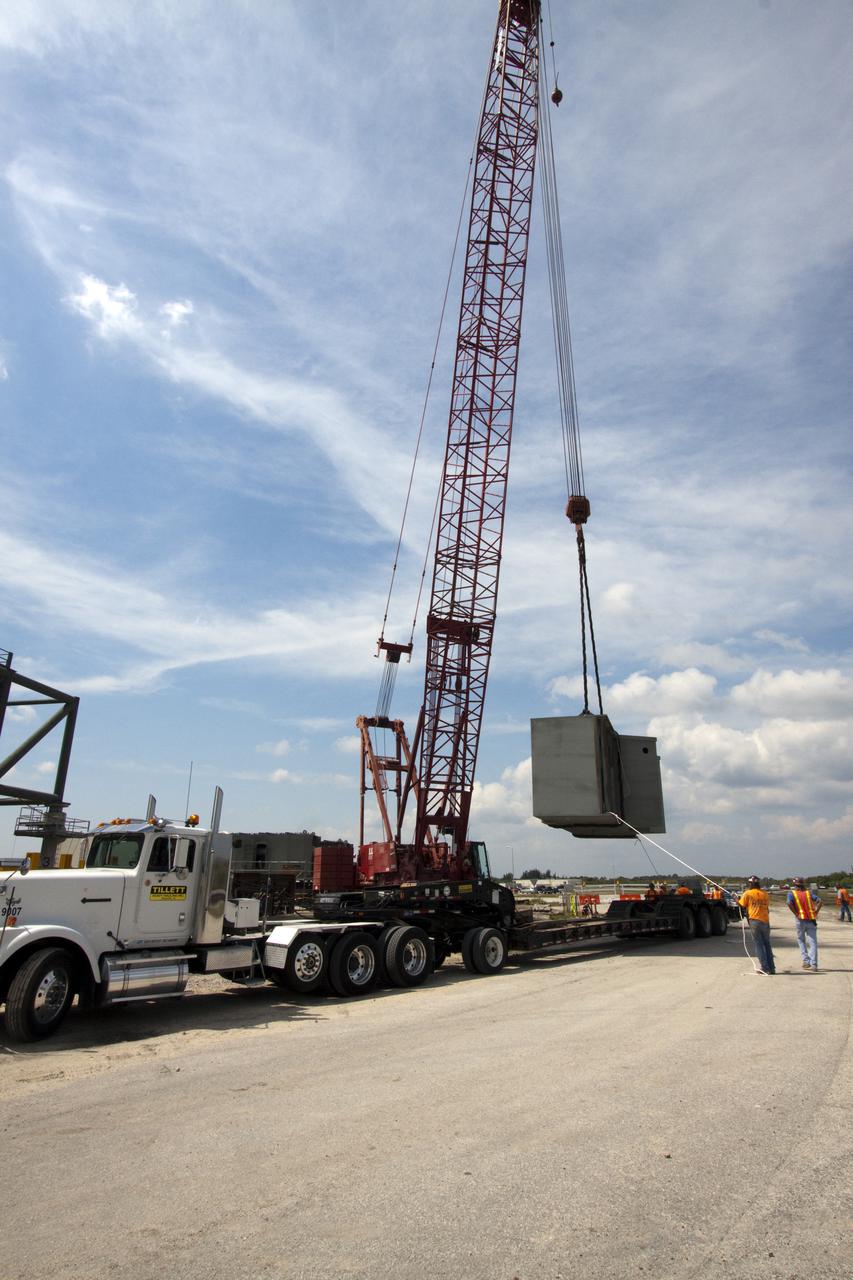
CAPE CANAVERAL, Fla. – At NASA's Kennedy Space Center in Florida, a crane lifts the third segment of the launch mount for a new mobile launcher, or ML, being constructed to support NASA's future human spaceflight program from the tractor-trailer on which it arrived. The construction is taking place in the mobile launcher park site north of Kennedy's Vehicle Assembly Building. The new launcher is 355 feet tall and has multiple platforms for personnel access. The base of the launcher is lighter than space shuttle mobile launcher platforms so the crawler-transporter can pick up the heavier load of the tower and a taller rocket. For information on NASA's future plans, visit http:__www.nasa.gov. Photo credit: NASA_Jack Pfaller
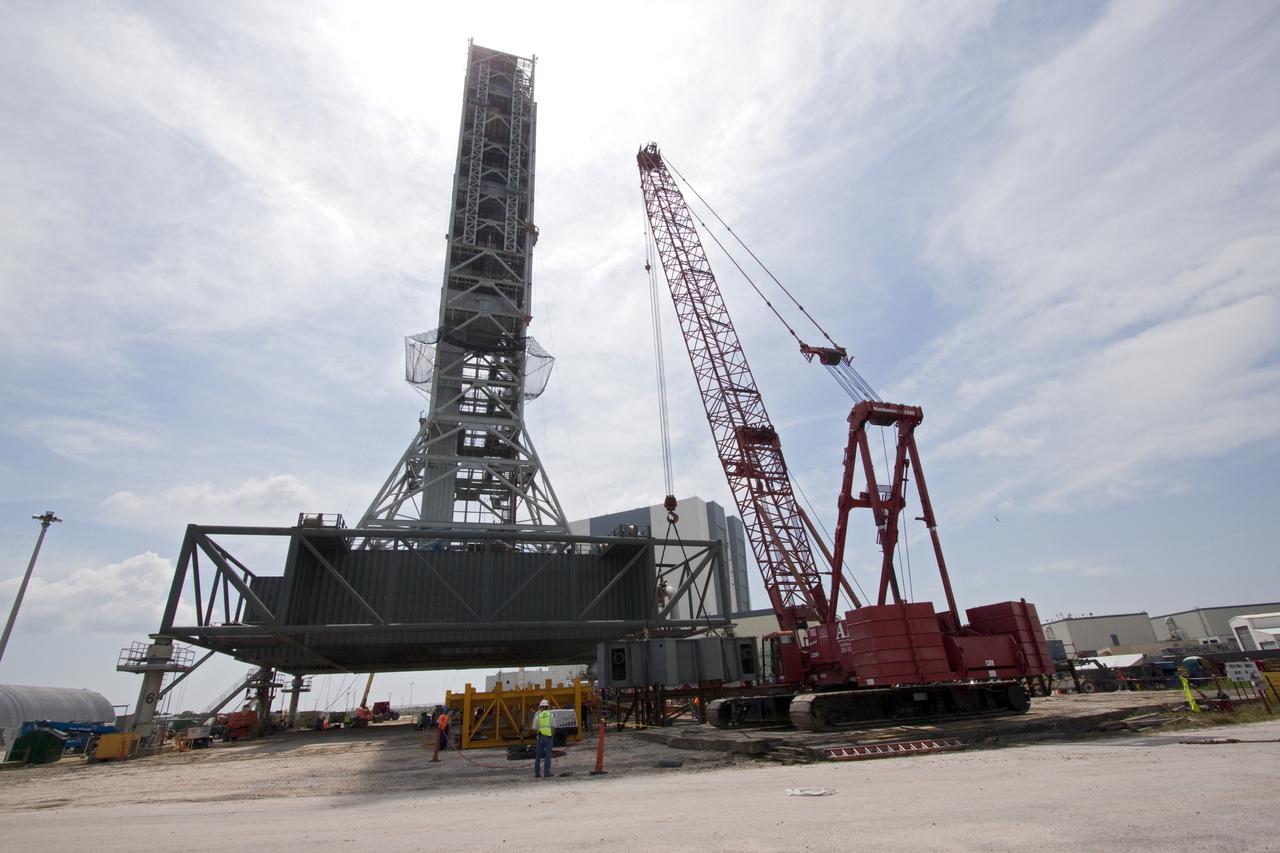
CAPE CANAVERAL, Fla. – At NASA's Kennedy Space Center in Florida, workers supervise the lift of the third segment of the launch mount for a new mobile launcher, or ML, being constructed to support NASA's future human spaceflight program from the tractor-trailer on which it arrived. The construction is taking place in the mobile launcher park site north of Kennedy's Vehicle Assembly Building. The new launcher is 355 feet tall and has multiple platforms for personnel access. The base of the launcher is lighter than space shuttle mobile launcher platforms so the crawler-transporter can pick up the heavier load of the tower and a taller rocket. For information on NASA's future plans, visit http:__www.nasa.gov. Photo credit: NASA_Jack Pfaller