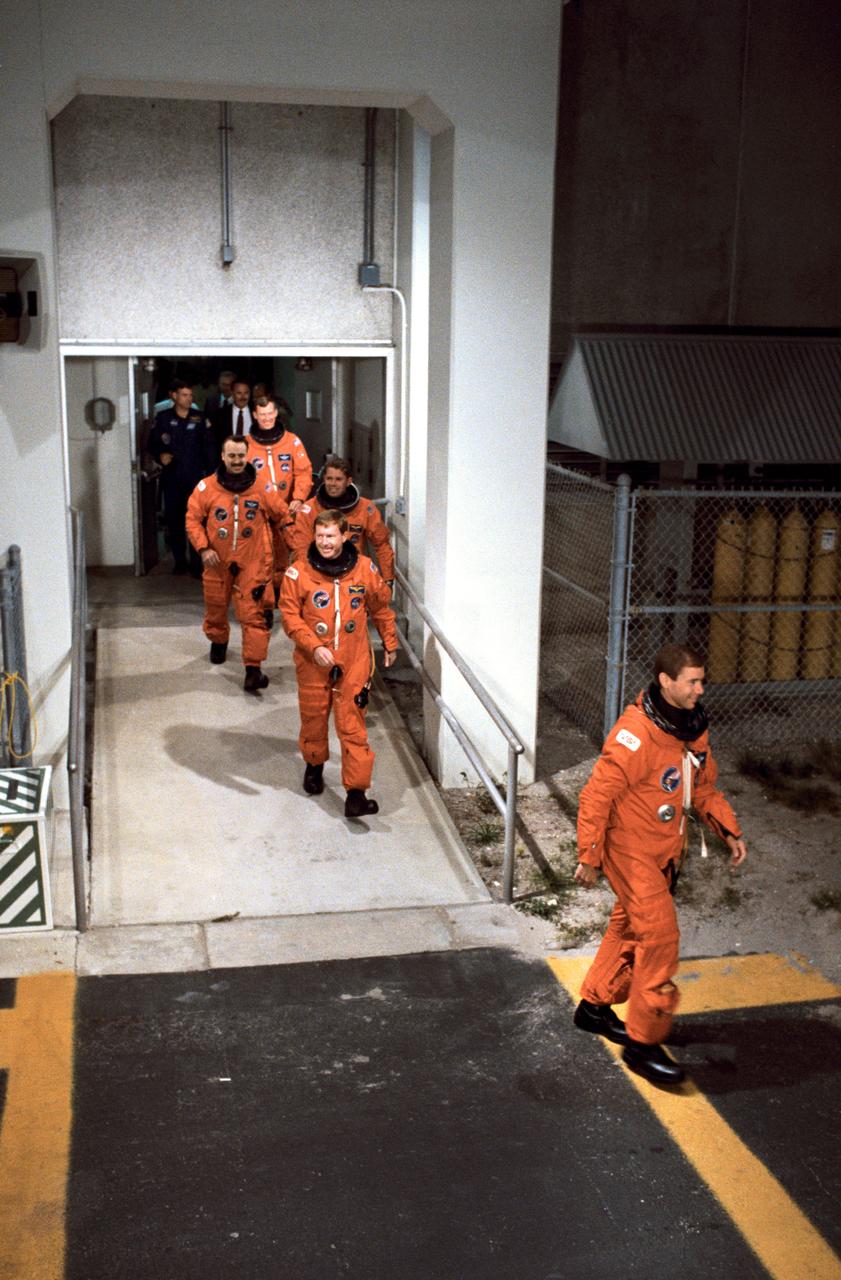
STS028-S-001 (8 Aug 1989) --- The five astronaut crewmembers for STS-28 leave the operations and checkout building to board a transfer van en route to Launch Complex 39 for a date with Columbia. Front to back are Brewster H. Shaw Jr., Richard N. Richards, David C. Leestma, James C. Adamson and Mark N. Brown. At the rear of the line are Astronaut Michael L. Coats, acting chief of the astronaut office; and Donald R. Puddy, director of flight crew operations at JSC. Coats later flew a NASA Shuttle training aircraft for pre-launch and launch monitoring activities.
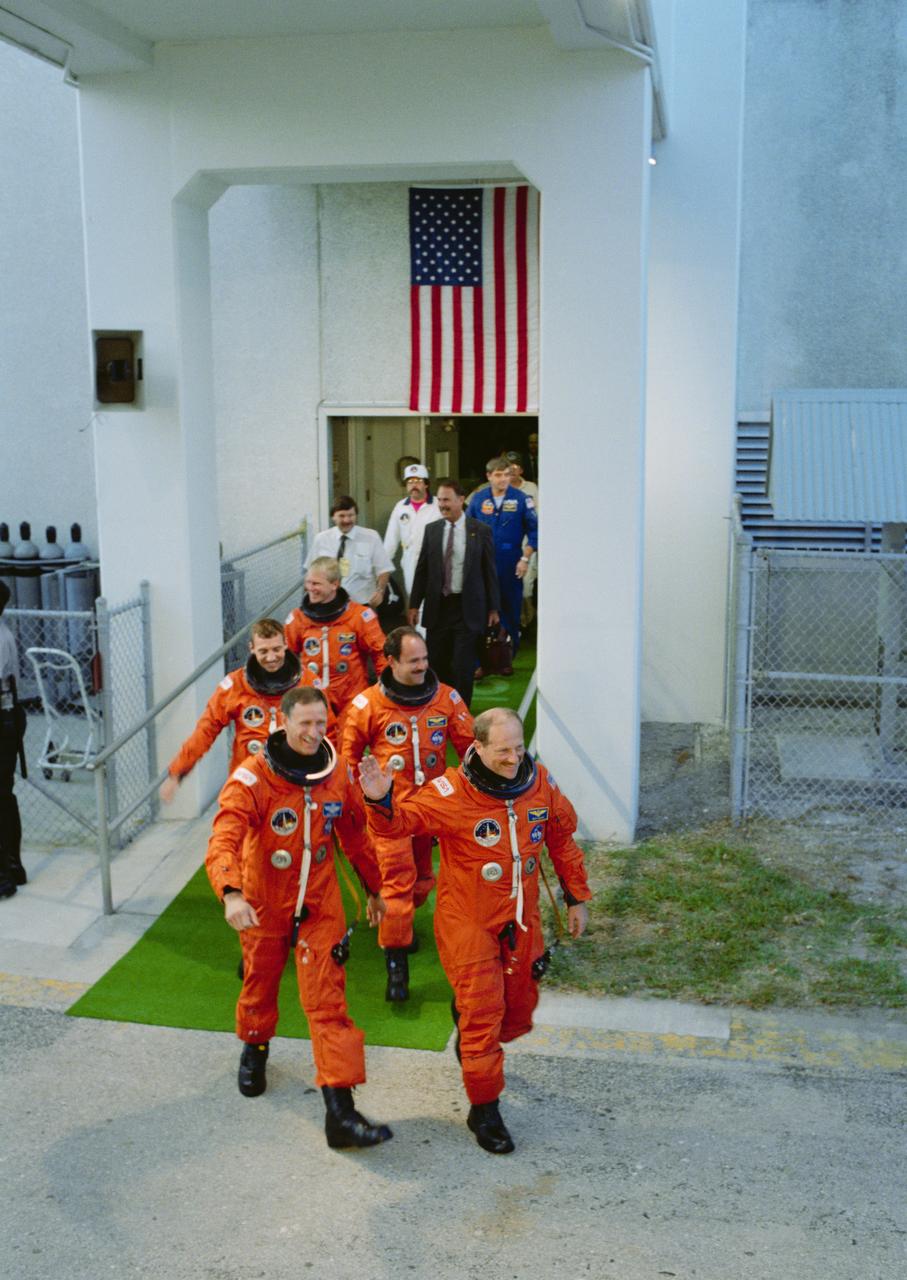
STS-26 crewmembers, suited in launch and entry suits (LESs), leave the Kennedy Space Center (KSC) Operations and Checkout (O&C) Building on their way to the launch complex (LC) pad 39B where they will board Discovery, Orbiter Vehicle (OV) 103. Commander Frederick H. Hauck, waving to spectators, is followed by Pilot Richard O. Covey, Mission Specialist (MS) John M. Lounge, MS David C. Hilmers, and MS George D. Nelson. Others accompanying the crew are JSC Flight Crew Operations Directorate (FCOD) Director Donald R. Puddy, Astronaut Office Chief Daniel C. Brandenstein, and a Crew Training Officer Richard W. Nygren.
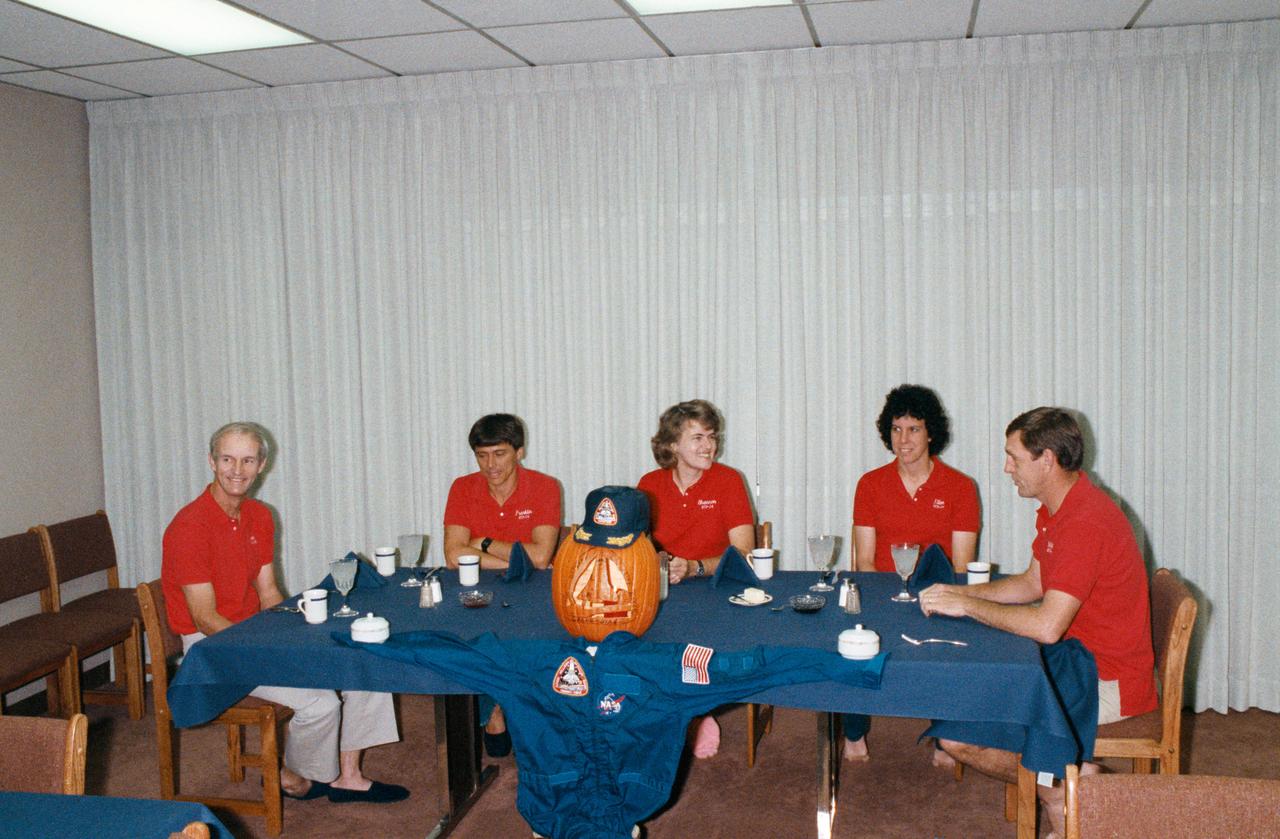
STS034-S-021 (18 Oct 1989) --- The traditional light pre-launch breakfast greets the five astronaut crew-members for NASA's STS-34 mission in the Operations and Checkout Facility at Kennedy Space Center (KSC). From the left are Astronauts Donald E. Williams, mission commander; Franklin R. Chang-Diaz, Shannon W. Lucid and Ellen S. Baker, all mission specialists; and Michael J. McCulley, pilot. A pumpkin converted into a Jack-o-lantern adds a seasonal touch to the table.
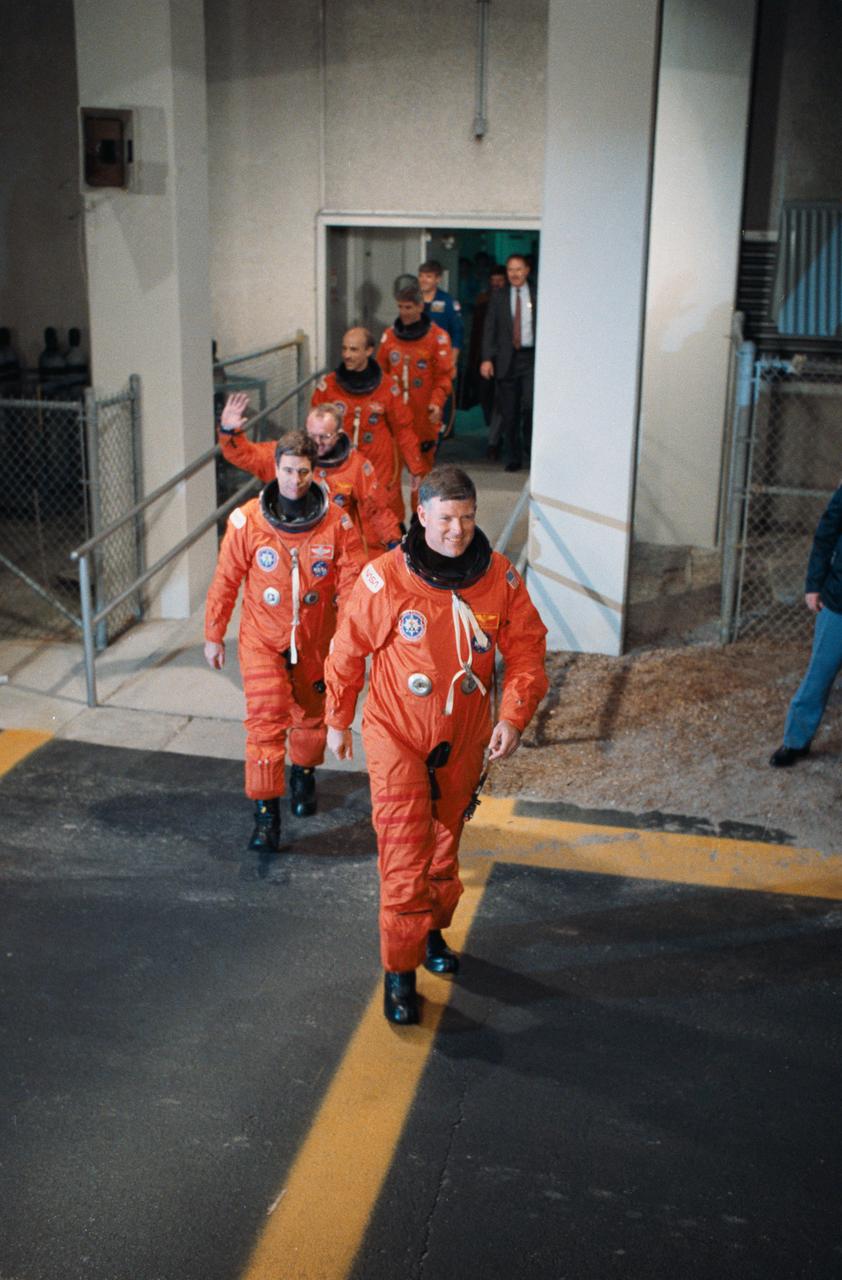
STS029-S-024 (13 March 1989) --- The flight crew for NASA's STS-29 mission leave the operations and checkout building en route to the van that will transport them to Launch Pad 39B, where Discovery awaits the astronauts for its second post-Challenge flight. Leading the way is astronaut Michael L. Coats, mission commander. He is followed by astronauts John E. Blaha, pilot; and James F. Buchli, James P. Bagian and Robert C. Springer, all mission specialists. In the background are astronaut Daniel C. Brandenstein, chief of the astronaut office, and Donald R. Puddy, director of flight crew operations.
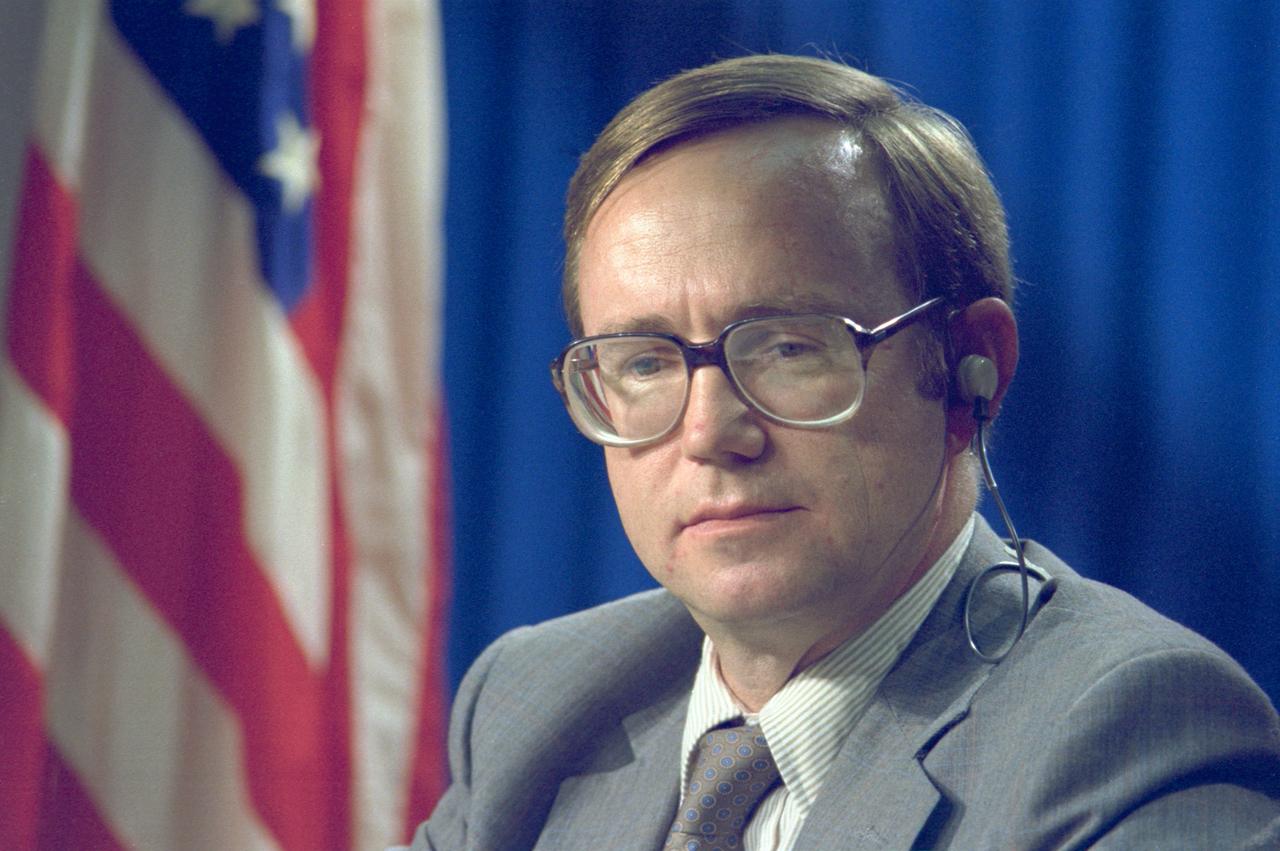
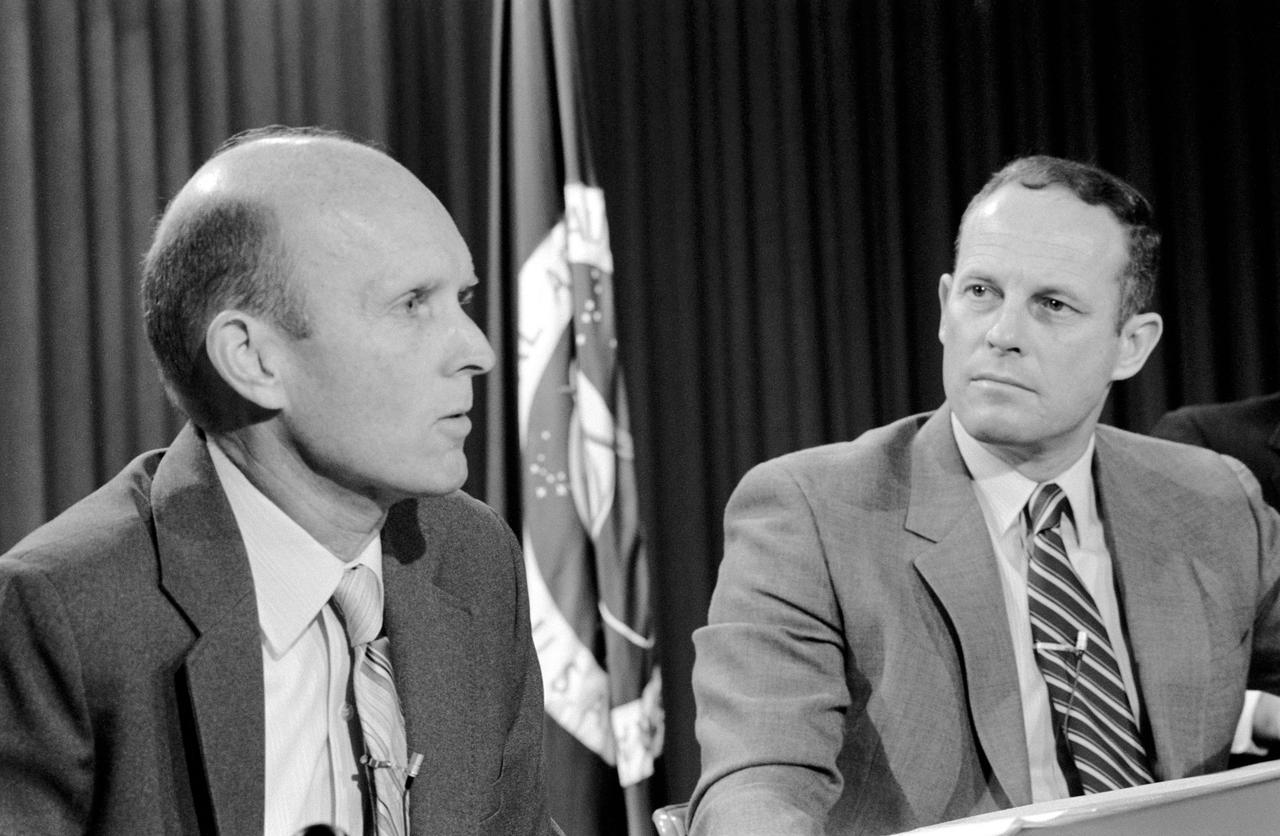
Flight Director Tommy Holloway listens to a question from a news media representative during a STS-5 pre-flight press briefing.
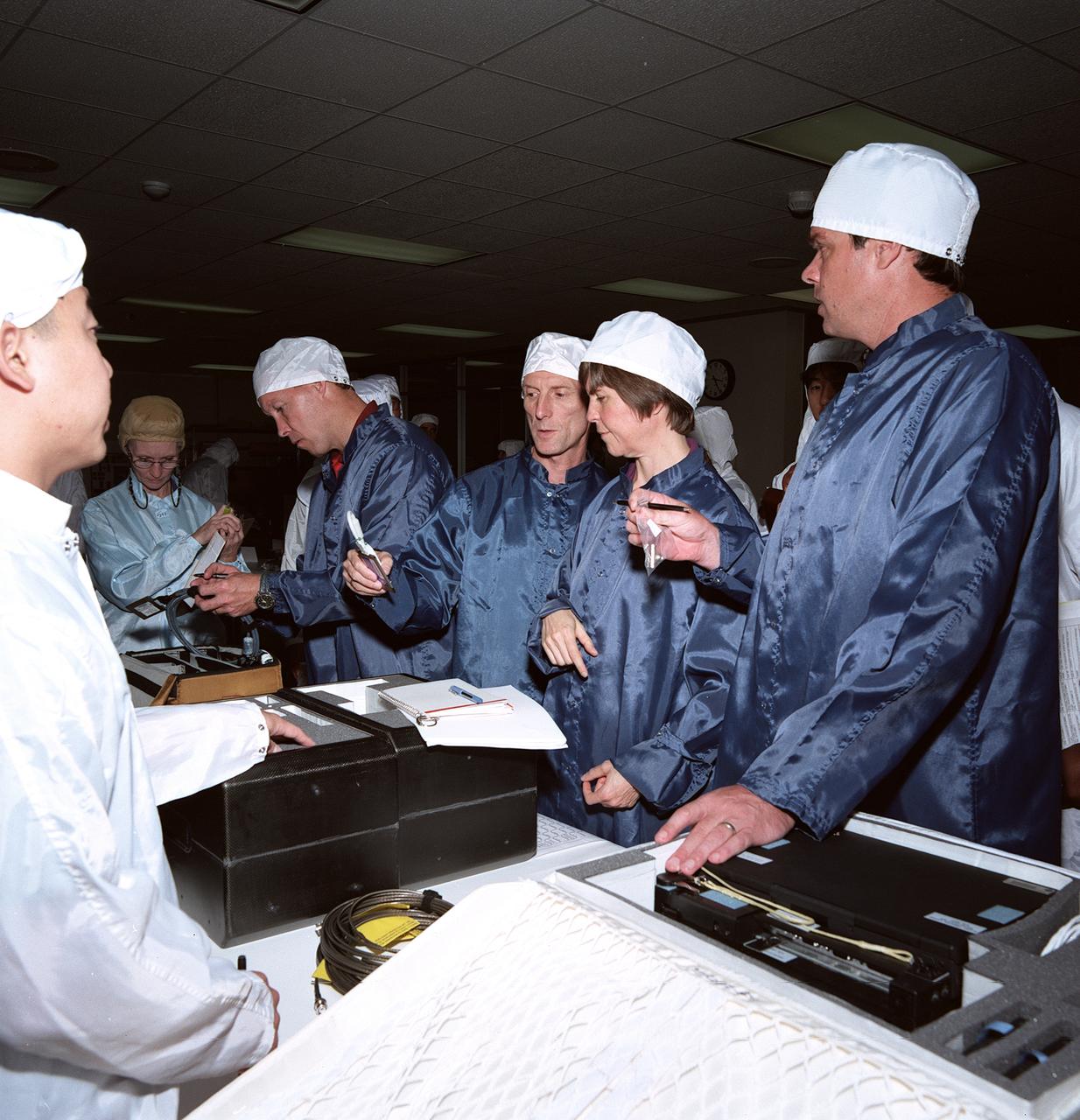
S99-09457 (11 August 1999) --- Wearing clean room suits, members of the STS-99 crew inspect some of the gear they will be using on their upcoming space mission. From the left (in blue lab coats) are astronauts Dominic L. Gorie, pilot; Gerhard P.J. Thiele, mission specialist representing the European Space Agency (ESA); Janice Voss, mission specialist; and Kevin R. Kregel, mission commander. This type flight crew equipment (FCE) bench review is routine preflight procedure for all shuttle crews.

S65-48759 (21 Aug. 1965) --- View of astronaut Charles Conrad Jr. through the window as he sits in the Gemini-5 spacecraft during preflight activities.
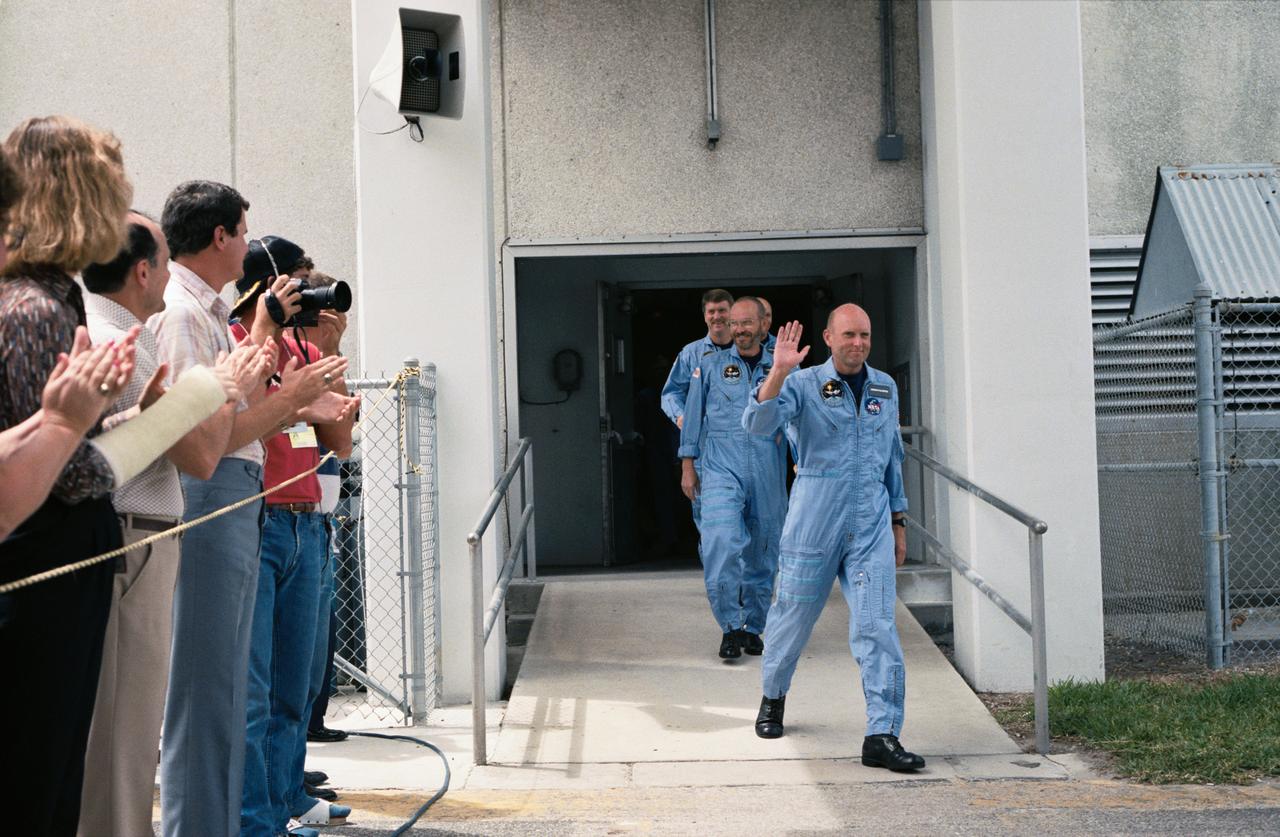
STS 51-F crewmembers depart the Kennedy Space Center's operations and checkout building on their way to the launch pad for the launch of the Discovery. Leading the way are Gordon Fullerton, commander; Loren Acton, payload specialist, and Anthony England, mission specialist. The other crewmembers are not visible in this frame.

51D-9091 (S23-9091) (12 April 1985) --- The Space Shuttle mission 51-D crewmembers depart the Kennedy Space Center's operations and checkout building on their way to the launch pad for an early morning launch of Discovery. Leading the seven are Karol J. Bobko (center of frame), commander; and Donald E. Williams (right), pilot. Following are Rhea Seddon, Jeffrey A. Hoffman, S. David Griggs--all mission specialists--Charles D. Walker and U.S. Sen. E. J. (Jake) Garn (partly obscured behind Walker), both payload specialists. Partly visible in the doorway are Astronaut John W. Young and George W.S. Abbey, director of flight crew operations.

51D-9089 (S23-9089) (12 April 1985) --- The Space Shuttle mission 51-D crewmembers gather to eat breakfast prior to leaving for the launch pad to climb aboard Discovery for liftoff. From left to right Rhea Seddon, Donald E. Williams, Charles D. Walker, Karol J. Bobko, Jeffrey A. Hoffman, S. David Griggs and U.S. Sen. E.J. (Jake) Garn discuss phases of the upcoming flight. Desert for the yet-to-be served breakfast is the pictured decorate 51-D cake.
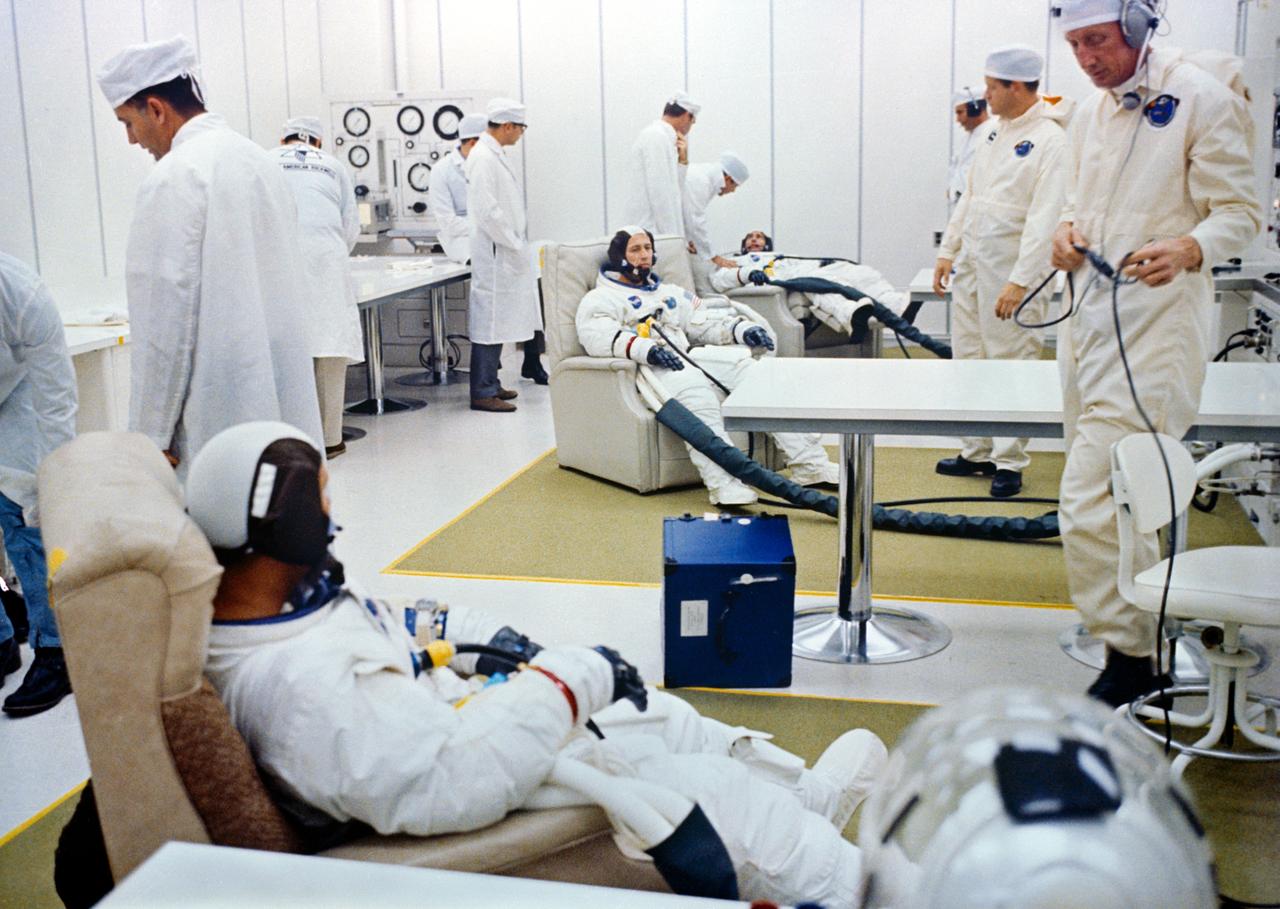
The Apollo 7 prime crew goes through suiting up operations in the Kennedy Space Center's Manned Spacecraft Operations Building during the Apollo 7 prelaunch countdown. From front to rear, are Astronauts Walter M. Schirra Jr., commander; Donn F. Eisele, command module pilot; and Walter Cunningham, lunar module pilot.

Astronaut Richard F. Gordon Jr., Apollo 12 command module pilot, suits up in the Kennedy Space Center's Manned Spacecraft Operations Building during the Apollo 12 prelaunch countdown.
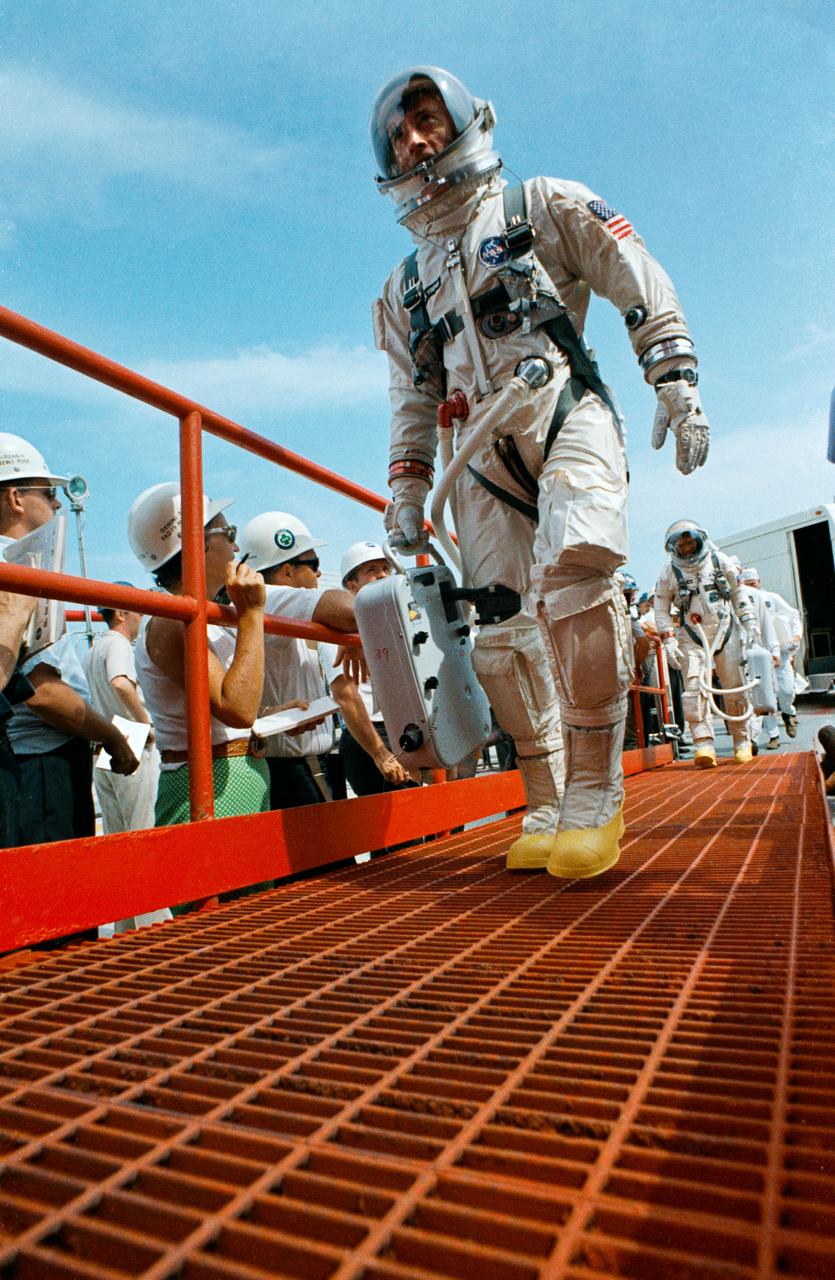
S66-42754 (18 July 1966) --- Astronauts John W. Young (leading), command pilot, and Michael Collins, pilot, walk up the ramp at Pad 19 after arriving from the Launch Complex 16 suiting trailer during the prelaunch countdown. Moments later they entered the elevator which took them to the white room and the waiting Gemini-10 spacecraft. Liftoff was at 5:20 p.m. (EST), July 18, 1966. Photo credit: NASA

At their Cosmonaut Hotel crew quarters in Baikonur, Kazakhstan, Expedition 50-51 crewmembers Peggy Whitson of NASA (left), Oleg Novitskiy of the Russian Federal Space Agency (Roscosmos, center) and Thomas Pesquet of the European Space Agency (right) practice rendezvous and docking procedures on a laptop simulator computer Nov. 10 as part of their preflight training. They will launch Nov. 18, Baikonur time, on the Soyuz MS-03 spacecraft for a six-month mission on the International Space Station. NASA/Alexander Vysotsky
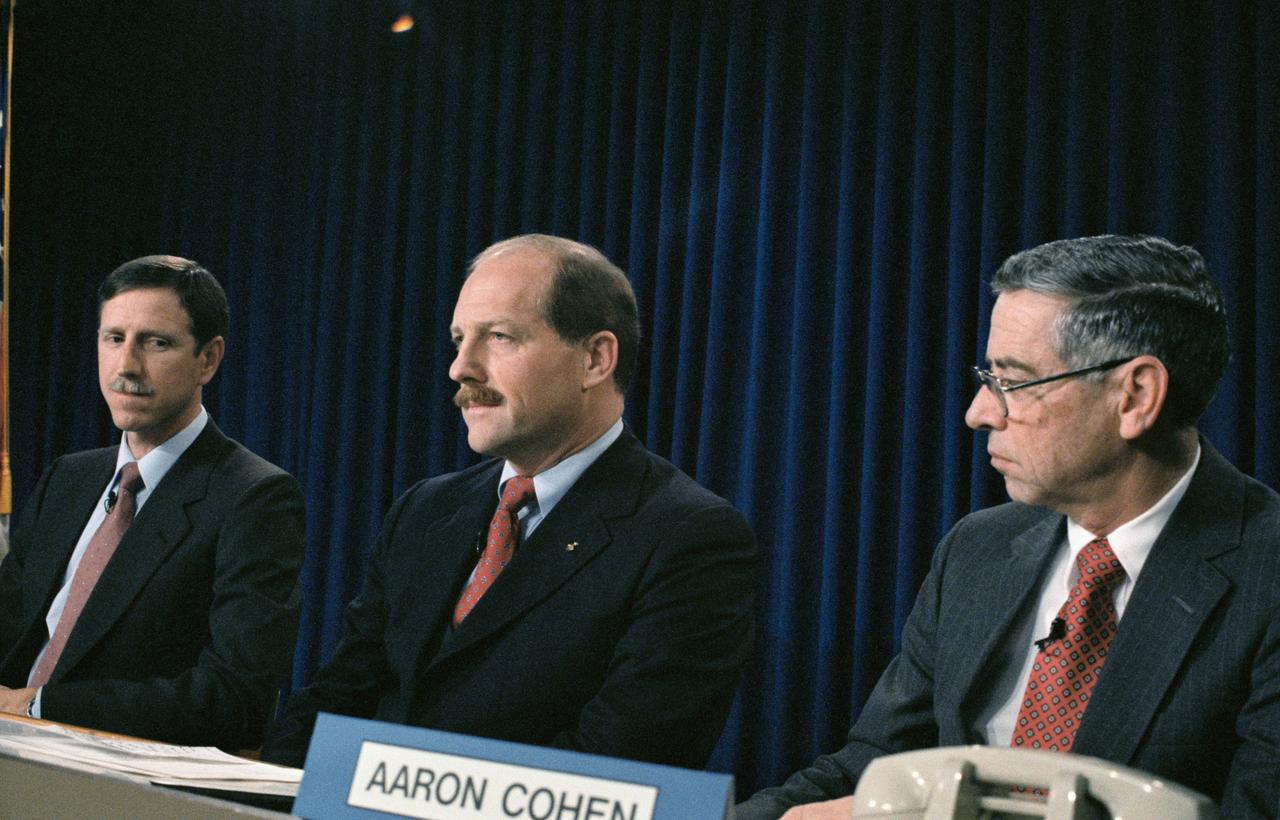
STS-26 Discovery, Orbiter Vehicle (OV) 103, crew including Commander Frederick H. Hauck and Pilot Richard O. Covey and JSC Director Aaron Cohen participate in press conference held at JSC Auditorium and Public Affairs Facility Bldg 2. Hauck and Covey are shown with Cohen as they ponder queries from news media representatives during the first press conference for the group since the mission's announcement last week. Left to right are Covey, Hauck, and Cohen.
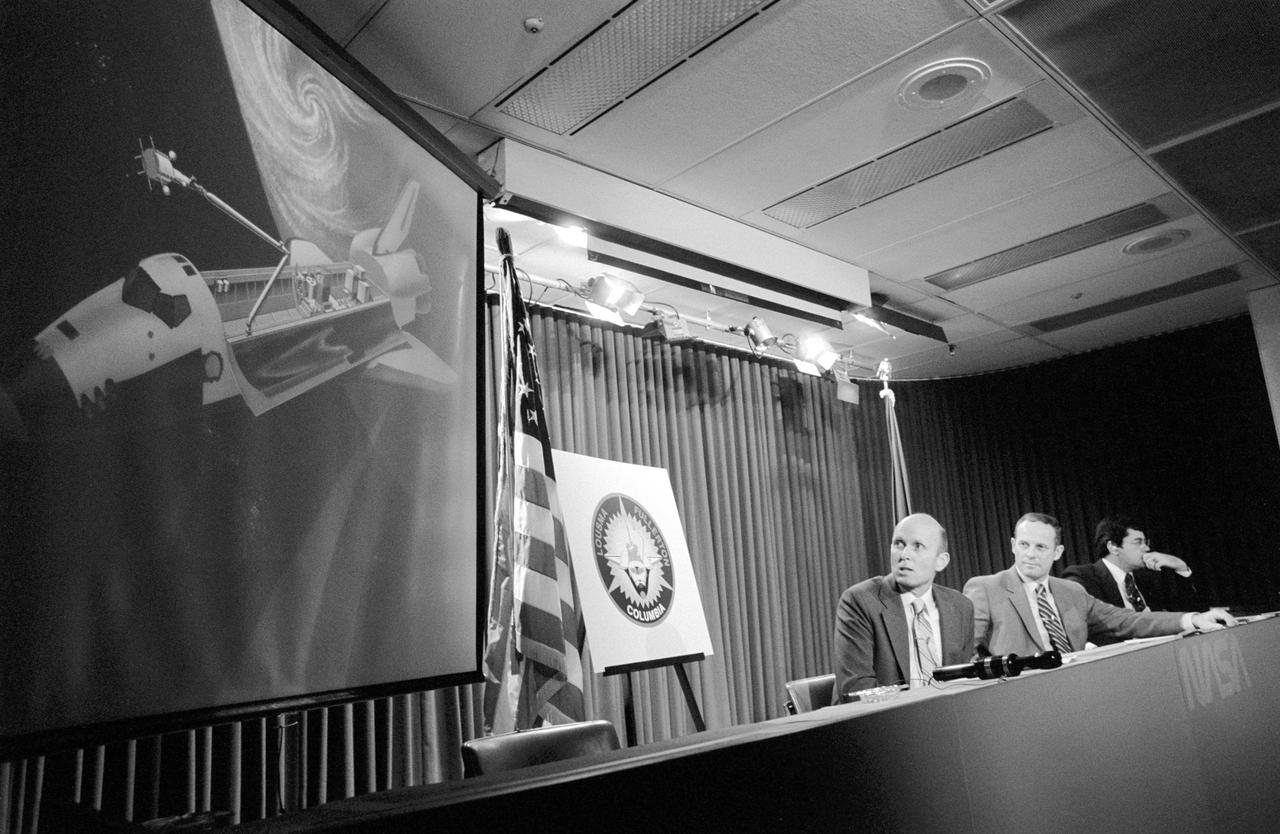
S82-25903 (21 Jan. 1982) --- Astronaut Jack R. Lousma, center, and C. Gordon Fullerton, left, respond to a visual depicting the Columbia and its remote manipulator system in space during a pre-STS-3 press conference in JSC?s pubic affairs building. Dr. John Lawrence, public information specialist who introduced the crew to news media representatives, is at far right. Photo credit: NASA
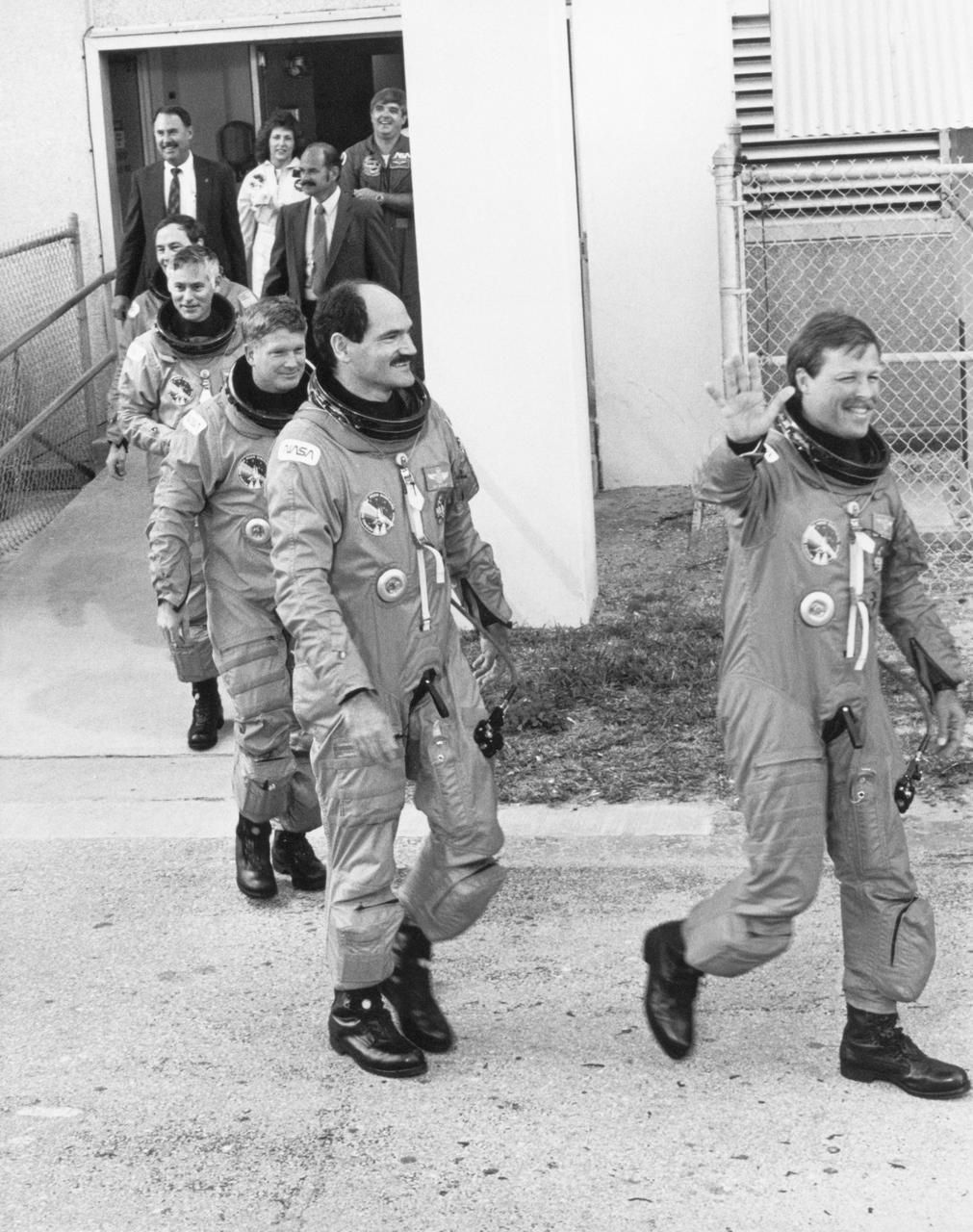
S88-53088 (2 Dec. 1988) --- The STS-27 crew strides down the ramp from the Operations and Checkout Building at Kennedy Space Center to grab a van that will take the crew members to Launch Complex 39 for the Dec. 2, 1988 liftoff of Atlantis. Astronaut Robert L. Gibson, commander, waves to well-wishers (out of frame). He is followed by astronaut Guy S. Gardner, pilot, along with the flight?s three mission specialists -- astronauts William M. Shepherd, Richard M.(Mike) Mullane and Jerry L. Ross. Photo credit: NASA
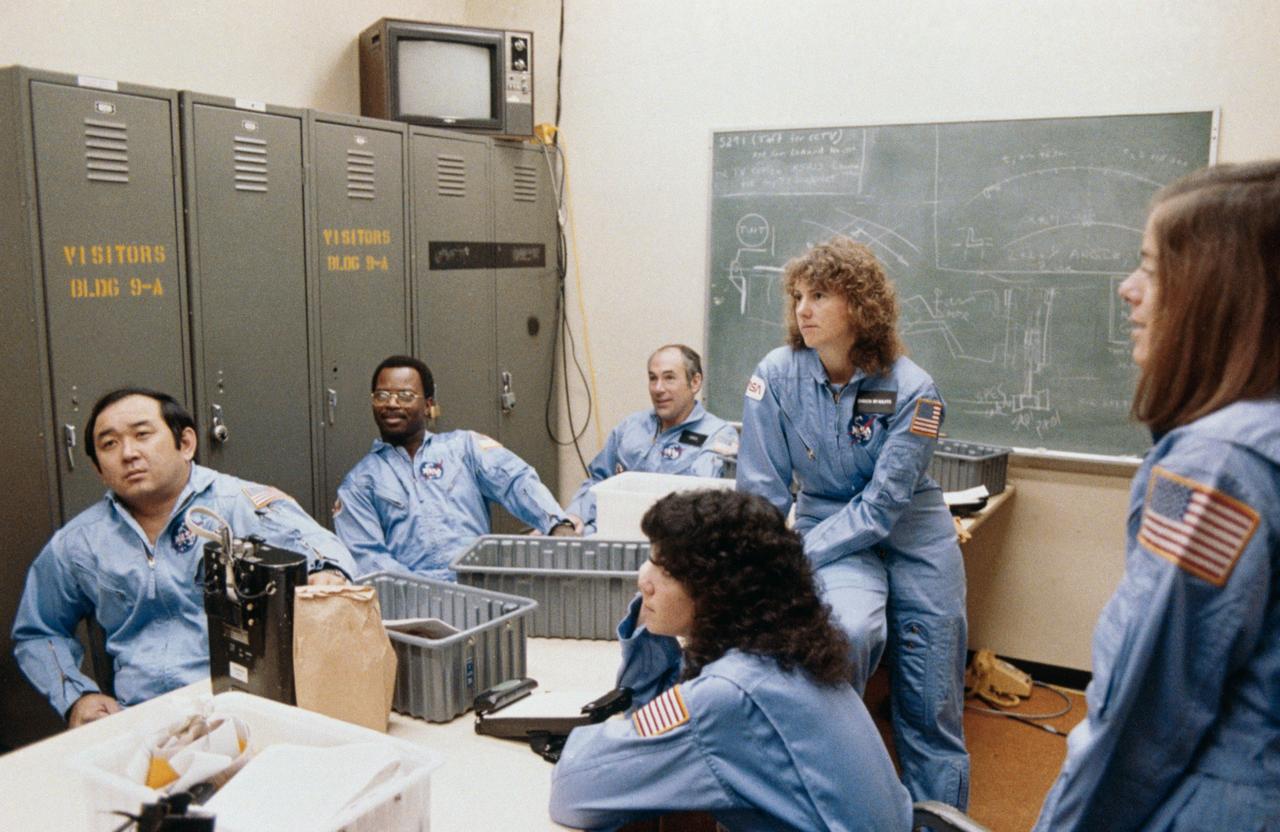
S86-25186 (December 1985) --- Five members of the prime crew for NASA?s STS-51L mission and a backup crew member are briefed during a training session in the Johnson Space Center?s (JSC) Shuttle Mock-up and Integration Laboratory. From left to right are astronaut Ellison S. Onizuka, mission specialist; Ronald E. McNair, mission specialist; Gregory D. Jarvis, Hughes payload specialist; Judith A. Resnik, mission specialist; Sharon Christa McAuliffe, citizen observer/payload specialist representing the Teacher-in-Space Project; and Barbara R. Morgan, backup payload specialist. The photograph was taken by Keith Meyers of the New York Times. EDITOR?S NOTE: The STS-51L crew members lost their lives in the space shuttle Challenger accident moments after launch on Jan. 28, 1986 from the Kennedy Space Center (KSC). Photo credit: NASA
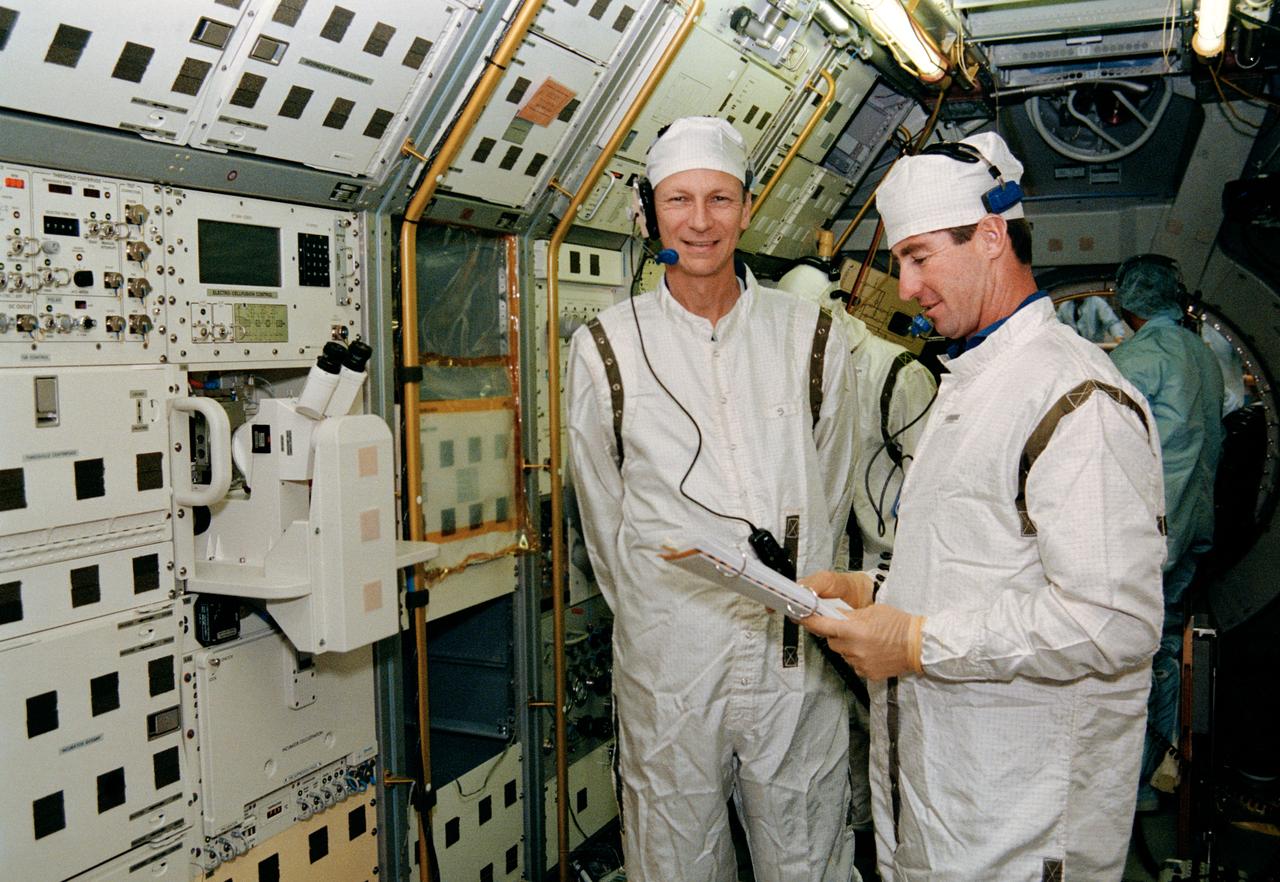
S93-29830 (4 Nov 1992) --- Inside the Spacelab D-2 module in the Operations and Checkout Building high bay, STS-55 Mission Commander Steven R. Nagel (left) and Pilot Terence T. Henricks are participating in a mission sequence test to check out experiment steps and procedures which will be conducted on-orbit. Spacelab D-2, the second German Spacelab, is scheduled to fly on space shuttle mission STS-55 in 1993.
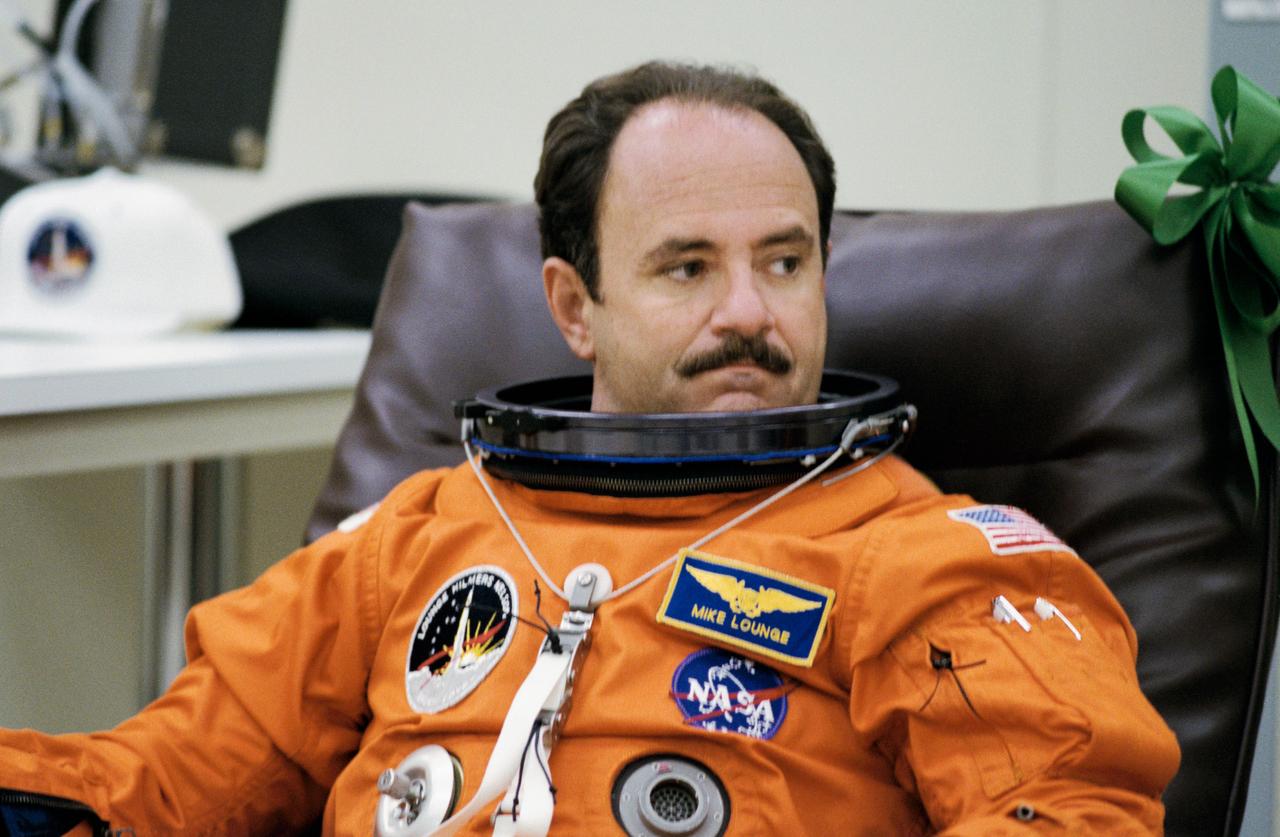
STS-26 Discovery, Orbiter Vehicle (OV) 103, Mission Specialist (MS) John M. Lounge relaxes in reclining chair after donning his orange launch and entry suit (LES) at the Kennedy Space Center (KSC) Operations and Checkout (O&C) Building. Upon completion of preflight suit tests, crewmembers will head to the launch pad.
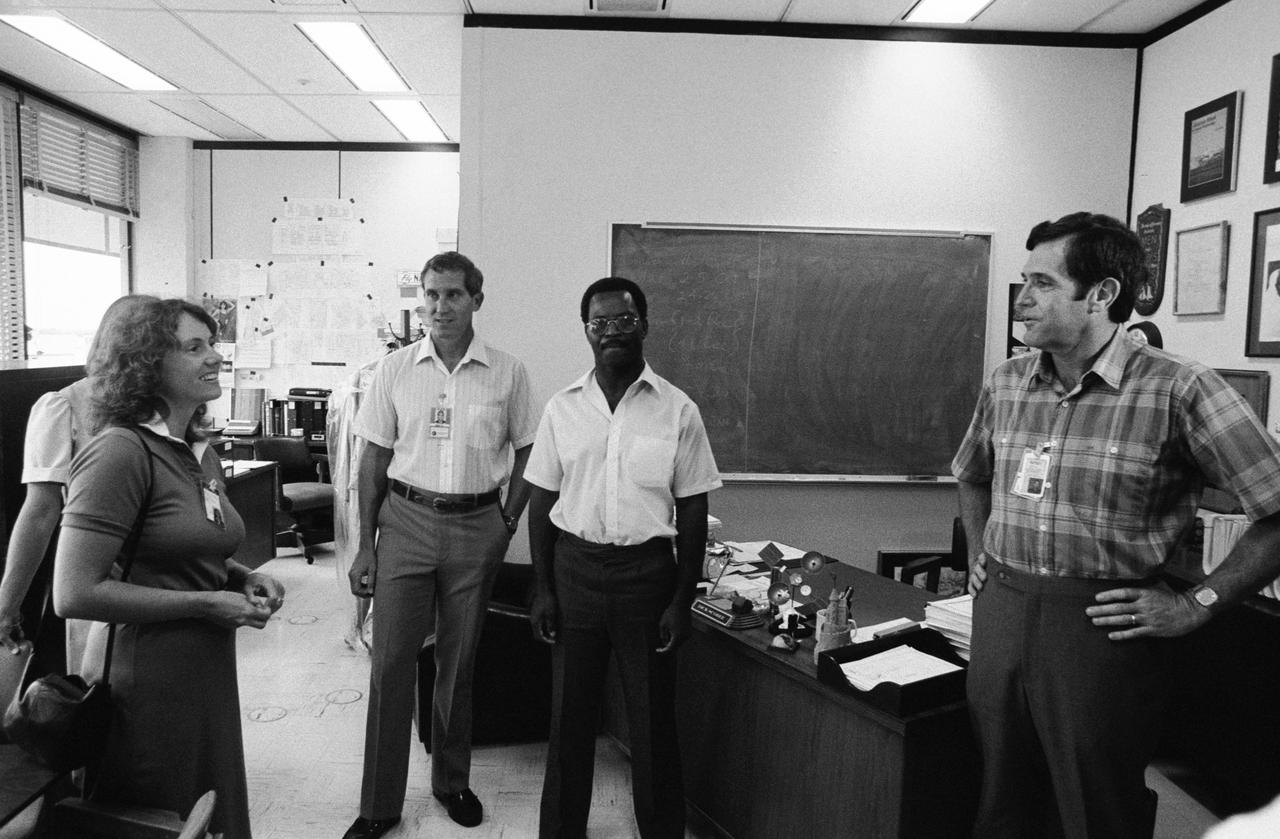
S85-39943 (9 Sept. 1985) --- Sharon Christa McAuliffe, STS-51L citizen observer/payload specialist representing the Teacher in Space Program, meets the other STS-51L crew members. The crew members pictured are (l.-r.) astronauts Michael J. Smith, pilot; Ronald E. McNair, mission specialist; and Francis R. (Dick) Scobee, mission commander. Photo credit: NASA
S82-25900 (21 Jan. 1982) --- Astronaut Jack R. Lousma, right, and C. Gordon Fullerton greet the press during a pre-STS-3 press conference in JSC?s Public Affairs Building. Lousma, commander and Fullerton, pilot, are scheduled to man the Columbia when it is launched in early spring from Kennedy Space Center launch pad 39A. Photo credit: NASA
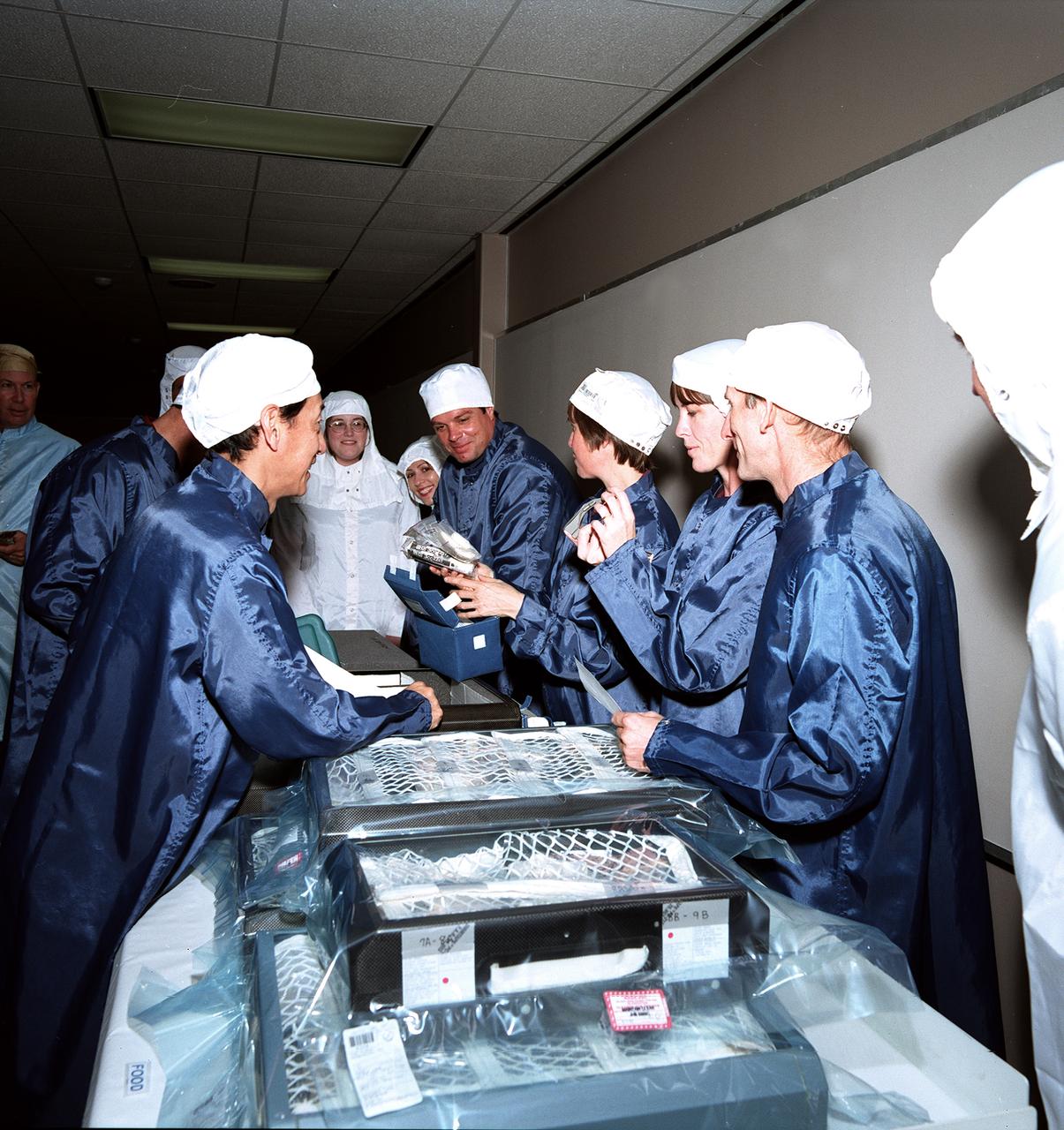
S99-09469 (11 August 1999) --- Wearing clean room suits, all six members of the STS-99 crew inspect some of the gear they will be using on their upcoming space shuttle mission. From the left (in blue lab coats) are astronauts Mamoru Mohri, mission specialist representing Japan's National Development Space Agency (NASDA); Dominic L. Gorie (partially obscured), pilot; Kevin R. Kregel, mission commander; Janice Voss, mission specialist; Janet L. Kavandi, mission specialist; and Gerhard P.J. Thiele, mission specialist representing the European Space Agency (ESA). This type flight crew equipment (FCE) bench review is routine preflight procedure for all shuttle crews.
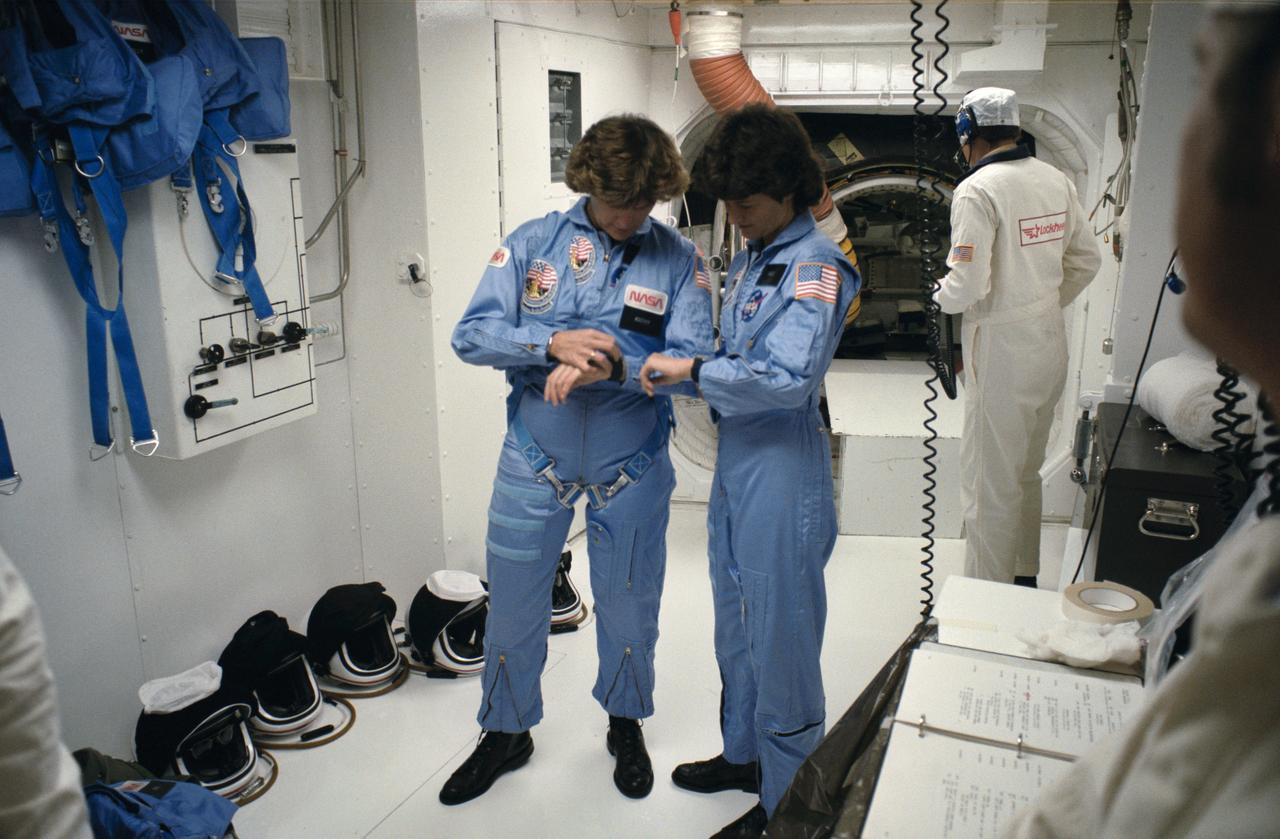
41G-90082 / S17-90082 (5 Oct 1984) --- Astronauts Sally K. Ride (right) and Kathryn D. Sullivan, two of three mission specialists, synchronize their watches prior to ingressing the Space Shuttle Challenger on the launch pad at Kennedy Space Center (KSC). They are in the White Room leading to the entry hatch of the vertically configured spacecraft.
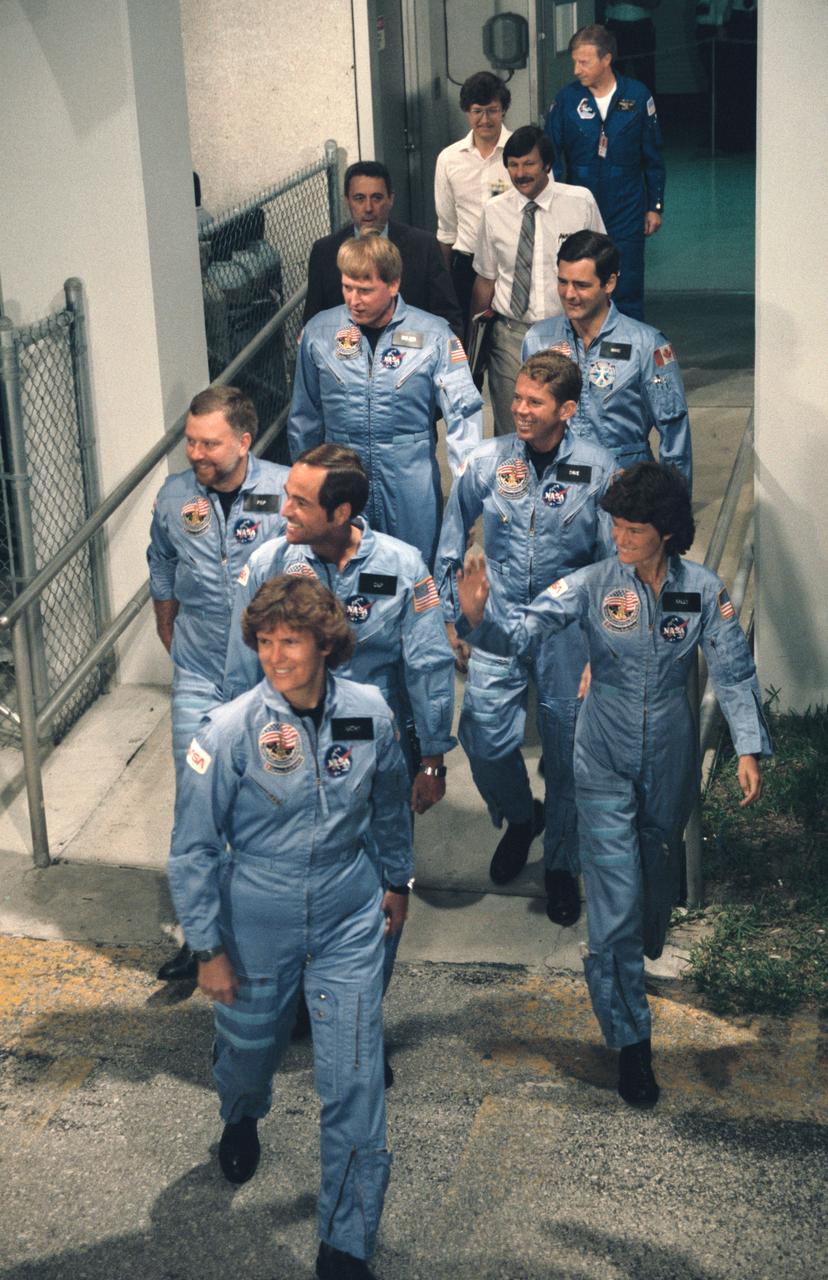
41G-90081 / S17-90081 (5 Oct 1984) --- The seven member crew leaves the Operations and Checkout Building (OCB) to take a van ride to the launch pad. Leading the way is Kathryn D. Sullivan followed in file by Robert L. Crippen, Paul D. Scully-Power and Jon A. McBride. On the right side are Sally K. Ride, David C. Leestma and Marc Garneau. Trailing the crew are George W. S. Abbey, Richard Nygren, Paul Bulver, and Paul J. Weitz.
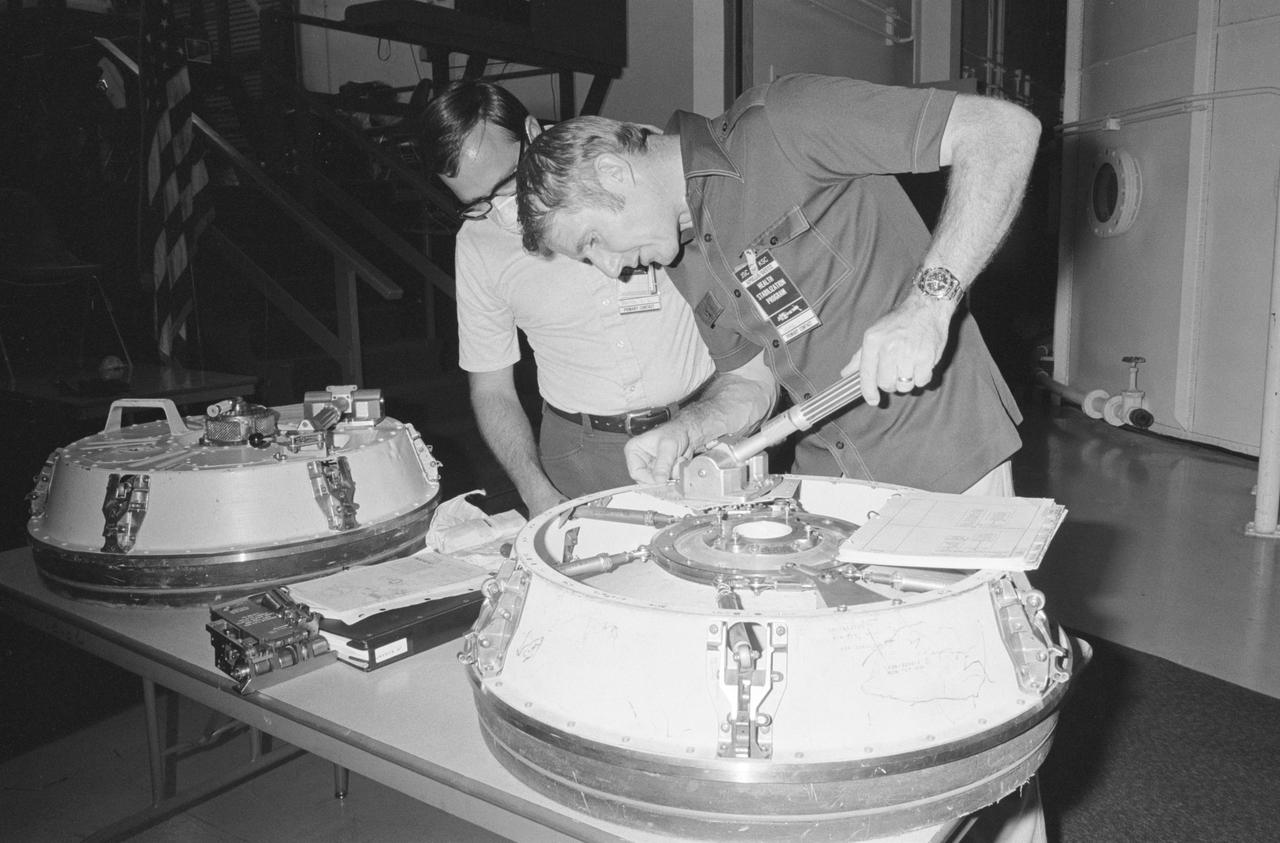
S75-28485 (12 July 1975) --- Astronaut Vance D. Brand, command module pilot of the American ASTP prime crew, practices operating a Docking Module hatch during Apollo-Soyuz Test Project preflight training at NASA's Johnson Space Center. The Docking Module is designed to link the Apollo and Soyuz spacecraft during their docking mission in Earth orbit. Gary L. Doerre of JSC?s Crew Training and Procedures Division is working with Brand. Doerre is wearing a face mask to help prevent possible exposure to Brand of disease prior to the ASTP launch.
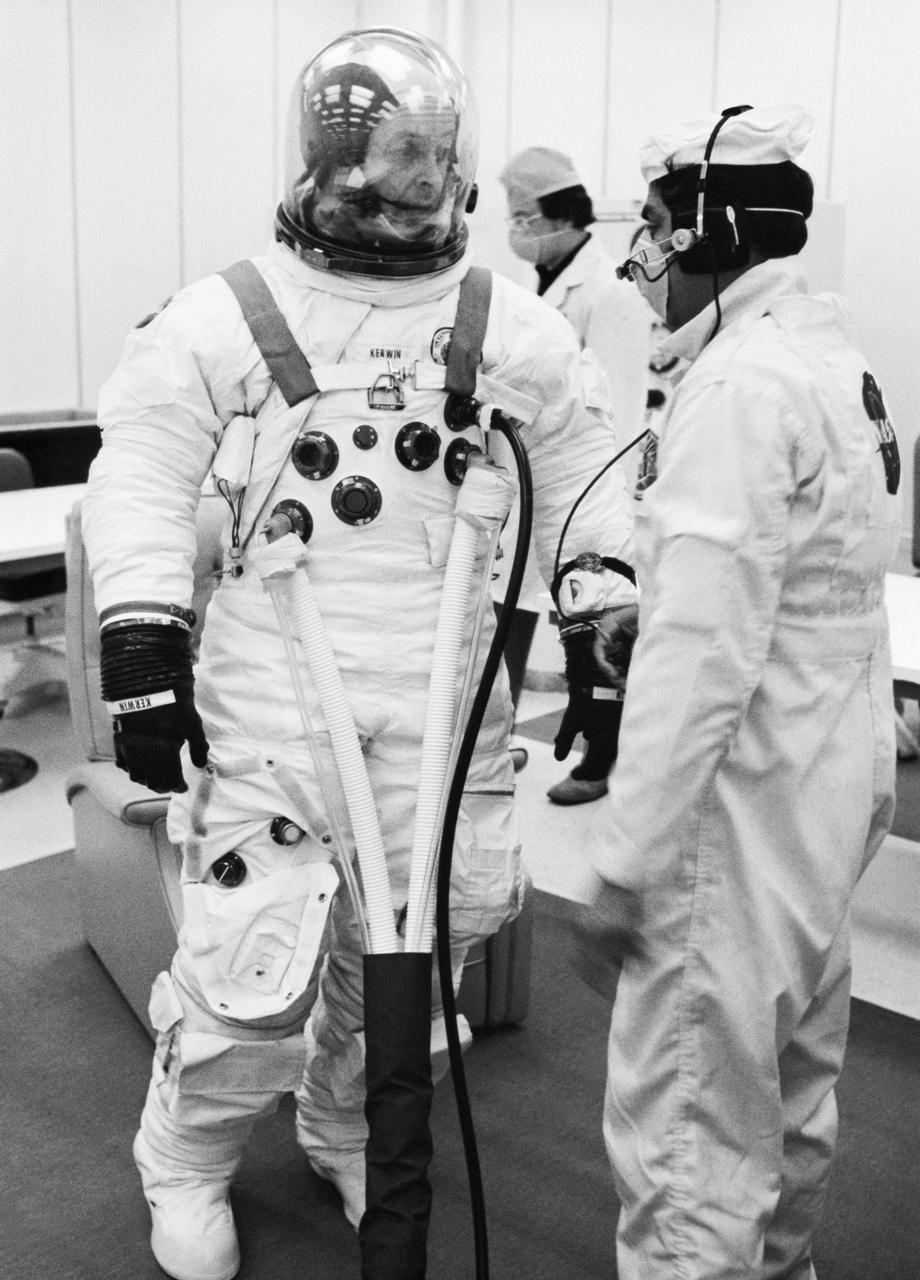
S73-25900 (25 May 1973) --- Scientist-astronaut Joseph P. Kerwin, science pilot of the Skylab 2 mission, is suited up in the Manned Spacecraft Operations Building at the Kennedy Space Center during Skylab 2 prelaunch preparations. Photo credit: NASA
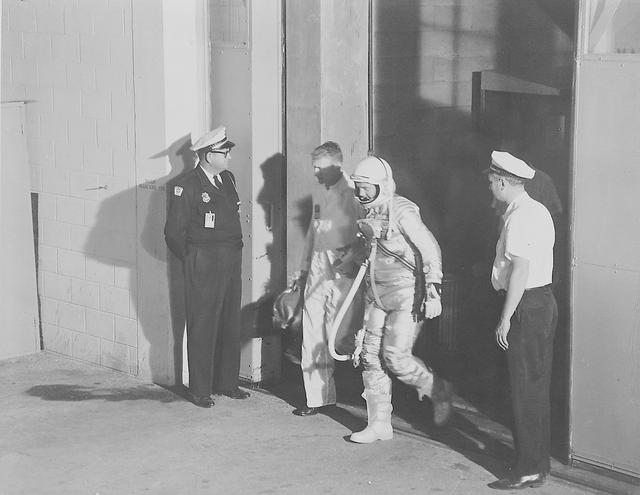
S62-00222 (20 Feb. 1962) --- View of astronaut John H. Glenn Jr. and equipment specialist Joe Schmitt leaving crew quarters prior to Mercury-Atlas 6 (MA-6) mission. Glenn is in his pressure suit and is carrying the portable ventilation unit. Photo credit: NASA
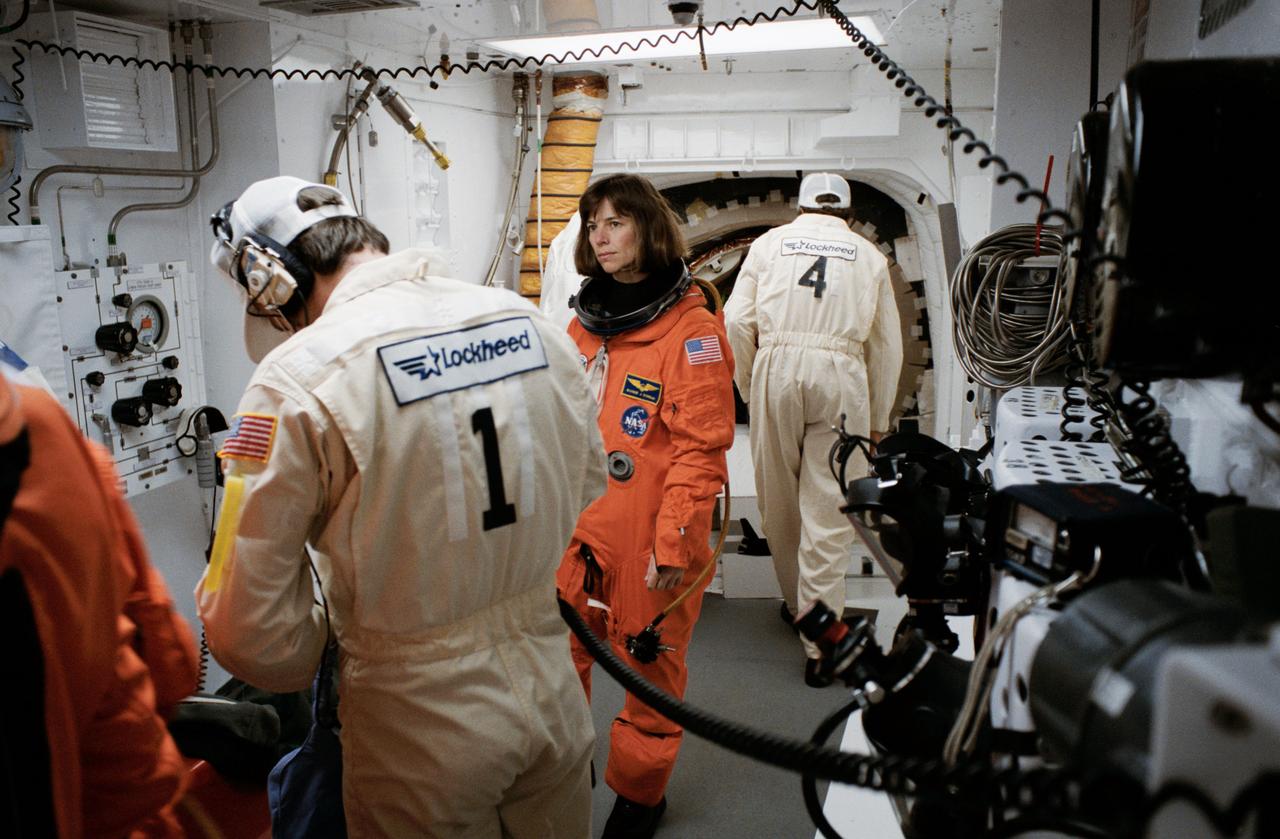
STS-32 Mission Specialist (MS) Bonnie J. Dunbar, wearing launch and entry suit (LES), looks on as technicians prepare LES equipment in the white room on the orbiter access arm at Kennedy Space Center (KSC) Launch Complex (LC) Pad 39A before entering Columbia, Orbiter Vehicle (OV) 102. In the background, a technician looks through OV-102 side hatch.
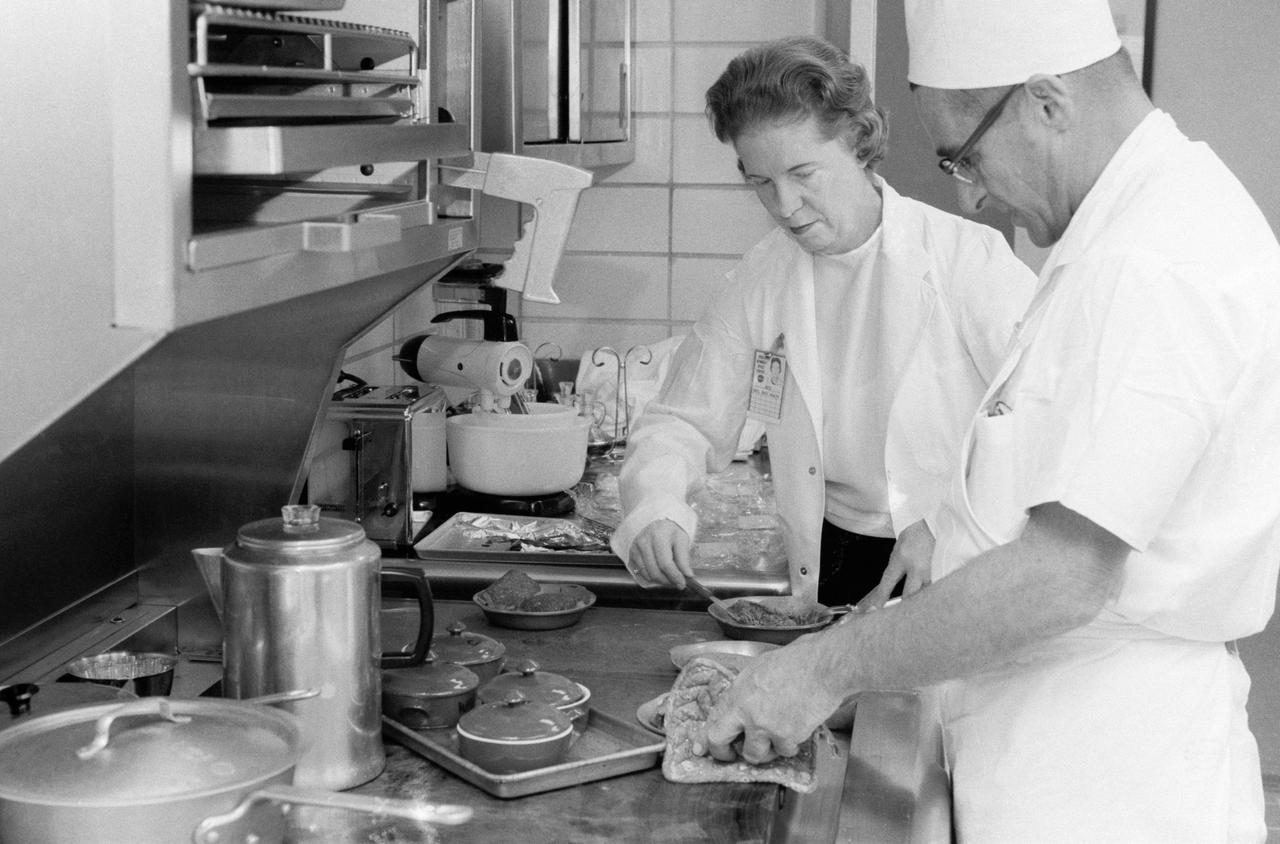
S65-56311 (2 Dec. 1965) --- Kennedy Space Center food specialists prepare an Earth-bound meal for Gemini-7 astronauts. Astronauts' diet is strictly controlled before and during spaceflights to avoid interfering with planned medical experiments. Photo credit: NASA
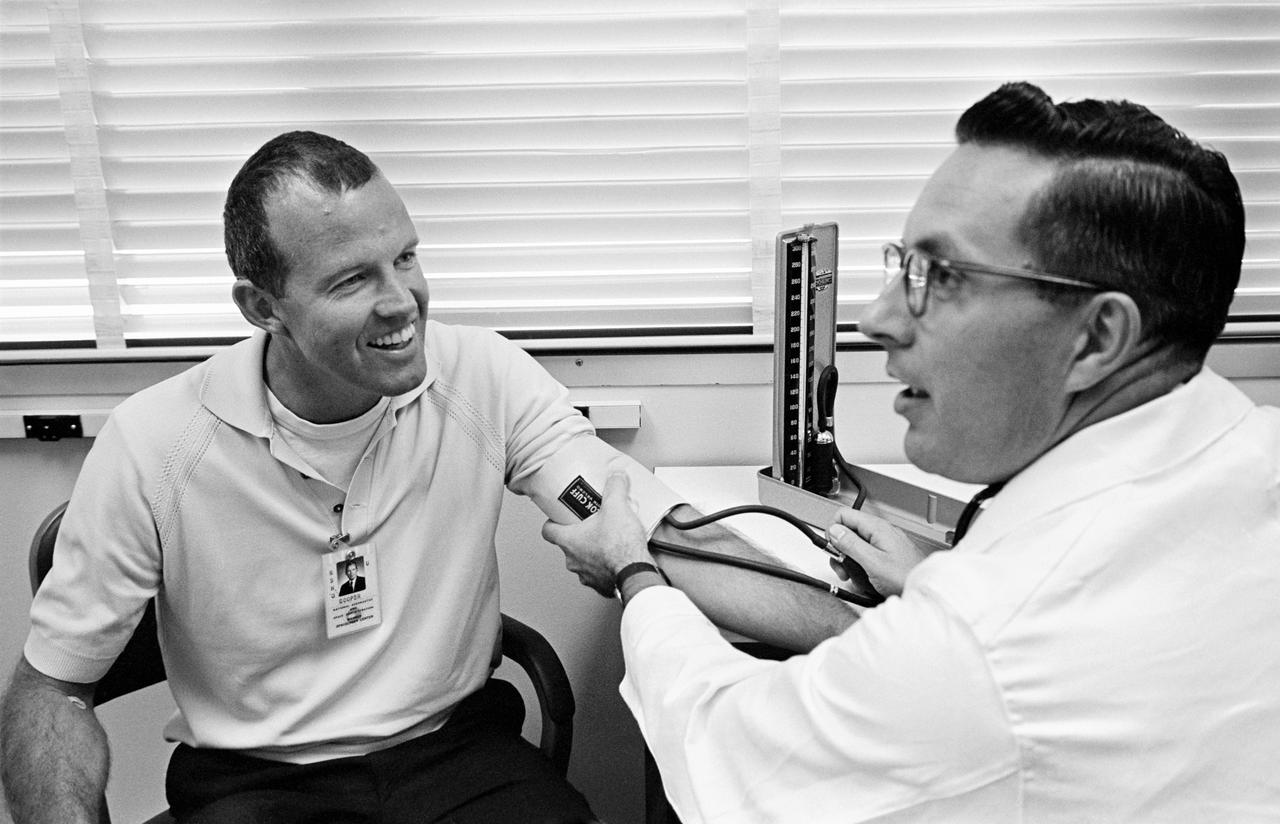
S65-28710 (17 Aug. 1965) --- Astronaut L. Gordon Cooper Jr., command pilot for the Gemini-5 spaceflight, has his blood pressure checked by Dr. Charles A. Berry, chief, Center Medical Programs, Manned Spacecraft Center, during a preflight physical examination.
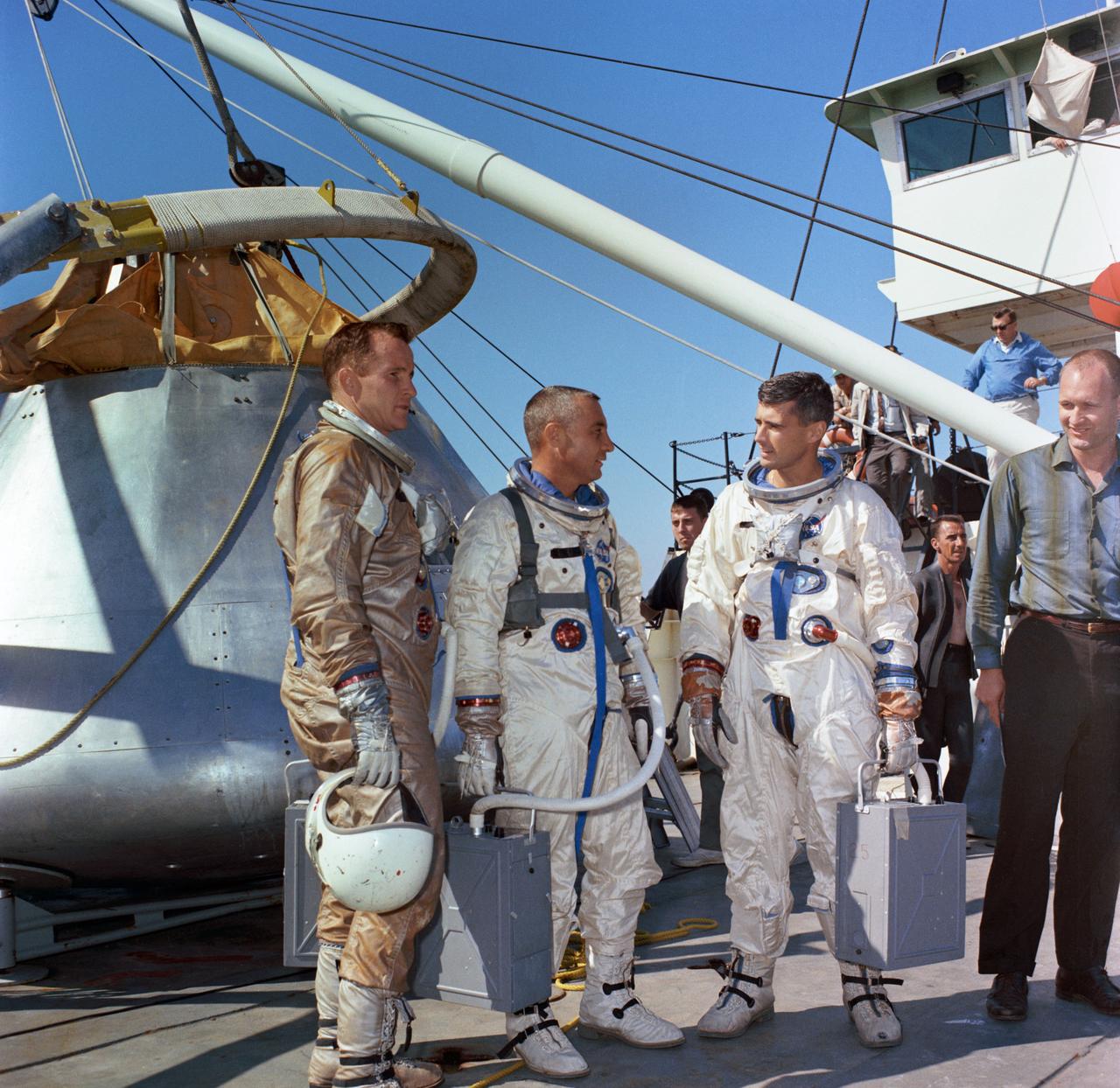
S66-58501 (27 Oct. 1966) --- The prime crew of the first manned Apollo Space Flight, Apollo/Saturn (AS) mission 204, is suited up aboard the NASA Motor Vessel Retriever (MVR) in preparation for Apollo water egress training in the Gulf of Mexico. Left to right, are astronauts Edward H. White II, senior pilot; Virgil I. Grissom, command pilot; and Roger B. Chaffee, pilot.
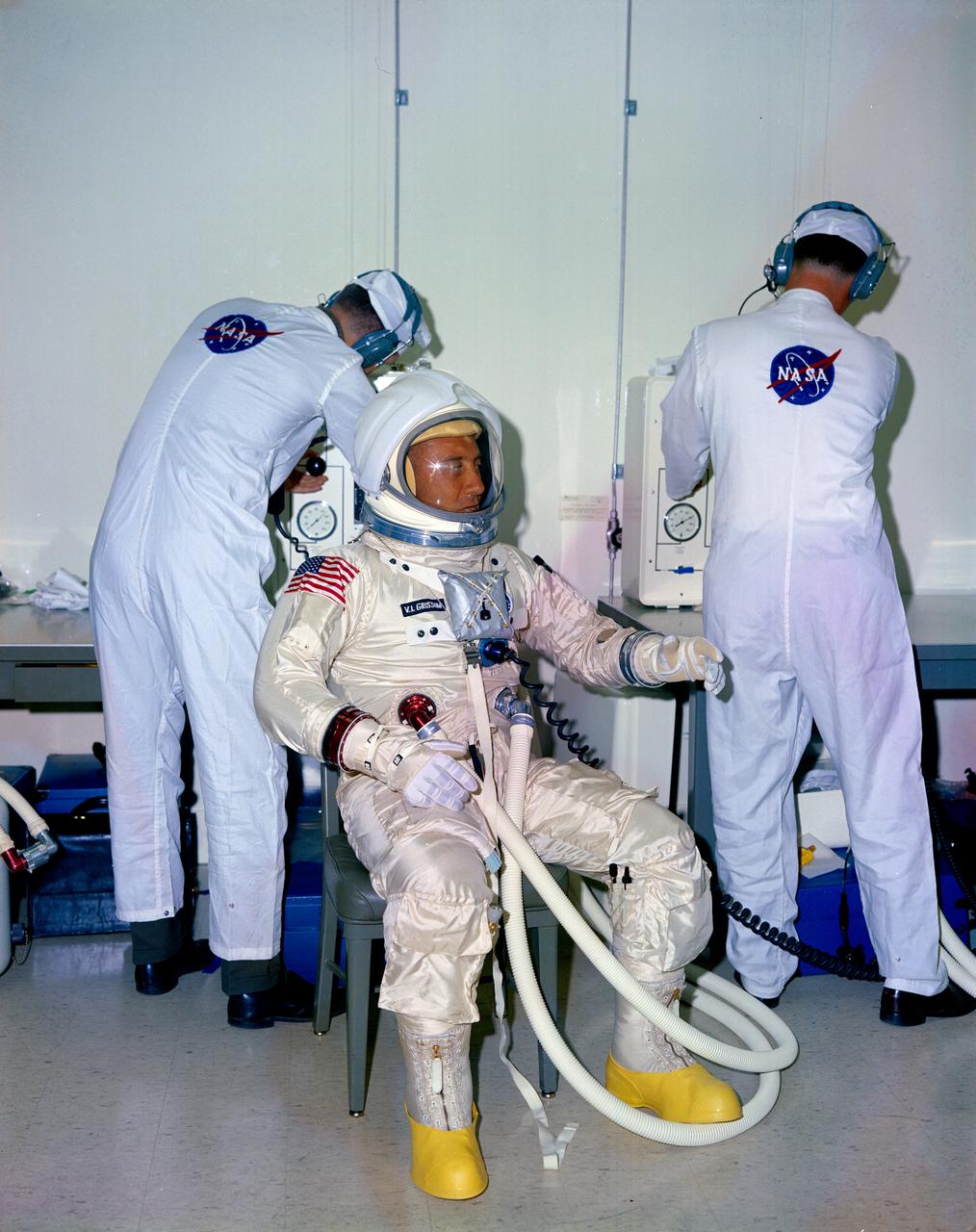
S66-58023 (1966) --- NASA suit technicians assist astronaut Virgil I. Grissom during suiting operations prior to tests at the Kennedy Space Center.
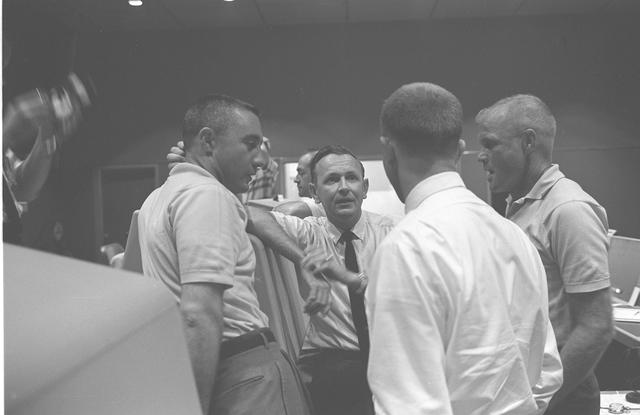
S64-10761 (1962) --- Astronauts Virgil I. (Gus) Grissom (left) and John H. Glenn Jr. hold a discussion in the Mercury Control Center during Mercury-Atlas 6 preflight activity. Glenn is the MA-6 pilot. Grissom was the pilot for the Mercury-Redstone 4 spaceflight made on July 21, 1961. Photo credit: NASA
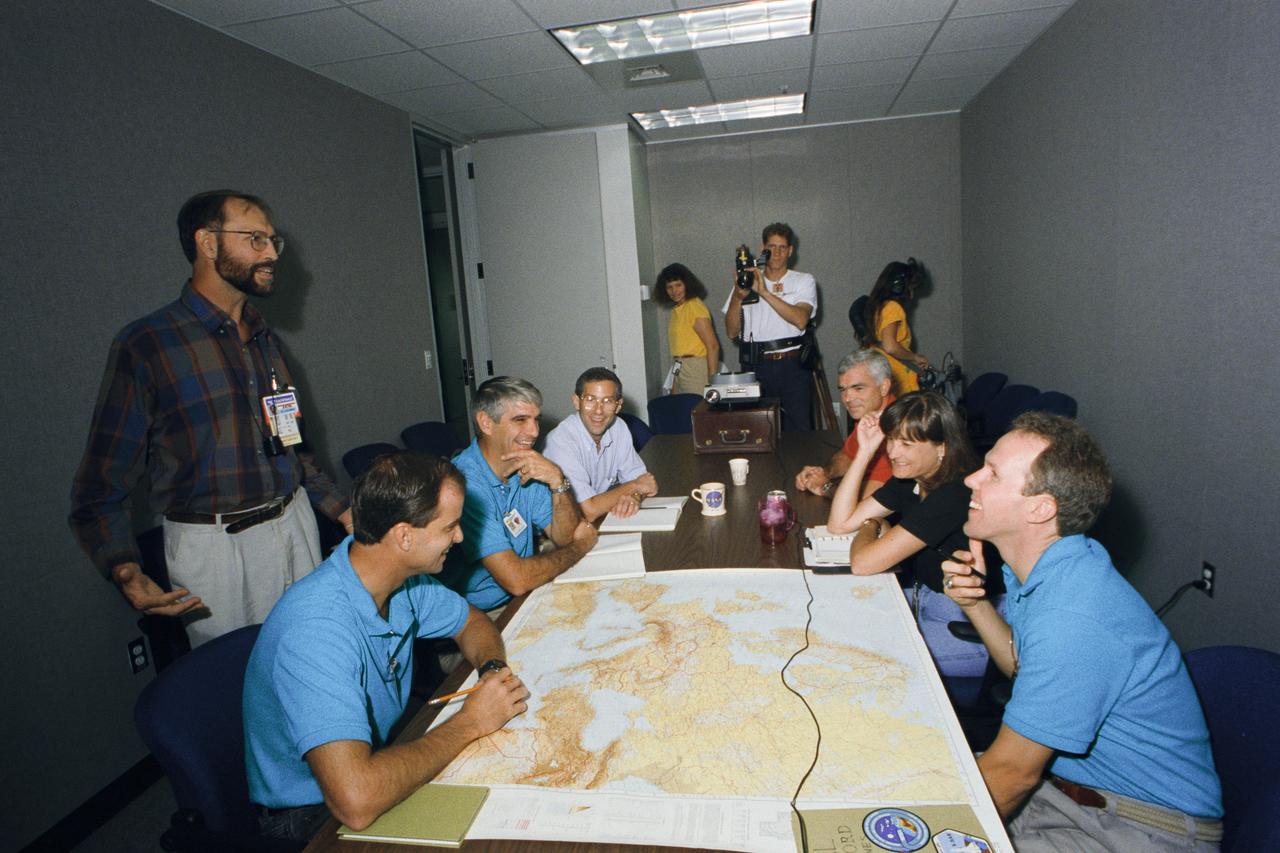
S93-42727 (26 Aug 1993) --- The six astronauts in training for the STS-59 mission are given some onboard Earth observations tips by Justin Wilkinson (standing, foreground) of the Space Shuttle Earth Observations Project (SSEOP) group. Astronaut Sidney M. Gutierrez, mission commander, is at center on the left side of the table. Others, left to right, are astronauts Kevin P. Chilton, pilot; Jerome (Jay) Apt and Michael R.U. (Rich) Clifford, both mission specialists; Linda M. Godwin, payload commander; and Thomas D. Jones, mission specialist.
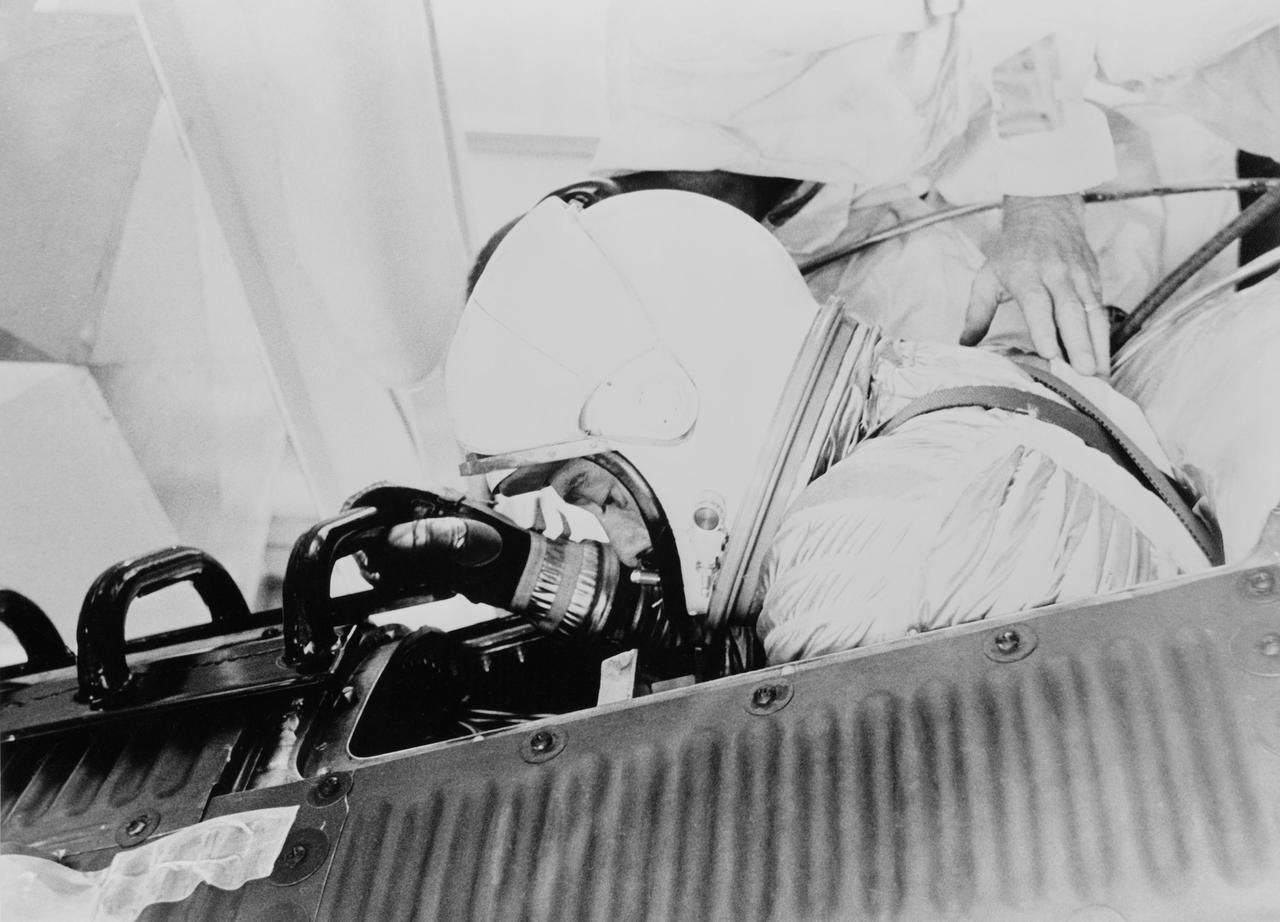
S61-03645 (5 May 1961) --- Close-up of astronaut Alan B. Shepard Jr., in his pressure suit and helmet, ingressing into the Freedom 7 capsule in preparation for the Mercury-Redstone 3 (MR-3) mission. Photo credit: NASA or National Aeronautics and Space Administration
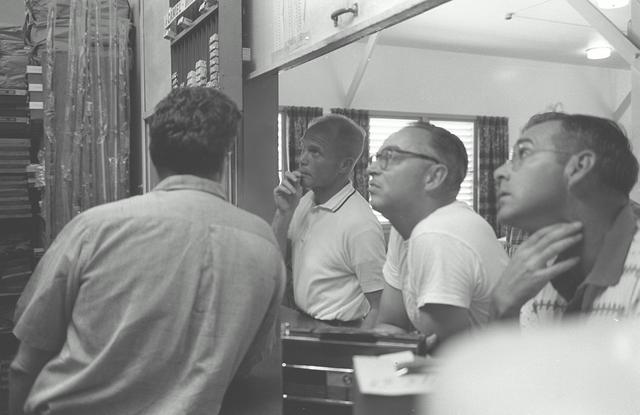
S64-10801 (1962) --- Astronauts M. Scott Carpenter (far left) and John H. Glenn Jr. relax following breakfast during Mercury Atlas 6 (MA-6) preflight activity. Glenn is the MA-6 pilot. Carpenter is the MA-6 backup pilot. Photo credit: NASA
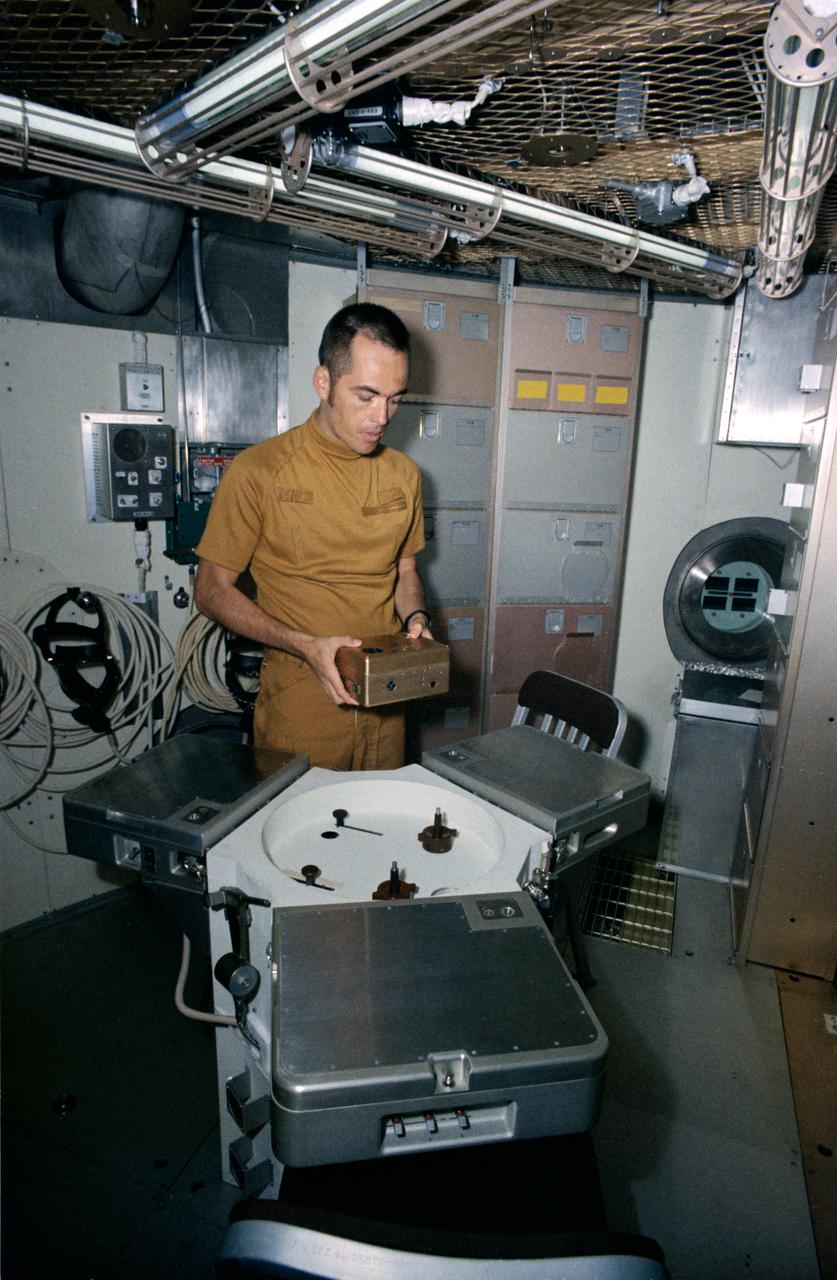
S72-43280 (15 June 1972) --- Astronaut Robert L. Crippen, Skylab Medical Experiment Altitude Test (SMEAT) commander, holds the training model of Skylab experiment T003, the aerosol analysis test, in this preview of SMEAT activity. He is part of a three-man SMEAT crew who will spend up to 56 days in the Crew Systems Division's 20-foot altitude chamber at the NASA Manned Spacecraft Center (MSC) beginning in mid-July to obtain medical data and evaluate medical experiment equipment for Skylab. The two crew members not shown in this view are astronauts Karol J. Bobko, SMEAT pilot, and Dr. William E. Thornton, SMEAT science pilot. Photo credit: NASA
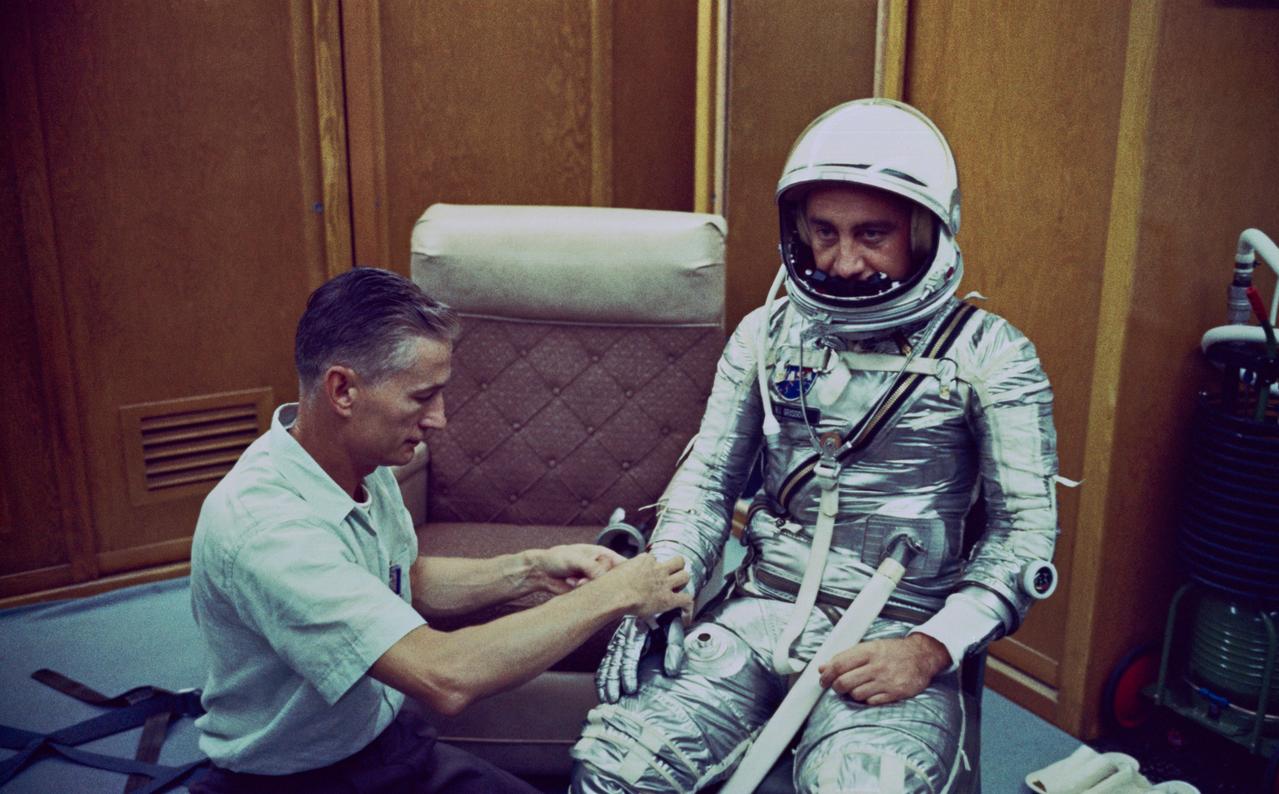
S88-55875 (19 July 1961) --- Donning a spacesuit for the Mercury-Redstone 4 (MR-4) mission, astronaut Virgil I. (Gus) Grissom chats with spaceflight equipment specialist Joe W. Schmitt in the personal equipment room of Hangar S at Cape Canaveral, Florida. Shortly after this photograph was taken, the launch was postponed two days due to unfavorable weather conditions in the area. Photo credit: NASA
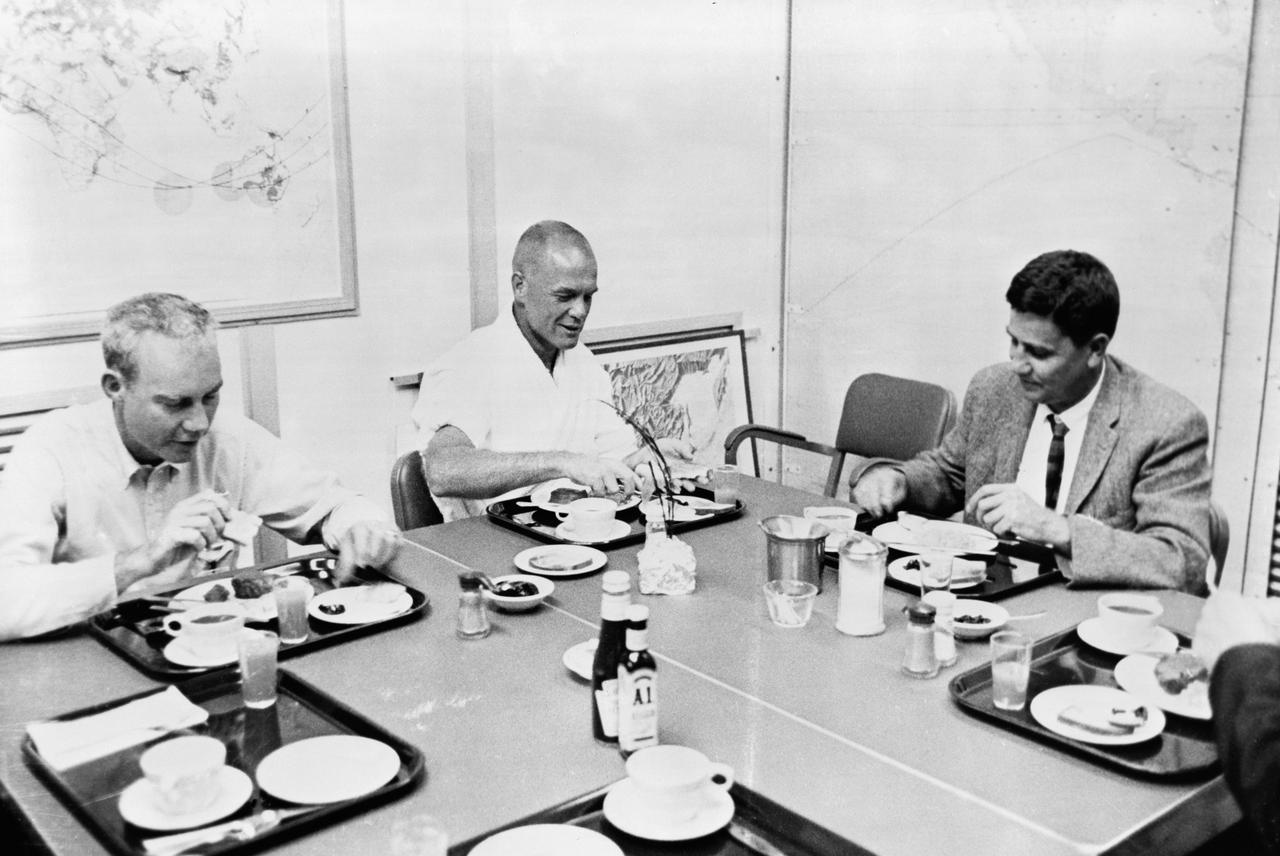
S62-00966 (20 Feb. 1962) --- Astronaut John H. Glenn Jr. (center) eats breakfast the morning of the launch of his Mercury-Atlas 6 (MA-6)spacecraft. Dr. William K. Douglas is at right. Photo credit: NASA
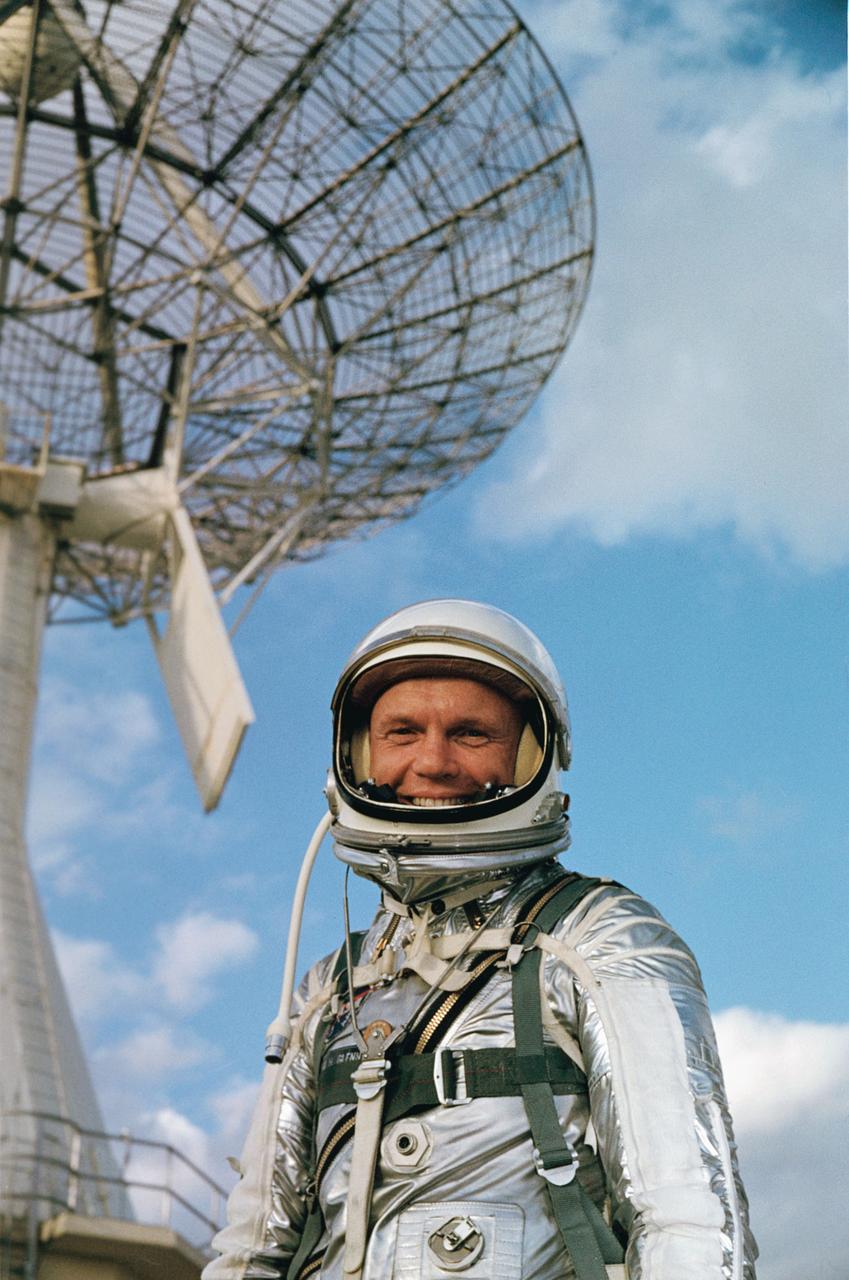
S64-14869 (February 1962) --- Astronaut John H. Glenn Jr., wearing a Mercury pressure suit, was the pilot of the Mercury-Atlas 6 (MA-6) mission. Glenn made America's first manned Earth-orbital spaceflight on Feb. 20, 1962. This photograph was taken at Cape Canaveral, Florida, during MA-6 preflight training activities. Photo credit: NASA
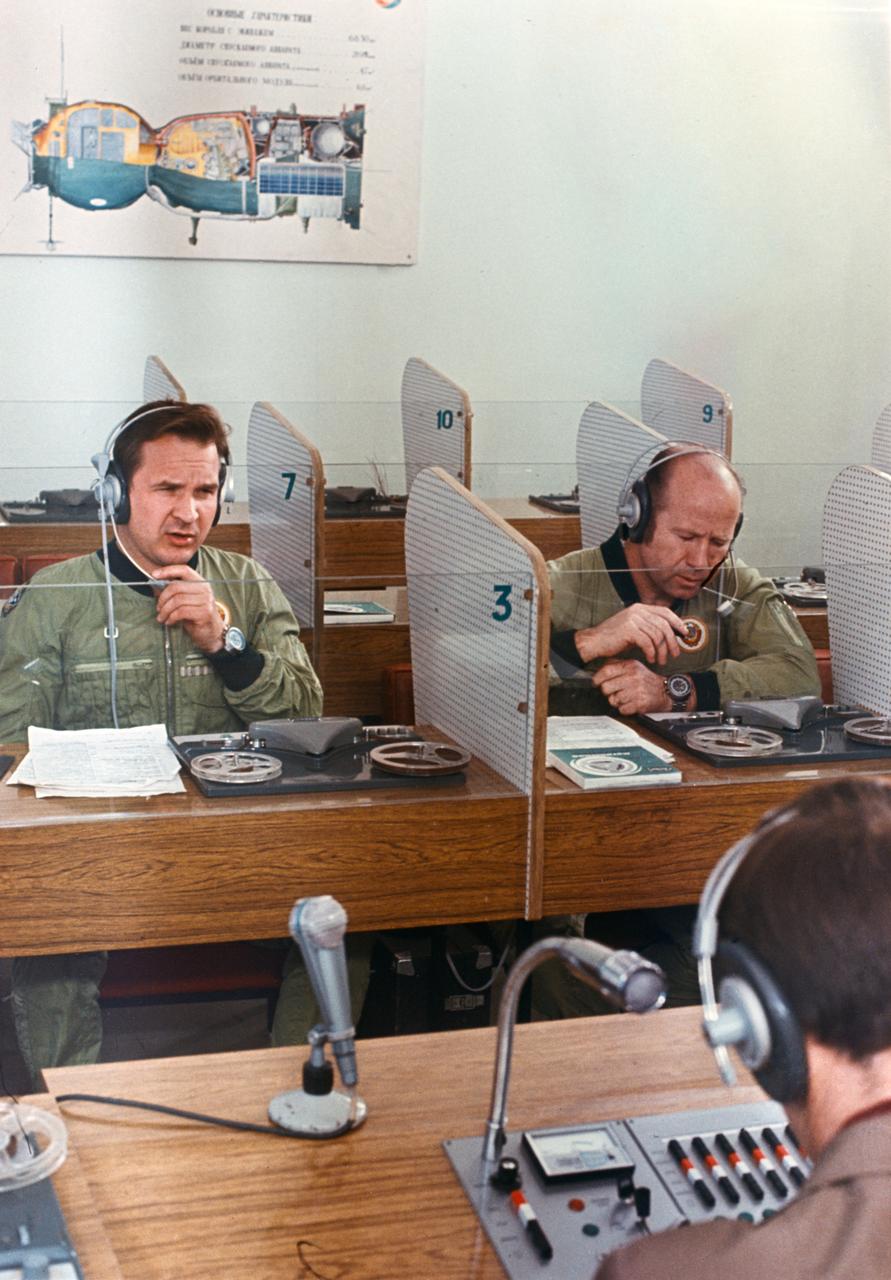
S75-32340 (July 1975) --- Cosmonauts Valeriy N. Kubasov (left) and Aleksey A. Leonov participate in English language training during Apollo-Soyuz Test Project preflight preparations at the Cosmonaut Training Center (Star City) near Moscow. Leonov was the commander of the Soviet ASTP first (prime) crew; and Kubasov was the flight engineer on the same crew. They are seated in the language laboratory at Star City. PHOTO COURTESY: USSR ACADEMY OF SCIENCES
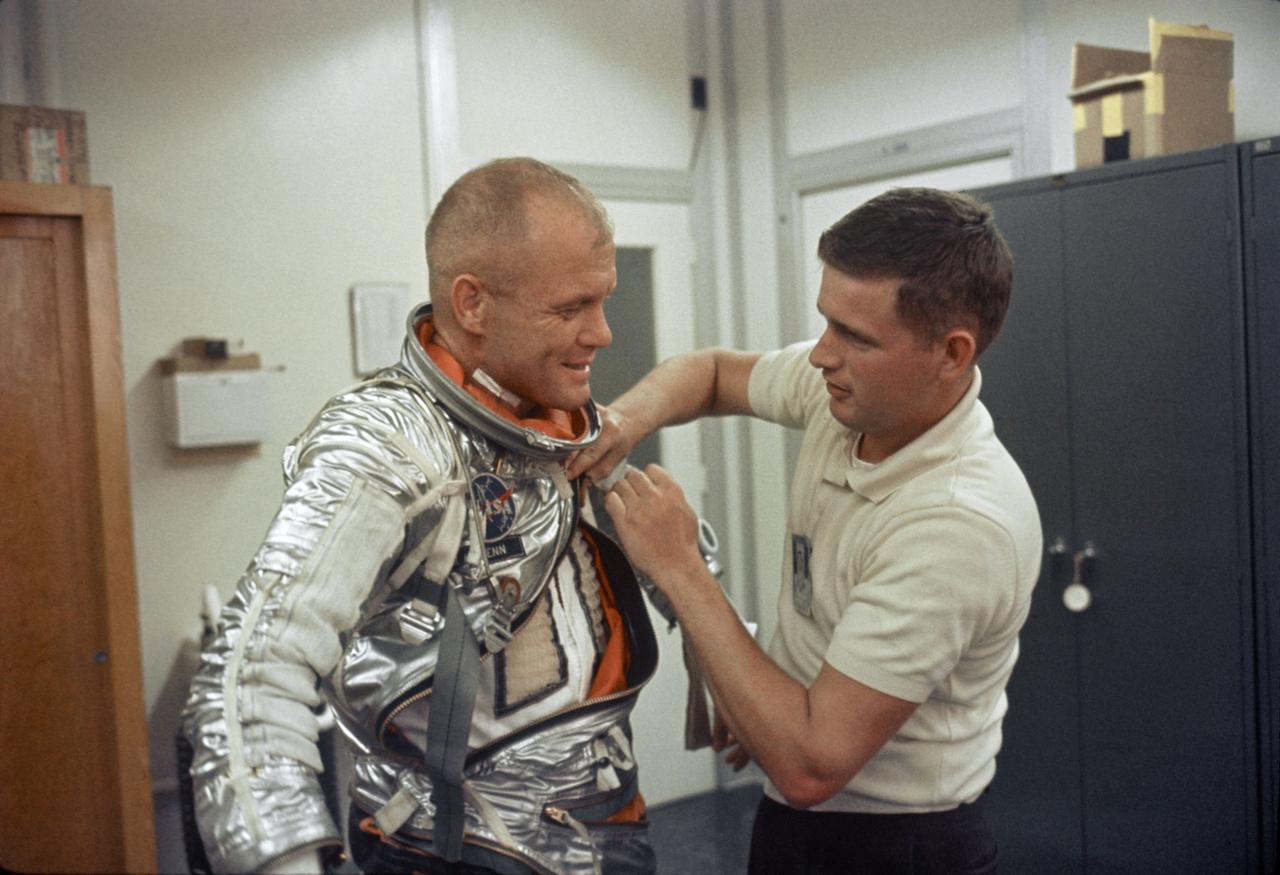
S64-14843 (1962) --- Astronaut John H. Glenn Jr., pilot of the Mercury-Atlas 6 Earth-orbital space mission, is suited up at Cape Canaveral, Florida, during MA-6 preflight activities. Assisting Glenn is suit technician Al Rochford. Photo credit: NASA
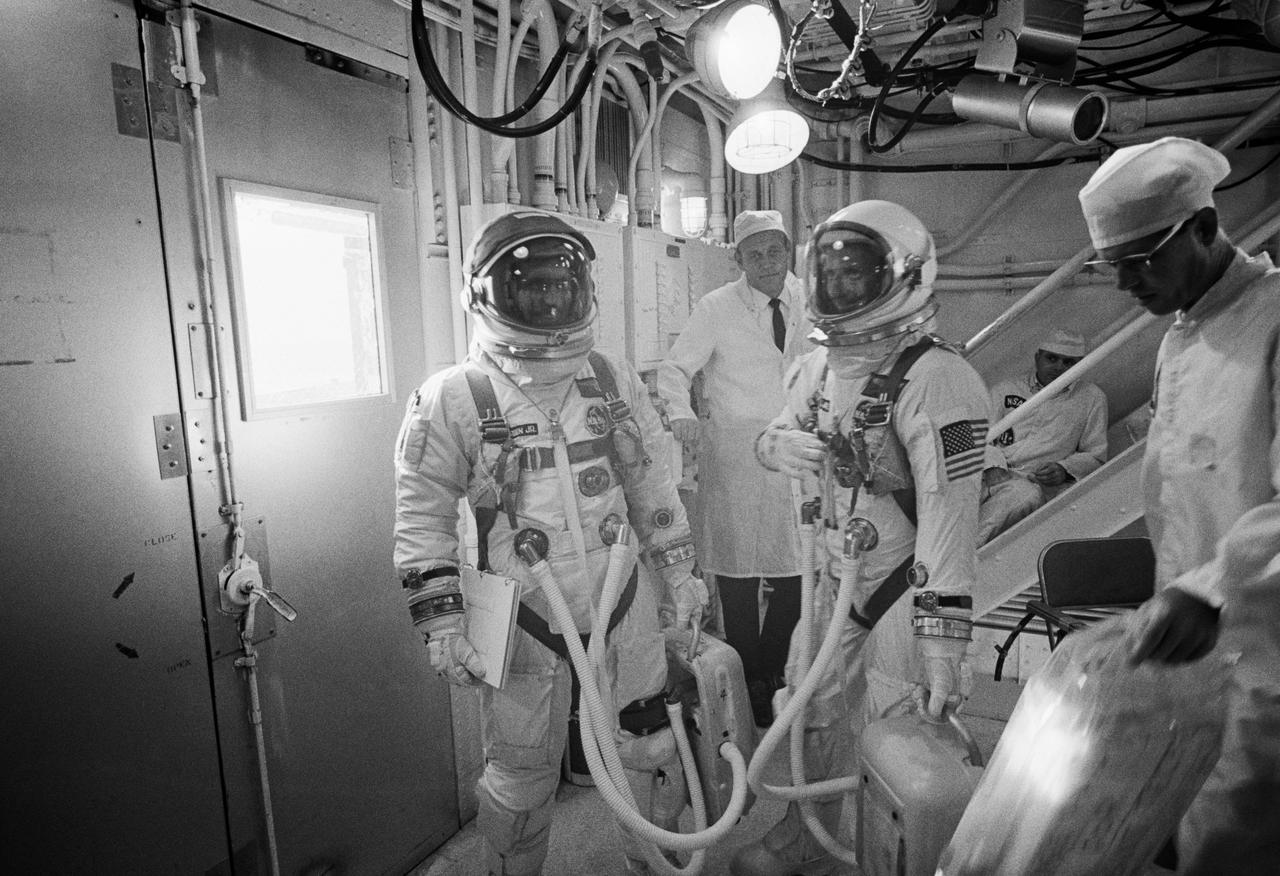
S66-57967 (10 Sept. 1966) --- Gemini-11 prime crew, astronauts Charles Conrad Jr. (right), command pilot, and Richard F. Gordon Jr. (left), pilot, prepare to enter the Gemini-11 spacecraft in the White Room atop Pad 19. Photo credit: NASA
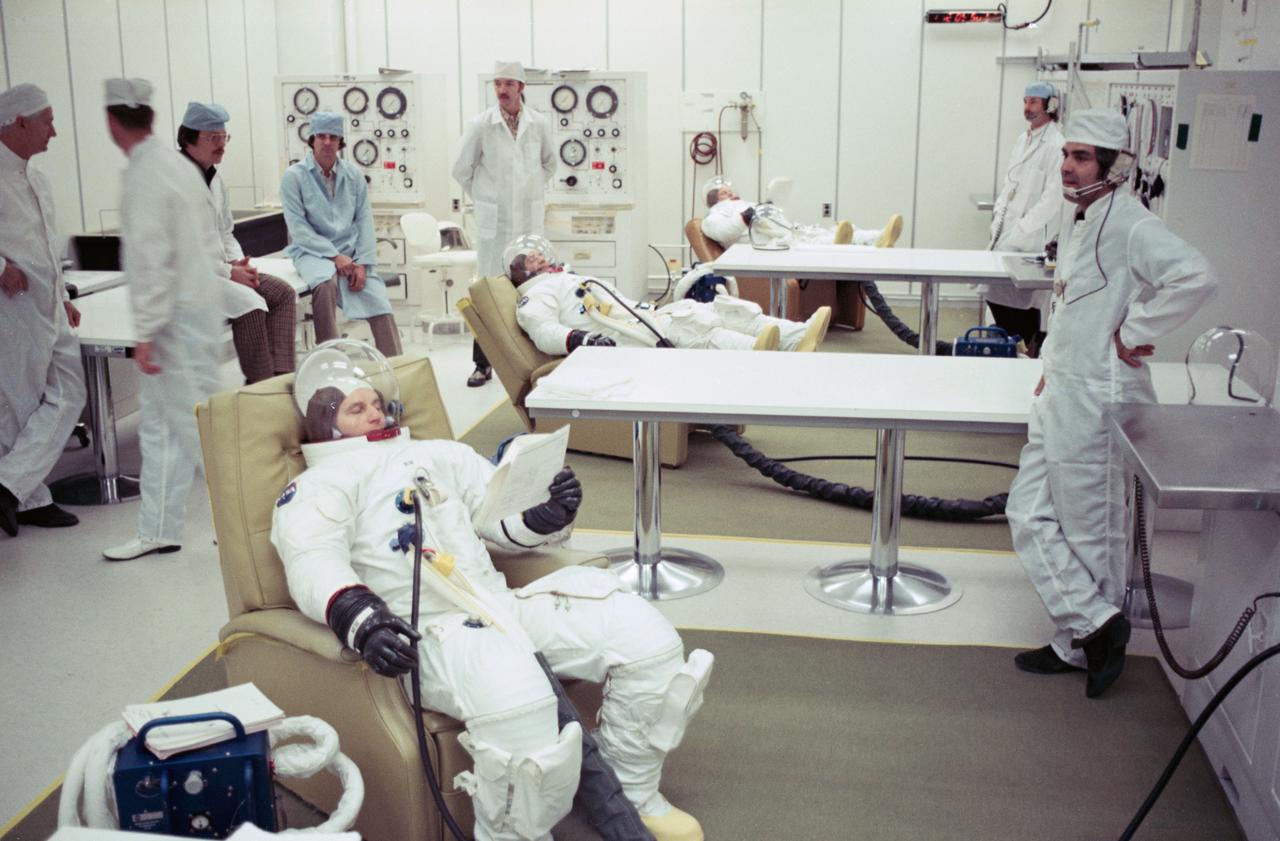
S75-21063 (January 1975) --- The three members of the American ASTP backup crew are suited up for the testing of the Apollo spacecraft at the Kennedy Space Center. They are (from foreground) astronauts Alan L. Bean, commander; Ronald E. Evans, command module pilot; and Jack R. Lousma, docking module pilot. Later, they entered the Apollo Command Module in an altitude chamber for tests of spacecraft systems. The testing was in preparation for the joint U.S.?USSR Apollo-Soyuz Test Project docking mission in Earth orbit scheduled for July 1975.
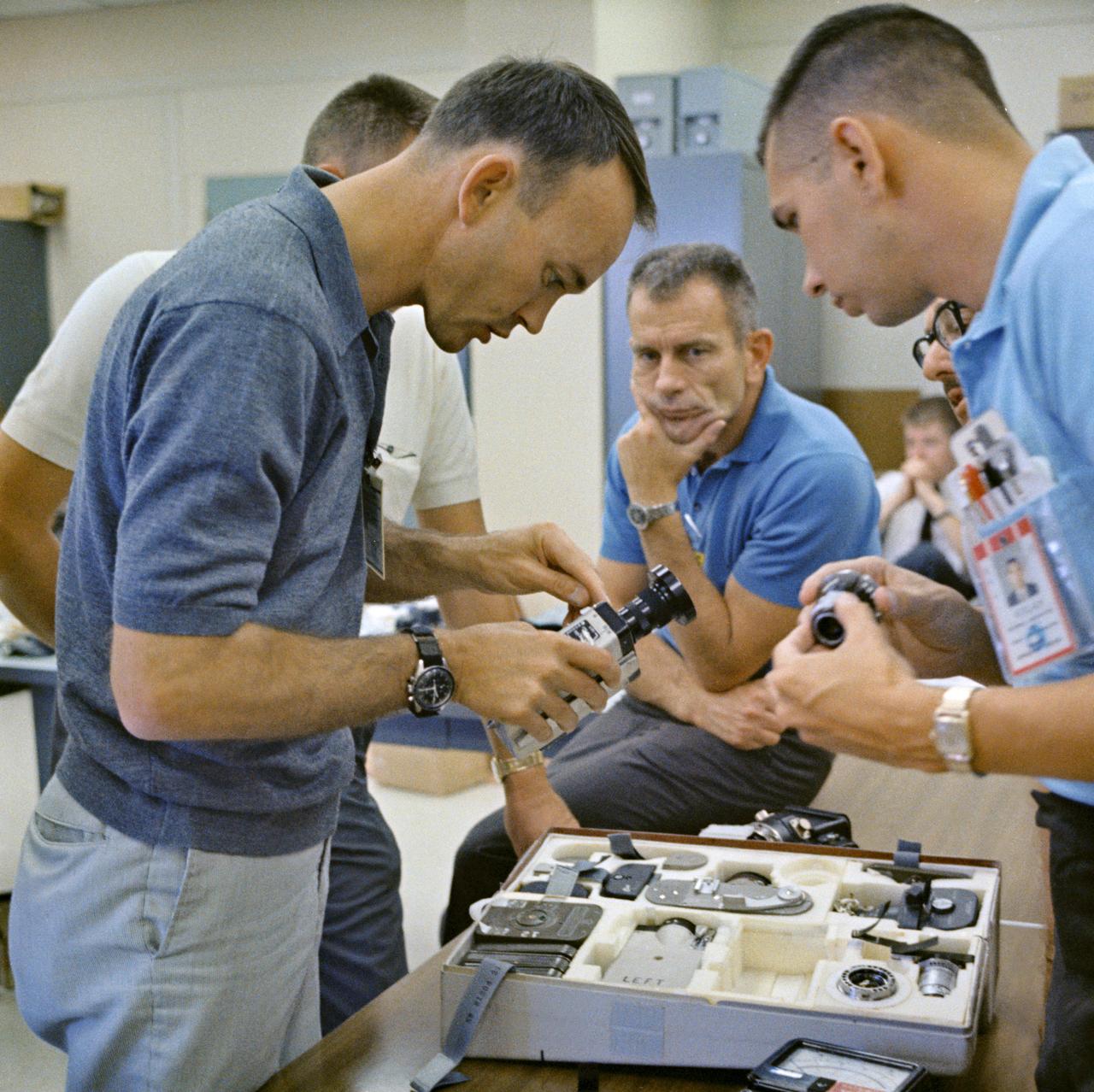
S66-42763 (18 July 1966) --- Astronaut Michael Collins (left), Gemini-10 prime crew pilot, inspects a camera during prelaunch activity at Cape Kennedy, Florida. In center background is Dr. Donald K. Slayton, Manned Spacecraft Center (MSC) Director of Flight Crew Operations. Photo credit: NASA
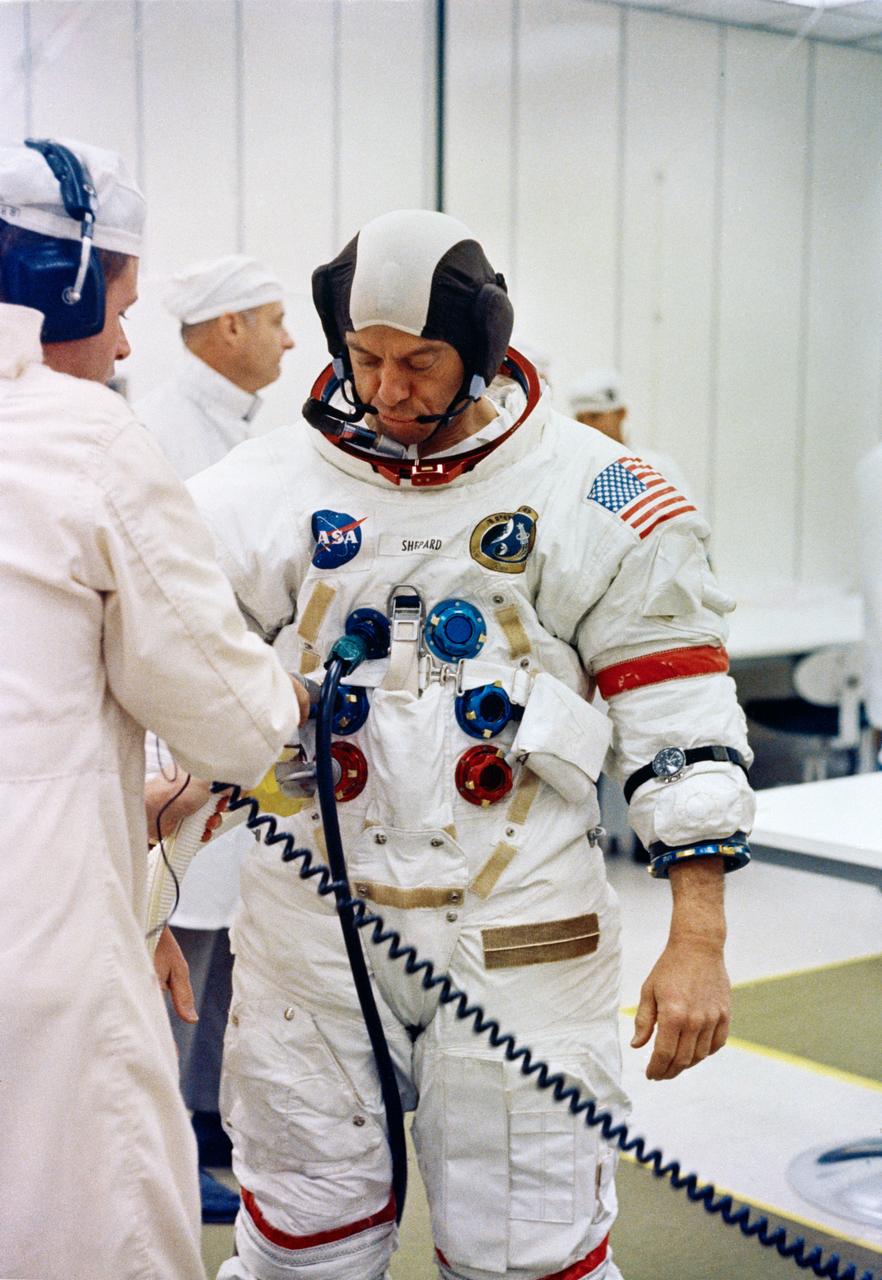
S71-16638 (31 Jan. 1971) --- Astronaut Alan B. Shepard Jr., commander, undergoes suiting up operations at the Kennedy Space Center (KSC) during the Apollo 14 prelaunch countdown. Apollo 14, with astronauts Shepard; Edgar D. Mitchell, lunar module pilot; and Stuart A. Roosa, command module pilot; aboard was launched from Pad A, Launch Complex 39 at 4:03:02 p.m. (EST), Jan. 31, 1971.
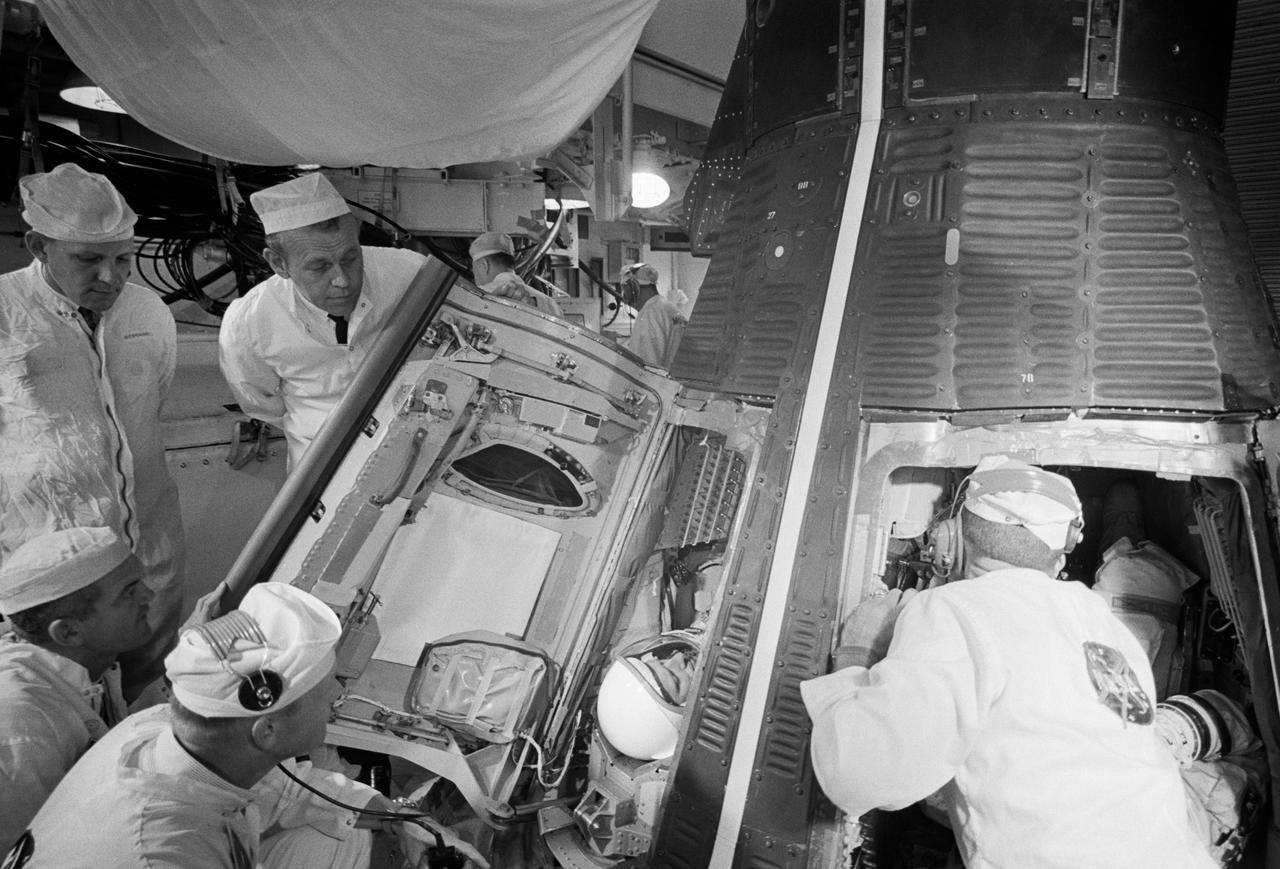
S66-56177 (10 Sept. 1966) --- Technicians in the White Room atop Pad 19 prepare to close hatches on the Gemini-11 spacecraft during prelaunch countdown. Inside the spacecraft are astronauts Charles Conrad Jr., command pilot, and Richard F. Gordon Jr., pilot. Photo credit: NASA
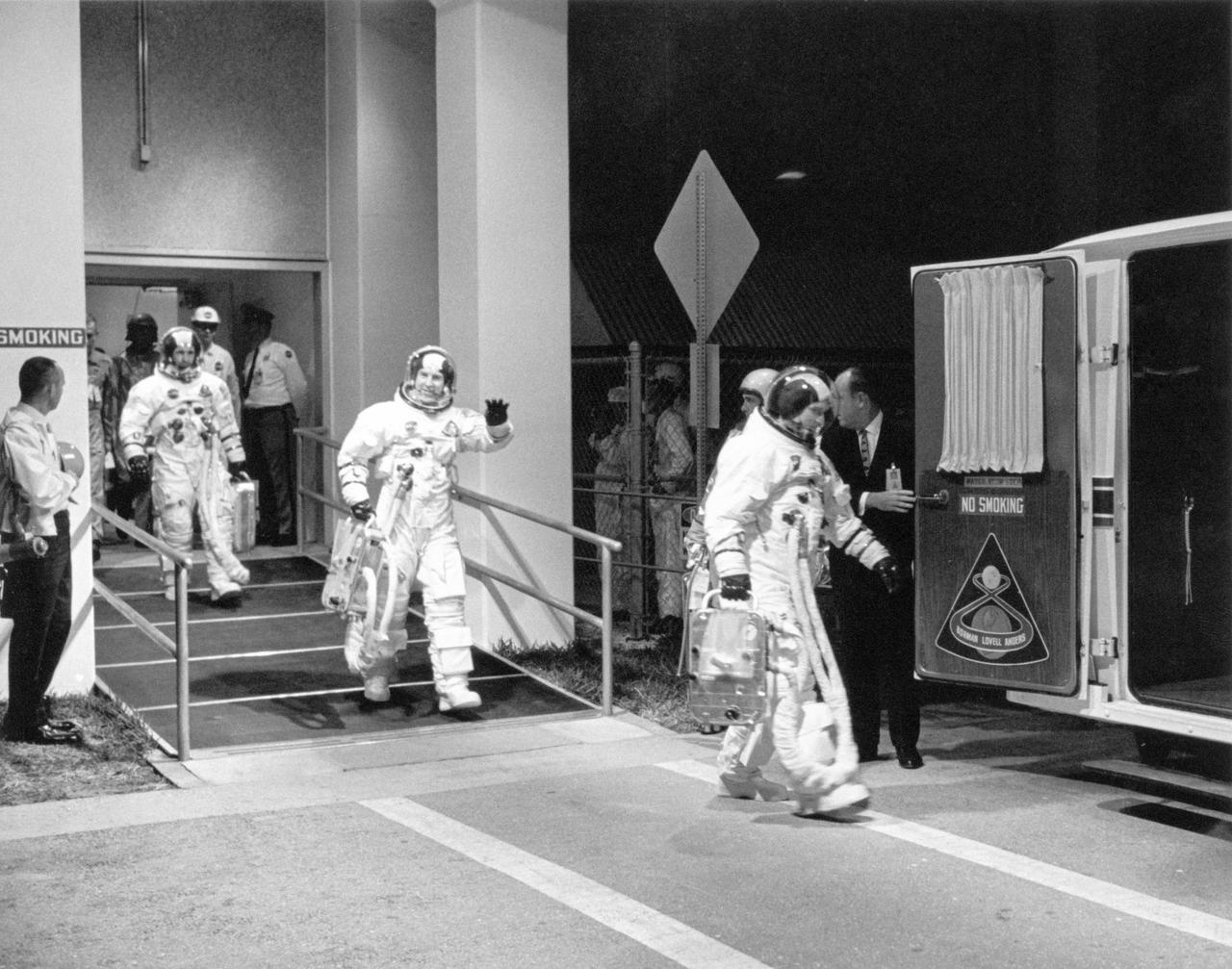
S68-55997 (21 Dec. 1968) --- Apollo 8 Command Module Pilot James Lovell waves to well-wishers during the pre-dawn departure to Launch Pad 39 for the six-day lunar orbital Apollo/Saturn V mission. Astronaut Lovell is accompanied by Commander Frank Borman, right, and Lunar Module Pilot William Anders, left.
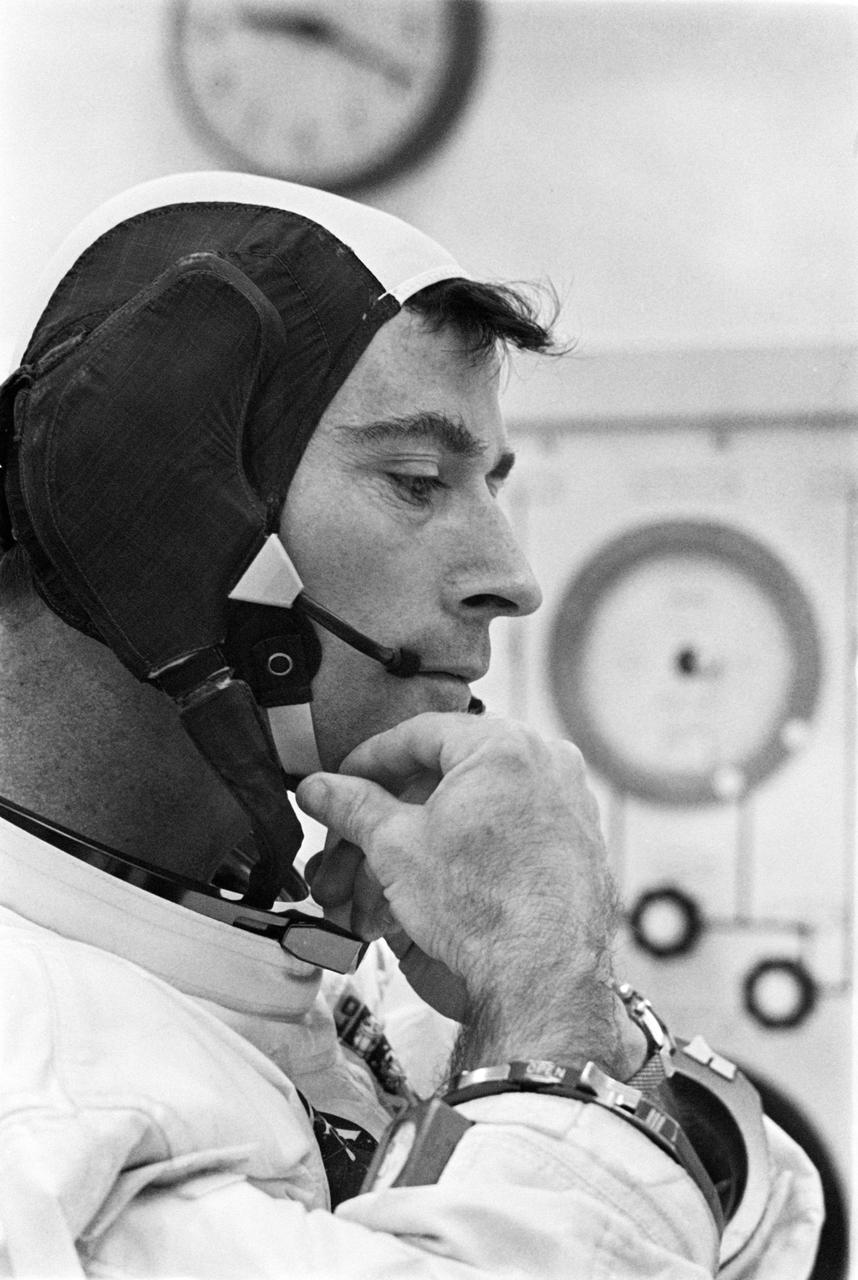
S69-34485 (18 May 1969) --- Astronaut John W. Young, Apollo 10 command module pilot, adjusts strap on his communications cap during suiting up operations for the lunar orbit mission. Minutes later astronauts Young; Thomas P. Stafford, commander; and Eugene A. Cernan, lunar module pilot, rode a transfer van from the Kennedy Space Center's Manned Spacecraft Operations Building over to Pad B, Launch Complex 39, where their spacecraft awaited them. Liftoff was at 12:49 p.m. (EDT), May 18, 1969.
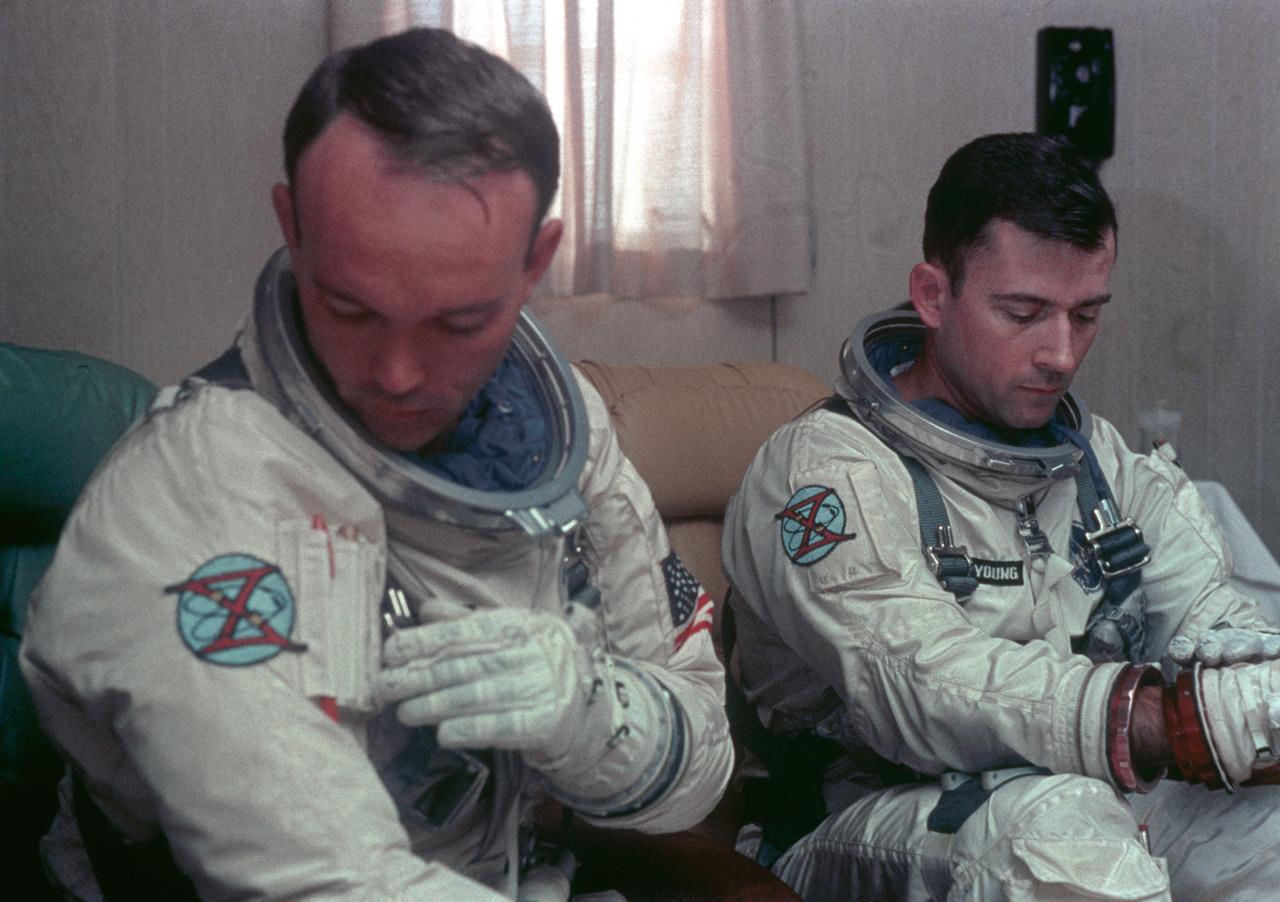
S66-42424 (18 July 1966) --- Astronauts John W. Young (right), command pilot, and Michael Collins (left), pilot, prime crew for the Gemini-10 spaceflight, undergo suiting up operations in the Launch Complex 16 suiting trailer. Photo credit: NASA
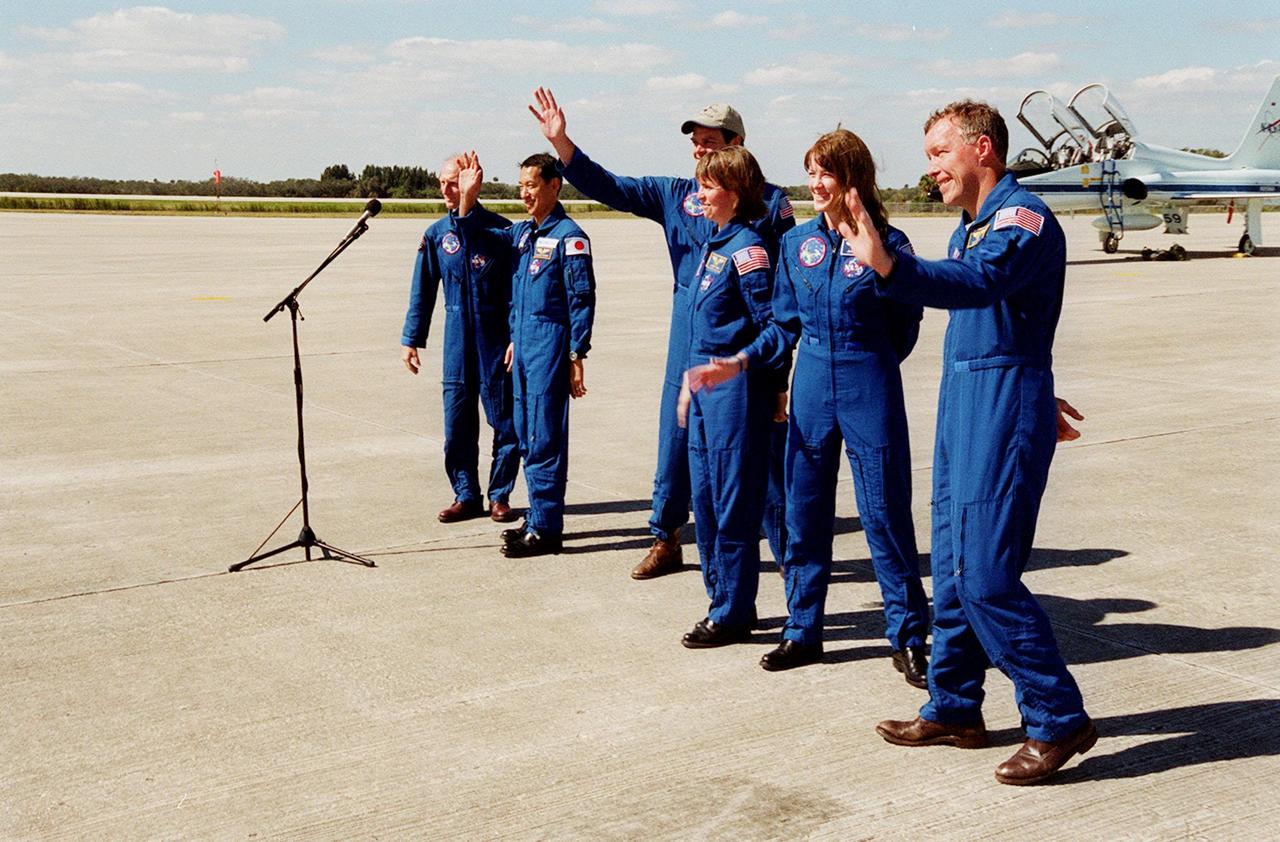
After addressing the media at the Shuttle Landing Facility, the STS-99 crew wave goodbye as they leave for crew quarters in the Operations and Checkout Building. The crew is ready to prepare for the second launch attempt of Endeavour Feb. 11 at 12:30 p.m. EST from Launch Pad 39A. The earlier launch scheduled for Jan. 31 was scrubbed due to poor weather and a faulty Enhanced Master Events Controller in the orbiter's aft compartment. Over the next few days, the crew will review mission procedures, conduct test flights in the Shuttle Training Aircraft and undergo routine preflight medical exams. STS-99 is the Shuttle Radar Topography Mission, which will produce unrivaled 3-D images of the Earth's surface. The result of the Shuttle Radar Topography Mission could be close to 1 trillion measurements of the Earth's topography. Landing is expected at KSC on Feb. 22 at 4:36 p.m. EST
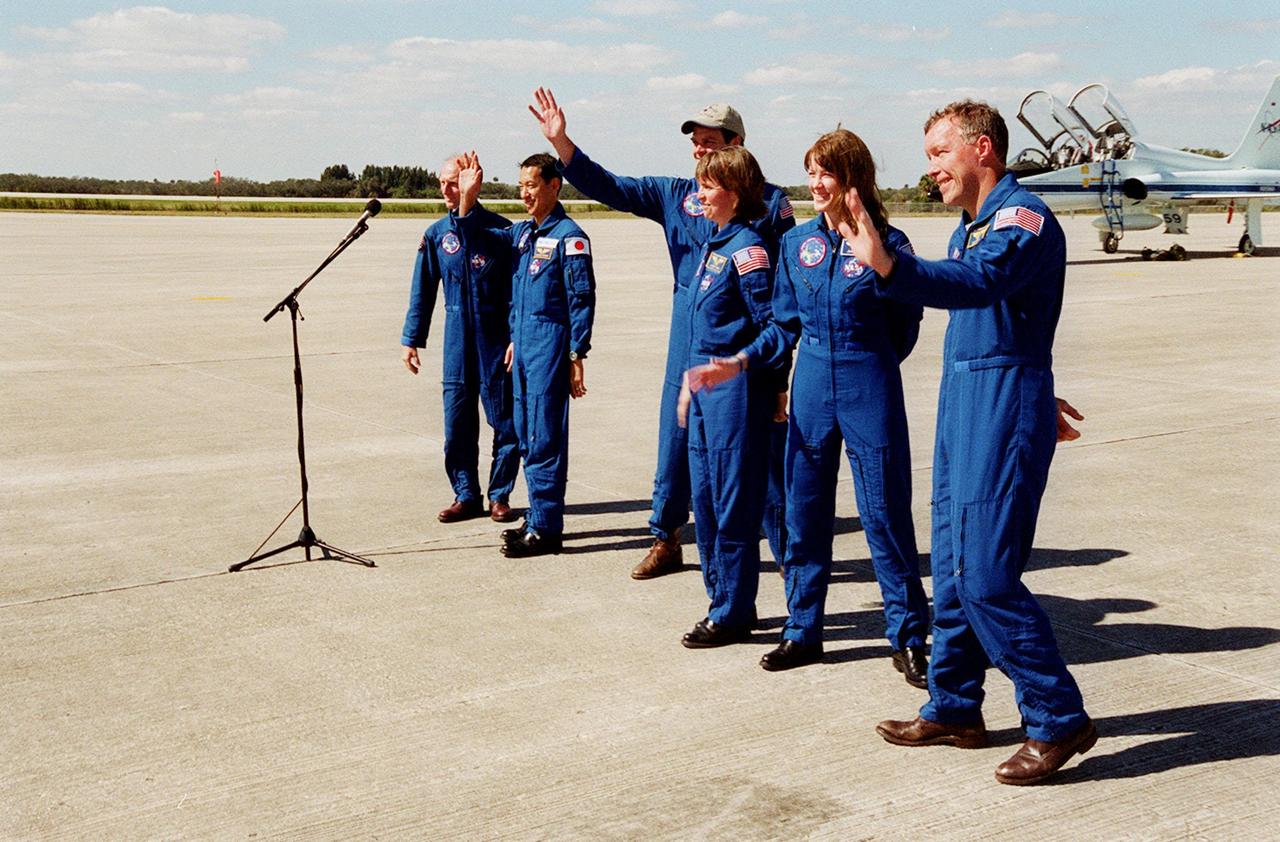
After addressing the media at the Shuttle Landing Facility, the STS-99 crew wave goodbye as they leave for crew quarters in the Operations and Checkout Building. The crew is ready to prepare for the second launch attempt of Endeavour Feb. 11 at 12:30 p.m. EST from Launch Pad 39A. The earlier launch scheduled for Jan. 31 was scrubbed due to poor weather and a faulty Enhanced Master Events Controller in the orbiter's aft compartment. Over the next few days, the crew will review mission procedures, conduct test flights in the Shuttle Training Aircraft and undergo routine preflight medical exams. STS-99 is the Shuttle Radar Topography Mission, which will produce unrivaled 3-D images of the Earth's surface. The result of the Shuttle Radar Topography Mission could be close to 1 trillion measurements of the Earth's topography. Landing is expected at KSC on Feb. 22 at 4:36 p.m. EST
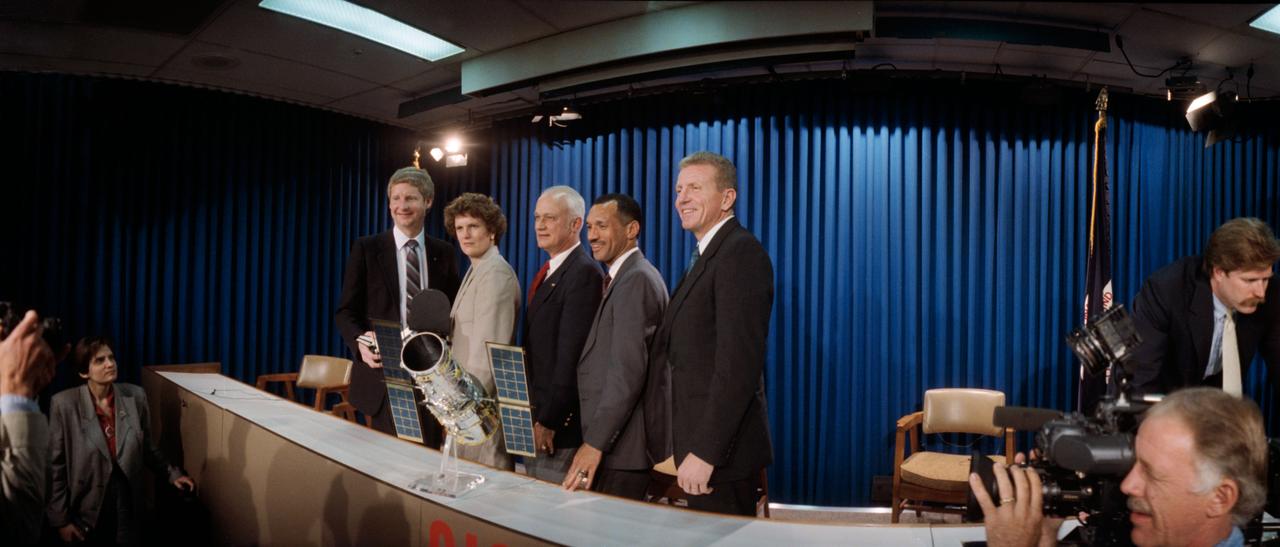
STS-31 Discovery, Orbiter Vehicle (OV) 103, crewmembers pose for an informal portrait after the T-30 (thirty days before launch) briefing at JSC's Auditorium and Public Affairs Facility Bldg 2. Standing behind the conference table are (left to right) Mission Specialist (MS) Steven A. Hawley, MS Kathryn D. Sullivan, MS Bruce McCandless II, Pilot Charles F. Bolden, and Commander Loren J. Shriver.

S90-27594 (November 1989) --- Manley L. "Sonny" Carter Jr., STS-33 mission specialist, wearing a Launch and Entry Suit (LES), poses in front of the space shuttle Discovery, Orbiter Vehicle (OV) 103 at the Kennedy Space Center (KSC) Launch Complex Pad 39B, at the 195 feet level elevator entrance at Pad 39B. Visible in the background is the catwalk to OV-103's side hatch and the Atlantic Ocean. Note: Carter died April 5, 1991 at age 43, in a civil aviation accident.
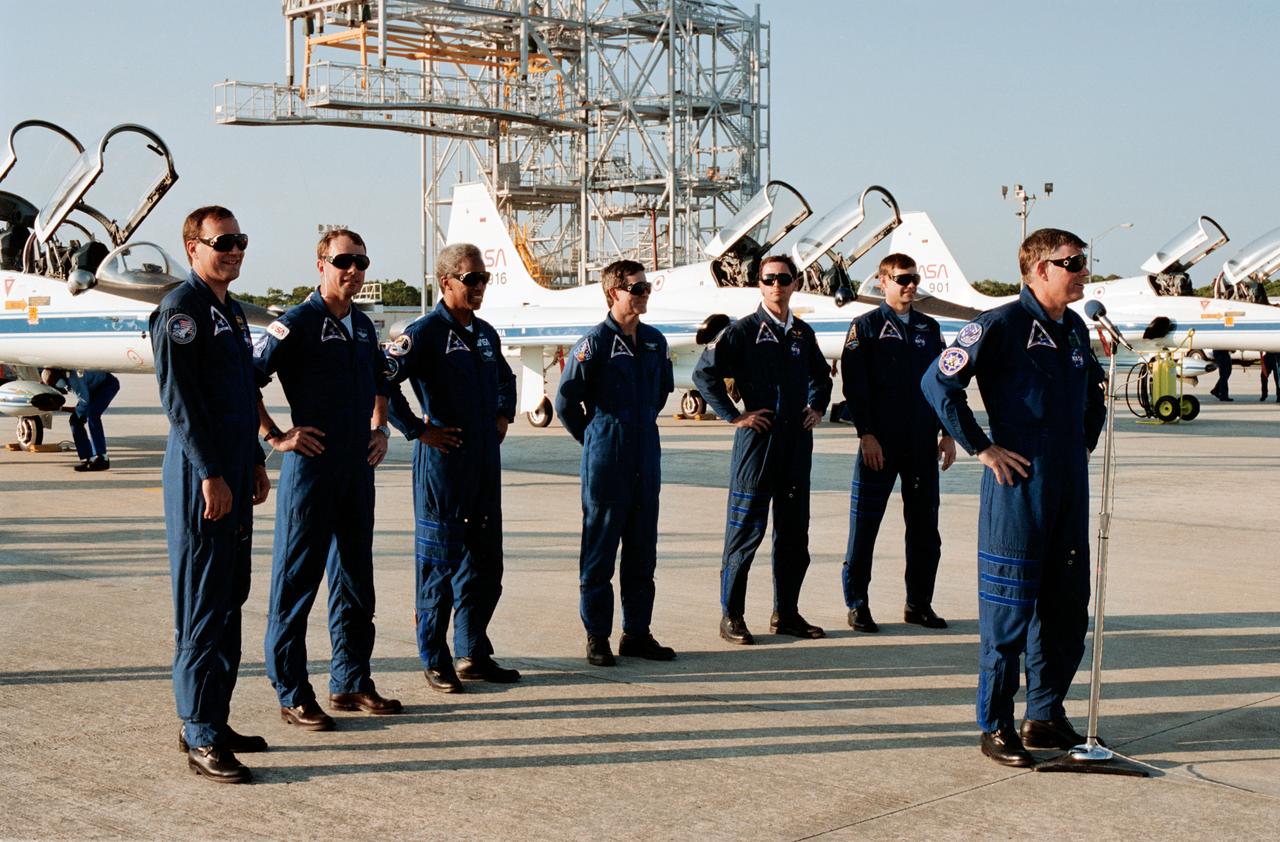
STS039-S-003 (20 April 1991) --- Astronaut Michael L. Coats (right) addresses the news media after arriving at the Shuttle Landing Facility along with his six fellow crewmembers. From left are astronauts Richard J. Hieb, L. Blaine Hammond, Guion S. Bluford, Charles L. (Lacy) Veach, Gregory J. Harbaugh and Donald R. McMonagle. The Space Shuttle mate/demate stand is seen in the background. Note: The STS-39 launch of Discovery occurred at 7:33:14 a.m. (EDT), April 28, 1991.
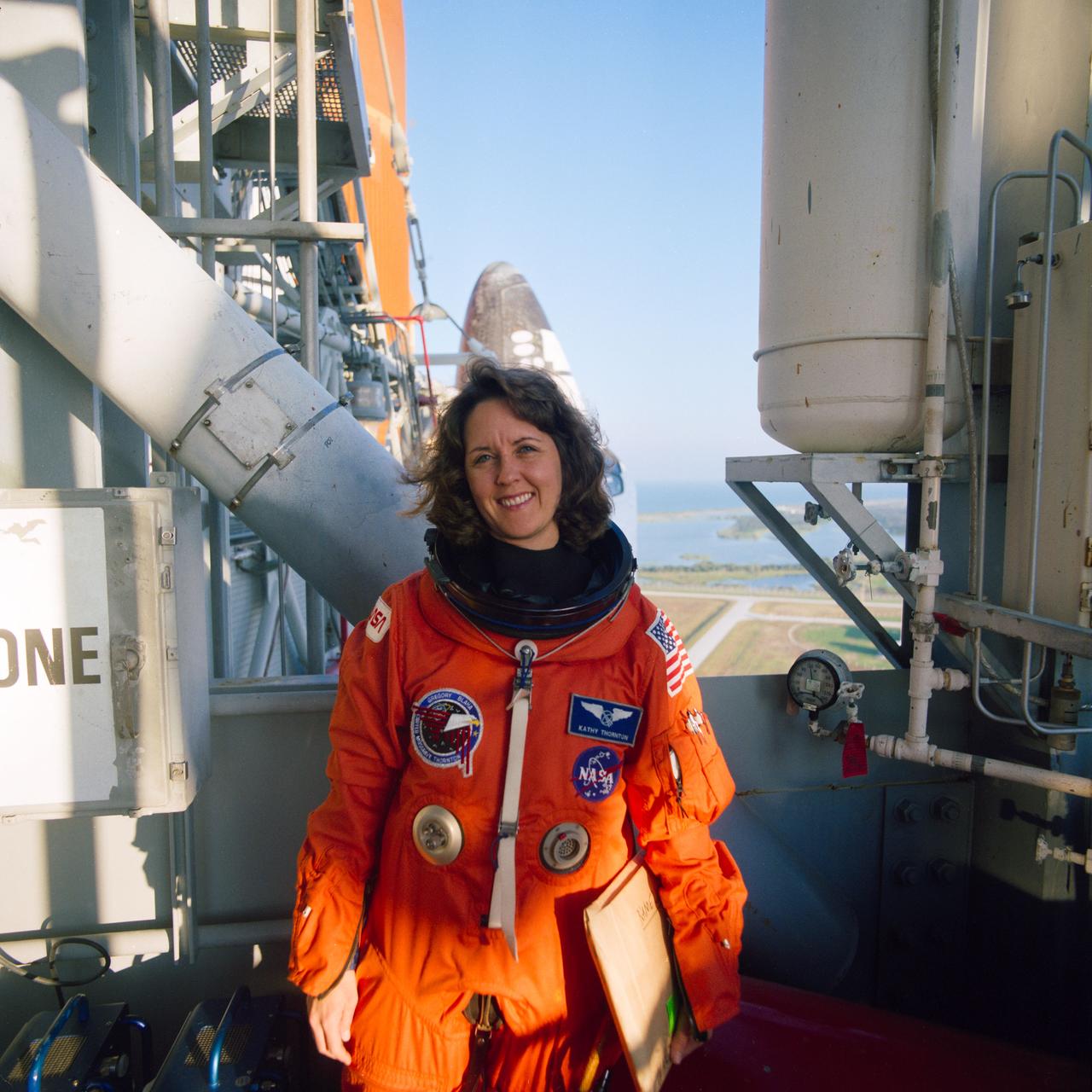
STS-33 Mission Specialist (MS) Kathryn C. Thornton, wearing launch and entry suit (LES) and holding file folder, poses in front of Discovery, Orbiter Vehicle (OV) 103, at the 195 ft level elevator entrance at Kennedy Space Center (KSC) Launch Complex (LC) Pad 39B. Visible in the background is the catwalk to OV-103's side hatch and the Atlantic Ocean.
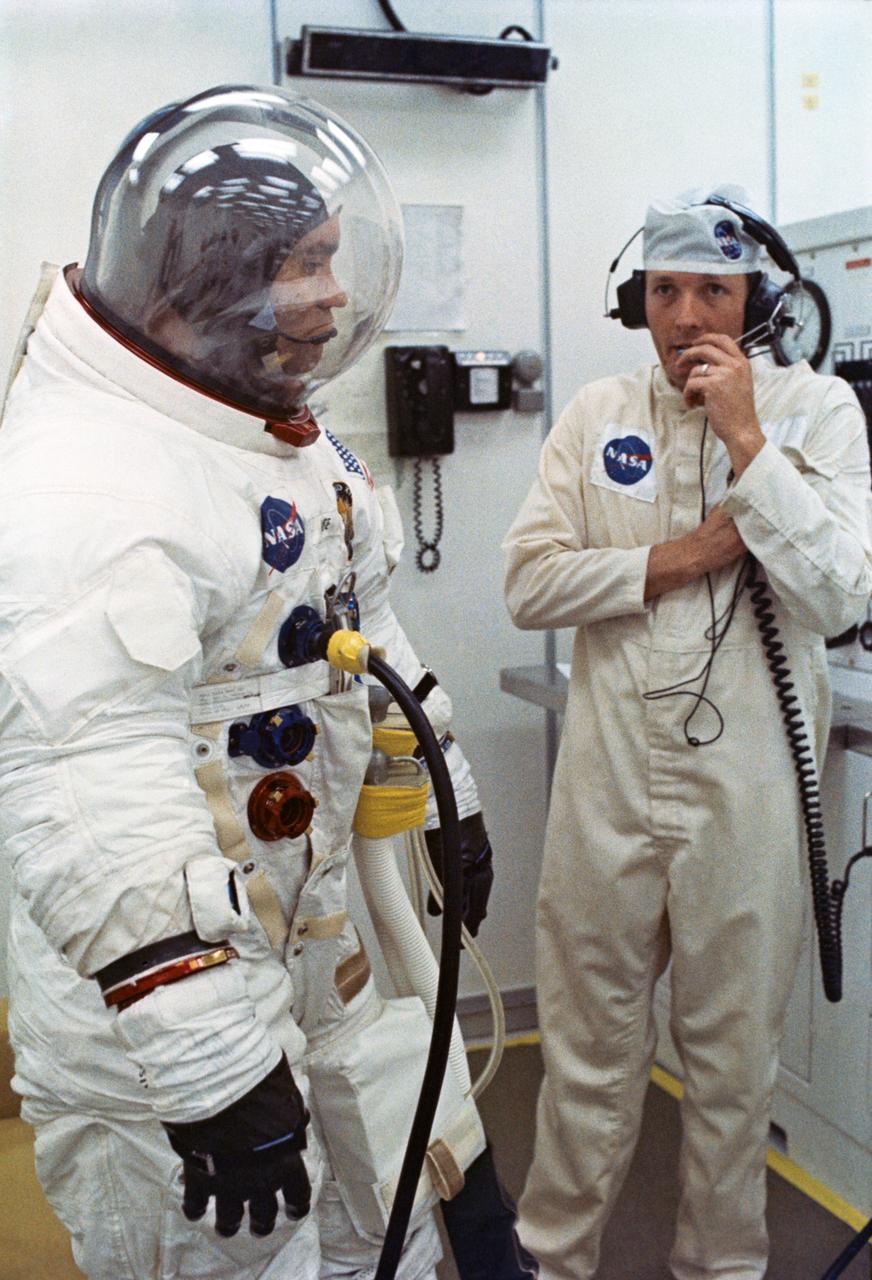
S70-34851 (11 April 1970) --- A space suit technician talks with astronaut Fred W. Haise Jr., lunar module pilot for NASA's Apollo 13 mission, during suiting up procedures at Kennedy Space Center (KSC). Other members of the crew are astronauts James A. Lovell Jr., commander, and John L. Swigert Jr., command module pilot. Swigert replaced astronaut Thomas K. Mattingly II as a member of the crew when it was learned he had been exposed to measles.
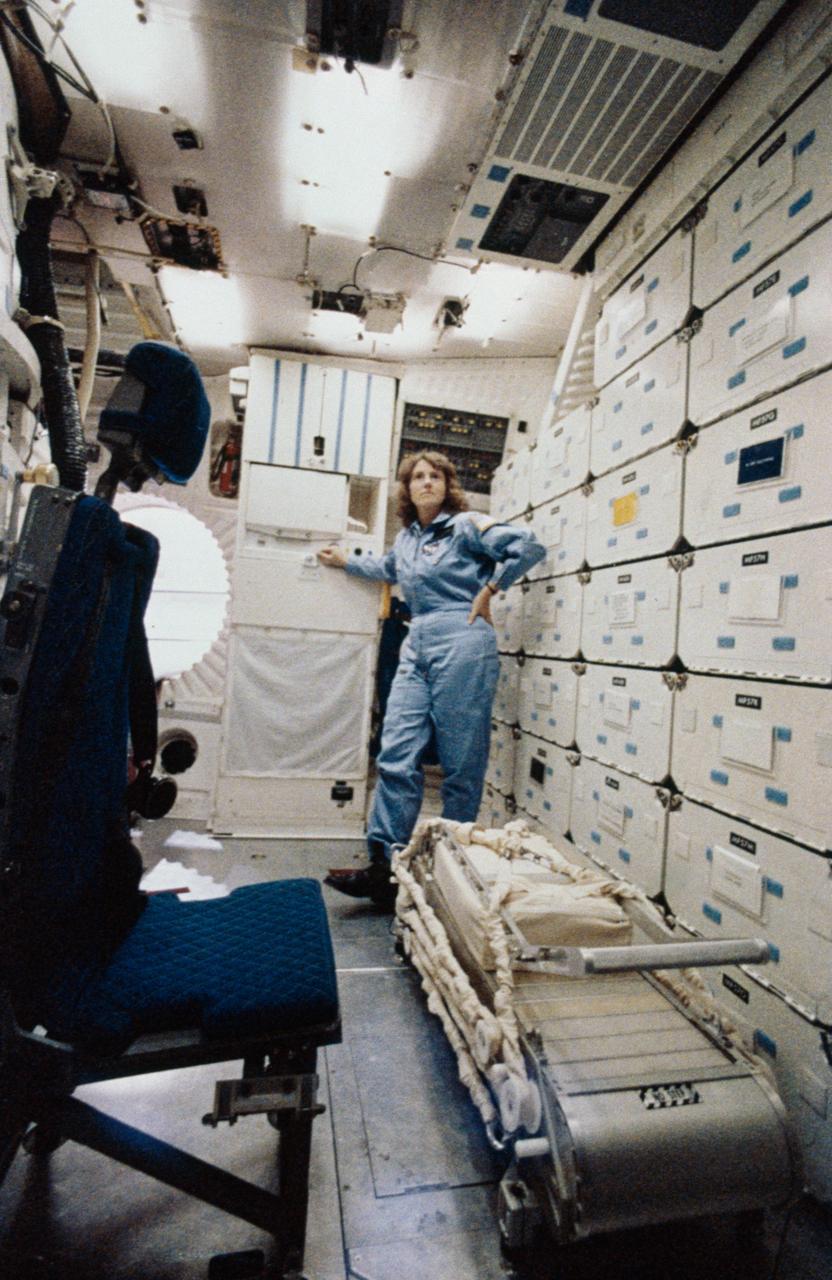
S86-25188 (December 1985) --- Sharon Christa McAuliffe, a school teacher Concord New Hampshire, surveys a ground training replica of the quarters she?ll be using in space when the space shuttle Challenger taxis two women and five men into space in January of 1986. The STS-51L citizen observer/payload specialist is in training at the Johnson Space Center, representing the Teacher-in-Space Project. The photo was taken by Keith Meyers of the New York Times. Photo credit: NASA
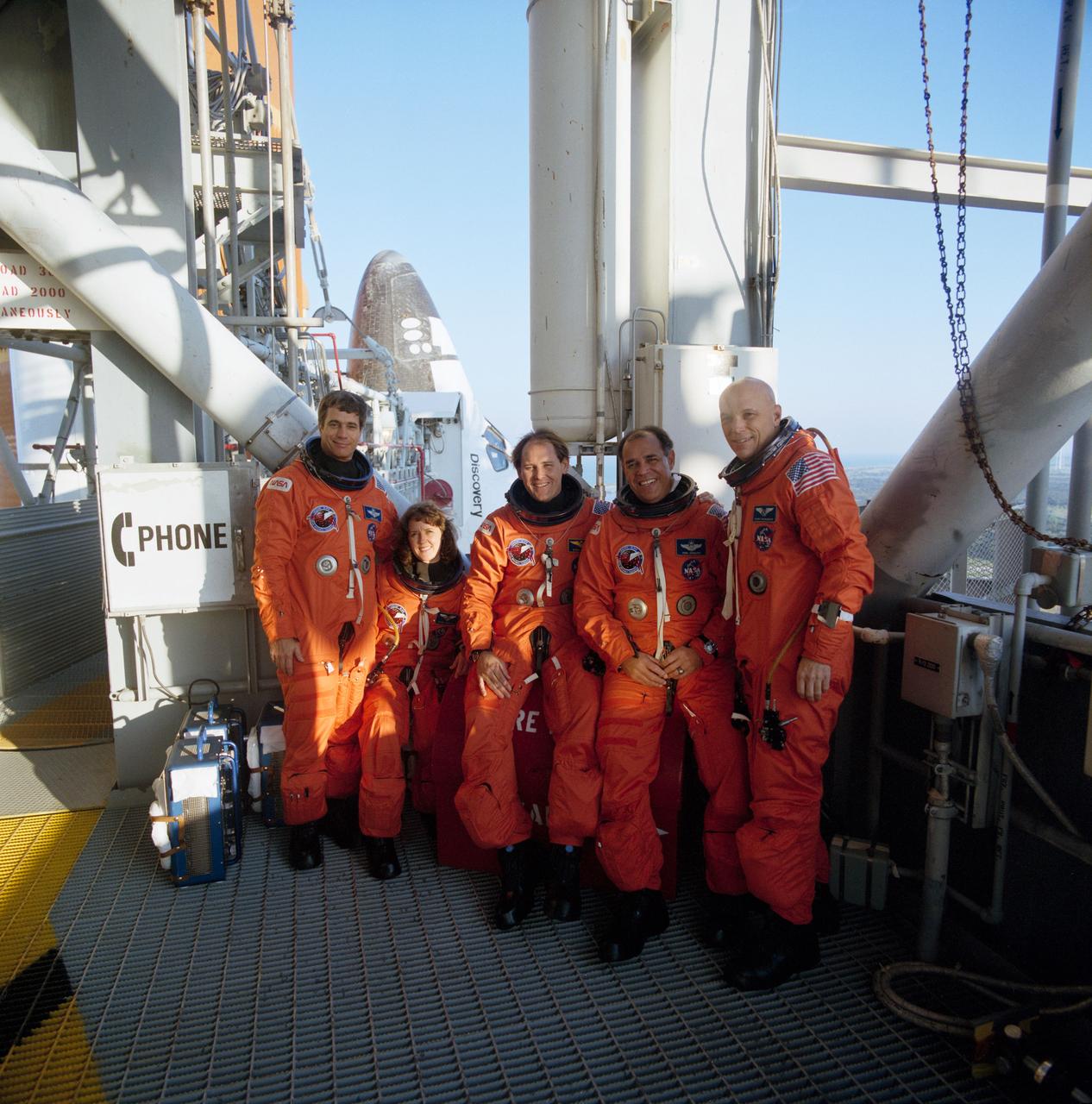
S90-27591 (23 Jan 1990) --- STS-33 crewmembers, wearing launch and entry suit (LES), take a break from training activities to pose for group portrait in front of Discovery, Orbiter Vehicle (OV) 103, at the 195 ft level elevator entrance at Kennedy Space Center (KSC) Launch Complex (LC) Pad 39B. Left to right are Pilot John E. Blaha, Mission Specialist (MS) Kathryn C. Thornton, MS Manley L. Carter, Jr, Commander Frederick D. Gregory, and MS F. Story Musgrave. Visible in the background is the catwalk to OV-103's side hatch.
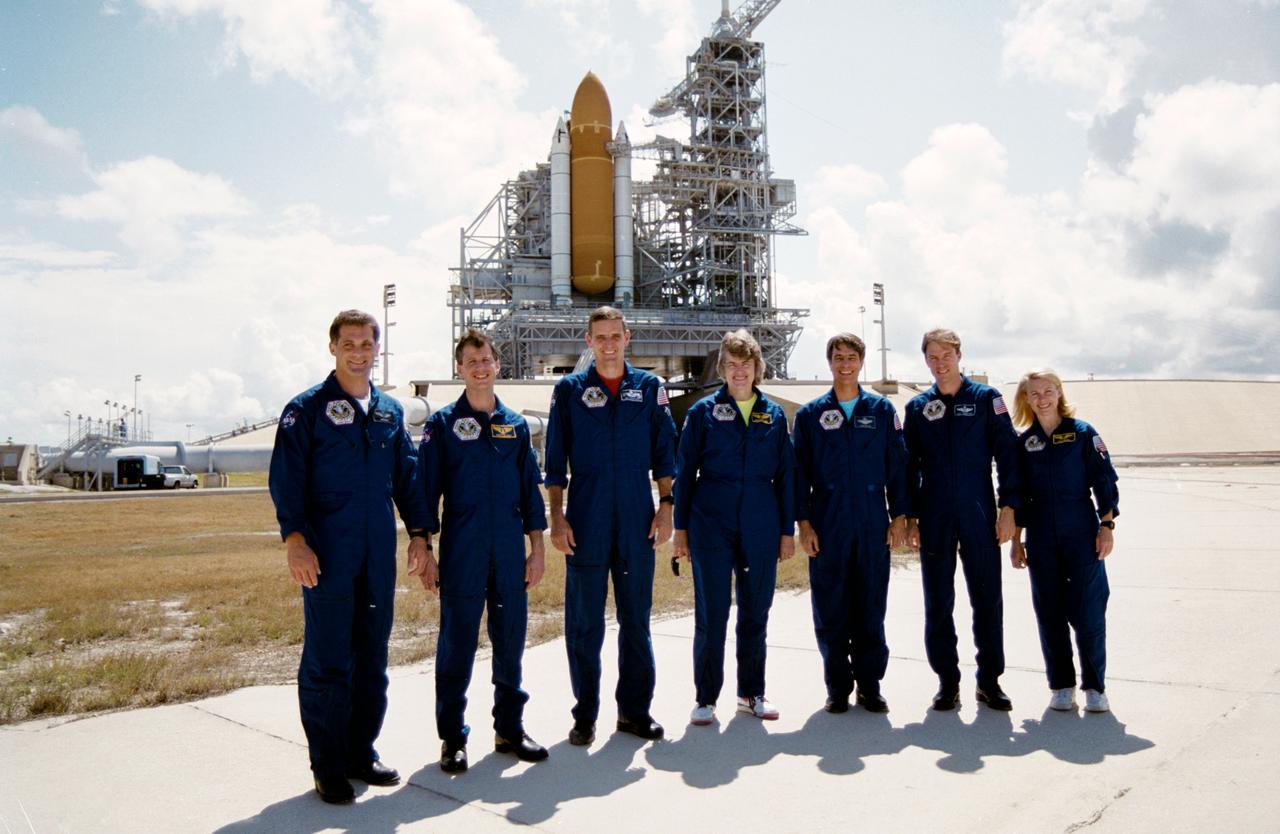
S93-45003 (20 Sept 1993) --- Posing for a crew portrait, in front of the Space Shuttle Columbia at Launch Pad 39B, are the seven STS-58 astronauts. They are, left to right, David A. Wolf, mission specialist; Martin J. Fettman, payload specialist; William S. McArthur and Shannon W. Lucid, mission specialists; John E. Blaha, mission commander; Richard A. Searfoss, pilot; and Rhea Seddon, payload commander. The crew was in Florida for the Terminal Countdown Demonstration Test (CDDT) in preparation for next month's launch aboard Columbia. (Kennedy Space Center Photo ID: KSC-93-PC-1253)
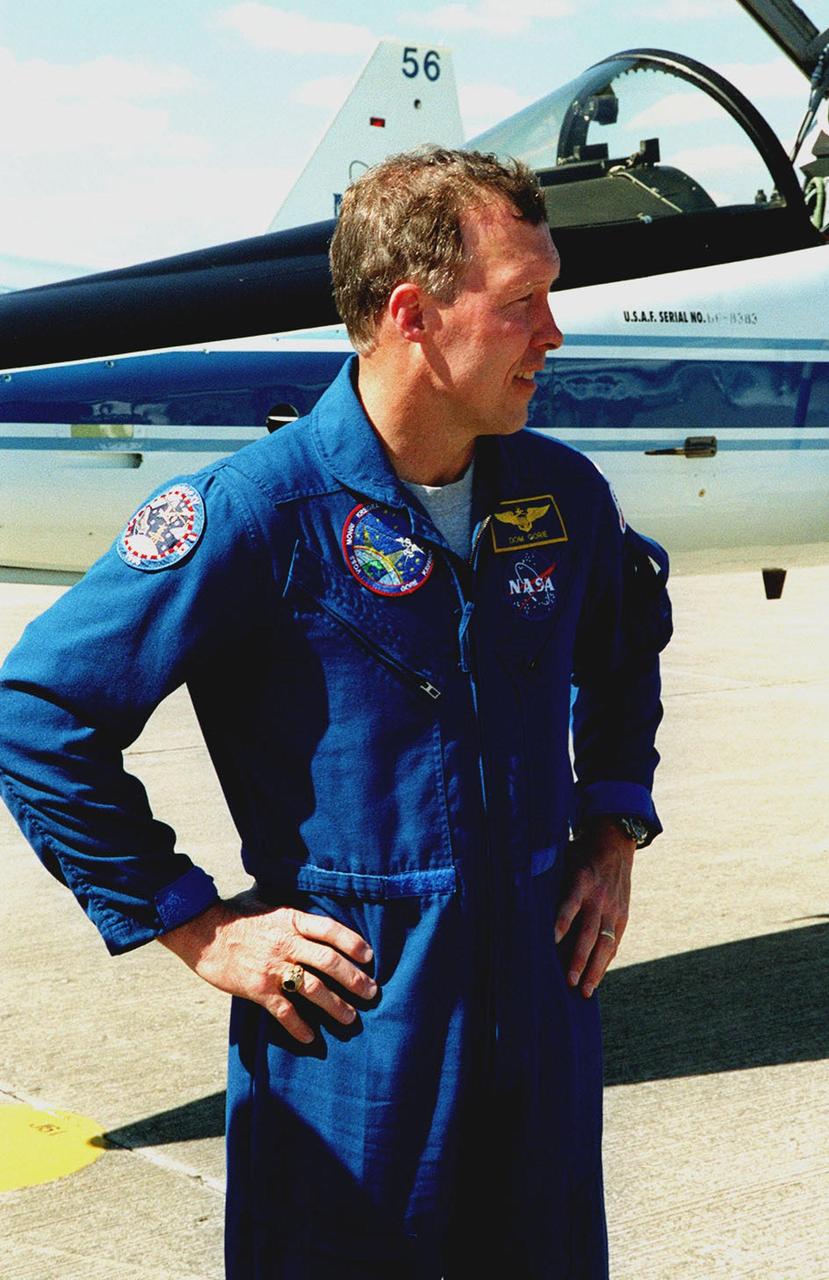
After landing at the Shuttle Landing Facility aboard a T-38 jet aircraft, STS-99 Pilot Dominic Gorie stands ready to prepare for the second launch attempt of Endeavour Feb. 11 at 12:30 p.m. EST from Launch Pad 39A. The earlier launch scheduled for Jan. 31 was scrubbed due to poor weather and a faulty Enhanced Master Events Controller in the orbiter's aft compartment. Over the next few days, the crew will review mission procedures, conduct test flights in the Shuttle Training Aircraft and undergo routine preflight medical exams. STS-99 is the Shuttle Radar Topography Mission, which will produce unrivaled 3-D images of the Earth's surface. The result of the Shuttle Radar Topography Mission could be close to 1 trillion measurements of the Earth's topography. Landing is expected at KSC on Feb. 22 at 4:36 p.m. EST
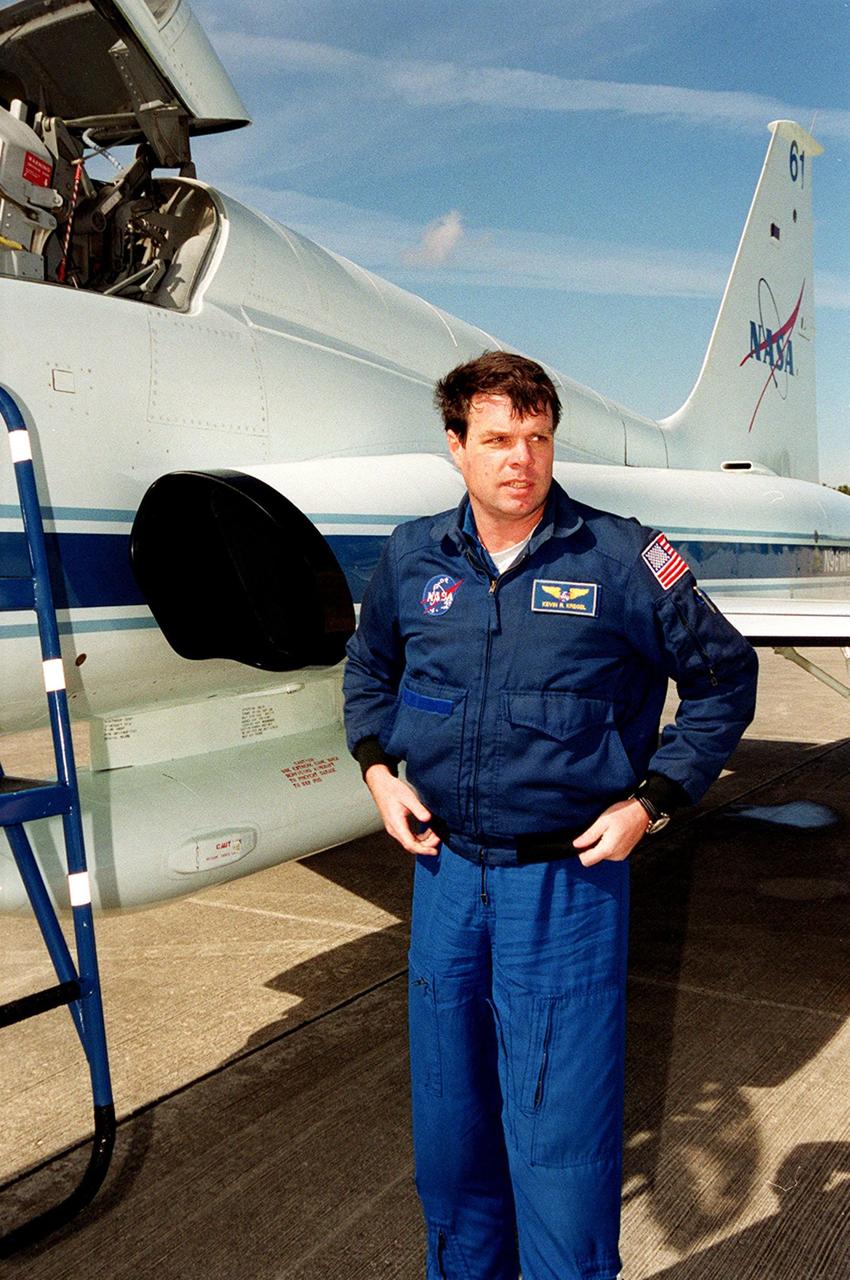
STS-99 Commander Kevin Kregel arrives at KSC aboard a T-38 jet aircraft to prepare for launch of Endeavour Jan. 31 at 12:47 p.m. EST. Over the next few days, the crew will review mission procedures, conduct test flights in the Shuttle Training Aircraft and undergo routine preflight medical exams. STS-99 is the Shuttle Radar Topography Mission, which will chart a new course, using two antennae and a 200-foot-long section of space station-derived mast protruding from the payload bay to produce unrivaled 3-D images of the Earth's surface. The result of the Shuttle Radar Topography Mission could be close to 1 trillion measurements of the Earth's topography. Besides contributing to the production of better maps, these measurements could lead to improved water drainage modeling, more realistic flight simulators, better locations for cell phone towers, and enhanced navigation safety
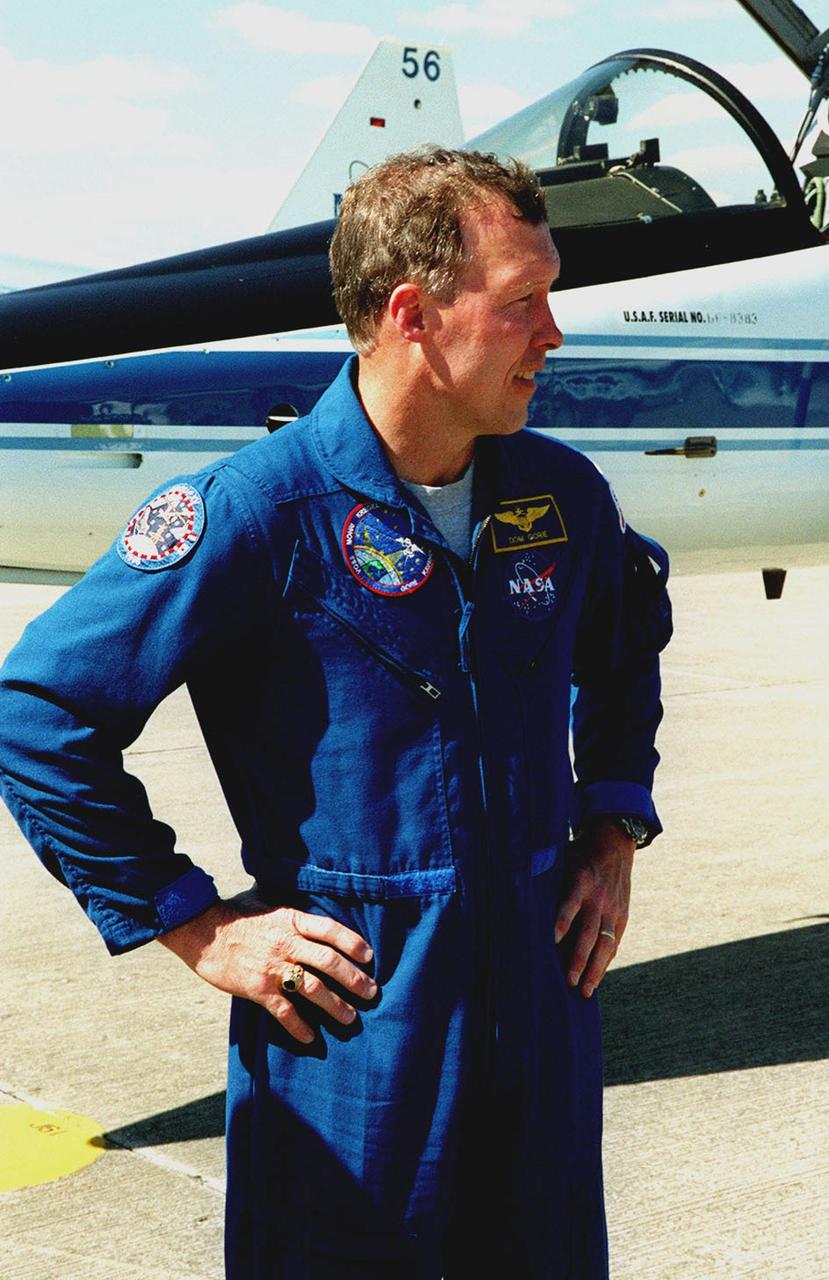
After landing at the Shuttle Landing Facility aboard a T-38 jet aircraft, STS-99 Pilot Dominic Gorie stands ready to prepare for the second launch attempt of Endeavour Feb. 11 at 12:30 p.m. EST from Launch Pad 39A. The earlier launch scheduled for Jan. 31 was scrubbed due to poor weather and a faulty Enhanced Master Events Controller in the orbiter's aft compartment. Over the next few days, the crew will review mission procedures, conduct test flights in the Shuttle Training Aircraft and undergo routine preflight medical exams. STS-99 is the Shuttle Radar Topography Mission, which will produce unrivaled 3-D images of the Earth's surface. The result of the Shuttle Radar Topography Mission could be close to 1 trillion measurements of the Earth's topography. Landing is expected at KSC on Feb. 22 at 4:36 p.m. EST
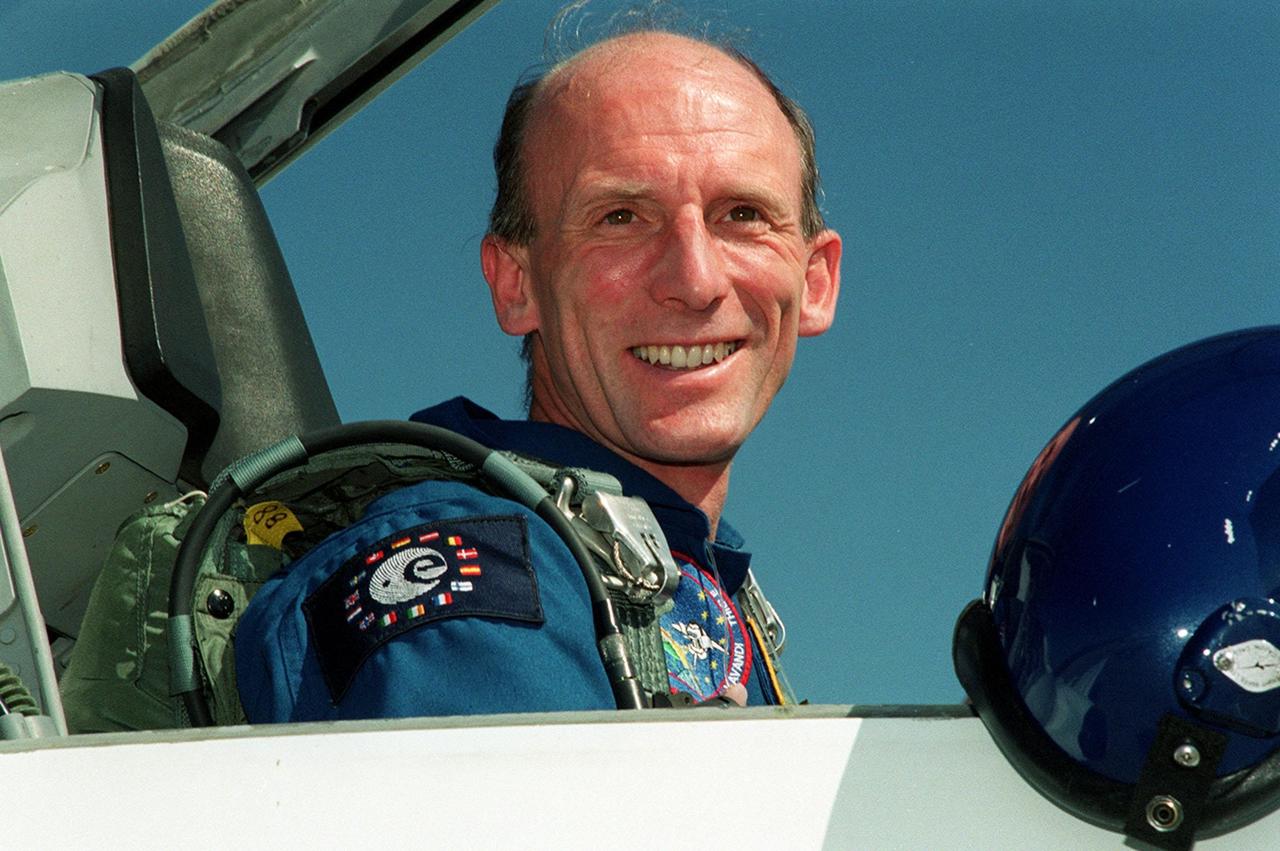
STS-99 Mission Specialist Gerhard P.J. Thiele of Germany arrives at KSC aboard a T-38 jet aircraft eager to prepare for the second launch attempt of Endeavour Feb. 11 at 12:30 p.m. EST from Launch Pad 39A. Thiele is with the European Space Agency. The earlier launch scheduled for Jan. 31 was scrubbed due to poor weather and a faulty Enhanced Master Events Controller in the orbiter's aft compartment. Over the next few days, the crew will review mission procedures, conduct test flights in the Shuttle Training Aircraft and undergo routine preflight medical exams. STS-99 is the Shuttle Radar Topography Mission, which will produce unrivaled 3-D images of the Earth's surface. The result of the Shuttle Radar Topography Mission could be close to 1 trillion measurements of the Earth's topography. Landing is expected at KSC on Feb. 22 at 4:36 p.m. EST
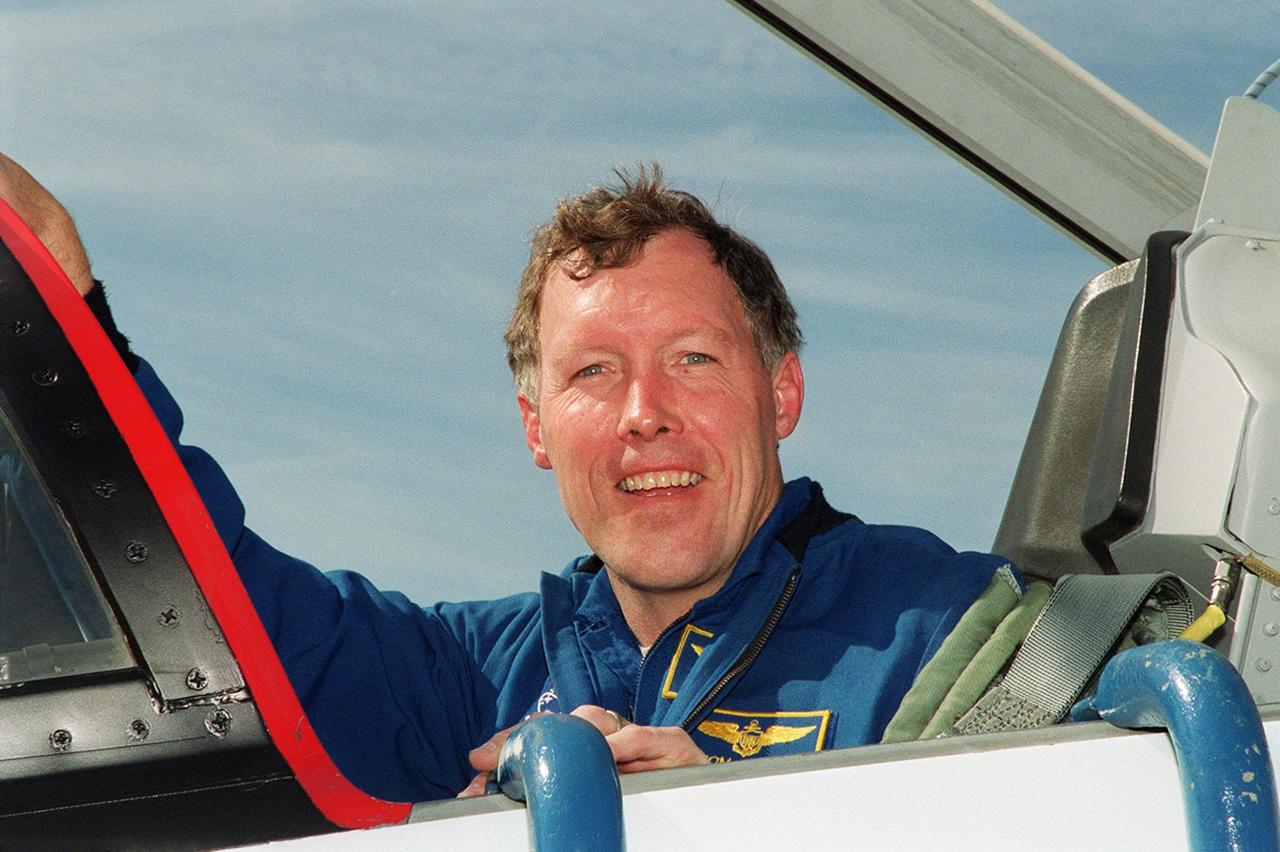
STS-99 Pilot Dominic Gorie arrives at KSC aboard a T-38 jet aircraft to prepare for launch of Endeavour Jan. 31 at 12:47 p.m. EST. Over the next few days, the crew will review mission procedures, conduct test flights in the Shuttle Training Aircraft and undergo routine preflight medical exams. STS-99 is the Shuttle Radar Topography Mission, which will chart a new course, using two antennae and a 200-foot-long section of space station-derived mast protruding from the payload bay to produce unrivaled 3-D images of the Earth's surface. The result of the Shuttle Radar Topography Mission could be close to 1 trillion measurements of the Earth's topography. Besides contributing to the production of better maps, these measurements could lead to improved water drainage modeling, more realistic flight simulators, better locations for cell phone towers, and enhanced navigation safety
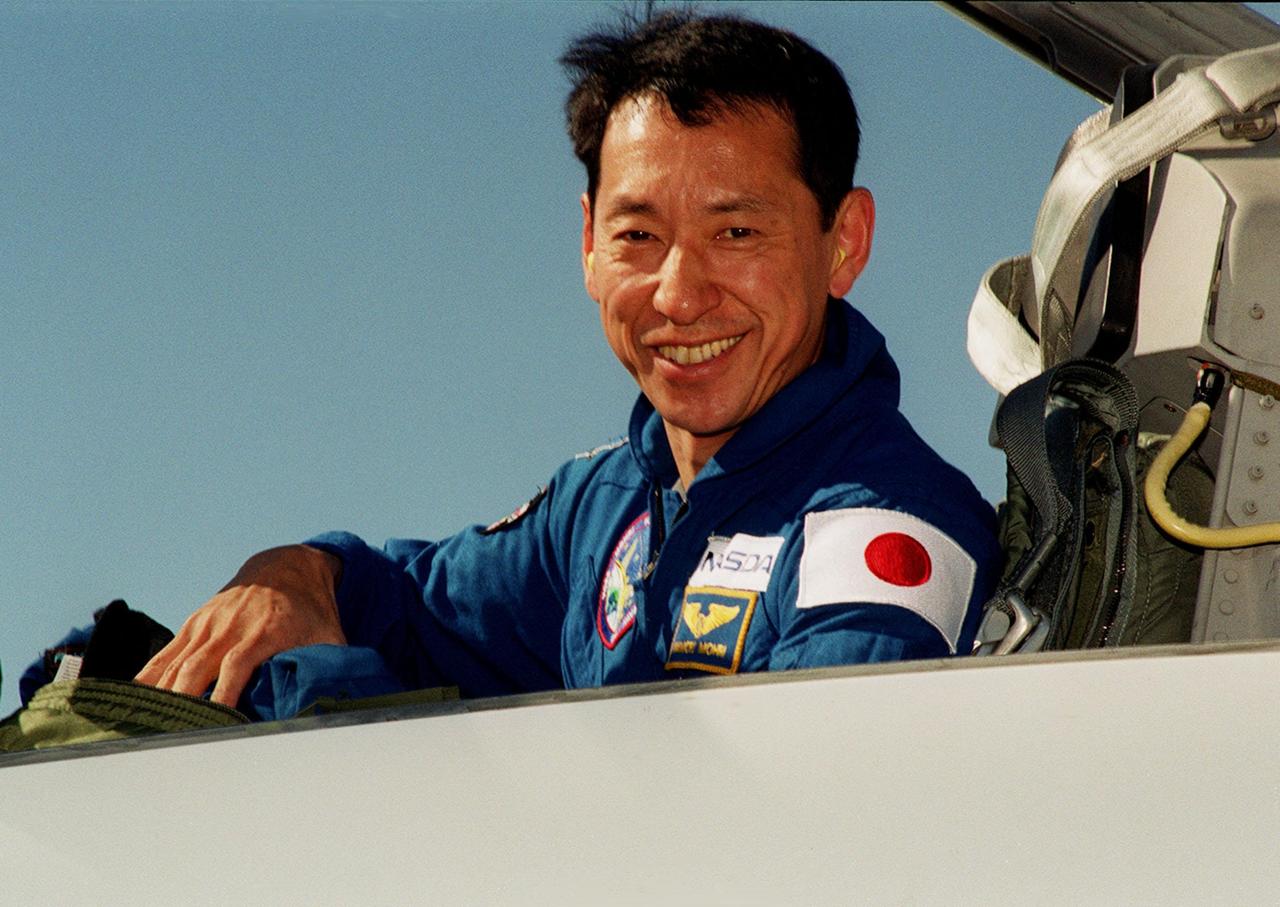
A smiling STS-99 Mission Specialist Mamoru Mohri of Japan arrives at KSC aboard a T-38 jet aircraft eager to prepare for the second launch attempt of Endeavour Feb. 11 at 12:30 p.m. EST from Launch Pad 39A. Mohri is with the Japanese National Space Development Agency (NASDA). The earlier launch scheduled for Jan. 31 was scrubbed due to poor weather and a faulty Enhanced Master Events Controller in the orbiter's aft compartment. Over the next few days, the crew will review mission procedures, conduct test flights in the Shuttle Training Aircraft and undergo routine preflight medical exams. STS-99 is the Shuttle Radar Topography Mission, which will produce unrivaled 3-D images of the Earth's surface. The result of the Shuttle Radar Topography Mission could be close to 1 trillion measurements of the Earth's topography. Landing is expected at KSC on Feb. 22 at 4:36 p.m. EST
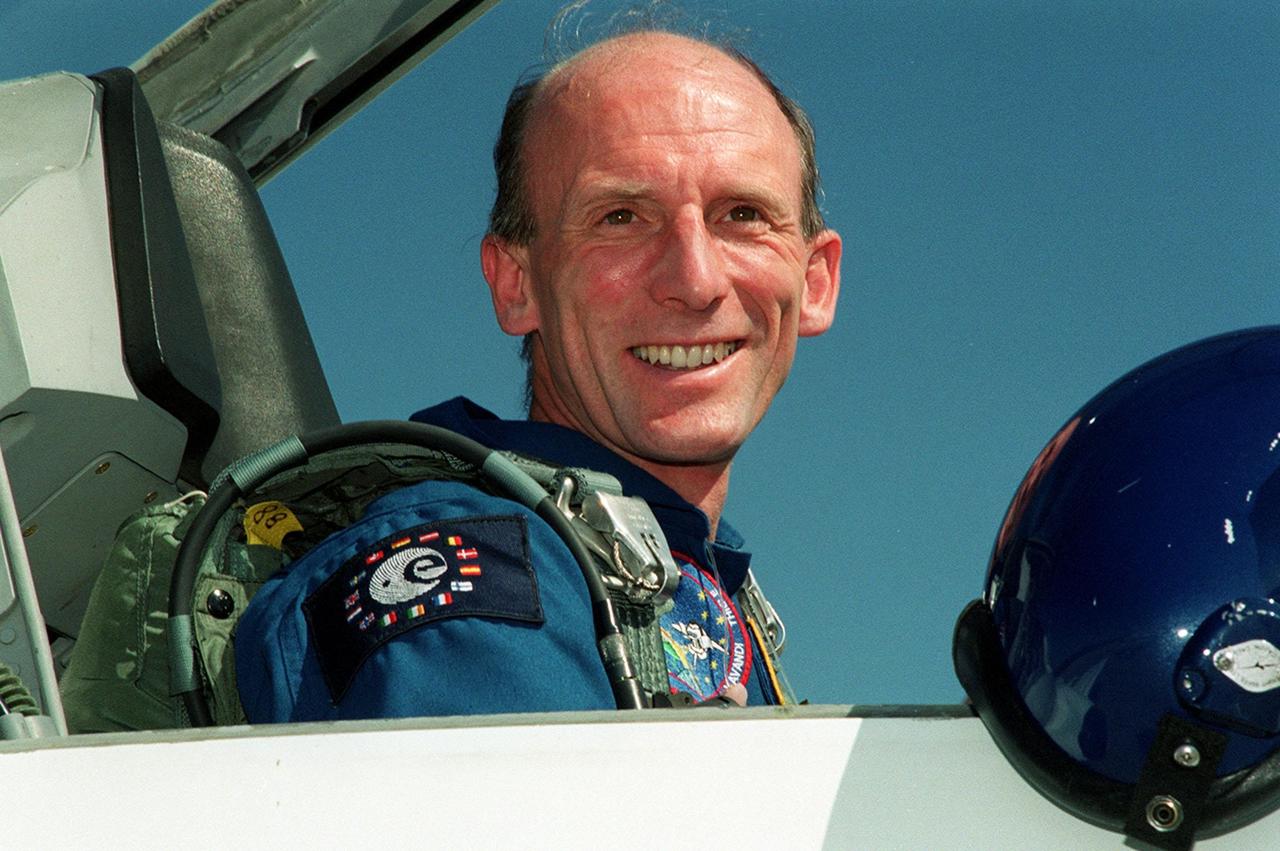
STS-99 Mission Specialist Gerhard P.J. Thiele of Germany arrives at KSC aboard a T-38 jet aircraft eager to prepare for the second launch attempt of Endeavour Feb. 11 at 12:30 p.m. EST from Launch Pad 39A. Thiele is with the European Space Agency. The earlier launch scheduled for Jan. 31 was scrubbed due to poor weather and a faulty Enhanced Master Events Controller in the orbiter's aft compartment. Over the next few days, the crew will review mission procedures, conduct test flights in the Shuttle Training Aircraft and undergo routine preflight medical exams. STS-99 is the Shuttle Radar Topography Mission, which will produce unrivaled 3-D images of the Earth's surface. The result of the Shuttle Radar Topography Mission could be close to 1 trillion measurements of the Earth's topography. Landing is expected at KSC on Feb. 22 at 4:36 p.m. EST
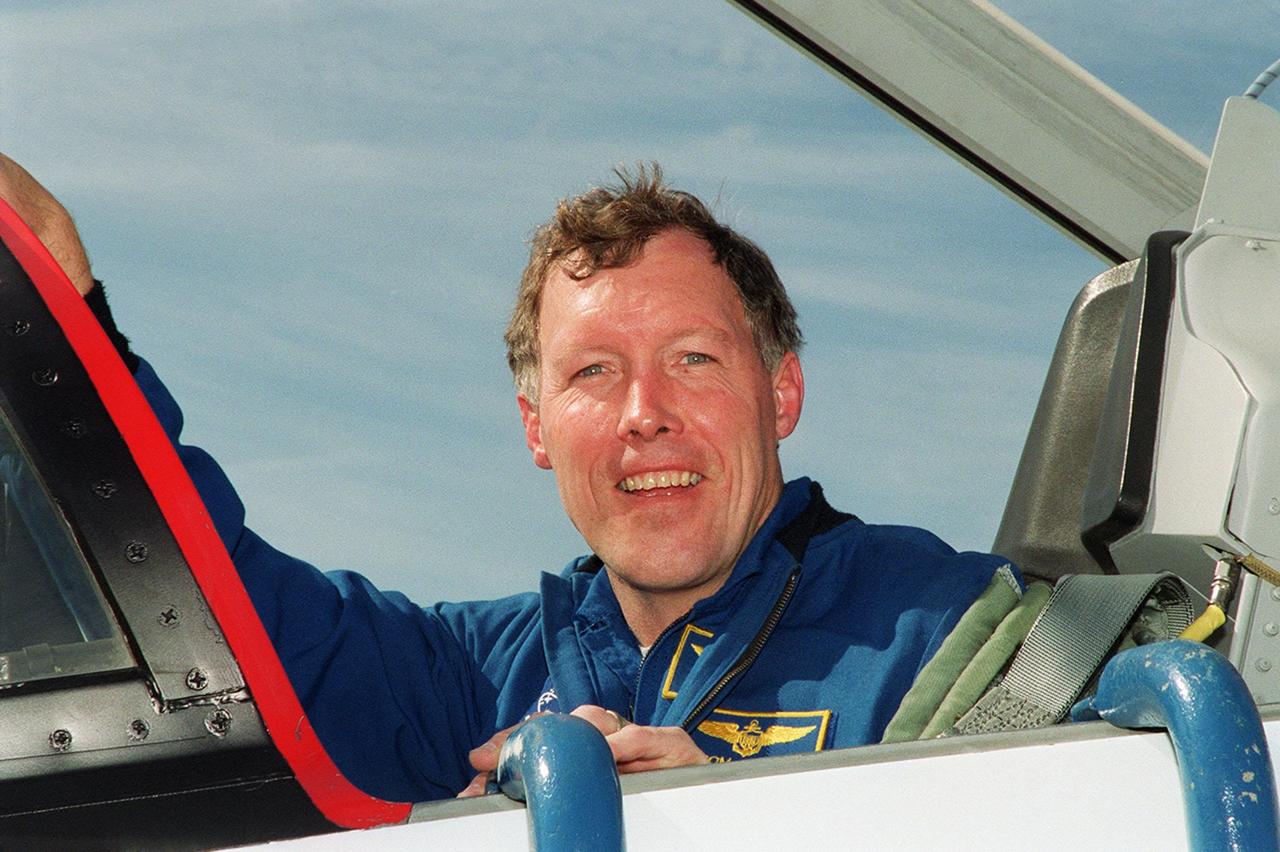
STS-99 Pilot Dominic Gorie arrives at KSC aboard a T-38 jet aircraft to prepare for launch of Endeavour Jan. 31 at 12:47 p.m. EST. Over the next few days, the crew will review mission procedures, conduct test flights in the Shuttle Training Aircraft and undergo routine preflight medical exams. STS-99 is the Shuttle Radar Topography Mission, which will chart a new course, using two antennae and a 200-foot-long section of space station-derived mast protruding from the payload bay to produce unrivaled 3-D images of the Earth's surface. The result of the Shuttle Radar Topography Mission could be close to 1 trillion measurements of the Earth's topography. Besides contributing to the production of better maps, these measurements could lead to improved water drainage modeling, more realistic flight simulators, better locations for cell phone towers, and enhanced navigation safety
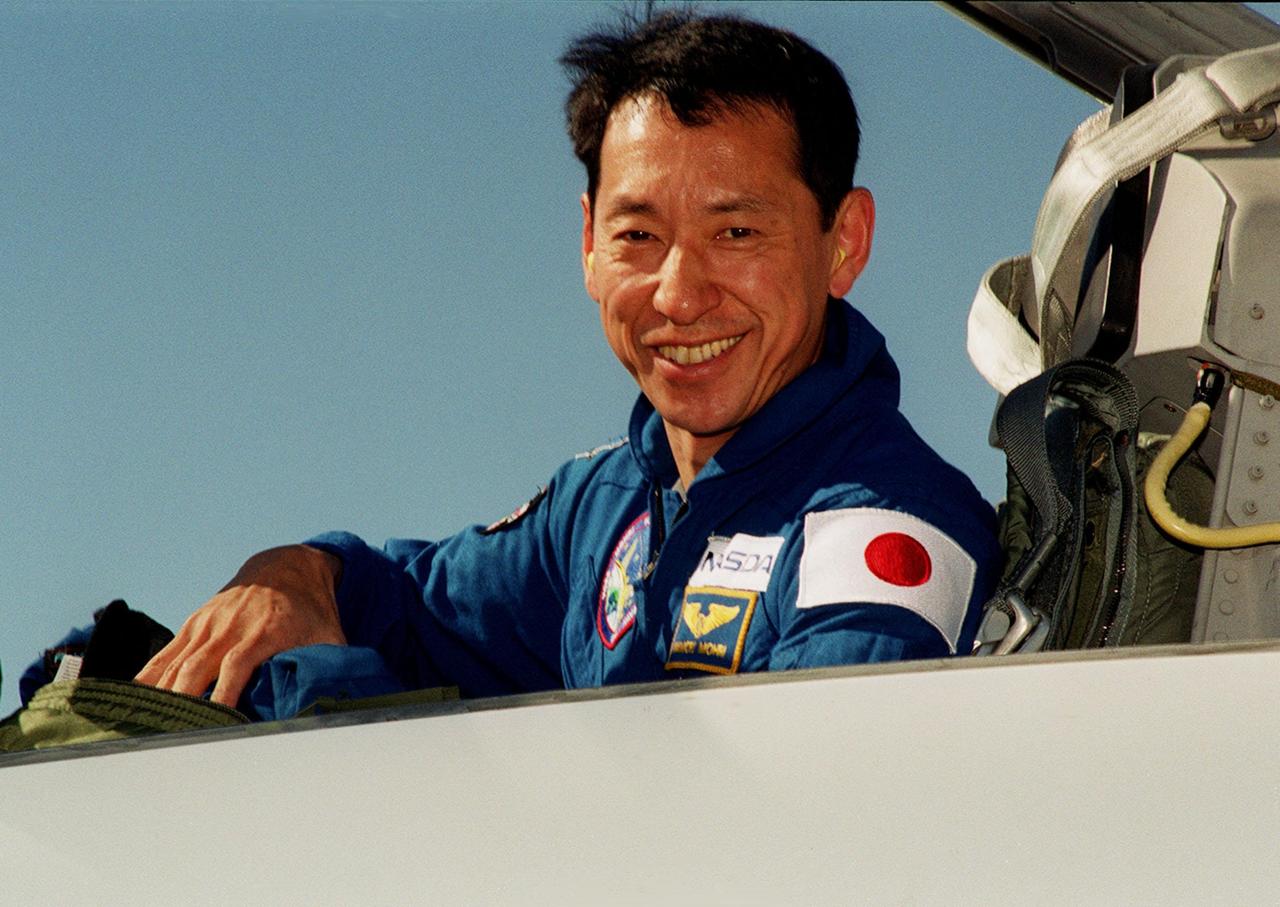
A smiling STS-99 Mission Specialist Mamoru Mohri of Japan arrives at KSC aboard a T-38 jet aircraft eager to prepare for the second launch attempt of Endeavour Feb. 11 at 12:30 p.m. EST from Launch Pad 39A. Mohri is with the Japanese National Space Development Agency (NASDA). The earlier launch scheduled for Jan. 31 was scrubbed due to poor weather and a faulty Enhanced Master Events Controller in the orbiter's aft compartment. Over the next few days, the crew will review mission procedures, conduct test flights in the Shuttle Training Aircraft and undergo routine preflight medical exams. STS-99 is the Shuttle Radar Topography Mission, which will produce unrivaled 3-D images of the Earth's surface. The result of the Shuttle Radar Topography Mission could be close to 1 trillion measurements of the Earth's topography. Landing is expected at KSC on Feb. 22 at 4:36 p.m. EST
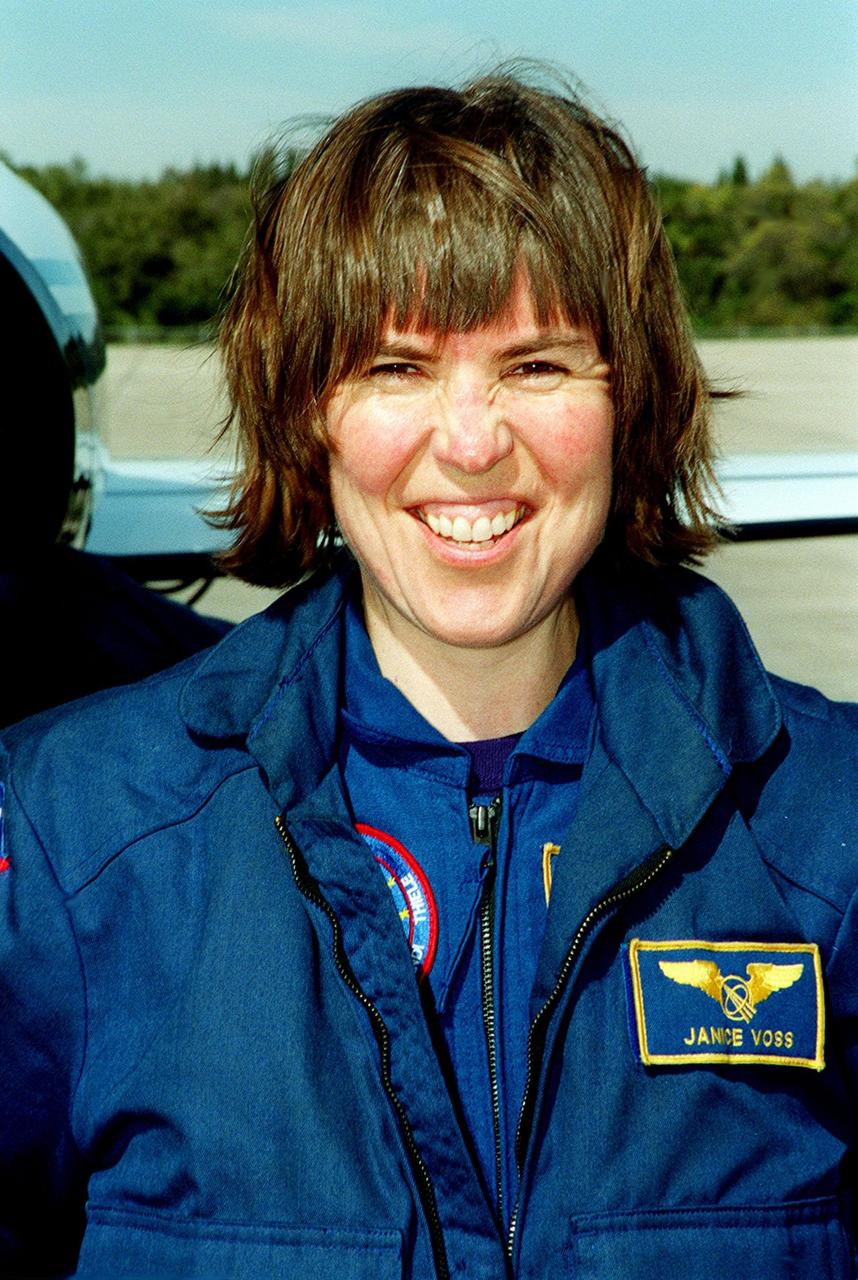
STS-99 Mission Specialist Janice Voss (Ph.D.) looks happy after landing at KSC aboard a T-38 jet aircraft to prepare for launch of Endeavour Jan. 31 at 12:47 p.m. EST. Over the next few days, the crew will review mission procedures, conduct test flights in the Shuttle Training Aircraft and undergo routine preflight medical exams. STS-99 is the Shuttle Radar Topography Mission, which will chart a new course, using two antennae and a 200-foot-long section of space station-derived mast protruding from the payload bay to produce unrivaled 3-D images of the Earth's surface. The result of the Shuttle Radar Topography Mission could be close to 1 trillion measurements of the Earth's topography. Besides contributing to the production of better maps, these measurements could lead to improved water drainage modeling, more realistic flight simulators, better locations for cell phone towers, and enhanced navigation safety
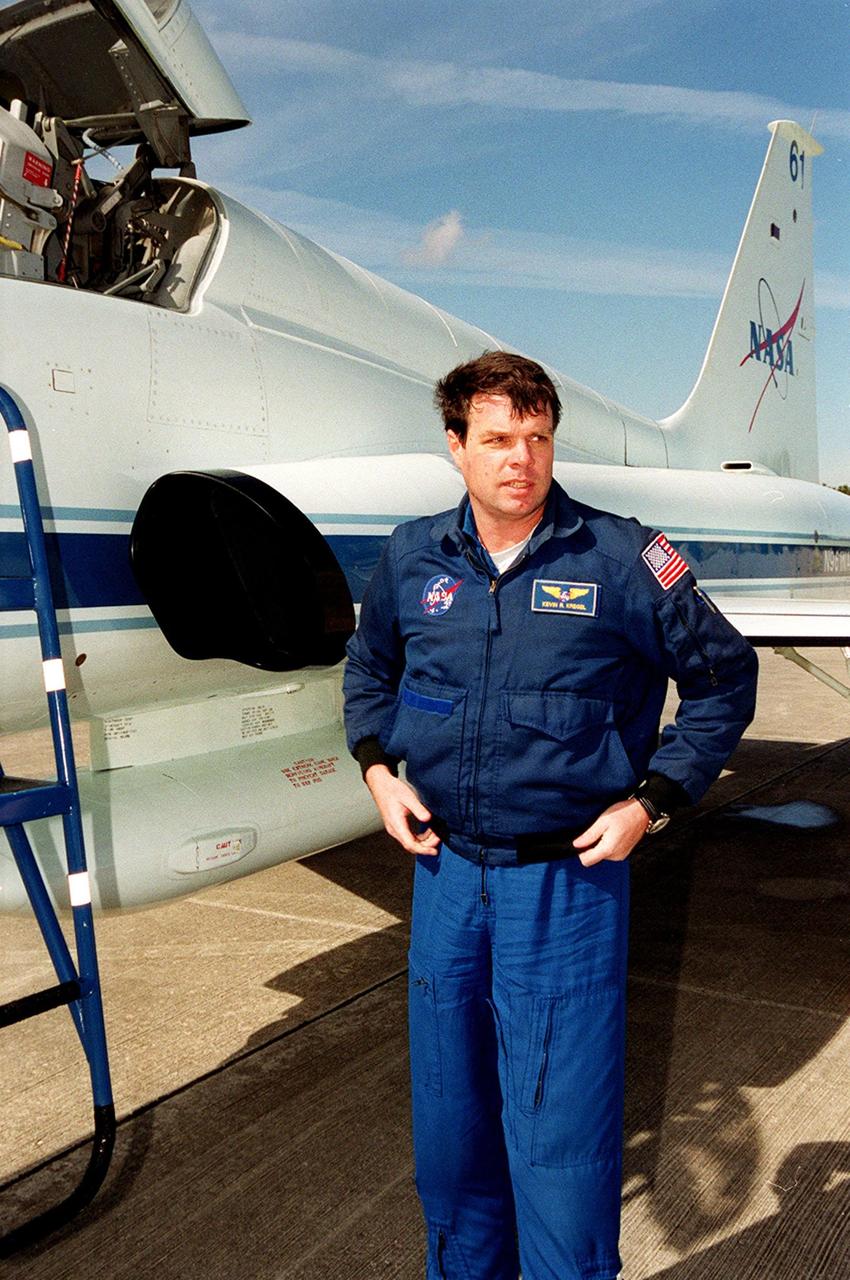
STS-99 Commander Kevin Kregel arrives at KSC aboard a T-38 jet aircraft to prepare for launch of Endeavour Jan. 31 at 12:47 p.m. EST. Over the next few days, the crew will review mission procedures, conduct test flights in the Shuttle Training Aircraft and undergo routine preflight medical exams. STS-99 is the Shuttle Radar Topography Mission, which will chart a new course, using two antennae and a 200-foot-long section of space station-derived mast protruding from the payload bay to produce unrivaled 3-D images of the Earth's surface. The result of the Shuttle Radar Topography Mission could be close to 1 trillion measurements of the Earth's topography. Besides contributing to the production of better maps, these measurements could lead to improved water drainage modeling, more realistic flight simulators, better locations for cell phone towers, and enhanced navigation safety
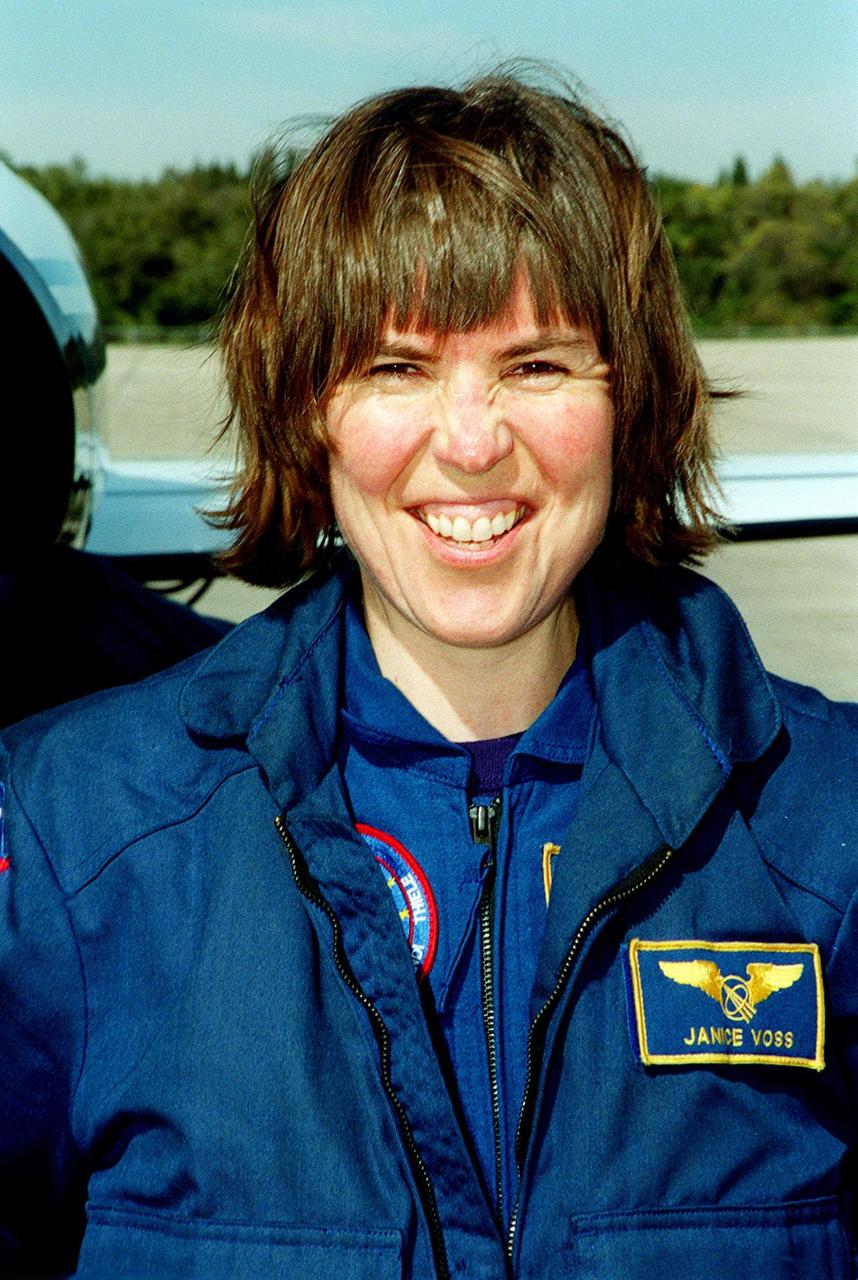
STS-99 Mission Specialist Janice Voss (Ph.D.) looks happy after landing at KSC aboard a T-38 jet aircraft to prepare for launch of Endeavour Jan. 31 at 12:47 p.m. EST. Over the next few days, the crew will review mission procedures, conduct test flights in the Shuttle Training Aircraft and undergo routine preflight medical exams. STS-99 is the Shuttle Radar Topography Mission, which will chart a new course, using two antennae and a 200-foot-long section of space station-derived mast protruding from the payload bay to produce unrivaled 3-D images of the Earth's surface. The result of the Shuttle Radar Topography Mission could be close to 1 trillion measurements of the Earth's topography. Besides contributing to the production of better maps, these measurements could lead to improved water drainage modeling, more realistic flight simulators, better locations for cell phone towers, and enhanced navigation safety
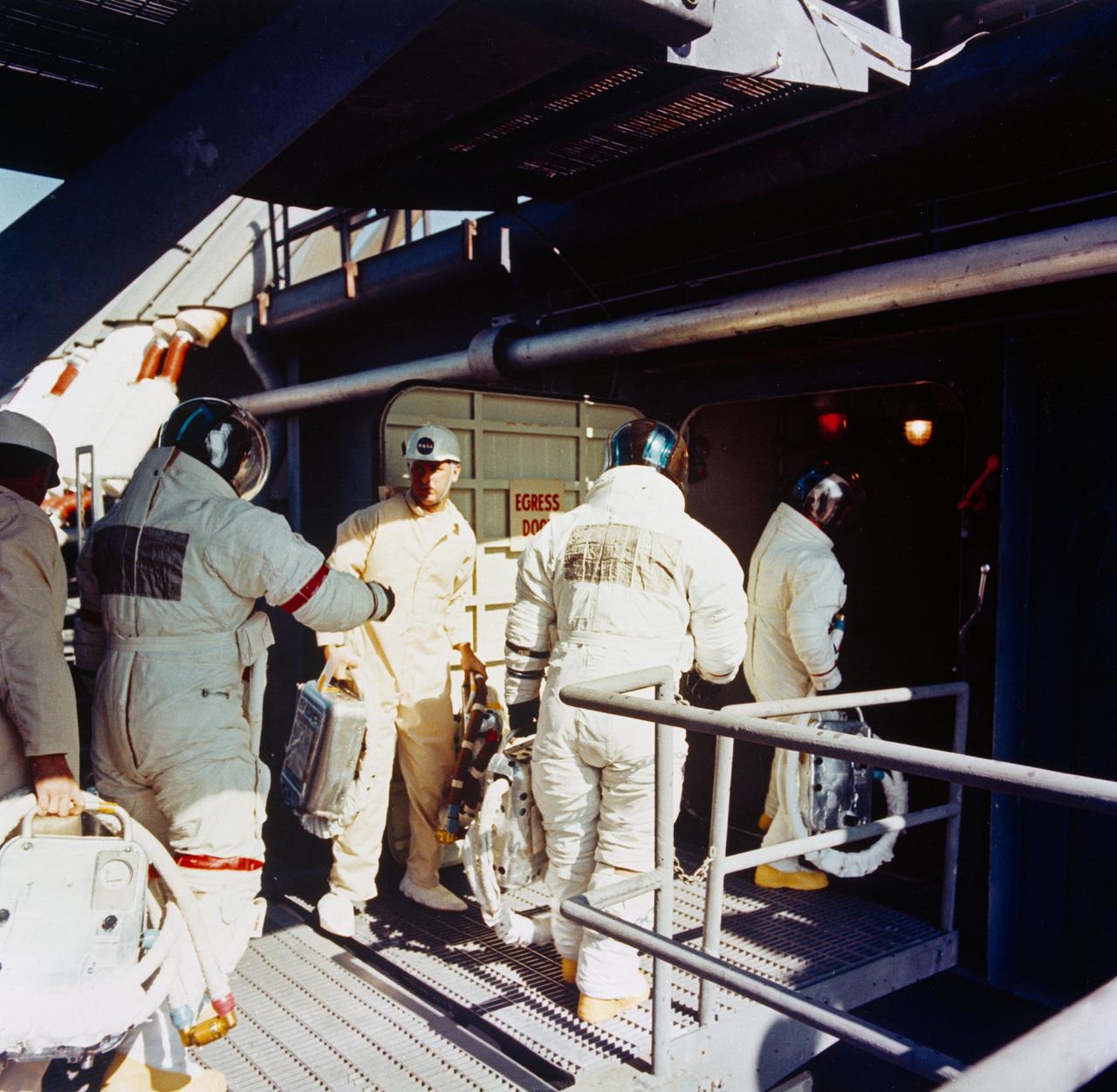
S71-16635 (31 Jan. 1971) --- The three Apollo 14 astronauts arrive at the White Room atop Pad A, Launch Complex 39, during the Apollo 14 prelaunch countdown. Apollo 14, with Alan B. Shepard Jr., commander; Stuart A. Roosa, command module pilot; and Edgar D. Mitchell, lunar module pilot, aboard was launched at 4:03:02 p.m. (EST), Jan. 31, 1971, on a lunar landing mission. Note identifying bands on the sleeve and leg of Shepard. Standing in the center foreground is astronaut Thomas P. Stafford, chief of the MSC Astronaut Office.
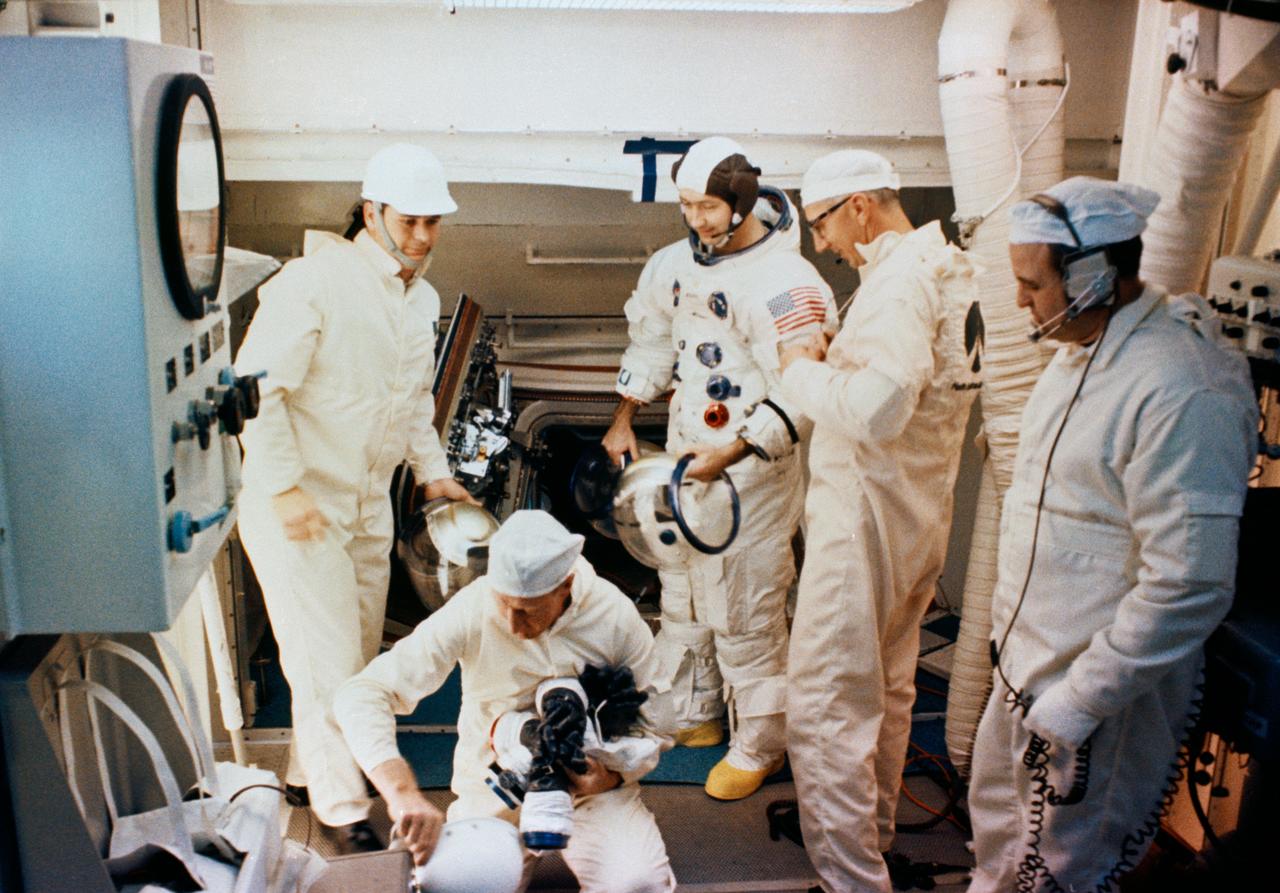
S69-25884 (23 Feb. 1969) --- Interior view of the white room atop Pad A, Launch Complex 39, Kennedy Space Center, during Apollo 9 Countdown Demonstration Test activity. Standing next to spacecraft hatch is astronaut James A. McDivitt, commander. Also, taking part in the training exercise were astronauts David R. Scott, command module pilot; and Russell L. Schweickart, lunar module pilot. The Apollo 9 mission will evaluate spacecraft lunar module systems performance during manned Earth-orbital flight. Apollo 9 will be the second manned Saturn V mission.
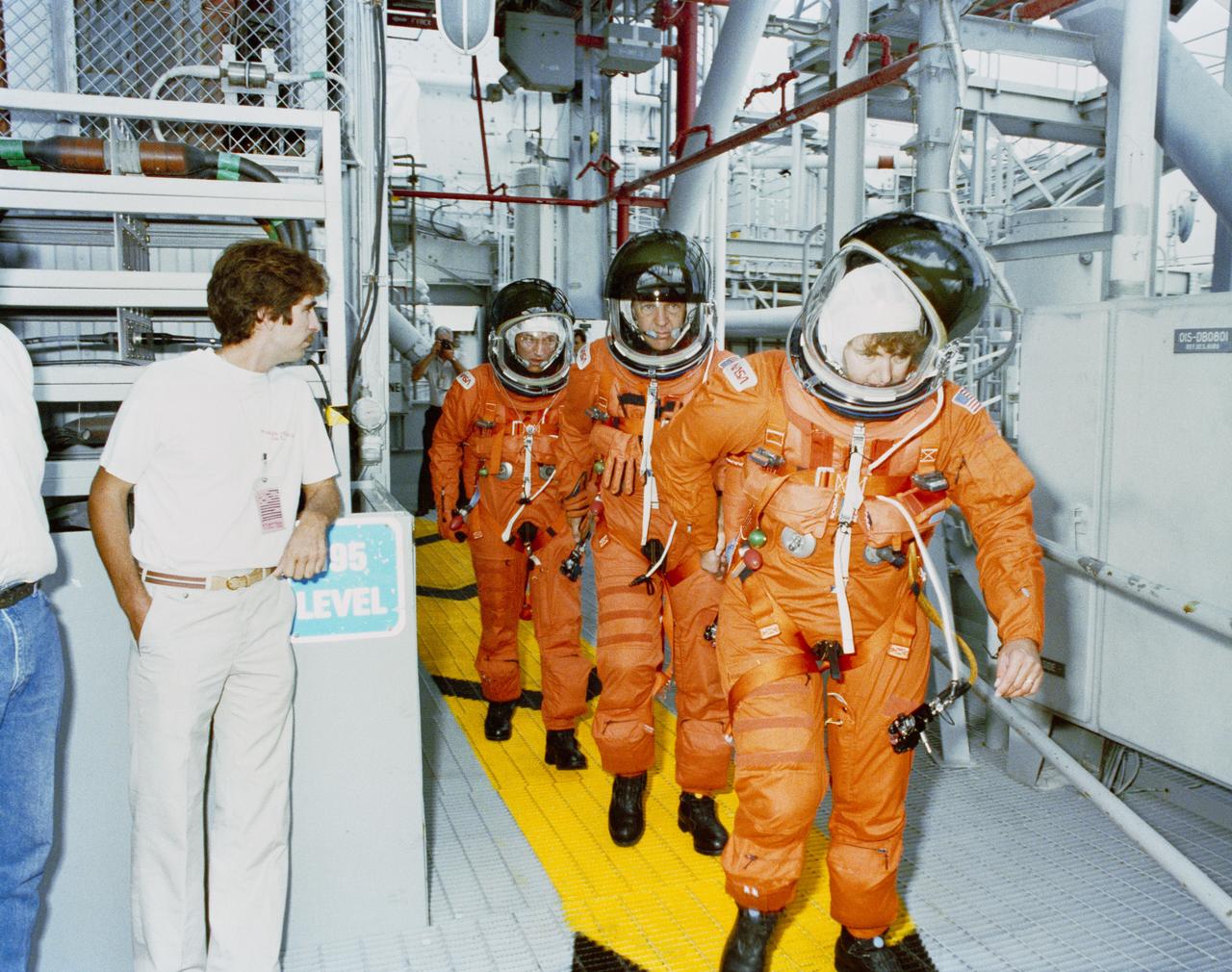
S89-46513 (15 Sept 1989) --- Three members of the STS-34 crew rehearse for their pre-launch procedures at Launch Pad 39B during Terminal Countdown Demonstration Test (TCDT) activities at Kennedy Space Center (KSC). From the foreground, Astronauts Shannon W. Lucid, Michael J. McCulley and Donald E. Williams are at the 195-ft. level of at Pad B. The crew entered Atlantis for the mock countdown. The five astronauts are expected to spend more than five days in Earth orbit next month, with their primary objective being to release the Galileo spacecraft and send it on its way to Jupiter. Not in the frame are Astronauts Franklin R. Chang-Diaz and Ellen S. Baker. (KSC-89PC-898)
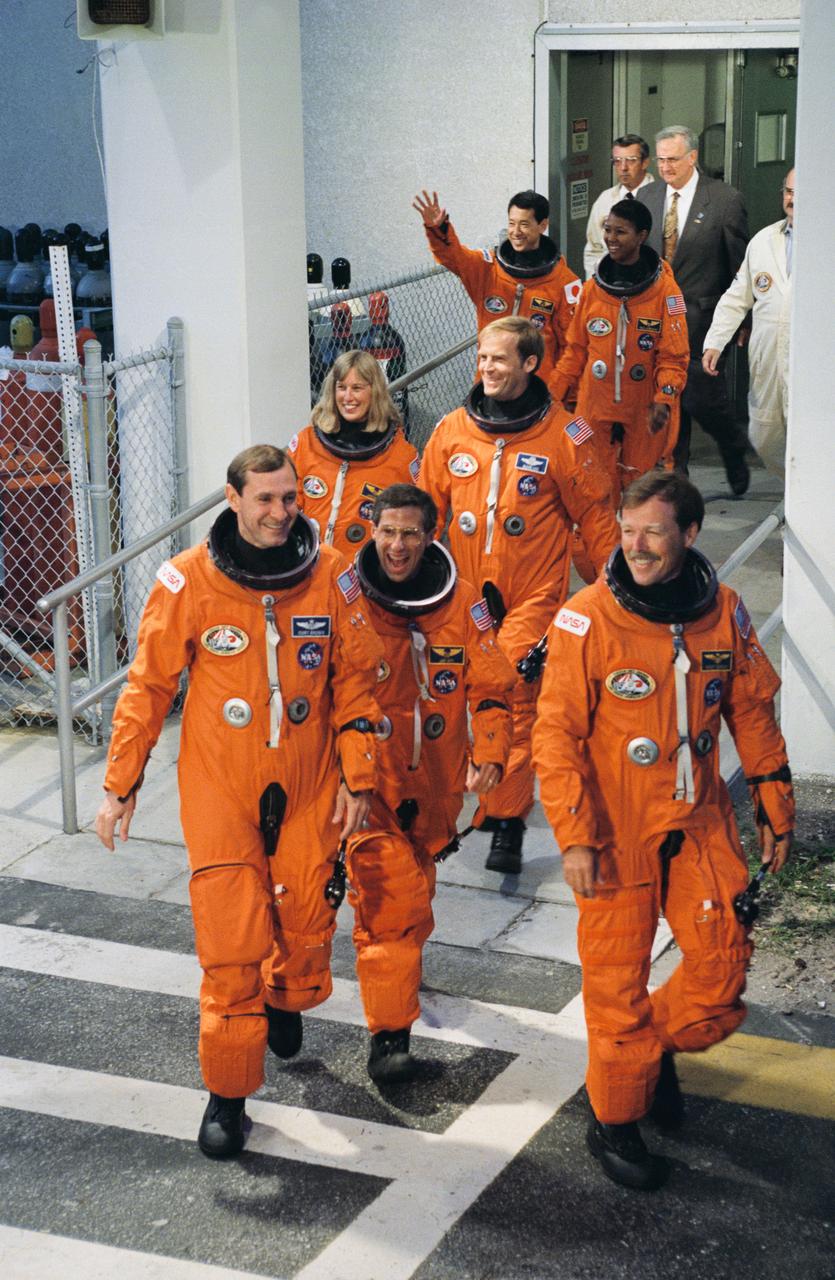
STS047-S-038 (12 Sept 1992) --- The seven crewmembers who will be aboard for Endeavour's second trip into space leave the Operations and Checkout Building to board a van headed for Launch Complex 39. This mission will be devoted to support of the Spacelab-J mission, a joint effort between Japan and the United States. Launch occurred at 10:23:00:0680 a.m. (EDT), September 12, 1992. Onboard were astronauts Robert L. Gibson, mission commander; Curtis L. Brown Jr., pilot; Mark C. Lee, payload commander; and Jerome (Jay) Apt, Mae C. Jemison and N. Jan Davis, mission specialists; along with payload specialist Mamoru Mohri, representing the National Space Development Agency (NASDA) of Japan.
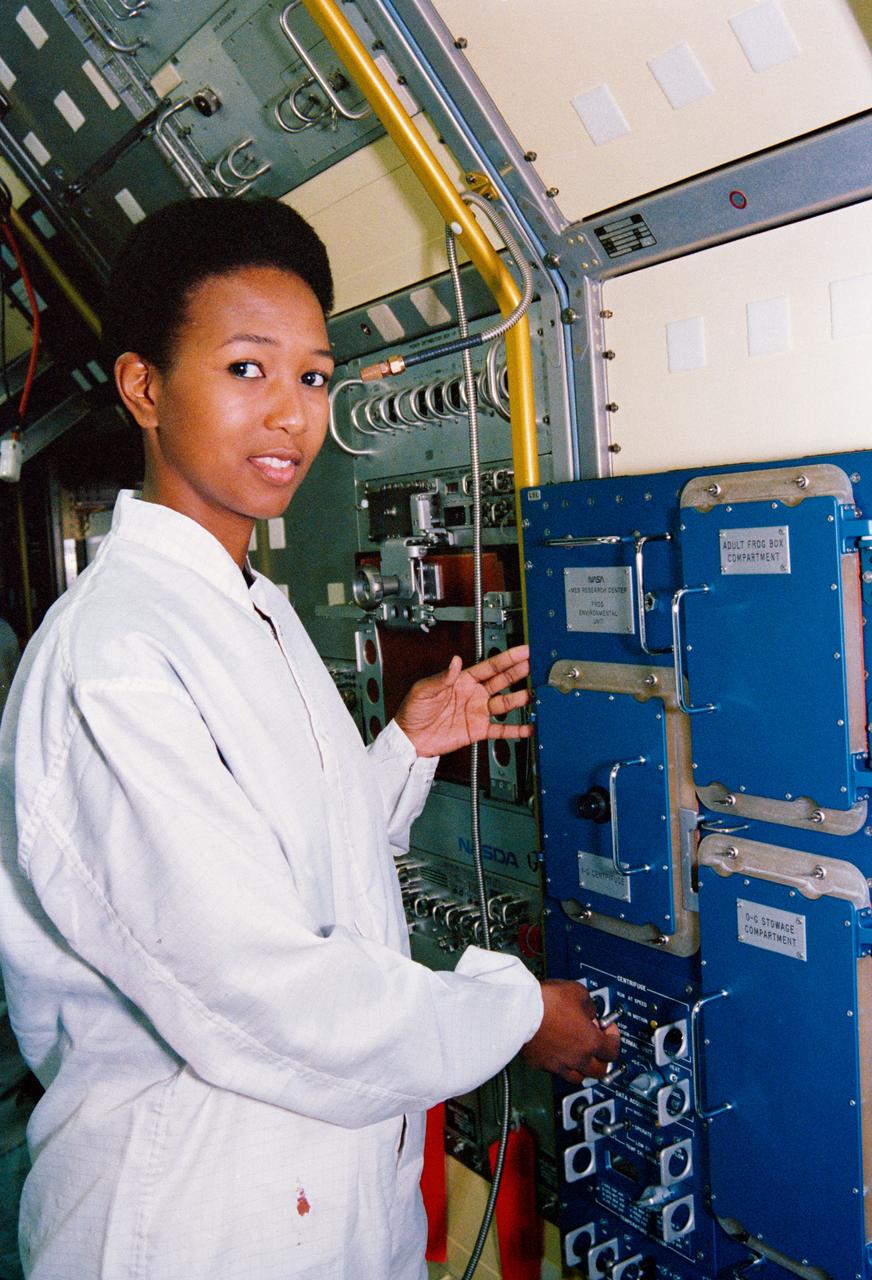
S92-44302 (25 July 1992) --- Astronaut Mae C. Jemison, mission specialist, examines the interior of the Spacelab-J laboratory module installed in Endeavour's cargo bay. The STS-47 crewmembers visited Endeavour, currently undergoing pre-flight processing in a high bay area of the Orbiter Processing Facility at the Kennedy Space Center. The Spacelab-J mission is currently scheduled for September of this year.
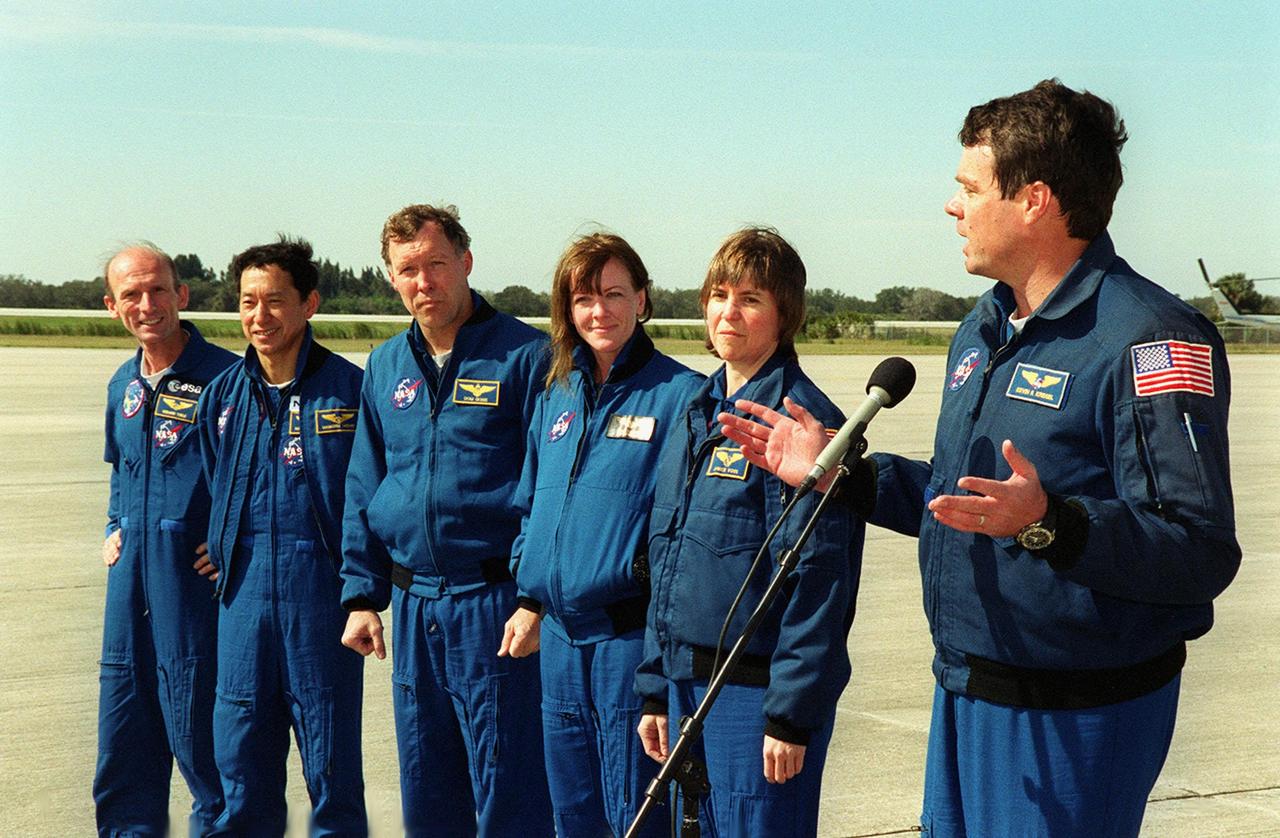
After arriving at KSC's Shuttle Landing Facility, the STS-99 crew pause to greet the media and Commander Kevin Kregel (right) introduces his crew: (from left) Mission Specialists Gerhard Thiele (Ph.D.) and Mamoru Mohri (Ph.D.); Pilot Dominic Gorie; and Mission Specialists Janet Lynn Kavandi (Ph.D.) and Janice Voss (Ph.D.). Thiele is with the European Space Agency and Mohri is with the National Space Development Agency (NASDA) of Japan. Over the next few days, the crew will review mission procedures, conduct test flights in the Shuttle Training Aircraft and undergo routine preflight medical exams. STS-99 is the Shuttle Radar Topography Mission, which will chart a new course, using two antennae and a 200-foot-long section of space station-derived mast protruding from the payload bay to produce unrivaled 3-D images of the Earth's surface. The result of the Shuttle Radar Topography Mission could be close to 1 trillion measurements of the Earth's topography. Besides contributing to the production of better maps, these measurements could lead to improved water drainage modeling, more realistic flight simulators, better locations for cell phone towers, and enhanced navigation safety. Launch of Endeavour is scheduled for Jan. 31 at 12:47 p.m. EST
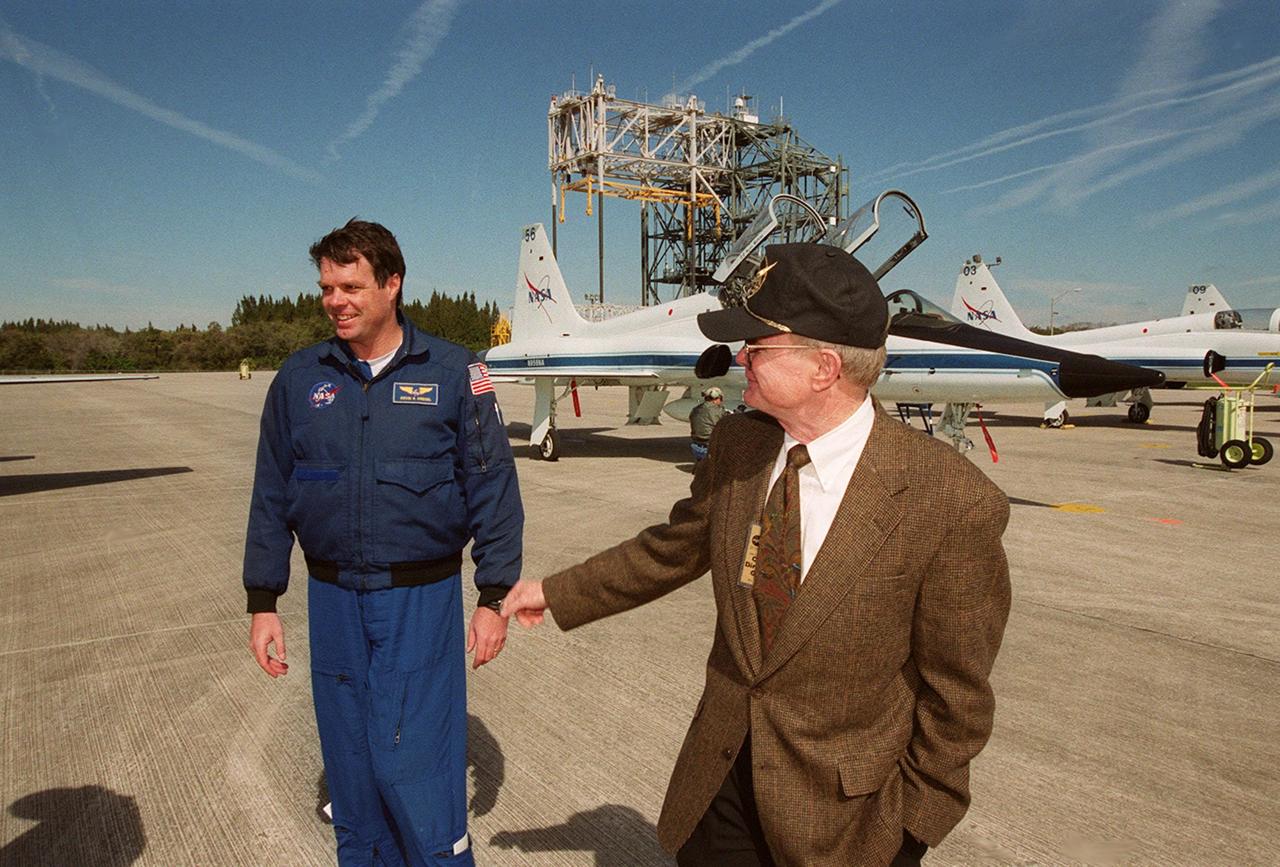
Center Director Roy Bridges (right) welcomes STS-99 Commander Kevin Kregel (left) and the rest of the crew after their arrival at KSC's Shuttle Landing Facility. Behind them are the T-38 jets that transported the crew, with the mate/demate tower in the background. Over the next few days, the crew will review mission procedures, conduct test flights in the Shuttle Training Aircraft and undergo routine preflight medical exams. STS-99 is the Shuttle Radar Topography Mission, which will chart a new course, using two antennae and a 200-foot-long section of space station-derived mast protruding from the payload bay to produce unrivaled 3-D images of the Earth's surface. The result of the Shuttle Radar Topography Mission could be close to 1 trillion measurements of the Earth's topography. Besides contributing to the production of better maps, these measurements could lead to improved water drainage modeling, more realistic flight simulators, better locations for cell phone towers, and enhanced navigation safety. Launch of Endeavour is scheduled for Jan. 31 at 12:47 p.m. EST
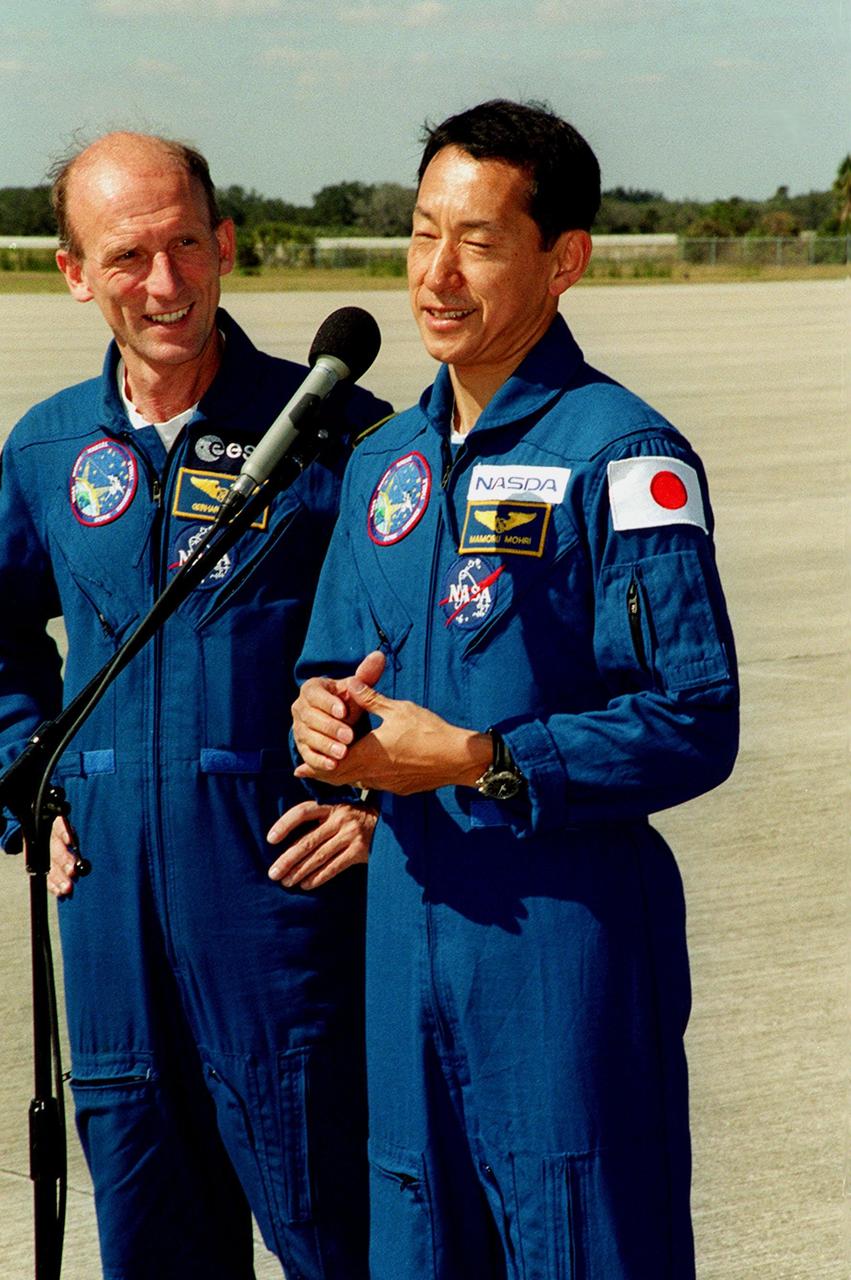
After landing at the Shuttle Landing Facility aboard T-38 jet aircraft, the STS-99 crew addressed the media. Mission Specialists Gerhard Thiele of Germany waits while Mamoru Mohri of Japan (right) responds to a question. The crew is ready to prepare for the second launch attempt of Endeavour Feb. 11 at 12:30 p.m. EST from Launch Pad 39A. The earlier launch scheduled for Jan. 31 was scrubbed due to poor weather and a faulty Enhanced Master Events Controller in the orbiter's aft compartment. Over the next few days, the crew will review mission procedures, conduct test flights in the Shuttle Training Aircraft and undergo routine preflight medical exams. STS-99 is the Shuttle Radar Topography Mission, which will produce unrivaled 3-D images of the Earth's surface. The result of the Shuttle Radar Topography Mission could be close to 1 trillion measurements of the Earth's topography. Landing is expected at KSC on Feb. 22 at 4:36 p.m. EST
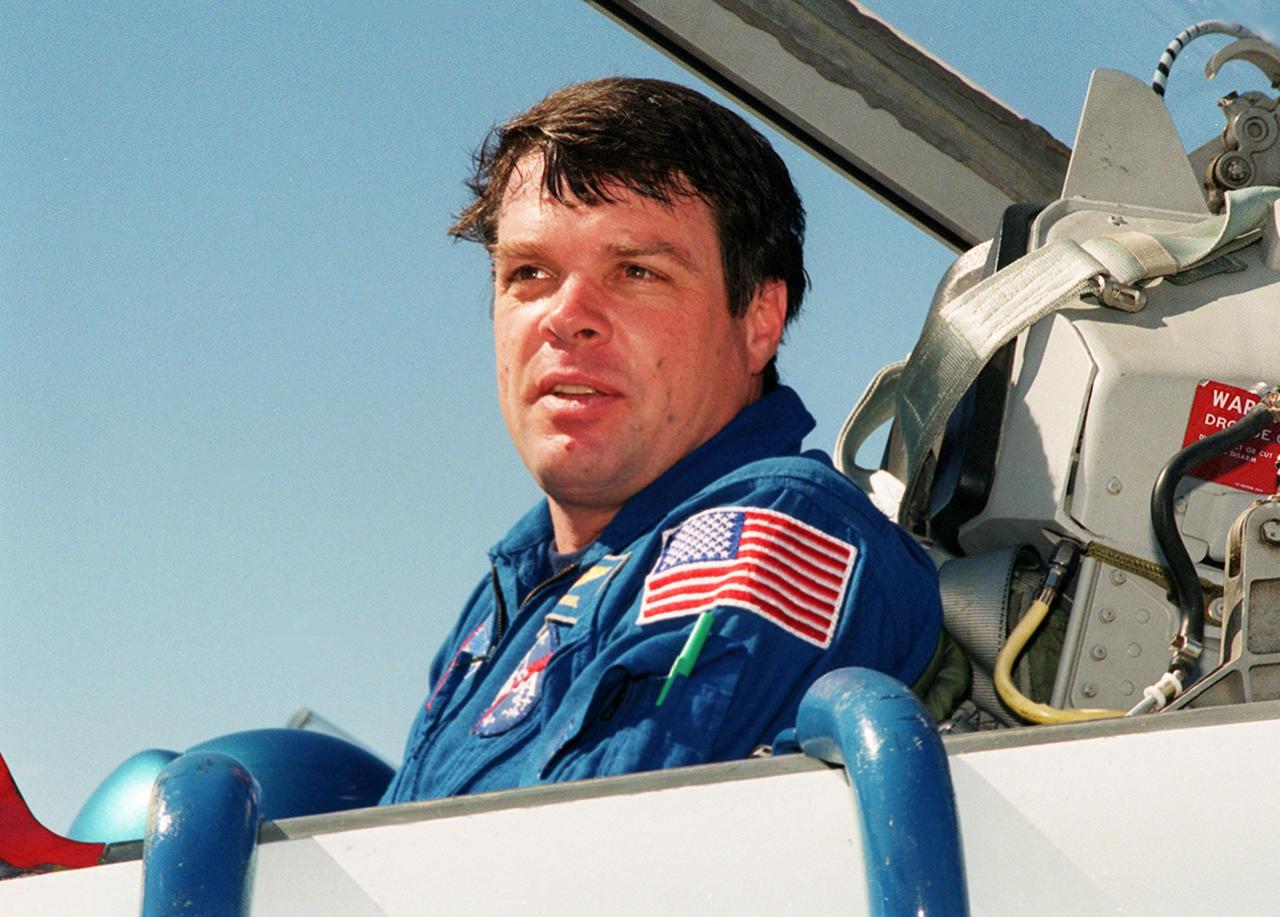
STS-99 Commander Kevin Kregel arrives at Kennedy Space Center aboard a T-38 jet aircraft. He and the other five crew members are back at KSC to prepare for the second launch attempt of Endeavour Feb. 11 at 12:30 p.m. EST from Launch Pad 39A. The earlier launch scheduled for Jan. 31 was scrubbed due to poor weather and a faulty Enhanced Master Events Controller in the orbiter's aft compartment. The crew had returned to Houston after the scrubbed launch. Over the next few days, the crew will review mission procedures, conduct test flights in the Shuttle Training Aircraft and undergo routine preflight medical exams. STS-99 is the Shuttle Radar Topography Mission, which will produce unrivaled 3-D images of the Earth's surface. The result of the Shuttle Radar Topography Mission could be close to 1 trillion measurements of the Earth's topography. Landing is expected at KSC on Feb. 22 at 4:36 p.m. EST

STS-99 Commander Kevin Kregel arrives at Kennedy Space Center aboard a T-38 jet aircraft. He and the other five crew members are back at KSC to prepare for the second launch attempt of Endeavour Feb. 11 at 12:30 p.m. EST from Launch Pad 39A. The earlier launch scheduled for Jan. 31 was scrubbed due to poor weather and a faulty Enhanced Master Events Controller in the orbiter's aft compartment. The crew had returned to Houston after the scrubbed launch. Over the next few days, the crew will review mission procedures, conduct test flights in the Shuttle Training Aircraft and undergo routine preflight medical exams. STS-99 is the Shuttle Radar Topography Mission, which will produce unrivaled 3-D images of the Earth's surface. The result of the Shuttle Radar Topography Mission could be close to 1 trillion measurements of the Earth's topography. Landing is expected at KSC on Feb. 22 at 4:36 p.m. EST
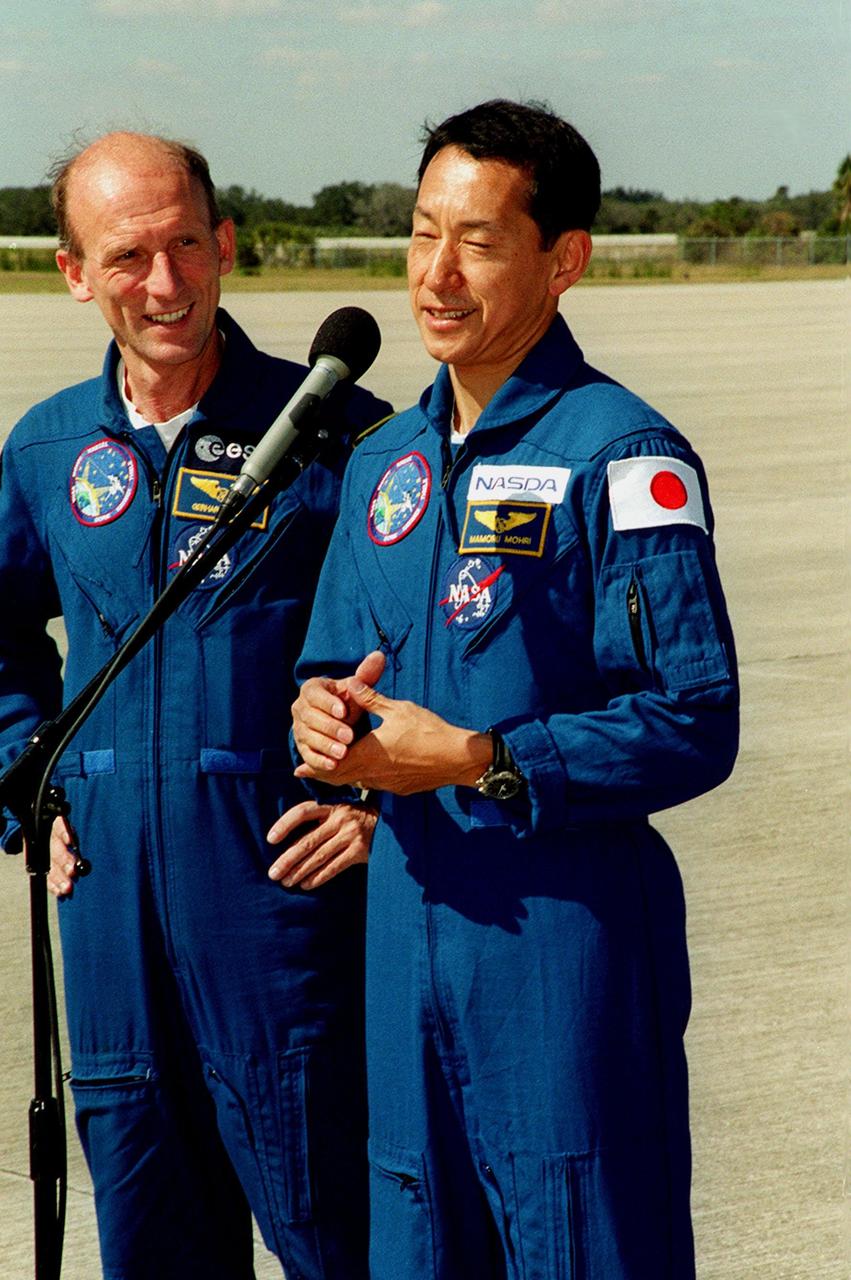
After landing at the Shuttle Landing Facility aboard T-38 jet aircraft, the STS-99 crew addressed the media. Mission Specialists Gerhard Thiele of Germany waits while Mamoru Mohri of Japan (right) responds to a question. The crew is ready to prepare for the second launch attempt of Endeavour Feb. 11 at 12:30 p.m. EST from Launch Pad 39A. The earlier launch scheduled for Jan. 31 was scrubbed due to poor weather and a faulty Enhanced Master Events Controller in the orbiter's aft compartment. Over the next few days, the crew will review mission procedures, conduct test flights in the Shuttle Training Aircraft and undergo routine preflight medical exams. STS-99 is the Shuttle Radar Topography Mission, which will produce unrivaled 3-D images of the Earth's surface. The result of the Shuttle Radar Topography Mission could be close to 1 trillion measurements of the Earth's topography. Landing is expected at KSC on Feb. 22 at 4:36 p.m. EST
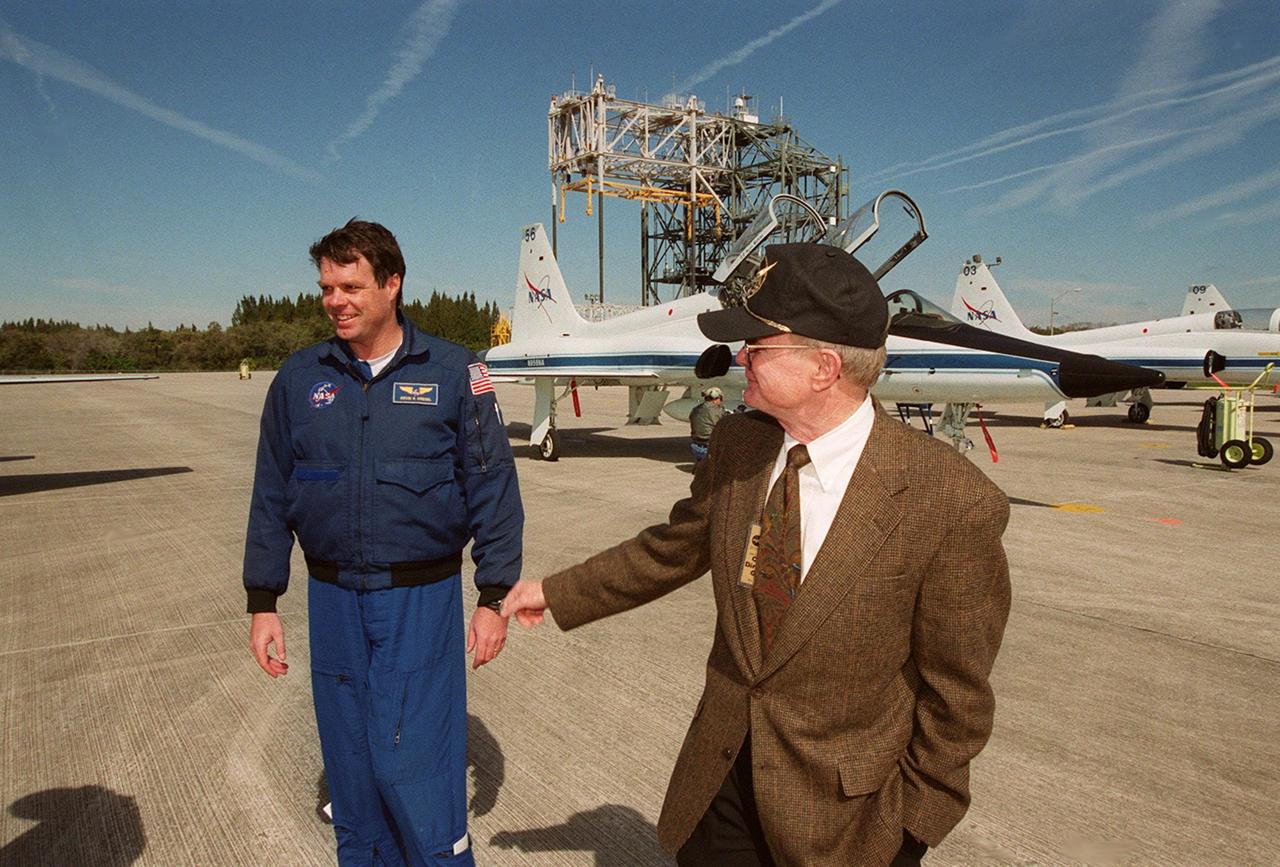
Center Director Roy Bridges (right) welcomes STS-99 Commander Kevin Kregel (left) and the rest of the crew after their arrival at KSC's Shuttle Landing Facility. Behind them are the T-38 jets that transported the crew, with the mate/demate tower in the background. Over the next few days, the crew will review mission procedures, conduct test flights in the Shuttle Training Aircraft and undergo routine preflight medical exams. STS-99 is the Shuttle Radar Topography Mission, which will chart a new course, using two antennae and a 200-foot-long section of space station-derived mast protruding from the payload bay to produce unrivaled 3-D images of the Earth's surface. The result of the Shuttle Radar Topography Mission could be close to 1 trillion measurements of the Earth's topography. Besides contributing to the production of better maps, these measurements could lead to improved water drainage modeling, more realistic flight simulators, better locations for cell phone towers, and enhanced navigation safety. Launch of Endeavour is scheduled for Jan. 31 at 12:47 p.m. EST
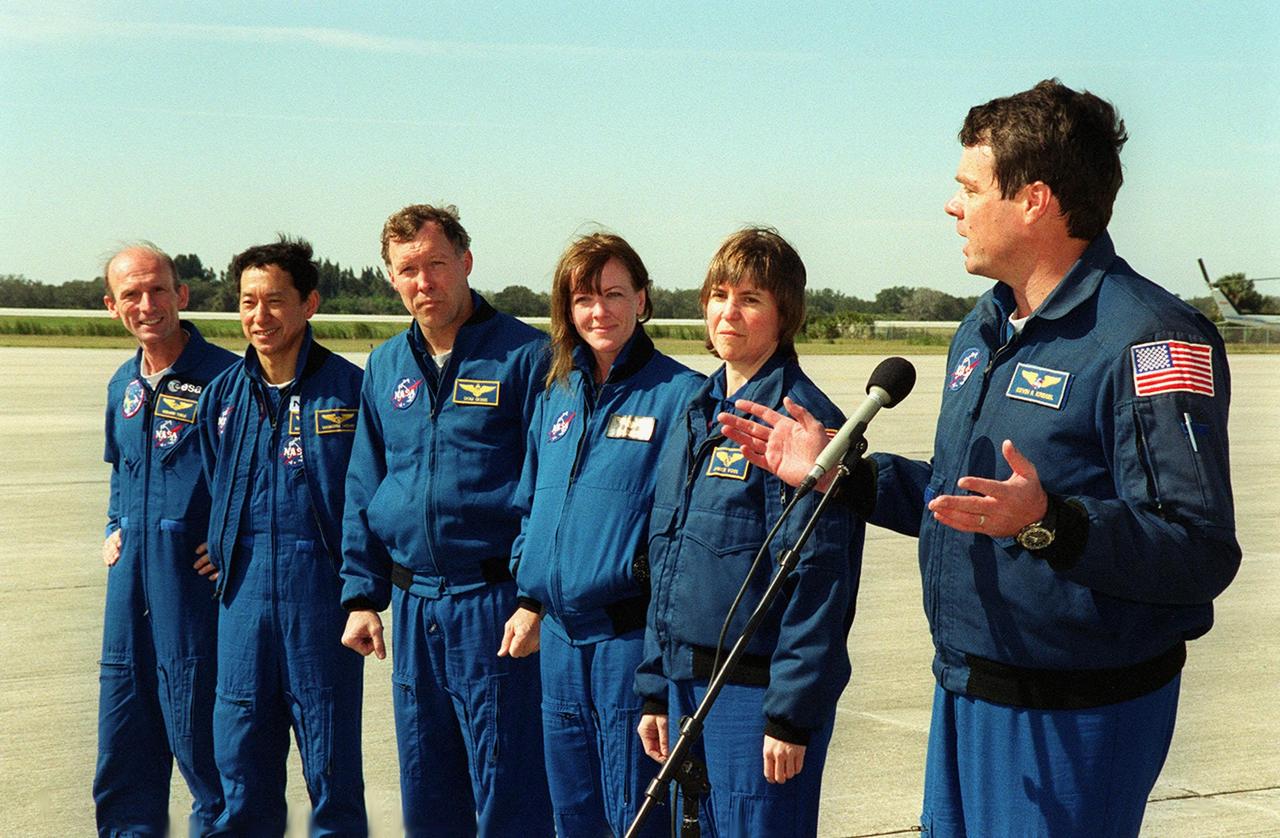
After arriving at KSC's Shuttle Landing Facility, the STS-99 crew pause to greet the media and Commander Kevin Kregel (right) introduces his crew: (from left) Mission Specialists Gerhard Thiele (Ph.D.) and Mamoru Mohri (Ph.D.); Pilot Dominic Gorie; and Mission Specialists Janet Lynn Kavandi (Ph.D.) and Janice Voss (Ph.D.). Thiele is with the European Space Agency and Mohri is with the National Space Development Agency (NASDA) of Japan. Over the next few days, the crew will review mission procedures, conduct test flights in the Shuttle Training Aircraft and undergo routine preflight medical exams. STS-99 is the Shuttle Radar Topography Mission, which will chart a new course, using two antennae and a 200-foot-long section of space station-derived mast protruding from the payload bay to produce unrivaled 3-D images of the Earth's surface. The result of the Shuttle Radar Topography Mission could be close to 1 trillion measurements of the Earth's topography. Besides contributing to the production of better maps, these measurements could lead to improved water drainage modeling, more realistic flight simulators, better locations for cell phone towers, and enhanced navigation safety. Launch of Endeavour is scheduled for Jan. 31 at 12:47 p.m. EST
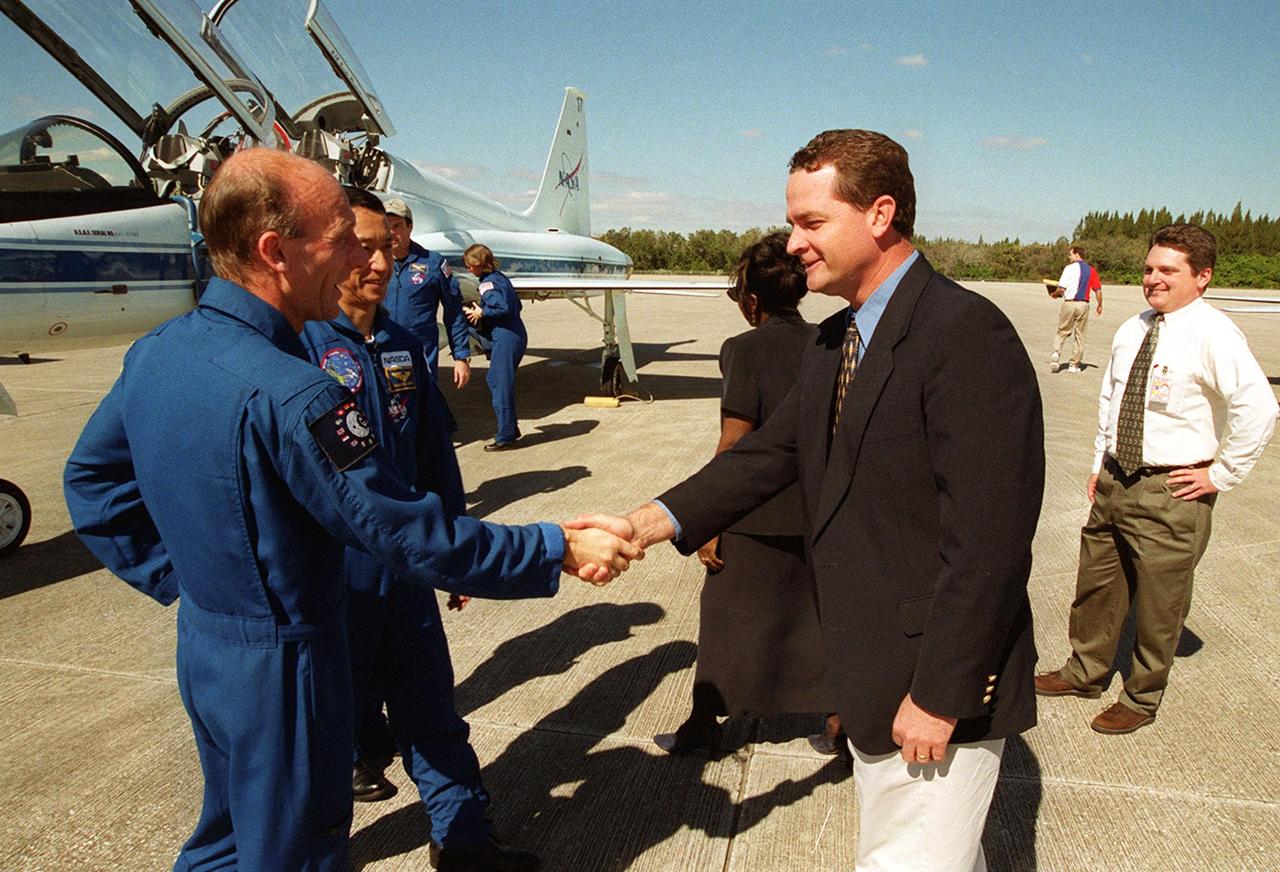
After landing at the Shuttle Landing Facility aboard T-38 jet aircraft, STS-99 Mission Specialists (from left) Gerhard Thiele of Germany and Mamoru Mohri of Japan are greeted by Dave King, director of Shuttle Operations. Behind Mohri can be seen Commander Kevin Kregel and Mission Specialist Janice Voss. The crew, which includes Pilot Dom gorie and Mission Specialist Janet Kavandi, are ready to prepare for the second launch attempt of Endeavour Feb. 11 at 12:30 p.m. EST from Launch Pad 39A. The earlier launch scheduled for Jan. 31 was scrubbed due to poor weather and a faulty Enhanced Master Events Controller in the orbiter's aft compartment. Over the next few days, the crew will review mission procedures, conduct test flights in the Shuttle Training Aircraft and undergo routine preflight medical exams. STS-99 is the Shuttle Radar Topography Mission, which will produce unrivaled 3-D images of the Earth's surface. The result of the Shuttle Radar Topography Mission could be close to 1 trillion measurements of the Earth's topography. Landing is expected at KSC on Feb. 22 at 4:36 p.m. EST
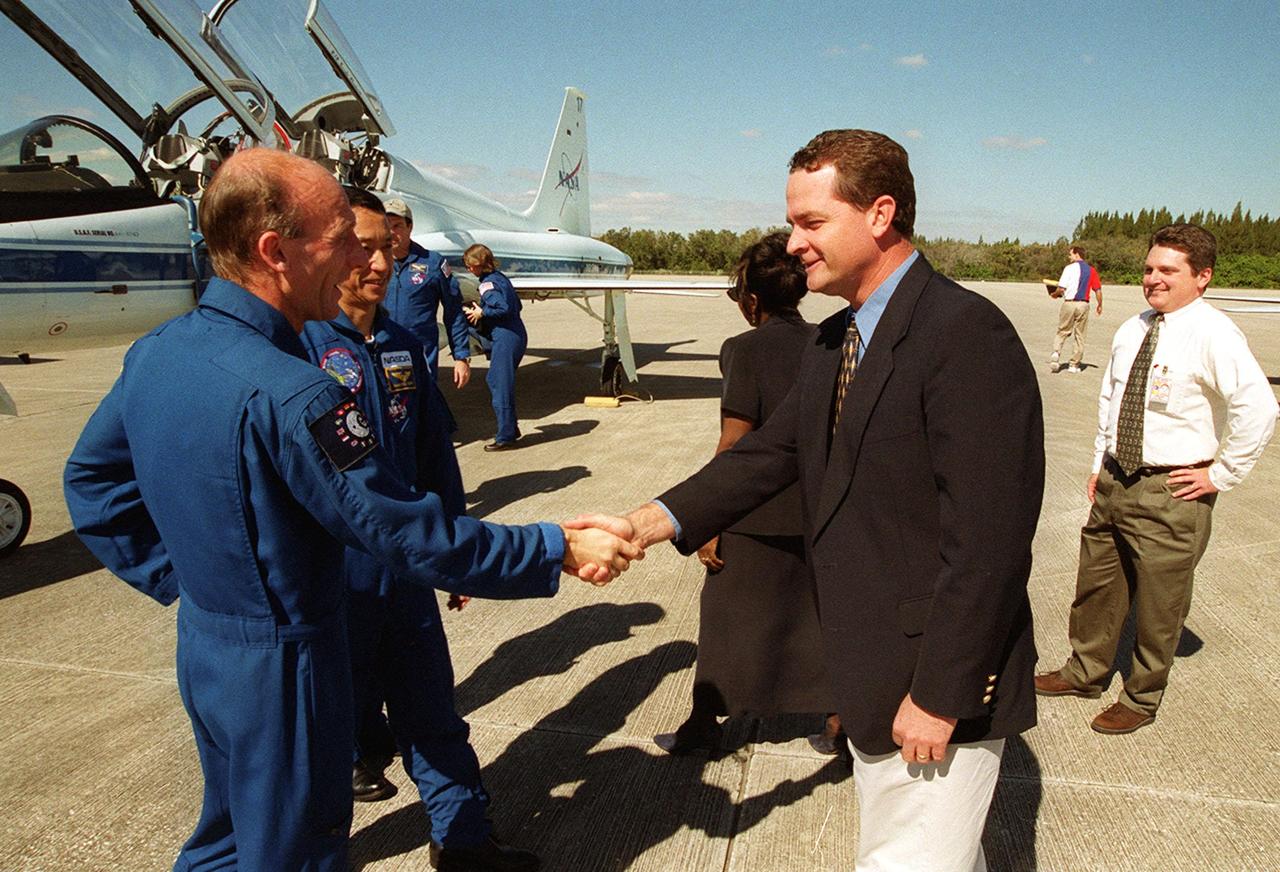
After landing at the Shuttle Landing Facility aboard T-38 jet aircraft, STS-99 Mission Specialists (from left) Gerhard Thiele of Germany and Mamoru Mohri of Japan are greeted by Dave King, director of Shuttle Operations. Behind Mohri can be seen Commander Kevin Kregel and Mission Specialist Janice Voss. The crew, which includes Pilot Dom gorie and Mission Specialist Janet Kavandi, are ready to prepare for the second launch attempt of Endeavour Feb. 11 at 12:30 p.m. EST from Launch Pad 39A. The earlier launch scheduled for Jan. 31 was scrubbed due to poor weather and a faulty Enhanced Master Events Controller in the orbiter's aft compartment. Over the next few days, the crew will review mission procedures, conduct test flights in the Shuttle Training Aircraft and undergo routine preflight medical exams. STS-99 is the Shuttle Radar Topography Mission, which will produce unrivaled 3-D images of the Earth's surface. The result of the Shuttle Radar Topography Mission could be close to 1 trillion measurements of the Earth's topography. Landing is expected at KSC on Feb. 22 at 4:36 p.m. EST
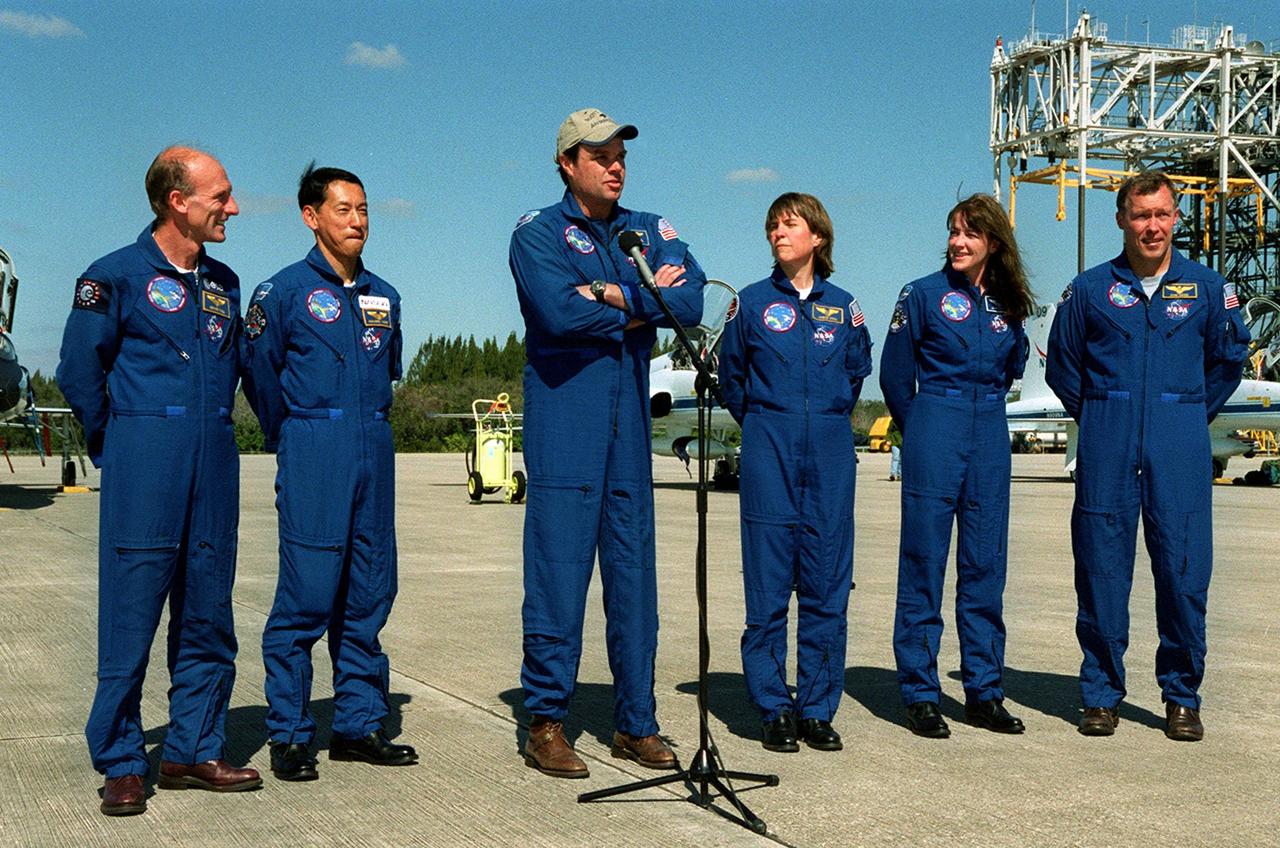
After landing at the Shuttle Landing Facility aboard T-38 jet aircraft, the STS-99 crew addresses the media. Standing, left to right, are Mission Specialists Gerhard Thiele of Germany and Mamoru Mohri of Japan, Commander Kevin Kregel (at the microphone), Mission Specialists Janice Voss and Janet Kavandi, and Pilot Dominic Gorie. They are ready to prepare for the second launch attempt of Endeavour Feb. 11 at 12:30 p.m. EST from Launch Pad 39A. The earlier launch scheduled for Jan. 31 was scrubbed due to poor weather and a faulty Enhanced Master Events Controller in the orbiter's aft compartment. Over the next few days, the crew will review mission procedures, conduct test flights in the Shuttle Training Aircraft and undergo routine preflight medical exams. STS-99 is the Shuttle Radar Topography Mission, which will produce unrivaled 3-D images of the Earth's surface. The result of the Shuttle Radar Topography Mission could be close to 1 trillion measurements of the Earth's topography. Landing is expected at KSC on Feb. 22 at 4:36 p.m. EST
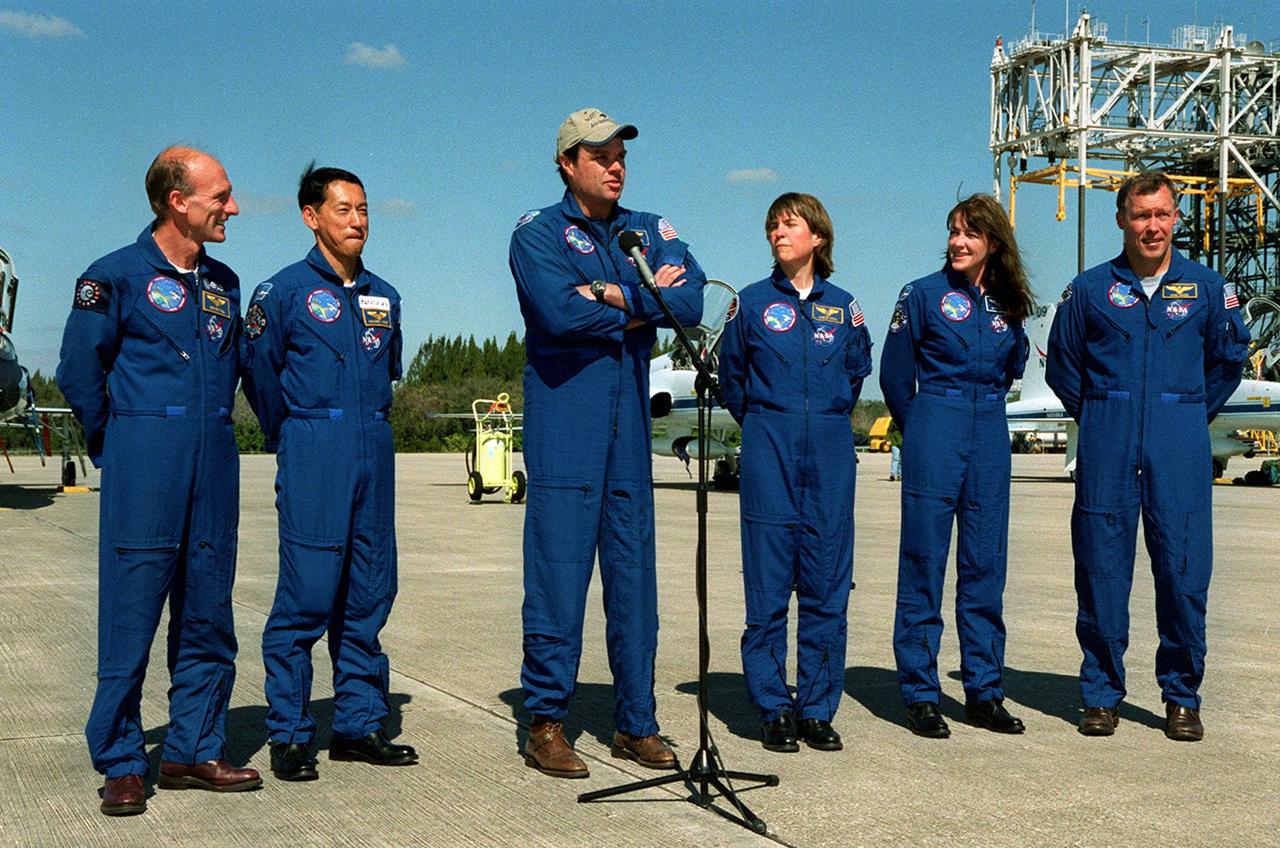
After landing at the Shuttle Landing Facility aboard T-38 jet aircraft, the STS-99 crew addresses the media. Standing, left to right, are Mission Specialists Gerhard Thiele of Germany and Mamoru Mohri of Japan, Commander Kevin Kregel (at the microphone), Mission Specialists Janice Voss and Janet Kavandi, and Pilot Dominic Gorie. They are ready to prepare for the second launch attempt of Endeavour Feb. 11 at 12:30 p.m. EST from Launch Pad 39A. The earlier launch scheduled for Jan. 31 was scrubbed due to poor weather and a faulty Enhanced Master Events Controller in the orbiter's aft compartment. Over the next few days, the crew will review mission procedures, conduct test flights in the Shuttle Training Aircraft and undergo routine preflight medical exams. STS-99 is the Shuttle Radar Topography Mission, which will produce unrivaled 3-D images of the Earth's surface. The result of the Shuttle Radar Topography Mission could be close to 1 trillion measurements of the Earth's topography. Landing is expected at KSC on Feb. 22 at 4:36 p.m. EST
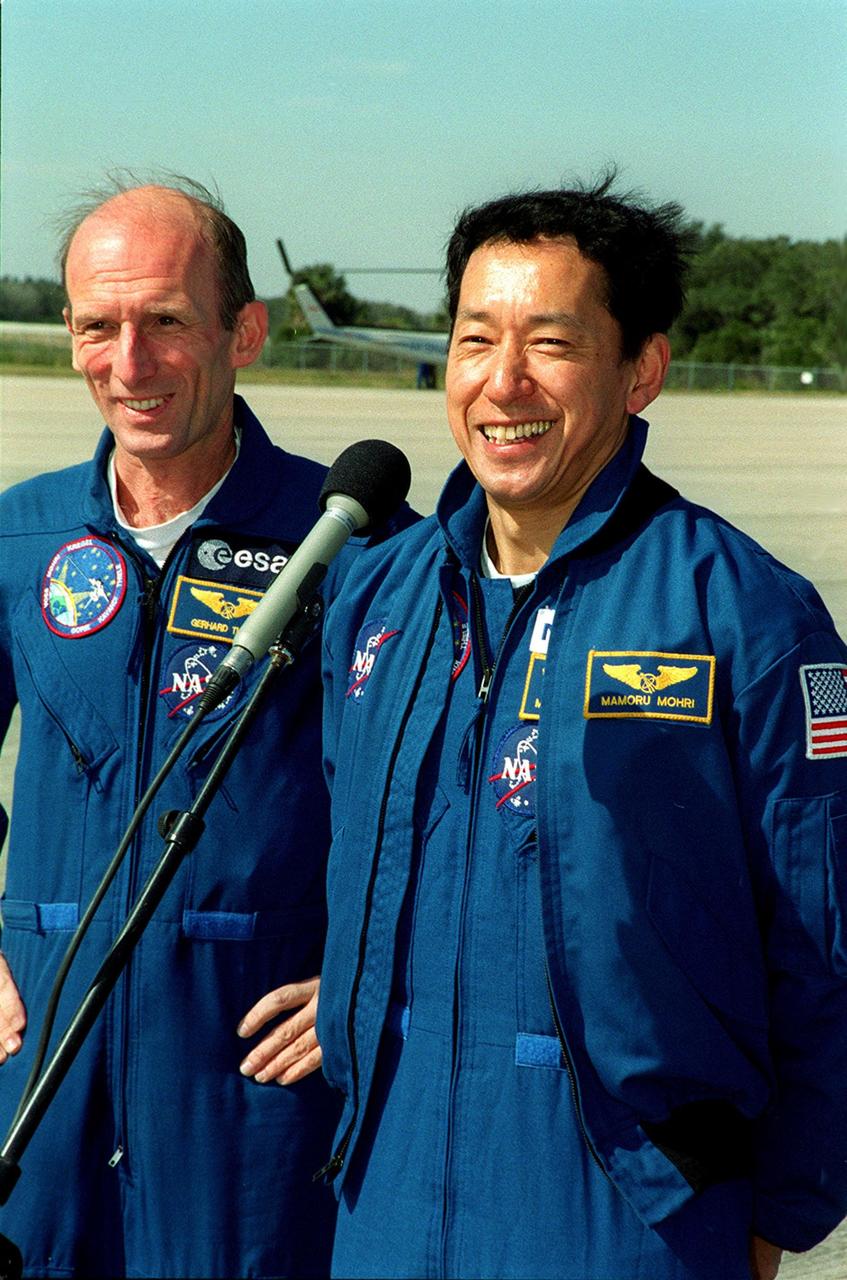
After the crew arrival at KSC's Shuttle Landing Facility, STS-99 Mission Specialist Mamoru Mohri (Ph.D.), at right, talks to the media. At left is Mission Specialist Gerhard Thiele (Ph.D.). Thiele is with the European Space Agency and Mohri is with the National Space Development Agency (NASDA) of Japan. Over the next few days, the crew will review mission procedures, conduct test flights in the Shuttle Training Aircraft and undergo routine preflight medical exams. STS-99 is the Shuttle Radar Topography Mission, which will chart a new course, using two antennae and a 200-foot-long section of space station-derived mast protruding from the payload bay to produce unrivaled 3-D images of the Earth's surface. The result of the Shuttle Radar Topography Mission could be close to 1 trillion measurements of the Earth's topography. Besides contributing to the production of better maps, these measurements could lead to improved water drainage modeling, more realistic flight simulators, better locations for cell phone towers, and enhanced navigation safety. Launch of Endeavour is scheduled for Jan. 31 at 12:47 p.m. EST
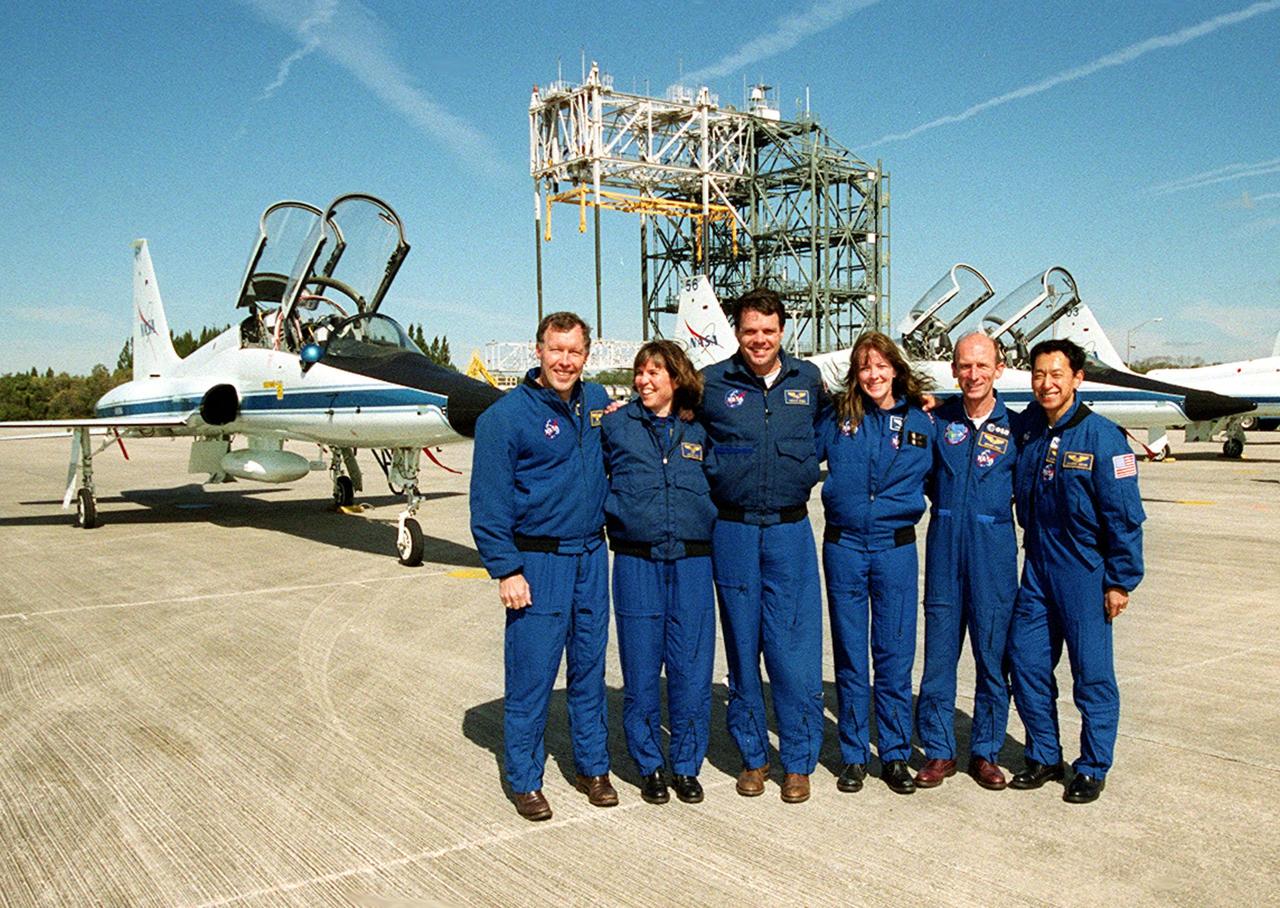
The STS-99 crew pose for a photograph after their arrival at the Shuttle Landing Facility to prepare for launch. From left are Pilot Dominic Gorie, Mission Specialist Janice Voss (Ph.D.), Commander Kevin Kregel, and Mission Specialists Janet Lynn Kavandi (Ph.D.), Gerhard Thiele (Ph.D.) and Mamoru Mohri (Ph.D.). Thiele is with the European Space Agency and Mohri is with the National Space Development Agency (NASDA) of Japan. Behind them are the T-38 jets in which they arrived, and the mate/demate device. Over the next few days, the crew will review mission procedures, conduct test flights in the Shuttle Training Aircraft and undergo routine preflight medical exams. STS-99 is the Shuttle Radar Topography Mission, which will chart a new course, using two antennae and a 200-foot-long section of space station-derived mast protruding from the payload bay to produce unrivaled 3-D images of the Earth's surface. The result of the Shuttle Radar Topography Mission could be close to 1 trillion measurements of the Earth's topography. Besides contributing to the production of better maps, these measurements could lead to improved water drainage modeling, more realistic flight simulators, better locations for cell phone towers, and enhanced navigation safety. Launch of Endeavour is scheduled for Jan. 31 at 12:47 p.m. EST

After the crew arrival at KSC's Shuttle Landing Facility, STS-99 Mission Specialist Mamoru Mohri (Ph.D.), at right, talks to the media. At left is Mission Specialist Gerhard Thiele (Ph.D.). Thiele is with the European Space Agency and Mohri is with the National Space Development Agency (NASDA) of Japan. Over the next few days, the crew will review mission procedures, conduct test flights in the Shuttle Training Aircraft and undergo routine preflight medical exams. STS-99 is the Shuttle Radar Topography Mission, which will chart a new course, using two antennae and a 200-foot-long section of space station-derived mast protruding from the payload bay to produce unrivaled 3-D images of the Earth's surface. The result of the Shuttle Radar Topography Mission could be close to 1 trillion measurements of the Earth's topography. Besides contributing to the production of better maps, these measurements could lead to improved water drainage modeling, more realistic flight simulators, better locations for cell phone towers, and enhanced navigation safety. Launch of Endeavour is scheduled for Jan. 31 at 12:47 p.m. EST
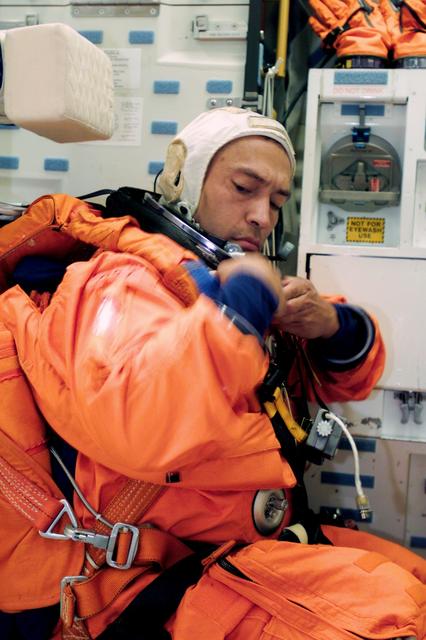
Photographic documentation of the STS-97 preflight training which occurred in Building 9 Crew Compartment Trainer II (CCTII). Views include: Astronaut Brent W. Jett (center), STS-97 mission commander, shares a light moment with two of the mission specialists on his crew, astronauts Joseph R. Tanner (left) and Carlos I. Noriega. The three are about to don training versions of the orange Launch and entry suit (LES) prior to a dry run of countdown procedures (23524). Astronaut Joseph R. Tanner (left), mission specialist, helps astronaut Michael J. Bloomfield, pilot, with final touches on his suit-donning process as USA suit technicians Bill Todd (standing) and Brad Milling look on (23525). Astronaut Carlos I. Noriega, attired in a blue thermal undergarment, and USA suit technician Mike Birkenseher help astronaut Brent W. Jett, STS-97 mission commander, with final touches of suit donning (23526). Astronaut Marc Garneau, mission specialist representing the Canadian Space Agency (CSA), looks on as two crew mates assist him with final touches of suit-donning prior to a training session in the Johnson Space Center's Systems Integration Facility. Helping out are astronauts Carlos I. Noriega (left) and Joseph R. Tanner, mission specialists (23527). Astronaut Michael J. Bloomfield, left, discusses his launch and entry suit with USA technician Bill Todd prior to a training session (23528). Astronaut Joseph R. Tanner lends a helping hand to astronaut Carlos I. Noriega as the two STS-97 mission specialists prepare for a dry run going over launch procedures in a nearby simulator (23529). Astronaut Joseph R. Tanner receives a helping hand from astronaut Carlos I. Noriega as the two STS-97 mission specialists don training versions of their pressure ascent and entry garments (23530). Noriega adjusts his LES while in the CCTII middeck mock-up (23531).
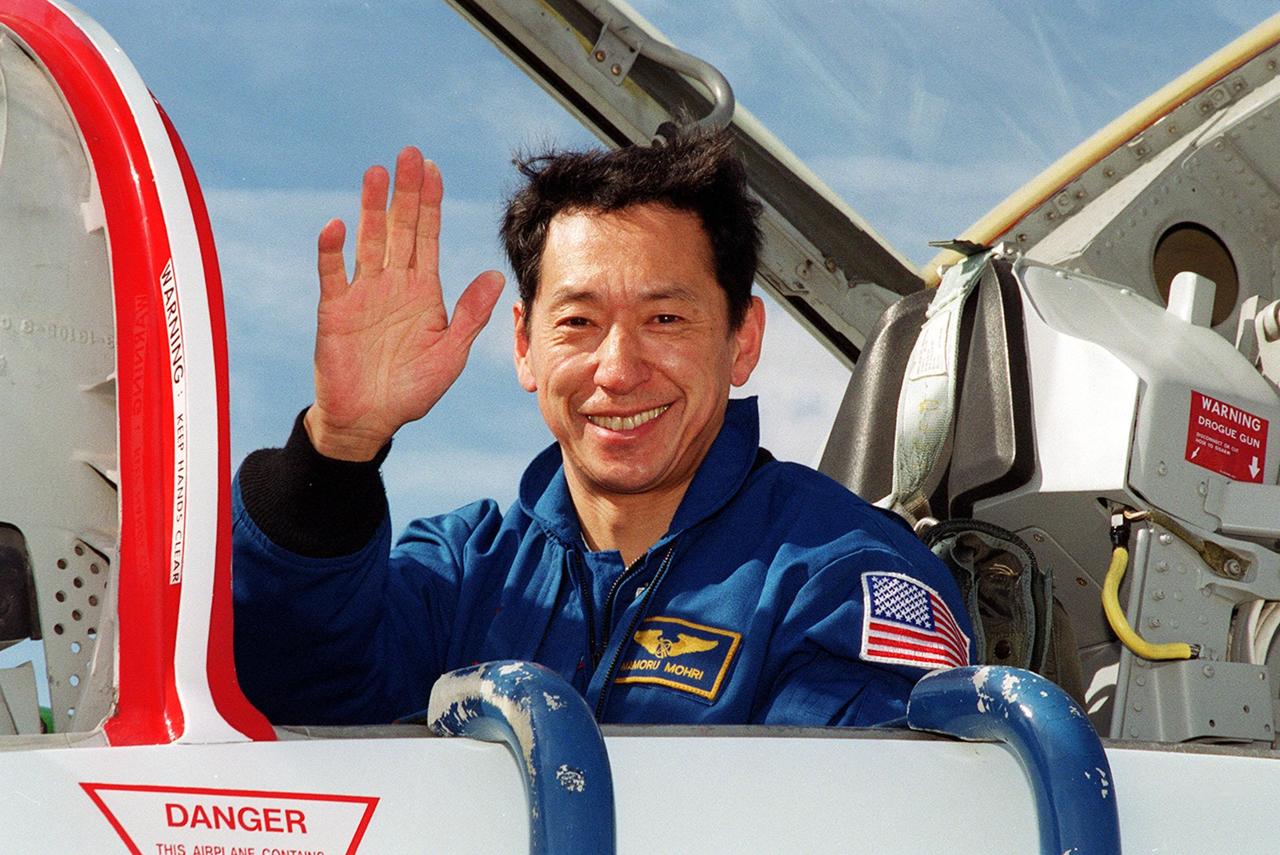
STS-99 Mission Specialist Mamoru Mohri (Ph.D.), who is with the National Space Development Agency (NASDA) of Japan, waves on his arrival at KSC aboard a T-38 jet aircraft to prepare for launch of Endeavour Jan. 31 at 12:47 p.m. EST. Over the next few days, the crew will review mission procedures, conduct test flights in the Shuttle Training Aircraft and undergo routine preflight medical exams. STS-99 is the Shuttle Radar Topography Mission, which will chart a new course, using two antennae and a 200-foot-long section of space station-derived mast protruding from the payload bay to produce unrivaled 3-D images of the Earth's surface. The result of the Shuttle Radar Topography Mission could be close to 1 trillion measurements of the Earth's topography. Besides contributing to the production of better maps, these measurements could lead to improved water drainage modeling, more realistic flight simulators, better locations for cell phone towers, and enhanced navigation safety
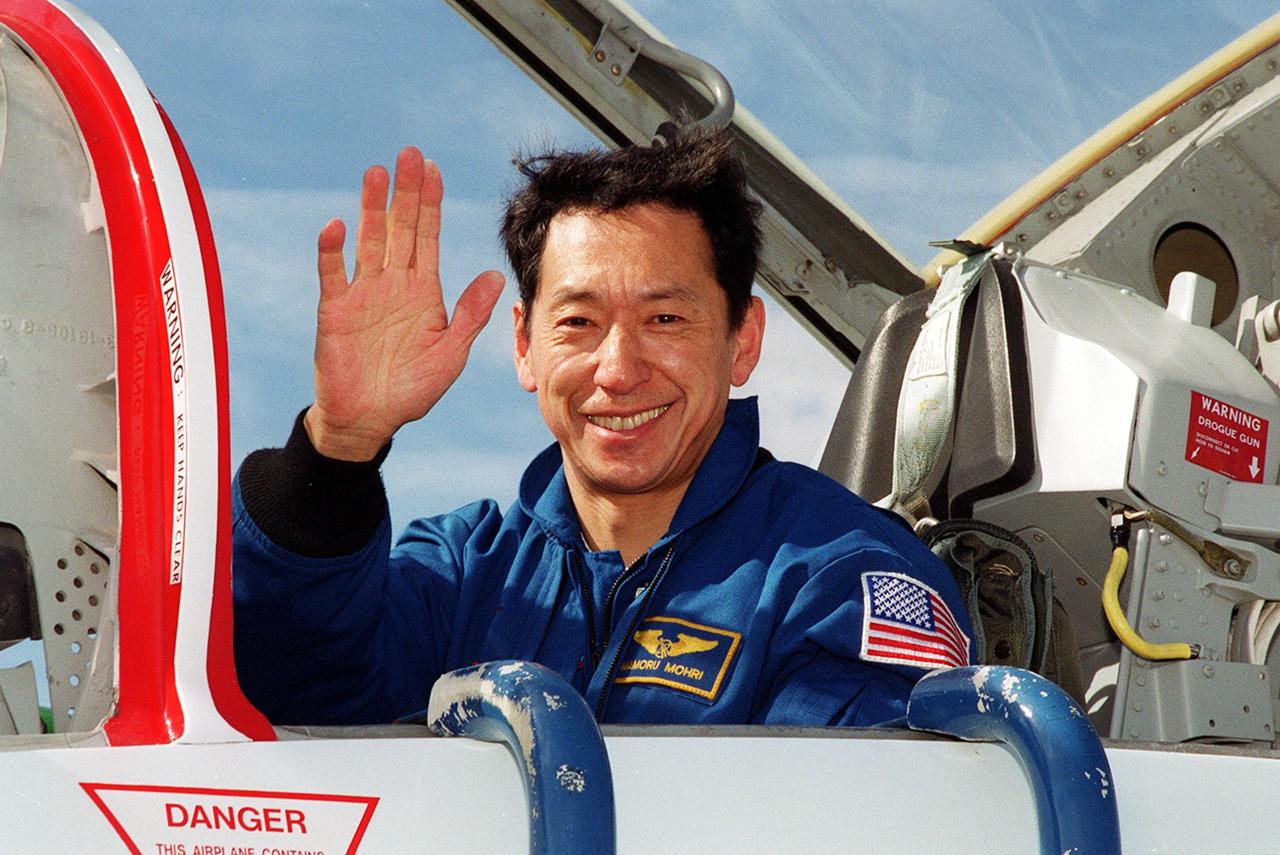
STS-99 Mission Specialist Mamoru Mohri (Ph.D.), who is with the National Space Development Agency (NASDA) of Japan, waves on his arrival at KSC aboard a T-38 jet aircraft to prepare for launch of Endeavour Jan. 31 at 12:47 p.m. EST. Over the next few days, the crew will review mission procedures, conduct test flights in the Shuttle Training Aircraft and undergo routine preflight medical exams. STS-99 is the Shuttle Radar Topography Mission, which will chart a new course, using two antennae and a 200-foot-long section of space station-derived mast protruding from the payload bay to produce unrivaled 3-D images of the Earth's surface. The result of the Shuttle Radar Topography Mission could be close to 1 trillion measurements of the Earth's topography. Besides contributing to the production of better maps, these measurements could lead to improved water drainage modeling, more realistic flight simulators, better locations for cell phone towers, and enhanced navigation safety
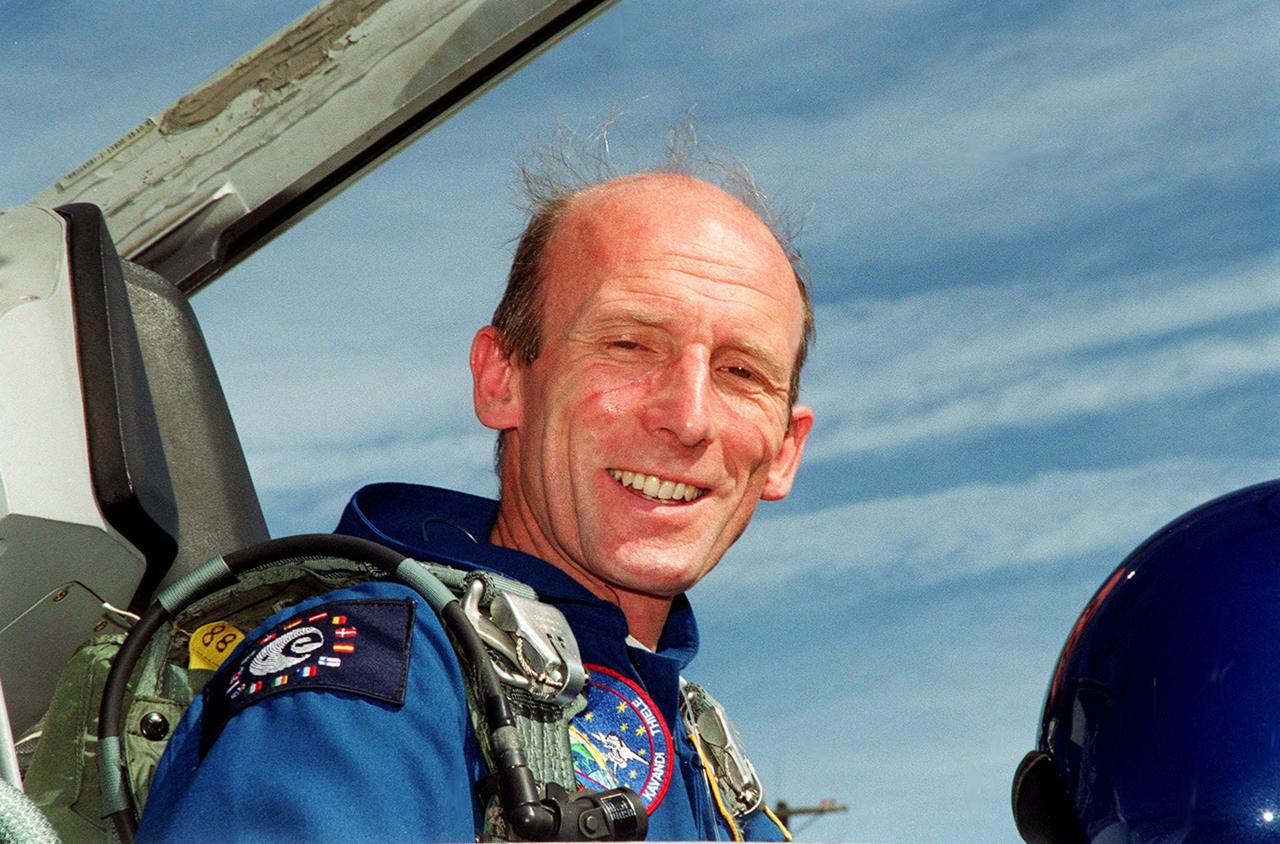
STS-99 Mission Specialist Gerhard P.J. Thiele (Ph.D.), with the European Space Agency, arrives at KSC aboard a T-38 jet aircraft to prepare for launch of Endeavour Jan. 31 at 12:47 p.m. EST. Over the next few days, the crew will review mission procedures, conduct test flights in the Shuttle Training Aircraft and undergo routine preflight medical exams. STS-99 is the Shuttle Radar Topography Mission, which will chart a new course, using two antennae and a 200-foot-long section of space station-derived mast protruding from the payload bay to produce unrivaled 3-D images of the Earth's surface. The result of the Shuttle Radar Topography Mission could be close to 1 trillion measurements of the Earth's topography. Besides contributing to the production of better maps, these measurements could lead to improved water drainage modeling, more realistic flight simulators, better locations for cell phone towers, and enhanced navigation safety
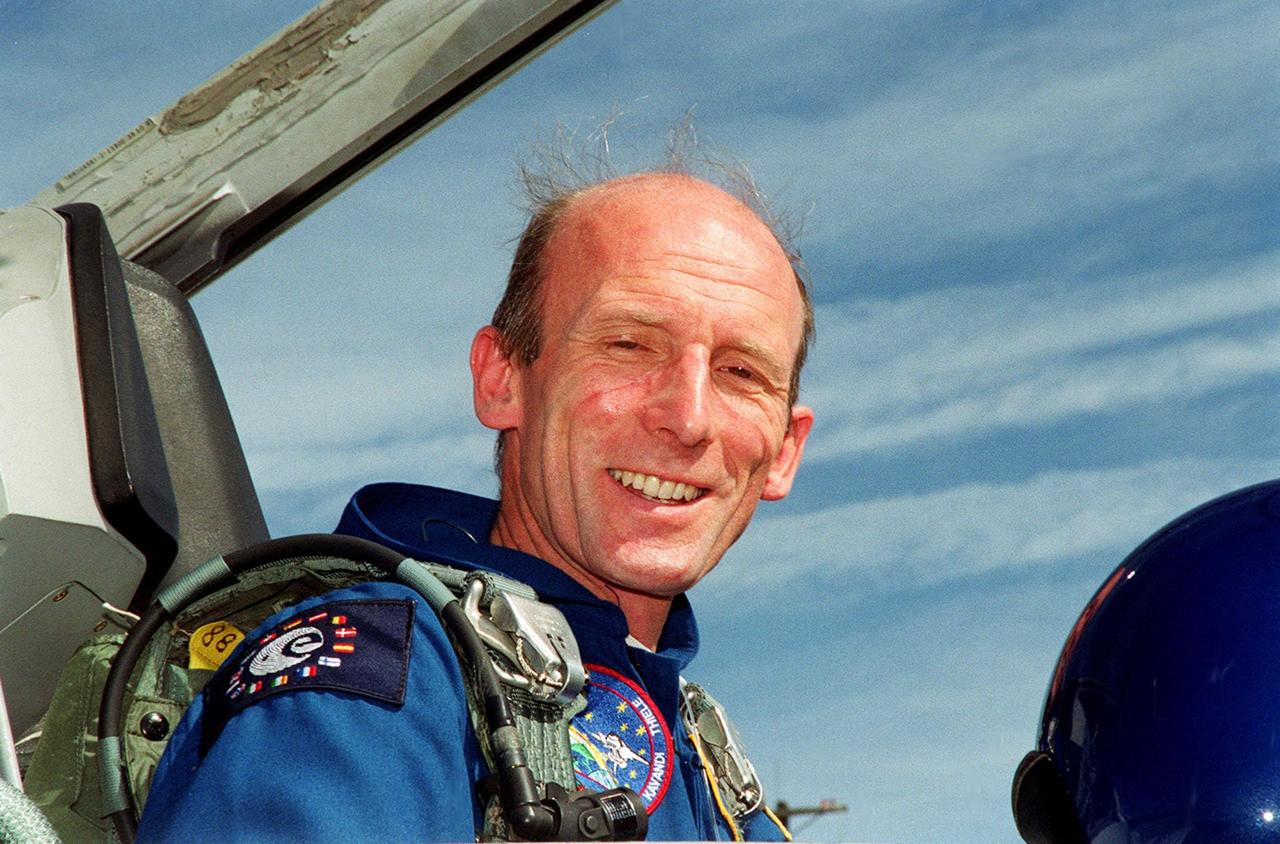
STS-99 Mission Specialist Gerhard P.J. Thiele (Ph.D.), with the European Space Agency, arrives at KSC aboard a T-38 jet aircraft to prepare for launch of Endeavour Jan. 31 at 12:47 p.m. EST. Over the next few days, the crew will review mission procedures, conduct test flights in the Shuttle Training Aircraft and undergo routine preflight medical exams. STS-99 is the Shuttle Radar Topography Mission, which will chart a new course, using two antennae and a 200-foot-long section of space station-derived mast protruding from the payload bay to produce unrivaled 3-D images of the Earth's surface. The result of the Shuttle Radar Topography Mission could be close to 1 trillion measurements of the Earth's topography. Besides contributing to the production of better maps, these measurements could lead to improved water drainage modeling, more realistic flight simulators, better locations for cell phone towers, and enhanced navigation safety
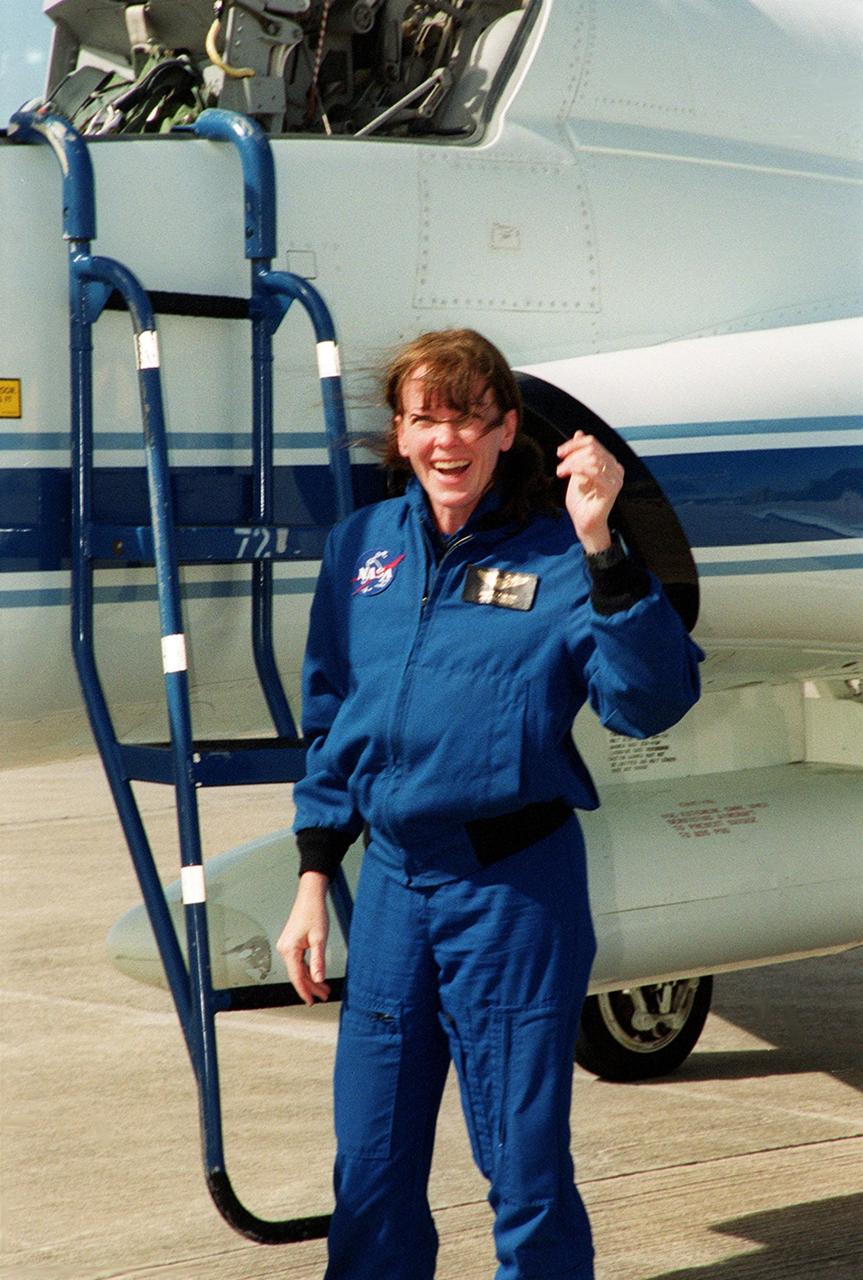
STS-99 Mission Specialist Janet Lynn Kavandi (Ph.D.) looks surprised and happy after landing at KSC aboard a T-38 jet aircraft to prepare for launch of Endeavour Jan. 31 at 12:47 p.m. EST. Over the next few days, the crew will review mission procedures, conduct test flights in the Shuttle Training Aircraft and undergo routine preflight medical exams. STS-99 is the Shuttle Radar Topography Mission, which will chart a new course, using two antennae and a 200-foot-long section of space station-derived mast protruding from the payload bay to produce unrivaled 3-D images of the Earth's surface. The result of the Shuttle Radar Topography Mission could be close to 1 trillion measurements of the Earth's topography. Besides contributing to the production of better maps, these measurements could lead to improved water drainage modeling, more realistic flight simulators, better locations for cell phone towers, and enhanced navigation safet
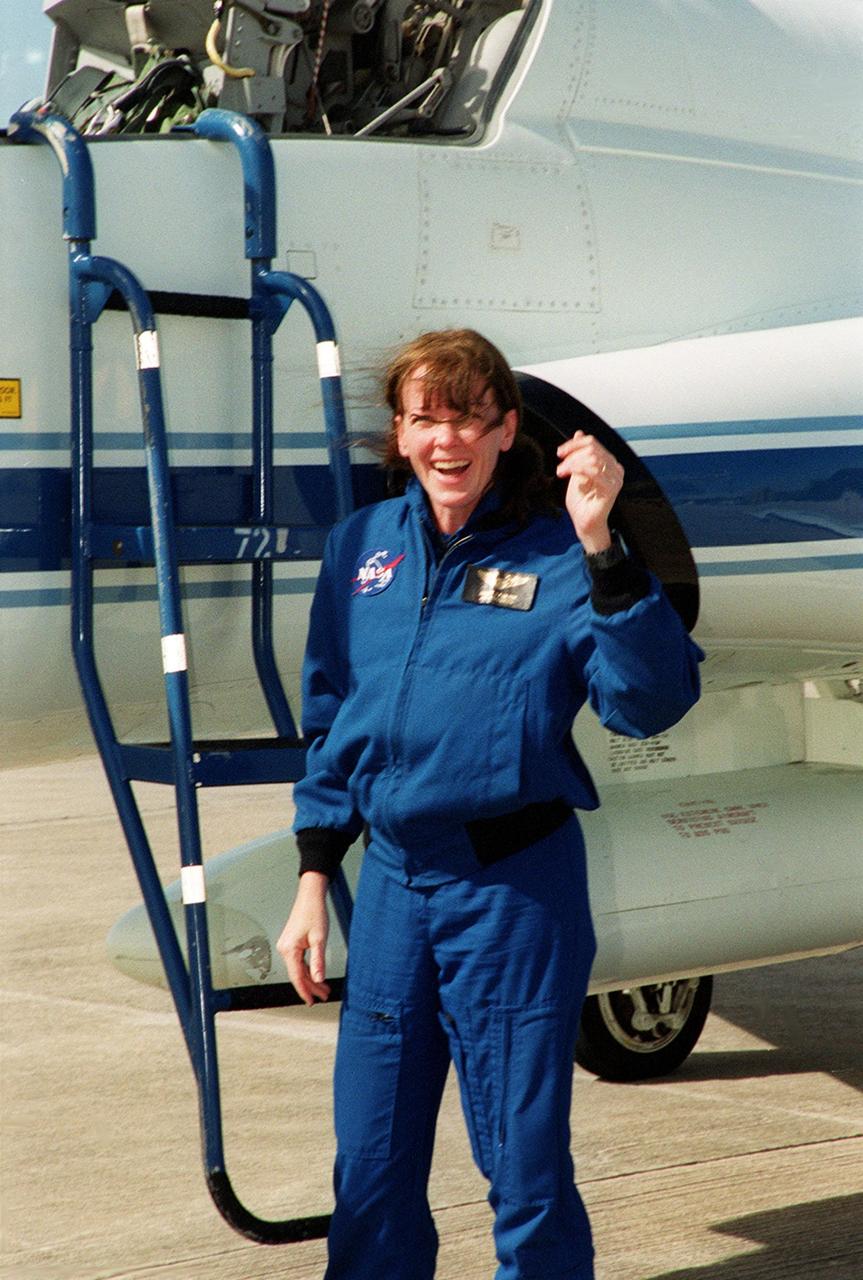
STS-99 Mission Specialist Janet Lynn Kavandi (Ph.D.) looks surprised and happy after landing at KSC aboard a T-38 jet aircraft to prepare for launch of Endeavour Jan. 31 at 12:47 p.m. EST. Over the next few days, the crew will review mission procedures, conduct test flights in the Shuttle Training Aircraft and undergo routine preflight medical exams. STS-99 is the Shuttle Radar Topography Mission, which will chart a new course, using two antennae and a 200-foot-long section of space station-derived mast protruding from the payload bay to produce unrivaled 3-D images of the Earth's surface. The result of the Shuttle Radar Topography Mission could be close to 1 trillion measurements of the Earth's topography. Besides contributing to the production of better maps, these measurements could lead to improved water drainage modeling, more realistic flight simulators, better locations for cell phone towers, and enhanced navigation safet