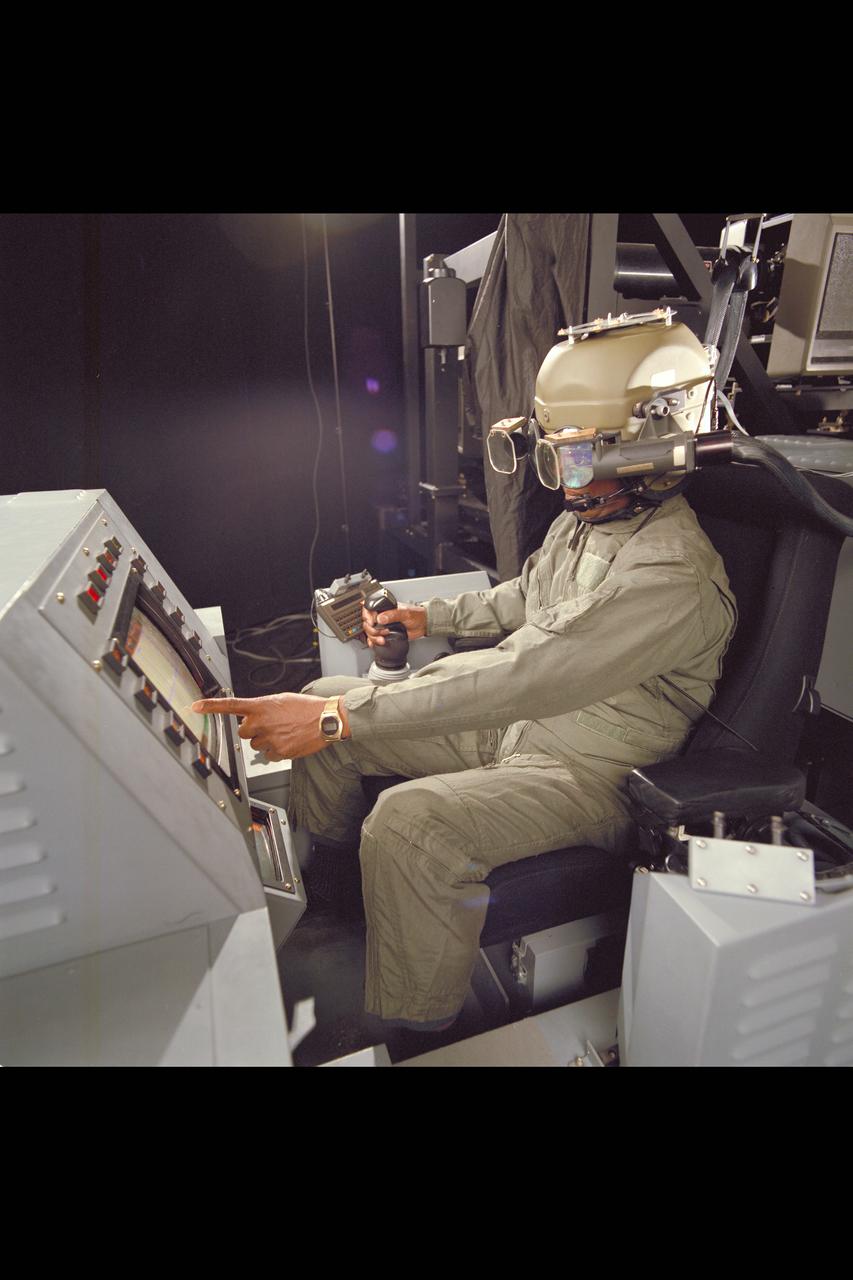
Crew Station Research and Developement Facility (CSRDF) A NASA Army simulator to design and evaluate advanced rotorcraft showing fiber optic helmet & workstation
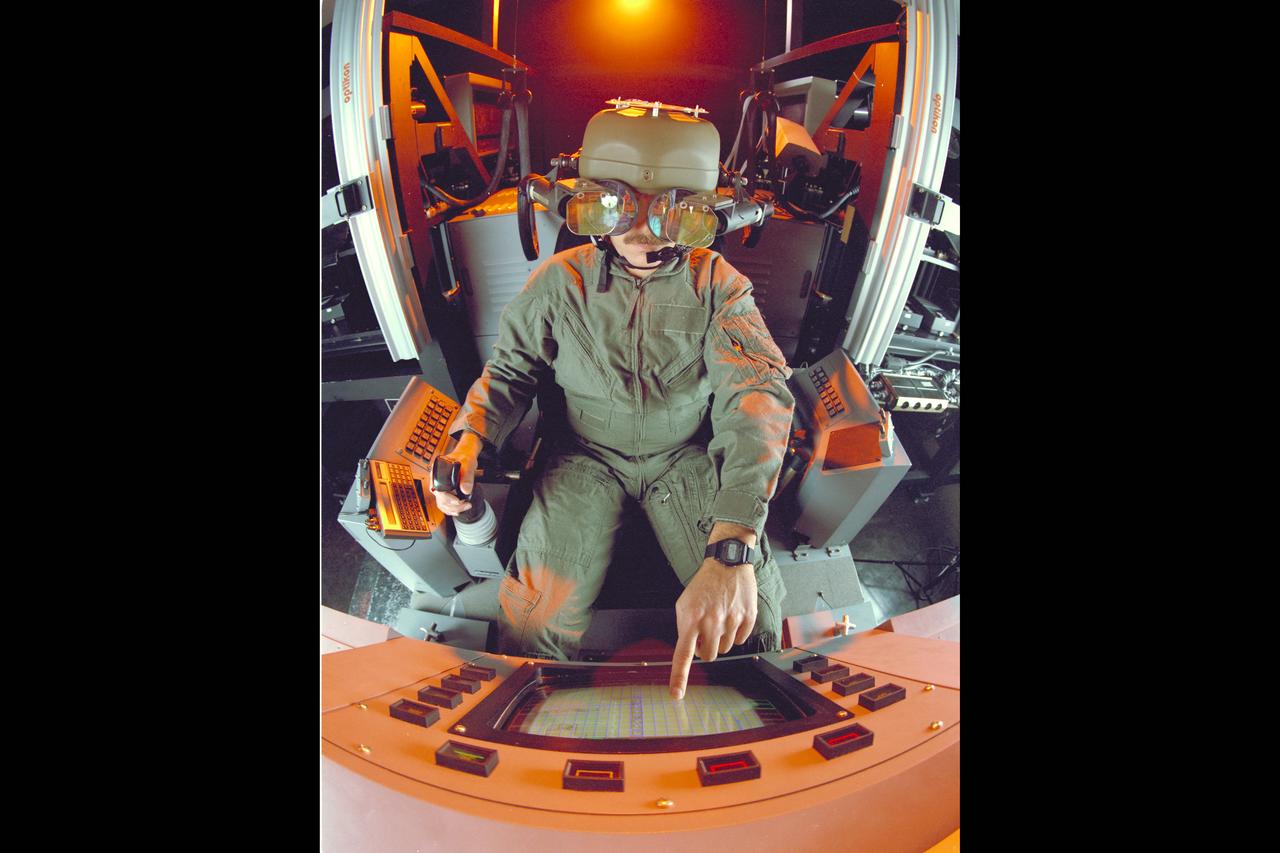
Crew Station Research and Developement Facility (CSRDF) A NASA Army simulator to design and evaluate advanced rotorcraft showing fiber optic helmet & workstation
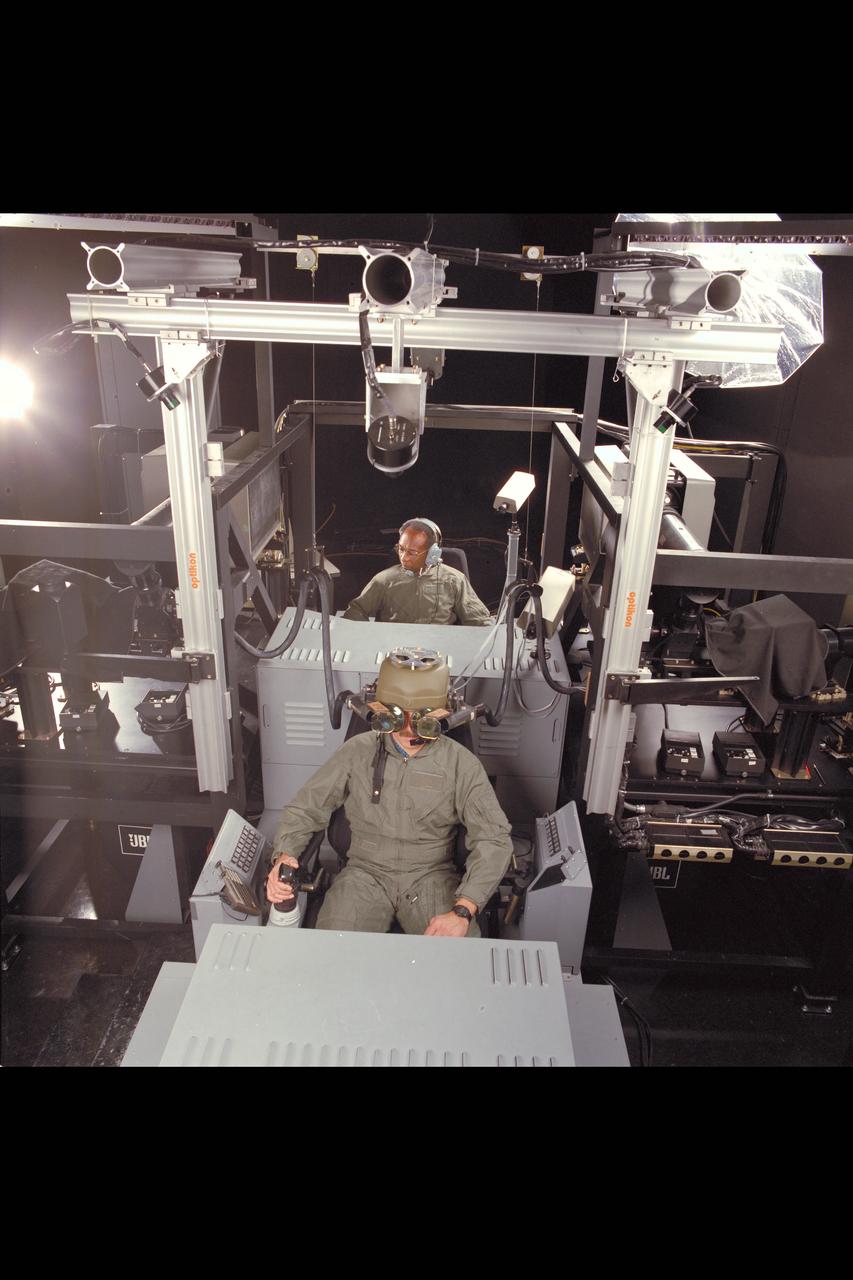
Crew Station Research and Developement Facility (CSRDF) A NASA Army simulator to design and evaluate advanced rotorcraft showing fiber optic helmet & workstation
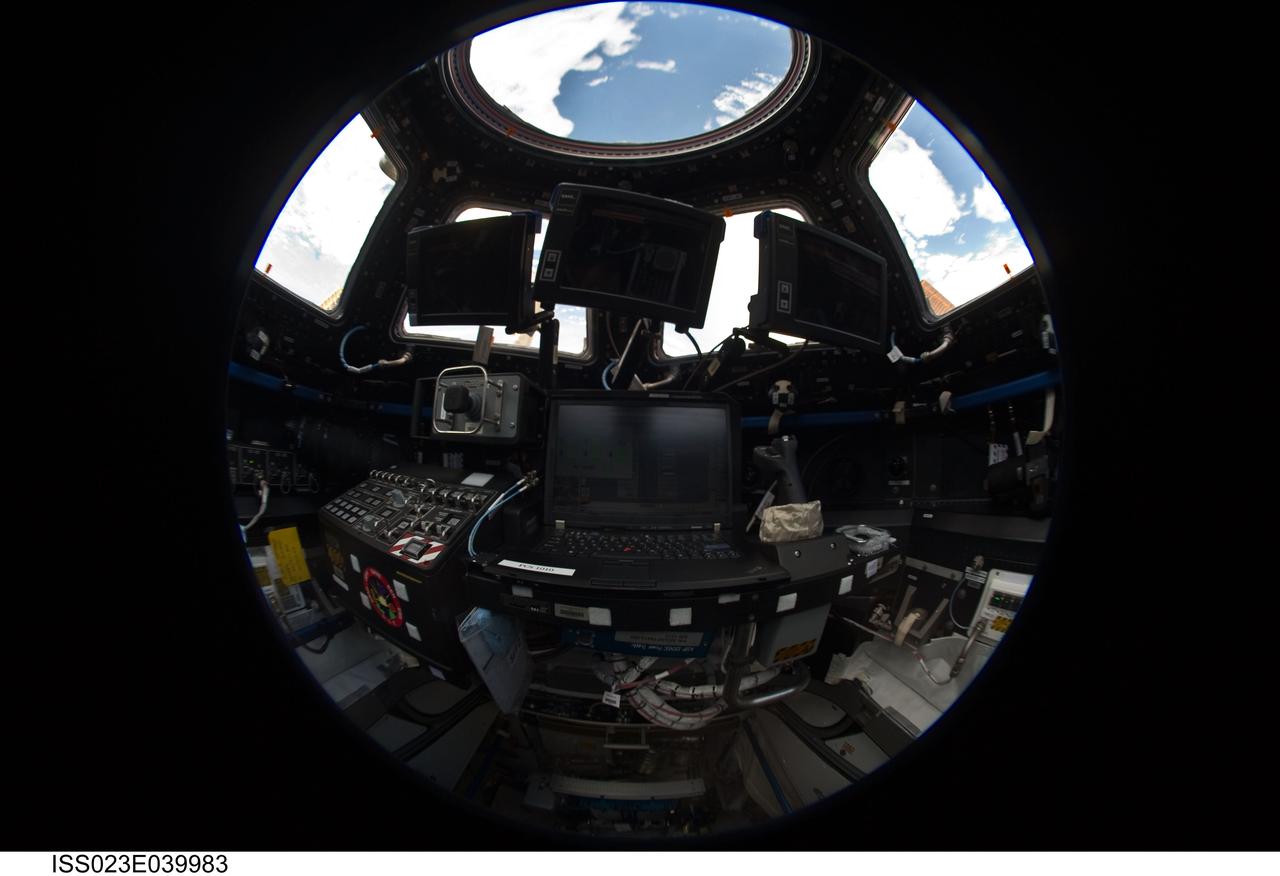
ISS023-E-039983 (8 May 2010) --- A fish-eye lens attached to an electronic still camera was used by an Expedition 23 crew member to capture this image of the robotic workstation in the Cupola of the International Space Station.
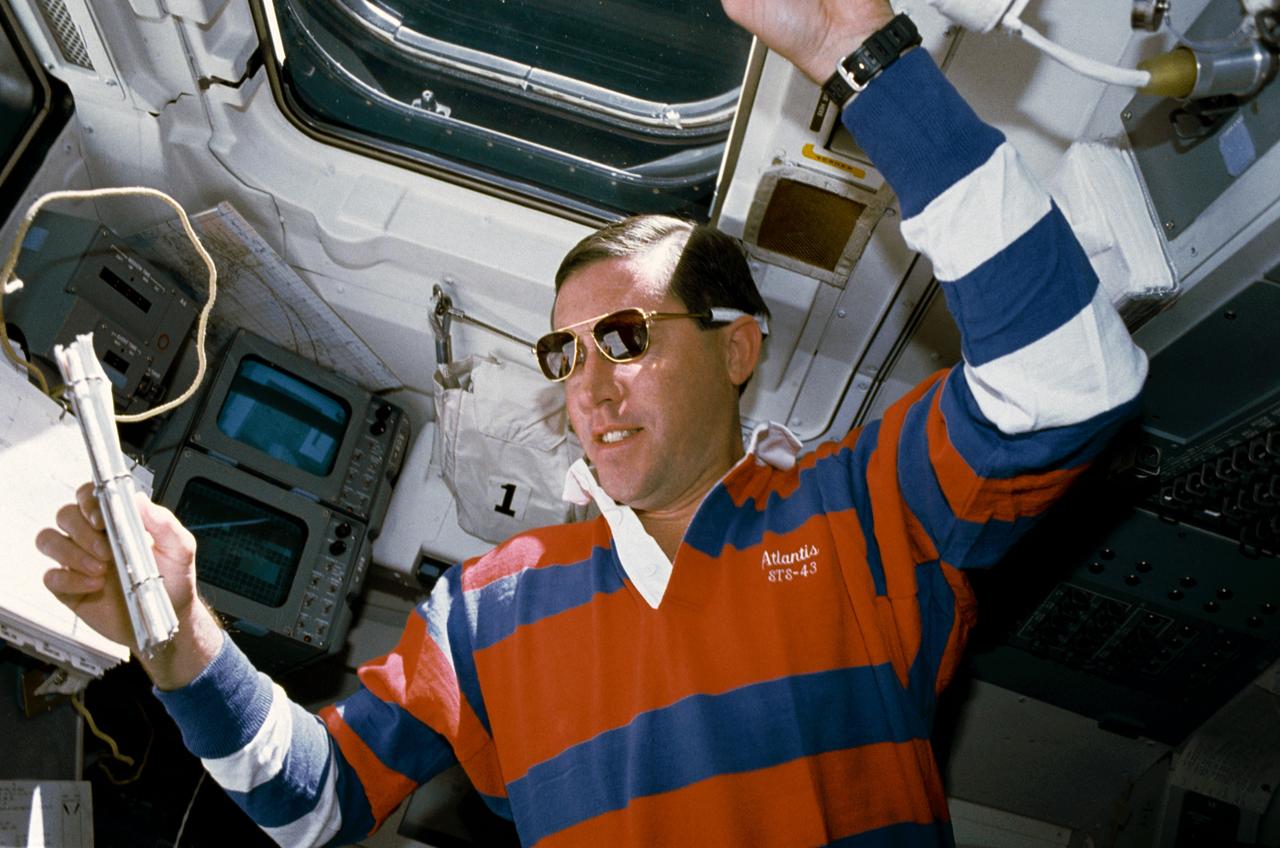
STS043-04-032 (11 Aug 1991) --- STS-43 Pilot Michael A. Baker, wearing sunglasses, reviews a checklist on the aft flight deck of Atlantis, Orbiter Vehicle (OV) 104. He is monitoring data associated with the Space Station Heat Pipe Advanced Radiator Element II (SHARE-II) located in OV-104's payload bay (PLB) from his position in front of the aft flight deck viewing windows. Behind Baker are the closed circuit television (CCTV) monitors and above his head is overhead window W8.
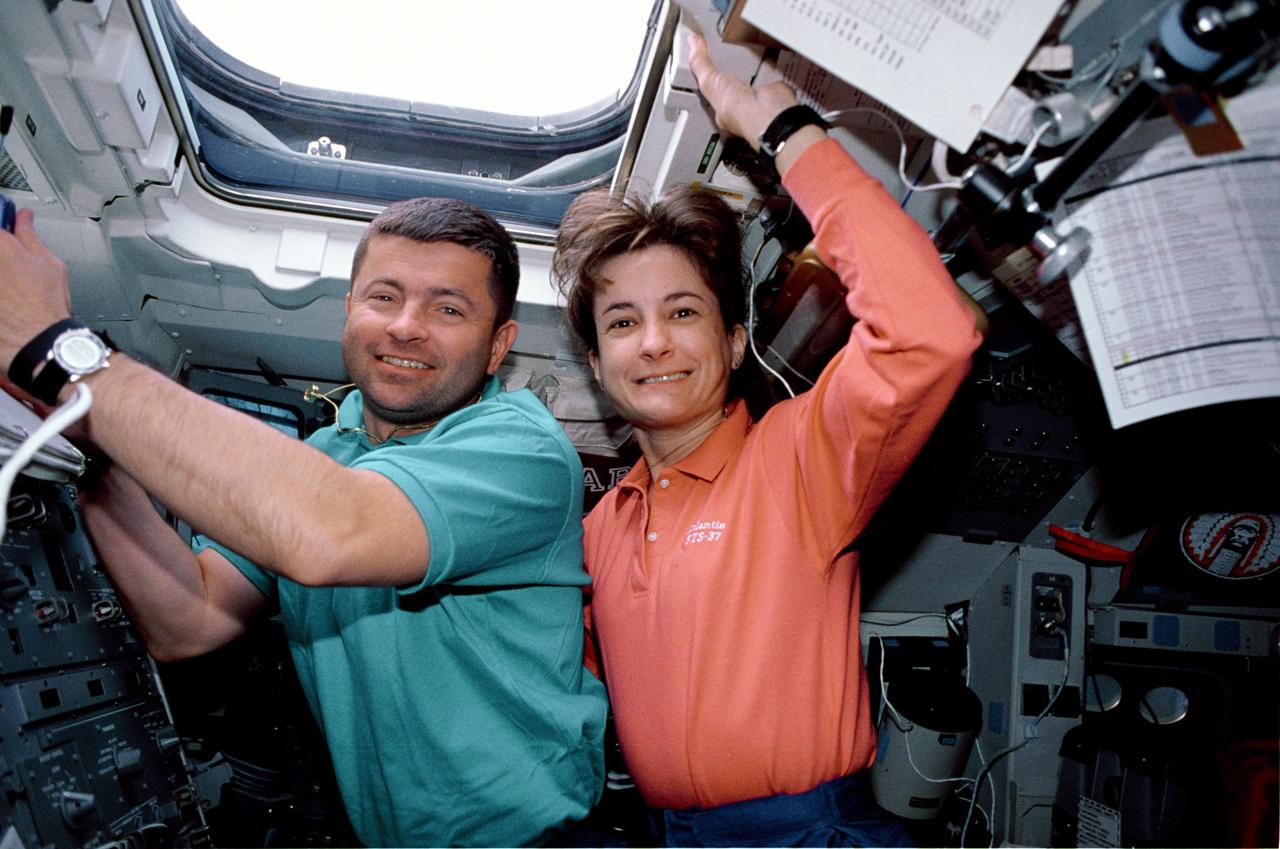
STS037-33-031 (5-11 April 1991) --- Astronauts Kenneth D. Cameron, STS-37 pilot, and Linda M. Godwin, mission specialist, take advantage of a well-lighted crew cabin to pose for an in-space portrait on the Space Shuttle Atlantis' aft flight deck. The two shared duties controlling the Remote Manipulator System (RMS) during operations involving the release of the Gamma Ray Observatory (GRO) and the Extravehicular Activity (EVA) of astronauts Jerry L. Ross and Jerome (Jay) Apt. The overhead window seen here and nearby eye-level windows (out of frame at left) are in a busy location on Shuttle missions, as they are used for payload surveys, Earth observation operations, astronomical studies and other purposes. Note the temporarily stowed large format still photo camera at lower right corner. This photo was made with a 35mm camera. This was one of the visuals used by the crew members during their April 19 Post Flight Press Conference (PFPC) at the Johnson Space Center (JSC).
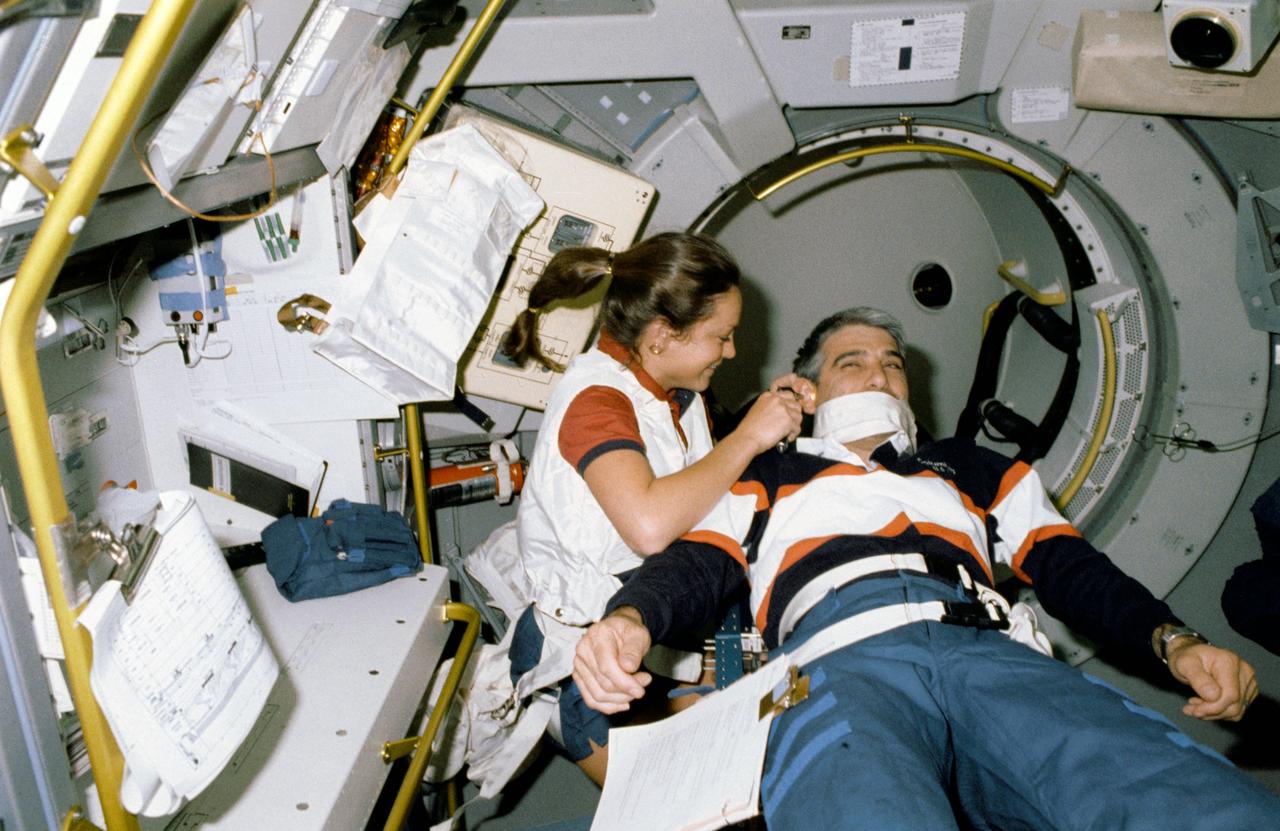
STS040-206-002 (5-14 June 1991) --- Held in place by the Spacelab Life Sciences (SLS-1) Medical Restraint System (MRS), astronaut Sidney M. Gutierrez, pilot, gets his ears checked by astronaut Tamara E. Jernigan, mission specialist. The two are in the SLS-1 module, onboard the Space Shuttle Columbia. The scene was photographed with a 35mm camera.
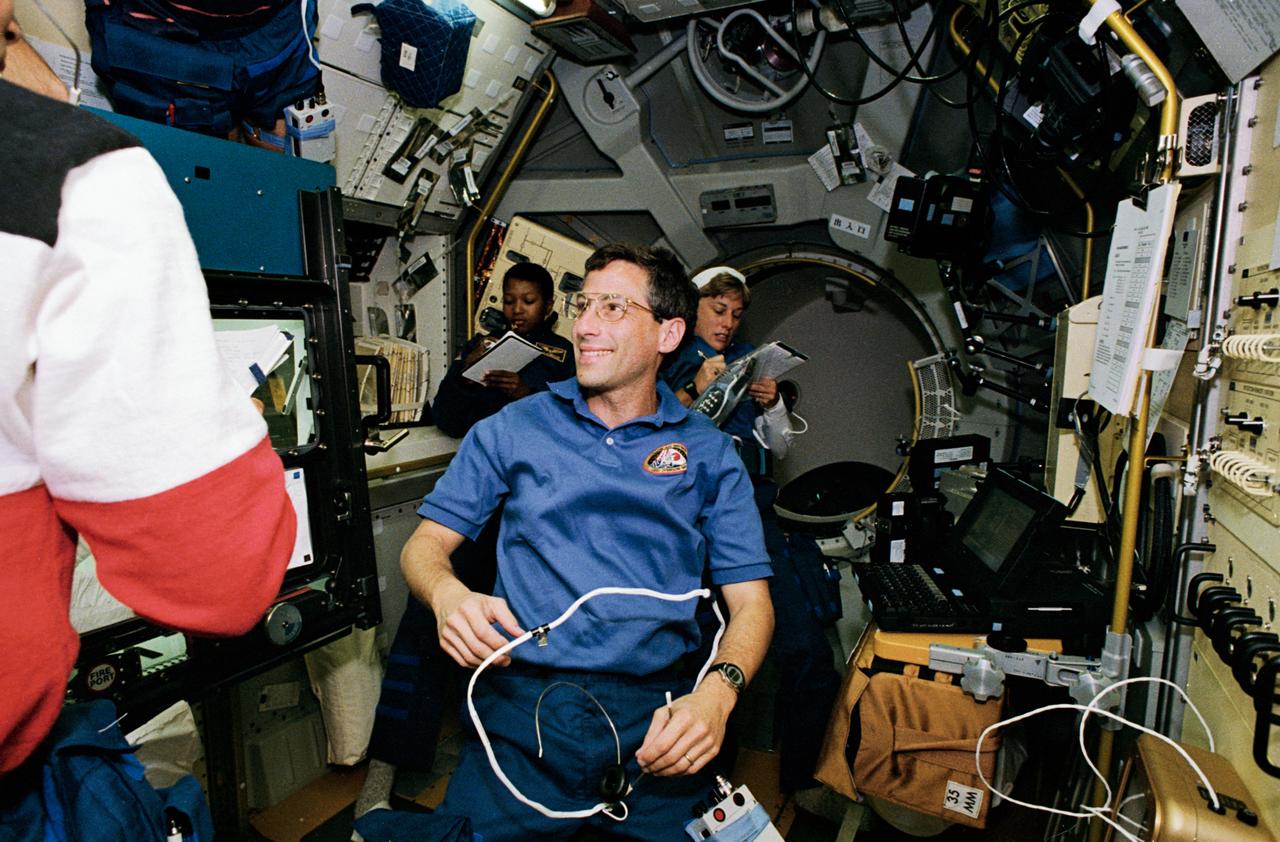
STS047-05-019 (12 - 20 Sept 1992) --- Astronaut Jerome (Jay) Apt, mission specialist, responds to a crew mate's query during a shift change in the Spacelab-J Science Module aboard the Earth-orbiting Space Shuttle Endeavour. Others pictured, left to right, are astronauts Mark C. Lee (immediate foreground, partially out of frame), payload commander; Mae C. Jemison and N. Jan Davis, mission specialists. The four joined two other NASA astronauts and a Japanese payload specialist for eight days aboard Endeavour in support of the joint Japanese-American effort.
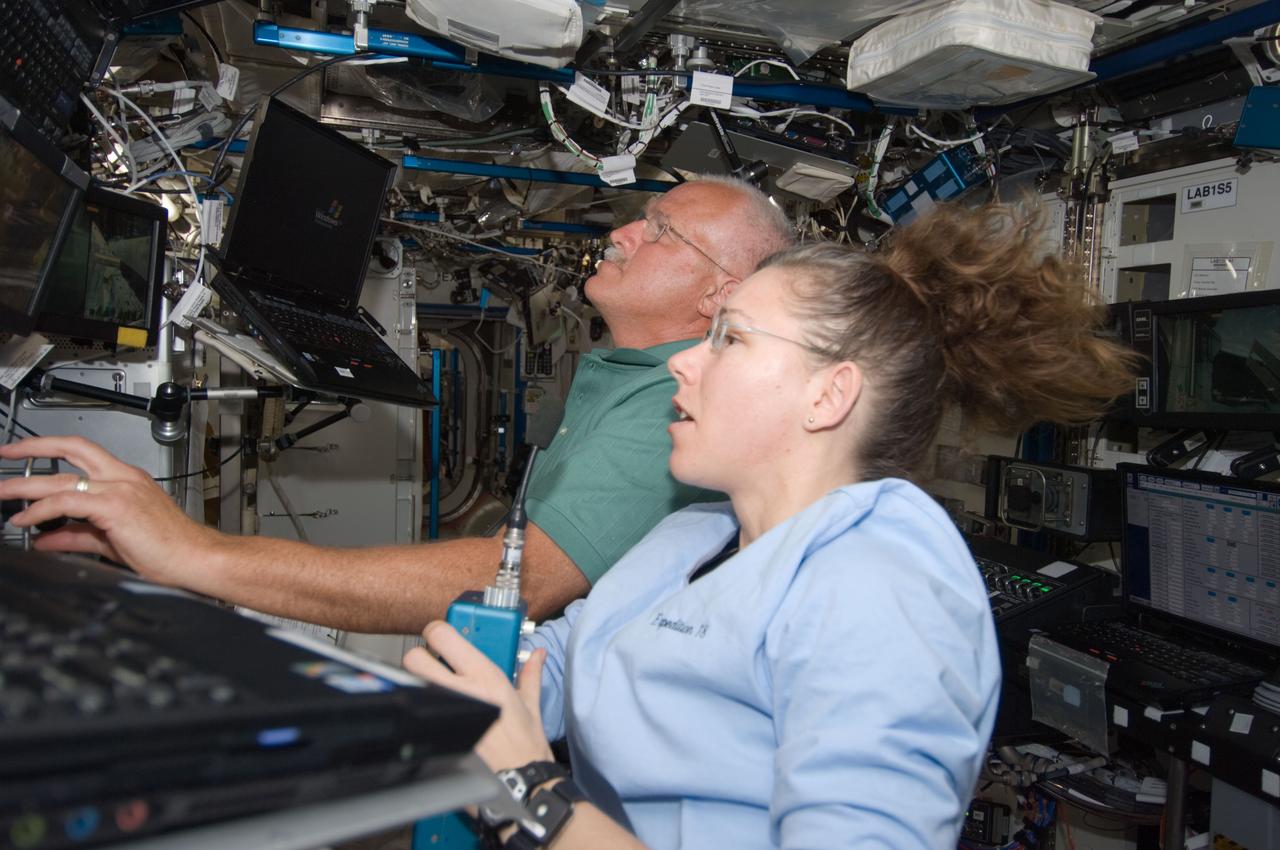
S119-E-006554 (18 March 2009) --- Astronauts John Phillips (background) and Sandra Magnus, both STS-119 mission specialists, work the controls of the station's robotic Canadarm2 in the Destiny laboratory of the International Space Station while Space Shuttle Discovery is docked with the station.
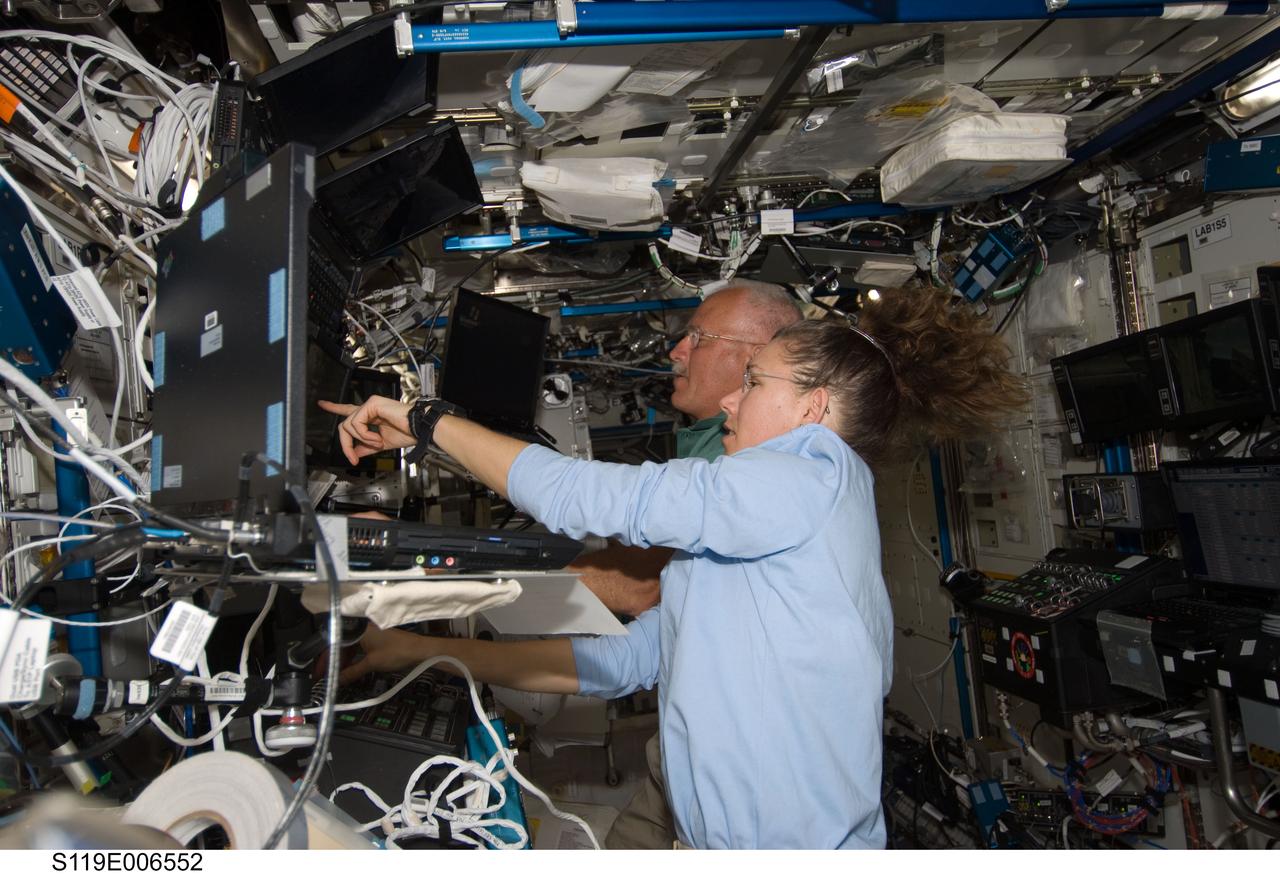
S119-E-006552 (18 March 2009) --- Astronauts John Phillips (background) and Sandra Magnus, both STS-119 mission specialists, work the controls of the station's robotic Canadarm2 in the Destiny laboratory of the International Space Station while Space Shuttle Discovery is docked with the station.
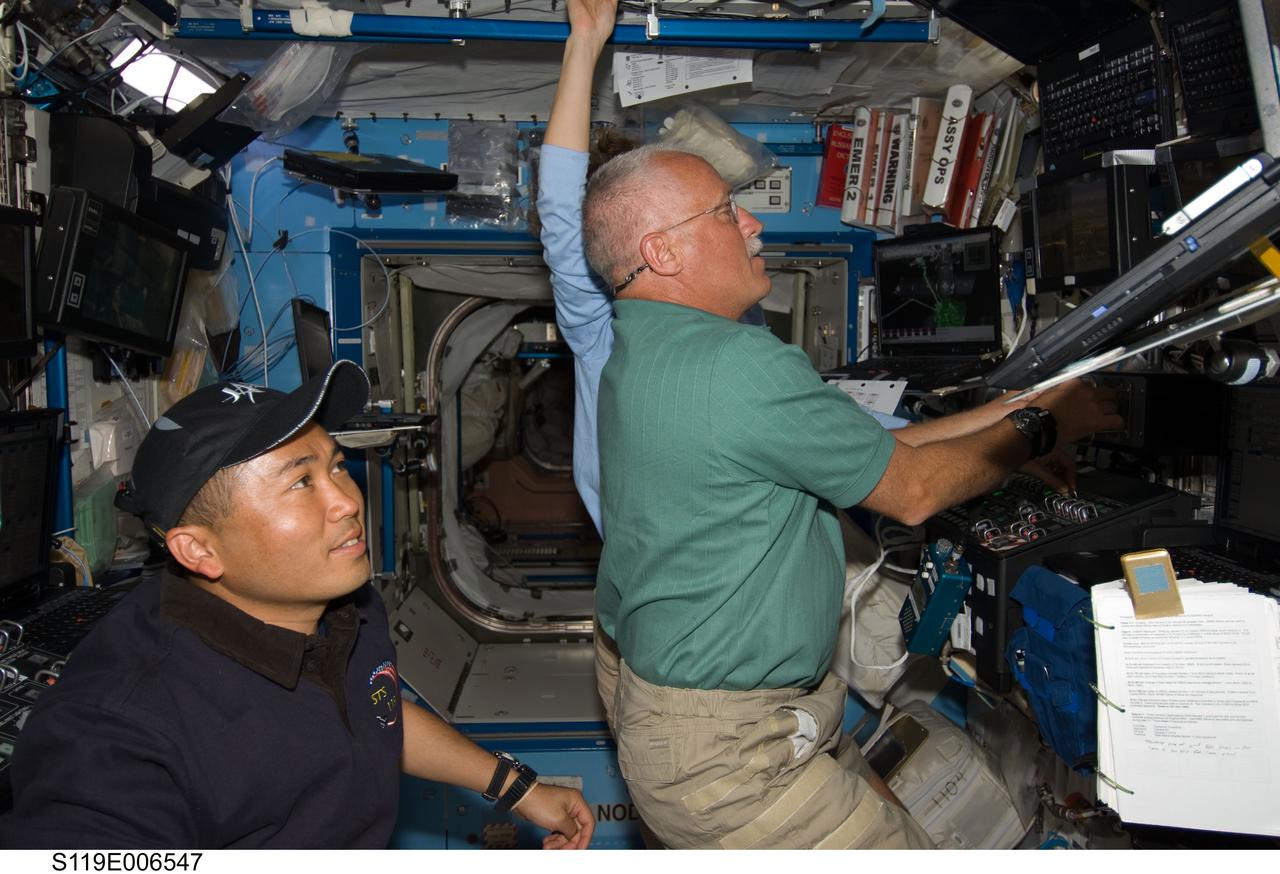
S119-E-006547 (18 March 2009) --- Astronauts John Phillips (right) and Sandra Magnus (mostly obscured), both STS-119 mission specialists, work the controls of the station's robotic Canadarm2 in the Destiny laboratory of the International Space Station while Space Shuttle Discovery is docked with the station. Japan Aerospace Exploration Agency (JAXA) astronaut Koichi Wakata, Expedition 18 flight engineer, looks on.
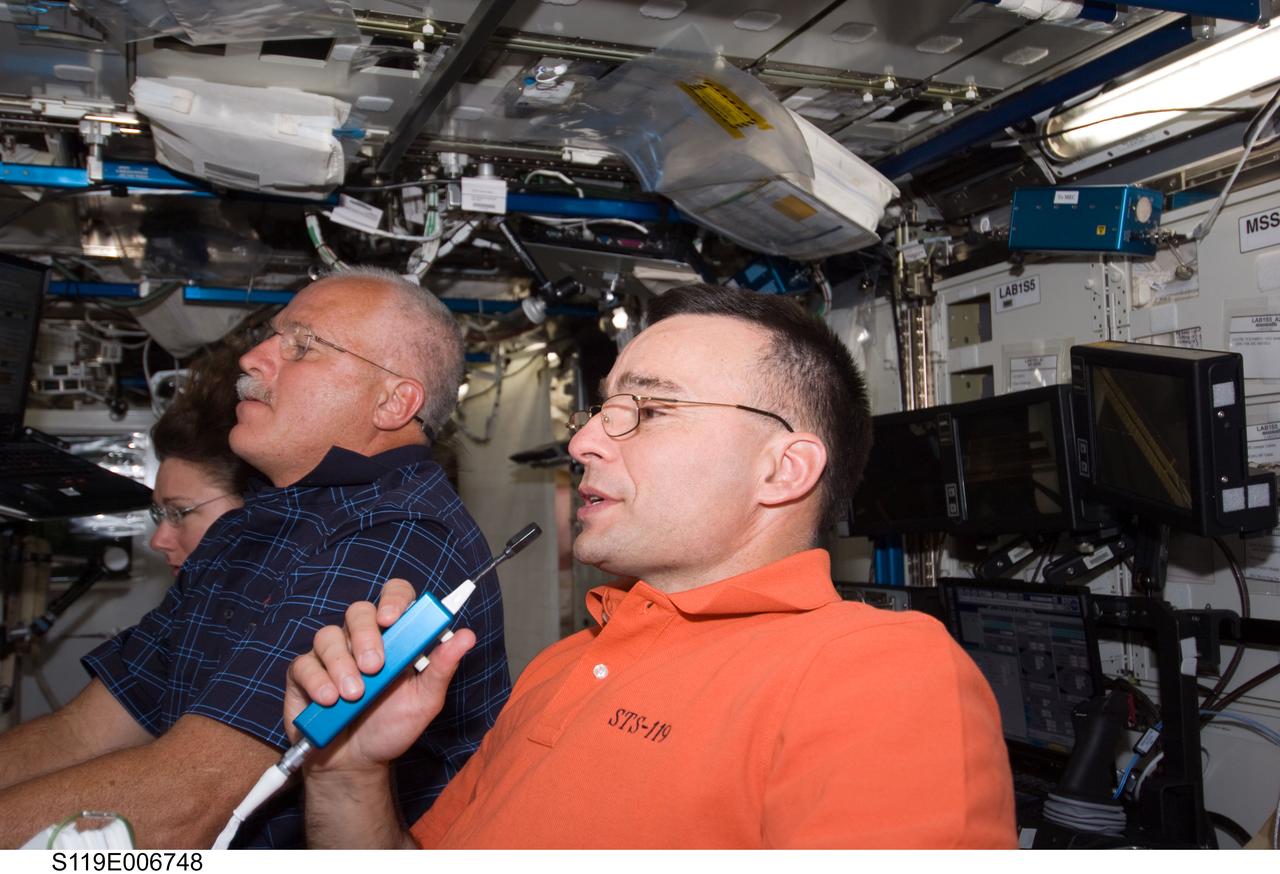
S119-E-006748 (20 March 2009) --- Astronauts Lee Archambault, (foreground), STS-119 commander, John Phillips and Sandra Magnus, both mission specialists, are pictured at the robotic workstation in Destiny or the U.S. laboratory. Magnus is winding down a lengthy tour in space aboard the orbiting outpost, and she will return to Earth with the Discovery crew.

iss055e006790 (April 1, 2018) --- The "Horn of Africa" is seen through one of the seven windows that make up the Cupola, a dome-shaped module on the International Space Station. The space station crew will be inside the Cupola Wednesday morning operating a robotics workstation to capture the upcoming SpaceX Dragon.

STS032-30-024 (17 Jan 1990) --- Astronaut Daniel C. Brandenstein, STS-32 mission commander, holds up a card signed by friends in the astronaut office and around JSC. The commander celebrated his 47th birthday on January 17, 1990, about two thirds the way through an eleven-day mission in Earth orbit aboard Columbia. Brandenstein is seated at the commander's station.
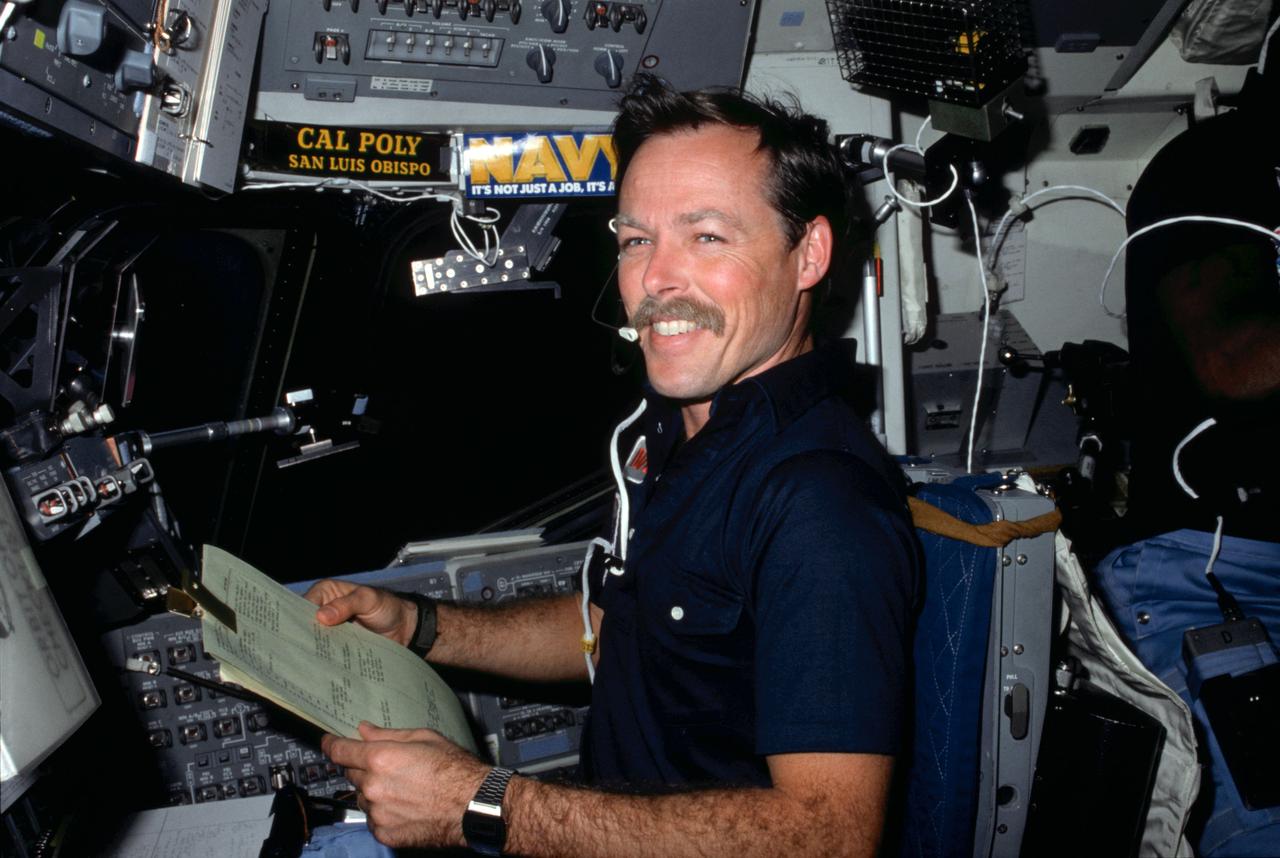
S84-27027 (3-11 Feb 1984) --- Astronaut Robert L. Gibson, STS-41B pilot, reviews some teleprinter copy on the flight deck's starboard station during the eight-day STS-41B Space Shuttle mission. Four other astronauts share the Challenger with Gibson. They are astronauts Vance D. Brand, commander; and Ronald E. McNair, Bruce McCandless II and Robert L. Stewart, all mission specialists. The photograph was taken from the commander's station with a 35mm camera.
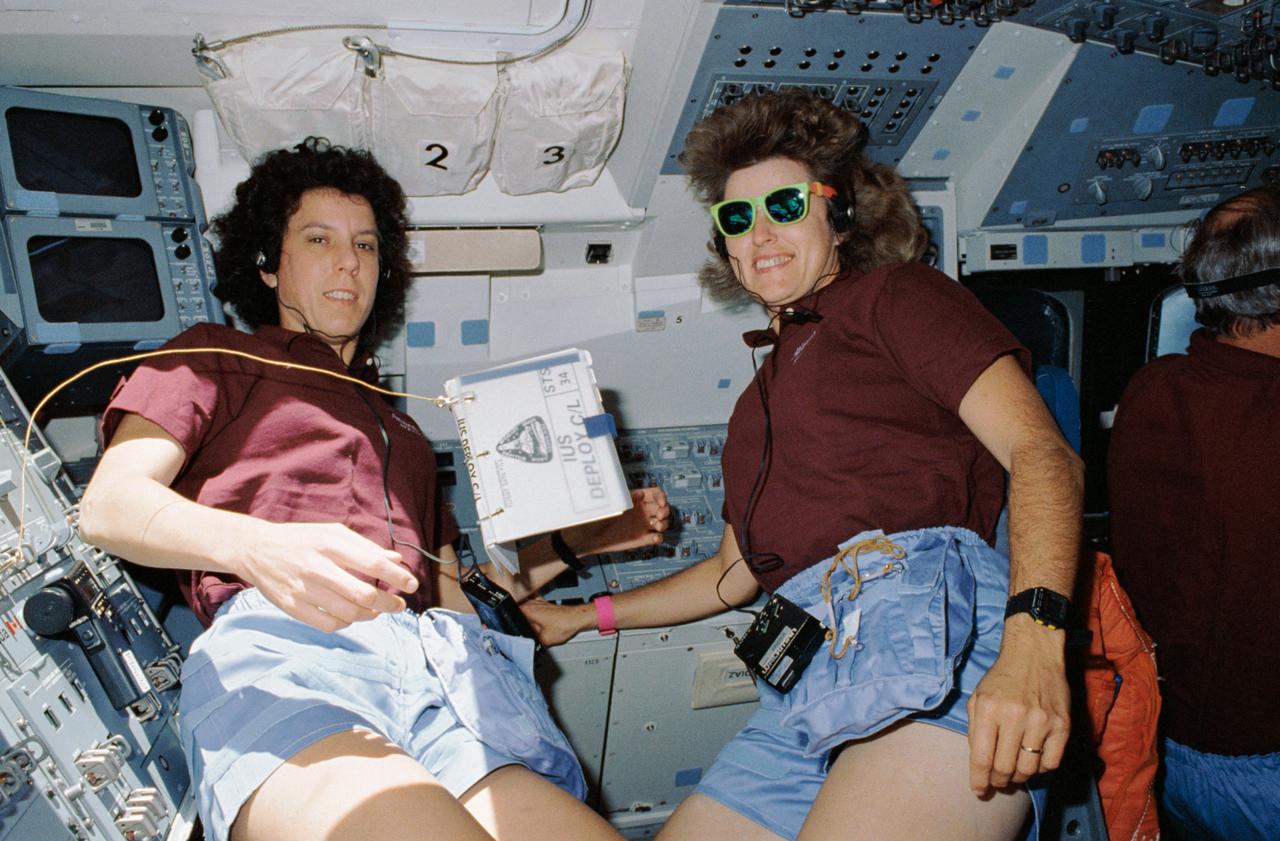
STS034-09-007 (23 Oct. 1989) --- Having been in space only a few hours, three of the STS-34 astronaut crew prepare for pre-deployment exercises involving one of the most prominent "passengers" of the flight -- the Galileo payload which was lying in Atlantis', Orbiter Vehicle (OV) 104's, payload bay (PLB). Pictured, left to right, are astronauts Ellen S. Baker and Shannon W. Lucid, both mission specialists; along with Donald E. Williams, commander, who guided OV-104's course during the exercise. Baker and Lucid communicated with ground controllers while juggling other Galileo-related chores. Both Baker and Lucid are equipped with SONY Walkmans and are wearing headsets. Lucid wears a pair of sunglasses with brightly colored frames. A tethered inertial upper stage (IUS) deploy checklist (C/L) floats between the two and a spotmeter is Velcroed to an on orbit station control panel.
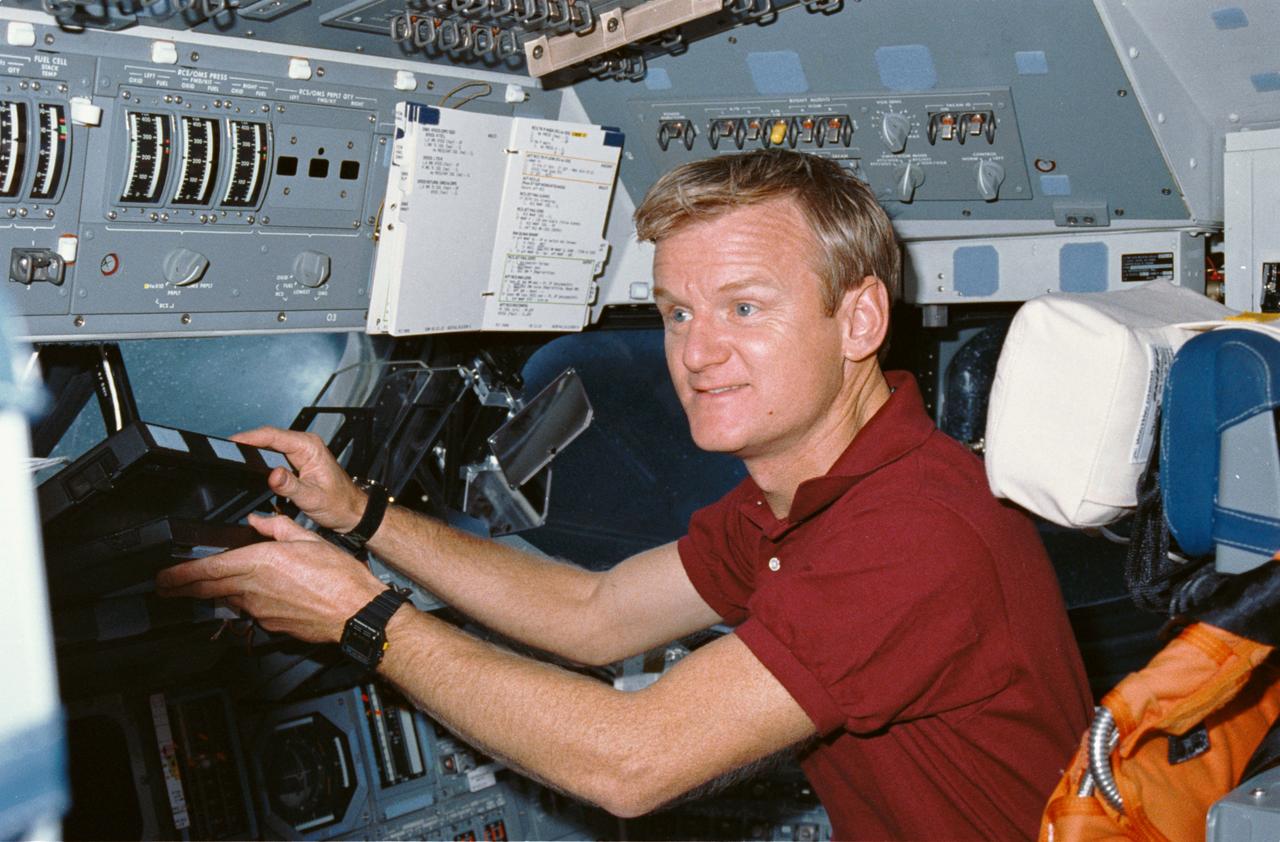
STS036-03-027 (3 March 1990) --- STS-36 Pilot John H. Casper reaches for the shuttle portable onboard computer (SPOC), a laptop computer, while at the pilots station on the forward flight deck of Atlantis, Orbiter Vehicle (OV) 104. Casper, seated in the pilot’s seat, lifts the SPOC from the forward window ledge. Appearing around him are forward crew compartment windows, the head up display (HUD), the flight mirror assembly, and a checklist attached to control panel O3. Casper and four other astronauts spent four days, 10 hours and 19 minutes aboard the spacecraft for a Department of Defense (DOD) devoted mission.
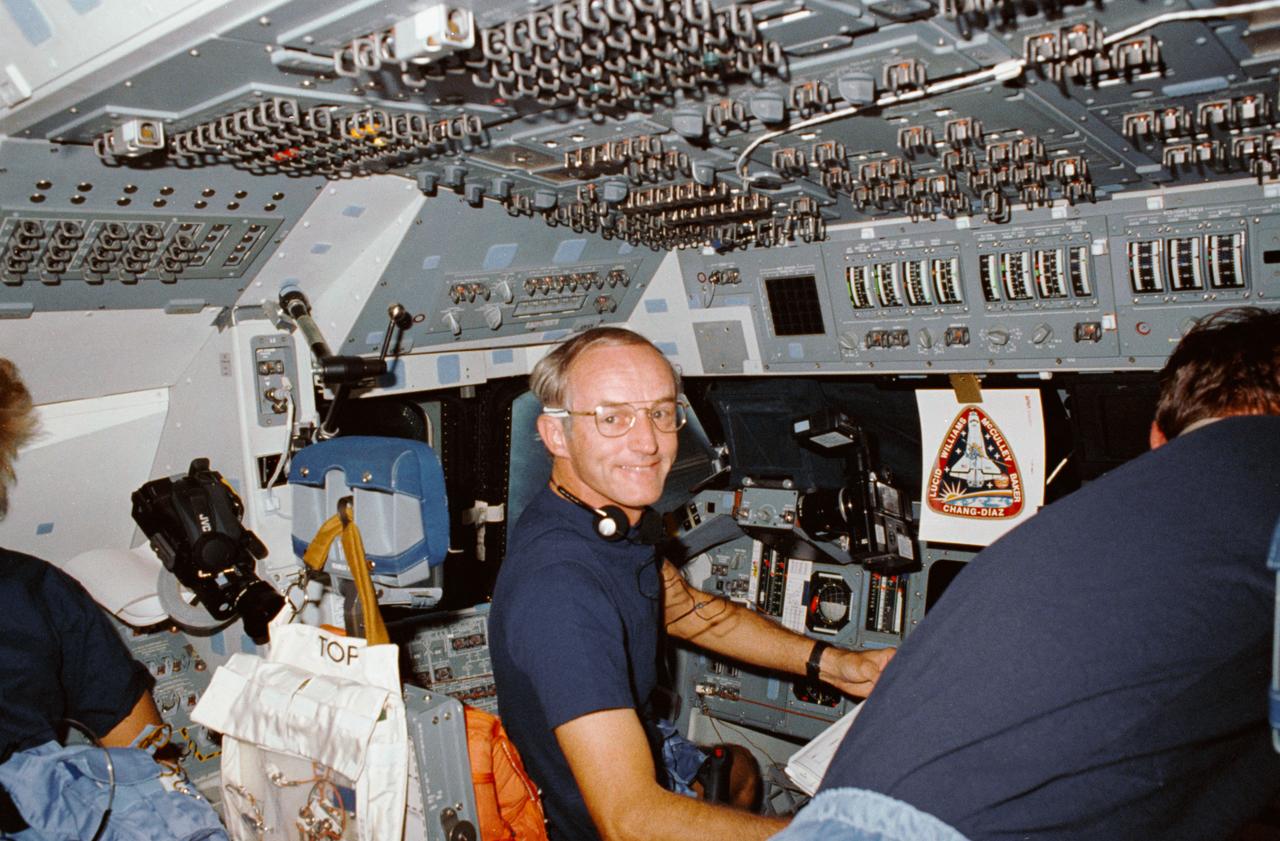
STS034-06-025 (18-23 Oct. 1989) --- Astronaut Donald E. Williams spent a portion of the five-day STS-34 flight at Atlantis' commander's station and, as evidenced by his countenance in this posed photo, appeared to enjoy his second spaceflight, his first as a mission commander. Astronaut Michael J. McCulley, pilot, leans over the pilot's station at right. This 35mm scene was in the first 12 photos released by NASA on Oct. 24, 1989.
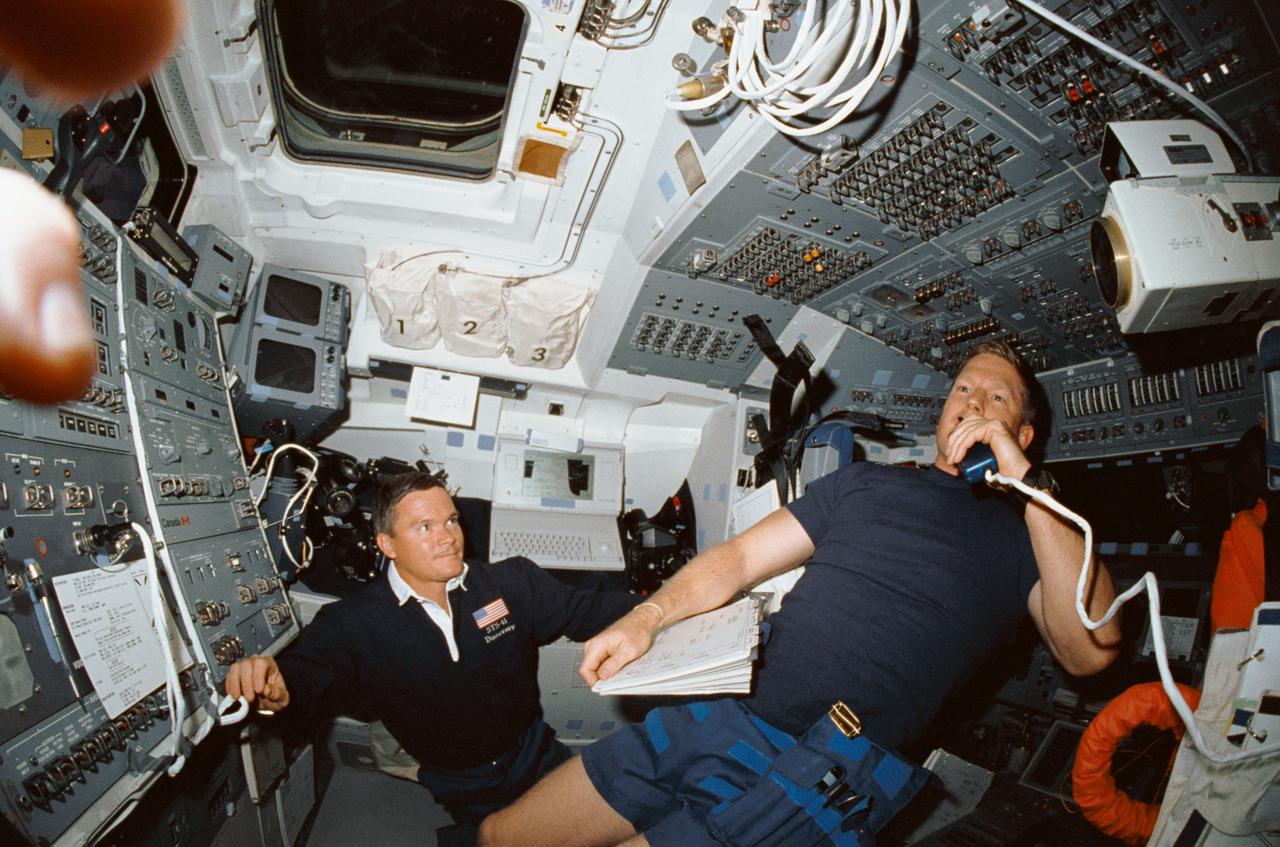
STS041-02-035 (6-10 Oct 1990) --- A fish-eye lens view shows two of STS-41's three mission specialists on the flight deck of Discovery. Astronaut William M. Shepherd, right, communicates with ground controllers as Astronaut Bruce E. Melnick looks on.
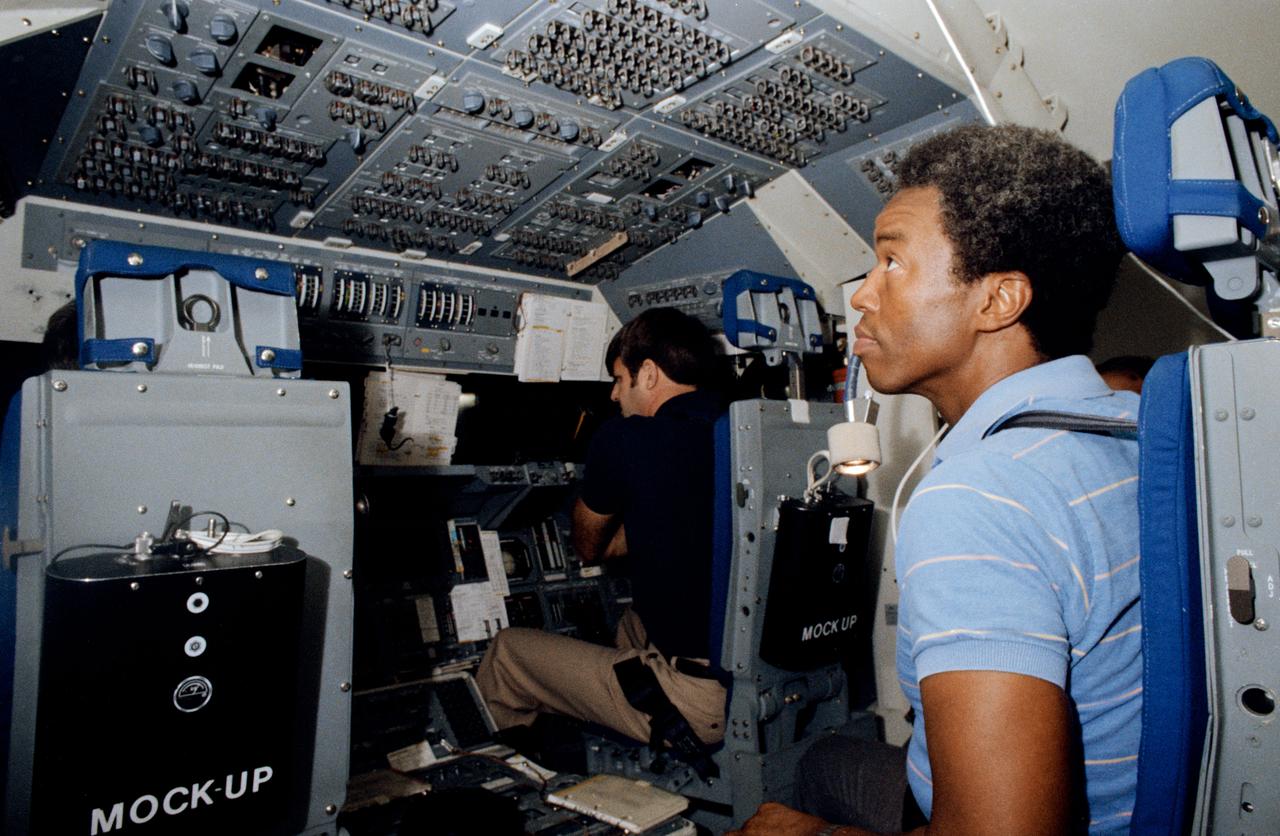
S83-33032 (23 May 1983) --- Astronauts Guion S. Bluford, right, and Daniel C. Brandenstein man their respective Challenger entry and ascent stations in the Shuttle Mission Simulator (SMS) at NASA's Johnson Space Center (JSC) during a training session for the STS-8 mission. Brandenstein is in the pilot's station, while Bluford, a mission specialist, occupies one of the two aft flight deck seats. Both are wearing civilian clothes for this training exercise. This motion based simulator represents the scene of a great deal of training and simulation activity, leading up to crew preparedness for Space Transportation System (STS) mission. Photo credt: NASA/Otis Imboden, National Geographic
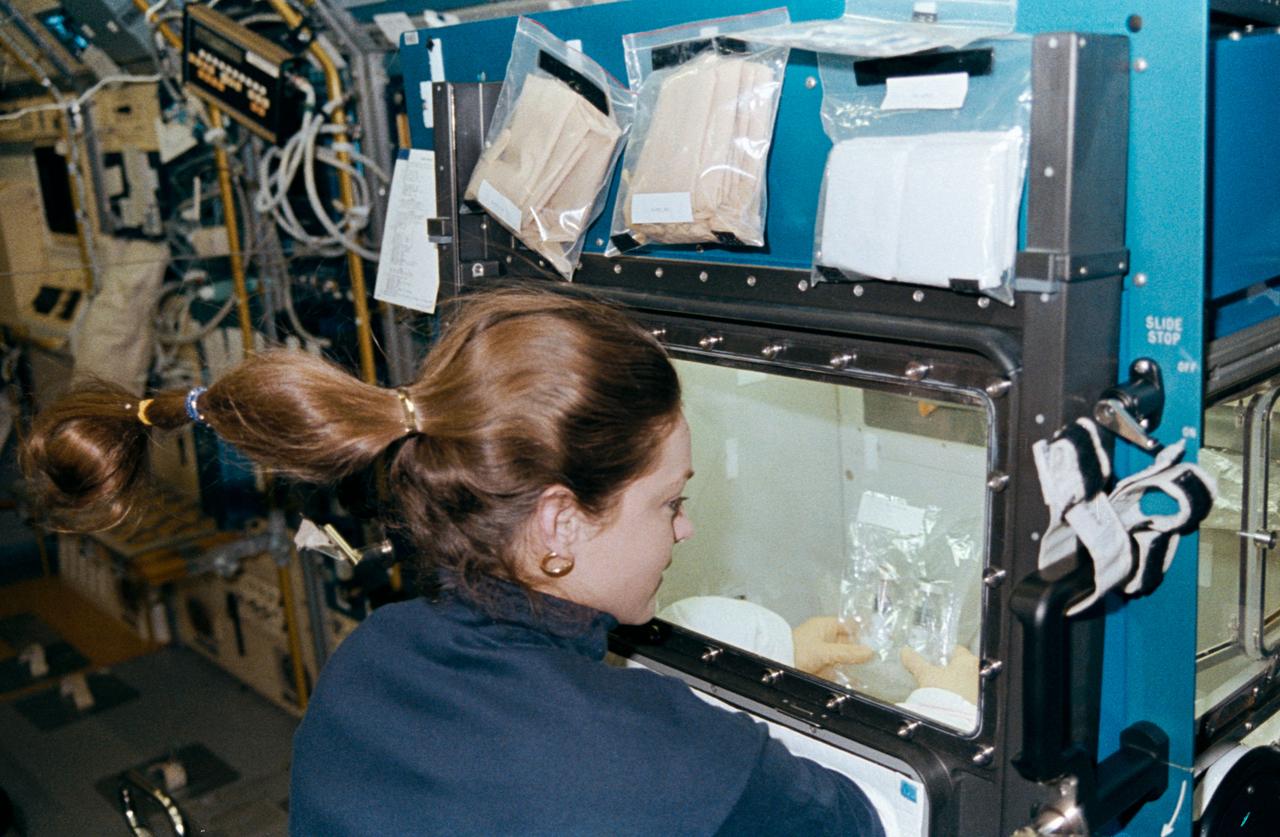
STS040-224-005 (5-14 June 1991) --- Astronaut Tamara E. Jernigan, STS-40 mission specialist, conducts an evaluation of the General Purpose Work Station (GPWS) in the Spacelab Life Sciences (SLS-1) module onboard the Earth-orbiting Space Shuttle Columbia. The photograph was taken with a 35mm camera.
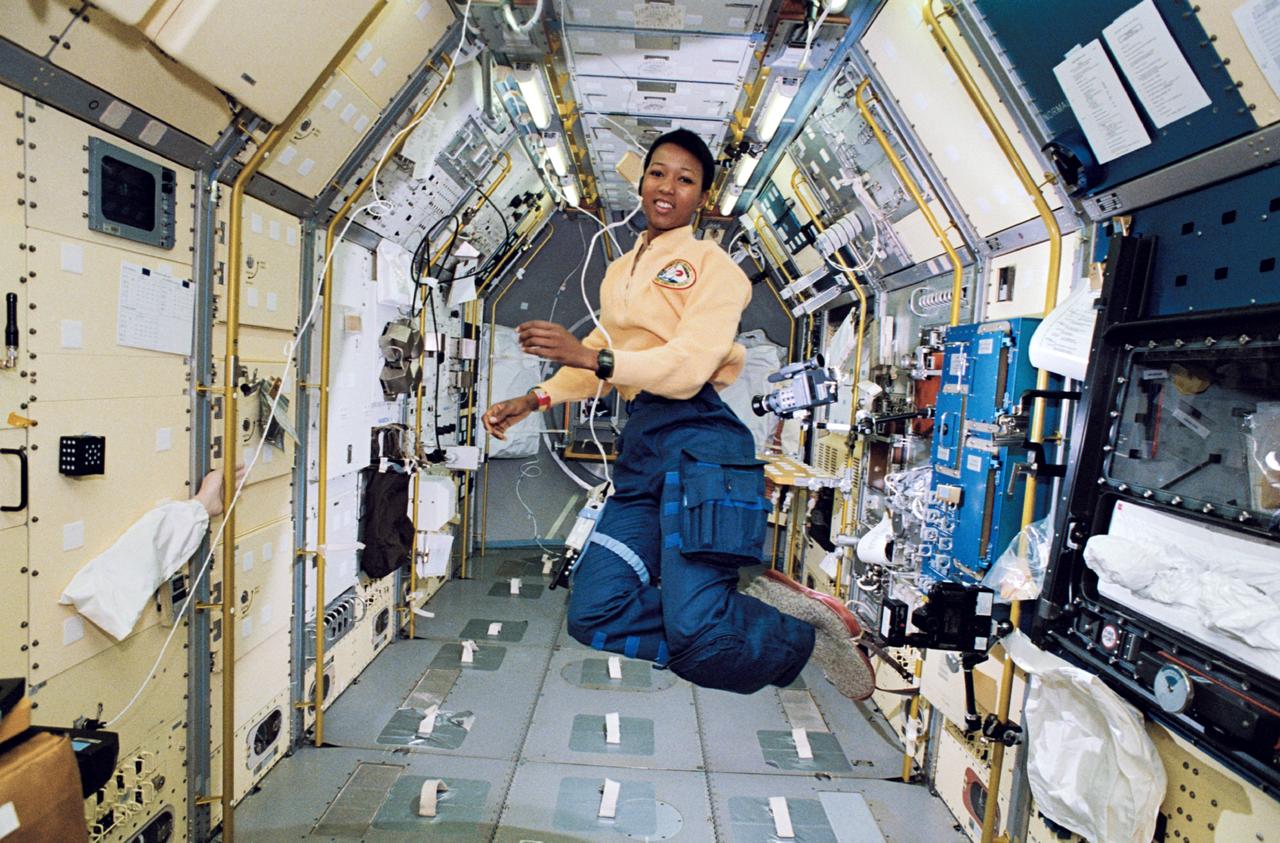
STS047-37-003 (12-20 Sept. 1992) --- Astronaut Mae C. Jemison, STS-47 mission specialist, appears to be clicking her heels in zero-gravity in this 35mm frame photographed in the Science Module aboard the Earth-orbiting Space Shuttle Endeavour. Making her first flight in space, Dr. Jemison was joined by five other NASA astronauts and a Japanese payload specialist for eight days of research in support of the Spacelab-J mission, a joint effort between Japan and the United States.
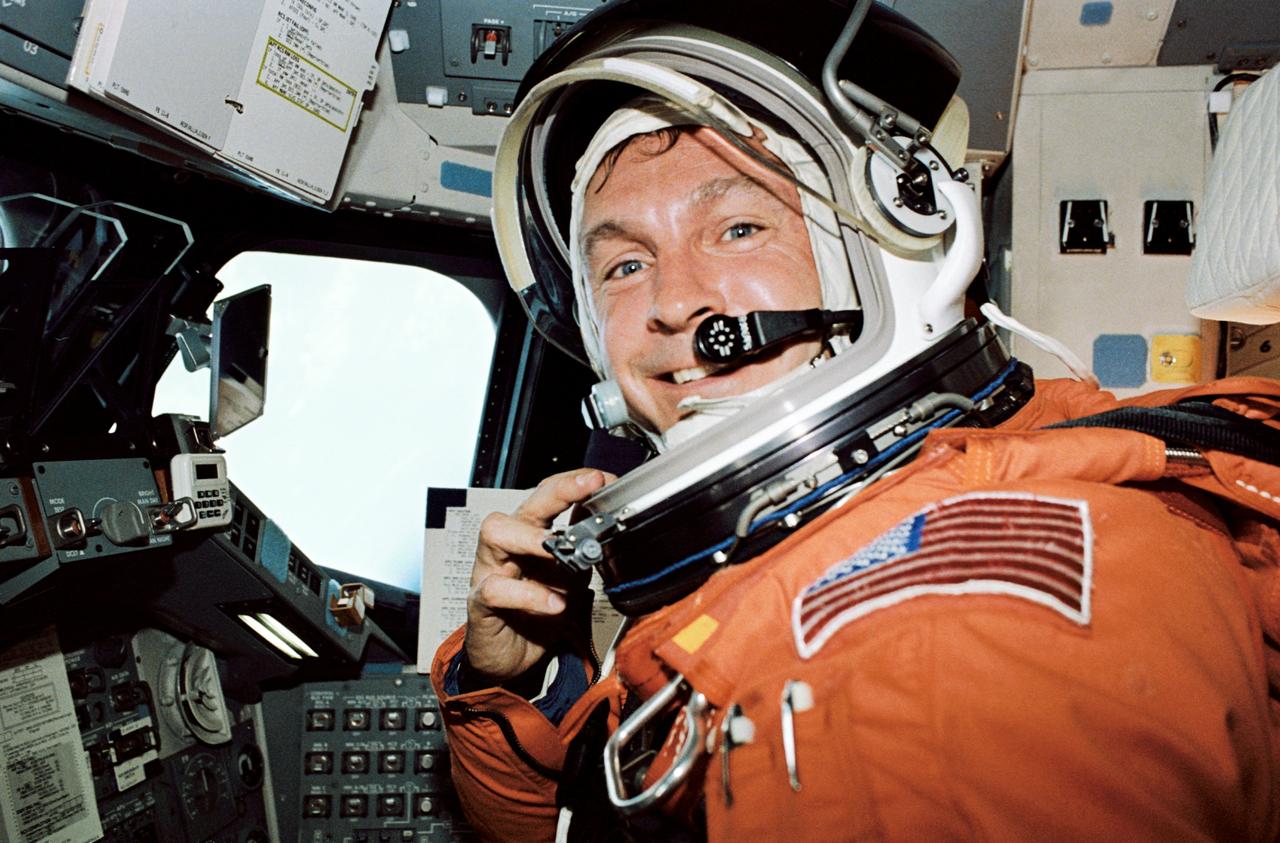
STS047-28-002 (20 Sept. 1992) --- Astronaut Curtis L. Brown, Jr., STS-47 pilot, is photographed at the Space Shuttle Endeavour's pilot station about ten minutes after main engine cutoff on launch day of the eight-day Spacelab-J mission. Wearing the partial-pressure launch and entry suit, Brown shared the forward cabin with astronaut Robert L. Gibson (out of frame at left), mission commander. Endeavour was beginning its second mission in space, this one devoted to research supporting the Spacelab-J mission.
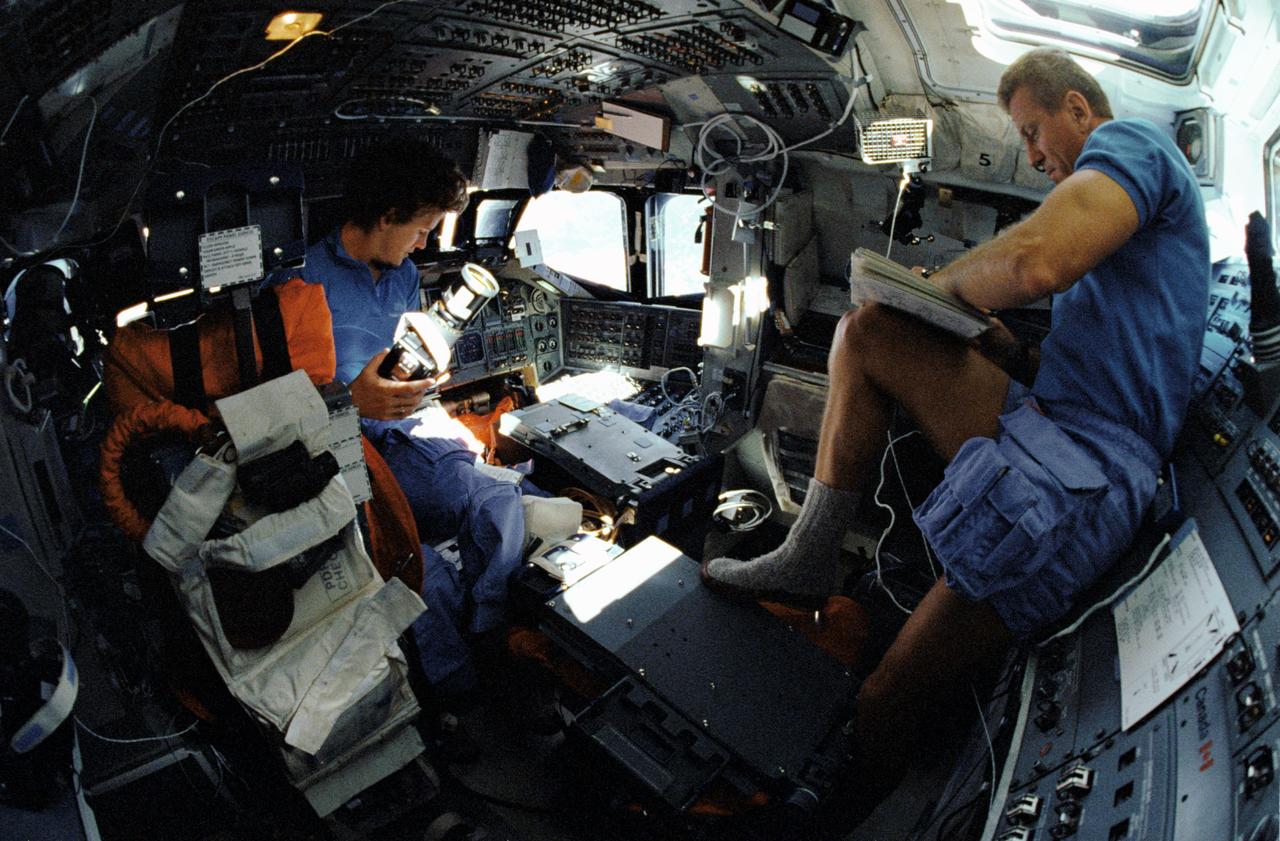
STS031-101-053 (24-29 April 199) --- A 35mm camera equipped with a "fish-eye" lens captured this view on Discovery's flight deck featuring astronaut Kathryn D. Sullivan with a Hasselblad camera on forward flight deck and astronaut Loren J. Shriver, pen in hand, amending flight data on aft flight deck.
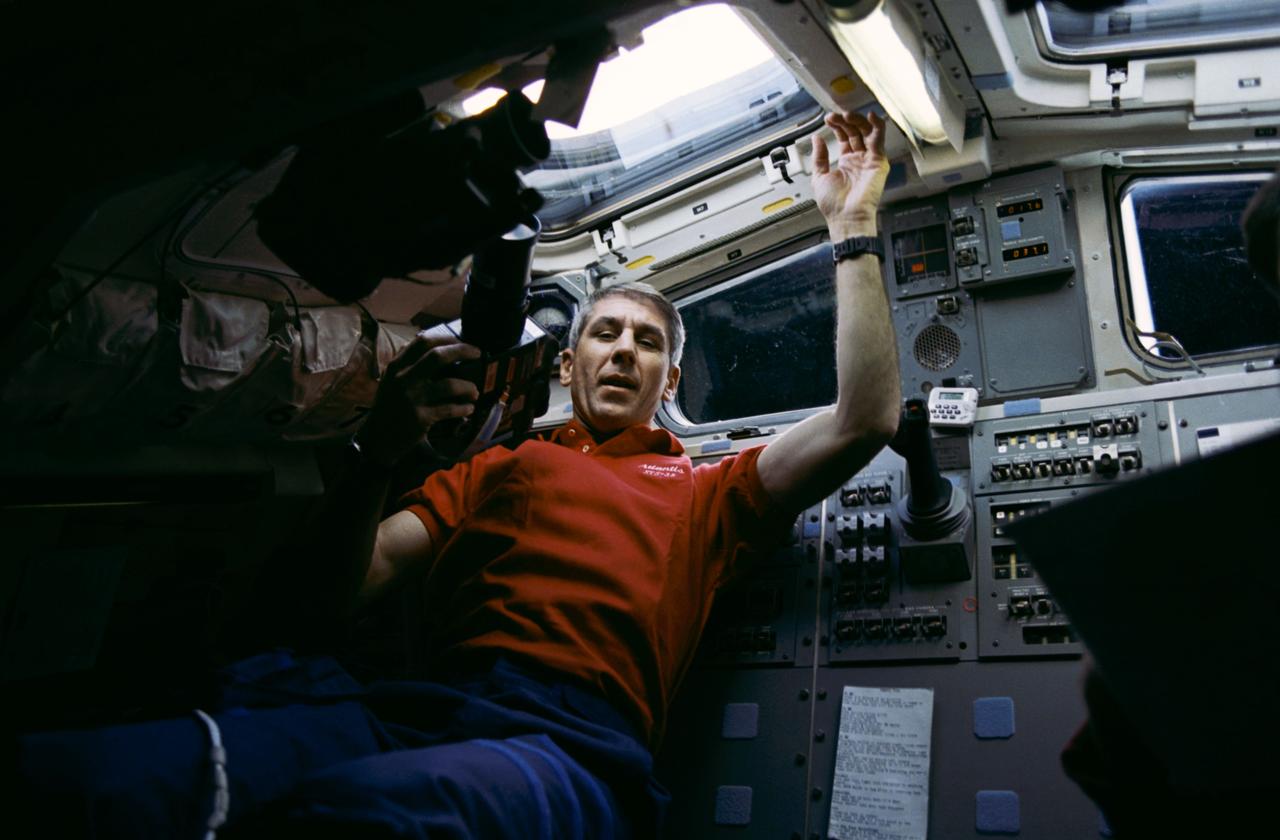
STS038-25-005 (20 Nov 1990) --- STS-38 Mission Specialist (MS) Robert C. Springer, holding HASSELBLAD camera, positions himself under aft flight deck overhead window W7 before recording the Earth's surface below. Behind Springer are Atlantis', Orbiter Vehicle (OV) 104's, on orbit station and aft flight deck viewing windows.
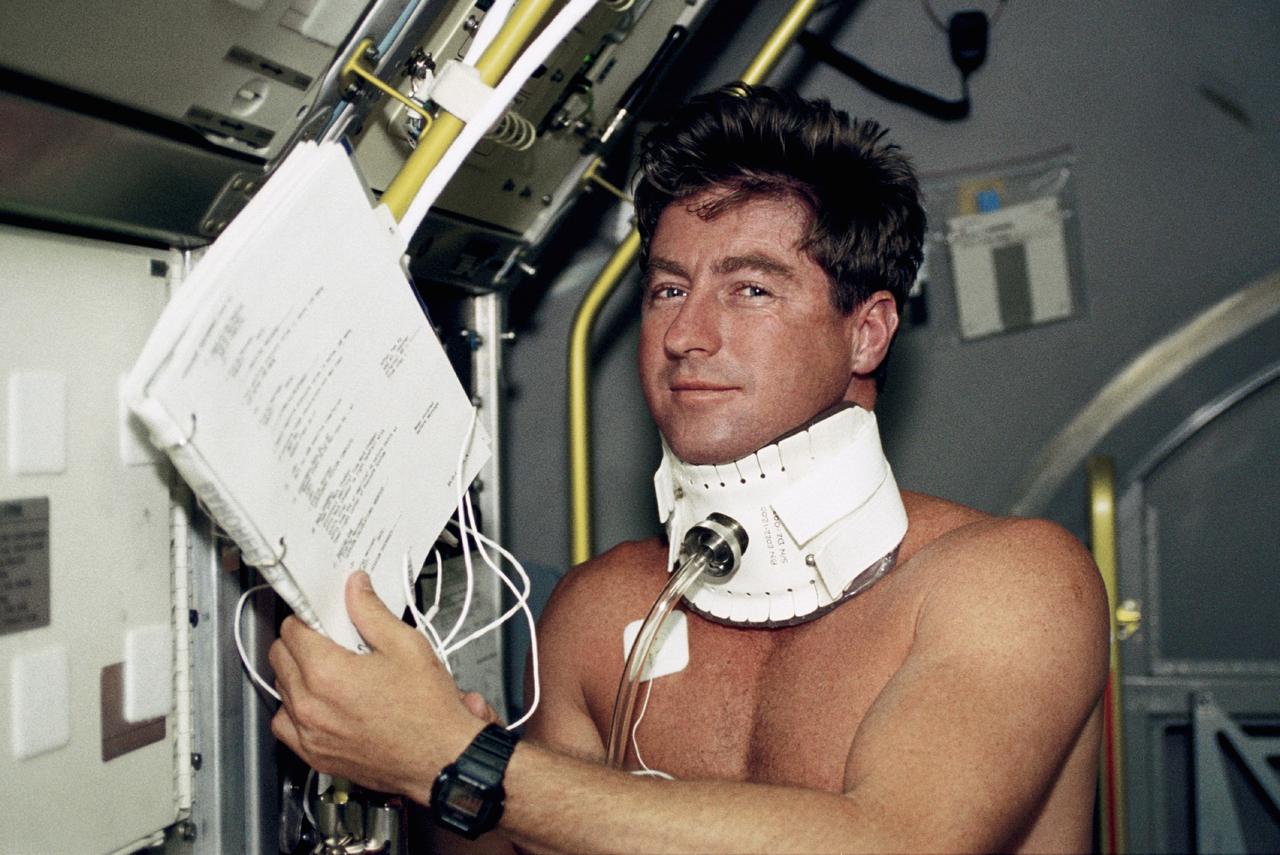
STS055-233-019 (26 April-6 May 1993) --- Terence T. (Tom) Henricks, STS-55 pilot, wears a special collar for a space adaptation experiment in the science module onboard the Earth-orbiting Space Shuttle Columbia. The Baroreflex (BA) experiment is designed to investigate the theory that light-headedness and a reduction in blood pressures upon standing after landing may arise because the normal reflex system regulating blood pressure behaves differently after having adapted to a microgravity environment. These space-based measurements of the baroreflex will be compared to ground measurements to determine if microgravity affects the reflex.
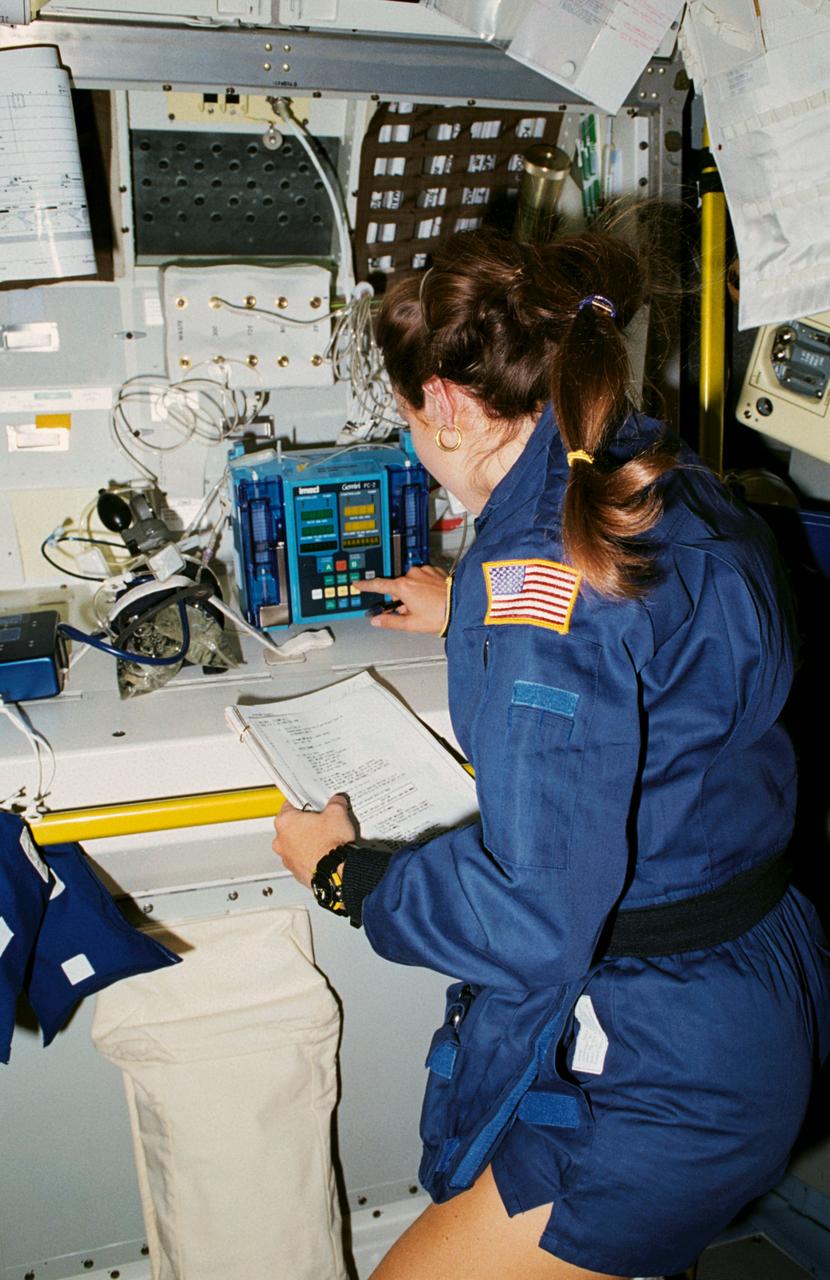
STS040-30-008 (5-14 June 1991) --- Astronaut Tamara E. Jernigan, after applying a blood pressure cuff to an experiment, watches it in operation. The experiment is the intravenous infusion pump. The device is being considered for use on Space Station Freedom's Health Maintenance Facility. Dr. Jernigan is one of seven crew members supporting the nine-day Spacelab Life Sciences (SLS-1) mission aboard the Earth-orbiting Space Shuttle Columbia.
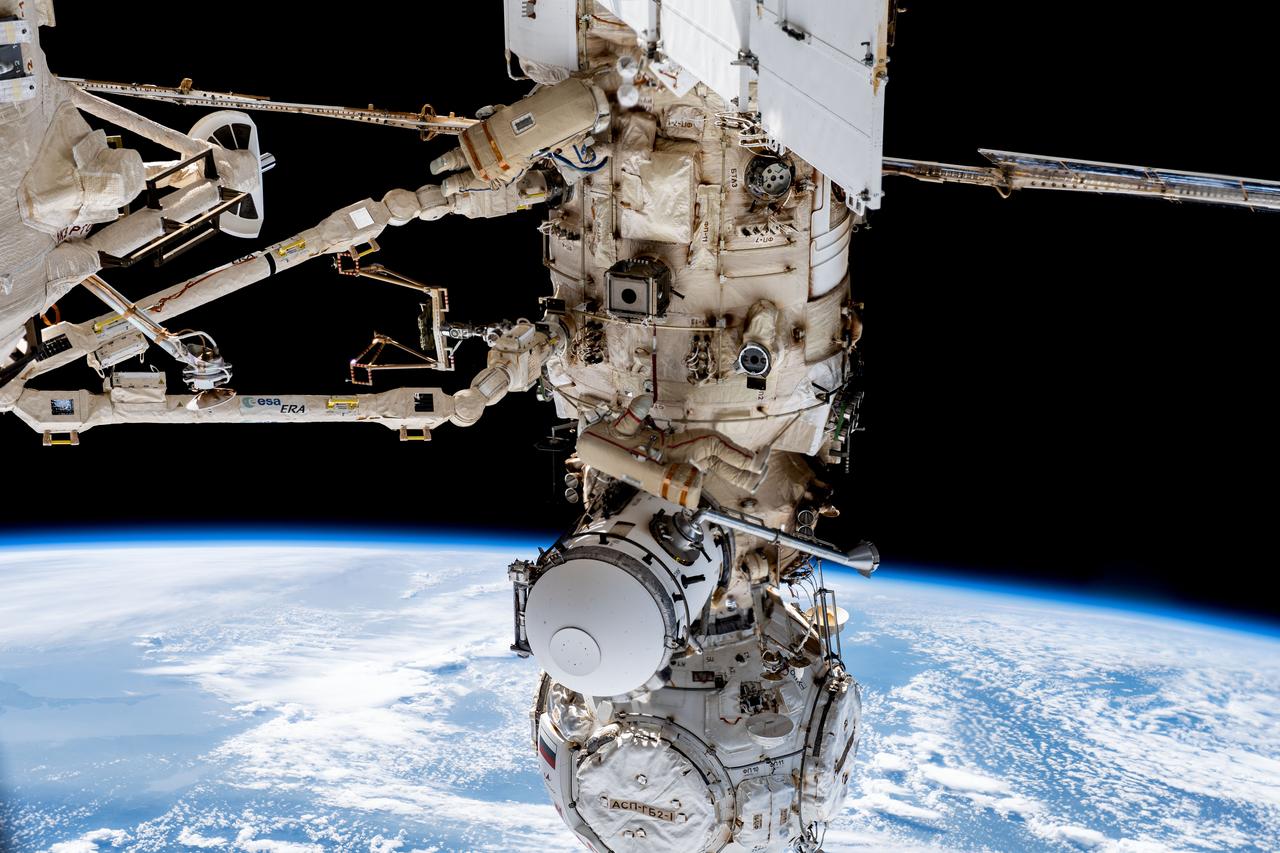
iss069e056478 (Aug. 9, 2023) --- Expedition 69 crew members Dmitri Petelin (top) and Sergey Prokopyev (center), both from Roscosmos, are pictured in their Orlan spacesuits during a six-hour and 35-minute spacewalk to install orbital debris shields and relocate a portable workstation on the International Space Station. The European robotic arm extends from the Nauka science module to which the Prichal module and the Soyuz MS-23 crew ship are attached.
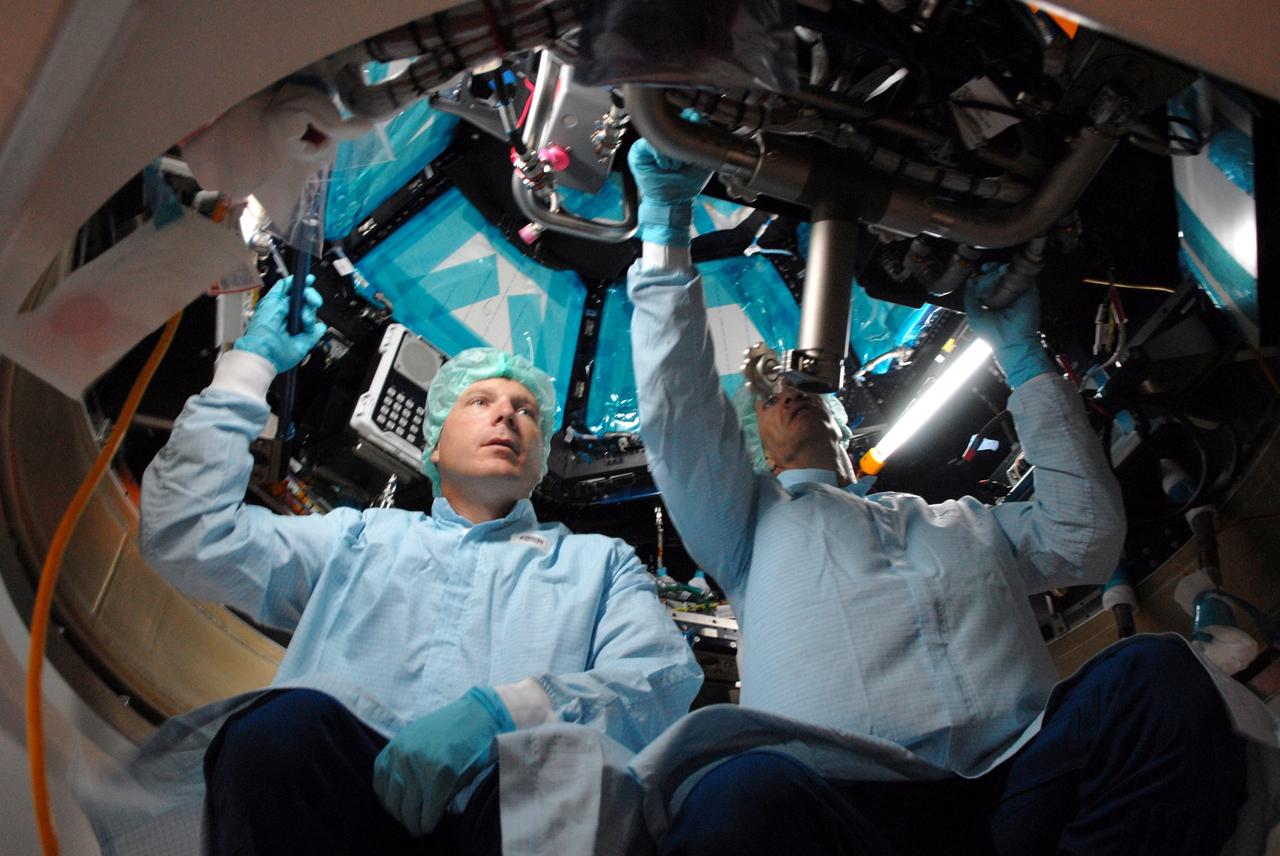
CAPE CANAVERAL, Fla. – In the Space Station Processing Facility at NASA's Kennedy Space Center, astronauts Terry Virts, left, and Charles Hobaugh familiarize themselves with the operation of the robotic workstation, or RWS, in the International Space Station's Cupola module. The RWS is provided by the Canadian Space Agency. The module was delivered by the European Space Agency in 2004 to Kennedy from Alenia Spazio in Turin, Italy. Cupola will provide unprecedented views of activities outside the station and spectacular views of the Earth. Crew members working inside the module will have a 360-degree panoramic view. Cupola has the capability for command and control workstations to be installed to assist in space station remote manipulator system and extra vehicular activities. Cupola is the final element of the space station core and is scheduled for launch on space shuttle Endeavour's STS-130 mission, targeted for Dec. 10, 2009. Photo credit: NASA/Cory Huston
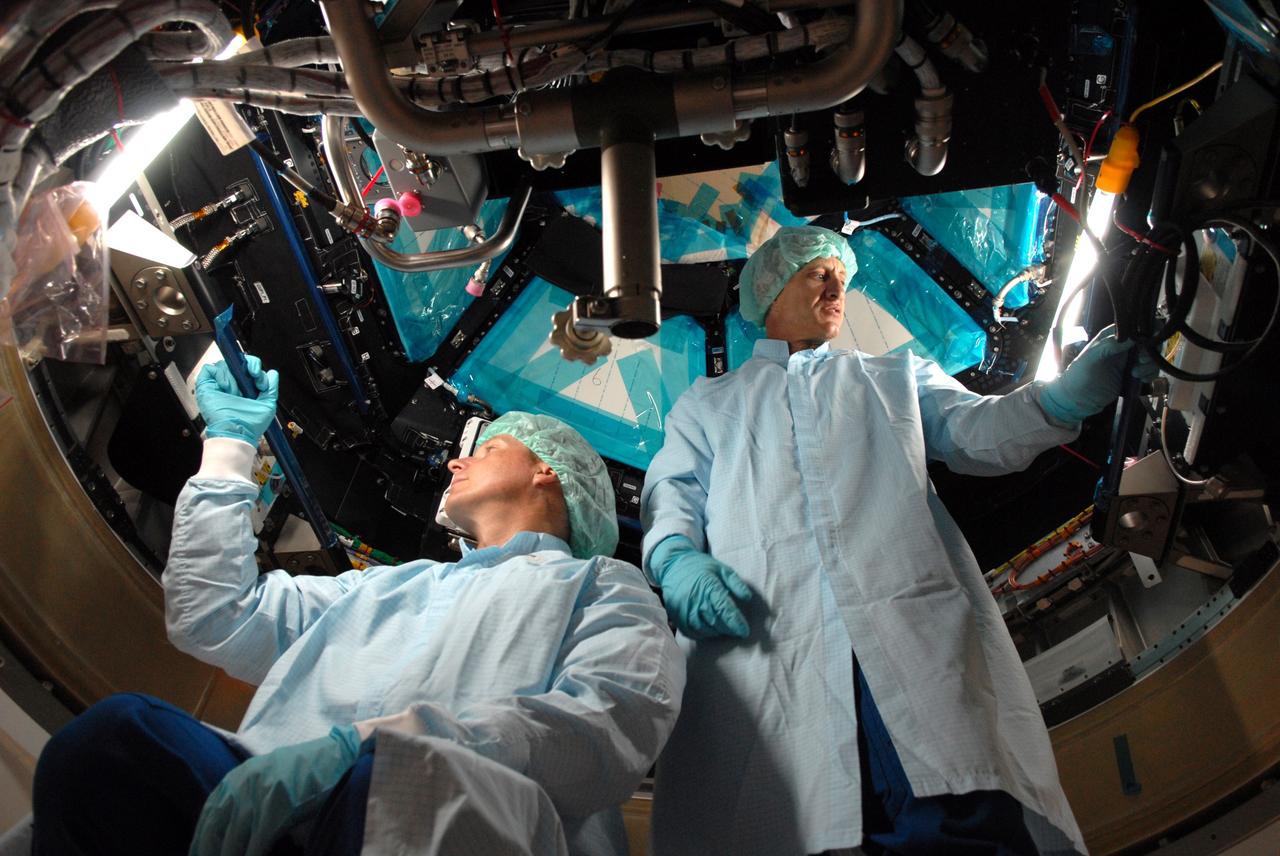
CAPE CANAVERAL, Fla. – In the Space Station Processing Facility at NASA's Kennedy Space Center, astronauts Terry Virts, left, and Charles Hobaugh familiarize themselves with the placement and operation of the robotic workstation, or RWS, in the International Space Station's Cupola module. The RWS is provided by the Canadian Space Agency. The module was delivered by the European Space Agency in 2004 to Kennedy from Alenia Spazio in Turin, Italy. Cupola will provide unprecedented views of activities outside the station and spectacular views of the Earth. Crew members working inside the module will have a 360-degree panoramic view. Cupola has the capability for command and control workstations to be installed to assist in space station remote manipulator system and extra vehicular activities. Cupola is the final element of the space station core and is scheduled for launch on space shuttle Endeavour's STS-130 mission, targeted for Dec. 10, 2009. Photo credit: NASA/Cory Huston
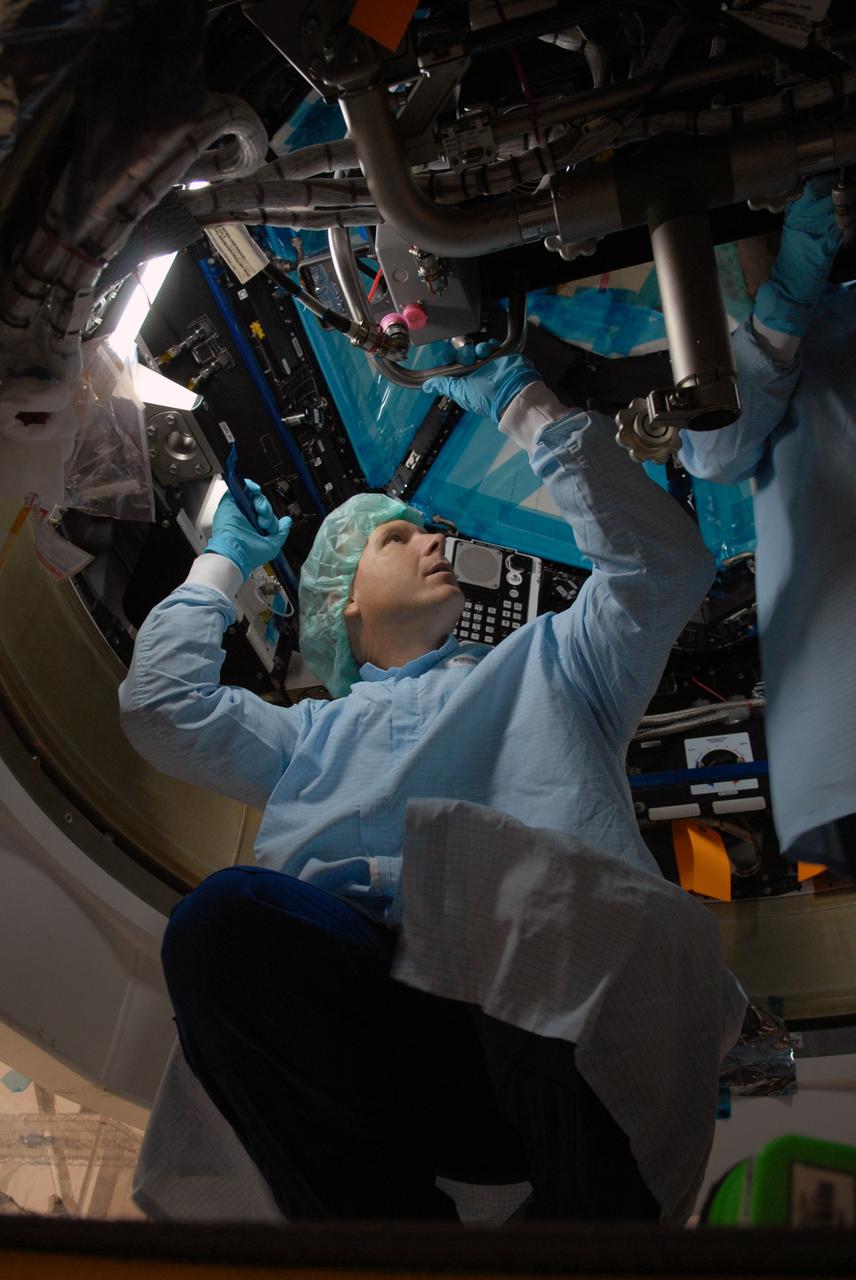
CAPE CANAVERAL, Fla. – In the Space Station Processing Facility at NASA's Kennedy Space Center, astronaut Terry Virts conducts a fit check of the robotic workstation, or RWS, in the International Space Station's Cupola module. The RWS is provided by the Canadian Space Agency. The module was delivered by the European Space Agency in 2004 to Kennedy from Alenia Spazio in Turin, Italy. Cupola will provide unprecedented views of activities outside the station and spectacular views of the Earth. Crew members working inside the module will have a 360-degree panoramic view. Cupola has the capability for command and control workstations to be installed to assist in space station remote manipulator system and extra vehicular activities. Cupola is the final element of the space station core and is scheduled for launch on space shuttle Endeavour's STS-130 mission, targeted for Dec. 10, 2009. Photo credit: NASA/Cory Huston
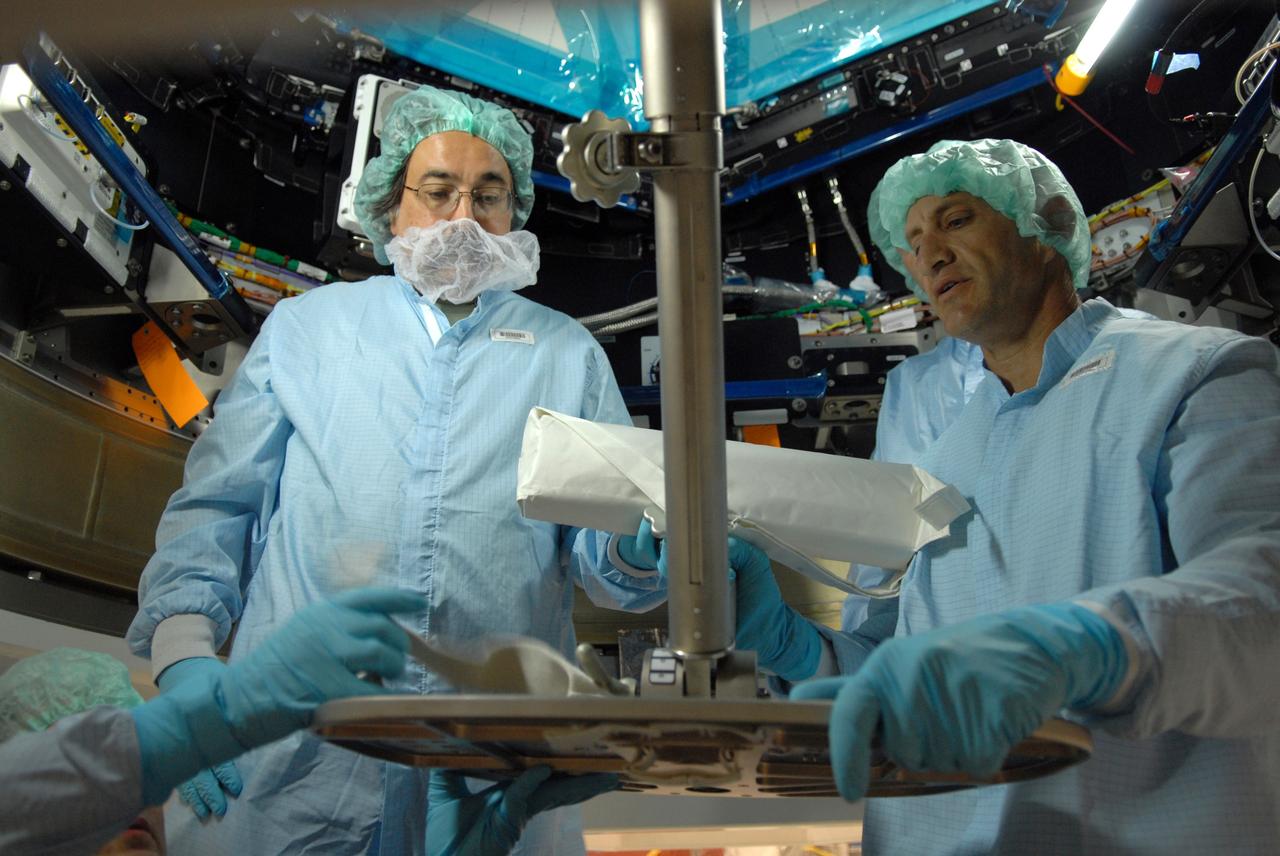
CAPE CANAVERAL, Fla. – In the Space Station Processing Facility at NASA's Kennedy Space Center, astronaut Charles Hobaugh, right, conducts a fit check of the robotic workstation, or RWS, in the International Space Station's Cupola module. He is assisted by Boeing technician Terry Camarata, left. The RWS is provided by the Canadian Space Agency. The module was delivered by the European Space Agency in 2004 to Kennedy from Alenia Spazio in Turin, Italy. Cupola will provide unprecedented views of activities outside the station and spectacular views of the Earth. Crew members working inside the module will have a 360-degree panoramic view. Cupola has the capability for command and control workstations to be installed to assist in space station remote manipulator system and extra vehicular activities. Cupola is the final element of the space station core and is scheduled for launch on space shuttle Endeavour's STS-130 mission, targeted for Dec. 10, 2009. Photo credit: NASA/Cory Huston
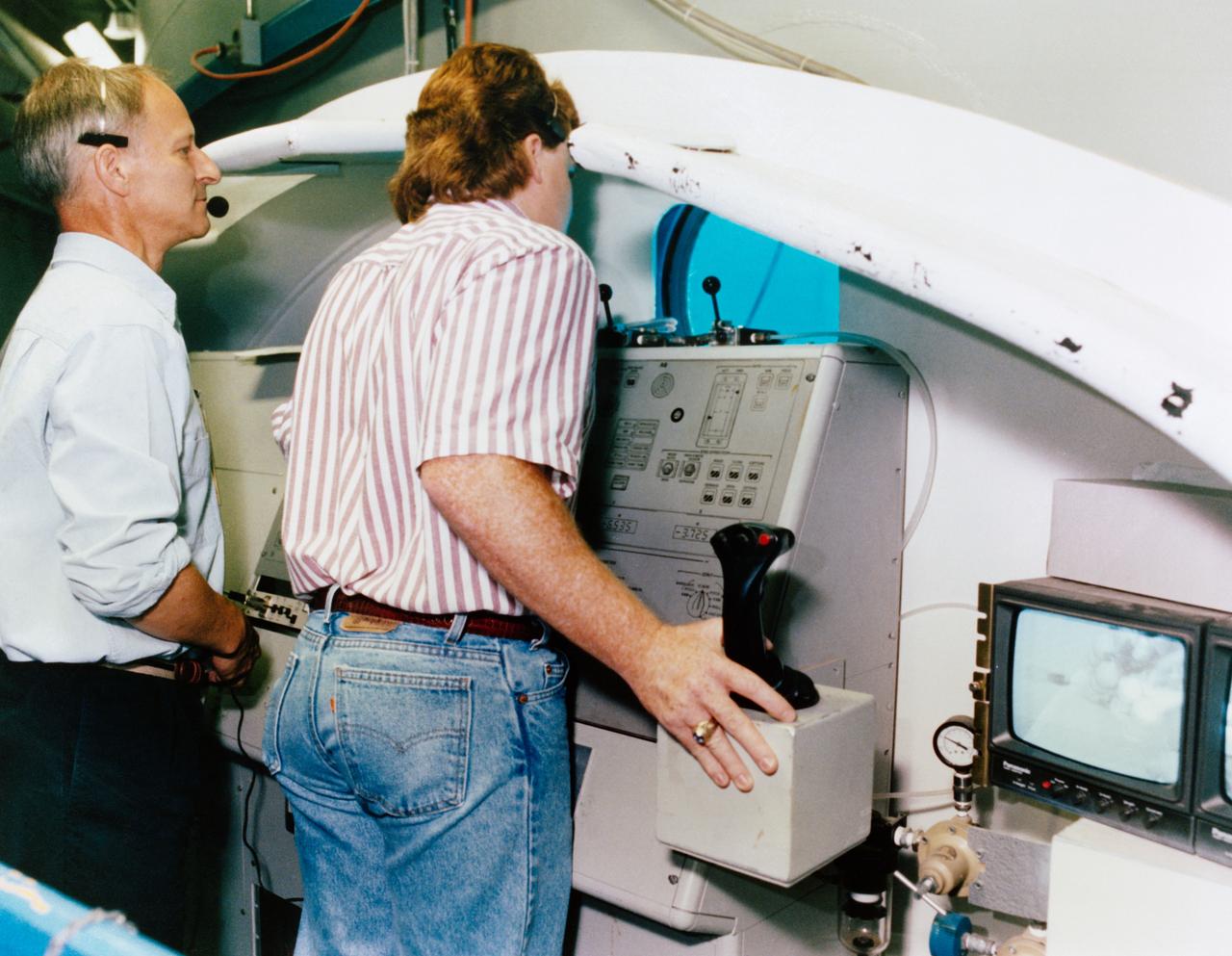
Swiss scientits Claude Nicollier (left), STS-61 mission specialist, waits his turn at the controls for the remote manipulator system (RMS) during a training session in the Neutral Buoyancy Simulator at Marshall Space Flight Center (MSFC). Mark Norman of MSFC has control of the RMS in this frame.
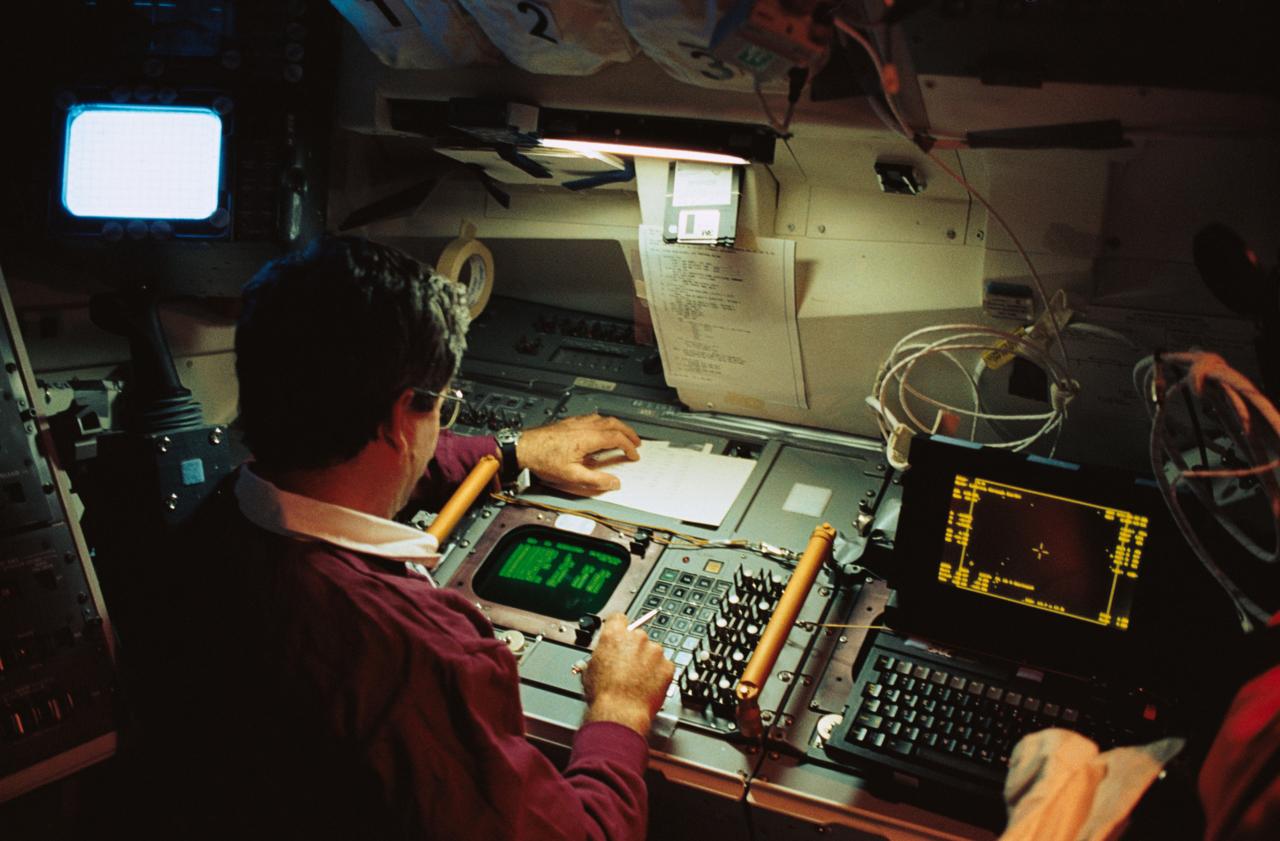
STS039-09-036 (28 April-6 May 1991) --- Astronaut Charles L. (Lacy) Veach monitors experiment data on the aft flight deck of the Earth-orbiting Discovery. The photograph was taken with a 35mm camera. Veach and six other NASA astronauts spent over eight days in space busily collecting data for this mission, dedicated to the Department of Defense.
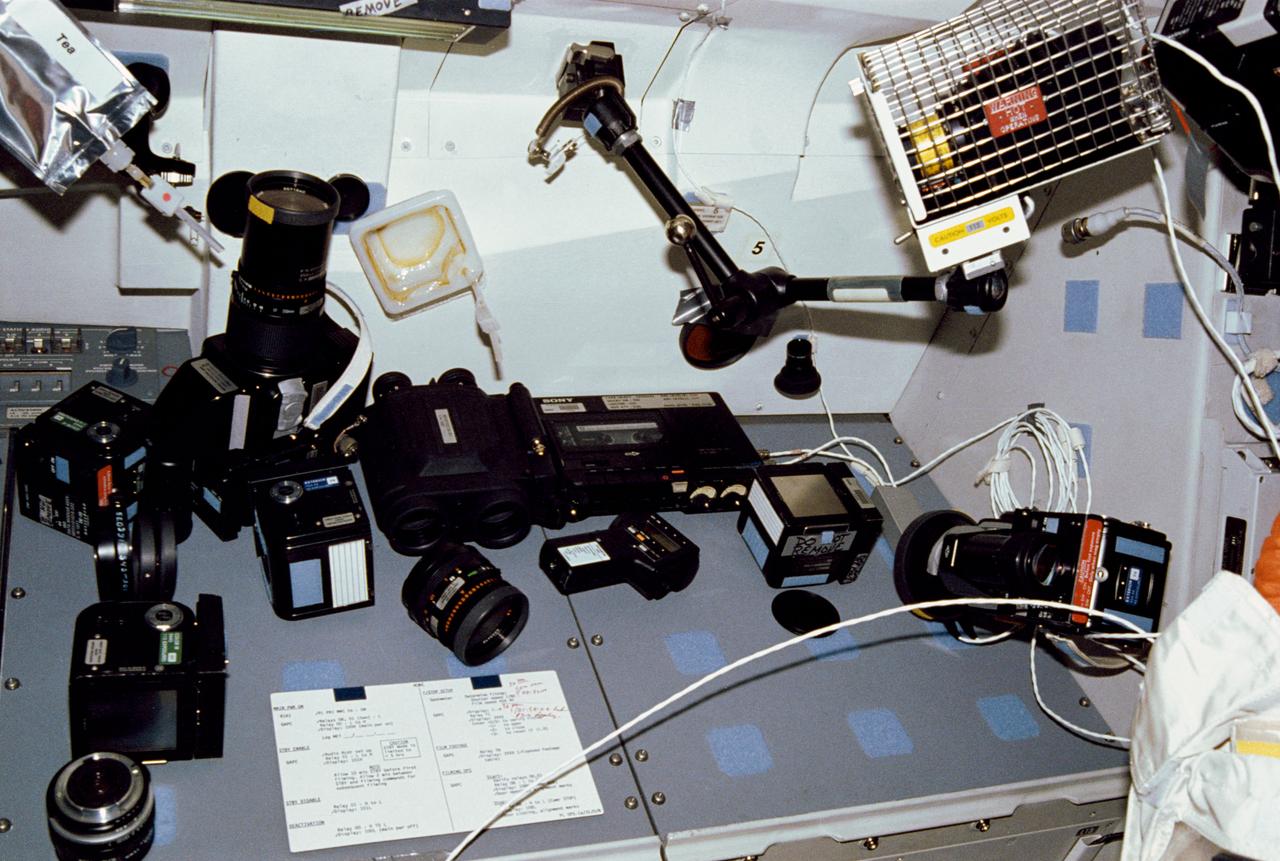
This array of photographic equipment, displayed on the aft flight deck payload station, represents just a part of the imaging and recording hardware which was carried aboard Discovery, Orbiter Vehicle (OV) 103, for STS-31's five day mission. Lenses, film magazines, cassettes, recorders, camera chassis, a pair of binoculars, spot meter, tape recorder, and a bracket-mounted light fixture are included among the array.

Scientist-Astronaut Owen K. Garriott, science pilot of the Skylab 3 mission, is stationed at the Apollo Telescope Mount (ATM) console in the Multiple Docking Adapter of the Skylab space station in Earth orbit. From this console the astronauts actively control the ATM solar physics telescope.
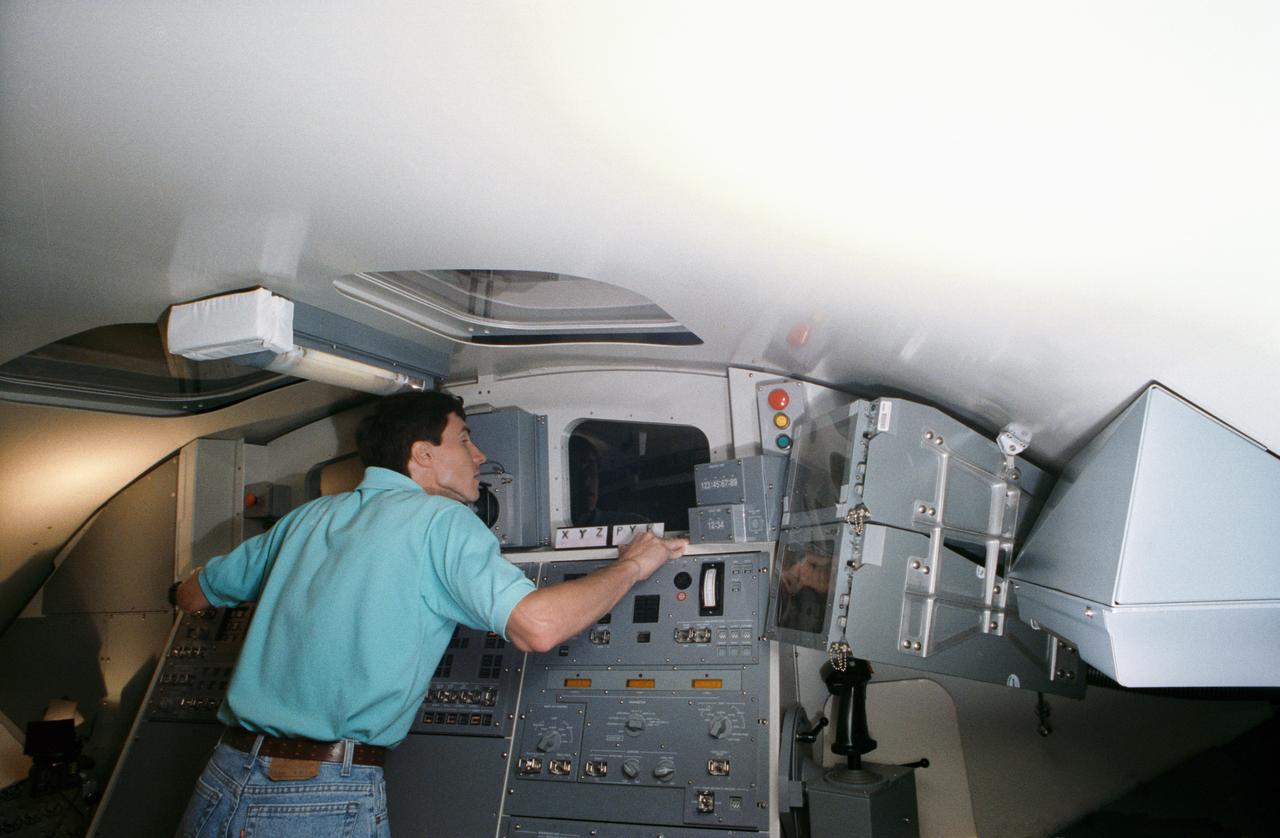
Cosmonaut Sergei Krikalev, STS-60 mission specialist, practices operating the Shuttle's Remote Manipulator System (RMS) during a training exercise at JSC's Shuttle mockup and integration laboratory.
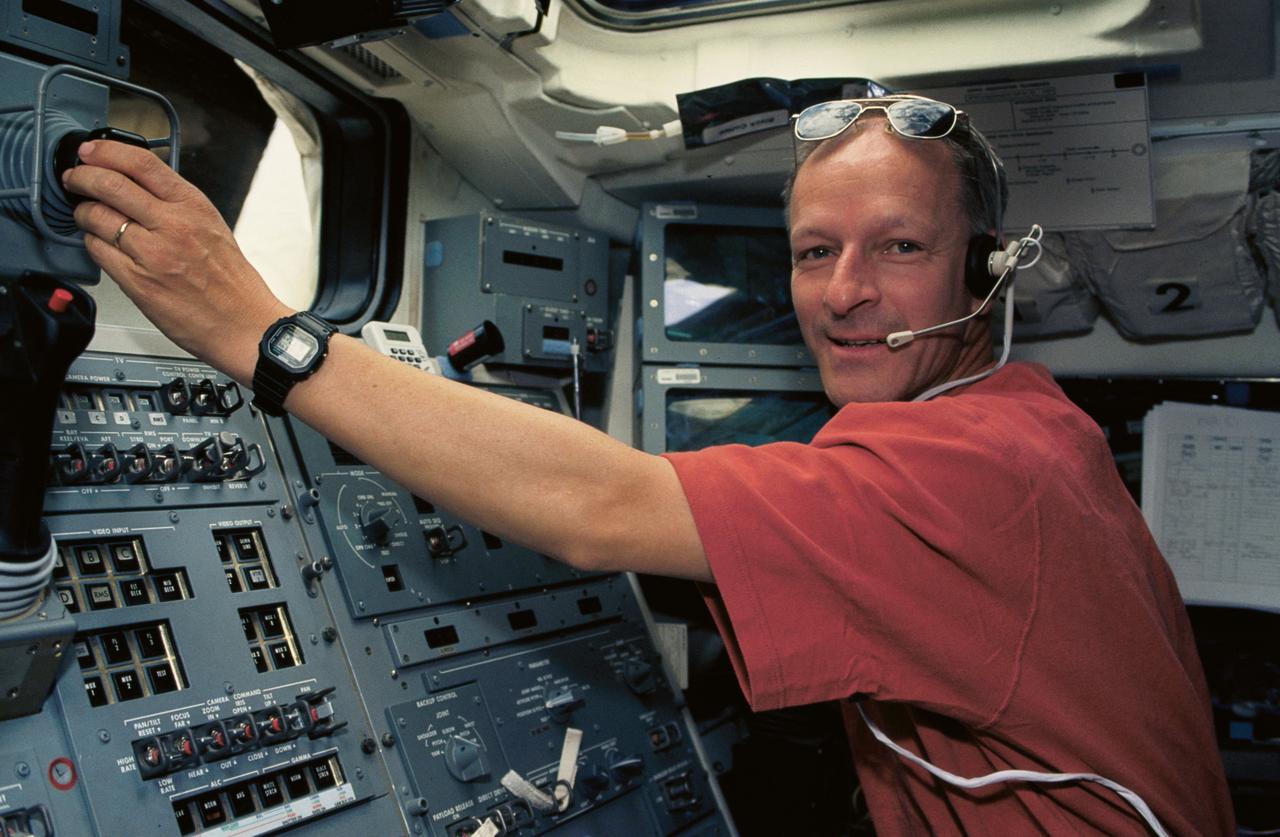
STS061-07-003 (4 Dec 1993) --- Swiss astronaut Claude Nicollier is pictured at the aft flight deck station he occupied during much of the time on NASA's STS-61 mission aboard the Space Shuttle Endeavour. Among Nicollier's responsibilities were the control of the Remote Manipulator System (RMS) during operations with the Hubble Space Telescope (HST).
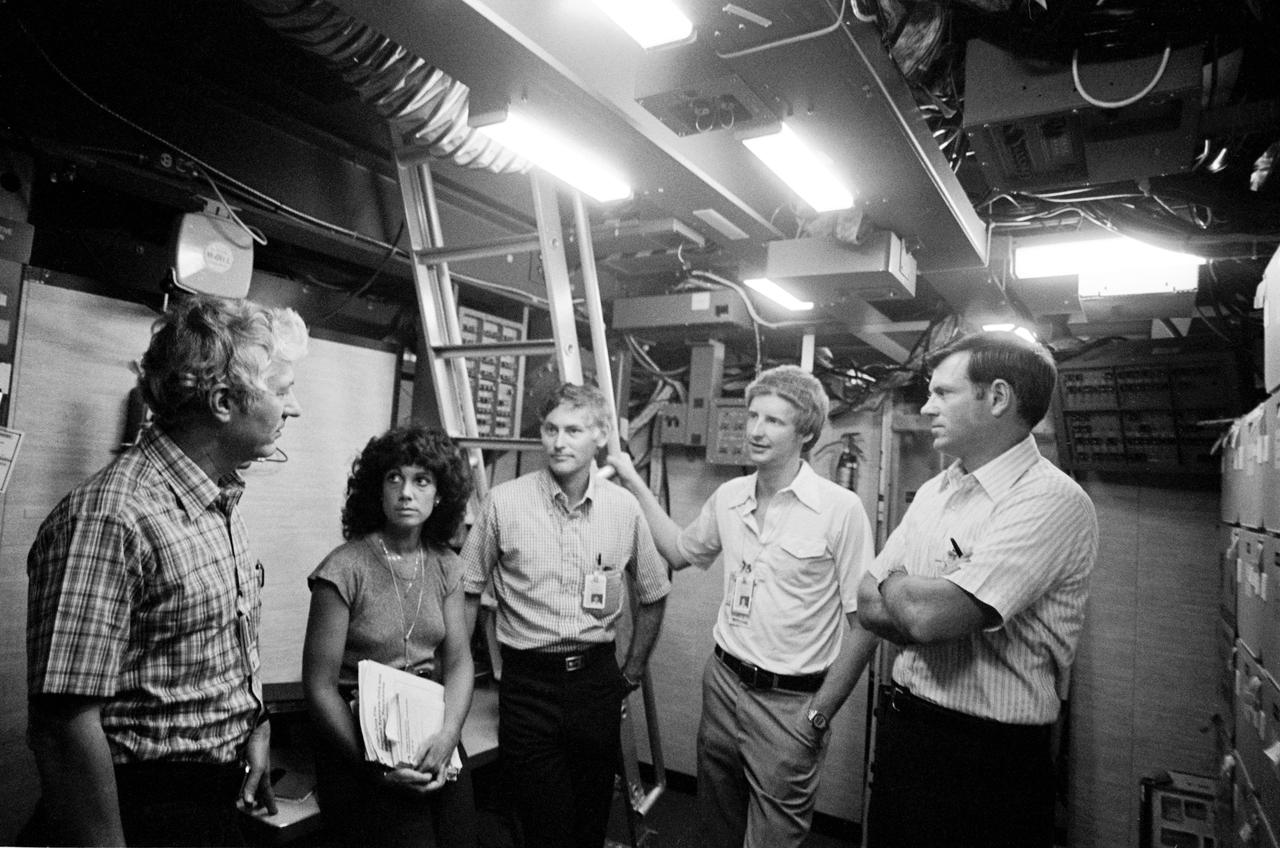
View of STS 41-D mission crew training in Shuttle Mission simulator. From left to right are Henry Hartsfield, Jr., commander; mission specialists Judith Resnik, Richard Mullane, and Steven Hawley; and Michael Coats, pilot. They appear to be standing in the middeck mockup, preparing for training.
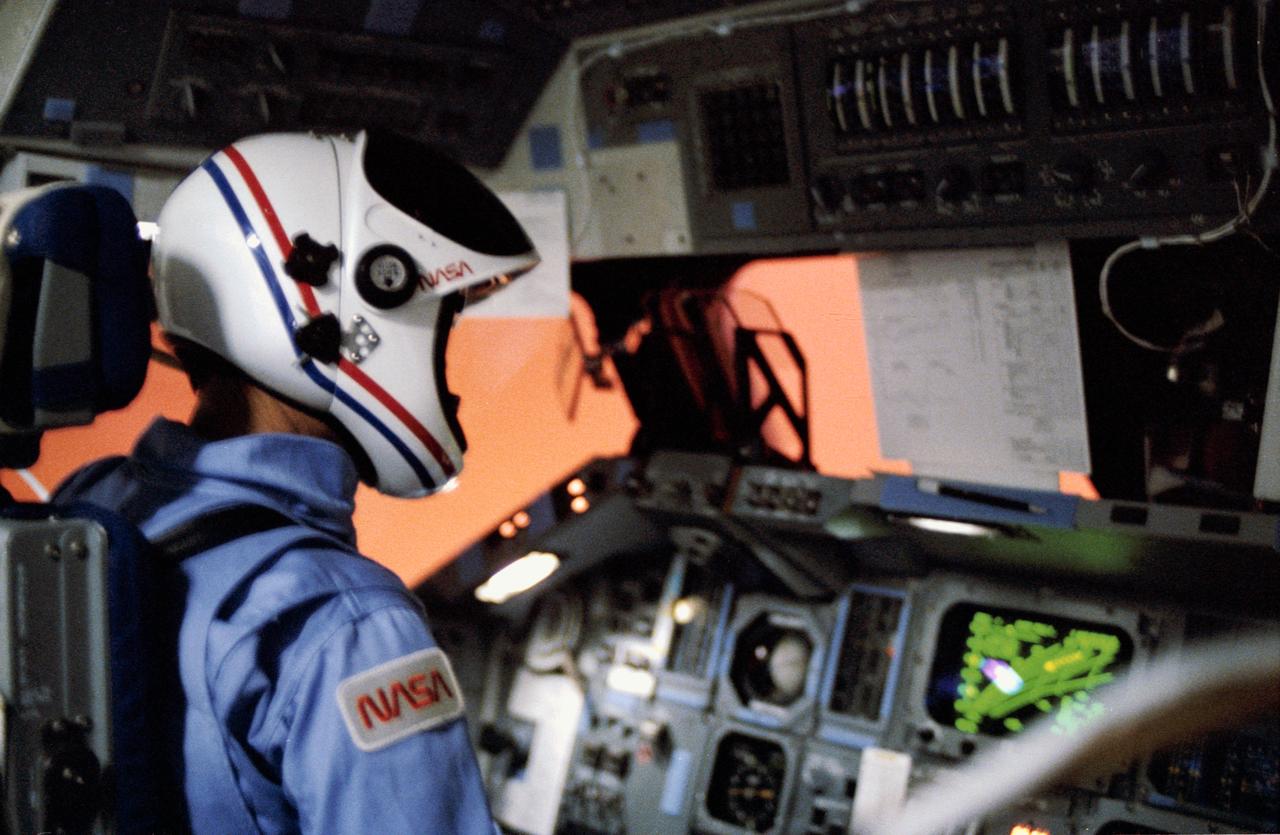
STS007-31-1614 & S83-35775 (24 June 1983) --- Astronaut Robert L. Crippen is seen at the commander’s station of the Space Shuttle Challenger as it passes through the Earth’s atmosphere on re-entry. The friction results in a pinkish glow visible through the forward windows on the flight deck. The scene was exposed with a 35mm camera.
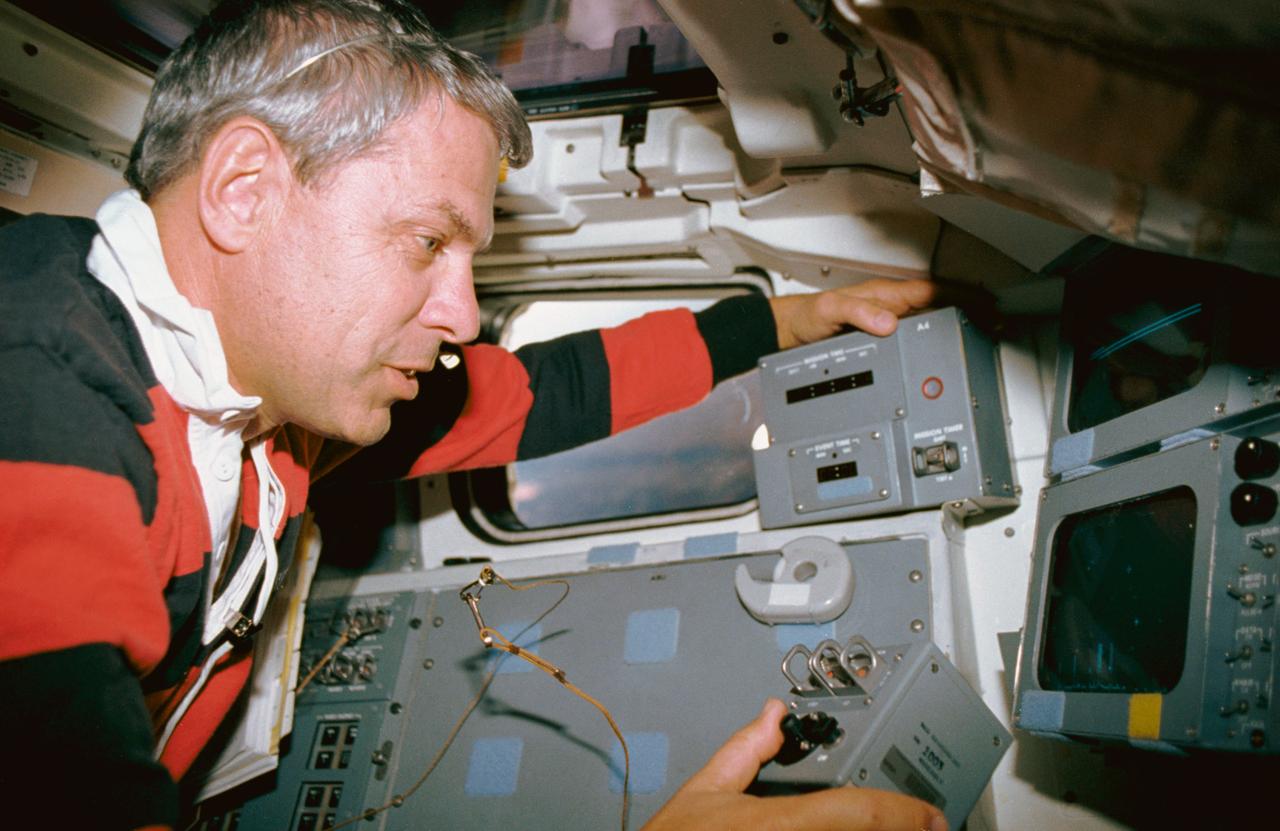
STS035-10-011 (2-10 Dec 1990) --- STS-35 Mission Specialist (MS) Robert A.R. Parker operates Astronomy Laboratory 1 (ASTRO-1) manual pointing controller (MPC) on the aft flight deck of Columbia, Orbiter Vehicle (OV) 102. Parker monitors a closed circuit television (CCTV) screen at the payload station as he uses the MPC to send data collection instructions to the ASTRO-1 instrument pointing system (IPS).
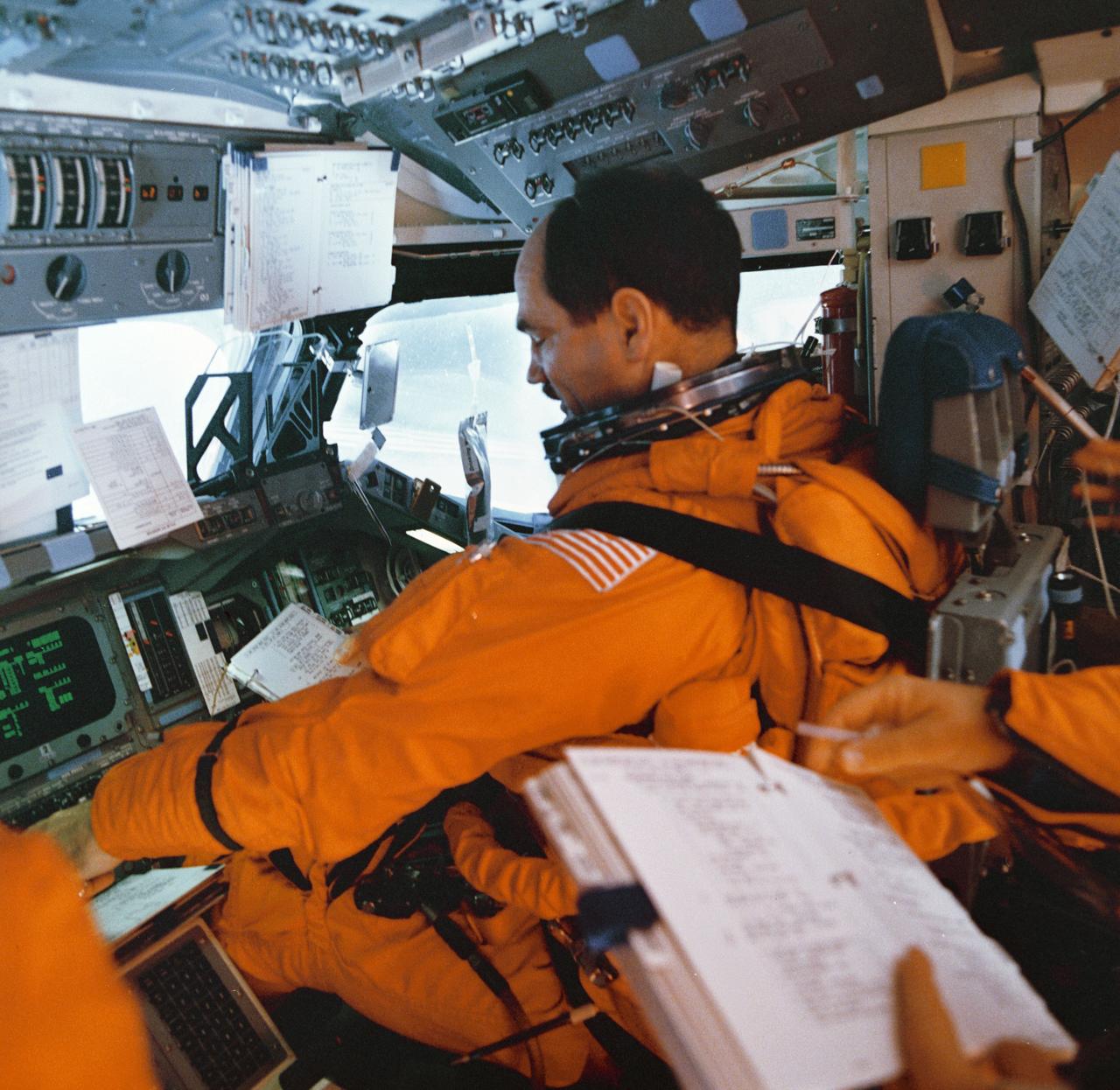
STS035-515-003 (2-10 Dec 1990) --- STS-35 Pilot Guy S. Gardner, wearing his launch and entry suit (LES), reviews descent checklist while at the pilots station on the forward flight deck of Columbia, Orbiter Vehicle (OV) 102. Crewmembers are conducting procedures related to the final stages of the mission and the landing sequence. Silhouetted in forward windows W4 and W5 are the head up display (HUD), flight mirror assembly, and a drinking water bag with straw.
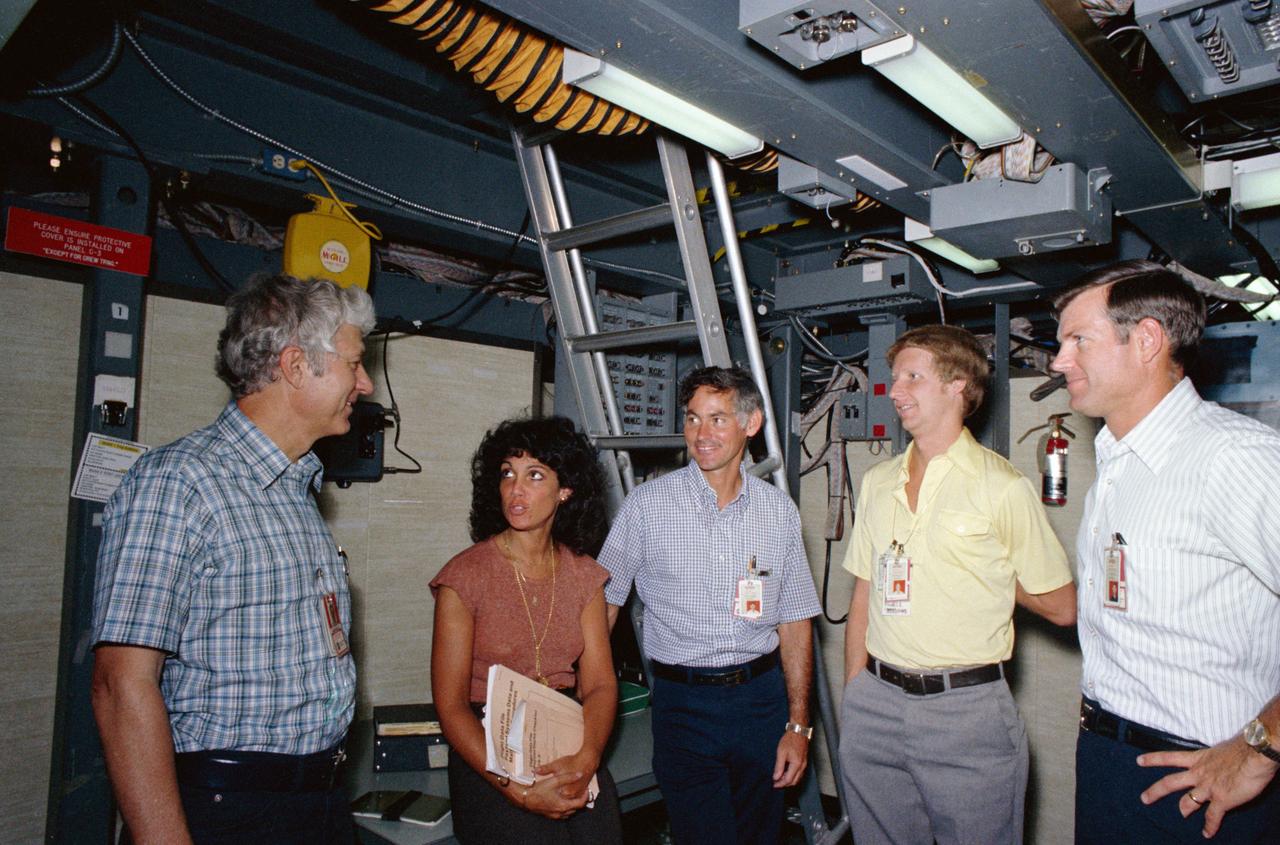
View of STS 41-D mission crew training in Shuttle Mission simulator. From left to right are Henry Hartsfield, Jr., commander; mission specialists Judith Resnik, Richard Mullane, and Steven Hawley; and Michael Coats, pilot. They appear to be standing in the middeck mockup, preparing for training.
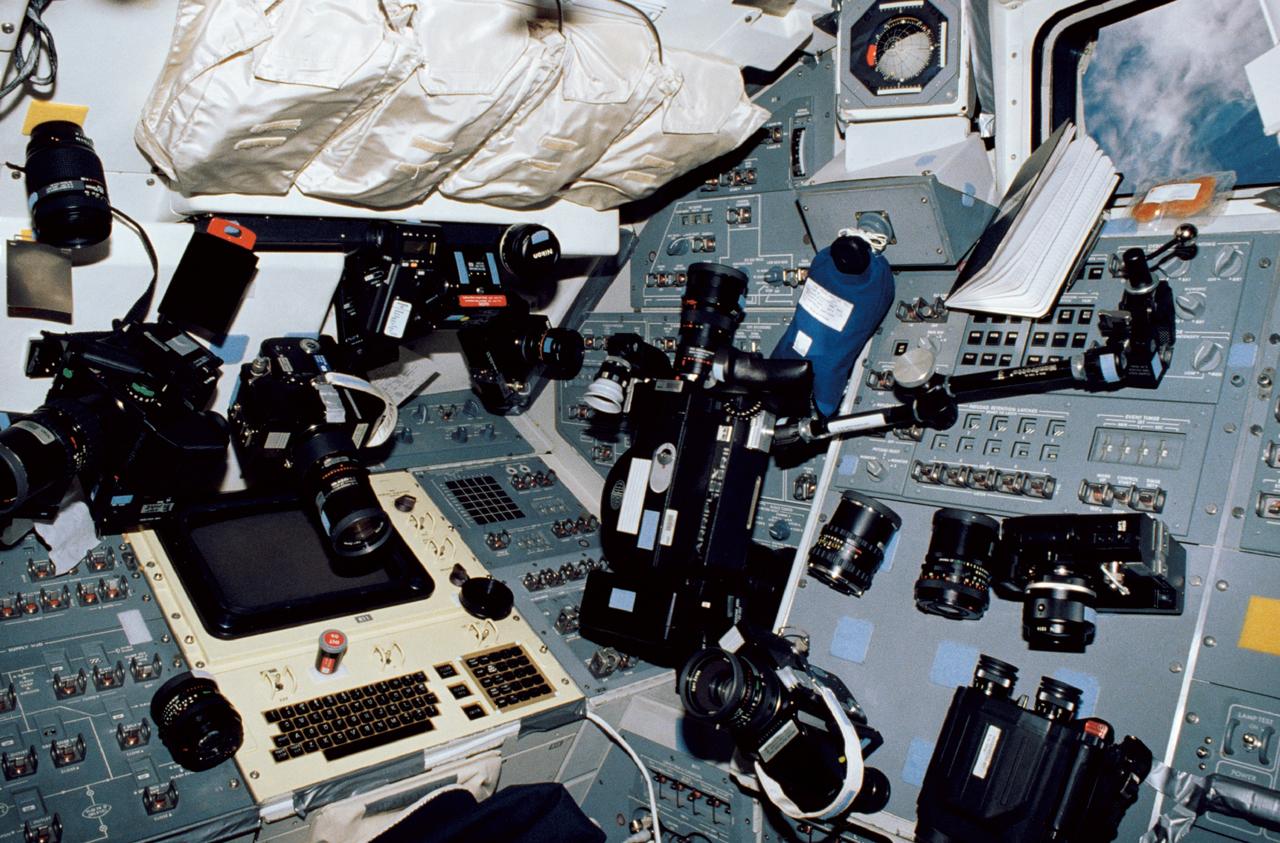
STS035-10-015 (2-10 Dec 1990) --- This busy scene shows cameras and supportive photographic gear temporarily stowed on Space Shuttle Columbia's aft flight deck. It was photographed with a 35mm camera by astronaut Jeffrey A. Hoffman, mission specialist, who called the cluster a "camera forest." The seven STS-35 crewmembers trained to record a wide variety of imagery with an equally broad range of equipment. In addition to cameras, a spot meter, film, a pair of binoculars, a bracket, lenses, lens cleaner and other photographic equipment are in the scene. Clouds over ocean waters are framed by an aft flight deck window at upper right.
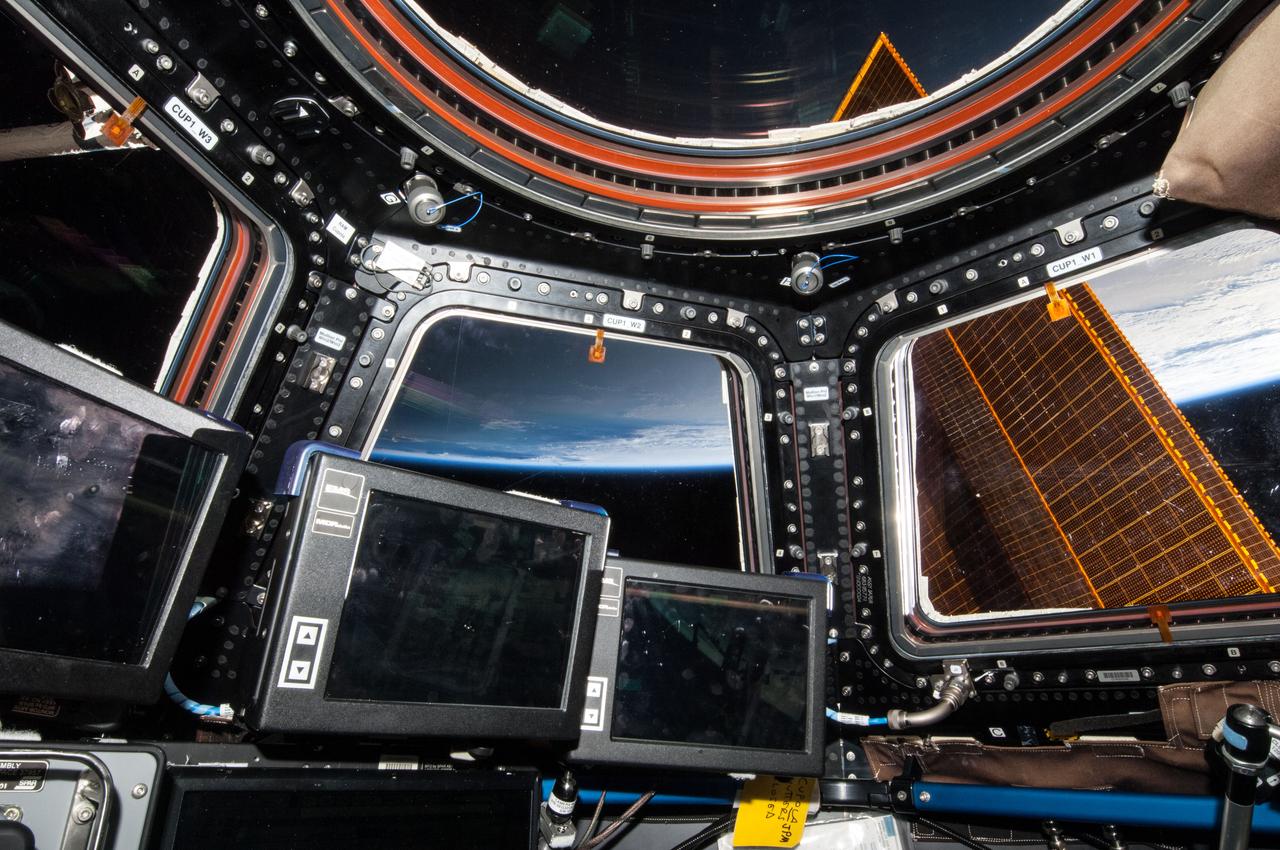
ISS036-E-029203 (5 Aug. 2013) --- The International Space Station?s Cupola robotics workstation is featured in this image photographed by an Expedition 36 crew member during onboard training activity as they prepare for the grapple and berthing of the Japanese "Kounotori" H2 Transfer Vehicle-4 (HTV-4) set for August 9. A station solar array and Earth?s horizon are visible through Cupola?s windows.
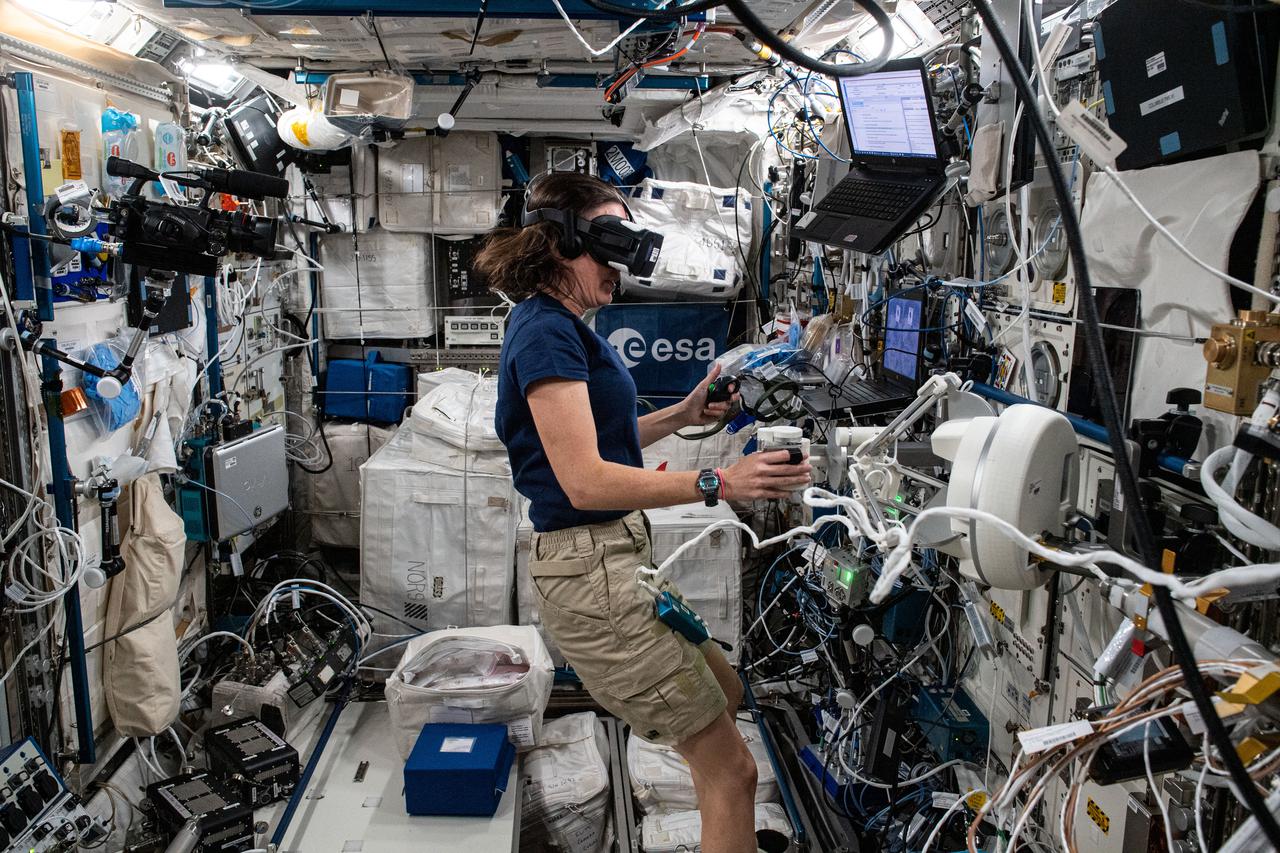
ss065e073985 (May 26, 2021) --- NASA astronaut Megan McArthur participate in the Pilote experiment. The experiment from the European Space Agency uses virtual reality gear and tests a crew member’s aptitude when maneuvering a computer-generated robotic arm toward a target. Results may influence the design of workstations and interfaces for future spacecraft and space habitats.
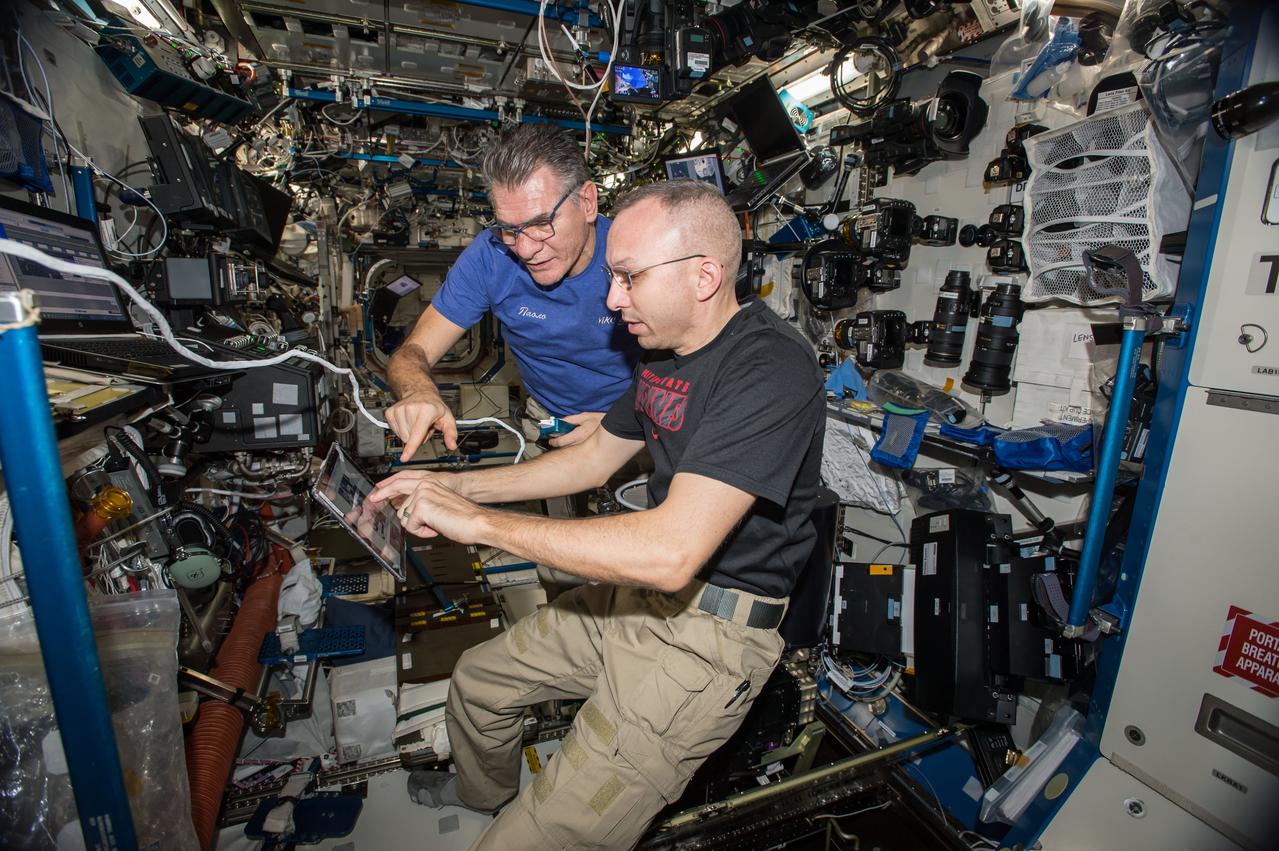
iss053e156180 (Nov. 9, 2017) --- Expedition 53 Commander Randy Bresnik (foreground) and Flight Engineer Paolo Nespoli are at the controls of the robotics workstation in the Destiny laboratory module training for the approach, rendezvous and grapple of the Orbital ATK Cygnus resupply ship. Both astronauts were in the cupola operating the Canadarm2 robotic arm to grapple Cygnus when it arrived Nov. 14, 2017, delivering nearly 7,400 pounds of crew supplies, science experiments, computer gear, vehicle equipment and spacewalk hardware.
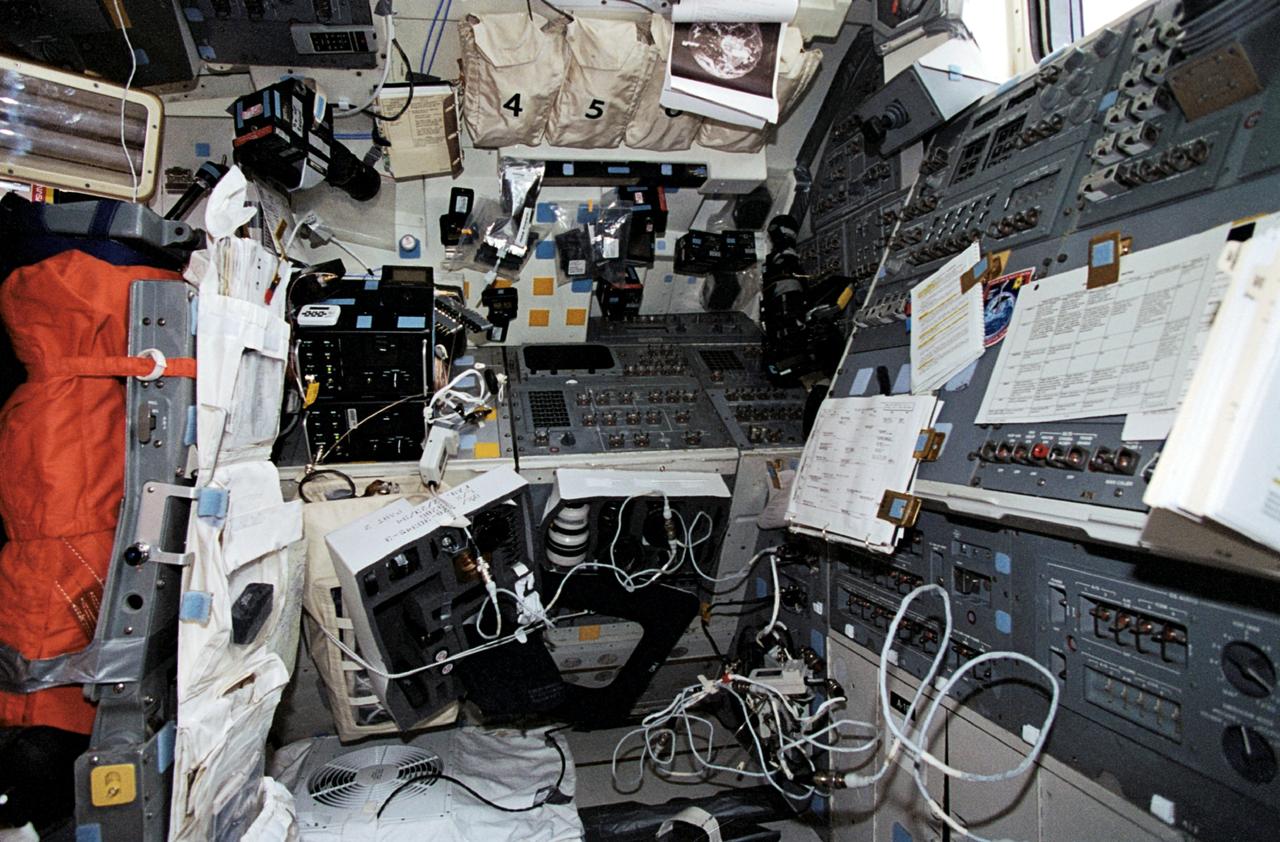
STS062-17-034 (4-18 March 1994) --- This scene, resembling a photographer's studio/laboratory, actually shows the aft flight deck of the Earth-orbiting Space Shuttle Columbia. A variety of cameras, lenses, visual aids and other gear are seen stowed around the flight deck. The five astronaut crew members devoted a large portion of their on-duty time at this workstation using some of this photographic equipment to record Earth imagery.
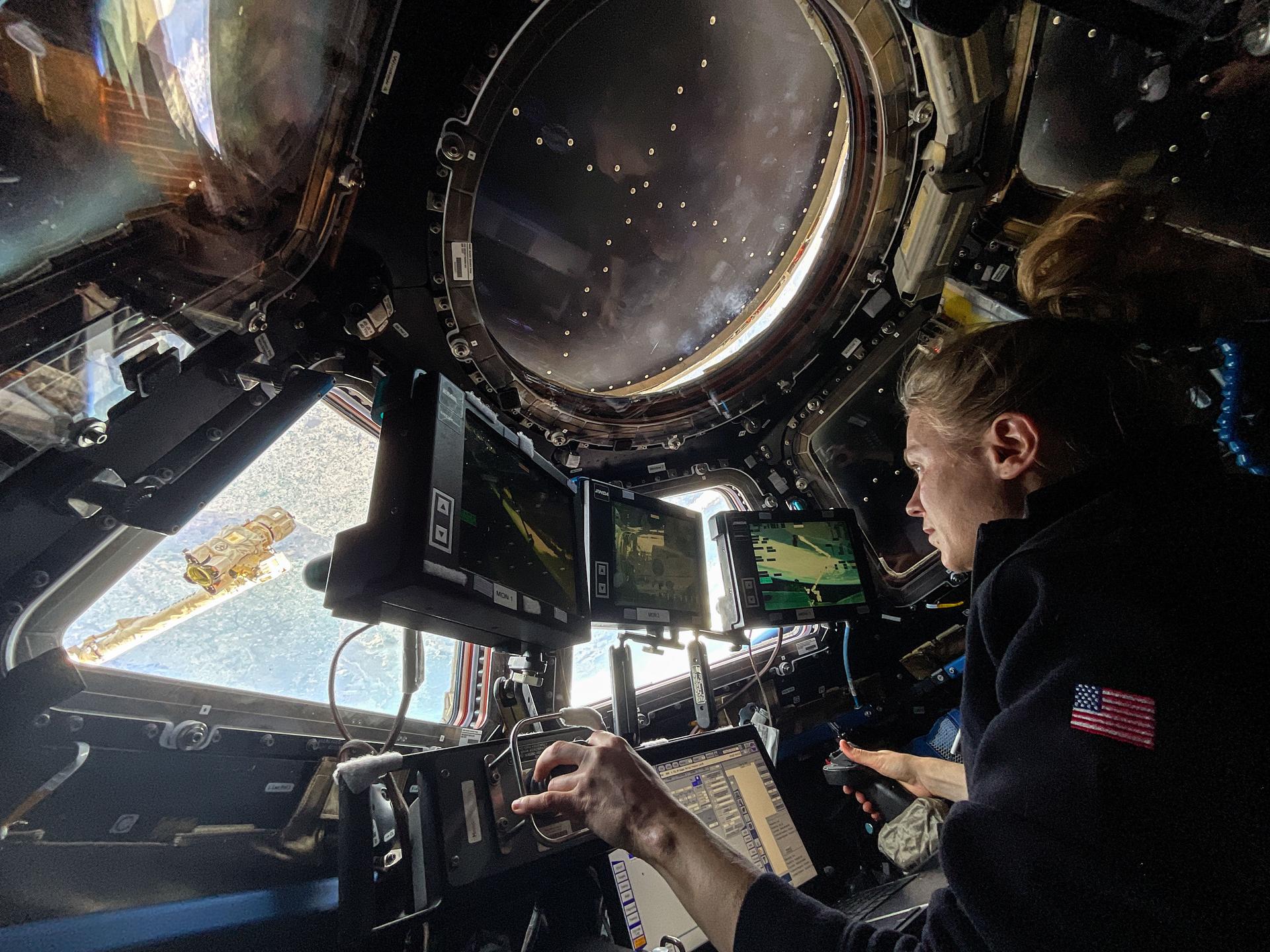
iss073e0981639 (Sept. 11, 2025) --- NASA astronaut and Expedition 73 Flight Engineer Zena Cardman practices Canadarm2 robotic maneuvers at the robotics workstation inside the International Space Station's cupola. Kim was preparing for the robotic capture of the Northrop Grumman Cygnus XL cargo spacecraft that launched on Sept. 14, 2025, and arrived on Sept. 18 delivering about 11,000 pounds of science, supplies, and hardware to the Expedition 73 crew.
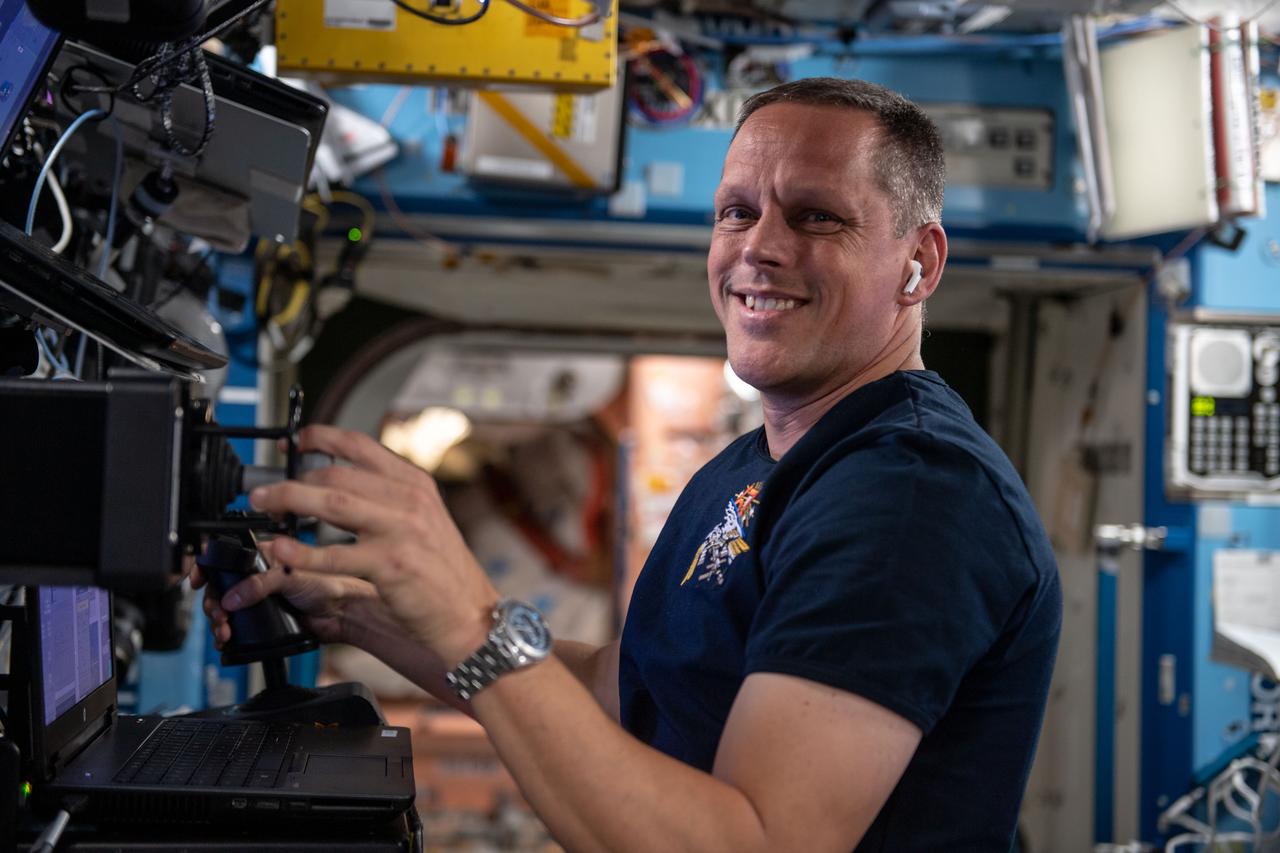
iss067e102059 (May 31, 2022) --- NASA astronaut and Expedition 67 Flight Engineer Bob Hines conducts a robotics test using the U.S. Destiny laboratory module's robotics workstation aboard the International Space Station. The test is part of the Behavioral Core Measures investigation that explores how working on the surface of Mars might affect a crew member’s performance.
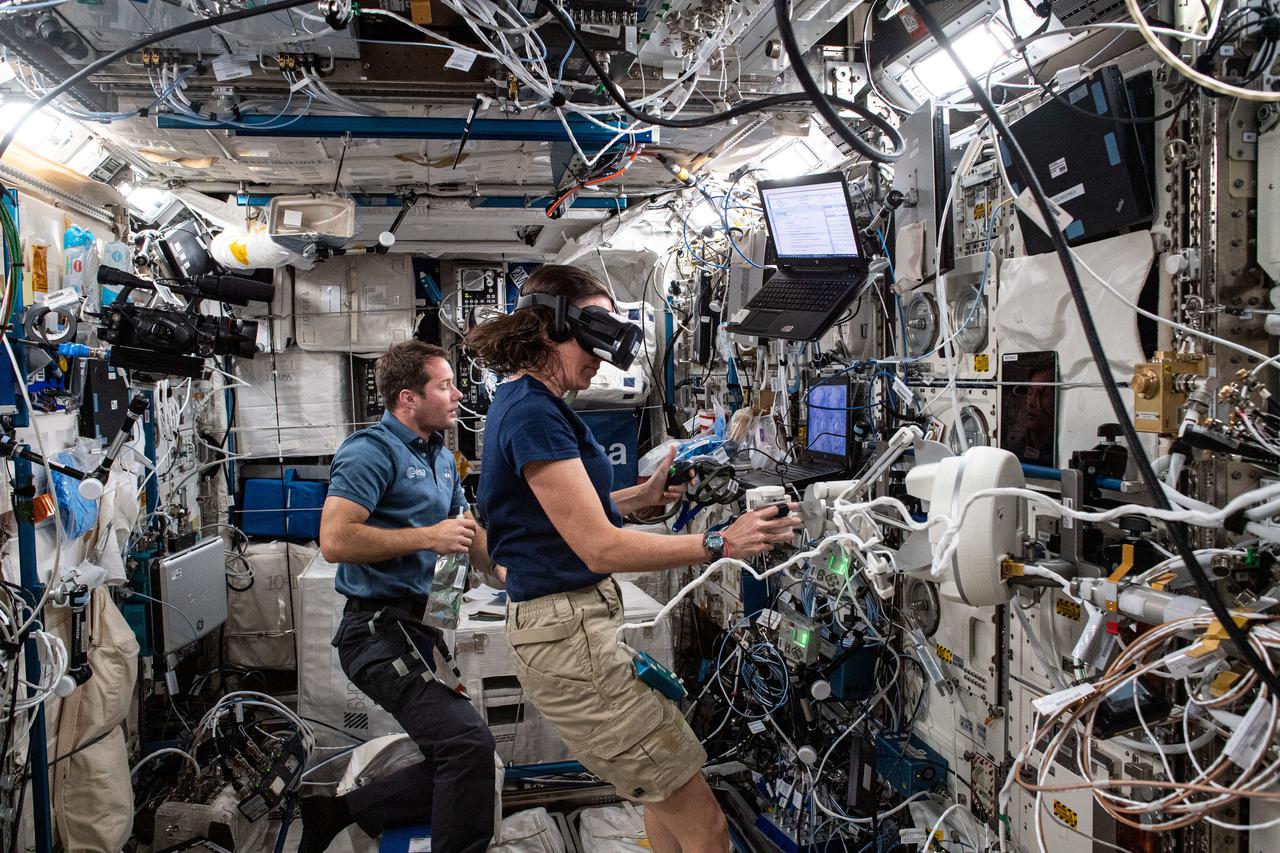
iss065e073987 (May 26, 2021) --- Expedition 65 Flight Engineers Thomas Pesquet and Megan McArthur participate in the Pilote experiment. The experiment from the European Space Agency uses virtual reality gear and tests a crew member’s aptitude when maneuvering a computer-generated robotic arm toward a target. Results may influence the design of workstations and interfaces for future spacecraft and space habitats.

iss069e056472 (Aug. 9, 2023) --- Roscosmos cosmonaut and Expedition 69 Flight Engineer Sergey Prokopyev is pictured in his Orlan spacesuit during a six-hour and 35-minute spacewalk to install orbital debris shields and relocate a portable workstation on the International Space Station. The European robotic arm extends from the Nauka science module to which the Prichal module and the Soyuz MS-23 crew ship are attached.
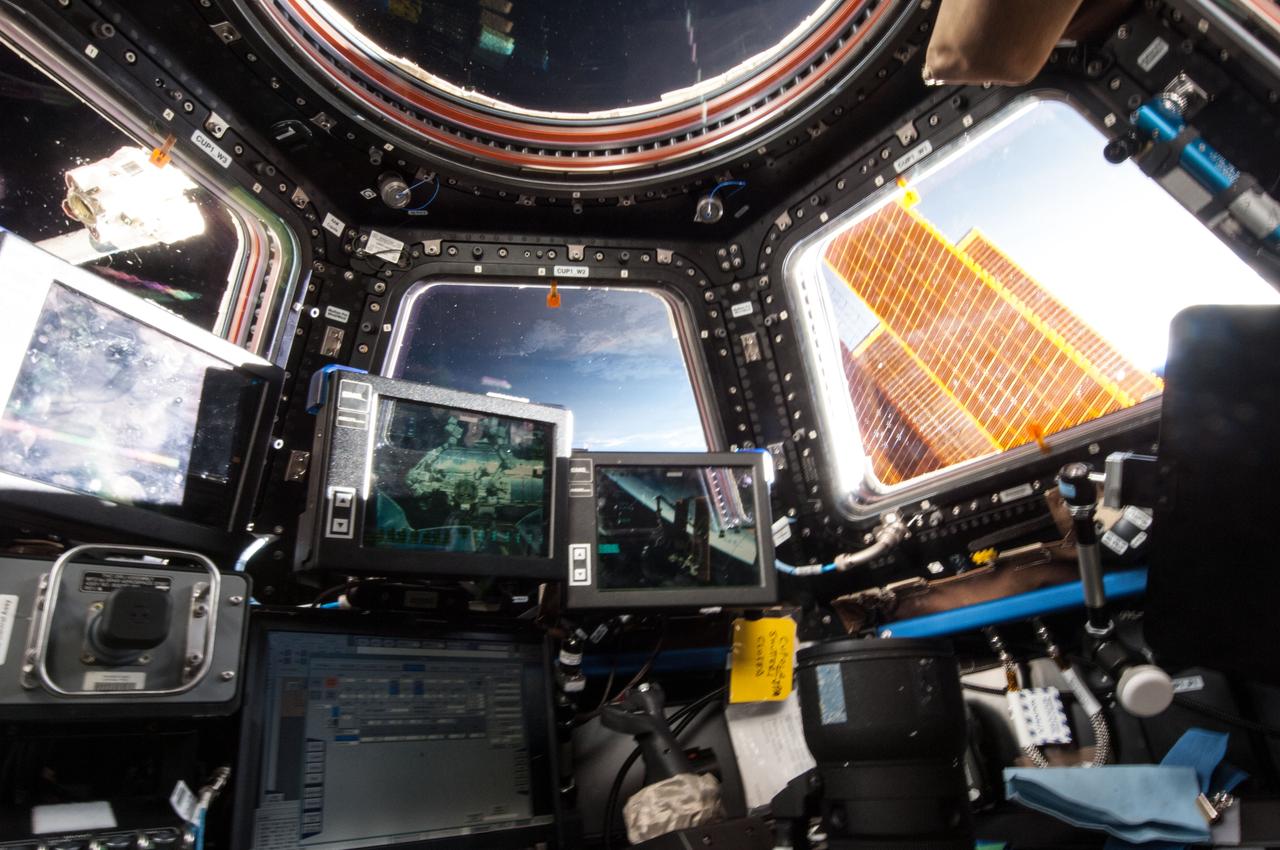
ISS036-E-029210 (5 Aug. 2013) --- The International Space Station?s Cupola robotics workstation is featured in this image photographed by an Expedition 36 crew member during onboard training activity as they prepare for the grapple and berthing of the Japanese "Kounotori" H2 Transfer Vehicle-4 (HTV-4) set for August 9. A station solar array and Earth?s horizon are visible through Cupola?s windows.
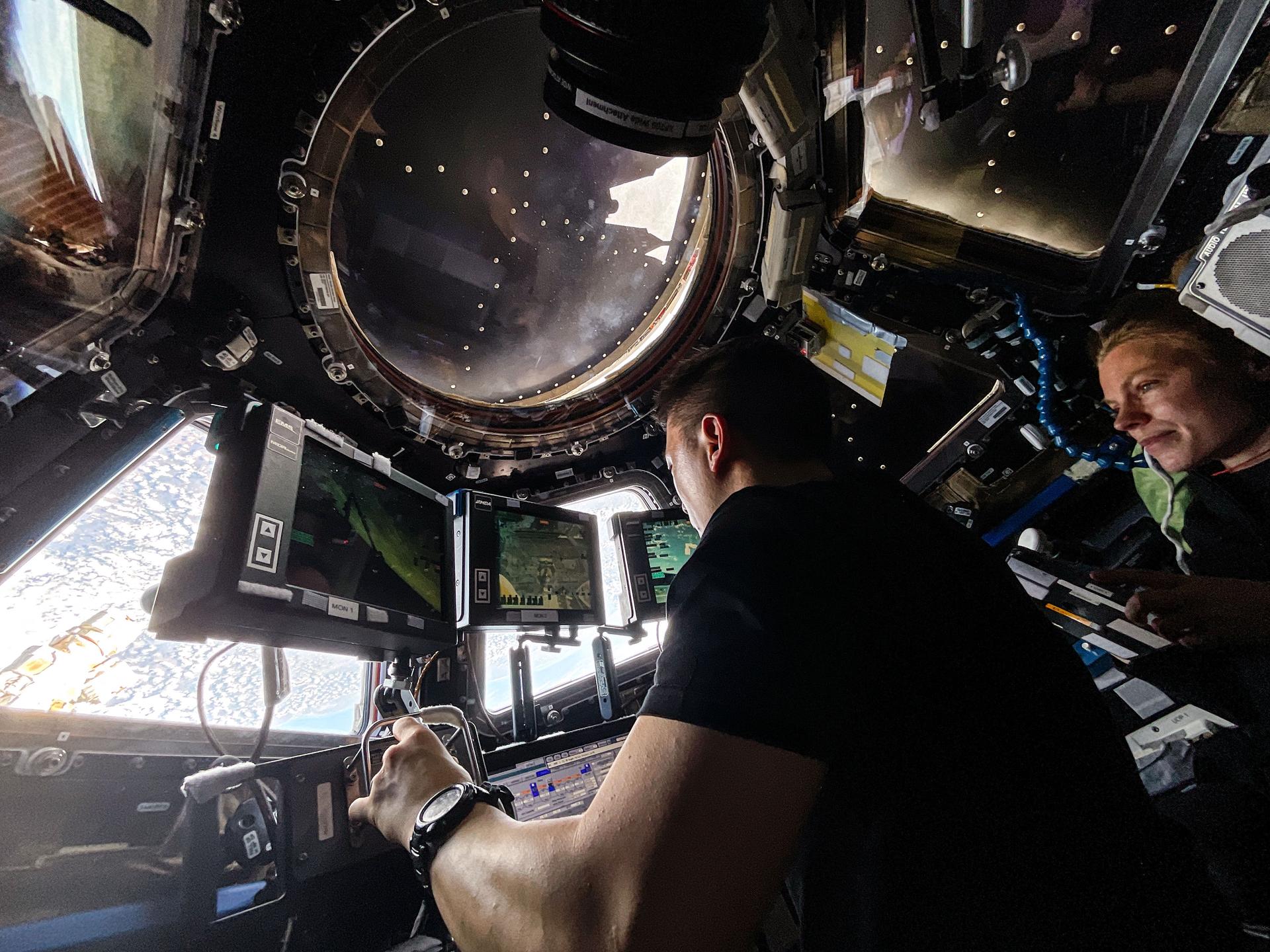
iss073e0981653 (Sept. 11, 2025) --- Expedition 73 Flight Engineers Jonny Kim and Zena Cardman, both NASA astronauts, practice Canadarm2 robotic maneuvers at the robotics workstation inside the International Space Station's cupola. The duo was preparing for the robotic capture of the Northrop Grumman Cygnus XL cargo spacecraft that launched on Sept. 14, 2025, and arrived on Sept. 18 delivering about 11,000 pounds of science, supplies, and hardware to the Expedition 73 crew.
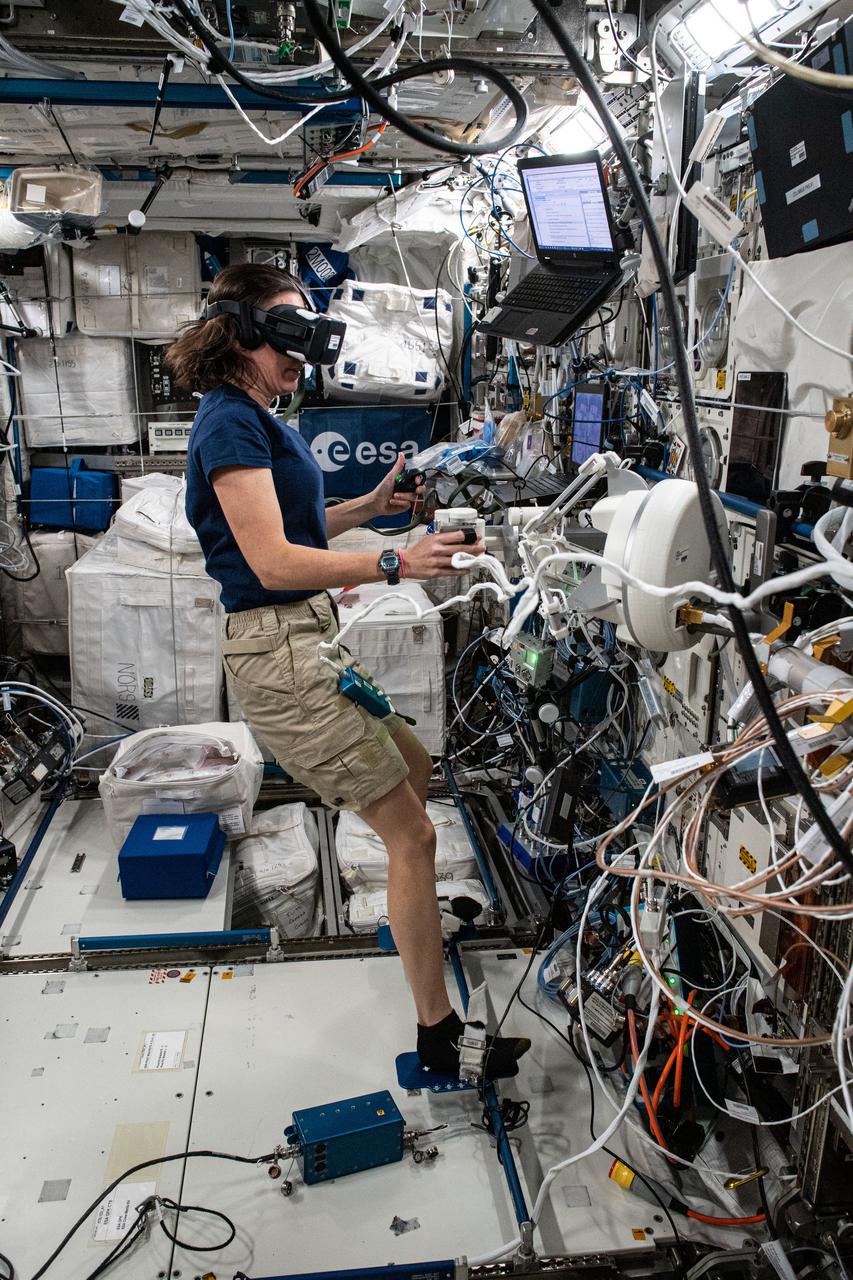
ss065e073986 (May 26, 2021) --- NASA astronaut Megan McArthur participate in the Pilote experiment. The experiment from the European Space Agency uses virtual reality gear and tests a crew member’s aptitude when maneuvering a computer-generated robotic arm toward a target. Results may influence the design of workstations and interfaces for future spacecraft and space habitats.
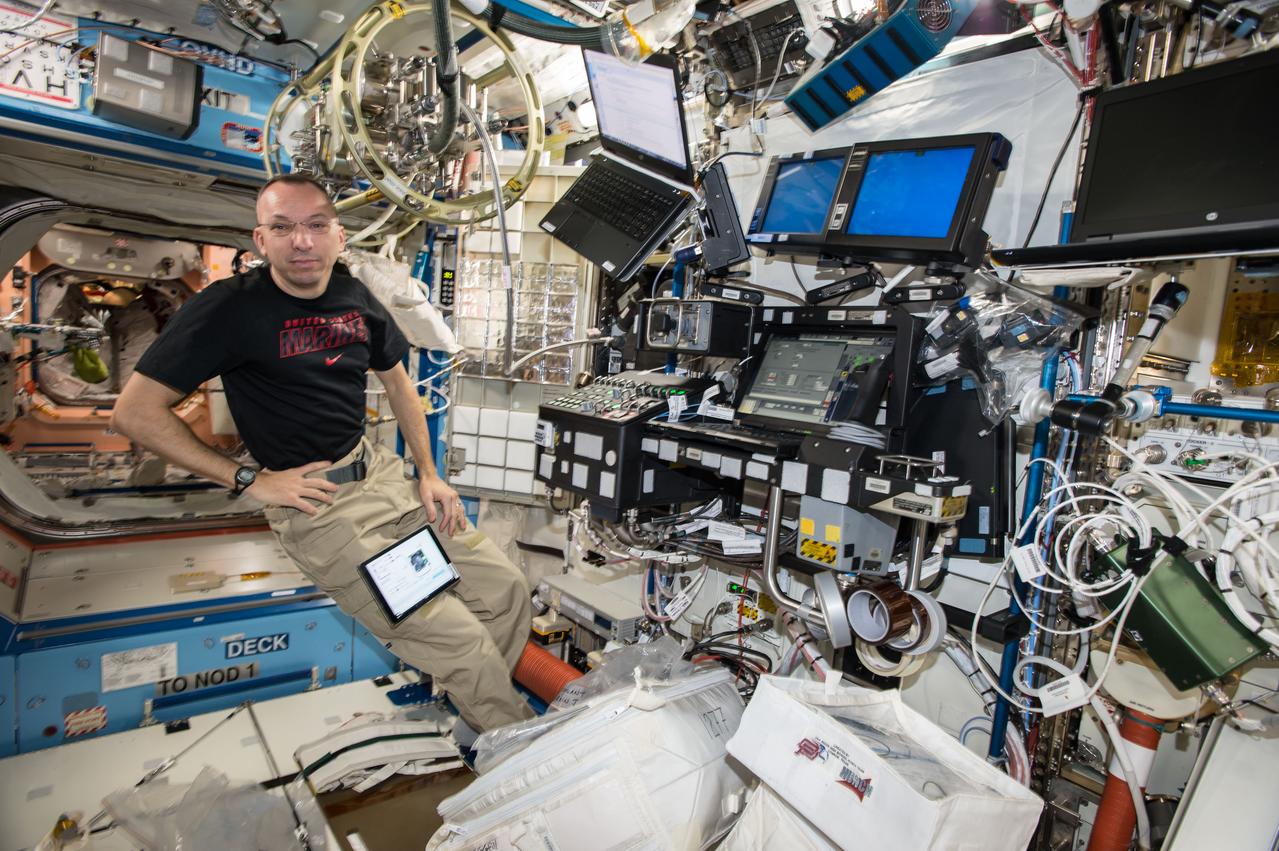
iss053e156160 (Nov. 9, 2017) --- Expedition 53 Commander Randy Bresnik is at the controls of the robotics workstation in the Destiny laboratory module training for the approach, rendezvous and grapple of the Orbital ATK Cygnus resupply ship. He and Flight Engineer Paolo Nespoli were in the cupola operating the Canadarm2 robotic arm to grapple Cygnus when it arrived Nov. 14, 2017, delivering nearly 7,400 pounds of crew supplies, science experiments, computer gear, vehicle equipment and spacewalk hardware.
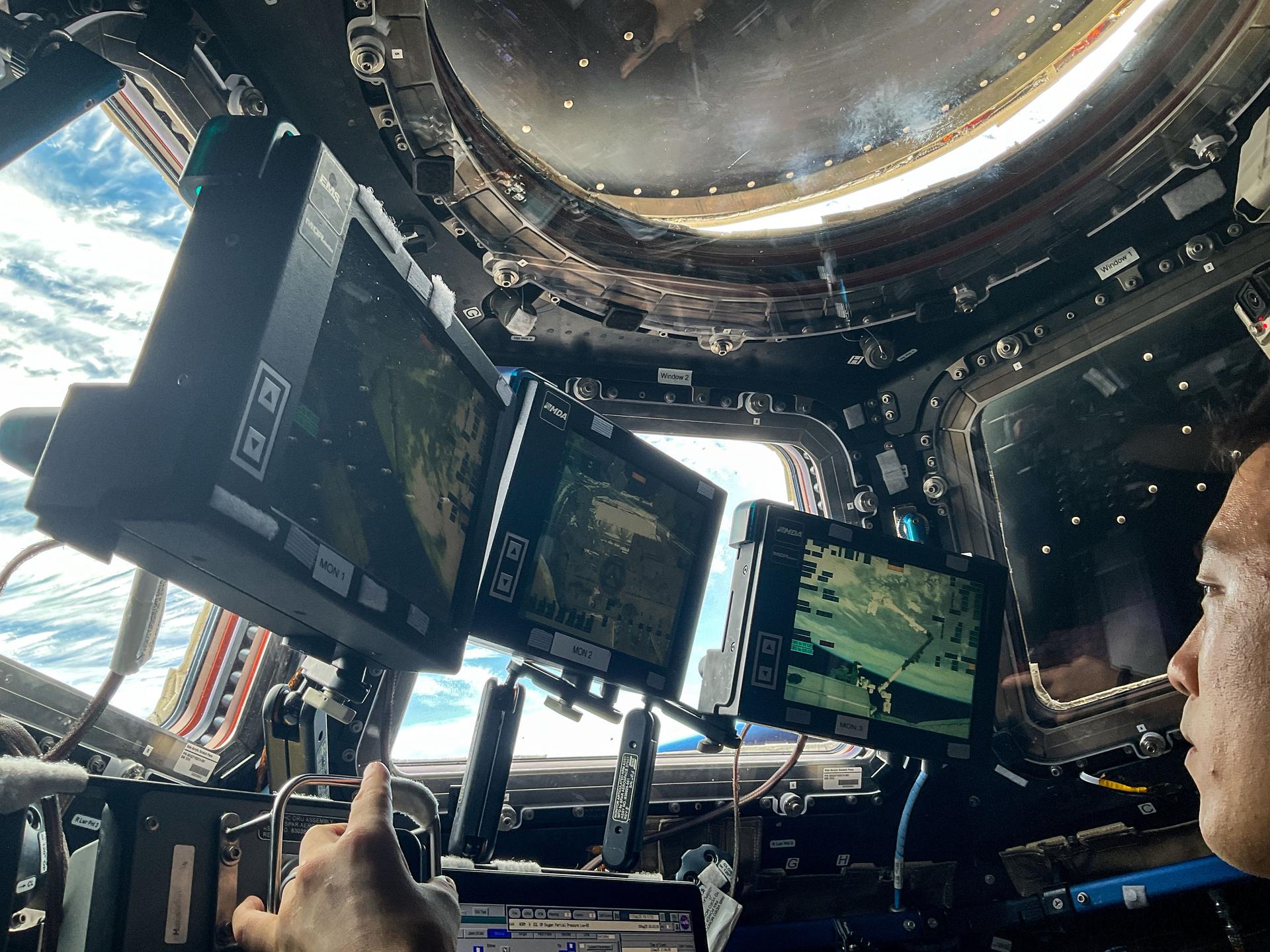
iss073e0981611 (Sept. 11, 2025) --- NASA astronaut and Expedition 73 Flight Engineer Jonny Kim practices Canadarm2 robotic maneuvers at the robotics workstation inside the International Space Station's cupola. Kim was preparing for the robotic capture of the Northrop Grumman Cygnus XL cargo spacecraft that launched on Sept. 14, 2025, and arrived on Sept. 18 delivering about 11,000 pounds of science, supplies, and hardware to the Expedition 73 crew.
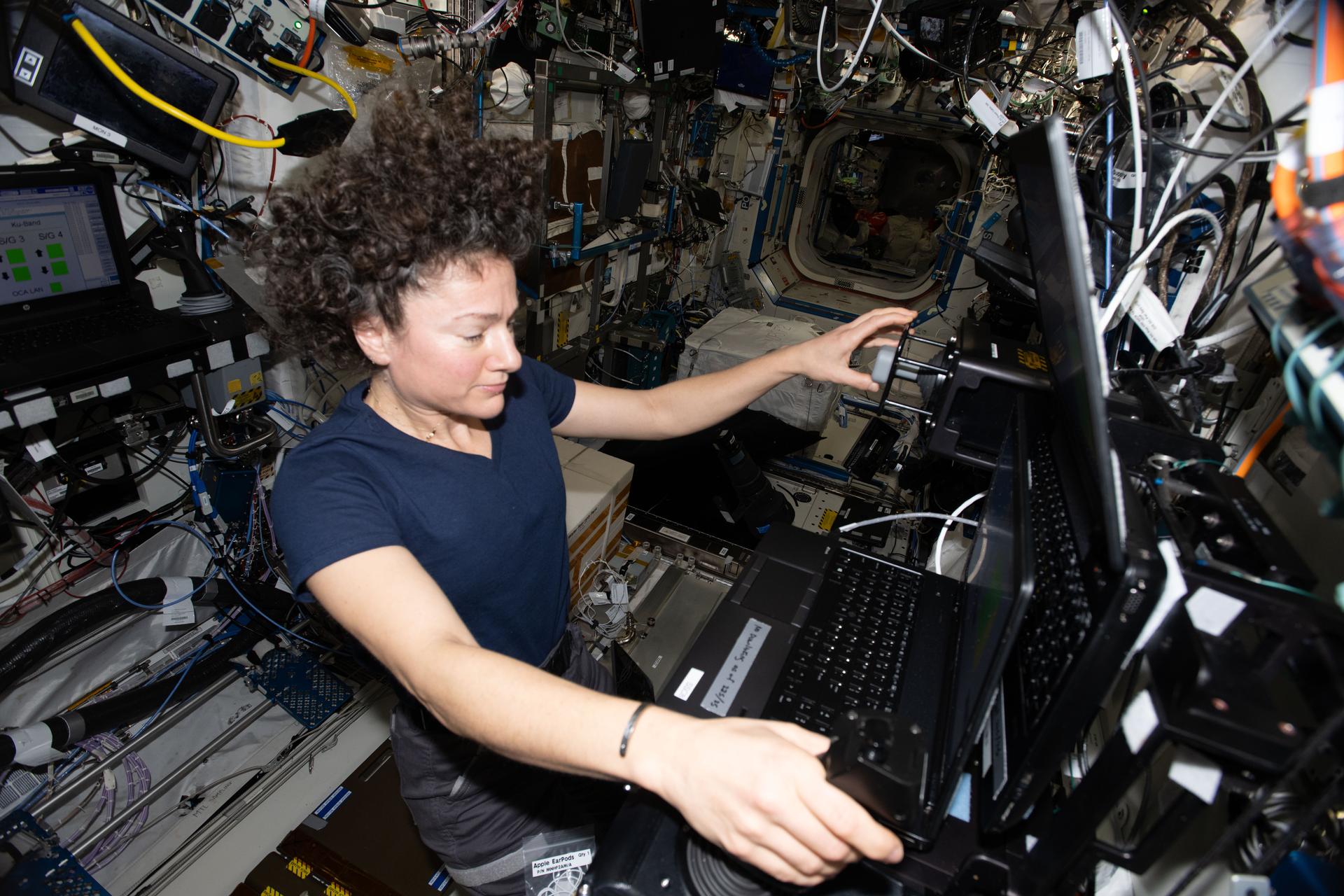
iss075e0155970 (Oct. 1, 2026) --- NASA astronaut Jessica Meir practices simulated lunar‑landing techniques on the Destiny laboratory module's robotics workstation. The Manual Piloting investigation aboard the International Space Station is helping researchers understand how microgravity may affect a crew member’s cognition when operating a spacecraft. Credit: NASA/Jack Hathaway
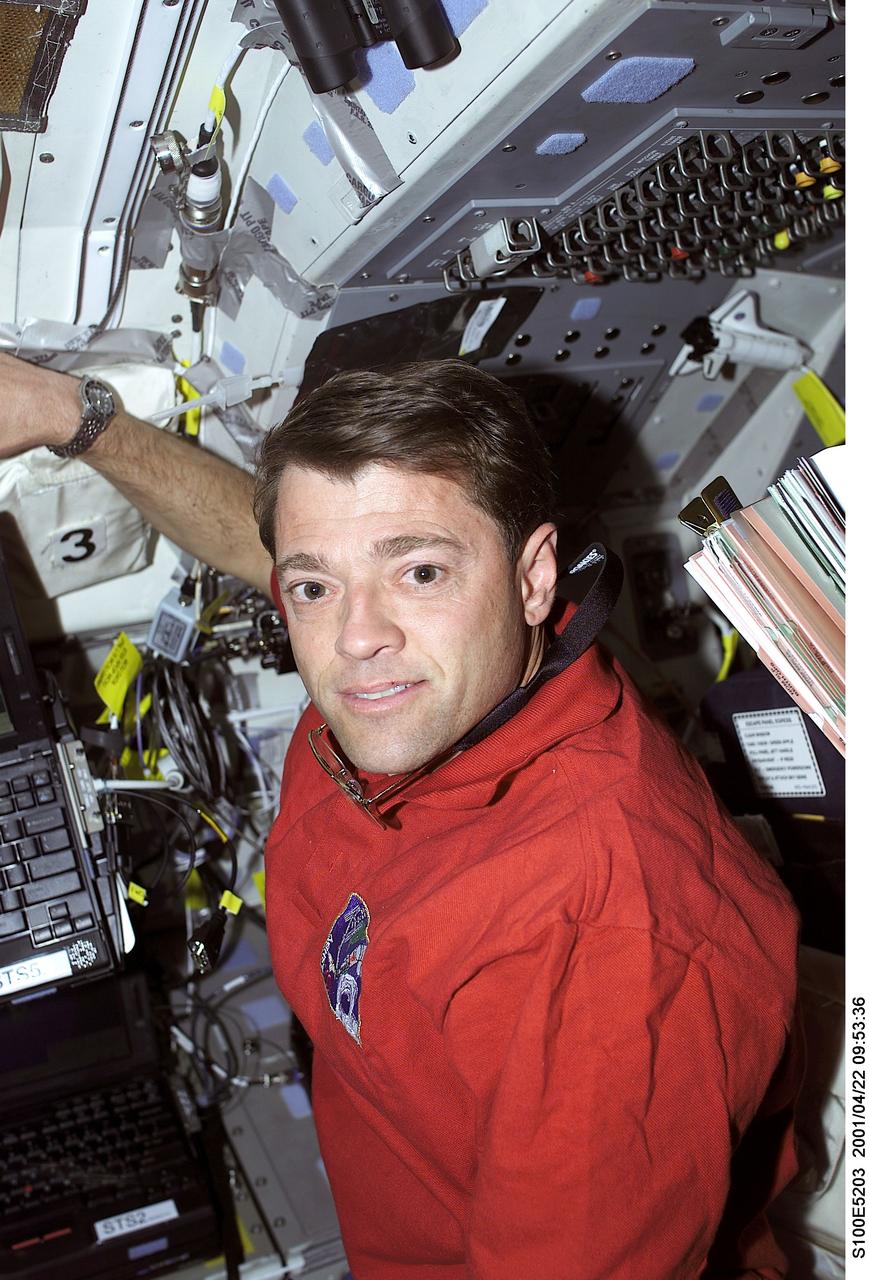
S100-E-5203 (22 April 2001) --- Astronaut Jeffrey S. Ashby, STS-100 pilot, remains on Endeavour's flight deck as two crew mates (out of frame) get ready on the deck below for space walk duty. The image was recorded with a digital still camera.
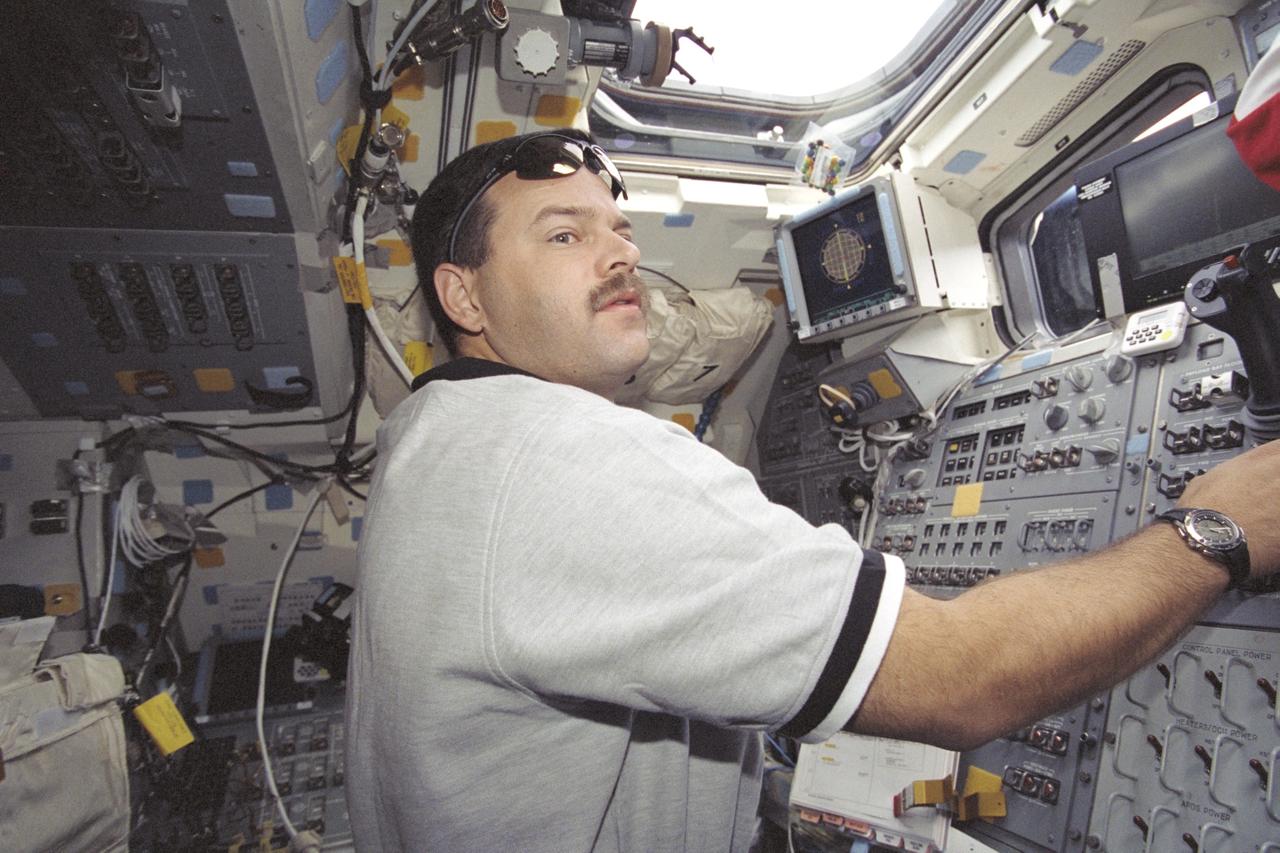
STS106-320-018 (17 September 2000) --- Astronaut Scott D. Altman, STS-106 pilot, controls the intricate maneuvers of the shuttle during undocking procedures with the International Space Station (ISS) from the aft flight deck of the Space Shuttle Atlantis.
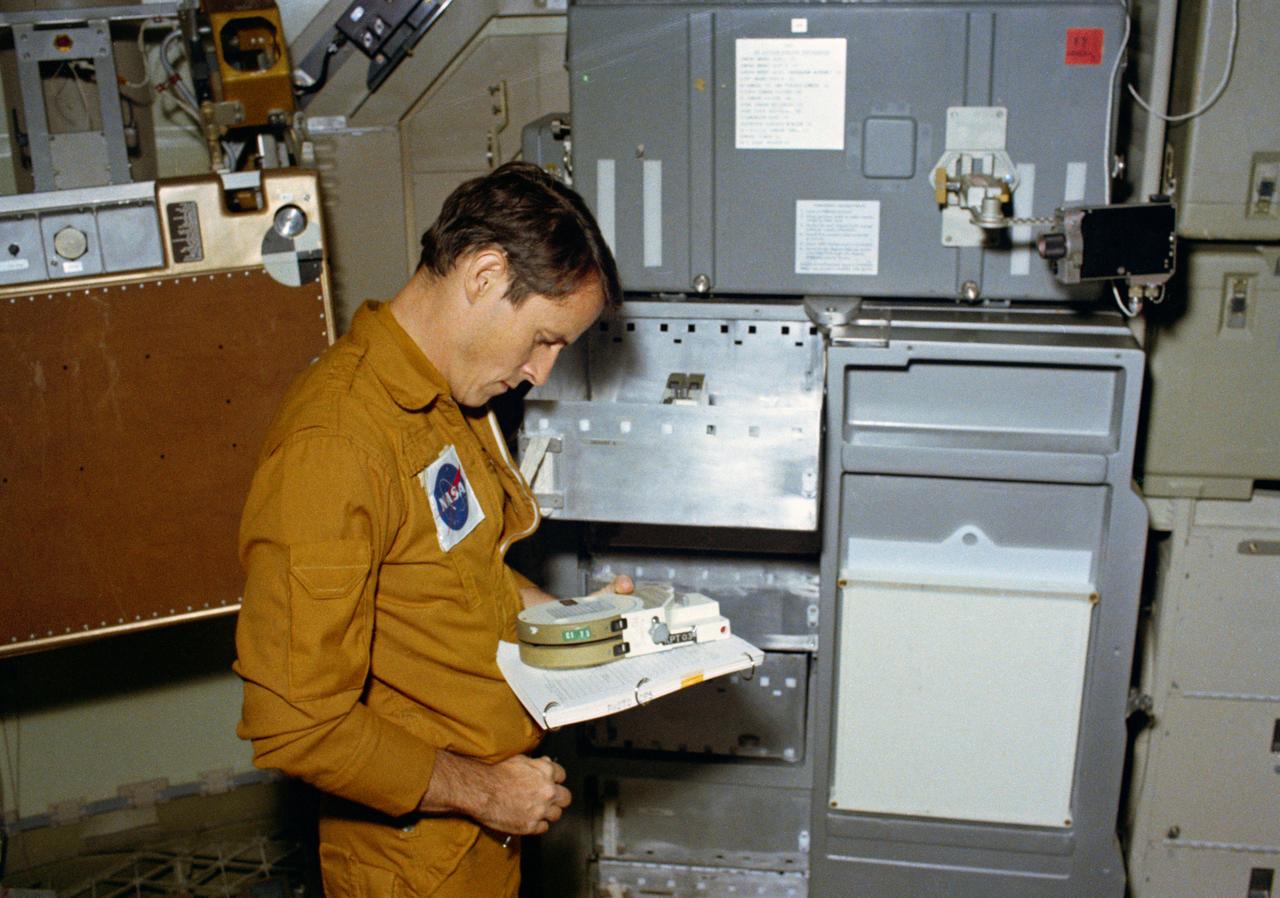
S73-32848 (10 Sept. 1973) --- Scientist-astronaut Edward G. Gibson, science pilot for the third manned Skylab mission (Skylab 4), reads the markings on a magazine of 400 feet of film for the 16mm Data Acquisition Camera (DAC), during a training exercise in the Orbital Workshop (OWS) trainer at Johnson Space Center. Photo credit: NASA
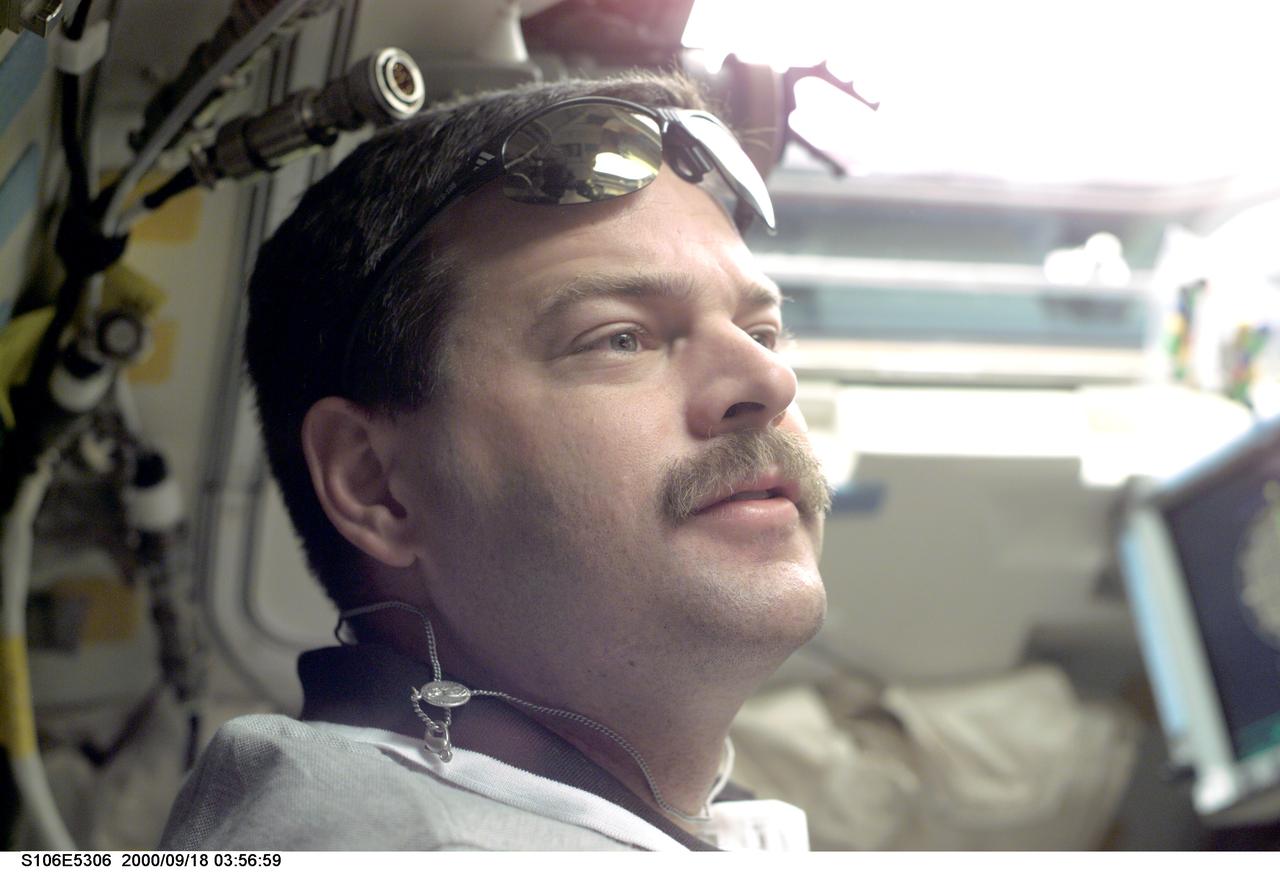
S106-E-5306 (18 September 2000) --- Astronaut Scott D. Altman, pilot, occupies the commander's station for some important maneuvers. Atlantis’ seven astronauts and cosmonauts successfully undocked from the International Space Station after accomplishing all mission objectives in outfitting the station for the first resident crew. Undocking occurred at 3:46 GMT, Sept. 18, over Russia near the northeastern portion of Ukraine. When Atlantis was at a safe distance from the station, about 450 feet, Altman performed a 90-minute, double-loop fly around to enable the crew to document the station’s exterior. He fired Atlantis’ jets one final time to separate from the station at 5:35 GMT, September 18.
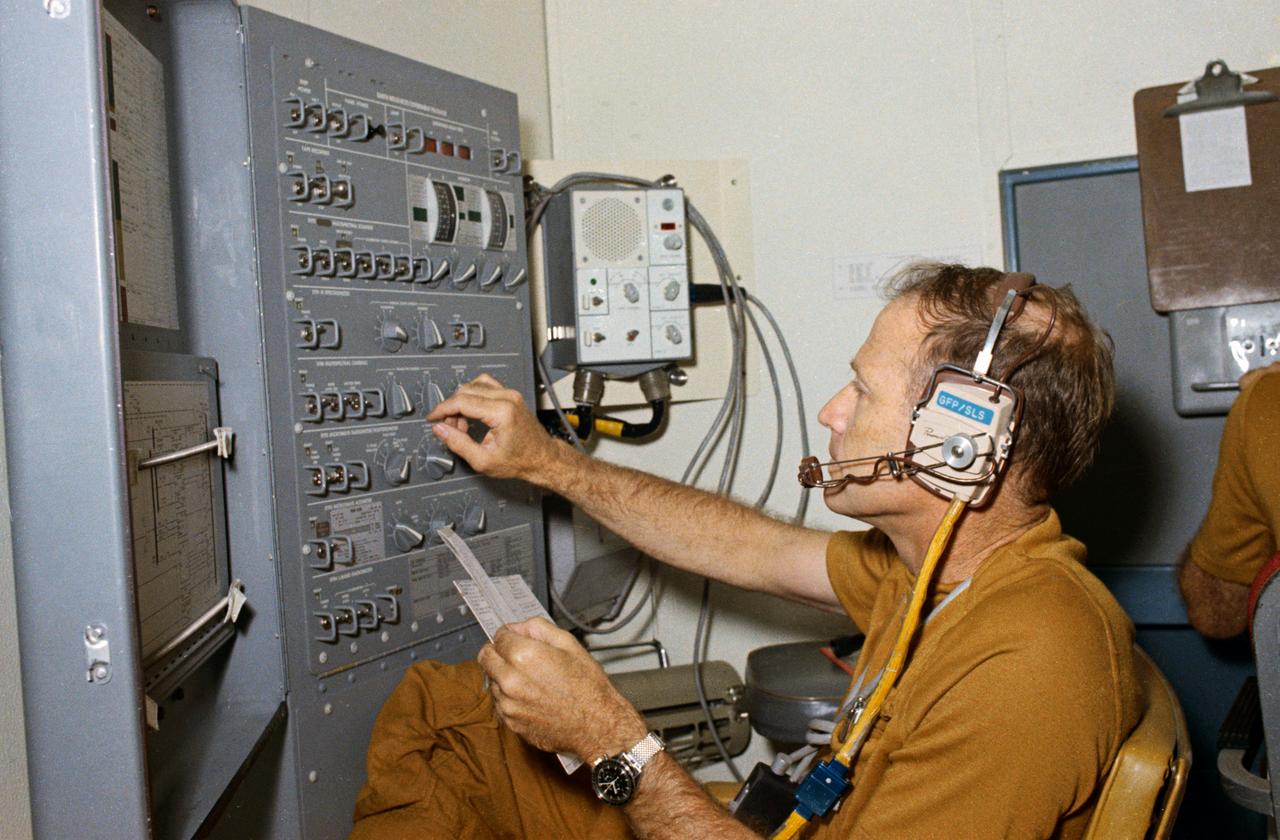
S73-32847 (10 Sept. 1973) --- Astronaut Gerald P. Carr, Skylab 4 commander, changes a dial on the control and display panel for the Earth Resources Experiments package (EREP) during a training exercise in the Multiple Docking Adapter (MDA) one-G trainer at Johnson Space Center. Photo credit: NASA
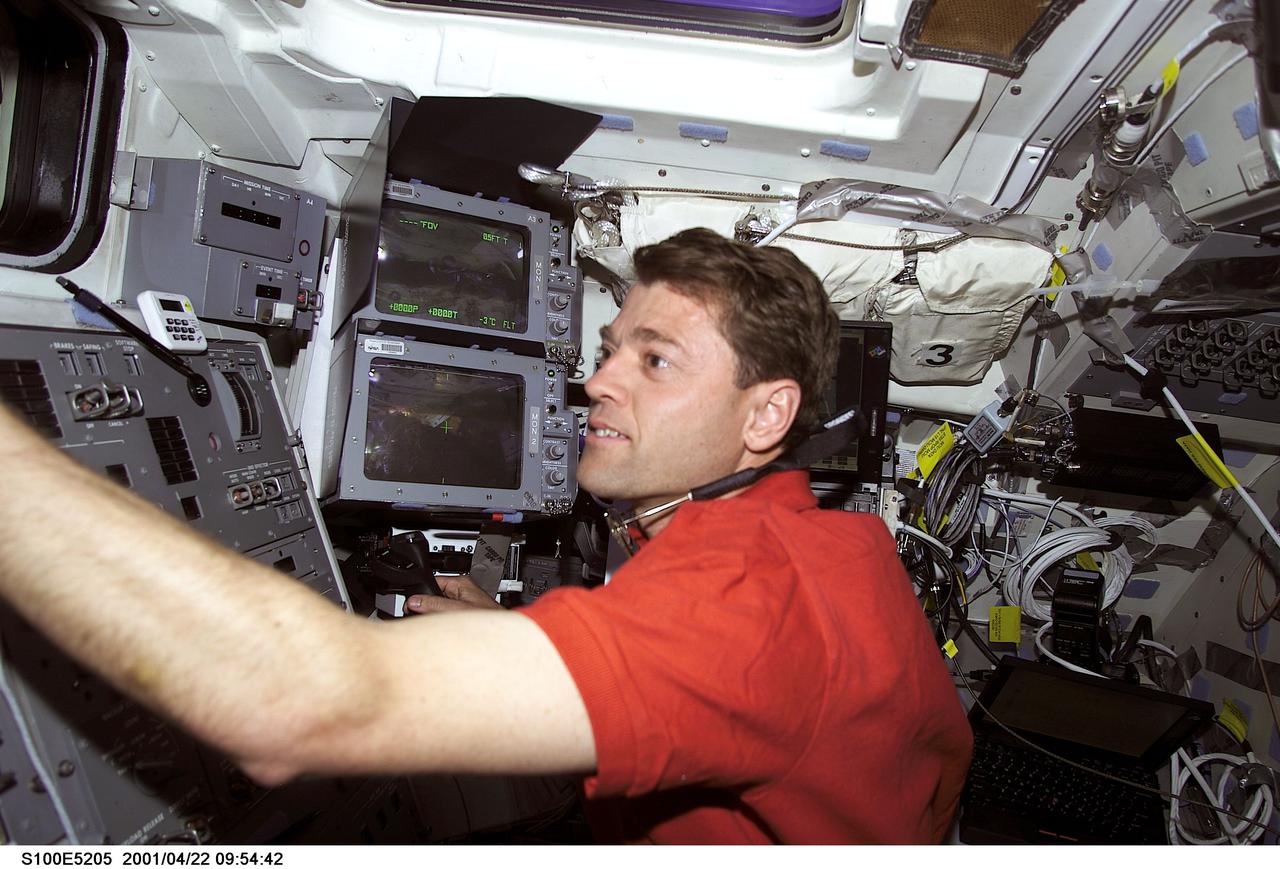
S100-E-5205 (22 April 2001) --- Astronaut Jeffrey S. Ashby, STS-100 pilot, remains on Endeavour's flight deck as two crew mates (out of frame) on the deck below get ready for space walk duty. The image was recorded with a digital still camera.
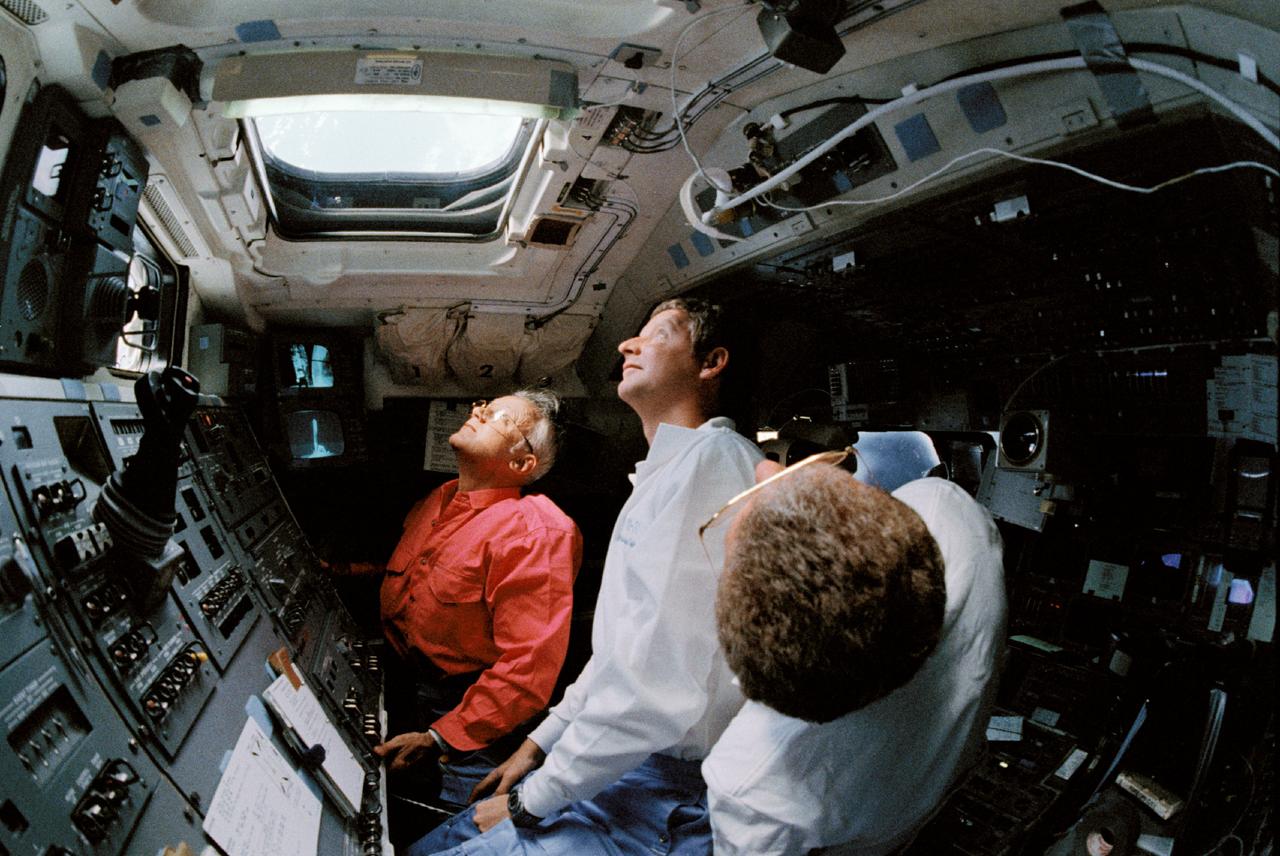
STS031-10-027 (24-29 April 1990) --- A "fish eye" lens captured this overall view of the aft flight deck of Space Shuttle Discovery while the crewmembers were monitoring the Hubble Space Telescope (HST) deployment checkout procedures. From front to back are astronauts Loren J. Shriver, commander, and Steven A. Hawley and MS Bruce McCandless II, both mission specialists, looking up at overhead windows and the HST on the remote manipulator system (RMS) outside them.
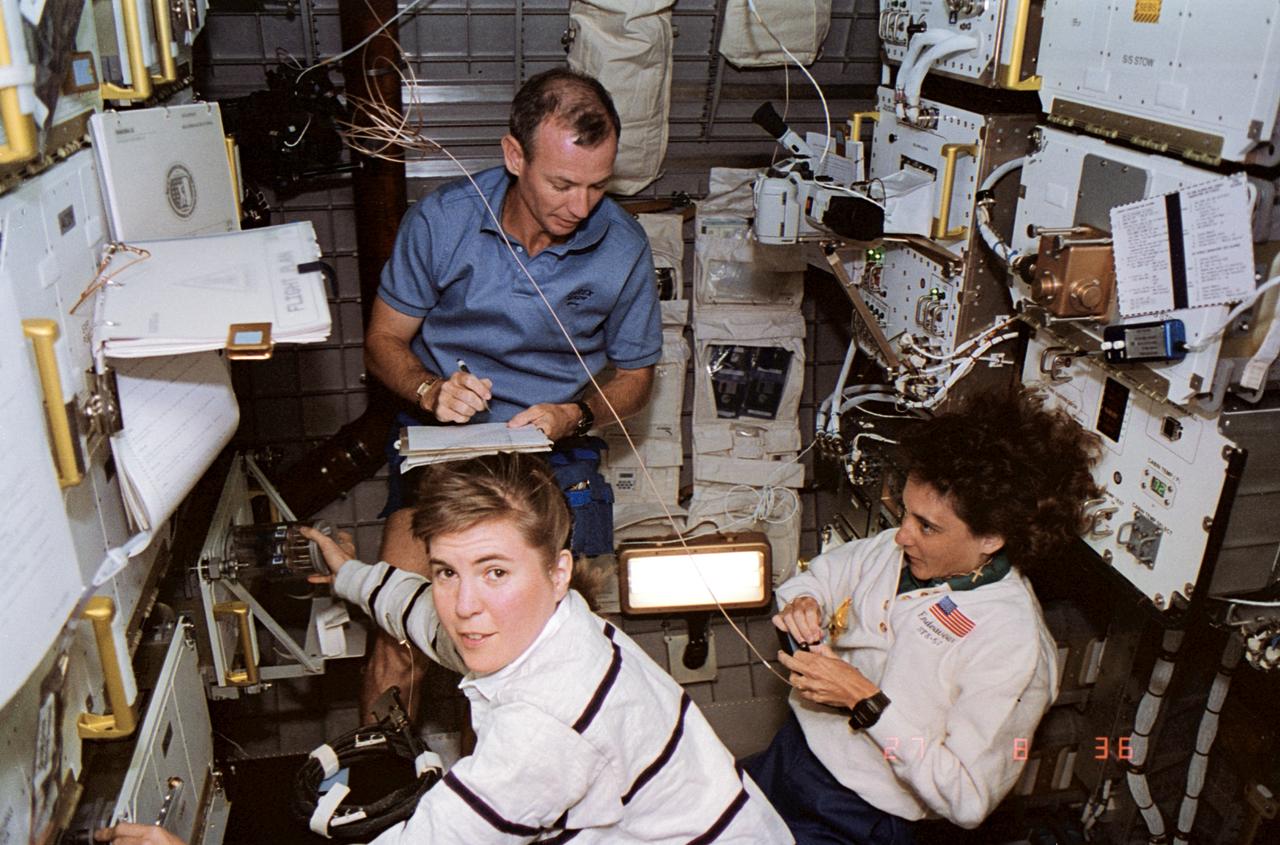
STS057-39-001 (27 June 1993) --- This high angle shot inside the SPACEHAB module, onboard the Space Shuttle Endeavour, typifies the pace of activity conducted there during the ten-day STS-57 mission. Astronaut Janice E. Voss (foreground), mission specialist, works with biomaterials products, while astronauts Brian Duffy, pilot, and Nancy J. Sherlock, mission specialist, participate in other tasks.
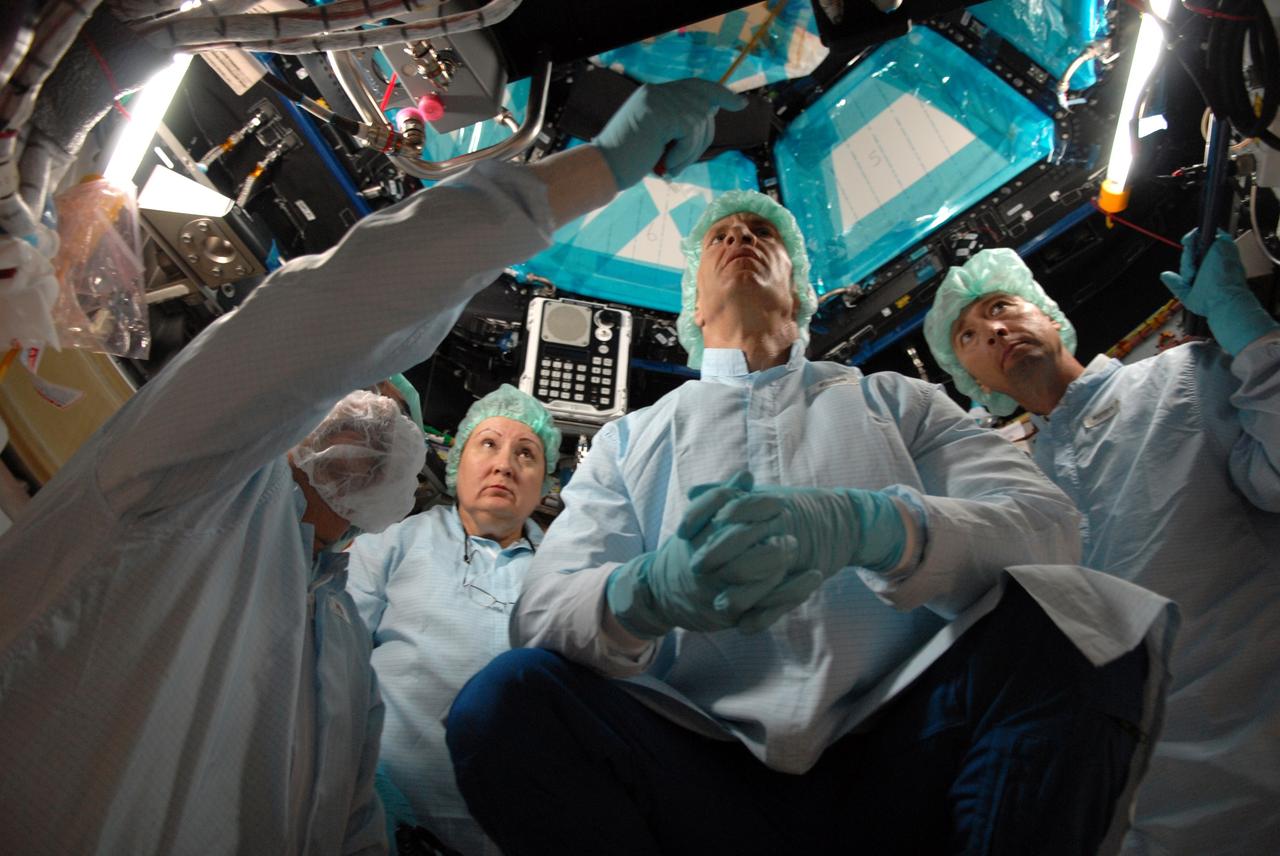
CAPE CANAVERAL, Fla. – In the Space Station Processing Facility at NASA's Kennedy Space Center, astronaut Charles Hobaugh, hands folded, conducts a fit check of the robotic workstation, or RWS, in the International Space Station's Cupola module. From left, he is assisted by Boeing technician Terry Camarata, vehicle integration test engineer Louise Kleba of Flight Crew Operations, and engineer David Jackson, from Johnson Space Center. The RWS is provided by the Canadian Space Agency. The module was delivered by the European Space Agency in 2004 to Kennedy from Alenia Spazio in Turin, Italy. Cupola will provide unprecedented views of activities outside the station and spectacular views of the Earth. Crew members working inside the module will have a 360-degree panoramic view. Cupola has the capability for command and control workstations to be installed to assist in space station remote manipulator system and extra vehicular activities. Cupola is the final element of the space station core and is scheduled for launch on space shuttle Endeavour's STS-130 mission, targeted for Dec. 10, 2009. Photo credit: NASA/Cory Huston
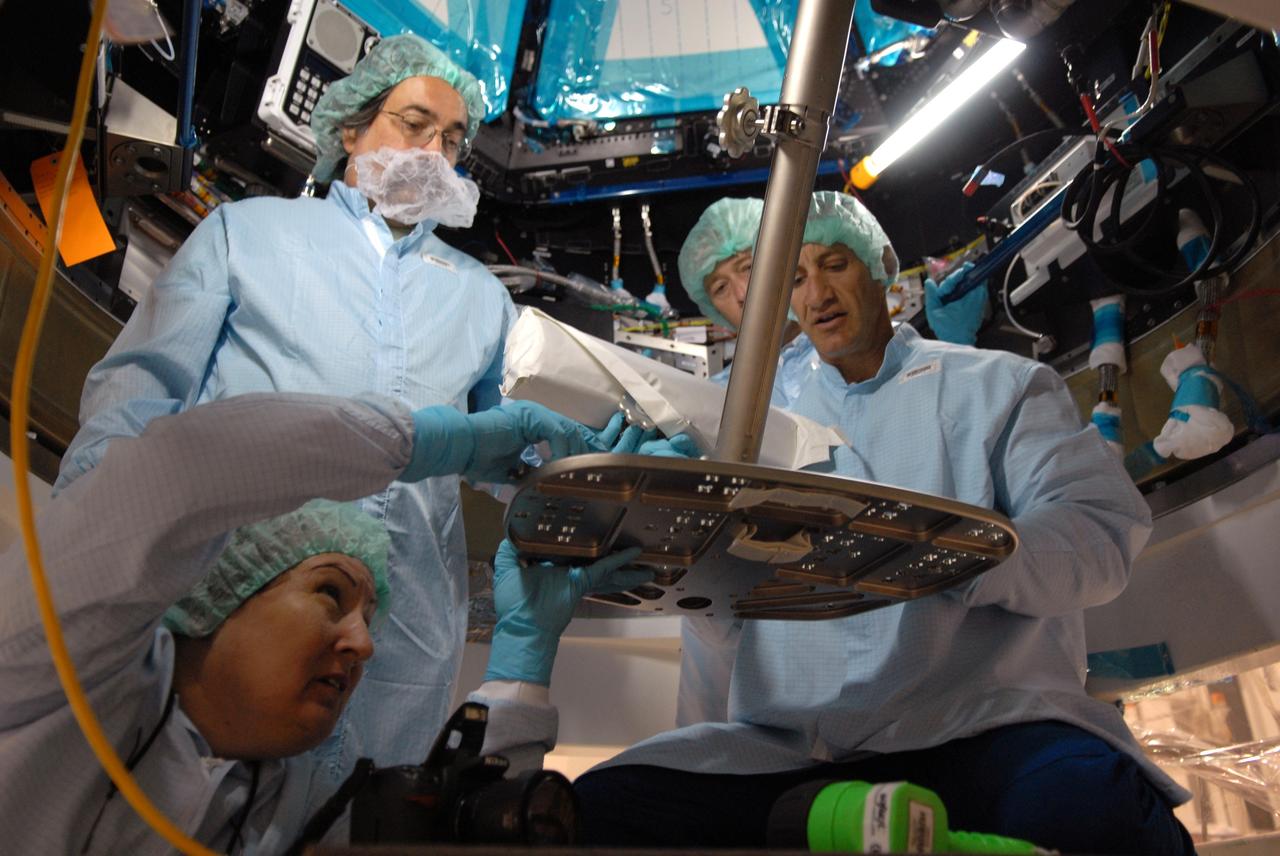
CAPE CANAVERAL, Fla. – In the Space Station Processing Facility at NASA's Kennedy Space Center, astronaut Charles Hobaugh, right, conducts a fit check of the robotic workstation, or RWS, in the International Space Station's Cupola module. He is assisted by vehicle integration test engineer Louise Kleba of Flight Crew Operations, kneeling, Boeing technician Terry Camarata, standing at left, and engineer David Jackson, from Johnson Space Center. The RWS is provided by the Canadian Space Agency. The module was delivered by the European Space Agency in 2004 to Kennedy from Alenia Spazio in Turin, Italy. Cupola will provide unprecedented views of activities outside the station and spectacular views of the Earth. Crew members working inside the module will have a 360-degree panoramic view. Cupola has the capability for command and control workstations to be installed to assist in space station remote manipulator system and extra vehicular activities. Cupola is the final element of the space station core and is scheduled for launch on space shuttle Endeavour's STS-130 mission, targeted for Dec. 10, 2009. Photo credit: NASA/Cory Huston
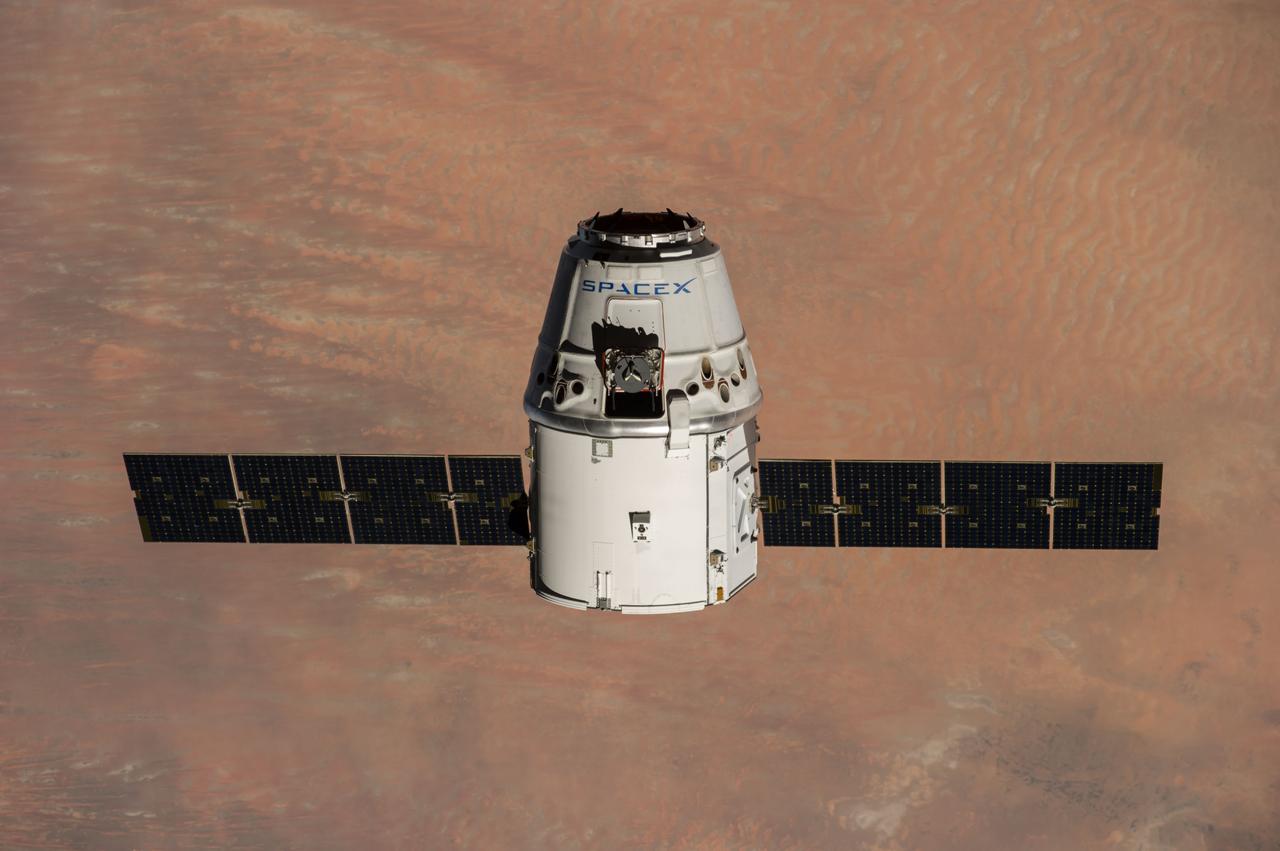
ISS041-E-020882 (23 Sept. 2014) --- The SpaceX Dragon commercial cargo craft approaches the International Space Station on Sept. 23, 2014 for grapple and berthing. European Space Agency astronaut Alexander Gerst and NASA astronaut Reid Wiseman, both Expedition 41 flight engineers, were at the controls of the robotics workstation in the Cupola when the Canadarm2 grappled Dragon at 6:52 a.m. (EDT). Dragon will spend the next four weeks attached to the Harmony node as the Expedition 41 crew unloads 4,885 pounds of (2,216 kg) crew supplies, hardware, experiments, and computer gear and spacewalk equipment.
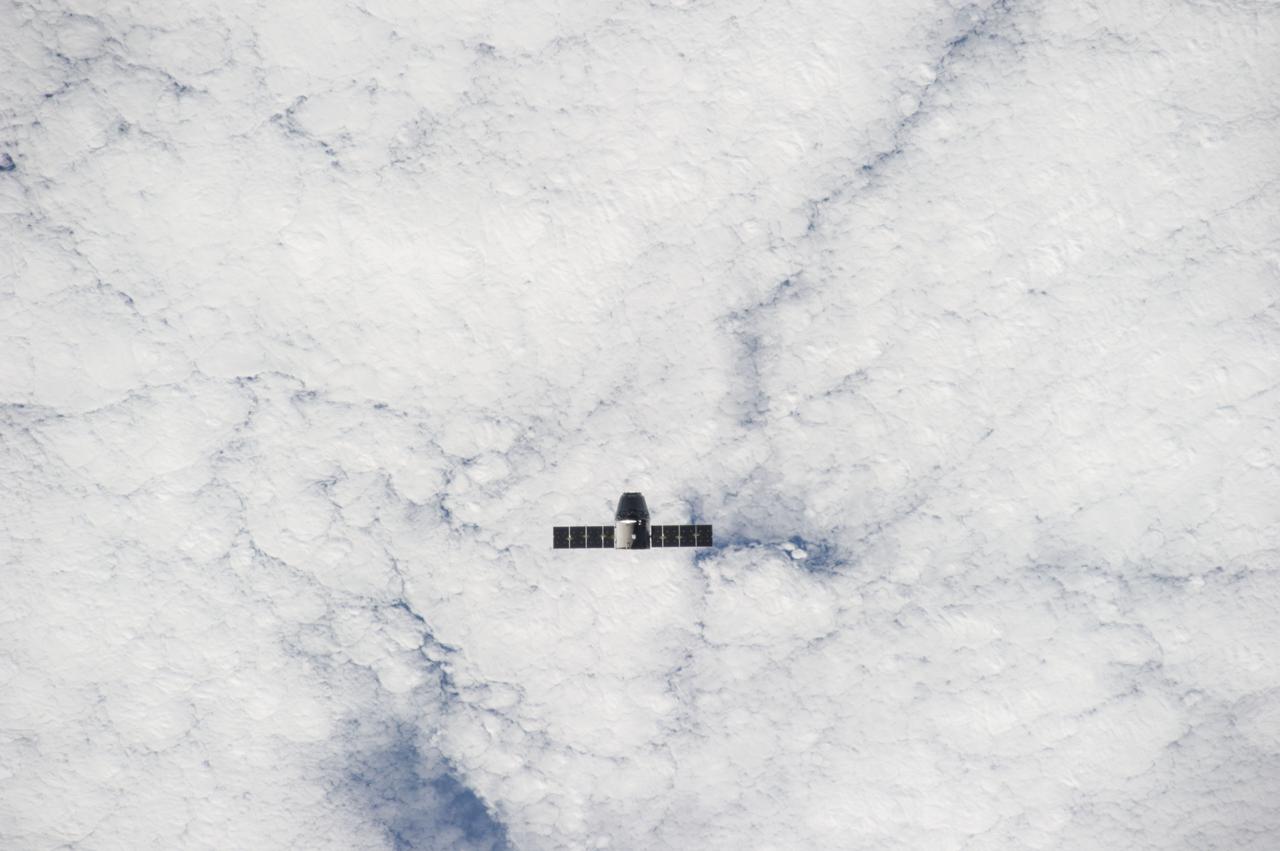
ISS041-E-020655 (23 Sept. 2014) --- The SpaceX Dragon commercial cargo craft approaches the International Space Station on Sept. 23, 2014 for grapple and berthing. European Space Agency astronaut Alexander Gerst and NASA astronaut Reid Wiseman, both Expedition 41 flight engineers, were at the controls of the robotics workstation in the Cupola when the Canadarm2 grappled Dragon at 6:52 a.m. (EDT). Dragon will spend the next four weeks attached to the Harmony node as the Expedition 41 crew unloads 4,885 pounds of (2,216 kg) crew supplies, hardware, experiments, and computer gear and spacewalk equipment.
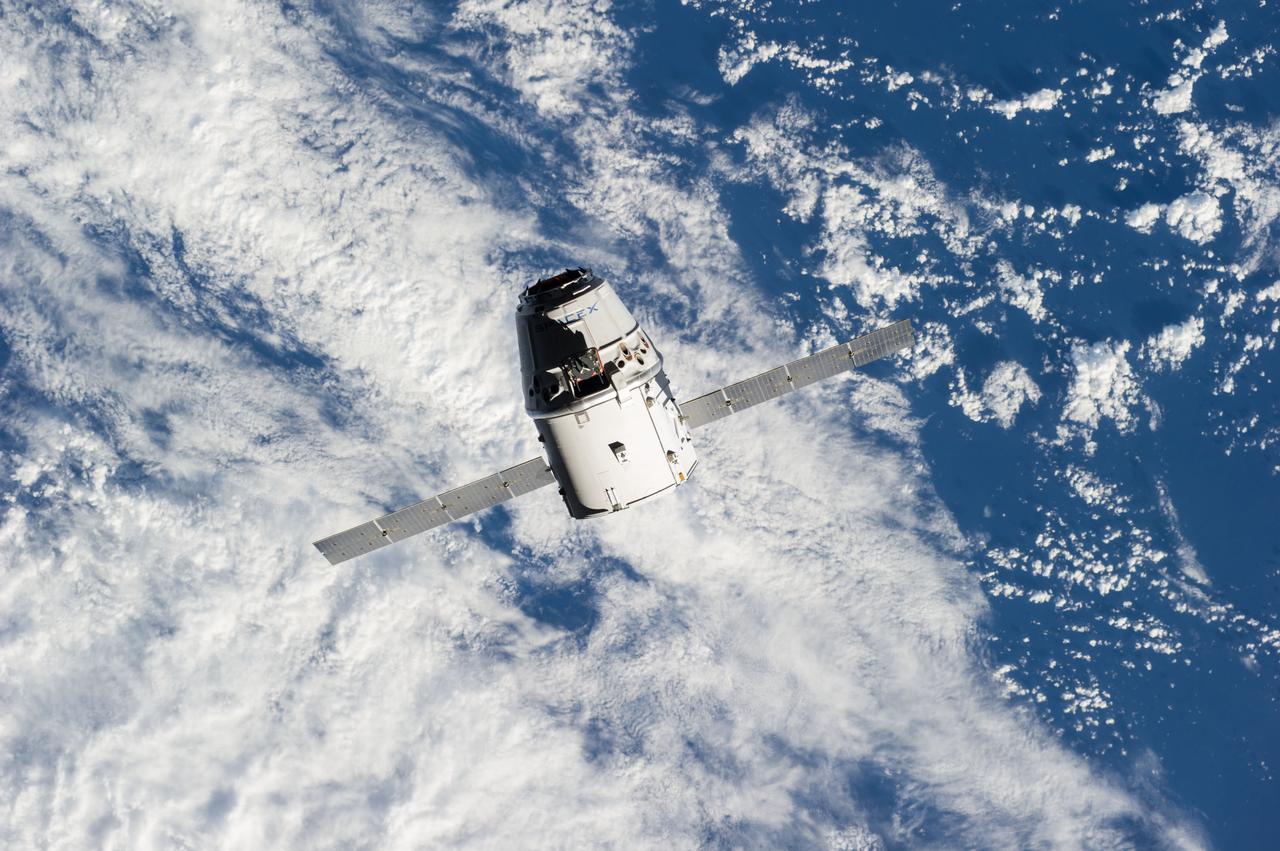
ISS041-E-020833 (23 Sept. 2014) --- The SpaceX Dragon commercial cargo craft approaches the International Space Station on Sept. 23, 2014 for grapple and berthing. European Space Agency astronaut Alexander Gerst and NASA astronaut Reid Wiseman, both Expedition 41 flight engineers, were at the controls of the robotics workstation in the Cupola when the Canadarm2 grappled Dragon at 6:52 a.m. (EDT). Dragon will spend the next four weeks attached to the Harmony node as the Expedition 41 crew unloads 4,885 pounds of (2,216 kg) crew supplies, hardware, experiments, and computer gear and spacewalk equipment.
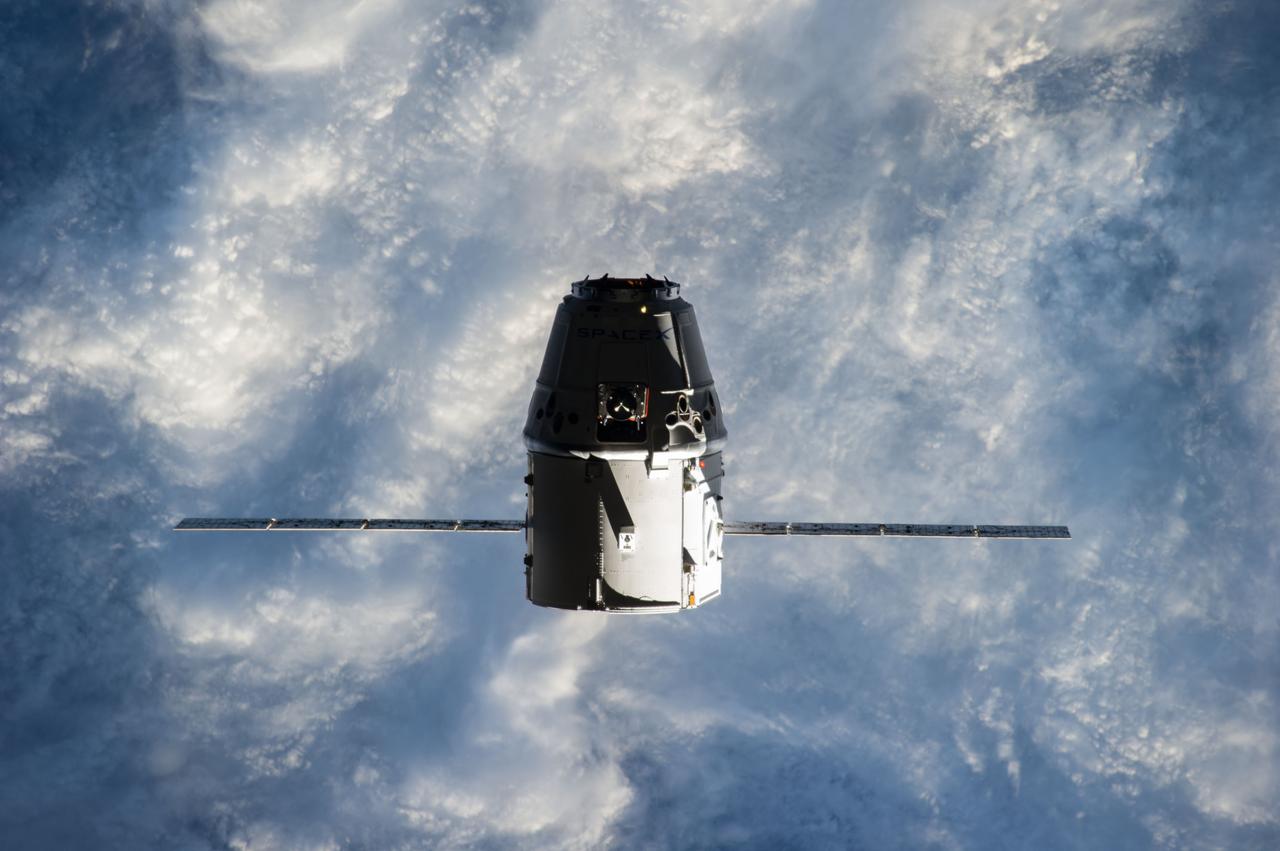
ISS041-E-020800 (23 Sept. 2014) --- The SpaceX Dragon commercial cargo craft approaches the International Space Station on Sept. 23, 2014 for grapple and berthing. European Space Agency astronaut Alexander Gerst and NASA astronaut Reid Wiseman, both Expedition 41 flight engineers, were at the controls of the robotics workstation in the Cupola when the Canadarm2 grappled Dragon at 6:52 a.m. (EDT). Dragon will spend the next four weeks attached to the Harmony node as the Expedition 41 crew unloads 4,885 pounds of (2,216 kg) crew supplies, hardware, experiments, and computer gear and spacewalk equipment.
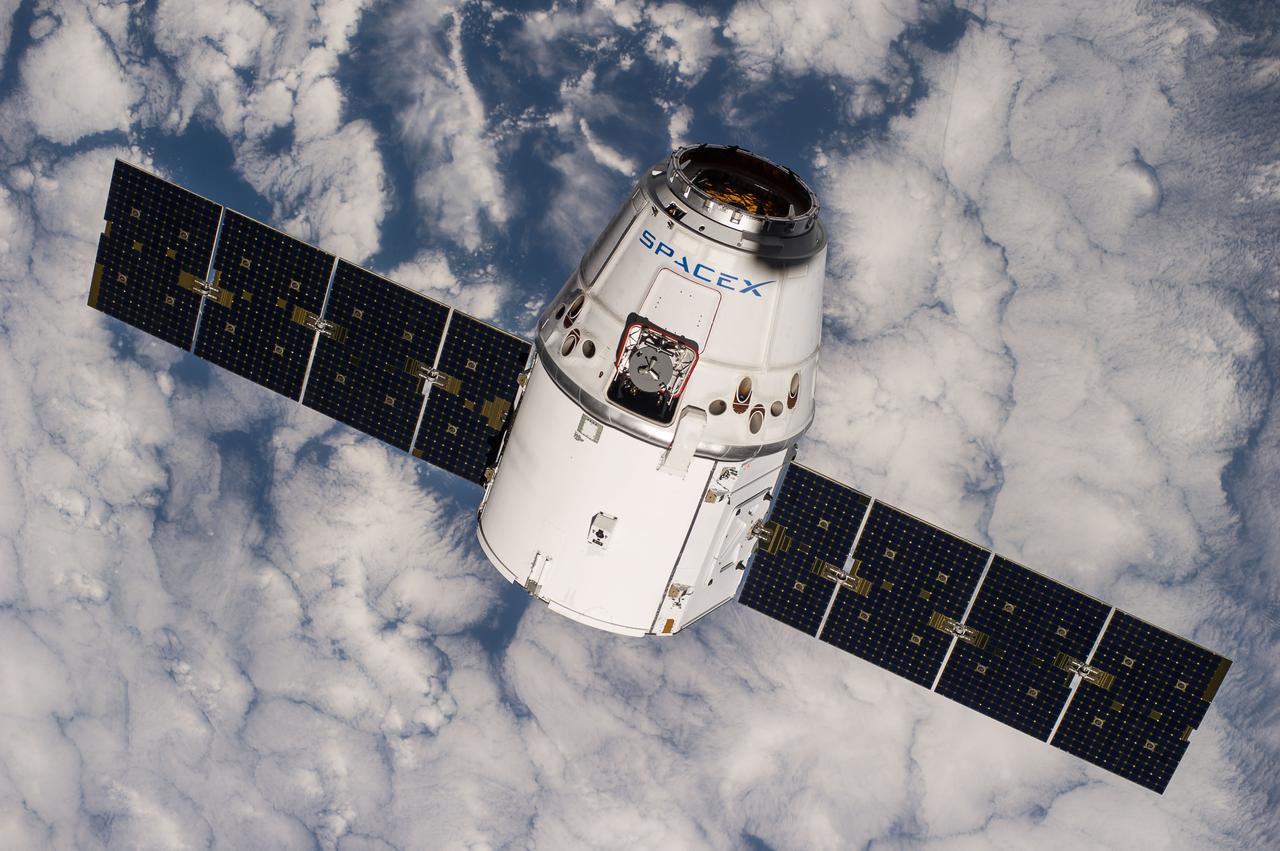
ISS041-E-020918 (23 Sept. 2014) --- The SpaceX Dragon commercial cargo craft approaches the International Space Station on Sept. 23, 2014 for grapple and berthing. European Space Agency astronaut Alexander Gerst and NASA astronaut Reid Wiseman, both Expedition 41 flight engineers, were at the controls of the robotics workstation in the Cupola when the Canadarm2 grappled Dragon at 6:52 a.m. (EDT). Dragon will spend the next four weeks attached to the Harmony node as the Expedition 41 crew unloads 4,885 pounds of (2,216 kg) crew supplies, hardware, experiments, and computer gear and spacewalk equipment.
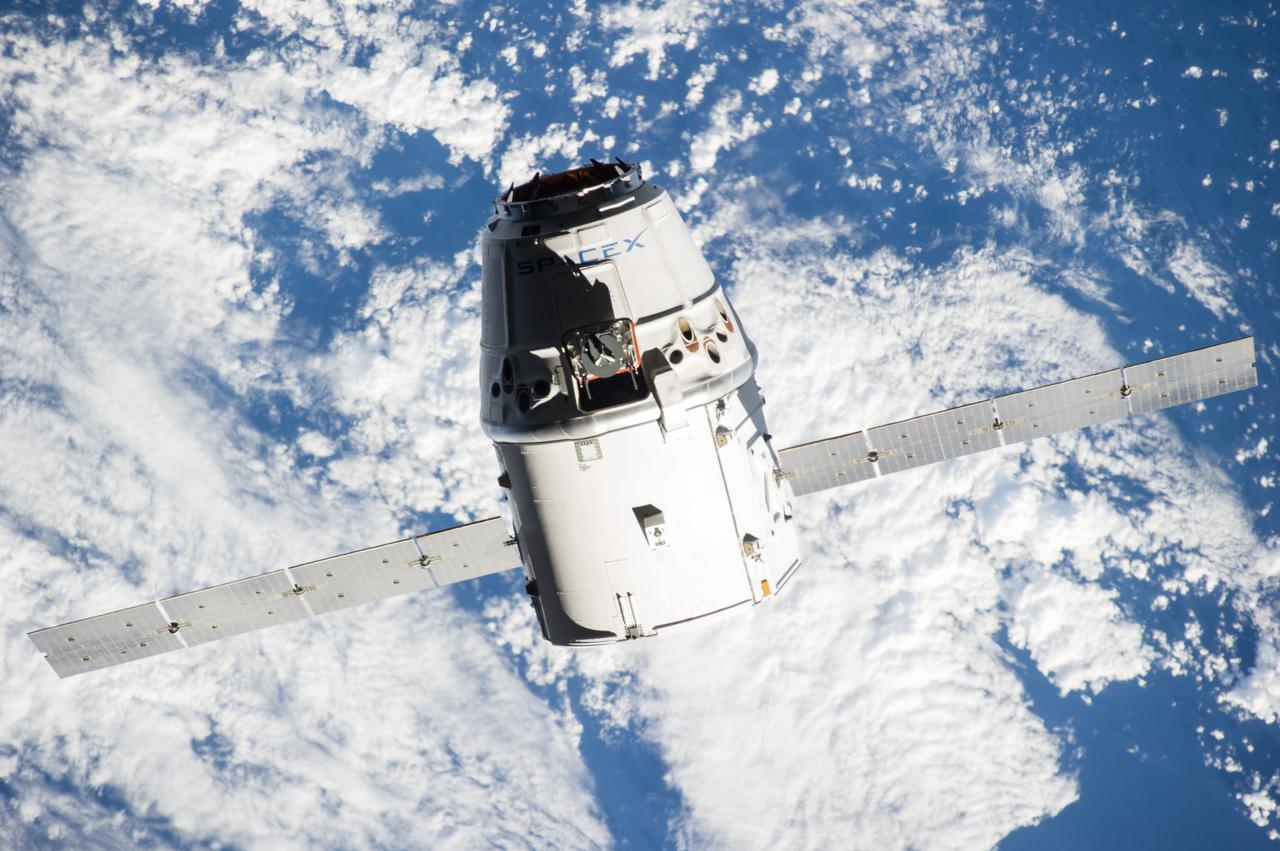
ISS041-E-020821 (23 Sept. 2014) --- The SpaceX Dragon commercial cargo craft approaches the International Space Station on Sept. 23, 2014 for grapple and berthing. European Space Agency astronaut Alexander Gerst and NASA astronaut Reid Wiseman, both Expedition 41 flight engineers, were at the controls of the robotics workstation in the Cupola when the Canadarm2 grappled Dragon at 6:52 a.m. (EDT). Dragon will spend the next four weeks attached to the Harmony node as the Expedition 41 crew unloads 4,885 pounds of (2,216 kg) crew supplies, hardware, experiments, and computer gear and spacewalk equipment.

ISS041-E-020857 (23 Sept. 2014) --- The SpaceX Dragon commercial cargo craft approaches the International Space Station on Sept. 23, 2014 for grapple and berthing. European Space Agency astronaut Alexander Gerst and NASA astronaut Reid Wiseman, both Expedition 41 flight engineers, were at the controls of the robotics workstation in the Cupola when the Canadarm2 grappled Dragon at 6:52 a.m. (EDT). Dragon will spend the next four weeks attached to the Harmony node as the Expedition 41 crew unloads 4,885 pounds of (2,216 kg) crew supplies, hardware, experiments, and computer gear and spacewalk equipment.
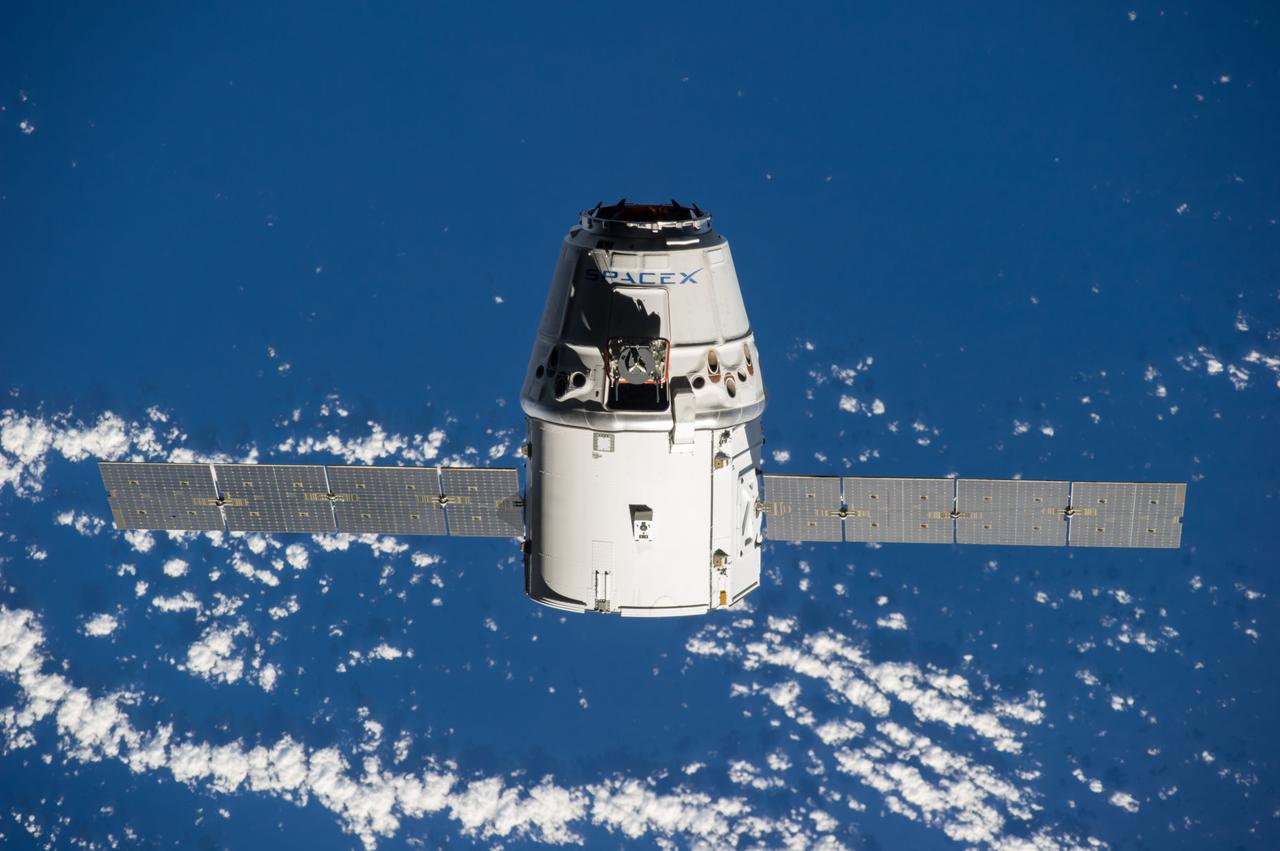
ISS041-E-020854 (23 Sept. 2014) --- The SpaceX Dragon commercial cargo craft approaches the International Space Station on Sept. 23, 2014 for grapple and berthing. European Space Agency astronaut Alexander Gerst and NASA astronaut Reid Wiseman, both Expedition 41 flight engineers, were at the controls of the robotics workstation in the Cupola when the Canadarm2 grappled Dragon at 6:52 a.m. (EDT). Dragon will spend the next four weeks attached to the Harmony node as the Expedition 41 crew unloads 4,885 pounds of (2,216 kg) crew supplies, hardware, experiments, and computer gear and spacewalk equipment.
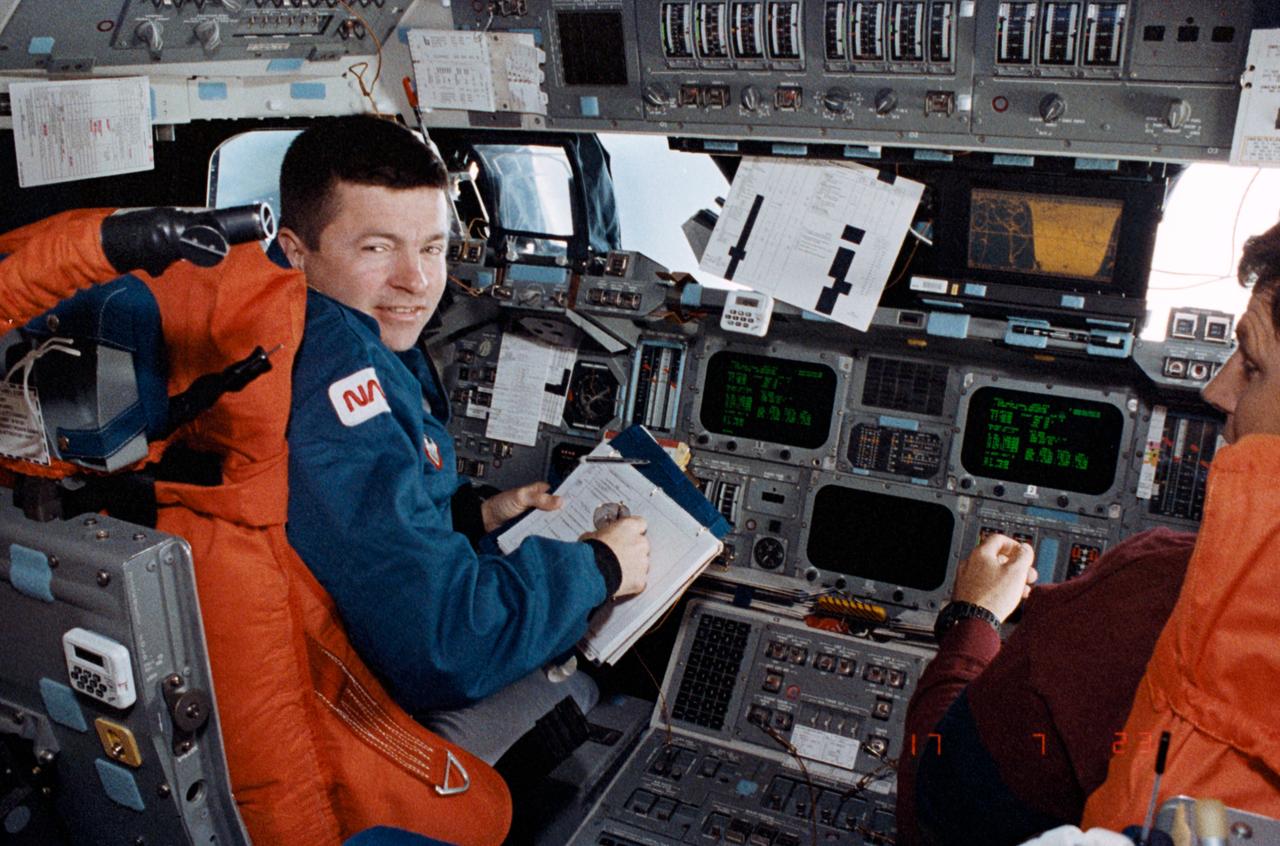
STS056-39-010 (8-17 April 1993) --- Astronaut Kenneth D. Cameron mans the mission commander's station during an orbiter maneuver aboard the Earth-orbiting Space Shuttle Discovery. Astronaut Stephen S. Oswald, pilot, is partially visible at right edge of the frame. The two were joined by three other NASA astronauts for nine days of science in support of the Atlas 2 mission in Earth orbit.
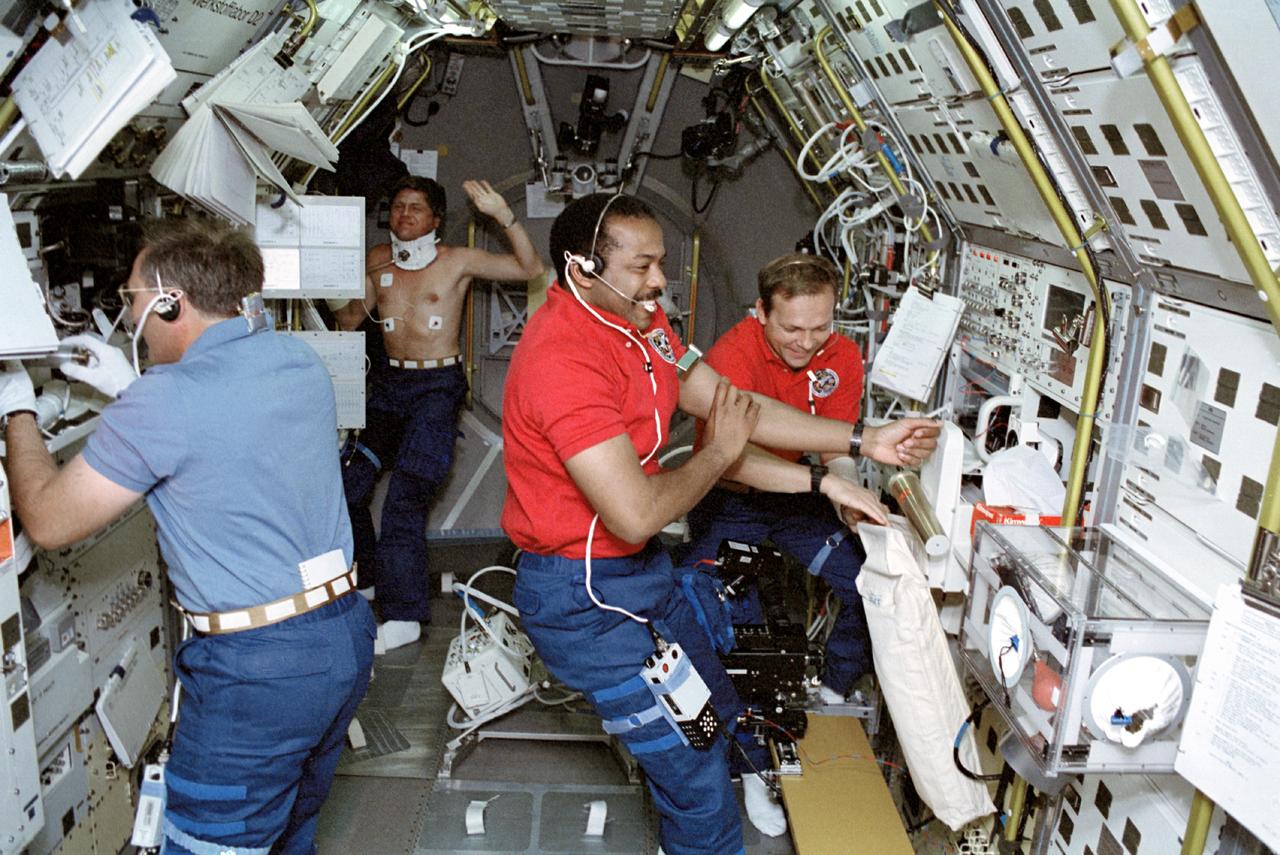
STS055-22-004 (26 April-6 May 1993) --- Four of the seven crew members who spent 10 days aboard the Space Shuttle Columbia are pictured during a brief shift overlap period in the Spacelab D-2 Science Module. Left to right are Jerry L. Ross, Ulrich Walter, Bernard A. Harris, Jr. and Hans Schlegel. Ross, STS-55 payload commander, is changing a sample in a materials processing furnace; Walter, a German payload specialist is in the midst of a baroreflex test and fellow payload specialist Schlegel assists mission specialist and physician Harris with a physiological test at the "Anthrorack".
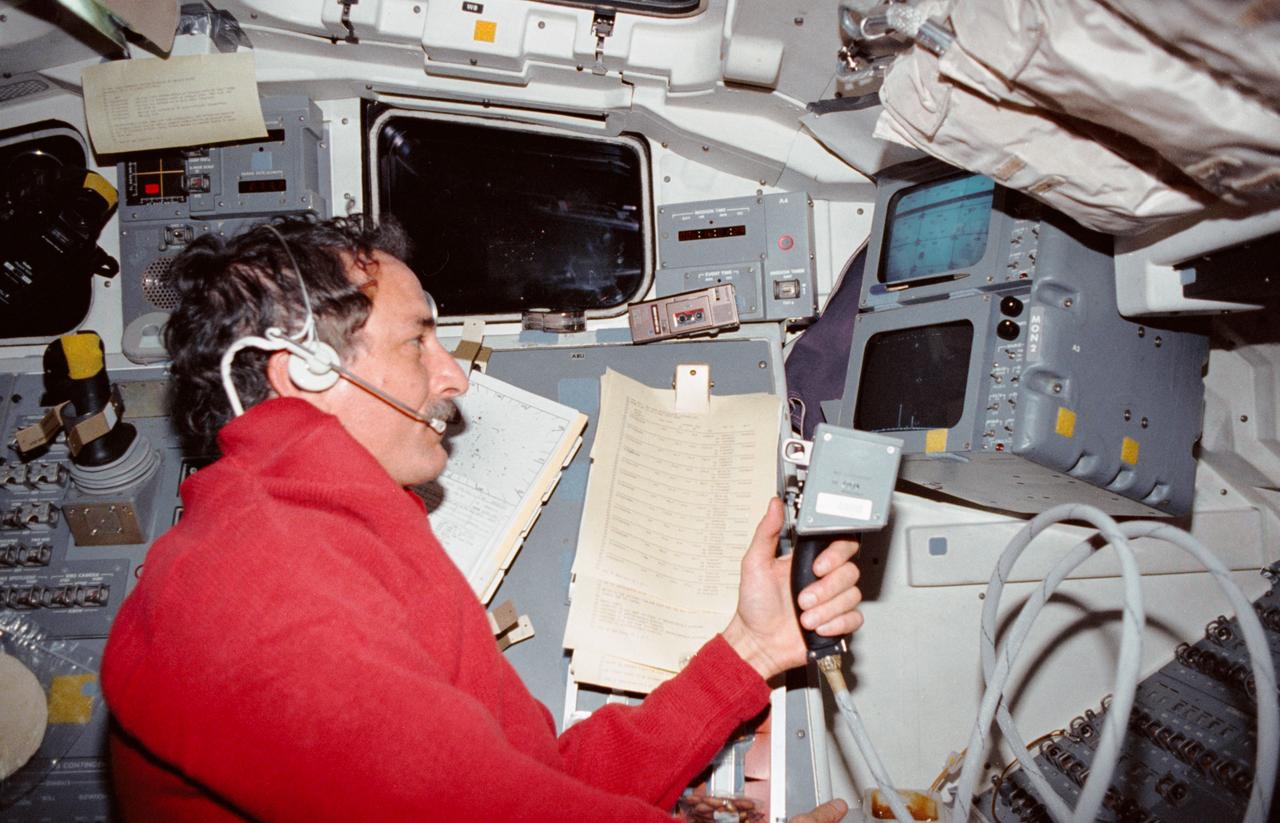
STS035-12-015 (2-11 Dec 1990) --- Astronaut Jeffrey A. Hoffman, STS 35 mission specialist, uses a manual pointing controller (MPC) for the Astro-1 mission's Instrument Pointing System (IPS). By using the MPC, Hoffman and other crewmembers on Columbia's aft flight deck, were able to command the IPS, located in the cargo bay, to record astronomical data. Hoffman is serving the "Blue" shift which complemented the currently sleeping "Red" shift of crewmembers as the mission collected scientific data on a 24-hour basis. The scene was photographed with a 35mm camera.
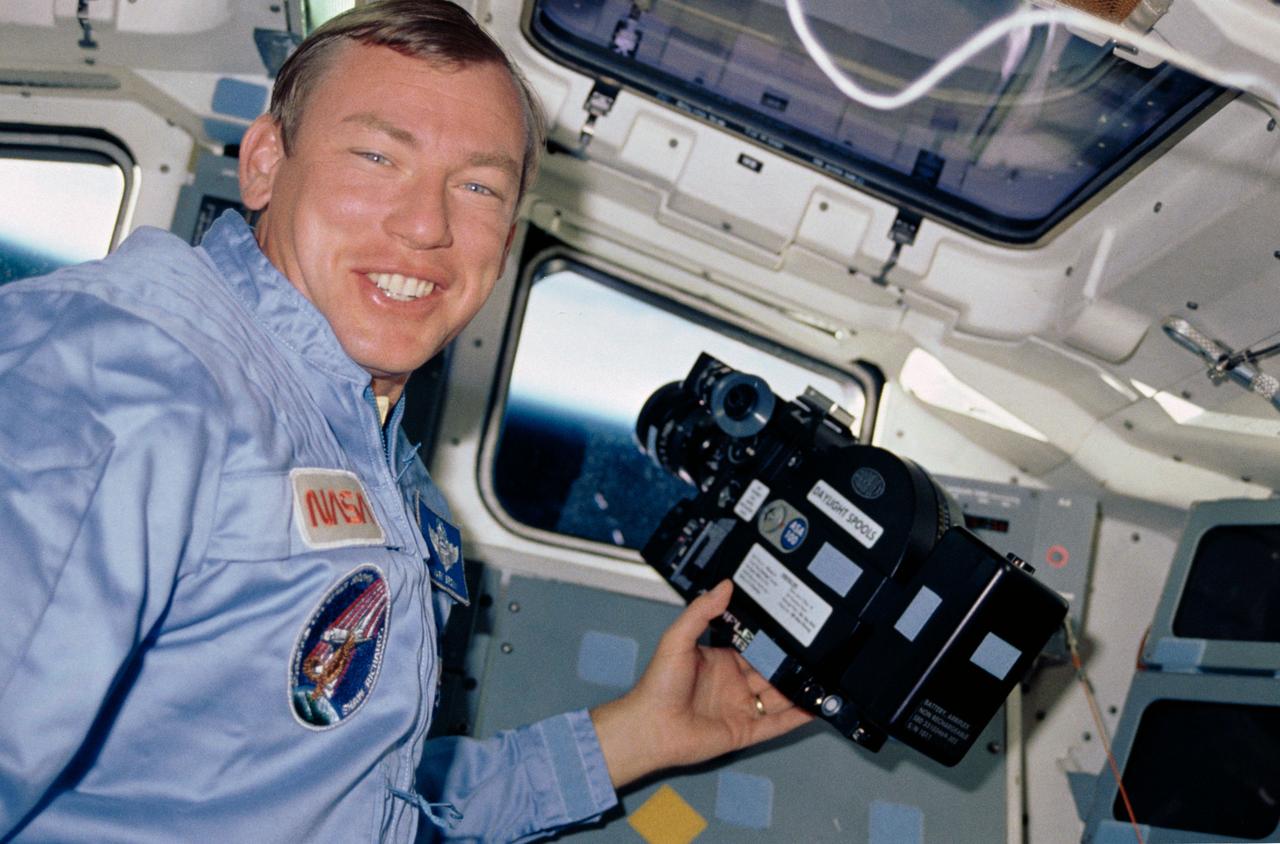
STS028-17-033 (August 1989) --- Astronaut Mark N. Brown, STS-28 mission specialist, pauses from a session of motion-picture photography conducted through one of the aft windows on the flight deck of the Earth-orbiting Space Shuttle Columbia. He is using an Arriflex camera. The horizon of the blue and white appearing Earth and its airglow are visible in the background.
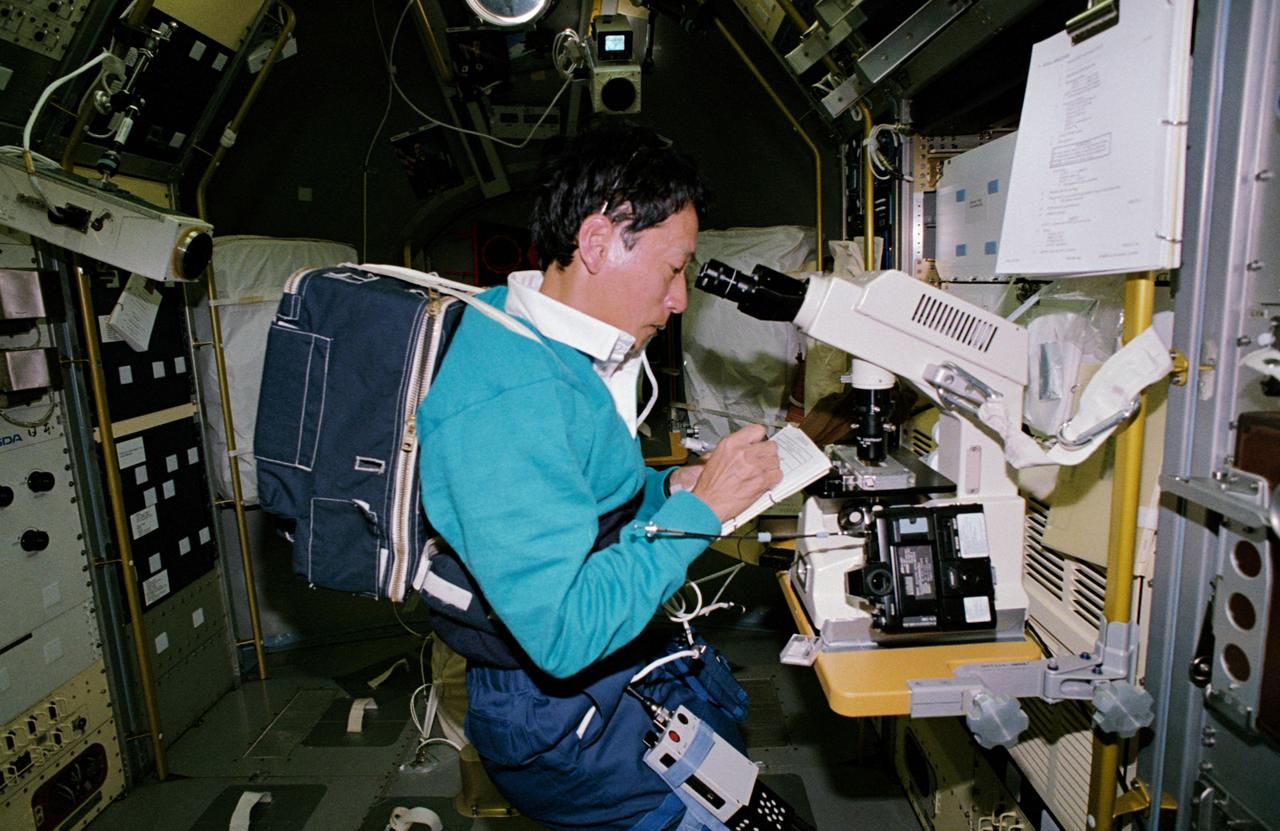
STS047-05-025 (12 - 20 Sept 1992) --- Payload specialist Mamoru Mohri, representing Japan's National Space Development Agency (NASDA), uses a microscope to produce photomicrographs of mammalian cells. The mammal cell structure experiment is one of a large number of tests that were performed during the eight-day Spacelab-J mission. On his back, Dr. Mohri totes a health monitoring experiment. The primary objective of the physiological monitoring system is to observe the health condition of the Japanese payload specialist so that good health can be maintained during and after the spaceflight.

STS039-11-027 (28 April-6 May 1991) --- Astronaut Michael L. Coats, STS-39 mission commander, is seen in a close-up 35mm frame on the aft flight deck of the Earth-orbiting space shuttle Discovery. Out the overhead window, the SPAS-II hovers on the end of the remote manipulator system (RMS, out of frame). Inside the window, just above Coats' head is the Crewman Optical Alignment Sight (COAS), an optical device that aids in navigation. Photo credit: NASA
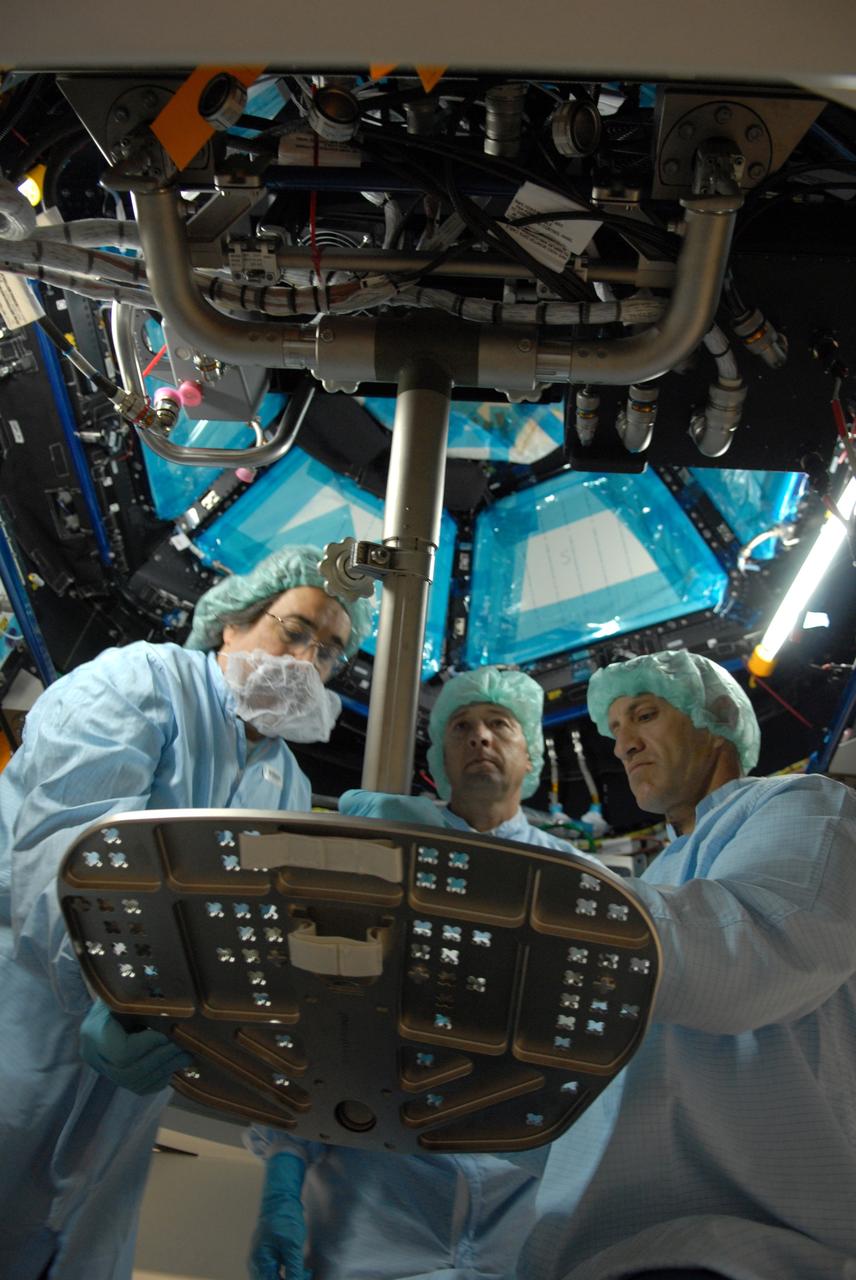
CAPE CANAVERAL, Fla. – In the Space Station Processing Facility at NASA's Kennedy Space Center, astronaut Charles Hobaugh, right, conducts a fit check of the robotic workstation, or RWS, in the International Space Station's Cupola module. He is assisted by Boeing technician Terry Camarata, left, and engineer David Jackson, from Johnson Space Center. The RWS is provided by the Canadian Space Agency. The module was delivered by the European Space Agency in 2004 to Kennedy from Alenia Spazio in Turin, Italy. Cupola will provide unprecedented views of activities outside the station and spectacular views of the Earth. Crew members working inside the module will have a 360-degree panoramic view. Cupola has the capability for command and control workstations to be installed to assist in space station remote manipulator system and extra vehicular activities. Cupola is the final element of the space station core and is scheduled for launch on space shuttle Endeavour's STS-130 mission, targeted for Dec. 10, 2009. Photo credit: NASA/Cory Huston
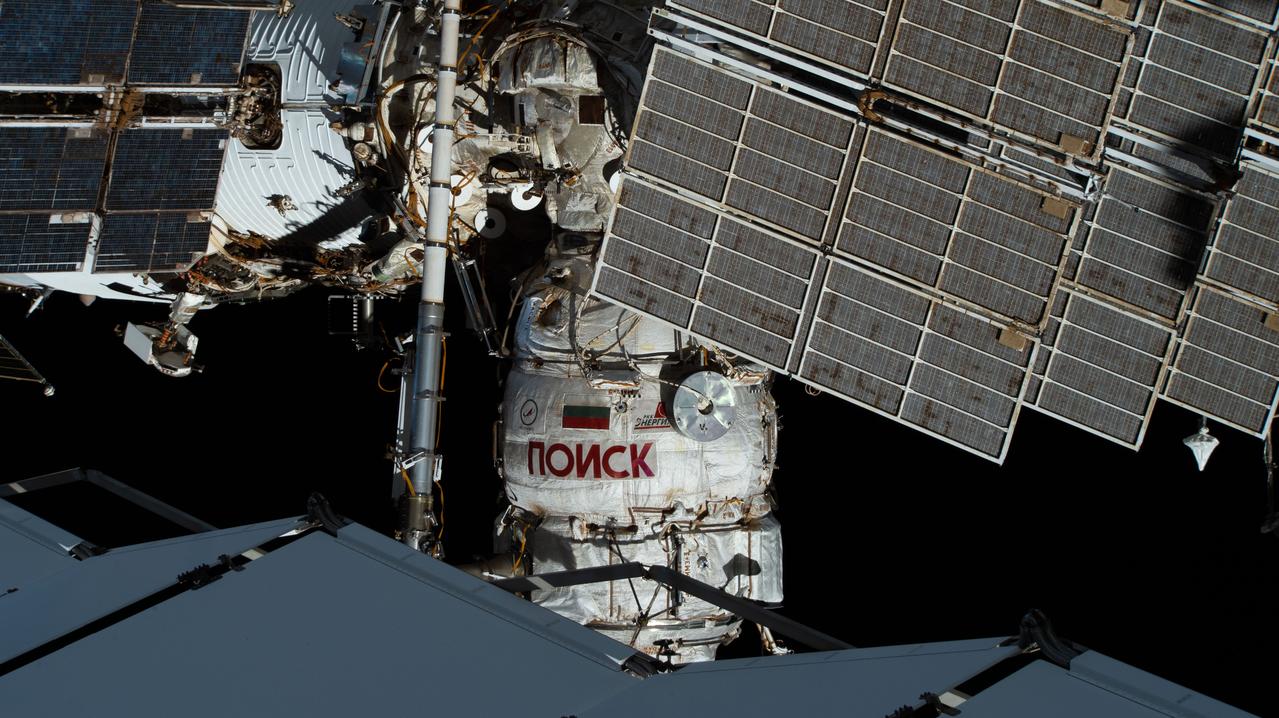
iss063e082811 (Sept. 3, 2020) --- Russia's Mini-Research Module 2, also know as the Poisk module, is pictured from an external high definition camera installed on the International Space Station. Poisk was attached to the space-facing port of the Zvezda service module in November of 2009 and has served as a docking port for Soyuz crew ships. It also provides a place to prepare for spacewalks, as well the refurbishing of the Russian Orlan spacesuits. The module from Roscosmos has the added bonus of extra space for scientific experiments, as well as power supply outlets. It is also equipped with both internal and external workstations to accommodate science payloads and make observations.
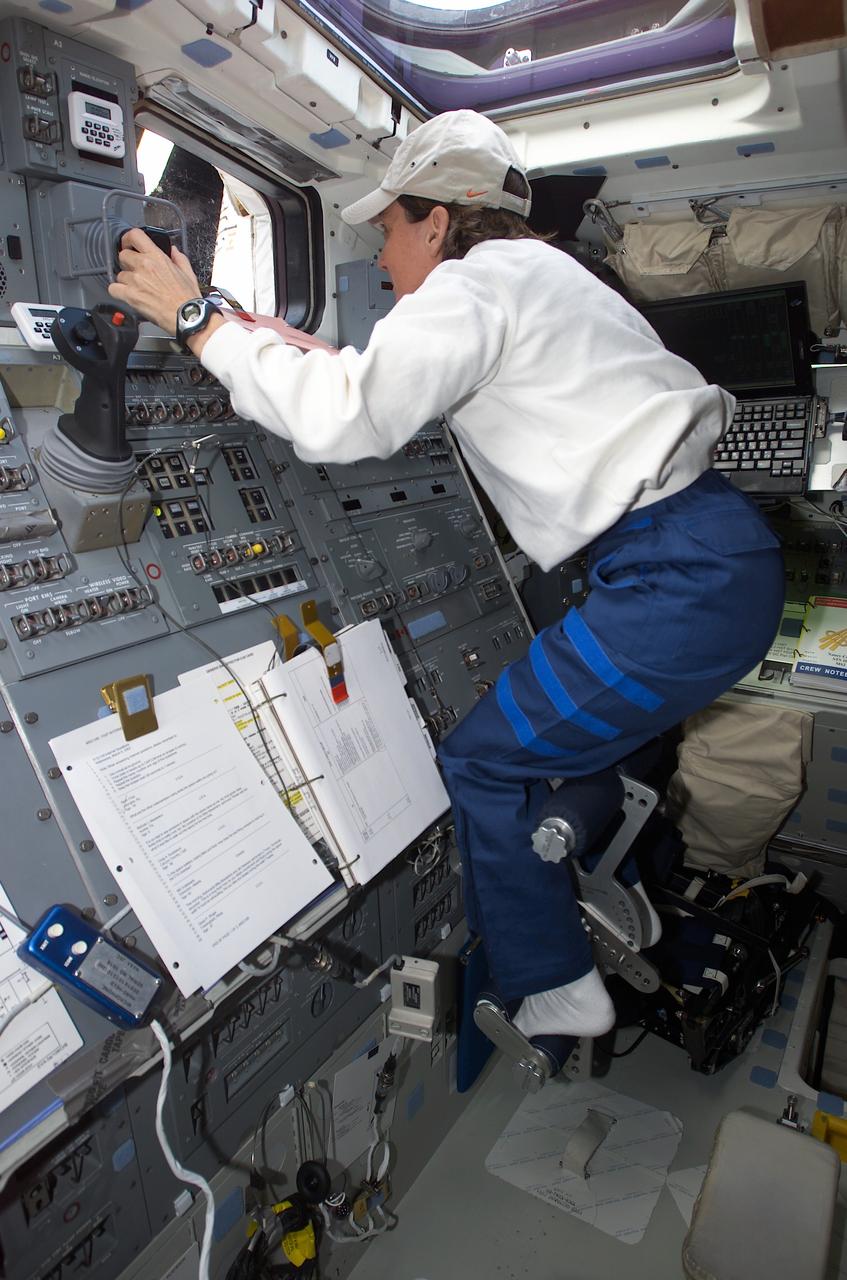
STS109-E-5685 (7 March 2002) --- Astronaut Nancy J. Currie, mission specialist, works the controls for Columbia's Remote Manipulator System (RMS) on the crew cabin's aft flight deck. On a week with one lengthy space walk per day, Currie has had her hands full with RMS duties to support the space walks of four crewmates. Astronauts James H. Newman and Michael J. Massimino had just begin EVA-4, during which the duo required the services of Currie to control the robotic arm to maneuver them around the various workstations on the Hubble Space Telescope (HST). The image was recorded with a digital still camera.
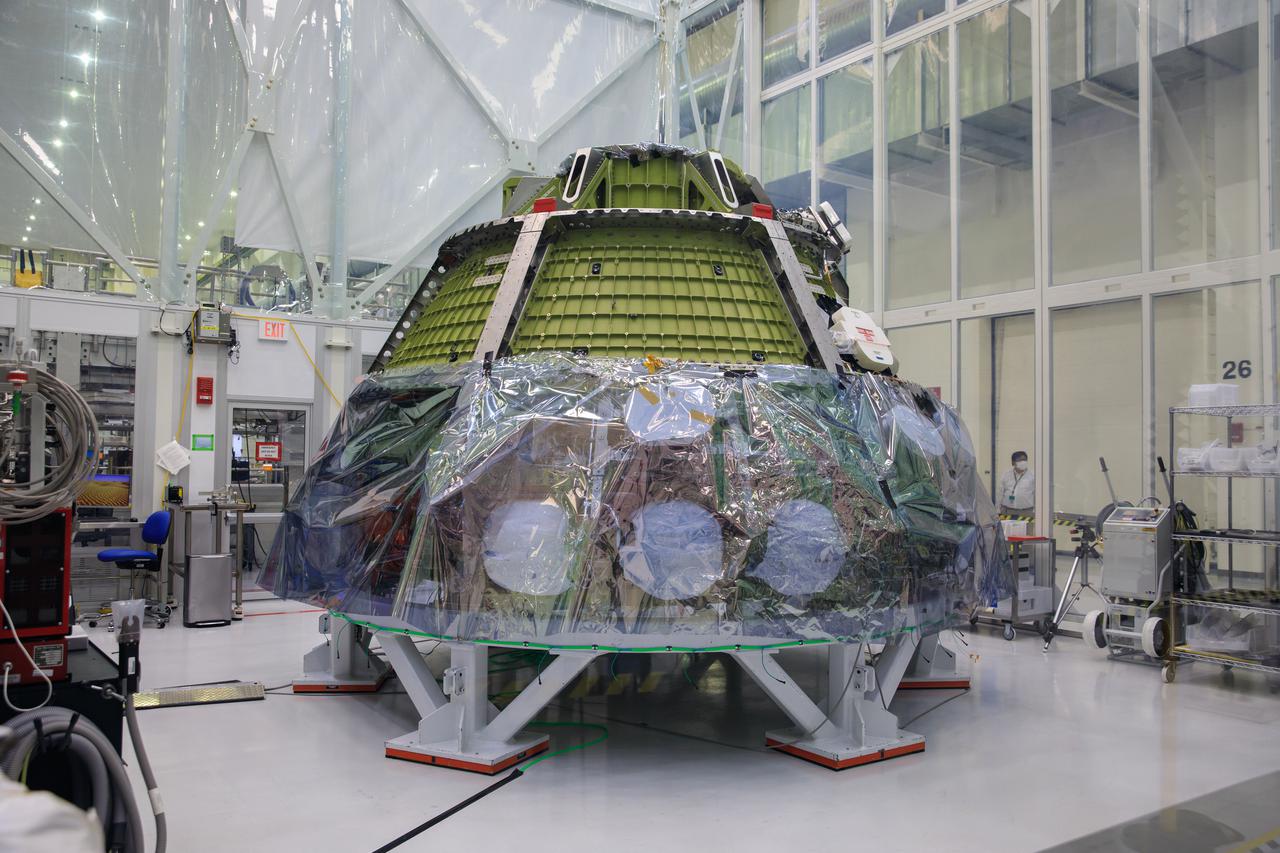
Assembly on the Artemis II Orion spacecraft that will carry the first Artemis crew on its lunar-bound mission continues at NASA’s Kennedy Space Center in Florida on Nov. 5, 2021. Located in the clean room inside the high bay of the Neil Armstrong Operations and Checkout Building, teams have been working on the closeout welding for the propulsion and Environmental Control and Life Support System. Once complete, the crew module will move out of the clean room and into its workstation to continue with subsystem installations. With Artemis missions, NASA will land the first woman and the first person of color on the lunar surface. Artemis II will be the first crewed flight test of NASA’s Space Launch System and Orion, paving the way for human exploration to the Moon and Mars.

Assembly on the Artemis II Orion spacecraft that will carry the first Artemis crew on its lunar-bound mission continues at NASA’s Kennedy Space Center in Florida on Nov. 5, 2021. Located in the clean room inside the high bay of the Neil Armstrong Operations and Checkout Building, teams have been working on the closeout welding for the propulsion and Environmental Control and Life Support System. Once complete, the crew module will move out of the clean room and into its workstation to continue with subsystem installations. With Artemis missions, NASA will land the first woman and the first person of color on the lunar surface. Artemis II will be the first crewed flight test of NASA’s Space Launch System and Orion, paving the way for human exploration to the Moon and Mars.
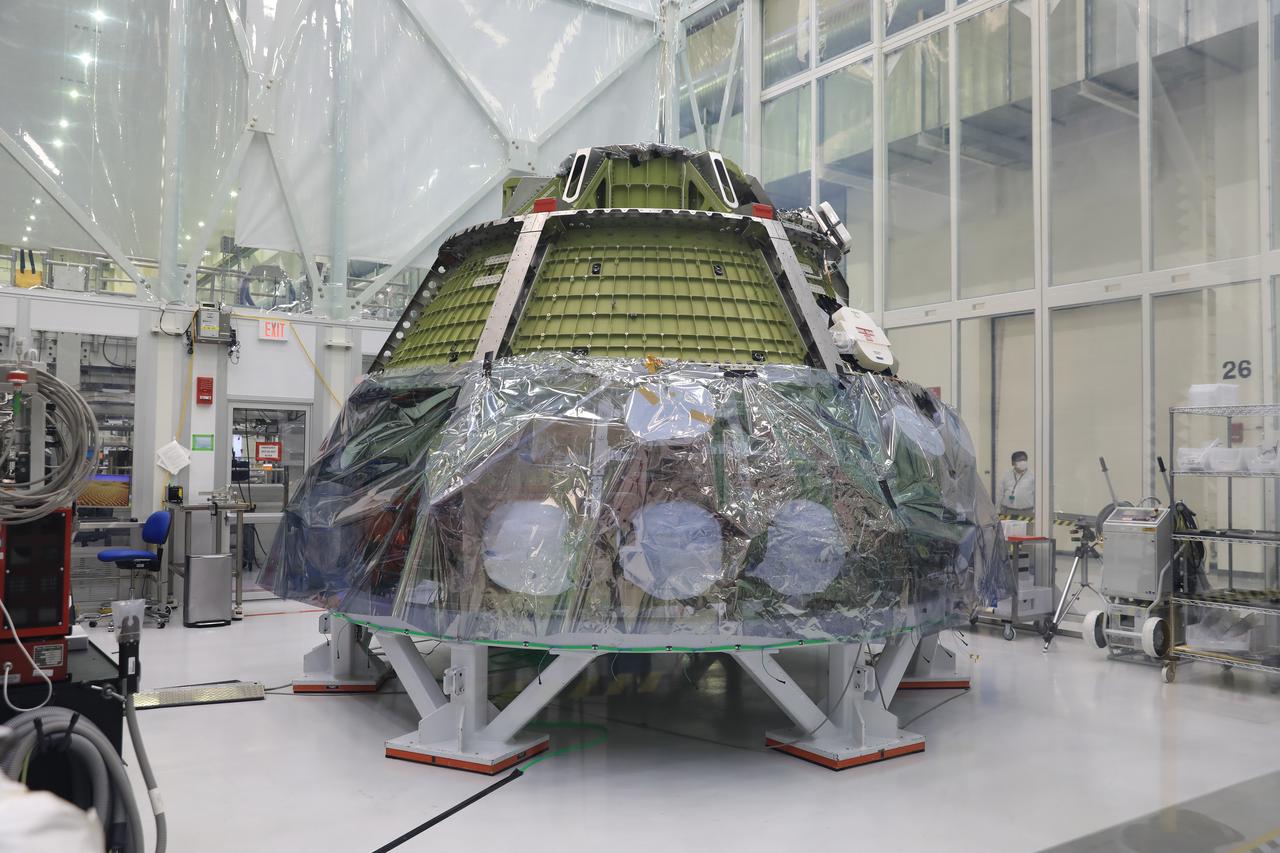
Assembly on the Artemis II Orion spacecraft that will carry the first Artemis crew on its lunar-bound mission continues at NASA’s Kennedy Space Center in Florida on Nov. 5, 2021. Located in the clean room inside the high bay of the Neil Armstrong Operations and Checkout Building, teams have been working on the closeout welding for the propulsion and Environmental Control and Life Support System. Once complete, the crew module will move out of the clean room and into its workstation to continue with subsystem installations. With Artemis missions, NASA will land the first woman and the first person of color on the lunar surface. Artemis II will be the first crewed flight test of NASA’s Space Launch System and Orion, paving the way for human exploration to the Moon and Mars.
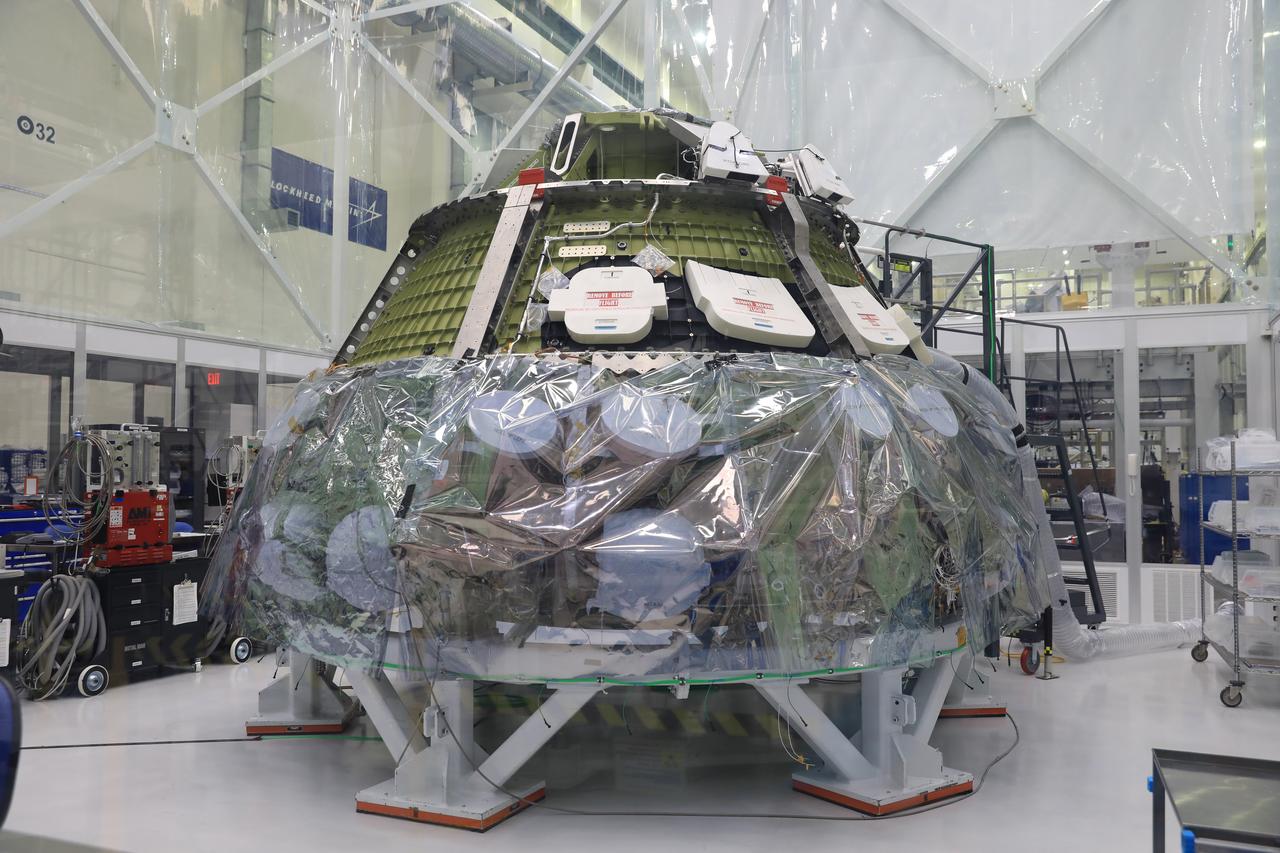
Assembly on the Artemis II Orion spacecraft that will carry the first Artemis crew on its lunar-bound mission continues at NASA’s Kennedy Space Center in Florida on Nov. 5, 2021. Located in the clean room inside the high bay of the Neil Armstrong Operations and Checkout Building, teams have been working on the closeout welding for the propulsion and Environmental Control and Life Support System. Once complete, the crew module will move out of the clean room and into its workstation to continue with subsystem installations. With Artemis missions, NASA will land the first woman and the first person of color on the lunar surface. Artemis II will be the first crewed flight test of NASA’s Space Launch System and Orion, paving the way for human exploration to the Moon and Mars.
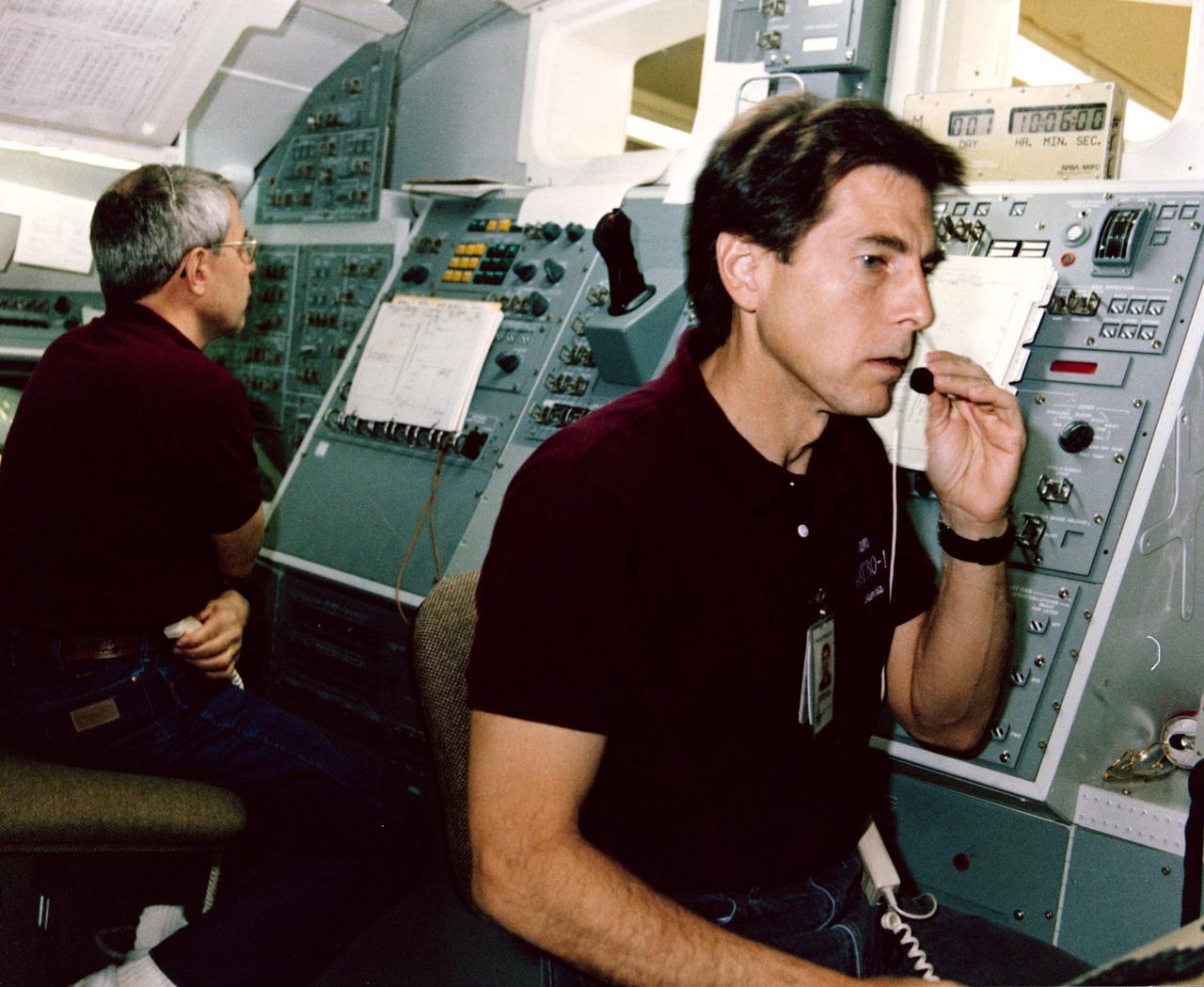
STS-35 Mission Specialist (MS) Robert A.R. Parker (left) and Payload Specialist Samuel T. Durrance practice Astronomy Laboratory 1 (ASTRO-1) experiment procedures in a space shuttle aft flight deck mockup in the Payload Crew Training Complex at the Marshall Space Flight Center (MSFC) in Huntsville, Alabama. For all Spacelab missions, shuttle crew members train regularly in the facility in preparation to operate experiments on their Spacelab missions. The ASTRO-1 crew will operate the ultraviolet telescopes and instrument pointing system (IPS) from Columbia's, Orbiter Vehicle (OV) 102's, aft flight deck. The seven-member ASTRO-1 crew will work around the clock, in 12-hour shifts, to allow the maximum number of observations to be made during their nine or ten days in orbit. In addition to the commander and pilot, the crew consistss of three MSs and two payload specialists. (MSs are career astronauts who are trained in a specialized field. Payload specialists are members of the science investigator teams who were nominated by their peers to operate their experiments on orbit. They are trained and certified for flight by NASA.) View provided by MSFC with alternate number 9005803.
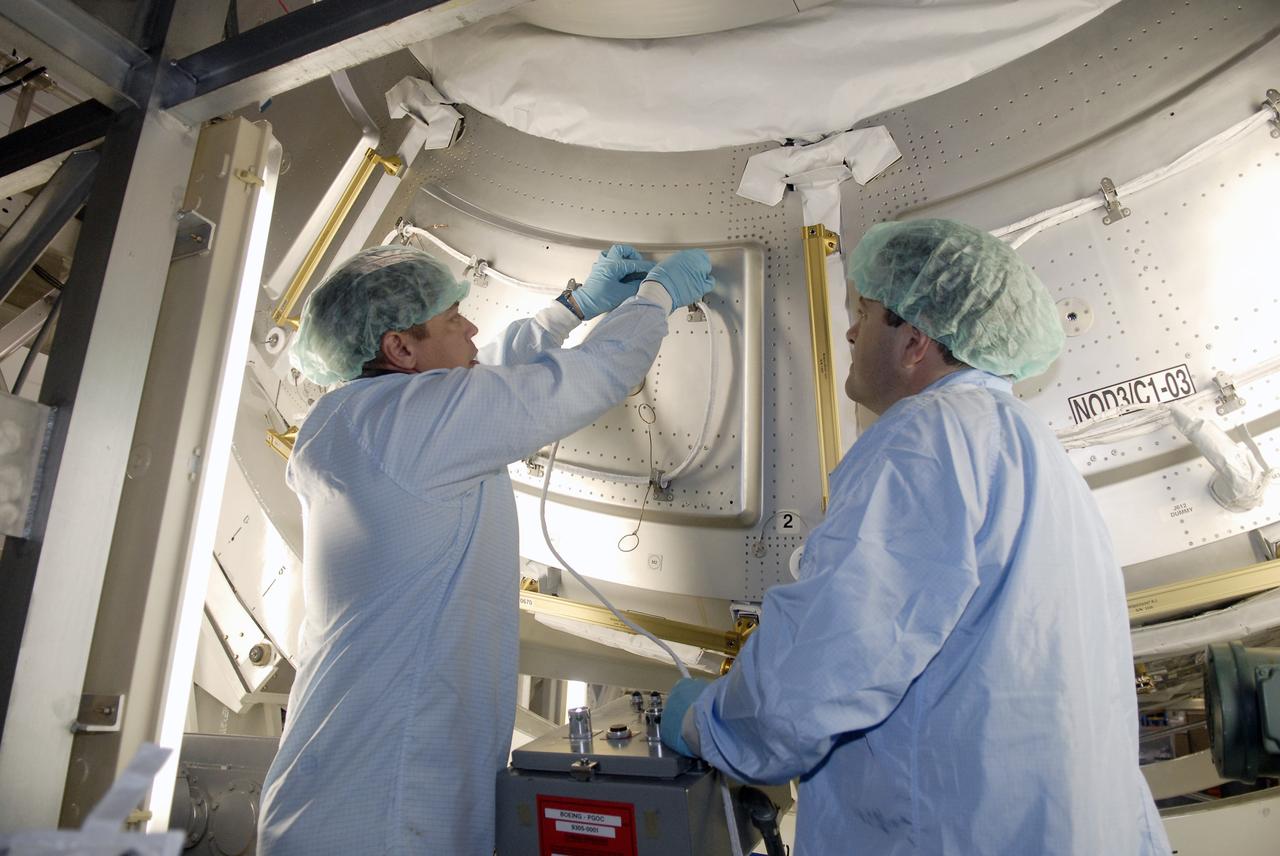
CAPE CANAVERAL, Fla. – In the Space Station Processing Facility at NASA's Kennedy Space Center in Florida, STS-130 Mission Specialist Robert Behnken (left) practices working on the Cupola, part of space shuttle Endeavour's payload on the mission to the International Space Station. At right is Mission Specialist Nicholas Patrick. Crew members are at Kennedy for familiarization with mission equipment and hardware, called the crew equipment interface test. The payload on the 32nd assembly flight to the International Space Station also includes the Tranquility Node 3. Cupola will provide a 360-degree panoramic view of activities outside the station and spectacular views of the Earth. Cupola has the capability for command and control workstations to be installed to assist in the space station remote manipulator system and extra vehicular activities. The final element of the space station core, Cupola is targeted for launch Feb. 4, 2010. Photo credit: NASA/Kim Shiflett
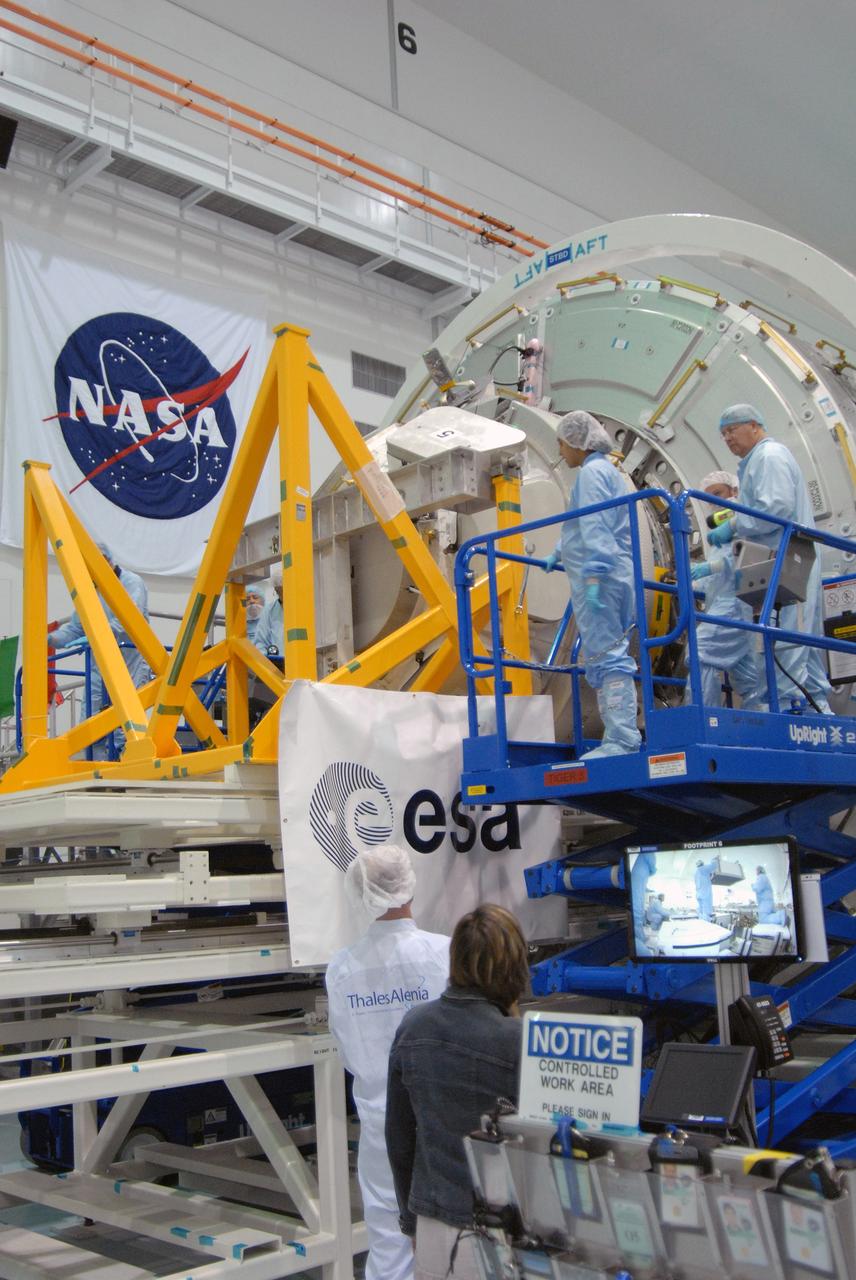
CAPE CANAVERAL, Fla. – In NASA Kennedy Space Center's Space Station Processing Facility, the Cupola module is being mated to the Tranquility node on the work stand. Cupola and Tranquility are the payload for space shuttle Endeavour's STS-130 mission to the International Space Station. The module was built for the European Space Agency by Alenia Spazio in Turin, Italy. When attached to the Tranquility Node 3 module, Cupola will resemble a circular bay window that will provide a vastly improved view of the station's exterior. Just under 10 feet in diameter, the module will accommodate two crew members and portable workstations that can control station and robotic activities. The multi-directional view will allow the crew to monitor spacewalks and docking operations, as well as provide a spectacular view of Earth and other celestial objects. Endeavour is targeted to launch Feb. 4, 2010. Photo credit: NASA/Cory Huston
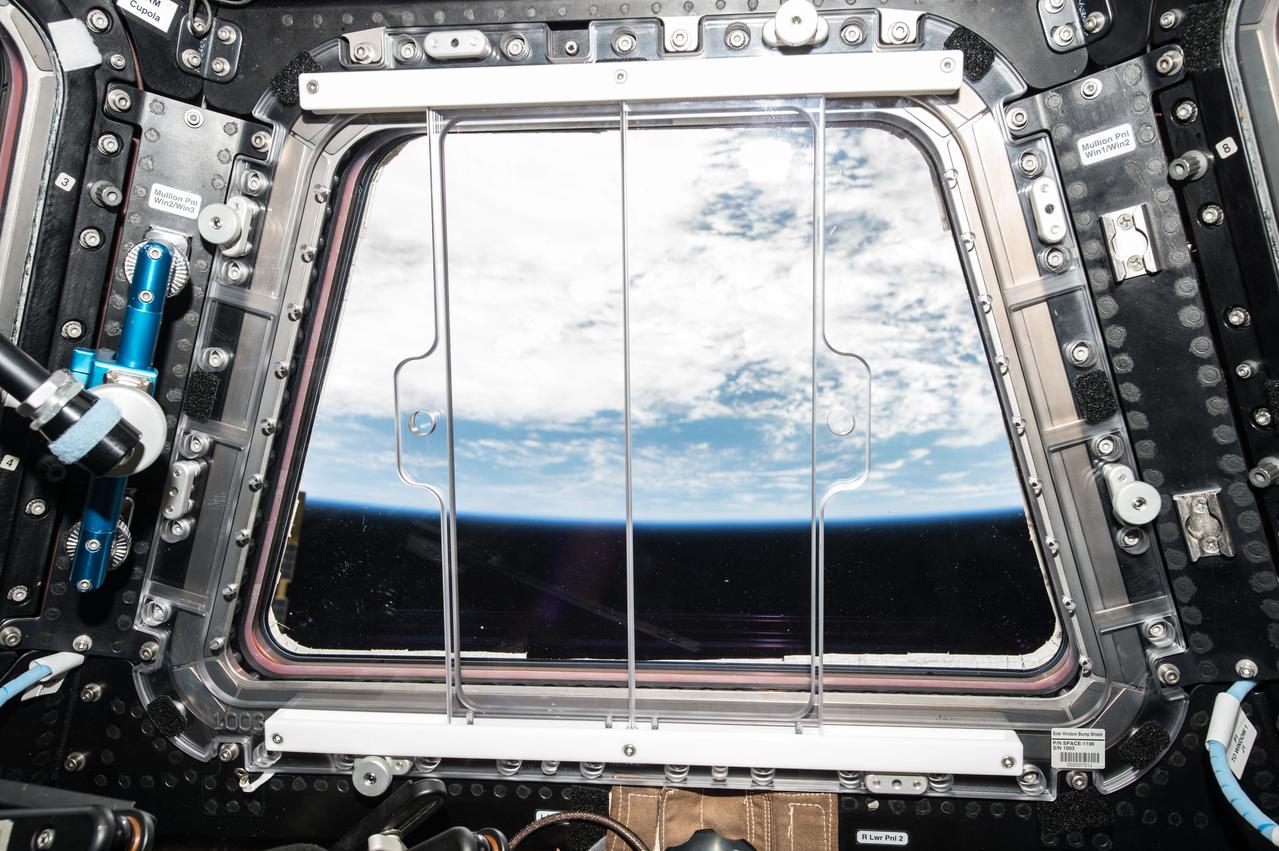
ISS042E227564 (02/08/2015) --- A view of the Earth from the International Space Station's Cupola widow on Feb. 8, 2015. The Cupola, a small, dome-shaped module has seven windows -- six around the sides and one on top -- that can be shuttered when not in use to protect the ISS from micrometeoroids and the harsh space environment. The windows are made of fused silica and borosilicate glass panes, with temperature-sensing elements and window heaters. It is attached to the Tranquility Node 3 module, Cupola provides a vastly improved view of the station's exterior. Just under ten feet in diameter, the module accommodates two crew members and portable workstations that can control station and robotic Canada arm activities. The multi-directional view allows the crew to monitor spacewalks and docking operations, as well as provide a spectacular view of Earth and other celestial objects.
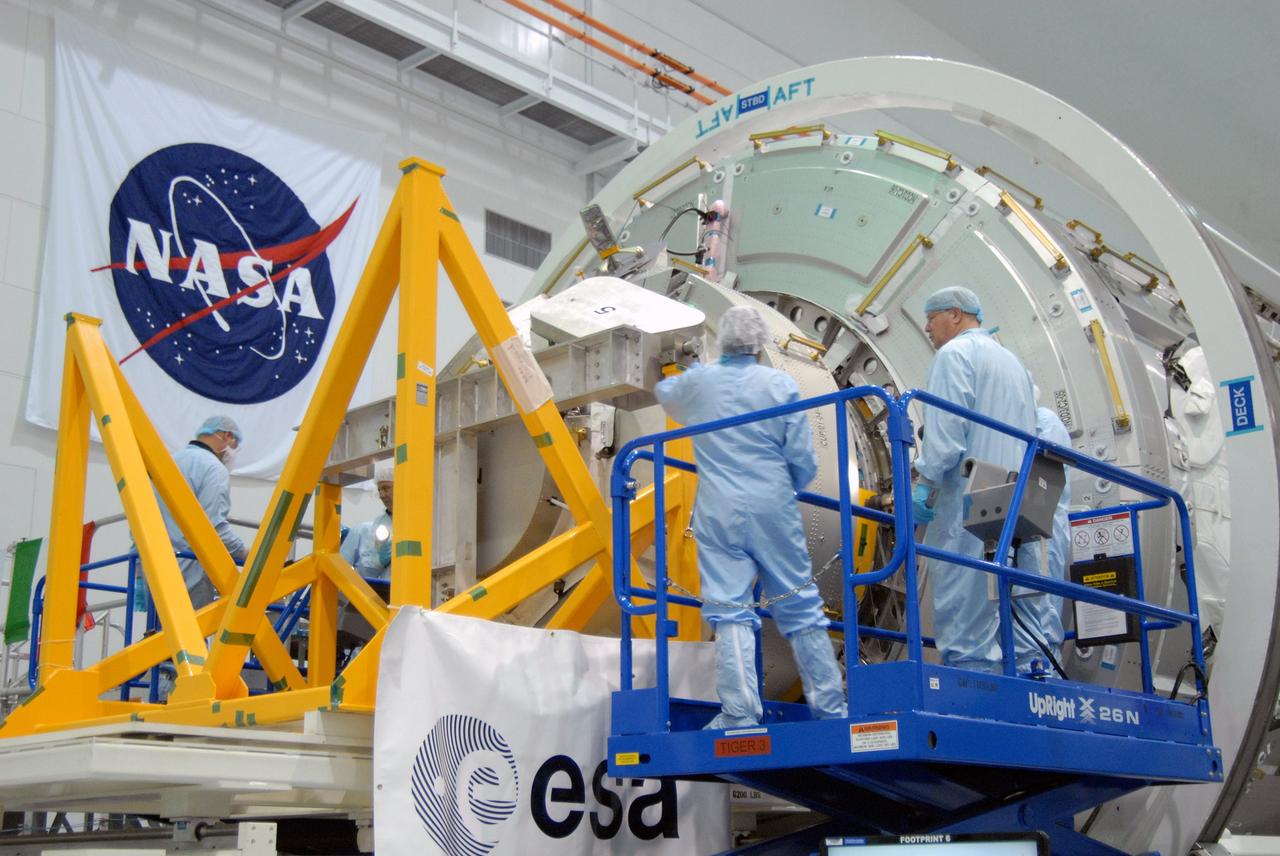
CAPE CANAVERAL, Fla. – In NASA Kennedy Space Center's Space Station Processing Facility, the Cupola module is being mated to the Tranquility node on the work stand. Cupola and Tranquility are the payload for space shuttle Endeavour's STS-130 mission to the International Space Station. The module was built for the European Space Agency by Alenia Spazio in Turin, Italy. When attached to the Tranquility Node 3 module, Cupola will resemble a circular bay window that will provide a vastly improved view of the station's exterior. Just under 10 feet in diameter, the module will accommodate two crew members and portable workstations that can control station and robotic activities. The multi-directional view will allow the crew to monitor spacewalks and docking operations, as well as provide a spectacular view of Earth and other celestial objects. Endeavour is targeted to launch Feb. 4, 2010. Photo credit: NASA/Cory Huston
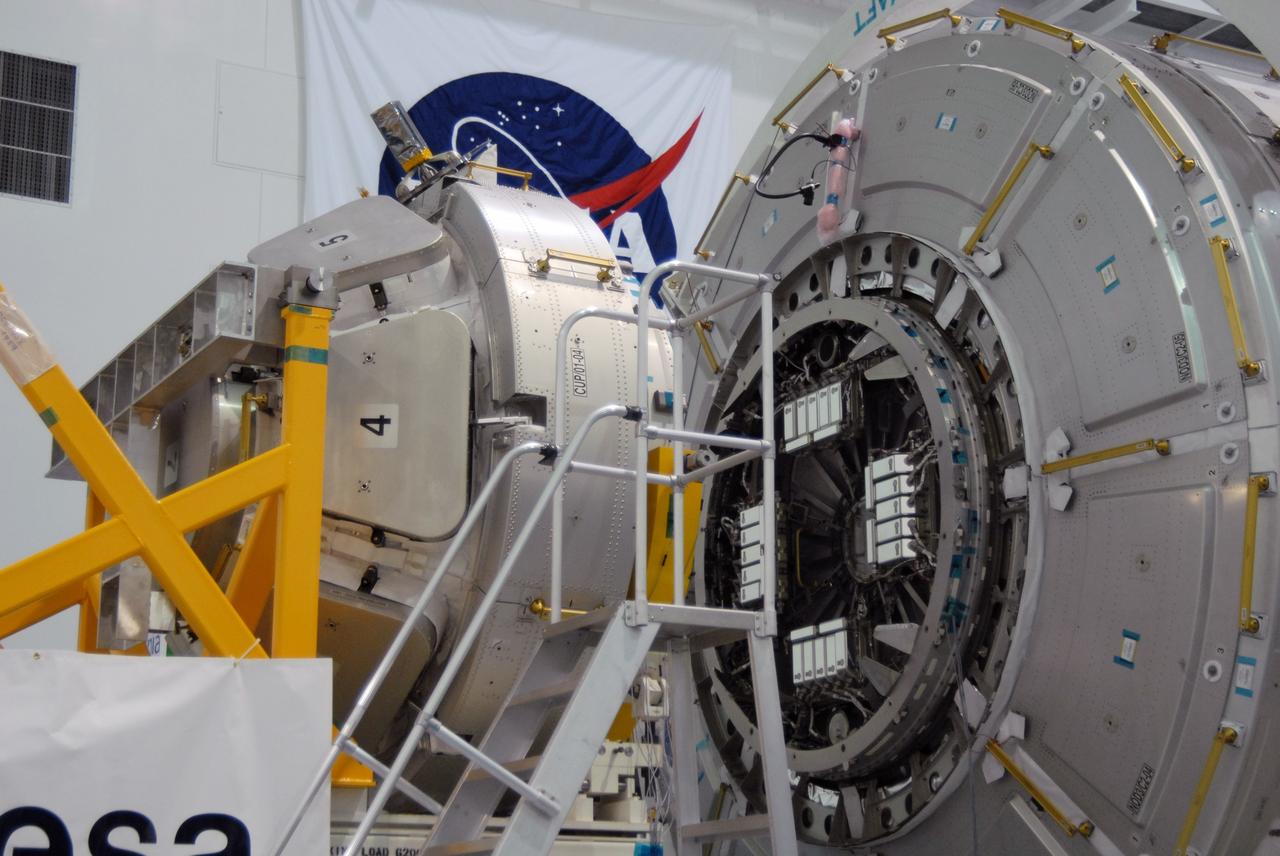
CAPE CANAVERAL, Fla. – In the Space Station Processing Facility at NASA's Kennedy Space Center in Florida, NASA's Cupola module, at left, is being aligned with the Tranquility module, at right, for assembly. Cupola and Tranquility are the payload for space shuttle Endeavour's STS-130 mission to the International Space Station. The module was built for the European Space Agency by Alenia Spazio in Turin, Italy. When attached to the Tranquility Node 3 module, Cupola will resemble a circular bay window that will provide a vastly improved view of the station's exterior. Just under 10 feet in diameter, the module will accommodate two crew members and portable workstations that can control station and robotic activities. The multi-directional view will allow the crew to monitor spacewalks and docking operations, as well as provide a spectacular view of Earth and other celestial objects. Endeavour is targeted to launch Feb. 4, 2010. Photo credit: NASA/Jim Grossmann
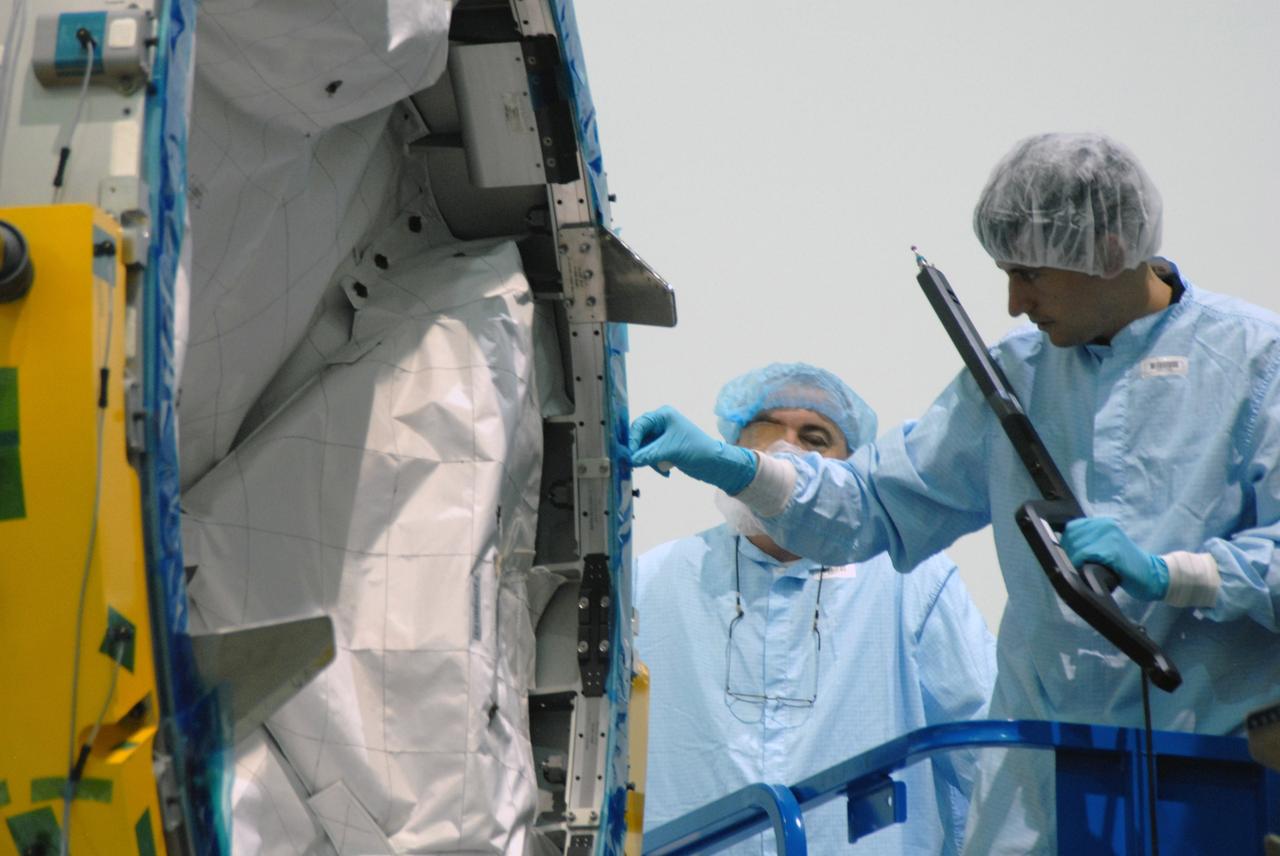
CAPE CANAVERAL, Fla. – In the Space Station Processing Facility at NASA's Kennedy Space Center in Florida, workers take measurements of the Cupola module being aligned with the Tranquility module for assembly. Cupola and Tranquility are the payload for space shuttle Endeavour's STS-130 mission to the International Space Station. The module was built for the European Space Agency by Alenia Spazio in Turin, Italy. When attached to the Tranquility Node 3 module, Cupola will resemble a circular bay window that will provide a vastly improved view of the station's exterior. Just under 10 feet in diameter, the module will accommodate two crew members and portable workstations that can control station and robotic activities. The multi-directional view will allow the crew to monitor spacewalks and docking operations, as well as provide a spectacular view of Earth and other celestial objects. Endeavour is targeted to launch Feb. 4, 2010. Photo credit: NASA/Jim Grossmann
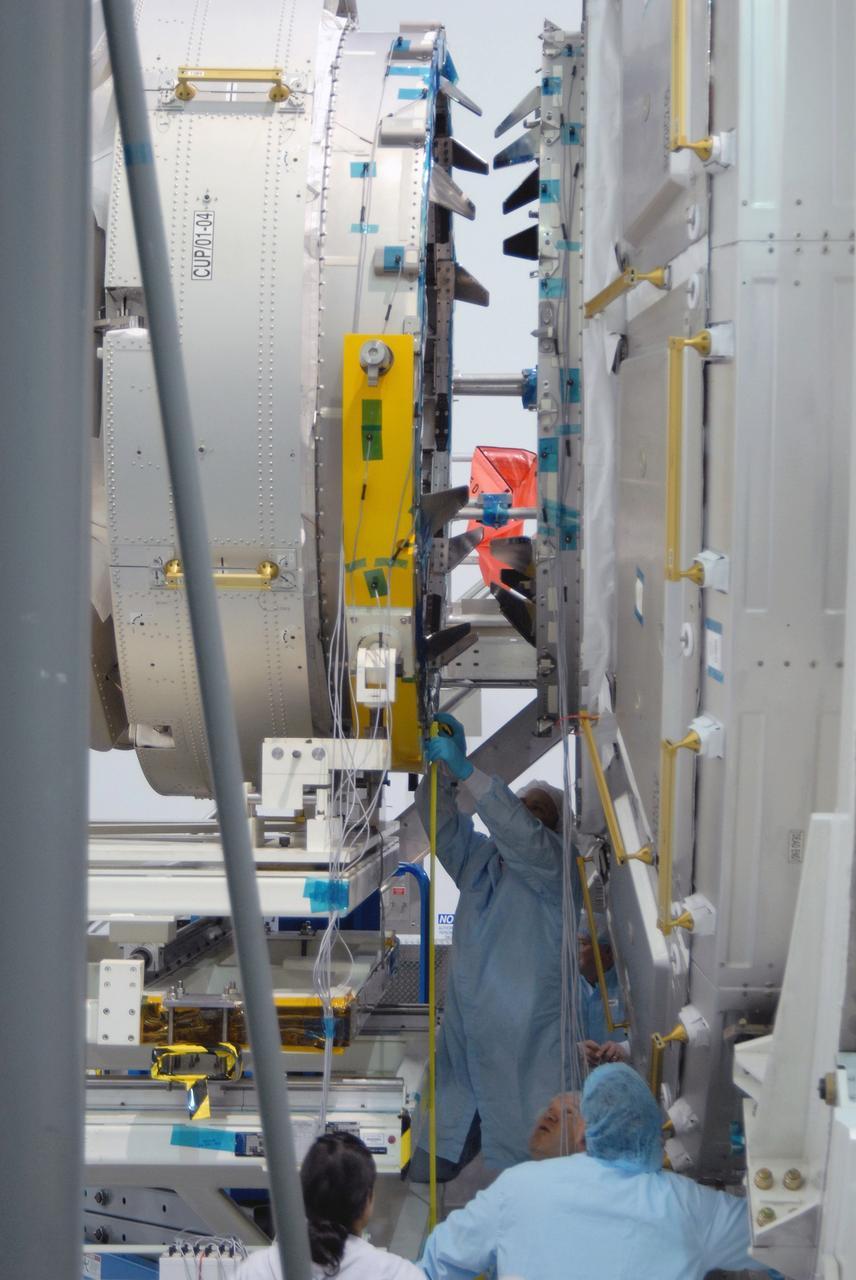
CAPE CANAVERAL, Fla. – In the Space Station Processing Facility at NASA's Kennedy Space Center in Florida, a worker checks the alignment of the Cupola module, at left, with the Tranquility module, at right. Cupola and Tranquility are the payload for space shuttle Endeavour's STS-130 mission to the International Space Station. The module was built for the European Space Agency by Alenia Spazio in Turin, Italy. When attached to the Tranquility Node 3 module, Cupola will resemble a circular bay window that will provide a vastly improved view of the station's exterior. Just under 10 feet in diameter, the module will accommodate two crew members and portable workstations that can control station and robotic activities. The multi-directional view will allow the crew to monitor spacewalks and docking operations, as well as provide a spectacular view of Earth and other celestial objects. Endeavour is targeted to launch Feb. 4, 2010. Photo credit: NASA/Jim Grossmann
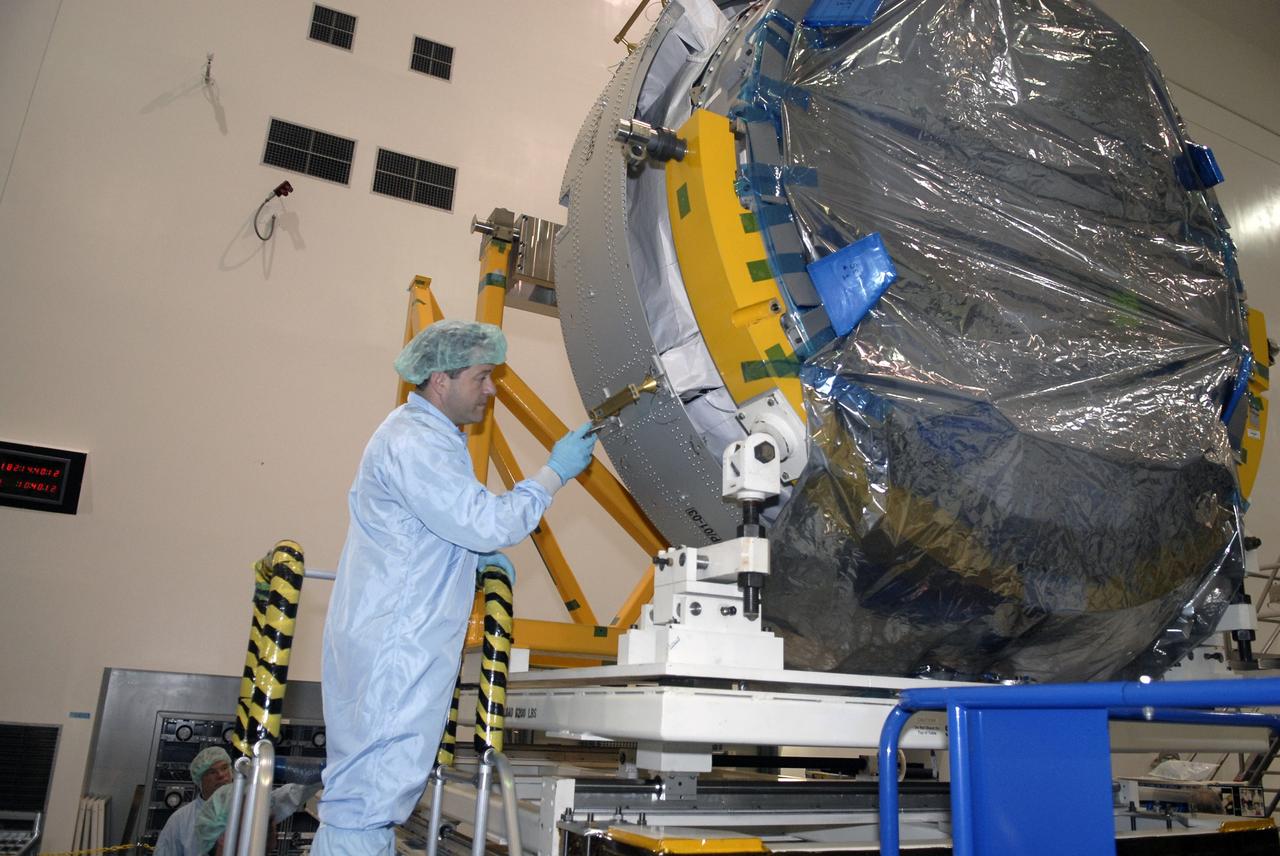
CAPE CANAVERAL, Fla. – In the Space Station Processing Facility at NASA's Kennedy Space Center in Florida, STS-130 Mission Specialist Nicholas Patrick, practices working on equipment that is part of space shuttle Endeavour's payload on the 32nd assembly flight to the International Space Station. Crew members are at Kennedy for familiarization with mission equipment and hardware, called the crew equipment interface test. The payload on the 32nd assembly flight to the International Space Station includes the Cupola and the Tranquility Node 3. Cupola will provide a 360-degree panoramic view of activities outside the station and spectacular views of the Earth. Cupola has the capability for command and control workstations to be installed to assist in the space station remote manipulator system and extra vehicular activities. The final element of the space station core, Cupola is targeted for launch Feb. 4, 2010. Photo credit: NASA/Kim Shiflett
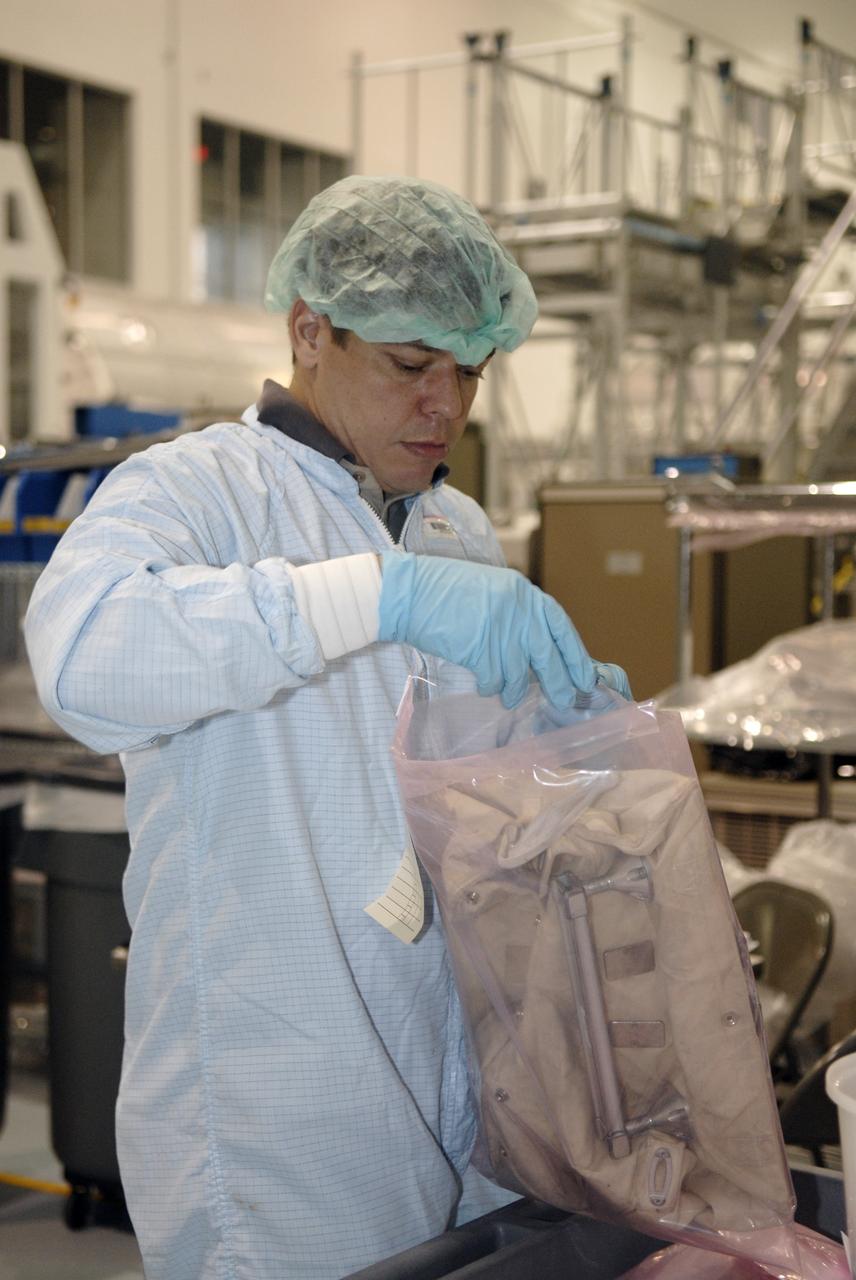
CAPE CANAVERAL, Fla. – In the Space Station Processing Facility at NASA's Kennedy Space Center in Florida, STS-130 Mission Specialist Robert Behnken becomes familiar with equipment that will be on the mission. Crew members are at Kennedy for familiarization with mission equipment and hardware, called the crew equipment interface test. The payload on the 32nd assembly flight to the International Space Station includes the Cupola and the Tranquility Node 3. Cupola will provide a 360-degree panoramic view of activities outside the station and spectacular views of the Earth. Cupola has the capability for command and control workstations to be installed to assist in the space station remote manipulator system and extra vehicular activities. The final element of the space station core, Cupola is targeted for launch Feb. 4, 2010. Photo credit: NASA/Kim Shiflett

CAPE CANAVERAL, Fla. – In NASA Kennedy Space Center's Space Station Processing Facility, the Cupola module is being mated to the Tranquility node on the work stand. Cupola and Tranquility are the payload for space shuttle Endeavour's STS-130 mission to the International Space Station. The module was built for the European Space Agency by Alenia Spazio in Turin, Italy. When attached to the Tranquility Node 3 module, Cupola will resemble a circular bay window that will provide a vastly improved view of the station's exterior. Just under 10 feet in diameter, the module will accommodate two crew members and portable workstations that can control station and robotic activities. The multi-directional view will allow the crew to monitor spacewalks and docking operations, as well as provide a spectacular view of Earth and other celestial objects. Endeavour is targeted to launch Feb. 4, 2010. Photo credit: NASA/Cory Huston