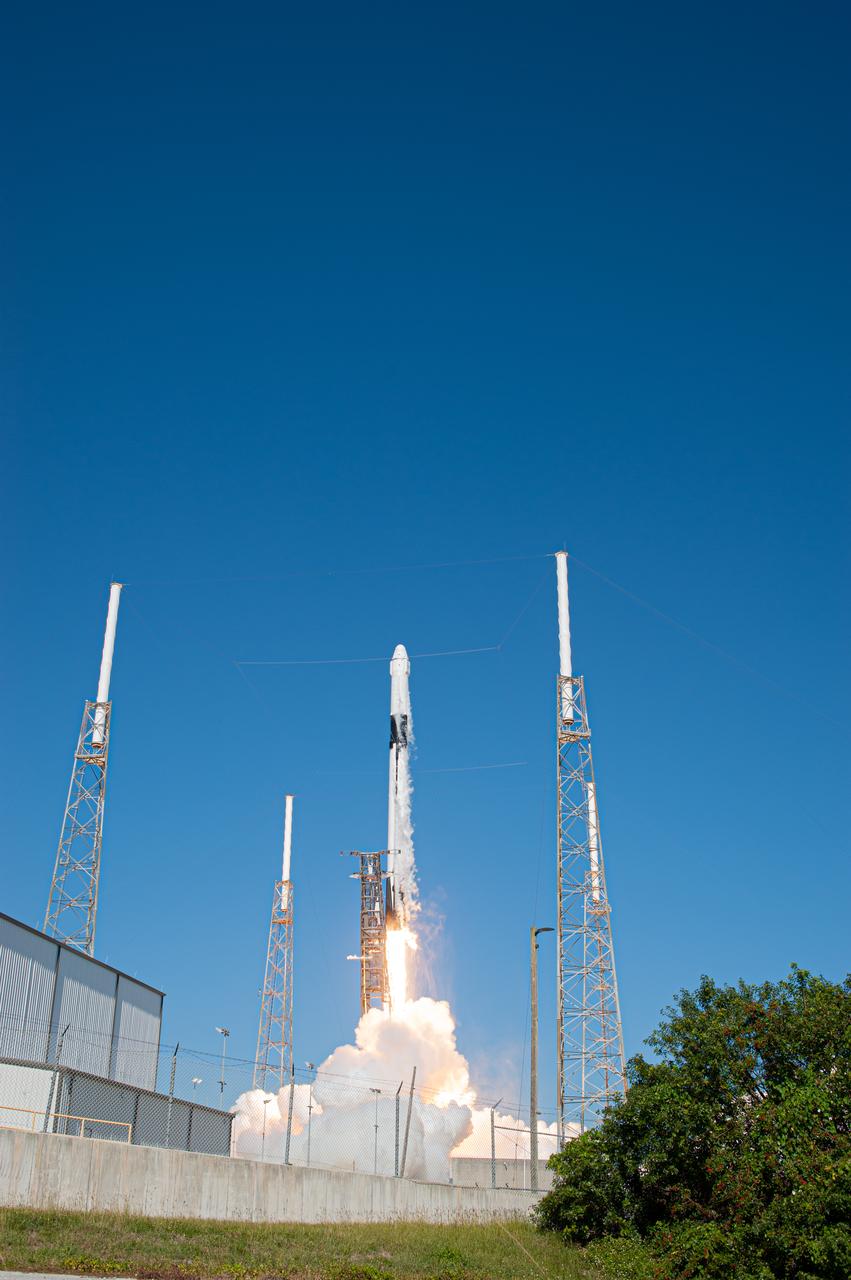
The SpaceX Falcon 9 rocket with the Dragon cargo module climbs upward after liftoff from Space Launch Complex 40 on Cape Canaveral Air Force Station in Florida in the early afternoon on Dec. 5, 2019. Liftoff was at 12:29 p.m. EST. This is SpaceX’s 19th Commercial Resupply Services (CRS-19) mission for NASA to the International Space Station. The Dragon cargo module will deliver more than 5,700 pounds of science and research, crew supplies and vehicle hardware to the orbital laboratory and its crew.
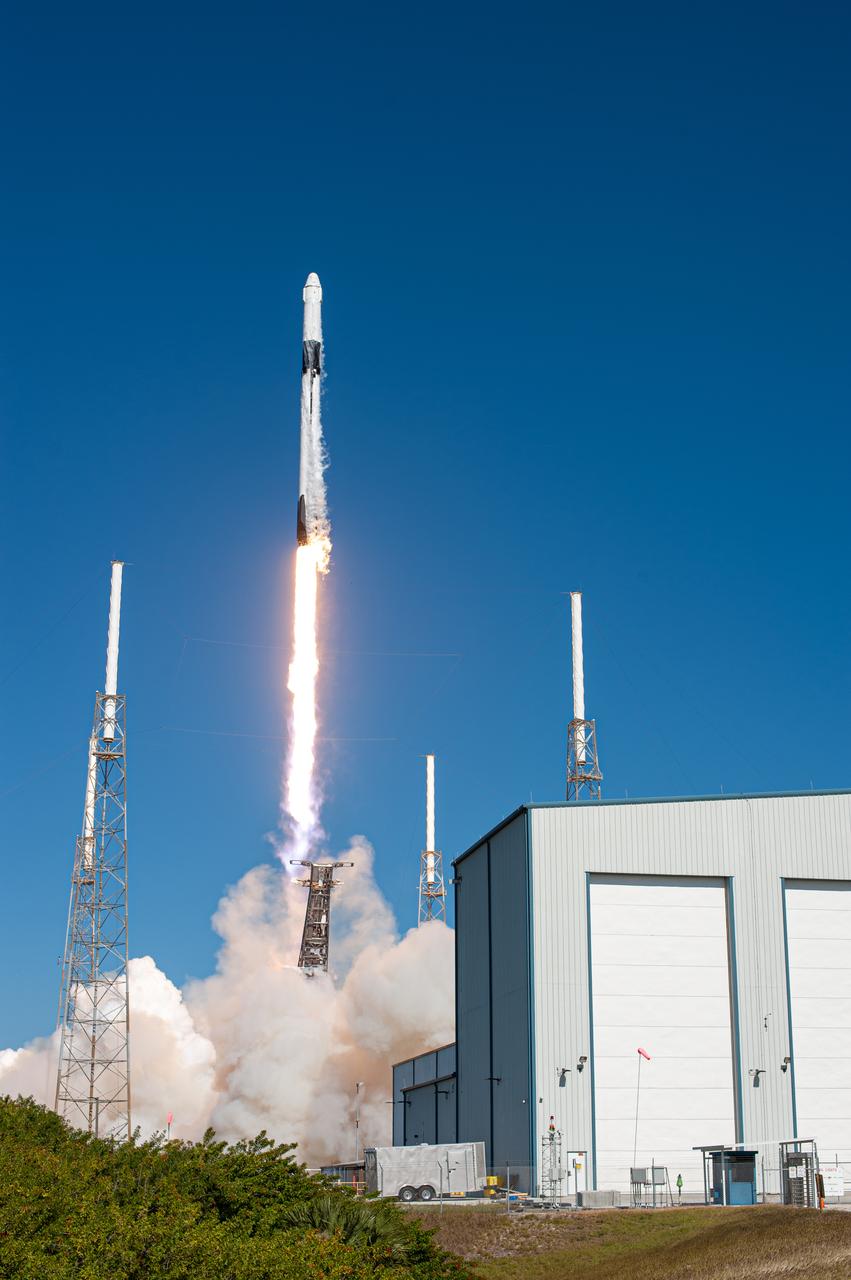
The SpaceX Falcon 9 rocket with the Dragon cargo module climbs upward after liftoff from Space Launch Complex 40 on Cape Canaveral Air Force Station in Florida in the early afternoon on Dec. 5, 2019. Liftoff was at 12:29 p.m. EST. This is SpaceX’s 19th Commercial Resupply Services (CRS-19) mission for NASA to the International Space Station. The Dragon cargo module will deliver more than 5,700 pounds of science and research, crew supplies and vehicle hardware to the orbital laboratory and its crew.
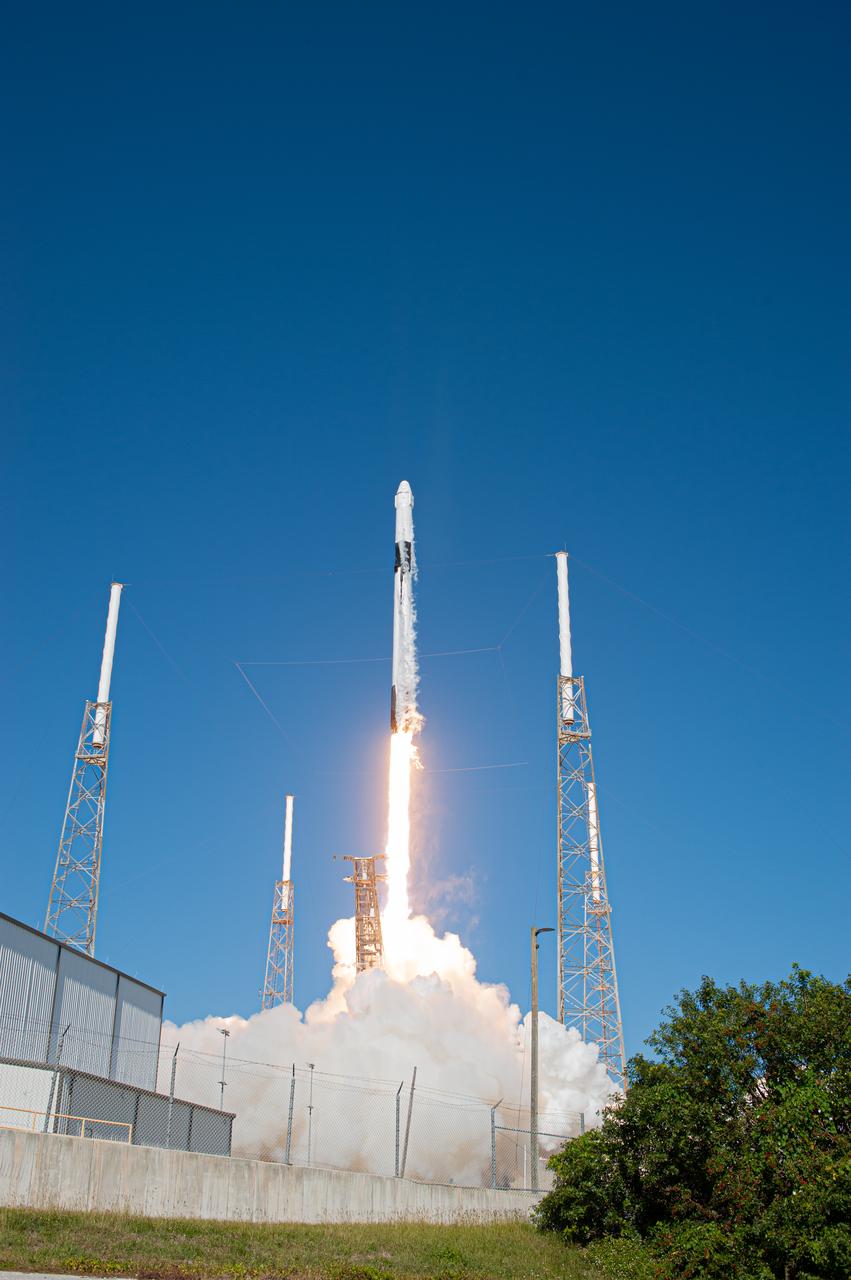
The SpaceX Falcon 9 rocket with the Dragon cargo module climbs upward after liftoff from Space Launch Complex 40 on Cape Canaveral Air Force Station in Florida in the early afternoon on Dec. 5, 2019. Liftoff was at 12:29 p.m. EST. This is SpaceX’s 19th Commercial Resupply Services (CRS-19) mission for NASA to the International Space Station. The Dragon cargo module will deliver more than 5,700 pounds of science and research, crew supplies and vehicle hardware to the orbital laboratory and its crew.
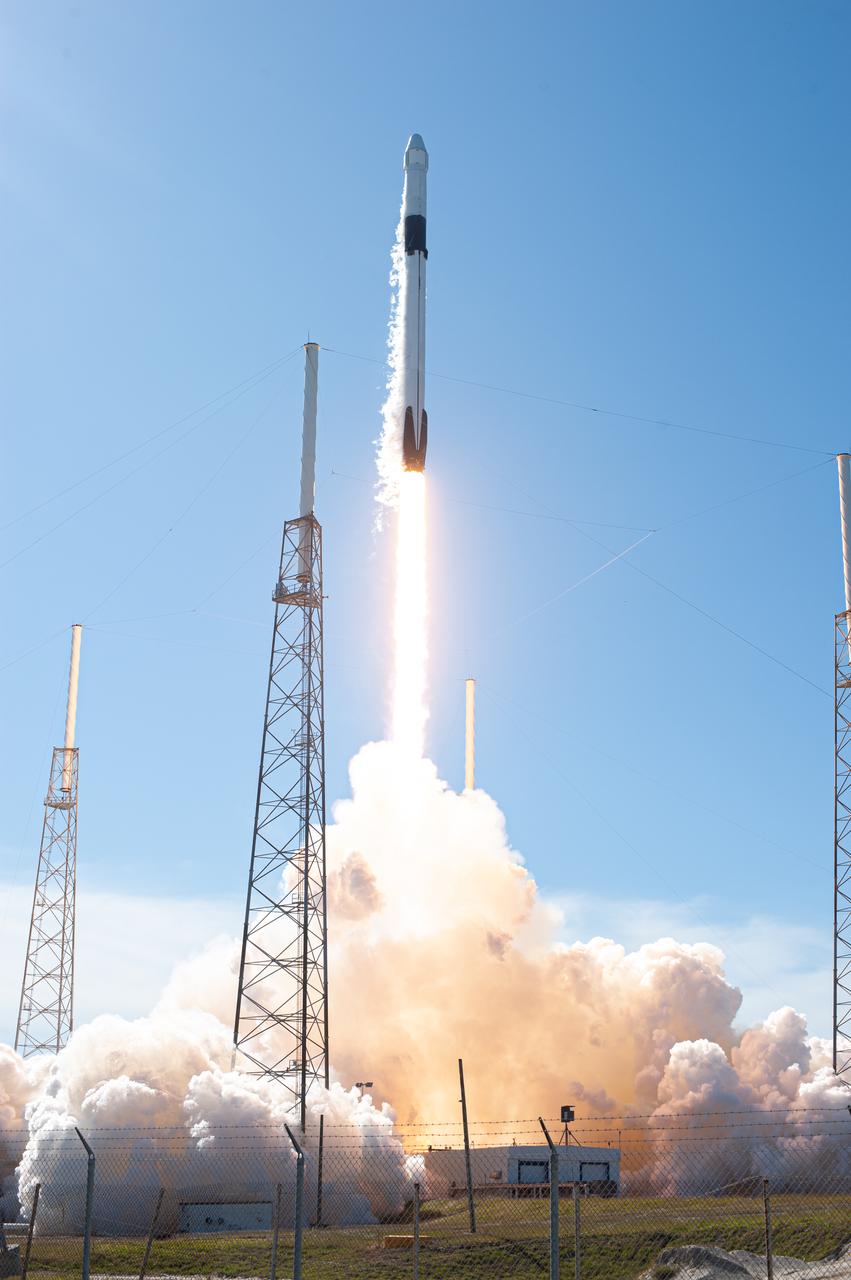
The SpaceX Falcon 9 rocket with the Dragon cargo module lifts off Space Launch Complex 40 on Cape Canaveral Air Force Station in Florida in the early afternoon on Dec. 5, 2019. Liftoff was at 12:29 p.m. EST. This is SpaceX’s 19th Commercial Resupply Services (CRS-19) mission for NASA to the International Space Station. The Dragon cargo module will deliver more than 5,700 pounds of science and research, crew supplies and vehicle hardware to the orbital laboratory and its crew.
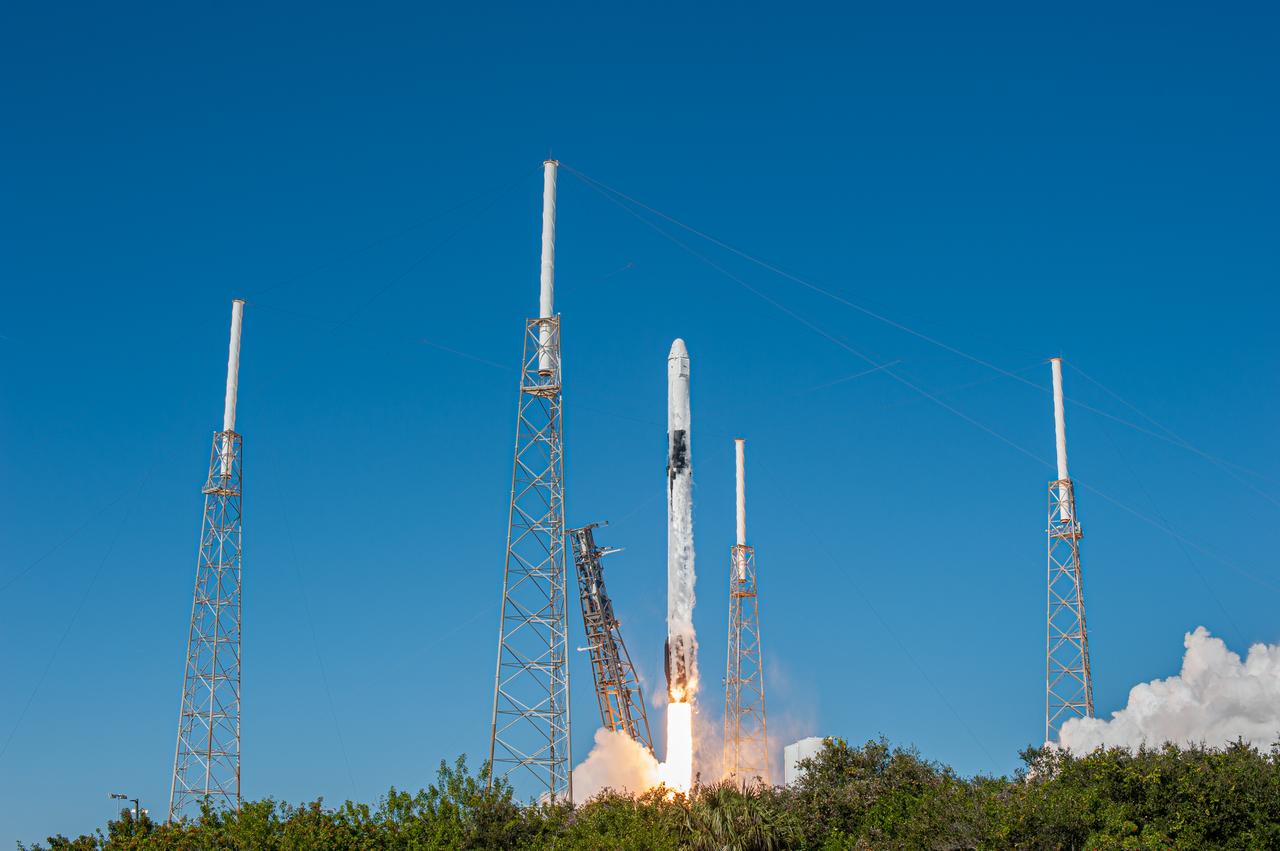
The SpaceX Falcon 9 rocket with the Dragon cargo module lifts off Space Launch Complex 40 on Cape Canaveral Air Force Station in Florida in the early afternoon on Dec. 5, 2019. Liftoff was at 12:29 p.m. EST. This is SpaceX’s 19th Commercial Resupply Services (CRS-19) mission for NASA to the International Space Station. The Dragon cargo module will deliver more than 5,700 pounds of science and research, crew supplies and vehicle hardware to the orbital laboratory and its crew.
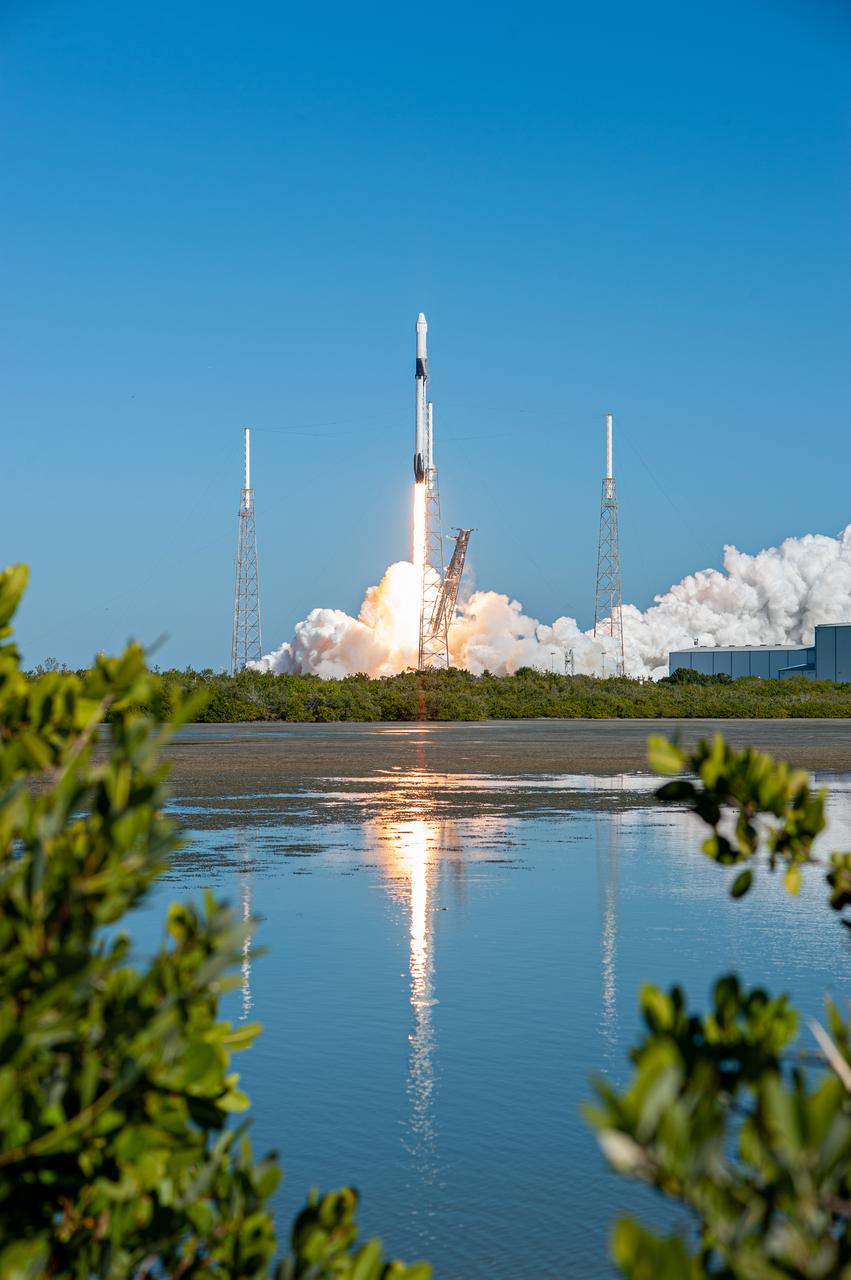
The SpaceX Falcon 9 rocket with the Dragon cargo module climbs upward after liftoff from Space Launch Complex 40 on Cape Canaveral Air Force Station in Florida in the early afternoon on Dec. 5, 2019. Liftoff was at 12:29 p.m. EST. This is SpaceX’s 19th Commercial Resupply Services (CRS-19) mission for NASA to the International Space Station. The Dragon cargo module will deliver more than 5,700 pounds of science and research, crew supplies and vehicle hardware to the orbital laboratory and its crew.
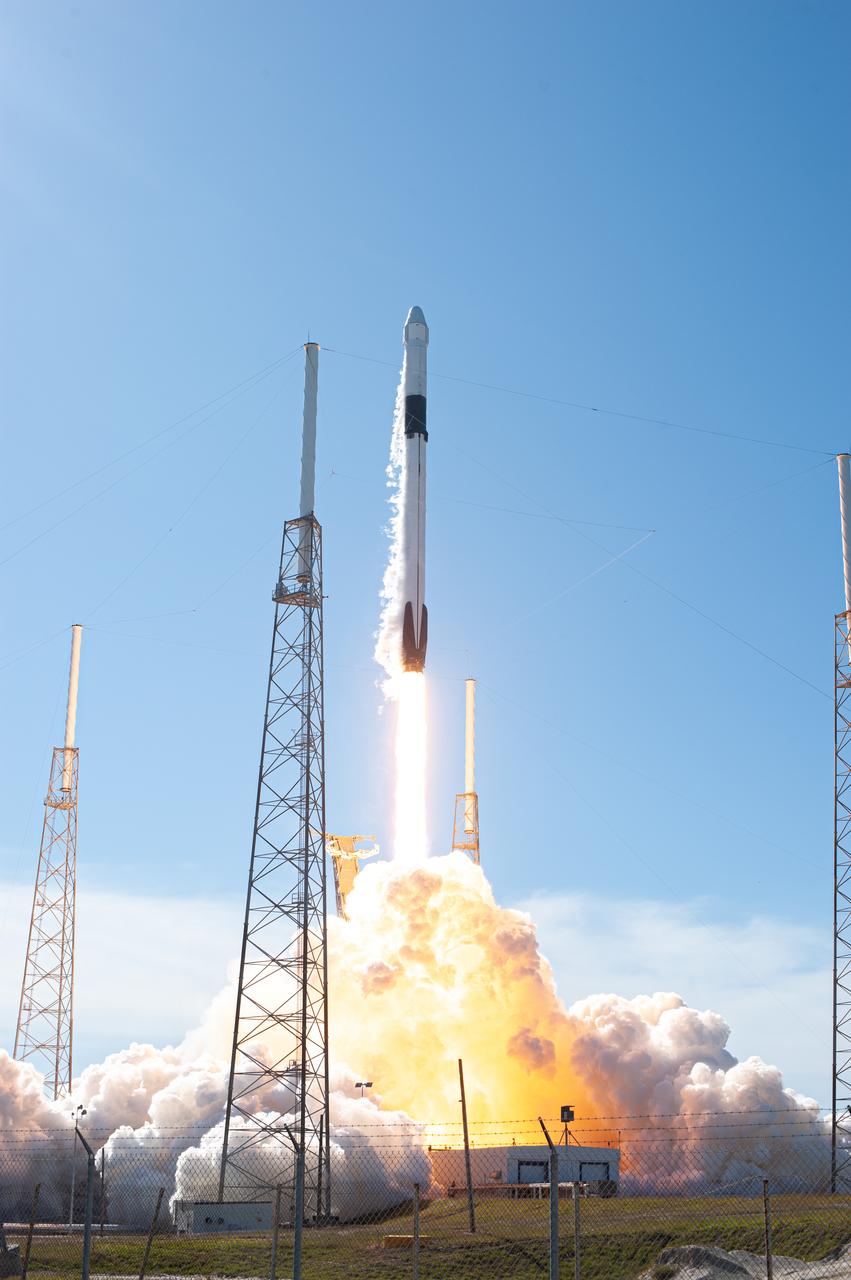
The SpaceX Falcon 9 rocket with the Dragon cargo module lifts off Space Launch Complex 40 on Cape Canaveral Air Force Station in Florida in the early afternoon on Dec. 5, 2019. Liftoff was at 12:29 p.m. EST. This is SpaceX’s 19th Commercial Resupply Services (CRS-19) mission for NASA to the International Space Station. The Dragon cargo module will deliver more than 5,700 pounds of science and research, crew supplies and vehicle hardware to the orbital laboratory and its crew.

The SpaceX Falcon 9 rocket with the Dragon cargo module lifts off Space Launch Complex 40 on Cape Canaveral Air Force Station in Florida in the early afternoon on Dec. 5, 2019. Liftoff was at 12:29 p.m. EST. This is SpaceX’s 19th Commercial Resupply Services (CRS-19) mission for NASA to the International Space Station. The Dragon cargo module will deliver more than 5,700 pounds of science and research, crew supplies and vehicle hardware to the orbital laboratory and its crew.
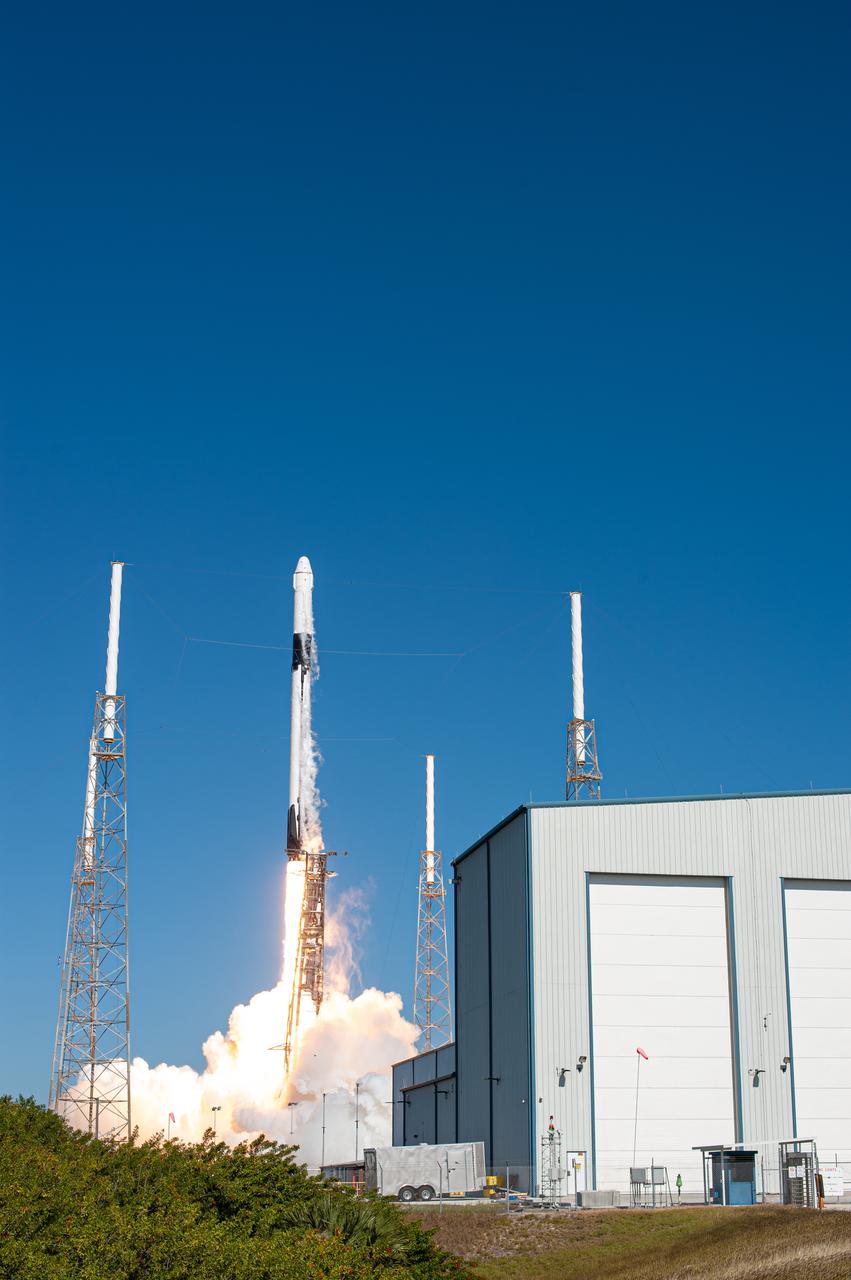
The SpaceX Falcon 9 rocket with the Dragon cargo module climbs upward after liftoff from Space Launch Complex 40 on Cape Canaveral Air Force Station in Florida in the early afternoon on Dec. 5, 2019. Liftoff was at 12:29 p.m. EST. This is SpaceX’s 19th Commercial Resupply Services (CRS-19) mission for NASA to the International Space Station. The Dragon cargo module will deliver more than 5,700 pounds of science and research, crew supplies and vehicle hardware to the orbital laboratory and its crew.

The SpaceX Falcon 9 rocket with the Dragon cargo module climbs upward after liftoff from Space Launch Complex 40 on Cape Canaveral Air Force Station in Florida in the early afternoon on Dec. 5, 2019. Liftoff was at 12:29 p.m. EST. This is SpaceX’s 19th Commercial Resupply Services (CRS-19) mission for NASA to the International Space Station. The Dragon cargo module will deliver more than 5,700 pounds of science and research, crew supplies and vehicle hardware to the orbital laboratory and its crew.
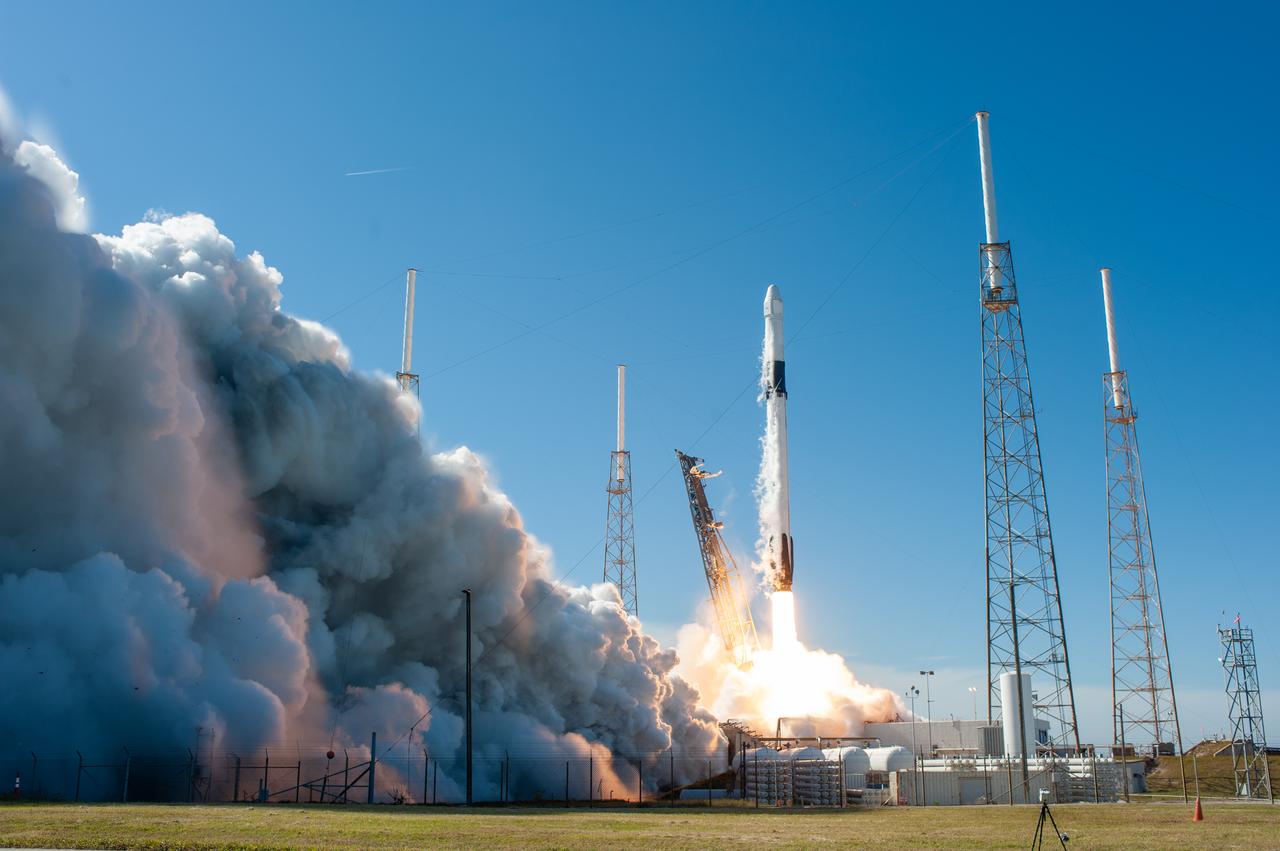
The SpaceX Falcon 9 rocket with the Dragon cargo module lifts off Space Launch Complex 40 on Cape Canaveral Air Force Station in Florida in the early afternoon on Dec. 5, 2019. Liftoff was at 12:29 p.m. EST. This is SpaceX’s 19th Commercial Resupply Services (CRS-19) mission for NASA to the International Space Station. The Dragon cargo module will deliver more than 5,700 pounds of science and research, crew supplies and vehicle hardware to the orbital laboratory and its crew.
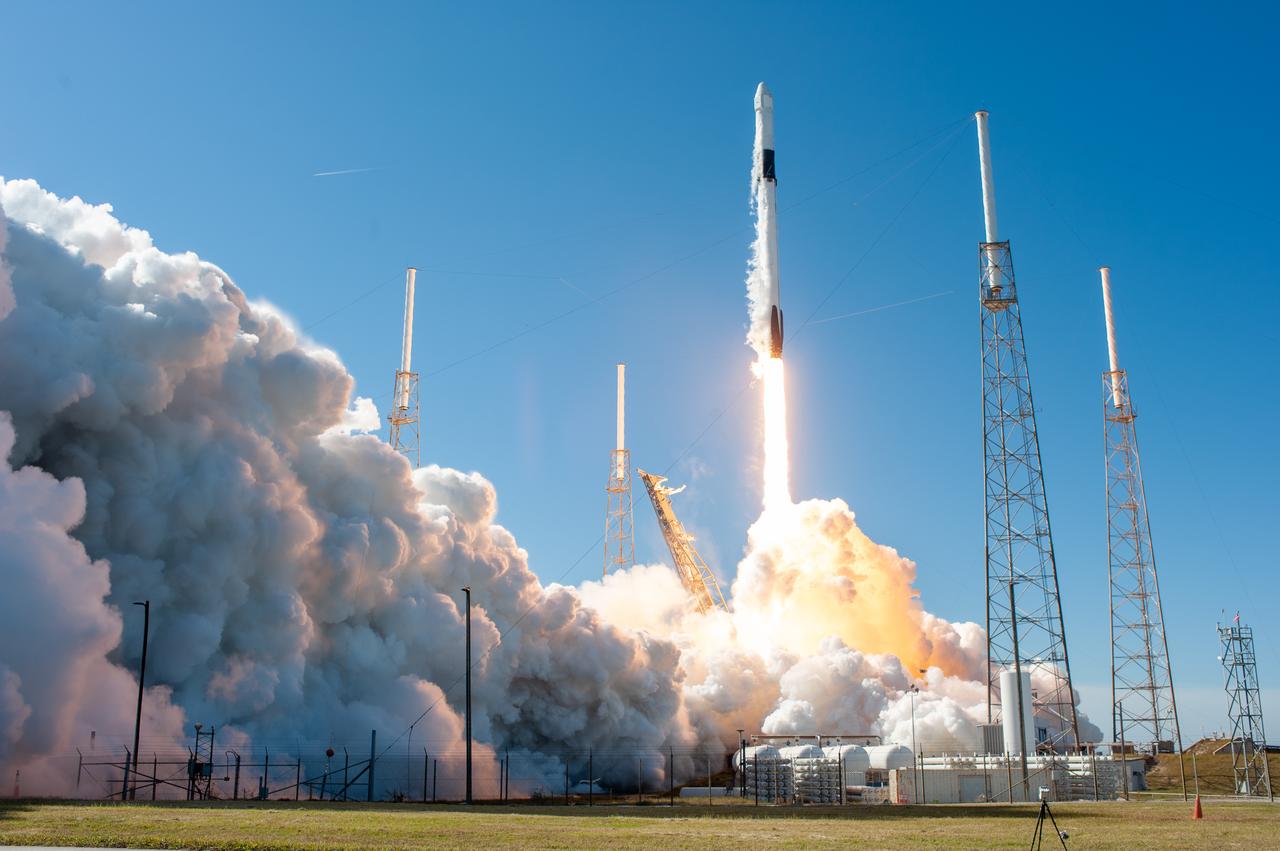
The SpaceX Falcon 9 rocket with the Dragon cargo module lifts off Space Launch Complex 40 on Cape Canaveral Air Force Station in Florida in the early afternoon on Dec. 5, 2019. Liftoff was at 12:29 p.m. EST. This is SpaceX’s 19th Commercial Resupply Services (CRS-19) mission for NASA to the International Space Station. The Dragon cargo module will deliver more than 5,700 pounds of science and research, crew supplies and vehicle hardware to the orbital laboratory and its crew.
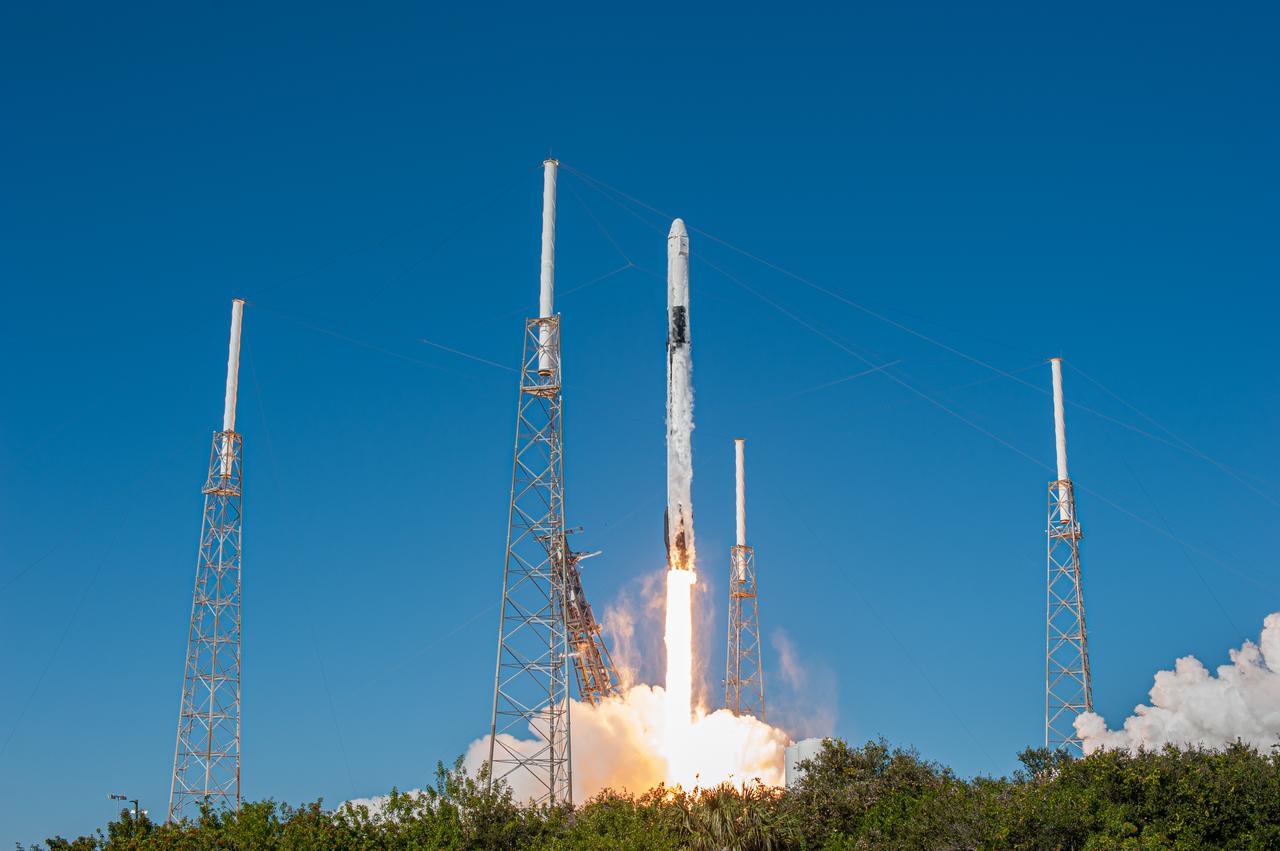
The SpaceX Falcon 9 rocket with the Dragon cargo module lifts off Space Launch Complex 40 on Cape Canaveral Air Force Station in Florida in the early afternoon on Dec. 5, 2019. Liftoff was at 12:29 p.m. EST. This is SpaceX’s 19th Commercial Resupply Services (CRS-19) mission for NASA to the International Space Station. The Dragon cargo module will deliver more than 5,700 pounds of science and research, crew supplies and vehicle hardware to the orbital laboratory and its crew.
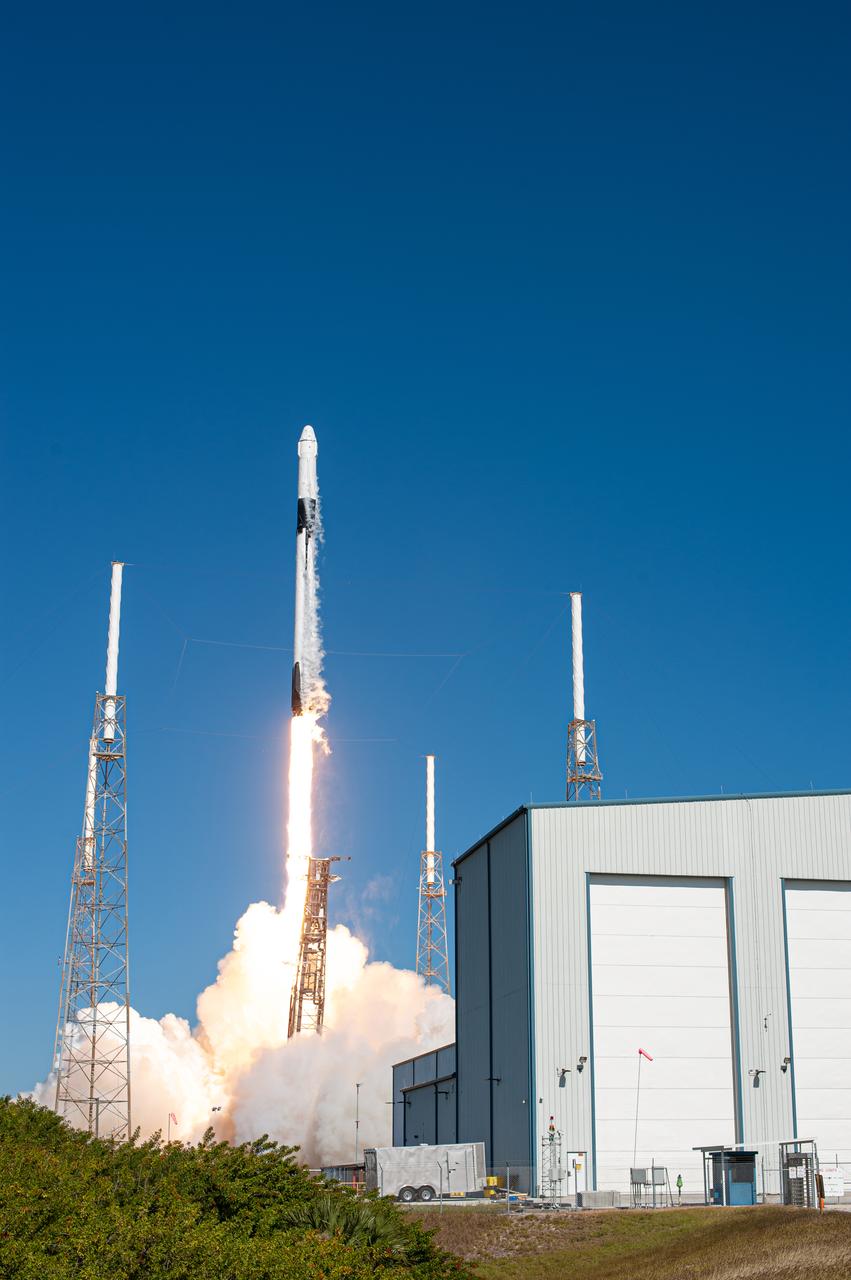
The SpaceX Falcon 9 rocket with the Dragon cargo module climbs upward after liftoff from Space Launch Complex 40 on Cape Canaveral Air Force Station in Florida in the early afternoon on Dec. 5, 2019. Liftoff was at 12:29 p.m. EST. This is SpaceX’s 19th Commercial Resupply Services (CRS-19) mission for NASA to the International Space Station. The Dragon cargo module will deliver more than 5,700 pounds of science and research, crew supplies and vehicle hardware to the orbital laboratory and its crew.
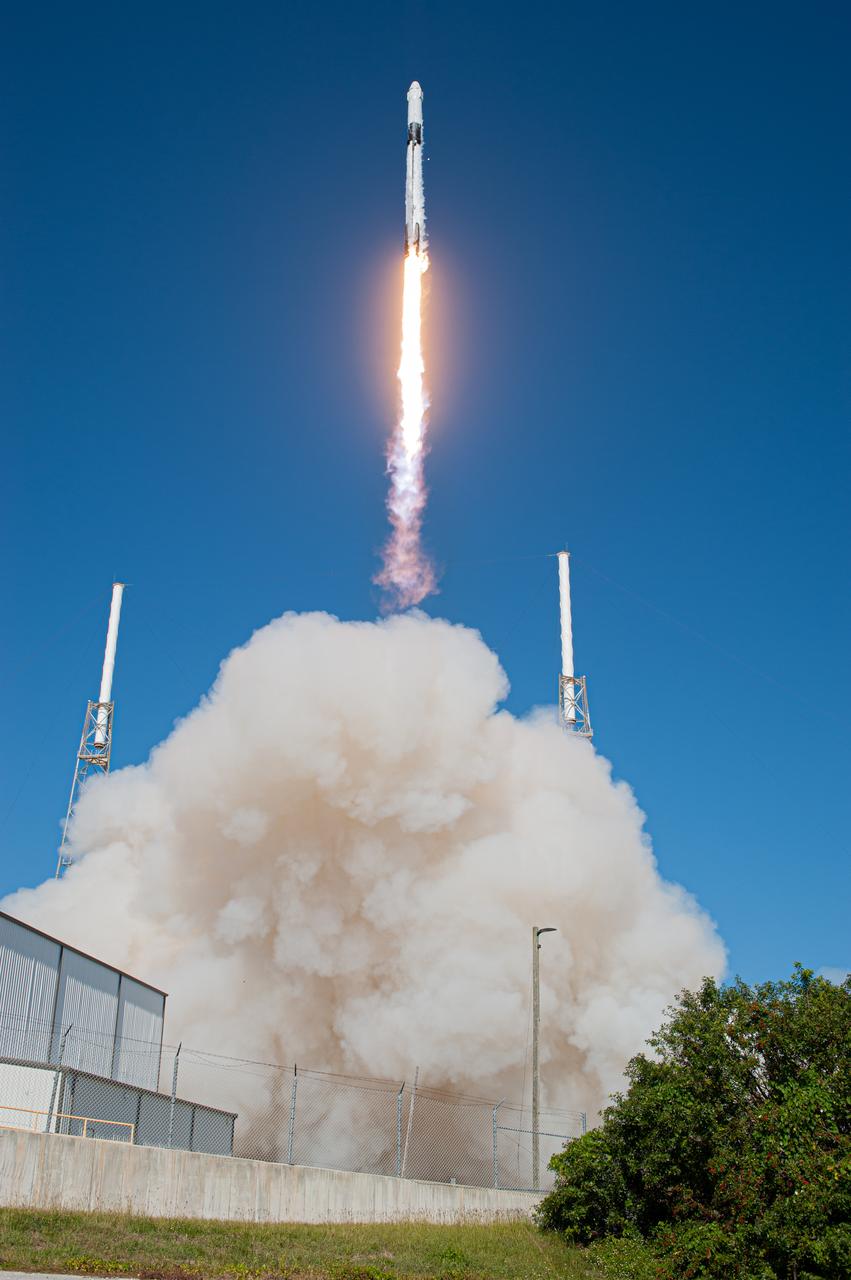
The SpaceX Falcon 9 rocket with the Dragon cargo module climbs upward after liftoff from Space Launch Complex 40 on Cape Canaveral Air Force Station in Florida in the early afternoon on Dec. 5, 2019. Liftoff was at 12:29 p.m. EST. This is SpaceX’s 19th Commercial Resupply Services (CRS-19) mission for NASA to the International Space Station. The Dragon cargo module will deliver more than 5,700 pounds of science and research, crew supplies and vehicle hardware to the orbital laboratory and its crew.
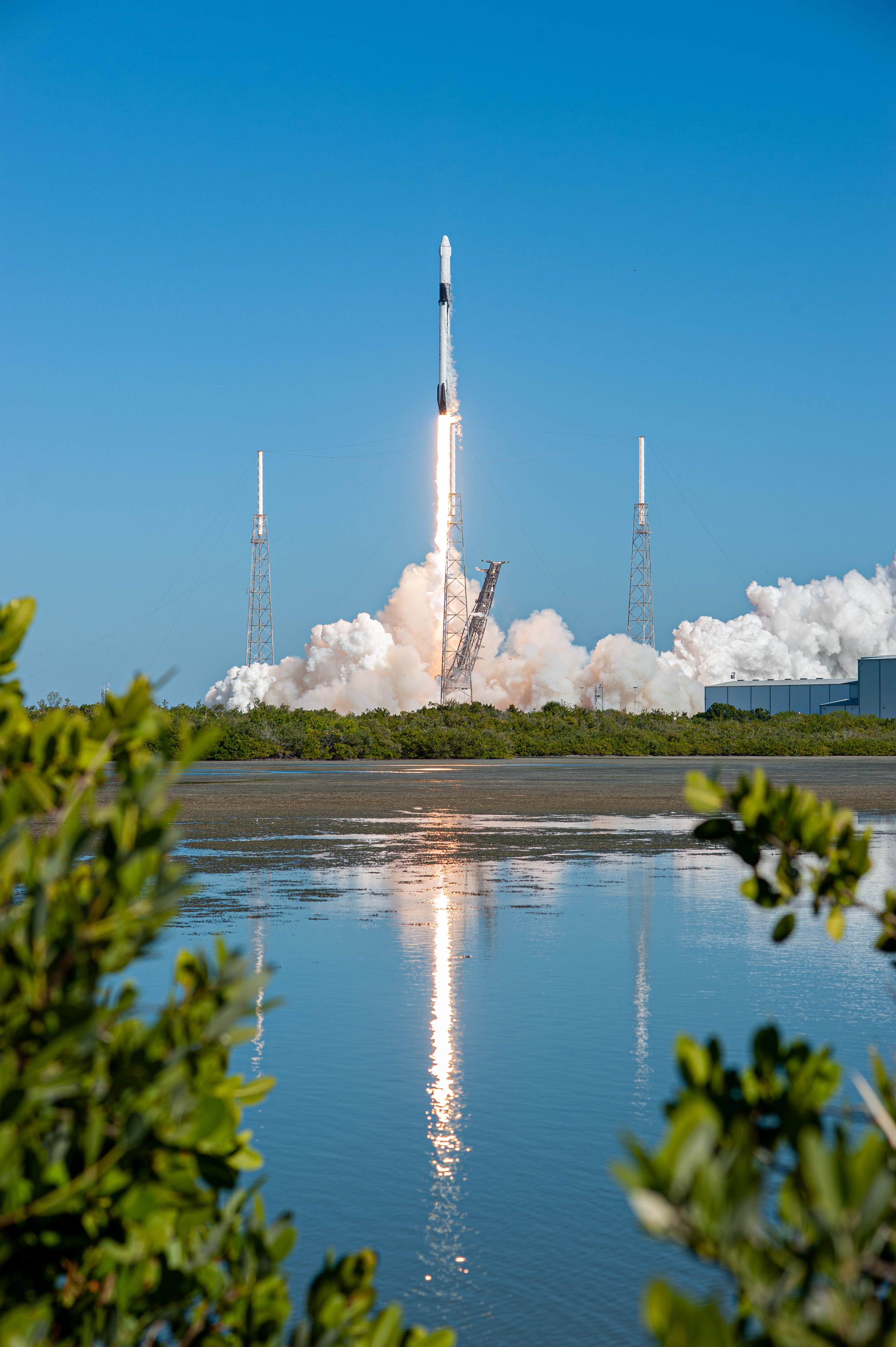
The SpaceX Falcon 9 rocket with the Dragon cargo module climbs upward after liftoff from Space Launch Complex 40 on Cape Canaveral Air Force Station in Florida in the early afternoon on Dec. 5, 2019. Liftoff was at 12:29 p.m. EST. This is SpaceX’s 19th Commercial Resupply Services (CRS-19) mission for NASA to the International Space Station. The Dragon cargo module will deliver more than 5,700 pounds of science and research, crew supplies and vehicle hardware to the orbital laboratory and its crew.
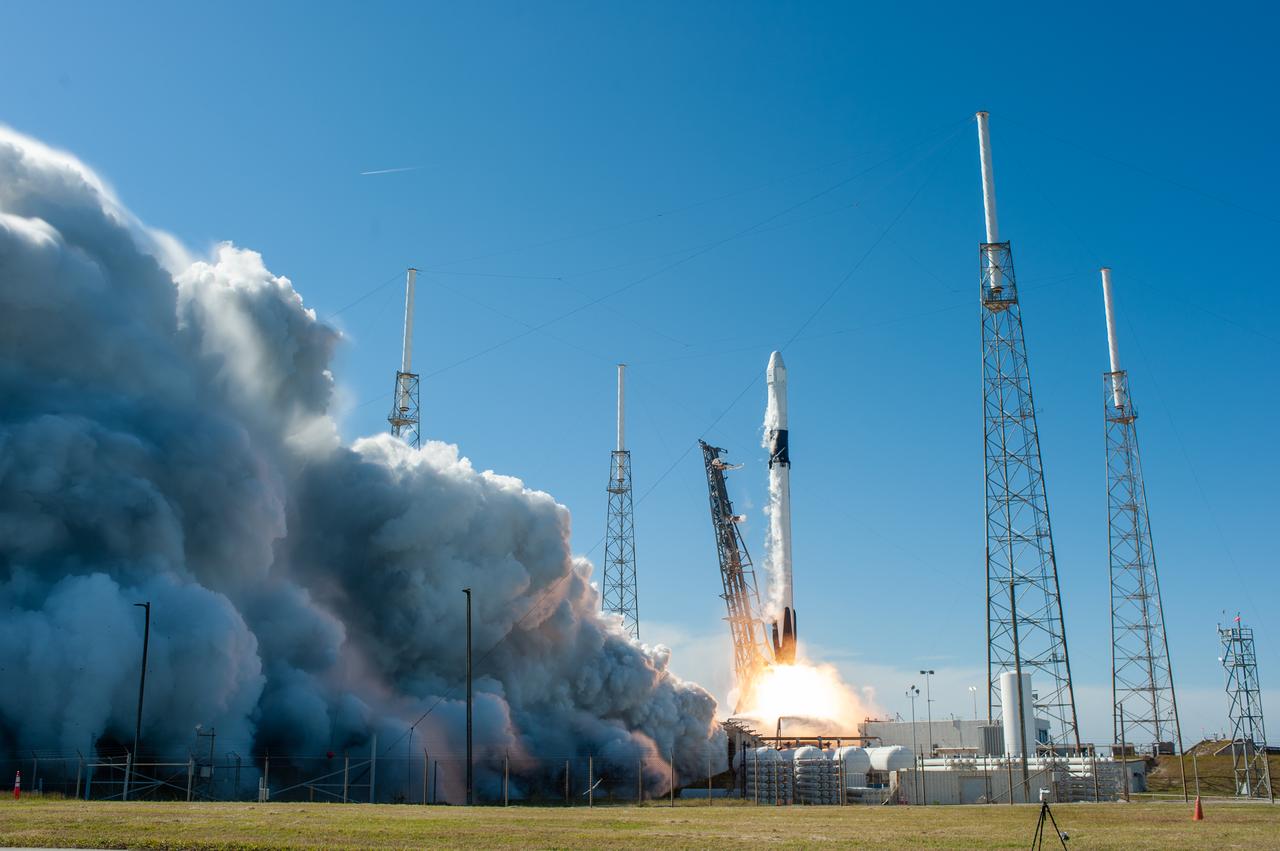
The SpaceX Falcon 9 rocket with the Dragon cargo module lifts off Space Launch Complex 40 on Cape Canaveral Air Force Station in Florida in the early afternoon on Dec. 5, 2019. Liftoff was at 12:29 p.m. EST. This is SpaceX’s 19th Commercial Resupply Services (CRS-19) mission for NASA to the International Space Station. The Dragon cargo module will deliver more than 5,700 pounds of science and research, crew supplies and vehicle hardware to the orbital laboratory and its crew.
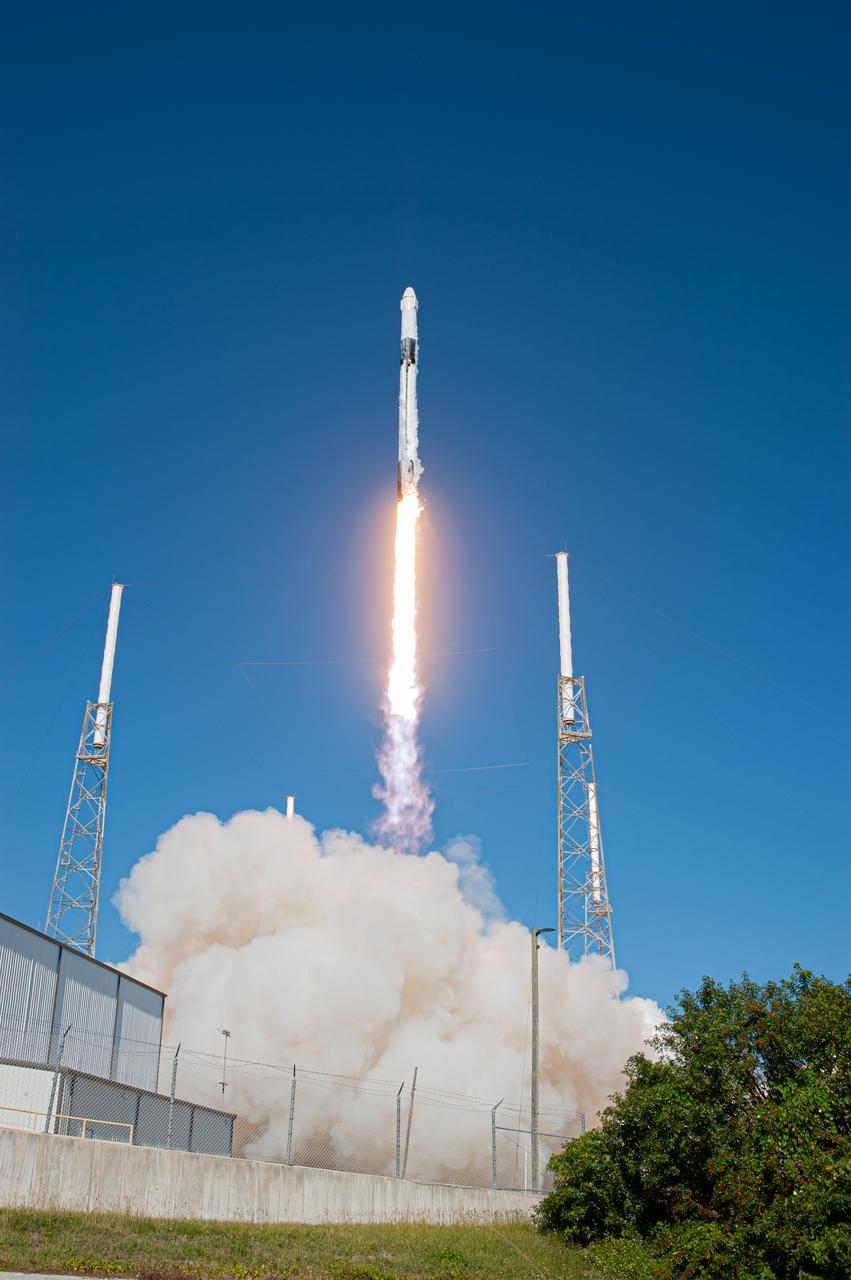
The SpaceX Falcon 9 rocket with the Dragon cargo module climbs upward after liftoff from Space Launch Complex 40 on Cape Canaveral Air Force Station in Florida in the early afternoon on Dec. 5, 2019. Liftoff was at 12:29 p.m. EST. This is SpaceX’s 19th Commercial Resupply Services (CRS-19) mission for NASA to the International Space Station. The Dragon cargo module will deliver more than 5,700 pounds of science and research, crew supplies and vehicle hardware to the orbital laboratory and its crew.
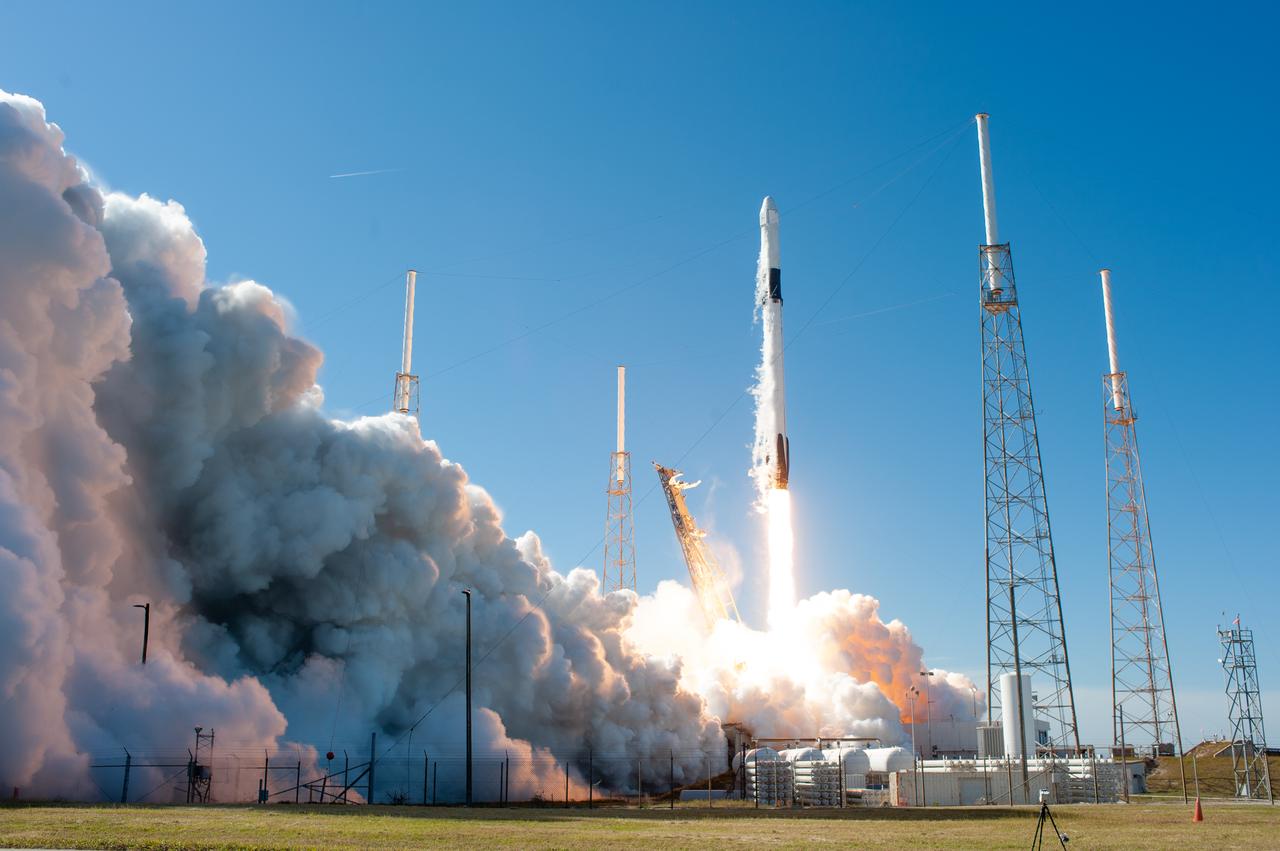
The SpaceX Falcon 9 rocket with the Dragon cargo module lifts off Space Launch Complex 40 on Cape Canaveral Air Force Station in Florida in the early afternoon on Dec. 5, 2019. Liftoff was at 12:29 p.m. EST. This is SpaceX’s 19th Commercial Resupply Services (CRS-19) mission for NASA to the International Space Station. The Dragon cargo module will deliver more than 5,700 pounds of science and research, crew supplies and vehicle hardware to the orbital laboratory and its crew.
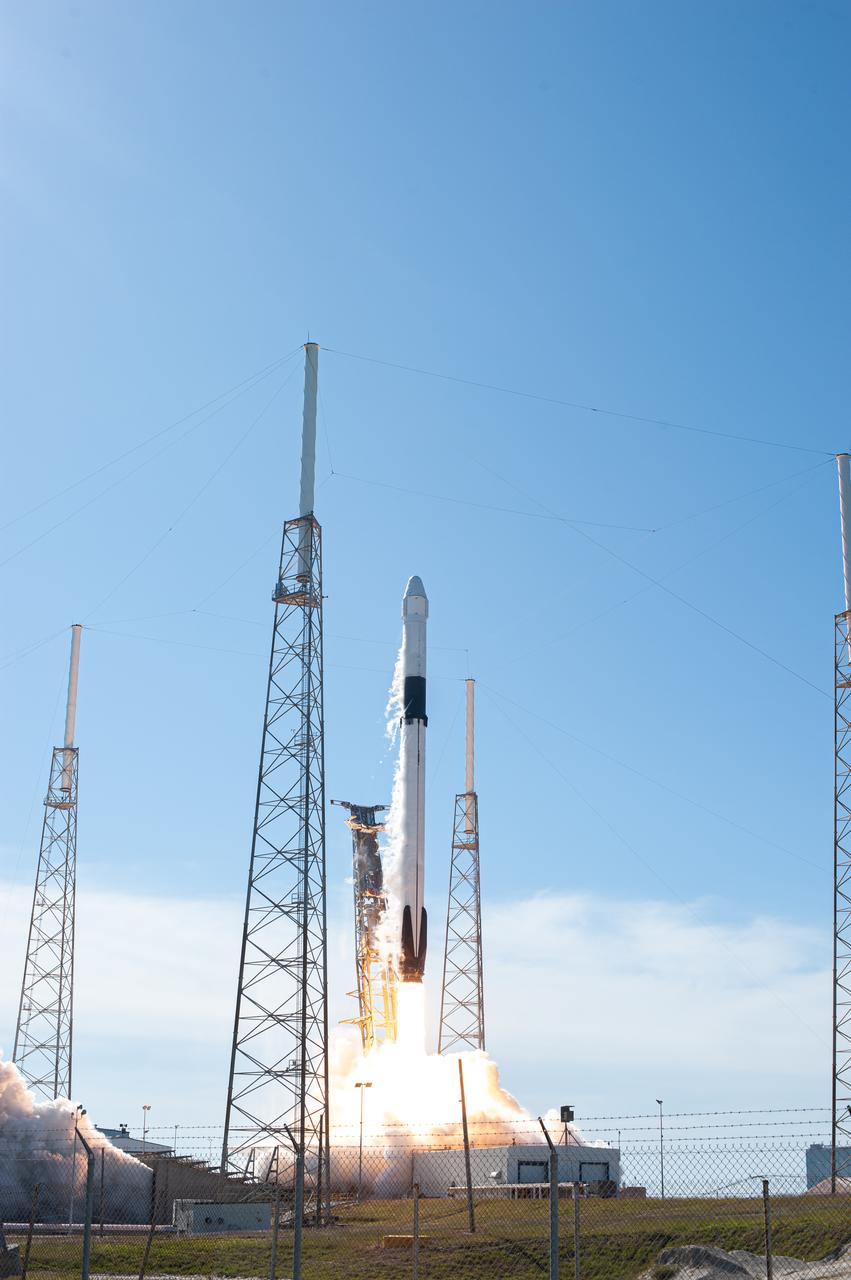
The SpaceX Falcon 9 rocket with the Dragon cargo module lifts off Space Launch Complex 40 on Cape Canaveral Air Force Station in Florida in the early afternoon on Dec. 5, 2019. Liftoff was at 12:29 p.m. EST. This is SpaceX’s 19th Commercial Resupply Services (CRS-19) mission for NASA to the International Space Station. The Dragon cargo module will deliver more than 5,700 pounds of science and research, crew supplies and vehicle hardware to the orbital laboratory and its crew.
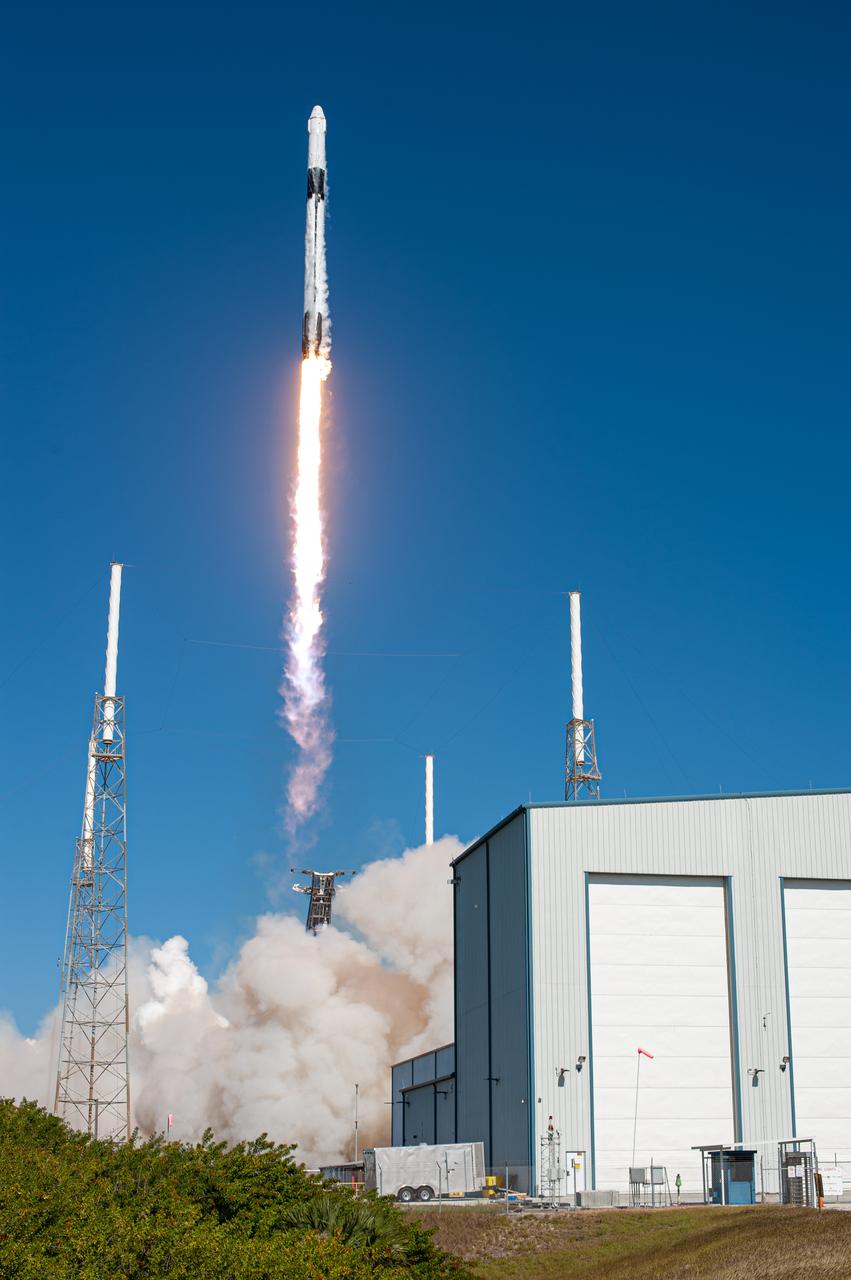
The SpaceX Falcon 9 rocket with the Dragon cargo module climbs upward after liftoff from Space Launch Complex 40 on Cape Canaveral Air Force Station in Florida in the early afternoon on Dec. 5, 2019. Liftoff was at 12:29 p.m. EST. This is SpaceX’s 19th Commercial Resupply Services (CRS-19) mission for NASA to the International Space Station. The Dragon cargo module will deliver more than 5,700 pounds of science and research, crew supplies and vehicle hardware to the orbital laboratory and its crew.
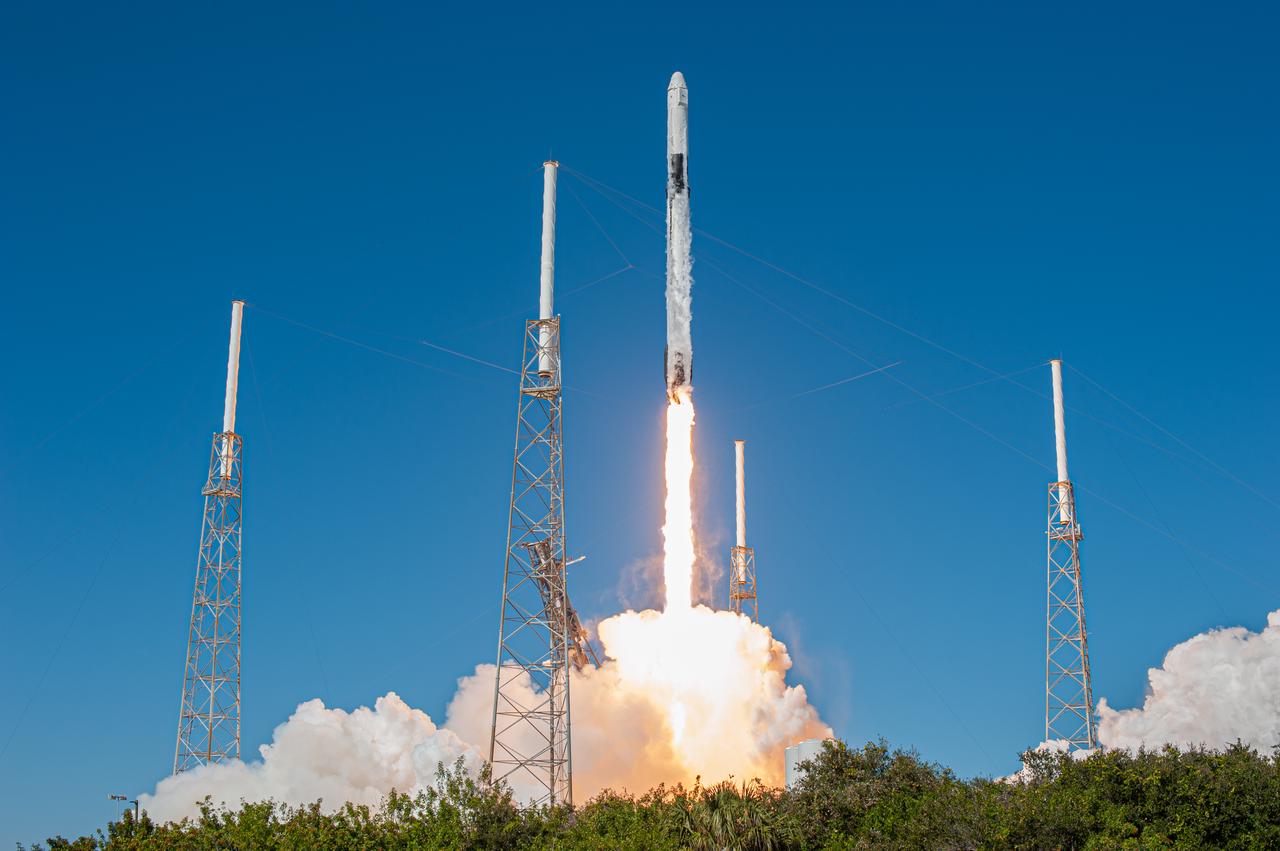
The SpaceX Falcon 9 rocket with the Dragon cargo module lifts off Space Launch Complex 40 on Cape Canaveral Air Force Station in Florida in the early afternoon on Dec. 5, 2019. Liftoff was at 12:29 p.m. EST. This is SpaceX’s 19th Commercial Resupply Services (CRS-19) mission for NASA to the International Space Station. The Dragon cargo module will deliver more than 5,700 pounds of science and research, crew supplies and vehicle hardware to the orbital laboratory and its crew.
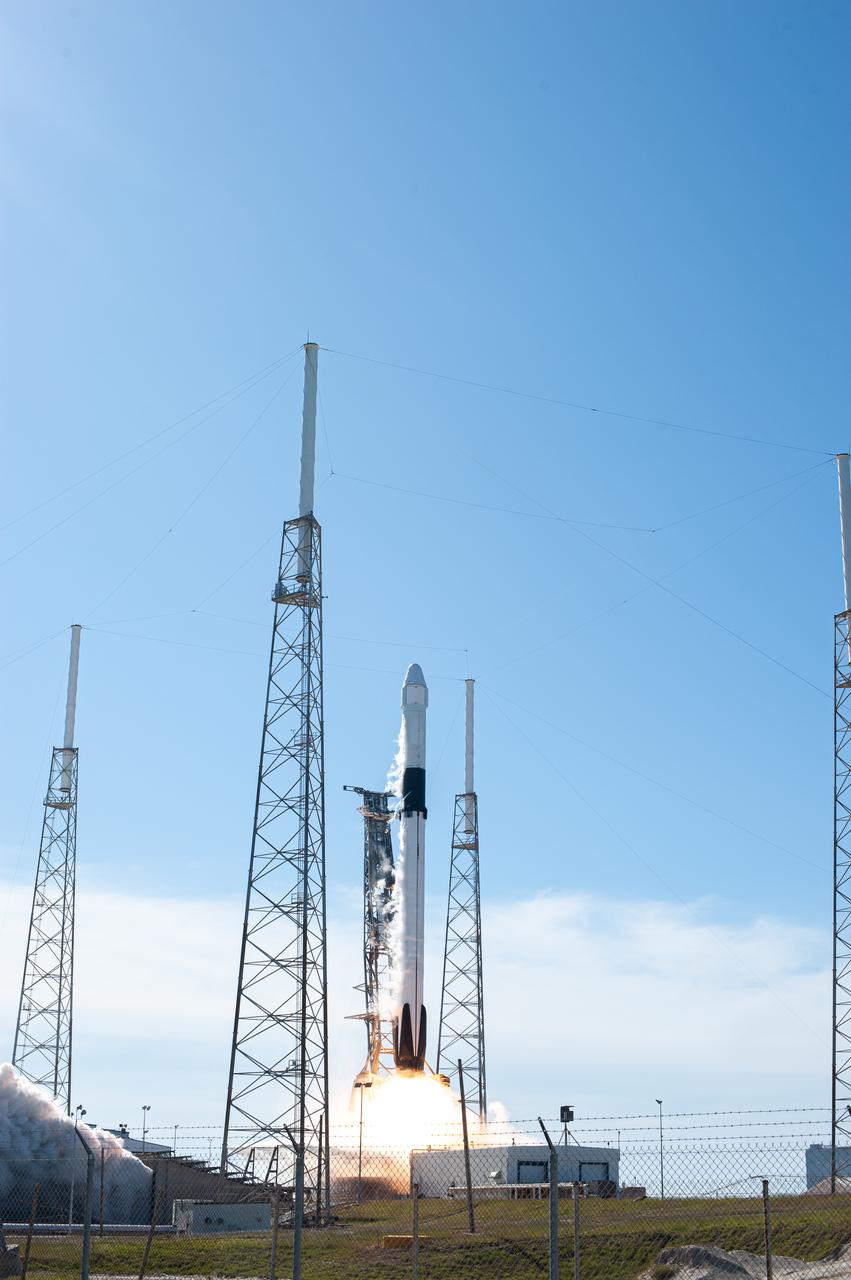
The SpaceX Falcon 9 rocket with the Dragon cargo module lifts off Space Launch Complex 40 on Cape Canaveral Air Force Station in Florida in the early afternoon on Dec. 5, 2019. Liftoff was at 12:29 p.m. EST. This is SpaceX’s 19th Commercial Resupply Services (CRS-19) mission for NASA to the International Space Station. The Dragon cargo module will deliver more than 5,700 pounds of science and research, crew supplies and vehicle hardware to the orbital laboratory and its crew.
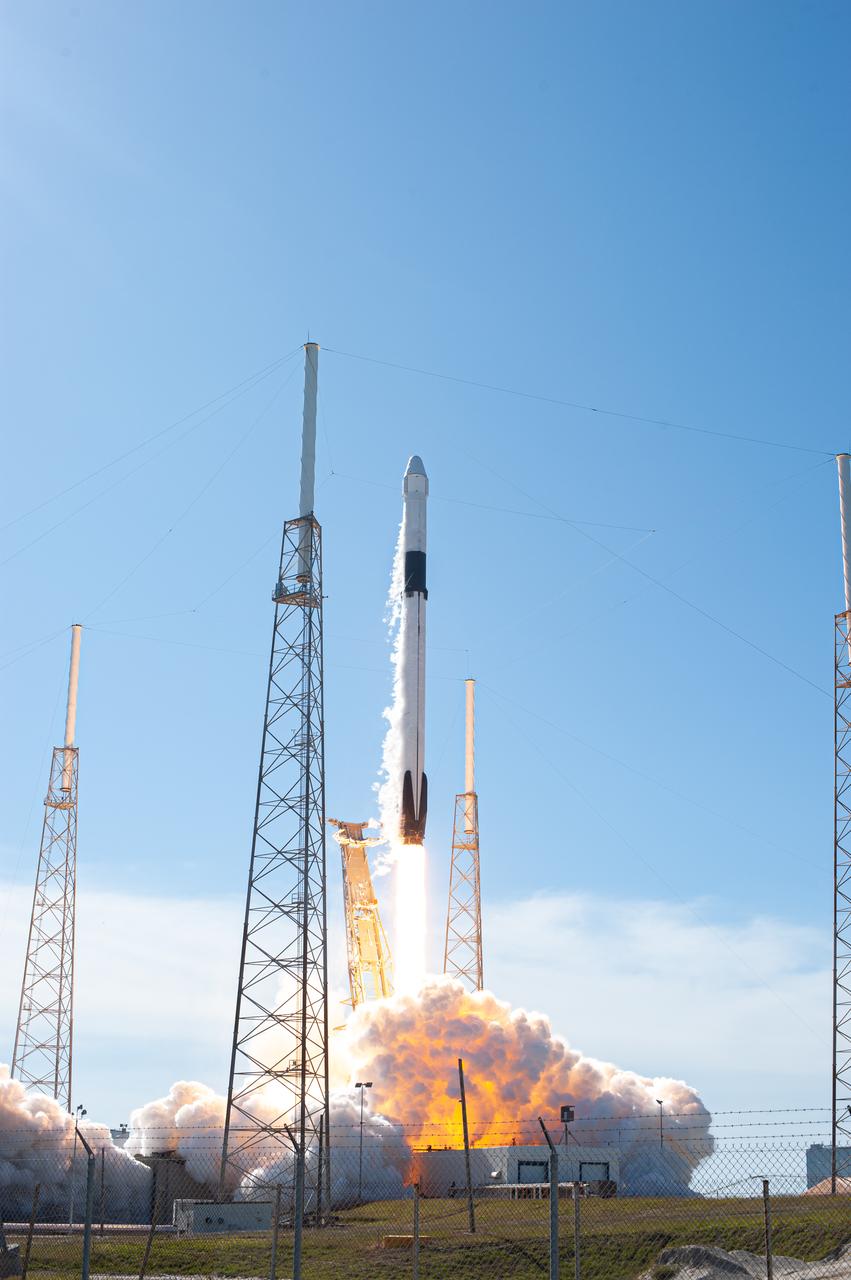
The SpaceX Falcon 9 rocket with the Dragon cargo module lifts off Space Launch Complex 40 on Cape Canaveral Air Force Station in Florida in the early afternoon on Dec. 5, 2019. Liftoff was at 12:29 p.m. EST. This is SpaceX’s 19th Commercial Resupply Services (CRS-19) mission for NASA to the International Space Station. The Dragon cargo module will deliver more than 5,700 pounds of science and research, crew supplies and vehicle hardware to the orbital laboratory and its crew.
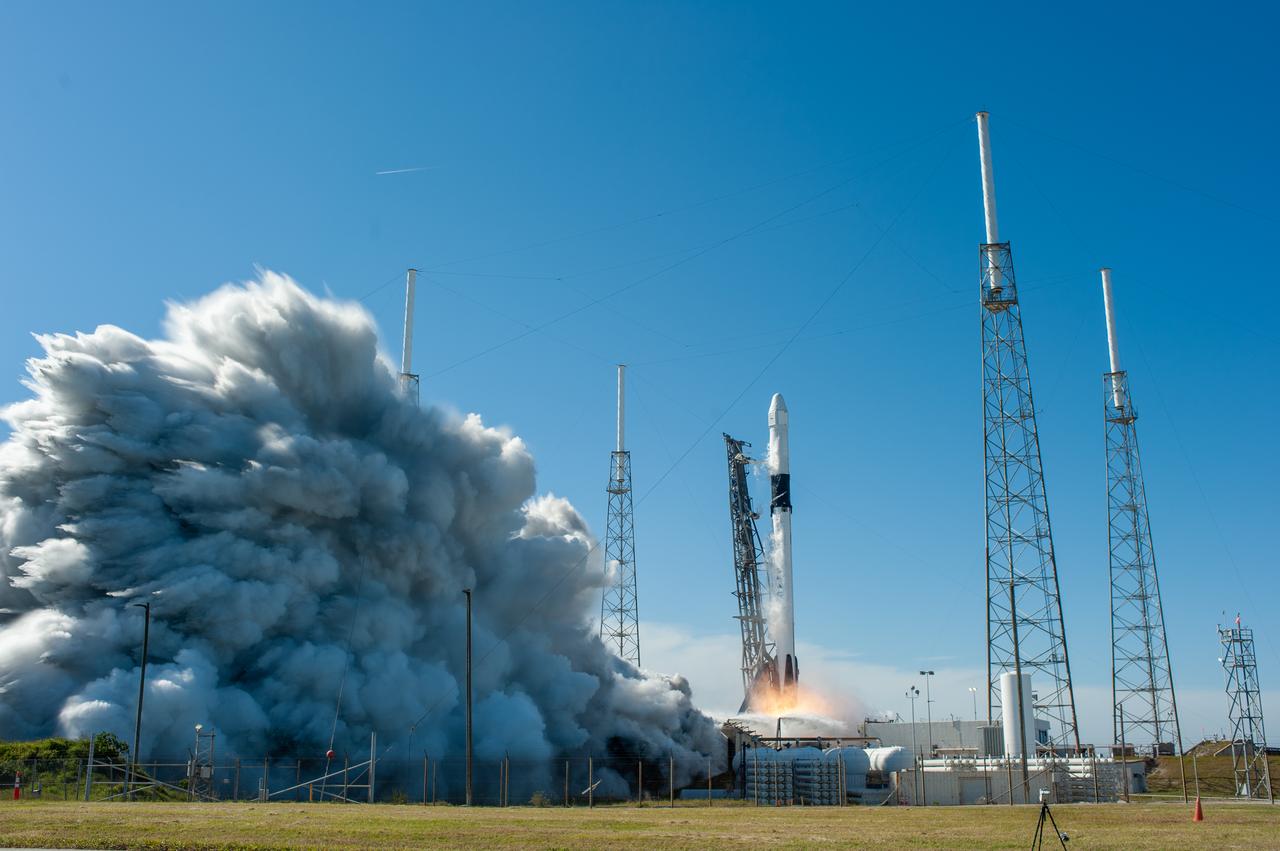
The SpaceX Falcon 9 rocket with the Dragon cargo module lifts off Space Launch Complex 40 on Cape Canaveral Air Force Station in Florida in the early afternoon on Dec. 5, 2019. Liftoff was at 12:29 p.m. EST. This is SpaceX’s 19th Commercial Resupply Services (CRS-19) mission for NASA to the International Space Station. The Dragon cargo module will deliver more than 5,700 pounds of science and research, crew supplies and vehicle hardware to the orbital laboratory and its crew.

A What’s On Board Briefing for SpaceX’s 19th Commercial Resupply Services (CRS-19) mission for NASA to the International Space Station took place on Dec. 3, 2019, at the agency’s Kennedy Space Center in Florida. Paul Ferkul, an investigator for the Confined Combustion experiment, discuss the investigation which studies how fire spreads and behaves in confined spaces. The SpaceX Falcon 9 rocket and Dragon cargo module are scheduled to launch on Dec. 4, 2019, from Space Launch Complex 40 on Cape Canaveral Air Force Station in Florida.
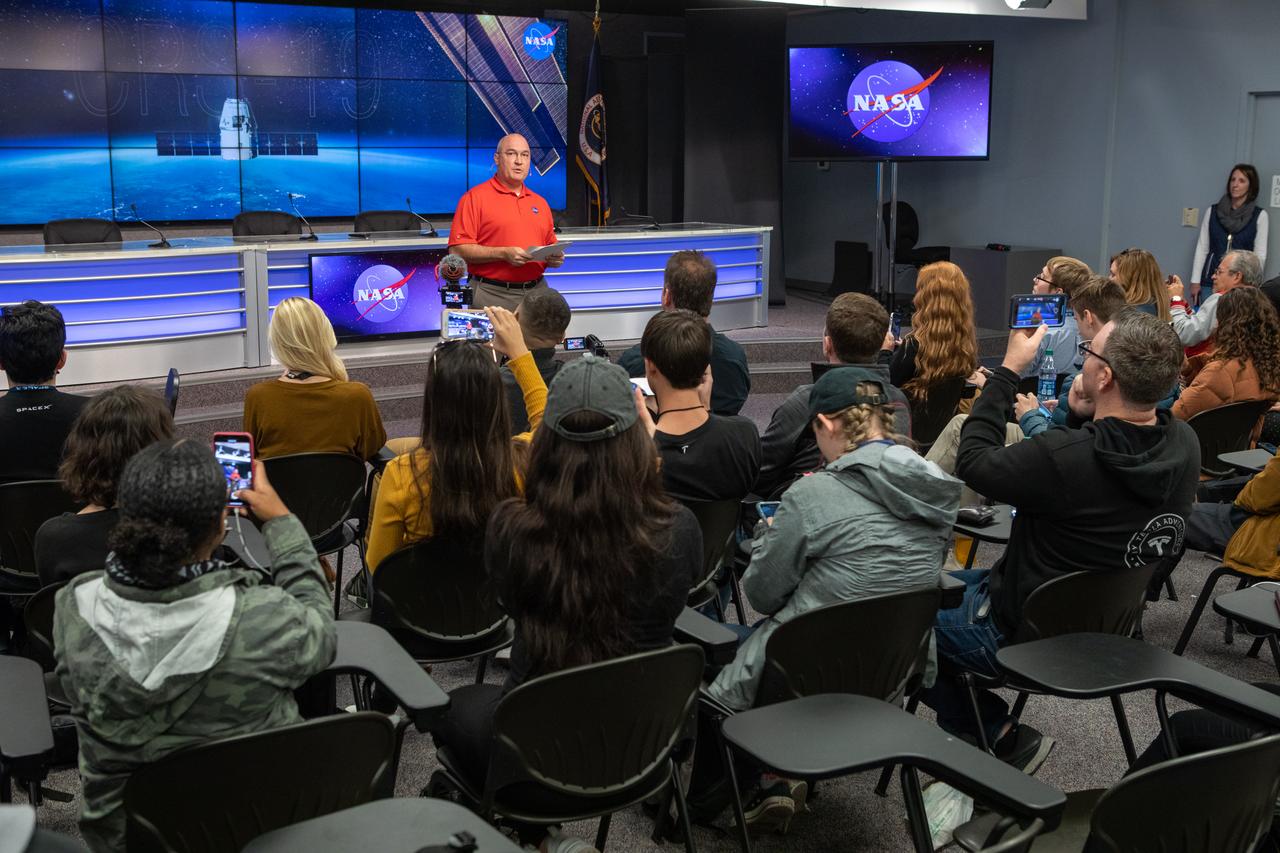
Greg Harland, NASA Communications, moderates a What’s On Board Briefing for SpaceX’s 19th Commercial Resupply Services (CRS-19) mission for NASA to the International Space Station on Dec. 3, 2019, at the agency’s Kennedy Space Center in Florida. The SpaceX Falcon 9 rocket and Dragon cargo module are scheduled to launch on Dec. 4, 2019, from Space Launch Complex 40 on Cape Canaveral Air Force Station in Florida.
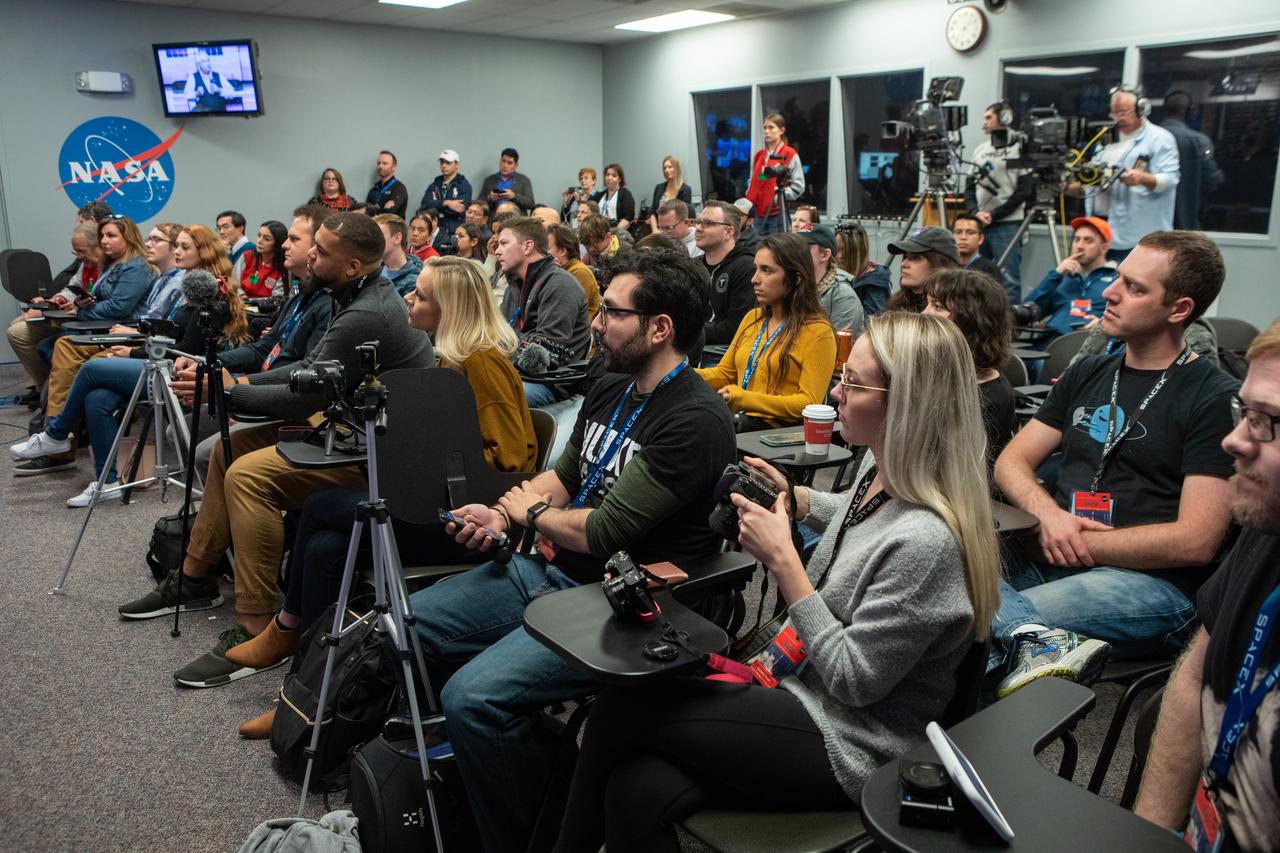
Members of the news and social media listen to a What's On Board Briefing on Dec. 3, 2019, for SpaceX's 19th Commercial Resupply Services (CRS-19) mission for NASA to the International Space Station at the agency's Kennedy Space Center in Florida. The SpaceX Falcon 9 rocket and Dragon cargo module are scheduled to launch on Dec. 4, 2019, from Space Launch Complex 40 on Cape Canaveral Air Force Station in Florida.
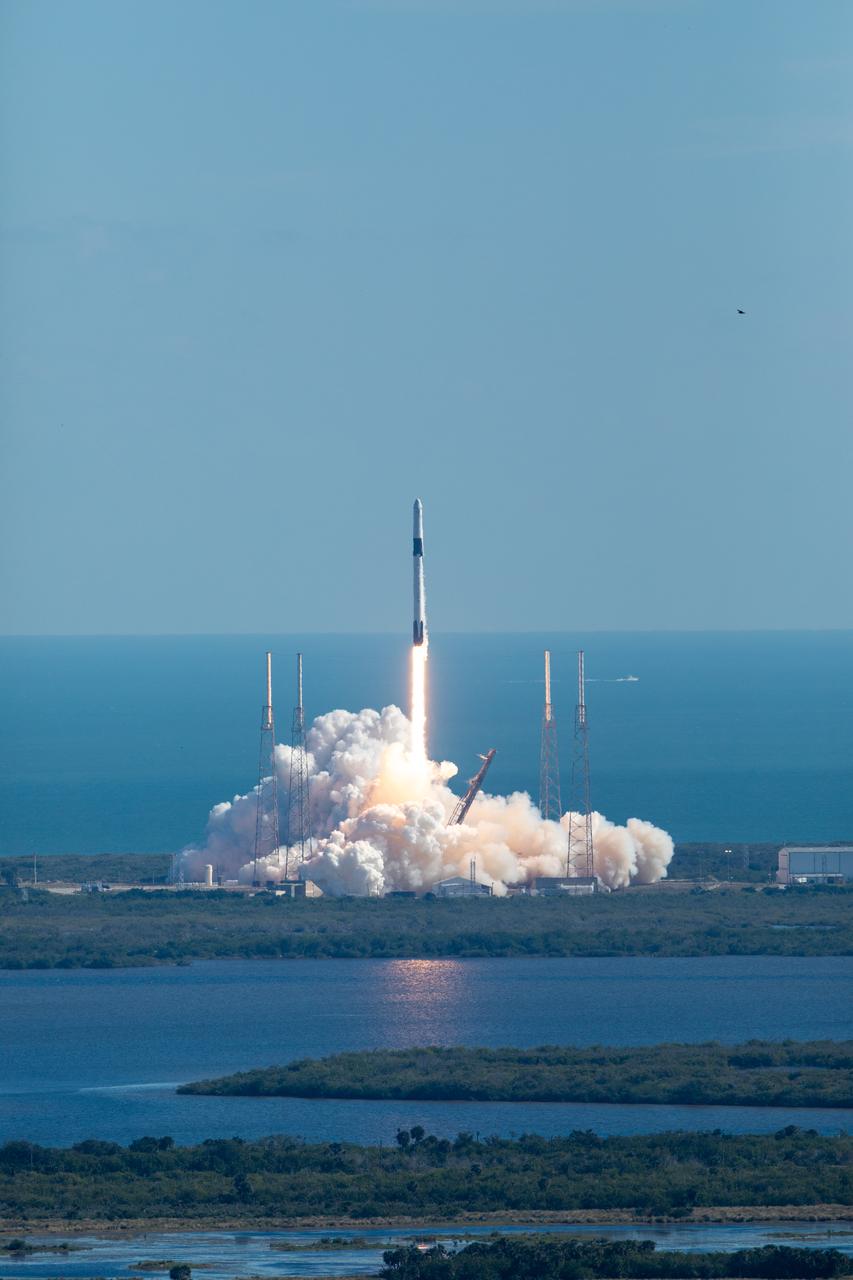
The SpaceX Falcon 9 rocket with the Dragon cargo module lifts off Space Launch Complex 40 on Cape Canaveral Air Force Station in Florida in the early afternoon on Dec. 5, 2019. Liftoff was at 12:29 p.m. EST. This is SpaceX’s 19th Commercial Resupply Services (CRS-19) mission for NASA to the International Space Station. The Dragon cargo module will deliver more than 5,700 pounds of science and research, crew supplies and vehicle hardware to the orbital laboratory and its crew.
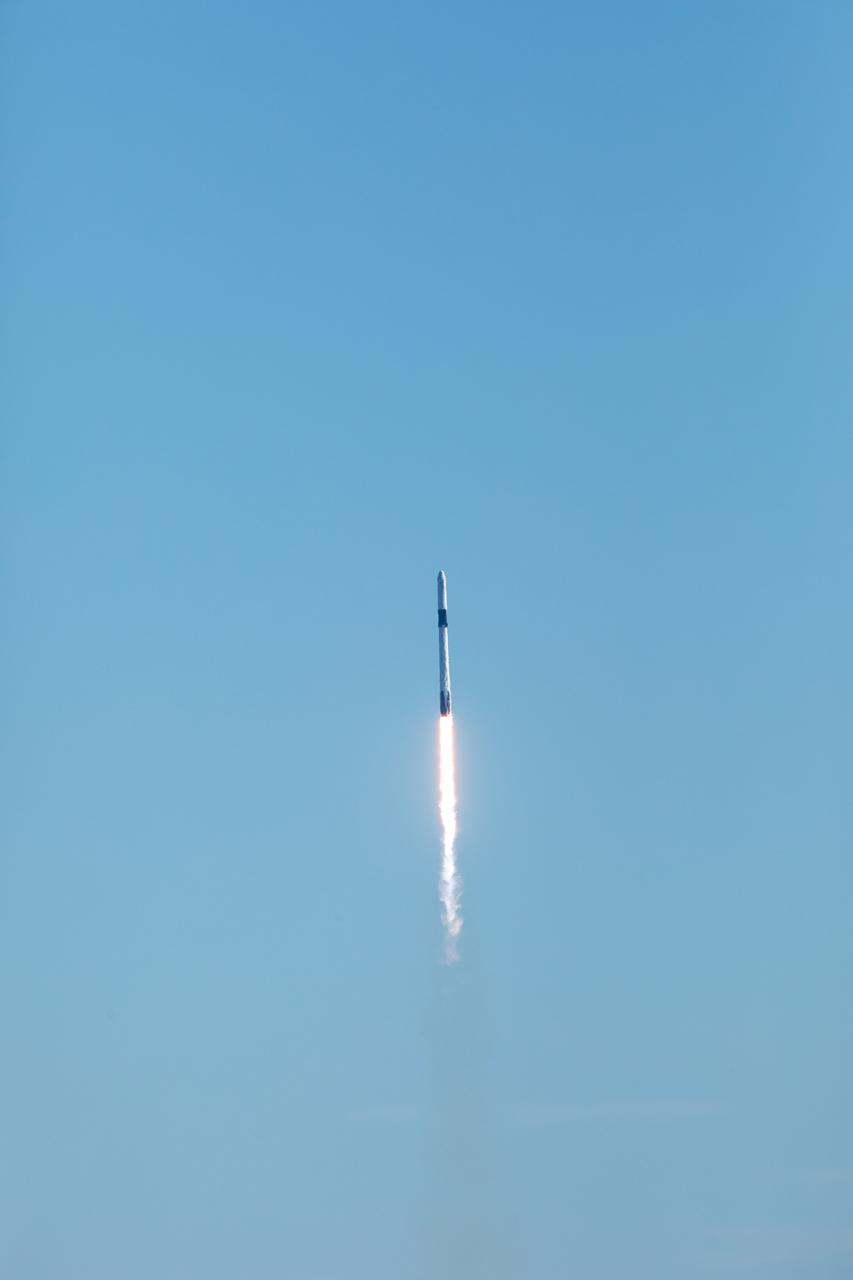
The SpaceX Falcon 9 rocket with the Dragon cargo module climbs upward after liftoff from Space Launch Complex 40 on Cape Canaveral Air Force Station in Florida in the early afternoon on Dec. 5, 2019. Liftoff was at 12:29 p.m. EST. This is SpaceX’s 19th Commercial Resupply Services (CRS-19) mission for NASA to the International Space Station. The Dragon cargo module will deliver more than 5,700 pounds of science and research, crew supplies and vehicle hardware to the orbital laboratory and its crew.
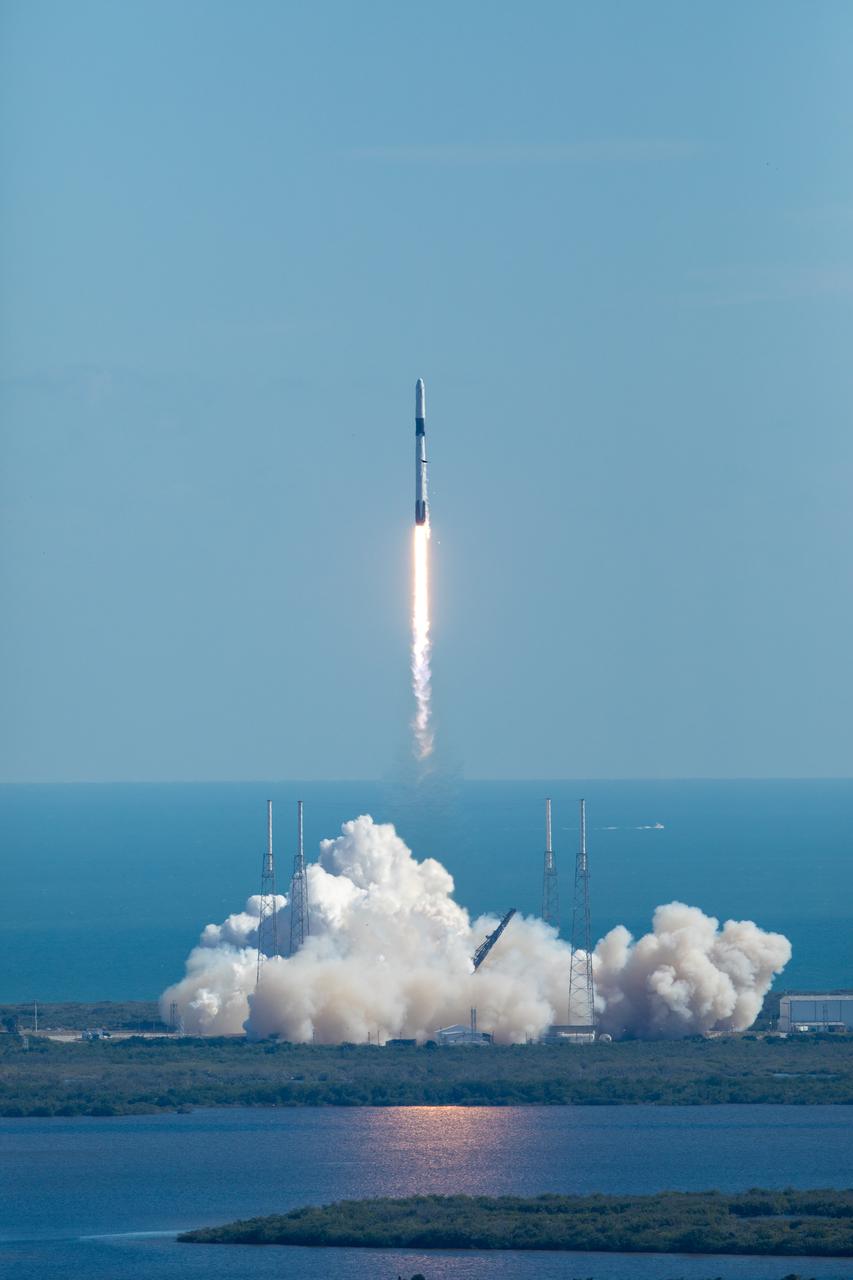
The SpaceX Falcon 9 rocket with the Dragon cargo module lifts off Space Launch Complex 40 on Cape Canaveral Air Force Station in Florida in the early afternoon on Dec. 5, 2019. Liftoff was at 12:29 p.m. EST. This is SpaceX’s 19th Commercial Resupply Services (CRS-19) mission for NASA to the International Space Station. The Dragon cargo module will deliver more than 5,700 pounds of science and research, crew supplies and vehicle hardware to the orbital laboratory and its crew.
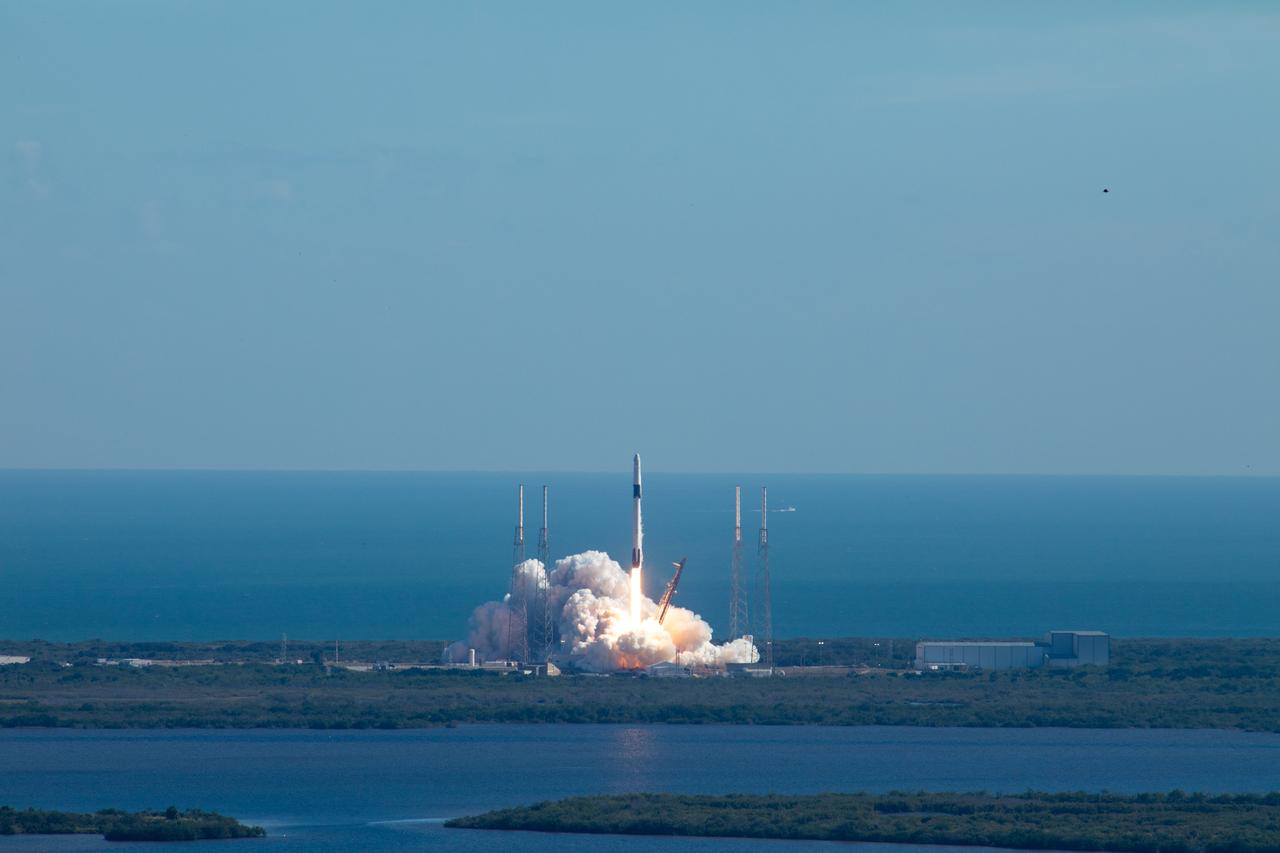
The SpaceX Falcon 9 rocket with the Dragon cargo module lifts off Space Launch Complex 40 on Cape Canaveral Air Force Station in Florida in the early afternoon on Dec. 5, 2019. Liftoff was at 12:29 p.m. EST. This is SpaceX’s 19th Commercial Resupply Services (CRS-19) mission for NASA to the International Space Station. The Dragon cargo module will deliver more than 5,700 pounds of science and research, crew supplies and vehicle hardware to the orbital laboratory and its crew.
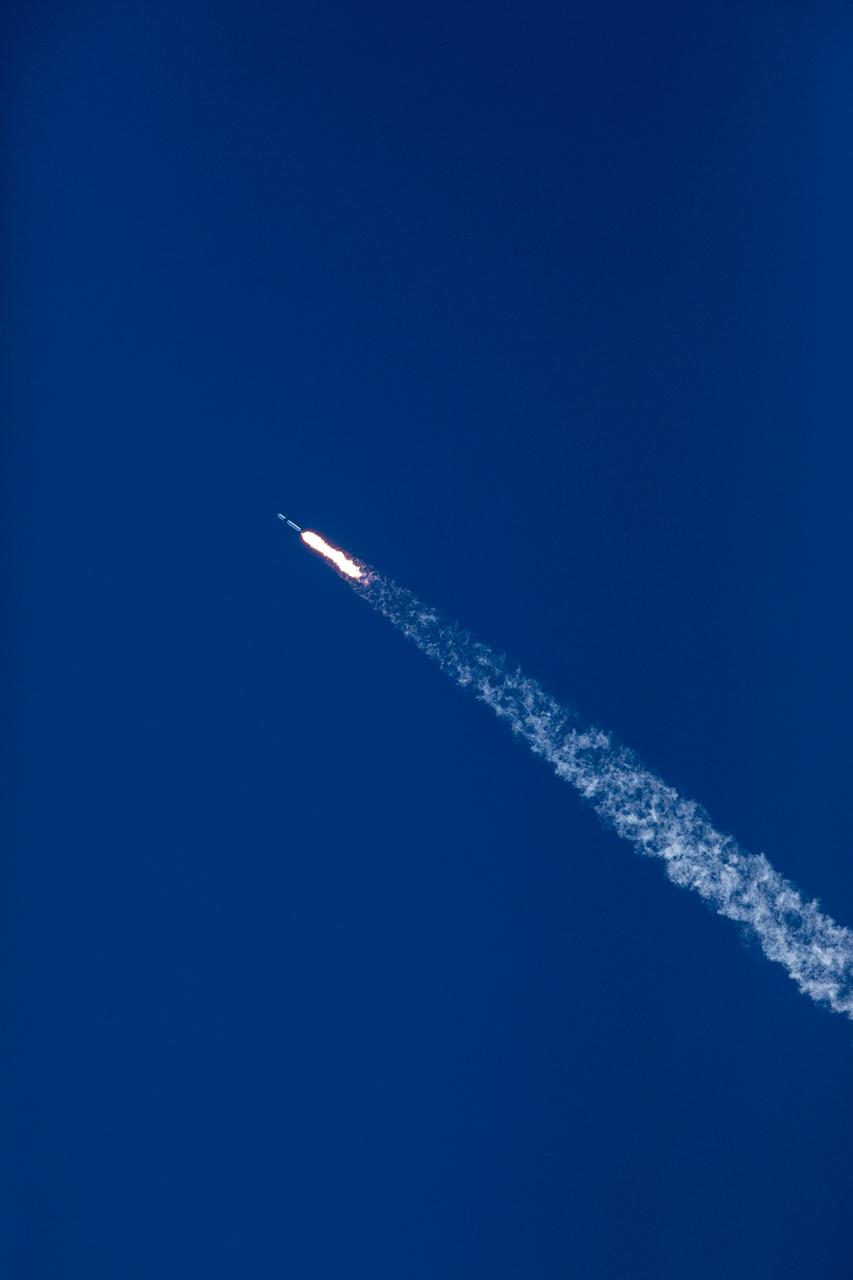
The SpaceX Falcon 9 rocket with the Dragon cargo module climbs upward after liftoff from Space Launch Complex 40 on Cape Canaveral Air Force Station in Florida in the early afternoon on Dec. 5, 2019. Liftoff was at 12:29 p.m. EST. This is SpaceX’s 19th Commercial Resupply Services (CRS-19) mission for NASA to the International Space Station. The Dragon cargo module will deliver more than 5,700 pounds of science and research, crew supplies and vehicle hardware to the orbital laboratory and its crew.
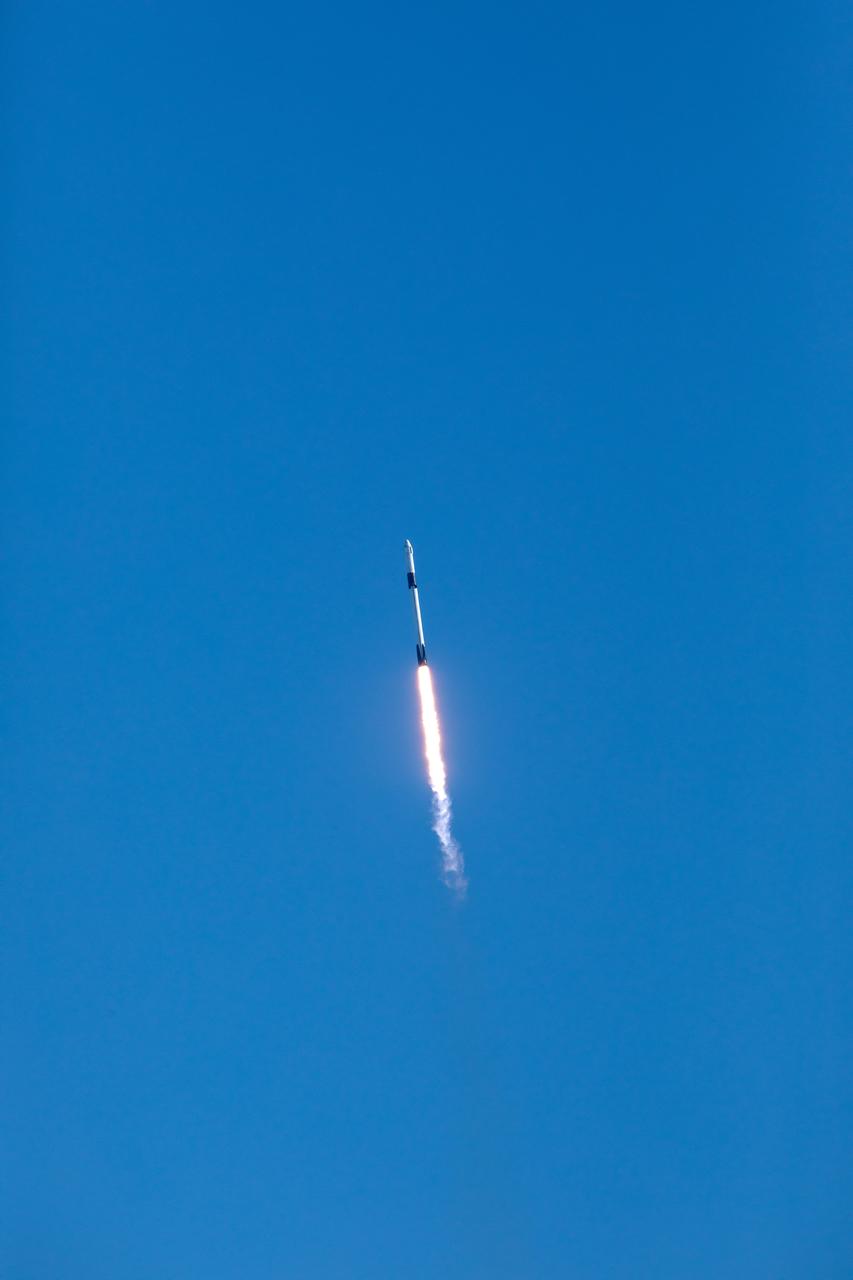
The SpaceX Falcon 9 rocket with the Dragon cargo module climbs upward after liftoff from Space Launch Complex 40 on Cape Canaveral Air Force Station in Florida in the early afternoon on Dec. 5, 2019. Liftoff was at 12:29 p.m. EST. This is SpaceX’s 19th Commercial Resupply Services (CRS-19) mission for NASA to the International Space Station. The Dragon cargo module will deliver more than 5,700 pounds of science and research, crew supplies and vehicle hardware to the orbital laboratory and its crew.

The SpaceX Falcon 9 rocket with the Dragon cargo module lifts off Space Launch Complex 40 on Cape Canaveral Air Force Station in Florida in the early afternoon on Dec. 5, 2019. Liftoff was at 12:29 p.m. EST. This is SpaceX’s 19th Commercial Resupply Services (CRS-19) mission for NASA to the International Space Station. The Dragon cargo module will deliver more than 5,700 pounds of science and research, crew supplies and vehicle hardware to the orbital laboratory and its crew.
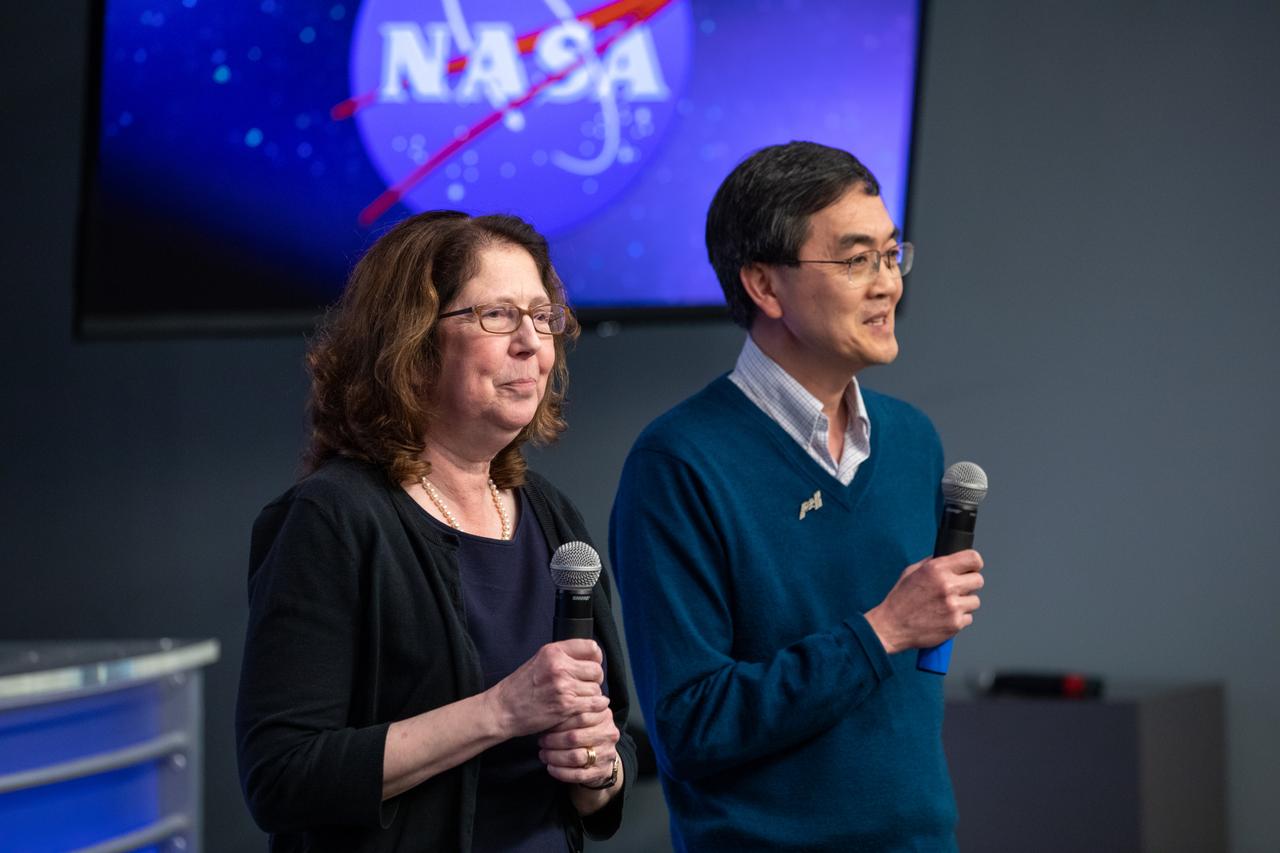
A What’s On Board Briefing for SpaceX’s 19th Commercial Resupply Services (CRS-19) mission for NASA to the International Space Station took place on Dec. 3, 2019, at the agency’s Kennedy Space Center in Florida. Se-Jin Lee (at right) professor at the Jackson Laboratory and University of Connecticut School of Medicine, and principal investigator of Rodent Research-19, and Emily Germain-Lee, professor at the University of Connecticut School of Medicine and chief of endocrinology and diabetes, Connecticut Children’s Medical Center, present their research to members of the media. They discussed the research on molecular signaling pathways that influence muscle degradation to prevent skeletal muscle and bone loss during spaceflight, and enhance recovery following return to Earth. The SpaceX Falcon 9 rocket and Dragon cargo module are scheduled to launch on Dec. 4, 2019, from Space Launch Complex 40 on Cape Canaveral Air Force Station in Florida.

A What’s On Board Briefing for SpaceX’s 19th Commercial Resupply Services (CRS-19) mission for NASA to the International Space Station took place on Dec. 3, 2019, at the agency’s Kennedy Space Center in Florida. Se-Jin Lee, professor at the Jackson Laboratory and University of Connecticut School of Medicine, and principal investigator of Rodent Research-19 presents his research to members of the media. He discussed the research on molecular signaling pathways that influence muscle degradation to prevent skeletal muscle and bone loss during spaceflight, and enhance recovery following return to Earth. The SpaceX Falcon 9 rocket and Dragon cargo module are scheduled to launch on Dec. 4, 2019, from Space Launch Complex 40 on Cape Canaveral Air Force Station in Florida.
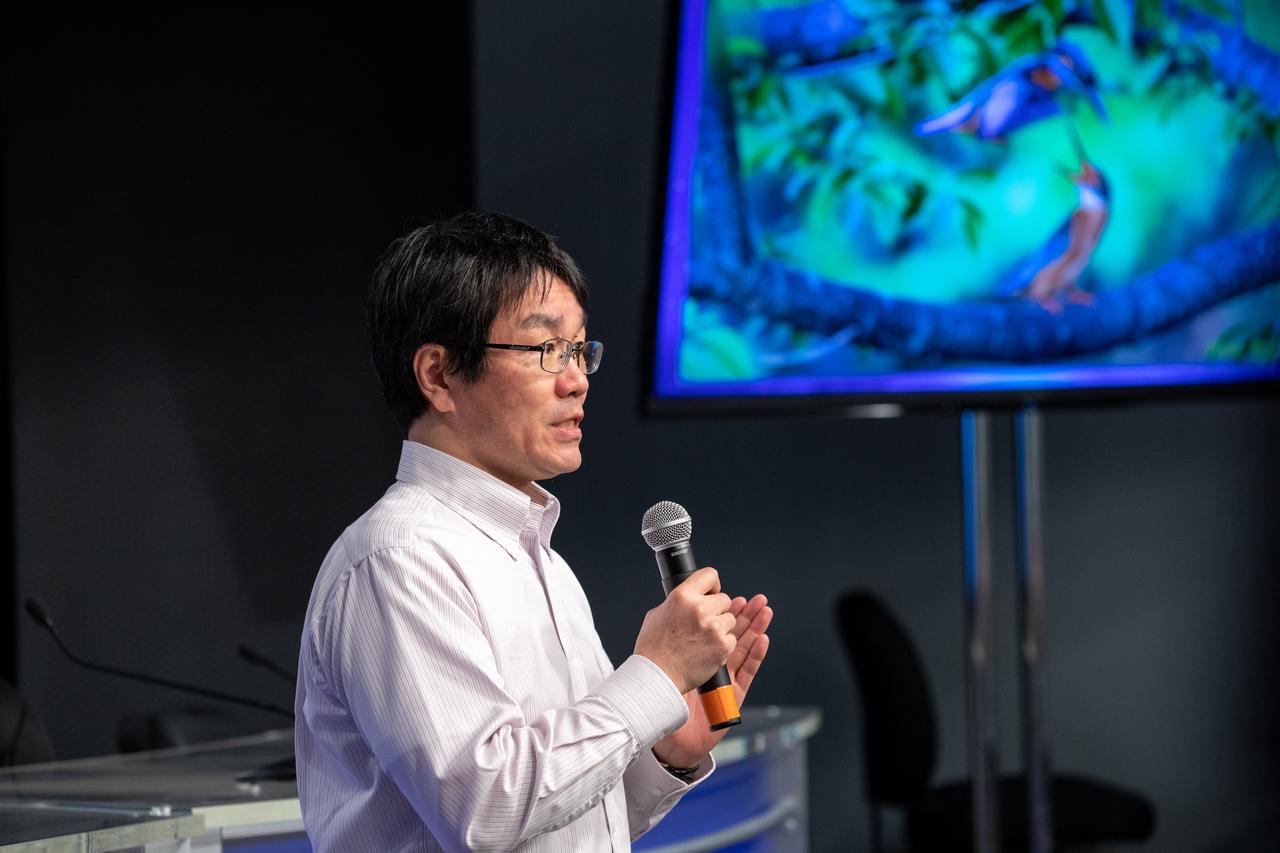
A What’s On Board Briefing for SpaceX’s 19th Commercial Resupply Services (CRS-19) mission for NASA to the International Space Station took place on Dec. 3, 2019, at the agency’s Kennedy Space Center in Florida. Akira Iwasaki, professor at the University of Tokyo and principal investigator for the Hyperspectral Imager Suite (HISUI) developed by the Japanese government, discusses the next-generation, hyperspectral Earth imaging system. The SpaceX Falcon 9 rocket and Dragon cargo module are scheduled to launch on Dec. 4, 2019, from Space Launch Complex 40 on Cape Canaveral Air Force Station in Florida

A What’s On Board Briefing for SpaceX’s 19th Commercial Resupply Services (CRS-19) mission for NASA to the International Space Station took place on Dec. 3, 2019, at the agency’s Kennedy Space Center in Florida. Rosa Reyna gonzales, student researcher for AzTechSat-1, the first Mexican-developed nanosatellite to be launched from the space station, discusses her role in the experiment and how the investigation will demonstrate communication between a CubeSat and the GlobalStar Constellation satellite network in low-Earth orbit. The SpaceX Falcon 9 rocket and Dragon cargo module are scheduled to launch on Dec. 4, 2019, from Space Launch Complex 40 on Cape Canaveral Air Force Station in Florida.
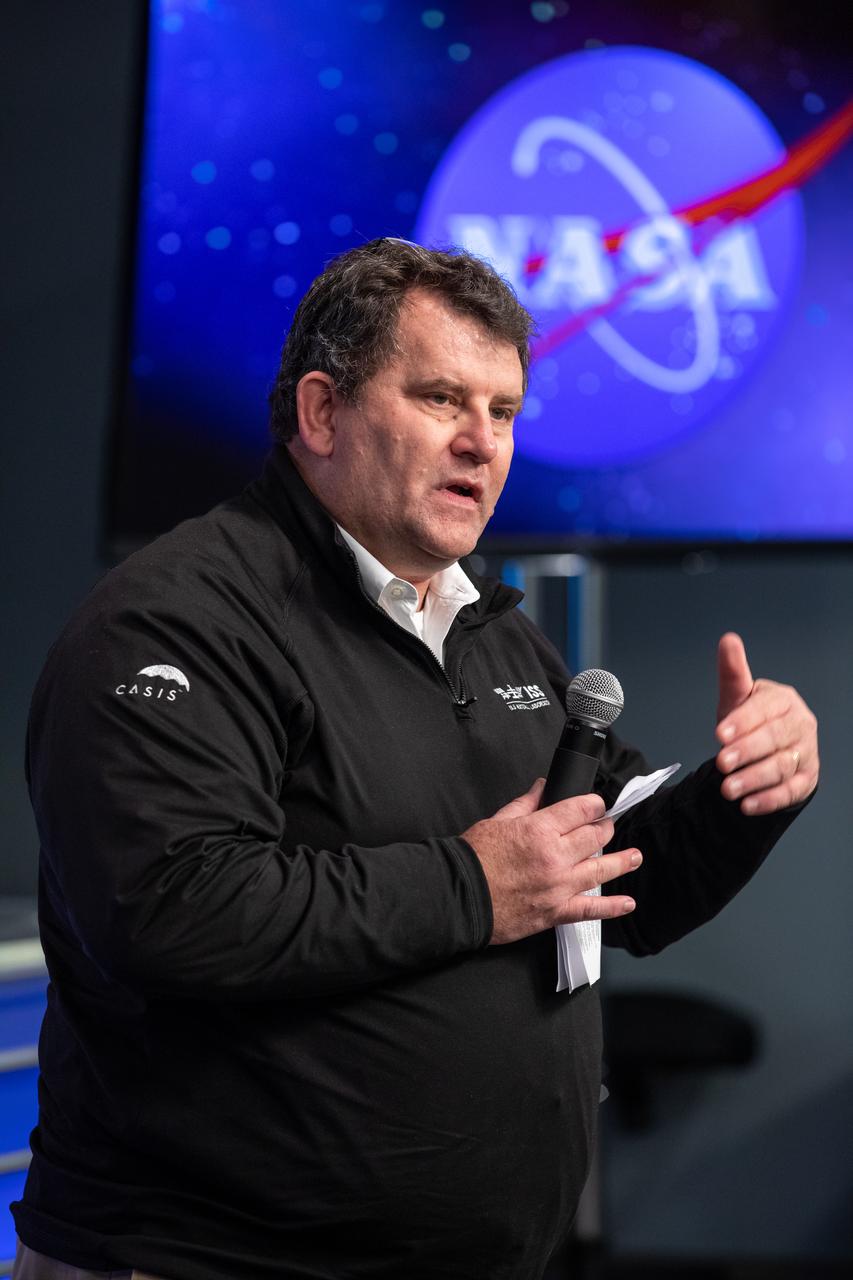
A What’s On Board Briefing for SpaceX’s 19th Commercial Resupply Services (CRS-19) mission for NASA to the International Space Station took place on Dec. 3, 2019, at the agency’s Kennedy Space Center in Florida. Michael Roberts, interim chief scientist for the International Space Station U.S. National Laboratory, discusses the lab’s work in advancing science in space, and in developing partnerships that drive industrialization through microgravity research. The SpaceX Falcon 9 rocket and Dragon cargo module are scheduled to launch on Dec. 4, 2019, from Space Launch Complex 40 on Cape Canaveral Air Force Station in Florida.
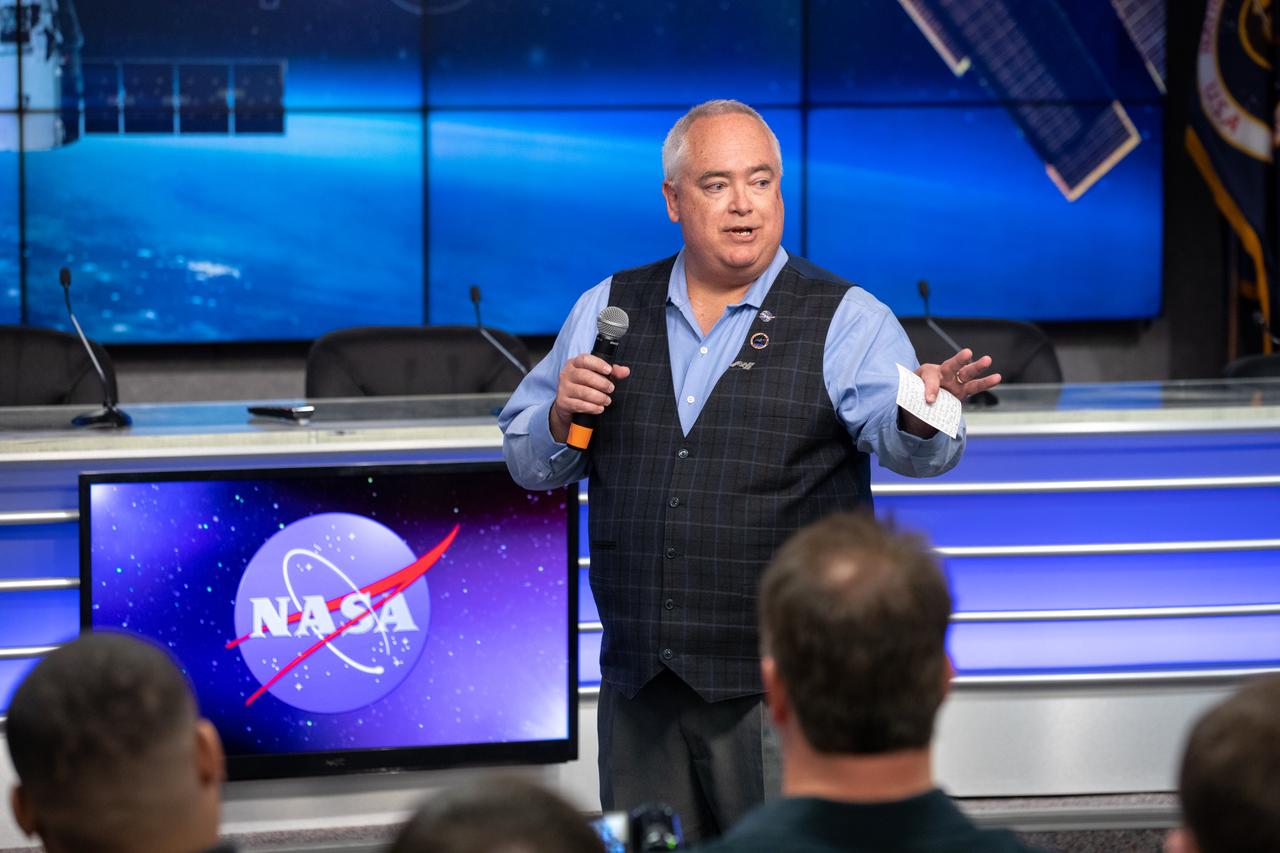
A What's on Board Briefing for SpaceX's 19th Commercial Resupply Services (CRS-19) mission for NASA to the International Space Station took place on Dec. 3, 2019, at the agency's Kennedy Space Center in Florida. Bryan Dansberry, assistant program scientist for NASA's International Space Station Program Science Office shares an overview of the research being conducted aboard the space station and how it benefits exploration and humanity. The SpaceX Falcon 9 rocket and Dragon cargo module are scheduled to launch on Dec. 4, 2019, from Space Launch Complex 40 at Cape Canaveral Air Force Station in Florida.
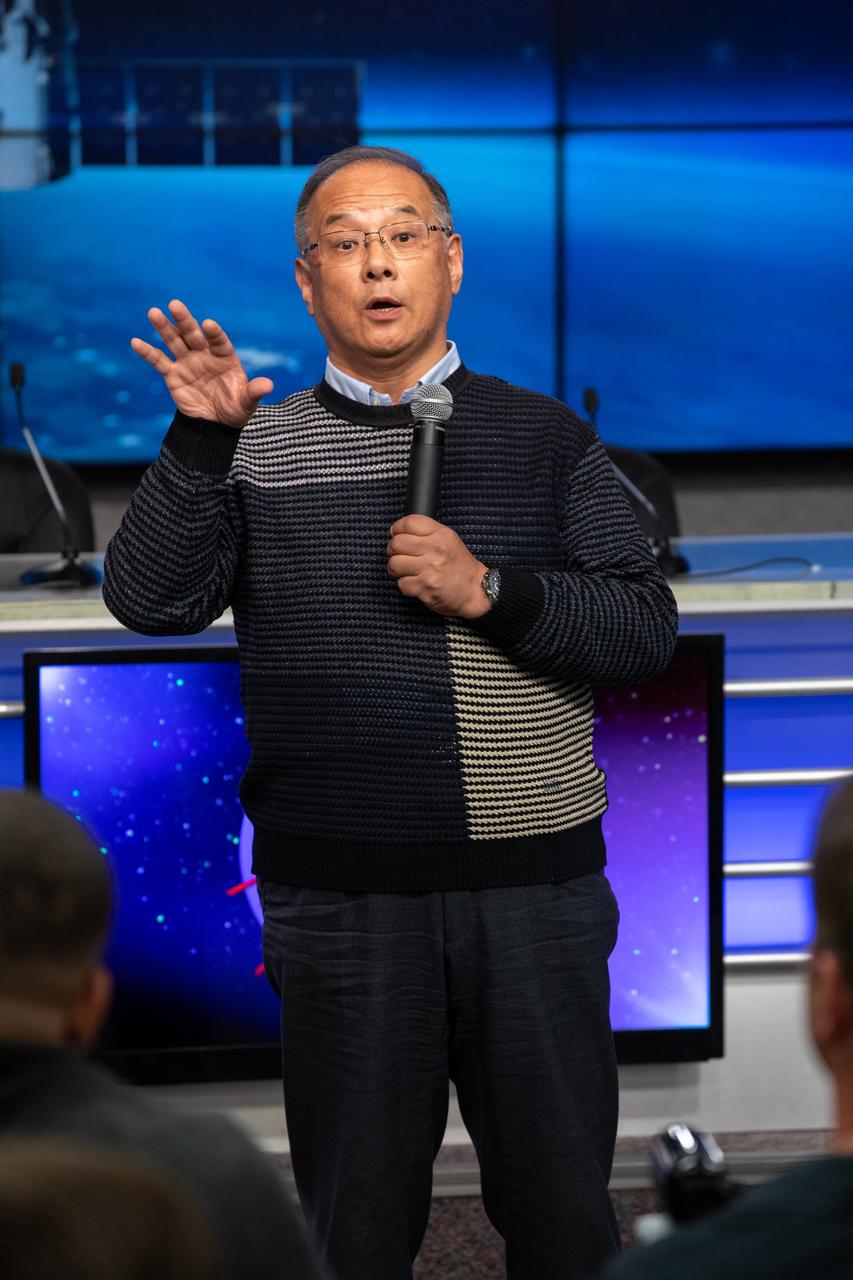
A What’s On Board Briefing for SpaceX’s 19th Commercial Resupply Services (CRS-19) mission for NASA to the International Space Station took place on Dec. 3, 2019, at the agency’s Kennedy Space Center in Florida. Shoichiro Mihara, mission manager for the Hyperspectral Imager Suite (HISUI) developed by the Japanese government, discusses the next-generation, hyperspectral Earth imaging system. The SpaceX Falcon 9 rocket and Dragon cargo module are scheduled to launch on Dec. 4, 2019, from Space Launch Complex 40 on Cape Canaveral Air Force Station in Florida

A What’s On Board Briefing for SpaceX’s 19th Commercial Resupply Services (CRS-19) mission for NASA to the International Space Station took place on Dec. 3, 2019, at the agency’s Kennedy Space Center in Florida. Ya-Ting Liao, an investigator for the Confined Combustion experiment, discusses the investigation which studies how fire spreads and behaves in confined spaces. The SpaceX Falcon 9 rocket and Dragon cargo module are scheduled to launch on Dec. 4, 2019, from Space Launch Complex 40 on Cape Canaveral Air Force Station in Florida.
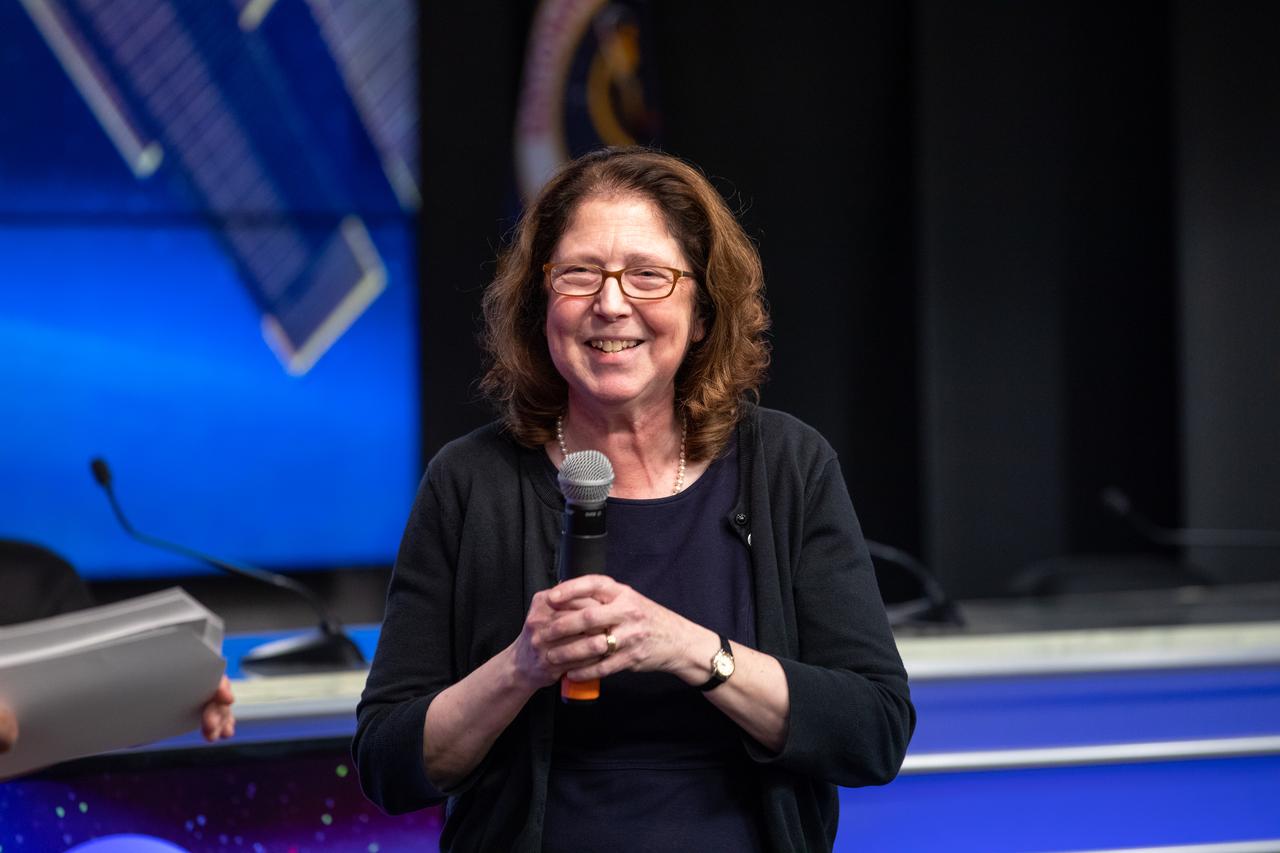
A What’s On Board Briefing for SpaceX’s 19th Commercial Resupply Services (CRS-19) mission for NASA to the International Space Station took place on Dec. 3, 2019, at the agency’s Kennedy Space Center in Florida. Emily Germain-Lee, professor at the University of Connecticut School of Medicine and chief of endocrinology and diabetes, Connecticut Children’s Medical Center, discussed her on molecular signaling pathways that influence muscle degradation to prevent skeletal muscle and bone loss during spaceflight, and enhance recovery following return to Earth. The SpaceX Falcon 9 rocket and Dragon cargo module are scheduled to launch on Dec. 4, 2019, from Space Launch Complex 40 on Cape Canaveral Air Force Station in Florida.
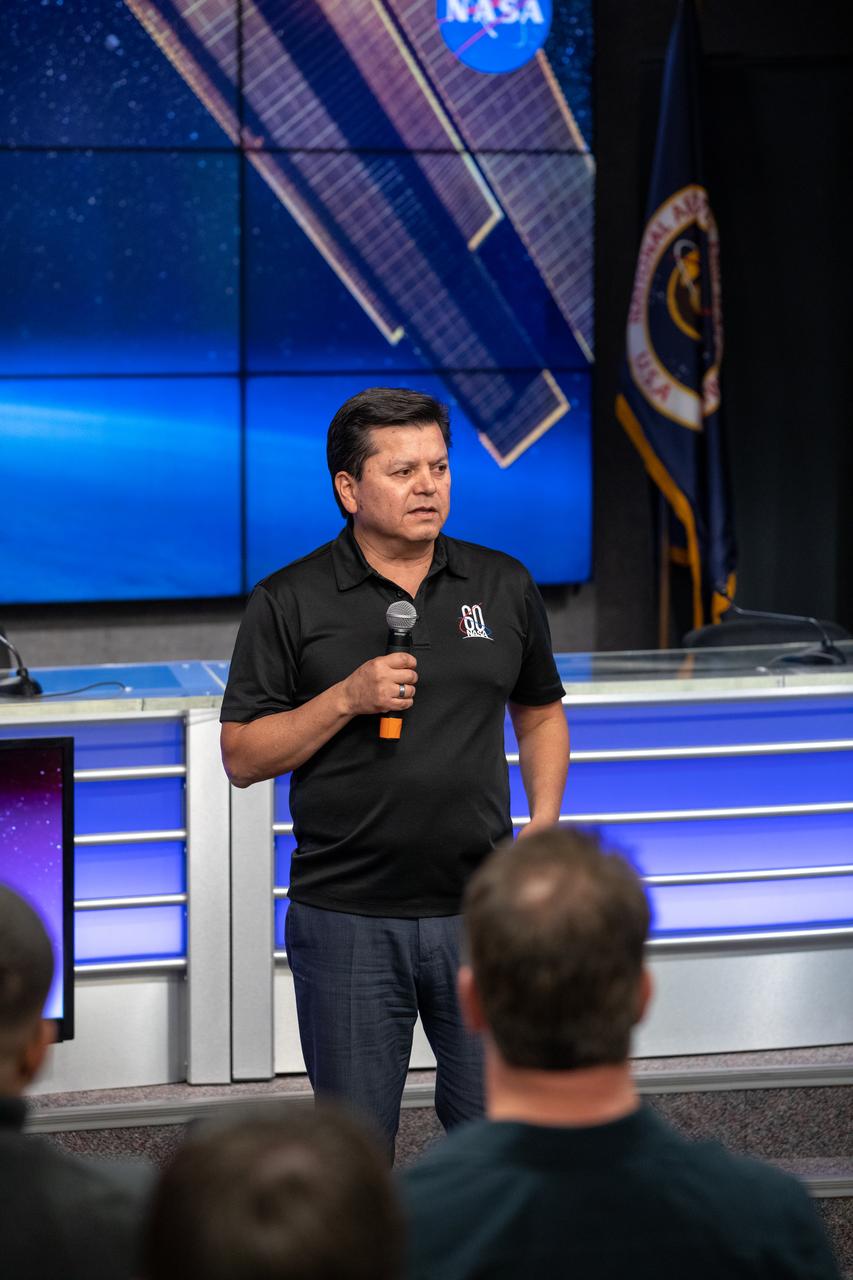
A What’s On Board Briefing for SpaceX’s 19th Commercial Resupply Services (CRS-19) mission for NASA to the International Space Station took place on Dec. 3, 2019, at the agency’s Kennedy Space Center in Florida. Andres Martinez, principal investigator for AzTechSat-1, the first Mexican-developed nanosatellite to be launched from the space station, discusses how the investigation will demonstrate communication between a CubeSat and the GlobalStar Constellation satellite network in low-Earth orbit. The SpaceX Falcon 9 rocket and Dragon cargo module are scheduled to launch on Dec. 4, 2019, from Space Launch Complex 40 on Cape Canaveral Air Force Station in Florida.
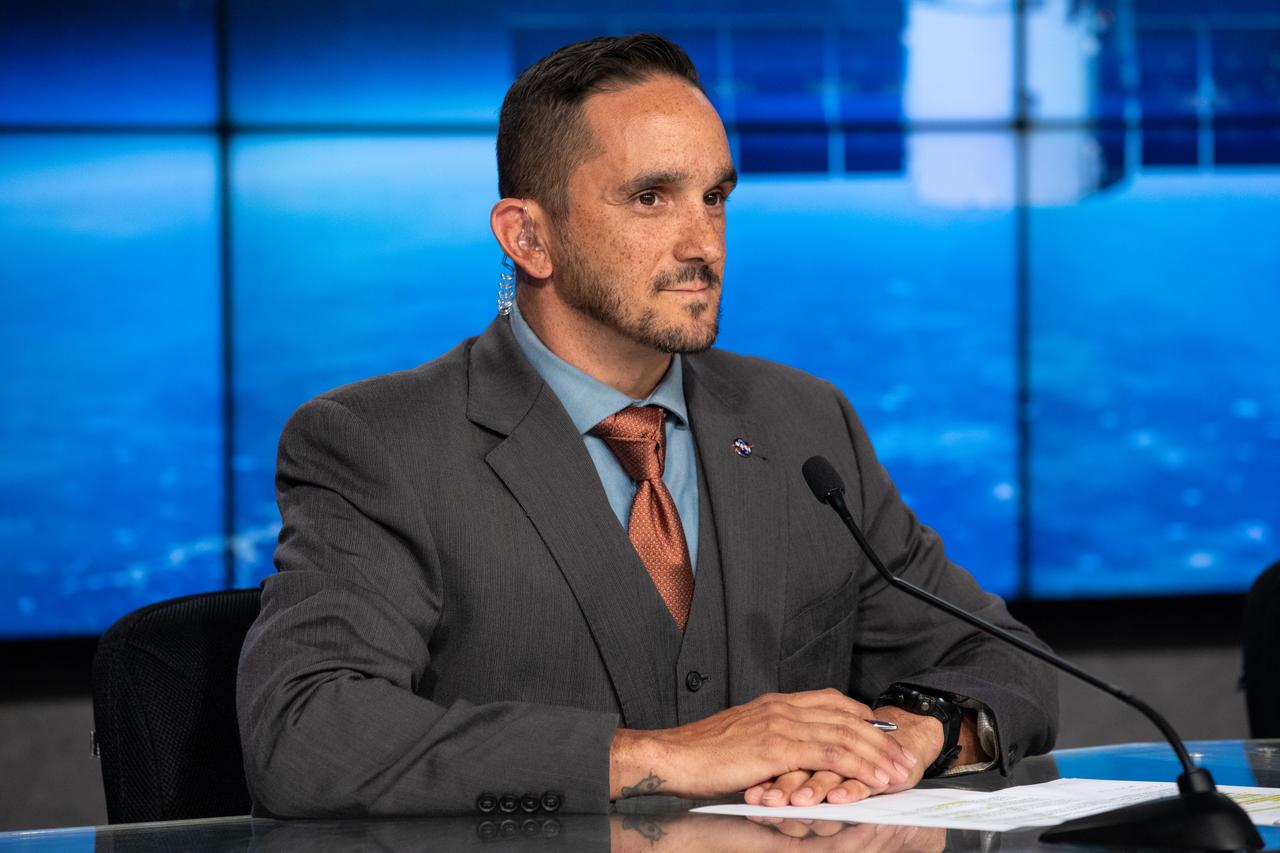
Dustin Cammack, NASA Communications, moderates a prelaunch news conference on Dec. 3, 2019, for SpaceX’s 19th Commercial Resupply Services (CRS-19) mission for NASA to the International Space Station, at the agency’s Kennedy Space Center in Florida. NASA and industry leaders speak to members of the news media during the news conference. The SpaceX Falcon 9 rocket and Dragon cargo module are scheduled to launch on Dec. 4, 2019, from Space Launch Complex 40 on Cape Canaveral Air Force Station in Florida.

Jessica Jensen, director, Dragon Mission Management at SpaceX, speaks to members of the news media during a prelaunch news conference on Dec. 3, 2019, for SpaceX’s 19th Commercial Resupply Services (CRS-19) mission for NASA to the International Space Station, at the agency’s Kennedy Space Center in Florida. NASA and industry leaders speak to members of the news media during the news conference. The SpaceX Falcon 9 rocket and Dragon cargo module are scheduled to launch on Dec. 4, 2019, from Space Launch Complex 40 on Cape Canaveral Air Force Station in Florida.
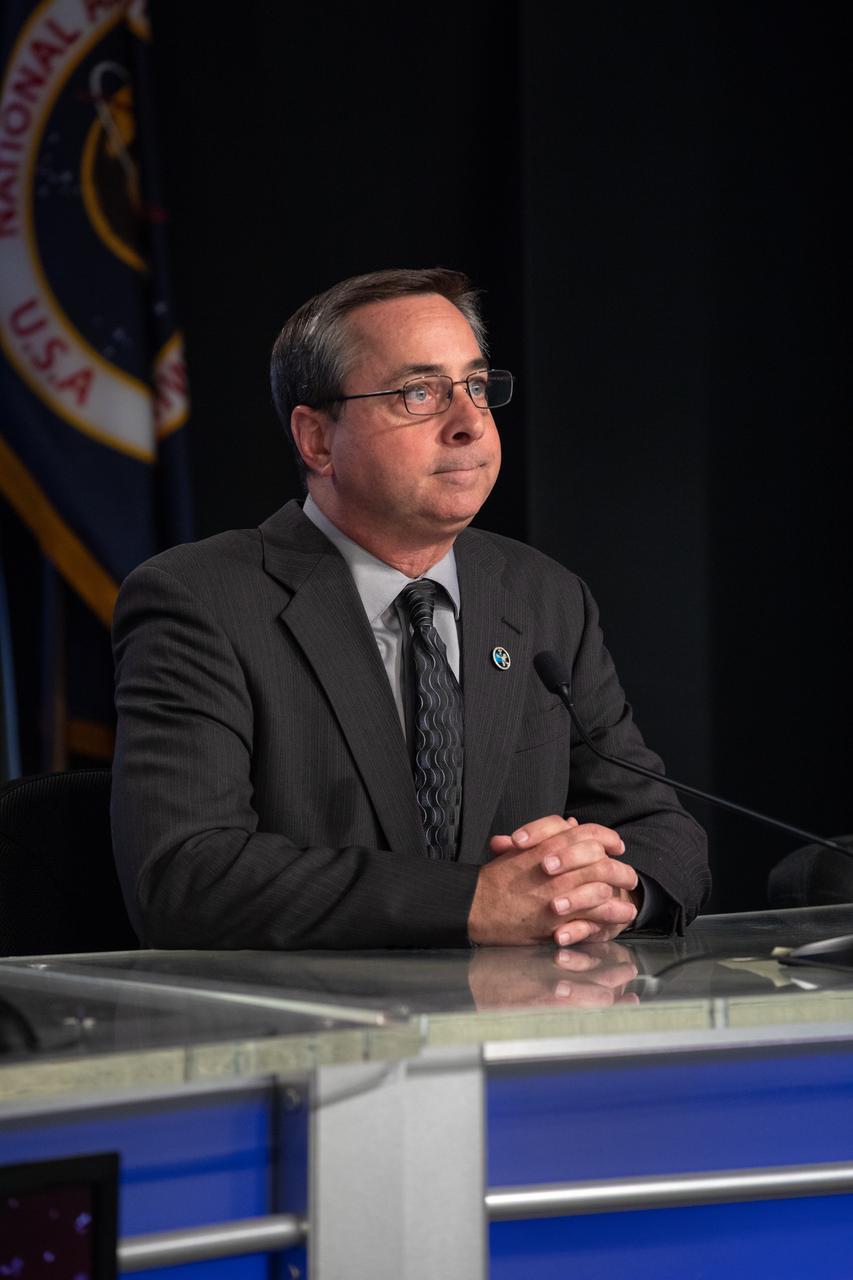
Mike McAleenan, launch weather officer, U.S. Air Force 45th Space Wing, gives a weather update to members of the news media during a prelaunch news conference on Dec. 3, 2019, for SpaceX’s 19th Commercial Resupply Services (CRS-19) mission for NASA to the International Space Station, at the agency’s Kennedy Space Center in Florida. NASA and industry leaders speak to members of the news media during the news conference. The SpaceX Falcon 9 rocket and Dragon cargo module are scheduled to launch on Dec. 4, 2019, from Space Launch Complex 40 on Cape Canaveral Air Force Station in Florida.
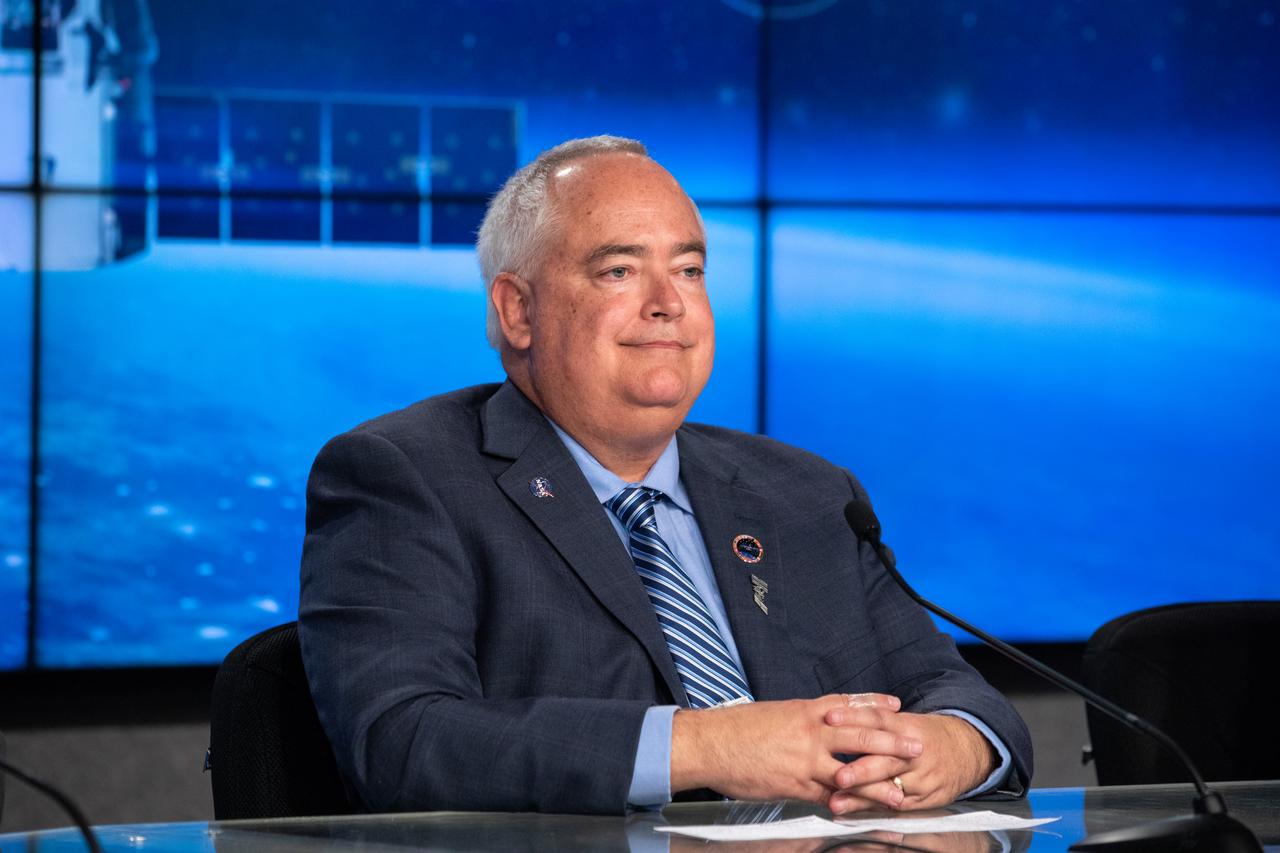
Bryan Dansberry, assistant program scientist, International Space Station Program Science Office at NASA speaks to members of the news media during a prelaunch news conference on Dec. 3, 2019, for SpaceX’s 19th Commercial Resupply Services (CRS-19) mission for NASA to the International Space Station, at the agency’s Kennedy Space Center in Florida. NASA and industry leaders speak to members of the news media during the news conference. The SpaceX Falcon 9 rocket and Dragon cargo module are scheduled to launch on Dec. 4, 2019, from Space Launch Complex 40 on Cape Canaveral Air Force Station in Florida.
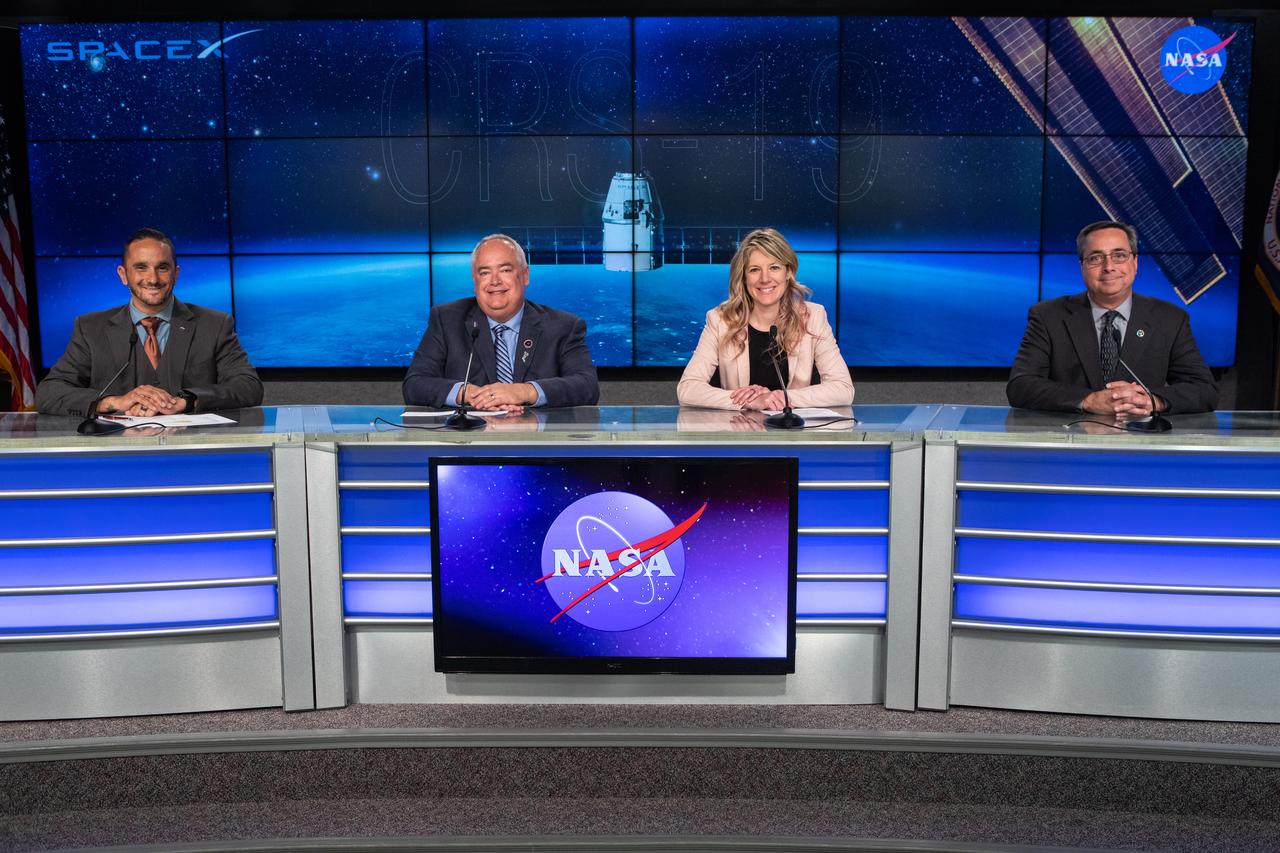
Dustin Cammack, NASA Communications, far left, moderates a prelaunch news conference on Dec. 3, 2019, for SpaceX's 19th Commercial Resupply Services (CRS-19) mission for NASA to the International Space Station, at the agency’s Kennedy Space Center in Florida. From left, are Bryan Dansberry, assistant program scientist, International Space Station Program Science Office at NASA; Jessica Jensen, director, Dragon Mission Management at SpaceX; and Mike McAleenan, launch weather officer, U.S. Air Force 45th Space Wing. The SpaceX Flacon 9 rocket and Dragon cargo module are scheduled to launch on Dec. 4, 2019, from Space Launch Complex 40 on Cape Canaveral Air Force Station in Florida.
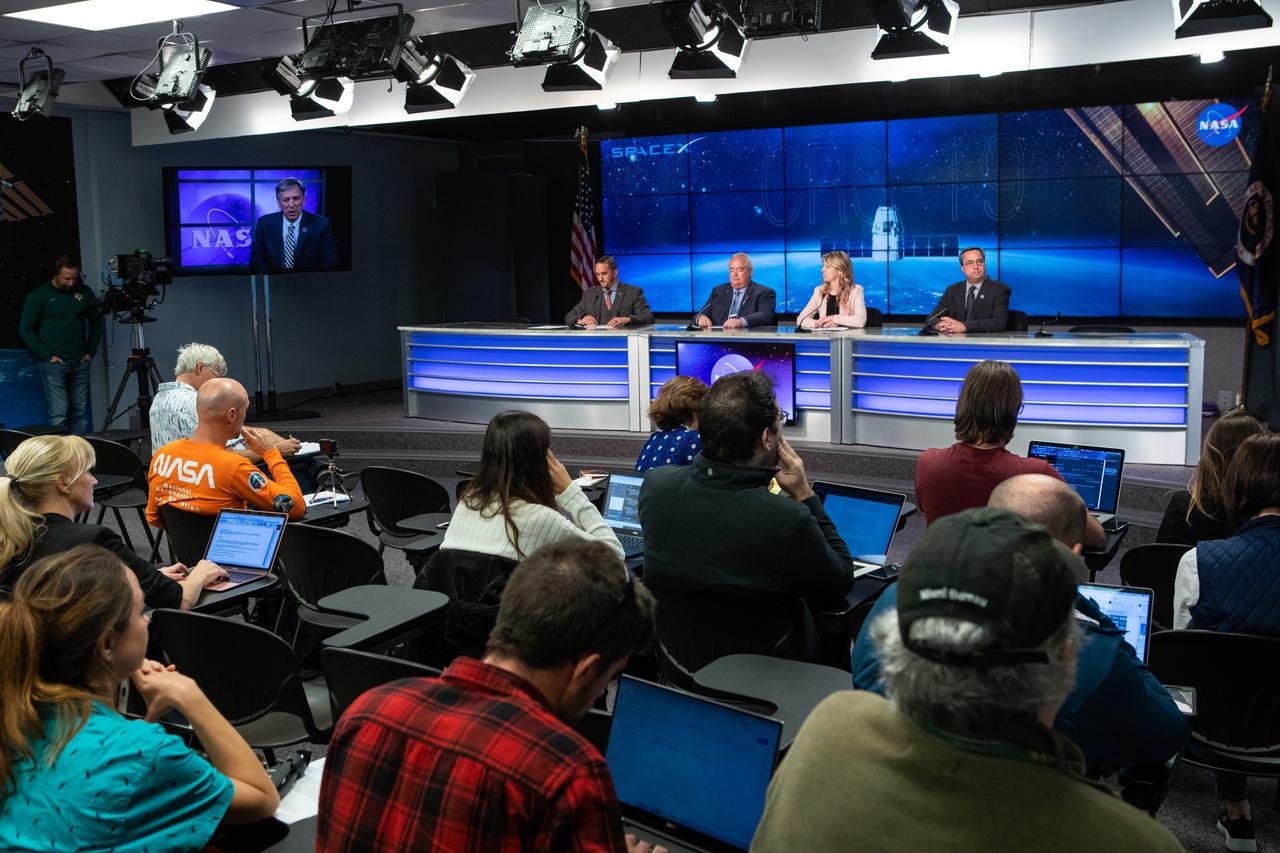
Dustin Cammack, NASA Communications, far left, moderates a prelaunch news conference on Dec. 3, 2019, for SpaceX's 19th Commercial Resupply Services (CRS-19) mission for NASA to the International Space Station, at the agency’s Kennedy Space Center in Florida. Speaking to members of the news media are, from left, Bryan Dansbury, assistant program scientist, International Space Station Program Science Office at NASA; Jessica Jensen, director, Dragon Mission Management at SpaceX; and Mike McAleenan, launch weather officer, U.S. Air Force 45th Space Wing. The SpaceX Flacon 9 rocket and Dragon cargo module are scheduled to launch on Dec. 4, 2019, from Space Launch Complex 40 on Cape Canaveral Air Force Station in Florida.

A transport truck is about to take a United Launch Alliance (ULA) Atlas V booster from the Mariner cargo ship at the Army Outpost wharf at Port Canaveral, Florida, to the hangar at the Atlas Spaceflight Operations Center (ASOC), located south of Space Launch Complex 41 at Cape Canaveral Air Force Station. The Atlas V is scheduled to launch a Cygnus spacecraft on the Orbital ATK CRS-7 commercial resupply mission to the International Space Station. Scheduled to liftoff March 19, 2017, the Orbital ATK CRS-7 mission will deliver thousands of pounds of supplies, equipment and scientific research materials that improve life on Earth and drive progress toward future space exploration.
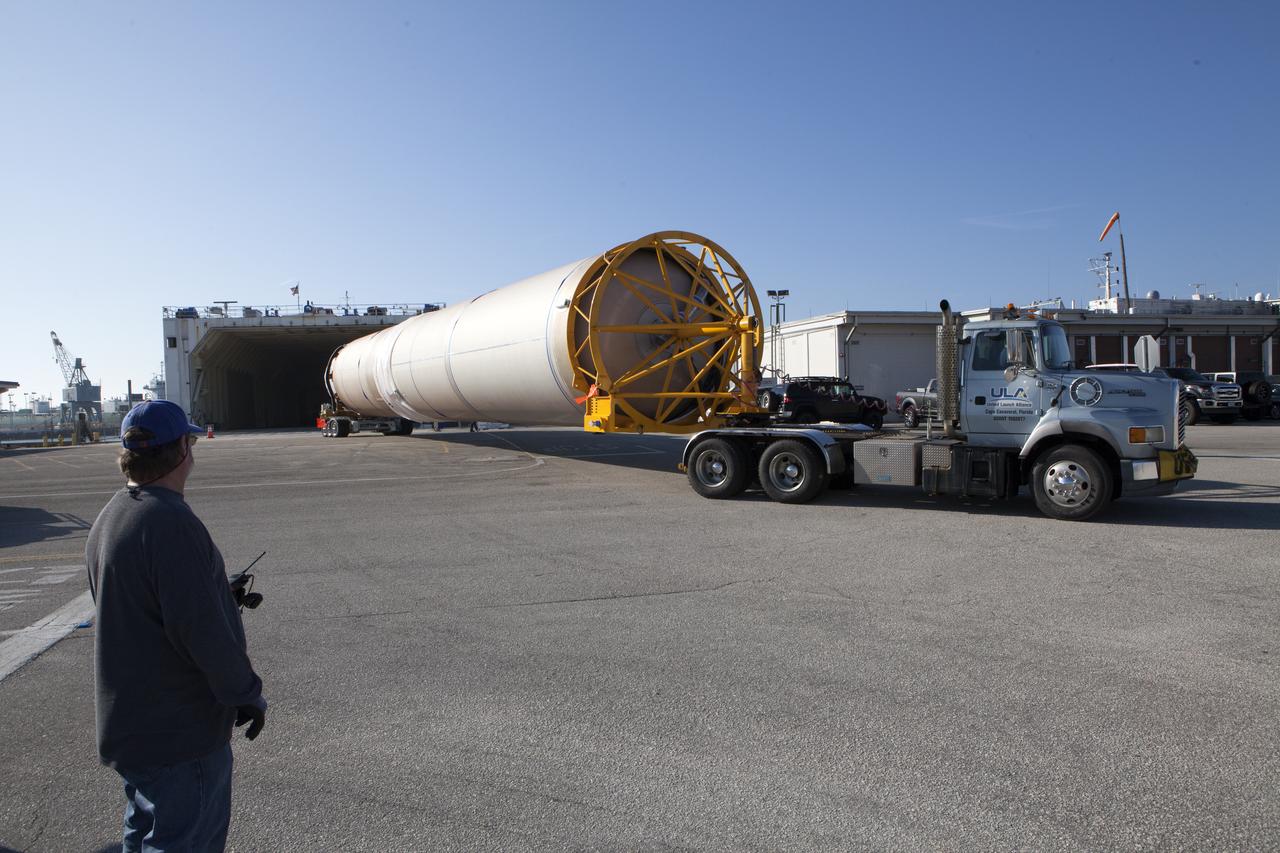
The United Launch Alliance (ULA) Atlas V booster arrives for the Orbital ATK CRS-7 commercial resupply mission to the International Space Station. A transport truck is taking the Atlas V from the Mariner cargo ship in the background, to the hangar at the Atlas Spaceflight Operations Center (ASOC), located south of Space Launch Complex 41 at Cape Canaveral Air Force Station. Scheduled to launch March 19, 2017, the Orbital ATK CRS-7 mission will lift off atop the ULA Atlas V rocket to deliver thousands of pounds of supplies, equipment and scientific research materials that improve life on Earth and drive progress toward future space exploration.
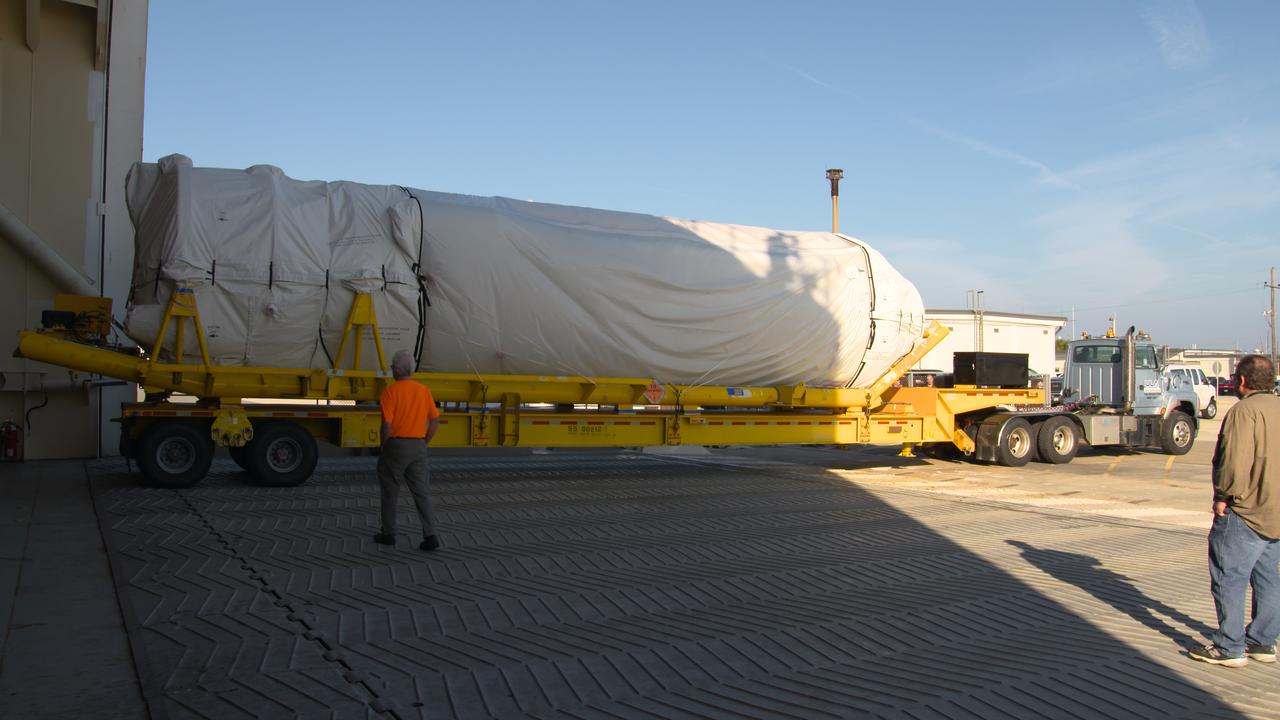
The United Launch Alliance (ULA) Centaur upper stage arrived for the Orbital ATK CRS-7 commercial resupply mission to the International Space Station. A transport truck is taking the Centaur from the Mariner cargo ship in the background, to the hangar at the Atlas Spaceflight Operations Center (ASOC), located south of Space Launch Complex 41 at Cape Canaveral Air Force Station. Scheduled to launch March 19, 2017, the Orbital ATK CRS-7 mission will lift off atop the ULA Atlas V rocket to deliver thousands of pounds of supplies, equipment and scientific research materials that improve life on Earth and drive progress toward future space exploration.
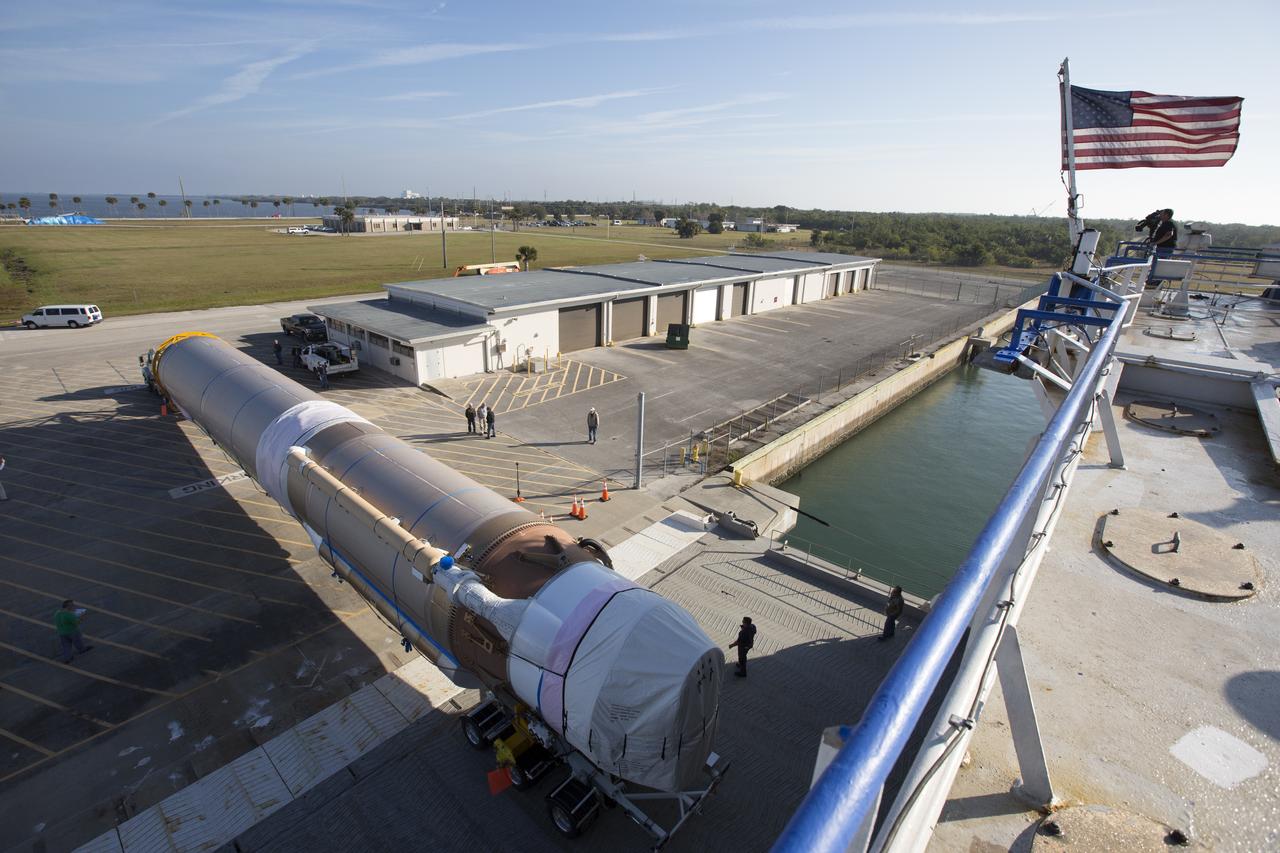
The United Launch Alliance (ULA) Atlas V booster arrives for the Orbital ATK CRS-7 commercial resupply mission to the International Space Station. A transport truck is taking the Atlas V from the Mariner cargo ship in the background, to the hangar at the Atlas Spaceflight Operations Center (ASOC), located south of Space Launch Complex 41 at Cape Canaveral Air Force Station. Scheduled to launch March 19, 2017, the Orbital ATK CRS-7 mission will lift off atop the ULA Atlas V rocket to deliver thousands of pounds of supplies, equipment and scientific research materials that improve life on Earth and drive progress toward future space exploration.
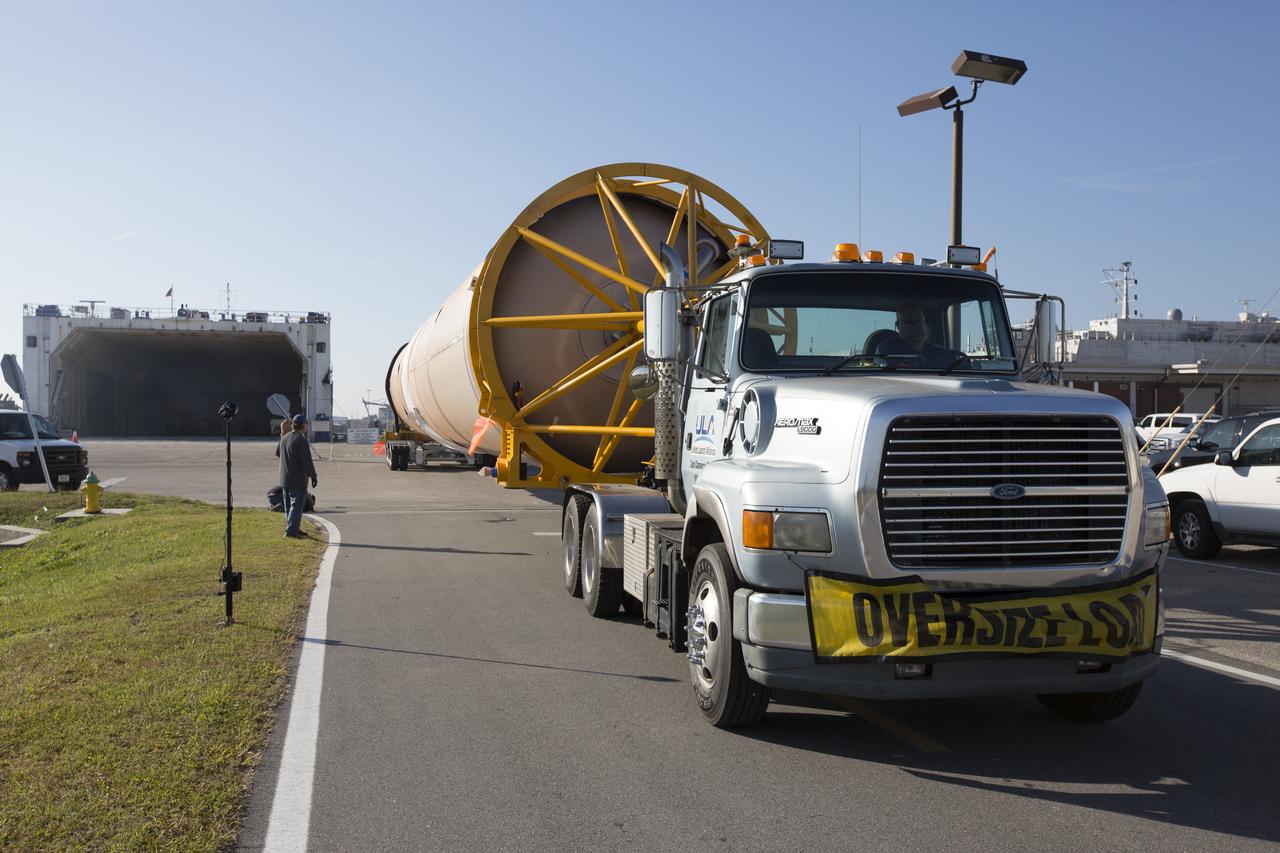
The United Launch Alliance (ULA) Atlas V booster arrives for the Orbital ATK CRS-7 commercial resupply mission to the International Space Station. A transport truck is taking the Atlas V from the Mariner cargo ship in the background, to the hangar at the Atlas Spaceflight Operations Center (ASOC), located south of Space Launch Complex 41 at Cape Canaveral Air Force Station. Scheduled to launch March 19, 2017, a Cygnus spacecraft on the Orbital ATK CRS-7 mission will lift off atop the ULA Atlas V rocket to deliver thousands of pounds of supplies, equipment and scientific research materials that improve life on Earth and drive progress toward future space exploration.
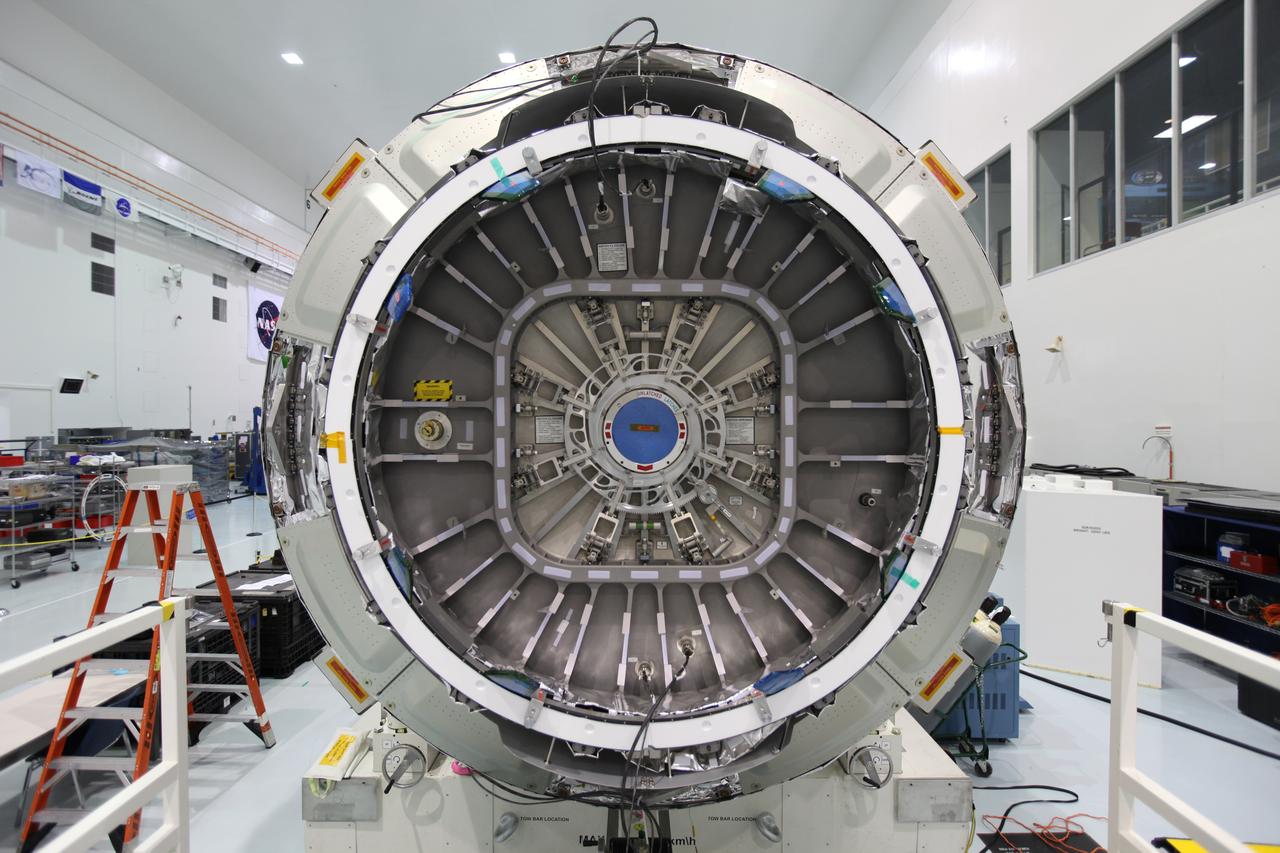
In the Space Station Processing Facility at NASA's Kennedy Space Center in Florida, the hatch has been closed on the Cygnus spacecraft's pressurized cargo module (PCM) for the Orbital ATK CRS-7 mission to the International Space Station. The module will be rotated to vertical for mating to the service module. Scheduled to launch on March 19, 2017, the commercial resupply services mission will lift off atop a United Launch Alliance Atlas V rocket from Space launch Complex 41 at Cape Canaveral Air Force Station.
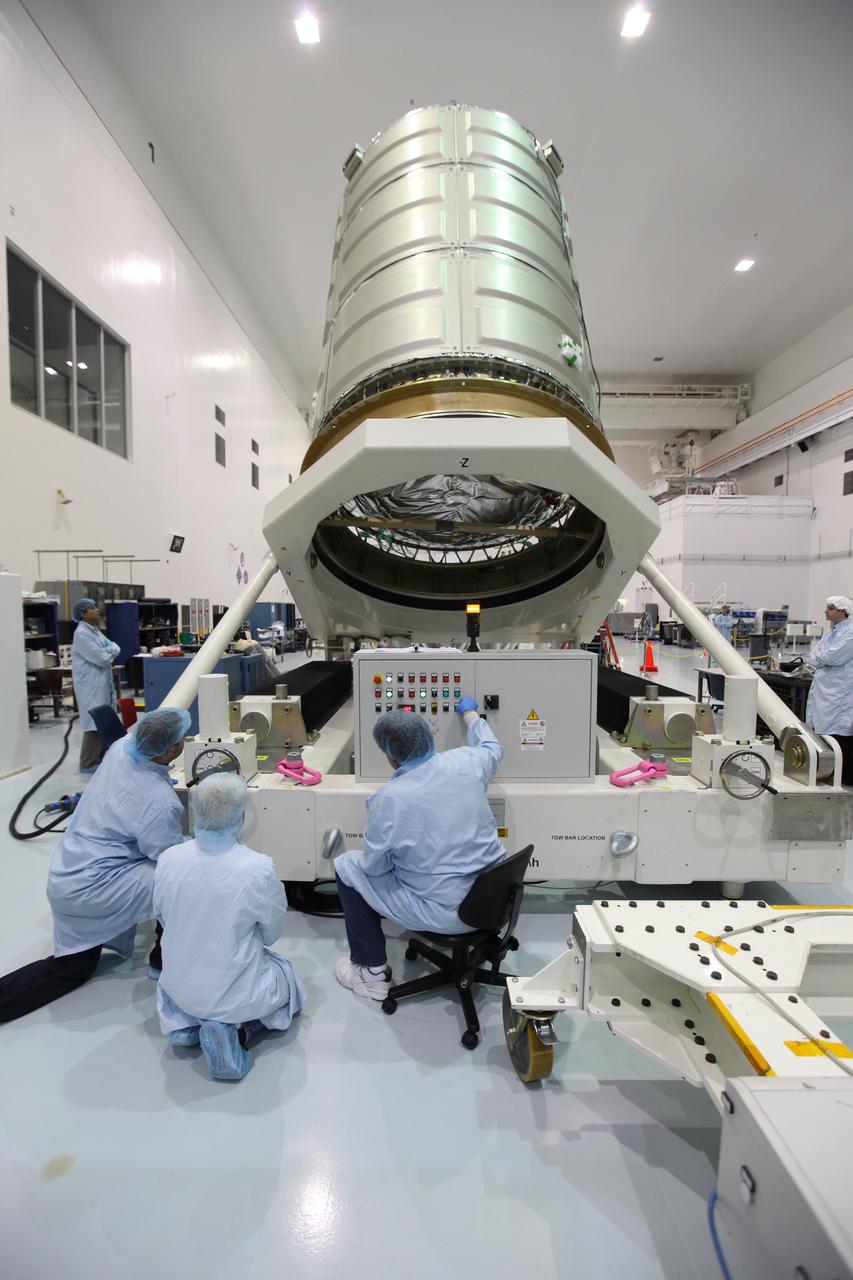
In the Space Station Processing Facility at NASA's Kennedy Space Center in Florida, technicians monitor the progress as the Cygnus spacecraft's pressurized cargo module (PCM) for the Orbital ATK CRS-7 mission to the International Space Station is rotated to vertical for mating to the service module. Scheduled to launch on March 19, 2017, the commercial resupply services mission will lift off atop a United Launch Alliance Atlas V rocket from Space launch Complex 41 at Cape Canaveral Air Force Station.
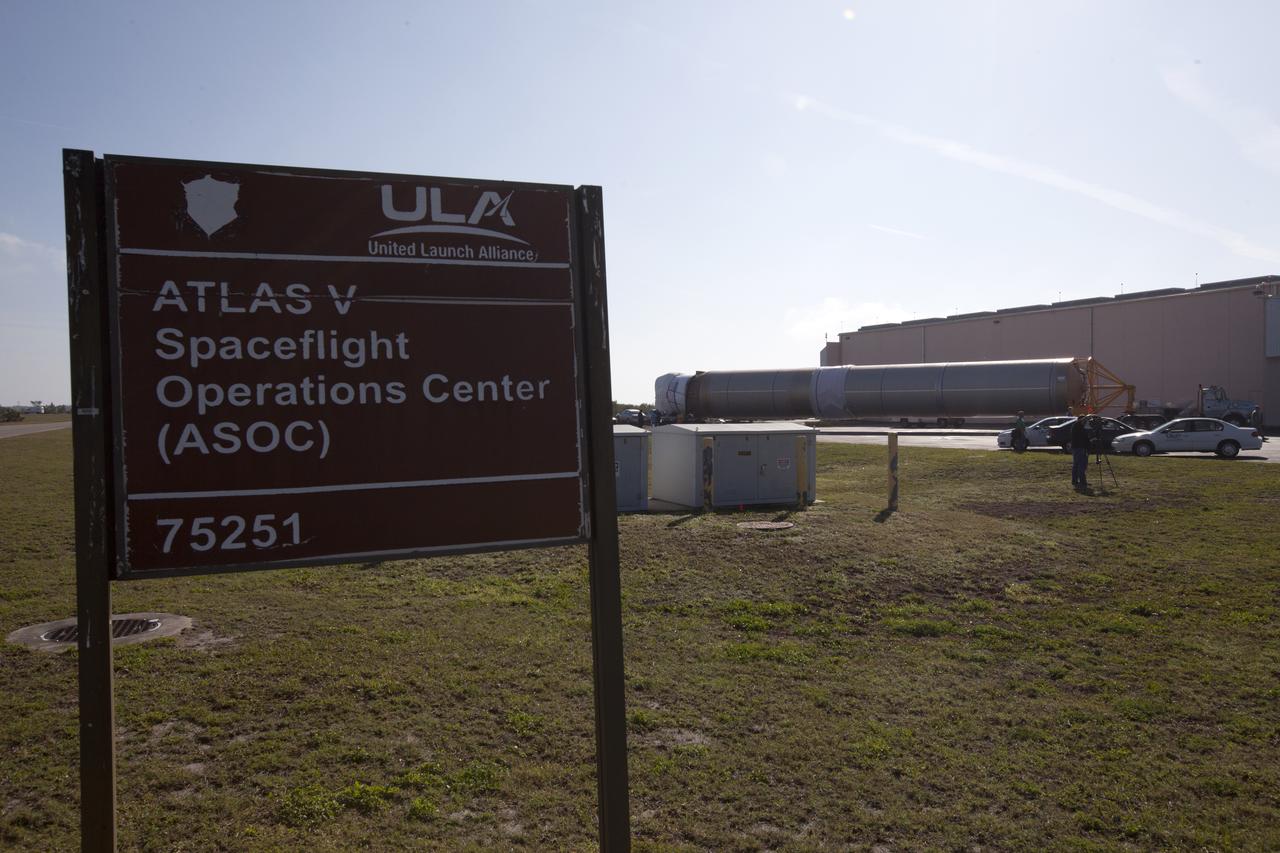
A United Launch Alliance (ULA) Atlas V booster arrives at Cape Canaveral Air Force Station's Atlas Spaceflight Operations Center (ASOC). The Atlas V will undergo final testing in that facility. When processing in the ASOC is complete, the Atlas booster will be moved to the Vertical Integration Facility for stacking at Space Launch Complex 41. Scheduled to launch March 19, 2017, the Atlas will launch a Cygnus spacecraft on the Orbital ATK CRS-7 mission to deliver thousands of pounds of supplies, equipment and scientific research materials to the International Space Station.
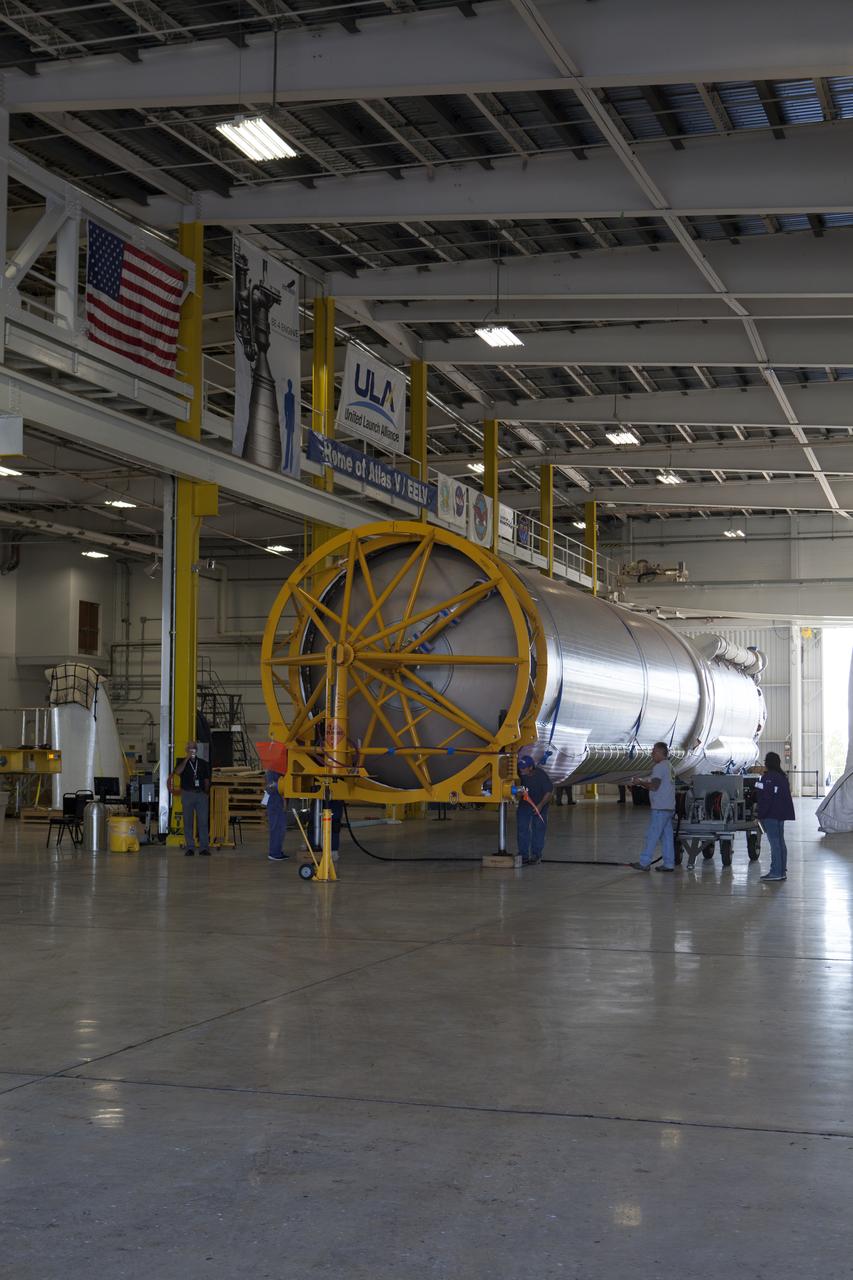
A United Launch Alliance (ULA) Atlas V booster arrives at Cape Canaveral Air Force Station's Atlas Spaceflight Operations Center (ASOC). The Atlas V will undergo final testing in that facility. When processing in the ASOC is complete, the Atlas booster will be moved to the Vertical Integration Facility for stacking at Space Launch Complex 41. Scheduled to launch March 19, 2017, the Atlas will launch a Cygnus spacecraft on the Orbital ATK CRS-7 mission to deliver thousands of pounds of supplies, equipment and scientific research materials to the International Space Station.
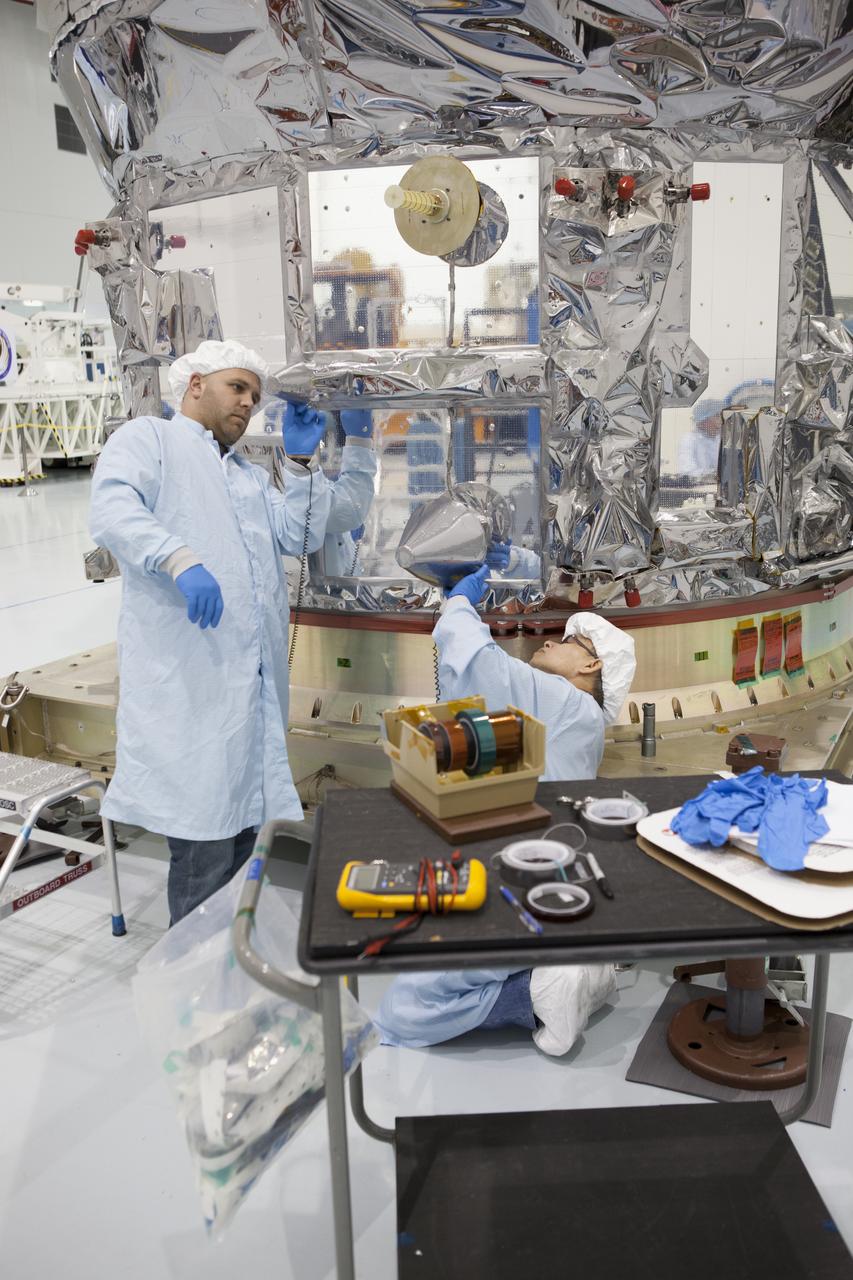
In the Space Station Processing Facility high bay at NASA's Kennedy Space Center in Florida, technicians are preparing Orbital ATK's CYGNUS pressurized cargo module for bagging. The Orbital ATK CRS-7 commercial resupply services mission to the International Space Station is scheduled to launch atop a United Launch Alliance Atlas V rocket from Space Launch Complex 41 at Cape Canaveral Air Force Station on March 19, 2017. CYGNUS will deliver thousands of pounds of supplies, equipment and scientific research materials to the space station.
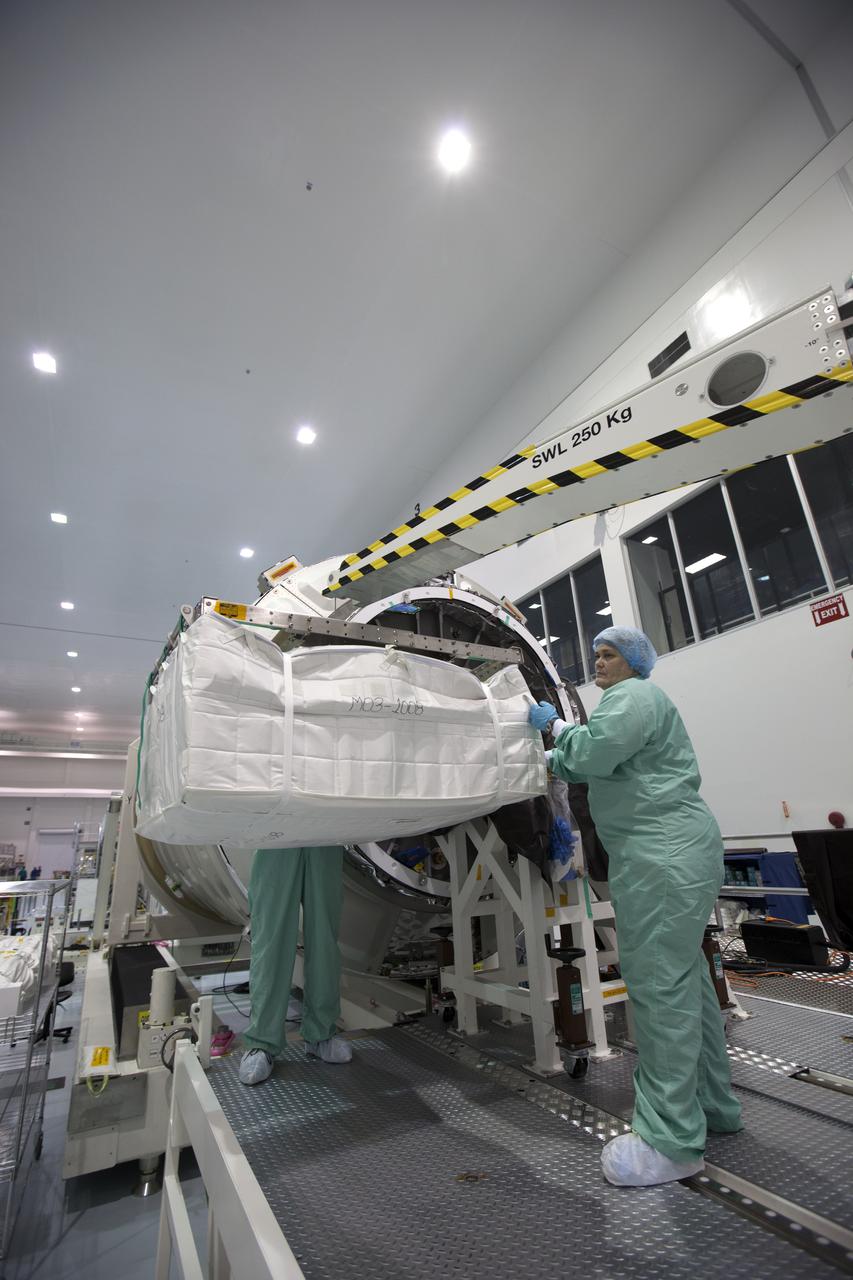
In the Space Station Processing Facility at NASA's Kennedy Space Center in Florida, technicians and engineers load thousands of pounds of supplies, equipment and scientific research materials aboard a Cygnus spacecraft's pressurized cargo module (PCM) for the Orbital ATK CRS-7 mission to the International Space Station. Scheduled to launch on March 19, 2017, the commercial resupply services mission will lift off atop a United Launch Alliance Atlas V rocket from Space launch Complex 41 at Cape Canaveral Air Force Station.
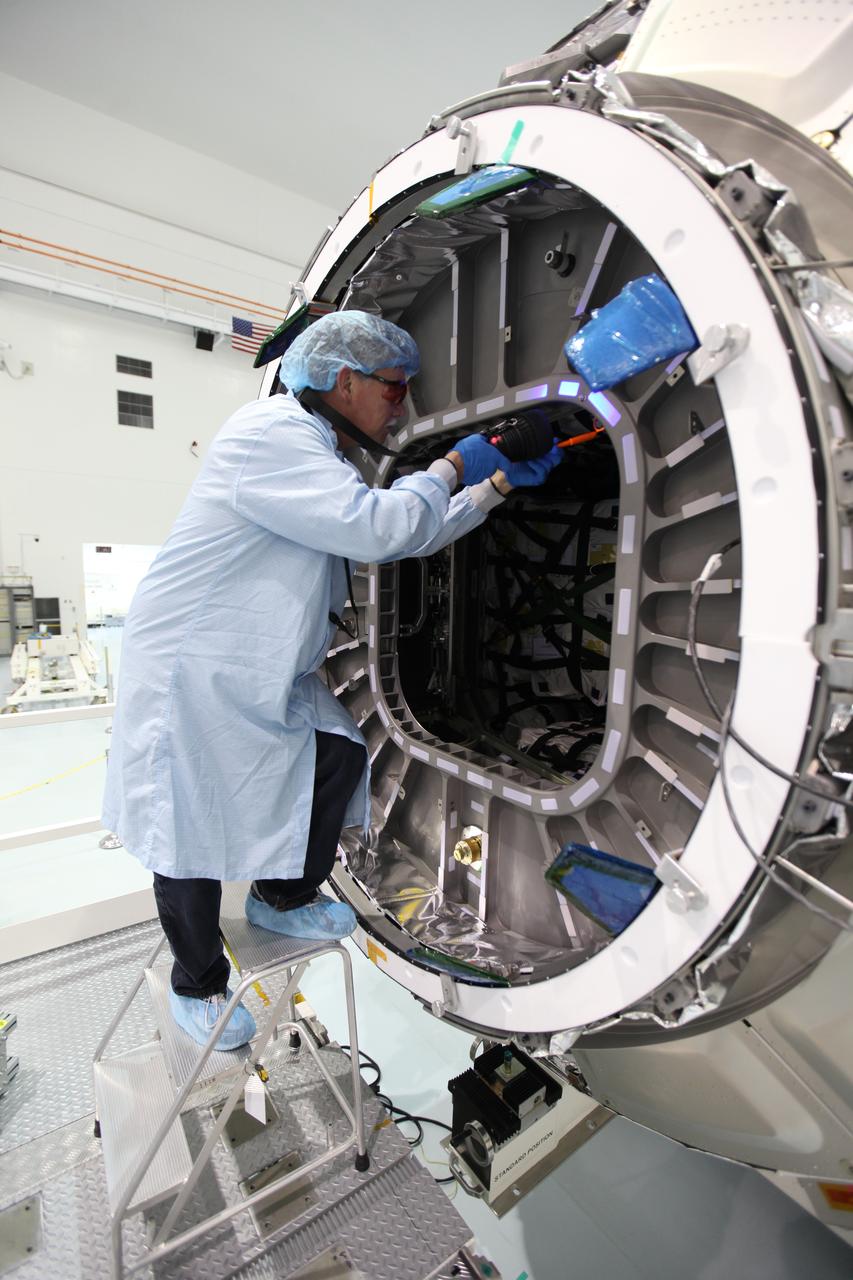
In the Space Station Processing Facility at NASA's Kennedy Space Center in Florida, preparations are underway to close the hatch of the Cygnus spacecraft's pressurized cargo module (PCM) for the Orbital ATK CRS-7 mission to the International Space Station. Scheduled to launch on March 19, 2017, the commercial resupply services mission will lift off atop a United Launch Alliance Atlas V rocket from Space launch Complex 41 at Cape Canaveral Air Force Station.
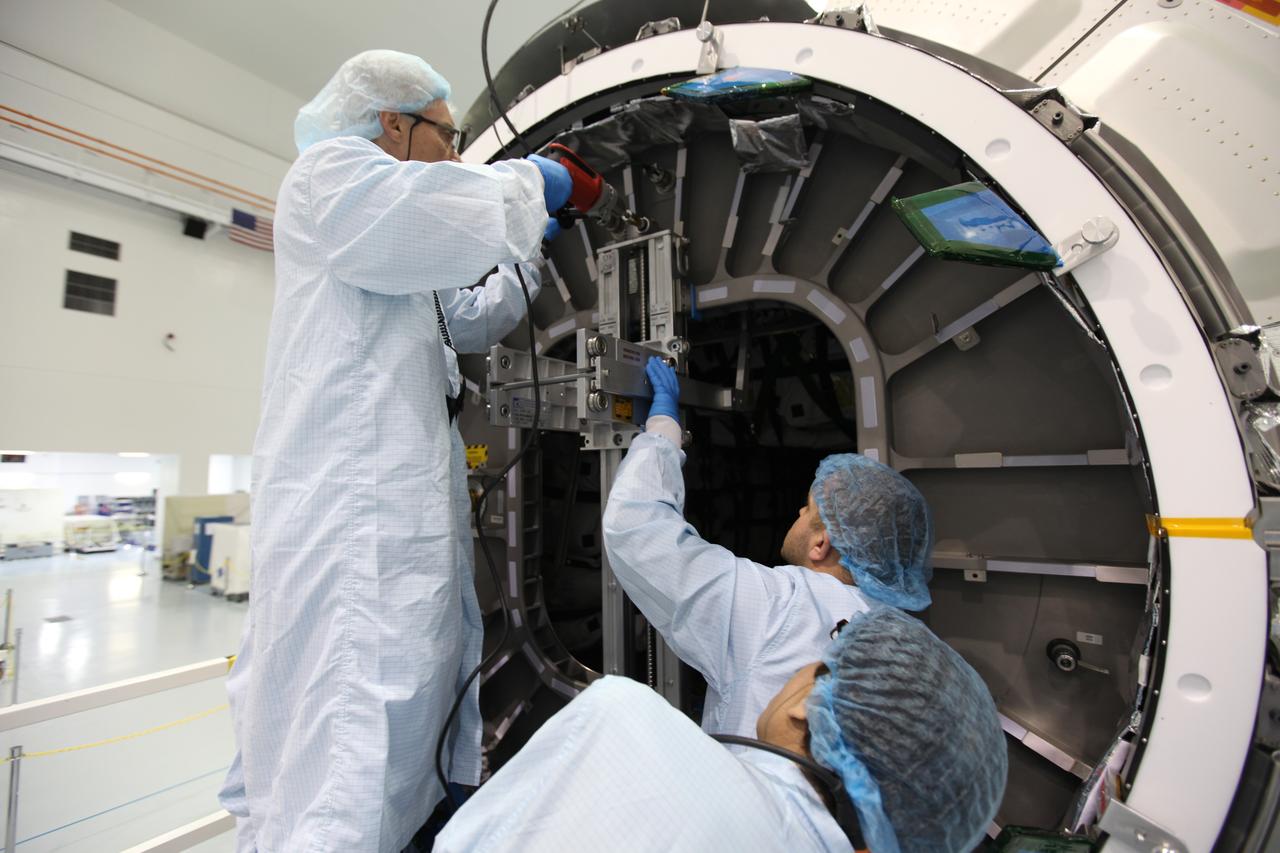
In the Space Station Processing Facility at NASA's Kennedy Space Center in Florida, technicians help secure the hatch for closure on the Cygnus spacecraft's pressurized cargo module (PCM) for the Orbital ATK CRS-7 mission to the International Space Station. Scheduled to launch on March 19, 2017, the commercial resupply services mission will lift off atop a United Launch Alliance Atlas V rocket from Space launch Complex 41 at Cape Canaveral Air Force Station.
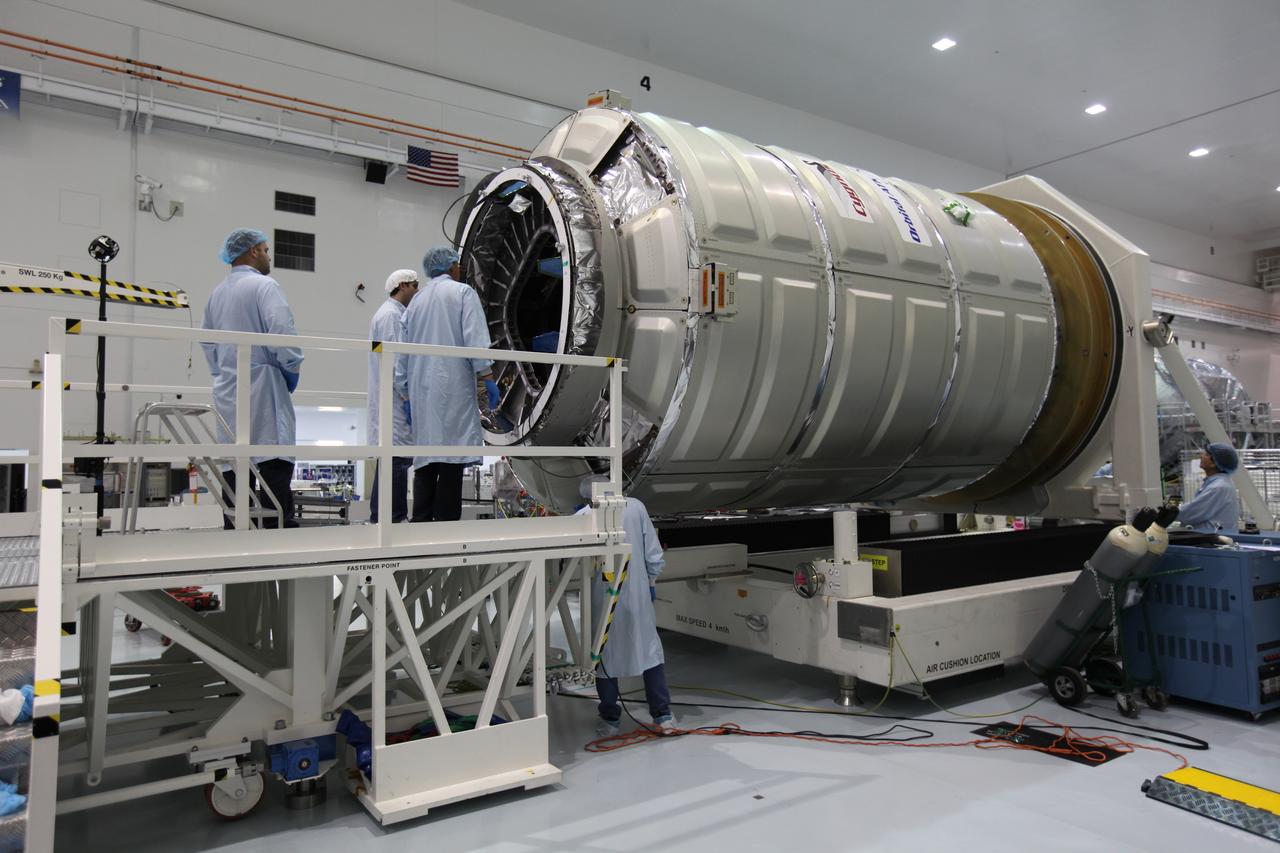
In the Space Station Processing Facility at NASA's Kennedy Space Center in Florida, technicians help prepare the hatch for closure on the Cygnus spacecraft's pressurized cargo module (PCM) for the Orbital ATK CRS-7 mission to the International Space Station. Scheduled to launch on March 19, 2017, the commercial resupply services mission will lift off atop a United Launch Alliance Atlas V rocket from Space launch Complex 41 at Cape Canaveral Air Force Station.
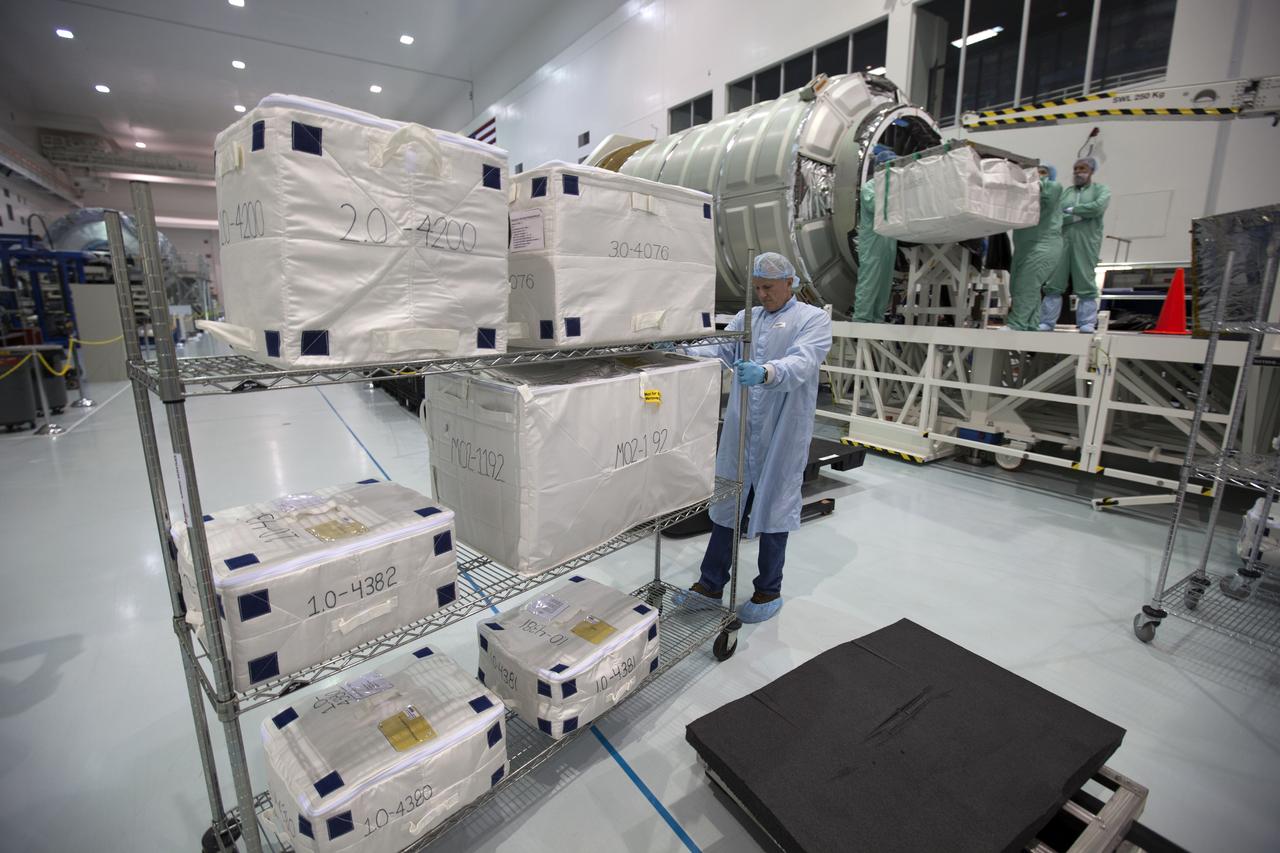
In the Space Station Processing Facility at NASA's Kennedy Space Center in Florida, technicians and engineers load thousands of pounds of supplies, equipment and scientific research materials aboard a Cygnus spacecraft's pressurized cargo module (PCM) for the Orbital ATK CRS-7 mission to the International Space Station. Scheduled to launch on March 19, 2017, the commercial resupply services mission will lift off atop a United Launch Alliance Atlas V rocket from Space launch Complex 41 at Cape Canaveral Air Force Station.
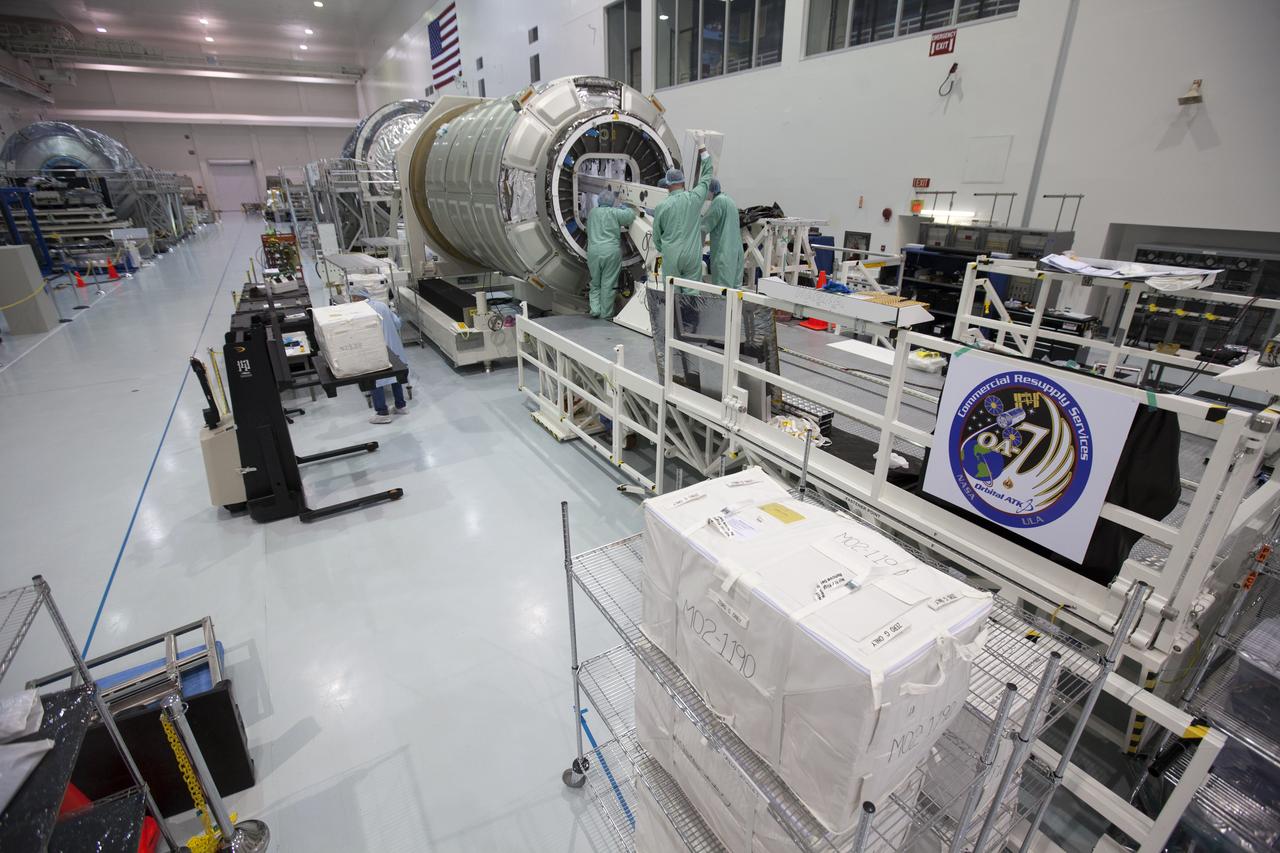
In the Space Station Processing Facility at NASA's Kennedy Space Center in Florida, technicians and engineers load thousands of pounds of supplies, equipment and scientific research materials aboard a Cygnus spacecraft's pressurized cargo module (PCM) for the Orbital ATK CRS-7 mission to the International Space Station. Scheduled to launch on March 19, 2017, the commercial resupply services mission will lift off atop a United Launch Alliance Atlas V rocket from Space launch Complex 41 at Cape Canaveral Air Force Station.
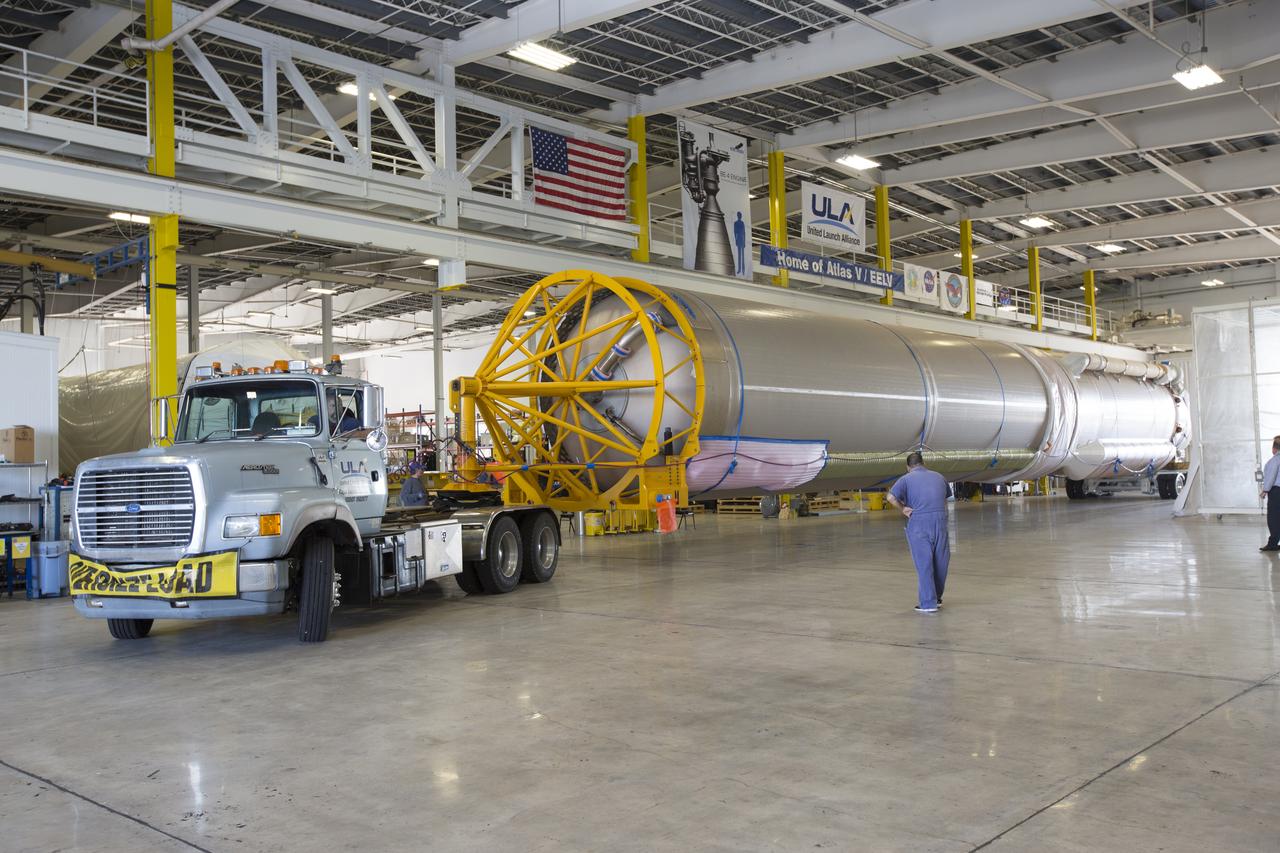
A United Launch Alliance (ULA) Atlas V booster arrives at Cape Canaveral Air Force Station's Atlas Spaceflight Operations Center (ASOC). The Atlas V will undergo final testing in that facility. When processing in the ASOC is complete, the Atlas booster will be moved to the Vertical Integration Facility for stacking at Space Launch Complex 41. Scheduled to launch March 19, 2017, the Atlas will launch a Cygnus spacecraft on the Orbital ATK CRS-7 mission to deliver thousands of pounds of supplies, equipment and scientific research materials to the International Space Station.
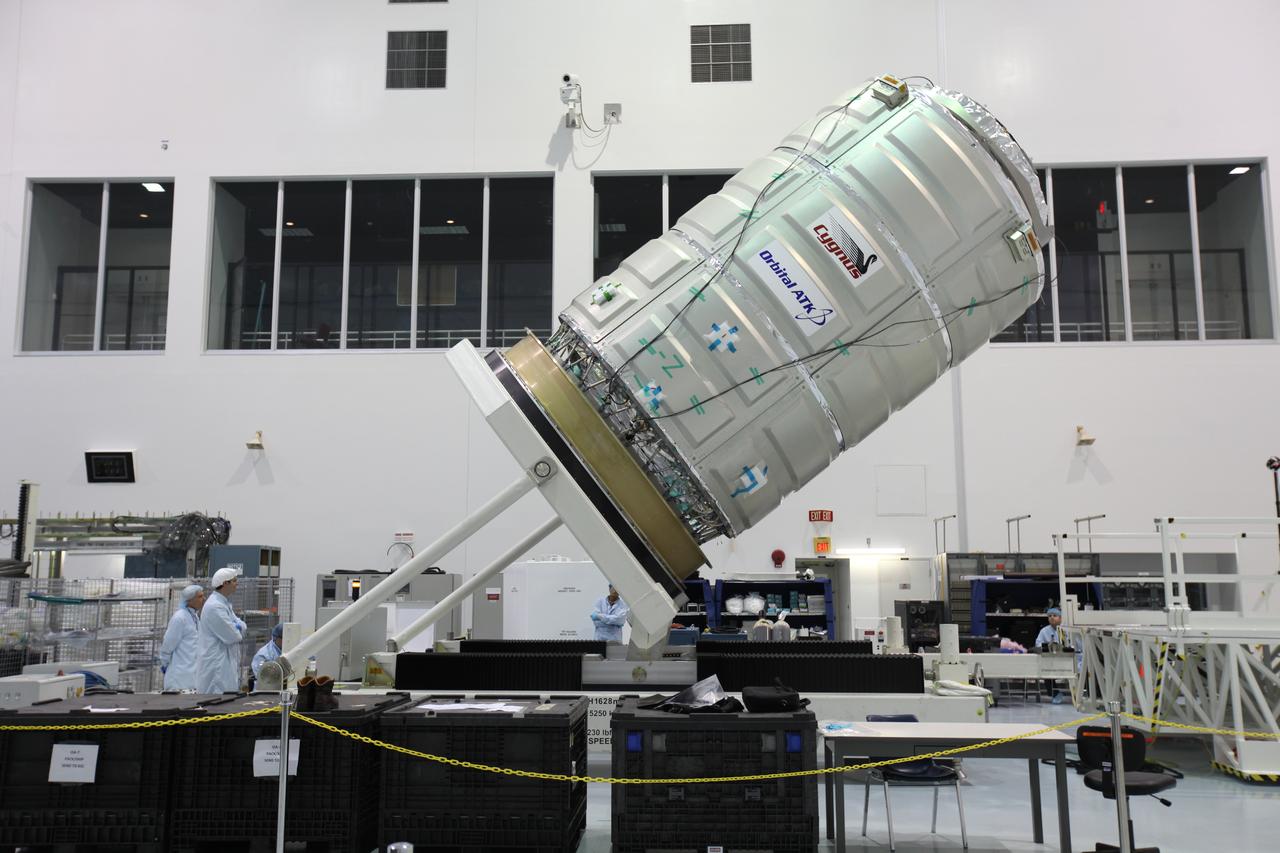
In the Space Station Processing Facility at NASA's Kennedy Space Center in Florida, the hatch was closed on the Cygnus spacecraft's pressurized cargo module (PCM) for the Orbital ATK CRS-7 mission to the International Space Station. The module is being rotated to vertical for mating to the service module. Scheduled to launch on March 19, 2017, the commercial resupply services mission will lift off atop a United Launch Alliance Atlas V rocket from Space launch Complex 41 at Cape Canaveral Air Force Station.
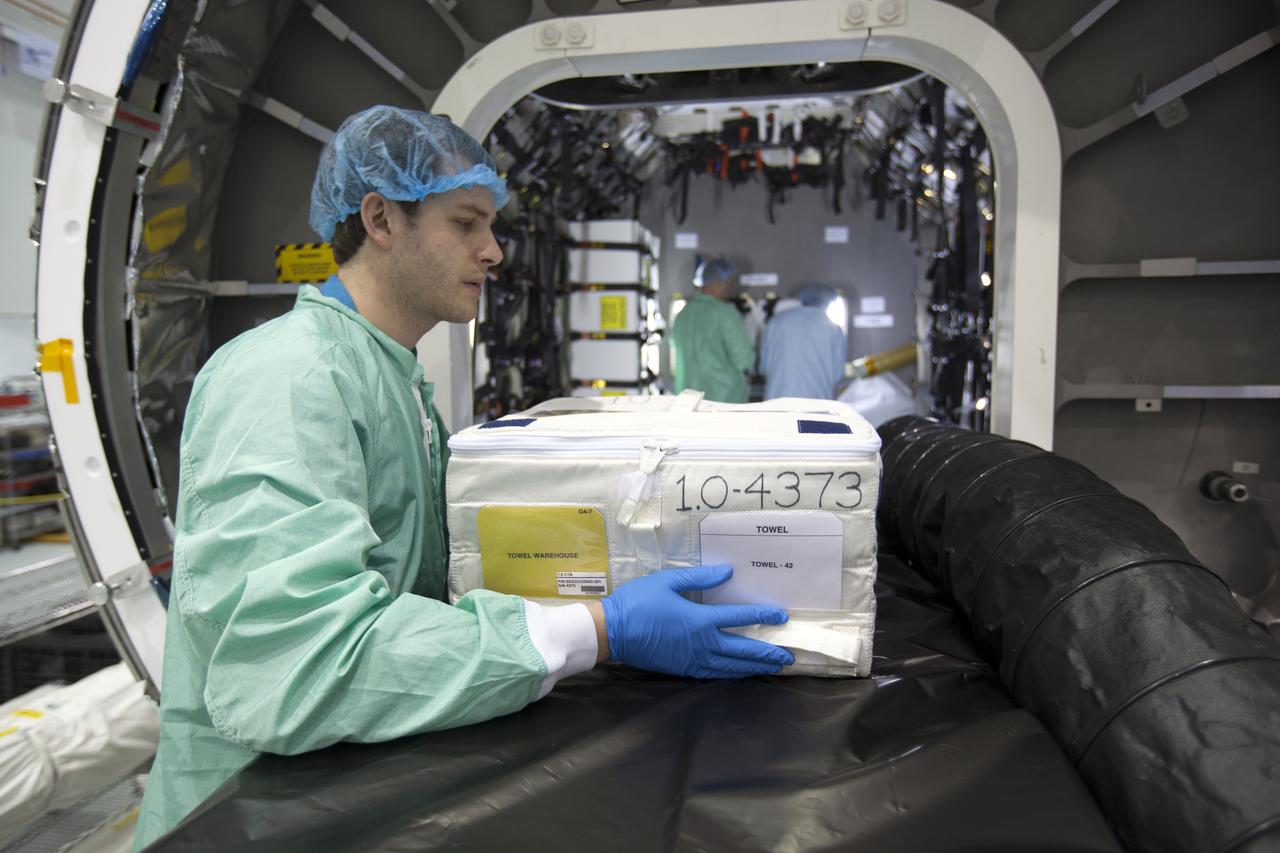
In the Space Station Processing Facility at NASA's Kennedy Space Center in Florida, thousands of pounds of supplies, equipment and scientific research materials are prepared for loading aboard a Cygnus spacecraft's pressurized cargo module (PCM) for the Orbital ATK CRS-7 mission to the International Space Station. Scheduled to launch on March 19, 2017, the commercial resupply services mission will lift off atop a United Launch Alliance Atlas V rocket from Space launch Complex 41 at Cape Canaveral Air Force Station.
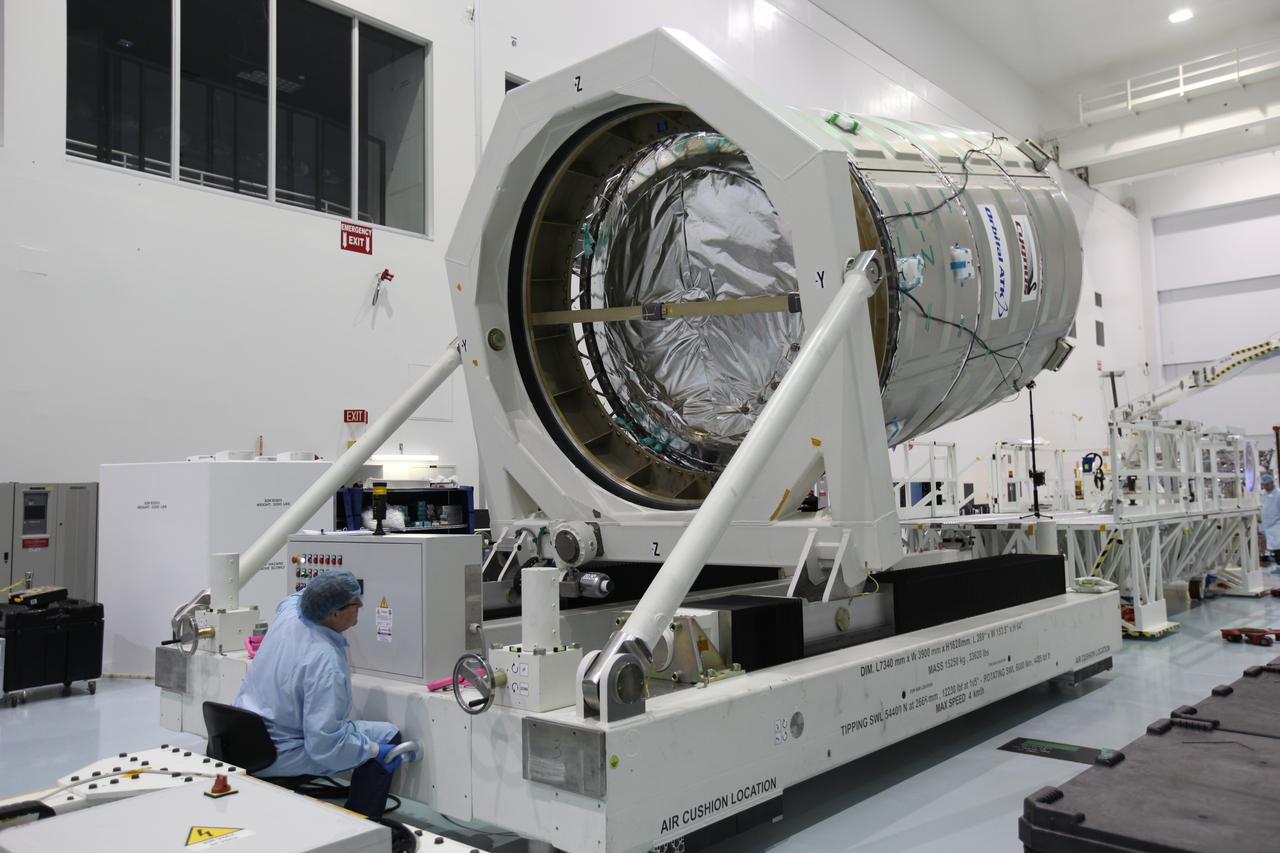
In the Space Station Processing Facility at NASA's Kennedy Space Center in Florida, the hatch is closed on the Cygnus spacecraft's pressurized cargo module (PCM) for the Orbital ATK CRS-7 mission to the International Space Station. The module is being rotated to vertical for mating to the service module. Scheduled to launch on March 19, 2017, the commercial resupply services mission will lift off atop a United Launch Alliance Atlas V rocket from Space launch Complex 41 at Cape Canaveral Air Force Station.
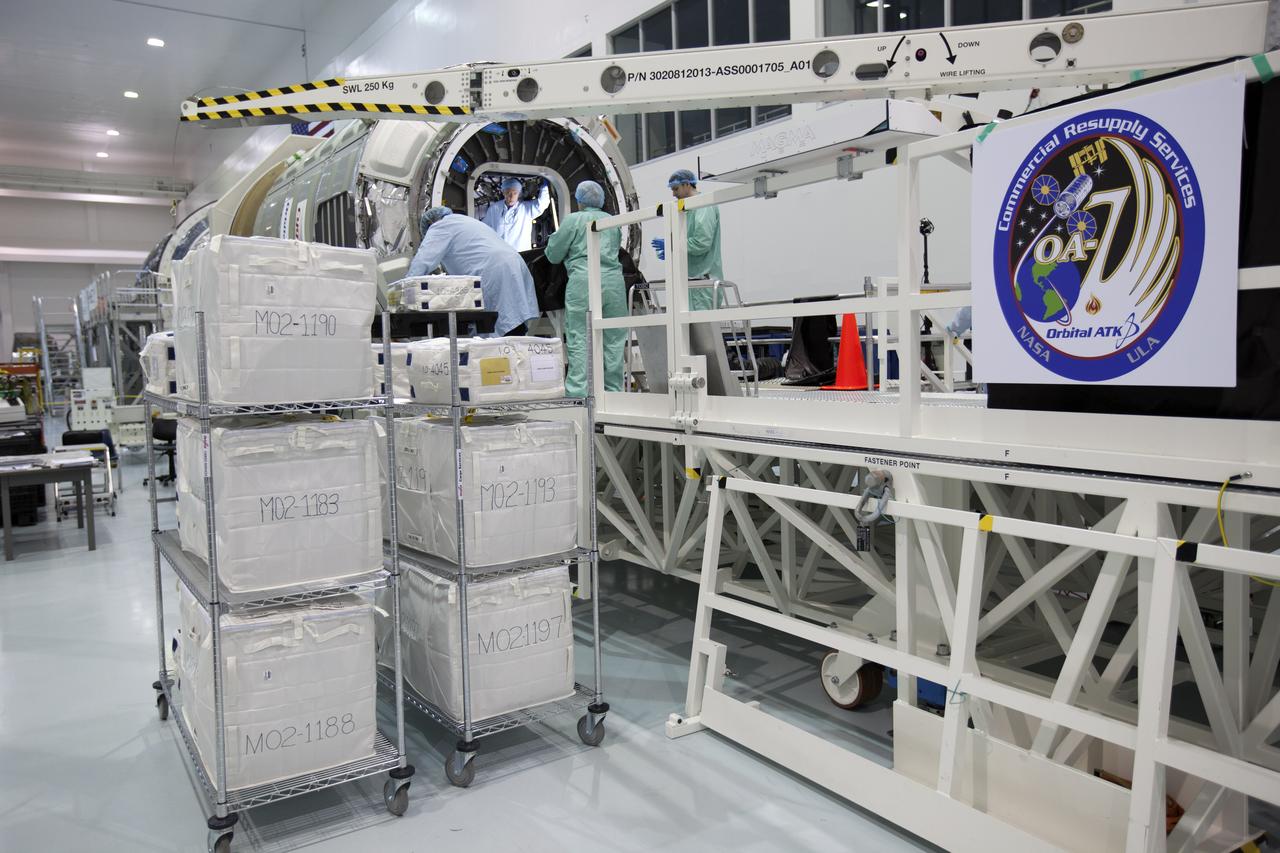
In the Space Station Processing Facility at NASA's Kennedy Space Center in Florida, technicians and engineers load thousands of pounds of supplies, equipment and scientific research materials aboard a Cygnus spacecraft's pressurized cargo module (PCM) for the Orbital ATK CRS-7 mission to the International Space Station. Scheduled to launch on March 19, 2017, the commercial resupply services mission will lift off atop a United Launch Alliance Atlas V rocket from Space launch Complex 41 at Cape Canaveral Air Force Station.
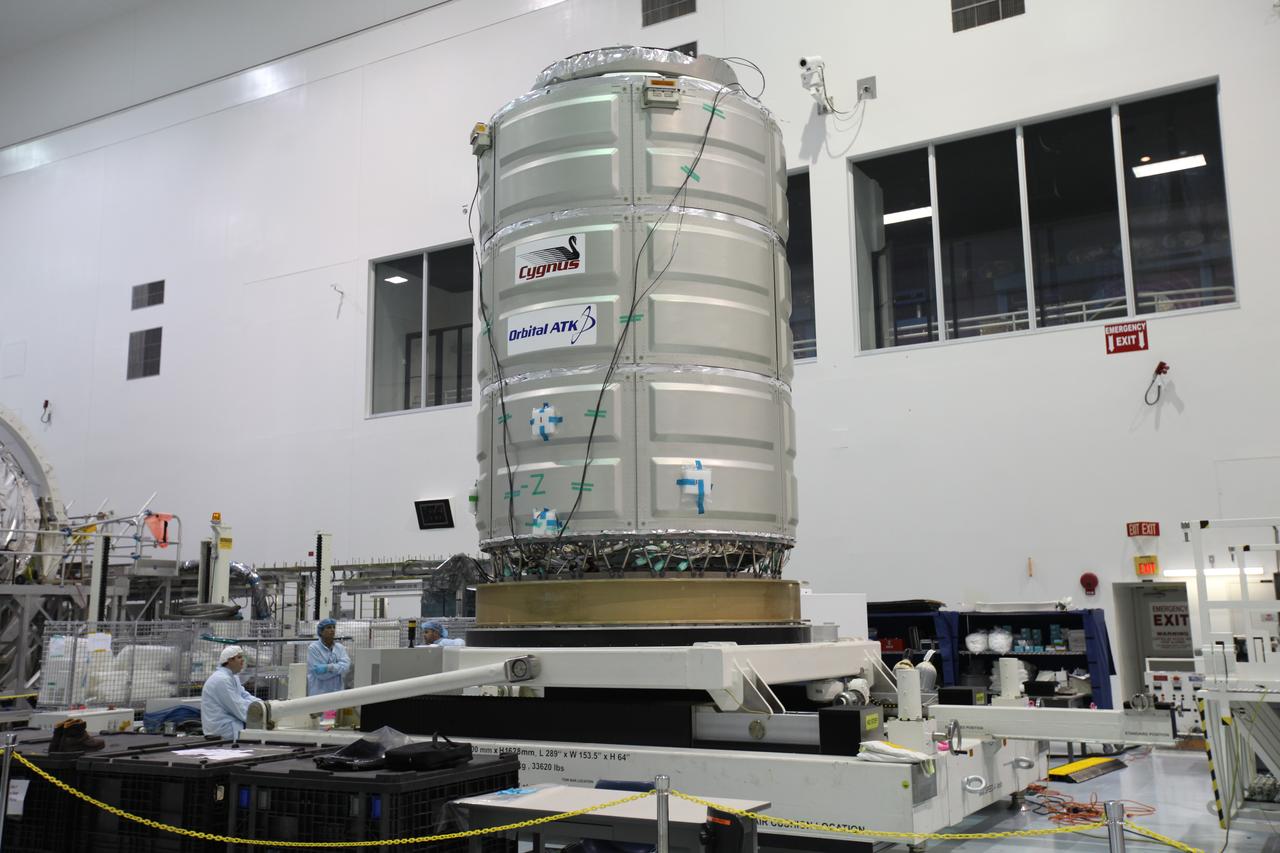
In the Space Station Processing Facility at NASA's Kennedy Space Center in Florida, preparations are underway to close the hatch of the Cygnus spacecraft's pressurized cargo module (PCM) for the Orbital ATK CRS-7 mission to the International Space Station. Scheduled to launch on March 19, 2017, the commercial resupply services mission will lift off atop a United Launch Alliance Atlas V rocket from Space launch Complex 41 at Cape Canaveral Air Force Station.
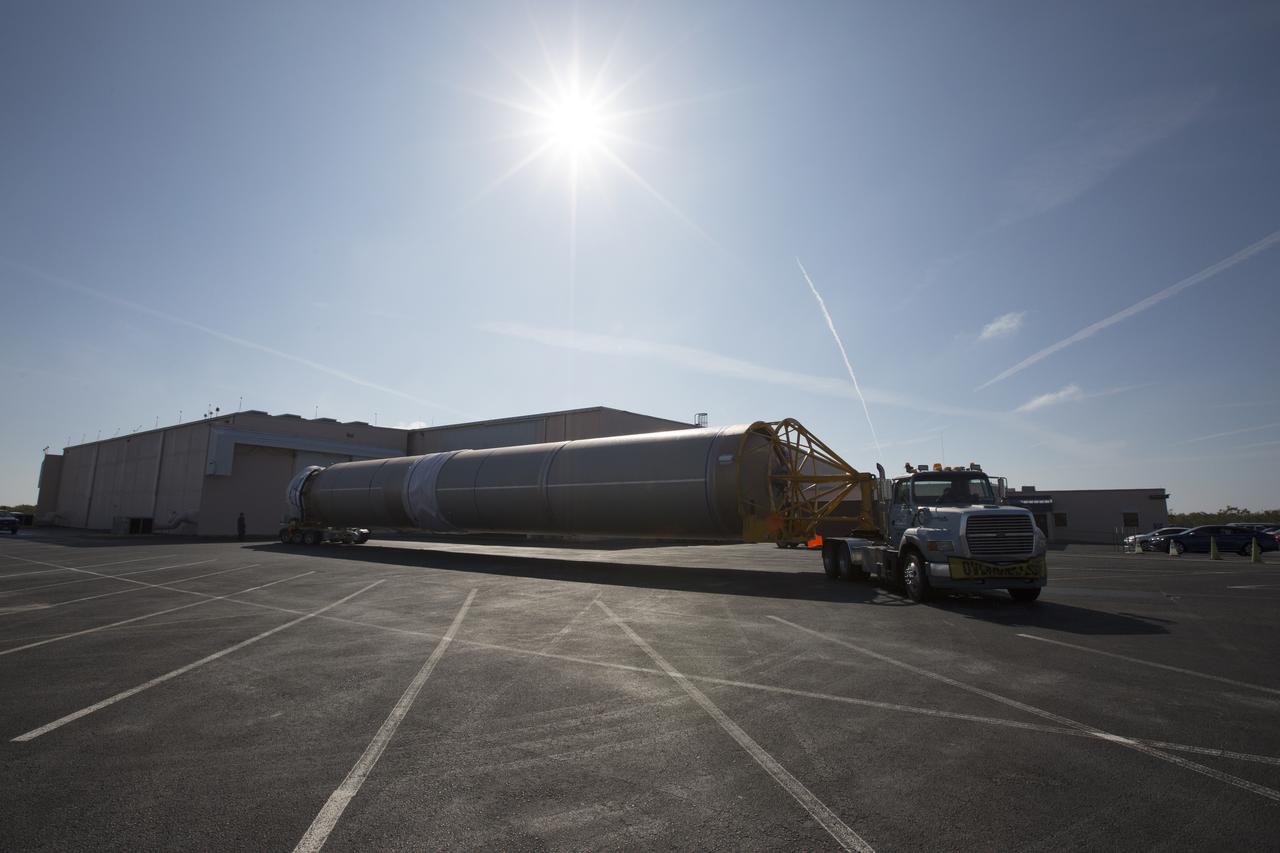
A United Launch Alliance (ULA) Atlas V booster arrives at Cape Canaveral Air Force Station's Atlas Spaceflight Operations Center (ASOC). The Atlas V will undergo final testing in that facility. When processing in the ASOC is complete, the Atlas booster will be moved to the Vertical Integration Facility for stacking at Space Launch Complex 41. Scheduled to launch March 19, 2017, the Atlas will launch a Cygnus spacecraft on the Orbital ATK CRS-7 mission to deliver thousands of pounds of supplies, equipment and scientific research materials to the International Space Station.
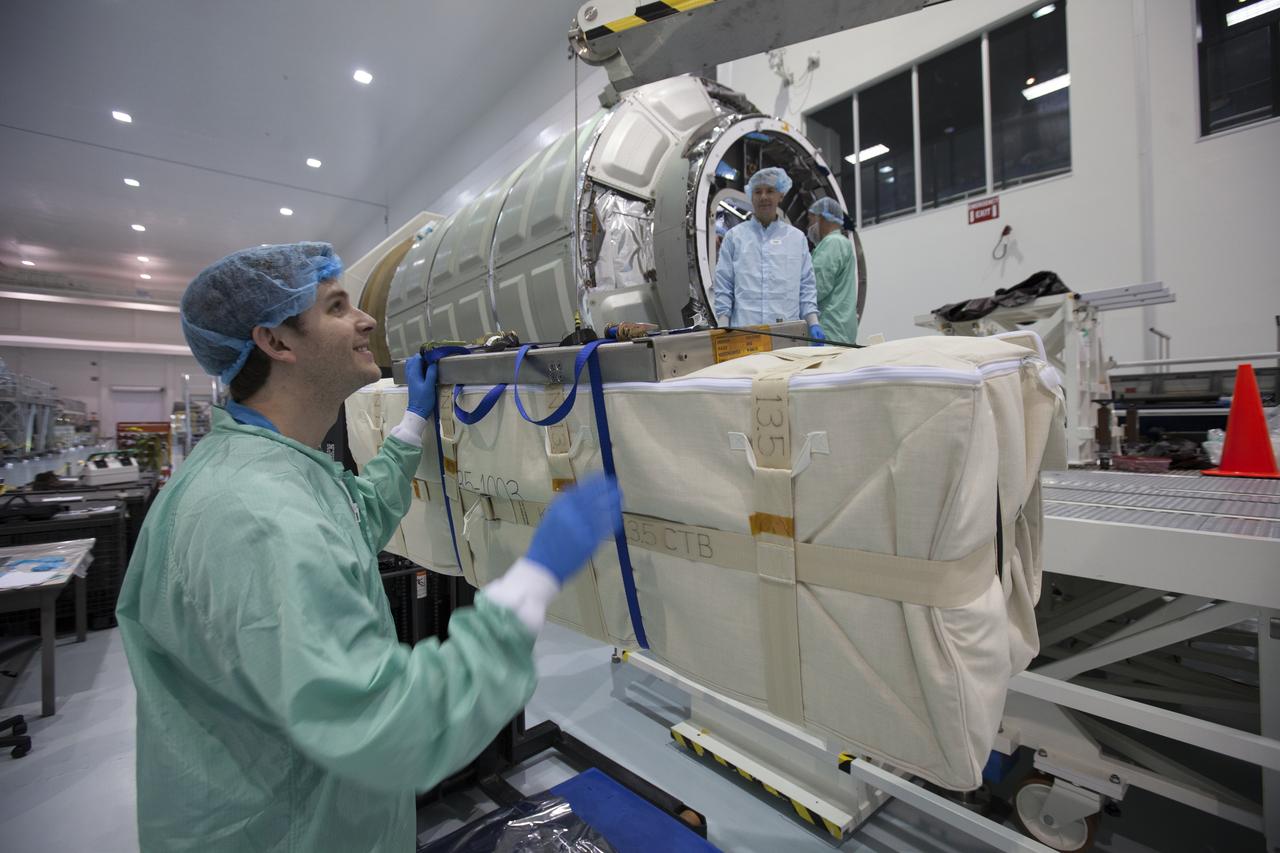
In the Space Station Processing Facility at NASA's Kennedy Space Center in Florida, technicians and engineers load thousands of pounds of supplies, equipment and scientific research materials aboard a Cygnus spacecraft's pressurized cargo module (PCM) for the Orbital ATK CRS-7 mission to the International Space Station. Scheduled to launch on March 19, 2017, the commercial resupply services mission will lift off atop a United Launch Alliance Atlas V rocket from Space launch Complex 41 at Cape Canaveral Air Force Station.
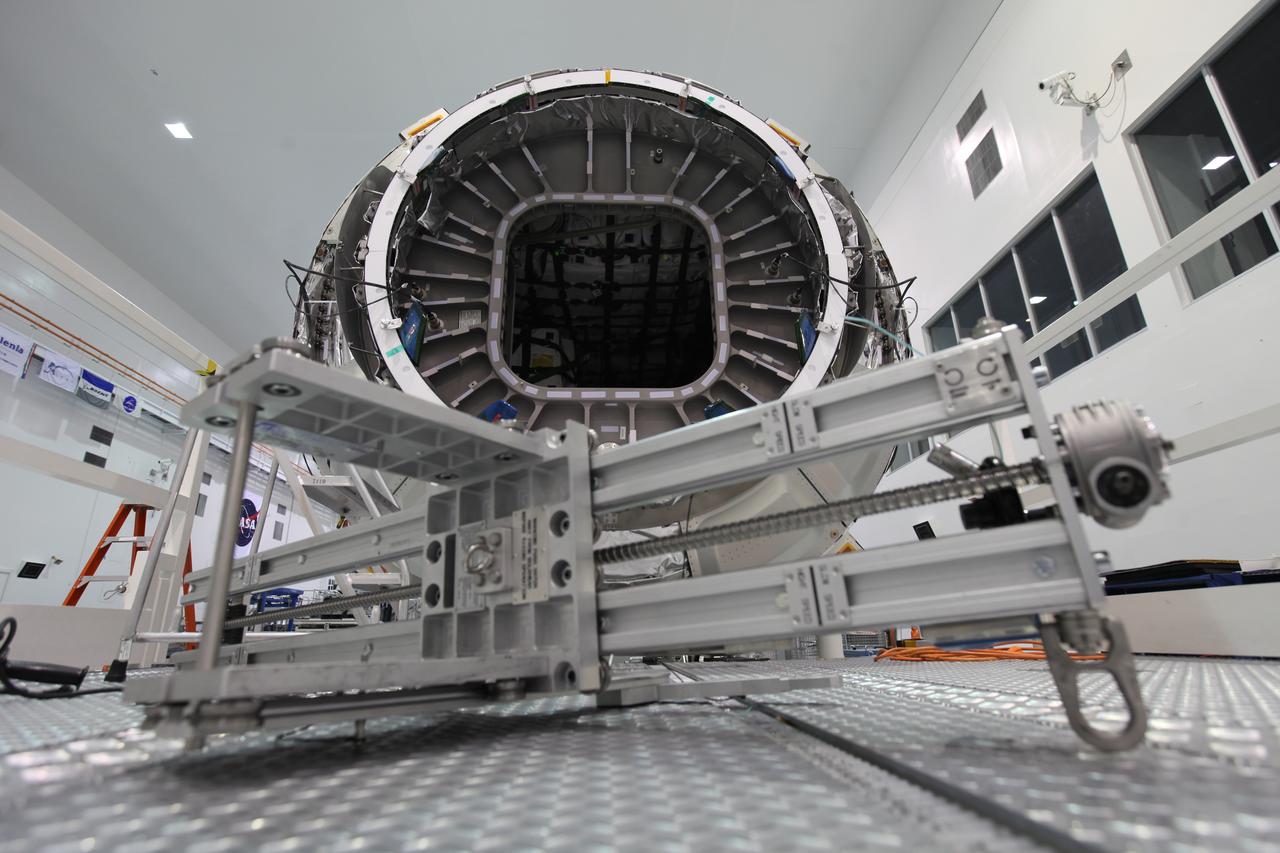
In the Space Station Processing Facility at NASA's Kennedy Space Center in Florida, preparations are underway to close the hatch of the Cygnus spacecraft's pressurized cargo module (PCM) for the Orbital ATK CRS-7 mission to the International Space Station. Scheduled to launch on March 19, 2017, the commercial resupply services mission will lift off atop a United Launch Alliance Atlas V rocket from Space launch Complex 41 at Cape Canaveral Air Force Station.
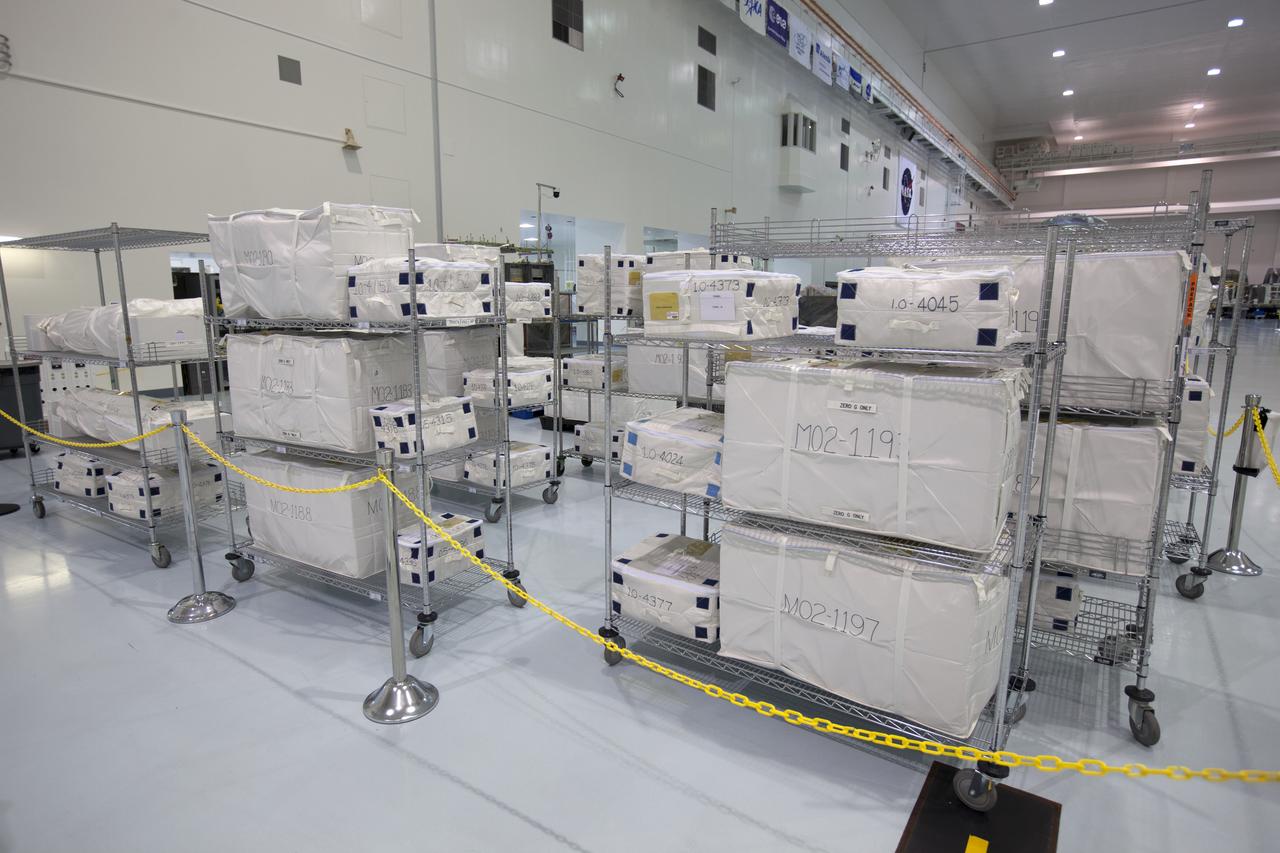
In the Space Station Processing Facility at NASA's Kennedy Space Center in Florida, thousands of pounds of supplies, equipment and scientific research materials are prepared for loading aboard a Cygnus spacecraft's pressurized cargo module (PCM) for the Orbital ATK CRS-7 mission to the International Space Station. Scheduled to launch on March 19, 2017, the commercial resupply services mission will lift off atop a United Launch Alliance Atlas V rocket from Space launch Complex 41 at Cape Canaveral Air Force Station.
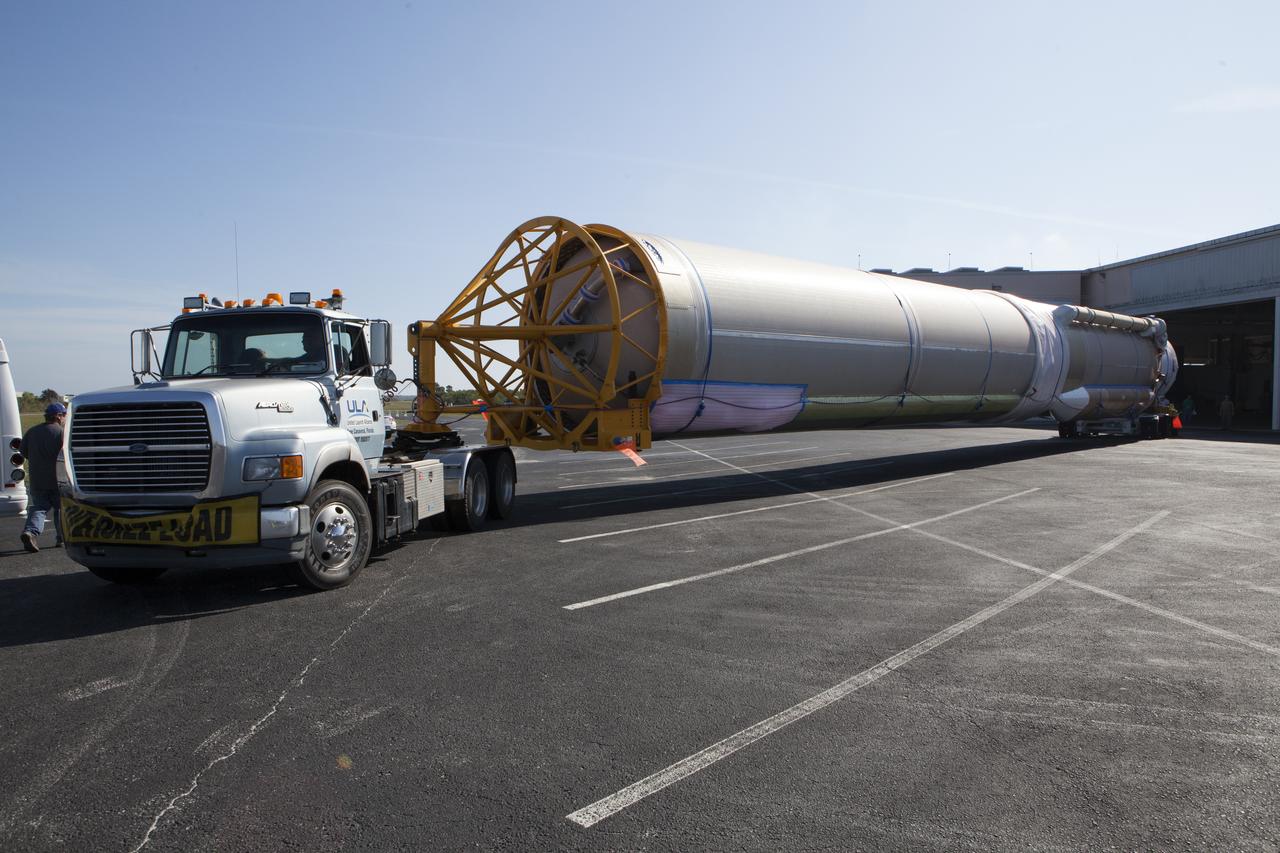
A United Launch Alliance (ULA) Atlas V booster arrives at Cape Canaveral Air Force Station's Atlas Spaceflight Operations Center (ASOC). The Atlas V will undergo final testing in that facility. When processing in the ASOC is complete, the Atlas booster will be moved to the Vertical Integration Facility for stacking at Space Launch Complex 41. Scheduled to launch March 19, 2017, the Atlas will launch a Cygnus spacecraft on the Orbital ATK CRS-7 mission to deliver thousands of pounds of supplies, equipment and scientific research materials to the International Space Station.

In the Space Station Processing Facility at NASA's Kennedy Space Center in Florida, the hatch was closed on the Cygnus spacecraft's pressurized cargo module (PCM) for the Orbital ATK CRS-7 mission to the International Space Station. The module is being rotated to vertical for mating to the service module. Scheduled to launch on March 19, 2017, the commercial resupply services mission will lift off atop a United Launch Alliance Atlas V rocket from Space launch Complex 41 at Cape Canaveral Air Force Station.
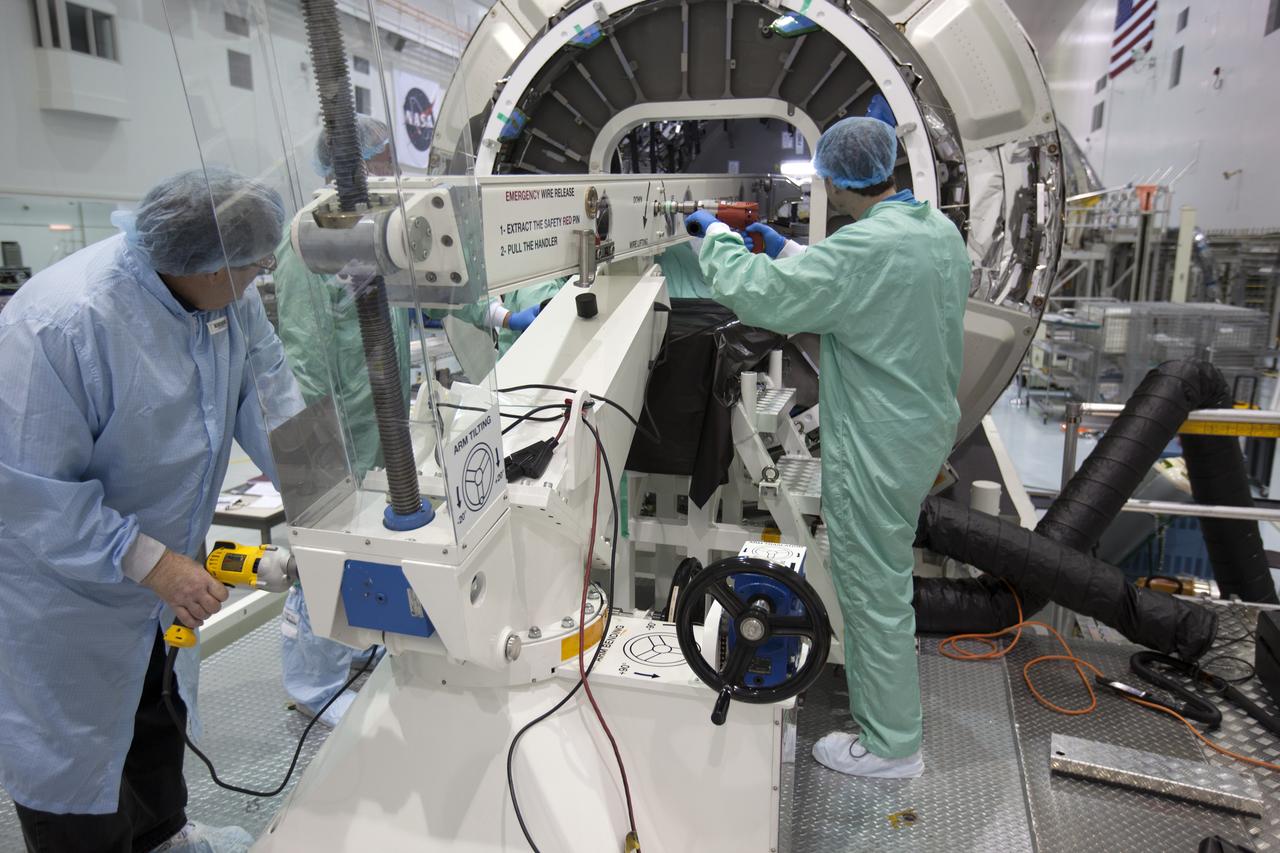
In the Space Station Processing Facility at NASA's Kennedy Space Center in Florida, technicians and engineers load thousands of pounds of supplies, equipment and scientific research materials aboard a Cygnus spacecraft's pressurized cargo module (PCM) for the Orbital ATK CRS-7 mission to the International Space Station. Scheduled to launch on March 19, 2017, the commercial resupply services mission will lift off atop a United Launch Alliance Atlas V rocket from Space launch Complex 41 at Cape Canaveral Air Force Station.
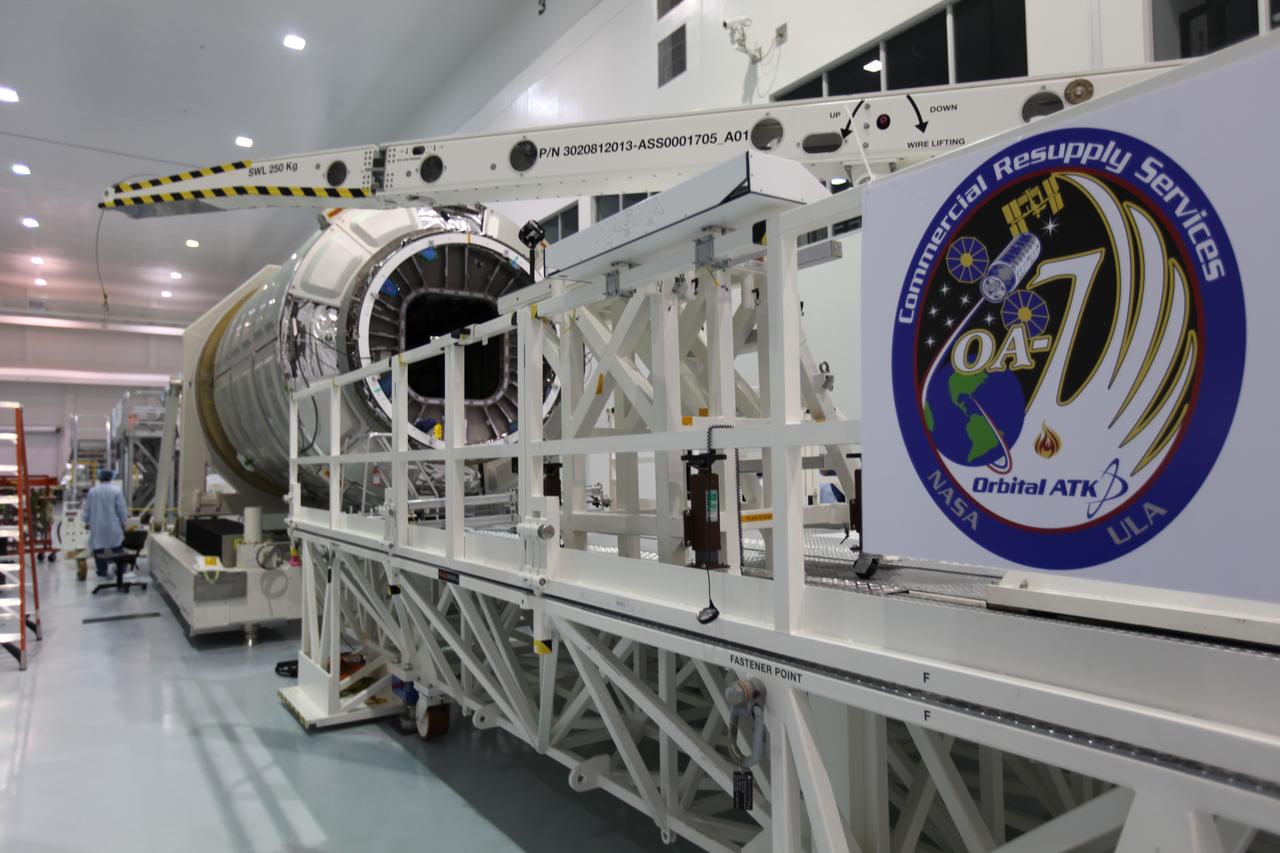
In the Space Station Processing Facility at NASA's Kennedy Space Center in Florida, preparations are underway to close the hatch of the Cygnus spacecraft's pressurized cargo module (PCM) for the Orbital ATK CRS-7 mission to the International Space Station. Scheduled to launch on March 19, 2017, the commercial resupply services mission will lift off atop a United Launch Alliance Atlas V rocket from Space launch Complex 41 at Cape Canaveral Air Force Station.

In the Space Station Processing Facility at NASA's Kennedy Space Center in Florida, a technician helps secure the hatch for closure on the Cygnus spacecraft's pressurized cargo module (PCM) for the Orbital ATK CRS-7 mission to the International Space Station. Scheduled to launch on March 19, 2017, the commercial resupply services mission will lift off atop a United Launch Alliance Atlas V rocket from Space launch Complex 41 at Cape Canaveral Air Force Station.
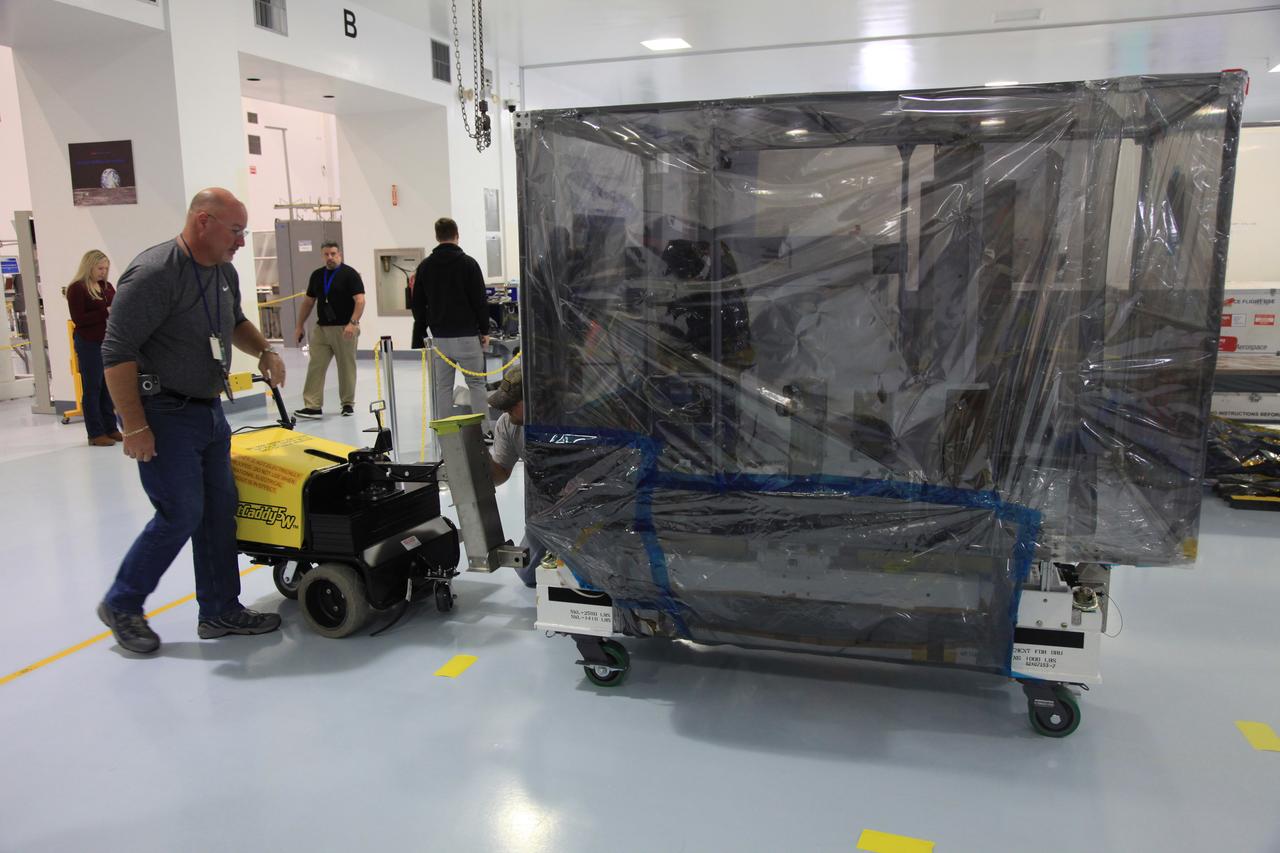
The Space Test Program-Houston 6 (STP-H6) payload is being prepared for its move from the Space Station Processing Facility high bay at NASA’s Kennedy Space Center in Florida on March 19, 2019. The payload will be moved to the SpaceX facility where it will be stowed in the trunk of the Dragon spacecraft for delivery to the International Space Station on SpaceX’s 17th Commercial Resupply Services mission (CRS-17) for NASA. STP-H6 is an x-ray communication investigation that will be used to perform a space-based demonstration of a new technology for generating beams of modulated x-rays. This technology may be useful for providing efficient communication to deep space probes, or communicating with hypersonic vehicles where plasma sheaths prevent traditional radio communications. CRS-17 is scheduled to launch from Space Launch Complex 40 on Cape Canaveral Air Force Station in late April.
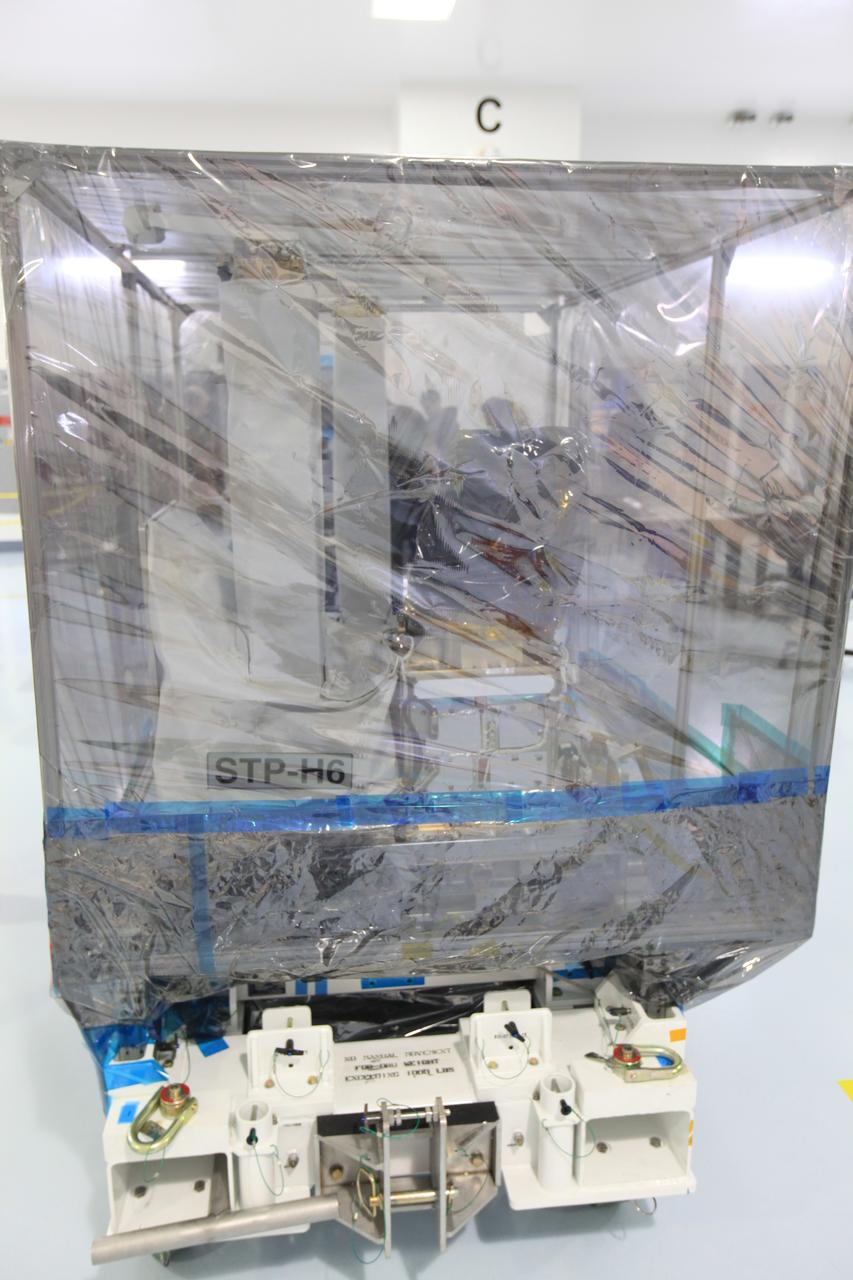
The Space Test Program-Houston 6 (STP-H6) payload is inside the Space Station Processing Facility high bay at NASA’s Kennedy Space Center in Florida on March 19, 2019. It is being prepared for its move to the SpaceX facility where it will be will be stowed in the trunk of the Dragon spacecraft for delivery to the International Space Station on SpaceX’s 17th Commercial Resupply Services mission (CRS-17) for NASA. STP-H6 is an x-ray communication investigation that will be used to perform a space-based demonstration of a new technology for generating beams of modulated x-rays. This technology may be useful for providing efficient communication to deep space probes, or communicating with hypersonic vehicles where plasma sheaths prevent traditional radio communications. CRS-17 is scheduled to launch from Space Launch Complex 40 on Cape Canaveral Air Force Station in late April.
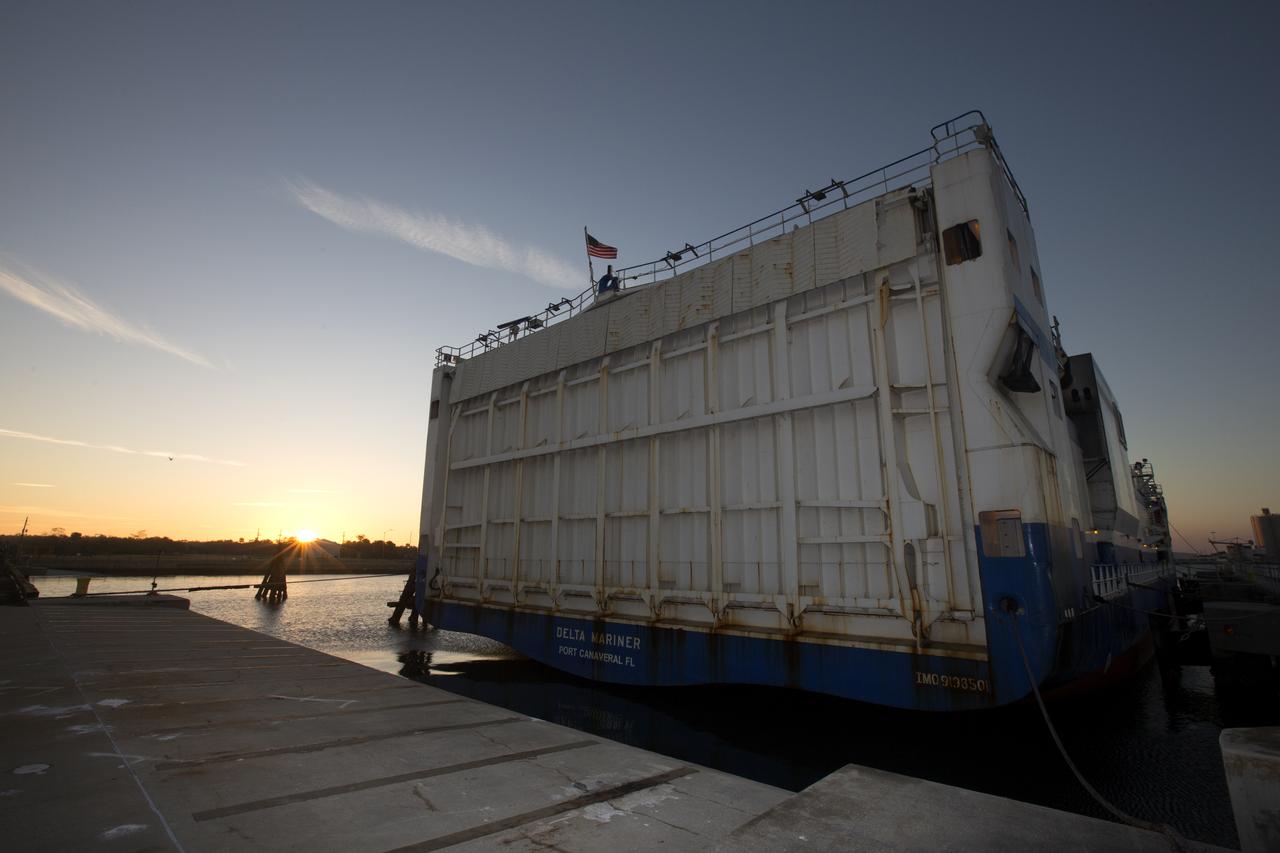
The Mariner cargo ship arrives at the Army Outpost wharf at Port Canaveral, Florida, near the Kennedy Space Center. Aboard is the United Launch Alliance (ULA) Atlas V booster for the Orbital ATK CRS-7 commercial resupply mission to the International Space Station. After the rocket is offloaded, a transport truck will take the Atlas V to the hangar at the Atlas Spaceflight Operations Center (ASOC), located south of Space Launch Complex 41 at Cape Canaveral Air Force Station. Scheduled to launch a Cygnus spacecraft on March 19, 2017, the Orbital ATK CRS-7 mission will deliver thousands of pounds of supplies, equipment and scientific research materials that improve life on Earth and drive progress toward future space exploration.
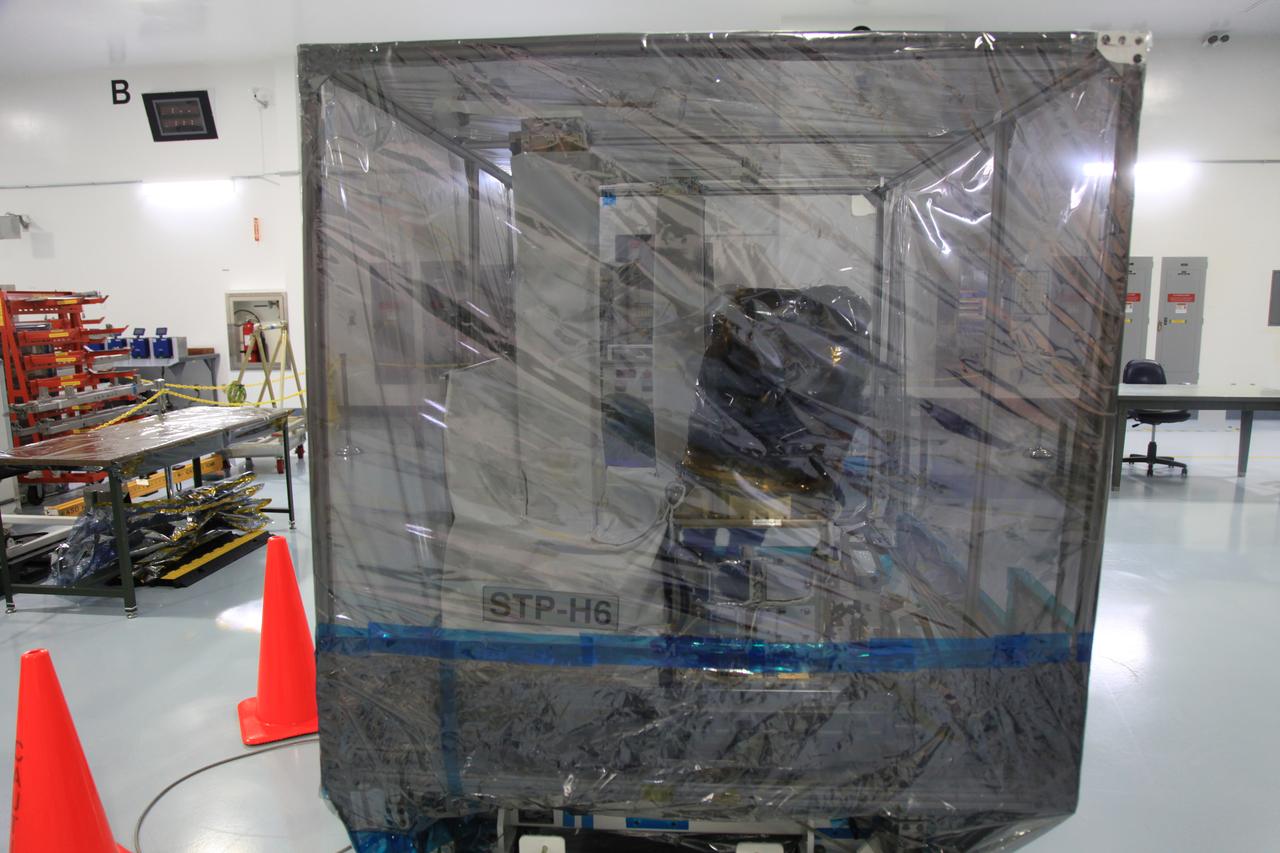
The Space Test Program-Houston 6 (STP-H6) payload is inside the Space Station Processing Facility high bay at NASA’s Kennedy Space Center in Florida on March 19, 2019. It is being prepared for its move to the SpaceX facility where it will be will be stowed in the trunk of the Dragon spacecraft for delivery to the International Space Station on SpaceX’s 17th Commercial Resupply Services mission (CRS-17) for NASA. STP-H6 is an x-ray communication investigation that will be used to perform a space-based demonstration of a new technology for generating beams of modulated x-rays. This technology may be useful for providing efficient communication to deep space probes, or communicating with hypersonic vehicles where plasma sheaths prevent traditional radio communications. CRS-17 is scheduled to launch from Space Launch Complex 40 on Cape Canaveral Air Force Station in late April.
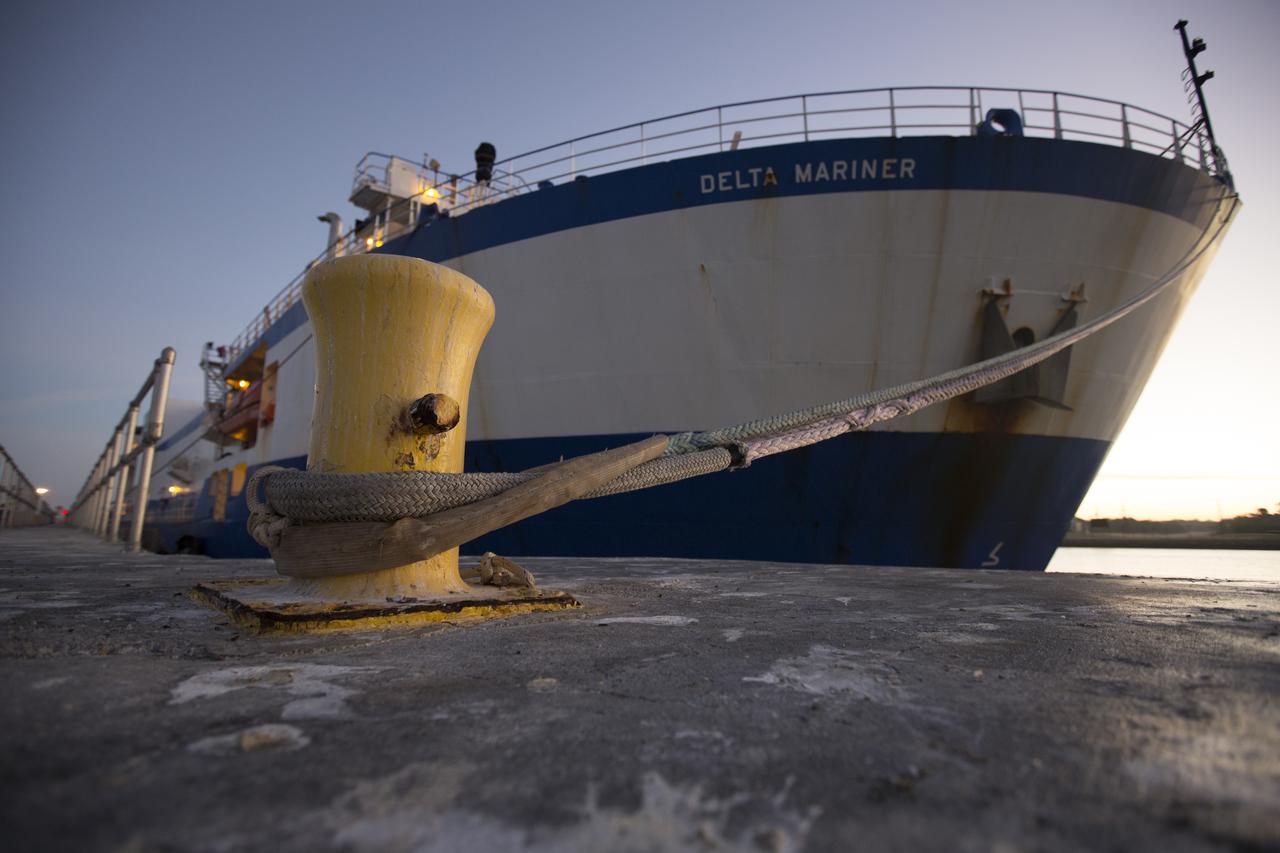
The Mariner cargo ship is docked at the Army Outpost wharf at Port Canaveral, Florida, near the Kennedy Space Center. Aboard is the United Launch Alliance (ULA) Atlas V booster for the Orbital ATK CRS-7 commercial resupply mission to the International Space Station. After the rocket is offloaded, a transport truck will take the Atlas V to the hangar at the Atlas Spaceflight Operations Center (ASOC), south of Space Launch Complex 41 at Cape Canaveral Air Force Station. Scheduled to launch a Cygnus spacecraft on March 19, 2017, the Orbital ATK CRS-7 mission will deliver thousands of pounds of supplies, equipment and scientific research materials that improve life on Earth and drive progress toward future space exploration.
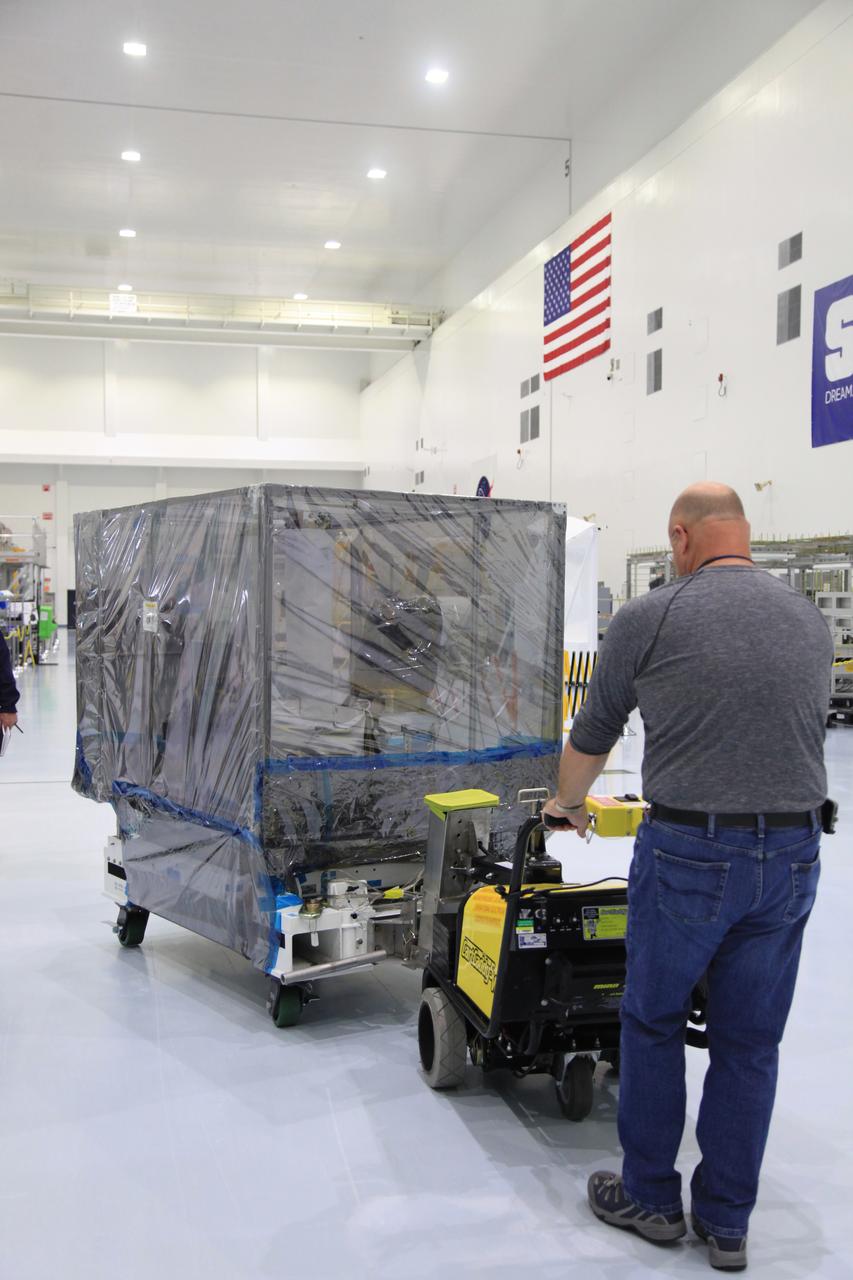
The Space Test Program-Houston 6 (STP-H6) payload is being moved out of the Space Station Processing Facility high bay at NASA’s Kennedy Space Center in Florida on March 19, 2019. The payload will be moved to the SpaceX facility where it will be stowed in the trunk of the Dragon spacecraft for delivery to the International Space Station on SpaceX’s 17th Commercial Resupply Services mission (CRS-17) for NASA. STP-H6 is an x-ray communication investigation that will be used to perform a space-based demonstration of a new technology for generating beams of modulated x-rays. This technology may be useful for providing efficient communication to deep space probes, or communicating with hypersonic vehicles where plasma sheaths prevent traditional radio communications. CRS-17 is scheduled to launch from Space Launch Complex 40 on Cape Canaveral Air Force Station in late April.
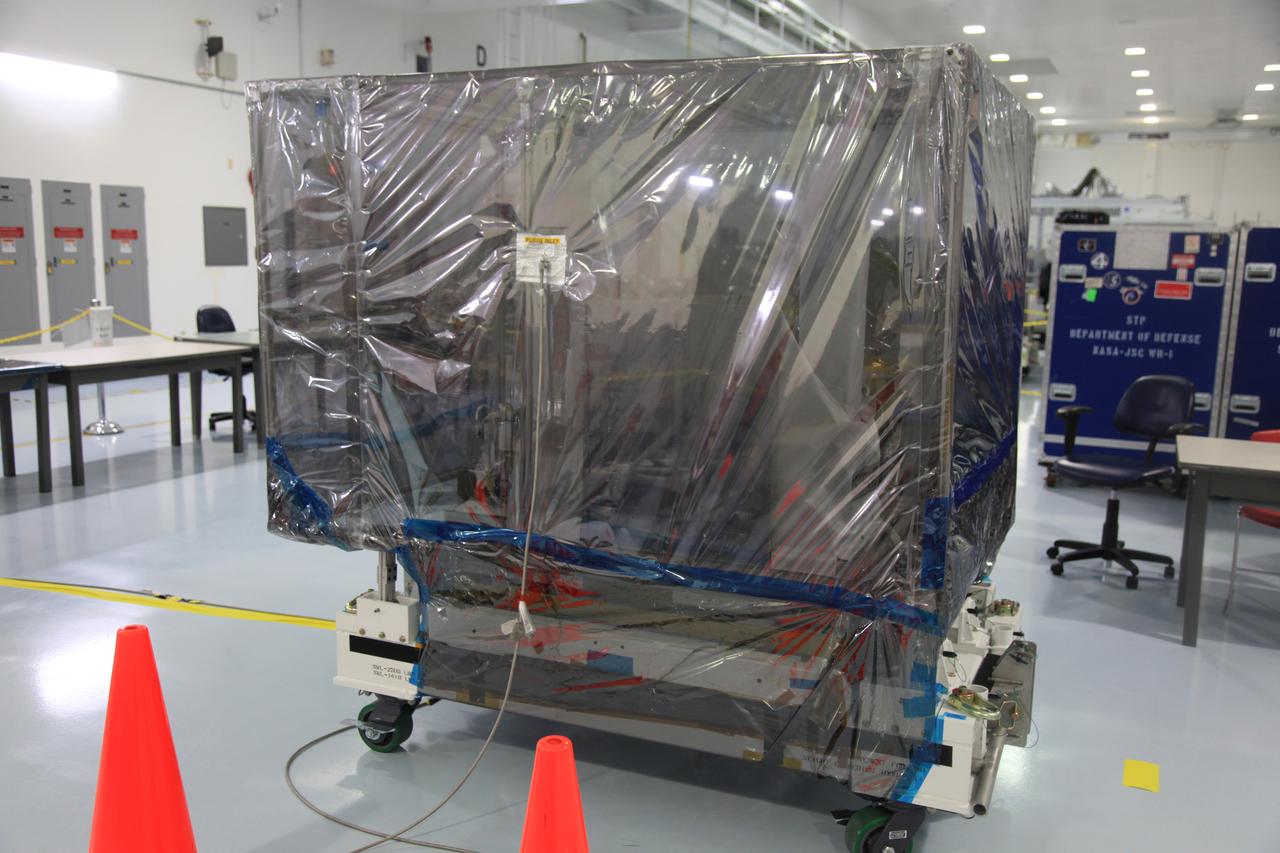
The Space Test Program-Houston 6 (STP-H6) payload is inside the Space Station Processing Facility high bay at NASA’s Kennedy Space Center in Florida on March 19, 2019. It is being prepared for its move to the SpaceX facility where it will be will be stowed in the trunk of the Dragon spacecraft for delivery to the International Space Station on SpaceX’s 17th Commercial Resupply Services mission (CRS-17) for NASA. STP-H6 is an x-ray communication investigation that will be used to perform a space-based demonstration of a new technology for generating beams of modulated x-rays. This technology may be useful for providing efficient communication to deep space probes, or communicating with hypersonic vehicles where plasma sheaths prevent traditional radio communications. CRS-17 is scheduled to launch from Space Launch Complex 40 on Cape Canaveral Air Force Station in late April.
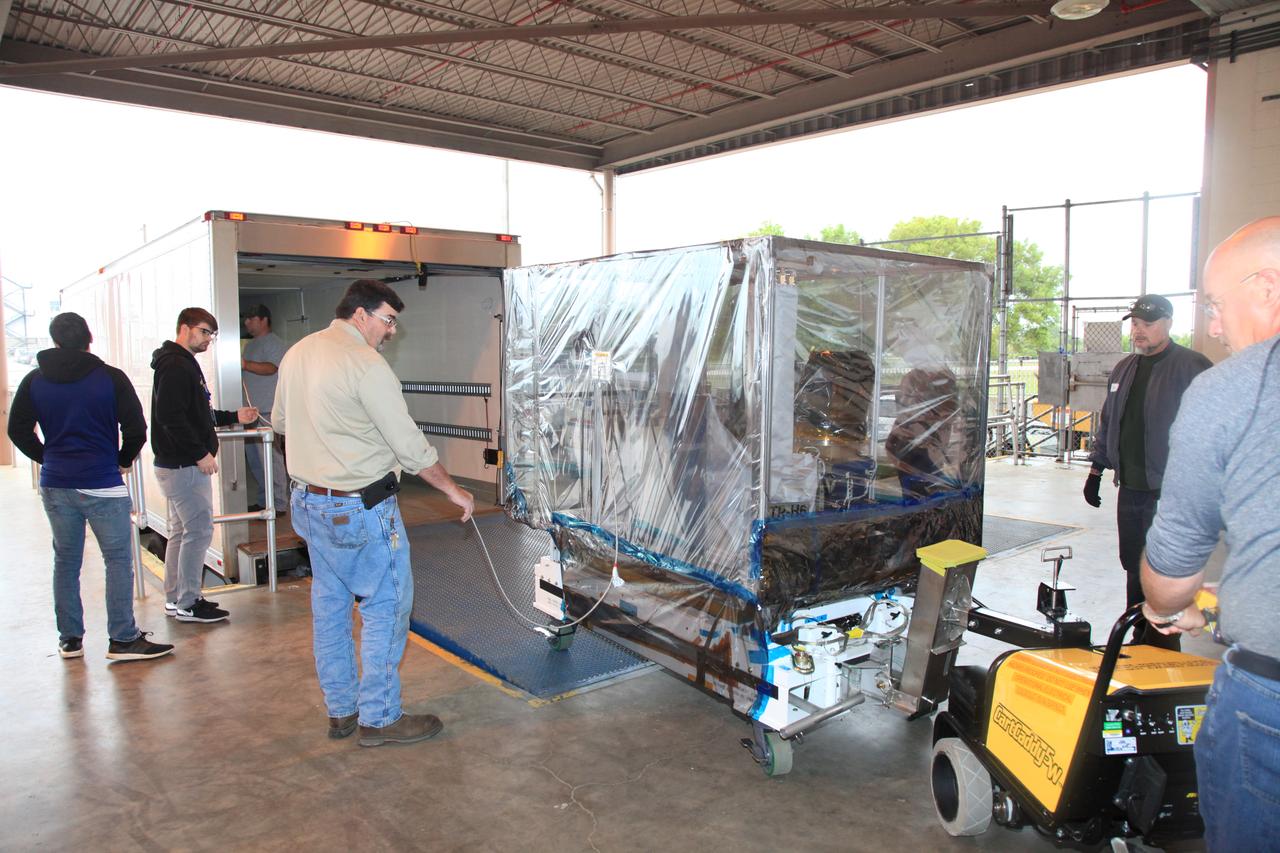
The Space Test Program-Houston 6 (STP-H6) payload is being loaded into a transport truck at the Space Station Processing Facility at NASA’s Kennedy Space Center in Florida on March 19, 2019. The payload will be moved to the SpaceX facility where it will be stowed in the trunk of the Dragon spacecraft for delivery to the International Space Station on SpaceX’s 17th Commercial Resupply Services mission (CRS-17) for NASA. STP-H6 is an x-ray communication investigation that will be used to perform a space-based demonstration of a new technology for generating beams of modulated x-rays. This technology may be useful for providing efficient communication to deep space probes, or communicating with hypersonic vehicles where plasma sheaths prevent traditional radio communications. CRS-17 is scheduled to launch from Space Launch Complex 40 on Cape Canaveral Air Force Station in late April.
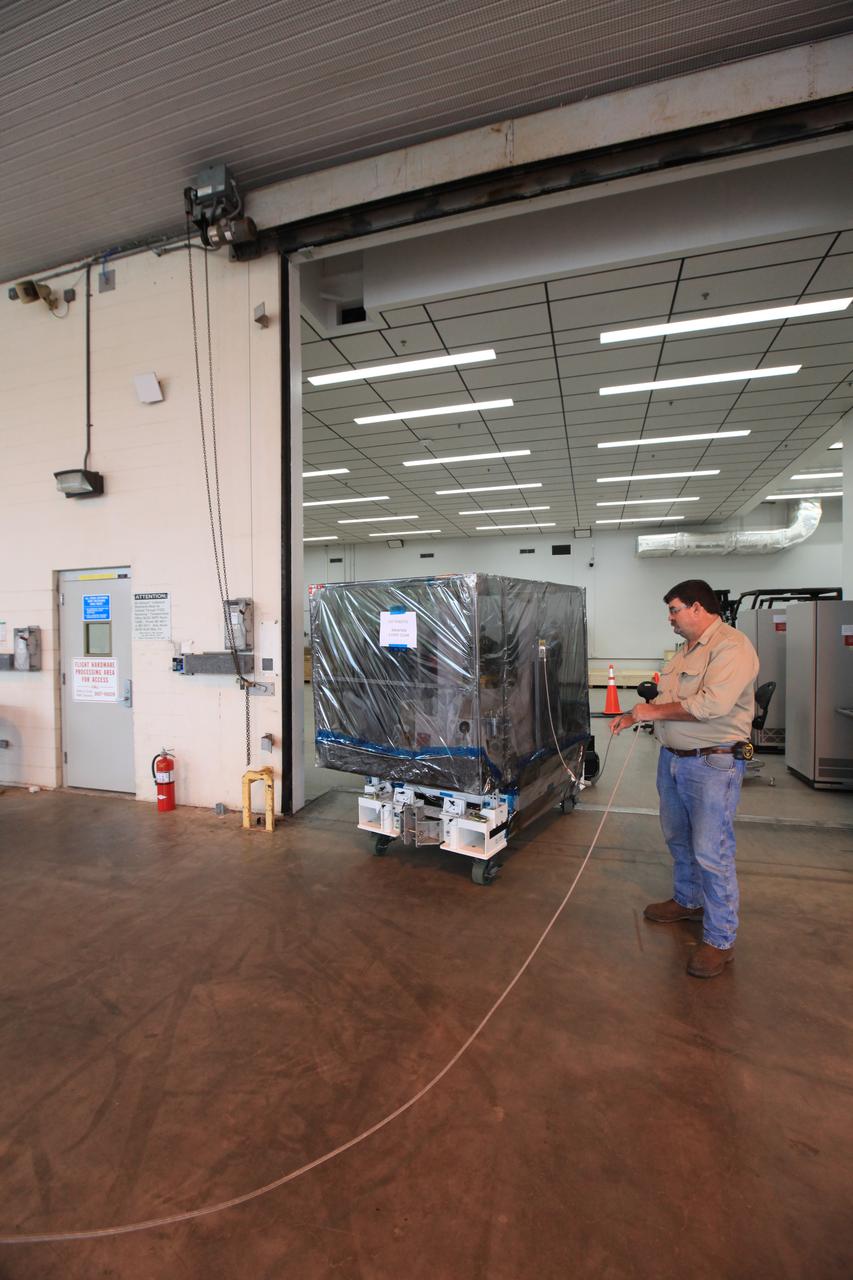
The Space Test Program-Houston 6 (STP-H6) payload is moved out of the Space Station Processing Facility at NASA’s Kennedy Space Center in Florida on March 19, 2019. The payload will be moved to the SpaceX facility where it will be stowed in the trunk of the Dragon spacecraft for delivery to the International Space Station on SpaceX’s 17th Commercial Resupply Services mission (CRS-17) for NASA. STP-H6 is an x-ray communication investigation that will be used to perform a space-based demonstration of a new technology for generating beams of modulated x-rays. This technology may be useful for providing efficient communication to deep space probes, or communicating with hypersonic vehicles where plasma sheaths prevent traditional radio communications. CRS-17 is scheduled to launch from Space Launch Complex 40 on Cape Canaveral Air Force Station in late April.
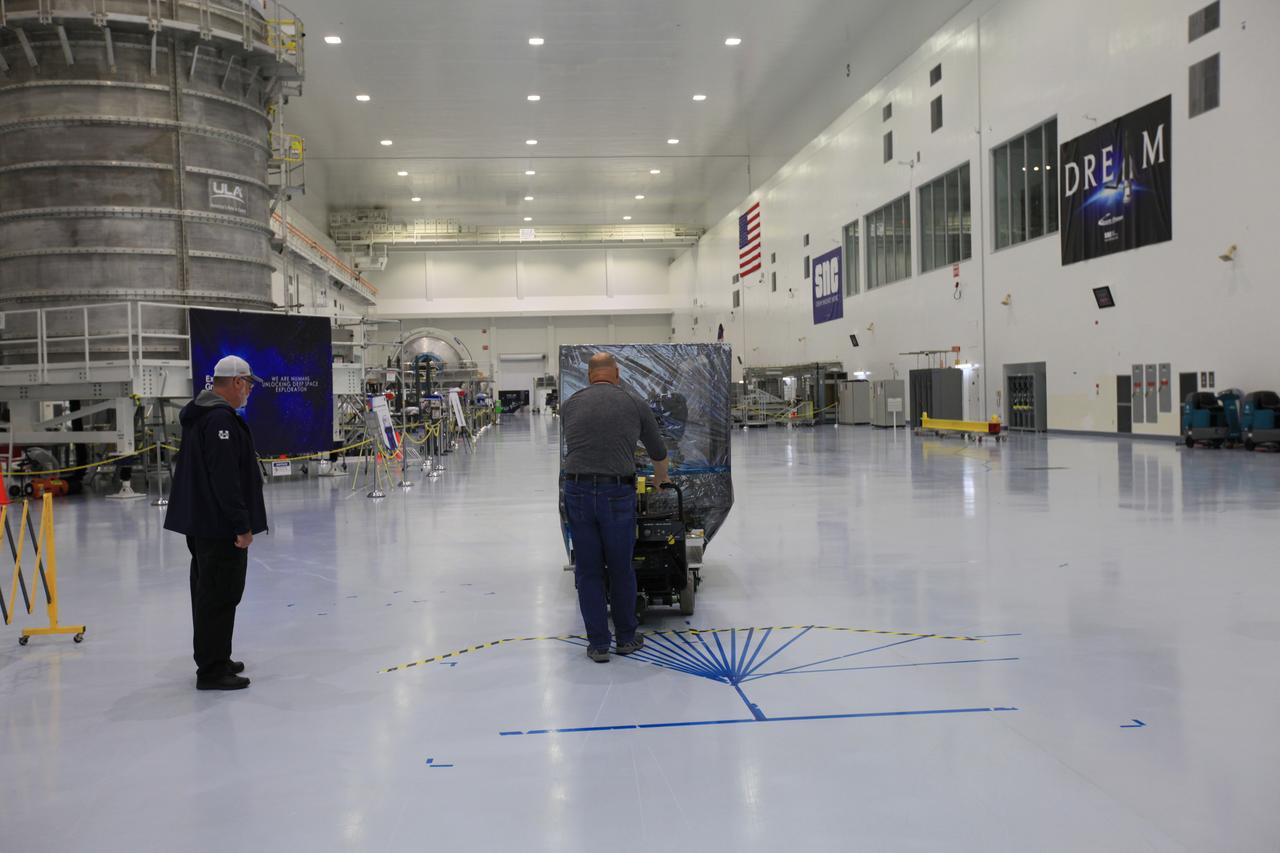
The Space Test Program-Houston 6 (STP-H6) payload is being moved out of the Space Station Processing Facility high bay at NASA’s Kennedy Space Center in Florida on March 19, 2019. The payload will be moved to the SpaceX facility where it will be stowed in the trunk of the Dragon spacecraft for delivery to the International Space Station on SpaceX’s 17th Commercial Resupply Services mission (CRS-17) for NASA. STP-H6 is an x-ray communication investigation that will be used to perform a space-based demonstration of a new technology for generating beams of modulated x-rays. This technology may be useful for providing efficient communication to deep space probes, or communicating with hypersonic vehicles where plasma sheaths prevent traditional radio communications. CRS-17 is scheduled to launch from Space Launch Complex 40 on Cape Canaveral Air Force Station in late April.
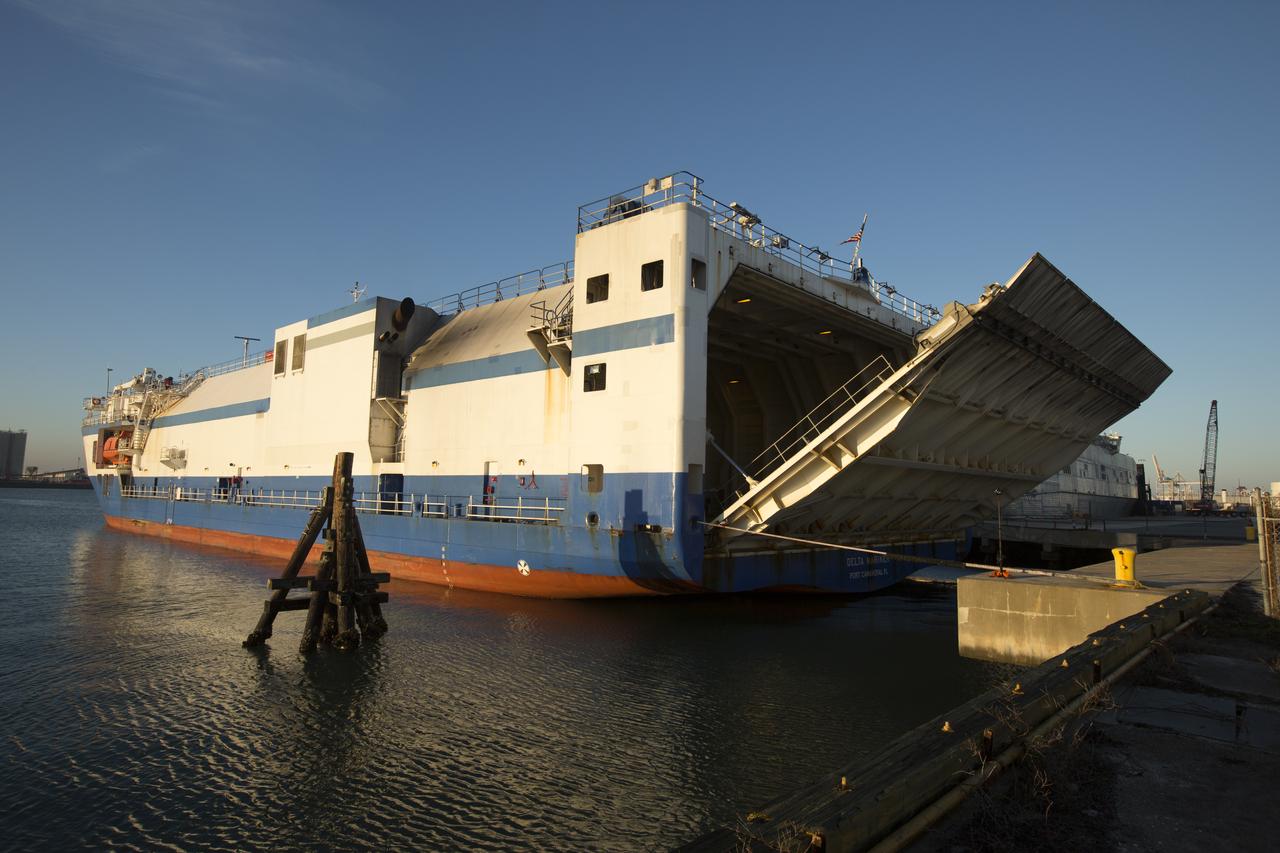
The Mariner cargo ship arrives at the Army Outpost wharf at Port Canaveral, Florida, near the Kennedy Space Center. Aboard is the United Launch Alliance (ULA) Atlas V booster for the Orbital ATK CRS-7 commercial resupply mission to the International Space Station. After the rocket is offloaded, a transport truck will take the Atlas V to the hangar at the Atlas Spaceflight Operations Center (ASOC), located south of Space Launch Complex 41 at Cape Canaveral Air Force Station. Scheduled to launch a Cygnus spacecraft on March 19, 2017, the Orbital ATK CRS-7 mission will deliver thousands of pounds of supplies, equipment and scientific research materials that improve life on Earth and drive progress toward future space exploration.
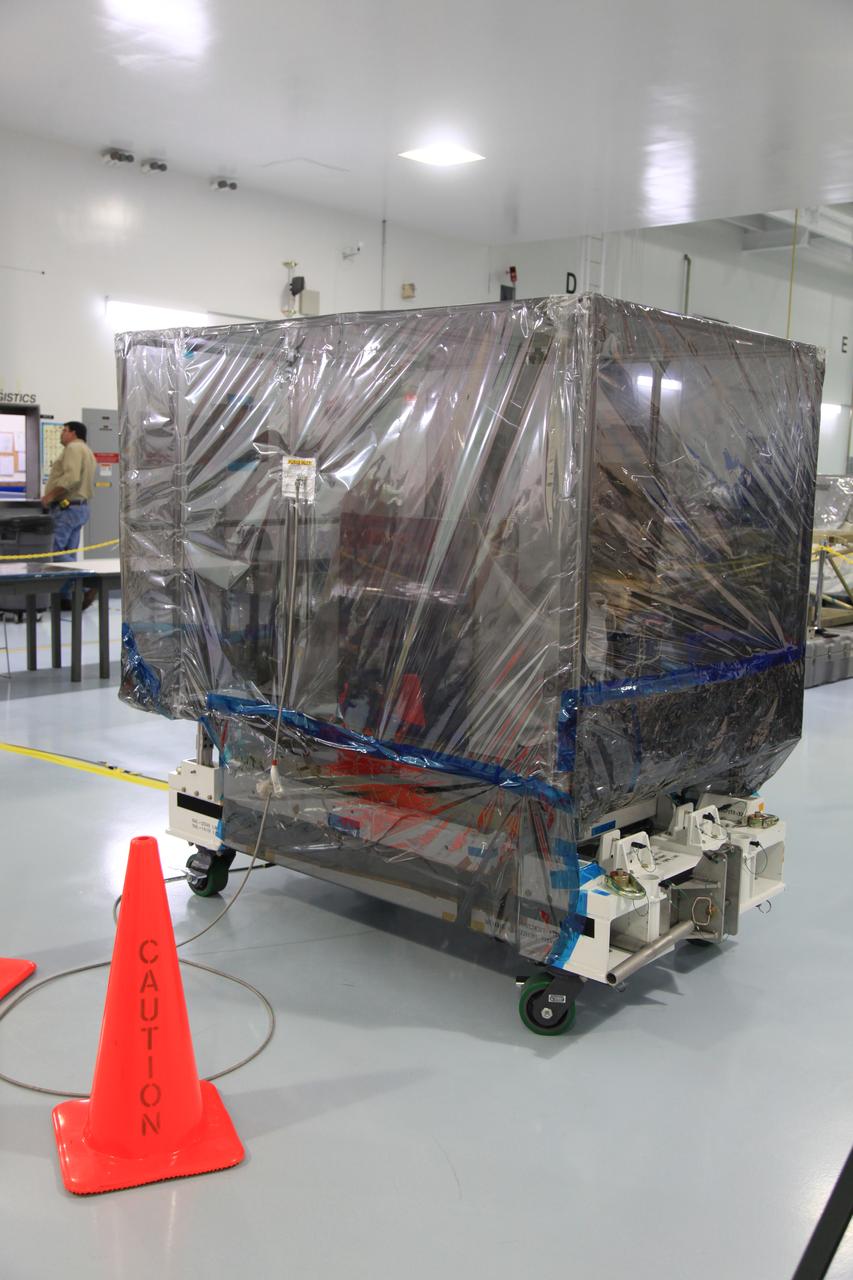
The Space Test Program-Houston 6 (STP-H6) payload is inside the Space Station Processing Facility high bay at NASA’s Kennedy Space Center in Florida on March 19, 2019. It is being prepared for its move to the SpaceX facility where it will be will be stowed in the trunk of the Dragon spacecraft for delivery to the International Space Station on SpaceX’s 17th Commercial Resupply Services mission (CRS-17) for NASA. STP-H6 is an x-ray communication investigation that will be used to perform a space-based demonstration of a new technology for generating beams of modulated x-rays. This technology may be useful for providing efficient communication to deep space probes, or communicating with hypersonic vehicles where plasma sheaths prevent traditional radio communications. CRS-17 is scheduled to launch from Space Launch Complex 40 on Cape Canaveral Air Force Station in late April.
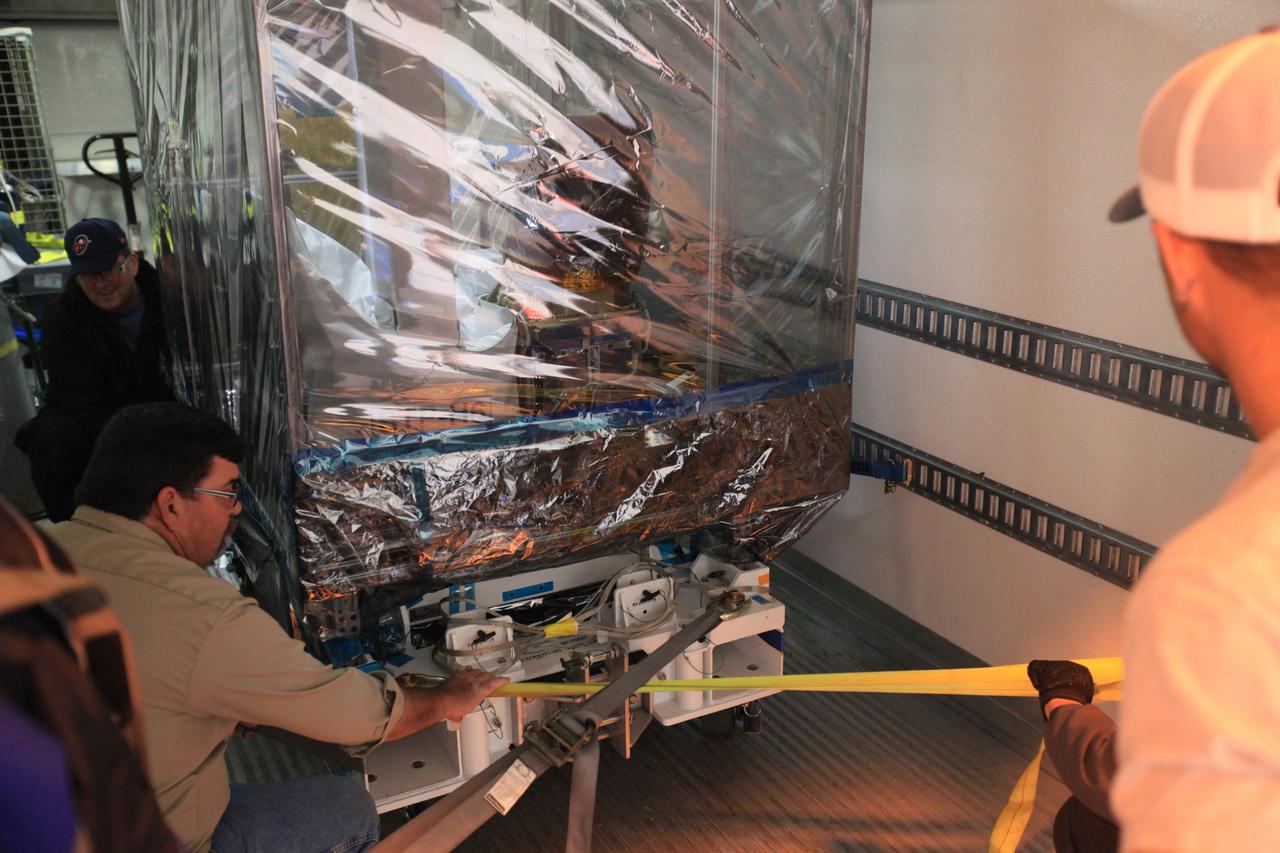
Technicians secure the Space Test Program-Houston 6 (STP-H6) inside a transport truck at the Space Station Processing Facility at NASA’s Kennedy Space Center in Florida on March 19, 2019. The payload will be moved to the SpaceX facility where it will be stowed in the trunk of the Dragon spacecraft for delivery to the International Space Station on SpaceX’s 17th Commercial Resupply Services mission (CRS-17) for NASA. STP-H6 is an x-ray communication investigation that will be used to perform a space-based demonstration of a new technology for generating beams of modulated x-rays. This technology may be useful for providing efficient communication to deep space probes, or communicating with hypersonic vehicles where plasma sheaths prevent traditional radio communications. CRS-17 is scheduled to launch from Space Launch Complex 40 on Cape Canaveral Air Force Station in late April.
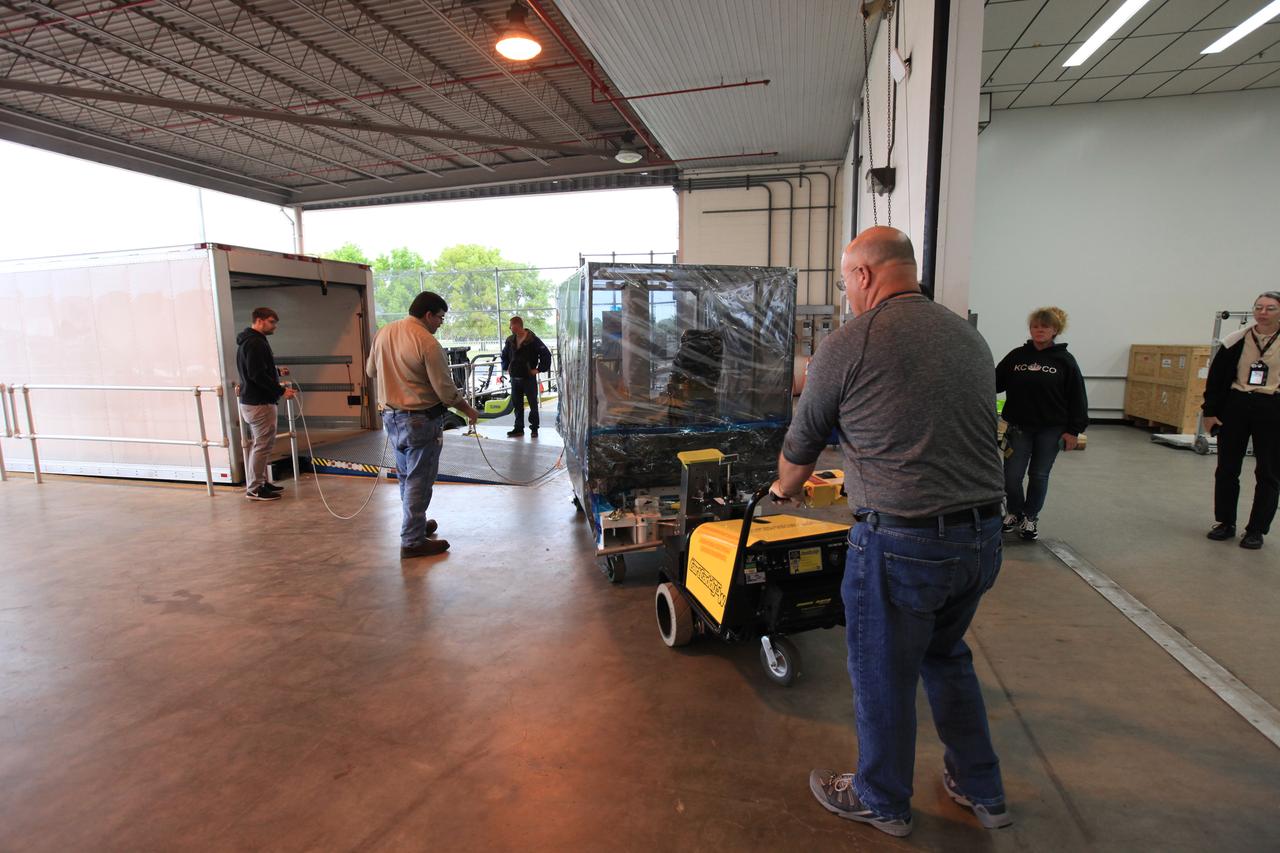
The Space Test Program-Houston 6 (STP-H6) payload is moved to a transport truck at the Space Station Processing Facility at NASA’s Kennedy Space Center in Florida on March 19, 2019. The payload will be moved to the SpaceX facility where it will be stowed in the trunk of the Dragon spacecraft for delivery to the International Space Station on SpaceX’s 17th Commercial Resupply Services mission (CRS-17) for NASA. STP-H6 is an x-ray communication investigation that will be used to perform a space-based demonstration of a new technology for generating beams of modulated x-rays. This technology may be useful for providing efficient communication to deep space probes, or communicating with hypersonic vehicles where plasma sheaths prevent traditional radio communications. CRS-17 is scheduled to launch from Space Launch Complex 40 on Cape Canaveral Air Force Station in late April.
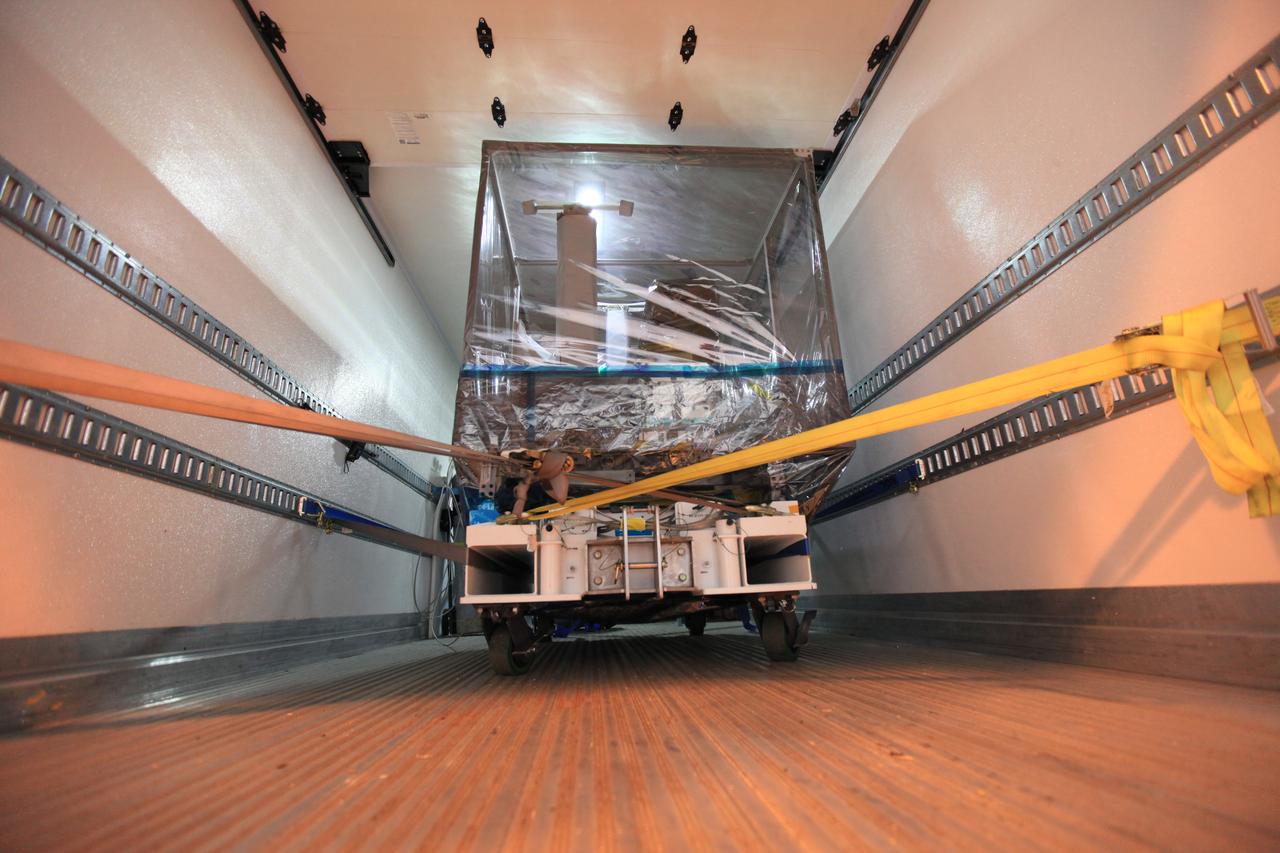
The Space Test Program-Houston 6 (STP-H6) payload is secured inside a truck at the Space Station Processing Facility at NASA’s Kennedy Space Center in Florida on March 19, 2019. The payload will be moved to the SpaceX facility where it will be stowed in the trunk of the Dragon spacecraft for delivery to the International Space Station on SpaceX’s 17th Commercial Resupply Services mission (CRS-17) for NASA. STP-H6 is an x-ray communication investigation that will be used to perform a space-based demonstration of a new technology for generating beams of modulated x-rays. This technology may be useful for providing efficient communication to deep space probes, or communicating with hypersonic vehicles where plasma sheaths prevent traditional radio communications. CRS-17 is scheduled to launch from Space Launch Complex 40 on Cape Canaveral Air Force Station in late April.
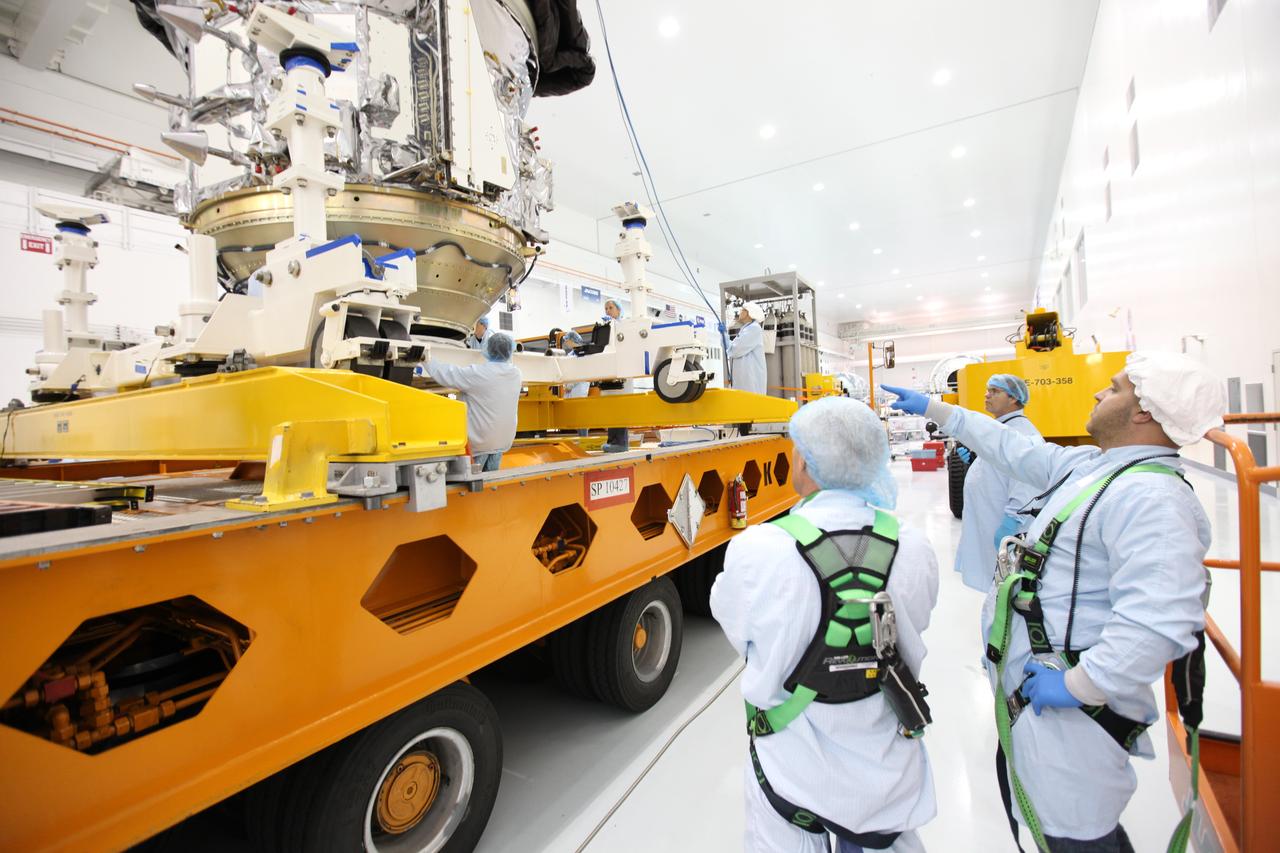
In the Space Station Processing Facility high bay at NASA's Kennedy Space Center in Florida, technicians assist as the Orbital ATK CYGNUS pressurized cargo module is secured on the KAMAG transporter. The module will be transported to the Payload Hazardous Servicing Facility. The Orbital ATK CRS-7 commercial resupply services mission to the International Space Station is scheduled to launch atop a United Launch Alliance Atlas V rocket from Space Launch Complex 41 at Cape Canaveral Air Force Station on March 19, 2017. CYGNUS will deliver thousands of pounds of supplies, equipment and scientific research materials to the space station.
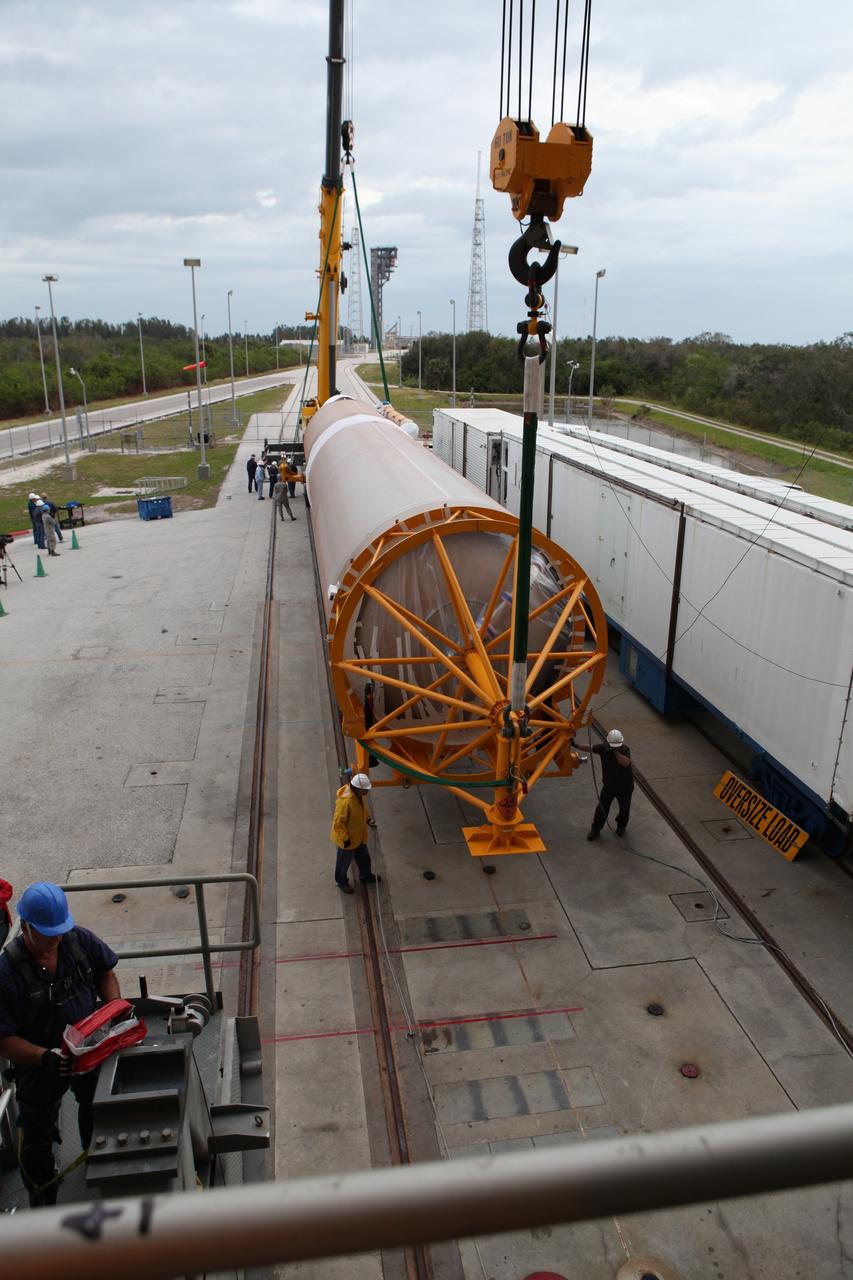
The first stage of the United Launch Alliance (ULA) Atlas V rocket arrives at the Vertical Integration Facility at Space Launch Complex 41 at Cape Canaveral Air Force Station in Florida. The rocket is being prepared for Orbital ATK's seventh commercial resupply mission, CRS-7, to the International Space Station. Orbital ATK's CYGNUS pressurized cargo module is scheduled to launch atop ULA's Atlas V rocket from Pad 41 on March 19, 2017. CYGNUS will deliver thousands of pounds of supplies, equipment and scientific research materials to the space station.
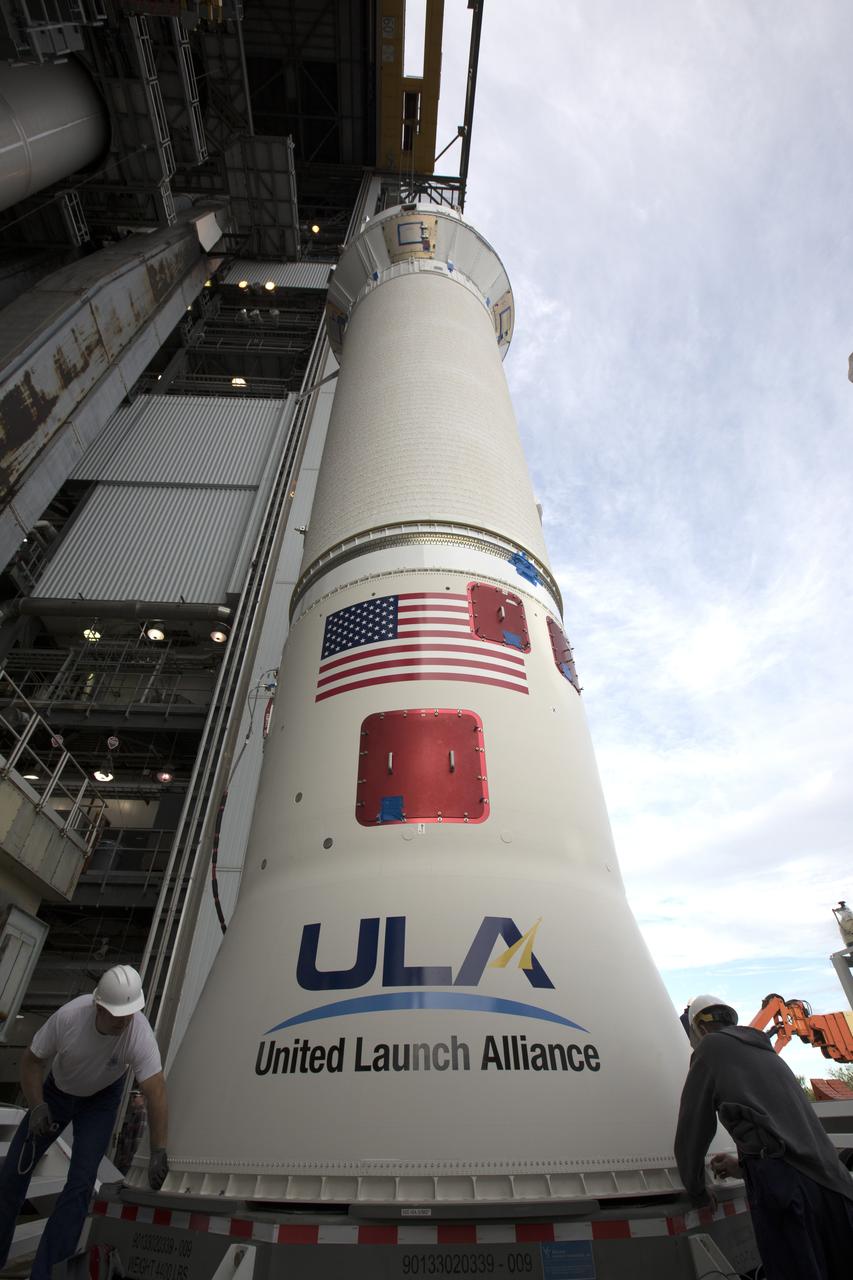
The Centaur upper stage of the United Launch Alliance (ULA) Atlas V rocket arrives at the Vertical Integration Facility at Space Launch Complex 41 at Cape Canaveral Air Force Station in Florida. The Centaur stage will be lifted and mated to the first stage booster. The rocket is being prepared for Orbital ATK's seventh commercial resupply mission, CRS-7, to the International Space Station. Orbital ATK's CYGNUS pressurized cargo module is scheduled to launch atop ULA's Atlas V rocket from Pad 41 on March 19, 2017. CYGNUS will deliver 7,600 of pounds of supplies, equipment and scientific research materials to the space station.