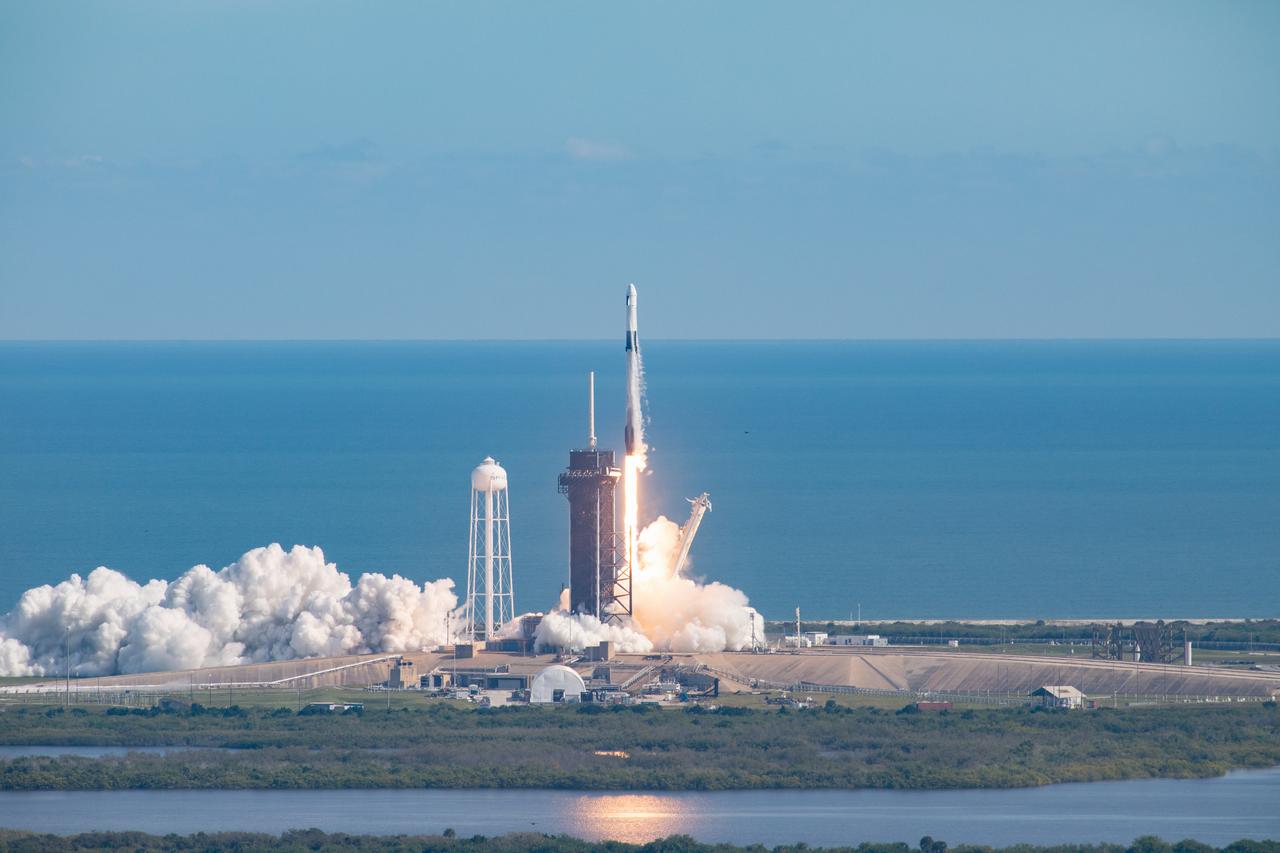
A SpaceX Falcon 9 rocket lifts off from Launch Complex 39A at Kennedy Space Center in Florida at 11:17 a.m. EST on Dec. 6, 2020, carrying the uncrewed cargo Dragon spacecraft on its journey to the International Space Station for NASA and SpaceX’s 21st Commercial Resupply Services (CRS-21) mission. Dragon will deliver more than 6,400 pounds of science investigations and cargo to the orbiting laboratory. The mission marks the first launch for SpaceX under NASA’s CRS-2 contract.
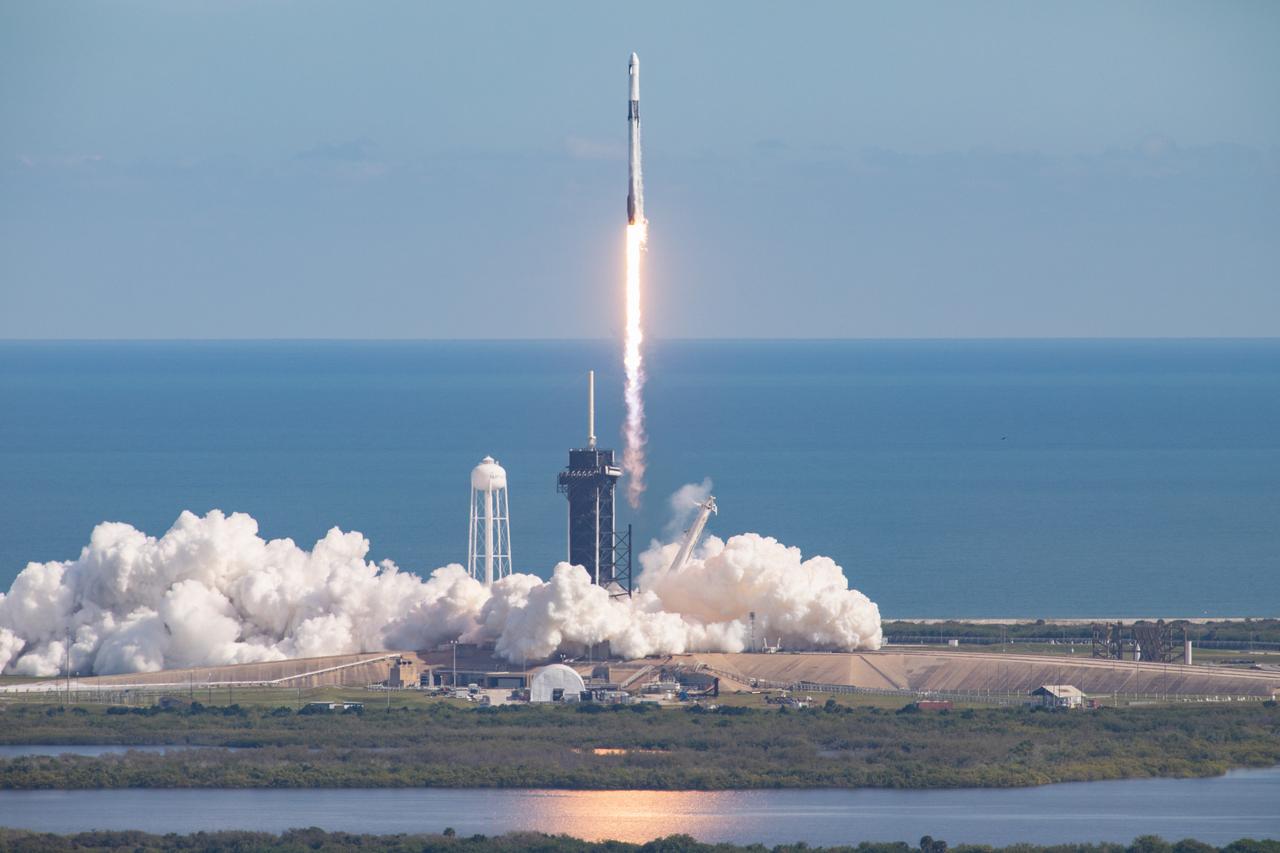
A SpaceX Falcon 9 rocket lifts off from Launch Complex 39A at Kennedy Space Center in Florida at 11:17 a.m. EST on Dec. 6, 2020, carrying the uncrewed cargo Dragon spacecraft on its journey to the International Space Station for NASA and SpaceX’s 21st Commercial Resupply Services (CRS-21) mission. Dragon will deliver more than 6,400 pounds of science investigations and cargo to the orbiting laboratory. The mission marks the first launch for SpaceX under NASA’s CRS-2 contract.
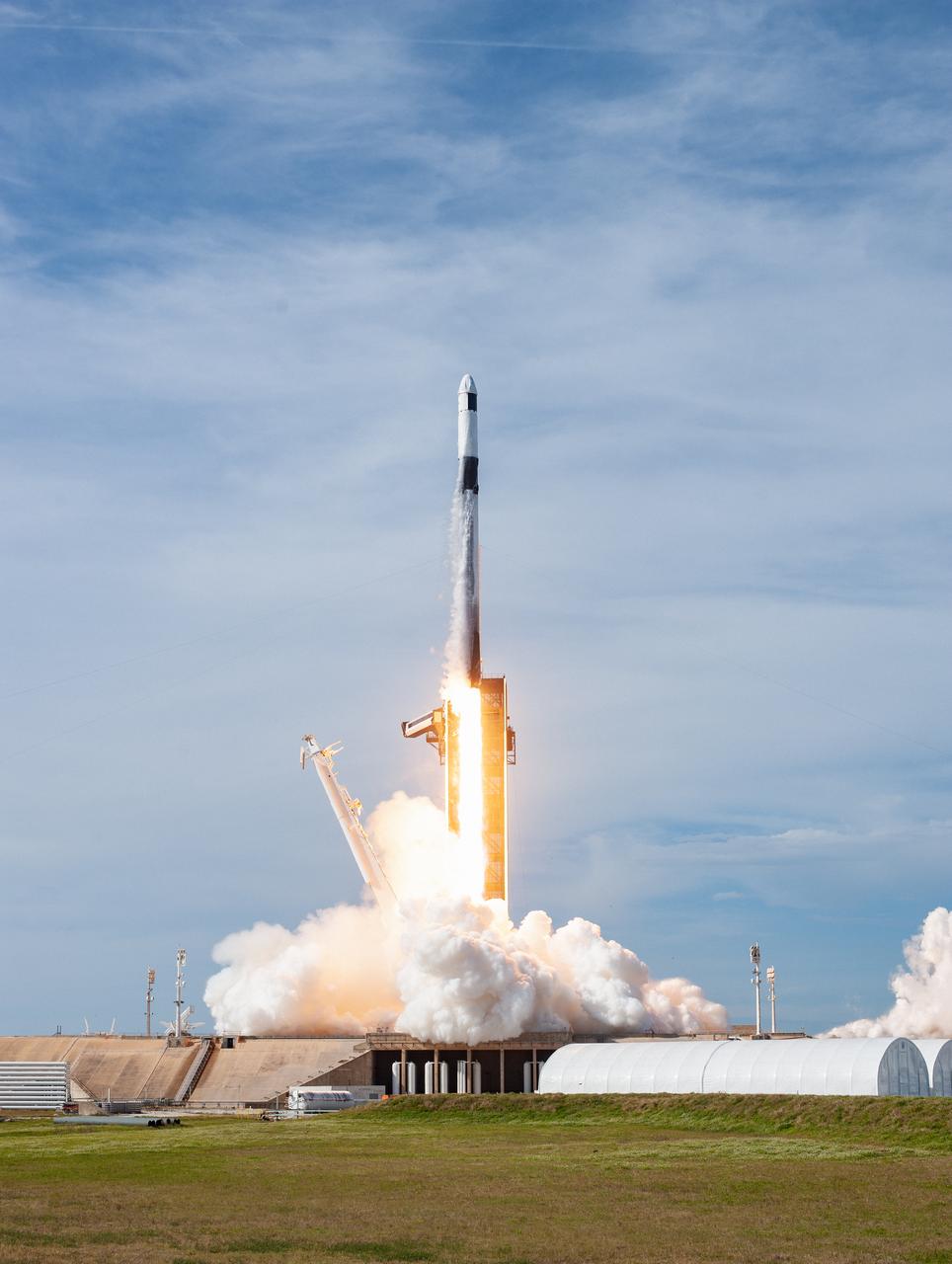
A SpaceX Falcon 9 rocket lifts off from Launch Complex 39A at Kennedy Space Center in Florida at 11:17 a.m. EST on Dec. 6, 2020, carrying the uncrewed cargo Dragon spacecraft on its journey to the International Space Station for NASA and SpaceX’s 21st Commercial Resupply Services (CRS-21) mission. Dragon will deliver more than 6,400 pounds of science investigations and cargo to the orbiting laboratory. The mission marks the first launch for SpaceX under NASA’s CRS-2 contract.
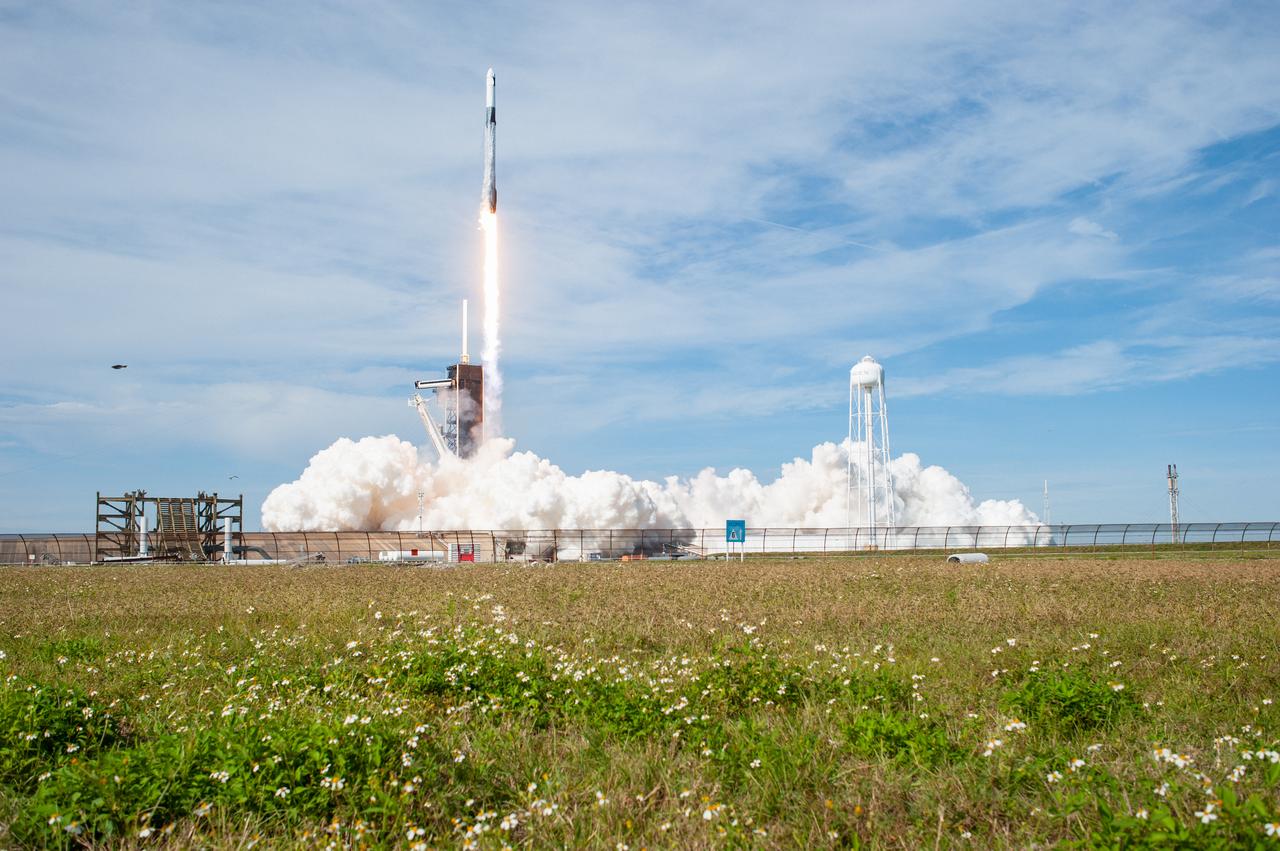
A SpaceX Falcon 9 rocket lifts off from Launch Complex 39A at Kennedy Space Center in Florida at 11:17 a.m. EST on Dec. 6, 2020, carrying the uncrewed cargo Dragon spacecraft on its journey to the International Space Station for NASA and SpaceX’s 21st Commercial Resupply Services (CRS-21) mission. Dragon will deliver more than 6,400 pounds of science investigations and cargo to the orbiting laboratory. The mission marks the first launch for SpaceX under NASA’s CRS-2 contract.

A SpaceX Falcon 9 rocket lifts off from Launch Complex 39A at Kennedy Space Center in Florida at 11:17 a.m. EST on Dec. 6, 2020, carrying the uncrewed cargo Dragon spacecraft on its journey to the International Space Station for NASA and SpaceX’s 21st Commercial Resupply Services (CRS-21) mission. Dragon will deliver more than 6,400 pounds of science investigations and cargo to the orbiting laboratory. The mission marks the first launch for SpaceX under NASA’s CRS-2 contract.
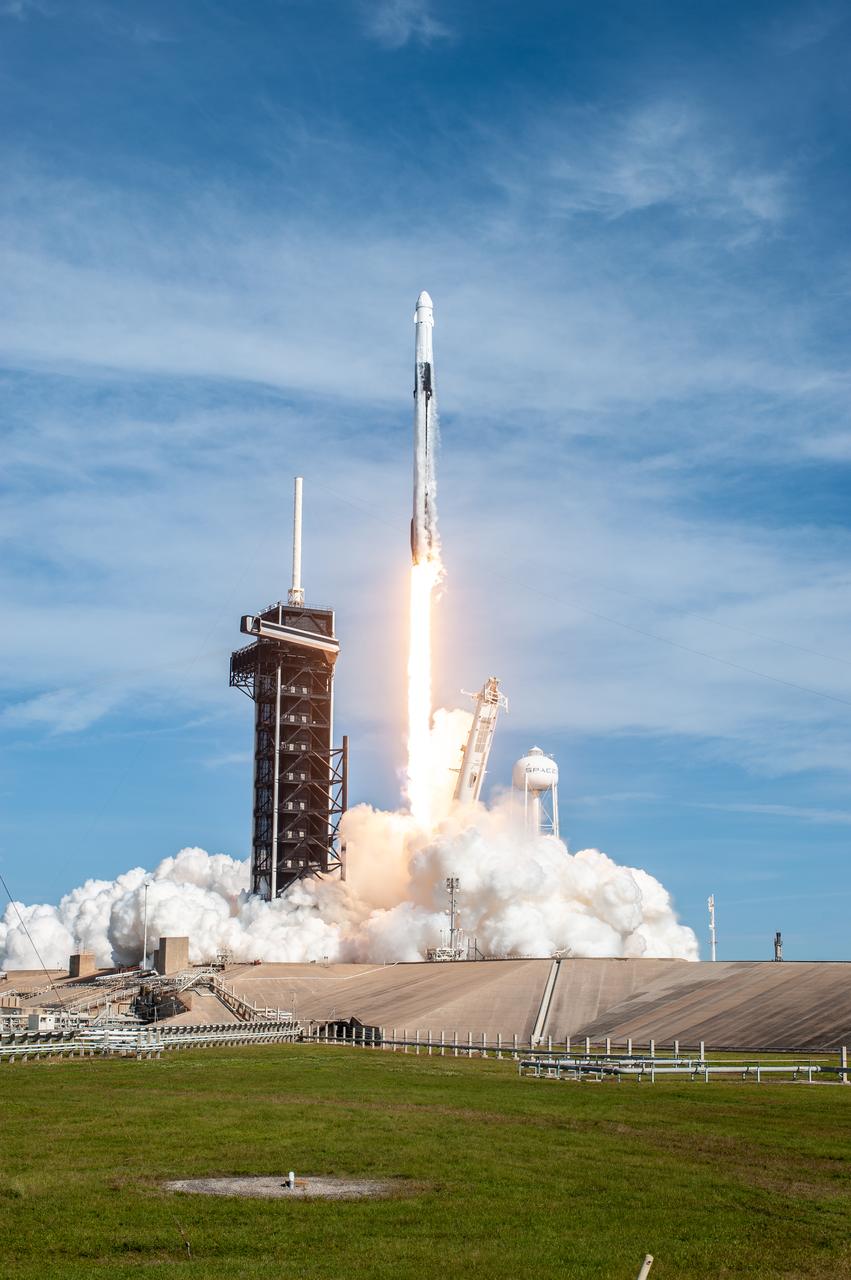
A SpaceX Falcon 9 rocket lifts off from Launch Complex 39A at Kennedy Space Center in Florida at 11:17 a.m. EST on Dec. 6, 2020, carrying the uncrewed cargo Dragon spacecraft on its journey to the International Space Station for NASA and SpaceX’s 21st Commercial Resupply Services (CRS-21) mission. Dragon will deliver more than 6,400 pounds of science investigations and cargo to the orbiting laboratory. The mission marks the first launch for SpaceX under NASA’s CRS-2 contract.
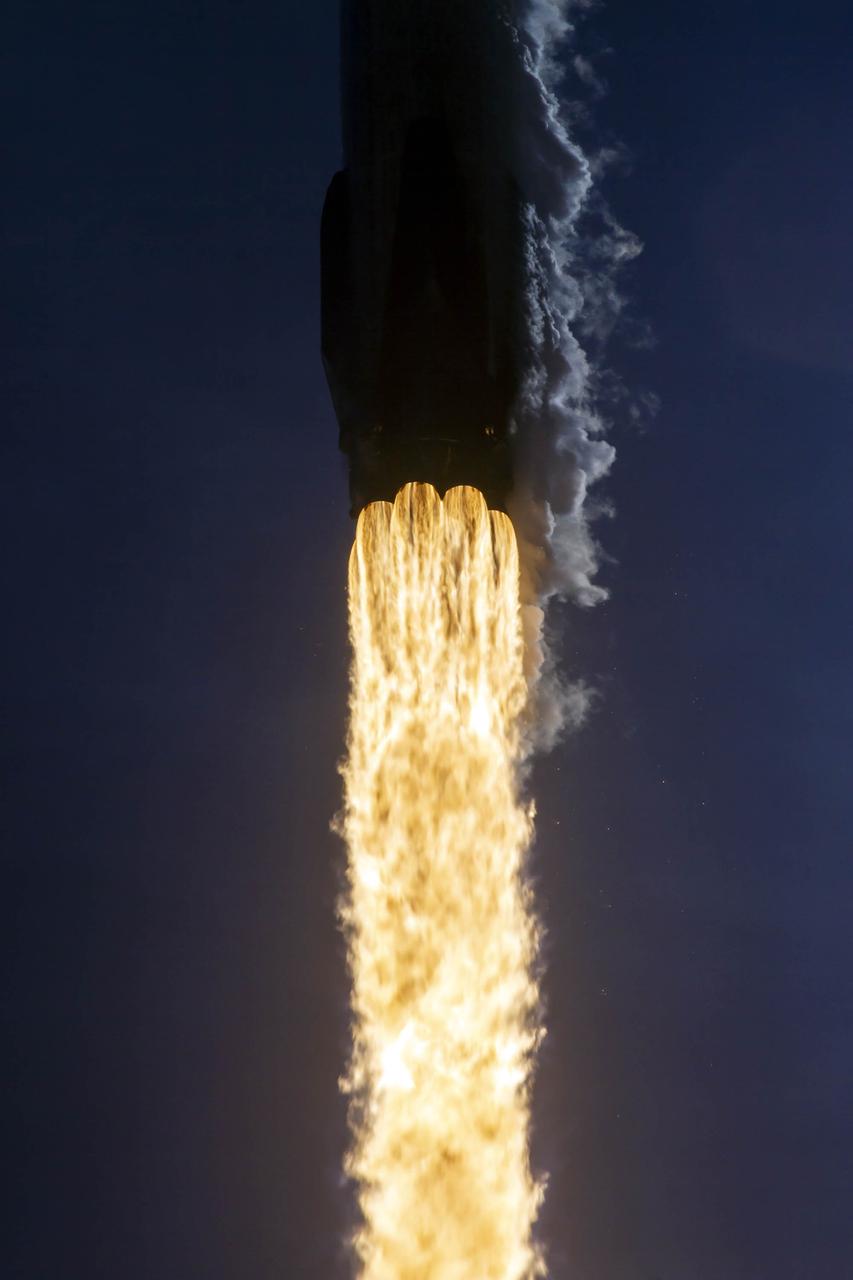
A SpaceX Falcon 9 rocket lifts off from Launch Complex 39A at Kennedy Space Center in Florida at 11:17 a.m. EST on Dec. 6, 2020, carrying the uncrewed cargo Dragon spacecraft on its journey to the International Space Station for NASA and SpaceX’s 21st Commercial Resupply Services (CRS-21) mission. Dragon will deliver more than 6,400 pounds of science investigations and cargo to the orbiting laboratory. The mission marks the first launch for SpaceX under NASA’s CRS-2 contract.
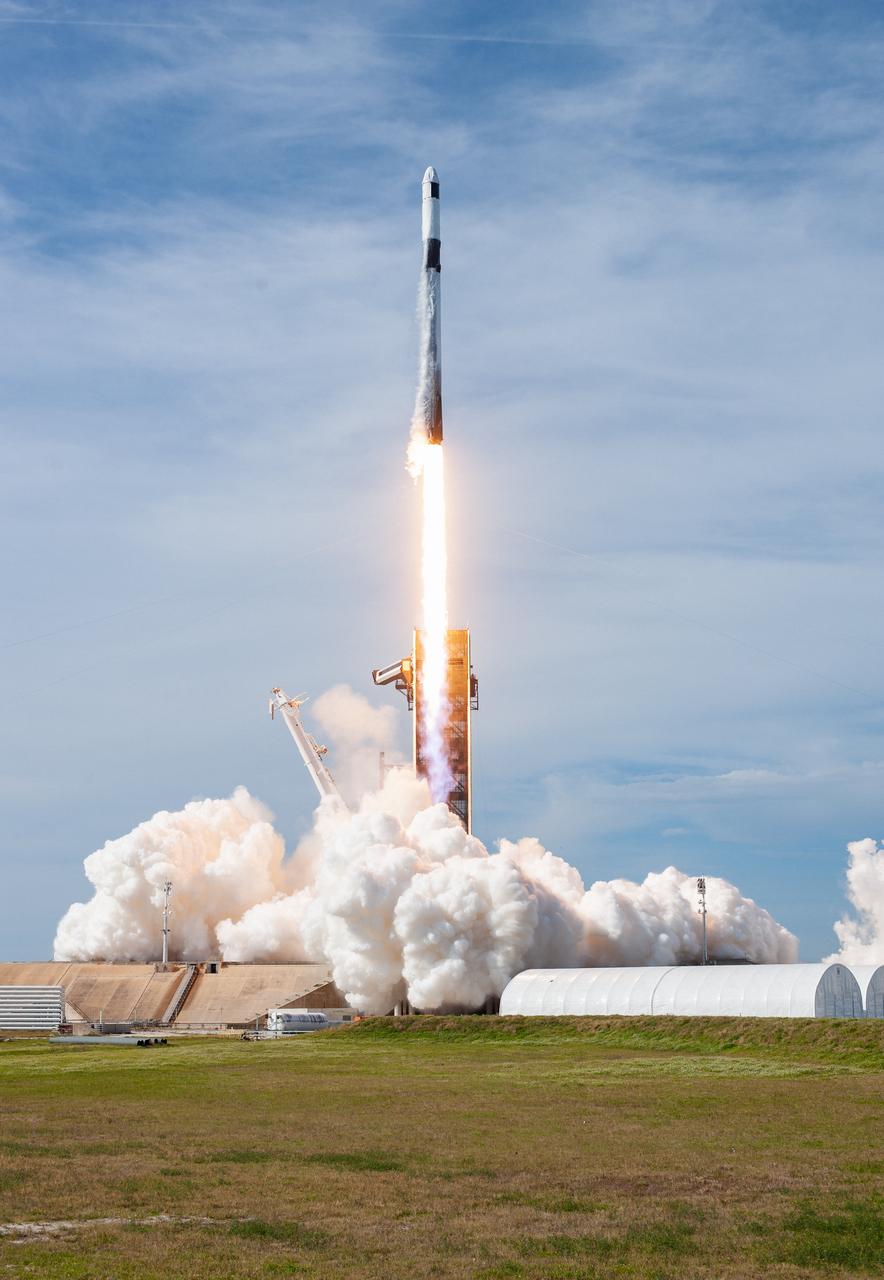
A SpaceX Falcon 9 rocket lifts off from Launch Complex 39A at Kennedy Space Center in Florida at 11:17 a.m. EST on Dec. 6, 2020, carrying the uncrewed cargo Dragon spacecraft on its journey to the International Space Station for NASA and SpaceX’s 21st Commercial Resupply Services (CRS-21) mission. Dragon will deliver more than 6,400 pounds of science investigations and cargo to the orbiting laboratory. The mission marks the first launch for SpaceX under NASA’s CRS-2 contract.
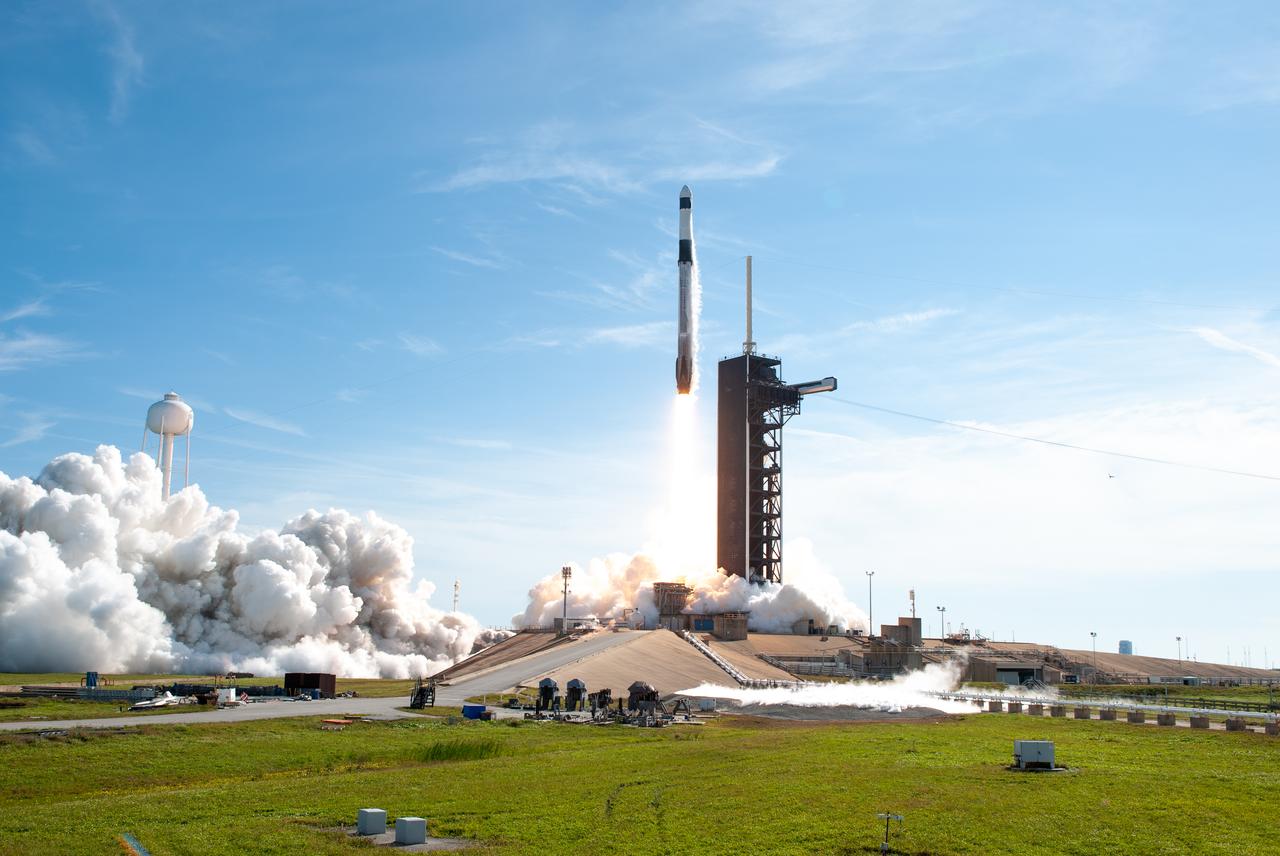
A SpaceX Falcon 9 rocket lifts off from Launch Complex 39A at Kennedy Space Center in Florida at 11:17 a.m. EST on Dec. 6, 2020, carrying the uncrewed cargo Dragon spacecraft on its journey to the International Space Station for NASA and SpaceX’s 21st Commercial Resupply Services (CRS-21) mission. Dragon will deliver more than 6,400 pounds of science investigations and cargo to the orbiting laboratory. The mission marks the first launch for SpaceX under NASA’s CRS-2 contract.
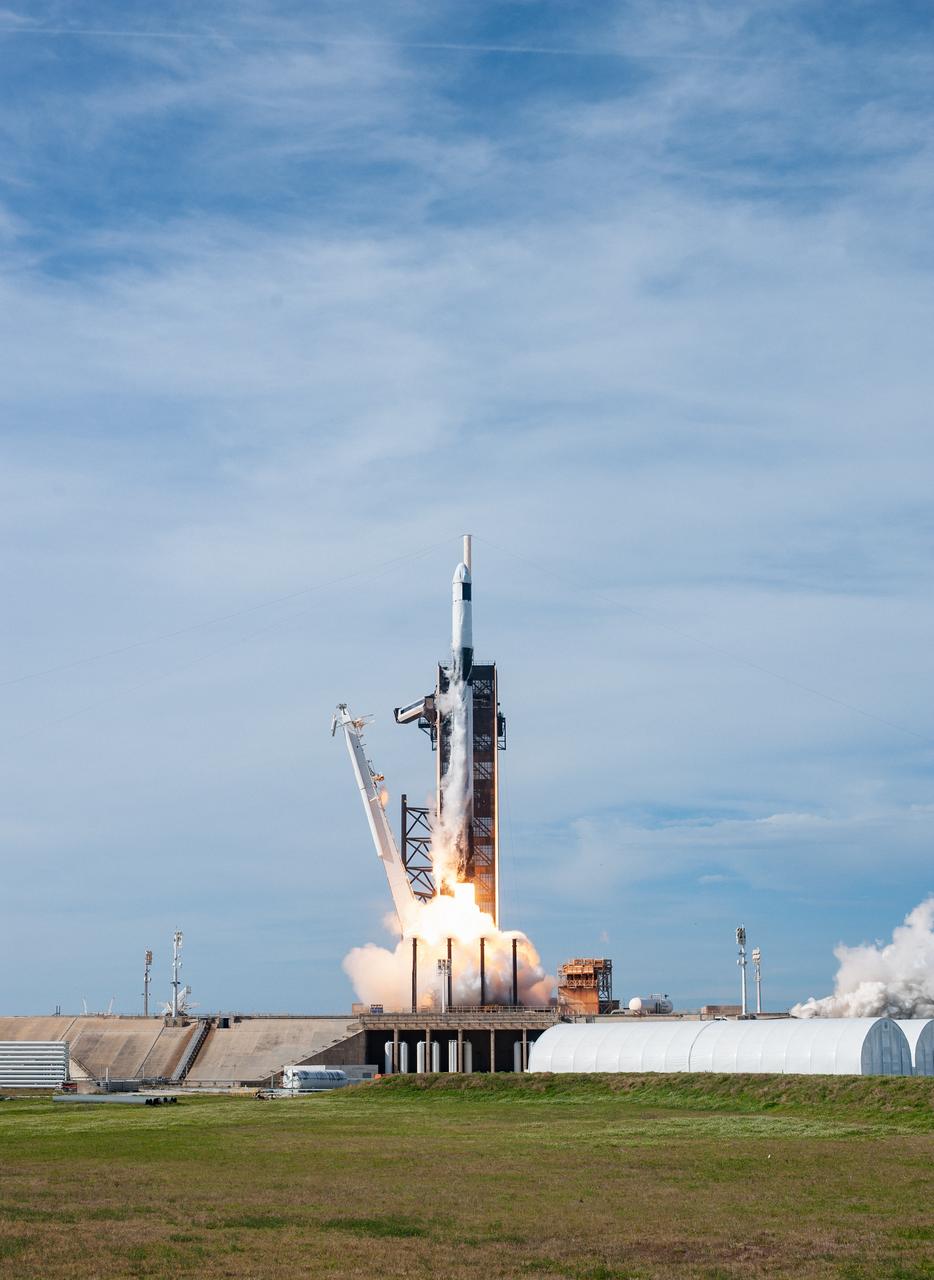
A SpaceX Falcon 9 rocket lifts off from Launch Complex 39A at Kennedy Space Center in Florida at 11:17 a.m. EST on Dec. 6, 2020, carrying the uncrewed cargo Dragon spacecraft on its journey to the International Space Station for NASA and SpaceX’s 21st Commercial Resupply Services (CRS-21) mission. Dragon will deliver more than 6,400 pounds of science investigations and cargo to the orbiting laboratory. The mission marks the first launch for SpaceX under NASA’s CRS-2 contract.
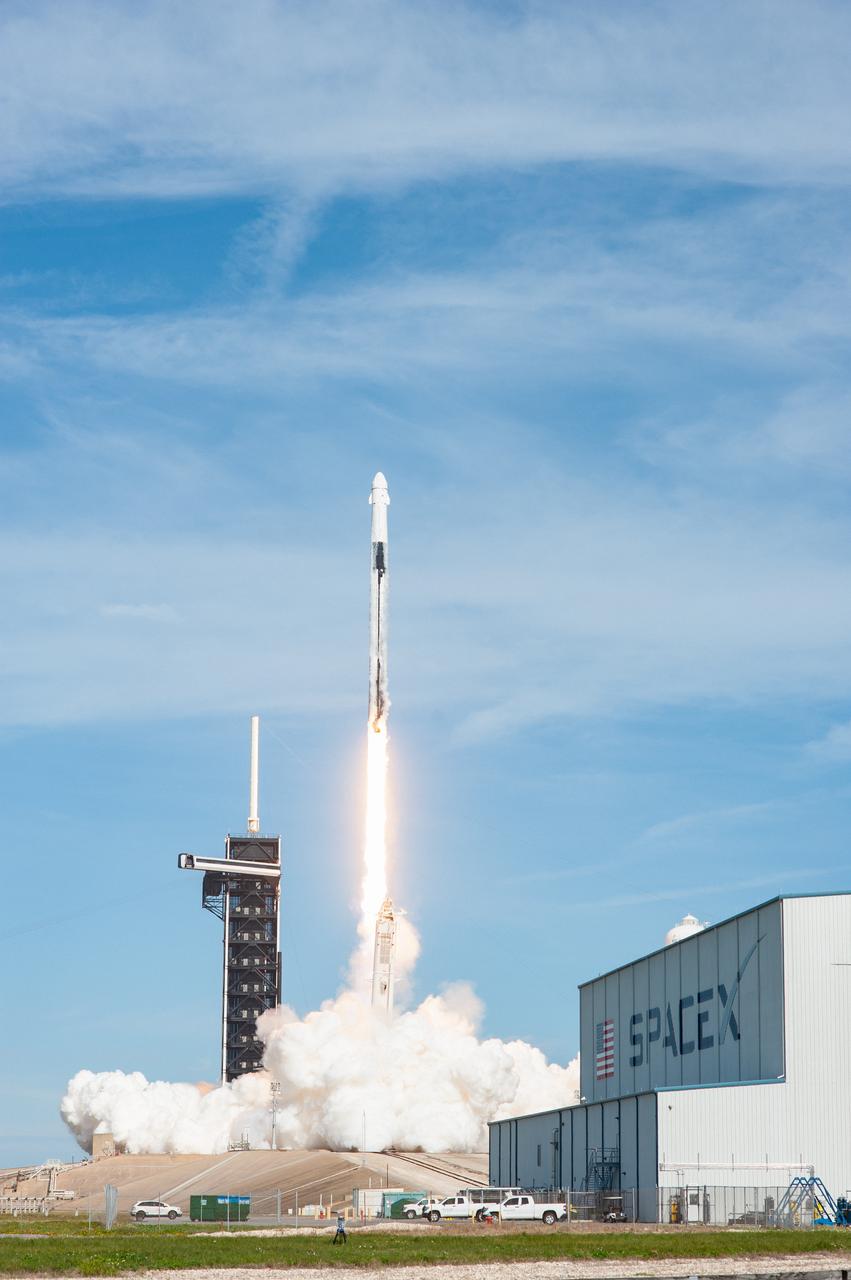
A SpaceX Falcon 9 rocket lifts off from Launch Complex 39A at Kennedy Space Center in Florida at 11:17 a.m. EST on Dec. 6, 2020, carrying the uncrewed cargo Dragon spacecraft on its journey to the International Space Station for NASA and SpaceX’s 21st Commercial Resupply Services (CRS-21) mission. Dragon will deliver more than 6,400 pounds of science investigations and cargo to the orbiting laboratory. The mission marks the first launch for SpaceX under NASA’s CRS-2 contract.
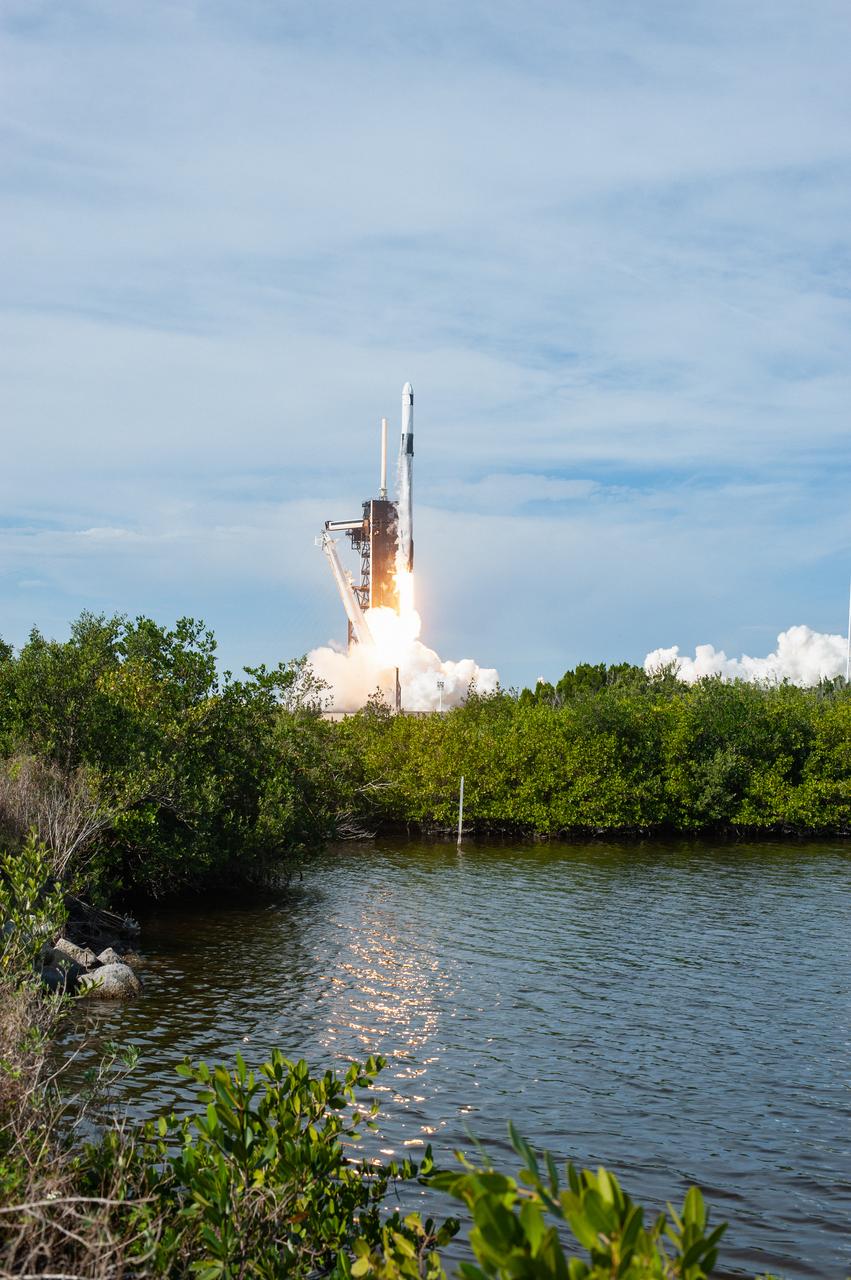
A SpaceX Falcon 9 rocket lifts off from Launch Complex 39A at Kennedy Space Center in Florida at 11:17 a.m. EST on Dec. 6, 2020, carrying the uncrewed cargo Dragon spacecraft on its journey to the International Space Station for NASA and SpaceX’s 21st Commercial Resupply Services (CRS-21) mission. Dragon will deliver more than 6,400 pounds of science investigations and cargo to the orbiting laboratory. The mission marks the first launch for SpaceX under NASA’s CRS-2 contract.
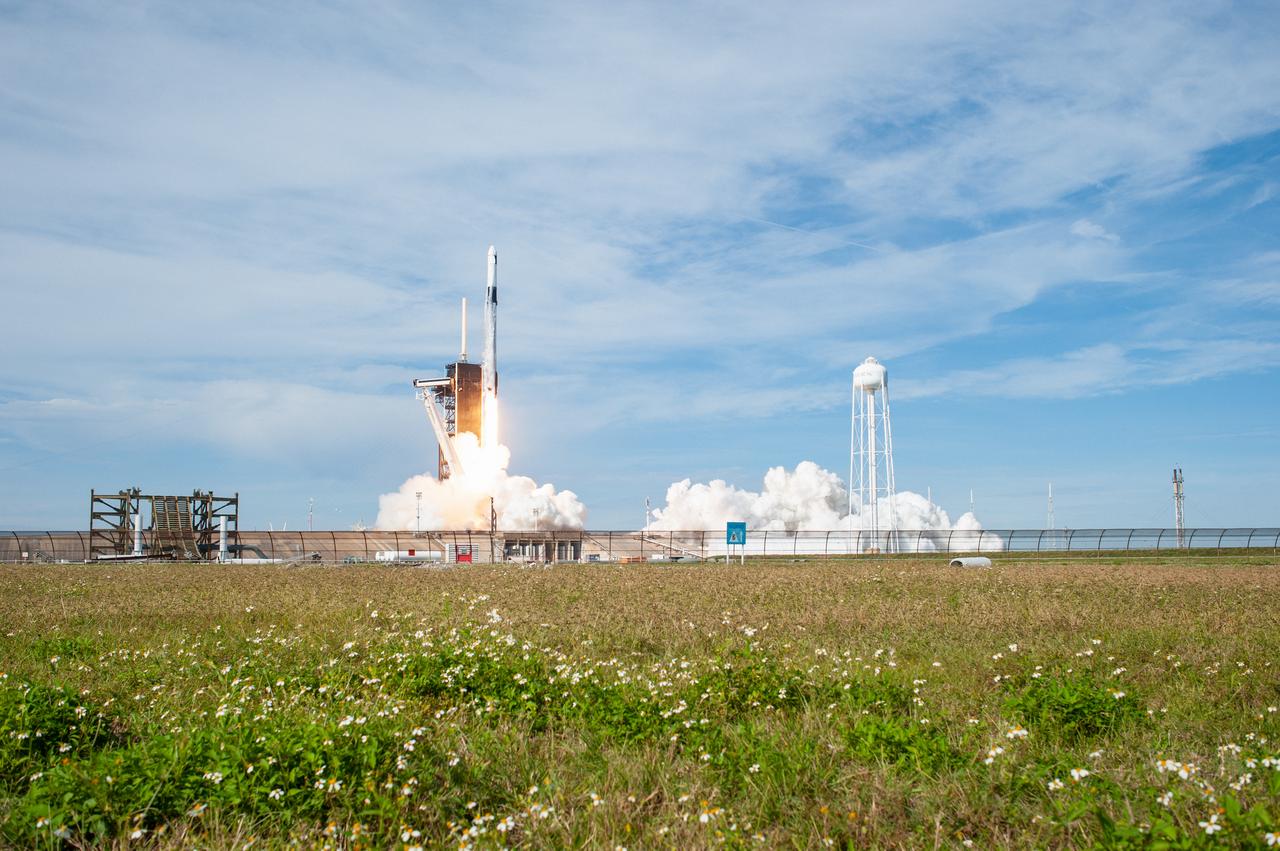
A SpaceX Falcon 9 rocket lifts off from Launch Complex 39A at Kennedy Space Center in Florida at 11:17 a.m. EST on Dec. 6, 2020, carrying the uncrewed cargo Dragon spacecraft on its journey to the International Space Station for NASA and SpaceX’s 21st Commercial Resupply Services (CRS-21) mission. Dragon will deliver more than 6,400 pounds of science investigations and cargo to the orbiting laboratory. The mission marks the first launch for SpaceX under NASA’s CRS-2 contract.
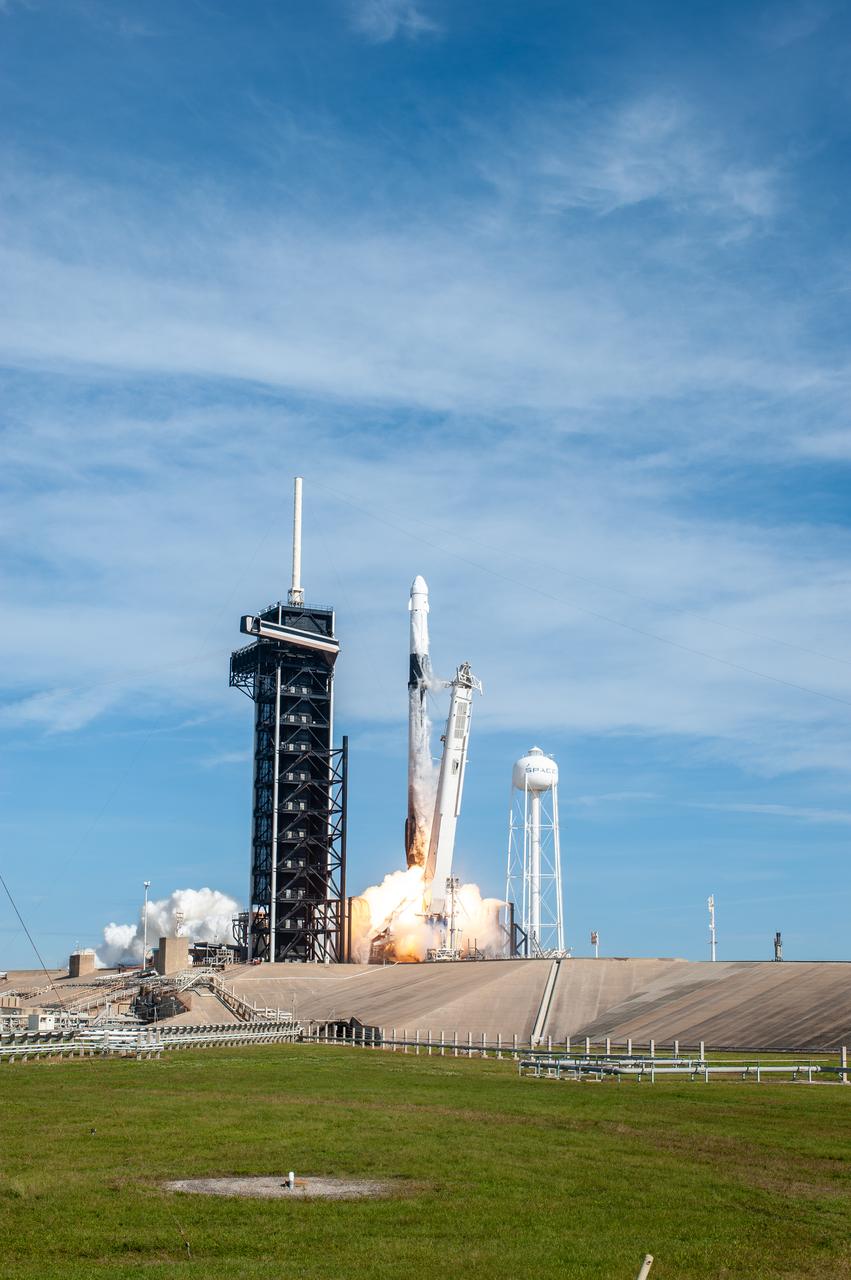
A SpaceX Falcon 9 rocket lifts off from Launch Complex 39A at Kennedy Space Center in Florida at 11:17 a.m. EST on Dec. 6, 2020, carrying the uncrewed cargo Dragon spacecraft on its journey to the International Space Station for NASA and SpaceX’s 21st Commercial Resupply Services (CRS-21) mission. Dragon will deliver more than 6,400 pounds of science investigations and cargo to the orbiting laboratory. The mission marks the first launch for SpaceX under NASA’s CRS-2 contract.
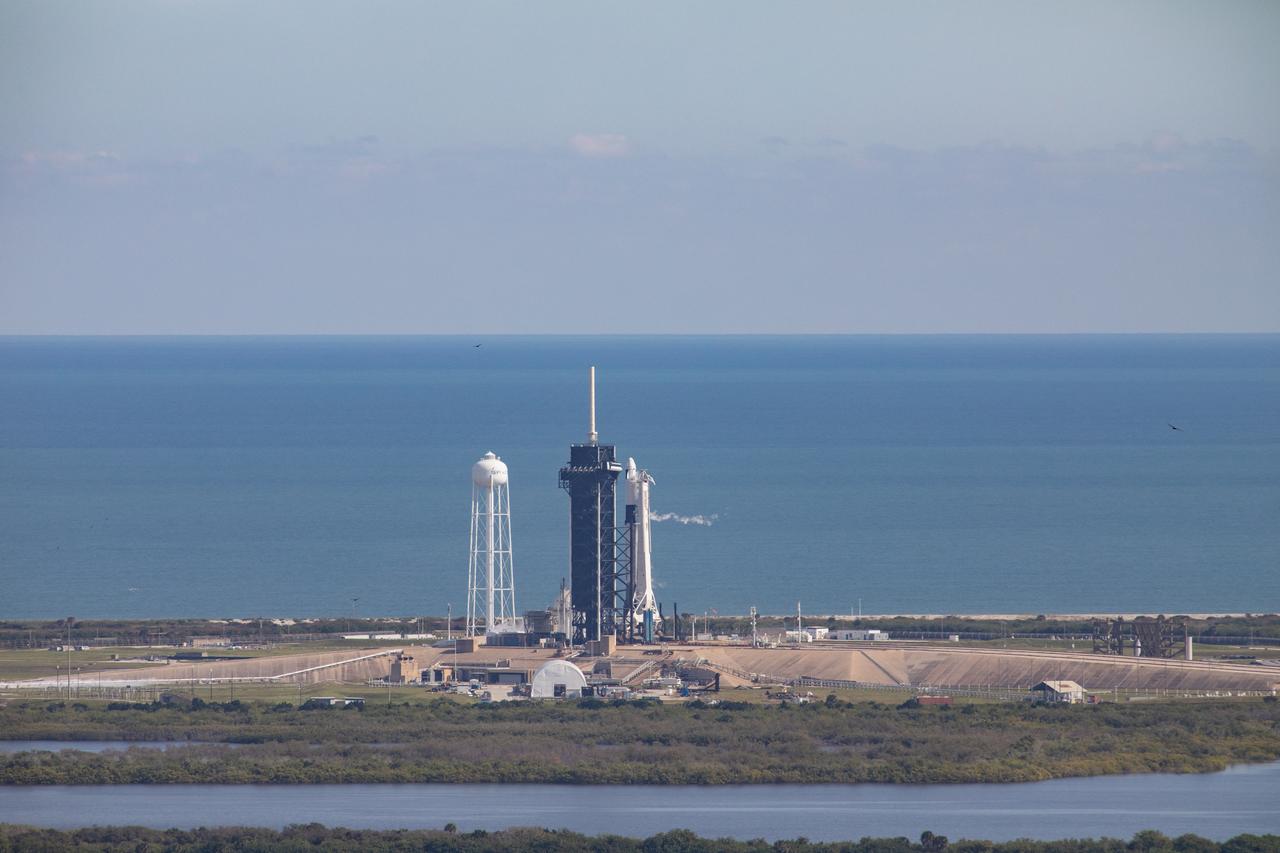
A SpaceX Falcon 9 rocket and cargo Dragon spacecraft stand poised for launch moments before liftoff at Kennedy Space Center’s Launch Complex 39A in Florida on Dec. 6, 2020, for NASA and SpaceX’s 21st Commercial Resupply Services (CRS-21) mission to the International Space Station. The first launch for SpaceX under NASA’s CRS-2 contract, the mission blasted off the pad at 11:17 a.m. EST.
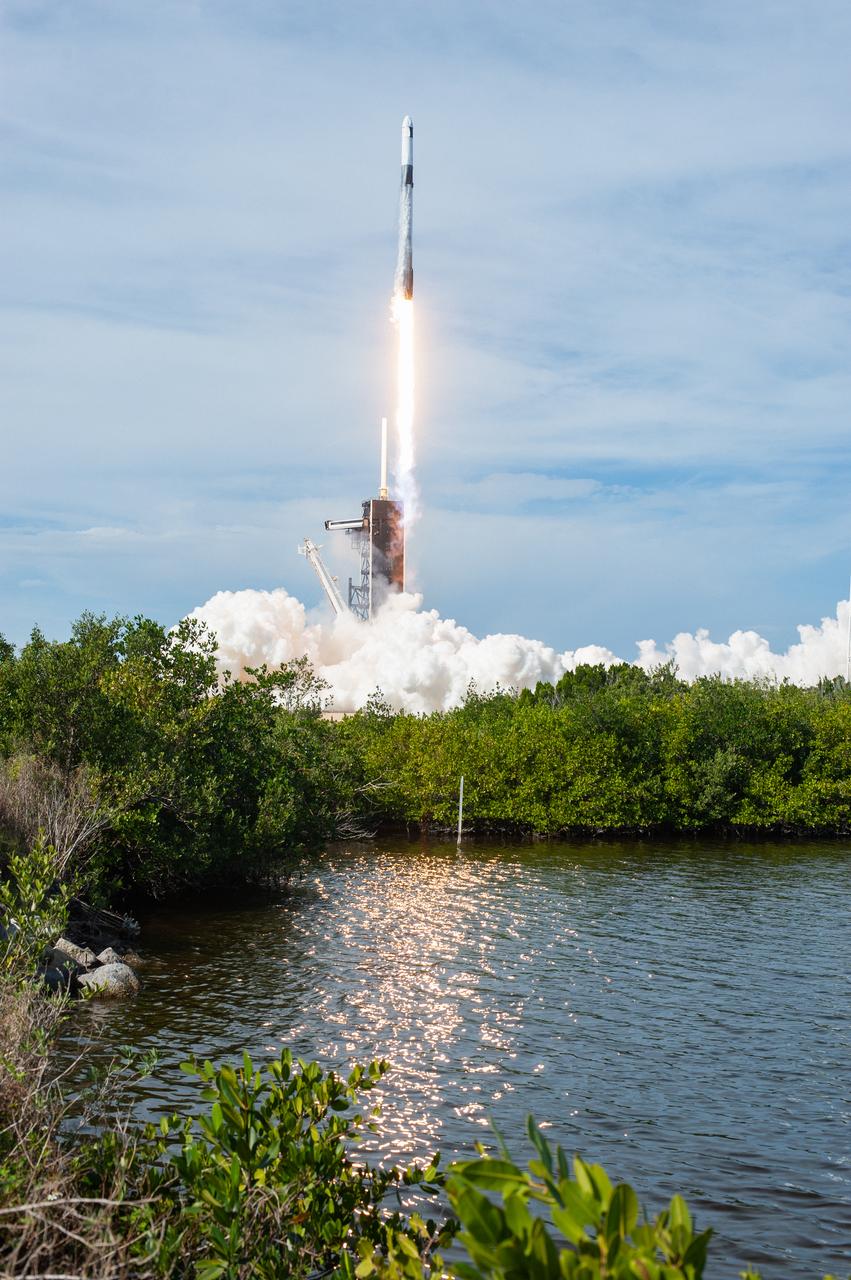
A SpaceX Falcon 9 rocket lifts off from Launch Complex 39A at Kennedy Space Center in Florida at 11:17 a.m. EST on Dec. 6, 2020, carrying the uncrewed cargo Dragon spacecraft on its journey to the International Space Station for NASA and SpaceX’s 21st Commercial Resupply Services (CRS-21) mission. Dragon will deliver more than 6,400 pounds of science investigations and cargo to the orbiting laboratory. The mission marks the first launch for SpaceX under NASA’s CRS-2 contract.
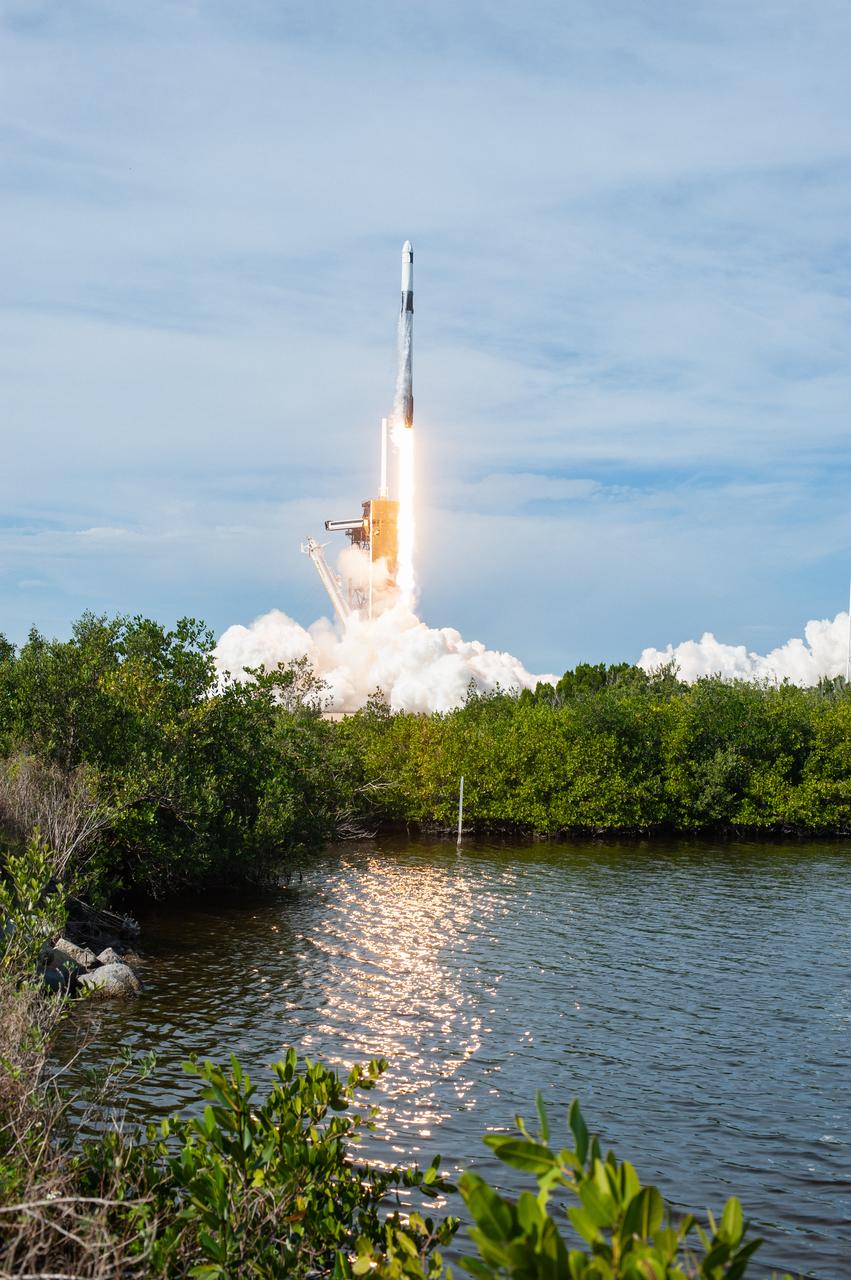
A SpaceX Falcon 9 rocket lifts off from Launch Complex 39A at Kennedy Space Center in Florida at 11:17 a.m. EST on Dec. 6, 2020, carrying the uncrewed cargo Dragon spacecraft on its journey to the International Space Station for NASA and SpaceX’s 21st Commercial Resupply Services (CRS-21) mission. Dragon will deliver more than 6,400 pounds of science investigations and cargo to the orbiting laboratory. The mission marks the first launch for SpaceX under NASA’s CRS-2 contract.
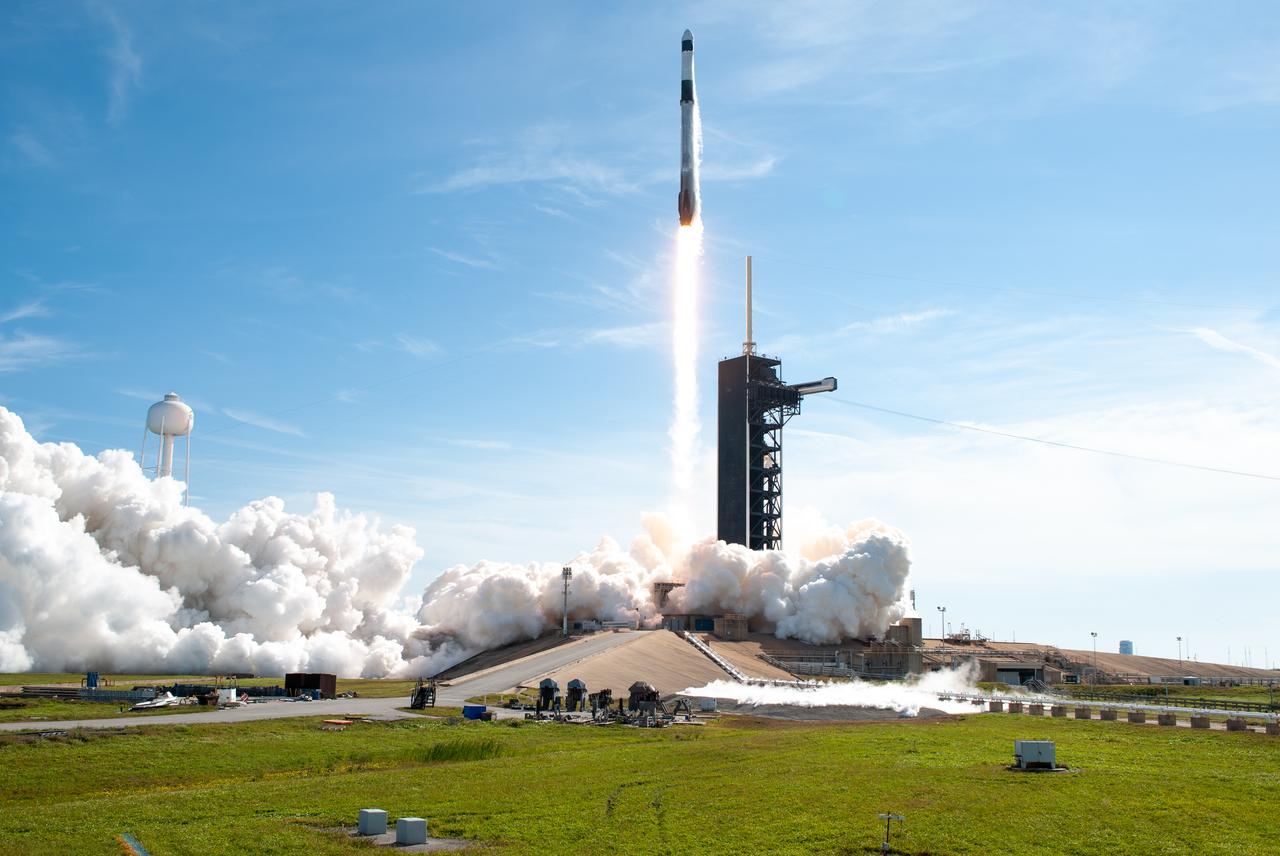
A SpaceX Falcon 9 rocket lifts off from Launch Complex 39A at Kennedy Space Center in Florida at 11:17 a.m. EST on Dec. 6, 2020, carrying the uncrewed cargo Dragon spacecraft on its journey to the International Space Station for NASA and SpaceX’s 21st Commercial Resupply Services (CRS-21) mission. Dragon will deliver more than 6,400 pounds of science investigations and cargo to the orbiting laboratory. The mission marks the first launch for SpaceX under NASA’s CRS-2 contract.
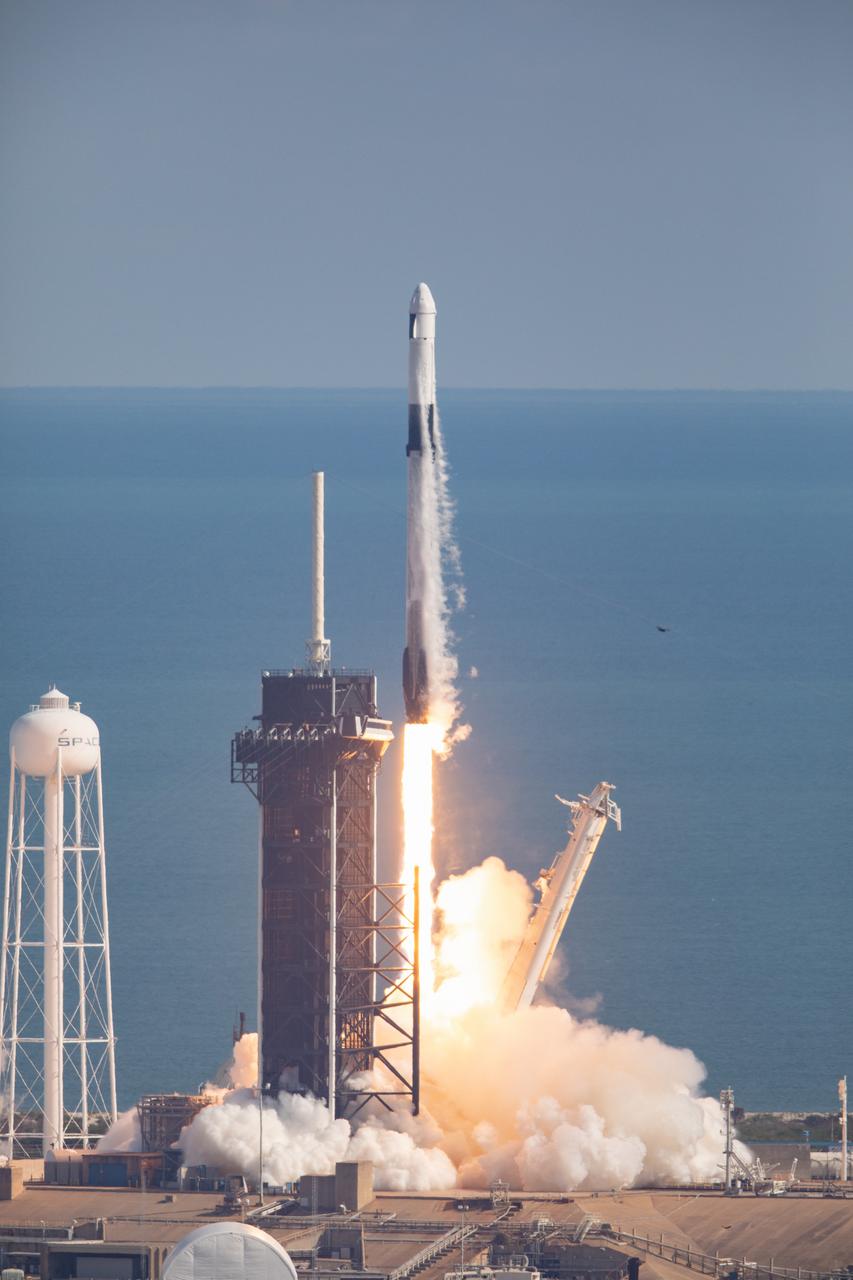
A SpaceX Falcon 9 rocket lifts off from Launch Complex 39A at Kennedy Space Center in Florida at 11:17 a.m. EST on Dec. 6, 2020, carrying the uncrewed cargo Dragon spacecraft on its journey to the International Space Station for NASA and SpaceX’s 21st Commercial Resupply Services (CRS-21) mission. Dragon will deliver more than 6,400 pounds of science investigations and cargo to the orbiting laboratory. The mission marks the first launch for SpaceX under NASA’s CRS-2 contract.
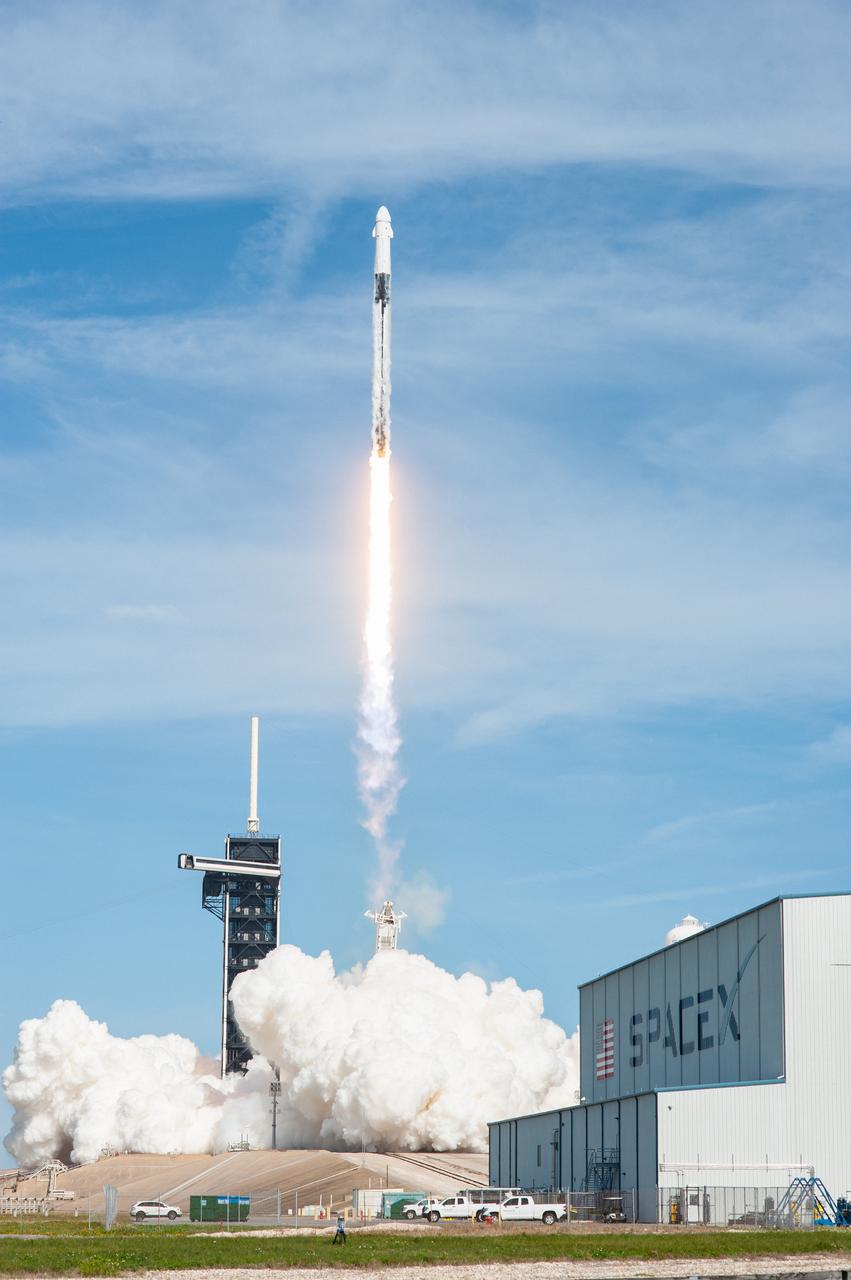
A SpaceX Falcon 9 rocket lifts off from Launch Complex 39A at Kennedy Space Center in Florida at 11:17 a.m. EST on Dec. 6, 2020, carrying the uncrewed cargo Dragon spacecraft on its journey to the International Space Station for NASA and SpaceX’s 21st Commercial Resupply Services (CRS-21) mission. Dragon will deliver more than 6,400 pounds of science investigations and cargo to the orbiting laboratory. The mission marks the first launch for SpaceX under NASA’s CRS-2 contract.
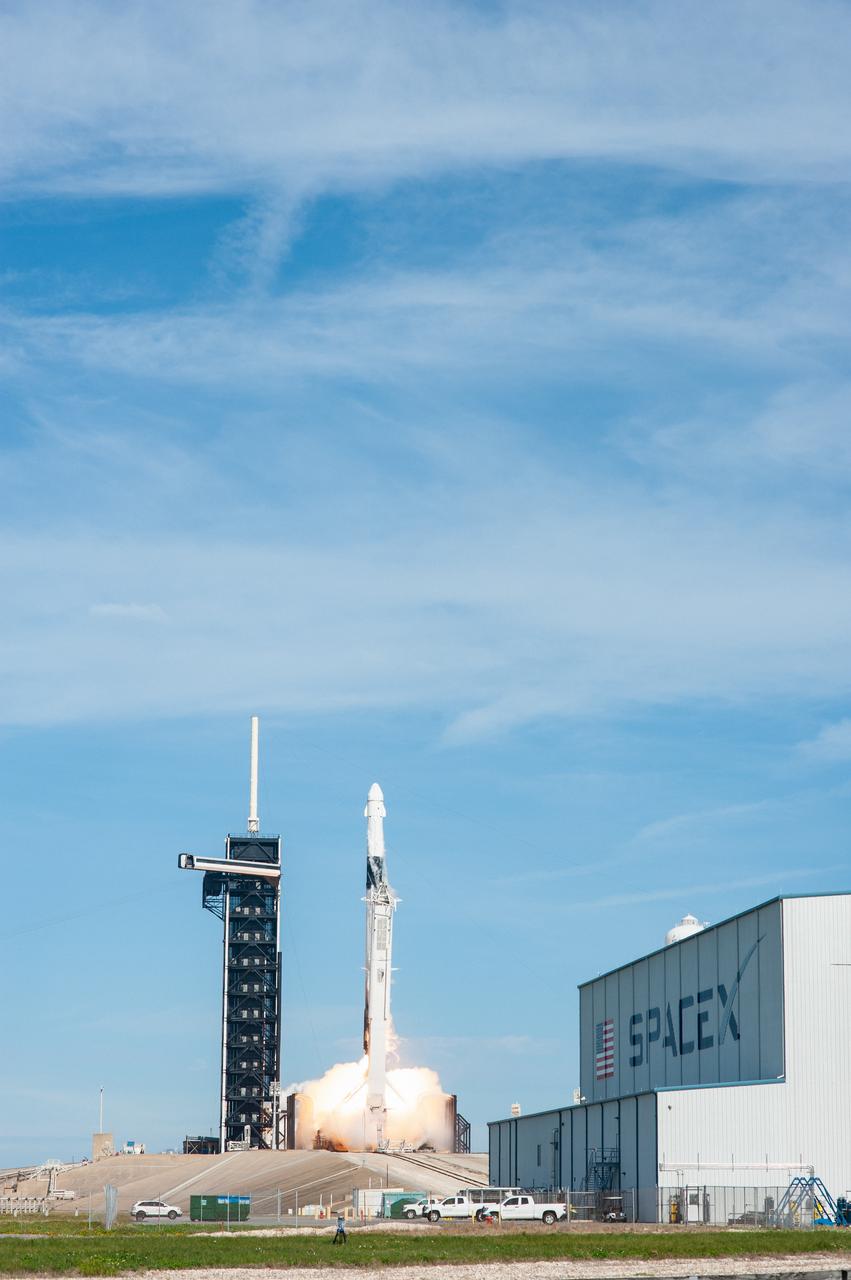
A SpaceX Falcon 9 rocket lifts off from Launch Complex 39A at Kennedy Space Center in Florida at 11:17 a.m. EST on Dec. 6, 2020, carrying the uncrewed cargo Dragon spacecraft on its journey to the International Space Station for NASA and SpaceX’s 21st Commercial Resupply Services (CRS-21) mission. Dragon will deliver more than 6,400 pounds of science investigations and cargo to the orbiting laboratory. The mission marks the first launch for SpaceX under NASA’s CRS-2 contract.
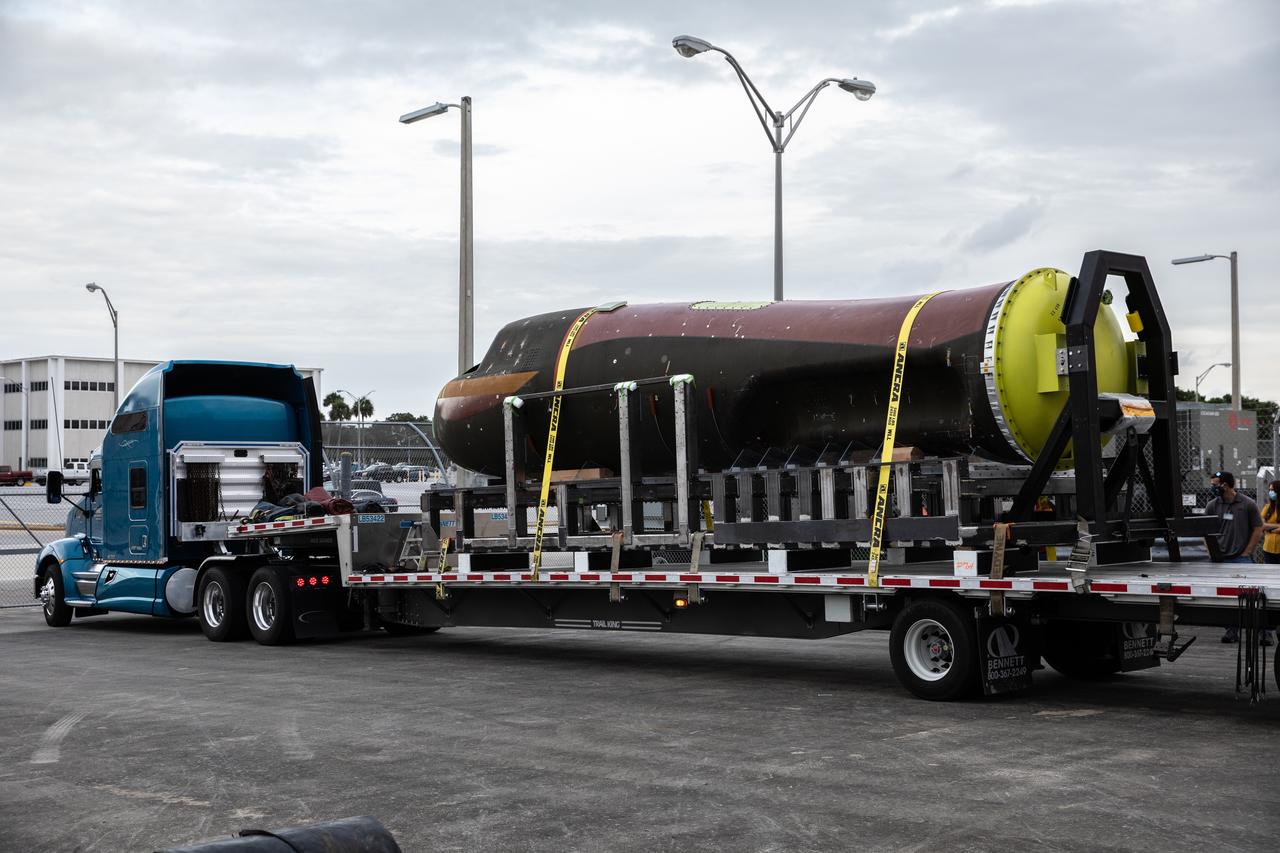
Sierra Nevada Corporation’s (SNC) Dream Chaser pressure test article arrives by flatbed truck at NASA’s Kennedy Space Center in Florida on June 3, 2020, from Louisville, Colorado. It will be transported to the high bay in the Space Station Processing Facility. The test article is similar to the actual pressurized cabin being used in the Dream Chaser spaceplane for Commercial Resupply Services-2 (CRS-2) missions. NASA selected Dream Chaser to provide cargo delivery, return and disposal service for the International Space Station under the CRS-2 contract. The test article will remain at Kennedy while SNC engineers use it to develop and verify refurbishment operations that will be used on Dream Chaser between flights.
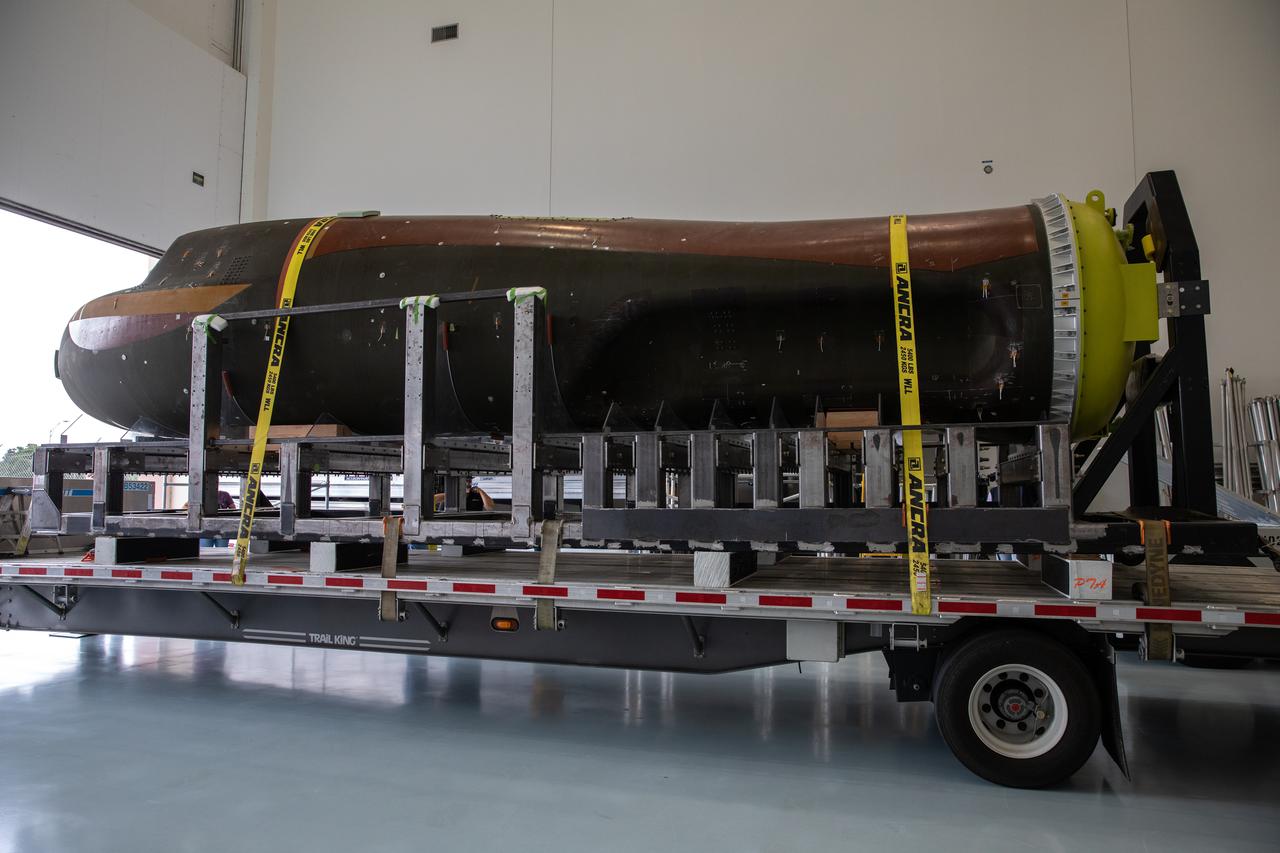
Sierra Nevada Corporation’s (SNC) Dream Chaser pressure test article is moved into the low bay of the Space Station Processing Facility at NASA’s Kennedy Space Center in Florida on June 3, 2020. The test article was shipped from Louisville, Colorado. It is similar to the actual pressurized cabin being used in the Dream Chaser spaceplane for Commercial Resupply Services-2 (CRS-2) missions. NASA selected Dream Chaser to provide cargo delivery, return and disposal service for the International Space Station under the CRS-2 contract. The test article will remain at Kennedy while SNC engineers use it to develop and verify refurbishment operations that will be used on Dream Chaser between flights.
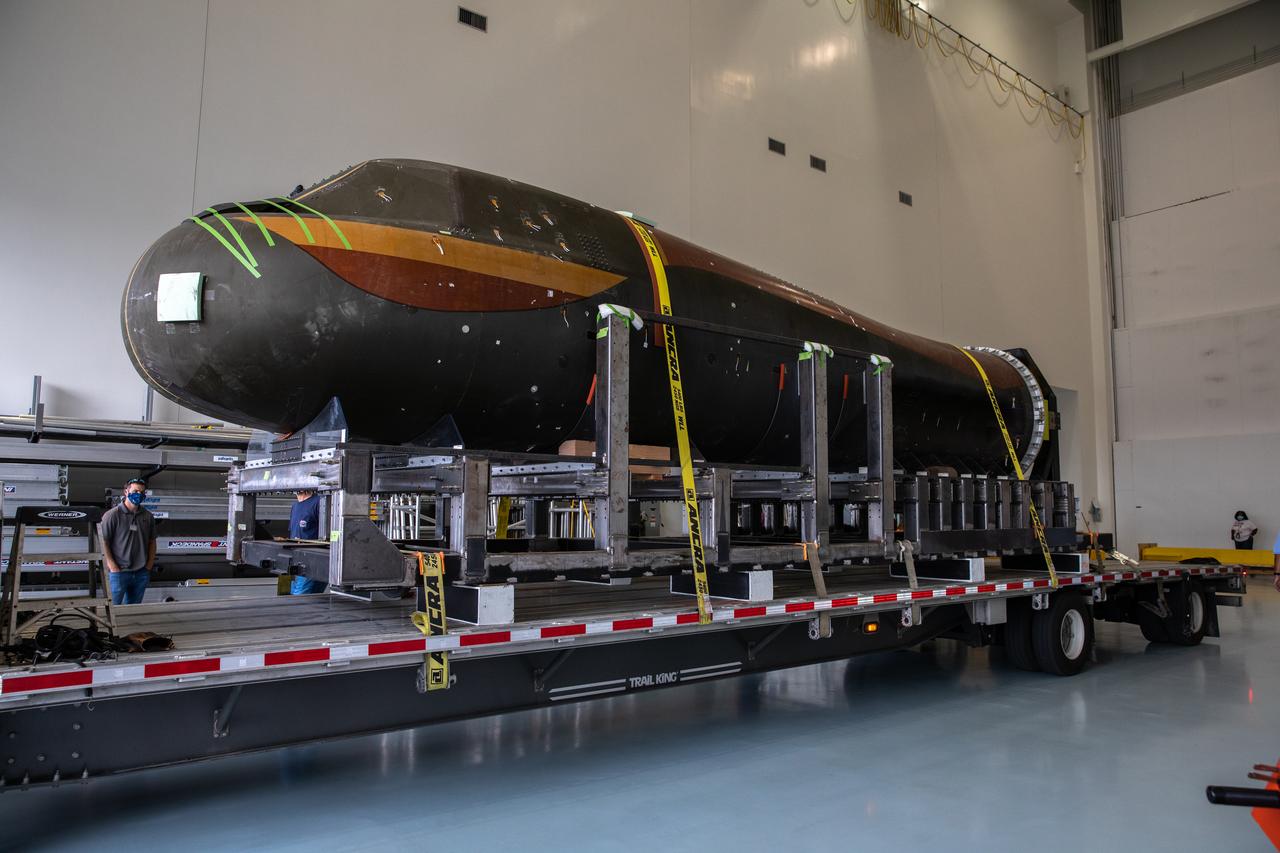
Sierra Nevada Corporation’s (SNC) Dream Chaser pressure test article is moved into the low bay of the Space Station Processing Facility at NASA’s Kennedy Space Center in Florida on June 3, 2020. The test article was shipped from Louisville, Colorado. It is similar to the actual pressurized cabin being used in the Dream Chaser spaceplane for Commercial Resupply Services-2 (CRS-2) missions. NASA selected Dream Chaser to provide cargo delivery, return and disposal service for the International Space Station under the CRS-2 contract. The test article will remain at Kennedy while SNC engineers use it to develop and verify refurbishment operations that will be used on Dream Chaser between flights.
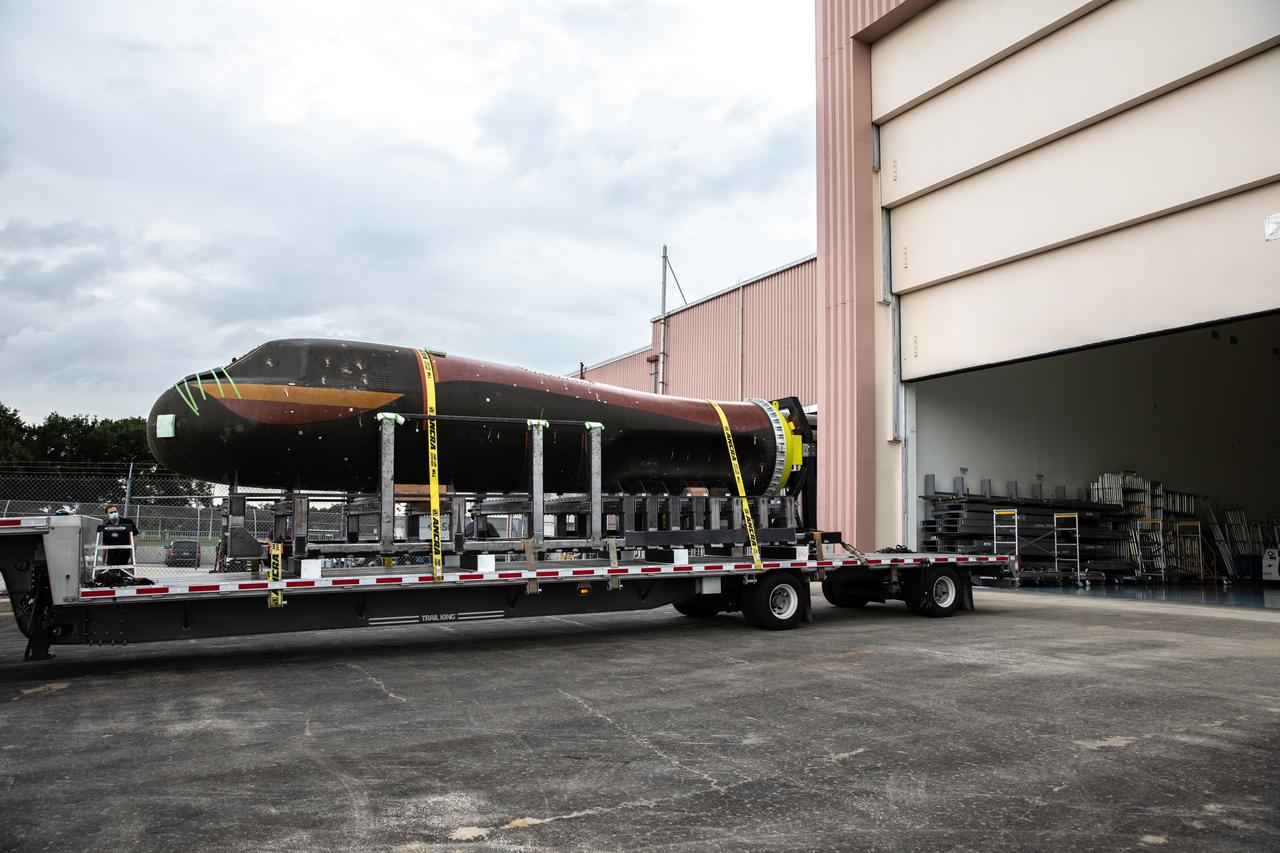
Sierra Nevada Corporation’s (SNC) Dream Chaser pressure test article arrives by flatbed truck at the Space Station Processing Facility at NASA’s Kennedy Space Center in Florida on June 3, 2020, from Louisville, Colorado. The test article is similar to the actual pressurized cabin being used in the Dream Chaser spaceplane for Commercial Resupply Services-2 (CRS-2) missions. NASA selected Dream Chaser to provide cargo delivery, return and disposal service for the International Space Station under the CRS-2 contract. The test article will remain at Kennedy while SNC engineers use it to develop and verify refurbishment operations that will be used on Dream Chaser between flights.
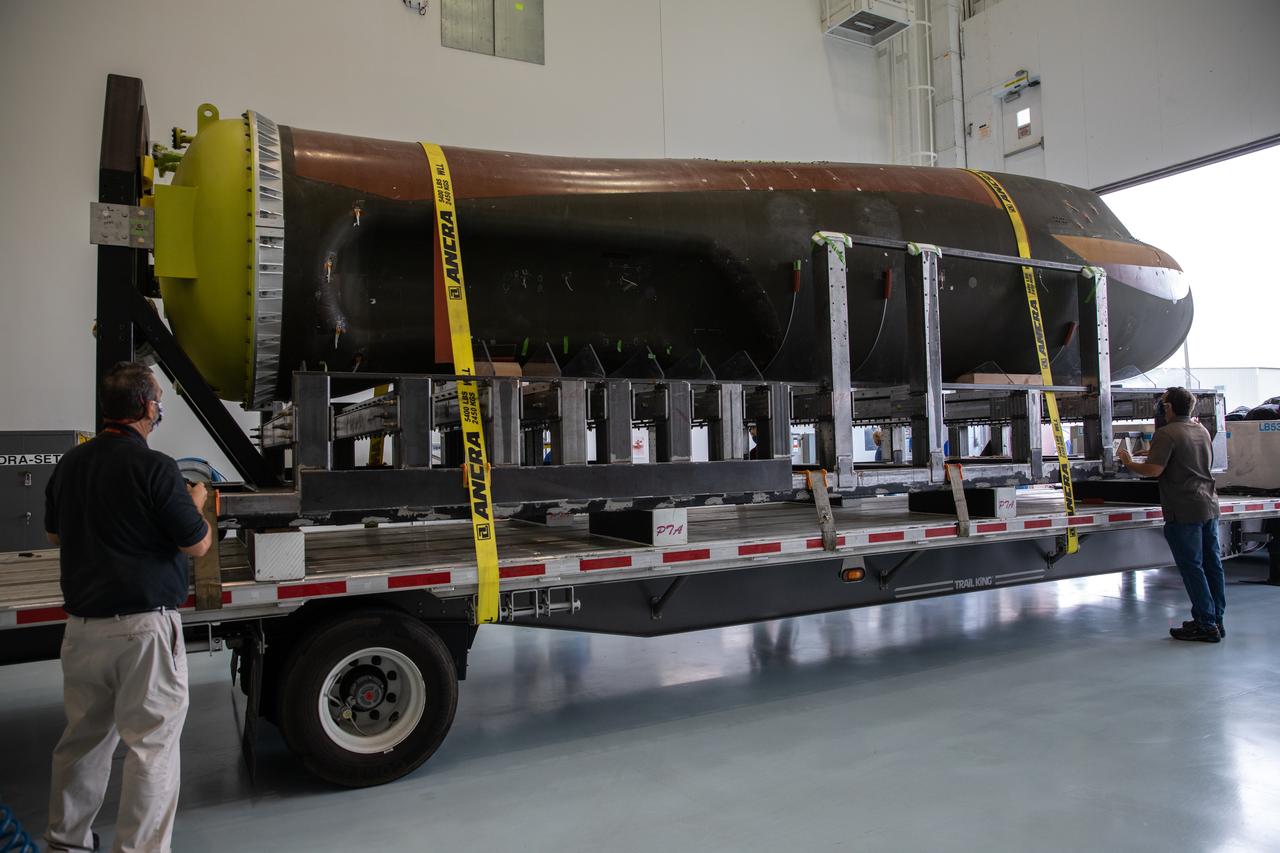
Sierra Nevada Corporation’s (SNC) Dream Chaser pressure test article is moved into the low bay of the Space Station Processing Facility at NASA’s Kennedy Space Center in Florida on June 3, 2020. The test article was shipped from Louisville, Colorado. It is similar to the actual pressurized cabin being used in the Dream Chaser spaceplane for Commercial Resupply Services-2 (CRS-2) missions. NASA selected Dream Chaser to provide cargo delivery, return and disposal service for the International Space Station under the CRS-2 contract. The test article will remain at Kennedy while SNC engineers use it to develop and verify refurbishment operations that will be used on Dream Chaser between flights.
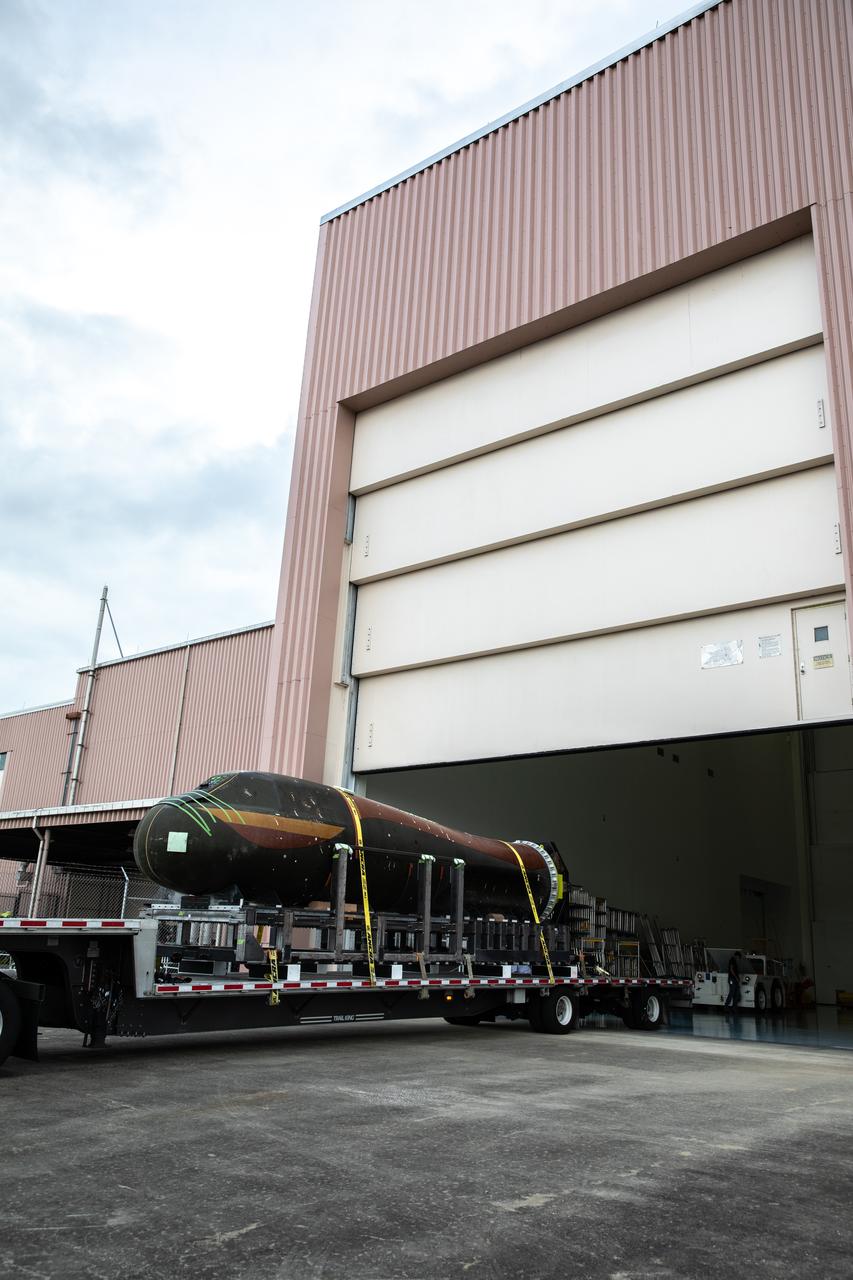
Sierra Nevada Corporation’s (SNC) Dream Chaser pressure test article arrives by flatbed truck at the Space Station Processing Facility at NASA’s Kennedy Space Center in Florida on June 3, 2020, from Louisville, Colorado. The test article is similar to the actual pressurized cabin being used in the Dream Chaser spaceplane for Commercial Resupply Services-2 (CRS-2) missions. NASA selected Dream Chaser to provide cargo delivery, return and disposal service for the International Space Station under the CRS-2 contract. The test article will remain at Kennedy while SNC engineers use it to develop and verify refurbishment operations that will be used on Dream Chaser between flights.

The upgraded version of SpaceX’s Cargo Dragon spacecraft, Dragon 2, is seen atop a Falcon 9 rocket on Dec. 2, 2020, as they prepare to be rolled out to Launch Complex 39A at NASA’s Kennedy Space Center in Florida for the company’s 21st Commercial Resupply Services (CRS-21) launch. The first launch for SpaceX under NASA’s second Commercial Resupply Services contract, CRS-21 will deliver critical supplies, equipment, and material to support a variety of science and research investigations that will take place aboard the International Space Station. Liftoff is scheduled for 11:39 a.m. EST on Saturday, Dec. 5.
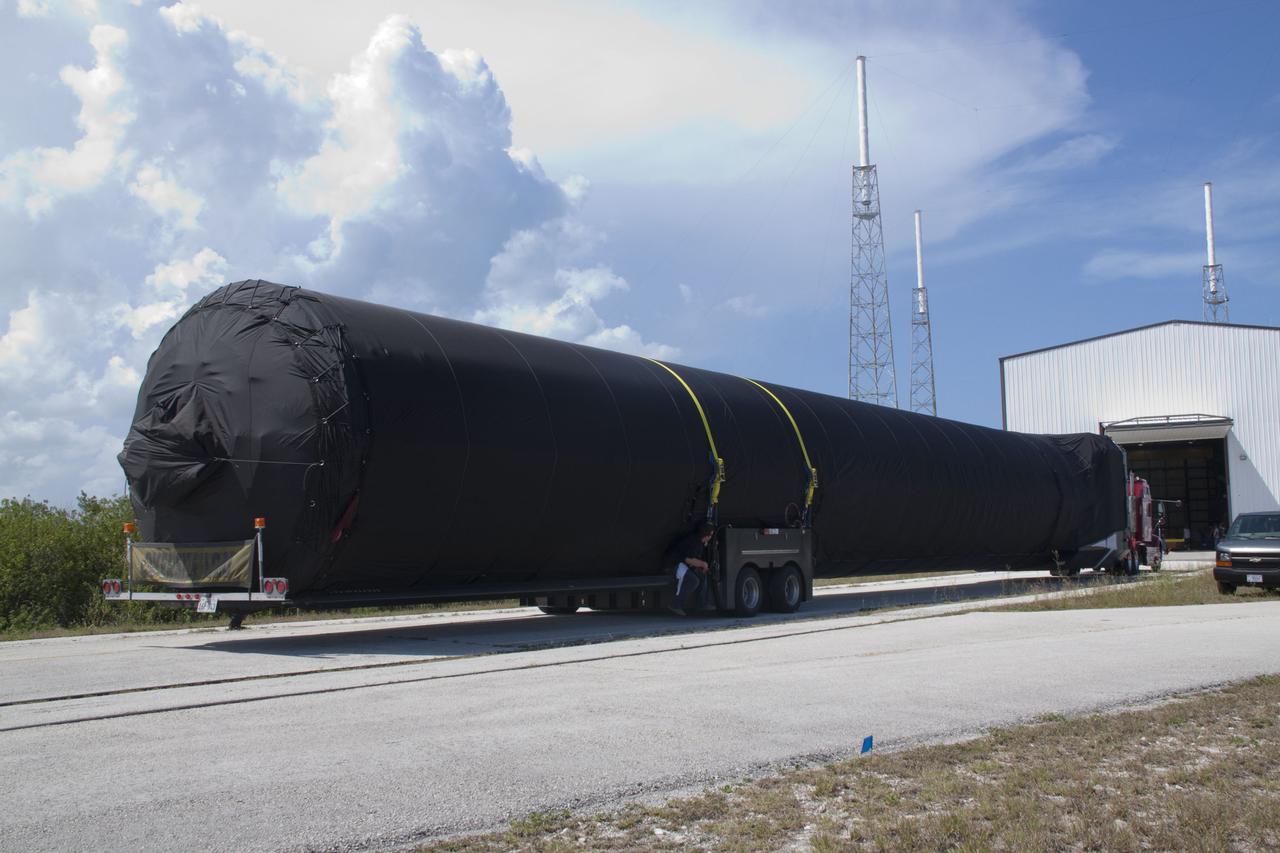
CAPE CANAVERAL, Fla. -- The first stage of the SpaceX COTS-2 Falcon 9 rocket is being transported to a SpaceX hangar at Pad 40 at Cape Canaveral Air Force Station in Florida. Once assembled, it will be a two-stage fully integrated launch vehicle, consisting of a first stage powered by nine SpaceX-developed Merlin 1C engines, a second stage, an interstage, an unpressurized trunk and the Dragon spacecraft qualification unit. SpaceX was awarded procurement for three demonstration flights under the Commercial Orbital Transportation Services, or COTS, program managed by NASA's Johnson Space Center in Houston. A subsequent contract for Commercial Resupply Services, or CRS, was awarded in late 2008 to resupply the International Space Station. The SpaceX CRS contract provides for 12 missions to resupply the station from 2011 through 2015. Photo credit: NASA_Jack Pfaller
CAPE CANAVERAL, Fla. -- The first stage of the SpaceX COTS-2 Falcon 9 rocket is being transported to a SpaceX hangar at Pad 40 at Cape Canaveral Air Force Station in Florida. Once assembled, it will be a two-stage fully integrated launch vehicle, consisting of a first stage powered by nine SpaceX-developed Merlin 1C engines, a second stage, an interstage, an unpressurized trunk and the Dragon spacecraft qualification unit. SpaceX was awarded procurement for three demonstration flights under the Commercial Orbital Transportation Services, or COTS, program managed by NASA's Johnson Space Center in Houston. A subsequent contract for Commercial Resupply Services, or CRS, was awarded in late 2008 to resupply the International Space Station. The SpaceX CRS contract provides for 12 missions to resupply the station from 2011 through 2015. Photo credit: NASA_Jack Pfaller
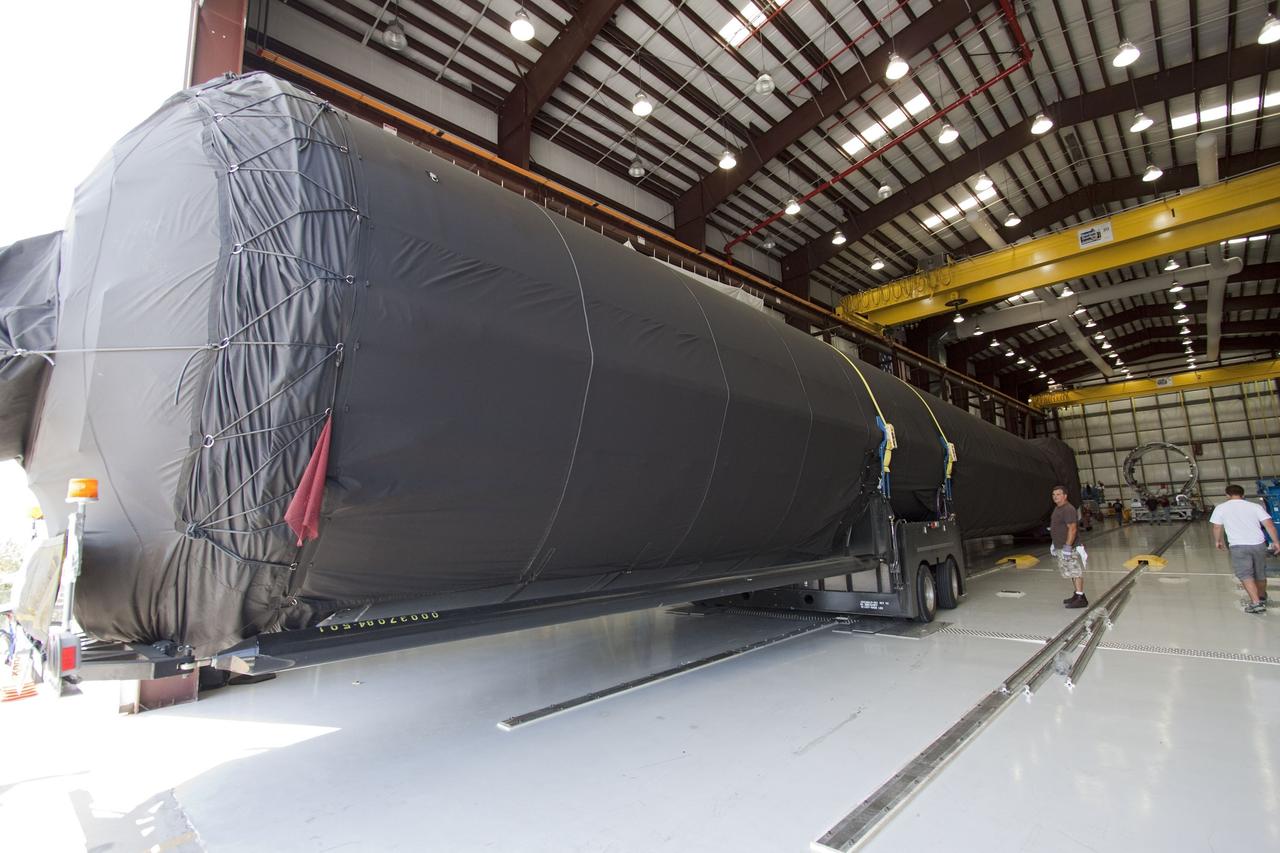
CAPE CANAVERAL, Fla. -- The first stage of the SpaceX COTS-2 Falcon 9 rocket has been moved to a SpaceX hangar at Pad 40 at Cape Canaveral Air Force Station in Florida. Once assembled, it will be a two-stage fully integrated launch vehicle, consisting of a first stage powered by nine SpaceX-developed Merlin 1C engines, a second stage, an interstage, an unpressurized trunk and the Dragon spacecraft qualification unit. SpaceX was awarded procurement for three demonstration flights under the Commercial Orbital Transportation Services, or COTS, program managed by NASA's Johnson Space Center in Houston. A subsequent contract for Commercial Resupply Services, or CRS, was awarded in late 2008 to resupply the International Space Station. The SpaceX CRS contract provides for 12 missions to resupply the station from 2011 through 2015. Photo credit: NASA/Jack Pfaller
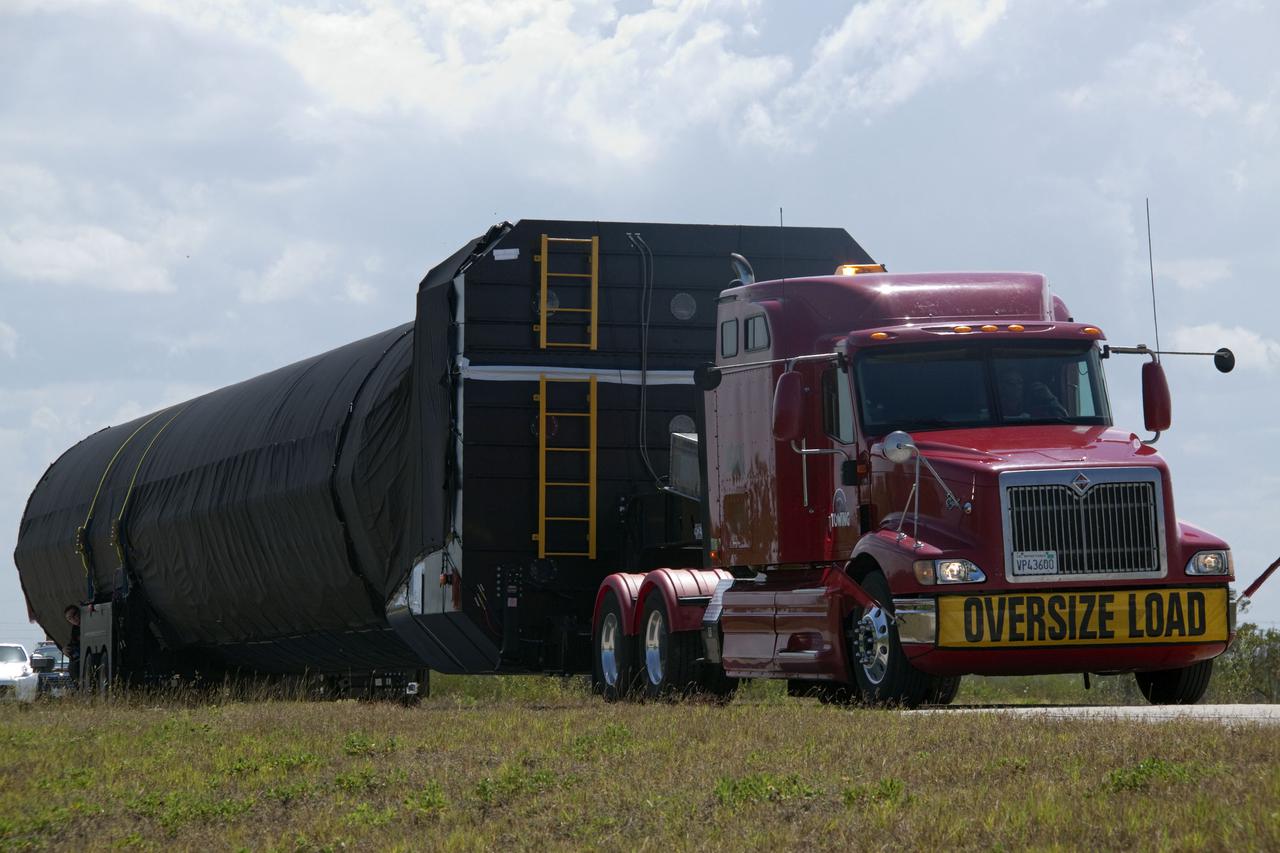
CAPE CANAVERAL, Fla. -- The first stage of the SpaceX COTS-2 Falcon 9 rocket is being transported to a SpaceX hangar at Pad 40 at Cape Canaveral Air Force Station in Florida. Once assembled, it will be a two-stage fully integrated launch vehicle, consisting of a first stage powered by nine SpaceX-developed Merlin 1C engines, a second stage, an interstage, an unpressurized trunk and the Dragon spacecraft qualification unit. SpaceX was awarded procurement for three demonstration flights under the Commercial Orbital Transportation Services, or COTS, program managed by NASA's Johnson Space Center in Houston. A subsequent contract for Commercial Resupply Services, or CRS, was awarded in late 2008 to resupply the International Space Station. The SpaceX CRS contract provides for 12 missions to resupply the station from 2011 through 2015. Photo credit: NASA_Jack Pfaller
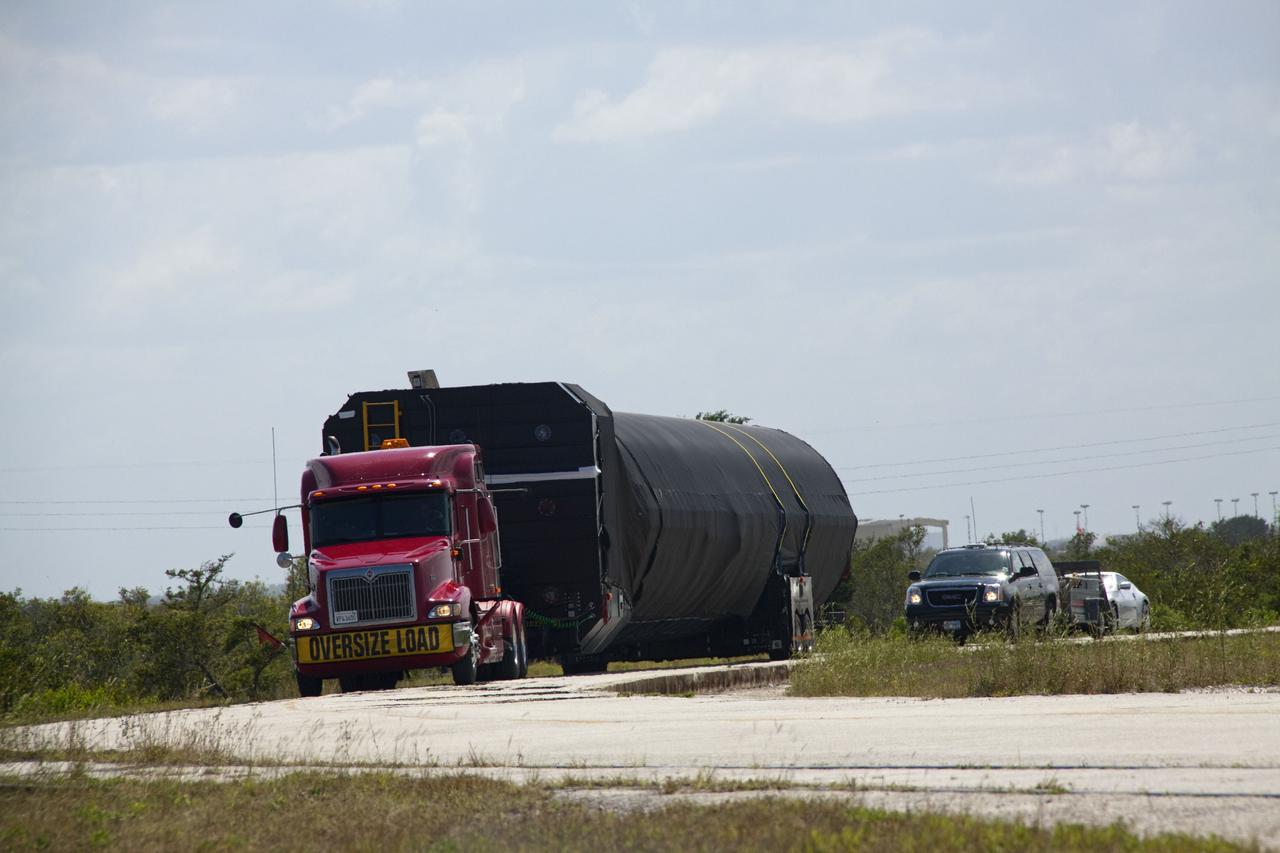
CAPE CANAVERAL, Fla. -- The first stage of the SpaceX COTS-2 Falcon 9 rocket is being transported to a SpaceX hangar at Pad 40 at Cape Canaveral Air Force Station in Florida. Once assembled, it will be a two-stage fully integrated launch vehicle, consisting of a first stage powered by nine SpaceX-developed Merlin 1C engines, a second stage, an interstage, an unpressurized trunk and the Dragon spacecraft qualification unit. SpaceX was awarded procurement for three demonstration flights under the Commercial Orbital Transportation Services, or COTS, program managed by NASA's Johnson Space Center in Houston. A subsequent contract for Commercial Resupply Services, or CRS, was awarded in late 2008 to resupply the International Space Station. The SpaceX CRS contract provides for 12 missions to resupply the station from 2011 through 2015. Photo credit: NASA_Jack Pfaller
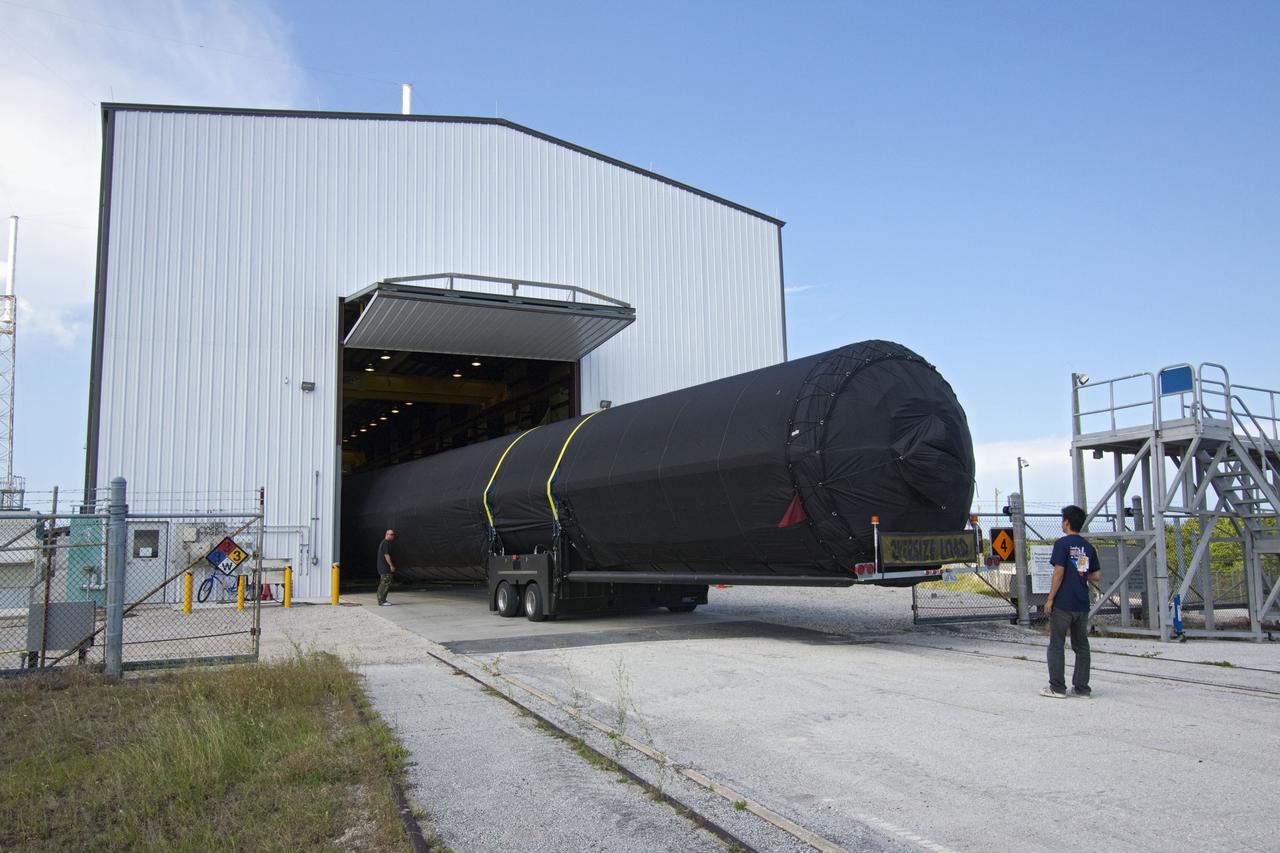
CAPE CANAVERAL, Fla. -- The first stage of the SpaceX COTS-2 Falcon 9 rocket is being moved into a SpaceX hangar at Pad 40 at Cape Canaveral Air Force Station in Florida. Once assembled, it will be a two-stage fully integrated launch vehicle, consisting of a first stage powered by nine SpaceX-developed Merlin 1C engines, a second stage, an interstage, an unpressurized trunk and the Dragon spacecraft qualification unit. SpaceX was awarded procurement for three demonstration flights under the Commercial Orbital Transportation Services, or COTS, program managed by NASA's Johnson Space Center in Houston. A subsequent contract for Commercial Resupply Services, or CRS, was awarded in late 2008 to resupply the International Space Station. The SpaceX CRS contract provides for 12 missions to resupply the station from 2011 through 2015. Photo credit: NASA/Jack Pfaller
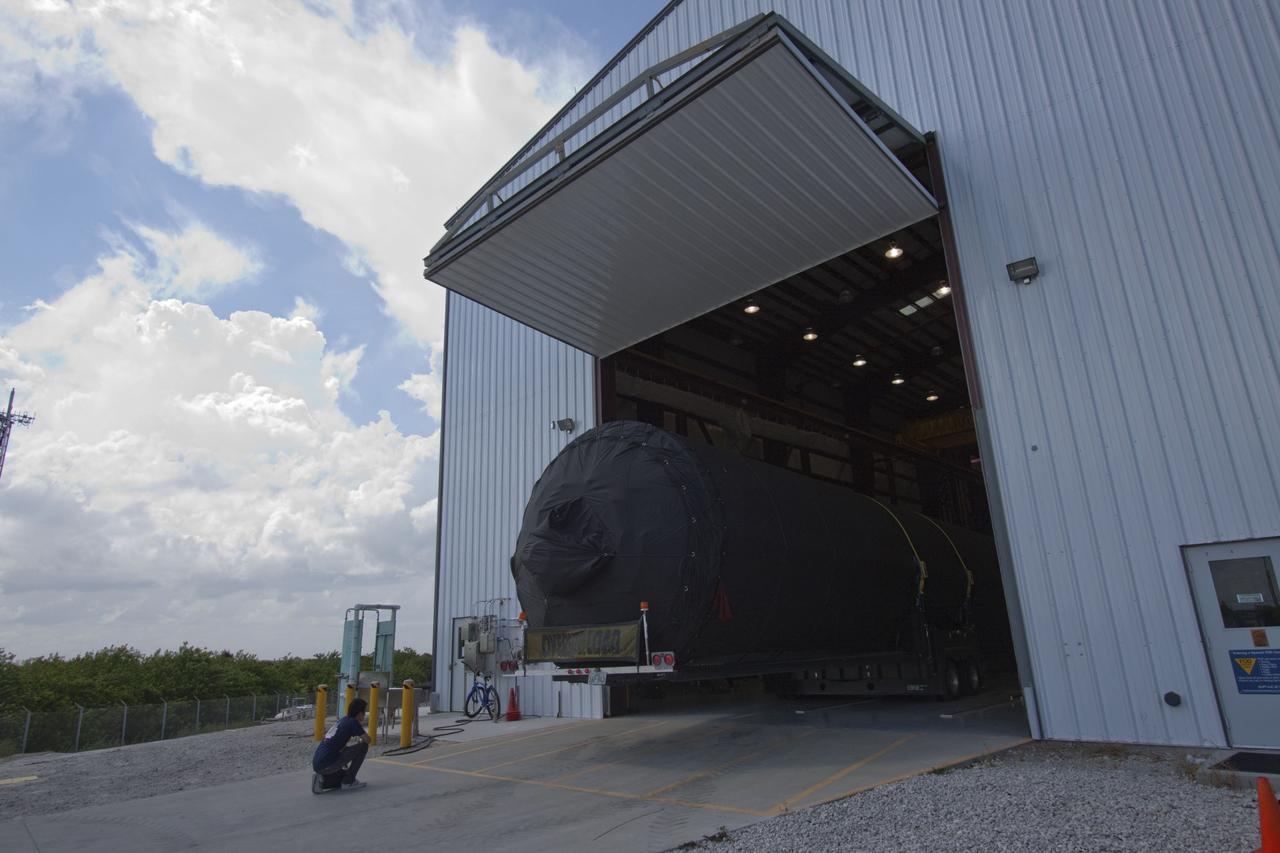
CAPE CANAVERAL, Fla. -- The first stage of the SpaceX COTS-2 Falcon 9 rocket is being moved into a SpaceX hangar at Pad 40 at Cape Canaveral Air Force Station in Florida. Once assembled, it will be a two-stage fully integrated launch vehicle, consisting of a first stage powered by nine SpaceX-developed Merlin 1C engines, a second stage, an interstage, an unpressurized trunk and the Dragon spacecraft qualification unit. SpaceX was awarded procurement for three demonstration flights under the Commercial Orbital Transportation Services, or COTS, program managed by NASA's Johnson Space Center in Houston. A subsequent contract for Commercial Resupply Services, or CRS, was awarded in late 2008 to resupply the International Space Station. The SpaceX CRS contract provides for 12 missions to resupply the station from 2011 through 2015. Photo credit: NASA/Jack Pfaller
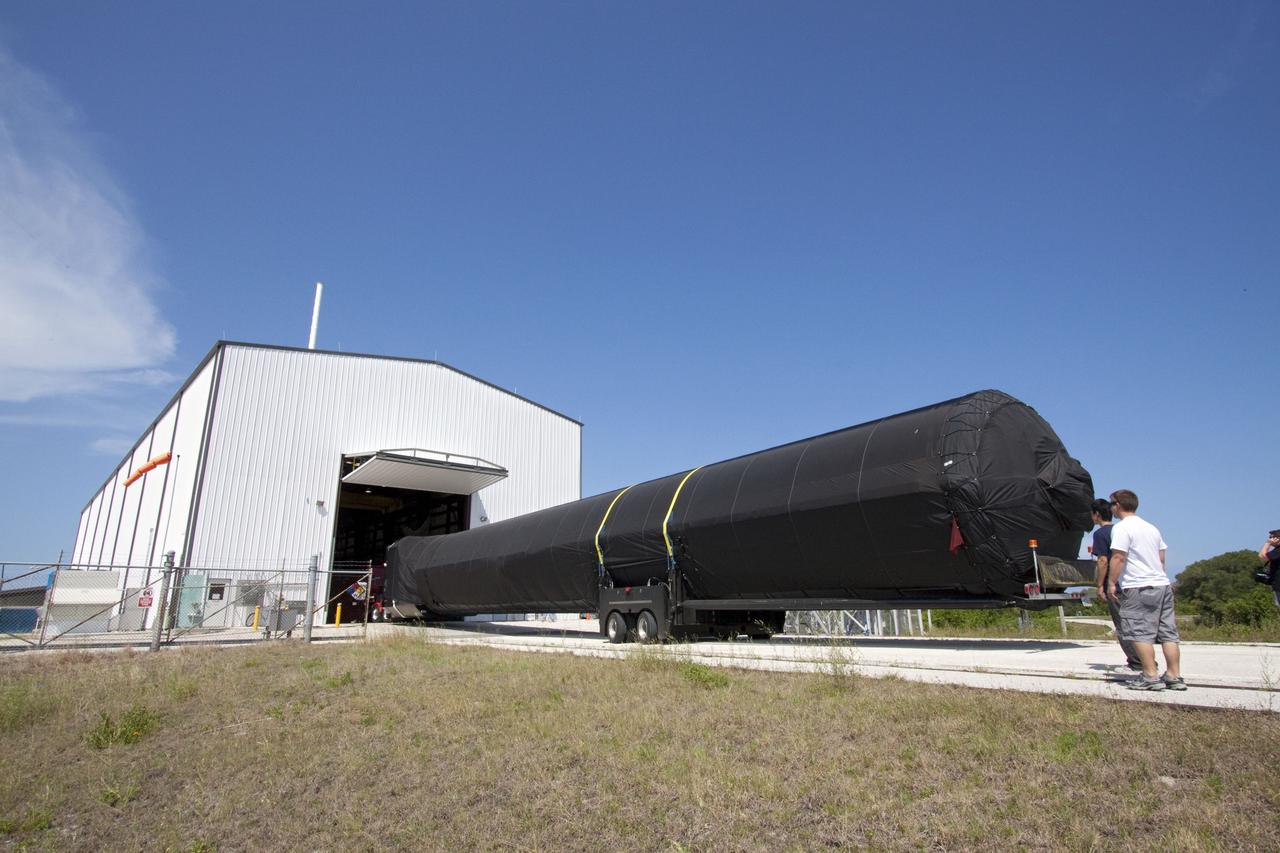
CAPE CANAVERAL, Fla. -- The first stage of the SpaceX COTS-2 Falcon 9 rocket is being moved into a SpaceX hangar at Pad 40 at Cape Canaveral Air Force Station in Florida. Once assembled, it will be a two-stage fully integrated launch vehicle, consisting of a first stage powered by nine SpaceX-developed Merlin 1C engines, a second stage, an interstage, an unpressurized trunk and the Dragon spacecraft qualification unit. SpaceX was awarded procurement for three demonstration flights under the Commercial Orbital Transportation Services, or COTS, program managed by NASA's Johnson Space Center in Houston. A subsequent contract for Commercial Resupply Services, or CRS, was awarded in late 2008 to resupply the International Space Station. The SpaceX CRS contract provides for 12 missions to resupply the station from 2011 through 2015. Photo credit: NASA/Jack Pfaller
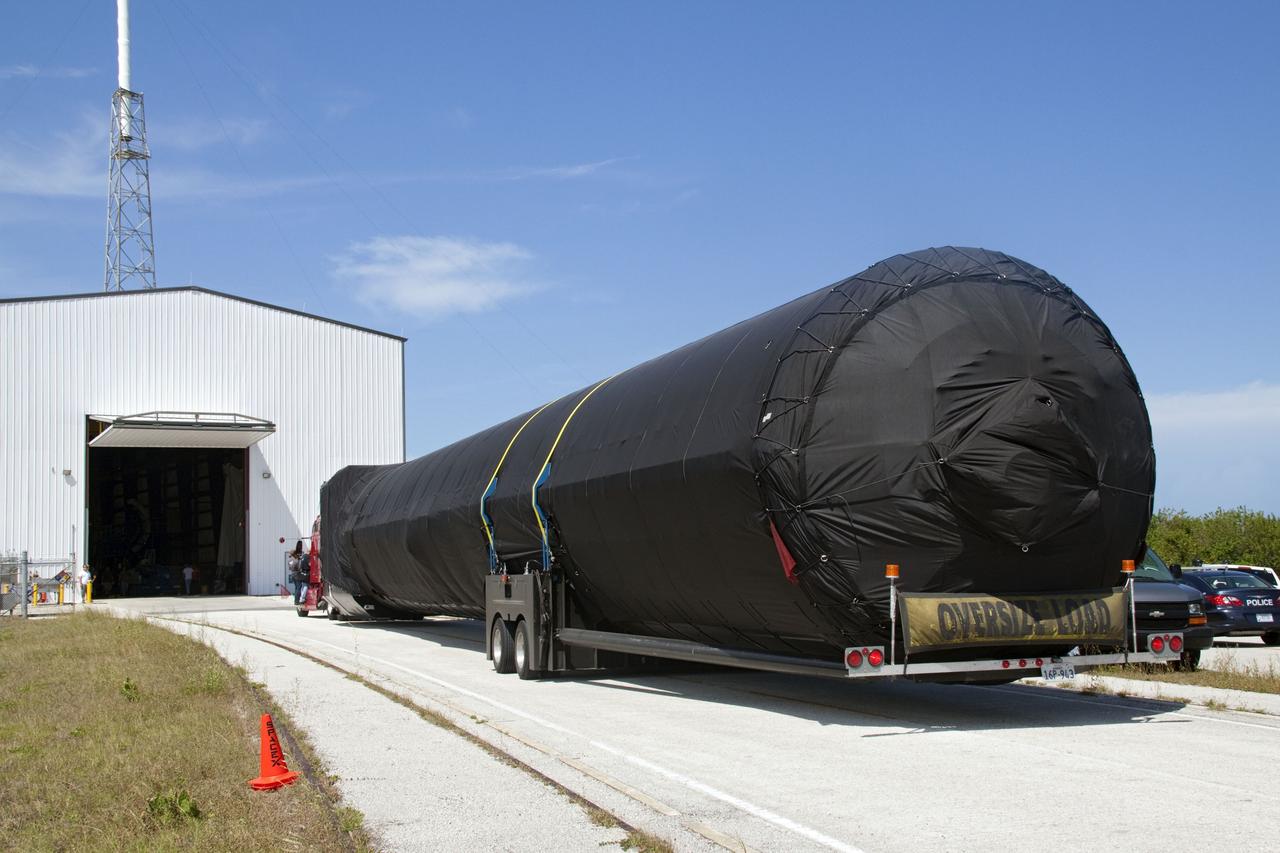
CAPE CANAVERAL, Fla. -- The first stage of the SpaceX COTS-2 Falcon 9 rocket is being moved into a SpaceX hangar at Pad 40 at Cape Canaveral Air Force Station in Florida. Once assembled, it will be a two-stage fully integrated launch vehicle, consisting of a first stage powered by nine SpaceX-developed Merlin 1C engines, a second stage, an interstage, an unpressurized trunk and the Dragon spacecraft qualification unit. SpaceX was awarded procurement for three demonstration flights under the Commercial Orbital Transportation Services, or COTS, program managed by NASA's Johnson Space Center in Houston. A subsequent contract for Commercial Resupply Services, or CRS, was awarded in late 2008 to resupply the International Space Station. The SpaceX CRS contract provides for 12 missions to resupply the station from 2011 through 2015. Photo credit: NASA/Jack Pfaller
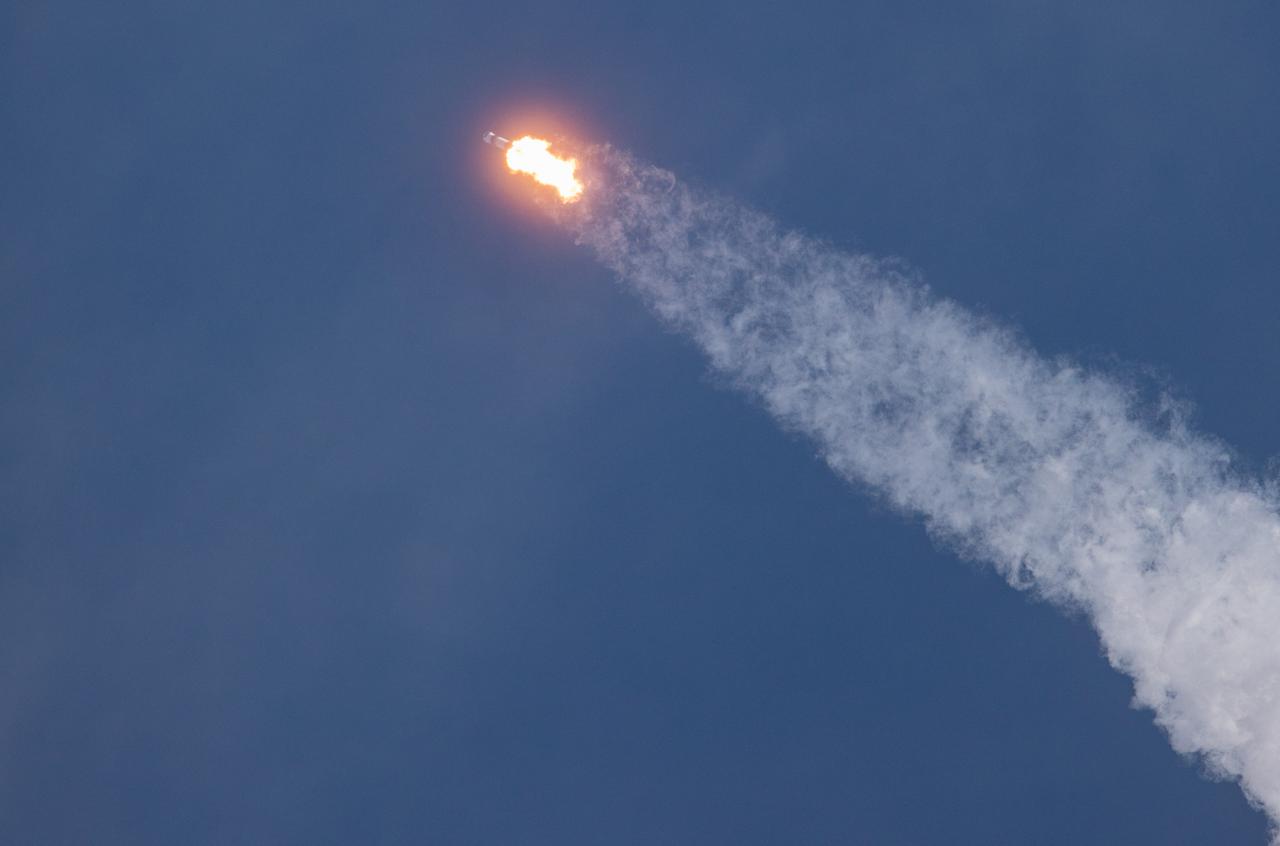
A SpaceX Falcon 9 rocket soars into the sky after lifting off from Launch Complex 39A at Kennedy Space Center in Florida at 11:17 a.m. EST on Dec. 6, 2020. The rocket is carrying the uncrewed cargo Dragon spacecraft on its journey to the International Space Station for NASA and SpaceX’s 21st Commercial Resupply Services (CRS-21) mission. Dragon will deliver more than 6,400 pounds of science investigations and cargo to the orbiting laboratory. The mission marks the first launch for SpaceX under NASA’s CRS-2 contract.
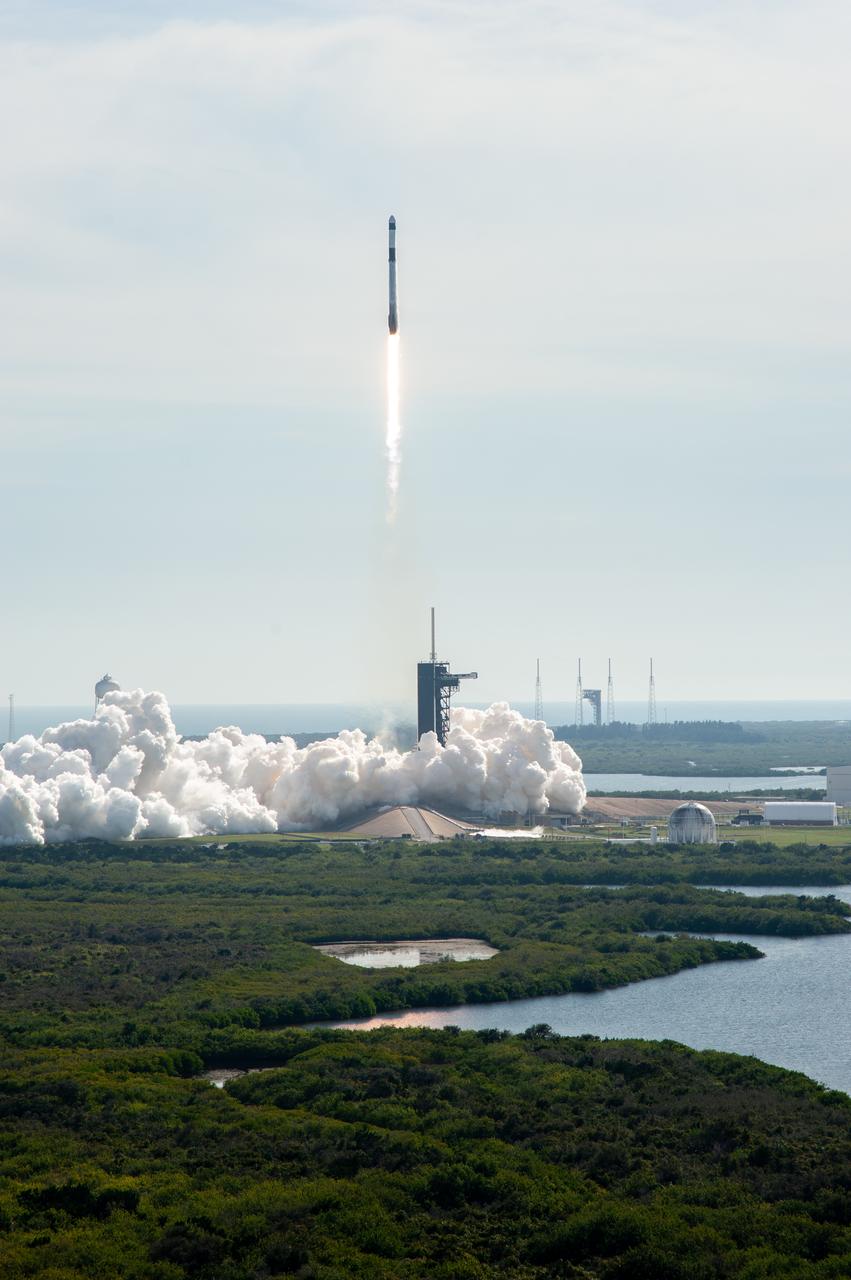
A SpaceX Falcon 9 rocket soars into the sky after lifting off from Launch Complex 39A at Kennedy Space Center in Florida at 11:17 a.m. EST on Dec. 6, 2020. The rocket is carrying the uncrewed cargo Dragon spacecraft on its journey to the International Space Station for NASA and SpaceX’s 21st Commercial Resupply Services (CRS-21) mission. Dragon will deliver more than 6,400 pounds of science investigations and cargo to the orbiting laboratory. The mission marks the first launch for SpaceX under NASA’s CRS-2 contract.

A SpaceX Falcon 9 rocket soars into the sky after lifting off from Launch Complex 39A at Kennedy Space Center in Florida at 11:17 a.m. EST on Dec. 6, 2020. The rocket is carrying the uncrewed cargo Dragon spacecraft on its journey to the International Space Station for NASA and SpaceX’s 21st Commercial Resupply Services (CRS-21) mission. Dragon will deliver more than 6,400 pounds of science investigations and cargo to the orbiting laboratory. The mission marks the first launch for SpaceX under NASA’s CRS-2 contract.

A SpaceX Falcon 9 rocket, topped with the upgraded version of the Cargo Dragon spacecraft, is seen inside the company’s hangar at NASA’s Kennedy Space Center in Florida on Dec. 2, 2020, prior to being rolled out to the launch pad in preparation for the 21st Commercial Resupply Services (CRS-21) launch. The first launch for SpaceX under NASA’s second Commercial Resupply Services contract, CRS-21 will deliver critical supplies, equipment, and material to support a variety of science and research investigations that will take place aboard the International Space Station. Liftoff is scheduled for 11:39 a.m. EST on Saturday, Dec. 5, from Kennedy’s Launch Complex 39A.

A SpaceX Falcon 9 rocket, topped with the upgraded version of the Cargo Dragon spacecraft, is seen inside the company’s hangar at NASA’s Kennedy Space Center in Florida on Dec. 2, 2020, prior to being rolled out to the launch pad in preparation for the 21st Commercial Resupply Services (CRS-21) launch. The first launch for SpaceX under NASA’s second Commercial Resupply Services contract, CRS-21 will deliver critical supplies, equipment, and material to support a variety of science and research investigations that will take place aboard the International Space Station. Liftoff is scheduled for 11:39 a.m. EST on Saturday, Dec. 5, from Kennedy’s Launch Complex 39A.
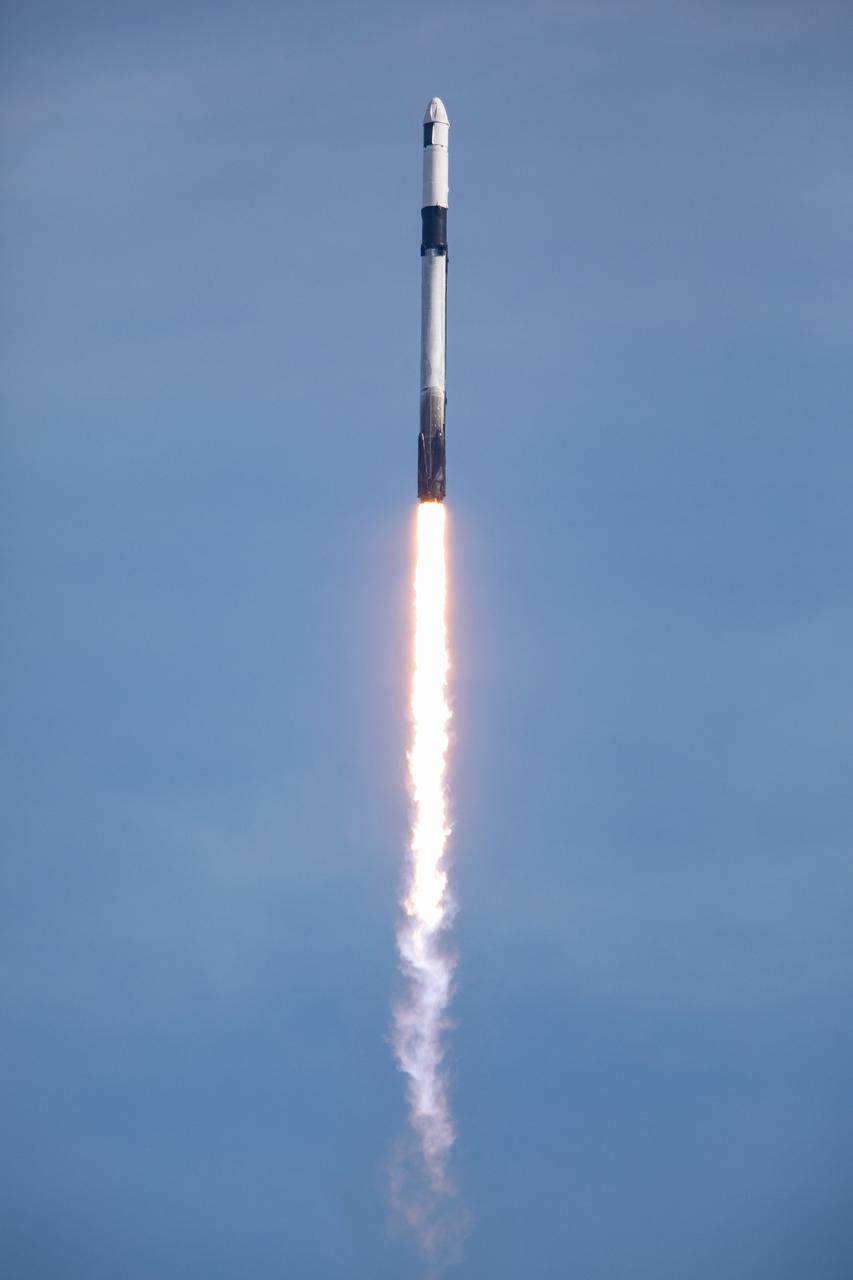
A SpaceX Falcon 9 rocket soars into the sky after lifting off from Launch Complex 39A at Kennedy Space Center in Florida at 11:17 a.m. EST on Dec. 6, 2020. The rocket is carrying the uncrewed cargo Dragon spacecraft on its journey to the International Space Station for NASA and SpaceX’s 21st Commercial Resupply Services (CRS-21) mission. Dragon will deliver more than 6,400 pounds of science investigations and cargo to the orbiting laboratory. The mission marks the first launch for SpaceX under NASA’s CRS-2 contract.
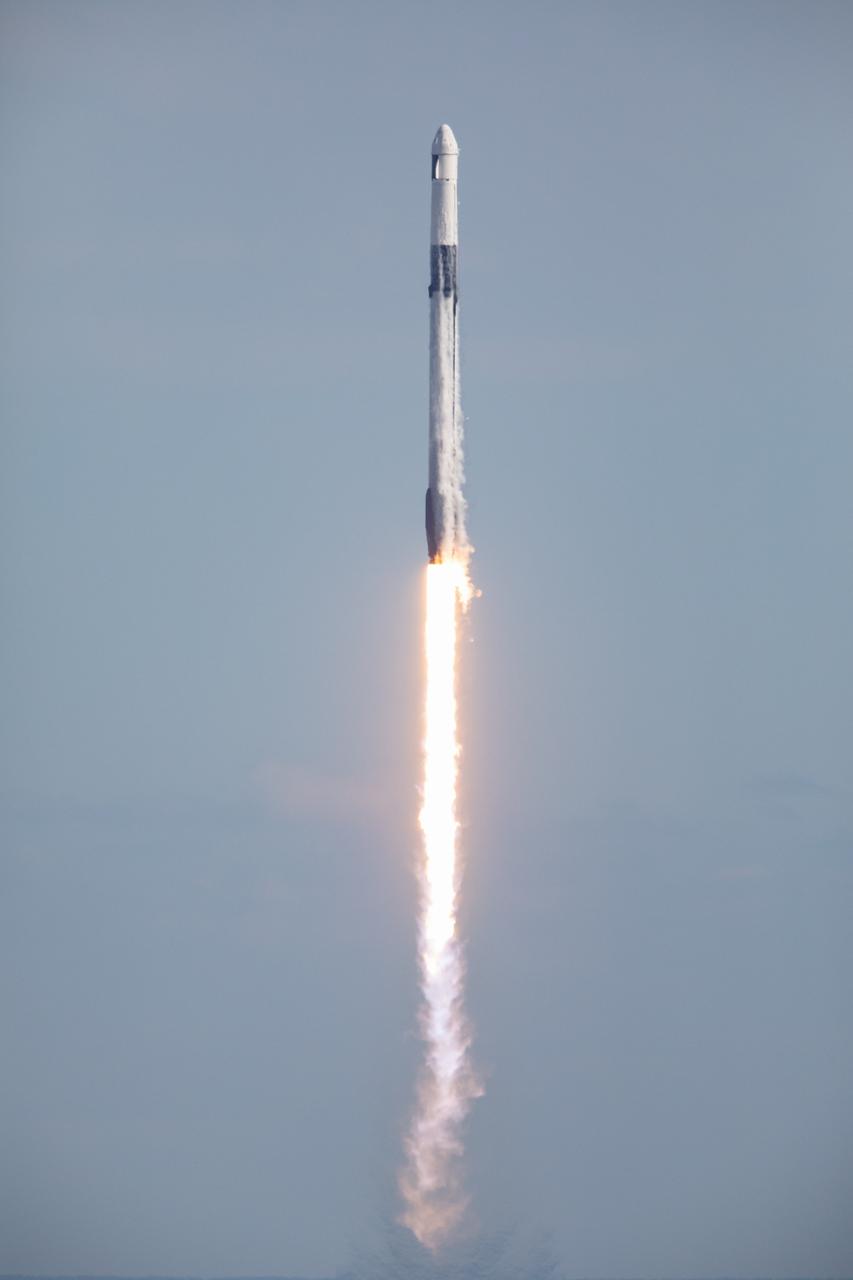
A SpaceX Falcon 9 rocket soars into the sky after lifting off from Launch Complex 39A at Kennedy Space Center in Florida at 11:17 a.m. EST on Dec. 6, 2020. The rocket is carrying the uncrewed cargo Dragon spacecraft on its journey to the International Space Station for NASA and SpaceX’s 21st Commercial Resupply Services (CRS-21) mission. Dragon will deliver more than 6,400 pounds of science investigations and cargo to the orbiting laboratory. The mission marks the first launch for SpaceX under NASA’s CRS-2 contract.
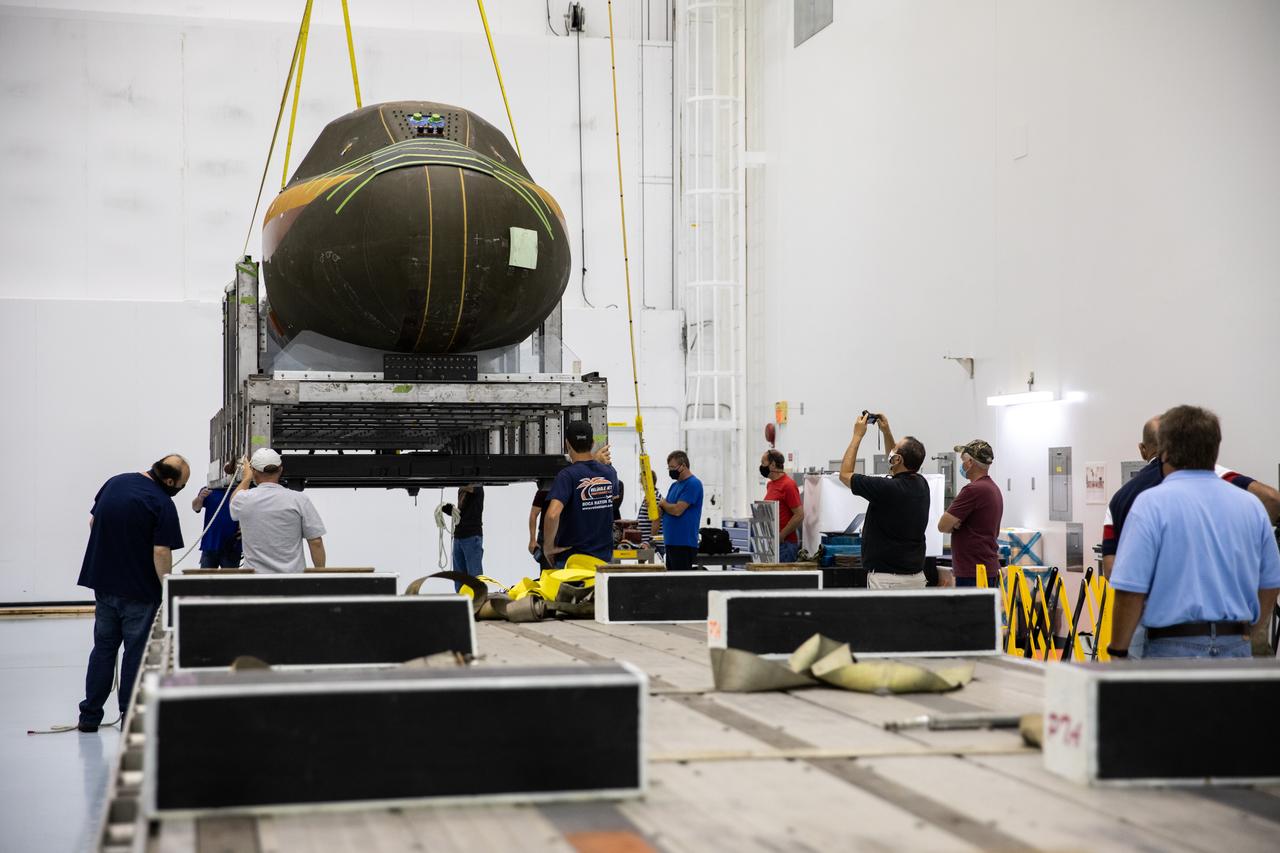
Inside the low bay of the Space Station Processing Facility at NASA’s Kennedy Space Center in Florida, Sierra Nevada Corporation’s (SNC) Dream Chaser pressure test article on its support structure is lifted up by crane from the flatbed truck on June 3, 2020, for its move into the high bay. The test article was shipped from Louisville, Colorado. It is similar to the actual pressurized cabin being used in the Dream Chaser spaceplane for Commercial Resupply Services-2 (CRS-2) missions. NASA selected Dream Chaser to provide cargo delivery, return and disposal service for the International Space Station under the CRS-2 contract. The test article will remain at Kennedy while SNC engineers use it to develop and verify refurbishment operations that will be used on Dream Chaser between flights.
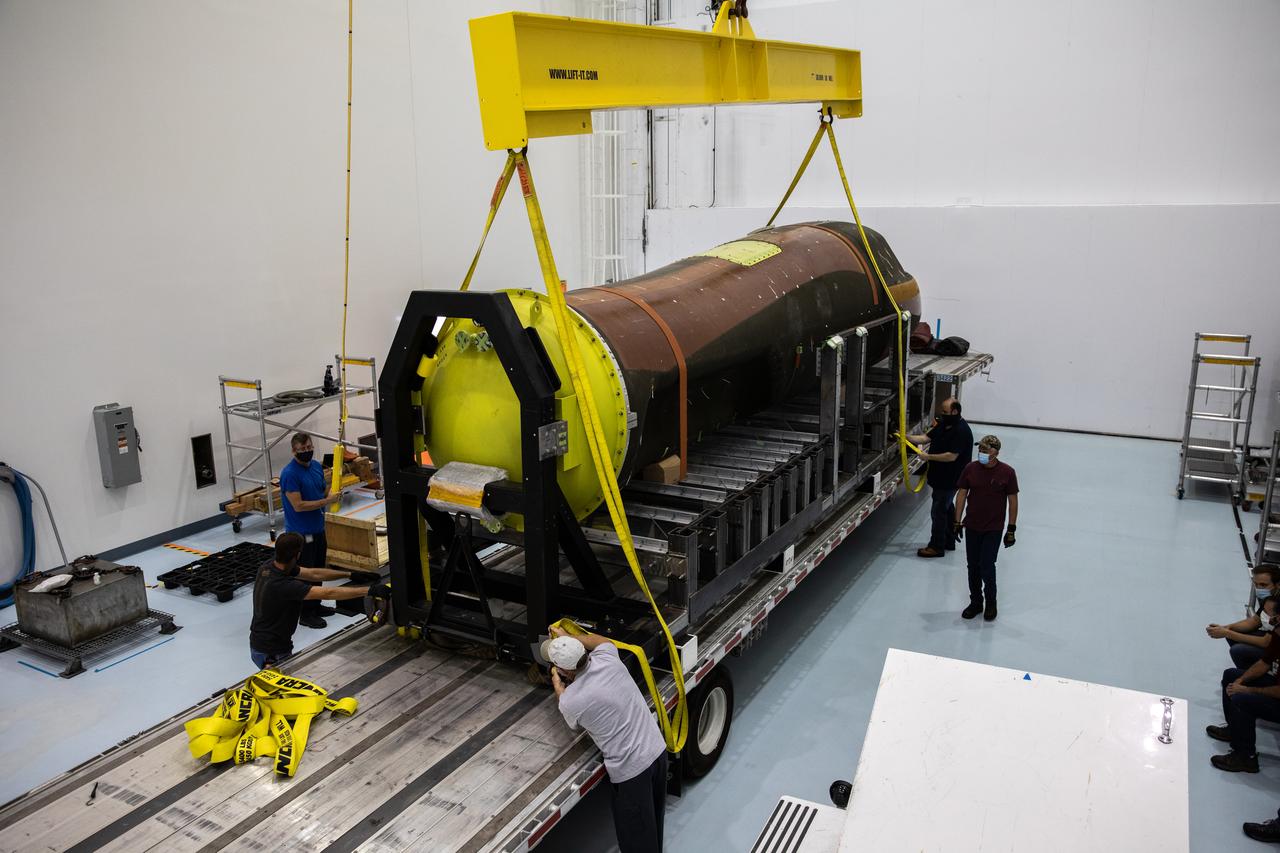
Sierra Nevada Corporation’s (SNC) Dream Chaser pressure test article is moved into the low bay of the Space Station Processing Facility at NASA’s Kennedy Space Center in Florida on June 3, 2020. Workers attach a crane to the test article to begin lifting it off of the flatbed truck. The test article was shipped from Louisville, Colorado. It is similar to the actual pressurized cabin being used in the Dream Chaser spaceplane for Commercial Resupply Services-2 (CRS-2) missions. NASA selected Dream Chaser to provide cargo delivery, return and disposal service for the International Space Station under the CRS-2 contract. The test article will remain at Kennedy while SNC engineers use it to develop and verify refurbishment operations that will be used on Dream Chaser between flights.
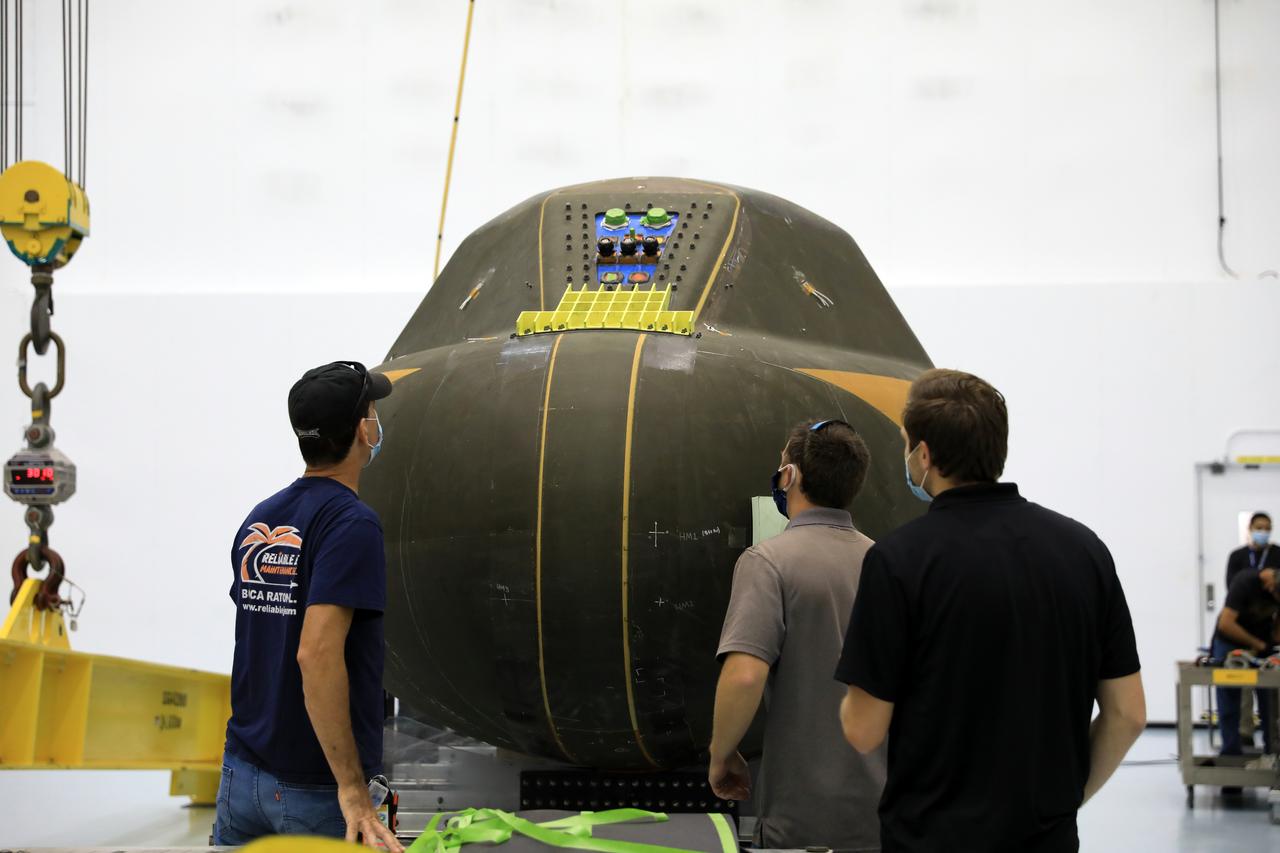
Inside the low bay of the Space Station Processing Facility at NASA’s Kennedy Space Center in Florida, workers monitor the progress as Sierra Nevada Corporation’s (SNC) Dream Chaser pressure test article on its support structure is lowered by crane away from the flatbed truck on June 3, 2020, for its move into the high bay. The test article was shipped from Louisville, Colorado. It is similar to the actual pressurized cabin being used in the Dream Chaser spaceplane for Commercial Resupply Services-2 (CRS-2) missions. NASA selected Dream Chaser to provide cargo delivery, return and disposal service for the International Space Station under the CRS-2 contract. The test article will remain at Kennedy while SNC engineers use it to develop and verify refurbishment operations that will be used on Dream Chaser between flights.
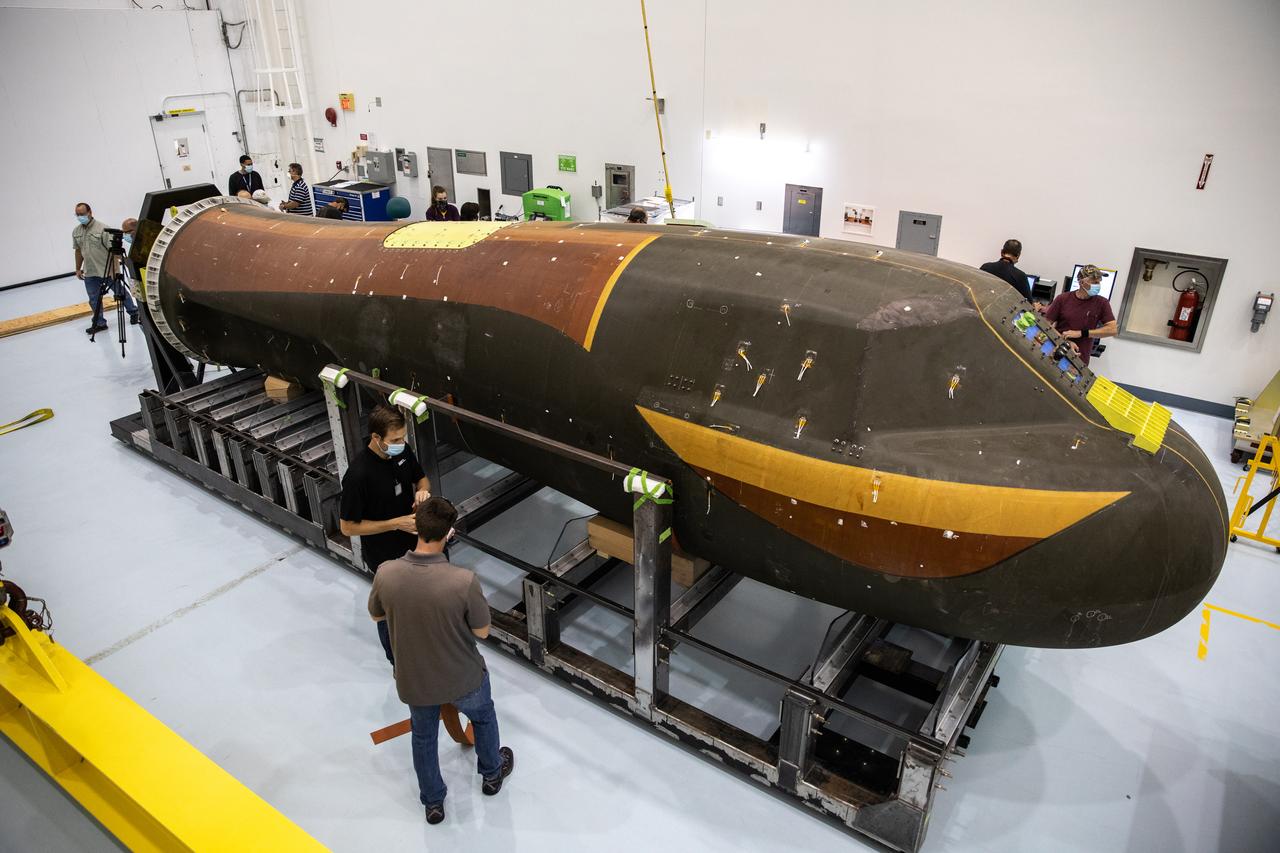
Inside the low bay of the Space Station Processing Facility at NASA’s Kennedy Space Center in Florida, workers assist as Sierra Nevada Corporation’s (SNC) Dream Chaser pressure test article on its support structure is lowered by crane on June 3, 2020, for its move into the high bay. The test article was shipped from Louisville, Colorado. It is similar to the actual pressurized cabin being used in the Dream Chaser spaceplane for Commercial Resupply Services-2 (CRS-2) missions. NASA selected Dream Chaser to provide cargo delivery, return and disposal service for the International Space Station under the CRS-2 contract. The test article will remain at Kennedy while SNC engineers use it to develop and verify refurbishment operations that will be used on Dream Chaser between flights.
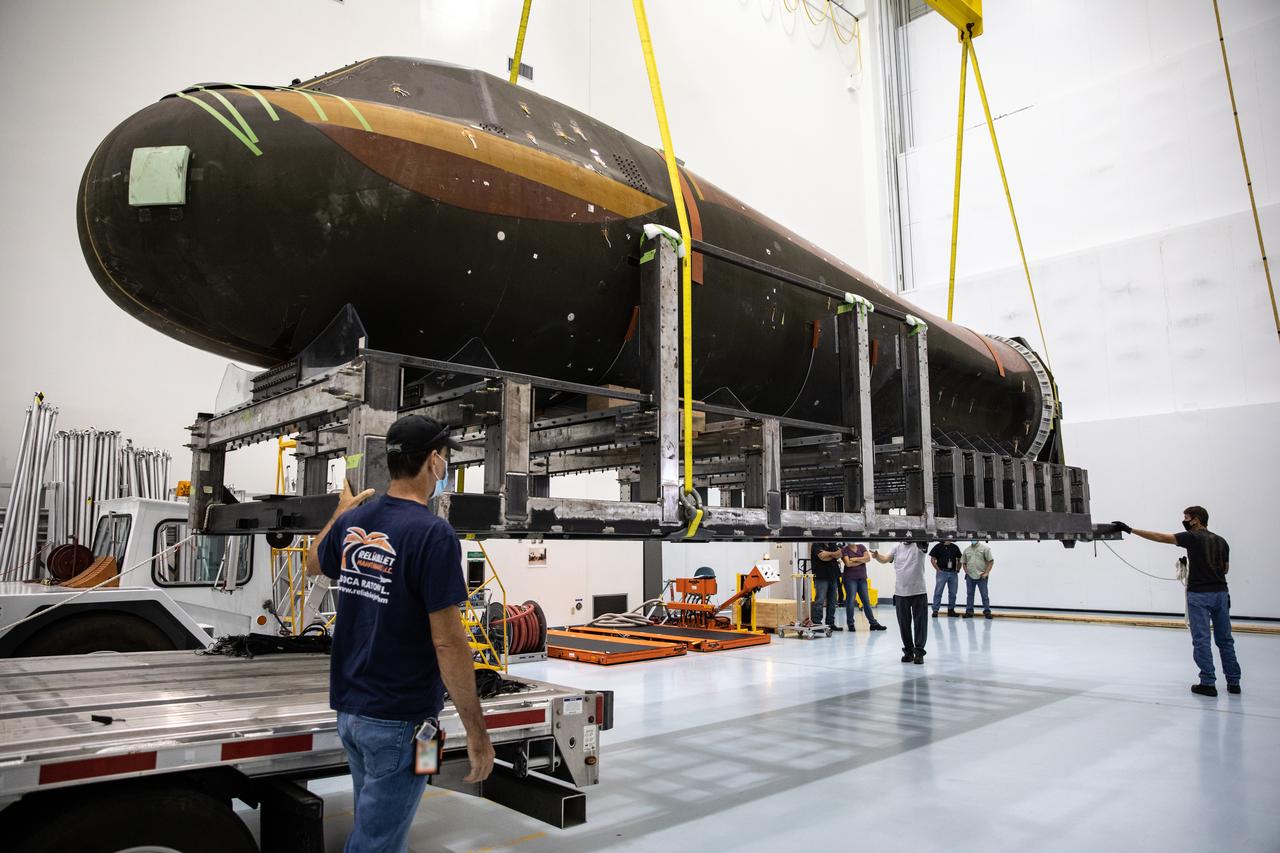
Inside the low bay of the Space Station Processing Facility at NASA’s Kennedy Space Center in Florida, Sierra Nevada Corporation’s (SNC) Dream Chaser pressure test article on its support structure is lifted up by crane from the flatbed truck on June 3, 2020, for its move into the high bay. The test article was shipped from Louisville, Colorado. It is similar to the actual pressurized cabin being used in the Dream Chaser spaceplane for Commercial Resupply Services-2 (CRS-2) missions. NASA selected Dream Chaser to provide cargo delivery, return and disposal service for the International Space Station under the CRS-2 contract. The test article will remain at Kennedy while SNC engineers use it to develop and verify refurbishment operations that will be used on Dream Chaser between flights.
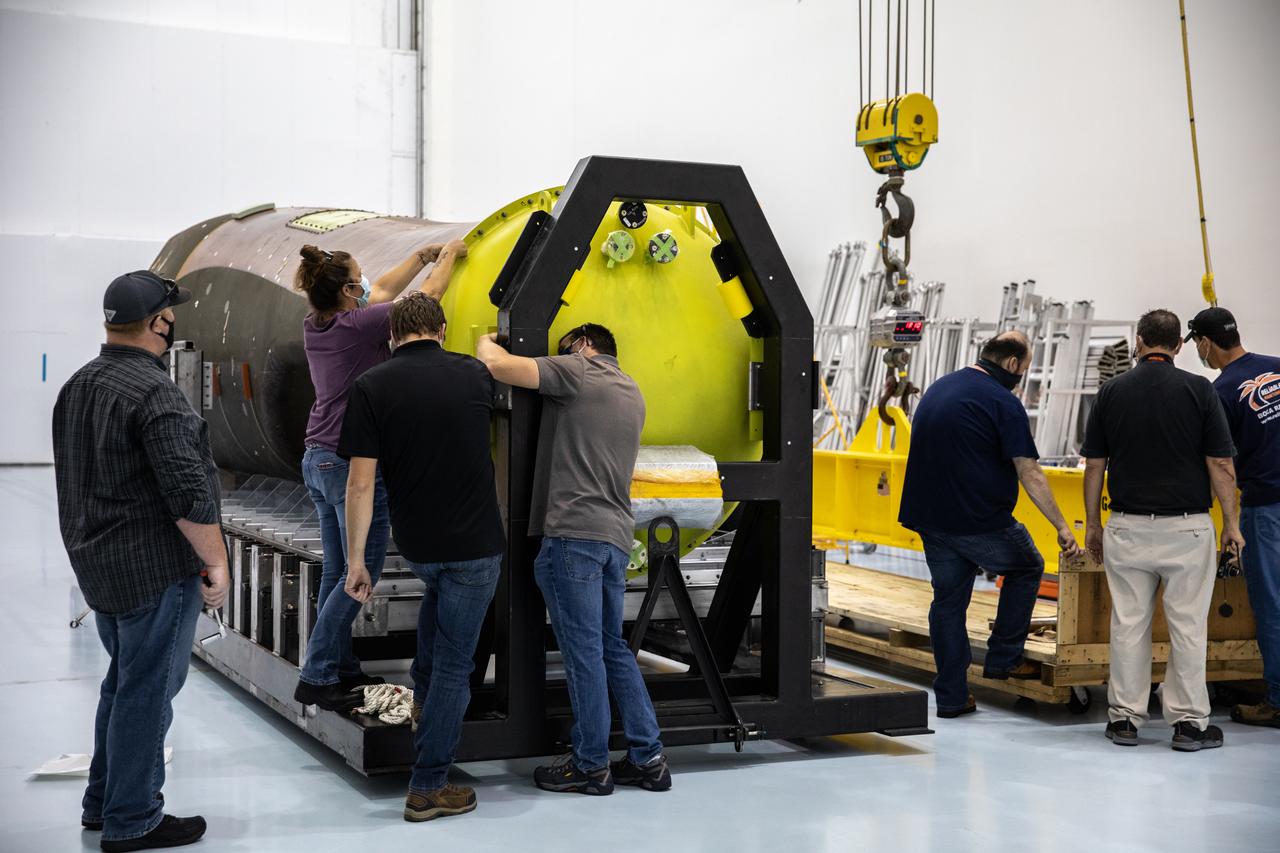
Inside the low bay of the Space Station Processing Facility at NASA’s Kennedy Space Center in Florida, workers assist as Sierra Nevada Corporation’s (SNC) Dream Chaser pressure test article on its support structure is lowered by crane on June 3, 2020, for its move into the high bay. The test article was shipped from Louisville, Colorado. It is similar to the actual pressurized cabin being used in the Dream Chaser spaceplane for Commercial Resupply Services-2 (CRS-2) missions. NASA selected Dream Chaser to provide cargo delivery, return and disposal service for the International Space Station under the CRS-2 contract. The test article will remain at Kennedy while SNC engineers use it to develop and verify refurbishment operations that will be used on Dream Chaser between flights.
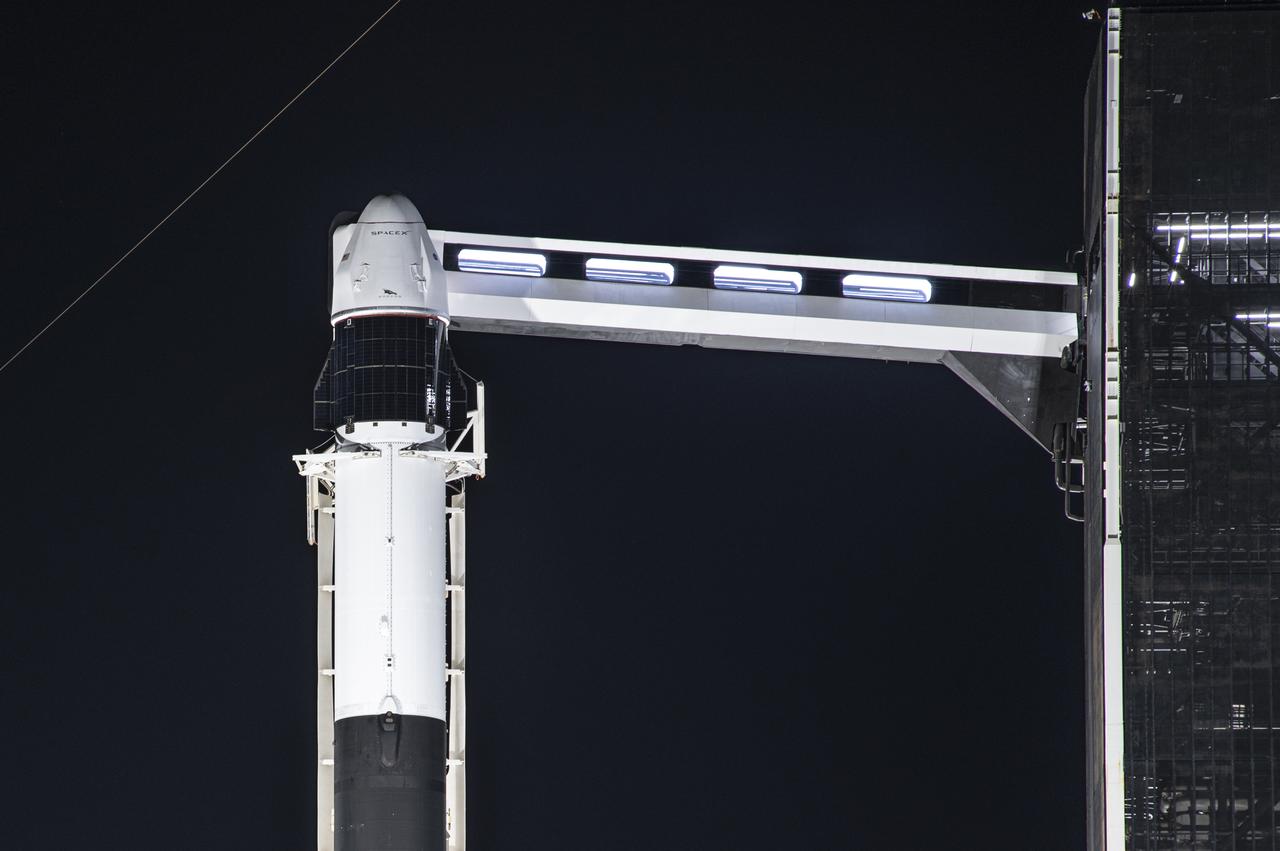
A SpaceX Falcon 9 rocket, topped with the company’s upgraded version of the Dragon spacecraft, stands vertical at NASA Kennedy Space Center’s Launch Complex 39A in Florida on Wednesday, Dec. 2, 2020. The first mission for SpaceX under NASA’s second Commercial Resupply Services contract, CRS-21 is scheduled to lift off from Launch Complex 39A on Saturday, Dec. 5, at 11:39 a.m. EST. The mission will deliver critical supplies and equipment to the International Space Station.

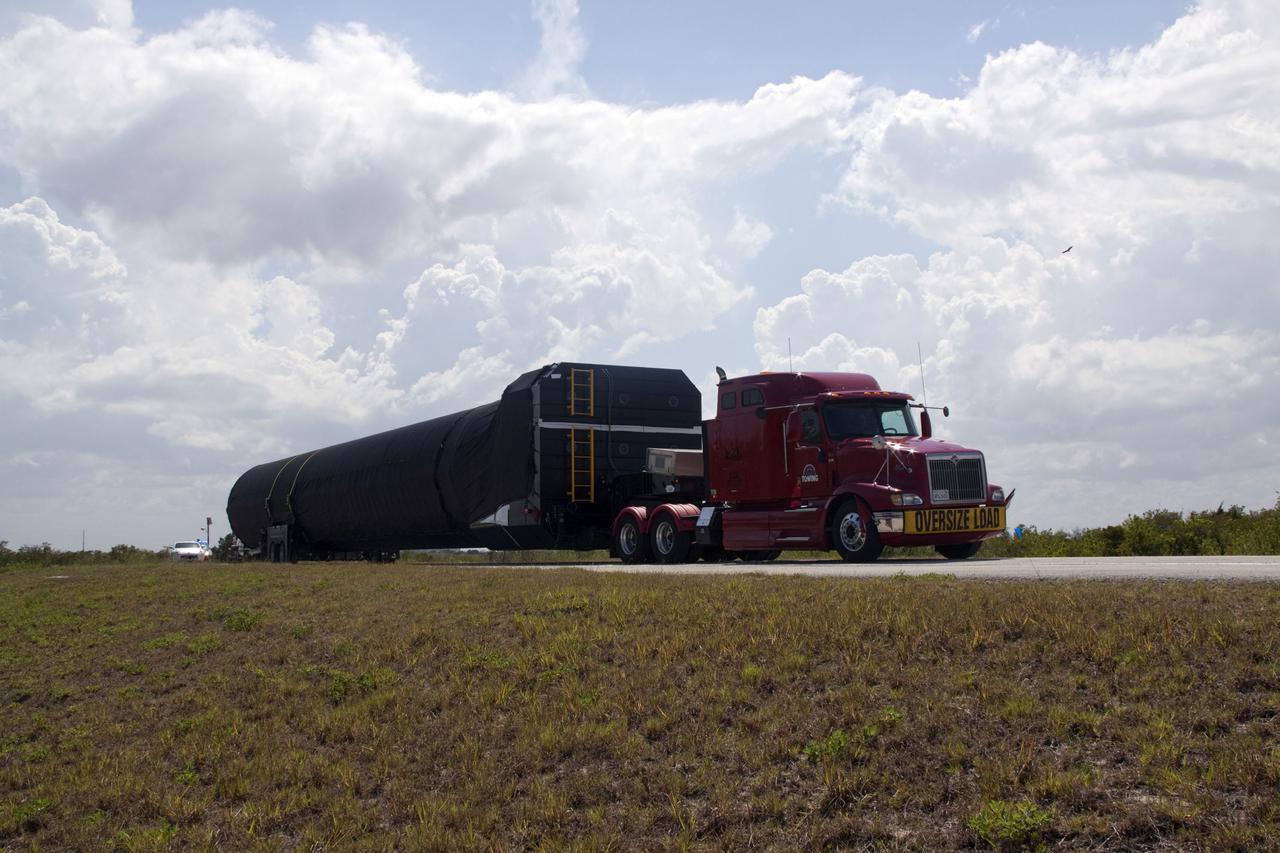
CAPE CANAVERAL, Fla. – A truck carrying the first stage of the SpaceX Falcon 9 rocket arrives at Cape Canaveral Air Force Station in Florida. The two-stage rocket will launch the company's Dragon spacecraft on the upcoming SpaceX CRS-2 mission. The flight will be the second commercial resupply mission to the International Space Station by Space Exploration Technologies, or SpaceX. NASA has contracted for a total of 12 commercial resupply flights from SpaceX and eight from the Orbital Sciences Corp. Photo credit: NASA/Jim Grossmann
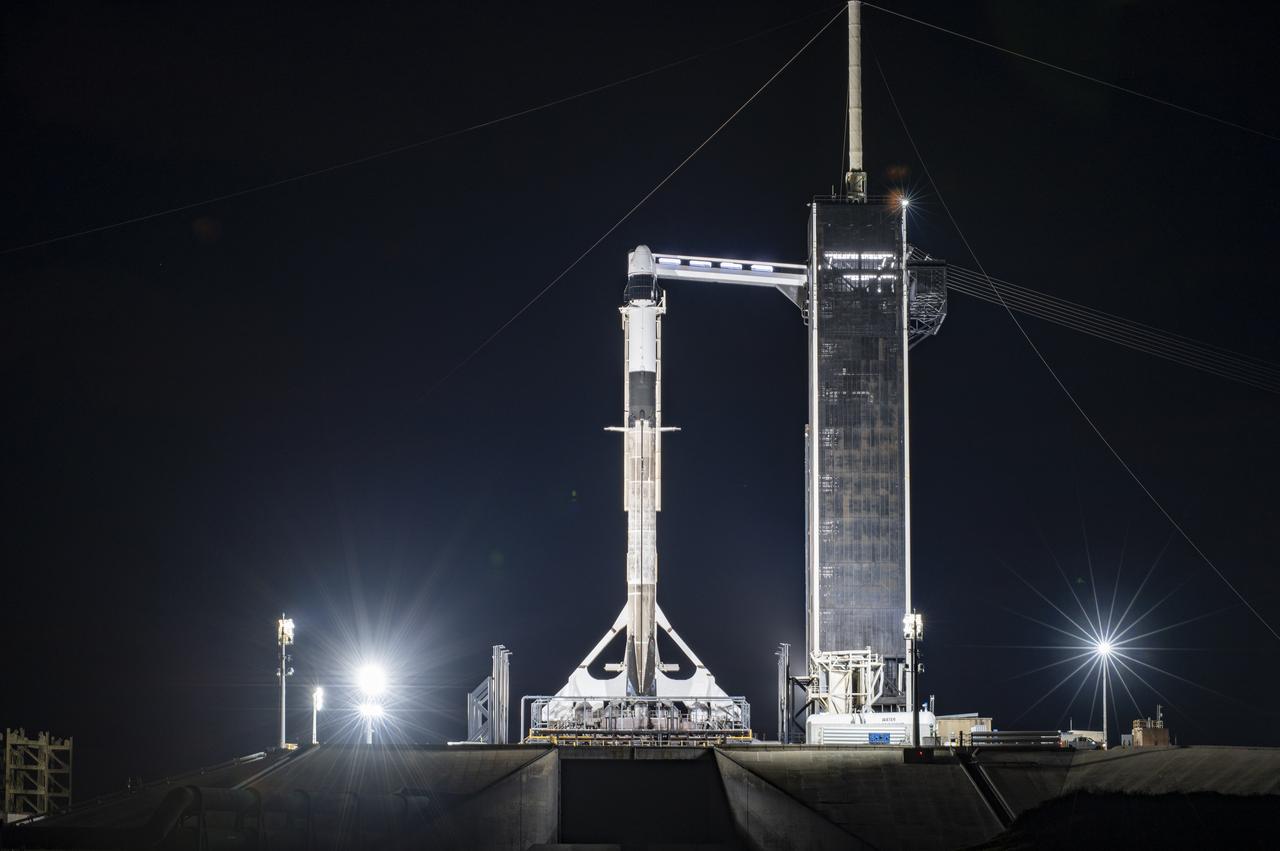
A SpaceX Falcon 9 rocket, topped with the company’s upgraded version of the Dragon spacecraft, stands vertical at NASA Kennedy Space Center’s Launch Complex 39A in Florida on Wednesday, Dec. 2, 2020. The first mission for SpaceX under NASA’s second Commercial Resupply Services contract, CRS-21 is scheduled to lift off from Launch Complex 39A on Saturday, Dec. 5, at 11:39 a.m. EST. The mission will deliver critical supplies and equipment to the International Space Station.
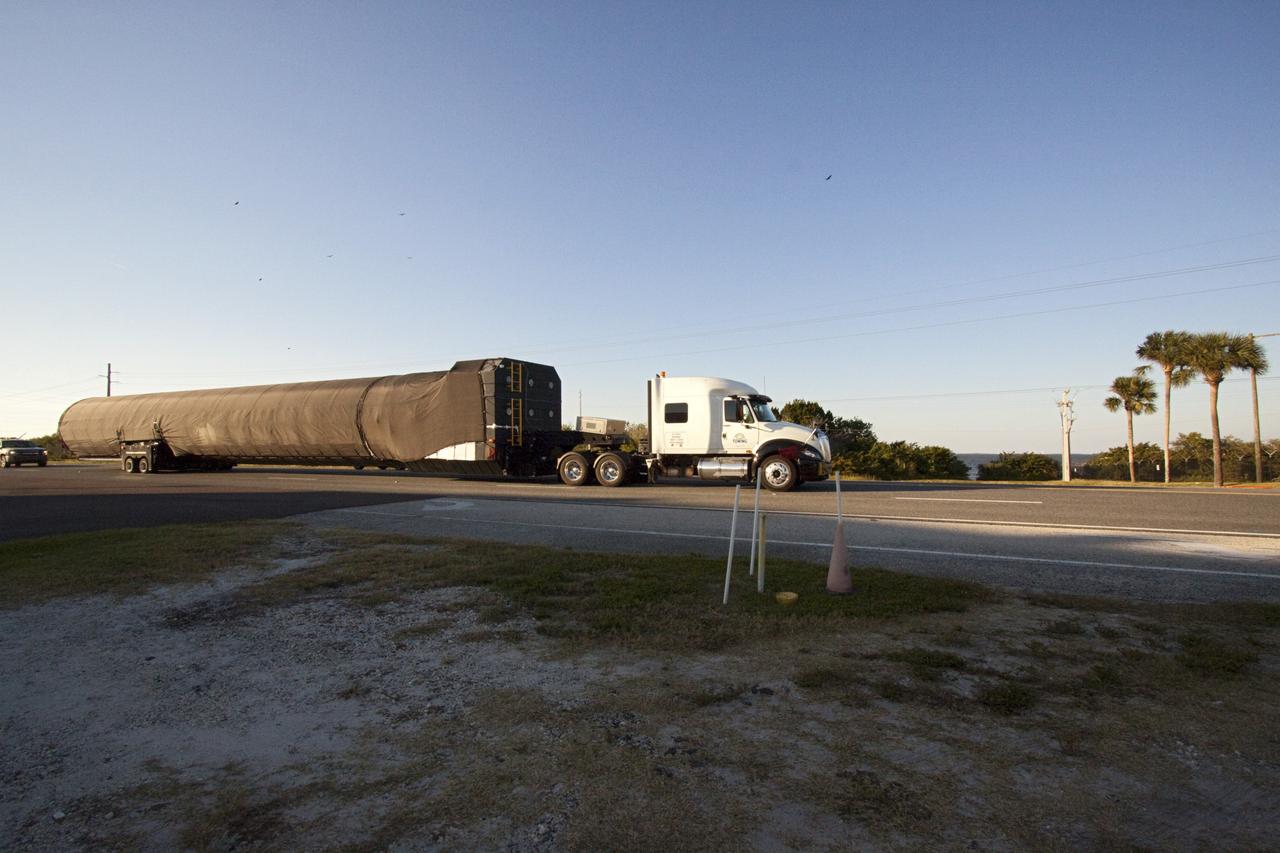
CAPE CANAVERAL, Fla. – A truck carrying the first stage of the SpaceX Falcon 9 rocket arrives at Cape Canaveral Air Force Station in Florida. The two-stage rocket will launch the company's Dragon spacecraft on the upcoming SpaceX CRS-2 mission. The flight will be the second commercial resupply mission to the International Space Station by Space Exploration Technologies, or SpaceX. NASA has contracted for a total of 12 commercial resupply flights from SpaceX and eight from the Orbital Sciences Corp. Photo credit: NASA/Jim Grossmann
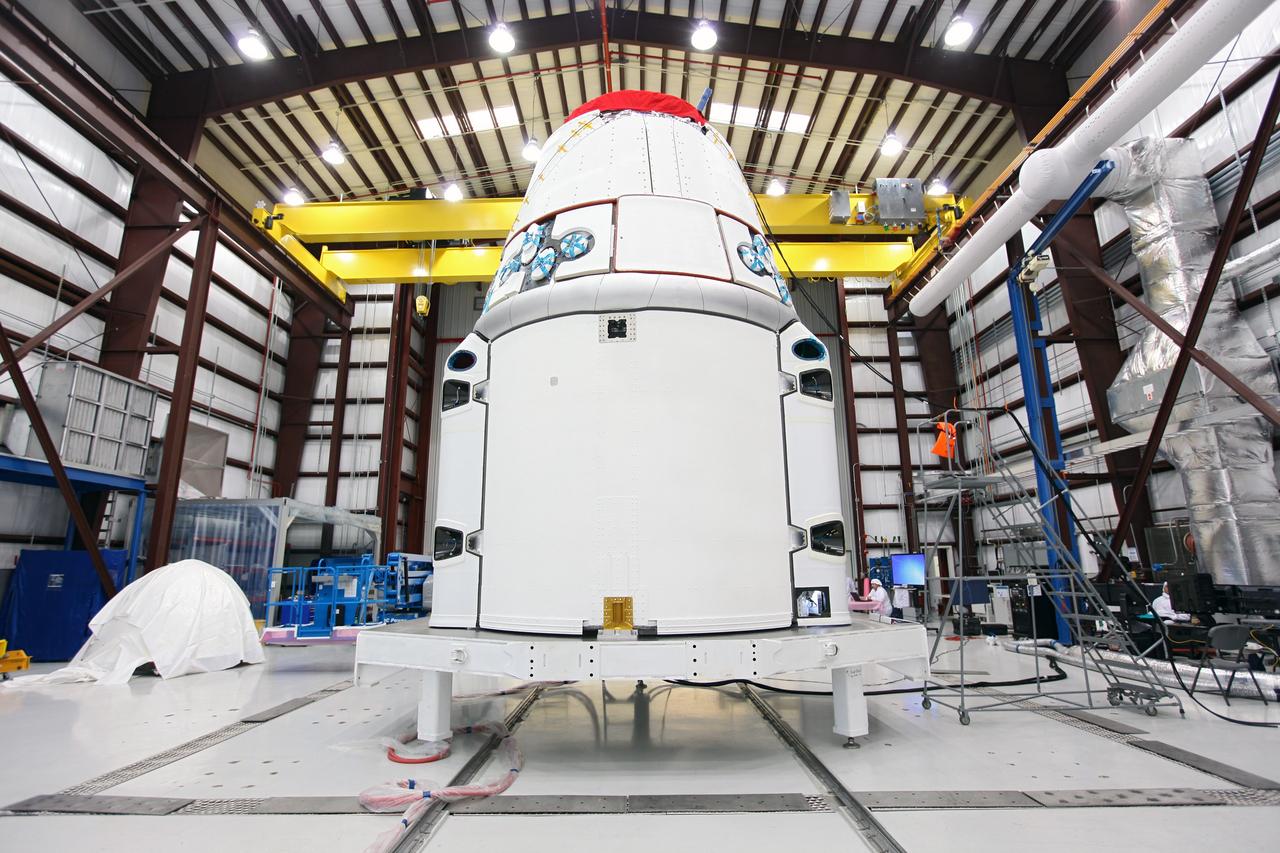
CAPE CANAVERAL, Fla. – The Space Exploration Technologies, or SpaceX, Dragon spacecraft with solar array fairings attached, stands inside a processing hangar at Cape Canaveral Air Force Station, Fla. The spacecraft will launch on the upcoming SpaceX CRS-2 mission. The flight will be the second commercial resupply mission to the International Space Station by SpaceX. NASA has contracted for a total of 12 commercial resupply flights from SpaceX and eight from the Orbital Sciences Corp. Photo credit: NASA/Kim Shiflett
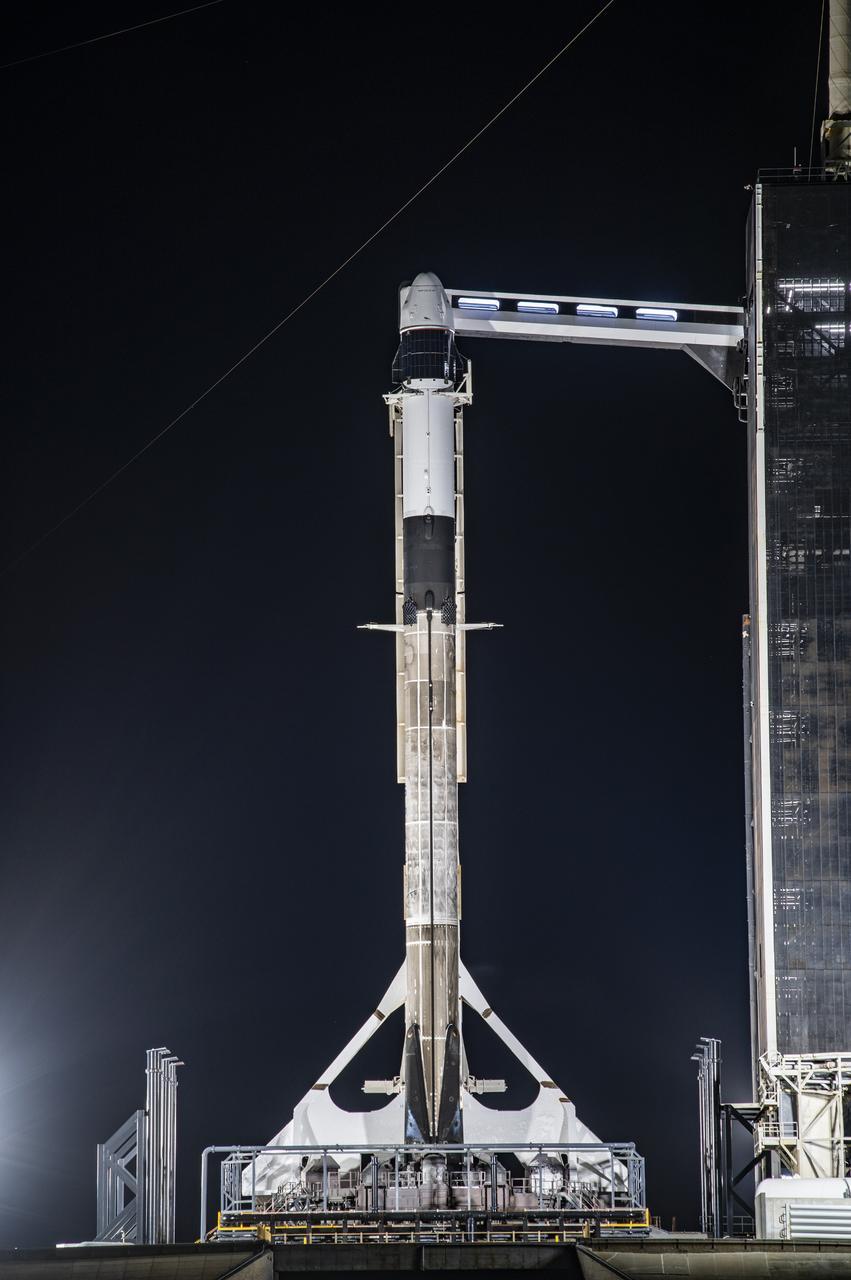
A SpaceX Falcon 9 rocket, topped with the company’s upgraded version of the Dragon spacecraft, stands vertical at NASA Kennedy Space Center’s Launch Complex 39A in Florida on Wednesday, Dec. 2, 2020. The first mission for SpaceX under NASA’s second Commercial Resupply Services contract, CRS-21 is scheduled to lift off from Launch Complex 39A on Saturday, Dec. 5, at 11:39 a.m. EST. The mission will deliver critical supplies and equipment to the International Space Station.
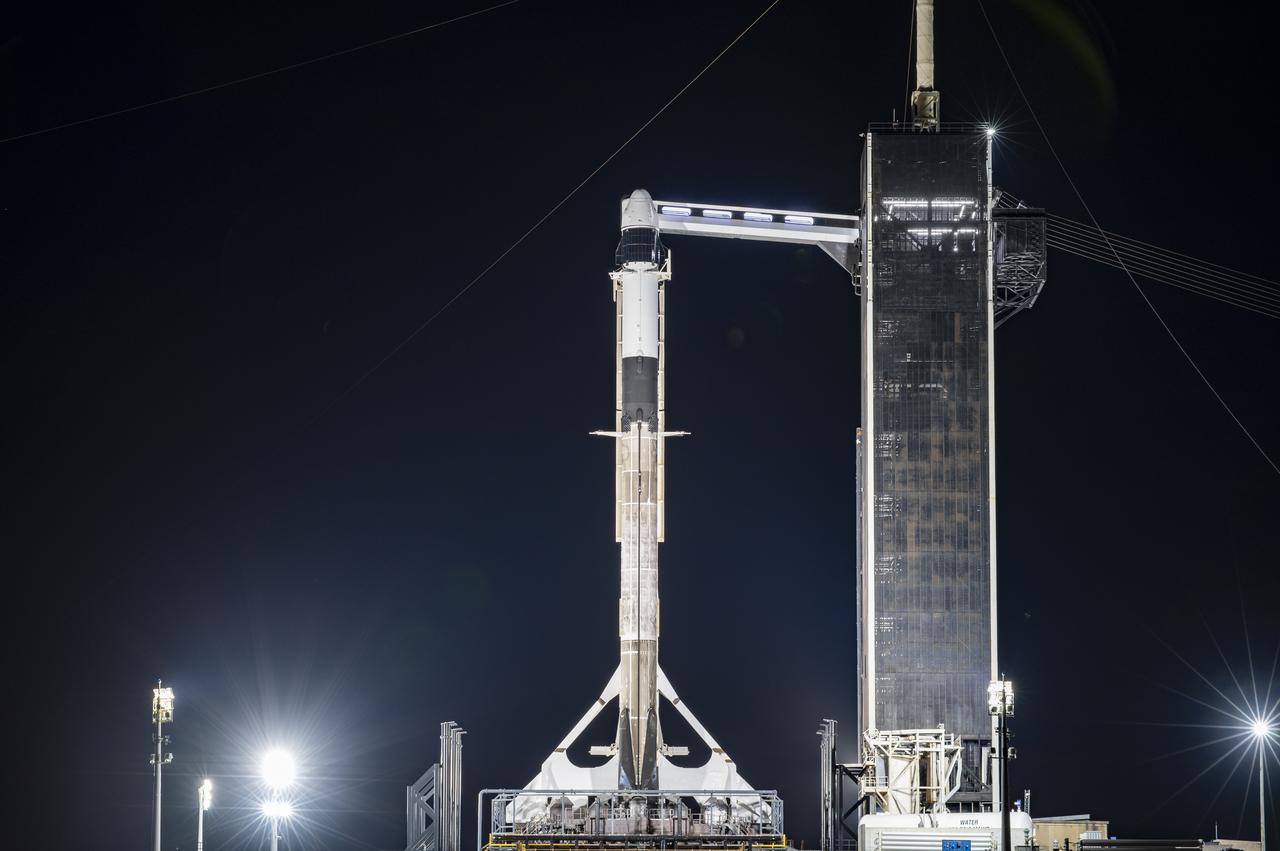
A SpaceX Falcon 9 rocket, topped with the company’s upgraded version of the Dragon spacecraft, stands vertical at NASA Kennedy Space Center’s Launch Complex 39A in Florida on Wednesday, Dec. 2, 2020. The first mission for SpaceX under NASA’s second Commercial Resupply Services contract, CRS-21 is scheduled to lift off from Launch Complex 39A on Saturday, Dec. 5, at 11:39 a.m. EST. The mission will deliver critical supplies and equipment to the International Space Station.

CAPE CANAVERAL, Fla. – A truck carries the first stage of the SpaceX Falcon 9 rocket through the gate at Cape Canaveral Air Force Station in Florida. The two-stage rocket will launch the company's Dragon spacecraft on the upcoming SpaceX CRS-2 mission. The flight will be the second commercial resupply mission to the International Space Station by Space Exploration Technologies, or SpaceX. NASA has contracted for a total of 12 commercial resupply flights from SpaceX and eight from the Orbital Sciences Corp. Photo credit: NASA/Jim Grossmann
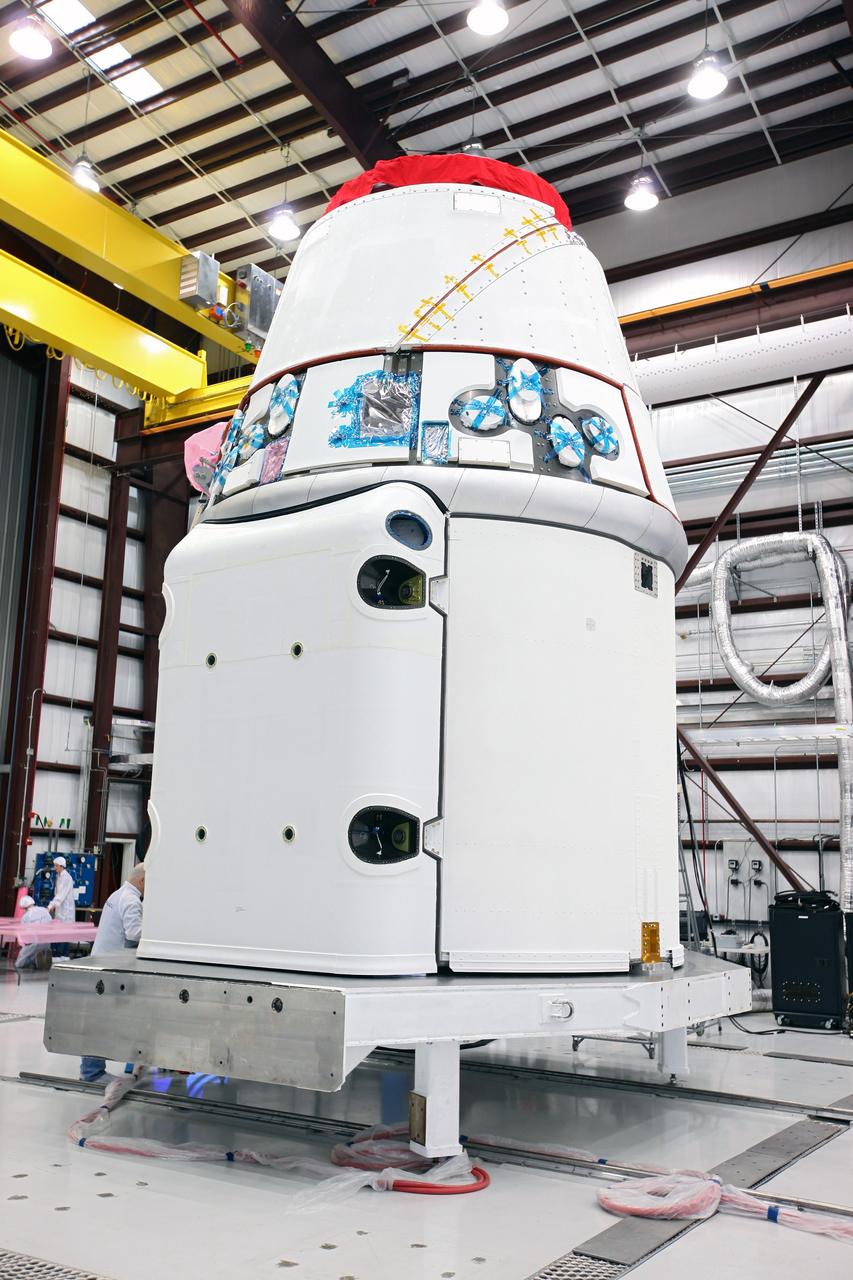
CAPE CANAVERAL, Fla. – The Space Exploration Technologies, or SpaceX, Dragon spacecraft with solar array fairings attached, stands inside a processing hangar at Cape Canaveral Air Force Station, Fla. The spacecraft will launch on the upcoming SpaceX CRS-2 mission. The flight will be the second commercial resupply mission to the International Space Station by SpaceX. NASA has contracted for a total of 12 commercial resupply flights from SpaceX and eight from the Orbital Sciences Corp. Photo credit: NASA/Kim Shiflett
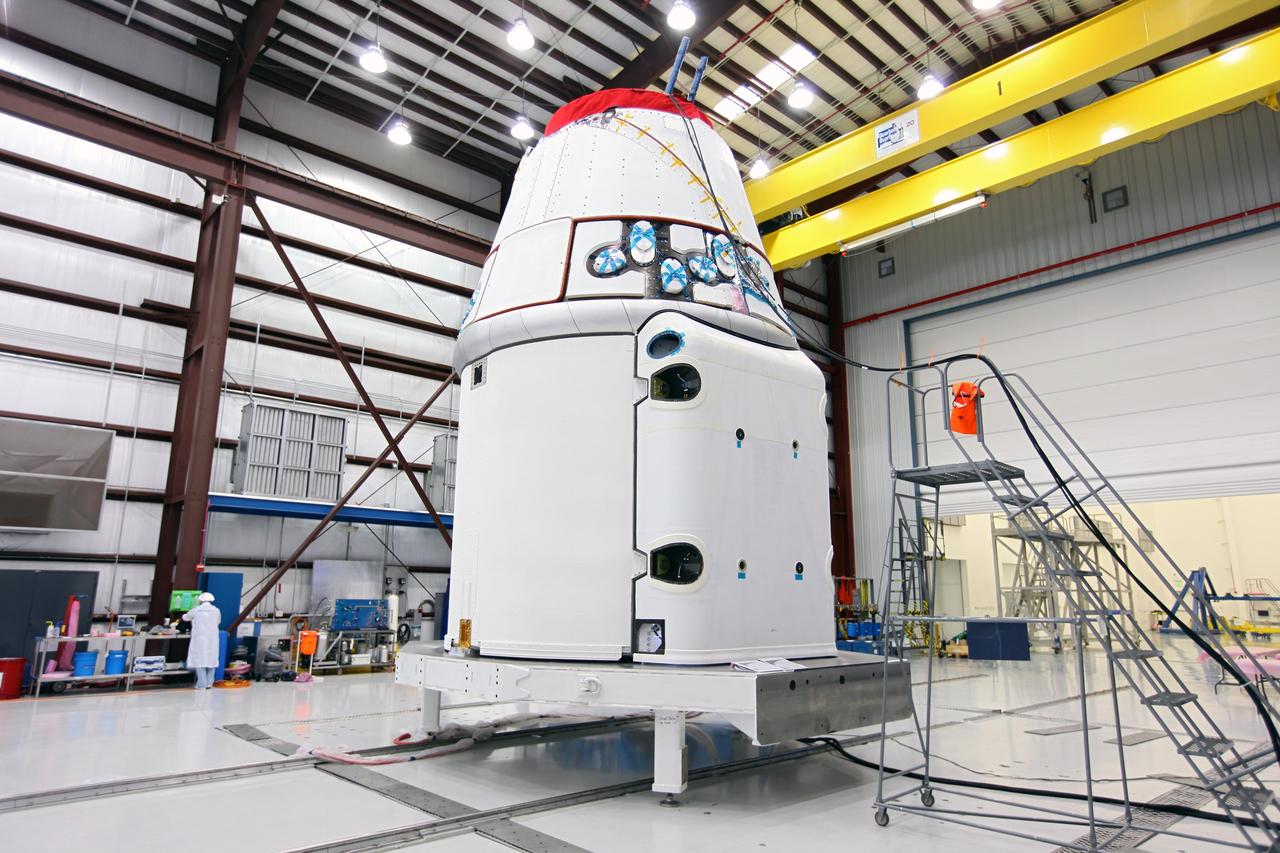
CAPE CANAVERAL, Fla. – The Space Exploration Technologies, or SpaceX, Dragon spacecraft with solar array fairings attached, stands inside a processing hangar at Cape Canaveral Air Force Station, Fla. The spacecraft will launch on the upcoming SpaceX CRS-2 mission. The flight will be the second commercial resupply mission to the International Space Station by SpaceX. NASA has contracted for a total of 12 commercial resupply flights from SpaceX and eight from the Orbital Sciences Corp. Photo credit: NASA/Kim Shiflett
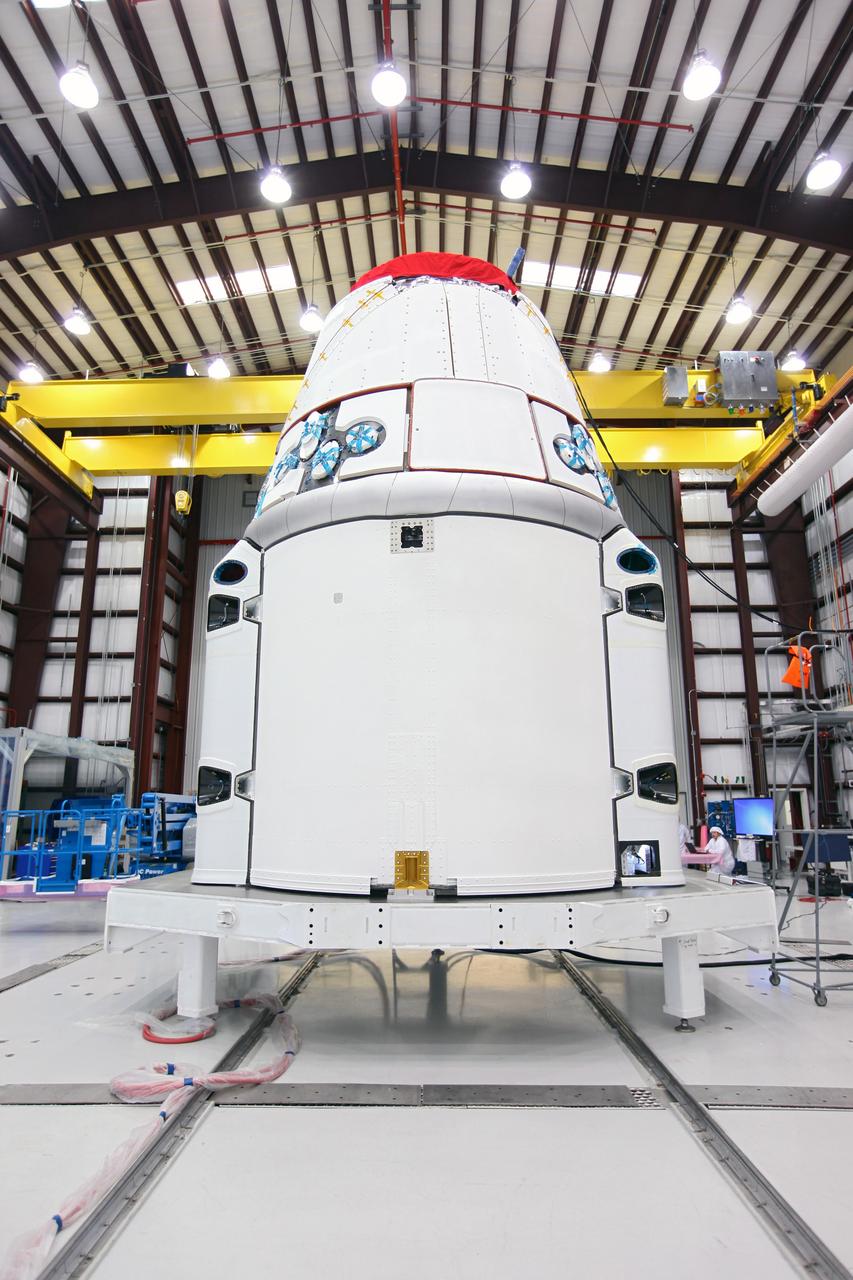
CAPE CANAVERAL, Fla. – The Space Exploration Technologies, or SpaceX, Dragon spacecraft with solar array fairings attached, stands inside a processing hangar at Cape Canaveral Air Force Station, Fla. The spacecraft will launch on the upcoming SpaceX CRS-2 mission. The flight will be the second commercial resupply mission to the International Space Station by SpaceX. NASA has contracted for a total of 12 commercial resupply flights from SpaceX and eight from the Orbital Sciences Corp. Photo credit: NASA/Kim Shiflett
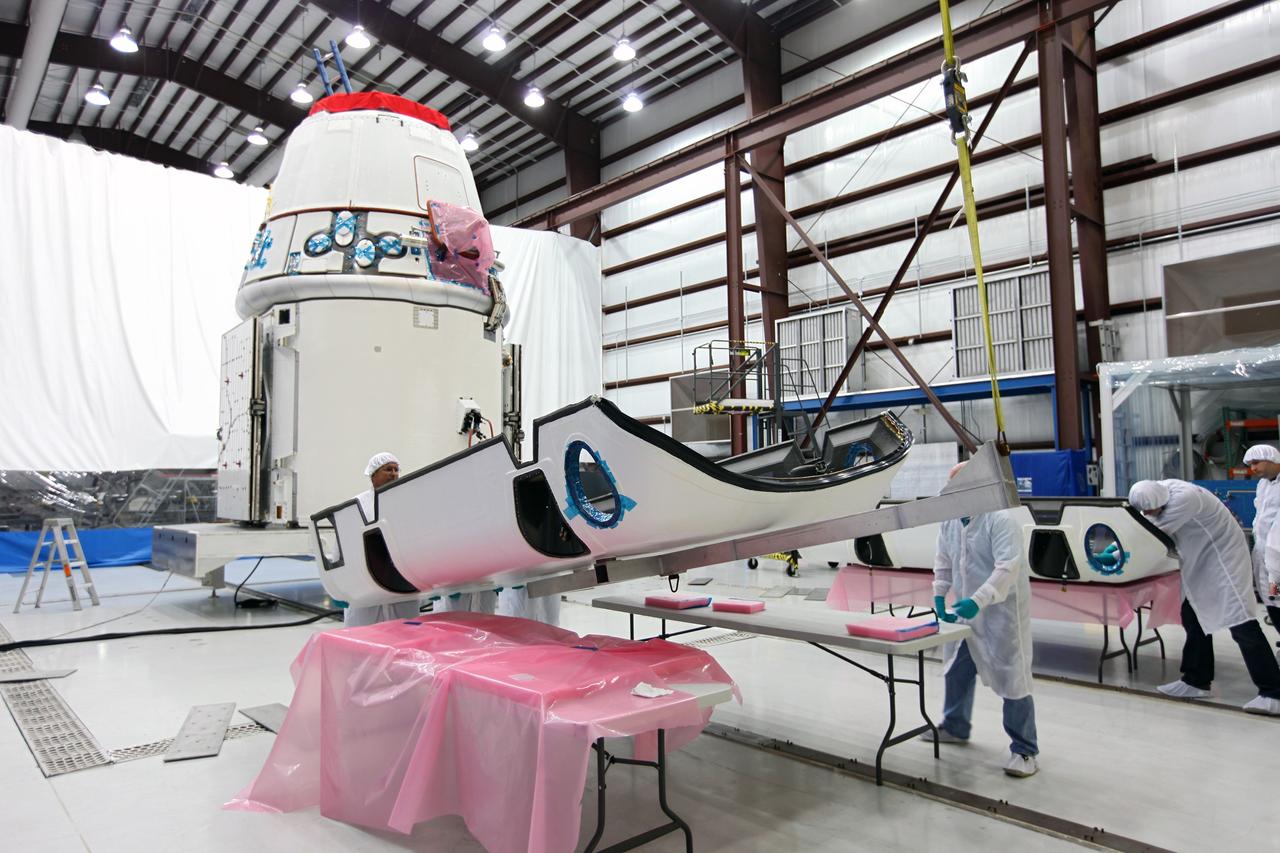
CAPE CANAVERAL, Fla. – Workers lift a solar array fairing at the processing hangar used by Space Exploration Technologies, or SpaceX, at Cape Canaveral Air Force Station, Fla. The fairing will be installed on the Dragon spacecraft undergoing launch preparations inside the hangar. The spacecraft will launch on the upcoming SpaceX CRS-2 mission. The flight will be the second commercial resupply mission to the International Space Station by SpaceX. NASA has contracted for a total of 12 commercial resupply flights from SpaceX and eight from the Orbital Sciences Corp. Photo credit: NASA/Kim Shiflett
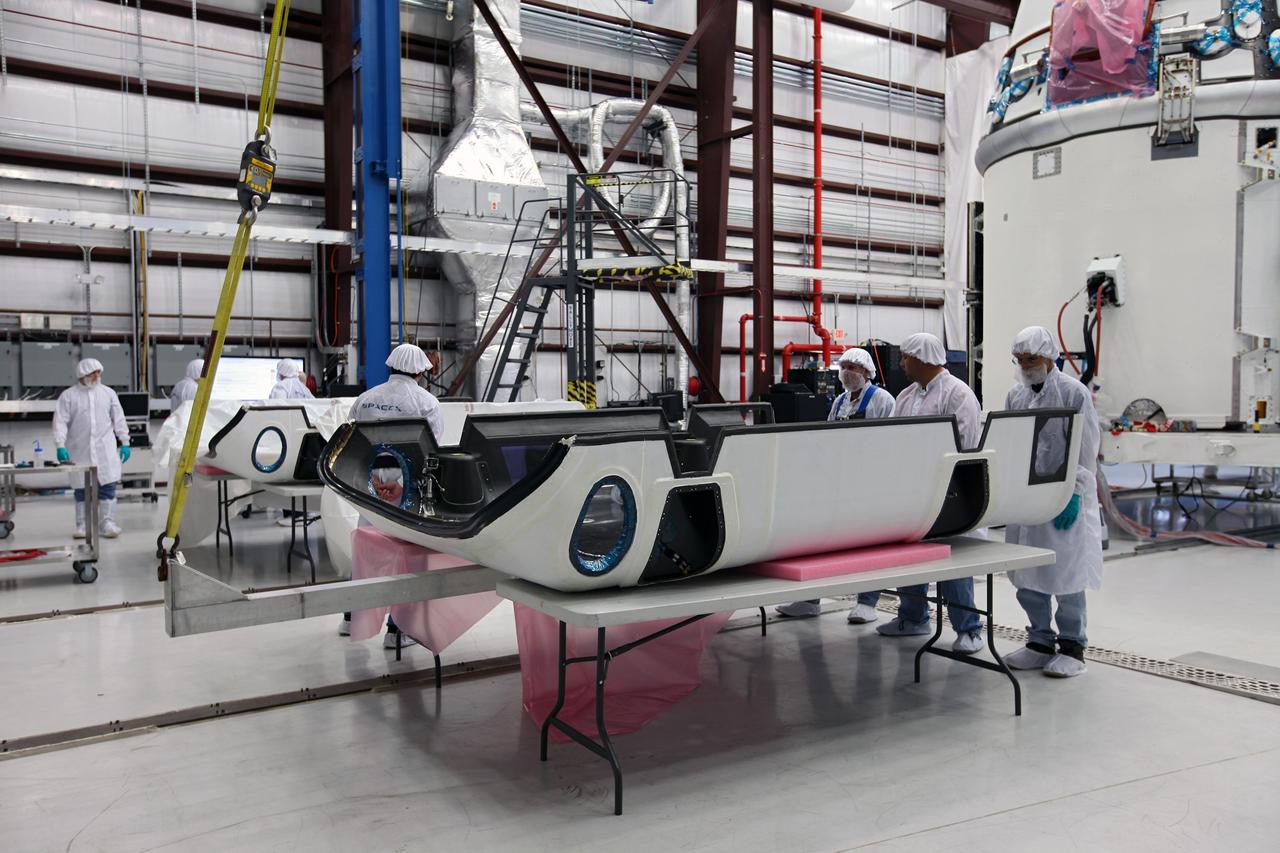
CAPE CANAVERAL, Fla. – Workers prepare to lift a solar array fairing at the processing hangar used by Space Exploration Technologies, or SpaceX, at Cape Canaveral Air Force Station, Fla. The fairing will be installed on the Dragon spacecraft undergoing launch preparations inside the hangar. The spacecraft will launch on the upcoming SpaceX CRS-2 mission. The flight will be the second commercial resupply mission to the International Space Station by SpaceX. NASA has contracted for a total of 12 commercial resupply flights from SpaceX and eight from the Orbital Sciences Corp. Photo credit: NASA/Kim Shiflett

CAPE CANAVERAL, Fla. – Workers prepare solar array fairings at the processing hangar used by Space Exploration Technologies, or SpaceX, at Cape Canaveral Air Force Station, Fla. The fairings are to be installed on the Dragon spacecraft undergoing launch preparations inside the hangar. The spacecraft will launch on the upcoming SpaceX CRS-2 mission. The flight will be the second commercial resupply mission to the International Space Station by SpaceX. NASA has contracted for a total of 12 commercial resupply flights from SpaceX and eight from the Orbital Sciences Corp. Photo credit: NASA/Kim Shiflett
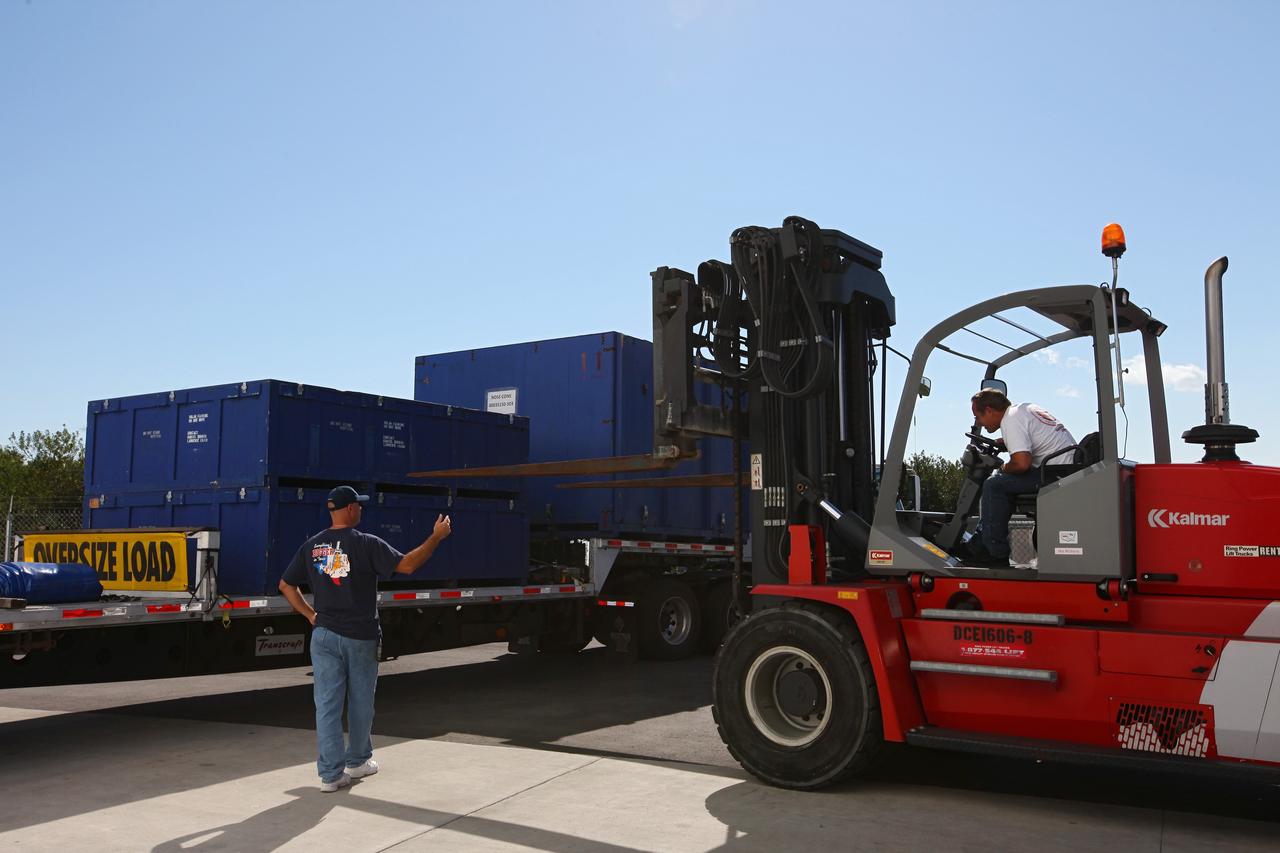
CAPE CANAVERAL, Fla. – Workers lift containers from a truck at the processing hangar used by Space Exploration Technologies, or SpaceX, at Cape Canaveral Air Force Station, Fla. The truck is carrying solar array fairings to be installed on the Dragon spacecraft undergoing launch preparations inside the hangar. The spacecraft will launch on the upcoming SpaceX CRS-2 mission. The flight will be the second commercial resupply mission to the International Space Station by SpaceX. NASA has contracted for a total of 12 commercial resupply flights from SpaceX and eight from the Orbital Sciences Corp. Photo credit: NASA/Kim Shiflett
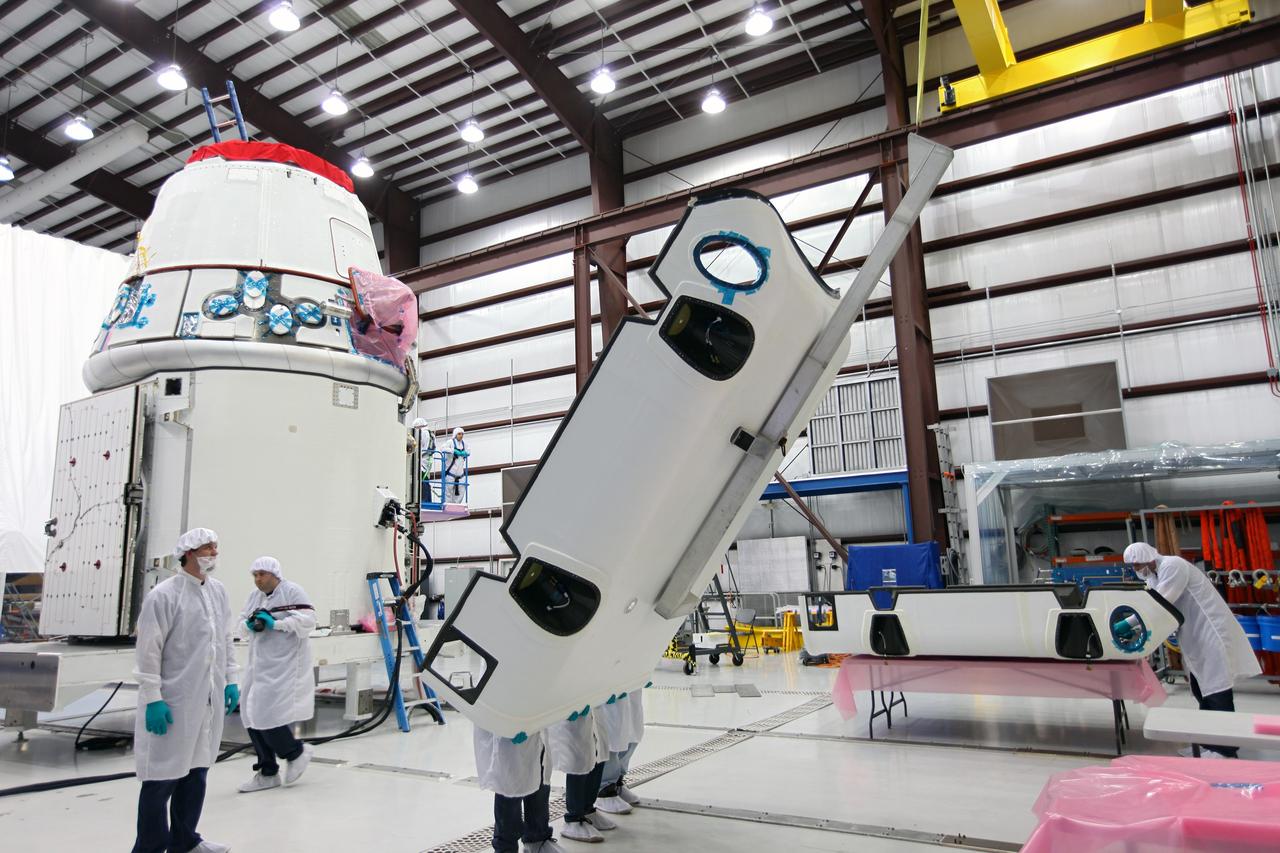
CAPE CANAVERAL, Fla. – Workers lift a solar array fairing at the processing hangar used by Space Exploration Technologies, or SpaceX, at Cape Canaveral Air Force Station, Fla. The fairing will be installed on the Dragon spacecraft undergoing launch preparations inside the hangar. The spacecraft will launch on the upcoming SpaceX CRS-2 mission. The flight will be the second commercial resupply mission to the International Space Station by SpaceX. NASA has contracted for a total of 12 commercial resupply flights from SpaceX and eight from the Orbital Sciences Corp. Photo credit: NASA/Kim Shiflett
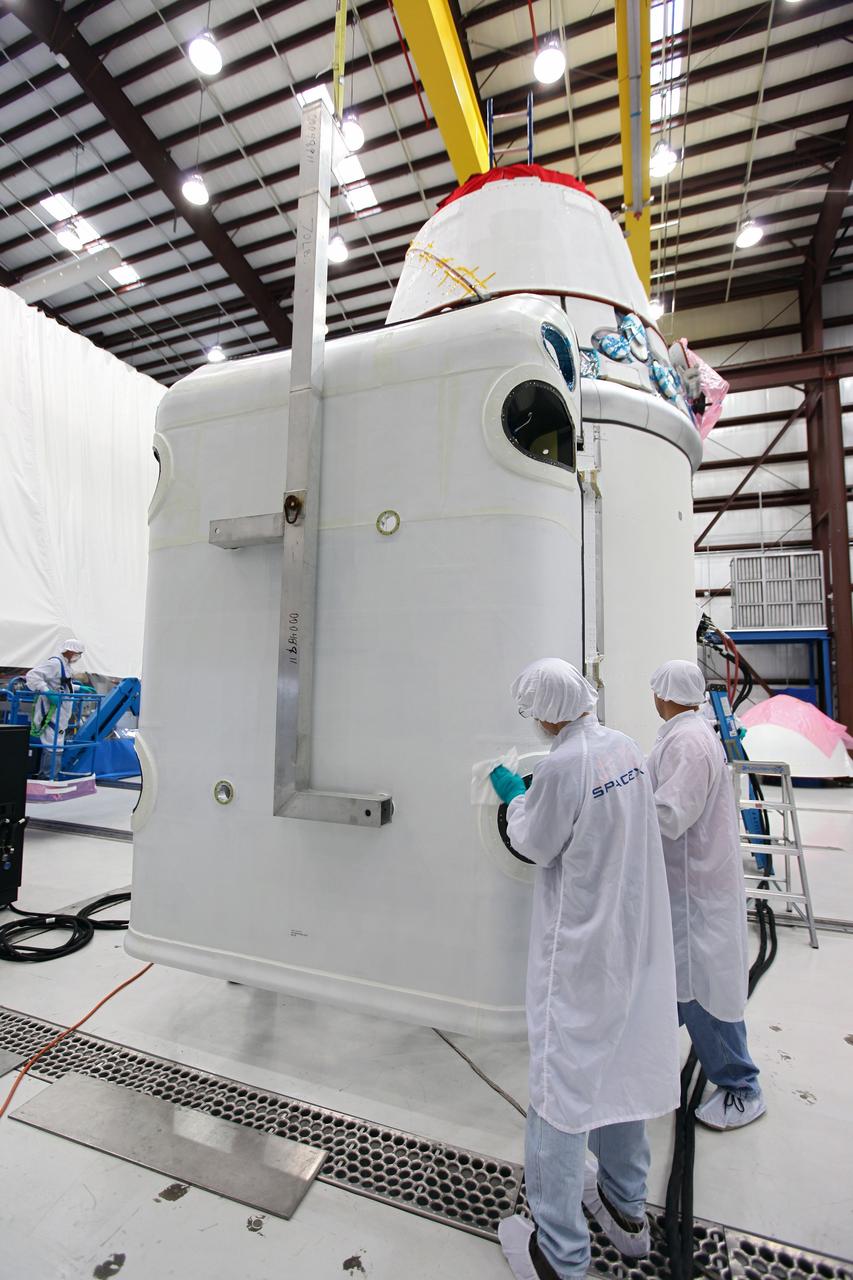
CAPE CANAVERAL, Fla. – Workers guide a solar array fairing into place inside the processing hangar used by Space Exploration Technologies, or SpaceX, at Cape Canaveral Air Force Station, Fla. The fairing will be installed on the Dragon spacecraft undergoing launch preparations inside the hangar. The spacecraft will launch on the upcoming SpaceX CRS-2 mission. The flight will be the second commercial resupply mission to the International Space Station by SpaceX. NASA has contracted for a total of 12 commercial resupply flights from SpaceX and eight from the Orbital Sciences Corp. Photo credit: NASA/Kim Shiflett
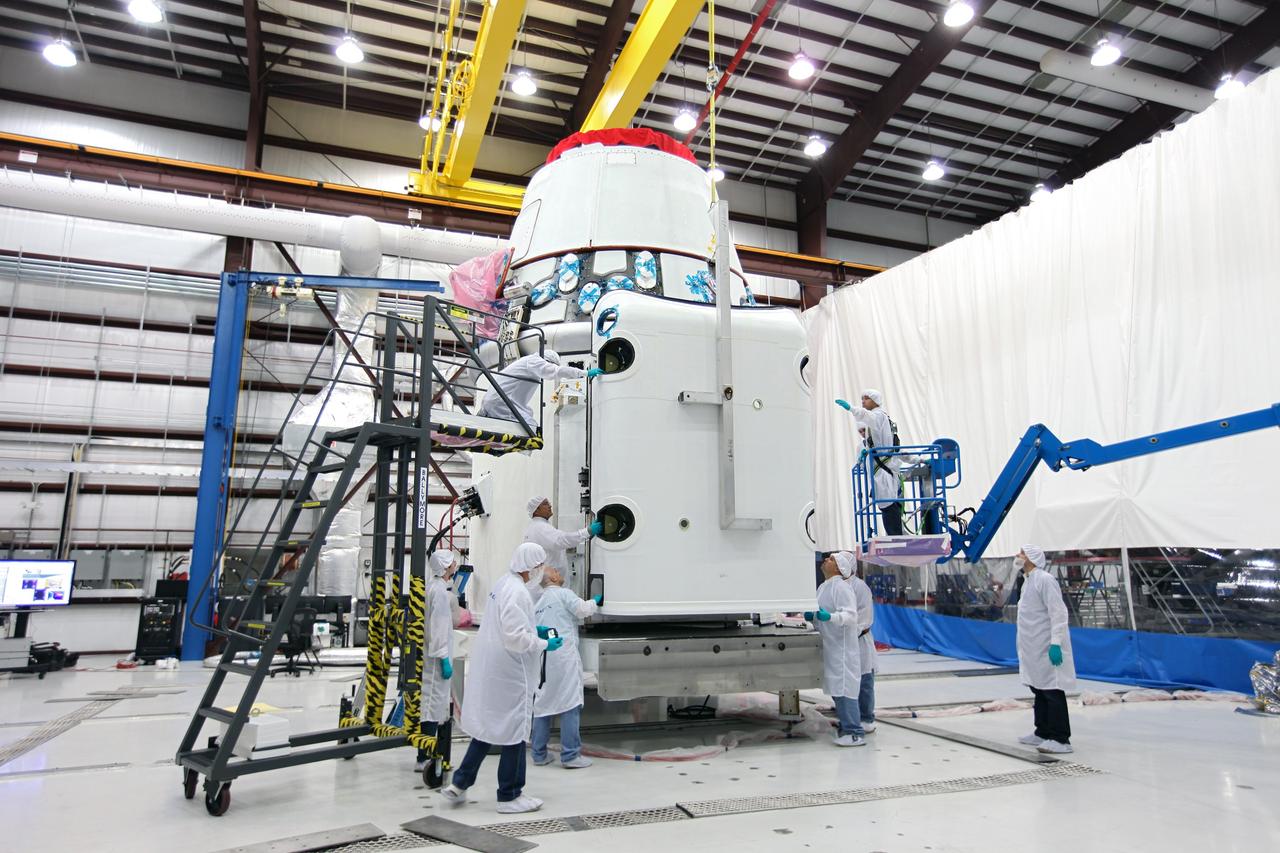
CAPE CANAVERAL, Fla. – Workers guide a solar array fairing into place inside the processing hangar used by Space Exploration Technologies, or SpaceX, at Cape Canaveral Air Force Station, Fla. The fairing will be installed on the Dragon spacecraft undergoing launch preparations inside the hangar. The spacecraft will launch on the upcoming SpaceX CRS-2 mission. The flight will be the second commercial resupply mission to the International Space Station by SpaceX. NASA has contracted for a total of 12 commercial resupply flights from SpaceX and eight from the Orbital Sciences Corp. Photo credit: NASA/Kim Shiflett
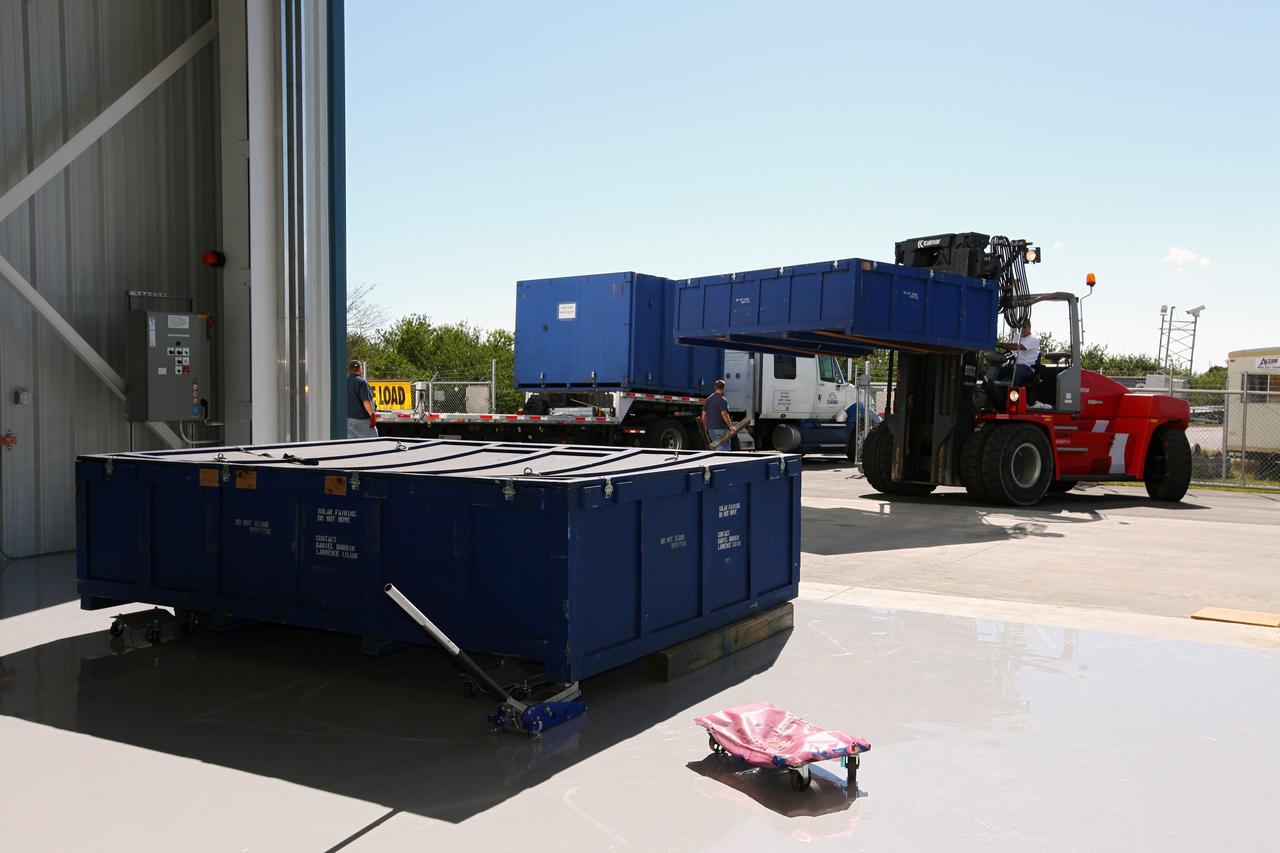
CAPE CANAVERAL, Fla. – A forklift moves containers from a truck at the processing hangar used by Space Exploration Technologies, or SpaceX, at Cape Canaveral Air Force Station, Fla. The truck is carrying solar array fairings to be installed on the Dragon spacecraft undergoing launch preparations inside the hangar. The spacecraft will launch on the upcoming SpaceX CRS-2 mission. The flight will be the second commercial resupply mission to the International Space Station by SpaceX. NASA has contracted for a total of 12 commercial resupply flights from SpaceX and eight from the Orbital Sciences Corp. Photo credit: NASA/Kim Shiflett
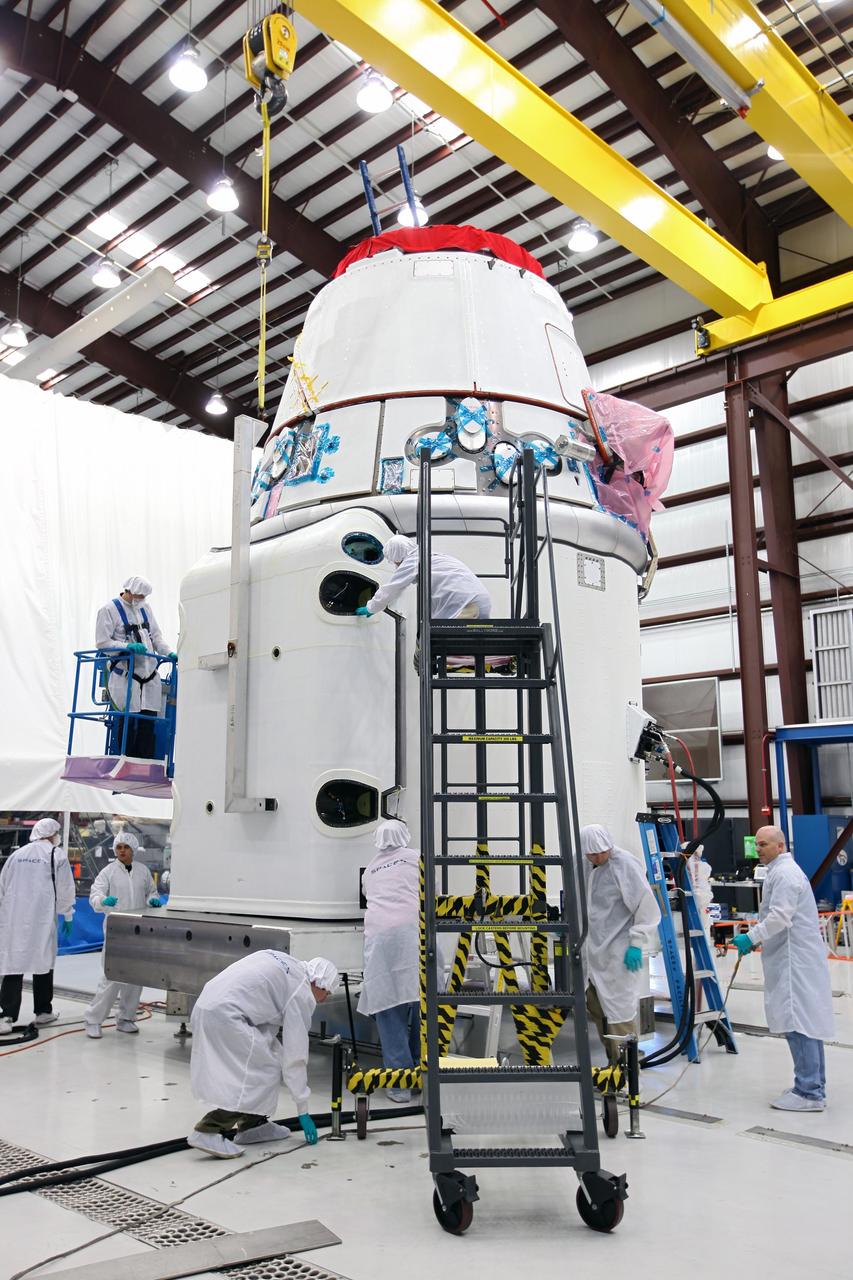
CAPE CANAVERAL, Fla. – Workers guide a solar array fairing into place inside the processing hangar used by Space Exploration Technologies, or SpaceX, at Cape Canaveral Air Force Station, Fla. The fairing will be installed on the Dragon spacecraft undergoing launch preparations inside the hangar. The spacecraft will launch on the upcoming SpaceX CRS-2 mission. The flight will be the second commercial resupply mission to the International Space Station by SpaceX. NASA has contracted for a total of 12 commercial resupply flights from SpaceX and eight from the Orbital Sciences Corp. Photo credit: NASA/Kim Shiflett
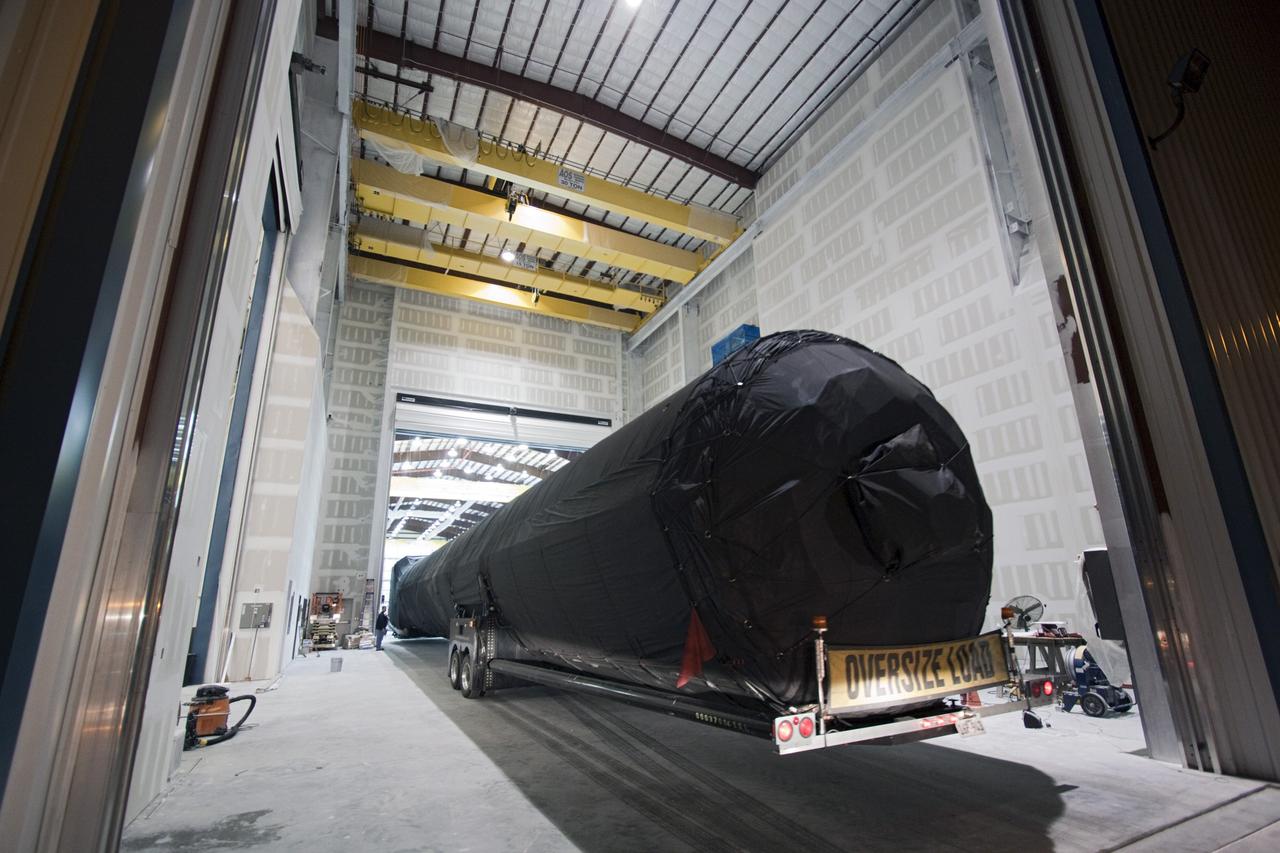
CAPE CANAVERAL, Fla. – A truck pulls the first stage of the Falcon 9 rocket inside the SpaceX Falcon Hangar at Launch Complex 40 on Cape Canaveral Air Force Station in Florida. The two-stage rocket will launch the company's Dragon spacecraft on the upcoming SpaceX CRS-2 mission. The flight will be the second commercial resupply mission to the International Space Station by Space Exploration Technologies, or SpaceX. NASA has contracted for a total of 12 commercial resupply flights from SpaceX and eight from the Orbital Sciences Corp. Photo credit: NASA/Jim Grossmann
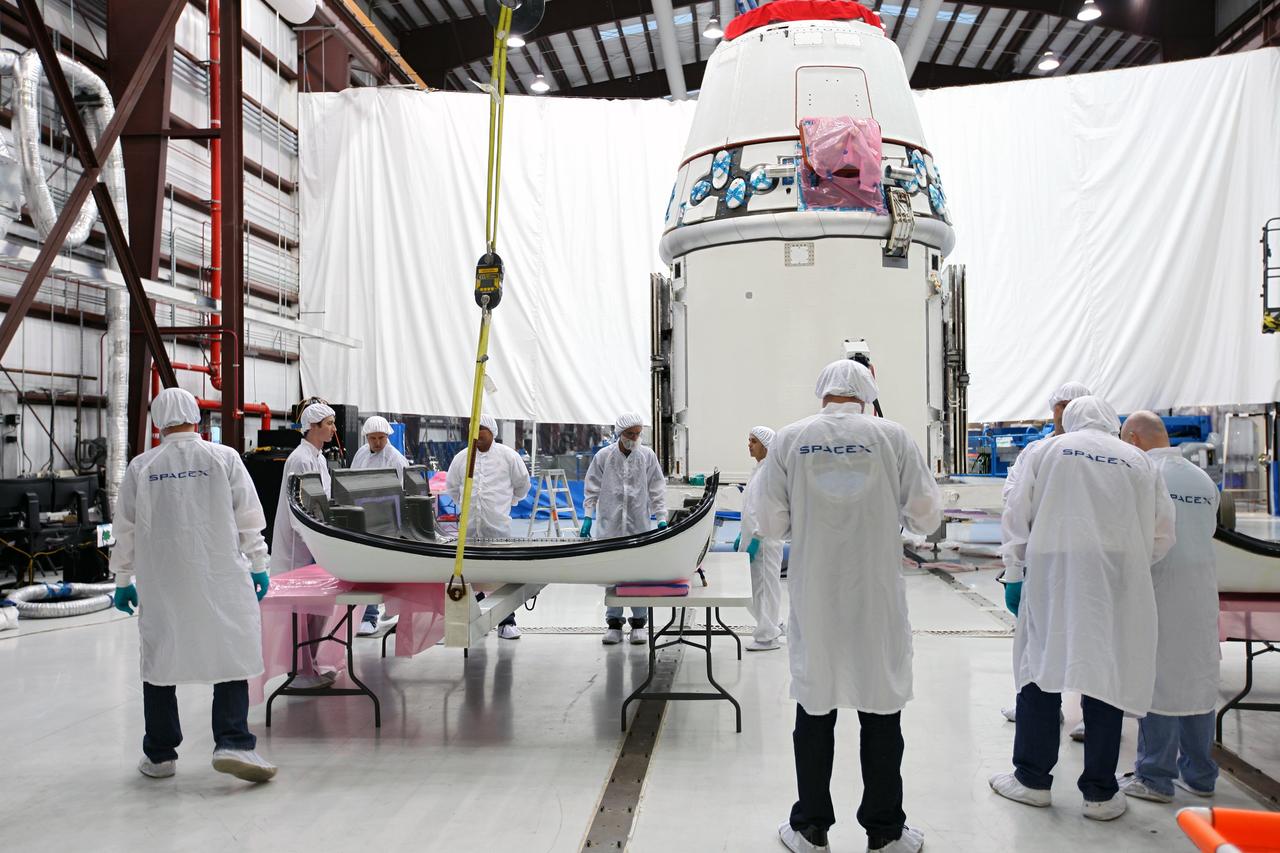
CAPE CANAVERAL, Fla. – Workers prepare to lift a solar array fairing at the processing hangar used by Space Exploration Technologies, or SpaceX, at Cape Canaveral Air Force Station, Fla. The fairing will be installed on the Dragon spacecraft undergoing launch preparations inside the hangar. The spacecraft will launch on the upcoming SpaceX CRS-2 mission. The flight will be the second commercial resupply mission to the International Space Station by SpaceX. NASA has contracted for a total of 12 commercial resupply flights from SpaceX and eight from the Orbital Sciences Corp. Photo credit: NASA/Kim Shiflett
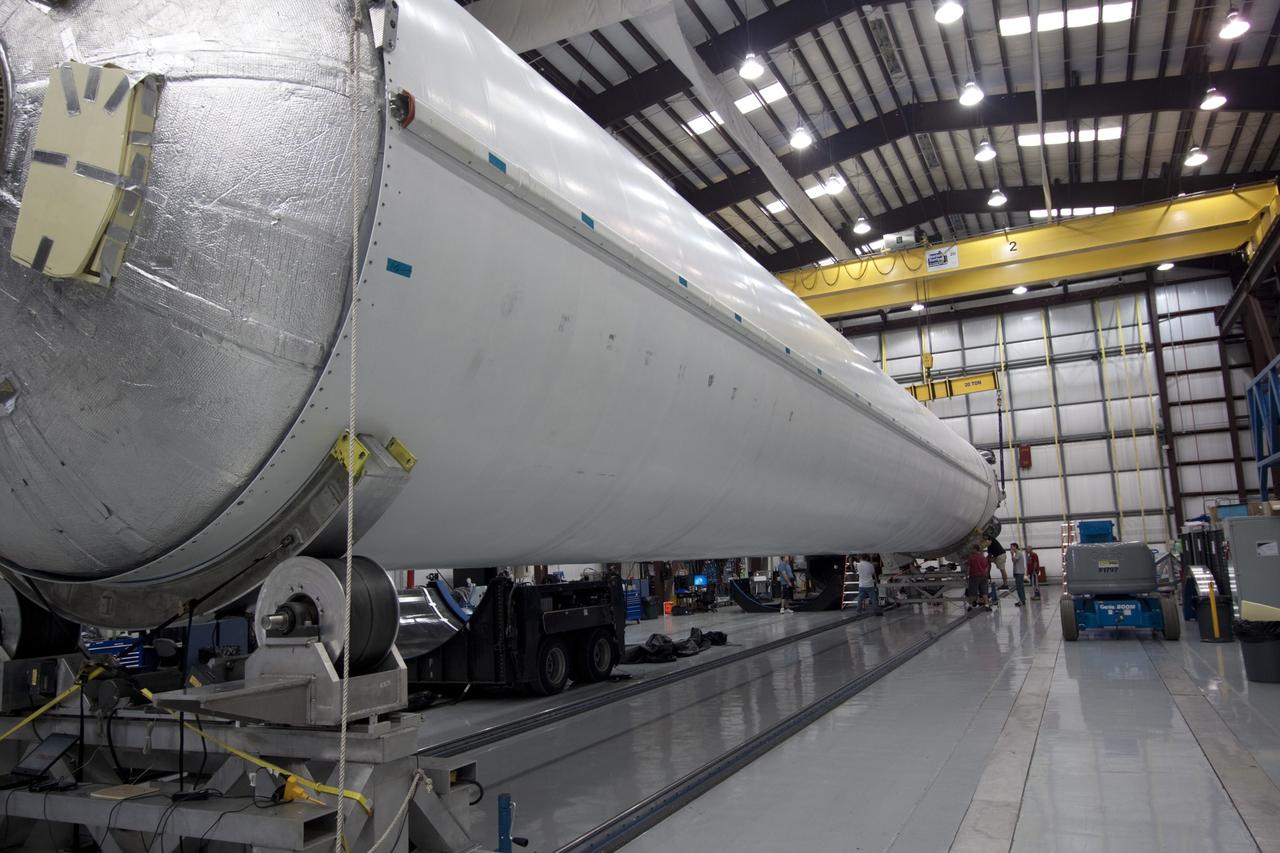
CAPE CANAVERAL, Fla. – The first stage of the Falcon 9 rocket is placed in a workstand inside the SpaceX Falcon Hangar at Launch Complex 40 on Cape Canaveral Air Force Station in Florida. The two-stage rocket will launch the company's Dragon spacecraft on the upcoming SpaceX CRS-2 mission. The flight will be the second commercial resupply mission to the International Space Station by Space Exploration Technologies, or SpaceX. NASA has contracted for a total of 12 commercial resupply flights from SpaceX and eight from the Orbital Sciences Corp. Photo credit: NASA/Jim Grossmann
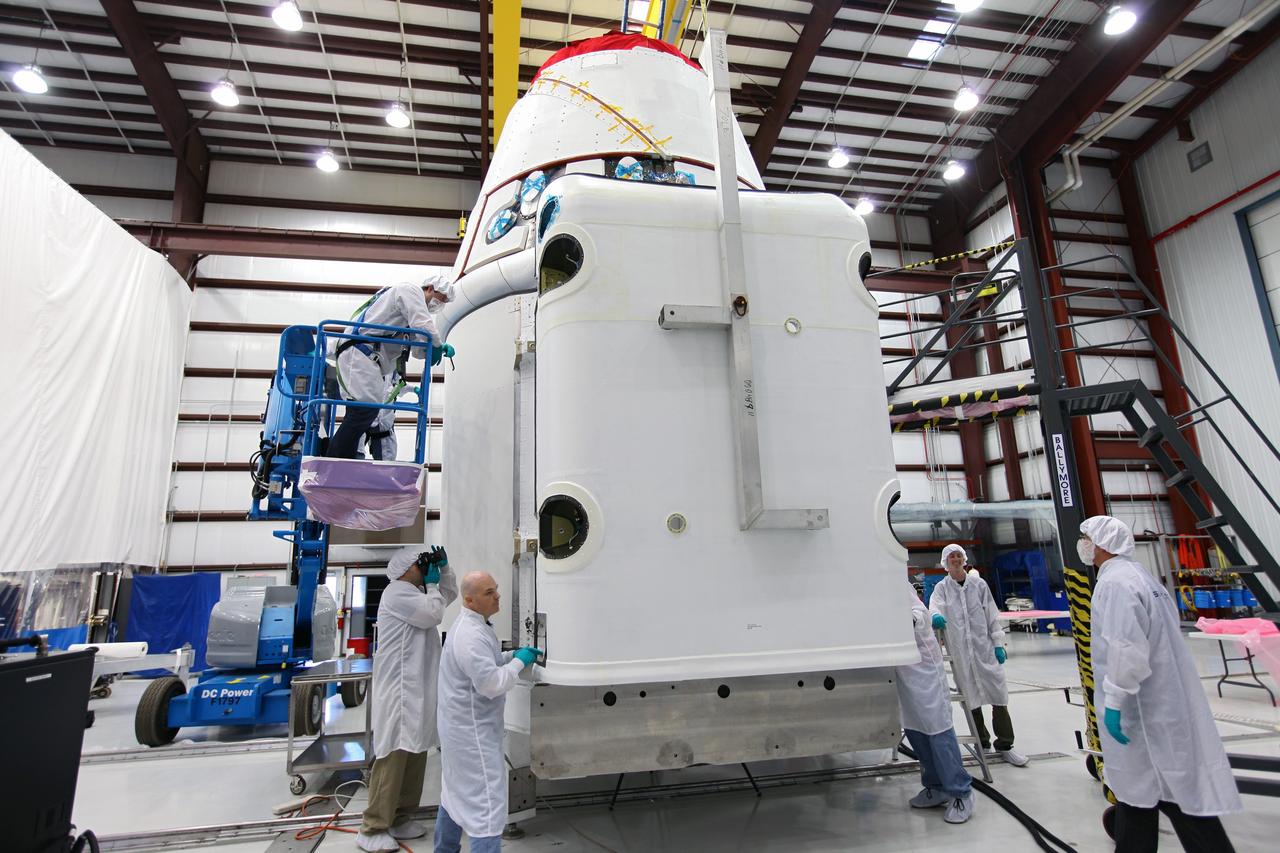
CAPE CANAVERAL, Fla. – Workers guide a solar array fairing into place inside the processing hangar used by Space Exploration Technologies, or SpaceX, at Cape Canaveral Air Force Station, Fla. The fairing will be installed on the Dragon spacecraft undergoing launch preparations inside the hangar. The spacecraft will launch on the upcoming SpaceX CRS-2 mission. The flight will be the second commercial resupply mission to the International Space Station by SpaceX. NASA has contracted for a total of 12 commercial resupply flights from SpaceX and eight from the Orbital Sciences Corp. Photo credit: NASA/Kim Shiflett
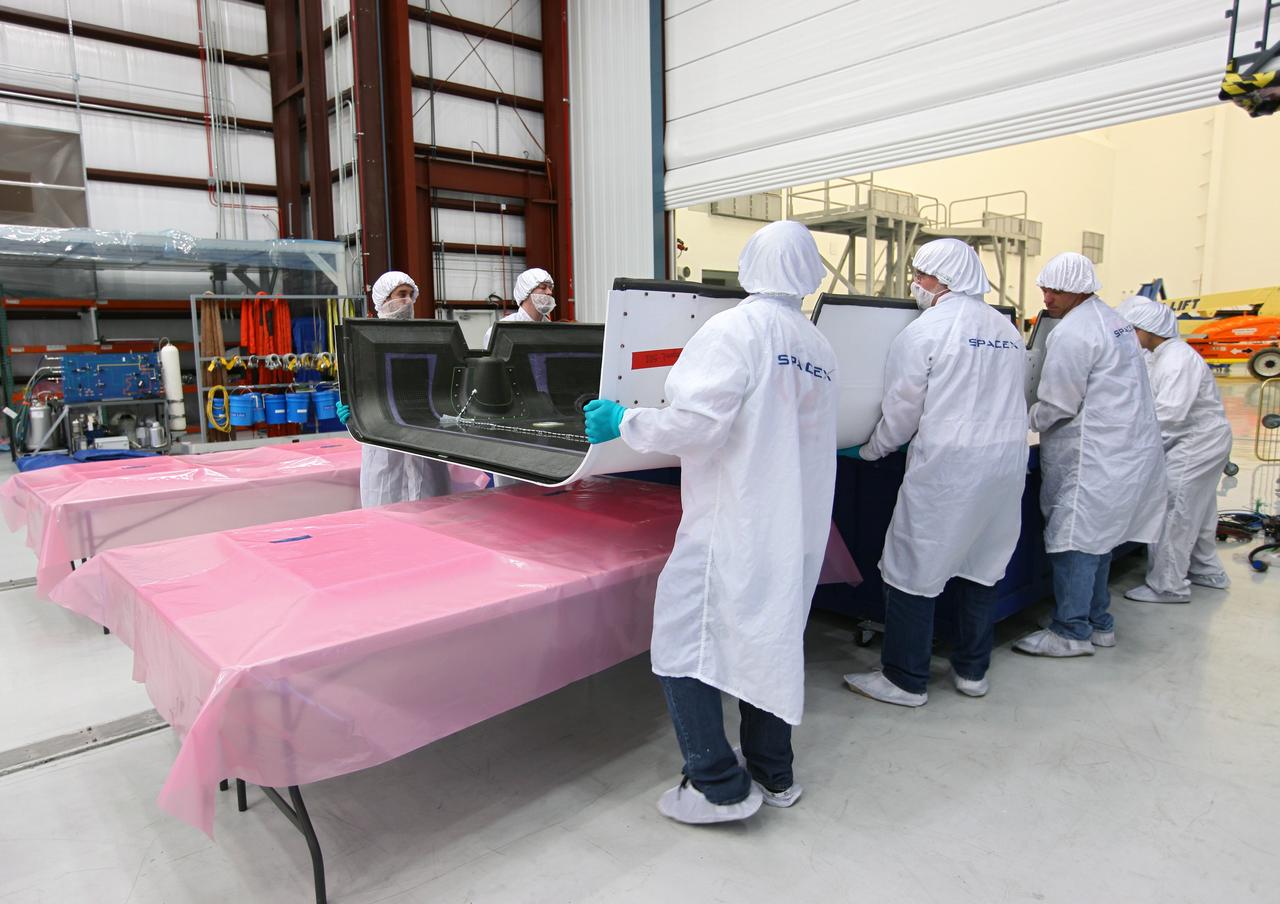
CAPE CANAVERAL, Fla. – Workers lift a solar array fairing at the processing hangar used by Space Exploration Technologies, or SpaceX, at Cape Canaveral Air Force Station, Fla. The fairings are to be installed on the Dragon spacecraft undergoing launch preparations inside the hangar. The spacecraft will launch on the upcoming SpaceX CRS-2 mission. The flight will be the second commercial resupply mission to the International Space Station by SpaceX. NASA has contracted for a total of 12 commercial resupply flights from SpaceX and eight from the Orbital Sciences Corp. Photo credit: NASA/Kim Shiflett
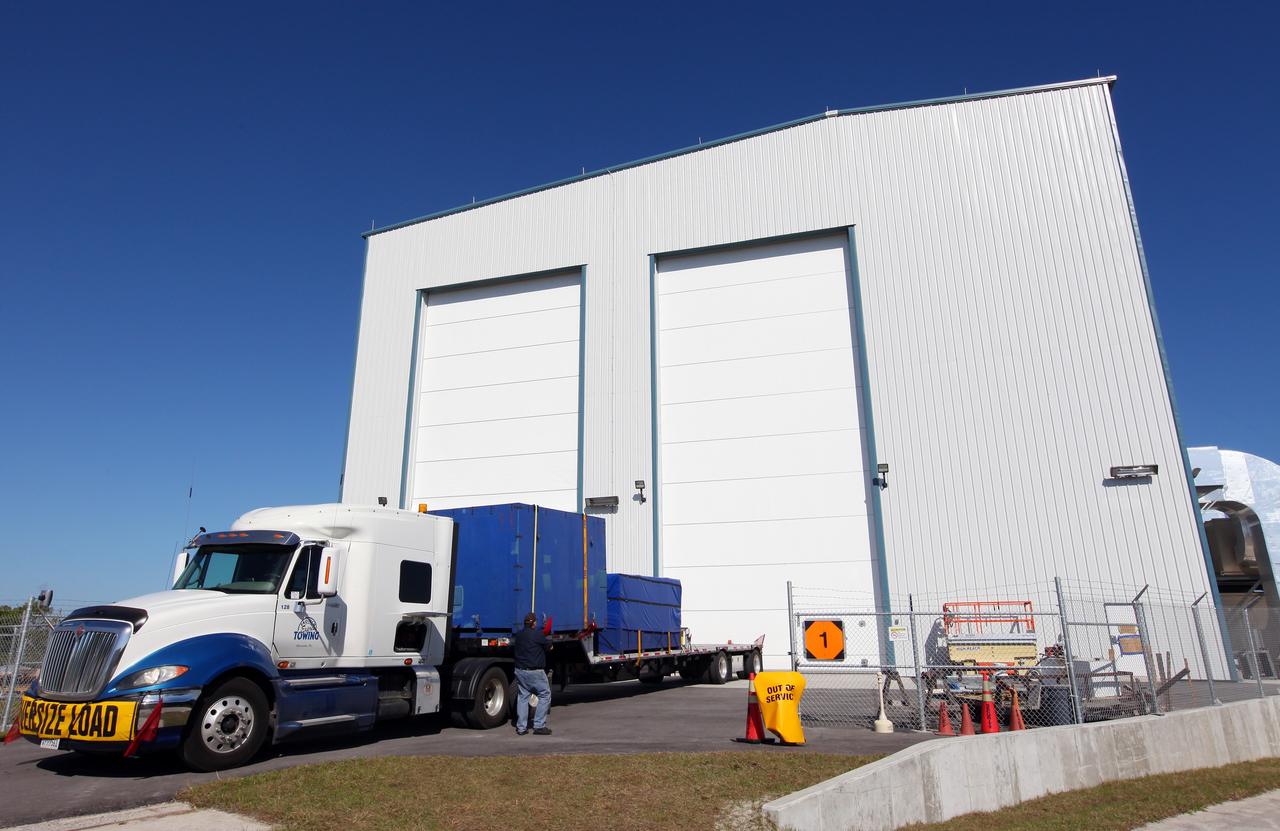
CAPE CANAVERAL, Fla. – A truck arrives at the processing hangar used by Space Exploration Technologies, or SpaceX, at Cape Canaveral Air Force Station, Fla. The truck is carrying solar array fairings to be installed on the Dragon spacecraft undergoing launch preparations inside the hangar. The spacecraft will launch on the upcoming SpaceX CRS-2 mission. The flight will be the second commercial resupply mission to the International Space Station by Space Exploration Technologies, or SpaceX. NASA has contracted for a total of 12 commercial resupply flights from SpaceX and eight from the Orbital Sciences Corp. Photo credit: NASA/Kim Shiflett
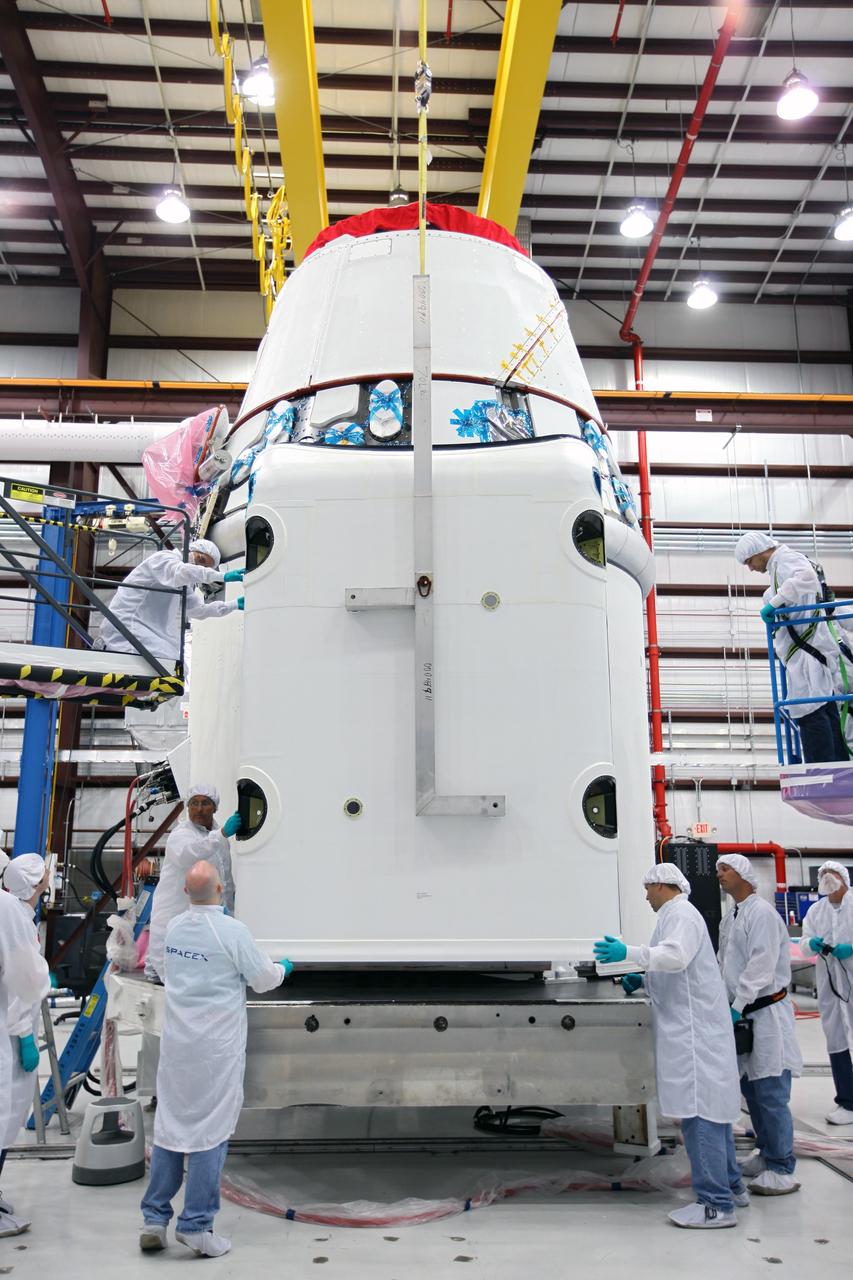
CAPE CANAVERAL, Fla. – Workers guide a solar array fairing into place inside the processing hangar used by Space Exploration Technologies, or SpaceX, at Cape Canaveral Air Force Station, Fla. The fairing will be installed on the Dragon spacecraft undergoing launch preparations inside the hangar. The spacecraft will launch on the upcoming SpaceX CRS-2 mission. The flight will be the second commercial resupply mission to the International Space Station by SpaceX. NASA has contracted for a total of 12 commercial resupply flights from SpaceX and eight from the Orbital Sciences Corp. Photo credit: NASA/Kim Shiflett
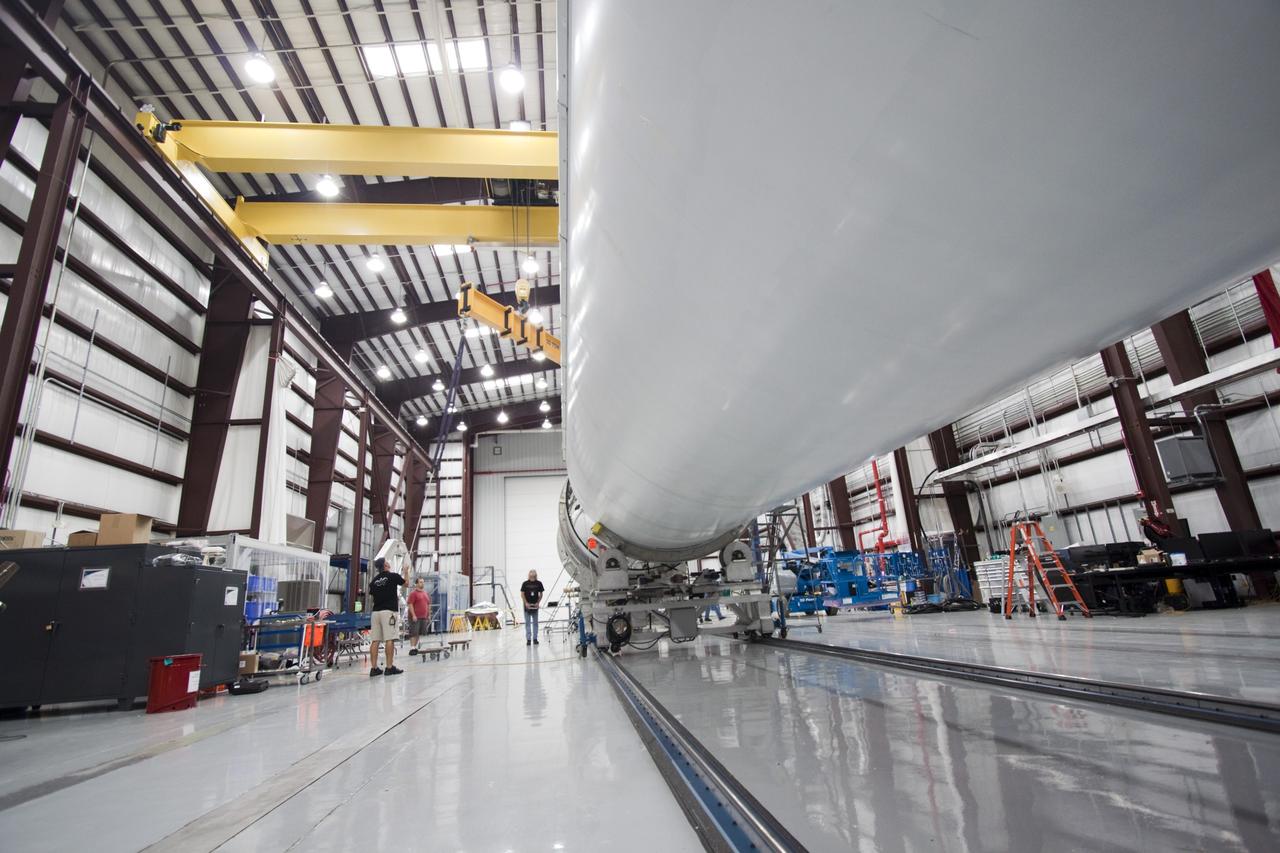
CAPE CANAVERAL, Fla. – Inside the SpaceX Falcon Hangar at Launch Complex 40 on Cape Canaveral Air Force Station in Florida, the first stage of the Falcon 9 rocket is placed in a workstand for prelaunch processing. The two-stage rocket will launch the company's Dragon spacecraft on the upcoming SpaceX CRS-2 mission. The flight will be the second commercial resupply mission to the International Space Station by Space Exploration Technologies, or SpaceX. NASA has contracted for a total of 12 commercial resupply flights from SpaceX and eight from the Orbital Sciences Corp. Photo credit: NASA/Jim Grossmann
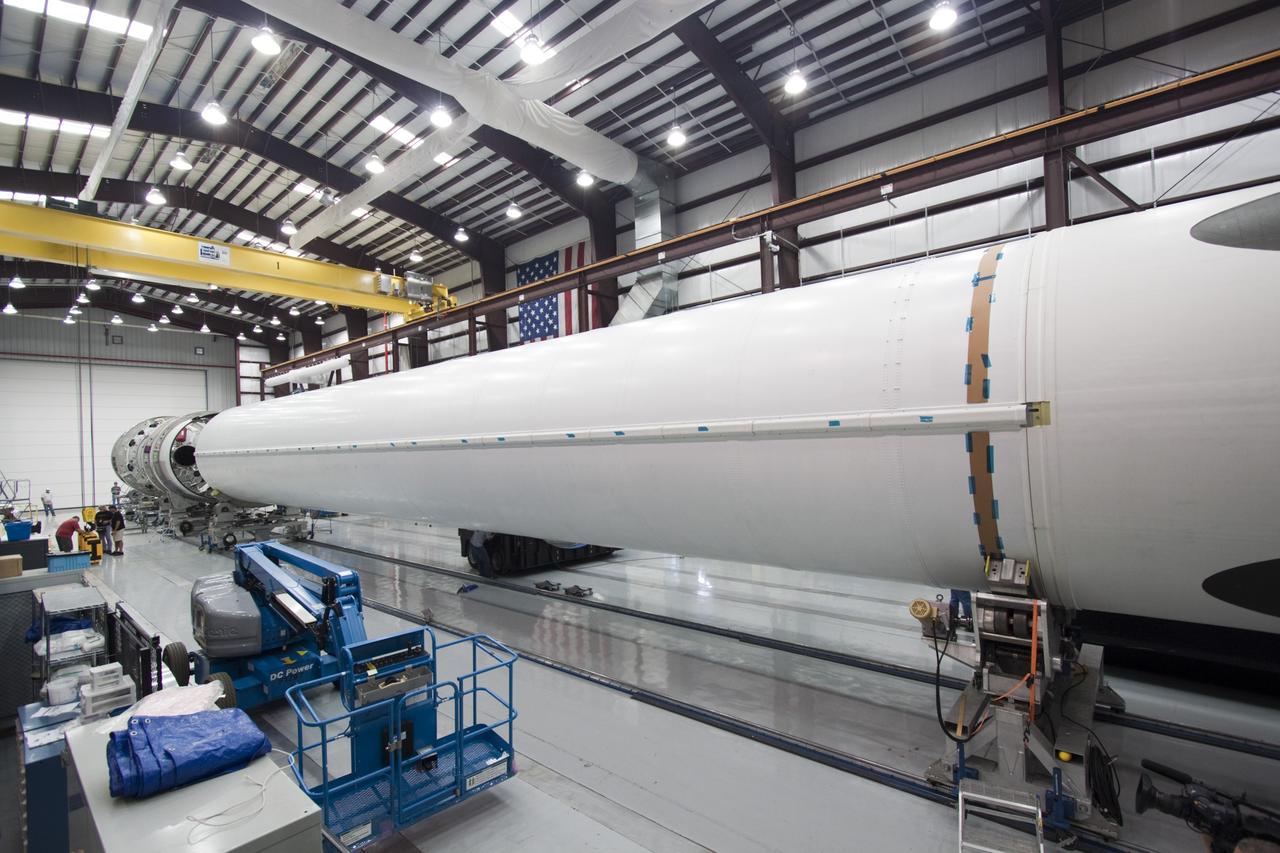
CAPE CANAVERAL, Fla. – Inside the SpaceX Falcon Hangar at Launch Complex 40 on Cape Canaveral Air Force Station in Florida, the first stage of the Falcon 9 rocket is placed in a workstand for prelaunch processing. The two-stage rocket will launch the company's Dragon spacecraft on the upcoming SpaceX CRS-2 mission. The flight will be the second commercial resupply mission to the International Space Station by Space Exploration Technologies, or SpaceX. NASA has contracted for a total of 12 commercial resupply flights from SpaceX and eight from the Orbital Sciences Corp. Photo credit: NASA/Jim Grossmann
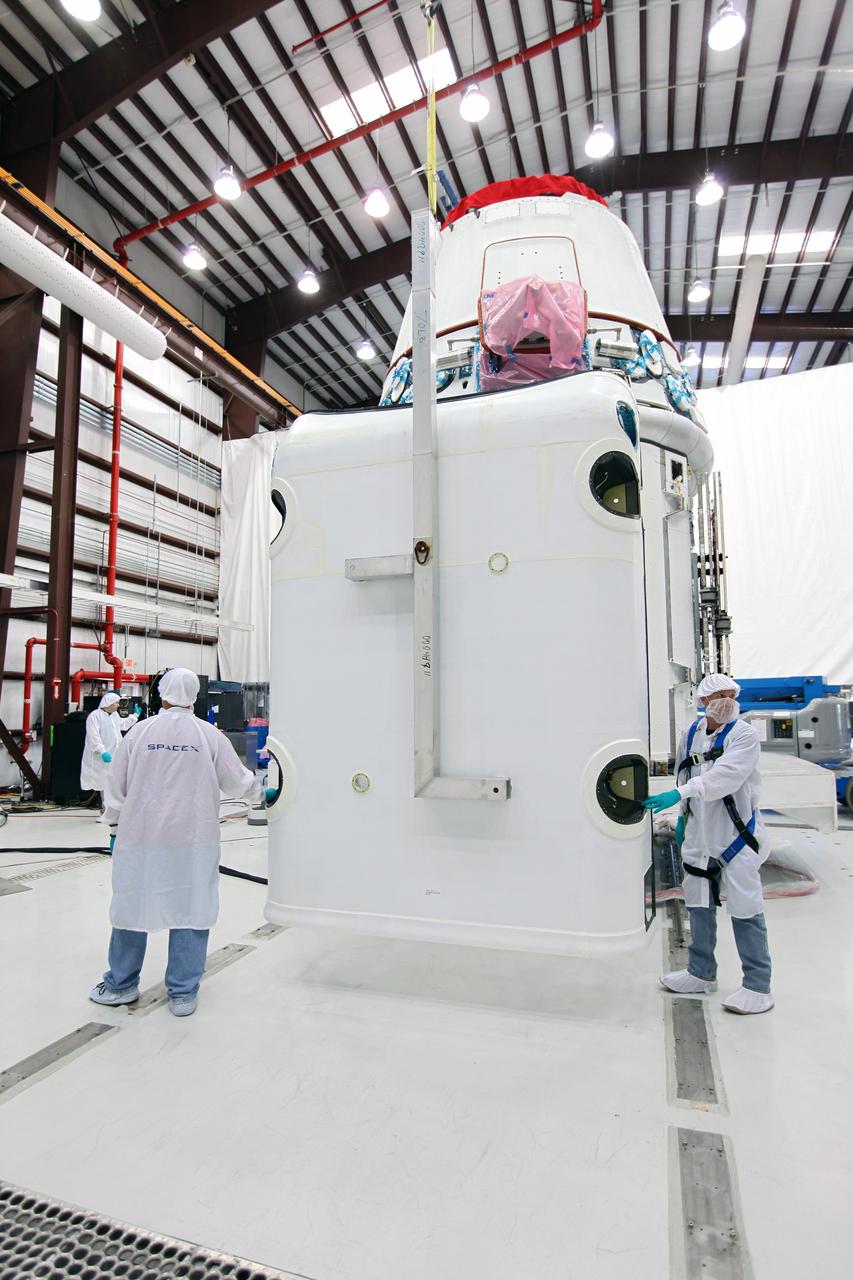
CAPE CANAVERAL, Fla. – Workers guide a solar array fairing into place inside the processing hangar used by Space Exploration Technologies, or SpaceX, at Cape Canaveral Air Force Station, Fla. The fairing will be installed on the Dragon spacecraft undergoing launch preparations inside the hangar. The spacecraft will launch on the upcoming SpaceX CRS-2 mission. The flight will be the second commercial resupply mission to the International Space Station by SpaceX. NASA has contracted for a total of 12 commercial resupply flights from SpaceX and eight from the Orbital Sciences Corp. Photo credit: NASA/Kim Shiflett

CAPE CANAVERAL, Fla. – Workers lift a solar array fairing while another is prepared inside the processing hangar used by Space Exploration Technologies, or SpaceX, at Cape Canaveral Air Force Station, Fla. The fairing will be installed on the Dragon spacecraft undergoing launch preparations inside the hangar. The spacecraft will launch on the upcoming SpaceX CRS-2 mission. The flight will be the second commercial resupply mission to the International Space Station by SpaceX. NASA has contracted for a total of 12 commercial resupply flights from SpaceX and eight from the Orbital Sciences Corp. Photo credit: NASA/Kim Shiflett
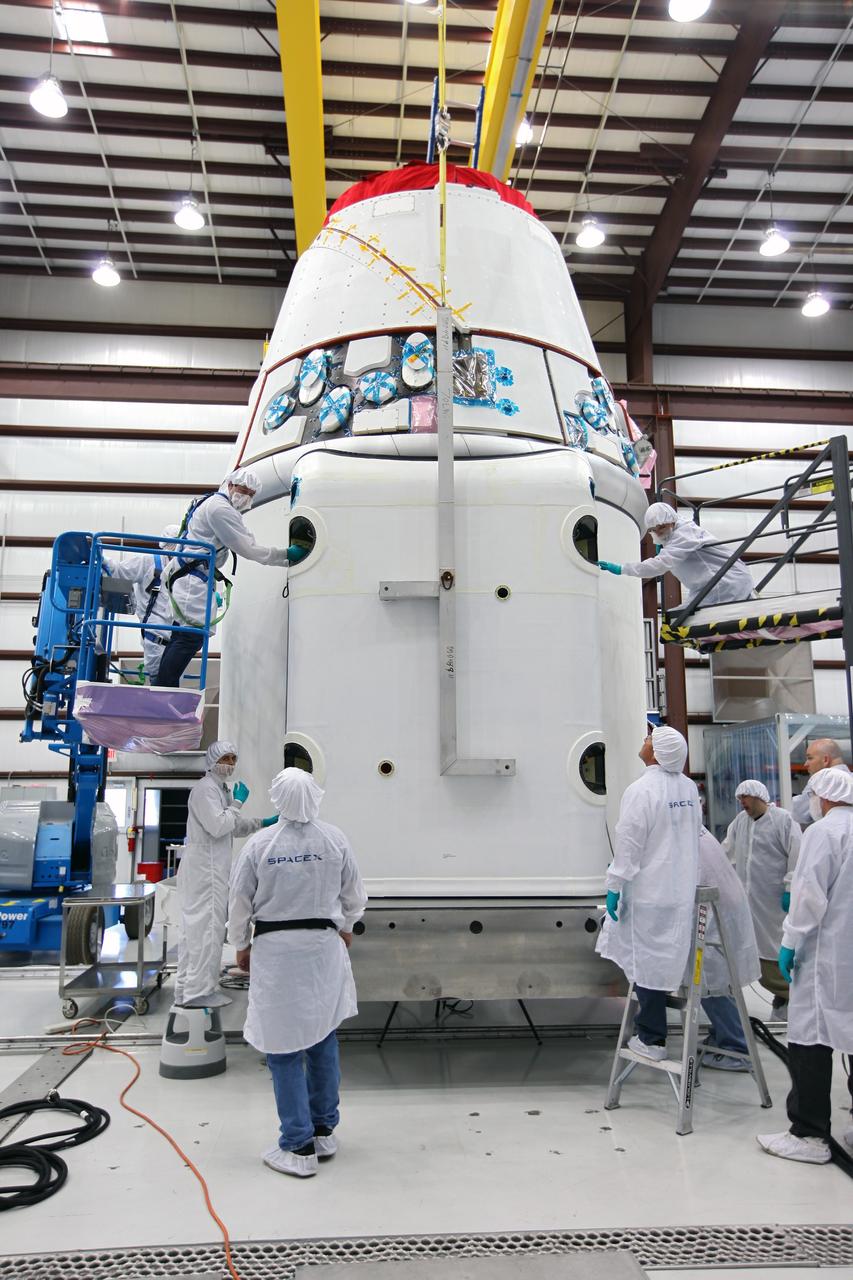
CAPE CANAVERAL, Fla. – Workers guide a solar array fairing into place inside the processing hangar used by Space Exploration Technologies, or SpaceX, at Cape Canaveral Air Force Station, Fla. The fairing will be installed on the Dragon spacecraft undergoing launch preparations inside the hangar. The spacecraft will launch on the upcoming SpaceX CRS-2 mission. The flight will be the second commercial resupply mission to the International Space Station by SpaceX. NASA has contracted for a total of 12 commercial resupply flights from SpaceX and eight from the Orbital Sciences Corp. Photo credit: NASA/Kim Shiflett

Acting NASA Deputy Administrator Lesa Roe, left, and acting NASA Administrator Robert Lightfoot, right, listen as Alec Devereaux, a systems engineer with Sierra Nevada Corporation, right, discusses the Flight Control Integration Lab (FCIL), Thursday, April 6, 2017 during a visit to Sierra Nevada Corporation in Louisville, Colo. Sierra Nevada Corporation, with their Dream Chaser Cargo System, was one of three companies to be awarded Commercial Resupply Services (CRS-2) contracts designed to obtain cargo delivery services to the space station, disposal of unneeded cargo, and the return of research samples and other cargo from the station back to NASA. Photo Credit: (NASA/Joel Kowsky)
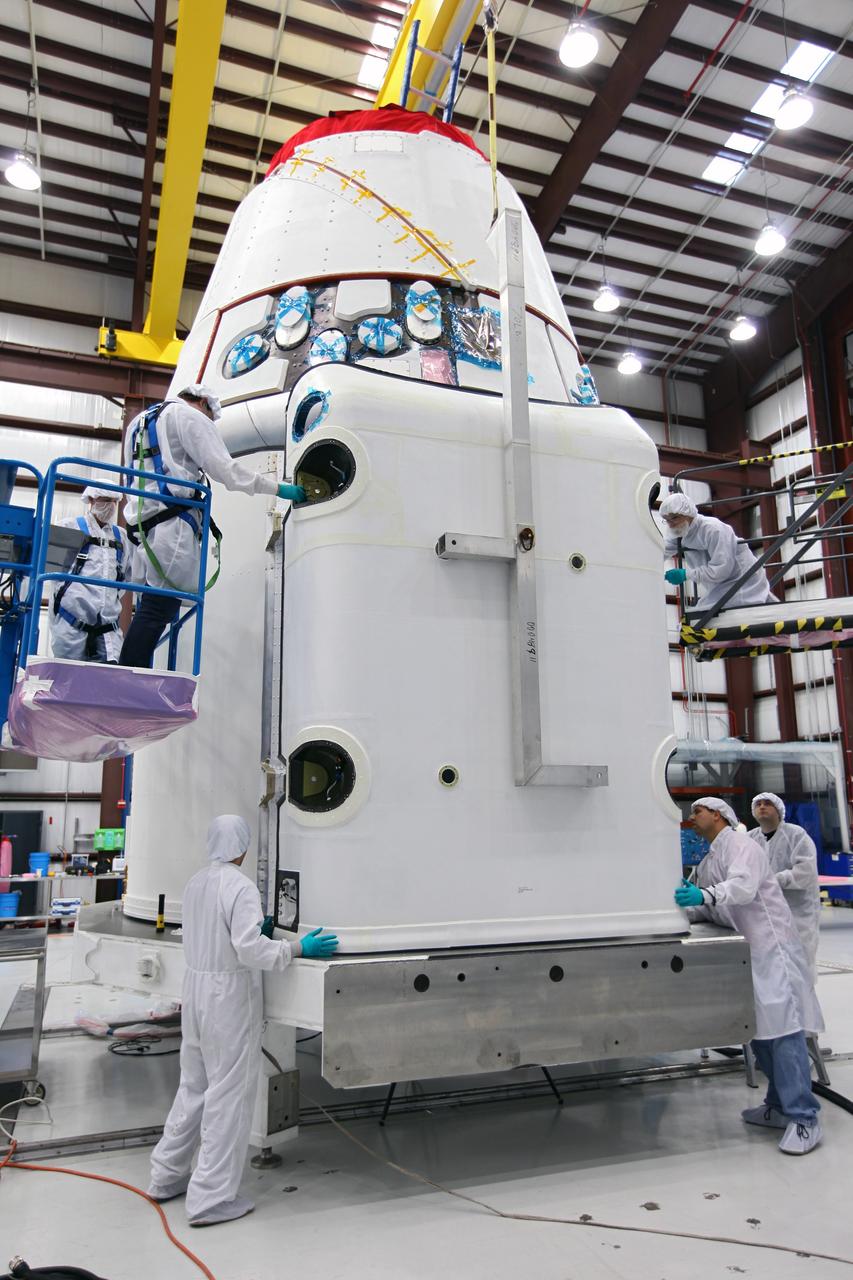
CAPE CANAVERAL, Fla. – Workers guide a solar array fairing into place inside the processing hangar used by Space Exploration Technologies, or SpaceX, at Cape Canaveral Air Force Station, Fla. The fairing will be installed on the Dragon spacecraft undergoing launch preparations inside the hangar. The spacecraft will launch on the upcoming SpaceX CRS-2 mission. The flight will be the second commercial resupply mission to the International Space Station by SpaceX. NASA has contracted for a total of 12 commercial resupply flights from SpaceX and eight from the Orbital Sciences Corp. Photo credit: NASA/Kim Shiflett
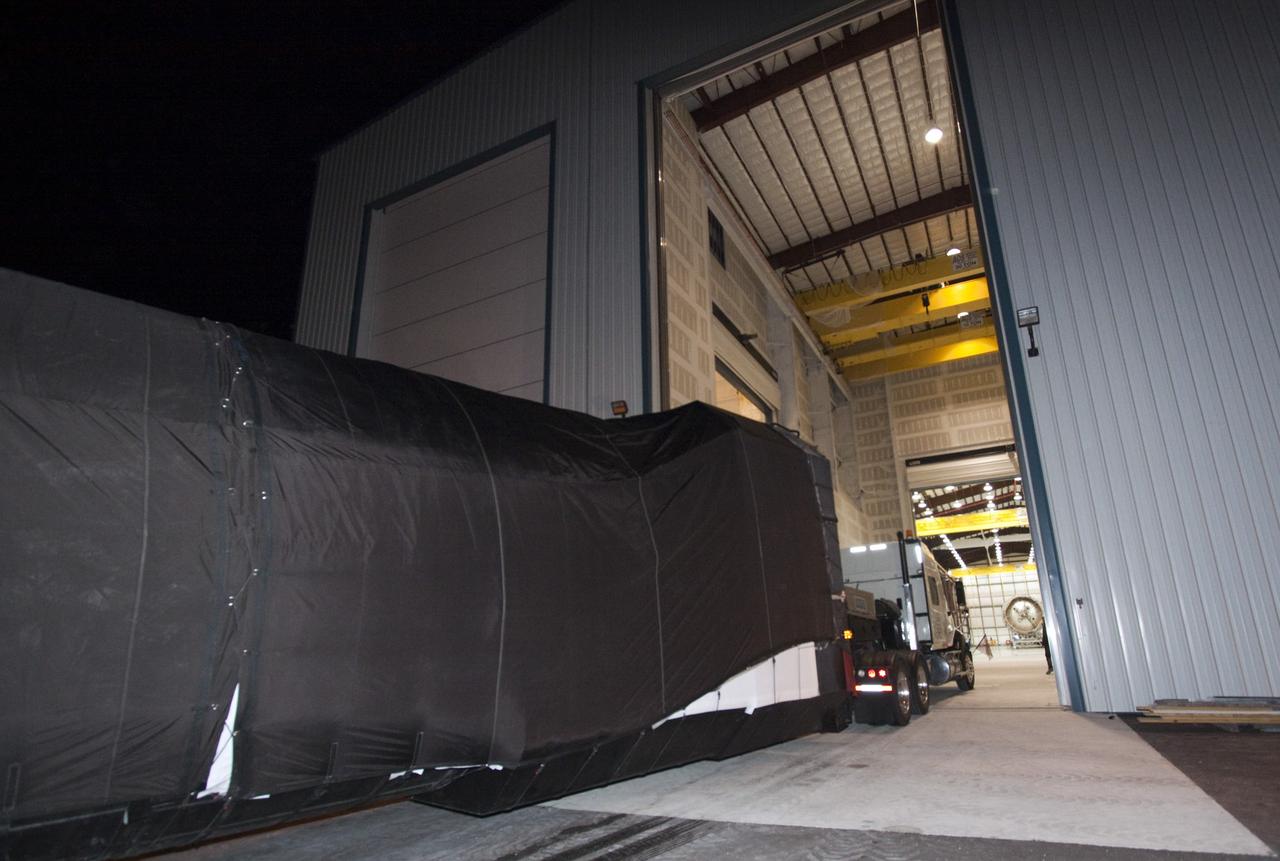
CAPE CANAVERAL, Fla. – The first stage of the Falcon 9 rocket arrives at the SpaceX Falcon Hangar at Launch Complex 40 on Cape Canaveral Air Force Station in Florida. The two-stage rocket will launch the company's Dragon spacecraft on the upcoming SpaceX CRS-2 mission. The flight will be the second commercial resupply mission to the International Space Station by Space Exploration Technologies, or SpaceX. NASA has contracted for a total of 12 commercial resupply flights from SpaceX and eight from the Orbital Sciences Corp. Photo credit: NASA/Jim Grossmann
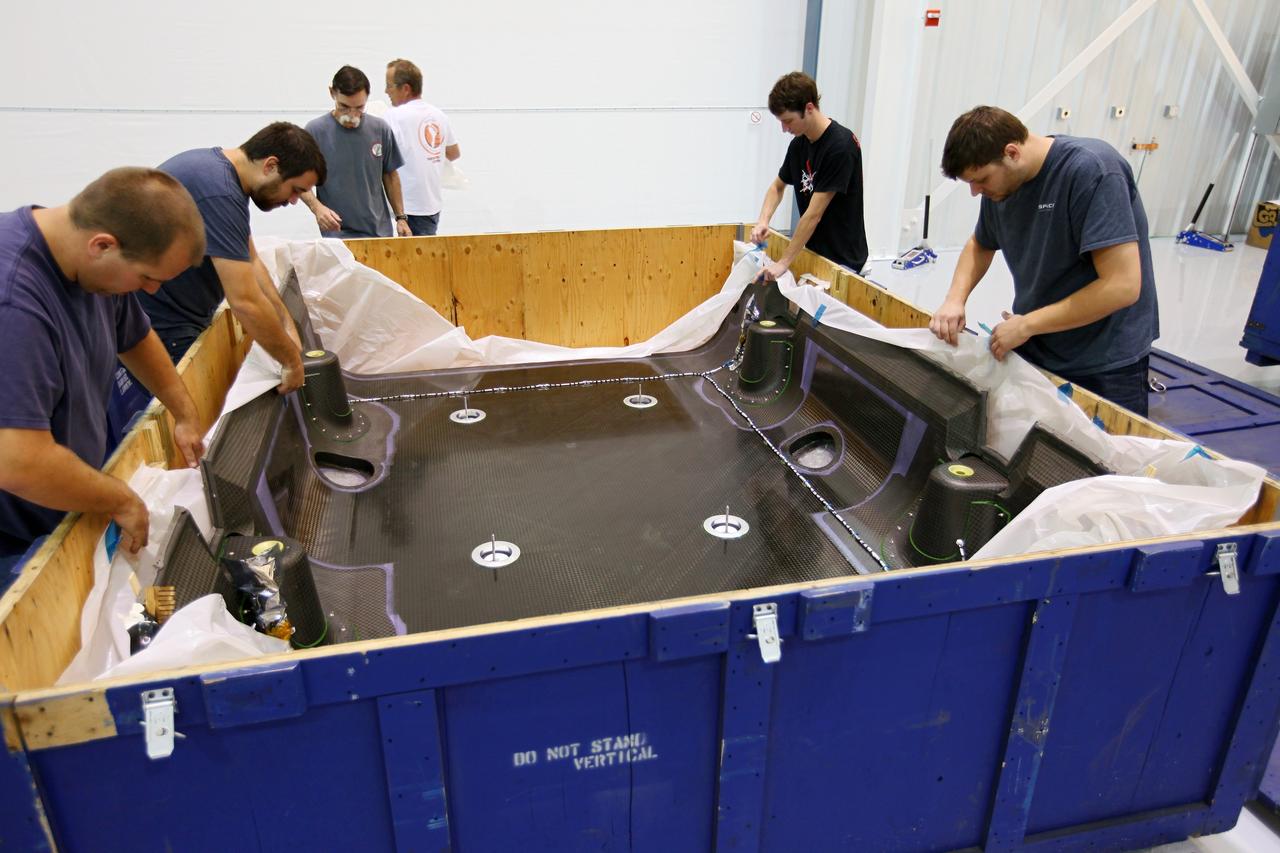
CAPE CANAVERAL, Fla. – Workers inspect a solar array fairing at the processing hangar used by Space Exploration Technologies, or SpaceX, at Cape Canaveral Air Force Station, Fla. The fairings are to be installed on the Dragon spacecraft undergoing launch preparations inside the hangar. The spacecraft will launch on the upcoming SpaceX CRS-2 mission. The flight will be the second commercial resupply mission to the International Space Station by SpaceX. NASA has contracted for a total of 12 commercial resupply flights from SpaceX and eight from the Orbital Sciences Corp. Photo credit: NASA/Kim Shiflett
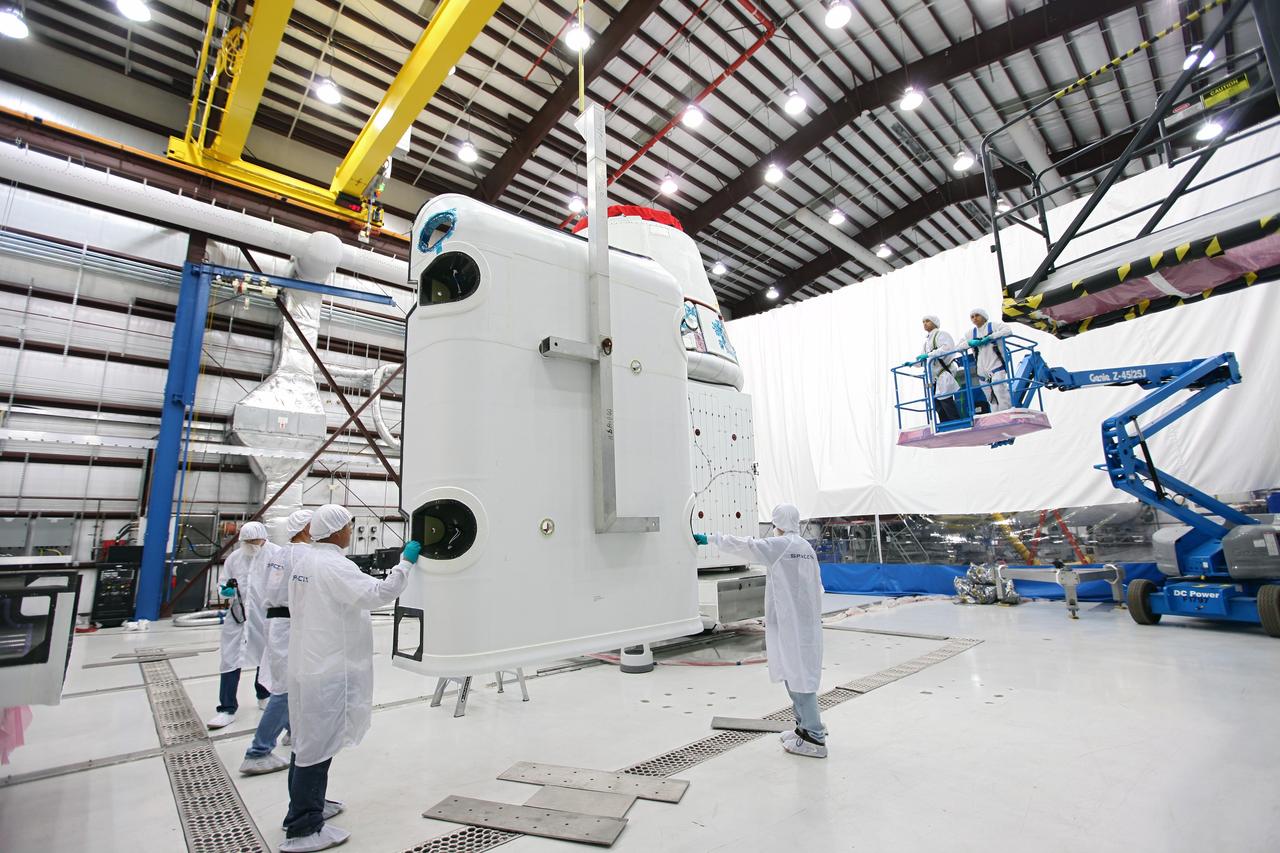
CAPE CANAVERAL, Fla. – Workers guide a solar array fairing into place inside the processing hangar used by Space Exploration Technologies, or SpaceX, at Cape Canaveral Air Force Station, Fla. The fairing will be installed on the Dragon spacecraft undergoing launch preparations inside the hangar. The spacecraft will launch on the upcoming SpaceX CRS-2 mission. The flight will be the second commercial resupply mission to the International Space Station by SpaceX. NASA has contracted for a total of 12 commercial resupply flights from SpaceX and eight from the Orbital Sciences Corp. Photo credit: NASA/Kim Shiflett

CAPE CANAVERAL, Fla. – Workers guide a solar array fairing into place inside the processing hangar used by Space Exploration Technologies, or SpaceX, at Cape Canaveral Air Force Station, Fla. The fairing will be installed on the Dragon spacecraft undergoing launch preparations inside the hangar. The spacecraft will launch on the upcoming SpaceX CRS-2 mission. The flight will be the second commercial resupply mission to the International Space Station by SpaceX. NASA has contracted for a total of 12 commercial resupply flights from SpaceX and eight from the Orbital Sciences Corp. Photo credit: NASA/Kim Shiflett
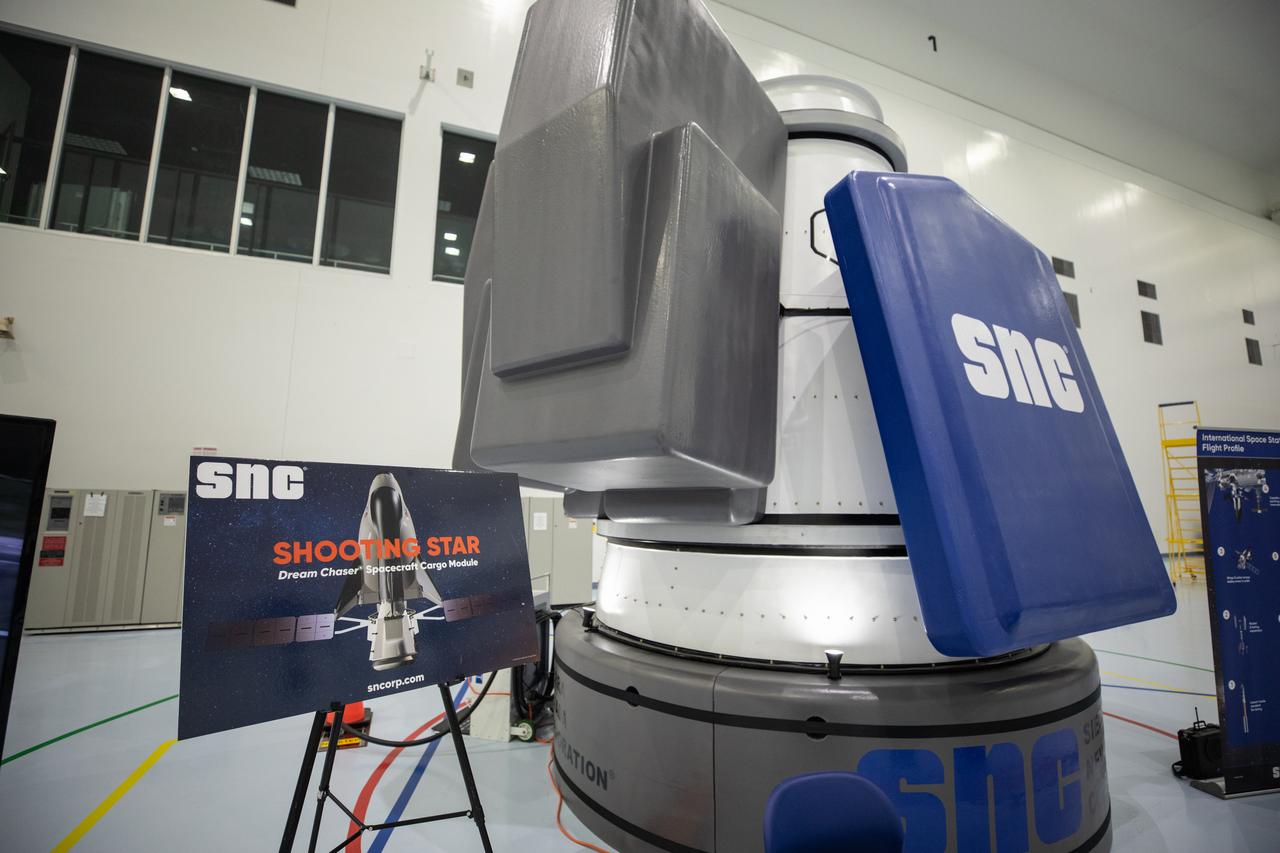
A look at a testing mockup of Sierra Nevada Corporation’s Shooting Star cargo module in the Space Station Processing Facility high bay at Kennedy Space Center on Nov. 19, 2019. Shooting Star will attach to the back of the company’s Dream Chaser spacecraft. The cargo module will deliver more than 12,000 pounds of supplies and other cargo to the International Space Station for NASA as part of the Commercial Resupply Services-2 contract.
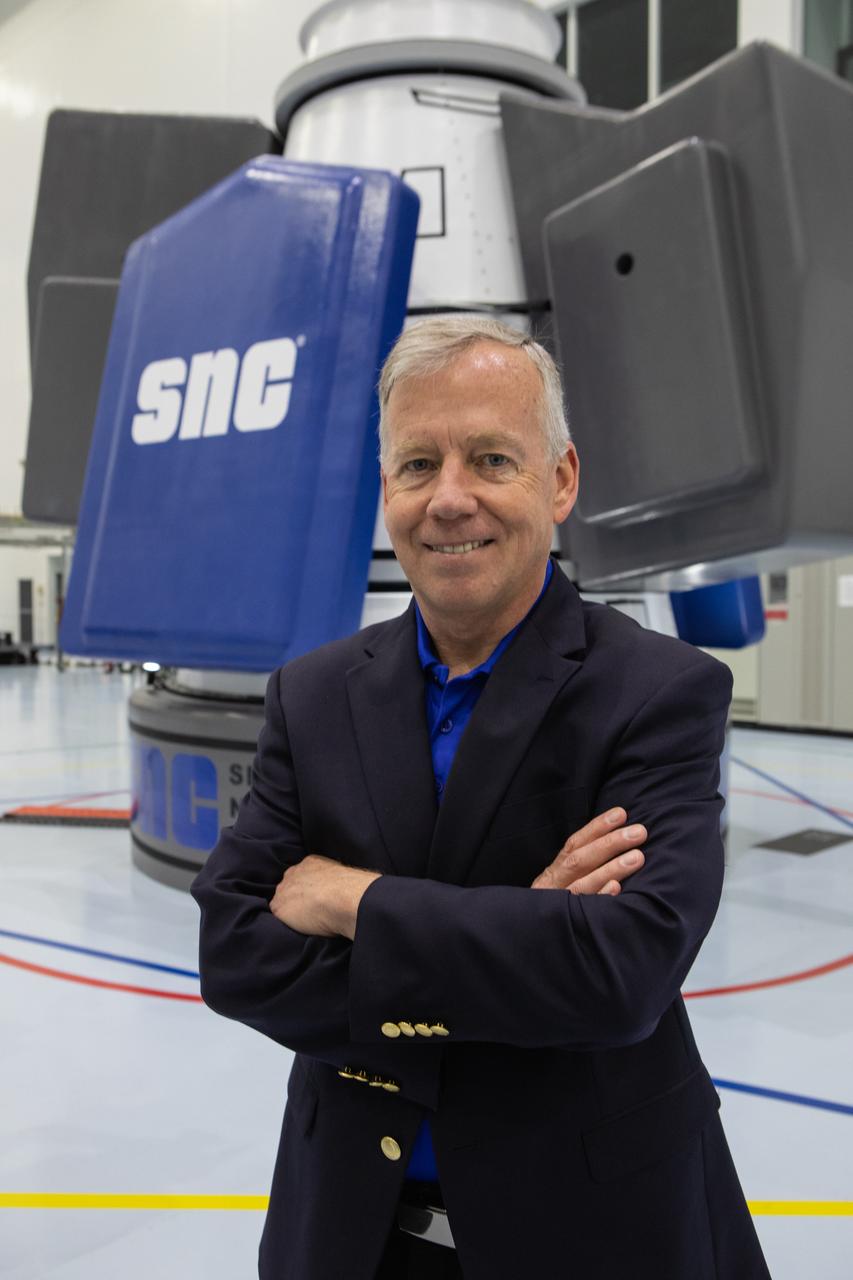
Steve Lindsey, senior vice president of strategy for Sierra Nevada Corporation Space Systems and a former NASA astronaut, poses in front of the company’s Shooting Star cargo module in the Space Station Processing Facility high bay at Kennedy Space Center on Nov. 19, 2019. Shooting Star will attach to the back of the company’s Dream Chaser spacecraft. The cargo module will deliver more than 12,000 pounds of supplies and other cargo to the International Space Station for NASA as part of the Commercial Resupply Services-2 contract.

A look at a testing mockup of Sierra Nevada Corporation’s Shooting Star cargo module in the Space Station Processing Facility high bay at Kennedy Space Center on Nov. 19, 2019. Shooting Star will attach to the back of the company’s Dream Chaser spacecraft. The cargo module will deliver more than 12,000 pounds of supplies and other cargo to the International Space Station for NASA as part of the Commercial Resupply Services-2 contract.
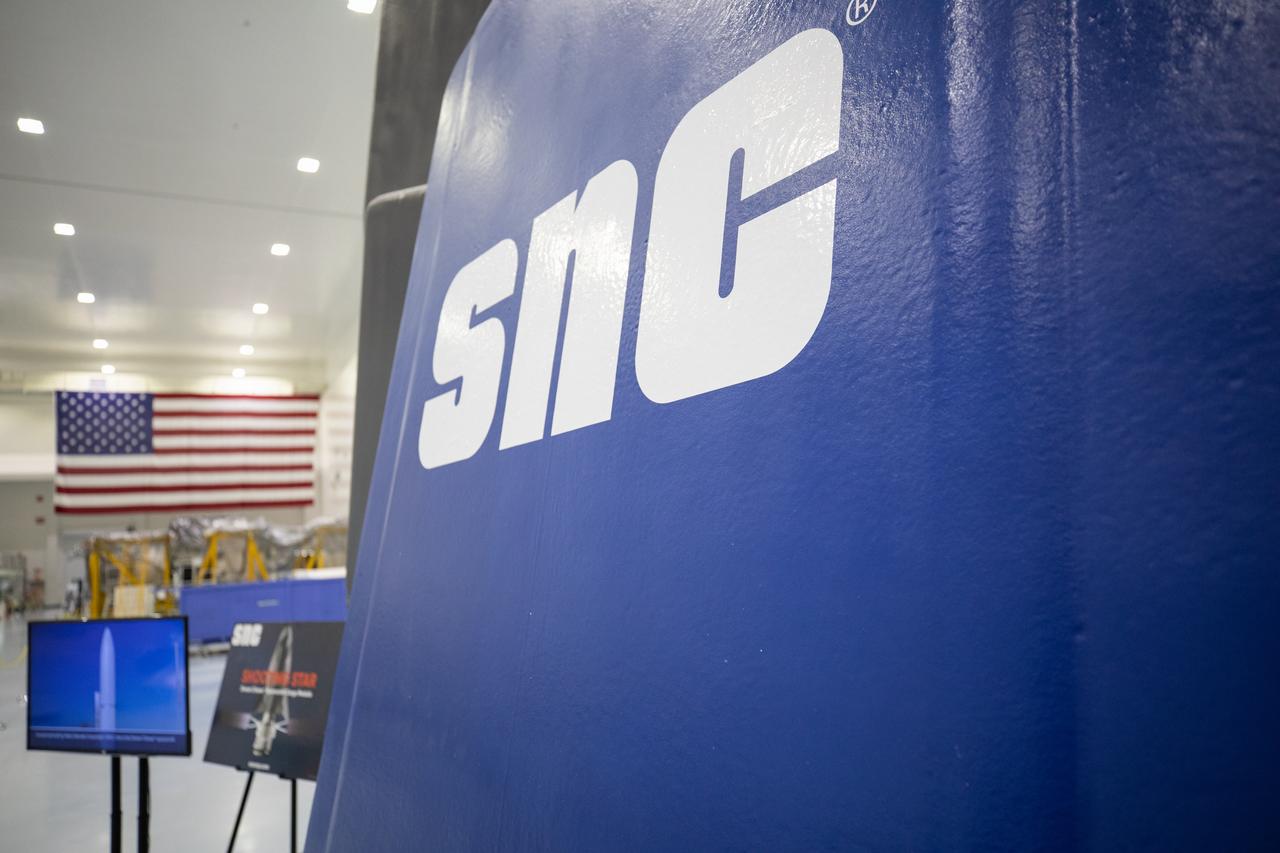
A look at a testing mockup of Sierra Nevada Corporation’s Shooting Star cargo module in the Space Station Processing Facility high bay at Kennedy Space Center on Nov. 19, 2019. Shooting Star will attach to the back of the company’s Dream Chaser spacecraft. The cargo module will deliver more than 12,000 pounds of supplies and other cargo to the International Space Station for NASA as part of the Commercial Resupply Services-2 contract.
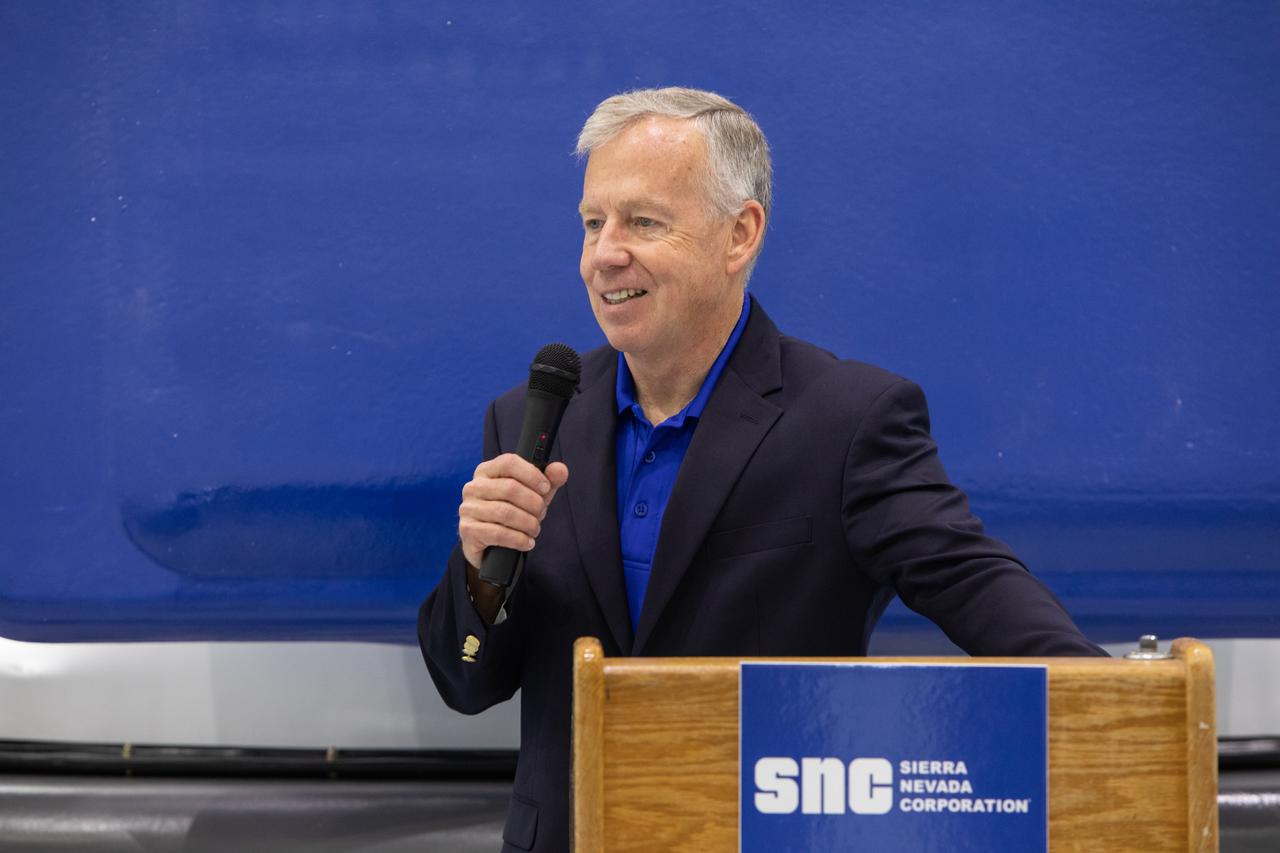
Steve Lindsey, senior vice president of strategy for Sierra Nevada Corporation Space Systems and a former NASA astronaut, discusses the capabilities of the company’s Shooting Star cargo module in the Space Station Processing Facility high bay at Kennedy Space Center on Nov. 19, 2019. Shooting Star will attach to the back of the company’s Dream Chaser spacecraft. The cargo module will deliver more than 12,000 pounds of supplies and other cargo to the International Space Station for NASA as part of the Commercial Resupply Services-2 contract.
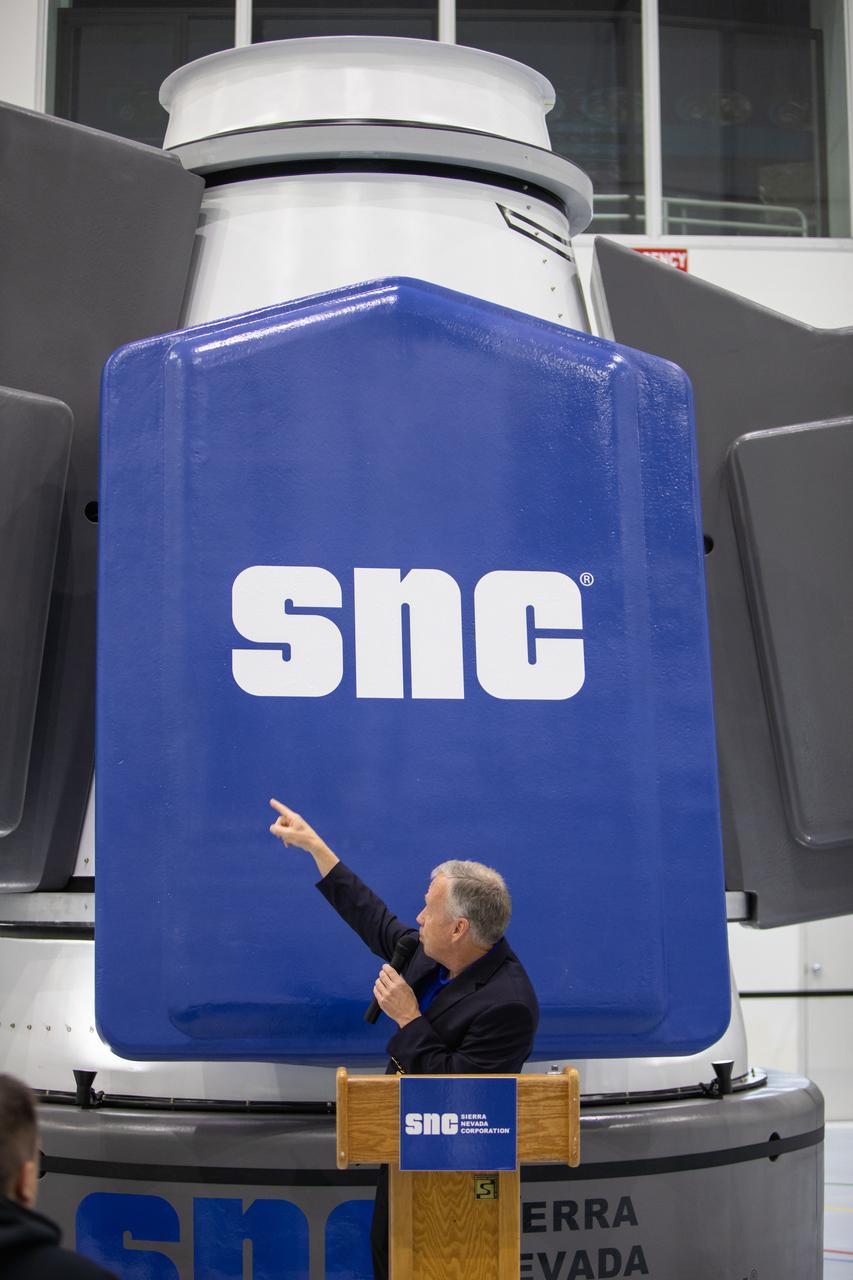
Steve Lindsey, senior vice president of strategy for Sierra Nevada Corporation Space Systems and a former NASA astronaut, discusses the capabilities of the company’s Shooting Star cargo module during a media day event in the Space Station Processing Facility high bay at Kennedy Space Center on Nov. 19, 2019. Shooting Star will attach to the back of the company’s Dream Chaser spacecraft. The cargo module will deliver more than 12,000 pounds of supplies and other cargo to the International Space Station for NASA as part of the Commercial Resupply Services-2 contract.
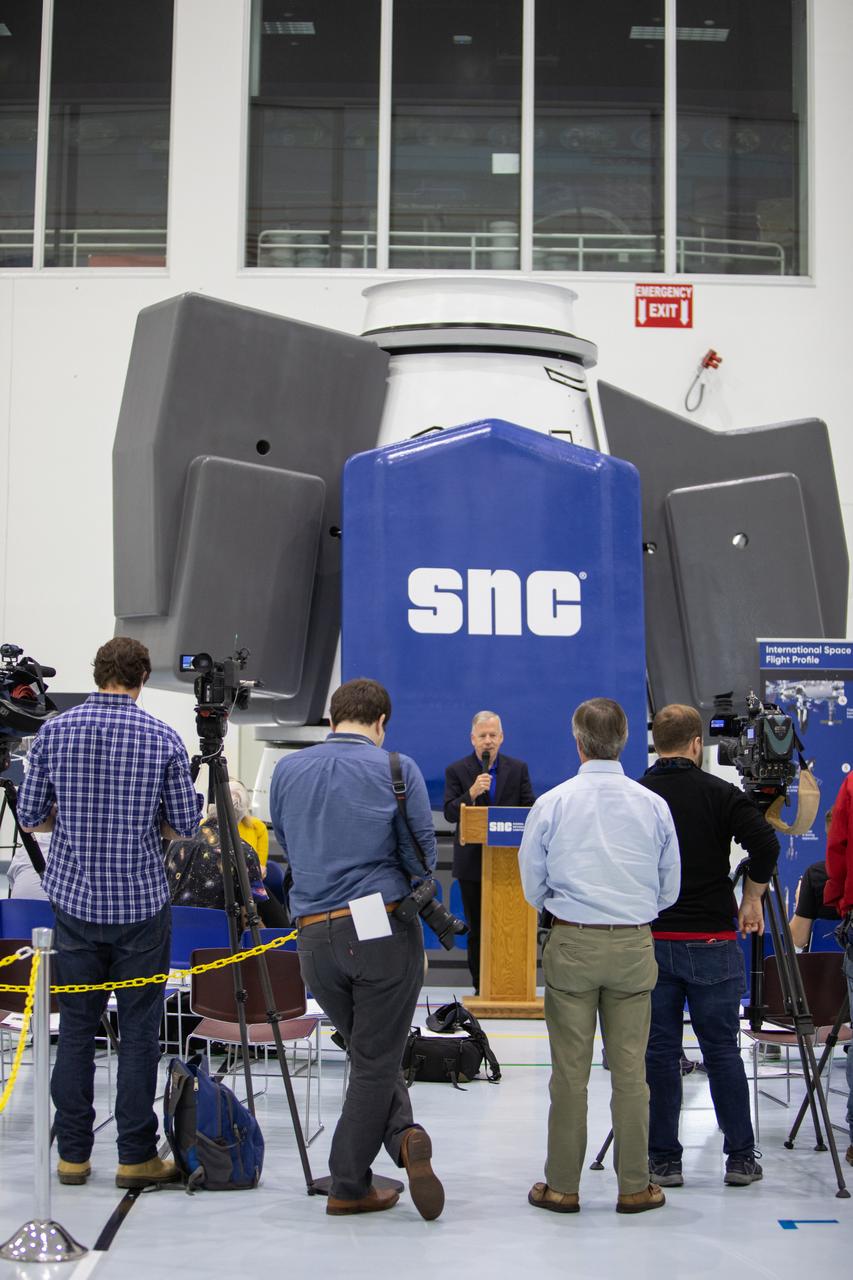
Steve Lindsey, senior vice president of strategy for Sierra Nevada Corporation Space Systems and a former NASA astronaut, discusses the capabilities of the company’s Shooting Star cargo module during a media day event in the Space Station Processing Facility high bay at Kennedy Space Center on Nov. 19, 2019. Shooting Star will attach to the back of the company’s Dream Chaser spacecraft. The cargo module will deliver more than 12,000 pounds of supplies and other cargo to the International Space Station for NASA as part of the Commercial Resupply Services-2 contract.
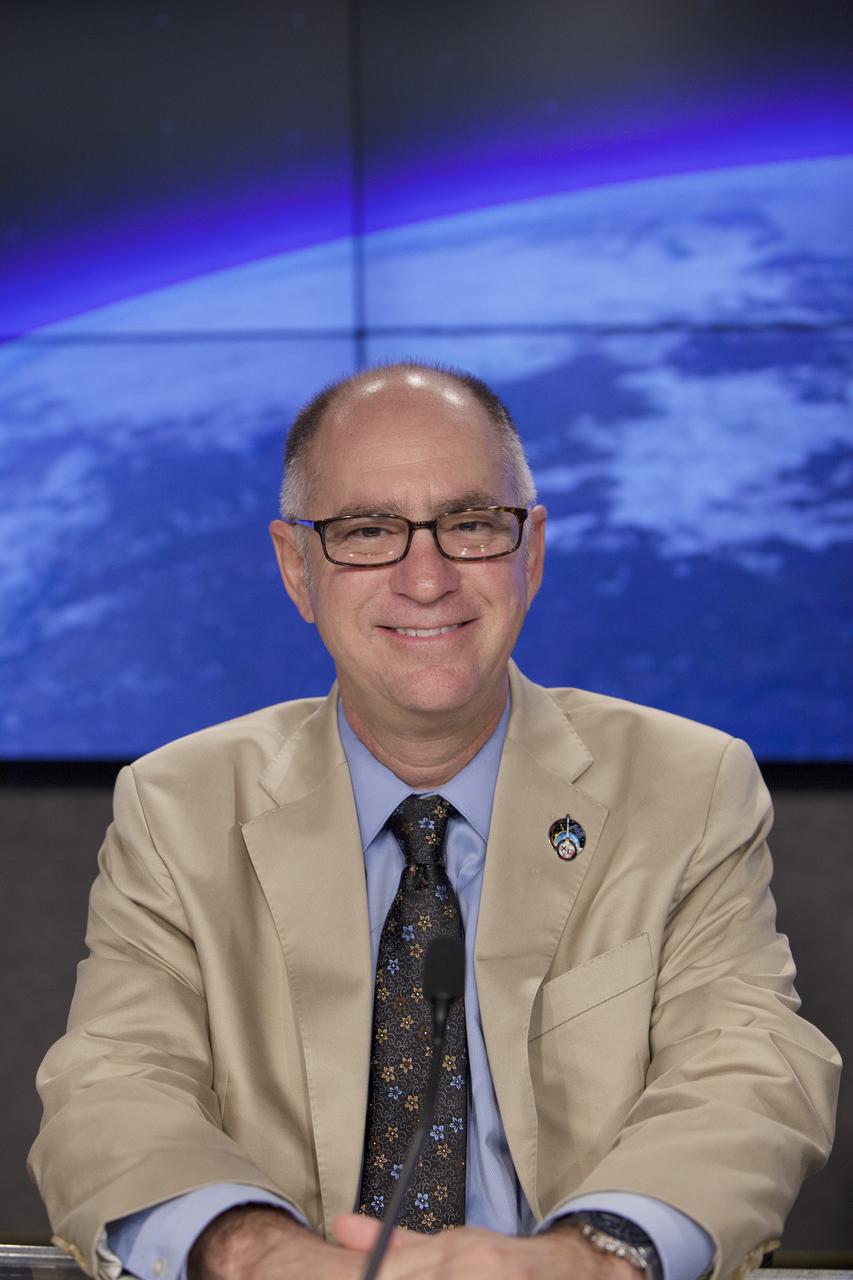
CAPE CANAVERAL, Fla. – Members of NASA’s International Space Station science team brief news media representatives in the Kennedy Space Center’s Press Site auditorium in preparation for the launch of the SpaceX CRS-4 mission to resupply the International Space Station. Sam Scimemi, International Space Station Division director of Human Exploration and Operation Mission Directorate, participated in the briefing. The mission is the fourth of 12 SpaceX flights NASA contracted with the company to resupply the space station. It will be the fifth trip by a Dragon spacecraft to the orbiting laboratory. The spacecraft’s 2.5 tons of supplies, science experiments, and technology demonstrations include critical materials to support 255 science and research investigations that will occur during the station's Expeditions 41 and 42. Liftoff is targeted for an instantaneous window at 2:14 a.m. EDT. To learn more about the mission, visit http://www.nasa.gov/mission_pages/station/structure/launch/index.html Photo credit: NASA/Jim Grossmann
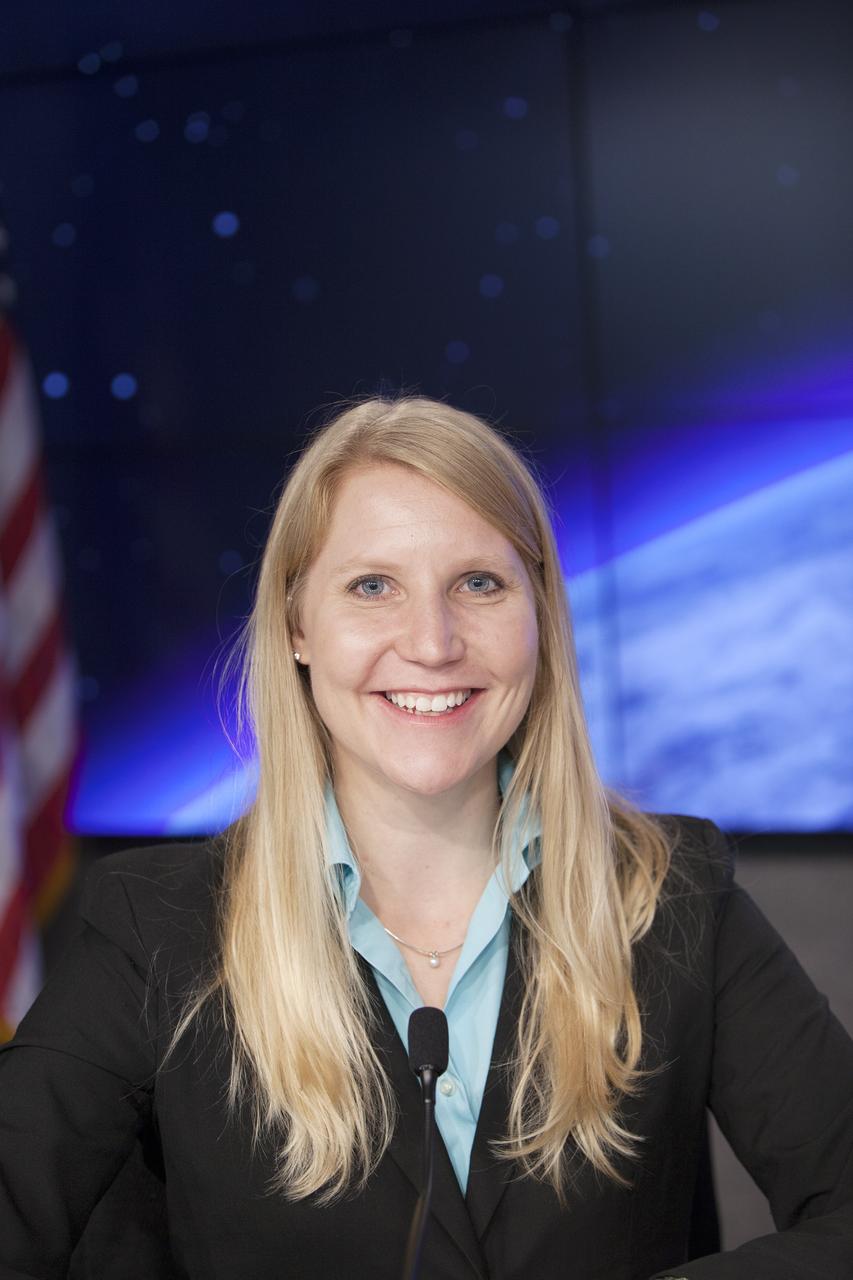
CAPE CANAVERAL, Fla. – Members of NASA’s International Space Station science team brief news media representatives in the Kennedy Space Center’s Press Site auditorium in preparation for the launch of the SpaceX CRS-4 mission to resupply the International Space Station. Stephanie Schierholz, NASA Headquarters Office of Communications, served as moderator for the briefing. The mission is the fourth of 12 SpaceX flights NASA contracted with the company to resupply the space station. It will be the fifth trip by a Dragon spacecraft to the orbiting laboratory. The spacecraft’s 2.5 tons of supplies, science experiments, and technology demonstrations include critical materials to support 255 science and research investigations that will occur during the station's Expeditions 41 and 42. Liftoff is targeted for an instantaneous window at 2:14 a.m. EDT. To learn more about the mission, visit http://www.nasa.gov/mission_pages/station/structure/launch/index.html Photo credit: NASA/Jim Grossmann
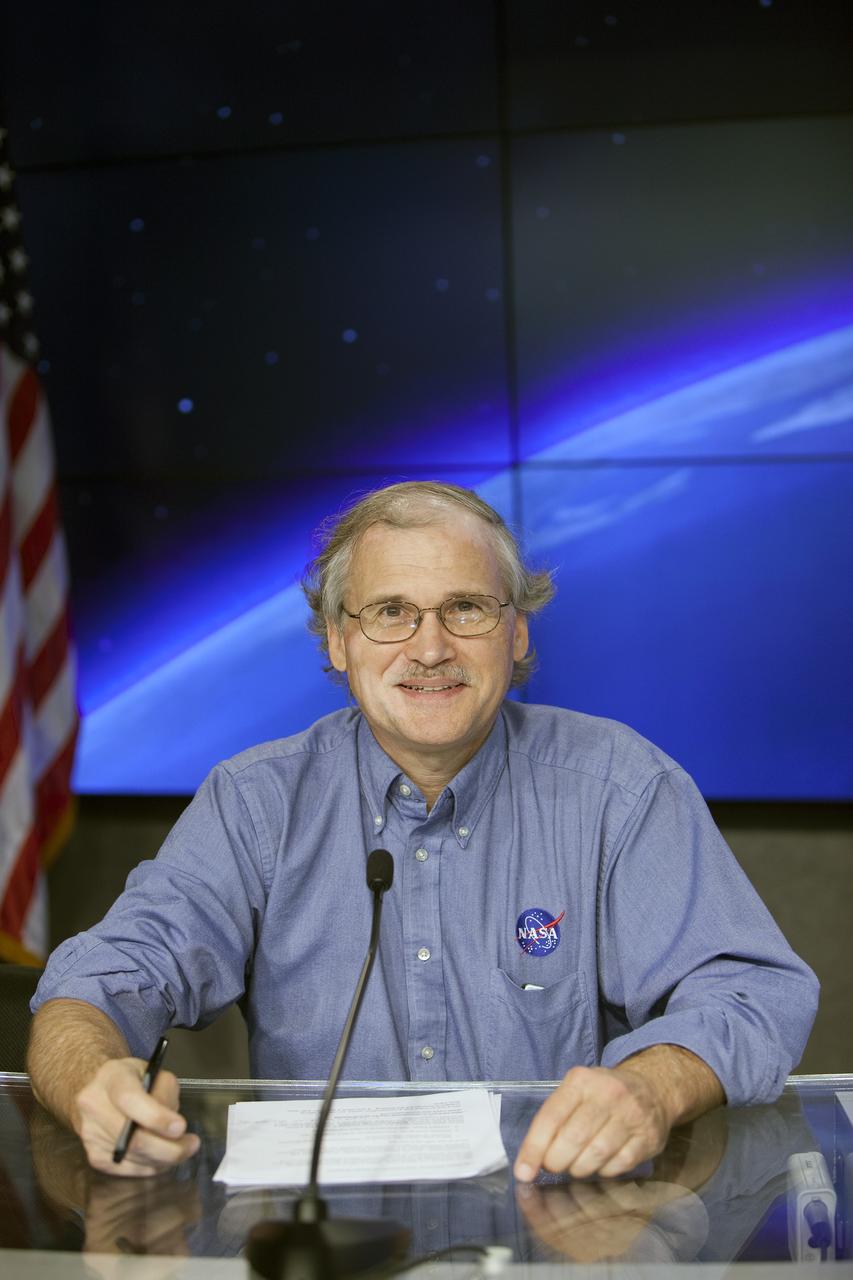
CAPE CANAVERAL, Fla. – Steve Cole, NASA Public Affairs, moderates the ISS Earth Science: Tracking Ocean Winds Panel briefing for media representatives in Kennedy Space Center’s Press Site auditorium in preparation for the launch of the SpaceX CRS-4 mission to resupply the International Space Station. The mission is the fourth of 12 SpaceX flights NASA contracted with the company to resupply the space station. It will be the fifth trip by a Dragon spacecraft to the orbiting laboratory. The spacecraft’s 2.5 tons of supplies, science experiments, and technology demonstrations include critical materials to support 255 science and research investigations that will occur during the station's Expeditions 41 and 42. Liftoff is targeted for an instantaneous window at 2:14 a.m. EDT. To learn more about the mission, visit http://www.nasa.gov/mission_pages/station/structure/launch/index.html. Photo credit: NASA/Jim Grossmann

CAPE CANAVERAL, Fla. – Steve Volz, associate director for flight programs, Earth Science Division, Science Mission Directorate, NASA Headquarters, briefs media representatives in Kennedy Space Center’s Press Site auditorium in preparation for the launch of the SpaceX CRS-4 mission to resupply the International Space Station. Volz is a member of the ISS Earth Science: Tracking Ocean Winds Panel. The mission is the fourth of 12 SpaceX flights NASA contracted with the company to resupply the space station. It will be the fifth trip by a Dragon spacecraft to the orbiting laboratory. The spacecraft’s 2.5 tons of supplies, science experiments, and technology demonstrations include critical materials to support 255 science and research investigations that will occur during the station's Expeditions 41 and 42. Liftoff is targeted for an instantaneous window at 2:14 a.m. EDT. To learn more about the mission, visit http://www.nasa.gov/mission_pages/station/structure/launch/index.html. Photo credit: NASA/Jim Grossmann

CAPE CANAVERAL, Fla. – Marshall Porterfield, division director, Space Life and Physical Sciences, HEOMD, briefs media representatives in Kennedy Space Center’s Press Site auditorium in preparation for the launch of the SpaceX CRS-4 mission to resupply the International Space Station. Porterfield is a member of the ISS Science Panel on Model Organisms. The mission is the fourth of 12 SpaceX flights NASA contracted with the company to resupply the space station. It will be the fifth trip by a Dragon spacecraft to the orbiting laboratory. The spacecraft’s 2.5 tons of supplies, science experiments, and technology demonstrations include critical materials to support 255 science and research investigations that will occur during the station's Expeditions 41 and 42. Liftoff is targeted for an instantaneous window at 2:14 a.m. EDT. To learn more about the mission, visit http://www.nasa.gov/mission_pages/station/structure/launch/index.html. Photo credit: NASA/Jim Grossmann