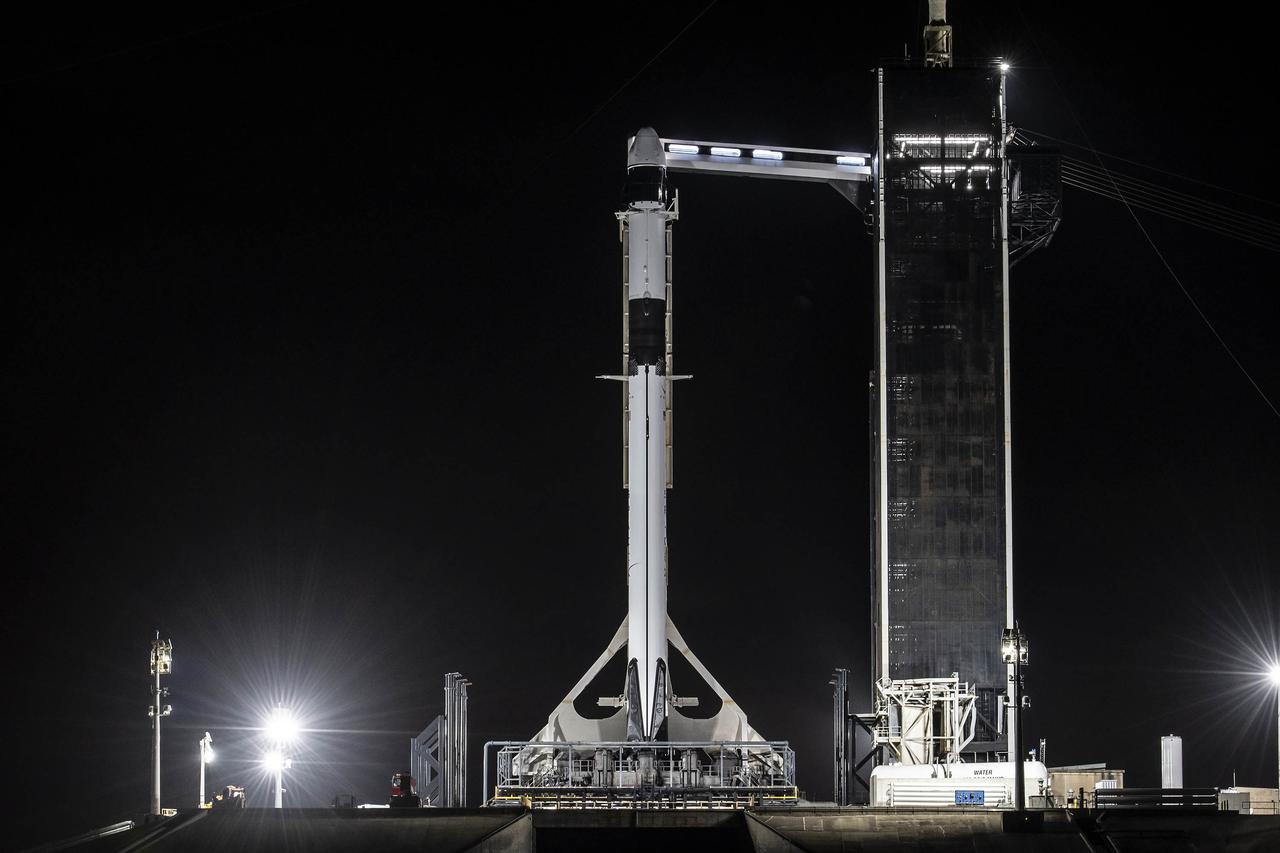
SpaceX's Falcon 9 rocket with Dragon spacecraft rolls out to Launch Complex 39A at NASA's Kennedy Space Center in Florida on Dec. 19, 2021, in preparation for launch. The agency's 24th Commercial Resupply Services mission, targeted for liftoff on Dec. 21, 2021 at 5:06 a.m. EST, will deliver new science investigations, supplies, and equipment to the crew on board the International Space Station.
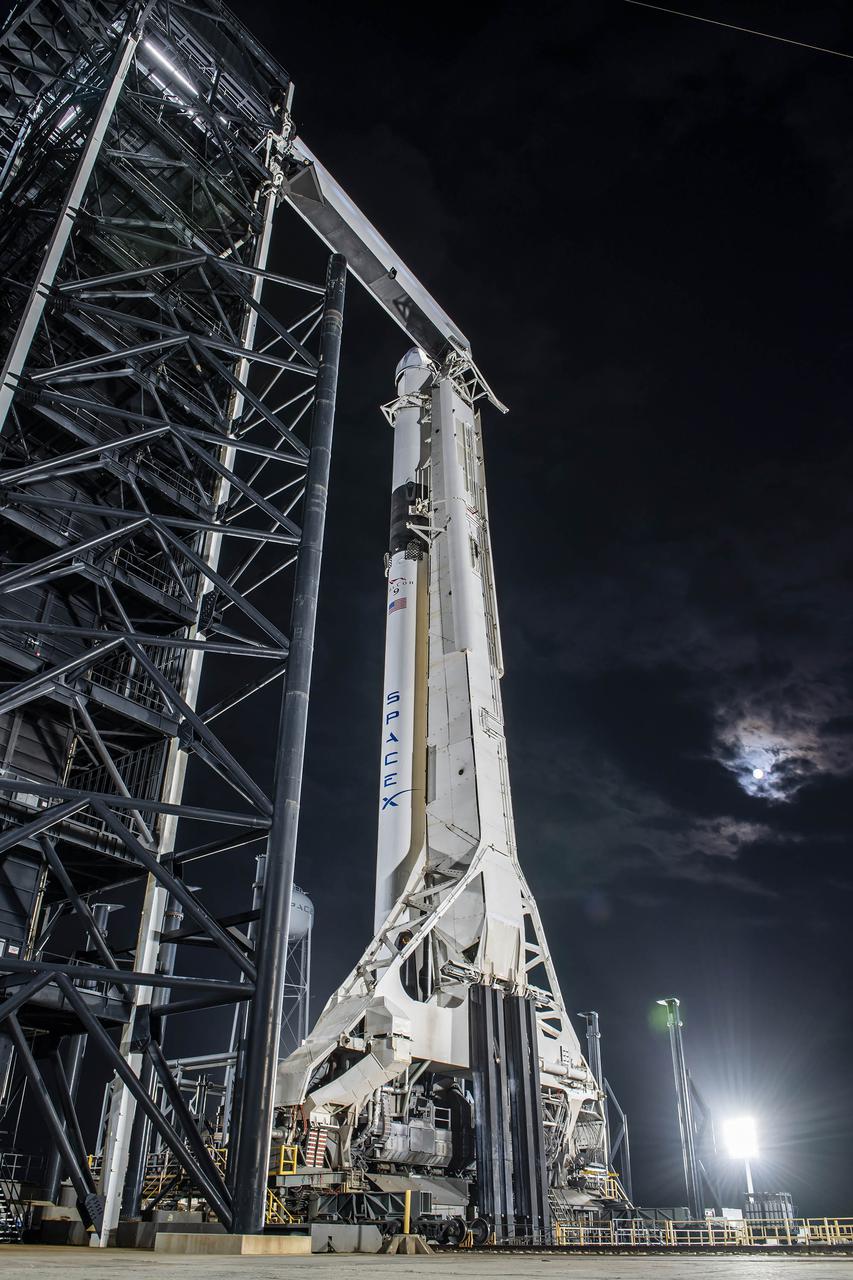
SpaceX's Falcon 9 rocket with Dragon spacecraft rolls out to Launch Complex 39A at NASA's Kennedy Space Center in Florida on Dec. 19, 2021, in preparation for launch. The agency's 24th Commercial Resupply Services mission, targeted for liftoff on Dec. 21, 2021 at 5:06 a.m. EST, will deliver new science investigations, supplies, and equipment to the crew on board the International Space Station.
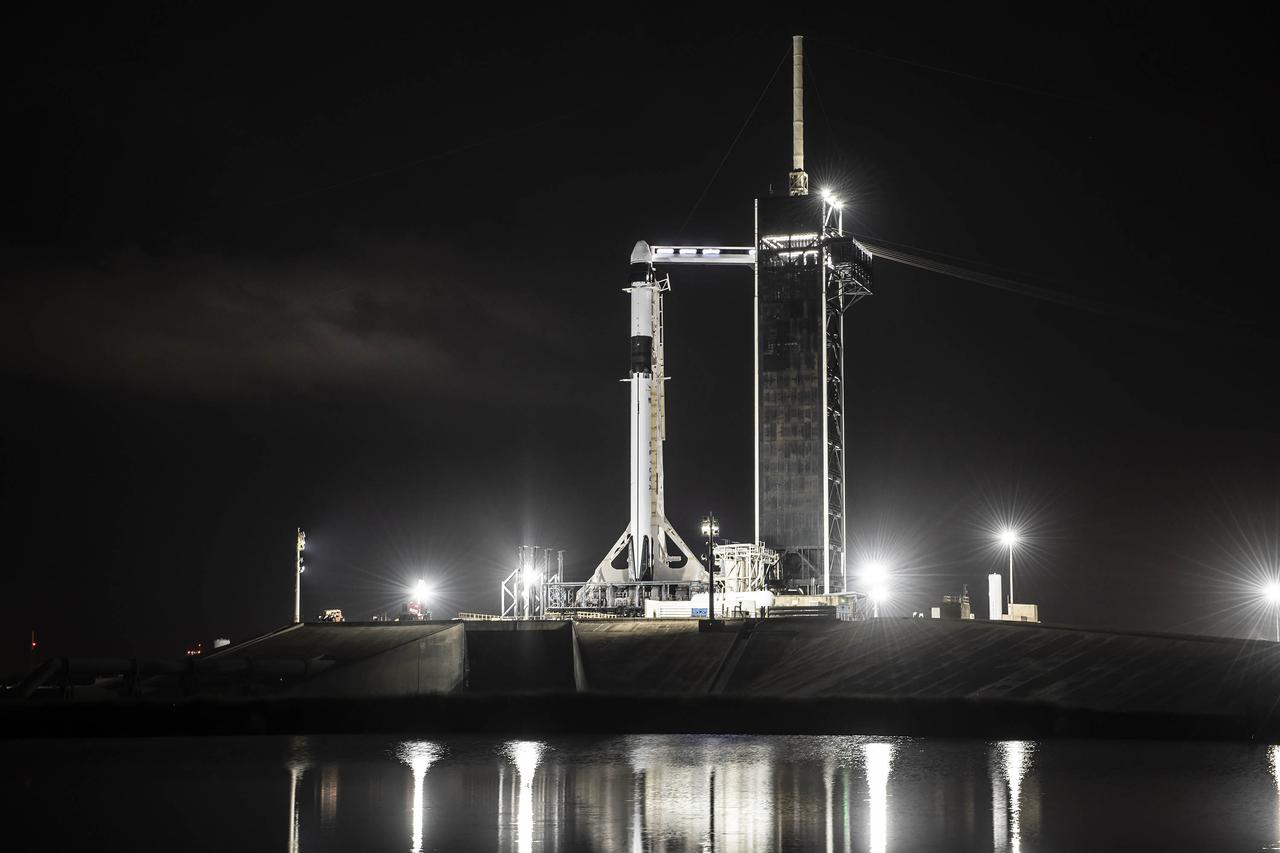
SpaceX's Falcon 9 rocket with Dragon spacecraft rolls out to Launch Complex 39A at NASA's Kennedy Space Center in Florida on Dec. 19, 2021, in preparation for launch. The agency's 24th Commercial Resupply Services mission, targeted for liftoff on Dec. 21, 2021 at 5:06 a.m. EST, will deliver new science investigations, supplies, and equipment to the crew on board the International Space Station.
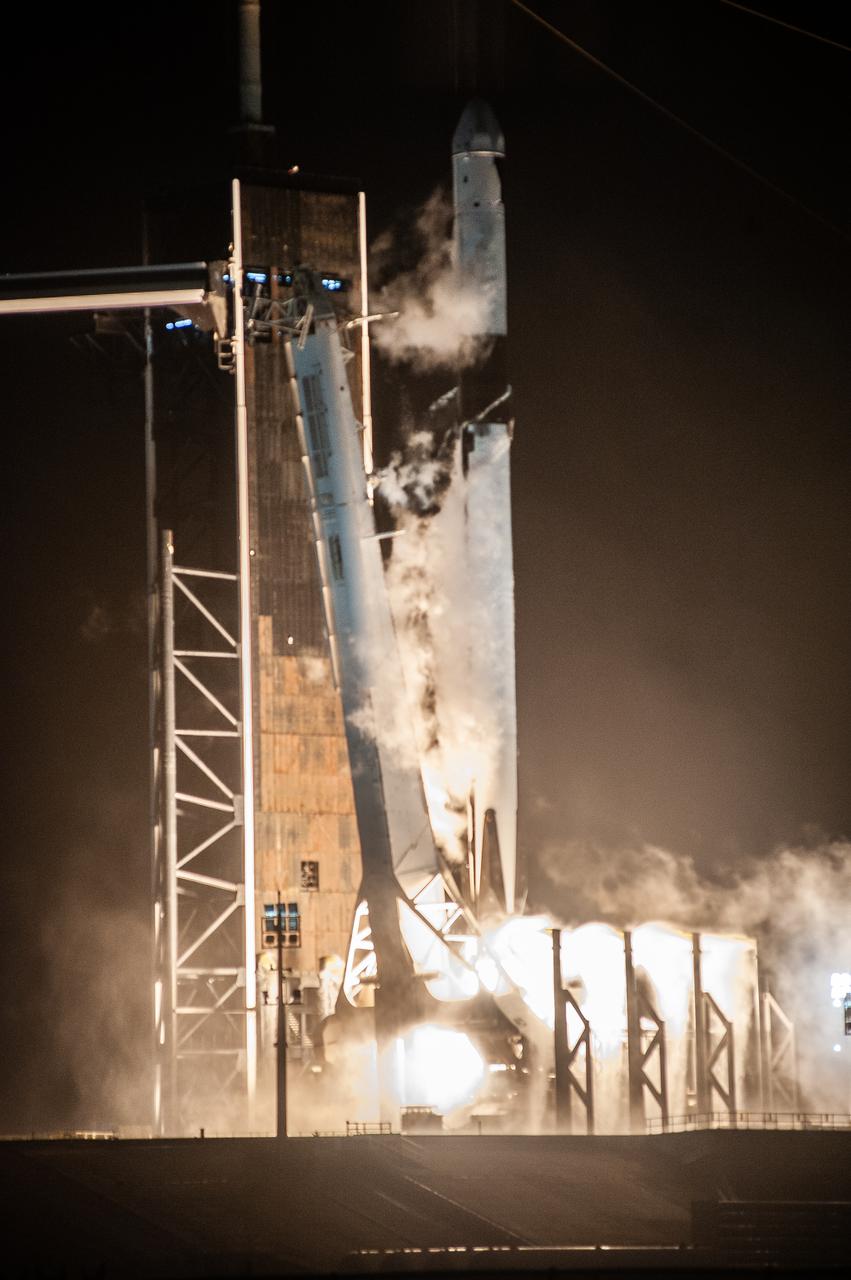
A SpaceX Falcon 9 rocket lifts off from Launch Complex 39A at Kennedy Space Center in Florida at 5:07 a.m. EST on Tuesday, Dec. 21, 2021, carrying the Dragon spacecraft on its journey to the International Space Station for SpaceX’s 24th commercial resupply services mission. Dragon will deliver new science investigations, supplies, and equipment to the crew on board the space station. Arrival to the orbiting laboratory is planned for Wednesday, Dec. 22.
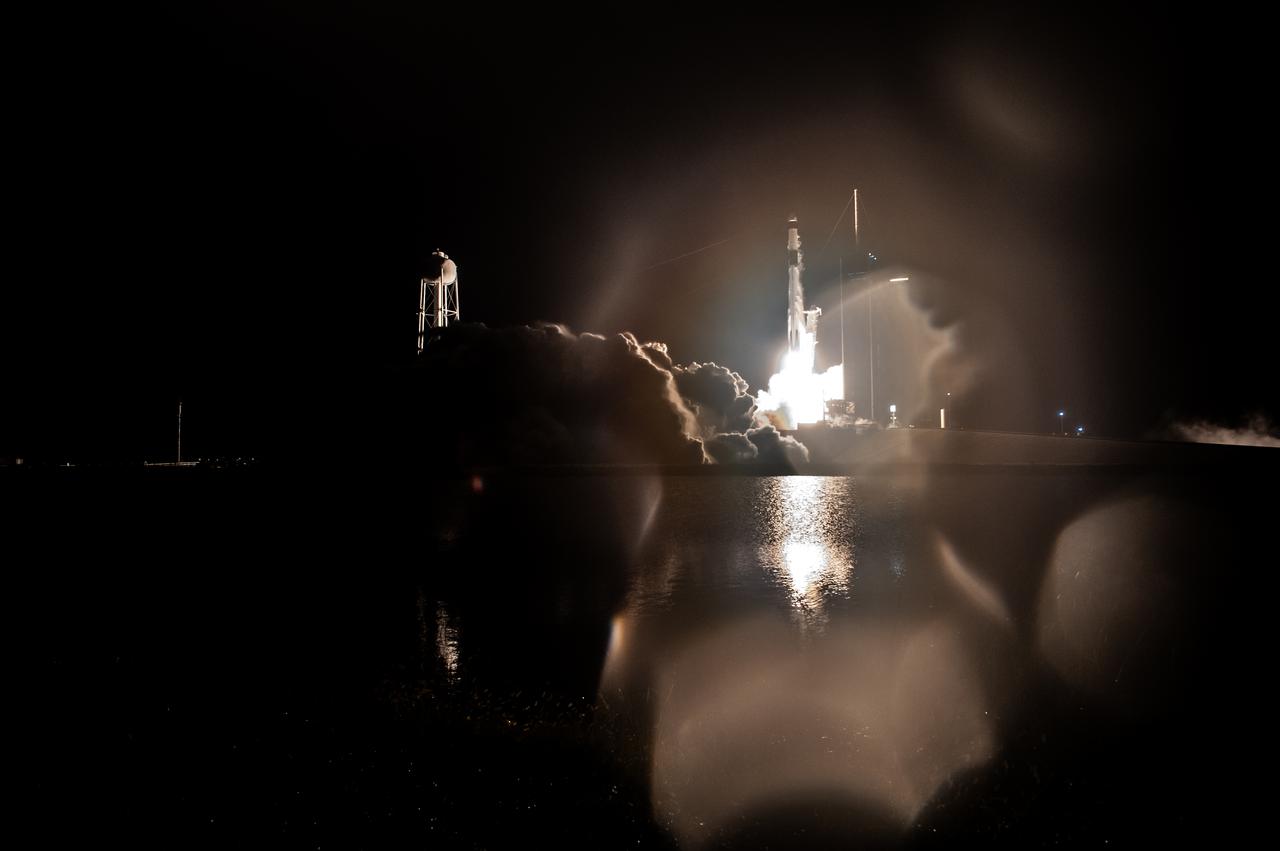
A SpaceX Falcon 9 rocket lifts off from Launch Complex 39A at Kennedy Space Center in Florida at 5:07 a.m. EST on Tuesday, Dec. 21, 2021, carrying the Dragon spacecraft on its journey to the International Space Station for SpaceX’s 24th commercial resupply services mission. Dragon will deliver new science investigations, supplies, and equipment to the crew on board the space station. Arrival to the orbiting laboratory is planned for Wednesday, Dec. 22.
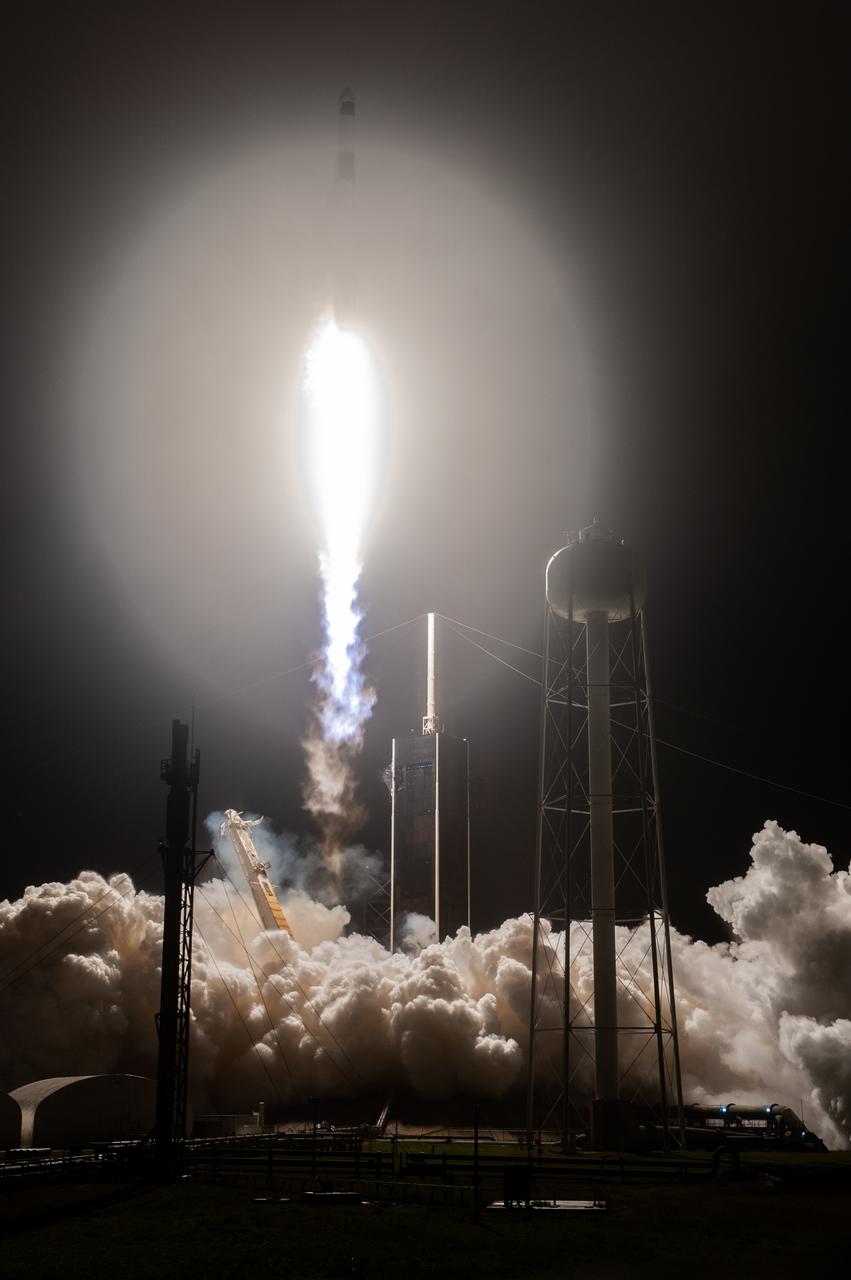
A SpaceX Falcon 9 rocket soars into the sky after lifting off from Launch Complex 39A at Kennedy Space Center in Florida at 5:07 a.m. EST on Tuesday, Dec. 21, 2021, carrying the Dragon spacecraft on its journey to the International Space Station for SpaceX’s 24th commercial resupply services mission. Dragon will deliver new science investigations, supplies, and equipment to the crew on board the space station. Arrival to the orbiting laboratory is planned for Wednesday, Dec. 22.
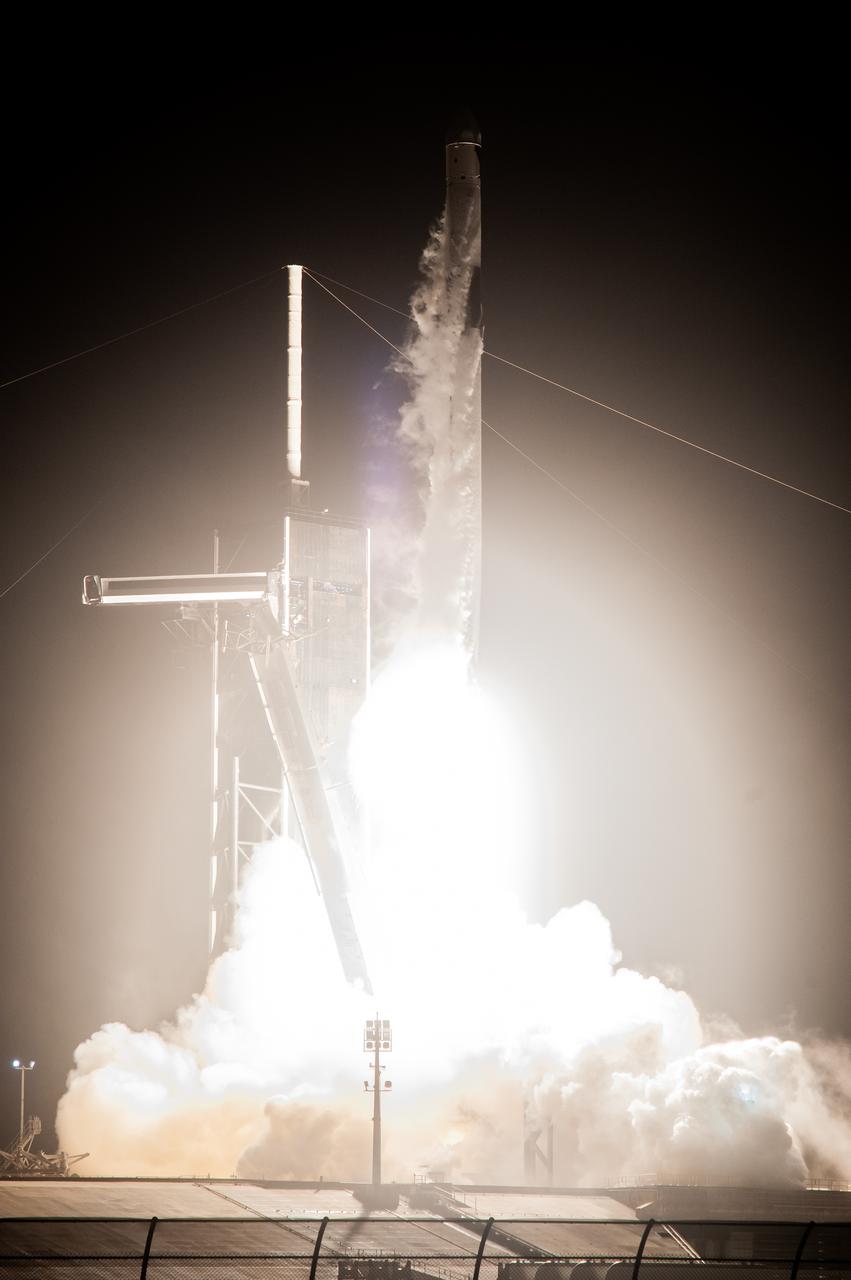
A SpaceX Falcon 9 rocket lifts off from Launch Complex 39A at Kennedy Space Center in Florida at 5:07 a.m. EST on Tuesday, Dec. 21, 2021, carrying the Dragon spacecraft on its journey to the International Space Station for SpaceX’s 24th commercial resupply services mission. Dragon will deliver new science investigations, supplies, and equipment to the crew on board the space station. Arrival to the orbiting laboratory is planned for Wednesday, Dec. 22.
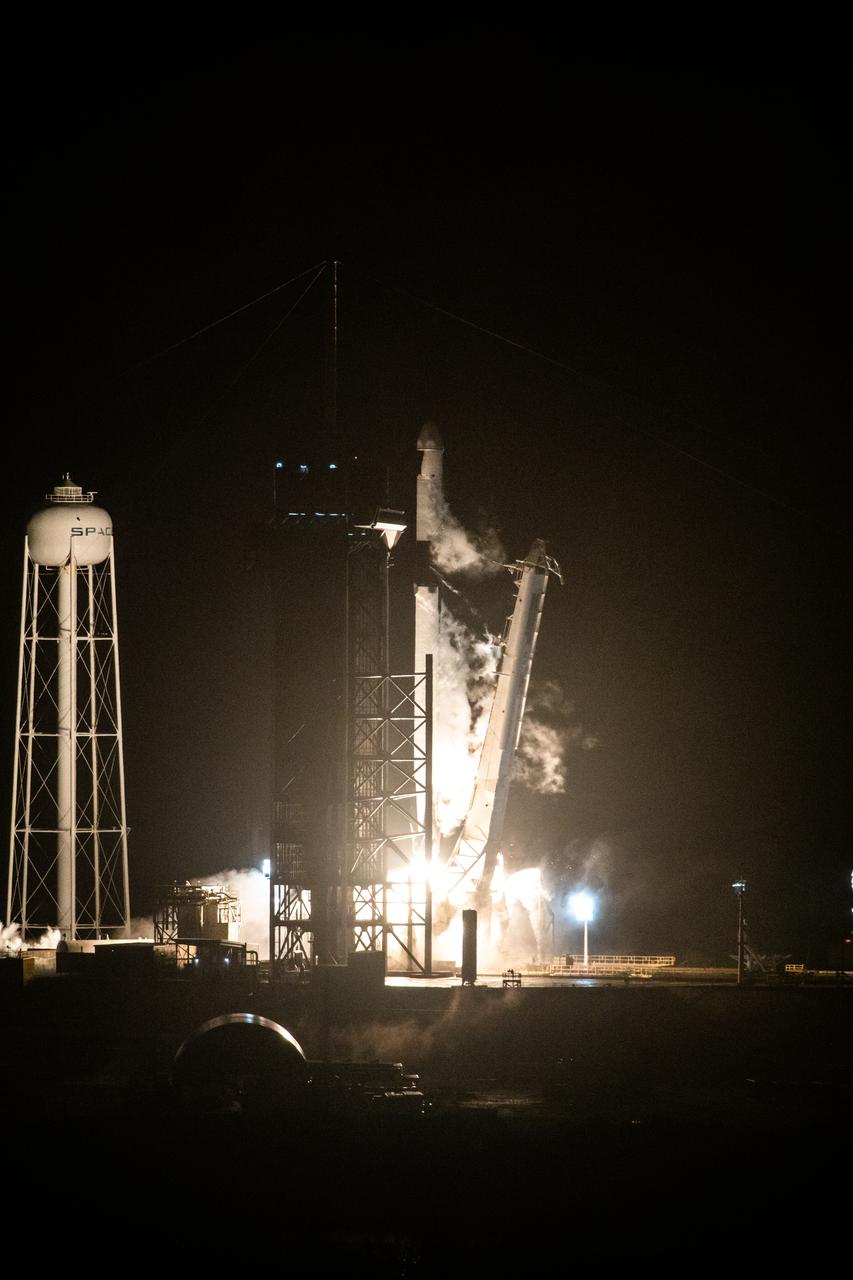
A SpaceX Falcon 9 rocket lifts off from Launch Complex 39A at Kennedy Space Center in Florida at 5:07 a.m. EST on Tuesday, Dec. 21, 2021, carrying the Dragon spacecraft on its journey to the International Space Station. SpaceX’s 24th commercial resupply services mission will deliver new science investigations, supplies, and equipment to the crew on board the space station. Arrival to the orbiting laboratory is planned for Wednesday, Dec. 22.
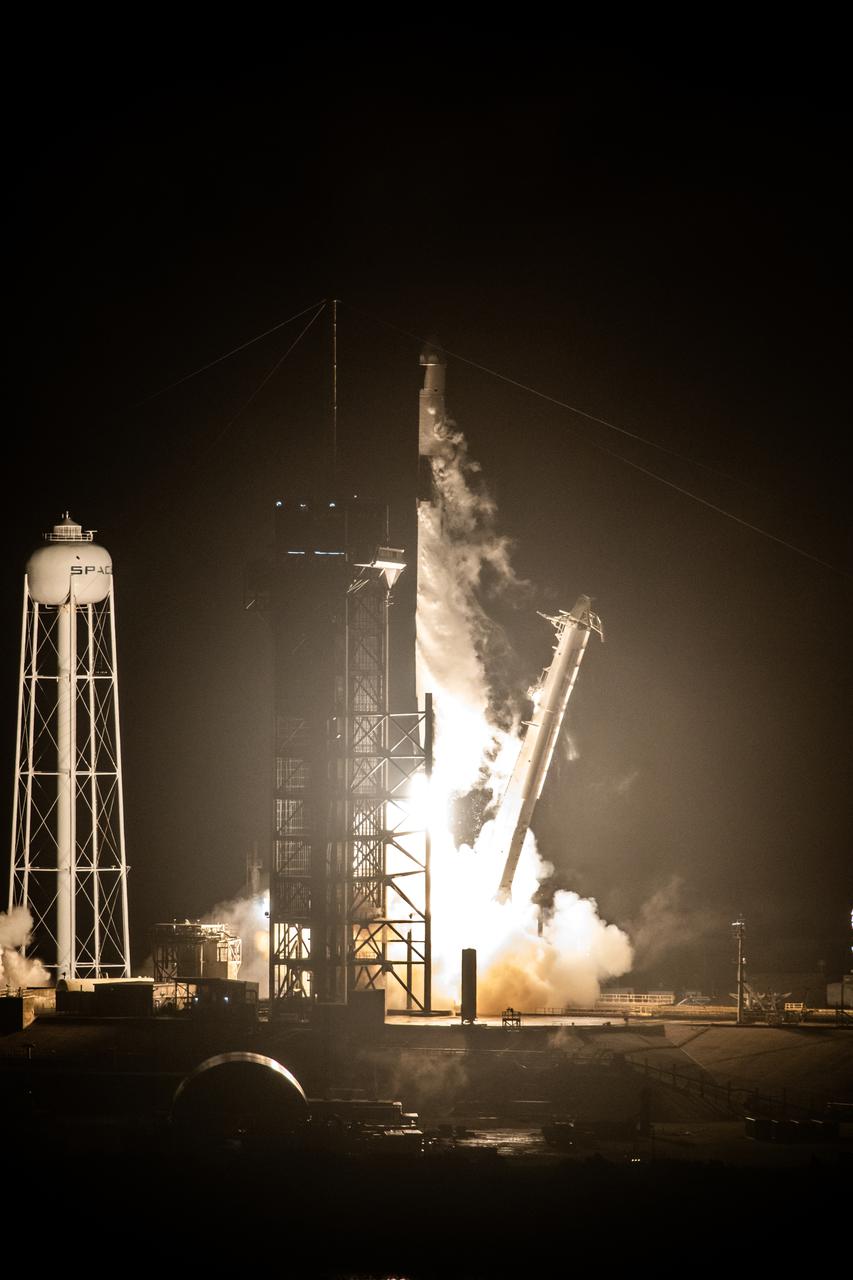
A SpaceX Falcon 9 rocket lifts off from Launch Complex 39A at Kennedy Space Center in Florida at 5:07 a.m. EST on Tuesday, Dec. 21, 2021, carrying the Dragon spacecraft on its journey to the International Space Station. SpaceX’s 24th commercial resupply services mission will deliver new science investigations, supplies, and equipment to the crew on board the space station. Arrival to the orbiting laboratory is planned for Wednesday, Dec. 22.
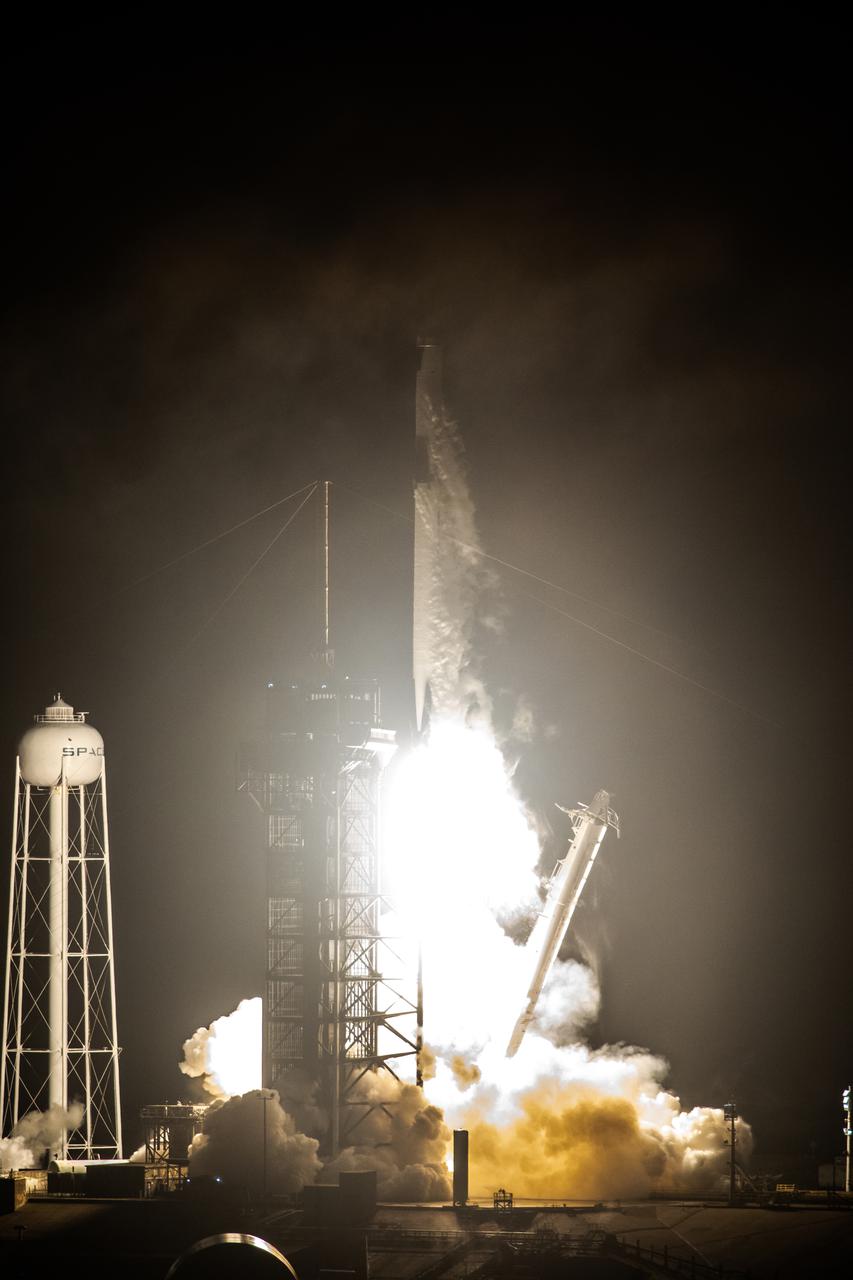
A SpaceX Falcon 9 rocket lifts off from Launch Complex 39A at Kennedy Space Center in Florida at 5:07 a.m. EST on Tuesday, Dec. 21, 2021, carrying the Dragon spacecraft on its journey to the International Space Station. SpaceX’s 24th commercial resupply services mission will deliver new science investigations, supplies, and equipment to the crew on board the space station. Arrival to the orbiting laboratory is planned for Wednesday, Dec. 22.
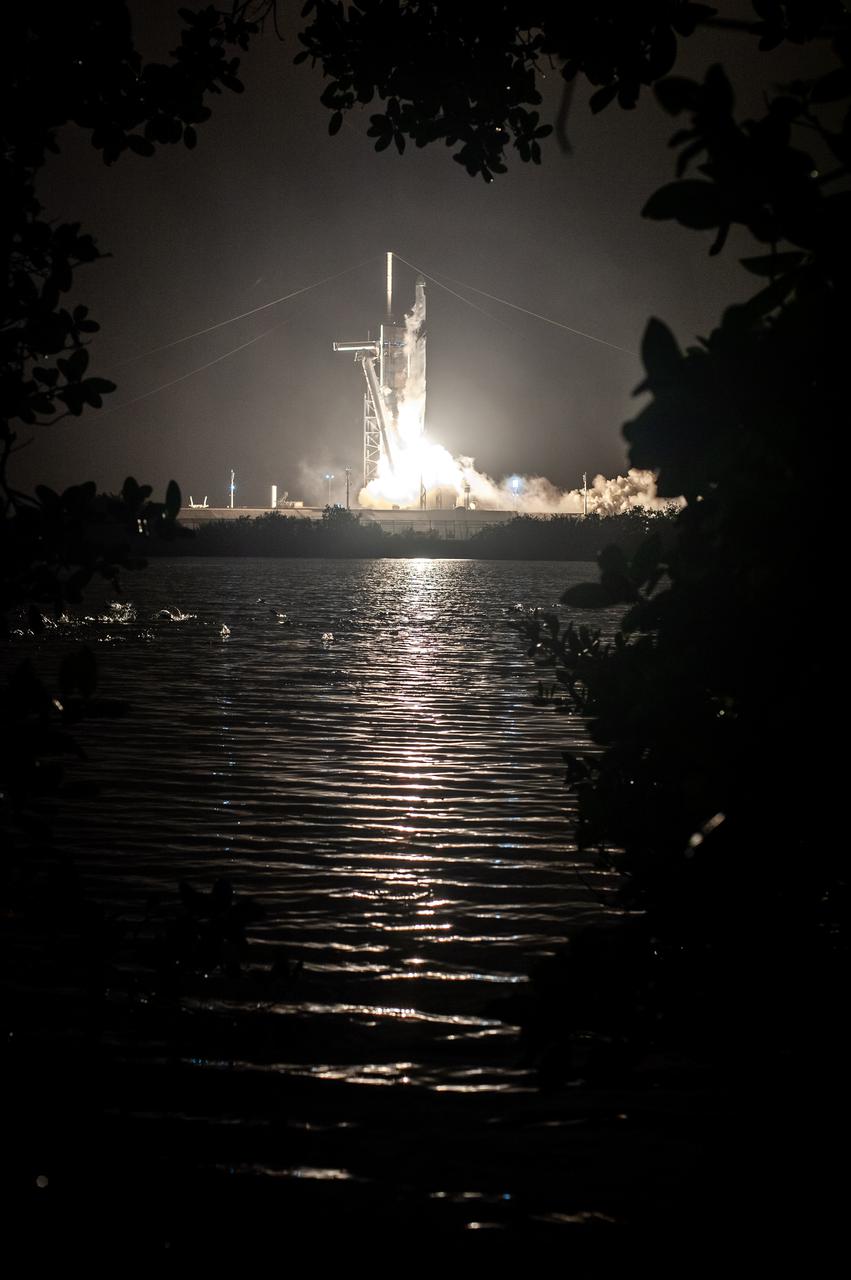
A SpaceX Falcon 9 rocket lifts off from Launch Complex 39A at Kennedy Space Center in Florida at 5:07 a.m. EST on Tuesday, Dec. 21, 2021, carrying the Dragon spacecraft on its journey to the International Space Station for SpaceX’s 24th commercial resupply services mission. Dragon will deliver new science investigations, supplies, and equipment to the crew on board the space station. Arrival to the orbiting laboratory is planned for Wednesday, Dec. 22.
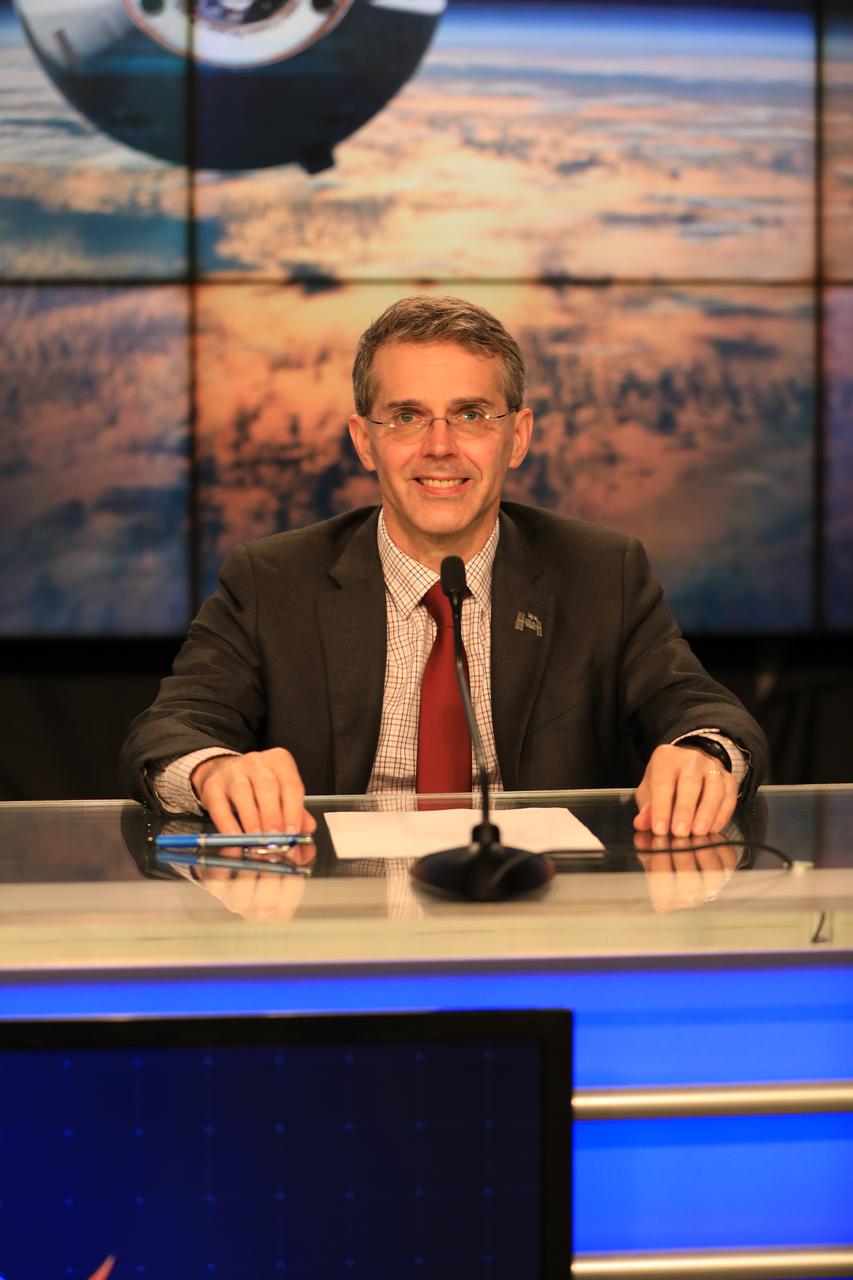
Dr. Bob Dempsey, acting deputy chief scientist, International Space Station Program, is introduced during a prelaunch news conference for SpaceX’s 24th commercial resupply services mission at Kennedy Space Center in Florida on Dec. 20, 2021. Liftoff of the SpaceX Falcon 9 rocket with the company’s Dragon spacecraft on board is targeted for Tuesday, Dec. 21, 2021, at 5:07 a.m. EST. The mission will deliver new science investigations, supplies, and equipment to the crew on board the space station.

Arlena Moses, launch weather officer, 45th Weather Squadron, Cape Canaveral Space Force Station, is introduced during a prelaunch news conference for SpaceX’s 24th commercial resupply services mission at Kennedy Space Center in Florida on Tuesday, Dec. 20, 2021. Liftoff of the SpaceX Falcon 9 rocket with the company’s Dragon spacecraft on board is targeted for Tuesday, Dec. 21, 2021, at 5:07 a.m. EST. The mission will deliver new science investigations, supplies, and equipment to the crew on board the International Space Station.

NASA Communications’ Megan Cruz moderates a SpaceX 24th commercial resupply services mission prelaunch news conference at Kennedy Space Center in Florida on Tuesday, Dec. 20, 2021. Participants included Joel Montalbano, manager, International Space Station Program; Dr. Bob Dempsey, acting deputy chief scientist, International Space Station Program; Sarah Walker, director, Dragon mission management, SpaceX; and Arlena Moses, launch weather officer, 45th Weather Squadron, Cape Canaveral Space Force Station. Liftoff of the SpaceX Falcon 9 rocket with the company’s Dragon spacecraft on board is targeted for Tuesday, Dec. 21, 2021, at 5:07 a.m. EST. The mission will deliver new science investigations, supplies, and equipment to the crew on board the International Space Station.
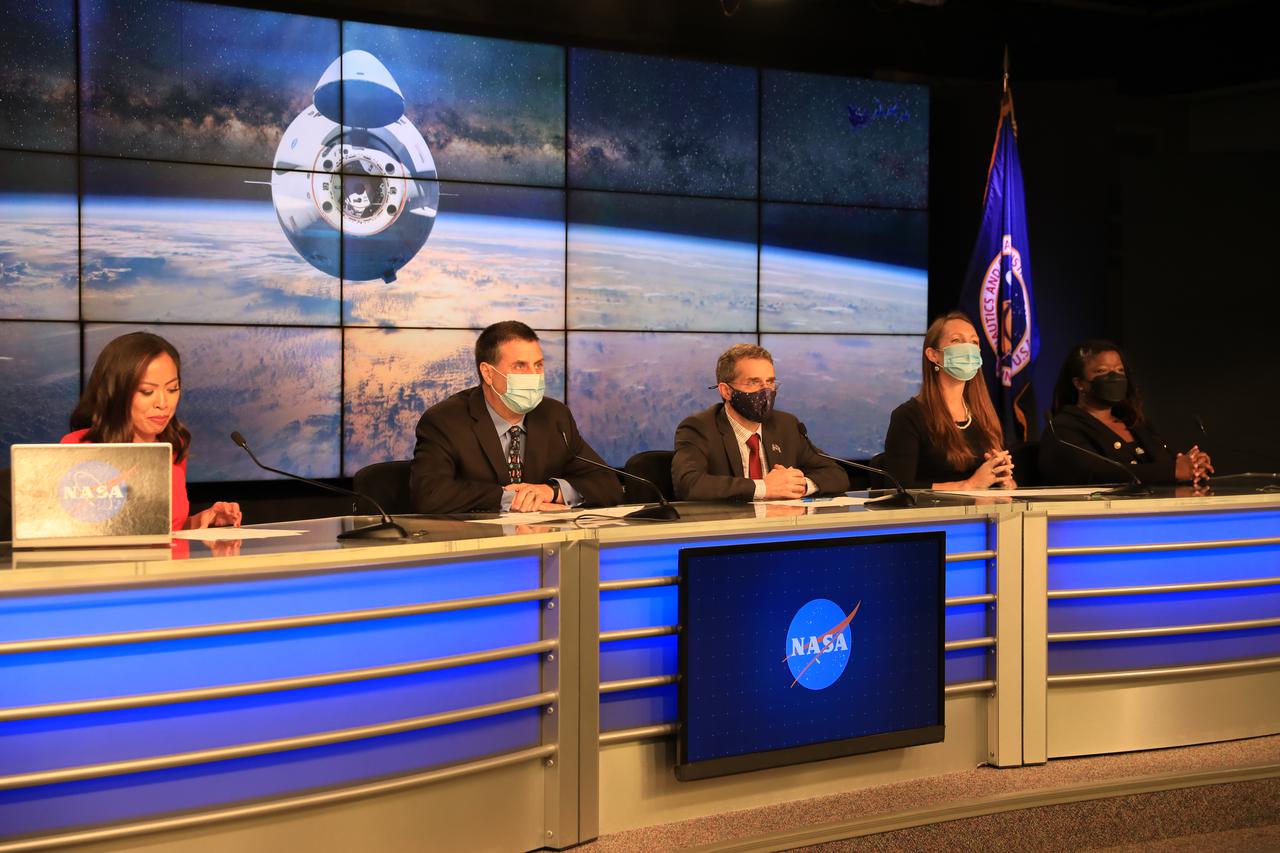
From left, Megan Cruz, NASA Communications; Joel Montalbano, manager, International Space Station Program; Dr. Bob Dempsey, acting deputy chief scientist, International Space Station Program; Sarah Walker, director, Dragon mission management, SpaceX; and Arlena Moses, launch weather officer, 45th Weather Squadron, Cape Canaveral Space Force Station, participate in NASA’s SpaceX 24th commercial resupply services mission prelaunch news conference at Kennedy Space Center in Florida on Tuesday, Dec. 20, 2021. Liftoff of the SpaceX Falcon 9 rocket with the company’s Dragon spacecraft on board is targeted for Tuesday, Dec. 21, 2021, at 5:07 a.m. EST. The mission will deliver new science investigations, supplies, and equipment to the crew on board the International Space Station.
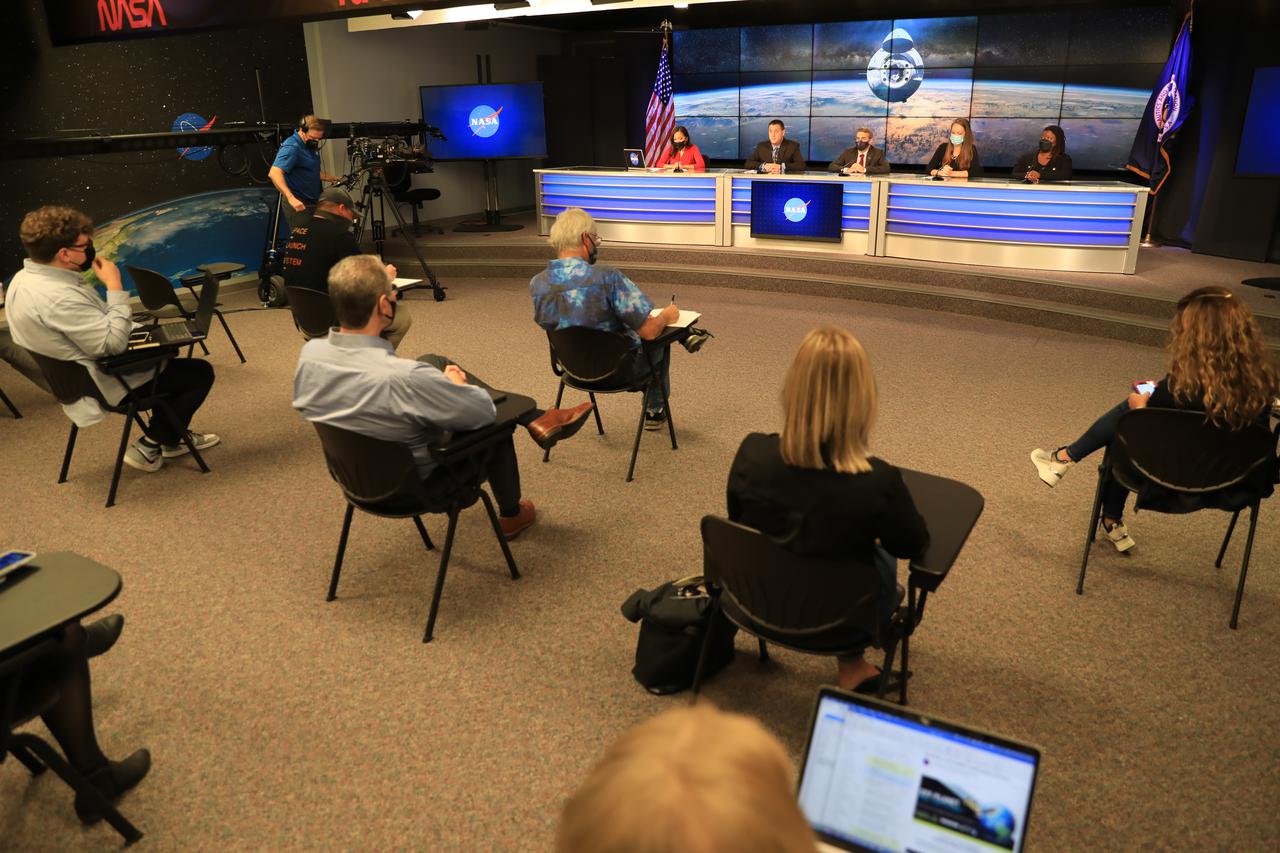
Media members participate in NASA’s SpaceX 24th commercial resupply services mission prelaunch news conference at Kennedy Space Center in Florida on Tuesday, Dec. 20, 2021. Participants included Joel Montalbano, manager, International Space Station Program; Dr. Bob Dempsey, acting deputy chief scientist, International Space Station Program; Sarah Walker, director, Dragon mission management, SpaceX; and Arlena Moses, launch weather officer, 45th Weather Squadron, Cape Canaveral Space Force Station. NASA Communications’ Megan Cruz moderated the event. Liftoff of the SpaceX Falcon 9 rocket with the company’s Dragon spacecraft on board is targeted for Tuesday, Dec. 21, 2021, at 5:07 a.m. EST. The mission will deliver new science investigations, supplies, and equipment to the crew on board the International Space Station.
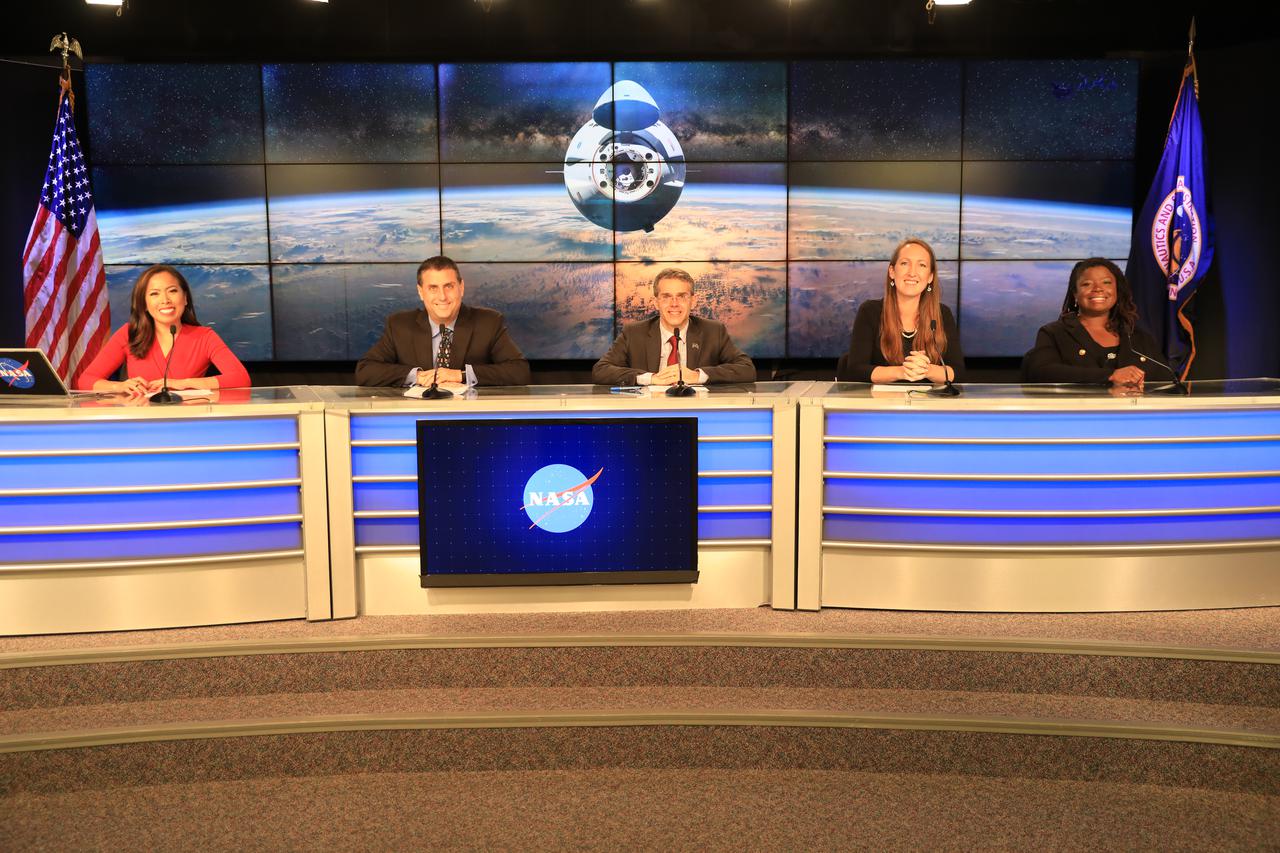
From left, Megan Cruz, NASA Communications; Joel Montalbano, manager, International Space Station Program; Dr. Bob Dempsey, acting deputy chief scientist, International Space Station Program; Sarah Walker, director, Dragon mission management, SpaceX; and Arlena Moses, launch weather officer, 45th Weather Squadron, Cape Canaveral Space Force Station, participate in NASA’s SpaceX 24th commercial resupply services mission prelaunch news conference at Kennedy Space Center in Florida on Tuesday, Dec. 20, 2021. Liftoff of the SpaceX Falcon 9 rocket with the company’s Dragon spacecraft on board is targeted for Tuesday, Dec. 21, 2021, at 5:07 a.m. EST. The mission will deliver new science investigations, supplies, and equipment to the crew on board the International Space Station.
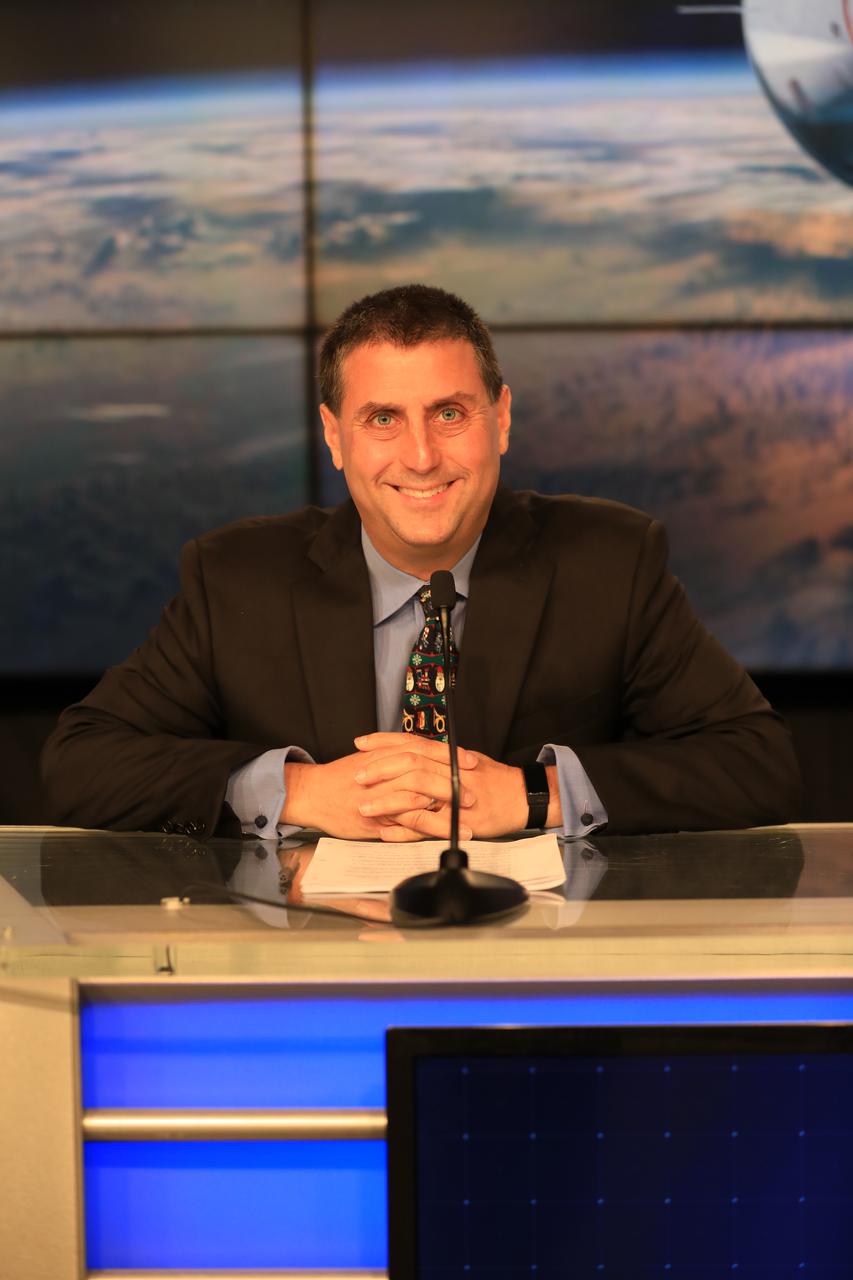
Joel Montalbano, manager, International Space Station Program, is introduced during a prelaunch news conference for SpaceX’s 24th commercial resupply services mission at Kennedy Space Center in Florida on Dec. 20, 2021. Liftoff of the SpaceX Falcon 9 rocket with the company’s Dragon spacecraft on board is targeted for Tuesday, Dec. 21, 2021, at 5:07 a.m. EST. The mission will deliver new science investigations, supplies, and equipment to the crew on board the space station.
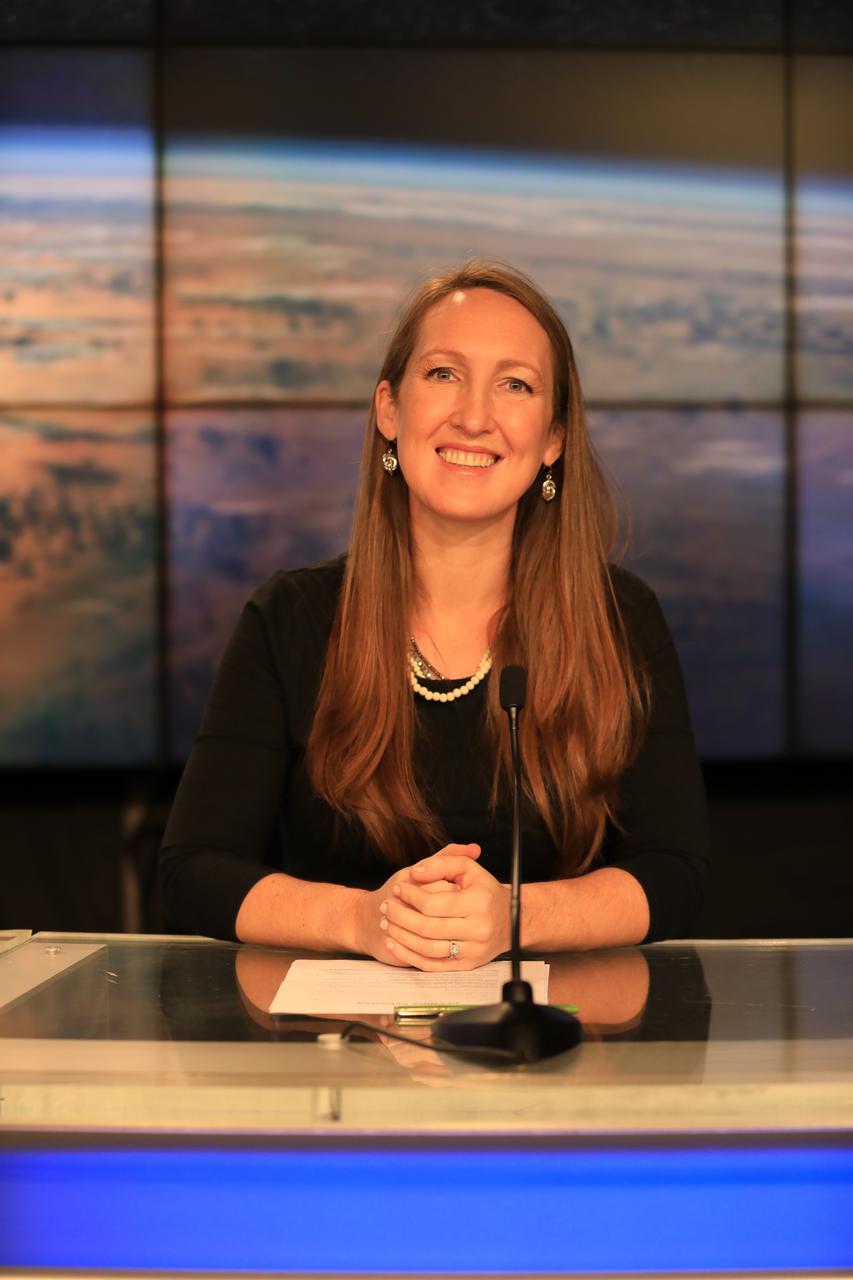
Sarah Walker, director, Dragon mission management, SpaceX, is introduced during a prelaunch news conference for SpaceX’s 24th commercial resupply services mission at Kennedy Space Center in Florida on Dec. 20, 2021. Liftoff of the SpaceX Falcon 9 rocket with the company’s Dragon spacecraft on board is targeted for Tuesday, Dec. 21, 2021, at 5:07 a.m. EST. The mission will deliver new science investigations, supplies, and equipment to the crew on board the International Space Station.
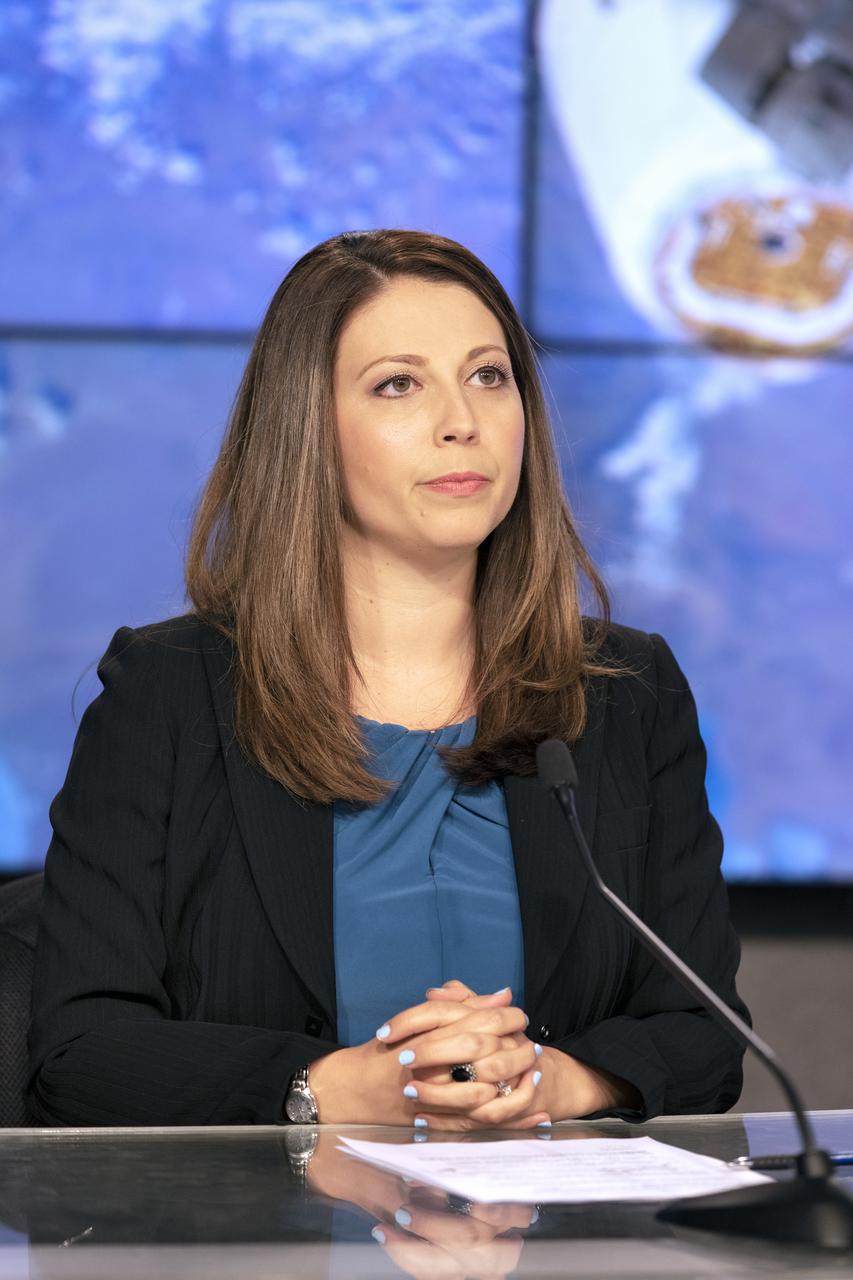
Marie Lewis, NASA Communications moderator, moderates the prelaunch news conference for SpaceX’s 18th Commercial Resupply Services (CRS-18) mission to the International Space Station, July 24, 2019, at the agency’s Kennedy Space Center in Florida. The SpaceX Falcon 9 rocket and uncrewed Dragon spacecraft are scheduled to launch July 24, 2019, from Space Launch Complex 40 at Florida’s Cape Canaveral Air Force Station.

Will Ulrich, launch weather officer with the U.S. Air Force 45th Space Wing, discusses the liftoff weather forecast during the prelaunch news conference for SpaceX’s 18th Commercial Resupply Services (CRS-18) mission to the International Space Station, July 24, 2019, at NASA’s Kennedy Space Center in Florida. The SpaceX Falcon 9 rocket and uncrewed Dragon spacecraft are scheduled to launch July 24, 2019, from Space Launch Complex 40 at Florida’s Cape Canaveral Air Force Station.
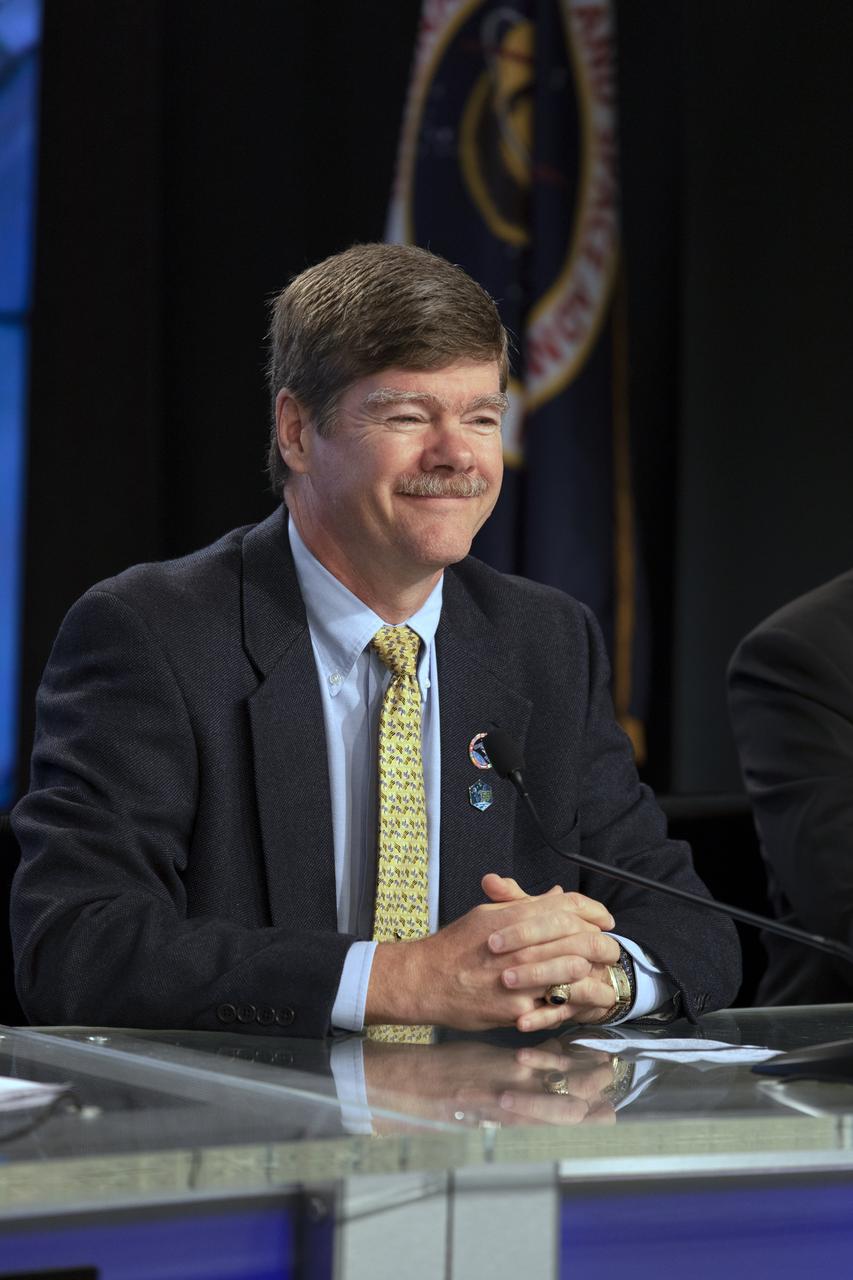
Pete Hasbrook, manager of the International Space Station Program Science Office at NASA’s Johnson Space Center in Houston, speaks during the prelaunch news conference for SpaceX’s 18th Commercial Resupply Services (CRS-18) mission to the station, July 24, 2019, at the agency’s Kennedy Space Center in Florida. The SpaceX Falcon 9 rocket and uncrewed Dragon spacecraft are scheduled to launch July 24, 2019, from Space Launch Complex 40 at Florida’s Cape Canaveral Air Force Station.
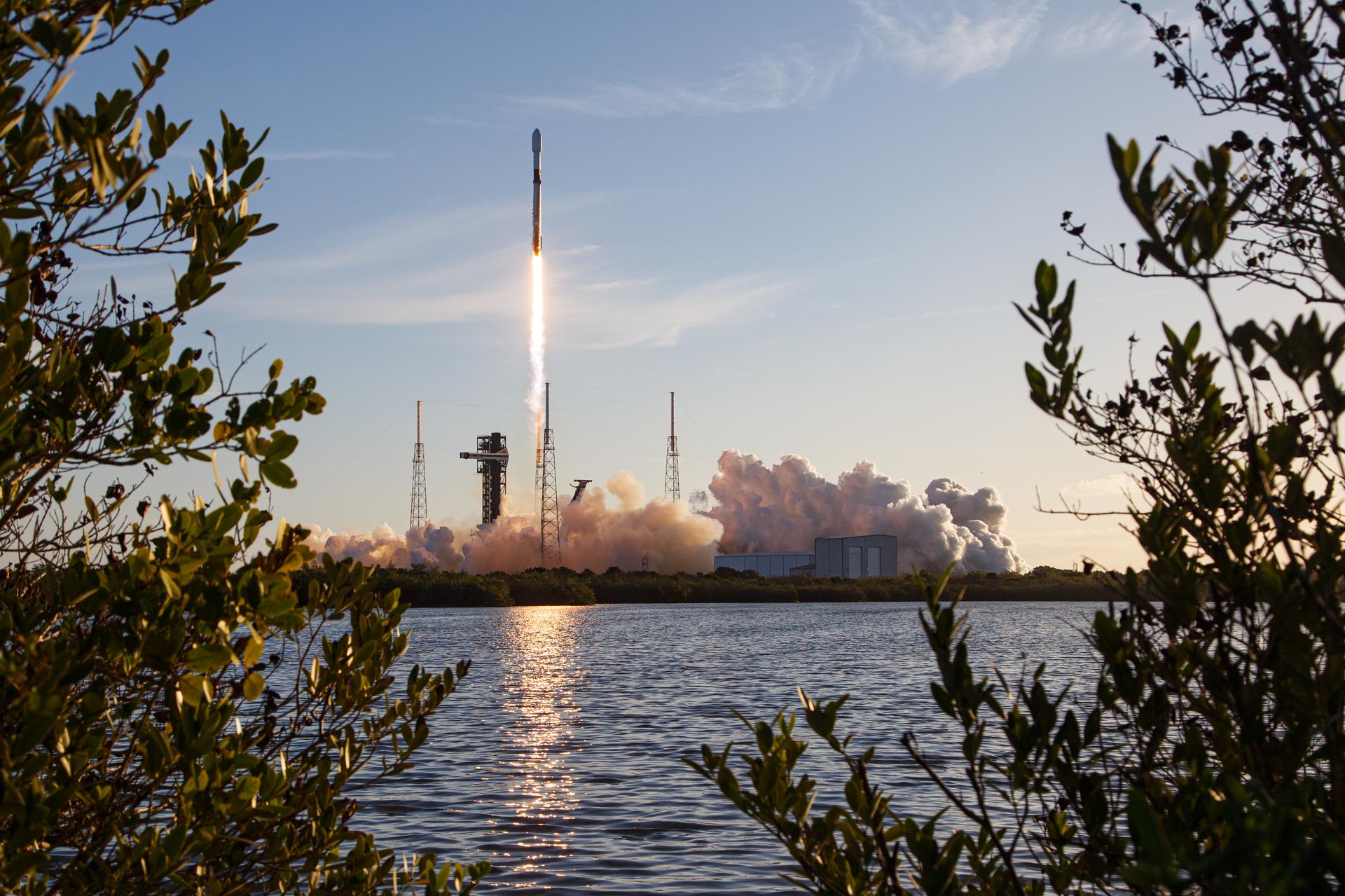
NASA’s Northrop Grumman Commercial Resupply Services 24 mission or Northrop Grumman CRS-24, launches Saturday, April 11, 2026, aboard the company’s Cygnus XL spacecraft atop a SpaceX Falcon 9 rocket from Space Launch Complex 40 at Cape Canaveral Space Force Station in Florida. The resupply mission will deliver approximately 11,000 pounds of science and supplies to the International Space Station.
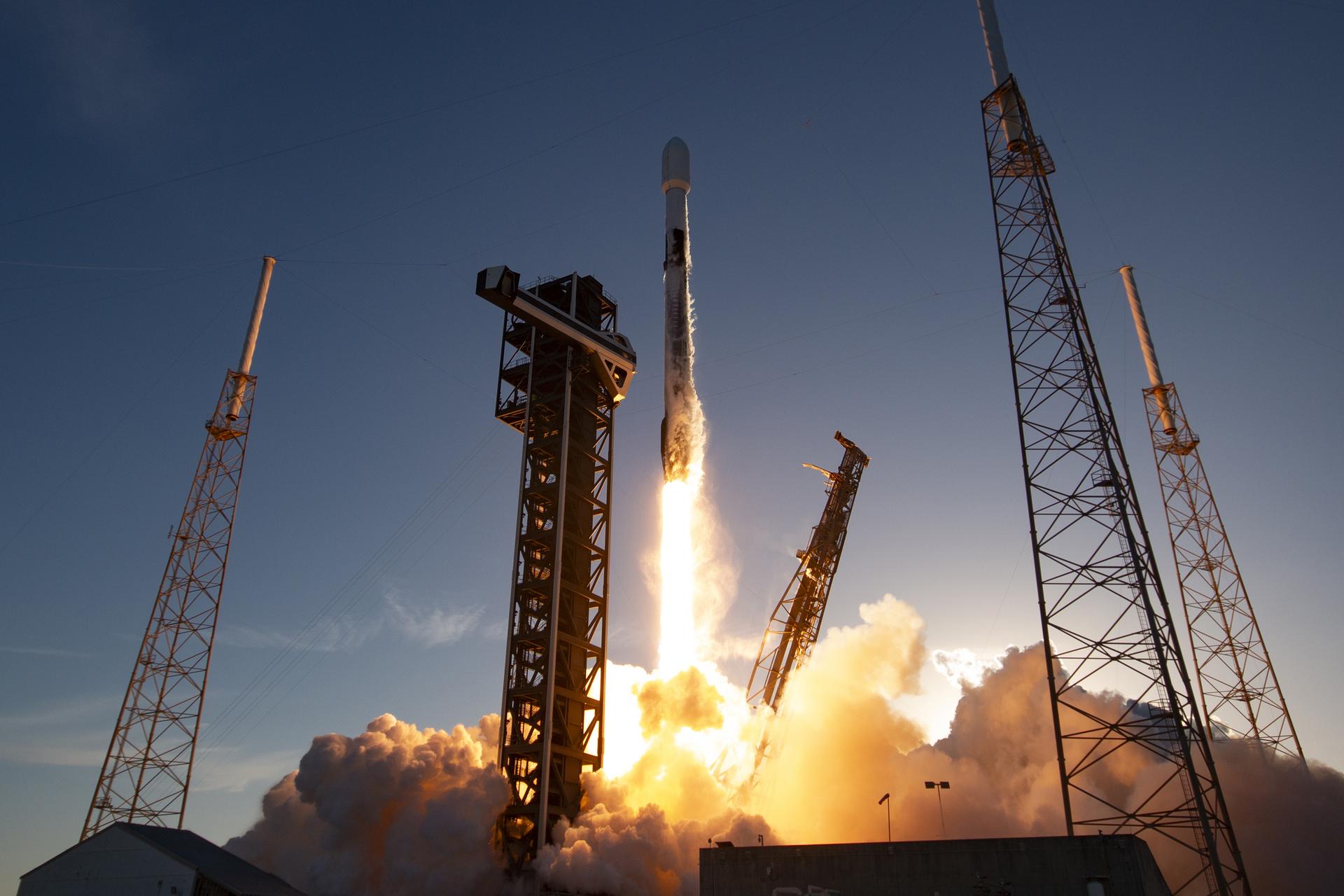
NASA’s Northrop Grumman Commercial Resupply Services 24 mission or Northrop Grumman CRS-24, launches Saturday, April 11, 2026, aboard the company’s Cygnus XL spacecraft atop a SpaceX Falcon 9 rocket from Space Launch Complex 40 at Cape Canaveral Space Force Station in Florida. The resupply mission will deliver approximately 11,000 pounds of science and supplies to the International Space Station.
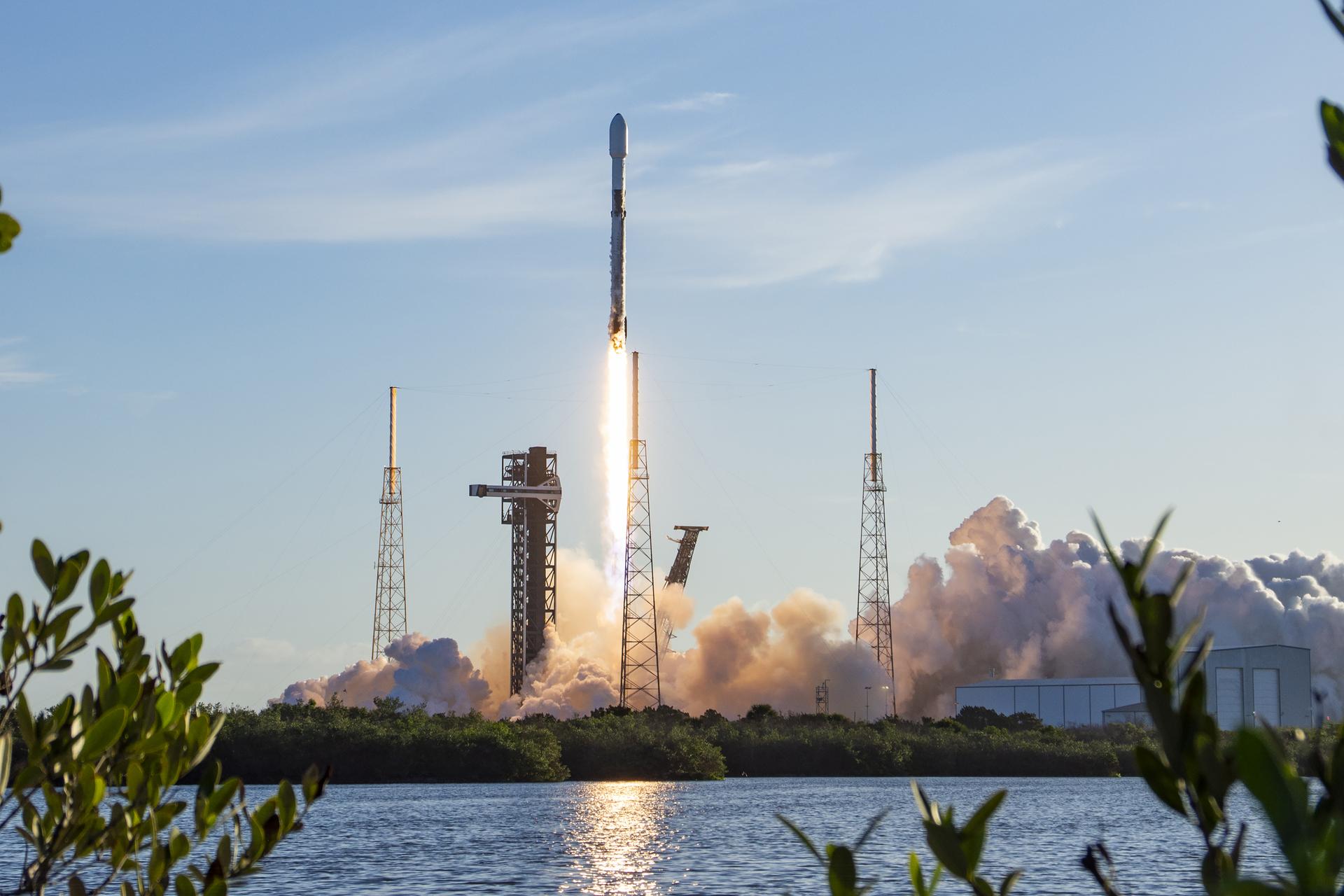
NASA’s Northrop Grumman Commercial Resupply Services 24 mission or Northrop Grumman CRS-24, launches Saturday, April 11, 2026, aboard the company’s Cygnus XL spacecraft atop a SpaceX Falcon 9 rocket from Space Launch Complex 40 at Cape Canaveral Space Force Station in Florida. The resupply mission will deliver approximately 11,000 pounds of science and supplies to the International Space Station.
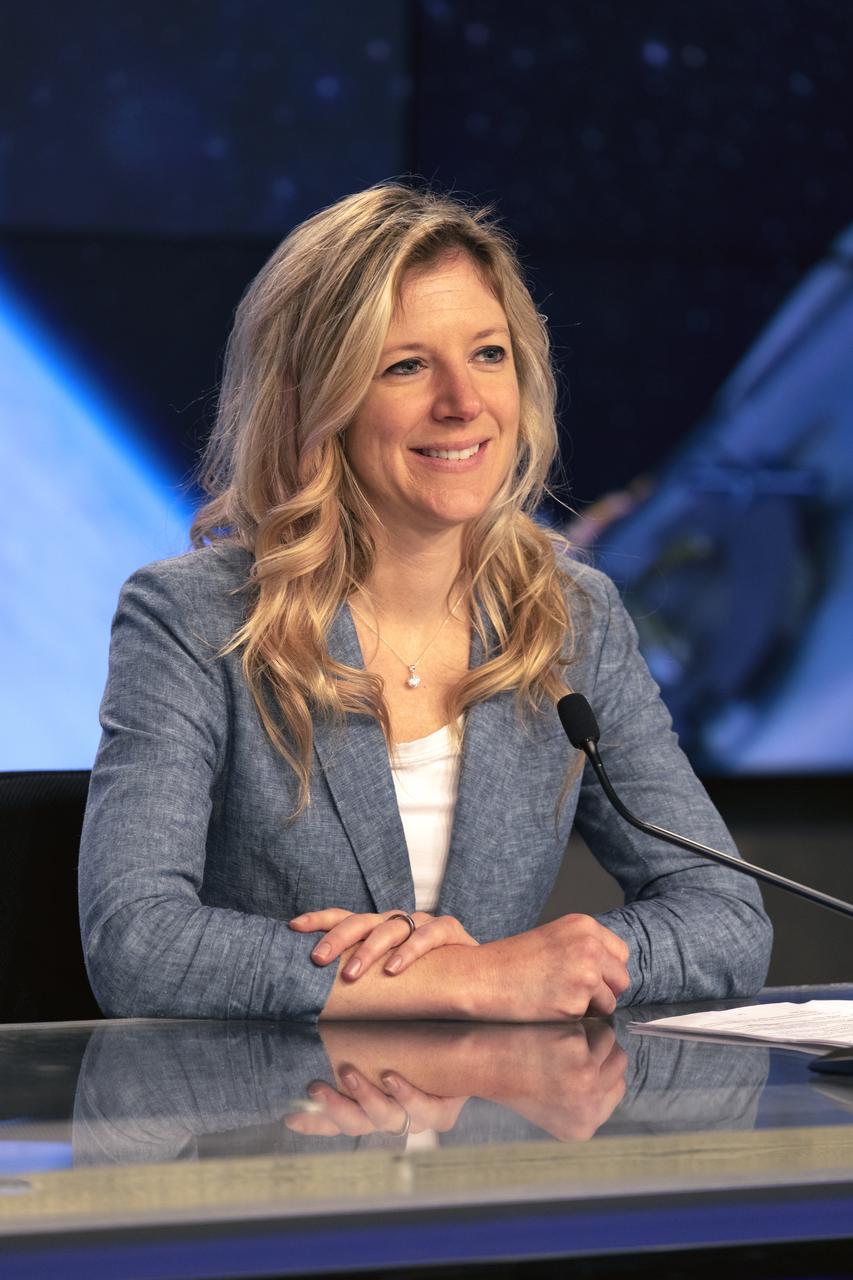
Jessica Jensen, director of Dragon mission management at SpaceX, speaks during the prelaunch news conference for the company's 18th Commercial Resupply Services (CRS-18) mission to the International Space Station, July 24, 2019, at NASA’s Kennedy Space Center in Florida. The SpaceX Falcon 9 rocket and uncrewed Dragon spacecraft are scheduled to launch July 24, 2019, from Space Launch Complex 40 at Florida’s Cape Canaveral Air Force Station.
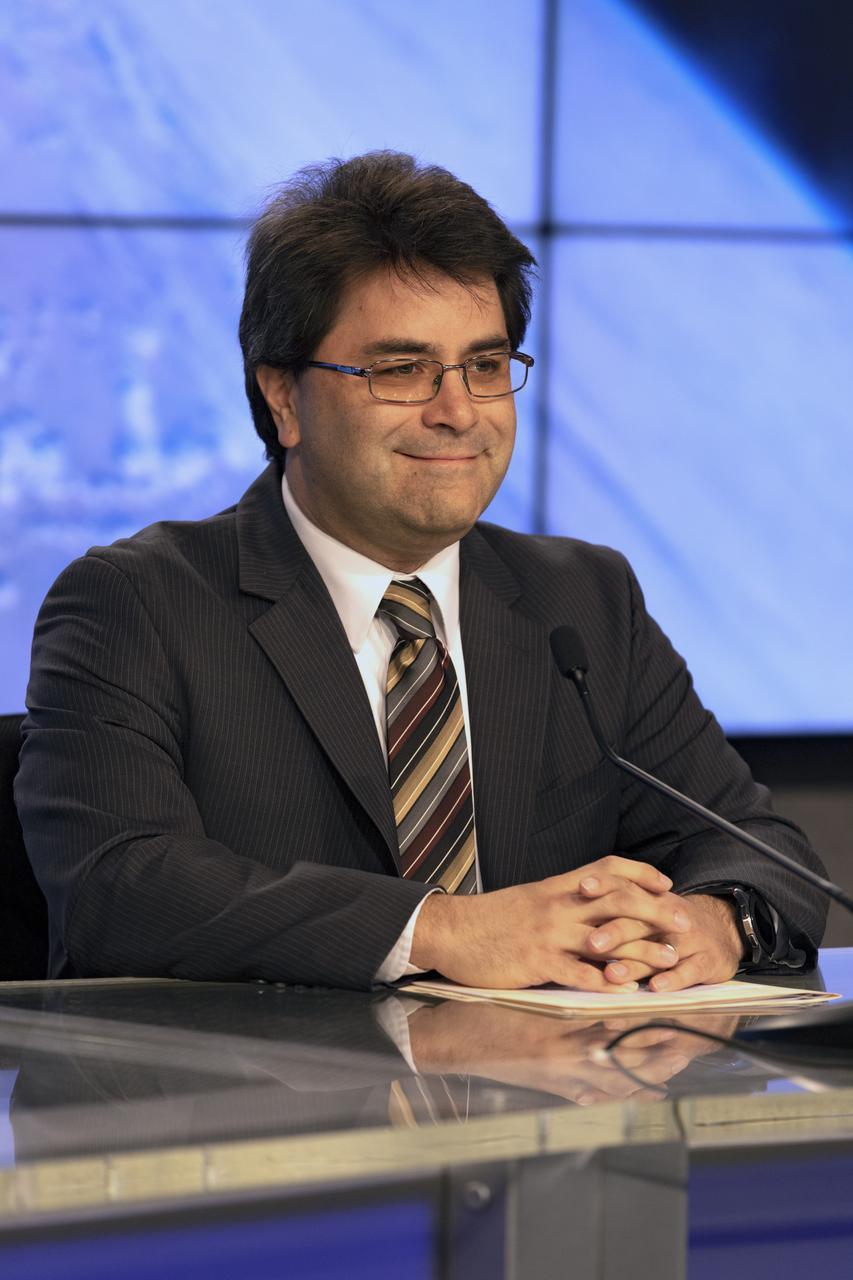
Bill Spetch, deputy manager of the International Space Station Transportation Integration Office at NASA’s Johnson Space Center in Houston, speaks during the prelaunch news conference for SpaceX’s 18th Commercial Resupply Services (CRS-18) mission to the station on July 24, 2019, at the agency’s Kennedy Space Center in Florida. The SpaceX Falcon 9 rocket and uncrewed Dragon spacecraft are scheduled to launch July 24, 2019, from Space Launch Complex 40 at Florida’s Cape Canaveral Air Force Station.
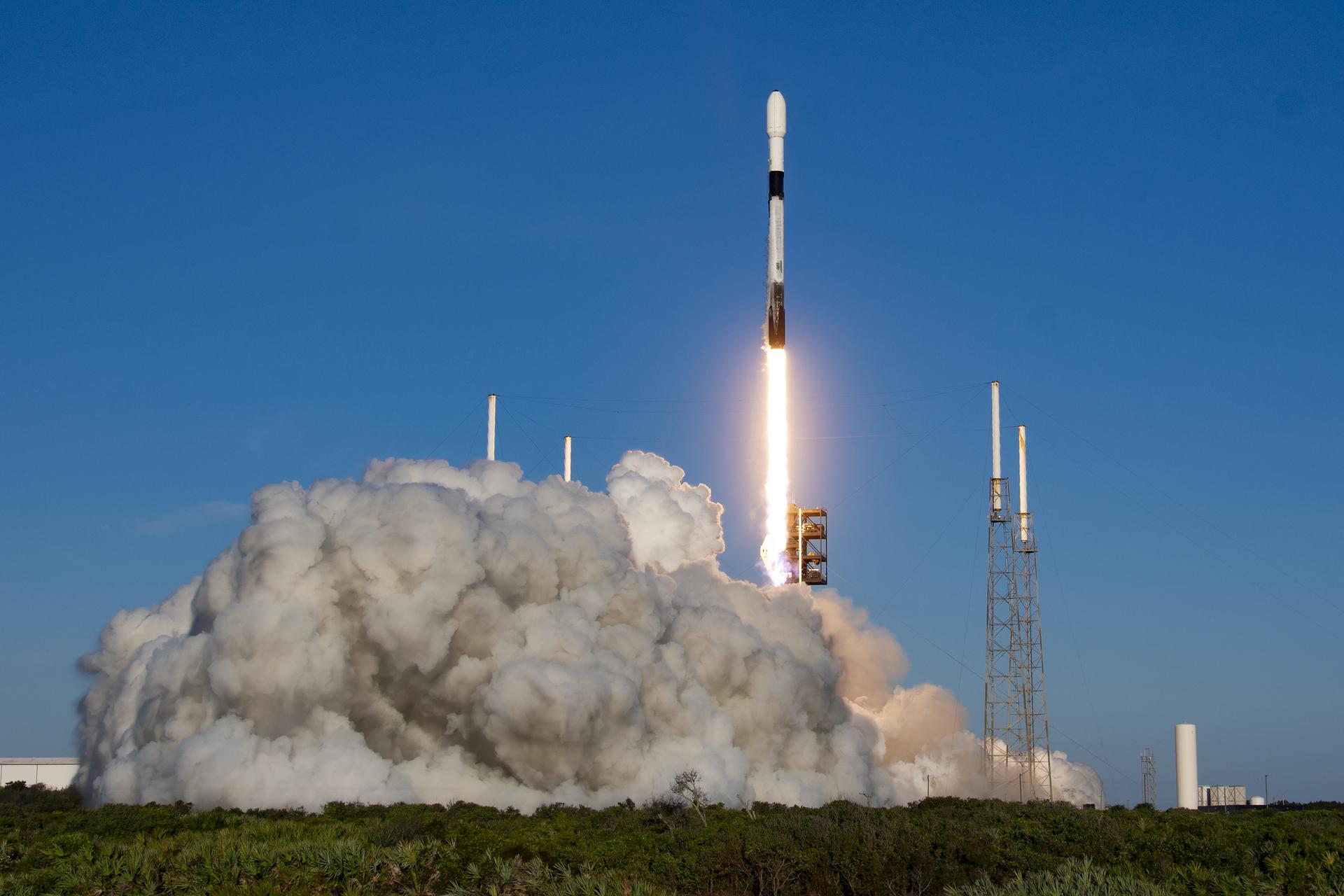
NASA’s Northrop Grumman Commercial Resupply Services 24 mission or Northrop Grumman CRS-24, launches Saturday, April 11, 2026, aboard the company’s Cygnus XL spacecraft atop a SpaceX Falcon 9 rocket from Space Launch Complex 40 at Cape Canaveral Space Force Station in Florida. The resupply mission will deliver approximately 11,000 pounds of science and supplies to the International Space Station.
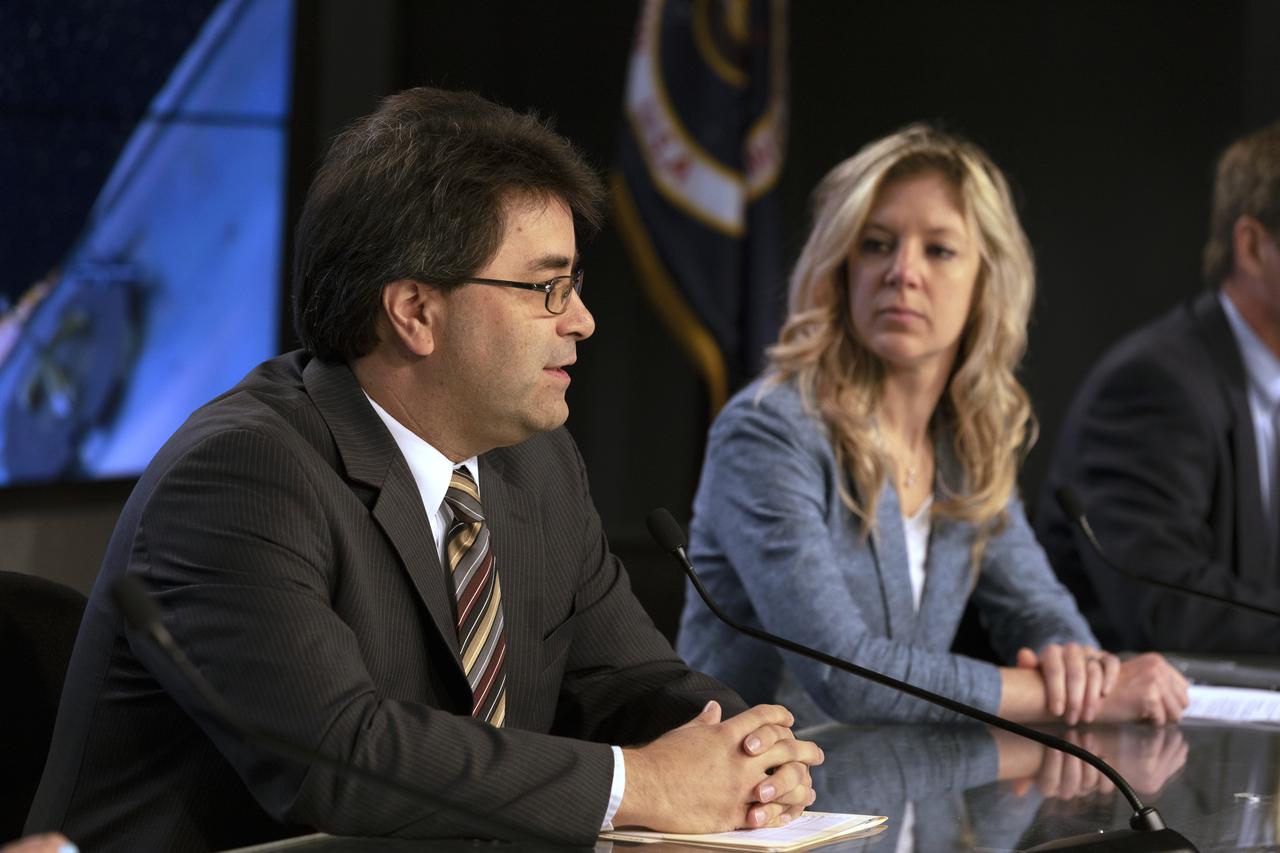
Bill Spetch, deputy manager of the International Space Station Transportation Integration Office at NASA’s Johnson Space Center in Houston, speaks during the prelaunch news conference for SpaceX’s 18th Commercial Resupply Services (CRS-18) mission to the station on July 24, 2019, at the agency’s Kennedy Space Center in Florida. At right is Jessica Jensen, director of Dragon mission management at SpaceX. The SpaceX Falcon 9 rocket and uncrewed Dragon spacecraft are scheduled to launch July 24, 2019, from Space Launch Complex 40 at Florida’s Cape Canaveral Air Force Station.
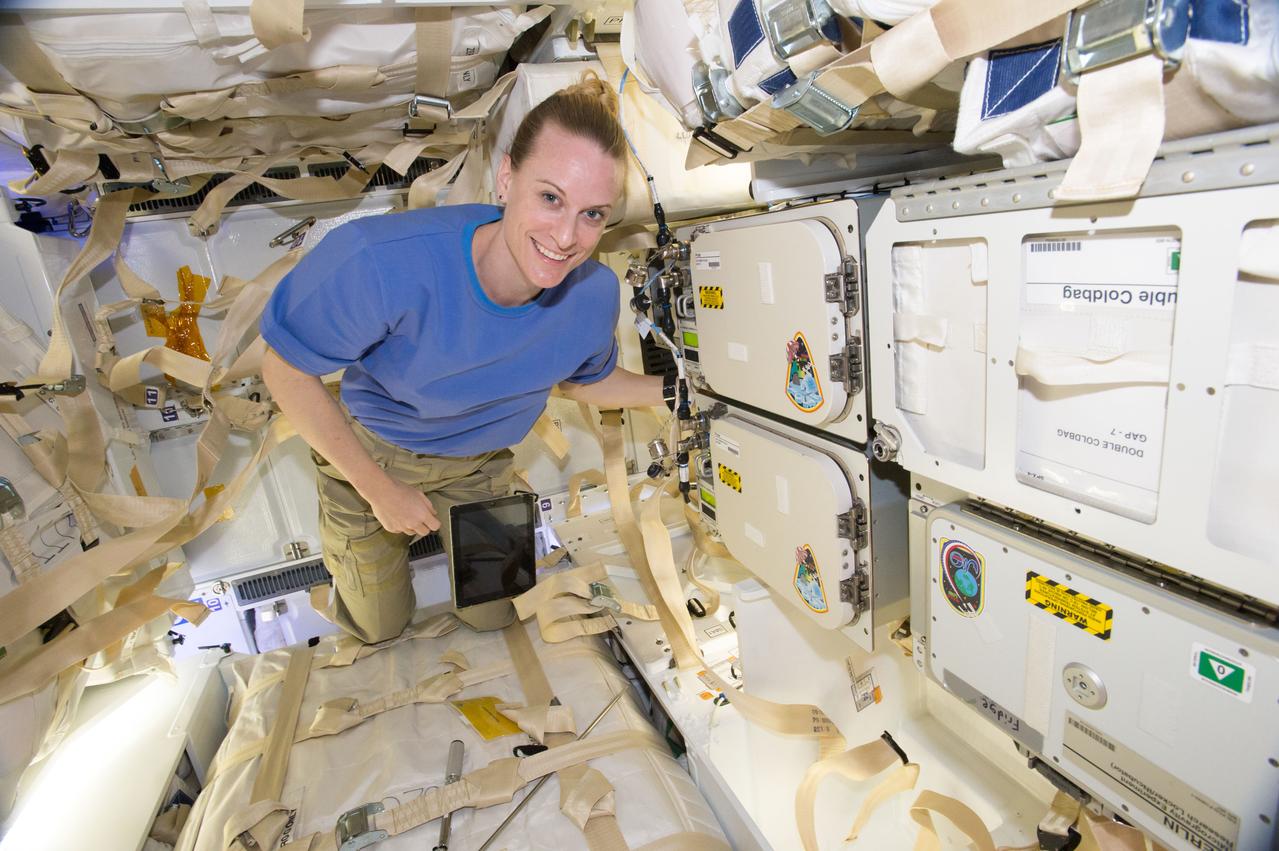
iss048e065818 (8/24/2016) --- NASA astonaut Kate Rubins poses for a photo next to Polar Facilities 2 and 4 installed in the SpaceX Dragon Commercial Resupply Services-9 (CRS-9) spacecraft for return to Earth. Polar is a Cold Stowage managed facility that provides transport and storage of science samples at cryogenic temperatures (-80ºC) to and from the International Space Station (ISS).
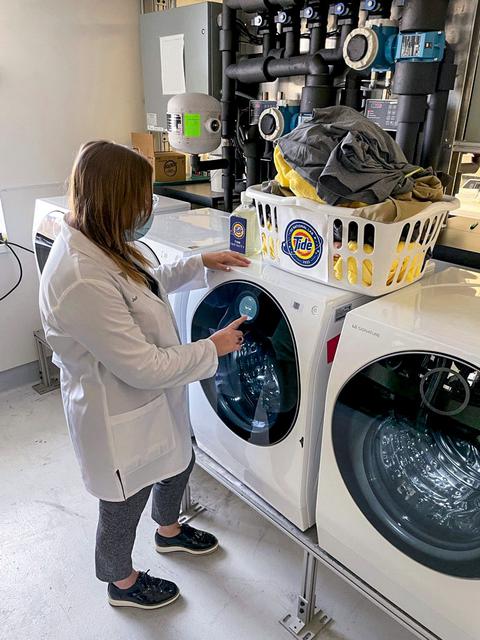
jsc2021e064546 (11/30/2021) --- Jessica Zinna, Tide Scientist at P&G, prepares a load of laundry that will be washed in Tide’s laundry detergent solution for P&G Telescience Investigation of Detergent Experiments (PGTIDE). The detergent will be on board SpaceX CRS-24. Following the signing of a Space Act Agreement with NASA, Tide is developing a detergent solution for space that will aid in planned space travel such as the Artemis Moon missions and a crewed roundtrip Mars mission. Image courtesy of P&G.
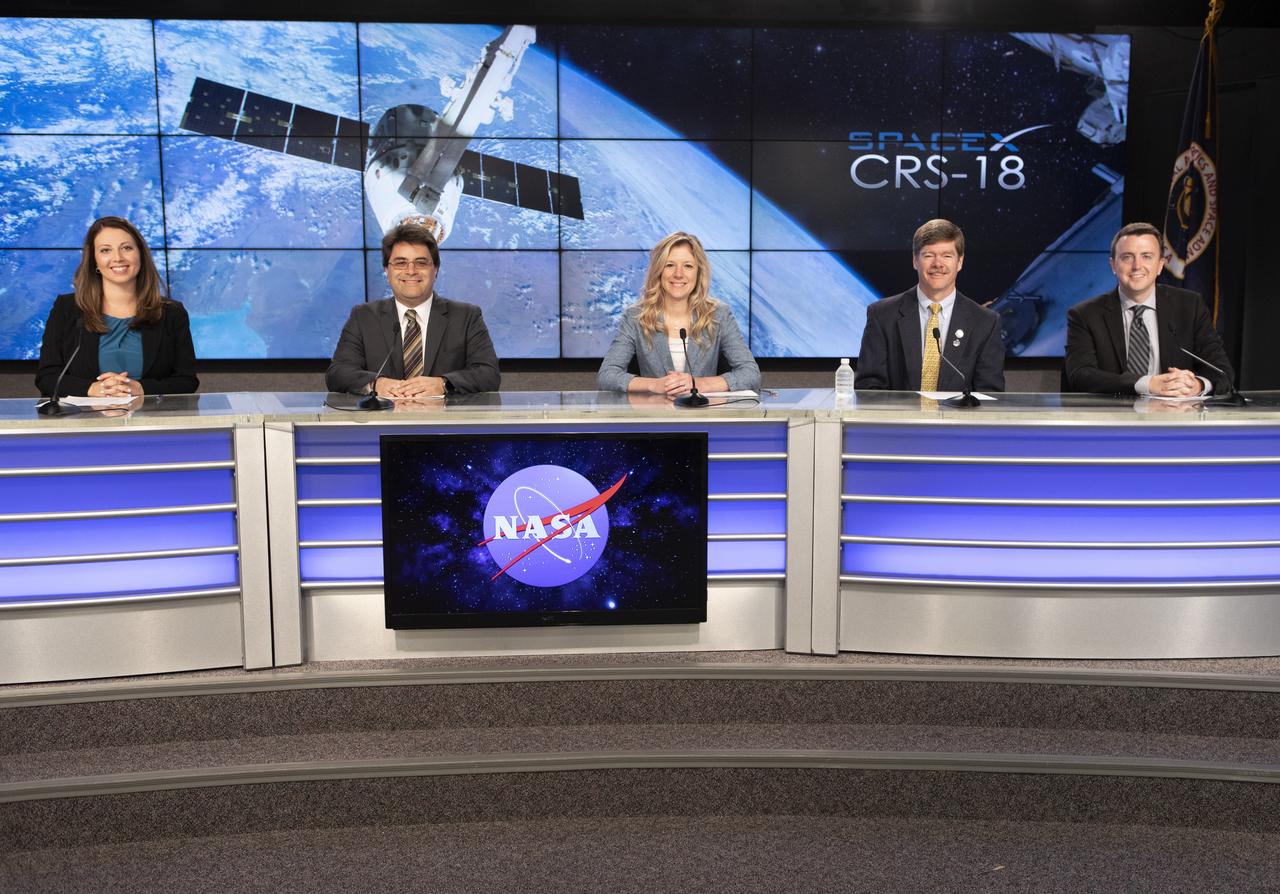
A prelaunch news conference for SpaceX’s 18th Commercial Resupply Services (CRS-18) mission to the International Space Station for NASA is held July 24, 2019, at the agency’s Kennedy Space Center in Florida. From left are Marie Lewis, NASA Communications moderator; Bill Spetch, deputy manager of the International Space Station Transportation Integration Office at NASA’s Johnson Space Center in Houston; Jessica Jensen, director of Dragon mission management at SpaceX; Pete Hasbrook, manager of the space station’s Program Science Office at Johnson; and Will Ulrich, launch weather officer with the U.S. Air Force 45th Space Wing. The SpaceX Falcon 9 rocket and uncrewed Dragon spacecraft are scheduled to launch July 24, 2019, from Space Launch Complex 40 at Florida’s Cape Canaveral Air Force Station.
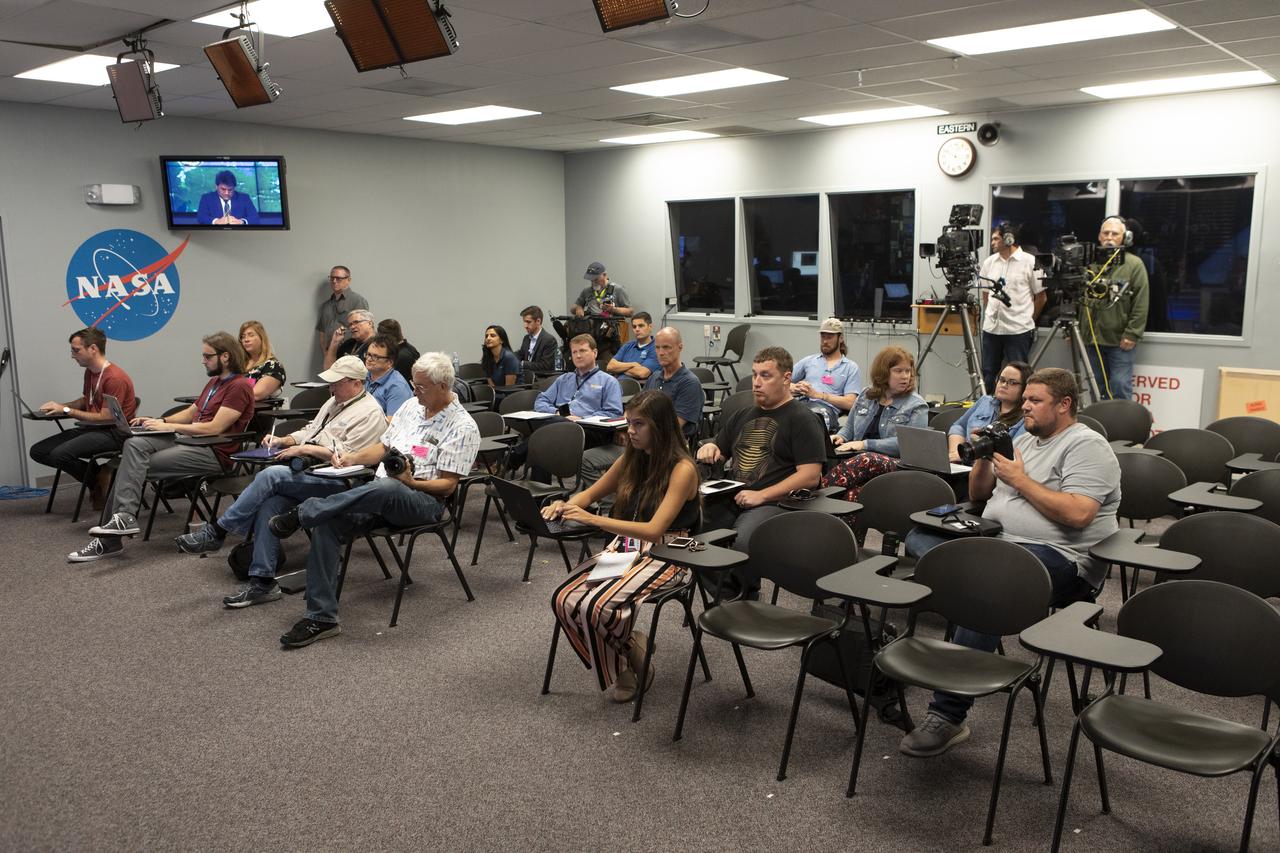
Members of the news media attend the prelaunch news conference for SpaceX’s 18th Commercial Resupply Services (CRS-18) mission to the International Space Station, July 24, 2019, at NASA’s Kennedy Space Center in Florida. Participants were Marie Lewis, NASA Communications moderator; Bill Spetch, deputy manager of the International Space Station Transportation Integration Office at the agency’s Johnson Space Center in Houston; Jessica Jensen, director of Dragon mission management at SpaceX; Pete Hasbrook, manager of the space station’s Program Science Office at Johnson; and Will Ulrich, launch weather officer with the U.S. Air Force 45th Space Wing. The SpaceX Falcon 9 rocket and uncrewed Dragon spacecraft are scheduled to launch July 24, 2019, from Space Launch Complex 40 at Florida’s Cape Canaveral Air Force Station.
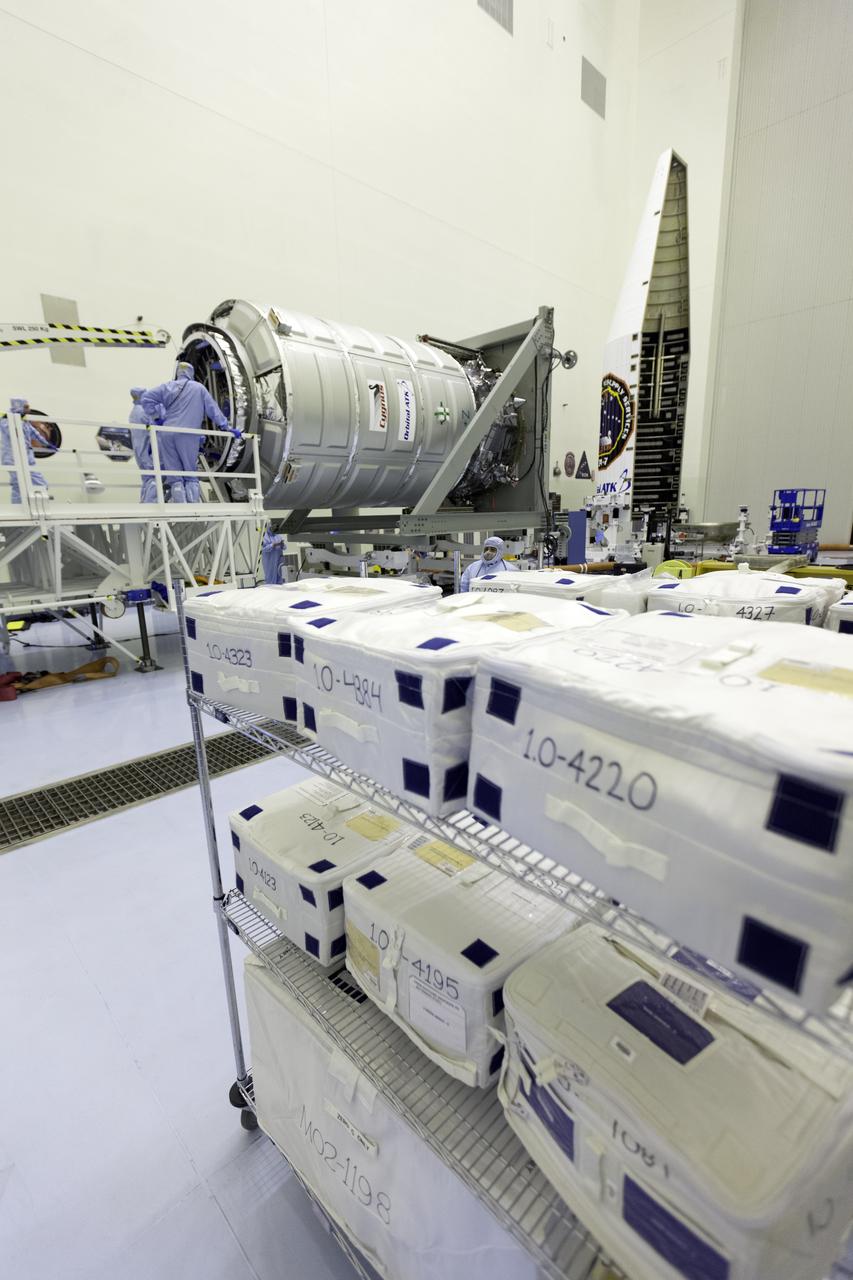
Inside the Payload Hazardous Servicing Facility at NASA's Kennedy Space Center in Florida, technicians are opening the hatch on the Orbital ATK Cygnus pressurized cargo module to prepare for late stowage of supplies and hardware. The Orbital ATK CRS-7 commercial resupply services mission to the International Space Station is scheduled to launch atop a United Launch Alliance Atlas V rocket from Space Launch Complex 41 at Cape Canaveral Air Force Station targeted for March 24, 2017. Cygnus will deliver 7,600 pounds of supplies, equipment and scientific research materials to the space station.
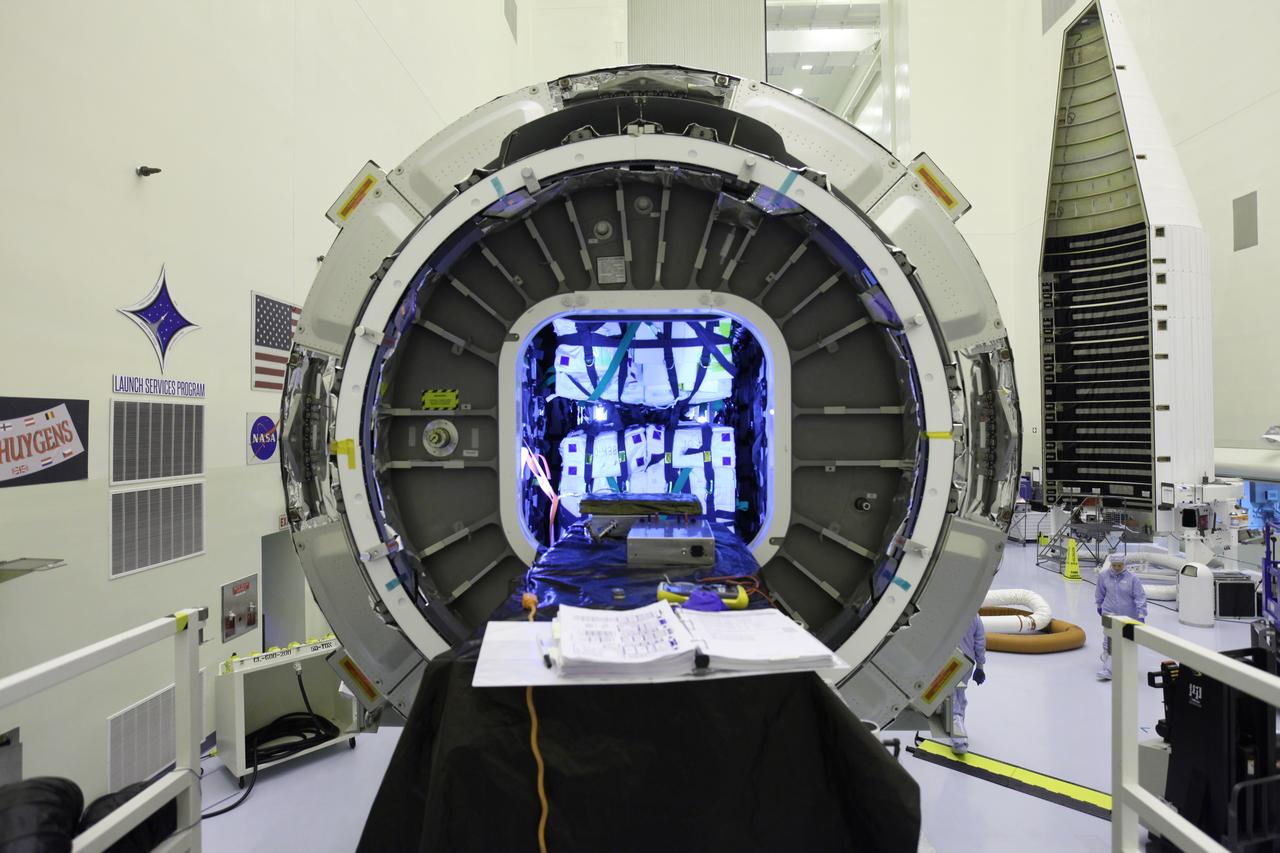
Inside the Payload Hazardous Servicing Facility at NASA's Kennedy Space Center in Florida, preparations are underway for final stowage of powered cargo in the Orbital ATK Cygnus pressurized cargo module. The Orbital ATK CRS-7 commercial resupply services mission to the International Space Station is scheduled to launch atop a United Launch Alliance Atlas V rocket from Space Launch Complex 41 at Cape Canaveral Air Force Station targeted for March 24, 2017. Cygnus will deliver 7,600 pounds of supplies, equipment and scientific research materials to the space station.
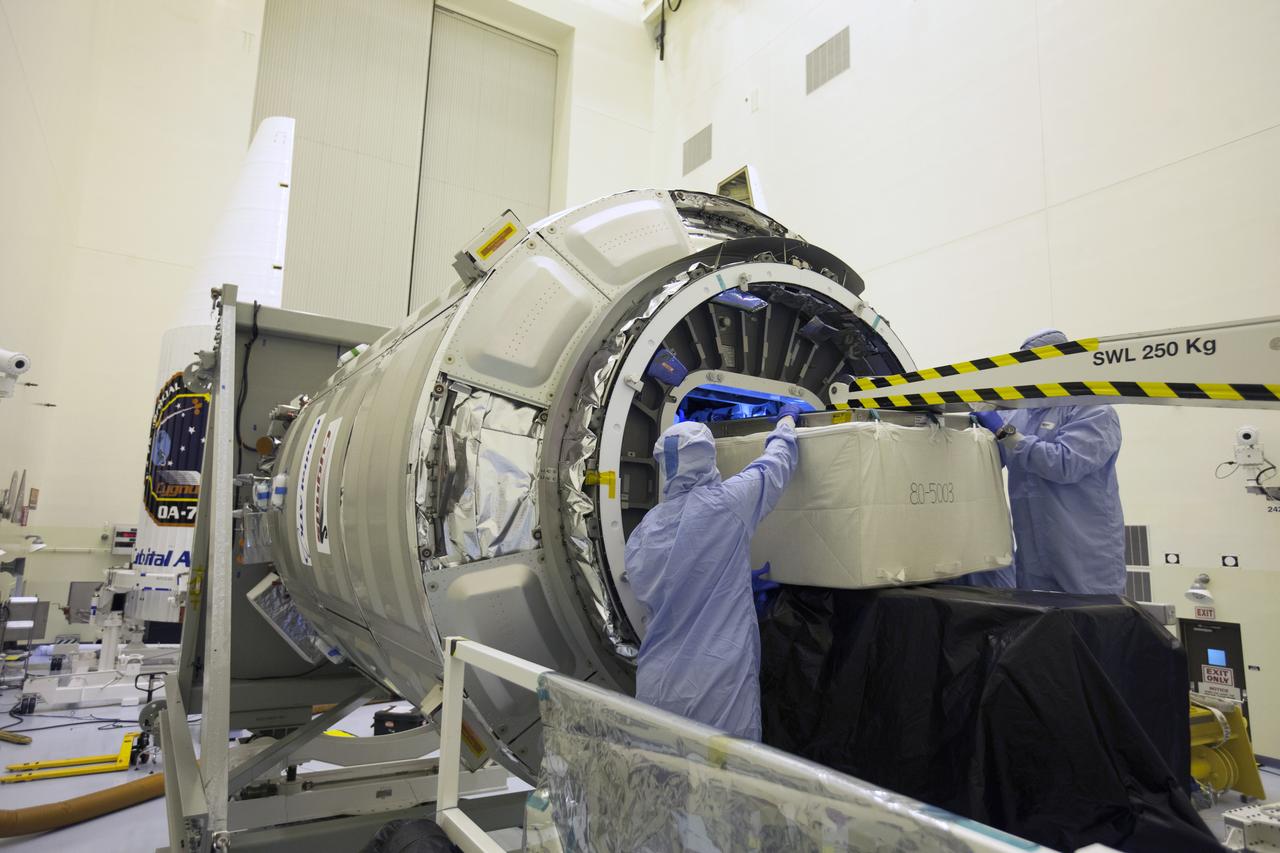
Inside the Payload Hazardous Servicing Facility at NASA's Kennedy Space Center in Florida, technicians use a special mechanism to assist with late cargo installation in the Orbital ATK Cygnus pressurized cargo module. The Orbital ATK CRS-7 commercial resupply services mission to the International Space Station is scheduled to launch atop a United Launch Alliance Atlas V rocket from Space Launch Complex 41 at Cape Canaveral Air Force Station targeted for March 24, 2017. Cygnus will deliver 7,600 pounds of supplies, equipment and scientific research materials to the space station.
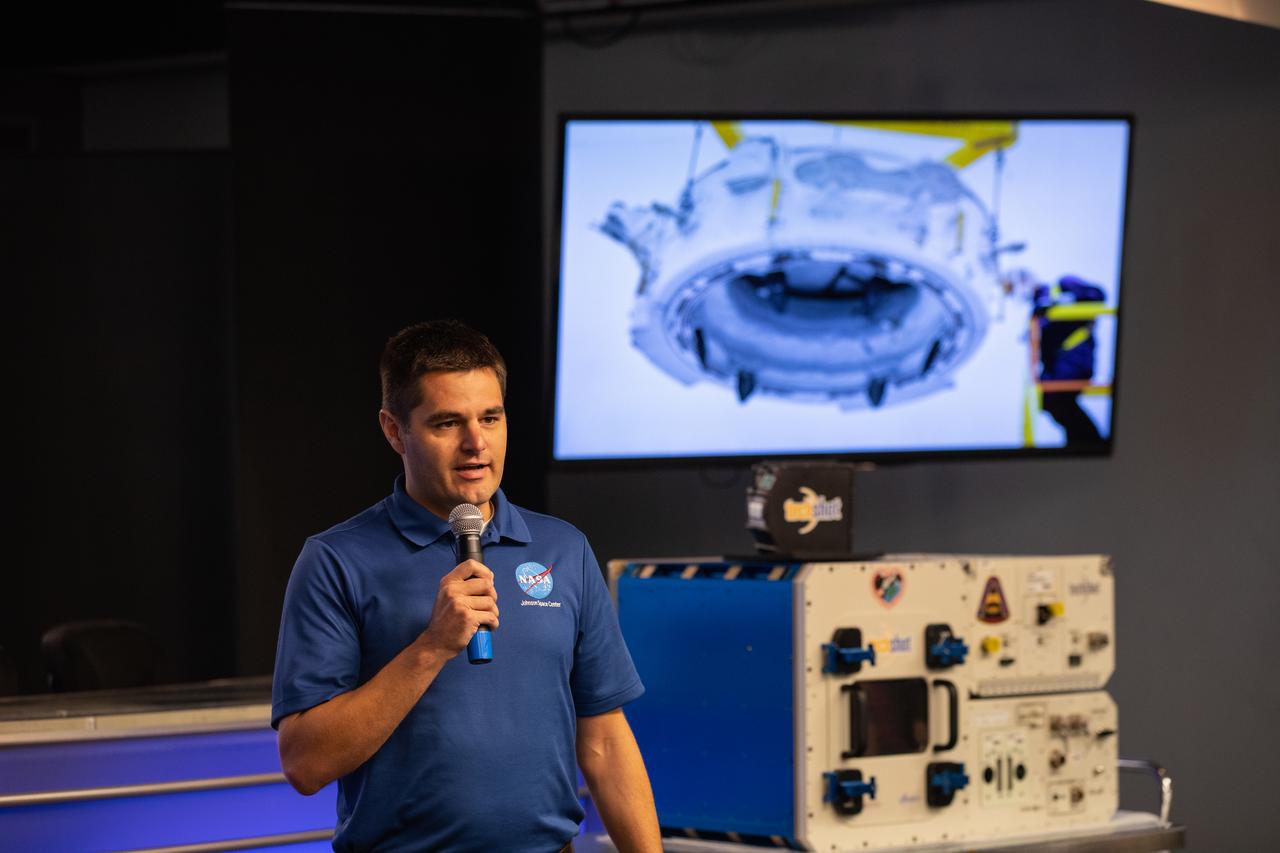
Jason August, International Space Station Mission Evaluation Room manager, talks to NASA Social participants about the International Docking Adapter-3 payload during a What’s On Board science briefing at the agency’s Kennedy Space Center in Florida on July 23, 2019. The briefing was held for SpaceX’s 18th Commercial Resupply Services (CRS-18) mission to the station. The SpaceX Falcon 9 rocket and uncrewed Dragon spacecraft are scheduled to launch July 24, 2019, from Space Launch Complex 40 at Florida’s Cape Canaveral Air Force Station.
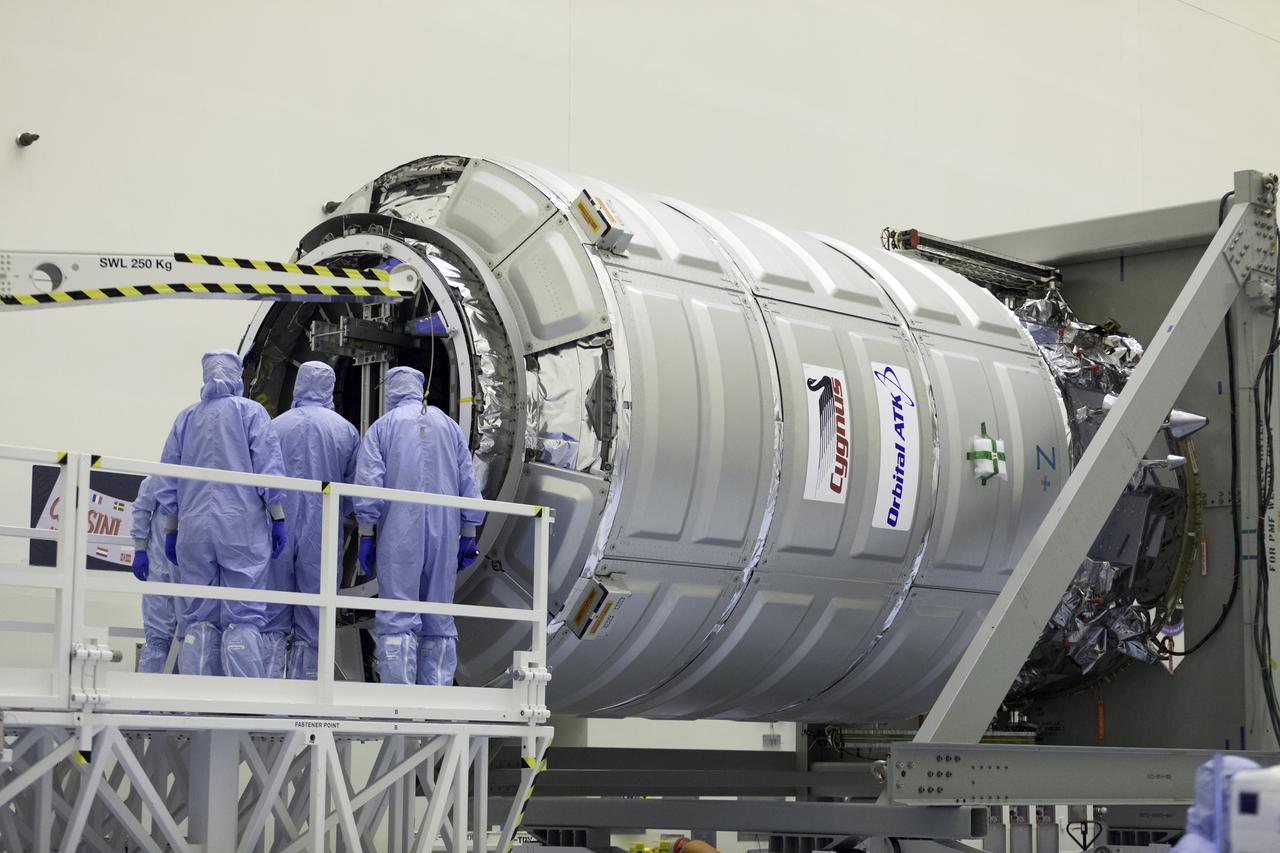
Inside the Payload Hazardous Servicing Facility at NASA's Kennedy Space Center in Florida, technicians have opened the hatch on the Orbital ATK Cygnus pressurized cargo module to prepare for late stowage of supplies and hardware. The Orbital ATK CRS-7 commercial resupply services mission to the International Space Station is scheduled to launch atop a United Launch Alliance Atlas V rocket from Space Launch Complex 41 at Cape Canaveral Air Force Station targeted for March 24, 2017. Cygnus will deliver 7,600 pounds of supplies, equipment and scientific research materials to the space station.
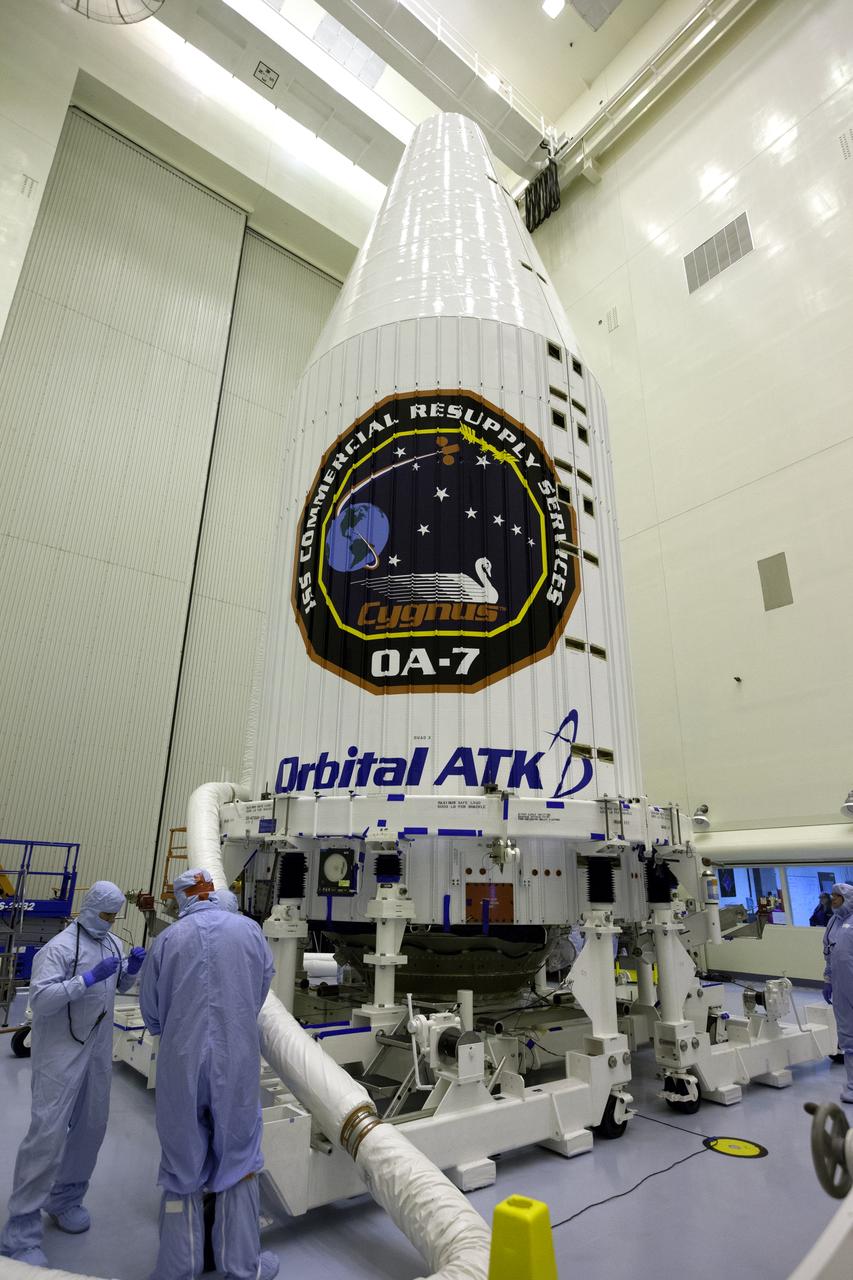
Inside the Payload Hazardous Servicing Facility at NASA's Kennedy Space Center in Florida, the Orbital ATK Cygnus pressurized cargo module has been encapsulated in the United Launch Alliance (ULA) Atlas V payload fairing. The Orbital ATK CRS-7 commercial resupply services mission to the International Space Station is scheduled to launch atop a ULA Atlas V rocket from Space Launch Complex 41 at Cape Canaveral Air Force Station targeted for March 24, 2017. Cygnus will deliver 7,600 pounds of supplies, equipment and scientific research materials to the space station.
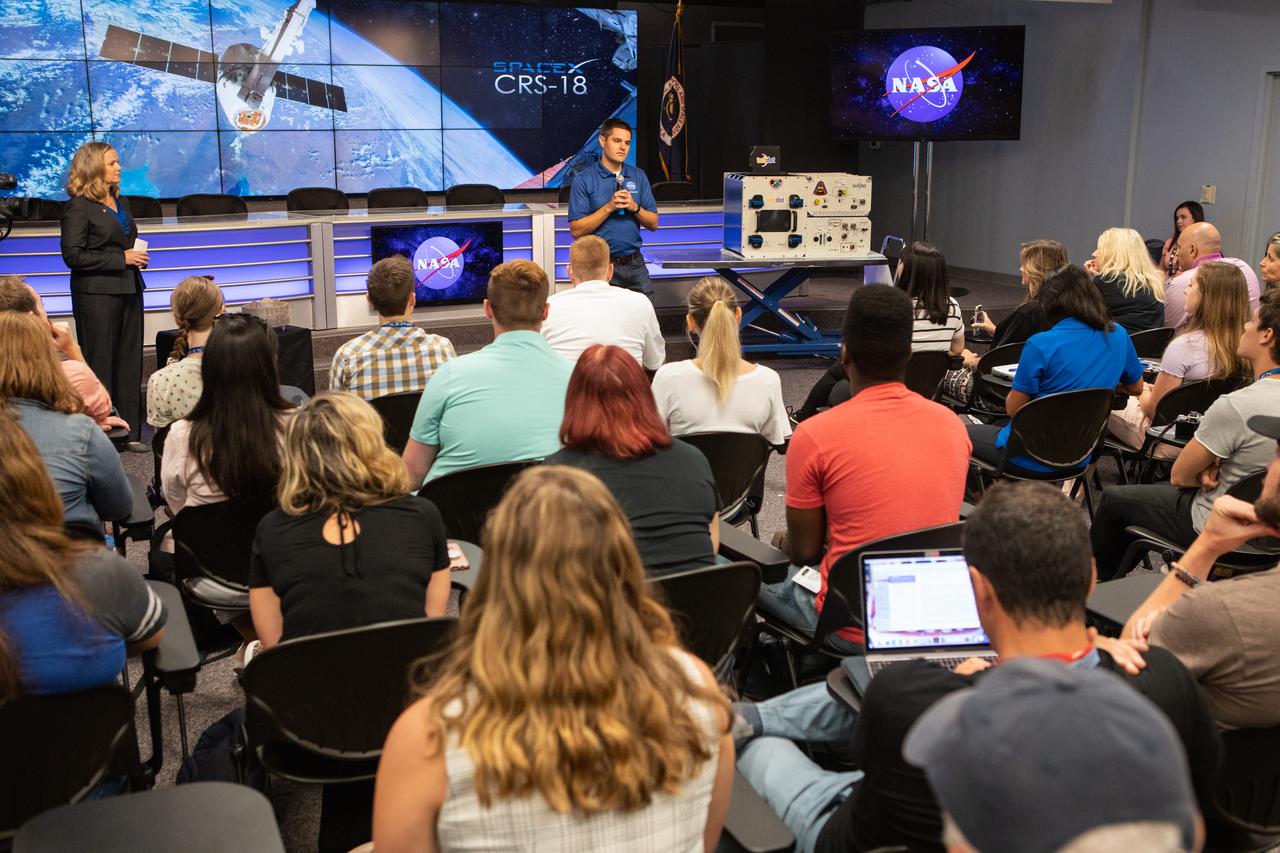
Jason August, International Space Station Mission Evaluation Room manager, talks to NASA Social participants about the International Docking Adapter-3 payload during a What’s On Board science briefing at the agency’s Kennedy Space Center in Florida on July 23, 2019. The briefing was held for SpaceX’s 18th Commercial Resupply Services (CRS-18) mission to the station. The SpaceX Falcon 9 rocket and uncrewed Dragon spacecraft are scheduled to launch July 24, 2019, from Space Launch Complex 40 at Florida’s Cape Canaveral Air Force Station.
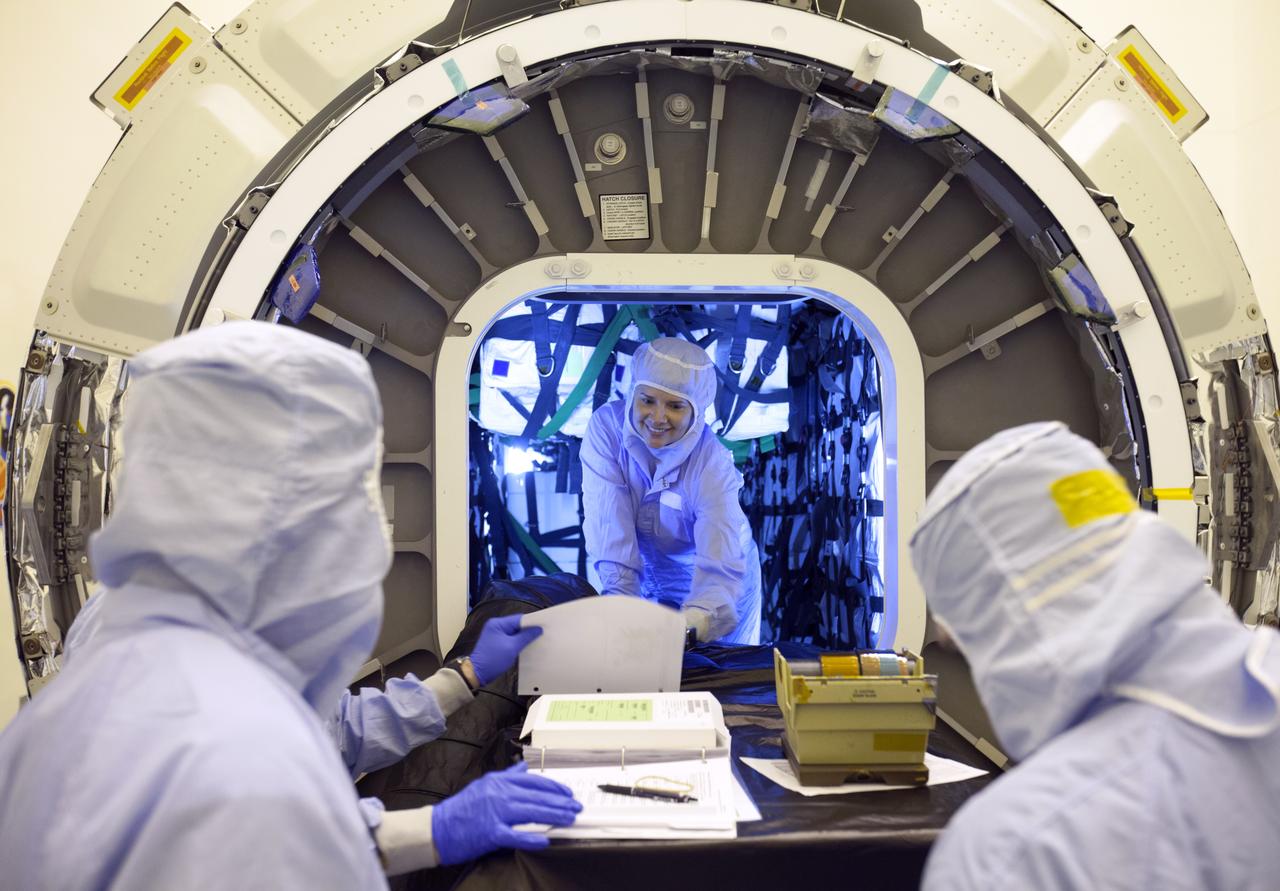
Inside the Payload Hazardous Servicing Facility at NASA's Kennedy Space Center in Florida, preparations are underway for late cargo installation in the Orbital ATK Cygnus pressurized cargo module. The Orbital ATK CRS-7 commercial resupply services mission to the International Space Station is scheduled to launch atop a United Launch Alliance Atlas V rocket from Space Launch Complex 41 at Cape Canaveral Air Force Station targeted for March 24, 2017. Cygnus will deliver 7,600 pounds of supplies, equipment and scientific research materials to the space station.
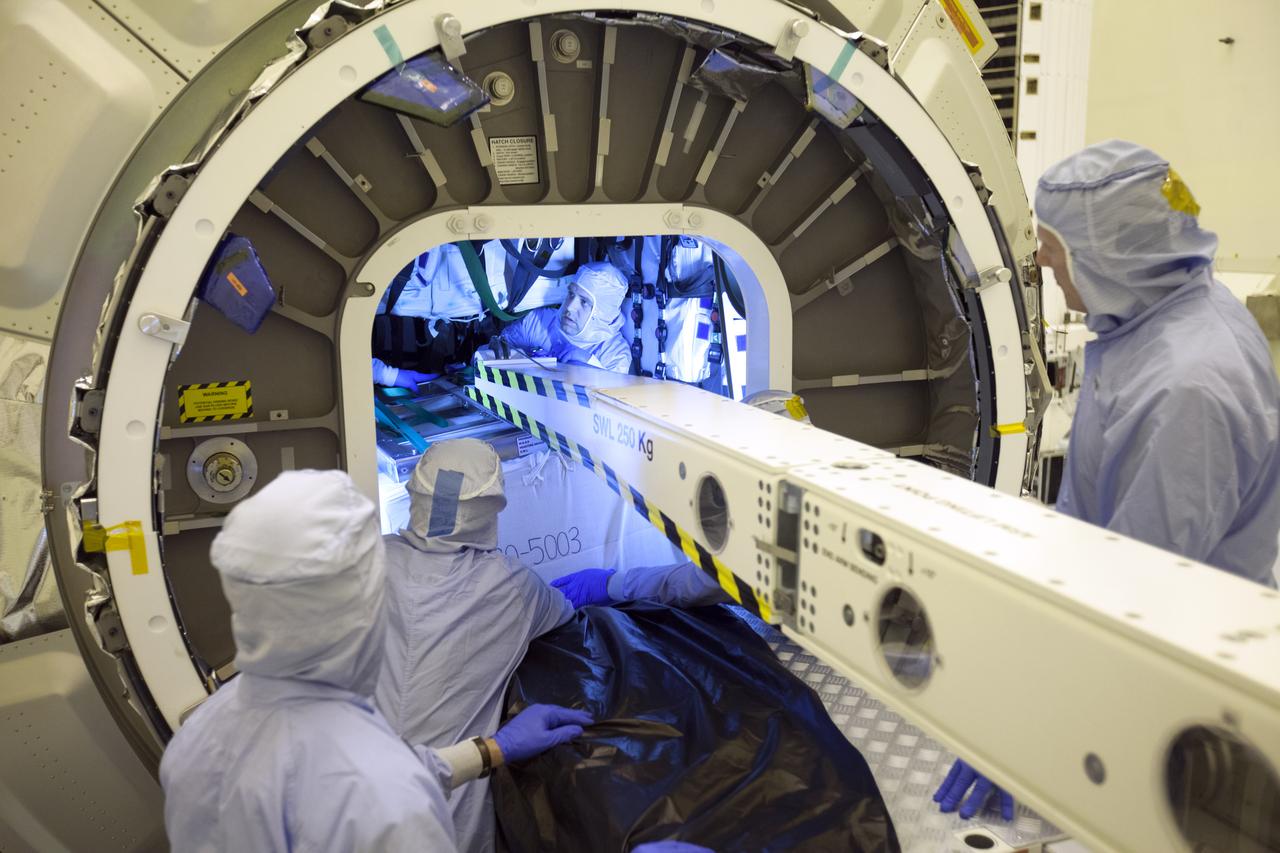
Inside the Payload Hazardous Servicing Facility at NASA's Kennedy Space Center in Florida, technicians use a special mechanism to assist with late cargo installation in the Orbital ATK Cygnus pressurized cargo module. The Orbital ATK CRS-7 commercial resupply services mission to the International Space Station is scheduled to launch atop a United Launch Alliance Atlas V rocket from Space Launch Complex 41 at Cape Canaveral Air Force Station targeted for March 24, 2017. Cygnus will deliver 7,600 pounds of supplies, equipment and scientific research materials to the space station.
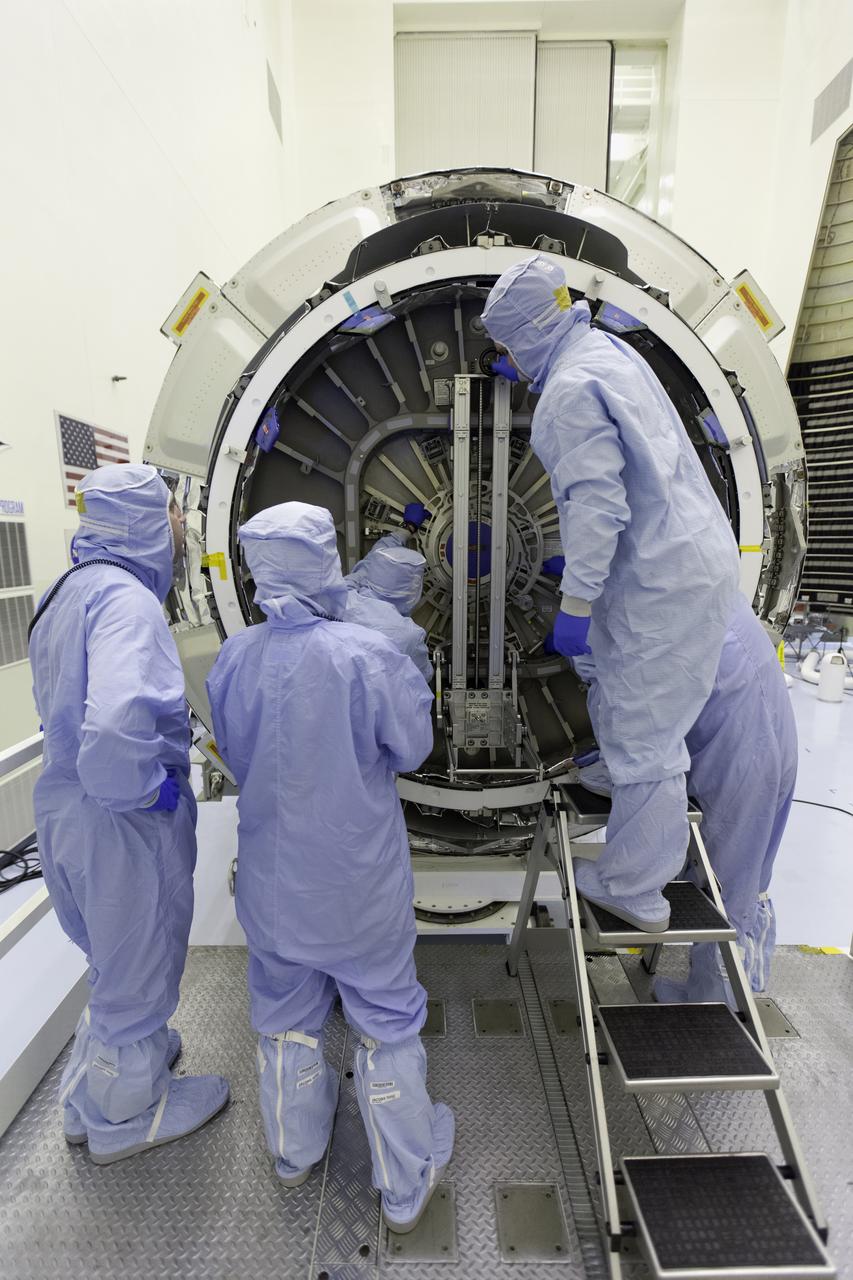
Inside the Payload Hazardous Servicing Facility at NASA's Kennedy Space Center in Florida, technicians are opening the hatch on the Orbital ATK Cygnus pressurized cargo module to prepare for late stowage of supplies and hardware. The Orbital ATK CRS-7 commercial resupply services mission to the International Space Station is scheduled to launch atop a United Launch Alliance Atlas V rocket from Space Launch Complex 41 at Cape Canaveral Air Force Station targeted for March 24, 2017. Cygnus will deliver 7,600 pounds of supplies, equipment and scientific research materials to the space station.
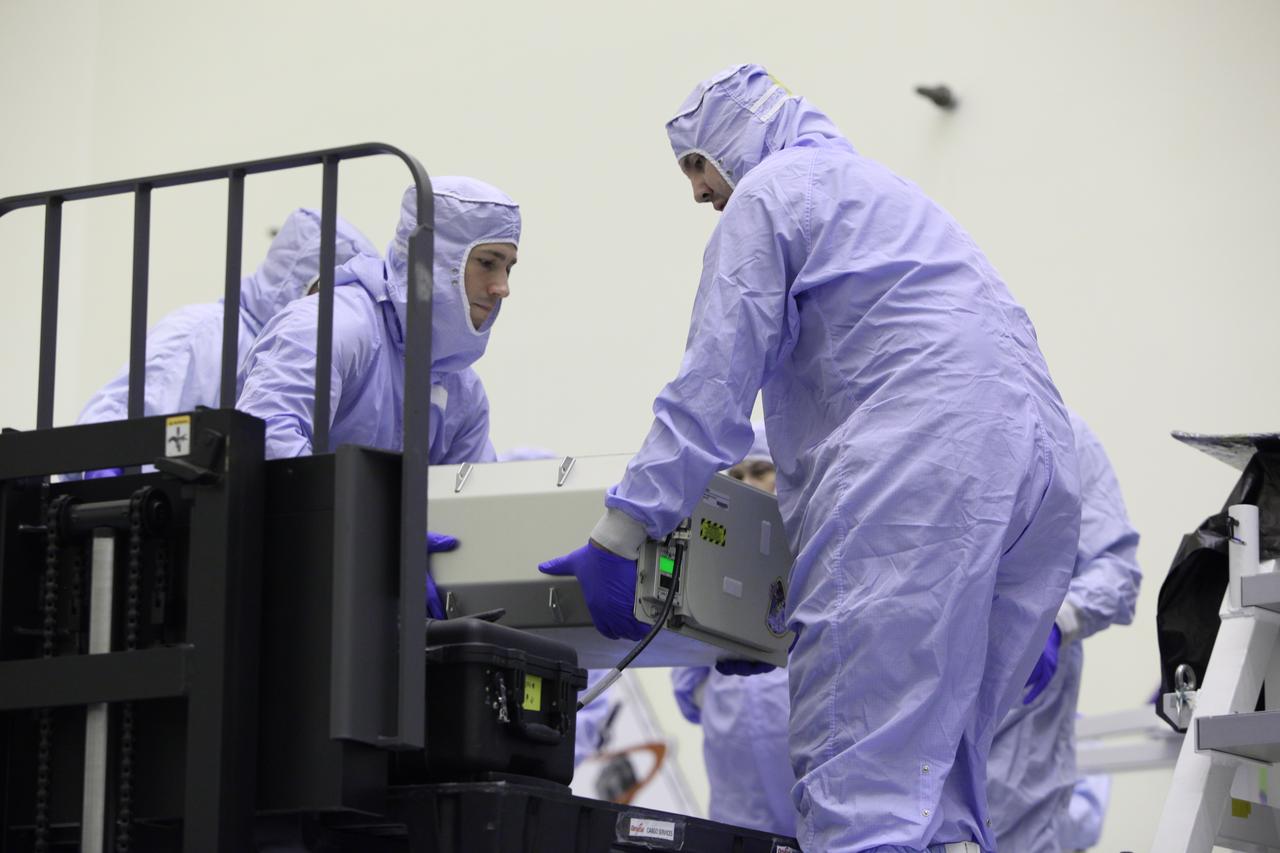
Inside the Payload Hazardous Servicing Facility at NASA's Kennedy Space Center in Florida, technicians prepare a powered cargo unit for late stowage in the Orbital ATK Cygnus pressurized cargo module. The Orbital ATK CRS-7 commercial resupply services mission to the International Space Station is scheduled to launch atop a United Launch Alliance Atlas V rocket from Space Launch Complex 41 at Cape Canaveral Air Force Station targeted for March 24, 2017. Cygnus will deliver 7,600 pounds of supplies, equipment and scientific research materials to the space station.
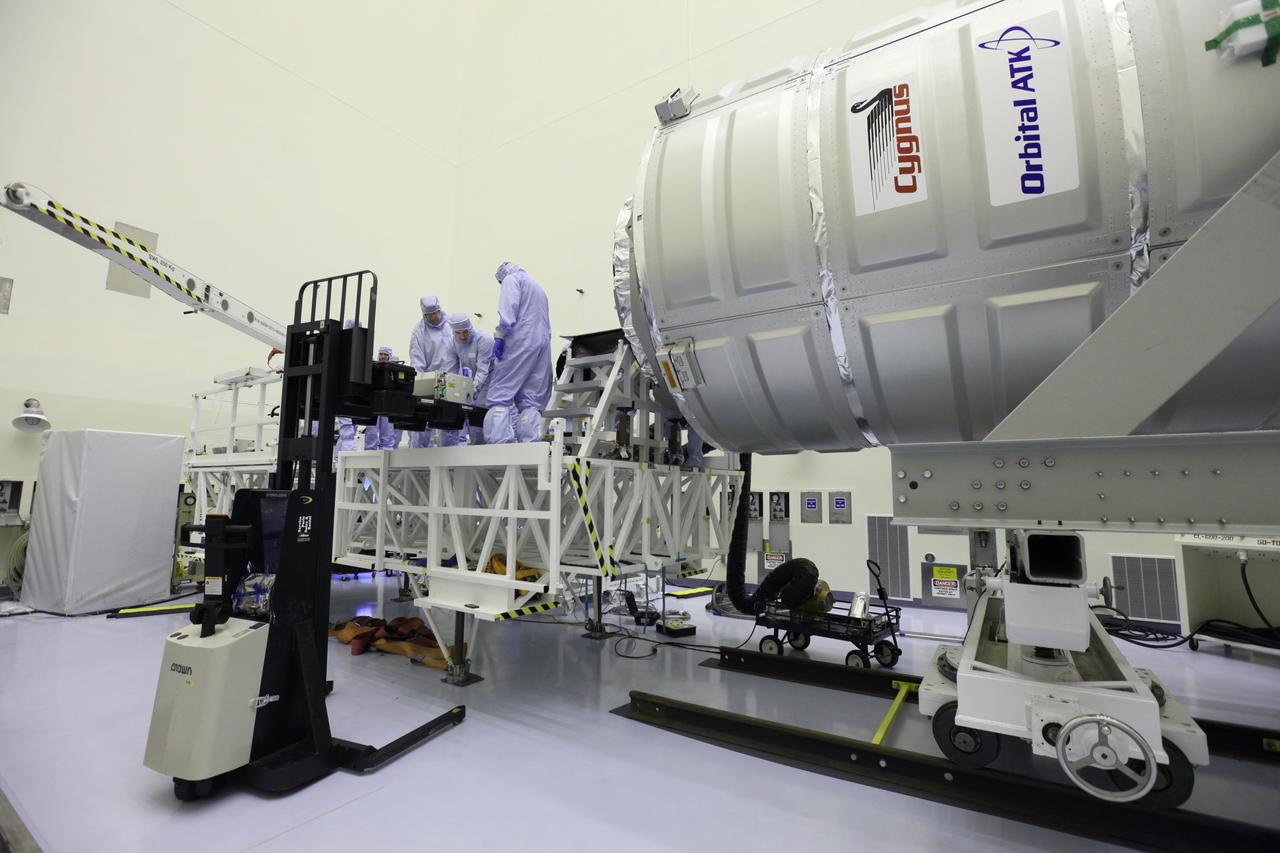
Inside the Payload Hazardous Servicing Facility at NASA's Kennedy Space Center in Florida, technicians prepare a powered cargo unit for late stowage in the Orbital ATK Cygnus pressurized cargo module. The Orbital ATK CRS-7 commercial resupply services mission to the International Space Station is scheduled to launch atop a United Launch Alliance Atlas V rocket from Space Launch Complex 41 at Cape Canaveral Air Force Station targeted for March 24, 2017. Cygnus will deliver 7,600 pounds of supplies, equipment and scientific research materials to the space station.
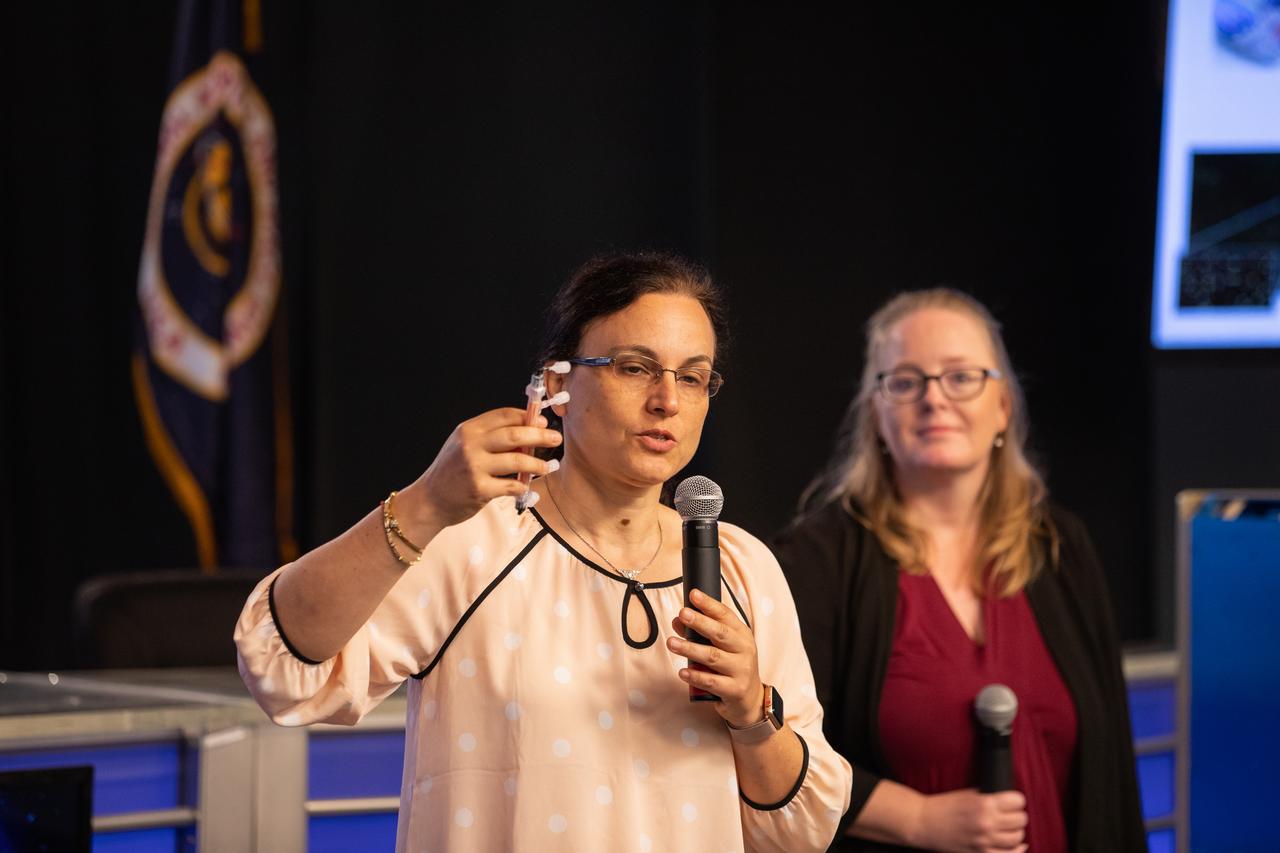
Rasha Hammamieh, Ph.D., left, the U.S. Army’s principal investigator for the Cell Science-02 investigation, and co-investigator Melissa Kacena, Ph.D., with the Indiana University School of Medicine, talk to NASA Social participants during a What’s On Board science briefing at the agency’s Kennedy Space Center in Florida on July 23, 2019. The briefing was held for SpaceX’s 18th Commercial Resupply Services (CRS-18) mission to the International Space Station. The SpaceX Falcon 9 rocket and uncrewed Dragon spacecraft are scheduled to launch July 24, 2019, from Space Launch Complex 40 at Florida’s Cape Canaveral Air Force Station.
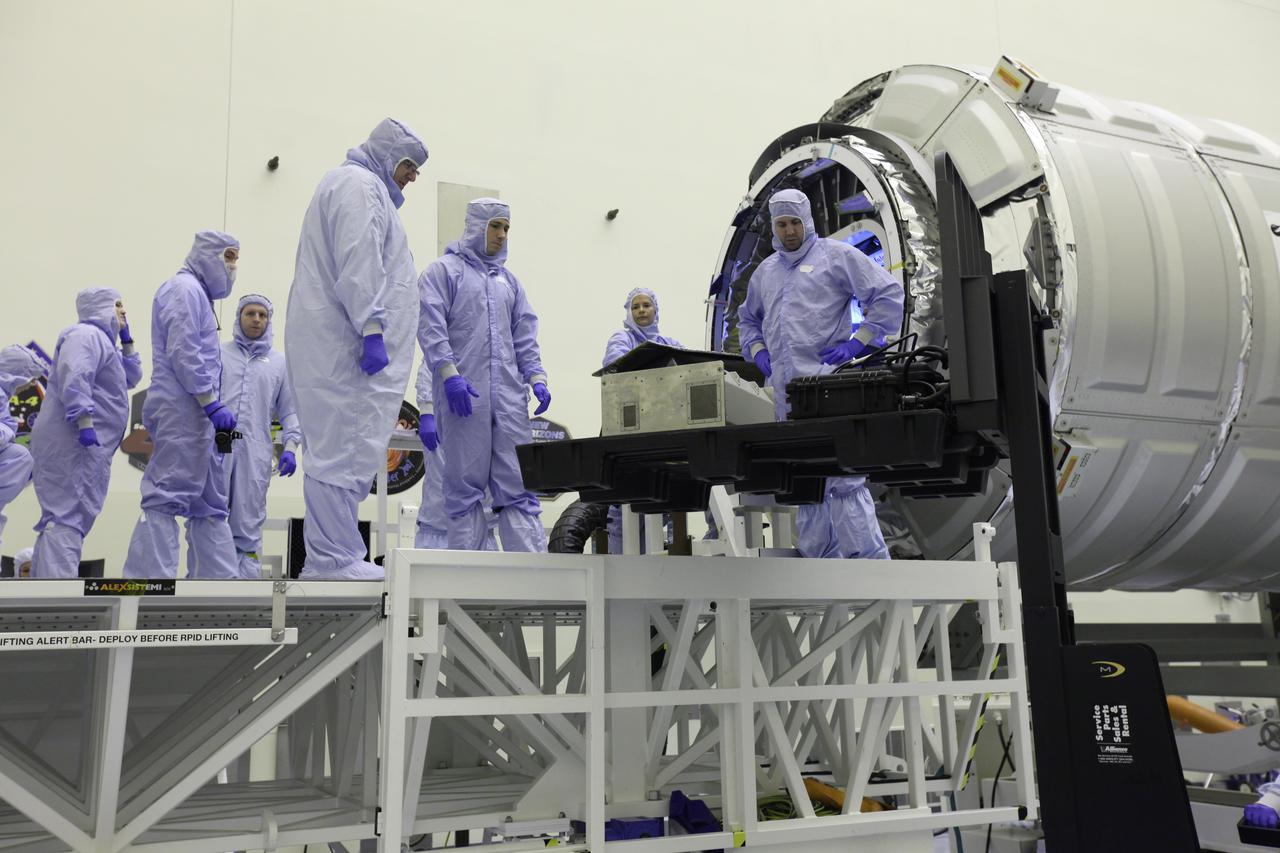
Inside the Payload Hazardous Servicing Facility at NASA's Kennedy Space Center in Florida, technicians prepare a powered cargo unit for late stowage in the Orbital ATK Cygnus pressurized cargo module. The Orbital ATK CRS-7 commercial resupply services mission to the International Space Station is scheduled to launch atop a United Launch Alliance Atlas V rocket from Space Launch Complex 41 at Cape Canaveral Air Force Station targeted for March 24, 2017. Cygnus will deliver 7,600 pounds of supplies, equipment and scientific research materials to the space station.
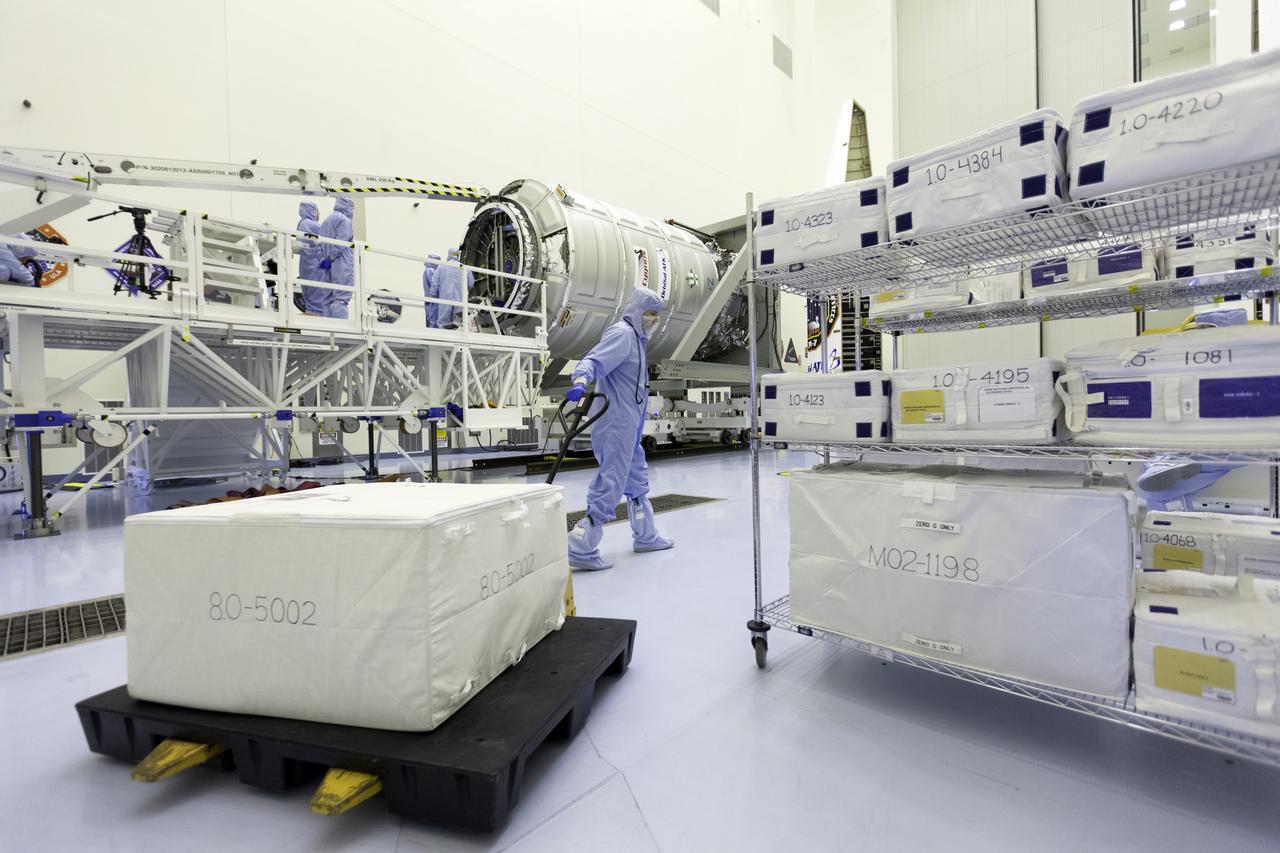
Inside the Payload Hazardous Servicing Facility at NASA's Kennedy Space Center in Florida, cargo has arrived for late loading in the Orbital ATK Cygnus pressurized cargo module. The Orbital ATK CRS-7 commercial resupply services mission to the International Space Station is scheduled to launch atop a United Launch Alliance Atlas V rocket from Space Launch Complex 41 at Cape Canaveral Air Force Station targeted for March 24, 2017. Cygnus will deliver 7,600 pounds of supplies, equipment and scientific research materials to the space station.
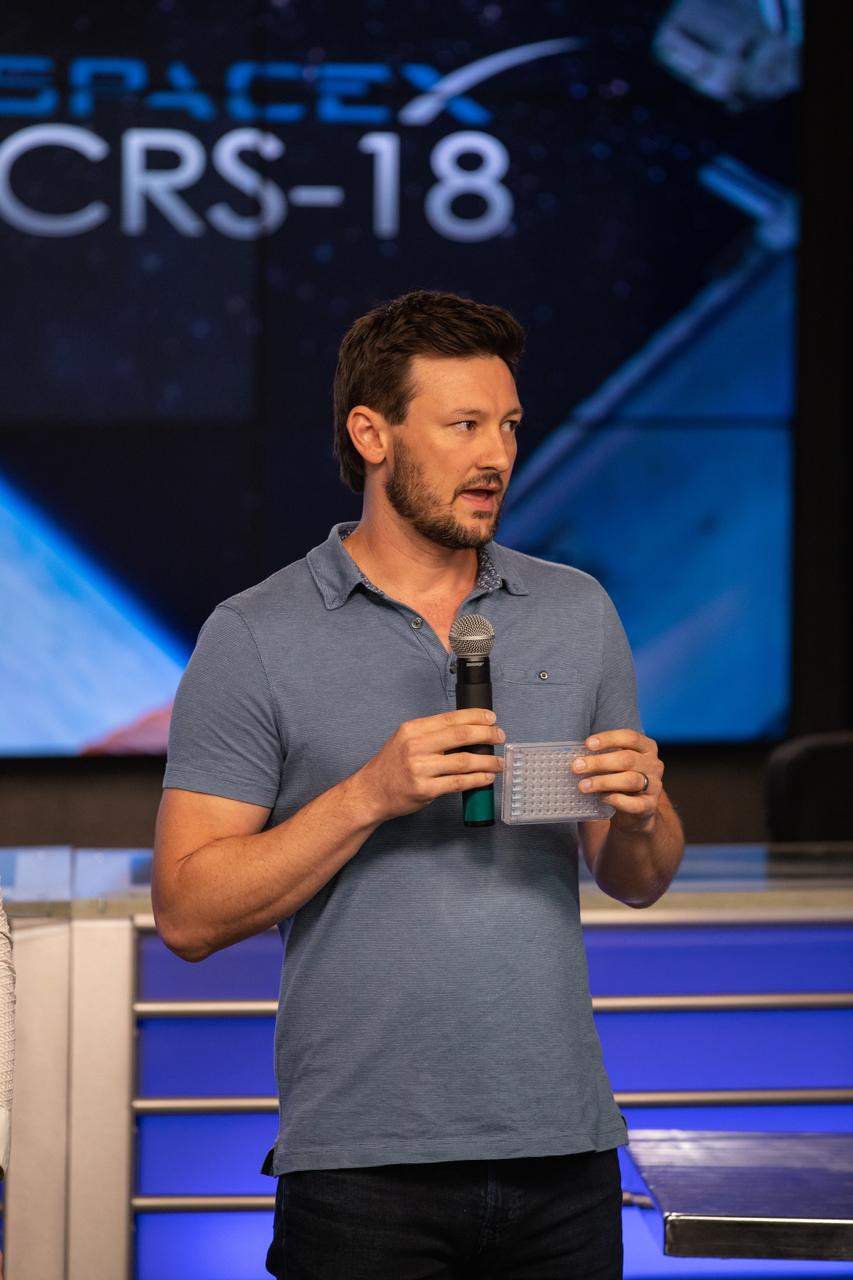
Andres Bratt-Leal, Ph.D., of Aspen Neuroscience, talks to NASA Social participants during a What’s On Board science briefing at the agency’s Kennedy Space Center in Florida on July 23, 2019. Bratt-Leal is a principal investigator for the Effects of Microgravity on Microglia 3-Dimensional Models of Parkinson’s Disease and Multiple Sclerosis (Space Tango-Induced Pluripotent Stem Cells) payload. The briefing was held for SpaceX’s 18th Commercial Resupply Services (CRS-18) mission to the International Space Station. The SpaceX Falcon 9 rocket and uncrewed Dragon spacecraft are scheduled to launch July 24, 2019, from Space Launch Complex 40 at Florida’s Cape Canaveral Air Force Station.
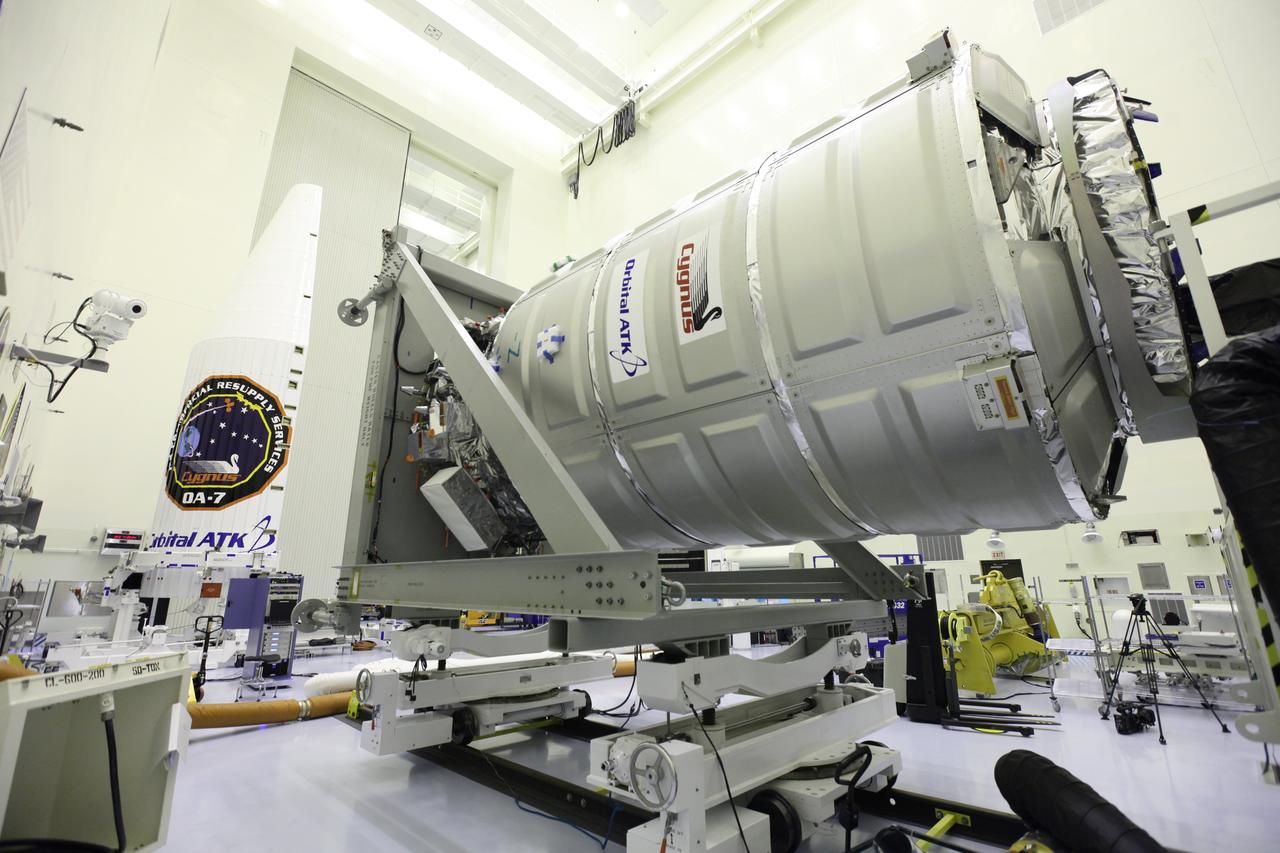
Inside the Payload Hazardous Servicing Facility at NASA's Kennedy Space Center in Florida, the Orbital ATK Cygnus pressurized cargo module is tilted to the horizontal position to prepare for final stowage of powered cargo. The Orbital ATK CRS-7 commercial resupply services mission to the International Space Station is scheduled to launch atop a United Launch Alliance Atlas V rocket from Space Launch Complex 41 at Cape Canaveral Air Force Station targeted for March 24, 2017. Cygnus will deliver 7,600 pounds of supplies, equipment and scientific research materials to the space station.
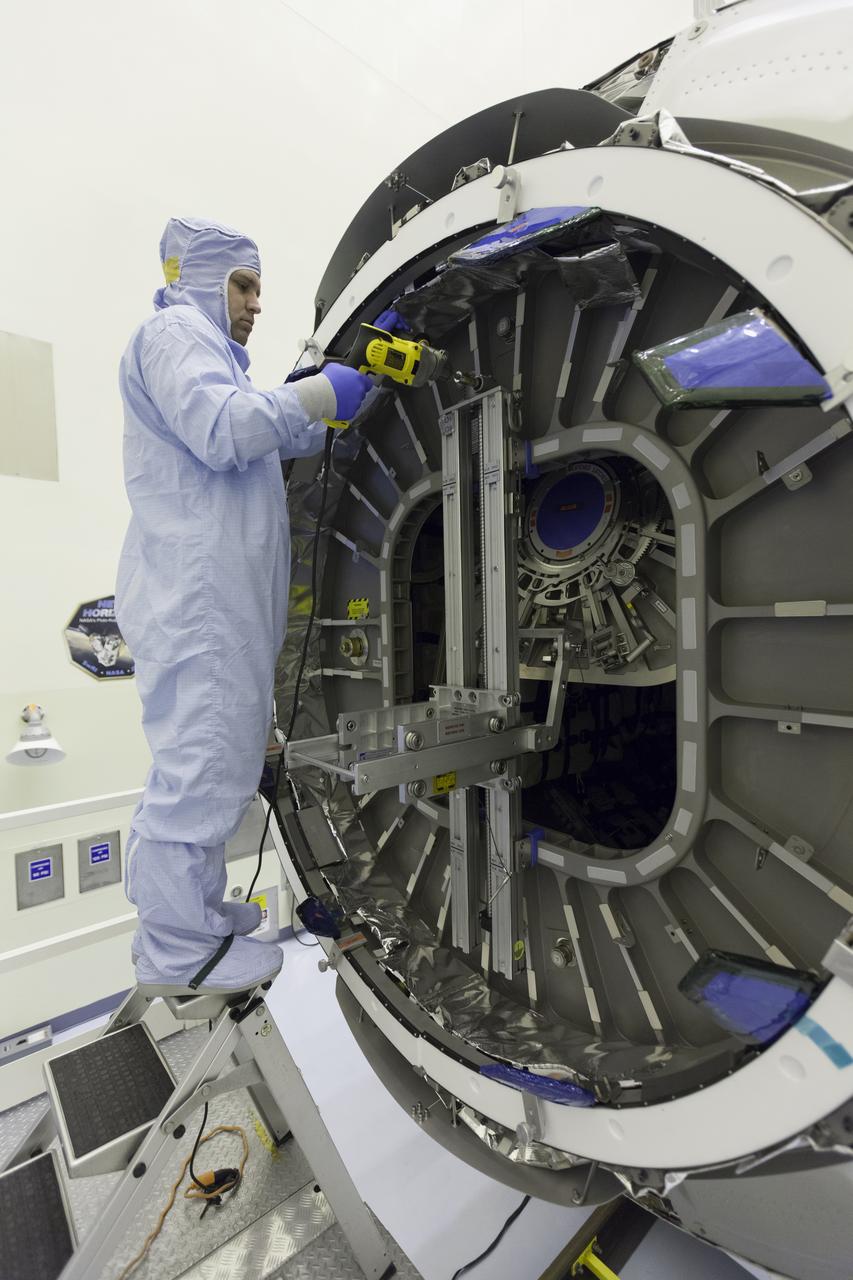
Inside the Payload Hazardous Servicing Facility at NASA's Kennedy Space Center in Florida, a technician open the hatch on the Orbital ATK Cygnus pressurized cargo module to prepare for late stowage of supplies and hardware. The Orbital ATK CRS-7 commercial resupply services mission to the International Space Station is scheduled to launch atop a United Launch Alliance Atlas V rocket from Space Launch Complex 41 at Cape Canaveral Air Force Station targeted for March 24, 2017. Cygnus will deliver 7,600 pounds of supplies, equipment and scientific research materials to the space station.
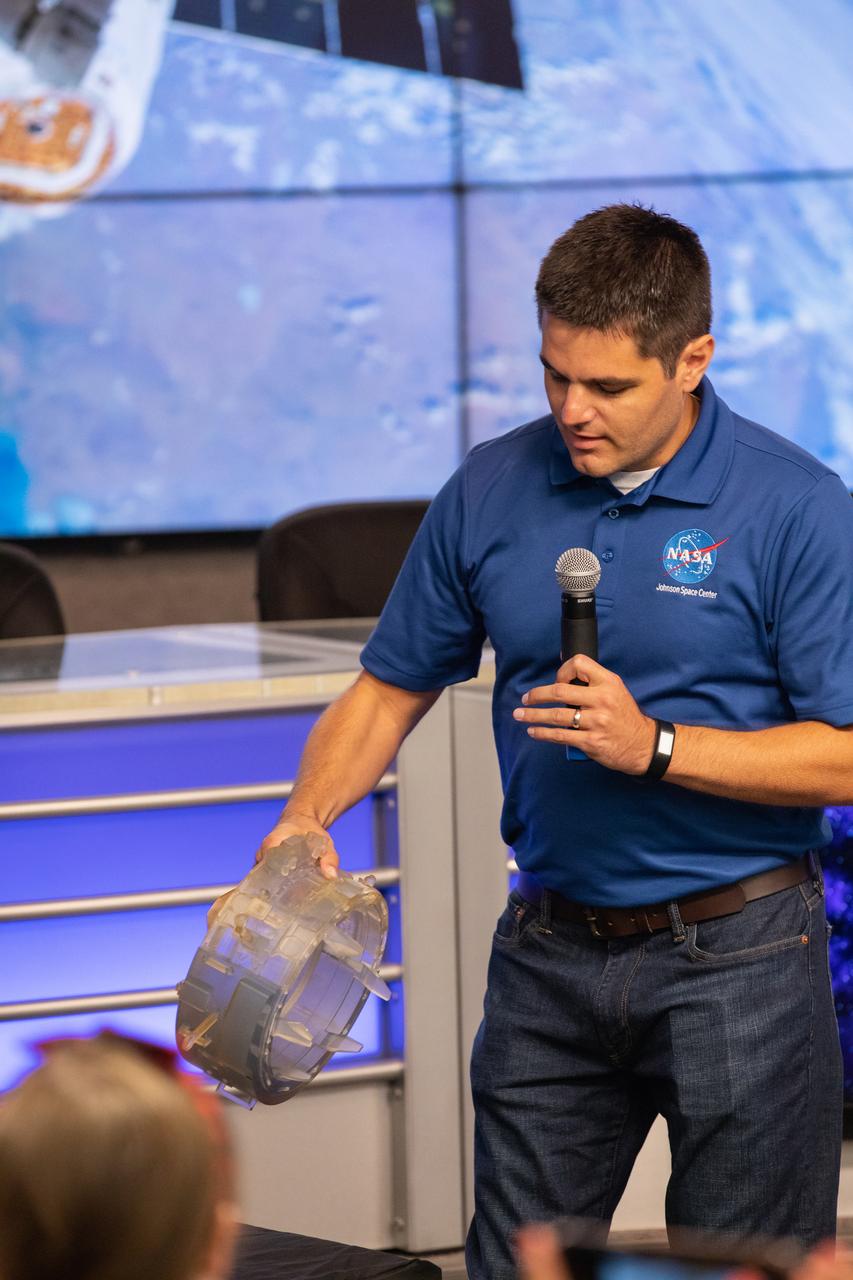
Jason August, International Space Station Mission Evaluation Room manager, talks to NASA Social participants about the International Docking Adapter-3 payload during a What’s On Board science briefing at the agency’s Kennedy Space Center in Florida on July 23, 2019. The briefing was held for SpaceX’s 18th Commercial Resupply Services (CRS-18) mission to the station. The SpaceX Falcon 9 rocket and uncrewed Dragon spacecraft are scheduled to launch July 24, 2019, from Space Launch Complex 40 at Florida’s Cape Canaveral Air Force Station.

Inside the Payload Hazardous Servicing Facility at NASA's Kennedy Space Center in Florida, technicians begin late cargo installation in the Orbital ATK Cygnus pressurized cargo module. The Orbital ATK CRS-7 commercial resupply services mission to the International Space Station is scheduled to launch atop a United Launch Alliance Atlas V rocket from Space Launch Complex 41 at Cape Canaveral Air Force Station targeted for March 24, 2017. Cygnus will deliver 7,600 pounds of supplies, equipment and scientific research materials to the space station.
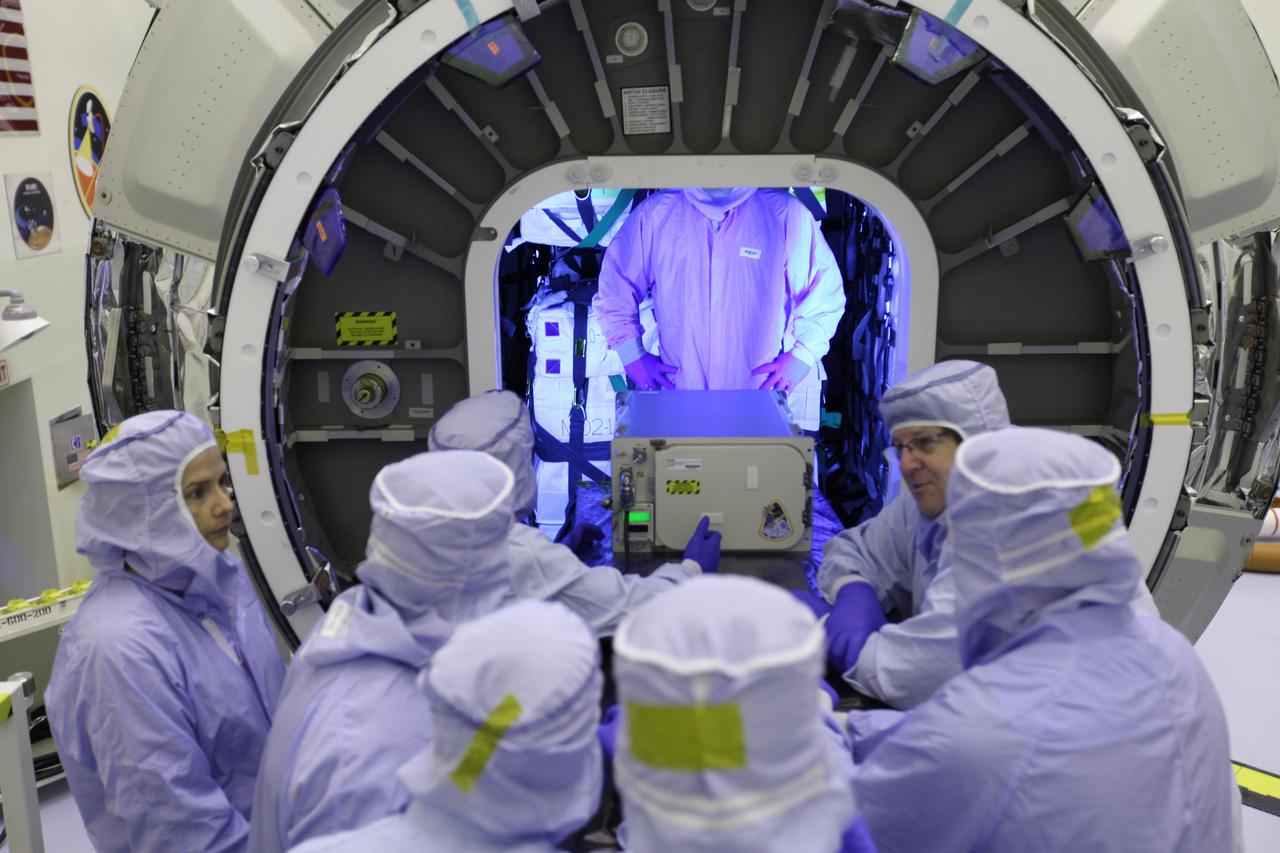
Inside the Payload Hazardous Servicing Facility at NASA's Kennedy Space Center in Florida, technicians load a powered cargo unit into the Orbital ATK Cygnus pressurized cargo module during final stowage. The Orbital ATK CRS-7 commercial resupply services mission to the International Space Station is scheduled to launch atop a United Launch Alliance Atlas V rocket from Space Launch Complex 41 at Cape Canaveral Air Force Station targeted for March 24, 2017. Cygnus will deliver 7,600 pounds of supplies, equipment and scientific research materials to the space station.
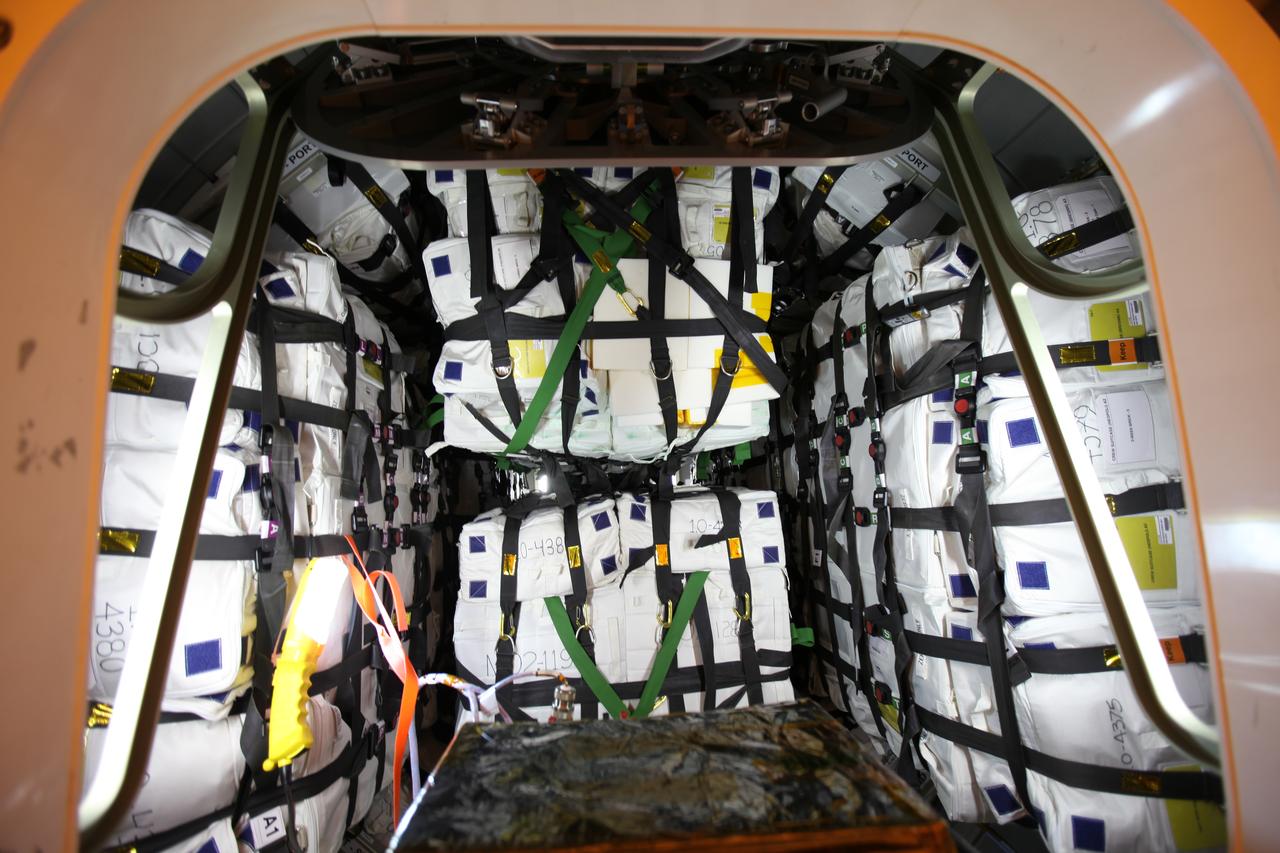
Inside the Payload Hazardous Servicing Facility at NASA's Kennedy Space Center in Florida, the hatch on the Orbital ATK Cygnus pressurized cargo module is open for final stowage of powered cargo. The Orbital ATK CRS-7 commercial resupply services mission to the International Space Station is scheduled to launch atop a United Launch Alliance Atlas V rocket from Space Launch Complex 41 at Cape Canaveral Air Force Station targeted for March 24, 2017. Cygnus will deliver 7,600 pounds of supplies, equipment and scientific research materials to the space station.

Valentina Fossati, Ph.D., of the New York Stem Foundation Research Institute, left, and Andres Bratt-Leal, Ph.D., of Aspen Neuroscience, talk to NASA Social participants during a What’s On Board science briefing at the agency’s Kennedy Space Center in Florida on July 23, 2019. Bratt-Leal and Fossati are principal investigators for the Effects of Microgravity on Microglia 3-Dimensional Models of Parkinson’s Disease and Multiple Sclerosis (Space Tango-Induced Pluripotent Stem Cells) payload. The briefing was held for SpaceX’s 18th Commercial Resupply Services (CRS-18) mission to the International Space Station. The SpaceX Falcon 9 rocket and uncrewed Dragon spacecraft are scheduled to launch July 24, 2019, from Space Launch Complex 40 at Florida’s Cape Canaveral Air Force Station.