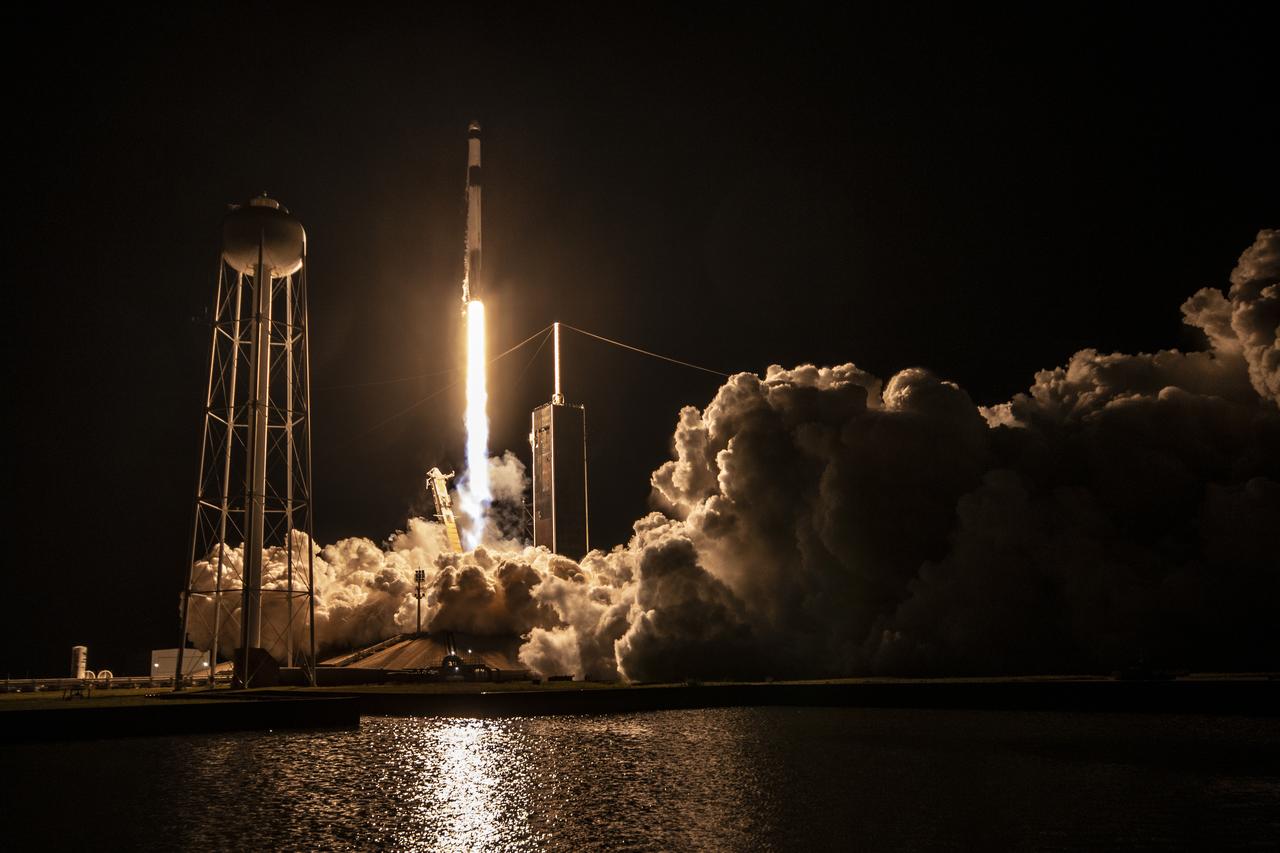
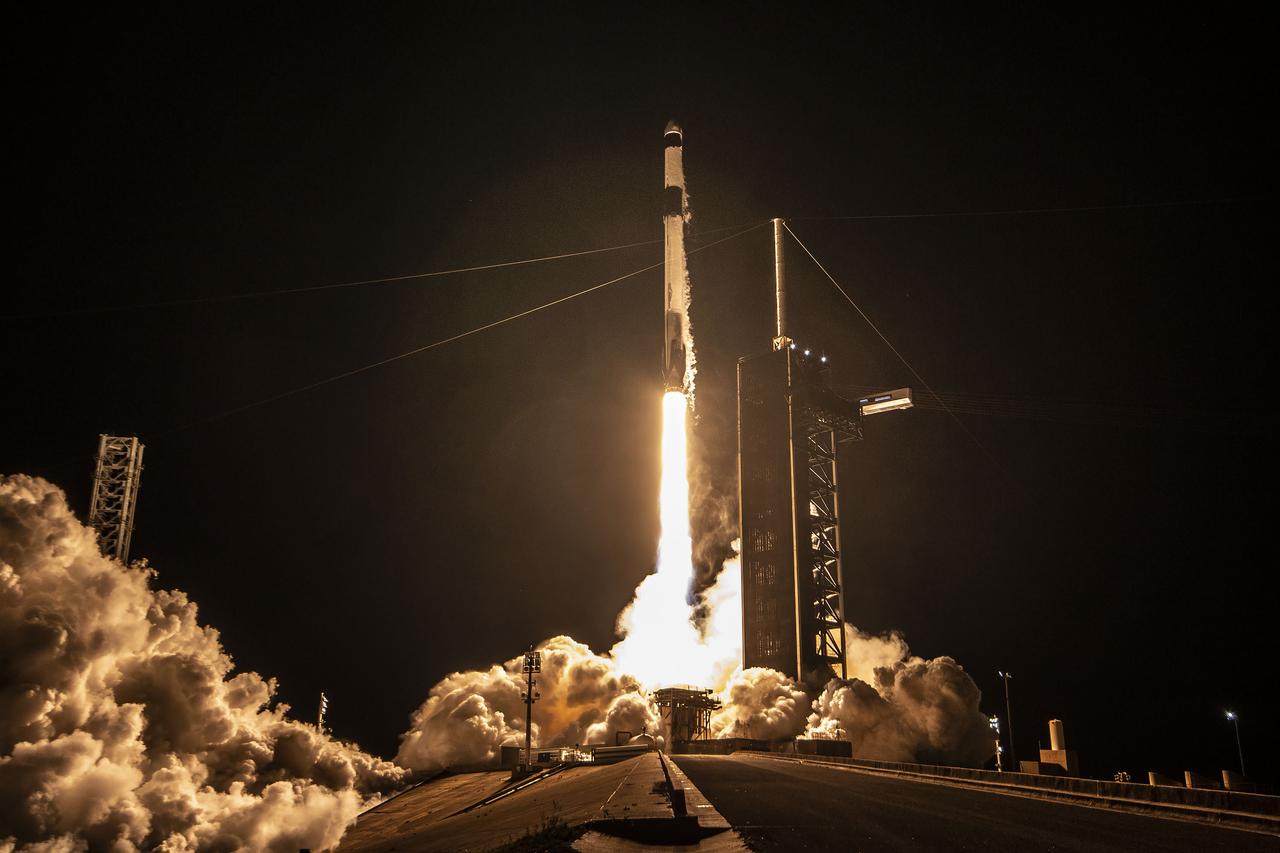
A SpaceX Falcon 9 rocket soars upward after its liftoff from Launch Complex 39A at NASA’s Kennedy Space Center in Florida on March 14, 2023, on the company’s 27th Commercial Resupply Services mission for the agency to the International Space Station. Liftoff was at 8:30 p.m. EDT. The Dragon spacecraft will deliver more than 6,000 pounds of science and research, supplies, and equipment to the crew aboard the space station, including the final two experiments comprising the National Institutes for Health and International Space Station National Laboratory’s Tissue Chips in Space initiative, Cardinal Heart 2.0 and Engineered Heart Tissues-2. The spacecraft is expected to spend about a month attached to the orbiting outpost before it returns to Earth with research and return cargo, splashing down off the coast of Florida.
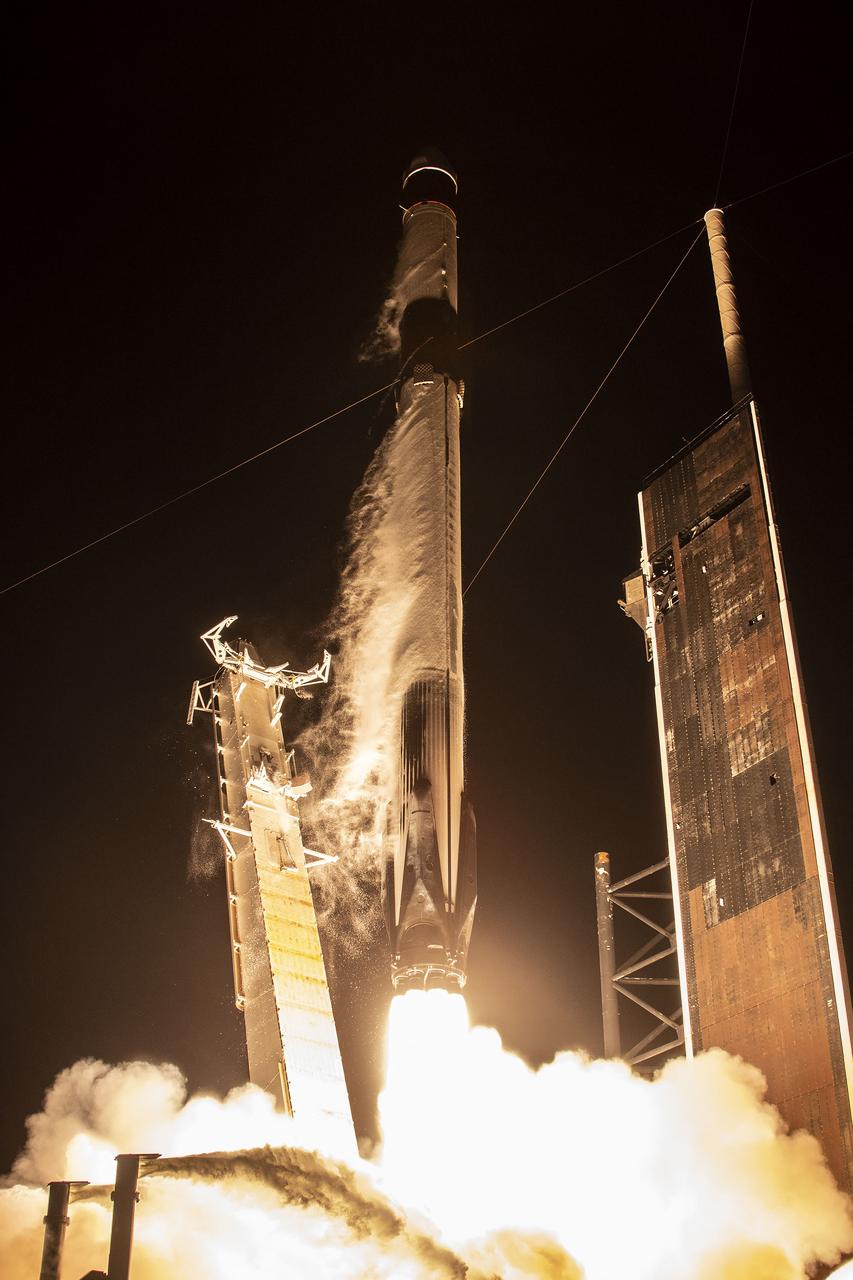
The SpaceX Falcon 9 rocket carrying the Dragon spacecraft lifts off from Launch Complex 39A at NASA’s Kennedy Space Center in Florida on March 14, 2023, on the company’s 27th commercial resupply services mission for the agency to the International Space Station. Liftoff was at 8:30 p.m. EDT. Dragon will deliver more than 6,000 pounds of cargo, including a variety of NASA investigations, supplies, and equipment to the crew aboard the space station, including the final two experiments comprising the National Institutes for Health and International Space Station National Laboratory’s Tissue Chips in Space initiative, Cardinal Heart 2.0 and Engineered Heart Tissues-2. The spacecraft is expected to spend about a month attached to the orbiting outpost before it returns to Earth with research and return cargo, splashing down off the coast of Florida.

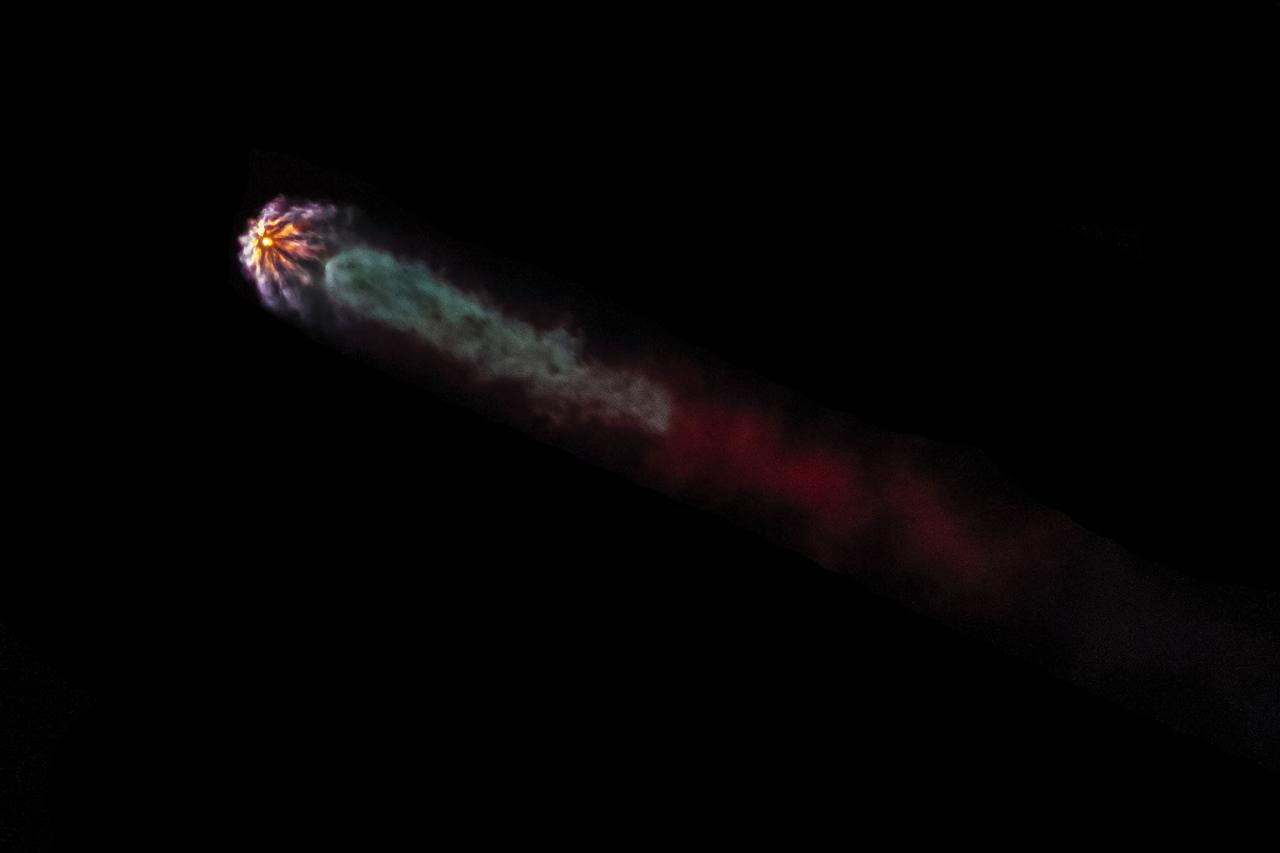
The SpaceX Falcon 9 rocket’s first stage separates from the Dragon spacecraft a few minutes after liftoff from Launch Complex 39A at NASA’s Kennedy Space Center in Florida on March 14, 2023, on the company’s 27th commercial resupply services mission for the agency to the International Space Station. Liftoff was at 8:30 p.m. EDT. Dragon will deliver more than 6,000 pounds of cargo, including a variety of NASA investigations, supplies, and equipment to the crew aboard the space station, including the final two experiments comprising the National Institutes for Health and International Space Station National Laboratory’s Tissue Chips in Space initiative, Cardinal Heart 2.0 and Engineered Heart Tissues-2. The spacecraft is expected to spend about a month attached to the orbiting outpost before it returns to Earth with research and return cargo, splashing down off the coast of Florida.
A SpaceX Falcon 9 rocket soars upward after its liftoff from Launch Complex 39A at NASA’s Kennedy Space Center in Florida on March 14, 2023, on the company’s 27th Commercial Resupply Services mission for the agency to the International Space Station. Liftoff was at 8:30 p.m. EDT. The Dragon spacecraft will deliver more than 6,000 pounds of science and research, supplies, and equipment to the crew aboard the space station, including the final two experiments comprising the National Institutes for Health and International Space Station National Laboratory’s Tissue Chips in Space initiative, Cardinal Heart 2.0 and Engineered Heart Tissues-2. The spacecraft is expected to spend about a month attached to the orbiting outpost before it returns to Earth with research and return cargo, splashing down off the coast of Florida.
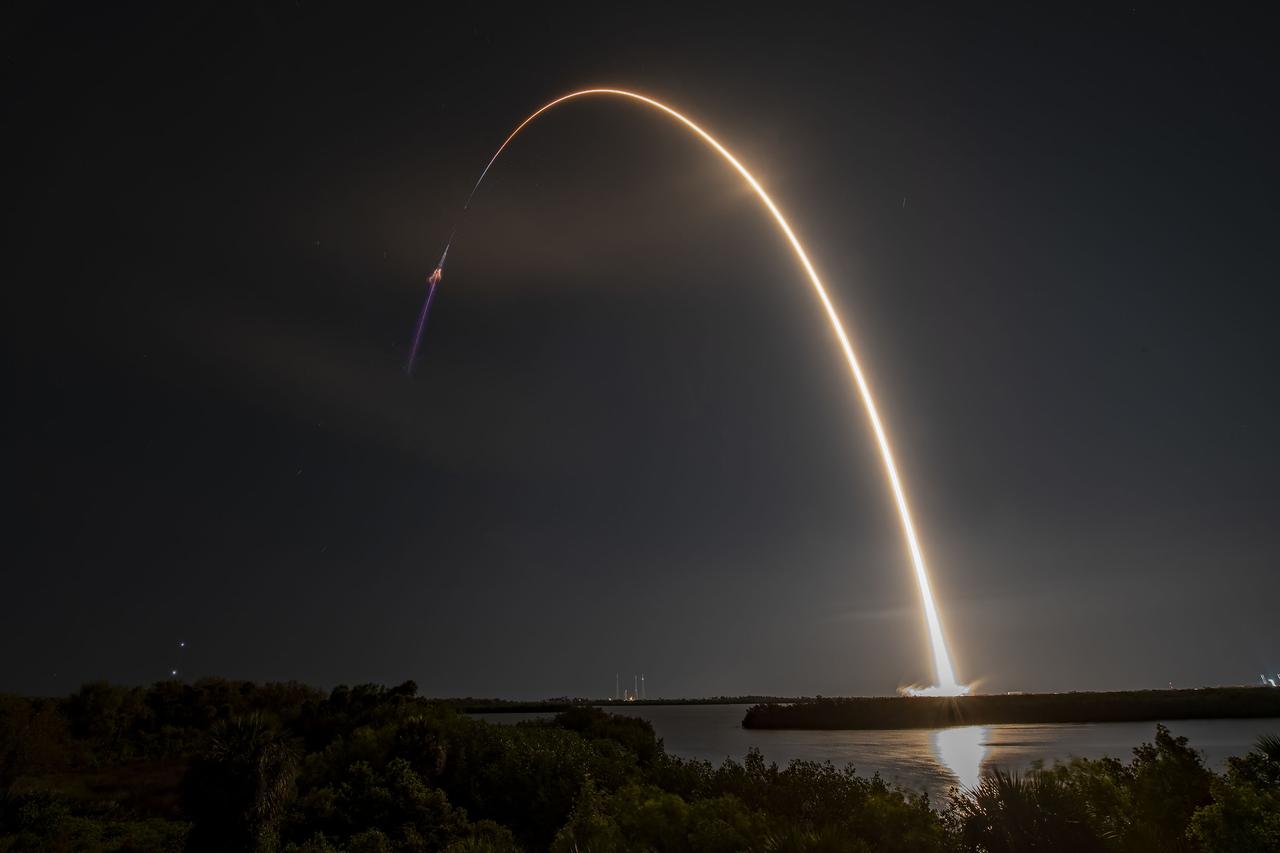
Creating a golden streak in the night sky, a SpaceX Falcon 9 rocket soars upward after liftoff from Launch Complex 39A at NASA’s Kennedy Space Center in Florida on March 14, 2023, on the company’s 27th Commercial Resupply Services mission for the agency to the International Space Station. Liftoff was at 8:30 p.m. EDT. The Dragon spacecraft will deliver more than 6,000 pounds of science and research, supplies, and equipment to the crew aboard the space station, including the final two experiments comprising the National Institutes for Health and International Space Station National Laboratory’s Tissue Chips in Space initiative, Cardinal Heart 2.0 and Engineered Heart Tissues-2. The spacecraft is expected to spend about a month attached to the orbiting outpost before it returns to Earth with research and return cargo, splashing down off the coast of Florida.
The SpaceX Falcon 9 rocket carrying the Dragon spacecraft lifts off from Launch Complex 39A at NASA’s Kennedy Space Center in Florida on March 14, 2023, on the company’s 27th commercial resupply services mission for the agency to the International Space Station. Liftoff was at 8:30 p.m. EDT. Dragon will deliver more than 6,000 pounds of cargo, including a variety of NASA investigations, supplies, and equipment to the crew aboard the space station, including the final two experiments comprising the National Institutes for Health and International Space Station National Laboratory’s Tissue Chips in Space initiative, Cardinal Heart 2.0 and Engineered Heart Tissues-2. The spacecraft is expected to spend about a month attached to the orbiting outpost before it returns to Earth with research and return cargo, splashing down off the coast of Florida.
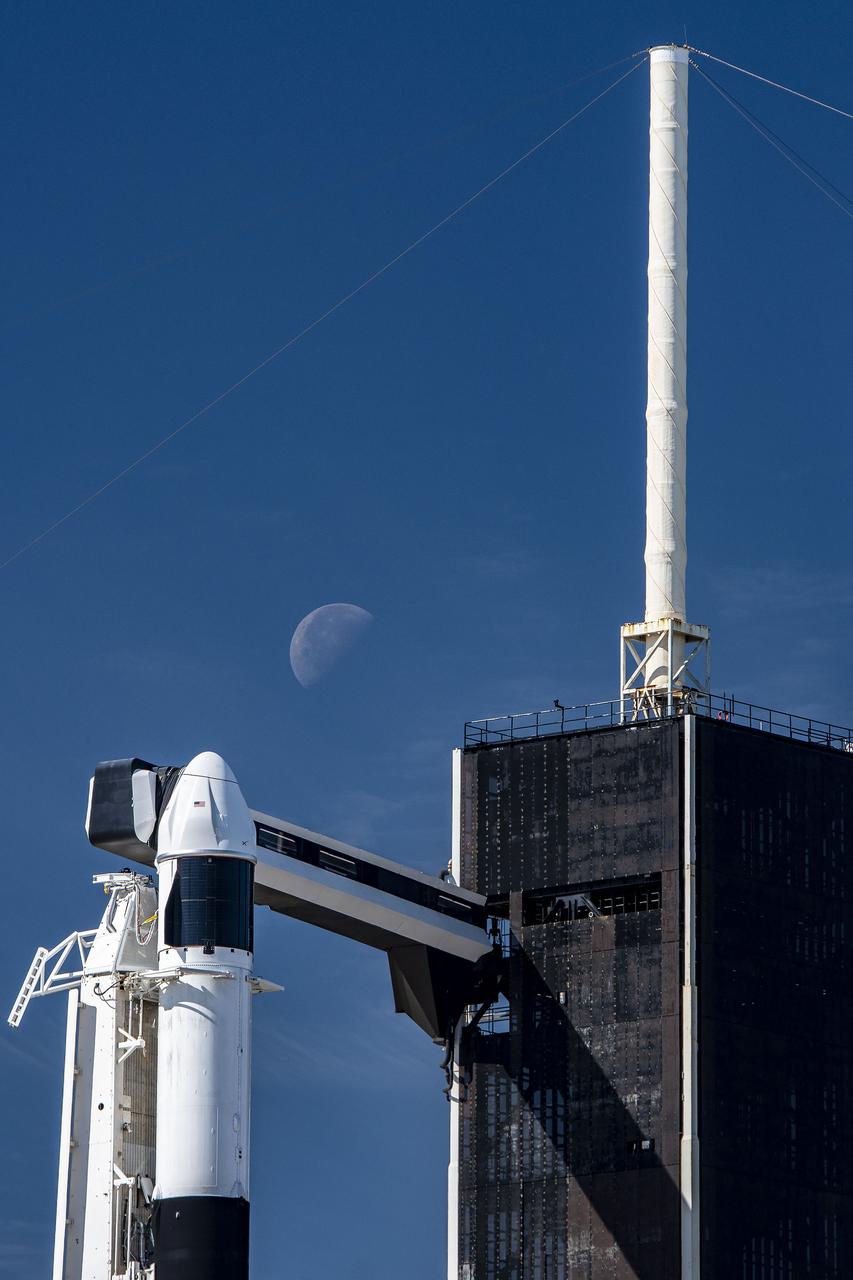
Seen here is a up-close view of the SpaceX Dragon spacecraft atop the company’s Falcon 9 rocket in the vertical position at NASA’s Kennedy Space Center in Florida on March 14, 2023, in preparation for the 27th commercial resupply services launch to the International Space Station. The mission will deliver new science investigations, supplies, and equipment to the crew aboard the space station, including the final two experiments comprising the National Institutes for Health and International Space Station National Laboratory’s Tissue Chips in Space initiative, Cardinal Heart 2.0 and Engineered Heart Tissues-2. Liftoff is scheduled for 8:30 p.m. EDT on Tuesday, March 14, from Kennedy’s Launch Complex 39A.
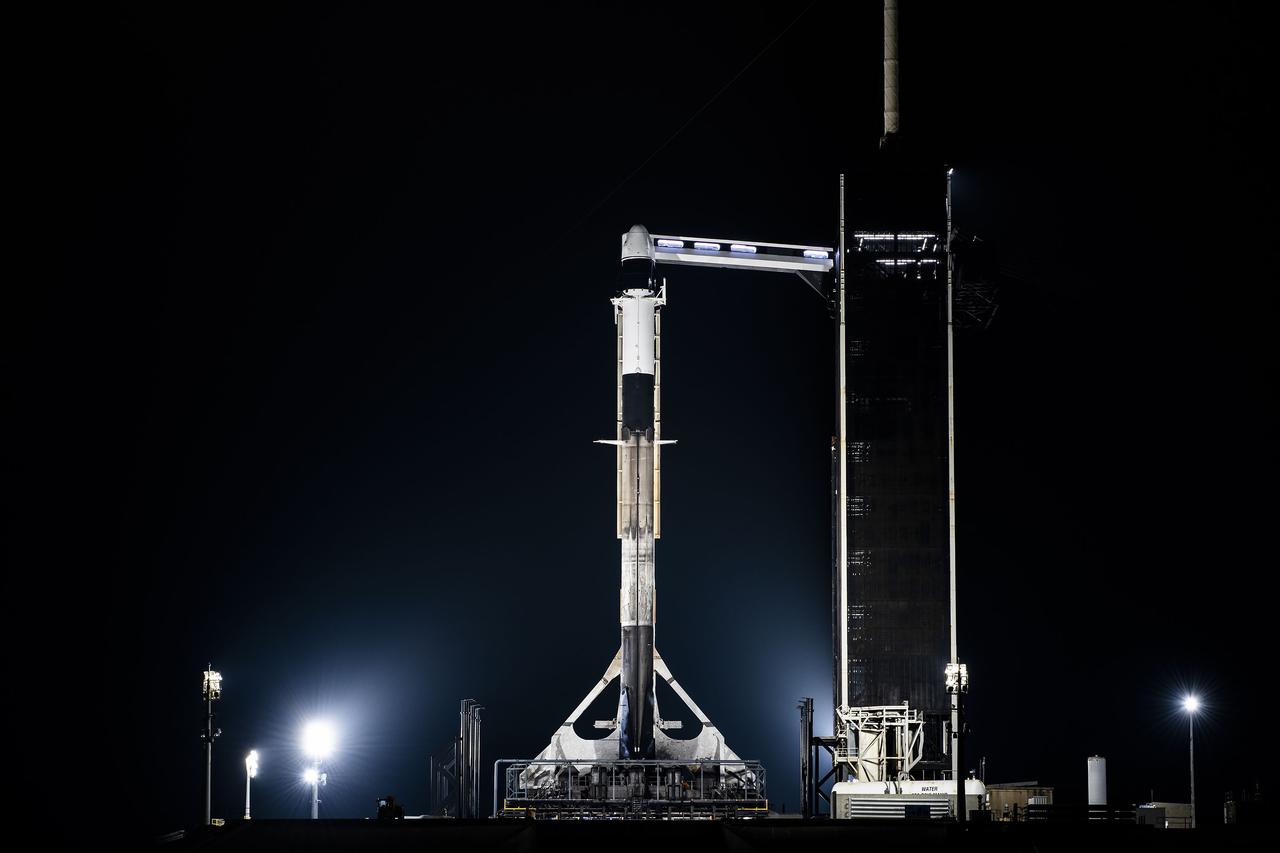
A SpaceX Falcon 9 rocket, with the company’s Dragon spacecraft atop, is raised to a vertical position at NASA Kennedy Space Center’s Launch Complex 39A on March 13, 2023, in preparation for the 27th commercial resupply services launch to the International Space Station. The mission will deliver new science investigations, supplies, and equipment to the crew aboard the space station, including the final two experiments comprising the National Institutes for Health and International Space Station National Laboratory’s Tissue Chips in Space initiative, Cardinal Heart 2.0 and Engineered Heart Tissues-2. Liftoff is scheduled for 8:30 p.m. EDT on Tuesday, March 14, from Kennedy’s Launch Complex 39A.
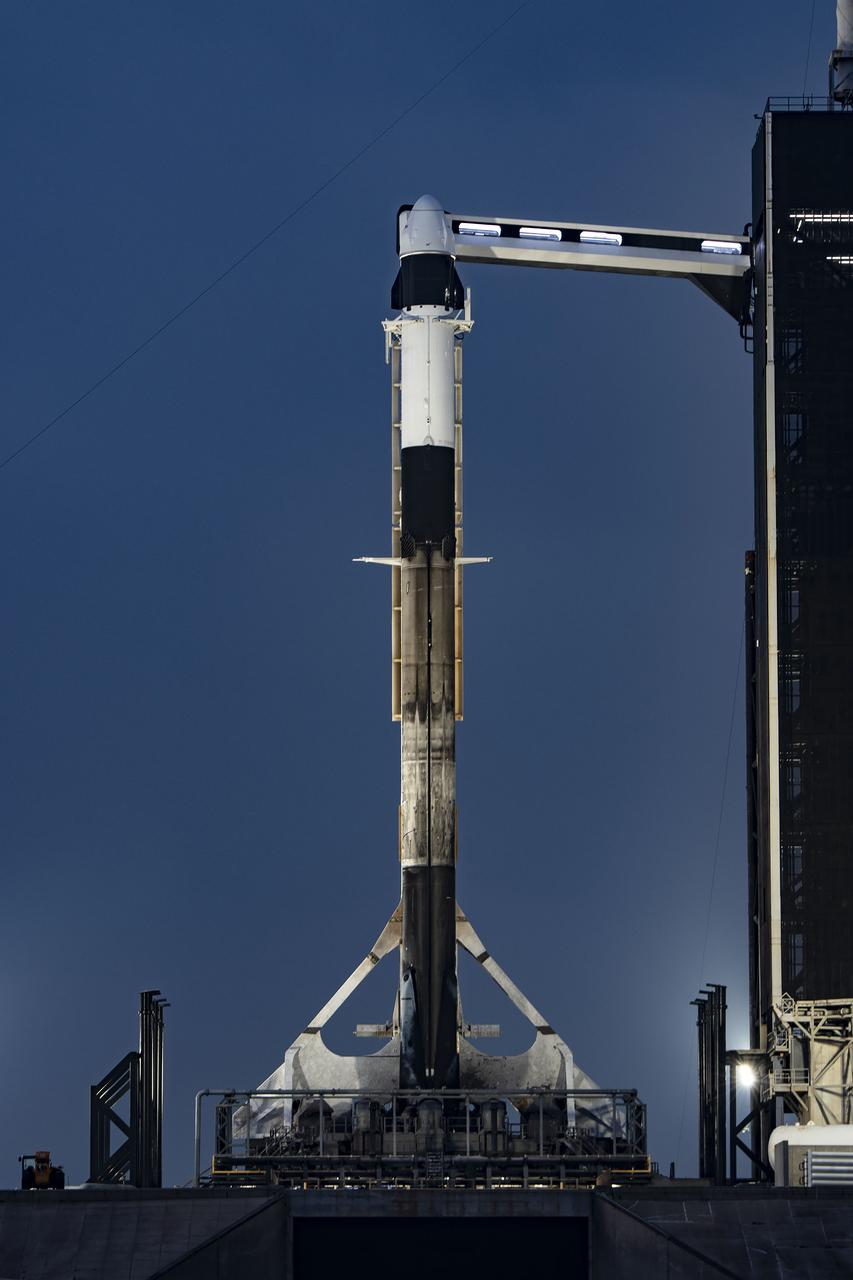
A SpaceX Falcon 9 rocket, with the company’s Dragon spacecraft atop, is secured in the vertical position at NASA Kennedy Space Center’s Launch Complex 39A on March 13, 2023, in preparation for the 27th commercial resupply services launch to the International Space Station. The mission will deliver new science investigations, supplies, and equipment to the crew aboard the space station, including the final two experiments comprising the National Institutes for Health and International Space Station National Laboratory’s Tissue Chips in Space initiative, Cardinal Heart 2.0 and Engineered Heart Tissues-2. Liftoff is scheduled for 8:30 p.m. EDT on Tuesday, March 14, from Kennedy’s Launch Complex 39A.
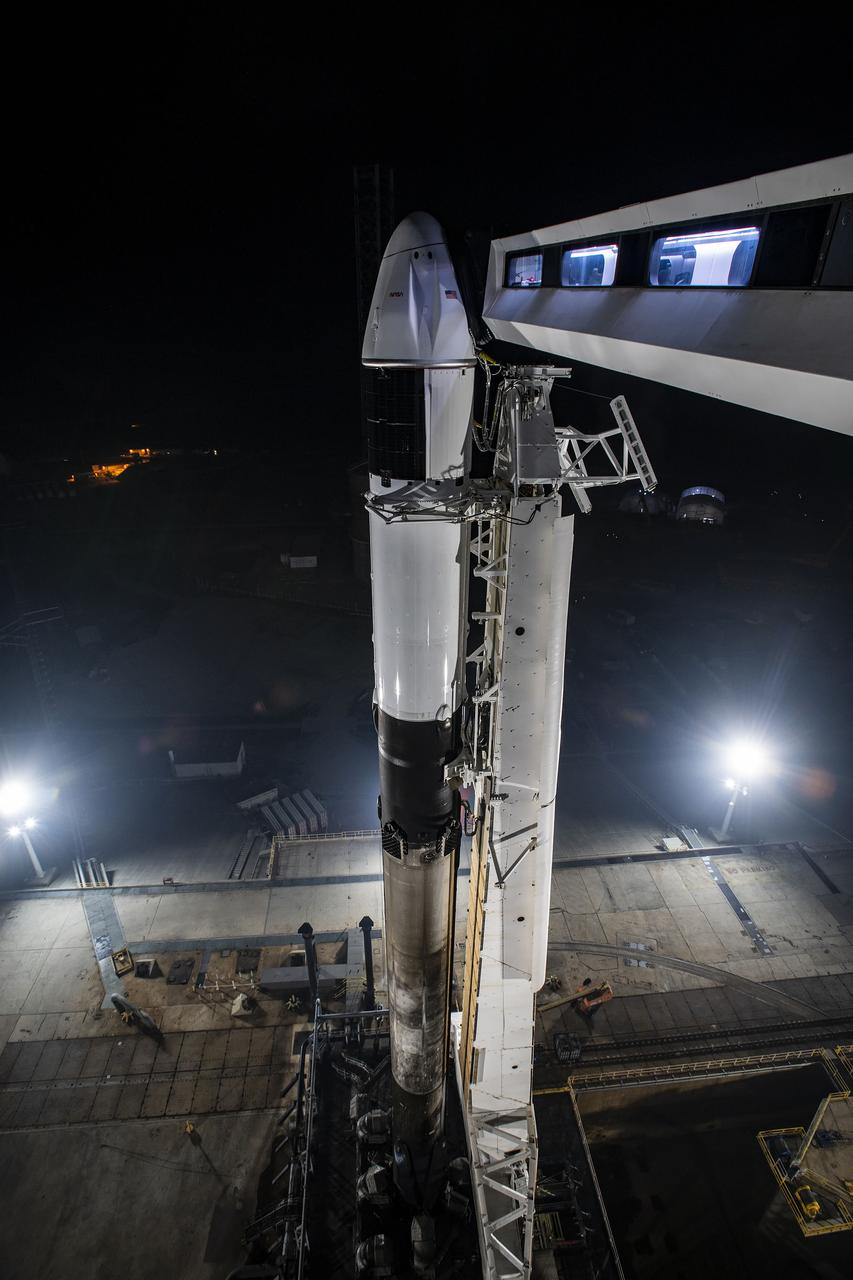
A SpaceX Falcon 9 rocket, with the company’s Dragon spacecraft atop, is secured in the vertical position at NASA Kennedy Space Center’s Launch Complex 39A on March 13, 2023, in preparation for the 27th commercial resupply services launch to the International Space Station. The mission will deliver new science investigations, supplies, and equipment to the crew aboard the space station, including the final two experiments comprising the National Institutes for Health and International Space Station National Laboratory’s Tissue Chips in Space initiative, Cardinal Heart 2.0 and Engineered Heart Tissues-2. Liftoff is scheduled for 8:30 p.m. EDT on Tuesday, March 14, from Kennedy’s Launch Complex 39A
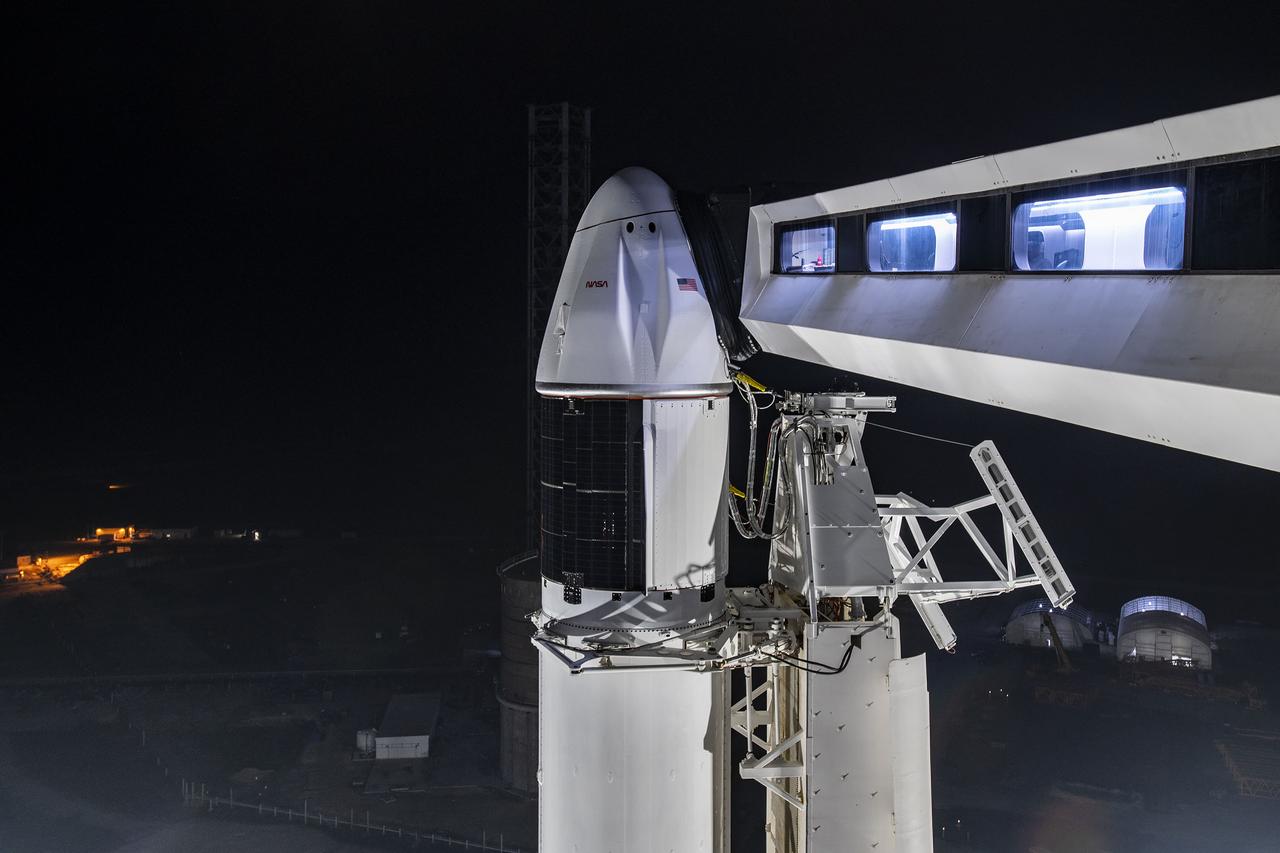
Seen here is an up-close view of the SpaceX Dragon spacecraft atop the company’s Falcon 9 rocket after being raised to a vertical position at NASA’s Kennedy Space Center in Florida on March 13, 2023, in preparation for the 27th commercial resupply services launch to the International Space Station. The mission will deliver new science investigations, supplies, and equipment to the crew aboard the space station, including the final two experiments comprising the National Institutes for Health and International Space Station National Laboratory’s Tissue Chips in Space initiative, Cardinal Heart 2.0 and Engineered Heart Tissues-2. Liftoff is scheduled for 8:30 p.m. EDT on Tuesday, March 14, from Kennedy’s Launch Complex 39A.
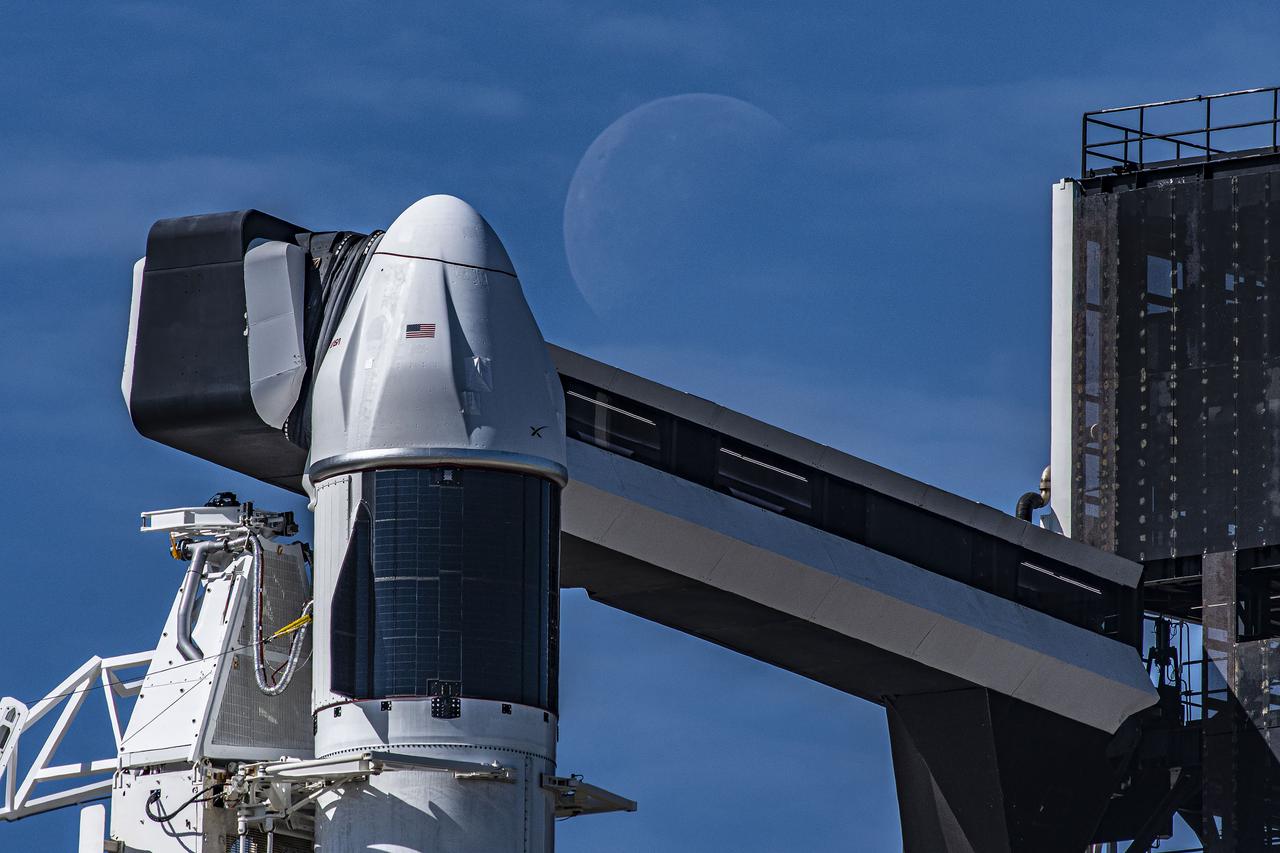
Seen here is a up-close view of the SpaceX Dragon spacecraft atop the company’s Falcon 9 rocket in the vertical position at NASA’s Kennedy Space Center in Florida on March 14, 2023, in preparation for the 27th commercial resupply services launch to the International Space Station. The mission will deliver new science investigations, supplies, and equipment to the crew aboard the space station, including the final two experiments comprising the National Institutes for Health and International Space Station National Laboratory’s Tissue Chips in Space initiative, Cardinal Heart 2.0 and Engineered Heart Tissues-2. Liftoff is scheduled for 8:30 p.m. EDT on Tuesday, March 14, from Kennedy’s Launch Complex 39A.

The SpaceX Falcon 9 rocket carrying the Dragon spacecraft lifts off from Launch Complex 39A at NASA’s Kennedy Space Center in Florida on March 14, 2023, on the company’s 27th commercial resupply services mission for the agency to the International Space Station. Liftoff was at 8:30 p.m. EDT. Dragon will deliver more than 6,000 pounds of cargo, including a variety of NASA investigations, supplies, and equipment to the crew aboard the space station, including the final two experiments comprising the National Institutes for Health and International Space Station National Laboratory’s Tissue Chips in Space initiative, Cardinal Heart 2.0 and Engineered Heart Tissues-2. The spacecraft is expected to spend about a month attached to the orbiting outpost before it returns to Earth with research and return cargo, splashing down off the coast of Florida.
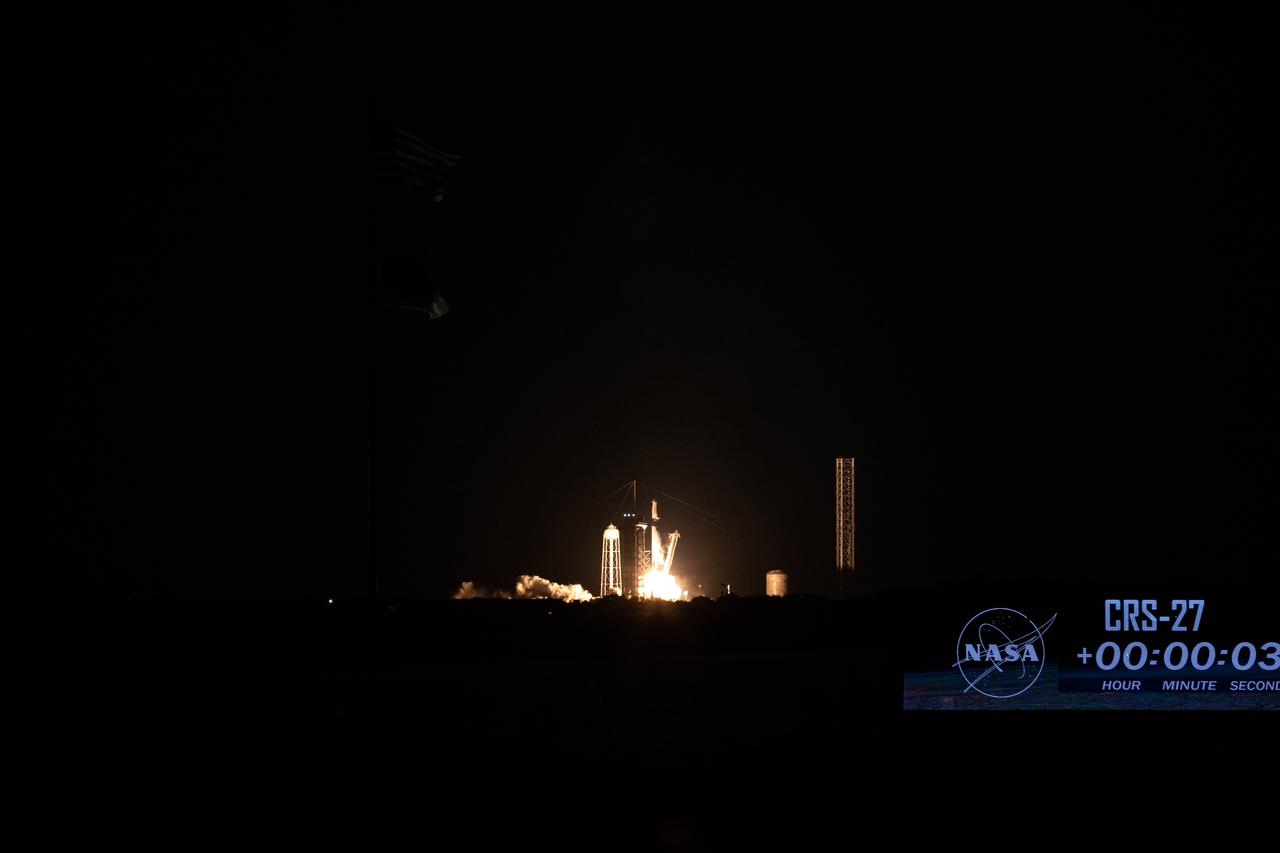
The SpaceX Falcon 9 rocket carrying the Dragon spacecraft lifts off from Launch Complex 39A at NASA’s Kennedy Space Center in Florida on March 14, 2023, on the company’s 27th commercial resupply services mission for the agency to the International Space Station. Liftoff was at 8:30 p.m. EDT. Dragon will deliver more than 6,000 pounds of cargo, including a variety of NASA investigations, supplies, and equipment to the crew aboard the space station, including the final two experiments comprising the National Institutes for Health and International Space Station National Laboratory’s Tissue Chips in Space initiative, Cardinal Heart 2.0 and Engineered Heart Tissues-2. The spacecraft is expected to spend about a month attached to the orbiting outpost before it returns to Earth with research and return cargo, splashing down off the coast of Florida.

Creating a golden streak in the night sky, a SpaceX Falcon 9 rocket carrying the Dragon spacecraft soars upward after liftoff from Launch Complex 39A at NASA’s Kennedy Space Center in Florida on March 14, 2023, on the company’s 27th Commercial Resupply Services mission for the agency to the International Space Station. Liftoff was at 8:30 p.m. EDT. The Dragon spacecraft will deliver more than 6,000 pounds of science and research, supplies, and equipment to the crew aboard the space station, including the final two experiments comprising the National Institutes for Health and International Space Station National Laboratory’s Tissue Chips in Space initiative, Cardinal Heart 2.0 and Engineered Heart Tissues-2. The spacecraft is expected to spend about a month attached to the orbiting outpost before it returns to Earth with research and return cargo, splashing down off the coast of Florida.

The SpaceX Falcon 9 rocket carrying the Dragon spacecraft lifts off from Launch Complex 39A at NASA’s Kennedy Space Center in Florida on March 14, 2023, on the company’s 27th commercial resupply services mission for the agency to the International Space Station. Liftoff was at 8:30 p.m. EDT. Dragon will deliver more than 6,000 pounds of cargo, including a variety of NASA investigations, supplies, and equipment to the crew aboard the space station, including the final two experiments comprising the National Institutes for Health and International Space Station National Laboratory’s Tissue Chips in Space initiative, Cardinal Heart 2.0 and Engineered Heart Tissues-2. The spacecraft is expected to spend about a month attached to the orbiting outpost before it returns to Earth with research and return cargo, splashing down off the coast of Florida.

The SpaceX Falcon 9 rocket carrying the Dragon spacecraft lifts off from Launch Complex 39A at NASA’s Kennedy Space Center in Florida on March 14, 2023, on the company’s 27th commercial resupply services mission for the agency to the International Space Station. Liftoff was at 8:30 p.m. EDT. Dragon will deliver more than 6,000 pounds of cargo, including a variety of NASA investigations, supplies, and equipment to the crew aboard the space station, including the final two experiments comprising the National Institutes for Health and International Space Station National Laboratory’s Tissue Chips in Space initiative, Cardinal Heart 2.0 and Engineered Heart Tissues-2. The spacecraft is expected to spend about a month attached to the orbiting outpost before it returns to Earth with research and return cargo, splashing down off the coast of Florida.

A SpaceX Falcon 9 rocket soars upward after its liftoff from Launch Complex 39A at NASA’s Kennedy Space Center in Florida on March 14, 2023, on the company’s 27th Commercial Resupply Services mission for the agency to the International Space Station. Liftoff was at 8:30 p.m. EDT. The Dragon spacecraft will deliver more than 6,000 pounds of science and research, supplies, and equipment to the crew aboard the space station, including the final two experiments comprising the National Institutes for Health and International Space Station National Laboratory’s Tissue Chips in Space initiative, Cardinal Heart 2.0 and Engineered Heart Tissues-2. The spacecraft is expected to spend about a month attached to the orbiting outpost before it returns to Earth with research and return cargo, splashing down off the coast of Florida.

The SpaceX Falcon 9 rocket carrying the Dragon spacecraft lifts off from Launch Complex 39A at NASA’s Kennedy Space Center in Florida on March 14, 2023, on the company’s 27th commercial resupply services mission for the agency to the International Space Station. Liftoff was at 8:30 p.m. EDT. Dragon will deliver more than 6,000 pounds of cargo, including a variety of NASA investigations, supplies, and equipment to the crew aboard the space station, including the final two experiments comprising the National Institutes for Health and International Space Station National Laboratory’s Tissue Chips in Space initiative, Cardinal Heart 2.0 and Engineered Heart Tissues-2. The spacecraft is expected to spend about a month attached to the orbiting outpost before it returns to Earth with research and return cargo, splashing down off the coast of Florida.
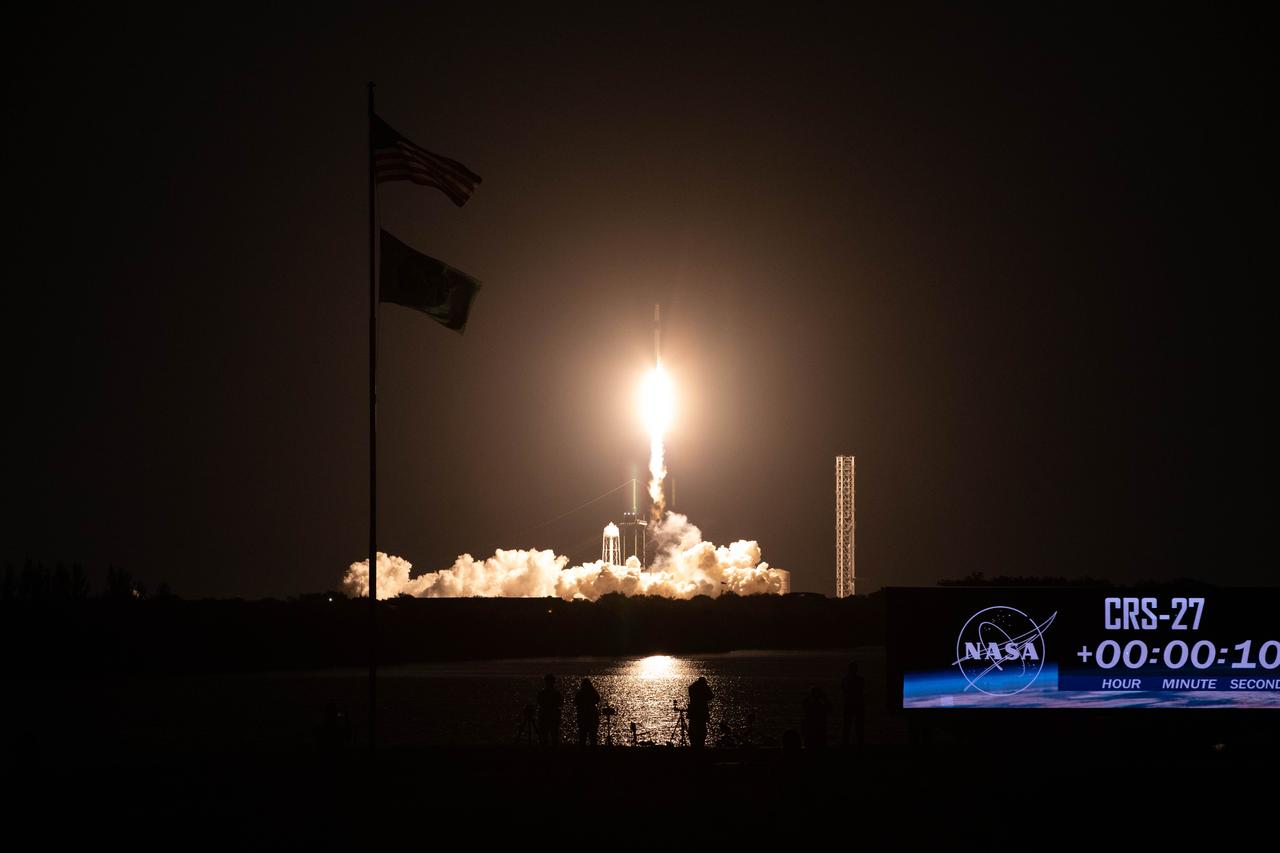
The SpaceX Falcon 9 rocket carrying the Dragon spacecraft lifts off from Launch Complex 39A at NASA’s Kennedy Space Center in Florida on March 14, 2023, on the company’s 27th commercial resupply services mission for the agency to the International Space Station. Liftoff was at 8:30 p.m. EDT. Dragon will deliver more than 6,000 pounds of cargo, including a variety of NASA investigations, supplies, and equipment to the crew aboard the space station, including the final two experiments comprising the National Institutes for Health and International Space Station National Laboratory’s Tissue Chips in Space initiative, Cardinal Heart 2.0 and Engineered Heart Tissues-2. The spacecraft is expected to spend about a month attached to the orbiting outpost before it returns to Earth with research and return cargo, splashing down off the coast of Florida.

The SpaceX Falcon 9 rocket carrying the Dragon spacecraft lifts off from Launch Complex 39A at NASA’s Kennedy Space Center in Florida on March 14, 2023, on the company’s 27th commercial resupply services mission for the agency to the International Space Station. Liftoff was at 8:30 p.m. EDT. Dragon will deliver more than 6,000 pounds of cargo, including a variety of NASA investigations, supplies, and equipment to the crew aboard the space station, including the final two experiments comprising the National Institutes for Health and International Space Station National Laboratory’s Tissue Chips in Space initiative, Cardinal Heart 2.0 and Engineered Heart Tissues-2. The spacecraft is expected to spend about a month attached to the orbiting outpost before it returns to Earth with research and return cargo, splashing down off the coast of Florida.
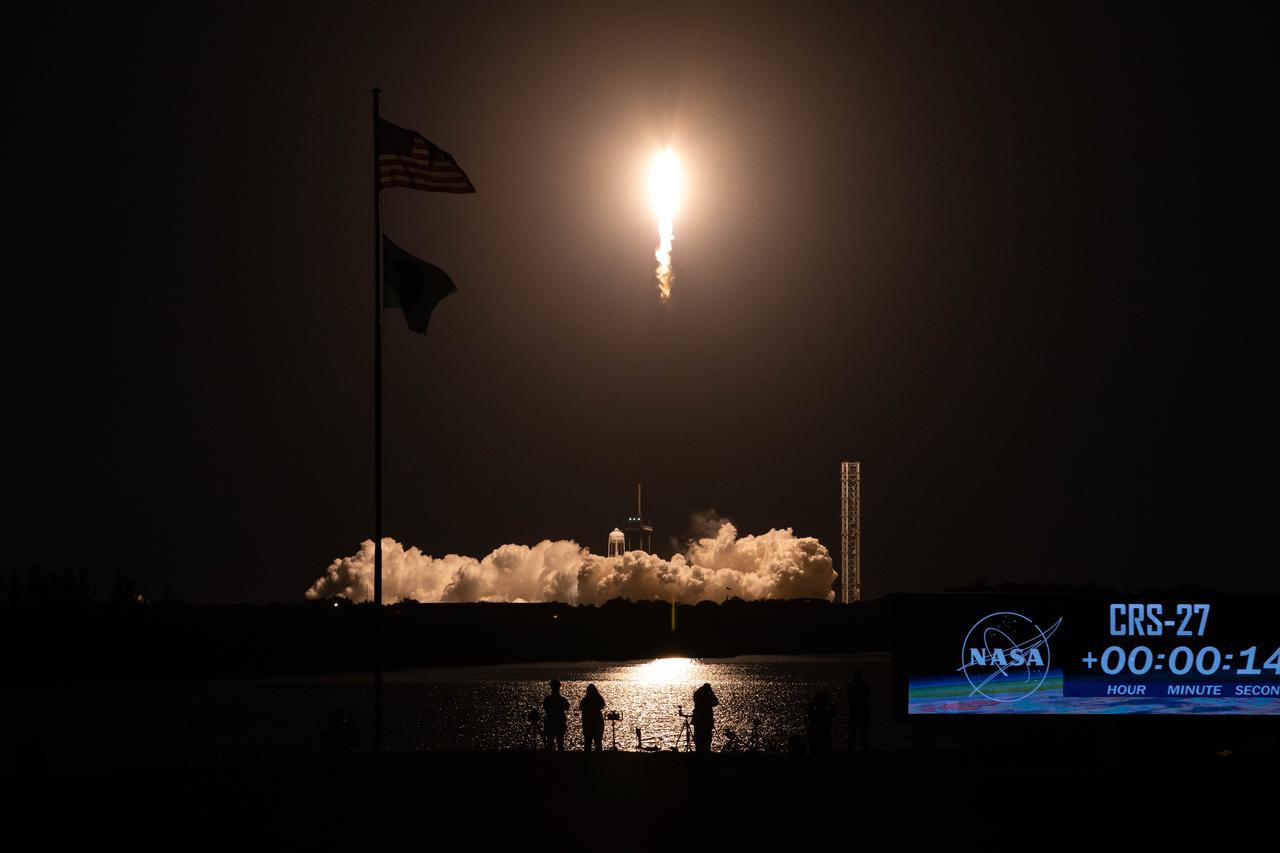
A SpaceX Falcon 9 rocket soars upward after its liftoff from Launch Complex 39A at NASA’s Kennedy Space Center in Florida on March 14, 2023, on the company’s 27th Commercial Resupply Services mission for the agency to the International Space Station. Liftoff was at 8:30 p.m. EDT. The Dragon spacecraft will deliver more than 6,000 pounds of science and research, supplies, and equipment to the crew aboard the space station, including the final two experiments comprising the National Institutes for Health and International Space Station National Laboratory’s Tissue Chips in Space initiative, Cardinal Heart 2.0 and Engineered Heart Tissues-2. The spacecraft is expected to spend about a month attached to the orbiting outpost before it returns to Earth with research and return cargo, splashing down off the coast of Florida.
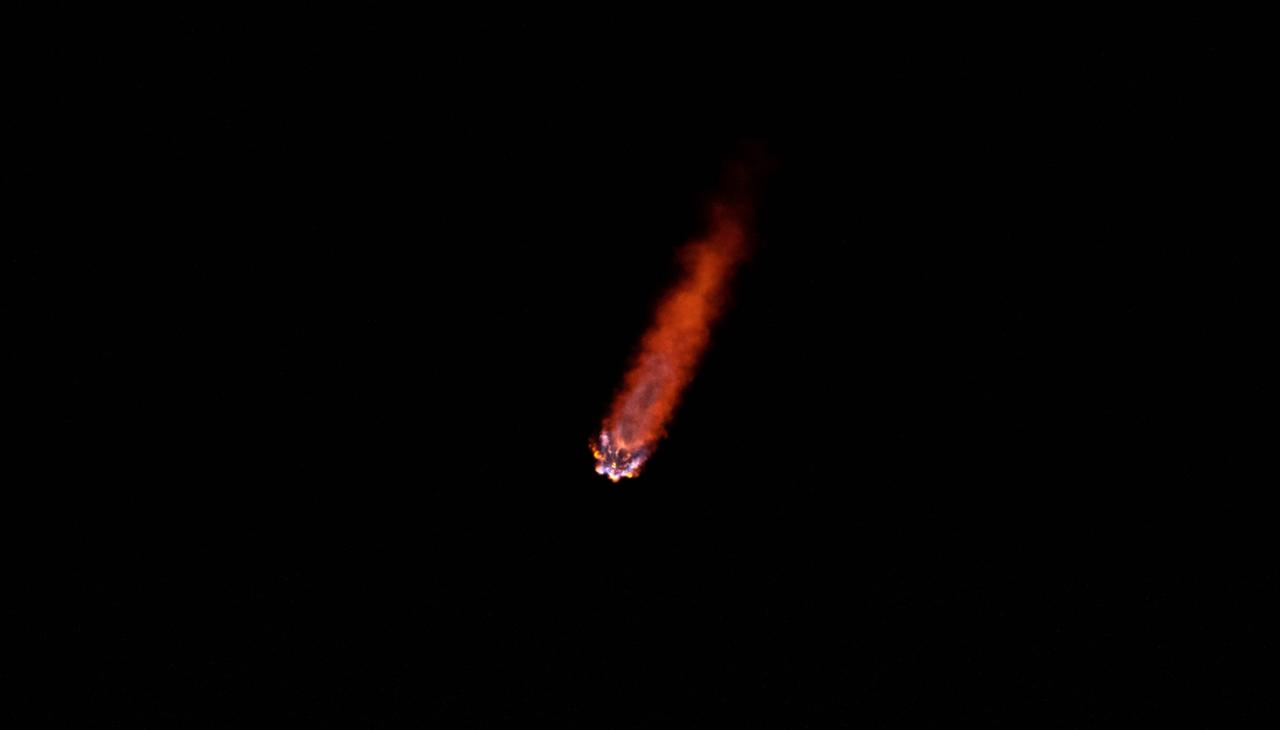
A SpaceX Falcon 9 rocket soars upward after its liftoff from Launch Complex 39A at NASA’s Kennedy Space Center in Florida on March 14, 2023, on the company’s 27th Commercial Resupply Services mission for the agency to the International Space Station. Liftoff was at 8:30 p.m. EDT. The Dragon spacecraft will deliver more than 6,000 pounds of science and research, supplies, and equipment to the crew aboard the space station, including the final two experiments comprising the National Institutes for Health and International Space Station National Laboratory’s Tissue Chips in Space initiative, Cardinal Heart 2.0 and Engineered Heart Tissues-2. The spacecraft is expected to spend about a month attached to the orbiting outpost before it returns to Earth with research and return cargo, splashing down off the coast of Florida.
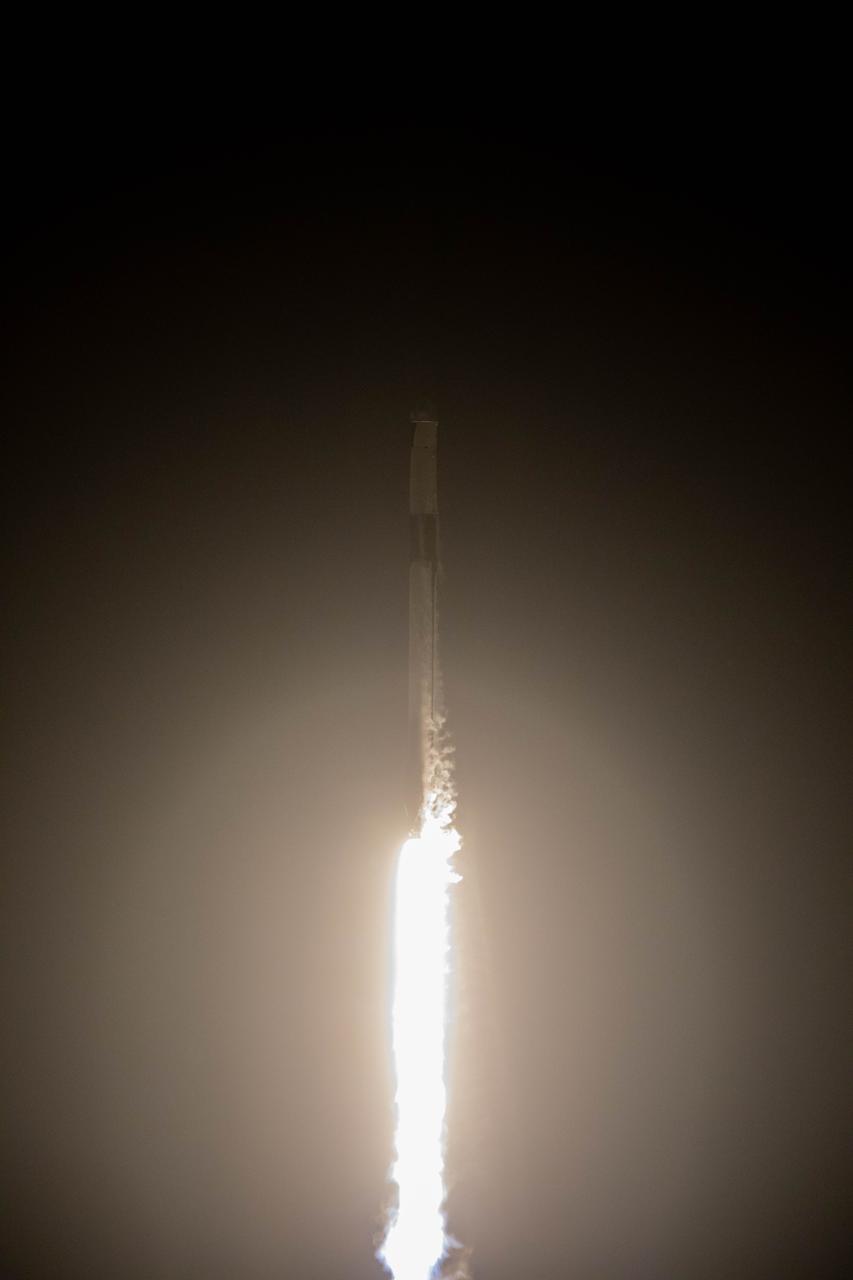
A SpaceX Falcon 9 rocket soars upward after its liftoff from Launch Complex 39A at NASA’s Kennedy Space Center in Florida on March 14, 2023, on the company’s 27th Commercial Resupply Services mission for the agency to the International Space Station. Liftoff was at 8:30 p.m. EDT. The Dragon spacecraft will deliver more than 6,000 pounds of science and research, supplies, and equipment to the crew aboard the space station, including the final two experiments comprising the National Institutes for Health and International Space Station National Laboratory’s Tissue Chips in Space initiative, Cardinal Heart 2.0 and Engineered Heart Tissues-2. The spacecraft is expected to spend about a month attached to the orbiting outpost before it returns to Earth with research and return cargo, splashing down off the coast of Florida.
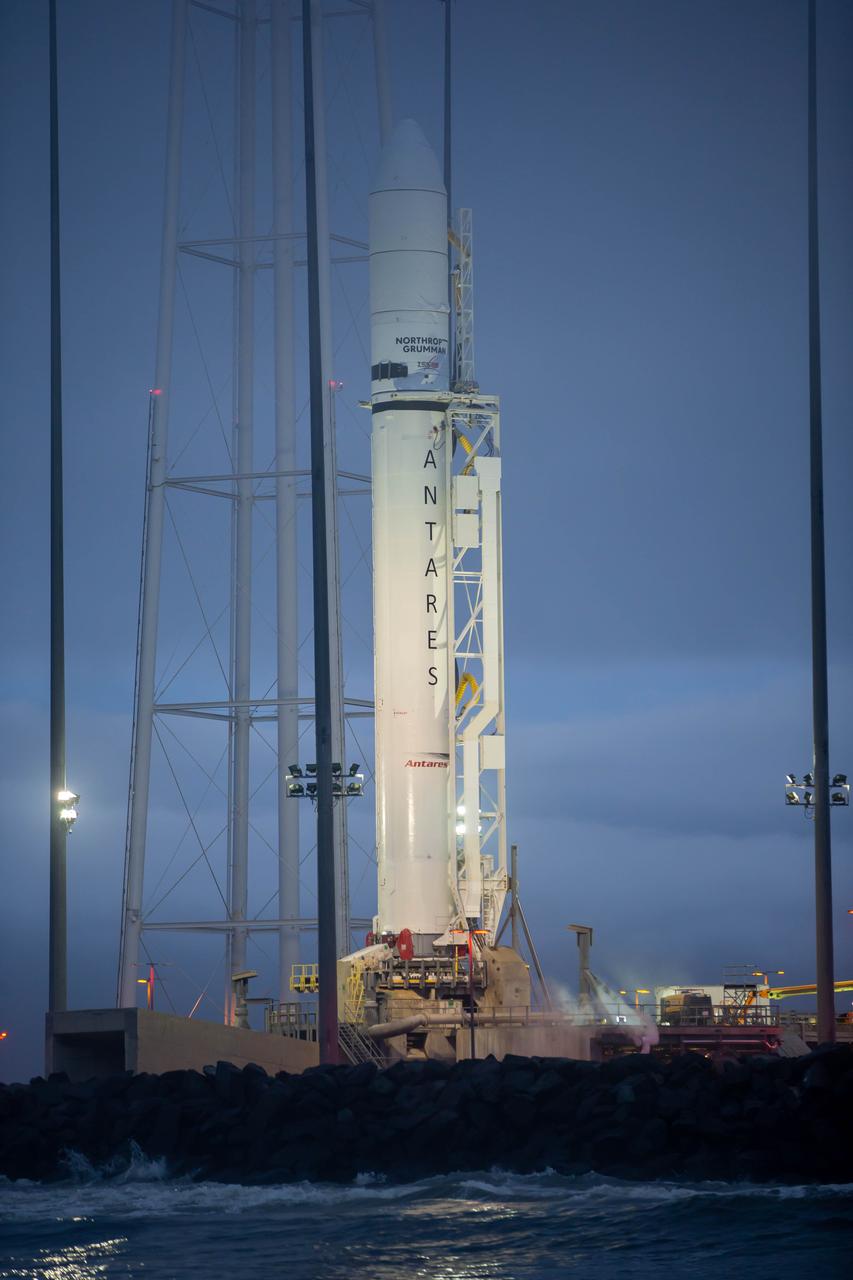
A Northrop Grumman Antares rocket carrying a Cygnus resupply spacecraft is raised into the vertical position on the Mid-Atlantic Regional Spaceport’s Pad-0A, Saturday, September 26, 2020, at NASA's Wallops Flight Facility in Virginia. Northrop Grumman’s 14th contracted cargo resupply mission with NASA to the International Space Station will deliver about 8,000 pounds of science and research, crew supplies and vehicle hardware to the orbital laboratory and its crew. The CRS-14 Cygnus spacecraft is named after the first female astronaut of Indian descent, Kalpana Chawla, and is scheduled to launch at 10:27 p.m., Tuesday, September 29, 2020 EDT. Photo Credit: (NASA/Patrick Black)
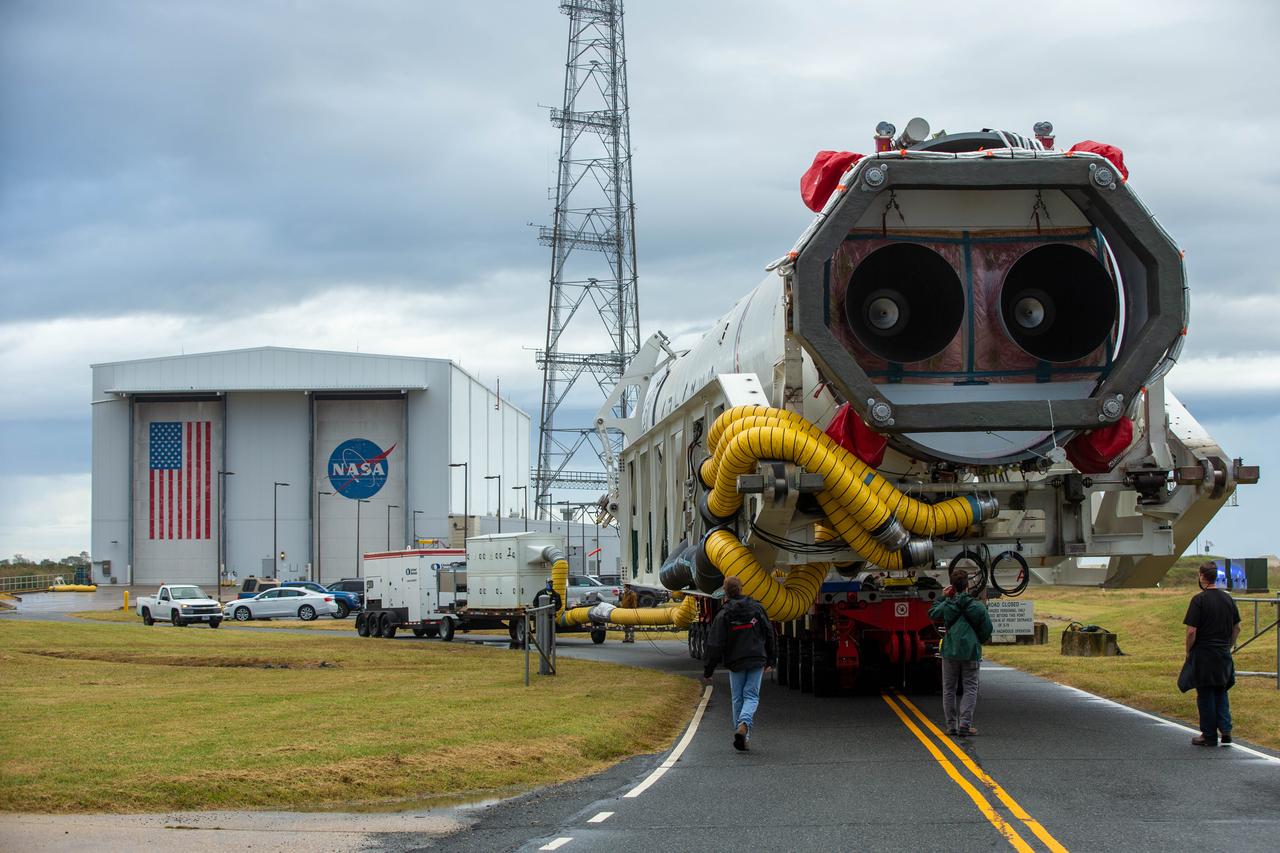
A Northrop Grumman Antares rocket carrying a Cygnus resupply spacecraft is seen as it is rolled out of the Horizontal Integration Facility to the Mid-Atlantic Regional Spaceport’s Pad-0A, Saturday, September 26, 2020, at NASA's Wallops Flight Facility in Virginia. Northrop Grumman’s 14th contracted cargo resupply mission with NASA to the International Space Station will deliver about 8,000 pounds of science and research, crew supplies and vehicle hardware to the orbital laboratory and its crew. The CRS-14 Cygnus spacecraft is named after the first female astronaut of Indian descent, Kaplana Chawla, and is scheduled to launch at 10:27 p.m., Tuesday, September 29, 2020 EDT. Photo Credit: (NASA/Patrick Black)
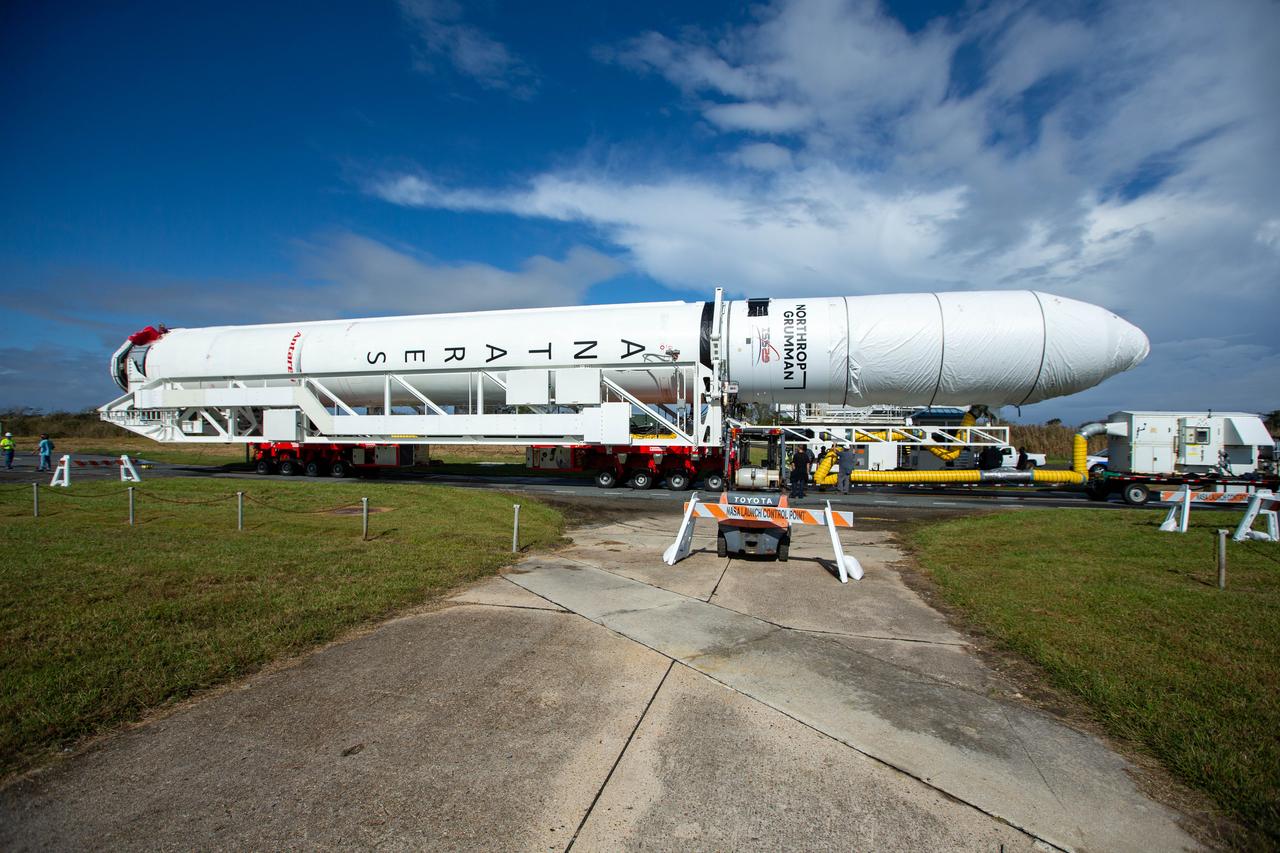
A Northrop Grumman Antares rocket carrying a Cygnus resupply spacecraft is seen as it is rolled out of the Horizontal Integration Facility to the Mid-Atlantic Regional Spaceport’s Pad-0A, Saturday, September 26, 2020, at NASA's Wallops Flight Facility in Virginia. Northrop Grumman’s 14th contracted cargo resupply mission with NASA to the International Space Station will deliver about 8,000 pounds of science and research, crew supplies and vehicle hardware to the orbital laboratory and its crew. The CRS-14 Cygnus spacecraft is named after the first female astronaut of Indian descent, Kaplana Chawla, and is scheduled to launch at 10:27 p.m., Tuesday, September 29, 2020 EDT. Photo Credit: (NASA/Patrick Black)
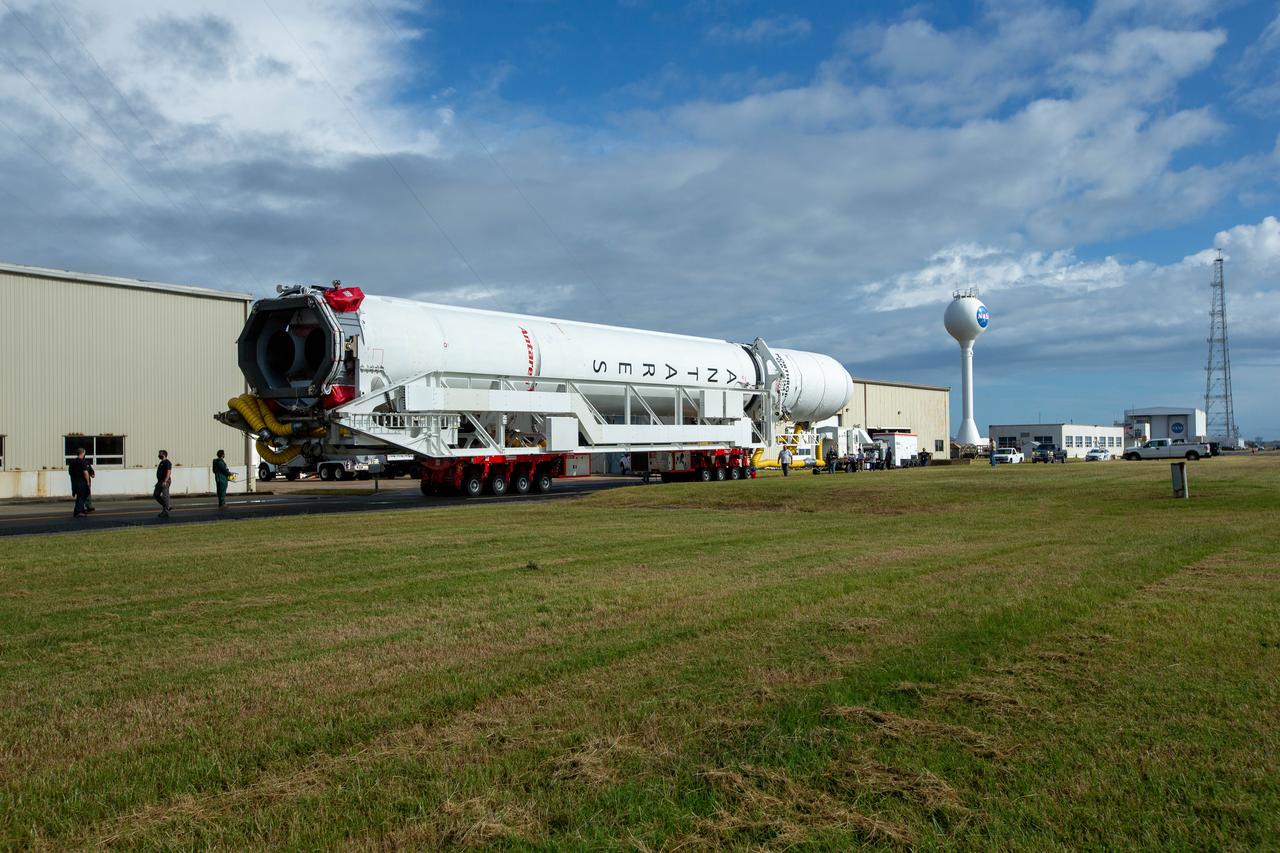
A Northrop Grumman Antares rocket carrying a Cygnus resupply spacecraft is seen as it is rolled out of the Horizontal Integration Facility to the Mid-Atlantic Regional Spaceport’s Pad-0A, Saturday, September 26, 2020, at NASA's Wallops Flight Facility in Virginia. Northrop Grumman’s 14th contracted cargo resupply mission with NASA to the International Space Station will deliver about 8,000 pounds of science and research, crew supplies and vehicle hardware to the orbital laboratory and its crew. The CRS-14 Cygnus spacecraft is named after the first female astronaut of Indian descent, Kaplana Chawla, and is scheduled to launch at 10:27 p.m., Tuesday, September 29, 2020 EDT. Photo Credit: (NASA/Patrick Black)

A Northrop Grumman Antares rocket carrying a Cygnus resupply spacecraft is seen as it is rolled out of the Horizontal Integration Facility to the Mid-Atlantic Regional Spaceport’s Pad-0A, Saturday, September 26, 2020, at NASA's Wallops Flight Facility in Virginia. Northrop Grumman’s 14th contracted cargo resupply mission with NASA to the International Space Station will deliver about 8,000 pounds of science and research, crew supplies and vehicle hardware to the orbital laboratory and its crew. The CRS-14 Cygnus spacecraft is named after the first female astronaut of Indian descent, Kaplana Chawla, and is scheduled to launch at 10:27 p.m., Tuesday, September 29, 2020 EDT. Photo Credit: (NASA/Patrick Black)
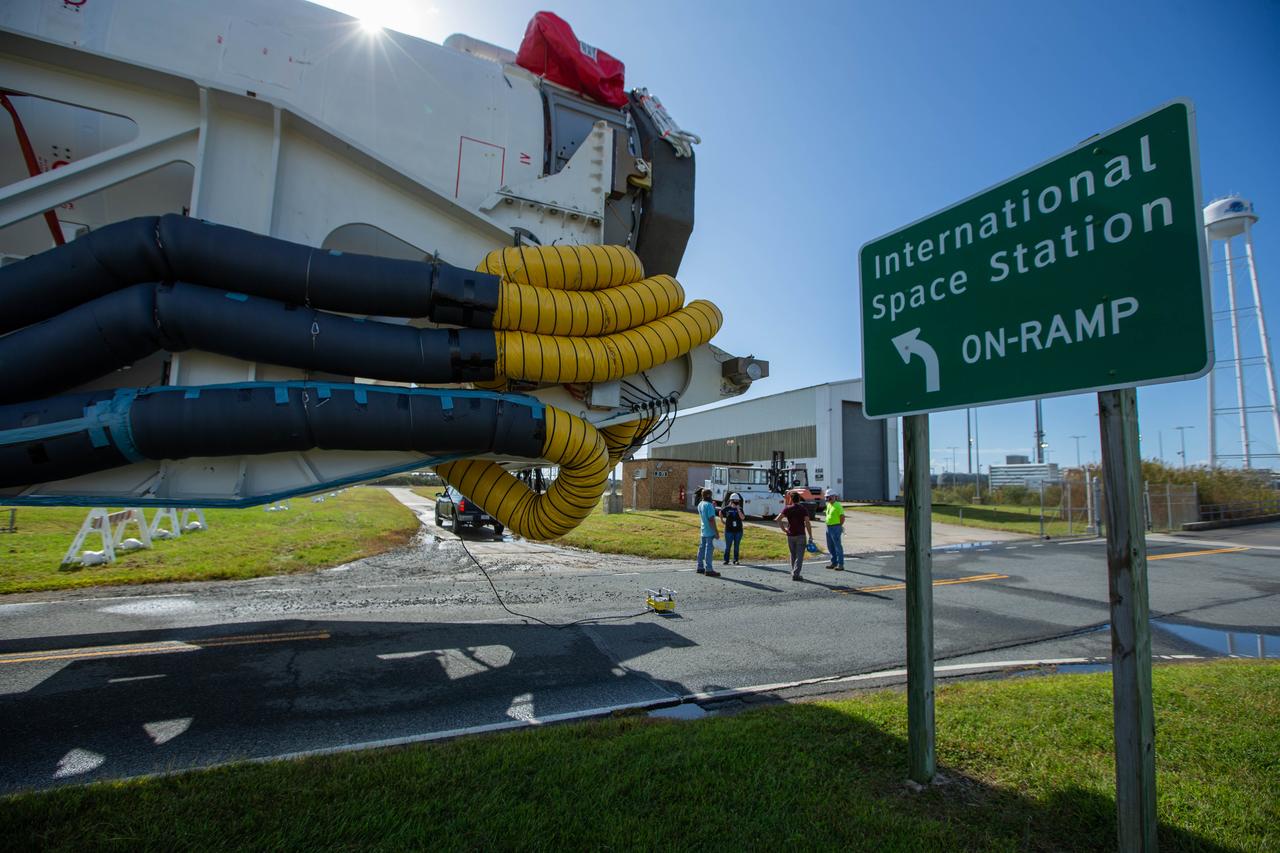
A Northrop Grumman Antares rocket carrying a Cygnus resupply spacecraft is seen as it is rolled out of the Horizontal Integration Facility to the Mid-Atlantic Regional Spaceport’s Pad-0A, Saturday, September 26, 2020, at NASA's Wallops Flight Facility in Virginia. Northrop Grumman’s 14th contracted cargo resupply mission with NASA to the International Space Station will deliver about 8,000 pounds of science and research, crew supplies and vehicle hardware to the orbital laboratory and its crew. The CRS-14 Cygnus spacecraft is named after the first female astronaut of Indian descent, Kaplana Chawla, and is scheduled to launch at 10:27 p.m., Tuesday, September 29, 2020 EDT. Photo Credit: (NASA/Patrick Black)

A Northrop Grumman Antares rocket carrying a Cygnus resupply spacecraft is seen as it is rolled out of the Horizontal Integration Facility to the Mid-Atlantic Regional Spaceport’s Pad-0A, Saturday, September 26, 2020, at NASA's Wallops Flight Facility in Virginia. Northrop Grumman’s 14th contracted cargo resupply mission with NASA to the International Space Station will deliver about 8,000 pounds of science and research, crew supplies and vehicle hardware to the orbital laboratory and its crew. The CRS-14 Cygnus spacecraft is named after the first female astronaut of Indian descent, Kaplana Chawla, and is scheduled to launch at 10:27 p.m., Tuesday, September 29, 2020 EDT. Photo Credit: (NASA/Patrick Black)
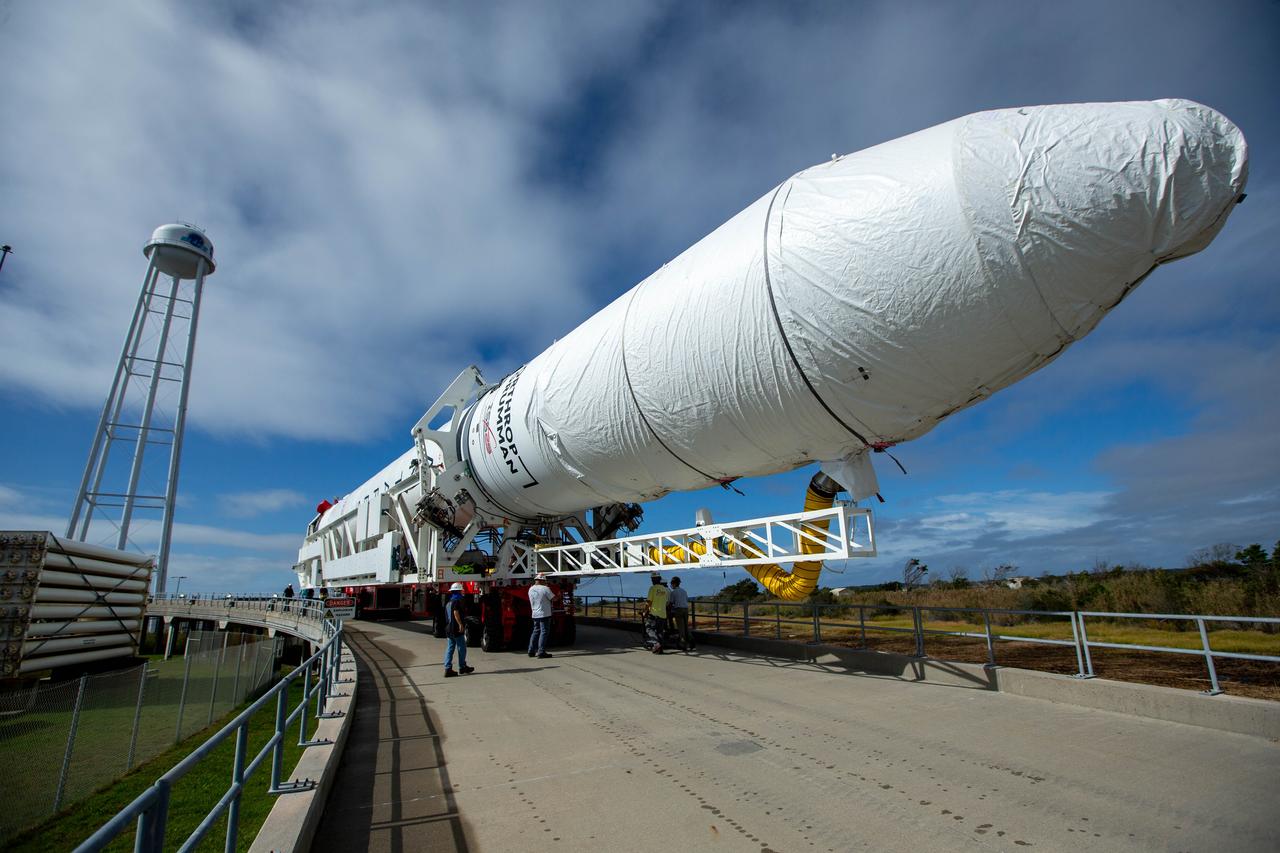
A Northrop Grumman Antares rocket carrying a Cygnus resupply spacecraft is seen as it is rolled out of the Horizontal Integration Facility to the Mid-Atlantic Regional Spaceport’s Pad-0A, Saturday, September 26, 2020, at NASA's Wallops Flight Facility in Virginia. Northrop Grumman’s 14th contracted cargo resupply mission with NASA to the International Space Station will deliver about 8,000 pounds of science and research, crew supplies and vehicle hardware to the orbital laboratory and its crew. The CRS-14 Cygnus spacecraft is named after the first female astronaut of Indian descent, Kalpana Chawla, and is scheduled to launch at 10:27 p.m., Tuesday, September 29, 2020 EDT. Photo Credit: (NASA/Patrick Black)
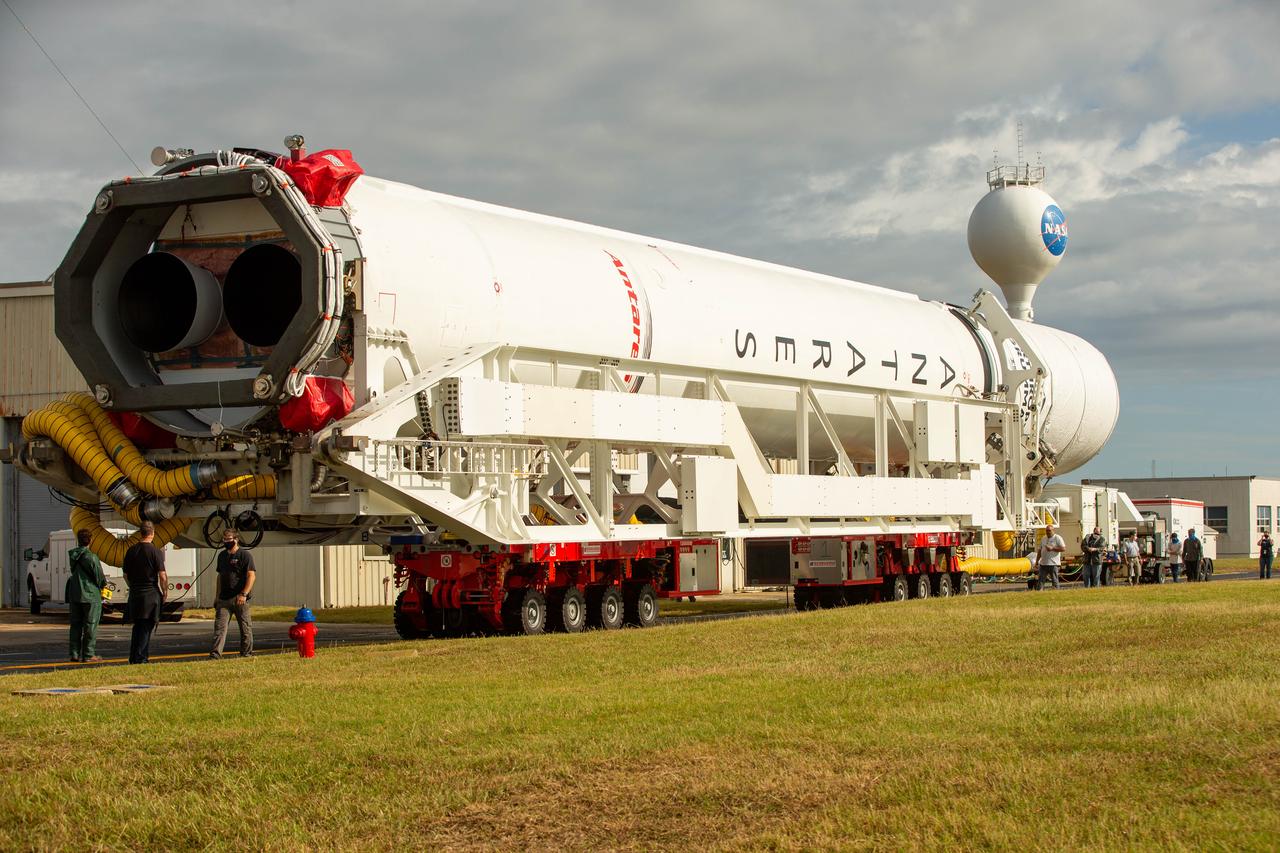
A Northrop Grumman Antares rocket carrying a Cygnus resupply spacecraft is seen as it is rolled out of the Horizontal Integration Facility to the Mid-Atlantic Regional Spaceport’s Pad-0A, Saturday, September 26, 2020, at NASA's Wallops Flight Facility in Virginia. Northrop Grumman’s 14th contracted cargo resupply mission with NASA to the International Space Station will deliver about 8,000 pounds of science and research, crew supplies and vehicle hardware to the orbital laboratory and its crew. The CRS-14 Cygnus spacecraft is named after the first female astronaut of Indian descent, Kaplana Chawla, and is scheduled to launch at 10:27 p.m., Tuesday, September 29, 2020 EDT. Photo Credit: (NASA/Patrick Black)
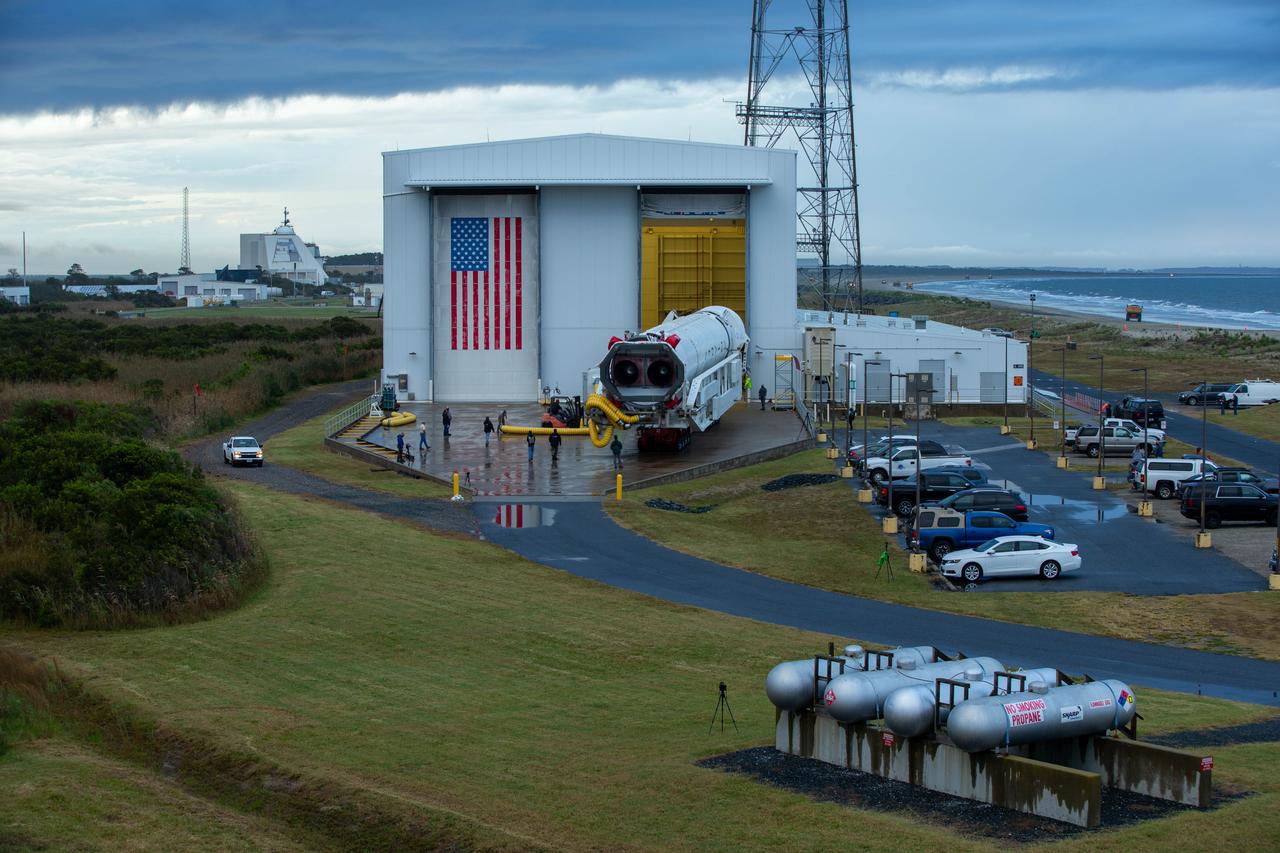
A Northrop Grumman Antares rocket carrying a Cygnus resupply spacecraft is seen as it is rolled out of the Horizontal Integration Facility to the Mid-Atlantic Regional Spaceport’s Pad-0A, Saturday, September 26, 2020, at NASA's Wallops Flight Facility in Virginia. Northrop Grumman’s 14th contracted cargo resupply mission with NASA to the International Space Station will deliver about 8,000 pounds of science and research, crew supplies and vehicle hardware to the orbital laboratory and its crew. The CRS-14 Cygnus spacecraft is named after the first female astronaut of Indian descent, Kalpana Chawla, and is scheduled to launch at 10:27 p.m., Tuesday, September 29, 2020 EDT. Photo Credit: (NASA/Patrick Black)
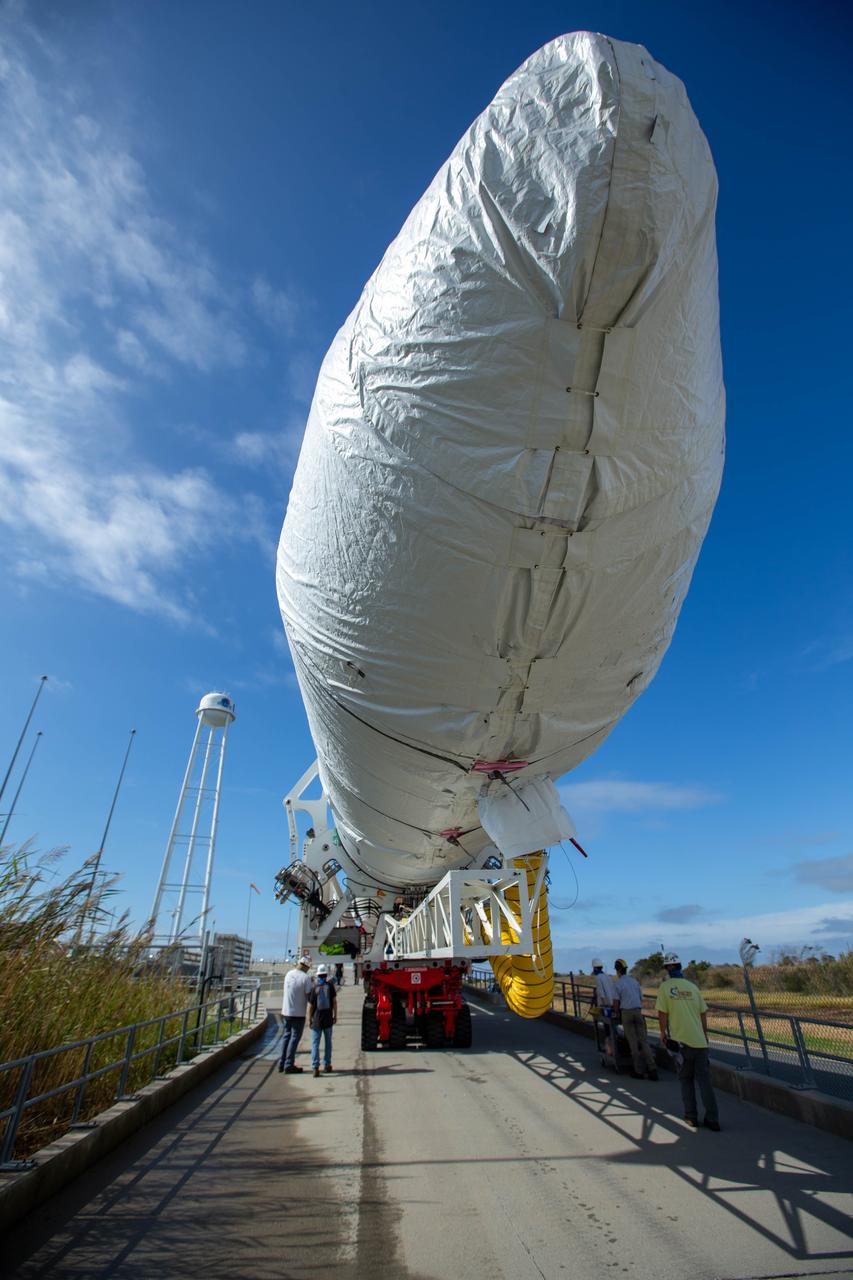
A Northrop Grumman Antares rocket carrying a Cygnus resupply spacecraft is seen as it is rolled out of the Horizontal Integration Facility to the Mid-Atlantic Regional Spaceport’s Pad-0A, Saturday, September 26, 2020, at NASA's Wallops Flight Facility in Virginia. Northrop Grumman’s 14th contracted cargo resupply mission with NASA to the International Space Station will deliver about 8,000 pounds of science and research, crew supplies and vehicle hardware to the orbital laboratory and its crew. The CRS-14 Cygnus spacecraft is named after the first female astronaut of Indian descent, Kaplana Chawla, and is scheduled to launch at 10:27 p.m., Tuesday, September 29, 2020 EDT. Photo Credit: (NASA/Patrick Black)
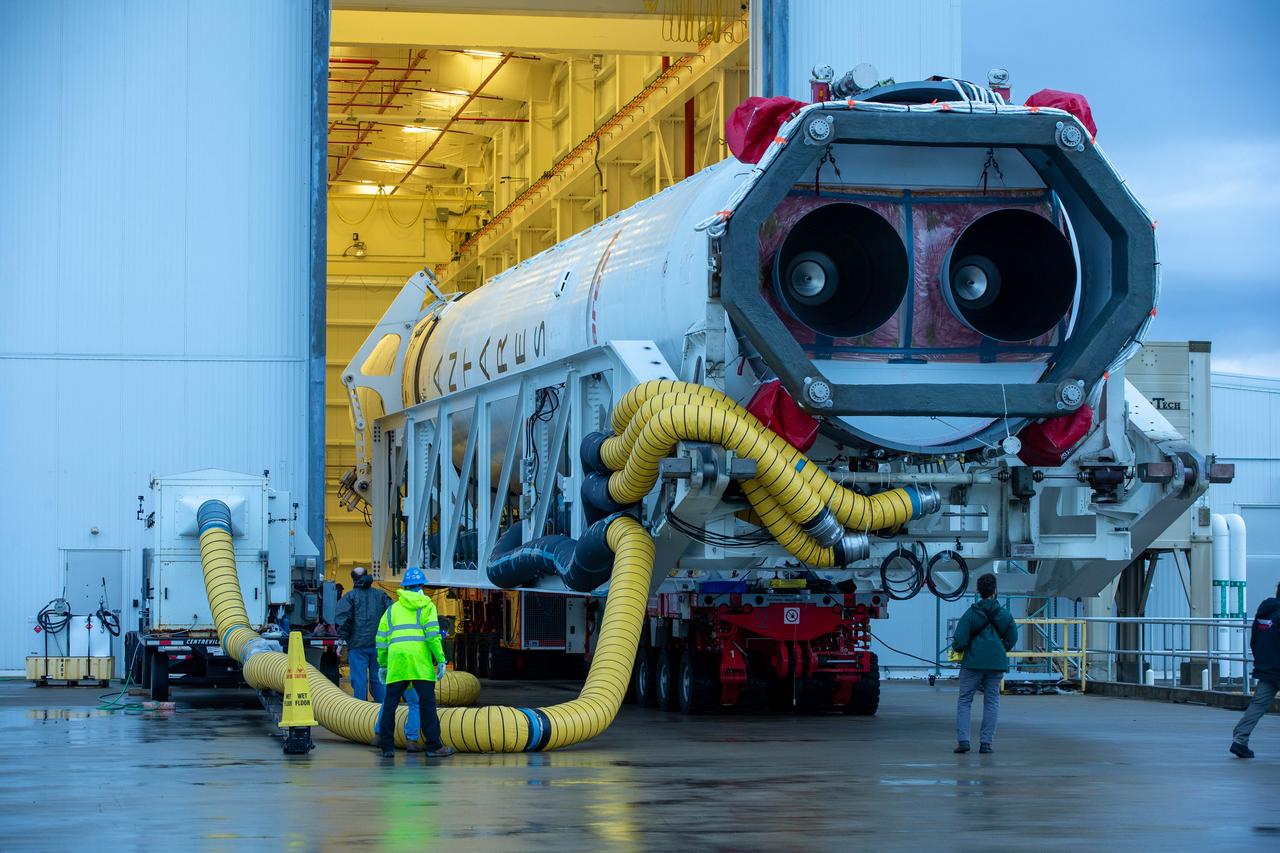
A Northrop Grumman Antares rocket carrying a Cygnus resupply spacecraft is seen as it is rolled out of the Horizontal Integration Facility to the Mid-Atlantic Regional Spaceport’s Pad-0A, Saturday, September 26, 2020, at NASA's Wallops Flight Facility in Virginia. Northrop Grumman’s 14th contracted cargo resupply mission with NASA to the International Space Station will deliver about 8,000 pounds of science and research, crew supplies and vehicle hardware to the orbital laboratory and its crew. The CRS-14 Cygnus spacecraft is named after the first female astronaut of Indian descent, Kaplana Chawla, and is scheduled to launch at 10:27 p.m., Tuesday, September 29, 2020 EDT. Photo Credit: (NASA/Patrick Black)
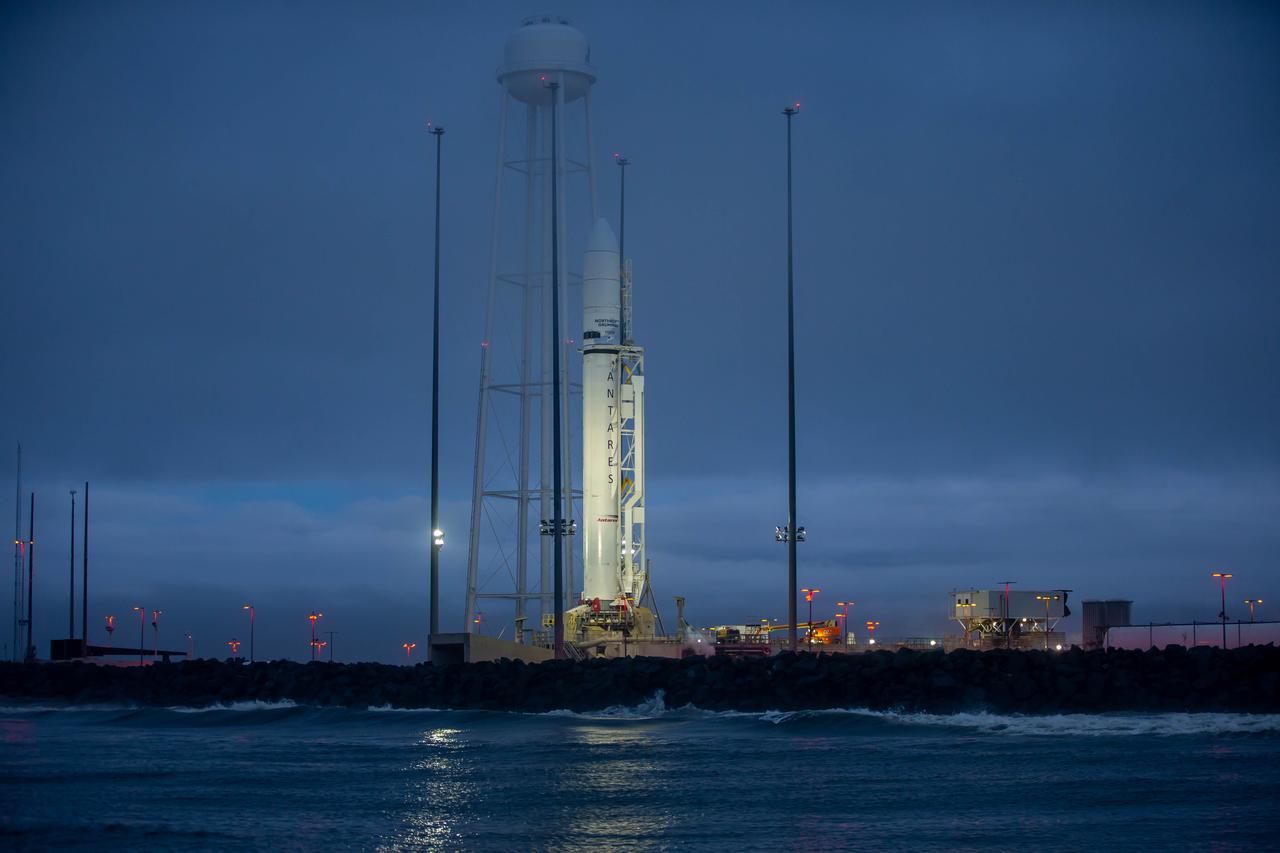
A Northrop Grumman Antares rocket carrying a Cygnus resupply spacecraft is raised into the vertical position on the Mid-Atlantic Regional Spaceport’s Pad-0A, Saturday, September 26, 2020, at NASA's Wallops Flight Facility in Virginia. Northrop Grumman’s 14th contracted cargo resupply mission with NASA to the International Space Station will deliver about 8,000 pounds of science and research, crew supplies and vehicle hardware to the orbital laboratory and its crew. The CRS-14 Cygnus spacecraft is named after the first female astronaut of Indian descent, Kalpana Chawla, and is scheduled to launch at 10:27 p.m., Tuesday, September 29, 2020 EDT. Photo Credit: (NASA/Patrick Black)
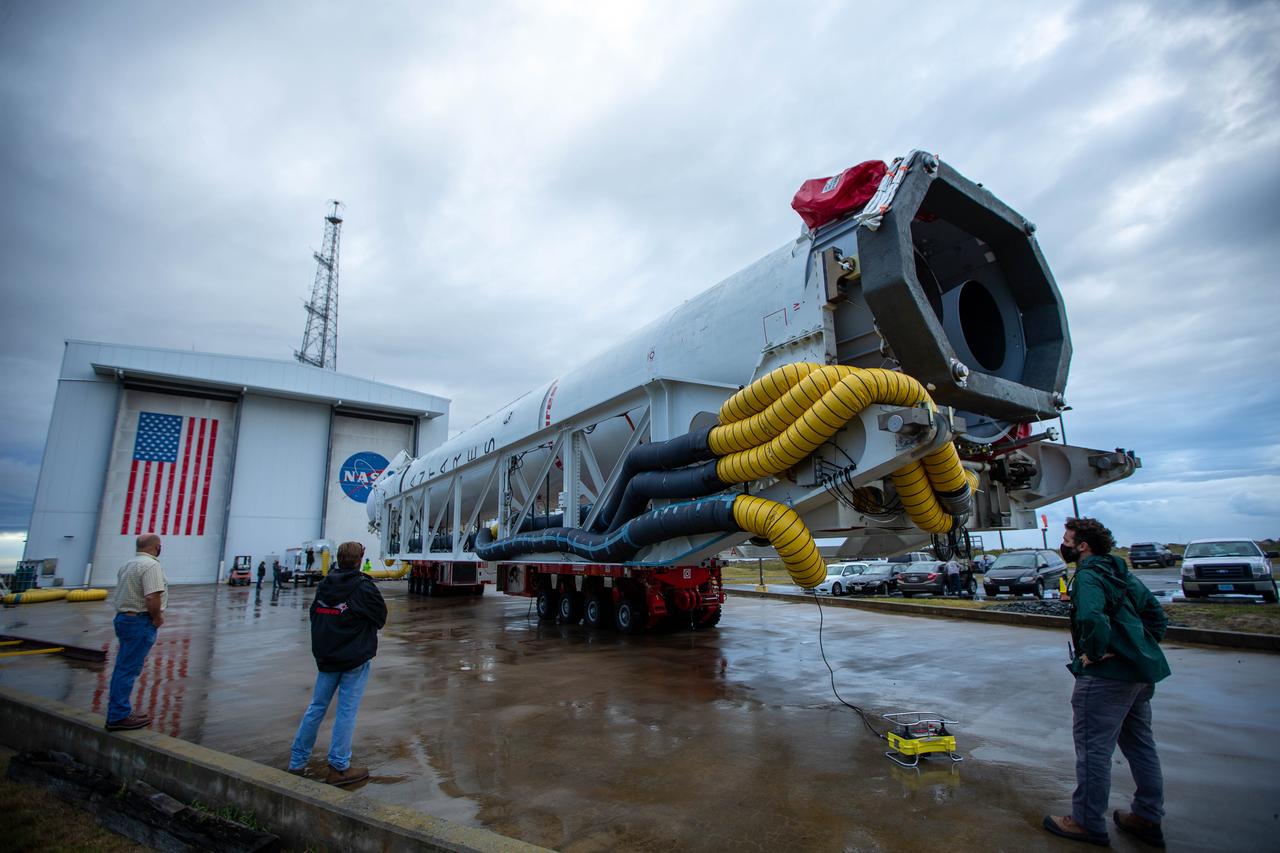
A Northrop Grumman Antares rocket carrying a Cygnus resupply spacecraft is seen as it is rolled out of the Horizontal Integration Facility to the Mid-Atlantic Regional Spaceport’s Pad-0A, Saturday, September 26, 2020, at NASA's Wallops Flight Facility in Virginia. Northrop Grumman’s 14th contracted cargo resupply mission with NASA to the International Space Station will deliver about 8,000 pounds of science and research, crew supplies and vehicle hardware to the orbital laboratory and its crew. The CRS-14 Cygnus spacecraft is named after the first female astronaut of Indian descent, Kaplana Chawla, and is scheduled to launch at 10:27 p.m., Tuesday, September 29, 2020 EDT. Photo Credit: (NASA/Patrick Black)
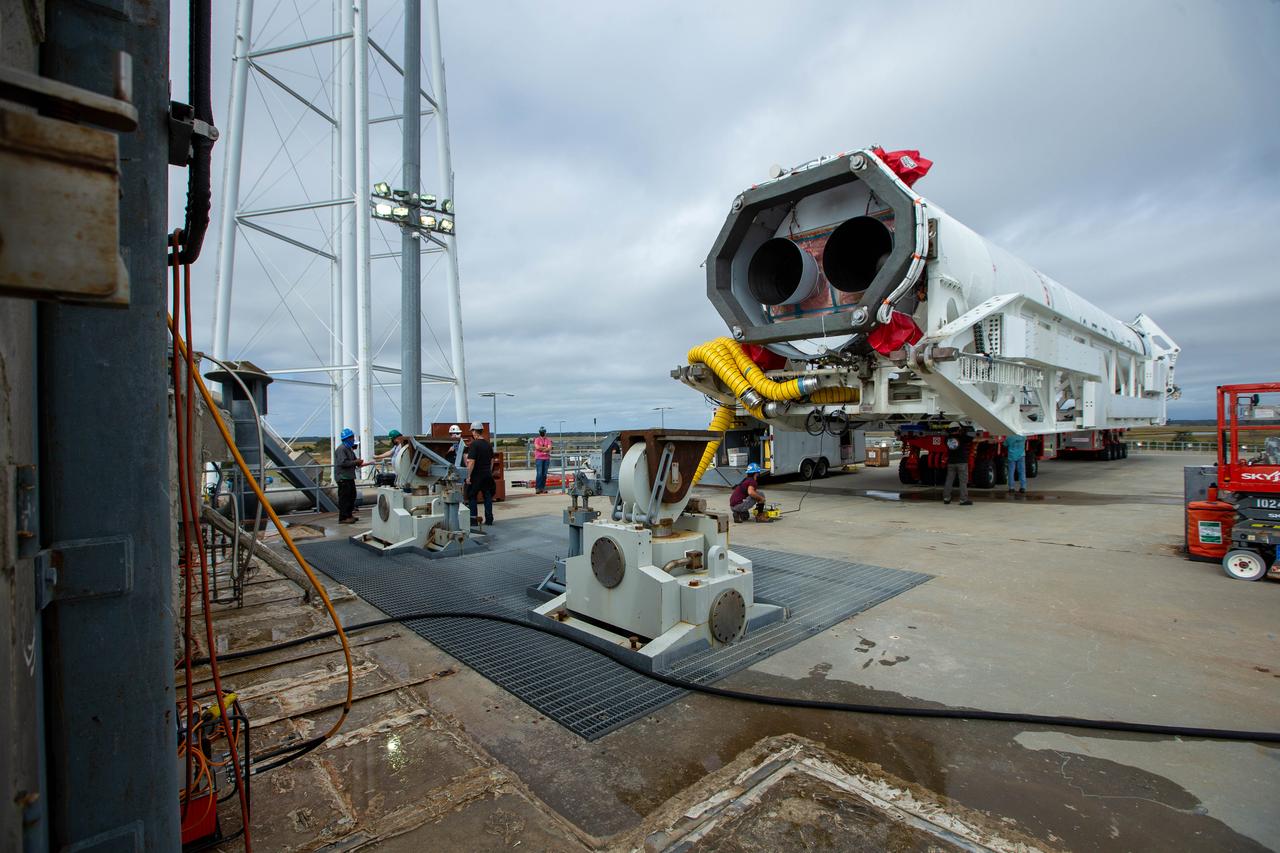
A Northrop Grumman Antares rocket carrying a Cygnus resupply spacecraft is seen as it is rolled out of the Horizontal Integration Facility to the Mid-Atlantic Regional Spaceport’s Pad-0A, Saturday, September 26, 2020, at NASA's Wallops Flight Facility in Virginia. Northrop Grumman’s 14th contracted cargo resupply mission with NASA to the International Space Station will deliver about 8,000 pounds of science and research, crew supplies and vehicle hardware to the orbital laboratory and its crew. The CRS-14 Cygnus spacecraft is named after the first female astronaut of Indian descent, Kalpana Chawla, and is scheduled to launch at 10:27 p.m., Tuesday, September 29, 2020, EDT. Photo Credit: (NASA/Patrick Black)
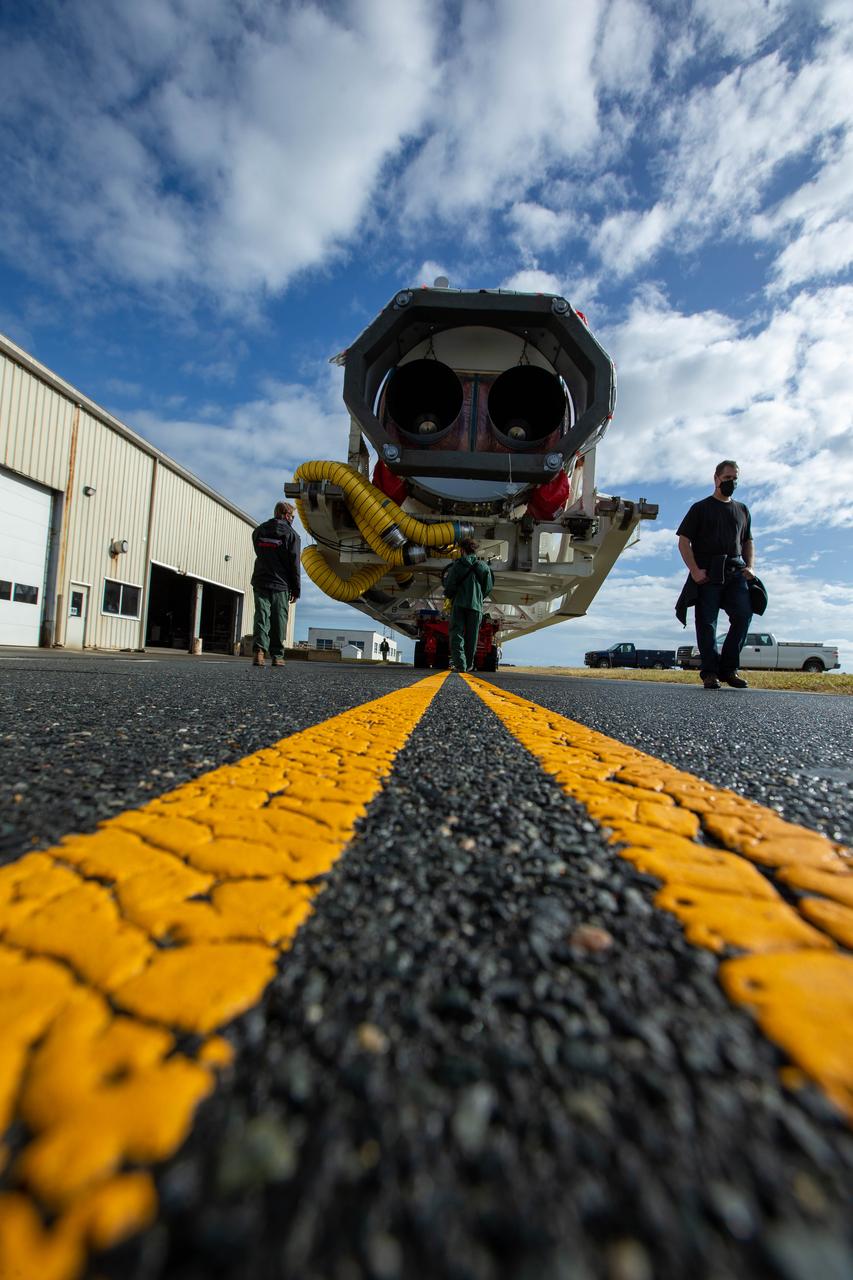
A Northrop Grumman Antares rocket carrying a Cygnus resupply spacecraft is seen as it is rolled out of the Horizontal Integration Facility to the Mid-Atlantic Regional Spaceport’s Pad-0A, Saturday, September 26, 2020, at NASA's Wallops Flight Facility in Virginia. Northrop Grumman’s 14th contracted cargo resupply mission with NASA to the International Space Station will deliver about 8,000 pounds of science and research, crew supplies and vehicle hardware to the orbital laboratory and its crew. The CRS-14 Cygnus spacecraft is named after the first female astronaut of Indian descent, Kaplana Chawla, and is scheduled to launch at 10:27 p.m., Tuesday, September 29, 2020 EDT. Photo Credit: (NASA/Patrick Black)
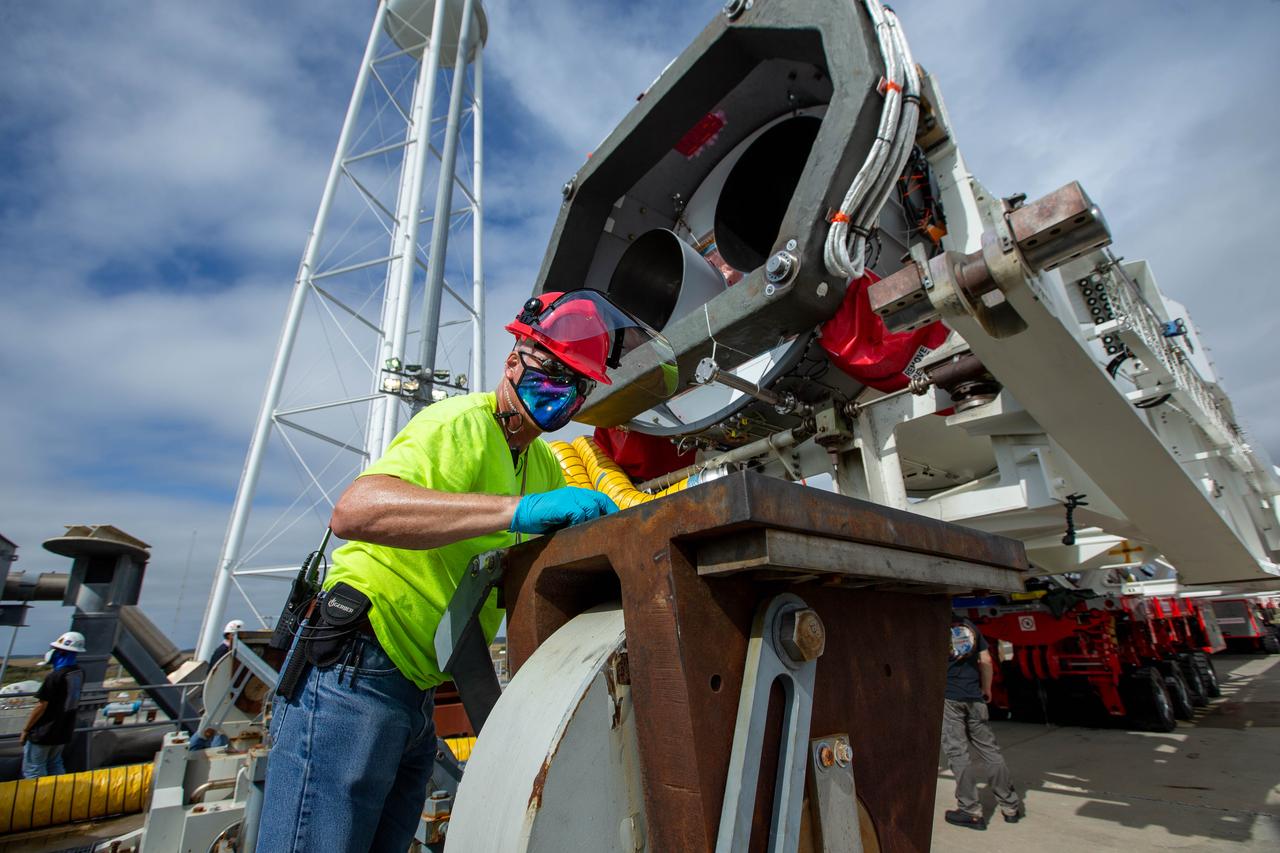
A Northrop Grumman Antares rocket carrying a Cygnus resupply spacecraft is seen as it is rolled out of the Horizontal Integration Facility to the Mid-Atlantic Regional Spaceport’s Pad-0A, Saturday, September 26, 2020, at NASA's Wallops Flight Facility in Virginia. Northrop Grumman’s 14th contracted cargo resupply mission with NASA to the International Space Station will deliver about 8,000 pounds of science and research, crew supplies and vehicle hardware to the orbital laboratory and its crew. The CRS-14 Cygnus spacecraft is named after the first female astronaut of Indian descent, Kaplana Chawla, and is scheduled to launch at 10:27 p.m., Tuesday, September 29, 2020 EDT. Photo Credit: (NASA/Patrick Black)
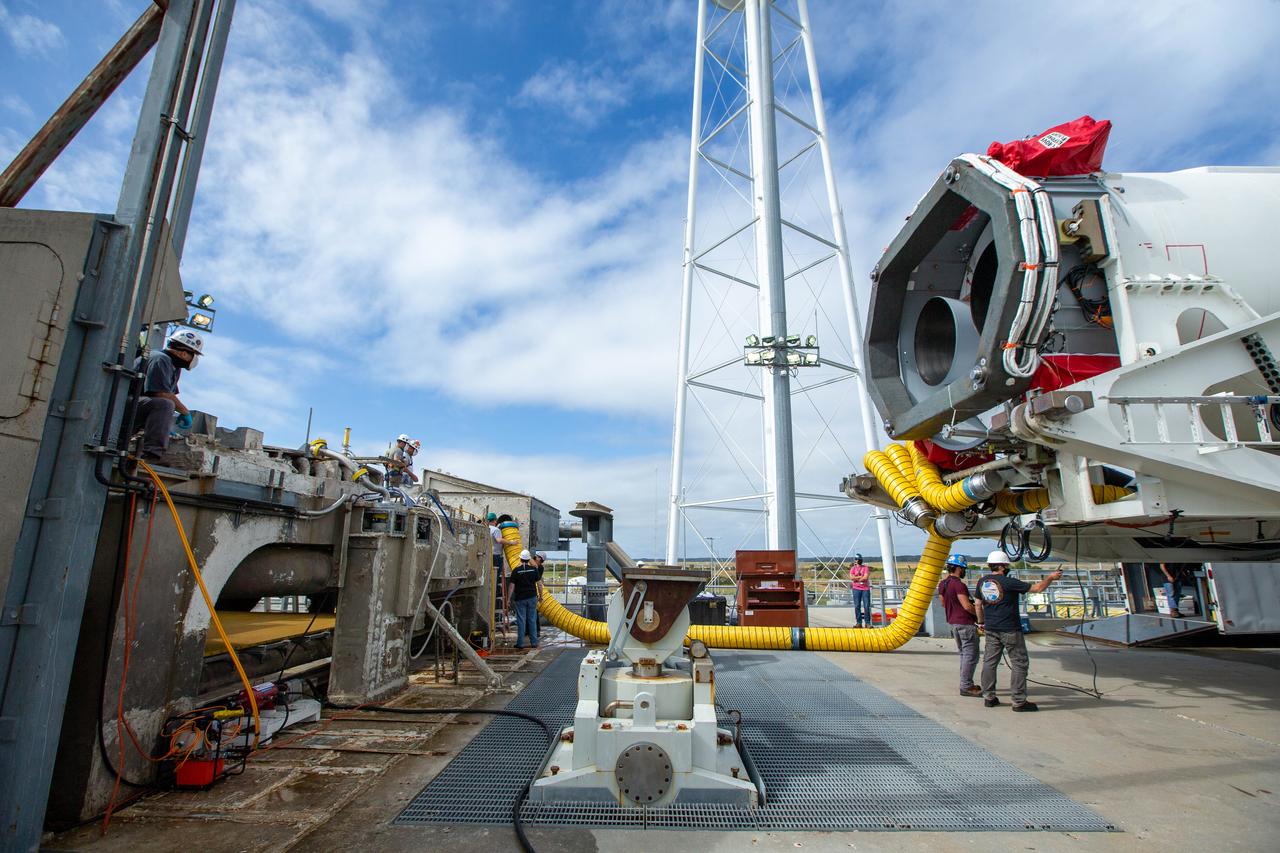
A Northrop Grumman Antares rocket carrying a Cygnus resupply spacecraft is seen as it is rolled out of the Horizontal Integration Facility to the Mid-Atlantic Regional Spaceport’s Pad-0A, Saturday, September 26, 2020, at NASA's Wallops Flight Facility in Virginia. Northrop Grumman’s 14th contracted cargo resupply mission with NASA to the International Space Station will deliver about 8,000 pounds of science and research, crew supplies and vehicle hardware to the orbital laboratory and its crew. The CRS-14 Cygnus spacecraft is named after the first female astronaut of Indian descent, Kaplana Chawla, and is scheduled to launch at 10:27 p.m., Tuesday, September 29, 2020 EDT. Photo Credit: (NASA/Patrick Black)
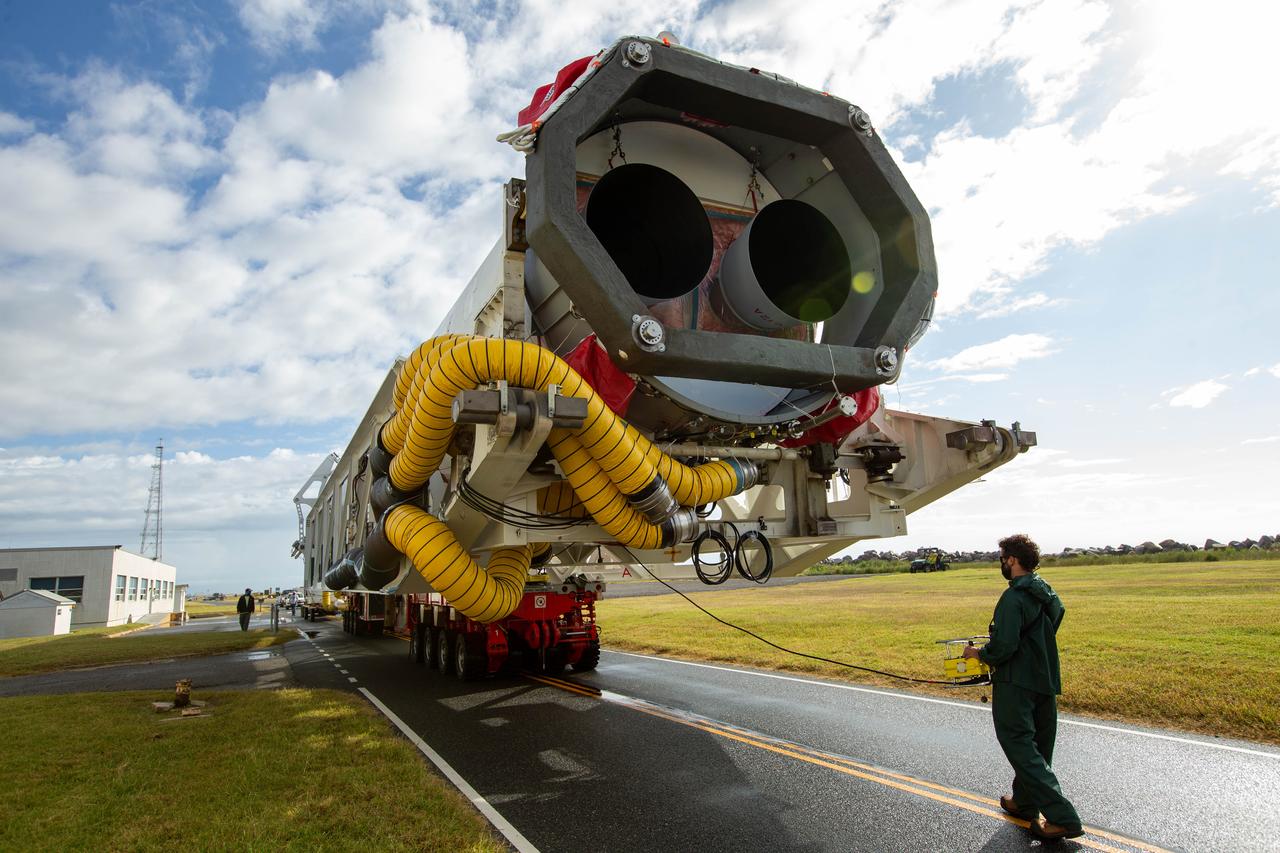
A Northrop Grumman Antares rocket carrying a Cygnus resupply spacecraft is seen as it is rolled out of the Horizontal Integration Facility to the Mid-Atlantic Regional Spaceport’s Pad-0A, Saturday, September 26, 2020, at NASA's Wallops Flight Facility in Virginia. Northrop Grumman’s 14th contracted cargo resupply mission with NASA to the International Space Station will deliver about 8,000 pounds of science and research, crew supplies and vehicle hardware to the orbital laboratory and its crew. The CRS-14 Cygnus spacecraft is named after the first female astronaut of Indian descent, Kaplana Chawla, and is scheduled to launch at 10:27 p.m., Tuesday, September 29, 2020 EDT. Photo Credit: (NASA/Patrick Black)
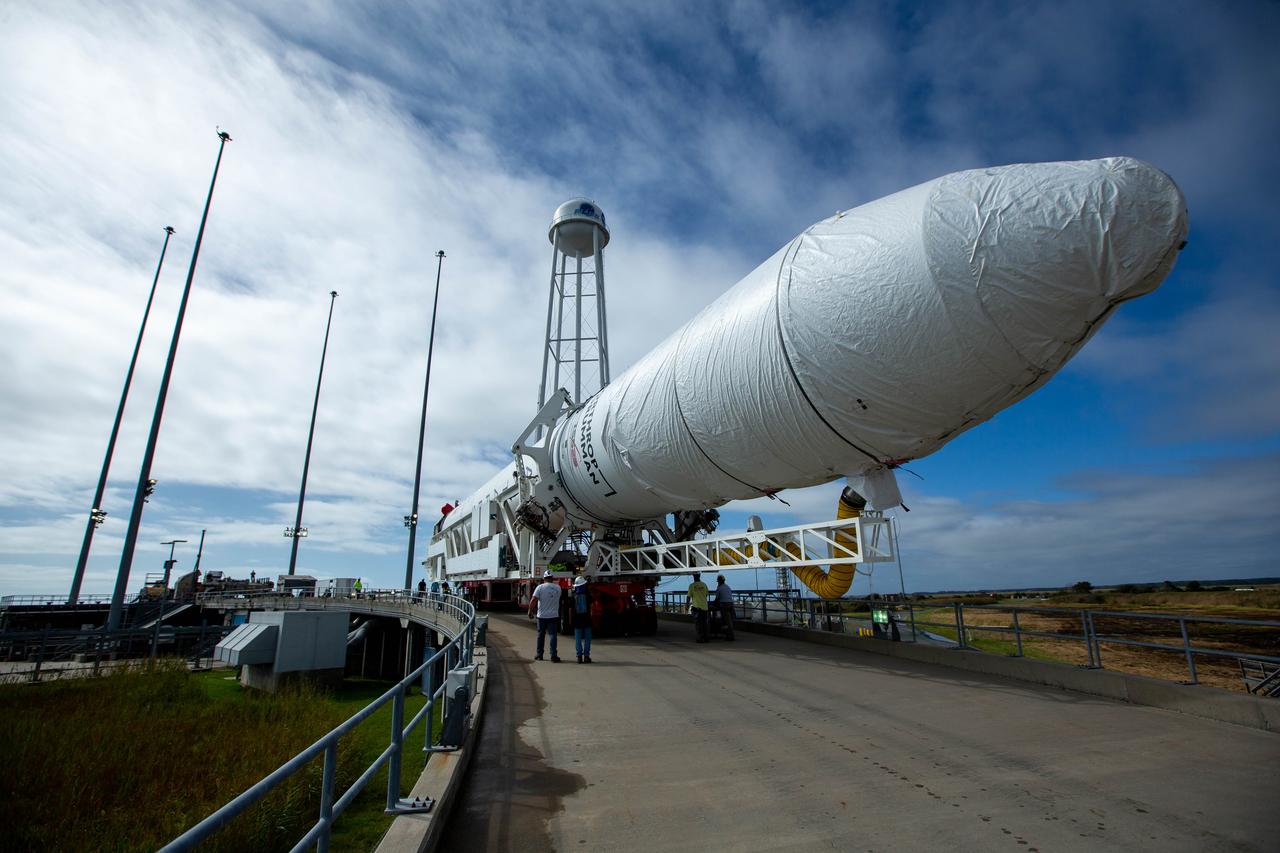
A Northrop Grumman Antares rocket carrying a Cygnus resupply spacecraft is seen as it is rolled out of the Horizontal Integration Facility to the Mid-Atlantic Regional Spaceport’s Pad-0A, Saturday, September 26, 2020, at NASA's Wallops Flight Facility in Virginia. Northrop Grumman’s 14th contracted cargo resupply mission with NASA to the International Space Station will deliver about 8,000 pounds of science and research, crew supplies and vehicle hardware to the orbital laboratory and its crew. The CRS-14 Cygnus spacecraft is named after the first female astronaut of Indian descent, Kalpana Chawla, and is scheduled to launch at 10:27 p.m., Tuesday, September 29, 2020 EDT. Photo Credit: (NASA/Patrick Black)
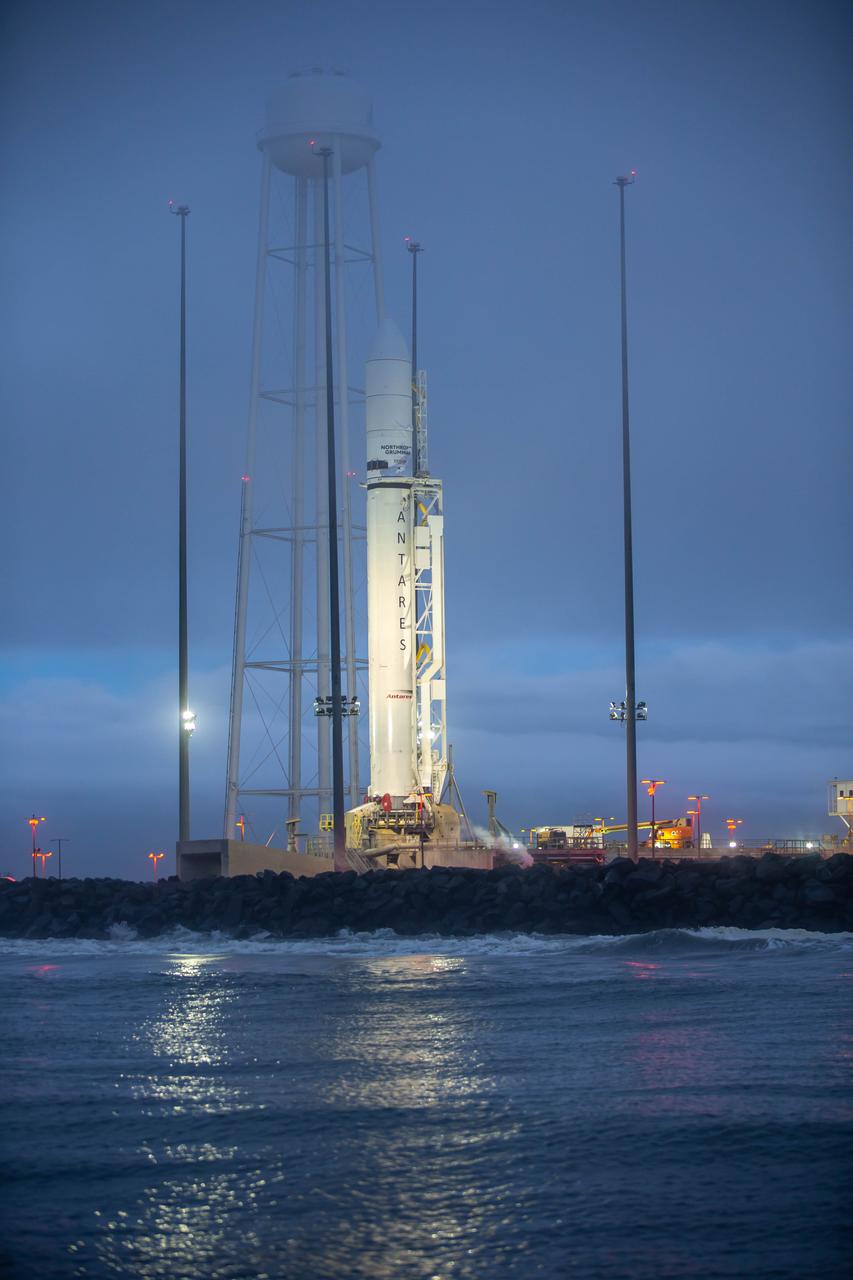
A Northrop Grumman Antares rocket carrying a Cygnus resupply spacecraft is raised into the vertical position on the Mid-Atlantic Regional Spaceport’s Pad-0A, Saturday, September 26, 2020, at NASA's Wallops Flight Facility in Virginia. Northrop Grumman’s 14th contracted cargo resupply mission with NASA to the International Space Station will deliver about 8,000 pounds of science and research, crew supplies and vehicle hardware to the orbital laboratory and its crew. The CRS-14 Cygnus spacecraft is named after the first female astronaut of Indian descent, Kalpana Chawla, and is scheduled to launch at 10:27 p.m., Tuesday, September 29, 2020 EDT. Photo Credit: (NASA/Patrick Black)
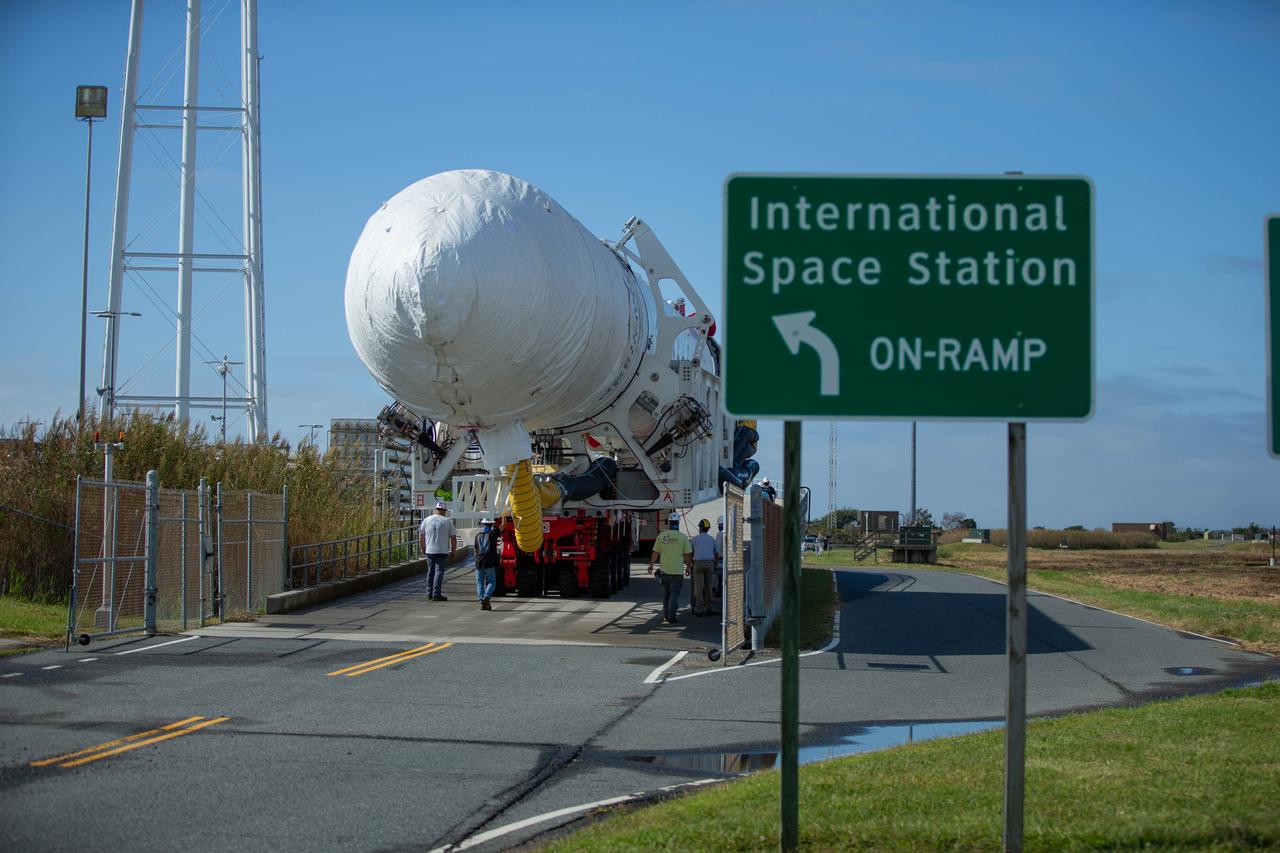
A Northrop Grumman Antares rocket carrying a Cygnus resupply spacecraft is seen as it is rolled out of the Horizontal Integration Facility to the Mid-Atlantic Regional Spaceport’s Pad-0A, Saturday, September 26, 2020, at NASA's Wallops Flight Facility in Virginia. Northrop Grumman’s 14th contracted cargo resupply mission with NASA to the International Space Station will deliver about 8,000 pounds of science and research, crew supplies and vehicle hardware to the orbital laboratory and its crew. The CRS-14 Cygnus spacecraft is named after the first female astronaut of Indian descent, Kaplana Chawla, and is scheduled to launch at 10:27 p.m., Tuesday, September 29, 2020 EDT. Photo Credit: (NASA/Patrick Black)
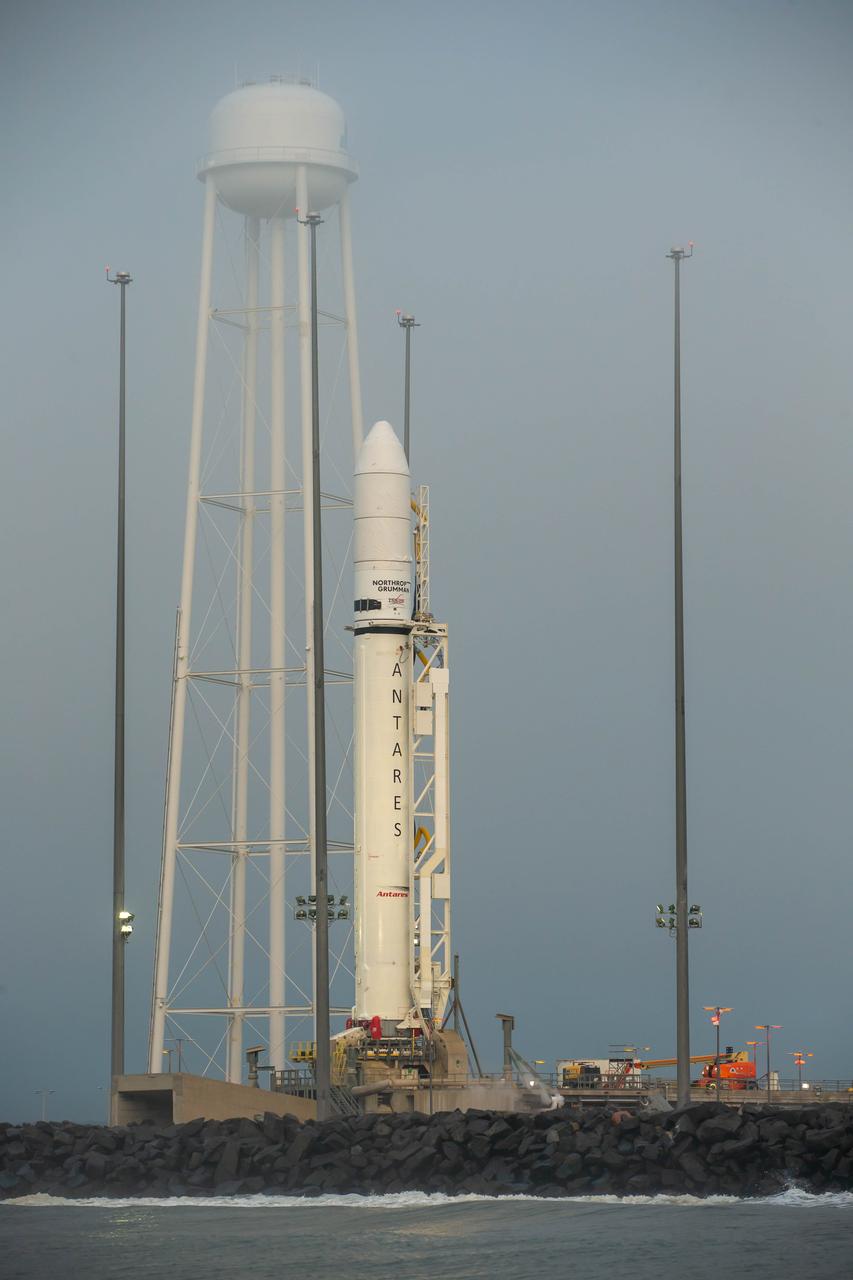
A Northrop Grumman Antares rocket carrying a Cygnus resupply spacecraft is raised into the vertical position on the Mid-Atlantic Regional Spaceport’s Pad-0A, Saturday, September 26, 2020, at NASA's Wallops Flight Facility in Virginia. Northrop Grumman’s 14th contracted cargo resupply mission with NASA to the International Space Station will deliver about 8,000 pounds of science and research, crew supplies and vehicle hardware to the orbital laboratory and its crew. The CRS-14 Cygnus spacecraft is named after the first female astronaut of Indian descent, Kalpana Chawla, and is scheduled to launch at 10:27 p.m., Tuesday, September 29, 2020 EDT. Photo Credit: (NASA/Patrick Black)
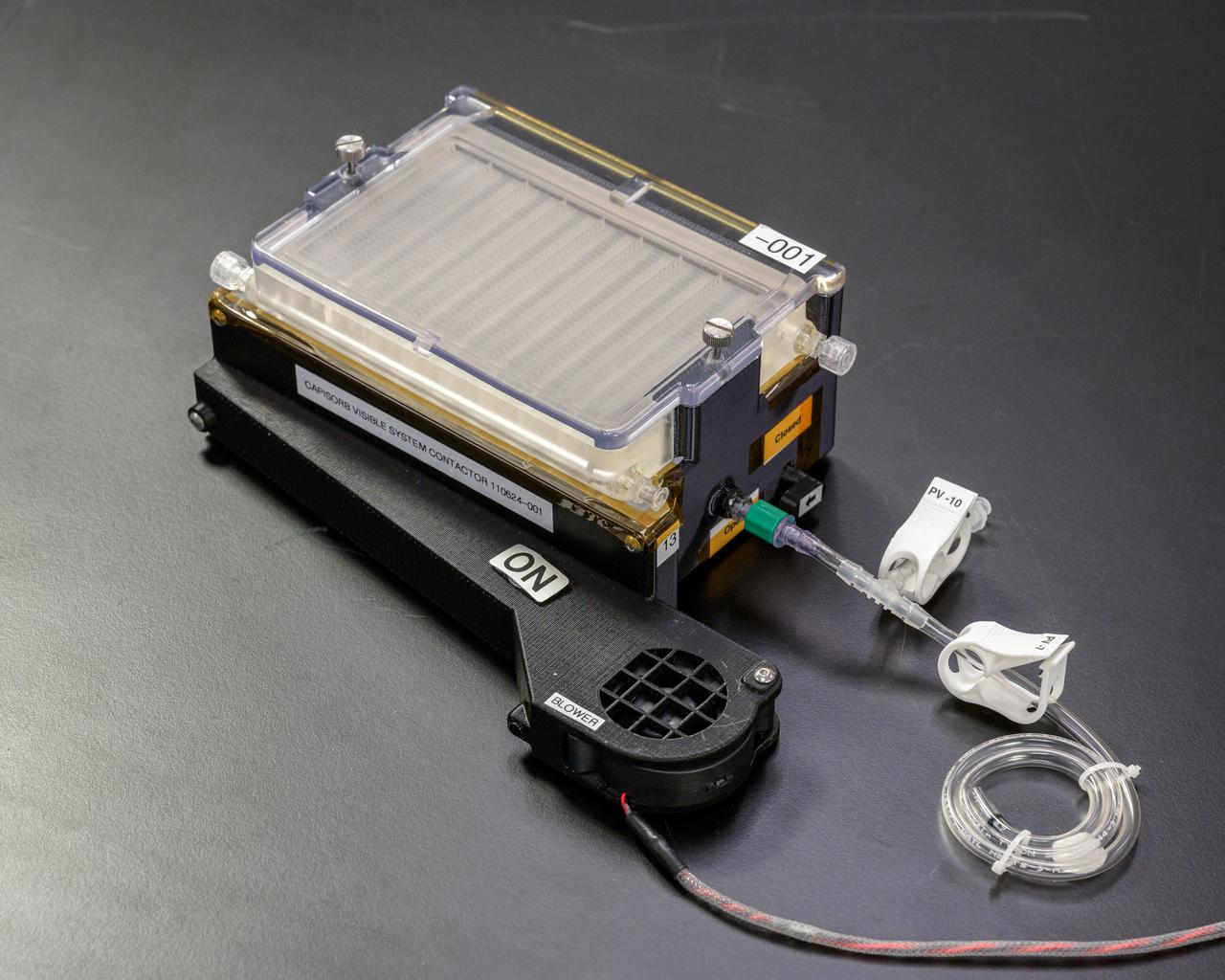
jsc2023e010168 (1/30/2023) --- CapiSorb Visible System flight unit contactor in N240 room 133B. The CapiSorb Visible System will be launched on SpaceX CRS-27 in March 2023 to the International Space Station to demonstrate a liquid sorbent-based system that leverages the advantages of liquid control through capillary action to remove carbon dioxide from crewed atmospheres...Capillary wedges in the CapiSorb Visible System Contactor, shown here preflight, control and passively transport viscous liquid in microgravity in order to demonstrate capabilities needed for future liquid carbon dioxide removal technologies. The CapiSorb Visible System investigation demonstrates a liquid control using capillary forces, over a range of properties that are characteristic of liquids which absorb carbon dioxide. Image courtesy of NASA's Ames Research Cente
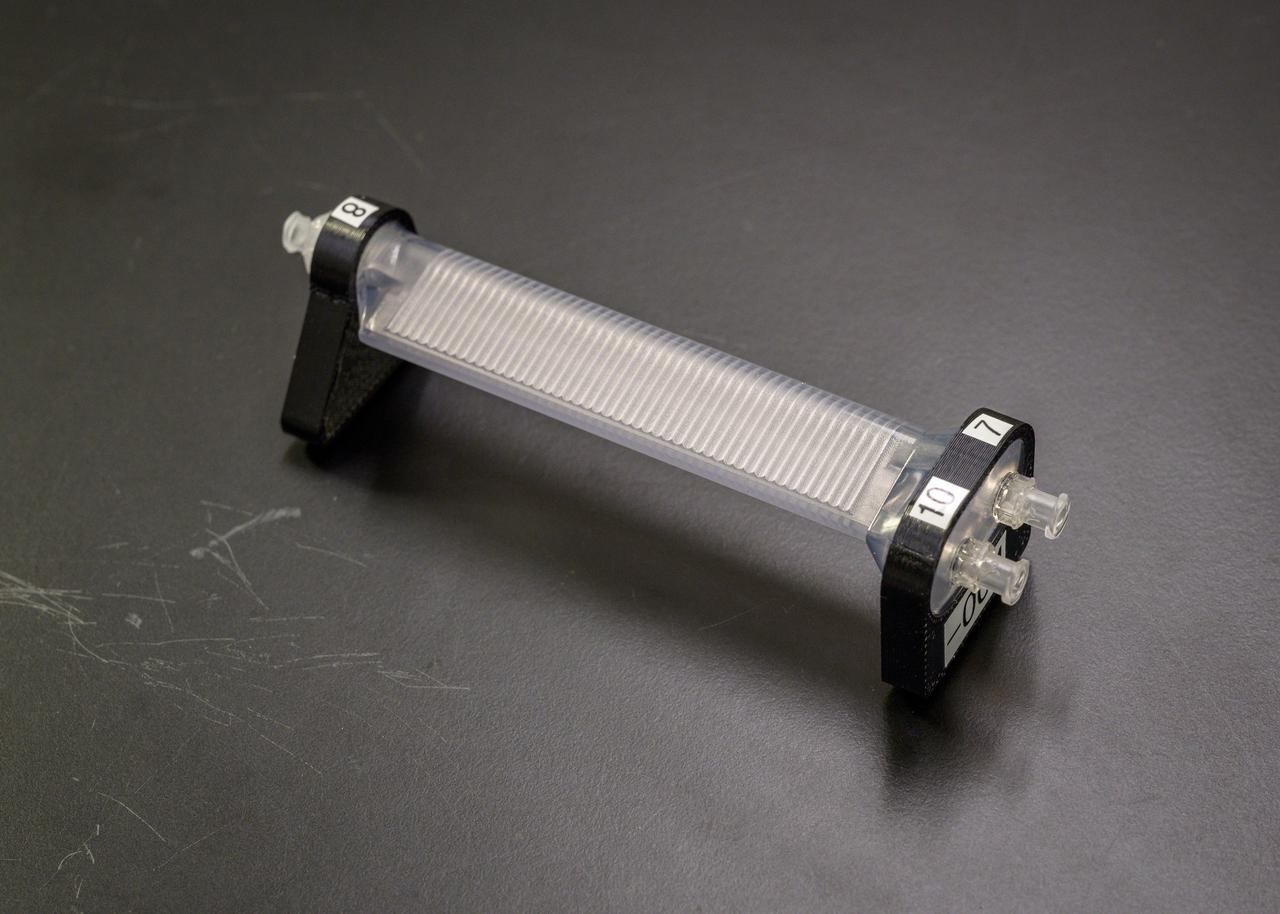
jsc2023e010169 (1/30/2023) --- CapiSorb Visible System flight unit capillary condensing heat exchanger (CCHX) in N240 room 133B. The CapiSorb Visible System will be launched on SpaceX CRS-27 in March 2023 to the International Space Station to demonstrate a liquid sorbent-based system that leverages the advantages of liquid control through capillary action to remove carbon dioxide from crewed atmospheres...The CapiSorb Visible System Capillary Condensing Heat Exchanger, shown here pre-flight, uses capillary surfaces and active cooling to condense water vapor from heated, humid air during microgravity experimentation. The capillary surfaces enable control and passive transport of fluids. The CapiSorb Visible System investigation demonstrates a liquid control using capillary forces, over a range of liquid properties that are characteristic of liquid carbon dioxide sorbents. Image courtesy of NASA's Ames Research Center.
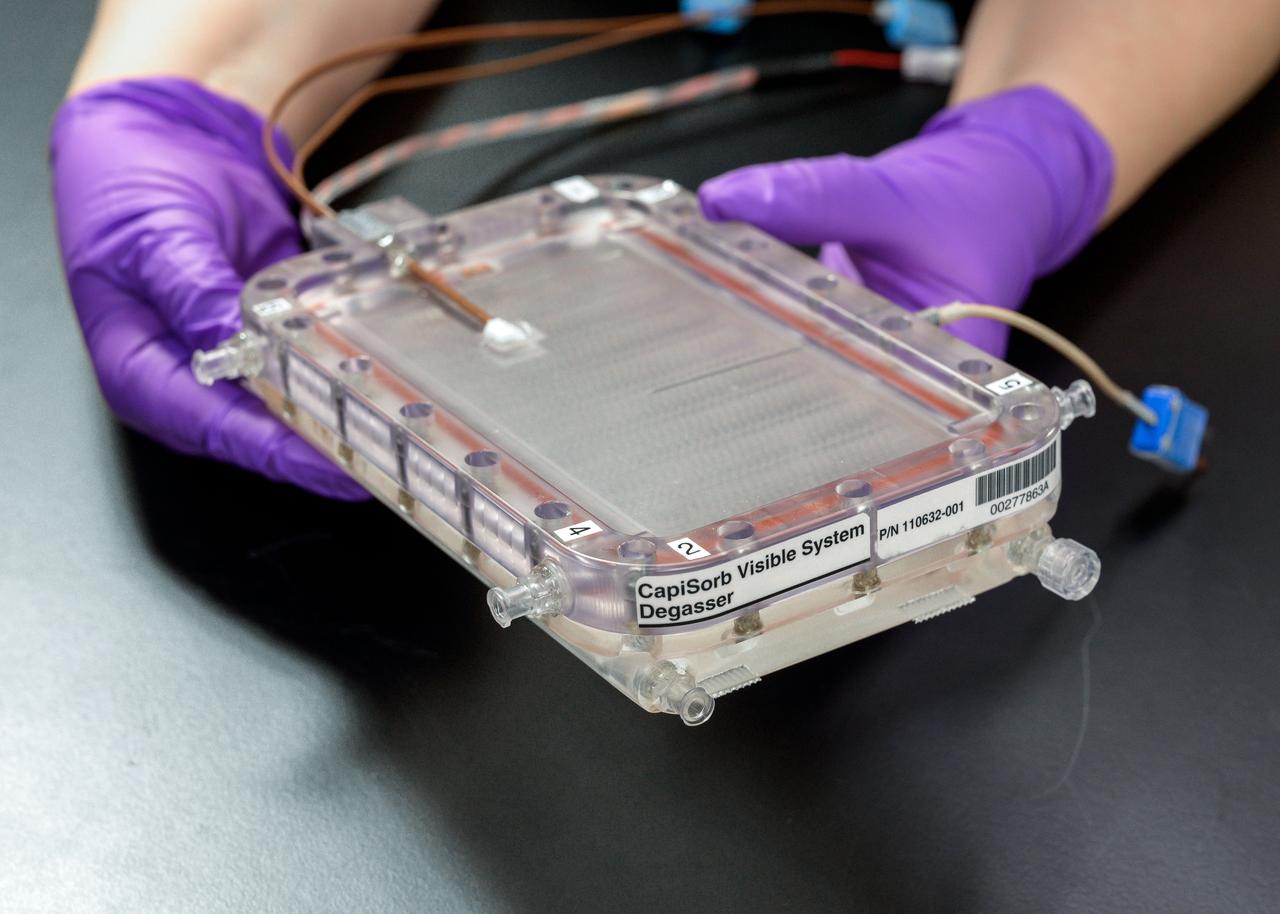
jsc2023e010167 (1/30/2023) --- CapiSorb Visible System flight unit degasser assembly in N240 room 133B. The CapiSorb Visible System will be launched on SpaceX CRS-27 in March 2023 to the International Space Station to demonstrate a liquid sorbent-based system that leverages the advantages of liquid control through capillary action to remove carbon dioxide from crewed atmospheres...Capillary wedges in the CapiSorb Visible System Degasser, shown here pre-flight, control and passively transport viscous liquid in microgravity in order to demonstrate capabilities needed for future liquid sorbent carbon dioxide removal technologies. The CapiSorb Visible System investigation demonstrates a liquid control using capillary forces, over a range of liquid properties that are characteristic of liquid carbon dioxide sorbents. Image courtesy of NASA's Ames Research Center.
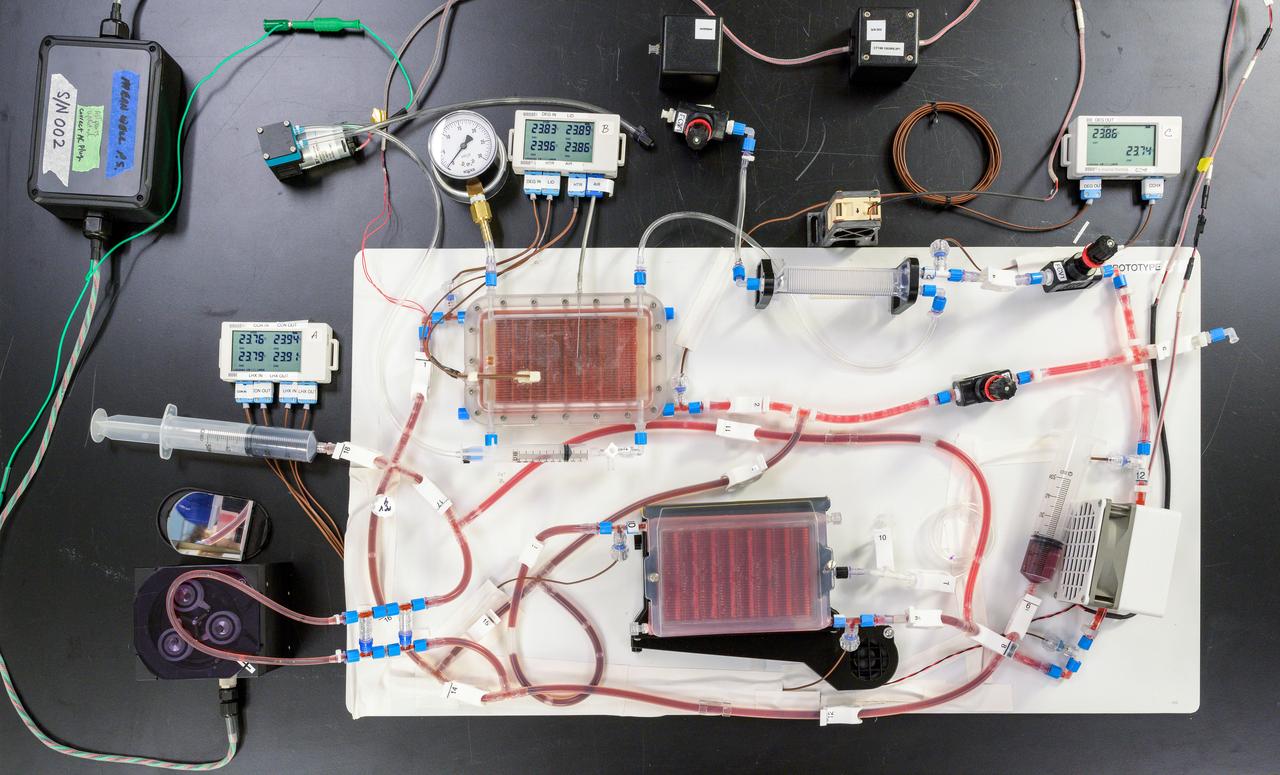
jsc2023e010170 (1/30/2023) --- Overall view of the CapiSorb Visible System prototype with sorbent simulant liquid in N240 room 133B. The CapiSorb Visible System will be launched on SpaceX CRS-27 in March 2023 to the International Space Station to demonstrate a liquid sorbent-based system that leverages the advantages of liquid control through capillary action to remove carbon dioxide from crewed atmospheres...The CapiSorb Visible System, shown here preflight, is used to study visco-capillary control and passive transport of liquid while simulating a fluid loop representative of a liquid carbon dioxide sorbent scrubber. The CapiSorb Visible System investigation demonstrates a liquid control using capillary forces, over a range of properties that are characteristic of liquids which absorb carbon dioxide. Image courtesy of NASA's Ames Research Center.