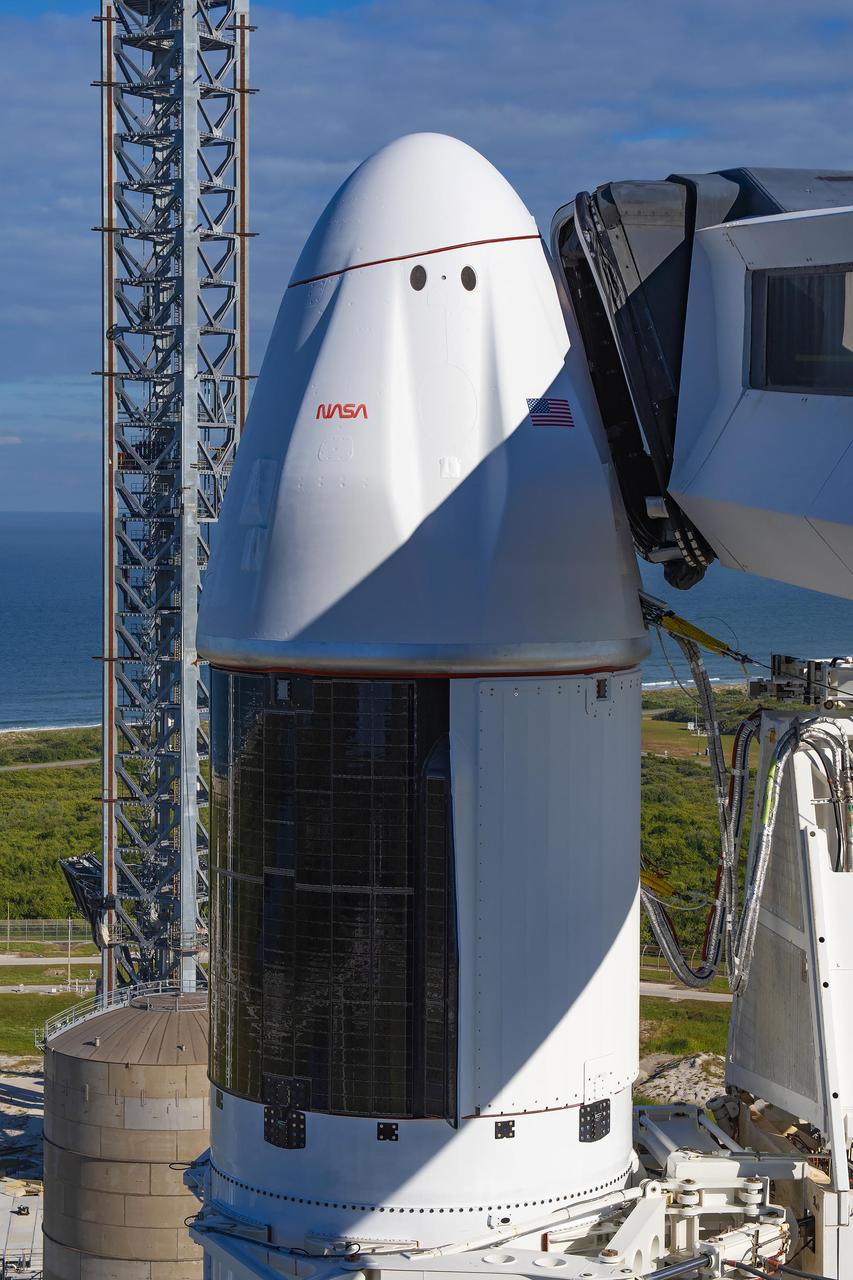
In preparation for SpaceX’s 29th commercial resupply services launch to the International Space Station for NASA, the company’s Falcon 9 rocket, with the Dragon spacecraft atop, is raised to a vertical position at Kennedy Space Center’s Launch Complex 39A in Florida on Wednesday, Nov. 8, 2023. The mission will carry scientific research, technology demonstrations, crew supplies, and hardware to the space station to support its Expedition 70 crew, including NASA’s Integrated Laser Communications Relay Demonstration Low Earth Orbit User Modem and Amplifier Terminal (ILLUMA-T) and Atmospheric Waves Experiment (AWE). Liftoff is scheduled for 8:28 p.m. EST Thursday, Nov. 9, from Kennedy’s Launch Complex 39A.
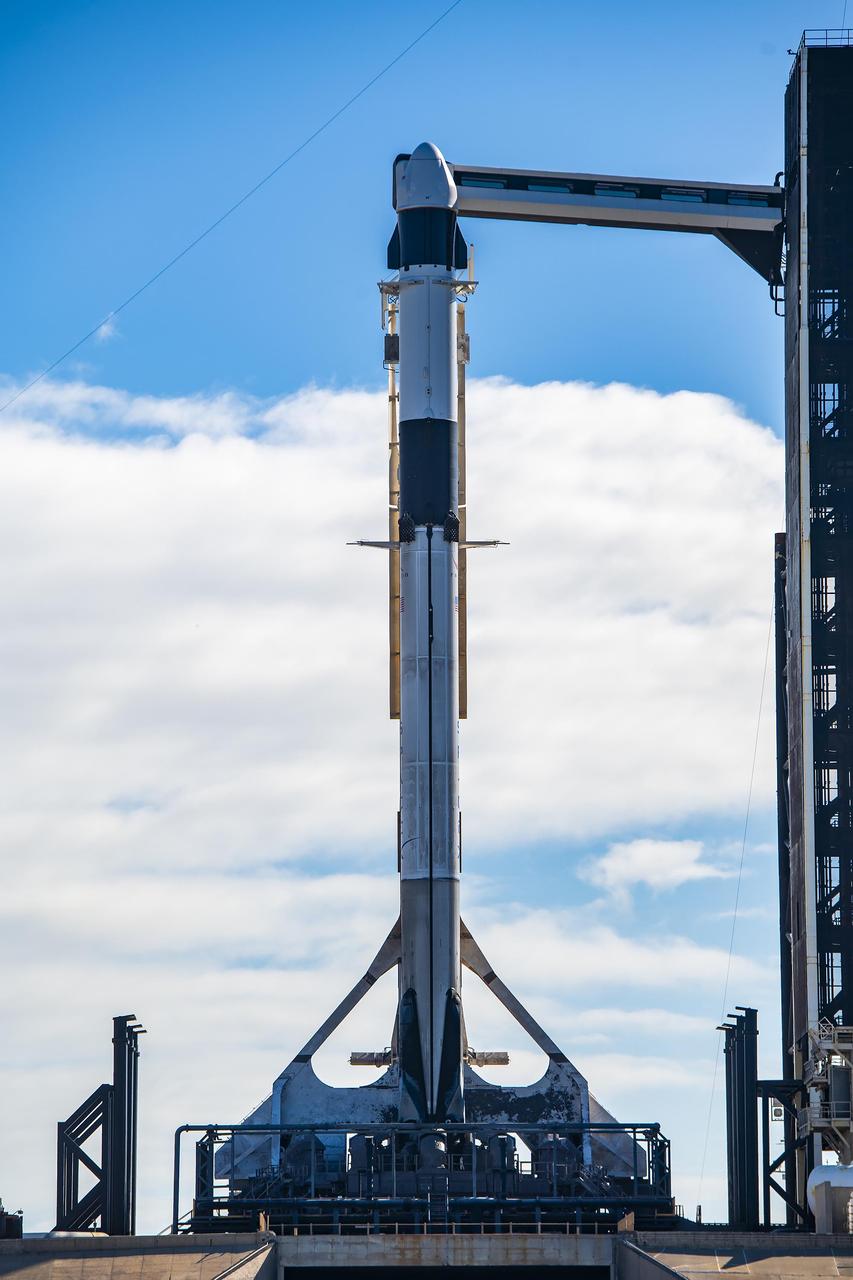
In preparation for SpaceX’s 29th commercial resupply services launch to the International Space Station for NASA, the company’s Falcon 9 rocket, with the Dragon spacecraft atop, is raised to a vertical position at Kennedy Space Center’s Launch Complex 39A in Florida on Wednesday, Nov. 8, 2023. The mission will carry scientific research, technology demonstrations, crew supplies, and hardware to the space station to support its Expedition 70 crew, including NASA’s Integrated Laser Communications Relay Demonstration Low Earth Orbit User Modem and Amplifier Terminal (ILLUMA-T) and Atmospheric Waves Experiment (AWE). Liftoff is scheduled for 8:28 p.m. EST Thursday, Nov. 9, from Kennedy’s Launch Complex 39A.

In preparation for SpaceX’s 29th commercial resupply services launch to the International Space Station for NASA, the company’s Falcon 9 rocket, with the Dragon spacecraft atop, is raised to a vertical position at Kennedy Space Center’s Launch Complex 39A in Florida on Wednesday, Nov. 8, 2023. The mission will carry scientific research, technology demonstrations, crew supplies, and hardware to the space station to support its Expedition 70 crew, including NASA’s Integrated Laser Communications Relay Demonstration Low Earth Orbit User Modem and Amplifier Terminal (ILLUMA-T) and Atmospheric Waves Experiment (AWE). Liftoff is scheduled for 8:28 p.m. EST Thursday, Nov. 9, from Kennedy’s Launch Complex 39A.
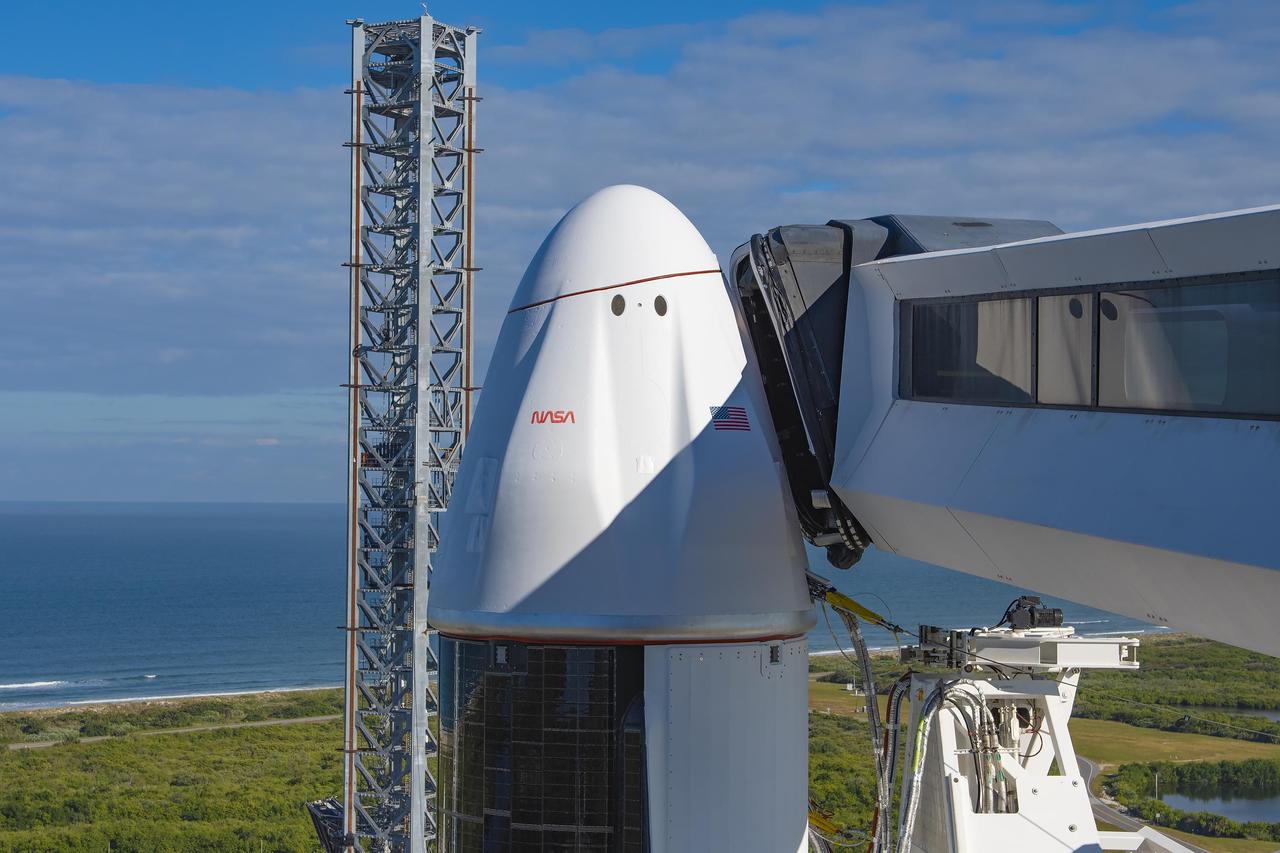
In preparation for SpaceX’s 29th commercial resupply services launch to the International Space Station for NASA, the company’s Falcon 9 rocket, with the Dragon spacecraft atop, is raised to a vertical position at Kennedy Space Center’s Launch Complex 39A in Florida on Wednesday, Nov. 8, 2023. The mission will carry scientific research, technology demonstrations, crew supplies, and hardware to the space station to support its Expedition 70 crew, including NASA’s Integrated Laser Communications Relay Demonstration Low Earth Orbit User Modem and Amplifier Terminal (ILLUMA-T) and Atmospheric Waves Experiment (AWE). Liftoff is scheduled for 8:28 p.m. EST Thursday, Nov. 9, from Kennedy’s Launch Complex 39A.
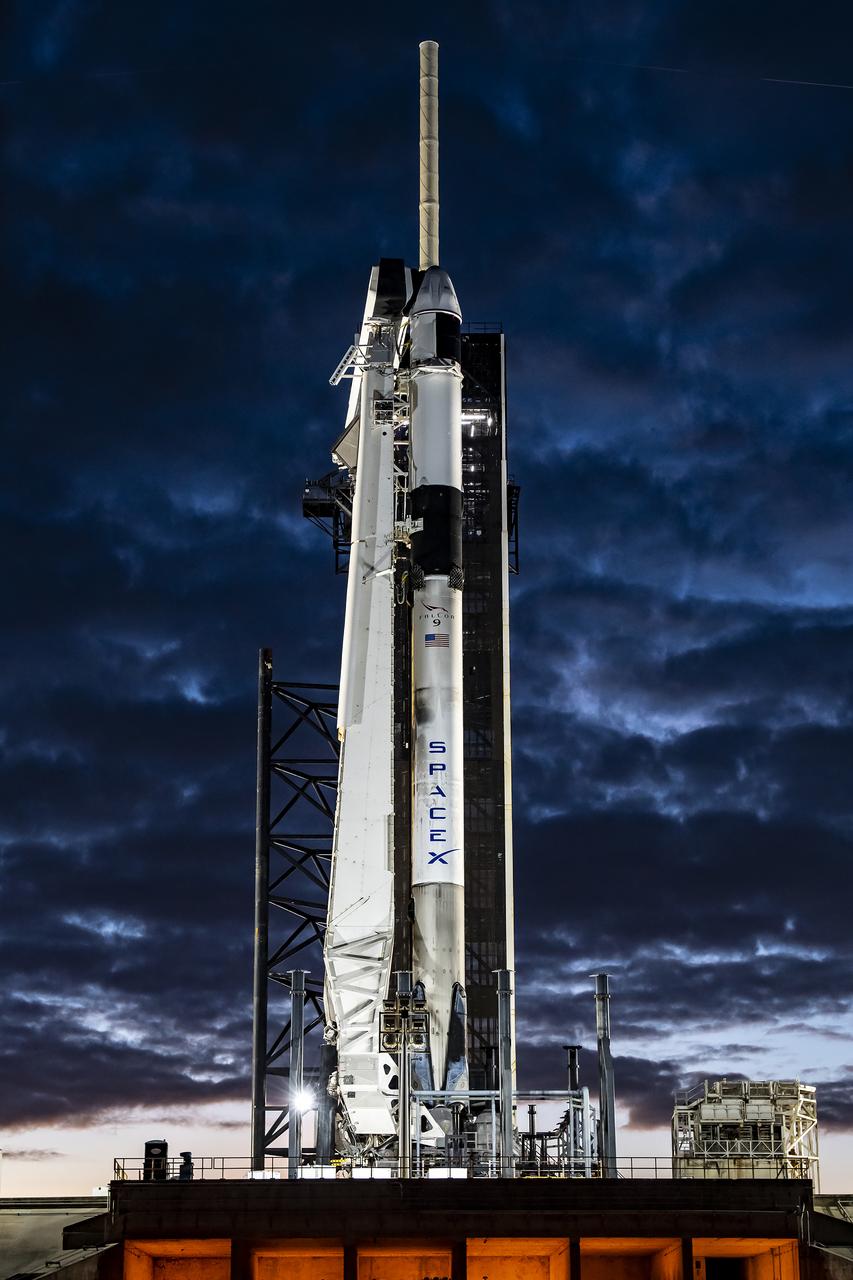
In preparation for SpaceX’s 29th commercial resupply services launch to the International Space Station for NASA, the company’s Falcon 9 rocket, with the Dragon spacecraft atop, is raised to a vertical position at Kennedy Space Center’s Launch Complex 39A in Florida on Wednesday, Nov. 8, 2023. The mission will carry scientific research, technology demonstrations, crew supplies, and hardware to the space station to support its Expedition 70 crew, including NASA’s Integrated Laser Communications Relay Demonstration Low Earth Orbit User Modem and Amplifier Terminal (ILLUMA-T) and Atmospheric Waves Experiment (AWE). Liftoff is scheduled for 8:28 p.m. EST Thursday, Nov. 9, from Kennedy’s Launch Complex 39A.

The SpaceX Falcon 9 rocket carrying the Dragon spacecraft lifts off from Launch Complex 39A at NASA’s Kennedy Space Center in Florida on Thursday, Nov. 9, 2023, on the company’s 29th commercial resupply services mission for the agency to the International Space Station. Liftoff was at 8:28 p.m. EST. Dragon will deliver scientific research, technology demonstrations, crew supplies, and hardware to the space station to support its Expedition 70 crew, including NASA’s Integrated Laser Communications Relay Demonstration Low Earth Orbit User Modem and Amplifier Terminal (ILLUMA-T) and Atmospheric Waves Experiment (AWE). The spacecraft is expected to spend about a month attached to the orbiting outpost before it returns to Earth with research and return cargo, splashing down off the coast of Florida.

A SpaceX Falcon 9 rocket soars upward after its liftoff from Launch Complex 39A at NASA’s Kennedy Space Center in Florida on Thursday, Nov. 9, 2023, on the company’s 29th Commercial Resupply Services mission for the agency to the International Space Station. The Dragon spacecraft will deliver scientific research, technology demonstrations, crew supplies, and hardware to the space station to support its Expedition 70 crew, including NASA’s Integrated Laser Communications Relay Demonstration Low Earth Orbit User Modem and Amplifier Terminal (ILLUMA-T) and Atmospheric Waves Experiment (AWE). The spacecraft is expected to spend about a month attached to the orbiting outpost before it returns to Earth with research and return cargo, splashing down off the coast of Florida.

The SpaceX Falcon 9 rocket carrying the Dragon spacecraft lifts off from Launch Complex 39A at NASA’s Kennedy Space Center in Florida on Thursday, Nov. 9, 2023, on the company’s 29th commercial resupply services mission for the agency to the International Space Station. Liftoff was at 8:28 p.m. EST. Dragon will deliver scientific research, technology demonstrations, crew supplies, and hardware to the space station to support its Expedition 70 crew, including NASA’s Integrated Laser Communications Relay Demonstration Low Earth Orbit User Modem and Amplifier Terminal (ILLUMA-T) and Atmospheric Waves Experiment (AWE). The spacecraft is expected to spend about a month attached to the orbiting outpost before it returns to Earth with research and return cargo, splashing down off the coast of Florida.
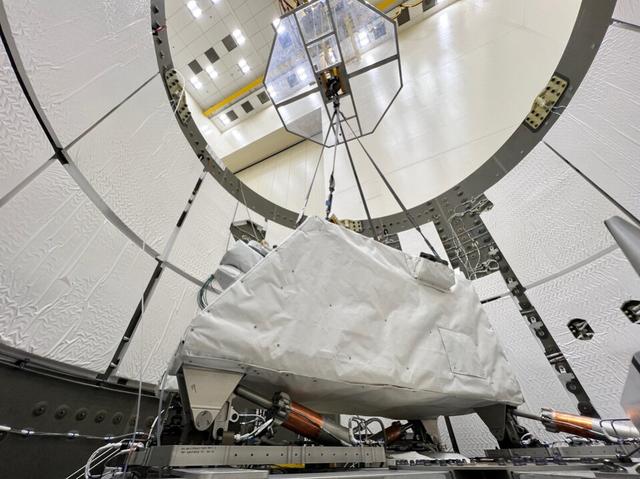
The Integrated LCRD Low Earth Orbit User Modem and Amplifier Terminal (ILLUMA-T) has been loaded into Dragon’s unpressurized spacecraft trunk. SpaceX will deliver the payload to the International Space Station during its 29th commercial resupply services mission. Launch is targeted for Sunday, Nov. 5 at 10:01 p.m. EST.
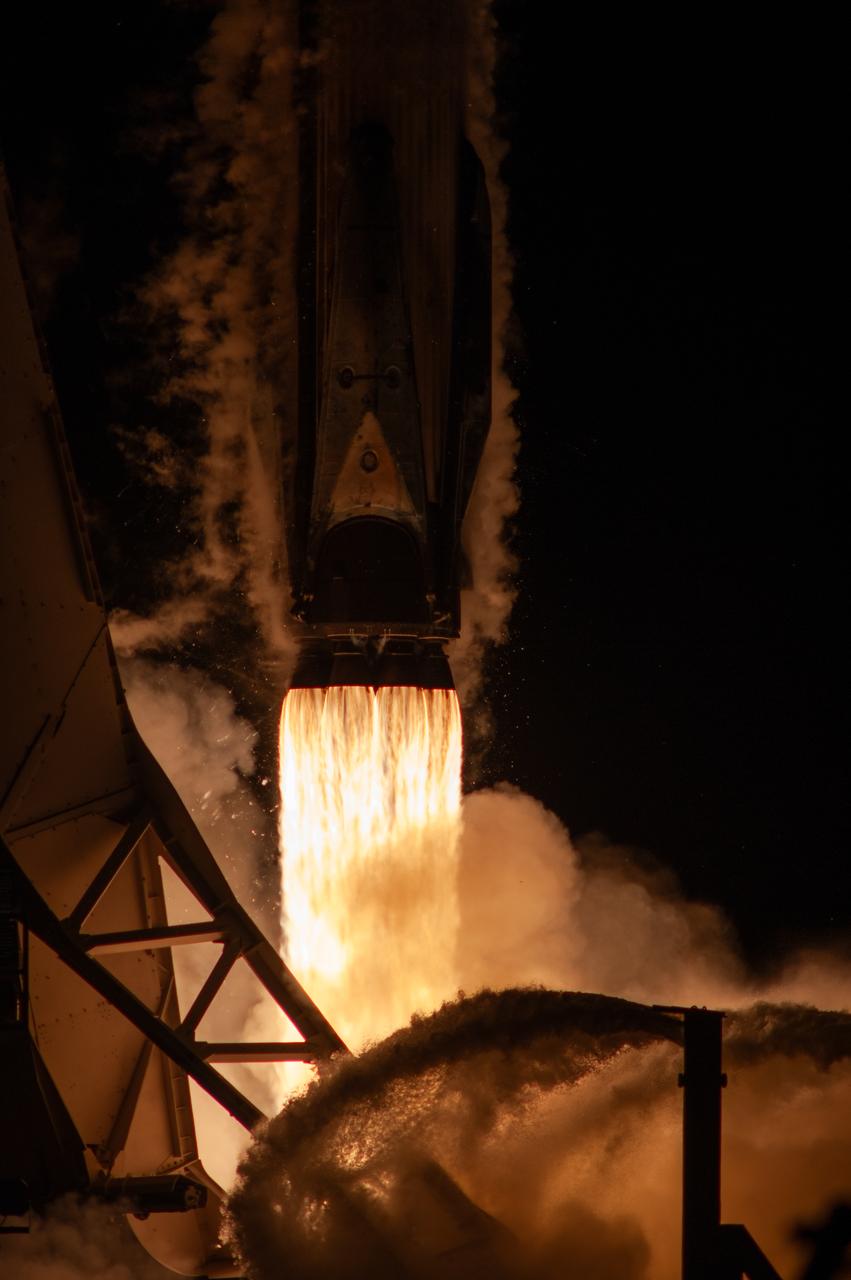
The SpaceX Falcon 9 rocket carrying the Dragon spacecraft lifts off from Launch Complex 39A at NASA’s Kennedy Space Center in Florida on Thursday, Nov. 9, 2023, on the company’s 29th commercial resupply services mission for the agency to the International Space Station. Liftoff was at 8:28 p.m. EST. Dragon will deliver scientific research, technology demonstrations, crew supplies, and hardware to the space station to support its Expedition 70 crew, including NASA’s Integrated Laser Communications Relay Demonstration Low Earth Orbit User Modem and Amplifier Terminal (ILLUMA-T) and Atmospheric Waves Experiment (AWE). The spacecraft is expected to spend about a month attached to the orbiting outpost before it returns to Earth with research and return cargo, splashing down off the coast of Florida.
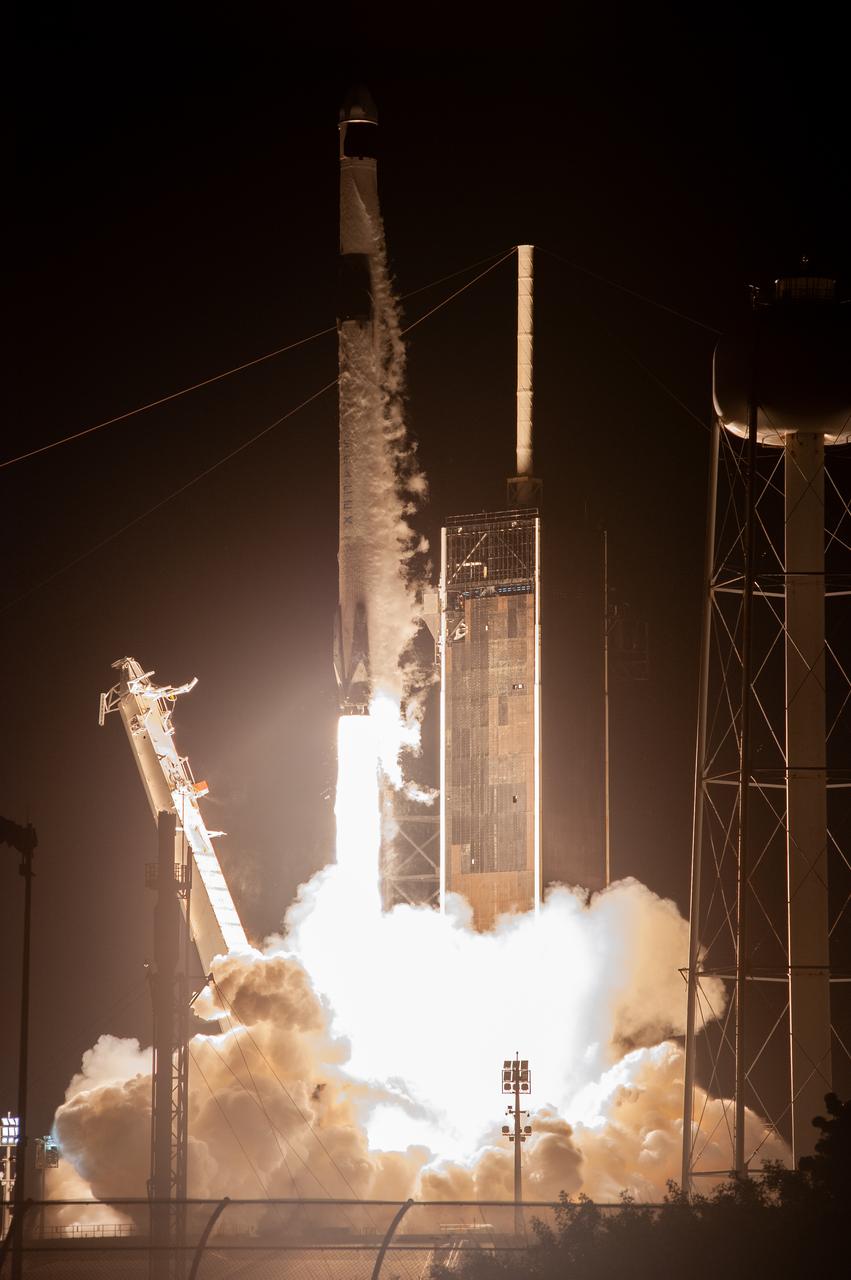
The SpaceX Falcon 9 rocket carrying the Dragon spacecraft lifts off from Launch Complex 39A at NASA’s Kennedy Space Center in Florida on Thursday, Nov. 9, 2023, on the company’s 29th commercial resupply services mission for the agency to the International Space Station. Liftoff was at 8:28 p.m. EST. Dragon will deliver scientific research, technology demonstrations, crew supplies, and hardware to the space station to support its Expedition 70 crew, including NASA’s Integrated Laser Communications Relay Demonstration Low Earth Orbit User Modem and Amplifier Terminal (ILLUMA-T) and Atmospheric Waves Experiment (AWE). The spacecraft is expected to spend about a month attached to the orbiting outpost before it returns to Earth with research and return cargo, splashing down off the coast of Florida.
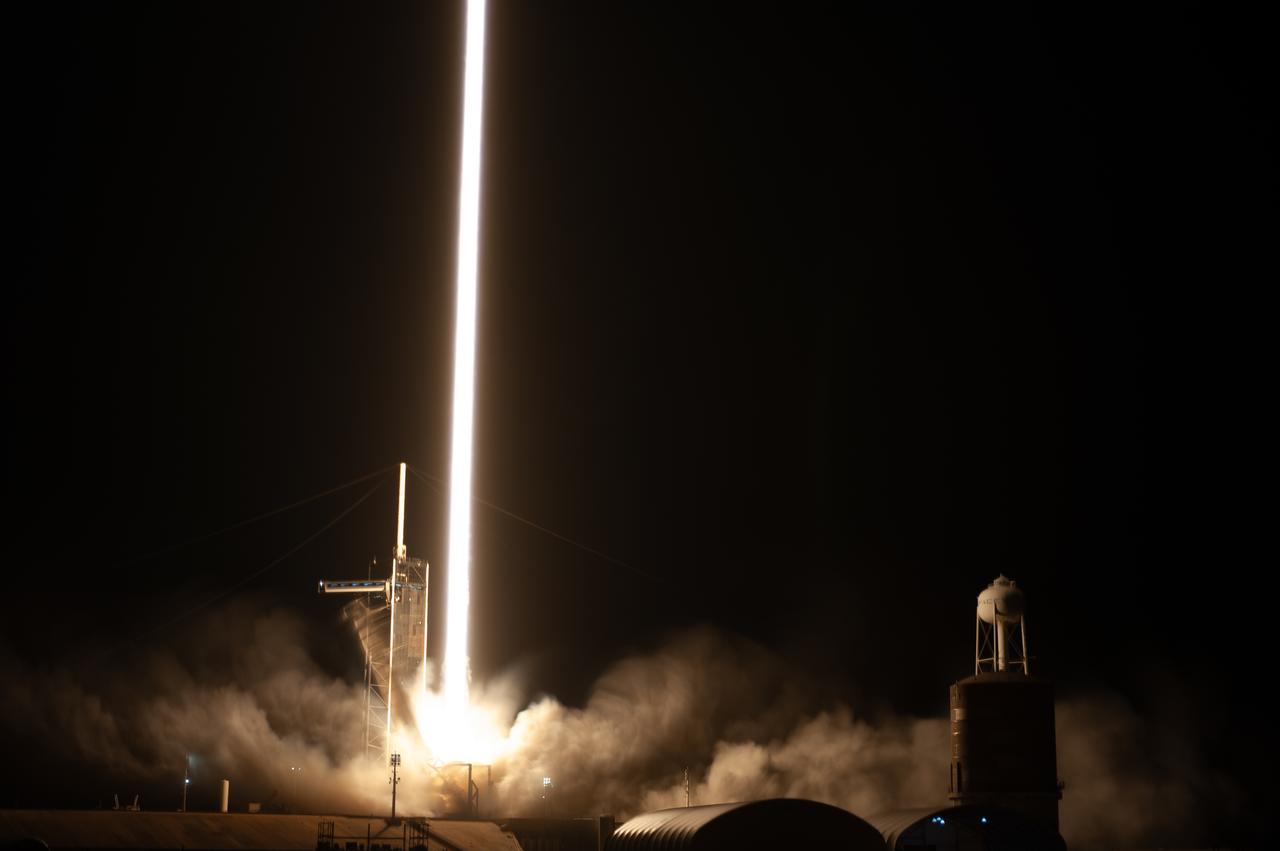
The SpaceX Falcon 9 rocket carrying the Dragon spacecraft lifts off from Launch Complex 39A at NASA’s Kennedy Space Center in Florida on Thursday, Nov. 9, 2023, on the company’s 29th commercial resupply services mission for the agency to the International Space Station. Liftoff was at 8:28 p.m. EST. Dragon will deliver scientific research, technology demonstrations, crew supplies, and hardware to the space station to support its Expedition 70 crew, including NASA’s Integrated Laser Communications Relay Demonstration Low Earth Orbit User Modem and Amplifier Terminal (ILLUMA-T) and Atmospheric Waves Experiment (AWE). The spacecraft is expected to spend about a month attached to the orbiting outpost before it returns to Earth with research and return cargo, splashing down off the coast of Florida.
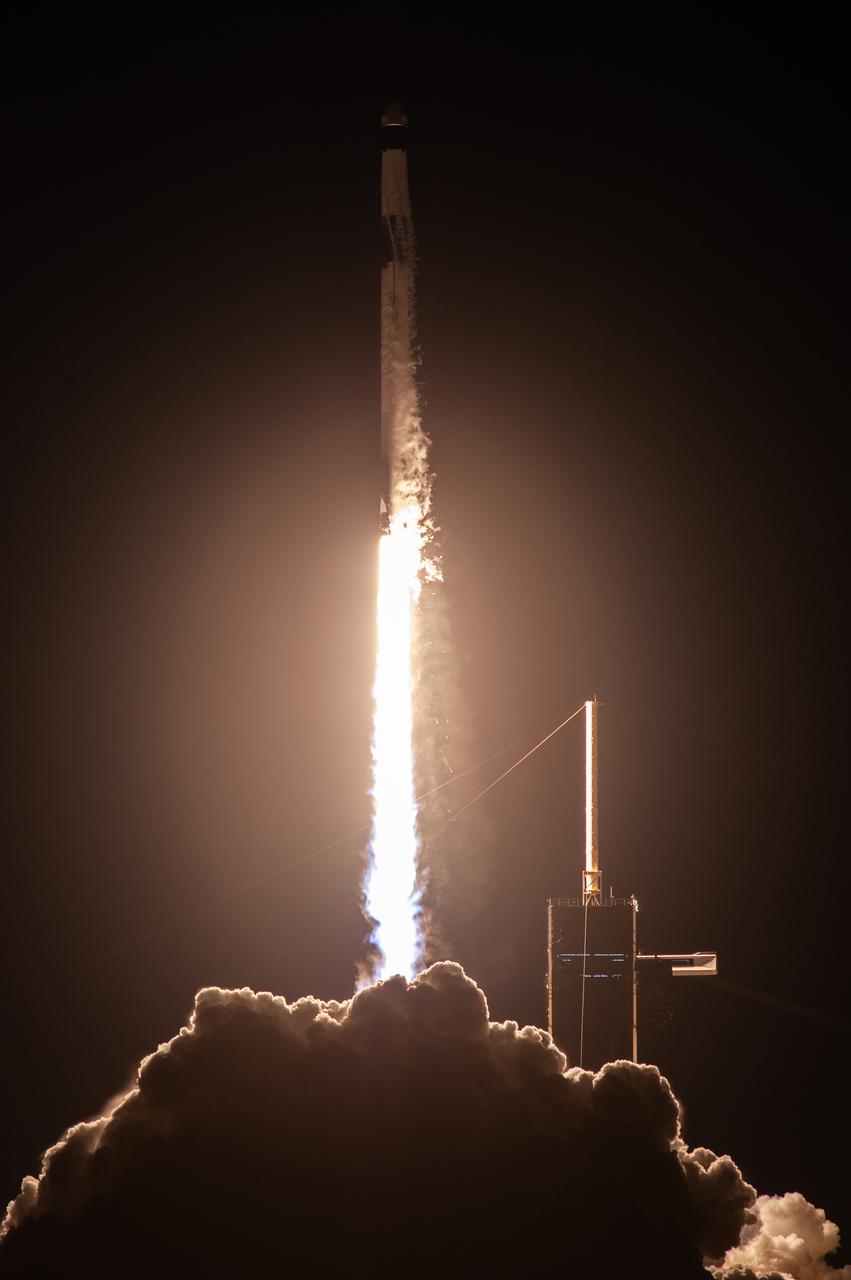
The SpaceX Falcon 9 rocket carrying the Dragon spacecraft lifts off from Launch Complex 39A at NASA’s Kennedy Space Center in Florida on Thursday, Nov. 9, 2023, on the company’s 29th commercial resupply services mission for the agency to the International Space Station. Liftoff was at 8:28 p.m. EST. Dragon will deliver scientific research, technology demonstrations, crew supplies, and hardware to the space station to support its Expedition 70 crew, including NASA’s Integrated Laser Communications Relay Demonstration Low Earth Orbit User Modem and Amplifier Terminal (ILLUMA-T) and Atmospheric Waves Experiment (AWE). The spacecraft is expected to spend about a month attached to the orbiting outpost before it returns to Earth with research and return cargo, splashing down off the coast of Florida.
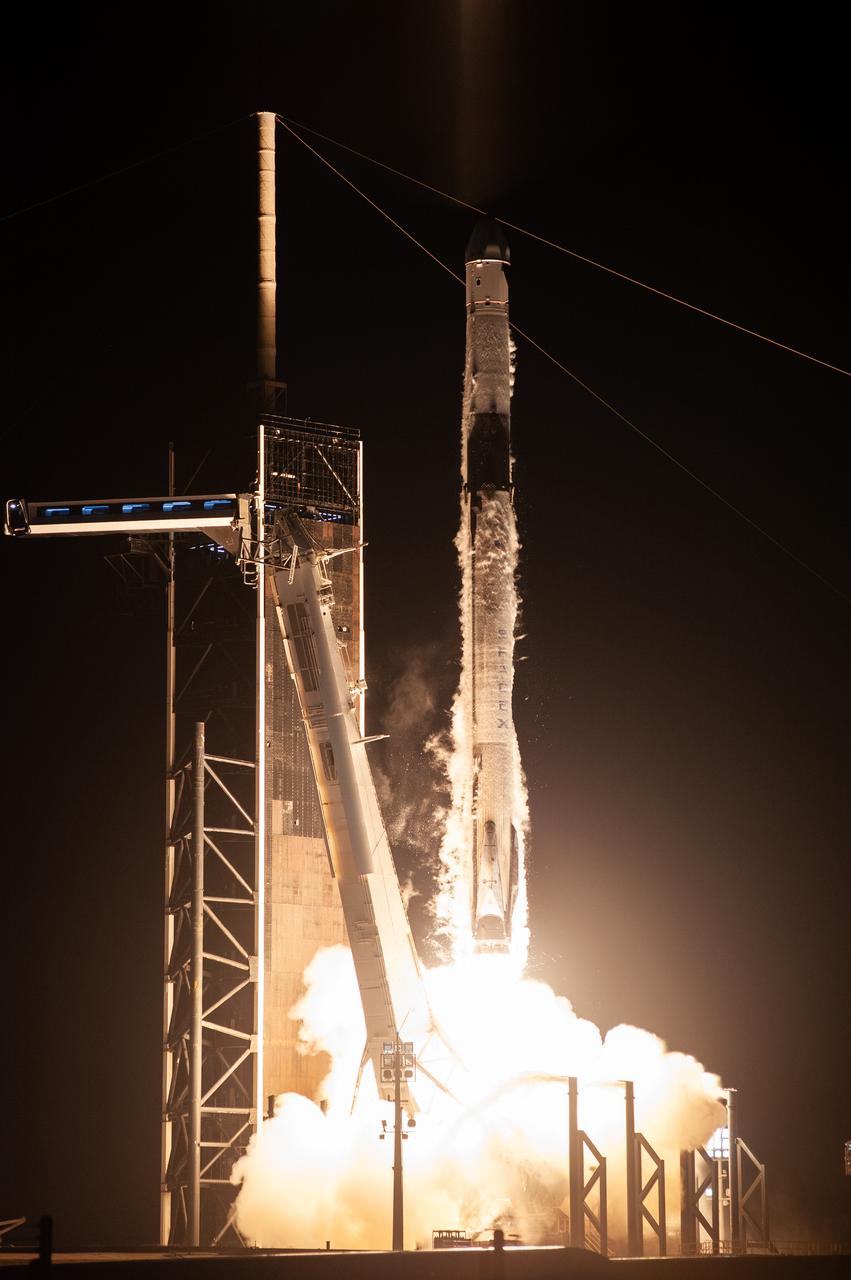
The SpaceX Falcon 9 rocket carrying the Dragon spacecraft lifts off from Launch Complex 39A at NASA’s Kennedy Space Center in Florida on Thursday, Nov. 9, 2023, on the company’s 29th commercial resupply services mission for the agency to the International Space Station. Liftoff was at 8:28 p.m. EST. Dragon will deliver scientific research, technology demonstrations, crew supplies, and hardware to the space station to support its Expedition 70 crew, including NASA’s Integrated Laser Communications Relay Demonstration Low Earth Orbit User Modem and Amplifier Terminal (ILLUMA-T) and Atmospheric Waves Experiment (AWE). The spacecraft is expected to spend about a month attached to the orbiting outpost before it returns to Earth with research and return cargo, splashing down off the coast of Florida.
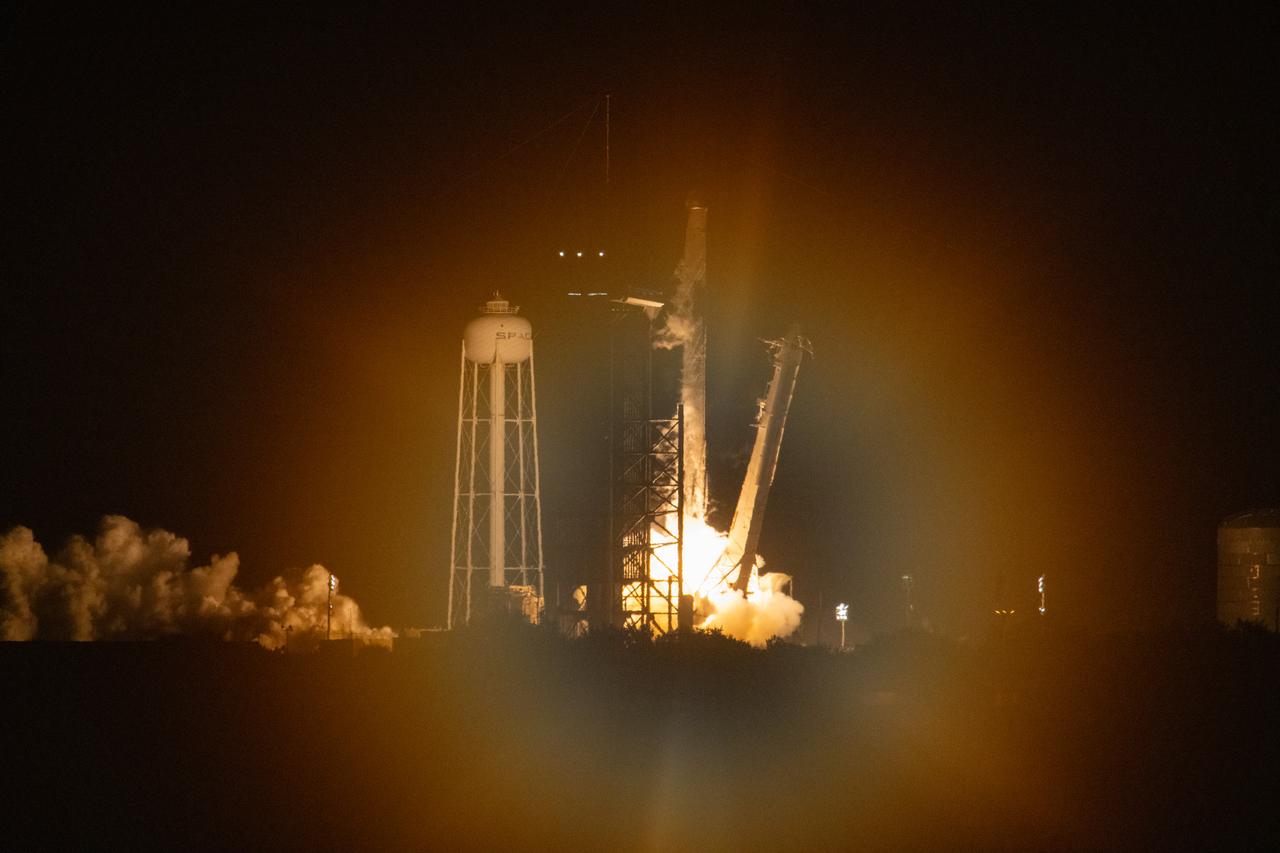
The SpaceX Falcon 9 rocket carrying the Dragon spacecraft lifts off from Launch Complex 39A at NASA’s Kennedy Space Center in Florida on Thursday, Nov. 9, 2023, on the company’s 29th commercial resupply services mission for the agency to the International Space Station. Liftoff was at 8:28 p.m. EST. Dragon will deliver scientific research, technology demonstrations, crew supplies, and hardware to the space station to support its Expedition 70 crew, including NASA’s Integrated Laser Communications Relay Demonstration Low Earth Orbit User Modem and Amplifier Terminal (ILLUMA-T) and Atmospheric Waves Experiment (AWE). The spacecraft is expected to spend about a month attached to the orbiting outpost before it returns to Earth with research and return cargo, splashing down off the coast of Florida.
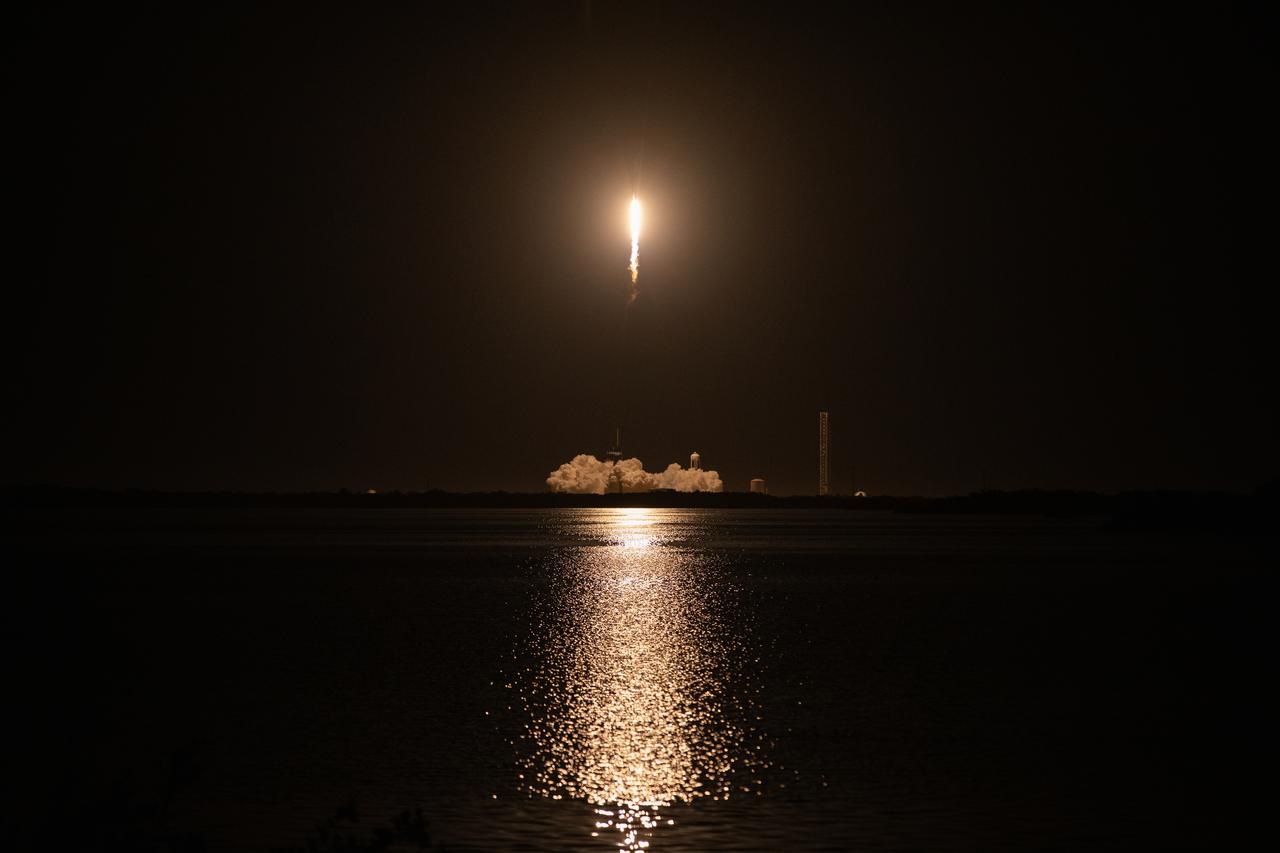
The SpaceX Falcon 9 rocket carrying the Dragon spacecraft lifts off from Launch Complex 39A at NASA’s Kennedy Space Center in Florida on Thursday, Nov. 9, 2023, on the company’s 29th commercial resupply services mission for the agency to the International Space Station. Liftoff was at 8:28 p.m. EST. Dragon will deliver scientific research, technology demonstrations, crew supplies, and hardware to the space station to support its Expedition 70 crew, including NASA’s Integrated Laser Communications Relay Demonstration Low Earth Orbit User Modem and Amplifier Terminal (ILLUMA-T) and Atmospheric Waves Experiment (AWE). The spacecraft is expected to spend about a month attached to the orbiting outpost before it returns to Earth with research and return cargo, splashing down off the coast of Florida.
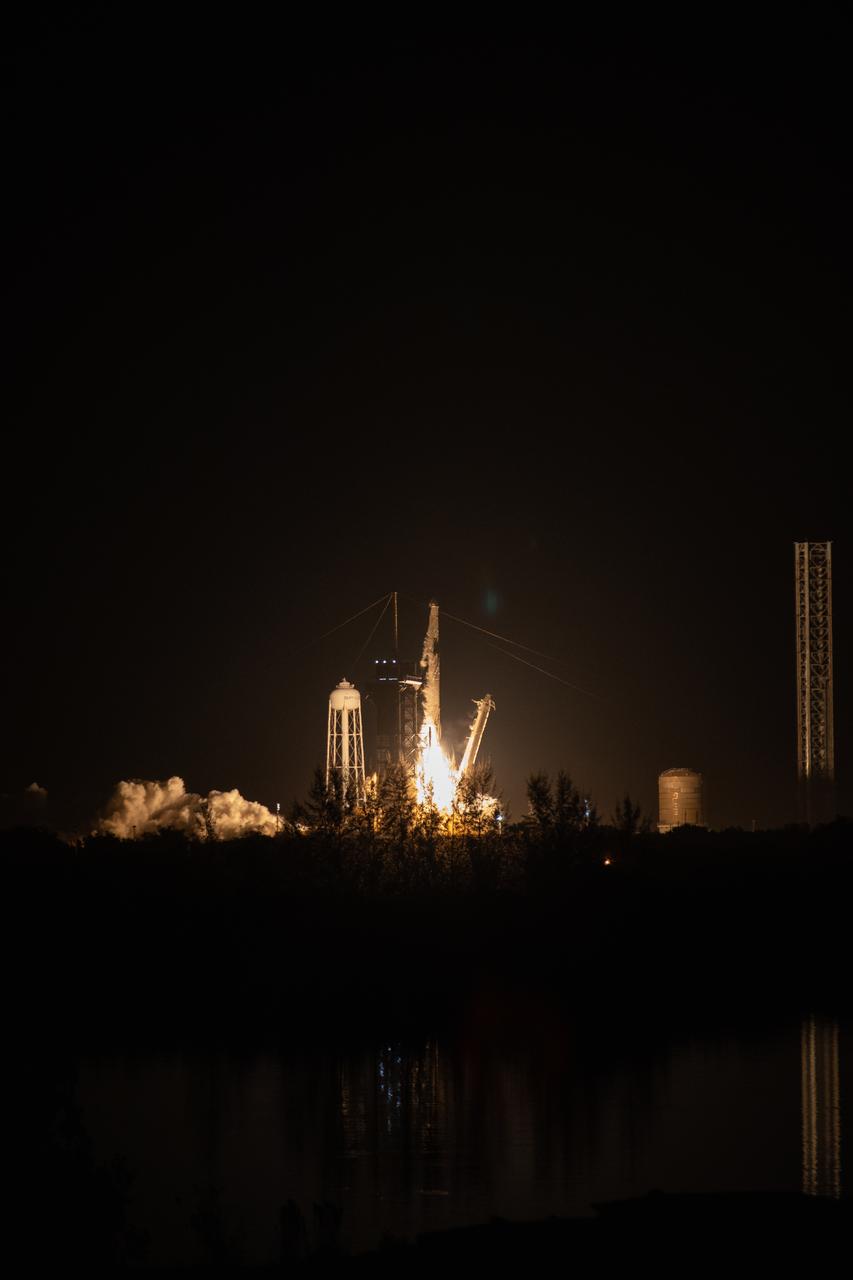
The SpaceX Falcon 9 rocket carrying the Dragon spacecraft lifts off from Launch Complex 39A at NASA’s Kennedy Space Center in Florida on Thursday, Nov. 9, 2023, on the company’s 29th commercial resupply services mission for the agency to the International Space Station. Liftoff was at 8:28 p.m. EST. Dragon will deliver scientific research, technology demonstrations, crew supplies, and hardware to the space station to support its Expedition 70 crew, including NASA’s Integrated Laser Communications Relay Demonstration Low Earth Orbit User Modem and Amplifier Terminal (ILLUMA-T) and Atmospheric Waves Experiment (AWE). The spacecraft is expected to spend about a month attached to the orbiting outpost before it returns to Earth with research and return cargo, splashing down off the coast of Florida.
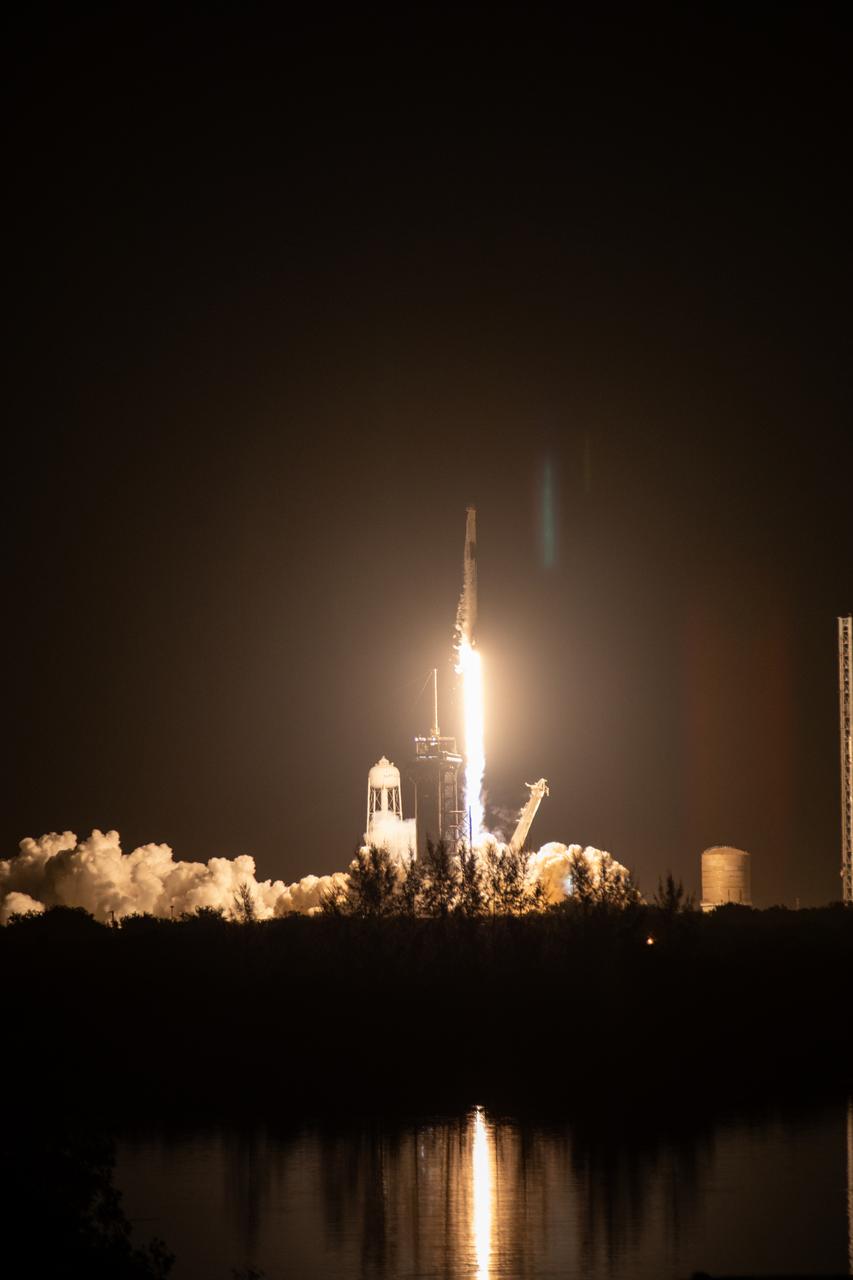
The SpaceX Falcon 9 rocket carrying the Dragon spacecraft lifts off from Launch Complex 39A at NASA’s Kennedy Space Center in Florida on Thursday, Nov. 9, 2023, on the company’s 29th commercial resupply services mission for the agency to the International Space Station. Liftoff was at 8:28 p.m. EST. Dragon will deliver scientific research, technology demonstrations, crew supplies, and hardware to the space station to support its Expedition 70 crew, including NASA’s Integrated Laser Communications Relay Demonstration Low Earth Orbit User Modem and Amplifier Terminal (ILLUMA-T) and Atmospheric Waves Experiment (AWE). The spacecraft is expected to spend about a month attached to the orbiting outpost before it returns to Earth with research and return cargo, splashing down off the coast of Florida.
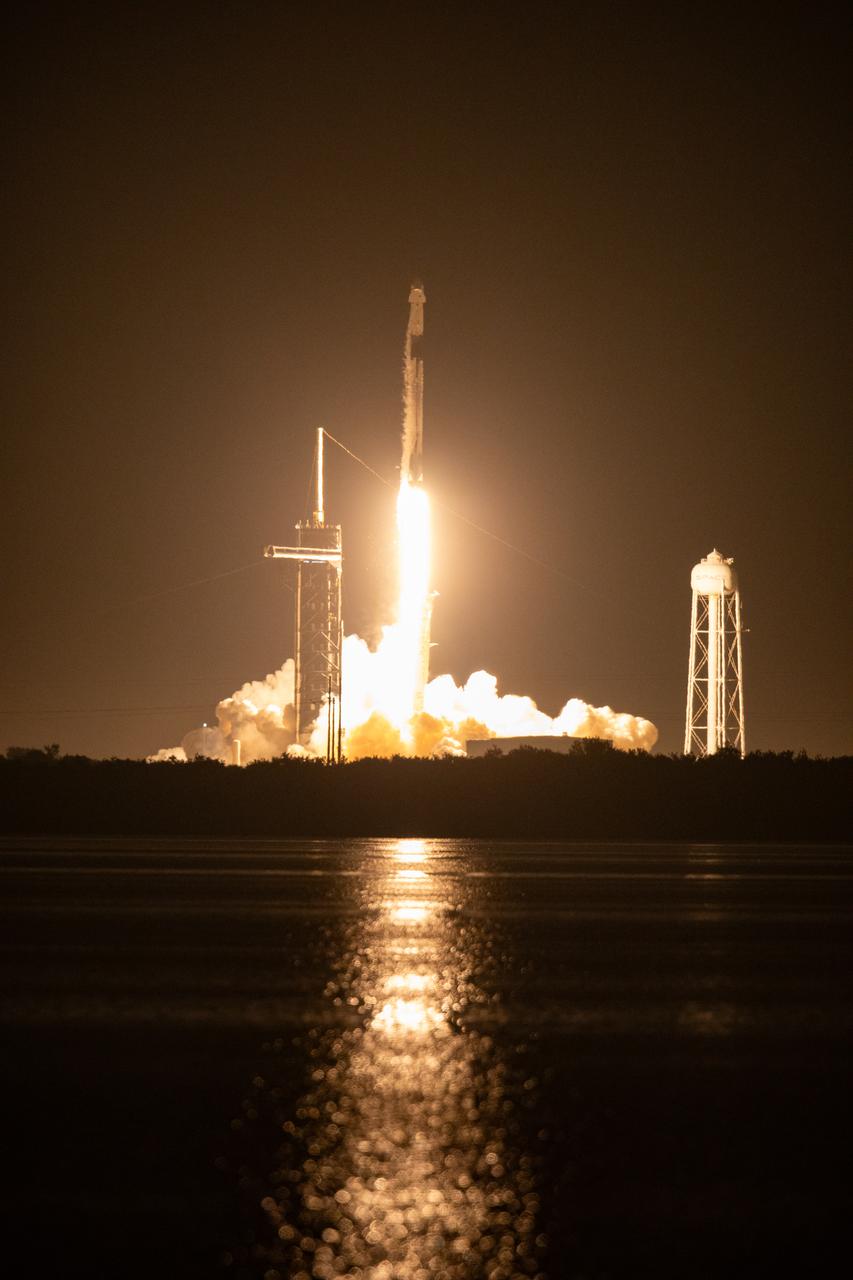
The SpaceX Falcon 9 rocket carrying the Dragon spacecraft lifts off from Launch Complex 39A at NASA’s Kennedy Space Center in Florida on Thursday, Nov. 9, 2023, on the company’s 29th commercial resupply services mission for the agency to the International Space Station. Liftoff was at 8:28 p.m. EST. Dragon will deliver scientific research, technology demonstrations, crew supplies, and hardware to the space station to support its Expedition 70 crew, including NASA’s Integrated Laser Communications Relay Demonstration Low Earth Orbit User Modem and Amplifier Terminal (ILLUMA-T) and Atmospheric Waves Experiment (AWE). The spacecraft is expected to spend about a month attached to the orbiting outpost before it returns to Earth with research and return cargo, splashing down off the coast of Florida.
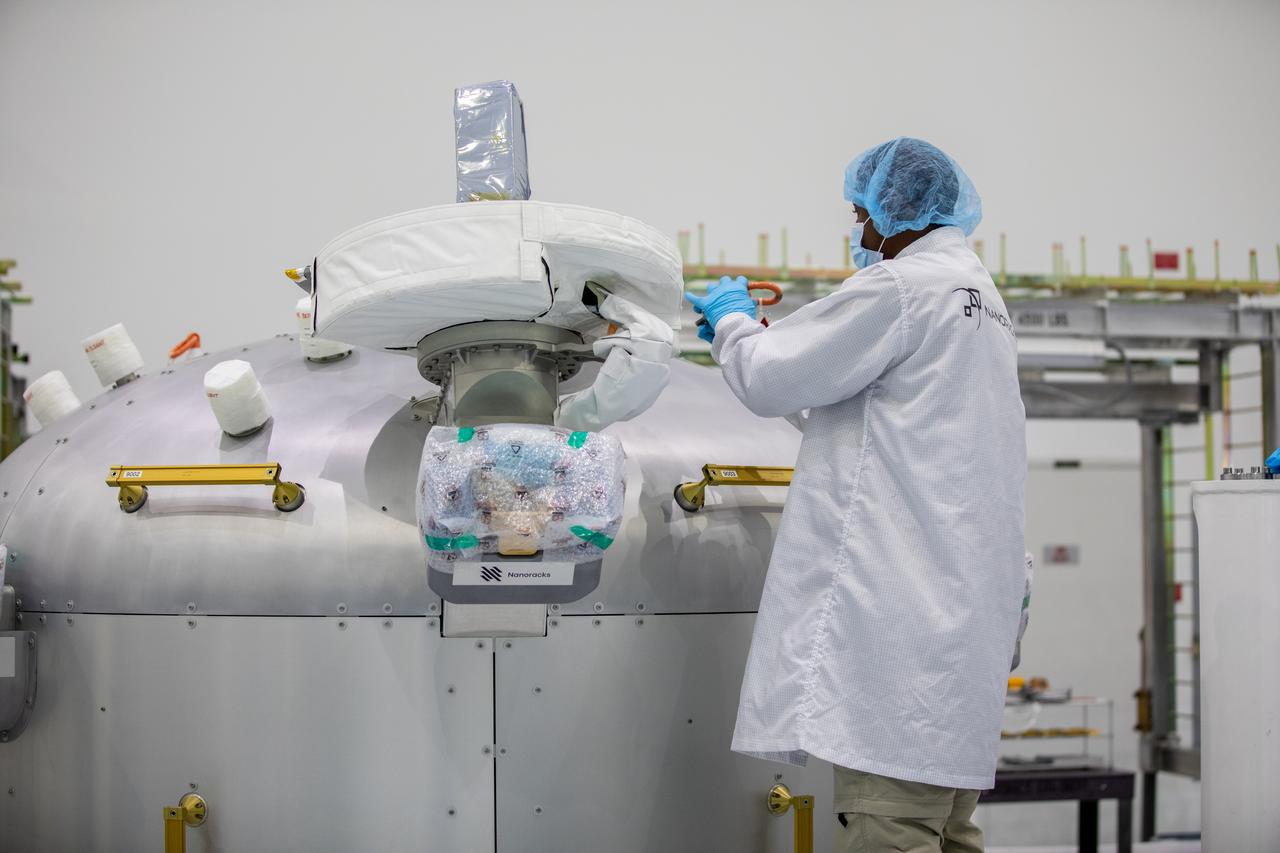
A Nanoracks technician works on the Nanoracks Bishop Airlock inside the Space Station Processing Facility at NASA's Kennedy Space Center in Florida on Sept. 29, 2020. The next-generation Nanoracks payload facility is being prepared for its flight to the International Space Station on SpaceX’s 21st commercial resupply services mission (CRS-21) to the International Space Station. The Bishop Airlock is the first commercially funded airlock for the space station. It will provide payload hosting, robotics testing, satellite deployment, and serve as an outside toolbox for station crew spacewalks, and more. CRS-21 is scheduled to launch on a SpaceX Falcon 9 rocket no earlier than November from Launch Complex 39A at Kennedy Space Center.
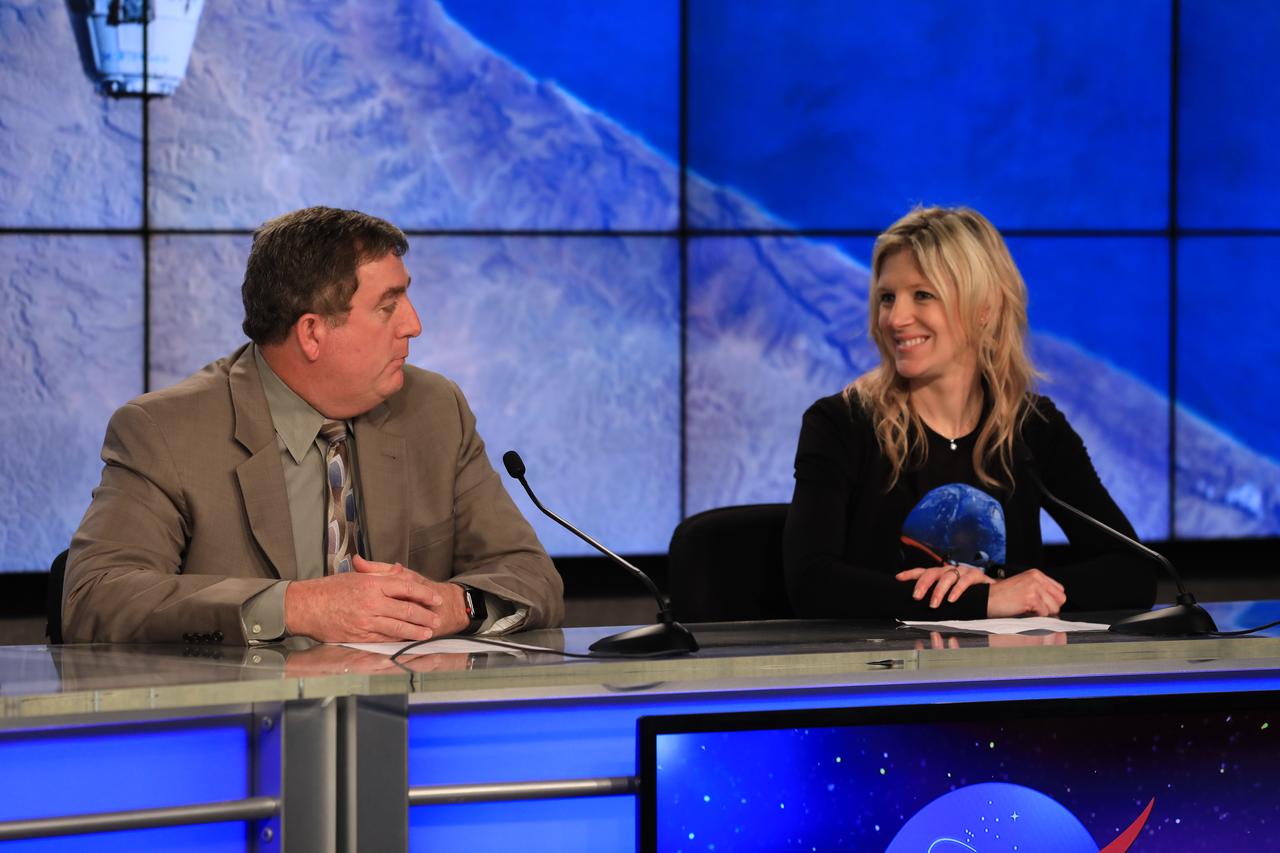
In the Press Site auditorium of NASA's Kennedy Space Center in Florida, from left, Kirk Shireman, manager, International Space Station Program, and Jessica Jensen, Director, Dragon Mission Management, SpaceX, speak to media at a post-launch news conference following the liftoff of SpaceX CRS-15. The flight is a commercial resupply services mission to the International Space Station. SpaceX CRS-15 lifted off atop a Falcon 9 rocket from Space Launch Complex 40 at Cape Canaveral Air Force Station on Friday, June 29, 2018, at 5:42 a.m. EDT with supplies and materials to support multiple critical science and research investigations.
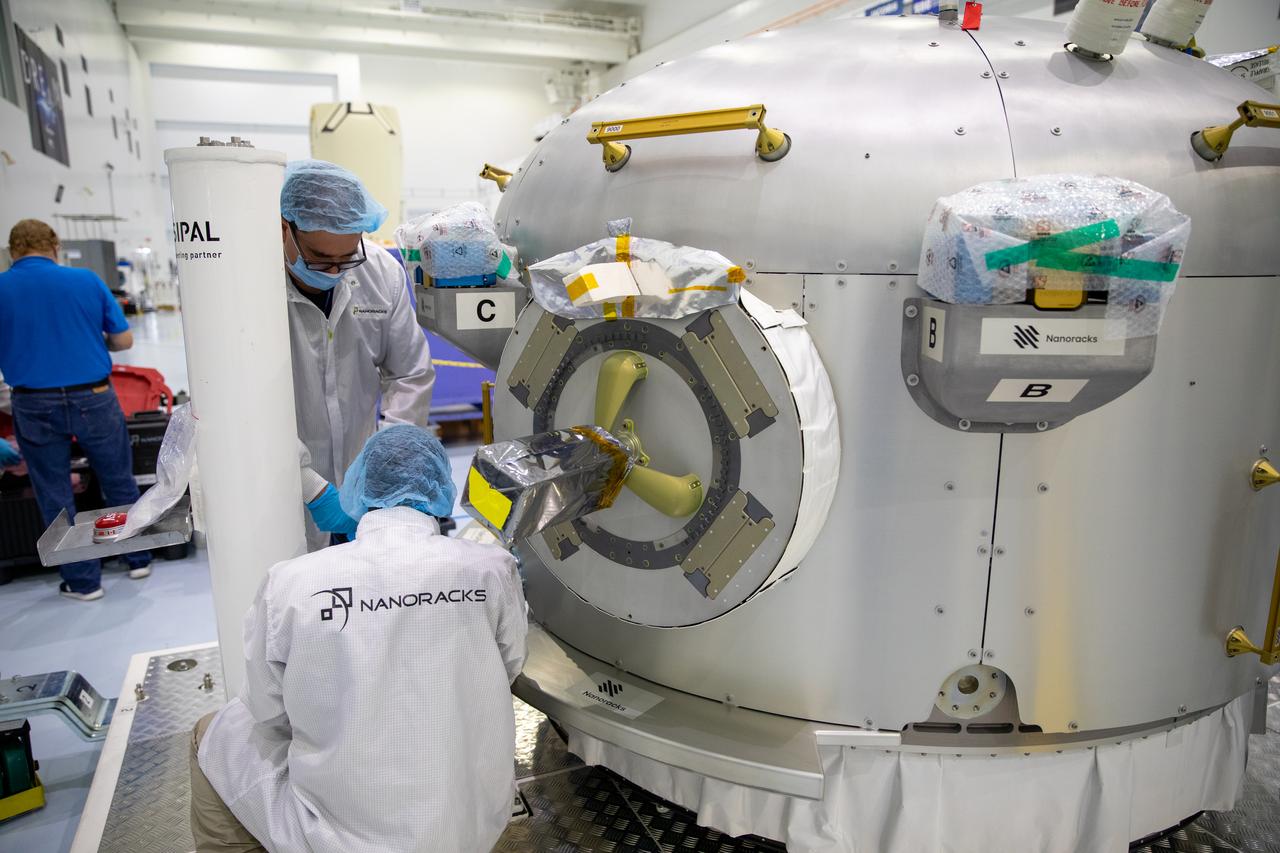
Nanoracks technicians work on the NanoRacks Bishop Airlock inside the Space Station Processing Facility at NASA's Kennedy Space Center in Florida on Sept. 29, 2020. The next-generation Nanoracks payload facility is being prepared for its flight to the International Space Station on SpaceX’s 21st commercial resupply services mission (CRS-21) to the International Space Station. The Bishop Airlock is the first commercially funded airlock for the space station. It will provide payload hosting, robotics testing, satellite deployment, serve as an outside toolbox for station crew spacewalks, and more. CRS-21 is scheduled to launch on a SpaceX Falcon 9 rocket no earlier than November from Launch Complex 39A at Kennedy Space Center.
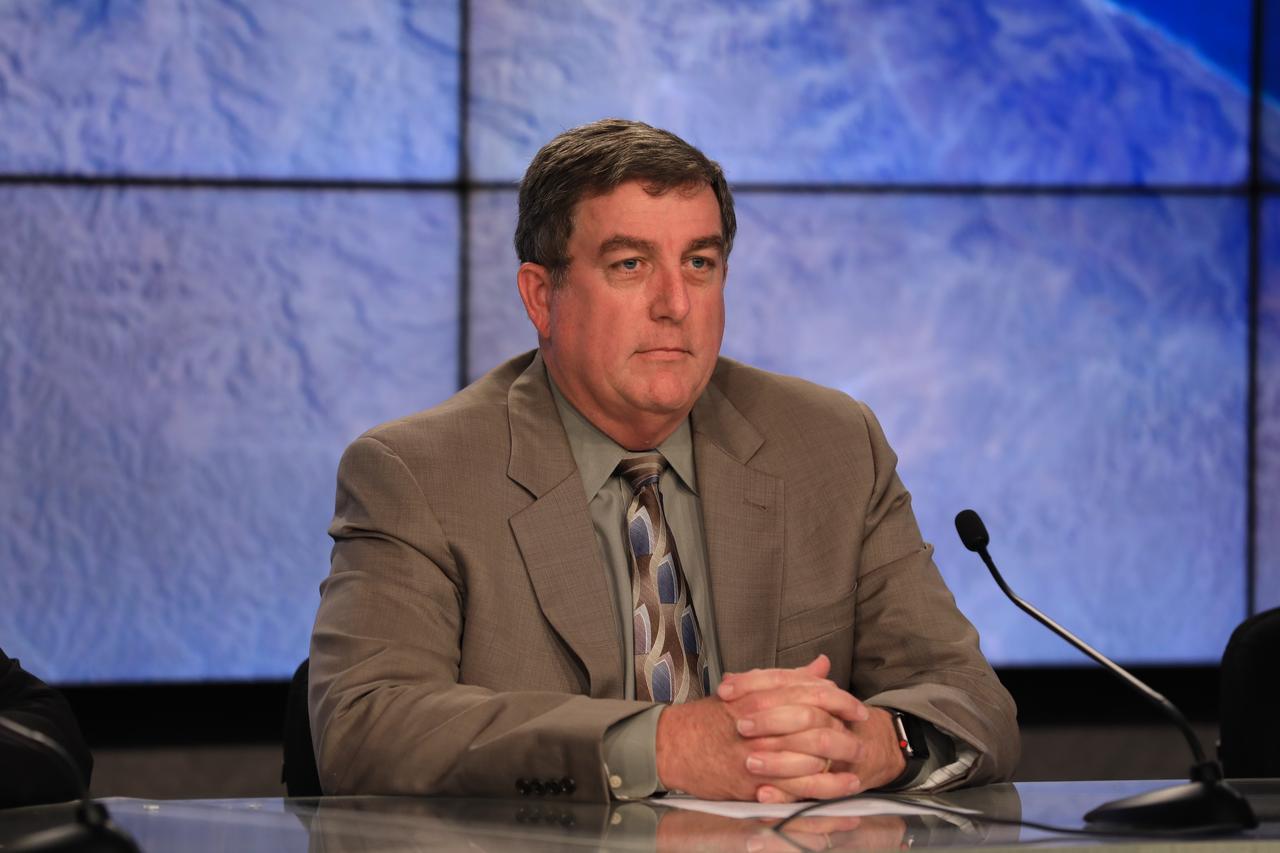
In the Press Site auditorium of NASA's Kennedy Space Center in Florida, Kirk Shireman, manager, International Space Station Program, speaks to media at a post-launch news conference following the liftoff of SpaceX CRS-15. The flight is a commercial resupply services mission to the International Space Station. SpaceX CRS-15 lifted off atop a Falcon 9 rocket from Space Launch Complex 40 at Cape Canaveral Air Force Station on Friday, June 29, 2018, at 5:42 a.m. EDT with supplies and materials to support multiple critical science and research investigations.
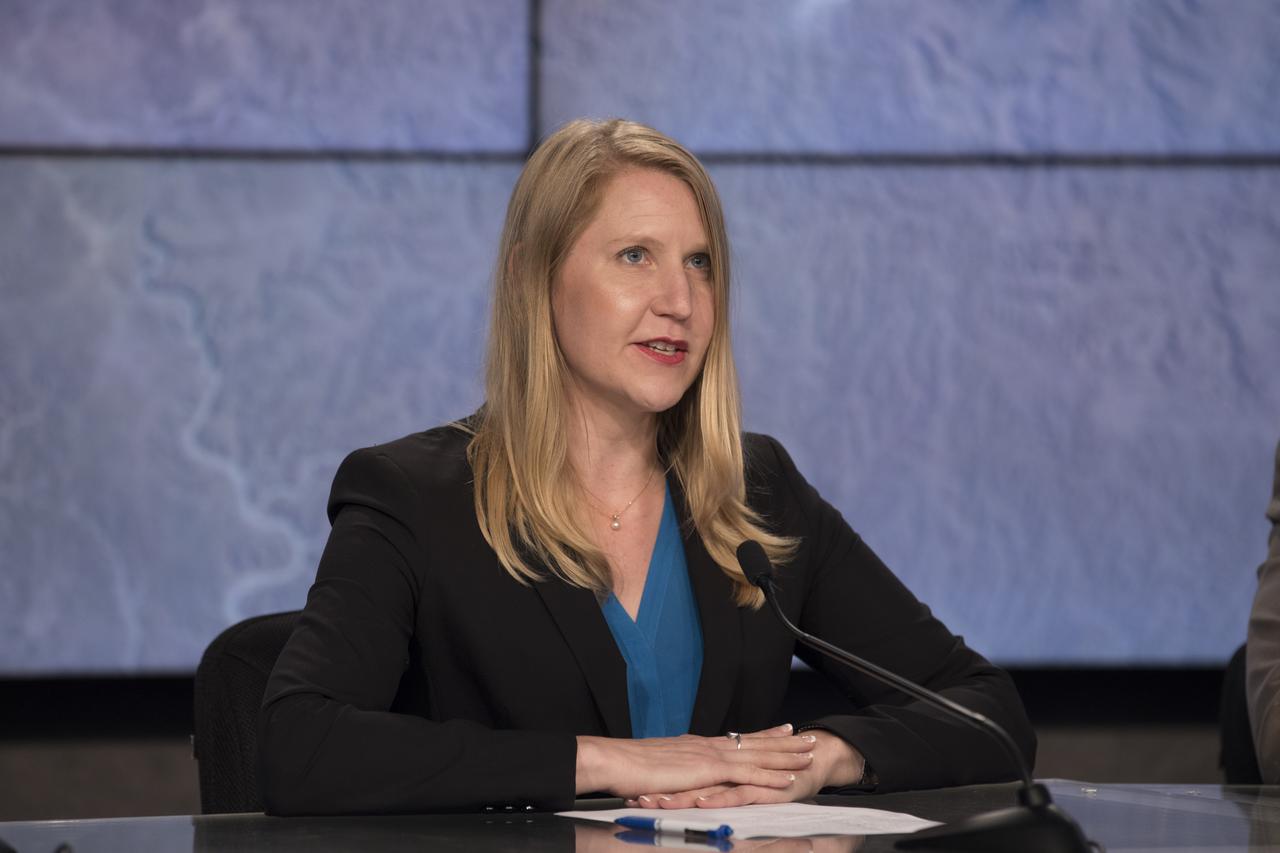
In the Press Site auditorium of NASA's Kennedy Space Center in Florida, Stephanie Schierholz of NASA Communications speaks to media at a post-launch news conference following the liftoff of SpaceX CRS-15. The flight is a commercial resupply services mission to the International Space Station. SpaceX CRS-15 lifted off atop a Falcon 9 rocket from Space Launch Complex 40 at Cape Canaveral Air Force Station on Friday, June 29, 2018, at 5:42 a.m. EDT with supplies and materials to support multiple critical science and research investigations.
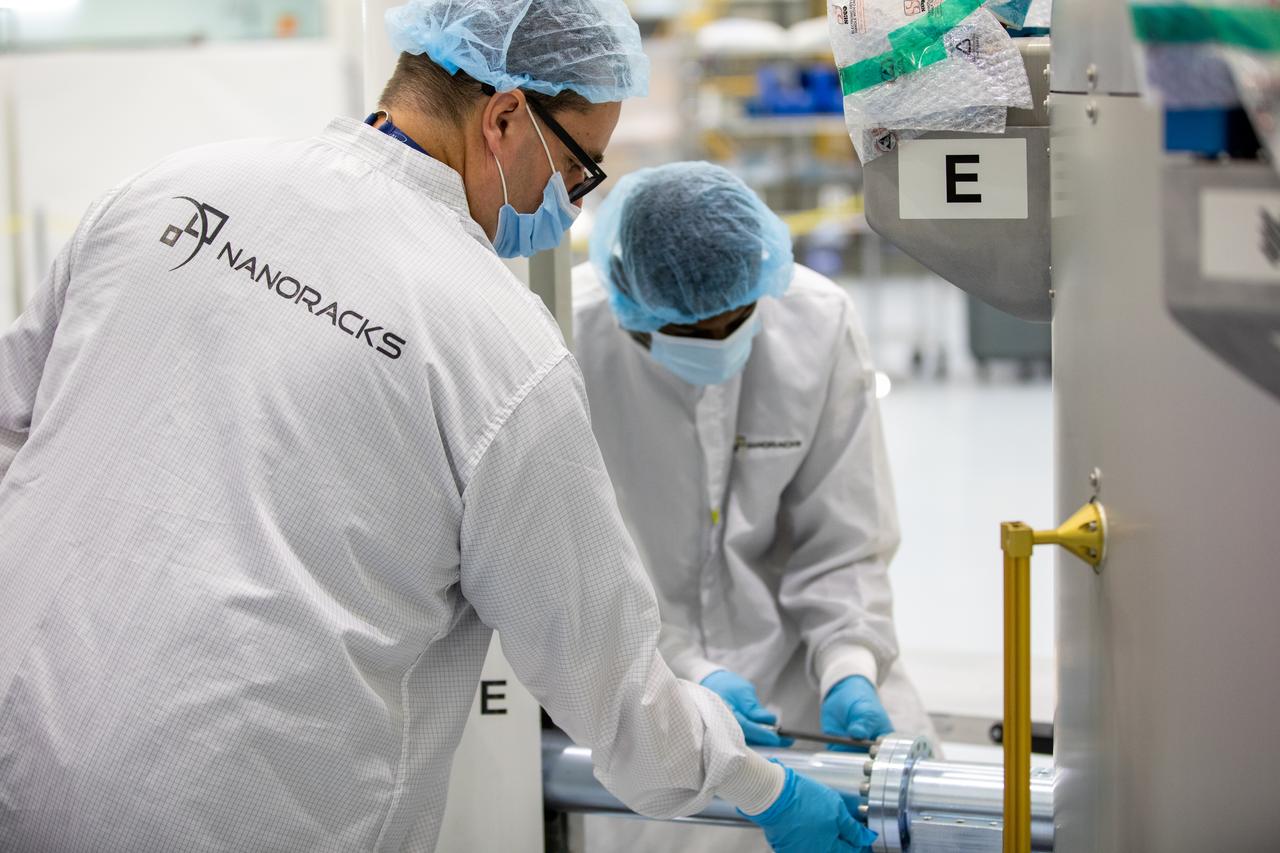
Nanoracks technicians work on the Nanoracks Bishop Airlock inside the Space Station Processing Facility at NASA's Kennedy Space Center in Florida on Sept. 29, 2020. The next-generation Nanoracks payload facility is being prepared for its flight to the International Space Station on SpaceX’s 21st commercial resupply services mission (CRS-21) to the International Space Station. The Bishop Airlock is the first commercially funded airlock for the space station. It will provide payload hosting, robotics testing, satellite deployment, serve as an outside toolbox for station crew spacewalks, and more. CRS-21 is scheduled to launch on a SpaceX Falcon 9 rocket no earlier than November from Launch Complex 39A at Kennedy Space Center.
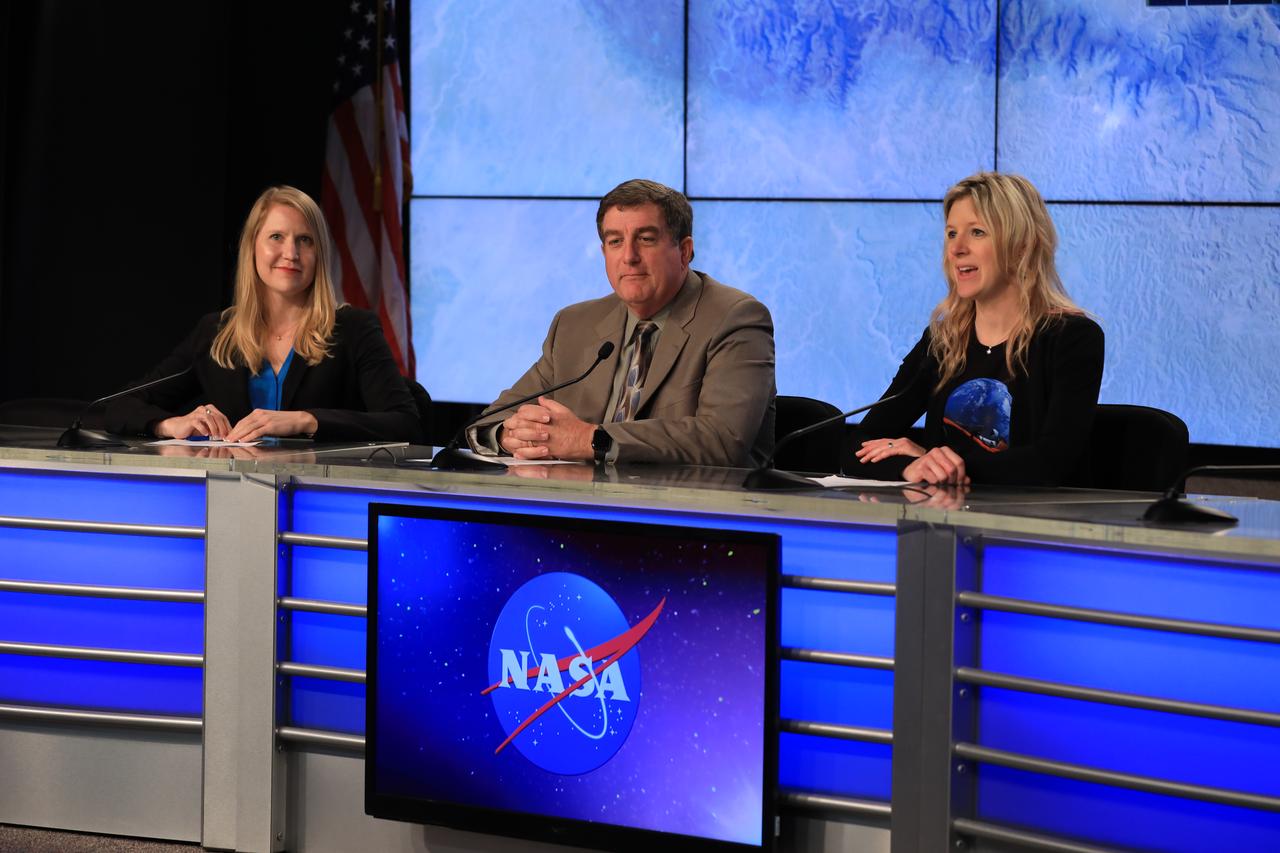
In the Press Site auditorium of NASA's Kennedy Space Center in Florida, from left, Stephanie Schierholz of NASA Communications, Kirk Shireman, manager, International Space Station Program, and Jessica Jensen, Director, Dragon Mission Management, SpaceX, speak to media at a post-launch news conference following the liftoff of SpaceX CRS-15. The flight is a commercial resupply services mission to the International Space Station. SpaceX CRS-15 lifted off atop a Falcon 9 rocket from Space Launch Complex 40 at Cape Canaveral Air Force Station on Friday, June 29, 2018, at 5:42 a.m. EDT with supplies and materials to support multiple critical science and research investigations.
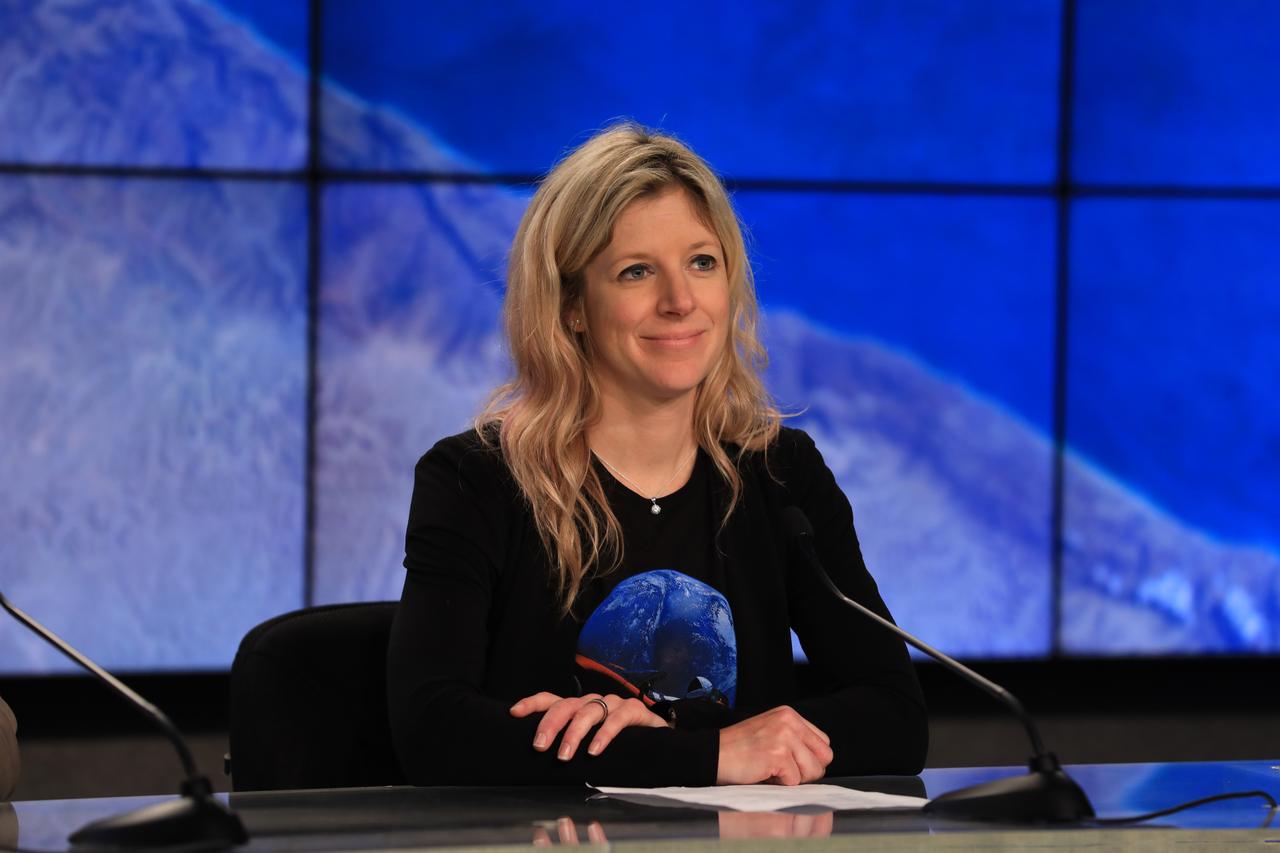
In the Press Site auditorium of NASA's Kennedy Space Center in Florida, Jessica Jensen, Director, Dragon Mission Management, SpaceX, speaks to media at a post-launch news conference following the liftoff of SpaceX CRS-15. The flight is a commercial resupply services mission to the International Space Station. SpaceX CRS-15 lifted off atop a Falcon 9 rocket from Space Launch Complex 40 at Cape Canaveral Air Force Station on Friday, June 29, 2018, at 5:42 a.m. EDT with supplies and materials to support multiple critical science and research investigations.
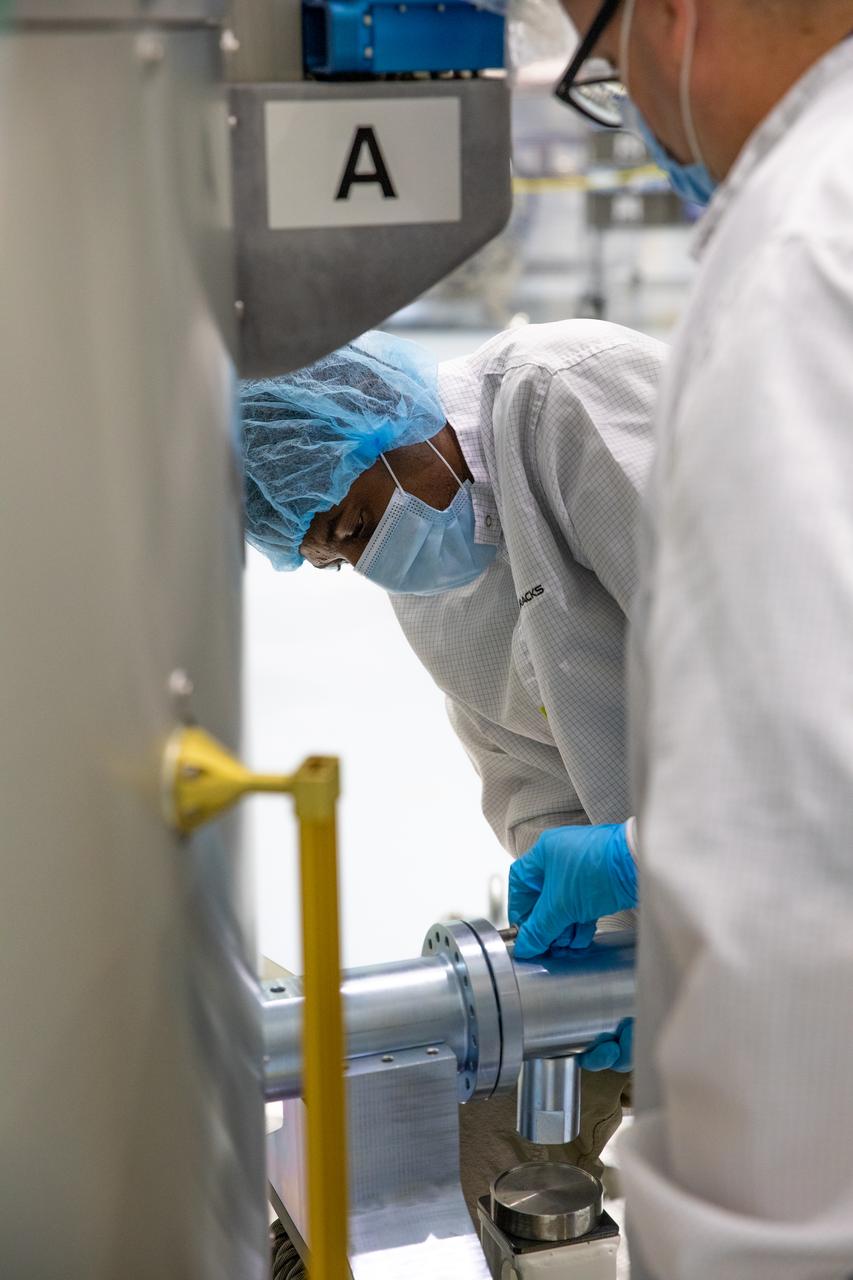
Nanoracks technicians work on the NanoRacks Bishop Airlock inside the Space Station Processing Facility at NASA's Kennedy Space Center in Florida on Sept. 29, 2020. The next-generation Nanoracks payload facility is being prepared for its flight to the International Space Station on SpaceX’s 21st commercial resupply services mission (CRS-21) to the International Space Station. The Bishop Airlock is the first commercially funded airlock for the space station. It will provide payload hosting, robotics testing, satellite deployment, serve as an outside toolbox for station crew spacewalks, and more. CRS-21 is scheduled to launch on a SpaceX Falcon 9 rocket no earlier than November from Launch Complex 39A at Kennedy Space Center.
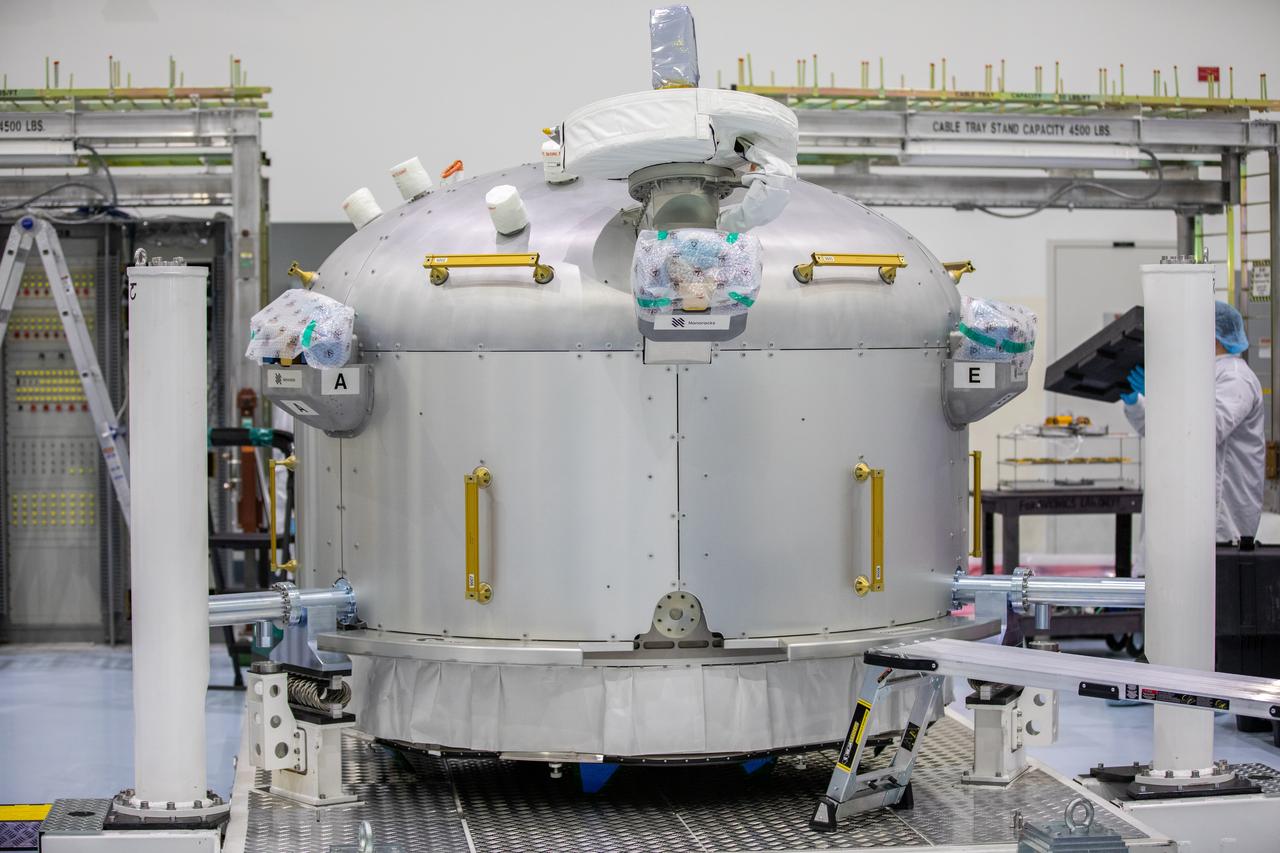
The Nanoracks Bishop Airlock is in view inside the Space Station Processing Facility at NASA's Kennedy Space Center in Florida on Sept. 29, 2020. The next-generation Nanoracks payload facility is being prepared for its flight to the International Space Station on SpaceX’s 21st commercial resupply services mission (CRS-21) to the International Space Station. The Bishop Airlock is the first commercially funded airlock for the space station. It will provide payload hosting, robotics testing, satellite deployment, serve as an outside toolbox for station crew spacewalks, and more. CRS-21 is scheduled to launch on a SpaceX Falcon 9 rocket no earlier than November from Launch Complex 39A at Kennedy Space Center.
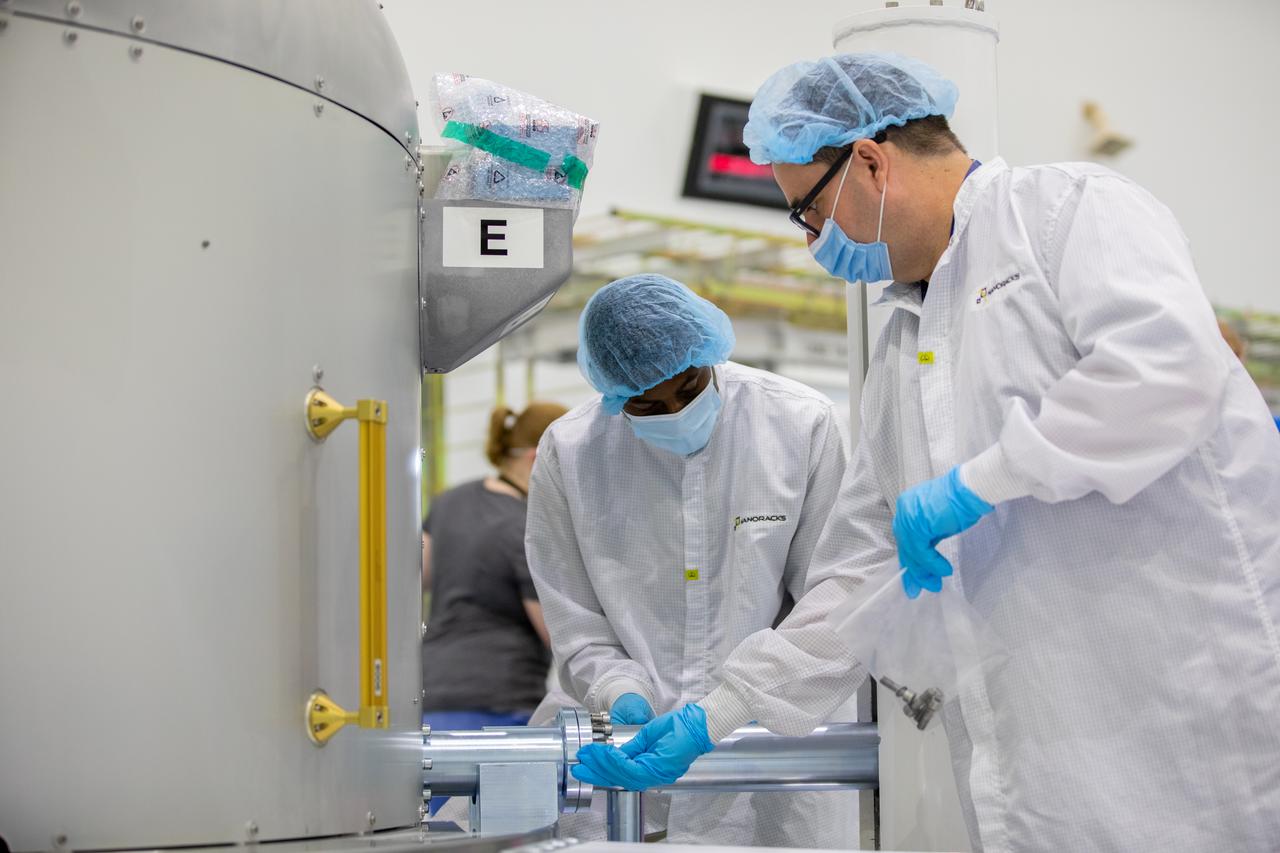
Nanoracks technicians work on the NanoRacks Bishop Airlock inside the Space Station Processing Facility at NASA's Kennedy Space Center in Florida on Sept. 29, 2020. The next-generation Nanoracks payload facility is being prepared for its flight to the International Space Station on SpaceX’s 21st commercial resupply services mission (CRS-21) to the International Space Station. The Bishop Airlock is the first commercially funded airlock for the space station. It will provide payload hosting, robotics testing, satellite deployment, serve as an outside toolbox for station crew spacewalks, and more. CRS-21 is scheduled to launch on a SpaceX Falcon 9 rocket no earlier than November from Launch Complex 39A at Kennedy Space Center.
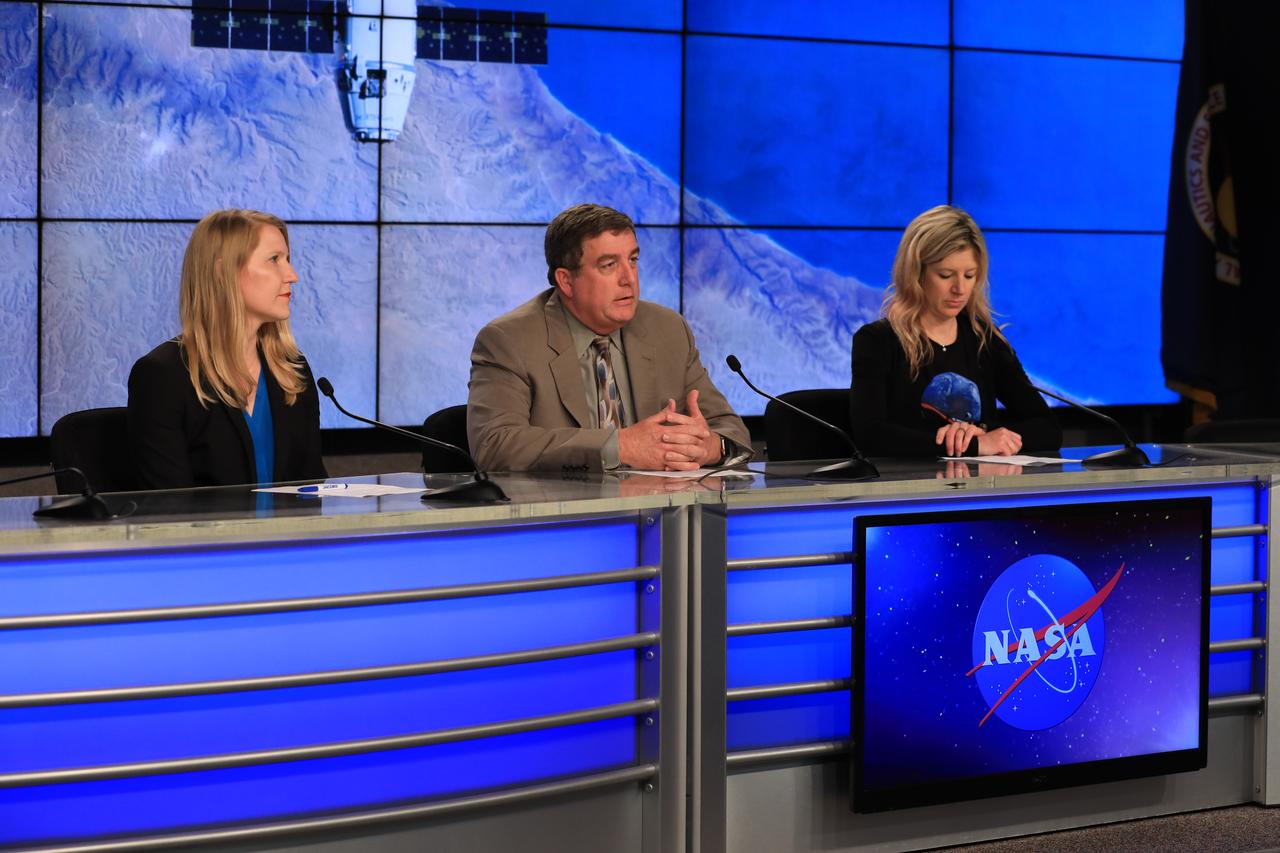
In the Press Site auditorium of NASA's Kennedy Space Center in Florida, from left, Stephanie Schierholz of NASA Communications, Kirk Shireman, manager, International Space Station Program, and Jessica Jensen, Director, Dragon Mission Management, SpaceX, speak to media at a post-launch news conference following the liftoff of SpaceX CRS-15. The flight is a commercial resupply services mission to the International Space Station. SpaceX CRS-15 lifted off atop a Falcon 9 rocket from Space Launch Complex 40 at Cape Canaveral Air Force Station on Friday, June 29, 2018, at 5:42 a.m. EDT with supplies and materials to support multiple critical science and research investigations.
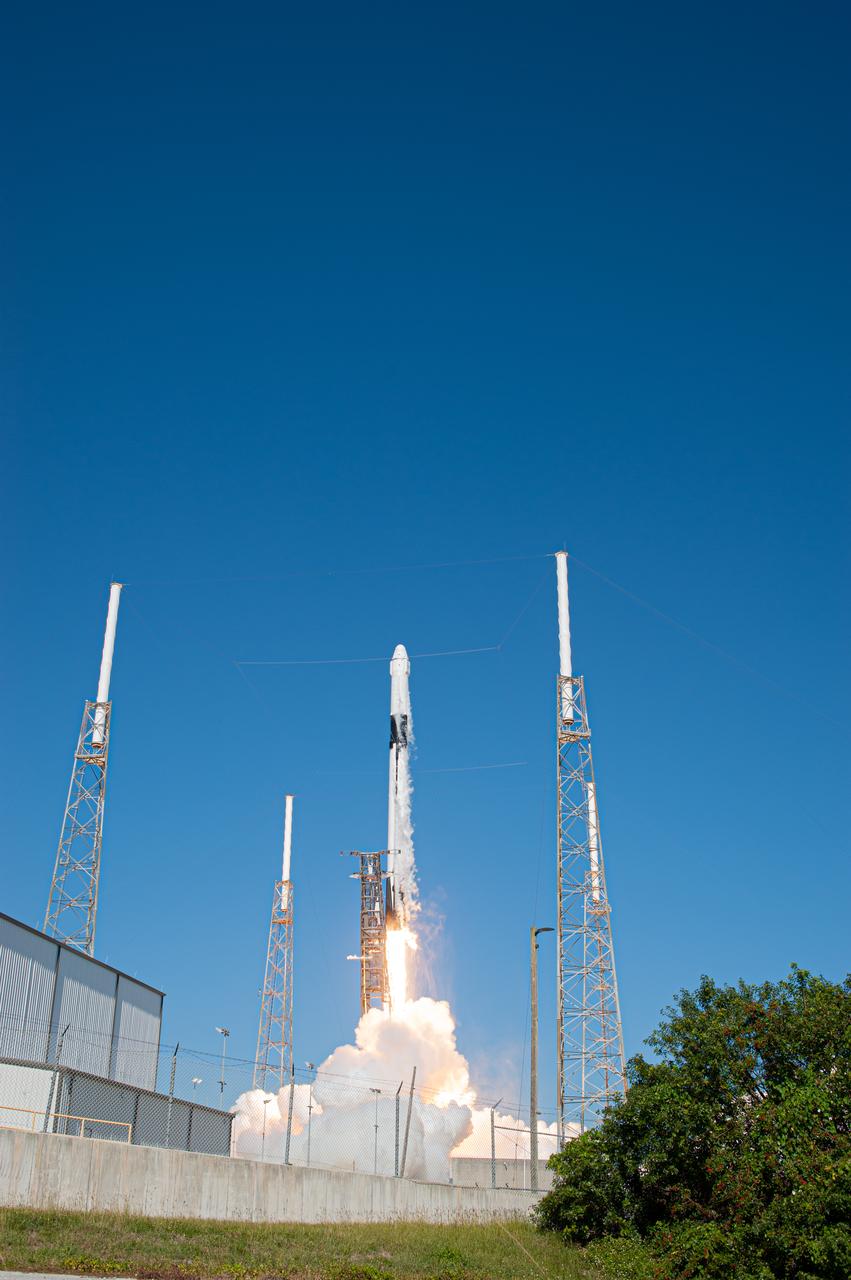
The SpaceX Falcon 9 rocket with the Dragon cargo module climbs upward after liftoff from Space Launch Complex 40 on Cape Canaveral Air Force Station in Florida in the early afternoon on Dec. 5, 2019. Liftoff was at 12:29 p.m. EST. This is SpaceX’s 19th Commercial Resupply Services (CRS-19) mission for NASA to the International Space Station. The Dragon cargo module will deliver more than 5,700 pounds of science and research, crew supplies and vehicle hardware to the orbital laboratory and its crew.
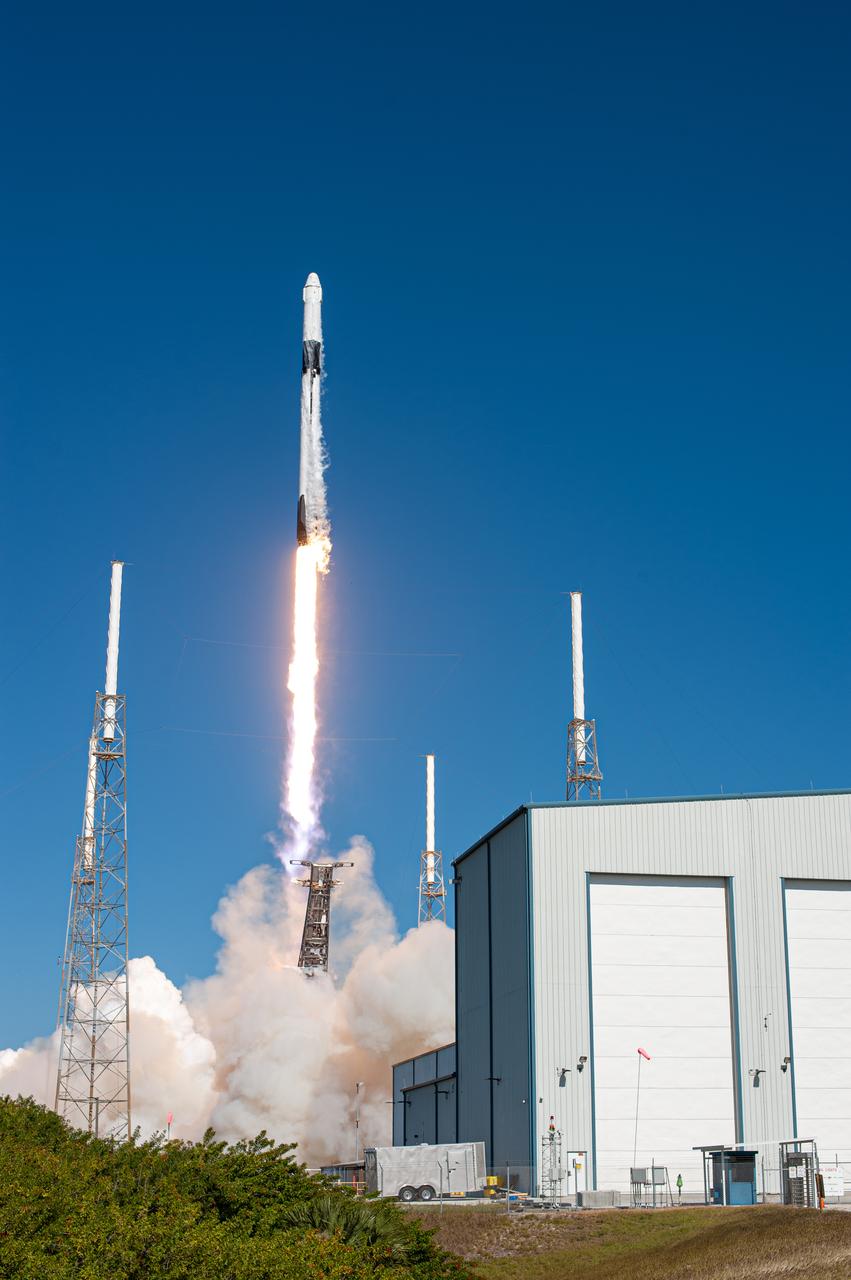
The SpaceX Falcon 9 rocket with the Dragon cargo module climbs upward after liftoff from Space Launch Complex 40 on Cape Canaveral Air Force Station in Florida in the early afternoon on Dec. 5, 2019. Liftoff was at 12:29 p.m. EST. This is SpaceX’s 19th Commercial Resupply Services (CRS-19) mission for NASA to the International Space Station. The Dragon cargo module will deliver more than 5,700 pounds of science and research, crew supplies and vehicle hardware to the orbital laboratory and its crew.
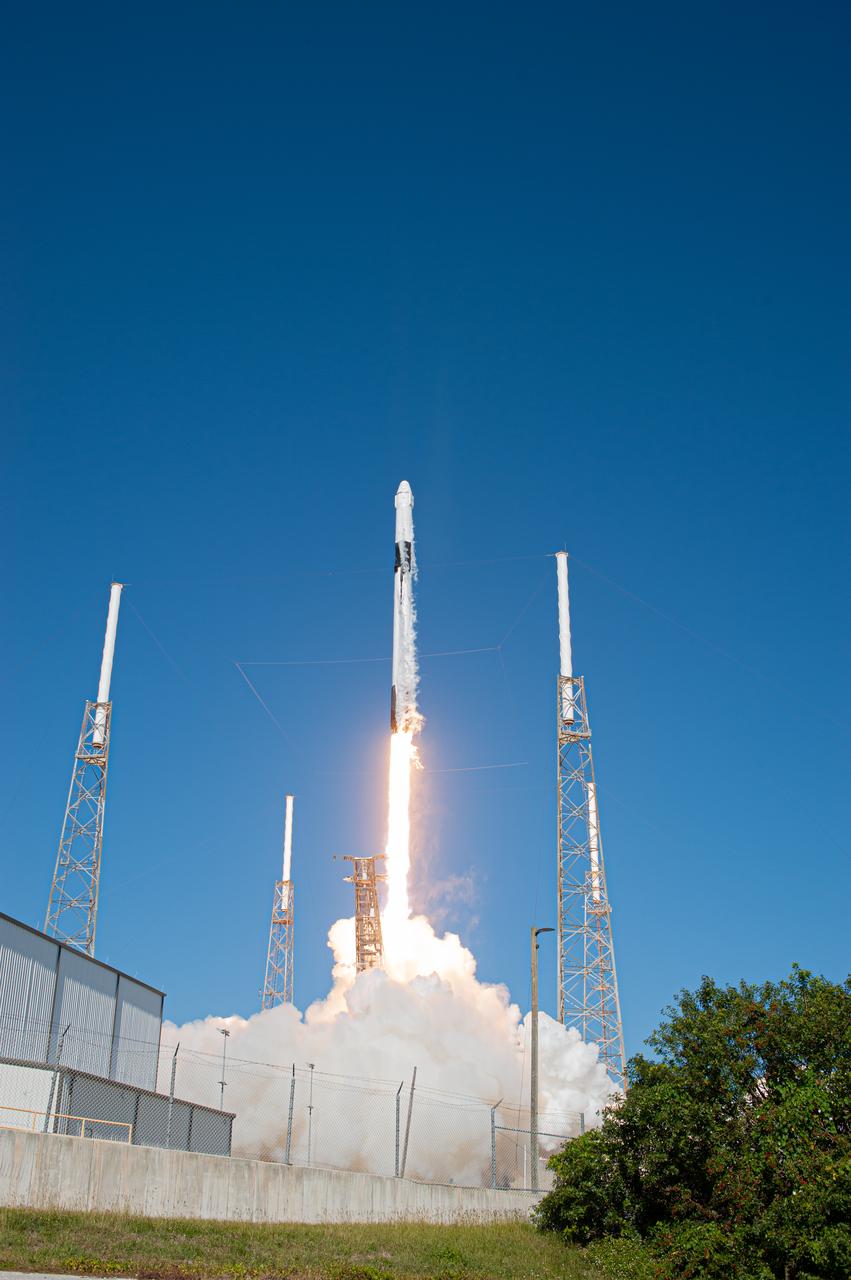
The SpaceX Falcon 9 rocket with the Dragon cargo module climbs upward after liftoff from Space Launch Complex 40 on Cape Canaveral Air Force Station in Florida in the early afternoon on Dec. 5, 2019. Liftoff was at 12:29 p.m. EST. This is SpaceX’s 19th Commercial Resupply Services (CRS-19) mission for NASA to the International Space Station. The Dragon cargo module will deliver more than 5,700 pounds of science and research, crew supplies and vehicle hardware to the orbital laboratory and its crew.
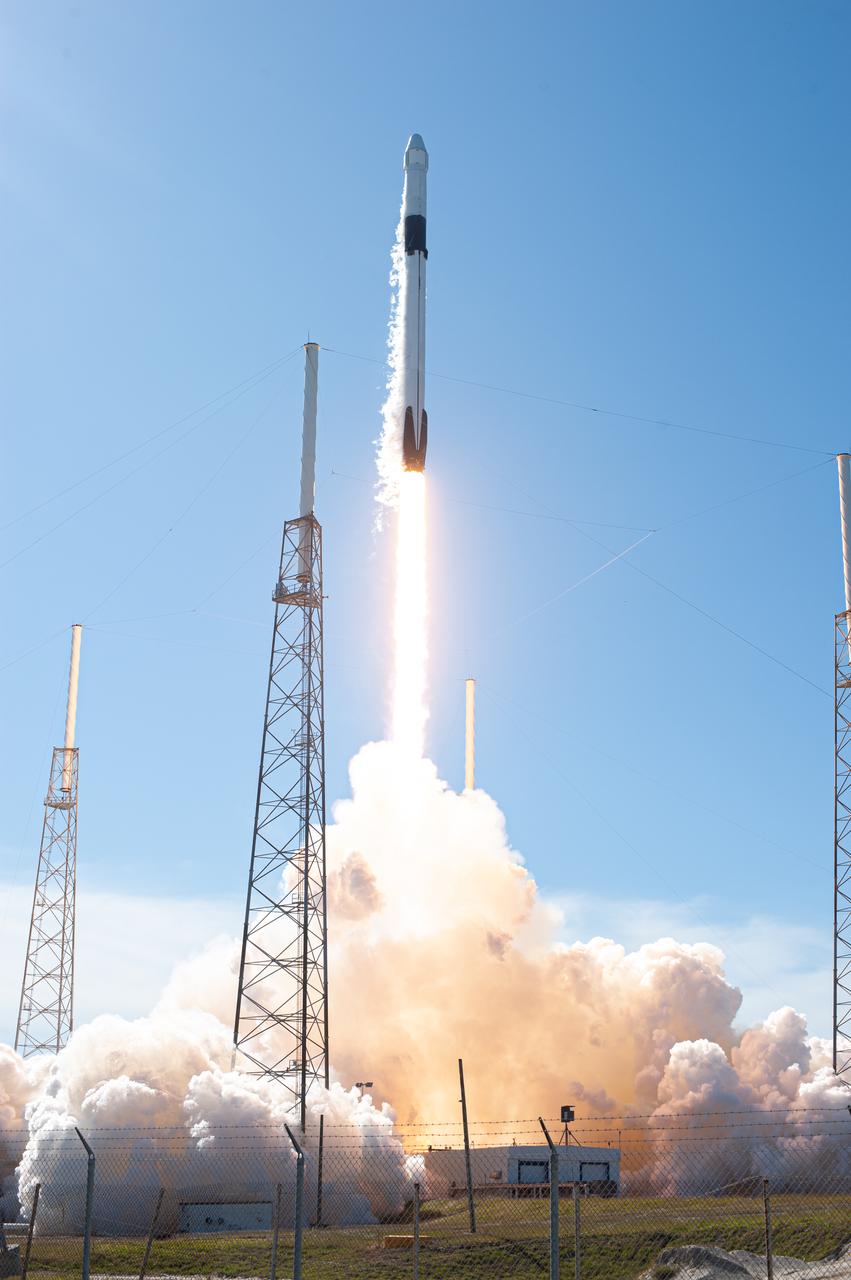
The SpaceX Falcon 9 rocket with the Dragon cargo module lifts off Space Launch Complex 40 on Cape Canaveral Air Force Station in Florida in the early afternoon on Dec. 5, 2019. Liftoff was at 12:29 p.m. EST. This is SpaceX’s 19th Commercial Resupply Services (CRS-19) mission for NASA to the International Space Station. The Dragon cargo module will deliver more than 5,700 pounds of science and research, crew supplies and vehicle hardware to the orbital laboratory and its crew.
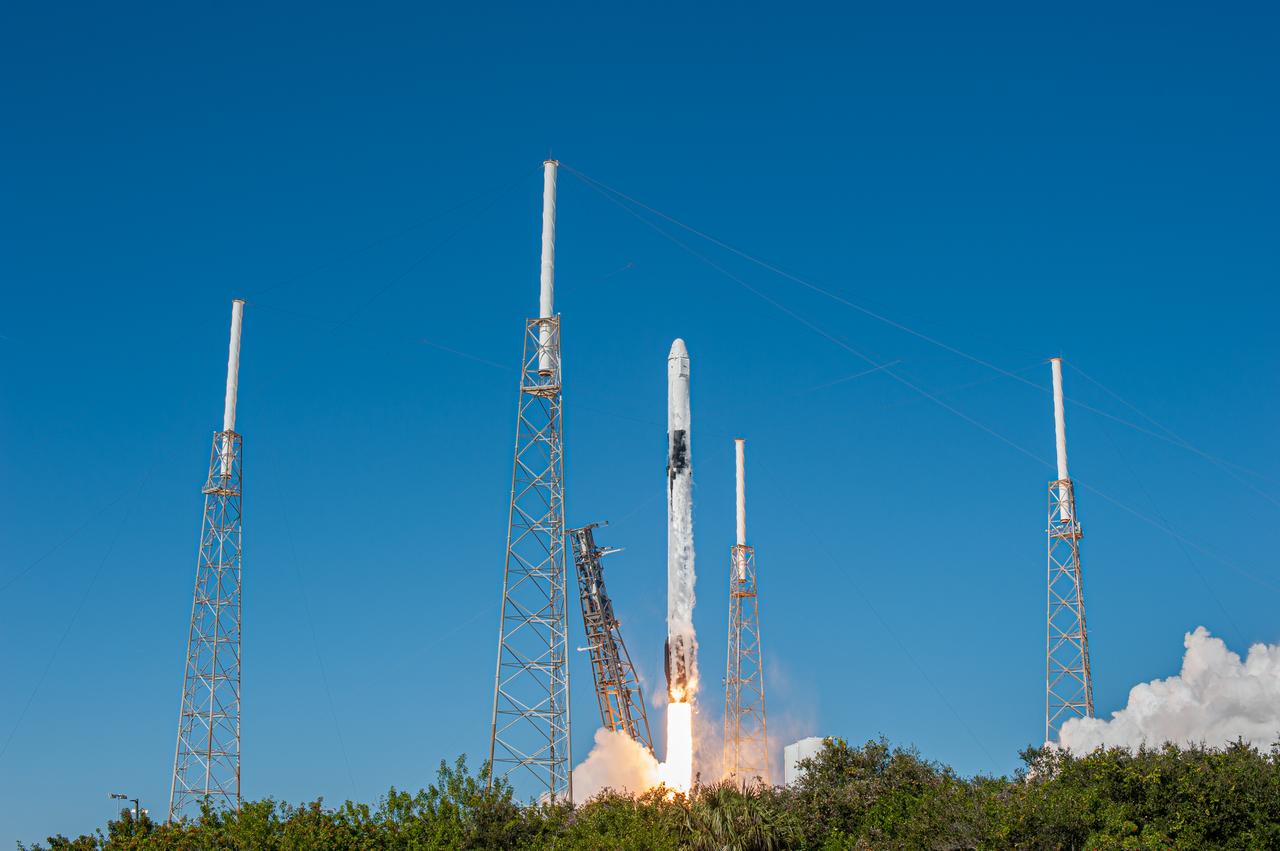
The SpaceX Falcon 9 rocket with the Dragon cargo module lifts off Space Launch Complex 40 on Cape Canaveral Air Force Station in Florida in the early afternoon on Dec. 5, 2019. Liftoff was at 12:29 p.m. EST. This is SpaceX’s 19th Commercial Resupply Services (CRS-19) mission for NASA to the International Space Station. The Dragon cargo module will deliver more than 5,700 pounds of science and research, crew supplies and vehicle hardware to the orbital laboratory and its crew.
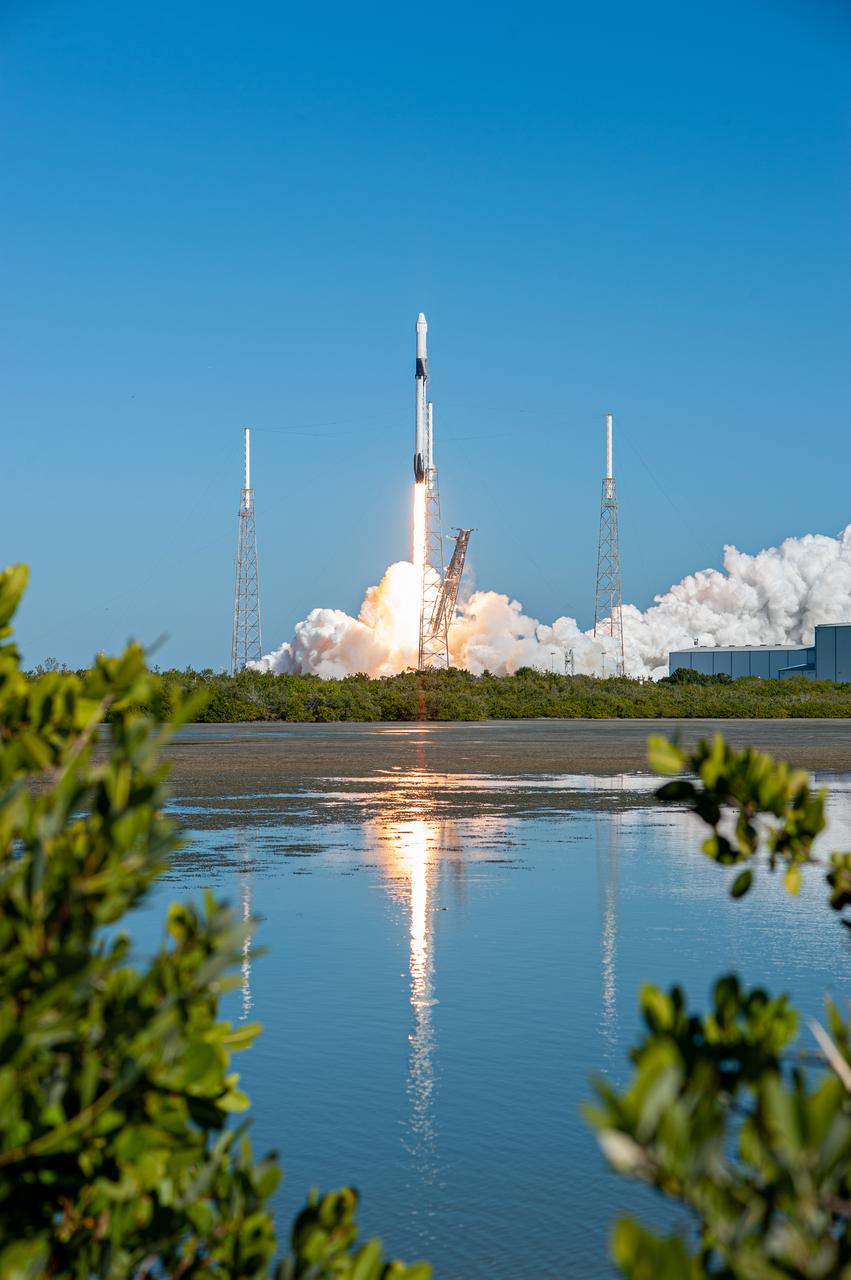
The SpaceX Falcon 9 rocket with the Dragon cargo module climbs upward after liftoff from Space Launch Complex 40 on Cape Canaveral Air Force Station in Florida in the early afternoon on Dec. 5, 2019. Liftoff was at 12:29 p.m. EST. This is SpaceX’s 19th Commercial Resupply Services (CRS-19) mission for NASA to the International Space Station. The Dragon cargo module will deliver more than 5,700 pounds of science and research, crew supplies and vehicle hardware to the orbital laboratory and its crew.
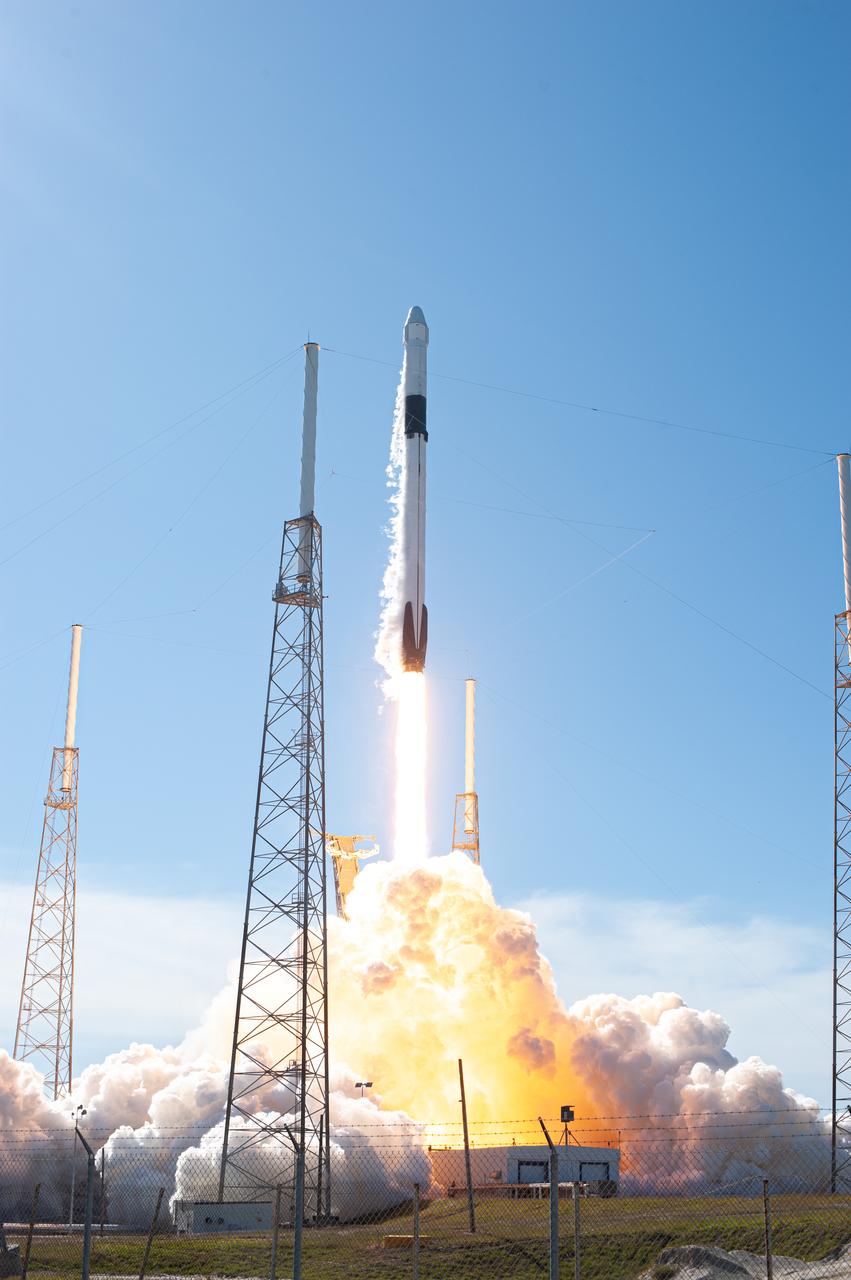
The SpaceX Falcon 9 rocket with the Dragon cargo module lifts off Space Launch Complex 40 on Cape Canaveral Air Force Station in Florida in the early afternoon on Dec. 5, 2019. Liftoff was at 12:29 p.m. EST. This is SpaceX’s 19th Commercial Resupply Services (CRS-19) mission for NASA to the International Space Station. The Dragon cargo module will deliver more than 5,700 pounds of science and research, crew supplies and vehicle hardware to the orbital laboratory and its crew.

The SpaceX Falcon 9 rocket with the Dragon cargo module lifts off Space Launch Complex 40 on Cape Canaveral Air Force Station in Florida in the early afternoon on Dec. 5, 2019. Liftoff was at 12:29 p.m. EST. This is SpaceX’s 19th Commercial Resupply Services (CRS-19) mission for NASA to the International Space Station. The Dragon cargo module will deliver more than 5,700 pounds of science and research, crew supplies and vehicle hardware to the orbital laboratory and its crew.
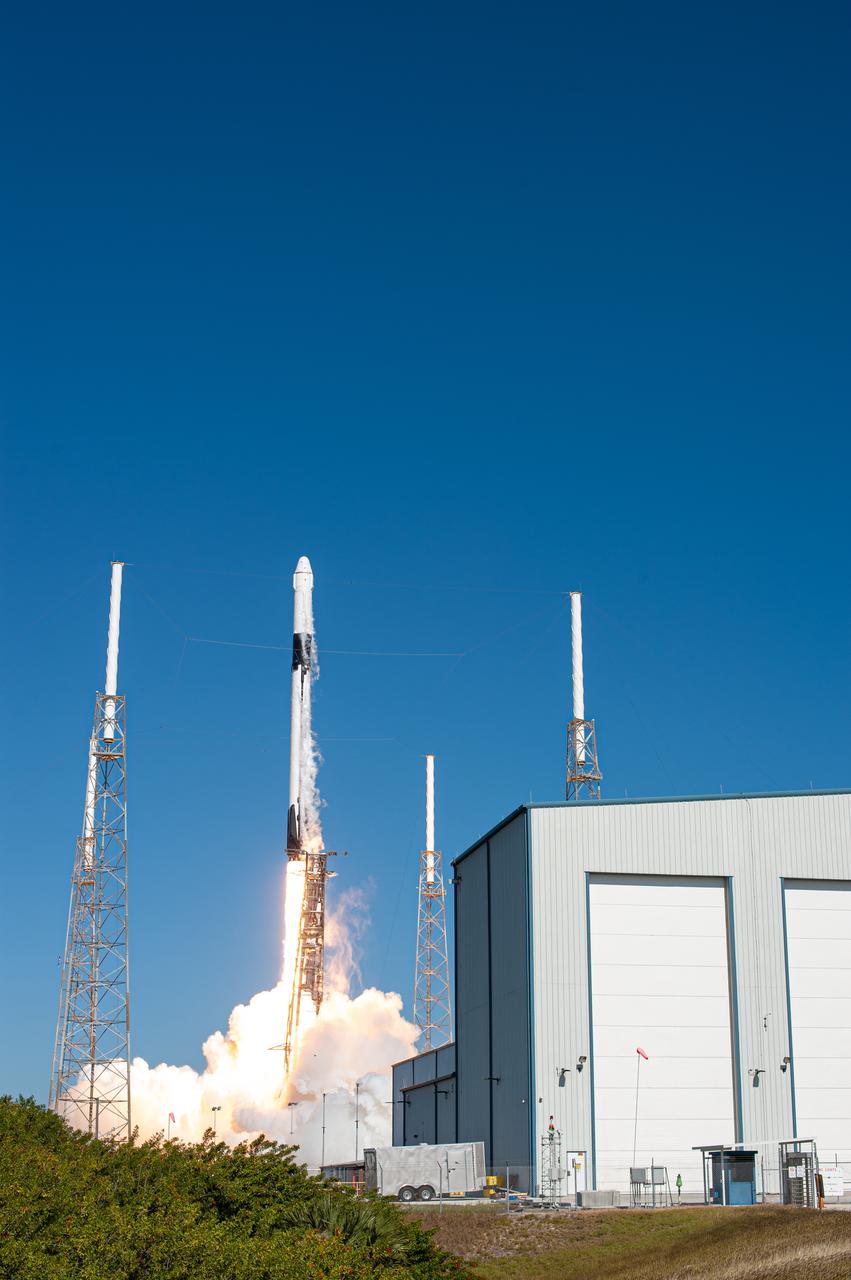
The SpaceX Falcon 9 rocket with the Dragon cargo module climbs upward after liftoff from Space Launch Complex 40 on Cape Canaveral Air Force Station in Florida in the early afternoon on Dec. 5, 2019. Liftoff was at 12:29 p.m. EST. This is SpaceX’s 19th Commercial Resupply Services (CRS-19) mission for NASA to the International Space Station. The Dragon cargo module will deliver more than 5,700 pounds of science and research, crew supplies and vehicle hardware to the orbital laboratory and its crew.
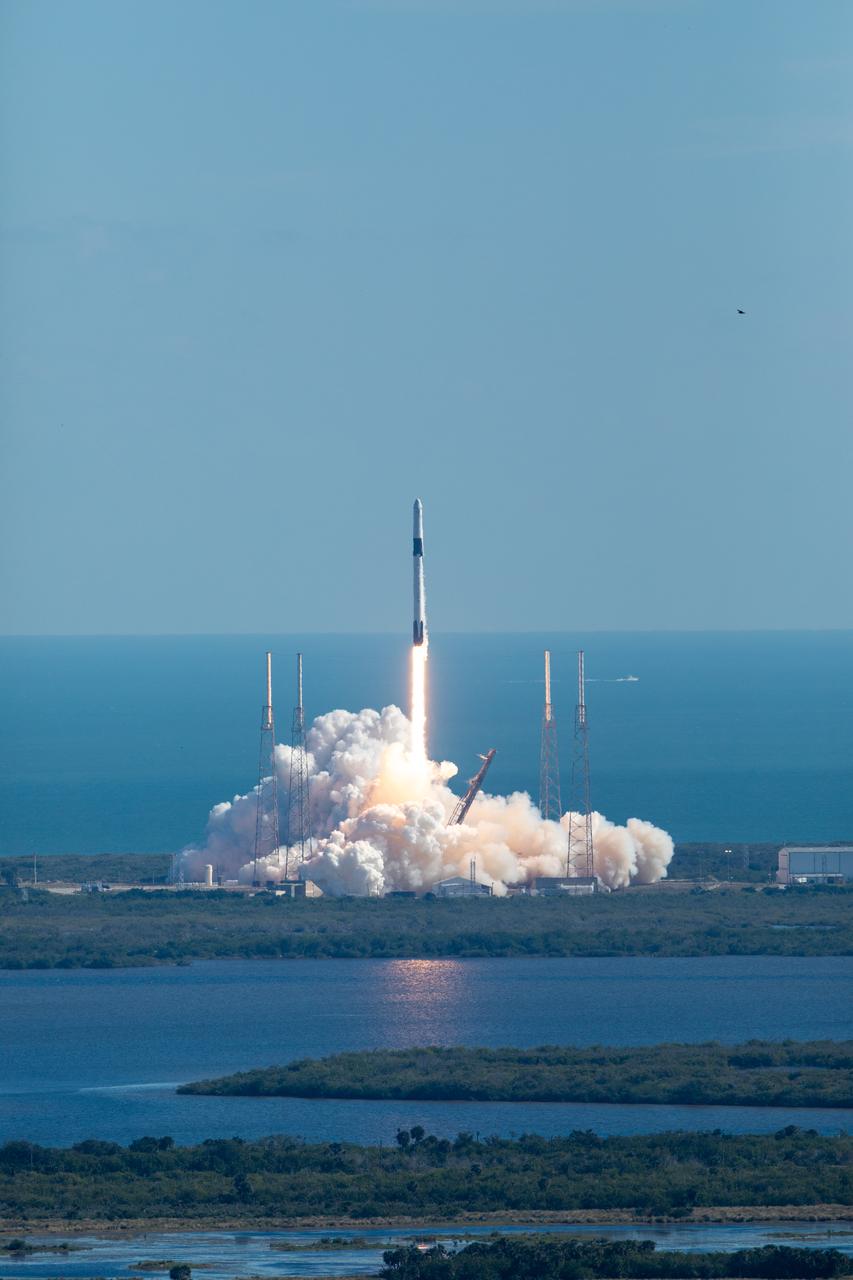
The SpaceX Falcon 9 rocket with the Dragon cargo module lifts off Space Launch Complex 40 on Cape Canaveral Air Force Station in Florida in the early afternoon on Dec. 5, 2019. Liftoff was at 12:29 p.m. EST. This is SpaceX’s 19th Commercial Resupply Services (CRS-19) mission for NASA to the International Space Station. The Dragon cargo module will deliver more than 5,700 pounds of science and research, crew supplies and vehicle hardware to the orbital laboratory and its crew.

The SpaceX Falcon 9 rocket with the Dragon cargo module climbs upward after liftoff from Space Launch Complex 40 on Cape Canaveral Air Force Station in Florida in the early afternoon on Dec. 5, 2019. Liftoff was at 12:29 p.m. EST. This is SpaceX’s 19th Commercial Resupply Services (CRS-19) mission for NASA to the International Space Station. The Dragon cargo module will deliver more than 5,700 pounds of science and research, crew supplies and vehicle hardware to the orbital laboratory and its crew.
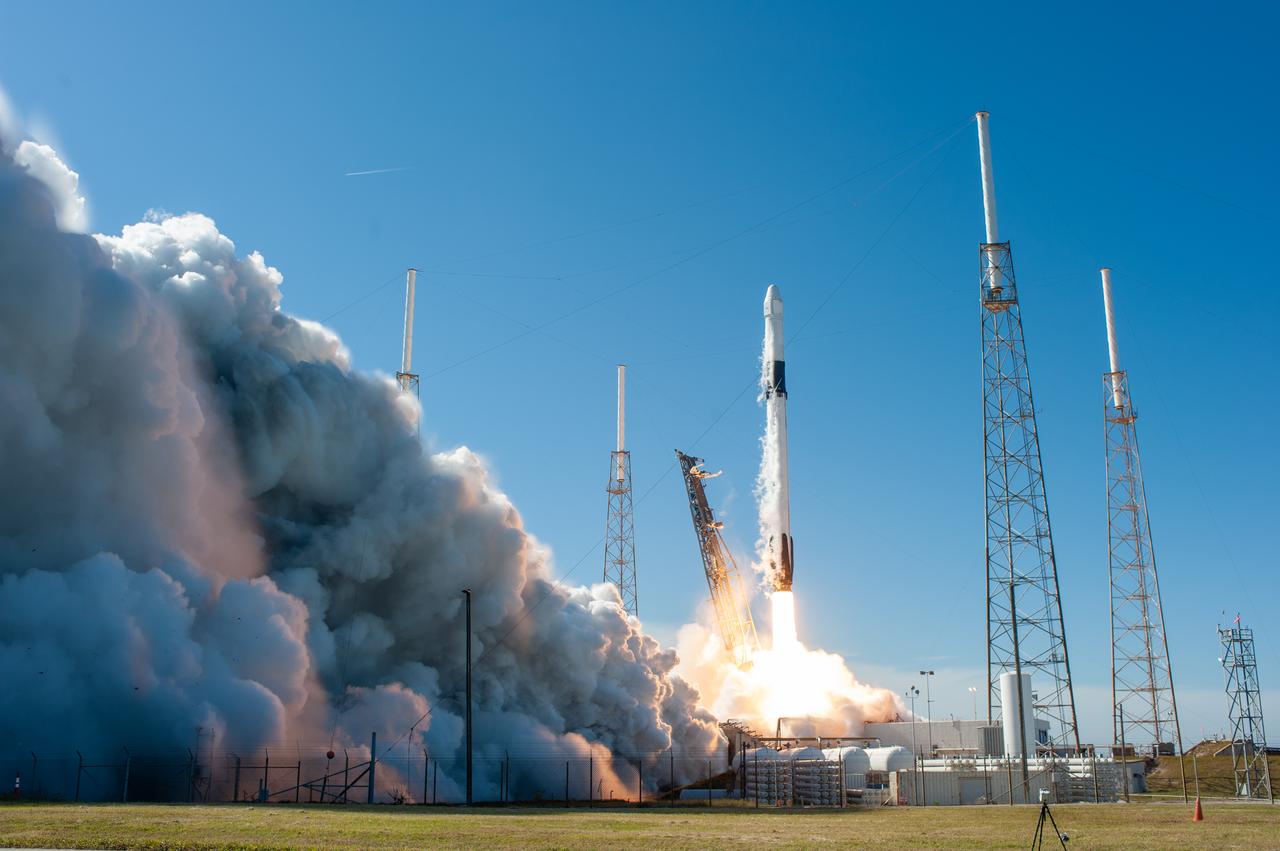
The SpaceX Falcon 9 rocket with the Dragon cargo module lifts off Space Launch Complex 40 on Cape Canaveral Air Force Station in Florida in the early afternoon on Dec. 5, 2019. Liftoff was at 12:29 p.m. EST. This is SpaceX’s 19th Commercial Resupply Services (CRS-19) mission for NASA to the International Space Station. The Dragon cargo module will deliver more than 5,700 pounds of science and research, crew supplies and vehicle hardware to the orbital laboratory and its crew.
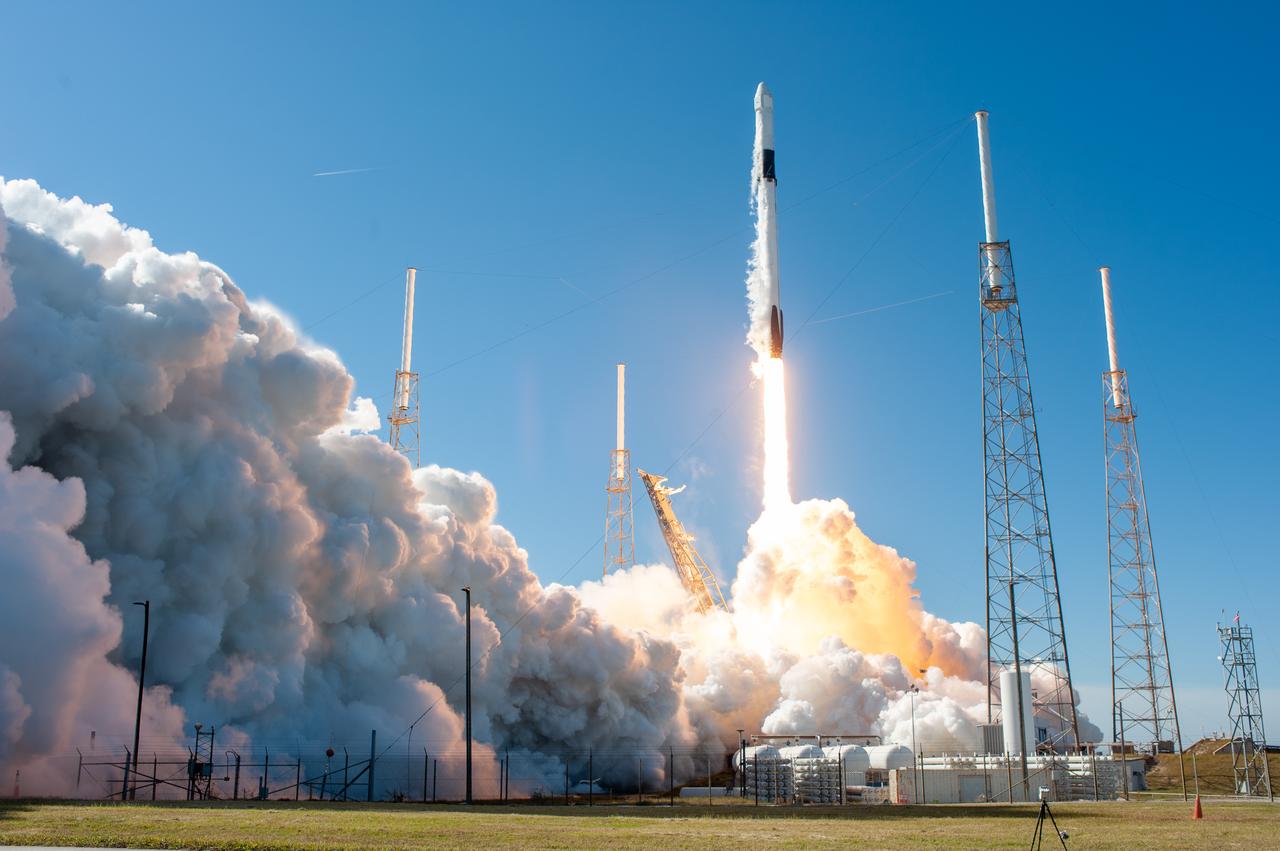
The SpaceX Falcon 9 rocket with the Dragon cargo module lifts off Space Launch Complex 40 on Cape Canaveral Air Force Station in Florida in the early afternoon on Dec. 5, 2019. Liftoff was at 12:29 p.m. EST. This is SpaceX’s 19th Commercial Resupply Services (CRS-19) mission for NASA to the International Space Station. The Dragon cargo module will deliver more than 5,700 pounds of science and research, crew supplies and vehicle hardware to the orbital laboratory and its crew.
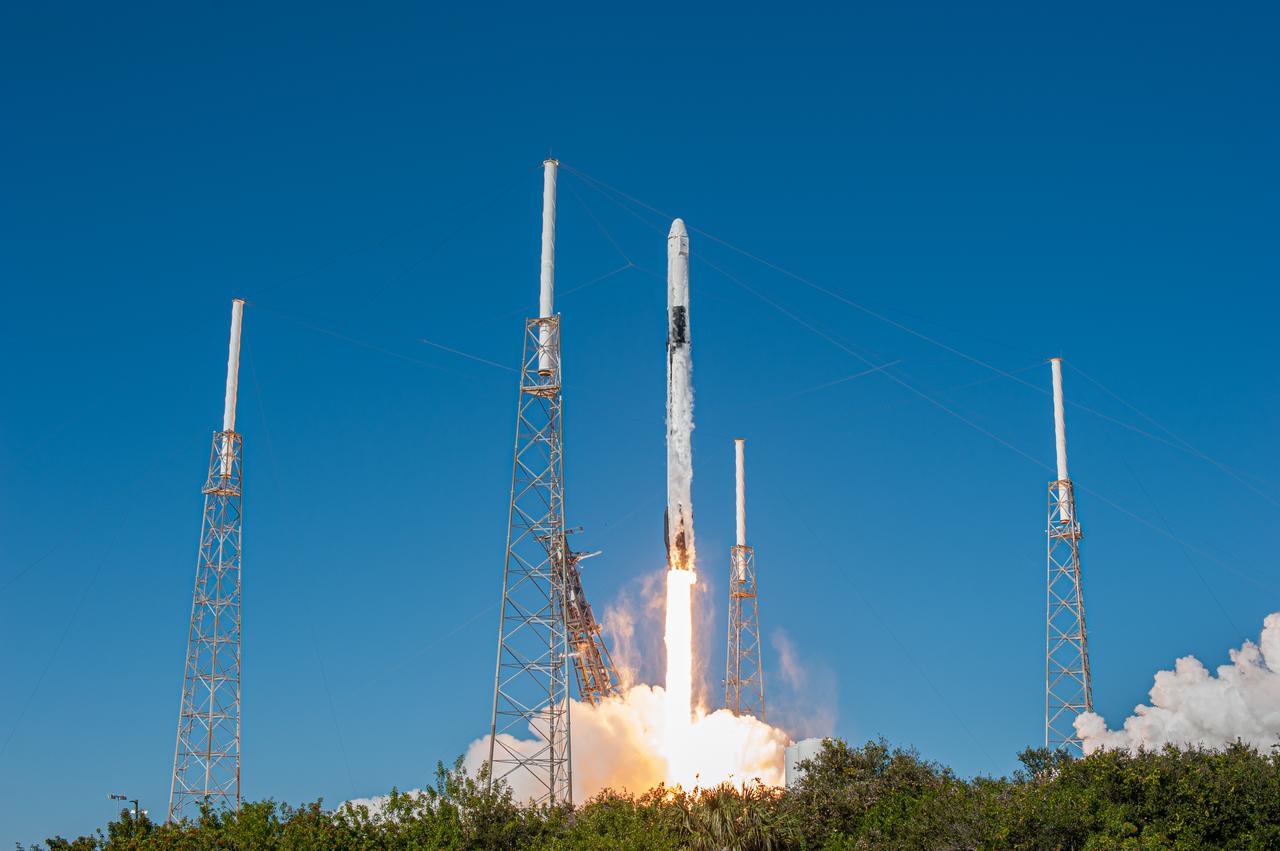
The SpaceX Falcon 9 rocket with the Dragon cargo module lifts off Space Launch Complex 40 on Cape Canaveral Air Force Station in Florida in the early afternoon on Dec. 5, 2019. Liftoff was at 12:29 p.m. EST. This is SpaceX’s 19th Commercial Resupply Services (CRS-19) mission for NASA to the International Space Station. The Dragon cargo module will deliver more than 5,700 pounds of science and research, crew supplies and vehicle hardware to the orbital laboratory and its crew.
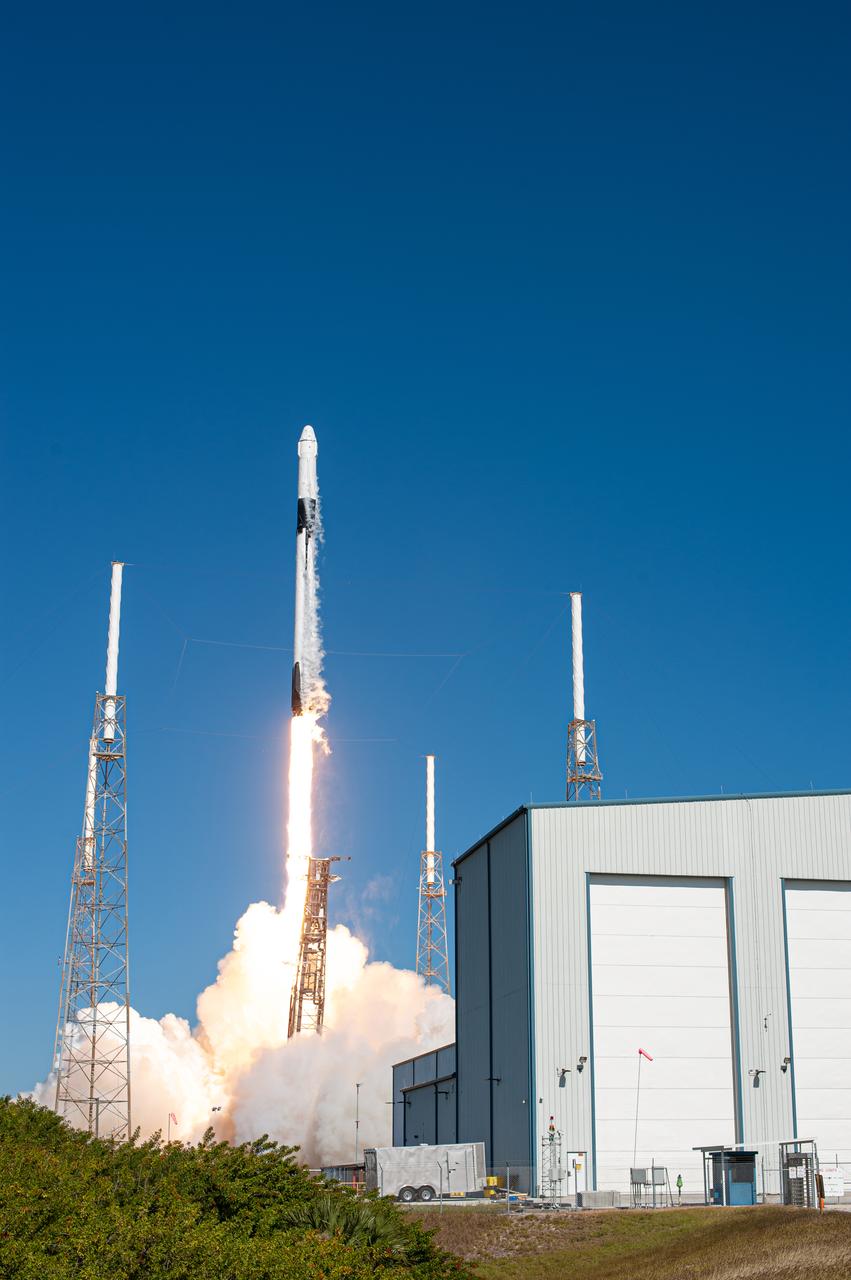
The SpaceX Falcon 9 rocket with the Dragon cargo module climbs upward after liftoff from Space Launch Complex 40 on Cape Canaveral Air Force Station in Florida in the early afternoon on Dec. 5, 2019. Liftoff was at 12:29 p.m. EST. This is SpaceX’s 19th Commercial Resupply Services (CRS-19) mission for NASA to the International Space Station. The Dragon cargo module will deliver more than 5,700 pounds of science and research, crew supplies and vehicle hardware to the orbital laboratory and its crew.
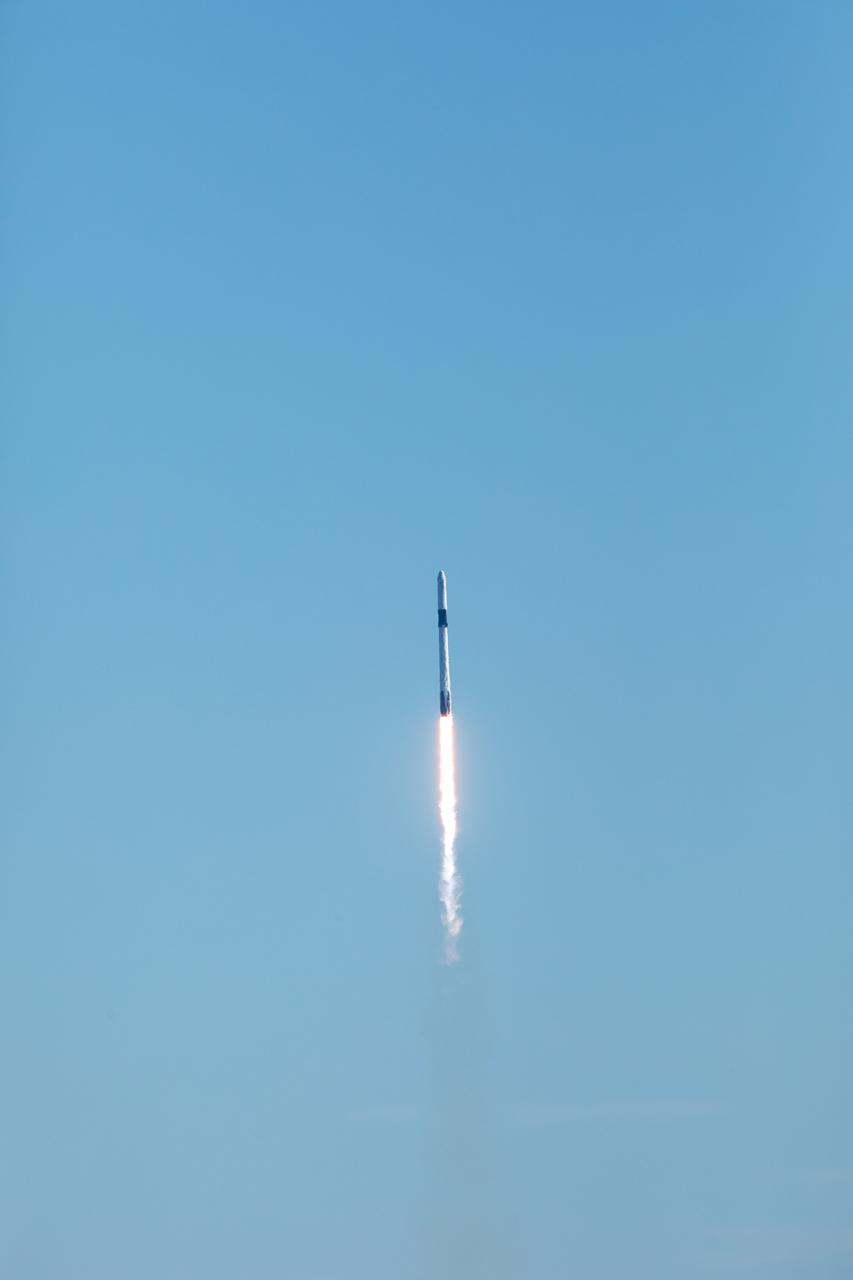
The SpaceX Falcon 9 rocket with the Dragon cargo module climbs upward after liftoff from Space Launch Complex 40 on Cape Canaveral Air Force Station in Florida in the early afternoon on Dec. 5, 2019. Liftoff was at 12:29 p.m. EST. This is SpaceX’s 19th Commercial Resupply Services (CRS-19) mission for NASA to the International Space Station. The Dragon cargo module will deliver more than 5,700 pounds of science and research, crew supplies and vehicle hardware to the orbital laboratory and its crew.
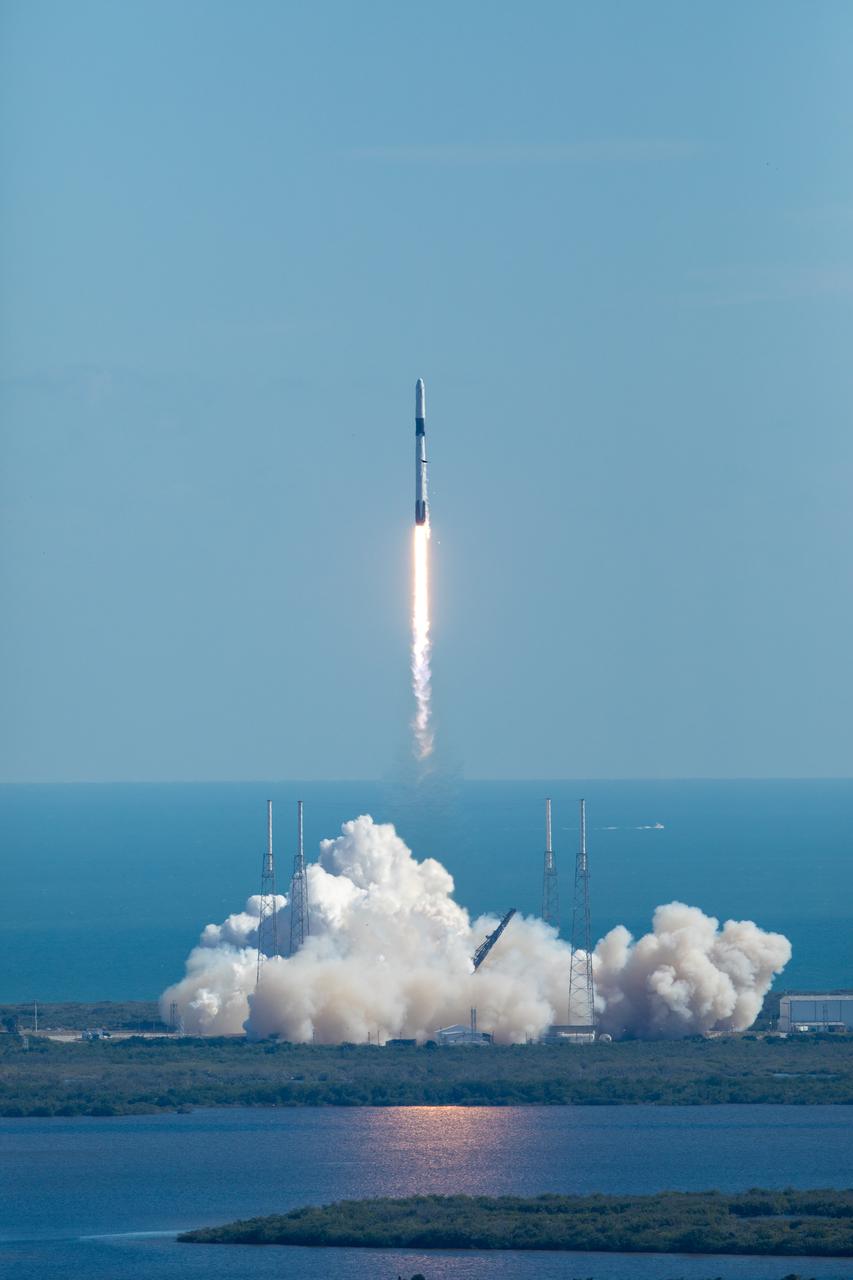
The SpaceX Falcon 9 rocket with the Dragon cargo module lifts off Space Launch Complex 40 on Cape Canaveral Air Force Station in Florida in the early afternoon on Dec. 5, 2019. Liftoff was at 12:29 p.m. EST. This is SpaceX’s 19th Commercial Resupply Services (CRS-19) mission for NASA to the International Space Station. The Dragon cargo module will deliver more than 5,700 pounds of science and research, crew supplies and vehicle hardware to the orbital laboratory and its crew.
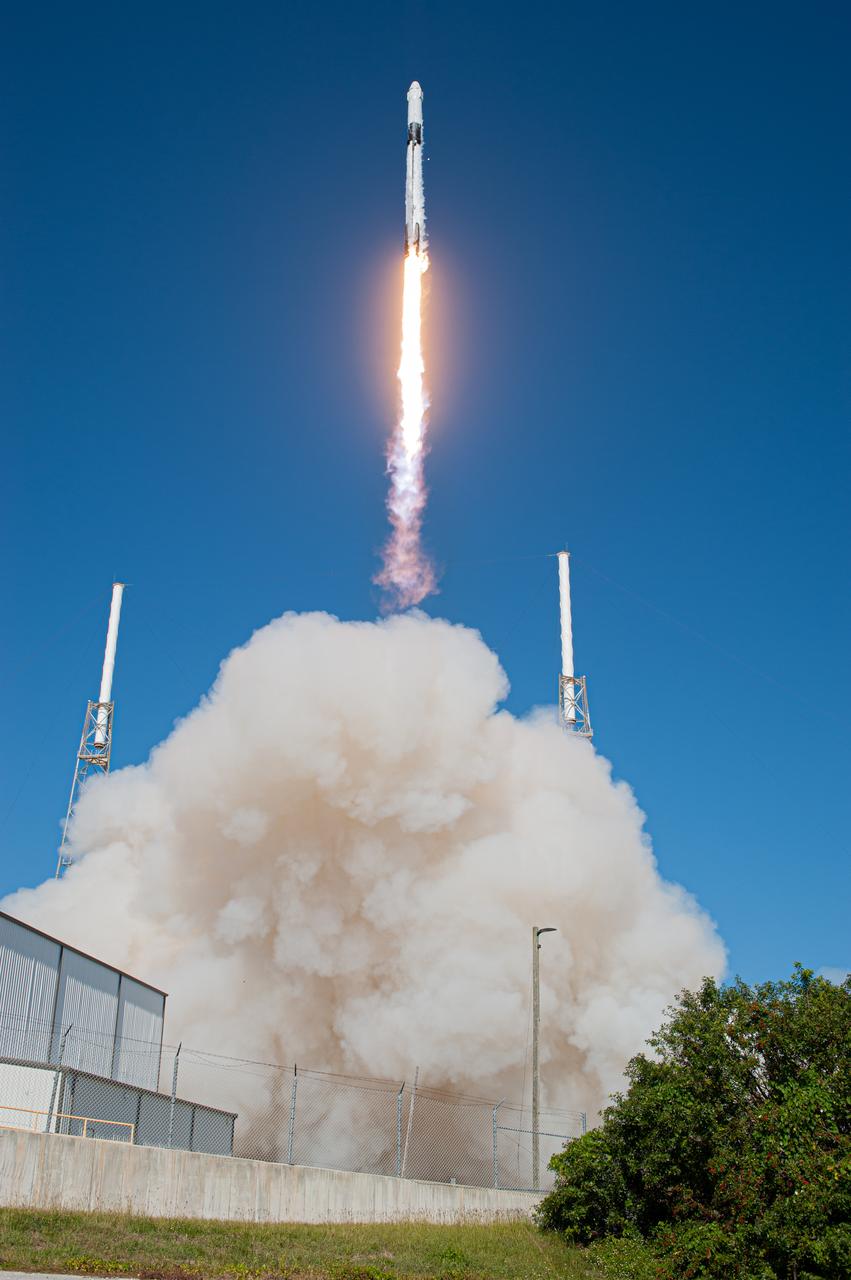
The SpaceX Falcon 9 rocket with the Dragon cargo module climbs upward after liftoff from Space Launch Complex 40 on Cape Canaveral Air Force Station in Florida in the early afternoon on Dec. 5, 2019. Liftoff was at 12:29 p.m. EST. This is SpaceX’s 19th Commercial Resupply Services (CRS-19) mission for NASA to the International Space Station. The Dragon cargo module will deliver more than 5,700 pounds of science and research, crew supplies and vehicle hardware to the orbital laboratory and its crew.
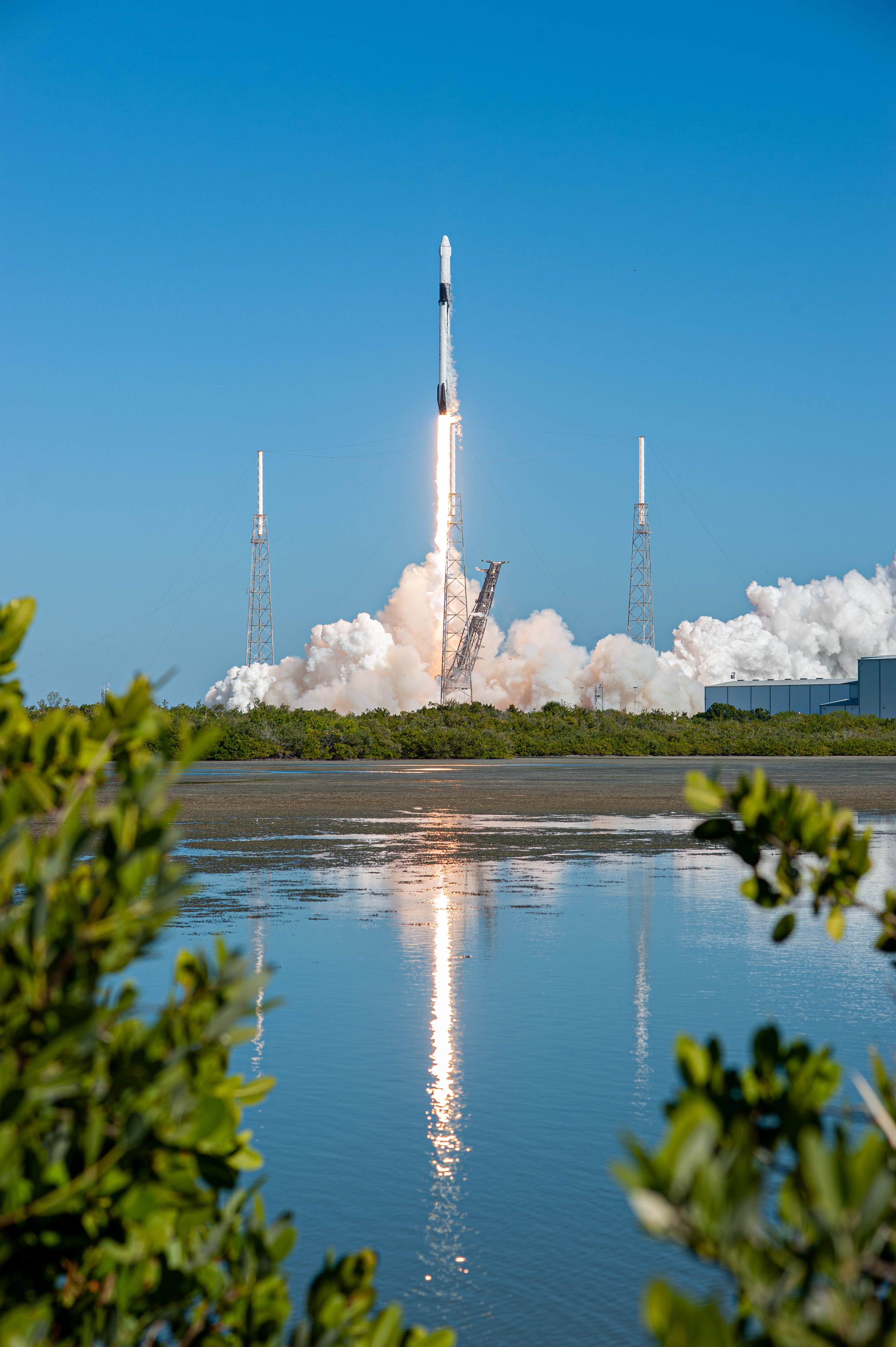
The SpaceX Falcon 9 rocket with the Dragon cargo module climbs upward after liftoff from Space Launch Complex 40 on Cape Canaveral Air Force Station in Florida in the early afternoon on Dec. 5, 2019. Liftoff was at 12:29 p.m. EST. This is SpaceX’s 19th Commercial Resupply Services (CRS-19) mission for NASA to the International Space Station. The Dragon cargo module will deliver more than 5,700 pounds of science and research, crew supplies and vehicle hardware to the orbital laboratory and its crew.
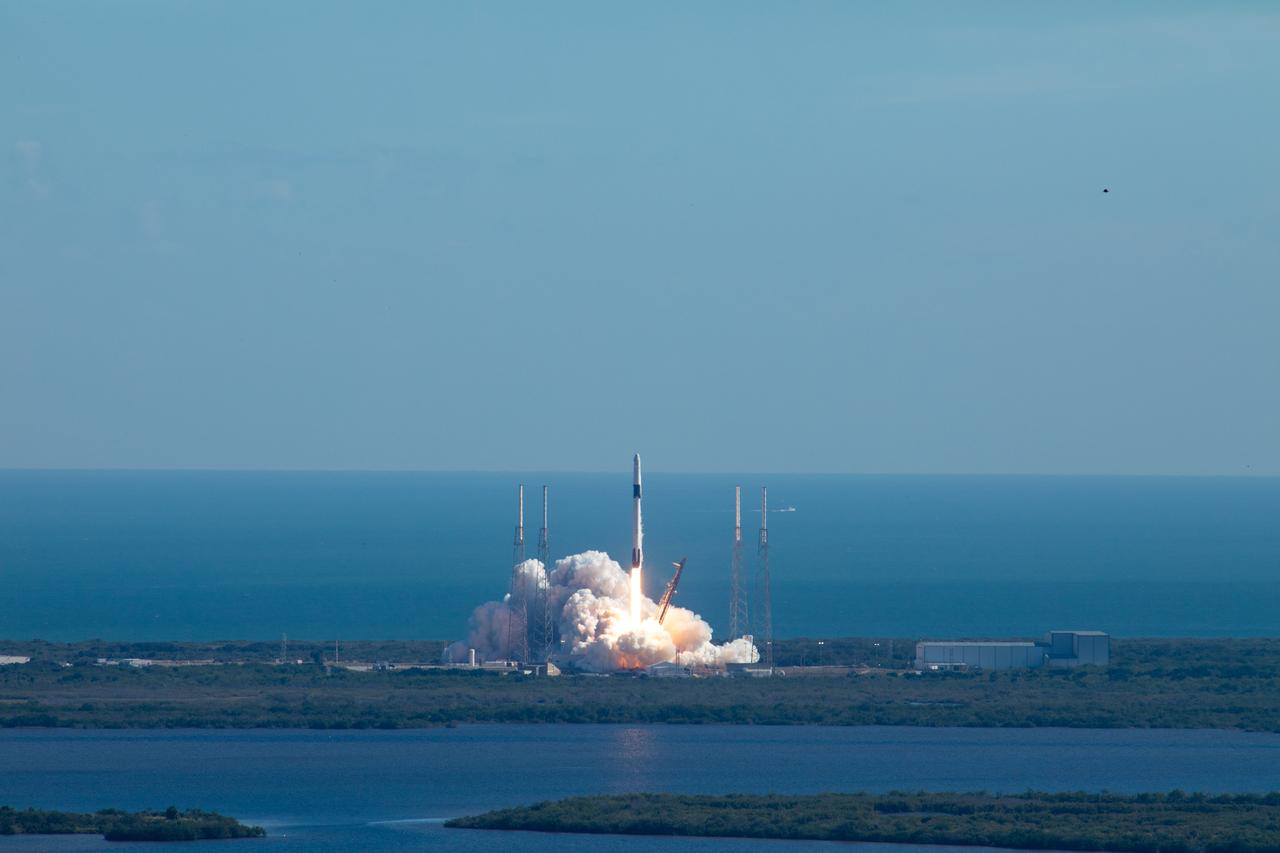
The SpaceX Falcon 9 rocket with the Dragon cargo module lifts off Space Launch Complex 40 on Cape Canaveral Air Force Station in Florida in the early afternoon on Dec. 5, 2019. Liftoff was at 12:29 p.m. EST. This is SpaceX’s 19th Commercial Resupply Services (CRS-19) mission for NASA to the International Space Station. The Dragon cargo module will deliver more than 5,700 pounds of science and research, crew supplies and vehicle hardware to the orbital laboratory and its crew.
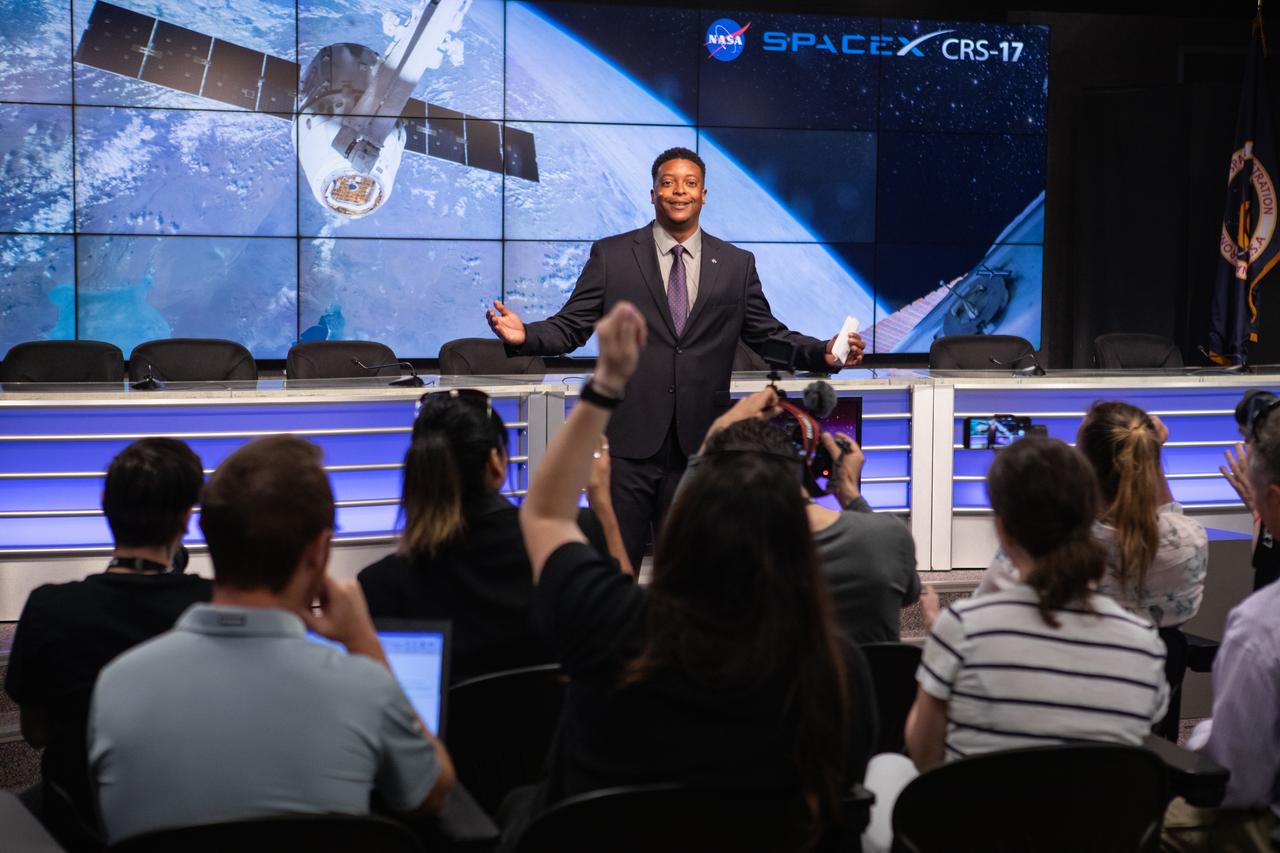
Derrick Matthews, moderator with NASA Communications, fields questions from NASA Social participants during a What’s On Board science briefing at the agency’s Kennedy Space Center in Florida on April 29, 2019. The briefing was held for SpaceX’s 17th Commercial Resupply Services (CRS-17) mission to the International Space Station. The SpaceX Falcon 9 rocket and Dragon cargo module are scheduled to launch no earlier than May 3, 2019, from Space Launch Complex 40 on Cape Canaveral Air Force Station in Florida.
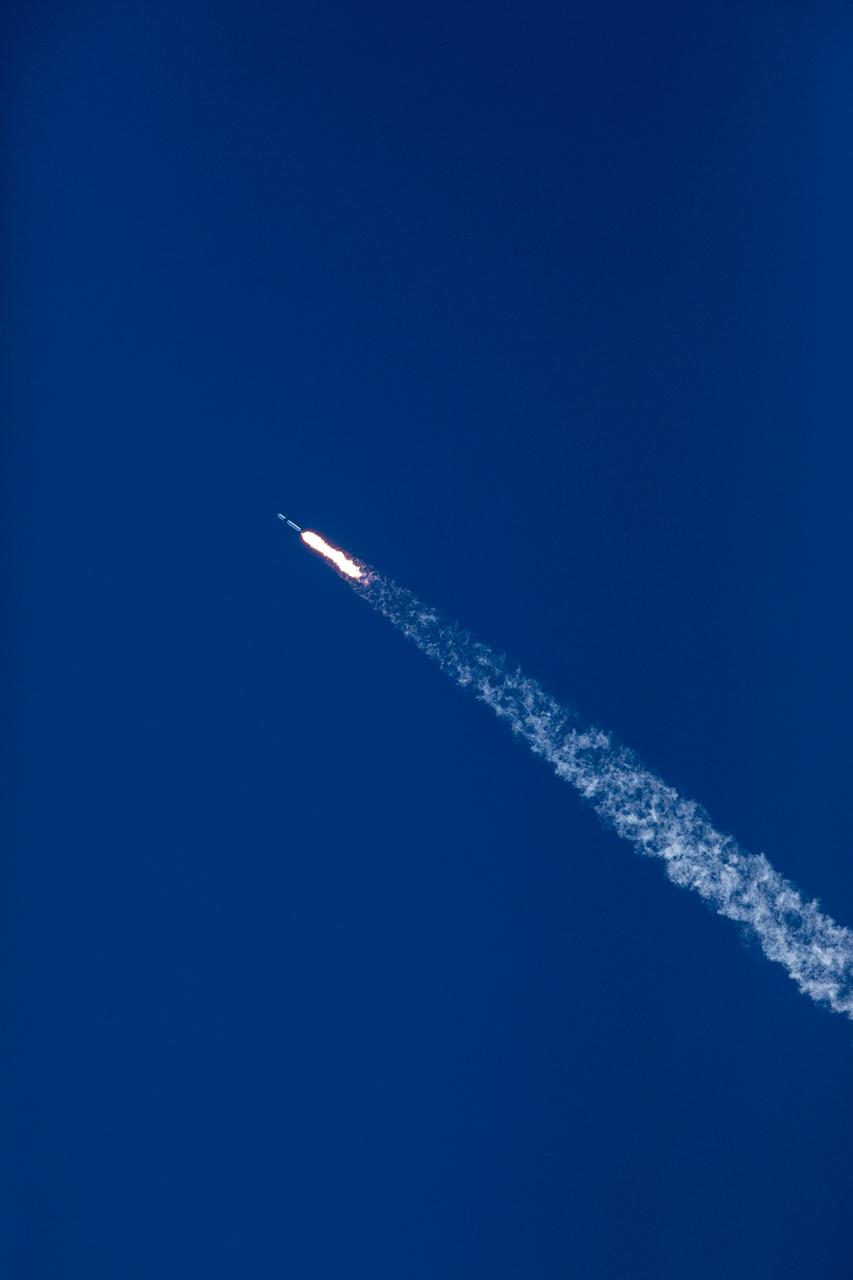
The SpaceX Falcon 9 rocket with the Dragon cargo module climbs upward after liftoff from Space Launch Complex 40 on Cape Canaveral Air Force Station in Florida in the early afternoon on Dec. 5, 2019. Liftoff was at 12:29 p.m. EST. This is SpaceX’s 19th Commercial Resupply Services (CRS-19) mission for NASA to the International Space Station. The Dragon cargo module will deliver more than 5,700 pounds of science and research, crew supplies and vehicle hardware to the orbital laboratory and its crew.
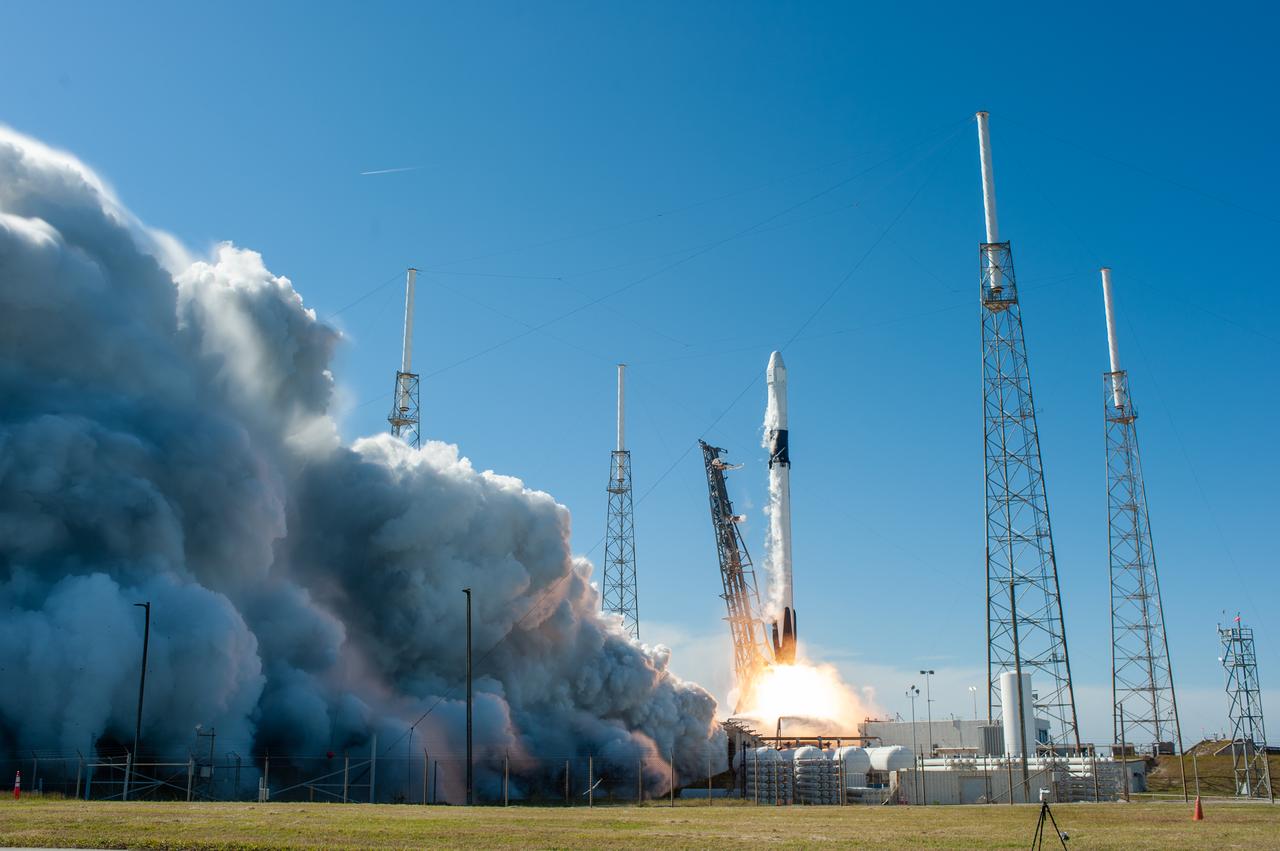
The SpaceX Falcon 9 rocket with the Dragon cargo module lifts off Space Launch Complex 40 on Cape Canaveral Air Force Station in Florida in the early afternoon on Dec. 5, 2019. Liftoff was at 12:29 p.m. EST. This is SpaceX’s 19th Commercial Resupply Services (CRS-19) mission for NASA to the International Space Station. The Dragon cargo module will deliver more than 5,700 pounds of science and research, crew supplies and vehicle hardware to the orbital laboratory and its crew.

Derrick Matthews, moderator with NASA Communications, concludes a What’s On Board science briefing to NASA Social participants at the agency’s Kennedy Space Center in Florida on April 29, 2019. The briefing was held for SpaceX’s 17th Commercial Resupply Services (CRS-17) mission to the International Space Station. The SpaceX Falcon 9 rocket and Dragon cargo module are scheduled to launch no earlier than May 3, 2019, from Space Launch Complex 40 on Cape Canaveral Air Force Station in Florida.
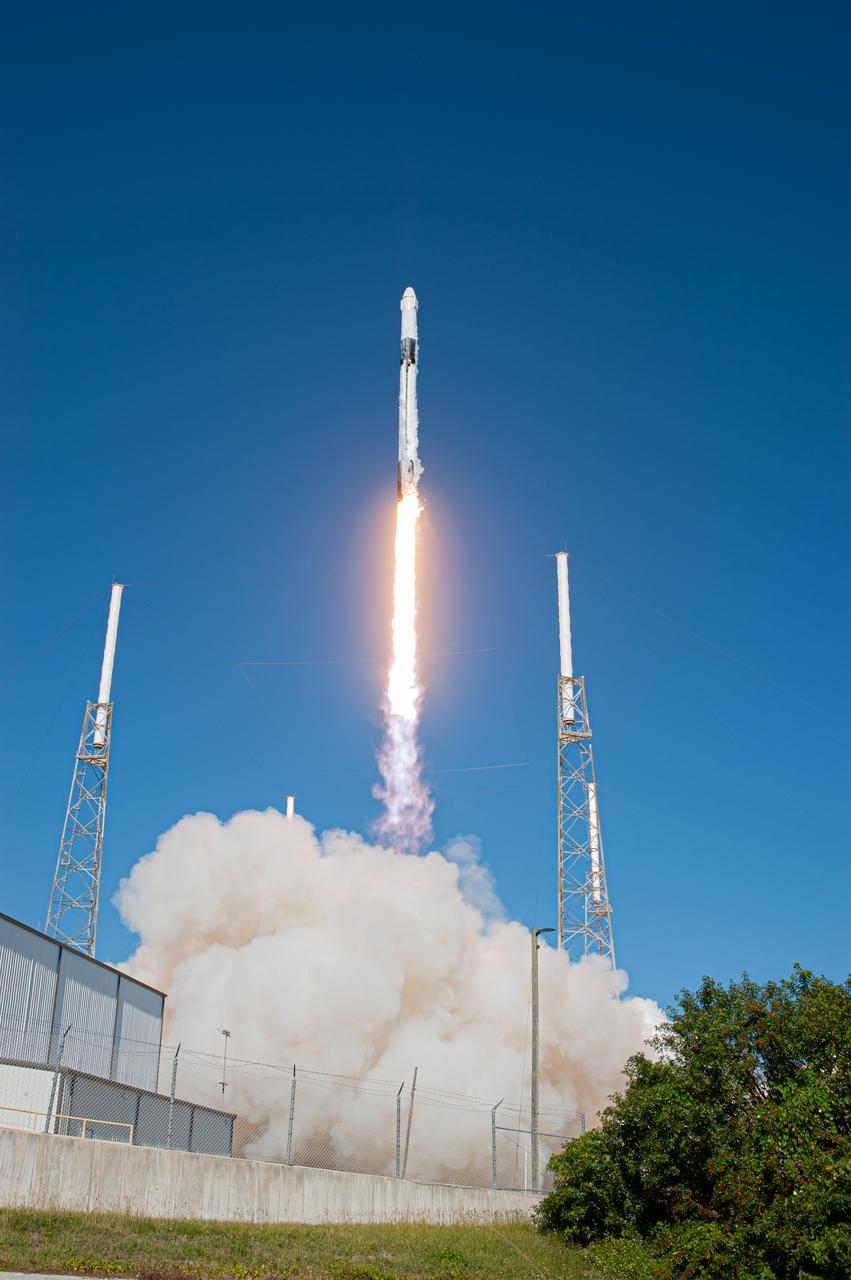
The SpaceX Falcon 9 rocket with the Dragon cargo module climbs upward after liftoff from Space Launch Complex 40 on Cape Canaveral Air Force Station in Florida in the early afternoon on Dec. 5, 2019. Liftoff was at 12:29 p.m. EST. This is SpaceX’s 19th Commercial Resupply Services (CRS-19) mission for NASA to the International Space Station. The Dragon cargo module will deliver more than 5,700 pounds of science and research, crew supplies and vehicle hardware to the orbital laboratory and its crew.
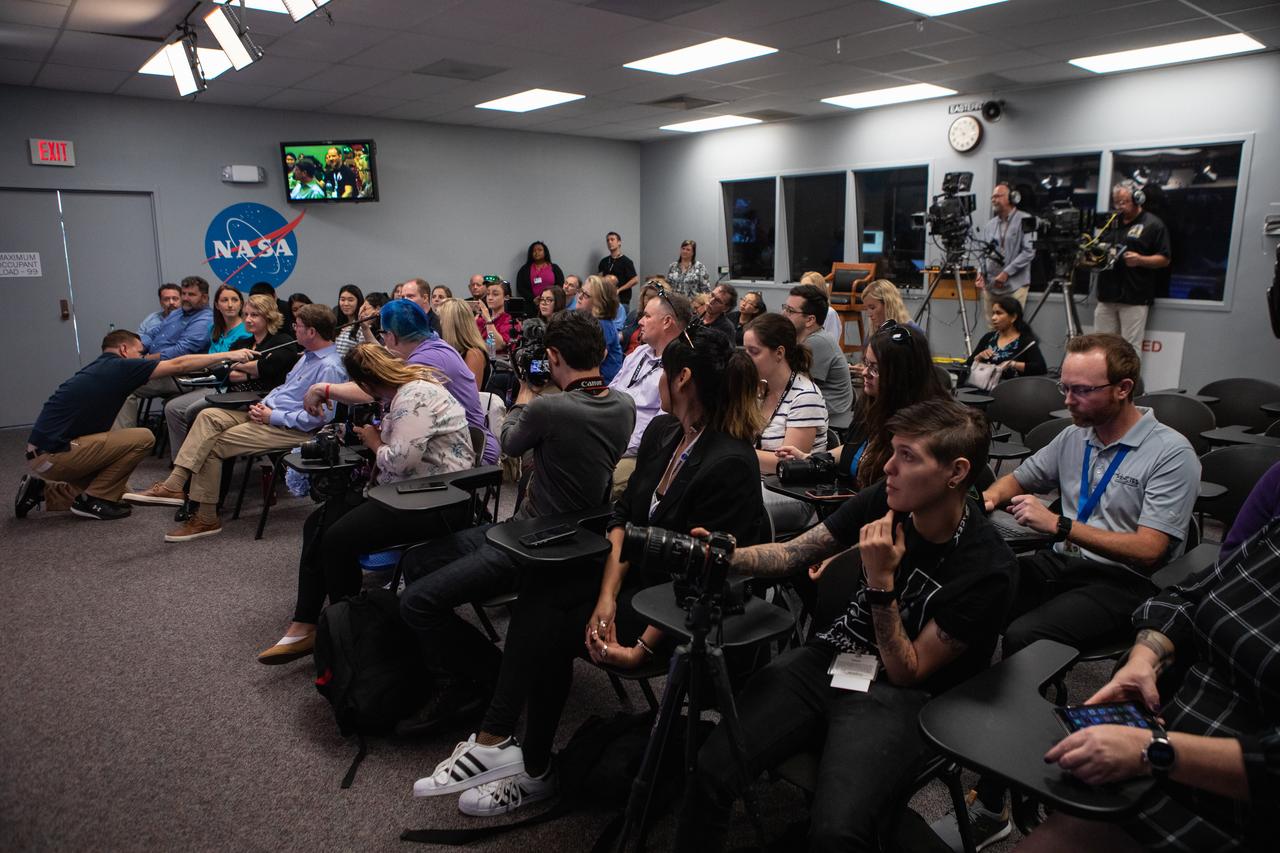
NASA Social participants attend a What’s On Board science briefing at the agency’s Kennedy Space Center in Florida on April 29, 2019. The briefing was held for SpaceX’s 17th Commercial Resupply Services (CRS-17) mission to the International Space Station. The SpaceX Falcon 9 rocket and Dragon cargo module are scheduled to launch no earlier than May 3, 2019, from Space Launch Complex 40 on Cape Canaveral Air Force Station in Florida.
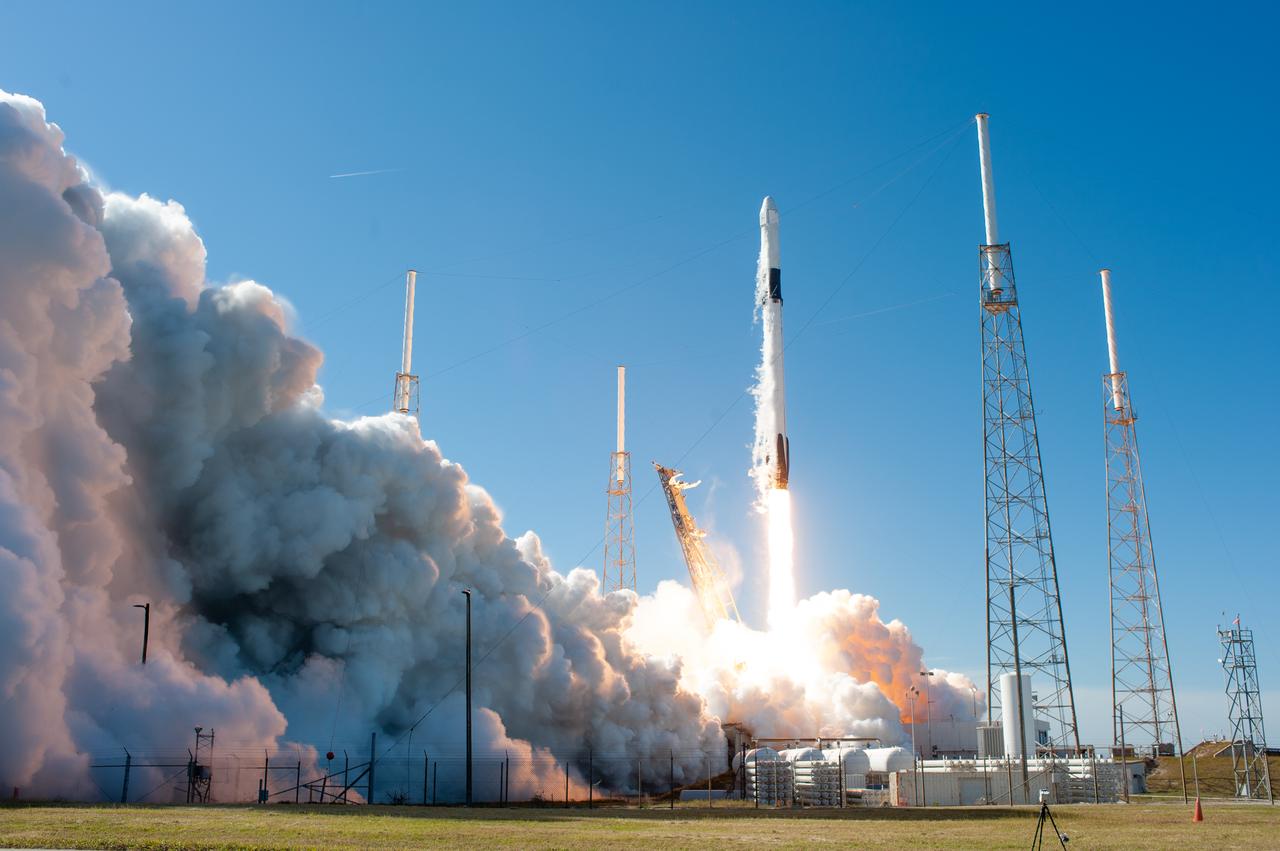
The SpaceX Falcon 9 rocket with the Dragon cargo module lifts off Space Launch Complex 40 on Cape Canaveral Air Force Station in Florida in the early afternoon on Dec. 5, 2019. Liftoff was at 12:29 p.m. EST. This is SpaceX’s 19th Commercial Resupply Services (CRS-19) mission for NASA to the International Space Station. The Dragon cargo module will deliver more than 5,700 pounds of science and research, crew supplies and vehicle hardware to the orbital laboratory and its crew.
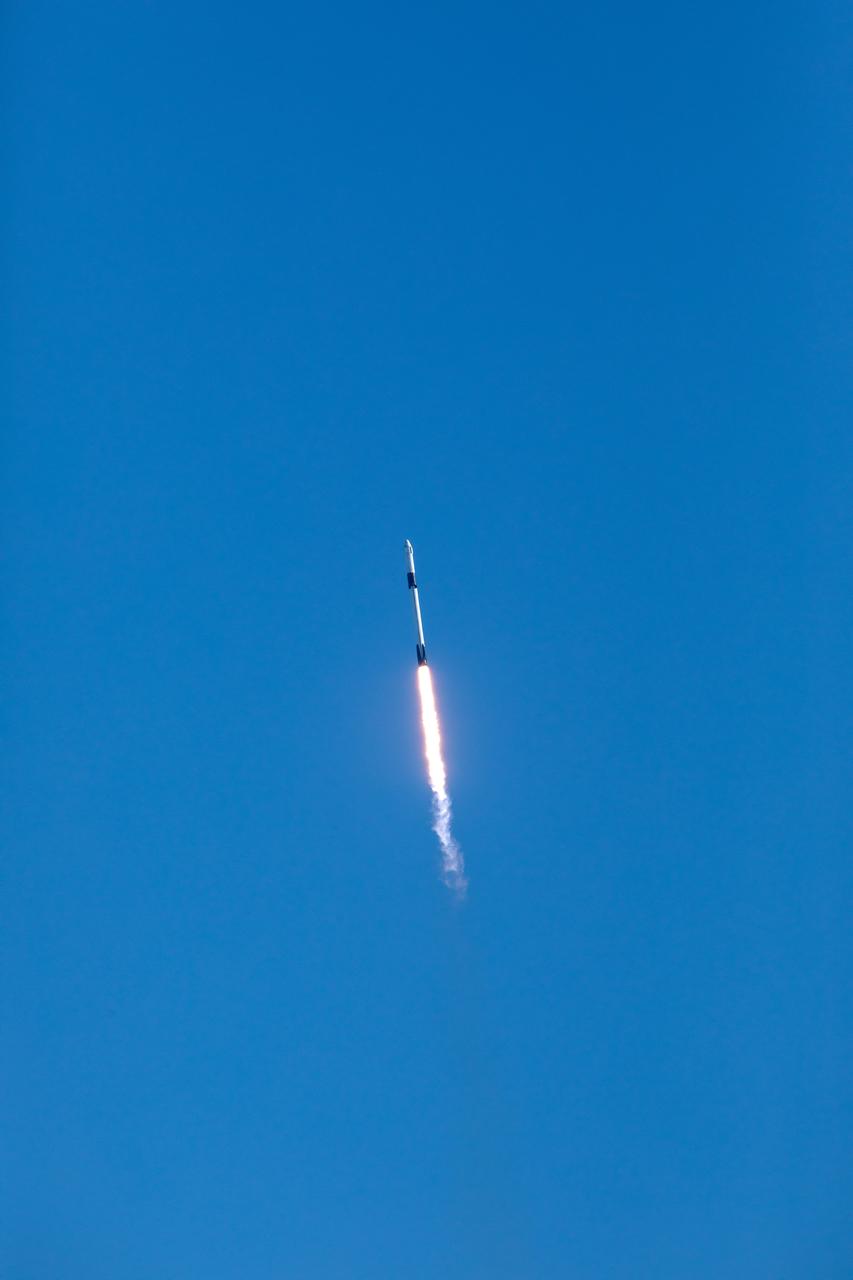
The SpaceX Falcon 9 rocket with the Dragon cargo module climbs upward after liftoff from Space Launch Complex 40 on Cape Canaveral Air Force Station in Florida in the early afternoon on Dec. 5, 2019. Liftoff was at 12:29 p.m. EST. This is SpaceX’s 19th Commercial Resupply Services (CRS-19) mission for NASA to the International Space Station. The Dragon cargo module will deliver more than 5,700 pounds of science and research, crew supplies and vehicle hardware to the orbital laboratory and its crew.
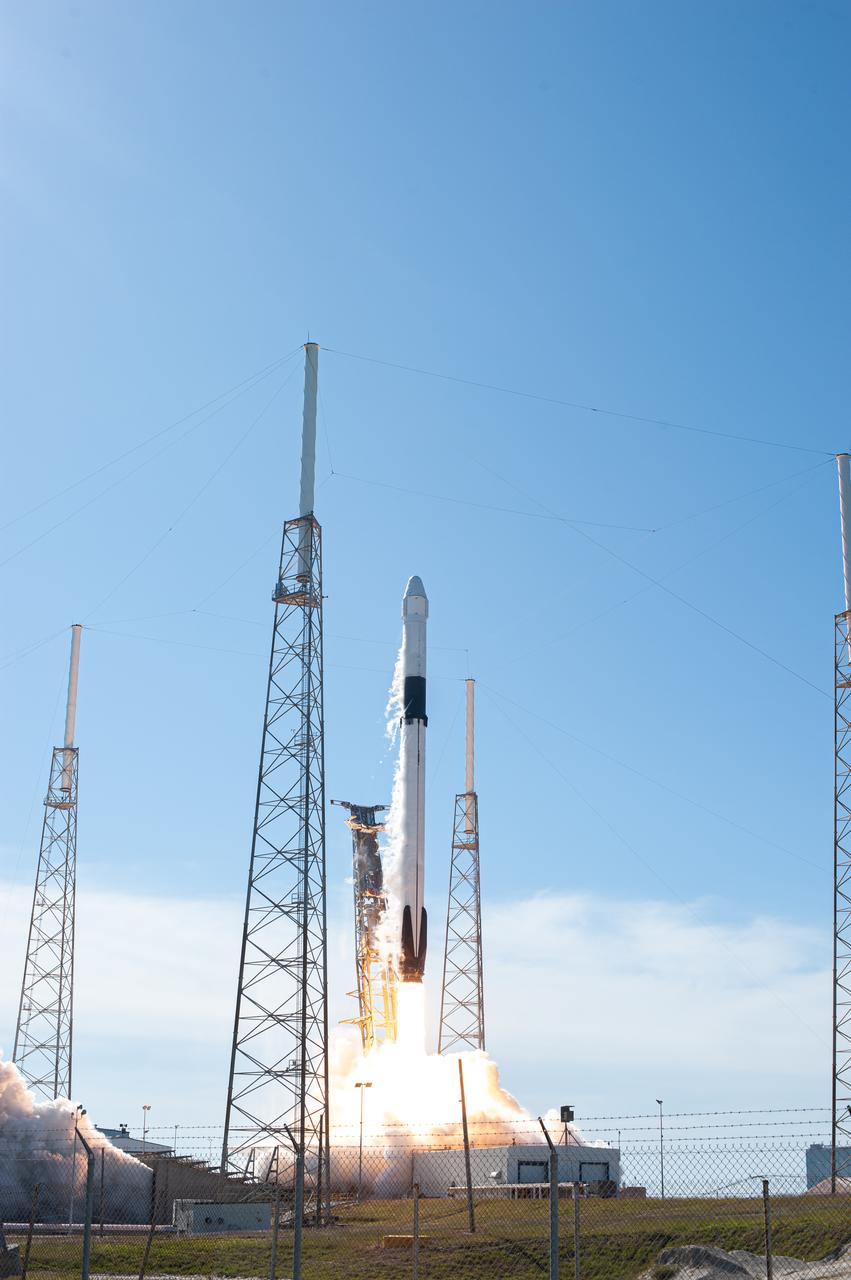
The SpaceX Falcon 9 rocket with the Dragon cargo module lifts off Space Launch Complex 40 on Cape Canaveral Air Force Station in Florida in the early afternoon on Dec. 5, 2019. Liftoff was at 12:29 p.m. EST. This is SpaceX’s 19th Commercial Resupply Services (CRS-19) mission for NASA to the International Space Station. The Dragon cargo module will deliver more than 5,700 pounds of science and research, crew supplies and vehicle hardware to the orbital laboratory and its crew.
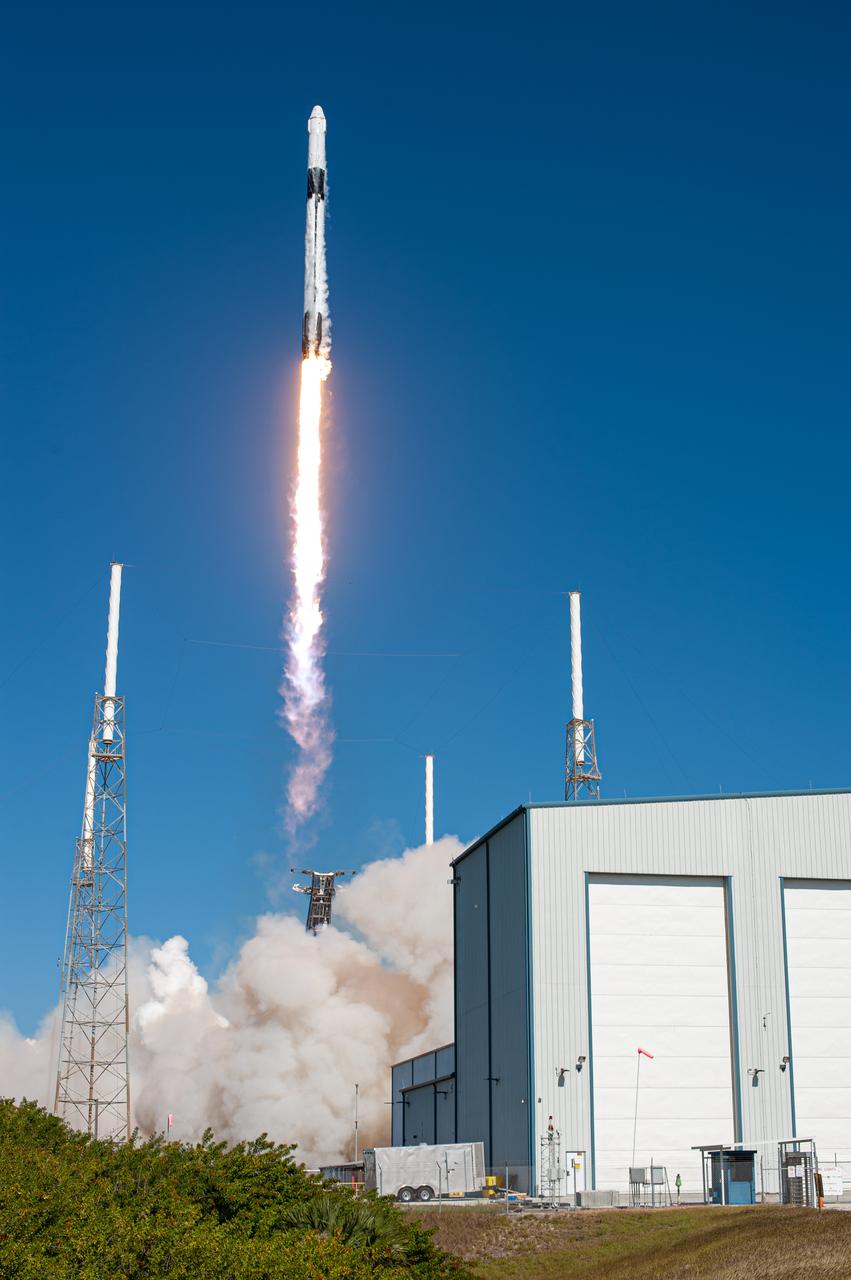
The SpaceX Falcon 9 rocket with the Dragon cargo module climbs upward after liftoff from Space Launch Complex 40 on Cape Canaveral Air Force Station in Florida in the early afternoon on Dec. 5, 2019. Liftoff was at 12:29 p.m. EST. This is SpaceX’s 19th Commercial Resupply Services (CRS-19) mission for NASA to the International Space Station. The Dragon cargo module will deliver more than 5,700 pounds of science and research, crew supplies and vehicle hardware to the orbital laboratory and its crew.
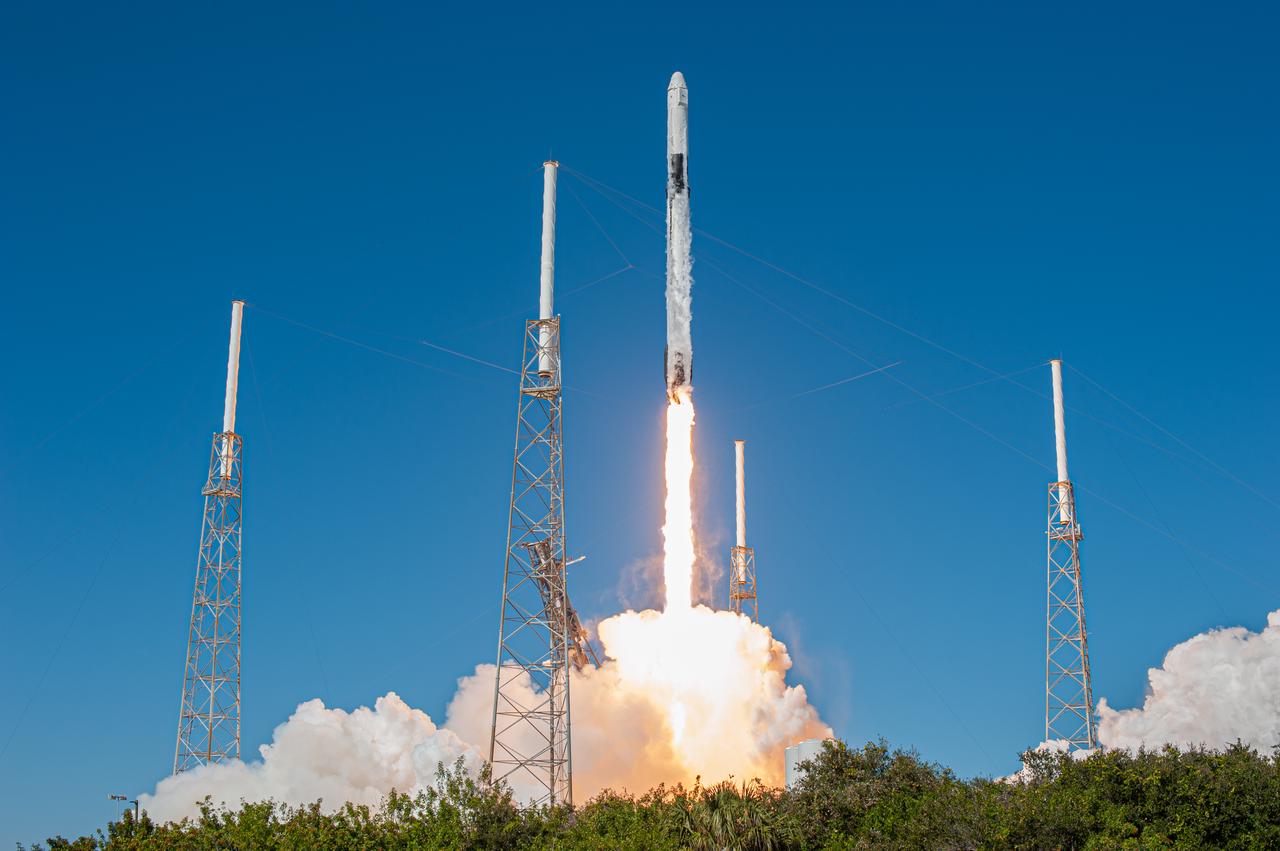
The SpaceX Falcon 9 rocket with the Dragon cargo module lifts off Space Launch Complex 40 on Cape Canaveral Air Force Station in Florida in the early afternoon on Dec. 5, 2019. Liftoff was at 12:29 p.m. EST. This is SpaceX’s 19th Commercial Resupply Services (CRS-19) mission for NASA to the International Space Station. The Dragon cargo module will deliver more than 5,700 pounds of science and research, crew supplies and vehicle hardware to the orbital laboratory and its crew.
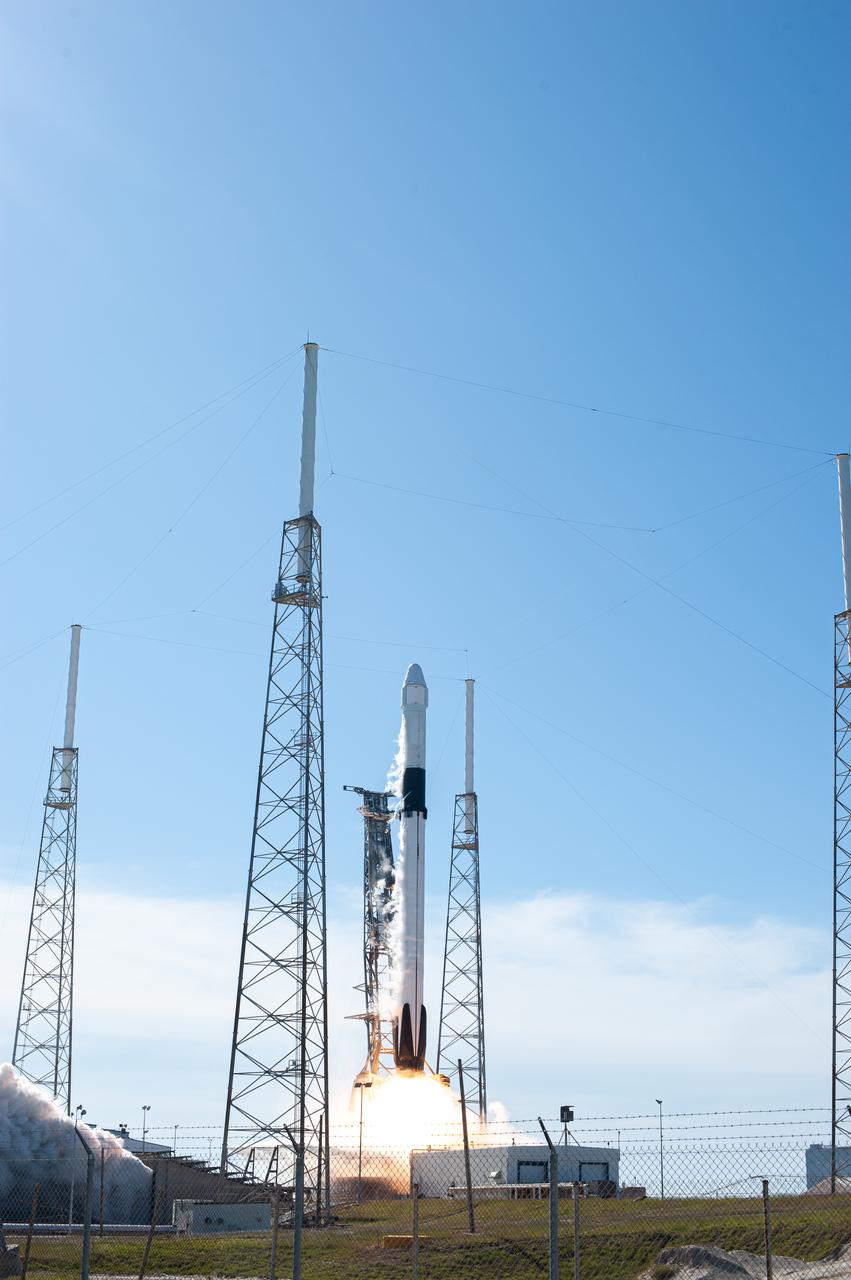
The SpaceX Falcon 9 rocket with the Dragon cargo module lifts off Space Launch Complex 40 on Cape Canaveral Air Force Station in Florida in the early afternoon on Dec. 5, 2019. Liftoff was at 12:29 p.m. EST. This is SpaceX’s 19th Commercial Resupply Services (CRS-19) mission for NASA to the International Space Station. The Dragon cargo module will deliver more than 5,700 pounds of science and research, crew supplies and vehicle hardware to the orbital laboratory and its crew.
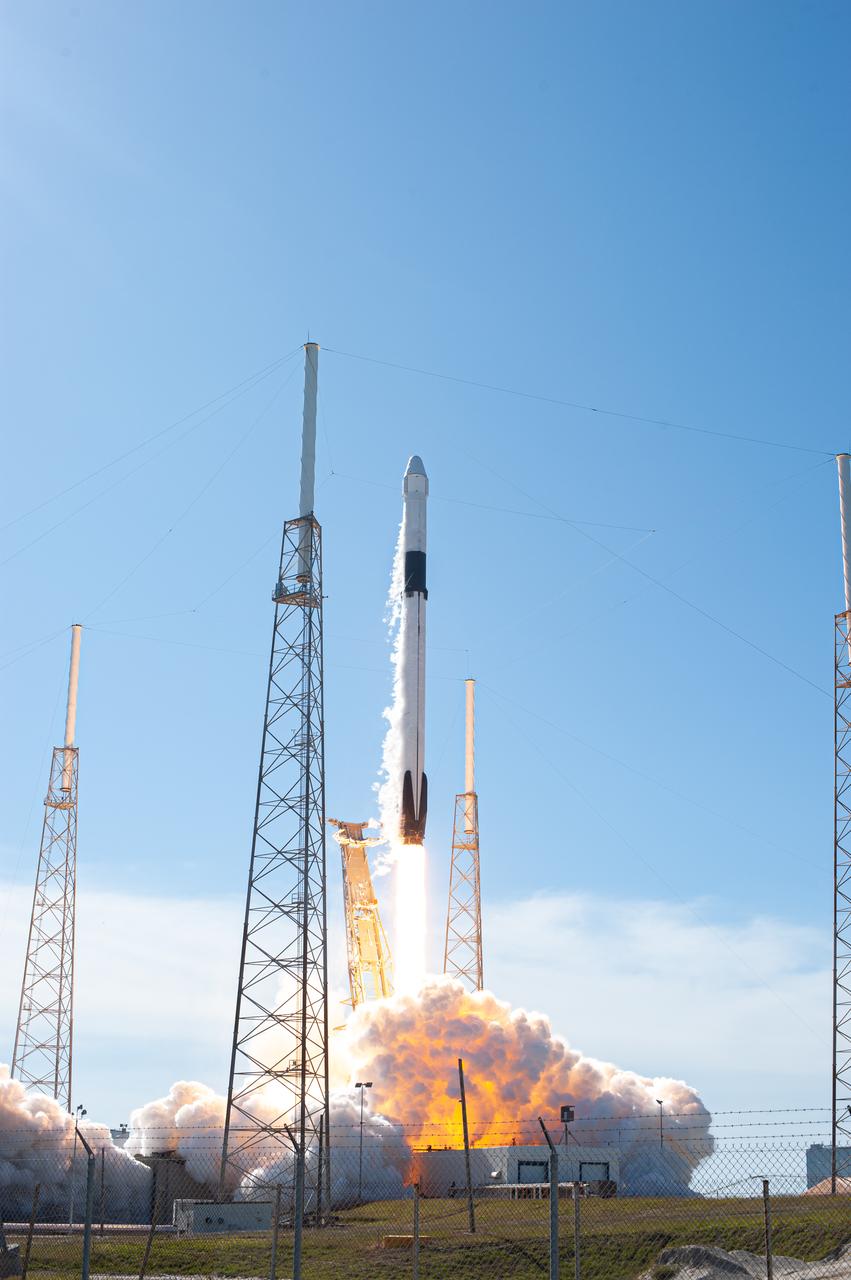
The SpaceX Falcon 9 rocket with the Dragon cargo module lifts off Space Launch Complex 40 on Cape Canaveral Air Force Station in Florida in the early afternoon on Dec. 5, 2019. Liftoff was at 12:29 p.m. EST. This is SpaceX’s 19th Commercial Resupply Services (CRS-19) mission for NASA to the International Space Station. The Dragon cargo module will deliver more than 5,700 pounds of science and research, crew supplies and vehicle hardware to the orbital laboratory and its crew.

The SpaceX Falcon 9 rocket with the Dragon cargo module lifts off Space Launch Complex 40 on Cape Canaveral Air Force Station in Florida in the early afternoon on Dec. 5, 2019. Liftoff was at 12:29 p.m. EST. This is SpaceX’s 19th Commercial Resupply Services (CRS-19) mission for NASA to the International Space Station. The Dragon cargo module will deliver more than 5,700 pounds of science and research, crew supplies and vehicle hardware to the orbital laboratory and its crew.
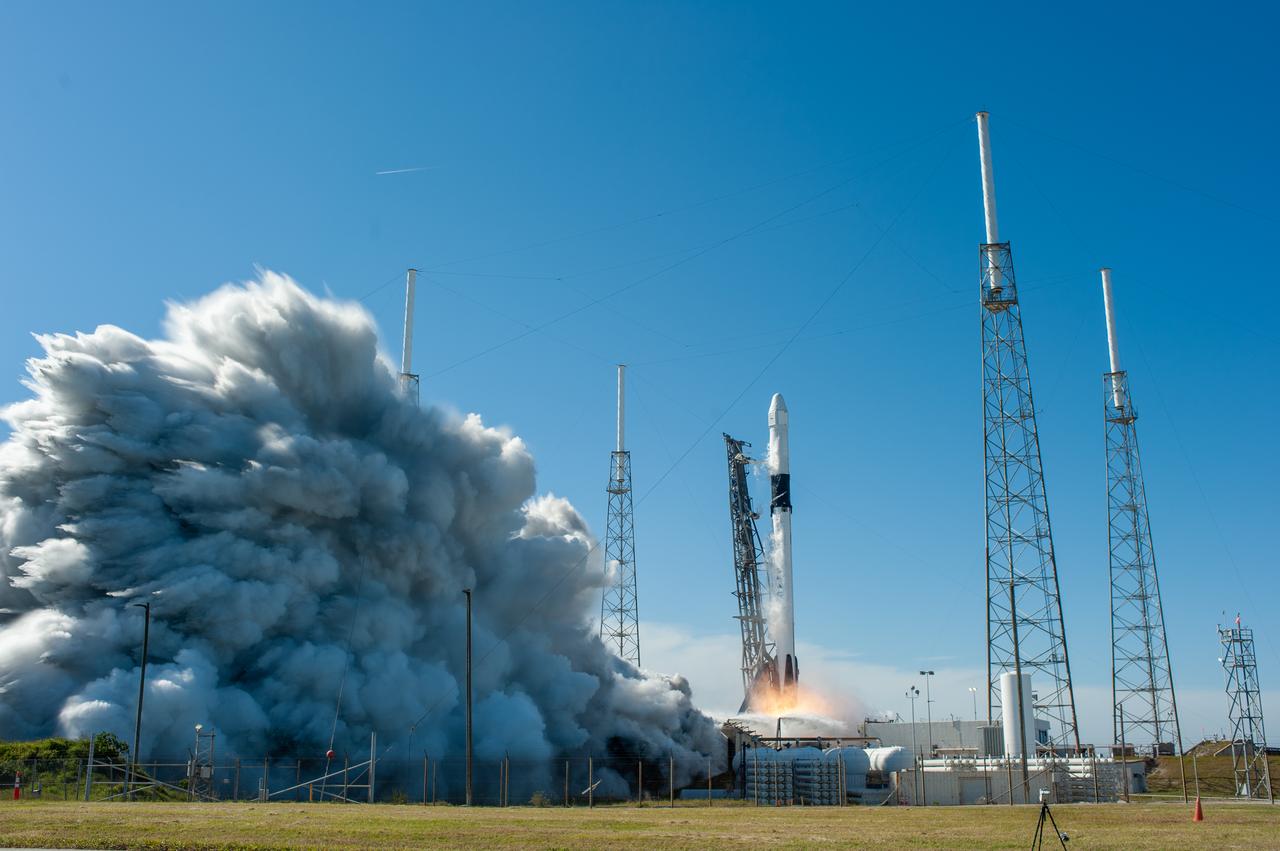
The SpaceX Falcon 9 rocket with the Dragon cargo module lifts off Space Launch Complex 40 on Cape Canaveral Air Force Station in Florida in the early afternoon on Dec. 5, 2019. Liftoff was at 12:29 p.m. EST. This is SpaceX’s 19th Commercial Resupply Services (CRS-19) mission for NASA to the International Space Station. The Dragon cargo module will deliver more than 5,700 pounds of science and research, crew supplies and vehicle hardware to the orbital laboratory and its crew.
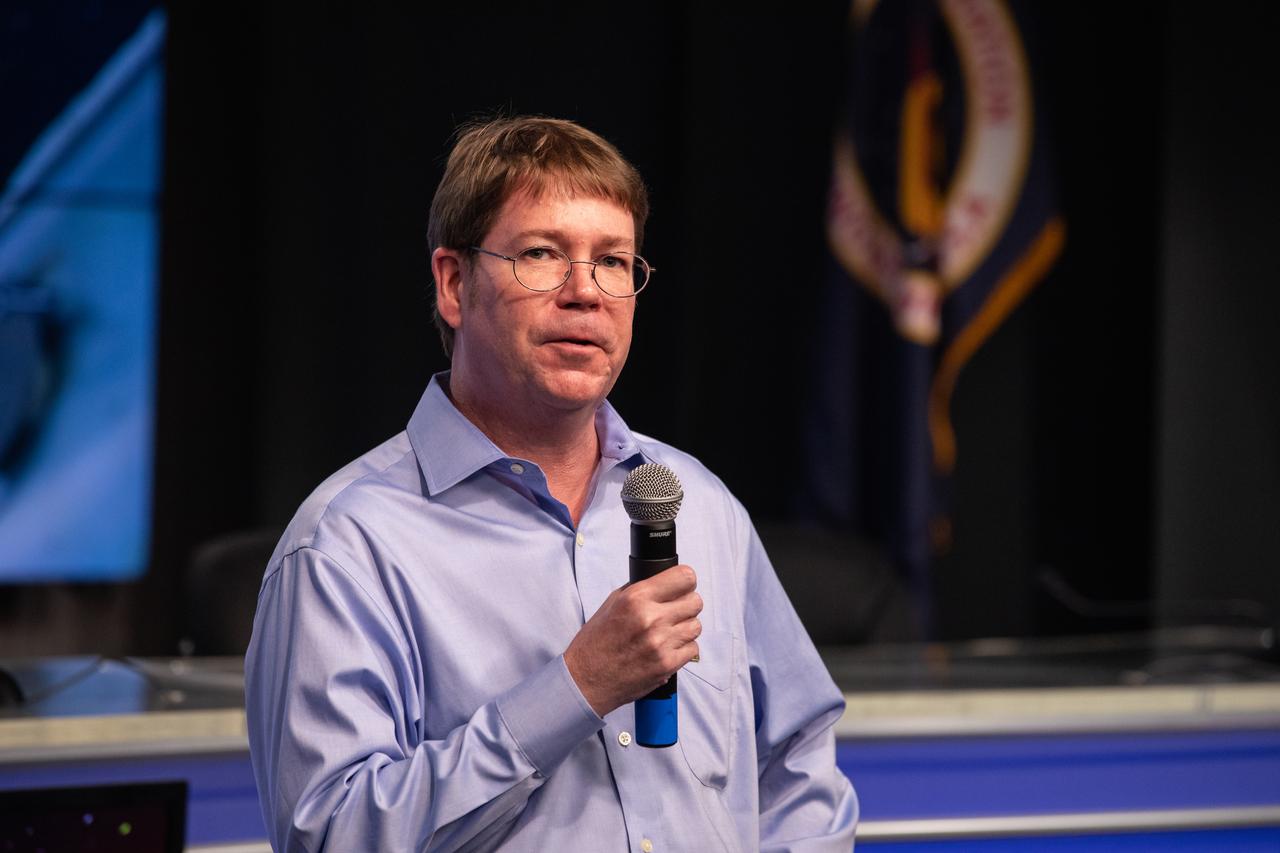
Dr. Edward Kelly, with the University of Washington School of Pharmacy, discusses The Tissue Chips in Space project during a What’s On Board science briefing to NASA Social participants at the agency’s Kennedy Space Center in Florida on April 29, 2019. The briefing was held for SpaceX’s 17th Commercial Resupply Services (CRS-17) mission to the International Space Station. Kelly and other researchers will send kidney tissue chip models to the space station to understand how microgravity affects kidney function, such as changes in vitamin D metabolism and formation of kidney stones. NASA’s Orbiting Carbon Observatory-3 (OCO-3) and Space Test Program-Houston 6 (STP-H6) are two of the experiments that also will be delivered to the space station on CRS-17. The SpaceX Falcon 9 rocket and Dragon cargo module are scheduled to launch no earlier than May 3, 2019, from Space Launch Complex 40 on Cape Canaveral Air Force Station in Florida.
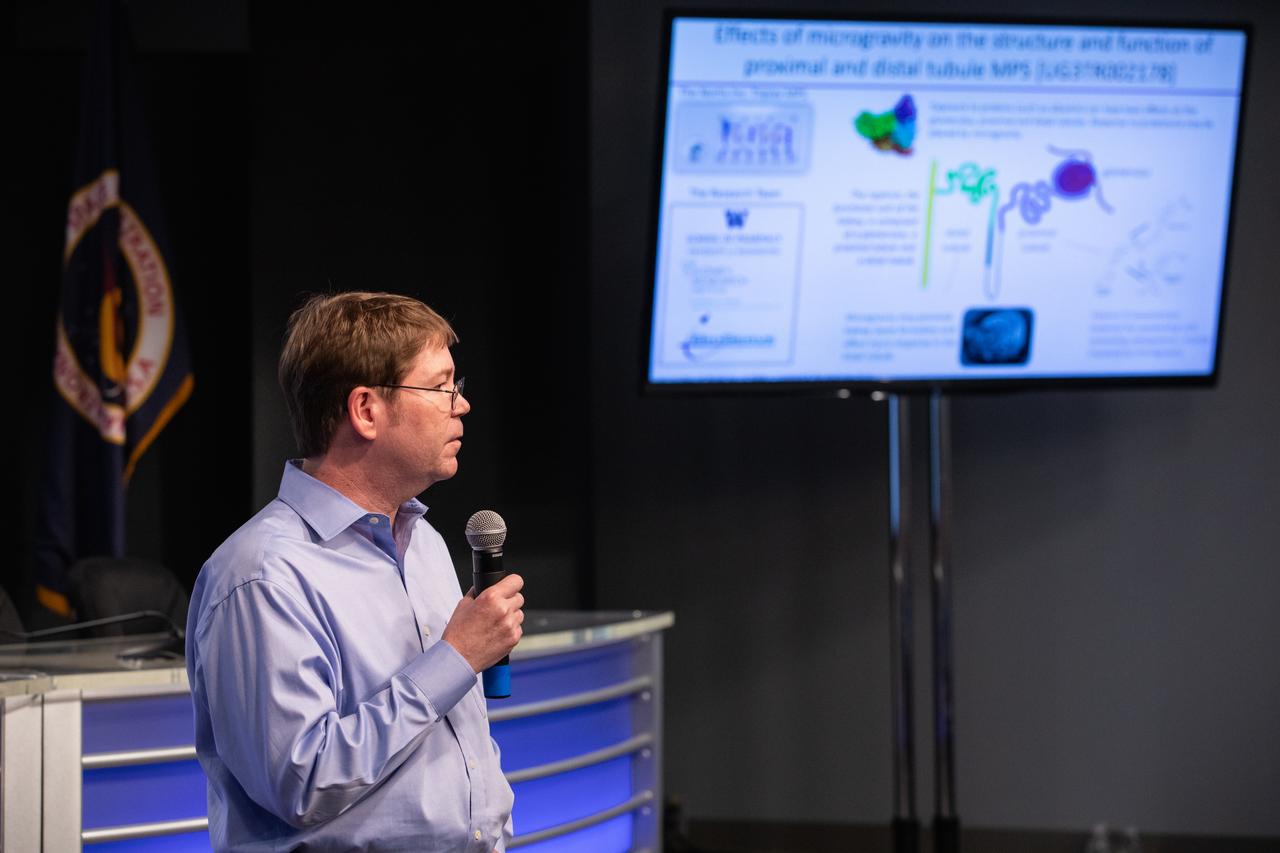
Dr. Edward Kelly, with the University of Washington School of Pharmacy, discusses The Tissue Chips in Space project during a What’s On Board science briefing to NASA Social participants at the agency’s Kennedy Space Center in Florida on April 29, 2019. The briefing was held for SpaceX’s 17th Commercial Resupply Services (CRS-17) mission to the International Space Station. Kelly and other researchers will send kidney tissue chip models to the space station to understand how microgravity affects kidney function, such as changes in vitamin D metabolism and formation of kidney stones. NASA’s Orbiting Carbon Observatory-3 (OCO-3) and Space Test Program-Houston 6 (STP-H6) are two of the experiments that also will be delivered to the space station on CRS-17. The SpaceX Falcon 9 rocket and Dragon cargo module are scheduled to launch no earlier than May 3, 2019, from Space Launch Complex 40 on Cape Canaveral Air Force Station in Florida.
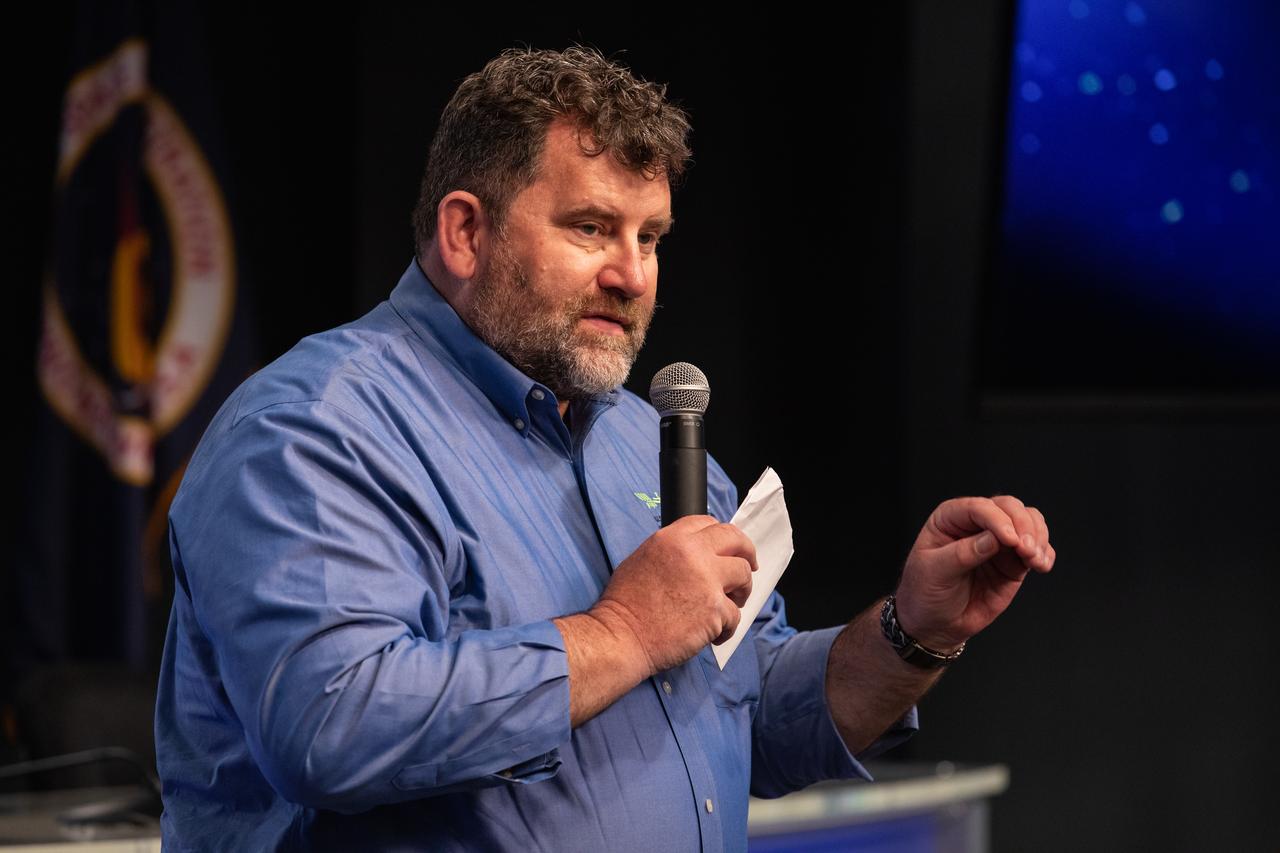
Mike Roberts, deputy chief scientist for the ISS Program at NASA’s Johnson Space Center in Houston, talks to NASA Social participants during a What’s On Board science briefing at the agency’s Kennedy Space Center in Florida on April 29, 2019. The briefing was held for SpaceX’s 17th Commercial Resupply Services (CRS-17) mission to the International Space Station. NASA’s Orbiting Carbon Observatory-3 (OCO-3) and Space Test Program-Houston 6 (STP-H6) are two of the experiments that will be delivered to the space station on CRS-17. The SpaceX Falcon 9 rocket and Dragon cargo module are scheduled to launch no earlier than May 3, 2019, from Space Launch Complex 40 on Cape Canaveral Air Force Station in Florida.
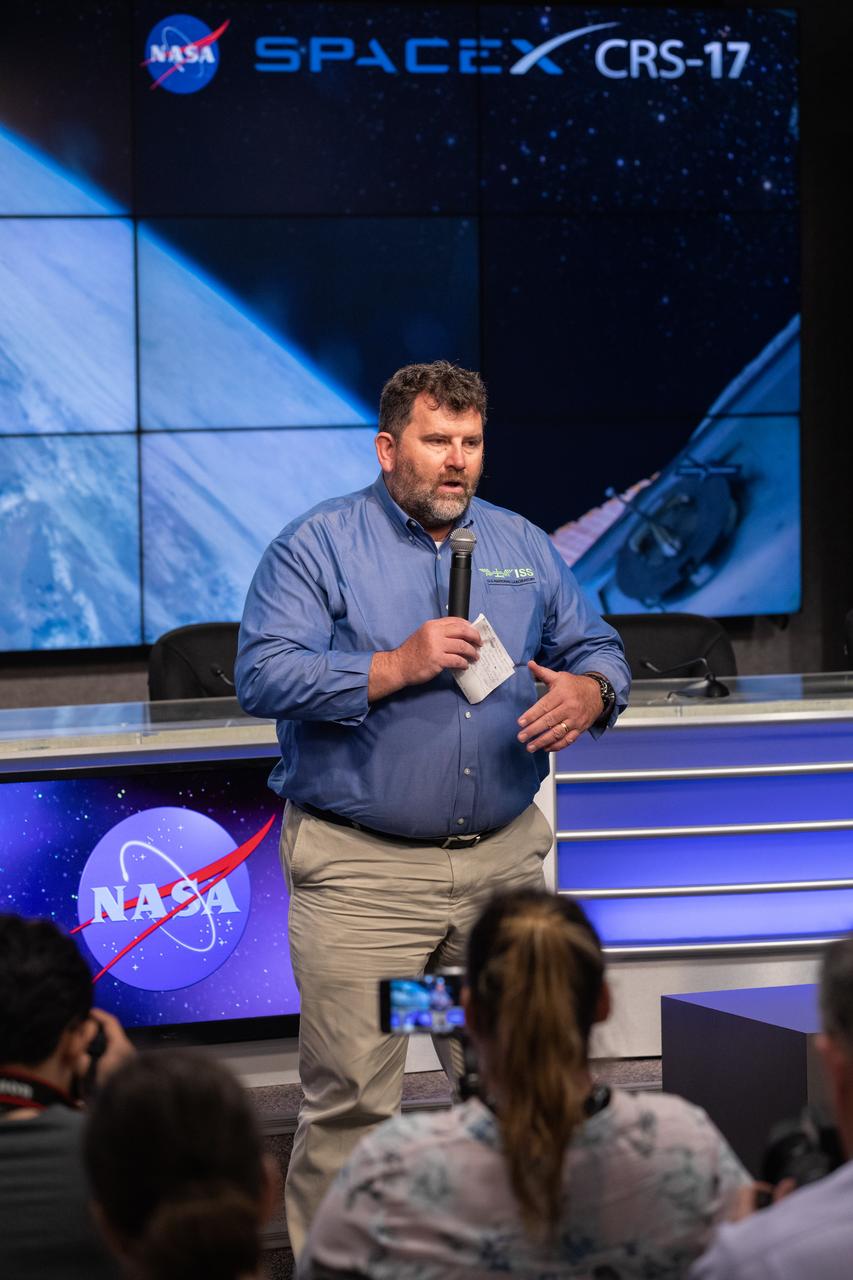
Mike Roberts, deputy chief scientist for the ISS Program at NASA’s Johnson Space Center in Houston, talks to NASA Social participants during a What’s On Board science briefing at the agency’s Kennedy Space Center in Florida on April 29, 2019. The briefing was held for SpaceX’s 17th Commercial Resupply Services (CRS-17) mission to the International Space Station. NASA’s Orbiting Carbon Observatory-3 (OCO-3) and Space Test Program-Houston 6 (STP-H6) are two of the experiments that will be delivered to the space station on CRS-17. The SpaceX Falcon 9 rocket and Dragon cargo module are scheduled to launch no earlier than May 3, 2019, from Space Launch Complex 40 on Cape Canaveral Air Force Station in Florida.
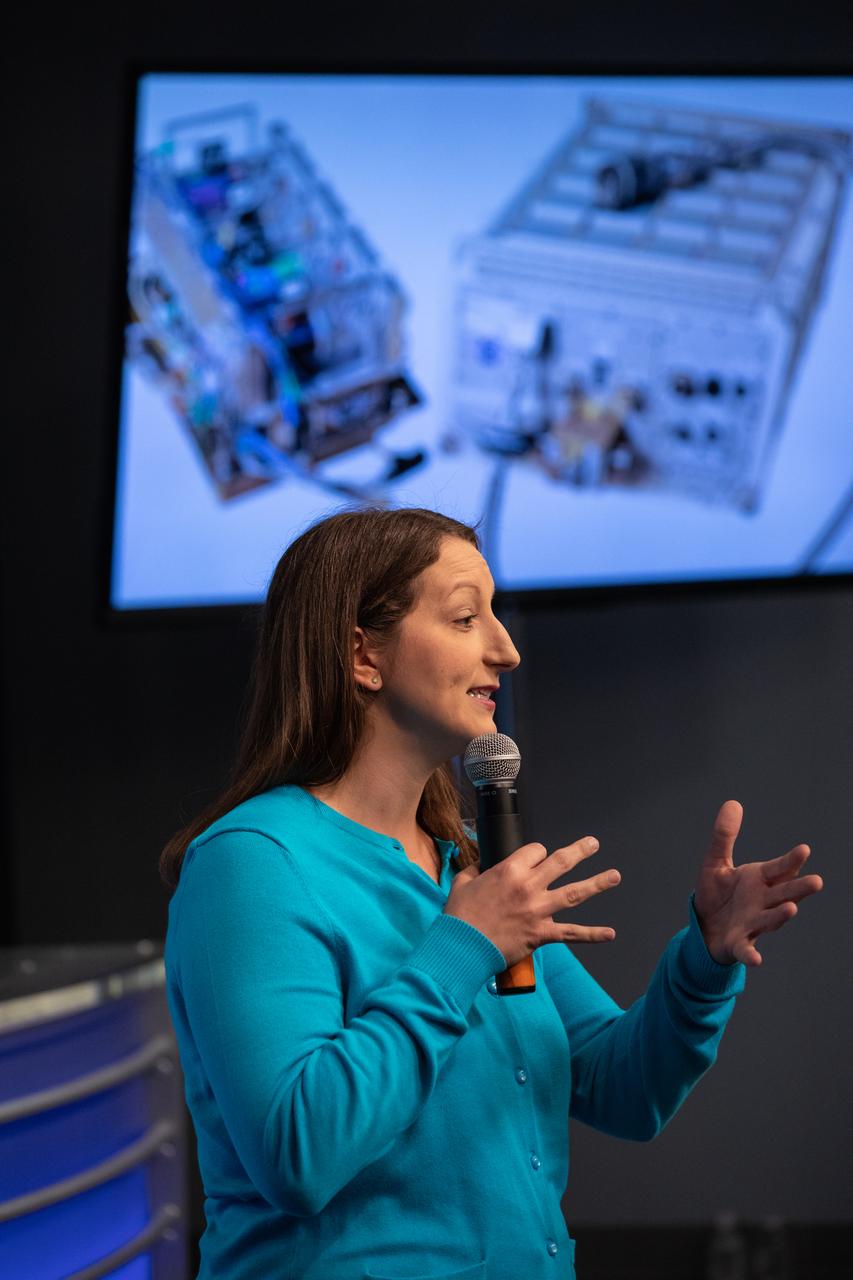
Dr. Kristen John, principal investigator for Hermes at NASA’s Johnson Space Center in Houston, talks to NASA Social participants during a What’s On Board science briefing at the agency’s Kennedy Space Center in Florida on April 29, 2019. The briefing was held for SpaceX’s 17th Commercial Resupply Services (CRS-17) mission to the International Space Station. John presented on the Hermes Facility, an experimental microgravity facility that enables science experiments, microgravity exposure testing, testing of engineering components and CubeSats and any payloads that can fit in the Hermes design and operations constraints. NASA’s Orbiting Carbon Observatory-3 (OCO-3) and Space Test Program-Houston 6 (STP-H6) are two of the experiments that also will be delivered to the space station on CRS-17. The SpaceX Falcon 9 rocket and Dragon cargo module are scheduled to launch no earlier than May 3, 2019, from Space Launch Complex 40 on Cape Canaveral Air Force Station in Florida.
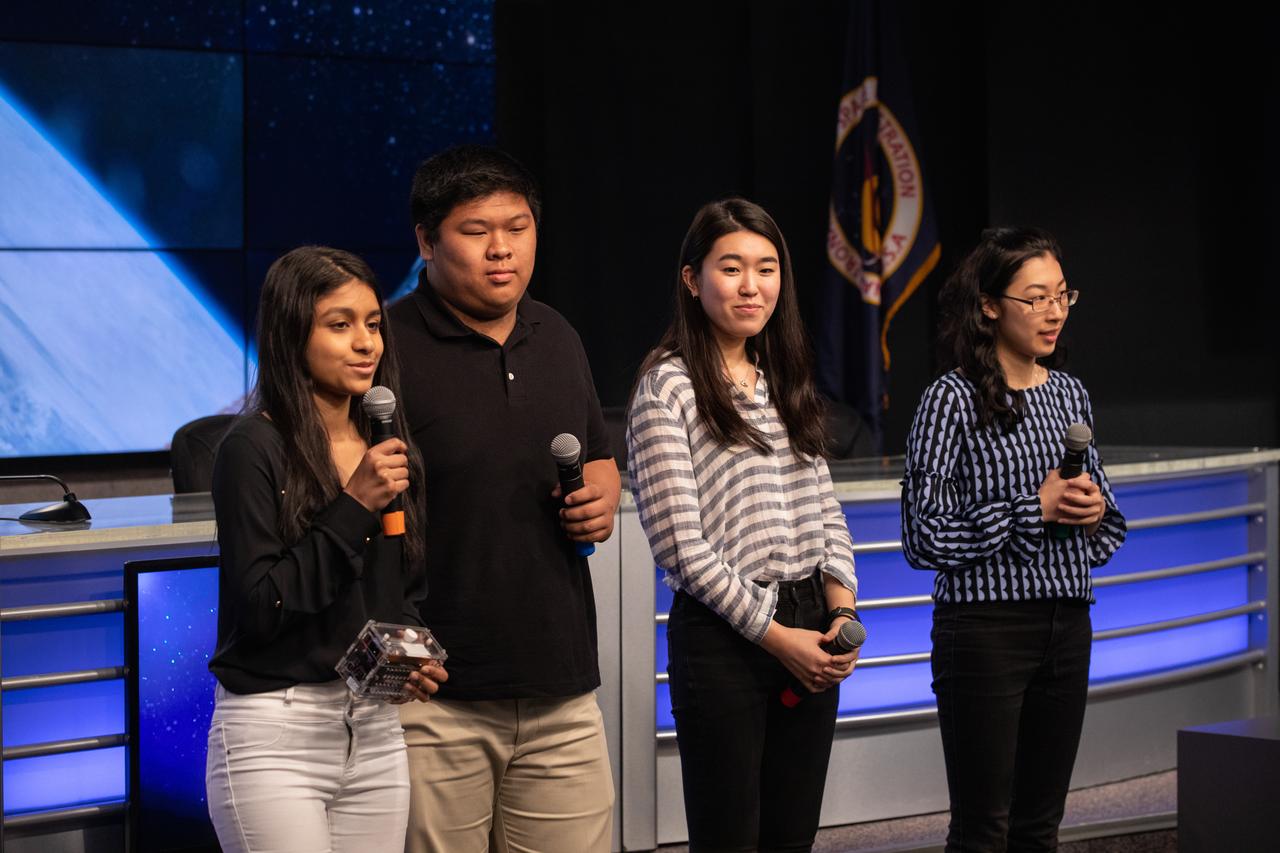
From left, high school student Aarthi Vijayakumar, MIT student David Li, and high school students Michelle Sung and Rebecca Li talk about their winning Genes in Space experiment for NASA during a What’s On Board science briefing to NASA Social participants at the agency’s Kennedy Space Center in Florida on April 29, 2019. The briefing was held for SpaceX’s 17th Commercial Resupply Services (CRS-17) mission to the International Space Station. NASA’s Orbiting Carbon Observatory-3 (OCO-3) and Space Test Program-Houston 6 (STP-H6) are two of the experiments that also will be delivered to the space station on CRS-17. The SpaceX Falcon 9 rocket and Dragon cargo module are scheduled to launch no earlier than May 3, 2019, from Space Launch Complex 40 on Cape Canaveral Air Force Station in Florida.

Dr. Edward Kelly, with the University of Washington School of Pharmacy, discusses The Tissue Chips in Space project during a What’s On Board science briefing to NASA Social participants at the agency’s Kennedy Space Center in Florida on April 29, 2019. The briefing was held for SpaceX’s 17th Commercial Resupply Services (CRS-17) mission to the International Space Station. Kelly and other researchers will send kidney tissue chip models to the space station to understand how microgravity affects kidney function, such as changes in vitamin D metabolism and formation of kidney stones. NASA’s Orbiting Carbon Observatory-3 (OCO-3) and Space Test Program-Houston 6 (STP-H6) are two of the experiments that also will be delivered to the space station on CRS-17. The SpaceX Falcon 9 rocket and Dragon cargo module are scheduled to launch no earlier than May 3, 2019, from Space Launch Complex 40 on Cape Canaveral Air Force Station in Florida.
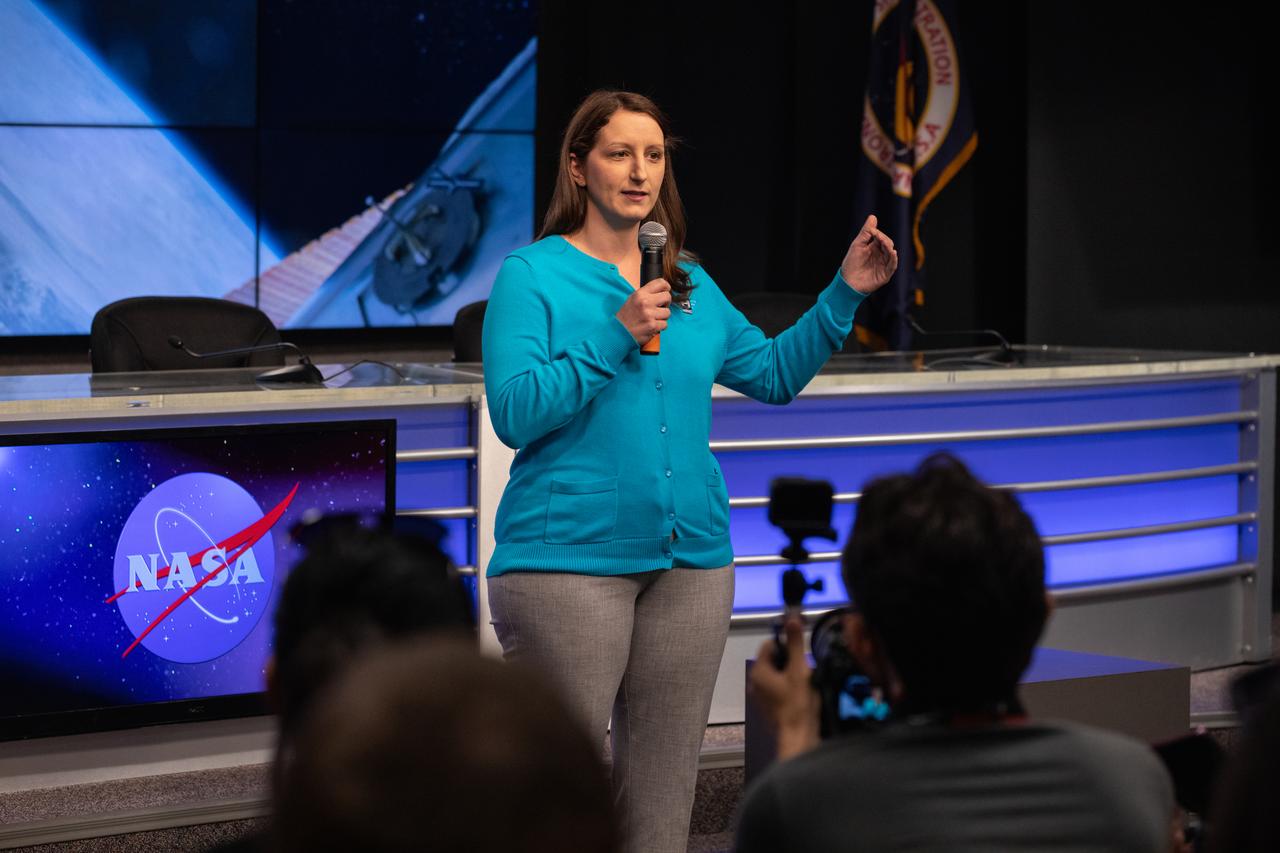
Dr. Kristen John, principal investigator for Hermes at NASA’s Johnson Space Center in Houston, talks to NASA Social participants during a What’s On Board science briefing at the agency’s Kennedy Space Center in Florida on April 29, 2019. The briefing was held for SpaceX’s 17th Commercial Resupply Services (CRS-17) mission to the International Space Station. John presented on the Hermes Facility, an experimental microgravity facility that enables science experiments, microgravity exposure testing, testing of engineering components and CubeSats and any payloads that can fit in the Hermes design and operations constraints. NASA’s Orbiting Carbon Observatory-3 (OCO-3) and Space Test Program-Houston 6 (STP-H6) are two of the experiments that also will be delivered to the space station on CRS-17. The SpaceX Falcon 9 rocket and Dragon cargo module are scheduled to launch no earlier than May 3, 2019, from Space Launch Complex 40 on Cape Canaveral Air Force Station in Florida.
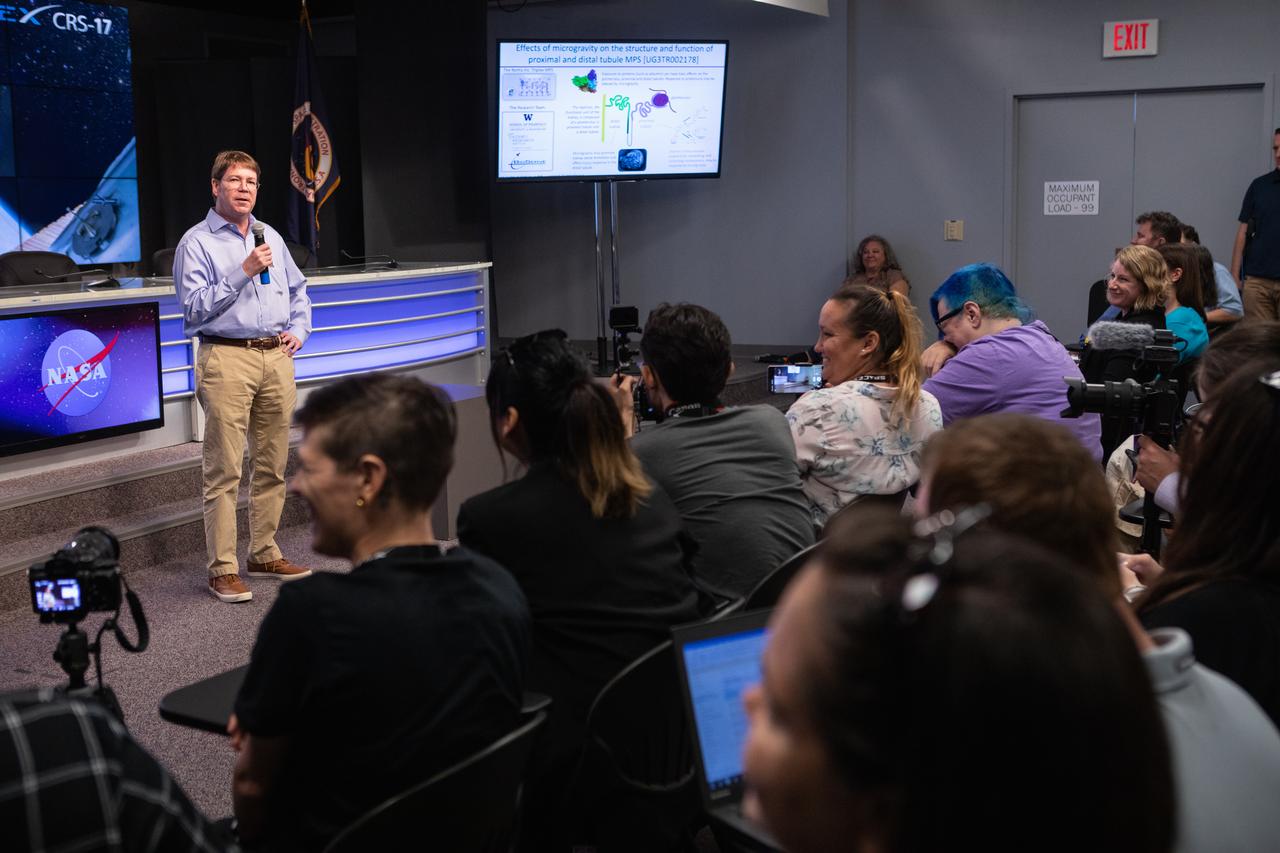
Dr. Edward Kelly, with the University of Washington School of Pharmacy, discusses The Tissue Chips in Space project during a What’s On Board science briefing to NASA Social participants at the agency’s Kennedy Space Center in Florida on April 29, 2019. The briefing was held for SpaceX’s 17th Commercial Resupply Services (CRS-17) mission to the International Space Station. Kelly and other researchers will send kidney tissue chip models to the space station to understand how microgravity affects kidney function, such as changes in vitamin D metabolism and formation of kidney stones. NASA’s Orbiting Carbon Observatory-3 (OCO-3) and Space Test Program-Houston 6 (STP-H6) are two of the experiments that also will be delivered to the space station on CRS-17. The SpaceX Falcon 9 rocket and Dragon cargo module are scheduled to launch no earlier than May 3, 2019, from Space Launch Complex 40 on Cape Canaveral Air Force Station in Florida.

From left, high school student Aarthi Vijayakumar, MIT student David Li, and high school students Michelle Sung and Rebecca Li talk about their winning Genes in Space experiment for NASA during a What’s On Board science briefing to NASA Social participants at the agency’s Kennedy Space Center in Florida on April 29, 2019. The briefing was held for SpaceX’s 17th Commercial Resupply Services (CRS-17) mission to the International Space Station. NASA’s Orbiting Carbon Observatory-3 (OCO-3) and Space Test Program-Houston 6 (STP-H6) are two of the experiments that also will be delivered to the space station on CRS-17. The SpaceX Falcon 9 rocket and Dragon cargo module are scheduled to launch no earlier than May 3, 2019, from Space Launch Complex 40 on Cape Canaveral Air Force Station in Florida.
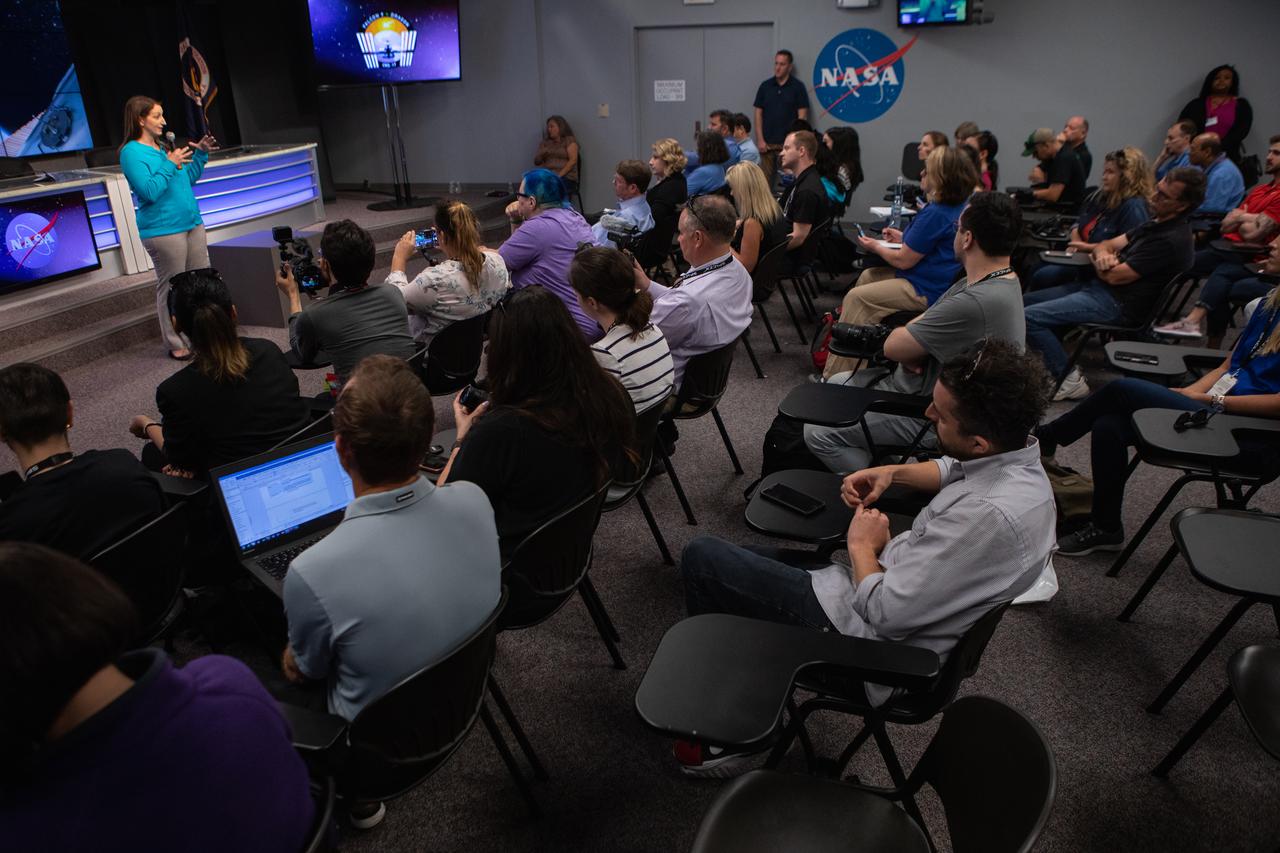
Dr. Kristen John, principal investigator for Hermes at NASA’s Johnson Space Center in Houston, talks to NASA Social participants during a What’s On Board science briefing at the agency’s Kennedy Space Center in Florida on April 29, 2019. The briefing was held for SpaceX’s 17th Commercial Resupply Services (CRS-17) mission to the International Space Station. John presented on the Hermes Facility, an experimental microgravity facility that enables science experiments, microgravity exposure testing, testing of engineering components and CubeSats and any payloads that can fit in the Hermes design and operations constraints. NASA’s Orbiting Carbon Observatory-3 (OCO-3) and Space Test Program-Houston 6 (STP-H6) are two of the experiments that also will be delivered to the space station on CRS-17. The SpaceX Falcon 9 rocket and Dragon cargo module are scheduled to launch no earlier than May 3, 2019, from Space Launch Complex 40 on Cape Canaveral Air Force Station in Florida.
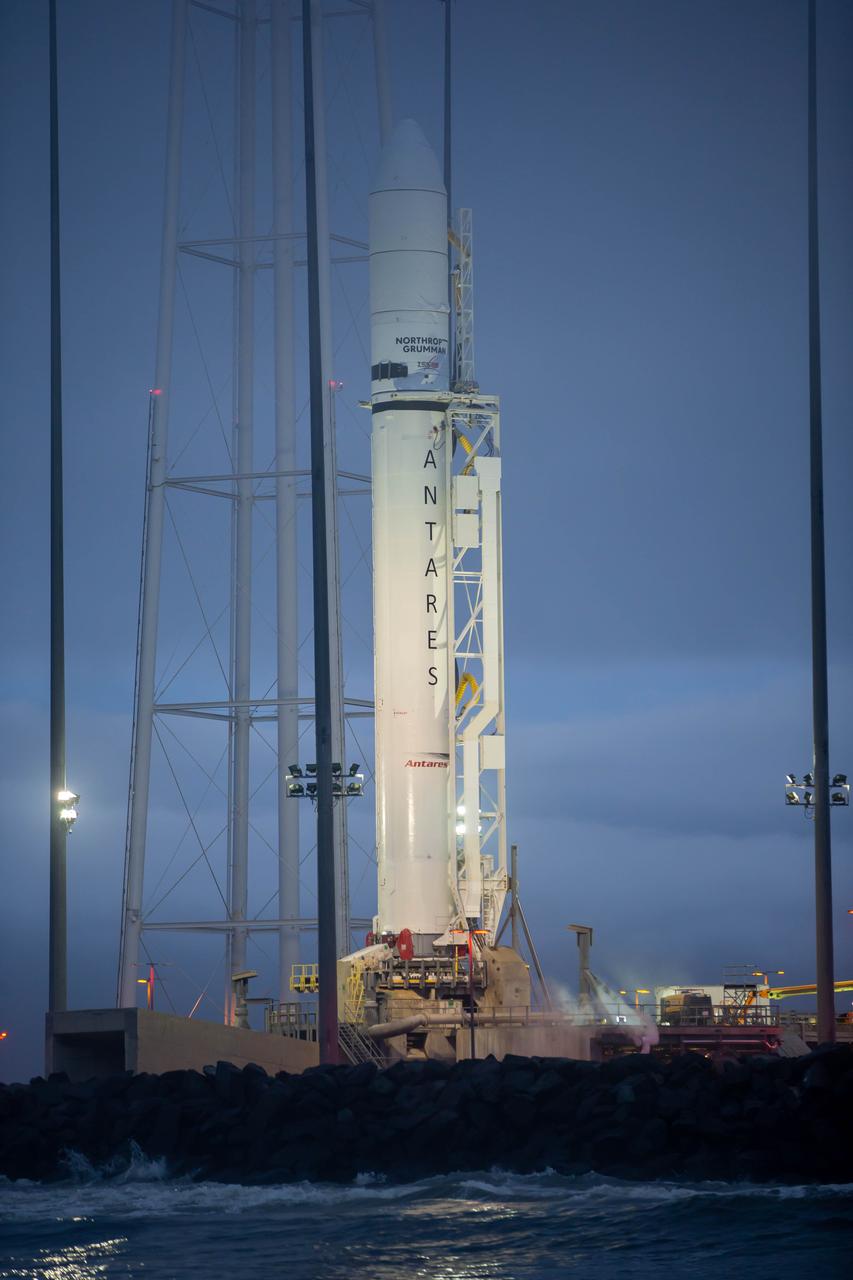
A Northrop Grumman Antares rocket carrying a Cygnus resupply spacecraft is raised into the vertical position on the Mid-Atlantic Regional Spaceport’s Pad-0A, Saturday, September 26, 2020, at NASA's Wallops Flight Facility in Virginia. Northrop Grumman’s 14th contracted cargo resupply mission with NASA to the International Space Station will deliver about 8,000 pounds of science and research, crew supplies and vehicle hardware to the orbital laboratory and its crew. The CRS-14 Cygnus spacecraft is named after the first female astronaut of Indian descent, Kalpana Chawla, and is scheduled to launch at 10:27 p.m., Tuesday, September 29, 2020 EDT. Photo Credit: (NASA/Patrick Black)
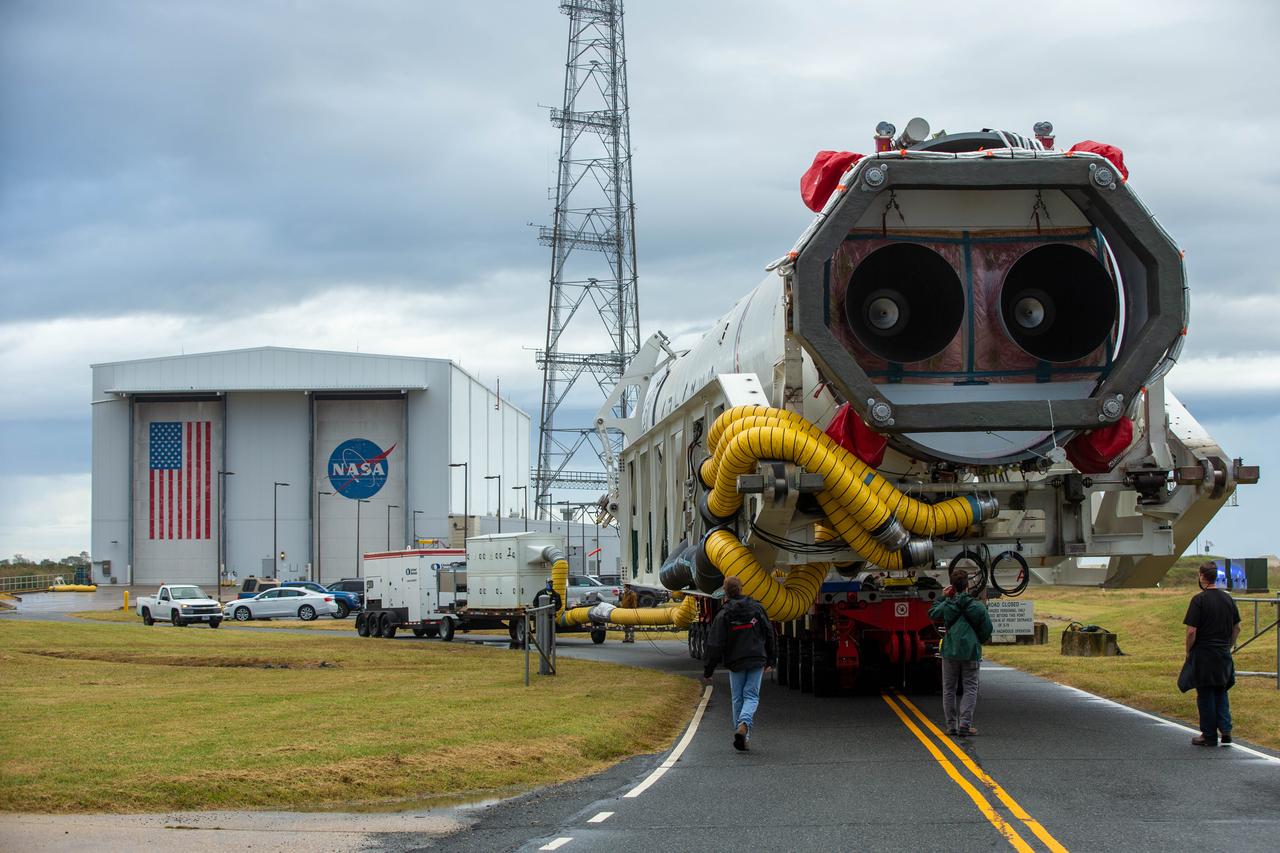
A Northrop Grumman Antares rocket carrying a Cygnus resupply spacecraft is seen as it is rolled out of the Horizontal Integration Facility to the Mid-Atlantic Regional Spaceport’s Pad-0A, Saturday, September 26, 2020, at NASA's Wallops Flight Facility in Virginia. Northrop Grumman’s 14th contracted cargo resupply mission with NASA to the International Space Station will deliver about 8,000 pounds of science and research, crew supplies and vehicle hardware to the orbital laboratory and its crew. The CRS-14 Cygnus spacecraft is named after the first female astronaut of Indian descent, Kaplana Chawla, and is scheduled to launch at 10:27 p.m., Tuesday, September 29, 2020 EDT. Photo Credit: (NASA/Patrick Black)
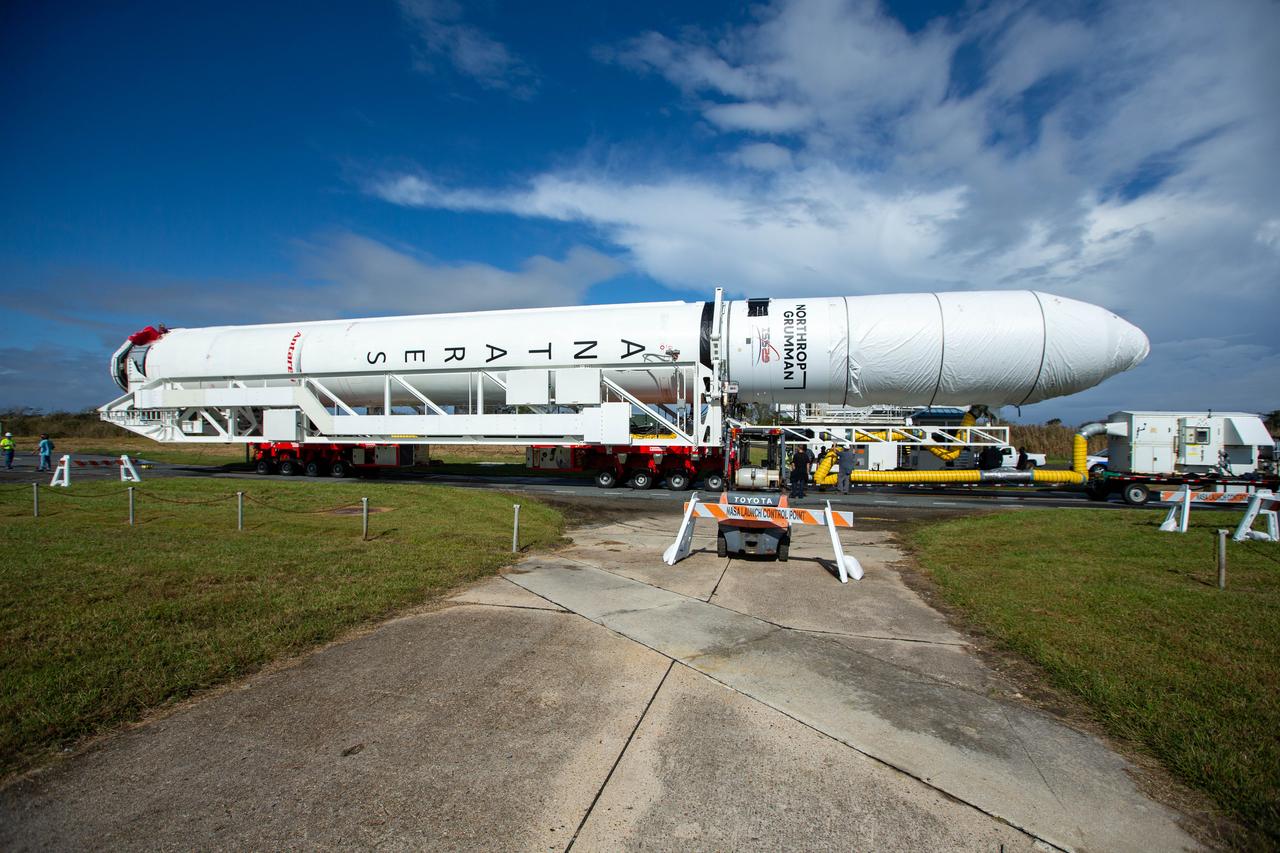
A Northrop Grumman Antares rocket carrying a Cygnus resupply spacecraft is seen as it is rolled out of the Horizontal Integration Facility to the Mid-Atlantic Regional Spaceport’s Pad-0A, Saturday, September 26, 2020, at NASA's Wallops Flight Facility in Virginia. Northrop Grumman’s 14th contracted cargo resupply mission with NASA to the International Space Station will deliver about 8,000 pounds of science and research, crew supplies and vehicle hardware to the orbital laboratory and its crew. The CRS-14 Cygnus spacecraft is named after the first female astronaut of Indian descent, Kaplana Chawla, and is scheduled to launch at 10:27 p.m., Tuesday, September 29, 2020 EDT. Photo Credit: (NASA/Patrick Black)
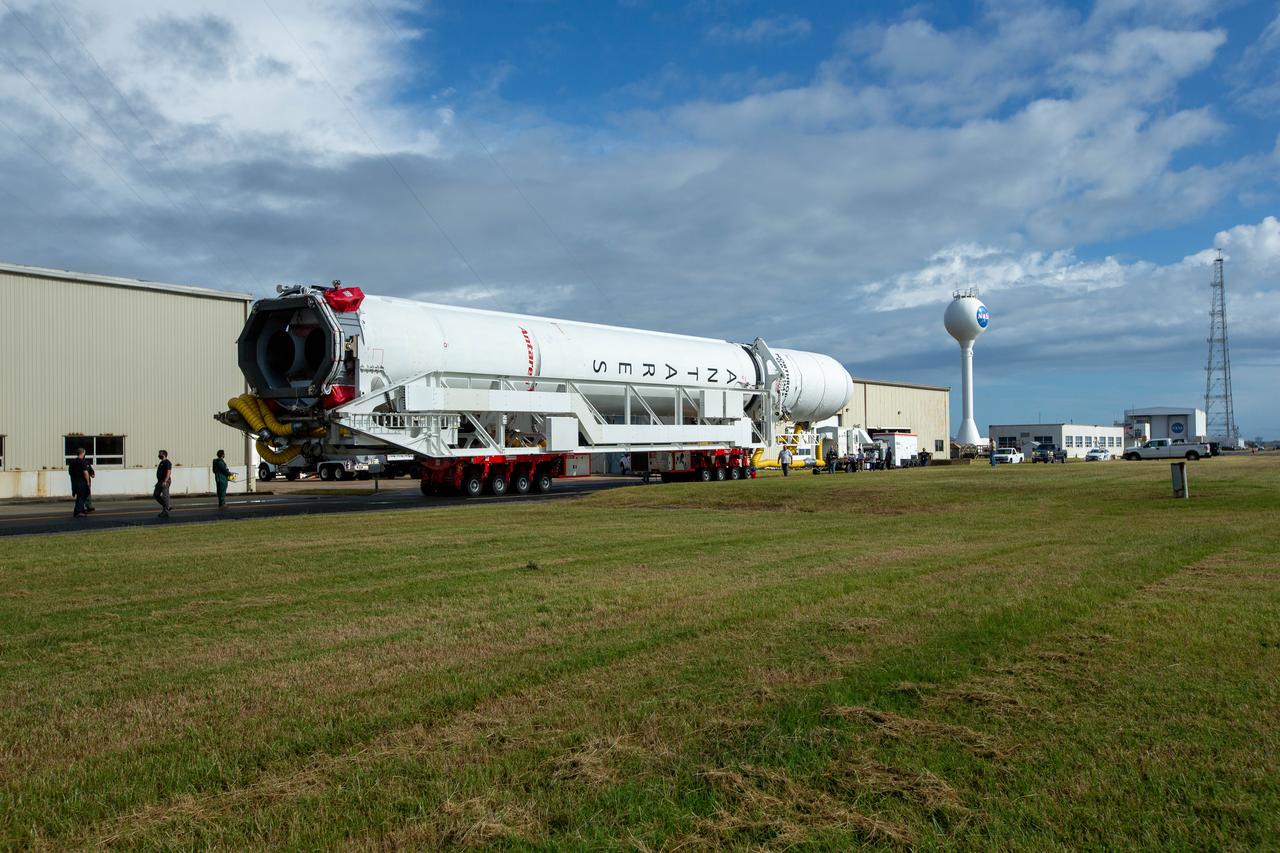
A Northrop Grumman Antares rocket carrying a Cygnus resupply spacecraft is seen as it is rolled out of the Horizontal Integration Facility to the Mid-Atlantic Regional Spaceport’s Pad-0A, Saturday, September 26, 2020, at NASA's Wallops Flight Facility in Virginia. Northrop Grumman’s 14th contracted cargo resupply mission with NASA to the International Space Station will deliver about 8,000 pounds of science and research, crew supplies and vehicle hardware to the orbital laboratory and its crew. The CRS-14 Cygnus spacecraft is named after the first female astronaut of Indian descent, Kaplana Chawla, and is scheduled to launch at 10:27 p.m., Tuesday, September 29, 2020 EDT. Photo Credit: (NASA/Patrick Black)

A Northrop Grumman Antares rocket carrying a Cygnus resupply spacecraft is seen as it is rolled out of the Horizontal Integration Facility to the Mid-Atlantic Regional Spaceport’s Pad-0A, Saturday, September 26, 2020, at NASA's Wallops Flight Facility in Virginia. Northrop Grumman’s 14th contracted cargo resupply mission with NASA to the International Space Station will deliver about 8,000 pounds of science and research, crew supplies and vehicle hardware to the orbital laboratory and its crew. The CRS-14 Cygnus spacecraft is named after the first female astronaut of Indian descent, Kaplana Chawla, and is scheduled to launch at 10:27 p.m., Tuesday, September 29, 2020 EDT. Photo Credit: (NASA/Patrick Black)
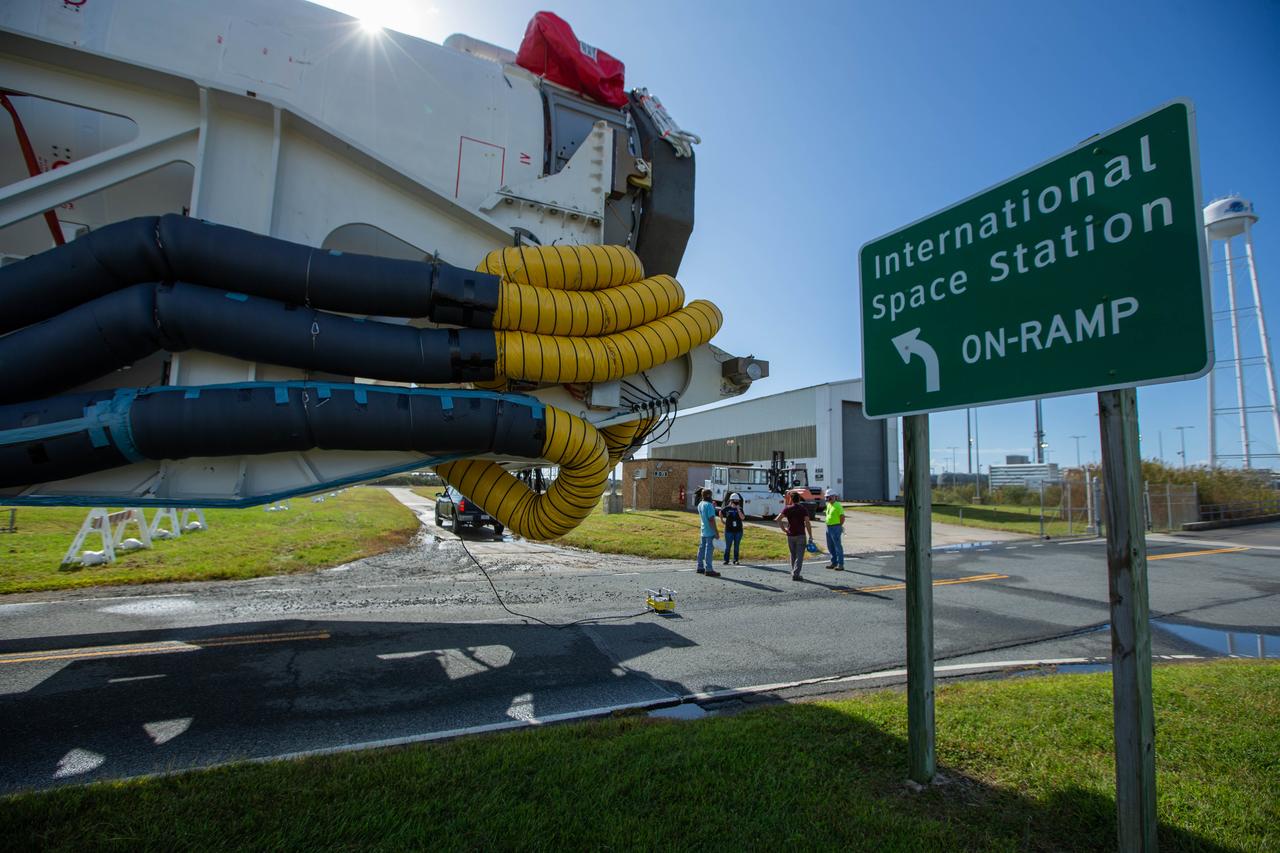
A Northrop Grumman Antares rocket carrying a Cygnus resupply spacecraft is seen as it is rolled out of the Horizontal Integration Facility to the Mid-Atlantic Regional Spaceport’s Pad-0A, Saturday, September 26, 2020, at NASA's Wallops Flight Facility in Virginia. Northrop Grumman’s 14th contracted cargo resupply mission with NASA to the International Space Station will deliver about 8,000 pounds of science and research, crew supplies and vehicle hardware to the orbital laboratory and its crew. The CRS-14 Cygnus spacecraft is named after the first female astronaut of Indian descent, Kaplana Chawla, and is scheduled to launch at 10:27 p.m., Tuesday, September 29, 2020 EDT. Photo Credit: (NASA/Patrick Black)

A Northrop Grumman Antares rocket carrying a Cygnus resupply spacecraft is seen as it is rolled out of the Horizontal Integration Facility to the Mid-Atlantic Regional Spaceport’s Pad-0A, Saturday, September 26, 2020, at NASA's Wallops Flight Facility in Virginia. Northrop Grumman’s 14th contracted cargo resupply mission with NASA to the International Space Station will deliver about 8,000 pounds of science and research, crew supplies and vehicle hardware to the orbital laboratory and its crew. The CRS-14 Cygnus spacecraft is named after the first female astronaut of Indian descent, Kaplana Chawla, and is scheduled to launch at 10:27 p.m., Tuesday, September 29, 2020 EDT. Photo Credit: (NASA/Patrick Black)
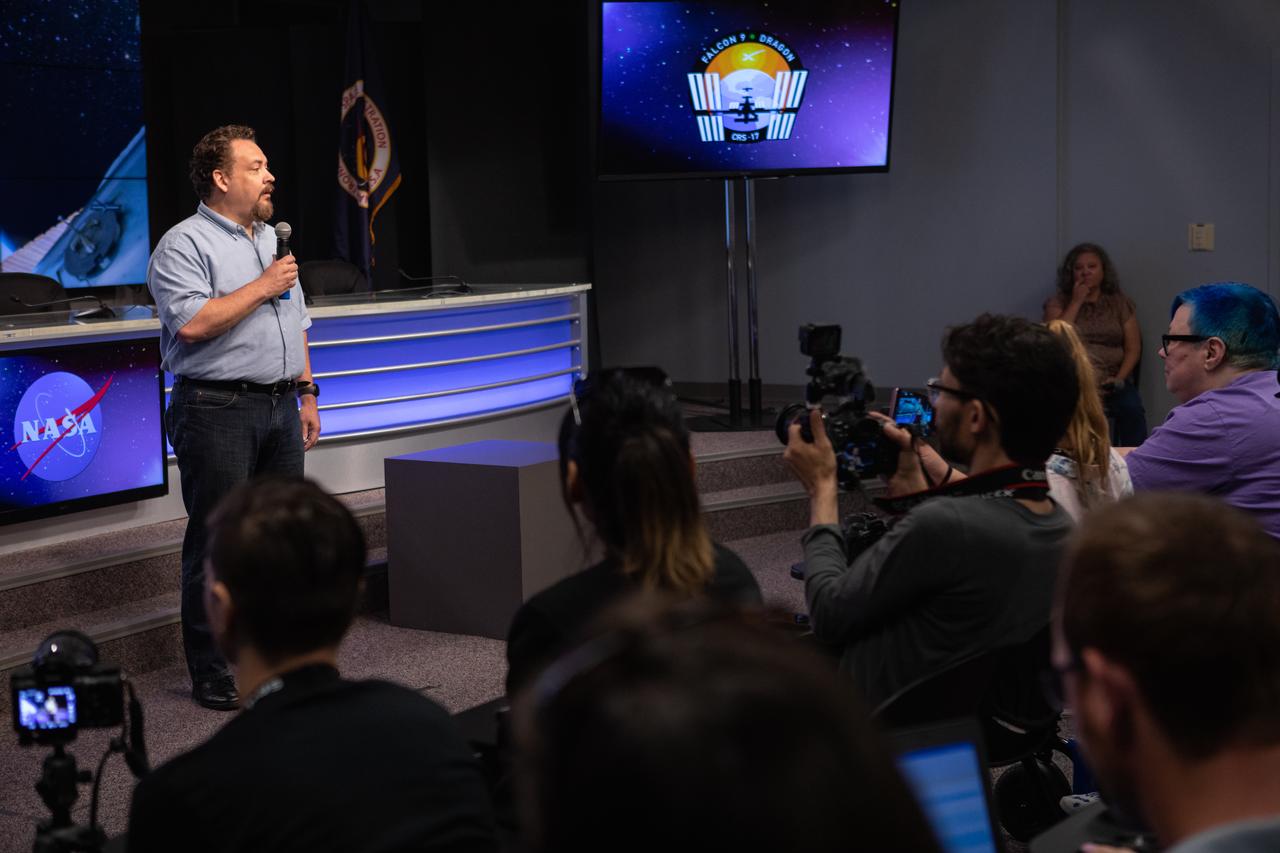
Dr. Kirt Costello, chief scientist for the ISS Program at NASA’s Johnson Space Center in Houston, talks to NASA Social participants during a What’s On Board science briefing at the agency’s Kennedy Space Center in Florida on April 29, 2019. The briefing was held for SpaceX’s 17th Commercial Resupply Services (CRS-17) mission to the International Space Station. The SpaceX Falcon 9 rocket and Dragon cargo module are scheduled to launch no earlier than May 3, 2019, from Space Launch Complex 40 on Cape Canaveral Air Force Station in Florida.
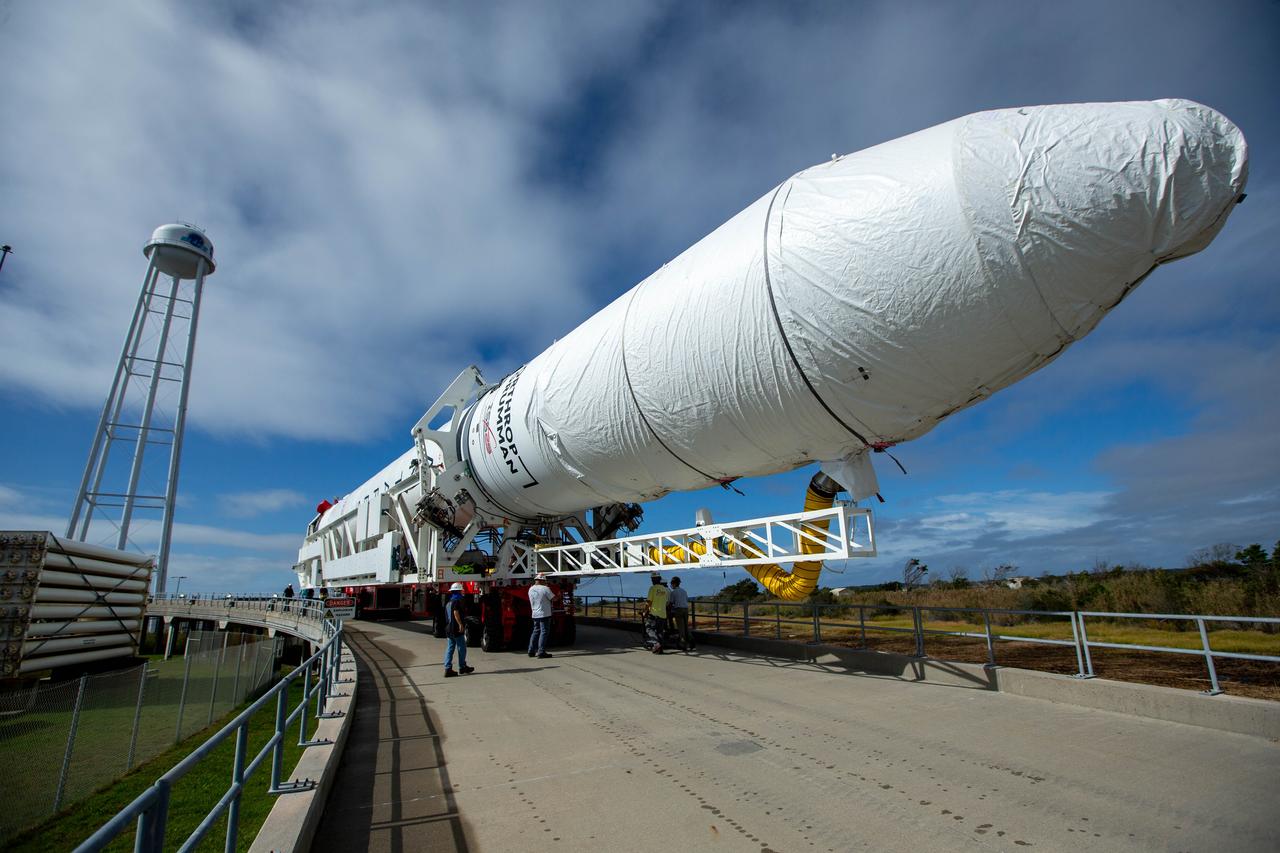
A Northrop Grumman Antares rocket carrying a Cygnus resupply spacecraft is seen as it is rolled out of the Horizontal Integration Facility to the Mid-Atlantic Regional Spaceport’s Pad-0A, Saturday, September 26, 2020, at NASA's Wallops Flight Facility in Virginia. Northrop Grumman’s 14th contracted cargo resupply mission with NASA to the International Space Station will deliver about 8,000 pounds of science and research, crew supplies and vehicle hardware to the orbital laboratory and its crew. The CRS-14 Cygnus spacecraft is named after the first female astronaut of Indian descent, Kalpana Chawla, and is scheduled to launch at 10:27 p.m., Tuesday, September 29, 2020 EDT. Photo Credit: (NASA/Patrick Black)
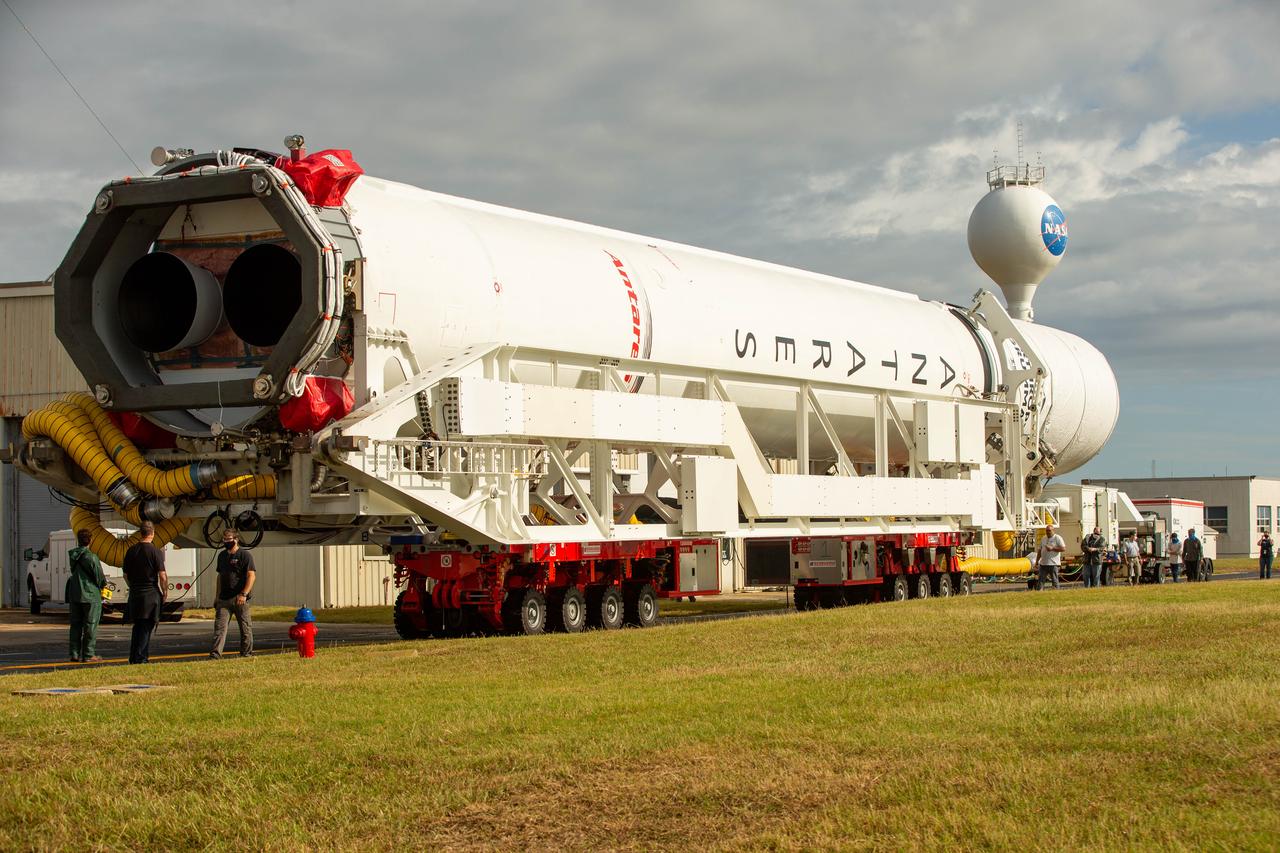
A Northrop Grumman Antares rocket carrying a Cygnus resupply spacecraft is seen as it is rolled out of the Horizontal Integration Facility to the Mid-Atlantic Regional Spaceport’s Pad-0A, Saturday, September 26, 2020, at NASA's Wallops Flight Facility in Virginia. Northrop Grumman’s 14th contracted cargo resupply mission with NASA to the International Space Station will deliver about 8,000 pounds of science and research, crew supplies and vehicle hardware to the orbital laboratory and its crew. The CRS-14 Cygnus spacecraft is named after the first female astronaut of Indian descent, Kaplana Chawla, and is scheduled to launch at 10:27 p.m., Tuesday, September 29, 2020 EDT. Photo Credit: (NASA/Patrick Black)
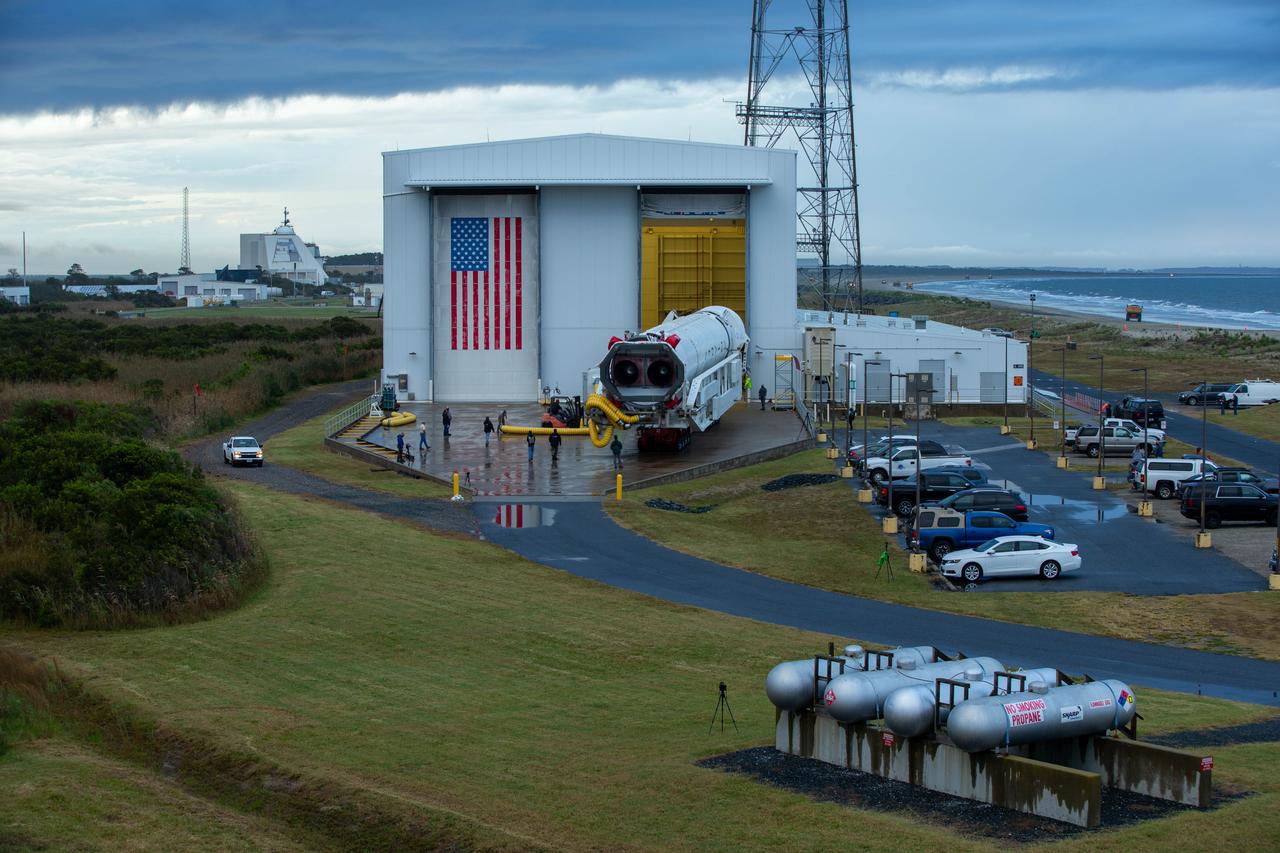
A Northrop Grumman Antares rocket carrying a Cygnus resupply spacecraft is seen as it is rolled out of the Horizontal Integration Facility to the Mid-Atlantic Regional Spaceport’s Pad-0A, Saturday, September 26, 2020, at NASA's Wallops Flight Facility in Virginia. Northrop Grumman’s 14th contracted cargo resupply mission with NASA to the International Space Station will deliver about 8,000 pounds of science and research, crew supplies and vehicle hardware to the orbital laboratory and its crew. The CRS-14 Cygnus spacecraft is named after the first female astronaut of Indian descent, Kalpana Chawla, and is scheduled to launch at 10:27 p.m., Tuesday, September 29, 2020 EDT. Photo Credit: (NASA/Patrick Black)
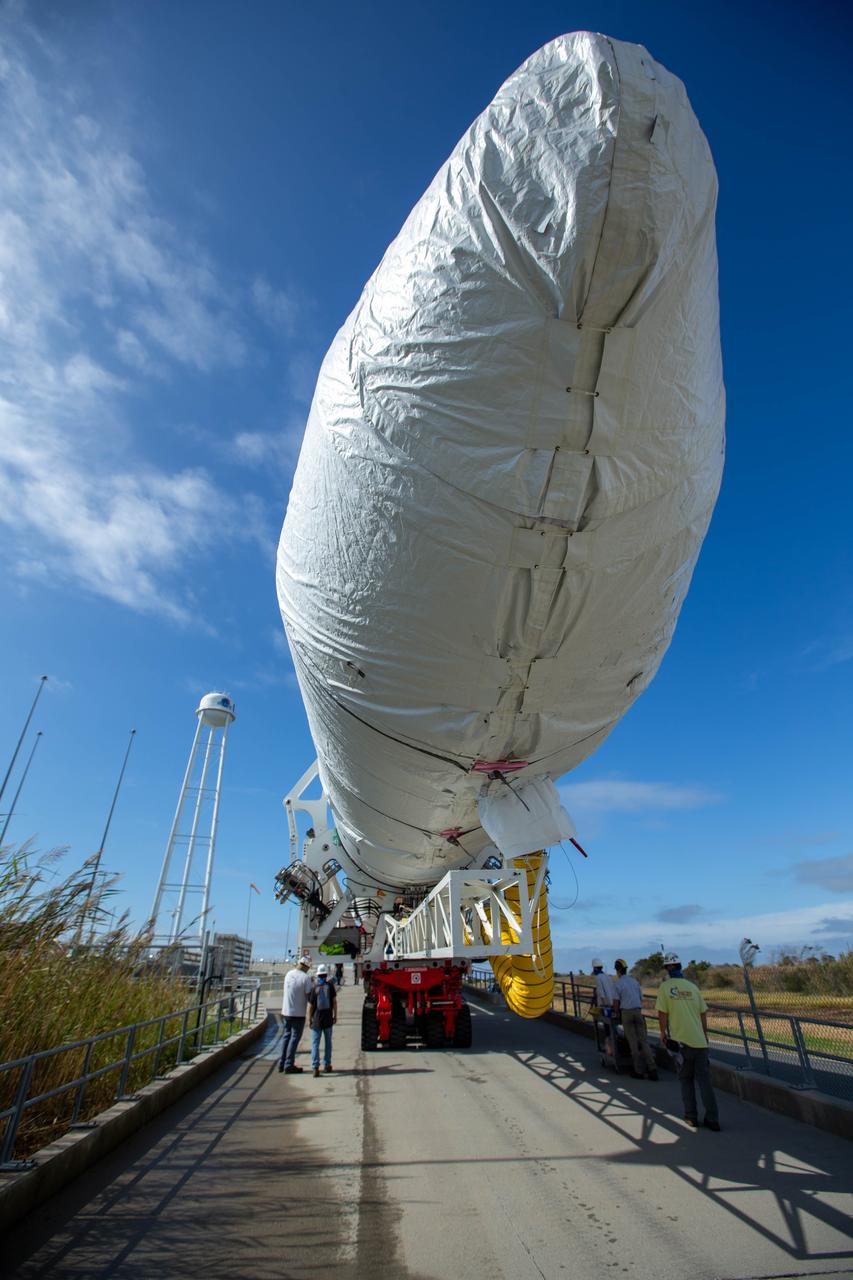
A Northrop Grumman Antares rocket carrying a Cygnus resupply spacecraft is seen as it is rolled out of the Horizontal Integration Facility to the Mid-Atlantic Regional Spaceport’s Pad-0A, Saturday, September 26, 2020, at NASA's Wallops Flight Facility in Virginia. Northrop Grumman’s 14th contracted cargo resupply mission with NASA to the International Space Station will deliver about 8,000 pounds of science and research, crew supplies and vehicle hardware to the orbital laboratory and its crew. The CRS-14 Cygnus spacecraft is named after the first female astronaut of Indian descent, Kaplana Chawla, and is scheduled to launch at 10:27 p.m., Tuesday, September 29, 2020 EDT. Photo Credit: (NASA/Patrick Black)
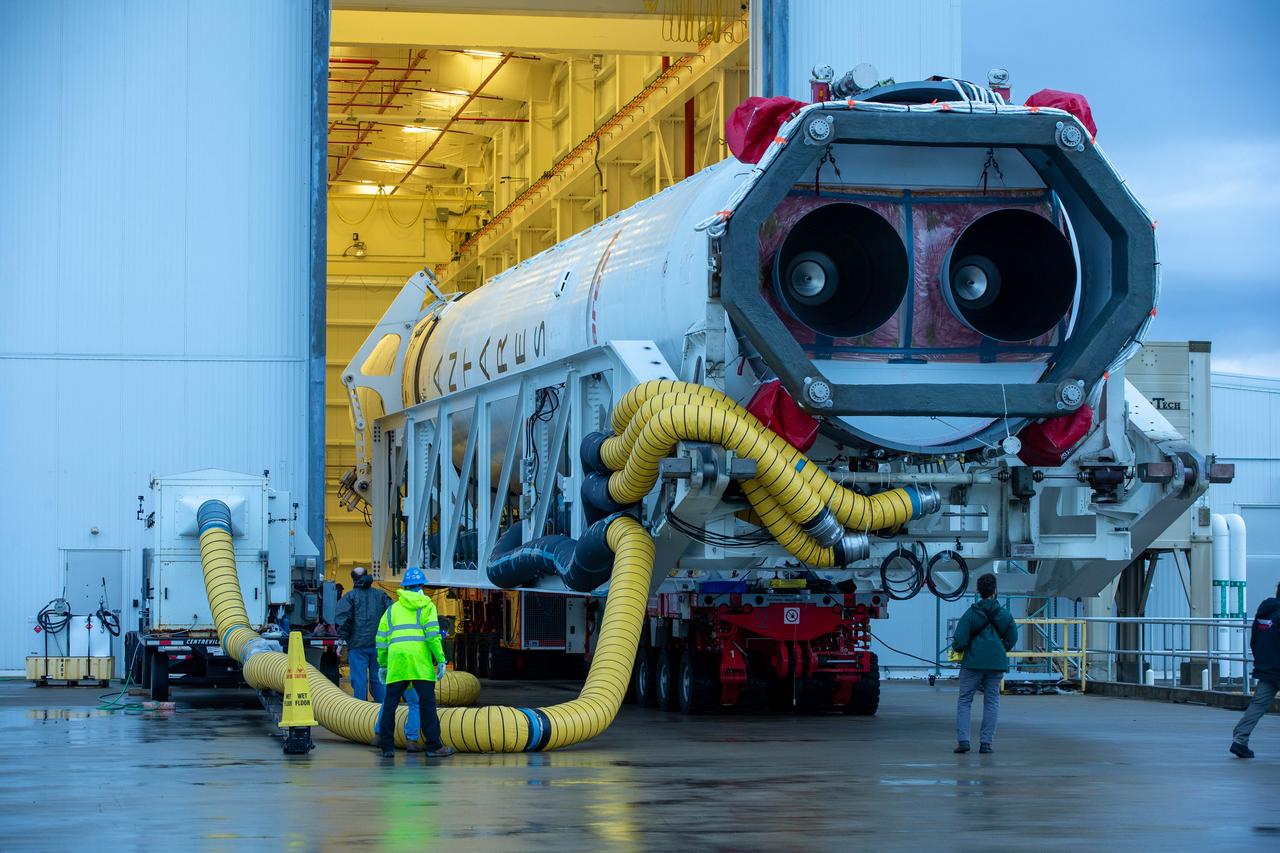
A Northrop Grumman Antares rocket carrying a Cygnus resupply spacecraft is seen as it is rolled out of the Horizontal Integration Facility to the Mid-Atlantic Regional Spaceport’s Pad-0A, Saturday, September 26, 2020, at NASA's Wallops Flight Facility in Virginia. Northrop Grumman’s 14th contracted cargo resupply mission with NASA to the International Space Station will deliver about 8,000 pounds of science and research, crew supplies and vehicle hardware to the orbital laboratory and its crew. The CRS-14 Cygnus spacecraft is named after the first female astronaut of Indian descent, Kaplana Chawla, and is scheduled to launch at 10:27 p.m., Tuesday, September 29, 2020 EDT. Photo Credit: (NASA/Patrick Black)
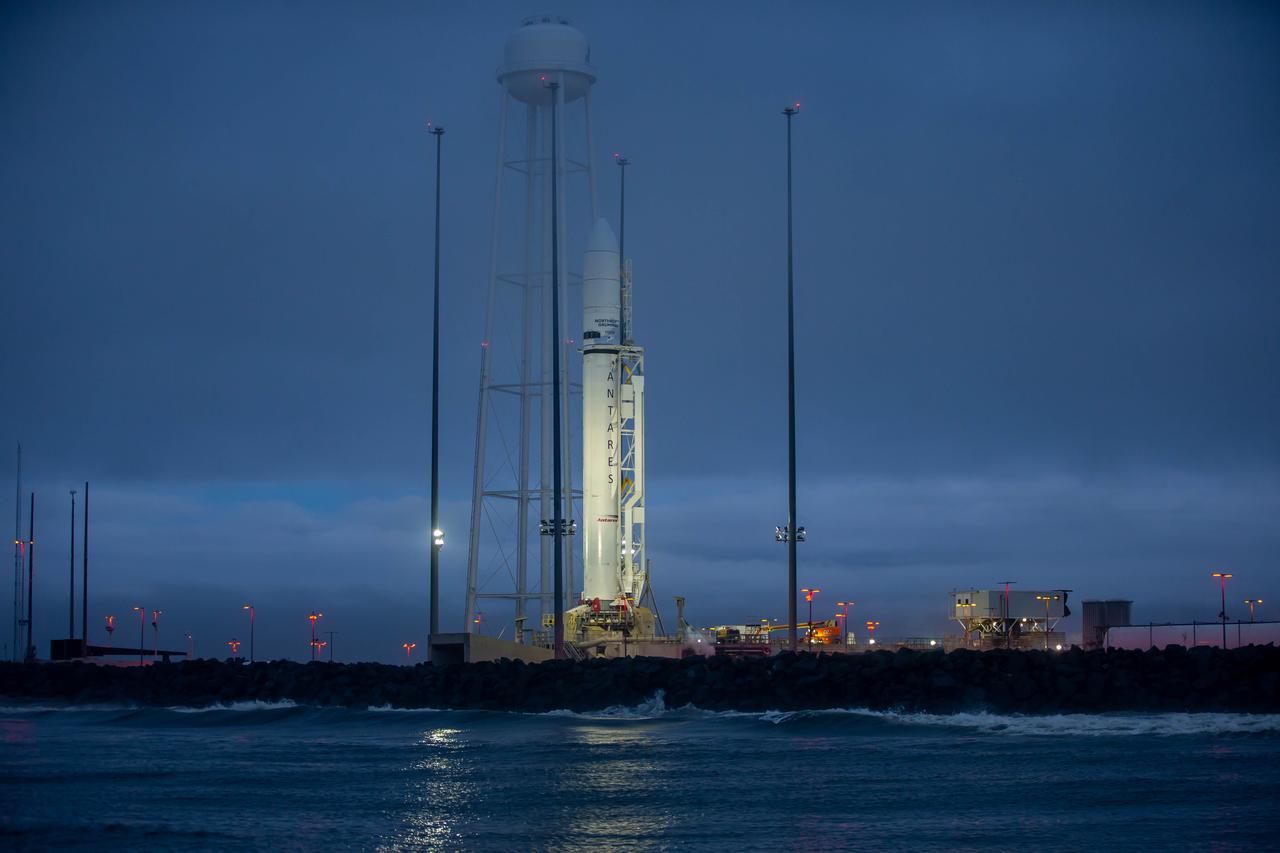
A Northrop Grumman Antares rocket carrying a Cygnus resupply spacecraft is raised into the vertical position on the Mid-Atlantic Regional Spaceport’s Pad-0A, Saturday, September 26, 2020, at NASA's Wallops Flight Facility in Virginia. Northrop Grumman’s 14th contracted cargo resupply mission with NASA to the International Space Station will deliver about 8,000 pounds of science and research, crew supplies and vehicle hardware to the orbital laboratory and its crew. The CRS-14 Cygnus spacecraft is named after the first female astronaut of Indian descent, Kalpana Chawla, and is scheduled to launch at 10:27 p.m., Tuesday, September 29, 2020 EDT. Photo Credit: (NASA/Patrick Black)
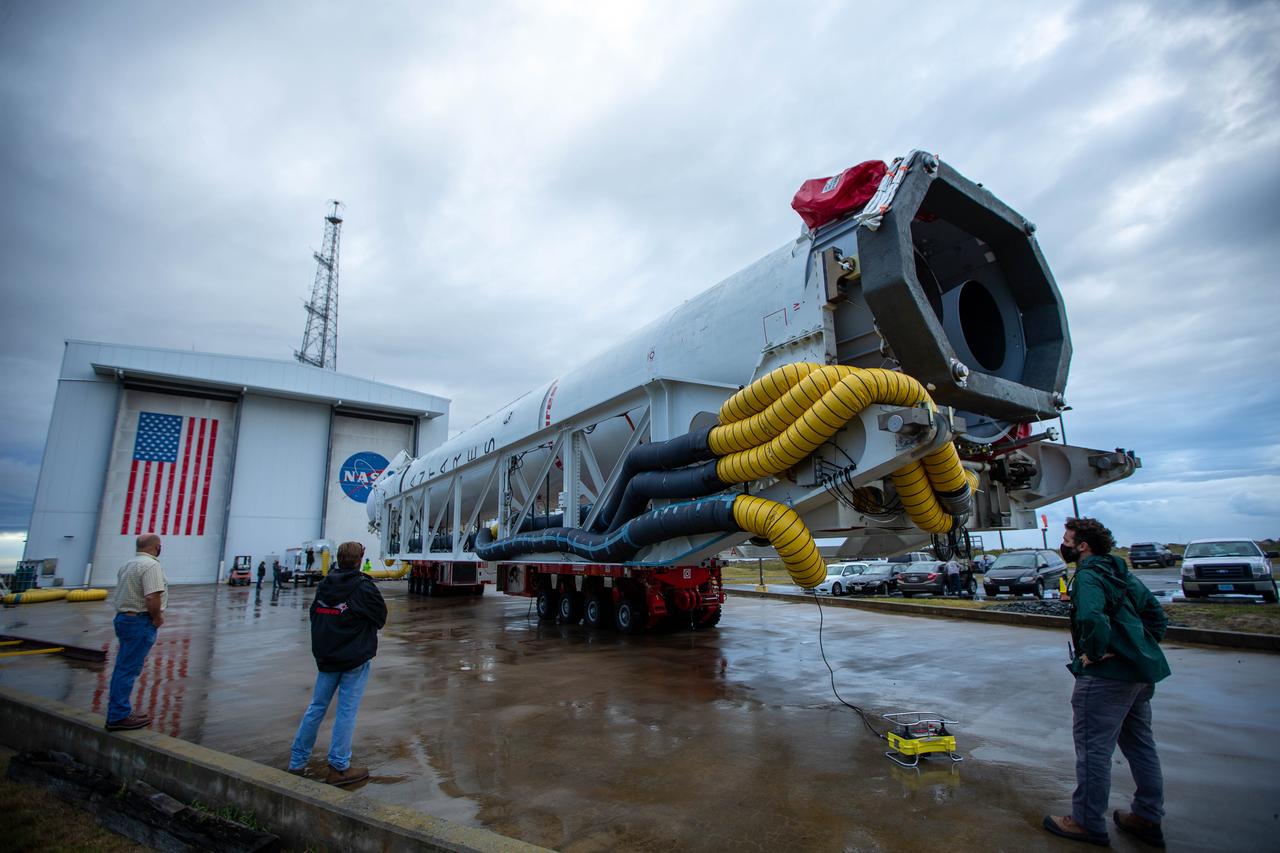
A Northrop Grumman Antares rocket carrying a Cygnus resupply spacecraft is seen as it is rolled out of the Horizontal Integration Facility to the Mid-Atlantic Regional Spaceport’s Pad-0A, Saturday, September 26, 2020, at NASA's Wallops Flight Facility in Virginia. Northrop Grumman’s 14th contracted cargo resupply mission with NASA to the International Space Station will deliver about 8,000 pounds of science and research, crew supplies and vehicle hardware to the orbital laboratory and its crew. The CRS-14 Cygnus spacecraft is named after the first female astronaut of Indian descent, Kaplana Chawla, and is scheduled to launch at 10:27 p.m., Tuesday, September 29, 2020 EDT. Photo Credit: (NASA/Patrick Black)
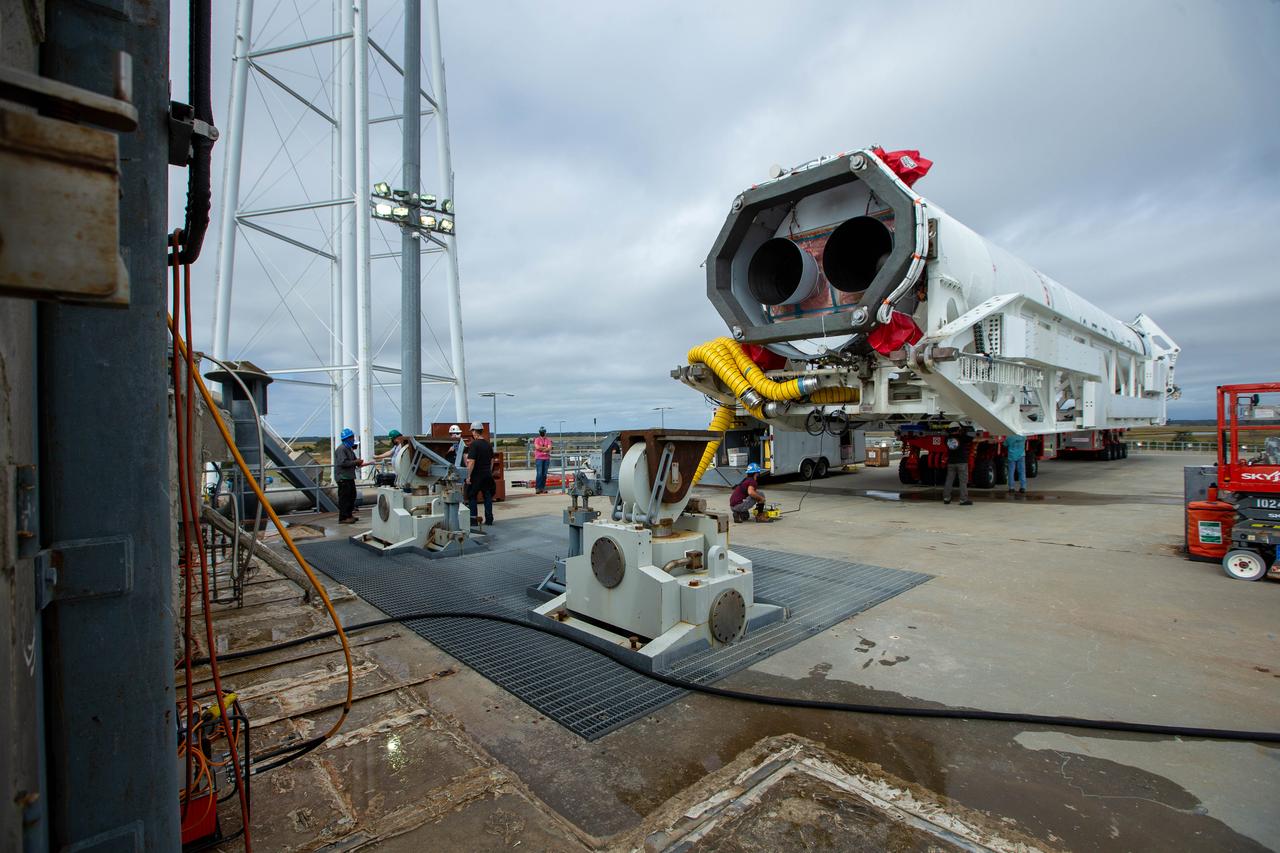
A Northrop Grumman Antares rocket carrying a Cygnus resupply spacecraft is seen as it is rolled out of the Horizontal Integration Facility to the Mid-Atlantic Regional Spaceport’s Pad-0A, Saturday, September 26, 2020, at NASA's Wallops Flight Facility in Virginia. Northrop Grumman’s 14th contracted cargo resupply mission with NASA to the International Space Station will deliver about 8,000 pounds of science and research, crew supplies and vehicle hardware to the orbital laboratory and its crew. The CRS-14 Cygnus spacecraft is named after the first female astronaut of Indian descent, Kalpana Chawla, and is scheduled to launch at 10:27 p.m., Tuesday, September 29, 2020, EDT. Photo Credit: (NASA/Patrick Black)
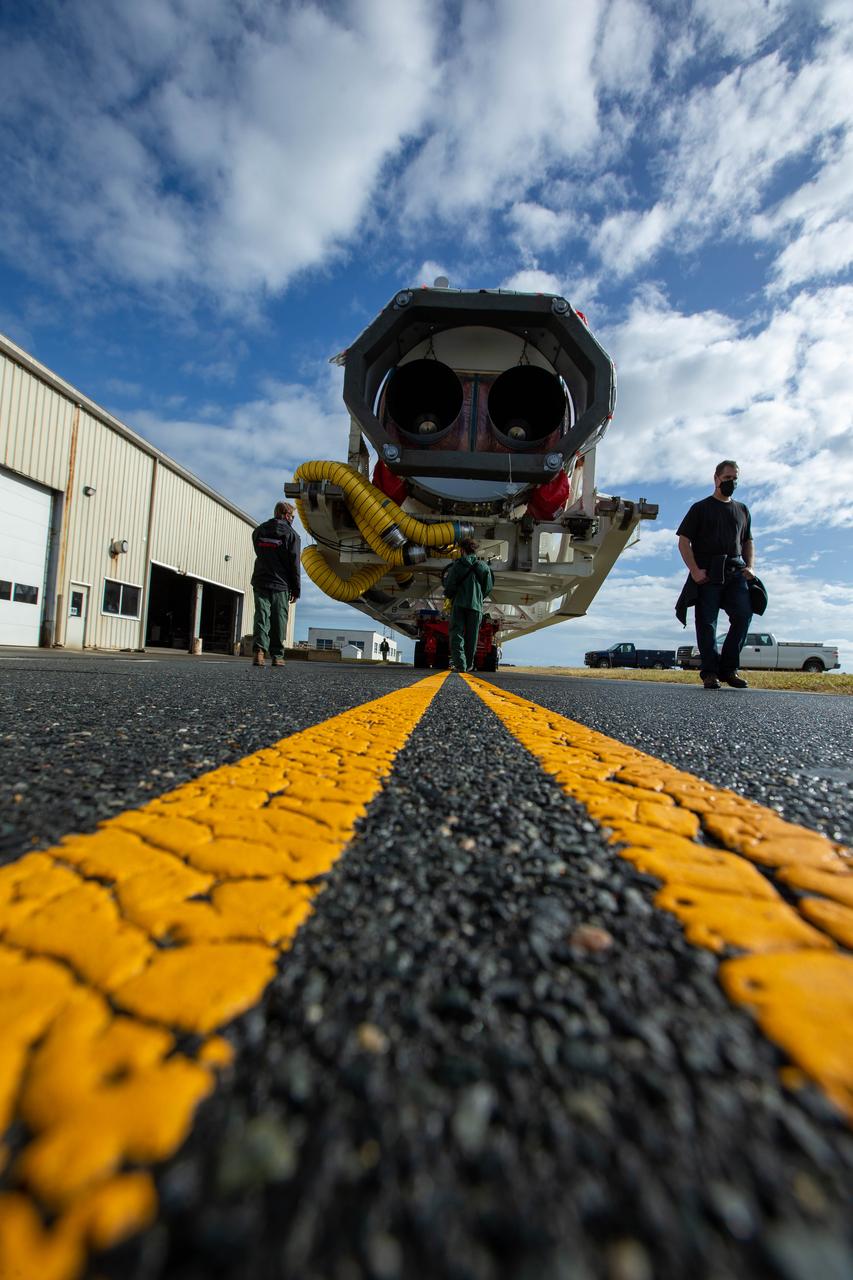
A Northrop Grumman Antares rocket carrying a Cygnus resupply spacecraft is seen as it is rolled out of the Horizontal Integration Facility to the Mid-Atlantic Regional Spaceport’s Pad-0A, Saturday, September 26, 2020, at NASA's Wallops Flight Facility in Virginia. Northrop Grumman’s 14th contracted cargo resupply mission with NASA to the International Space Station will deliver about 8,000 pounds of science and research, crew supplies and vehicle hardware to the orbital laboratory and its crew. The CRS-14 Cygnus spacecraft is named after the first female astronaut of Indian descent, Kaplana Chawla, and is scheduled to launch at 10:27 p.m., Tuesday, September 29, 2020 EDT. Photo Credit: (NASA/Patrick Black)
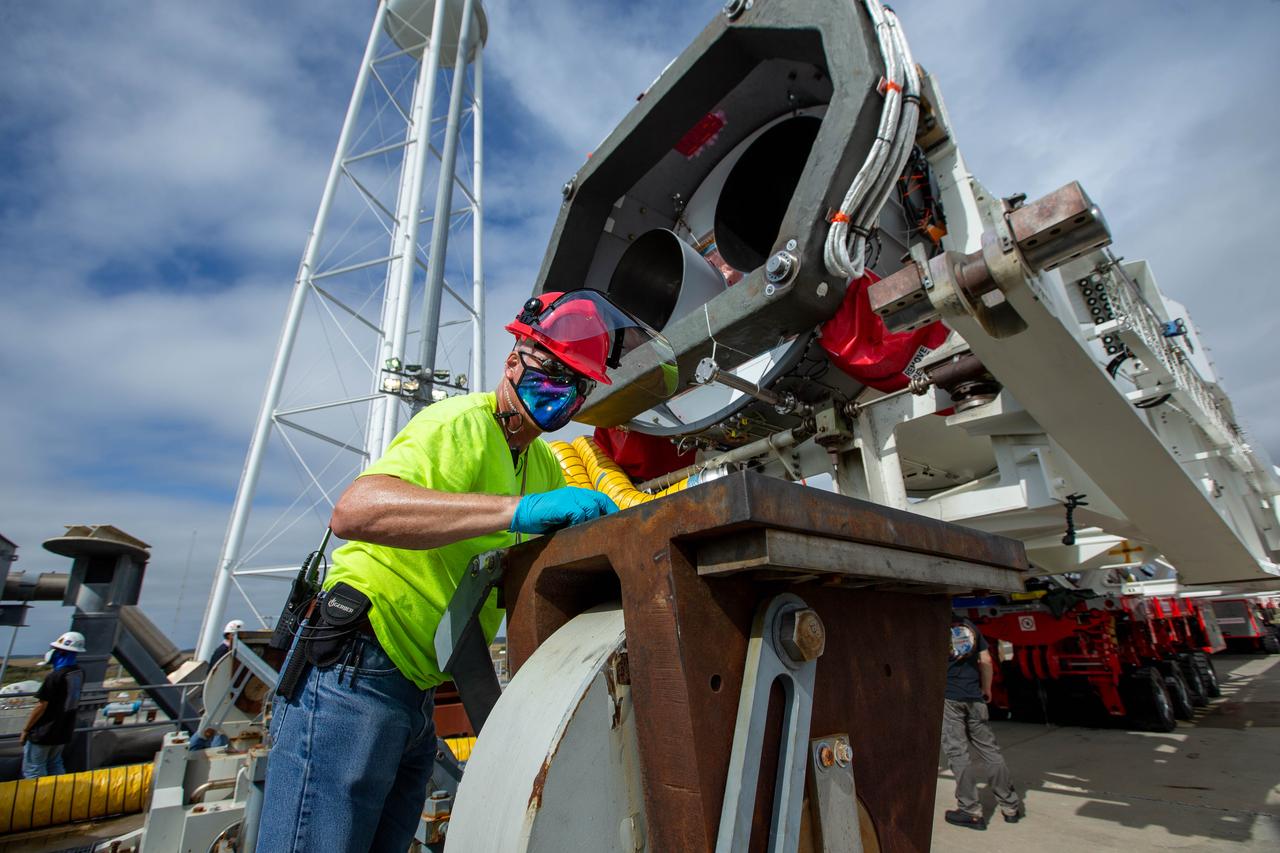
A Northrop Grumman Antares rocket carrying a Cygnus resupply spacecraft is seen as it is rolled out of the Horizontal Integration Facility to the Mid-Atlantic Regional Spaceport’s Pad-0A, Saturday, September 26, 2020, at NASA's Wallops Flight Facility in Virginia. Northrop Grumman’s 14th contracted cargo resupply mission with NASA to the International Space Station will deliver about 8,000 pounds of science and research, crew supplies and vehicle hardware to the orbital laboratory and its crew. The CRS-14 Cygnus spacecraft is named after the first female astronaut of Indian descent, Kaplana Chawla, and is scheduled to launch at 10:27 p.m., Tuesday, September 29, 2020 EDT. Photo Credit: (NASA/Patrick Black)
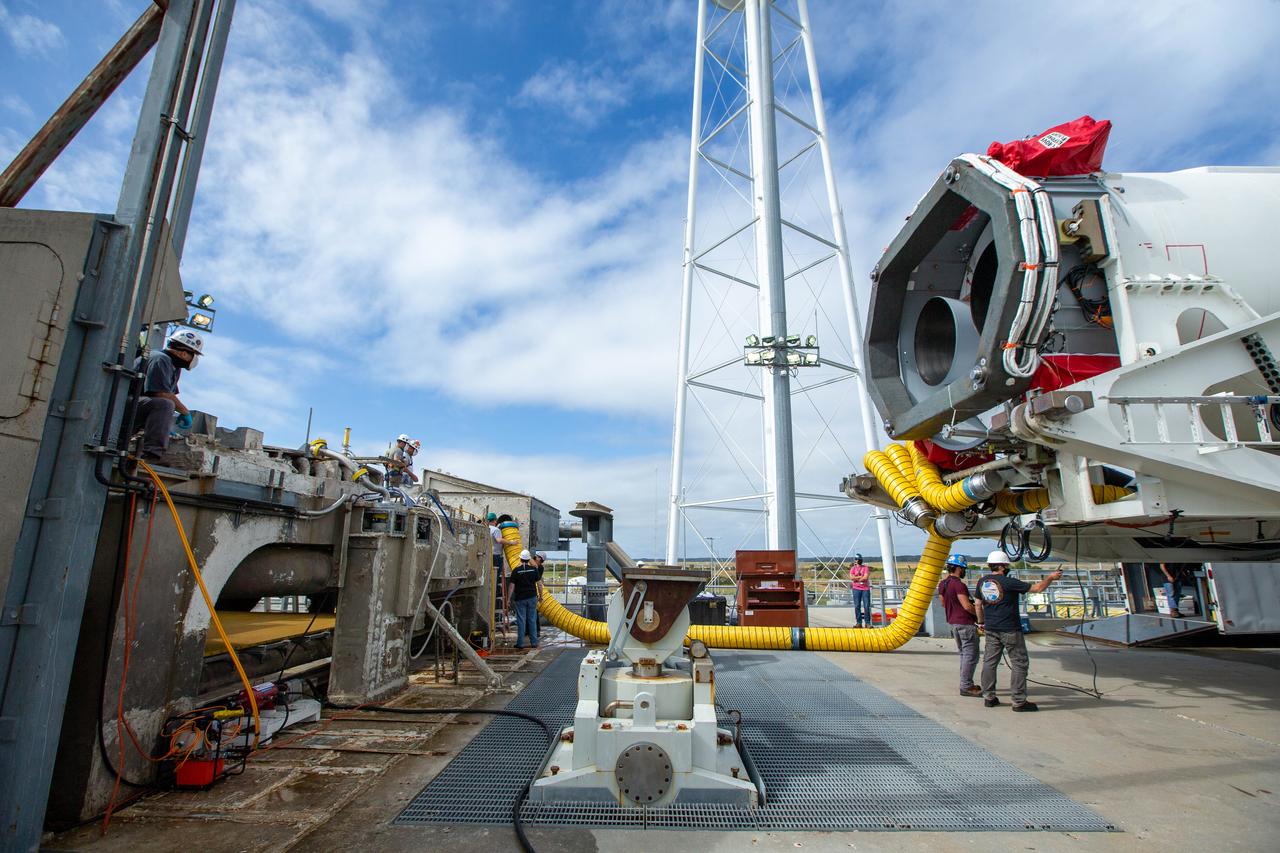
A Northrop Grumman Antares rocket carrying a Cygnus resupply spacecraft is seen as it is rolled out of the Horizontal Integration Facility to the Mid-Atlantic Regional Spaceport’s Pad-0A, Saturday, September 26, 2020, at NASA's Wallops Flight Facility in Virginia. Northrop Grumman’s 14th contracted cargo resupply mission with NASA to the International Space Station will deliver about 8,000 pounds of science and research, crew supplies and vehicle hardware to the orbital laboratory and its crew. The CRS-14 Cygnus spacecraft is named after the first female astronaut of Indian descent, Kaplana Chawla, and is scheduled to launch at 10:27 p.m., Tuesday, September 29, 2020 EDT. Photo Credit: (NASA/Patrick Black)
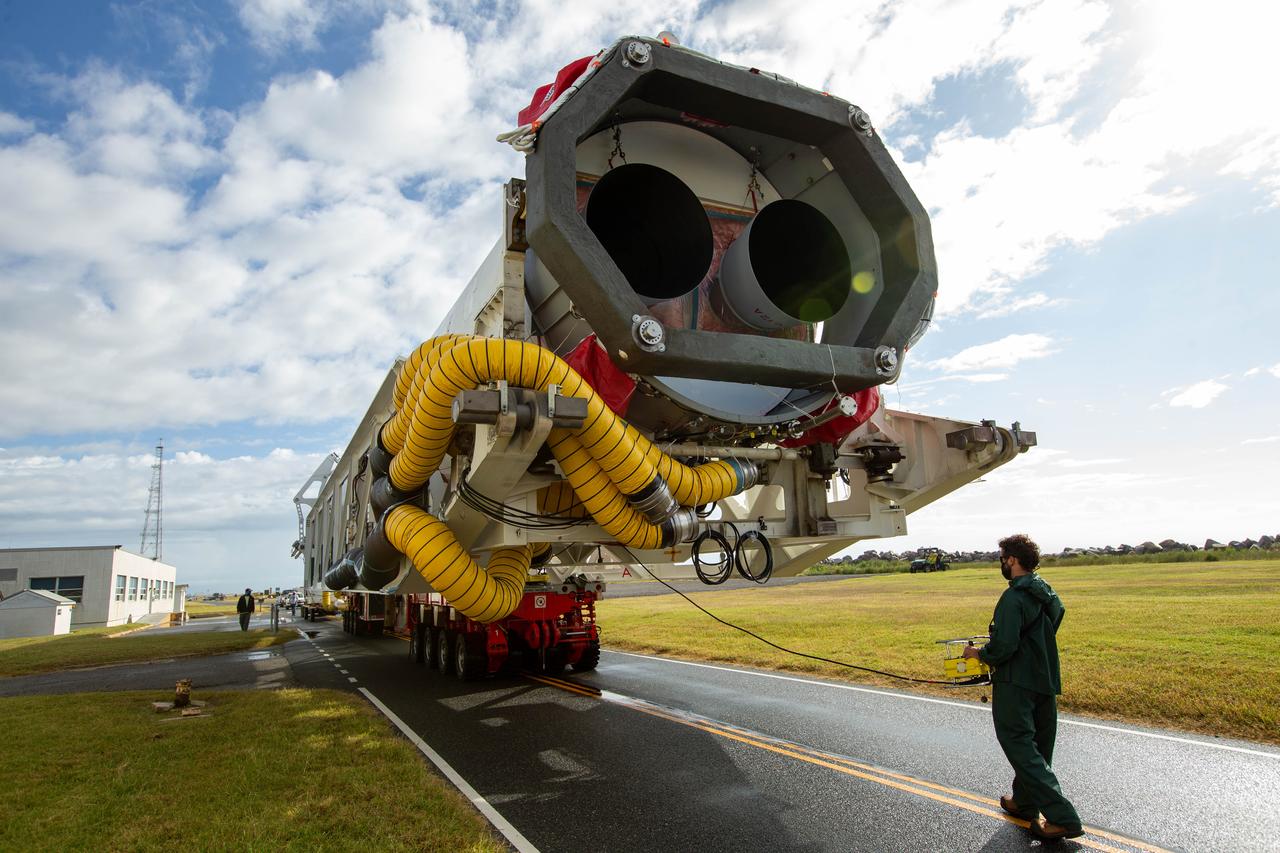
A Northrop Grumman Antares rocket carrying a Cygnus resupply spacecraft is seen as it is rolled out of the Horizontal Integration Facility to the Mid-Atlantic Regional Spaceport’s Pad-0A, Saturday, September 26, 2020, at NASA's Wallops Flight Facility in Virginia. Northrop Grumman’s 14th contracted cargo resupply mission with NASA to the International Space Station will deliver about 8,000 pounds of science and research, crew supplies and vehicle hardware to the orbital laboratory and its crew. The CRS-14 Cygnus spacecraft is named after the first female astronaut of Indian descent, Kaplana Chawla, and is scheduled to launch at 10:27 p.m., Tuesday, September 29, 2020 EDT. Photo Credit: (NASA/Patrick Black)
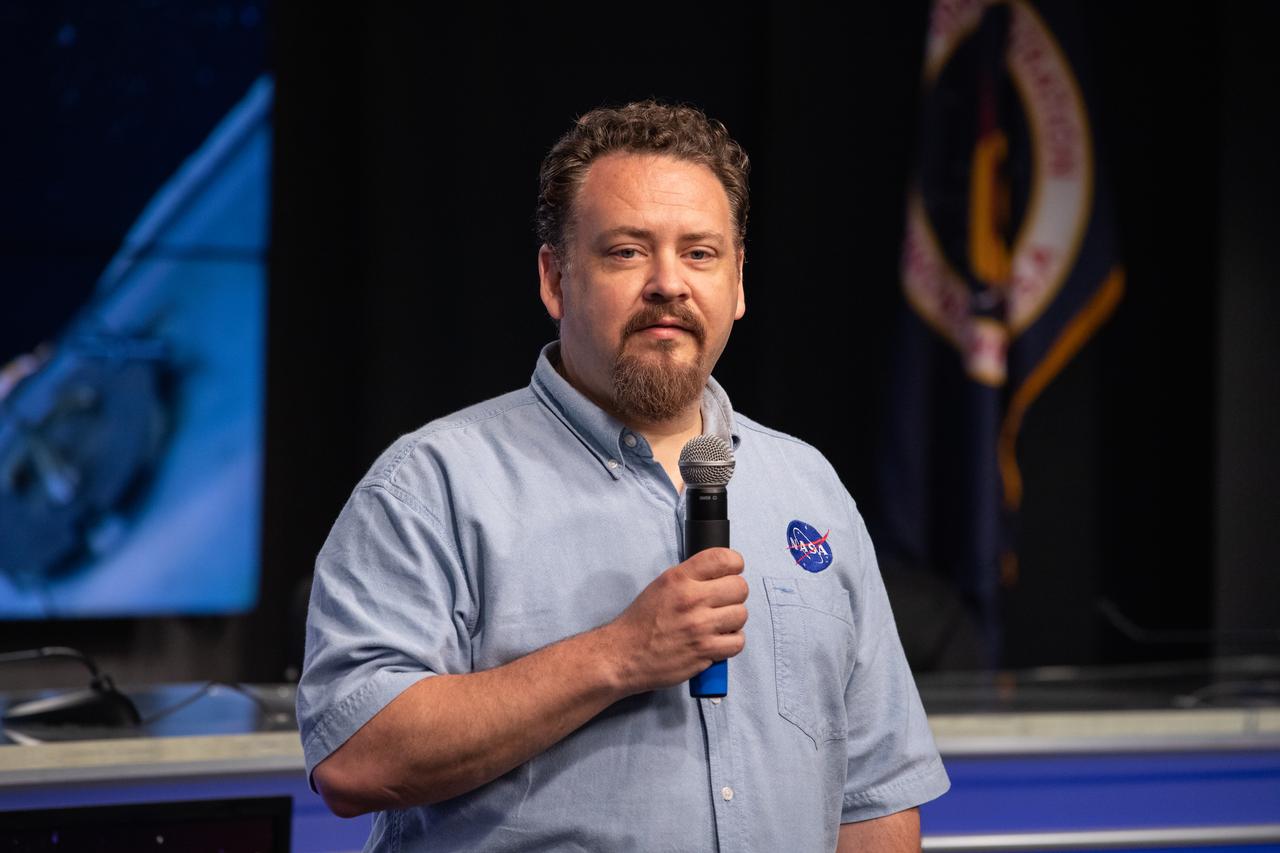
Dr. Kirt Costello, chief scientist for the ISS Program at NASA’s Johnson Space Center in Houston, talks to NASA Social participants during a What’s On Board science briefing at the agency’s Kennedy Space Center in Florida on April 29, 2019. The briefing was held for SpaceX’s 17th Commercial Resupply Services (CRS-17) mission to the International Space Station. The SpaceX Falcon 9 rocket and Dragon cargo module are scheduled to launch no earlier than May 3, 2019, from Space Launch Complex 40 on Cape Canaveral Air Force Station in Florida.
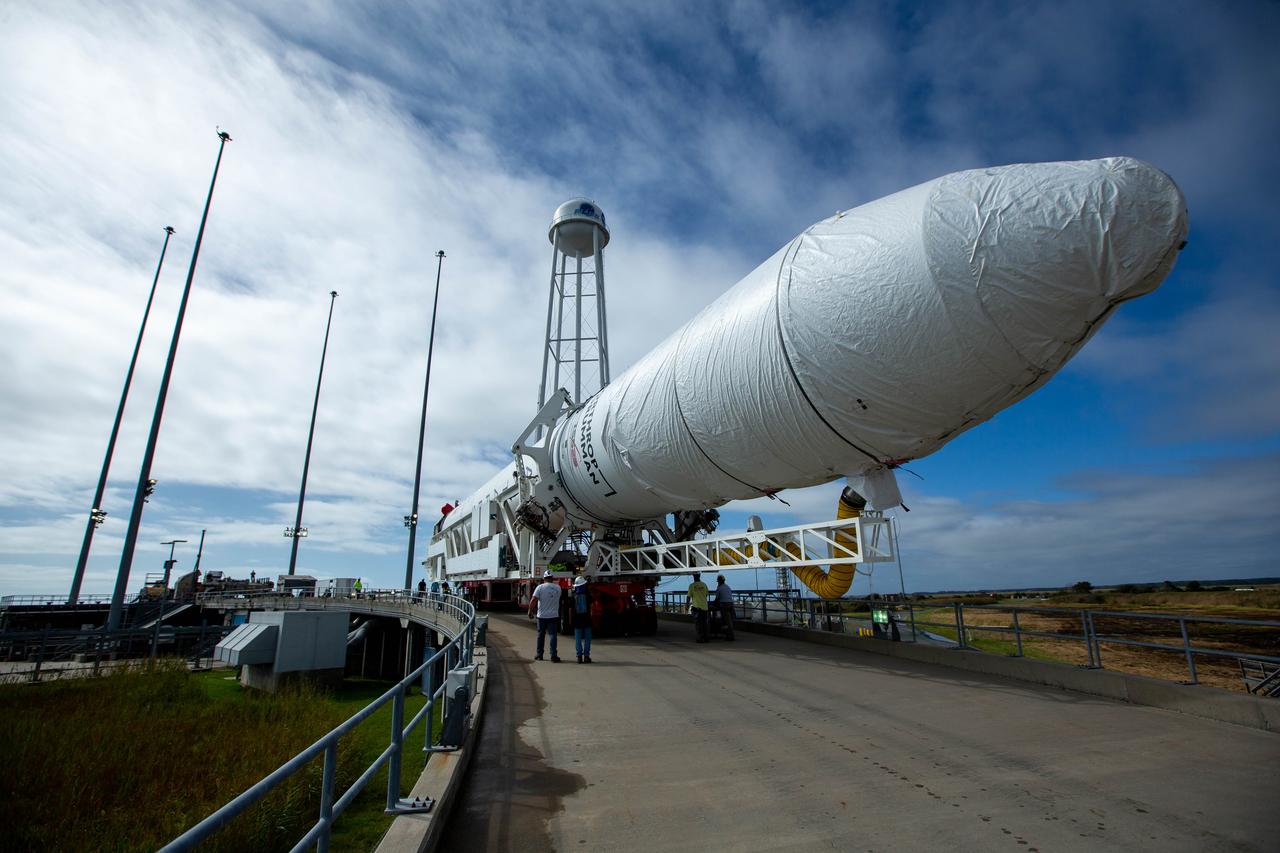
A Northrop Grumman Antares rocket carrying a Cygnus resupply spacecraft is seen as it is rolled out of the Horizontal Integration Facility to the Mid-Atlantic Regional Spaceport’s Pad-0A, Saturday, September 26, 2020, at NASA's Wallops Flight Facility in Virginia. Northrop Grumman’s 14th contracted cargo resupply mission with NASA to the International Space Station will deliver about 8,000 pounds of science and research, crew supplies and vehicle hardware to the orbital laboratory and its crew. The CRS-14 Cygnus spacecraft is named after the first female astronaut of Indian descent, Kalpana Chawla, and is scheduled to launch at 10:27 p.m., Tuesday, September 29, 2020 EDT. Photo Credit: (NASA/Patrick Black)
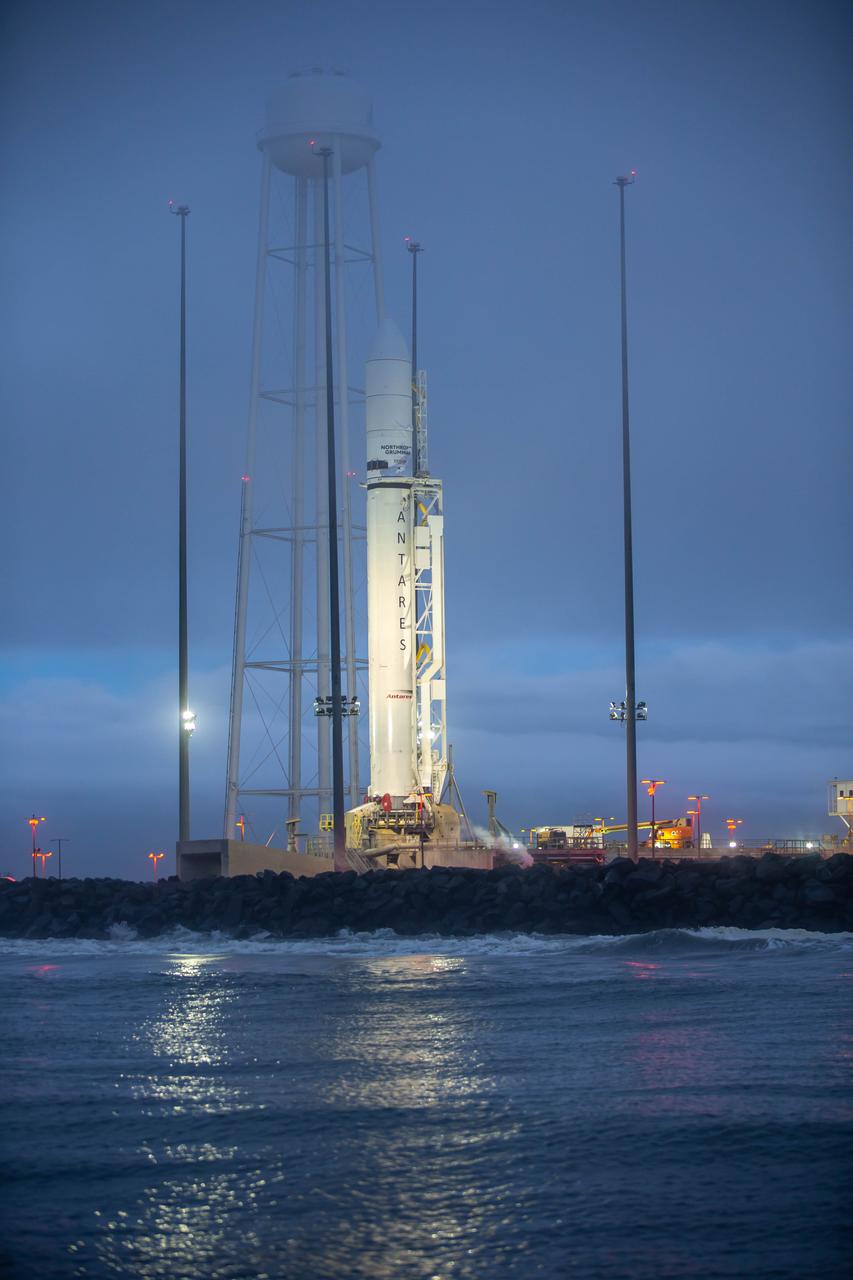
A Northrop Grumman Antares rocket carrying a Cygnus resupply spacecraft is raised into the vertical position on the Mid-Atlantic Regional Spaceport’s Pad-0A, Saturday, September 26, 2020, at NASA's Wallops Flight Facility in Virginia. Northrop Grumman’s 14th contracted cargo resupply mission with NASA to the International Space Station will deliver about 8,000 pounds of science and research, crew supplies and vehicle hardware to the orbital laboratory and its crew. The CRS-14 Cygnus spacecraft is named after the first female astronaut of Indian descent, Kalpana Chawla, and is scheduled to launch at 10:27 p.m., Tuesday, September 29, 2020 EDT. Photo Credit: (NASA/Patrick Black)