
A SpaceX Falcon 9 rocket soars upward after its liftoff from Space Launch Complex 40 at Cape Canaveral Space Force Station in Florida at 4:55 p.m. EDT on Thursday, March 21, on the company’s 30th Commercial Resupply Services mission for the agency to the International Space Station. Dragon will deliver more than 6,200 pounds of cargo, including a variety of NASA and partner research including a look at plant metabolism in space and a set of new sensors for free-flying Astrobee robots to provide 3D mapping capabilities. Other studies include a fluid physics study that could benefit solar cell technology and a university project from CSA (Canadian Space Agency) that will monitor sea ice and ocean conditions. The spacecraft is expected to spend about a month attached to the orbiting outpost before it returns to Earth with research and return cargo, splashing down off the coast of Florida.
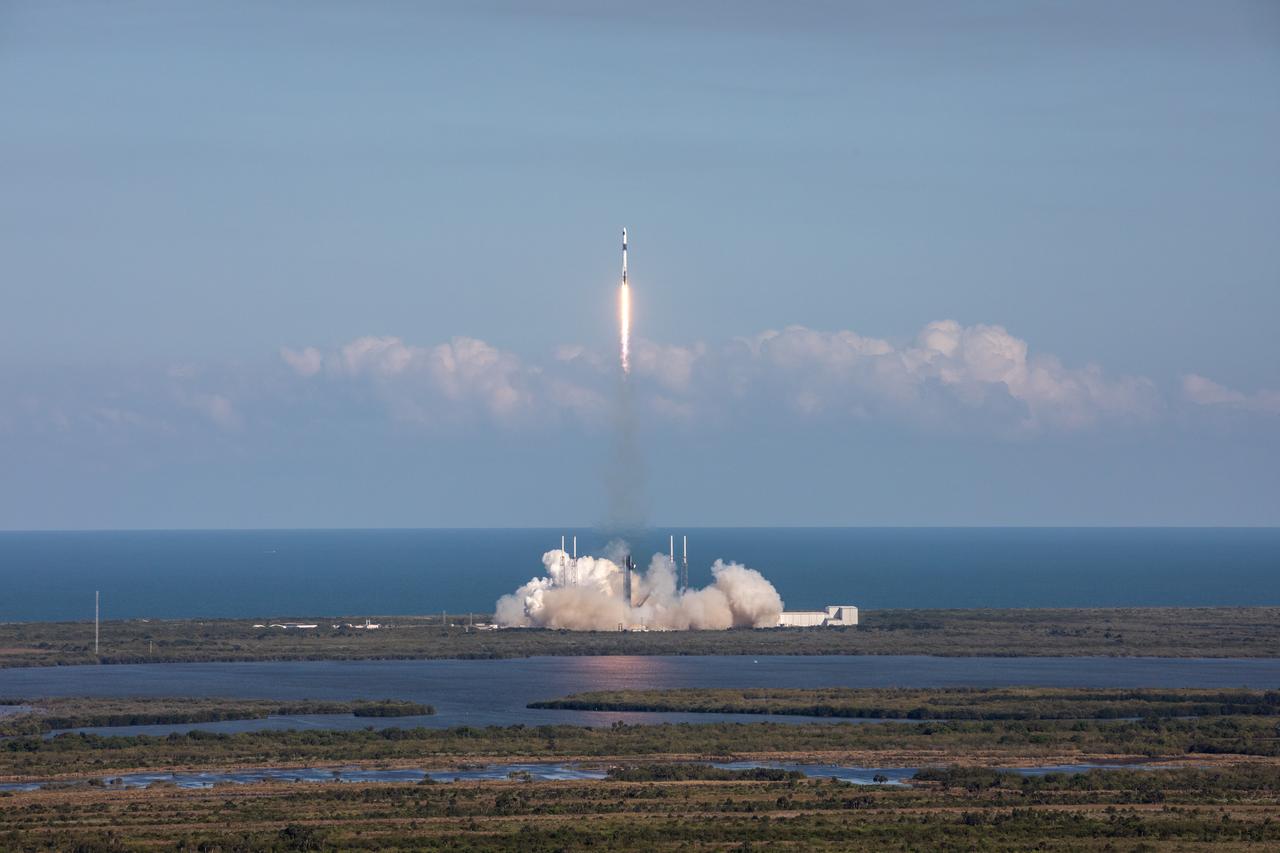
A SpaceX Falcon 9 rocket soars upward after its liftoff from Space Launch Complex 40 at Cape Canaveral Space Force Station in Florida at 4:55 p.m. EDT on Thursday, March 21, on the company’s 30th Commercial Resupply Services mission for the agency to the International Space Station. Dragon will deliver more than 6,200 pounds of cargo, including a variety of NASA and partner research including a look at plant metabolism in space and a set of new sensors for free-flying Astrobee robots to provide 3D mapping capabilities. Other studies include a fluid physics study that could benefit solar cell technology and a university project from CSA (Canadian Space Agency) that will monitor sea ice and ocean conditions. The spacecraft is expected to spend about a month attached to the orbiting outpost before it returns to Earth with research and return cargo, splashing down off the coast of Florida.
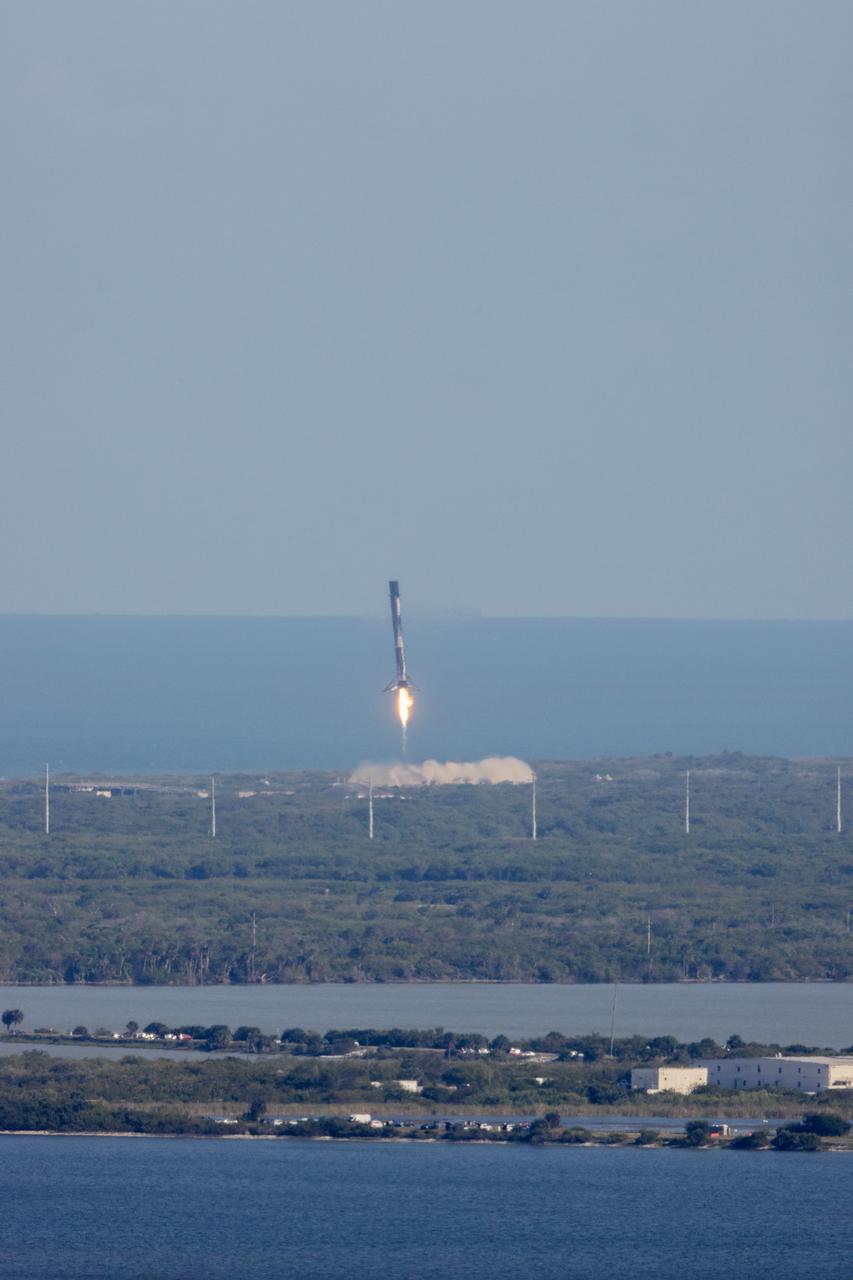
After boosting a SpaceX Dragon spacecraft on its way to the International Space Station for the company’s 30th Commercial Resupply Services mission for NASA, the first stage of the Falcon 9 rocket returns to Landing Zone 1 at Cape Canaveral Space Force Station (CCSFS) in Florida on Thursday, March 21, 2024. Dragon will deliver more than 6,200 pounds of cargo, including a variety of NASA and partner research including a look at plant metabolism in space and a set of new sensors for free-flying Astrobee robots to provide 3D mapping capabilities. Other studies include a fluid physics study that could benefit solar cell technology and a university project from CSA (Canadian Space Agency) that will monitor sea ice and ocean conditions. The spacecraft is expected to spend about a month attached to the orbiting outpost before it returns to Earth with research and return cargo, splashing down off the coast of Florida. Liftoff occurred at 4:55 p.m. EDT from Space Launch Complex 40 at CCSFS.
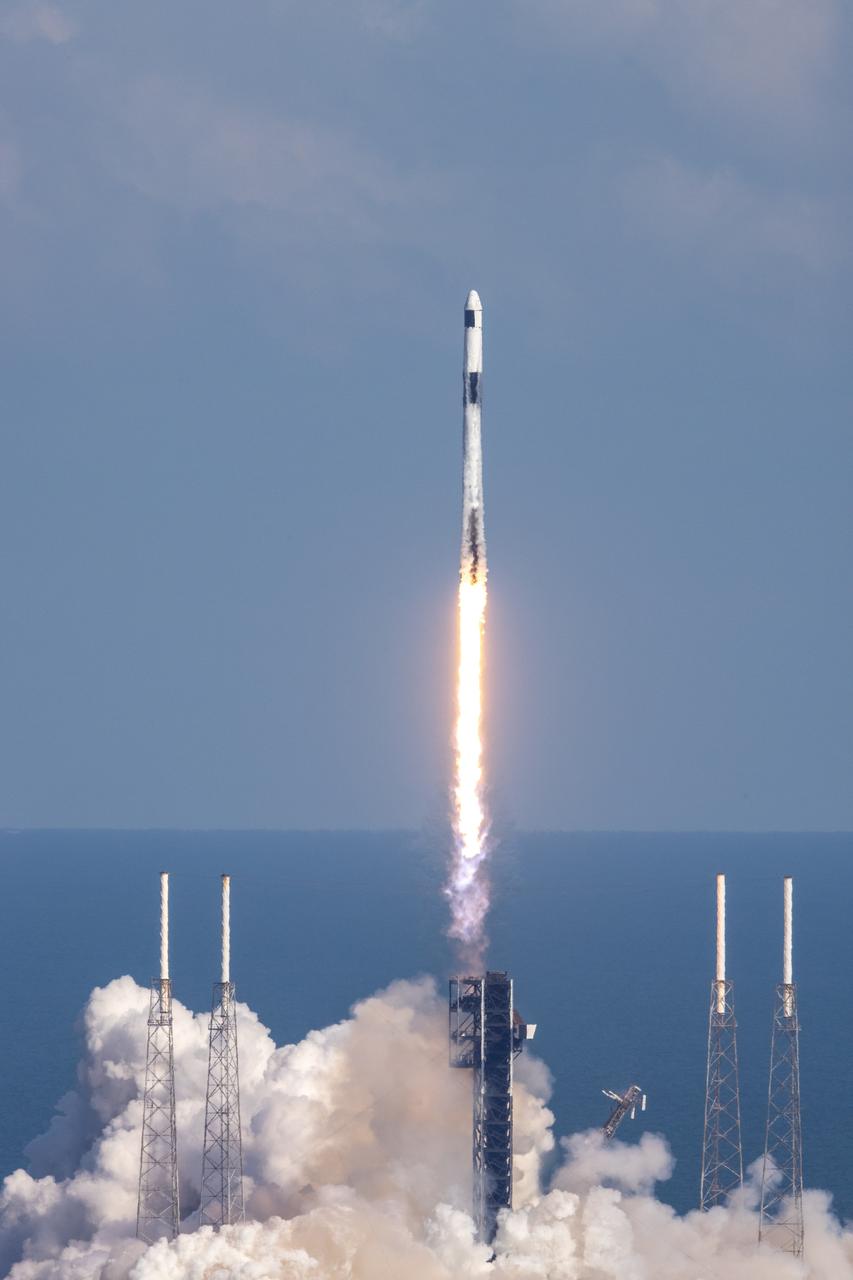
A SpaceX Falcon 9 rocket soars upward after its liftoff from Space Launch Complex 40 at Cape Canaveral Space Force Station in Florida at 4:55 p.m. EDT on Thursday, March 21, on the company’s 30th Commercial Resupply Services mission for the agency to the International Space Station. Dragon will deliver more than 6,200 pounds of cargo, including a variety of NASA and partner research including a look at plant metabolism in space and a set of new sensors for free-flying Astrobee robots to provide 3D mapping capabilities. Other studies include a fluid physics study that could benefit solar cell technology and a university project from CSA (Canadian Space Agency) that will monitor sea ice and ocean conditions. The spacecraft is expected to spend about a month attached to the orbiting outpost before it returns to Earth with research and return cargo, splashing down off the coast of Florida.
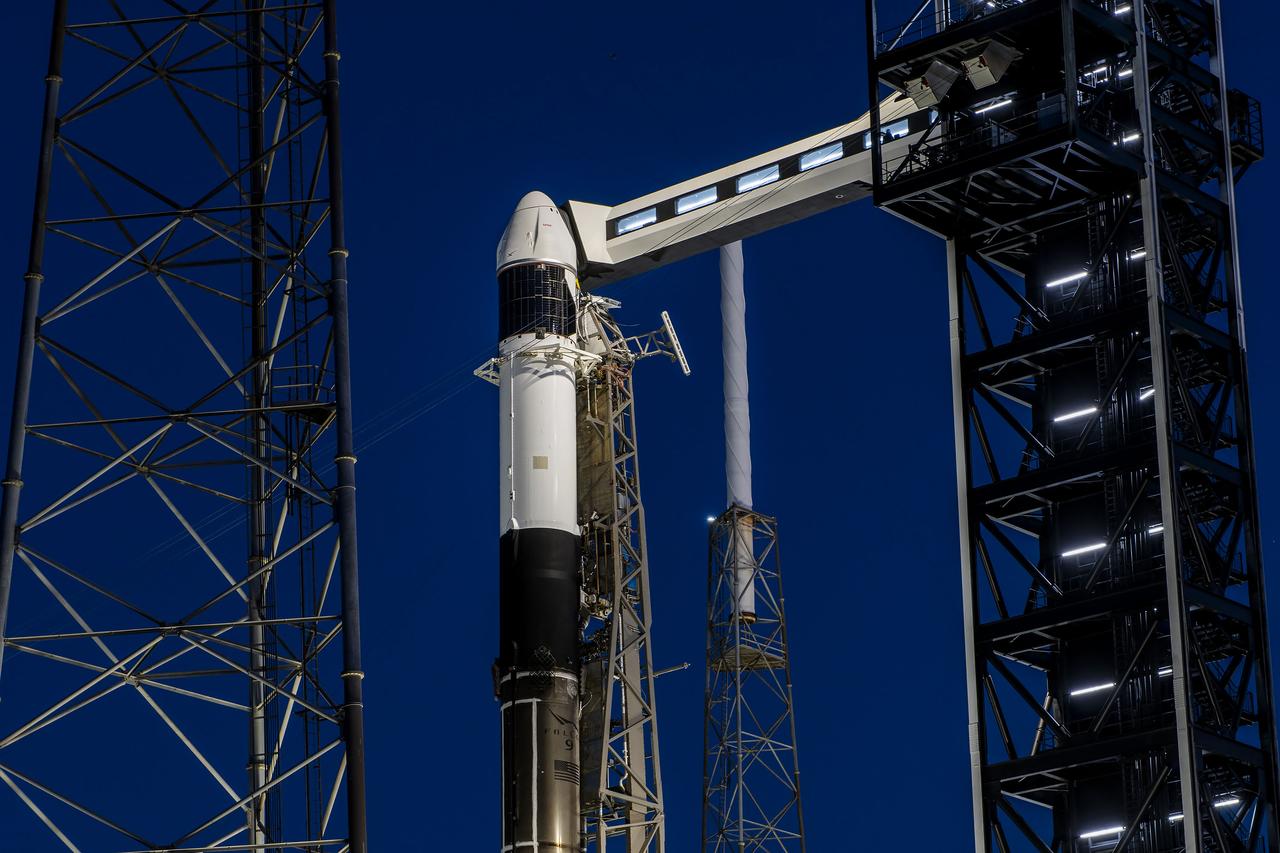
A SpaceX Falcon 9 rocket, with the company’s Dragon spacecraft atop, stands in a vertical position at Space Launch Complex 40 at Cape Canaveral Space Force Station in Florida on Tuesday, March 19, 2024, in preparation for the 30th commercial resupply services launch to the International Space Station. NASA and partner research flying aboard the mission includes a look at plant metabolism in space and a set of new sensors for free-flying Astrobee robots to provide 3D mapping capabilities. Other studies include a fluid physics study that could benefit solar cell technology and a university project from CSA (Canadian Space Agency) that will monitor sea ice and ocean conditions. Liftoff is scheduled for 4:55 p.m. EDT on Thursday, March 21, 2024.
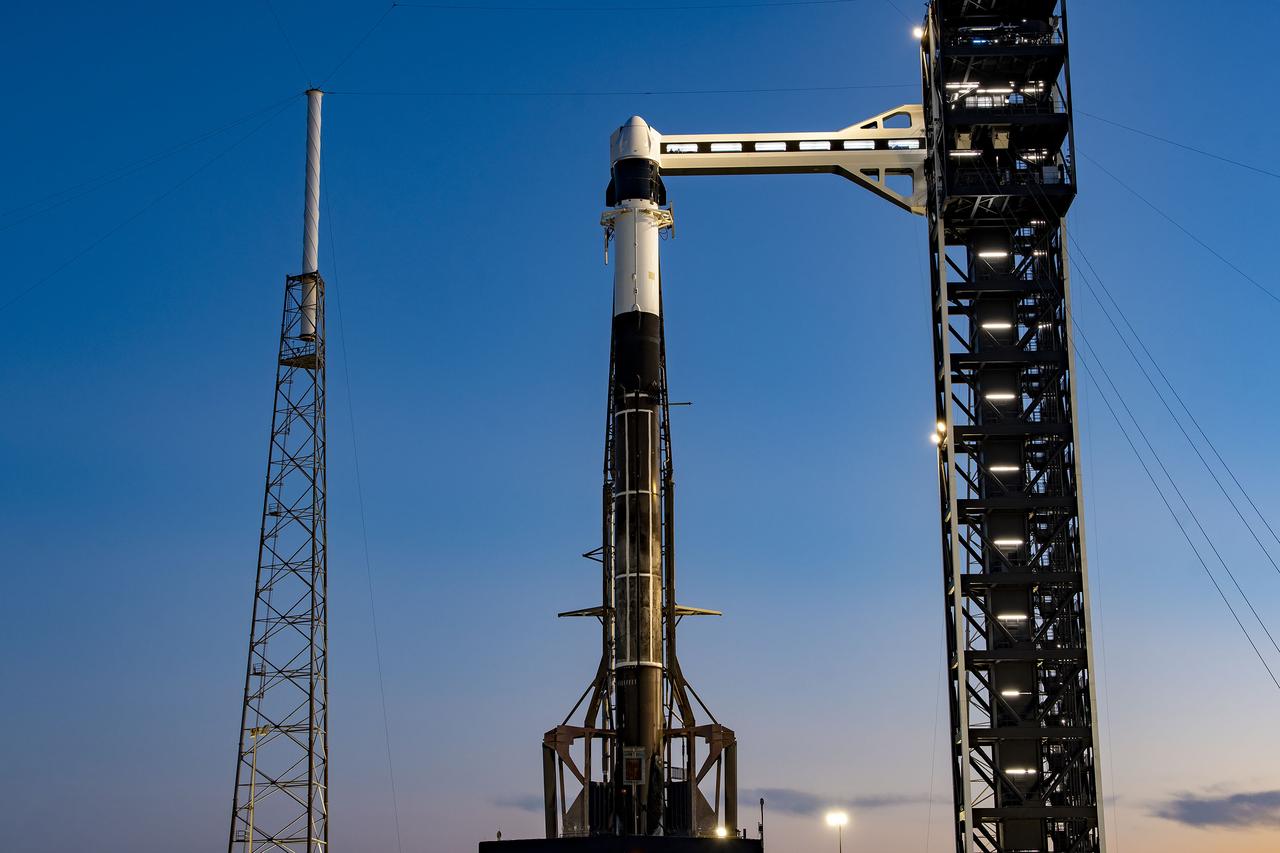
A SpaceX Falcon 9 rocket, with the company’s Dragon spacecraft atop, stands in a vertical position at Space Launch Complex 40 at Cape Canaveral Space Force Station in Florida on Tuesday, March 19, 2024, in preparation for the 30th commercial resupply services launch to the International Space Station. NASA and partner research flying aboard the mission includes a look at plant metabolism in space and a set of new sensors for free-flying Astrobee robots to provide 3D mapping capabilities. Other studies include a fluid physics study that could benefit solar cell technology and a university project from CSA (Canadian Space Agency) that will monitor sea ice and ocean conditions. Liftoff is scheduled for 4:55 p.m. EDT on Thursday, March 21, 2024.
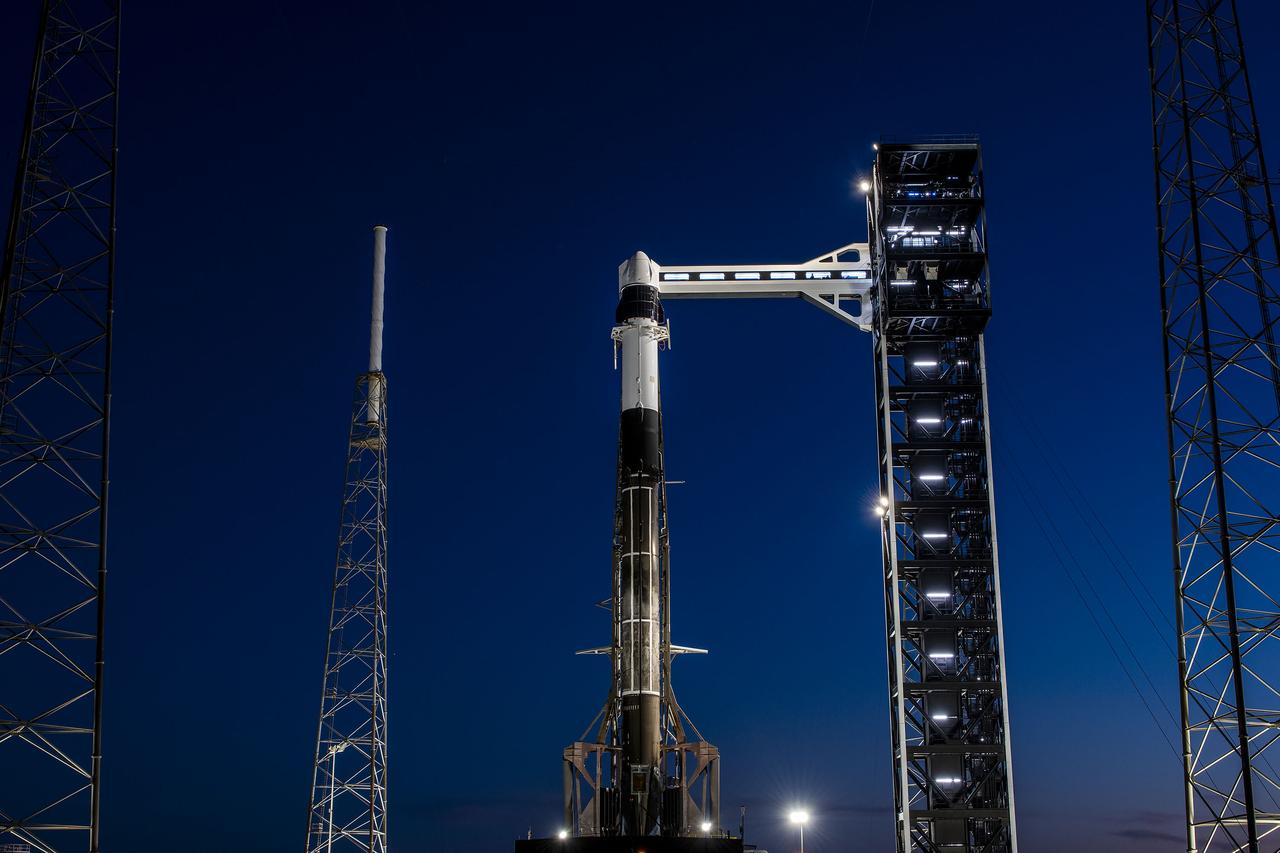
A SpaceX Falcon 9 rocket, with the company’s Dragon spacecraft atop, stands in a vertical position at Space Launch Complex 40 at Cape Canaveral Space Force Station in Florida on Tuesday, March 19, 2024, in preparation for the 30th commercial resupply services launch to the International Space Station. NASA and partner research flying aboard the mission includes a look at plant metabolism in space and a set of new sensors for free-flying Astrobee robots to provide 3D mapping capabilities. Other studies include a fluid physics study that could benefit solar cell technology and a university project from CSA (Canadian Space Agency) that will monitor sea ice and ocean conditions. Liftoff is scheduled for 4:55 p.m. EDT on Thursday, March 21, 2024.
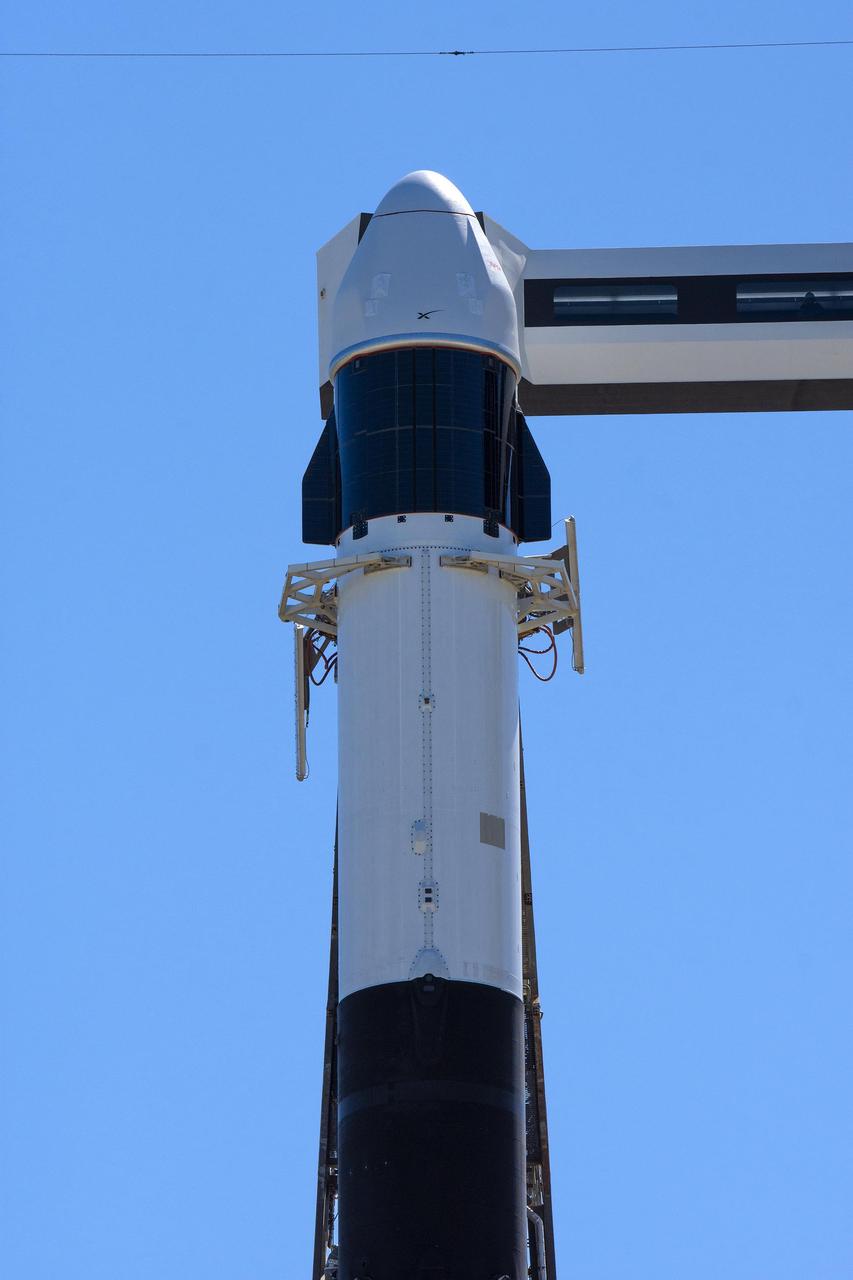
Seen here is an up-close view of the SpaceX Dragon spacecraft atop the company’s Falcon 9 rocket after being raised to a vertical position at Space Launch Complex 40 at Cape Canaveral Space Force Station in Florida on Tuesday, March 19, 2024, in preparation for the 30th commercial resupply services launch to the International Space Station. NASA and partner research flying aboard the mission includes a look at plant metabolism in space and a set of new sensors for free-flying Astrobee robots to provide 3D mapping capabilities. Other studies include a fluid physics study that could benefit solar cell technology and a university project from CSA (Canadian Space Agency) that will monitor sea ice and ocean conditions. Liftoff is scheduled for 4:55 p.m. EDT on Thursday, March 21, 2024.
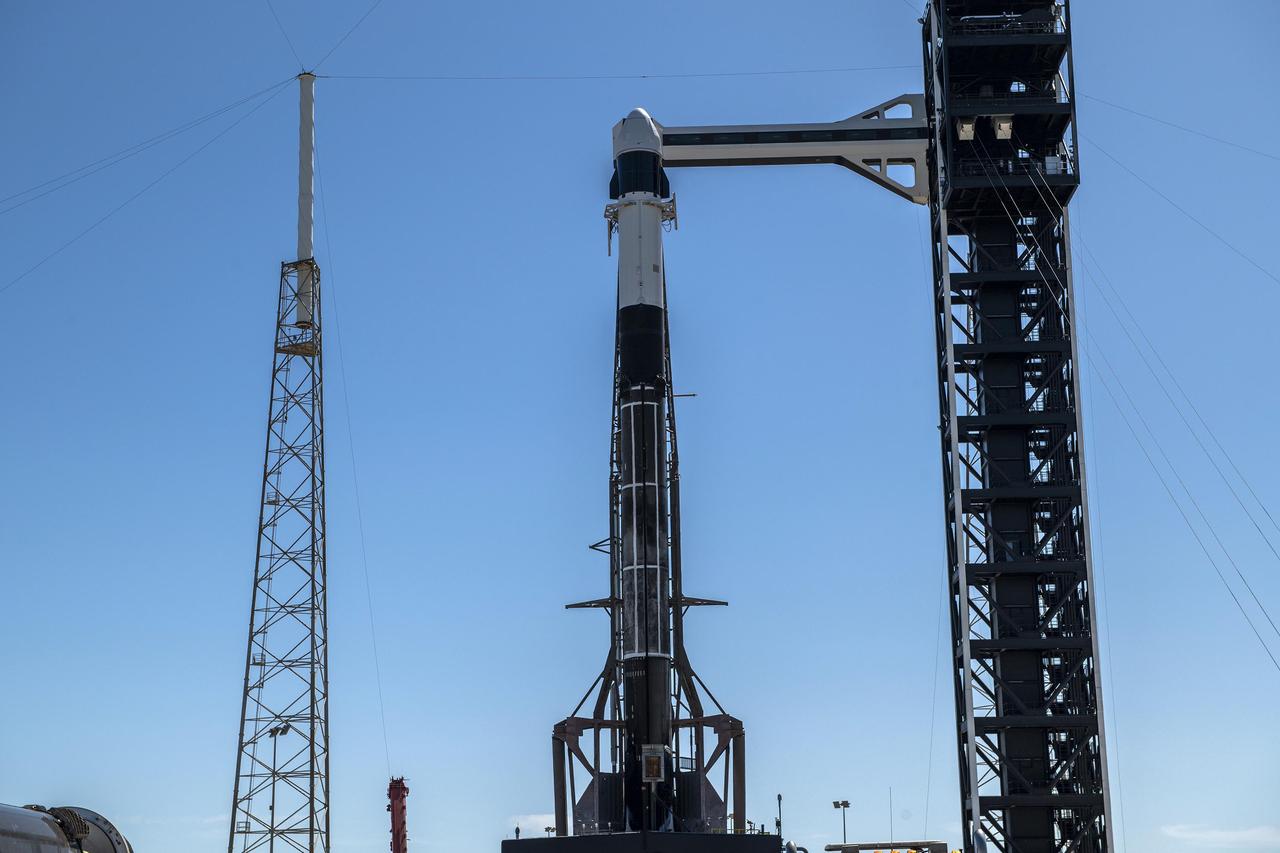
A SpaceX Falcon 9 rocket, with the company’s Dragon spacecraft atop, stands in a vertical position at Space Launch Complex 40 at Cape Canaveral Space Force Station in Florida on Tuesday, March 19, 2024, in preparation for the 30th commercial resupply services launch to the International Space Station. NASA and partner research flying aboard the mission includes a look at plant metabolism in space and a set of new sensors for free-flying Astrobee robots to provide 3D mapping capabilities. Other studies include a fluid physics study that could benefit solar cell technology and a university project from CSA (Canadian Space Agency) that will monitor sea ice and ocean conditions. Liftoff is scheduled for 4:55 p.m. EDT on Thursday, March 21, 2024.
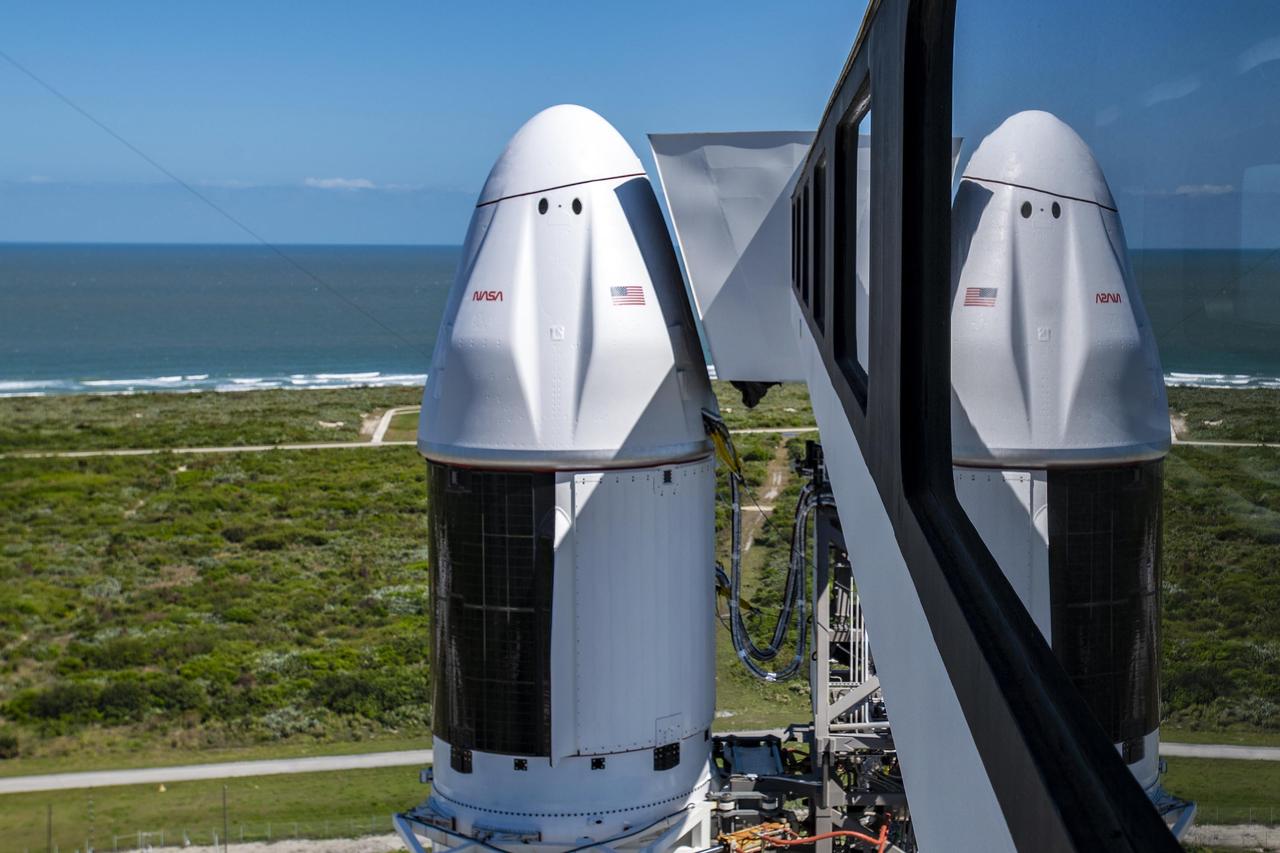
Seen here is an up-close view of the SpaceX Dragon spacecraft atop the company’s Falcon 9 rocket after being raised to a vertical position at Space Launch Complex 40 at Cape Canaveral Space Force Station in Florida on Tuesday, March 19, 2024, in preparation for the 30th commercial resupply services launch to the International Space Station. NASA and partner research flying aboard the mission includes a look at plant metabolism in space and a set of new sensors for free-flying Astrobee robots to provide 3D mapping capabilities. Other studies include a fluid physics study that could benefit solar cell technology and a university project from CSA (Canadian Space Agency) that will monitor sea ice and ocean conditions. Liftoff is scheduled for 4:55 p.m. EDT on Thursday, March 21, 2024.
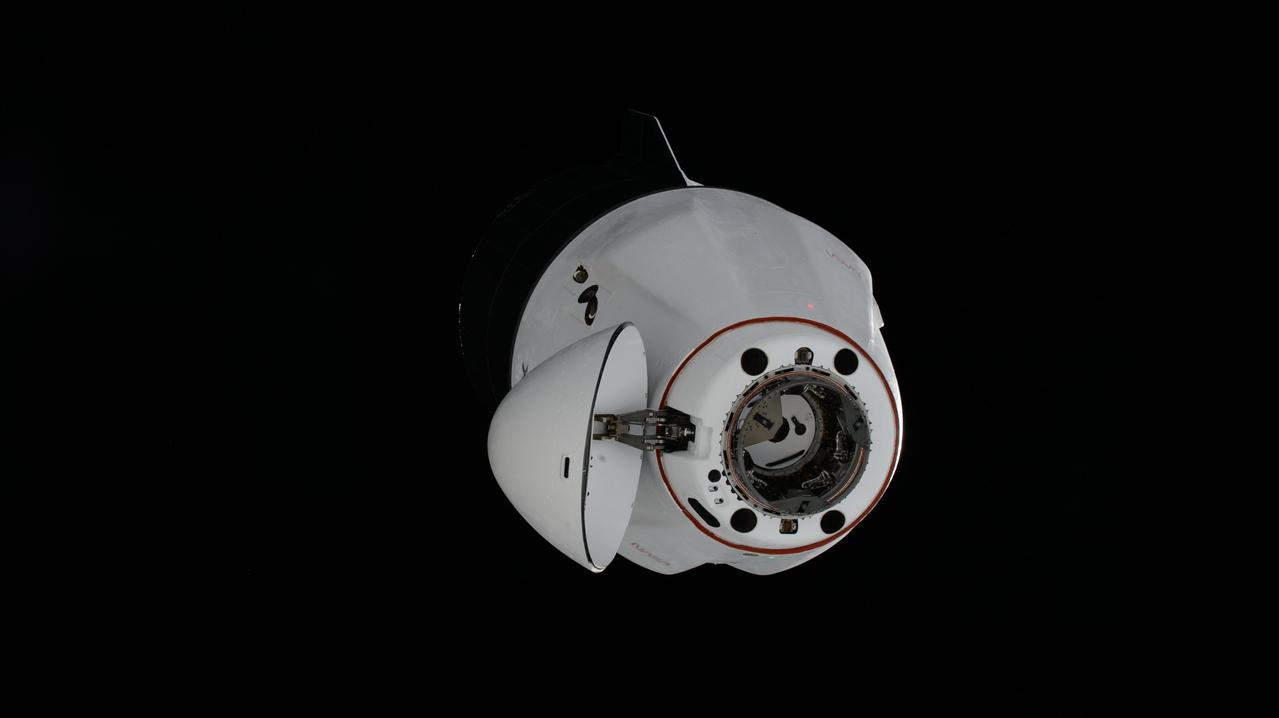
iss070e129463 (March 23, 2024) --- The SpaceX Dragon cargo spacecraft, on NASA's 30th Commercial Resupply Services (CRS-30) mission, approaches the International Space Station for a docking to the Harmony module's space-facing port.

iss070e129454 (March 23, 2024) --- The SpaceX Dragon cargo craft, on NASA's 30th Commercial Resupply Services (CRS-30) mission, approaches the International Space Station for a docking to the Harmony module's space-facing port.
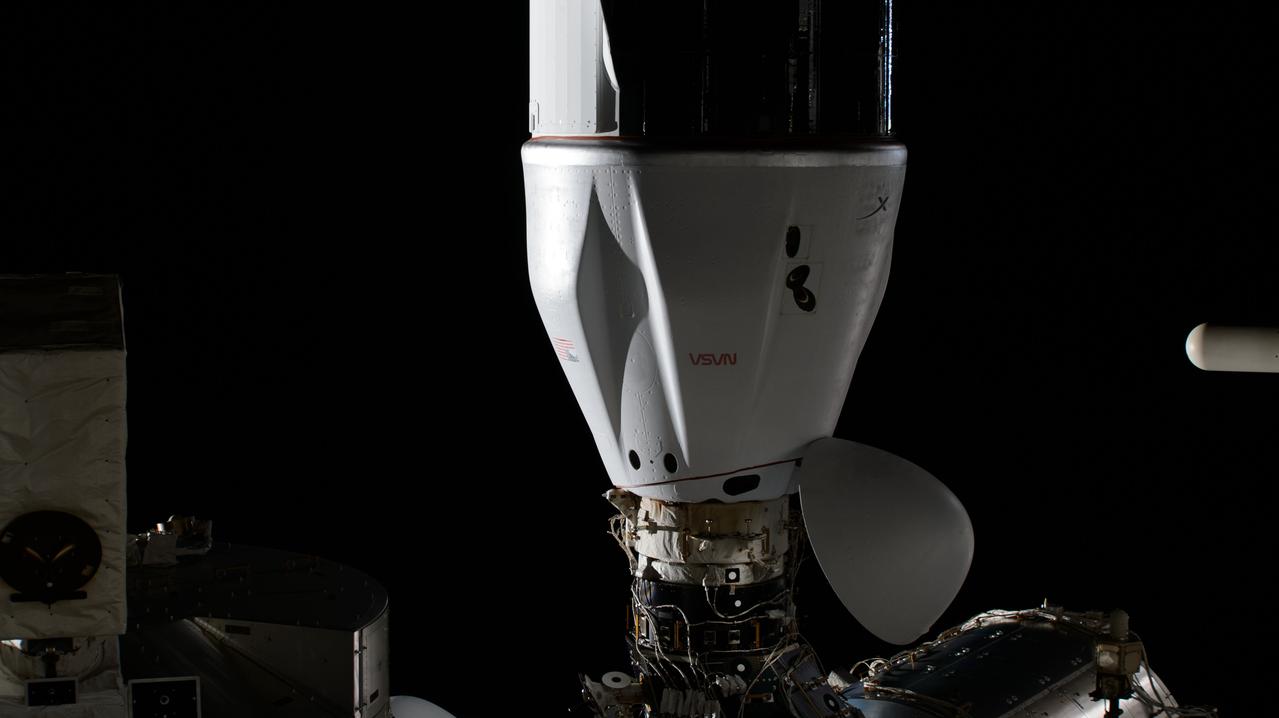
iss070e129455 (March 23, 2024) --- The SpaceX Dragon cargo spacecraft, on NASA's 30th Commercial Resupply Services (CRS-30) mission, is pictured docked to the space-facing port on the International Space Station's Harmony module.
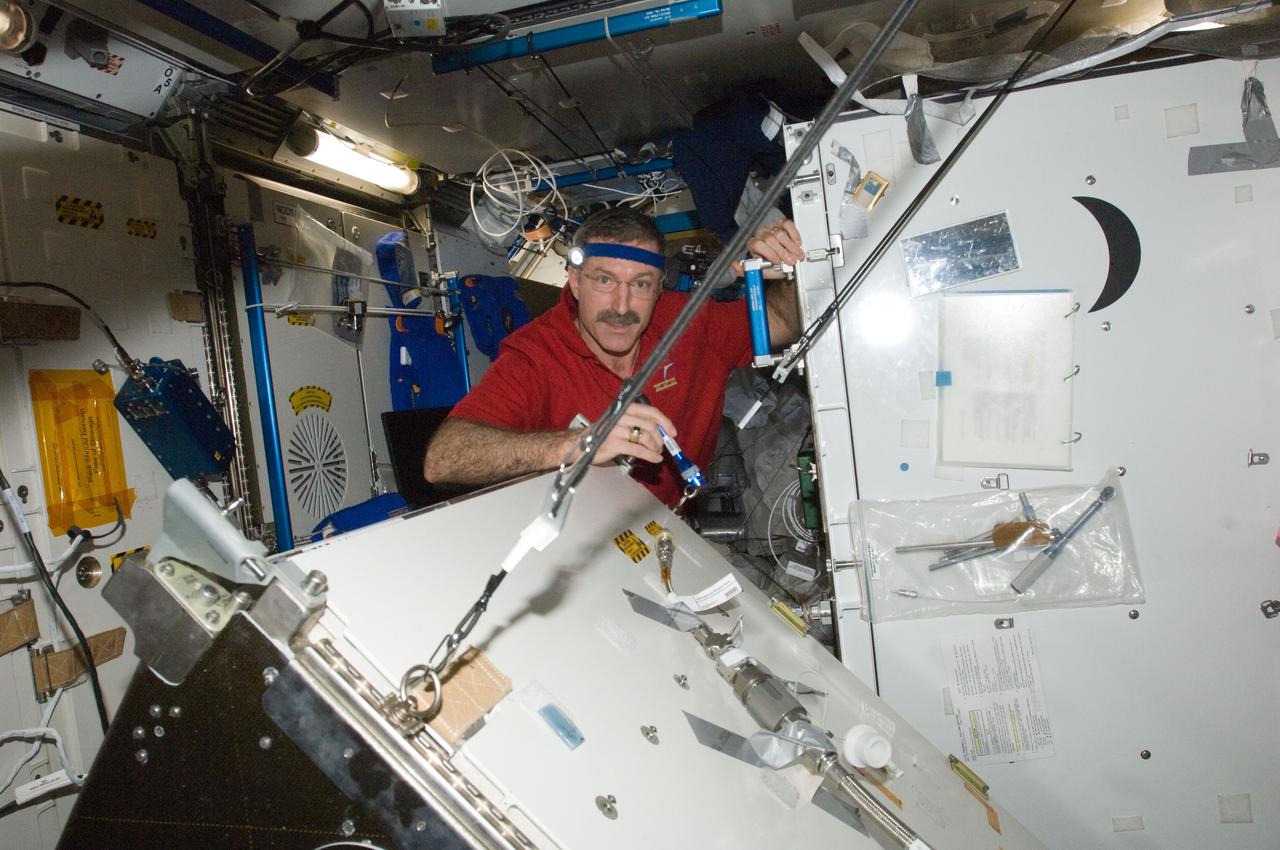
ISS030-E-128752 (8 March 2012) --- NASA astronaut Dan Burbank, Expedition 30 commander, performs part one of the Water Recovery System-1 (WRS-1) repair in the Tranquility node of the International Space Station. Burbank removed and replaced the failed Catalytic Reactor (CR), and installed a temporary filter kit between the new CR and the Microbial Check Valve (MCV) to support a system flush of the new Orbital Replacement Unit (ORU).
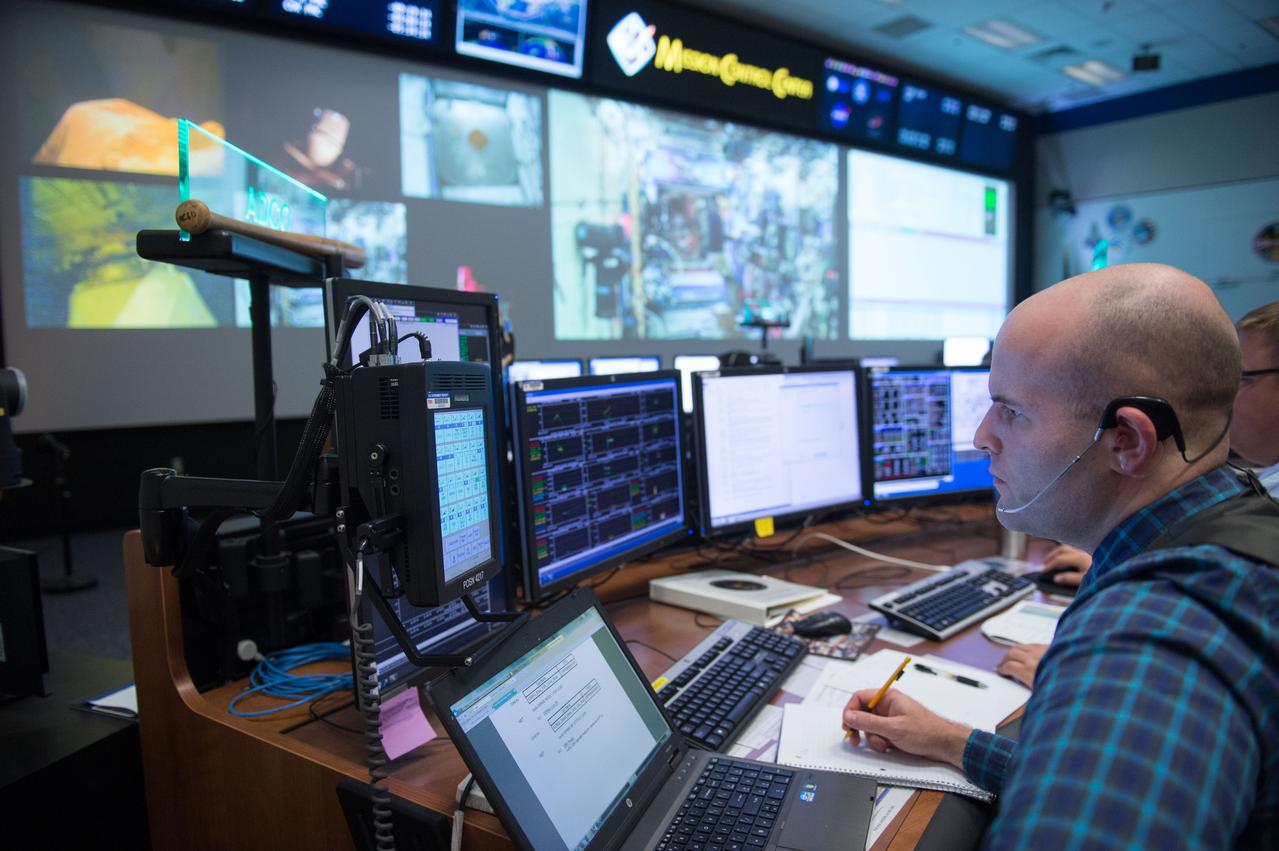
DATE: 7-20-16 LOCATION: Bldg 30 - WFCR SUBJECT: Expedition 48 flight controllers with Flight Director Scott Stover during SpaceX/Dragon CRS-9 Cargo Craft Rendezvous, Grappling and Berthing. PHOTOGRAPHER: Lauren Harnett
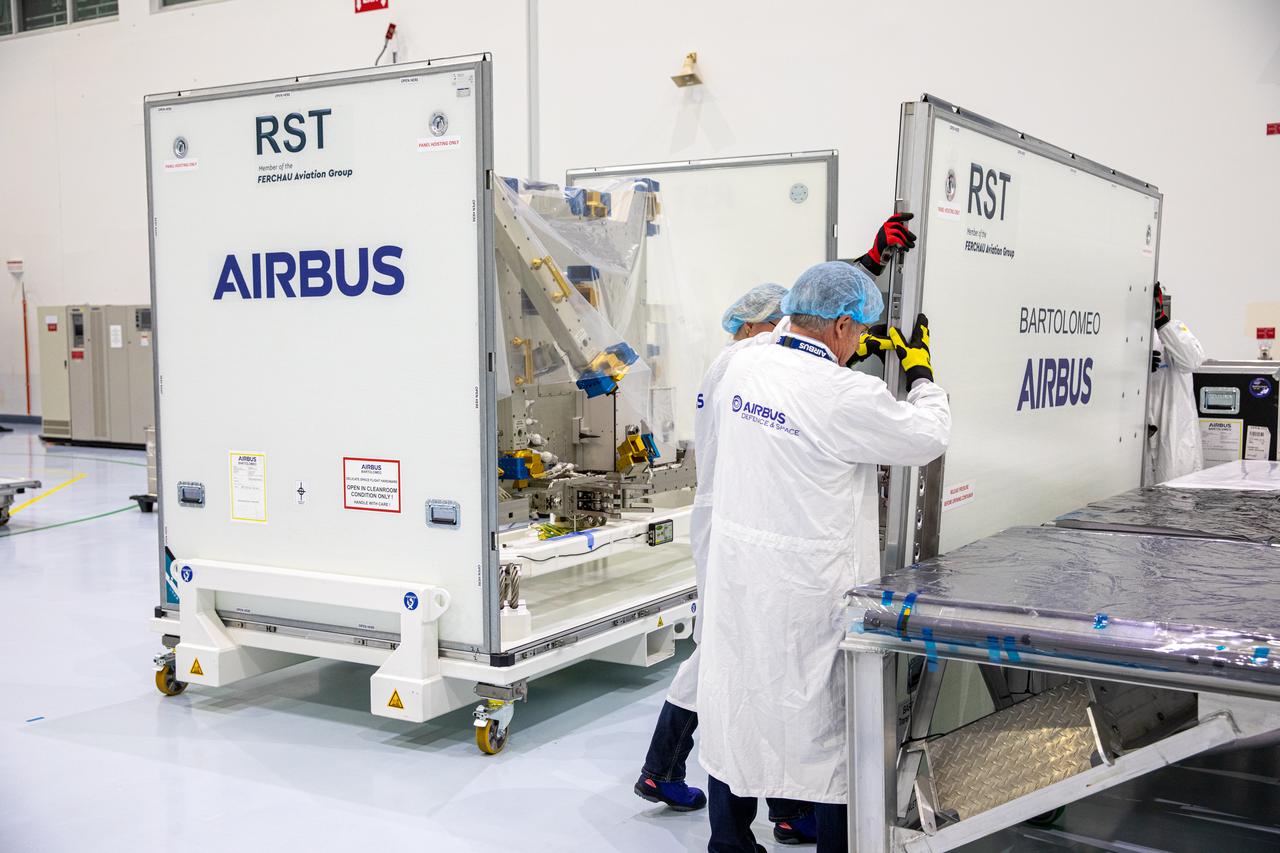
Airbus workers unpack the Bartolomeo platform in the Space Station Processing Facility high bay at NASA’s Kennedy Space Center in Florida on Jan. 30, 2020. Bartolomeo was manufactured by Airbus Defence and Space. The platform will be delivered to the International Space Station aboard SpaceX’s 20th Commercial Resupply Services (CRS-20) mission for the agency. The platform will attach to the exterior of the space station’s European Columbus Module. Named for the younger brother of Christopher Columbus, the platform has the capability to host external payloads in low-Earth orbit on the station. CRS-20 is scheduled to launch aboard SpaceX’s Dragon cargo spacecraft atop the company’s Falcon 9 rocket in March 2020.

The Bartolomeo platform that will be carried to the International Space Station aboard SpaceX’s 20th Commercial Resupply Services (CRS-20) mission for NASA is inside its shipping container in the Space Station Processing Facility high bay at the agency’s Kennedy Space Center in Florida on Jan. 30, 2020. Bartolomeo was manufactured by Airbus Defence and Space. The platform will attach to the exterior of the space station’s European Columbus Module. Named for the younger brother of Christopher Columbus, the platform has the capability to host external payloads in low-Earth orbit on the station. CRS-20 is scheduled to launch aboard SpaceX’s Dragon cargo spacecraft atop the company’s Falcon 9 rocket in March 2020.
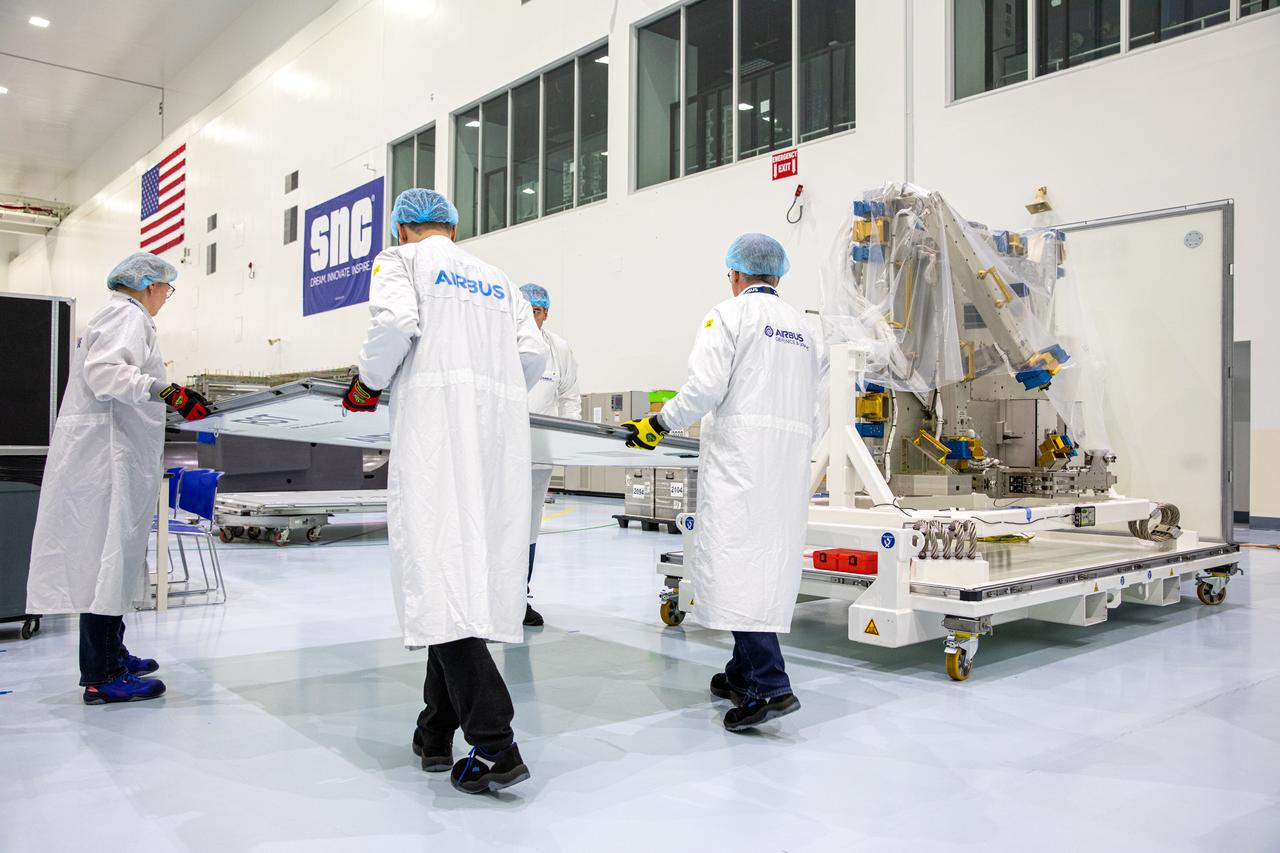
Airbus workers unpack the Bartolomeo platform in the Space Station Processing Facility high bay at NASA’s Kennedy Space Center in Florida on Jan. 30, 2020. Bartolomeo was manufactured by Airbus Defence and Space. The platform will be delivered to the International Space Station aboard SpaceX’s 20th Commercial Resupply Services (CRS-20) mission for the agency. The platform will attach to the exterior of the space station’s European Columbus Module. Named for the younger brother of Christopher Columbus, the platform has the capability to host external payloads in low-Earth orbit on the station. CRS-20 is scheduled to launch aboard SpaceX’s Dragon cargo spacecraft atop the company’s Falcon 9 rocket in March 2020.
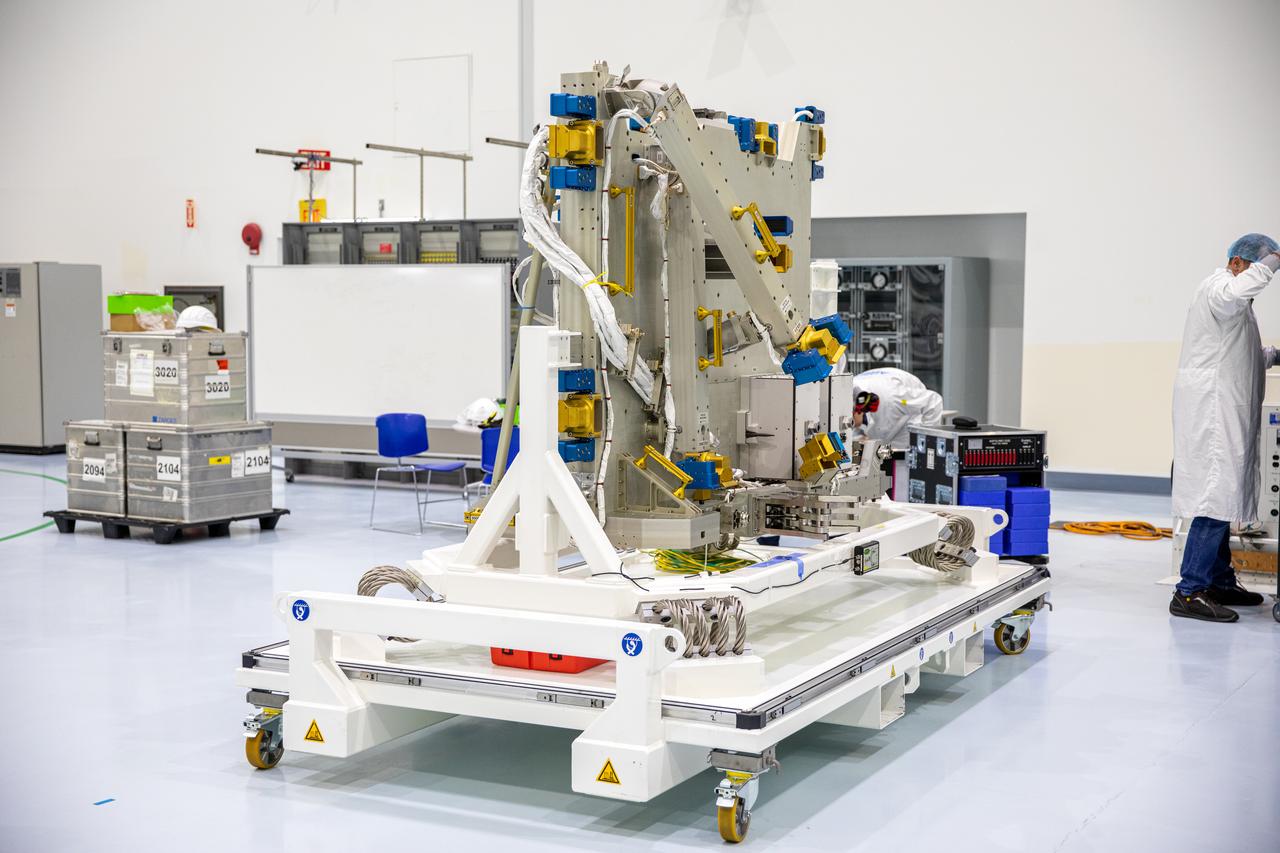
Airbus workers unpack the Bartolomeo platform in the Space Station Processing Facility high bay at NASA’s Kennedy Space Center in Florida on Jan. 30, 2020. Bartolomeo was manufactured by Airbus Defence and Space. The platform will be delivered to the International Space Station aboard SpaceX’s 20th Commercial Resupply Services (CRS-20) mission for the agency. The platform will attach to the exterior of the space station’s European Columbus Module. Named for the younger brother of Christopher Columbus, the platform has the capability to host external payloads in low-Earth orbit on the station. CRS-20 is scheduled to launch aboard SpaceX’s Dragon cargo spacecraft atop the company’s Falcon 9 rocket in March 2020.
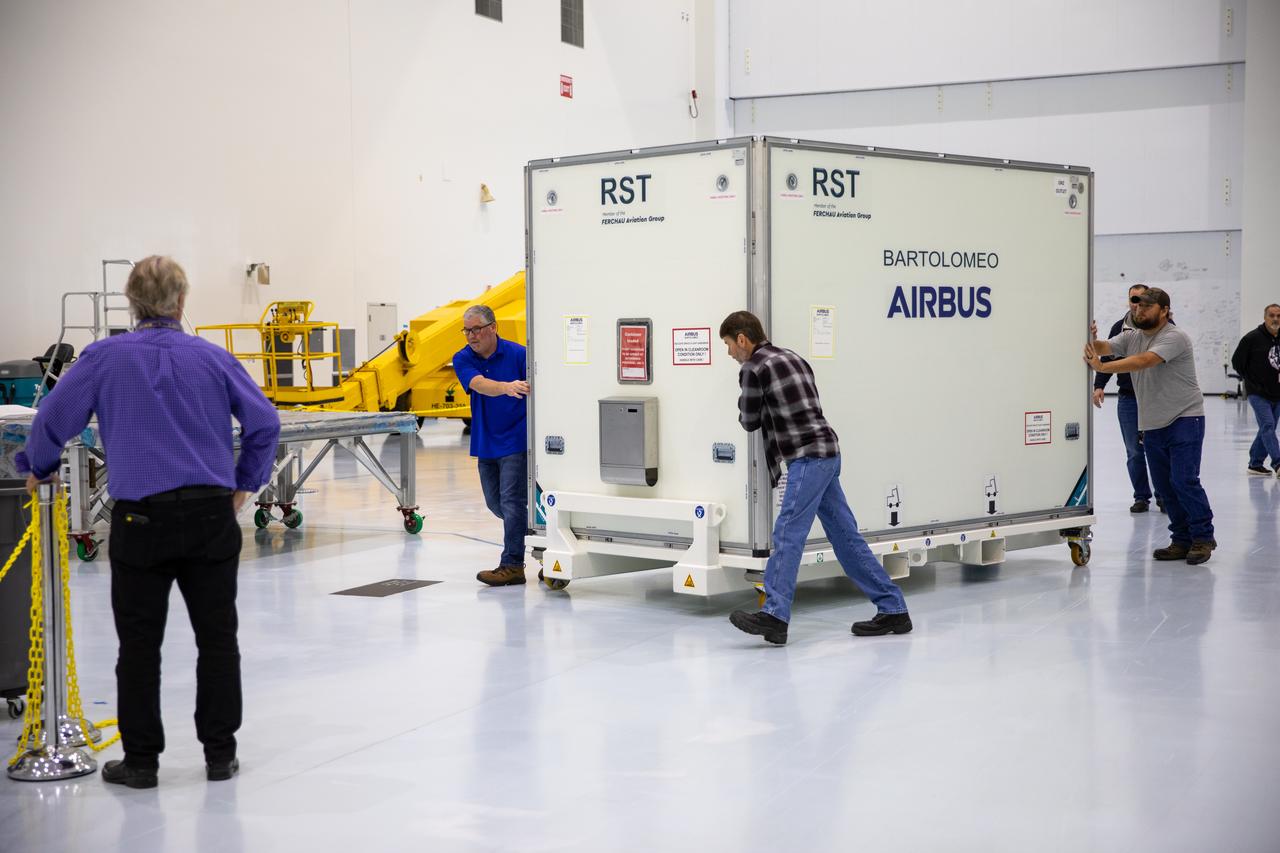
The Bartolomeo platform that will be carried to the International Space Station aboard SpaceX’s 20th Commercial Resupply Services (CRS-20) mission for NASA is moved in its shipping container inside the Space Station Processing Facility high bay at the agency’s Kennedy Space Center in Florida on Jan. 30, 2020. Bartolomeo was manufactured by Airbus Defence and Space. The platform will attach to the exterior of the space station’s European Columbus Module. Named for the younger brother of Christopher Columbus, the platform has the capability to host external payloads in low-Earth orbit on the station. CRS-20 is scheduled to launch aboard SpaceX’s Dragon cargo spacecraft atop the company’s Falcon 9 rocket in March 2020.
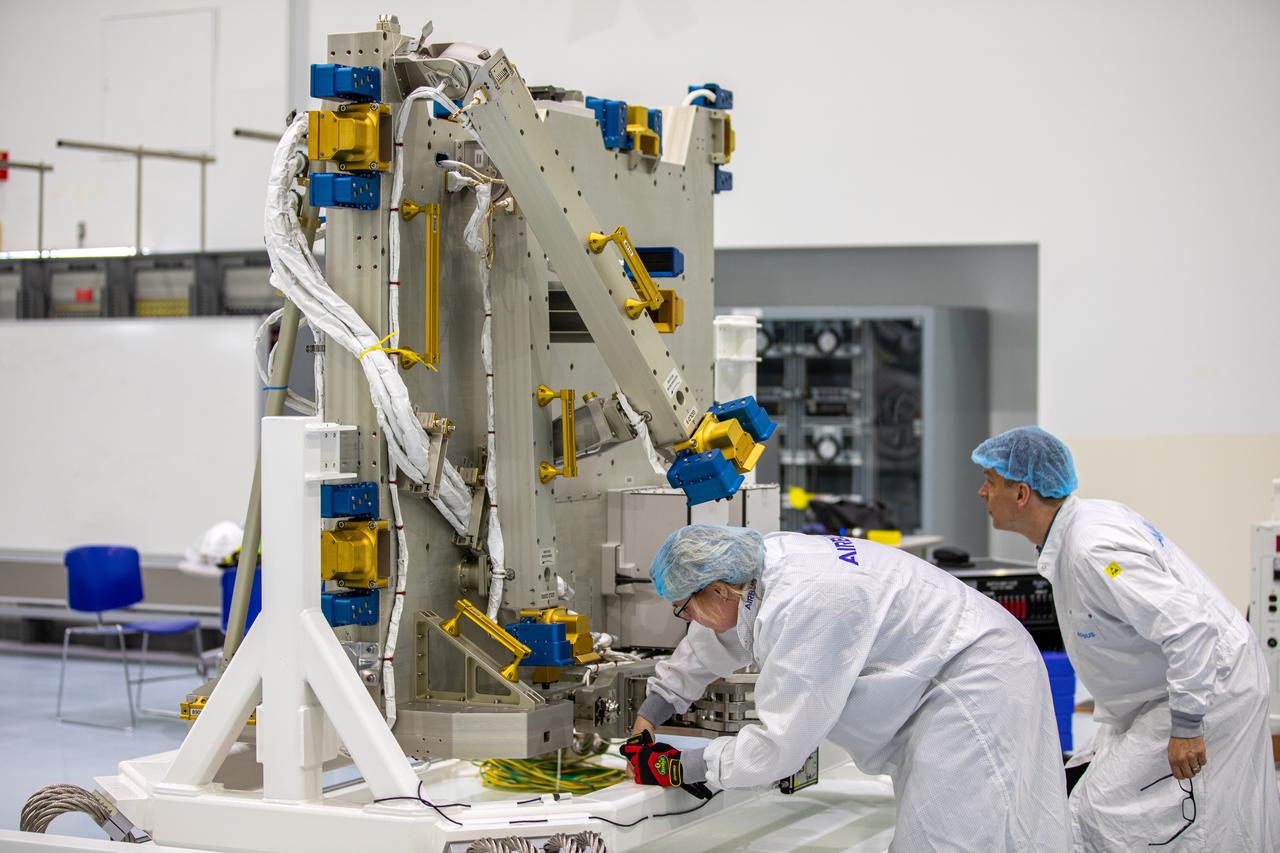
Airbus workers unpack the Bartolomeo platform in the Space Station Processing Facility high bay at NASA’s Kennedy Space Center in Florida on Jan. 30, 2020. Bartolomeo was manufactured by Airbus Defence and Space. The platform will be delivered to the International Space Station aboard SpaceX’s 20th Commercial Resupply Services (CRS-20) mission for the agency. The platform will attach to the exterior of the space station’s European Columbus Module. Named for the younger brother of Christopher Columbus, the platform has the capability to host external payloads in low-Earth orbit on the station. CRS-20 is scheduled to launch aboard SpaceX’s Dragon cargo spacecraft atop the company’s Falcon 9 rocket in March 2020.
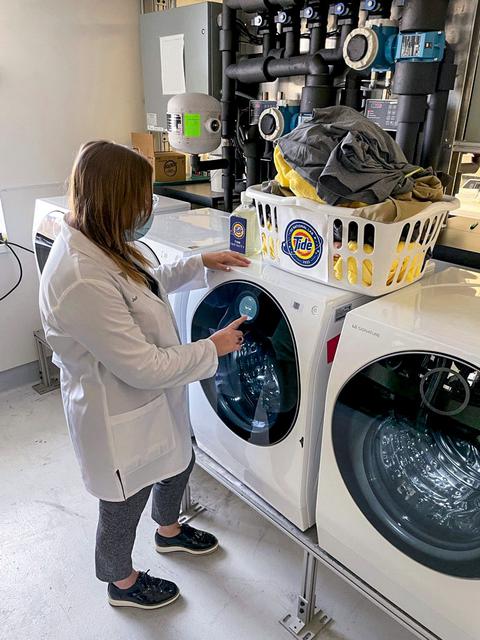
jsc2021e064546 (11/30/2021) --- Jessica Zinna, Tide Scientist at P&G, prepares a load of laundry that will be washed in Tide’s laundry detergent solution for P&G Telescience Investigation of Detergent Experiments (PGTIDE). The detergent will be on board SpaceX CRS-24. Following the signing of a Space Act Agreement with NASA, Tide is developing a detergent solution for space that will aid in planned space travel such as the Artemis Moon missions and a crewed roundtrip Mars mission. Image courtesy of P&G.

Airbus workers inspect the Bartolomeo platform after it was unpacked from its shipping container in the Space Station Processing Facility high bay at NASA’s Kennedy Space Center in Florida on Jan. 30, 2020. Bartolomeo was manufactured by Airbus Defence and Space. The platform will be delivered to the International Space Station aboard SpaceX’s 20th Commercial Resupply Services (CRS-20) mission for the agency. The platform will attach to the exterior of the space station’s European Columbus Module. Named for the younger brother of Christopher Columbus, the platform has the capability to host external payloads in low-Earth orbit on the station. CRS-20 is scheduled to launch aboard SpaceX’s Dragon cargo spacecraft atop the company’s Falcon 9 rocket in March 2020.
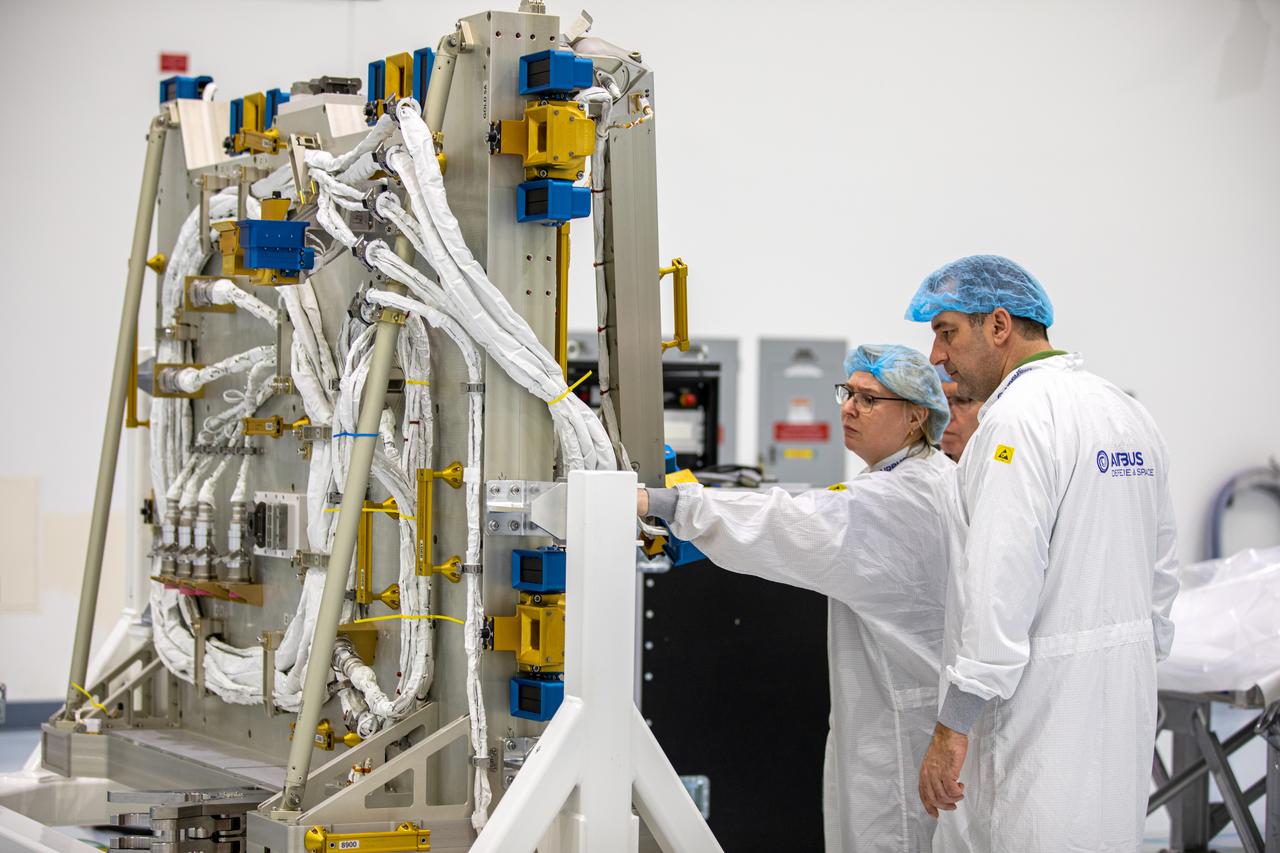
Airbus workers inspect the Bartolomeo platform after it was unpacked from its shipping container in the Space Station Processing Facility high bay at NASA’s Kennedy Space Center in Florida on Jan. 30, 2020. Bartolomeo was manufactured by Airbus Defence and Space. The platform will be delivered to the International Space Station aboard SpaceX’s 20th Commercial Resupply Services (CRS-20) mission for the agency. The platform will attach to the exterior of the space station’s European Columbus Module. Named for the younger brother of Christopher Columbus, the platform has the capability to host external payloads in low-Earth orbit on the station. CRS-20 is scheduled to launch aboard SpaceX’s Dragon cargo spacecraft atop the company’s Falcon 9 rocket in March 2020.
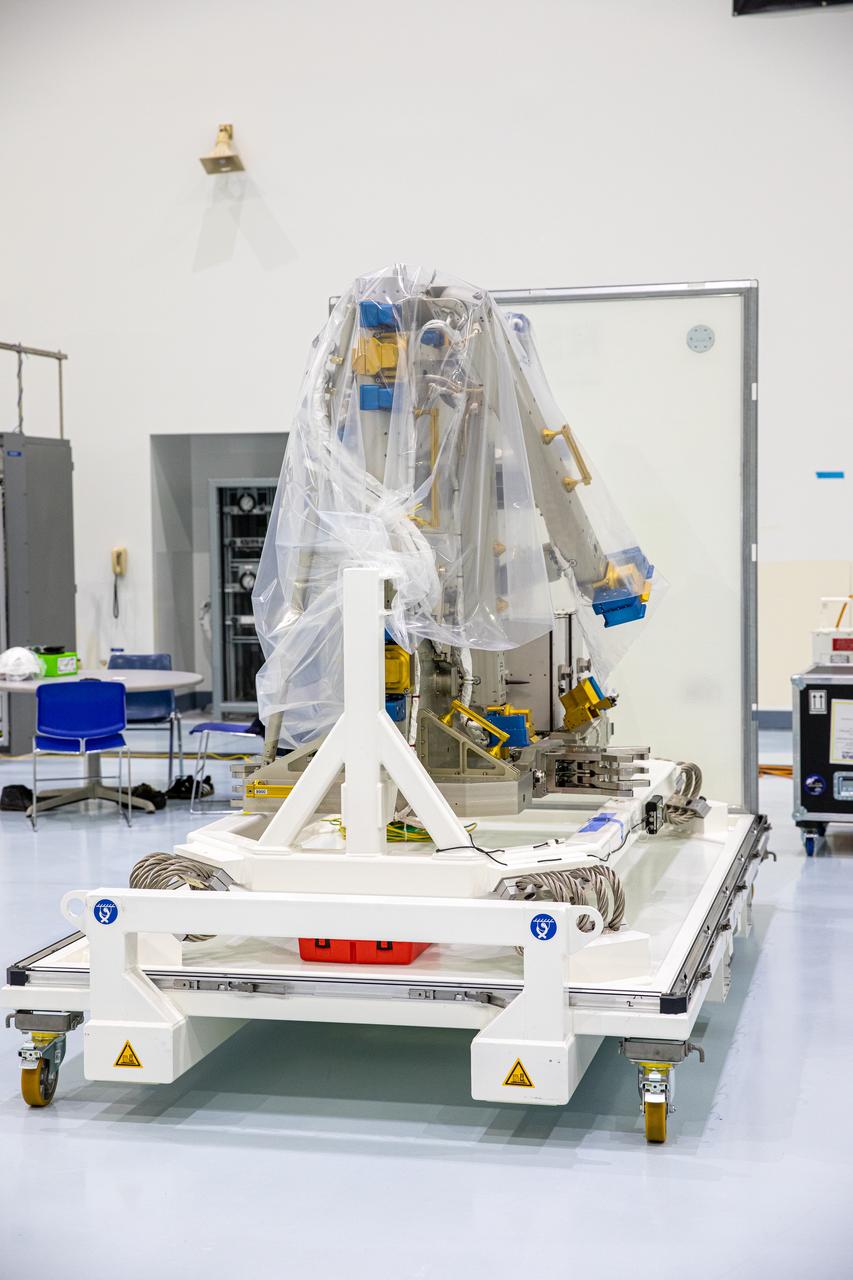
The Bartolomeo platform that will be delivered to the International Space Station is unpacked from its shipping container inside the Space Station Processing Facility high bay at NASA’s Kennedy Space Center in Florida on Jan. 30, 2020. Bartolomeo was manufactured by Airbus Defence and Space. The platform will be delivered to the International Space Station aboard SpaceX’s 20th Commercial Resupply Services (CRS-20) mission for the agency. The platform will attach to the exterior of the space station’s European Columbus Module. Named for the younger brother of Christopher Columbus, the platform has the capability to host external payloads in low-Earth orbit on the station. CRS-20 is scheduled to launch aboard SpaceX’s Dragon cargo spacecraft atop the company’s Falcon 9 rocket in March 2020.
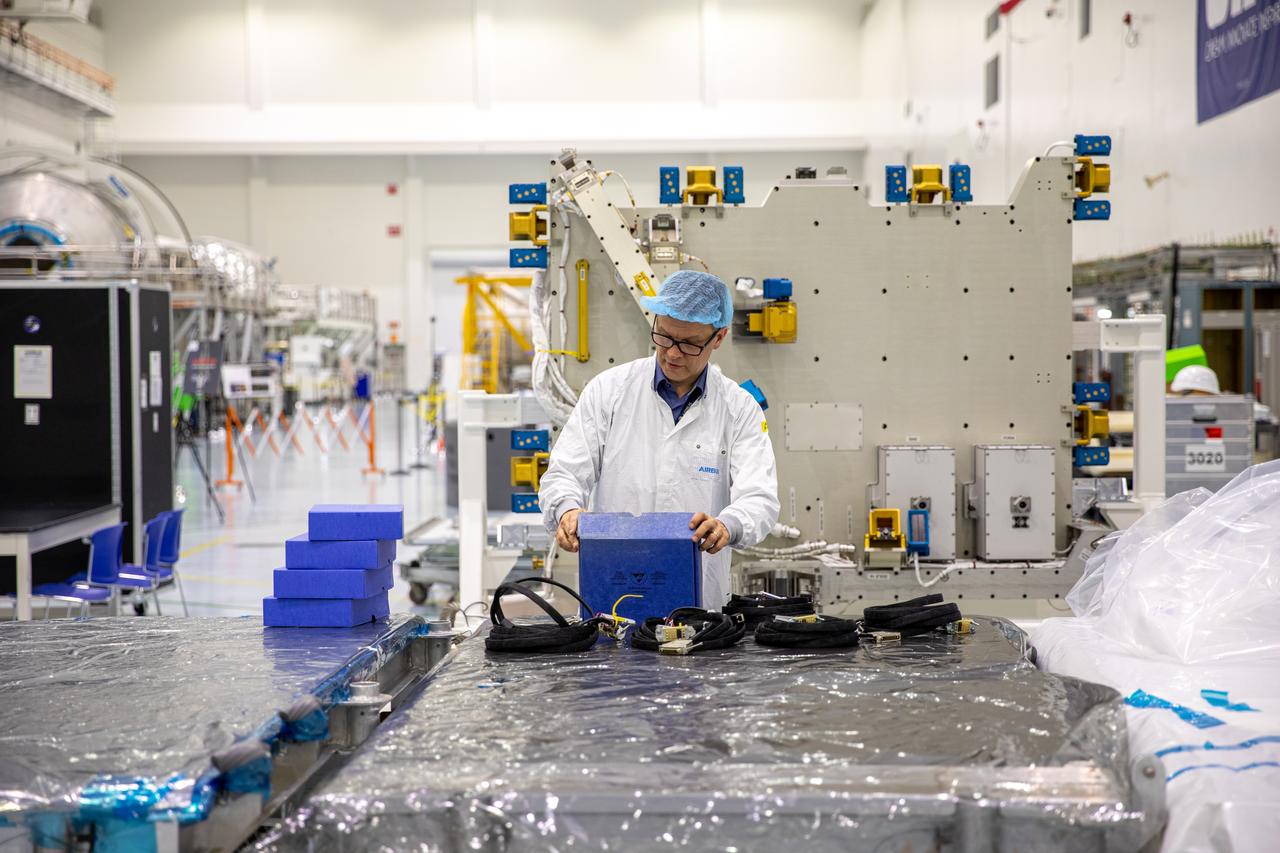
Airbus workers inspects parts for the Bartolomeo platform after it was unpacked from its shipping container in the Space Station Processing Facility high bay at NASA’s Kennedy Space Center in Florida on Jan. 30, 2020. Bartolomeo was manufactured by Airbus Defence and Space. The platform will be delivered to the International Space Station aboard SpaceX’s 20th Commercial Resupply Services (CRS-20) mission for the agency. The platform will attach to the exterior of the space station’s European Columbus Module. Named for the younger brother of Christopher Columbus, the platform has the capability to host external payloads in low-Earth orbit on the station. CRS-20 is scheduled to launch aboard SpaceX’s Dragon cargo spacecraft atop the company’s Falcon 9 rocket in March 2020.
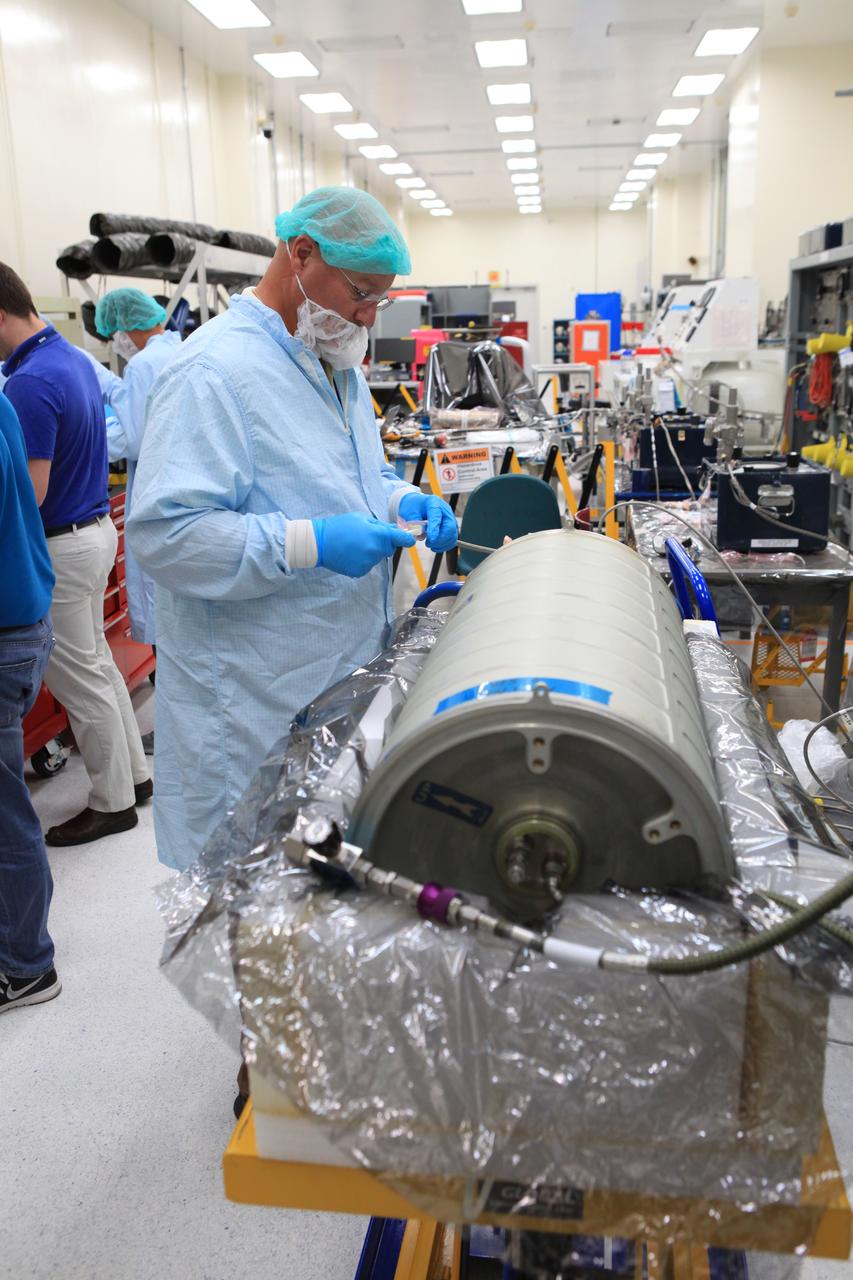
Inside the Space Station Processing Facility high bay at NASA's Kennedy Space Center in Florida, a technician works on the pump package assembly (PPA) on Aug. 30, 2018. The payload will be carried to the International Space Station on SpaceX's 16th Commercial Resupply Services mission. The PPA will be used to continuously drive the cooling water in the space station's thermal control system. The assembly includes a centrifuge pump, a fine filter and gas trap for pump protection, a coarse outlet filter, sensors, and an accumulator. The PPA also will provide a reservoir used for makeup of coolant if leakage occurred. CRS-16 is scheduled to launch to the space station later this year.
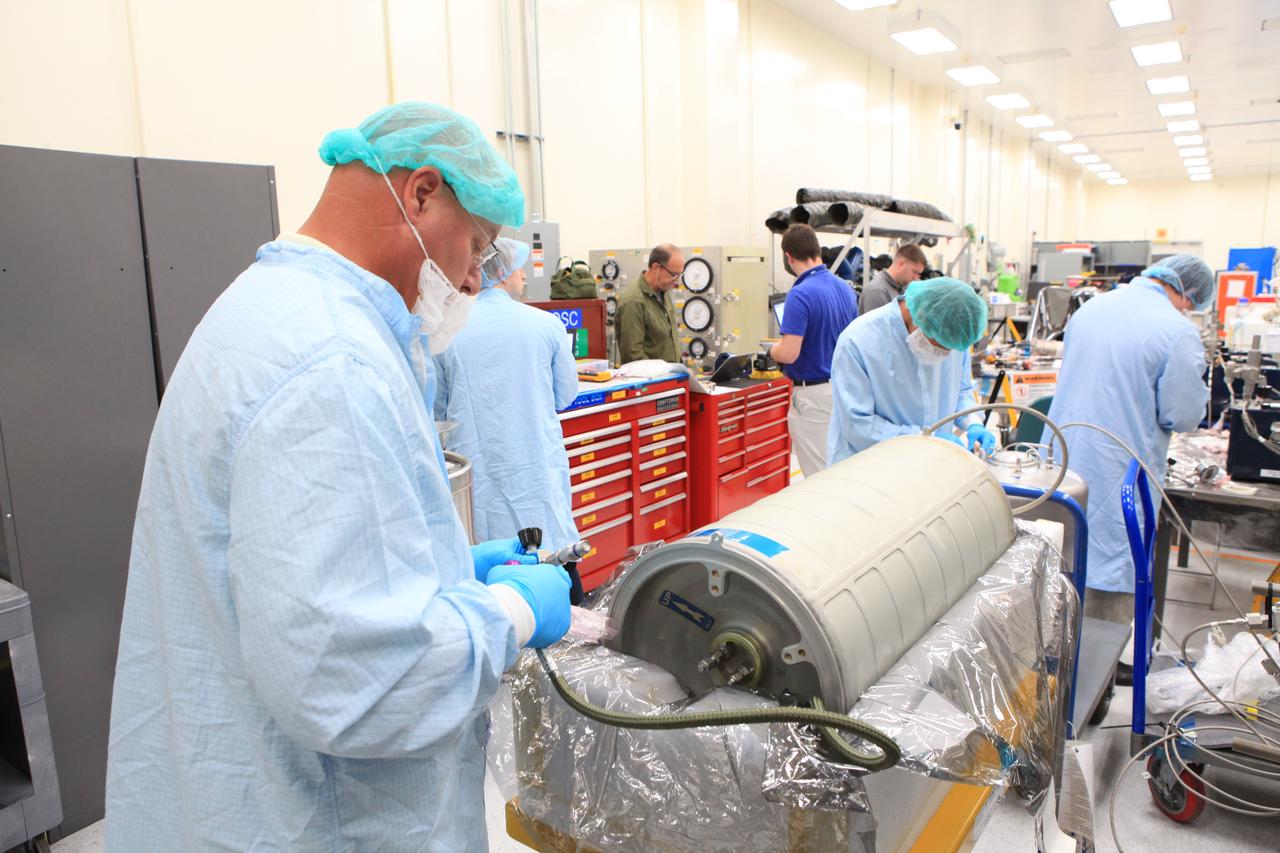
Inside the Space Station Processing Facility high bay at NASA's Kennedy Space Center in Florida, technicians work on the pump package assembly (PPA) on Aug. 30, 2018. The payload will be carried to the International Space Station on SpaceX's 16th Commercial Resupply Services mission. The PPA will be used to continuously drive the cooling water in the space station's thermal control system. The assembly includes a centrifuge pump, a fine filter and gas trap for pump protection, a coarse outlet filter, sensors, and an accumulator. The PPA also will provide a reservoir used for makeup of coolant if leakage occurred. CRS-16 is scheduled to launch to the space station later this year.
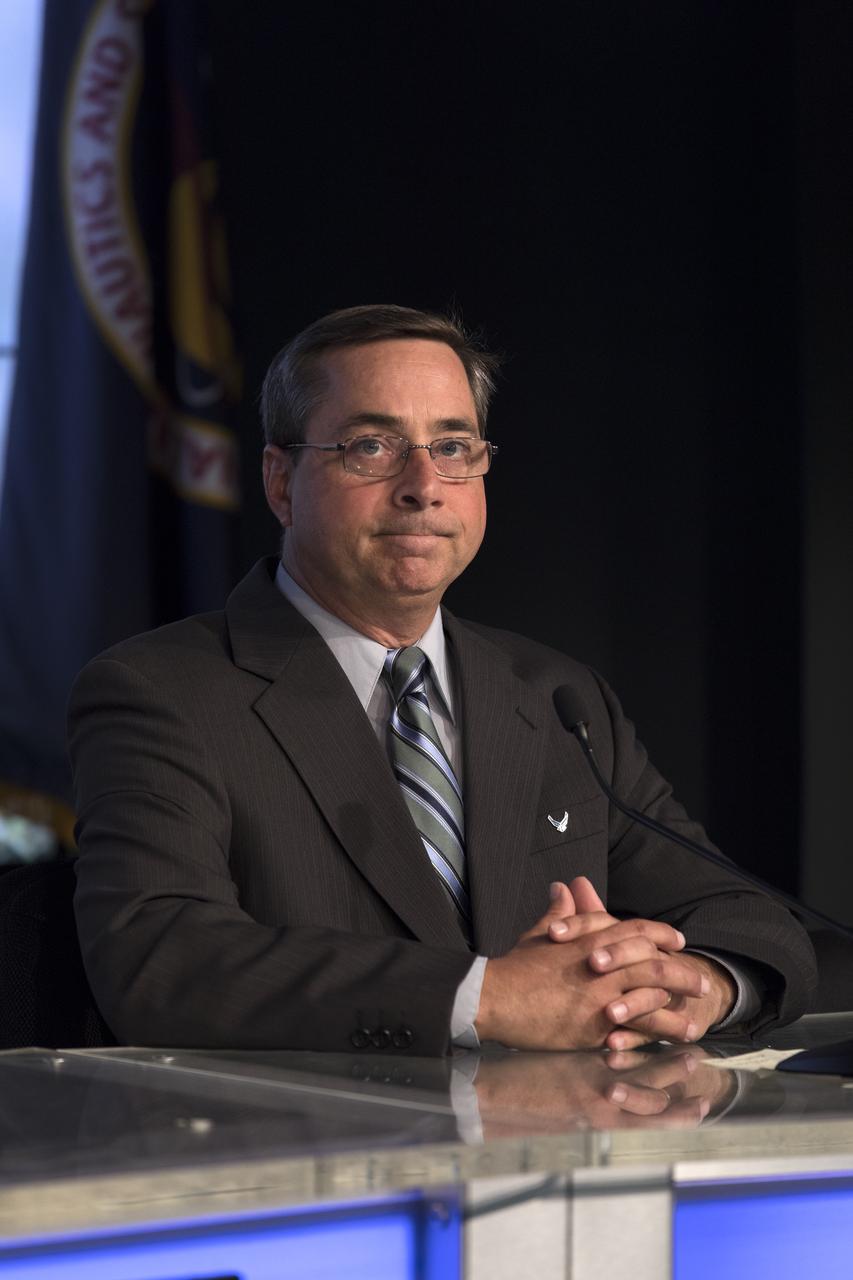
In the Kennedy Space Center’s Press Site auditorium, NASA and industry leaders speak to members of the media during a prelaunch news conference for the SpaceX CRS-14 commercial resupply services mission to the International Space Station. Mike McAleenan, weather officer, 45th Weather Squadron, participates in the news conference. A Dragon spacecraft is scheduled to be launched from Space Launch Complex 40 at Cape Canaveral Air Force Station at 4:30 p.m. EST, on April 2, 2018. The SpaceX Falcon 9 rocket will lift off on the company's 14th Commercial Resupply Services mission to the space station.
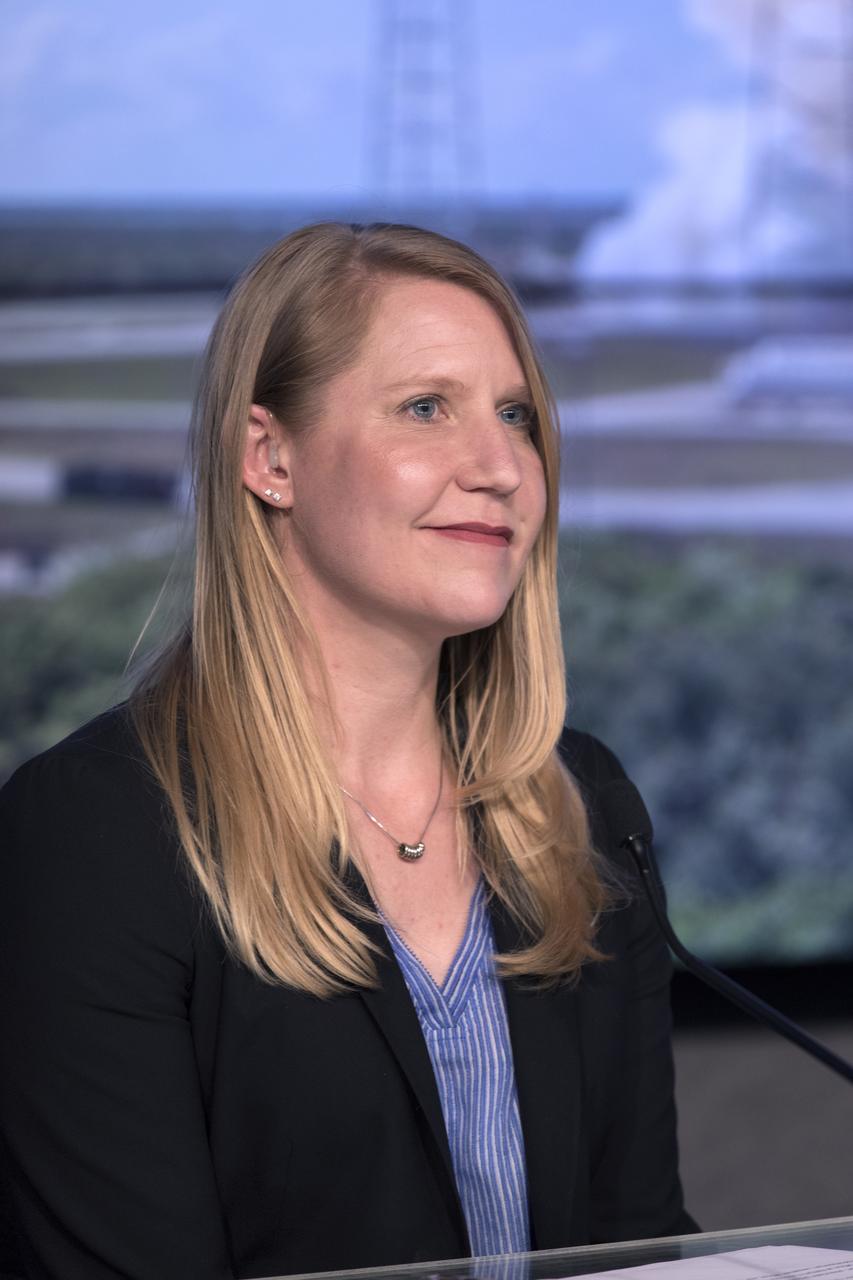
In the Kennedy Space Center’s Press Site auditorium, NASA and industry leaders speak to members of the media during a prelaunch news conference for the SpaceX CRS-14 commercial resupply services mission to the International Space Station. Stephanie Schierholz, of NASA Communications, moderates the news conference. A Dragon spacecraft is scheduled to be launched from Space Launch Complex 40 at Cape Canaveral Air Force Station at 4:30 p.m. EST, on April 2, 2018. The SpaceX Falcon 9 rocket will lift off on the company's 14th Commercial Resupply Services mission to the space station.
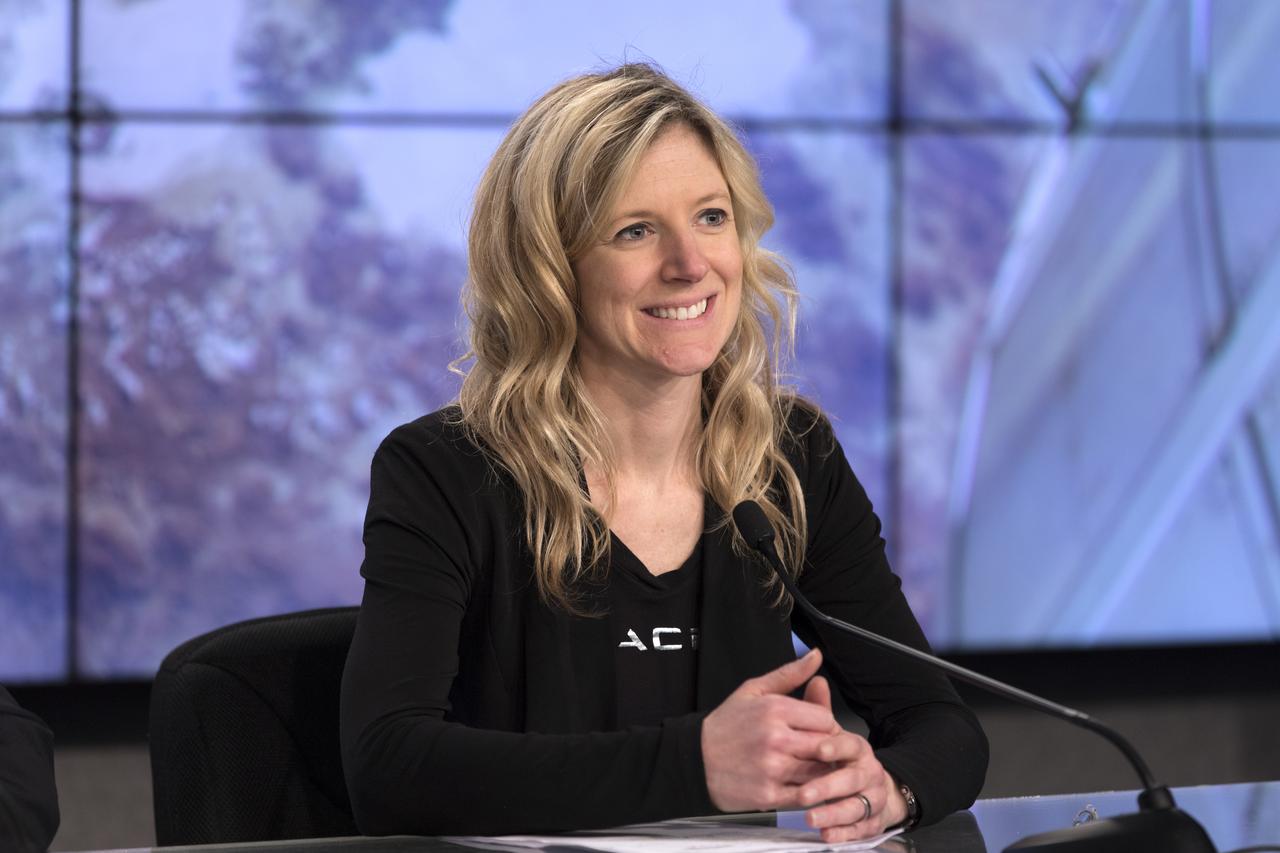
In the Press Site auditorium of NASA's Kennedy Space Center in Florida, Jessica Jensen, SpaceX director of Dragon Mission Management, speaks to media at a post-launch news conference following the liftoff of the SpaceX Falcon 9 rocket at 4:30 p.m. EST. The flight is a commercial resupply services mission for NASA to the International Space Station. SpaceX CRS-14 lifted off atop the Falcon 9 rocket from Space Launch Complex 40 at Cape Canaveral Air Force Station carrying supplies and equipment and new science experiments for technology research.
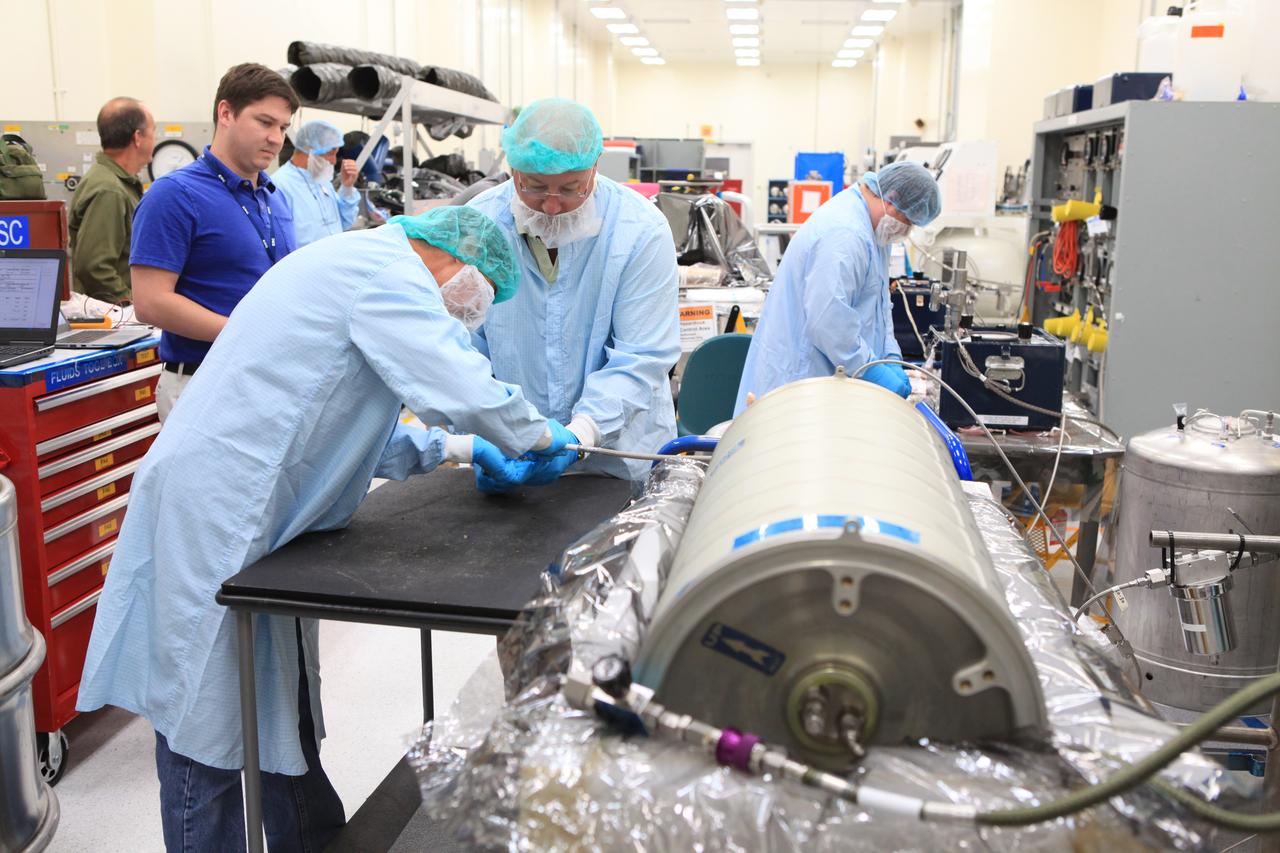
Inside the Space Station Processing Facility high bay at NASA's Kennedy Space Center in Florida, technicians work on the pump package assembly (PPA) on Aug. 30, 2018. The payload will be carried to the International Space Station on SpaceX's 16th Commercial Resupply Services mission. The PPA will be used to continuously drive the cooling water in the space station's thermal control system. The assembly includes a centrifuge pump, a fine filter and gas trap for pump protection, a coarse outlet filter, sensors, and an accumulator. The PPA also will provide a reservoir used for makeup of coolant if leakage occurred. CRS-16 is scheduled to launch to the space station later this year.
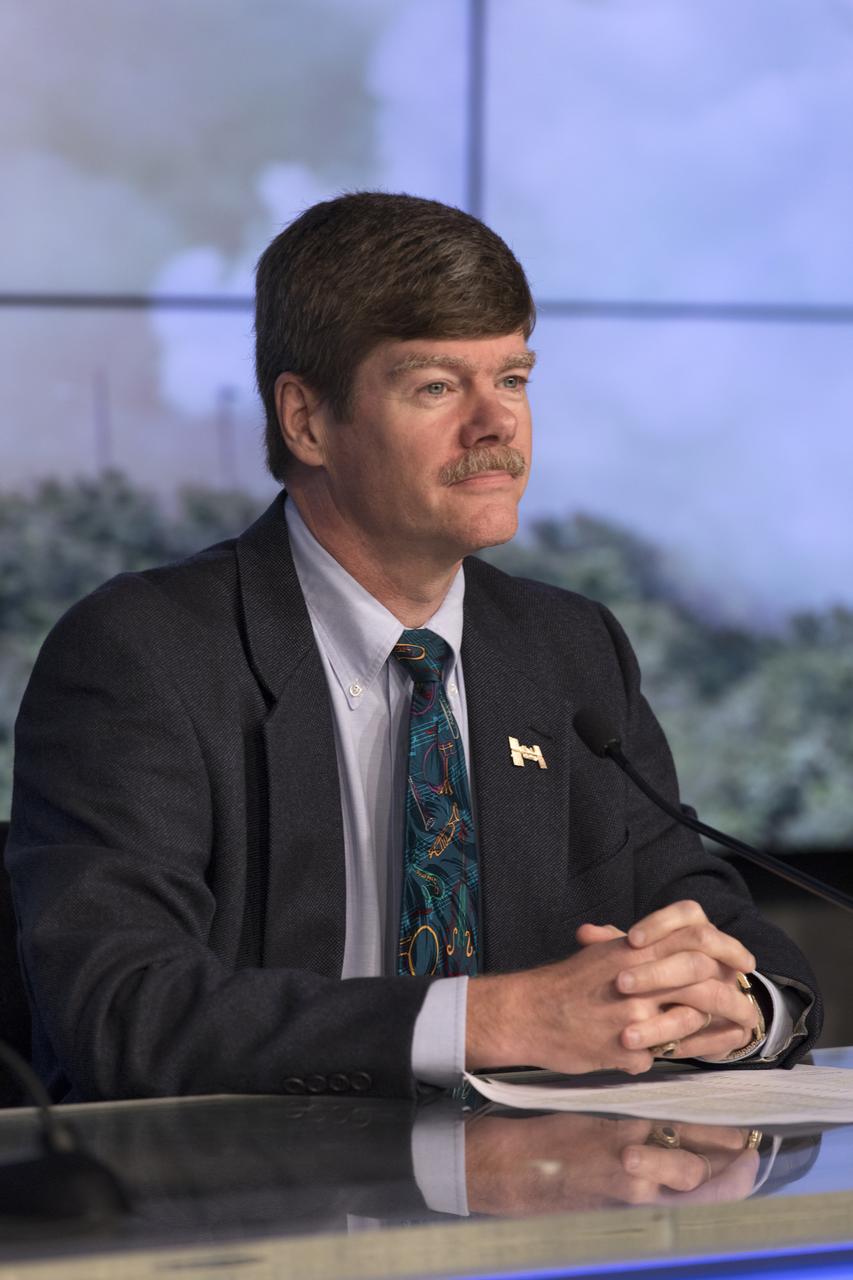
In the Kennedy Space Center’s Press Site auditorium, NASA and industry leaders speak to members of the media during a prelaunch news conference for the SpaceX CRS-14 commercial resupply services mission to the International Space Station. Pete Hasbrook, associate program scientist, ISS Program Science Office at NASA's Johnson Space Center in Houston; participates in the news conference. A Dragon spacecraft is scheduled to be launched from Space Launch Complex 40 at Cape Canaveral Air Force Station at 4:30 p.m. EST, on April 2, 2018. The SpaceX Falcon 9 rocket will lift off on the company's 14th Commercial Resupply Services mission to the space station.
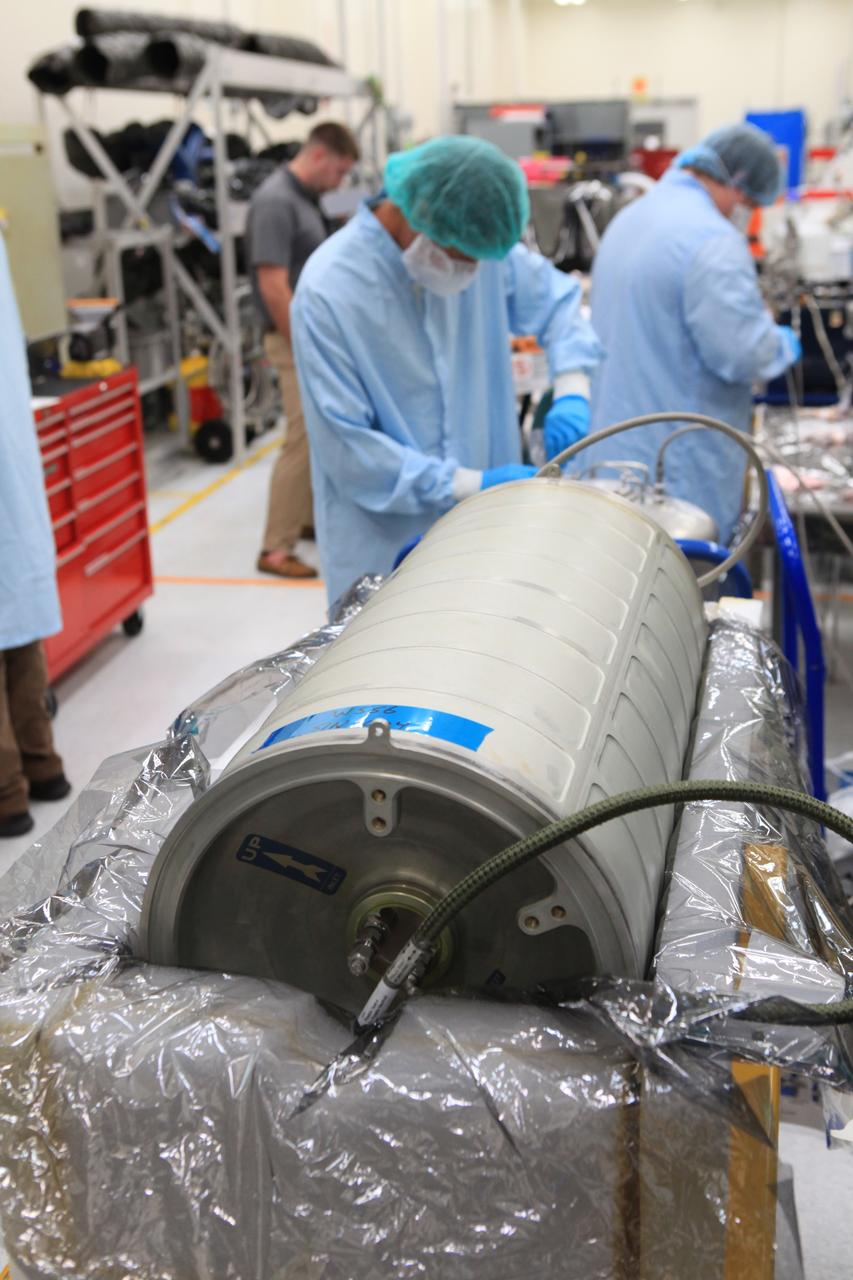
Inside the Space Station Processing Facility high bay at NASA's Kennedy Space Center in Florida, technicians work on the pump package assembly (PPA) on Aug. 30, 2018. The payload will be carried to the International Space Station on SpaceX's 16th Commercial Resupply Services mission. The PPA will be used to continuously drive the cooling water in the space station's thermal control system. The assembly includes a centrifuge pump, a fine filter and gas trap for pump protection, a coarse outlet filter, sensors, and an accumulator. The PPA also will provide a reservoir used for makeup of coolant if leakage occurred. CRS-16 is scheduled to launch to the space station later this year.
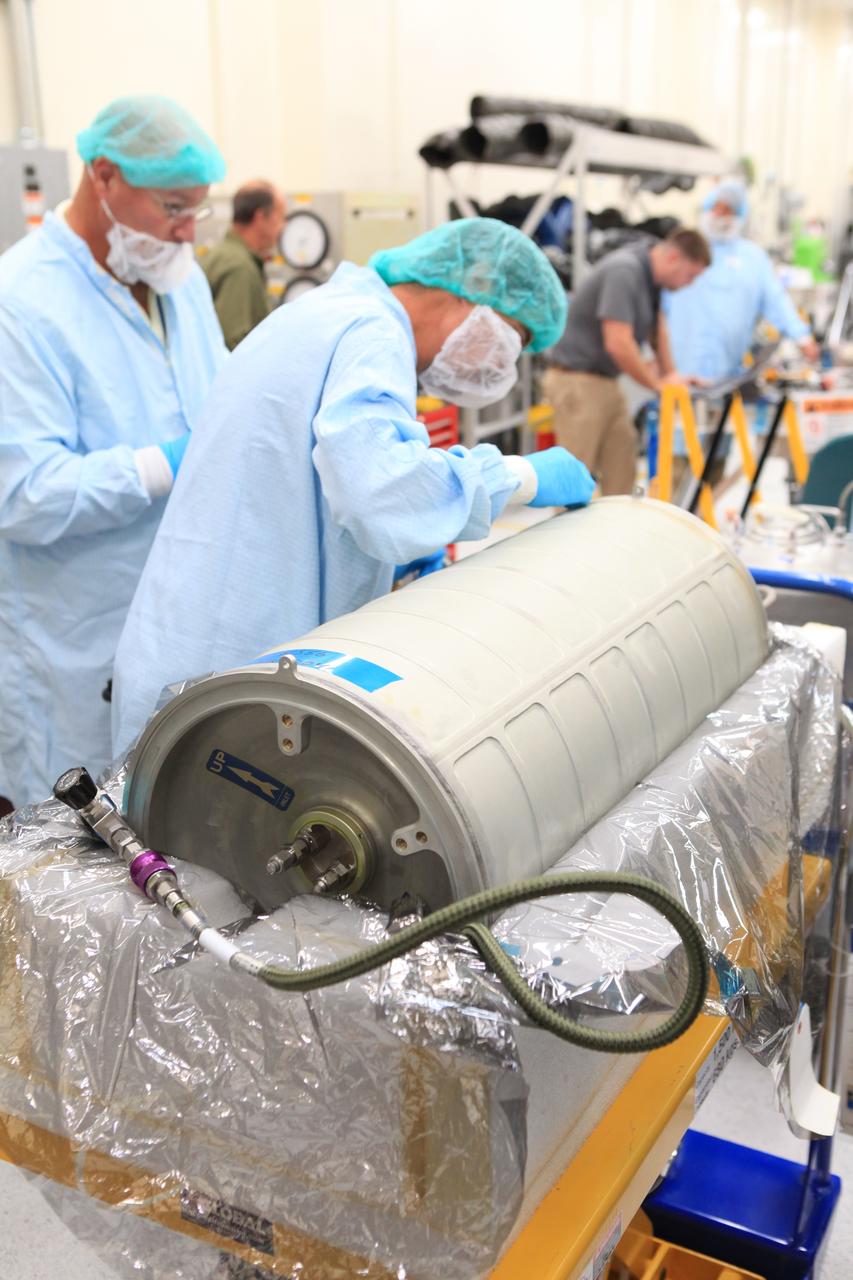
Inside the Space Station Processing Facility high bay at NASA's Kennedy Space Center in Florida, technicians work on the pump package assembly (PPA) on Aug. 30, 2018. The payload will be carried to the International Space Station on SpaceX's 16th Commercial Resupply Services mission. The PPA will be used to continuously drive the cooling water in the space station's thermal control system. The assembly includes a centrifuge pump, a fine filter and gas trap for pump protection, a coarse outlet filter, sensors, and an accumulator. The PPA also will provide a reservoir used for makeup of coolant if leakage occurred. CRS-16 is scheduled to launch to the space station later this year.
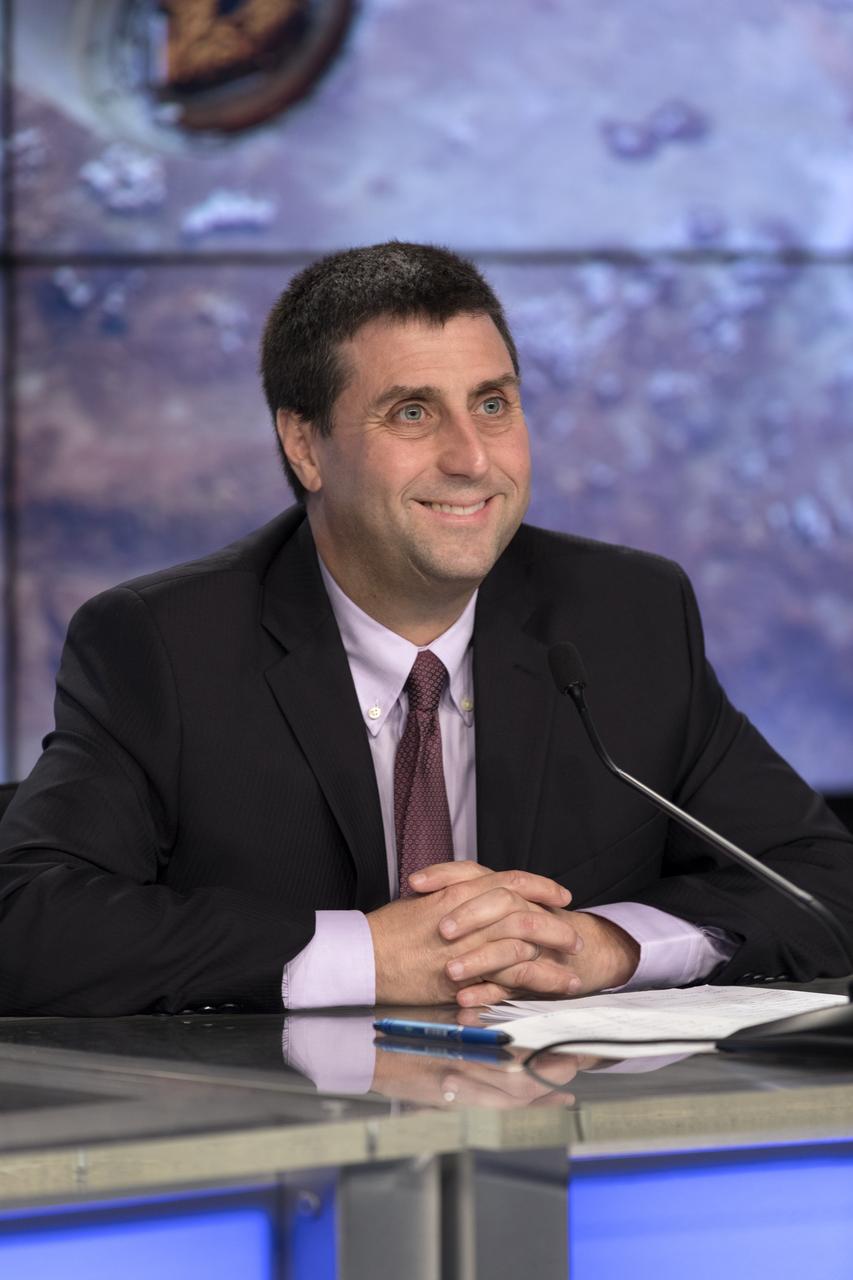
In the Press Site auditorium of NASA's Kennedy Space Center in Florida,Joel Montalbano, deputy manager, International Space Station Program manager at NASA's Johnson Space Center in Houston, speaks to media at a post-launch news conference following the liftoff of the SpaceX Falcon 9 rocket at 4:30 p.m. EST. The flight is a commercial resupply services mission for NASA to the International Space Station. SpaceX CRS-14 lifted off atop the Falcon 9 rocket from Space Launch Complex 40 at Cape Canaveral Air Force Station carrying supplies and equipment and new science experiments for technology research.
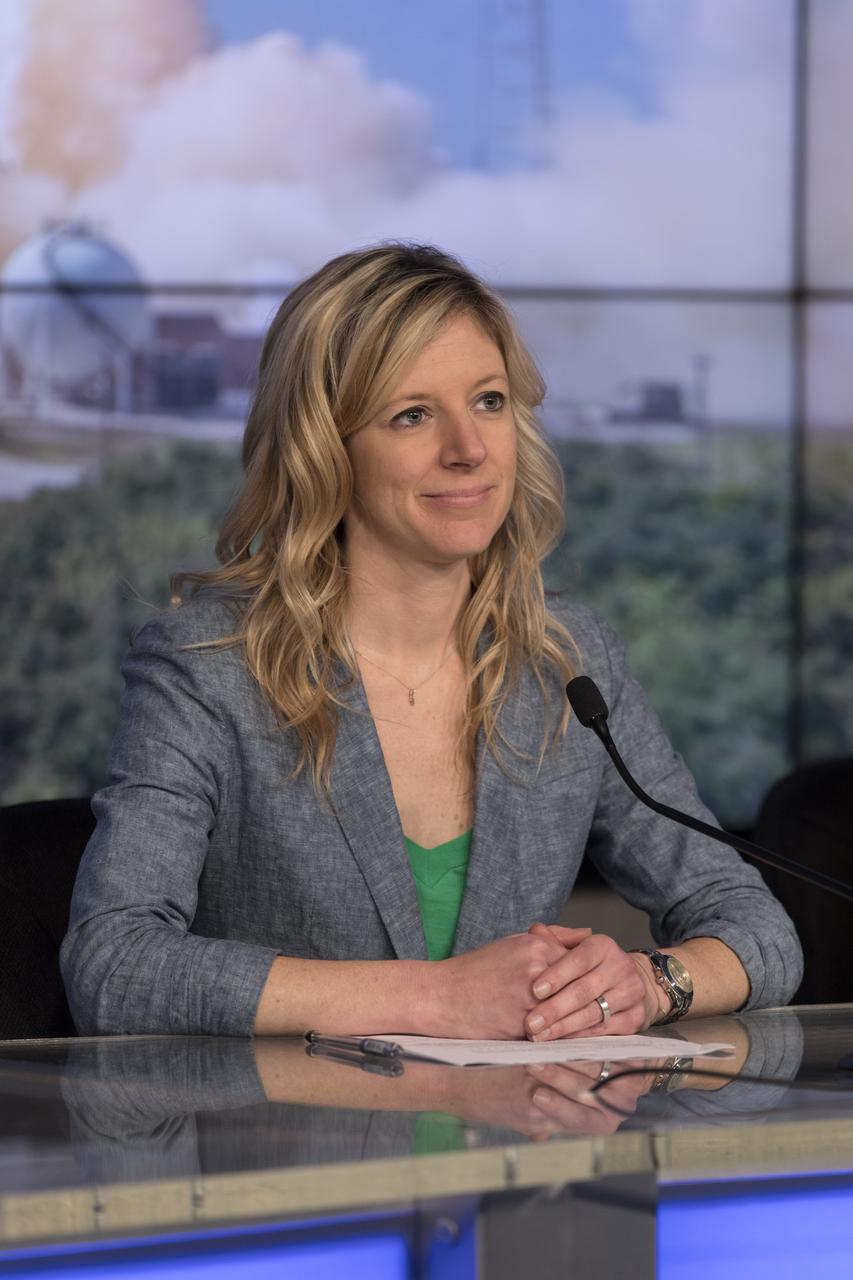
In the Kennedy Space Center’s Press Site auditorium, NASA and industry leaders speak to members of the media during a prelaunch news conference for the SpaceX CRS-14 commercial resupply services mission to the International Space Station. Jessica Jensen, director, Dragon Mission Management, SpaceX, participates in the news conference. A Dragon spacecraft is scheduled to be launched from Space Launch Complex 40 at Cape Canaveral Air Force Station at 4:30 p.m. EST, on April 2, 2018. The SpaceX Falcon 9 rocket will lift off on the company's 14th Commercial Resupply Services mission to the space station.
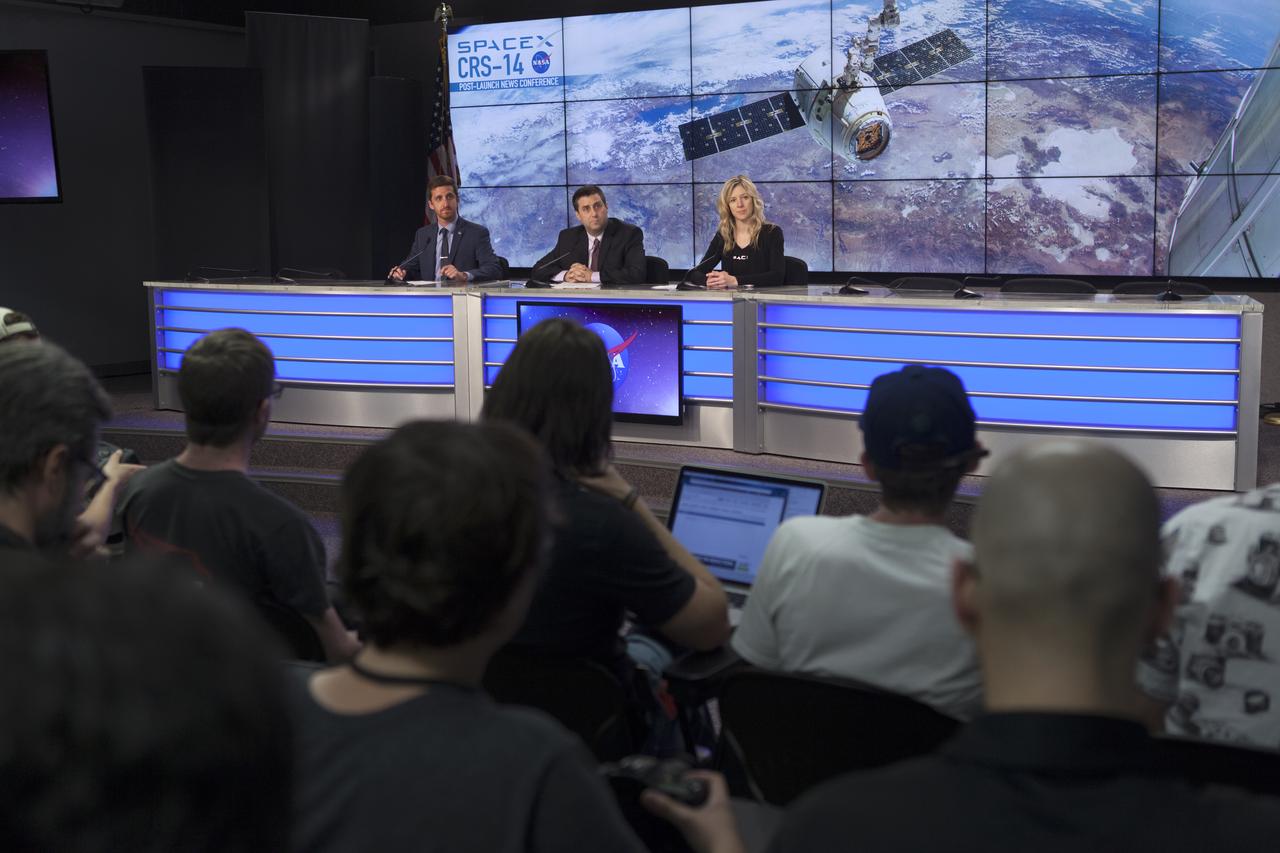
In the Press Site auditorium of NASA's Kennedy Space Center in Florida, from left, Josh Finch of NASA Communications, Joel Montalbano, deputy manager, International Space Station Program manager at NASA's Johnson Space Center in Houston, and Jessica Jensen, SpaceX director of Dragon Mission Management, speak to media at a post-launch news conference following the liftoff of the SpaceX Falcon 9 rocket at 4:30 p.m. EST. The flight is a commercial resupply services mission for NASA to the International Space Station. SpaceX CRS-14 lifted off atop the Falcon 9 rocket from Space Launch Complex 40 at Cape Canaveral Air Force Station carrying supplies and equipment and new science experiments for technology research.
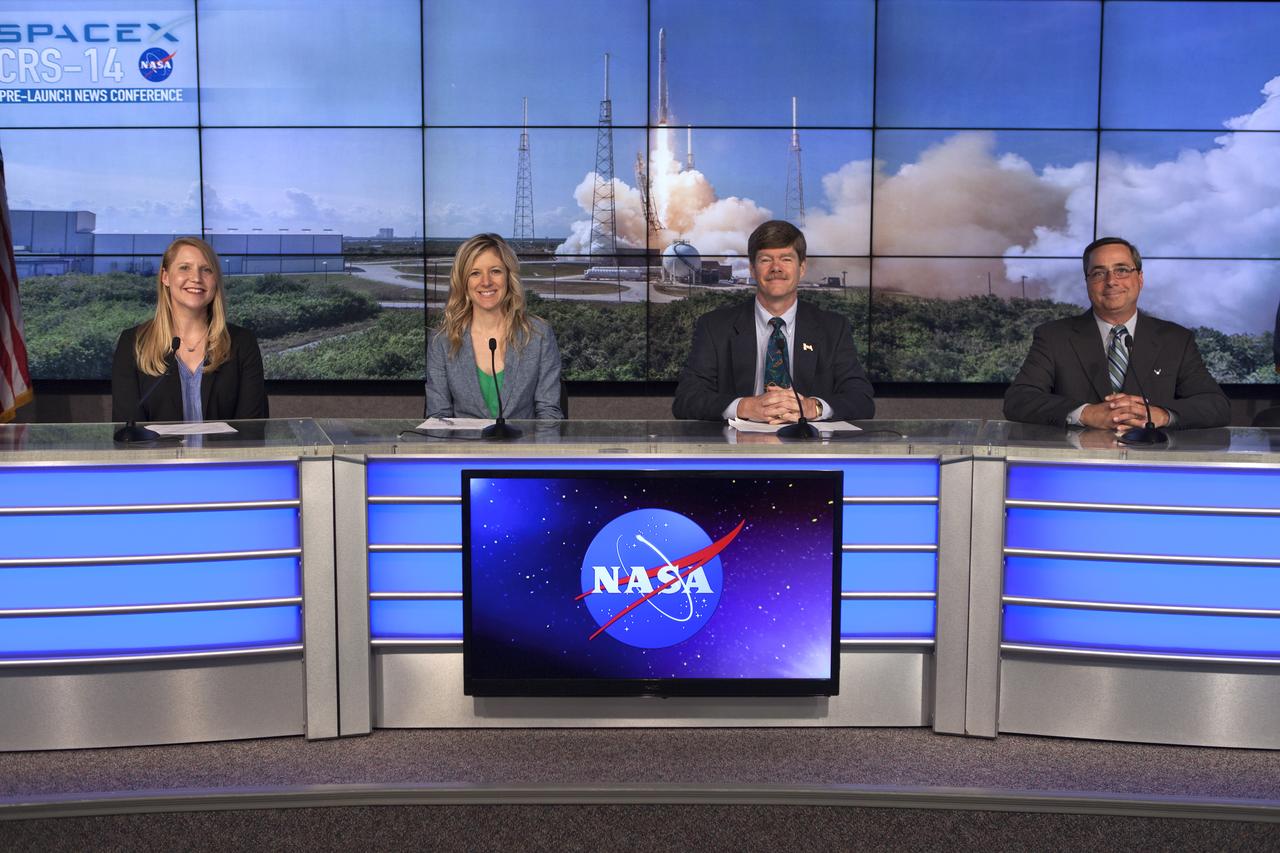
In the Kennedy Space Center’s Press Site auditorium, NASA and industry leaders speak to members of the media during a prelaunch news conference for the SpaceX CRS-14 commercial resupply services mission to the International Space Station. From left, are Stephanie Schierholz, of NASA Communications; Jessica Jensen, director, Dragon Mission Management, SpaceX; Pete Hasbrook, associate program scientist, ISS Program Science Office at NASA's Johnson Space Center in Houston; and Mike McAleenan, weather officer, 45th Weather Squadron. Joining on the phone is Joel Montalbano, deputy manager, ISS Program at Johnson. A Dragon spacecraft is scheduled to be launched from Space Launch Complex 40 at Cape Canaveral Air Force Station at 4:30 p.m. EST, on April 2, 2018. The SpaceX Falcon 9 rocket will lift off on the company's 14th Commercial Resupply Services mission to the space station.
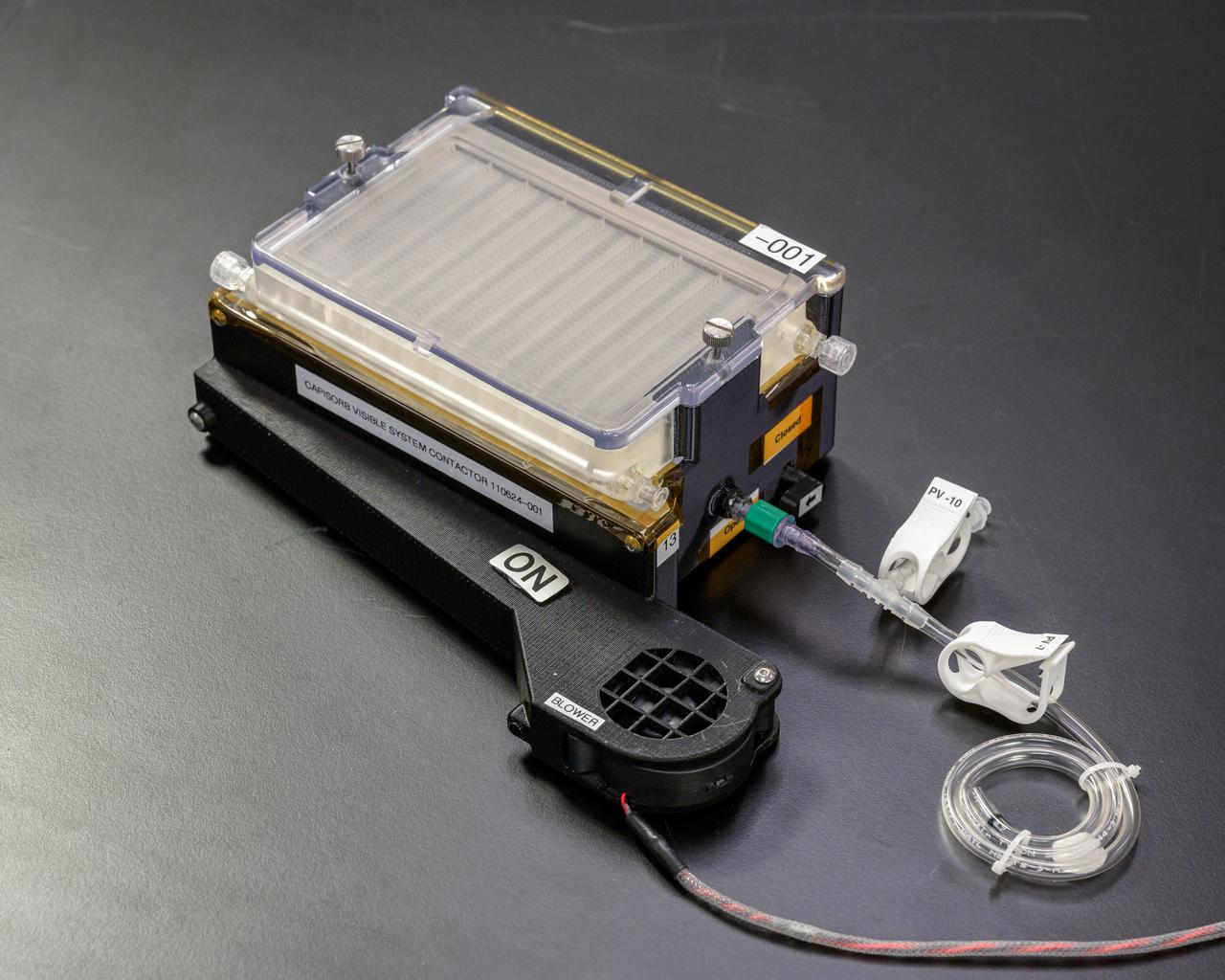
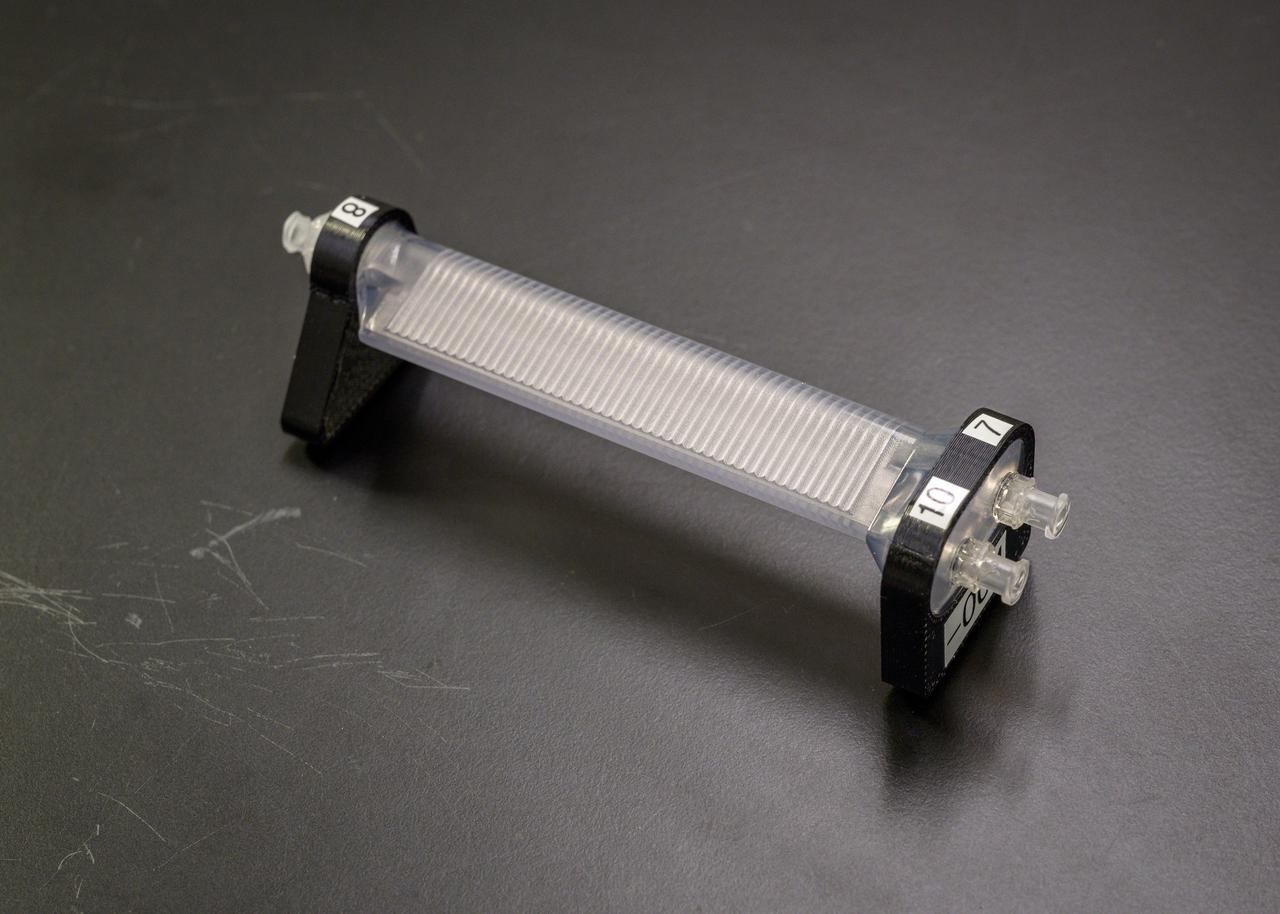
jsc2023e010168 (1/30/2023) --- CapiSorb Visible System flight unit contactor in N240 room 133B. The CapiSorb Visible System will be launched on SpaceX CRS-27 in March 2023 to the International Space Station to demonstrate a liquid sorbent-based system that leverages the advantages of liquid control through capillary action to remove carbon dioxide from crewed atmospheres...Capillary wedges in the CapiSorb Visible System Contactor, shown here preflight, control and passively transport viscous liquid in microgravity in order to demonstrate capabilities needed for future liquid carbon dioxide removal technologies. The CapiSorb Visible System investigation demonstrates a liquid control using capillary forces, over a range of properties that are characteristic of liquids which absorb carbon dioxide. Image courtesy of NASA's Ames Research Cente
jsc2023e010169 (1/30/2023) --- CapiSorb Visible System flight unit capillary condensing heat exchanger (CCHX) in N240 room 133B. The CapiSorb Visible System will be launched on SpaceX CRS-27 in March 2023 to the International Space Station to demonstrate a liquid sorbent-based system that leverages the advantages of liquid control through capillary action to remove carbon dioxide from crewed atmospheres...The CapiSorb Visible System Capillary Condensing Heat Exchanger, shown here pre-flight, uses capillary surfaces and active cooling to condense water vapor from heated, humid air during microgravity experimentation. The capillary surfaces enable control and passive transport of fluids. The CapiSorb Visible System investigation demonstrates a liquid control using capillary forces, over a range of liquid properties that are characteristic of liquid carbon dioxide sorbents. Image courtesy of NASA's Ames Research Center.
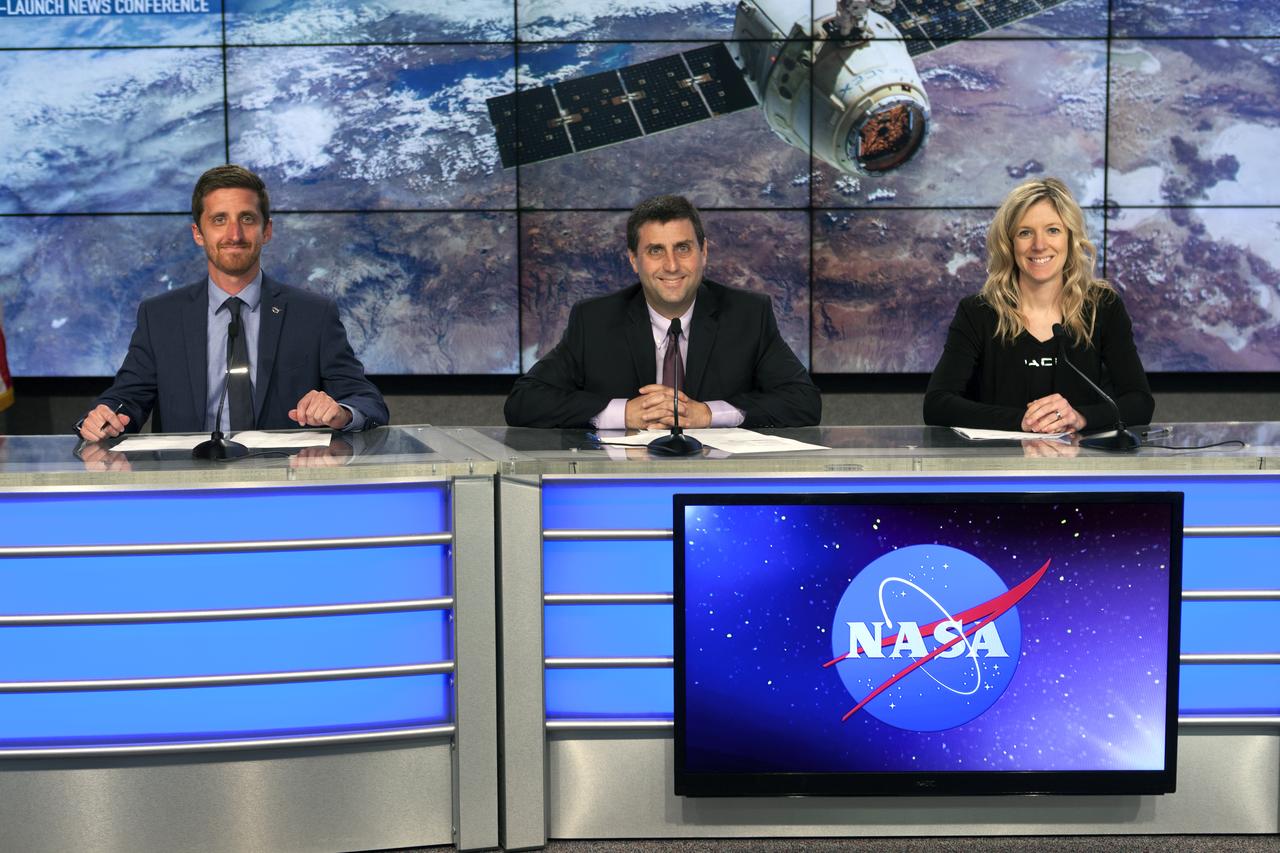
In the Press Site auditorium of NASA's Kennedy Space Center in Florida, from left, Josh Finch of NASA Communications, Joel Montalbano, deputy manager, International Space Station Program manager at NASA's Johnson Space Center in Houston, and Jessica Jensen, SpaceX director of Dragon Mission Management, speak to media at a post-launch news conference following the liftoff of the SpaceX Falcon 9 rocket at 4:30 p.m. EST. The flight is a commercial resupply services mission for NASA to the International Space Station. SpaceX CRS-14 lifted off atop the Falcon 9 rocket from Space Launch Complex 40 at Cape Canaveral Air Force Station carrying supplies and equipment and new science experiments for technology research.
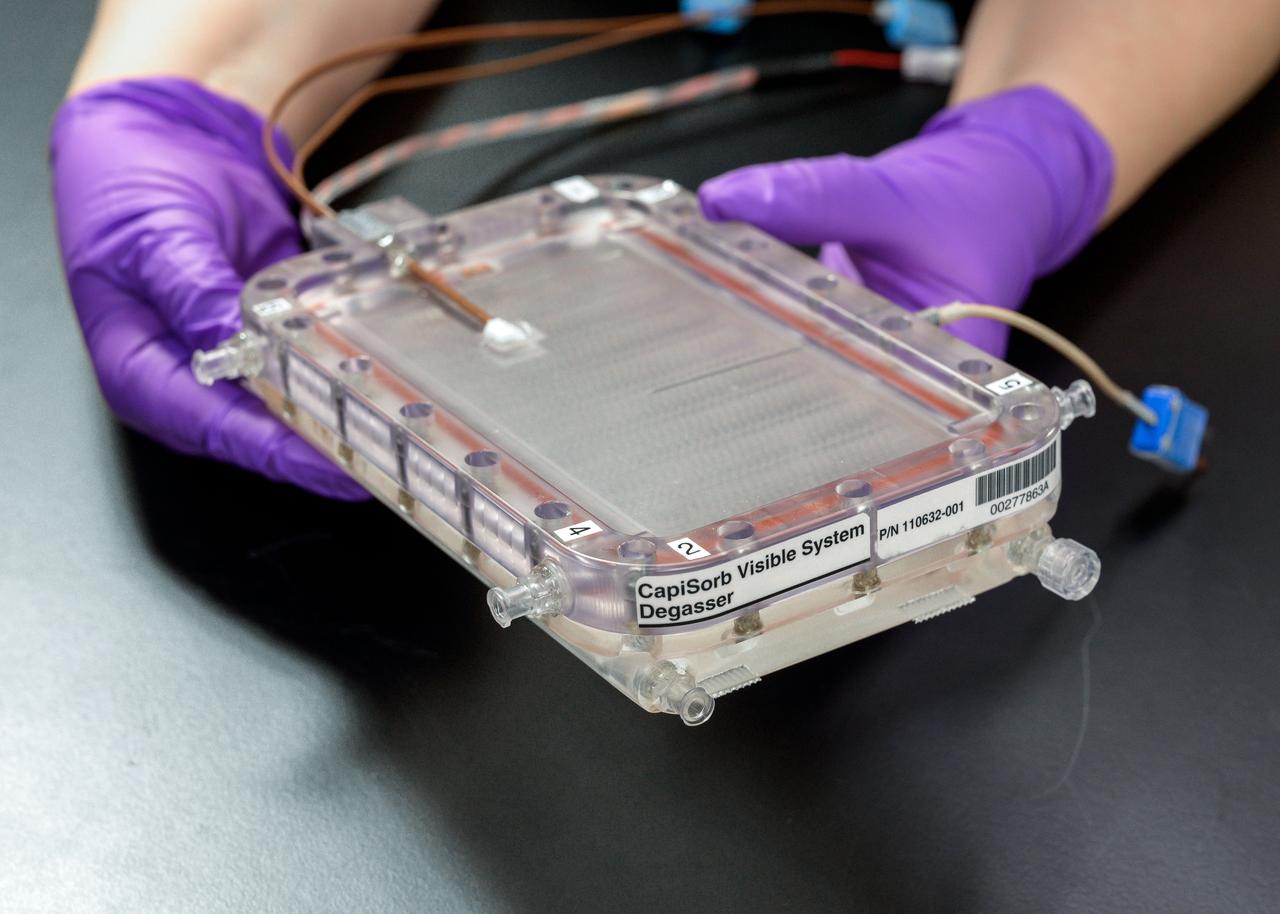
jsc2023e010167 (1/30/2023) --- CapiSorb Visible System flight unit degasser assembly in N240 room 133B. The CapiSorb Visible System will be launched on SpaceX CRS-27 in March 2023 to the International Space Station to demonstrate a liquid sorbent-based system that leverages the advantages of liquid control through capillary action to remove carbon dioxide from crewed atmospheres...Capillary wedges in the CapiSorb Visible System Degasser, shown here pre-flight, control and passively transport viscous liquid in microgravity in order to demonstrate capabilities needed for future liquid sorbent carbon dioxide removal technologies. The CapiSorb Visible System investigation demonstrates a liquid control using capillary forces, over a range of liquid properties that are characteristic of liquid carbon dioxide sorbents. Image courtesy of NASA's Ames Research Center.
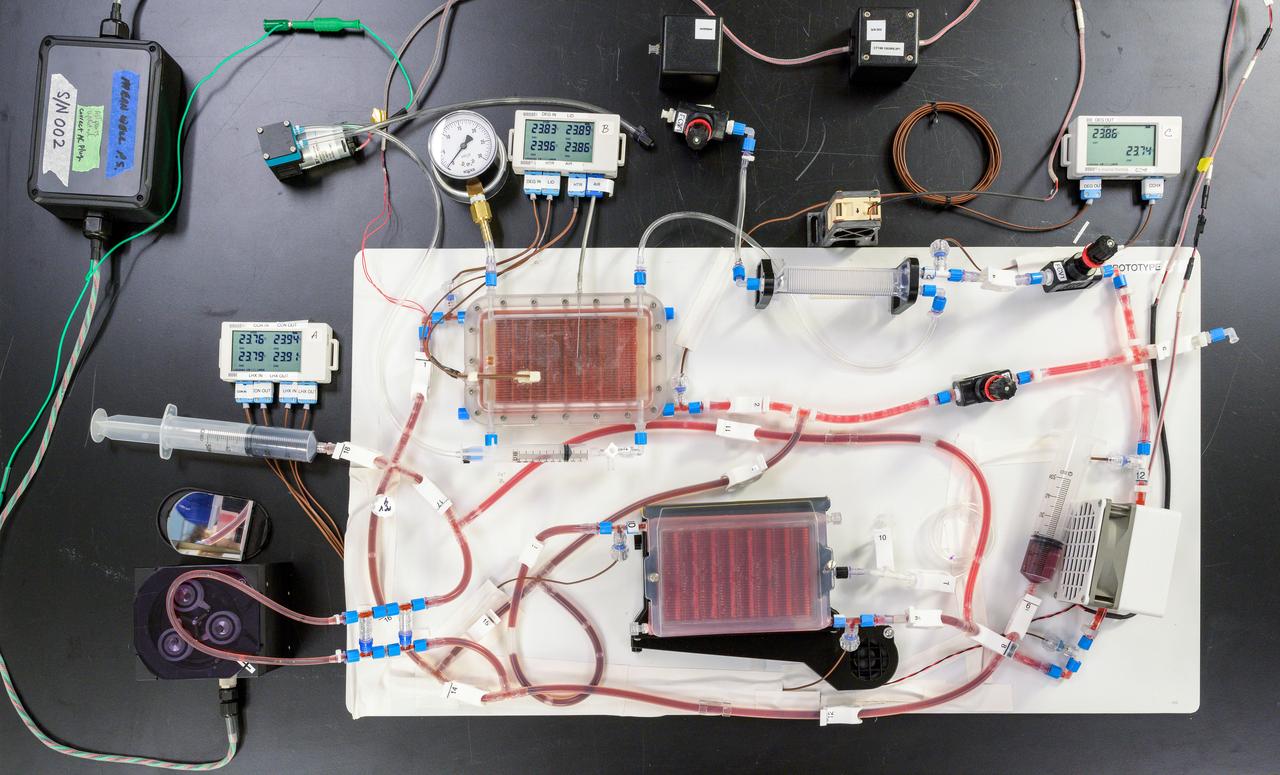
jsc2023e010170 (1/30/2023) --- Overall view of the CapiSorb Visible System prototype with sorbent simulant liquid in N240 room 133B. The CapiSorb Visible System will be launched on SpaceX CRS-27 in March 2023 to the International Space Station to demonstrate a liquid sorbent-based system that leverages the advantages of liquid control through capillary action to remove carbon dioxide from crewed atmospheres...The CapiSorb Visible System, shown here preflight, is used to study visco-capillary control and passive transport of liquid while simulating a fluid loop representative of a liquid carbon dioxide sorbent scrubber. The CapiSorb Visible System investigation demonstrates a liquid control using capillary forces, over a range of properties that are characteristic of liquids which absorb carbon dioxide. Image courtesy of NASA's Ames Research Center.