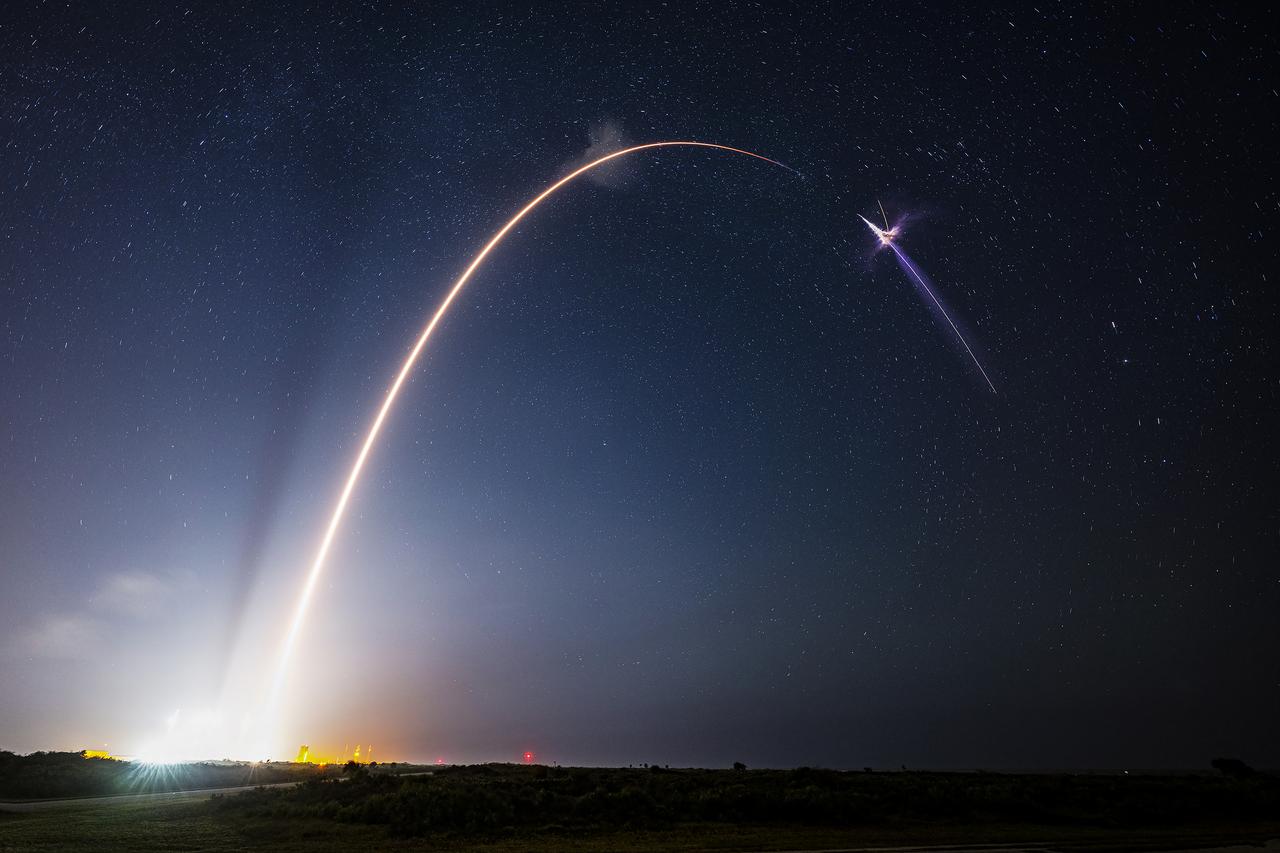
The SpaceX Falcon 9 rocket carrying the Dragon spacecraft lifts off from Launch Complex 39A at NASA’s Kennedy Space Center in Florida on Tuesday, Nov. 4, on the company’s 31st commercial resupply services mission for the agency to the International Space Station. Liftoff was at 9:29 p.m. EST. Dragon will deliver several new experiments, including the Coronal Diagnostic Experiment, to examine solar wind and how it forms. Dragon also delivers Antarctic moss to observe the combined effects of cosmic radiation and microgravity on plants. Other investigations aboard include a device to test cold welding of metals in microgravity, and an investigation that studies how space impacts different materials.
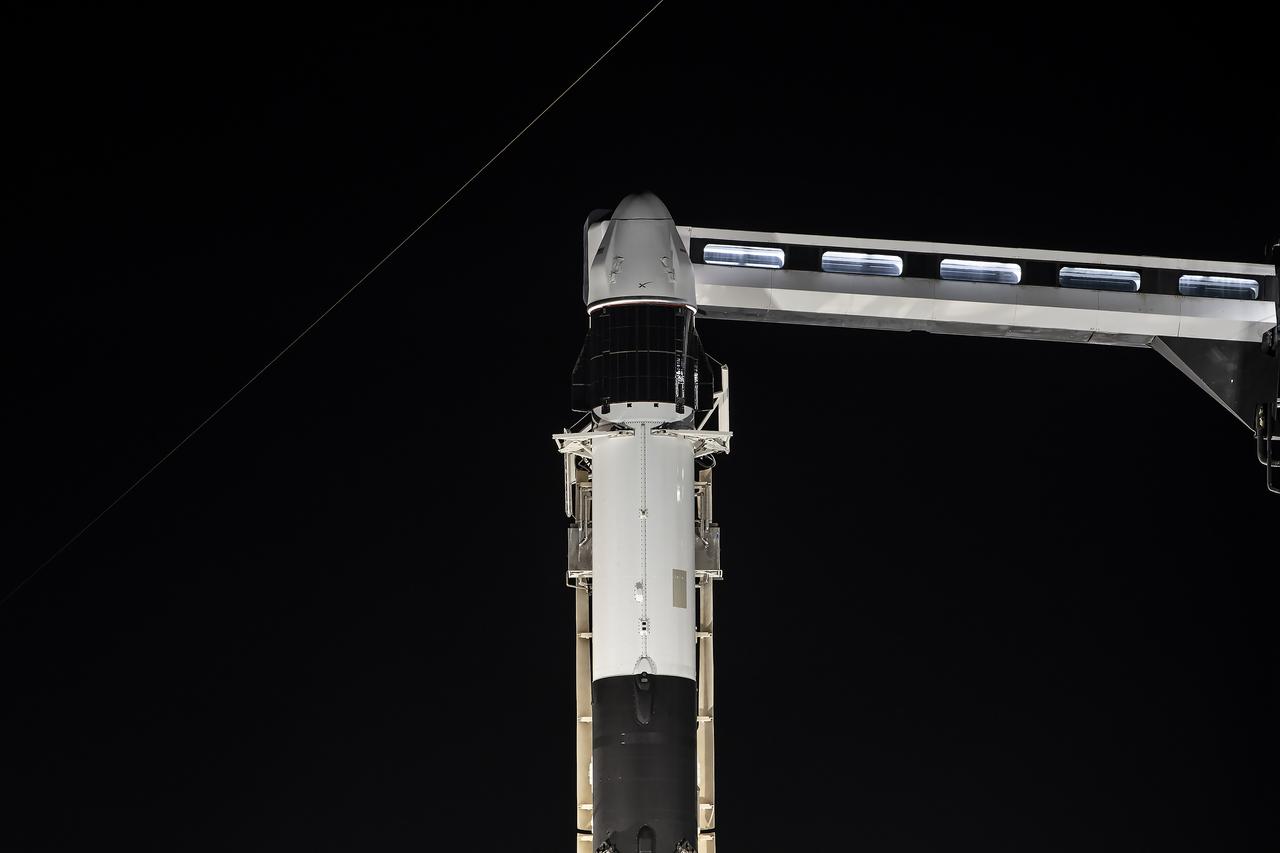
A SpaceX Falcon 9 rocket, with the company’s Dragon spacecraft atop, stands in a vertical position at Launch Complex 39A at NASA’s Kennedy Space Center in Florida on Monday, Nov. 4, 2024, in preparation for the 31st commercial resupply services launch to the International Space Station. Dragon will deliver several new experiments, including the Coronal Diagnostic Experiment, to examine solar wind and how it forms. Dragon also delivers Antarctic moss to observe the combined effects of cosmic radiation and microgravity on plants. Other investigations aboard include a device to test cold welding of metals in microgravity, and an investigation that studies how space impacts different materials. Liftoff is scheduled for 9:29 p.m. EST on Monday, Nov. 4.
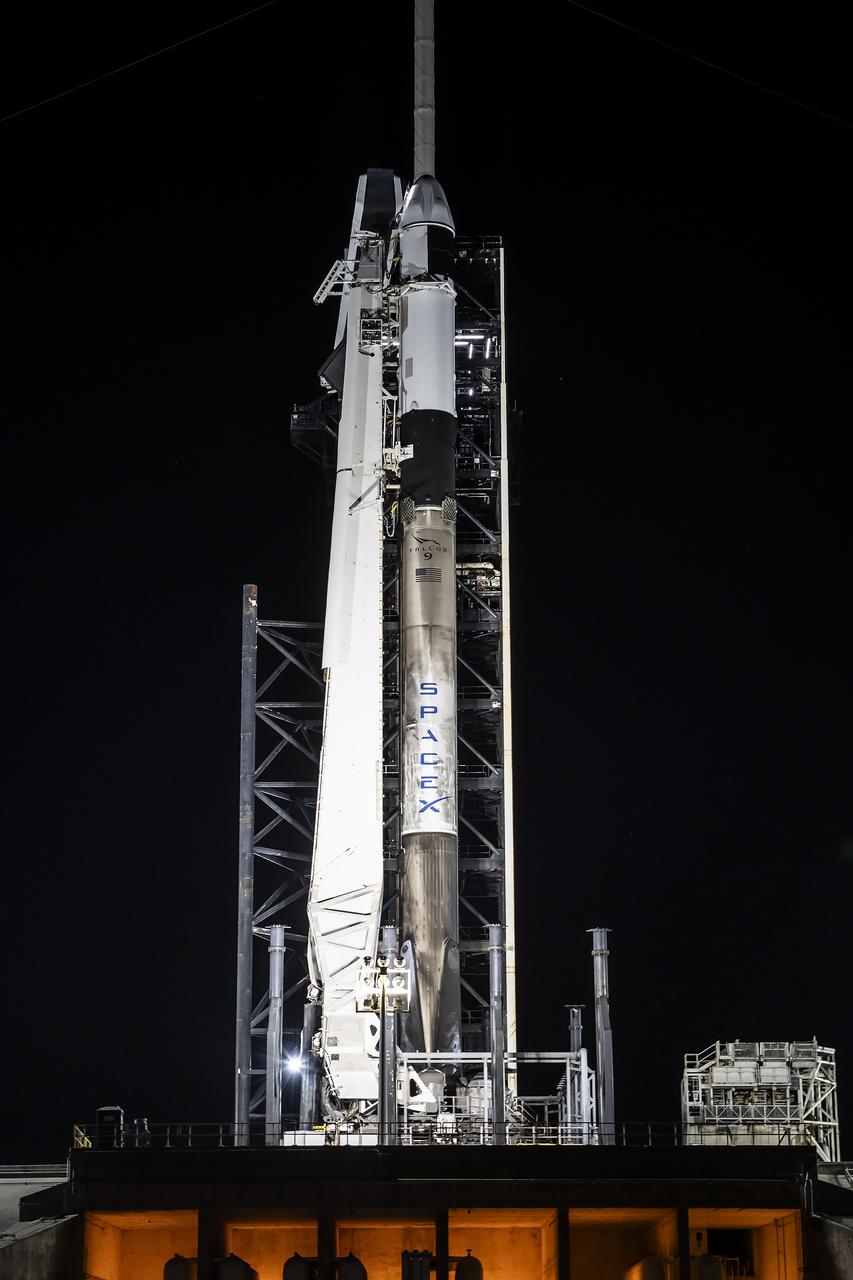
A SpaceX Falcon 9 rocket, with the company’s Dragon spacecraft atop, stands in a vertical position at Launch Complex 39A at NASA’s Kennedy Space Center in Florida on Monday, Nov. 4, 2024, in preparation for the 31st commercial resupply services launch to the International Space Station. Dragon will deliver several new experiments, including the Coronal Diagnostic Experiment, to examine solar wind and how it forms. Dragon also delivers Antarctic moss to observe the combined effects of cosmic radiation and microgravity on plants. Other investigations aboard include a device to test cold welding of metals in microgravity, and an investigation that studies how space impacts different materials. Liftoff is scheduled for 9:29 p.m. EST on Monday, Nov. 4.
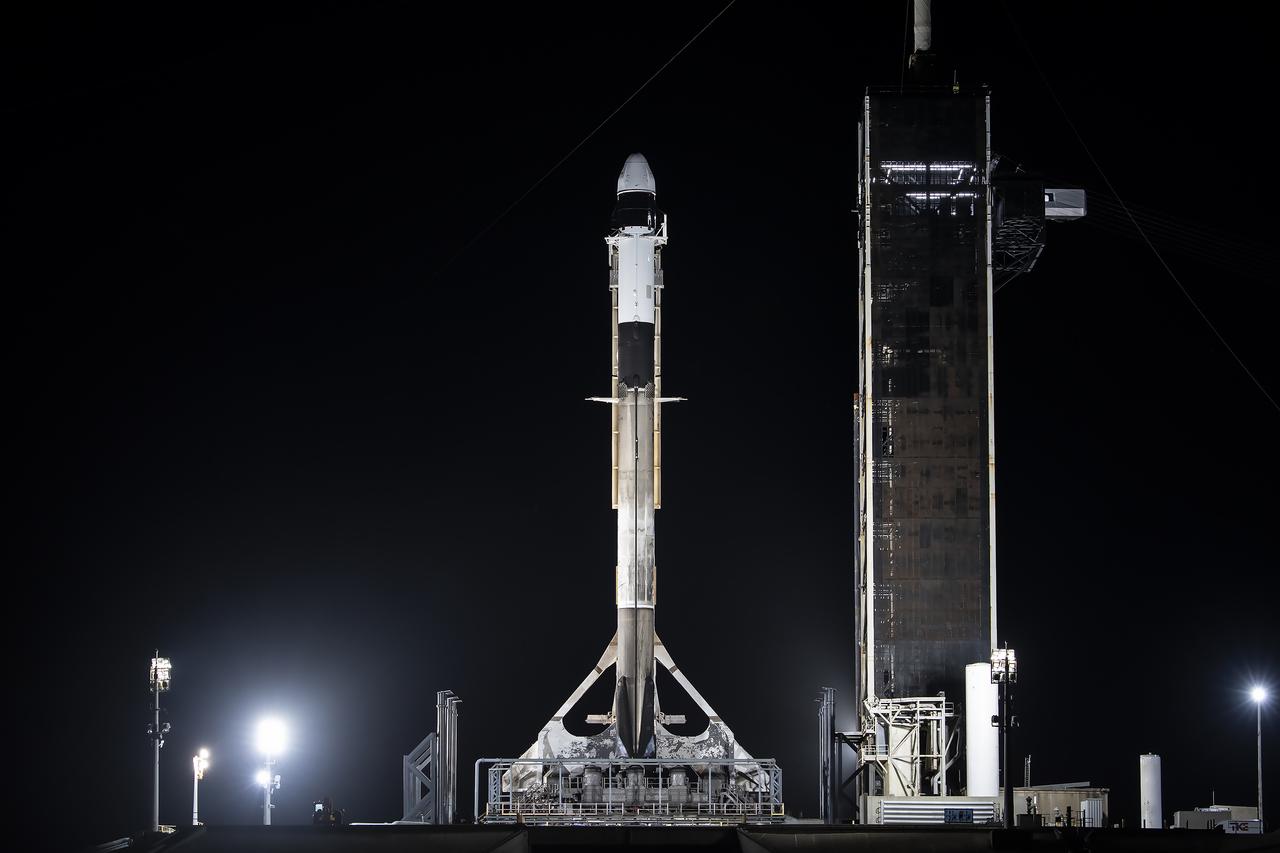
A SpaceX Falcon 9 rocket, with the company’s Dragon spacecraft atop, stands in a vertical position at Launch Complex 39A at NASA’s Kennedy Space Center in Florida on Monday, Nov. 4, 2024, in preparation for the 31st commercial resupply services launch to the International Space Station. Dragon will deliver several new experiments, including the Coronal Diagnostic Experiment, to examine solar wind and how it forms. Dragon also delivers Antarctic moss to observe the combined effects of cosmic radiation and microgravity on plants. Other investigations aboard include a device to test cold welding of metals in microgravity, and an investigation that studies how space impacts different materials. Liftoff is scheduled for 9:29 p.m. EST on Monday, Nov. 4.

In the Press Site auditorium of NASA's Kennedy Space Center in Florida, Stephanie Martin of NASA Communications, speaks to media at a post-launch news conference following the liftoff of SpaceX CRS-12, a commercial resupply services mission to the International Space Station. SpaceX CRS-12 lifted off atop a Falcon 9 rocket from Kennedy's Launch Complex 39A at 12:31 p.m. EDT.
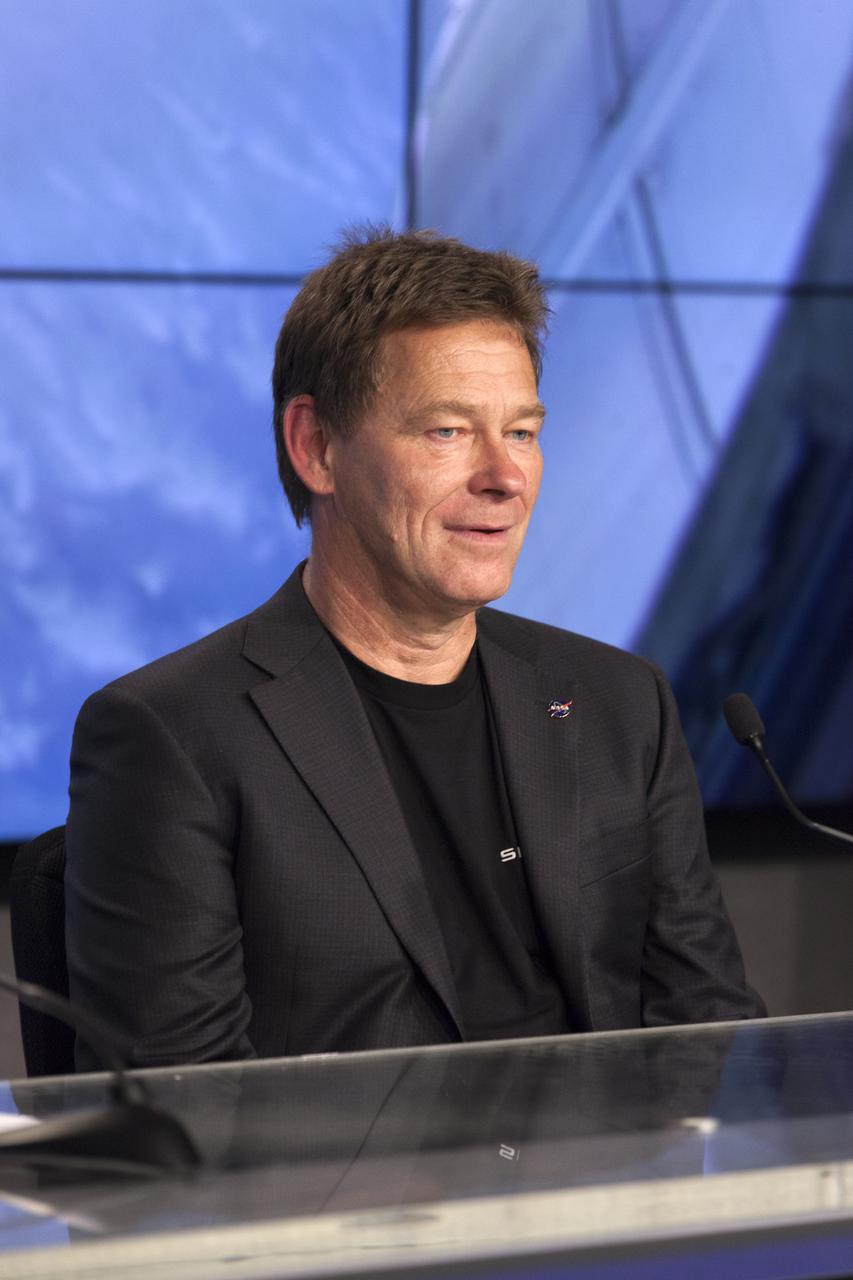
In the Press Site auditorium of NASA's Kennedy Space Center in Florida, Hans Koenigsmann, SpaceX vice president of Flight and Build Reliability, speaks to media at a post-launch news conference following the liftoff of SpaceX CRS-12, a commercial resupply services mission to the International Space Station. SpaceX CRS-12 lifted off atop a Falcon 9 rocket from Kennedy's Launch Complex 39A at 12:31 p.m. EDT.
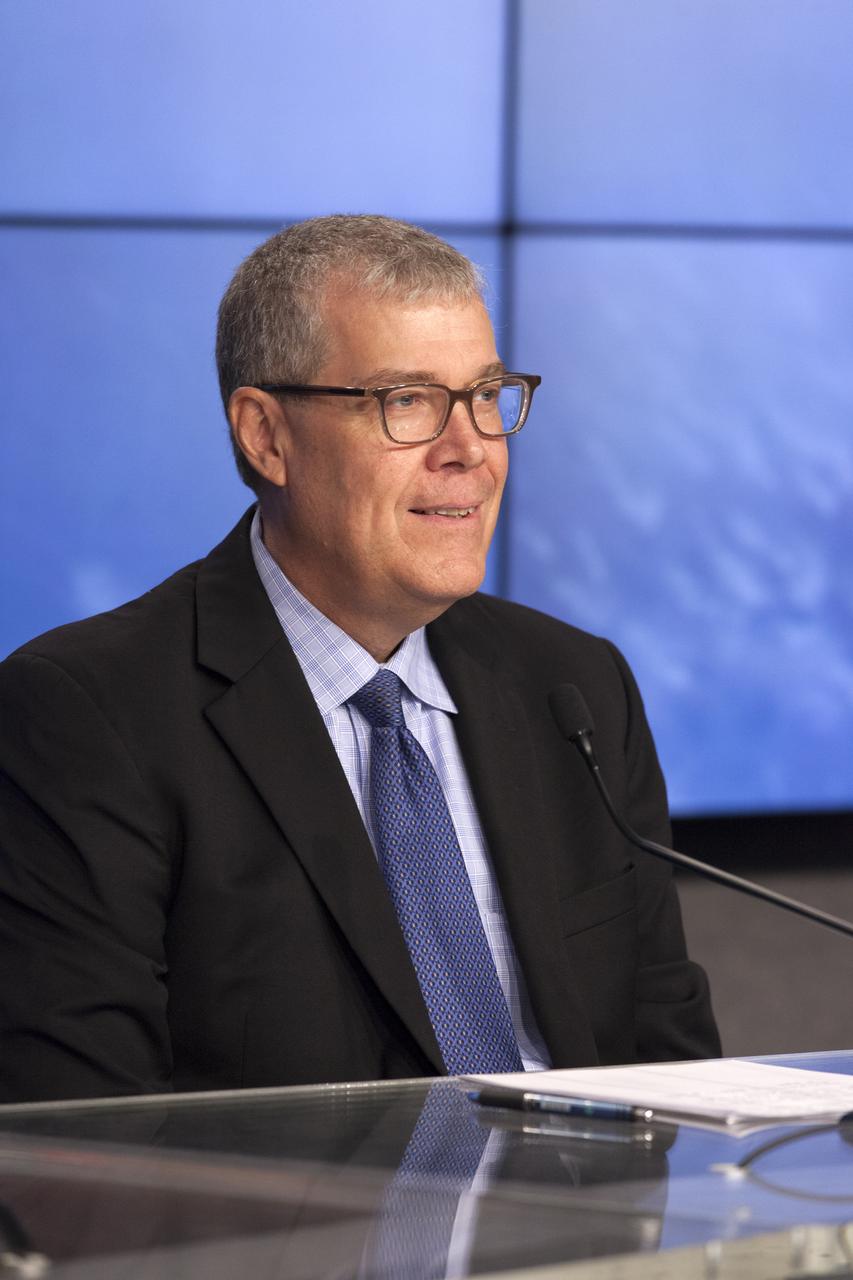
In the Press Site auditorium of NASA's Kennedy Space Center in Florida, Dan Hartman, NASA deputy manager of the International Space Station Program, speaks to media at a post-launch news conference following the liftoff of SpaceX CRS-12, a commercial resupply services mission to the International Space Station. SpaceX CRS-12 lifted off atop a Falcon 9 rocket from Kennedy's Launch Complex 39A at 12:31 p.m. EDT.
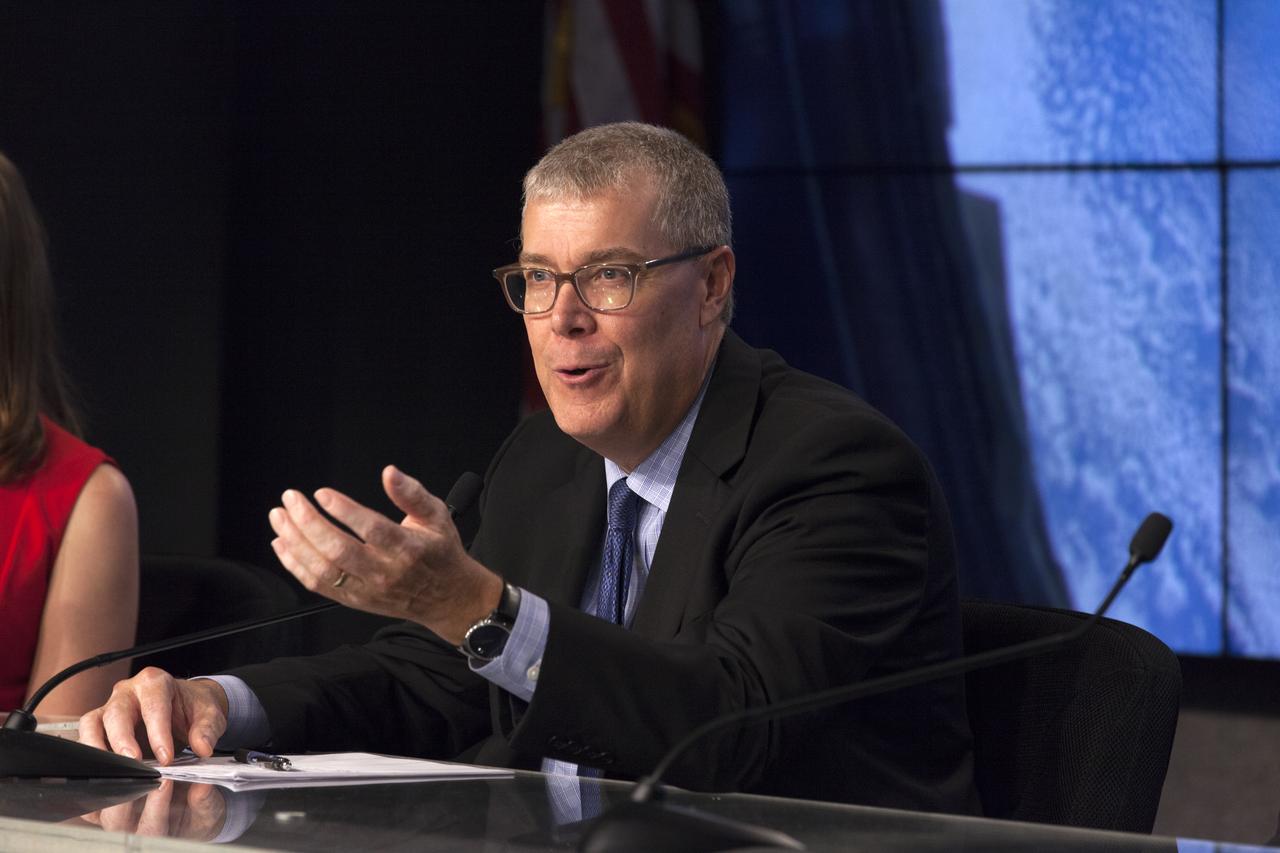
In the Press Site auditorium of NASA's Kennedy Space Center in Florida, Dan Hartman, NASA deputy manager of the International Space Station Program, speaks to media at a post-launch news conference following the liftoff of SpaceX CRS-12, a commercial resupply services mission to the International Space Station. SpaceX CRS-12 lifted off atop a Falcon 9 rocket from Kennedy's Launch Complex 39A at 12:31 p.m. EDT.
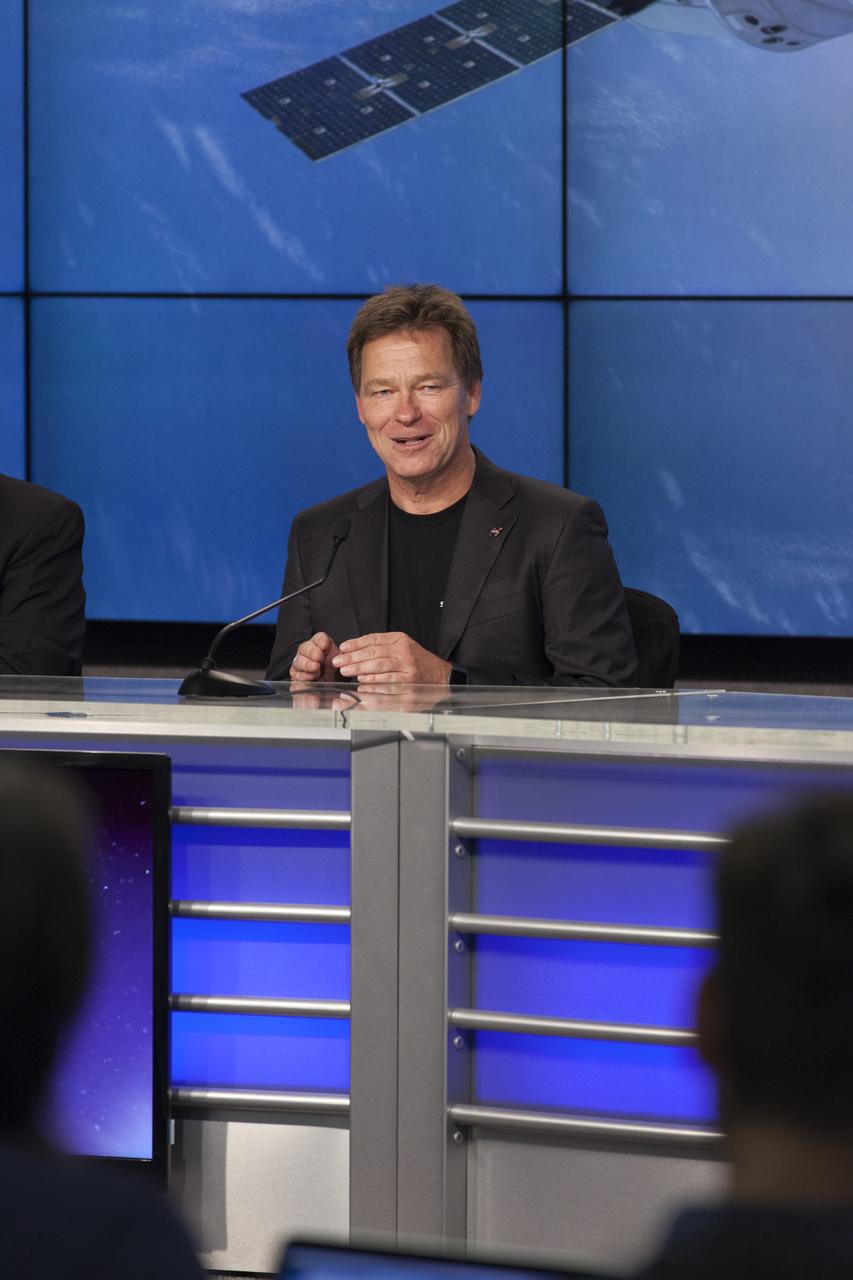
In the Press Site auditorium of NASA's Kennedy Space Center in Florida, Hans Koenigsmann, SpaceX vice president of Flight and Build Reliability, speaks to media at a post-launch news conference following the liftoff of SpaceX CRS-12, a commercial resupply services mission to the International Space Station. SpaceX CRS-12 lifted off atop a Falcon 9 rocket from Kennedy's Launch Complex 39A at 12:31 p.m. EDT.
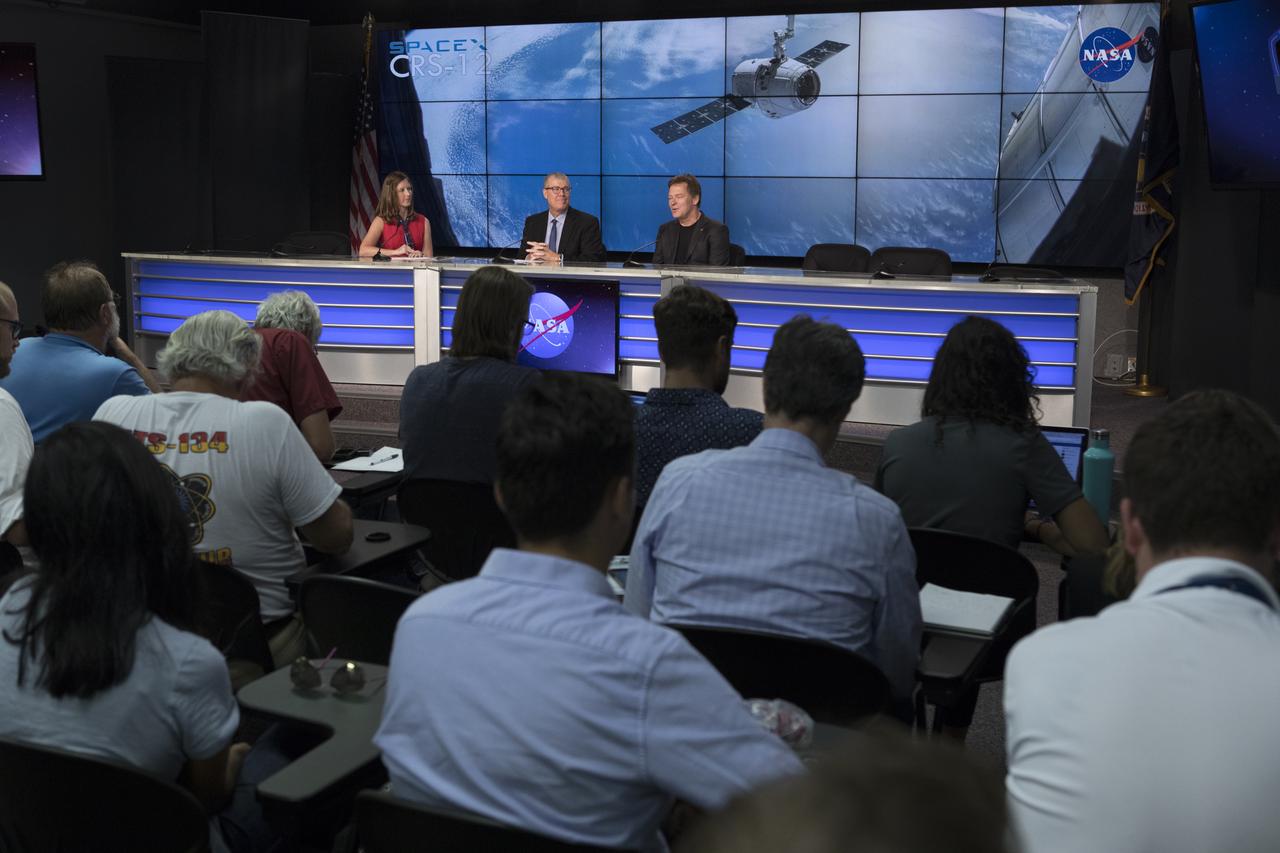
In the Press Site auditorium of NASA's Kennedy Space Center in Florida, NASA and industry leaders speak to media at a post-launch news conference following the liftoff of SpaceX CRS-12, a commercial resupply services mission to the International Space Station. From left are: Stephanie Martin of NASA Communications, Dan Hartman, NASA deputy manager of the International Space Station Program, and Hans Koenigsmann, SpaceX vice president of Flight and Build Reliability. SpaceX CRS-12 lifted off atop a Falcon 9 rocket from Kennedy's Launch Complex 39A at 12:31 p.m. EDT.
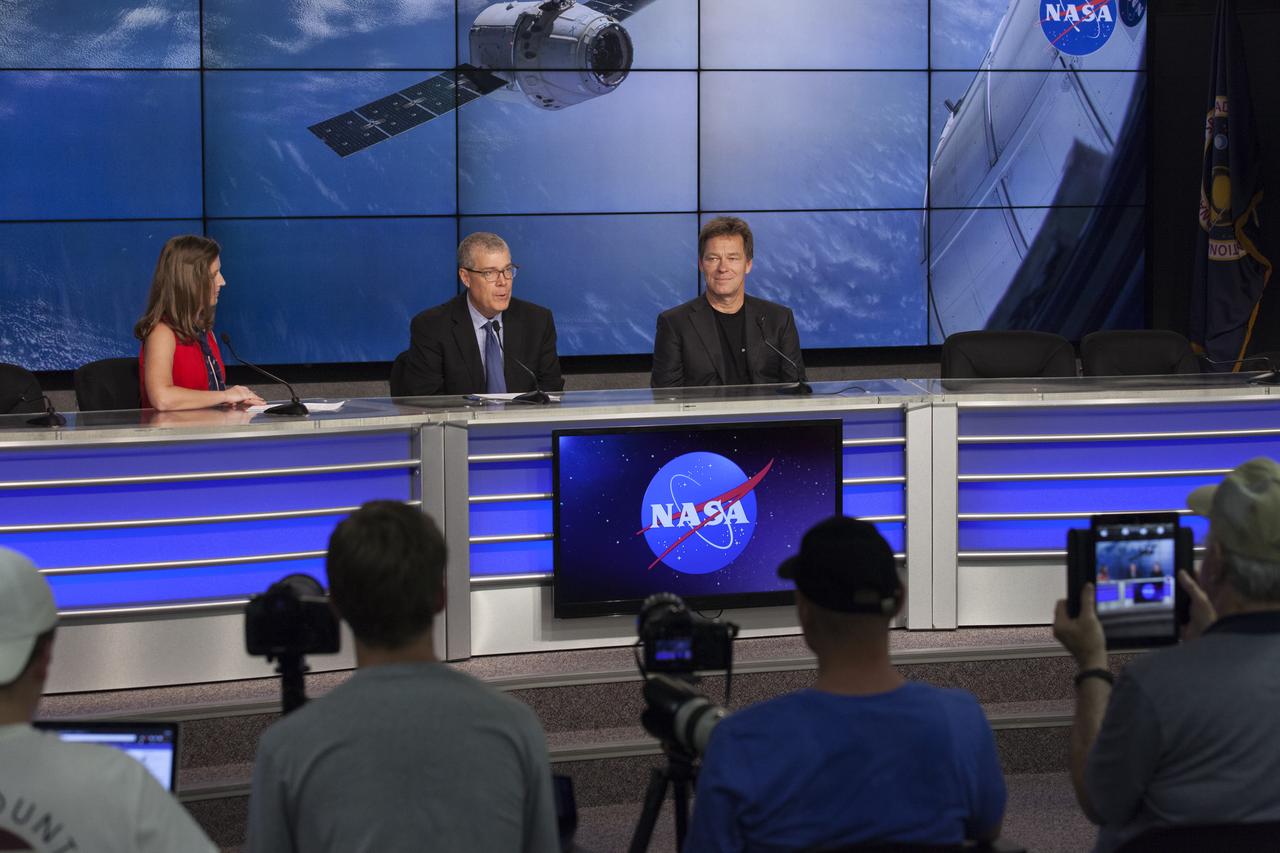
In the Press Site auditorium of NASA's Kennedy Space Center in Florida, NASA and industry leaders speak to media at a post-launch news conference following the liftoff of SpaceX CRS-12, a commercial resupply services mission to the International Space Station. From left are: Stephanie Martin of NASA Communications, Dan Hartman, NASA deputy manager of the International Space Station Program, and Hans Koenigsmann, SpaceX vice president of Flight and Build Reliability. SpaceX CRS-12 lifted off atop a Falcon 9 rocket from Kennedy's Launch Complex 39A at 12:31 p.m. EDT.
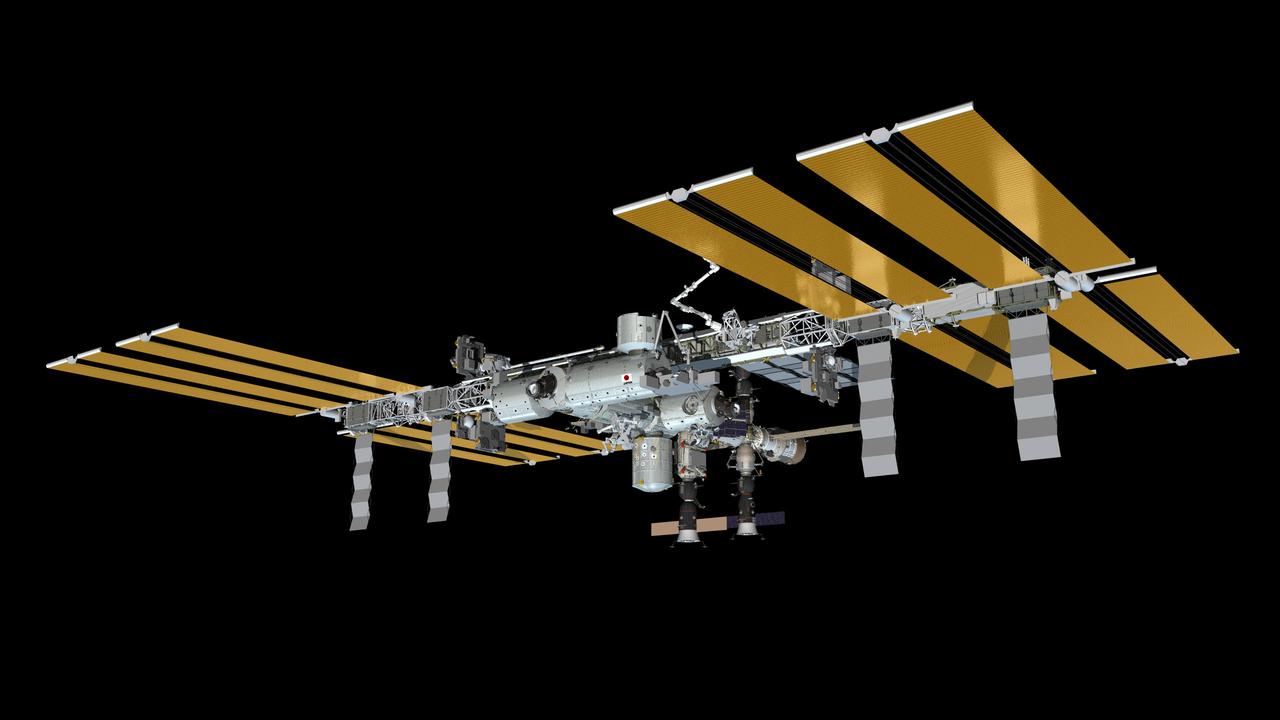
JSC2012-E-226839 (October 2012) --- Computer-generated artist?s rendering of the International Space Station as of Oct. 28, 2012. SpaceX Dragon CRS-1 is unberthed from the Harmony node nadir port. Soyuz 32 (TMA-06M) is docked to the Poisk Mini-Research Module 2 (MRM2). Progress 48 is linked to the Pirs Docking Compartment and Soyuz 31 (TMA-05M) is attached to the Rassvet Mini-Research Module 1 (MRM1). Photo credit: NASA
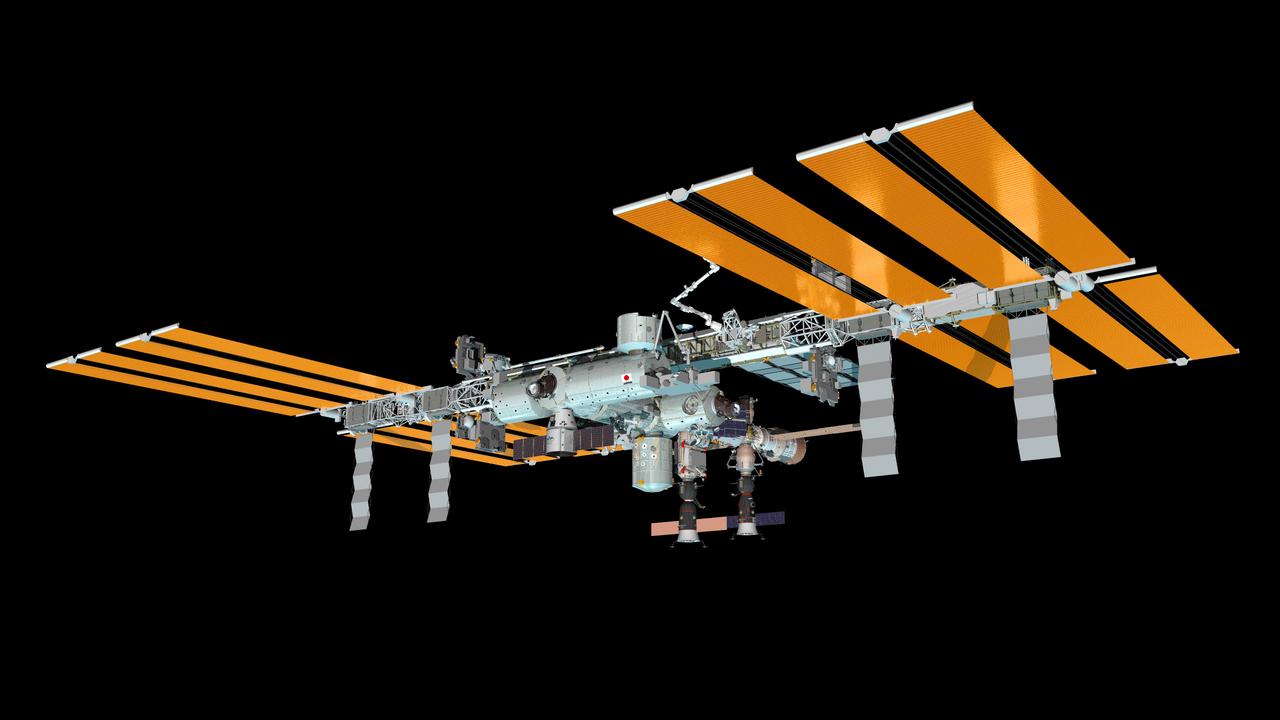
JSC2012-E-220566 (October 2012) --- Computer-generated artist?s rendering of the International Space Station as of Oct. 10, 2012. SpaceX Dragon CRS-1 is berthed to the Harmony node nadir port. Progress 48 is docked to the Pirs Docking Compartment and Soyuz 31 (TMA-05M) is attached to the Rassvet Mini-Research Module 1 (MRM1). Photo credit: NASA
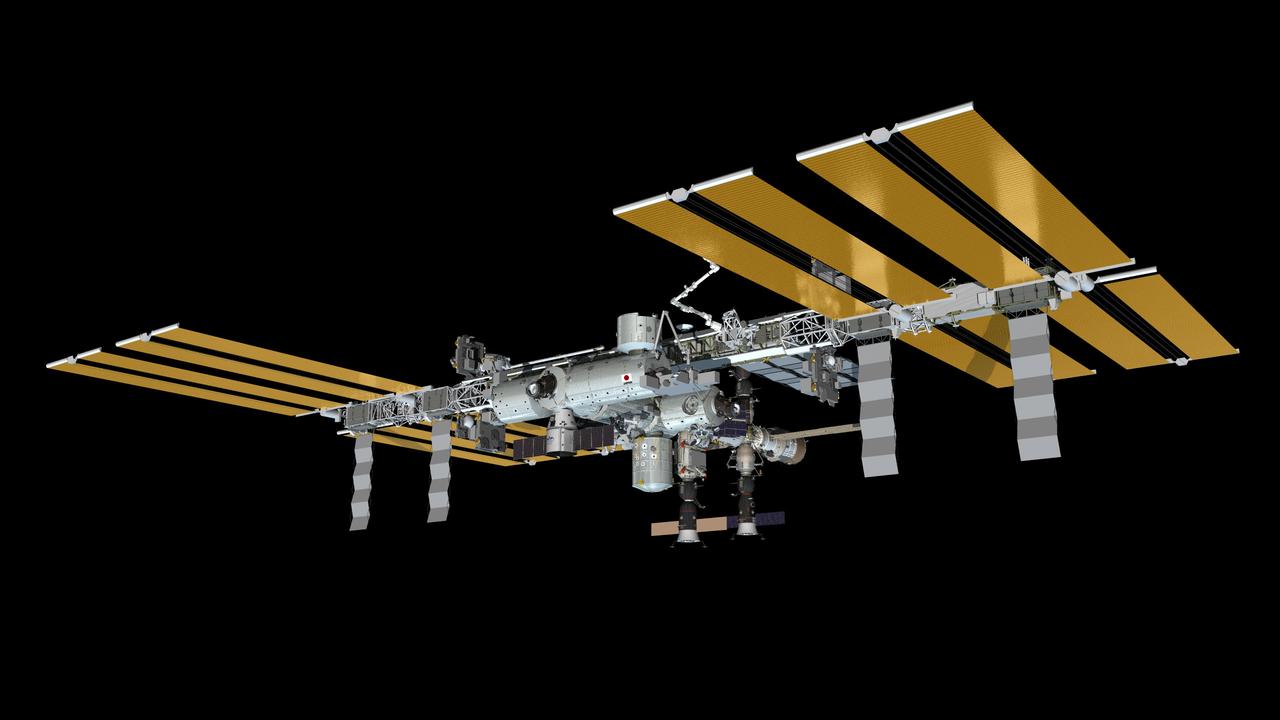
JSC2012-E-226838 (October 2012) --- Computer-generated artist?s rendering of the International Space Station as of Oct. 25, 2012. Soyuz 32 (TMA-06M) docks to the Poisk Mini-Research Module 2 (MRM2), bringing Expedition 33 crew members (Ford, Novitskiy, Tarelkin) to the space station. SpaceX Dragon CRS-1 is attached to the Harmony node nadir port. Progress 48 is docked to the Pirs Docking Compartment and Soyuz 31 (TMA-05M) is linked to the Rassvet Mini-Research Module 1 (MRM1). Photo credit: NASA
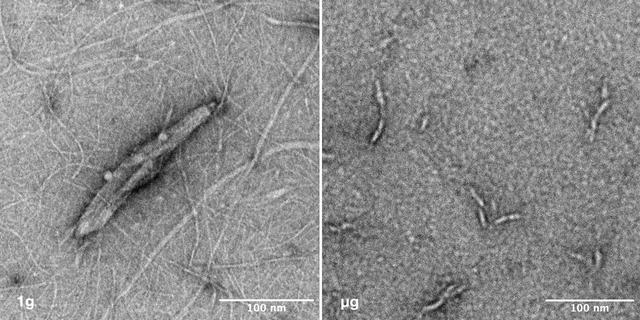
jsc2025e036194 (4/4/2025) --- Image of nanoparticles synthesized under 1g vs microgravity. Left: This transmission electron microscope image depicts the nano-scale structure of Janus Base Nanoparticles encapsulated with mRNA on ground. Right: This is a transmission electron microscope image of mRNA-encapsulated JBNp that was produced on ISS during the SpaceX CRS-31 mission. Here, you can see that the space-made JBNp is smaller and more uniform in size and shape with less background material, demonstrating the stark advantage that in-space manufacturing can provide JBNp: improved uniformity and drug loading. Image courtesy of University of Connecticut.