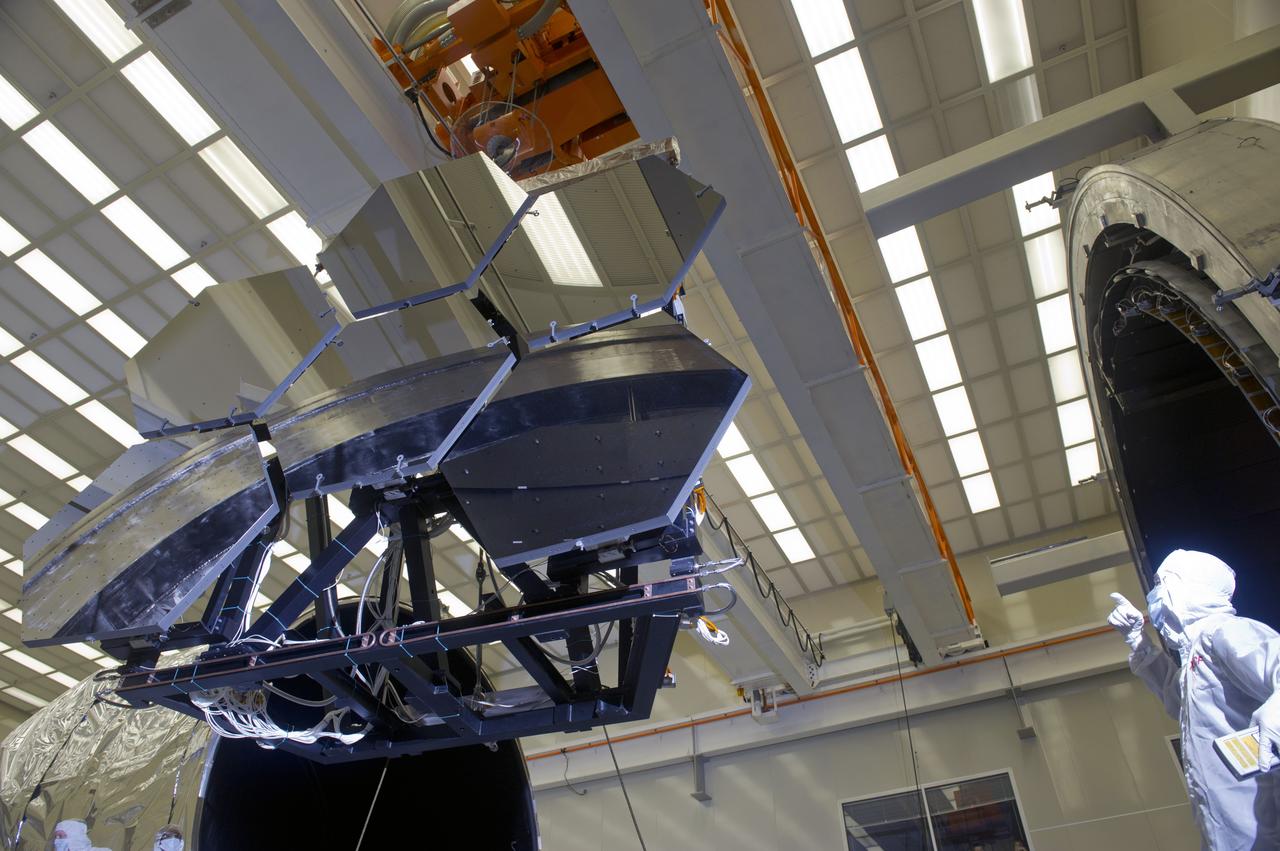
JAMES WEBB SPACE TELESCOPE CRYOGENIC TEST #4 SIX MIRROR DE-INTEGRATION, JULY 13, 2010, MSFC X-RAY & CRYOGENIC FACILITY
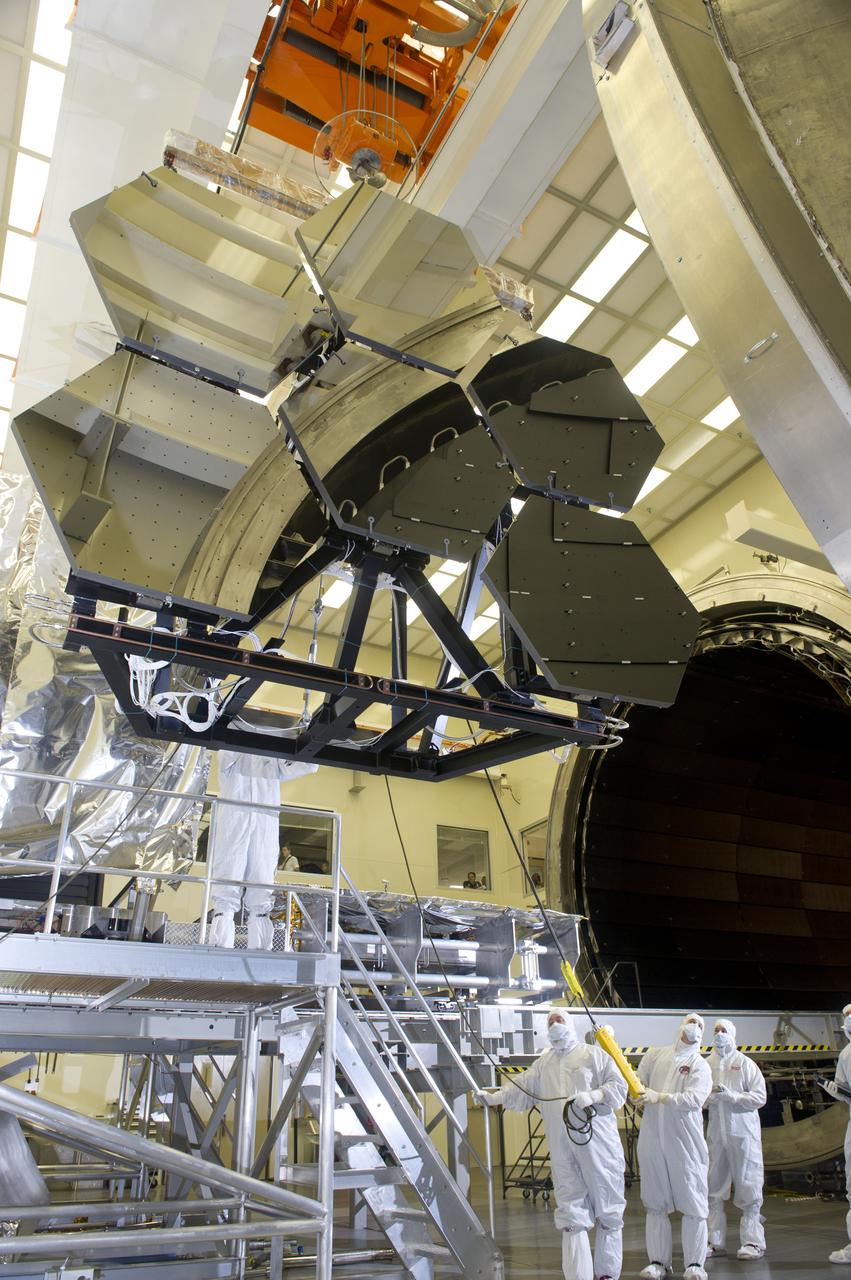
JAMES WEBB SPACE TELESCOPE CRYOGENIC TEST #4 SIX MIRROR DE-INTEGRATION, JULY 13, 2010, MSFC X-RAY & CRYOGENIC FACILITY
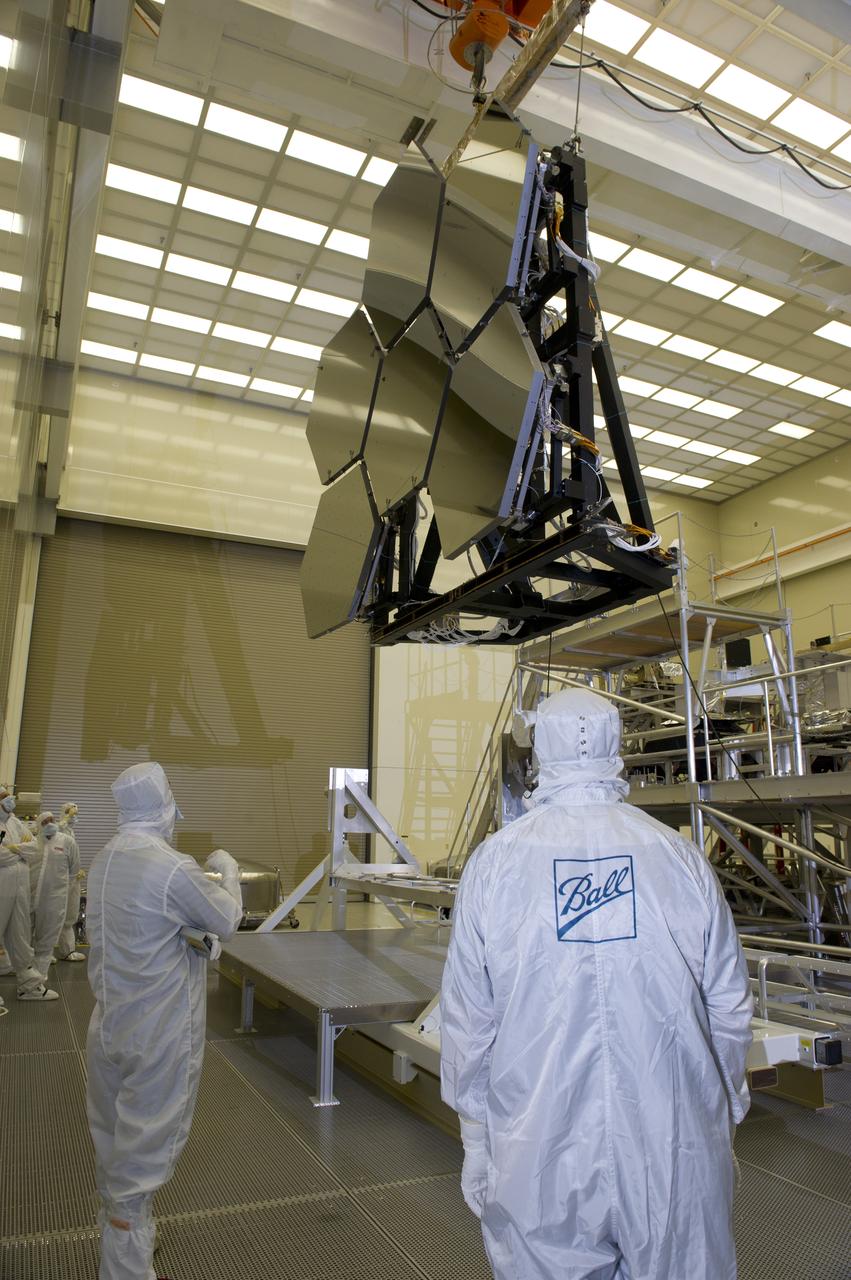
JAMES WEBB SPACE TELESCOPE CRYOGENIC TEST #4 SIX MIRROR DE-INTEGRATION, JULY 13, 2010, MSFC X-RAY & CRYOGENIC FACILITY
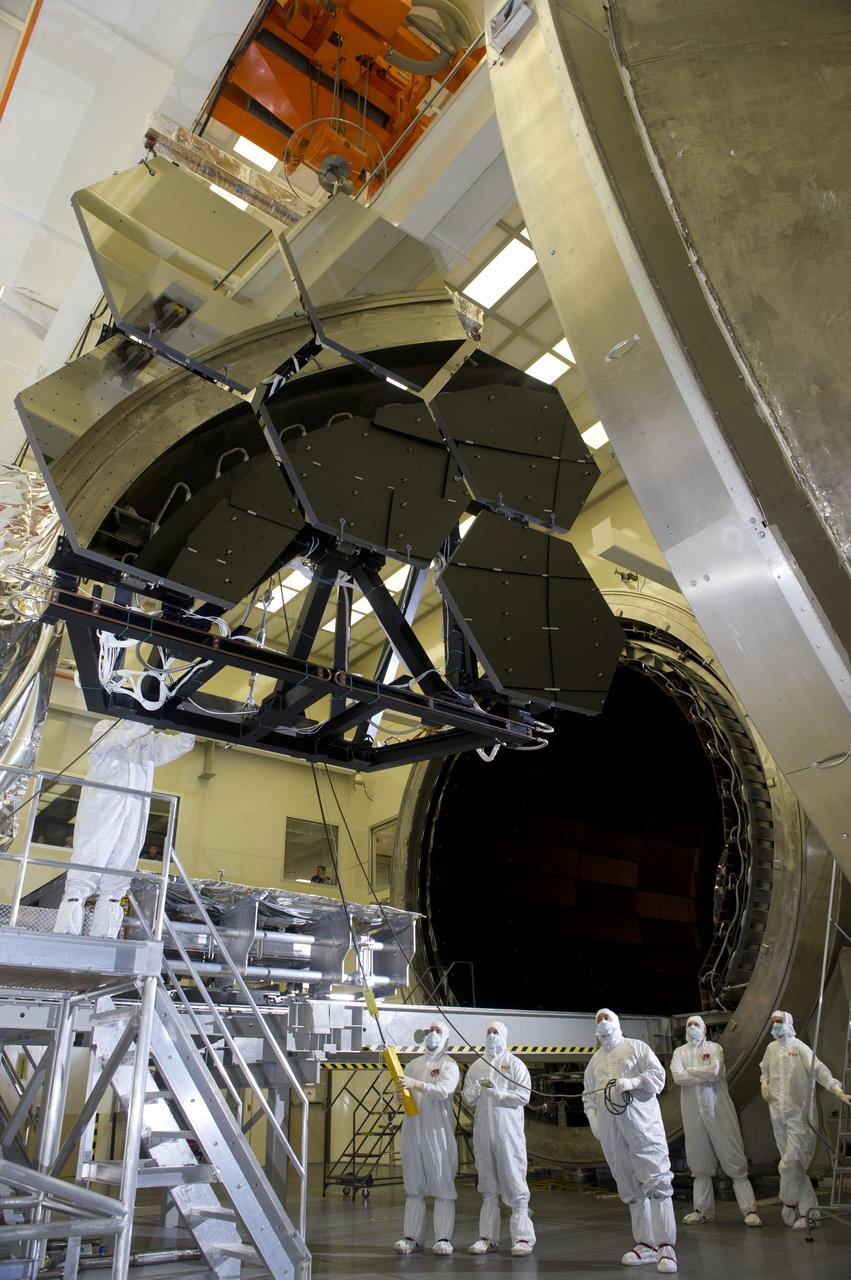
JAMES WEBB SPACE TELESCOPE CRYOGENIC TEST #4 SIX MIRROR DE-INTEGRATION, JULY 13, 2010, MSFC X-RAY & CRYOGENIC FACILITY
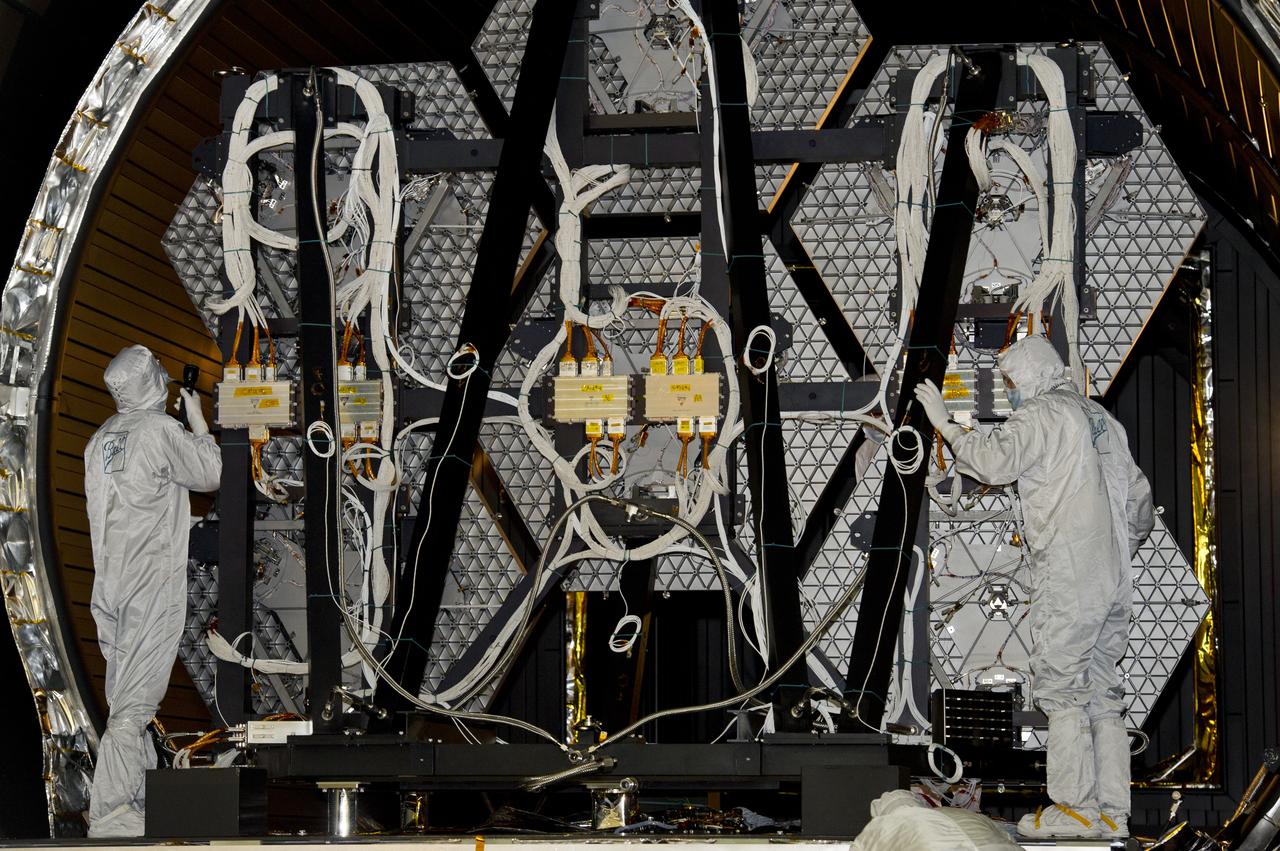
JAMES WEBB SPACE TELESCOPE CRYOGENIC TEST #4 SIX MIRROR DE-INTEGRATION, JULY 13, 2010, MSFC X-RAY & CRYOGENIC FACILITY
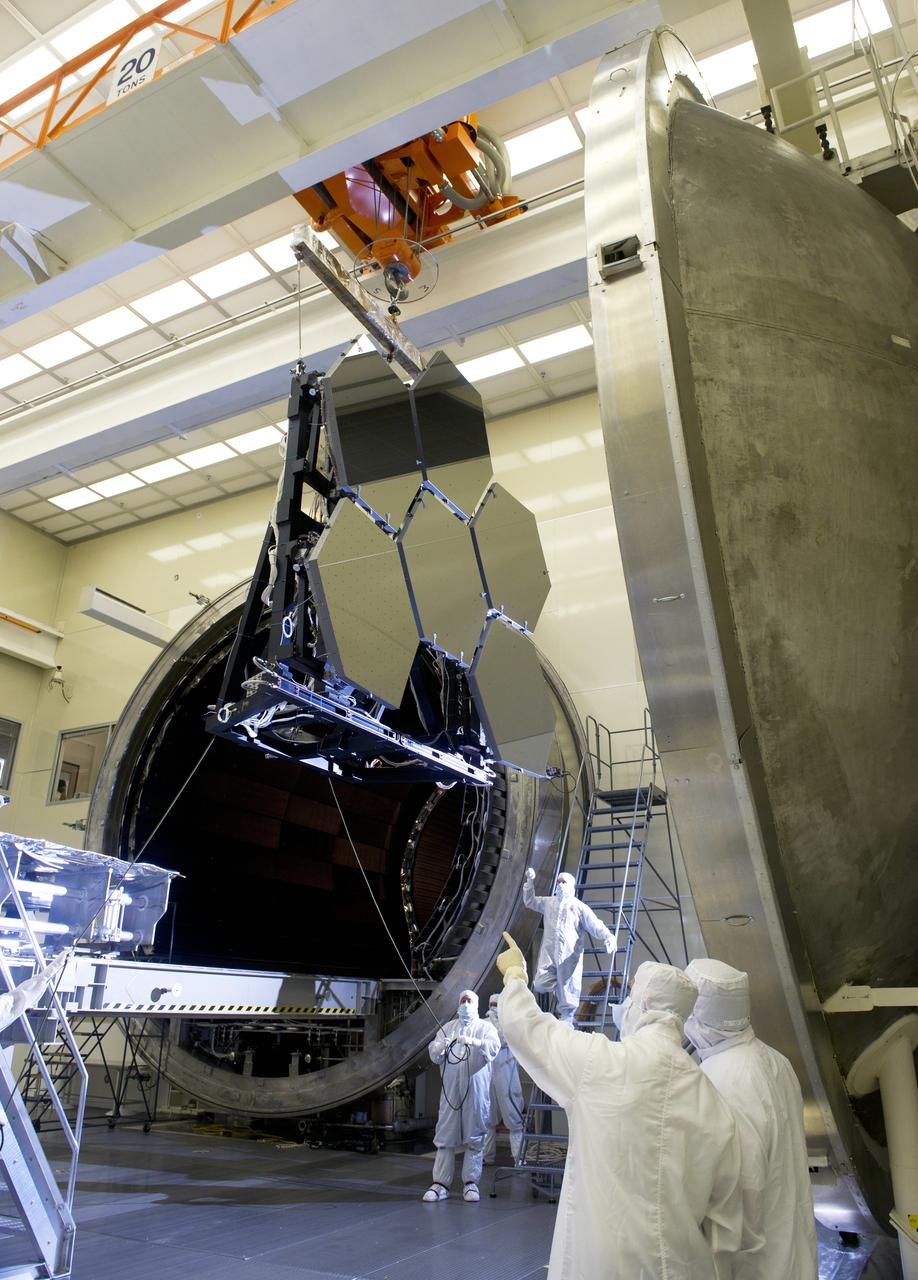
JAMES WEBB SPACE TELESCOPE CRYOGENIC TEST #4 SIX MIRROR DE-INTEGRATION, JULY 13, 2010, MSFC X-RAY & CRYOGENIC FACILITY
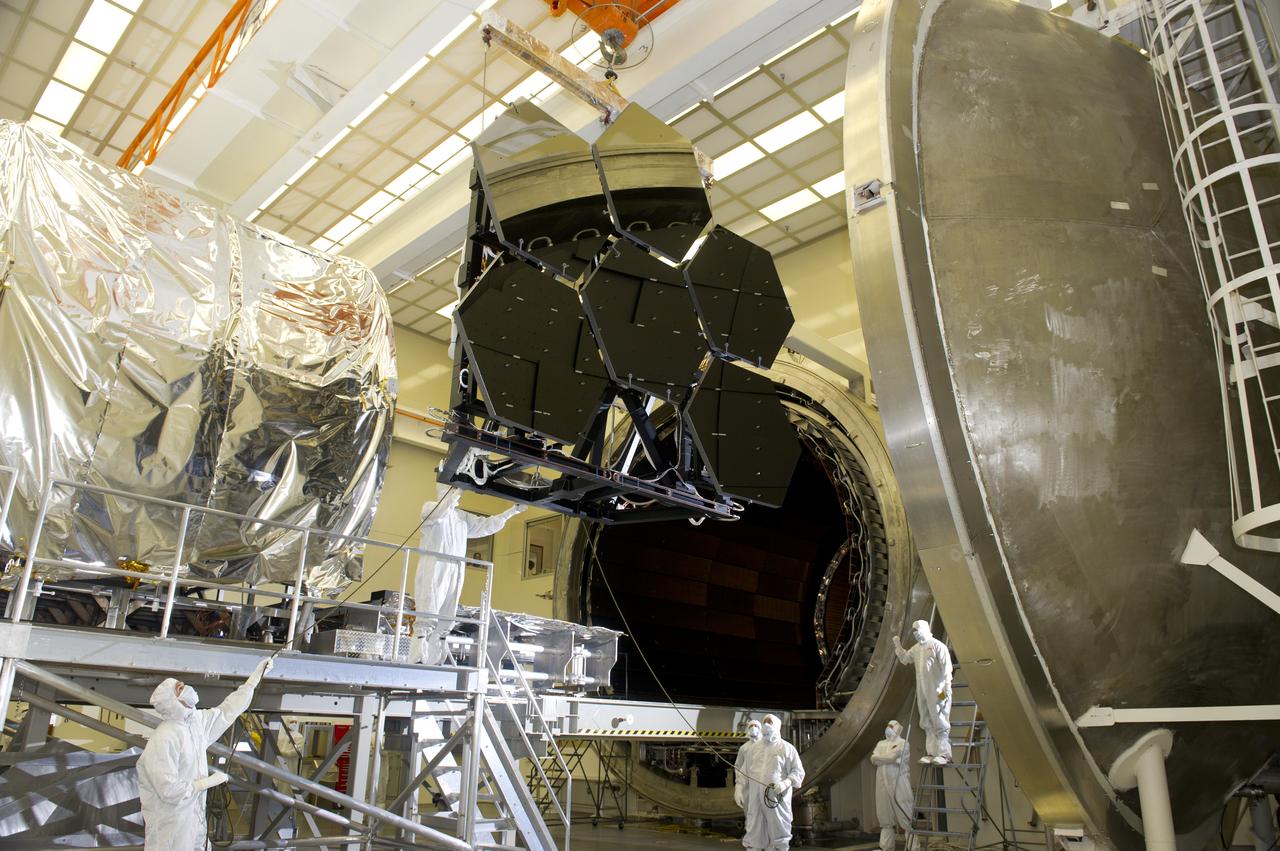
JAMES WEBB SPACE TELESCOPE CRYOGENIC TEST #4 SIX MIRROR DE-INTEGRATION, JULY 13, 2010, MSFC X-RAY & CRYOGENIC FACILITY
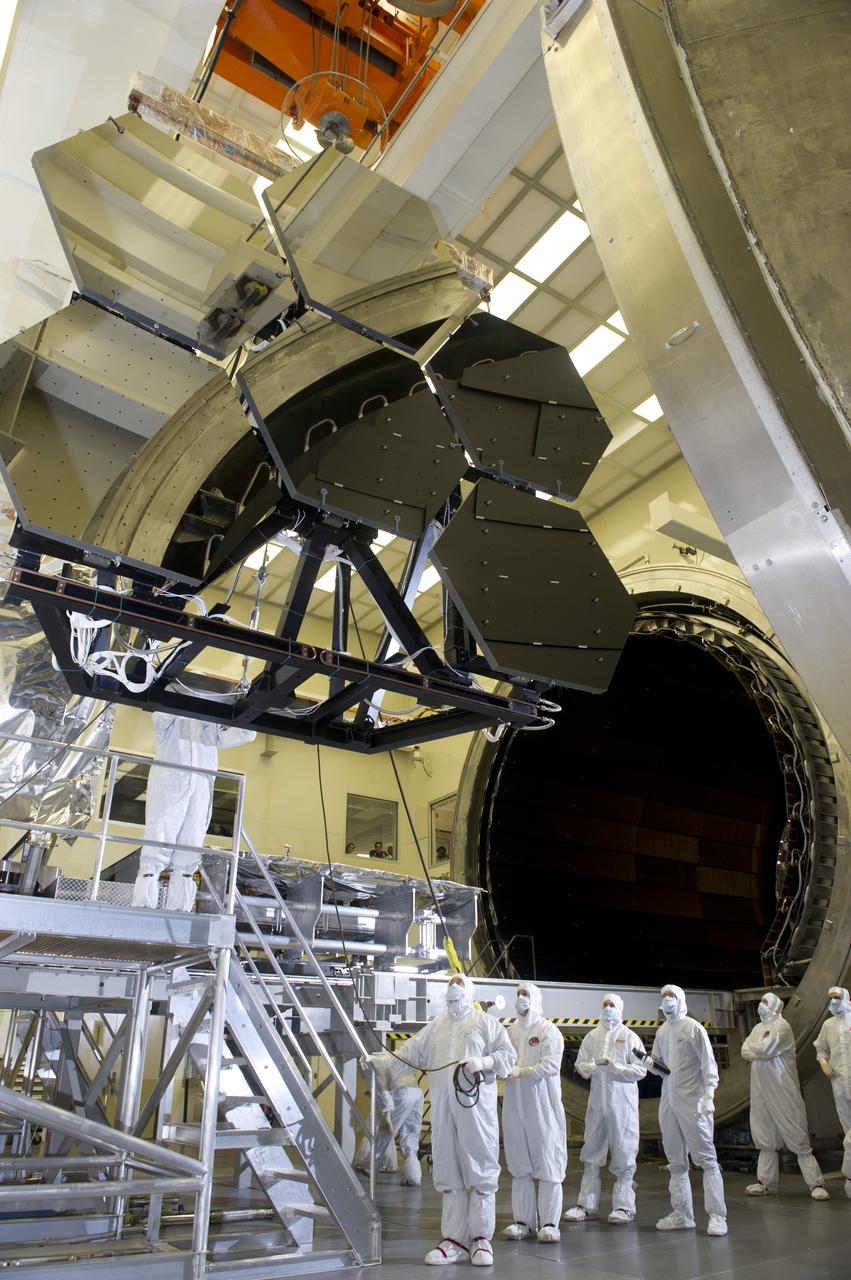
JAMES WEBB SPACE TELESCOPE CRYOGENIC TEST #4 SIX MIRROR DE-INTEGRATION, JULY 13, 2010, MSFC X-RAY & CRYOGENIC FACILITY
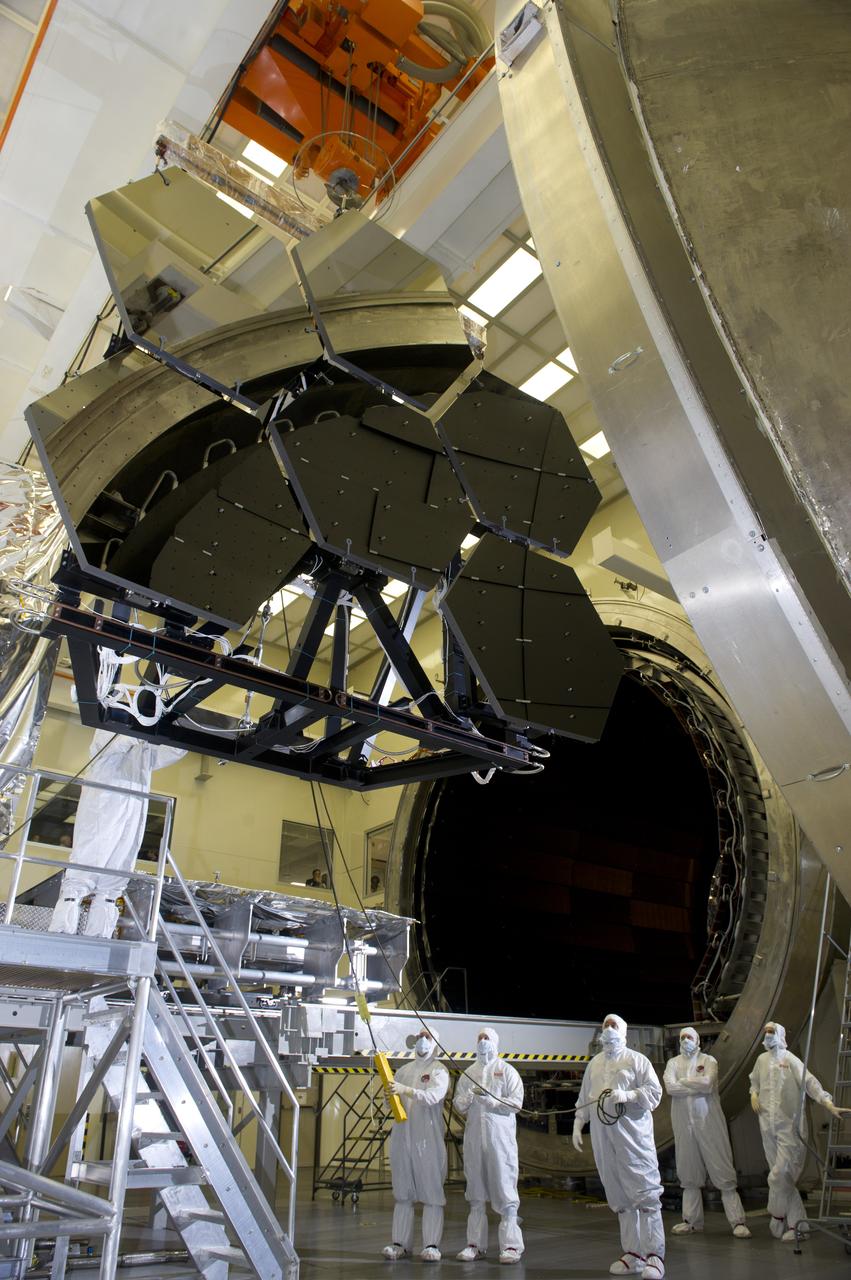
JAMES WEBB SPACE TELESCOPE CRYOGENIC TEST #4 SIX MIRROR DE-INTEGRATION, JULY 13, 2010, MSFC X-RAY & CRYOGENIC FACILITY
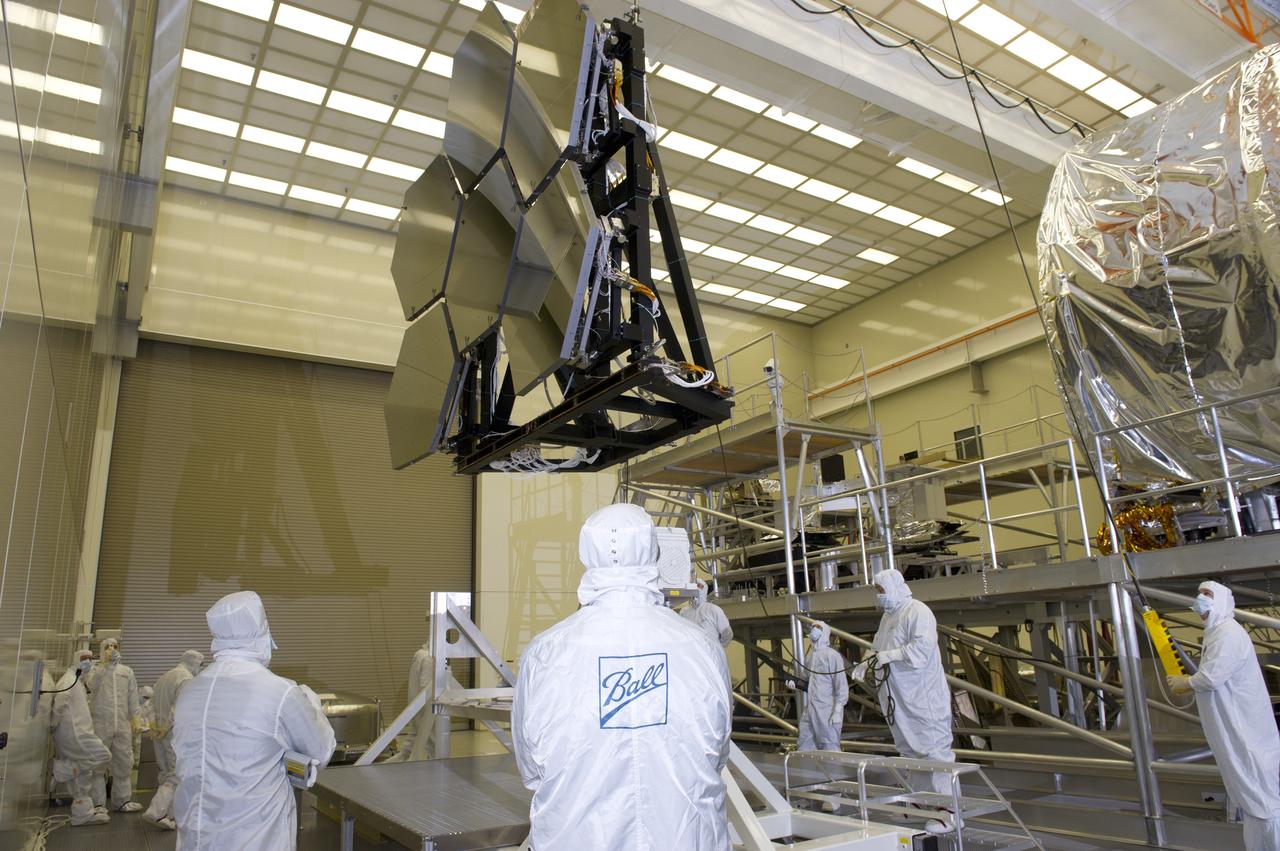
JAMES WEBB SPACE TELESCOPE CRYOGENIC TEST #4 SIX MIRROR DE-INTEGRATION, JULY 13, 2010, MSFC X-RAY & CRYOGENIC FACILITY
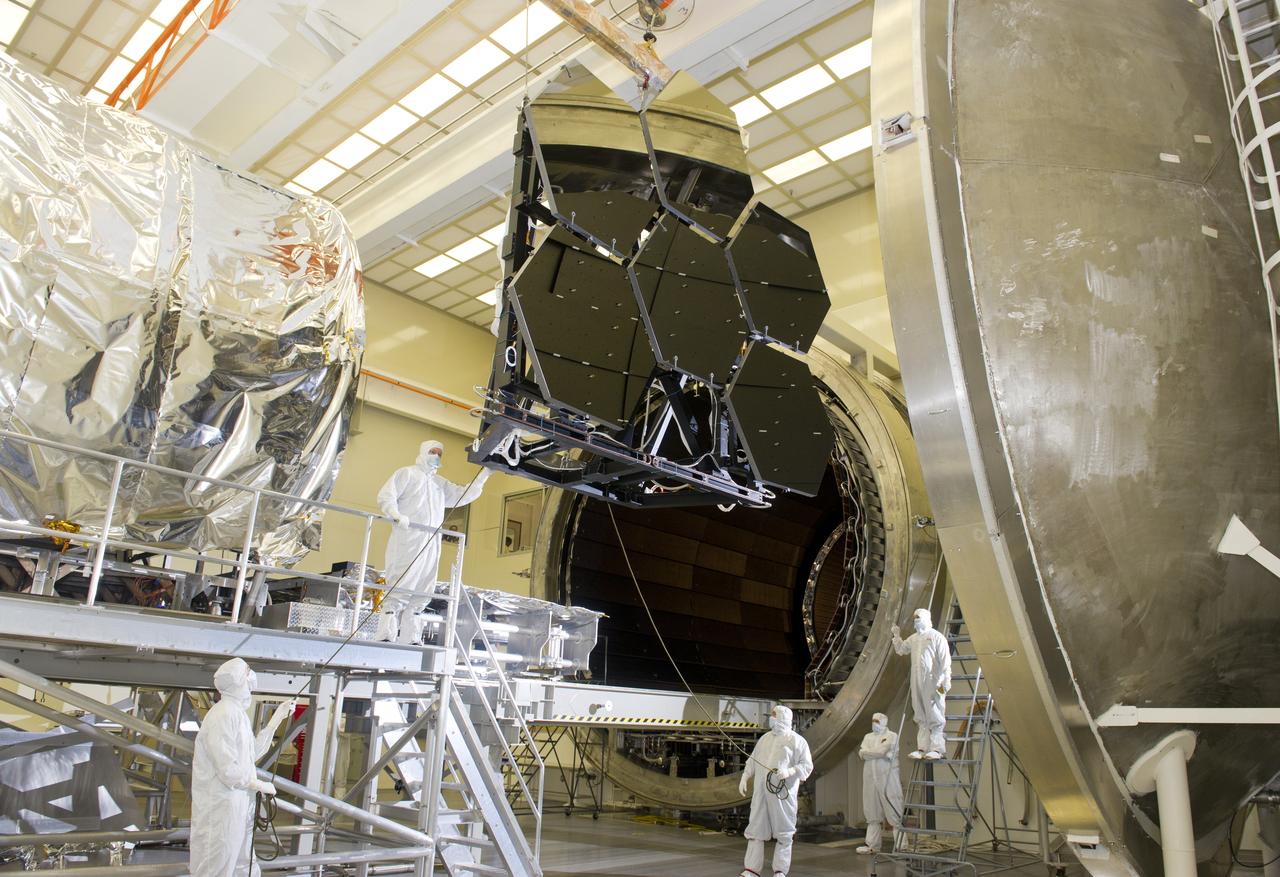
JAMES WEBB SPACE TELESCOPE CRYOGENIC TEST #4 SIX MIRROR DE-INTEGRATION, JULY 13, 2010, MSFC X-RAY & CRYOGENIC FACILITY
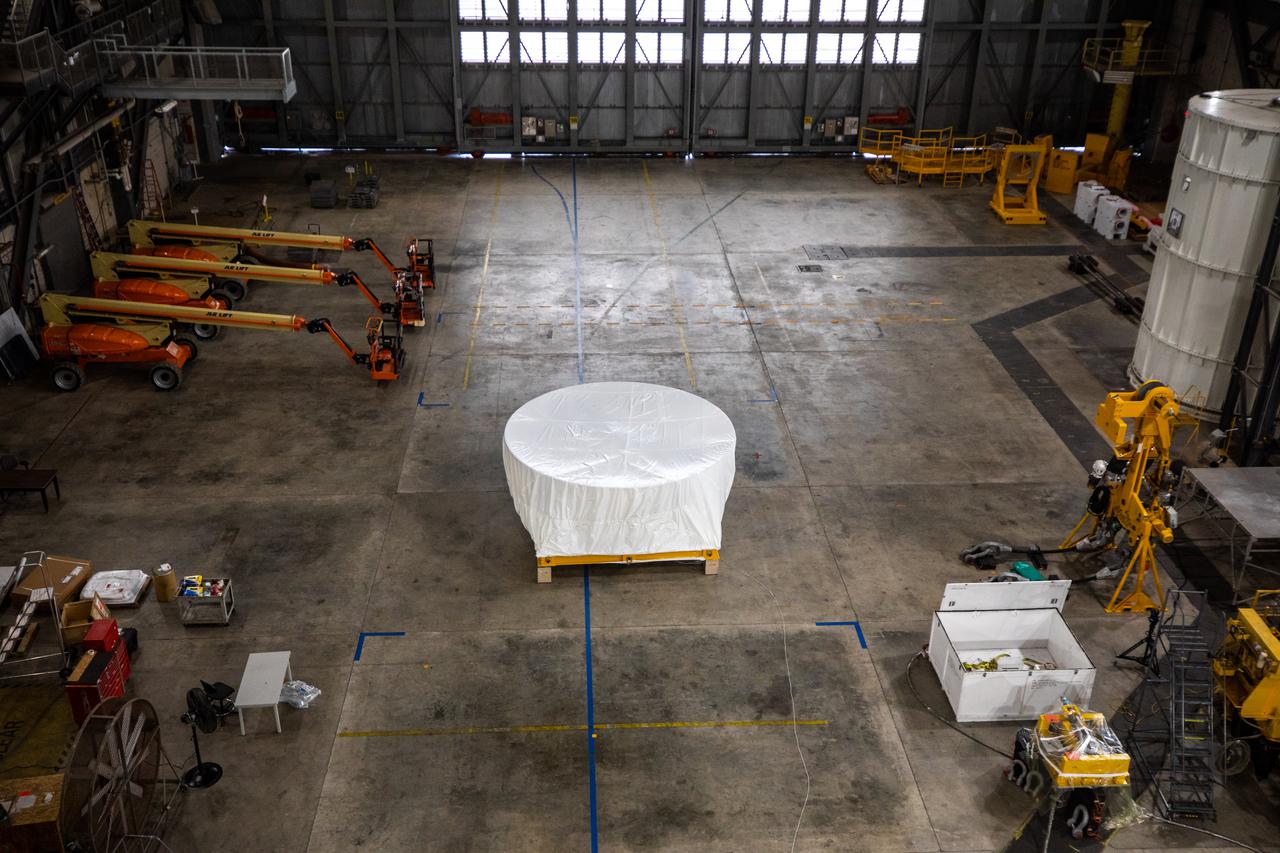
Under a protective cover, the Orion Stage Adapter (OSA) arrives in High Bay 4 of the Vehicle Assembly Building on Oct. 4, 2021, at NASA's Kennedy Space Center in Florida. Teams will lift the ring-shaped OSA, filled with shoebox-sized CubeSats, and connect it to the Interim Cryogenic Propulsion Stage (ICPS). The Orion spacecraft will be secured on top of the Space Launch System (SLS) rocket to complete the stack ahead of the Artemis I launch. This mission will be the first integrated flight test of the SLS and Orion spacecraft. In later missions, NASA will land the first woman and the first person of color on the surface of the Moon, paving the way for a long-term lunar presence and serving as a steppingstone on the way to Mars.
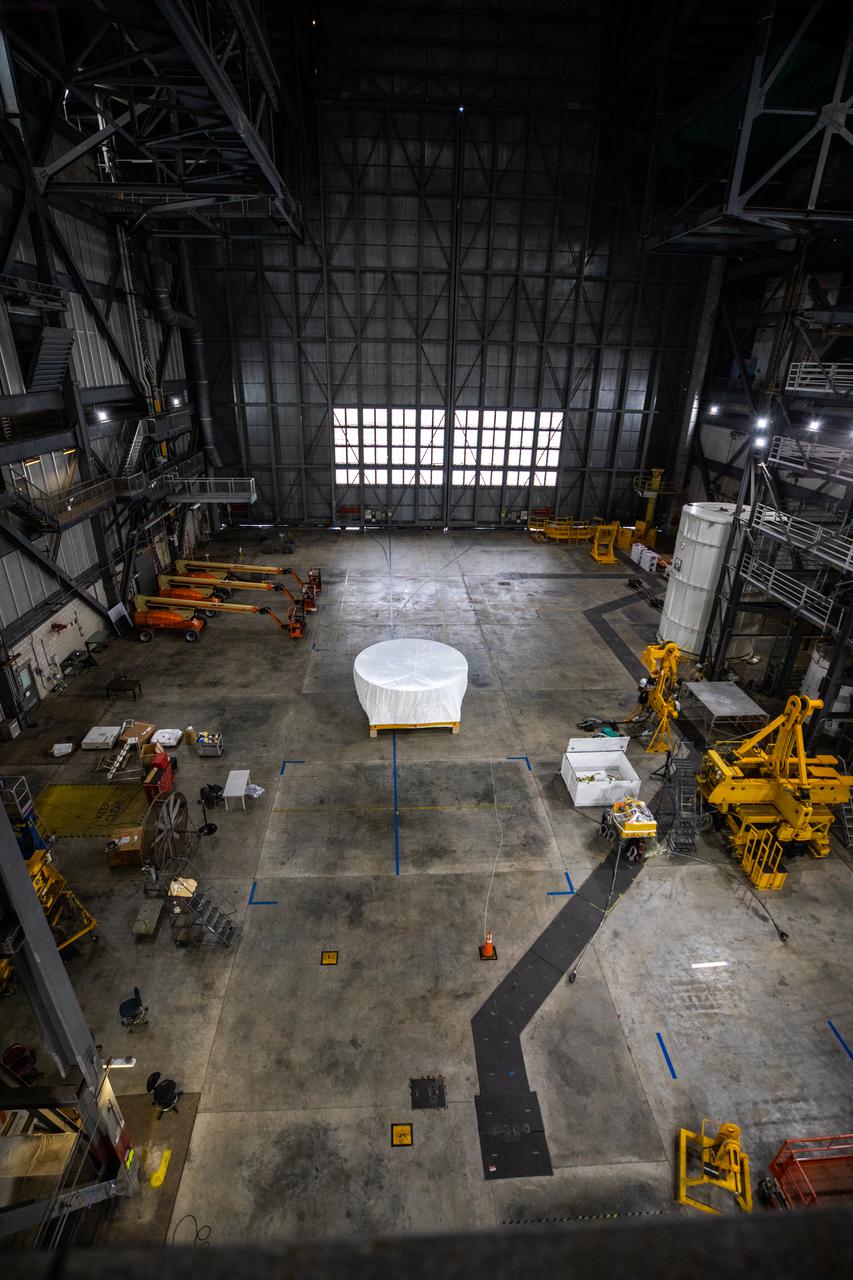
Under a protective cover, the Orion Stage Adapter (OSA) arrives in High Bay 4 of the Vehicle Assembly Building on Oct. 4, 2021, at NASA's Kennedy Space Center in Florida. Teams will lift the ring-shaped OSA, filled with shoebox-sized CubeSats, and connect it to the Interim Cryogenic Propulsion Stage (ICPS). The Orion spacecraft will be secured on top of the Space Launch System (SLS) rocket to complete the stack ahead of the Artemis I launch. This mission will be the first integrated flight test of the SLS and Orion spacecraft. In later missions, NASA will land the first woman and the first person of color on the surface of the Moon, paving the way for a long-term lunar presence and serving as a steppingstone on the way to Mars.
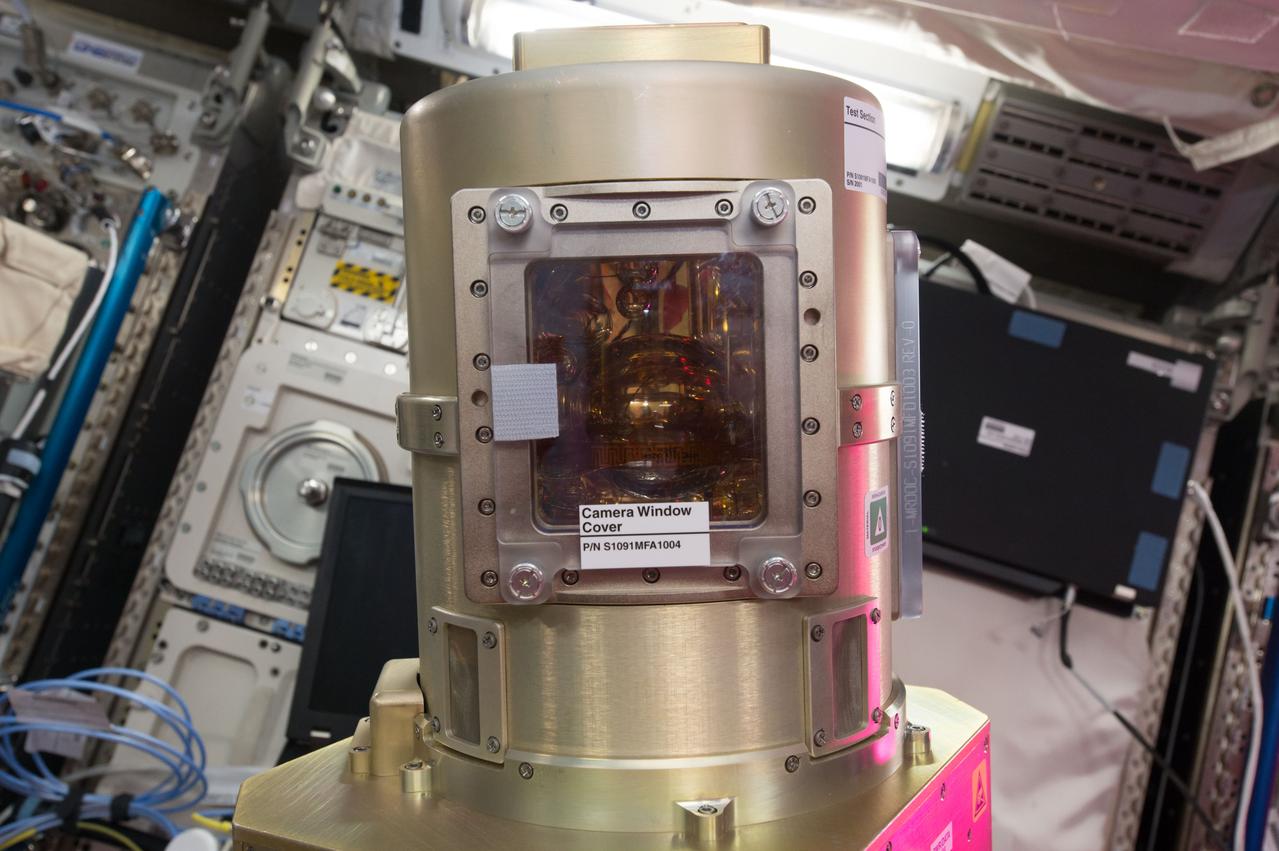
iss051e028301 (4/25/2017) --- A view of the Zero Boil-Off Tank (ZBOT) experiment Vacuum Jacket Camera Window Cover hardware. Zero Boil-Off Tank (ZBOT) uses an experimental fluid to test active heat removal and forced jet mixing as alternative means for controlling tank pressure for volatile fluids. Results from the investigation improve models used to design tanks for long-term cryogenic liquid storage, which are essential in biotechnology, medicine, industrial, and many other applications on Earth.
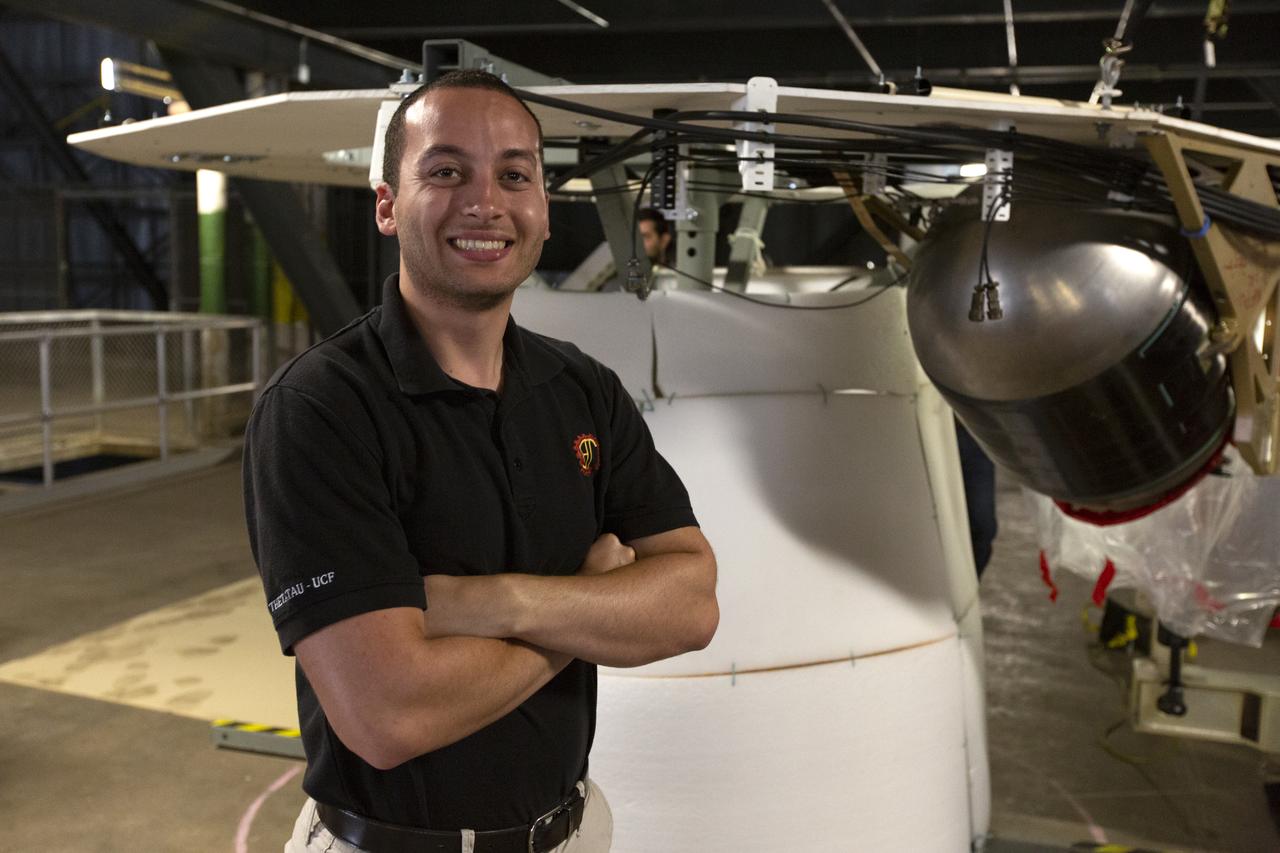
Christopher Di Taranto, a member of the mechanical structures engineering team on the Jacobs Test and Operations Contract, stands in front of an Interim Cryogenic Propulsion Stage (ICPS) mockup during the Space Launch System avionics handling tool demonstration inside Kennedy Space Center’s Vehicle Assembly Building on April 4, 2019. The demonstration showed that avionics boxes could be successfully mounted into the SLS rocket’s upper stage safely, and with low risk of damaging a closely located hydrazine tank. Avionics boxes include the Inertial Navigation and Control Assembly and flight batteries. Di Taranto led a team to quickly resolve a non-conformance issue with the tool.
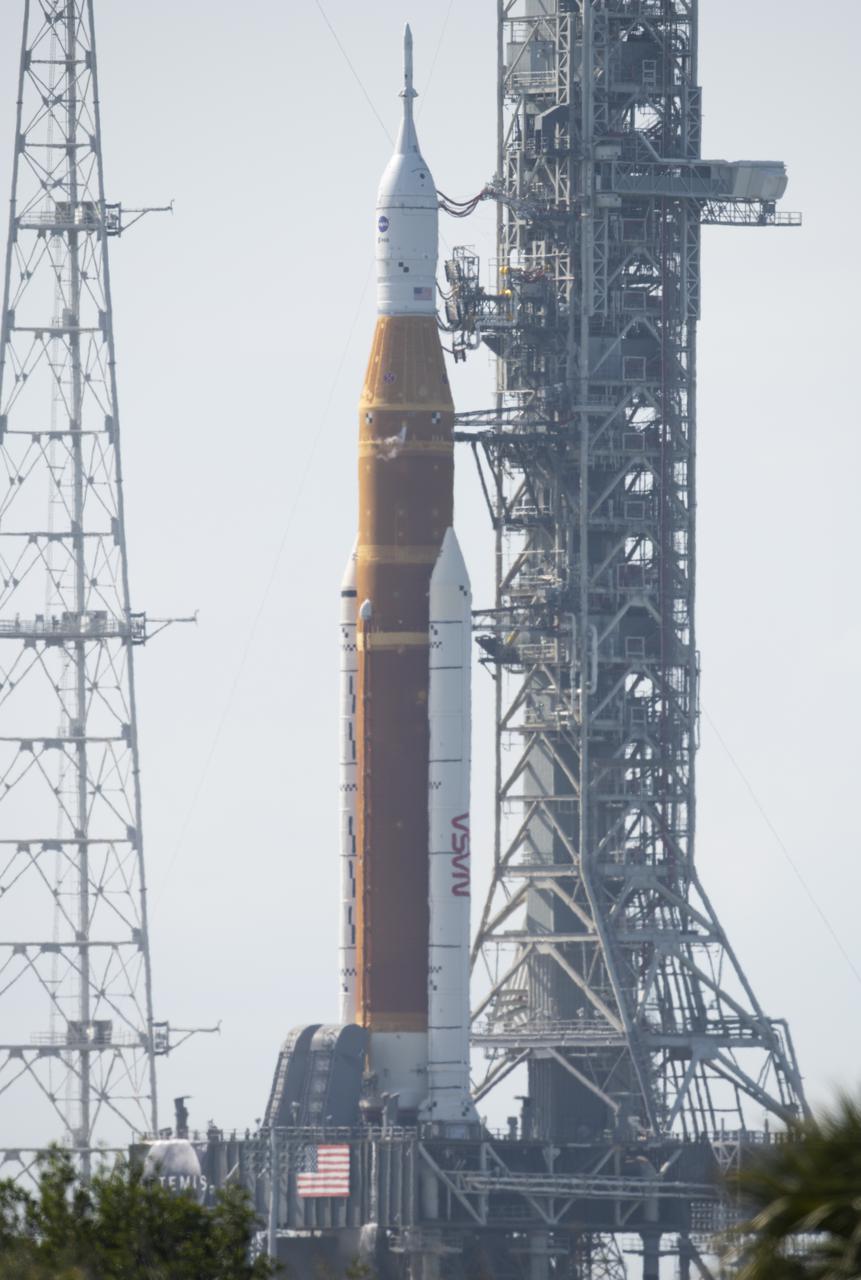
NASA’s Space Launch System (SLS) rocket with the Orion spacecraft aboard is seen atop a mobile launcher at Launch Complex 39B, Monday, April 4, 2022, as the Artemis I launch teams load more than 700,000 gallons of cryogenic propellants including liquid hydrogen and liquid oxygen during the wet dress rehearsal test at NASA’s Kennedy Space Center in Florida. Ahead of NASA’s Artemis I flight test, the wet dress rehearsal will run the Artemis I launch team through operations to load propellant, conduct a full launch countdown, demonstrate the ability to recycle the countdown clock, and drain the tanks to practice timelines and procedures for launch. Photo Credit: (NASA/Joel Kowsky)
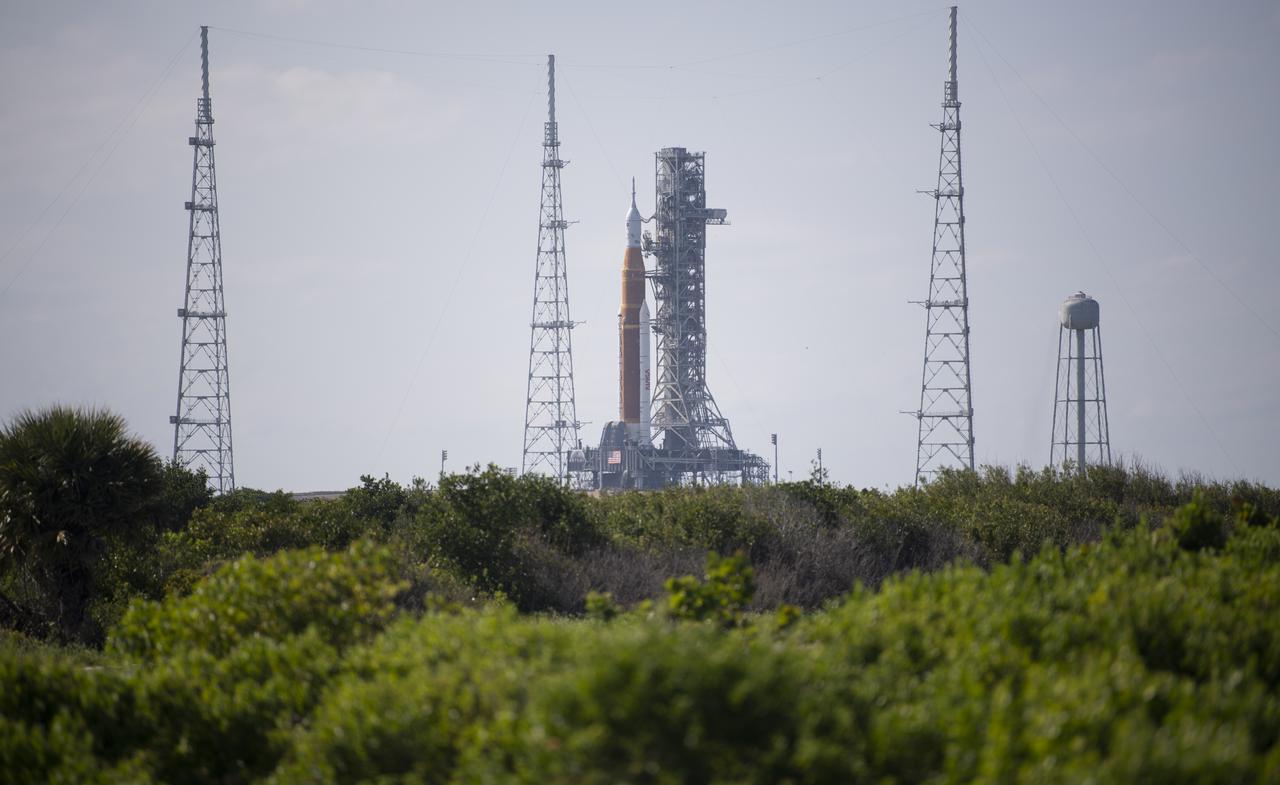
NASA’s Space Launch System (SLS) rocket with the Orion spacecraft aboard is seen atop a mobile launcher at Launch Complex 39B, Monday, April 4, 2022, as the Artemis I launch teams load more than 700,000 gallons of cryogenic propellants including liquid hydrogen and liquid oxygen during the wet dress rehearsal test at NASA’s Kennedy Space Center in Florida. Ahead of NASA’s Artemis I flight test, the wet dress rehearsal will run the Artemis I launch team through operations to load propellant, conduct a full launch countdown, demonstrate the ability to recycle the countdown clock, and drain the tanks to practice timelines and procedures for launch. Photo Credit: (NASA/Joel Kowsky)
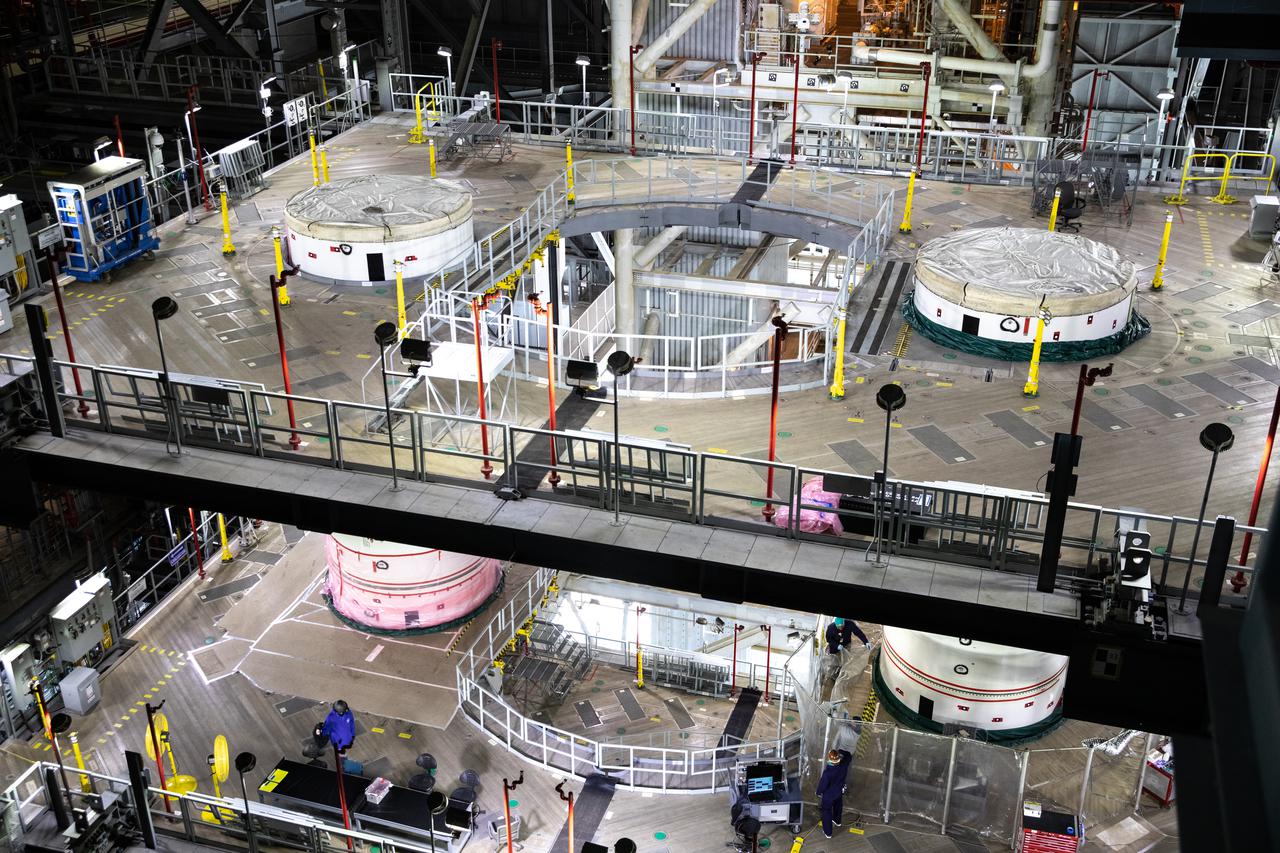
In High Bay 3 of the Vehicle Assembly Building at NASA’s Kennedy Space Center in Florida, the right-hand forward center booster segment for Artemis I is lowered onto the center center booster segment on the mobile launcher for the Space Launch System (SLS) on Feb. 4, 2021. Workers with Exploration Ground Systems and contractor Jacobs teams will stack the twin five-segment boosters on the mobile launcher in High Bay 3 over a number of weeks. When the core stage arrives, it will join the boosters on the mobile launcher, followed by the interim cryogenic propulsion stage and Orion spacecraft. Manufactured by Northrop Grumman in Utah, the twin boosters provide more than 75 percent of the total SLS thrust at launch. The SLS is managed by Marshall Space Flight Center in Huntsville, Alabama. Under the Artemis program, NASA will land the first woman and the next man on the Moon by 2024. The first in a series of increasingly complex missions, Artemis I will test the Orion spacecraft and SLS as an integrated system ahead of crewed flights to the Moon.
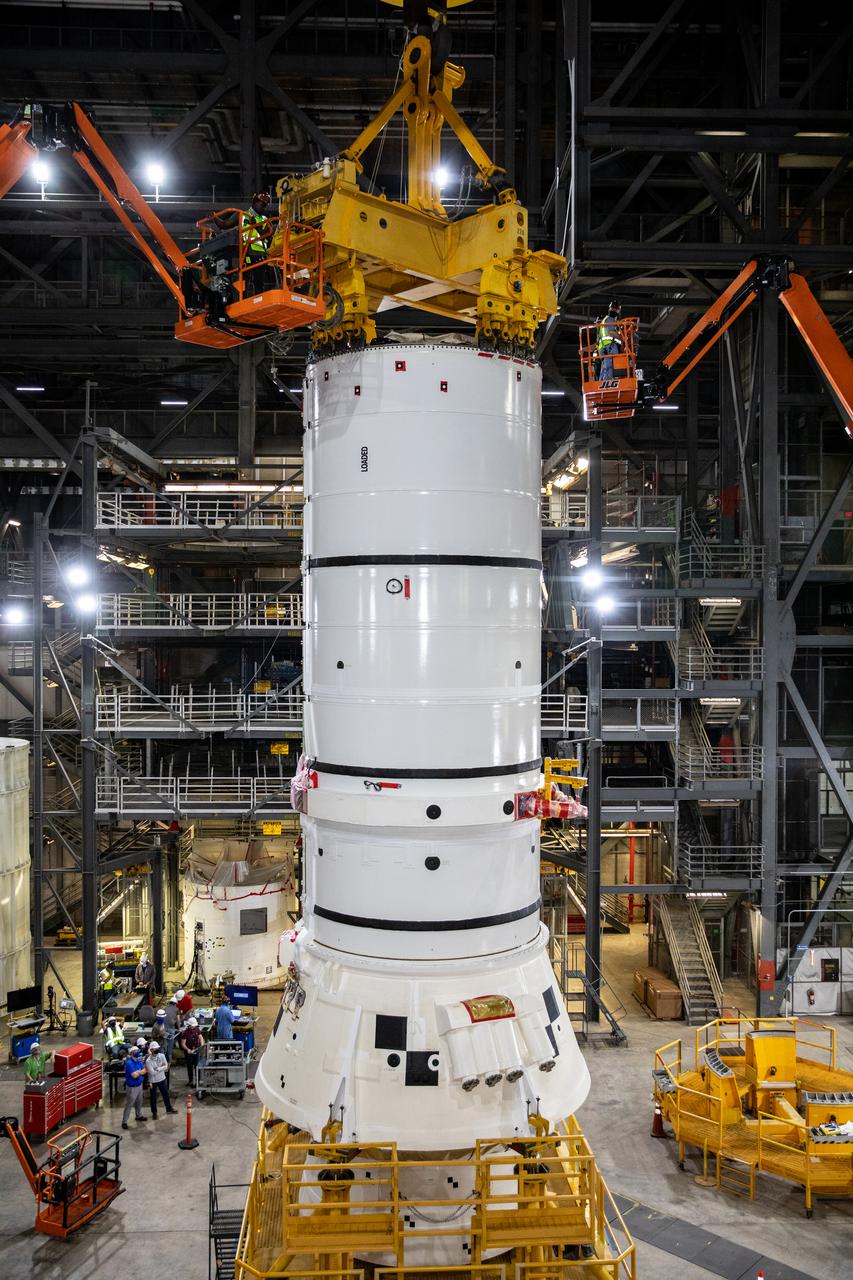
In High Bay 4 of the Vehicle Assembly Building (VAB) at NASA’s Kennedy Space Center in Florida, one of the Artemis I aft booster segments for the Space Launch System is being prepared for its lift up and lowering onto the mobile launcher in High Bay 3 for stacking operations on Nov. 20, 2020. Workers with Exploration Ground Systems and contractor Jacobs teams will stack the twin five-segment boosters on the mobile launcher in High Bay 3 over a number of weeks. When the core stage arrives, it will join the boosters on the mobile launcher, followed by the interim cryogenic propulsion stage and Orion spacecraft. Manufactured by Northrop Grumman in Utah, the twin boosters provide more than 75 percent of the total SLS thrust at launch. The SLS is managed by Marshall Space Flight Center in Huntsville, Alabama. Under the Artemis program, NASA will land the first woman and the next man on the Moon by 2024. The first in a series of increasingly complex missions, Artemis I will test the Orion spacecraft and SLS as an integrated system ahead of crewed flights to the Moon.
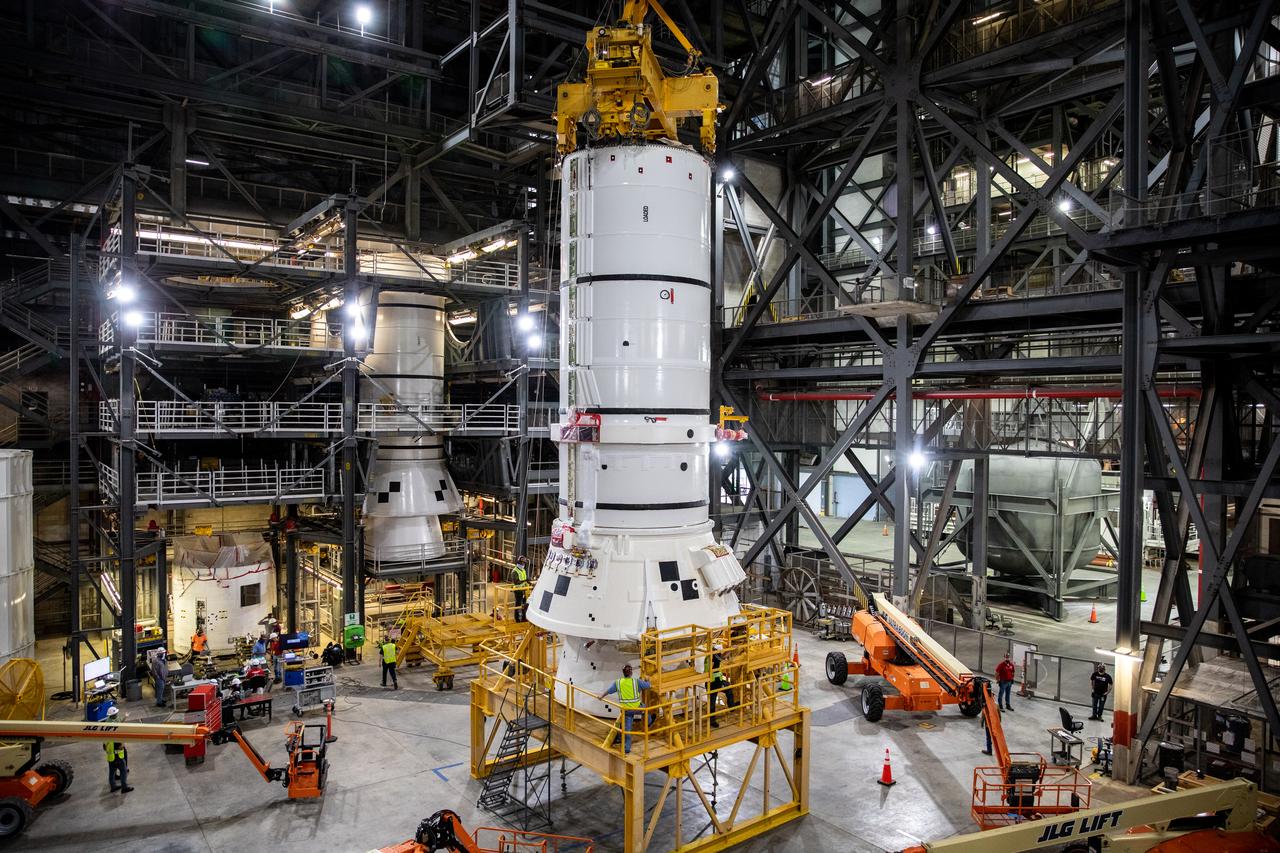
In High Bay 4 of the Vehicle Assembly Building (VAB) at NASA’s Kennedy Space Center in Florida, one of the Artemis I aft booster segments for the Space Launch System is being prepared for stacking operations on Nov. 20, 2020. Workers with Exploration Ground Systems and contractor Jacobs teams will stack the twin five-segment boosters on the mobile launcher in High Bay 3 over a number of weeks. When the core stage arrives, it will join the boosters on the mobile launcher, followed by the interim cryogenic propulsion stage and Orion spacecraft. Manufactured by Northrop Grumman in Utah, the twin boosters provide more than 75 percent of the total SLS thrust at launch. The SLS is managed by Marshall Space Flight Center in Huntsville, Alabama. Under the Artemis program, NASA will land the first woman and the next man on the Moon by 2024. The first in a series of increasingly complex missions, Artemis I will test the Orion spacecraft and SLS as an integrated system ahead of crewed flights to the Moon.
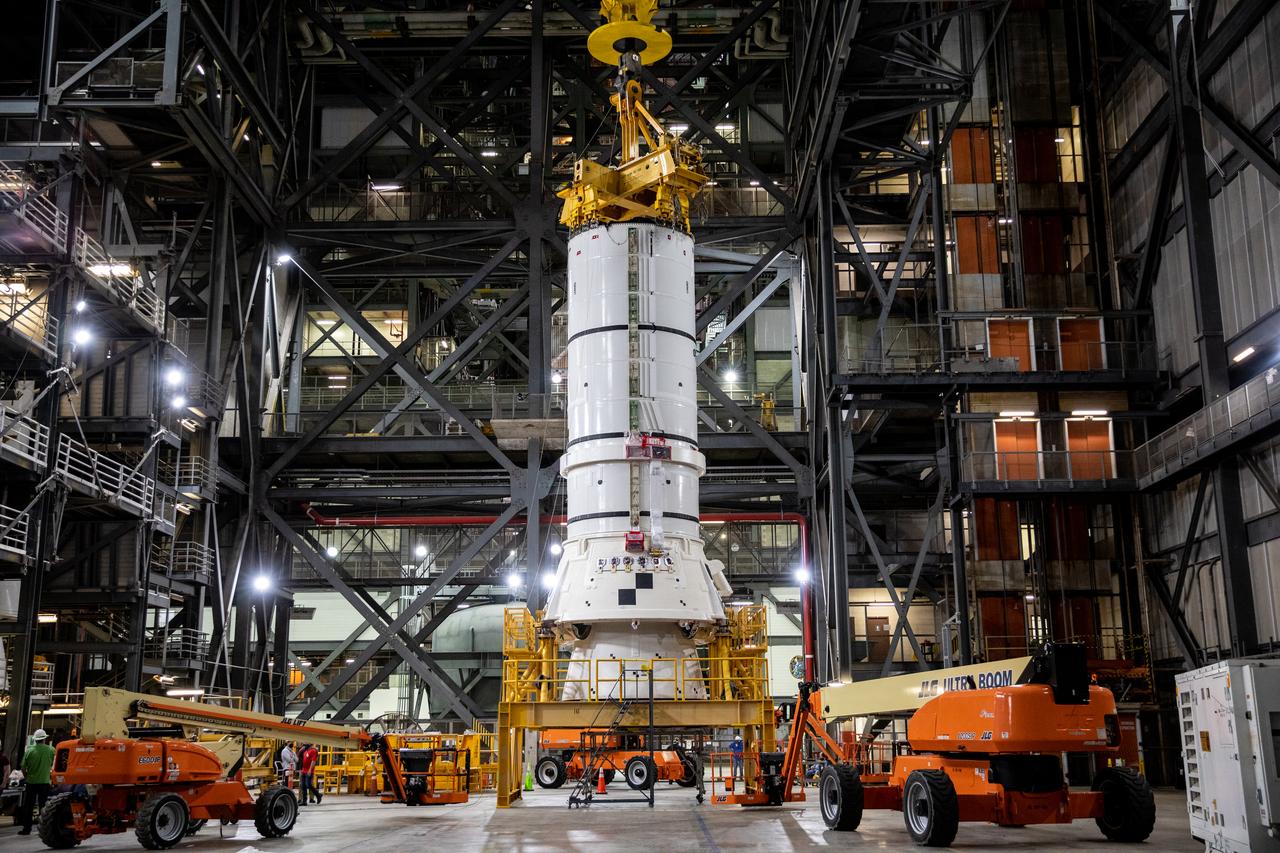
In High Bay 4 of the Vehicle Assembly Building (VAB) at NASA’s Kennedy Space Center in Florida, one of the Artemis I aft booster segments for the Space Launch System is being prepared for stacking operations on Nov. 20, 2020. Workers with Exploration Ground Systems and contractor Jacobs teams will stack the twin five-segment boosters on the mobile launcher in High Bay 3 over a number of weeks. When the core stage arrives, it will join the boosters on the mobile launcher, followed by the interim cryogenic propulsion stage and Orion spacecraft. Manufactured by Northrop Grumman in Utah, the twin boosters provide more than 75 percent of the total SLS thrust at launch. The SLS is managed by Marshall Space Flight Center in Huntsville, Alabama. Under the Artemis program, NASA will land the first woman and the next man on the Moon by 2024. The first in a series of increasingly complex missions, Artemis I will test the Orion spacecraft and SLS as an integrated system ahead of crewed flights to the Moon.
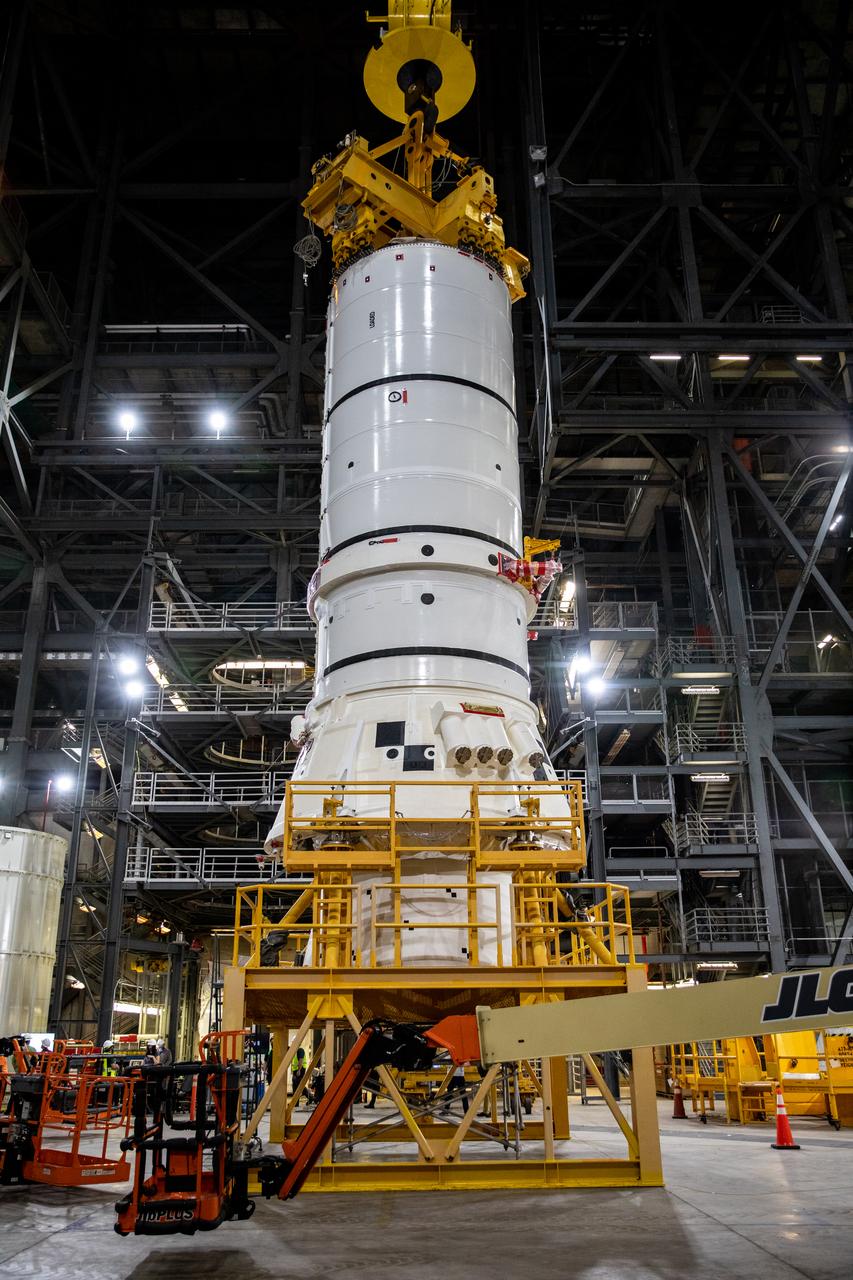
In High Bay 4 of the Vehicle Assembly Building (VAB) at NASA’s Kennedy Space Center in Florida, one of the Artemis I aft booster segments for the Space Launch System is being prepared for stacking operations on Nov. 20, 2020. Workers with Exploration Ground Systems and contractor Jacobs teams will stack the twin five-segment boosters on the mobile launcher in High Bay 3 over a number of weeks. When the core stage arrives, it will join the boosters on the mobile launcher, followed by the interim cryogenic propulsion stage and Orion spacecraft. Manufactured by Northrop Grumman in Utah, the twin boosters provide more than 75 percent of the total SLS thrust at launch. The SLS is managed by Marshall Space Flight Center in Huntsville, Alabama. Under the Artemis program, NASA will land the first woman and the next man on the Moon by 2024. The first in a series of increasingly complex missions, Artemis I will test the Orion spacecraft and SLS as an integrated system ahead of crewed flights to the Moon.
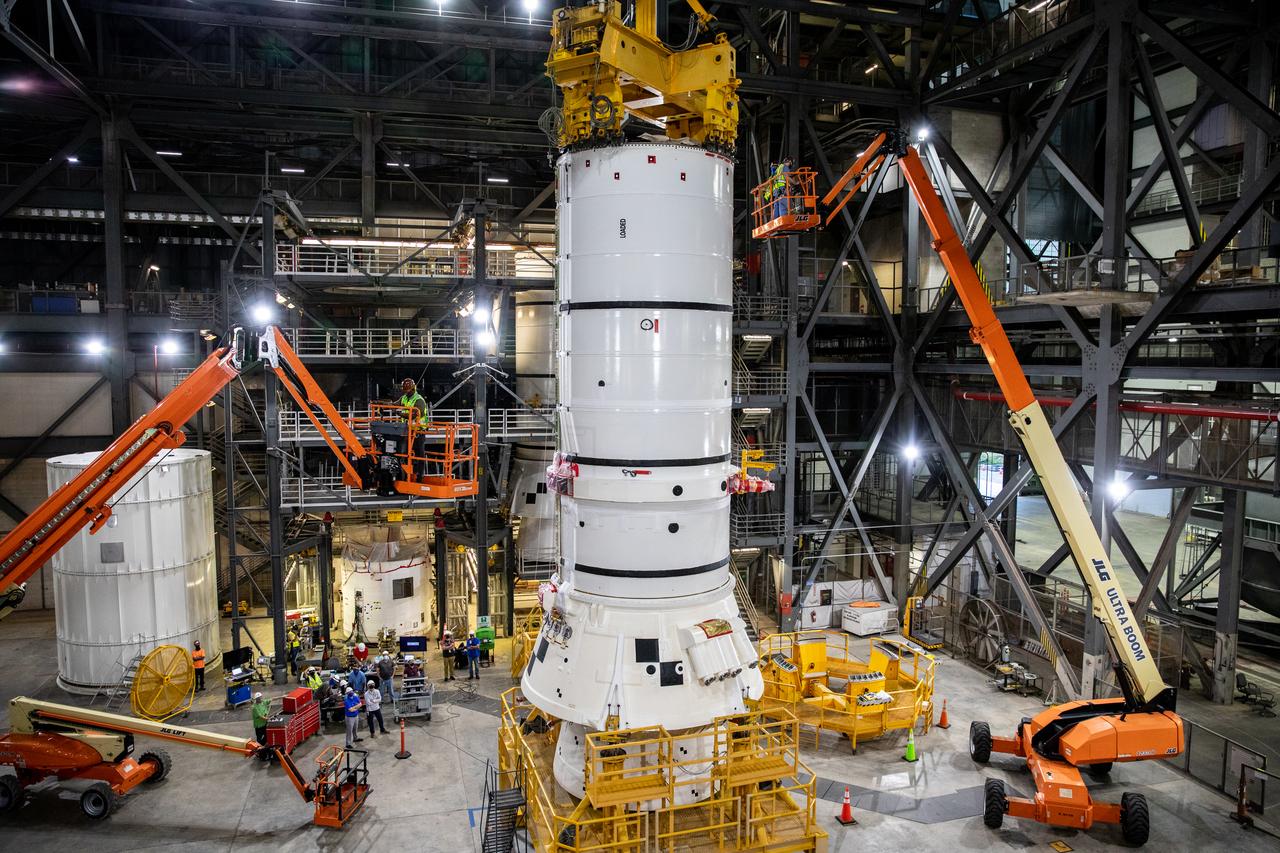
In High Bay 4 of the Vehicle Assembly Building (VAB) at NASA’s Kennedy Space Center in Florida, one of the Artemis I aft booster segments for the Space Launch System is being prepared for its lift up and lowering onto the mobile launcher in High Bay 3 for stacking operations on Nov. 20, 2020. Workers with Exploration Ground Systems and contractor Jacobs teams will stack the twin five-segment boosters on the mobile launcher in High Bay 3 over a number of weeks. When the core stage arrives, it will join the boosters on the mobile launcher, followed by the interim cryogenic propulsion stage and Orion spacecraft. Manufactured by Northrop Grumman in Utah, the twin boosters provide more than 75 percent of the total SLS thrust at launch. The SLS is managed by Marshall Space Flight Center in Huntsville, Alabama. Under the Artemis program, NASA will land the first woman and the next man on the Moon by 2024. The first in a series of increasingly complex missions, Artemis I will test the Orion spacecraft and SLS as an integrated system ahead of crewed flights to the Moon.

In High Bay 3 of the Vehicle Assembly Building at NASA’s Kennedy Space Center in Florida, the right-hand forward center booster segment for Artemis I is lowered onto the center center booster segment on the mobile launcher for the Space Launch System (SLS) on Feb. 4, 2021. Workers with Exploration Ground Systems and contractor Jacobs teams will stack the twin five-segment boosters on the mobile launcher in High Bay 3 over a number of weeks. When the core stage arrives, it will join the boosters on the mobile launcher, followed by the interim cryogenic propulsion stage and Orion spacecraft. Manufactured by Northrop Grumman in Utah, the twin boosters provide more than 75 percent of the total SLS thrust at launch. The SLS is managed by Marshall Space Flight Center in Huntsville, Alabama. Under the Artemis program, NASA will land the first woman and the next man on the Moon by 2024. The first in a series of increasingly complex missions, Artemis I will test the Orion spacecraft and SLS as an integrated system ahead of crewed flights to the Moon.
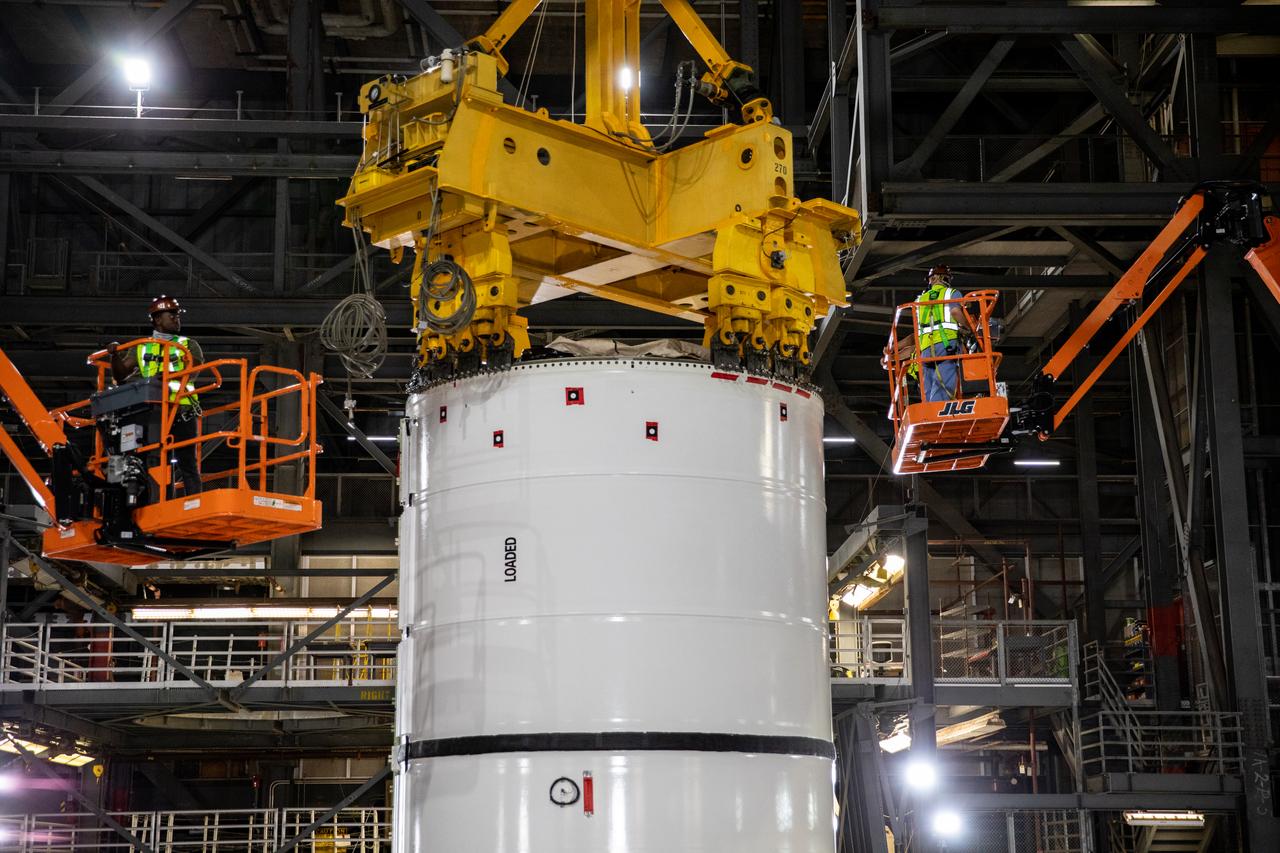
In High Bay 4 of the Vehicle Assembly Building (VAB) at NASA’s Kennedy Space Center in Florida, one of the Artemis I aft booster segments for the Space Launch System is being prepared for its lift up and lowering onto the mobile launcher in High Bay 3 for stacking operations on Nov. 20, 2020. Workers with Exploration Ground Systems and contractor Jacobs teams will stack the twin five-segment boosters on the mobile launcher in High Bay 3 over a number of weeks. When the core stage arrives, it will join the boosters on the mobile launcher, followed by the interim cryogenic propulsion stage and Orion spacecraft. Manufactured by Northrop Grumman in Utah, the twin boosters provide more than 75 percent of the total SLS thrust at launch. The SLS is managed by Marshall Space Flight Center in Huntsville, Alabama. Under the Artemis program, NASA will land the first woman and the next man on the Moon by 2024. The first in a series of increasingly complex missions, Artemis I will test the Orion spacecraft and SLS as an integrated system ahead of crewed flights to the Moon.