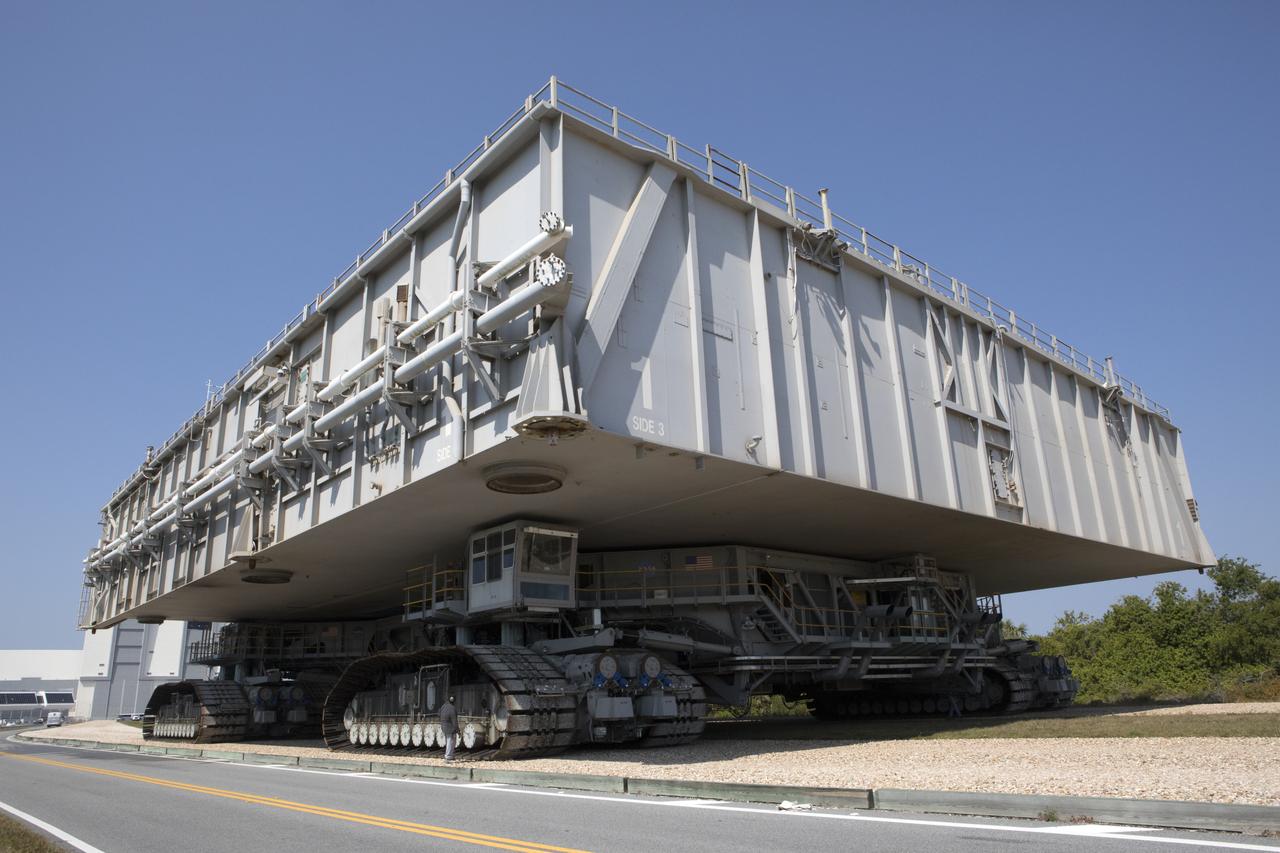
NASA's upgraded crawler-transporter 2 (CT-2), carrying mobile launcher platform 1, moves slowly along the crawlerway toward the Vehicle Assembly Building at the agency's Kennedy Space Center in Florida. The crawler's upgrades and modifications were monitored and tested during a loaded test to the crawlerway Pad A/B split. CT-2 will return to the crawler yard. The crawler is being tested to confirm it is ready to support the load of the mobile launcher carrying the Space Launch System with Orion atop for the first test flight, Exploration Mission 1. The Ground Systems Development and Operations Program at Kennedy is managing upgrades to the crawler.
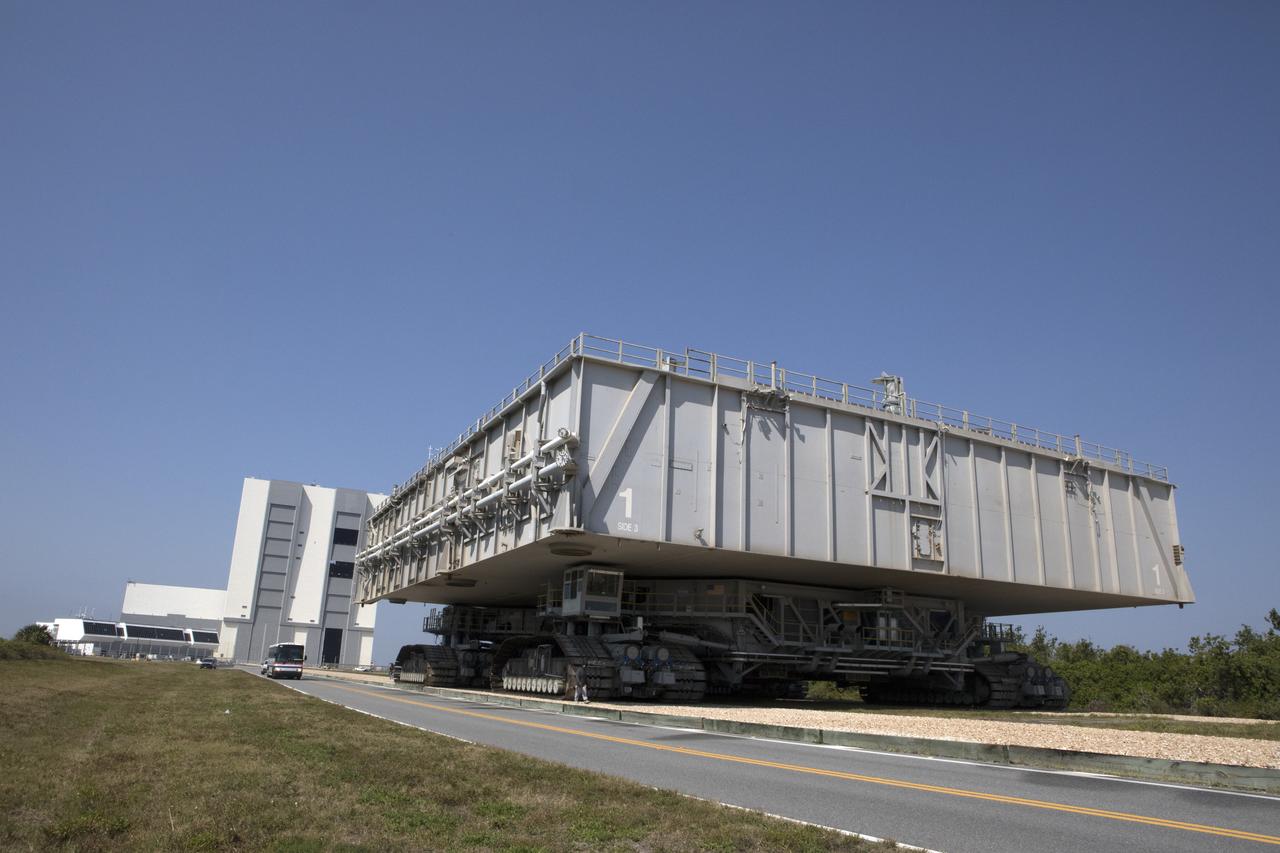
NASA's upgraded crawler-transporter 2 (CT-2), carrying mobile launcher platform 1, moves slowly along the crawlerway toward the Vehicle Assembly Building at the agency's Kennedy Space Center in Florida. The crawler's upgrades and modifications were monitored and tested during a loaded test to the crawlerway Pad A/B split. CT-2 will return to the crawler yard. The crawler is being tested to confirm it is ready to support the load of the mobile launcher carrying the Space Launch System with Orion atop for the first test flight, Exploration Mission 1. The Ground Systems Development and Operations Program at Kennedy is managing upgrades to the crawler.
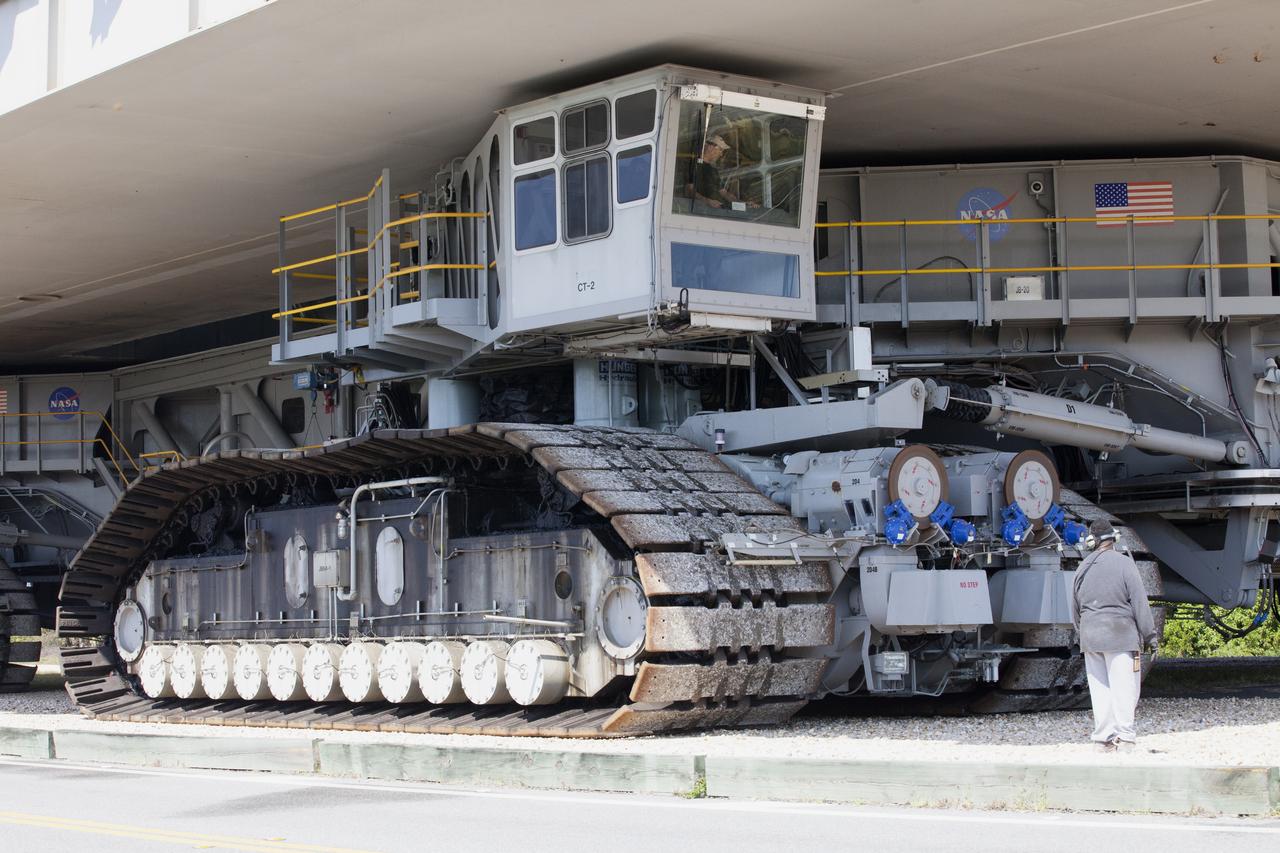
NASA's upgraded crawler-transporter 2 (CT-2), carrying mobile launcher platform 1, moves slowly along the crawlerway at the agency's Kennedy Space Center in Florida. The crawler's upgrades and modifications will be monitored and tested under loaded conditions during its travel to the crawlerway Pad A/B split and back to the crawler yard to confirm it is ready to support the load of the mobile launcher carrying the Space Launch System with Orion atop for the first test flight, Exploration Mission 1. The Ground Systems Development and Operations Program at Kennedy is managing upgrades to the crawler.
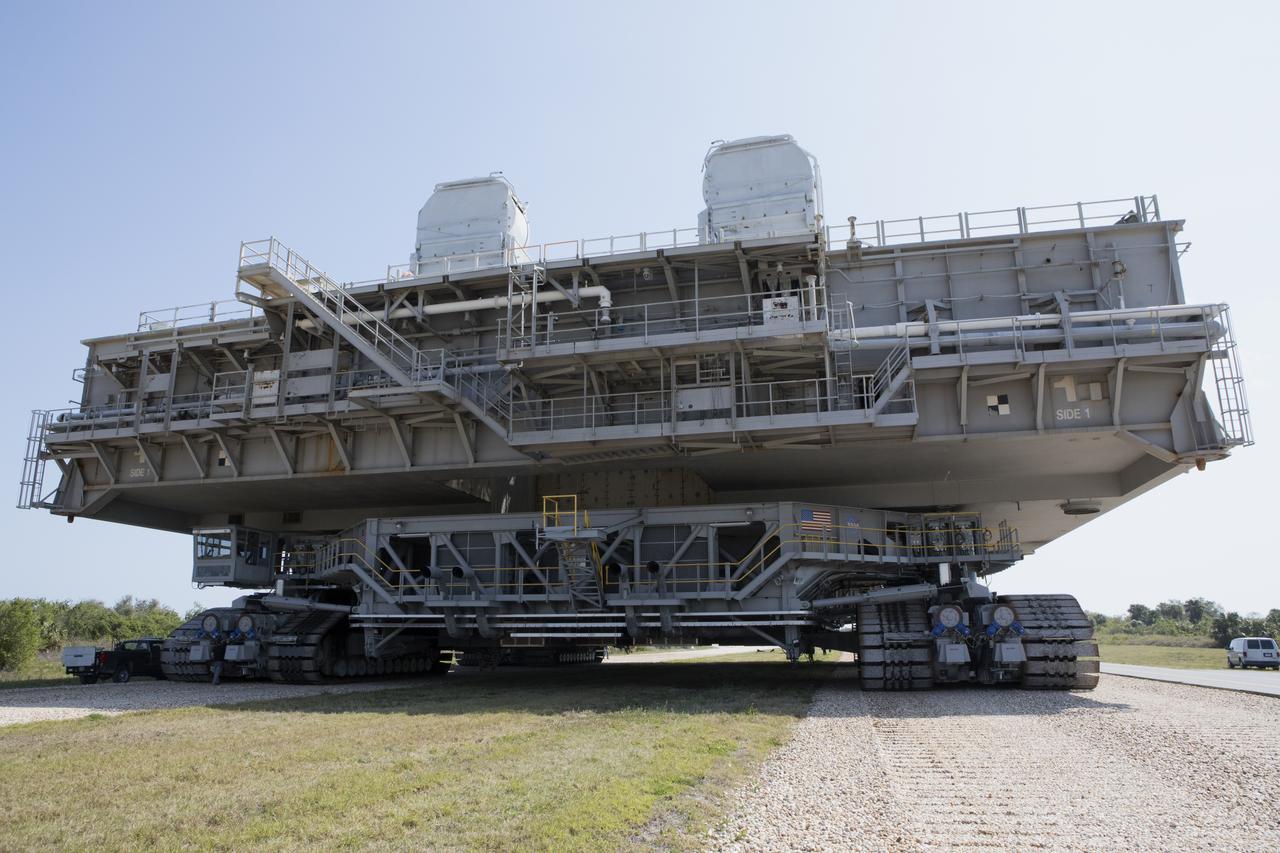
NASA's upgraded crawler-transporter 2 (CT-2), carrying mobile launcher platform 1, moves slowly along the crawlerway at the agency's Kennedy Space Center in Florida. The crawler's upgrades and modifications will be monitored and tested under loaded conditions during its travel to the crawlerway Pad A/B split and back to the crawler yard to confirm it is ready to support the load of the mobile launcher carrying the Space Launch System with Orion atop for the first test flight, Exploration Mission 1. The Ground Systems Development and Operations Program at Kennedy is managing upgrades to the crawler.
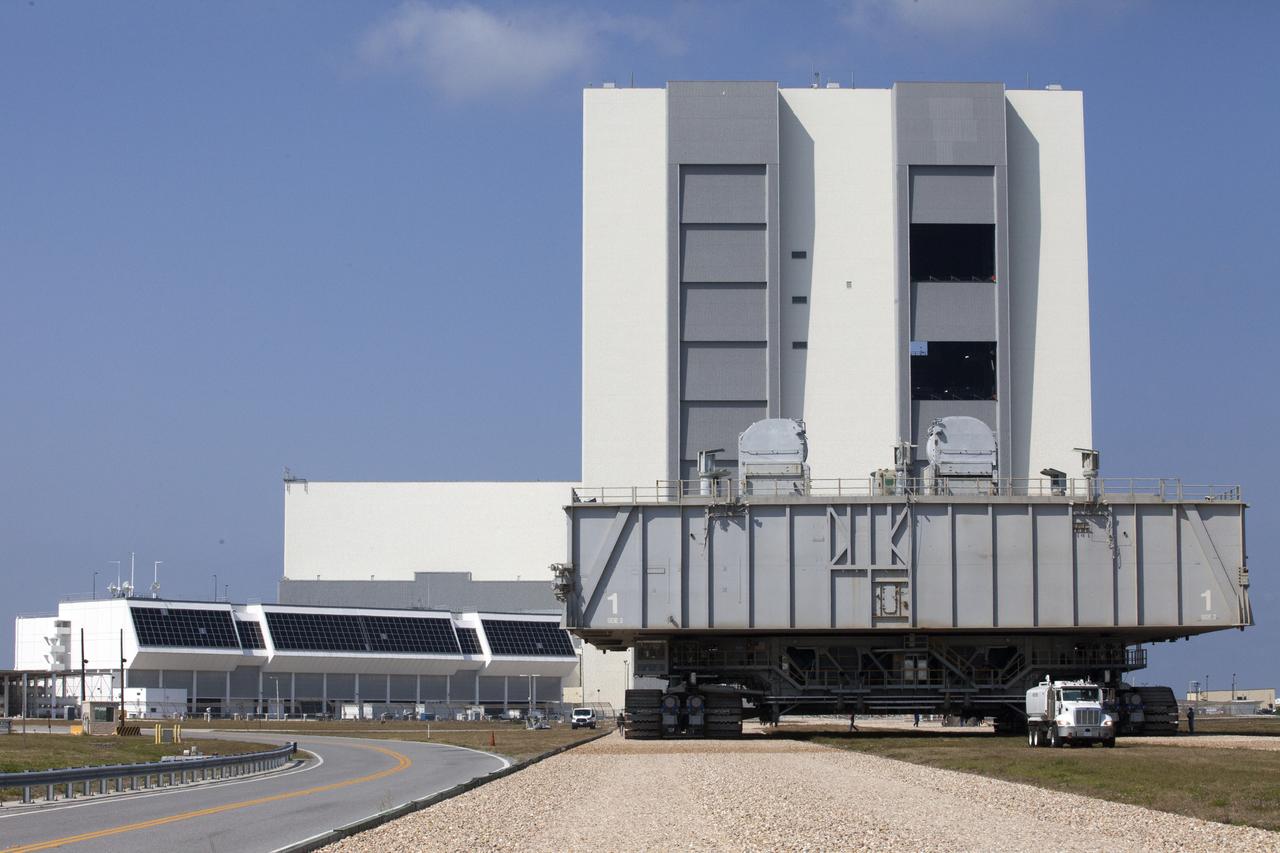
NASA’s upgraded crawler-transporter 2 (CT-2) travels slowly along the crawlerway carrying mobile launcher platform 1 at the agency’s Kennedy Space Center in Florida. The crawler's upgrades and modifications were being monitored and tested under loaded conditions during its travel to the Pad A/B split and back to the crawler yard to confirm it is ready to support the load of the mobile launcher carrying the Space Launch System with Orion atop for the first test flight, Exploration Mission 1. A truck sprays water in front of the crawler to control dust as the large vehicle moves along. The Ground Systems Development and Operations Program at Kennedy is managing upgrades to the crawler.

NASA's upgraded crawler-transporter 2 (CT-2) picks up mobile launcher platform 1 (MLP1) at the MLP park site near the Vehicle Assembly at the agency's Kennedy Space Center in Florida. The crawler's upgrades and modifications will be monitored and tested under loaded conditions during its travel to the crawlerway Pad A/B split and back to the crawler yard to confirm it is ready to support the load of the mobile launcher carrying the Space Launch System with Orion atop for the first test flight, Exploration Mission 1. The Ground Systems Development and Operations Program at Kennedy is managing upgrades to the crawler.
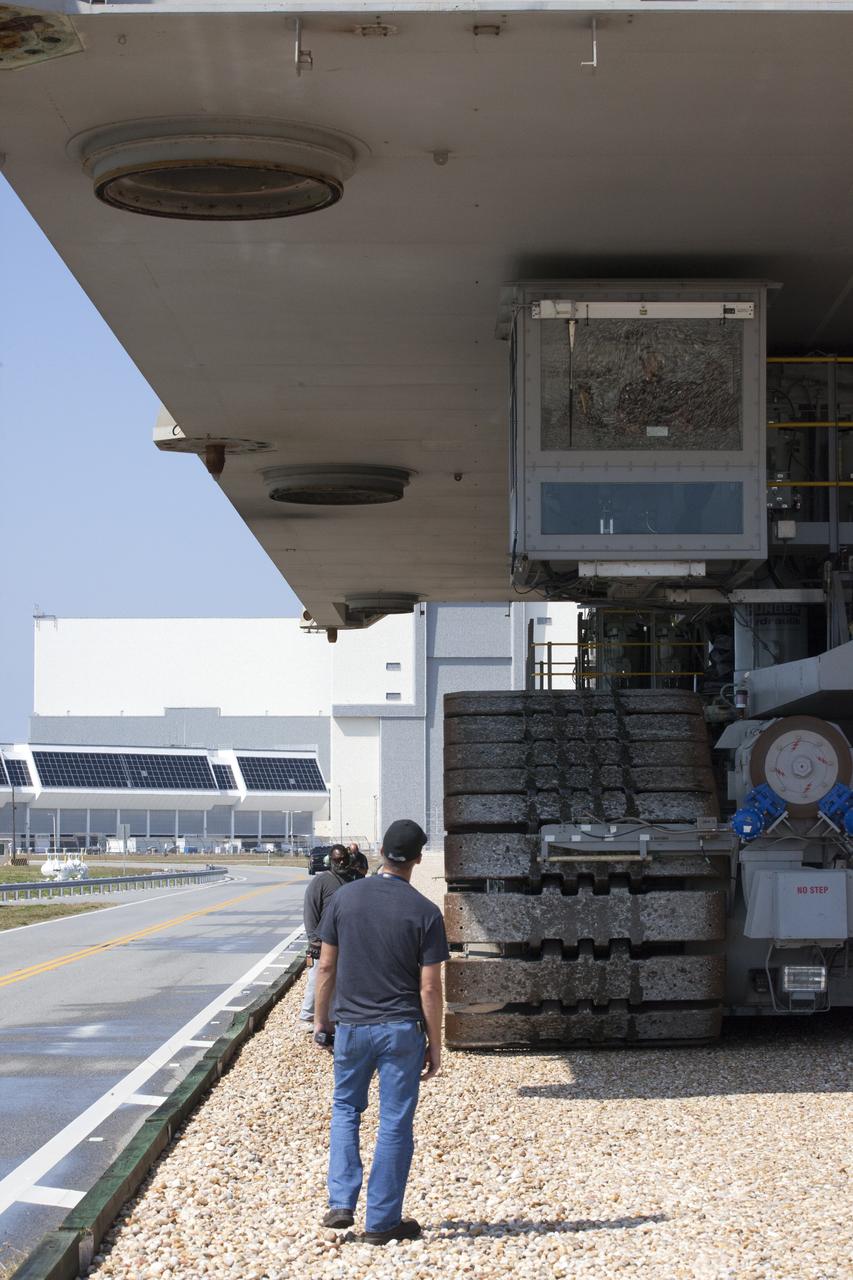
Ground support technicians walk alongside NASA's upgraded crawler-transporter 2 (CT-2), carrying mobile launcher platform 1, as it slowly travels on the crawlerway at the agency's Kennedy Space Center in Florida. The crawler's upgrades and modifications will be monitored and tested under loaded conditions during its travel to the crawlerway Pad A/B split and back to the crawler yard to confirm it is ready to support the load of the mobile launcher carrying the Space Launch System with Orion atop for the first test flight, Exploration Mission 1. The Ground Systems Development and Operations Program at Kennedy is managing upgrades to the crawler.
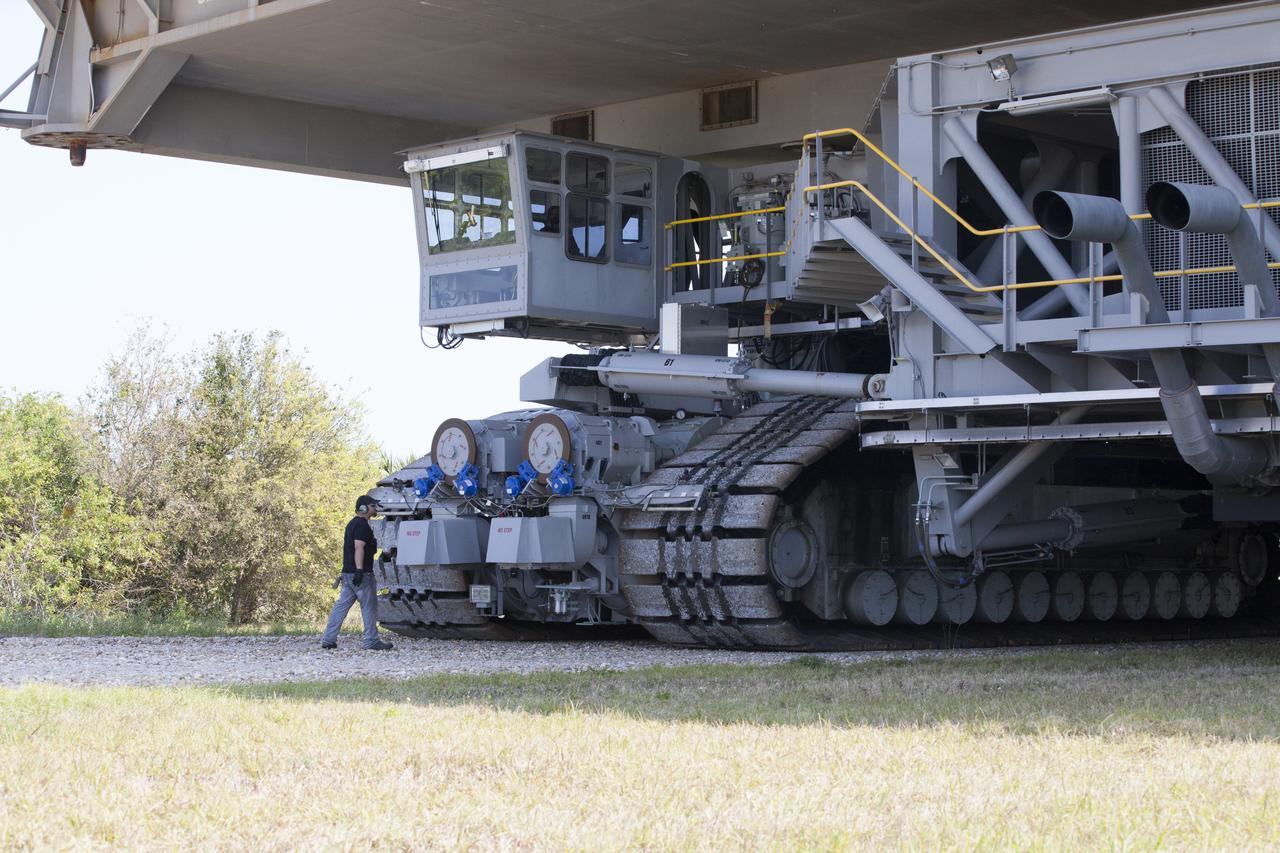
NASA's upgraded crawler-transporter 2 (CT-2) travels slowly along the crawlerway, carrying the mobile launcher platform at the agency's Kennedy Space Center in Florida. The crawler's upgrades and modifications will be monitored and tested under loaded conditions during its travel to the crawlerway Pad A/B split and back to the crawler yard to confirm it is ready to support the load of the mobile launcher carrying the Space Launch System with Orion atop for the first test flight, Exploration Mission 1. The Ground Systems Development and Operations Program at Kennedy is managing upgrades to the crawler.
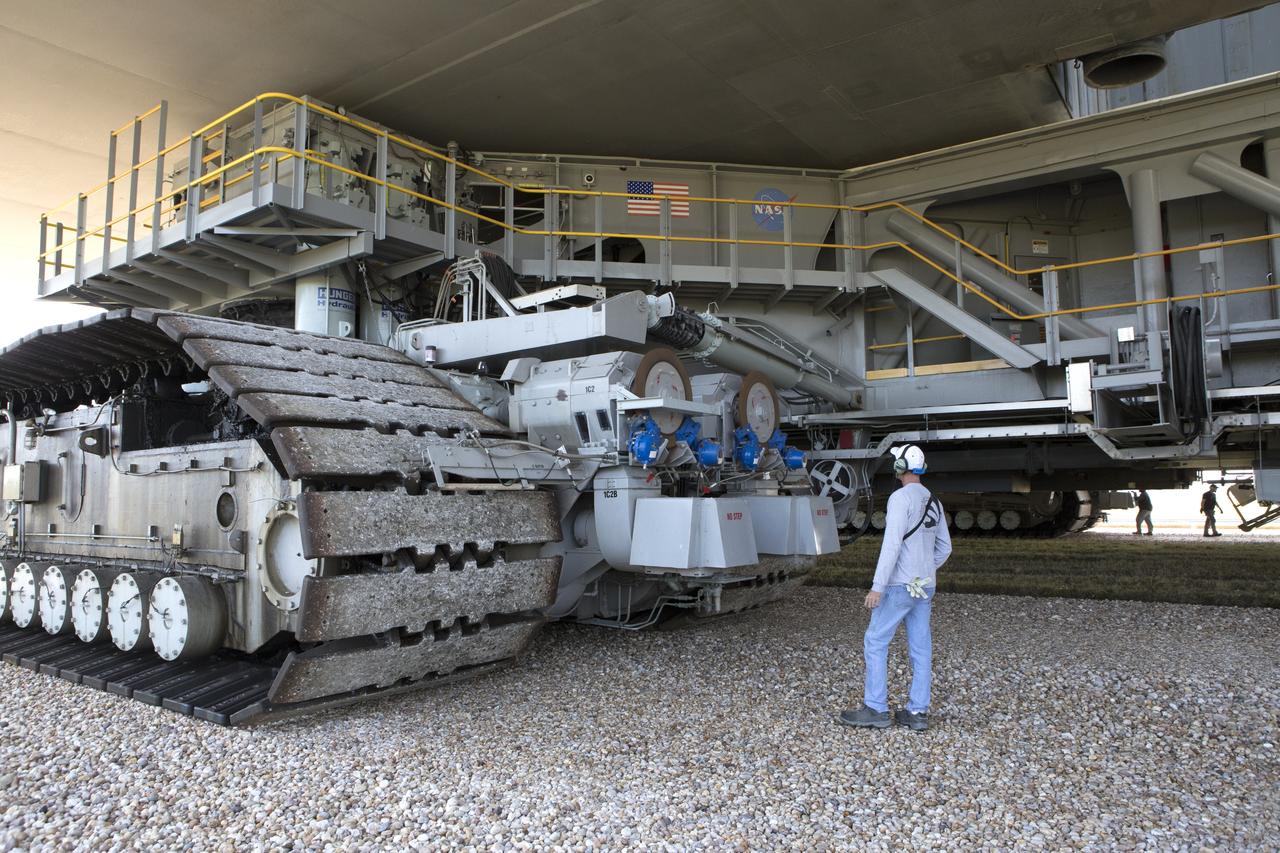
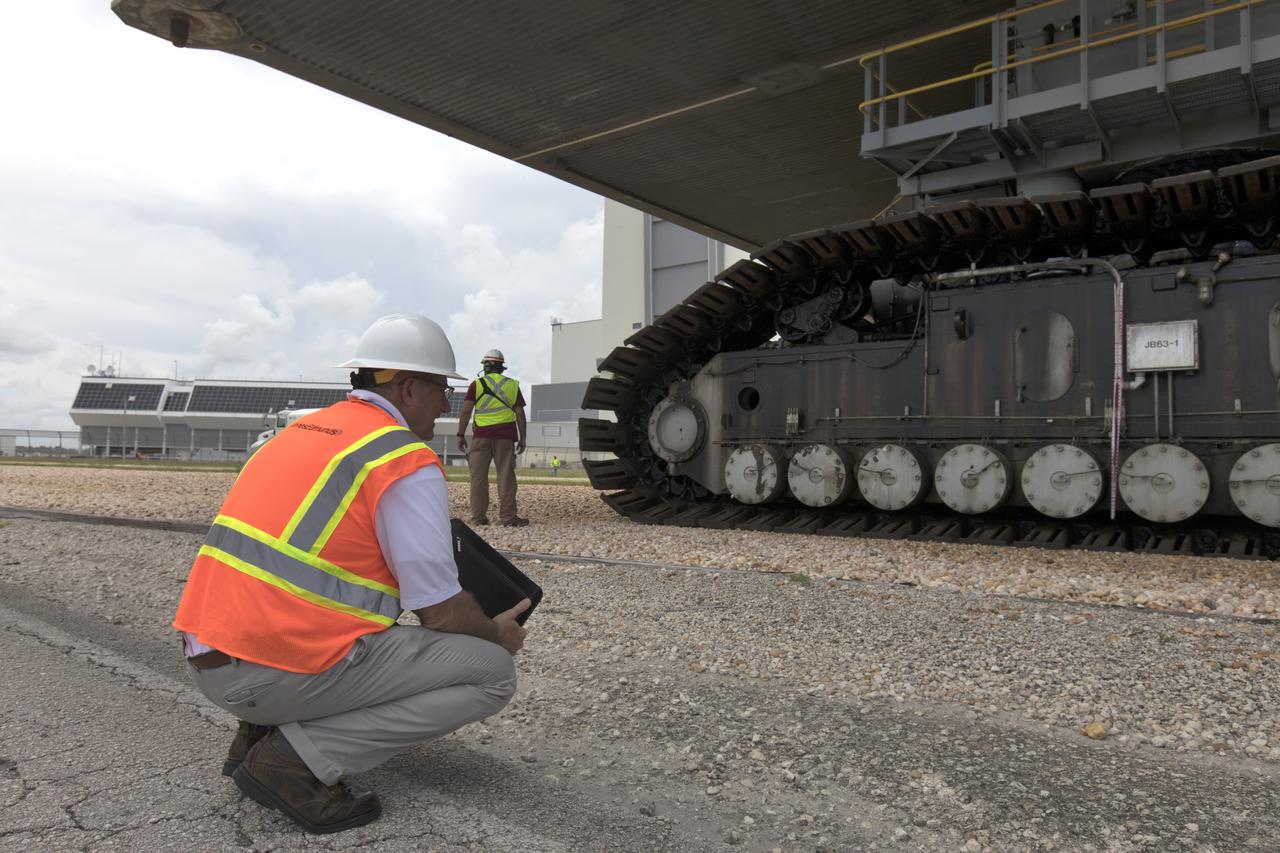
During a load test of NASA's upgraded crawler-transporter 2 (CT-2), a ground support technician watches as the giant vehicle travels along the crawlerway at the agency’s Kennedy Space Center in Florida. The crawler's upgrades and modifications will be monitored and tested under loaded conditions during its travel to the crawlerway Pad A/B split and back to the crawler yard to confirm it is ready to support the load of the mobile launcher carrying the Space Launch System with Orion atop for the first test flight, Exploration Mission 1. The Ground Systems Development and Operations Program at Kennedy is managing upgrades to the crawler.
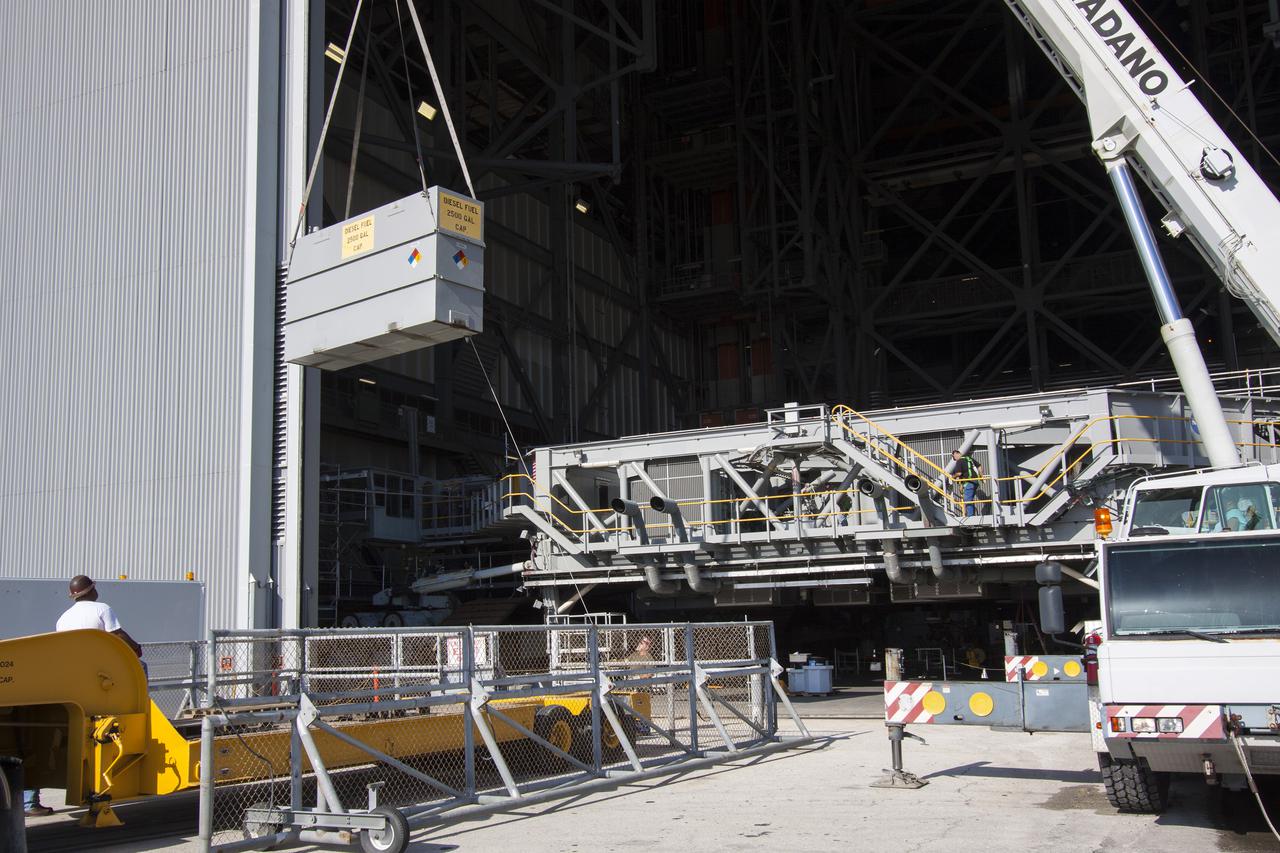
CAPE CANAVERAL, Fla. – Inside the Vehicle Assembly Building at NASA’s Kennedy Space Center in Florida, a large crane is used to lift a fuel tank away from crawler-transporter 1 CT-1 in high bay 3. The fuel tank will be transported to the Wiltech facility at Kennedy for cleaning and inspection. Work continues in high bay 3 to upgrade CT-1 as part of its general maintenance. CT-1 could be available to carry commercial launch vehicles to the launch pad. The crawler-transporters were used to carry the mobile launcher platform and space shuttle to Launch Complex 39 for space shuttle launches for 30 years. Photo credit: NASA_Jim Grossman

CAPE CANAVERAL, Fla. – Inside the Vehicle Assembly Building at NASA’s Kennedy Space Center in Florida, technicians prepare to remove a fuel tank from crawler-transporter 1 CT-1 in high bay 3. The fuel tank will be transported to the Wiltech facility at Kennedy for cleaning and inspection. Work continues in high bay 3 to upgrade CT-1 as part of its general maintenance. CT-1 could be available to carry commercial launch vehicles to the launch pad. The crawler-transporters were used to carry the mobile launcher platform and space shuttle to Launch Complex 39 for space shuttle launches for 30 years. Photo credit: NASA_Jim Grossman
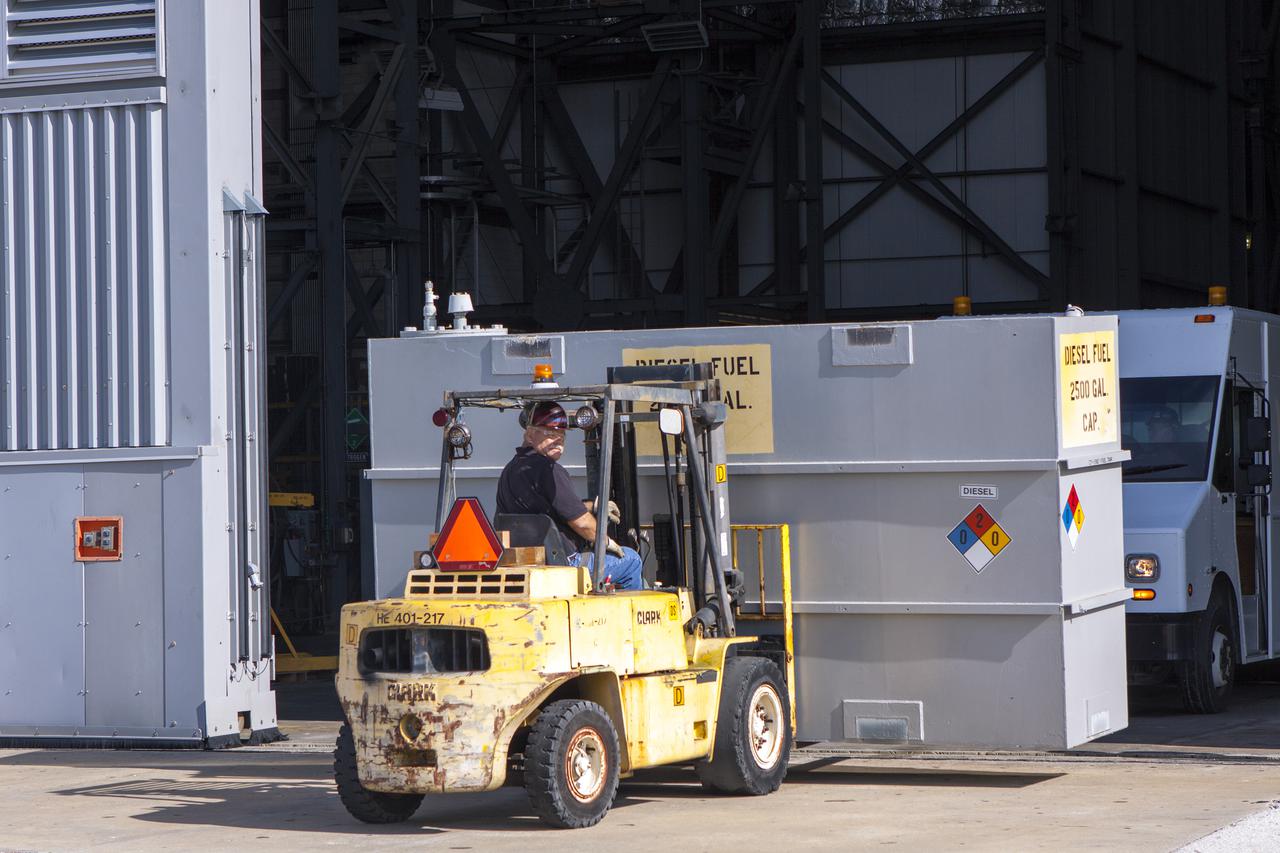
CAPE CANAVERAL, Fla. – In front of the Vehicle Assembly Building at NASA’s Kennedy Space Center in Florida, a technician uses a forklift to move a fuel tank after it was removed from crawler-transporter 1 CT-1 in high bay 3. The fuel tank will be transporter to the Wiltech facility at Kennedy for cleaning and inspection. Work continues in high bay 3 to upgrade CT-1 as part of its general maintenance. CT-1 could be available to carry commercial launch vehicles to the launch pad. The crawler-transporters were used to carry the mobile launcher platform and space shuttle to Launch Complex 39 for space shuttle launches for 30 years. Photo credit: NASA_Jim Grossman
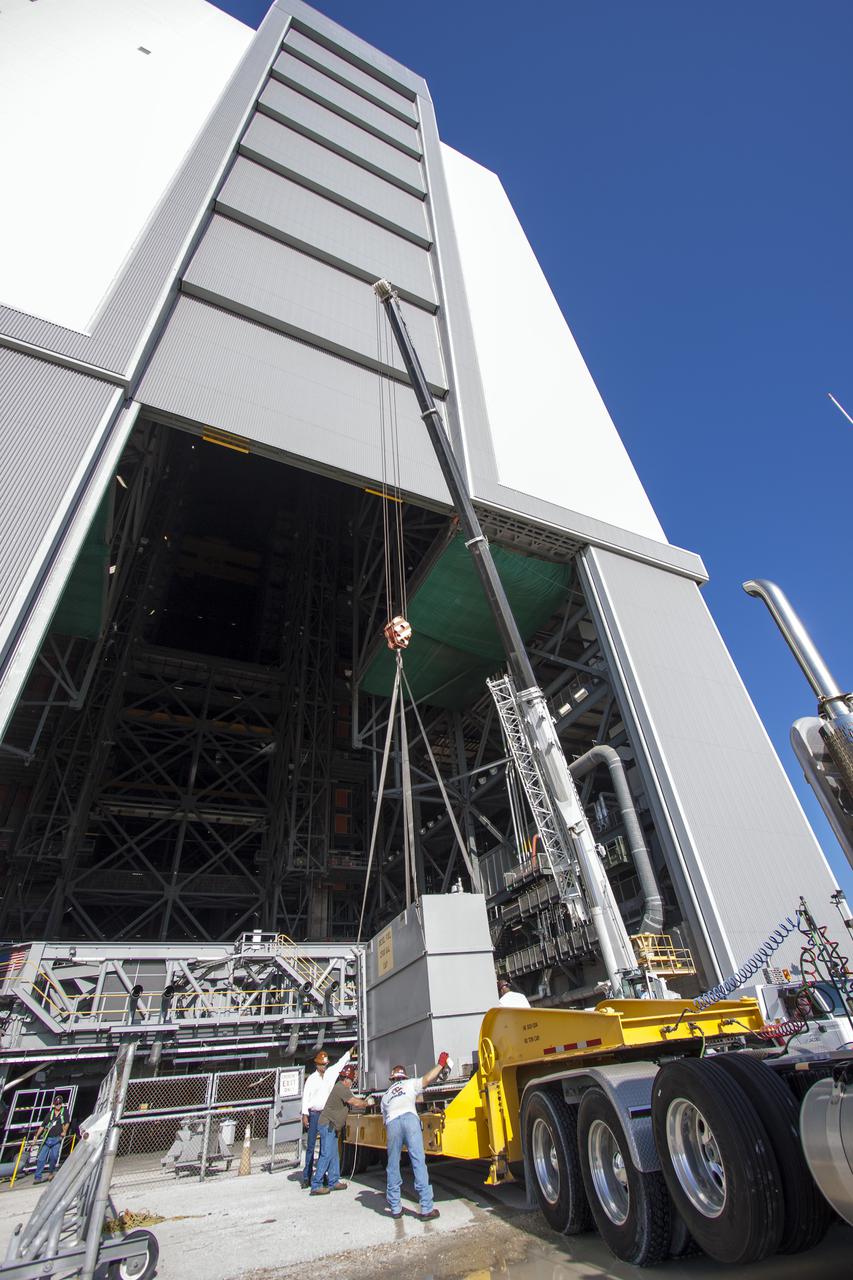
CAPE CANAVERAL, Fla. – In front of the Vehicle Assembly Building at NASA’s Kennedy Space Center in Florida, technicians monitor the progress as a large crane lowers a fuel tank from crawler-transporter 1 CT-1 in high bay 3 onto a flatbed truck. The fuel tank will be transported to the Wiltech facility at Kennedy for cleaning and inspection. Work continues in high bay 3 to upgrade CT-1 as part of its general maintenance. CT-1 could be available to carry commercial launch vehicles to the launch pad. The crawler-transporters were used to carry the mobile launcher platform and space shuttle to Launch Complex 39 for space shuttle launches for 30 years. Photo credit: NASA_Jim Grossman
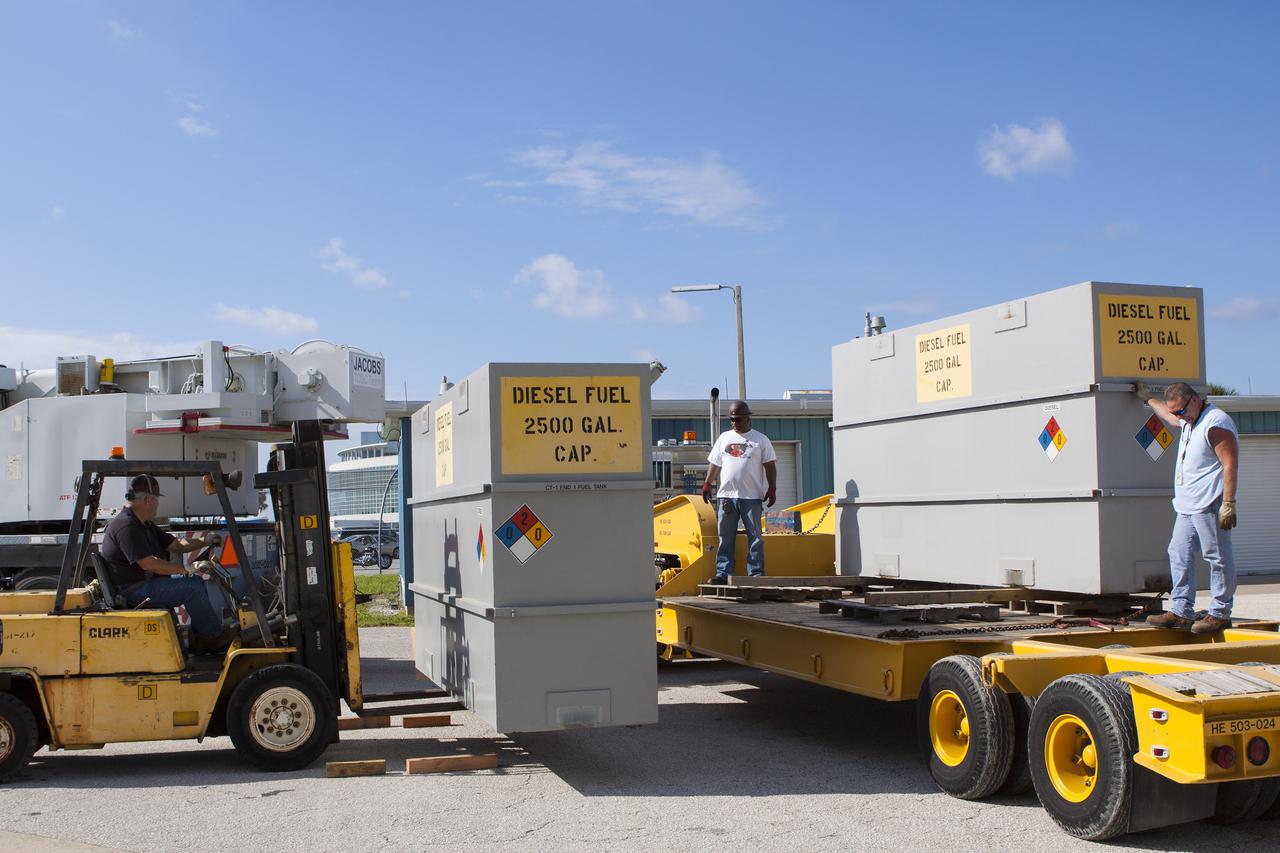
CAPE CANAVERAL, Fla. – In front of the Vehicle Assembly Building at NASA’s Kennedy Space Center in Florida, a technician uses a forklift to move a fuel tank onto a flatbed truck. Two fuel tanks were removed from crawler-transporter 1 CT-1 in high bay 3. The tanks will be sent to the Wiltech facility at Kennedy for cleaning and inspection. Work continues in high bay 3 to upgrade CT-1 as part of its general maintenance. CT-1 could be available to carry commercial launch vehicles to the launch pad. The crawler-transporters were used to carry the mobile launcher platform and space shuttle to Launch Complex 39 for space shuttle launches for 30 years. Photo credit: NASA_Jim Grossman
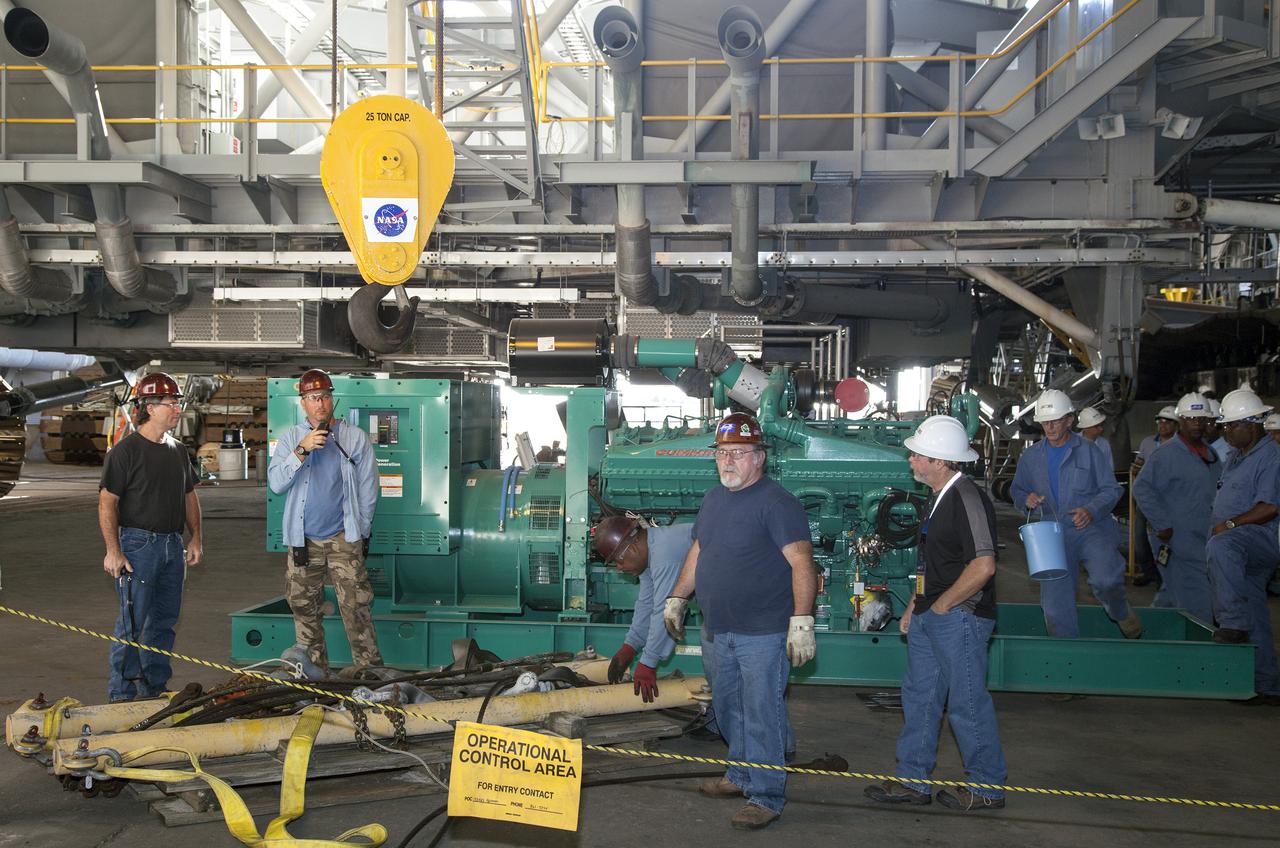
CAPE CANAVERAL, Fla. – Inside the Vehicle Assembly Building at NASA’s Kennedy Space Center in Florida, technicians prepare a new generator to be lifted by crane for installation in crawler-transporter 1, or CT-1. Work continues in high bay 3 to upgrade CT-1 as part of its general maintenance. CT-1 could be available to carry commercial launch vehicles to the launch pad. The crawler-transporters were used to carry the mobile launcher platform and space shuttle to Launch Complex 39 for space shuttle launches for 30 years. Photo credit: NASA_Daniel Casper
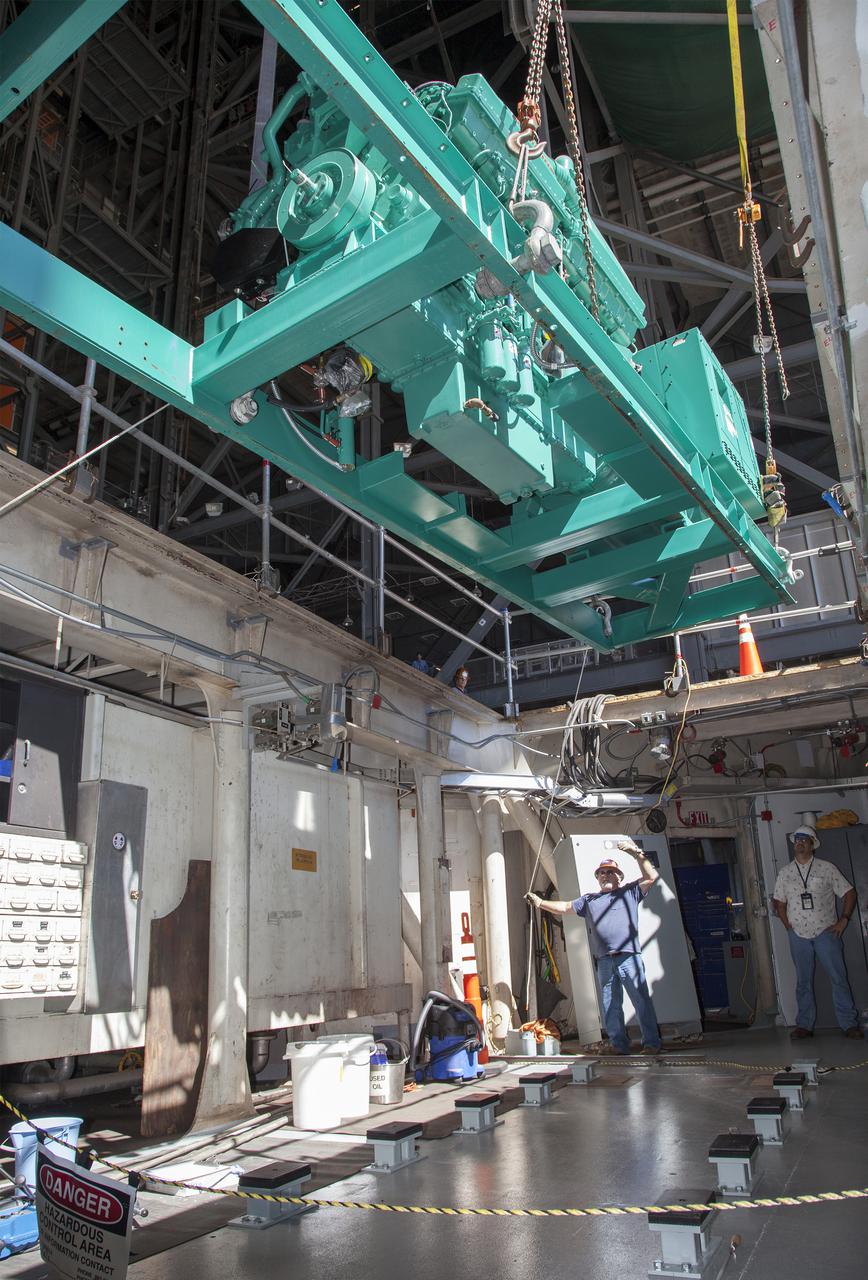
CAPE CANAVERAL, Fla. – Inside the Vehicle Assembly Building at NASA’s Kennedy Space Center in Florida, technicians monitor the progress as a large crane lowers a new generator up for installation in crawler-transporter 1, or CT-1. Work continues in high bay 3 to upgrade CT-1 as part of its general maintenance. CT-1 could be available to carry commercial launch vehicles to the launch pad. The crawler-transporters were used to carry the mobile launcher platform and space shuttle to Launch Complex 39 for space shuttle launches for 30 years. Photo credit: NASA_Daniel Casper
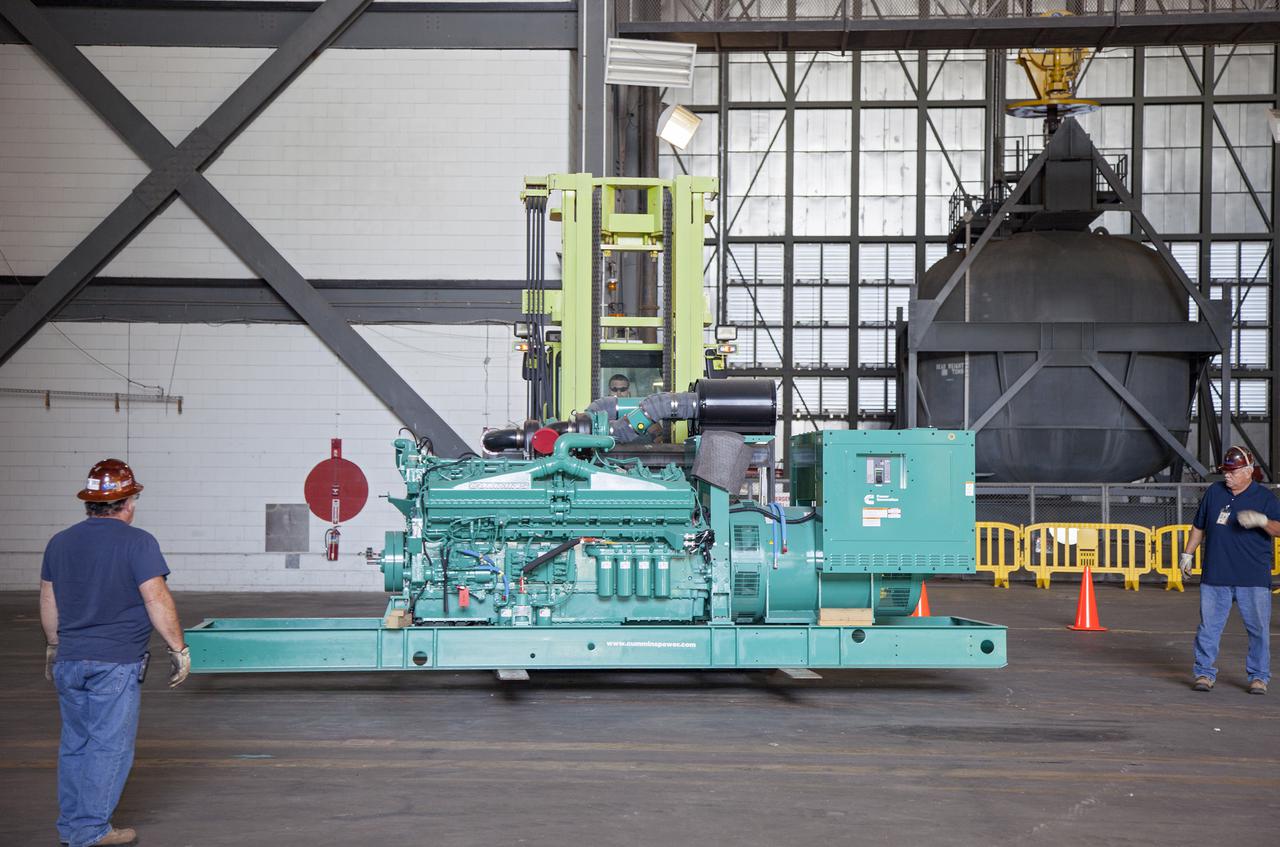
CAPE CANAVERAL, Fla. – Inside the Vehicle Assembly Building at NASA’s Kennedy Space Center in Florida, technicians prepare a new generator for installation in crawler-transporter 1, or CT-1. Work continues in high bay 3 to upgrade CT-1 as part of its general maintenance. CT-1 could be available to carry commercial launch vehicles to the launch pad. The crawler-transporters were used to carry the mobile launcher platform and space shuttle to Launch Complex 39 for space shuttle launches for 30 years. Photo credit: NASA_Daniel Casper
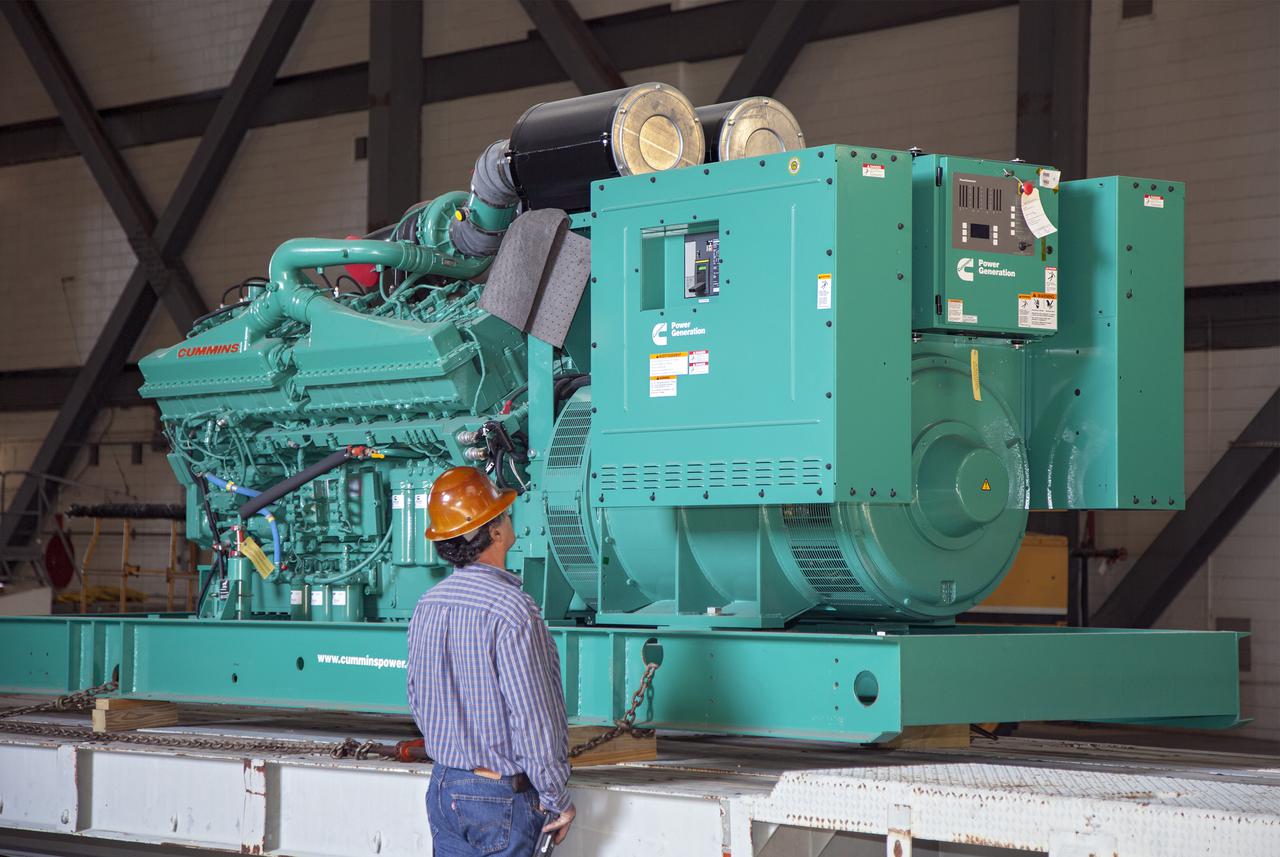
CAPE CANAVERAL, Fla. – Inside the Vehicle Assembly Building at NASA’s Kennedy Space Center in Florida, a technician inspects a new generator for installation in crawler-transporter 1, or CT-1. Work continues in high bay 3 to upgrade CT-1 as part of its general maintenance. CT-1 could be available to carry commercial launch vehicles to the launch pad. The crawler-transporters were used to carry the mobile launcher platform and space shuttle to Launch Complex 39 for space shuttle launches for 30 years. Photo credit: NASA_Daniel Casper
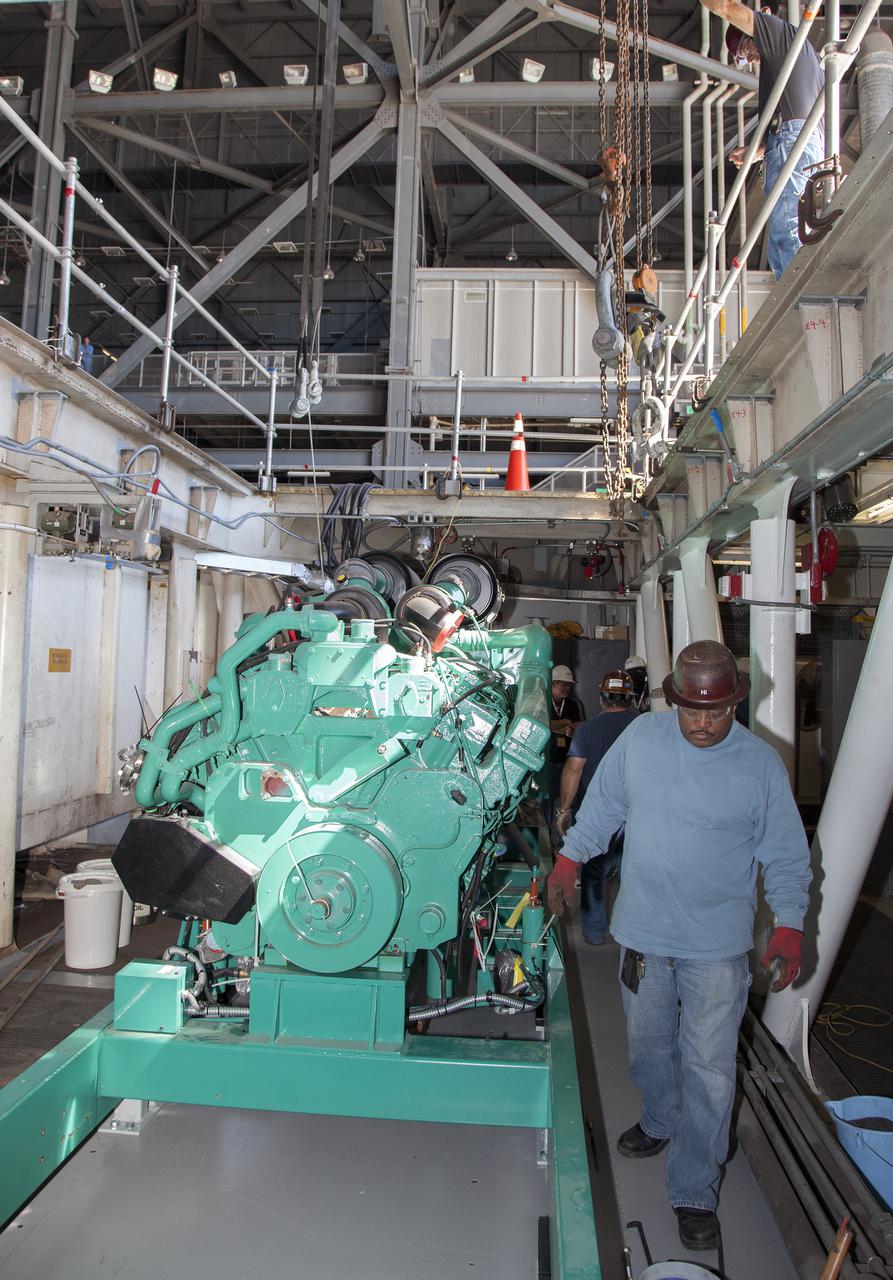
CAPE CANAVERAL, Fla. – Inside the Vehicle Assembly Building at NASA’s Kennedy Space Center in Florida, technicians prepare to install a new generator in crawler-transporter 1, or CT-1. Work continues in high bay 3 to upgrade CT-1 as part of its general maintenance. CT-1 could be available to carry commercial launch vehicles to the launch pad. The crawler-transporters were used to carry the mobile launcher platform and space shuttle to Launch Complex 39 for space shuttle launches for 30 years. Photo credit: NASA_Daniel Casper
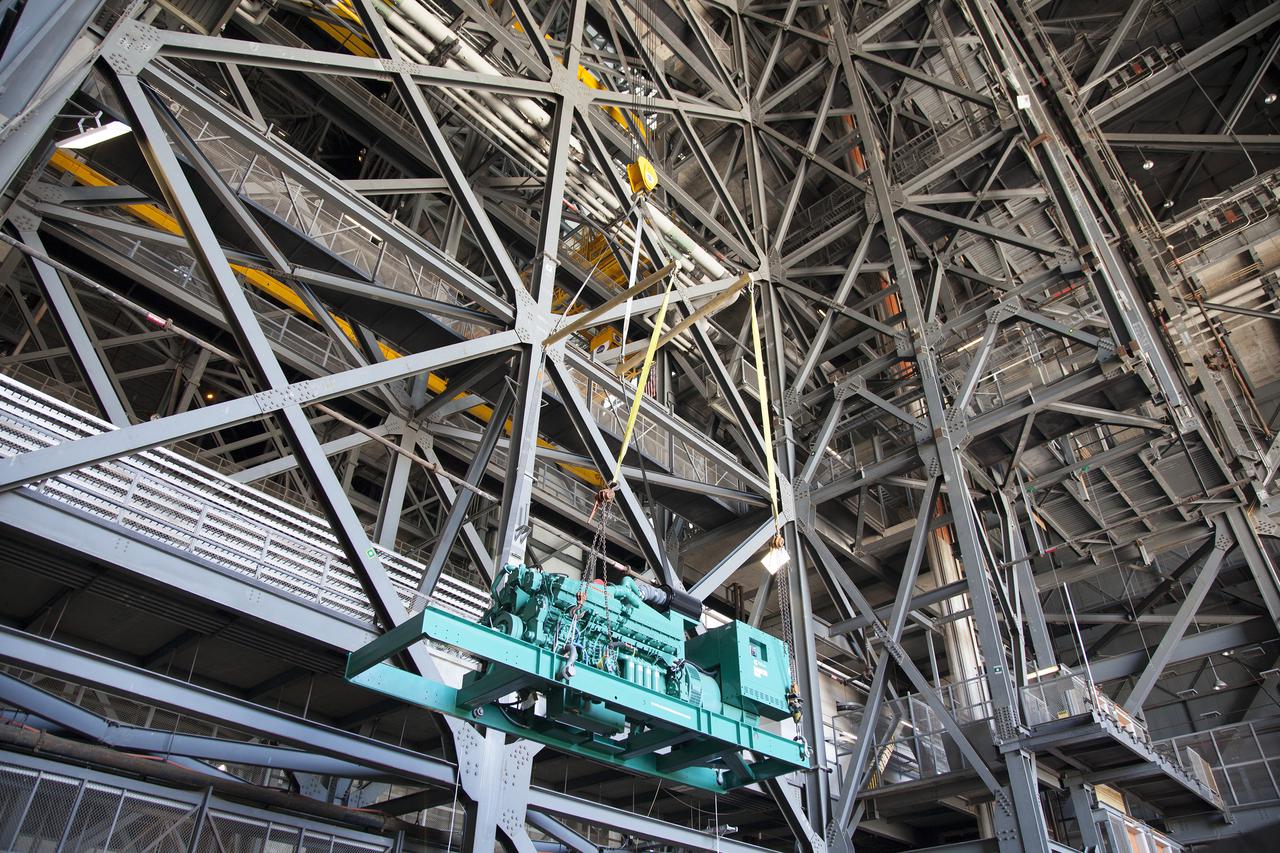
CAPE CANAVERAL, Fla. – Inside the Vehicle Assembly Building at NASA’s Kennedy Space Center in Florida, a large crane lifts a new generator up for installation in crawler-transporter 1, or CT-1. Work continues in high bay 3 to upgrade CT-1 as part of its general maintenance. CT-1 could be available to carry commercial launch vehicles to the launch pad. The crawler-transporters were used to carry the mobile launcher platform and space shuttle to Launch Complex 39 for space shuttle launches for 30 years. Photo credit: NASA_Daniel Casper
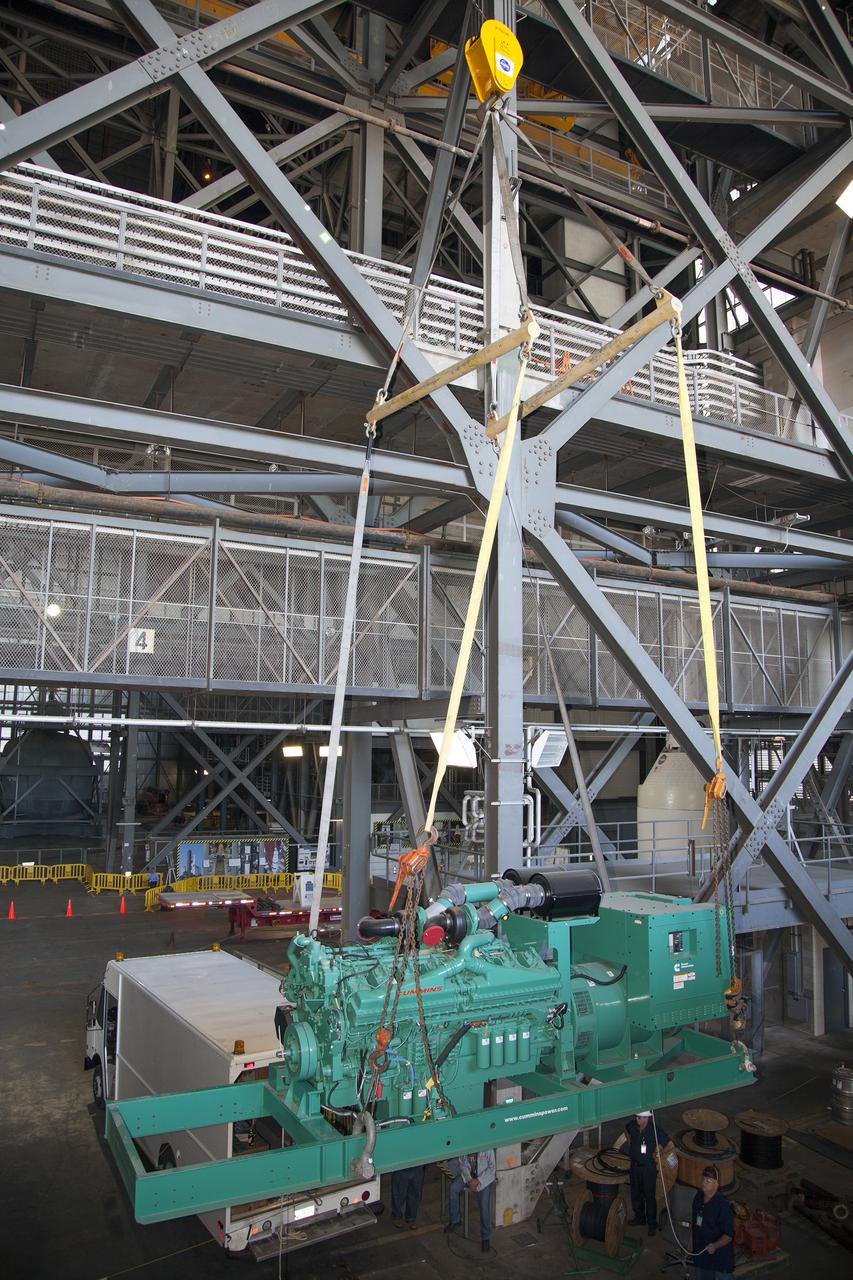
CAPE CANAVERAL, Fla. – Inside the Vehicle Assembly Building at NASA’s Kennedy Space Center in Florida, a large crane is used to lift a new generator for installation in crawler-transporter 1, or CT-1. Work continues in high bay 3 to upgrade CT-1 as part of its general maintenance. CT-1 could be available to carry commercial launch vehicles to the launch pad. The crawler-transporters were used to carry the mobile launcher platform and space shuttle to Launch Complex 39 for space shuttle launches for 30 years. Photo credit: NASA_Daniel Casper
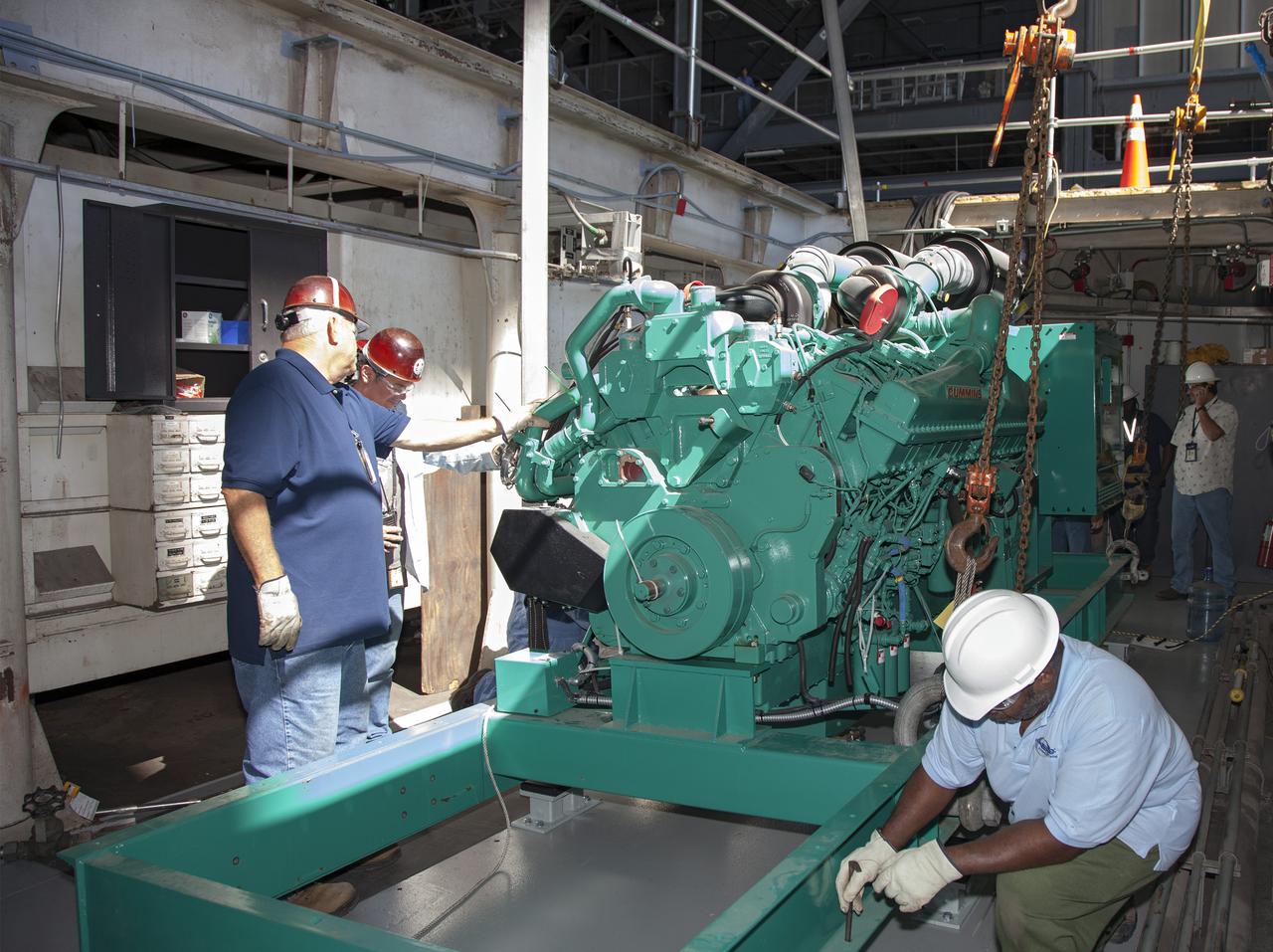
CAPE CANAVERAL, Fla. – Inside the Vehicle Assembly Building at NASA’s Kennedy Space Center in Florida, technicians prepare to install a new generator in crawler-transporter 1, or CT-1. Work continues in high bay 3 to upgrade CT-1 as part of its general maintenance. CT-1 could be available to carry commercial launch vehicles to the launch pad. The crawler-transporters were used to carry the mobile launcher platform and space shuttle to Launch Complex 39 for space shuttle launches for 30 years. Photo credit: NASA_Daniel Casper
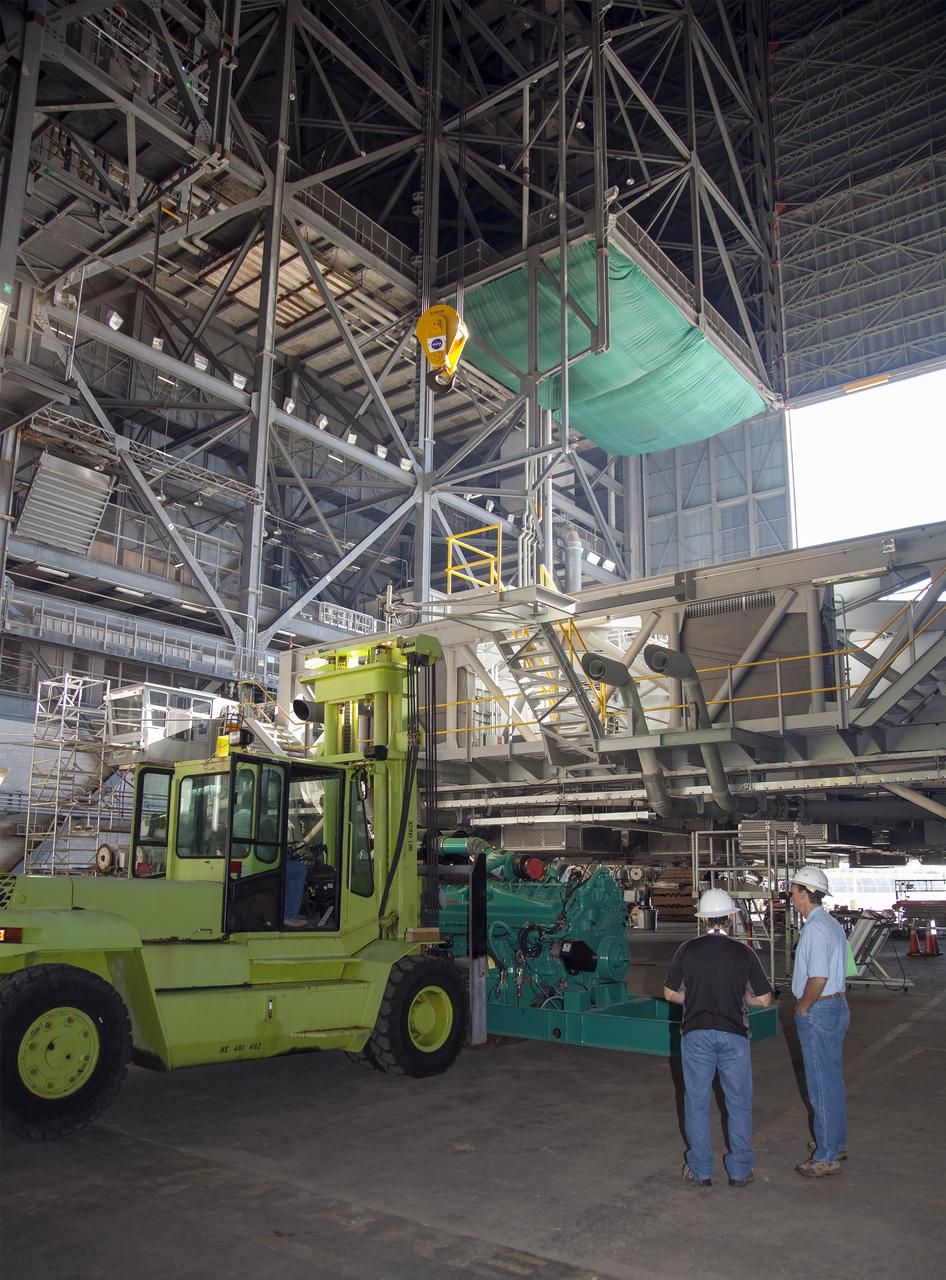
CAPE CANAVERAL, Fla. – Inside the Vehicle Assembly Building at NASA’s Kennedy Space Center in Florida, a forklift is used to move a new generator closer for installation in crawler-transporter 1, or CT-1. Work continues in high bay 3 to upgrade CT-1 as part of its general maintenance. CT-1 could be available to carry commercial launch vehicles to the launch pad. The crawler-transporters were used to carry the mobile launcher platform and space shuttle to Launch Complex 39 for space shuttle launches for 30 years. Photo credit: NASA_Daniel Casper
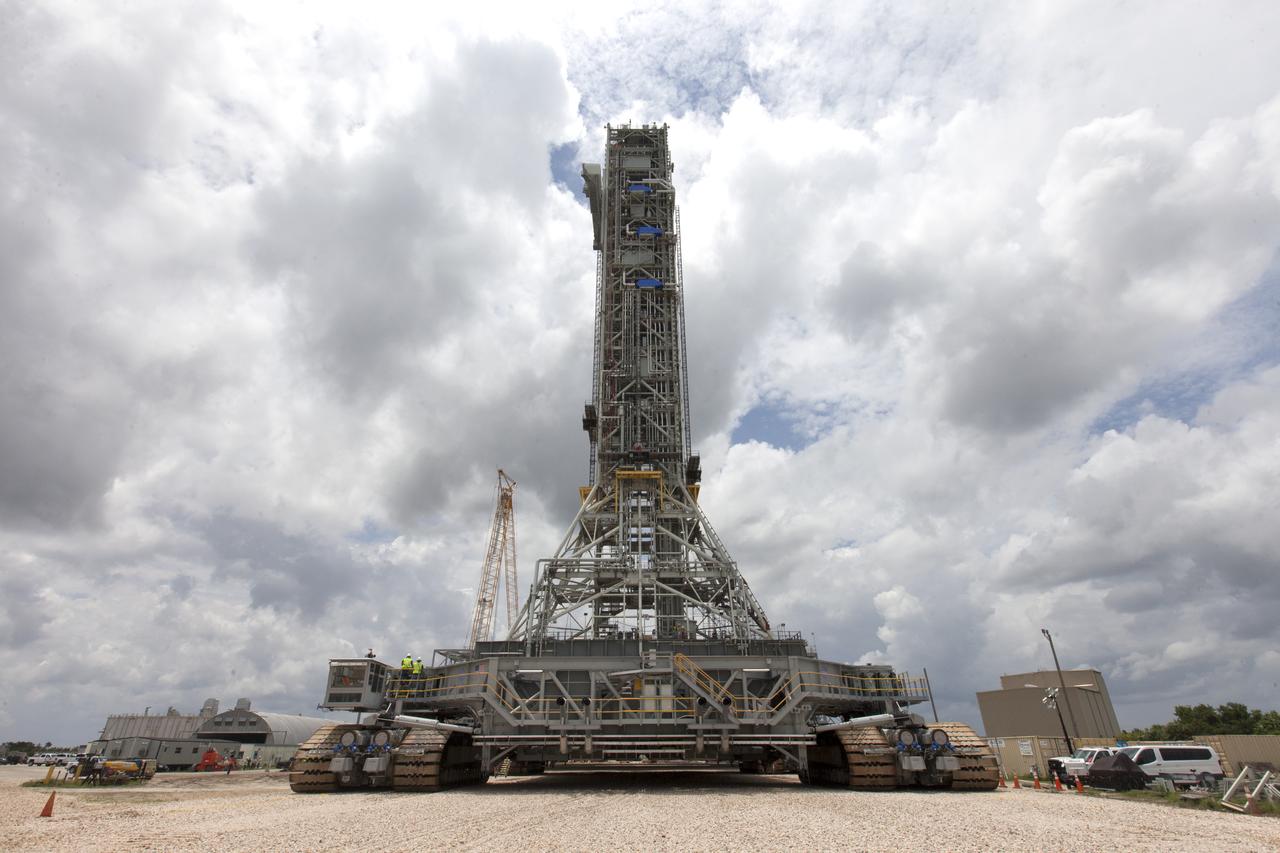
Preparations are underway May 31, 2018, to move crawler-transporter 2 (CT-2) under the mobile launcher at NASA's Kennedy Space Center in Florida. Three lifts will be performed to practice lifting procedures, validate interface locations, confirm the weight of the mobile launcher, and develop a baseline for modal analysis. The mobile launcher is equipped with a number of lines, called umbilicals, which will connect to NASA's Space Launch System (SLS) and Orion. CT-2 has been upgraded to handle the weight of the mobile launcher with SLS and Orion atop. Exploration Ground Systems is preparing the ground systems necessary to support the SLS and Orion spacecraft for Exploration Mission-1 and deep space missions.
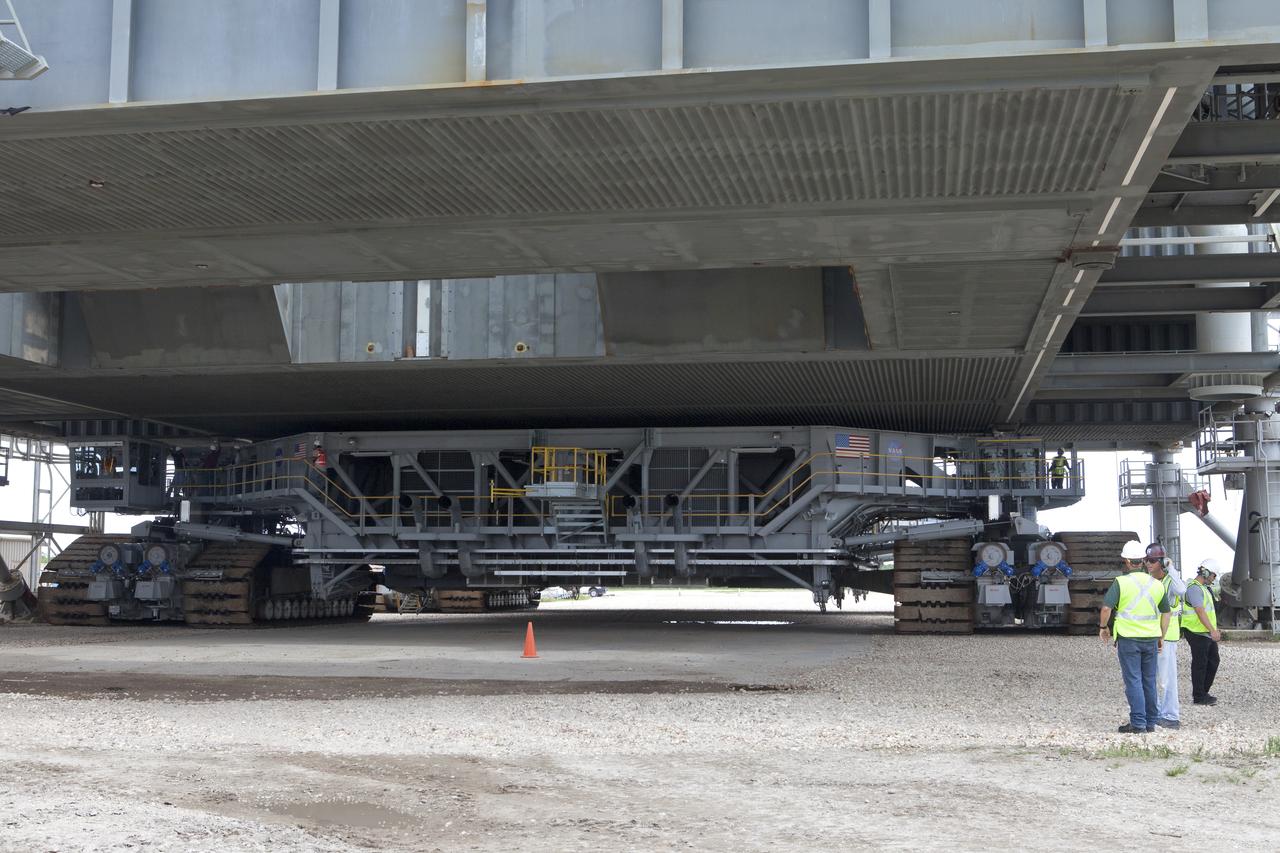
Crawler-transporter 2 (CT-2) is moved under the mobile launcher May 31, 2018, at NASA's Kennedy Space Center in Florida. Three lifts will be performed to practice lifting procedures, validate interface locations, confirm the weight of the mobile launcher, and develop a baseline for modal analysis. The mobile launcher is equipped with a number of lines, called umbilicals, which will connect to NASA's Space Launch System (SLS) and Orion. CT-2 has been upgraded to handle the weight of the mobile launcher with SLS and Orion atop. Exploration Ground Systems is preparing the ground systems necessary to support the SLS and Orion spacecraft for Exploration Mission-1 and deep space missions.
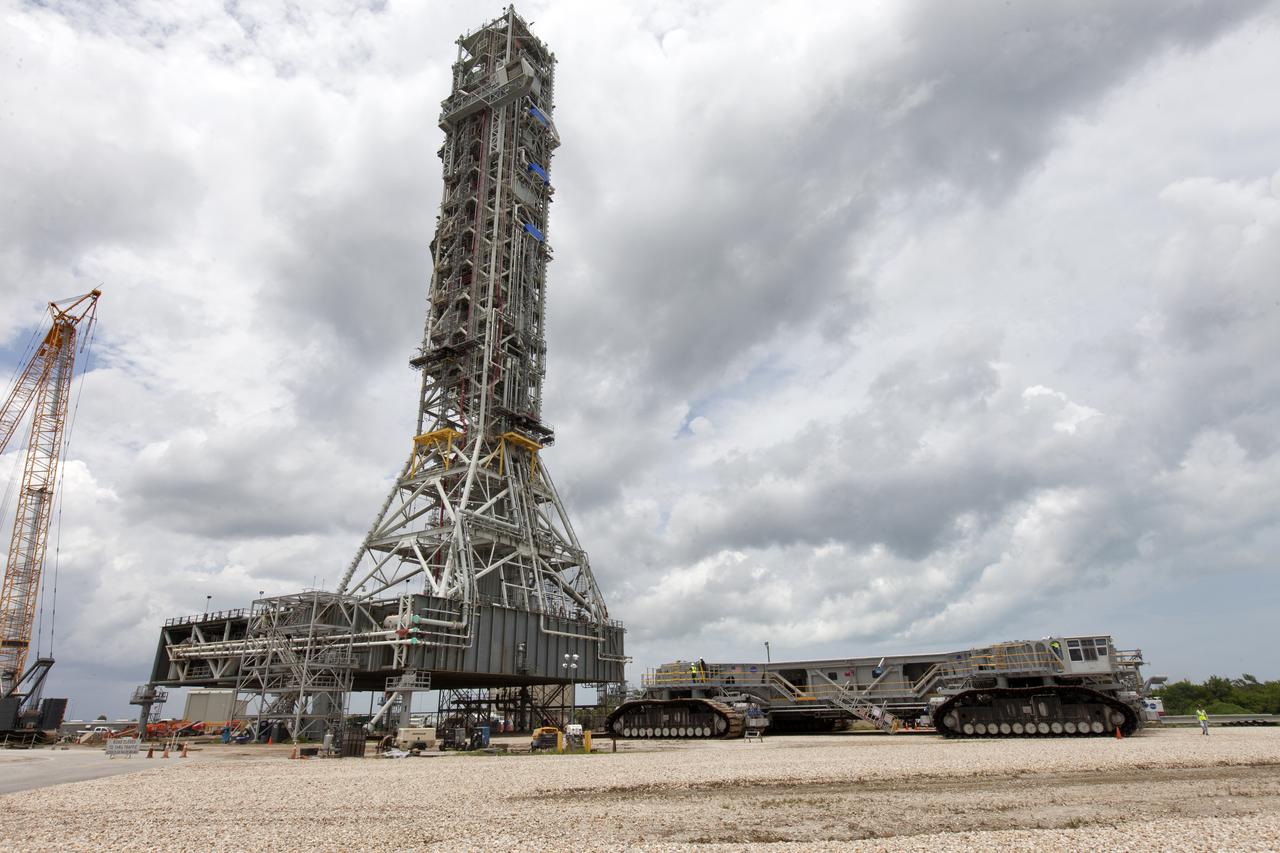
Preparations are underway May 31, 2018, to move crawler-transporter 2 (CT-2) under the mobile launcher at NASA's Kennedy Space Center in Florida. Three lifts will be performed to practice lifting procedures, validate interface locations, confirm the weight of the mobile launcher, and develop a baseline for modal analysis. The mobile launcher is equipped with a number of lines, called umbilicals, which will connect to NASA's Space Launch System (SLS) and Orion. CT-2 has been upgraded to handle the weight of the mobile launcher with SLS and Orion atop. Exploration Ground Systems is preparing the ground systems necessary to support the SLS and Orion spacecraft for Exploration Mission-1 and deep space missions.
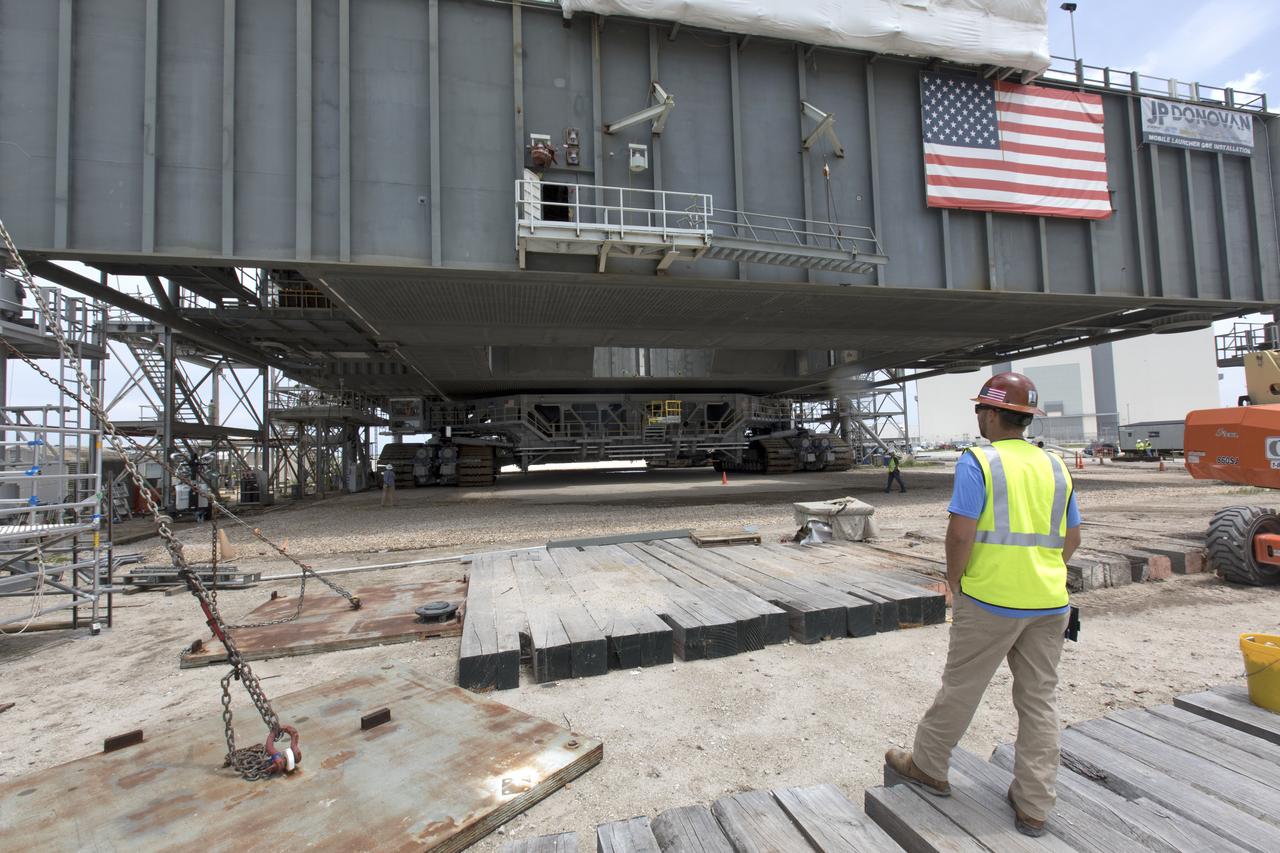
Crawler-transporter 2 (CT-2) is underneath the mobile launcher May 31, 2018, at NASA's Kennedy Space Center in Florida. Three lifts were performed to practice lifting procedures, validate interface locations, confirm the weight of the mobile launcher, and develop a baseline for modal analysis. The mobile launcher is equipped with a number of lines, called umbilicals, which will connect to NASA's Space Launch System (SLS) and Orion. CT-2 has been upgraded to handle the weight of the mobile launcher with SLS and Orion atop. Exploration Ground Systems is preparing the ground systems necessary to support the SLS and Orion spacecraft for Exploration Mission-1 and deep space missions.
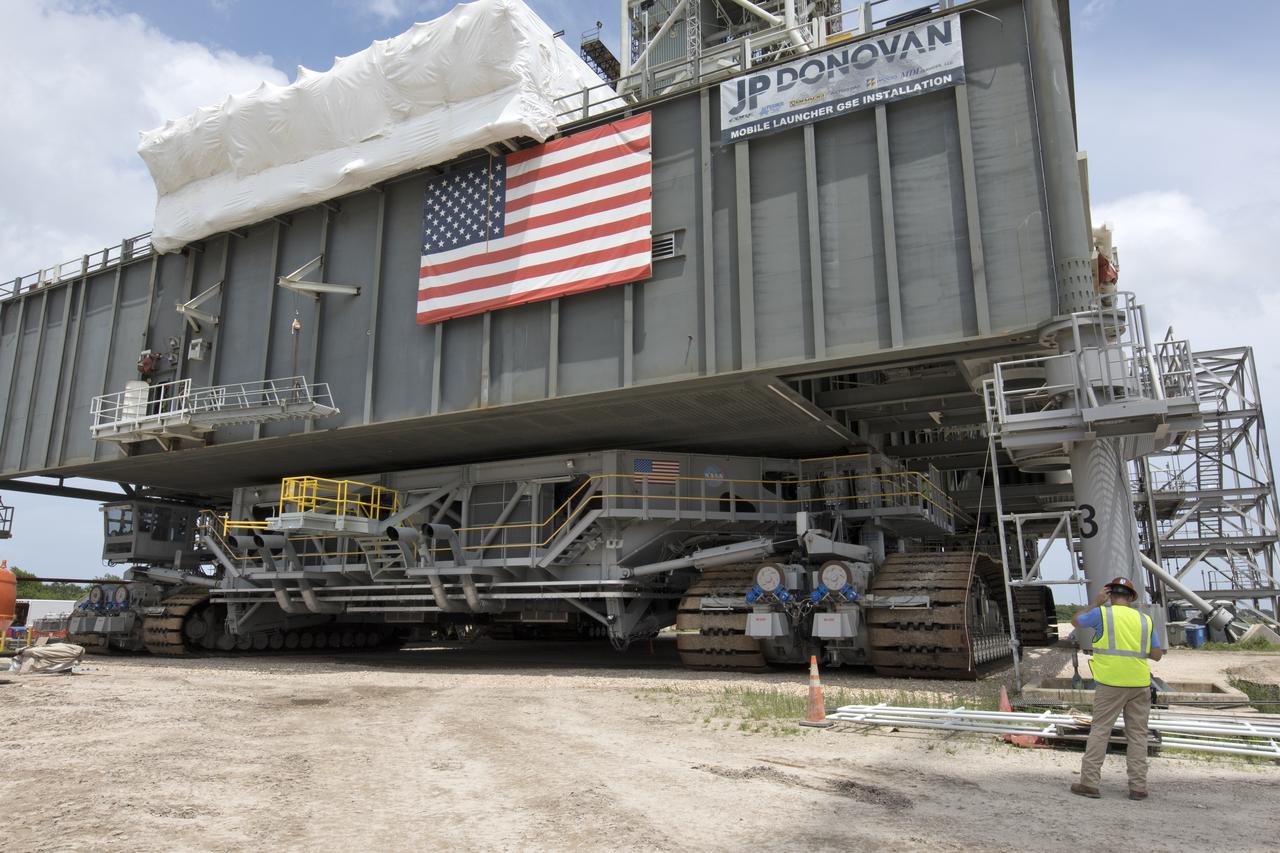
Crawler-transporter 2 (CT-2) is underneath the mobile launcher May 31, 2018, at NASA's Kennedy Space Center in Florida. Three lifts will be performed to practice lifting procedures, validate interface locations, confirm the weight of the mobile launcher, and develop a baseline for modal analysis. The mobile launcher is equipped with a number of lines, called umbilicals, which will connect to NASA's Space Launch System (SLS) and Orion. CT-2 has been upgraded to handle the weight of the mobile launcher with SLS and Orion atop. Exploration Ground Systems is preparing the ground systems necessary to support the SLS and Orion spacecraft for Exploration Mission-1 and deep space missions.

Crawler-transporter 2 (CT-2) is being moved under the mobile launcher May 31, 2018, at NASA's Kennedy Space Center in Florida. Three lifts will be performed to practice lifting procedures, validate interface locations, confirm the weight of the mobile launcher, and develop a baseline for modal analysis. The mobile launcher is equipped with a number of lines, called umbilicals, which will connect to NASA's Space Launch System (SLS) and Orion. CT-2 has been upgraded to handle the weight of the mobile launcher with SLS and Orion atop. Exploration Ground Systems is preparing the ground systems necessary to support the SLS and Orion spacecraft for Exploration Mission-1 and deep space missions.
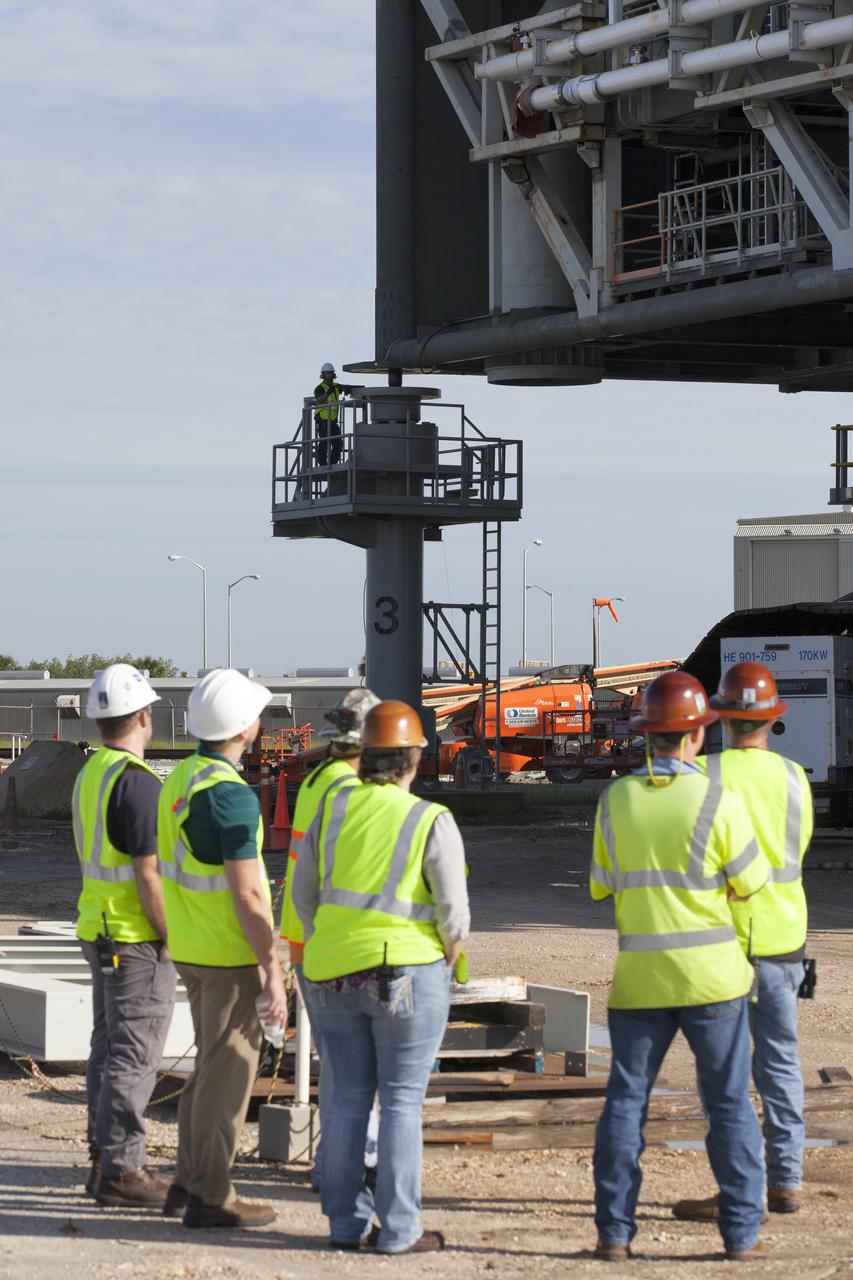
Workers watch as crawler-transporter 2 (CT-2) lifts the mobile launcher up a few inches from its support posts June 1, 2018, at NASA's Kennedy Space Center in Florida. Three lifts were performed to practice lifting procedures, validate interface locations, confirm the weight of the mobile launcher, and develop a baseline for modal analysis. The mobile launcher is equipped with a number of lines, called umbilicals, which will connect to NASA's Space Launch System (SLS) and Orion. The lift helped to test the capability of the upgraded CT-2 to handle the weight of the mobile launcher. Exploration Ground Systems is preparing the ground systems necessary to the SLS and Orion spacecraft for Exploration Mission-1 and deep space missions.
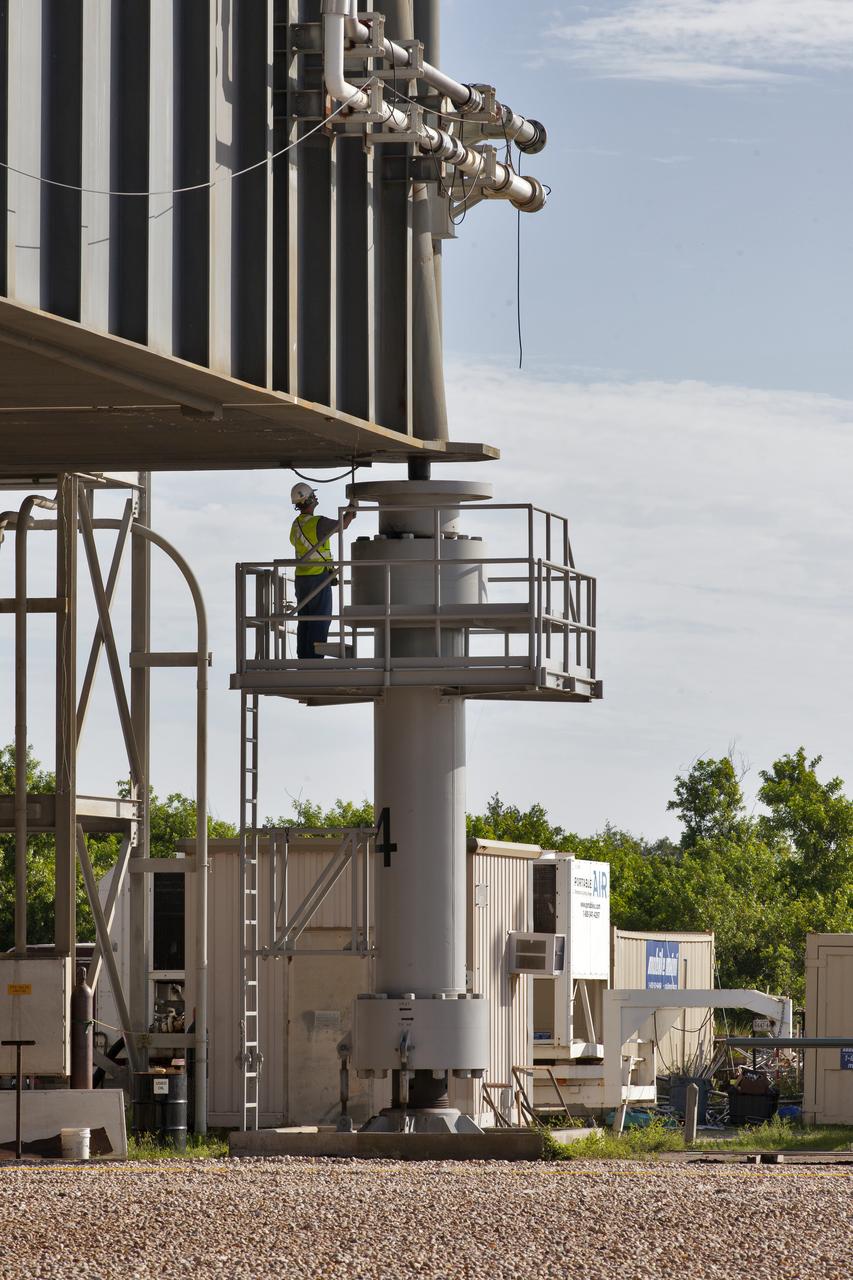
A construction worker monitors the progress as crawler-transporter 2 (CT-2) lifts the mobile launcher up a few inches from its support posts June 1, 2018, at NASA's Kennedy Space Center in Florida. Three lifts were performed to practice lifting procedures, validate interface locations, confirm the weight of the mobile launcher, and develop a baseline for modal analysis. The mobile launcher is equipped with a number of lines, called umbilicals, which will connect to NASA's Space Launch System (SLS) and Orion. The lift helped to test the capability of the upgraded CT-2 to handle the weight of the mobile launcher with SLS and Orion atop. Exploration Ground Systems is preparing the ground systems necessary to support the SLS and Orion spacecraft for Exploration Mission-1 and deep space missions.
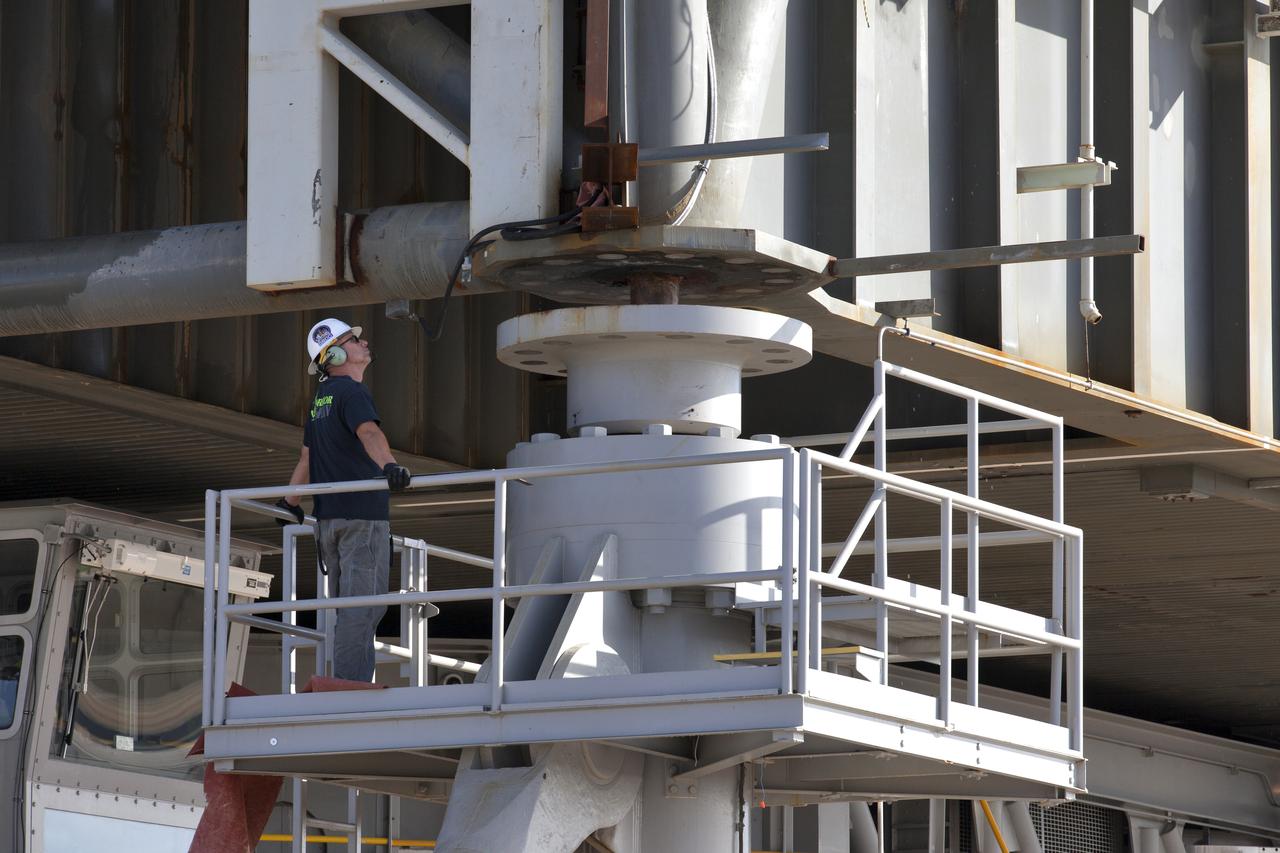
A construction worker monitors the progress as crawler-transporter 2 (CT-2) lifts the mobile launcher up a few inches from its support posts June 1, 2018, at NASA's Kennedy Space Center in Florida. Three lifts were performed to practice lifting procedures, validate interface locations, confirm the weight of the mobile launcher, and develop a baseline for modal analysis. The mobile launcher is equipped with a number of lines, called umbilicals, which will connect to NASA's Space Launch System (SLS) and Orion. The lift helped to test the capability of the upgraded CT-2 to handle the weight of the mobile launcher. Exploration Ground Systems is preparing the ground systems necessary to support the SLS and Orion spacecraft for Exploration Mission-1 and deep space missions.
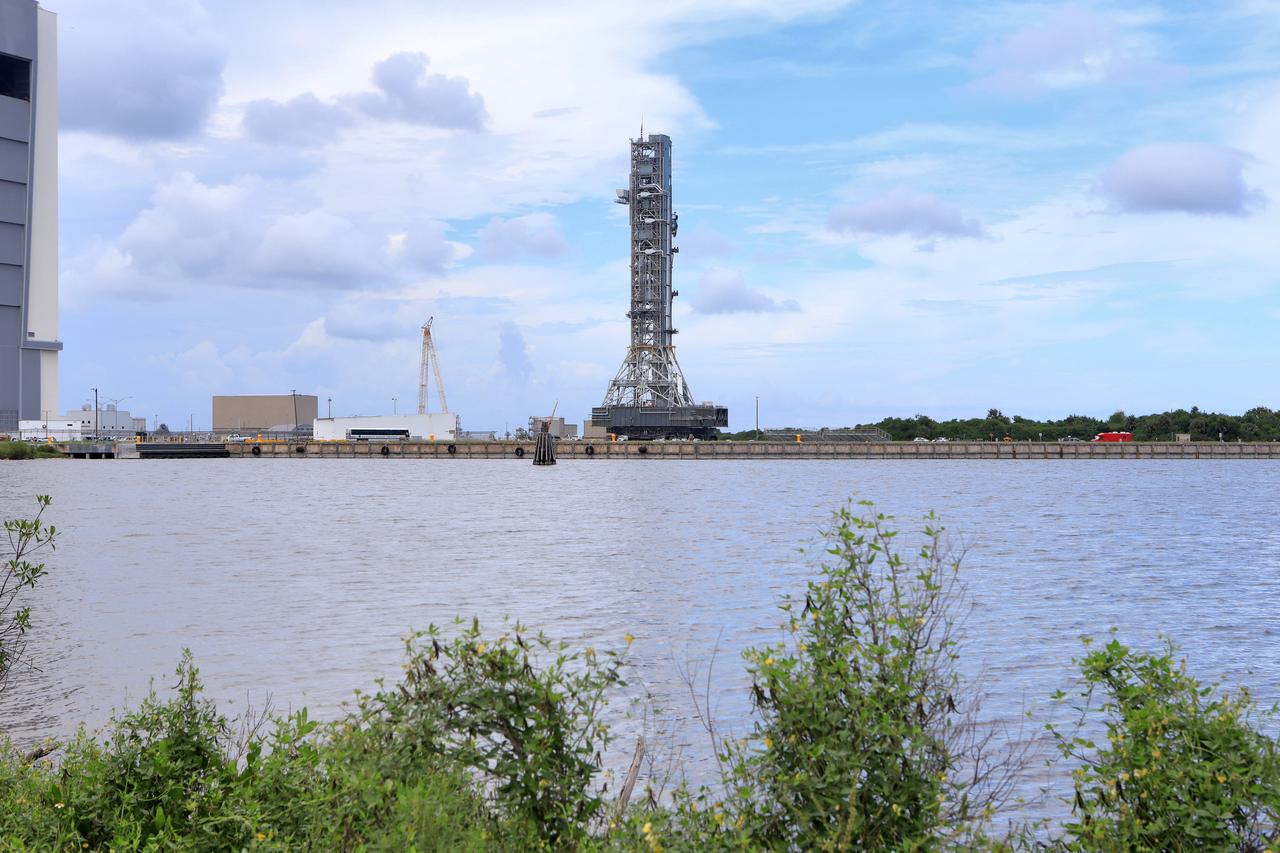
NASA's crawler-transporter 2 (CT-2) with the mobile launcher (ML) atop begins its trek along the crawlerway to Launch Pad 39B on Aug. 30, 2018, at the agency's Kennedy Space Center in Florida. CT-2 will move the ML up to the surface of the pad where it will undergo a fit check, followed by several days of systems testing. The 380-foot-tall mobile launcher is equipped with the crew access arm and several umbilicals that will provide power, environmental control, pneumatics, communication and electrical connections to NASA's Space Launch System (SLS) and Orion spacecraft. Exploration Ground Systems is preparing the ground systems necessary to launch SLS and Orion on Exploration Mission-1, missions to the Moon and on to Mars.
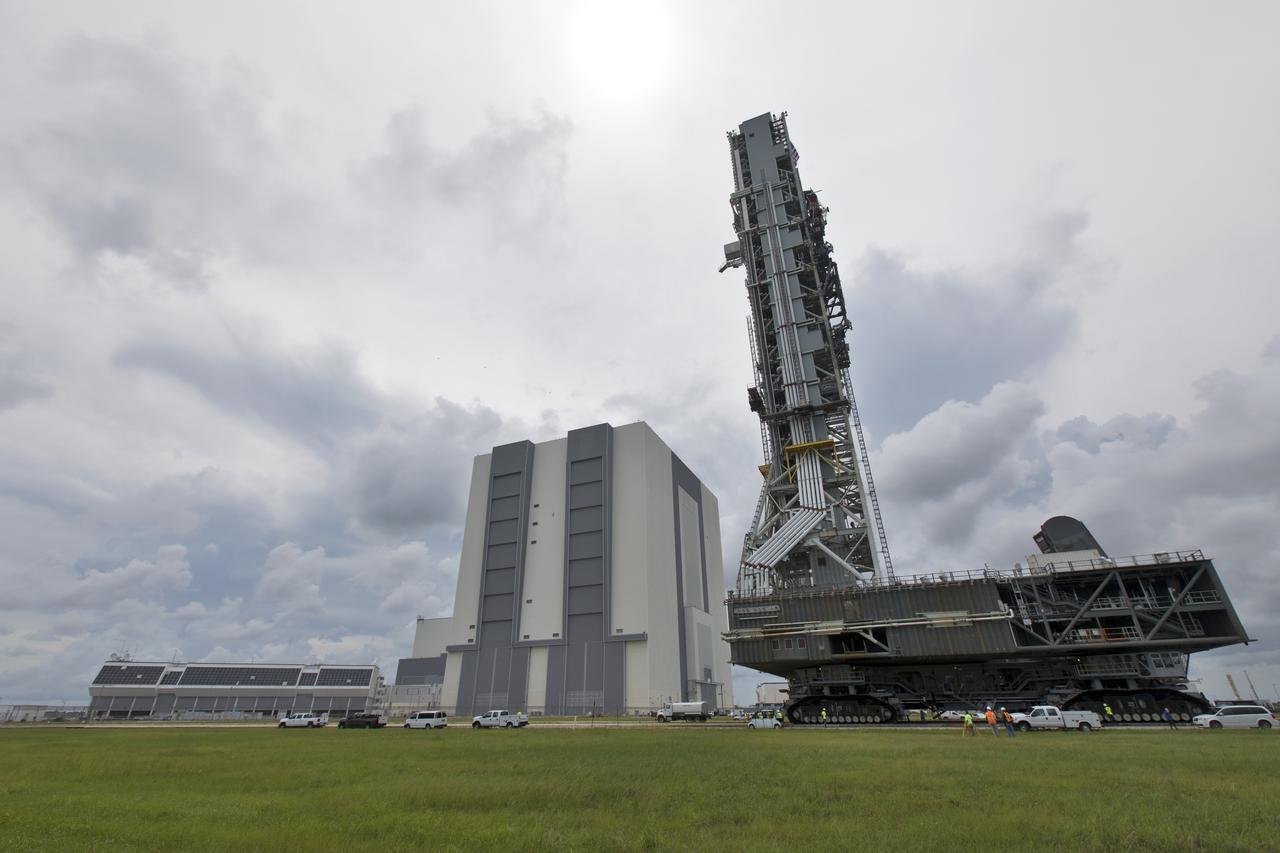
NASA's mobile launcher (ML) atop crawler-transporter 2 (CT-2) moves along the crawlerway on its trek to Launch Pad 39B on Aug. 31, 2018, at the agency's Kennedy Space Center in Florida. CT-2 will move the ML up to the surface of the pad where it will undergo a fit check, followed by several days of systems testing. The 380-foot-tall mobile launcher is equipped with the crew access arm and several umbilicals that will provide power, environmental control, pneumatics, communication and electrical connections to NASA's Space Launch System (SLS) and Orion spacecraft. Exploration Ground Systems is preparing the ground systems necessary to launch SLS and Orion on Exploration Mission-1, missions to the Moon and on to Mars.
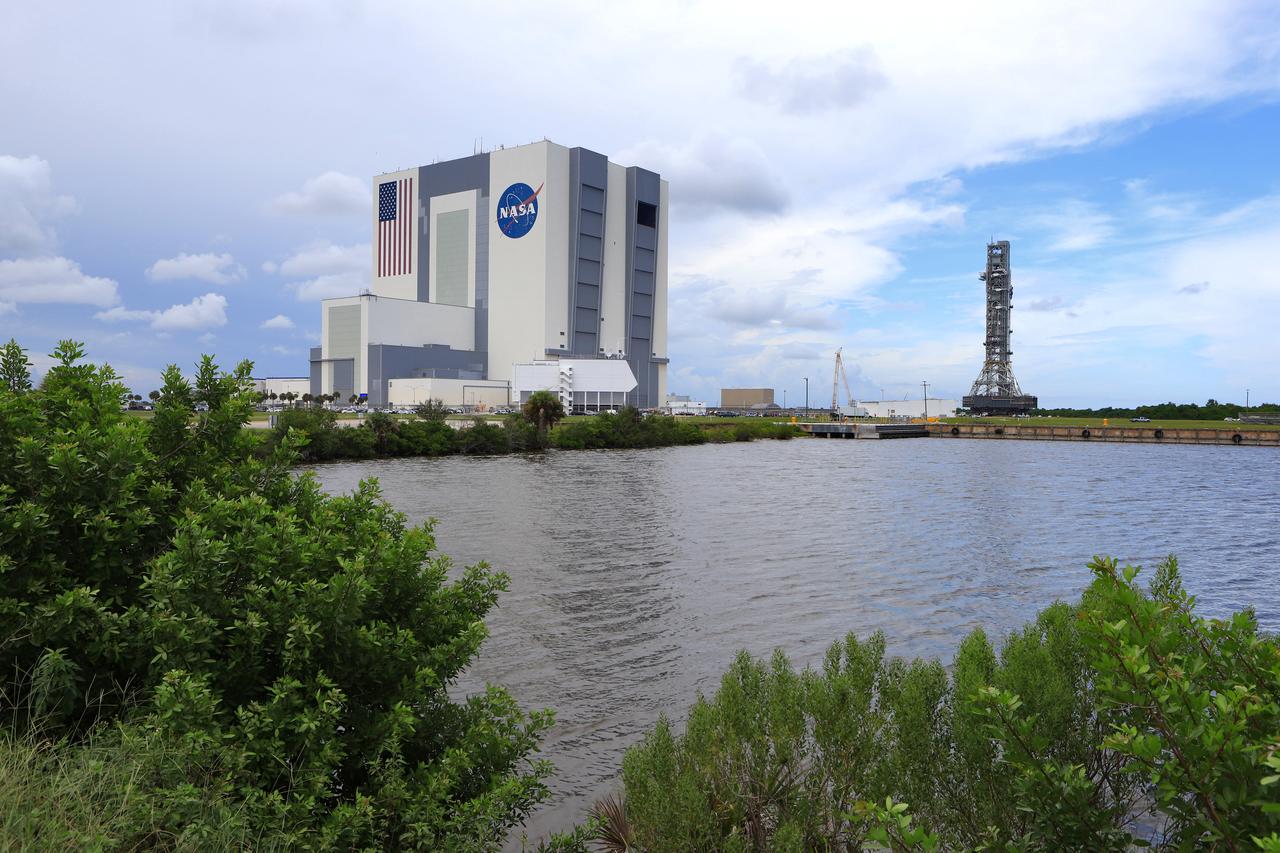
NASA's crawler-transporter 2 (CT-2) with the mobile launcher (ML) atop begins its trek along the crawlerway to Launch Pad 39B on Aug. 30, 2018, at the agency's Kennedy Space Center in Florida. At left is the iconic Vehicle Assembly Building. CT-2 will move the ML up to the surface of the pad where it will undergo a fit check, followed by several days of systems testing. The 380-foot-tall mobile launcher is equipped with the crew access arm and several umbilicals that will provide power, environmental control, pneumatics, communication and electrical connections to NASA's Space Launch System (SLS) and Orion spacecraft. Exploration Ground Systems is preparing the ground systems necessary to launch SLS and Orion on Exploration Mission-1, missions to the Moon and on to Mars.
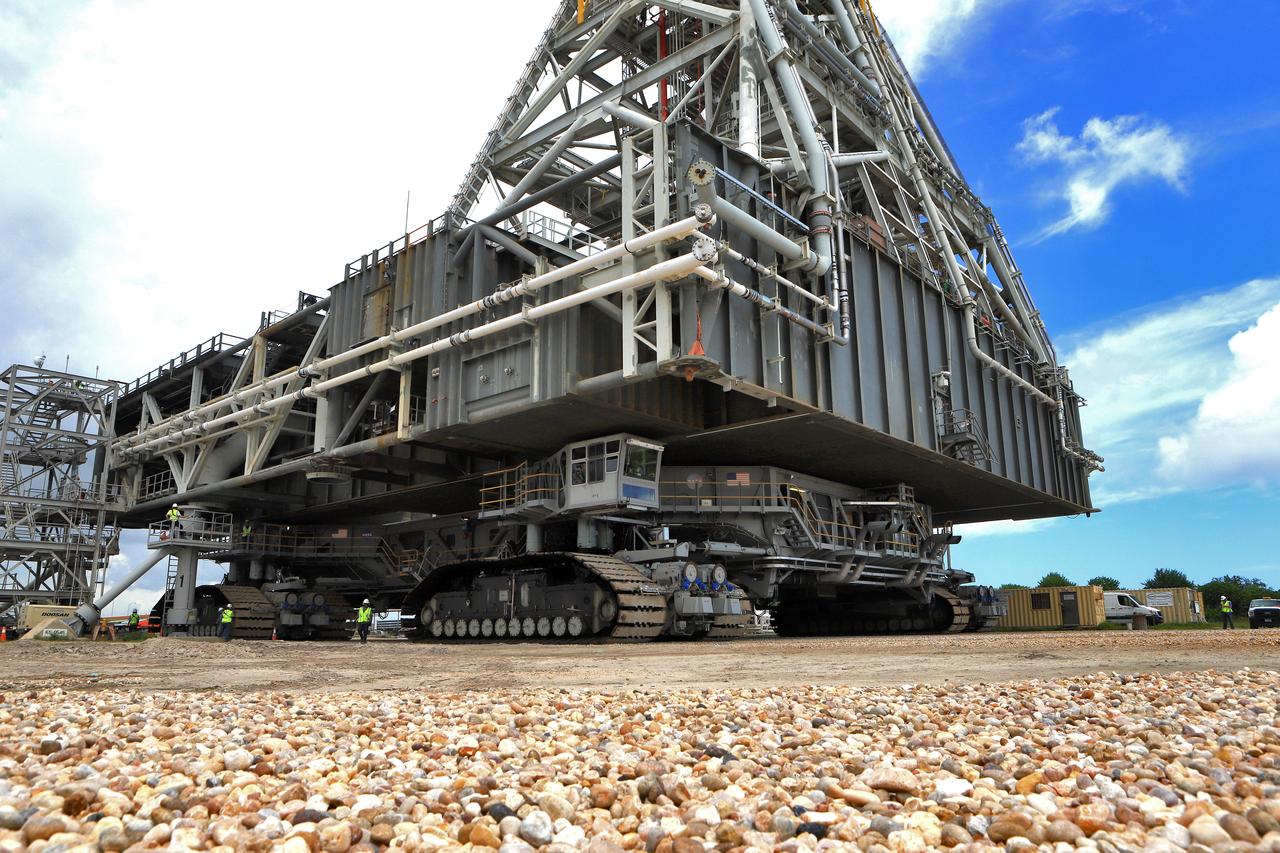
A close-up view of NASA's crawler-transporter 2 (CT-2) with the mobile launcher (ML) atop as it slowly moves along the crawlerway on its trek to Launch Pad 39B on Aug. 30, 2018, at the agency's Kennedy Space Center in Florida. CT-2 will move the ML up to the surface of the pad where it will undergo a fit check, followed by several days of systems testing. The 380-foot-tall mobile launcher is equipped with the crew access arm and several umbilicals that will provide power, environmental control, pneumatics, communication and electrical connections to NASA's Space Launch System (SLS) and Orion spacecraft. Exploration Ground Systems is preparing the ground systems necessary to launch SLS and Orion on Exploration Mission-1, missions to the Moon and on to Mars.
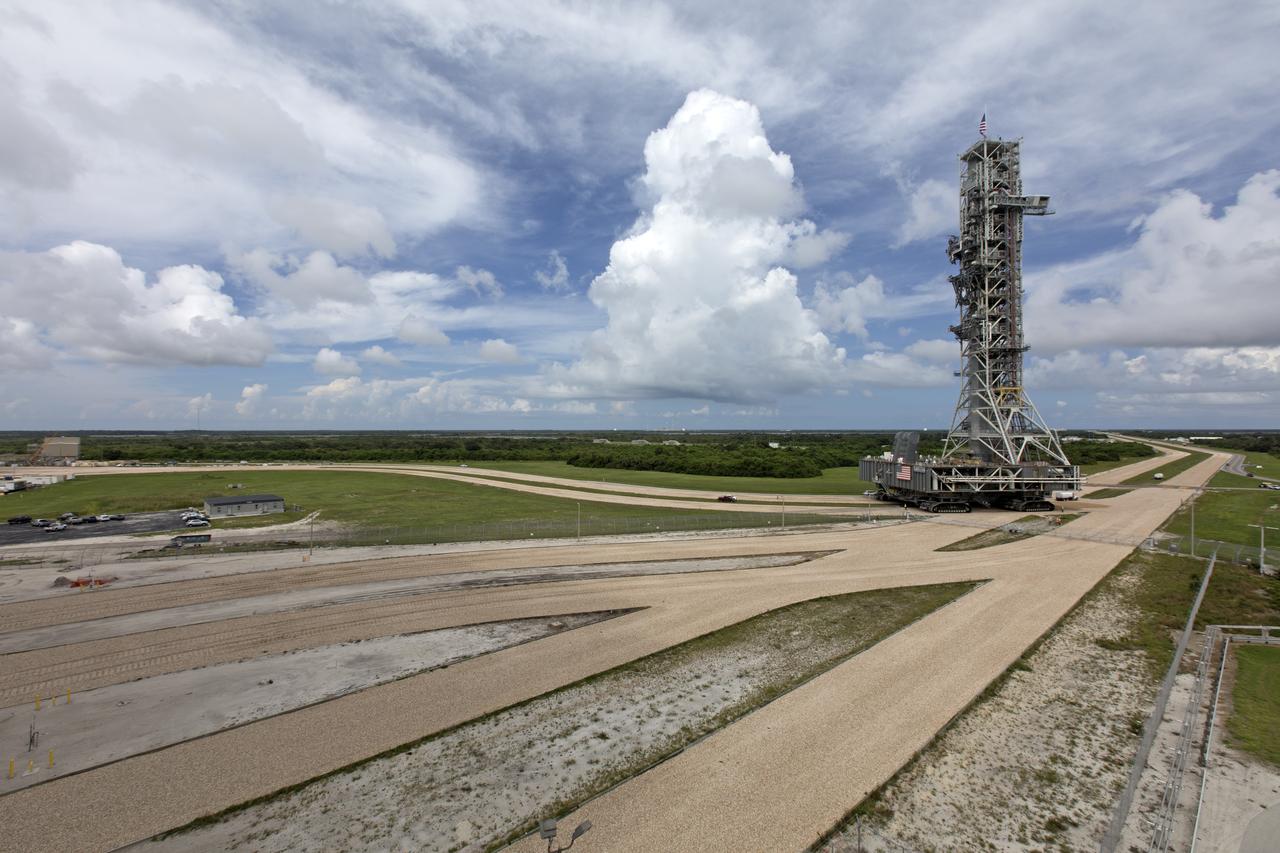
NASA's mobile launcher (ML) atop crawler-transporter 2 (CT-2) moves along the crawlerway on its trek to Launch Pad 39B on Aug. 31, 2018, at the agency's Kennedy Space Center in Florida. CT-2 will move the ML up to the surface of the pad where it will undergo a fit check, followed by several days of systems testing. The 380-foot-tall mobile launcher is equipped with the crew access arm and several umbilicals that will provide power, environmental control, pneumatics, communication and electrical connections to NASA's Space Launch System (SLS) and Orion spacecraft. Exploration Ground Systems is preparing the ground systems necessary to launch SLS and Orion on Exploration Mission-1, missions to the Moon and on to Mars.
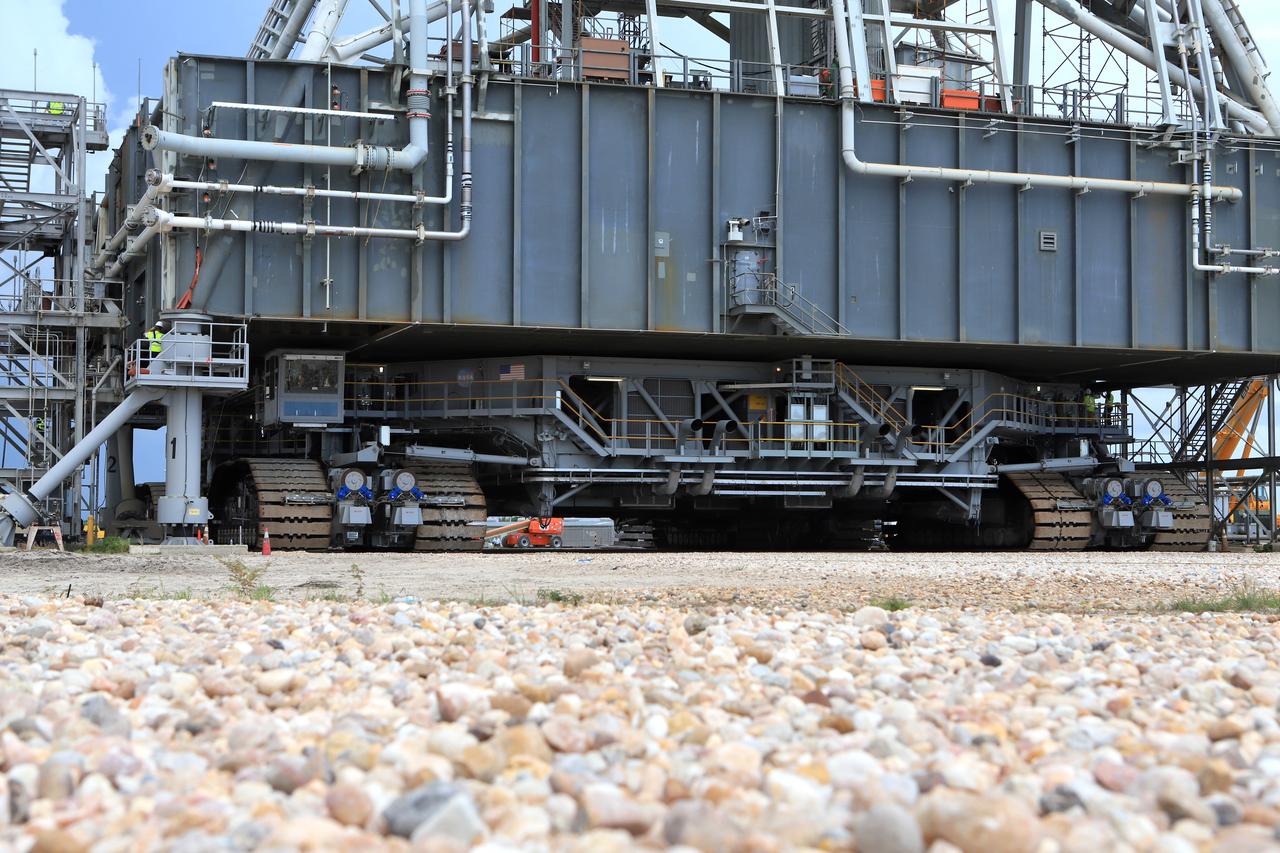
A close-up view of NASA's crawler-transporter 2 (CT-2) with the mobile launcher (ML) atop as it slowly moves along the crawlerway on its trek to Launch Pad 39B on Aug. 30, 2018, at the agency's Kennedy Space Center in Florida. CT-2 will move the ML up to the surface of the pad where it will undergo a fit check, followed by several days of systems testing. The 380-foot-tall mobile launcher is equipped with the crew access arm and several umbilicals that will provide power, environmental control, pneumatics, communication and electrical connections to NASA's Space Launch System (SLS) and Orion spacecraft. Exploration Ground Systems is preparing the ground systems necessary to launch SLS and Orion on Exploration Mission-1, missions to the Moon and on to Mars.
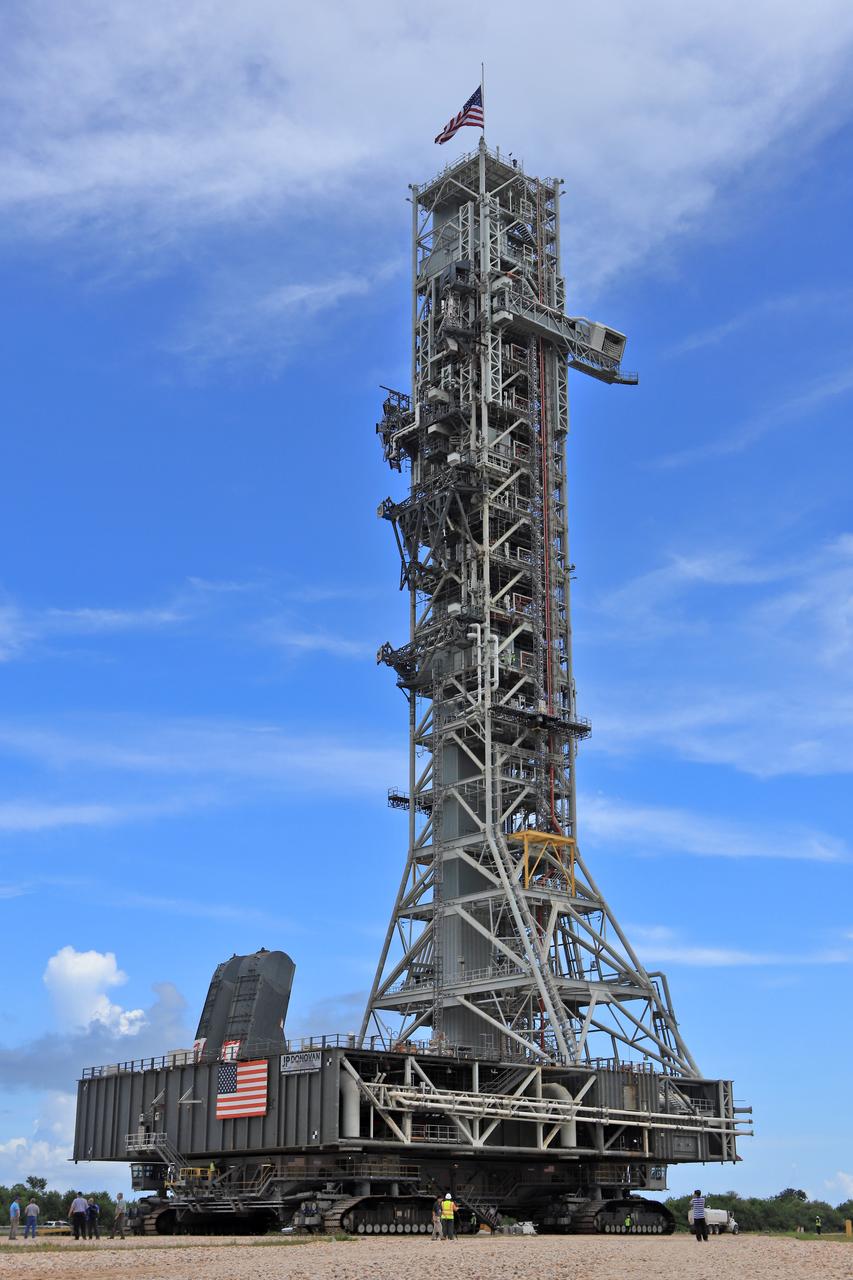
NASA's crawler-transporter 2 (CT-2) with the mobile launcher (ML) atop slowly moves along the crawlerway on its trek to Launch Pad 39B on Aug. 30, 2018, at the agency's Kennedy Space Center in Florida. CT-2 will move the ML up to the surface of the pad where it will undergo a fit check, followed by several days of systems testing. The 380-foot-tall mobile launcher is equipped with the crew access arm and several umbilicals that will provide power, environmental control, pneumatics, communication and electrical connections to NASA's Space Launch System (SLS) and Orion spacecraft. Exploration Ground Systems is preparing the ground systems necessary to launch SLS and Orion on Exploration Mission-1, missions to the Moon and on to Mars.
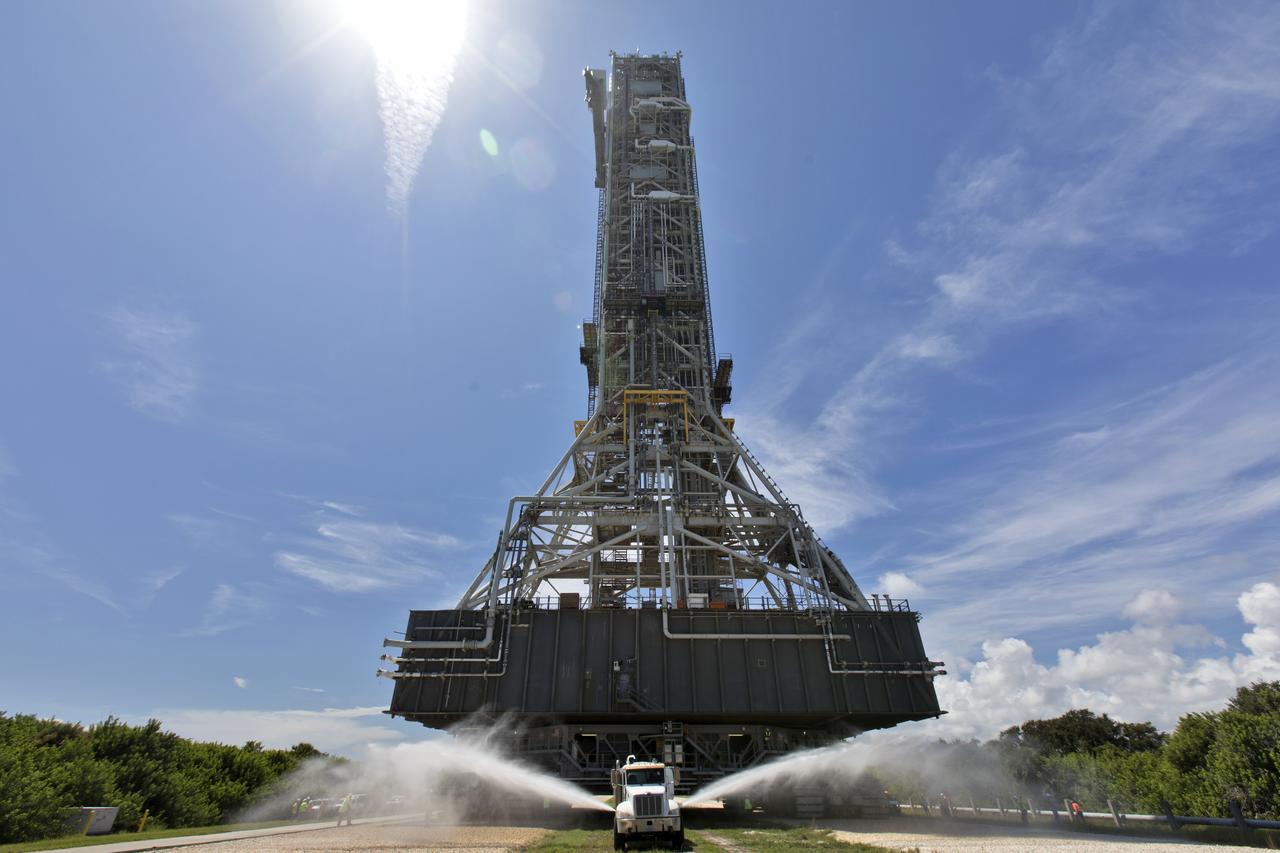
A truck sprays water to reduce the dust as NASA's crawler-transporter 2 (CT-2) with the mobile launcher (ML) atop slowly moves along the crawlerway on its trek to Launch Pad 39B on Aug. 31, 2018, at the agency's Kennedy Space Center in Florida. CT-2 will move the ML up to the surface of the pad where it will undergo a fit check, followed by several days of systems testing. The 380-foot-tall mobile launcher is equipped with the crew access arm and several umbilicals that will provide power, environmental control, pneumatics, communication and electrical connections to NASA's Space Launch System (SLS) and Orion spacecraft. Exploration Ground Systems is preparing the ground systems necessary to launch SLS and Orion on Exploration Mission-1, missions to the Moon and on to Mars.
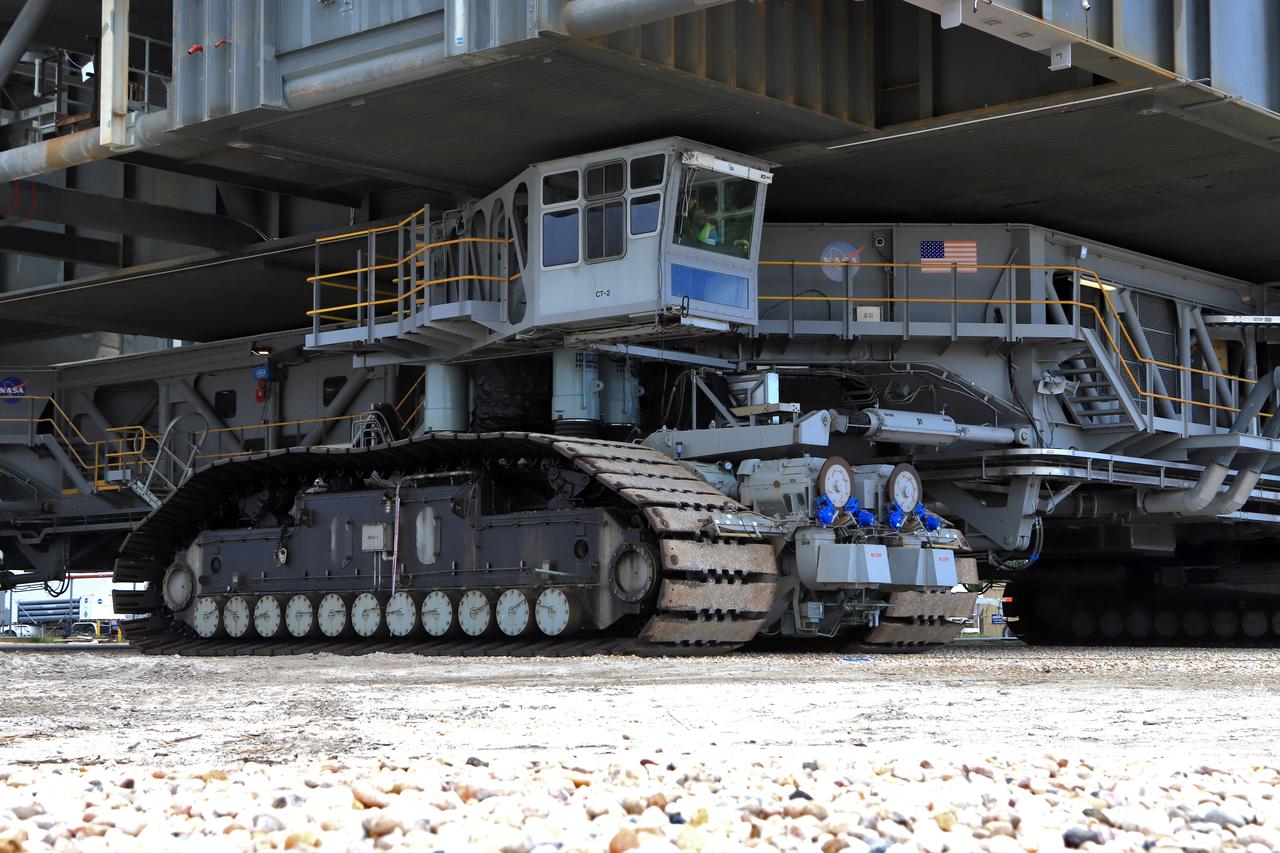
A close-up view of NASA's crawler-transporter 2 (CT-2) with the mobile launcher (ML) atop as it slowly moves along the crawlerway on its trek to Launch Pad 39B on Aug. 30, 2018, at the agency's Kennedy Space Center in Florida. CT-2 will move the ML up to the surface of the pad where it will undergo a fit check, followed by several days of systems testing. The 380-foot-tall mobile launcher is equipped with the crew access arm and several umbilicals that will provide power, environmental control, pneumatics, communication and electrical connections to NASA's Space Launch System (SLS) and Orion spacecraft. Exploration Ground Systems is preparing the ground systems necessary to launch SLS and Orion on Exploration Mission-1, missions to the Moon and on to Mars.
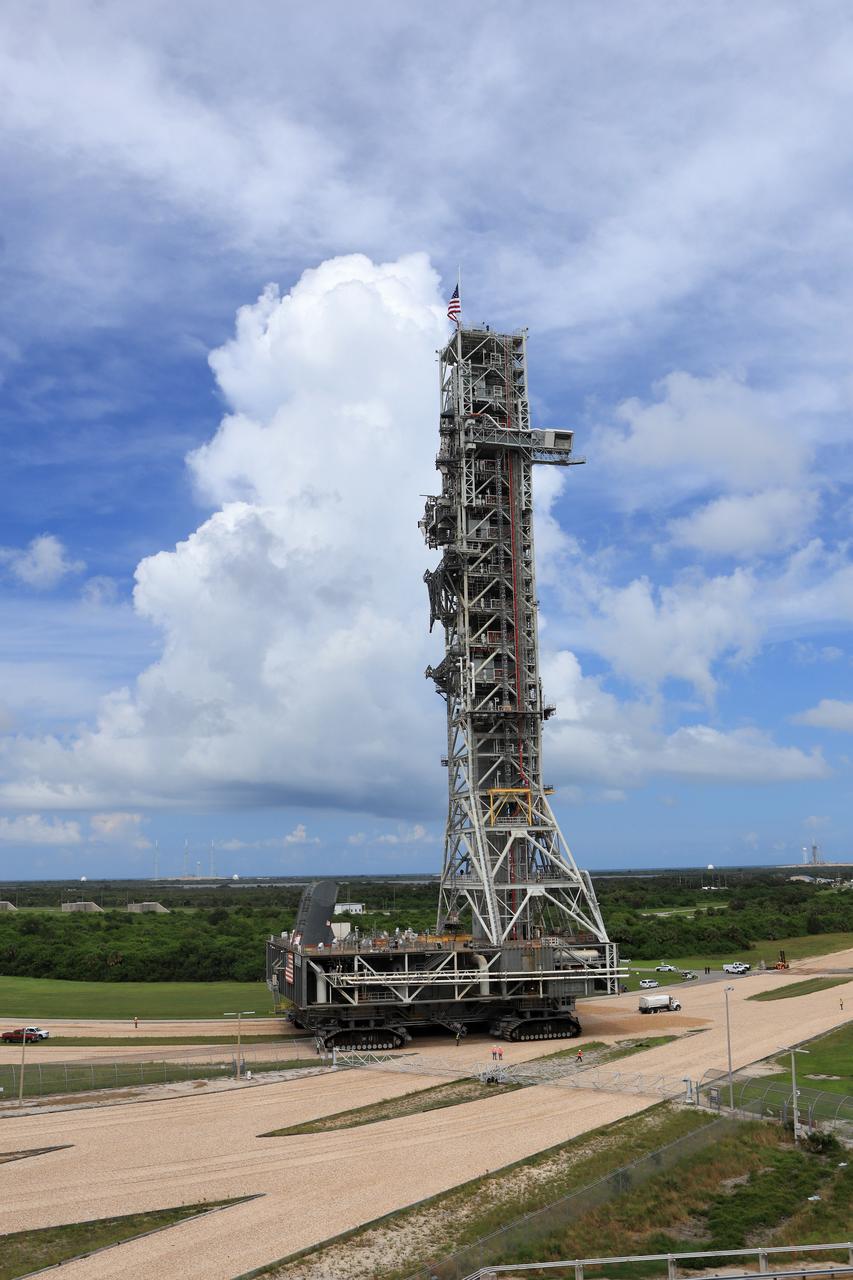
NASA's mobile launcher (ML) atop crawler-transporter 2 (CT-2) moves along the crawlerway on its trek to Launch Pad 39B on Aug. 31, 2018, at the agency's Kennedy Space Center in Florida. CT-2 will move the ML up to the surface of the pad where it will undergo a fit check, followed by several days of systems testing. The 380-foot-tall mobile launcher is equipped with the crew access arm and several umbilicals that will provide power, environmental control, pneumatics, communication and electrical connections to NASA's Space Launch System (SLS) and Orion spacecraft. Exploration Ground Systems is preparing the ground systems necessary to launch SLS and Orion on Exploration Mission-1, missions to the Moon and on to Mars.
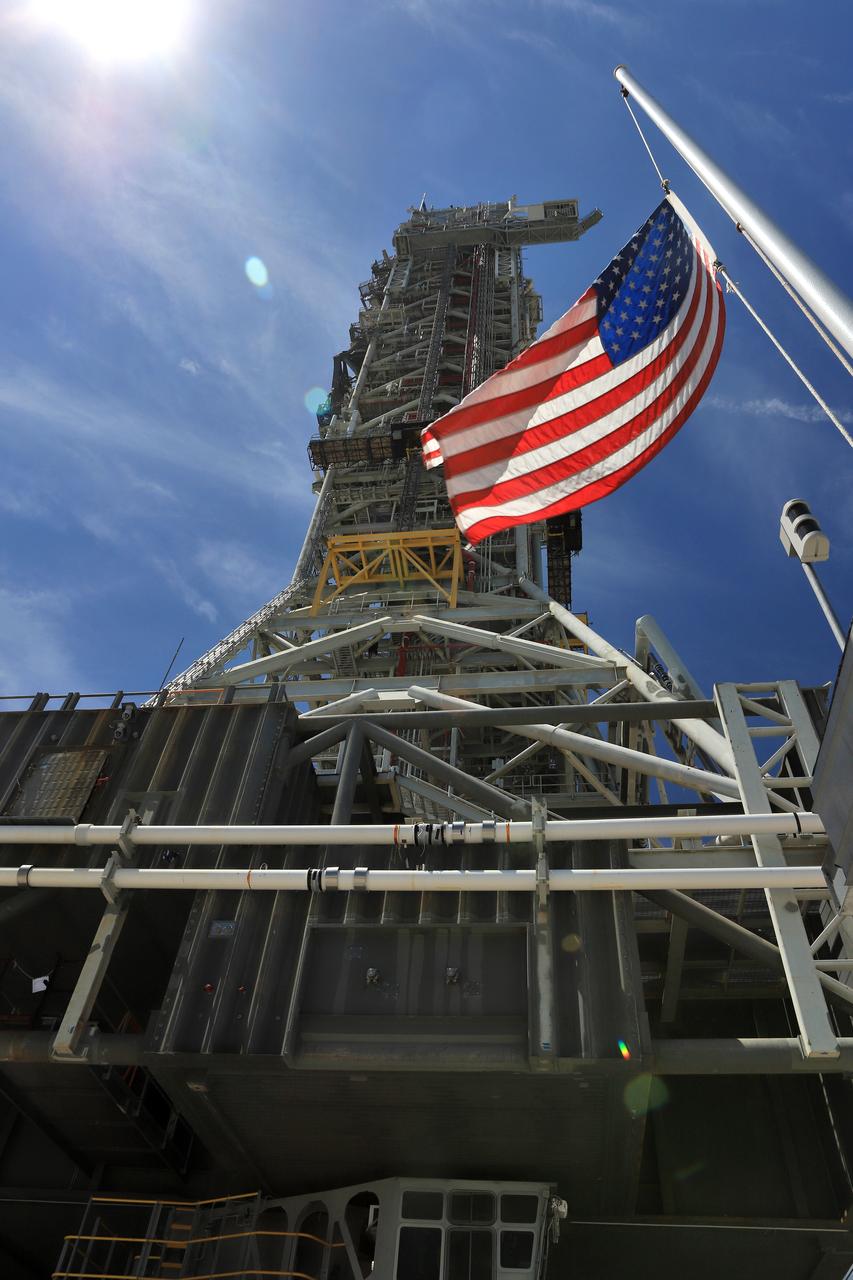
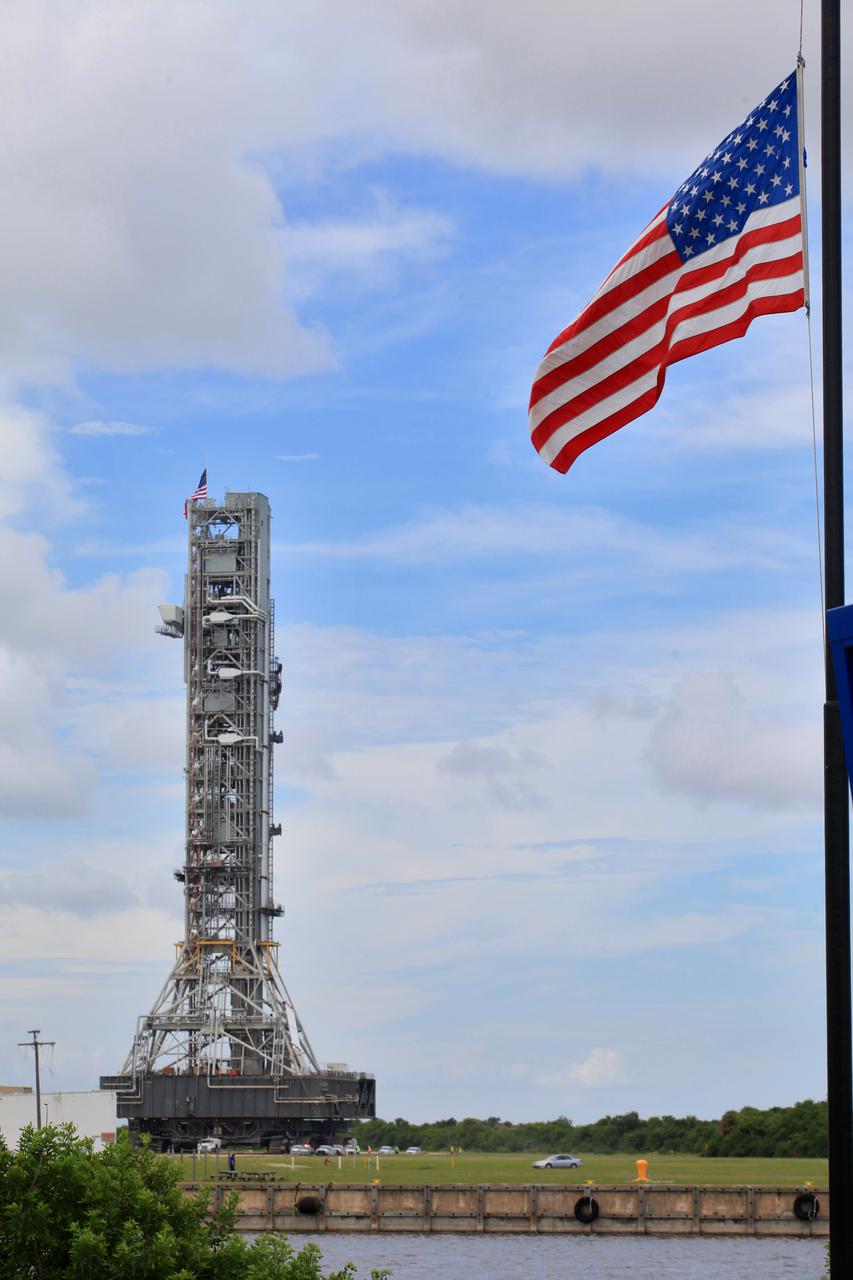
The American flag is in view as NASA's crawler-transporter 2 (CT-2) with the mobile launcher (ML) atop slowly moves along the crawlerway on its trek to Launch Pad 39B on Aug. 31, 2018, at the agency's Kennedy Space Center in Florida. CT-2 will move the ML up to the surface of the pad where it will undergo a fit check, followed by several days of systems testing. The 380-foot-tall mobile launcher is equipped with the crew access arm and several umbilicals that will provide power, environmental control, pneumatics, communication and electrical connections to NASA's Space Launch System (SLS) and Orion spacecraft. Exploration Ground Systems is preparing the ground systems necessary to launch SLS and Orion on Exploration Mission-1, missions to the Moon and on to Mars.
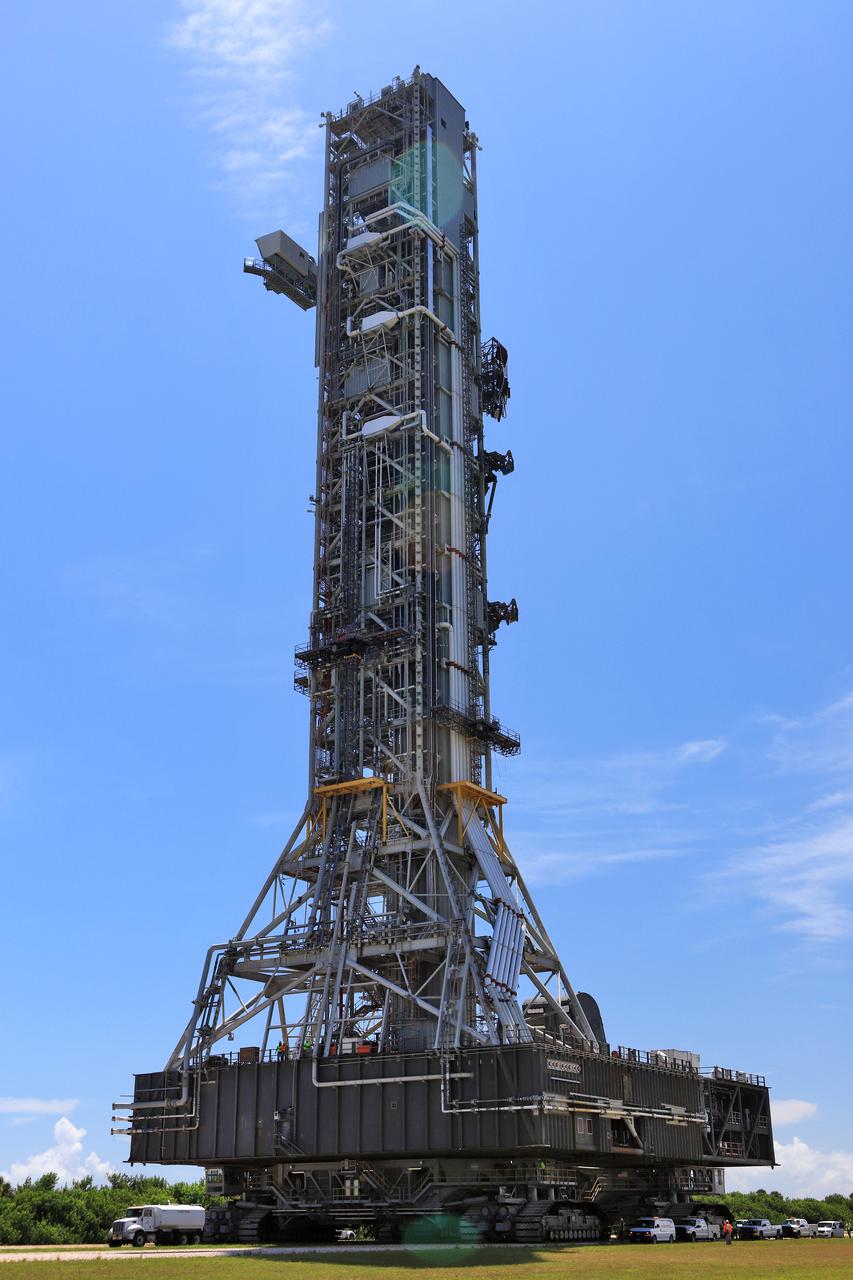
Members of the crawler team watch as NASA's mobile launcher (ML) atop crawler-transporter 2 (CT-2) moves along the crawlerway on its trek to Launch Pad 39B on Aug. 31, 2018, at the agency's Kennedy Space Center in Florida. CT-2 will move the ML up to the surface of the pad where it will undergo a fit check, followed by several days of systems testing. The 380-foot-tall mobile launcher is equipped with the crew access arm and several umbilicals that will provide power, environmental control, pneumatics, communication and electrical connections to NASA's Space Launch System (SLS) and Orion spacecraft. Exploration Ground Systems is preparing the ground systems necessary to launch SLS and Orion on Exploration Mission-1, missions to the Moon and on to Mars.
NASA's crawler-transporter 2 (CT-2) with the mobile launcher (ML) atop slowly moves along the crawlerway on its trek to Launch Pad 39B on Aug. 31, 2018, at the agency's Kennedy Space Center in Florida. CT-2 will move the ML up to the surface of the pad where it will undergo a fit check, followed by several days of systems testing. The 380-foot-tall mobile launcher is equipped with the crew access arm and several umbilicals that will provide power, environmental control, pneumatics, communication and electrical connections to NASA's Space Launch System (SLS) and Orion spacecraft. Exploration Ground Systems is preparing the ground systems necessary to launch SLS and Orion on Exploration Mission-1, missions to the Moon and on to Mars.
NASA's mobile launcher (ML) atop crawler-transporter 2 (CT-2) moves along the crawlerway on its trek to Launch Pad 39B on Aug. 30, 2018, at the agency's Kennedy Space Center in Florida. CT-2 will move the ML up to the surface of the pad where it will undergo a fit check, followed by several days of systems testing. The 380-foot-tall mobile launcher is equipped with the crew access arm and several umbilicals that will provide power, environmental control, pneumatics, communication and electrical connections to NASA's Space Launch System (SLS) and Orion spacecraft. Exploration Ground Systems is preparing the ground systems necessary to launch SLS and Orion on Exploration Mission-1, missions to the Moon and on to Mars.
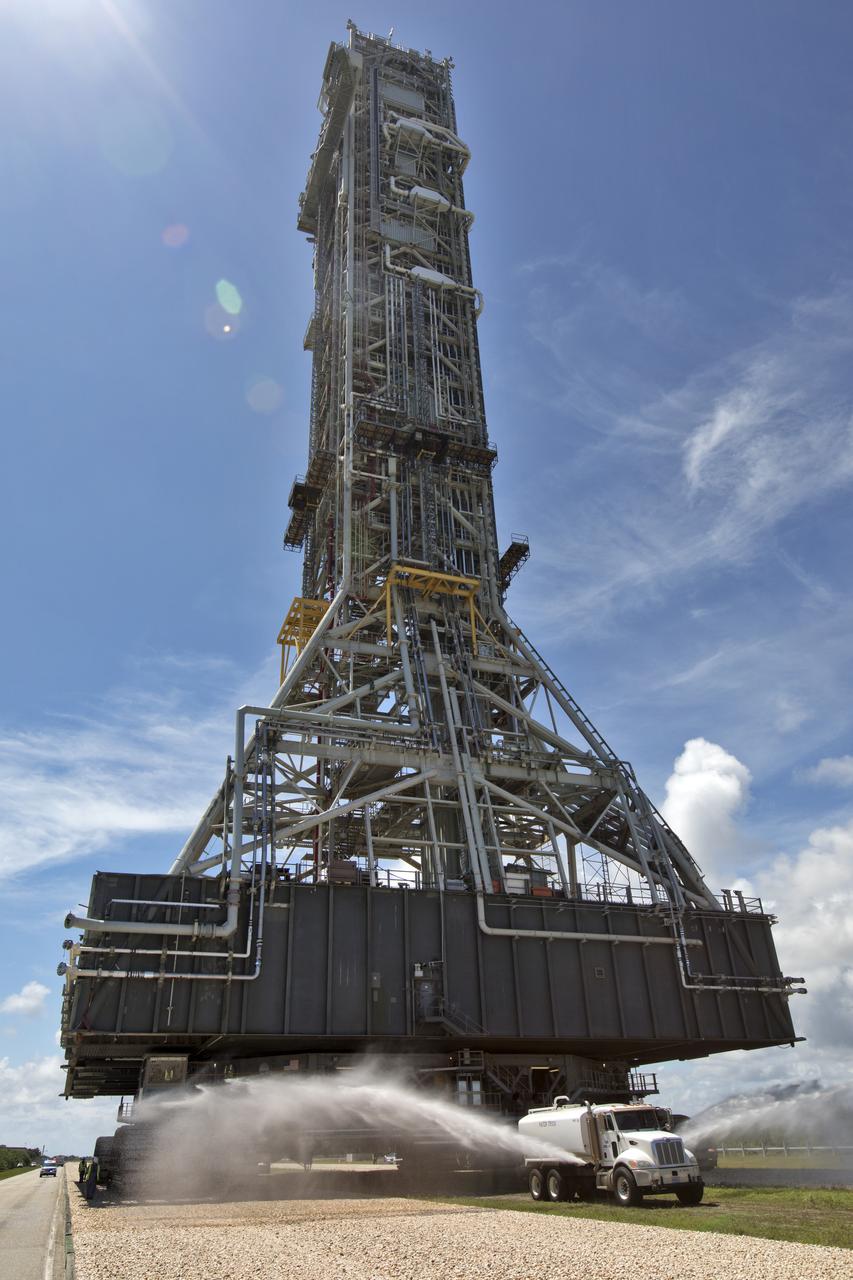
A truck sprays water to reduce the dust as NASA's crawler-transporter 2 (CT-2) with the mobile launcher (ML) atop slowly moves along the crawlerway on its trek to Launch Pad 39B on Aug. 31, 2018, at the agency's Kennedy Space Center in Florida. CT-2 will move the ML up to the surface of the pad where it will undergo a fit check, followed by several days of systems testing. The 380-foot-tall mobile launcher is equipped with the crew access arm and several umbilicals that will provide power, environmental control, pneumatics, communication and electrical connections to NASA's Space Launch System (SLS) and Orion spacecraft. Exploration Ground Systems is preparing the ground systems necessary to launch SLS and Orion on Exploration Mission-1, missions to the Moon and on to Mars.
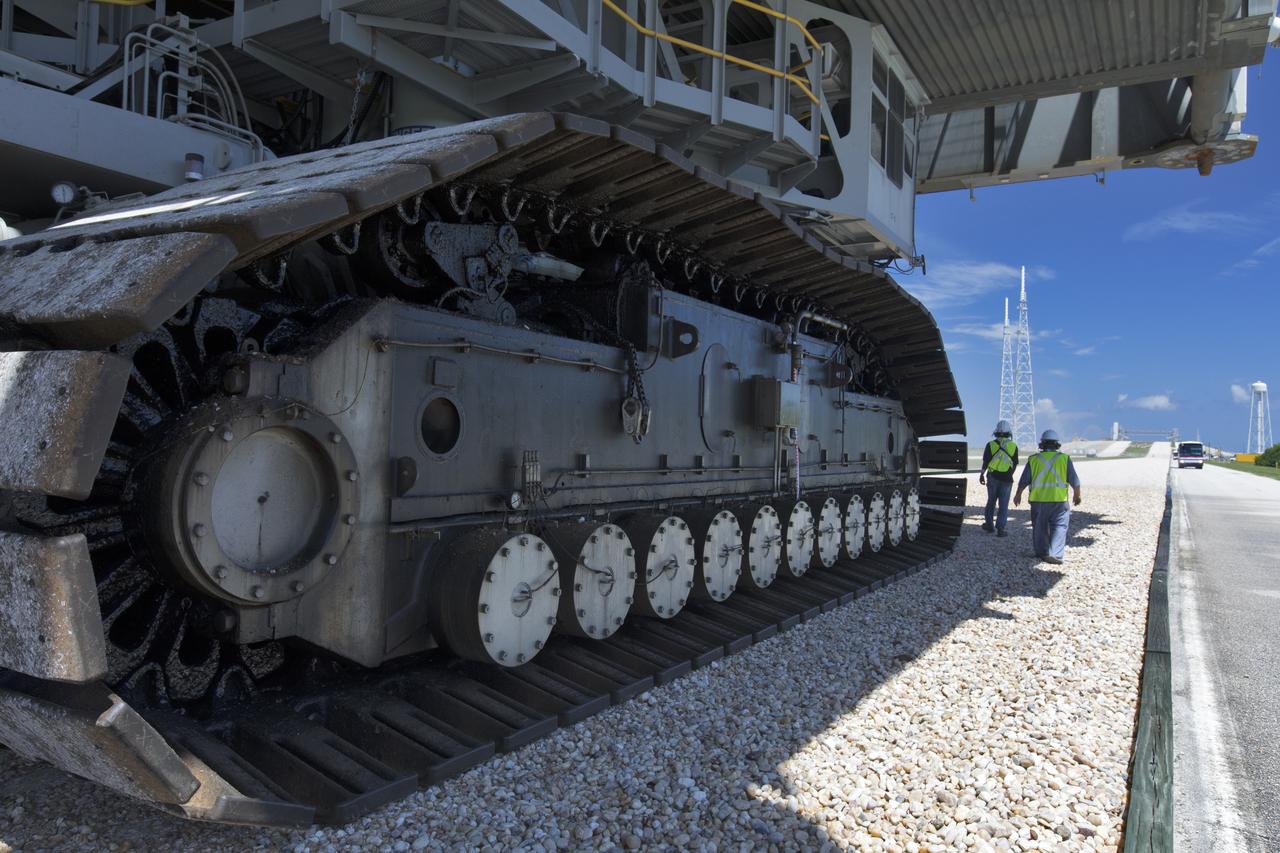
A close-up view of NASA's crawler-transporter 2 (CT-2) with the mobile launcher (ML) atop as it slowly moves along the crawlerway on its trek to Launch Pad 39B on Aug. 31, 2018, at the agency's Kennedy Space Center in Florida. CT-2 will move the ML up to the surface of the pad where it will undergo a fit check, followed by several days of systems testing. The 380-foot-tall mobile launcher is equipped with the crew access arm and several umbilicals that will provide power, environmental control, pneumatics, communication and electrical connections to NASA's Space Launch System (SLS) and Orion spacecraft. Exploration Ground Systems is preparing the ground systems necessary to launch SLS and Orion on Exploration Mission-1, missions to the Moon and on to Mars.
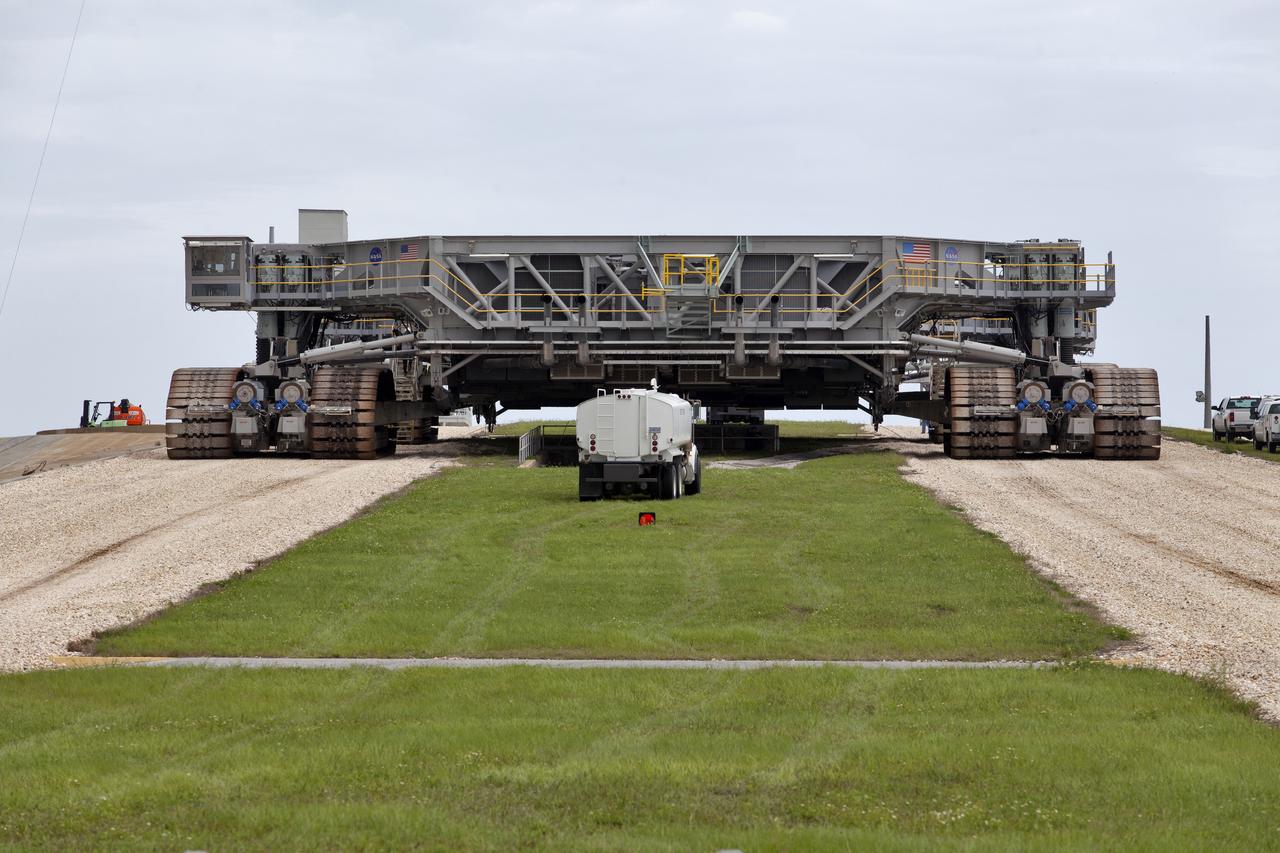
Crawler-transporter 2 (CT-2) moves slowly up the ramp to the surface of Launch Pad 39B for a fit check on May 22, 2018, at NASA's Kennedy Space Center in Florida. The test drive to the pad confirms that all of the recent modifications to CT-2 and Pad 39B are operational to support the launch of the agency's Space Launch System rocket and Orion spacecraft on Exploration Mission-1. Exploration Ground Systems managed the modifications and upgrades to CT-2 and Pad 39B to prepare for EM-1 and deep space exploration missions.
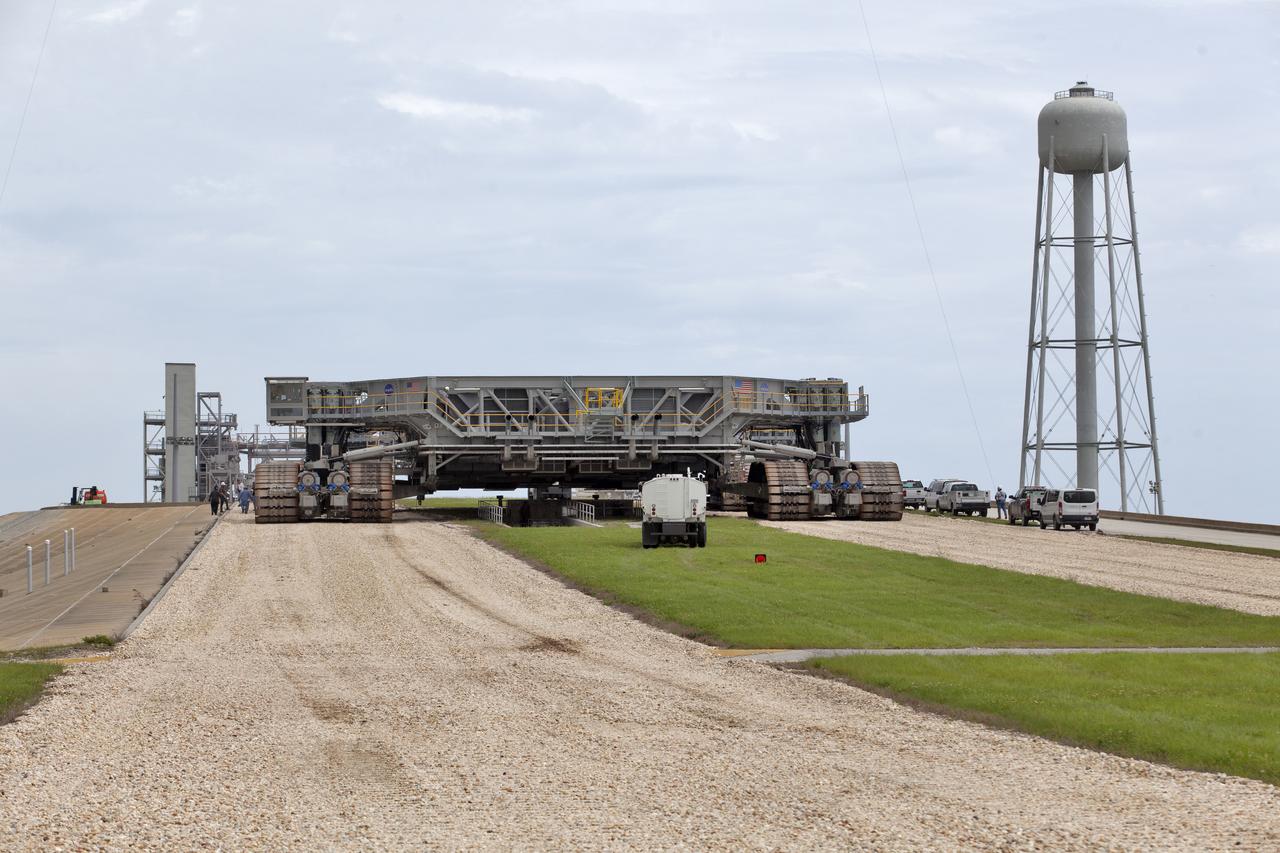
Crawler-transporter 2 (CT-2) moves slowly up the ramp to the surface of Launch Pad 39B for a fit check on May 22, 2018, at NASA's Kennedy Space Center in Florida. The test drive to the pad confirms that all of the recent modifications to CT-2 and Pad 39B are operational to support the launch of the agency's Space Launch System rocket and Orion spacecraft on Exploration Mission-1. Exploration Ground Systems managed the modifications and upgrades to CT-2 and Pad 39B to prepare for EM-1 and deep space exploration missions.
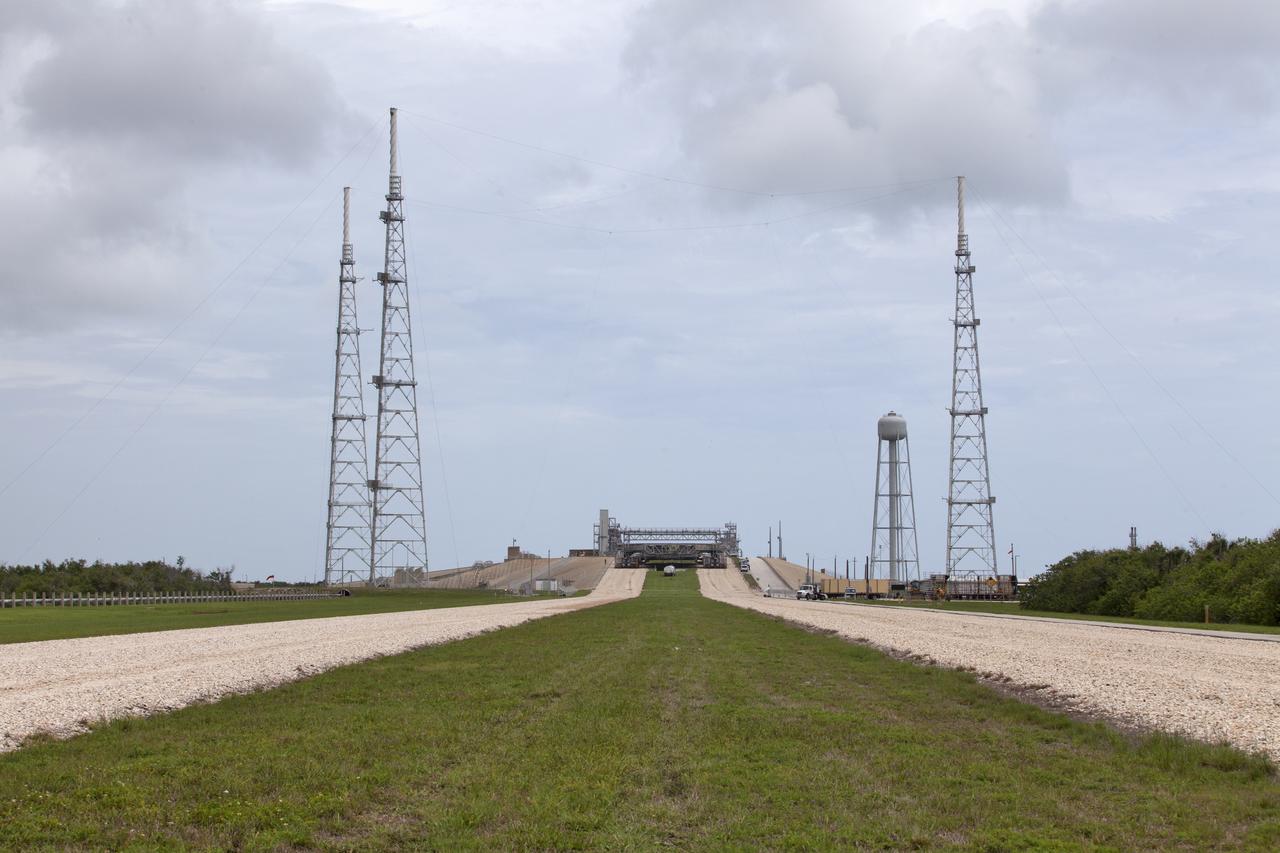
Crawler-transporter 2 (CT-2) moves slowly up the ramp to the surface of Launch Pad 39B for a fit check on May 22, 2018, at NASA's Kennedy Space Center in Florida. The test drive to the pad confirms that all of the recent modifications to CT-2 and Pad 39B are operational to support the launch of the agency's Space Launch System rocket and Orion spacecraft on Exploration Mission-1. Exploration Ground Systems managed the modifications and upgrades to CT-2 and Pad 39B to prepare for EM-1 and deep space exploration missions.
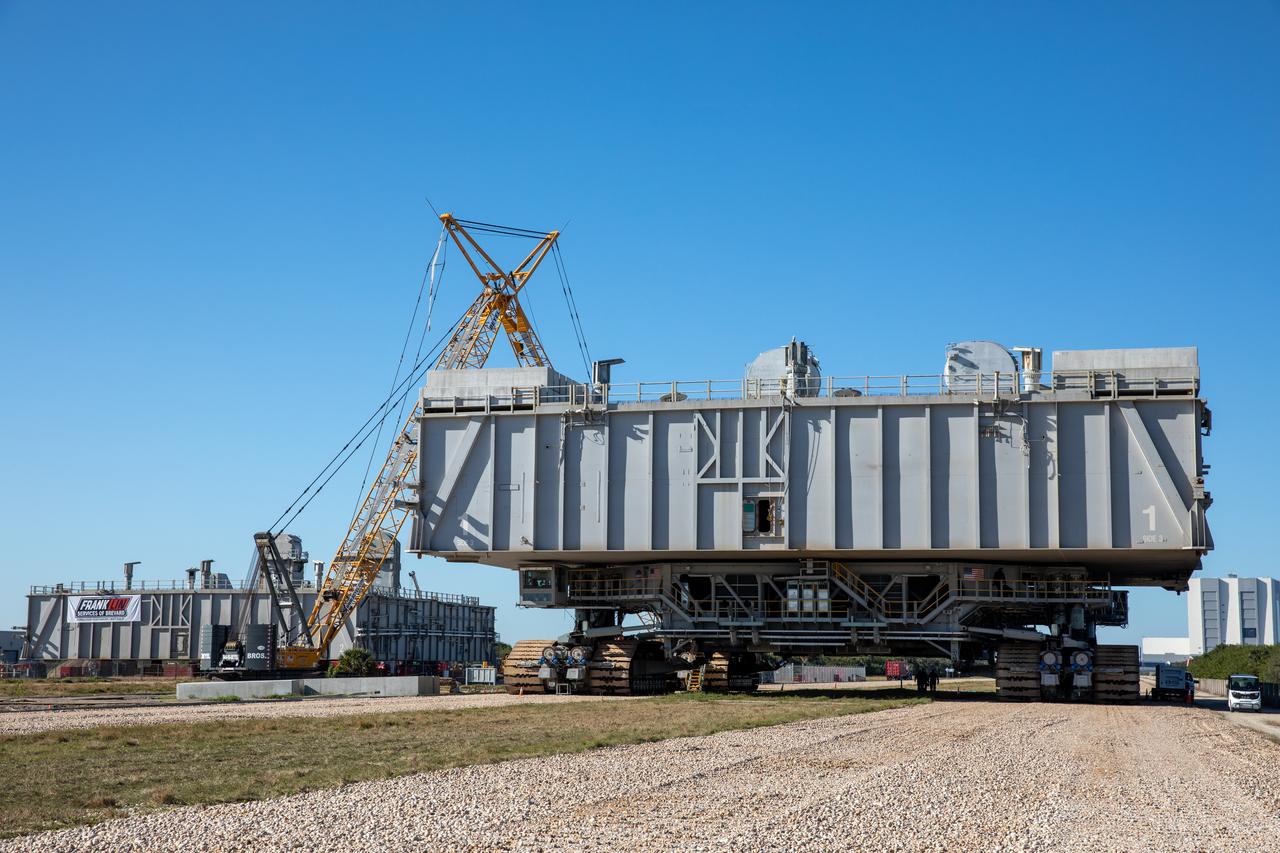
The two mobile launcher platforms (MLPs) are seen at the MSS park site at NASA’s Kennedy Space Center in Florida on Jan. 4, 2021. One MLP is undergoing crawlerway conditioning – a several month-long project to ensure the path the rocket takes from the VAB to the launch pad is strong enough to support the weight for the upcoming Artemis I launch. The other MLP used during the shuttle program is in the process of being demolished.
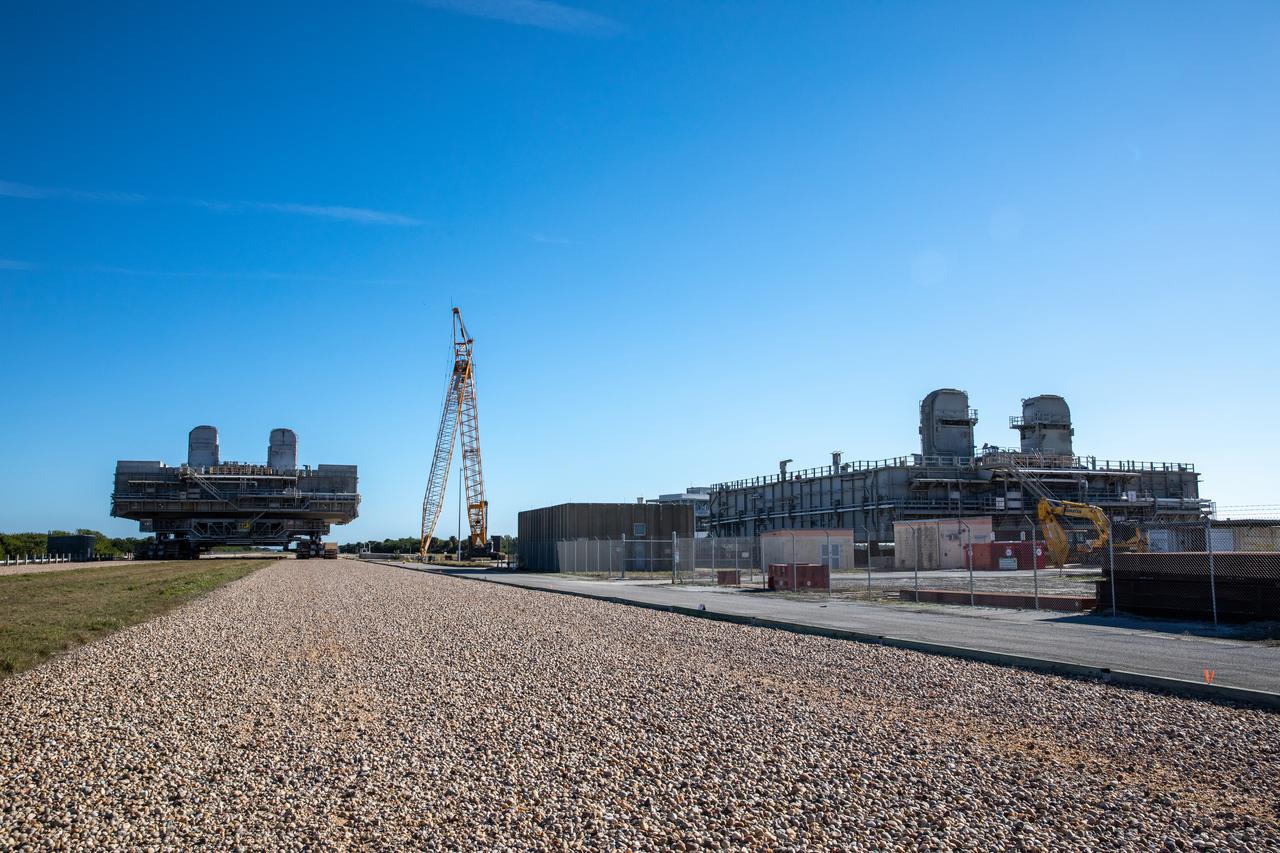
The two mobile launcher platforms (MLPs) are seen at the MSS park site at NASA’s Kennedy Space Center in Florida on Jan. 4, 2021. One MLP is undergoing crawlerway conditioning – a several month-long project to ensure the path the rocket takes from the VAB to the launch pad is strong enough to support the weight for the upcoming Artemis I launch. The other MLP used during the shuttle program is in the process of being demolished.
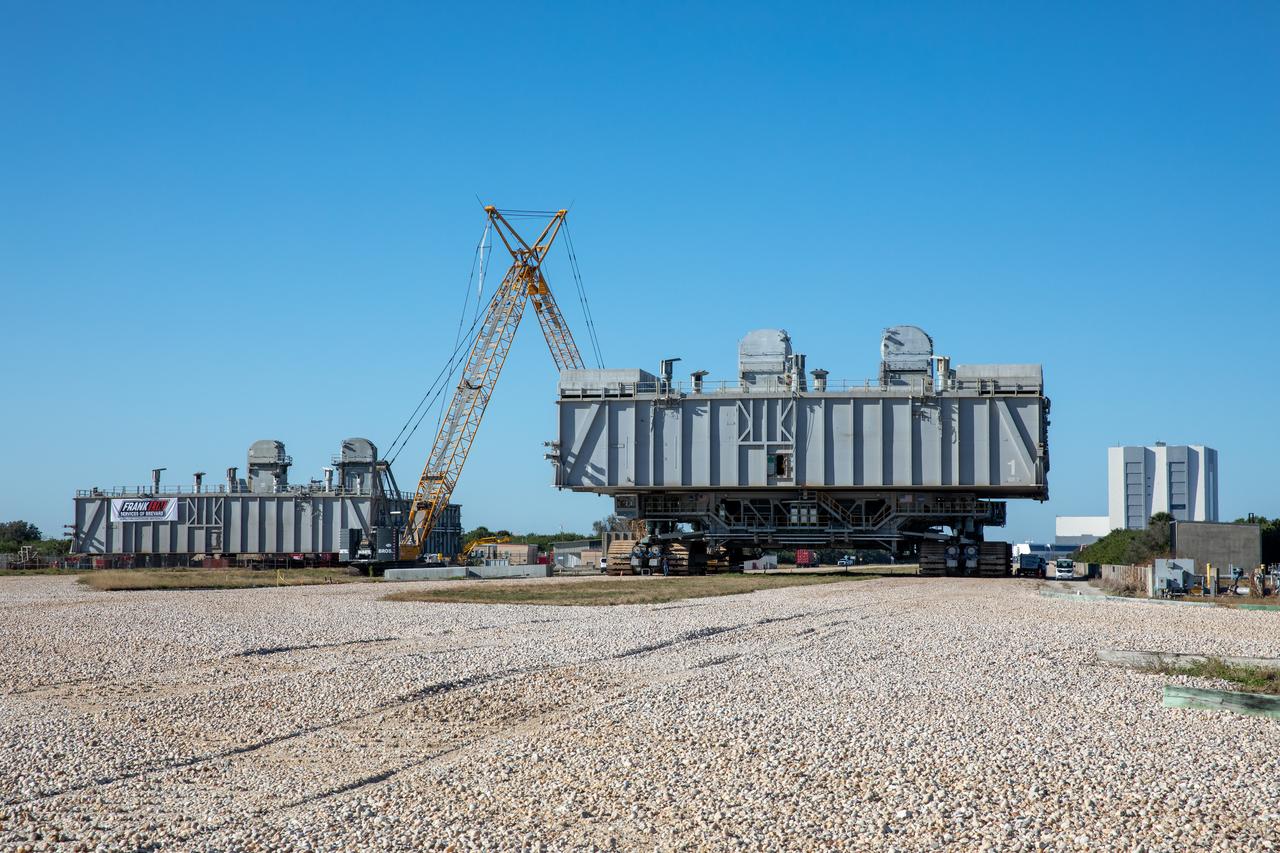
The two mobile launcher platforms (MLPs) are seen at the MSS park site at NASA’s Kennedy Space Center in Florida on Jan. 4, 2021. One MLP is undergoing crawlerway conditioning – a several month-long project to ensure the path the rocket takes from the VAB to the launch pad is strong enough to support the weight for the upcoming Artemis I launch. The other MLP used during the shuttle program is in the process of being demolished.
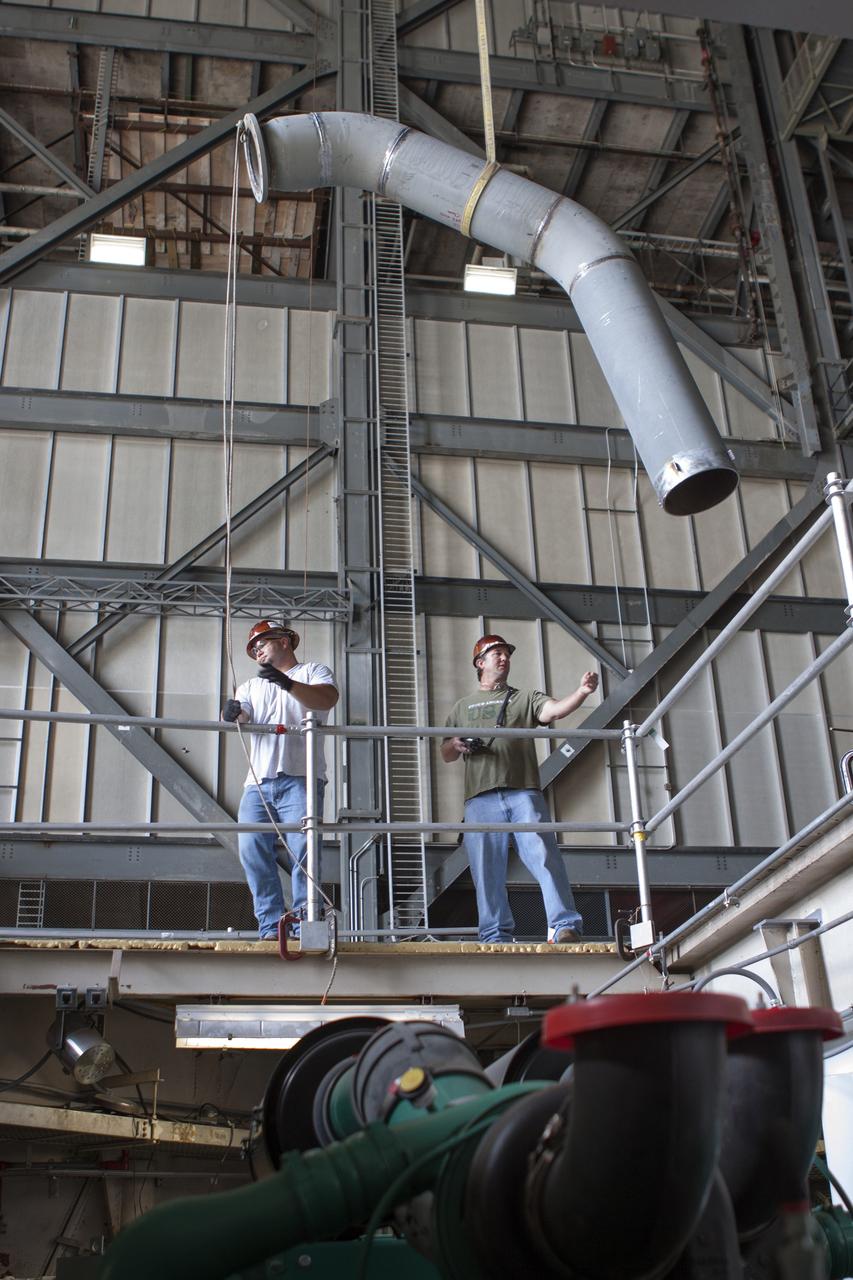
CAPE CANAVERAL, Fla. – Inside the Vehicle Assembly Building at NASA’s Kennedy Space Center in Florida, technicians prepare piping for a new exhaust system for installation in crawler-transporter 1, or CT-1. Work continues in high bay 3 to upgrade CT-1 as part of its general maintenance. CT-1 could be available to carry commercial launch vehicles to the launch pad. The crawler-transporters were used to carry the mobile launcher platform and space shuttle to Launch Complex 39 for space shuttle launches for 30 years. Photo credit: NASA/Jim Grossmann
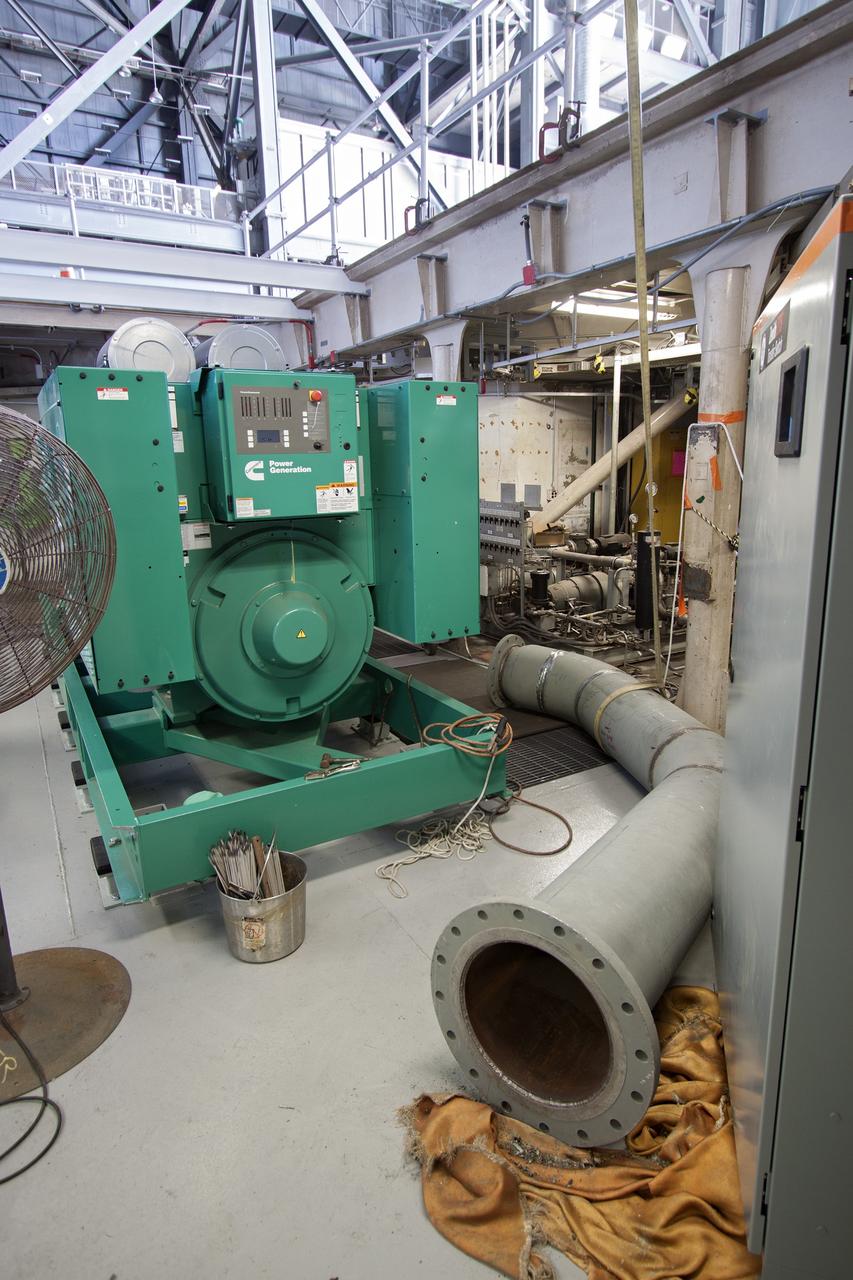
CAPE CANAVERAL, Fla. – Inside the Vehicle Assembly Building at NASA’s Kennedy Space Center in Florida, piping for a new exhaust system is being prepared for installation in crawler-transporter 1, or CT-1. Work continues in high bay 3 to upgrade CT-1 as part of its general maintenance. CT-1 could be available to carry commercial launch vehicles to the launch pad. The crawler-transporters were used to carry the mobile launcher platform and space shuttle to Launch Complex 39 for space shuttle launches for 30 years. Photo credit: NASA/Jim Grossmann
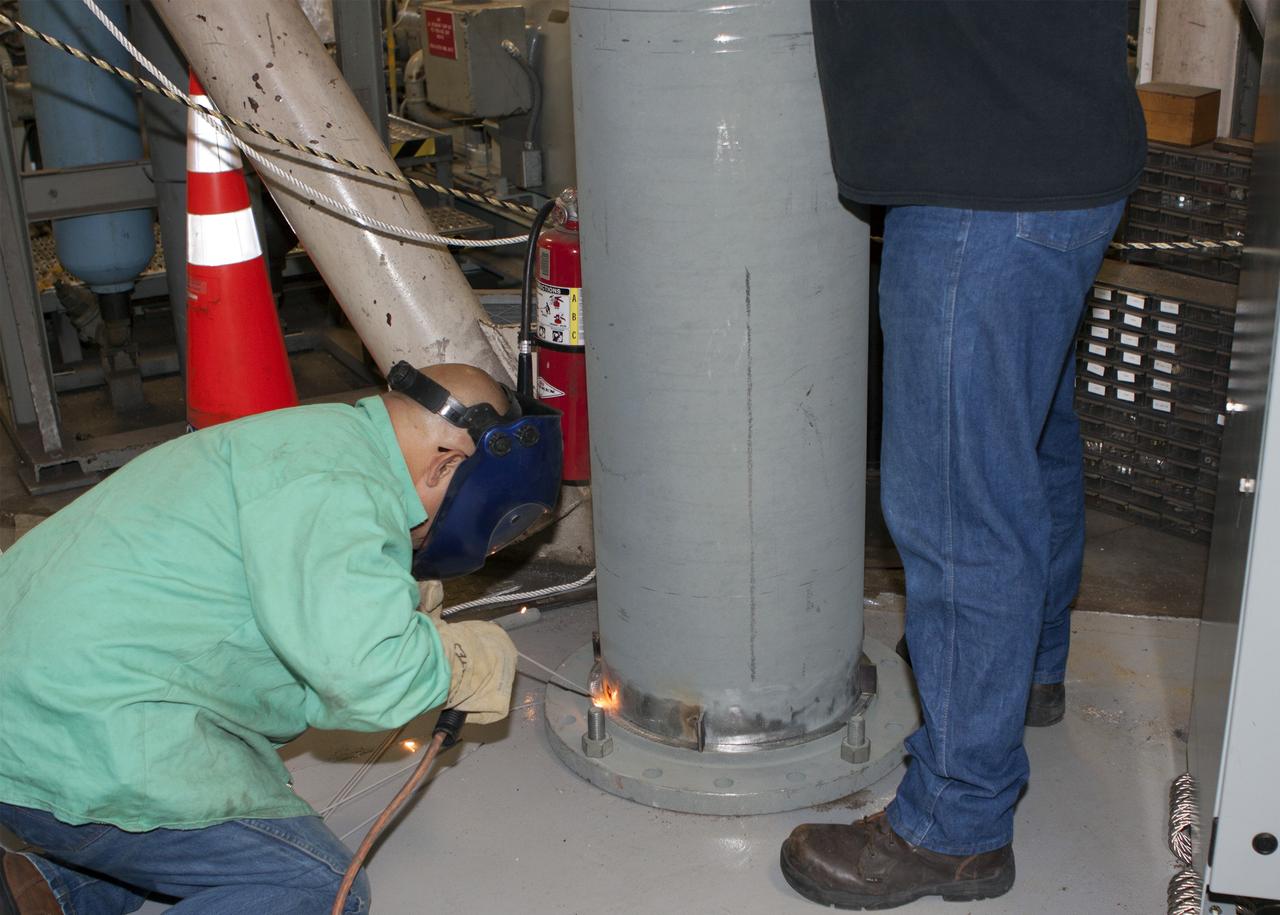
CAPE CANAVERAL, Fla. – Inside the Vehicle Assembly Building at NASA’s Kennedy Space Center in Florida, technicians install the piping for a new exhaust system in crawler-transporter 1, or CT-1. Work continues in high bay 3 to upgrade CT-1 as part of its general maintenance. CT-1 could be available to carry commercial launch vehicles to the launch pad. The crawler-transporters were used to carry the mobile launcher platform and space shuttle to Launch Complex 39 for space shuttle launches for 30 years. Photo credit: NASA/Jim Grossmann
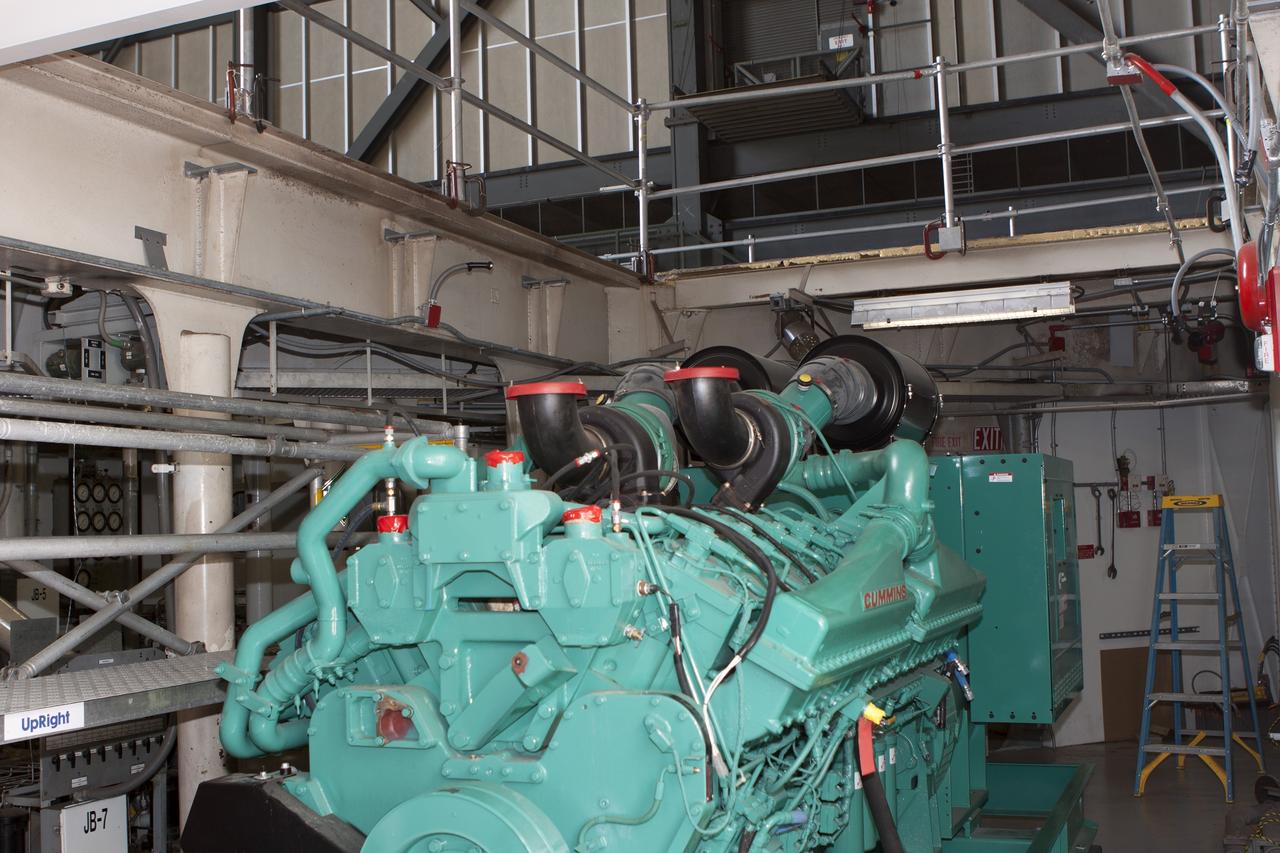
CAPE CANAVERAL, Fla. – Inside the Vehicle Assembly Building at NASA’s Kennedy Space Center in Florida, a new generator has been installed in crawler-transporter 1, or CT-1. Work continues in high bay 3 to upgrade CT-1 as part of its general maintenance. CT-1 could be available to carry commercial launch vehicles to the launch pad. The crawler-transporters were used to carry the mobile launcher platform and space shuttle to Launch Complex 39 for space shuttle launches for 30 years. Photo credit: NASA/Jim Grossmann
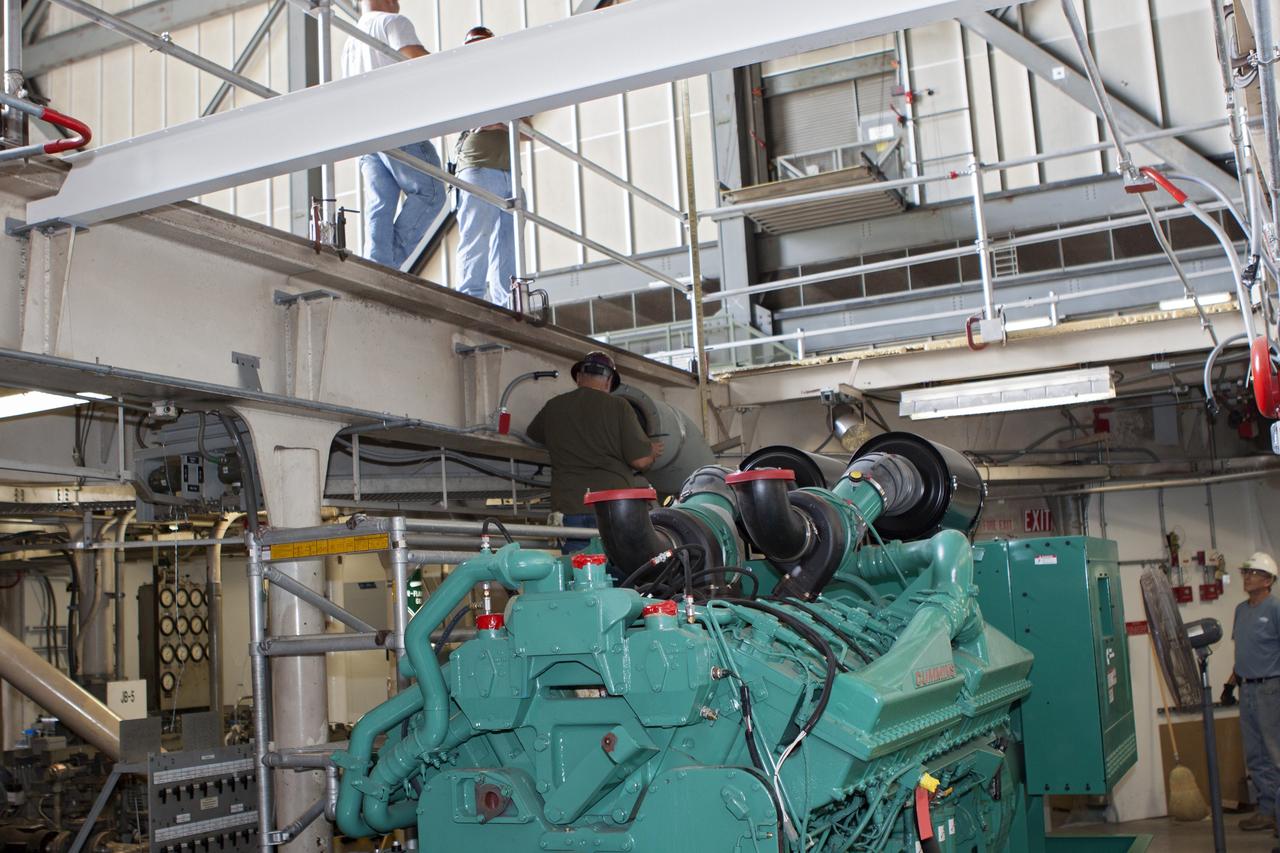
CAPE CANAVERAL, Fla. – Inside the Vehicle Assembly Building at NASA’s Kennedy Space Center in Florida, technicians install the piping for a new exhaust system in crawler-transporter 1, or CT-1. Work continues in high bay 3 to upgrade CT-1 as part of its general maintenance. CT-1 could be available to carry commercial launch vehicles to the launch pad. The crawler-transporters were used to carry the mobile launcher platform and space shuttle to Launch Complex 39 for space shuttle launches for 30 years. Photo credit: NASA/Jim Grossmann
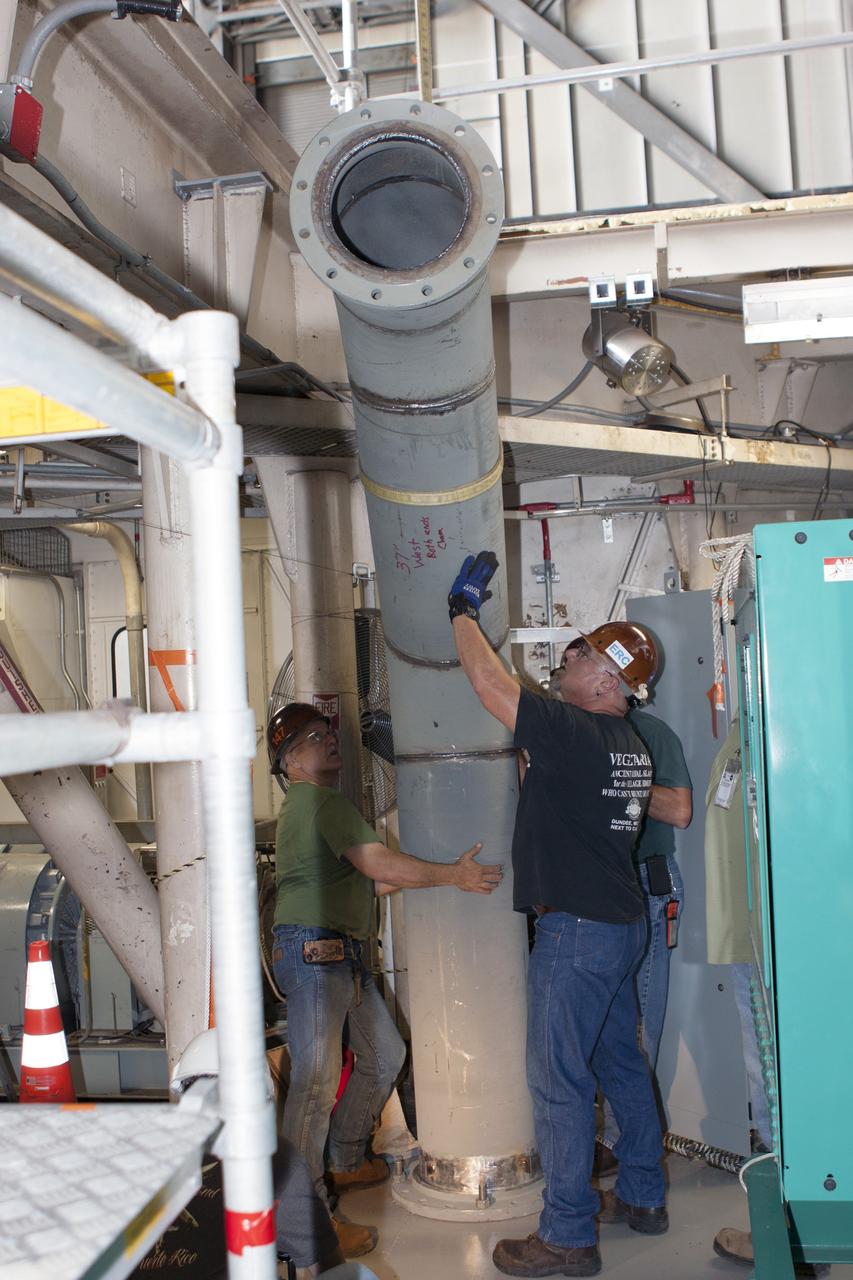
CAPE CANAVERAL, Fla. – Inside the Vehicle Assembly Building at NASA’s Kennedy Space Center in Florida, technicians install the piping for a new exhaust system in crawler-transporter 1, or CT-1. Work continues in high bay 3 to upgrade CT-1 as part of its general maintenance. CT-1 could be available to carry commercial launch vehicles to the launch pad. The crawler-transporters were used to carry the mobile launcher platform and space shuttle to Launch Complex 39 for space shuttle launches for 30 years. Photo credit: NASA/Jim Grossmann
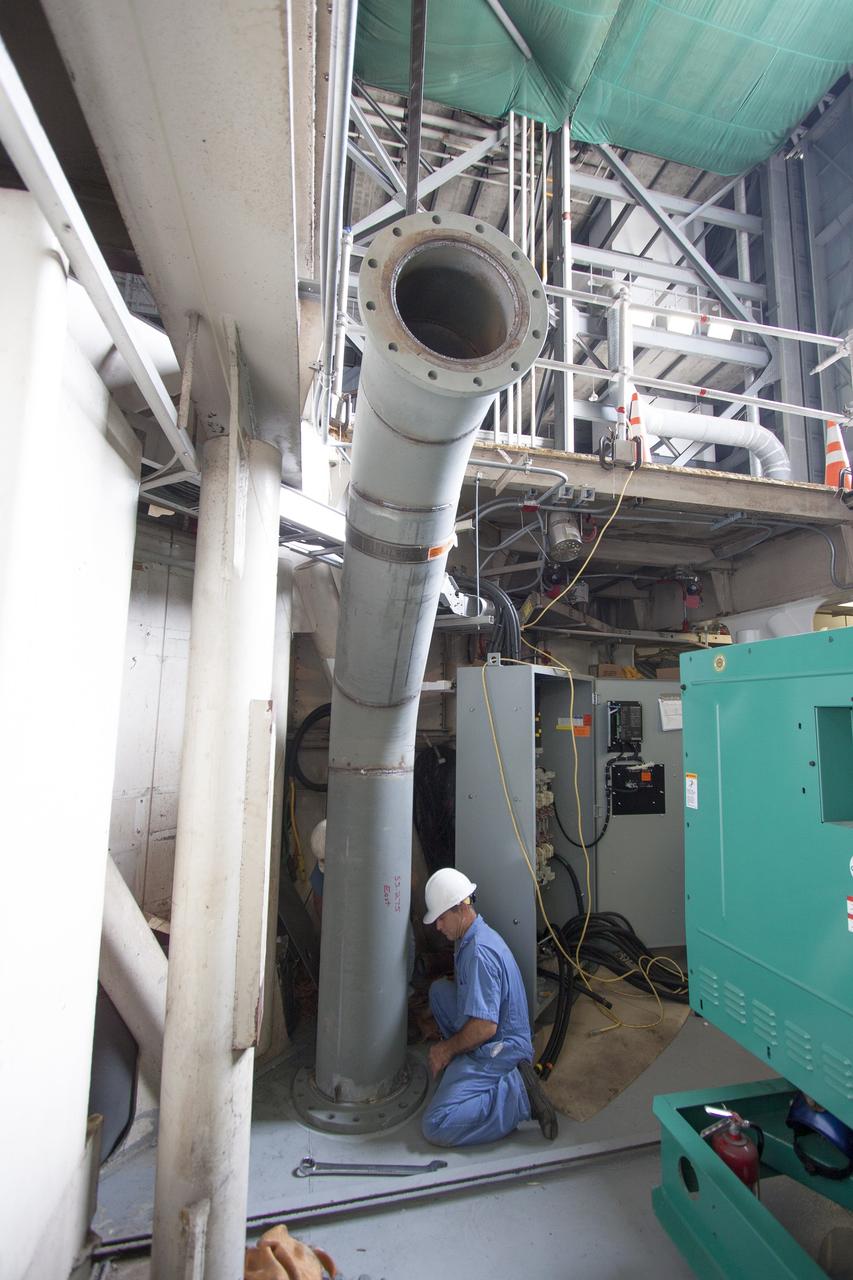
CAPE CANAVERAL, Fla. – Inside the Vehicle Assembly Building at NASA’s Kennedy Space Center in Florida, technicians install piping for a new exhaust system in crawler-transporter 1, or CT-1. Work continues in high bay 3 to upgrade CT-1 as part of its general maintenance. CT-1 could be available to carry commercial launch vehicles to the launch pad. The crawler-transporters were used to carry the mobile launcher platform and space shuttle to Launch Complex 39 for space shuttle launches for 30 years. Photo credit: NASA/Jim Grossmann
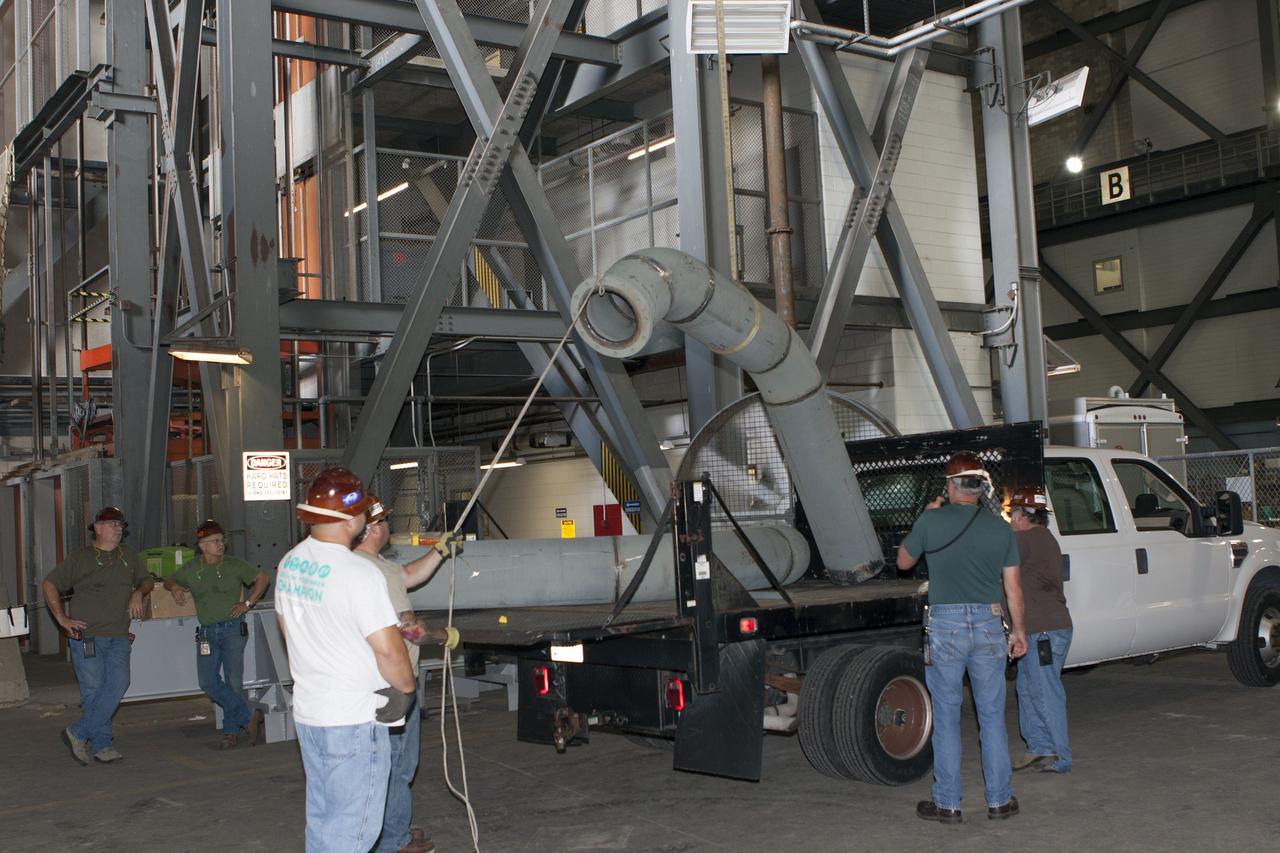
CAPE CANAVERAL, Fla. – Inside the Vehicle Assembly Building at NASA’s Kennedy Space Center in Florida, technicians prepare piping for a new exhaust system for installation in crawler-transporter 1, or CT-1. Work continues in high bay 3 to upgrade CT-1 as part of its general maintenance. CT-1 could be available to carry commercial launch vehicles to the launch pad. The crawler-transporters were used to carry the mobile launcher platform and space shuttle to Launch Complex 39 for space shuttle launches for 30 years. Photo credit: NASA/Jim Grossmann
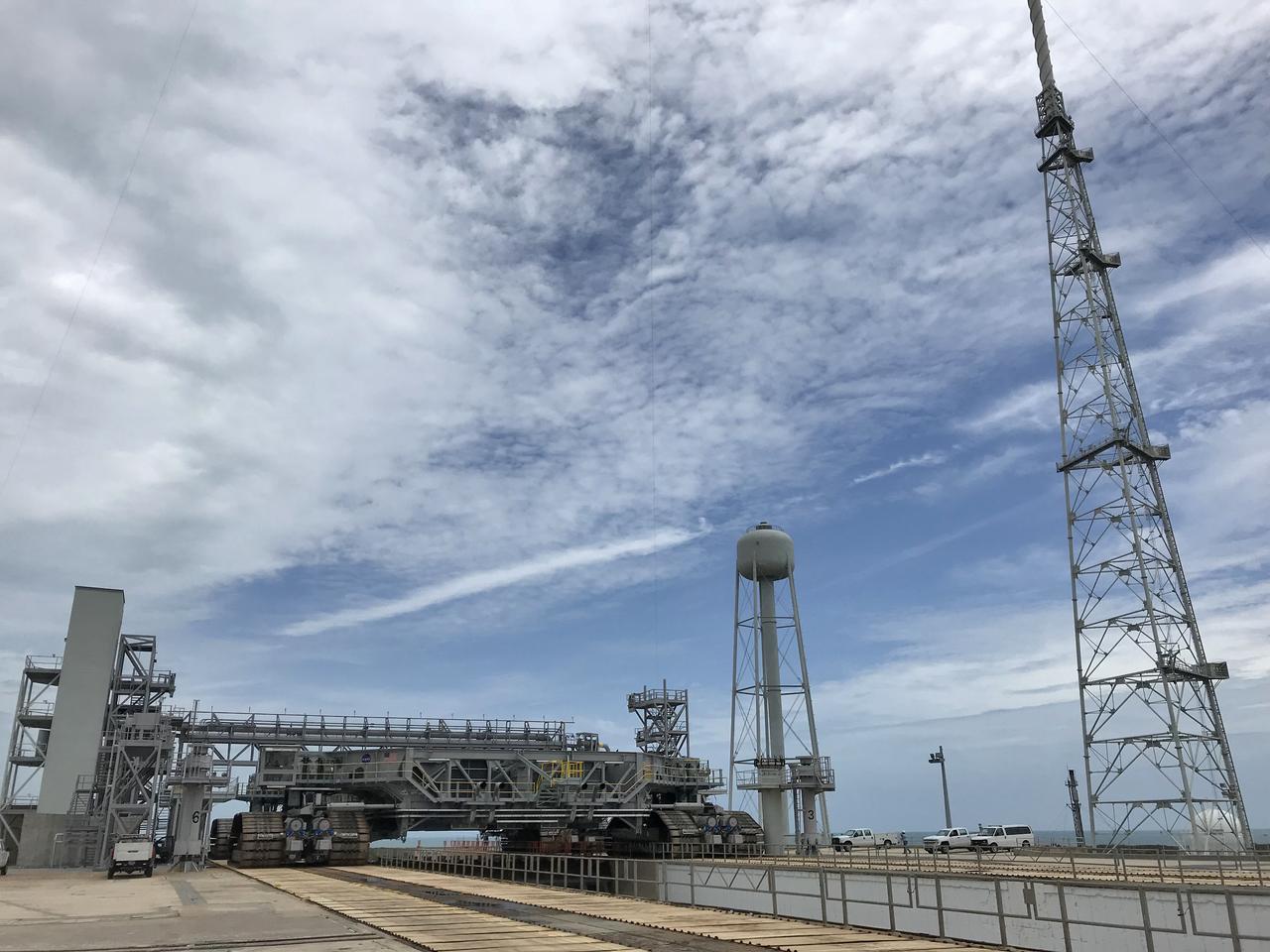
Crawler-transporter 2 (CT-2) arrives on the surface of Launch Pad 39B for a fit check on May 22, 2018, at NASA's Kennedy Space Center in Florida. The test drive to the pad confirms that all of the recent modifications to CT-2 and Pad 39B are operational to support the launch of the agency's Space Launch System rocket and Orion spacecraft on Exploration Mission-1. In view, at right, is one of three lightning protection towers positioned around Pad 39B. Exploration Ground Systems managed the modifications and upgrades to CT-2 and Pad 39B to prepare for EM-1 and deep space exploration missions.
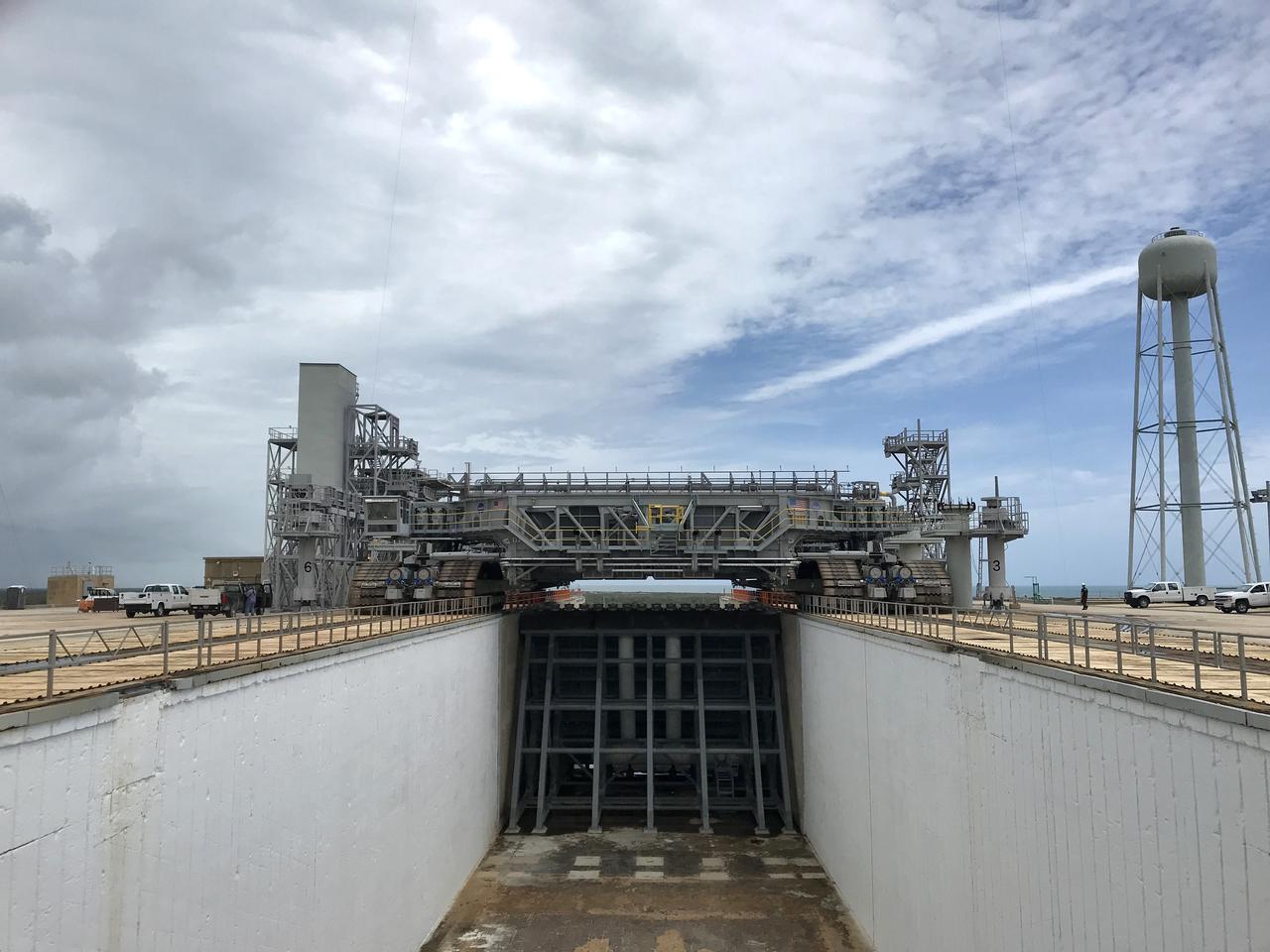
Crawler-transporter 2 (CT-2) arrives on the surface of Launch Pad 39B for a fit check on May 22, 2018, at NASA's Kennedy Space Center in Florida. The test drive to the pad confirms that all of the recent modifications to CT-2 and Pad 39B are operational to support the launch of the agency's Space Launch System rocket and Orion spacecraft on Exploration Mission-1. In view is the south side of the flame trench and the south side of the recently installed new main flame deflector. Exploration Ground Systems managed the modifications and upgrades to CT-2 and Pad 39B to prepare for EM-1 and deep space exploration missions.
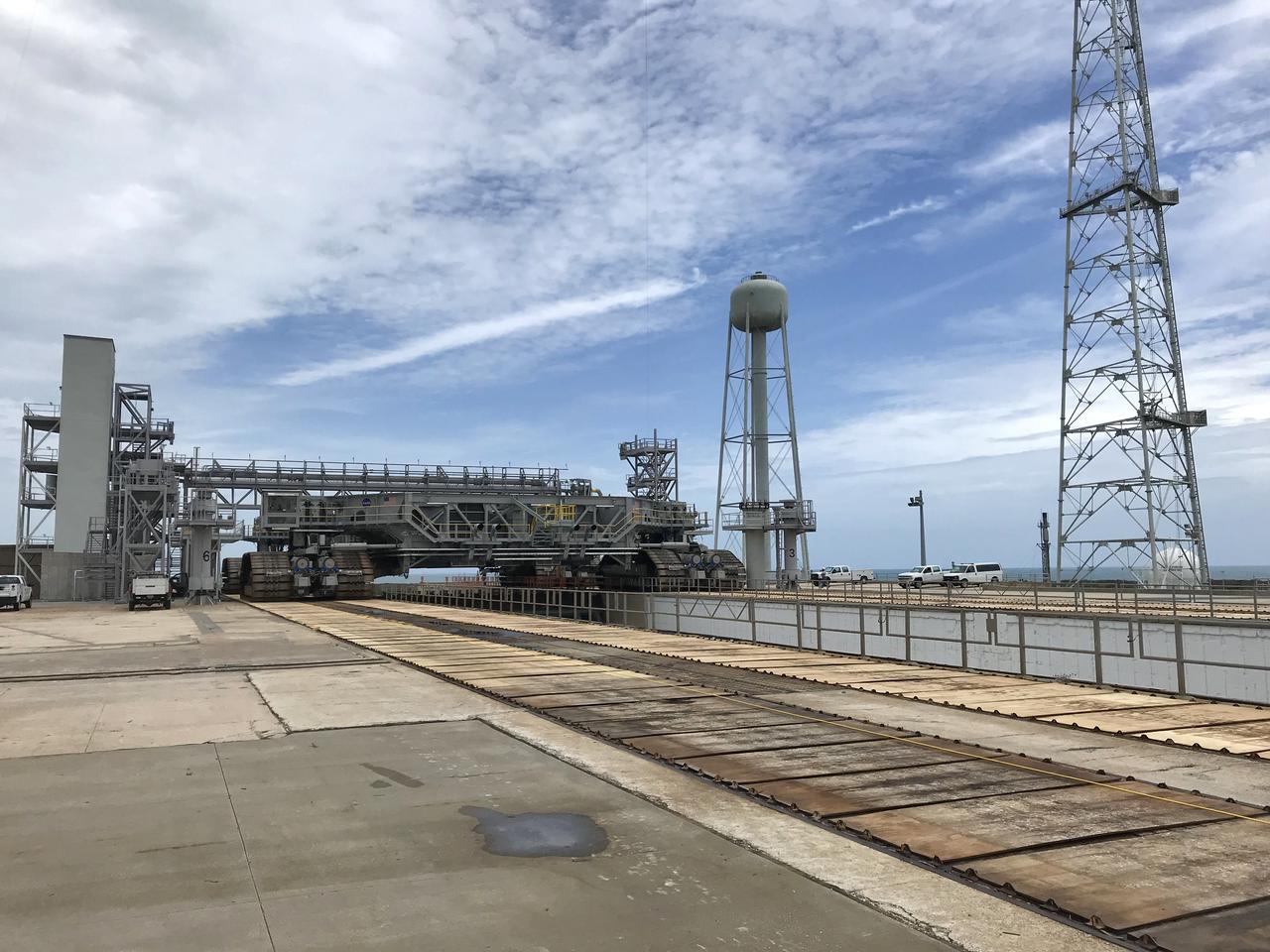
Crawler-transporter 2 (CT-2) arrives on the surface of Launch Pad 39B for a fit check on May 22, 2018, at NASA's Kennedy Space Center in Florida. The test drive to the pad confirms that all of the recent modifications to CT-2 and Pad 39B are operational to support the launch of the agency's Space Launch System rocket and Orion spacecraft on Exploration Mission-1. In view, at right, is one of three lightning protection towers positioned around Pad 39B. Exploration Ground Systems managed the modifications and upgrades to CT-2 and Pad 39B to prepare for EM-1 and deep space exploration missions.
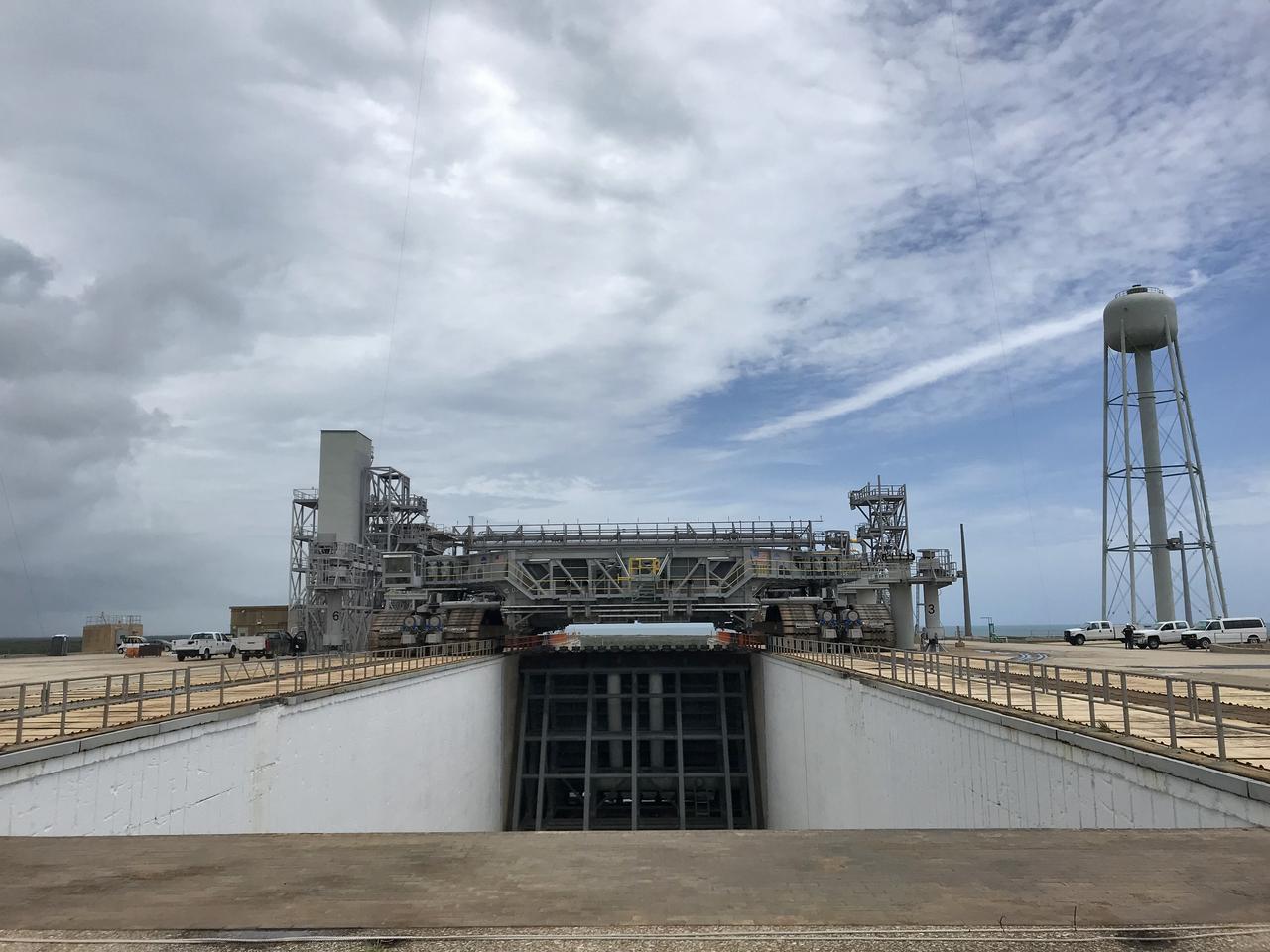
Crawler-transporter 2 (CT-2) arrives on the surface of Launch Pad 39B for a fit check on May 22, 2018, at NASA's Kennedy Space Center in Florida. The test drive to the pad confirms that all of the recent modifications to CT-2 and Pad 39B are operational to support the launch of the agency's Space Launch System rocket and Orion spacecraft on Exploration Mission-1. In view is the south side of the flame trench and the south side of the recently installed new main flame deflector. Exploration Ground Systems managed the modifications and upgrades to CT-2 and Pad 39B to prepare for EM-1 and deep space exploration missions.
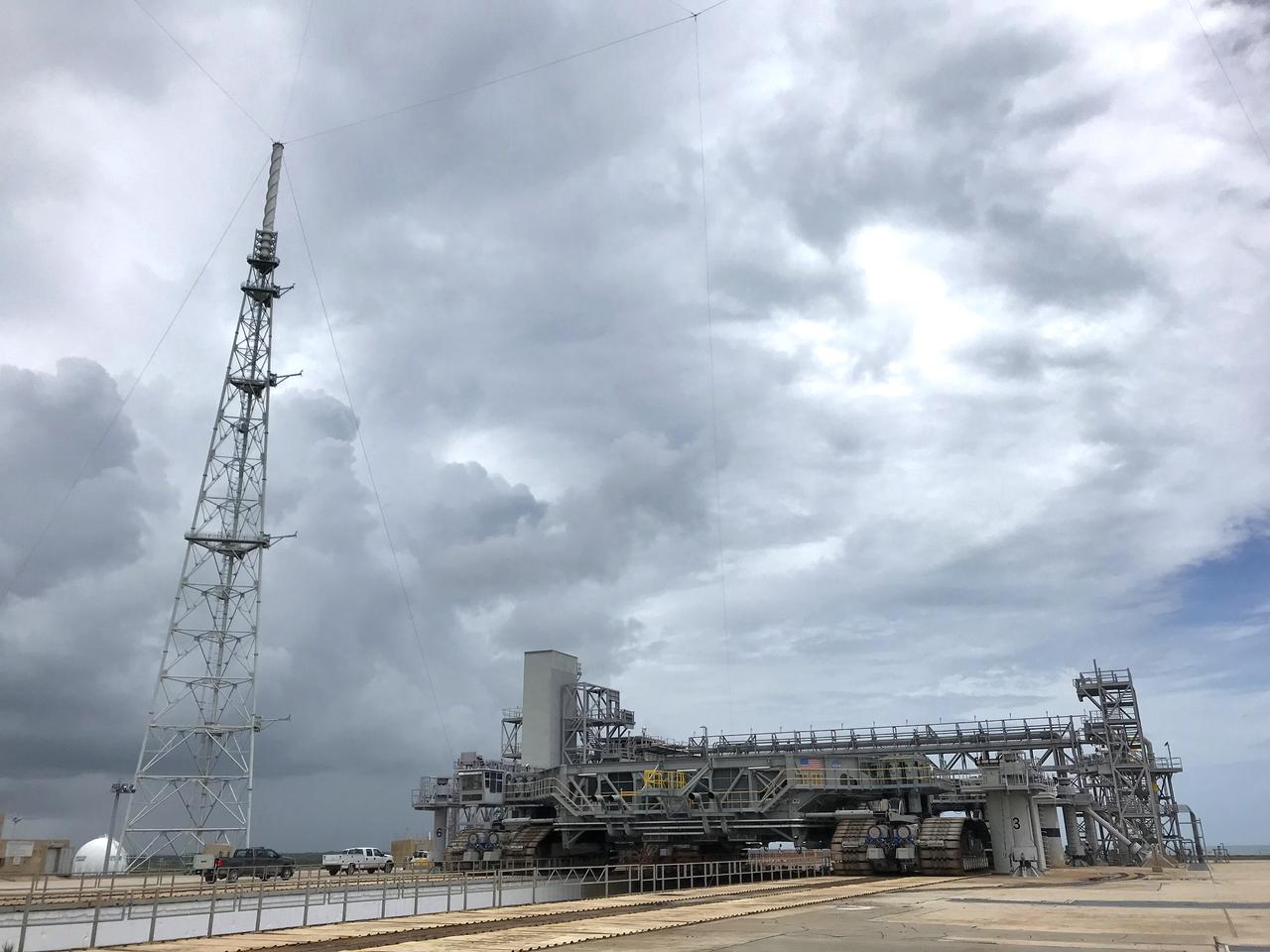
Crawler-transporter 2 (CT-2) arrives on the surface of Launch Pad 39B for a fit check on May 22, 2018, at NASA's Kennedy Space Center in Florida. The test drive to the pad confirms that all of the recent modifications to CT-2 and Pad 39B are operational to support the launch of the agency's Space Launch System rocket and Orion spacecraft on Exploration Mission-1. In view, at left, is one of three lightning protection towers positioned around Pad 39B. Exploration Ground Systems managed the modifications and upgrades to CT-2 and Pad 39B to prepare for EM-1 and deep space exploration missions.
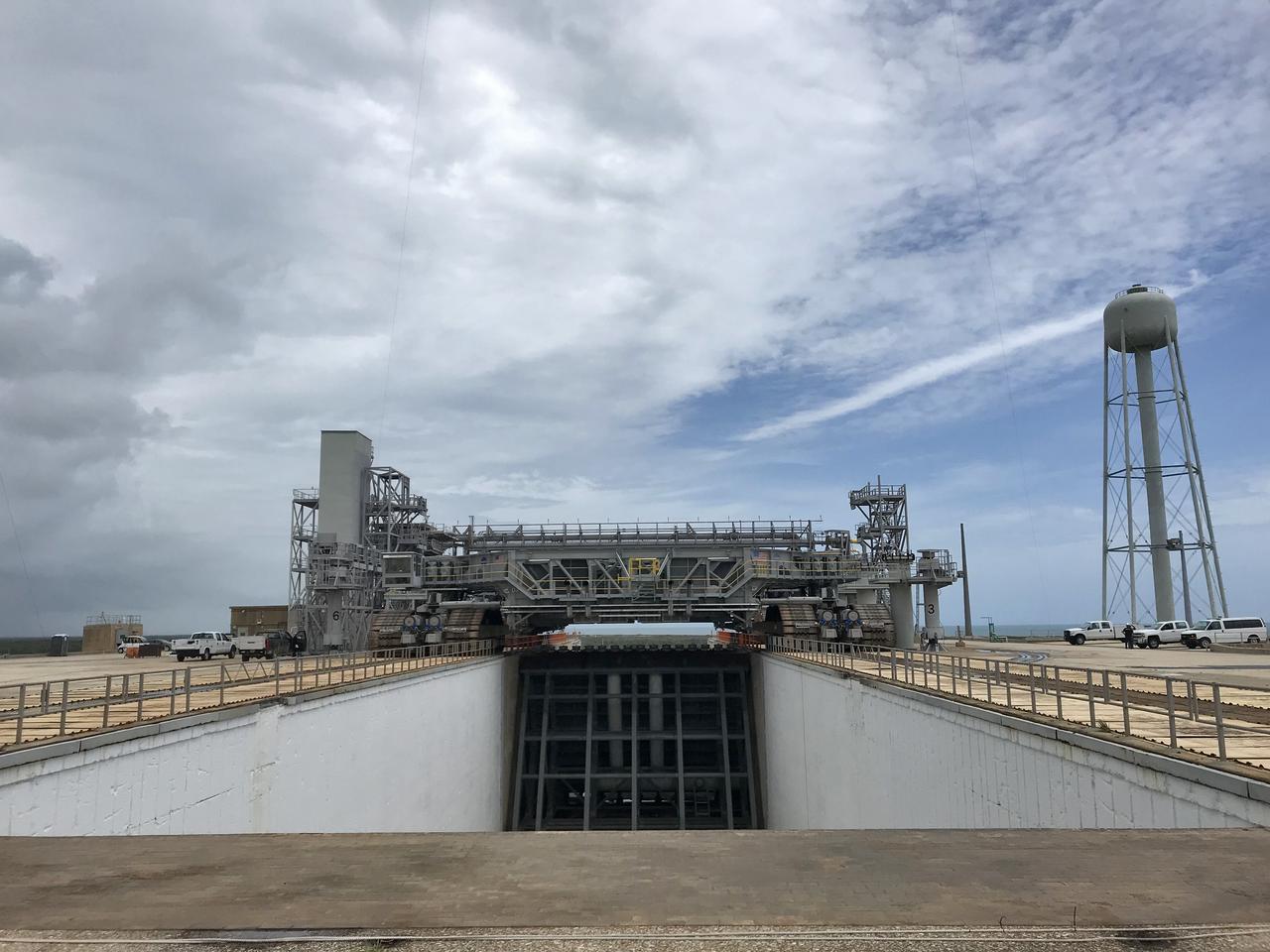
Crawler-transporter 2 (CT-2) arrives on the surface of Launch Pad 39B for a fit check on May 22, 2018, at NASA's Kennedy Space Center in Florida. The test drive to the pad confirms that all of the recent modifications to CT-2 and Pad 39B are operational to support the launch of the agency's Space Launch System rocket and Orion spacecraft on Exploration Mission-1. In view is the south side of the flame trench and the south side of the recently installed new main flame deflector. Exploration Ground Systems managed the modifications and upgrades to CT-2 and Pad 39B to prepare for EM-1 and deep space exploration missions.
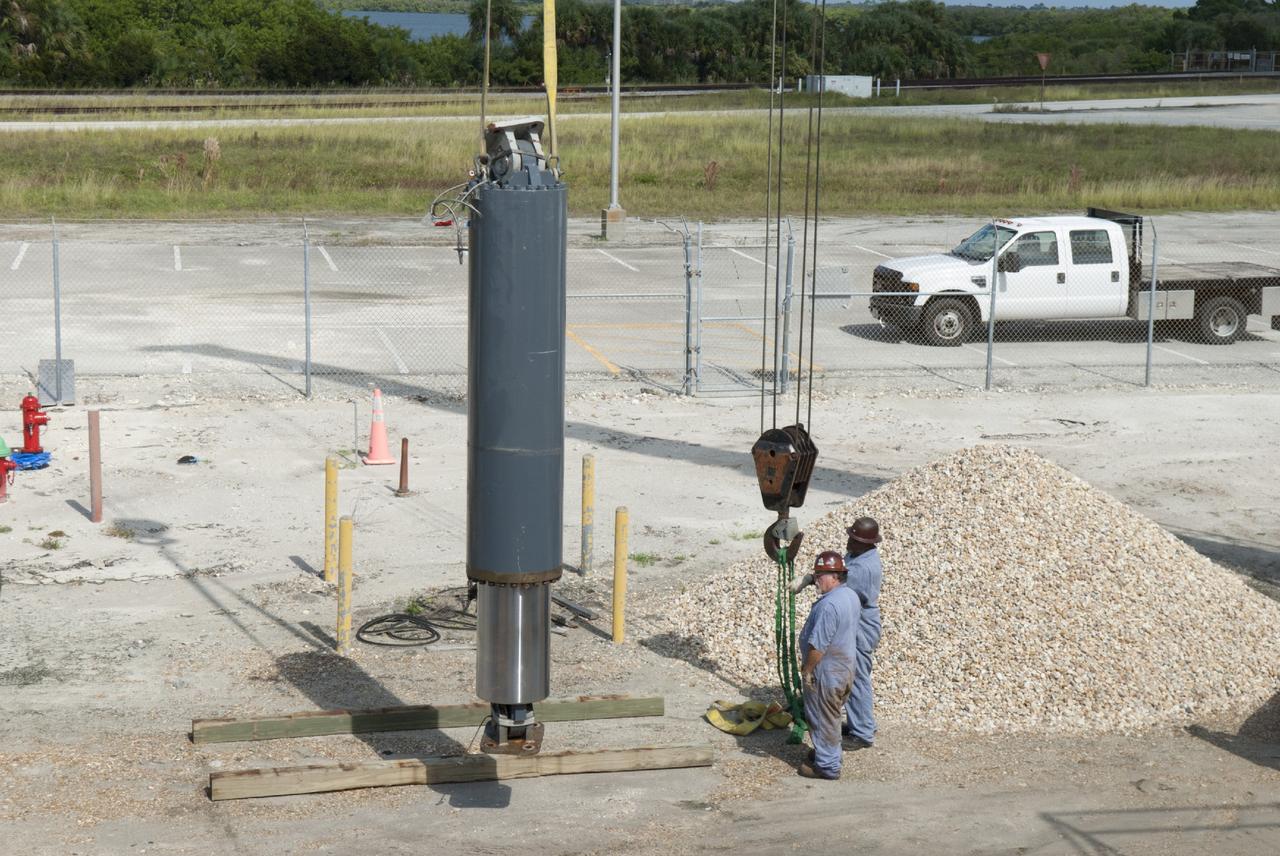
CAPE CANAVERAL, Fla. – Ground support equipment technicians monitor the progress as one of the jacking, equalizing and leveling, or JEL, hydraulic cylinders is lowered to the ground after it was removed from crawler-transporter 1. The work is being performed at the crawler transporter maintenance facility at NASA’s Kennedy Space Center in Florida. Sixteen new JEL hydraulic cylinders will be installed on CT-1 to increase load carrying capacity and reliability. The Ground Systems Development and Operations Program at Kennedy continues to upgrade CT-1 as part of its general maintenance. CT-1 could be available to carry commercial launch vehicles to the launch pad. The crawler-transporters were used to carry the mobile launcher platform and space shuttle to Launch Complex 39 for space shuttle launches for 30 years. Photo credit: NASA/Tim Jacobs
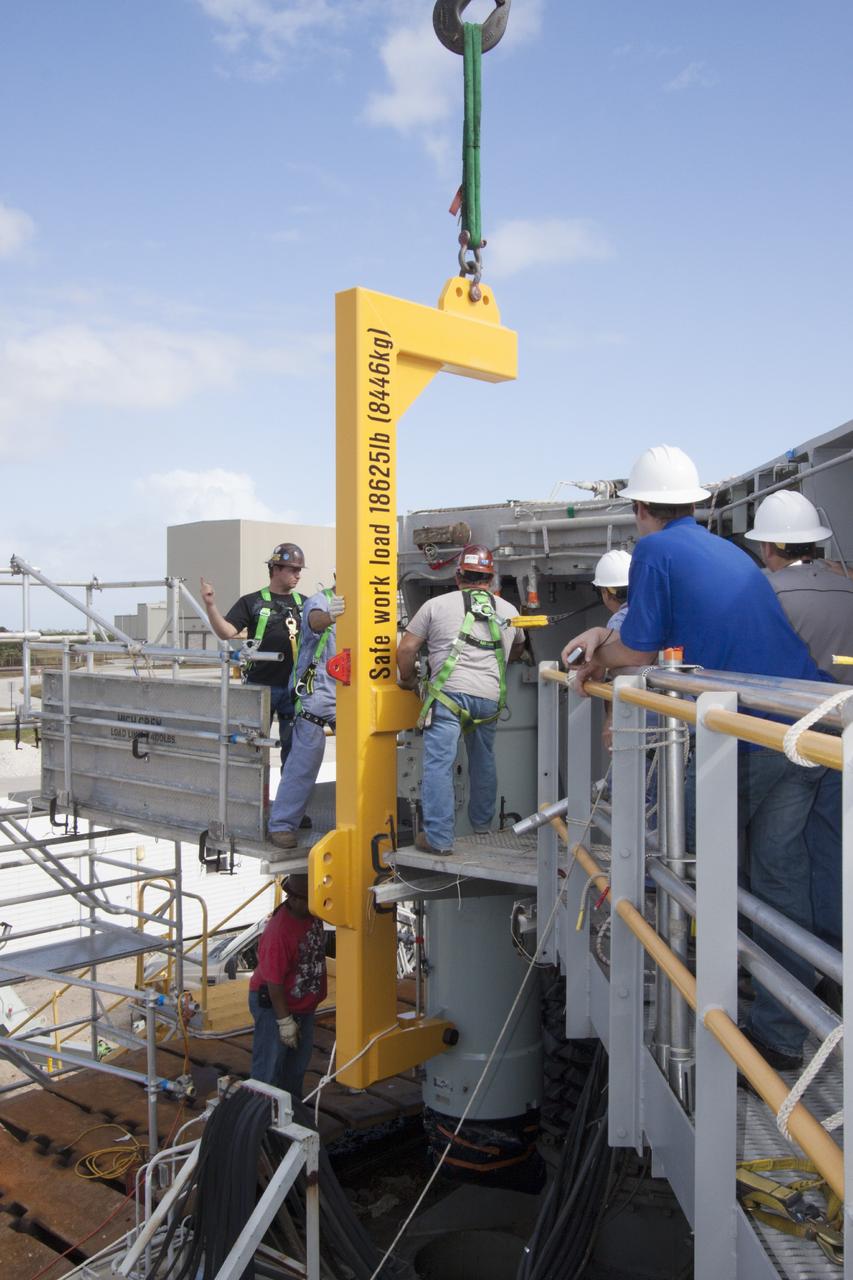
CAPE CANAVERAL, Fla. – Ground support equipment technicians assist as a crane is used to move a new jacking, equalizing and leveling, or JEL, hydraulic cylinder closer for installation on crawler-transporter 1 at the crawler transporter maintenance facility at NASA’s Kennedy Space Center in Florida. New JEL hydraulic cylinders will be installed on CT-1 to test them for increased load carrying capacity and reliability. The Ground Systems Development and Operations Program at Kennedy continues to upgrade CT-1 as part of its general maintenance. CT-1 could be available to carry a variety of launch vehicles to the launch pad. Two crawler-transporters were used to carry the mobile launcher platform and space shuttle to Launch Complex 39 for space shuttle launches for 30 years. Photo credit: NASA/Jim Grossmann
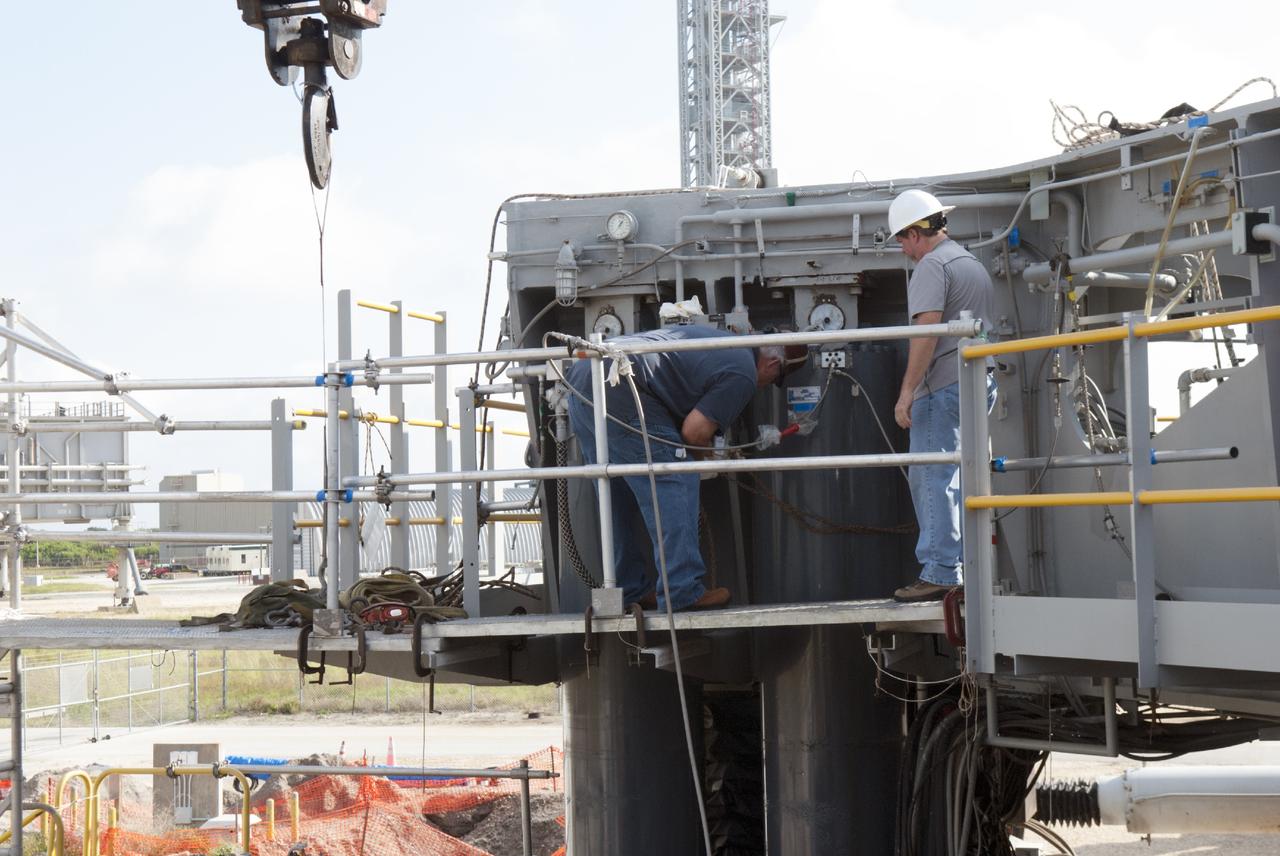
CAPE CANAVERAL, Fla. – Ground support equipment technicians prepare to remove the jacking, equalizing and leveling, or JEL, hydraulic cylinders from crawler-transporter 1 at the crawler transporter maintenance facility at NASA’s Kennedy Space Center in Florida. Sixteen new JEL hydraulic cylinders will be installed on CT-1 to increase load carrying capacity and reliability. The Ground Systems Development and Operations Program at Kennedy continues to upgrade CT-1 as part of its general maintenance. CT-1 could be available to carry commercial launch vehicles to the launch pad. The crawler-transporters were used to carry the mobile launcher platform and space shuttle to Launch Complex 39 for space shuttle launches for 30 years. Photo credit: NASA/Tim Jacobs
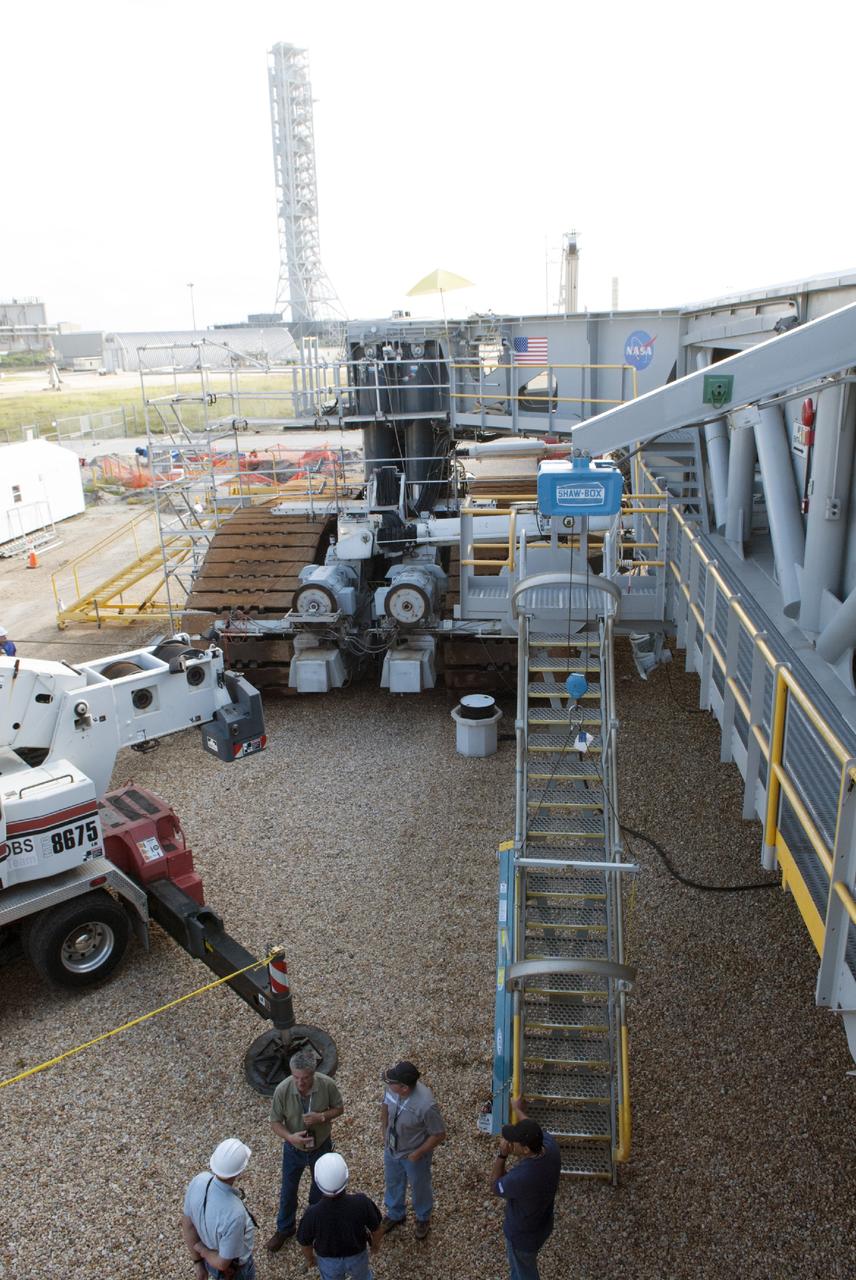
CAPE CANAVERAL, Fla. – Preparations are underway to begin removing the jacking, equalizing and leveling, or JEL, hydraulic cylinders from crawler-transporter 1 at the crawler transporter maintenance facility at NASA’s Kennedy Space Center in Florida. Sixteen new JEL hydraulic cylinders will be installed on CT-1 to increase load carrying capacity and reliability. The Ground Systems Development and Operations Program at Kennedy continues to upgrade CT-1 as part of its general maintenance. CT-1 could be available to carry commercial launch vehicles to the launch pad. The crawler-transporters were used to carry the mobile launcher platform and space shuttle to Launch Complex 39 for space shuttle launches for 30 years. Photo credit: NASA/Tim Jacobs
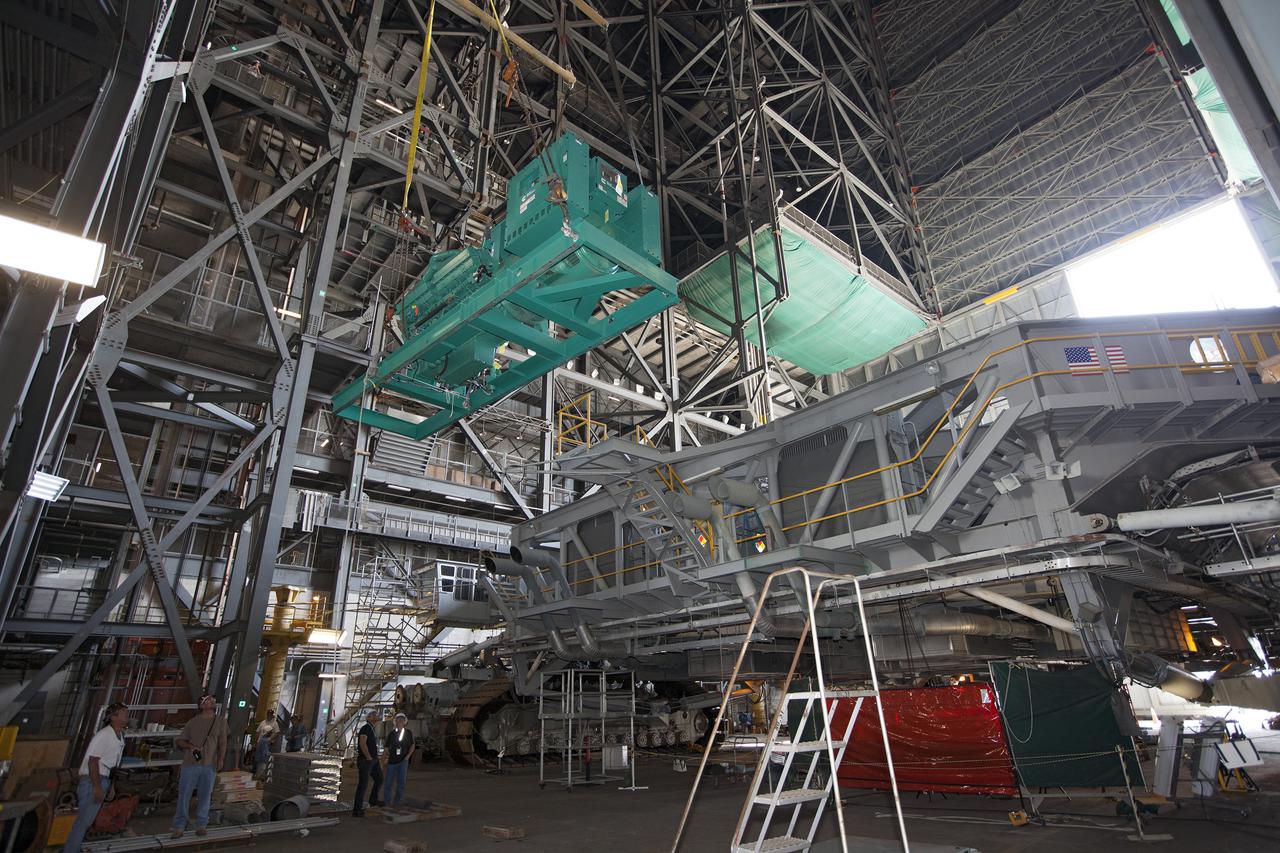
CAPE CANAVERAL, Fla. – Inside the Vehicle Assembly Building at NASA’s Kennedy Space Center in Florida, technicians monitor the progress as a large crane lifts a new Cummins engine and generator high above crawler-transporter 1 CT-1. The Apollo era diesel engines were removed so that the new engine can be installed inside CT-1. Work continues in high bay 3 to upgrade CT-1 as part of its general maintenance and could be available to carry commercial launch vehicles to the launch pad. The crawler-transporters were used to carry the mobile launcher platform and space shuttle to Launch Complex 39 for space shuttle launches for 30 years. Photo credit: NASA_Kim Shiflett
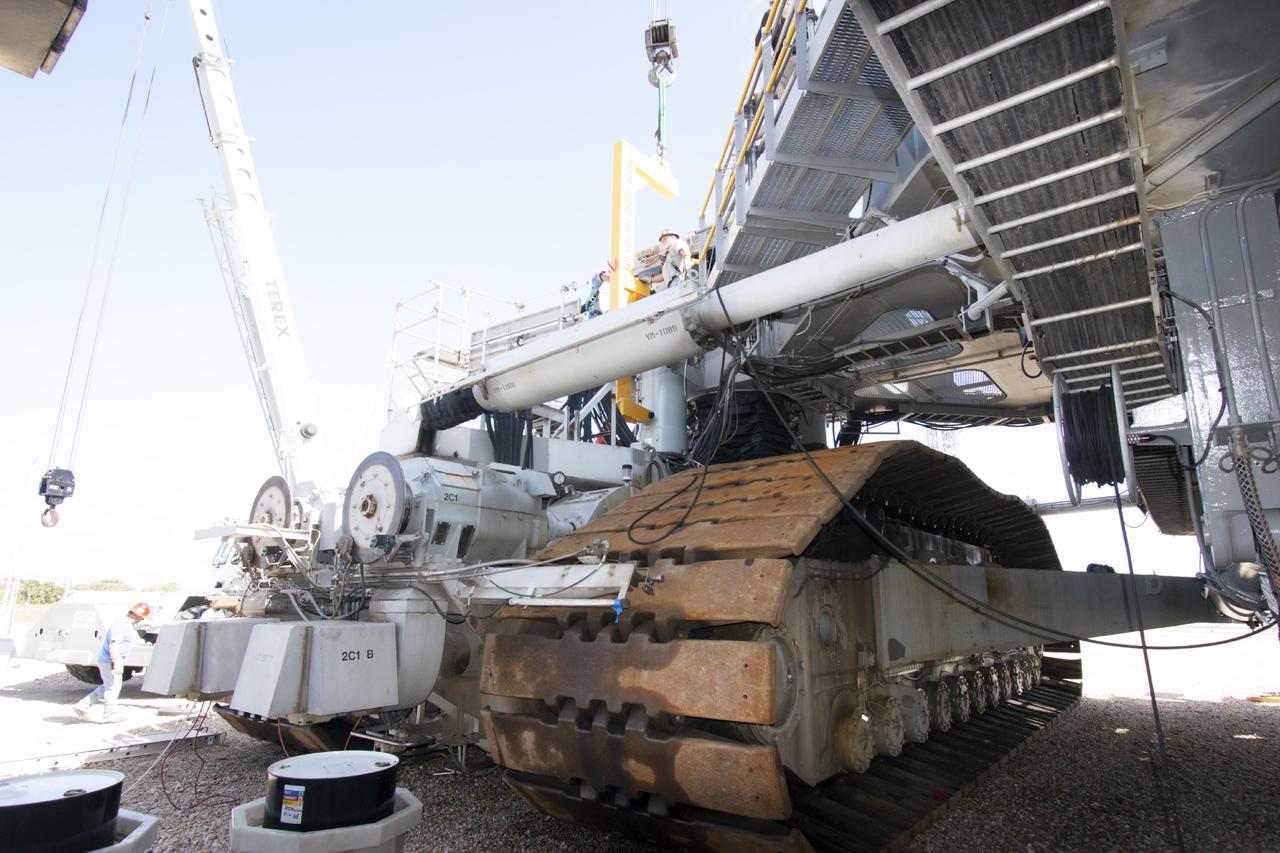
CAPE CANAVERAL, Fla. – Ground support equipment technicians assist as a crane moves a new jacking, equalizing and leveling, or JEL, hydraulic cylinder close for installation on crawler-transporter 1 at the crawler transporter maintenance facility at NASA’s Kennedy Space Center in Florida. New JEL hydraulic cylinders will be installed on CT-1 to test them for increased load carrying capacity and reliability. The Ground Systems Development and Operations Program at Kennedy continues to upgrade CT-1 as part of its general maintenance. CT-1 could be available to carry a variety of launch vehicles to the launch pad. Two crawler-transporters were used to carry the mobile launcher platform and space shuttle to Launch Complex 39 for space shuttle launches for 30 years. Photo credit: NASA/Jim Grossmann
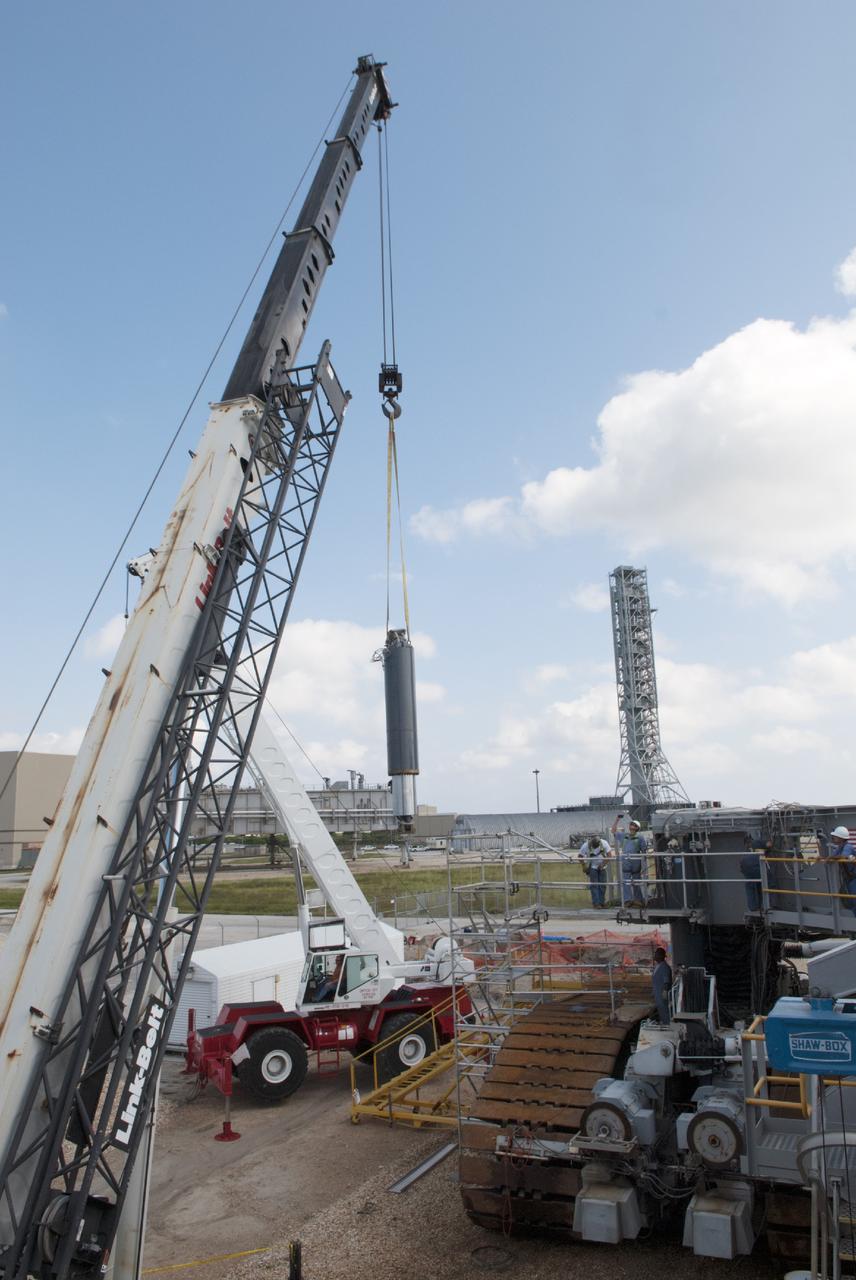
CAPE CANAVERAL, Fla. – One of the jacking, equalizing and leveling, or JEL, hydraulic cylinders is lifted away from crawler-transporter 1 at the crawler transporter maintenance facility at NASA’s Kennedy Space Center in Florida. Sixteen new JEL hydraulic cylinders will be installed on CT-1 to increase load carrying capacity and reliability. The Ground Systems Development and Operations Program at Kennedy continues to upgrade CT-1 as part of its general maintenance. CT-1 could be available to carry commercial launch vehicles to the launch pad. The crawler-transporters were used to carry the mobile launcher platform and space shuttle to Launch Complex 39 for space shuttle launches for 30 years. Photo credit: NASA/Tim Jacobs
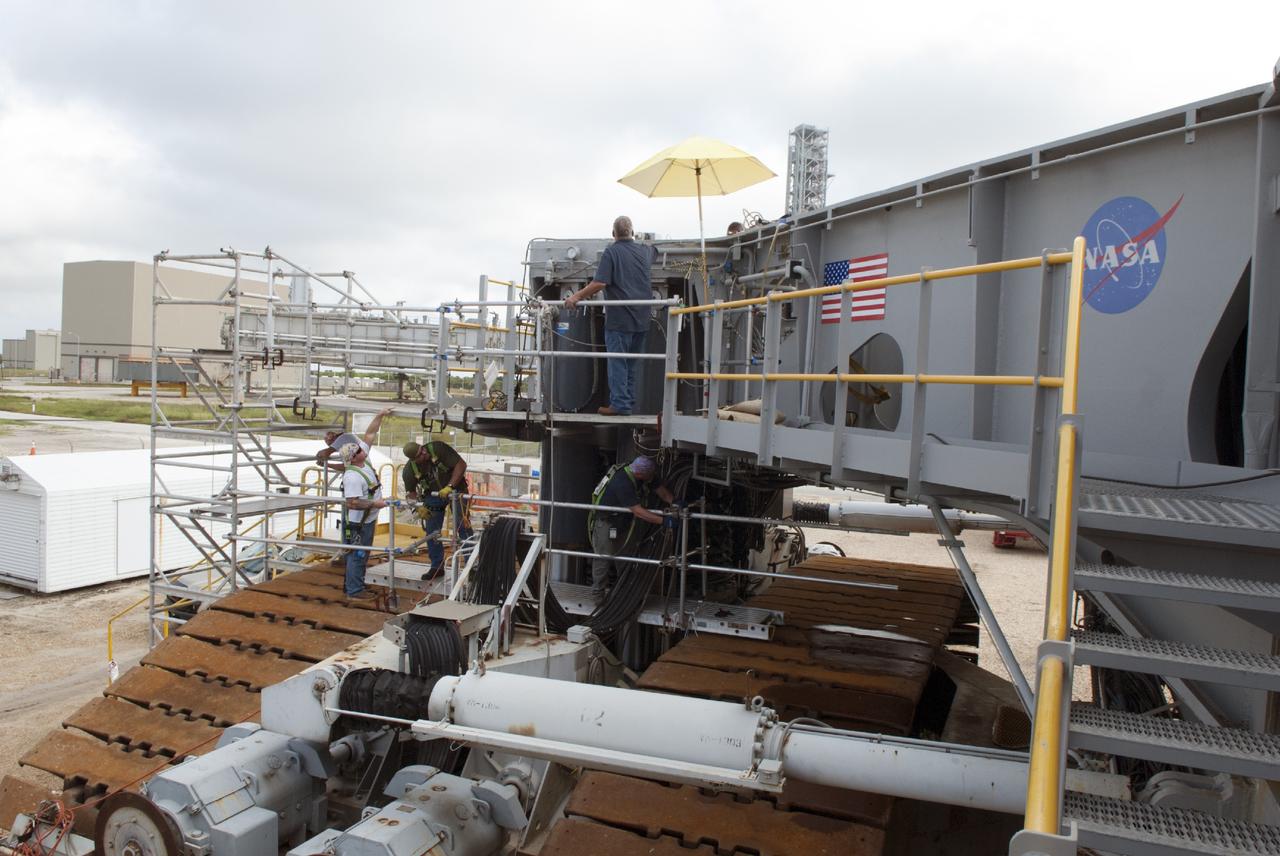
CAPE CANAVERAL, Fla. – Preparations are underway to begin removing the jacking, equalizing and leveling, or JEL, hydraulic cylinders from crawler-transporter 1 at the crawler transporter maintenance facility at NASA’s Kennedy Space Center in Florida. Sixteen new JEL hydraulic cylinders will be installed on CT-1 to increase load carrying capacity and reliability. The Ground Systems Development and Operations Program at Kennedy continues to upgrade CT-1 as part of its general maintenance. CT-1 could be available to carry commercial launch vehicles to the launch pad. The crawler-transporters were used to carry the mobile launcher platform and space shuttle to Launch Complex 39 for space shuttle launches for 30 years. Photo credit: NASA/Tim Jacobs
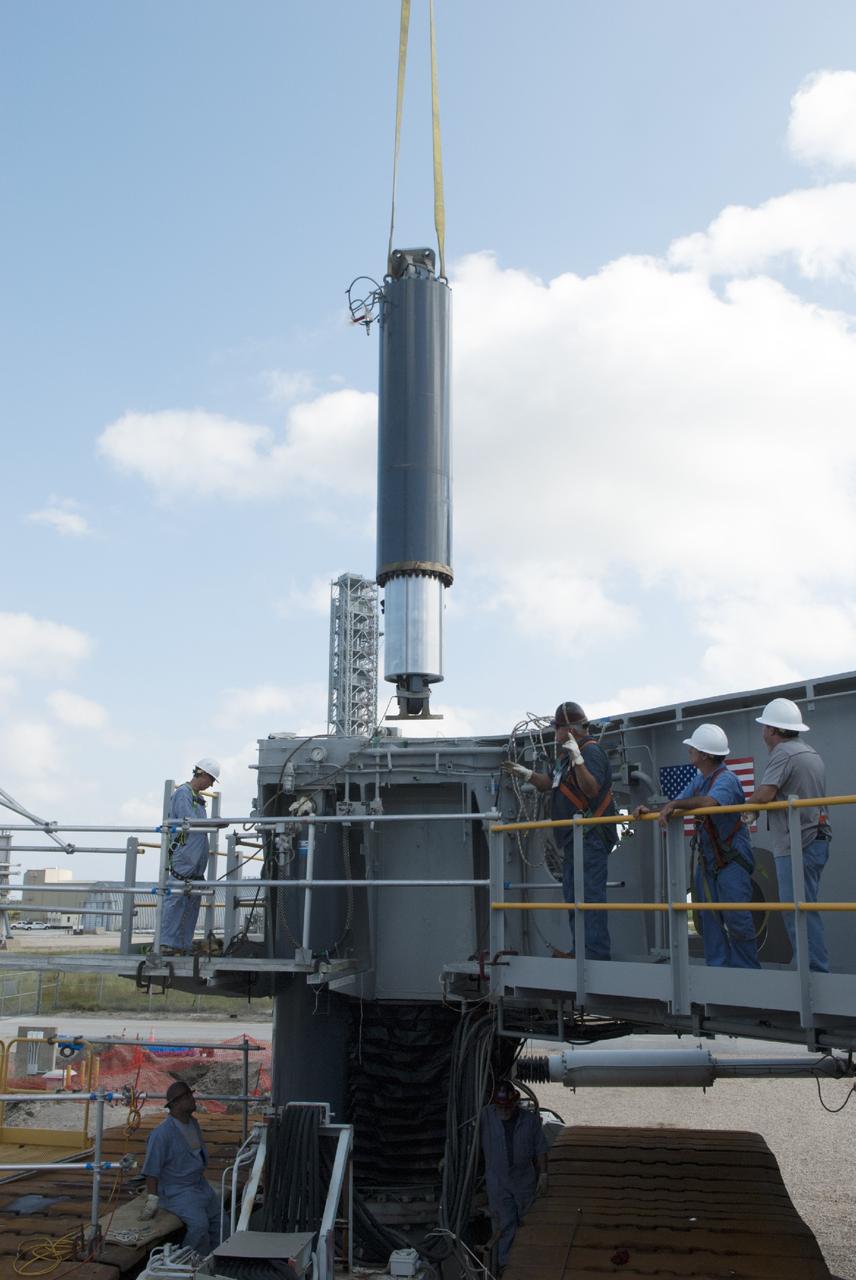
CAPE CANAVERAL, Fla. – Ground support equipment technicians monitor the progress as one of the jacking, equalizing and leveling, or JEL, hydraulic cylinders is lifted from crawler-transporter 1 at the crawler transporter maintenance facility at NASA’s Kennedy Space Center in Florida. Sixteen new JEL hydraulic cylinders will be installed on CT-1 to increase load carrying capacity and reliability. The Ground Systems Development and Operations Program at Kennedy continues to upgrade CT-1 as part of its general maintenance. CT-1 could be available to carry commercial launch vehicles to the launch pad. The crawler-transporters were used to carry the mobile launcher platform and space shuttle to Launch Complex 39 for space shuttle launches for 30 years. Photo credit: NASA/Tim Jacobs
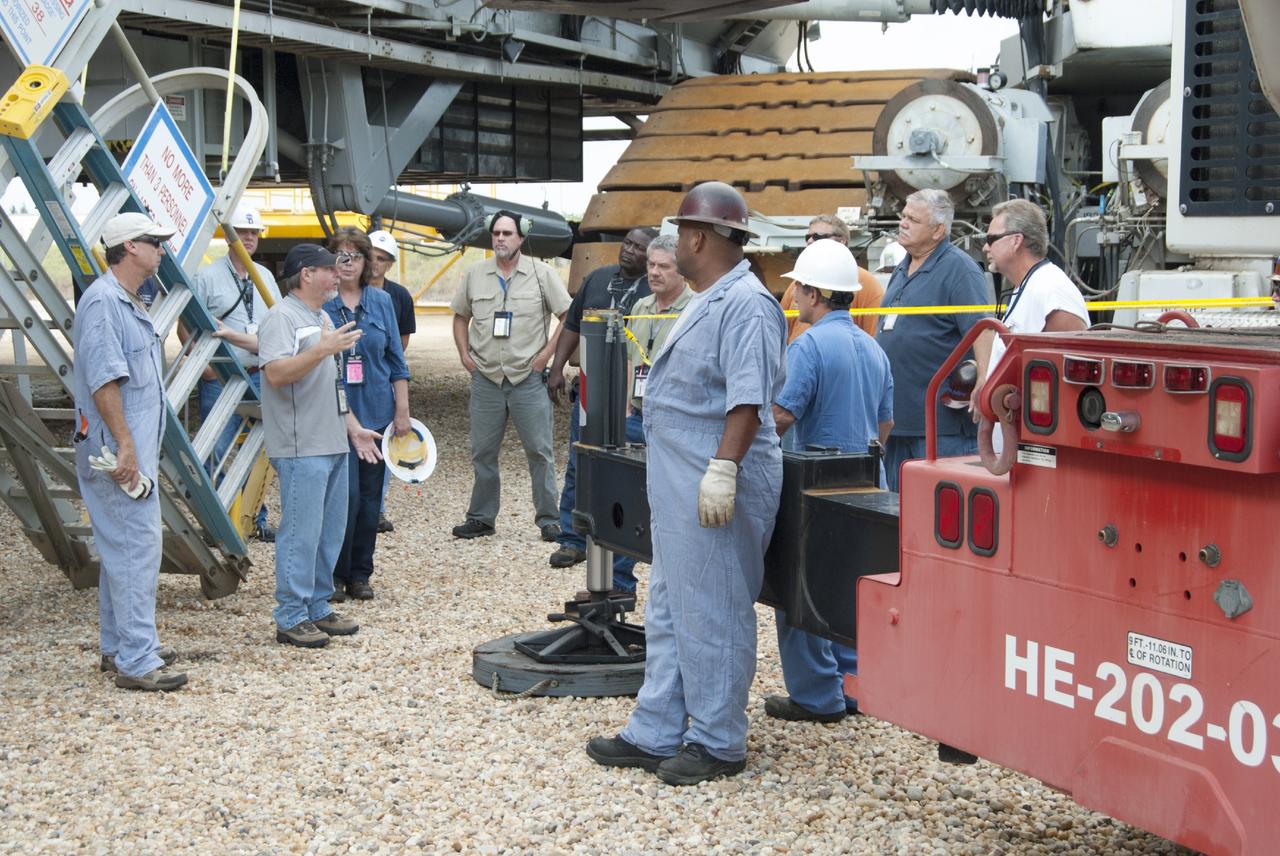
CAPE CANAVERAL, Fla. – Ground support equipment technicians review procedures before removing jacking, equalizing and leveling, or JEL, hydraulic cylinders from crawler-transporter 1 at the crawler transporter maintenance facility at NASA’s Kennedy Space Center in Florida. Sixteen new JEL hydraulic cylinders will be installed on CT-1 to increase load carrying capacity and reliability. The Ground Systems Development and Operations Program at Kennedy continues to upgrade CT-1 as part of its general maintenance. CT-1 could be available to carry commercial launch vehicles to the launch pad. The crawler-transporters were used to carry the mobile launcher platform and space shuttle to Launch Complex 39 for space shuttle launches for 30 years. Photo credit: NASA/Tim Jacobs
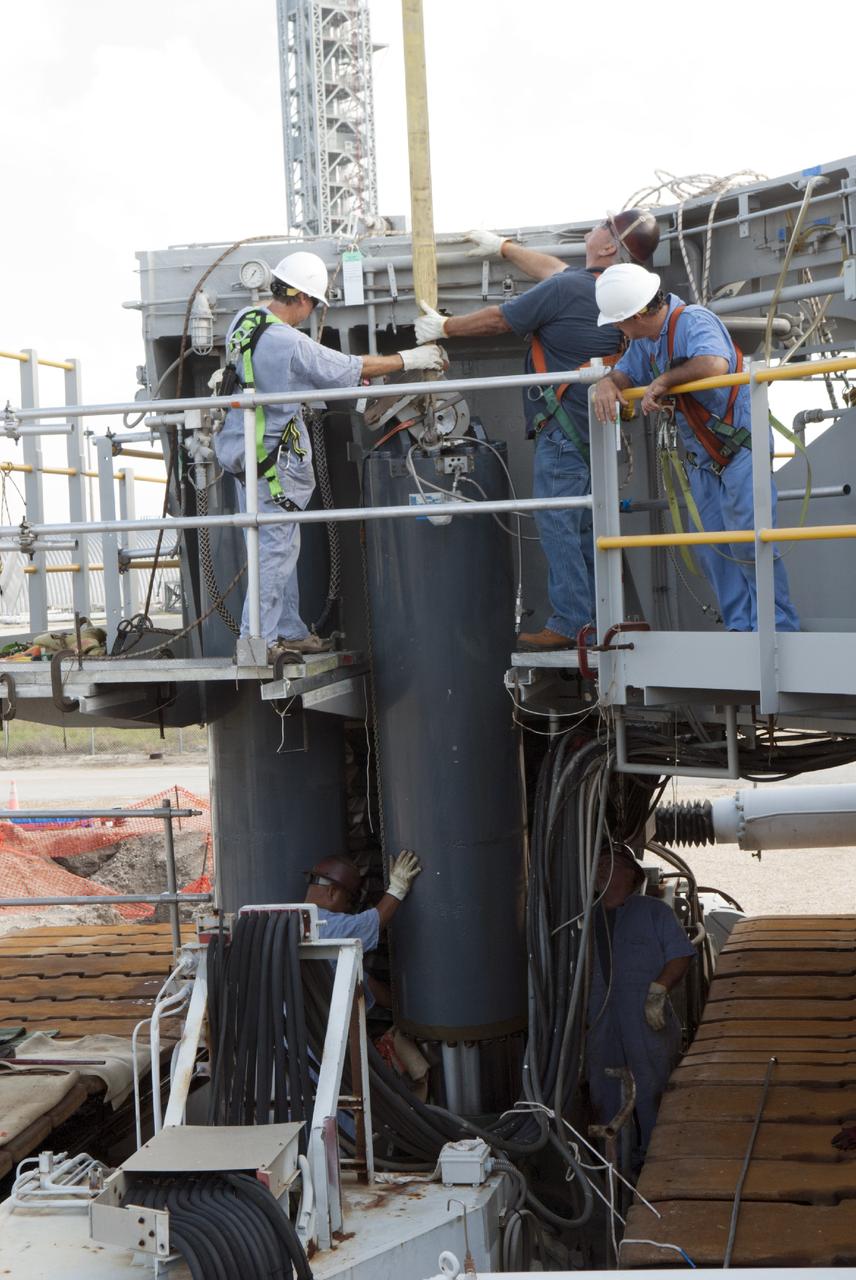
CAPE CANAVERAL, Fla. – Ground support equipment technicians prepare one of the jacking, equalizing and leveling, or JEL, hydraulic cylinders for removal from crawler-transporter 1 at the crawler transporter maintenance facility at NASA’s Kennedy Space Center in Florida. Sixteen new JEL hydraulic cylinders will be installed on CT-1 to increase load carrying capacity and reliability. The Ground Systems Development and Operations Program at Kennedy continues to upgrade CT-1 as part of its general maintenance. CT-1 could be available to carry commercial launch vehicles to the launch pad. The crawler-transporters were used to carry the mobile launcher platform and space shuttle to Launch Complex 39 for space shuttle launches for 30 years. Photo credit: NASA/Tim Jacobs
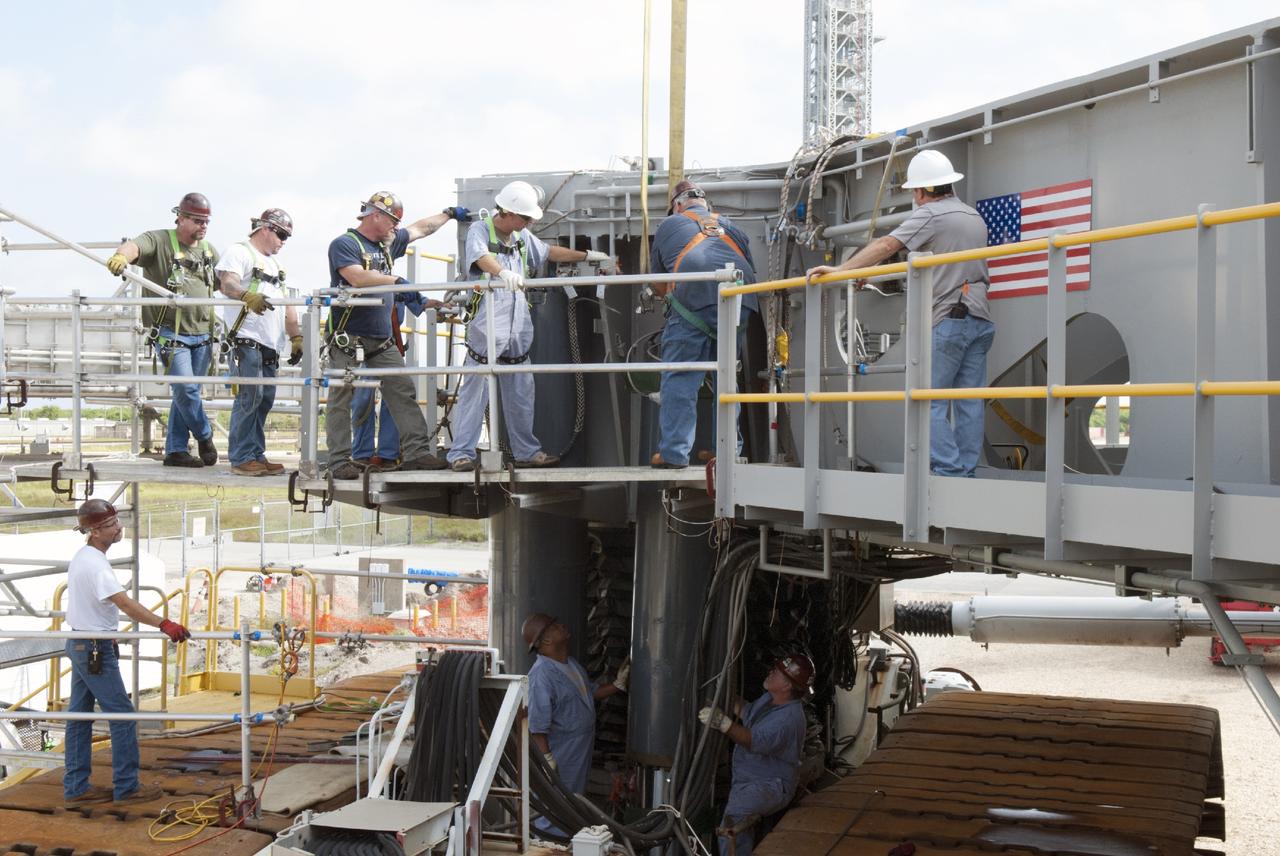
CAPE CANAVERAL, Fla. – Ground support equipment technicians prepare one of the jacking, equalizing and leveling, or JEL, hydraulic cylinders for removal from crawler-transporter 1 at the crawler transporter maintenance facility at NASA’s Kennedy Space Center in Florida. Sixteen new JEL hydraulic cylinders will be installed on CT-1 to increase load carrying capacity and reliability. The Ground Systems Development and Operations Program at Kennedy continues to upgrade CT-1 as part of its general maintenance. CT-1 could be available to carry commercial launch vehicles to the launch pad. The crawler-transporters were used to carry the mobile launcher platform and space shuttle to Launch Complex 39 for space shuttle launches for 30 years. Photo credit: NASA/Tim Jacobs
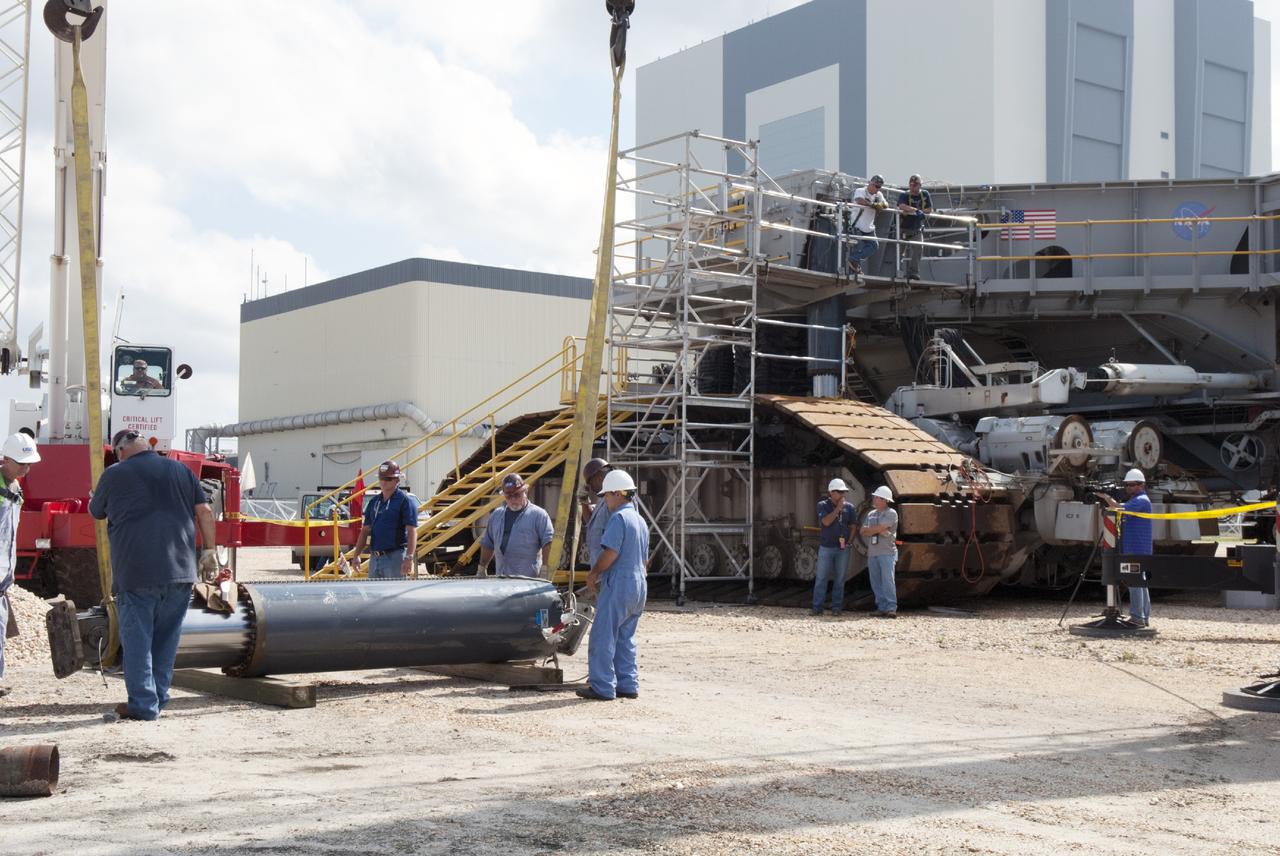
CAPE CANAVERAL, Fla. – Ground support equipment technicians assist as one of the jacking, equalizing and leveling, or JEL, hydraulic cylinders is lowered to the ground after it was removed from crawler-transporter 1. The work is being performed at the crawler transporter maintenance facility at NASA’s Kennedy Space Center in Florida. Sixteen new JEL hydraulic cylinders will be installed on CT-1 to increase load carrying capacity and reliability. The Ground Systems Development and Operations Program at Kennedy continues to upgrade CT-1 as part of its general maintenance. CT-1 could be available to carry commercial launch vehicles to the launch pad. The crawler-transporters were used to carry the mobile launcher platform and space shuttle to Launch Complex 39 for space shuttle launches for 30 years. Photo credit: NASA/Tim Jacobs
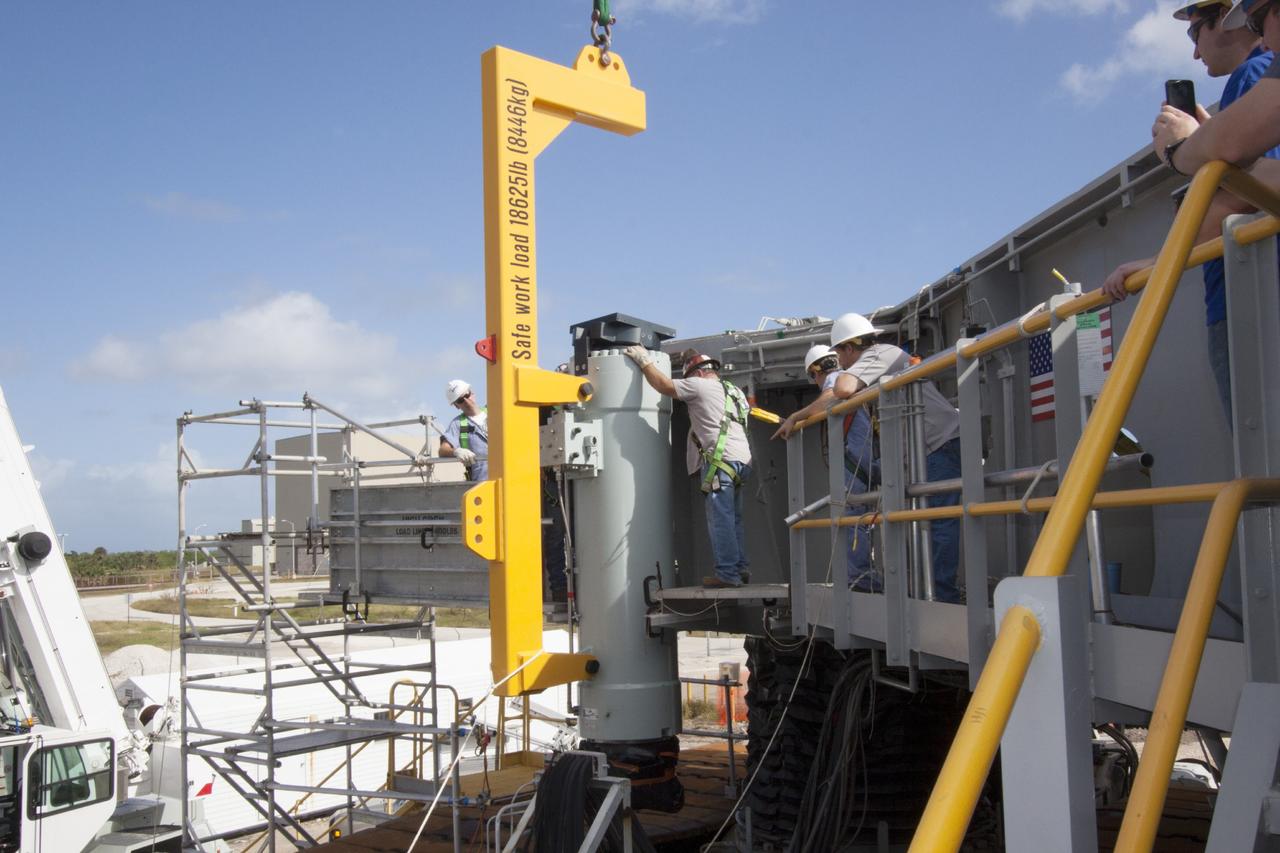
CAPE CANAVERAL, Fla. – Ground support equipment technicians assist as a crane is used to move a new jacking, equalizing and leveling, or JEL, hydraulic cylinder closer for installation on crawler-transporter 1 at the crawler transporter maintenance facility at NASA’s Kennedy Space Center in Florida. New JEL hydraulic cylinders will be installed on CT-1 to test them for increased load carrying capacity and reliability. The Ground Systems Development and Operations Program at Kennedy continues to upgrade CT-1 as part of its general maintenance. CT-1 could be available to carry a variety of launch vehicles to the launch pad. Two crawler-transporters were used to carry the mobile launcher platform and space shuttle to Launch Complex 39 for space shuttle launches for 30 years. Photo credit: NASA/Jim Grossmann
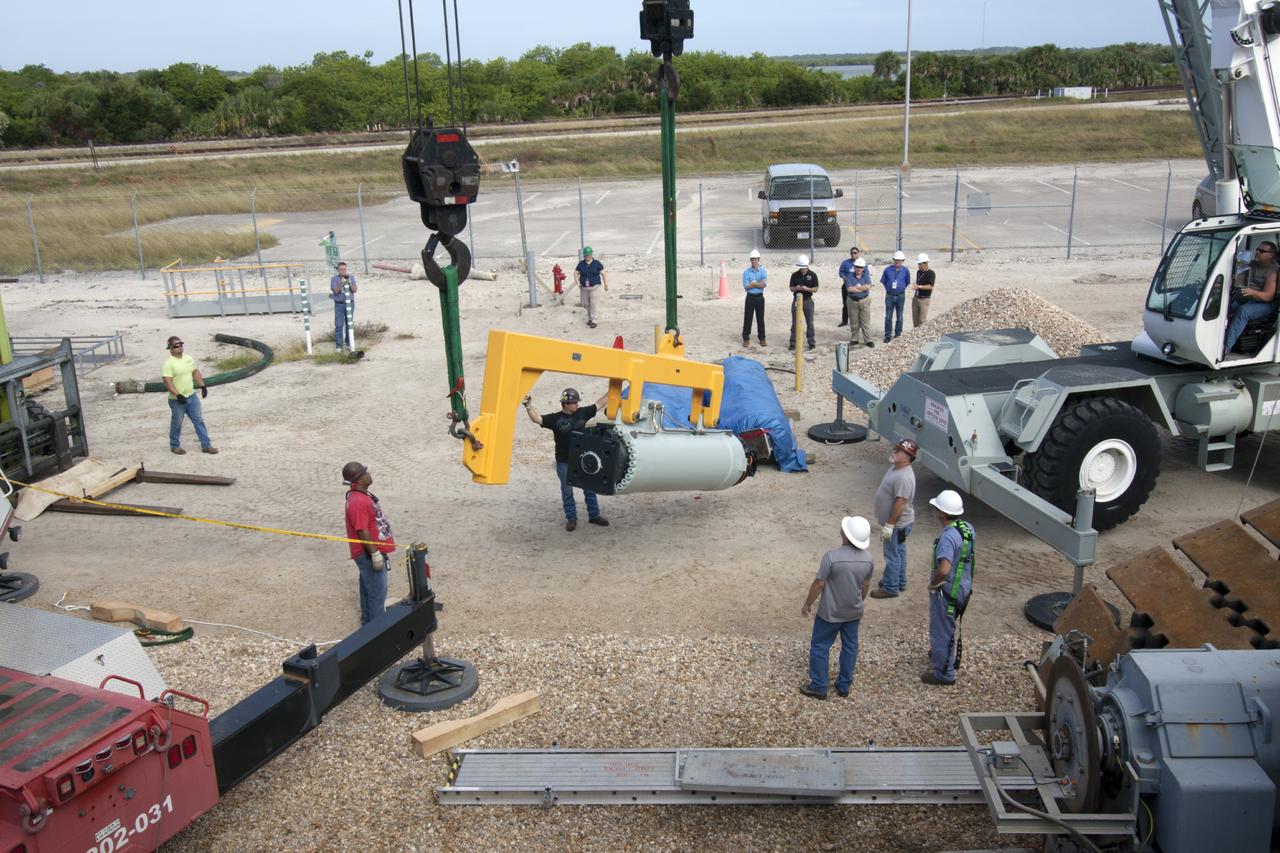
CAPE CANAVERAL, Fla. – Ground support equipment technicians monitor the progress as a crane is used to lift a new jacking, equalizing and leveling, or JEL, hydraulic cylinder for installation on crawler-transporter 1 at the crawler transporter maintenance facility at NASA’s Kennedy Space Center in Florida. New JEL hydraulic cylinders will be installed on CT-1 to test them for increased load carrying capacity and reliability. The Ground Systems Development and Operations Program at Kennedy continues to upgrade CT-1 as part of its general maintenance. CT-1 could be available to carry a variety of launch vehicles to the launch pad. Two crawler-transporters were used to carry the mobile launcher platform and space shuttle to Launch Complex 39 for space shuttle launches for 30 years. Photo credit: NASA/Jim Grossmann
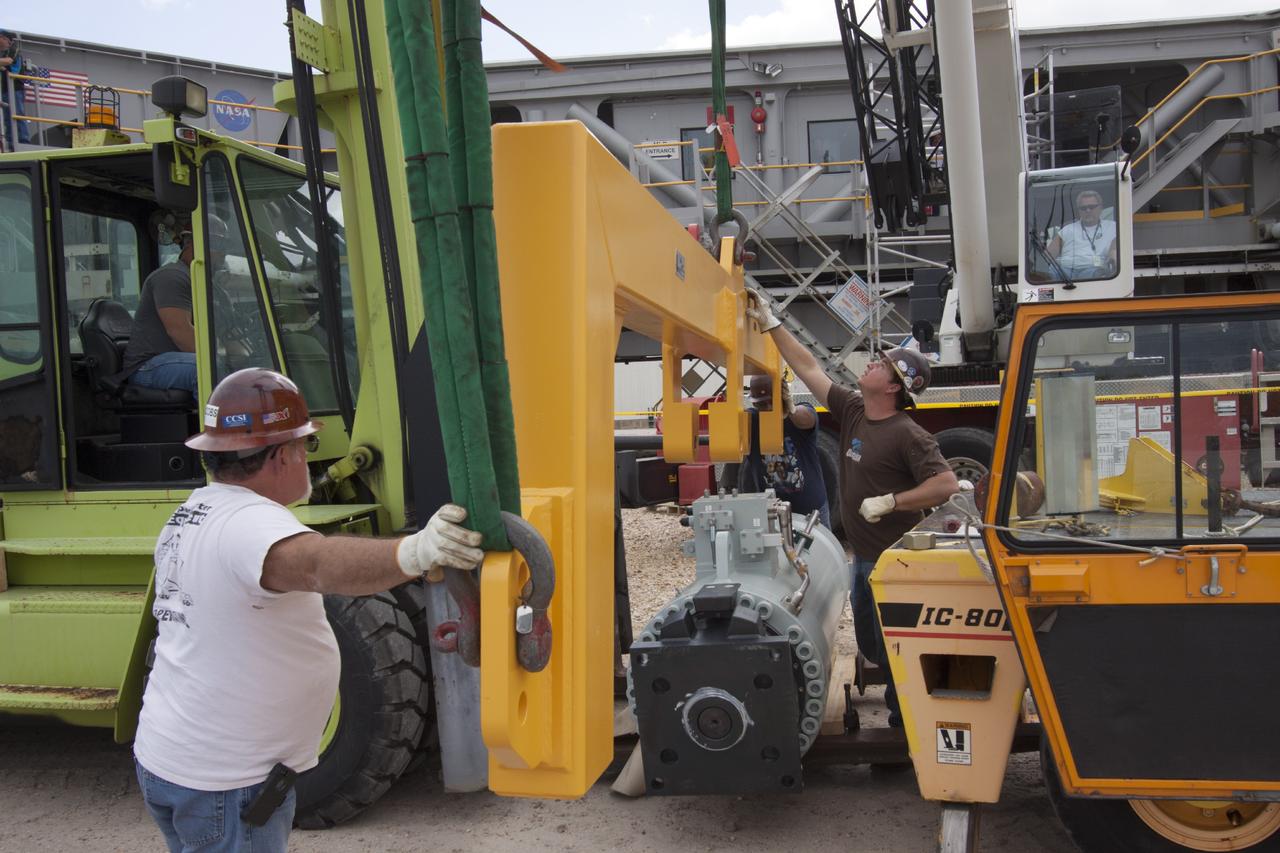
CAPE CANAVERAL, Fla. – Ground support equipment technicians monitor the progress as a forklift is used to carry a new jacking, equalizing and leveling, or JEL, hydraulic cylinder for installation on crawler-transporter 1 at the crawler transporter maintenance facility at NASA’s Kennedy Space Center in Florida. New JEL hydraulic cylinders will be installed on CT-1 to test them for increased load carrying capacity and reliability. The Ground Systems Development and Operations Program at Kennedy continues to upgrade CT-1 as part of its general maintenance. CT-1 could be available to carry a variety of launch vehicles to the launch pad. Two crawler-transporters were used to carry the mobile launcher platform and space shuttle to Launch Complex 39 for space shuttle launches for 30 years. Photo credit: NASA/Jim Grossmann
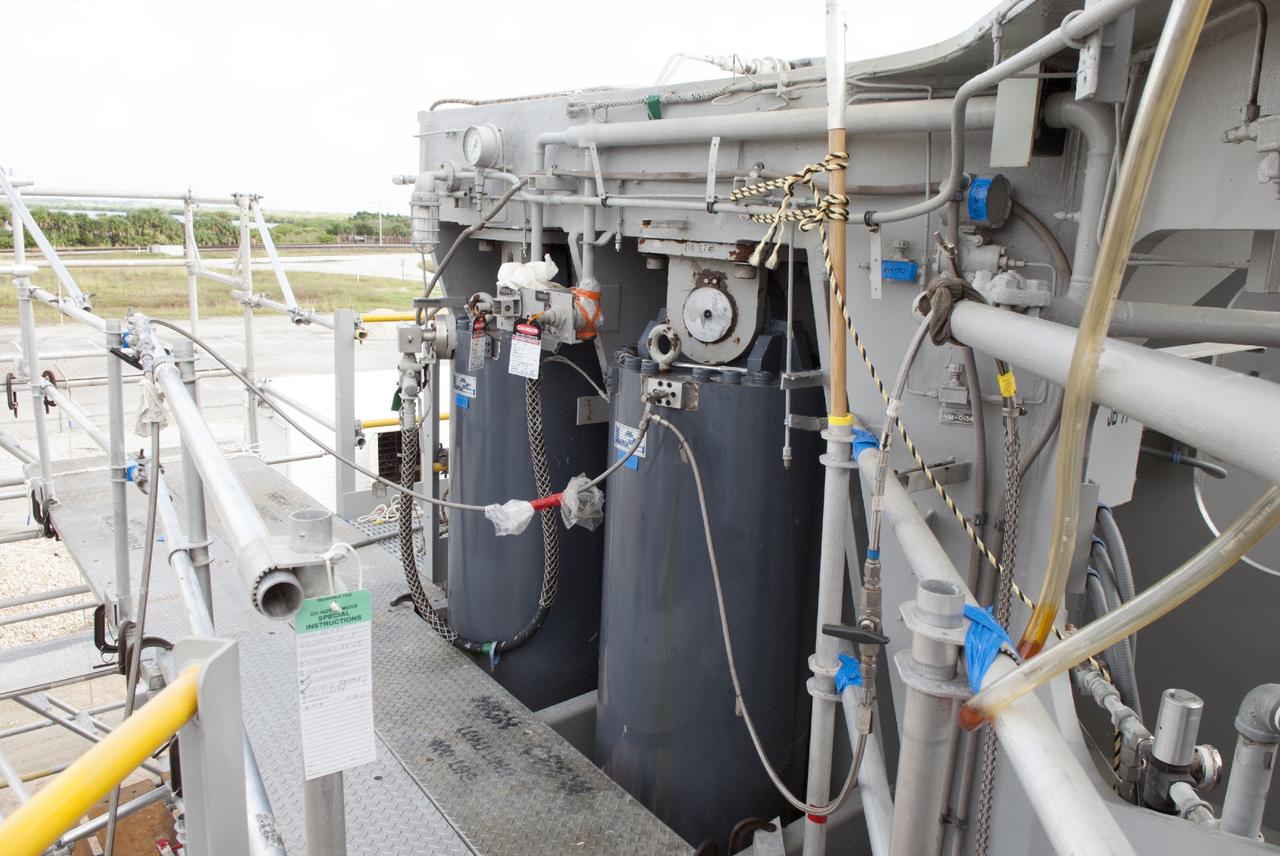
CAPE CANAVERAL, Fla. – Preparations are underway to begin removing the jacking, equalizing and leveling, or JEL, hydraulic cylinders from crawler-transporter 1 at the crawler transporter maintenance facility at NASA’s Kennedy Space Center in Florida. Sixteen new JEL hydraulic cylinders will be installed on CT-1 to increase load carrying capacity and reliability. The Ground Systems Development and Operations Program at Kennedy continues to upgrade CT-1 as part of its general maintenance. CT-1 could be available to carry commercial launch vehicles to the launch pad. The crawler-transporters were used to carry the mobile launcher platform and space shuttle to Launch Complex 39 for space shuttle launches for 30 years. Photo credit: NASA/Tim Jacobs

CAPE CANAVERAL, Fla. – A forklift is used to carry a new jacking, equalizing and leveling, or JEL, hydraulic cylinder for installation on crawler-transporter 1 at the crawler transporter maintenance facility at NASA’s Kennedy Space Center in Florida. New JEL hydraulic cylinders will be installed on CT-1 to test them for increased load carrying capacity and reliability. The Ground Systems Development and Operations Program at Kennedy continues to upgrade CT-1 as part of its general maintenance. CT-1 could be available to carry a variety of launch vehicles to the launch pad. Two crawler-transporters were used to carry the mobile launcher platform and space shuttle to Launch Complex 39 for space shuttle launches for 30 years. Photo credit: NASA/Jim Grossmann
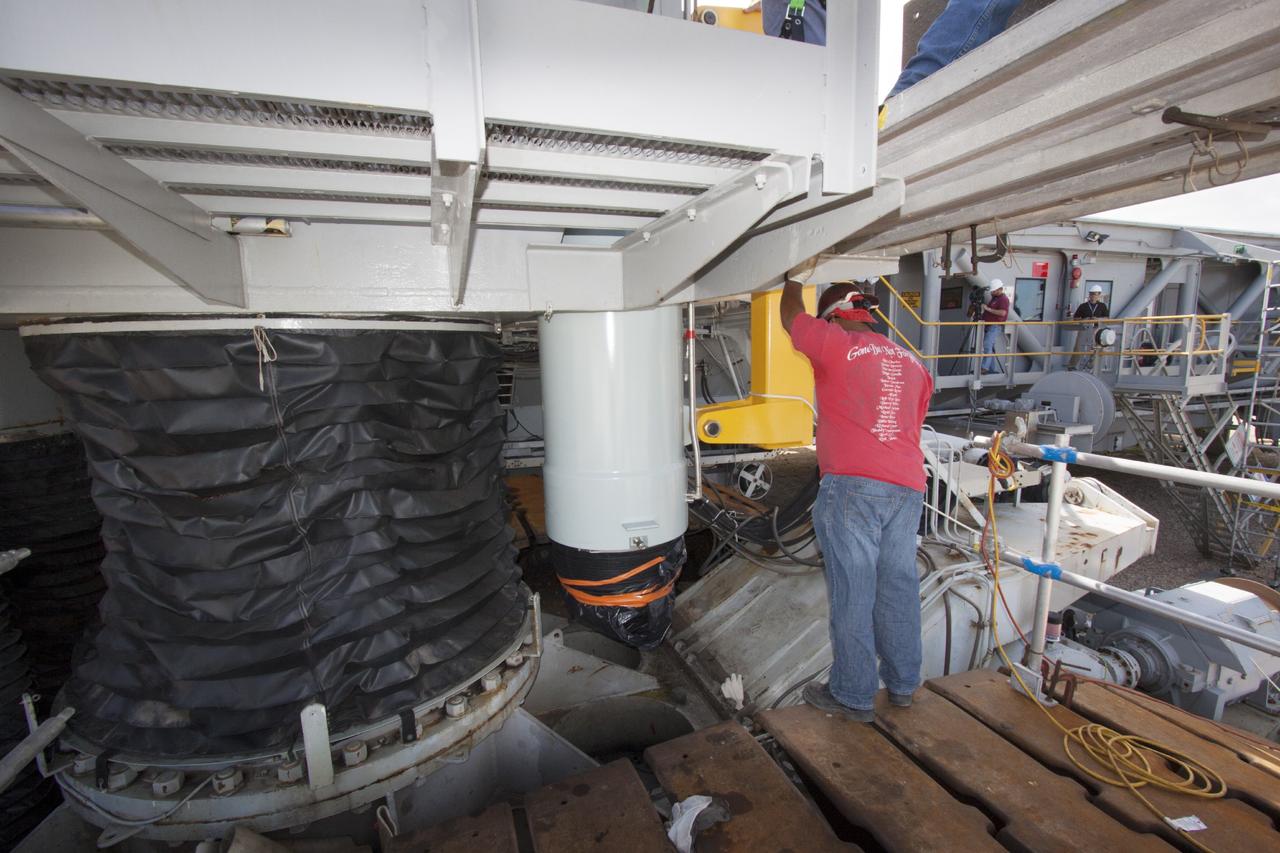
CAPE CANAVERAL, Fla. – Ground support equipment technicians assist as a crane moves a new jacking, equalizing and leveling, or JEL, hydraulic cylinder close for installation on crawler-transporter 1 at the crawler transporter maintenance facility at NASA’s Kennedy Space Center in Florida. New JEL hydraulic cylinders will be installed on CT-1 to test them for increased load carrying capacity and reliability. The Ground Systems Development and Operations Program at Kennedy continues to upgrade CT-1 as part of its general maintenance. CT-1 could be available to carry a variety of launch vehicles to the launch pad. Two crawler-transporters were used to carry the mobile launcher platform and space shuttle to Launch Complex 39 for space shuttle launches for 30 years. Photo credit: NASA/Jim Grossmann
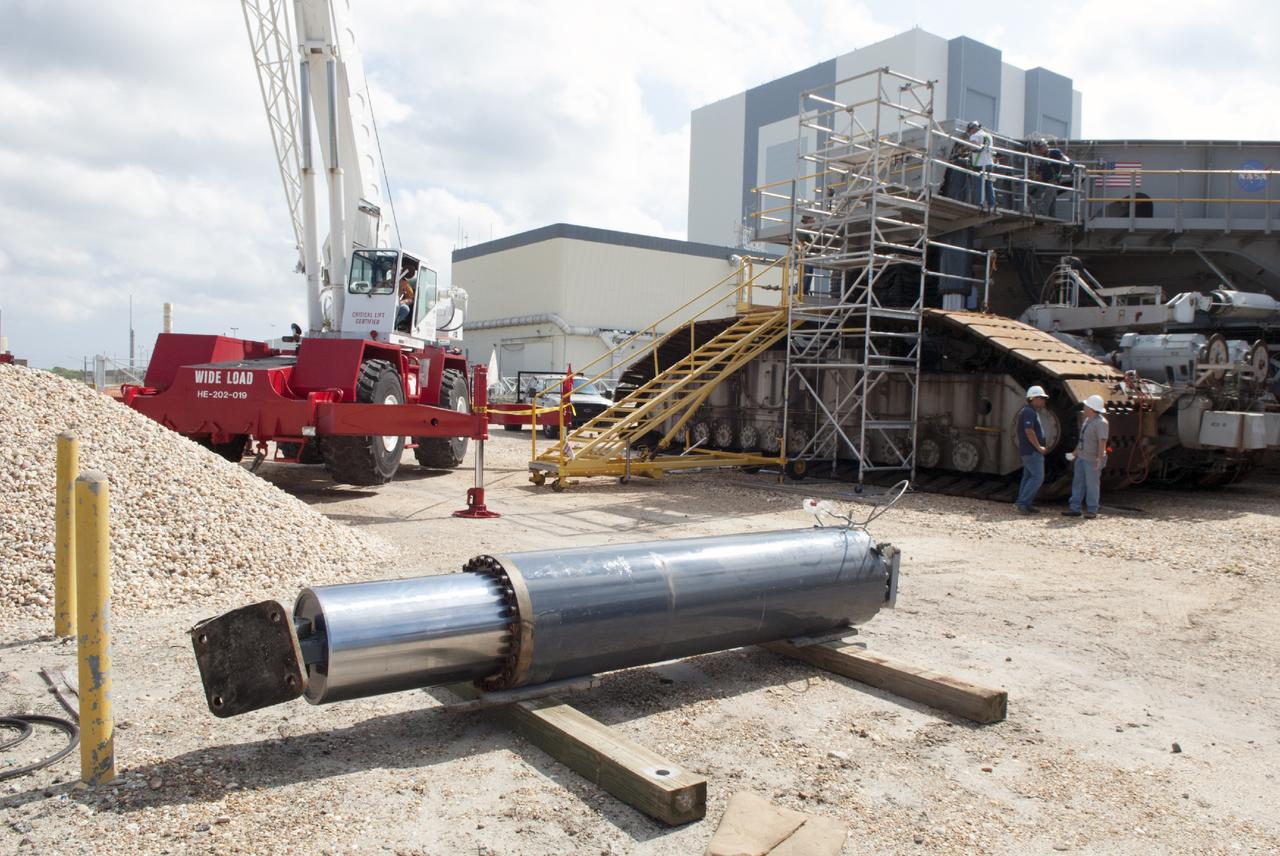
CAPE CANAVERAL, Fla. – One of the jacking, equalizing and leveling, or JEL, hydraulic cylinders has been removed from crawler-transporter 1 at the crawler transporter maintenance facility at NASA’s Kennedy Space Center in Florida. Sixteen new JEL hydraulic cylinders will be installed on CT-1 to increase load carrying capacity and reliability. The Ground Systems Development and Operations Program at Kennedy continues to upgrade CT-1 as part of its general maintenance. CT-1 could be available to carry commercial launch vehicles to the launch pad. The crawler-transporters were used to carry the mobile launcher platform and space shuttle to Launch Complex 39 for space shuttle launches for 30 years. Photo credit: NASA/Tim Jacobs
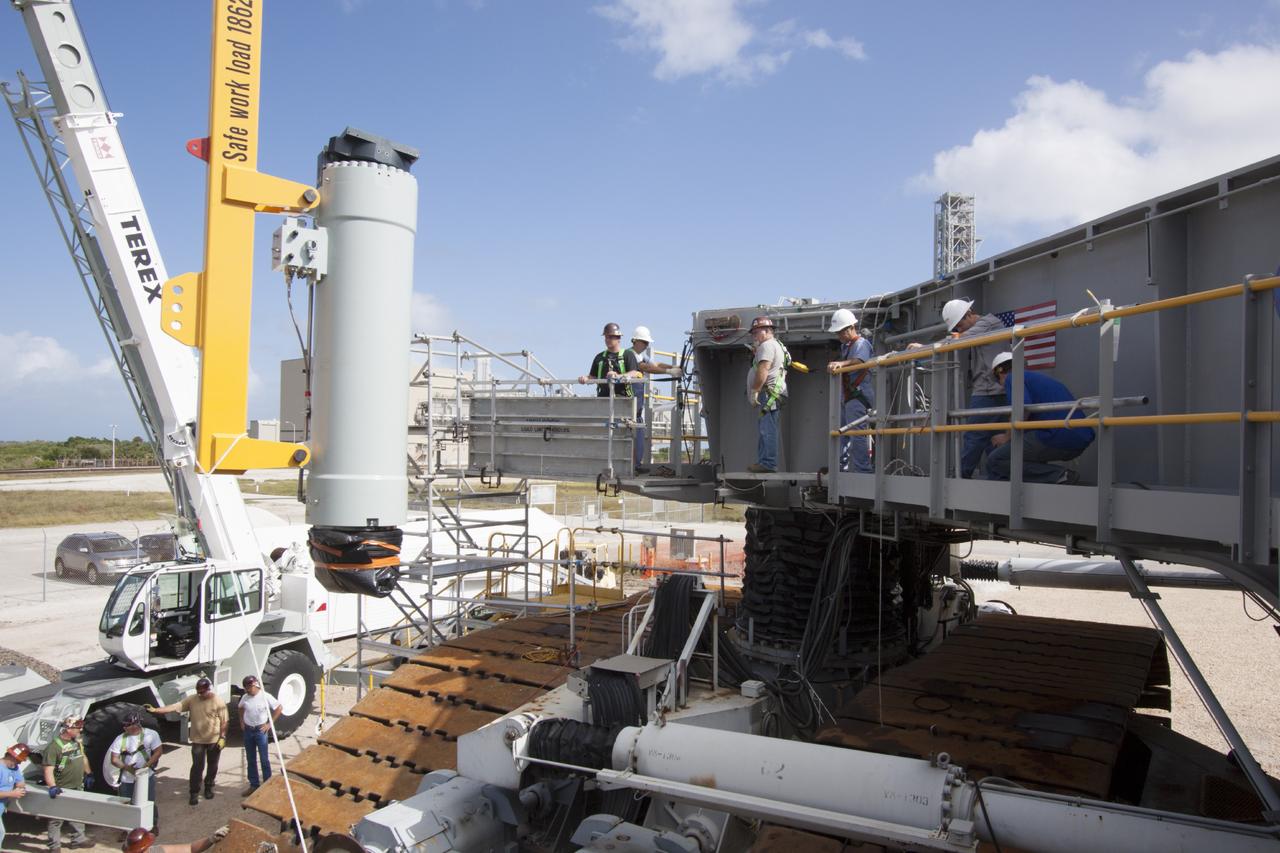
CAPE CANAVERAL, Fla. – Ground support equipment technicians monitor the progress as a crane is used to lift and move a new jacking, equalizing and leveling, or JEL, hydraulic cylinder for installation on crawler-transporter 1 at the crawler transporter maintenance facility at NASA’s Kennedy Space Center in Florida. New JEL hydraulic cylinders will be installed on CT-1 to test them for increased load carrying capacity and reliability. The Ground Systems Development and Operations Program at Kennedy continues to upgrade CT-1 as part of its general maintenance. CT-1 could be available to carry a variety of launch vehicles to the launch pad. Two crawler-transporters were used to carry the mobile launcher platform and space shuttle to Launch Complex 39 for space shuttle launches for 30 years. Photo credit: NASA/Jim Grossmann
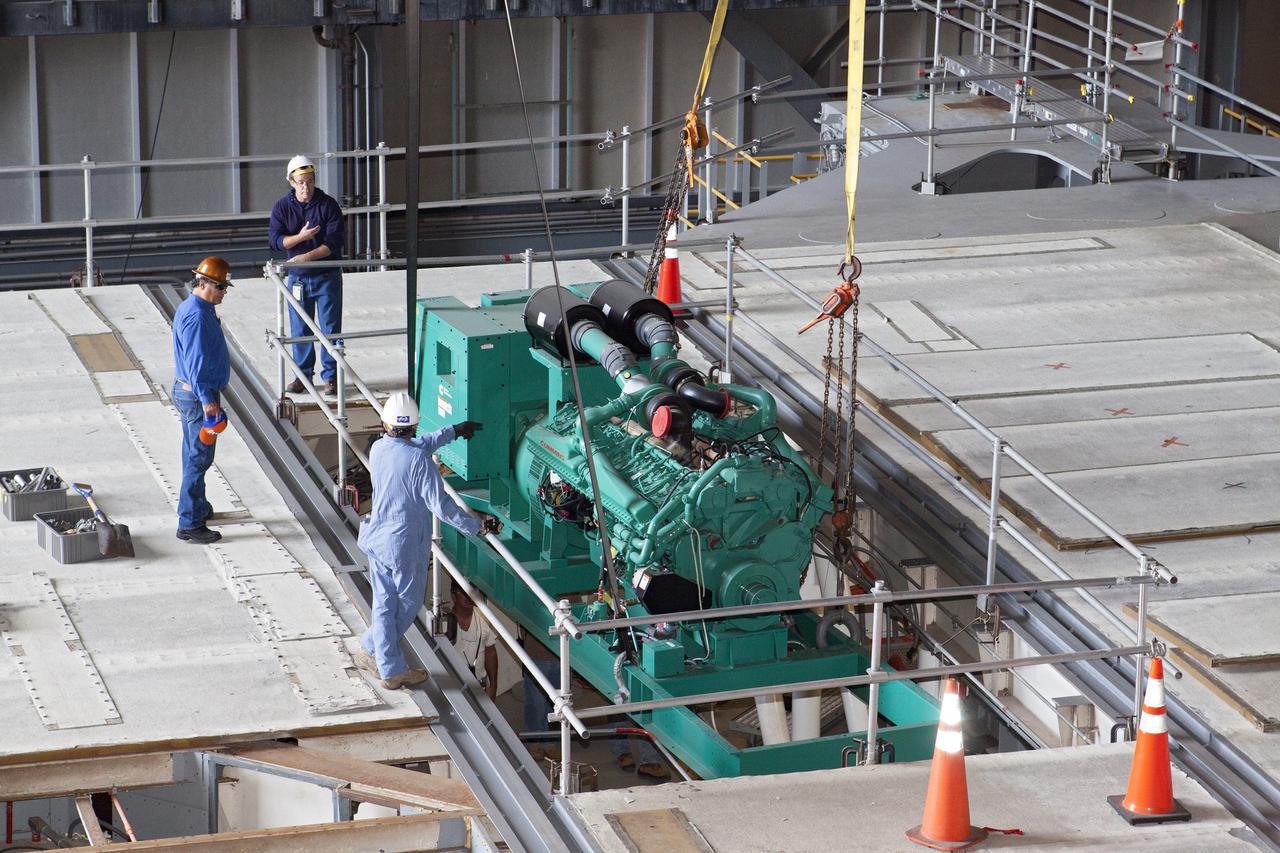
CAPE CANAVERAL, Fla. – Inside the Vehicle Assembly Building at NASA’s Kennedy Space Center in Florida, technicians monitor the progress as a large crane is used to lower a new Cummins engine and generator for installation inside crawler-transporter 1 CT-1. The Apollo era diesel engines were removed so that the new engine can be installed. Work continues in high bay 3 to upgrade CT-1 as part of its general maintenance and could be available to carry commercial launch vehicles to the launch pad. The crawler-transporters were used to carry the mobile launcher platform and space shuttle to Launch Complex 39 for space shuttle launches for 30 years. Photo credit: NASA_Kim Shiflett
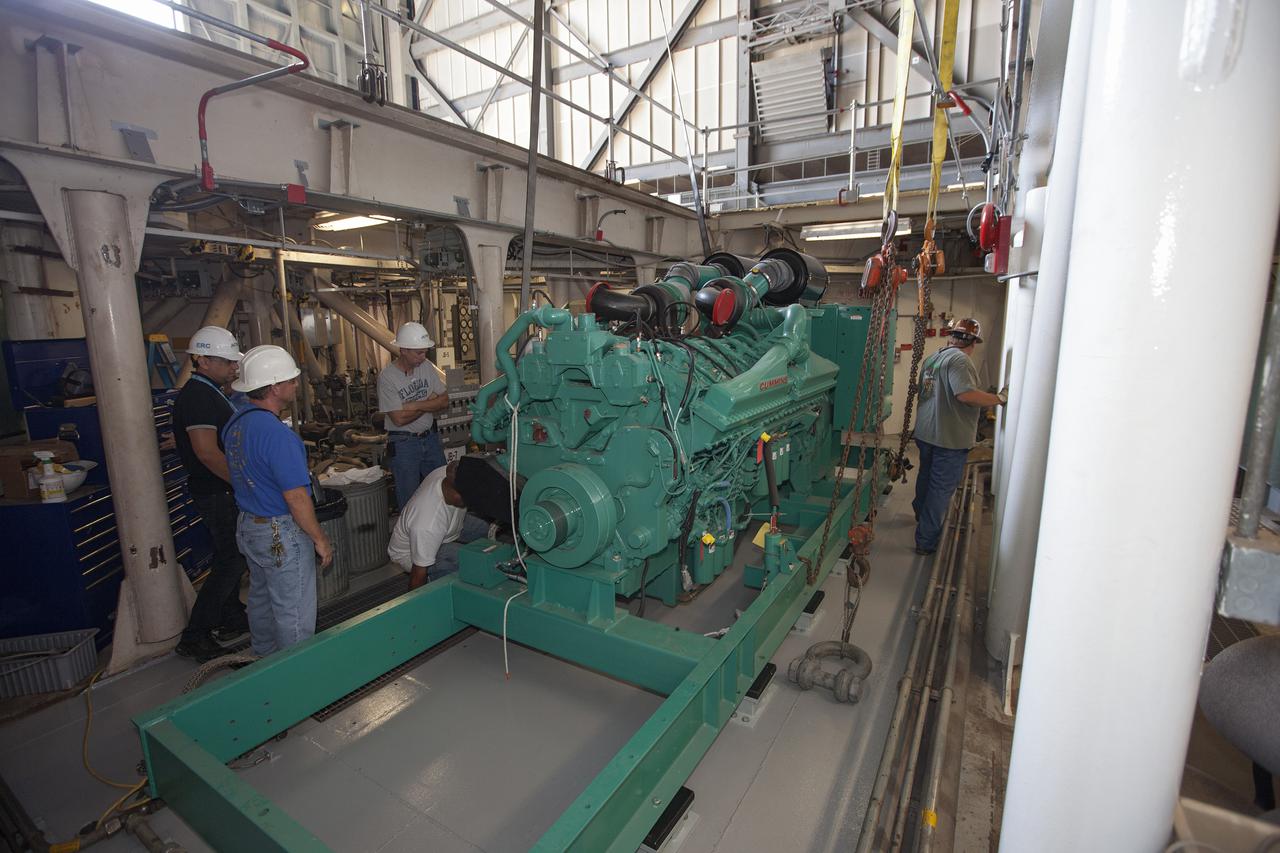
CAPE CANAVERAL, Fla. – Inside the Vehicle Assembly Building at NASA’s Kennedy Space Center in Florida, technicians begin the work to secure a new Cummins engine and generator inside crawler-transporter 1 CT-1. The Apollo era diesel engines were removed so that the new engine can be installed. Work continues in high bay 3 to upgrade CT-1 as part of its general maintenance and could be available to carry commercial launch vehicles to the launch pad. The crawler-transporters were used to carry the mobile launcher platform and space shuttle to Launch Complex 39 for space shuttle launches for 30 years. Photo credit: NASA_Kim Shiflett
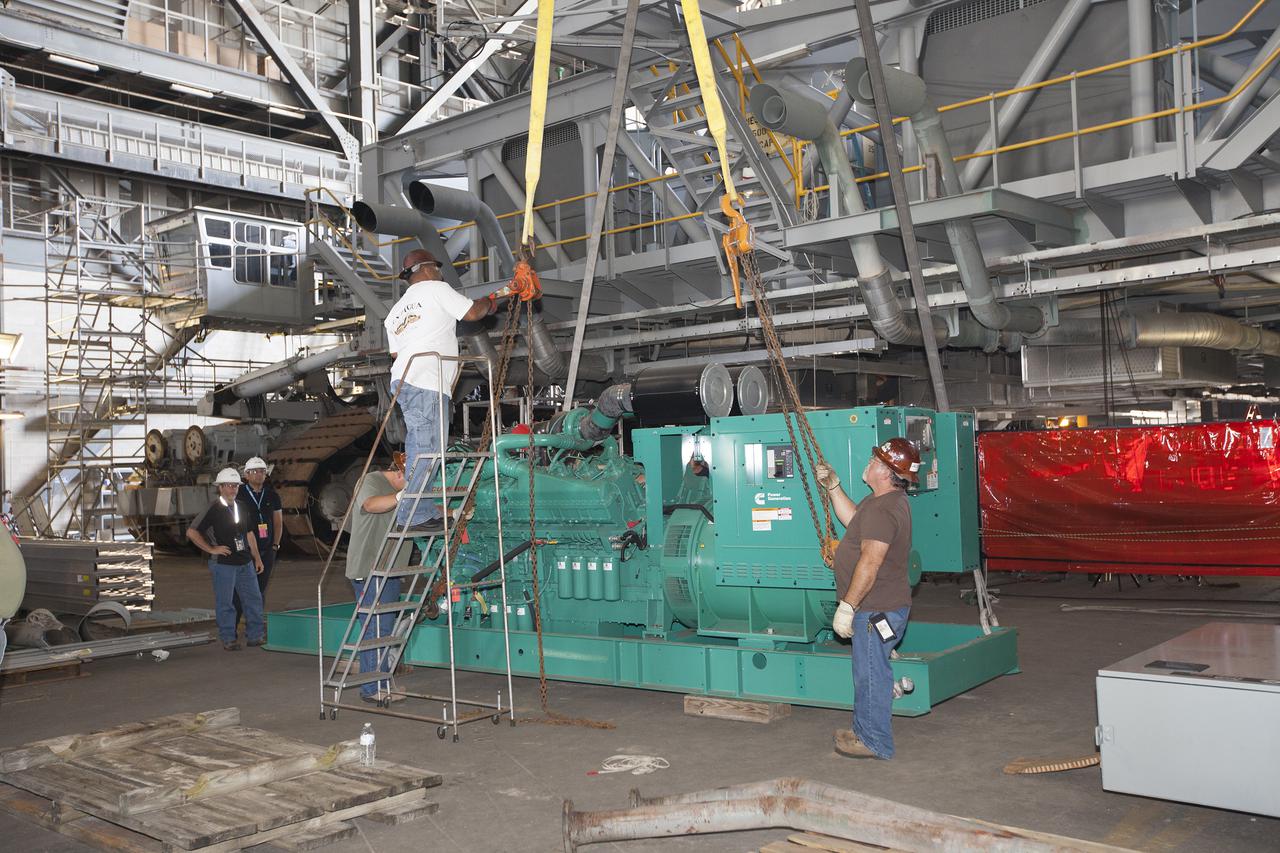
CAPE CANAVERAL, Fla. – Inside the Vehicle Assembly Building at NASA’s Kennedy Space Center in Florida, technicians prepare a new Cummins engine and generator to be lifted by a large crane so that it can be installed inside crawler-transporter 1 CT-1. The Apollo era diesel engines were removed so that the new can be installed. Work continues in high bay 3 to upgrade CT-1 as part of its general maintenance and could be available to carry commercial launch vehicles to the launch pad. The crawler-transporters were used to carry the mobile launcher platform and space shuttle to Launch Complex 39 for space shuttle launches for 30 years. Photo credit: NASA_Kim Shiflett
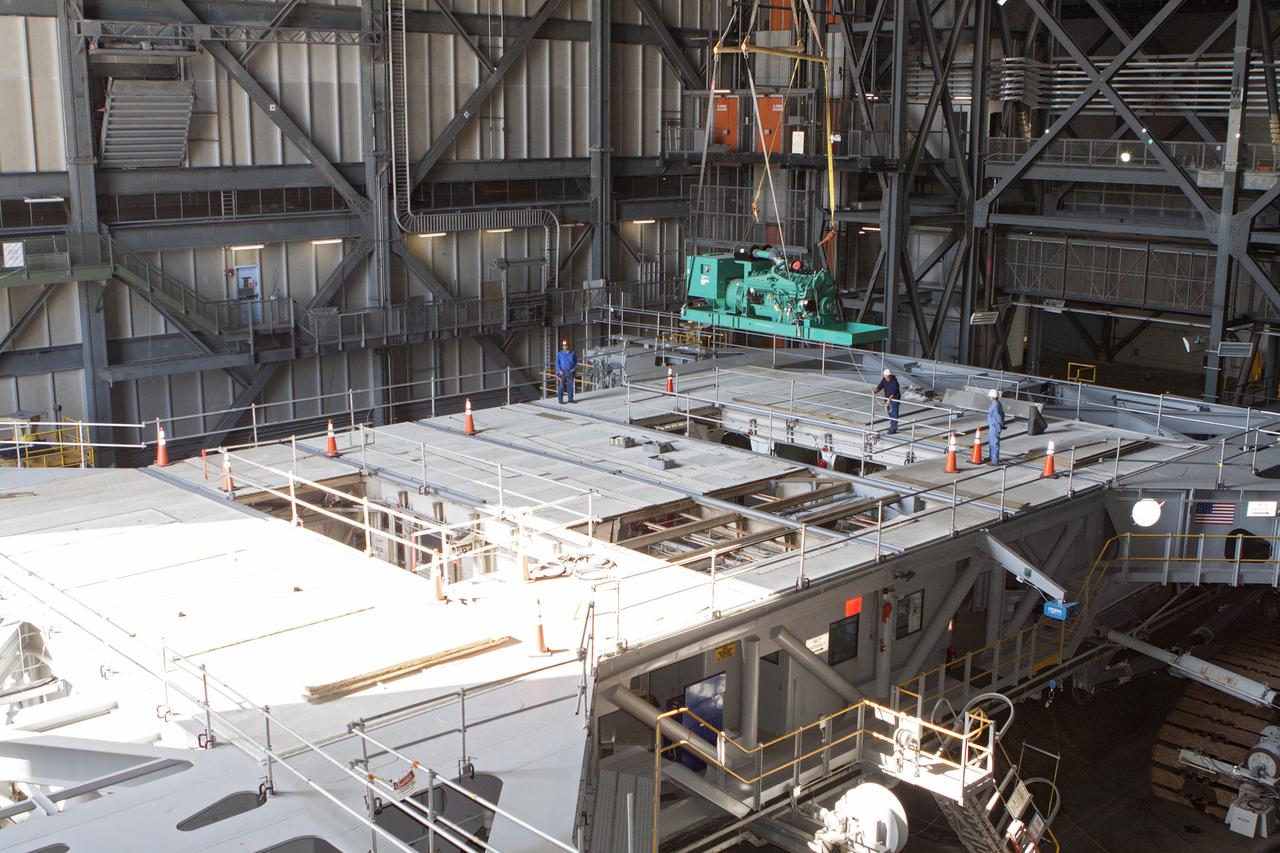
CAPE CANAVERAL, Fla. – Inside the Vehicle Assembly Building at NASA’s Kennedy Space Center in Florida, technicians monitor the progress as a large crane lifts a new Cummins engine and generator for installation inside crawler-transporter 1 CT-1. The Apollo era diesel engines were removed so that the new engine can be installed. Work continues in high bay 3 to upgrade CT-1 as part of its general maintenance and could be available to carry commercial launch vehicles to the launch pad. The crawler-transporters were used to carry the mobile launcher platform and space shuttle to Launch Complex 39 for space shuttle launches for 30 years. Photo credit: NASA_Kim Shiflett
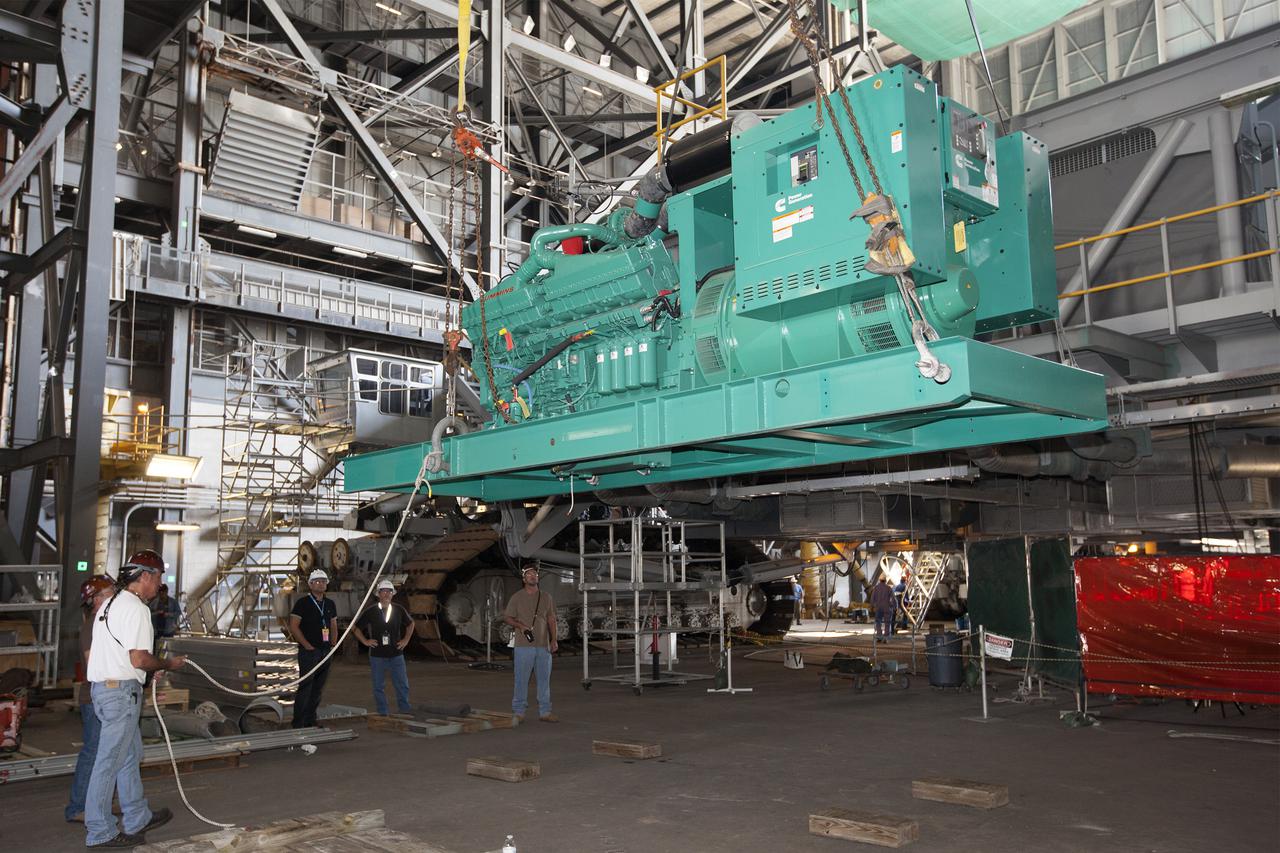
CAPE CANAVERAL, Fla. – Inside the Vehicle Assembly Building at NASA’s Kennedy Space Center in Florida, technicians monitor the progress as a large crane lifts a new Cummins engine and generator for installation inside crawler-transporter 1 CT-1. The Apollo era diesel engines were removed so that the new engine can be installed. Work continues in high bay 3 to upgrade CT-1 as part of its general maintenance and could be available to carry commercial launch vehicles to the launch pad. The crawler-transporters were used to carry the mobile launcher platform and space shuttle to Launch Complex 39 for space shuttle launches for 30 years. Photo credit: NASA_Kim Shiflett
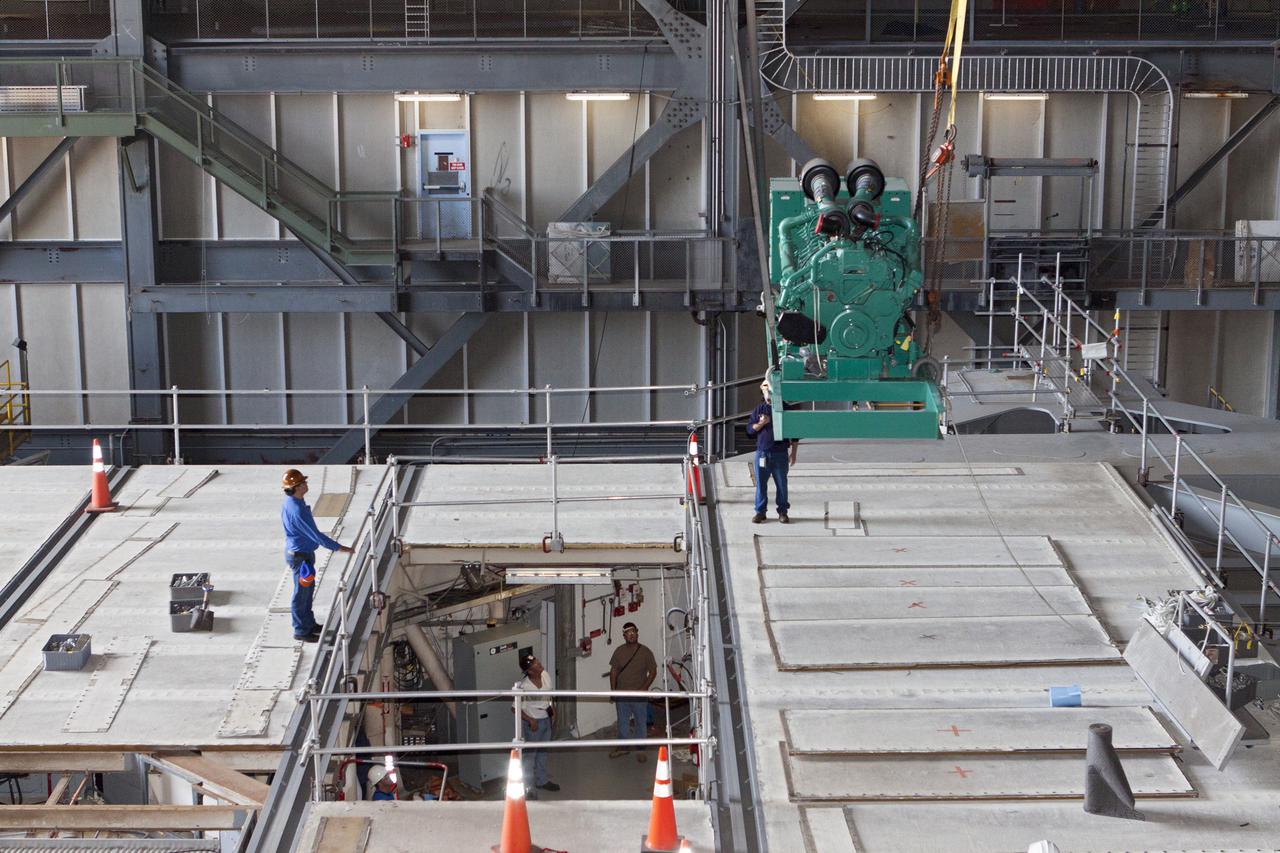
CAPE CANAVERAL, Fla. – Inside the Vehicle Assembly Building at NASA’s Kennedy Space Center in Florida, technicians monitor the progress as a large crane is used to lift a new Cummins engine and generator for installation inside crawler-transporter 1 CT-1. The Apollo era diesel engines were removed so that the new engine can be installed. Work continues in high bay 3 to upgrade CT-1 as part of its general maintenance and could be available to carry commercial launch vehicles to the launch pad. The crawler-transporters were used to carry the mobile launcher platform and space shuttle to Launch Complex 39 for space shuttle launches for 30 years. Photo credit: NASA_Kim Shiflett
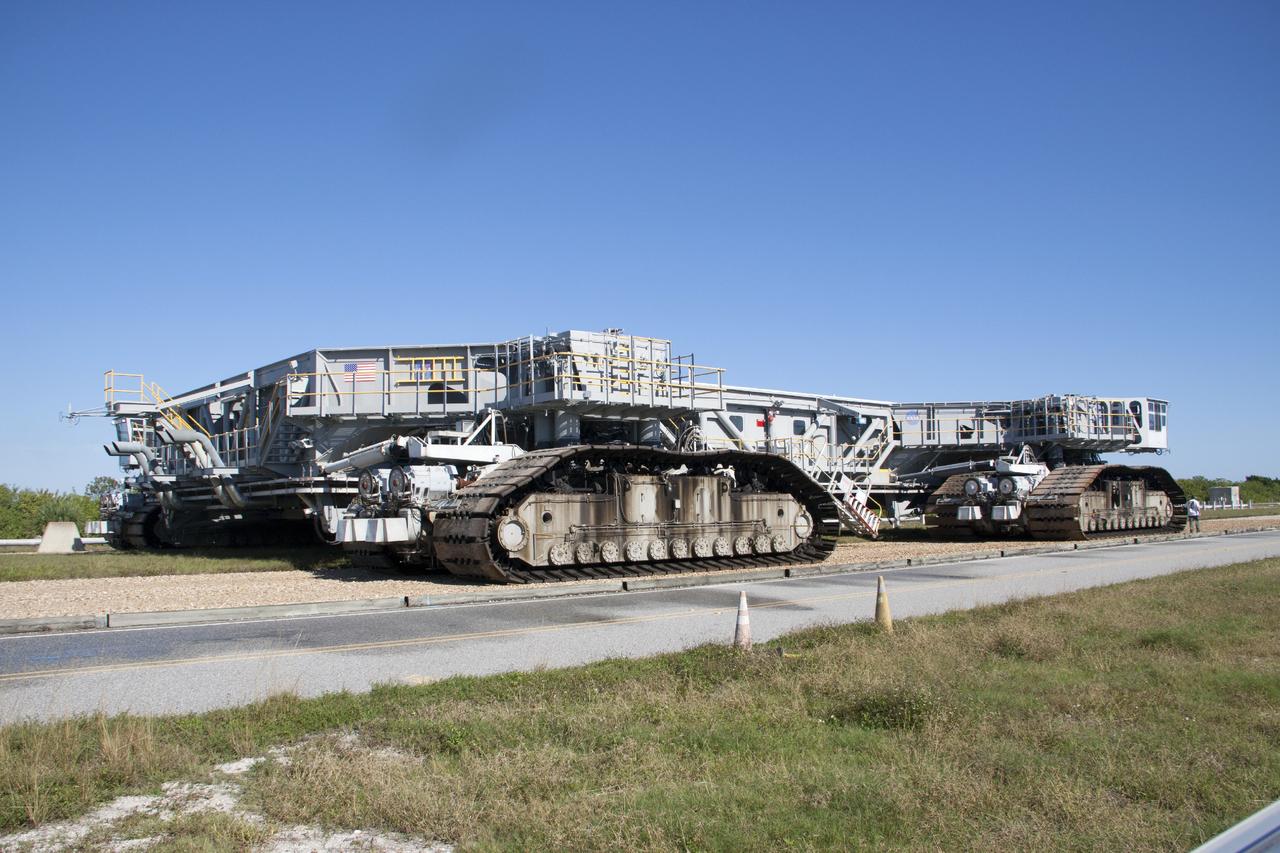
CAPE CANAVERAL, Fla. -- Crawler-transporter 1 continues its trek on the crawlerway to Launch Pad 39A at NASA’s Kennedy Space Center in Florida. New jacking, equalizing and leveling, or JEL, hydraulic cylinders were installed on CT-1 and will be tested for increased load carrying capacity and reliability. The Ground Systems Development and Operations Program at Kennedy continues to upgrade the crawler-transporter as part of its general maintenance. CT-1 could be available to carry a variety of launch vehicles to the launch pad. Two crawler-transporters were used to carry the mobile launcher platform and space shuttle to Launch Complex 39 for space shuttle launches for 30 years. Photo credit: NASA/Jim Grossmann
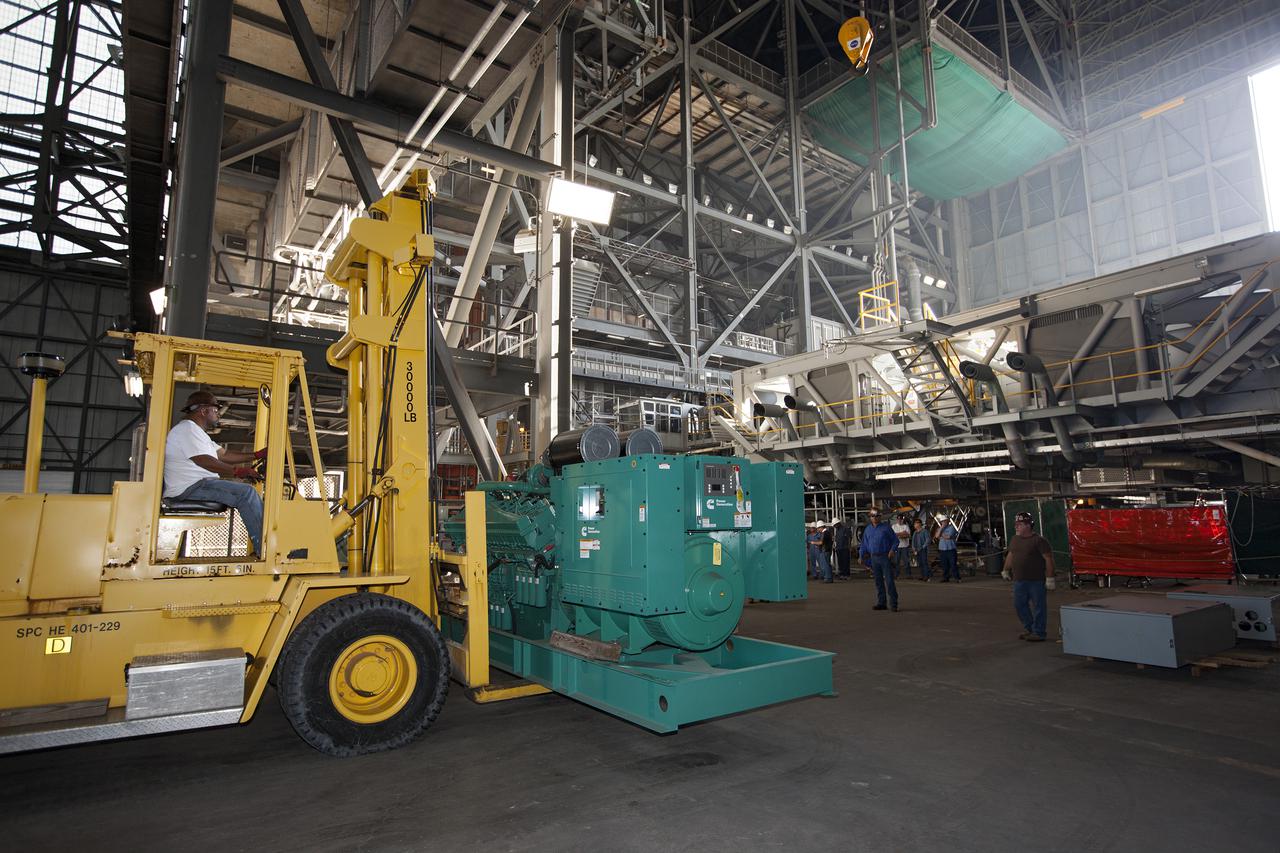
CAPE CANAVERAL, Fla. – Inside the Vehicle Assembly Building at NASA’s Kennedy Space Center in Florida, technicians prepare a new Cummins engine and generator for installation inside crawler-transporter 1 CT-1. The Apollo era diesel engines were removed so that the new engine can be installed. Work continues in high bay 3 to upgrade CT-1 as part of its general maintenance and could be available to carry commercial launch vehicles to the launch pad. The crawler-transporters were used to carry the mobile launcher platform and space shuttle to Launch Complex 39 for space shuttle launches for 30 years. Photo credit: NASA_Kim Shiflett
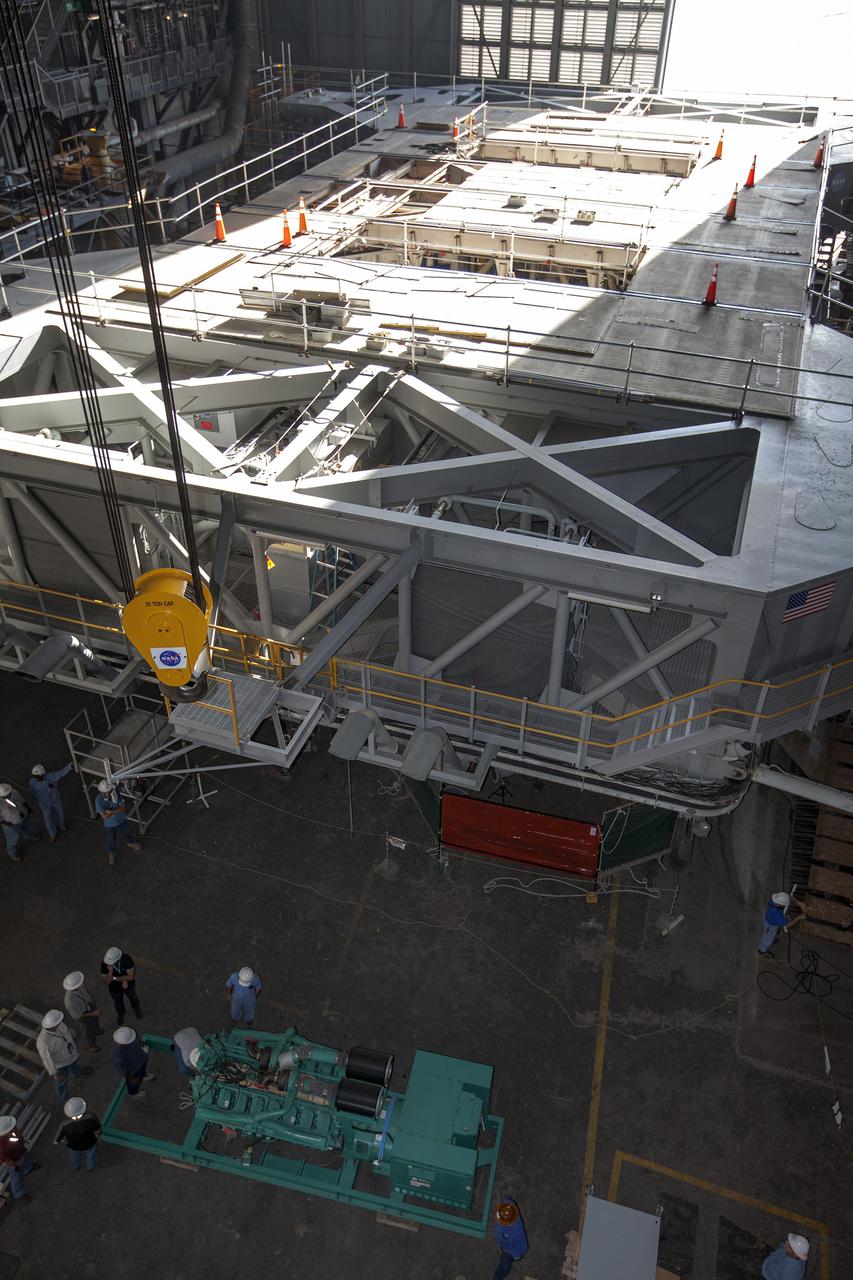
CAPE CANAVERAL, Fla. – Inside the Vehicle Assembly Building at NASA’s Kennedy Space Center in Florida, a large crane is lowered toward a new Cummins engine and generator that is being prepared for installation inside crawler-transporter 1 CT-1. The Apollo era diesel engines were removed so that the new engine could be installed. Work continues in high bay 3 to upgrade CT-1 as part of its general maintenance and could be available to carry commercial launch vehicles to the launch pad. The crawler-transporters were used to carry the mobile launcher platform and space shuttle to Launch Complex 39 for space shuttle launches for 30 years. Photo credit: NASA_Kim Shiflett
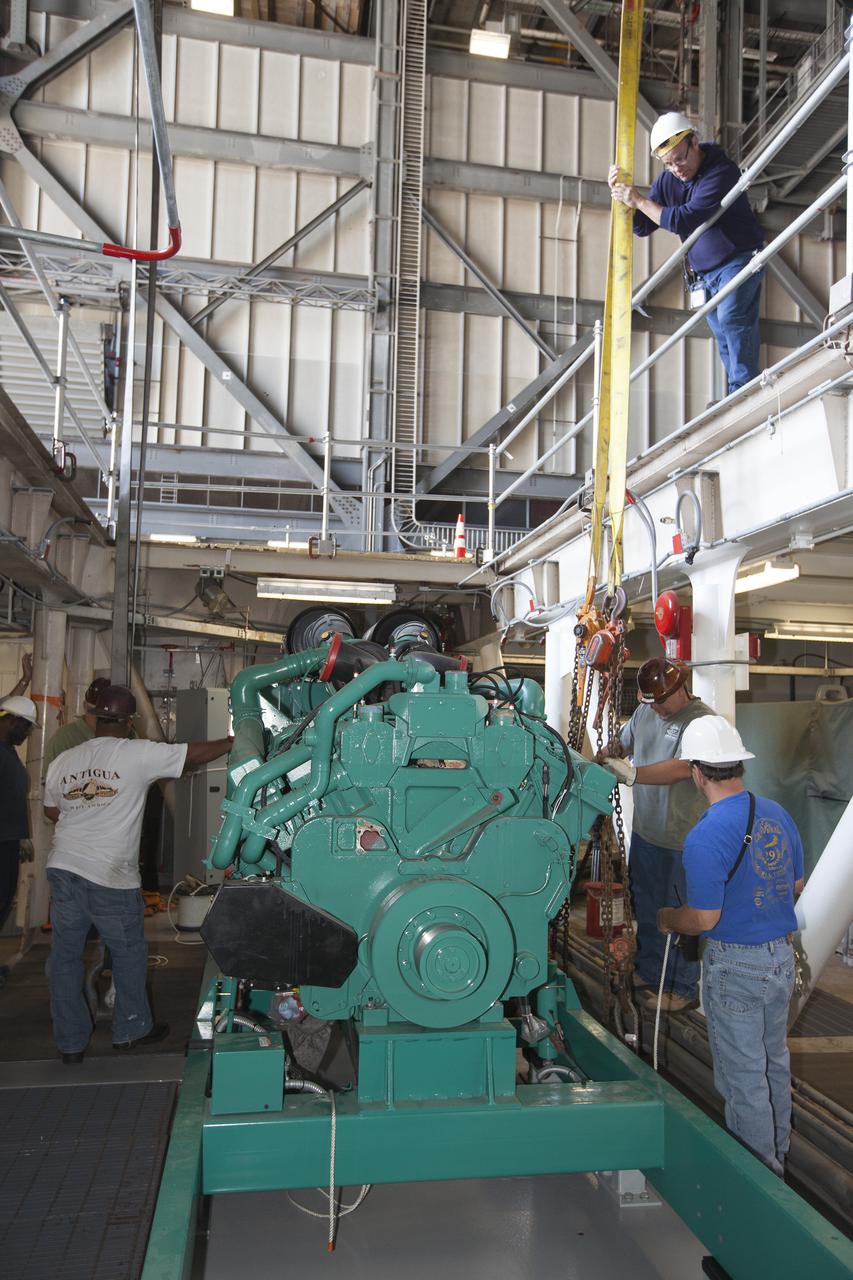
CAPE CANAVERAL, Fla. – Inside the Vehicle Assembly Building at NASA’s Kennedy Space Center in Florida, technicians begin the work to secure a new Cummins engine and generator inside crawler-transporter 1 CT-1. The Apollo era diesel engines were removed so that the new engine can be installed. Work continues in high bay 3 to upgrade CT-1 as part of its general maintenance and could be available to carry commercial launch vehicles to the launch pad. The crawler-transporters were used to carry the mobile launcher platform and space shuttle to Launch Complex 39 for space shuttle launches for 30 years. Photo credit: NASA_Kim Shiflett
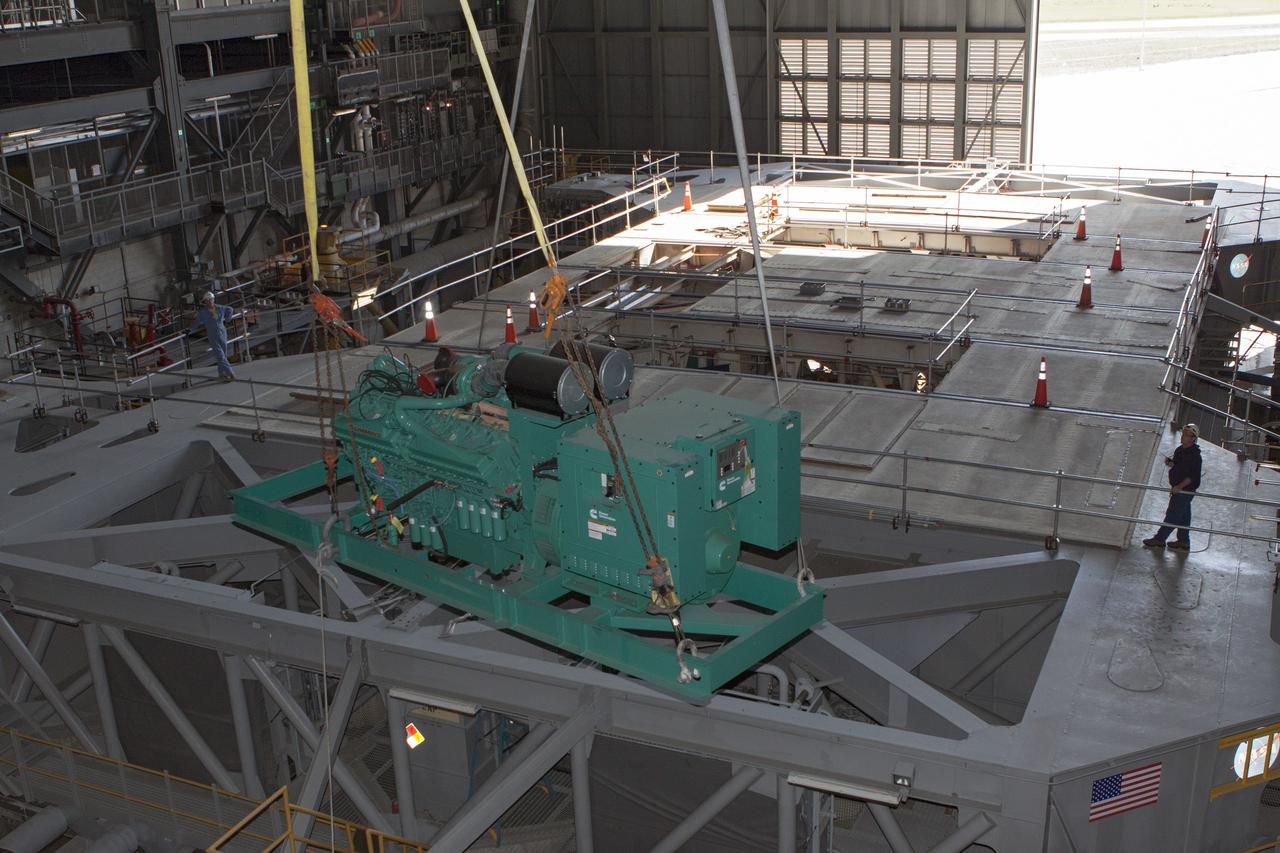
CAPE CANAVERAL, Fla. – Inside the Vehicle Assembly Building at NASA’s Kennedy Space Center in Florida, technicians monitor the progress as a large crane begins to lift a new Cummins engine and generator for installation inside crawler-transporter 1 CT-1. The Apollo era diesel engines were removed so that the new engine can be installed. Work continues in high bay 3 to upgrade CT-1 as part of its general maintenance and could be available to carry commercial launch vehicles to the launch pad. The crawler-transporters were used to carry the mobile launcher platform and space shuttle to Launch Complex 39 for space shuttle launches for 30 years. Photo credit: NASA_Kim Shiflett