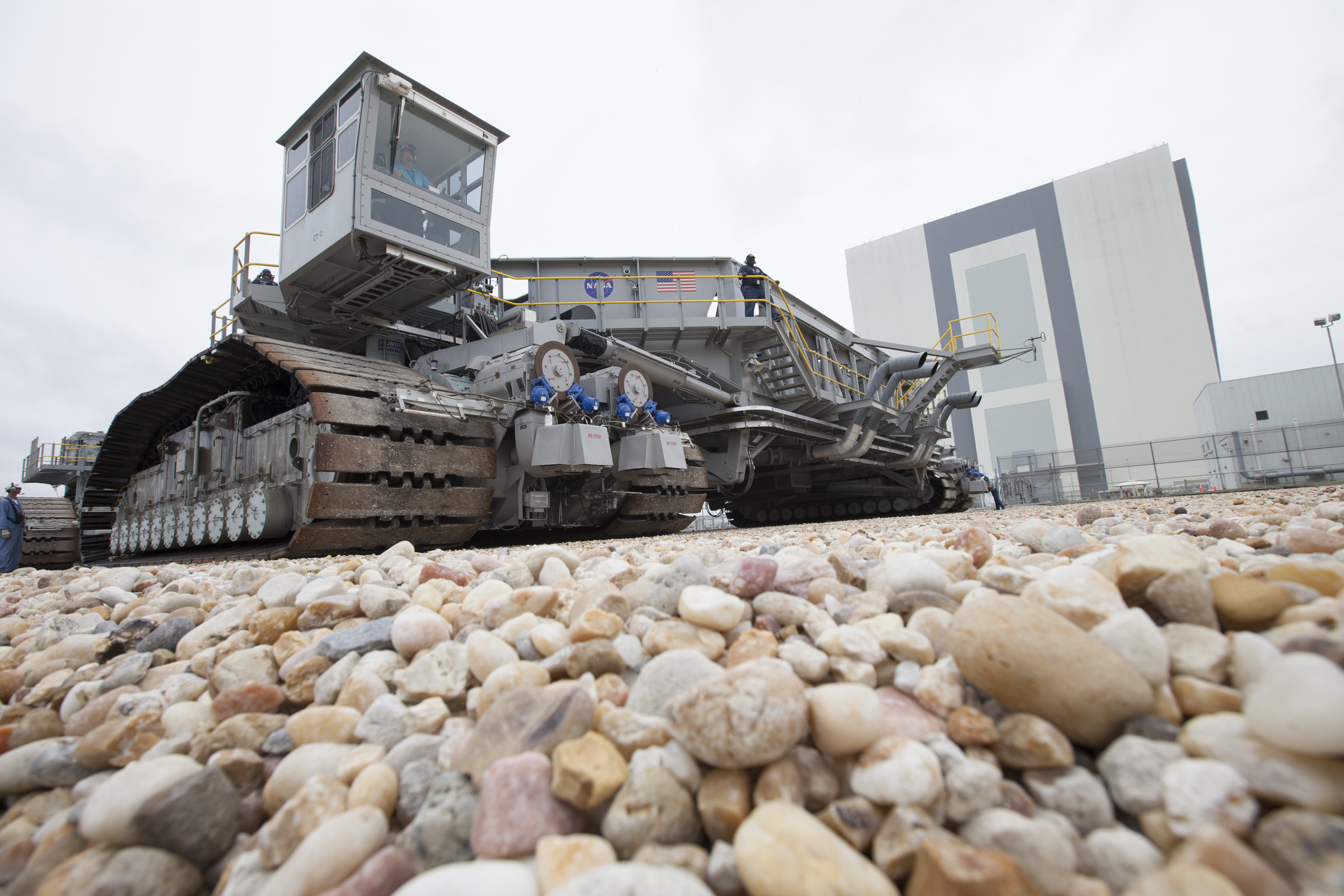
Crawlerway rock is visible as NASA’s upgraded crawler-transporter 2 (CT-2) returns to the Vehicle Assembly Building (VAB) at the agency’s Kennedy Space Center in Florida from its trek to Launch Pad 39B. CT2’s recently completed upgrades and modifications were tested to ensure the vehicle will be ready to support NASA’s journey to Mars. The Ground Systems Development and Operations Program at Kennedy oversaw upgrades to the crawler in the VAB. The crawler will carry the mobile launcher with Orion atop the Space Launch System rocket to Pad 39B for Exploration Mission 1.
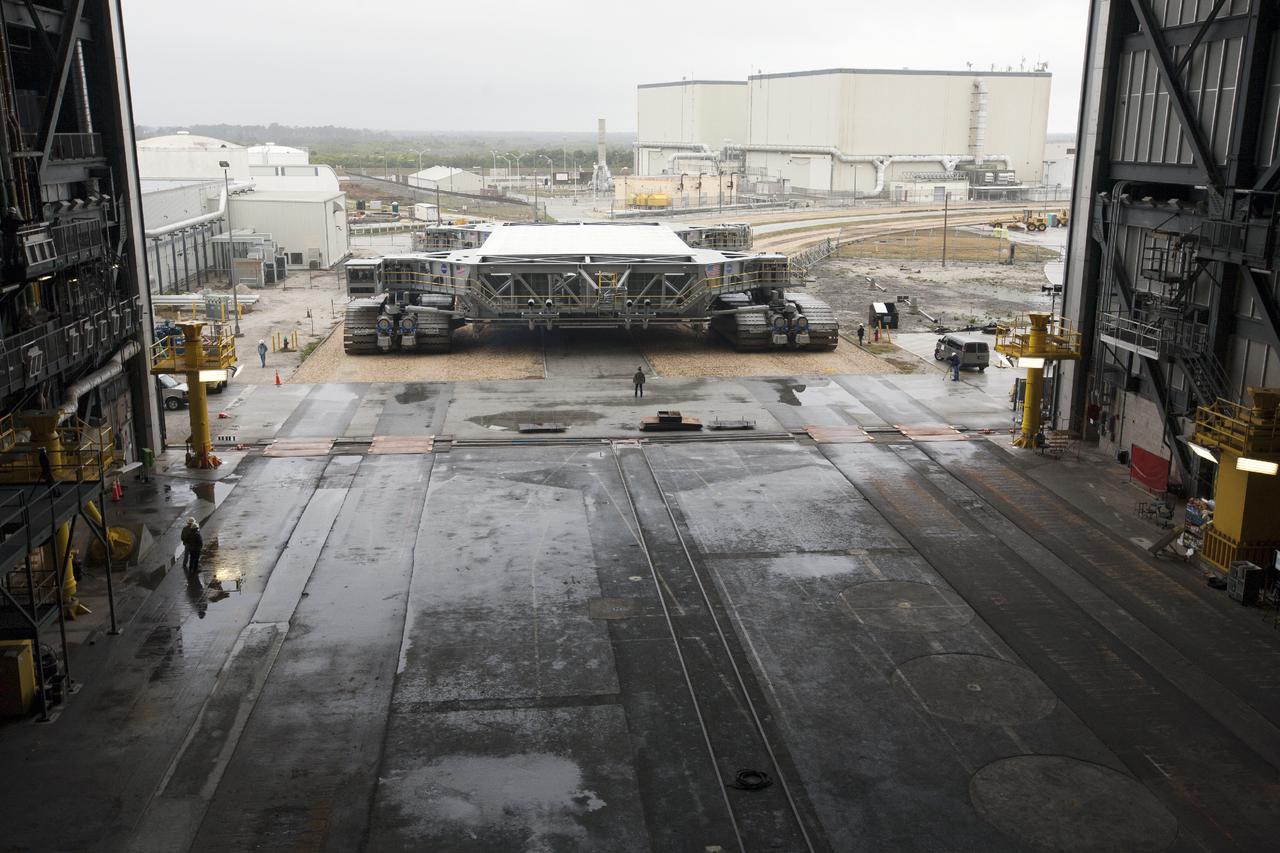
CAPE CANAVERAL, Fla. – Crawler-transporter 2, or CT-2, nears the entrance to the Vehicle Assembly Building at NASA’s Kennedy Space Center in Florida. The Ground Systems Development and Operations Program completed a roller bearing assembly test on CT-2 truck sections A and C. The left- and right-hand steering was tested in both directions. The temperature of the roller assemblies was monitored and recorded as it traveled along the crawlerway. Engineers and technicians performed visual inspections of the roller bearing pumps, valves and lines to ensure that the grease injectors worked properly and provided the required flow of grease to the new roller assemblies. Work continues in high bay 2 to upgrade CT-2. The modifications are designed to ensure CT-2’s ability to transport launch vehicles currently in development, such as the agency’s Space Launch System, to the launch pad. The Ground Systems Development and Operations Program office at Kennedy is overseeing the upgrades. For more than 45 years the crawler-transporters were used to transport the mobile launcher platform and the Apollo-Saturn V rockets and, later, space shuttles to Launch Pads 39A and B. For more information, visit: http:__www.nasa.gov_exploration_systems_ground_crawler-transporter. Photo credit: NASA_Kim Shiflett
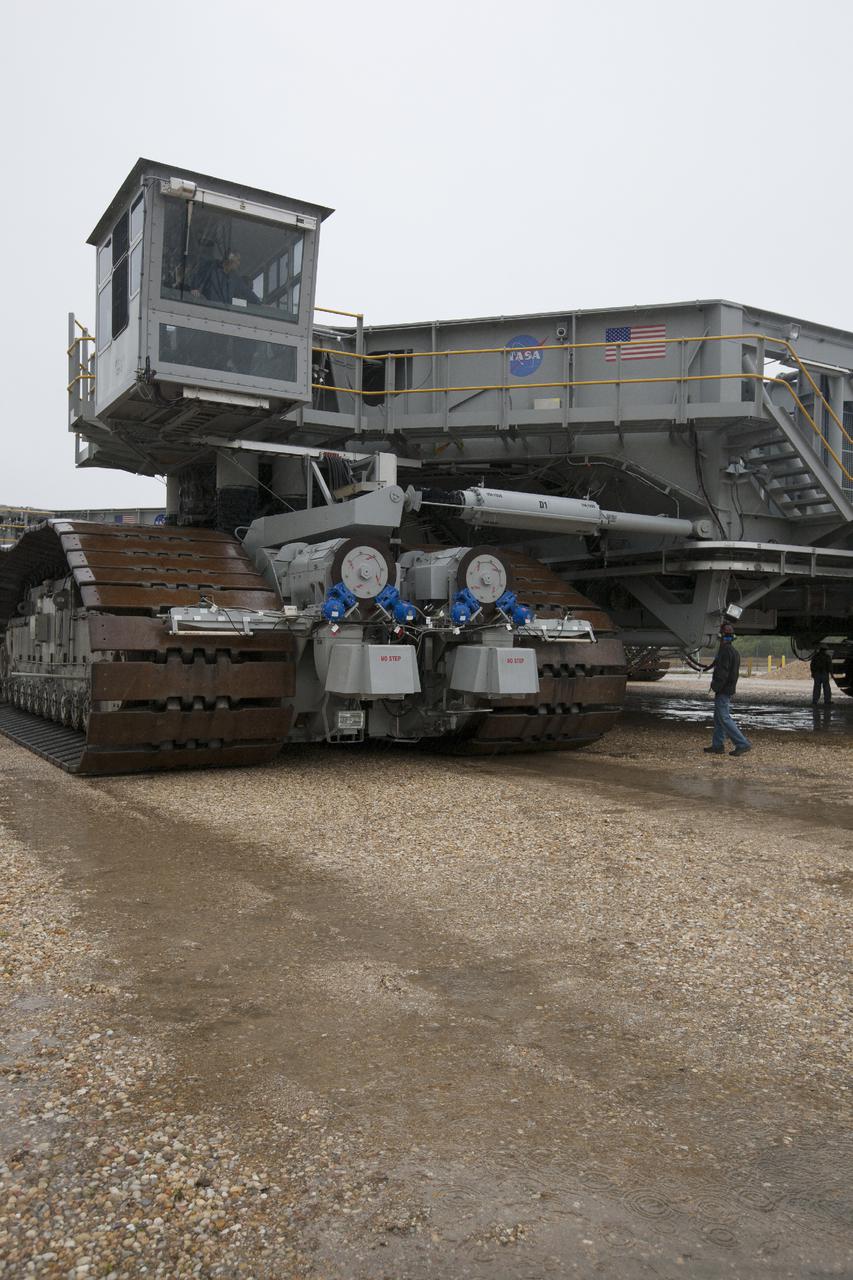
CAPE CANAVERAL, Fla. – A technician in the cab of crawler-transporter 2, or CT-2, drives along the crawlerway toward the Vehicle Assembly Building at NASA’s Kennedy Space Center in Florida. The Ground Systems Development and Operations Program completed a roller bearing assembly test on CT-2 truck sections A and C. The left- and right-hand steering was tested in both directions. The temperature of the roller assemblies was monitored and recorded. Engineers and technicians performed visual inspections of the roller bearing pumps, valves and lines to ensure that the grease injectors worked properly and provided the required flow of grease to the new roller assemblies. Work continues in high bay 2 to upgrade CT-2. The modifications are designed to ensure CT-2’s ability to transport launch vehicles currently in development, such as the agency’s Space Launch System, to the launch pad. The Ground Systems Development and Operations Program office at Kennedy is overseeing the upgrades. For more than 45 years the crawler-transporters were used to transport the mobile launcher platform and the Apollo-Saturn V rockets and, later, space shuttles to Launch Pads 39A and B. For more information, visit: http:__www.nasa.gov_exploration_systems_ground_crawler-transporter. Photo credit: NASA_Kim Shiflett
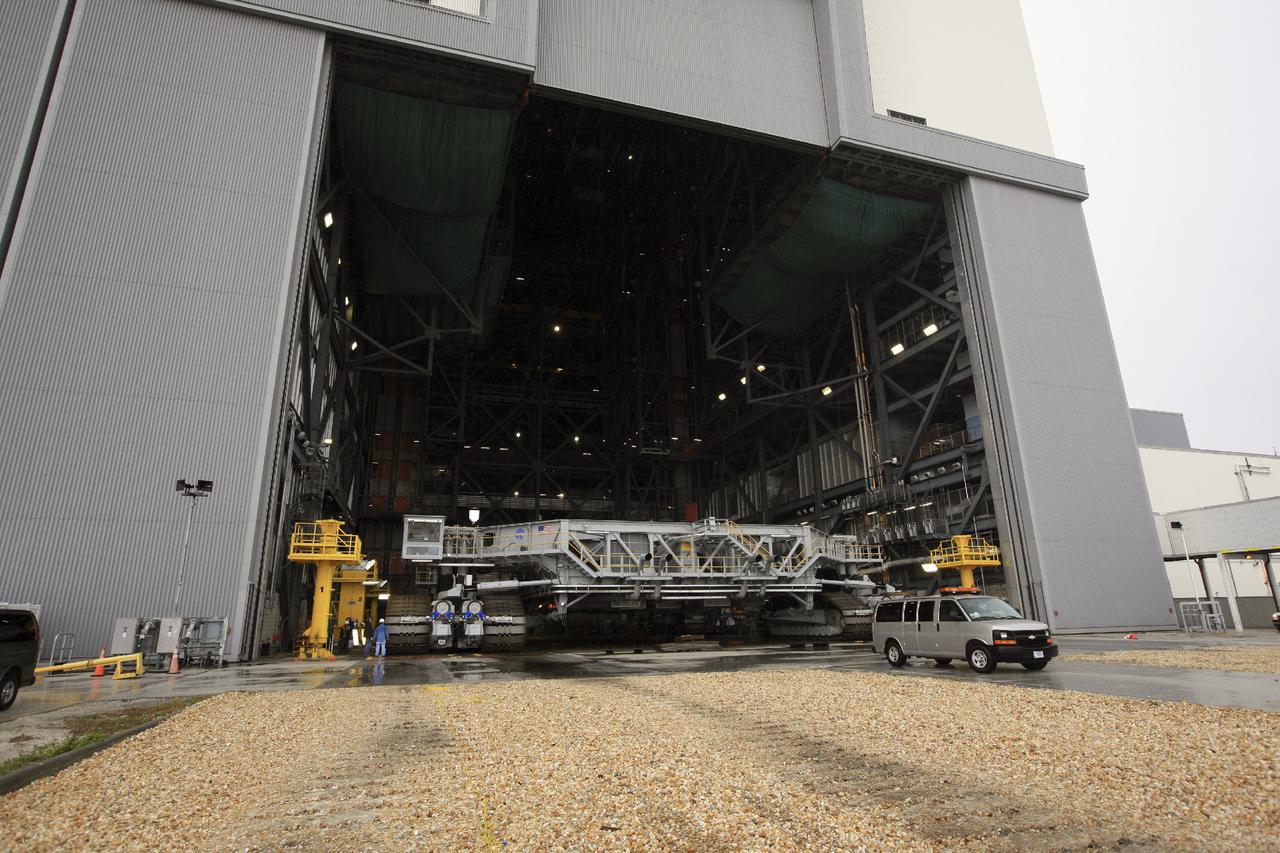
CAPE CANAVERAL, Fla. – Crawler-transporter 2, or CT-2, slowly enters the Vehicle Assembly Building at NASA’s Kennedy Space Center in Florida. The Ground Systems Development and Operations Program completed a roller bearing assembly test on CT-2 truck sections A and C. The left- and right-hand steering was tested in both directions. The temperature of the roller assemblies was monitored and recorded as it traveled along the crawlerway. Engineers and technicians performed visual inspections of the roller bearing pumps, valves and lines to ensure that the grease injectors worked properly and provided the required flow of grease to the new roller assemblies. Work continues in high bay 2 to upgrade CT-2. The modifications are designed to ensure CT-2’s ability to transport launch vehicles currently in development, such as the agency’s Space Launch System, to the launch pad. The Ground Systems Development and Operations Program office at Kennedy is overseeing the upgrades. For more than 45 years the crawler-transporters were used to transport the mobile launcher platform and the Apollo-Saturn V rockets and, later, space shuttles to Launch Pads 39A and B. For more information, visit: http:__www.nasa.gov_exploration_systems_ground_crawler-transporter. Photo credit: NASA_Kim Shiflett
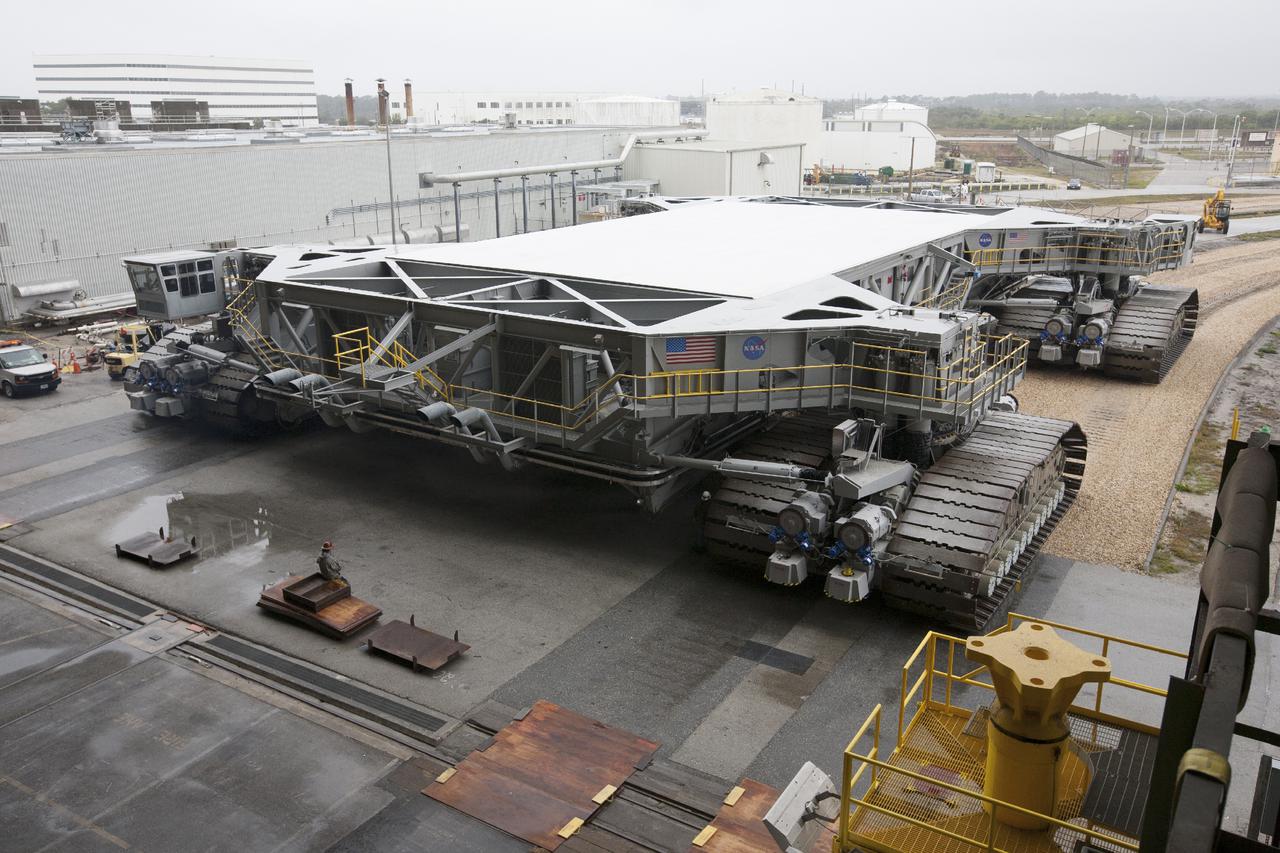
CAPE CANAVERAL, Fla. – Crawler-transporter 2, or CT-2, nears the entrance to the Vehicle Assembly Building at NASA’s Kennedy Space Center in Florida. The Ground Systems Development and Operations Program completed a roller bearing assembly test on CT-2 truck sections A and C. The left- and right-hand steering was tested in both directions. The temperature of the roller assemblies was monitored and recorded as it traveled along the crawlerway. Engineers and technicians performed visual inspections of the roller bearing pumps, valves and lines to ensure that the grease injectors worked properly and provided the required flow of grease to the new roller assemblies. Work continues in high bay 2 to upgrade CT-2. The modifications are designed to ensure CT-2’s ability to transport launch vehicles currently in development, such as the agency’s Space Launch System, to the launch pad. The Ground Systems Development and Operations Program office at Kennedy is overseeing the upgrades. For more than 45 years the crawler-transporters were used to transport the mobile launcher platform and the Apollo-Saturn V rockets and, later, space shuttles to Launch Pads 39A and B. For more information, visit: http:__www.nasa.gov_exploration_systems_ground_crawler-transporter. Photo credit: NASA_Kim Shiflett
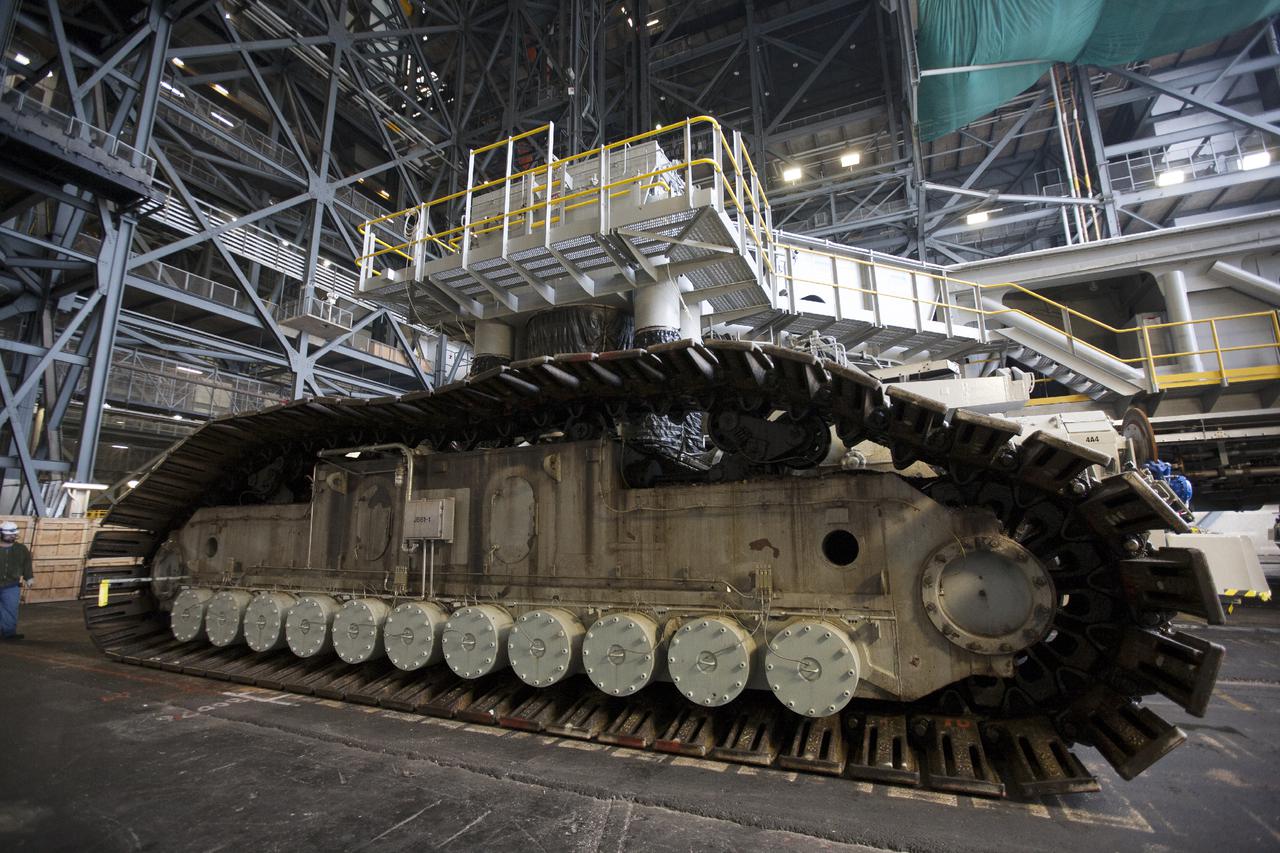
CAPE CANAVERAL, Fla. – Crawler-transporter 2, or CT-2, enters the Vehicle Assembly Building at NASA’s Kennedy Space Center in Florida. Visible are the new roller bearing assemblies that were installed on one side of the crawler. The Ground Systems Development and Operations Program completed a roller bearing assembly test on CT-2 truck sections A and C. The left- and right-hand steering was tested in both directions. The temperature of the roller assemblies was monitored and recorded as it traveled along the crawlerway. Engineers and technicians performed visual inspections of the roller bearing pumps, valves and lines to ensure that the grease injectors worked properly and provided the required flow of grease to the new roller assemblies. Work continues in high bay 2 to upgrade CT-2. The modifications are designed to ensure CT-2’s ability to transport launch vehicles currently in development, such as the agency’s Space Launch System, to the launch pad. The Ground Systems Development and Operations Program office at Kennedy is overseeing the upgrades. For more than 45 years the crawler-transporters were used to transport the mobile launcher platform and the Apollo-Saturn V rockets and, later, space shuttles to Launch Pads 39A and B. For more information, visit: http:__www.nasa.gov_exploration_systems_ground_crawler-transporter. Photo credit: NASA_Kim Shiflett
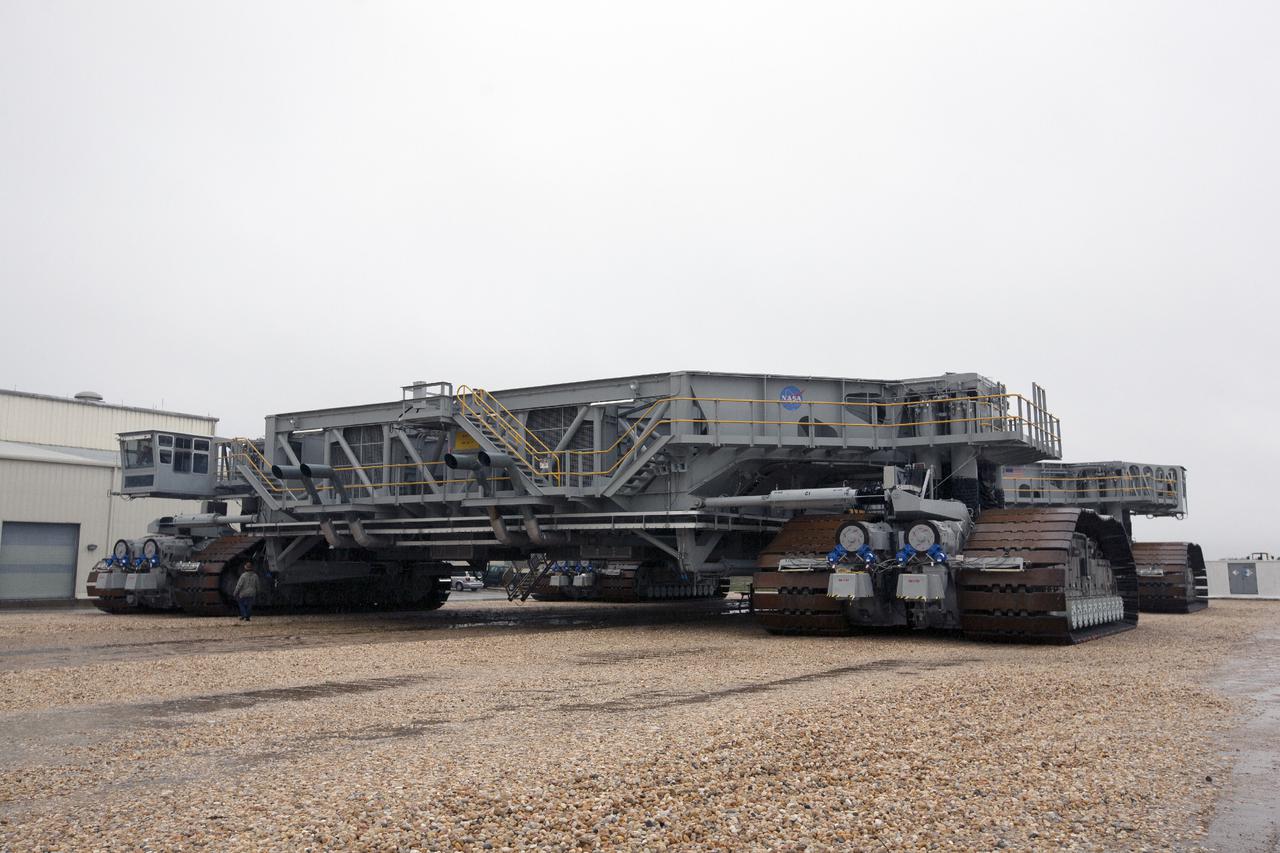
CAPE CANAVERAL, Fla. – Crawler-transporter 2, or CT-2, travels along the crawlerway toward the Vehicle Assembly Building at NASA’s Kennedy Space Center in Florida. The Ground Systems Development and Operations Program completed a roller bearing assembly test on CT-2 truck sections A and C. The left- and right-hand steering was tested in both directions. The temperature of the roller assemblies was monitored and recorded. Engineers and technicians performed visual inspections of the roller bearing pumps, valves and lines to ensure that the grease injectors worked properly and provided the required flow of grease to the new roller assemblies. Work continues in high bay 2 to upgrade CT-2. The modifications are designed to ensure CT-2’s ability to transport launch vehicles currently in development, such as the agency’s Space Launch System, to the launch pad. The Ground Systems Development and Operations Program office at Kennedy is overseeing the upgrades. For more than 45 years the crawler-transporters were used to transport the mobile launcher platform and the Apollo-Saturn V rockets and, later, space shuttles to Launch Pads 39A and B. For more information, visit: http:__www.nasa.gov_exploration_systems_ground_crawler-transporter. Photo credit: NASA_Kim Shiflett
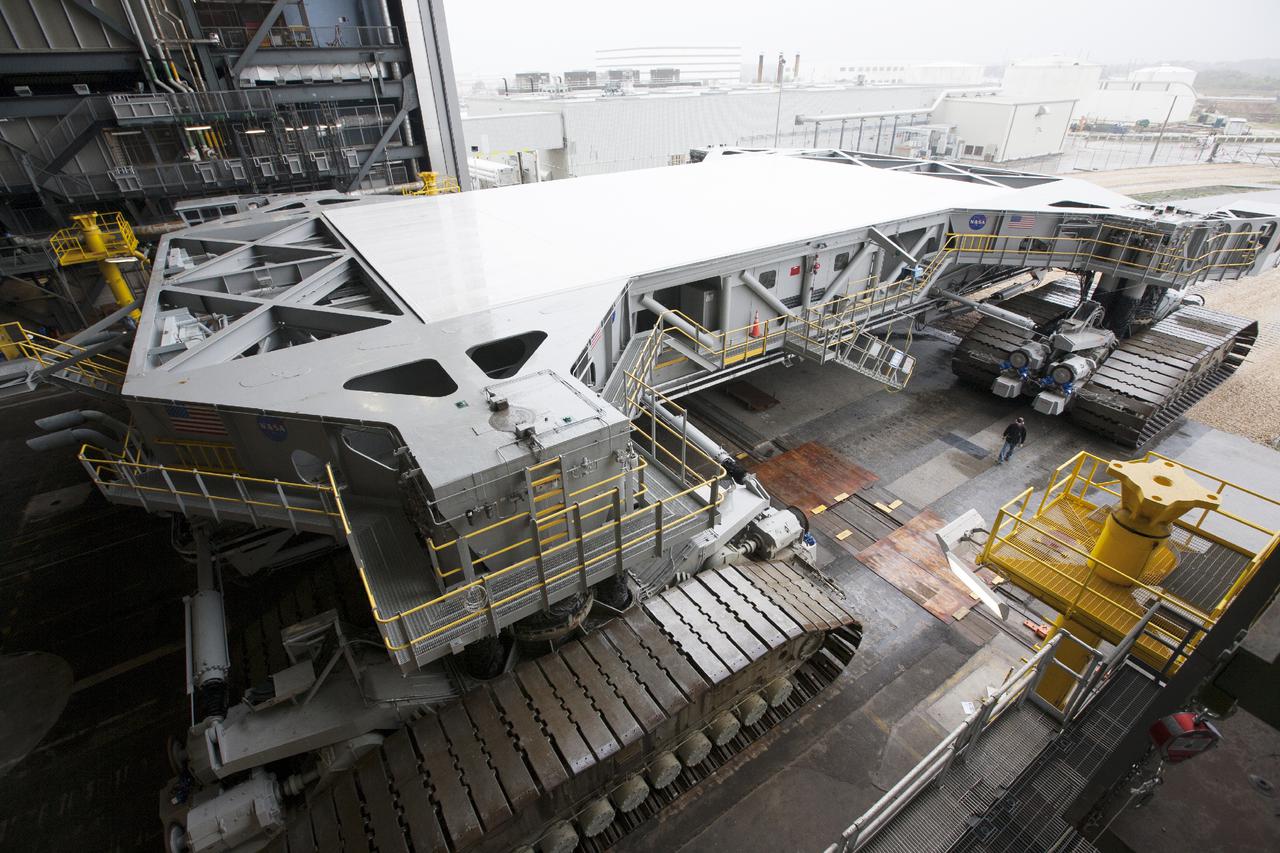
CAPE CANAVERAL, Fla. – Crawler-transporter 2, or CT-2, slowly enters the Vehicle Assembly Building at NASA’s Kennedy Space Center in Florida. The Ground Systems Development and Operations Program completed a roller bearing assembly test on CT-2 truck sections A and C. The left- and right-hand steering was tested in both directions. The temperature of the roller assemblies was monitored and recorded as it traveled along the crawlerway. Engineers and technicians performed visual inspections of the roller bearing pumps, valves and lines to ensure that the grease injectors worked properly and provided the required flow of grease to the new roller assemblies. Work continues in high bay 2 to upgrade CT-2. The modifications are designed to ensure CT-2’s ability to transport launch vehicles currently in development, such as the agency’s Space Launch System, to the launch pad. The Ground Systems Development and Operations Program office at Kennedy is overseeing the upgrades. For more than 45 years the crawler-transporters were used to transport the mobile launcher platform and the Apollo-Saturn V rockets and, later, space shuttles to Launch Pads 39A and B. For more information, visit: http:__www.nasa.gov_exploration_systems_ground_crawler-transporter. Photo credit: NASA_Kim Shiflett
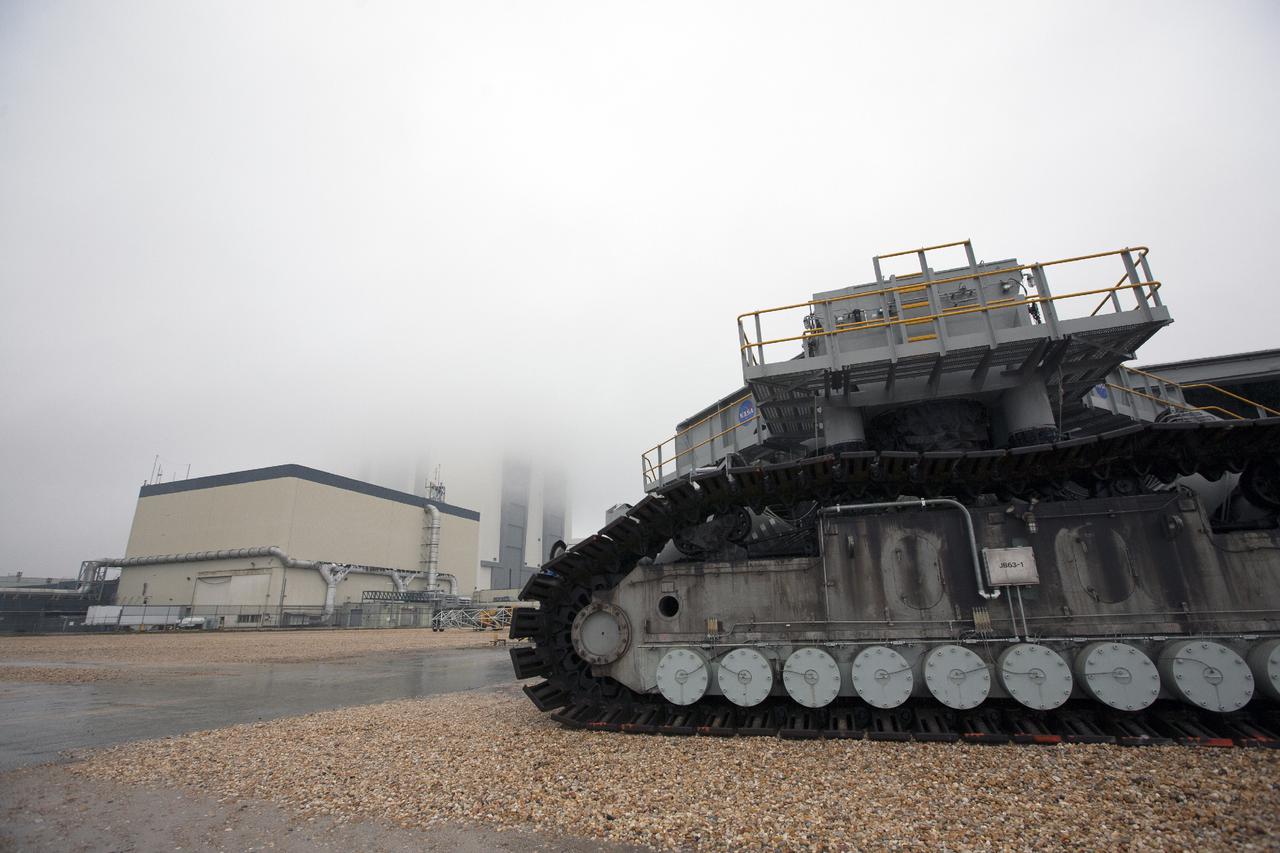
CAPE CANAVERAL, Fla. – Crawler-transporter 2, or CT-2, travels along the crawlerway toward the Vehicle Assembly Building, or VAB, at NASA’s Kennedy Space Center in Florida. The VAB is partially hidden by fog. The Ground Systems Development and Operations Program completed a roller bearing assembly test on CT-2 truck sections A and C. The left- and right-hand steering was tested in both directions. The temperature of the roller assemblies was monitored and recorded. Engineers and technicians performed visual inspections of the roller bearing pumps, valves and lines to ensure that the grease injectors worked properly and provided the required flow of grease to the new roller assemblies. Work continues in high bay 2 to upgrade CT-2. The modifications are designed to ensure CT-2’s ability to transport launch vehicles currently in development, such as the agency’s Space Launch System, to the launch pad. The Ground Systems Development and Operations Program office at Kennedy is overseeing the upgrades. For more than 45 years the crawler-transporters were used to transport the mobile launcher platform and the Apollo-Saturn V rockets and, later, space shuttles to Launch Pads 39A and B. For more information, visit: http:__www.nasa.gov_exploration_systems_ground_crawler-transporter. Photo credit: NASA_Kim Shiflett

CAPE CANAVERAL, Fla. – Crawler-transporter 2, or CT-2, travels along the crawlerway toward the Vehicle Assembly Building at NASA’s Kennedy Space Center in Florida. The Ground Systems Development and Operations Program completed a roller bearing assembly test on CT-2 truck sections A and C. The left- and right-hand steering was tested in both directions. The temperature of the roller assemblies was monitored and recorded as it traveled along the crawlerway. Engineers and technicians performed visual inspections of the roller bearing pumps, valves and lines to ensure that the grease injectors worked properly and provided the required flow of grease to the new roller assemblies. Work continues in high bay 2 to upgrade CT-2. The modifications are designed to ensure CT-2’s ability to transport launch vehicles currently in development, such as the agency’s Space Launch System, to the launch pad. The Ground Systems Development and Operations Program office at Kennedy is overseeing the upgrades. For more than 45 years the crawler-transporters were used to transport the mobile launcher platform and the Apollo-Saturn V rockets and, later, space shuttles to Launch Pads 39A and B. For more information, visit: http:__www.nasa.gov_exploration_systems_ground_crawler-transporter. Photo credit: NASA_Kim Shiflett
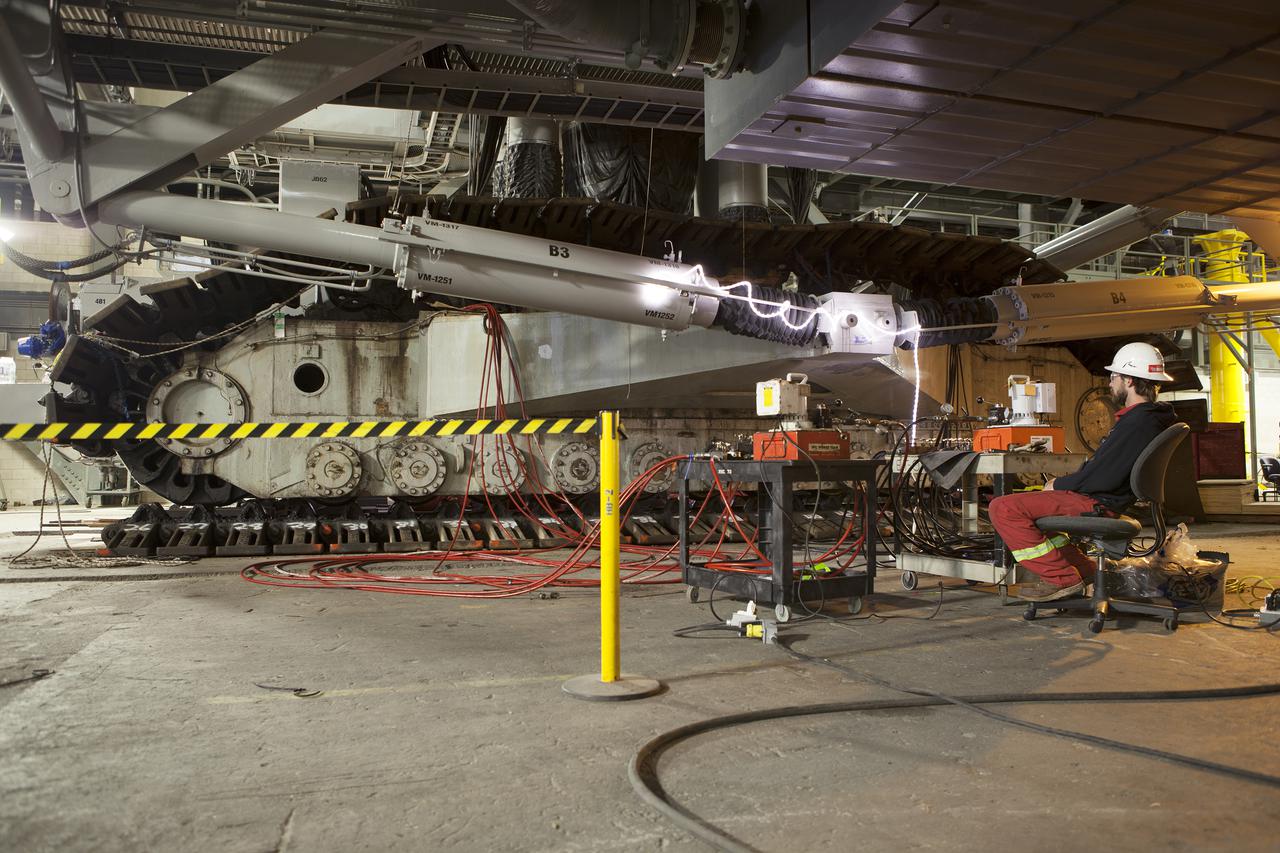
CAPE CANAVERAL, Fla. – Inside the Vehicle Assembly Building at NASA’s Kennedy Space Center in Florida, a technician monitors the progress as the B and D truck sections of crawler-transporter 2, or CT-2, are raised up to prepare for installation of new roller bearing assemblies. Work continues in high bay 2 to upgrade CT-2. The modifications are designed to ensure CT-2’s ability to transport launch vehicles currently in development, such as the agency’s Space Launch System, to the launch pad. The Ground Systems Development and Operations Program office at Kennedy is overseeing the upgrades. For more than 45 years the crawler-transporters were used to transport the mobile launcher platform and the Apollo-Saturn V rockets and, later, space shuttles to Launch Pads 39A and B. For more information, visit: http:__www.nasa.gov_exploration_systems_ground_crawler-transporter. Photo credit: NASA_Dimitri Gerondidakis
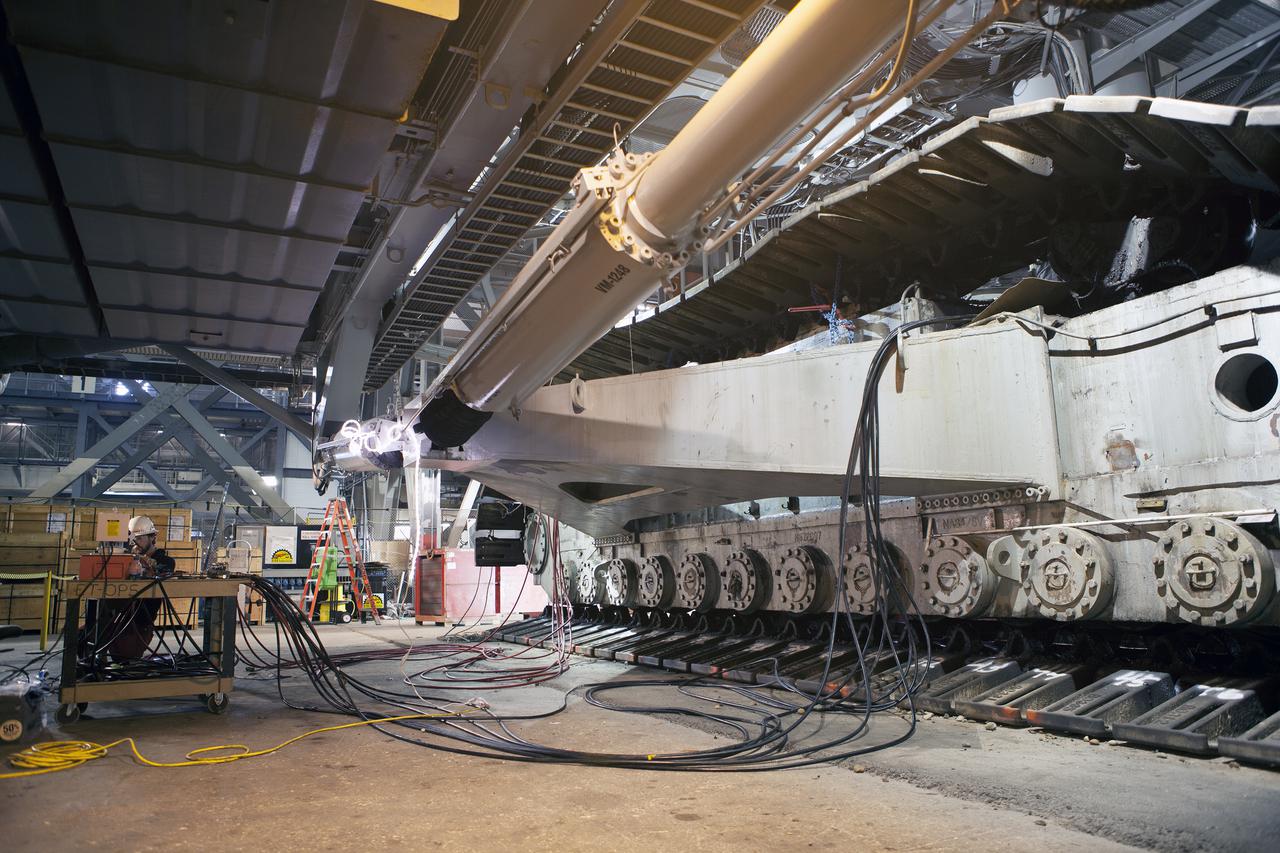
CAPE CANAVERAL, Fla. – Inside the Vehicle Assembly Building at NASA’s Kennedy Space Center in Florida, the B and D truck sections of crawler-transporter 2, or CT-2, are being raised up to prepare for installation of new roller bearing assemblies. Work continues in high bay 2 to upgrade CT-2. The modifications are designed to ensure CT-2’s ability to transport launch vehicles currently in development, such as the agency’s Space Launch System, to the launch pad. The Ground Systems Development and Operations Program office at Kennedy is overseeing the upgrades. For more than 45 years the crawler-transporters were used to transport the mobile launcher platform and the Apollo-Saturn V rockets and, later, space shuttles to Launch Pads 39A and B. For more information, visit: http:__www.nasa.gov_exploration_systems_ground_crawler-transporter. Photo credit: NASA_Dimitri Gerondidakis
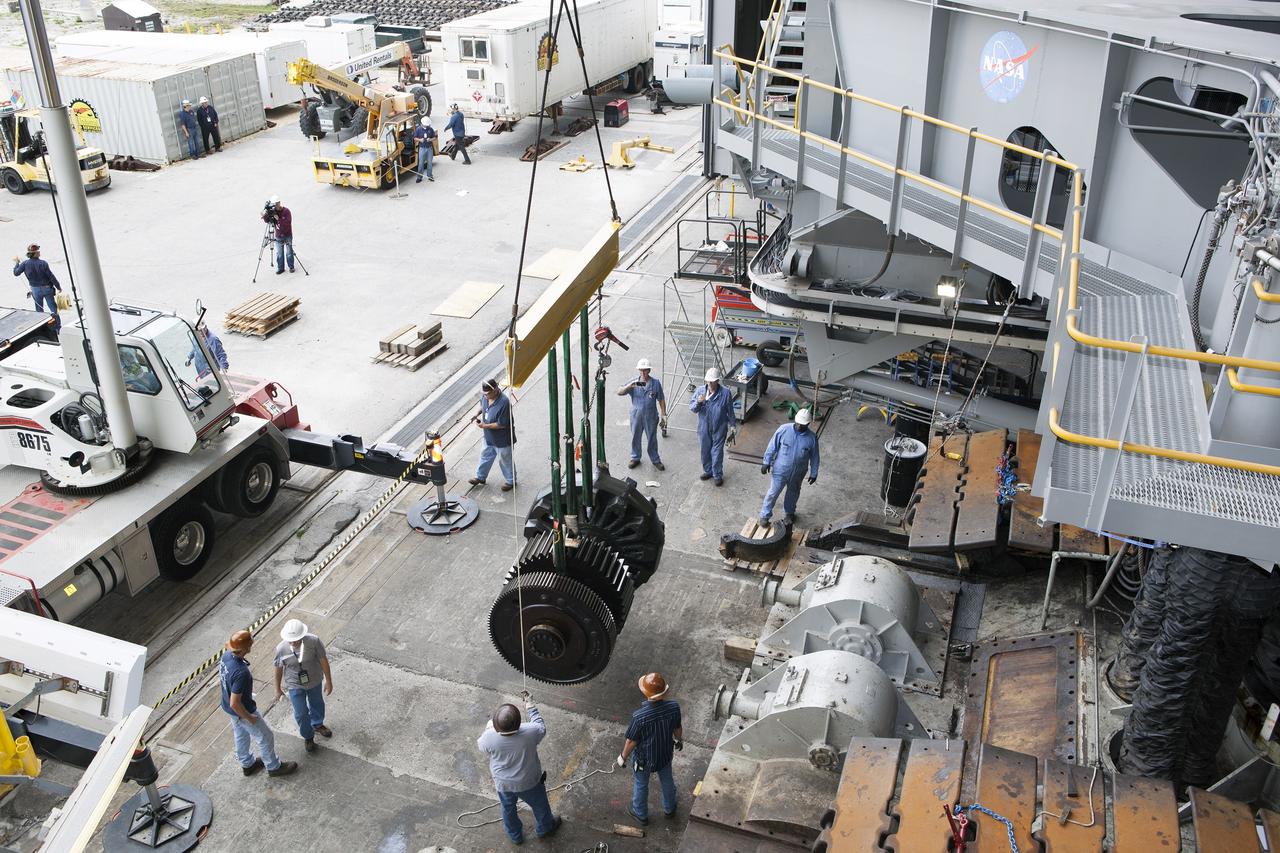
CAPE CANAVERAL, Fla. - Inside the Vehicle Assembly Building at NASA’s Kennedy Space Center in Florida, ground support technicians monitor the progress as an overhead crane lifts a sprocket shaft assembly away from the C truck of crawler-transporter 2, or CT-2. A section of the treads on the C truck were removed to allow access to the sprocket assemblies. The sprocket assemblies will be placed into shipping cradles on pallets and positioned on a flatbed trailer. The assemblies will be sent to a vendor for inspections and refurbishment. Work continues in high bay 2 to upgrade CT-2. The modifications are designed to ensure CT-2’s ability to transport launch vehicles currently in development, such as the agency’s Space Launch System, to the launch pad. The Ground Systems Development and Operations Program office at Kennedy is overseeing the upgrades. For more than 45 years the crawler-transporters were used to transport the mobile launcher platform and the Apollo-Saturn V rockets and, later, space shuttles to Launch Pads 39A and B. For more information, visit: http://www.nasa.gov/exploration/systems/ground/crawler-transporter. Photo credit: NASA/Dimitri Gerondidakis
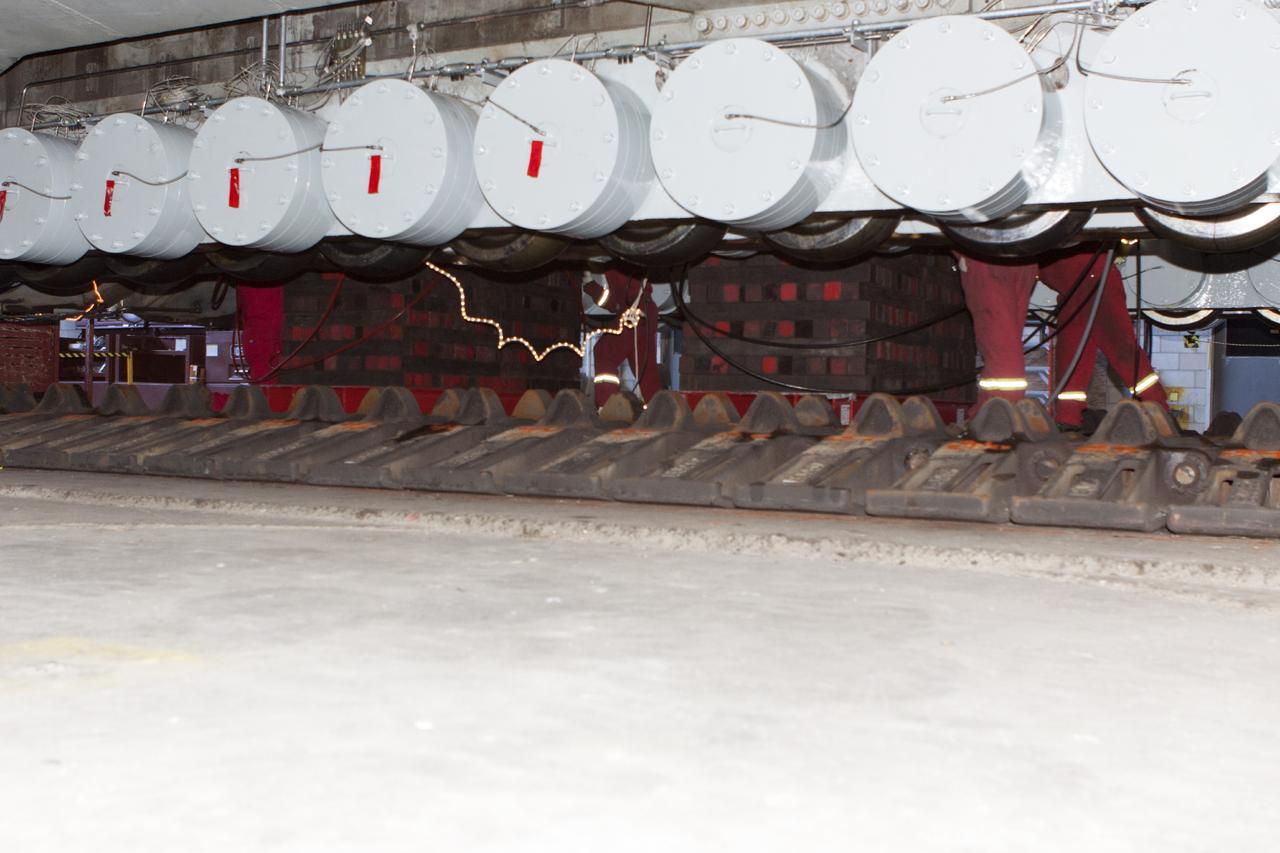
CAPE CANAVERAL, Fla. – Inside the Vehicle Assembly Building at NASA’s Kennedy Space Center in Florida, preparations are underway to lower crawler-transporter 2, or CT-2, from jack stands so that work can begin to re-stall the large crawler tracks. The crawler is being prepared for rollout in January 2014 to test the new bearings that were recently installed. Work continues in high bay 2 to upgrade CT-2. The modifications are designed to ensure CT-2’s ability to transport launch vehicles currently in development, such as the agency’s Space Launch System, to the launch pad. The Ground Systems Development and Operations Program office at Kennedy is overseeing the upgrades. For more than 45 years the crawler-transporters were used to transport the mobile launcher platform and the Apollo-Saturn V rockets and, later, space shuttles to Launch Pads 39A and B. For more information, visit: http://www.nasa.gov/centers/kennedy/pdf/638823main_crawler-transporter.pdf. Photo credit: NASA/Jim Grossmann
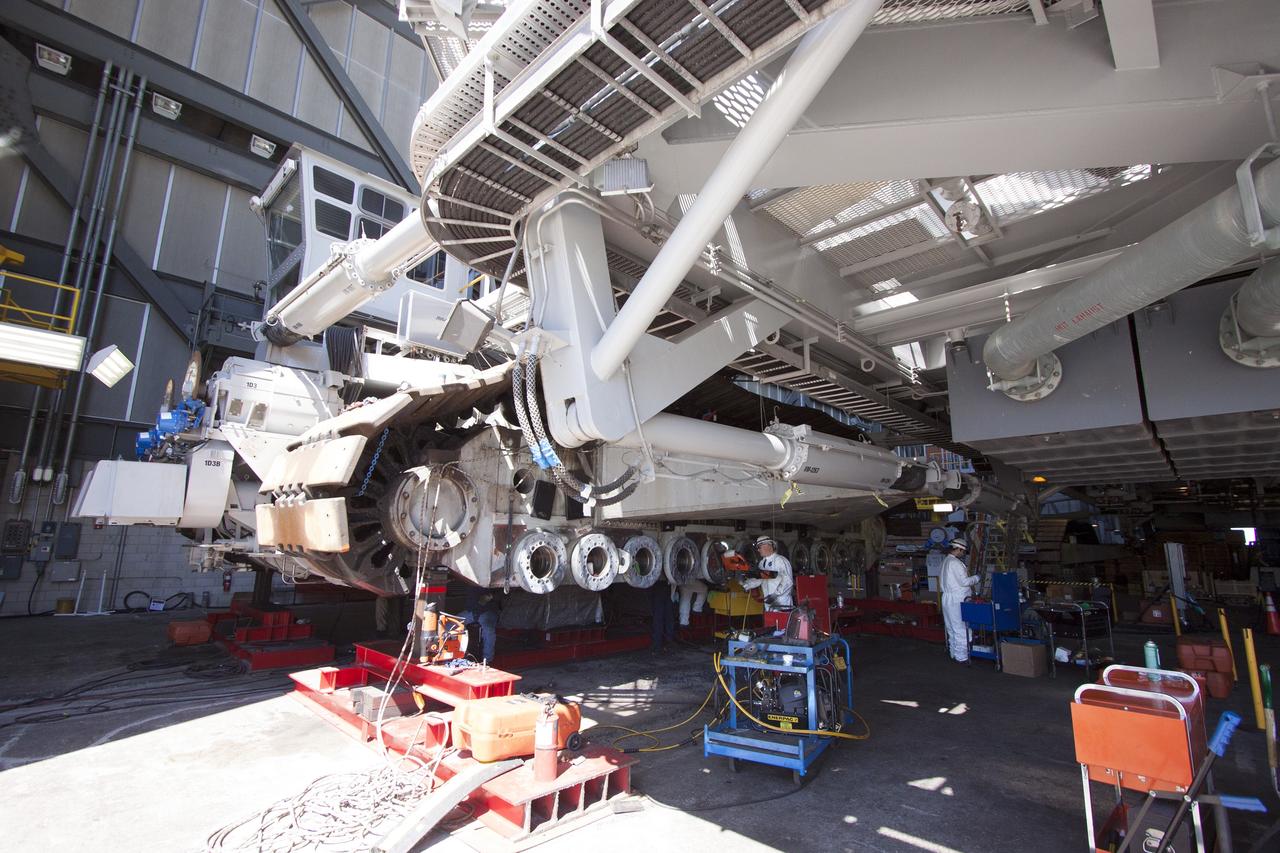
CAPE CANAVERAL, Fla. – Inside the Vehicle Assembly Building at NASA’s Kennedy Space Center in Florida, ground support technicians install new roller bearings on the C truck of crawler-transporter 2, or CT-2. Work continues in high bay 2 to upgrade CT-2. The modifications are designed to ensure CT-2’s ability to transport launch vehicles currently in development, such as the agency’s Space Launch System, to the launch pad. The Ground Systems Development and Operations Program office at Kennedy is overseeing the upgrades. For more than 45 years the crawler-transporters were used to transport the mobile launcher platform and the Apollo-Saturn V rockets and, later, space shuttles to Launch Pads 39A and B. For more information, visit: http://www.nasa.gov/exploration/systems/ground/crawler-transporter. Photo credit: NASA/Cory Huston
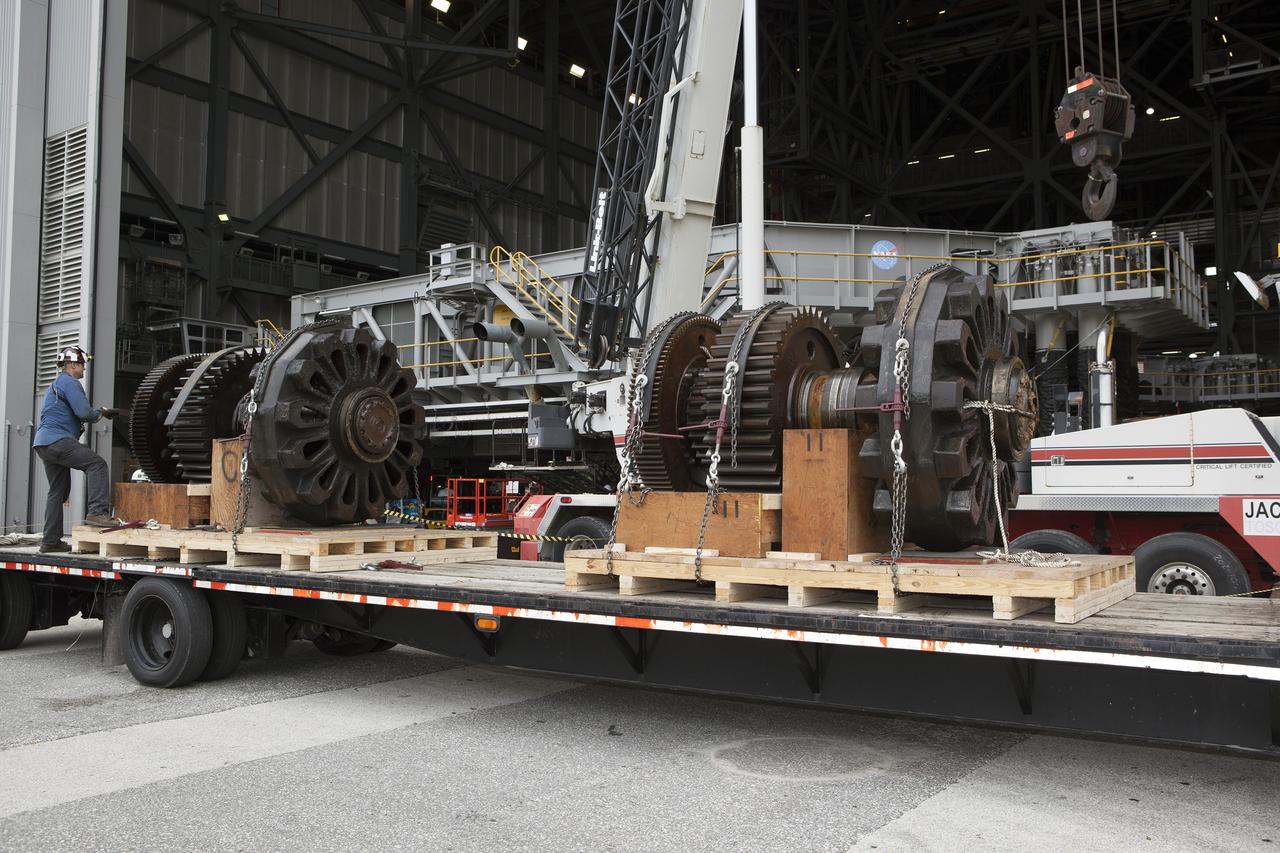
CAPE CANAVERAL, Fla. - Inside the Vehicle Assembly Building at NASA’s Kennedy Space Center in Florida, the inboard and outboard sprocket shaft assemblies have been removed from the C truck of crawler-transporter 2, or CT-2. The sprocket assemblies were placed into shipping cradles on pallets and positioned on a flatbed trailer. The assemblies will be sent to a vendor for inspections and refurbishment. Work continues in high bay 2 to upgrade CT-2. The modifications are designed to ensure CT-2’s ability to transport launch vehicles currently in development, such as the agency’s Space Launch System, to the launch pad. The Ground Systems Development and Operations Program office at Kennedy is overseeing the upgrades. For more than 45 years the crawler-transporters were used to transport the mobile launcher platform and the Apollo-Saturn V rockets and, later, space shuttles to Launch Pads 39A and B. For more information, visit: http://www.nasa.gov/exploration/systems/ground/crawler-transporter. Photo credit: NASA/Dimitri Gerondidakis
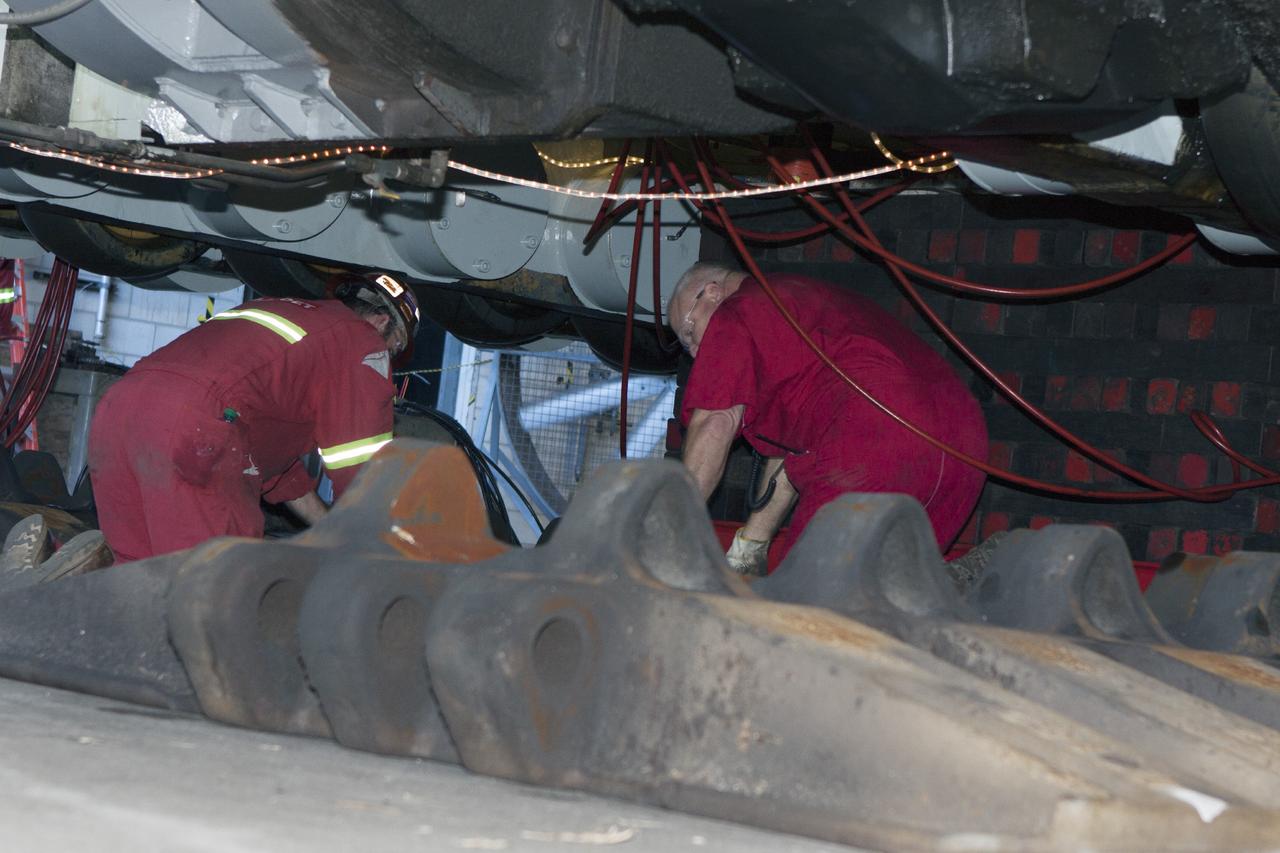
CAPE CANAVERAL, Fla. – Inside the Vehicle Assembly Building at NASA’s Kennedy Space Center in Florida, two ground support technicians check on crawler-transporter 2, or CT-2, so that work can begin to re-install the large crawler tracks. The crawler is being prepared for rollout in January 2014 to test the new bearings that were recently installed. Work continues in high bay 2 to upgrade CT-2. The modifications are designed to ensure CT-2’s ability to transport launch vehicles currently in development, such as the agency’s Space Launch System, to the launch pad. The Ground Systems Development and Operations Program office at Kennedy is overseeing the upgrades. For more than 45 years the crawler-transporters were used to transport the mobile launcher platform and the Apollo-Saturn V rockets and, later, space shuttles to Launch Pads 39A and B. For more information, visit: http://www.nasa.gov/centers/kennedy/pdf/638823main_crawler-transporter.pdf. Photo credit: NASA/Jim Grossmann
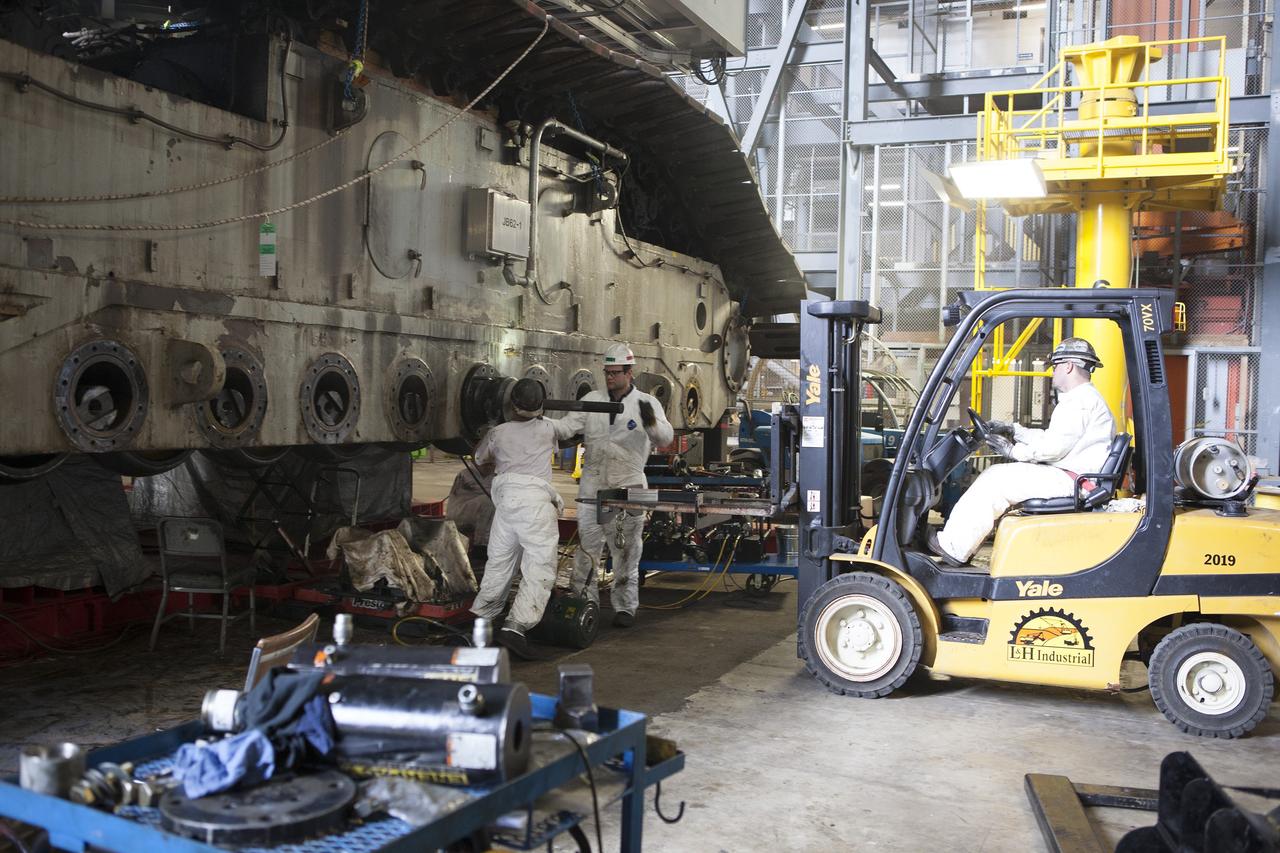
CAPE CANAVERAL, Fla. – Inside the Vehicle Assembly Building at NASA’s Kennedy Space Center in Florida, ground support technicians assist with removal of a bearing from the B truck tread of crawler-transporter 2, or CT-2, and prepare to load it on a forklift for disposal. New roller bearing assemblies will be installed. Work continues in high bay 2 to upgrade CT-2. The modifications are designed to ensure CT-2’s ability to transport launch vehicles currently in development, such as the agency’s Space Launch System, to the launch pad. The Ground Systems Development and Operations Program office at Kennedy is overseeing the upgrades. For more than 45 years the crawler-transporters were used to transport the mobile launcher platform and the Apollo-Saturn V rockets and, later, space shuttles to Launch Pads 39A and B. For more information, visit: http://www.nasa.gov/exploration/systems/ground/crawler-transporter. Photo credit: NASA/Dimitri Gerondidakis
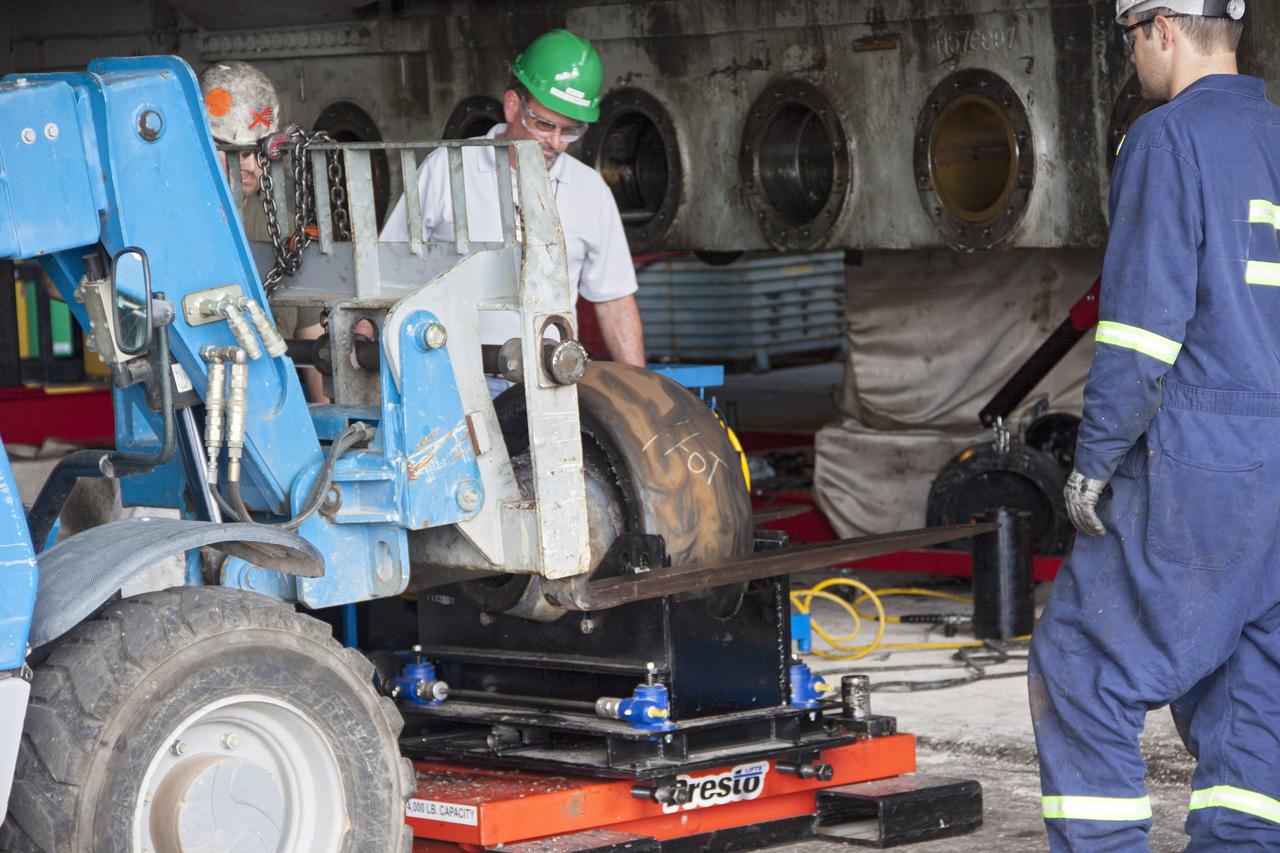
CAPE CANAVERAL, Fla. – Inside the Vehicle Assembly Building at NASA’s Kennedy Space Center in Florida, technicians prepare a new roller shaft bearing for installation in crawler-transporter 2, or CT-2. Work continues in high bay 2 to upgrade CT-2. The modifications are designed to ensure CT-2’s ability to transport launch vehicles currently in development, such as the agency’s Space Launch System, to the launch pad. The Ground Systems Development and Operations Program office at Kennedy is overseeing the upgrades. For more than 45 years the crawler-transporters were used to transport the mobile launcher platform and the Apollo-Saturn V rockets and, later, space shuttles to Launch Pads 39A and B. For more information, visit: http://www.nasa.gov/exploration/systems/ground/crawler-transporter_bearings.html. Photo credit: NASA/Jim Grossmann
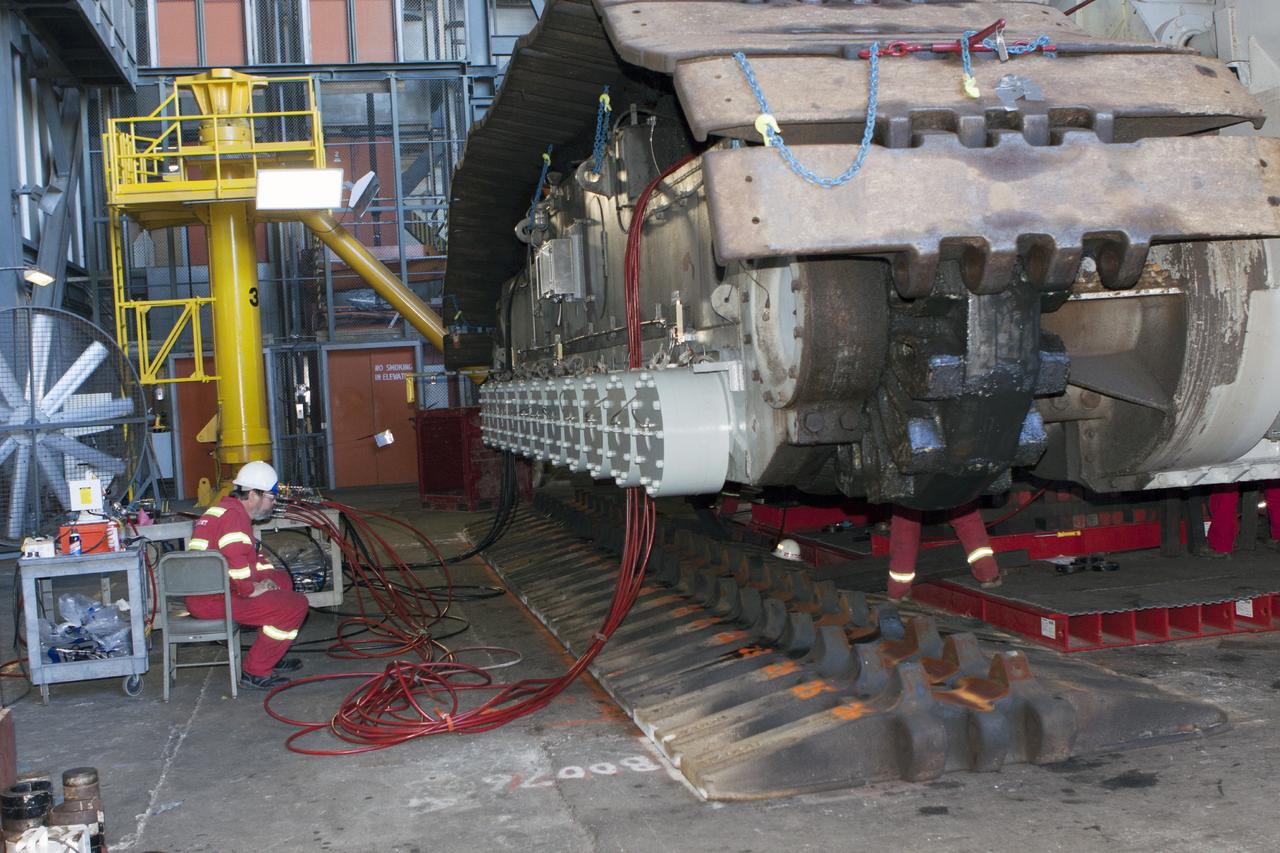
CAPE CANAVERAL, Fla. – Inside the Vehicle Assembly Building at NASA’s Kennedy Space Center in Florida, preparations are underway to lower crawler-transporter 2, or CT-2, from jack stands so that work can begin to re-install the large crawler tracks. The crawler is being prepared for rollout in January 2014 to test the new bearings that were recently installed. Work continues in high bay 2 to upgrade CT-2. The modifications are designed to ensure CT-2’s ability to transport launch vehicles currently in development, such as the agency’s Space Launch System, to the launch pad. The Ground Systems Development and Operations Program office at Kennedy is overseeing the upgrades. For more than 45 years the crawler-transporters were used to transport the mobile launcher platform and the Apollo-Saturn V rockets and, later, space shuttles to Launch Pads 39A and B. For more information, visit: http://www.nasa.gov/centers/kennedy/pdf/638823main_crawler-transporter.pdf. Photo credit: NASA/Jim Grossmann
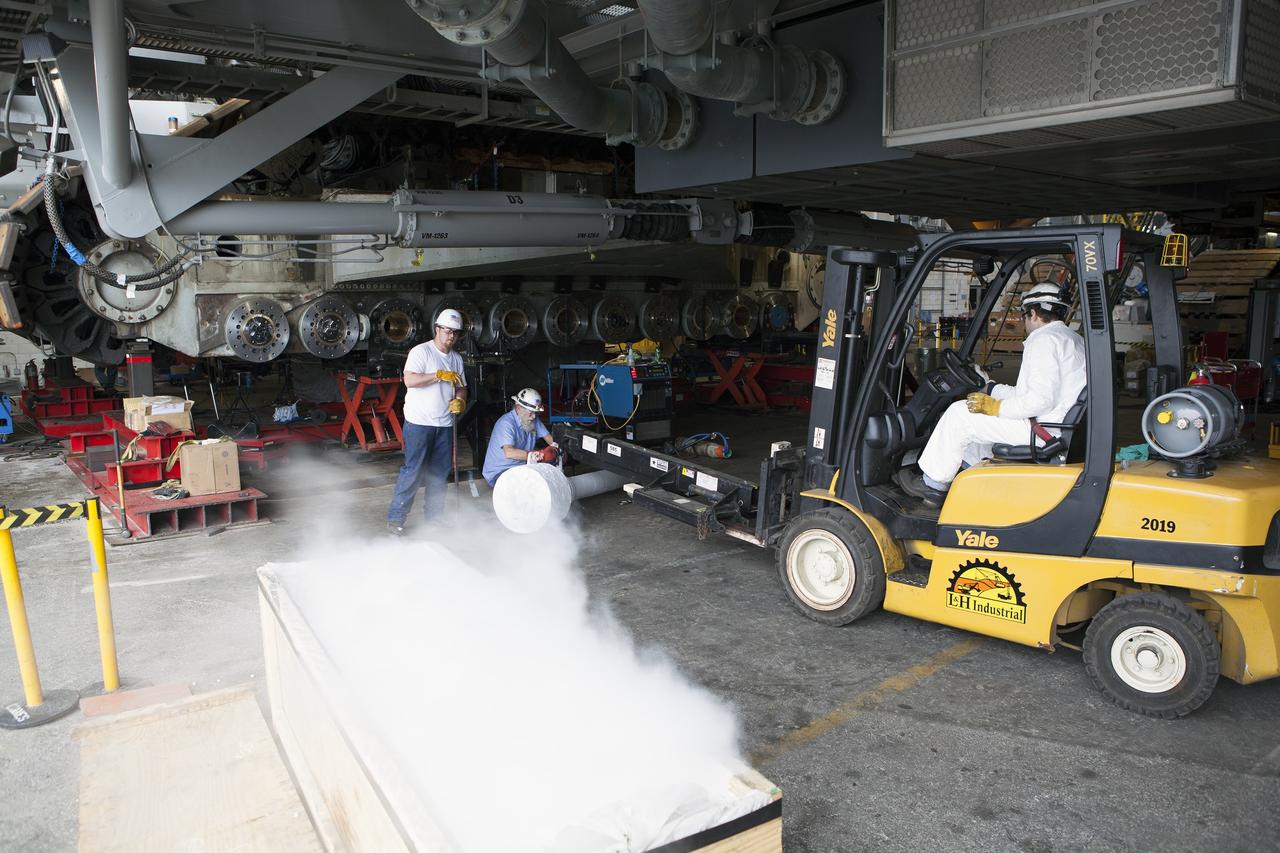
CAPE CANAVERAL, Fla. - Inside the Vehicle Assembly Building at NASA’s Kennedy Space Center in Florida, ground support technicians attach a roller bearing shaft to a forklift. The bearing is being prepared for insertion in the C truck of crawler-transporter 2, or CT-2. A section of the treads on the C truck were removed to allow access to the bearings. Work continues in high bay 2 to upgrade CT-2. The modifications are designed to ensure CT-2’s ability to transport launch vehicles currently in development, such as the agency’s Space Launch System, to the launch pad. The Ground Systems Development and Operations Program office at Kennedy is overseeing the upgrades. For more than 45 years the crawler-transporters were used to transport the mobile launcher platform and the Apollo-Saturn V rockets and, later, space shuttles to Launch Pads 39A and B. For more information, visit: http://www.nasa.gov/exploration/systems/ground/crawler-transporter. Photo credit: NASA/Dimitri Gerondidakis
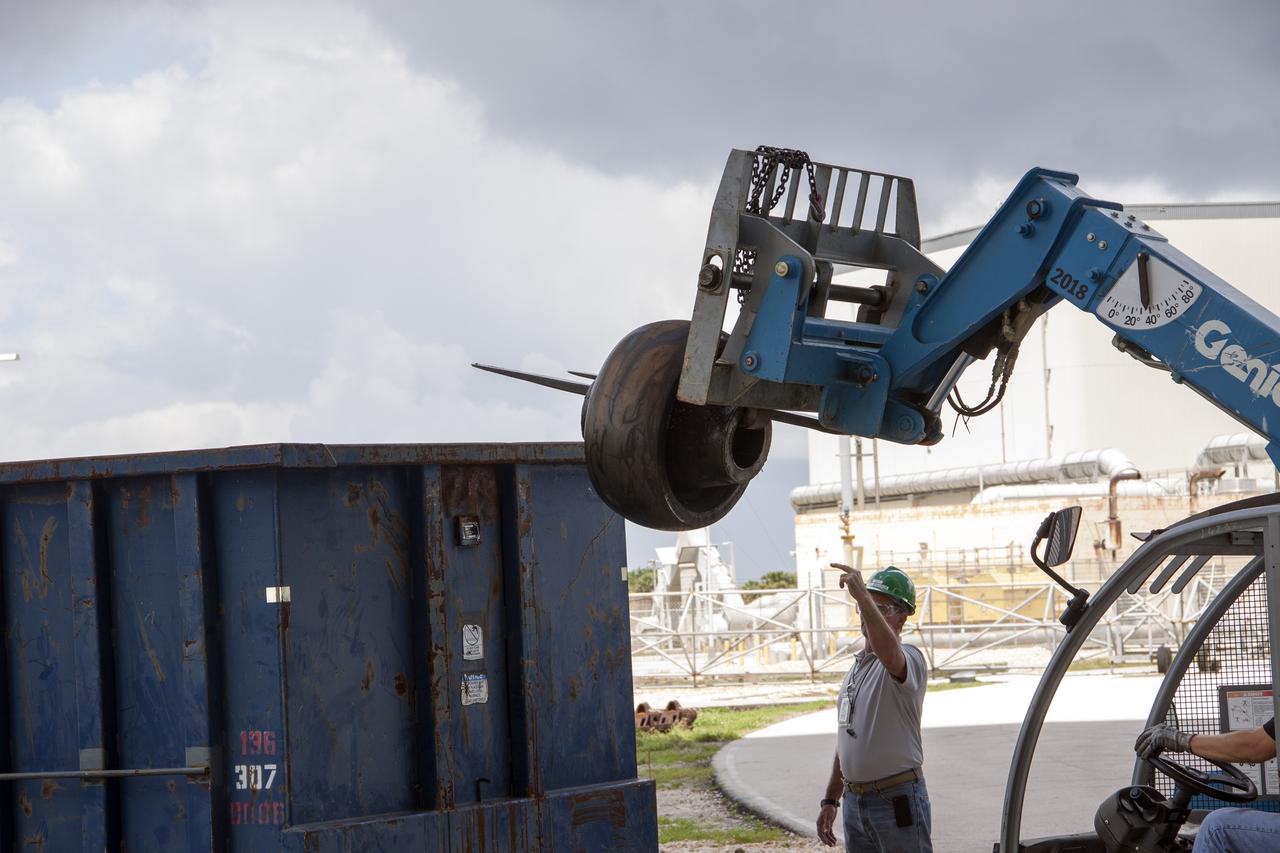
CAPE CANAVERAL, Fla. – Near the Vehicle Assembly Building, or VAB, at NASA’s Kennedy Space Center in Florida, an old roller shaft bearing that was removed from crawler-transporter 2, or CT-2, is being discarded. Inside the VAB, new roller shaft bearings will be installed on CT-2. Work continues in high bay 2 to upgrade CT-2. The modifications are designed to ensure CT-2’s ability to transport launch vehicles currently in development, such as the agency’s Space Launch System, to the launch pad. The Ground Systems Development and Operations Program office at Kennedy is overseeing the upgrades. For more than 45 years the crawler-transporters were used to transport the mobile launcher platform and the Apollo-Saturn V rockets and, later, space shuttles to Launch Pads 39A and B. For more information, visit: http://www.nasa.gov/exploration/systems/ground/crawler-transporter_bearings.html. Photo credit: NASA/Jim Grossmann

CAPE CANAVERAL, Fla. – Inside the Vehicle Assembly Building at NASA’s Kennedy Space Center in Florida, a technician performs welding in the bearing assembly area of crawler-transporter 2, or CT-2. New roller shaft bearings assemblies are being installed. Work continues in high bay 2 to upgrade CT-2. The modifications are designed to ensure CT-2’s ability to transport launch vehicles currently in development, such as the agency’s Space Launch System, to the launch pad. The Ground Systems Development and Operations Program office at Kennedy is overseeing the upgrades. For more than 45 years the crawler-transporters were used to transport the mobile launcher platform and the Apollo-Saturn V rockets and, later, space shuttles to Launch Pads 39A and B. For more information, visit: http://www.nasa.gov/exploration/systems/ground/crawler-transporter_bearings.html. Photo credit: NASA/Jim Grossmann
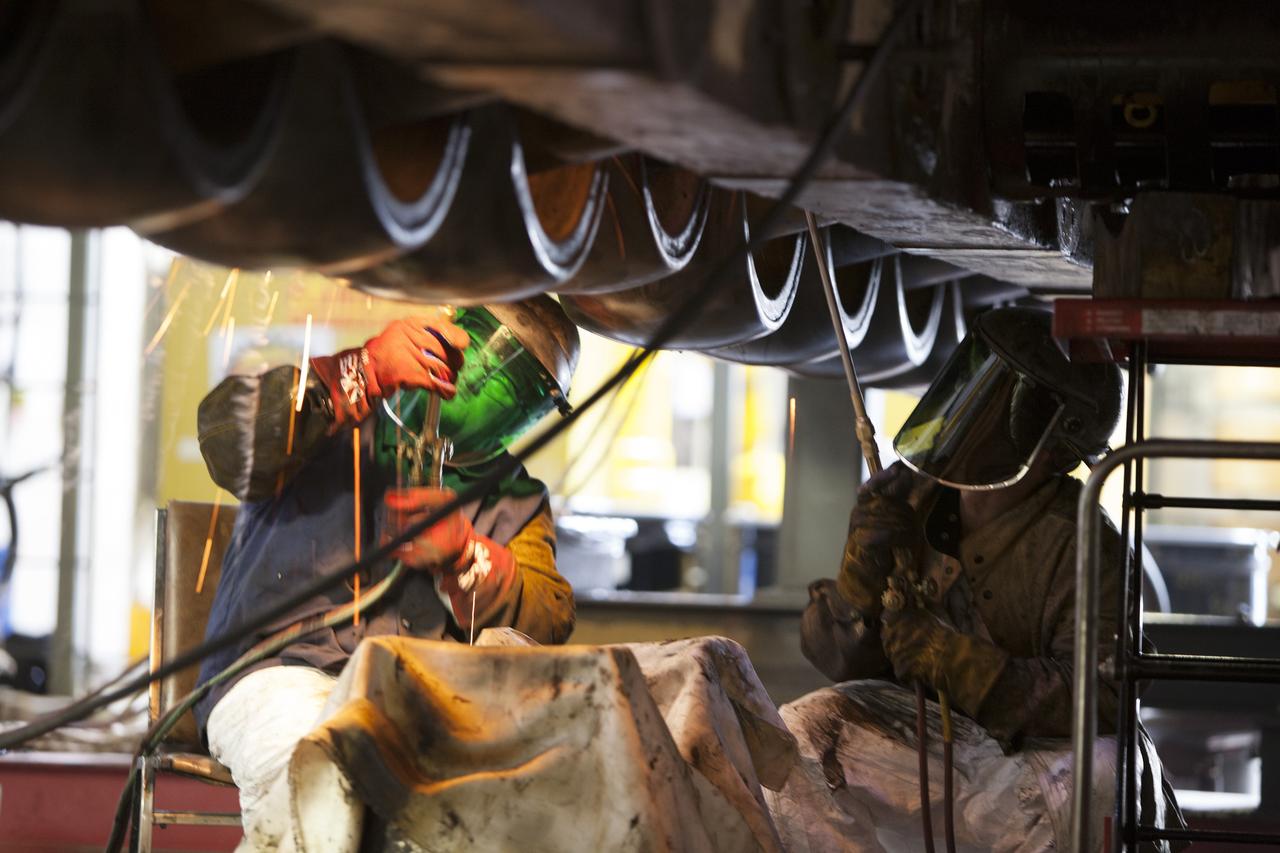
CAPE CANAVERAL, Fla. – Inside the Vehicle Assembly Building at NASA’s Kennedy Space Center in Florida, ground support technicians apply heat to a casing that contains an old bearing on the B truck tread of crawler-transporter 2, or CT-2. The bearing will separate and out for removal. New roller bearing assemblies will be installed on CT-2. Work continues in high bay 2 to upgrade CT-2. The modifications are designed to ensure CT-2’s ability to transport launch vehicles currently in development, such as the agency’s Space Launch System, to the launch pad. The Ground Systems Development and Operations Program office at Kennedy is overseeing the upgrades. For more than 45 years the crawler-transporters were used to transport the mobile launcher platform and the Apollo-Saturn V rockets and, later, space shuttles to Launch Pads 39A and B. For more information, visit: http://www.nasa.gov/exploration/systems/ground/crawler-transporter. Photo credit: NASA/Dimitri Gerondidakis
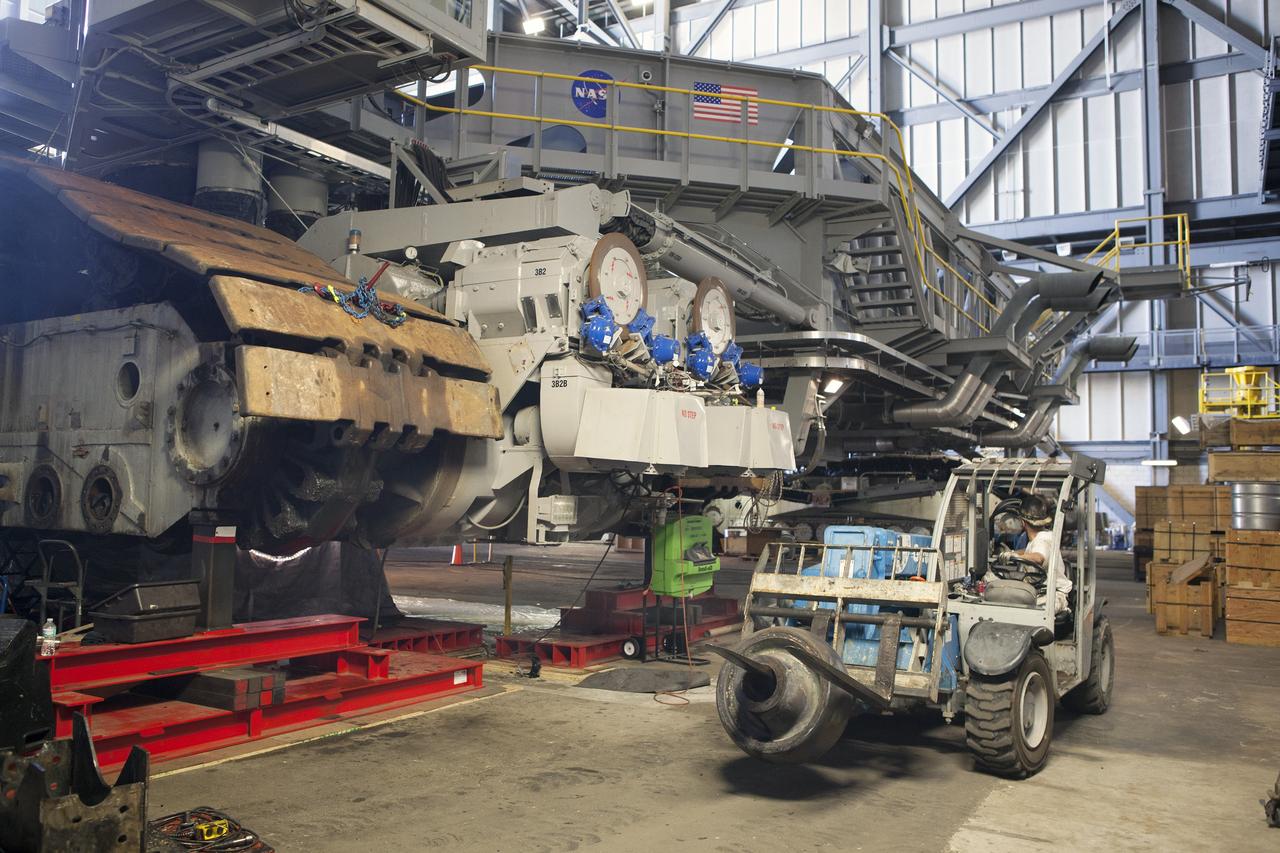
CAPE CANAVERAL, Fla. – Inside the Vehicle Assembly Building at NASA’s Kennedy Space Center in Florida, preparations are underway to install new roller shaft bearings in crawler-transporter 2, or CT-2. Work continues in high bay 2 to upgrade CT-2. The modifications are designed to ensure CT-2’s ability to transport launch vehicles currently in development, such as the agency’s Space Launch System, to the launch pad. The Ground Systems Development and Operations Program office at Kennedy is overseeing the upgrades. For more than 45 years the crawler-transporters were used to transport the mobile launcher platform and the Apollo-Saturn V rockets and, later, space shuttles to Launch Pads 39A and B. For more information, visit: http://www.nasa.gov/exploration/systems/ground/crawler-transporter_bearings.html. Photo credit: NASA/Jim Grossmann
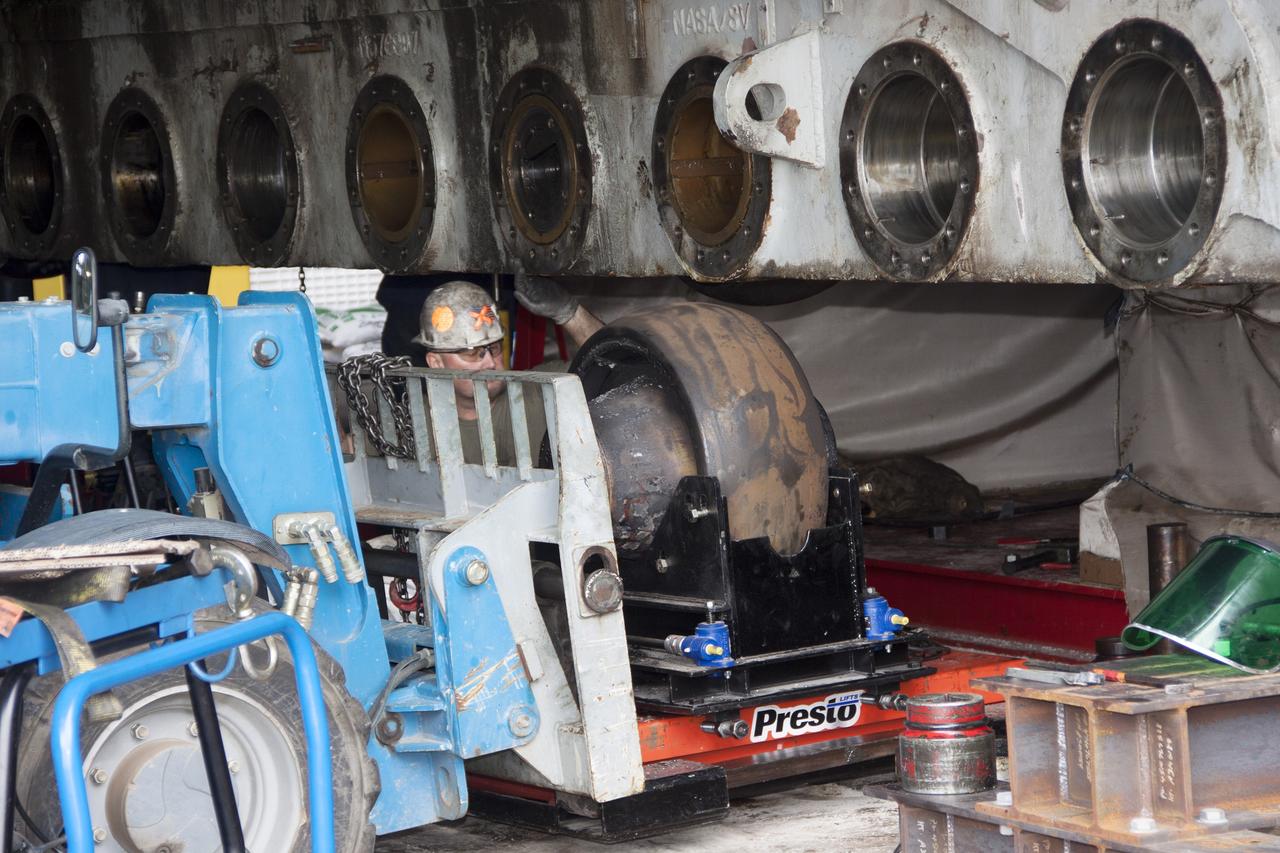
CAPE CANAVERAL, Fla. – Inside the Vehicle Assembly Building at NASA’s Kennedy Space Center in Florida, an old bearing has been removed from the B truck tread of crawler-transporter 2, or CT-2, and loaded onto a forklift for disposal. New roller bearing assemblies will be installed. Work continues in high bay 2 to upgrade CT-2. The modifications are designed to ensure CT-2’s ability to transport launch vehicles currently in development, such as the agency’s Space Launch System, to the launch pad. The Ground Systems Development and Operations Program office at Kennedy is overseeing the upgrades. For more than 45 years the crawler-transporters were used to transport the mobile launcher platform and the Apollo-Saturn V rockets and, later, space shuttles to Launch Pads 39A and B. For more information, visit: http://www.nasa.gov/exploration/systems/ground/crawler-transporter. Photo credit: NASA/Dimitri Gerondidakis
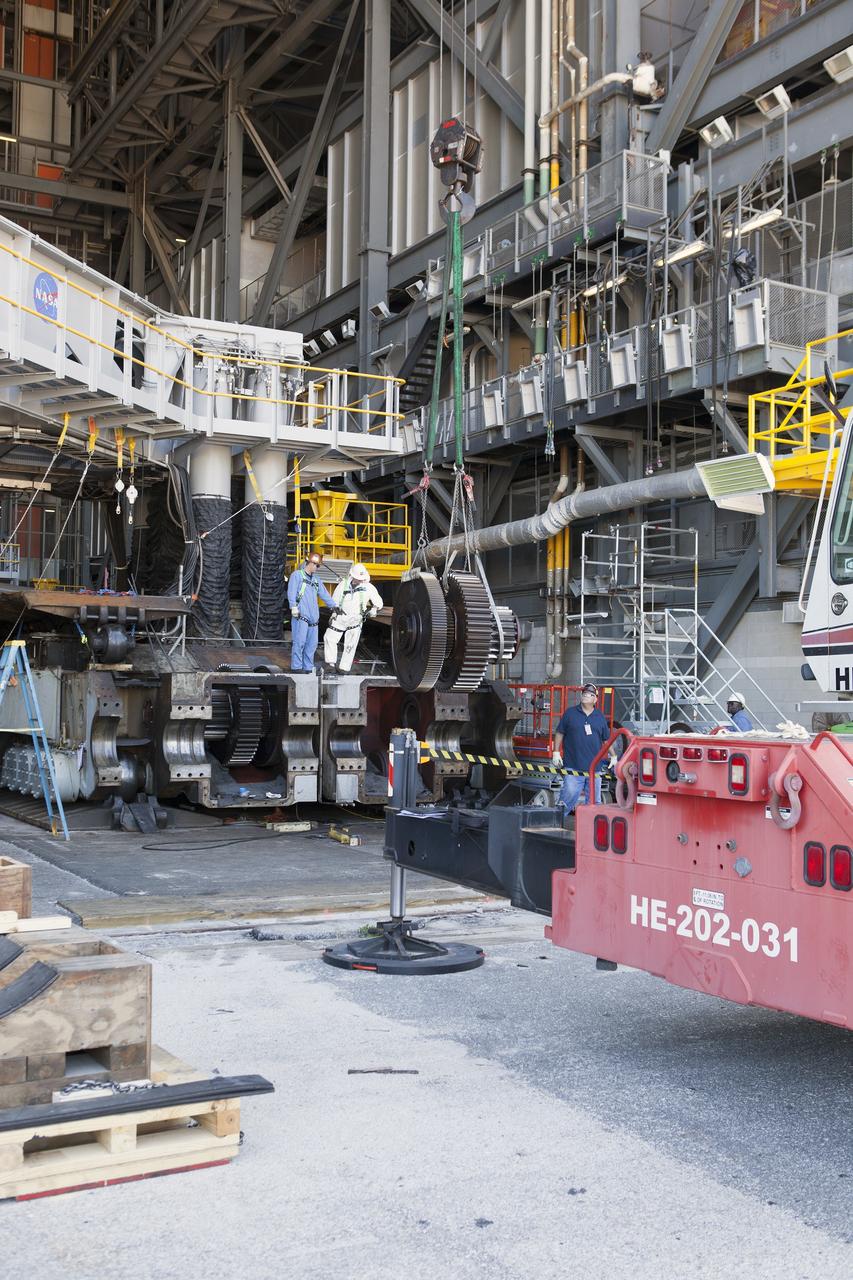
CAPE CANAVERAL, Fla. -- Inside the Vehicle Assembly Building at NASA’s Kennedy Space Center in Florida, ground support technicians prepare one of the sprocket shaft assemblies on the C truck of crawler-transporter 2, or CT-2 for removal. The sprocket assemblies will be placed into shipping cradles on pallets and positioned on a flatbed trailer. They will be sent to a vendor for inspections and refurbishment. Work continues in high bay 2 to upgrade CT-2. The modifications are designed to ensure CT-2’s ability to transport launch vehicles currently in development, such as the agency’s Space Launch System, to the launch pad. The Ground Systems Development and Operations Program office at Kennedy is overseeing the upgrades. For more than 45 years the crawler-transporters were used to transport the mobile launcher platform and the Apollo-Saturn V rockets and, later, space shuttles to Launch Pads 39A and B. For more information, visit: http://www.nasa.gov/exploration/systems/ground/crawler-transporter. Photo credit: NASA/Dimitri Gerondidakis
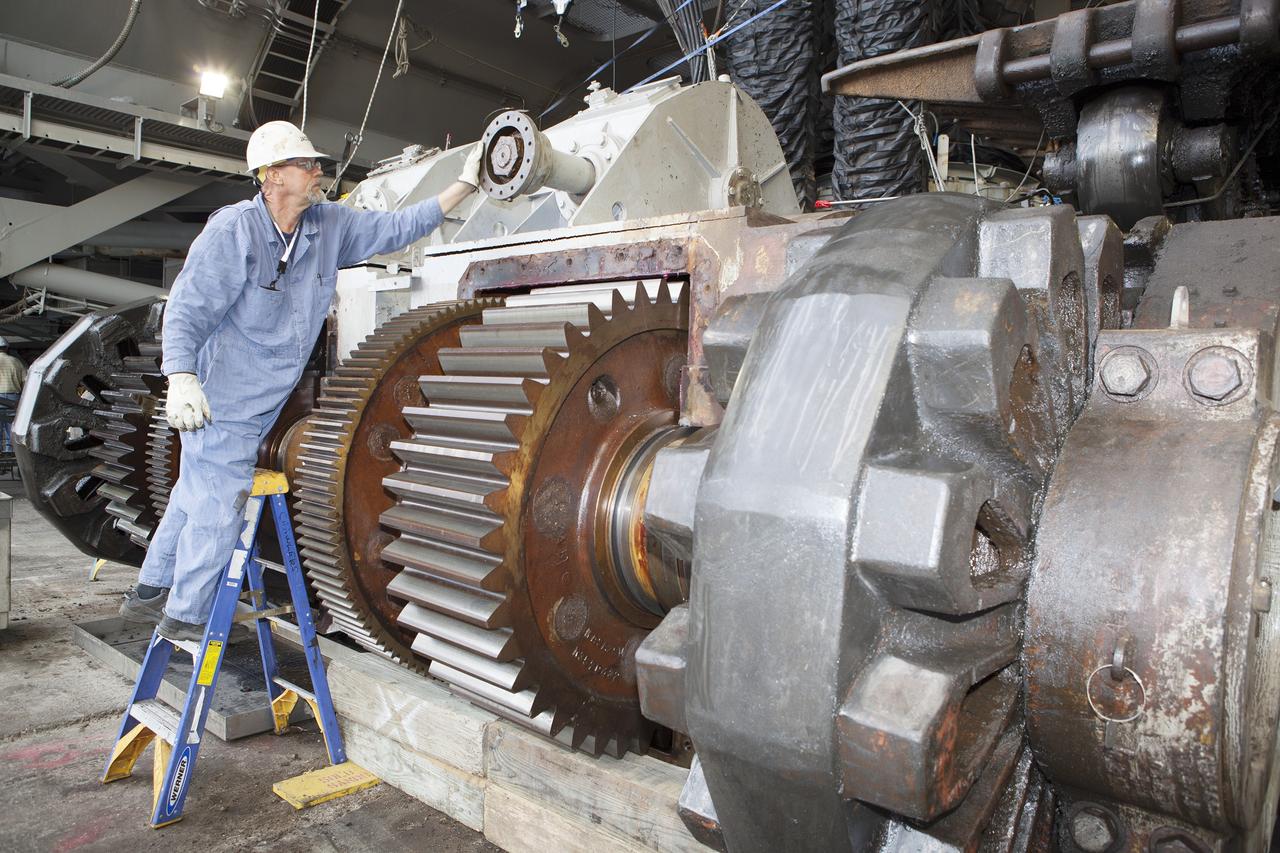
CAPE CANAVERAL, Fla. - Inside the Vehicle Assembly Building at NASA’s Kennedy Space Center in Florida, a ground support technician prepares for removal of a shaft assembly on the C truck of crawler-transporter 2, or CT-2. A section of the treads on the C truck were removed to allow access to the sprocket assemblies. The sprocket assemblies will be placed into shipping cradles on pallets and positioned on a flatbed trailer. The assemblies will be sent to a vendor for inspections and refurbishment. Work continues in high bay 2 to upgrade CT-2. The modifications are designed to ensure CT-2’s ability to transport launch vehicles currently in development, such as the agency’s Space Launch System, to the launch pad. The Ground Systems Development and Operations Program office at Kennedy is overseeing the upgrades. For more than 45 years the crawler-transporters were used to transport the mobile launcher platform and the Apollo-Saturn V rockets and, later, space shuttles to Launch Pads 39A and B. For more information, visit: http://www.nasa.gov/exploration/systems/ground/crawler-transporter. Photo credit: NASA/Dimitri Gerondidakis
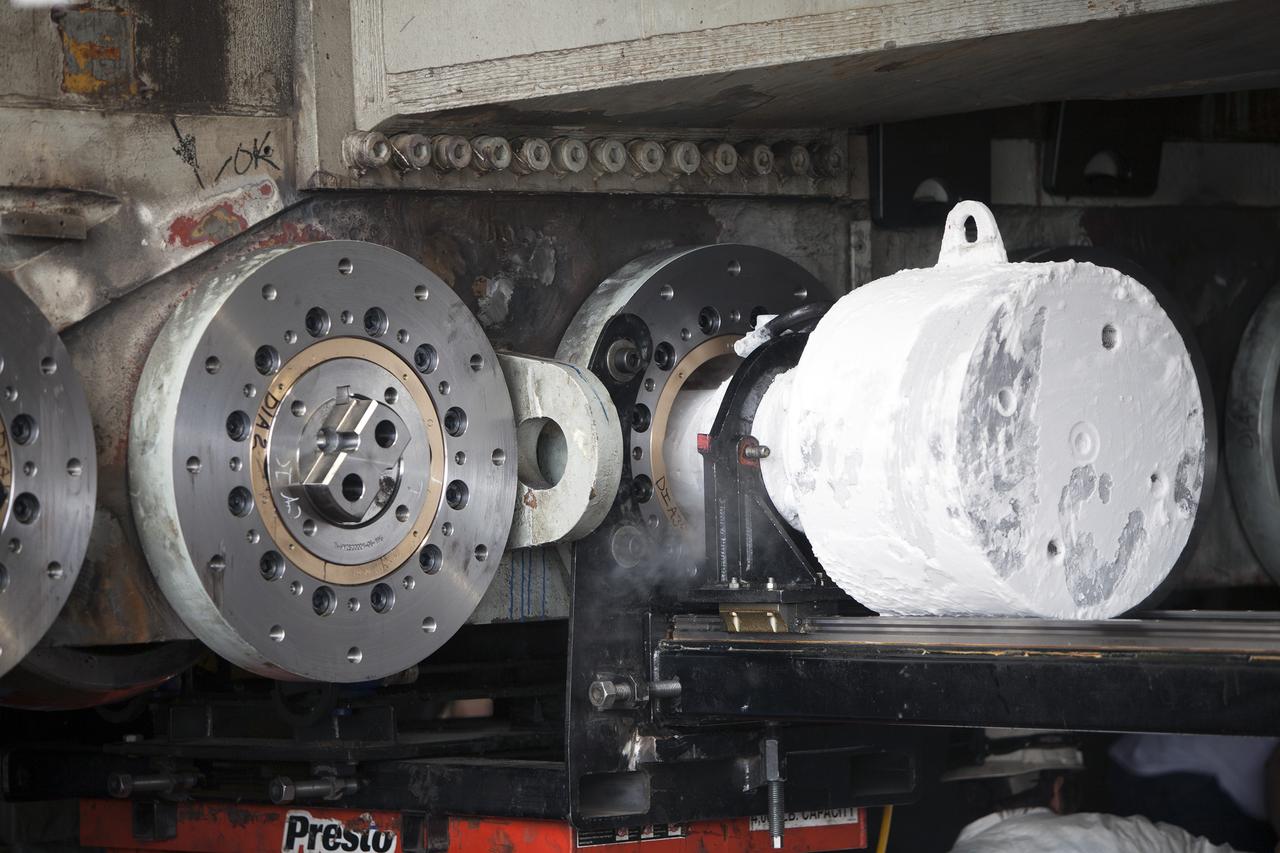
CAPE CANAVERAL, Fla. - Inside the Vehicle Assembly Building at NASA’s Kennedy Space Center in Florida, a new roller bearing shaft is being inserted in the C truck of crawler-transporter 2, or CT-2. Work continues in high bay 2 to upgrade CT-2. The modifications are designed to ensure CT-2’s ability to transport launch vehicles currently in development, such as the agency’s Space Launch System, to the launch pad. The Ground Systems Development and Operations Program office at Kennedy is overseeing the upgrades. For more than 45 years the crawler-transporters were used to transport the mobile launcher platform and the Apollo-Saturn V rockets and, later, space shuttles to Launch Pads 39A and B. For more information, visit: http://www.nasa.gov/exploration/systems/ground/crawler-transporter. Photo credit: NASA/Dimitri Gerondidakis

CAPE CANAVERAL, Fla. – Inside the Vehicle Assembly Building at NASA’s Kennedy Space Center in Florida, technicians position equipment and forklifts as work continues to install new roller shaft bearings in crawler-transporter 2, or CT-2. Work continues in high bay 2 to upgrade CT-2. The modifications are designed to ensure CT-2’s ability to transport launch vehicles currently in development, such as the agency’s Space Launch System, to the launch pad. The Ground Systems Development and Operations Program office at Kennedy is overseeing the upgrades. For more than 45 years the crawler-transporters were used to transport the mobile launcher platform and the Apollo-Saturn V rockets and, later, space shuttles to Launch Pads 39A and B. For more information, visit: http://www.nasa.gov/exploration/systems/ground/crawler-transporter_bearings.html. Photo credit: NASA/Jim Grossmann
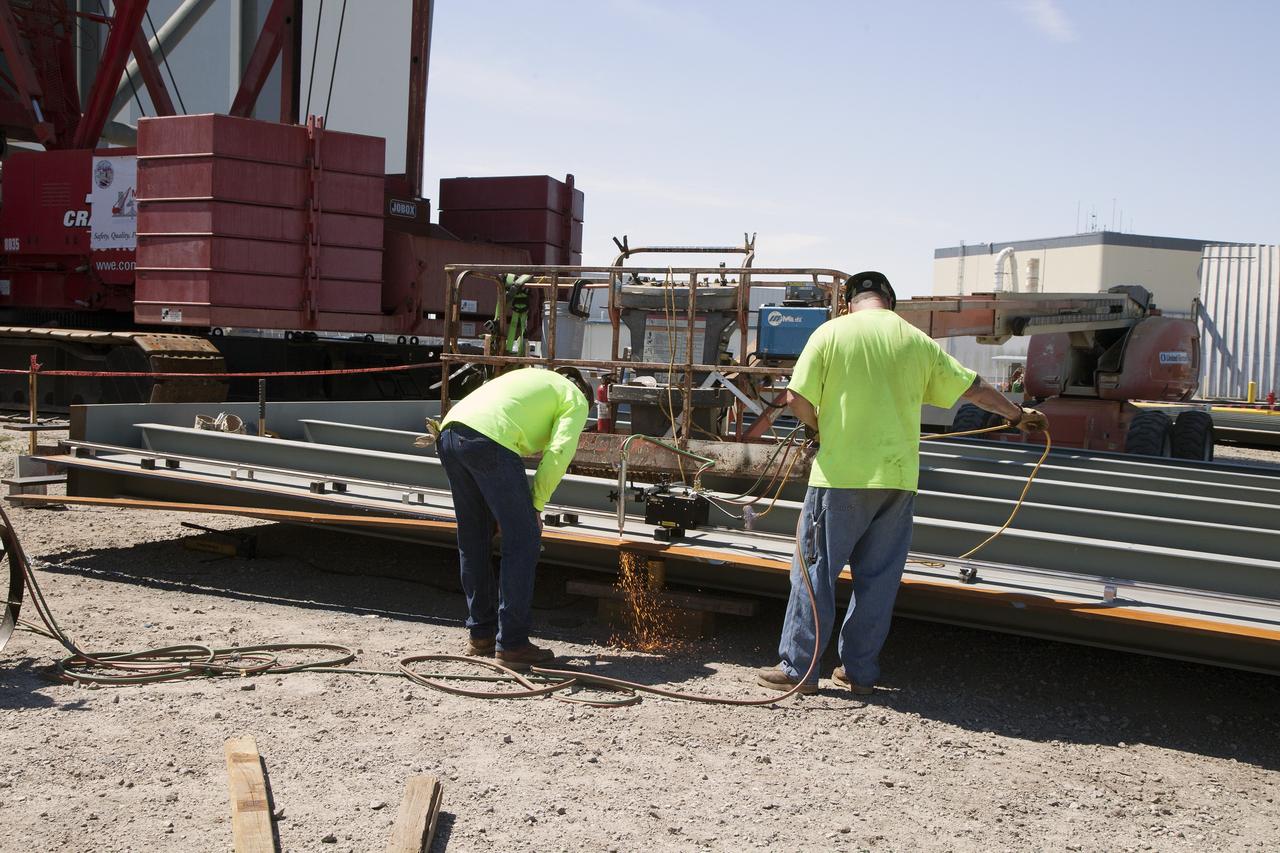
CAPE CANAVERAL, Fla. -- Modifications continue on the Mobile Launcher, or ML, at the Mobile Launcher Park Site at NASA’s Kennedy Space Center in Florida. Construction workers use an automated cutting tool to precisely trim a small section from one of the steel walls for the exterior of the ML. In 2013, the agency awarded a contract to J.P. Donovan Construction Inc. of Rockledge, Fla., to modify the ML, which is one of the key elements of ground support equipment that is being upgraded by the Ground Systems Development and Operations Program office at Kennedy. The ML will carry the SLS rocket and Orion spacecraft to Launch Pad 39B for its first mission, Exploration Mission 1, in 2017. Photo credit: NASA/Daniel Casper
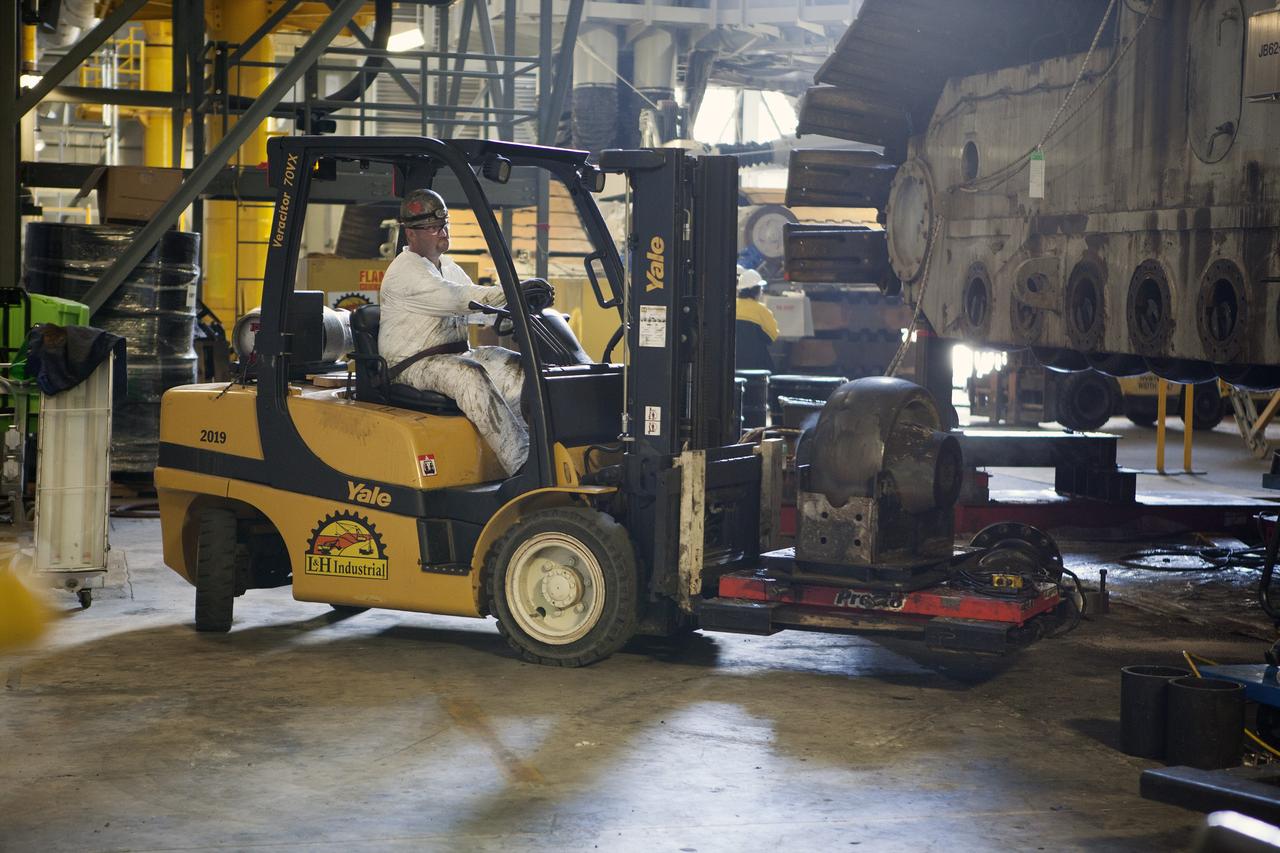
CAPE CANAVERAL, Fla. – Inside the Vehicle Assembly Building at NASA’s Kennedy Space Center in Florida, an old bearing has been removed from the B truck tread of crawler-transporter 2, or CT-2, and loaded onto a forklift for disposal. New roller bearing assemblies will be installed. Work continues in high bay 2 to upgrade CT-2. The modifications are designed to ensure CT-2’s ability to transport launch vehicles currently in development, such as the agency’s Space Launch System, to the launch pad. The Ground Systems Development and Operations Program office at Kennedy is overseeing the upgrades. For more than 45 years the crawler-transporters were used to transport the mobile launcher platform and the Apollo-Saturn V rockets and, later, space shuttles to Launch Pads 39A and B. For more information, visit: http://www.nasa.gov/exploration/systems/ground/crawler-transporter. Photo credit: NASA/Dimitri Gerondidakis
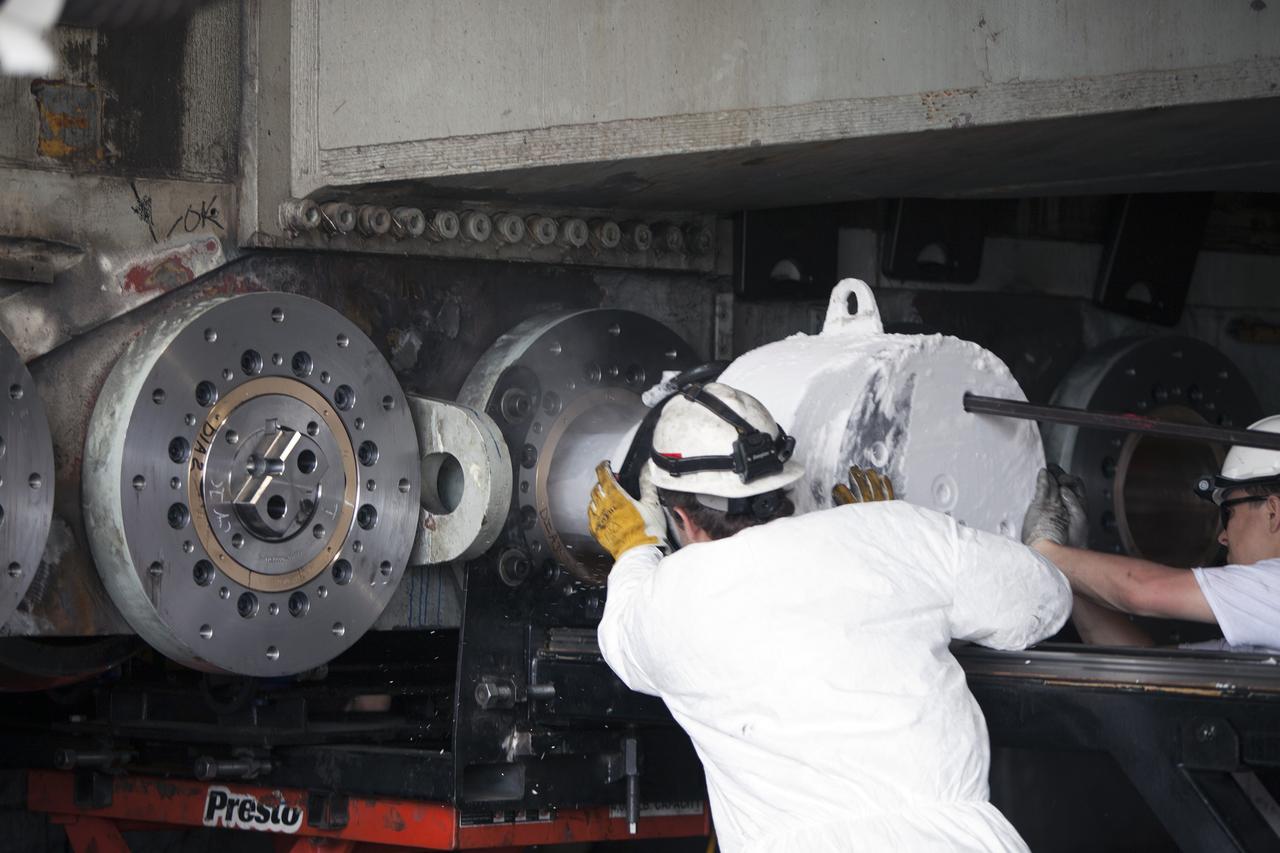
CAPE CANAVERAL, Fla. - Inside the Vehicle Assembly Building at NASA’s Kennedy Space Center in Florida, ground support technicians install a new roller bearing shaft on the C truck of crawler-transporter 2, or CT-2. Work continues in high bay 2 to upgrade CT-2. The modifications are designed to ensure CT-2’s ability to transport launch vehicles currently in development, such as the agency’s Space Launch System, to the launch pad. The Ground Systems Development and Operations Program office at Kennedy is overseeing the upgrades. For more than 45 years the crawler-transporters were used to transport the mobile launcher platform and the Apollo-Saturn V rockets and, later, space shuttles to Launch Pads 39A and B. For more information, visit: http://www.nasa.gov/exploration/systems/ground/crawler-transporter. Photo credit: NASA/Dimitri Gerondidakis
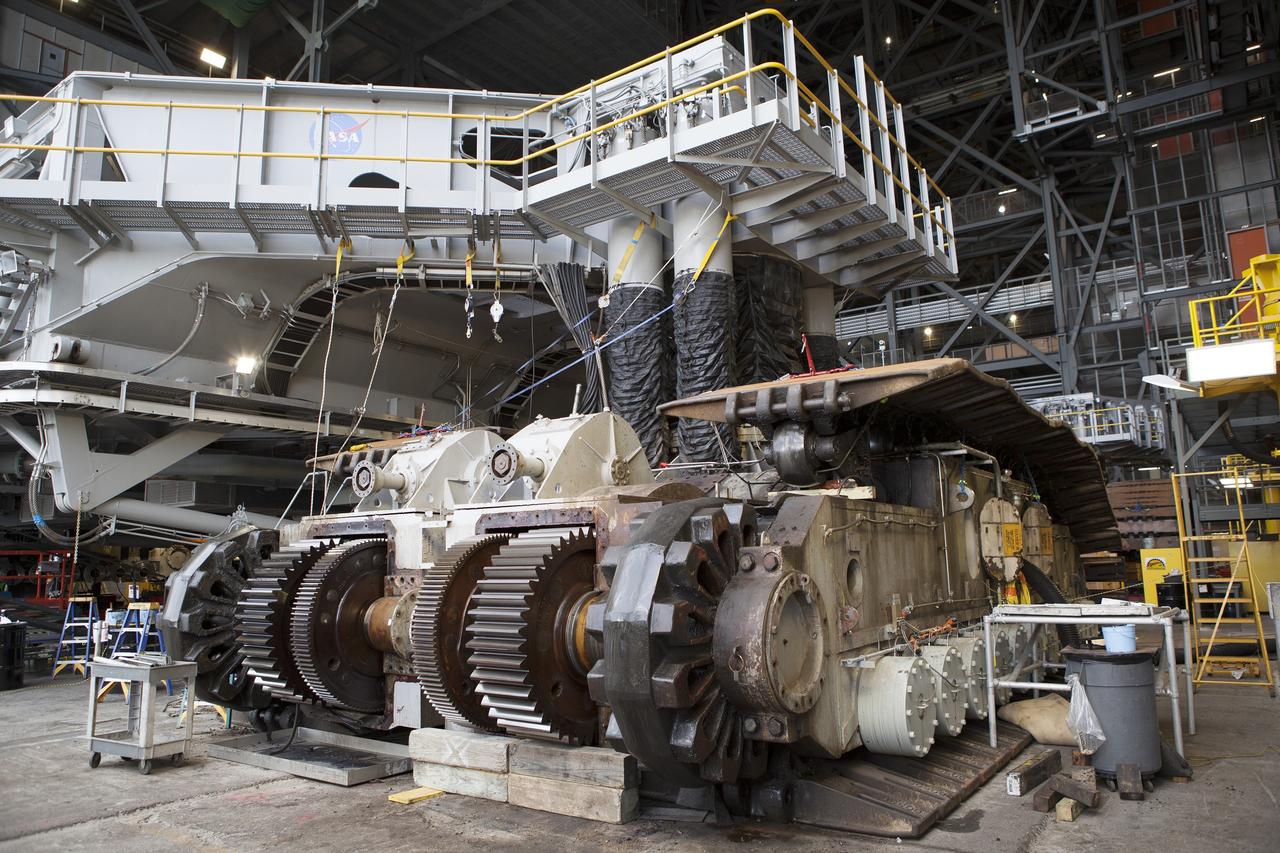
CAPE CANAVERAL, Fla. - Inside the Vehicle Assembly Building at NASA’s Kennedy Space Center in Florida, work continues to remove the sprocket shaft assembly from the C truck of crawler-transporter 2, or CT-2. The sprocket assemblies will be placed into shipping cradles on pallets and positioned on a flatbed trailer. They will be sent to a vendor for inspections and refurbishment. Work continues in high bay 2 to upgrade CT-2. The modifications are designed to ensure CT-2’s ability to transport launch vehicles currently in development, such as the agency’s Space Launch System, to the launch pad. The Ground Systems Development and Operations Program office at Kennedy is overseeing the upgrades. For more than 45 years the crawler-transporters were used to transport the mobile launcher platform and the Apollo-Saturn V rockets and, later, space shuttles to Launch Pads 39A and B. For more information, visit: http://www.nasa.gov/exploration/systems/ground/crawler-transporter. Photo credit: NASA/Dimitri Gerondidakis
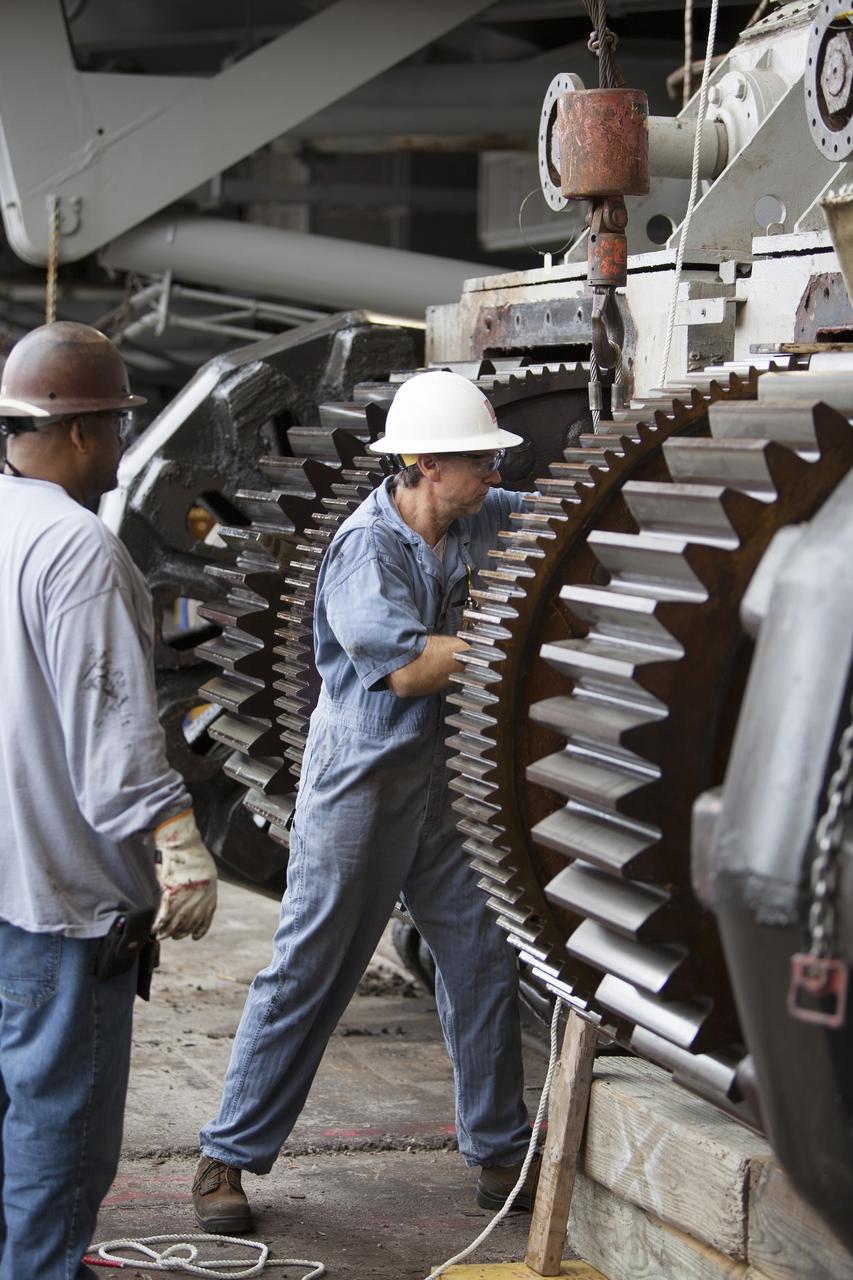
CAPE CANAVERAL, Fla. - Inside the Vehicle Assembly Building at NASA’s Kennedy Space Center in Florida, ground support technicians prepare one of the sprocket shaft assemblies on the C truck of crawler-transporter 2, or CT-2 for removal. The sprocket assemblies will be placed into shipping cradles on pallets and positioned on a flatbed trailer. They will be sent to a vendor for inspections and refurbishment. Work continues in high bay 2 to upgrade CT-2. The modifications are designed to ensure CT-2’s ability to transport launch vehicles currently in development, such as the agency’s Space Launch System, to the launch pad. The Ground Systems Development and Operations Program office at Kennedy is overseeing the upgrades. For more than 45 years the crawler-transporters were used to transport the mobile launcher platform and the Apollo-Saturn V rockets and, later, space shuttles to Launch Pads 39A and B. For more information, visit: http://www.nasa.gov/exploration/systems/ground/crawler-transporter. Photo credit: NASA/Dimitri Gerondidakis
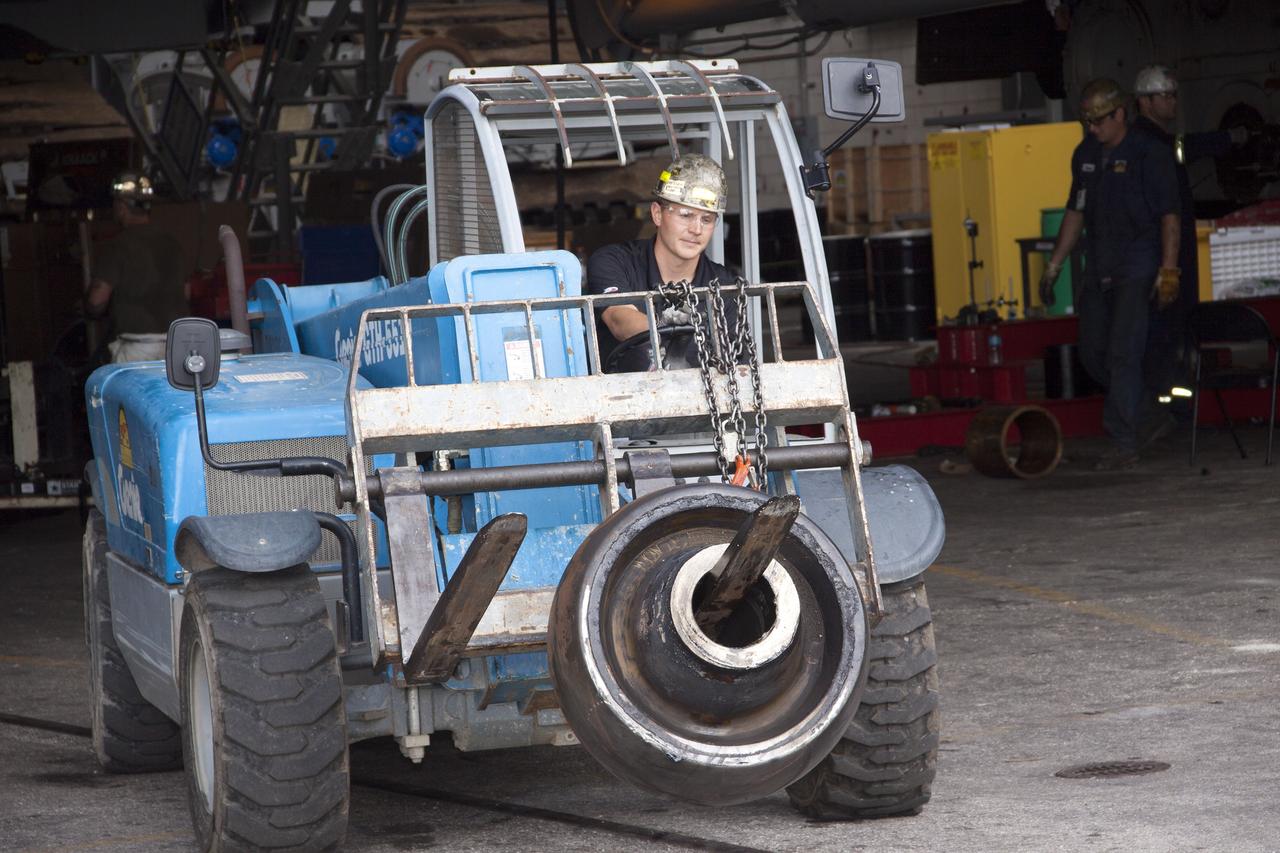
CAPE CANAVERAL, Fla. – Inside the Vehicle Assembly Building at NASA’s Kennedy Space Center in Florida, a technician uses a forklift to carry an old roller shaft bearing that was removed from crawler-transporter 2, or CT-2. New roller shaft bearings will be installed on CT-2. Work continues in high bay 2 to upgrade CT-2. The modifications are designed to ensure CT-2’s ability to transport launch vehicles currently in development, such as the agency’s Space Launch System, to the launch pad. The Ground Systems Development and Operations Program office at Kennedy is overseeing the upgrades. For more than 45 years the crawler-transporters were used to transport the mobile launcher platform and the Apollo-Saturn V rockets and, later, space shuttles to Launch Pads 39A and B. For more information, visit: http://www.nasa.gov/exploration/systems/ground/crawler-transporter_bearings.html. Photo credit: NASA/Jim Grossmann
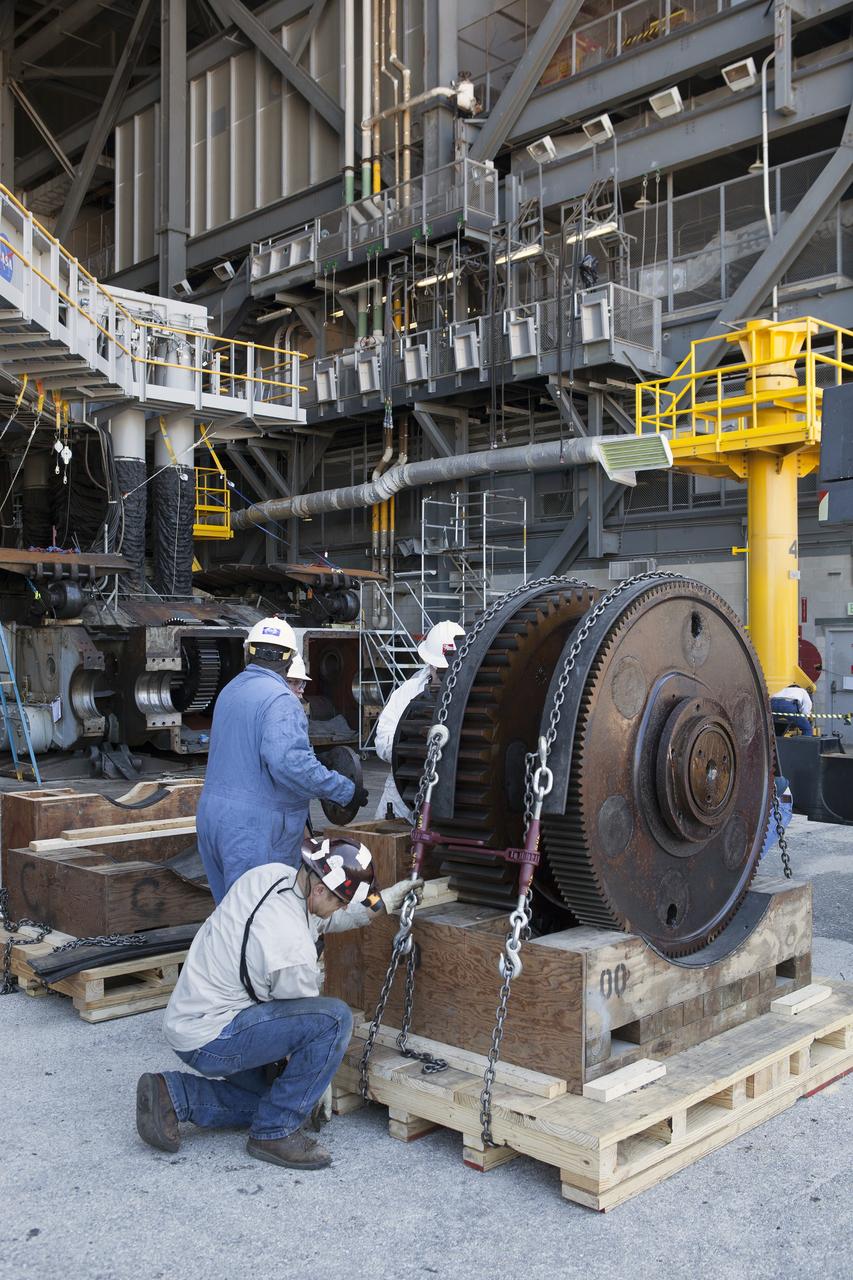
CAPE CANAVERAL, Fla. -- Inside the Vehicle Assembly Building at NASA’s Kennedy Space Center in Florida, ground support technicians help secure one of the sprocket shaft assemblies onto a cradle. All of the sprocket assemblies removed from the C truck of crawler-transporter 2, or CT-2, will be placed into shipping cradles on pallets and positioned on a flatbed trailer. They will be sent to a vendor for inspections and refurbishment. Work continues in high bay 2 to upgrade CT-2. The modifications are designed to ensure CT-2’s ability to transport launch vehicles currently in development, such as the agency’s Space Launch System, to the launch pad. The Ground Systems Development and Operations Program office at Kennedy is overseeing the upgrades. For more than 45 years the crawler-transporters were used to transport the mobile launcher platform and the Apollo-Saturn V rockets and, later, space shuttles to Launch Pads 39A and B. For more information, visit: http://www.nasa.gov/exploration/systems/ground/crawler-transporter. Photo credit: NASA/Dimitri Gerondidakis
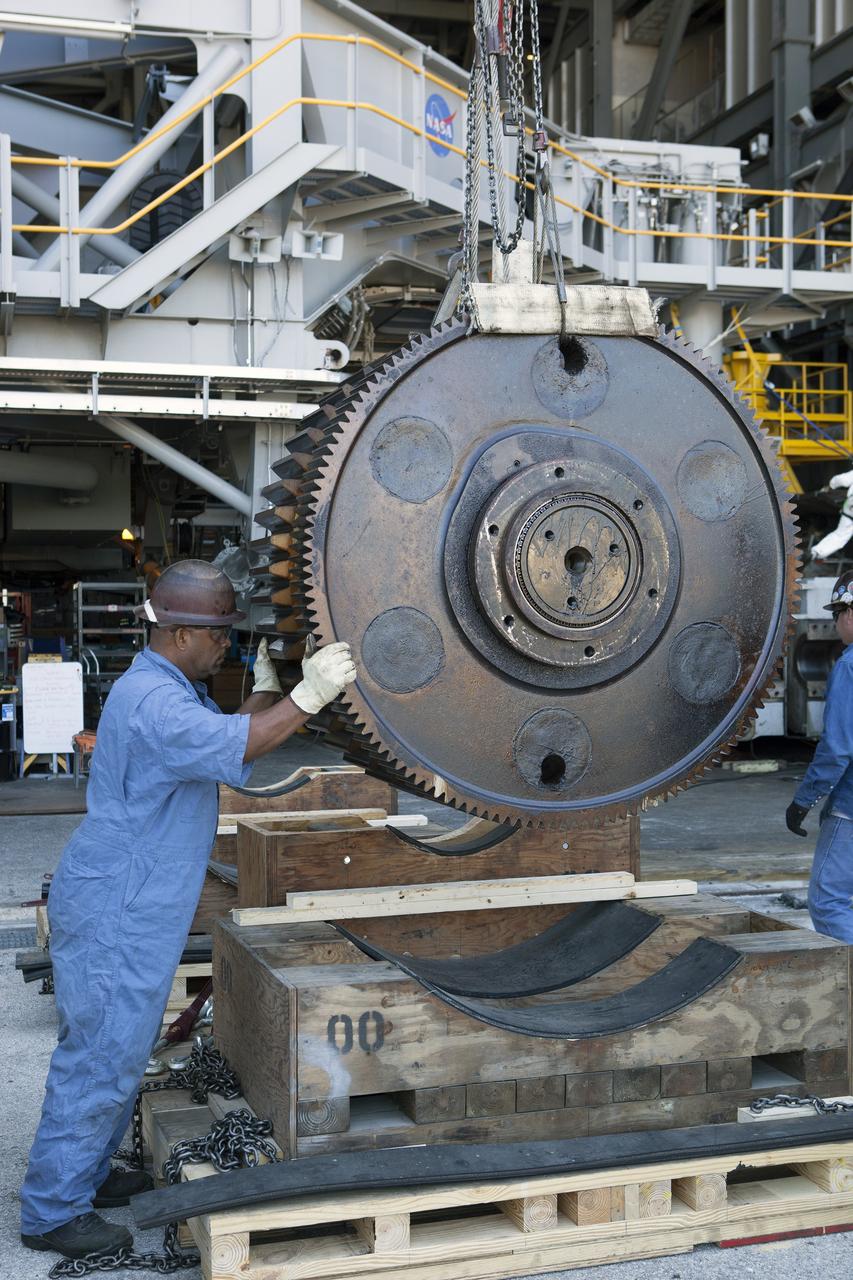
CAPE CANAVERAL, Fla. -- Inside the Vehicle Assembly Building at NASA’s Kennedy Space Center in Florida, a ground support technician helps position one of the sprocket shaft assemblies onto a cradle as an overhead crane lowers it down. The sprocket assembly was removed from the C truck of crawler-transporter 2, or CT-2. They will be placed into shipping cradles on pallets and positioned on a flatbed trailer. They will be sent to a vendor for inspections and refurbishment. Work continues in high bay 2 to upgrade CT-2. The modifications are designed to ensure CT-2’s ability to transport launch vehicles currently in development, such as the agency’s Space Launch System, to the launch pad. The Ground Systems Development and Operations Program office at Kennedy is overseeing the upgrades. For more than 45 years the crawler-transporters were used to transport the mobile launcher platform and the Apollo-Saturn V rockets and, later, space shuttles to Launch Pads 39A and B. For more information, visit: http://www.nasa.gov/exploration/systems/ground/crawler-transporter. Photo credit: NASA/Dimitri Gerondidakis
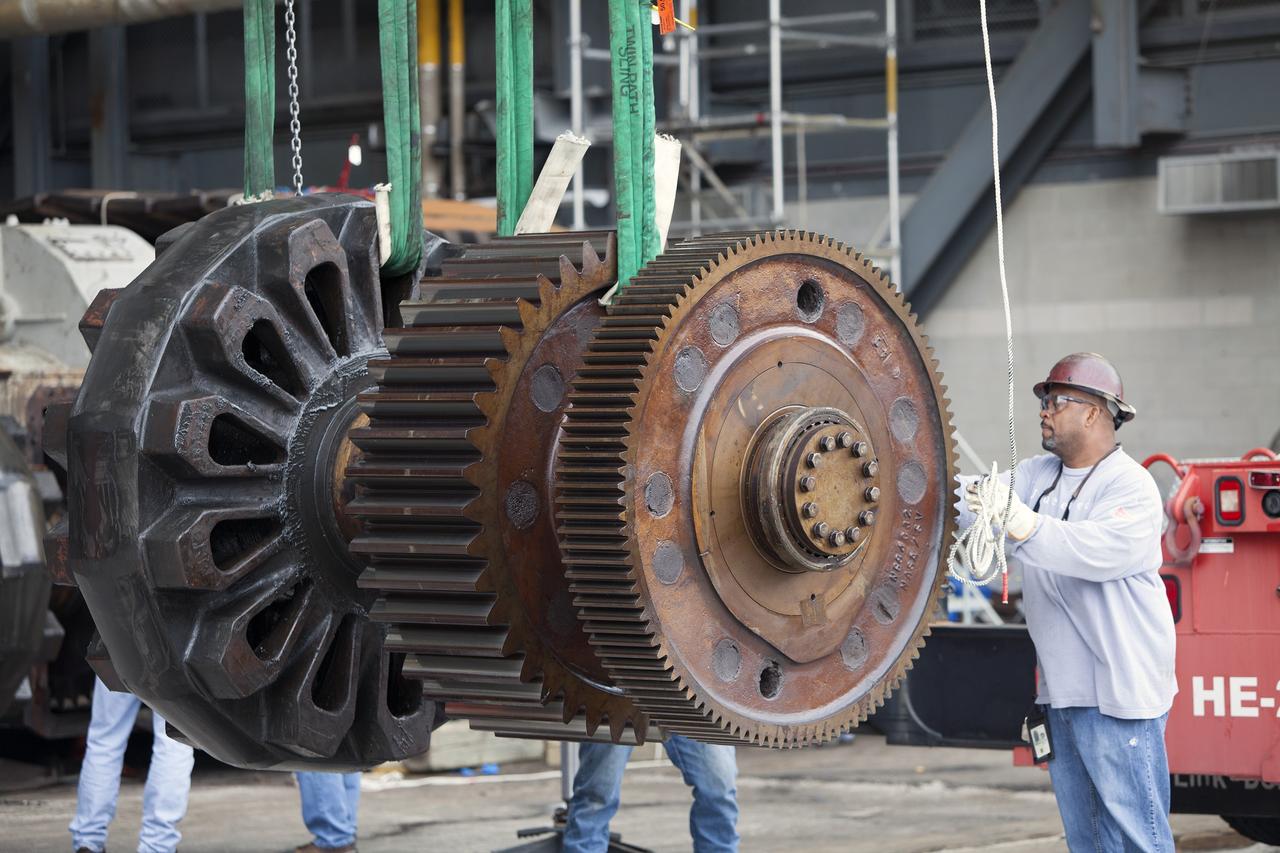
CAPE CANAVERAL, Fla. - Inside the Vehicle Assembly Building at NASA’s Kennedy Space Center in Florida, ground support technicians assist as an overhead crane lifts one of the sprocket shaft assemblies away from the C truck of crawler-transporter 2, or CT-2. The sprocket assemblies will be placed into shipping cradles on pallets and positioned on a flatbed trailer. They will be sent to a vendor for inspections and refurbishment. Work continues in high bay 2 to upgrade CT-2. The modifications are designed to ensure CT-2’s ability to transport launch vehicles currently in development, such as the agency’s Space Launch System, to the launch pad. The Ground Systems Development and Operations Program office at Kennedy is overseeing the upgrades. For more than 45 years the crawler-transporters were used to transport the mobile launcher platform and the Apollo-Saturn V rockets and, later, space shuttles to Launch Pads 39A and B. For more information, visit: http://www.nasa.gov/exploration/systems/ground/crawler-transporter. Photo credit: NASA/Dimitri Gerondidakis

CAPE CANAVERAL, Fla. - Inside the Vehicle Assembly Building at NASA’s Kennedy Space Center in Florida, ground support technicians assist as an overhead crane lifts one of the sprocket shaft assemblies away from the C truck of crawler-transporter 2, or CT-2. The sprocket assemblies will be placed into shipping cradles on pallets and positioned on a flatbed trailer. The assemblies will be sent to a vendor for inspections and refurbishment. Work continues in high bay 2 to upgrade CT-2. The modifications are designed to ensure CT-2’s ability to transport launch vehicles currently in development, such as the agency’s Space Launch System, to the launch pad. The Ground Systems Development and Operations Program office at Kennedy is overseeing the upgrades. For more than 45 years the crawler-transporters were used to transport the mobile launcher platform and the Apollo-Saturn V rockets and, later, space shuttles to Launch Pads 39A and B. For more information, visit: http://www.nasa.gov/exploration/systems/ground/crawler-transporter. Photo credit: NASA/Dimitri Gerondidakis
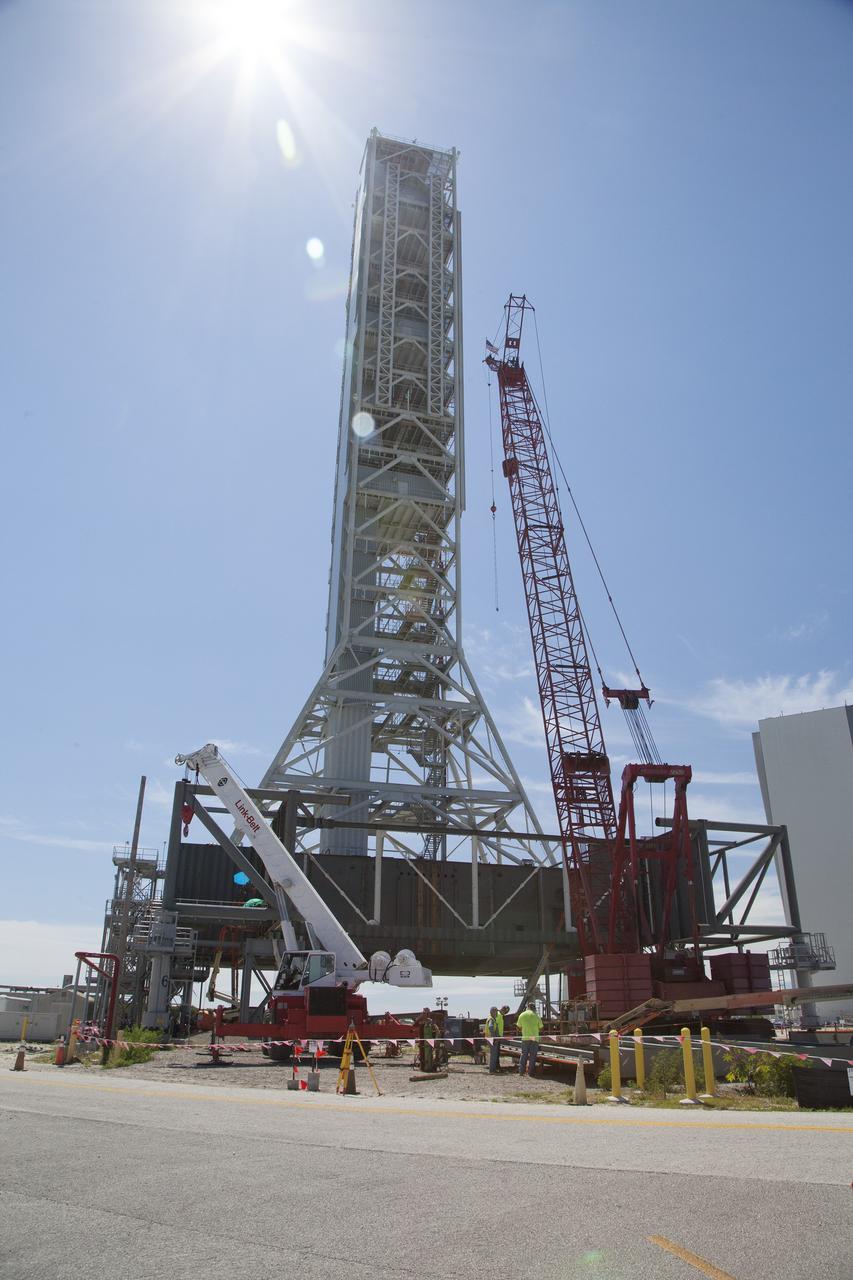
CAPE CANAVERAL, Fla. -- Modifications continue on the Mobile Launcher, or ML, at the Mobile Launcher Park Site at NASA’s Kennedy Space Center in Florida. Two large cranes are situated next to the ML for lifting of heavy metal beams and other construction materials. In 2013, the agency awarded a contract to J.P. Donovan Construction Inc. of Rockledge, Fla., to modify the ML, which is one of the key elements of ground support equipment that is being upgraded by the Ground Systems Development and Operations Program office at Kennedy. The ML will carry the SLS rocket and Orion spacecraft to Launch Pad 39B for its first mission, Exploration Mission 1, in 2017. Photo credit: NASA/Daniel Casper
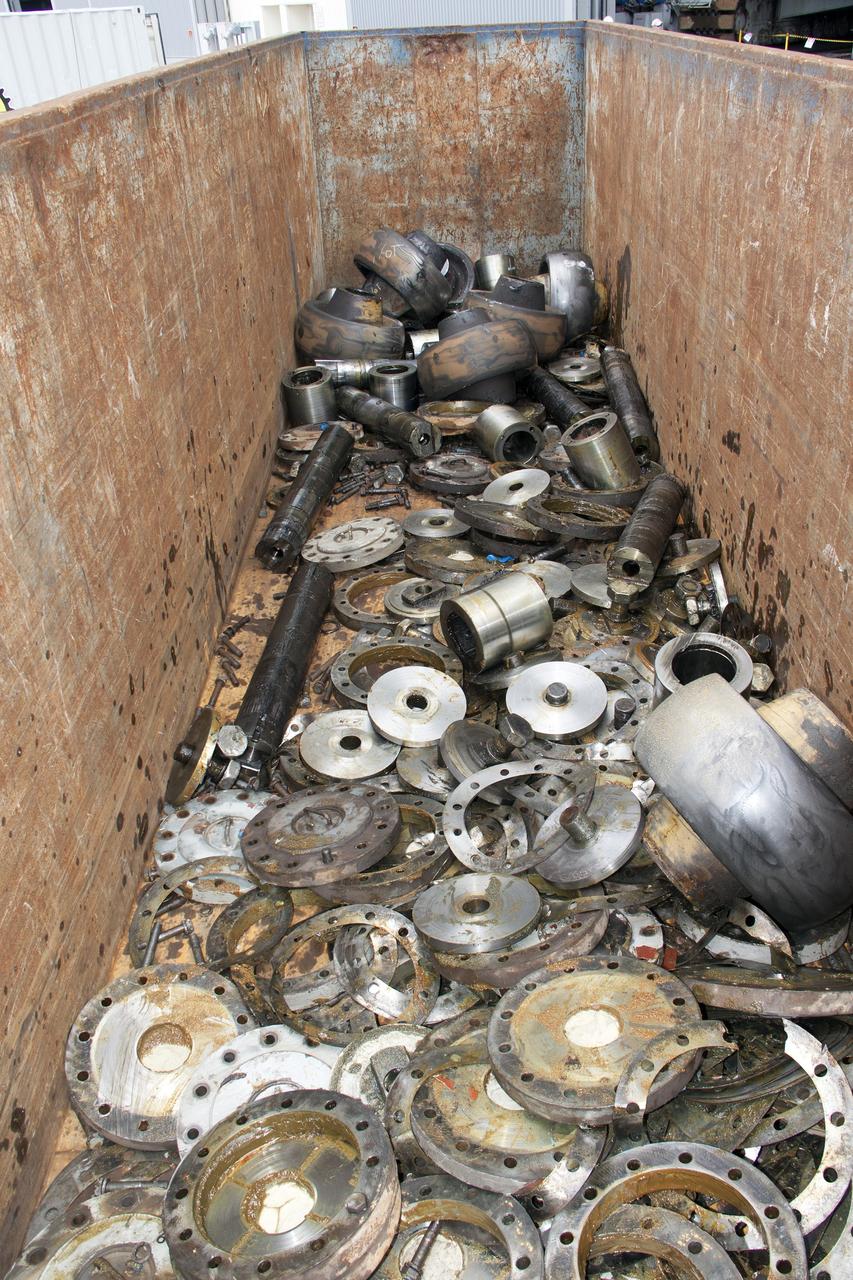
CAPE CANAVERAL, Fla. – Near the Vehicle Assembly Building, or VAB, at NASA’s Kennedy Space Center in Florida, old roller shaft bearing assembly parts that were removed from crawler-transporter 2, or CT-2, have been discarded. Inside the VAB, new roller shaft bearings will be installed on CT-2. Work continues in high bay 2 to upgrade CT-2. The modifications are designed to ensure CT-2’s ability to transport launch vehicles currently in development, such as the agency’s Space Launch System, to the launch pad. The Ground Systems Development and Operations Program office at Kennedy is overseeing the upgrades. For more than 45 years the crawler-transporters were used to transport the mobile launcher platform and the Apollo-Saturn V rockets and, later, space shuttles to Launch Pads 39A and B. For more information, visit: http://www.nasa.gov/exploration/systems/ground/crawler-transporter_bearings.html. Photo credit: NASA/Jim Grossmann
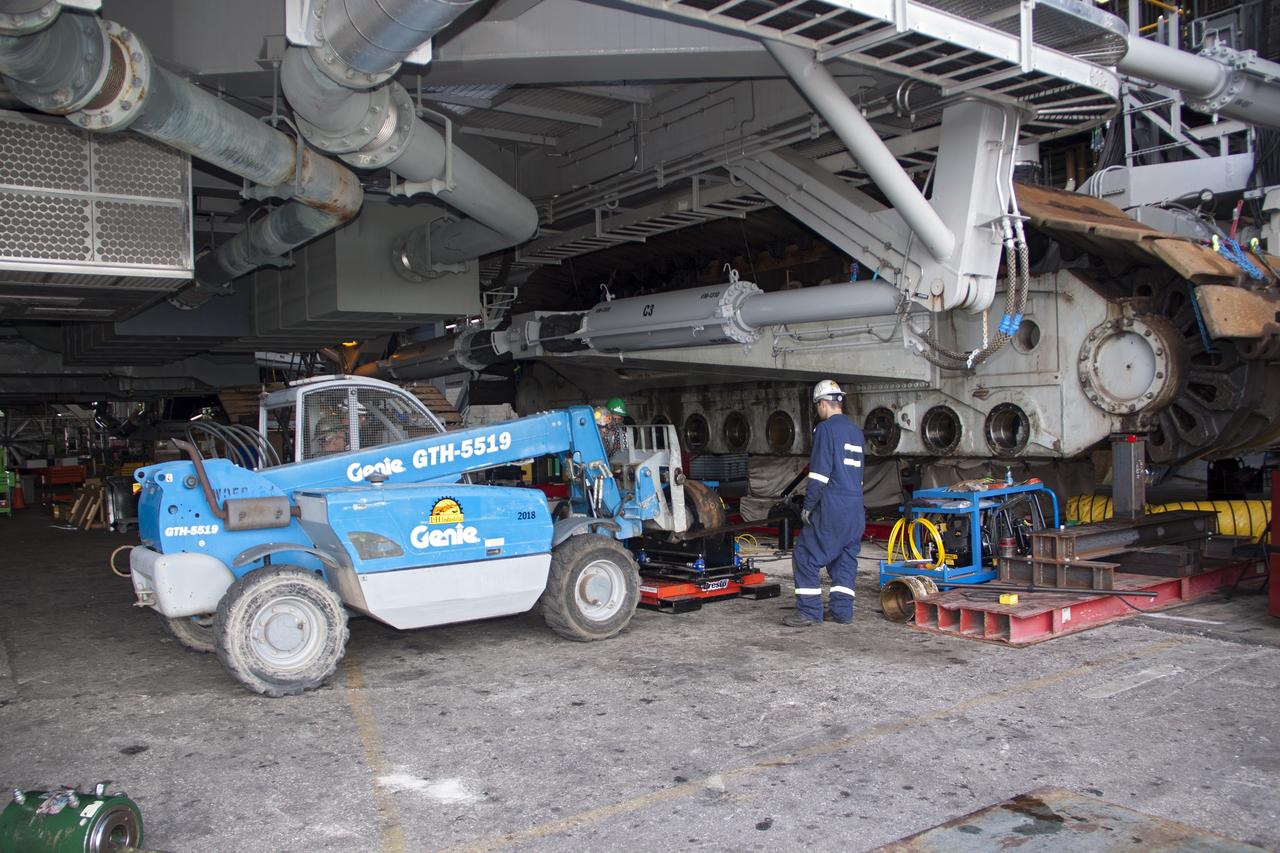
CAPE CANAVERAL, Fla. – Inside the Vehicle Assembly Building at NASA’s Kennedy Space Center in Florida, technicians prepare to install new roller shaft bearings in crawler-transporter 2, or CT-2. Work continues in high bay 2 to upgrade CT-2. The modifications are designed to ensure CT-2’s ability to transport launch vehicles currently in development, such as the agency’s Space Launch System, to the launch pad. The Ground Systems Development and Operations Program office at Kennedy is overseeing the upgrades. For more than 45 years the crawler-transporters were used to transport the mobile launcher platform and the Apollo-Saturn V rockets and, later, space shuttles to Launch Pads 39A and B. For more information, visit: http://www.nasa.gov/exploration/systems/ground/crawler-transporter_bearings.html. Photo credit: NASA/Jim Grossmann
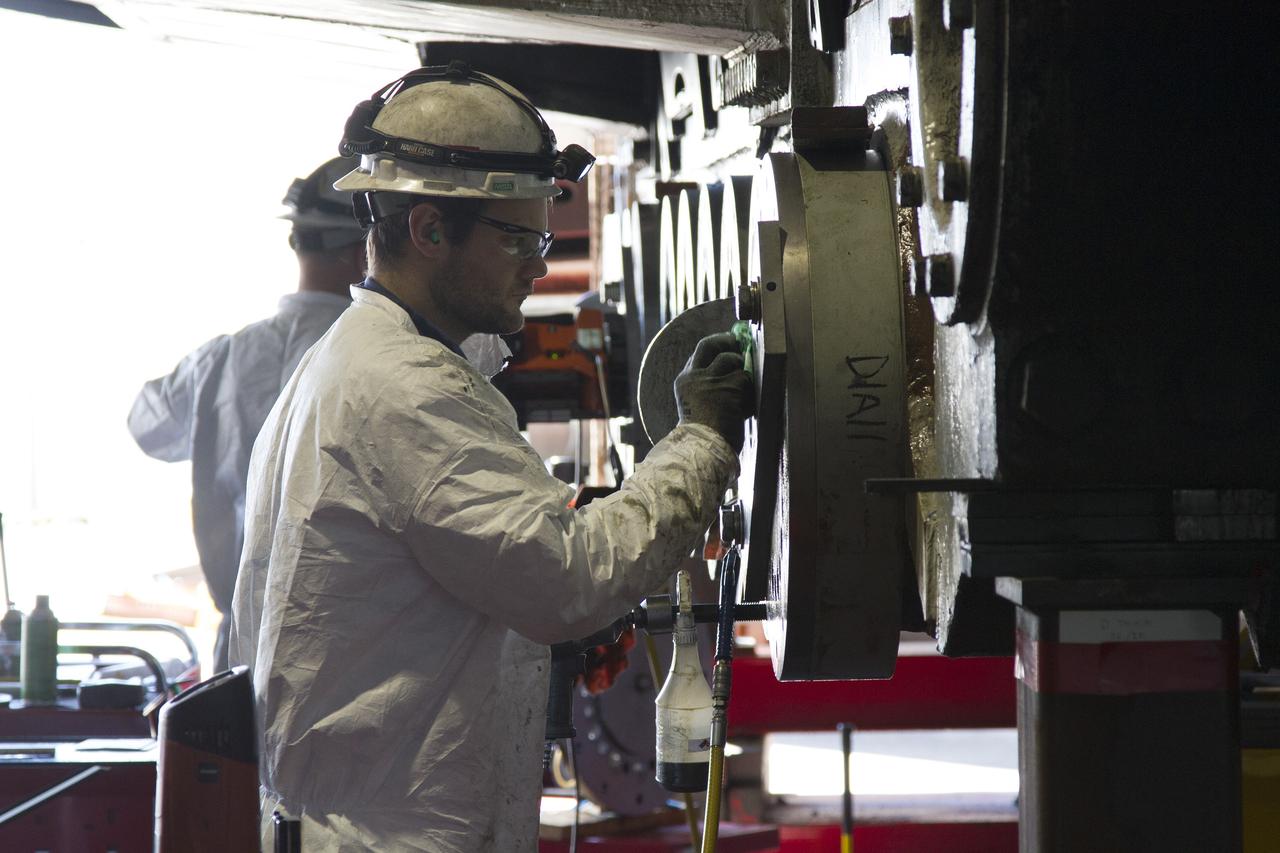
CAPE CANAVERAL, Fla. – Inside the Vehicle Assembly Building at NASA’s Kennedy Space Center in Florida, ground support technicians install new roller bearings on the C truck of crawler-transporter 2, or CT-2. Work continues in high bay 2 to upgrade CT-2. The modifications are designed to ensure CT-2’s ability to transport launch vehicles currently in development, such as the agency’s Space Launch System, to the launch pad. The Ground Systems Development and Operations Program office at Kennedy is overseeing the upgrades. For more than 45 years the crawler-transporters were used to transport the mobile launcher platform and the Apollo-Saturn V rockets and, later, space shuttles to Launch Pads 39A and B. For more information, visit: http://www.nasa.gov/exploration/systems/ground/crawler-transporter. Photo credit: NASA/Cory Huston
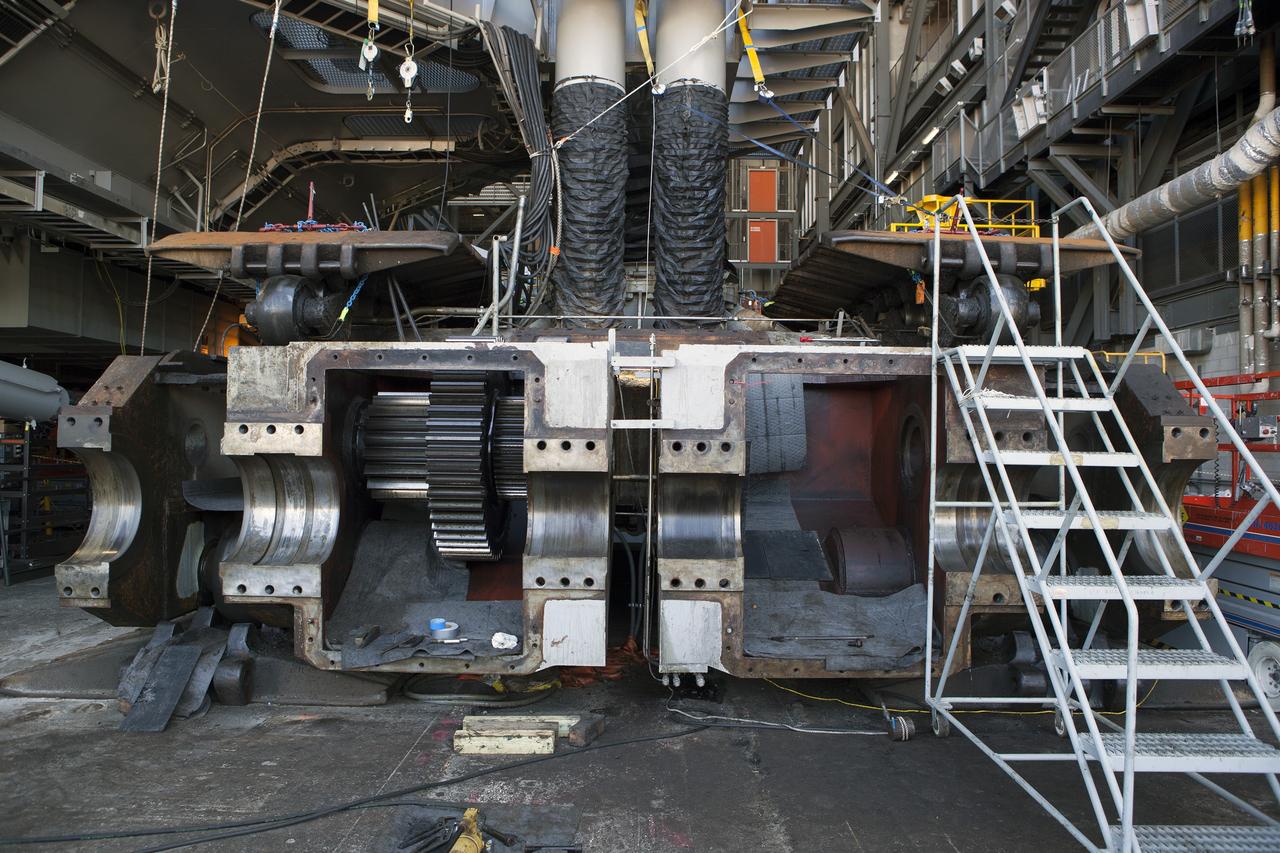
CAPE CANAVERAL, Fla. -- Inside the Vehicle Assembly Building at NASA’s Kennedy Space Center in Florida, several of the sprocket shaft assemblies have been removed from the C truck of crawler-transporter 2, or CT-2. Preparations are underway to remove the remaining sprocket. The sprocket assemblies will be placed into shipping cradles on pallets and positioned on a flatbed trailer. They will be sent to a vendor for inspections and refurbishment. Work continues in high bay 2 to upgrade CT-2. The modifications are designed to ensure CT-2’s ability to transport launch vehicles currently in development, such as the agency’s Space Launch System, to the launch pad. The Ground Systems Development and Operations Program office at Kennedy is overseeing the upgrades. For more than 45 years the crawler-transporters were used to transport the mobile launcher platform and the Apollo-Saturn V rockets and, later, space shuttles to Launch Pads 39A and B. For more information, visit: http://www.nasa.gov/exploration/systems/ground/crawler-transporter. Photo credit: NASA/Dimitri Gerondidakis
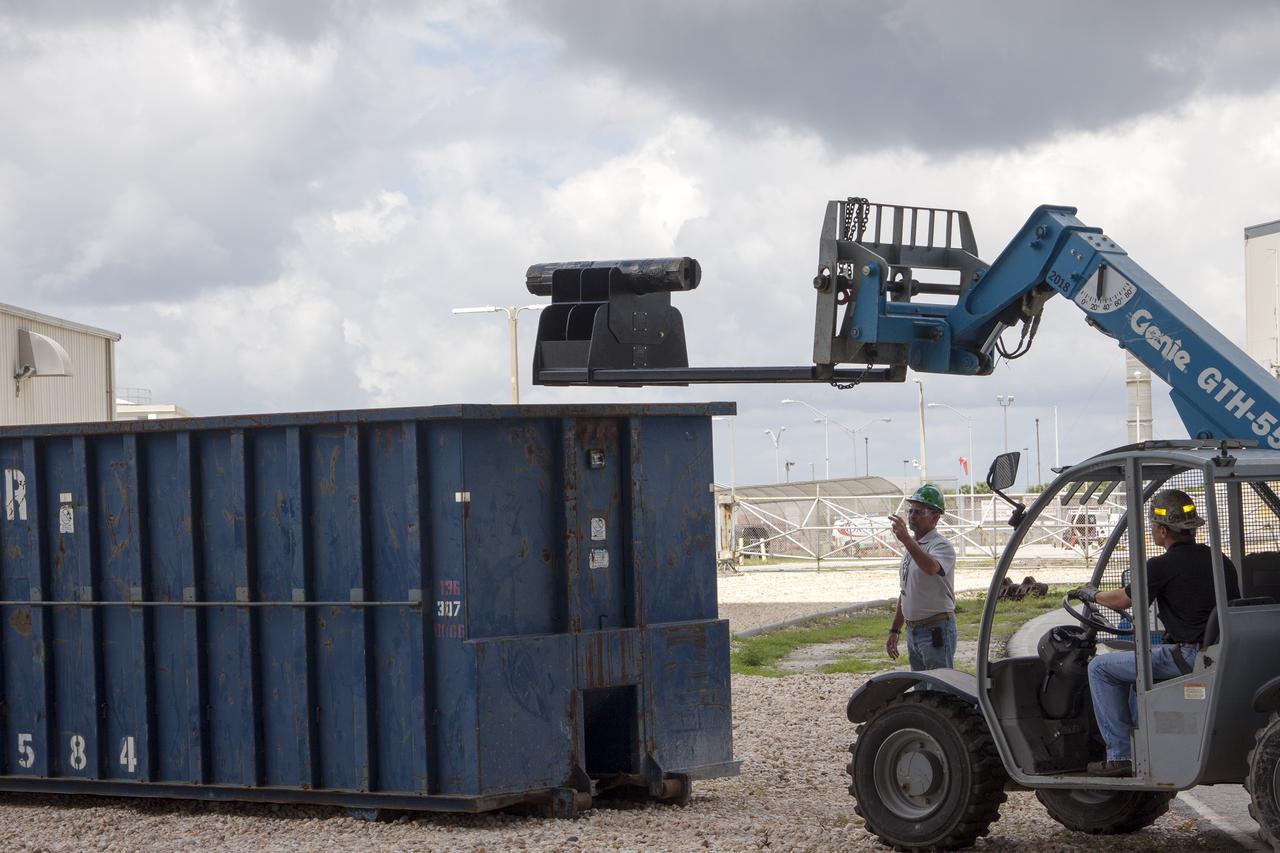
CAPE CANAVERAL, Fla. – Near the Vehicle Assembly Building, or VAB, at NASA’s Kennedy Space Center in Florida, an older roller shaft bearing that was removed from crawler-transporter 2, or CT-2, is being discarded. Inside the VAB, new roller shaft bearings will be installed on CT-2. Work continues in high bay 2 to upgrade CT-2. The modifications are designed to ensure CT-2’s ability to transport launch vehicles currently in development, such as the agency’s Space Launch System, to the launch pad. The Ground Systems Development and Operations Program office at Kennedy is overseeing the upgrades. For more than 45 years the crawler-transporters were used to transport the mobile launcher platform and the Apollo-Saturn V rockets and, later, space shuttles to Launch Pads 39A and B. For more information, visit: http://www.nasa.gov/exploration/systems/ground/crawler-transporter_bearings.html. Photo credit: NASA/Jim Grossmann
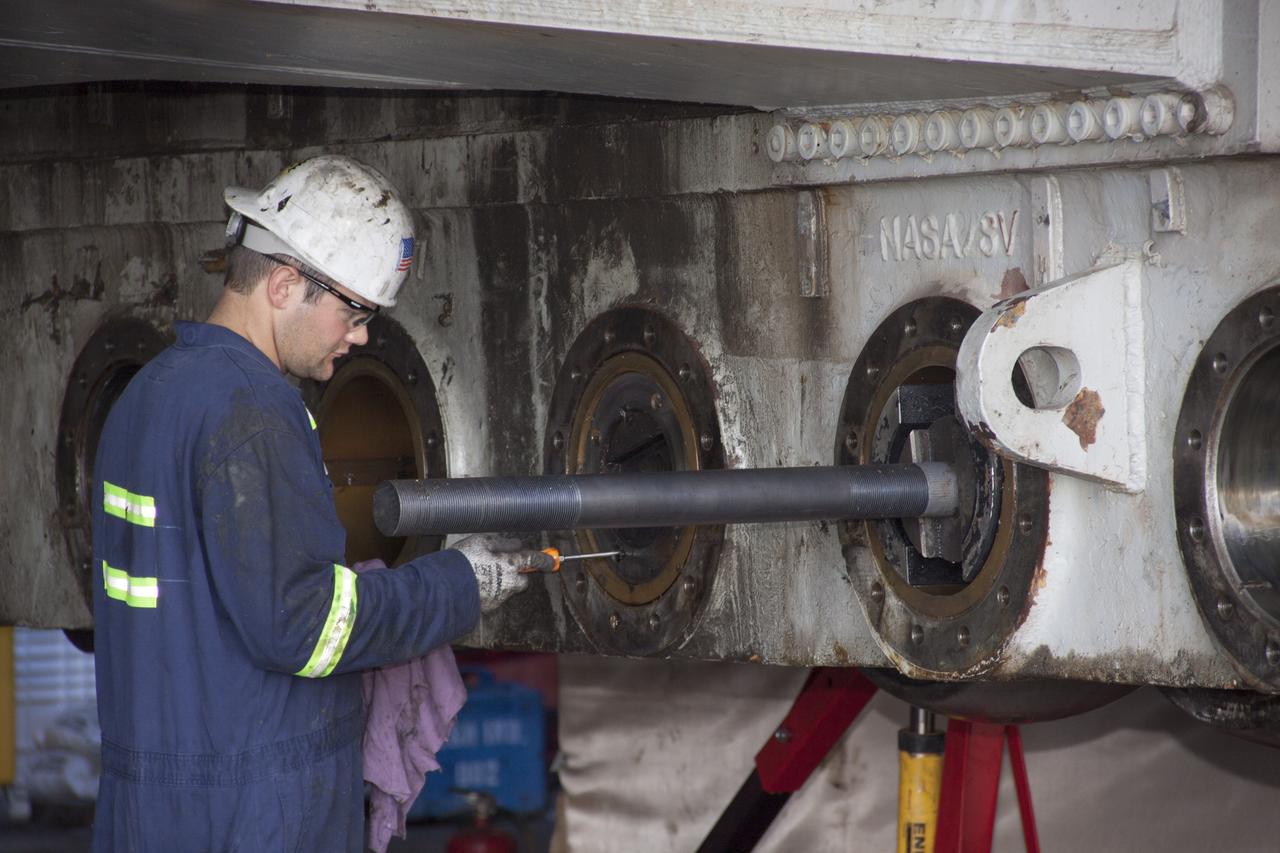
CAPE CANAVERAL, Fla. – Inside the Vehicle Assembly Building at NASA’s Kennedy Space Center in Florida, a technician prepares to install a new roller shaft bearing in crawler-transporter 2, or CT-2. Work continues in high bay 2 to upgrade CT-2. The modifications are designed to ensure CT-2’s ability to transport launch vehicles currently in development, such as the agency’s Space Launch System, to the launch pad. The Ground Systems Development and Operations Program office at Kennedy is overseeing the upgrades. For more than 45 years the crawler-transporters were used to transport the mobile launcher platform and the Apollo-Saturn V rockets and, later, space shuttles to Launch Pads 39A and B. For more information, visit: http://www.nasa.gov/exploration/systems/ground/crawler-transporter_bearings.html. Photo credit: NASA/Jim Grossmann

CAPE CANAVERAL, Fla. - Inside the Vehicle Assembly Building at NASA’s Kennedy Space Center in Florida, ground support technicians use a special work stand to guide a roller bearing shaft for insertion on the C truck of crawler-transporter 2, or CT-2. A section of the treads on the C truck were removed to allow access to the bearings. Work continues in high bay 2 to upgrade CT-2. The modifications are designed to ensure CT-2’s ability to transport launch vehicles currently in development, such as the agency’s Space Launch System, to the launch pad. The Ground Systems Development and Operations Program office at Kennedy is overseeing the upgrades. For more than 45 years the crawler-transporters were used to transport the mobile launcher platform and the Apollo-Saturn V rockets and, later, space shuttles to Launch Pads 39A and B. For more information, visit: http://www.nasa.gov/exploration/systems/ground/crawler-transporter. Photo credit: NASA/Dimitri Gerondidakis
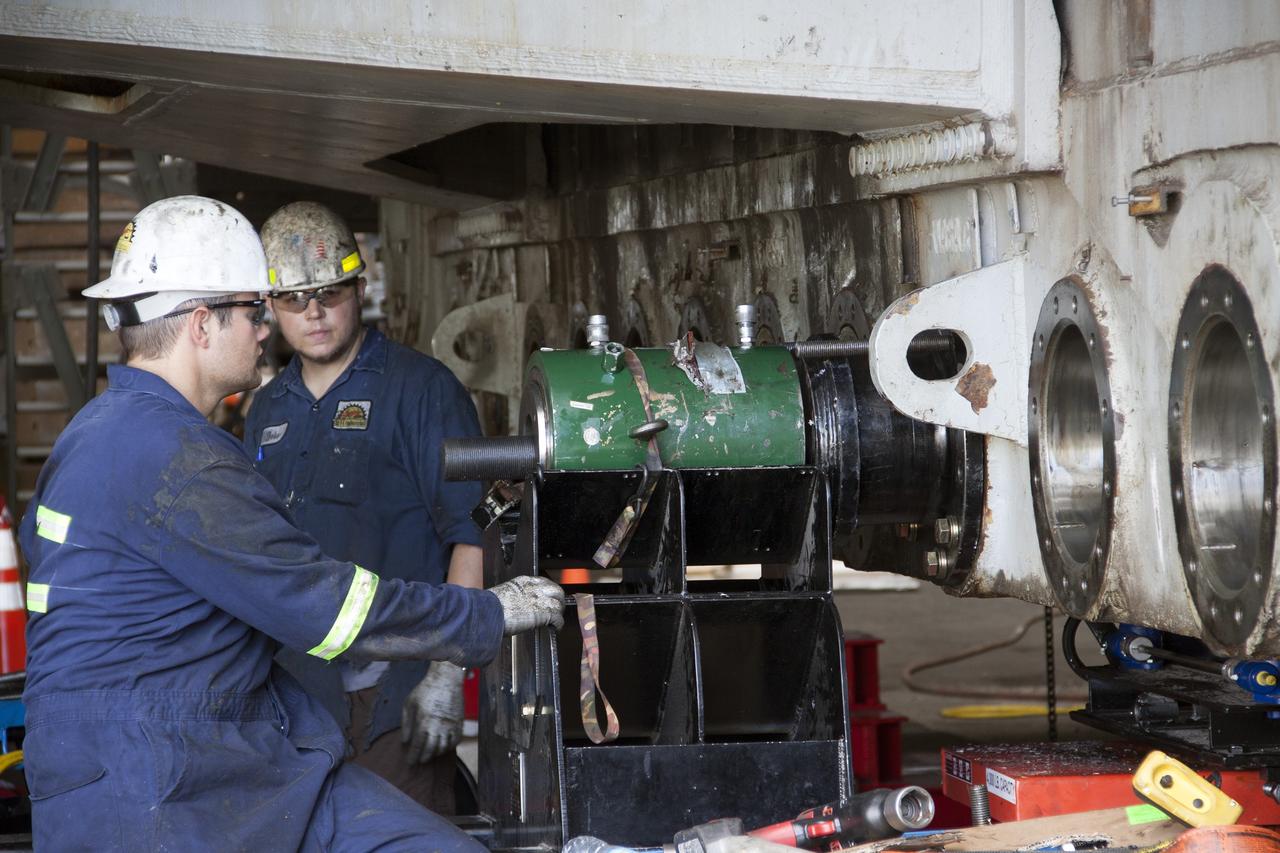
CAPE CANAVERAL, Fla. – Inside the Vehicle Assembly Building at NASA’s Kennedy Space Center in Florida, technicians prepare to install a new roller shaft bearing in crawler-transporter 2, or CT-2. Work continues in high bay 2 to upgrade CT-2. The modifications are designed to ensure CT-2’s ability to transport launch vehicles currently in development, such as the agency’s Space Launch System, to the launch pad. The Ground Systems Development and Operations Program office at Kennedy is overseeing the upgrades. For more than 45 years the crawler-transporters were used to transport the mobile launcher platform and the Apollo-Saturn V rockets and, later, space shuttles to Launch Pads 39A and B. For more information, visit: http://www.nasa.gov/exploration/systems/ground/crawler-transporter_bearings.html. Photo credit: NASA/Jim Grossmann
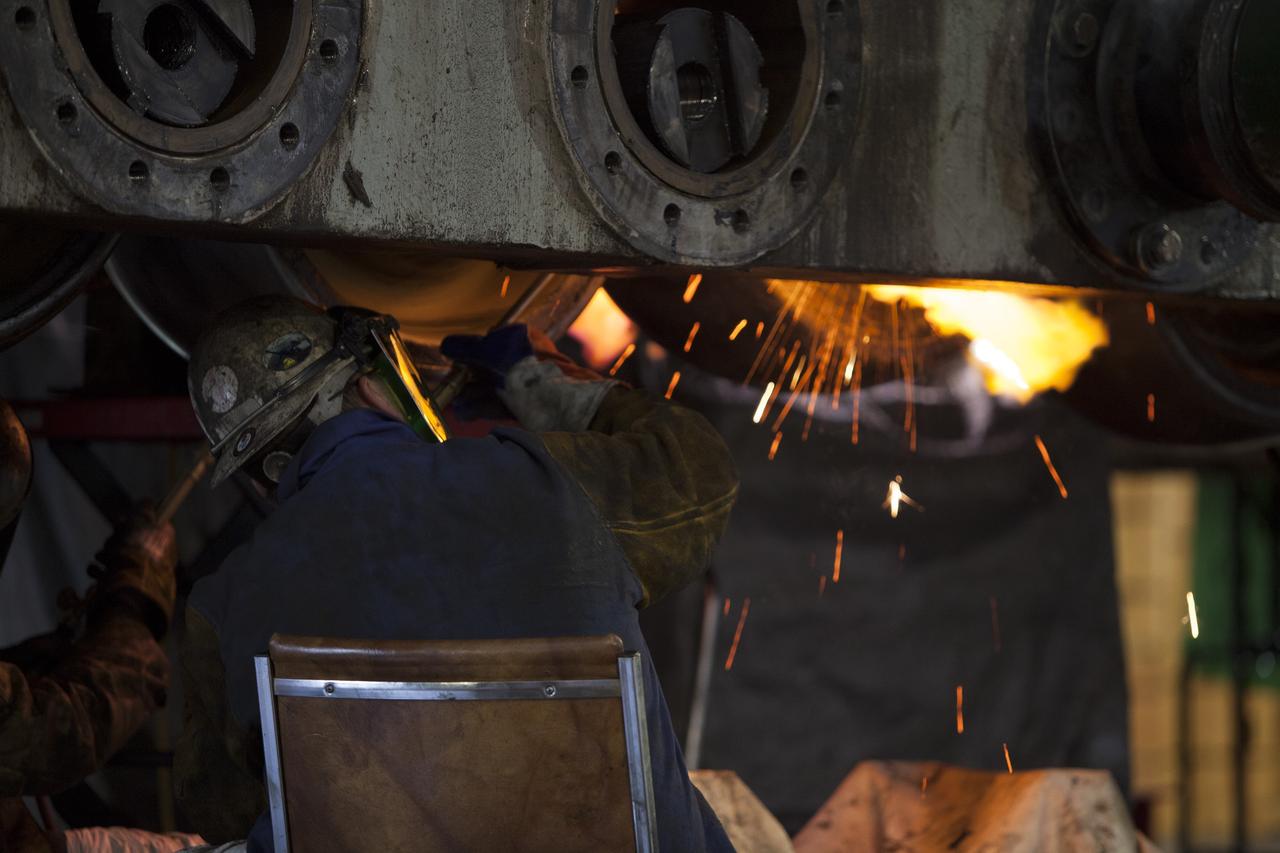
CAPE CANAVERAL, Fla. – Inside the Vehicle Assembly Building at NASA’s Kennedy Space Center in Florida, a ground support technician applies heat to a casing that contains an old bearing on the B truck tread of crawler-transporter 2, or CT-2. The bearing will separate and out for removal. New roller bearing assemblies will be installed on CT-2. Work continues in high bay 2 to upgrade CT-2. The modifications are designed to ensure CT-2’s ability to transport launch vehicles currently in development, such as the agency’s Space Launch System, to the launch pad. The Ground Systems Development and Operations Program office at Kennedy is overseeing the upgrades. For more than 45 years the crawler-transporters were used to transport the mobile launcher platform and the Apollo-Saturn V rockets and, later, space shuttles to Launch Pads 39A and B. For more information, visit: http://www.nasa.gov/exploration/systems/ground/crawler-transporter. Photo credit: NASA/Dimitri Gerondidakis
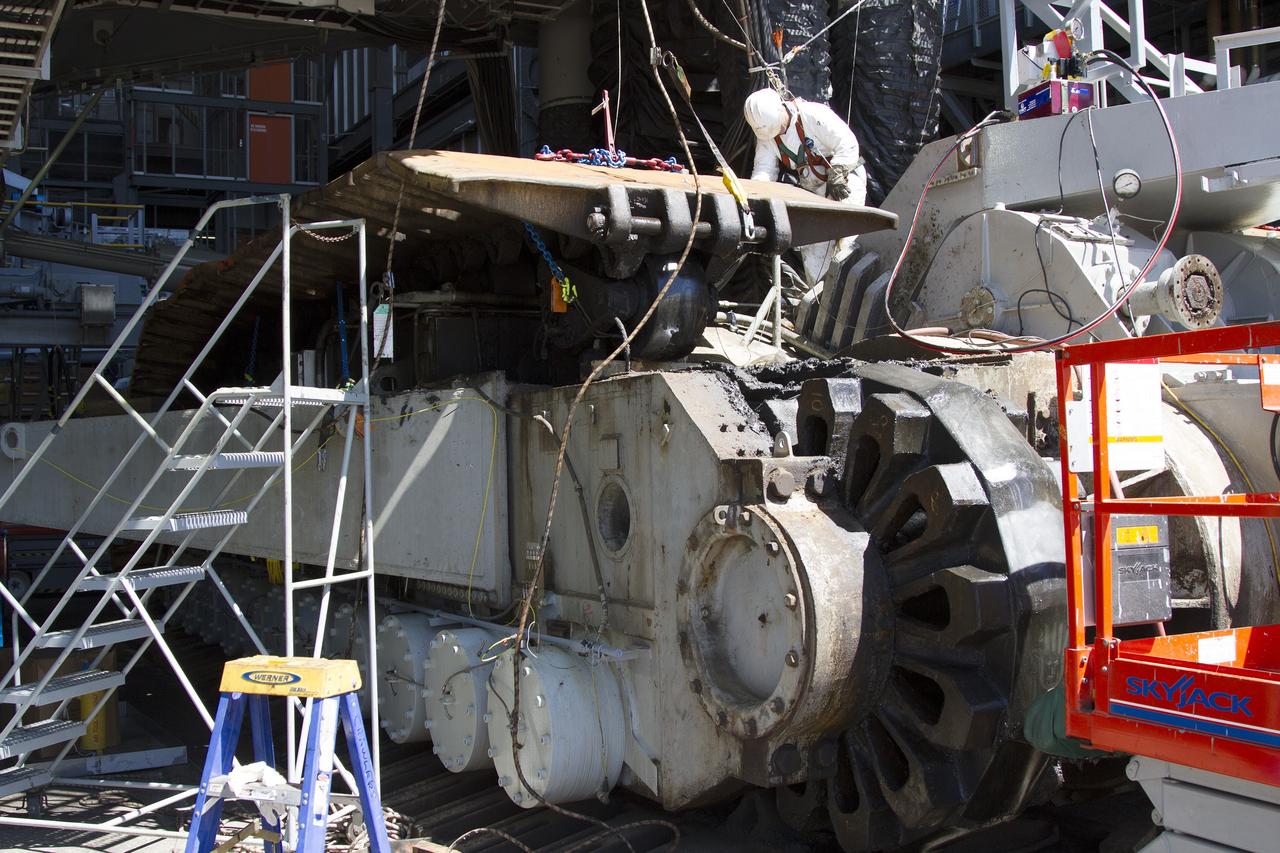
CAPE CANAVERAL, Fla. – Inside the Vehicle Assembly Building at NASA’s Kennedy Space Center in Florida, a ground support technician assists as a crane lifts up a section of the treads on the C truck of crawler-transporter 2, or CT-2. The treads are being removed in order to gain access to remove the gear boxes. Work continues in high bay 2 to upgrade CT-2. The modifications are designed to ensure CT-2’s ability to transport launch vehicles currently in development, such as the agency’s Space Launch System, to the launch pad. The Ground Systems Development and Operations Program office at Kennedy is overseeing the upgrades. For more than 45 years the crawler-transporters were used to transport the mobile launcher platform and the Apollo-Saturn V rockets and, later, space shuttles to Launch Pads 39A and B. For more information, visit: http://www.nasa.gov/exploration/systems/ground/crawler-transporter. Photo credit: NASA/Cory Huston
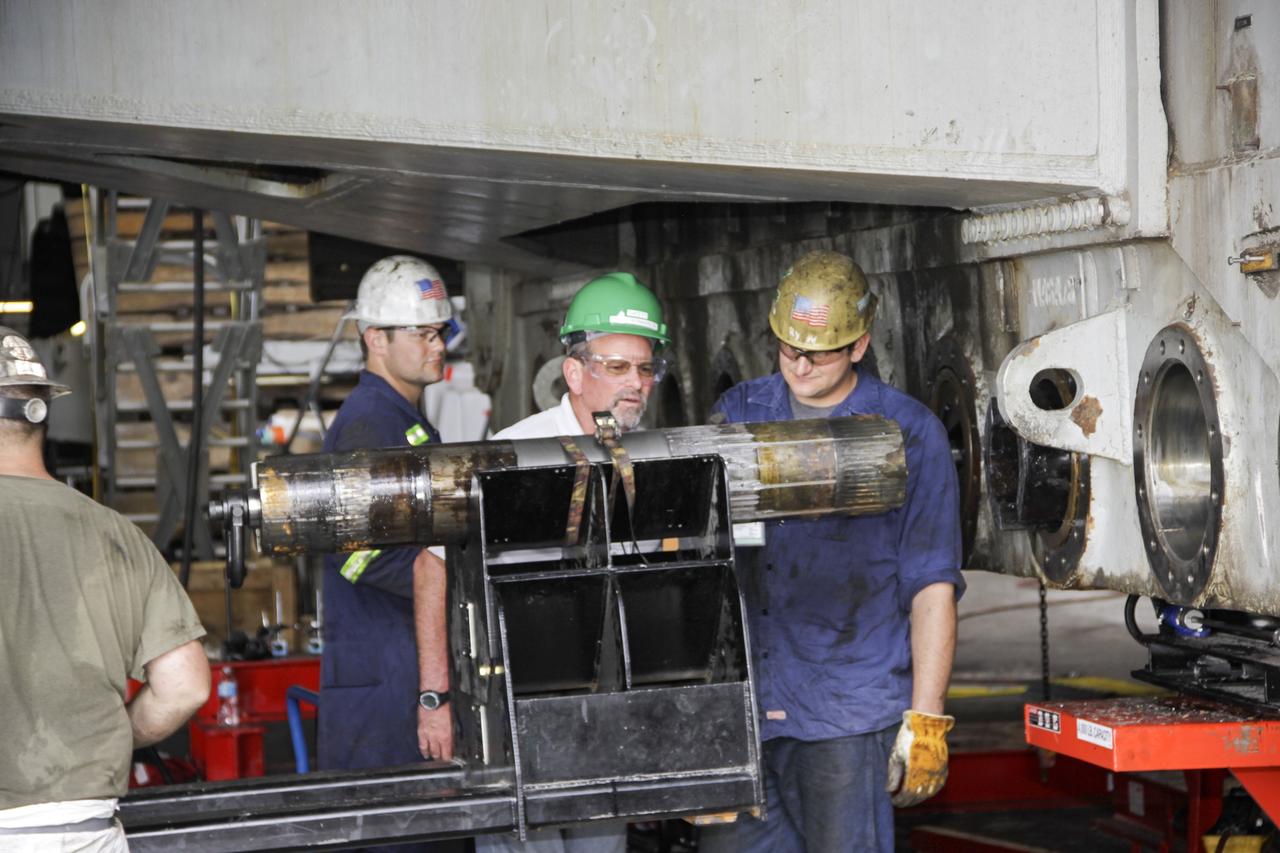
CAPE CANAVERAL, Fla. – Inside the Vehicle Assembly Building at NASA’s Kennedy Space Center in Florida, technicians have removed an old roller shaft bearing from crawler-transporter 2, or CT-2. New roller shaft bearings will be installed on CT-2. Work continues in high bay 2 to upgrade CT-2. The modifications are designed to ensure CT-2’s ability to transport launch vehicles currently in development, such as the agency’s Space Launch System, to the launch pad. The Ground Systems Development and Operations Program office at Kennedy is overseeing the upgrades. For more than 45 years the crawler-transporters were used to transport the mobile launcher platform and the Apollo-Saturn V rockets and, later, space shuttles to Launch Pads 39A and B. For more information, visit: http://www.nasa.gov/exploration/systems/ground/crawler-transporter_bearings.html. Photo credit: NASA/Jim Grossmann
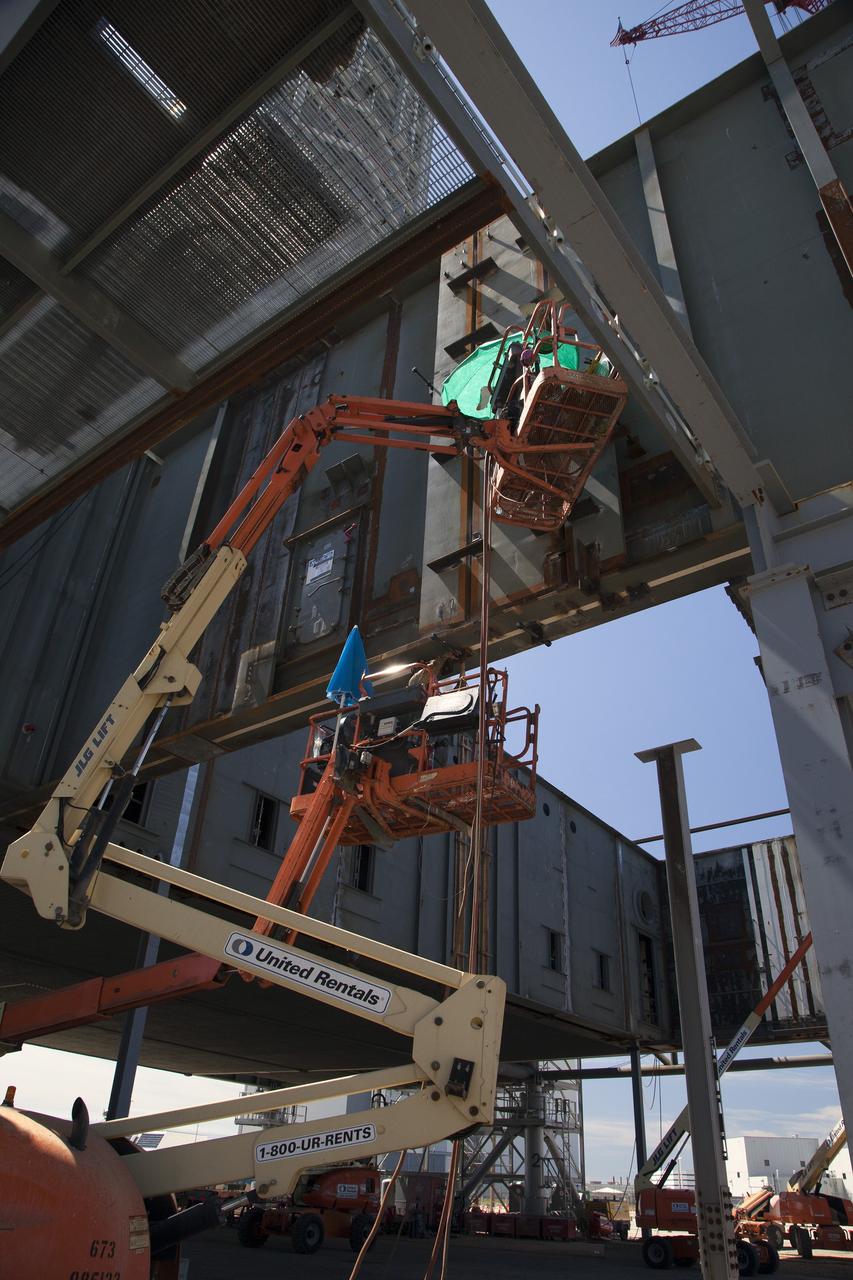
CAPE CANAVERAL, Fla. -- Modifications continue on the Mobile Launcher, or ML, at the Mobile Launcher Park Site at NASA’s Kennedy Space Center in Florida. Construction worker on lifts are preparing to cut and weld sections of the metal walls on the exterior of the ML. In 2013, the agency awarded a contract to J.P. Donovan Construction Inc. of Rockledge, Fla., to modify the ML, which is one of the key elements of ground support equipment that is being upgraded by the Ground Systems Development and Operations Program office at Kennedy. The ML will carry the SLS rocket and Orion spacecraft to Launch Pad 39B for its first mission, Exploration Mission 1, in 2017. Photo credit: NASA/Daniel Casper
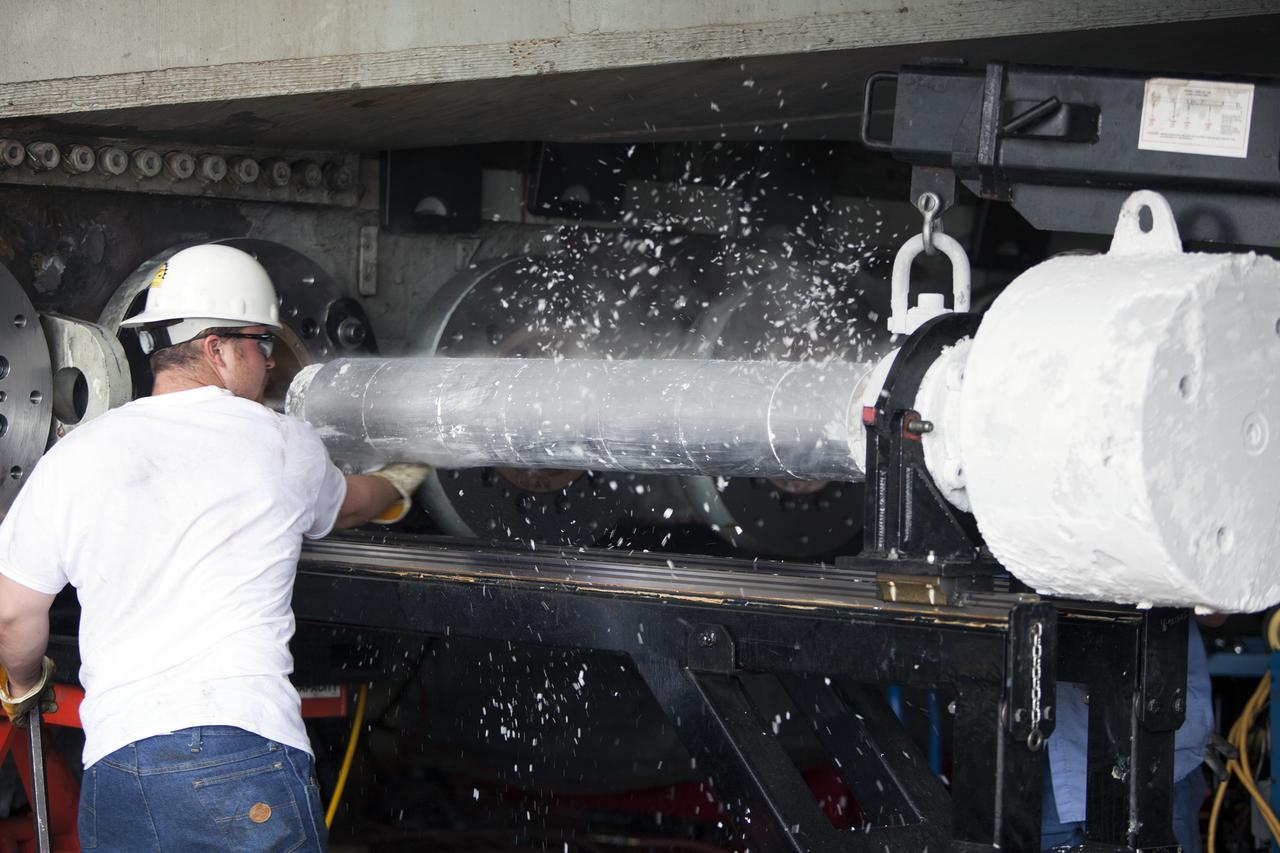
CAPE CANAVERAL, Fla. - Inside the Vehicle Assembly Building at NASA’s Kennedy Space Center in Florida, ground support technicians use a special work stand to guide a roller bearing shaft for insertion on the C truck of crawler-transporter 2, or CT-2. A section of the treads on the C truck were removed to allow access to the bearings. Work continues in high bay 2 to upgrade CT-2. The modifications are designed to ensure CT-2’s ability to transport launch vehicles currently in development, such as the agency’s Space Launch System, to the launch pad. The Ground Systems Development and Operations Program office at Kennedy is overseeing the upgrades. For more than 45 years the crawler-transporters were used to transport the mobile launcher platform and the Apollo-Saturn V rockets and, later, space shuttles to Launch Pads 39A and B. For more information, visit: http://www.nasa.gov/exploration/systems/ground/crawler-transporter. Photo credit: NASA/Dimitri Gerondidakis
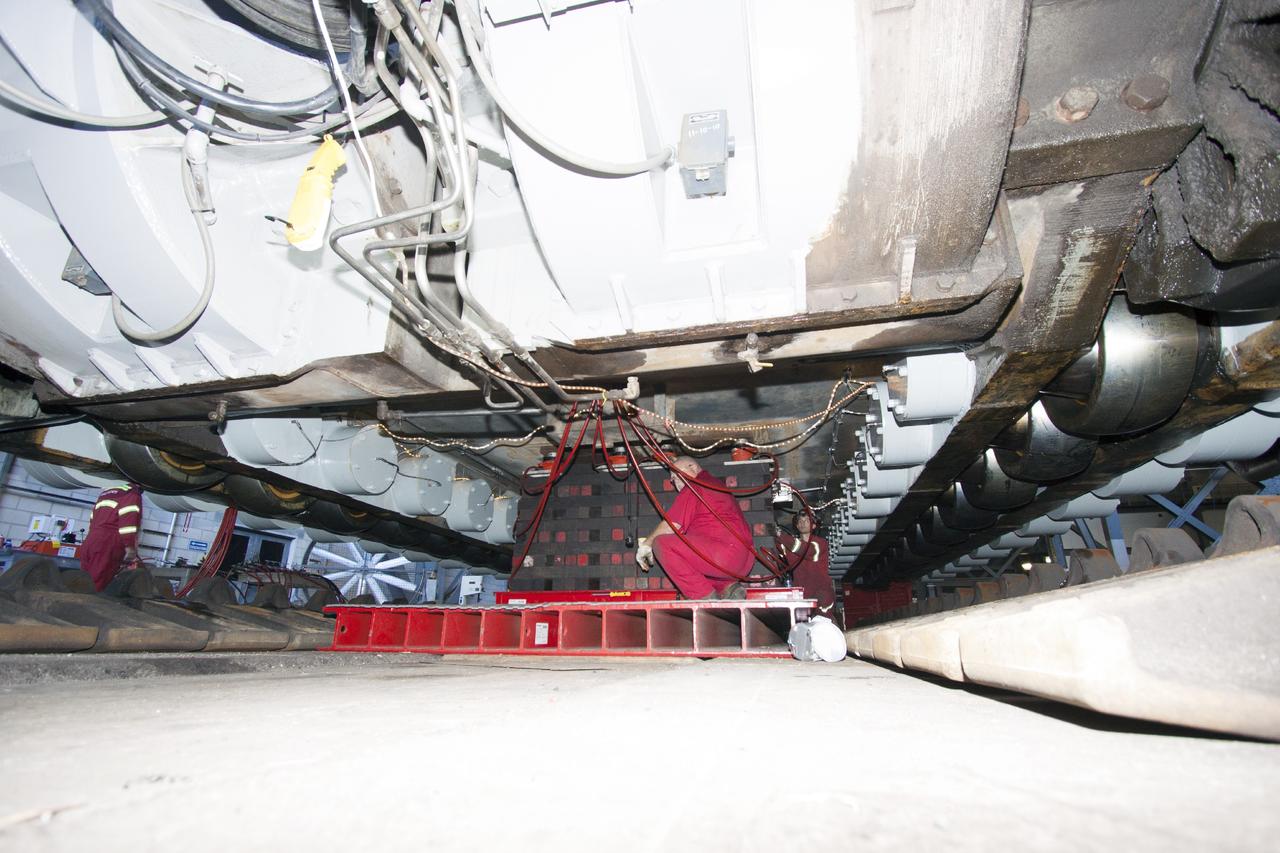
CAPE CANAVERAL, Fla. – Inside the Vehicle Assembly Building at NASA’s Kennedy Space Center in Florida, ground support technicians make some adjustment beneath the crawler so that work can begin to re-install the large crawler tracks. The crawler is being prepared for rollout in January 2014 to test the new bearings that were recently installed. Work continues in high bay 2 to upgrade CT-2. The modifications are designed to ensure CT-2’s ability to transport launch vehicles currently in development, such as the agency’s Space Launch System, to the launch pad. The Ground Systems Development and Operations Program office at Kennedy is overseeing the upgrades. For more than 45 years the crawler-transporters were used to transport the mobile launcher platform and the Apollo-Saturn V rockets and, later, space shuttles to Launch Pads 39A and B. For more information, visit: http://www.nasa.gov/centers/kennedy/pdf/638823main_crawler-transporter.pdf. Photo credit: NASA/Jim Grossmann
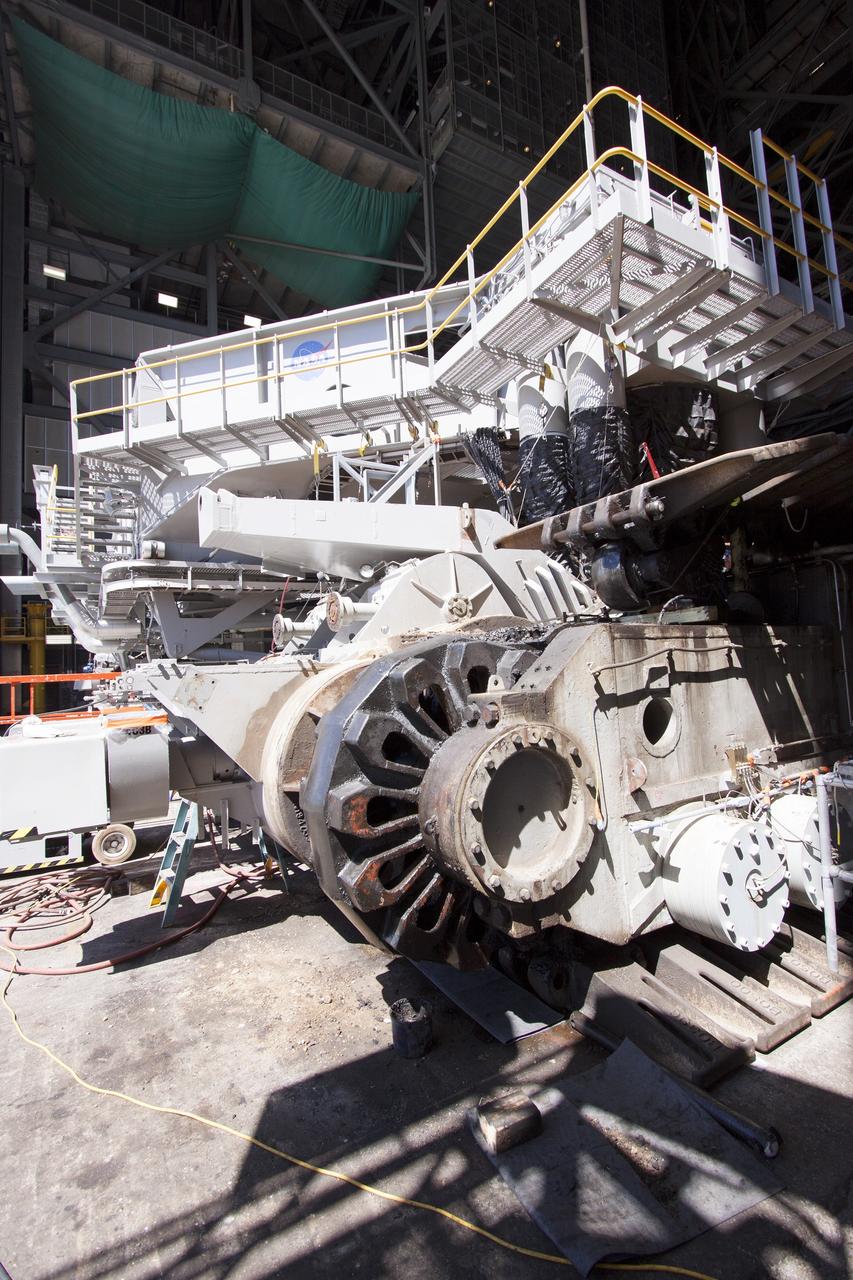
CAPE CANAVERAL, Fla. – Inside the Vehicle Assembly Building at NASA’s Kennedy Space Center in Florida, preparations are underway to remove the gear boxes on the C truck of crawler-transporter 2, or CT-2. A section of the treads were removed to allow access to the gear boxes. Work continues in high bay 2 to upgrade CT-2. The modifications are designed to ensure CT-2’s ability to transport launch vehicles currently in development, such as the agency’s Space Launch System, to the launch pad. The Ground Systems Development and Operations Program office at Kennedy is overseeing the upgrades. For more than 45 years the crawler-transporters were used to transport the mobile launcher platform and the Apollo-Saturn V rockets and, later, space shuttles to Launch Pads 39A and B. For more information, visit: http://www.nasa.gov/exploration/systems/ground/crawler-transporter. Photo credit: NASA/Cory Huston
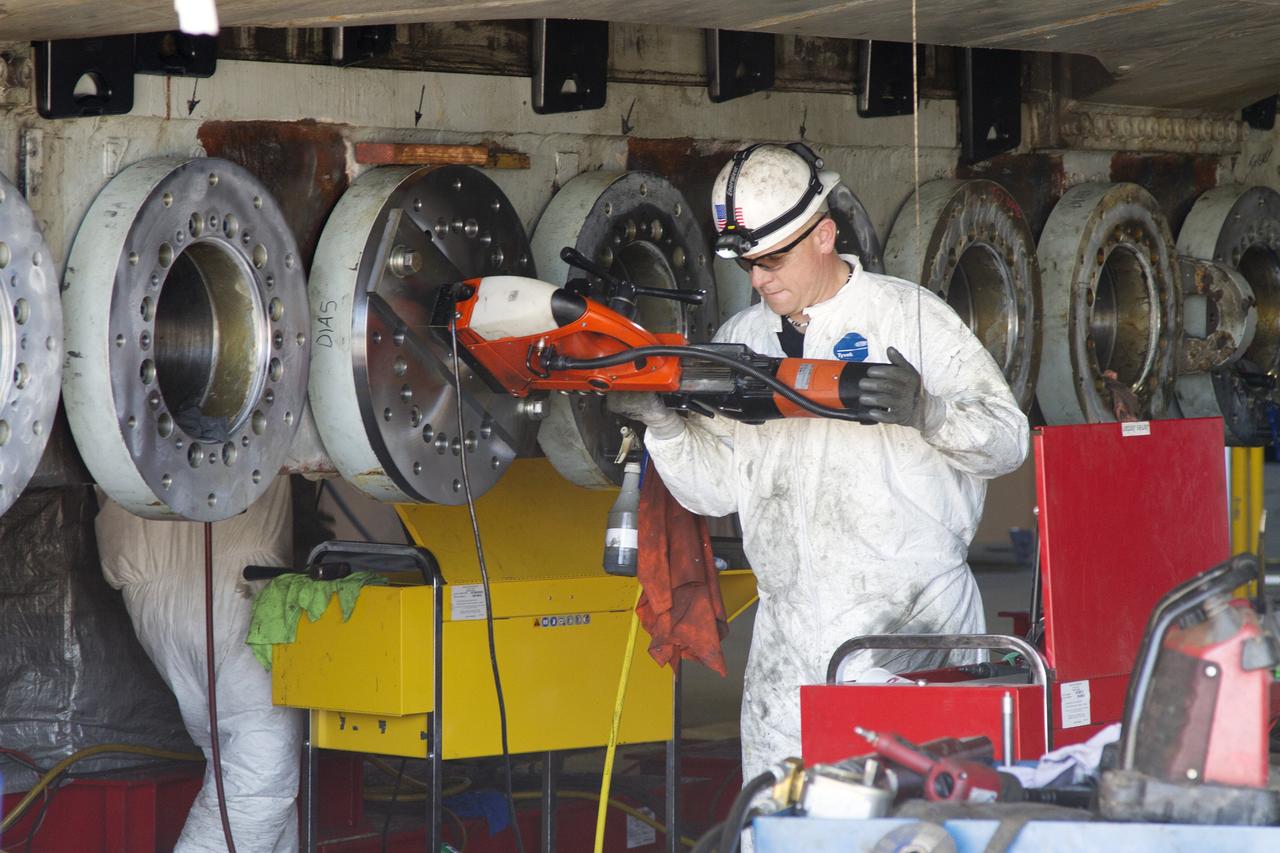
CAPE CANAVERAL, Fla. – Inside the Vehicle Assembly Building at NASA’s Kennedy Space Center in Florida, a ground support technician installs a new roller bearing on the C truck of crawler-transporter 2, or CT-2. Work continues in high bay 2 to upgrade CT-2. The modifications are designed to ensure CT-2’s ability to transport launch vehicles currently in development, such as the agency’s Space Launch System, to the launch pad. The Ground Systems Development and Operations Program office at Kennedy is overseeing the upgrades. For more than 45 years the crawler-transporters were used to transport the mobile launcher platform and the Apollo-Saturn V rockets and, later, space shuttles to Launch Pads 39A and B. For more information, visit: http://www.nasa.gov/exploration/systems/ground/crawler-transporter. Photo credit: NASA/Cory Huston
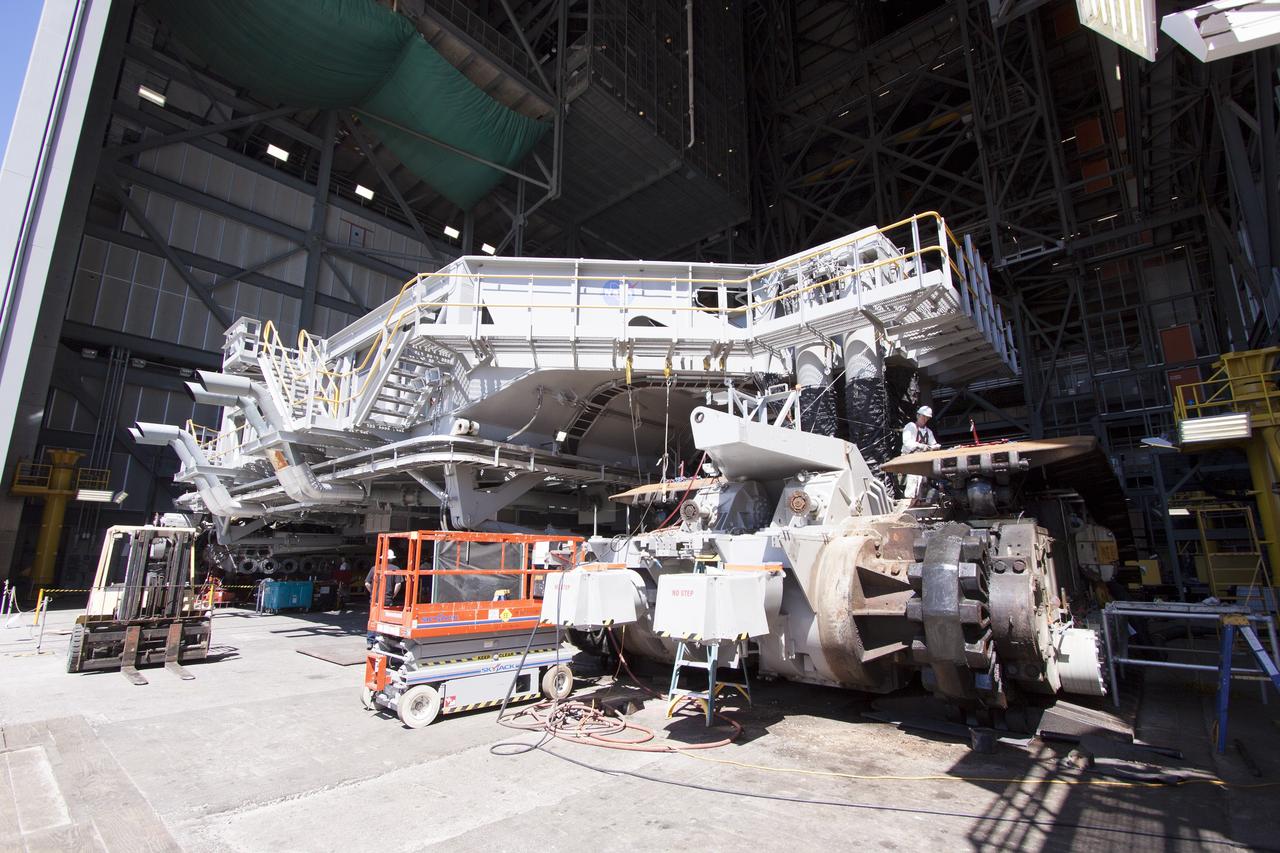
CAPE CANAVERAL, Fla. – Inside the Vehicle Assembly Building at NASA’s Kennedy Space Center in Florida, preparations are underway to remove the gear boxes on the C truck of crawler-transporter 2, or CT-2. A section of the treads were removed to allow access to the gear boxes. Work continues in high bay 2 to upgrade CT-2. The modifications are designed to ensure CT-2’s ability to transport launch vehicles currently in development, such as the agency’s Space Launch System, to the launch pad. The Ground Systems Development and Operations Program office at Kennedy is overseeing the upgrades. For more than 45 years the crawler-transporters were used to transport the mobile launcher platform and the Apollo-Saturn V rockets and, later, space shuttles to Launch Pads 39A and B. For more information, visit: http://www.nasa.gov/exploration/systems/ground/crawler-transporter. Photo credit: NASA/Cory Huston
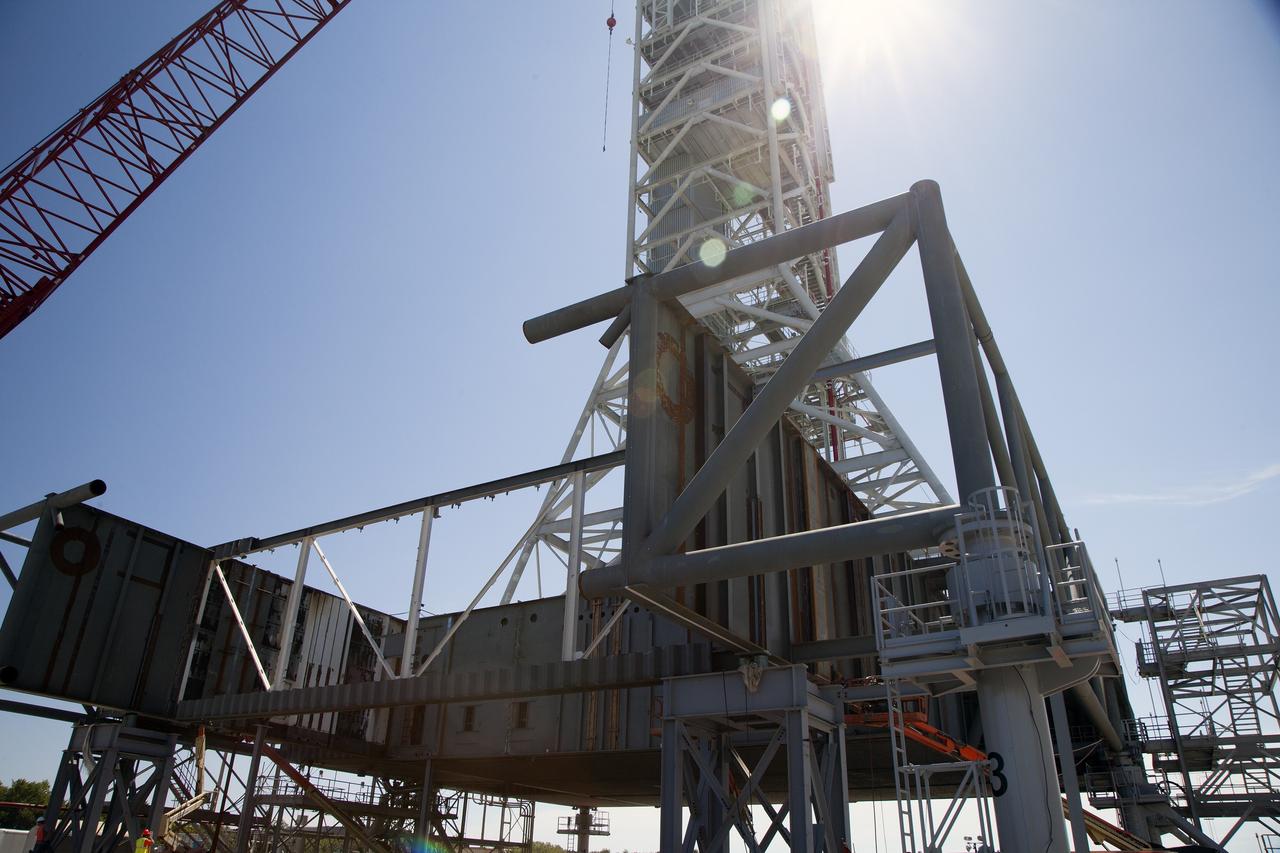
CAPE CANAVERAL, Fla. -- Modifications continue on the Mobile Launcher, or ML, at the Mobile Launcher Park Site at NASA’s Kennedy Space Center in Florida. Sections of the steel walls have been removed for welding work. In 2013, the agency awarded a contract to J.P. Donovan Construction Inc. of Rockledge, Fla., to modify the ML, which is one of the key elements of ground support equipment that is being upgraded by the Ground Systems Development and Operations Program office at Kennedy. The ML will carry the SLS rocket and Orion spacecraft to Launch Pad 39B for its first mission, Exploration Mission 1, in 2017. Photo credit: NASA/Daniel Casper
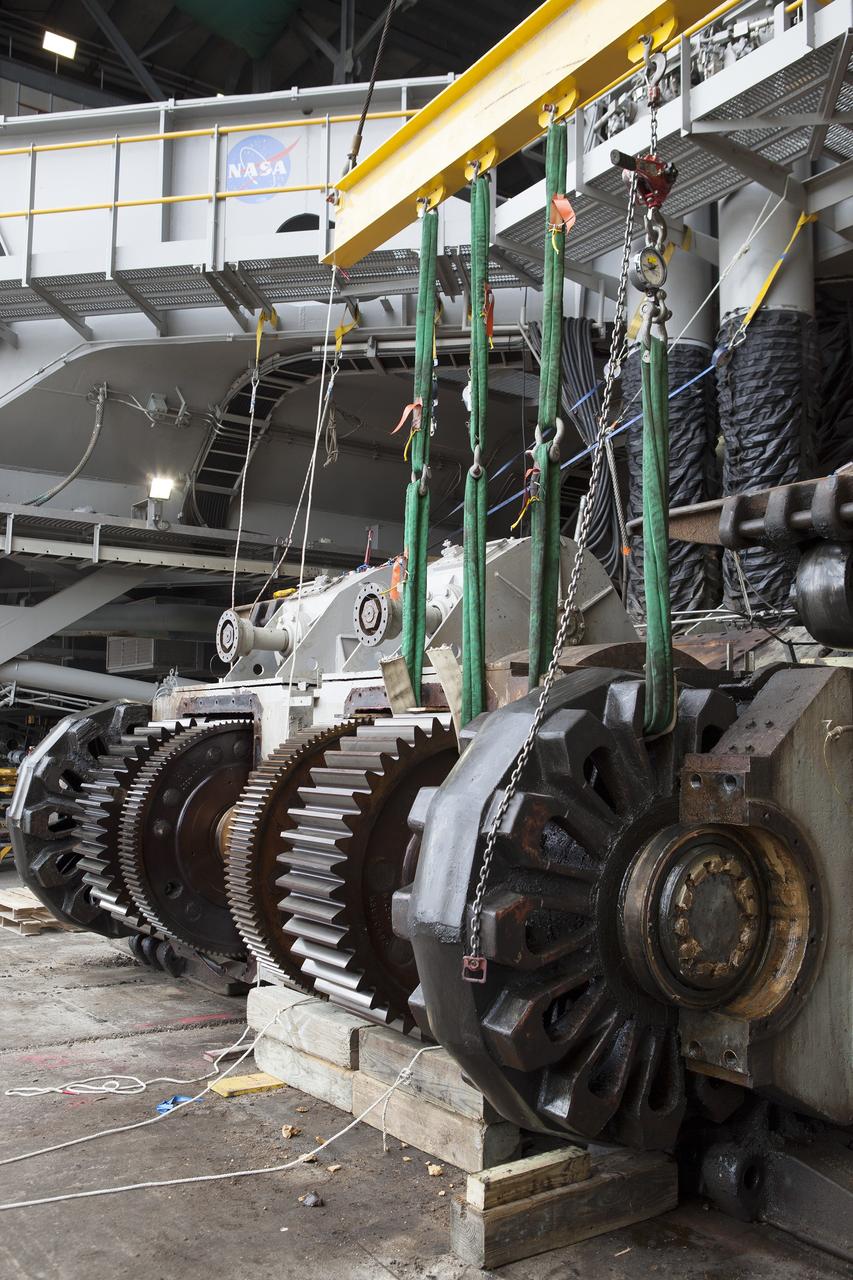
CAPE CANAVERAL, Fla. - Inside the Vehicle Assembly Building at NASA’s Kennedy Space Center in Florida, an overhead crane has been attached to a sprocket shaft assembly to remove it from the C truck of crawler-transporter 2, or CT-2. A section of the treads on the C truck were removed to allow access to the sprocket assemblies. The sprocket assemblies will be placed into shipping cradles on pallets and positioned on a flatbed trailer. The assemblies will be sent to a vendor for inspections and refurbishment. Work continues in high bay 2 to upgrade CT-2. The modifications are designed to ensure CT-2’s ability to transport launch vehicles currently in development, such as the agency’s Space Launch System, to the launch pad. The Ground Systems Development and Operations Program office at Kennedy is overseeing the upgrades. For more than 45 years the crawler-transporters were used to transport the mobile launcher platform and the Apollo-Saturn V rockets and, later, space shuttles to Launch Pads 39A and B. For more information, visit: http://www.nasa.gov/exploration/systems/ground/crawler-transporter. Photo credit: NASA/Dimitri Gerondidakis
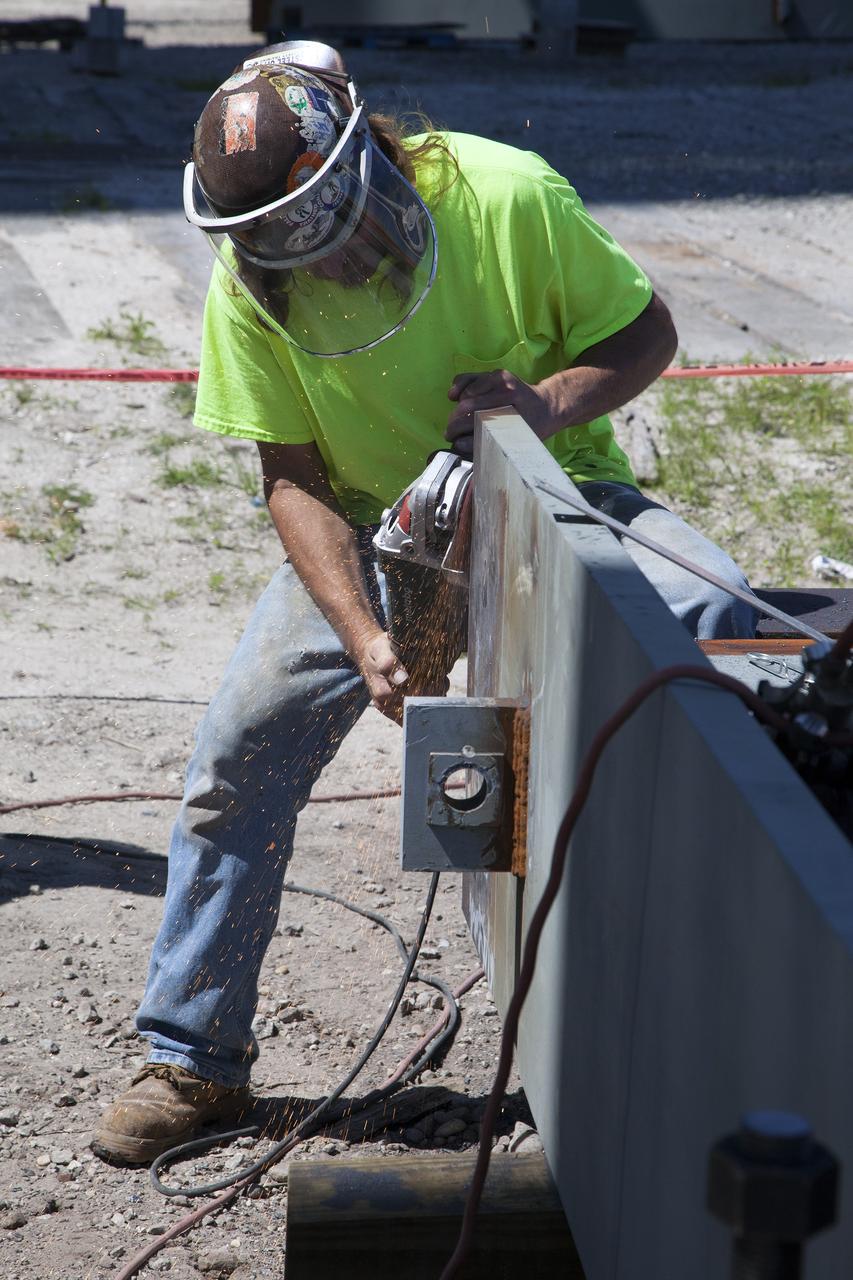
CAPE CANAVERAL, Fla. -- Modifications continue on the Mobile Launcher, or ML, at the Mobile Launcher Park Site at NASA’s Kennedy Space Center in Florida. A construction worker cuts a piece of steel to resize it for the exterior of the ML. In 2013, the agency awarded a contract to J.P. Donovan Construction Inc. of Rockledge, Fla., to modify the ML, which is one of the key elements of ground support equipment that is being upgraded by the Ground Systems Development and Operations Program office at Kennedy. The ML will carry the SLS rocket and Orion spacecraft to Launch Pad 39B for its first mission, Exploration Mission 1, in 2017. Photo credit: NASA/Daniel Casper
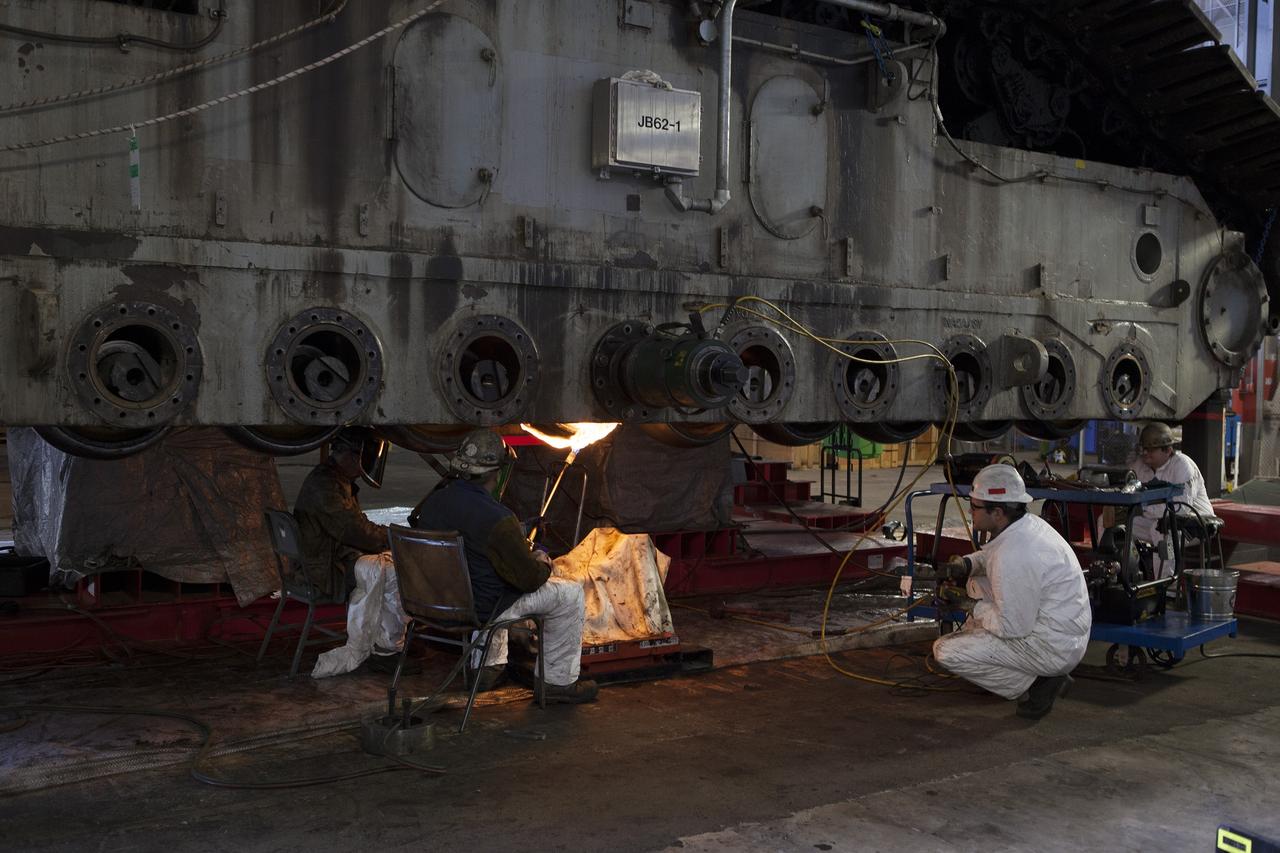
CAPE CANAVERAL, Fla. – Inside the Vehicle Assembly Building at NASA’s Kennedy Space Center in Florida, a ground support technician applies heat to a casing that contains an old bearing on the B truck tread of crawler-transporter 2, or CT-2, as other technicians monitor the progress. The bearing will separate and out for removal. New roller bearing assemblies will be installed on CT-2. Work continues in high bay 2 to upgrade CT-2. The modifications are designed to ensure CT-2’s ability to transport launch vehicles currently in development, such as the agency’s Space Launch System, to the launch pad. The Ground Systems Development and Operations Program office at Kennedy is overseeing the upgrades. For more than 45 years the crawler-transporters were used to transport the mobile launcher platform and the Apollo-Saturn V rockets and, later, space shuttles to Launch Pads 39A and B. For more information, visit: http://www.nasa.gov/exploration/systems/ground/crawler-transporter. Photo credit: NASA/Dimitri Gerondidakis
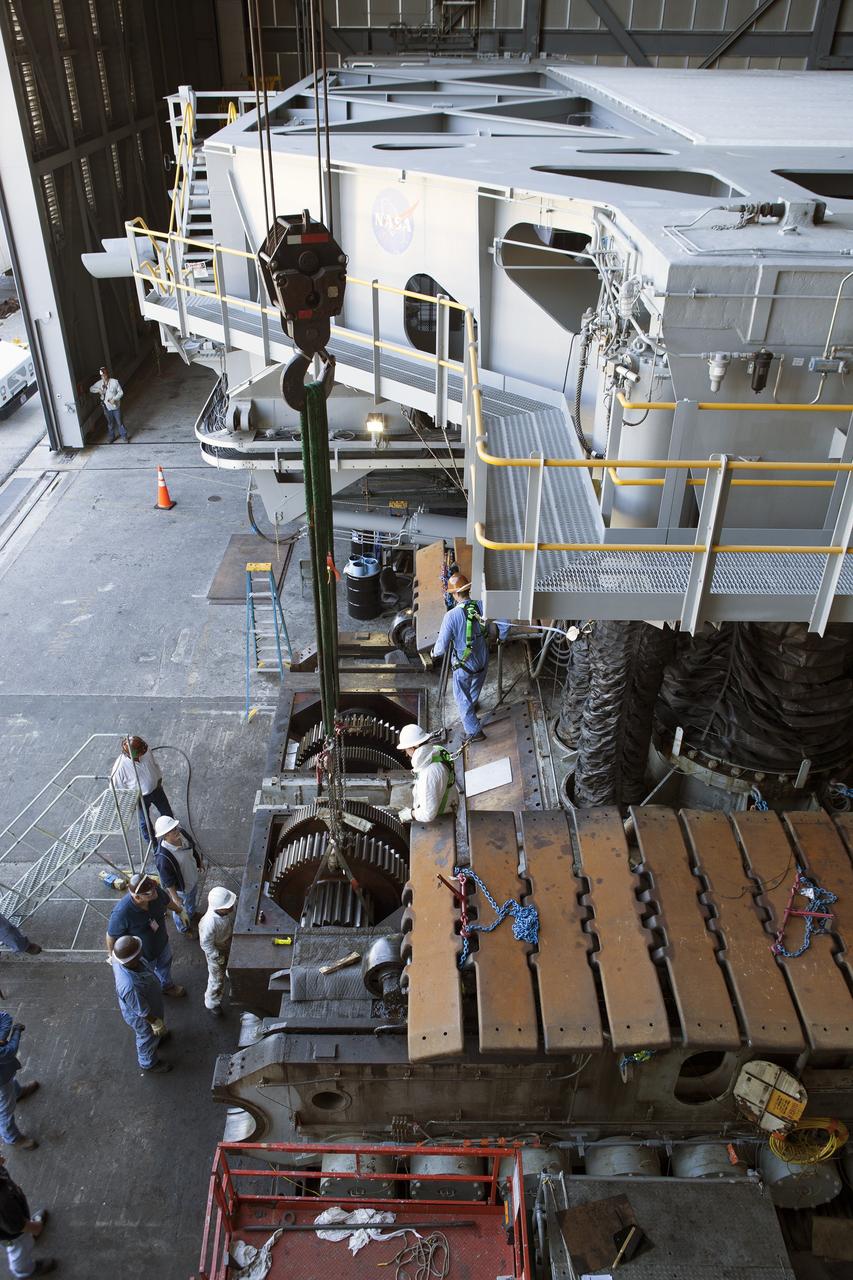
CAPE CANAVERAL, Fla. -- Inside the Vehicle Assembly Building at NASA’s Kennedy Space Center in Florida, ground support technicians prepare for removal of one of the sprocket shaft assemblies on the C truck of crawler-transporter 2, or CT-2. A section of the treads on the C truck were removed to allow access to the sprocket assemblies. Work continues in high bay 2 to upgrade CT-2. The modifications are designed to ensure CT-2’s ability to transport launch vehicles currently in development, such as the agency’s Space Launch System, to the launch pad. The Ground Systems Development and Operations Program office at Kennedy is overseeing the upgrades. For more than 45 years the crawler-transporters were used to transport the mobile launcher platform and the Apollo-Saturn V rockets and, later, space shuttles to Launch Pads 39A and B. For more information, visit: http://www.nasa.gov/exploration/systems/ground/crawler-transporter. Photo credit: NASA/Dimitri Gerondidakis

CAPE CANAVERAL, Fla. – Inside the Vehicle Assembly Building at NASA’s Kennedy Space Center in Florida, a technician monitors the progress as a new roller shaft bearing is being preparing for installation in crawler-transporter 2, or CT-2. Work continues in high bay 2 to upgrade CT-2. The modifications are designed to ensure CT-2’s ability to transport launch vehicles currently in development, such as the agency’s Space Launch System, to the launch pad. The Ground Systems Development and Operations Program office at Kennedy is overseeing the upgrades. For more than 45 years the crawler-transporters were used to transport the mobile launcher platform and the Apollo-Saturn V rockets and, later, space shuttles to Launch Pads 39A and B. For more information, visit: http://www.nasa.gov/exploration/systems/ground/crawler-transporter_bearings.html. Photo credit: NASA/Jim Grossmann
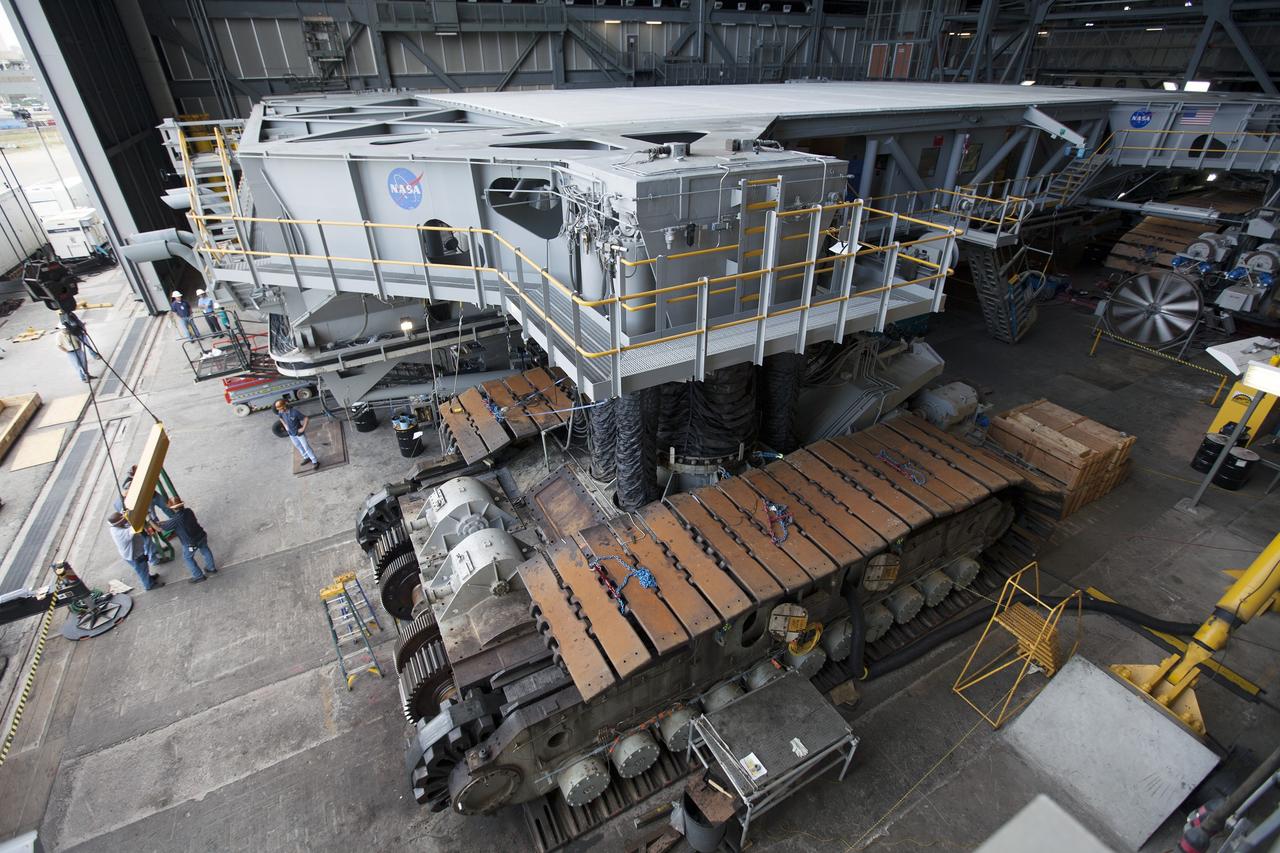
CAPE CANAVERAL, Fla. - Inside the Vehicle Assembly Building at NASA’s Kennedy Space Center in Florida, ground support technicians prepare for removal of the outboard and inboard sprocket shaft assemblies on the C truck of crawler-transporter 2, or CT-2. A section of the treads on the C truck were removed to allow access to the sprocket assemblies. Work continues in high bay 2 to upgrade CT-2. The modifications are designed to ensure CT-2’s ability to transport launch vehicles currently in development, such as the agency’s Space Launch System, to the launch pad. The Ground Systems Development and Operations Program office at Kennedy is overseeing the upgrades. For more than 45 years the crawler-transporters were used to transport the mobile launcher platform and the Apollo-Saturn V rockets and, later, space shuttles to Launch Pads 39A and B. For more information, visit: http://www.nasa.gov/exploration/systems/ground/crawler-transporter. Photo credit: NASA/Dimitri Gerondidakis
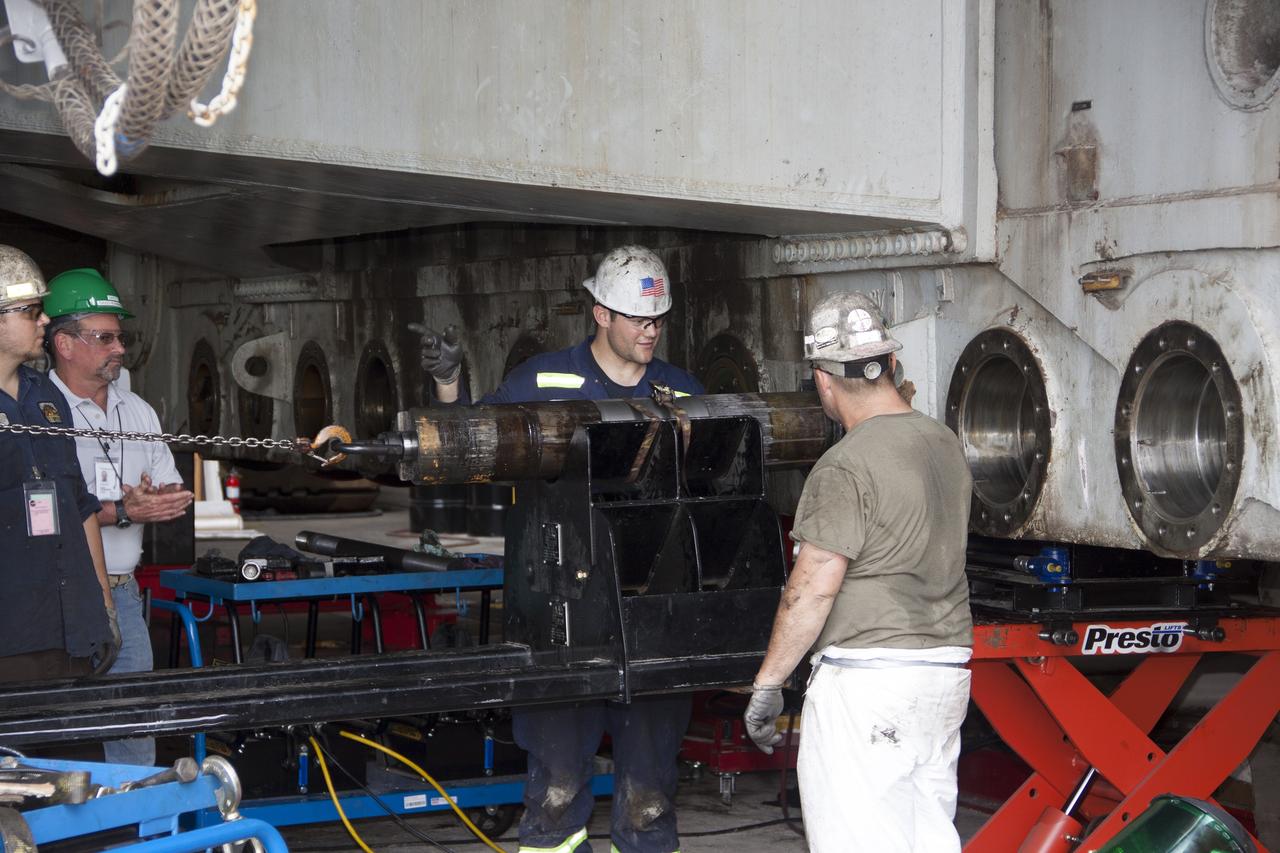
CAPE CANAVERAL, Fla. – Inside the Vehicle Assembly Building at NASA’s Kennedy Space Center in Florida, technicians have removed an old roller shaft bearing from crawler-transporter 2, or CT-2. New roller shaft bearings will be installed on CT-2. Work continues in high bay 2 to upgrade CT-2. The modifications are designed to ensure CT-2’s ability to transport launch vehicles currently in development, such as the agency’s Space Launch System, to the launch pad. The Ground Systems Development and Operations Program office at Kennedy is overseeing the upgrades. For more than 45 years the crawler-transporters were used to transport the mobile launcher platform and the Apollo-Saturn V rockets and, later, space shuttles to Launch Pads 39A and B. For more information, visit: http://www.nasa.gov/exploration/systems/ground/crawler-transporter_bearings.html. Photo credit: NASA/Jim Grossmann
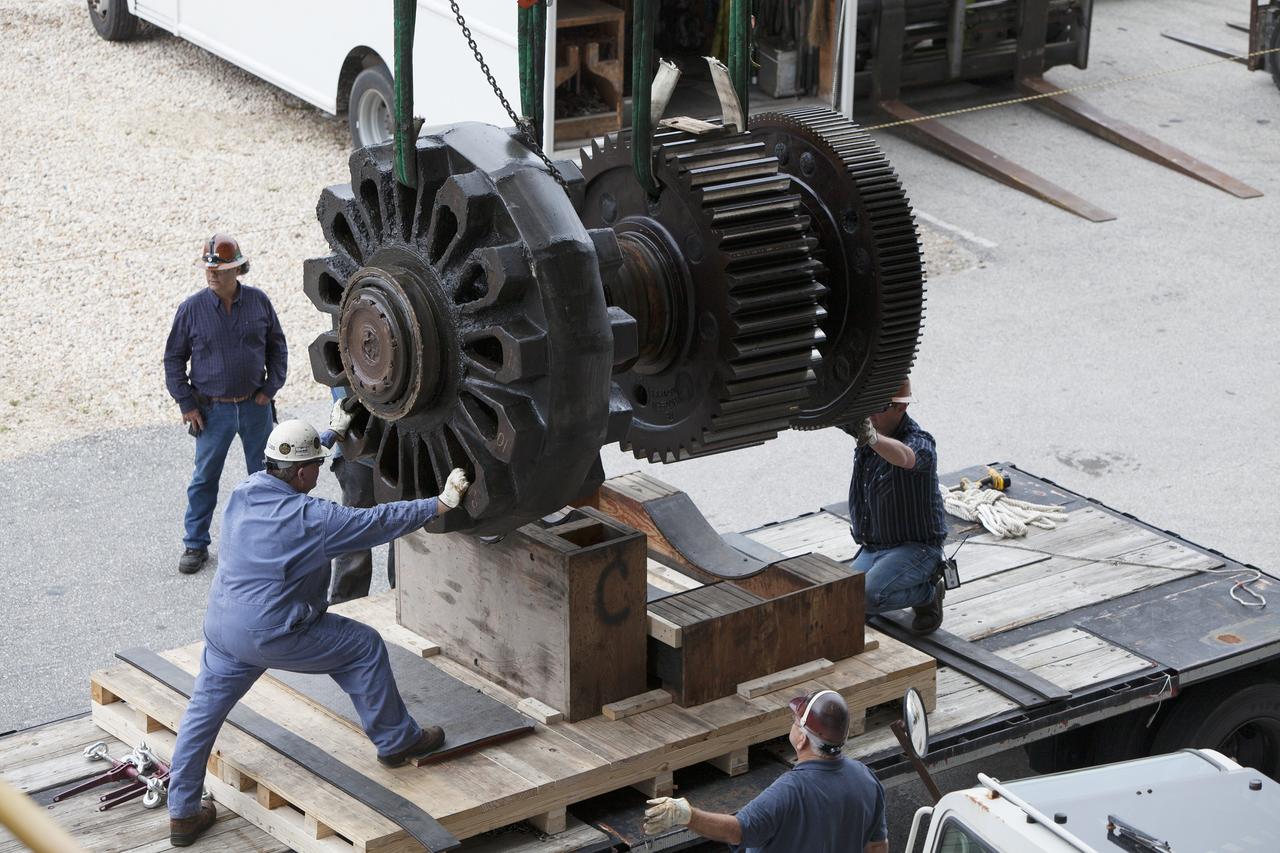
CAPE CANAVERAL, Fla. - Inside the Vehicle Assembly Building at NASA’s Kennedy Space Center in Florida, ground support technicians help position a sprocket shaft assembly onto a cradle as an overhead crane lowers it down. The sprocket assembly was removed from the C truck of crawler-transporter 2, or CT-2. They will be placed into shipping cradles on pallets and positioned on a flatbed trailer. The assemblies will be sent to a vendor for inspections and refurbishment. Work continues in high bay 2 to upgrade CT-2. The modifications are designed to ensure CT-2’s ability to transport launch vehicles currently in development, such as the agency’s Space Launch System, to the launch pad. The Ground Systems Development and Operations Program office at Kennedy is overseeing the upgrades. For more than 45 years the crawler-transporters were used to transport the mobile launcher platform and the Apollo-Saturn V rockets and, later, space shuttles to Launch Pads 39A and B. For more information, visit: http://www.nasa.gov/exploration/systems/ground/crawler-transporter. Photo credit: NASA/Dimitri Gerondidakis
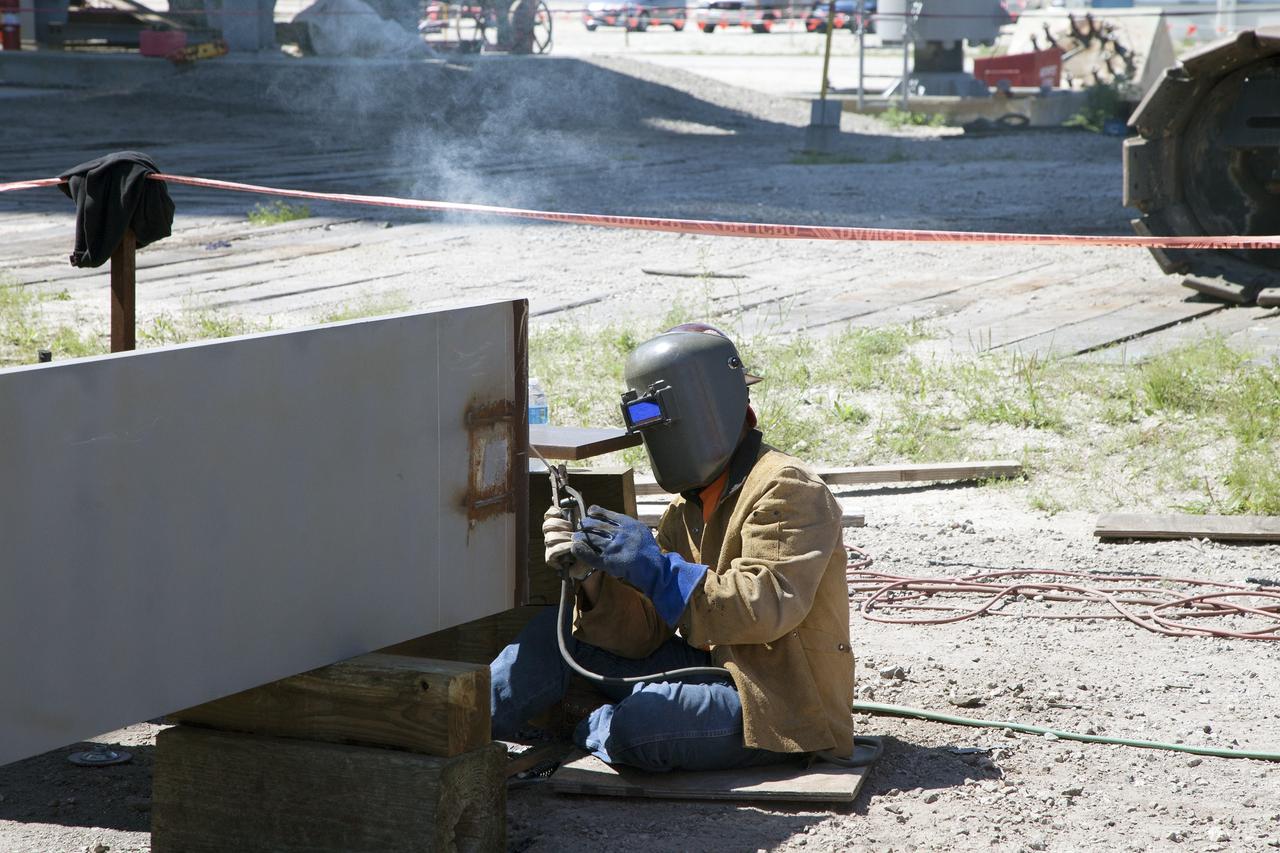
CAPE CANAVERAL, Fla. -- Modifications continue on the Mobile Launcher, or ML, at the Mobile Launcher Park Site at NASA’s Kennedy Space Center in Florida. A construction worker performs welding work on a section of steel for the exterior of the ML. In 2013, the agency awarded a contract to J.P. Donovan Construction Inc. of Rockledge, Fla., to modify the ML, which is one of the key elements of ground support equipment that is being upgraded by the Ground Systems Development and Operations Program office at Kennedy. The ML will carry the SLS rocket and Orion spacecraft to Launch Pad 39B for its first mission, Exploration Mission 1, in 2017. Photo credit: NASA/Daniel Casper
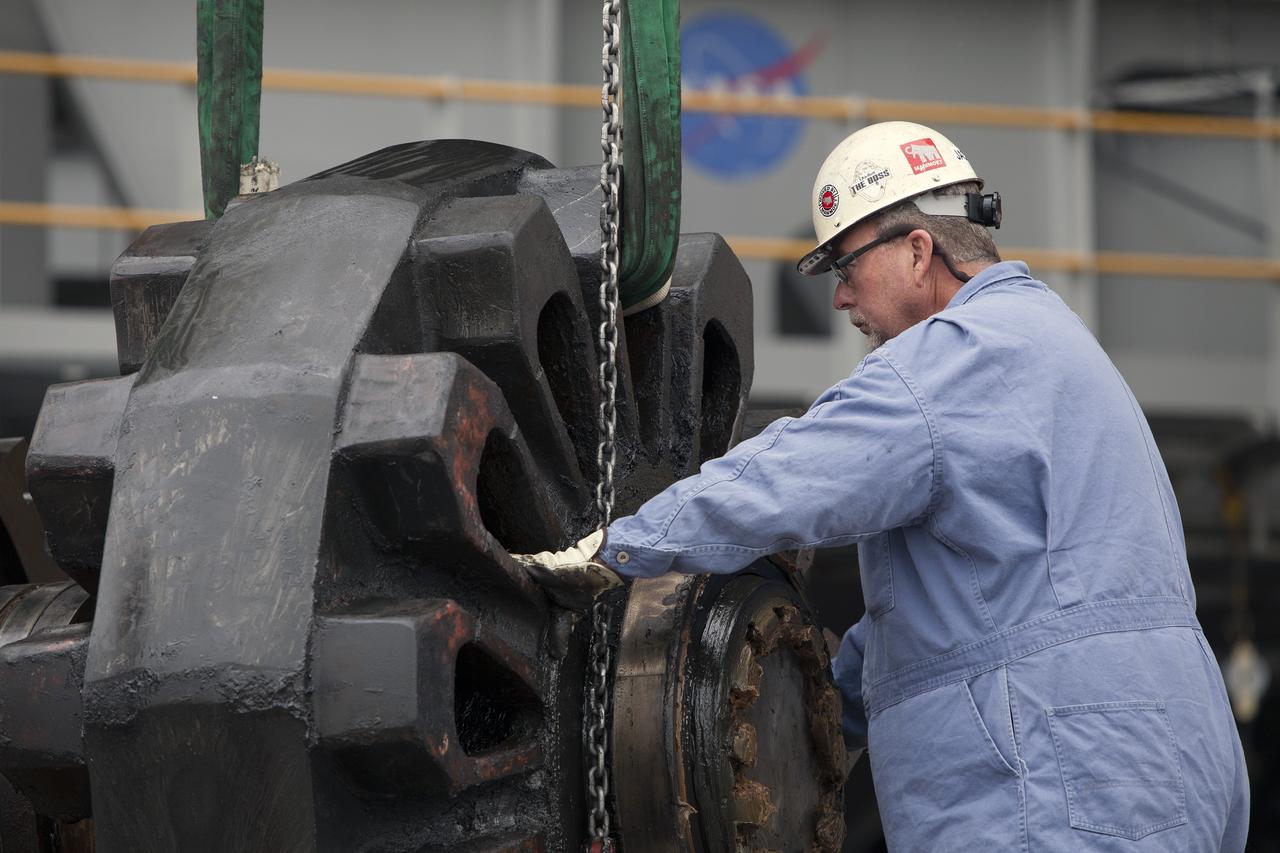
CAPE CANAVERAL, Fla. - Inside the Vehicle Assembly Building at NASA’s Kennedy Space Center in Florida, a ground support technician assists as an overhead crane lifts one of the sprocket shaft assemblies away from the C truck of crawler-transporter 2, or CT-2. The sprocket assemblies will be placed into shipping cradles on pallets and positioned on a flatbed trailer. They will be sent to a vendor for inspections and refurbishment. Work continues in high bay 2 to upgrade CT-2. The modifications are designed to ensure CT-2’s ability to transport launch vehicles currently in development, such as the agency’s Space Launch System, to the launch pad. The Ground Systems Development and Operations Program office at Kennedy is overseeing the upgrades. For more than 45 years the crawler-transporters were used to transport the mobile launcher platform and the Apollo-Saturn V rockets and, later, space shuttles to Launch Pads 39A and B. For more information, visit: http://www.nasa.gov/exploration/systems/ground/crawler-transporter. Photo credit: NASA/Dimitri Gerondidakis
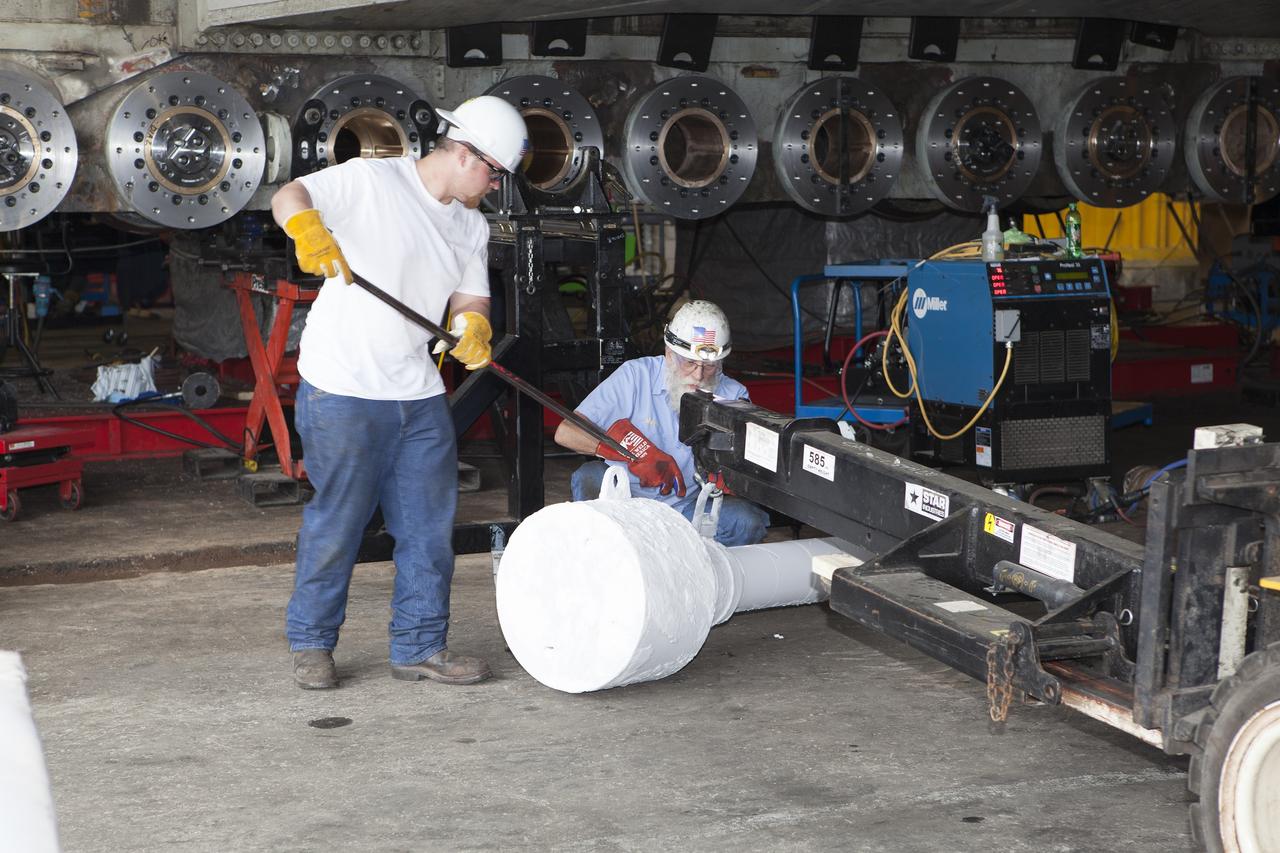
CAPE CANAVERAL, Fla. - Inside the Vehicle Assembly Building at NASA’s Kennedy Space Center in Florida, ground support technicians attach a roller bearing shaft to a forklift. The bearing is being prepared for insertion in the C truck of crawler-transporter 2, or CT-2. A section of the treads on the C truck were removed to allow access to the bearings. Work continues in high bay 2 to upgrade CT-2. The modifications are designed to ensure CT-2’s ability to transport launch vehicles currently in development, such as the agency’s Space Launch System, to the launch pad. The Ground Systems Development and Operations Program office at Kennedy is overseeing the upgrades. For more than 45 years the crawler-transporters were used to transport the mobile launcher platform and the Apollo-Saturn V rockets and, later, space shuttles to Launch Pads 39A and B. For more information, visit: http://www.nasa.gov/exploration/systems/ground/crawler-transporter. Photo credit: NASA/Dimitri Gerondidakis
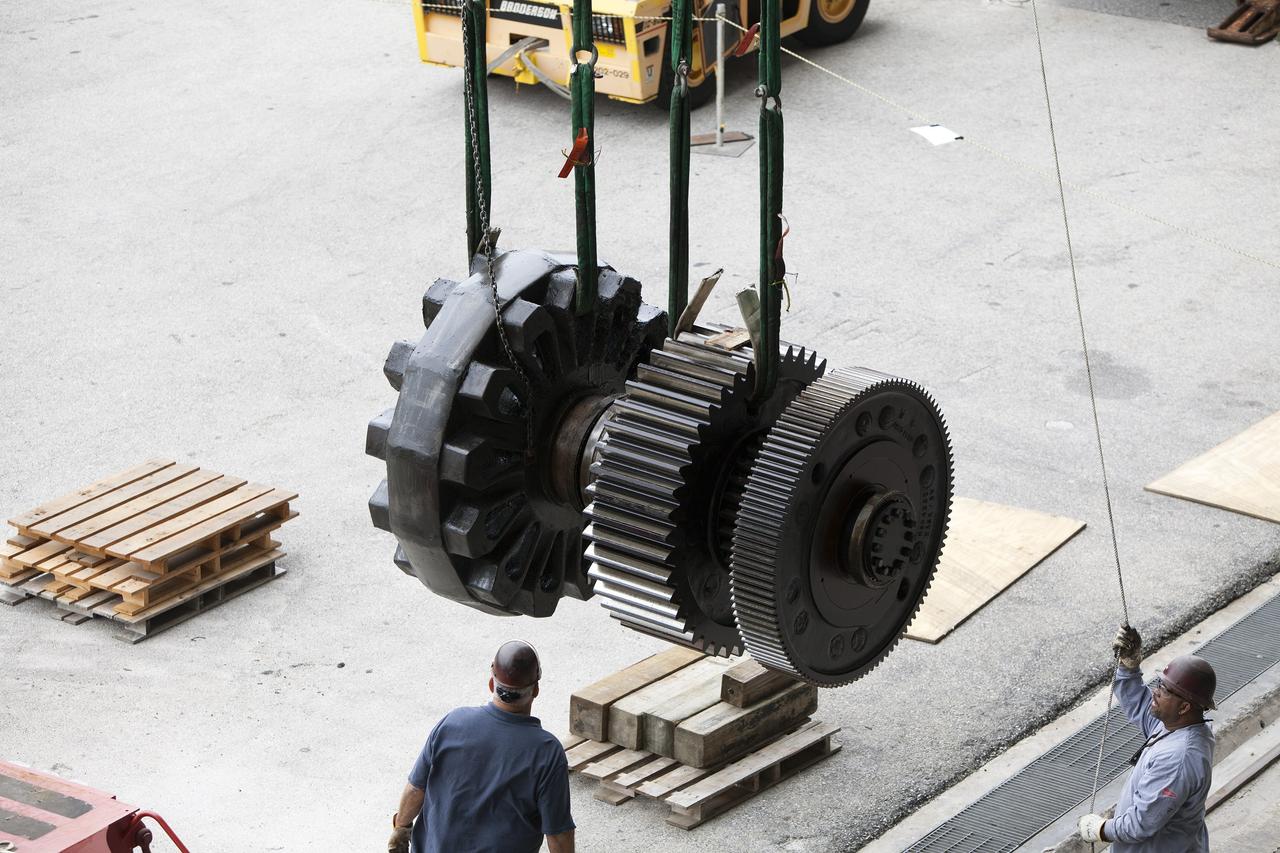
CAPE CANAVERAL, Fla. - Inside the Vehicle Assembly Building at NASA’s Kennedy Space Center in Florida, ground support technicians monitor the progress as an overhead crane moves one of the sprocket shaft assemblies away from the C truck of crawler-transporter 2, or CT-2. The sprocket assemblies will be placed into shipping cradles on pallets and positioned on a flatbed trailer. They will be sent to a vendor for inspections and refurbishment. Work continues in high bay 2 to upgrade CT-2. The modifications are designed to ensure CT-2’s ability to transport launch vehicles currently in development, such as the agency’s Space Launch System, to the launch pad. The Ground Systems Development and Operations Program office at Kennedy is overseeing the upgrades. For more than 45 years the crawler-transporters were used to transport the mobile launcher platform and the Apollo-Saturn V rockets and, later, space shuttles to Launch Pads 39A and B. For more information, visit: http://www.nasa.gov/exploration/systems/ground/crawler-transporter. Photo credit: NASA/Dimitri Gerondidakis

During a practice run, crawler-transporter 2 (CT-2), with the space shuttle-era mobile launch platform-3 (MLP-3) on top, has exited High Bay 2 of the Vehicle Assembly Building (VAB) and moves slowly along the crawlerway at NASA’s Kennedy Space Center in Florida on May 1, 2019. The VAB is getting its first commercial tenant. Northrop Grumman signed a Reimbursable Space Act Agreement with NASA for use of the facilities. The company will assemble and test its new OmegA rocket inside the massive facility’s High Bay 2. The company also will modify MLP-3 to serve as the launch vehicle’s assembly and launch platform. Northrop Grumman is developing the OmegA rocket, an intermediate/heavy-class launch vehicle, as part of a launch services agreement with the U.S. Air Force.
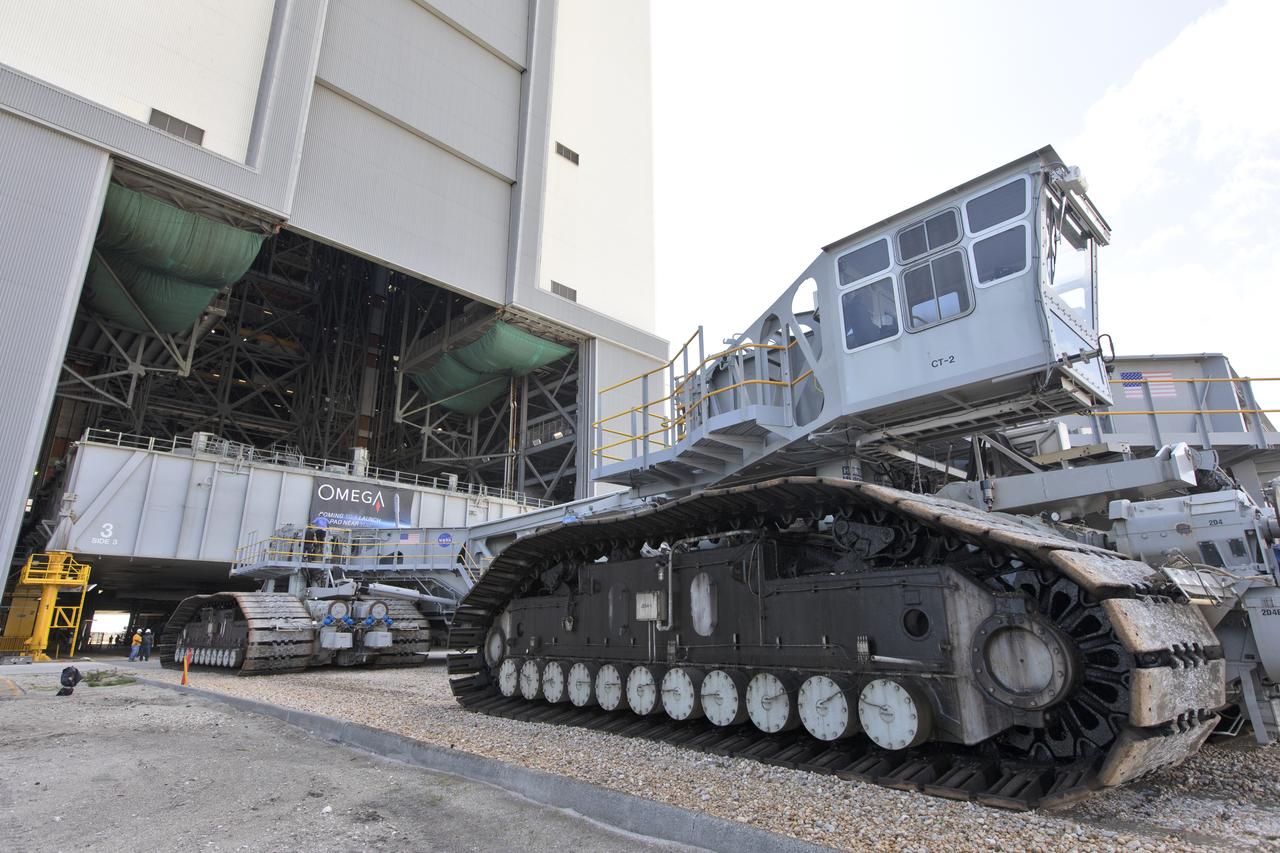
During a practice run, crawler-transporter 2 (CT-2) is at the entrance to High Bay 2 of the Vehicle Assembly Building (VAB) at NASA’s Kennedy Space Center in Florida on May 1, 2019. CT-2 entered High Bay 2, and picked up the space shuttle-era mobile launch platform-3 (MLP-3). The VAB is getting its first commercial tenant. Northrop Grumman signed a Reimbursable Space Act Agreement with NASA for use of the facilities. The company will assemble and test its new OmegA rocket inside the massive facility’s High Bay 2. The company also will modify MLP-3 to serve as the launch vehicle’s assembly and launch platform. Northrop Grumman is developing the OmegA rocket, an intermediate/heavy-class launch vehicle, as part of a launch services agreement with the U.S. Air Force.

During a practice run, crawler-transporter 2 (CT-2), with the space shuttle-era mobile launch platform-3 (MLP-3) on top, moves out of High Bay 2 of the Vehicle Assembly Building (VAB) at NASA’s Kennedy Space Center in Florida on May 1, 2019. The VAB is getting its first commercial tenant. Northrop Grumman signed a Reimbursable Space Act Agreement with NASA for use of the facilities. The company will assemble and test its new OmegA rocket inside the massive facility’s High Bay 2. The company also will modify MLP-3 to serve as the launch vehicle’s assembly and launch platform. Northrop Grumman is developing the OmegA rocket, an intermediate/heavy-class launch vehicle, as part of a launch services agreement with the U.S. Air Force.
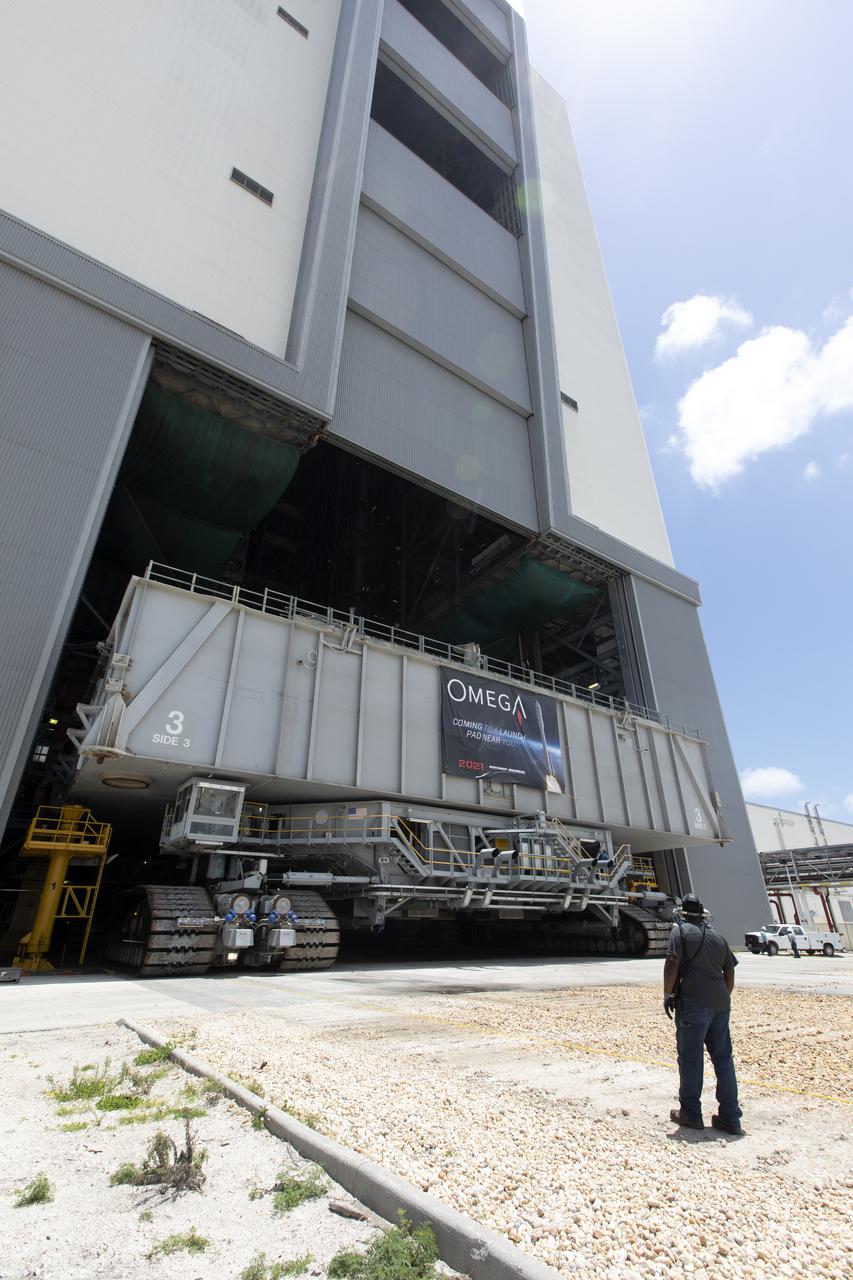
During a practice run, crawler-transporter 2 (CT-2), with the space shuttle-era mobile launch platform-3 (MLP-3) on top, begins its move out of High Bay 2 of the Vehicle Assembly Building (VAB) at NASA’s Kennedy Space Center in Florida on May 1, 2019. The VAB is getting its first commercial tenant. Northrop Grumman signed a Reimbursable Space Act Agreement with NASA for use of the facilities. The company will assemble and test its new OmegA rocket inside the massive facility’s High Bay 2. The company also will modify MLP-3 to serve as the launch vehicle’s assembly and launch platform. Northrop Grumman is developing the OmegA rocket, an intermediate/heavy-class launch vehicle, as part of a launch services agreement with the U.S. Air Force.
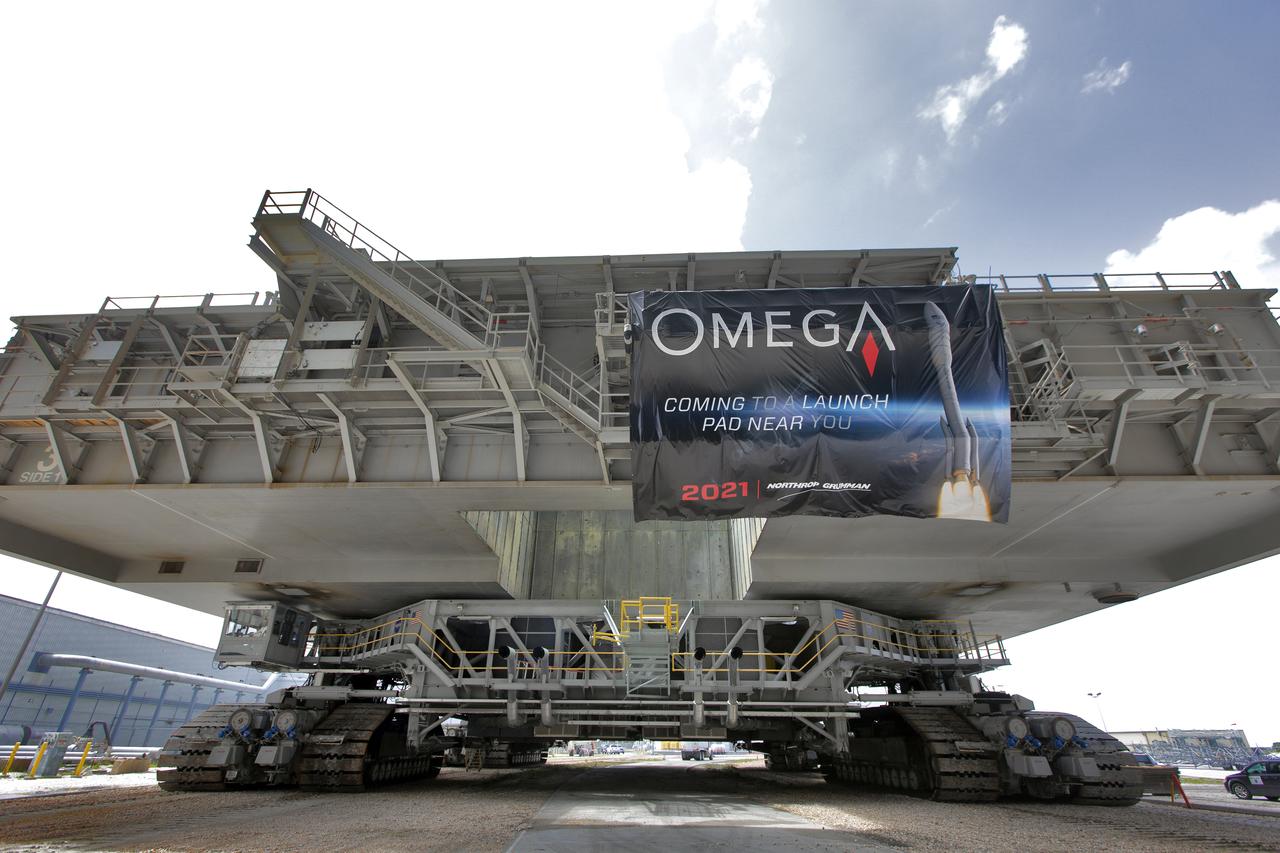
During a practice run, crawler-transporter 2 (CT-2), with the space shuttle-era mobile launch platform-3 (MLP-3) on top, has exited High Bay 2 of the Vehicle Assembly Building (VAB) and moves slowly along the crawlerway at NASA’s Kennedy Space Center in Florida on May 1, 2019. The VAB is getting its first commercial tenant. Northrop Grumman signed a Reimbursable Space Act Agreement with NASA for use of the facilities. The company will assemble and test its new OmegA rocket inside the massive facility’s High Bay 2. The company also will modify MLP-3 to serve as the launch vehicle’s assembly and launch platform. Northrop Grumman is developing the OmegA rocket, an intermediate/heavy-class launch vehicle, as part of a launch services agreement with the U.S. Air Force.
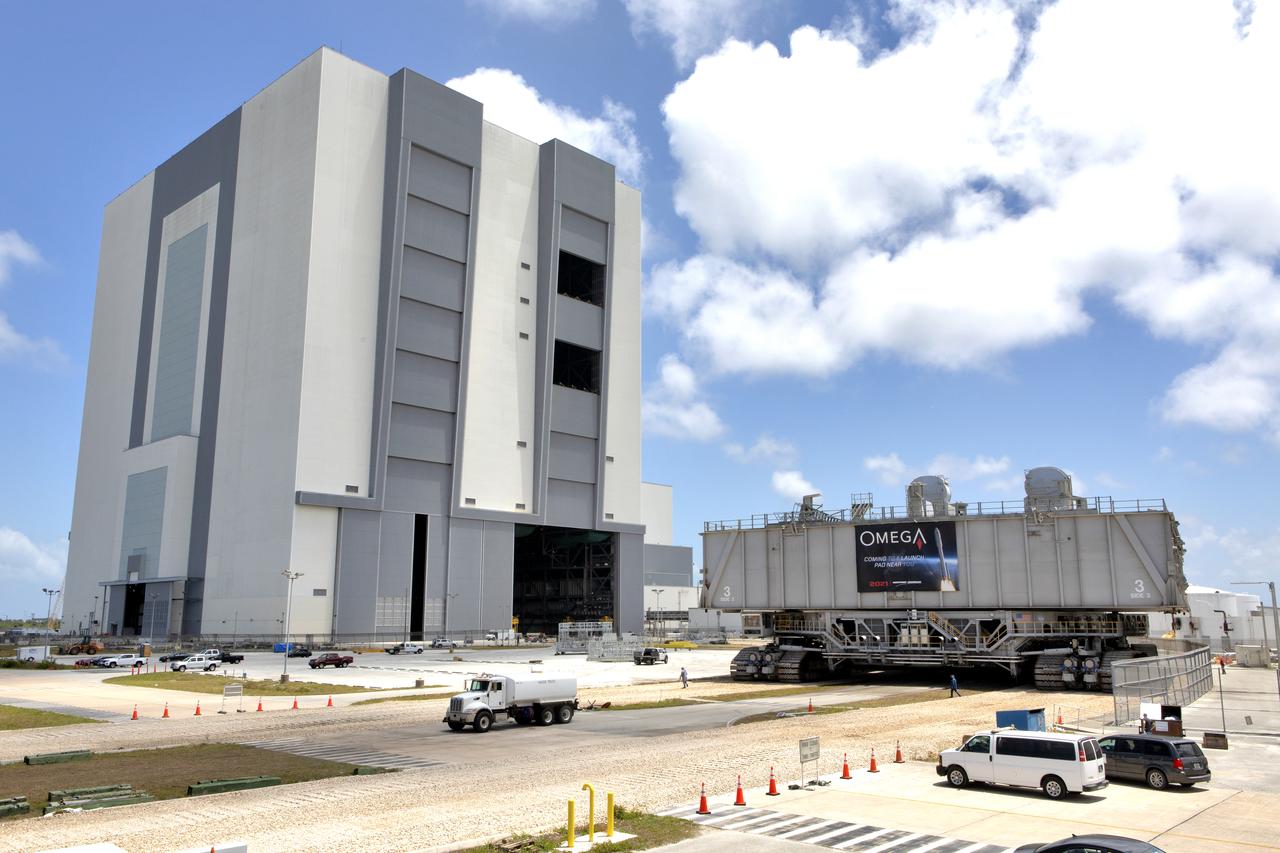
During a practice run, crawler-transporter 2 (CT-2), with the space shuttle-era mobile launch platform-3 (MLP-3) on top, has exited High Bay 2 of the Vehicle Assembly Building (VAB) and moves slowly along the crawlerway at NASA’s Kennedy Space Center in Florida on May 1, 2019. The VAB is getting its first commercial tenant. Northrop Grumman signed a Reimbursable Space Act Agreement with NASA for use of the facilities. The company will assemble and test its new OmegA rocket inside the massive facility’s High Bay 2. The company also will modify MLP-3 to serve as the launch vehicle’s assembly and launch platform. Northrop Grumman is developing the OmegA rocket, an intermediate/heavy-class launch vehicle, as part of a launch services agreement with the U.S. Air Force.

During a practice run, crawler-transporter 2 (CT-2) is at the entrance to High Bay 2 of the Vehicle Assembly Building (VAB) at NASA’s Kennedy Space Center in Florida on May 1, 2019. CT-2 entered High Bay 2, and picked up the space shuttle-era mobile launch platform-3 (MLP-3). The VAB is getting its first commercial tenant. Northrop Grumman signed a Reimbursable Space Act Agreement with NASA for use of the facilities. The company will assemble and test its new OmegA rocket inside the massive facility’s High Bay 2. The company also will modify MLP-3 to serve as the launch vehicle’s assembly and launch platform. Northrop Grumman is developing the OmegA rocket, an intermediate/heavy-class launch vehicle, as part of a launch services agreement with the U.S. Air Force.
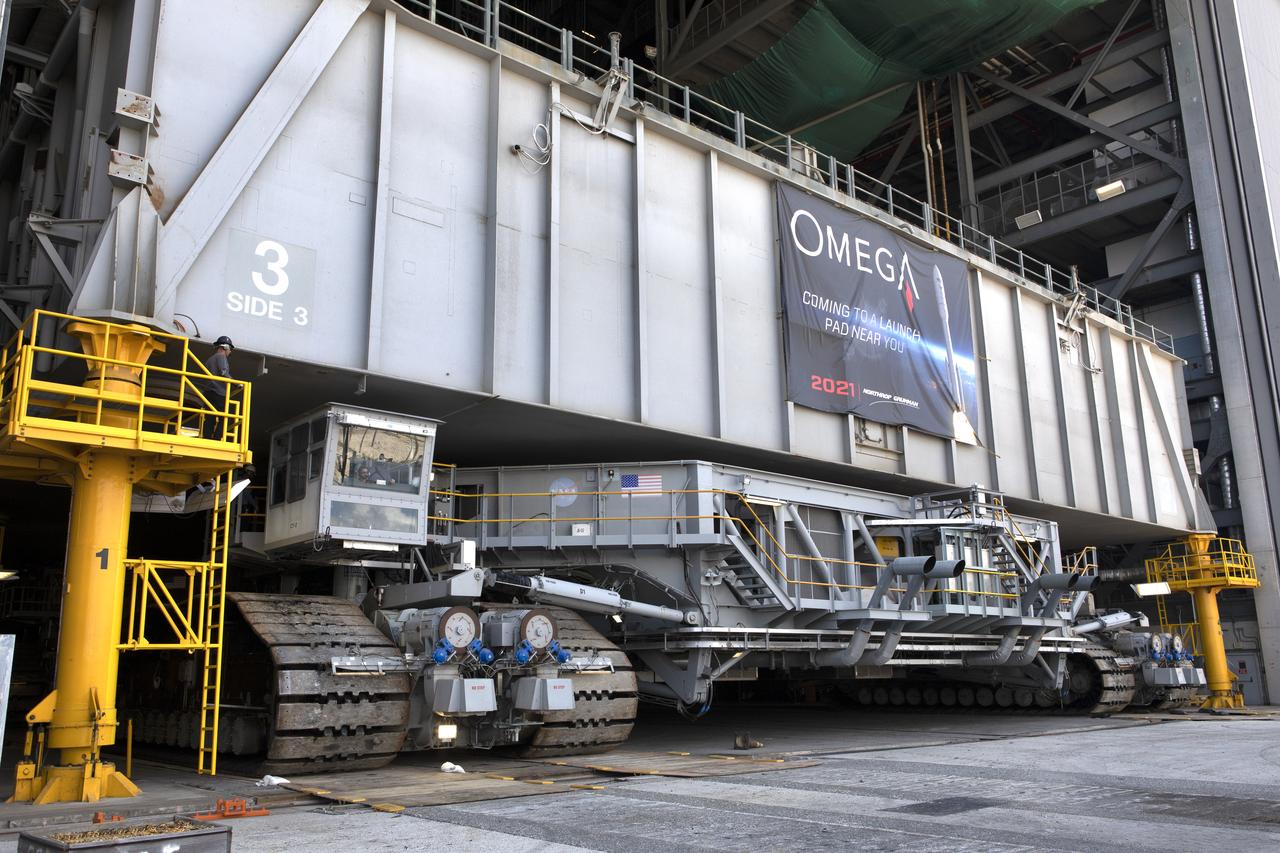
During a practice run, crawler-transporter 2 (CT-2) picked up the space shuttle-era mobile launch platform-3 (MLP-3) inside High Bay 2 of the Vehicle Assembly Building (VAB) at NASA’s Kennedy Space Center in Florida on May 1, 2019. The VAB is getting its first commercial tenant. Northrop Grumman signed a Reimbursable Space Act Agreement with NASA for use of the facilities. The company will assemble and test its new OmegA rocket inside the massive facility’s High Bay 2. The company also will modify MLP-3 to serve as the launch vehicle’s assembly and launch platform. Northrop Grumman is developing the OmegA rocket, an intermediate/heavy-class launch vehicle, as part of a launch services agreement with the U.S. Air Force.
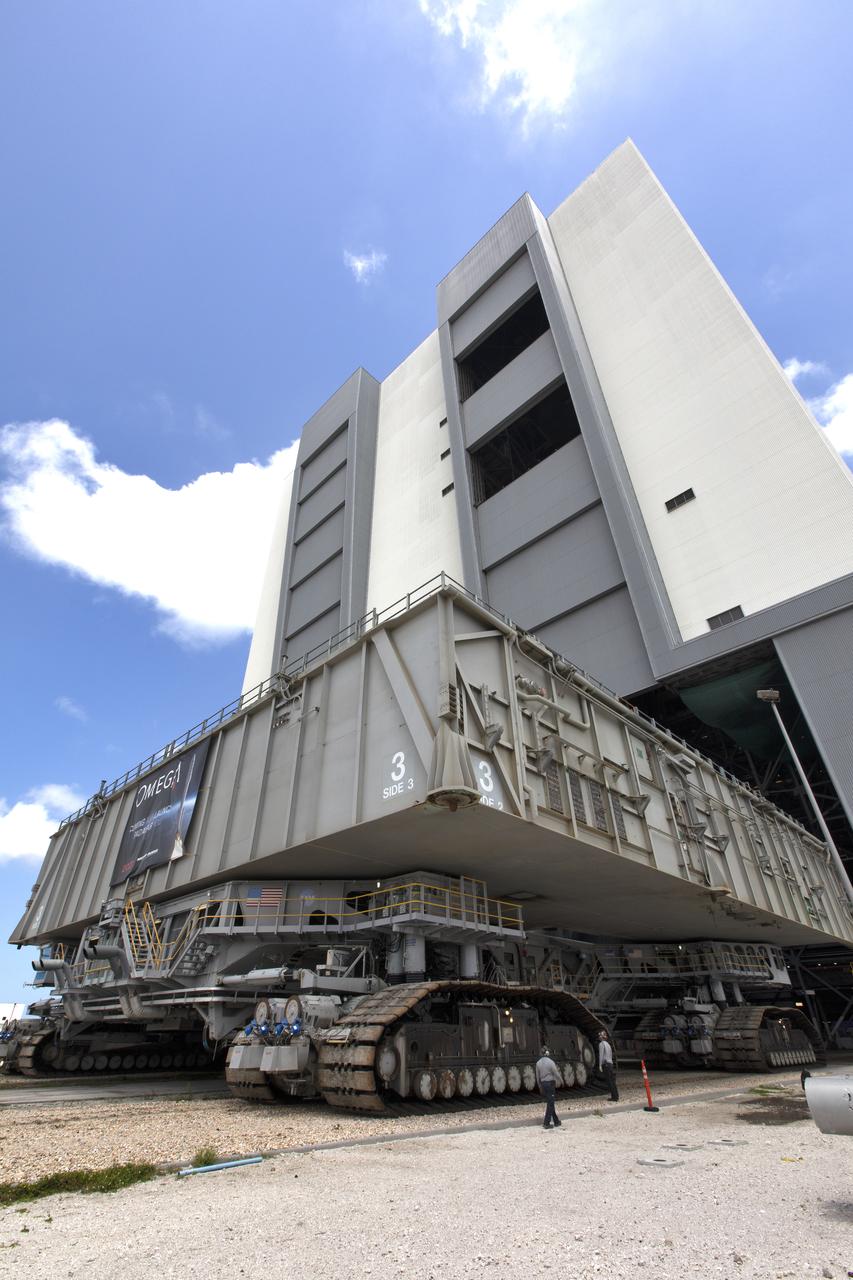
During a practice run, crawler-transporter 2 (CT-2), with the space shuttle-era mobile launch platform-3 (MLP-3) on top, moves out of High Bay 2 of the Vehicle Assembly Building (VAB) at NASA’s Kennedy Space Center in Florida on May 1, 2019. The VAB is getting its first commercial tenant. Northrop Grumman signed a Reimbursable Space Act Agreement with NASA for use of the facilities. The company will assemble and test its new OmegA rocket inside the massive facility’s High Bay 2. The company also will modify MLP-3 to serve as the launch vehicle’s assembly and launch platform. Northrop Grumman is developing the OmegA rocket, an intermediate/heavy-class launch vehicle, as part of a launch services agreement with the U.S. Air Force.
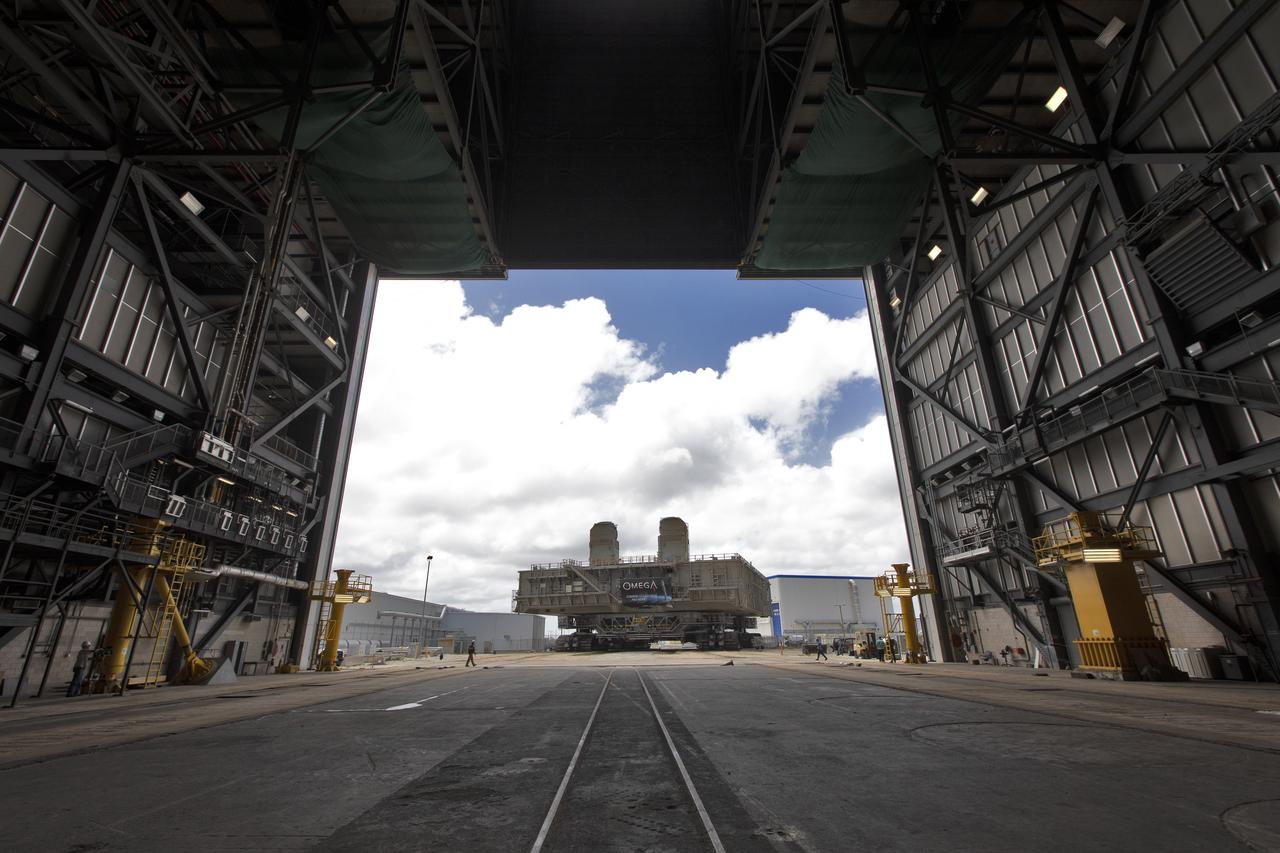
During a practice run, crawler-transporter 2 (CT-2), with the space shuttle-era mobile launch platform-3 (MLP-3) on top, has exited High Bay 2 of the Vehicle Assembly Building (VAB) and moves slowly along the crawlerway at NASA’s Kennedy Space Center in Florida on May 1, 2019. The VAB is getting its first commercial tenant. Northrop Grumman signed a Reimbursable Space Act Agreement with NASA for use of the facilities. The company will assemble and test its new OmegA rocket inside the massive facility’s High Bay 2. The company also will modify MLP-3 to serve as the launch vehicle’s assembly and launch platform. Northrop Grumman is developing the OmegA rocket, an intermediate/heavy-class launch vehicle, as part of a launch services agreement with the U.S. Air Force.

During a practice run, crawler-transporter 2 (CT-2) is moving inside High Bay 2 of the Vehicle Assembly Building (VAB) at NASA’s Kennedy Space Center in Florida on May 1, 2019. In view at right is one of the cabs used to drive the crawler. CT-2 picked up the space shuttle-era mobile launch platform-3 (MLP-3). The VAB is getting its first commercial tenant. Northrop Grumman signed a Reimbursable Space Act Agreement with NASA for use of the facilities. The company will assemble and test its new OmegA rocket inside the massive facility’s High Bay 2. The company also will modify MLP-3 to serve as the launch vehicle’s assembly and launch platform. Northrop Grumman is developing the OmegA rocket, an intermediate/heavy-class launch vehicle, as part of a launch services agreement with the U.S. Air Force.
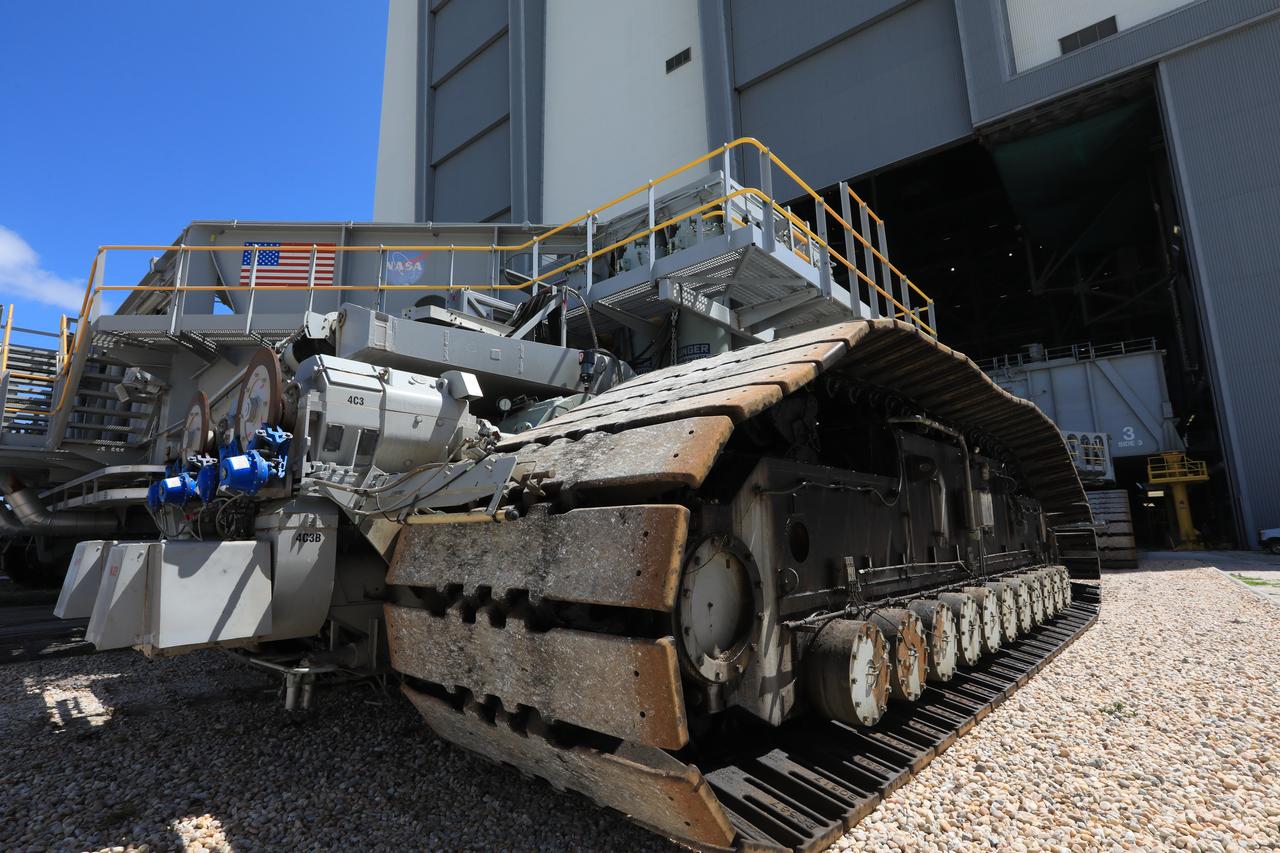
During a practice run, crawler-transporter 2 (CT-2) is at the entrance to High Bay 2 of the Vehicle Assembly Building (VAB) at NASA’s Kennedy Space Center in Florida on May 1, 2019. CT-2 entered High Bay 2, and picked up the space shuttle-era mobile launch platform-3 (MLP-3). The VAB is getting its first commercial tenant. Northrop Grumman signed a Reimbursable Space Act Agreement with NASA for use of the facilities. The company will assemble and test its new OmegA rocket inside the massive facility’s High Bay 2. The company also will modify MLP-3 to serve as the launch vehicle’s assembly and launch platform. Northrop Grumman is developing the OmegA rocket, an intermediate/heavy-class launch vehicle, as part of a launch services agreement with the U.S. Air Force.
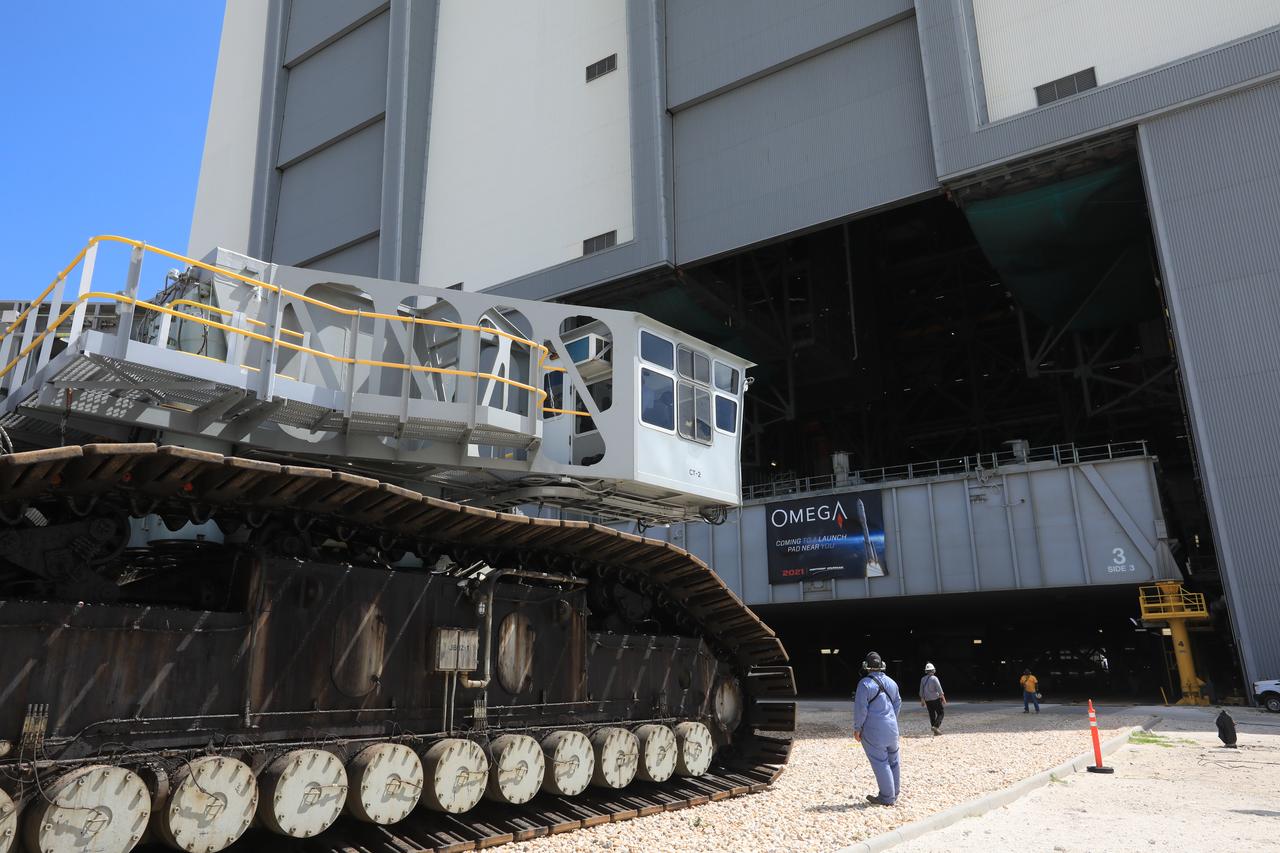
During a practice run, crawler-transporter 2 (CT-2) is being driven to the Vehicle Assembly Building (VAB) at NASA’s Kennedy Space Center in Florida on May 1, 2019. CT-2 entered High Bay 2, and picked up the space shuttle-era mobile launch platform-3 (MLP-3). The VAB is getting its first commercial tenant. Northrop Grumman signed a Reimbursable Space Act Agreement with NASA for use of the facilities. The company will assemble and test its new OmegA rocket inside the massive facility’s High Bay 2. The company also will modify MLP-3 to serve as the launch vehicle’s assembly and launch platform. Northrop Grumman is developing the OmegA rocket, an intermediate/heavy-class launch vehicle, as part of a launch services agreement with the U.S. Air Force.

During a practice run, crawler-transporter 2 (CT-2) is being driven to the Vehicle Assembly Building (VAB) at NASA’s Kennedy Space Center in Florida on May 1, 2019. CT-2 entered High Bay 2, and picked up the space shuttle-era mobile launch platform-3 (MLP-3). The VAB is getting its first commercial tenant. Northrop Grumman signed a Reimbursable Space Act Agreement with NASA for use of the facilities. The company will assemble and test its new OmegA rocket inside the massive facility’s High Bay 2. The company also will modify MLP-3 to serve as the launch vehicle’s assembly and launch platform. Northrop Grumman is developing the OmegA rocket, an intermediate/heavy-class launch vehicle, as part of a launch services agreement with the U.S. Air Force.
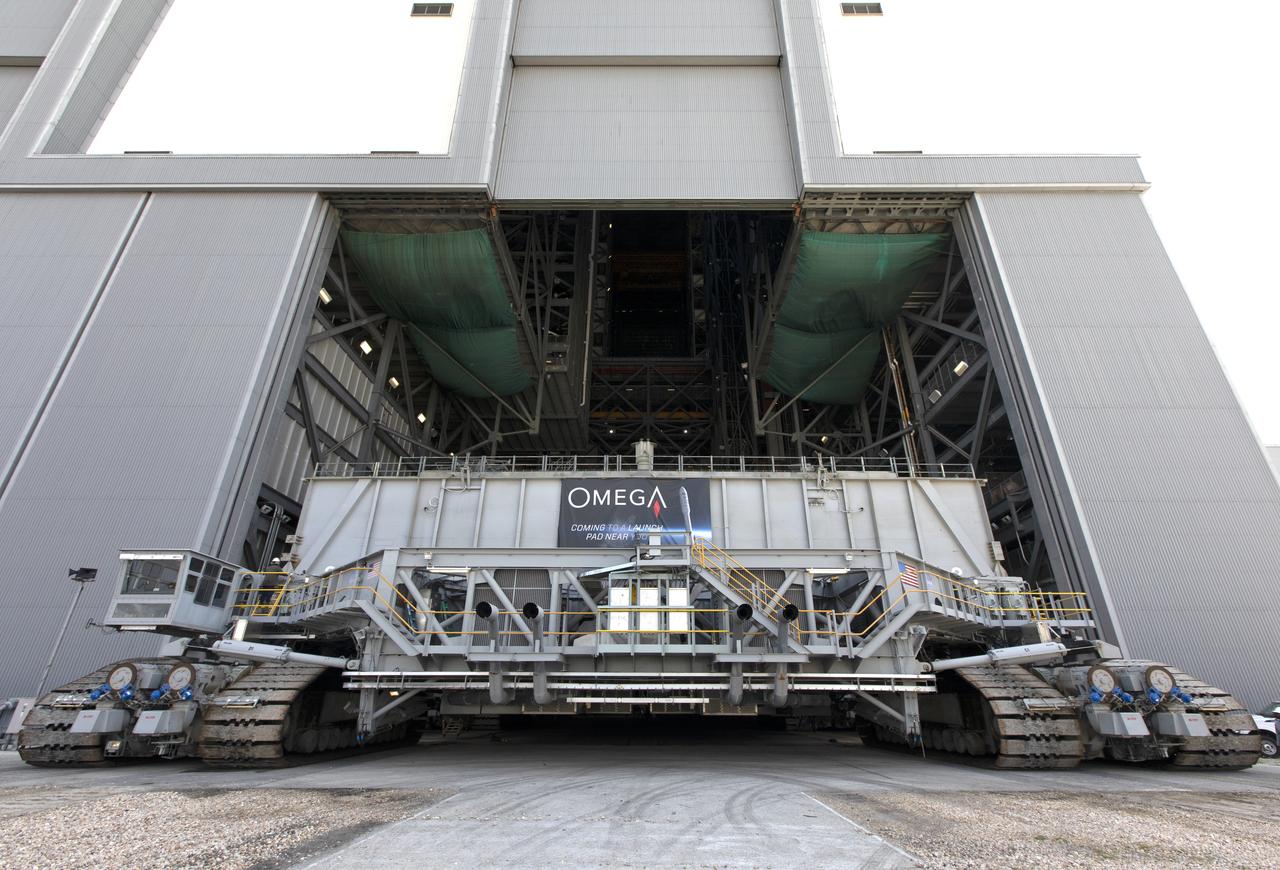
During a practice run, crawler-transporter 2 (CT-2) is moving inside High Bay 2 of the Vehicle Assembly Building (VAB) at NASA’s Kennedy Space Center in Florida on May 1, 2019. CT-2 picked up the space shuttle-era mobile launch platform-3 (MLP-3). The VAB is getting its first commercial tenant. Northrop Grumman signed a Reimbursable Space Act Agreement with NASA for use of the facilities. The company will assemble and test its new OmegA rocket inside the massive facility’s High Bay 2. The company also will modify MLP-3 to serve as the launch vehicle’s assembly and launch platform. Northrop Grumman is developing the OmegA rocket, an intermediate/heavy-class launch vehicle, as part of a launch services agreement with the U.S. Air Force.
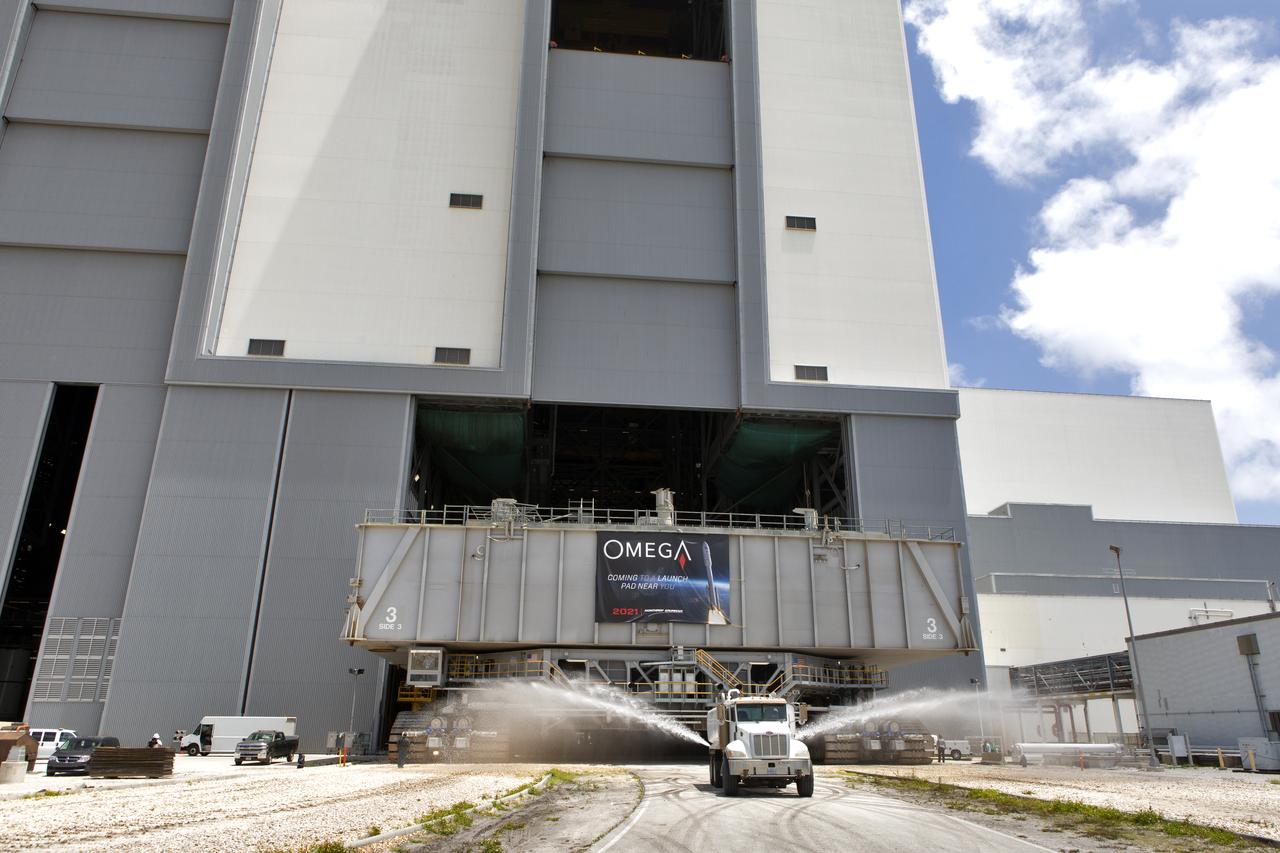
During a practice run, crawler-transporter 2 (CT-2), with the space shuttle-era mobile launch platform-3 (MLP-3) on top, moves out of High Bay 2 of the Vehicle Assembly Building (VAB) at NASA’s Kennedy Space Center in Florida on May 1, 2019. A truck in front sprays water to reduce dust on the crawlerway. The VAB is getting its first commercial tenant. Northrop Grumman signed a Reimbursable Space Act Agreement with NASA for use of the facilities. The company will assemble and test its new OmegA rocket inside the massive facility’s High Bay 2. The company also will modify MLP-3 to serve as the launch vehicle’s assembly and launch platform. Northrop Grumman is developing the OmegA rocket, an intermediate/heavy-class launch vehicle, as part of a launch services agreement with the U.S. Air Force.
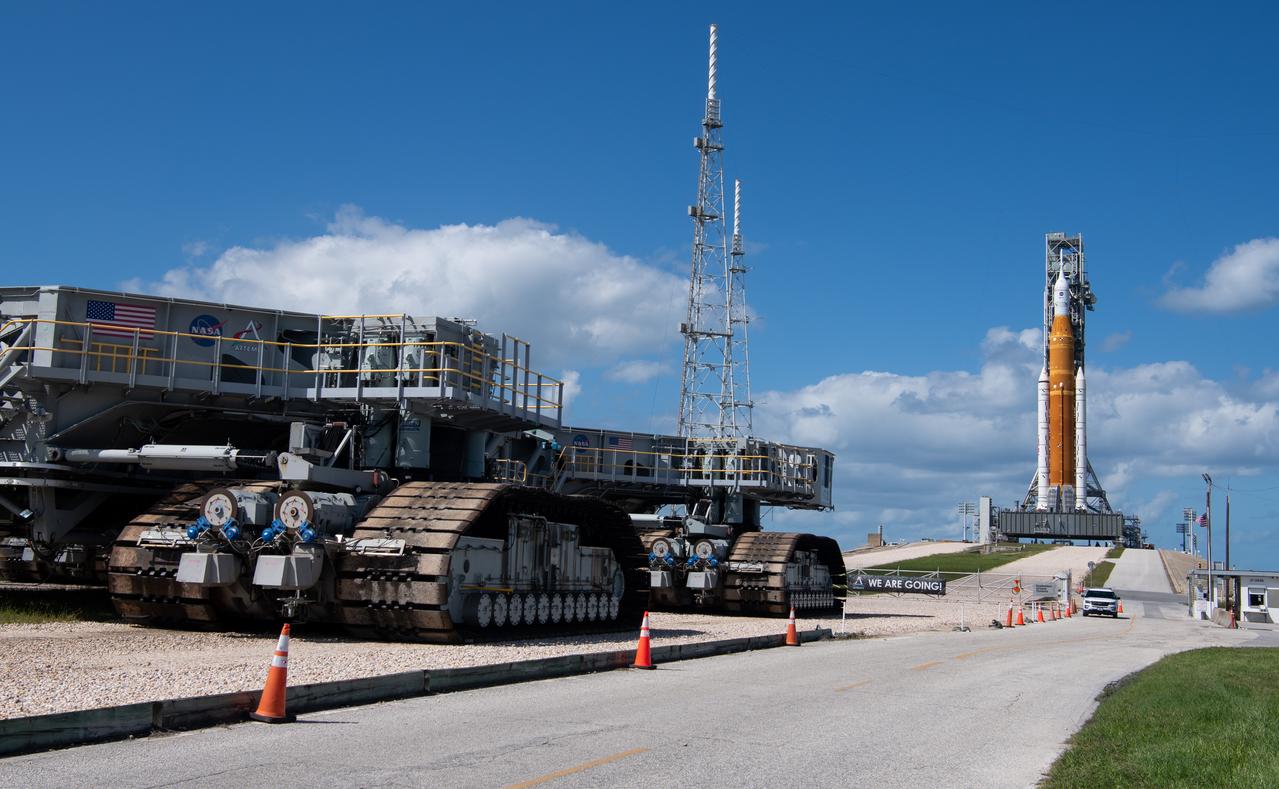
Crawler Transporter-2 (CT-2) is seen outside the gates at Launch Pad 39B as teams configure systems for rolling NASA’s Space Launch System (SLS) rocket and Orion spacecraft back to the Vehicle Assembly Building, Saturday, Sept. 24, 2022, at NASA’s Kennedy Space Center in Florida. NASA is foregoing a launch opportunity on Tues. Sept. 27 and continues to watch the weather forecast associated with Tropical Storm Ian. The NASA’s Artemis I flight test is the first integrated test of the agency’s deep space exploration systems: the Orion spacecraft, SLS rocket, and supporting ground systems. Photo Credit: (NASA/Joel Kowsky)
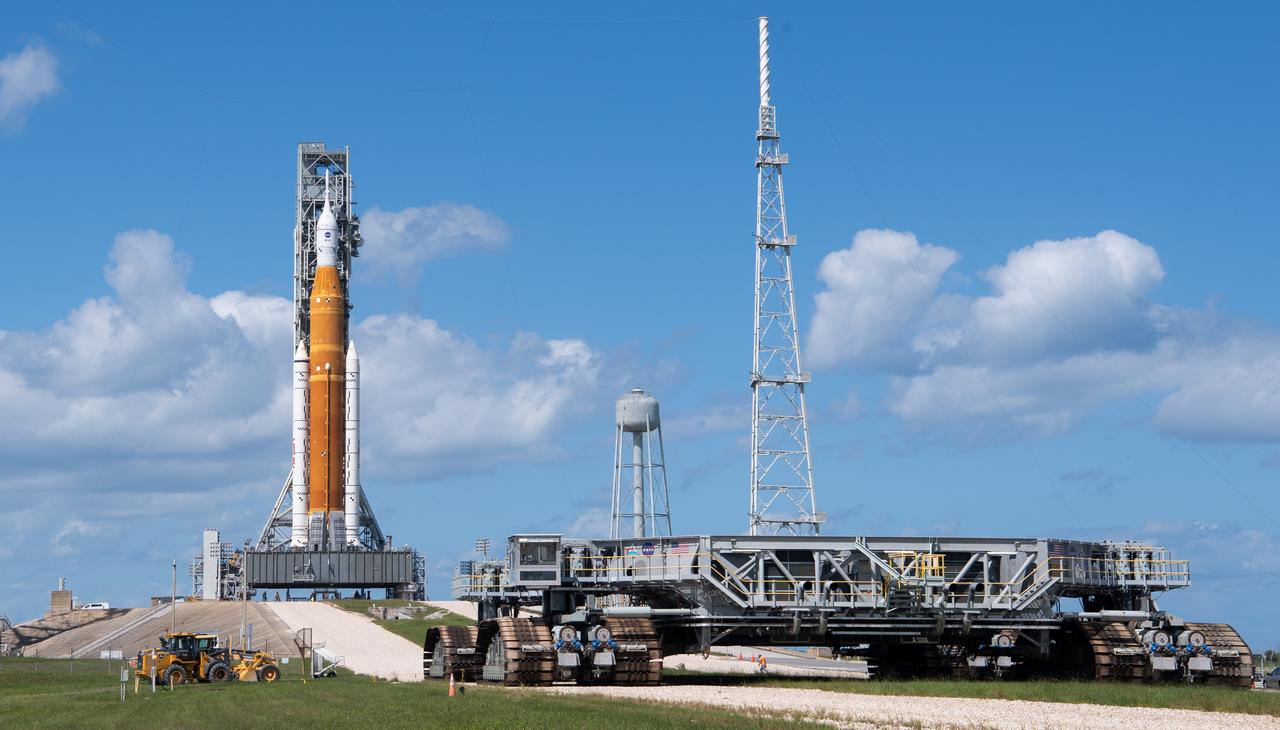
Crawler Transporter-2 (CT-2) is seen outside the gates at Launch Pad 39B as teams configure systems for rolling NASA’s Space Launch System (SLS) rocket and Orion spacecraft back to the Vehicle Assembly Building, Saturday, Sept. 24, 2022, at NASA’s Kennedy Space Center in Florida. NASA is foregoing a launch opportunity on Tues. Sept. 27 and continues to watch the weather forecast associated with Tropical Storm Ian. The NASA’s Artemis I flight test is the first integrated test of the agency’s deep space exploration systems: the Orion spacecraft, SLS rocket, and supporting ground systems. Photo Credit: (NASA/Joel Kowsky)