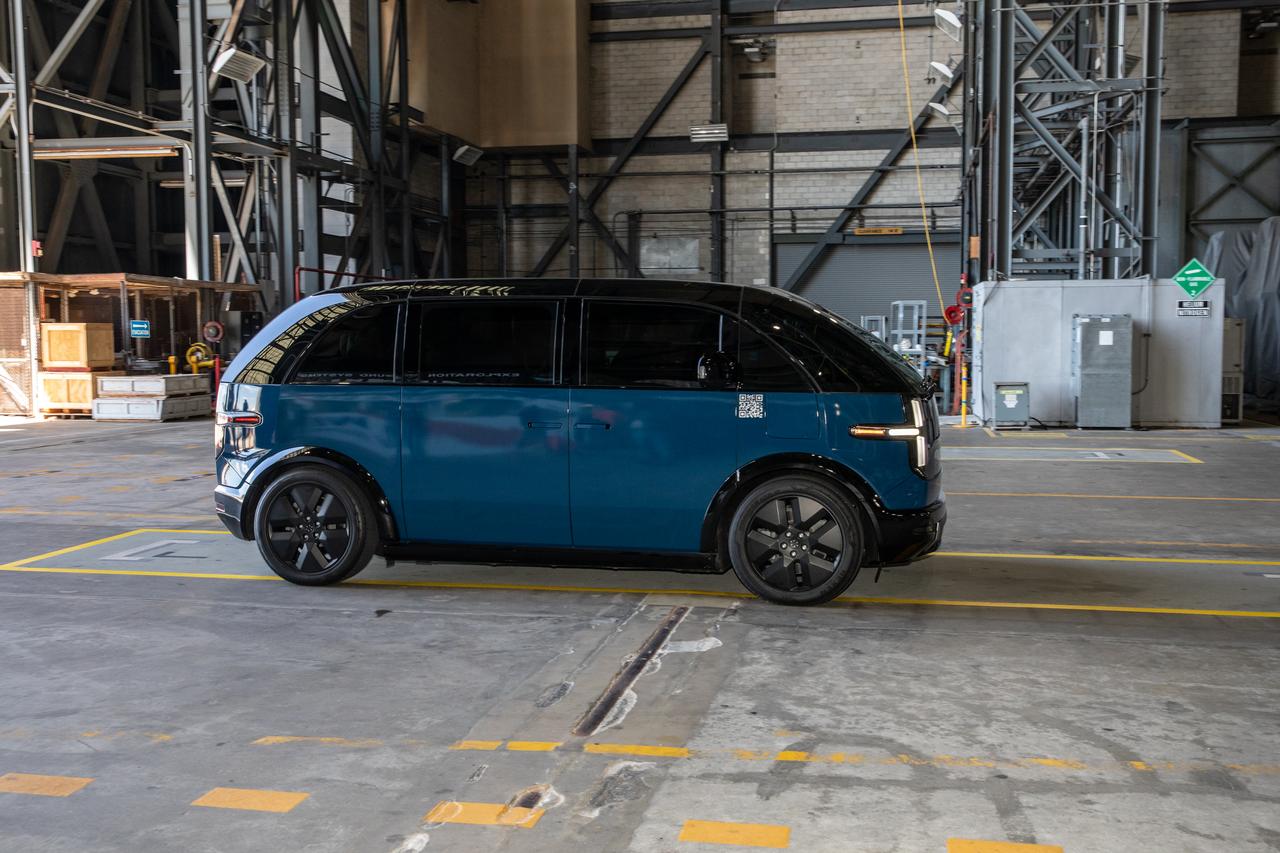
A concept design of a crew transportation vehicle (CTV) for Artemis crewed missions is driven inside the transfer aisle of the Vehicle Assembly Building at NASA’s Kennedy Space Center in Florida on May 11, 2022. Canoo Technologies Inc., was awarded a contract to design and provide the next generation of CTVs for the Artemis crewed missions. Representatives with Canoo were at the spaceport demonstrating the environmentally friendly fleet of vehicles. Artemis II will be the first Artemis mission flying crew aboard Orion. In later missions, NASA will land the first woman and the first person of color on the surface of the Moon, paving the way for a long-term lunar presence and serving as a steppingstone on the way to Mars.

Several concept designs for Artemis crew transportation vehicles (CTV) are lined up at Launch Complex 39B at NASA’s Kennedy Space Center in Florida on May 11, 2022. Canoo Technologies Inc., was awarded a contract to design and provide the next generation of CTVs for the Artemis crewed missions. Representatives with Canoo were at the spaceport demonstrating the environmentally friendly fleet of vehicles. Artemis II will be the first Artemis mission flying crew aboard Orion. In later missions, NASA will land the first woman and the first person of color on the surface of the Moon, paving the way for a long-term lunar presence and serving as a steppingstone on the way to Mars.

Several concept designs for Artemis crew transportation vehicles (CTV) are lined up in the transfer aisle of the Vehicle Assembly Building at NASA’s Kennedy Space Center in Florida on May 11, 2022. Canoo Technologies Inc., was awarded a contract to design and provide the next generation of CTVs for the Artemis crewed missions. Representatives with Canoo were at the spaceport demonstrating the environmentally friendly fleet of vehicles. Artemis II will be the first Artemis mission flying crew aboard Orion. In later missions, NASA will land the first woman and the first person of color on the surface of the Moon, paving the way for a long-term lunar presence and serving as a steppingstone on the way to Mars.
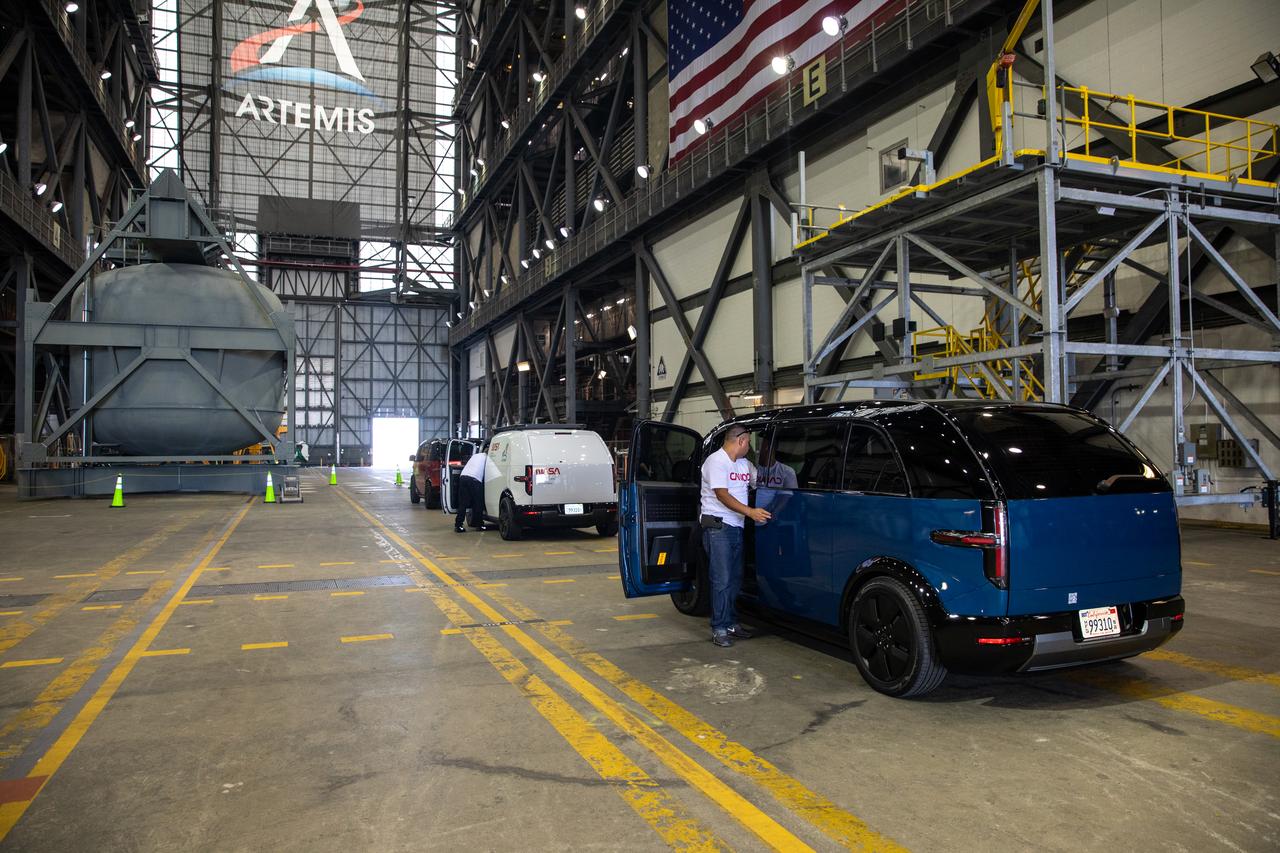
Several concept designs for Artemis crew transportation vehicles (CTV) are lined up in the transfer aisle of the Vehicle Assembly Building at NASA’s Kennedy Space Center in Florida on May 11, 2022. Canoo Technologies Inc., was awarded a contract to design and provide the next generation of CTVs for the Artemis crewed missions. Representatives with Canoo were at the spaceport demonstrating the environmentally friendly fleet of vehicles. Artemis II will be the first Artemis mission flying crew aboard Orion. In later missions, NASA will land the first woman and the first person of color on the surface of the Moon, paving the way for a long-term lunar presence and serving as a steppingstone on the way to Mars.
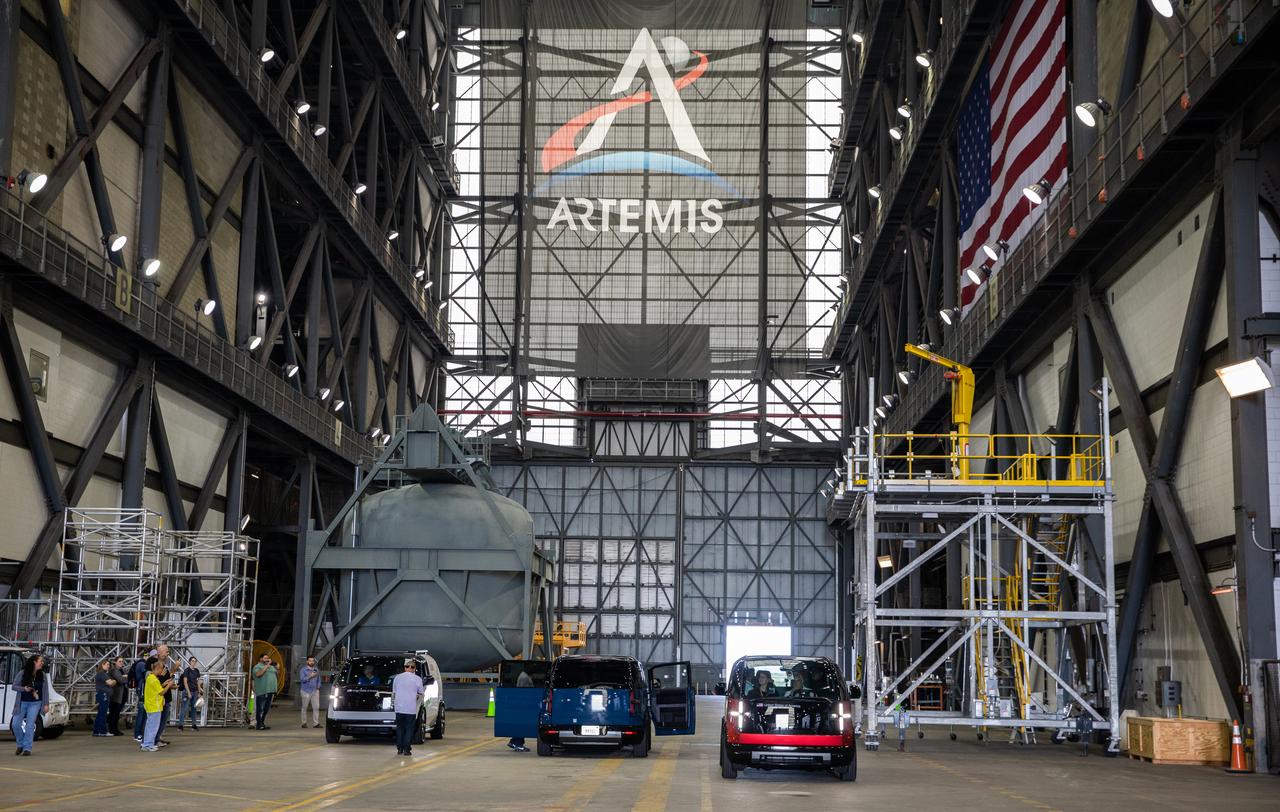
Several concept designs for Artemis crew transportation vehicles (CTV) are lined up in the transfer aisle of the Vehicle Assembly Building at NASA’s Kennedy Space Center in Florida on May 11, 2022. Canoo Technologies Inc., was awarded a contract to design and provide the next generation of CTVs for the Artemis crewed missions. Representatives with Canoo were at the spaceport demonstrating the environmentally friendly fleet of vehicles. Artemis II will be the first Artemis mission flying crew aboard Orion. In later missions, NASA will land the first woman and the first person of color on the surface of the Moon, paving the way for a long-term lunar presence and serving as a steppingstone on the way to Mars.
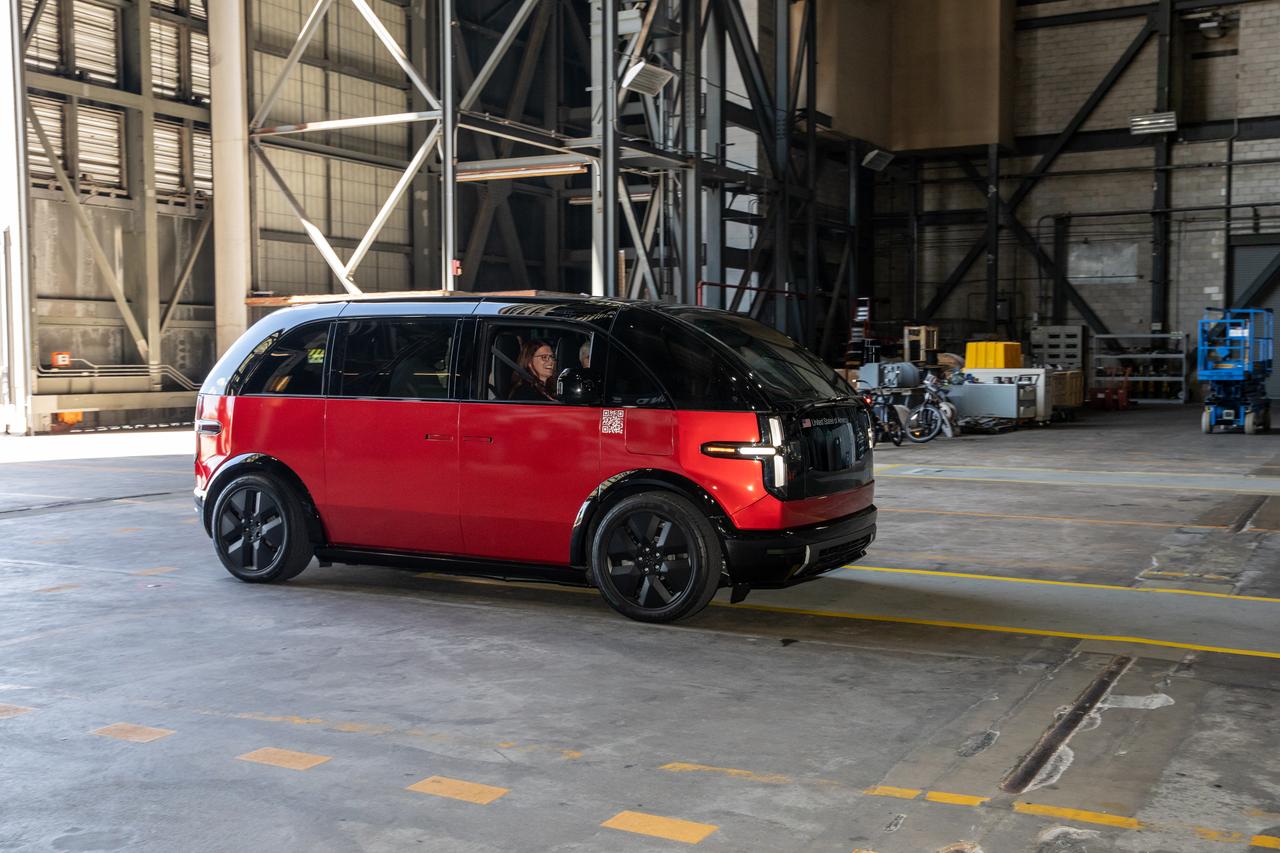
A concept design of a crew transportation vehicle (CTV) for Artemis crewed missions is driven inside the transfer aisle of the Vehicle Assembly Building at NASA’s Kennedy Space Center in Florida on May 11, 2022. Canoo Technologies Inc., was awarded a contract to design and provide the next generation of CTVs for the Artemis crewed missions. Representatives with Canoo were at the spaceport demonstrating the environmentally friendly fleet of vehicles. Artemis II will be the first Artemis mission flying crew aboard Orion. In later missions, NASA will land the first woman and the first person of color on the surface of the Moon, paving the way for a long-term lunar presence and serving as a steppingstone on the way to Mars.
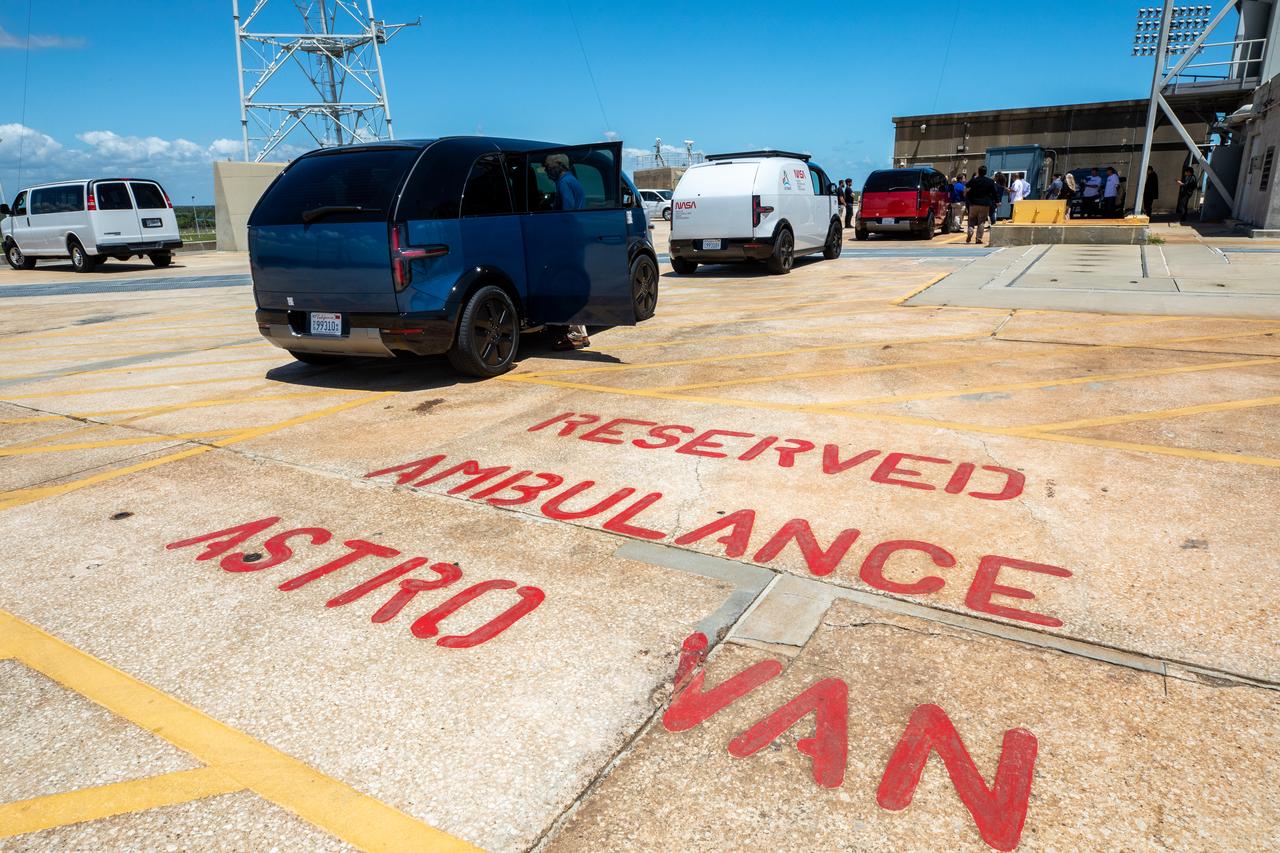
Several concept designs for Artemis crew transportation vehicles (CTV) are lined up at Launch Complex 39B at NASA’s Kennedy Space Center in Florida on May 11, 2022. Canoo Technologies Inc., was awarded a contract to design and provide the next generation of CTVs for the Artemis crewed missions. Representatives with Canoo were at the spaceport demonstrating the environmentally friendly fleet of vehicles. Artemis II will be the first Artemis mission flying crew aboard Orion. In later missions, NASA will land the first woman and the first person of color on the surface of the Moon, paving the way for a long-term lunar presence and serving as a steppingstone on the way to Mars.
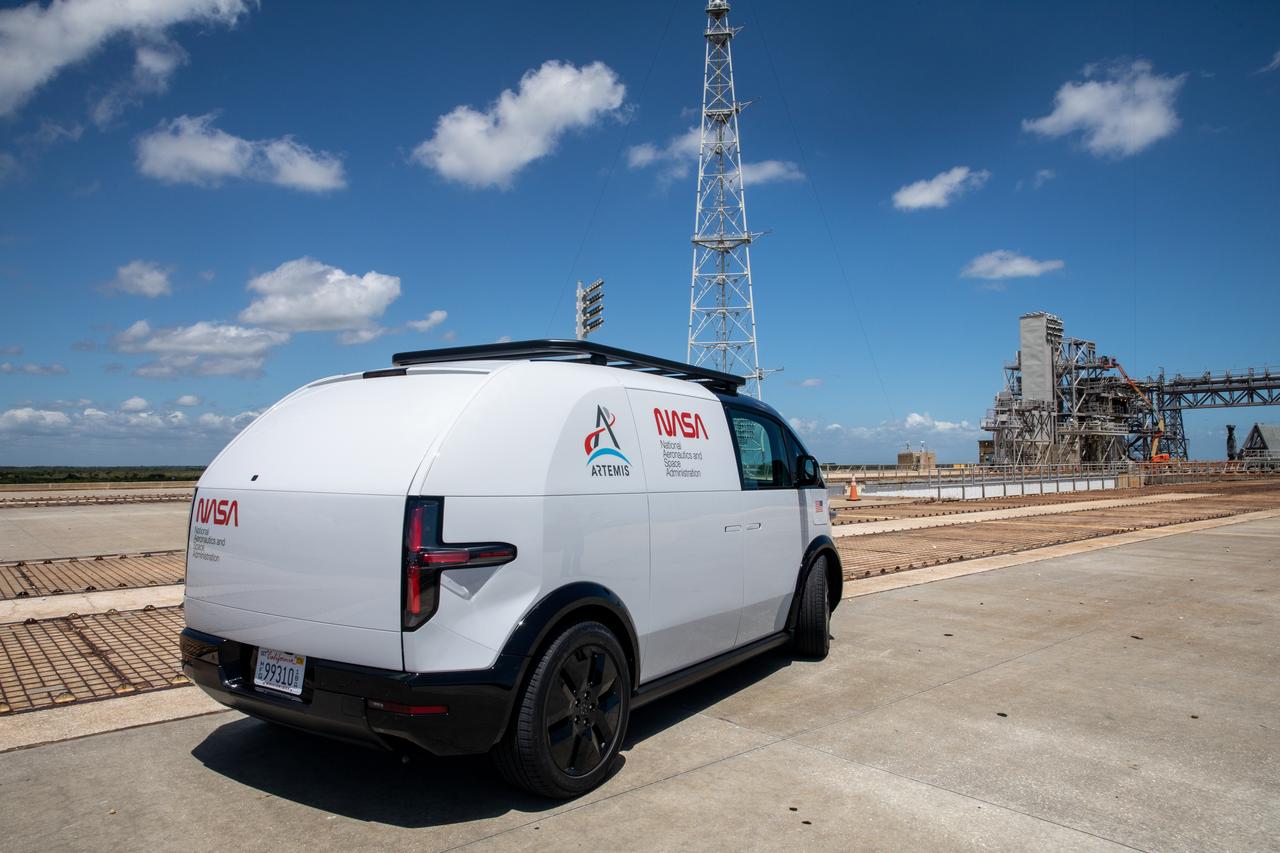
Prototypes of the crew transportation vehicle (CTV) for Artemis crewed missions are driven out to Launch Complex 39B at NASA’s Kennedy Space Center in Florida on May 11, 2022. Canoo Technologies Inc., was awarded a contract to design and provide the next generation of CTVs for the Artemis crewed missions. Representatives with Canoo were at the spaceport demonstrating the environmentally friendly fleet of vehicles. Artemis II will be the first Artemis mission flying crew aboard Orion. In later missions, NASA will land the first woman and the first person of color on the surface of the Moon, paving the way for a long-term lunar presence and serving as a steppingstone on the way to Mars.
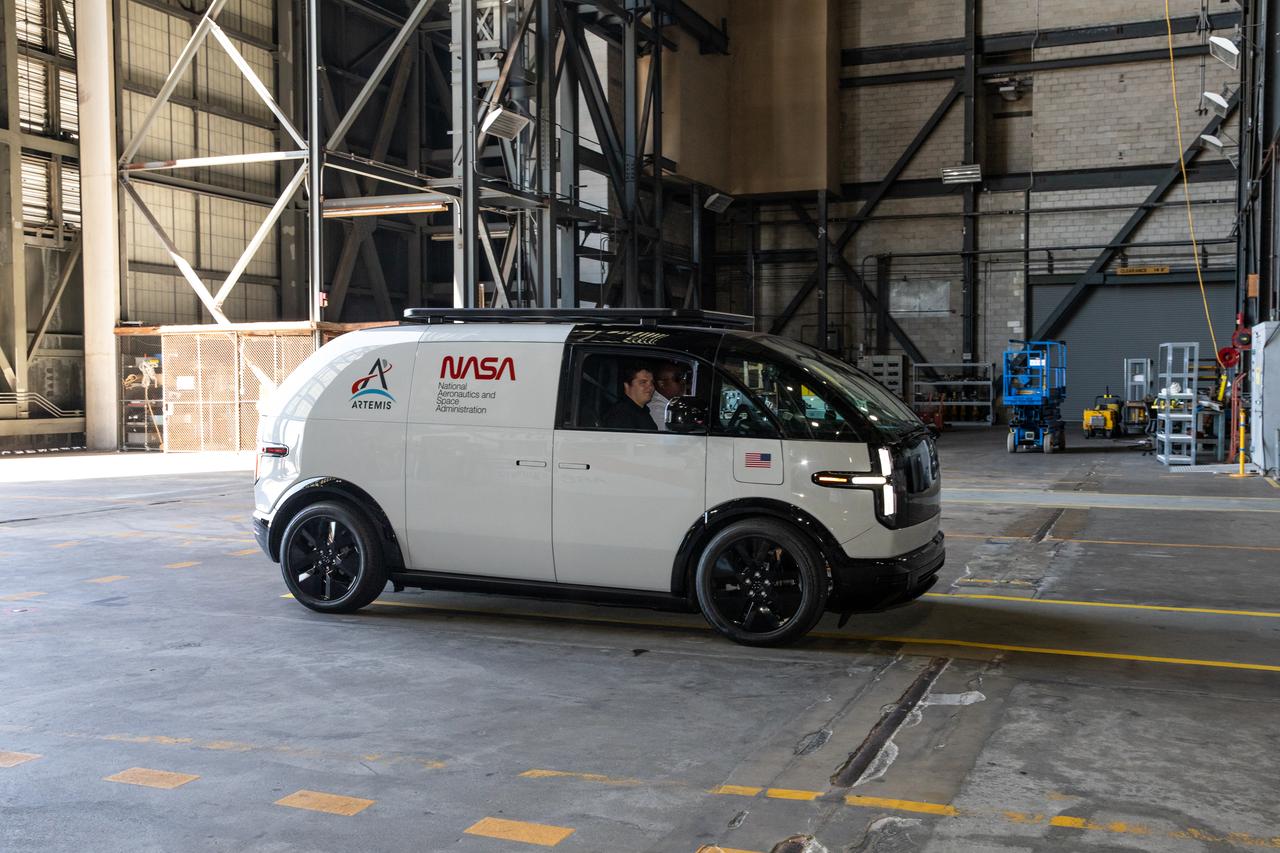
A concept design of a crew transportation vehicle (CTV) for Artemis crewed missions is driven inside the transfer aisle of the Vehicle Assembly Building at NASA’s Kennedy Space Center in Florida on May 11, 2022. Canoo Technologies Inc., was awarded a contract to design and provide the next generation of CTVs for the Artemis crewed missions. Representatives with Canoo were at the spaceport demonstrating the environmentally friendly fleet of vehicles. Artemis II will be the first Artemis mission flying crew aboard Orion. In later missions, NASA will land the first woman and the first person of color on the surface of the Moon, paving the way for a long-term lunar presence and serving as a steppingstone on the way to Mars.
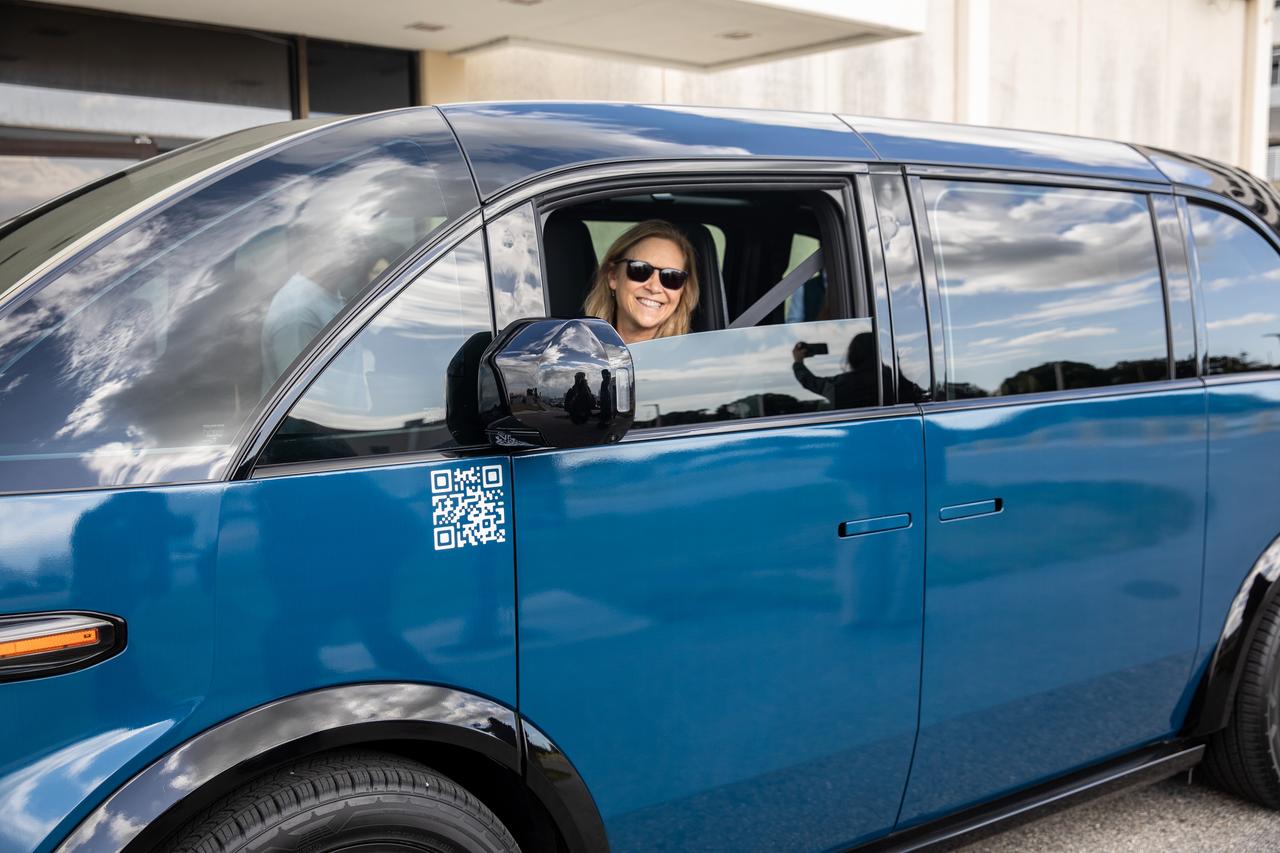
Kennedy Space Center Director Janet Petro test drives a concept design crew transportation vehicle (CTV) for Artemis crewed missions on May 11, 2022. Canoo Technologies Inc., was awarded a contract to design and provide the next generation of CTVs for the Artemis crewed missions. Representatives with Canoo were at the spaceport demonstrating the environmentally friendly fleet of vehicles. Artemis II will be the first Artemis mission flying crew aboard Orion. In later missions, NASA will land the first woman and the first person of color on the surface of the Moon, paving the way for a long-term lunar presence and serving as a steppingstone on the way to Mars.
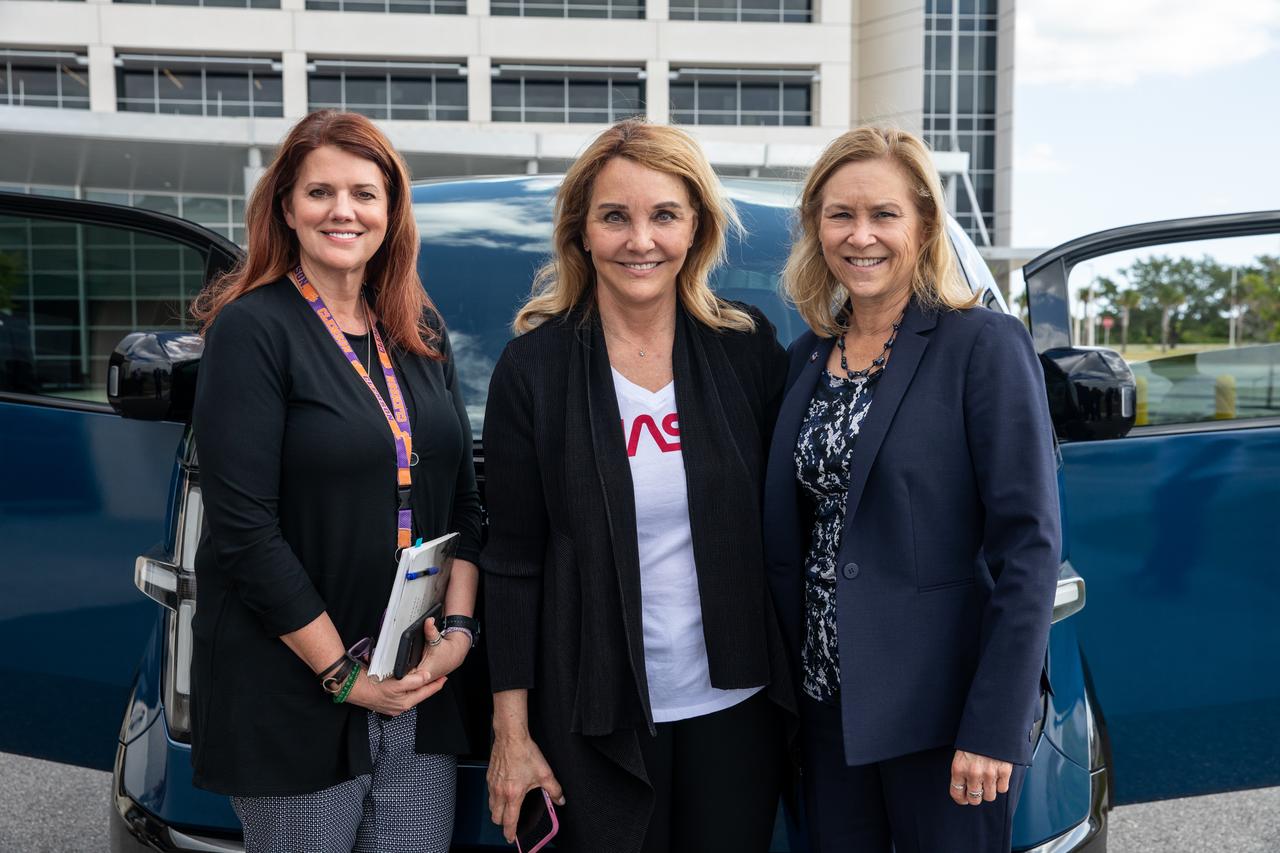
Kennedy Space Center Director Janet Petro, at right test drives a concept design crew transportation vehicle (CTV) for Artemis crewed missions on May 11, 2022. With her, from left, are Charlie Blackwell-Thompson, Artemis I launch director, and Josette Sheeran, president of Canoo Technologies, Inc.. Canoo Technologies Inc., was awarded a contract to design and provide the next generation of CTVs for the Artemis crewed missions. Representatives with Canoo were at the spaceport demonstrating the environmentally friendly fleet of vehicles. Artemis II will be the first Artemis mission flying crew aboard Orion. In later missions, NASA will land the first woman and the first person of color on the surface of the Moon, paving the way for a long-term lunar presence and serving as a steppingstone on the way to Mars.
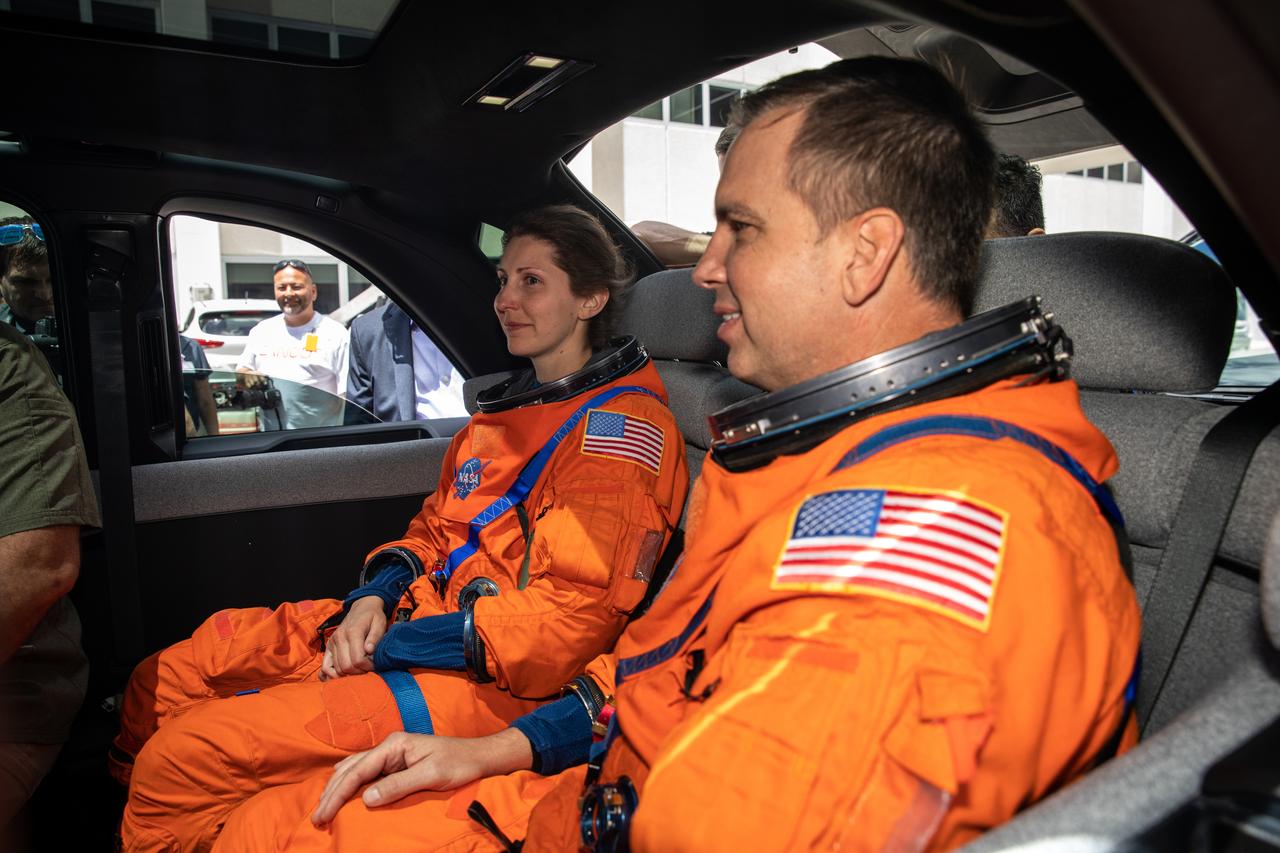
Technicians from Johnson Space Center, dressed in flight suits, secure themselves inside a prototype of a crew transportation vehicle (CTV) for Artemis crewed missions outside the Neil Armstrong Operations and Checkout Building at NASA’s Kennedy Space Center in Florida on May 11, 2022. Canoo Technologies Inc., was awarded a contract to design and provide the next generation of CTVs for the Artemis crewed missions. Representatives with Canoo were at the spaceport demonstrating the environmentally friendly fleet of vehicles. Artemis II will be the first Artemis mission flying crew aboard Orion. In later missions, NASA will land the first woman and the first person of color on the surface of the Moon, paving the way for a long-term lunar presence and serving as a steppingstone on the way to Mars.
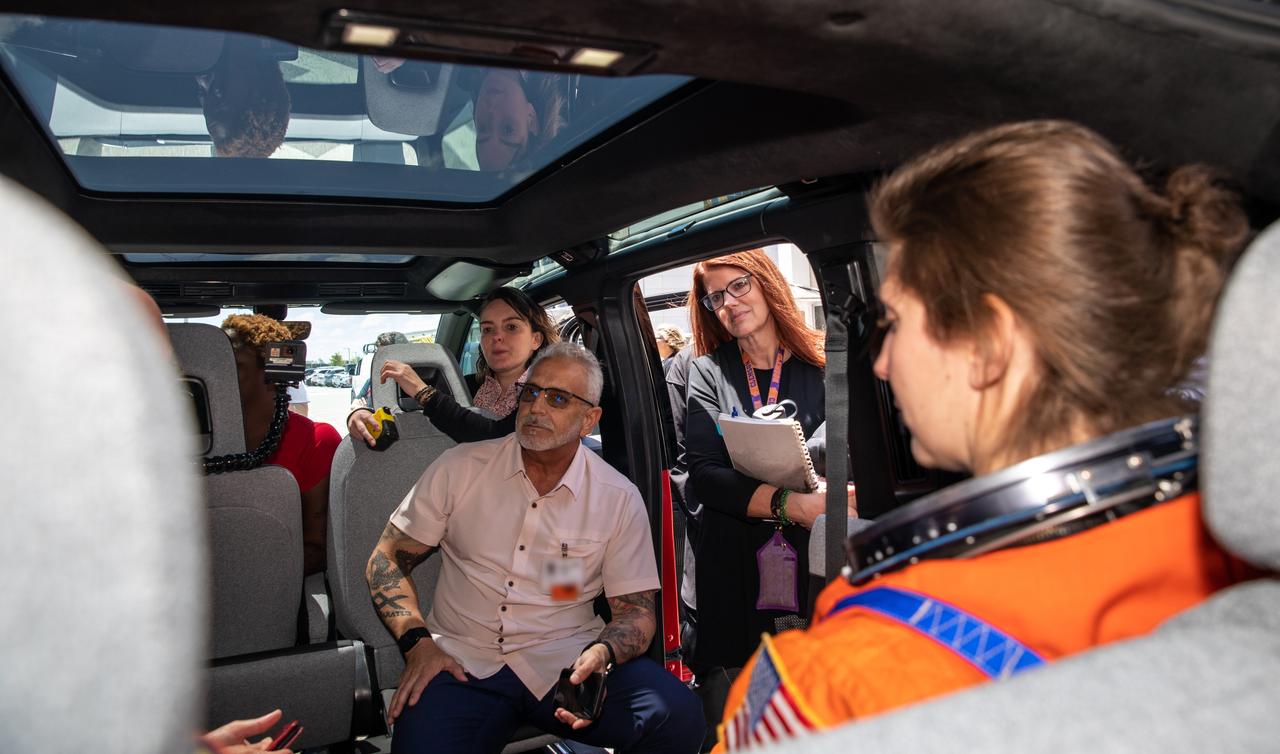
Technicians from Johnson Space Center, dressed in flight suits, secure themselves inside a prototype of a crew transportation vehicle (CTV) for Artemis crewed missions for a test drive near the Neil Armstrong Operations and Checkout Building at NASA’s Kennedy Space Center in Florida on May 11, 2022. Canoo Technologies Inc., was awarded a contract to design and provide the next generation of CTVs for the Artemis crewed missions Representatives with Canoo were at the spaceport demonstrating the environmentally friendly fleet of vehicles. Also in view near the vehicle’s door is Artemis I Launch Director Charlie Blackwell Thompson, and at left, is Anthony Aquila, chief executive officer of Canoo Technologies Inc.. Artemis II will be the first Artemis mission flying crew aboard Orion. In later missions, NASA will land the first woman and the first person of color on the surface of the Moon, paving the way for a long-term lunar presence and serving as a steppingstone on the way to Mars.

Technicians from Johnson Space Center, dressed in flight suits, secure themselves inside a prototype of a crew transportation vehicle (CTV) for Artemis crewed missions outside the Neil Armstrong Operations and Checkout Building at NASA’s Kennedy Space Center in Florida on May 11, 2022. Canoo Technologies Inc., was awarded a contract to design and provide the next generation of CTVs for the Artemis crewed missions. Representatives with Canoo were at the spaceport demonstrating the environmentally friendly fleet of vehicles. Artemis II will be the first Artemis mission flying crew aboard Orion. In later missions, NASA will land the first woman and the first person of color on the surface of the Moon, paving the way for a long-term lunar presence and serving as a steppingstone on the way to Mars.
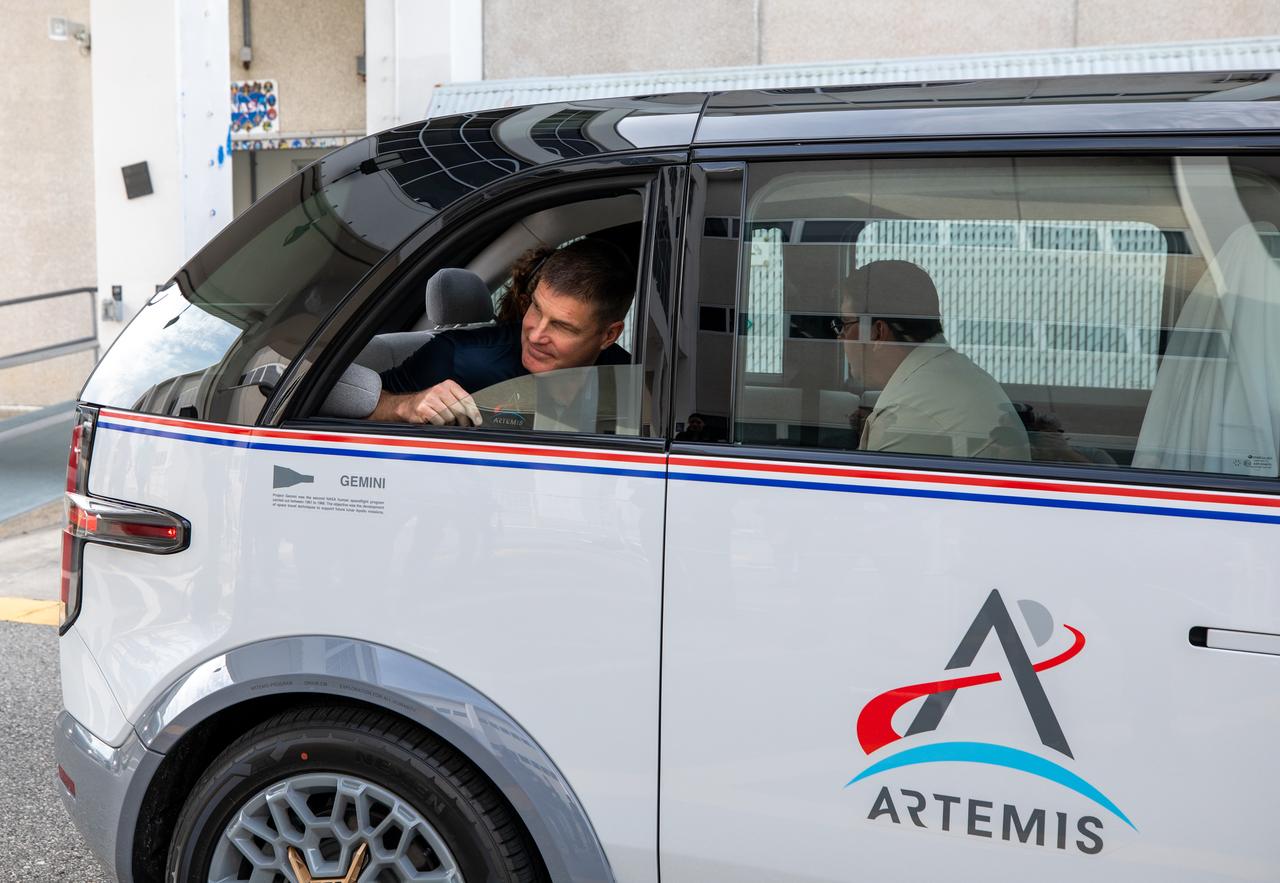
NASA astronaut Jeremy Hansen, left, sits inside one of the crew transport vehicles (CTVs) outside of the Neil A. Armstrong Operations and Checkout Building at Kennedy Space Center in Florida on Tuesday, Sept. 19, 2023. The CTVs will carry Hansen, along with fellow NASA astronauts Christina Koch, Reid Wiseman, and Victor Glover, to Kennedy’s Launch Complex 39B for liftoff of the Artemis II mission. The specially designed, fully electric, environmentally friendly vehicles were manufactured by Canoo Technologies, Inc. of Torrance California.
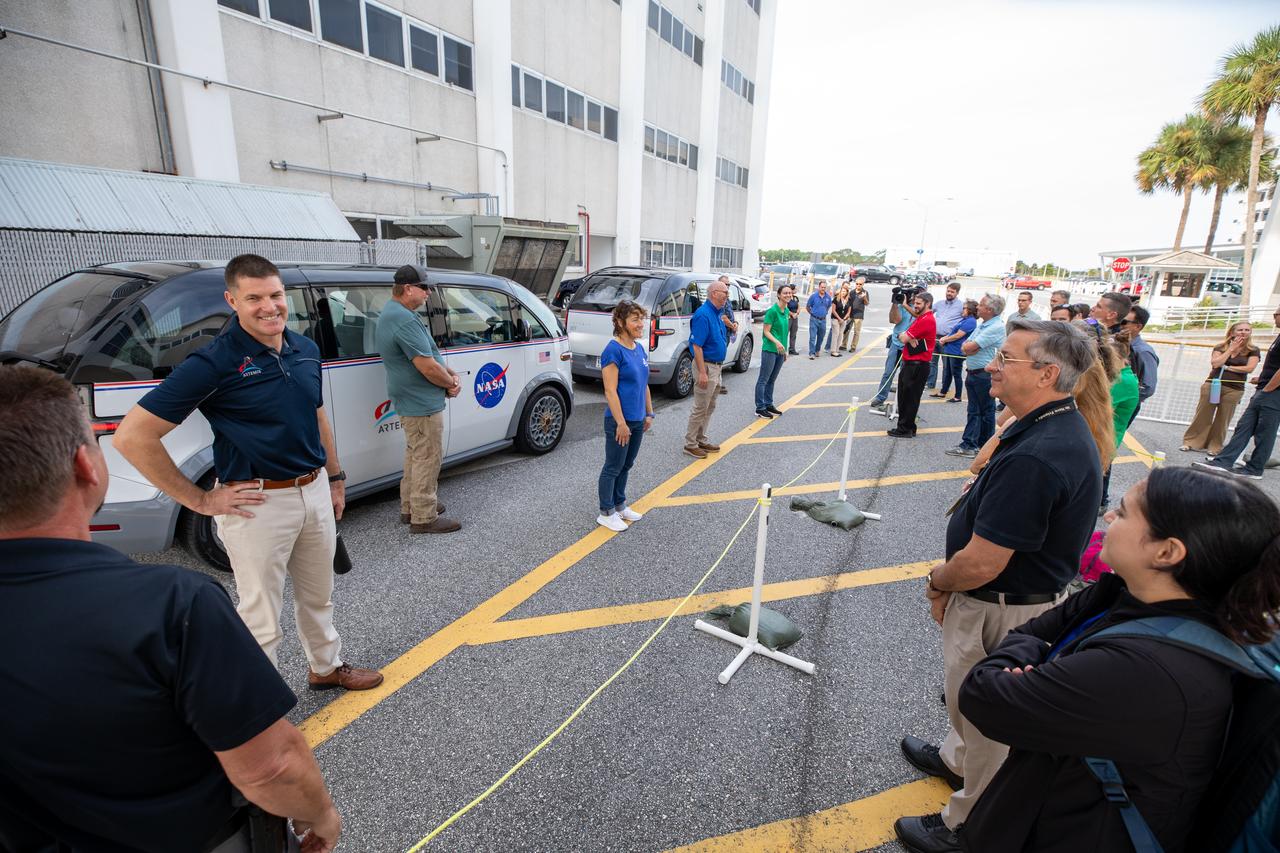
NASA astronauts Jeremy Hansen and Christina Koch view the crew transport vehicles (CTVs) outside of the Neil A. Armstrong Operations and Checkout Building at Kennedy Space Center in Florida on Tuesday, Sept. 19, 2023. The CTVs will carry them, along with fellow NASA astronauts Reid Wiseman and Victor Glover, to Kennedy’s Launch Complex 39B for liftoff of the Artemis II mission. The specially designed, fully electric, environmentally friendly vehicles were manufactured by Canoo Technologies, Inc. of Torrance California.
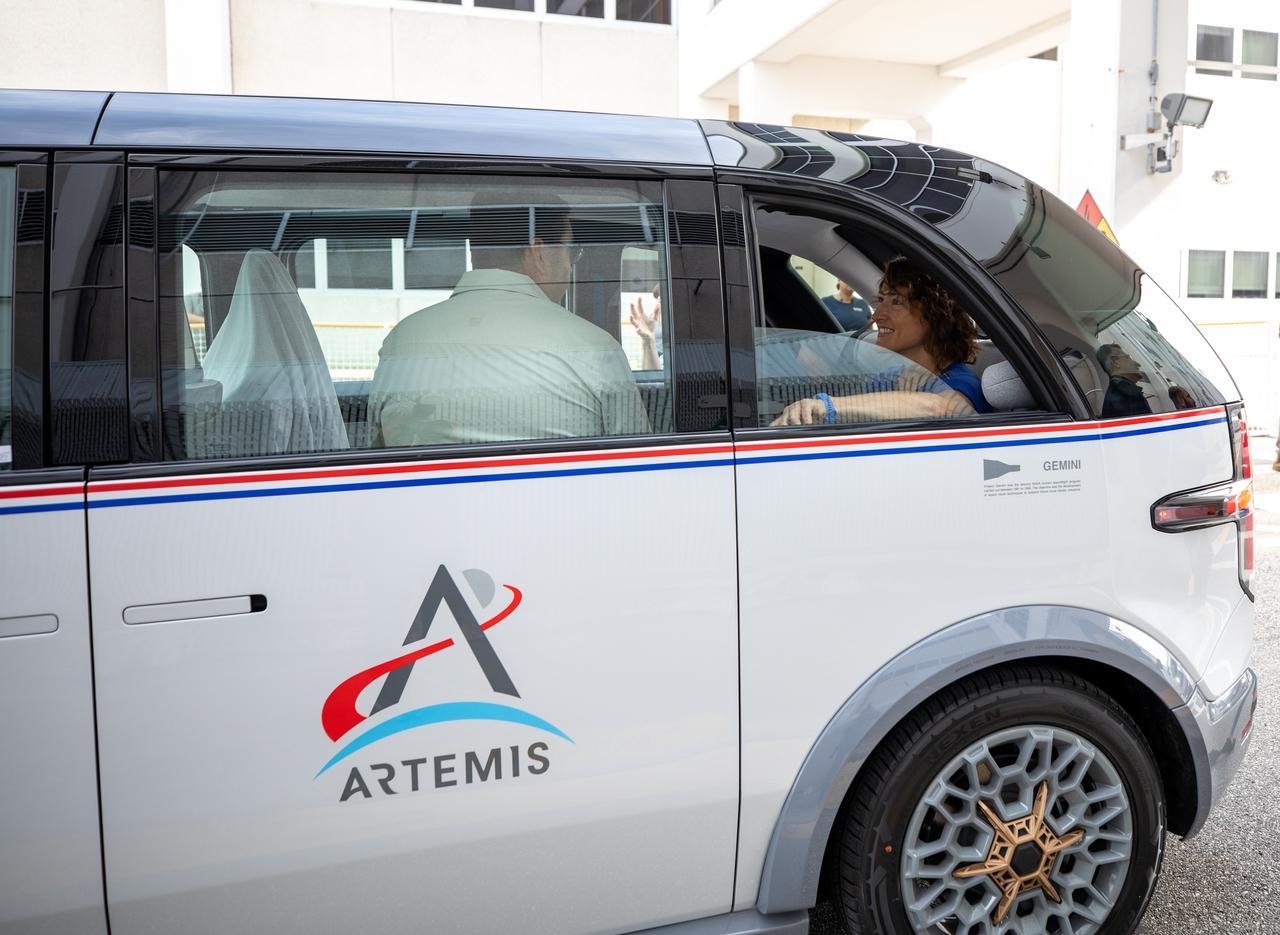
NASA astronaut Christina Koch, right, sits inside one of the crew transport vehicles (CTVs) outside of the Neil A. Armstrong Operations and Checkout Building at Kennedy Space Center in Florida on Tuesday, Sept. 19, 2023. The CTVs will carry Koch, along with fellow NASA astronauts Jeremy Hansen, Reid Wiseman and Victor Glover, to Kennedy’s Launch Complex 39B for liftoff of the Artemis II mission. The specially designed, fully electric, environmentally friendly vehicles were manufactured by Canoo Technologies, Inc. of Torrance California.
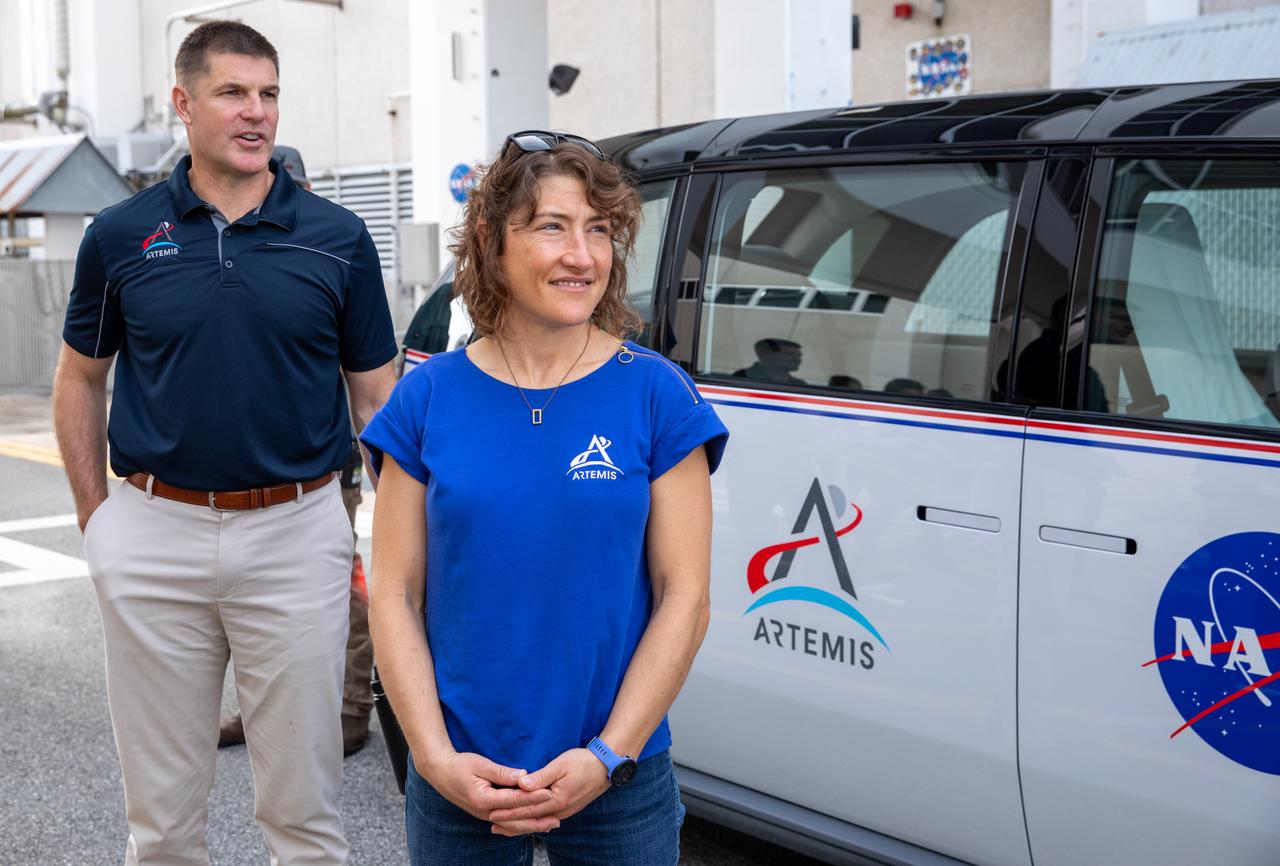
NASA astronauts Jeremy Hansen, left, and Christina Koch view the crew transport vehicles (CTVs) outside of the Neil A. Armstrong Operations and Checkout Building at Kennedy Space Center in Florida on Tuesday, Sept. 19, 2023. The CTVs will carry them, along with fellow NASA astronauts Reid Wiseman and Victor Glover, to Kennedy’s Launch Complex 39B for liftoff of the Artemis II mission. The specially designed, fully electric, environmentally friendly vehicles were manufactured by Canoo Technologies, Inc. of Torrance California.
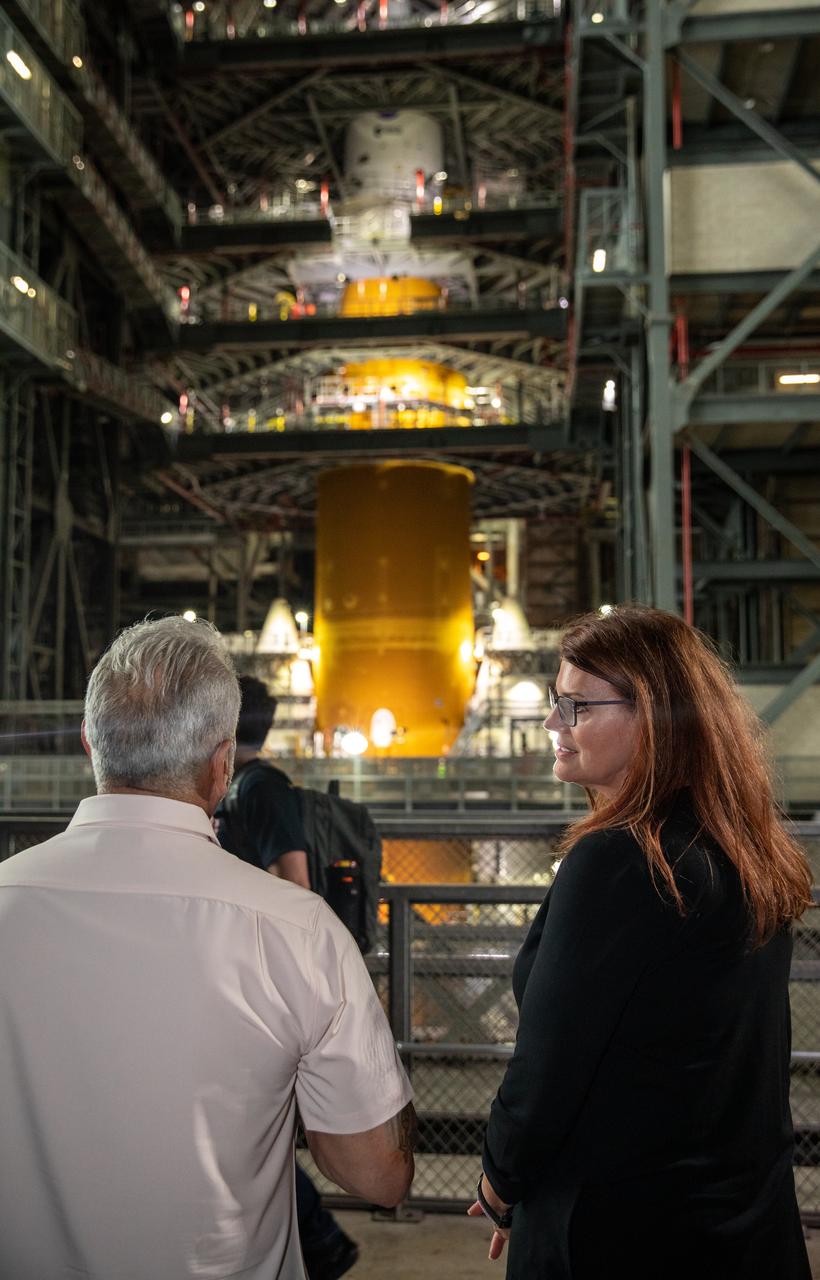
Artemis I Launch Director Charlie Blackwell Thompson, at right, views the Artemis I Space Launch System and Orion stack with Anthony Aquila, chief executive officer of Canoo Technologies Inc., inside High Bay 3 of the Vehicle Assembly Building at NASA’s Kennedy Space Center in Florida on May 11, 2022. Canoo Technologies, was awarded a contract to design and provide the next generation of CTVs for the Artemis crewed missions. Representatives with Canoo were at the spaceport demonstrating the environmentally friendly fleet of vehicles. Artemis II will be the first Artemis mission flying crew aboard Orion. In later missions, NASA will land the first woman and the first person of color on the surface of the Moon, paving the way for a long-term lunar presence and serving as a steppingstone on the way to Mars.
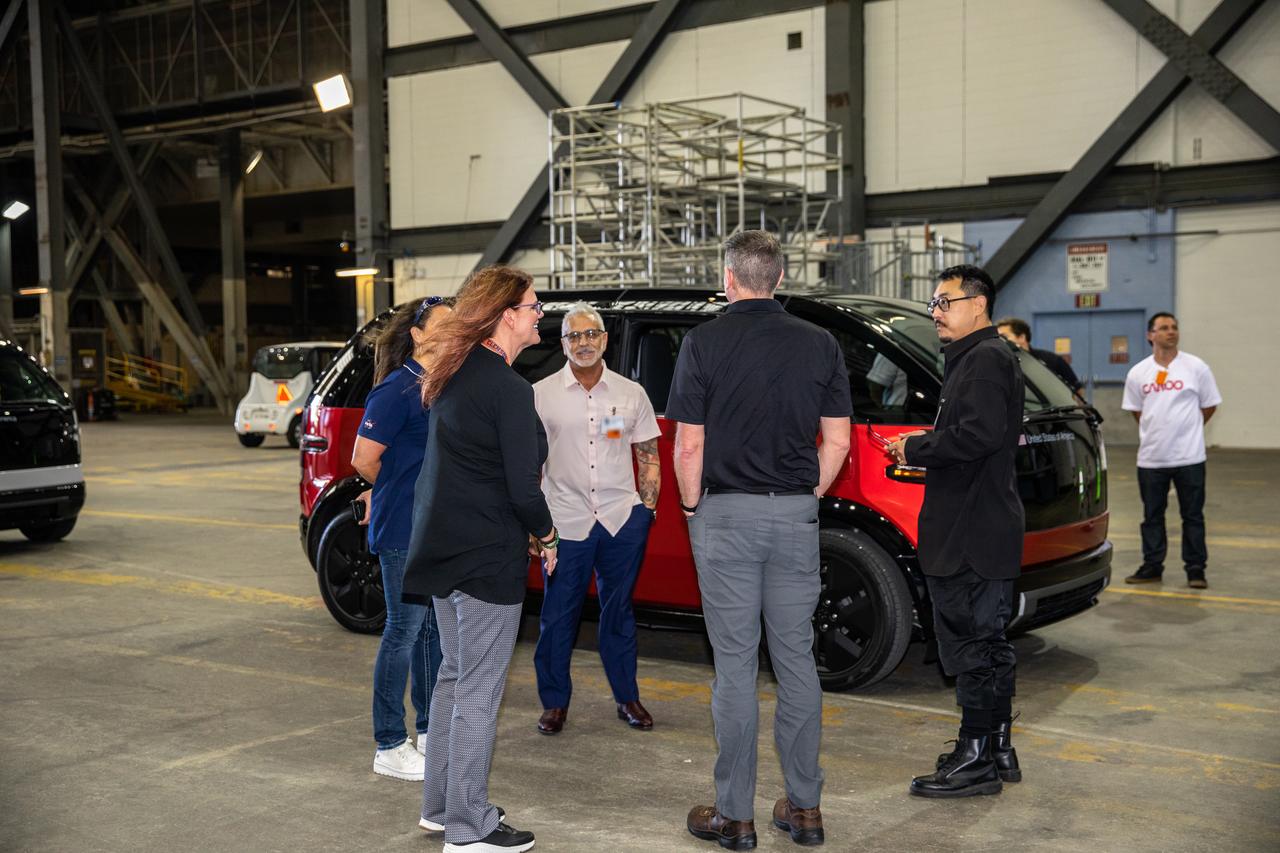
Artemis I Launch Director Charlie Blackwell Thompson, facing away from the camera, talks with Anthony Aquila, chief executive officer of Canoo Technologies Inc., inside the Vehicle Assembly Building at NASA’s Kennedy Space Center in Florida on May 11, 2022. Canoo Technologies Inc., was awarded a contract to design and provide the next generation of CTVs for the Artemis crewed missions. Representatives with Canoo were at the spaceport demonstrating the environmentally friendly fleet of vehicles. Artemis II will be the first Artemis mission flying crew aboard Orion. In later missions, NASA will land the first woman and the first person of color on the surface of the Moon, paving the way for a long-term lunar presence and serving as a steppingstone on the way to Mars. P
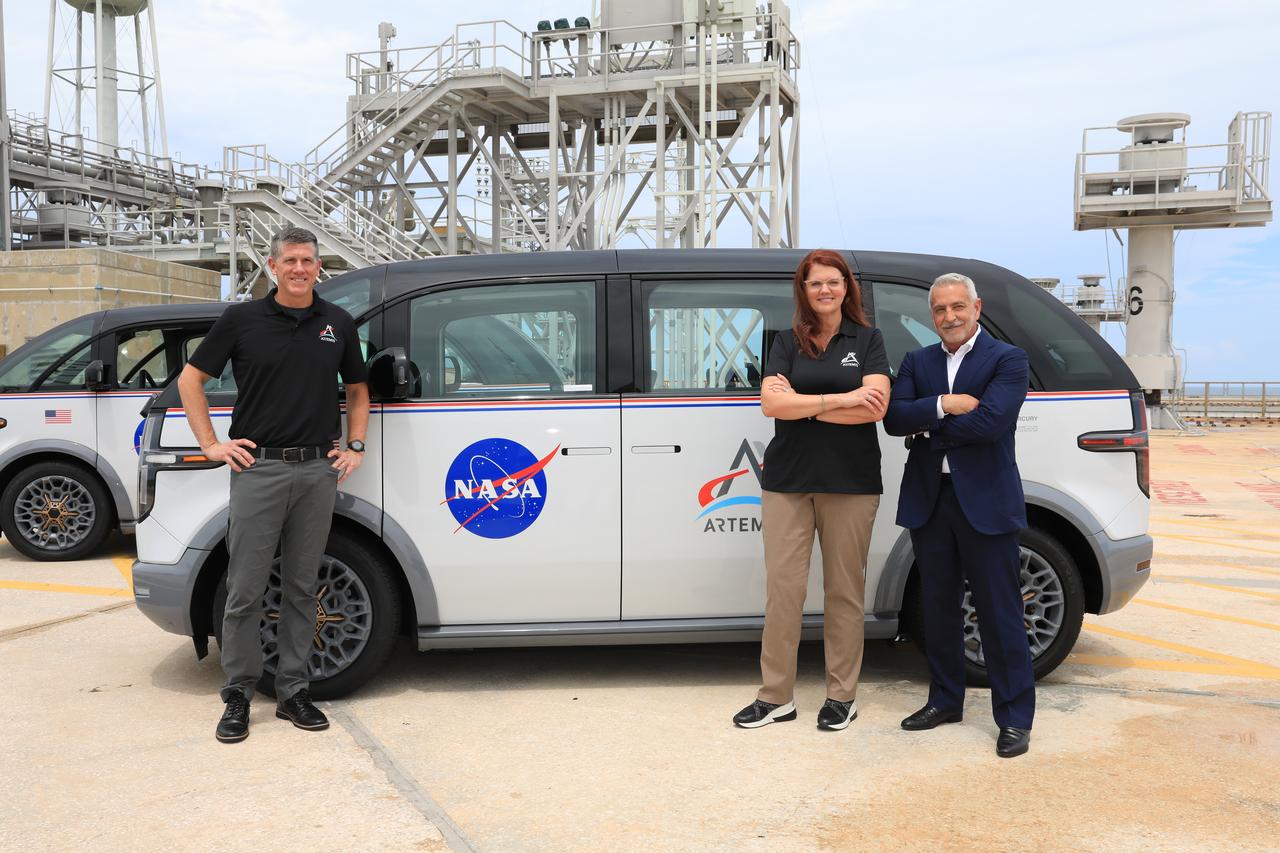
Three specially designed, fully electric, environmentally friendly crew transportation vehicles for Artemis missions arrived at NASA’s Kennedy Space Center in Florida on July 11, 2023. One of the zero-emission vehicles is shown here at Launch Pad 39B. From left are Jeremy Graeber, Artemis assistant launch director; Charlie Blackwell-Thompson, Artemis launch director; and Tony Aquila, chairman and CEO, Canoo Technologies Inc.. The fleet, which will carry astronauts to Launch Complex 39B for Artemis missions, was delivered by the manufacturer, Canoo Technologies Inc. of Torrance, California.

With the Vehicle Assembly Building in the background, the three specially designed, fully electric, environmentally friendly crew transportation vehicles for Artemis missions arrived at NASA’s Kennedy Space Center in Florida on July 11, 2023. The zero-emission vehicles, which will carry astronauts to Launch Complex 39B for Artemis missions, were delivered by the manufacturer, Canoo Technologies Inc. of Torrance, California.
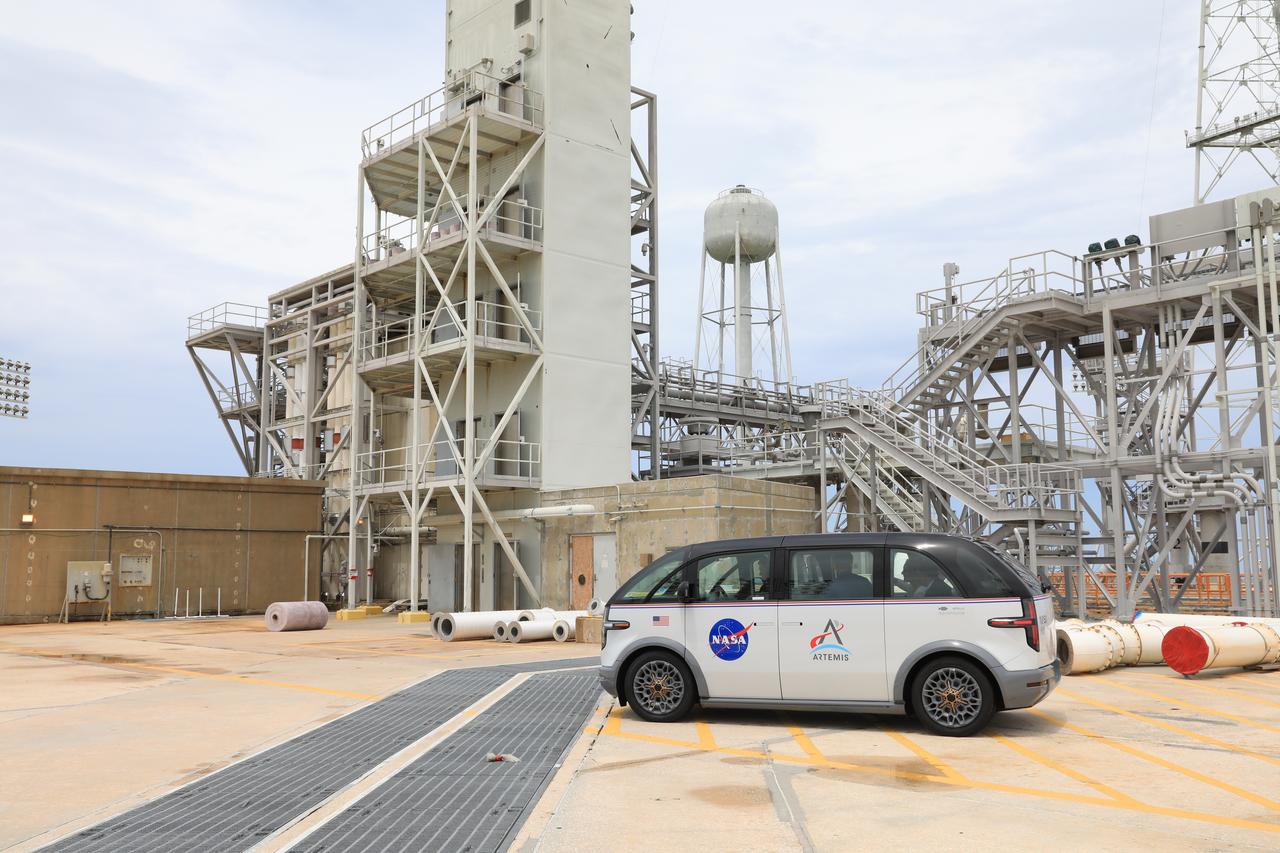
Three specially designed, fully electric, environmentally friendly crew transportation vehicles for Artemis missions arrived at NASA’s Kennedy Space Center in Florida on July 11, 2023. One of the zero-emission vehicles is shown here at Launch Pad 39B. The fleet, which will carry astronauts to Launch Complex 39B for Artemis missions, was delivered by the manufacturer, Canoo Technologies Inc. of Torrance, California.
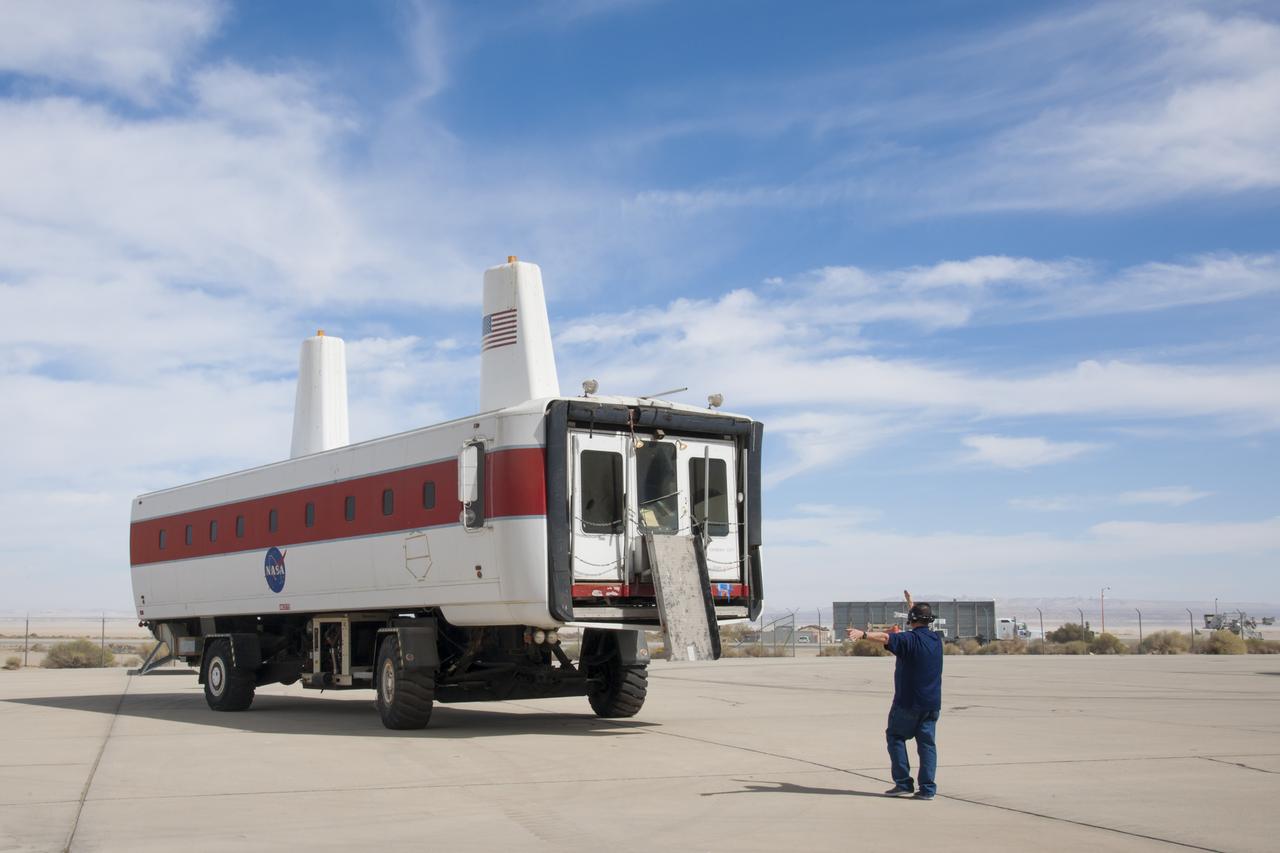
Workers drive the space shuttle Crew Transport Vehicle, or CTV, to the Edwards Air Force Base Flight Test Museum in California for display.
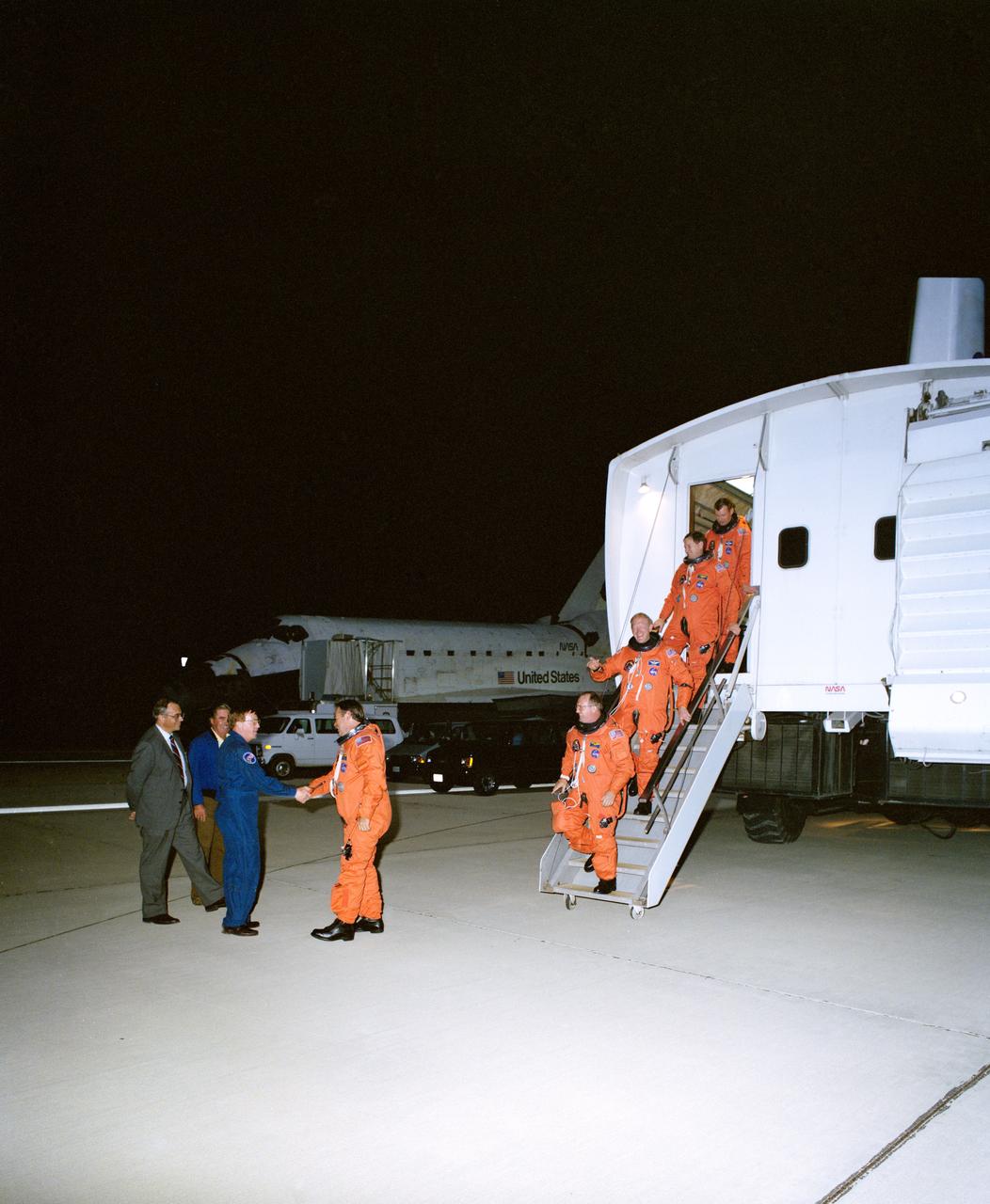
STS048-S-180 (18 Sept 1991) --- Having just completed a successful six day mission in Earth orbit, the five astronaut crewmembers for NASA's STS-48 spaceflight egress the crew transport vehicle (CTV). Astronaut John O. Creighton shakes hands with astronaut Richard N. Richards, who had earlier flown a NASA aircraft for weather checkout in the landing area. Following the mission commander are astronauts James F. Buchli, Charles D. (Sam) Gemar, Kenneth S. Reightler and Mark N. Brown. Discovery can be seen in the background. The Edwards Air Force Base landing occurred at 12:38:38 a.m. (PDT), September 18, 1991.
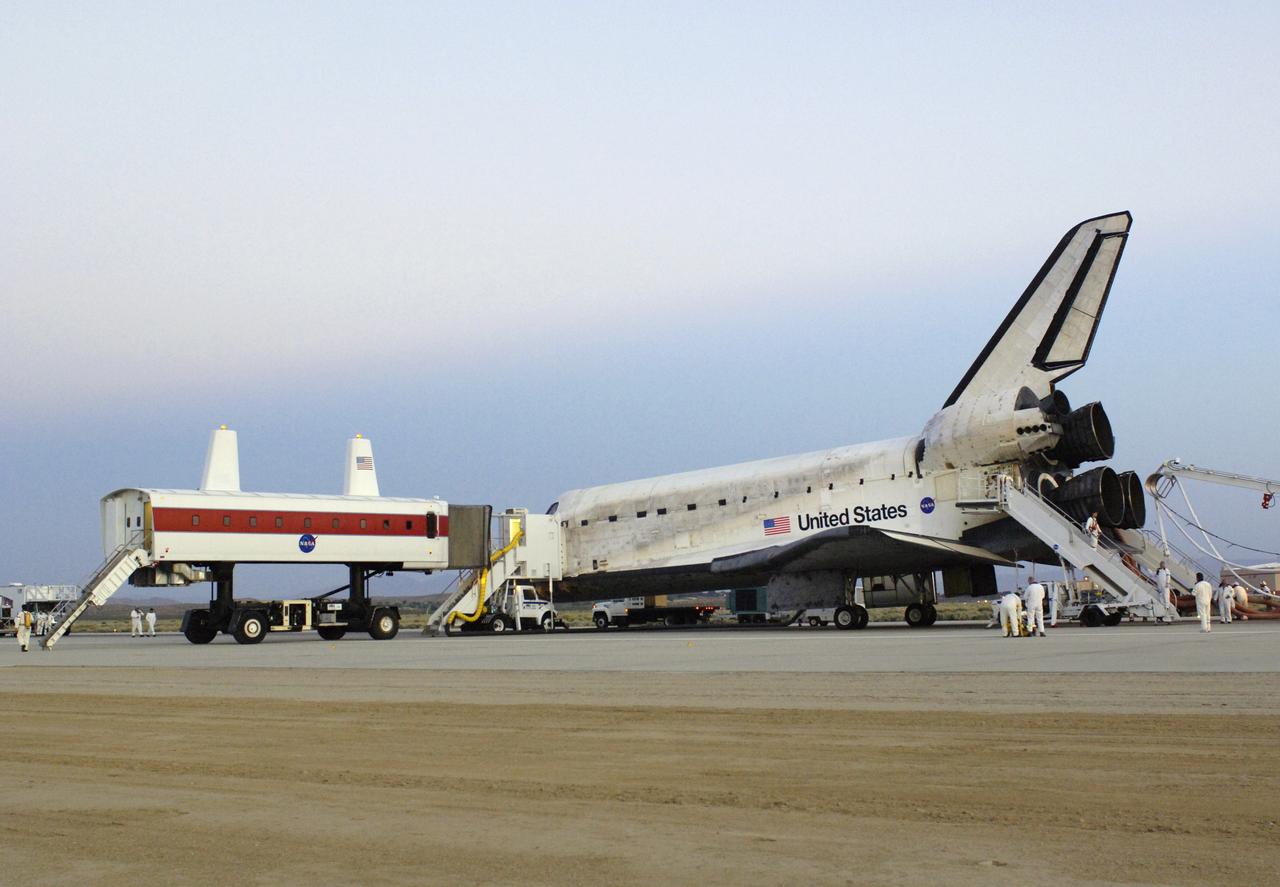
NASA's Crew Transport Vehicle, or CTV, pulls up to the Space Shuttle Discovery to offload the crew after a successful landing August 9, 2005 at Edwards Air Force Base, California. The landing marked the end of the STS-114 mission. Space Shuttle Discovery landed safely at NASA's Dryden Flight Research Center at Edwards Air Force Base in California at 5:11:22 a.m. PDT this morning, following the very successful 14-day STS-114 return to flight mission. During their two weeks in space, Commander Eileen Collins and her six crewmates tested out new safety procedures and delivered supplies and equipment the International Space Station. Discovery spent two weeks in space, where the crew demonstrated new methods to inspect and repair the Shuttle in orbit. The crew also delivered supplies, outfitted and performed maintenance on the International Space Station. A number of these tasks were conducted during three spacewalks. In an unprecedented event, spacewalkers were called upon to remove protruding gap fillers from the heat shield on Discovery's underbelly. In other spacewalk activities, astronauts installed an external platform onto the Station's Quest Airlock and replaced one of the orbital outpost's Control Moment Gyroscopes. Inside the Station, the STS-114 crew conducted joint operations with the Expedition 11 crew. They unloaded fresh supplies from the Shuttle and the Raffaello Multi-Purpose Logistics Module. Before Discovery undocked, the crews filled Raffeallo with unneeded items and returned to Shuttle payload bay. Discovery launched on July 26 and spent almost 14 days on orbit.
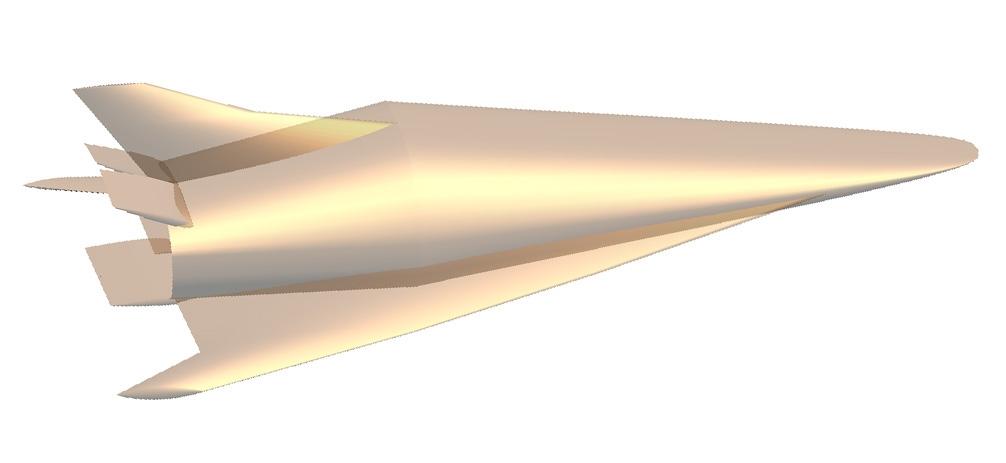
Sim Ops 2002 R&D report images; SHARP (Slender Hypersonic Aerodynamic Research Probe) CTV Crew Transfer Vehicle) CGI image created by V Hawke & C Tang (Eloret Corp)
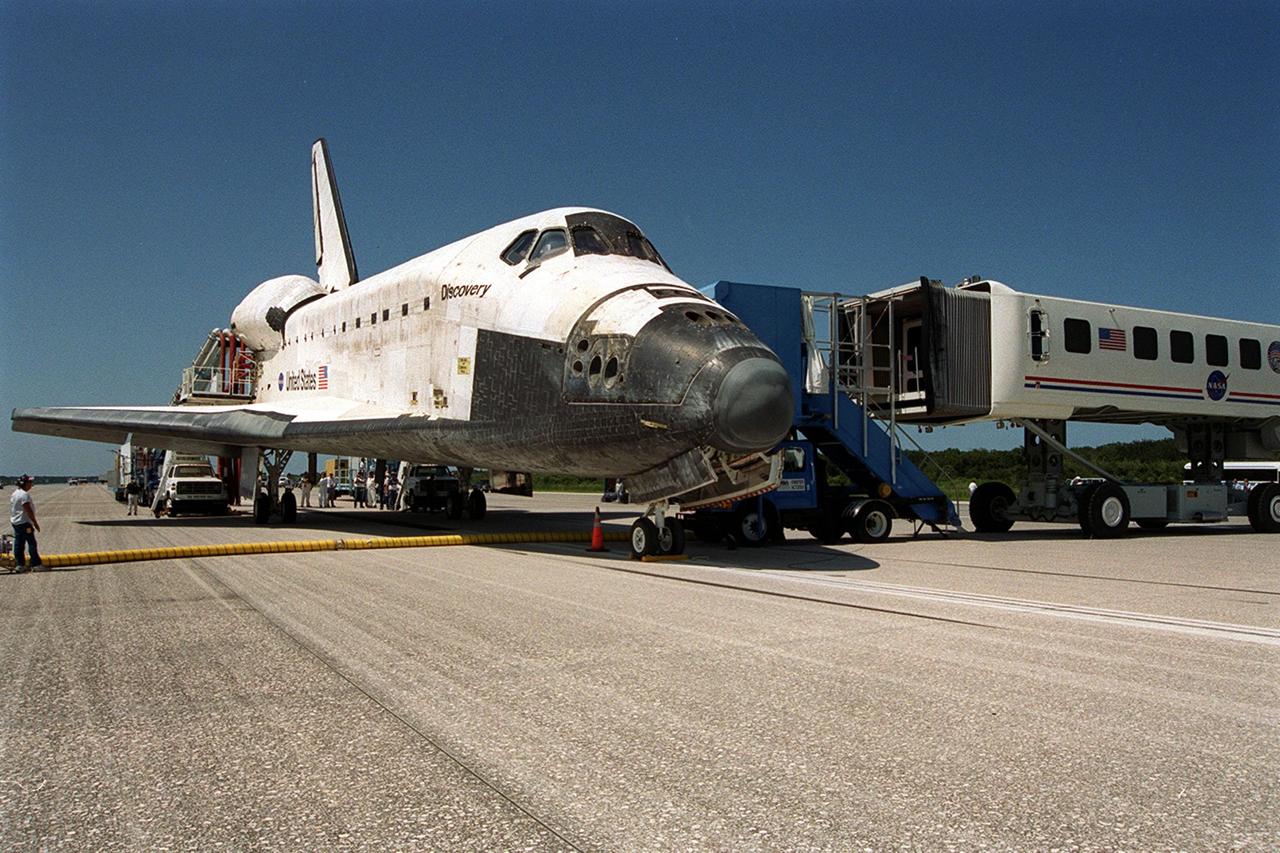
KENNEDY SPACE CENTER, Fla. -- Following mission STS-105, the Crew Transfer Vehicle (CTV) is moved into place beside orbiter Discovery on KSC’s Shuttle Landing Facility runway 15. Both the STS-105 and Expedition Two crews will exit the Space Shuttle into the CTV where they will be given preliminary physical examinations by a physician. Main gear touchdown was at 2:22:58 p.m. EDT; wheel stop, at 2:24:06 p.m. EDT. The 11-day, 21-hour, 12-minute mission accomplished the goals set for the 11th flight to the International Space Station: swapout of the resident Station crew; delivery of equipment, supplies and scientific experiments; and installation of the Early Ammonia Servicer and heater cables for the S0 truss on the Station. Discovery traveled 4.3 million miles on its 30th flight into space, the 106th mission of the Space Shuttle program. Out of five missions in 2001, the landing was the first to occur in daylight at KSC
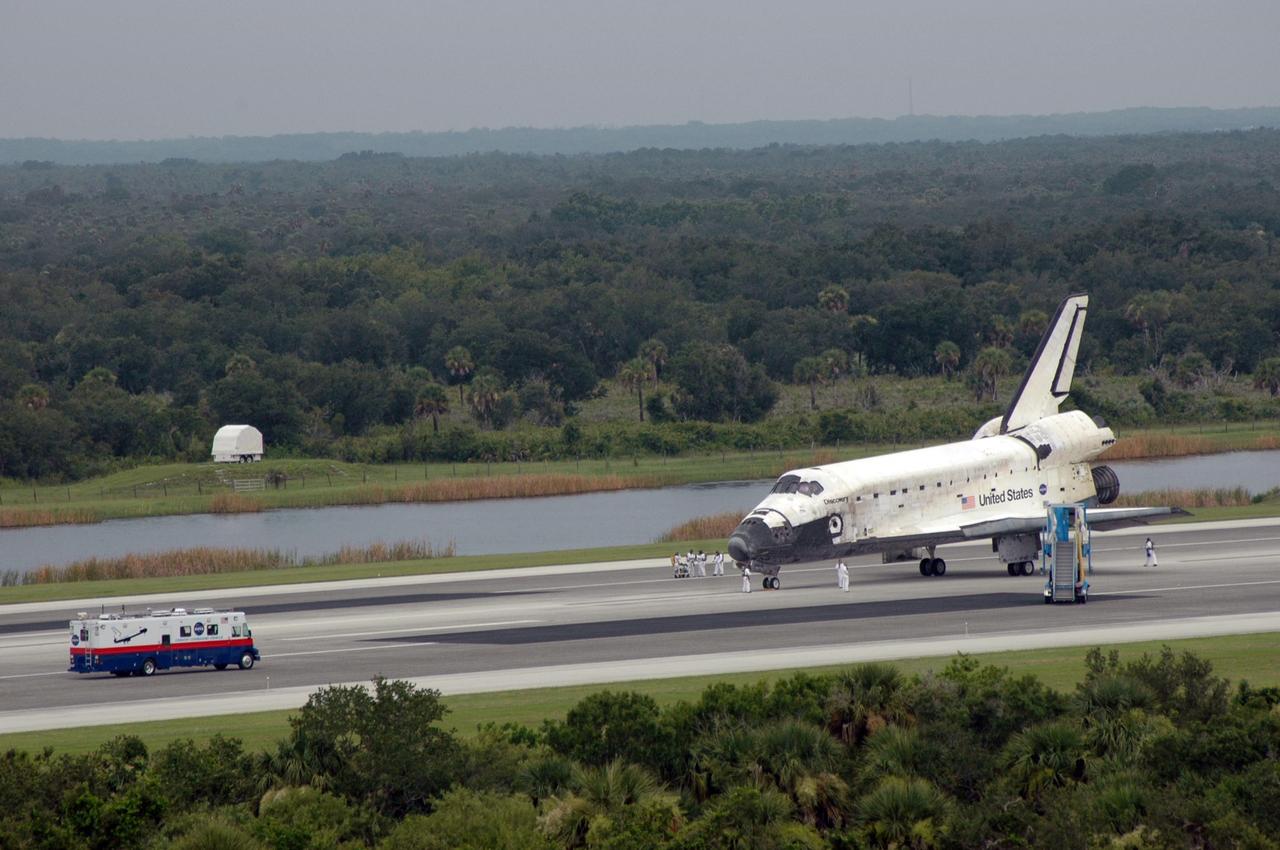
KENNEDY SPACE CENTER, FLA. - A crew transport vehicle (CTV), a modified “people mover” used at airports, approaches the orbiter Discovery after the vehicle was "safed" for crew departure. The crew exits the orbiter into a crew hatch access vehicle and, after a brief medical examination, transfers into the CTV. Discovery's smooth and perfect landing after completing mission STS-121 was on time at 9:14 a.m. EDT on Runway 15 of NASA's Shuttle Landing Facility after traveling 5.3 million miles on 202 orbits. Mission elapsed time was 12 days, 18 hours, 37 minutes and 54 seconds. The landing is the 62nd at Kennedy Space Center and the 32nd for Discovery. Photo credit: NASA/Kim Shiflett
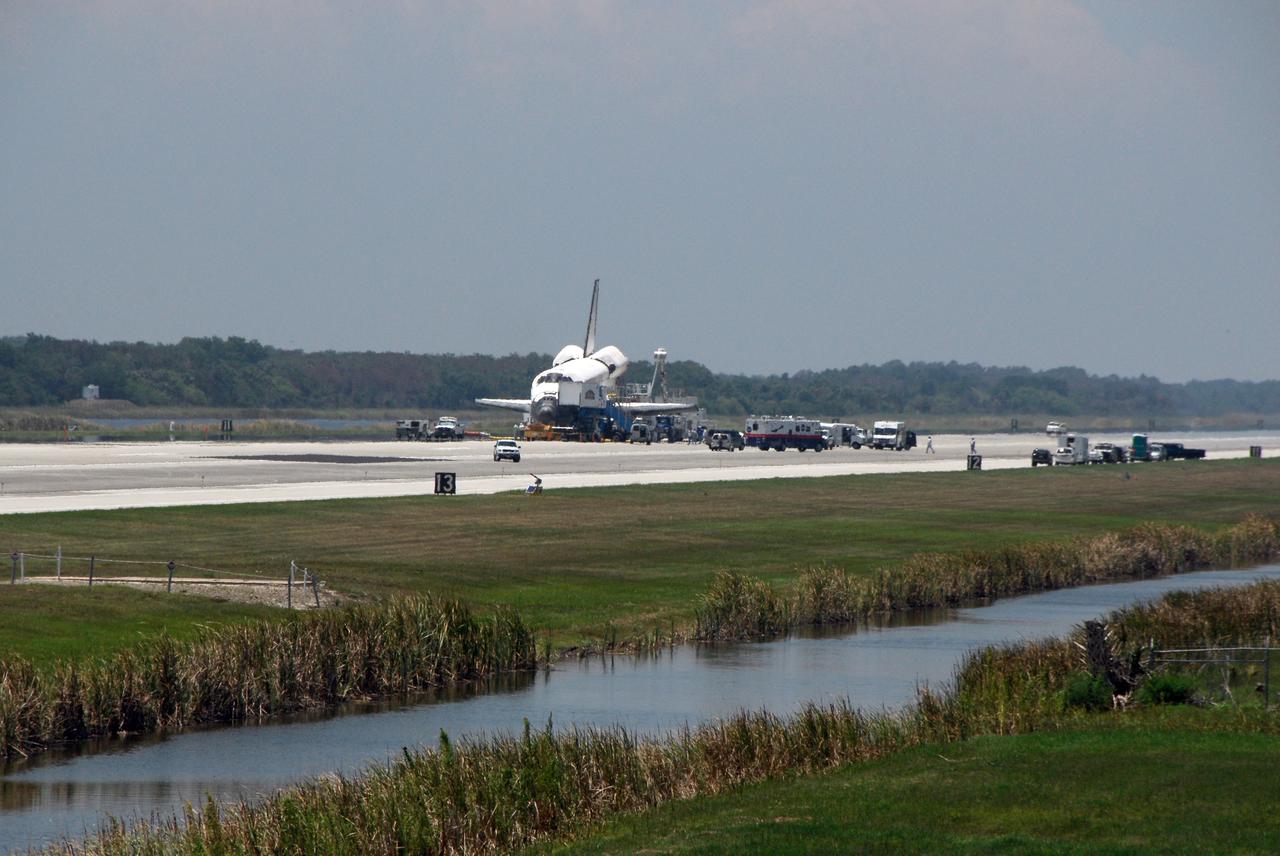
CAPE CANAVERAL, Fla. – A crew transport vehicle, or CTV, approaches space shuttle Discovery on the Shuttle Landing Facility at NASA's Kennedy Space Center. Discovery landed on Runway 15, ending the 14-day, STS-124 mission to the International Space Station. Discovery has been purged -- providing cool and humidified air conditioning to the payload bay and other cavities to remove any residual explosive or toxic fumes – while still on the runway. Cooling transfer to ground services occurs at about the same time, allowing onboard cooling to be shut down. When it is determined that the area in and around the orbiter is safe, the crew will departure from the orbiter to the CTV. The STS-124 mission delivered the Japan Aerospace Exploration Agency's large Japanese Pressurized Module and its remote manipulator system to the space station. Photo credit: NASA/Kim Shiflett
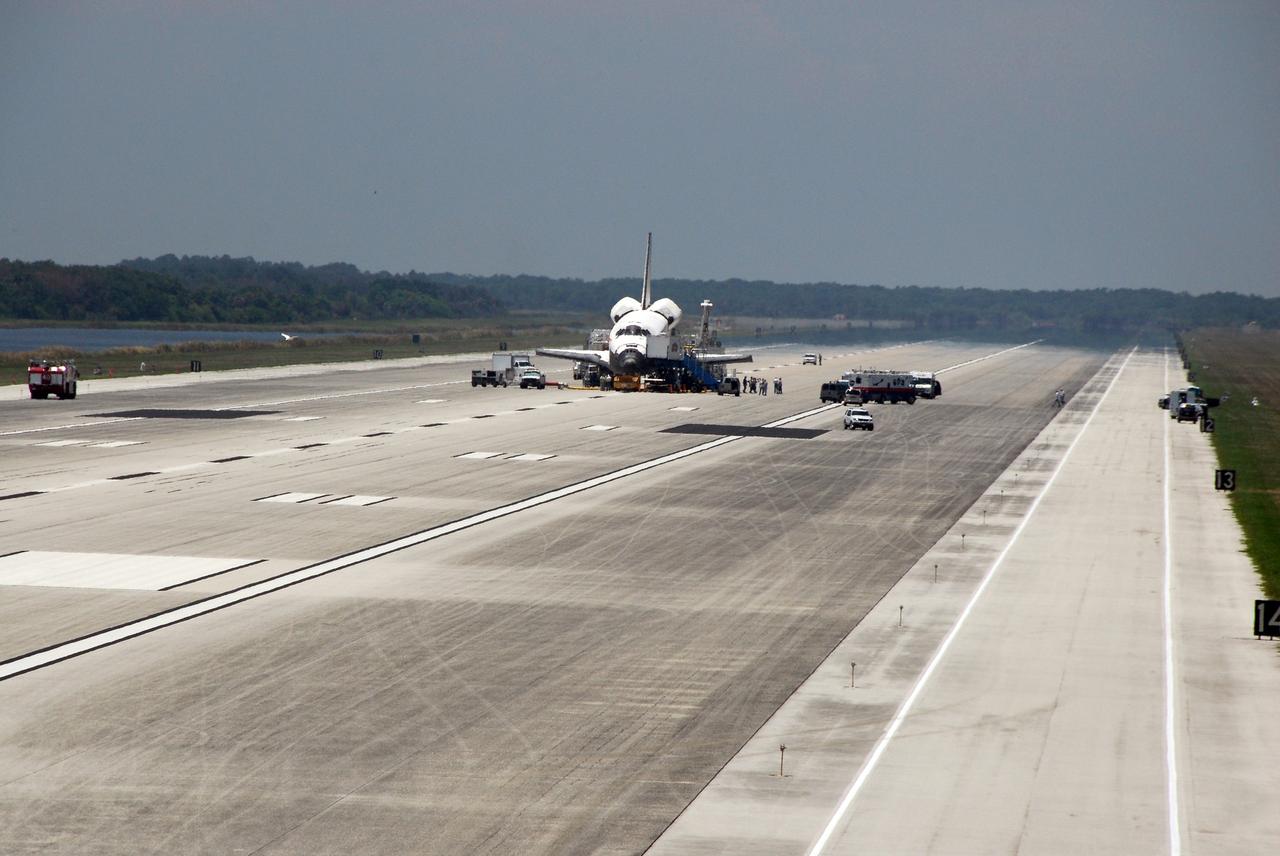
CAPE CANAVERAL, Fla. – A crew transport vehicle, or CTV, approaches space shuttle Discovery on the Shuttle Landing Facility at NASA's Kennedy Space Center. Discovery landed on Runway 15, ending the 14-day, STS-124 mission to the International Space Station. Discovery has been purged -- providing cool and humidified air conditioning to the payload bay and other cavities to remove any residual explosive or toxic fumes – while still on the runway. Cooling transfer to ground services occurs at about the same time, allowing onboard cooling to be shut down. When it is determined that the area in and around the orbiter is safe, the crew will departure from the orbiter to the CTV. The STS-124 mission delivered the Japan Aerospace Exploration Agency's large Japanese Pressurized Module and its remote manipulator system to the space station. Photo credit: NASA/Kim Shiflett
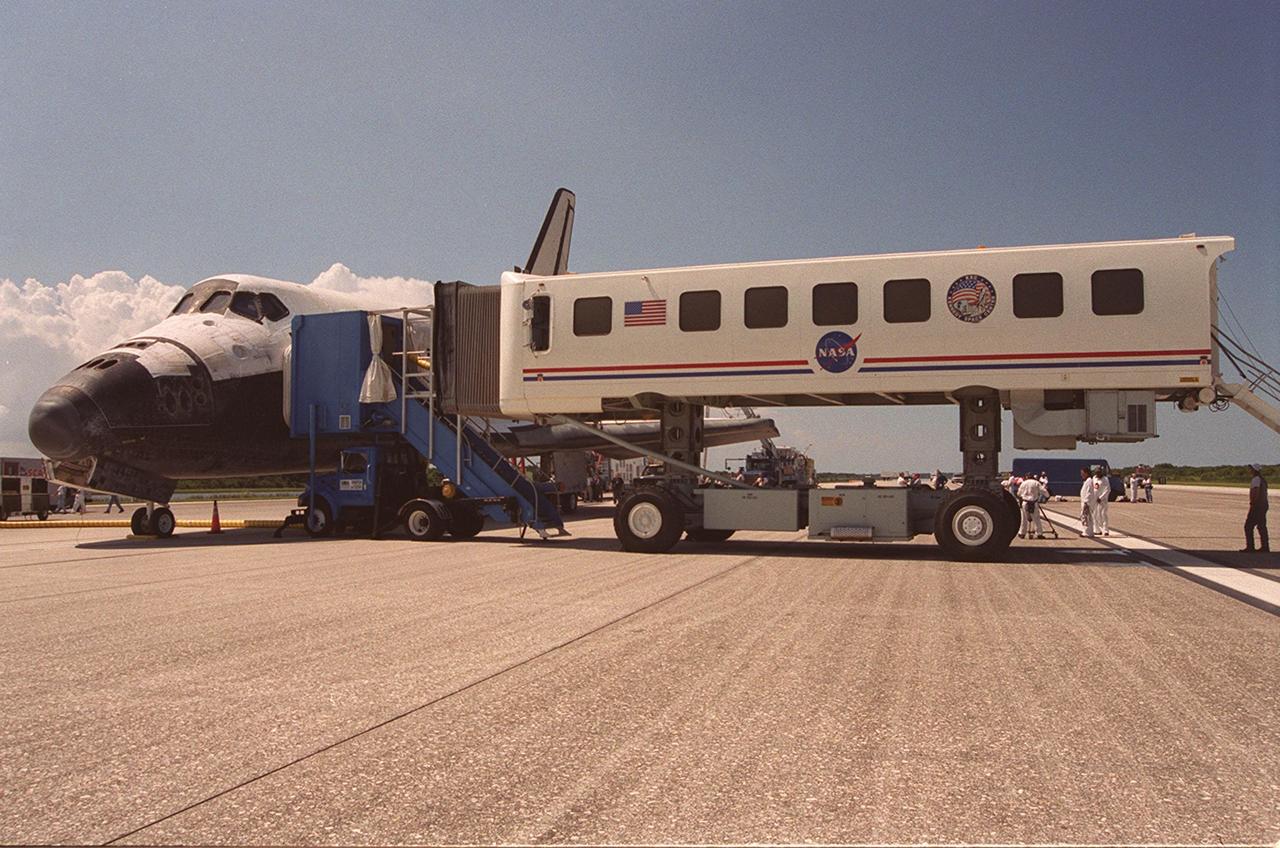
KENNEDY SPACE CENTER, Fla. -- Following mission STS-105, the Crew Transfer Vehicle (CTV) is moved into place beside orbiter Discovery on KSC’s Shuttle Landing Facility runway 15. Both the STS-105 and Expedition Two crews will exit the Space Shuttle into the CTV where they will be given preliminary physical examinations by a physician. Main gear touchdown was at 2:22:58 p.m. EDT; wheel stop, at 2:24:06 p.m. EDT. The 11-day, 21-hour, 12-minute mission accomplished the goals set for the 11th flight to the International Space Station: swapout of the resident Station crew; delivery of equipment, supplies and scientific experiments; and installation of the Early Ammonia Servicer and heater cables for the S0 truss on the Station. Discovery traveled 4.3 million miles on its 30th flight into space, the 106th mission of the Space Shuttle program. Out of five missions in 2001, the landing was the first to occur in daylight at KSC
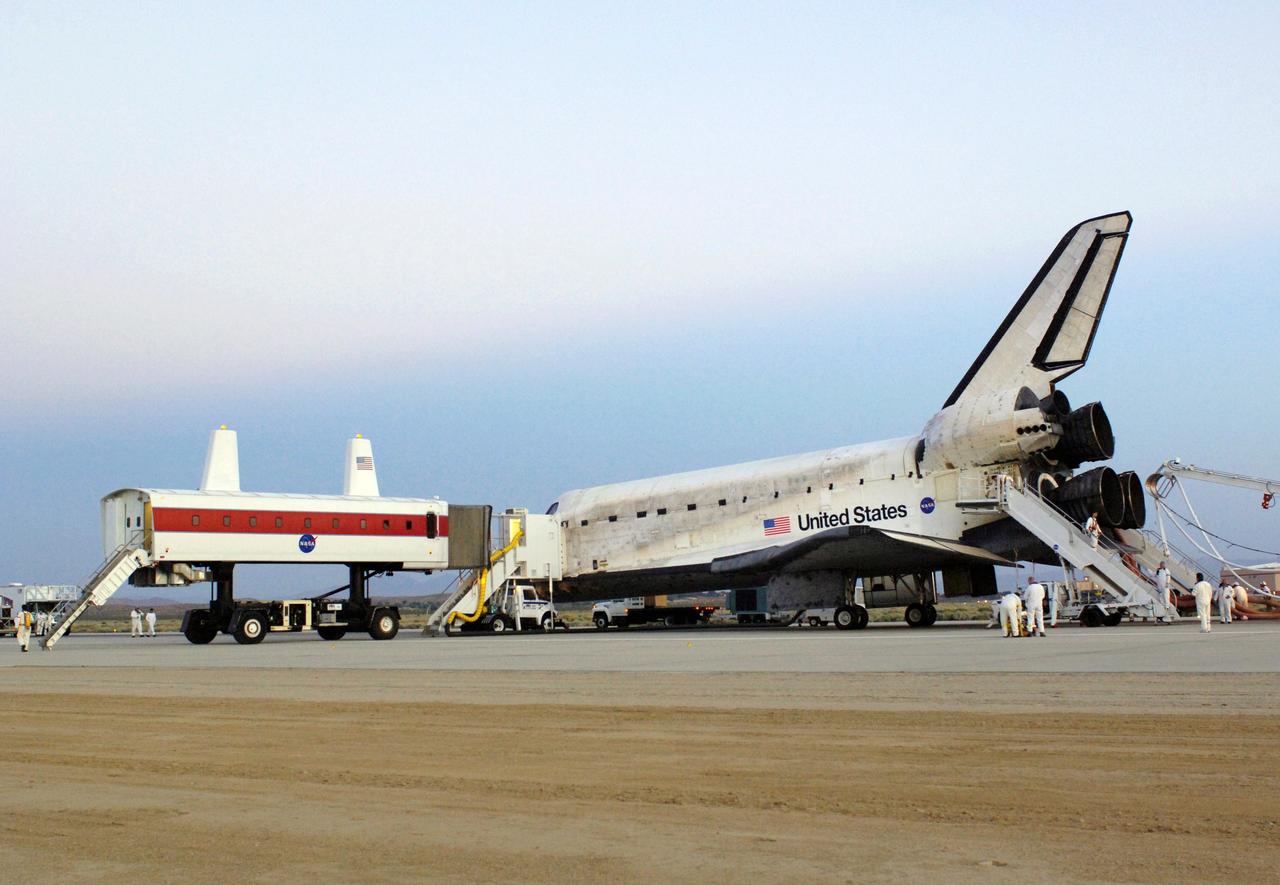
STS114-S-047 (9 August 2005) --- NASA’s Crew Transport Vehicle (CTV) pulls up to the Space Shuttle Discovery to offload the STS-114 crewmembers after a successful landing at 5:11 a.m. (PDT) on August 9, 2005 at Edwards Air Force Base in California. The landing concludes a historic 14-day, Return to Flight mission to the International Space Station.
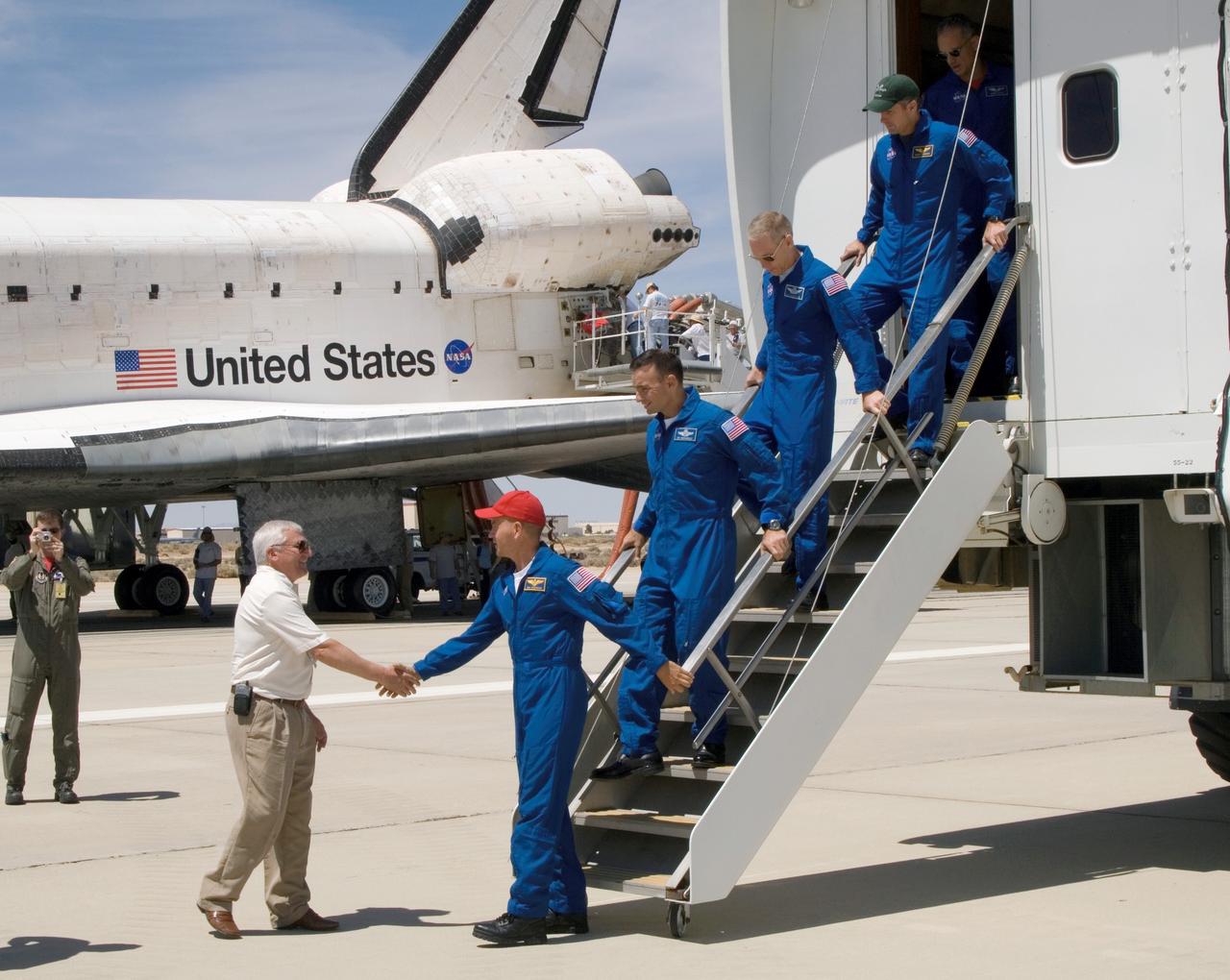
STS117-S-051 (22 June 2007) --- NASA Dryden Flight Research Center director Kevin Petersen greets astronaut Rick Sturckow, STS-117 commander, as the crewmembers exit NASA's Crew Transport Vehicle (CTV) after a successful landing at 12:49 p.m. (PDT) on June 22, 2007 at Edwards Air Force Base in California. Following behind Sturckow are astronauts Lee Archambault, pilot; Patrick Forrester, Steven Swanson and John "Danny" Olivas, all mission specialists. Not pictured is astronaut Jim Reilly, mission specialist.
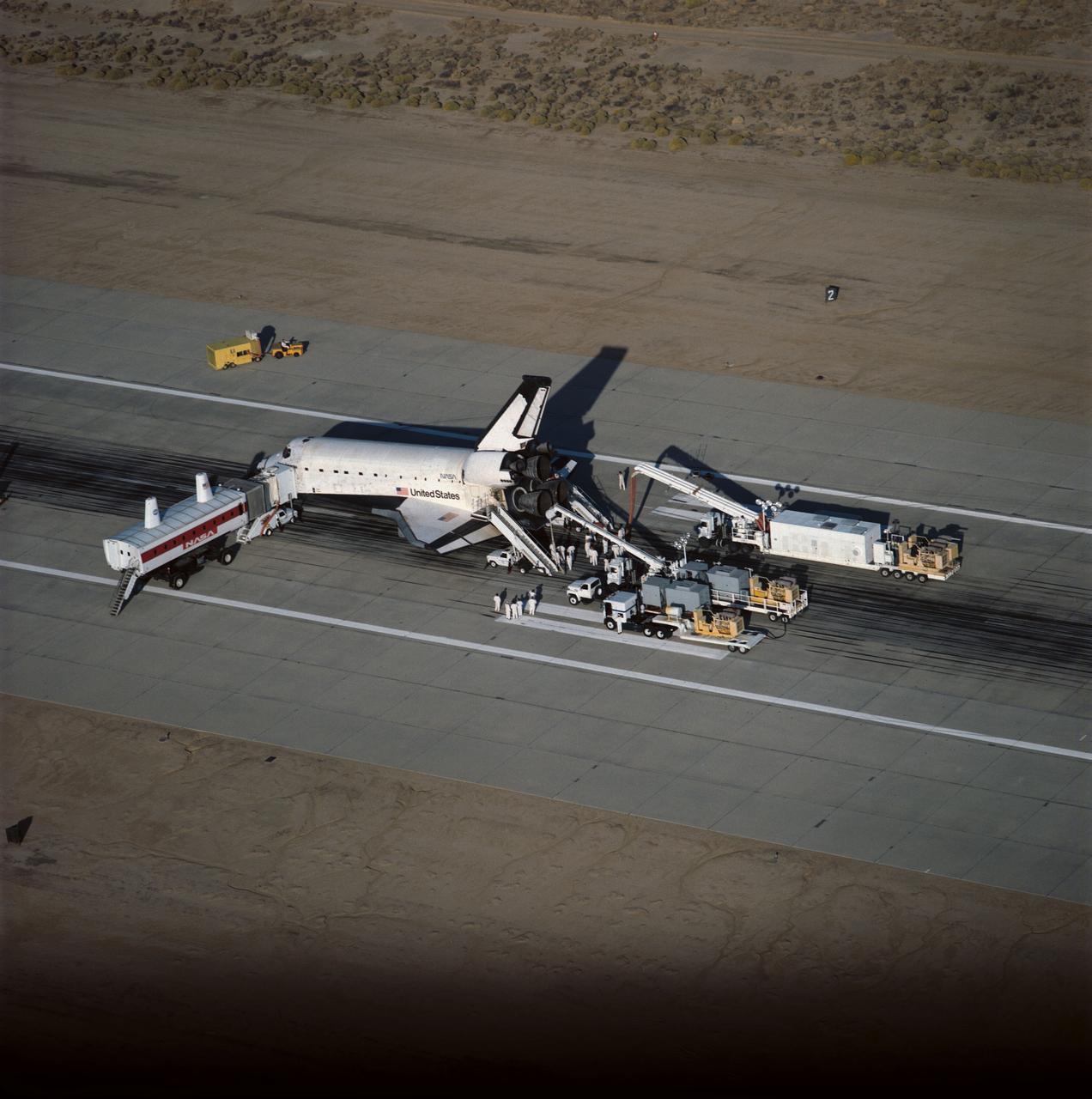
STS058-S-129 (1 Nov 1993) --- This busy scene on the runway at Edwards Air Force Base (EAFB) was taken less than an hour following the landing of the Space Shuttle Columbia. The touchdown, which had occurred at 7:06 a.m. (PST), November 1, 1993, completed a two week mission in space devoted to medical research. The array of hardware and workers includes personnel and equipment designed to make the area safe. At far left is the Crew Transport Vehicle (CTV). Still onboard the spacecraft were astronauts John E. Blaha, Richard A. Searfoss, Rhea Seddon, Shannon W. Lucid, David A. Wolf and William S. McArthur, along with payload specialist Martin J. Fettman, DVM.
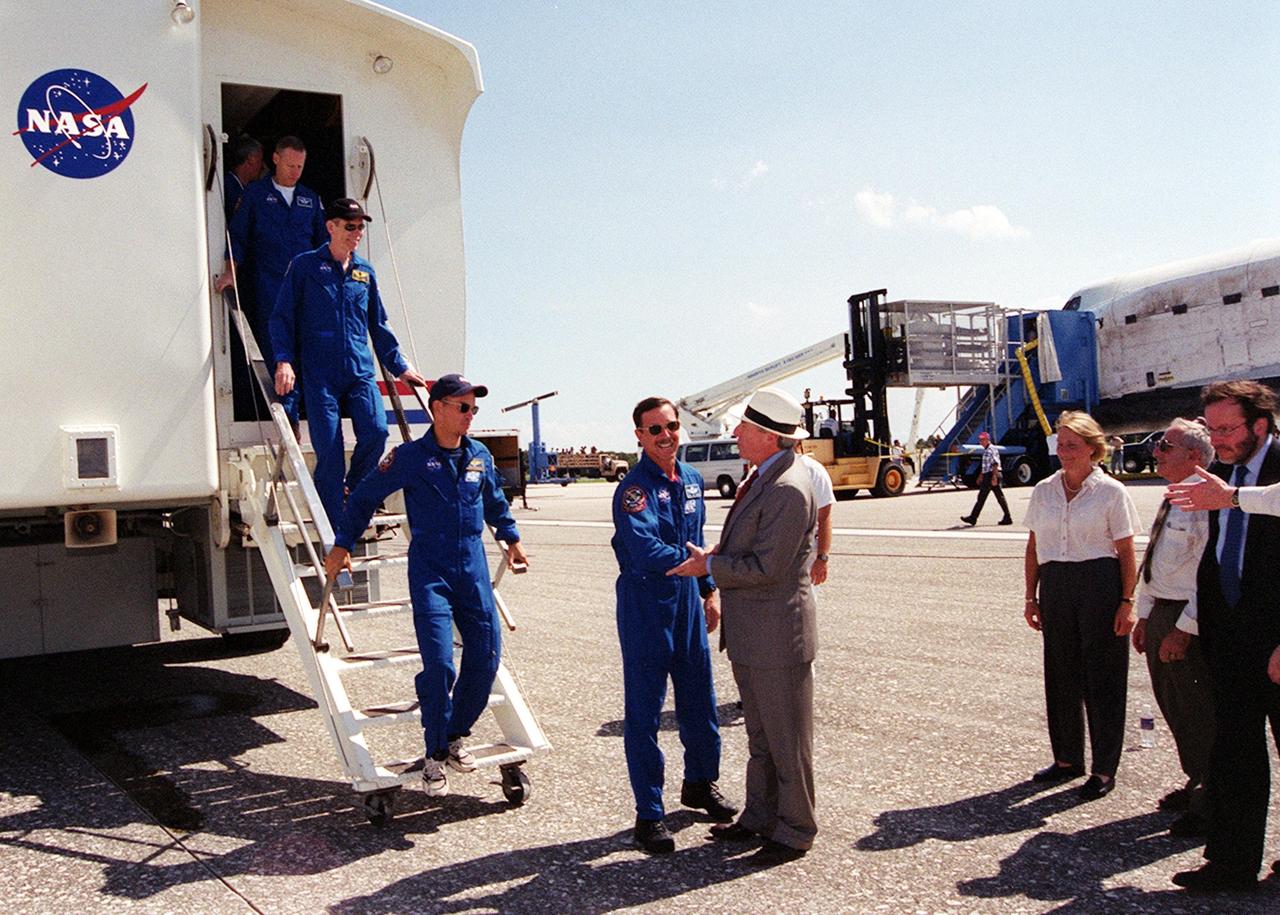
KENNEDY SPACE CENTER, Fla. - As members of the STS-105 crew exit the Crew Transfer Vehicle (CTV) following Discovery's landing on KSC's Shuttle Landing Facility runway 15, they are greeted by NASA Administrator Dan Goldin. From left are Mission Specialists Patrick Forrester and Daniel Barry, Pilot Frederick "Rick" Sturckow, and Commander Scott "Doc" Horowitz (shaking hands with Goldin). Looking on are, from left, Kathie Olsen, NASA chief scientist; Joe Rothenberg, associate administrator, Office of Space Flight; and Courtney Stadd, NASA Headquarters chief of staff. Main gear touchdown was at 2:22:58 p.m. EDT; wheel stop, at 2:24:06 p.m. EDT. The 11-day, 21-hour, 12-minute STS-105 mission accomplished the goals set for the 11th flight to the International Space Station: swapout of the resident Station crew; delivery of equipment, supplies and scientific experiments; and installation of the Early Ammonia Servicer and heater cables for the S0 truss on the Station. Discovery traveled 4.3 million miles on its 30th flight into space, the 106th mission of the Space Shuttle program. Out of five missions in 2001, the landing was the first to occur in daylight at KSC.
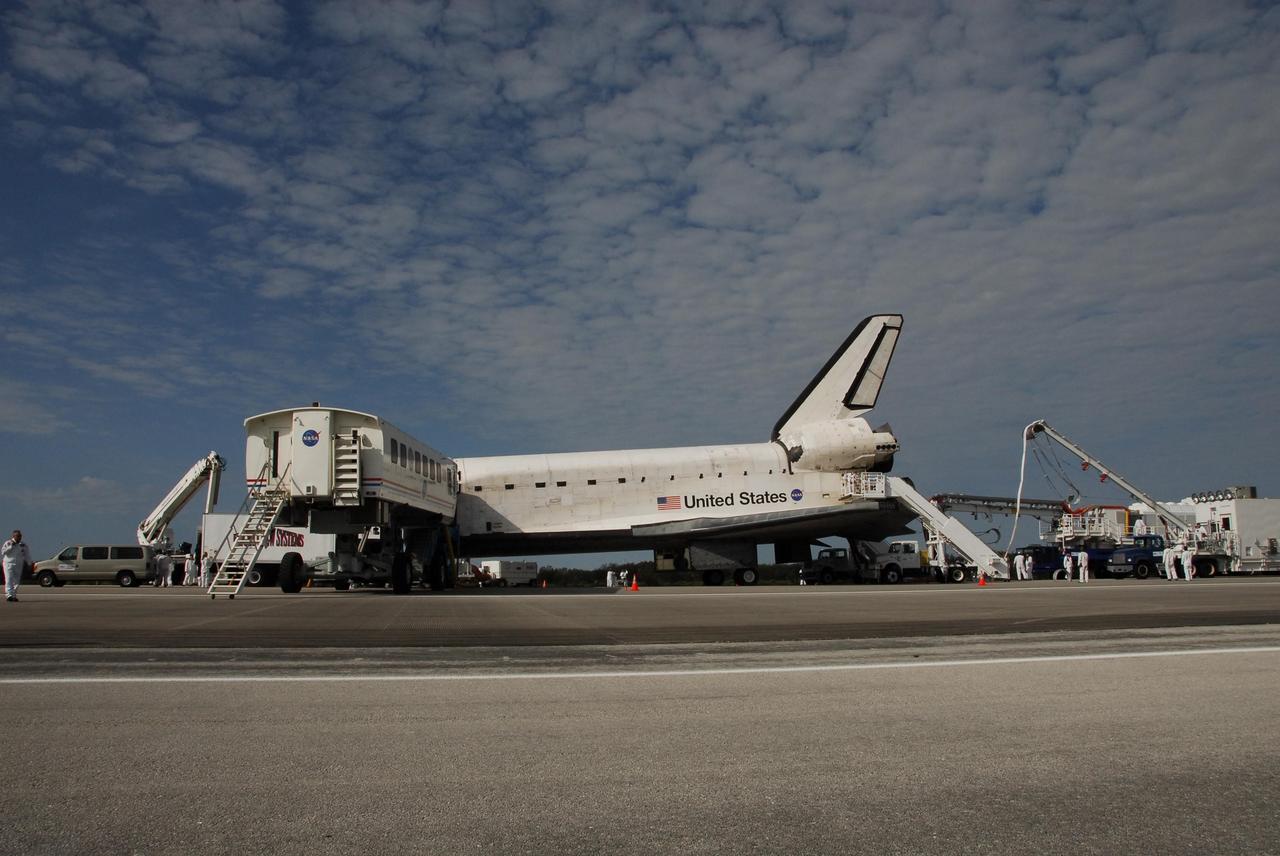
KENNEDY SPACE CENTER, FLA. -- On Runway 15 at NASA's Kennedy Space Center, the crew transport vehicle has drawn up to the crew hatch on space shuttle Atlantis after landing. The crew transfers into the CTV to change from their launch and entry suits and later greet NASA VIPs and the media. After a round trip of nearly 5.3 million miles, Atlantis and crew returned to Earth with a landing at 9:07 a.m. EST.The shuttle landed on orbit 202 to complete the 13-day STS-122 mission. Main gear touchdown was 9:07:10 a.m. Nose gear touchdown was 9:07:20 a.m. Wheel stop was at 9:08:08 a.m. Mission elapsed time was 12 days, 18 hours, 21 minutes and 44 seconds. During the mission, Atlantis' crew installed the new Columbus laboratory, leaving a larger space station and one with increased science capabilities. The Columbus Research Module adds nearly 1,000 cubic feet of habitable volume and affords room for 10 experiment racks, each an independent science lab. Photo credit: NASA/Jack Pfaller
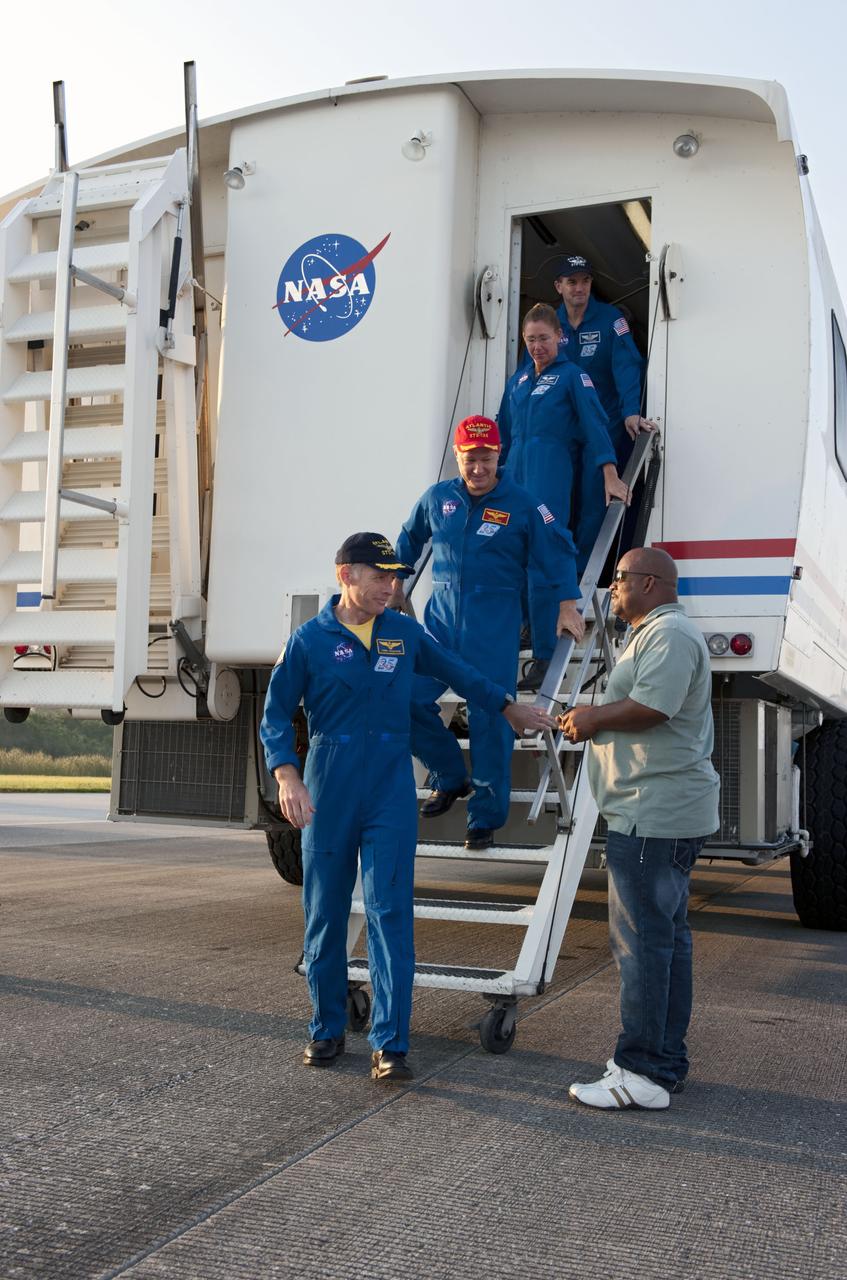
STS135-S-195 (21 July 2011) --- NASA astronaut Chris Ferguson, STS-135 commander, leads his crew out of the Crew Transport Vehicle (CTV) following brief and standard medical checks. Behind Ferguson are NASA astronauts Doug Hurley, pilot; Sandy Magnus and Rex Walheim, both mission specialists. The final four astronauts of NASA's Space Shuttle Program brought space shuttle Atlantis home to the Shuttle Landing Facility's Runway 15 at NASA's Kennedy Space Center in Florida at 5:57 a.m. (EDT) on July 21, 2011. Atlantis' final return from space completed a 13-day, 5.2-million-mile journey to the International Space Station. STS-135 delivered spare parts, equipment and supplies in the Raffaello multi-purpose logistics module that will sustain station operations for the next year. STS-135 was the 33rd and final flight for Atlantis, which has spent 307 days in space, orbited Earth 4,848 times and traveled 125,935,769 miles. Photo credit: NASA
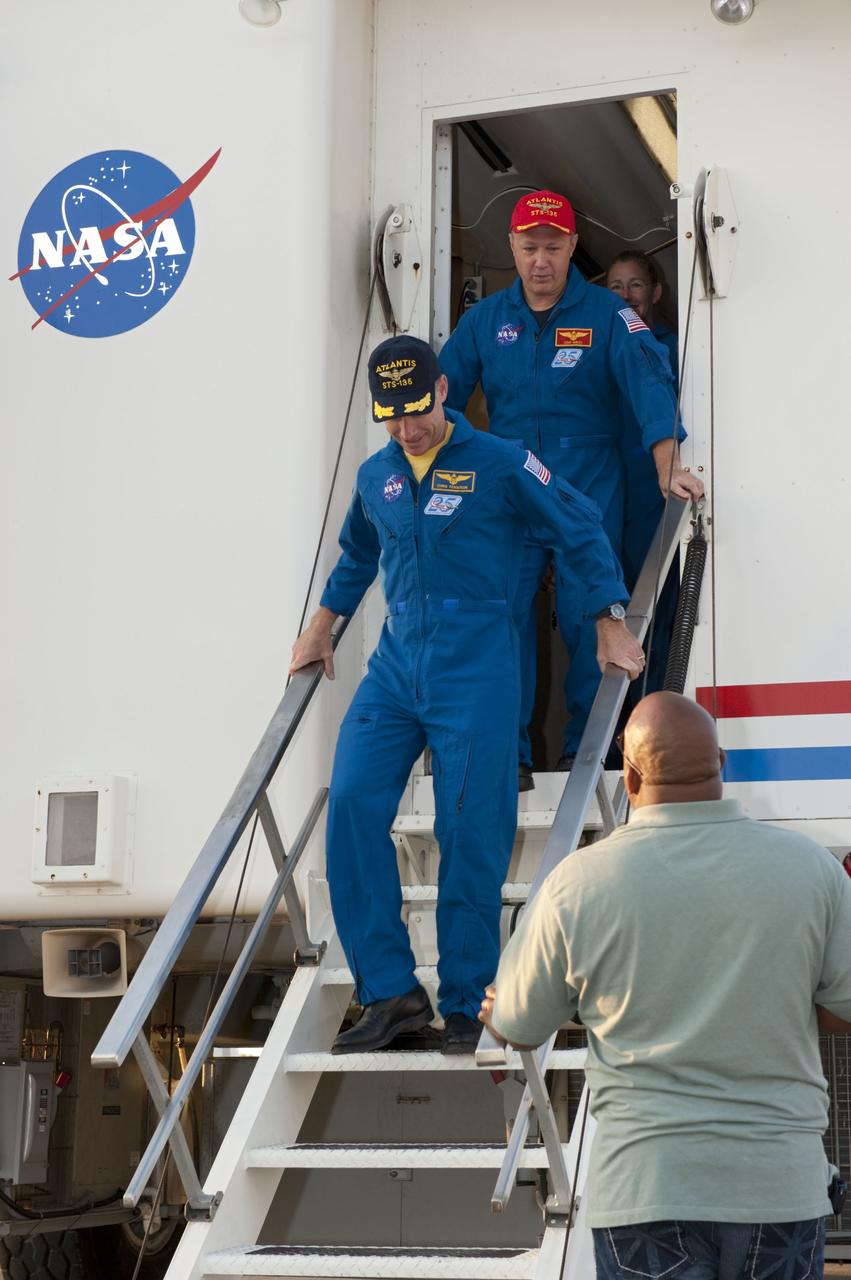
CAPE CANAVERAL, Fla. -- STS-135 Commander Chris Ferguson leads his crew out of the Crew Transport Vehicle (CTV) following brief and standard medical checks. Behind Ferguson is Pilot Doug Hurley. Four astronauts brought space shuttle Atlantis home to the Shuttle Landing Facility's Runway 15 at NASA's Kennedy Space Center in Florida at 5:57 a.m. EDT bringing a close NASA's Space Shuttle Program. Atlantis' final return from space completed a 13-day, 5.2-million-mile journey to the International Space Station. STS-135 delivered spare parts, equipment and supplies in the Raffaello multi-purpose logistics module that will sustain station operations for the next year. STS-135 was the 33rd and final flight for Atlantis, which has spent 307 days in space, orbited Earth 4,848 times and traveled 125,935,769 miles. For more information visit, www.nasa.gov/mission_pages/shuttle/shuttlemissions/sts135/index.html. Photo credit: NASA/Kim Shiflett
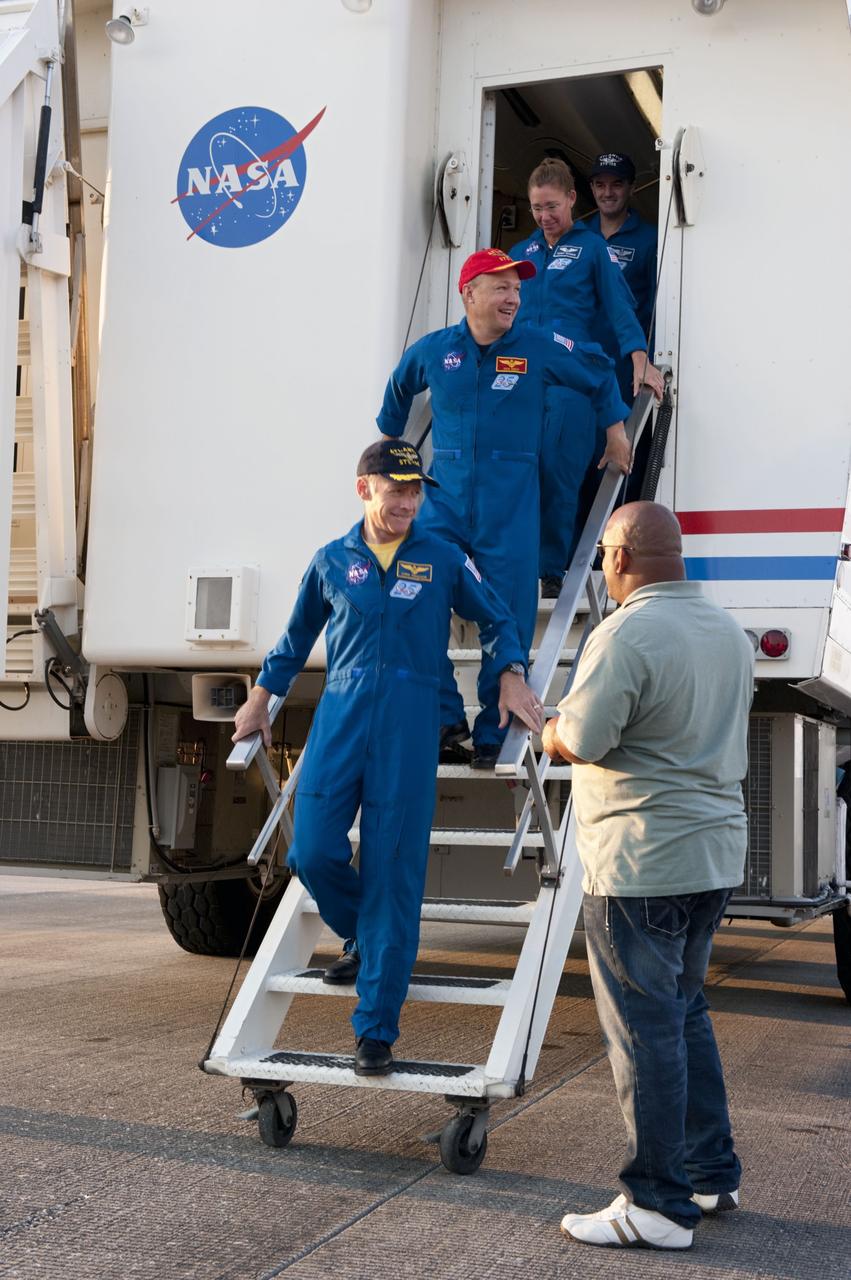
CAPE CANAVERAL, Fla. -- STS-135 Commander Chris Ferguson leads his crew out of the Crew Transport Vehicle (CTV) following brief and standard medical checks. Behind Ferguson are Pilot Doug Hurley, and Mission Specialists Sandy Magnus and Rex Walheim. The final four astronauts of NASA's Space Shuttle Program brought space shuttle Atlantis home to the Shuttle Landing Facility's Runway 15 at NASA's Kennedy Space Center in Florida at 5:57 a.m. EDT. Atlantis' final return from space completed a 13-day, 5.2-million-mile journey to the International Space Station. STS-135 delivered spare parts, equipment and supplies in the Raffaello multi-purpose logistics module that will sustain station operations for the next year. STS-135 was the 33rd and final flight for Atlantis, which has spent 307 days in space, orbited Earth 4,848 times and traveled 125,935,769 miles. For more information visit, www.nasa.gov/mission_pages/shuttle/shuttlemissions/sts135/index.html. Photo credit: NASA/Kim Shiflett
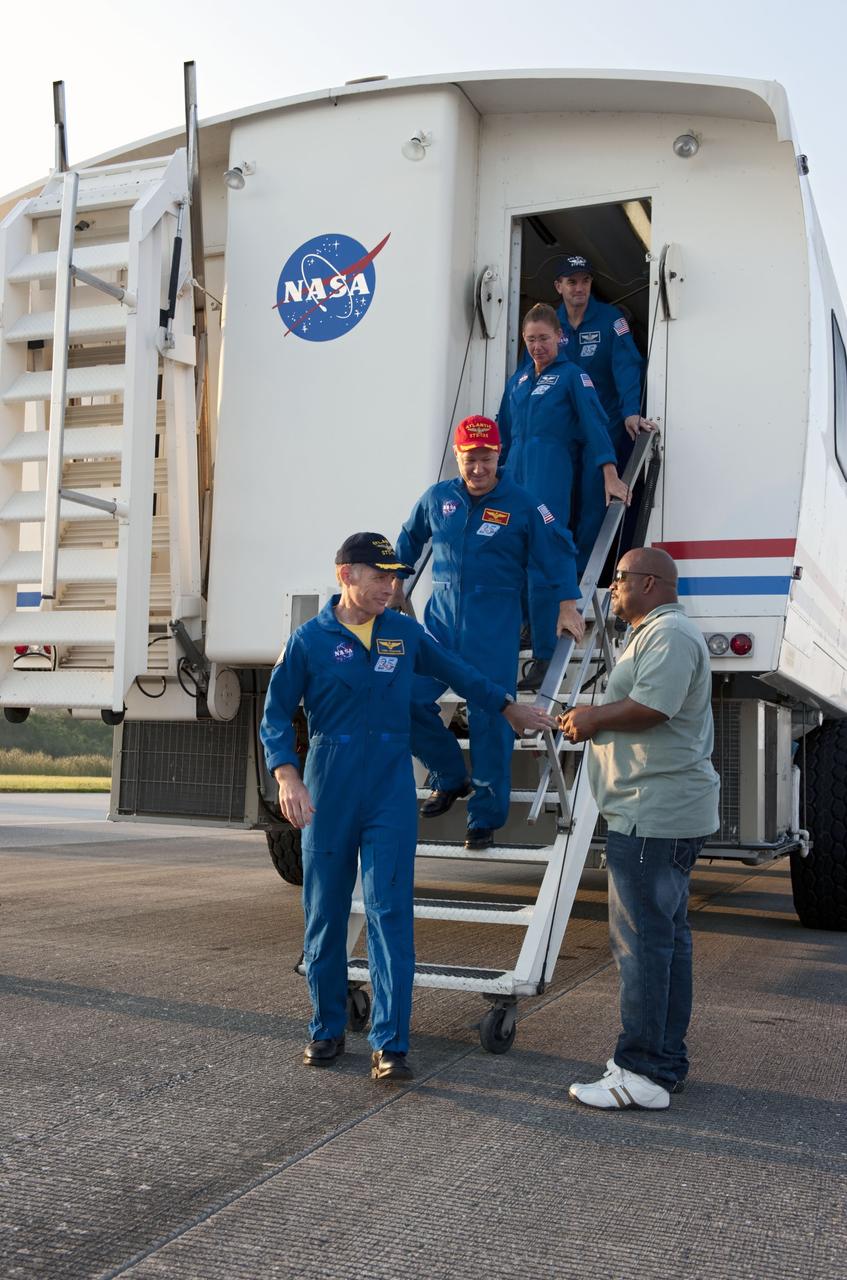
CAPE CANAVERAL, Fla. -- STS-135 Commander Chris Ferguson leads his crew out of the Crew Transport Vehicle (CTV) following brief and standard medical checks. Behind Ferguson are Pilot Doug Hurley, and Mission Specialists Sandy Magnus and Rex Walheim. The final four astronauts of NASA's Space Shuttle Program brought space shuttle Atlantis home to the Shuttle Landing Facility's Runway 15 at NASA's Kennedy Space Center in Florida at 5:57 a.m. EDT. Atlantis' final return from space completed a 13-day, 5.2-million-mile journey to the International Space Station. STS-135 delivered spare parts, equipment and supplies in the Raffaello multi-purpose logistics module that will sustain station operations for the next year. STS-135 was the 33rd and final flight for Atlantis, which has spent 307 days in space, orbited Earth 4,848 times and traveled 125,935,769 miles. For more information visit, www.nasa.gov/mission_pages/shuttle/shuttlemissions/sts135/index.html. Photo credit: NASA/Kim Shiflett