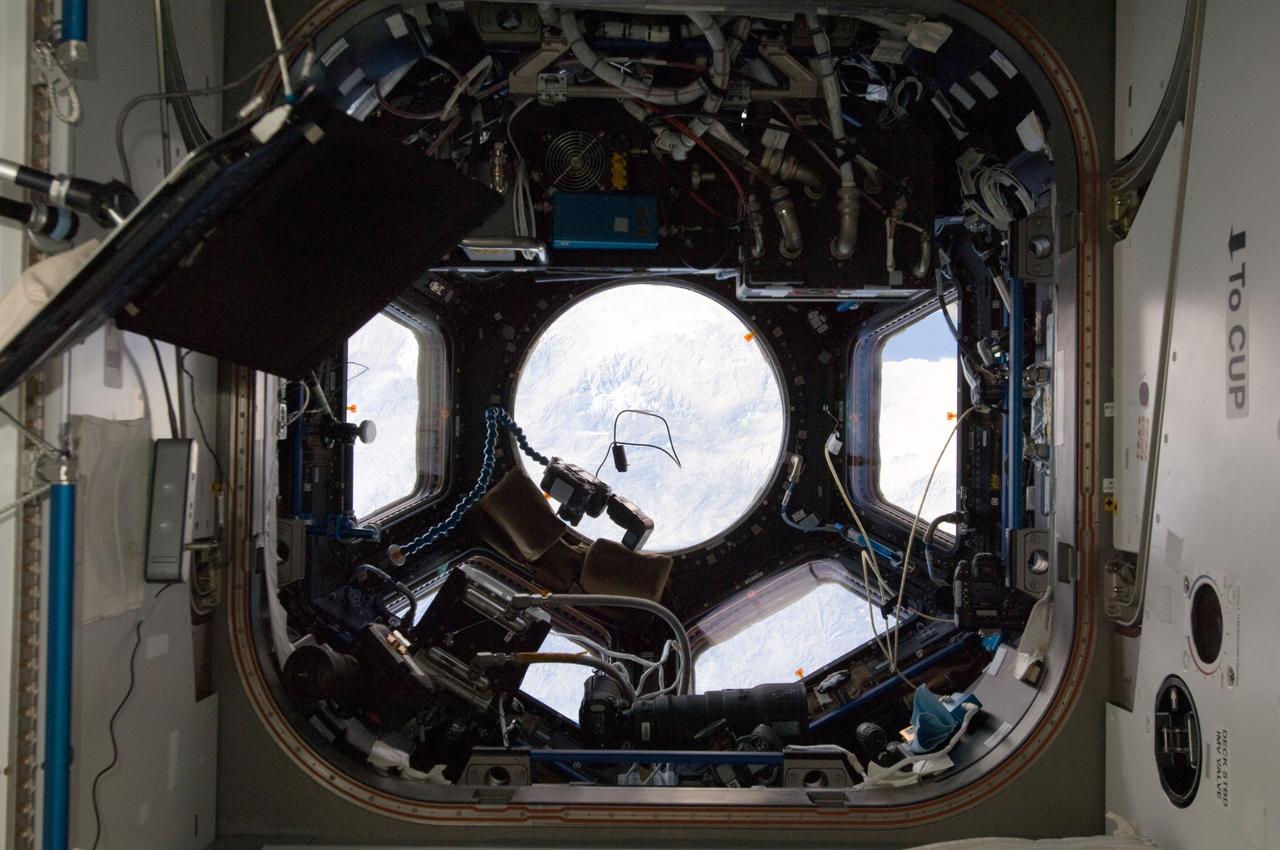
Overall view of the Cupola Module. Photo was taken during Expedition 34.
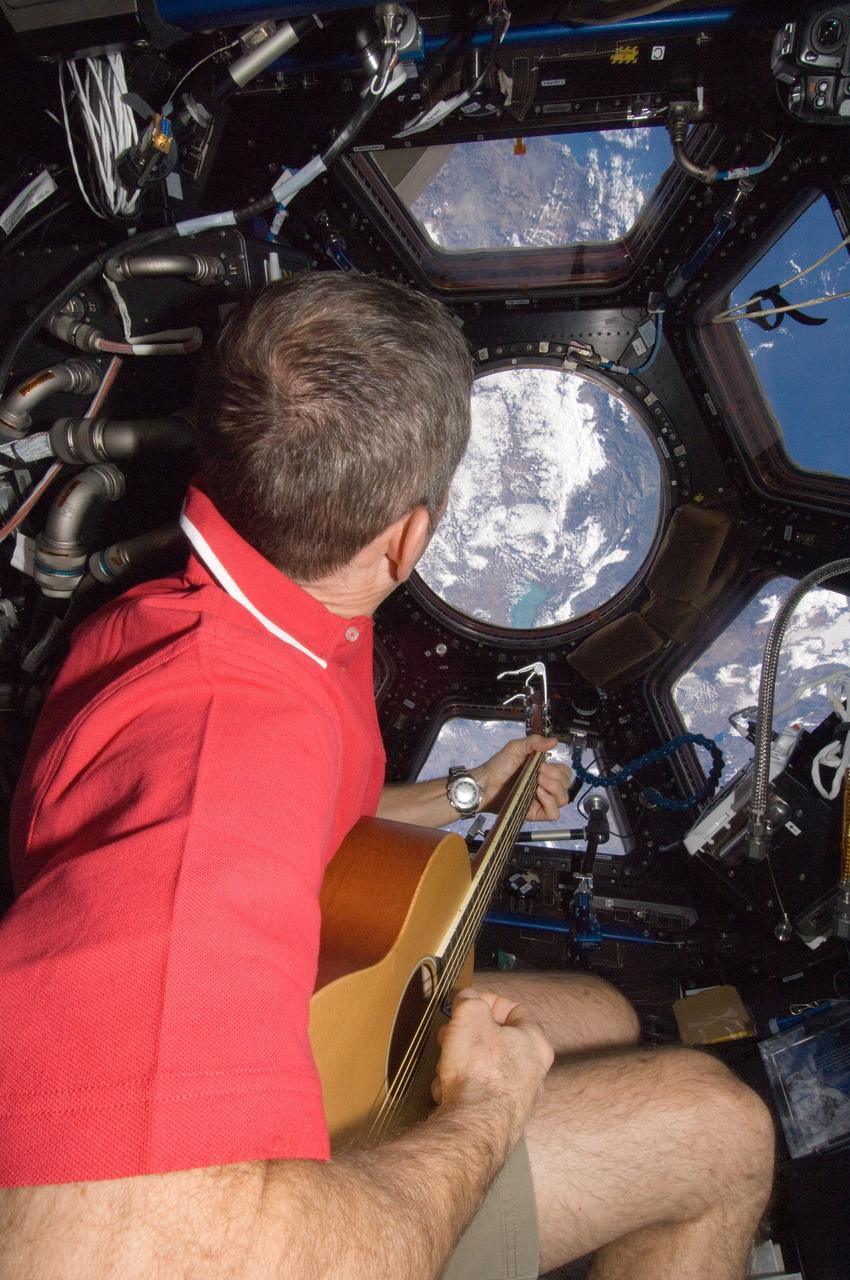
View of Canadian Space Agency (CSA) Chris Hadfield,Expedition 34 Flight Engineer (FE),playing guitar in the Cupola Module. Photo was taken during Expedition 34.
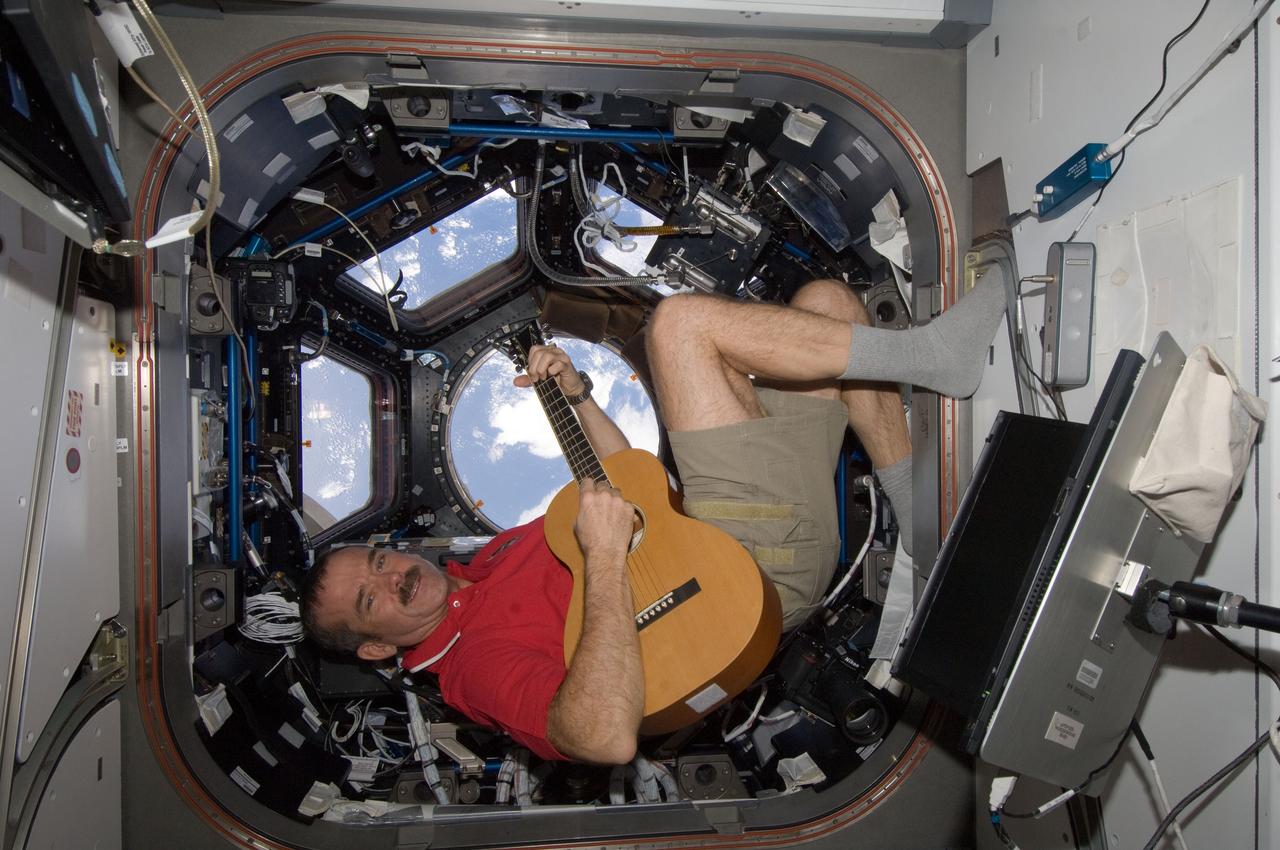
View of Canadian Space Agency (CSA) Chris Hadfield, Expedition 34 Flight Engineer (FE), playing guitar in the Cupola Module. Photo was taken during Expedition 34.
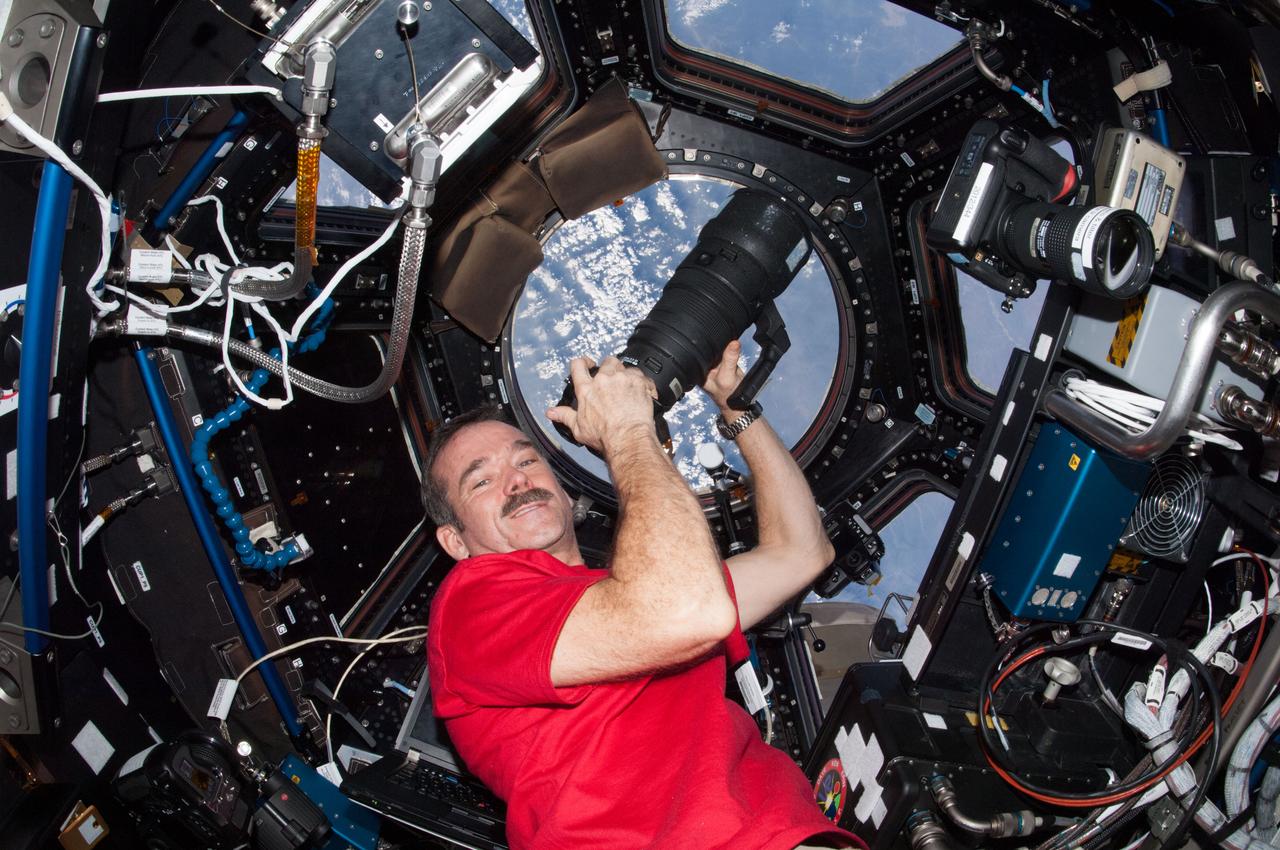
View of Canadian Space Agency (CSA) Chris Hadfield,Expedition 34 Flight Engineer (FE),using still camera,in the Cupola Module. Photo was taken during Expedition 34.
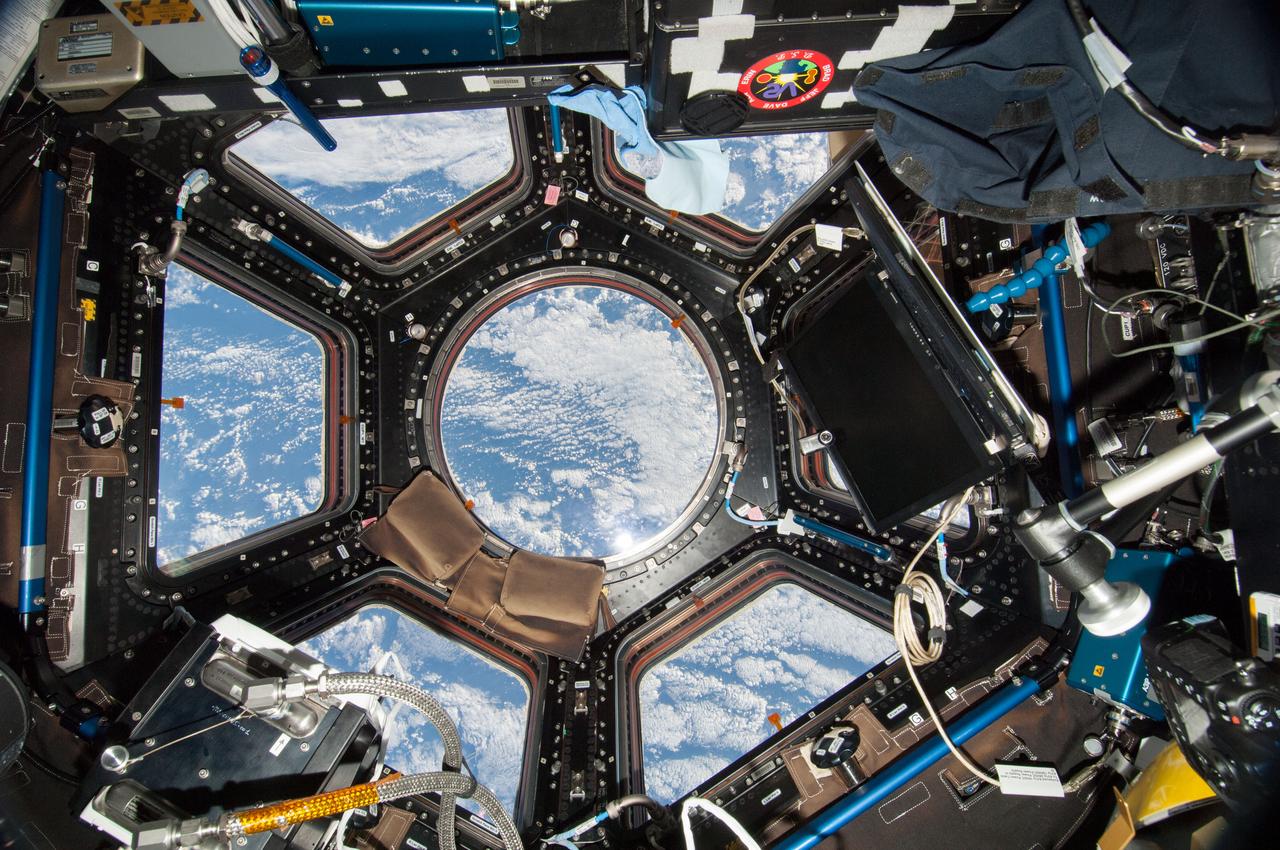
ISS038-E-000246 (12 Nov. 2013) --- Equipped with seven windows, the Cupola aboard the International Space Station probably has exponentially more beneficial facets than it has windows. Seldom seen without at least two or three heads and bodies near the windows, the facility is either temporary or permanent home to robotics controls, computers and cameras among other hardware. And needless to say, it affords spectacular viewing ports for crew members.

Overall interior view of the Cupola module taken during Expedition 35.
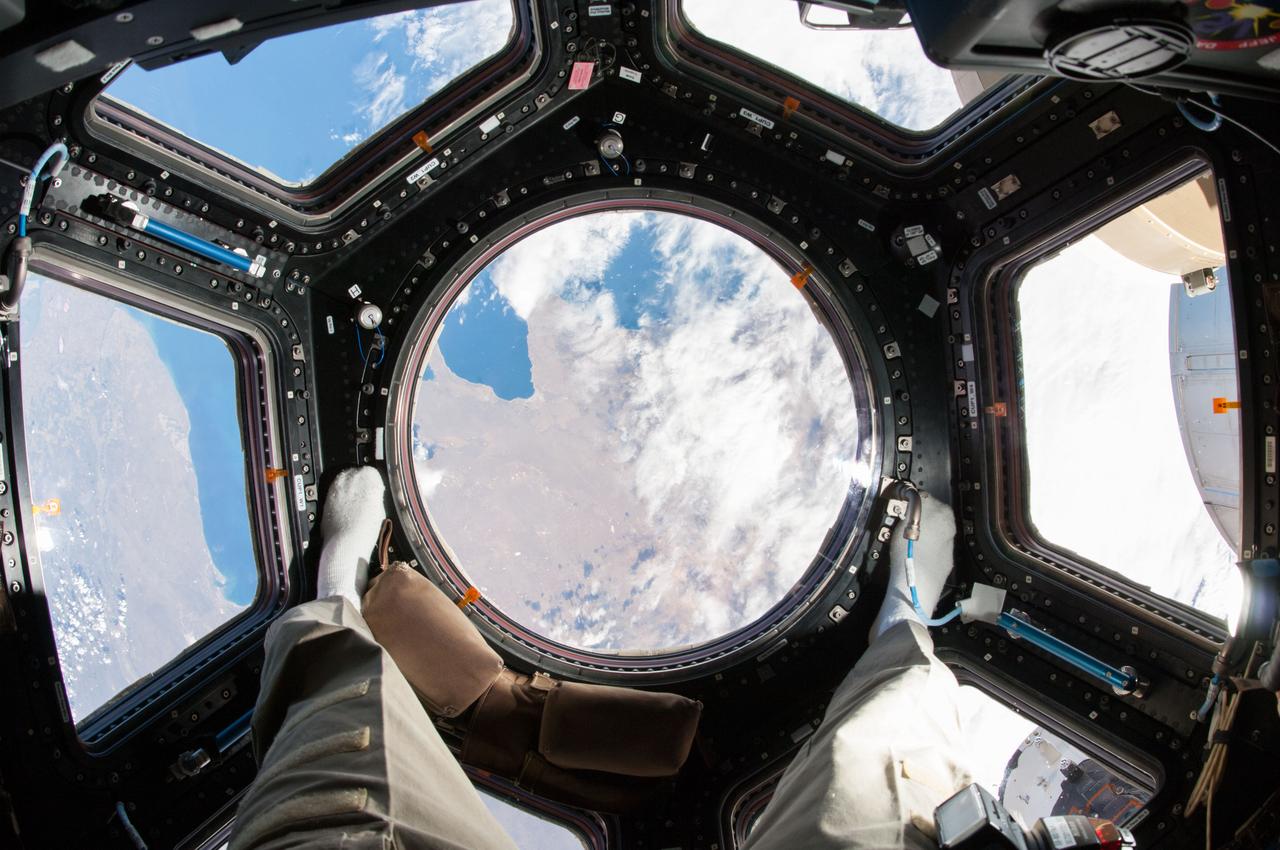
Overall view of the Cupola Module. Photo was taken during Expedition 38. Image was released by astronaut on Twitter.
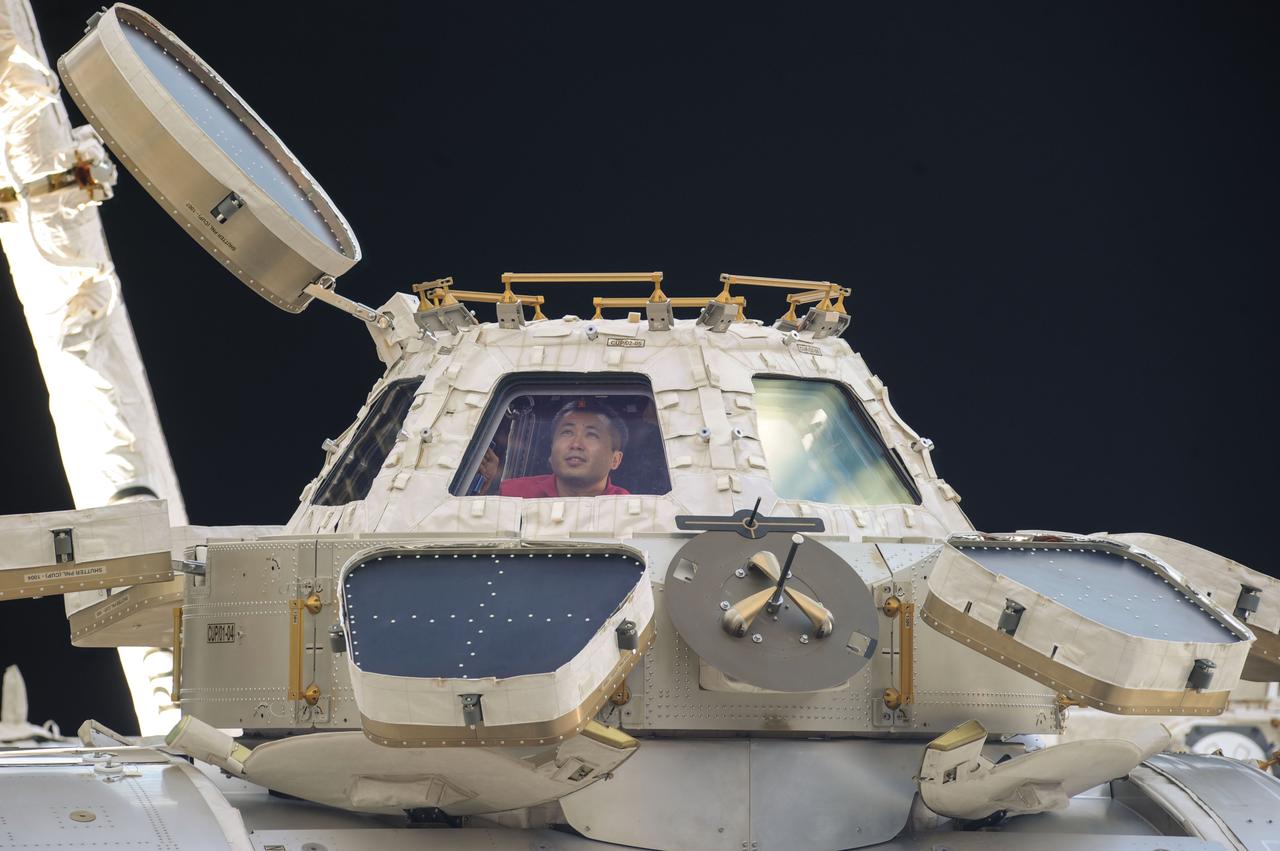
Exterior view of the Cupola Module with Expedition 39 commander and Japan Aerospace Exploration agency (JAXA) astronaut Koichi Wakata inside, looking out through one of the windows. This image was released by Wakata on Twitter.
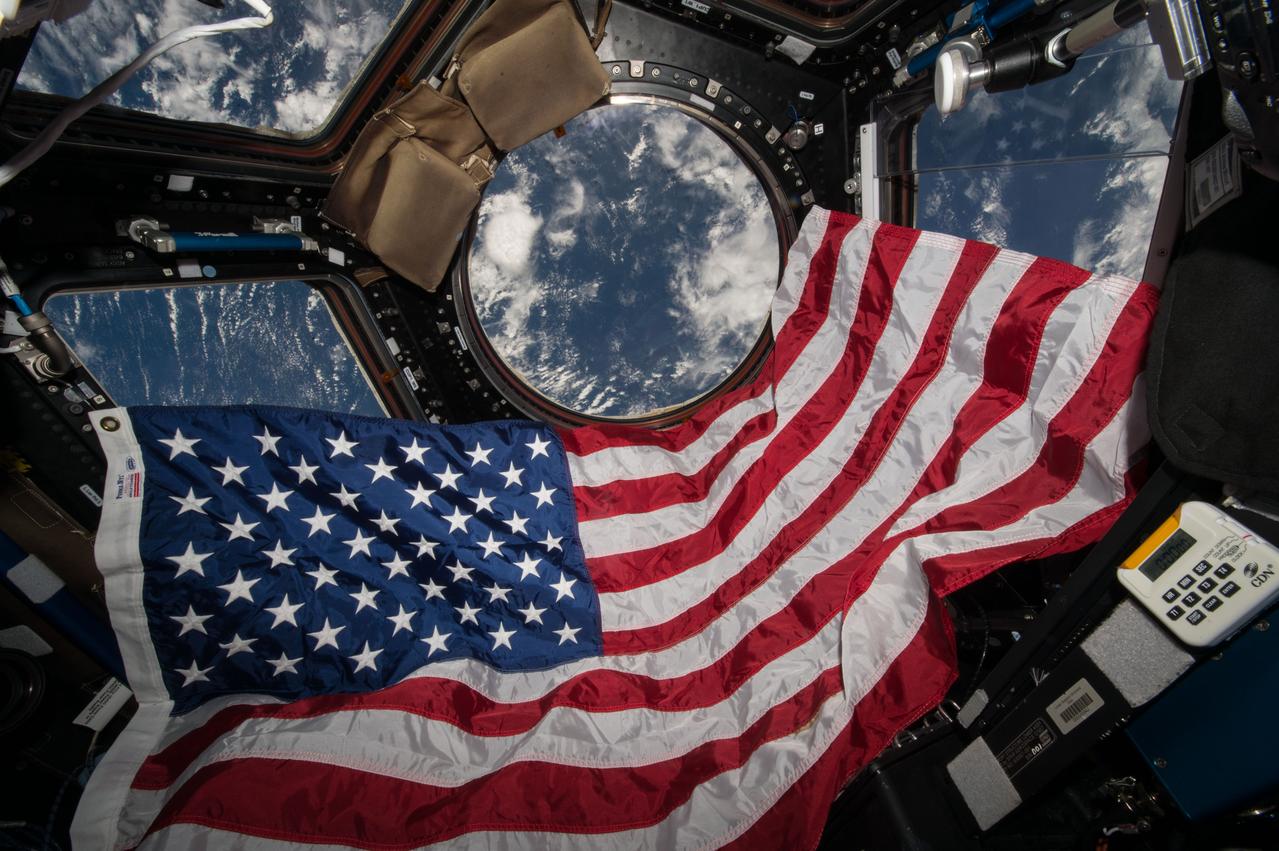
View of flag celebrating Flag Day in the Cupola Module. Photo was taken during Expedition 44.

iss068e022275 (11/14/2022) --- A view of the OVOSPACE payload in the cupola module aboard the international Space Station (ISS). The Modulation of Granulosa and Theca Cells Activity in Microgravity: Consequences for Human Health and Reproduction (OVOSPACE) investigation studies how the microgravity environment can impair ovary function and the physiological development of living beings.
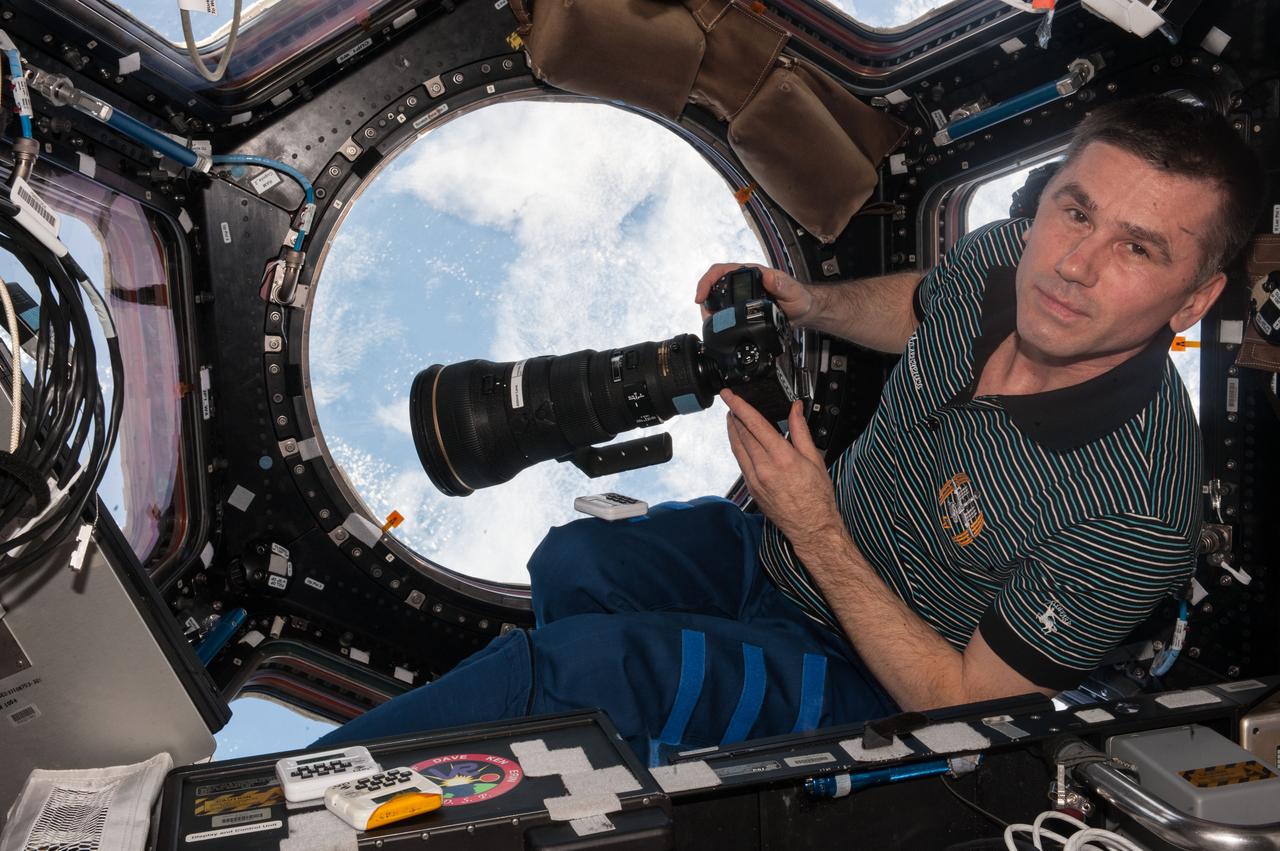
ISS047e001484 (03/05/2016) --- Expedition 47 flight engineer Yuri Malenchenko from Roscosmos is photographed in the International Space Station’s Cupola module preparing to take Earth pictures using a 400 mm lens. The Cupola's 360 degree viewing platform provides optimal views of the Earth below and also contains the control mechanisms for the station’s Canadarm2 robotic arm.
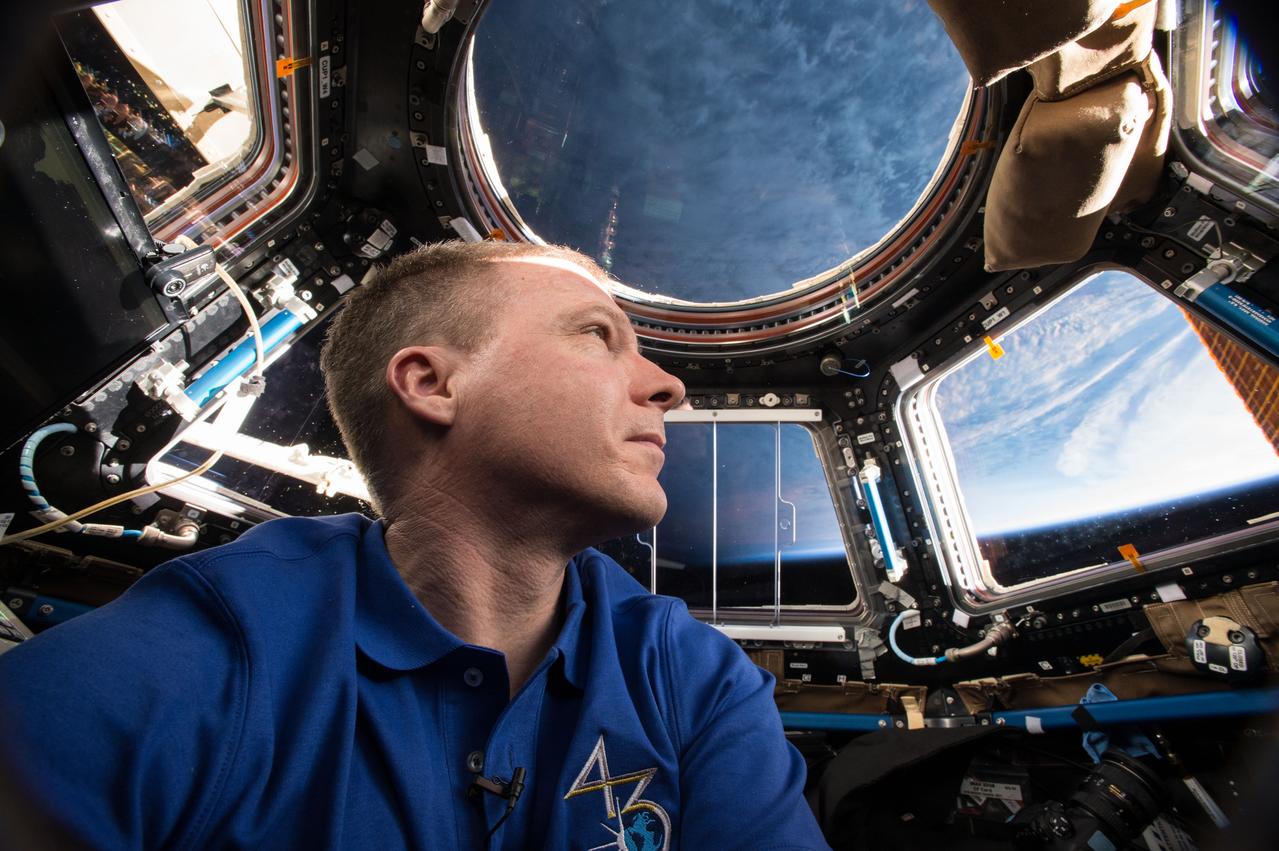
ISS043E241729 (05/24/2015) --- Expedition 43 commander and NASA astronaut Terry Virts is seen here inside of the station’s Cupola module. The Cupola is designed for the observation of operations outside the ISS such as robotic activities, the approach of vehicles, and spacewalks. It also provides spectacular views of Earth and celestial objects for use in astronaut observation experiments. It houses the robotic workstation that controls the space station’s robotic arm and can accommodate two crewmembers simultaneously.
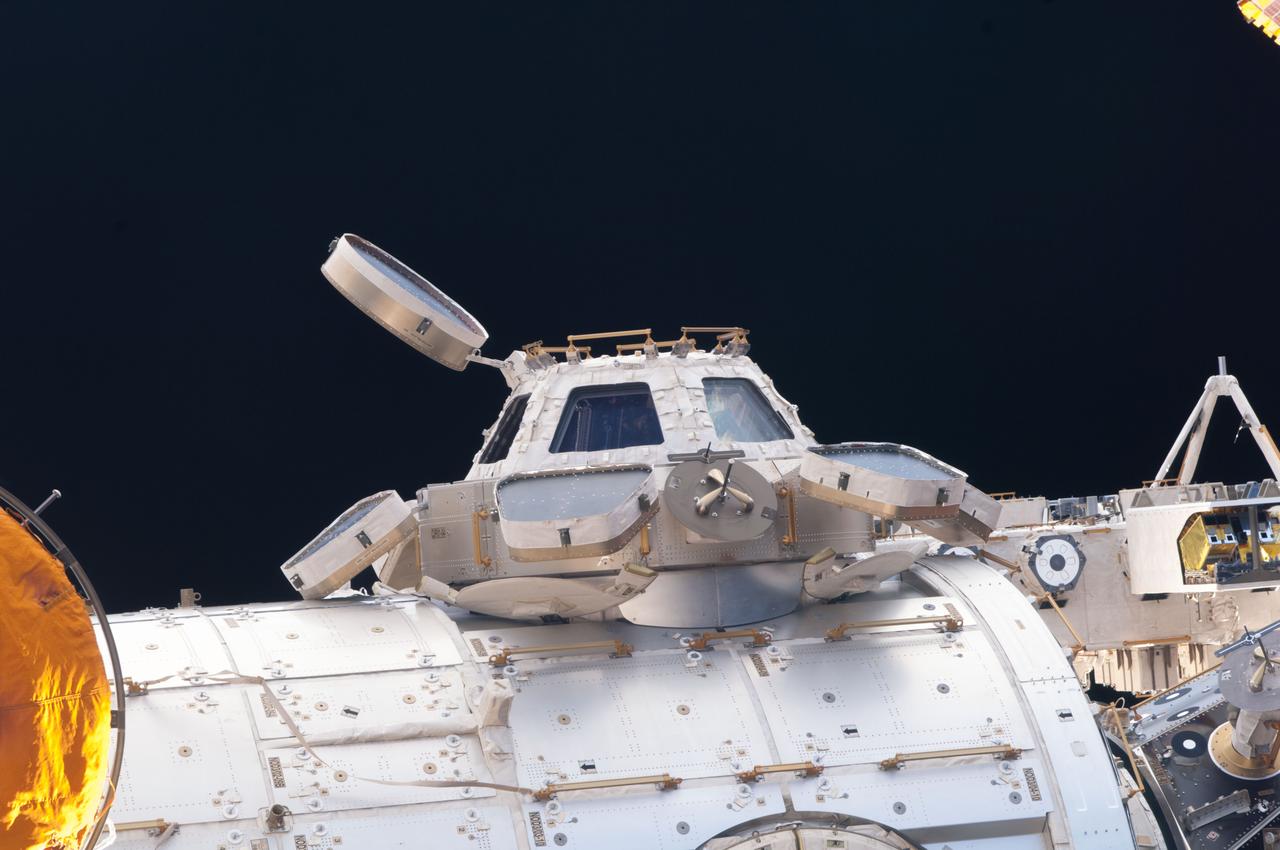
Survey view of portions of the Cupola Module, Tranquility Node 3, and Pressurized Mating Adapter 3 (PMA-3). Image was taken through a window in the Russian segment of the ISS during Expedition 35.
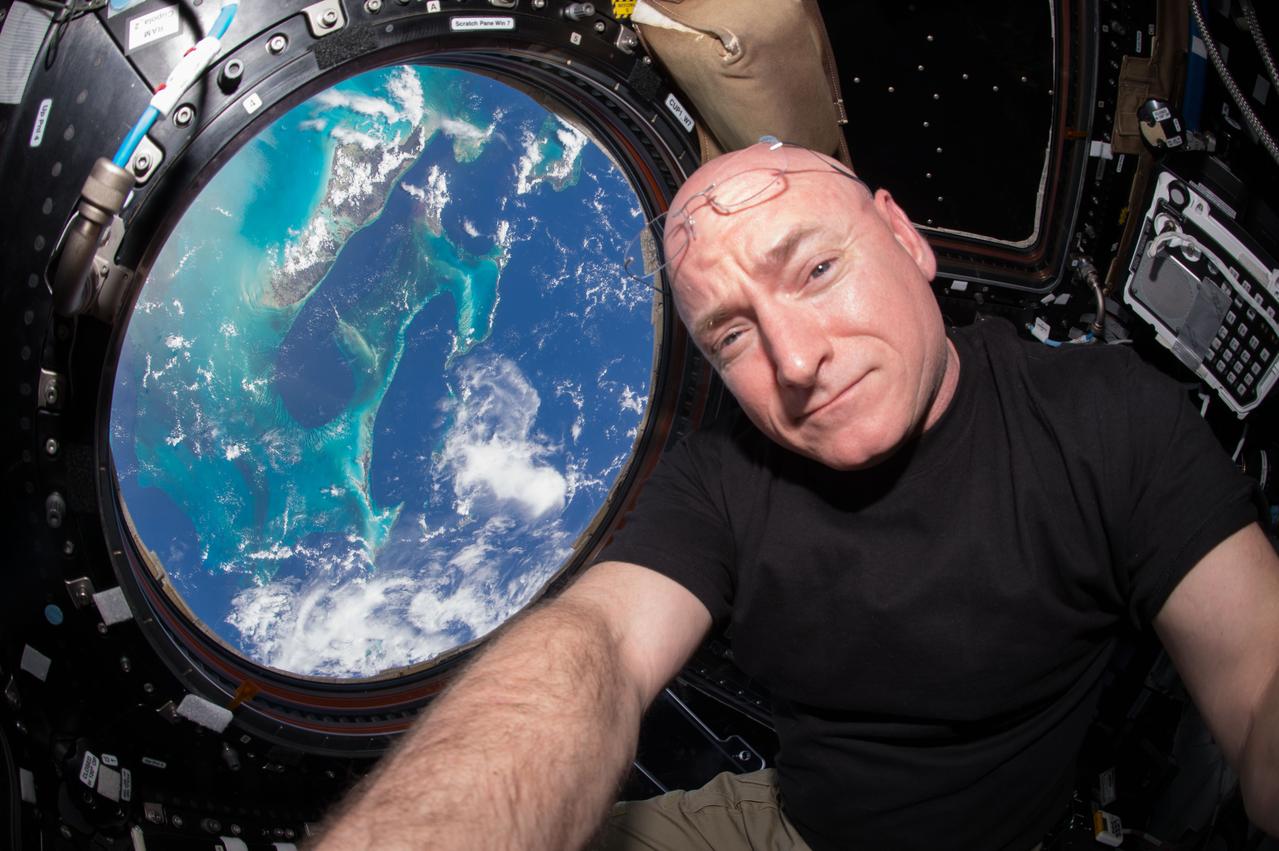
ISS044E011632 (07/12/2015) --- Expedition 44 flight engineer and NASA astronaut Scott Kelly seen inside the Cupola, a special module which provides a 360-degree viewing of the Earth and the International Space Station. Kelly is one of two crew members spending an entire year in space.
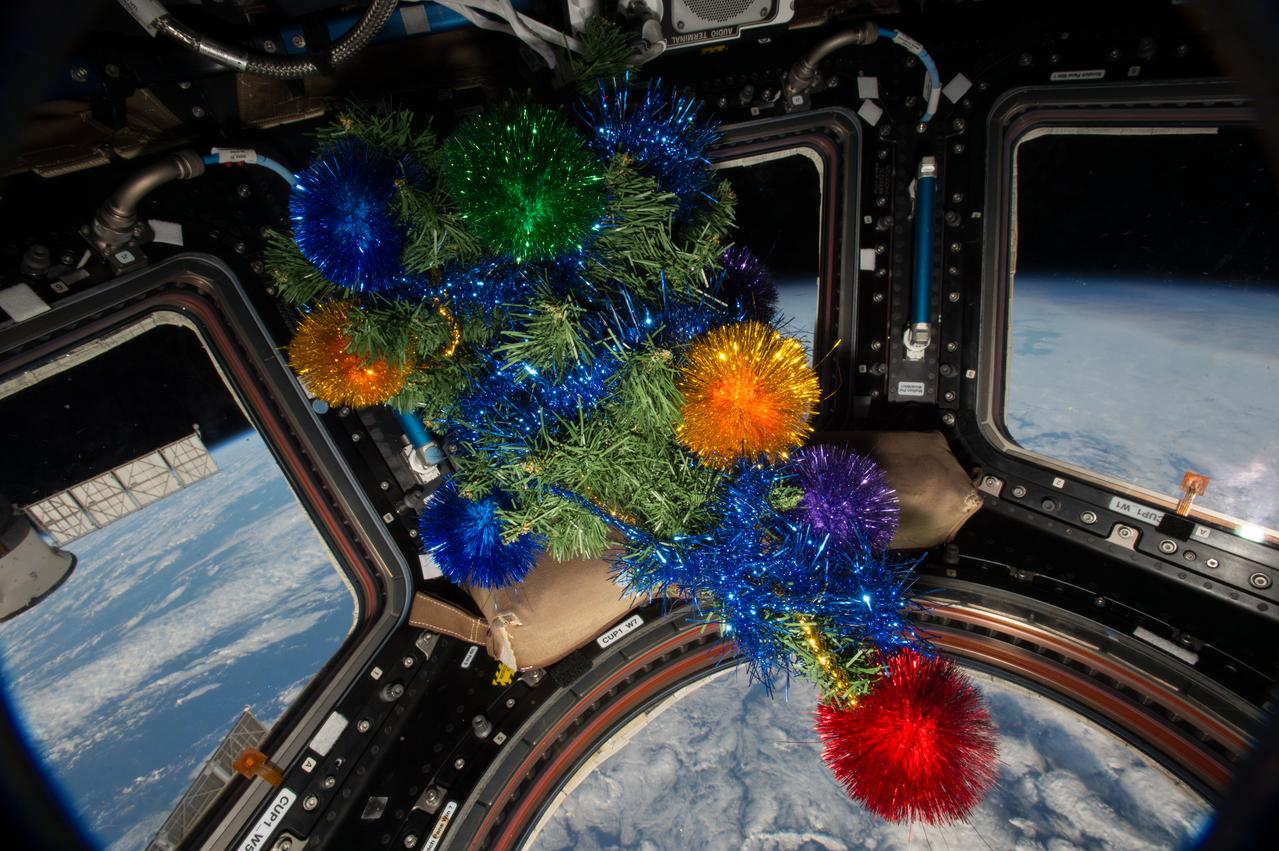
ISS046e002700 (12/25/2015) --- Happy Holiday in space. The crew of Expedition 46 decorated the International Space Station’s Cupola module, a 360-degree series of windows that provides a stunning view of Earth for observations, while also containing the primary controls for the Canadarm2 robotic arm.
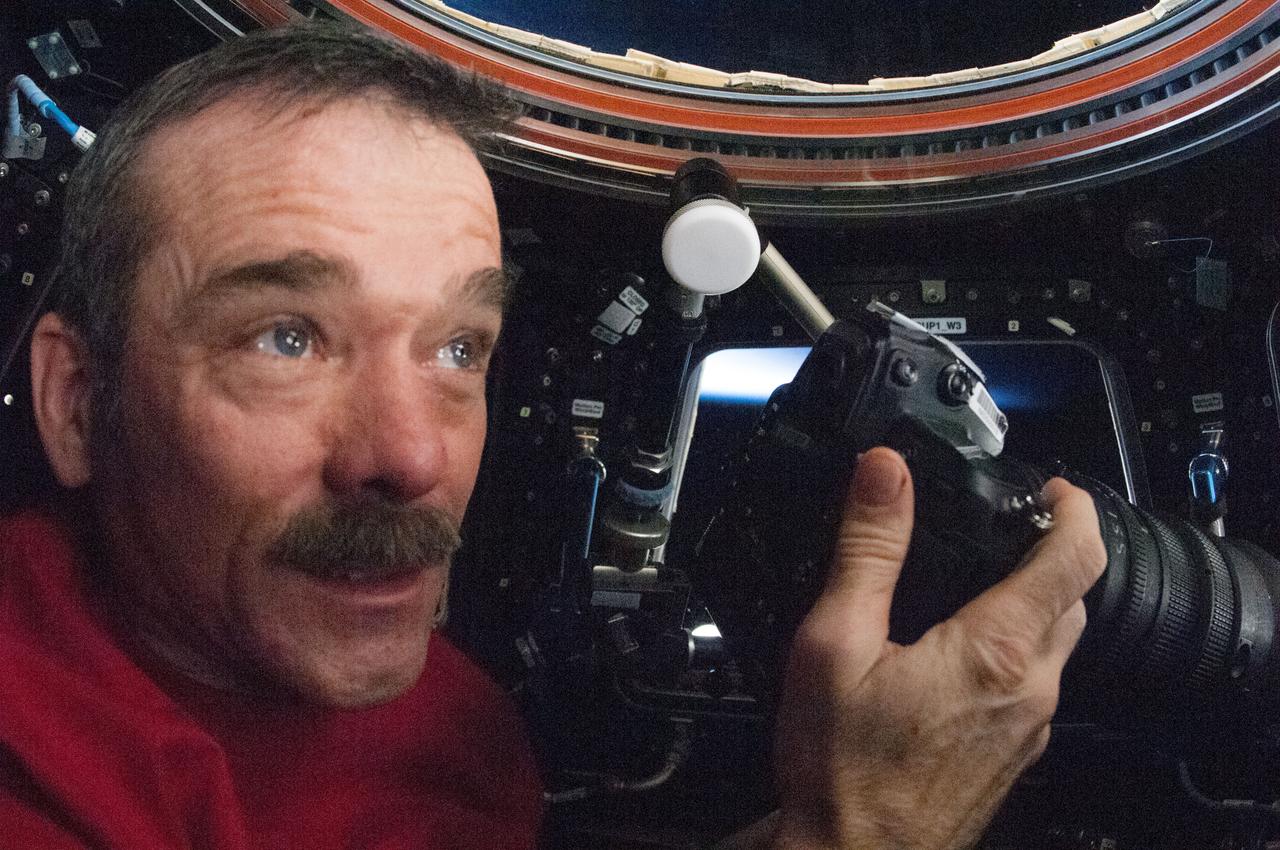
ISS034-E-024095 (7 Jan. 2013) --- Canadian Space Agency astronaut Chris Hadfield, Expedition 34 flight engineer, holds a still camera while looking through a window in the Cupola of the International Space Station.
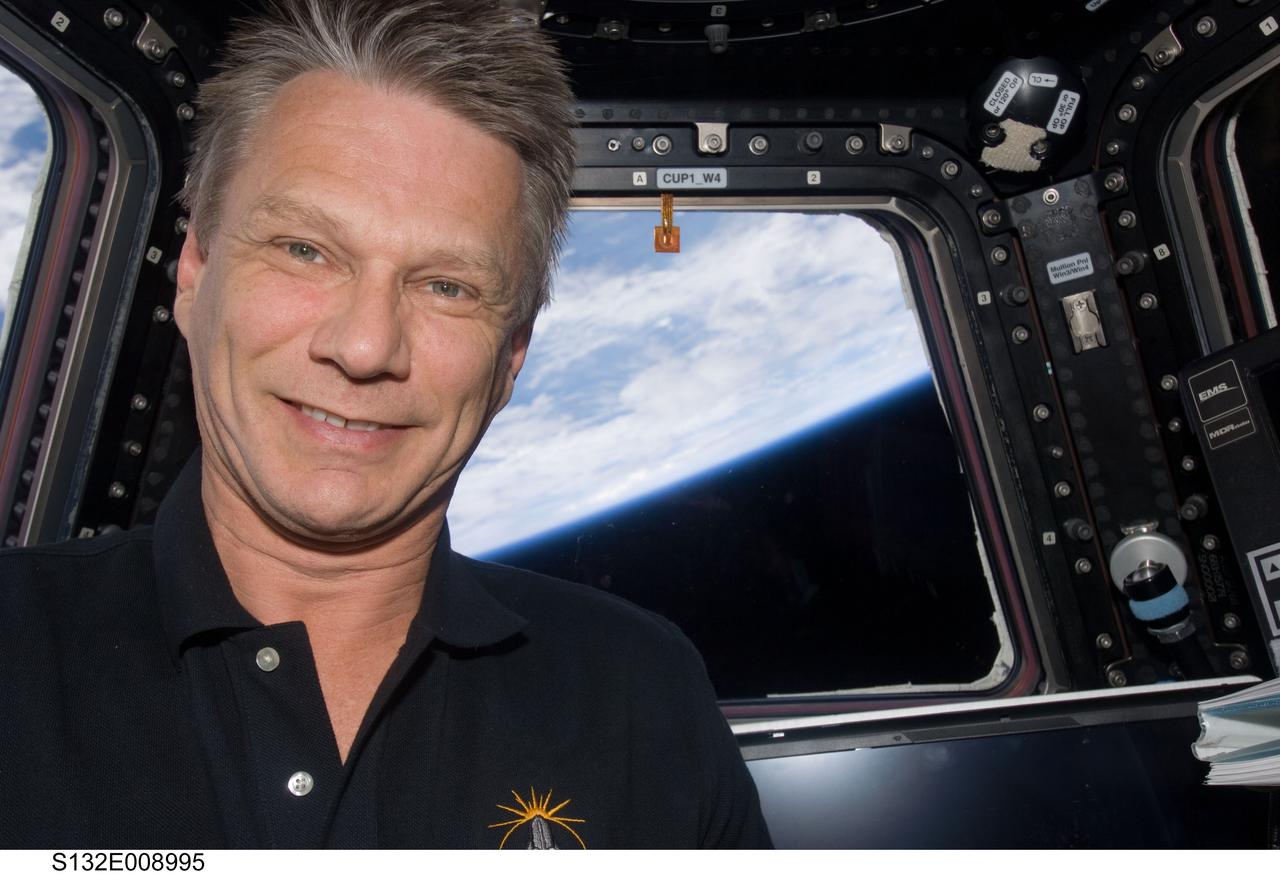
S132-E-008995 (21 May 2010) --- NASA astronaut Piers Sellers has been into space before the current STS-132 mission of space shuttle Atlantis. But this flight's visit to the International Space Station has afforded the mission specialist his first look at the Cupola and his first looks from the seven-windowed turret-like module on the orbital outpost. This photo was taken inside the Cupola while two of Sellers' crewmates were finishing STS-132's third and final session of extravehicular activity. Photo credit: NASA or National Aeronautics and Space Administration
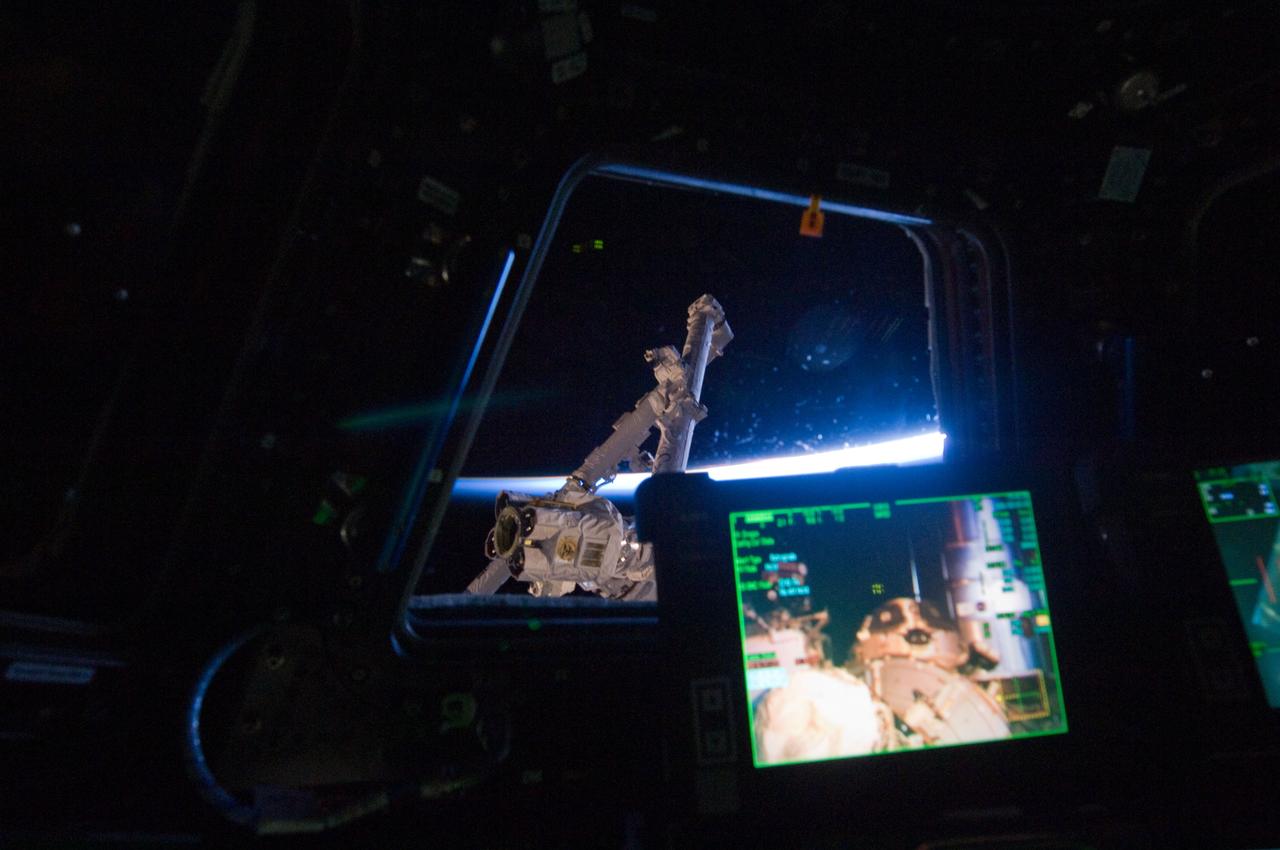
ISS030-E-238994 (18 April 2012) --- This view in the International Space Station?s Cupola was photographed by an Expedition 30 crew member during the first of three Canadarm2 Space Station Remote Manipulator System (SSRMS) Offset Grapple sessions in the onboard training plan for SpaceX-Demo Dragon capture. Ground teams prepositioned the arm and the crew completed misaligned grapple approaches to the Permanent Multipurpose Module (PMM) Flight Releasable Grapple Fixture (FRGF) in order to familiarize themselves with operations from the Cupola Robotic Work Station (RWS).
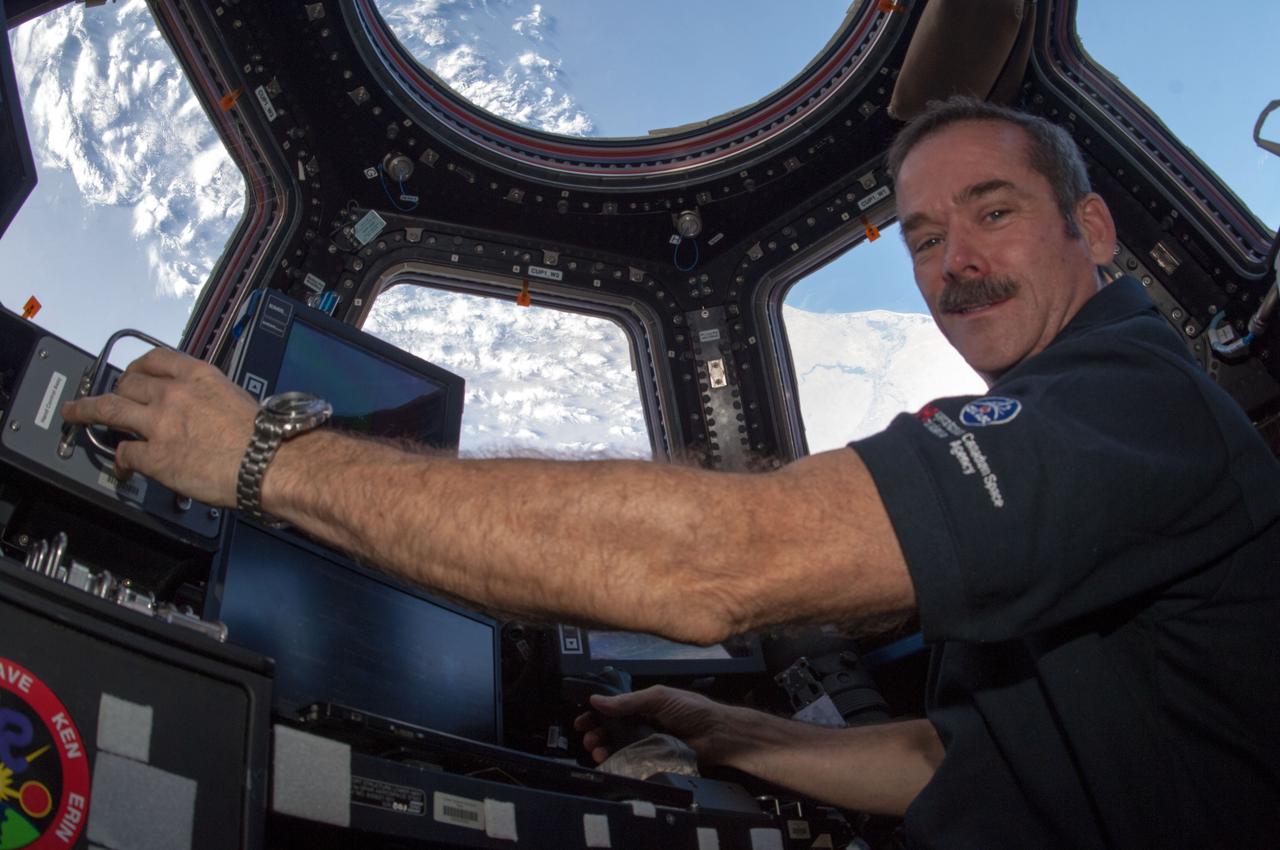
ISS034-E-027317 (10 Jan. 2013) --- In the Cupola aboard the Earth-orbiting International Space Station, Canadian Space Agency astronaut Chris Hadfield, Expedition 34 flight engineer, works the controls at the Robotic workstation to maneuver the Space Station Remote Manipulator System (SSRMS) or CanadArm2 from its parked position to grapple the Mobile Remote Servicer (MRS) Base System (MBS) Power and Data Grapple Fixture 4 (PDGF-4).
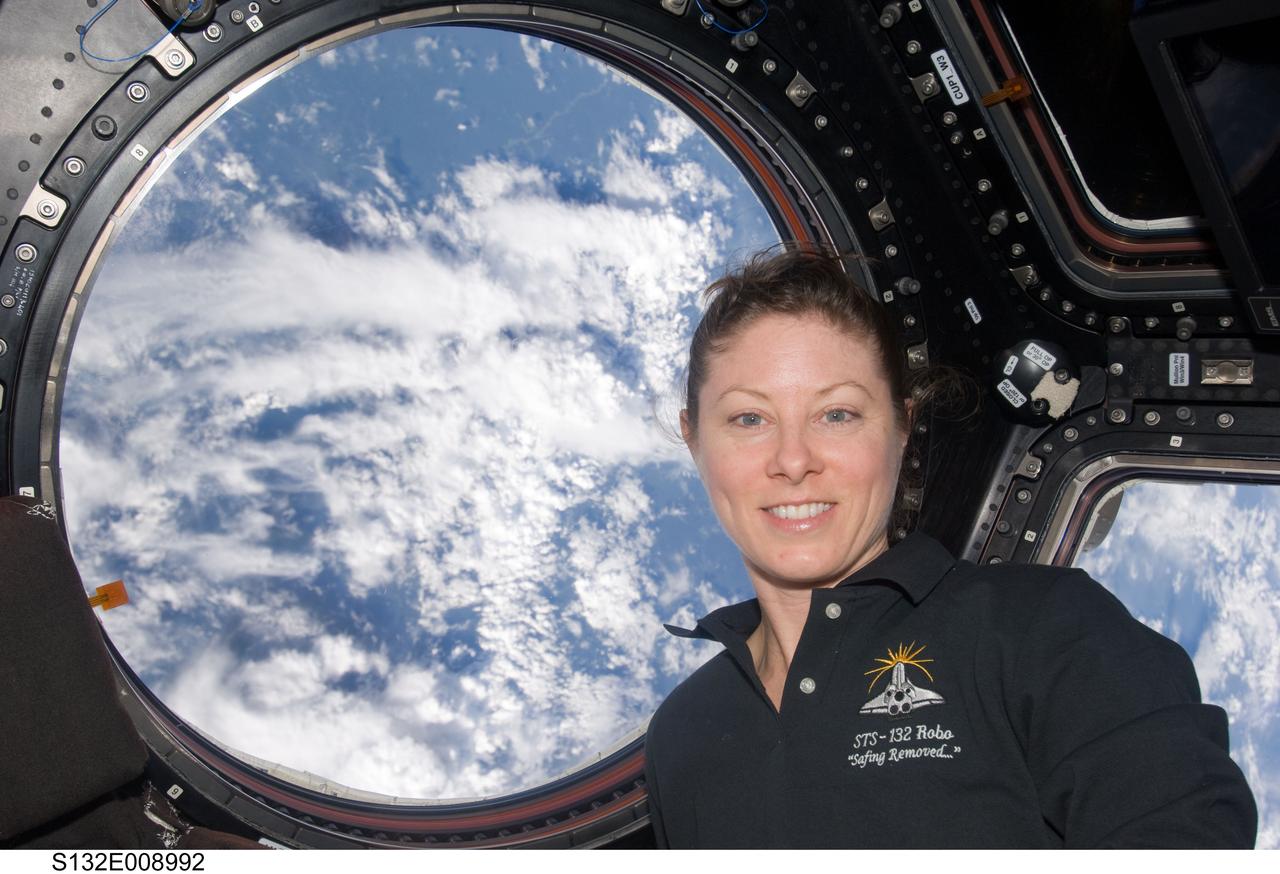
S132-E-008992 (21 May 2010) --- An STS-132 crewmember took this photograph of NASA astronaut Tracy Caldwell Dyson, Expedition 23 flight engineer, inside the International Space Station's Cupola, a seven-windowed turret-like module on the orbital outpost. This photo was taken while two of Atlantis' crew members were finishing STS-132's third and final session of extravehicular activity. Photo credit: NASA or National Aeronautics and Space Administration
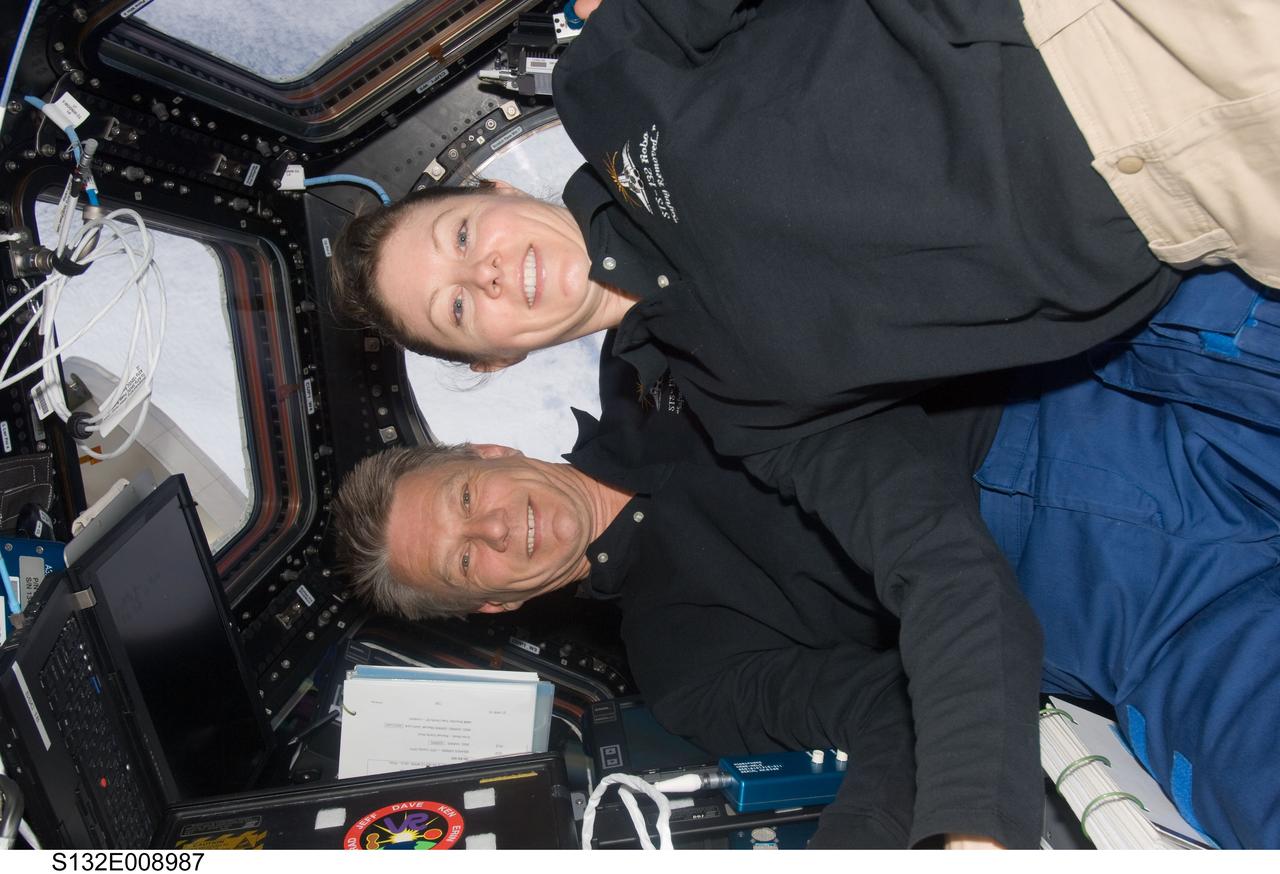
S132-E-008987 (21 May 2010) --- NASA astronaut Piers Sellers, seen here with space station crew member Tracy Caldwell Dyson, has been into space before the current STS-132 mission of space shuttle Atlantis. But this flight's visit to the International Space Station has afforded the mission specialist his first look at the Cupola and his first looks from the seven-windowed turret-like module on the orbital outpost. In the midst of a long stay on the orbital outpost, Caldwell Dyson has daily access to the relatively new module, which provides unique panoramic viewing of her exterior surroundings. This photo was taken while two astronauts were finishing STS-132's third and final session of extravehicular activity. Photo credit: NASA or National Aeronautics and Space Administration
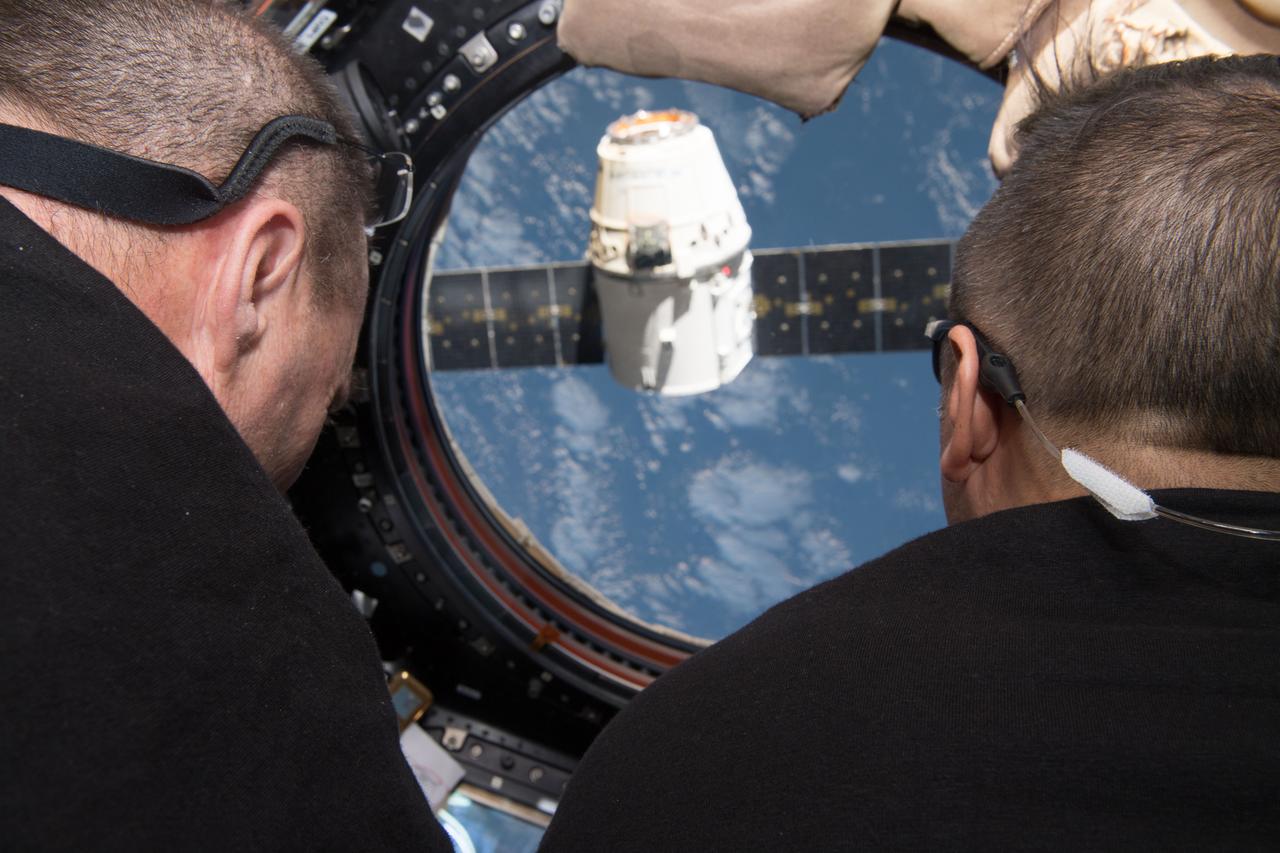
iss054e022060 (Jan. 13, 2018) --- Flight Engineers Scott Tingle (left) and Joe Acaba monitor the departure of the SpaceX Dragon resupply spacecraft through windows in the Cupola module.
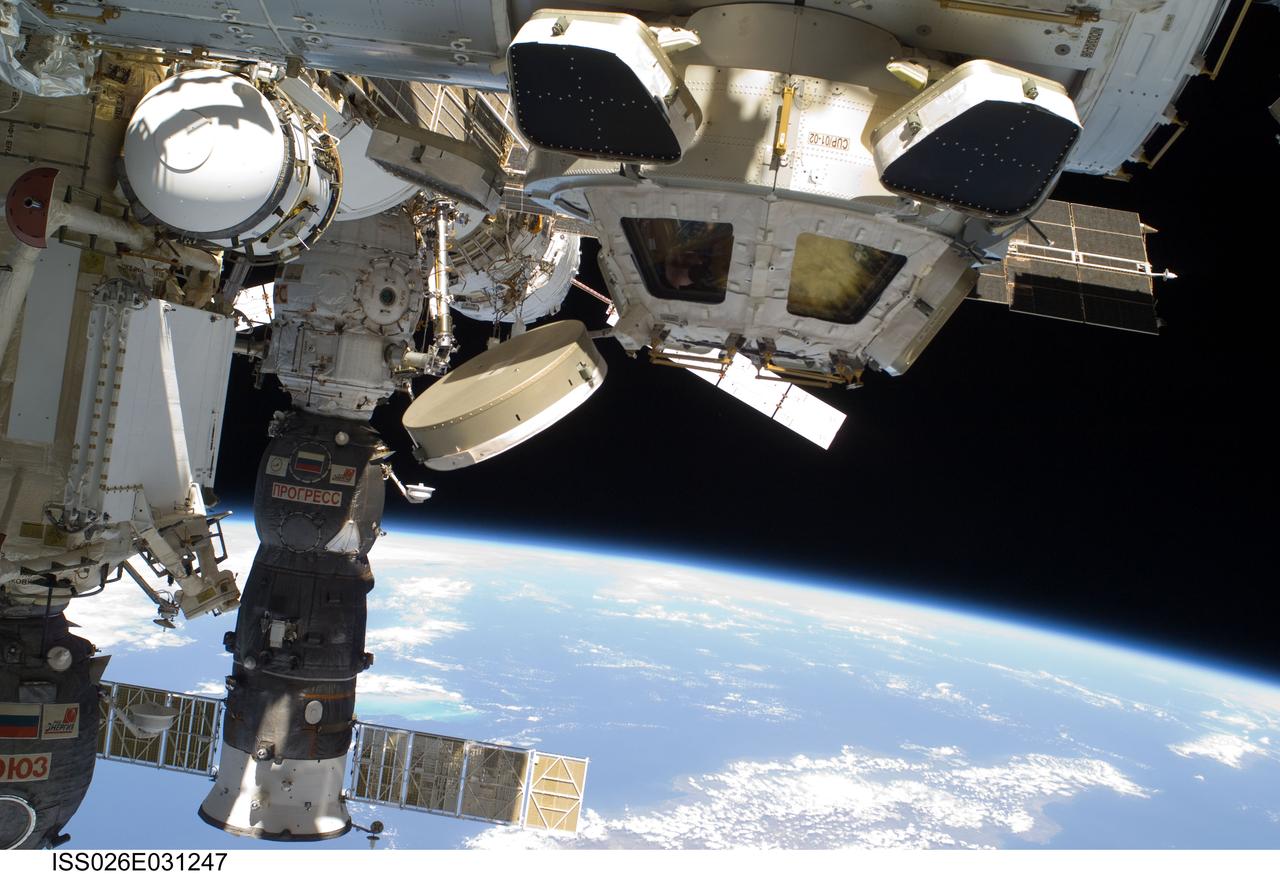
ISS026-E-031247 (2 March 2011) --- Backdropped by Earth?s horizon and the blackness of space, the Cupola of the International Space Station and a docked Russian Progress spacecraft are featured in this image photographed by an Expedition 26 crew member while space shuttle Discovery (STS-133) remains docked with the station.

ISS026-E-020960 (27 Jan. 2011) --- An Expedition 26 crew member used a fish-eye lens attached to an electronic still camera to capture this image of the Cupola of the International Space Station.
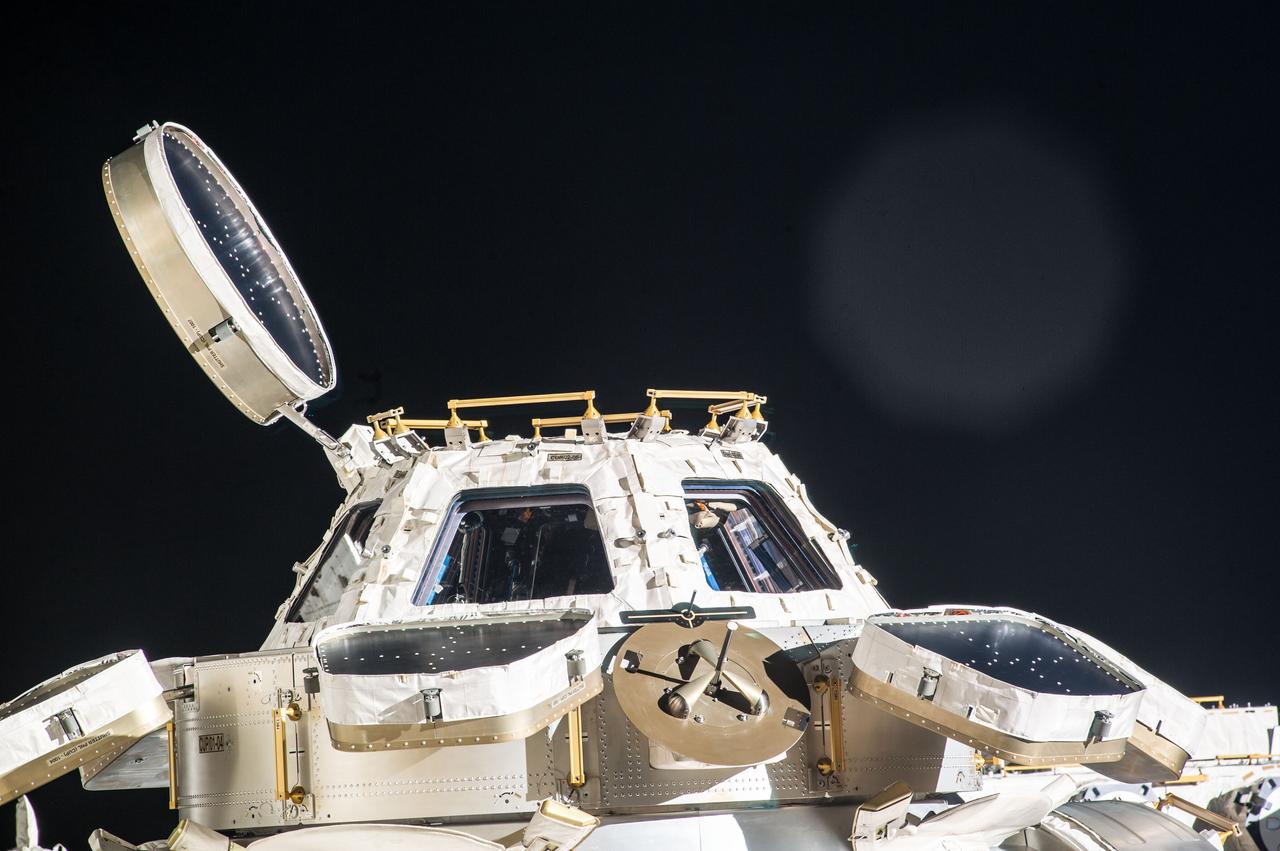
ISS038-E-040615 (2 Feb. 2014) --- A close-up view of the Cupola is featured in this image photographed by an Expedition 38 crew member on the International Space Station.
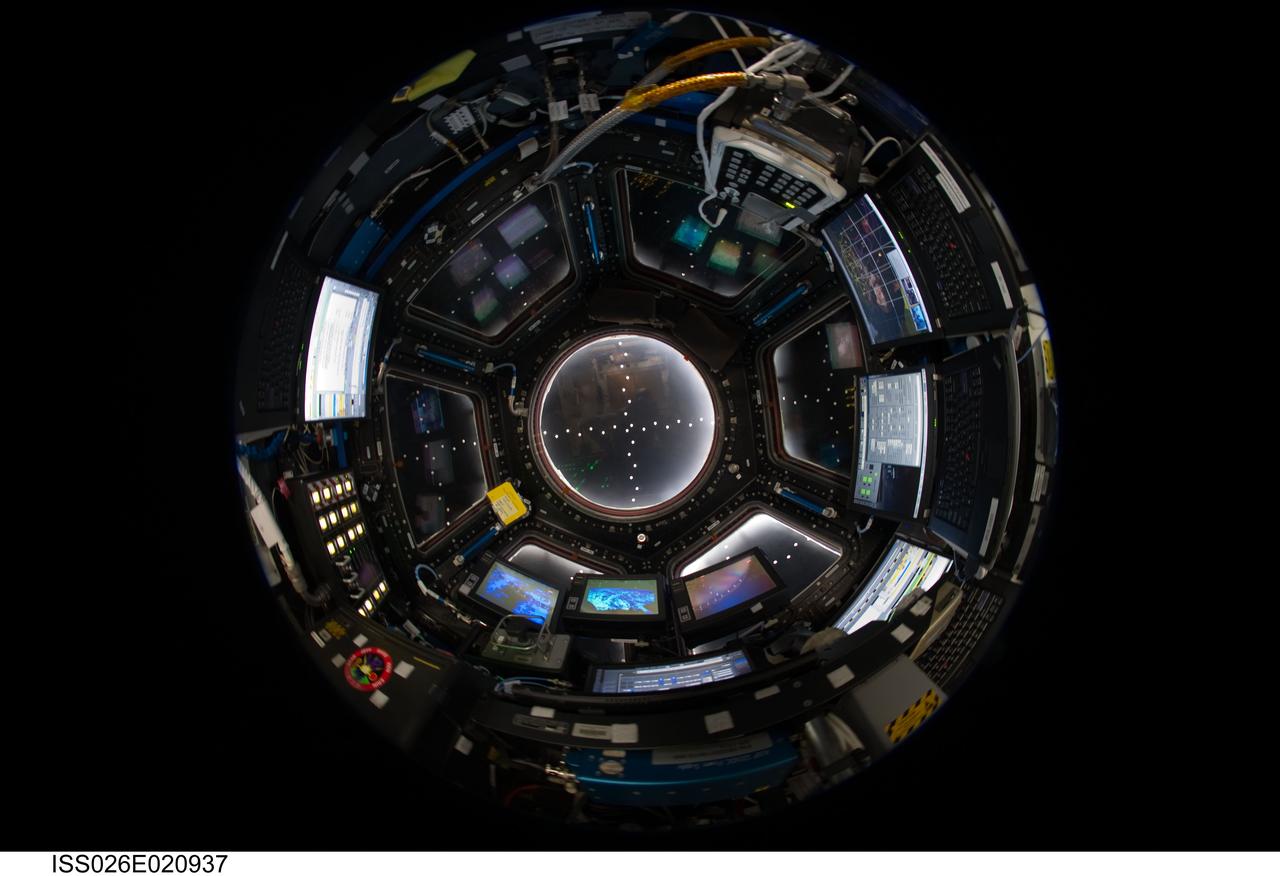
ISS026-E-020937 (27 Jan. 2011) --- An Expedition 26 crew member used a fish-eye lens attached to an electronic still camera to capture this image of the Cupola of the International Space Station.
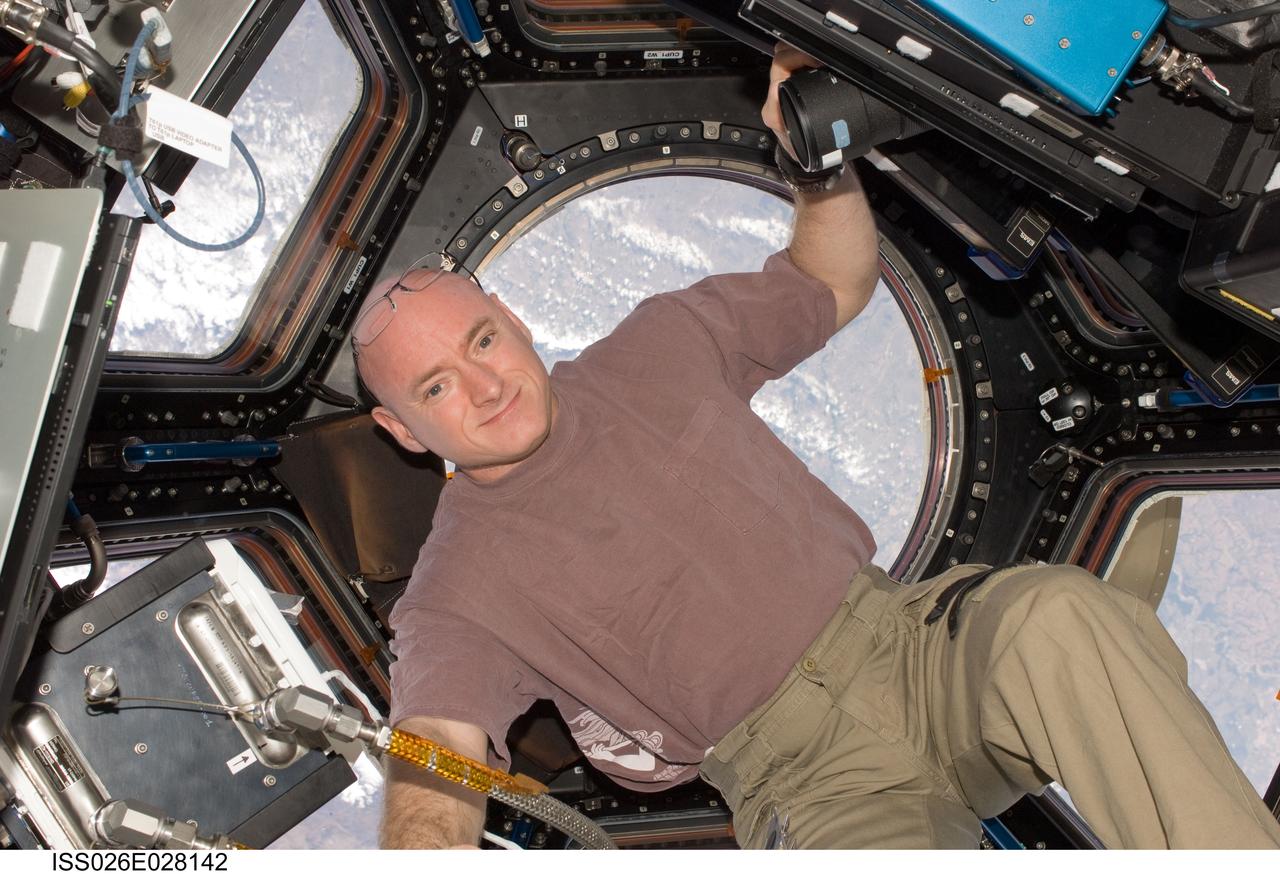
ISS026-E-028142 (5 Feb. 2011) --- NASA astronaut Scott Kelly, Expedition 26 commander, is pictured in the Cupola of the International Space Station.
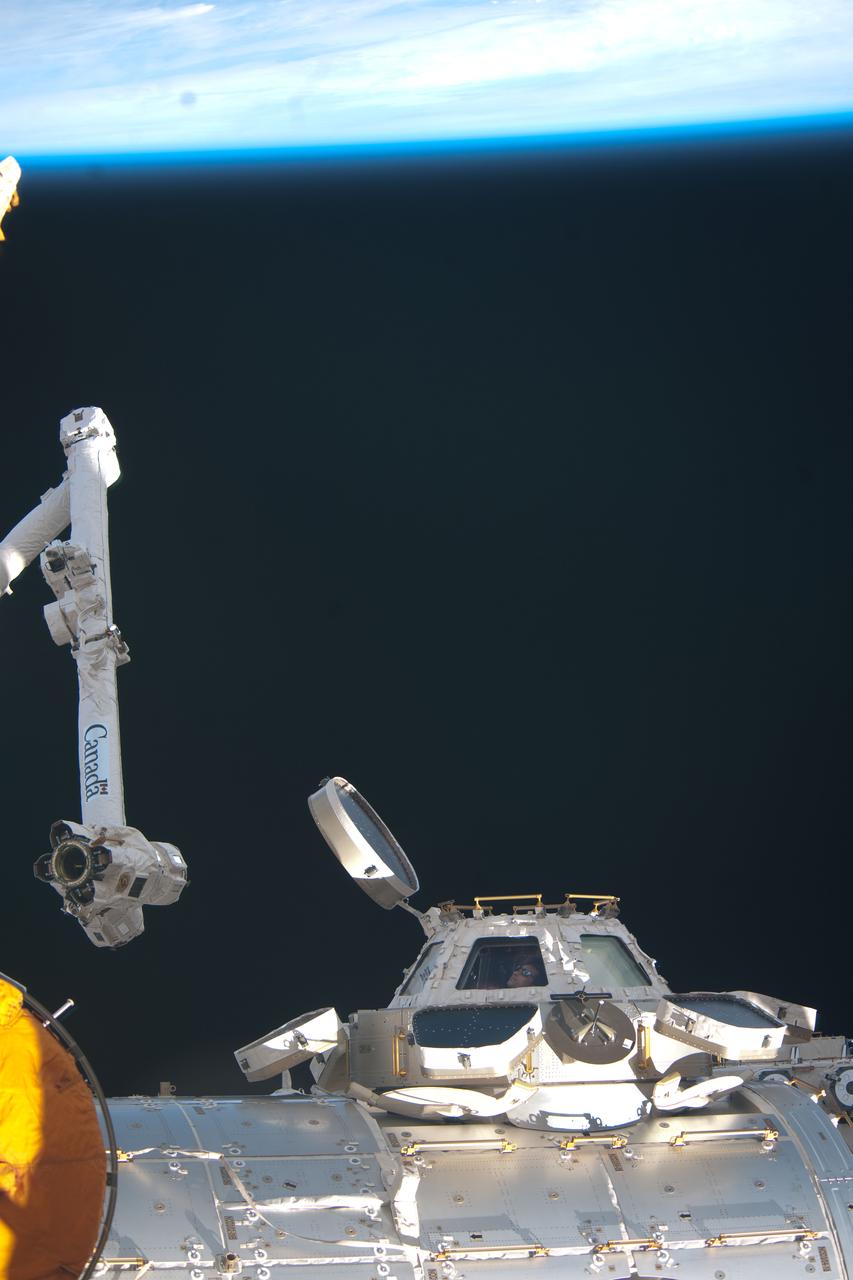
ISS030-E-270508 (21 April 2012) --- Russian cosmonaut Anton Shkaplerov, Expedition 30 flight engineer, is pictured in a window of the Cupola of the International Space Station, backdropped by Earth’s horizon and the blackness of space.
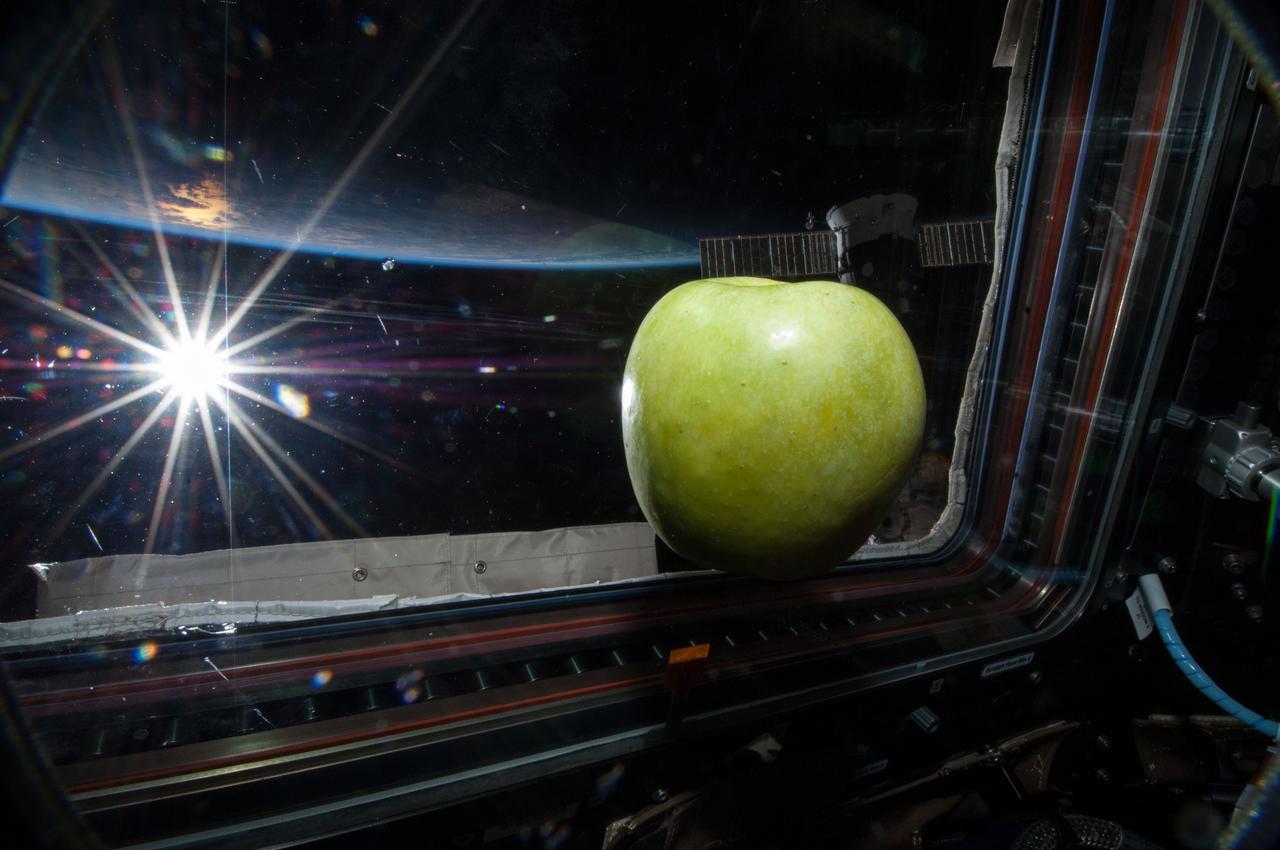
ISS038-E-042121 (6 Feb. 2014) --- A fresh apple floating freely near a window in the Cupola of the International Space Station is featured in this image photographed by an Expedition 38 crew member. The bright sun and Earth's horizon provide the backdrop for the scene.
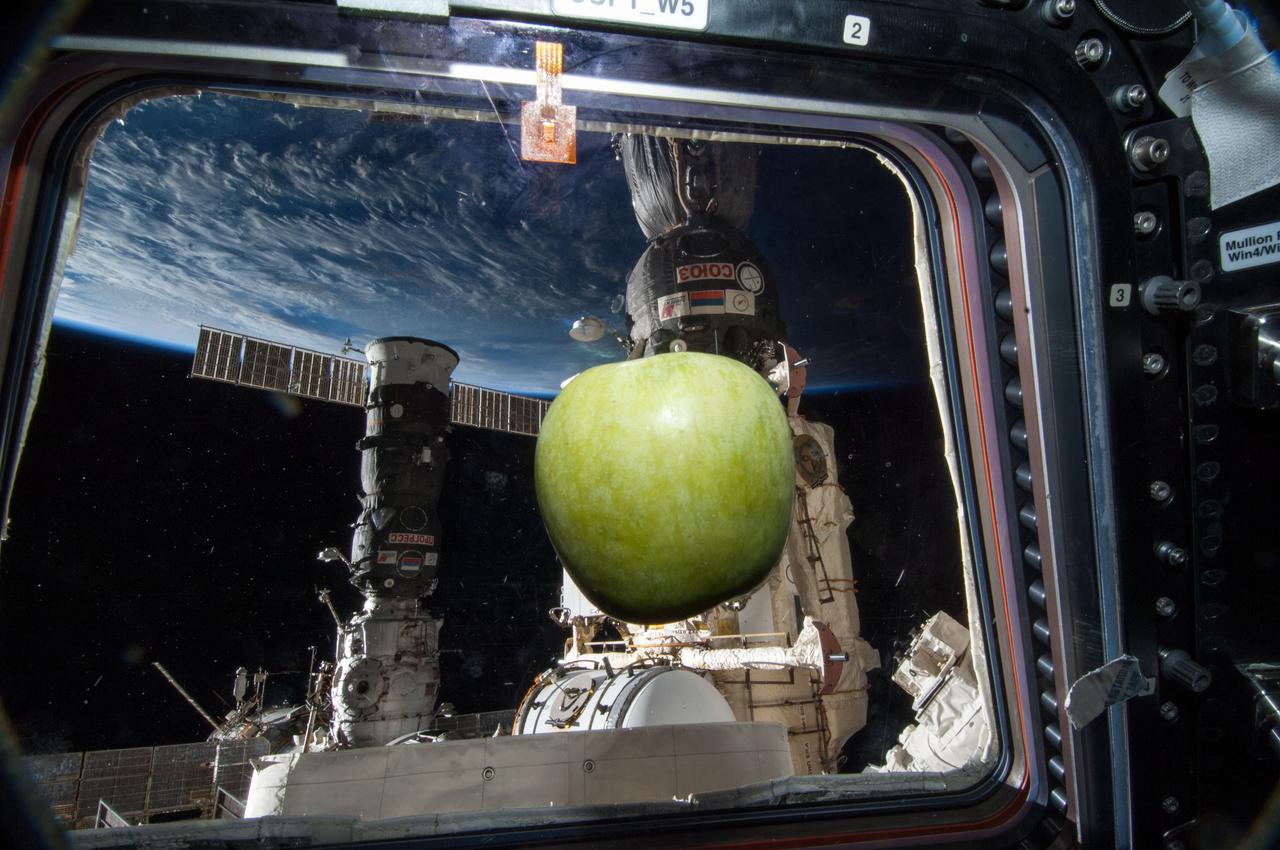
ISS038-E-042112 (6 Feb. 2014) --- A fresh apple floating freely near a window in the Cupola of the International Space Station is featured in this image photographed by an Expedition 38 crew member. Currently docked to the station, a Russian Progress resupply vehicle (left) and a Soyuz spacecraft along with Earth's horizon are visible in the background.
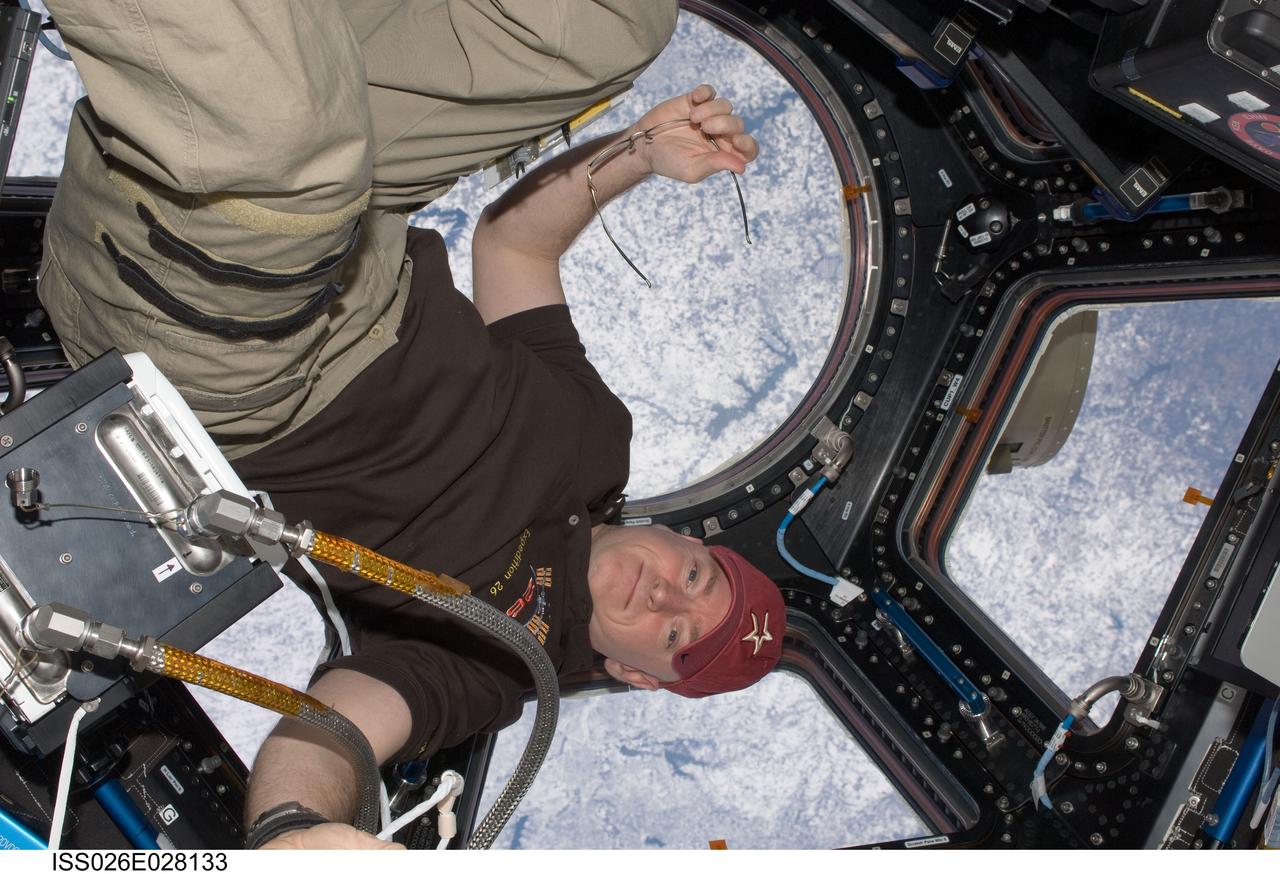
ISS026-E-028133 (5 Feb. 2011) --- NASA astronaut Scott Kelly, Expedition 26 commander, is pictured in the Cupola of the International Space Station.
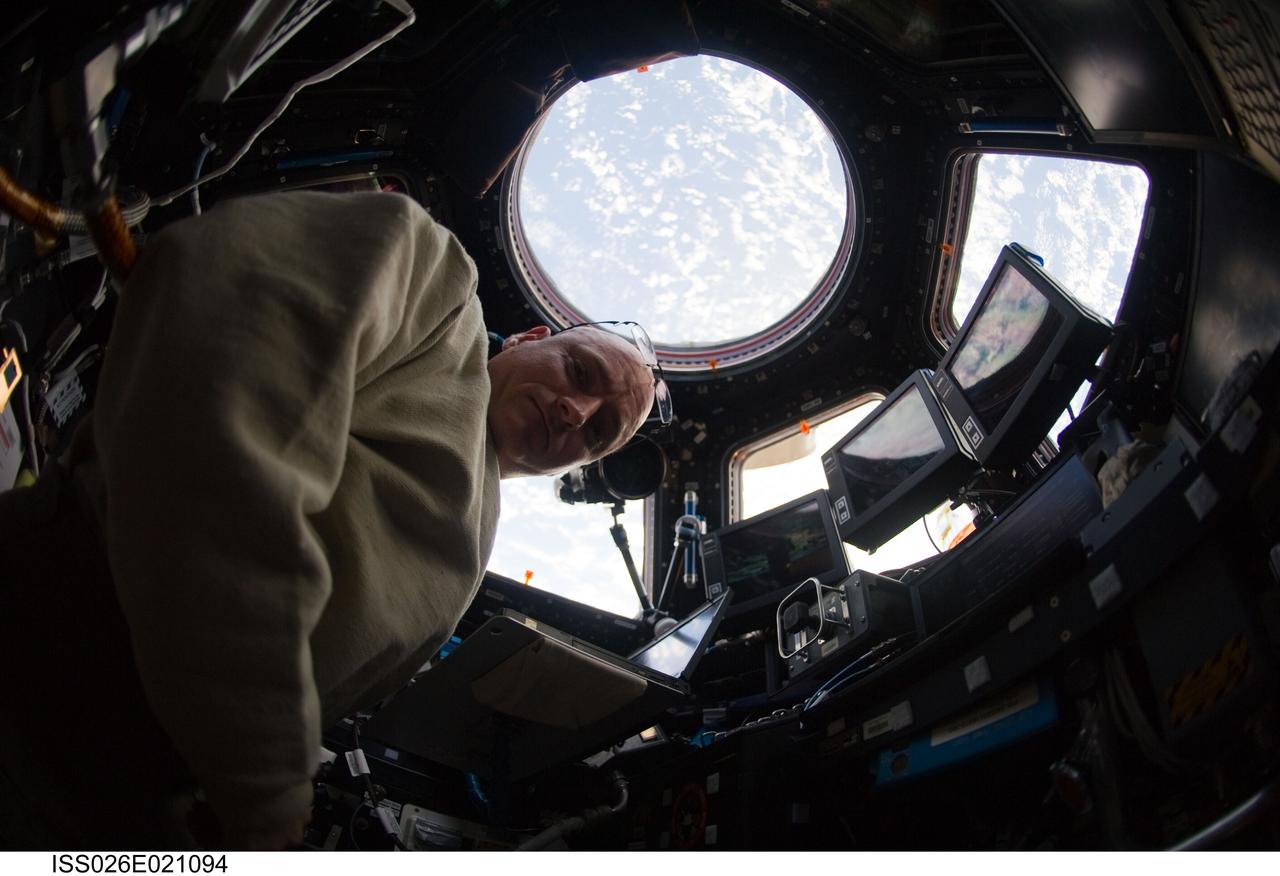
ISS026-E-021094 (27 Jan. 2011) --- NASA astronaut Scott Kelly, Expedition 26 commander, is pictured in the Cupola of the International Space Station.
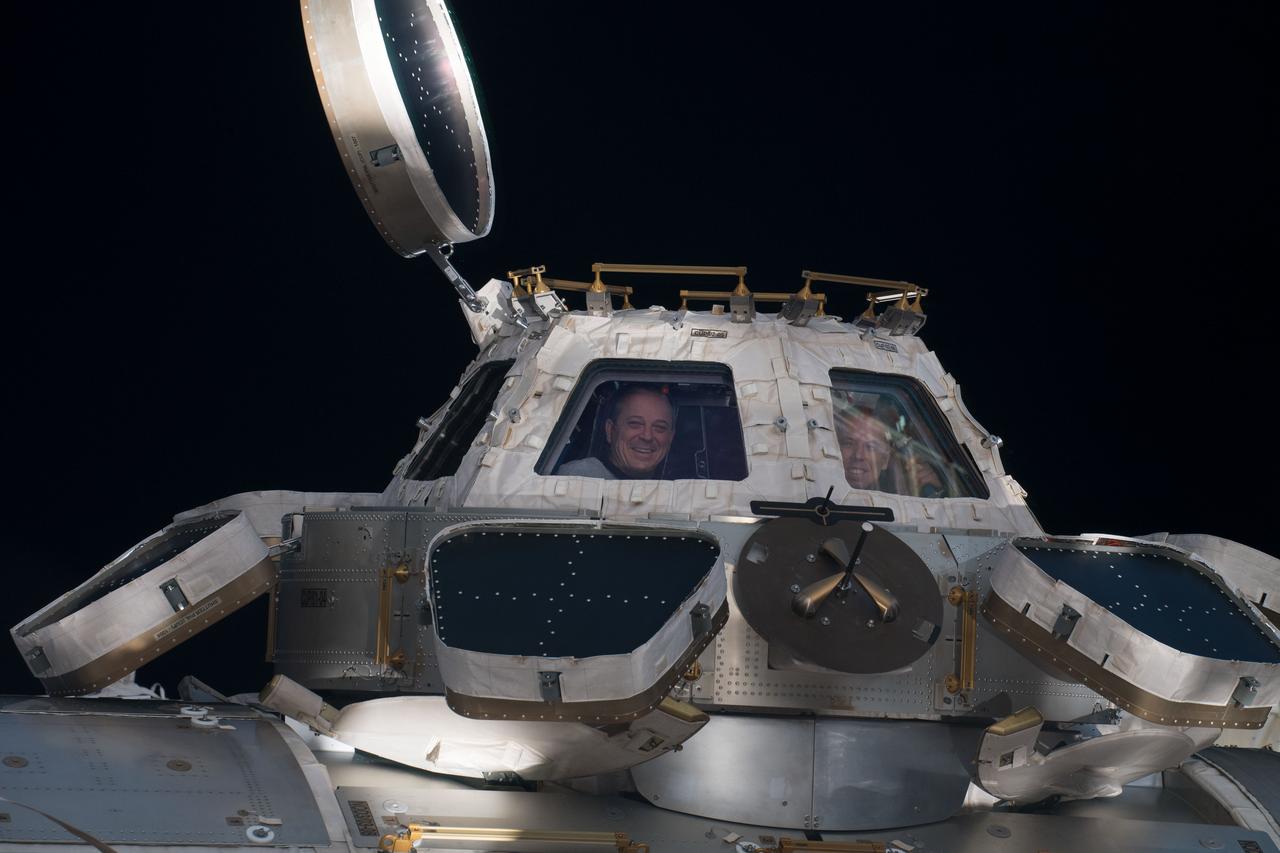
iss056e062934 (June 30, 2018) --- (From left) Flight Engineer Ricky Arnold and Commander Drew Feustel, both NASA astronauts, peer out from windows inside the Cupola, also known as the International Space Station's "window to the world."
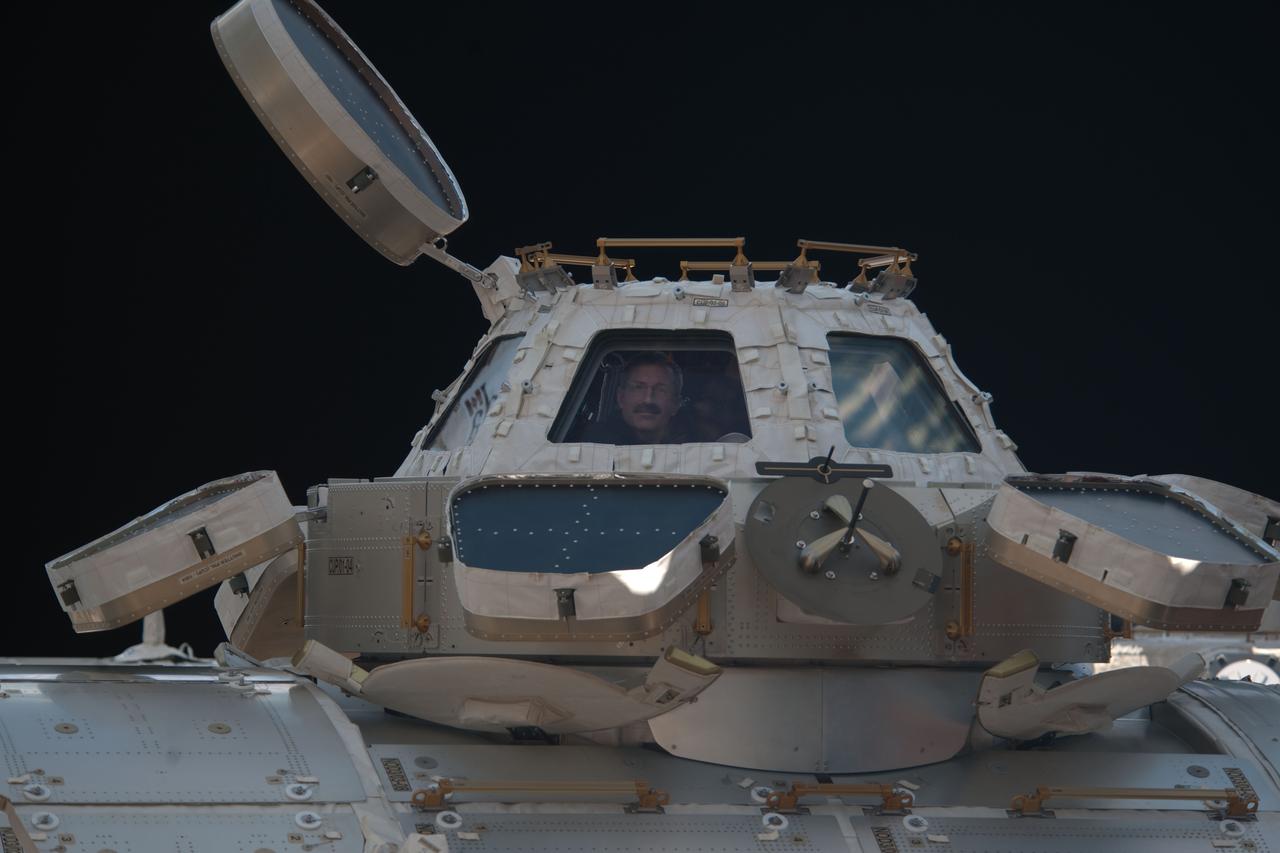
ISS030-E-270467 (21 April 2012) --- NASA astronaut Dan Burbank, Expedition 30 commander, is pictured in a window of the Cupola of the International Space Station, backdropped by the blackness of space.
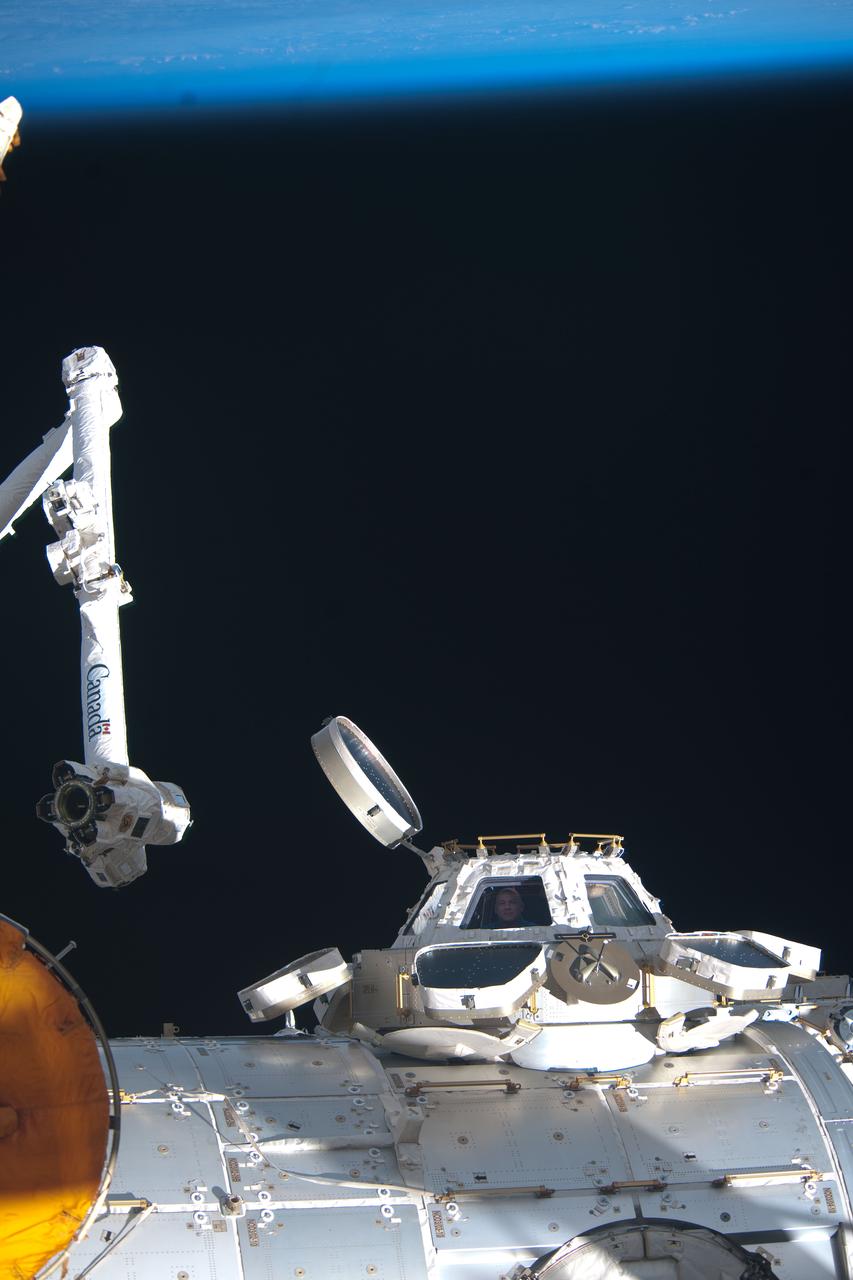
ISS030-E-270533 (21 April 2012) --- European Space Agency astronaut Andre Kuipers, Expedition 30 flight engineer, is pictured in a window of the Cupola of the International Space Station, backdropped by Earth’s horizon and the blackness of space.
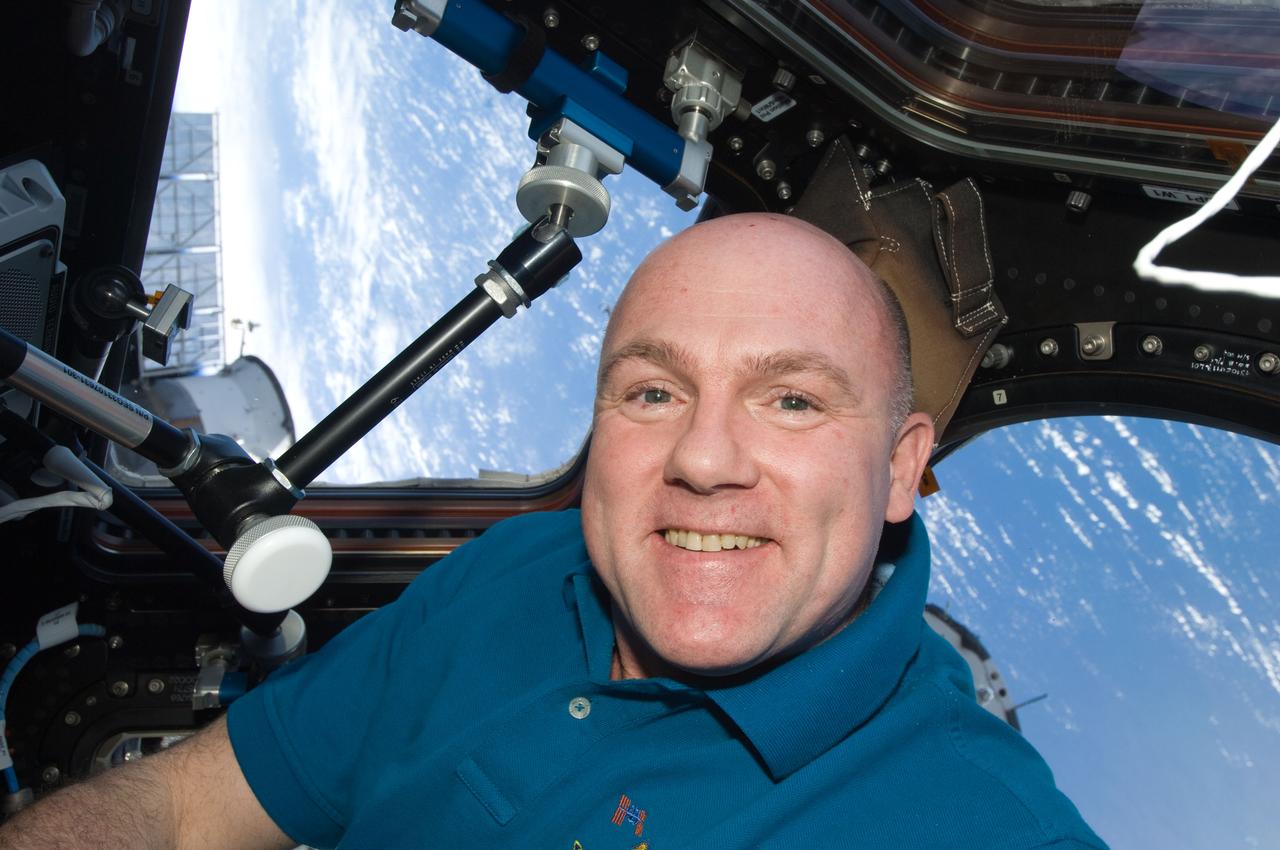
ISS030-E-032252 (2 Jan. 2012) --- European Space Agency astronaut Andre Kuipers, Expedition 30 flight engineer, is pictured near the windows in the Cupola of the International Space Station.
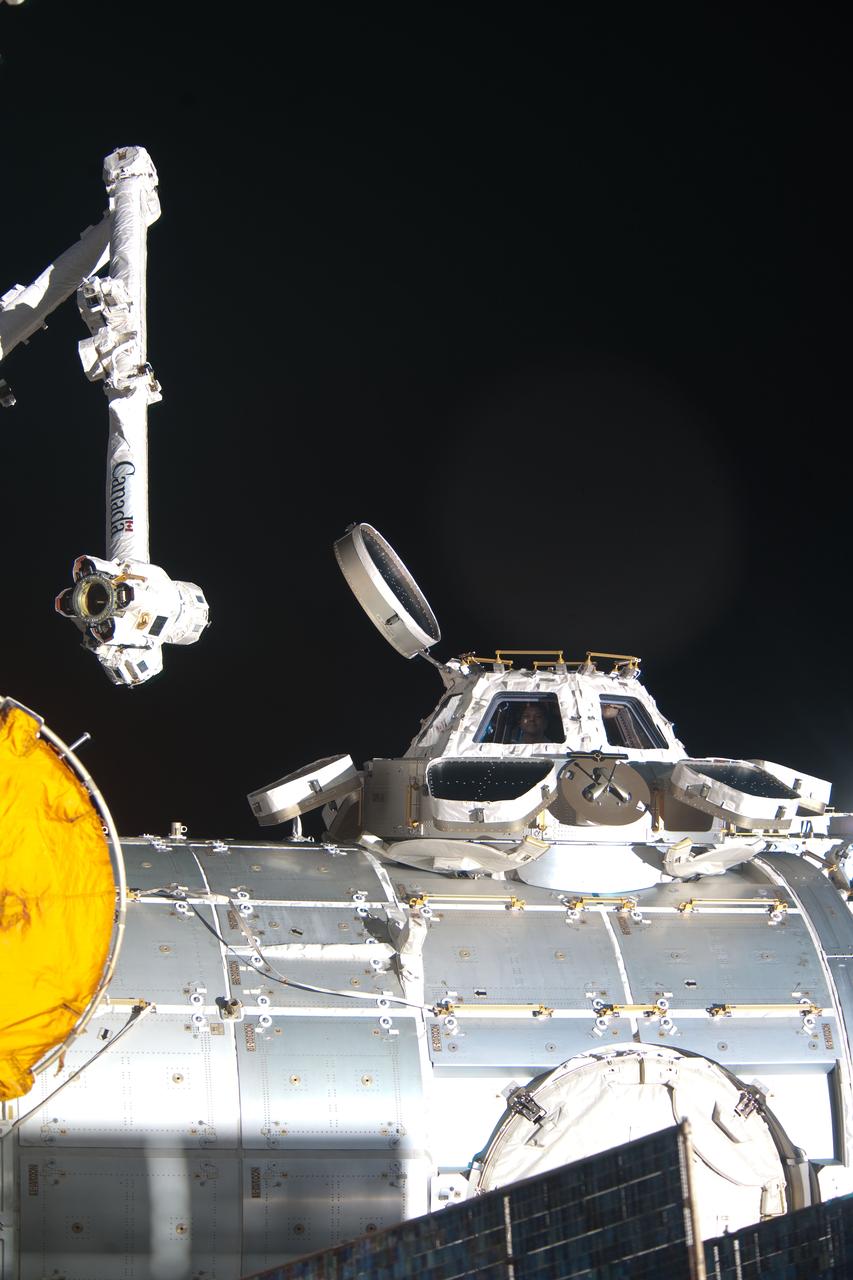
ISS030-E-270563 (21 April 2012) --- Russian cosmonaut Oleg Kononenko, Expedition 30 flight engineer, is pictured in a window of the Cupola of the International Space Station, backdropped by the blackness of space.
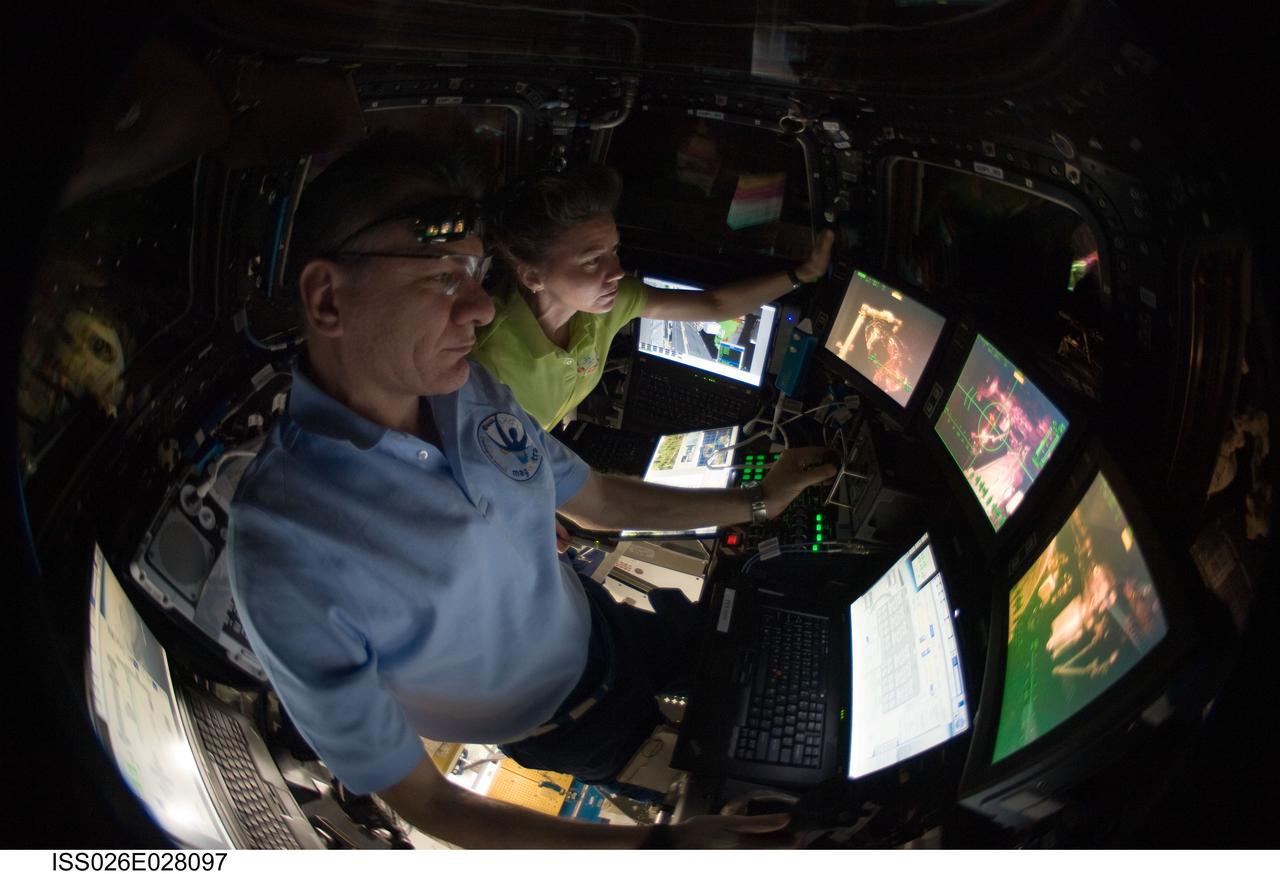
ISS026-E-028097 (18 Feb. 2011) --- European Space Agency astronaut Paolo Nespoli and NASA astronaut Catherine (Cady) Coleman, both Expedition 26 flight engineers, operate the Canadarm2 controls inside the International Space Station?s Cupola to relocate the Japanese Kounotori2 H-II Transfer Vehicle (HTV2) from the Harmony node nadir port to Harmony?s zenith port.
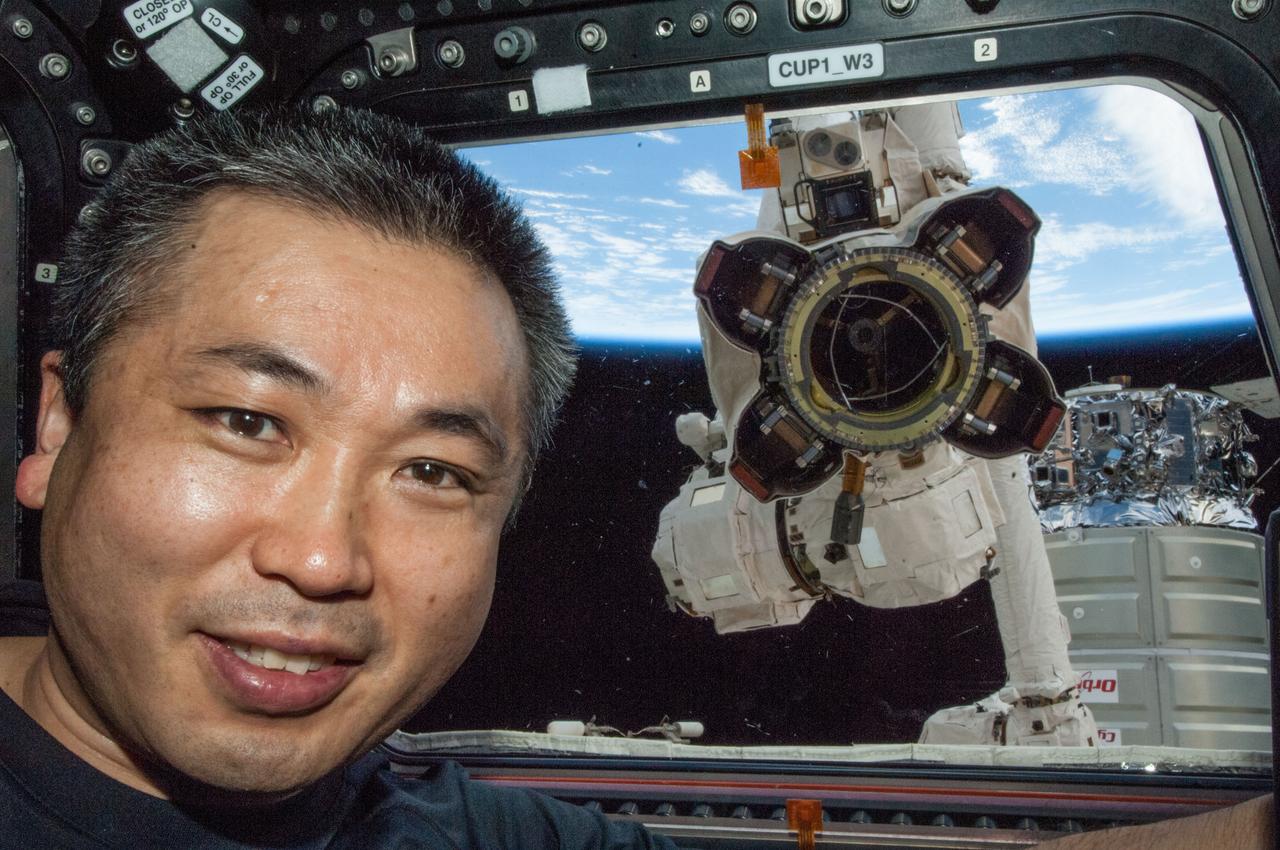
ISS038-E-030425 (13 Jan. 2014) --- Japan Aerospace Exploration Agency astronaut Koichi Wakata, Expedition 38 flight engineer, poses for a photo at a window in the Cupola of the International Space Station while the Canadarm2 robotic arm's Latching End Effector (LEE) appears to be looking through the window from outside the station.
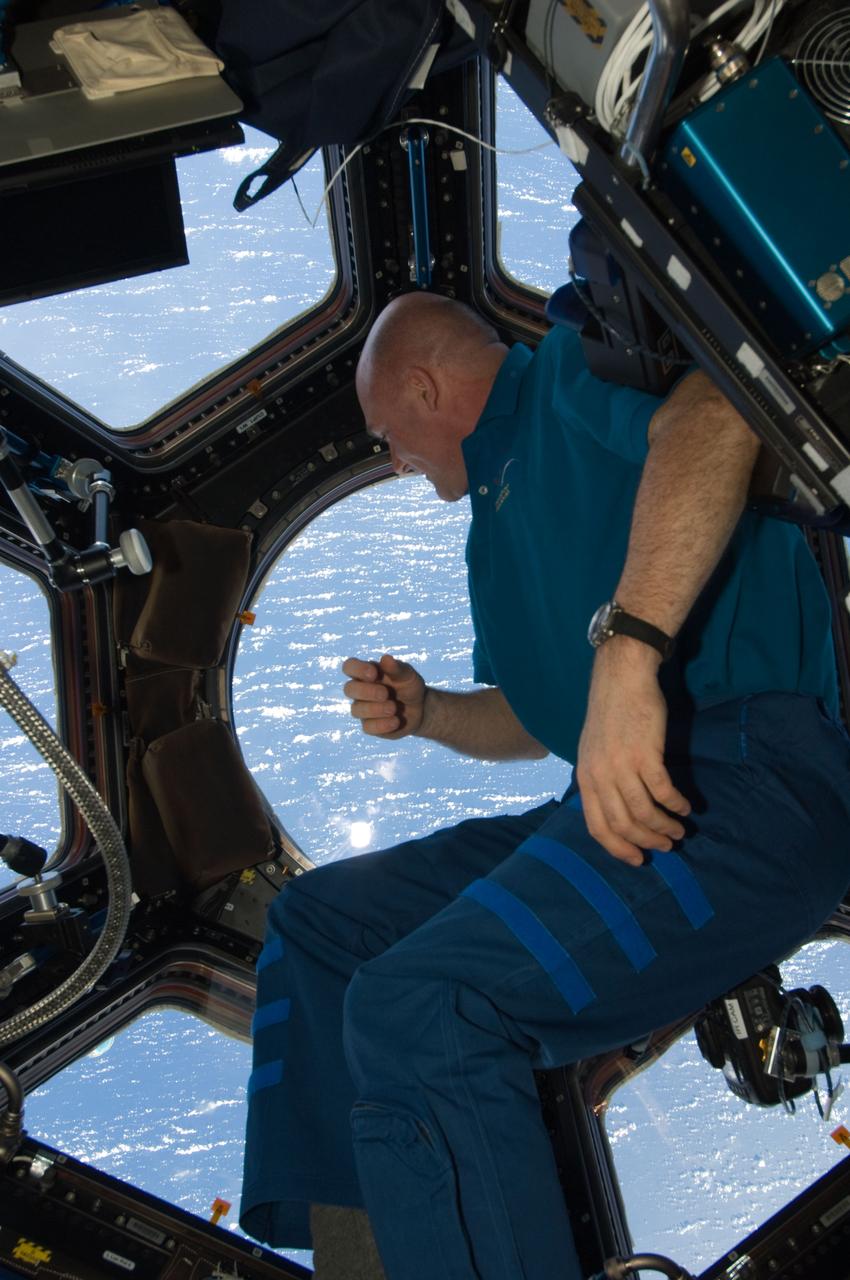
ISS030-E-032243 (2 Jan. 2012) --- European Space Agency astronaut Andre Kuipers, Expedition 30 flight engineer, enjoys the view of Earth from the windows in the Cupola of the International Space Station.
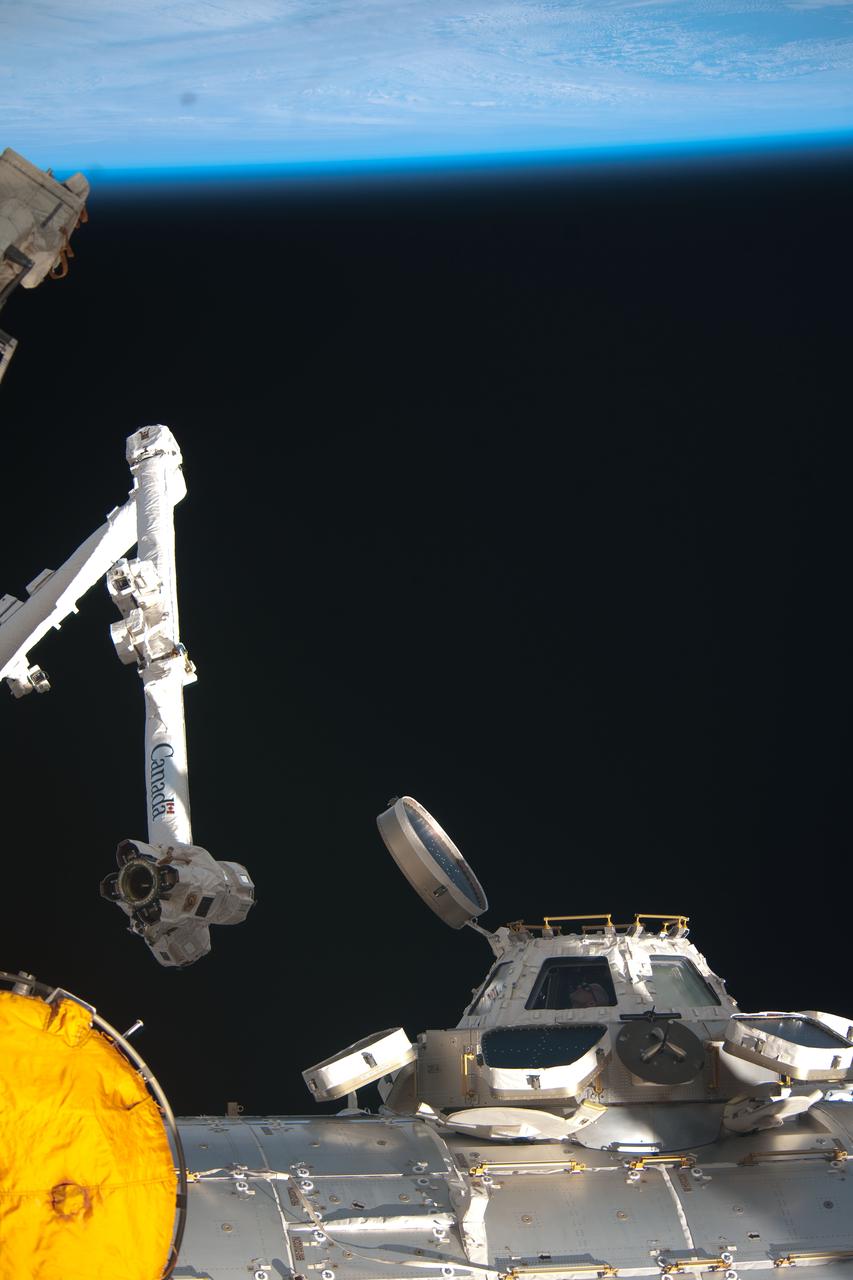
ISS030-E-270524 (21 April 2012) --- NASA astronaut Don Pettit, Expedition 30 flight engineer, is pictured in a window of the Cupola of the International Space Station, backdropped by Earth’s horizon and the blackness of space.
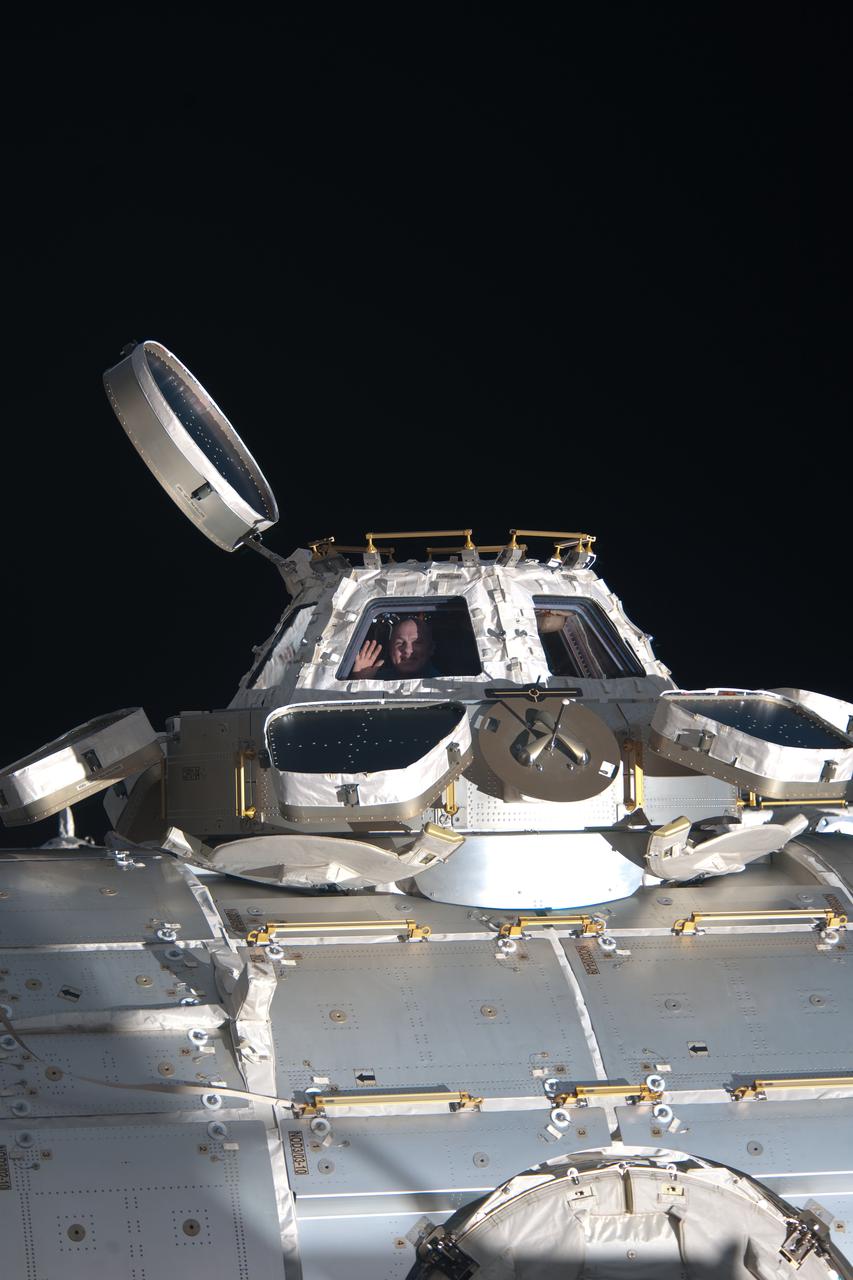
ISS030-E-270545 (21 April 2012) --- European Space Agency astronaut Andre Kuipers, Expedition 30 flight engineer, is pictured in a window of the Cupola of the International Space Station, backdropped by the blackness of space.
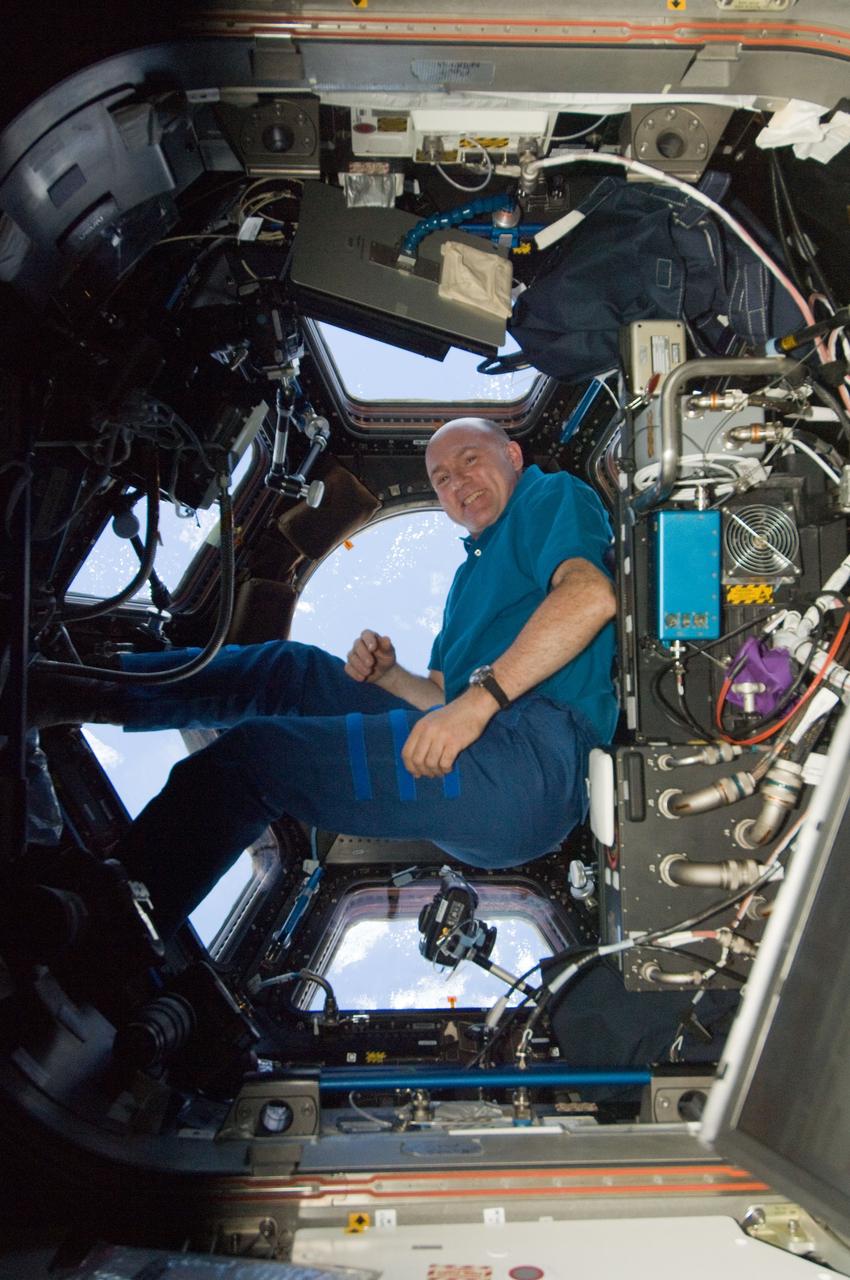
ISS030-E-032207 (2 Jan. 2012) --- European Space Agency astronaut Andre Kuipers, Expedition 30 flight engineer, enjoys the view of Earth from the windows in the Cupola of the International Space Station.
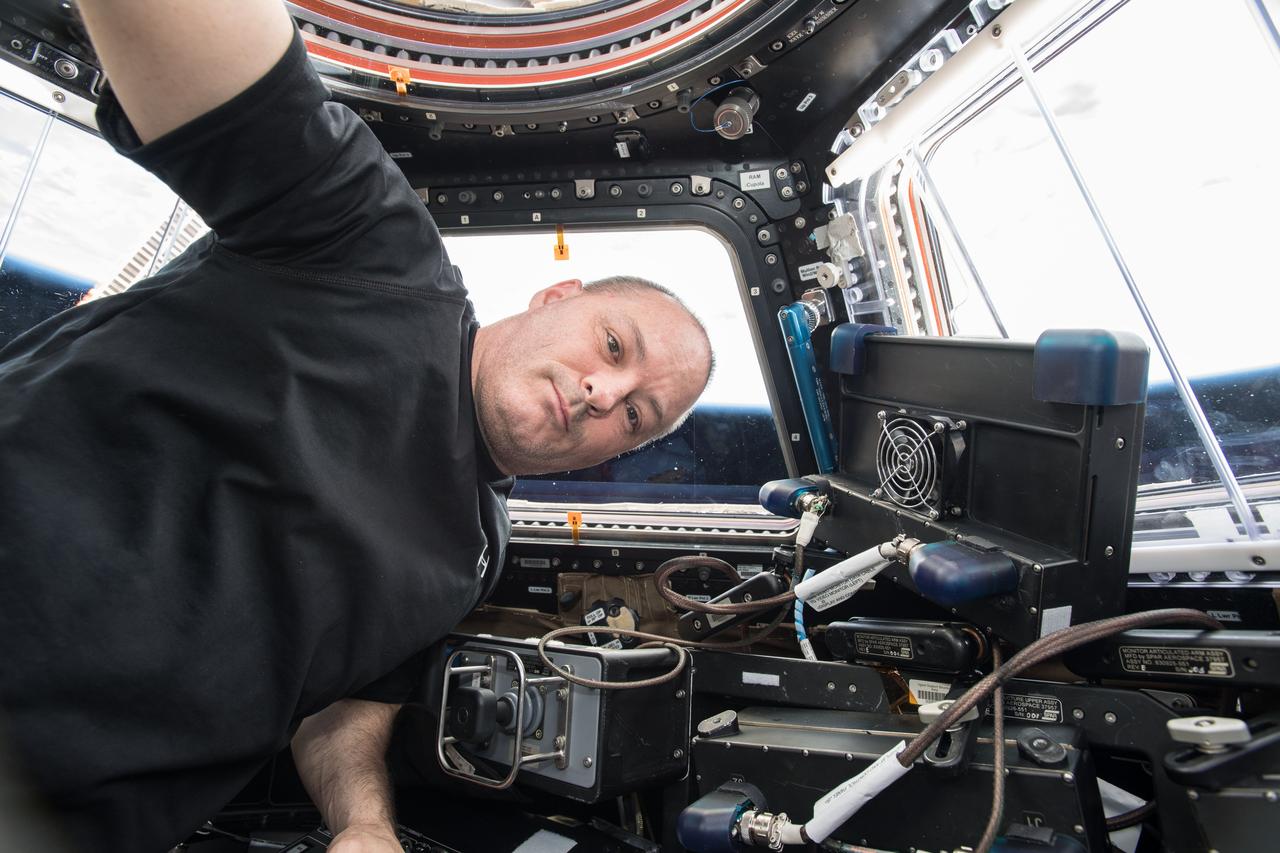
iss055e002983 (March 18, 2018) --- NASA astronaut Scott Tingle is inside the International Space Station's window to the world, the seven-windowed cupola, where astronauts operate the Canadarm2 robotic arm to capture visiting vehicles such as the SpaceX Dragon, the Orbital ATK Cygnus and Japan's H-II Transfer Vehicle.
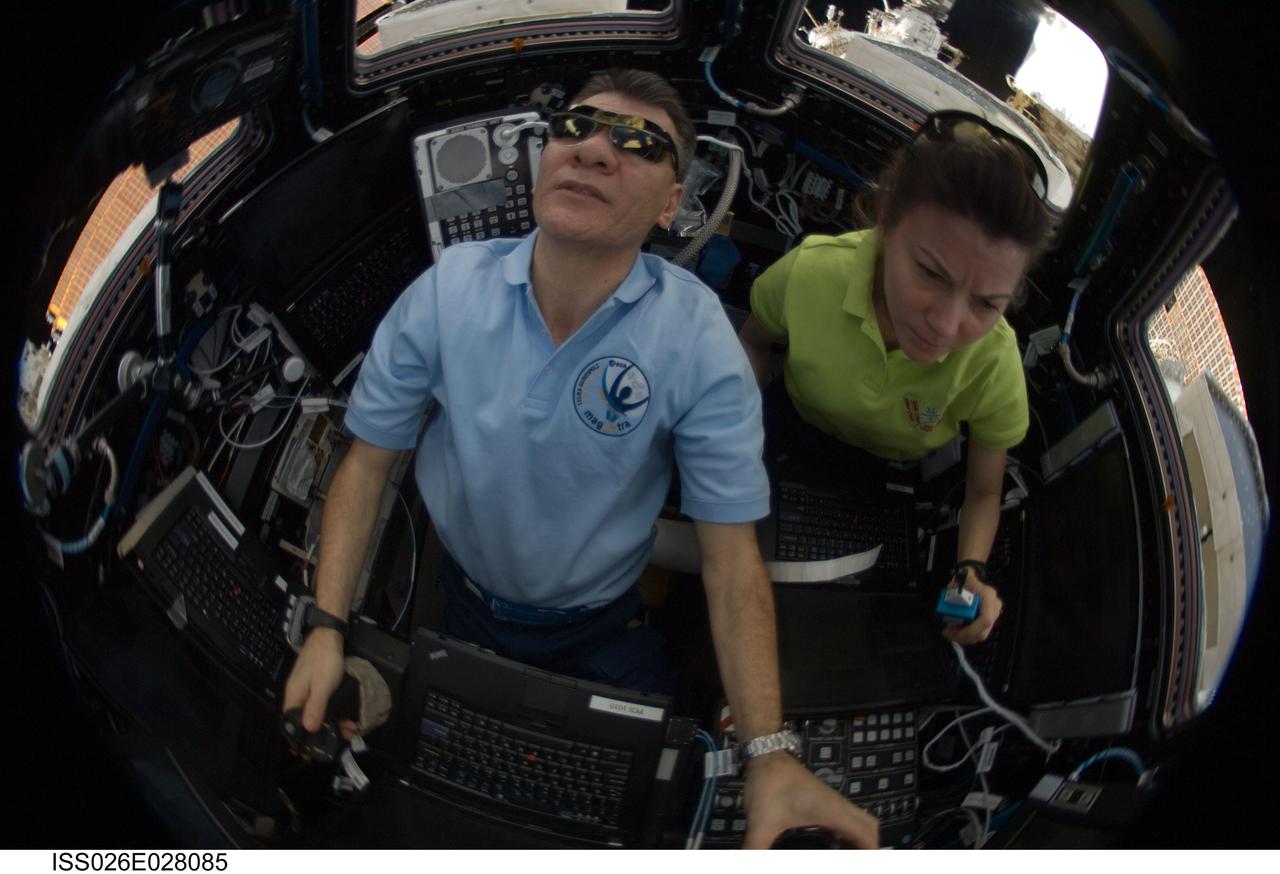
ISS026-E-028085 (18 Feb. 2011) --- European Space Agency astronaut Paolo Nespoli and NASA astronaut Catherine (Cady) Coleman, both Expedition 26 flight engineers, operate the Canadarm2 controls inside the International Space Station?s Cupola to relocate the Japanese Kounotori2 H-II Transfer Vehicle (HTV2) from the Harmony node nadir port to Harmony?s zenith port.
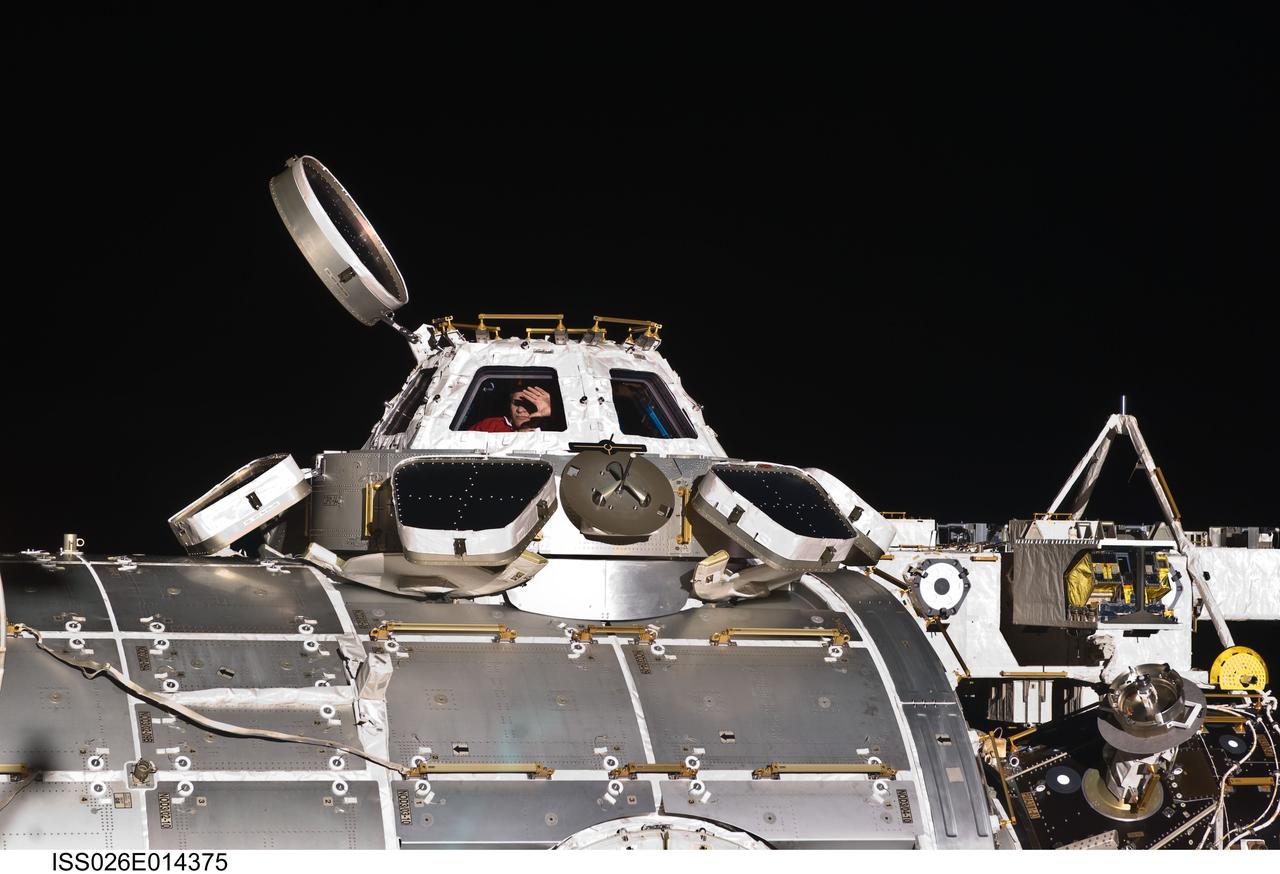
ISS026-E-014375 (2 Jan. 2011) --- European Space Agency astronaut Paolo Nespoli, Expedition 26 flight engineer, is pictured in a window of the Cupola of the International Space Station.
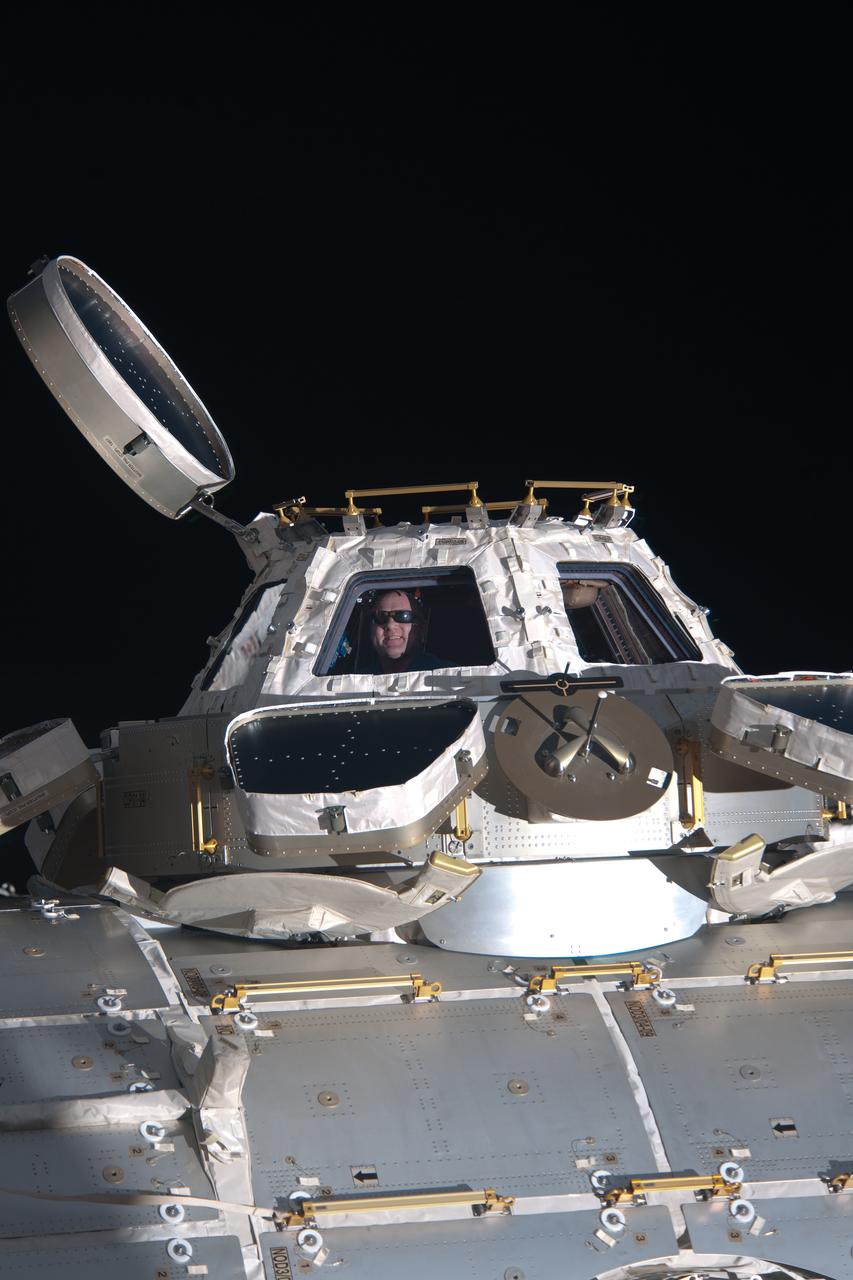
ISS030-E-270550 (21 April 2012) --- European Space Agency astronaut Andre Kuipers, Expedition 30 flight engineer, is pictured in a window of the Cupola of the International Space Station, backdropped by the blackness of space.
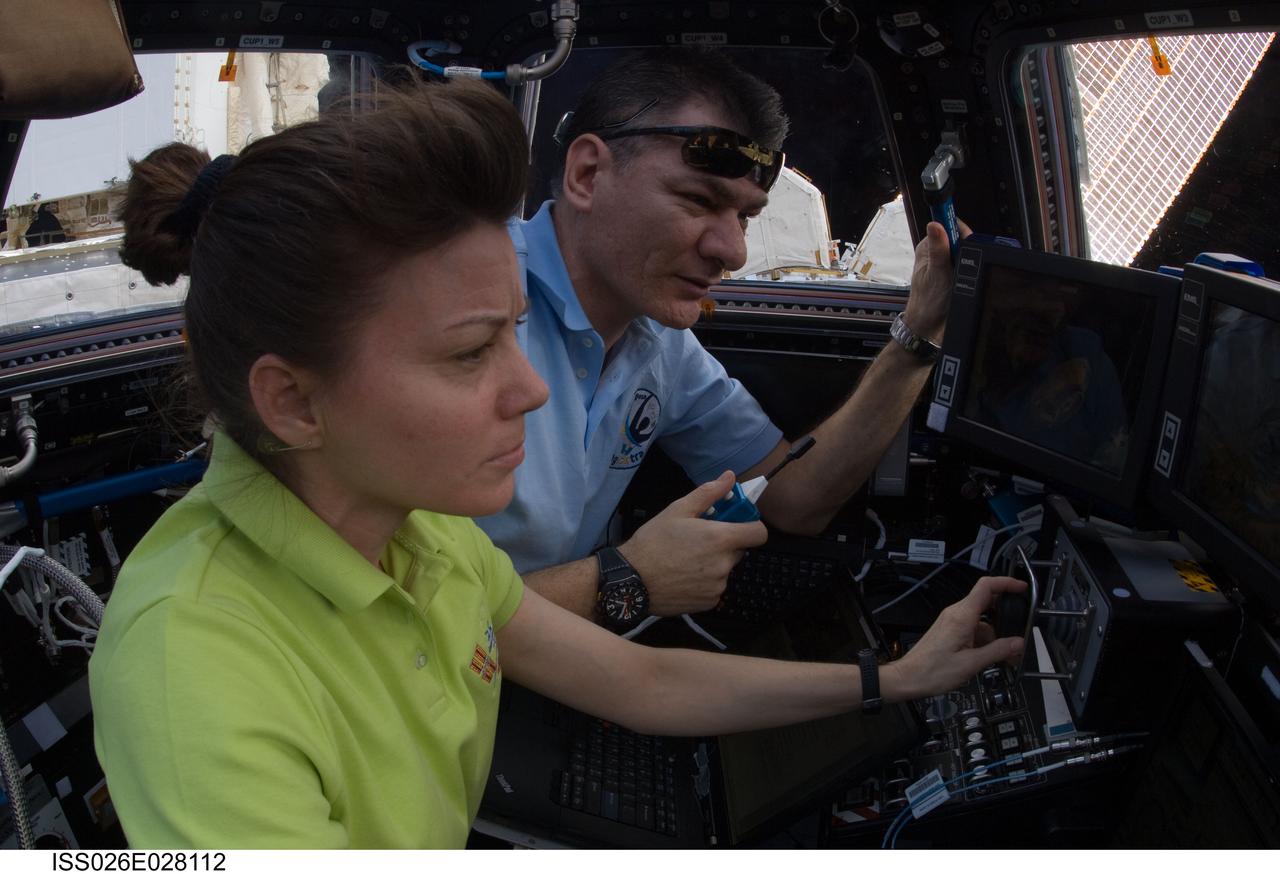
ISS026-E-028112 (18 Feb. 2011) --- European Space Agency astronaut Paolo Nespoli and NASA astronaut Catherine (Cady) Coleman, both Expedition 26 flight engineers, operate the Canadarm2 controls inside the International Space Station?s Cupola to relocate the Japanese Kounotori2 H-II Transfer Vehicle (HTV2) from the Harmony node nadir port to Harmony?s zenith port.
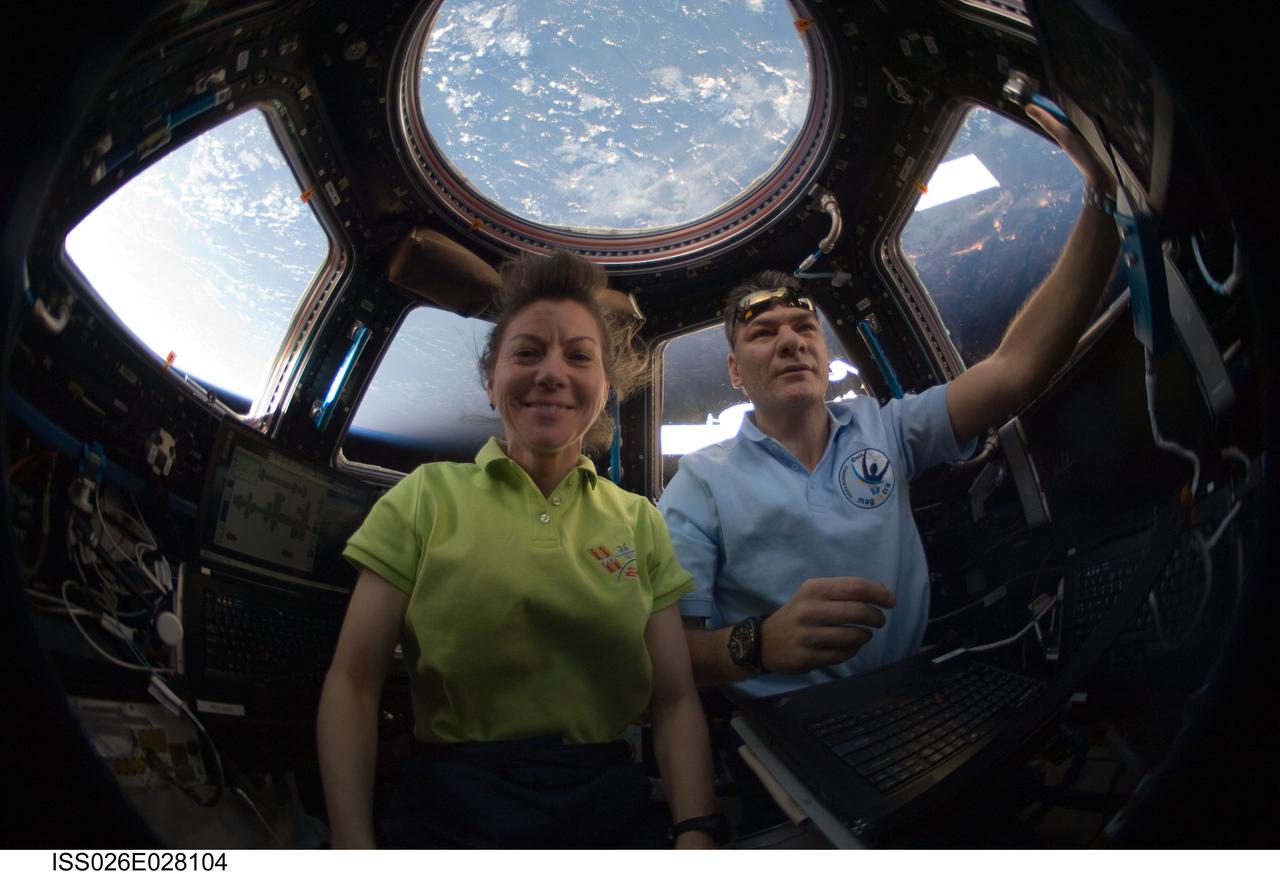
ISS026-E-028104 (18 Feb. 2011) --- European Space Agency astronaut Paolo Nespoli and NASA astronaut Catherine (Cady) Coleman, both Expedition 26 flight engineers, operate the Canadarm2 controls inside the International Space Station?s Cupola to relocate the Japanese Kounotori2 H-II Transfer Vehicle (HTV2) from the Harmony node nadir port to Harmony?s zenith port.
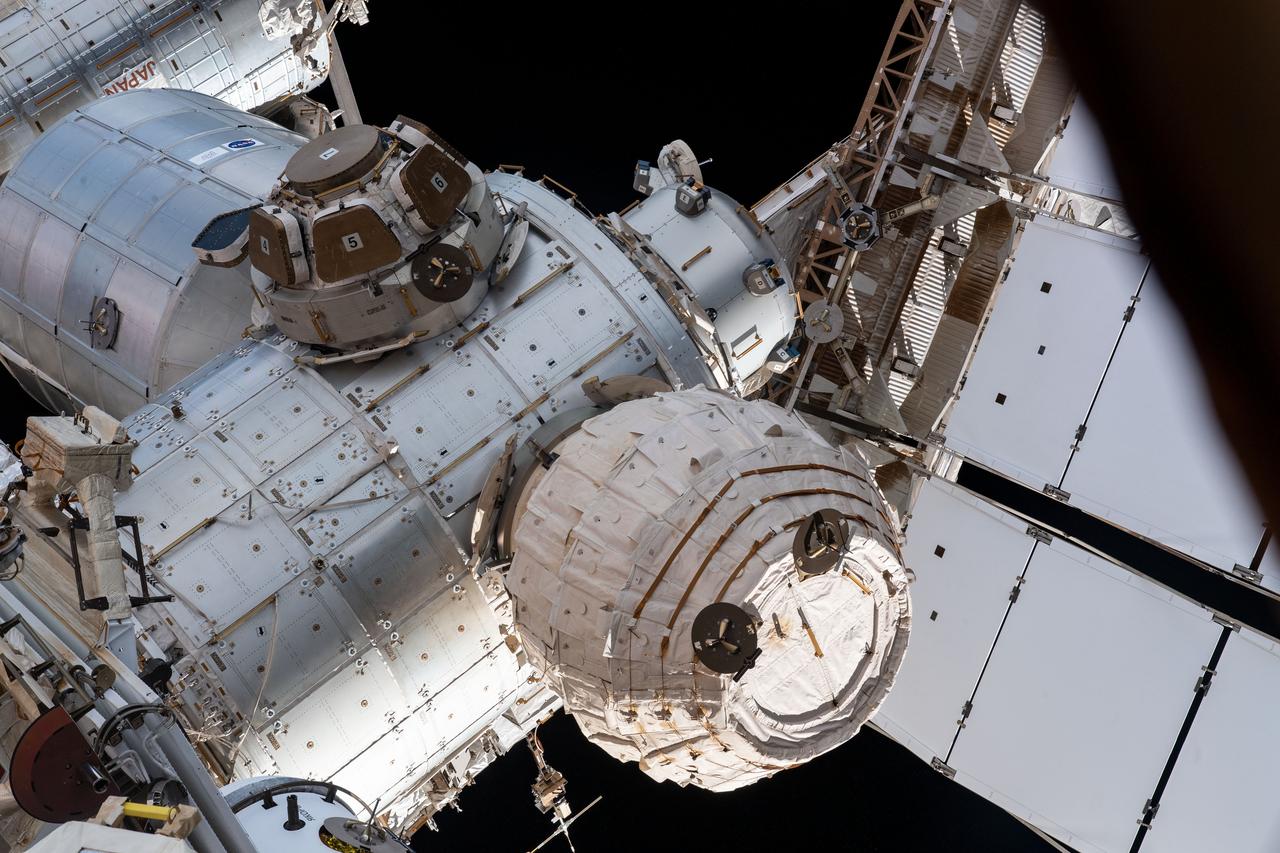
iss067e214089 (Aug. 2, 2022) --- This view from a window on the International Space Station's Russian segment shows the Bigelow Expandable Activity Module (BEAM), the cupola with its seven windows shuttered, and the NanoRacks Bishop airlock. Behind the cupola is the Leonardo permanment multipurpose module. All four components are attached to the Tranquility module.
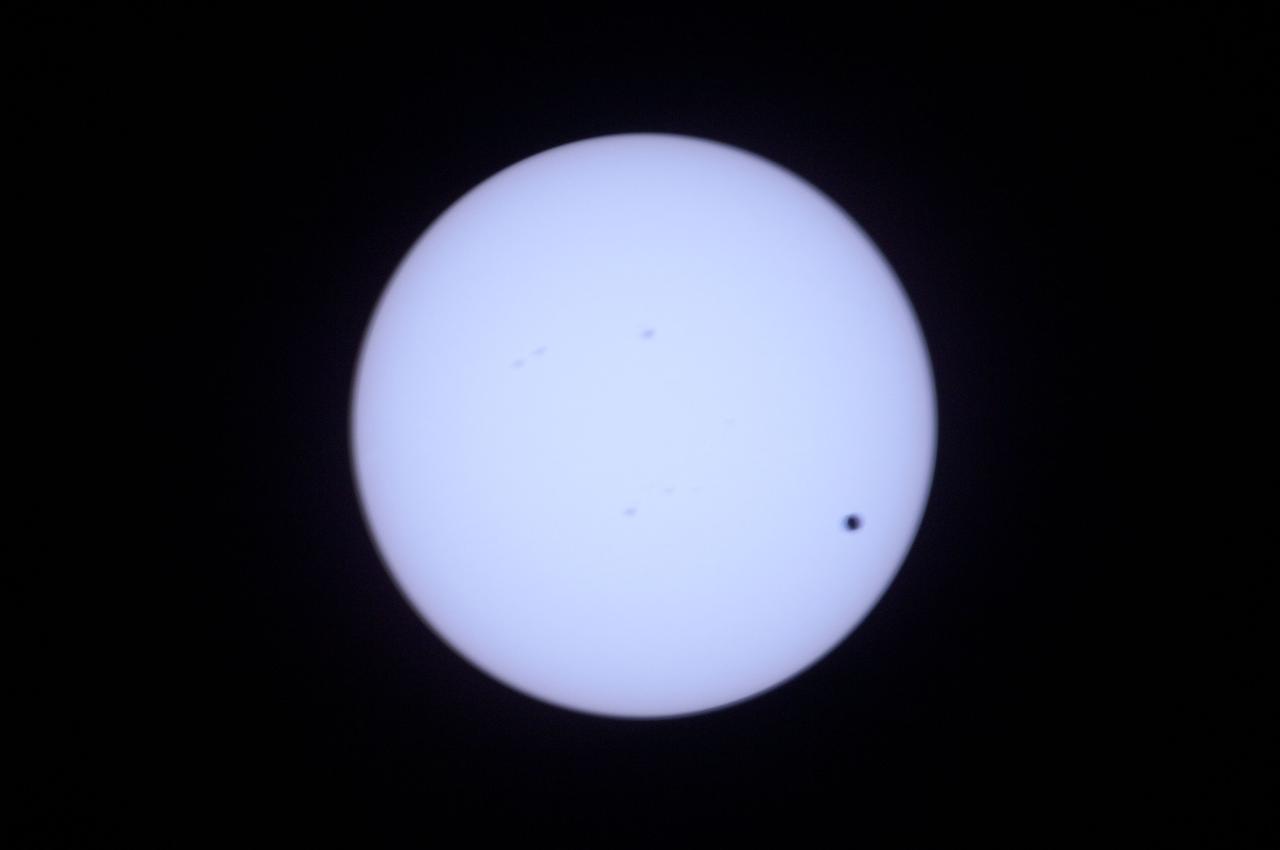
Transit of Venus as seen from the Cupola Module.
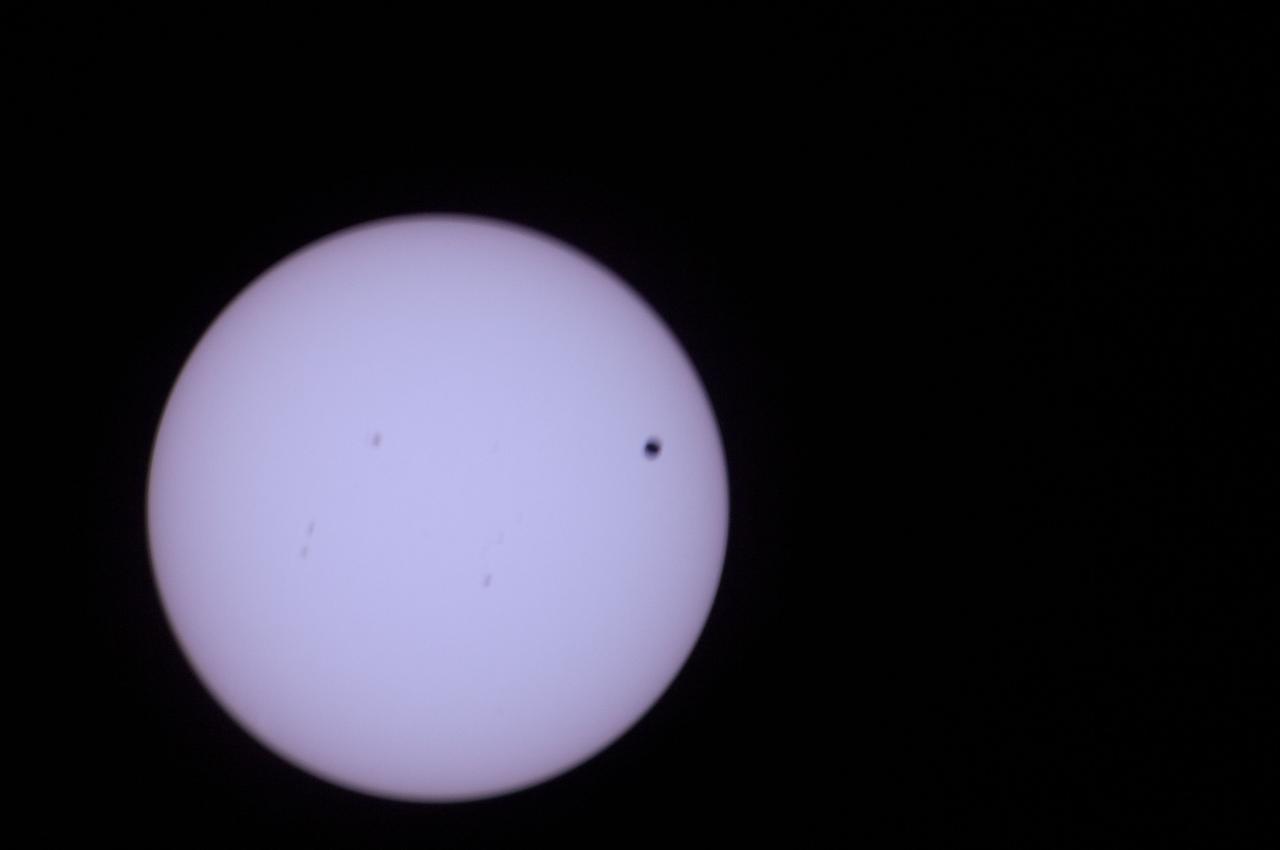
Transit of Venus as seen from the Cupola Module.
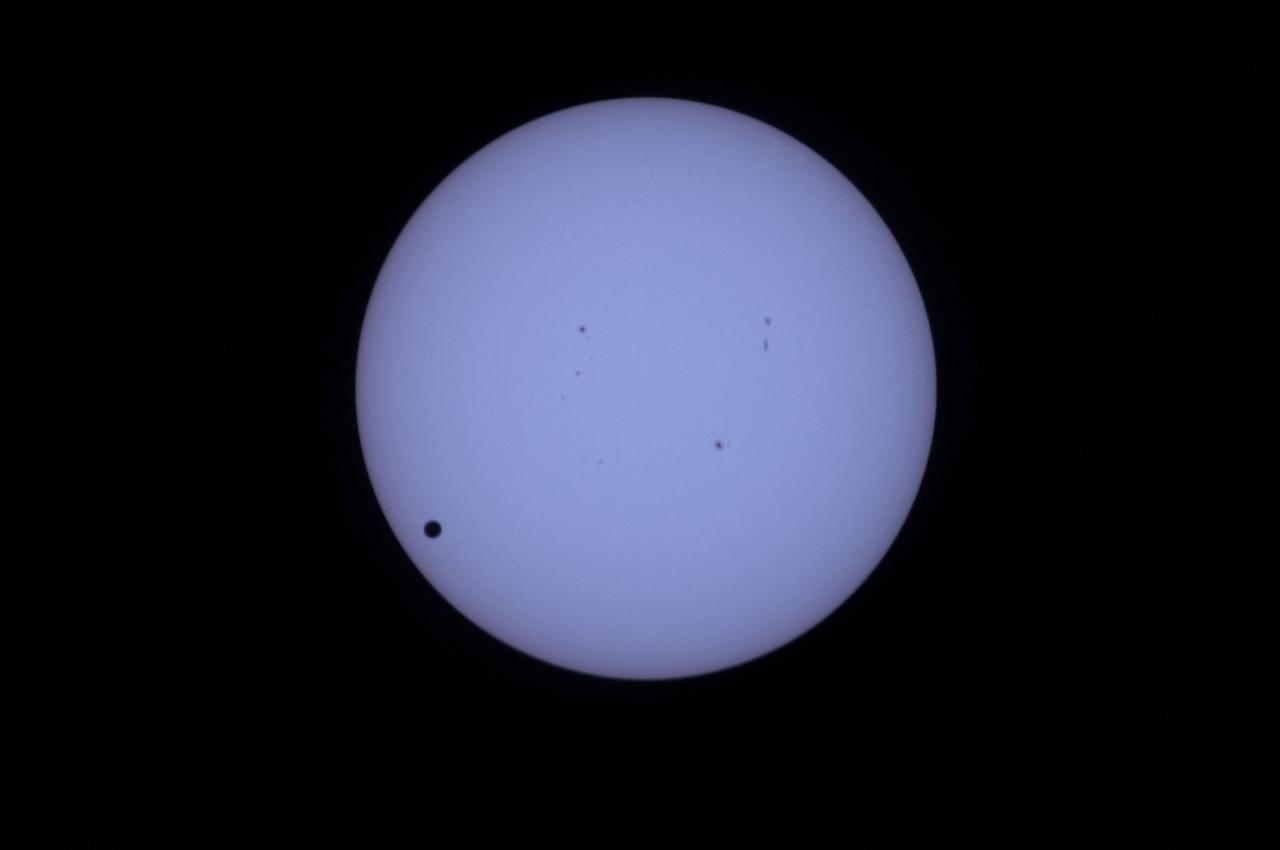
Transit of Venus as seen from the CO and Cupola Modules.
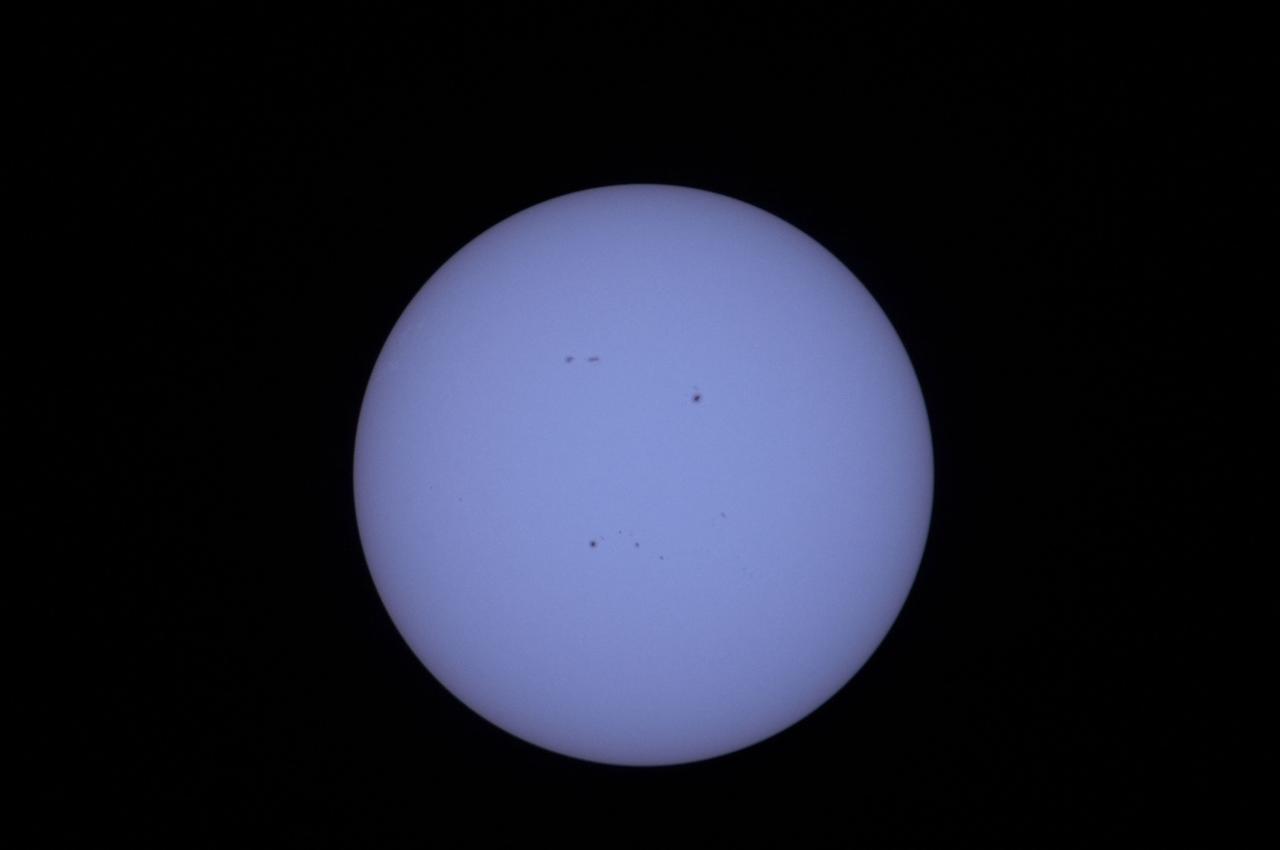
Transit of Venus as seen from the CO and Cupola Modules.
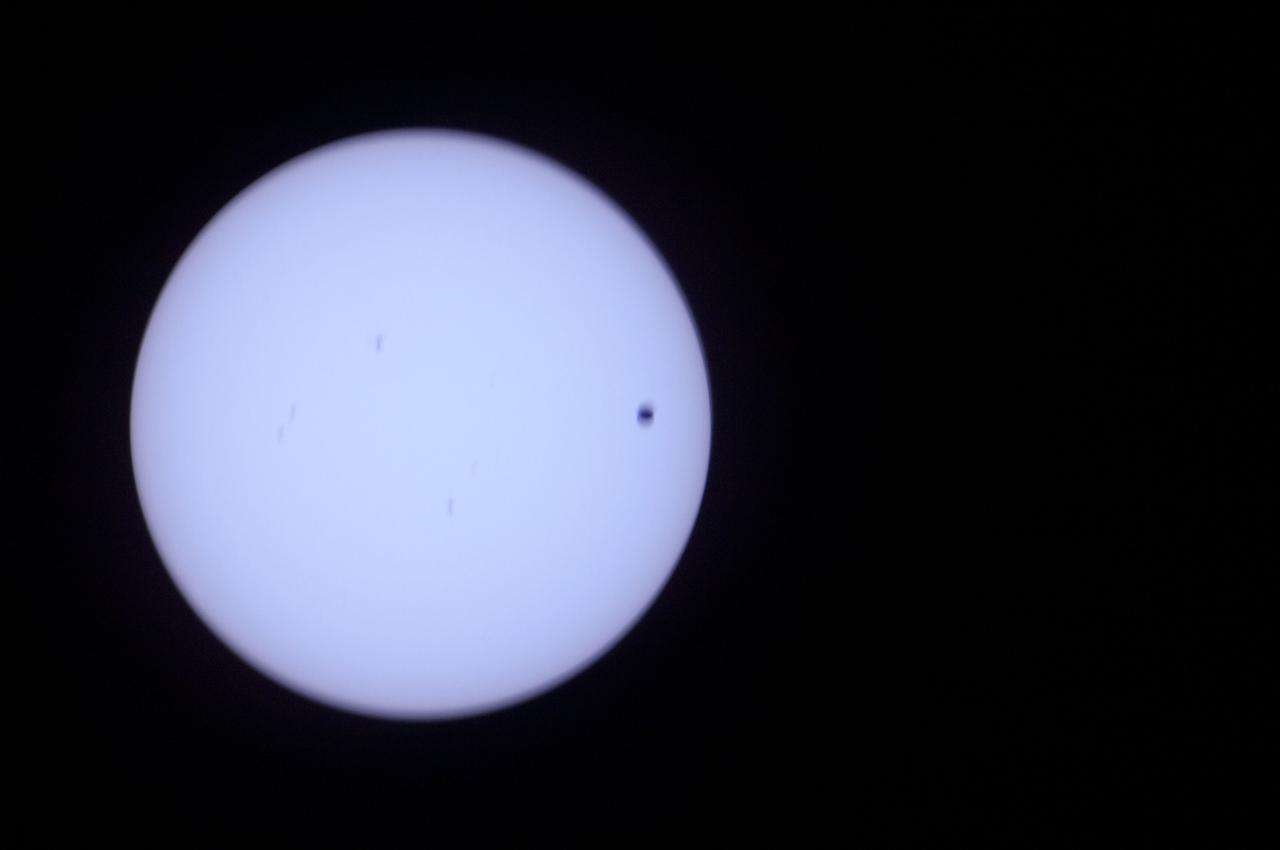
Transit of Venus as seen from the Cupola Module.
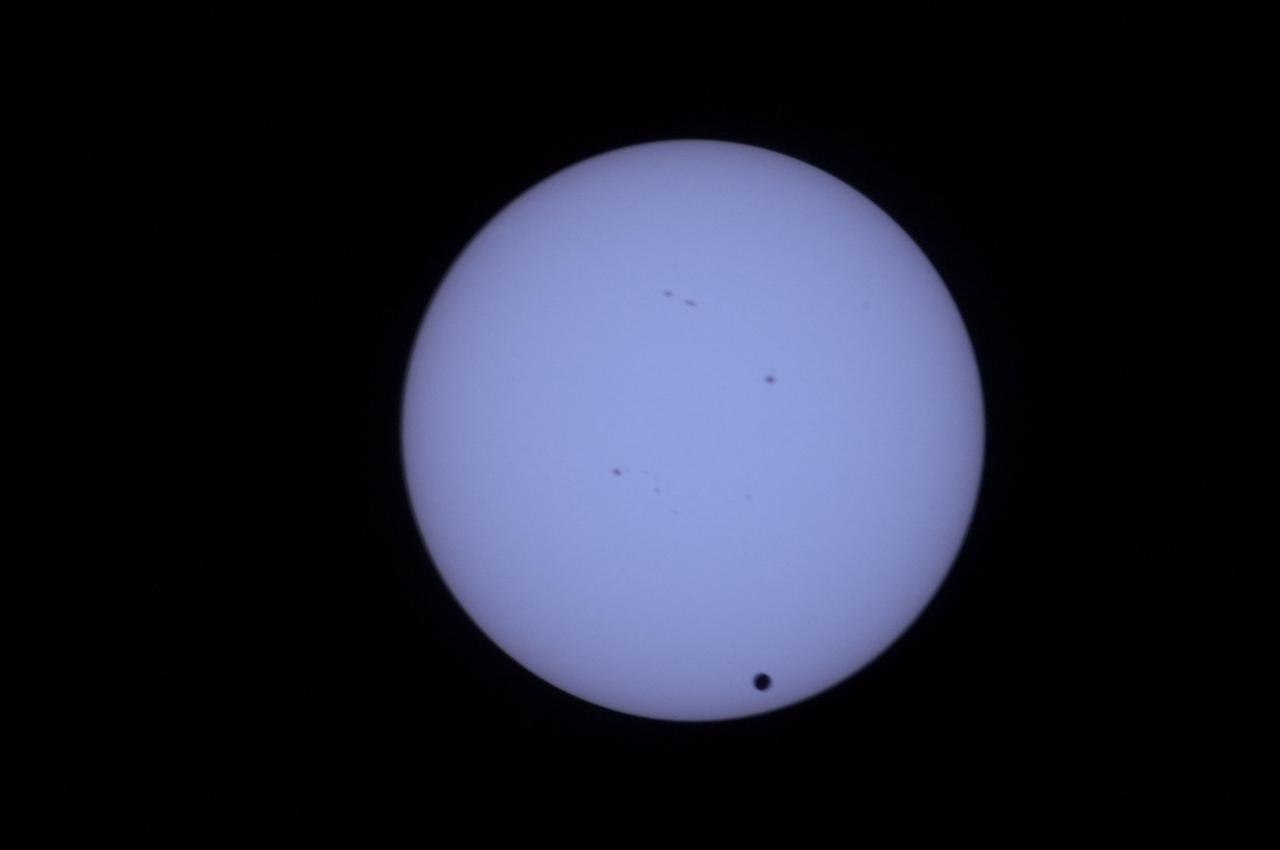
Transit of Venus as seen from the CO and Cupola Modules.
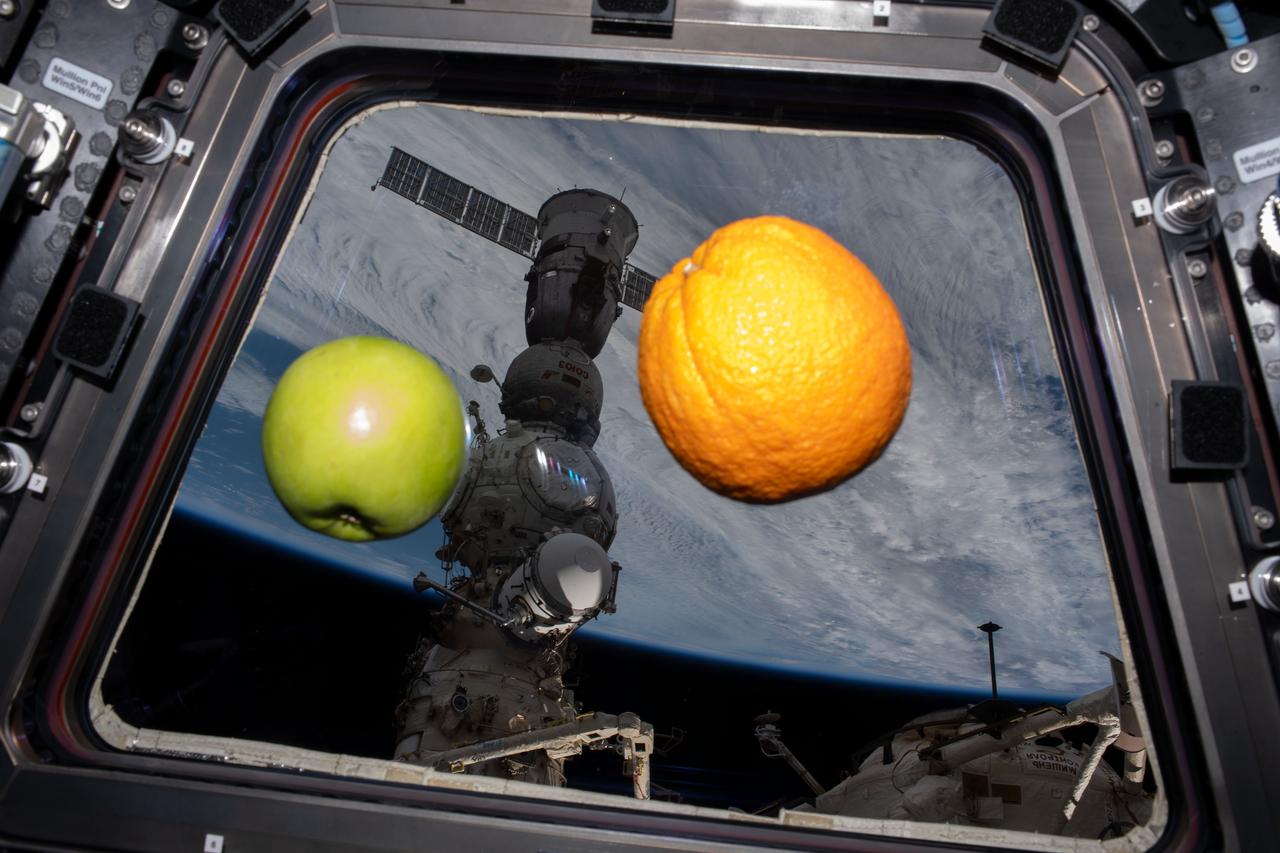
iss069e060591 (Aug. 15, 2023) --- An apple and an orange are pictured floating weightlessly in the International Space Station's cupola. Seen outside the cupola, is the Soyuz MS-23 crew ship docked to the Prichal docking module which is attached to the Nauka science module.

iss066e115544 (Jan. 16, 2022) --- NASA astronaut and Expedition 66 Flight Engineer Kayla Barron peers out from a window inside the cupola, the International Space Station's "window to the world." Prominent components in this photograph include the Tranquility module to which the cupola is attached to and the BEAM module.
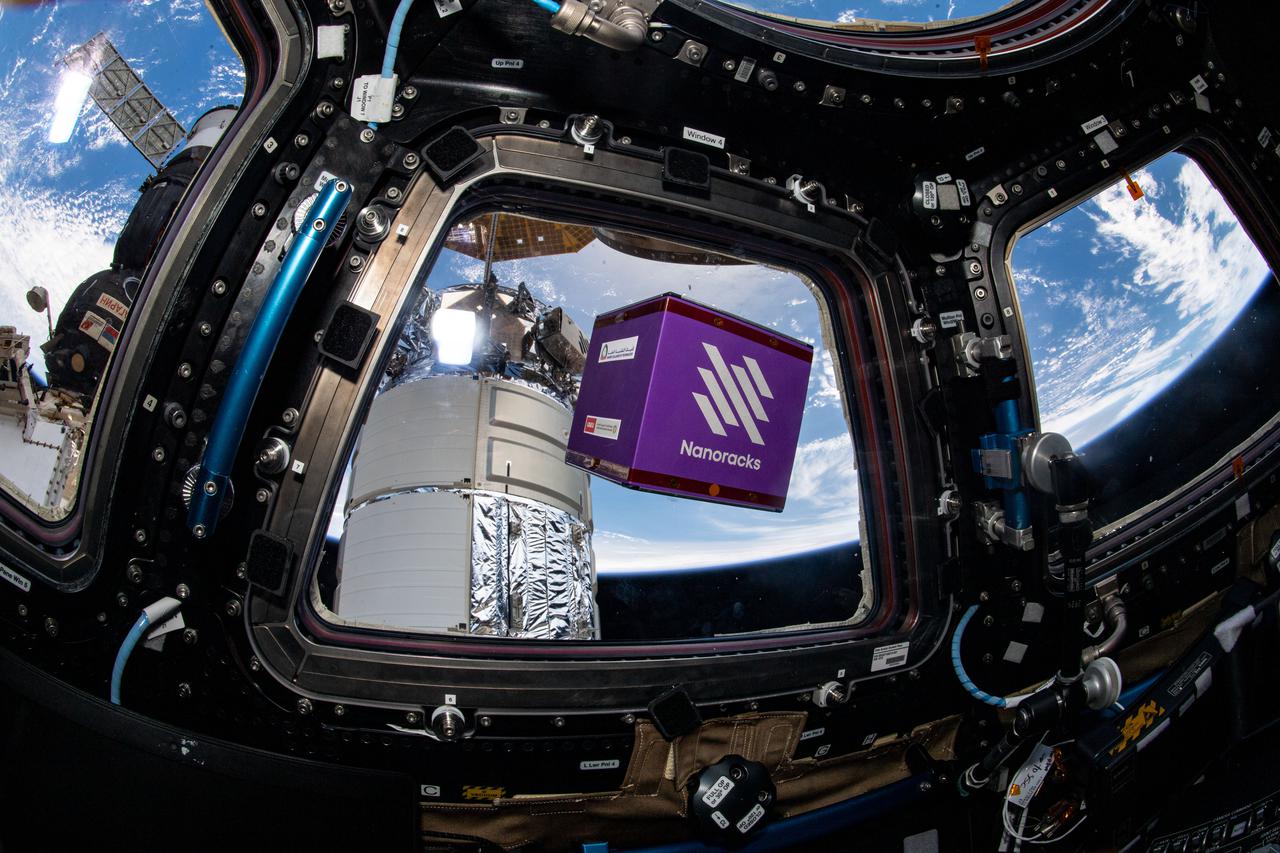
iss065e096314 (June 11, 2021) --- A NanoRacks module, a cube-shaped commercial research device, is pictured free-floating inside the cupola, the International Space Station's "window to the world." Just outside the cupola is the Northrop Grumman Cygnus space freighter attached to the Unity module's Earth-facing port.
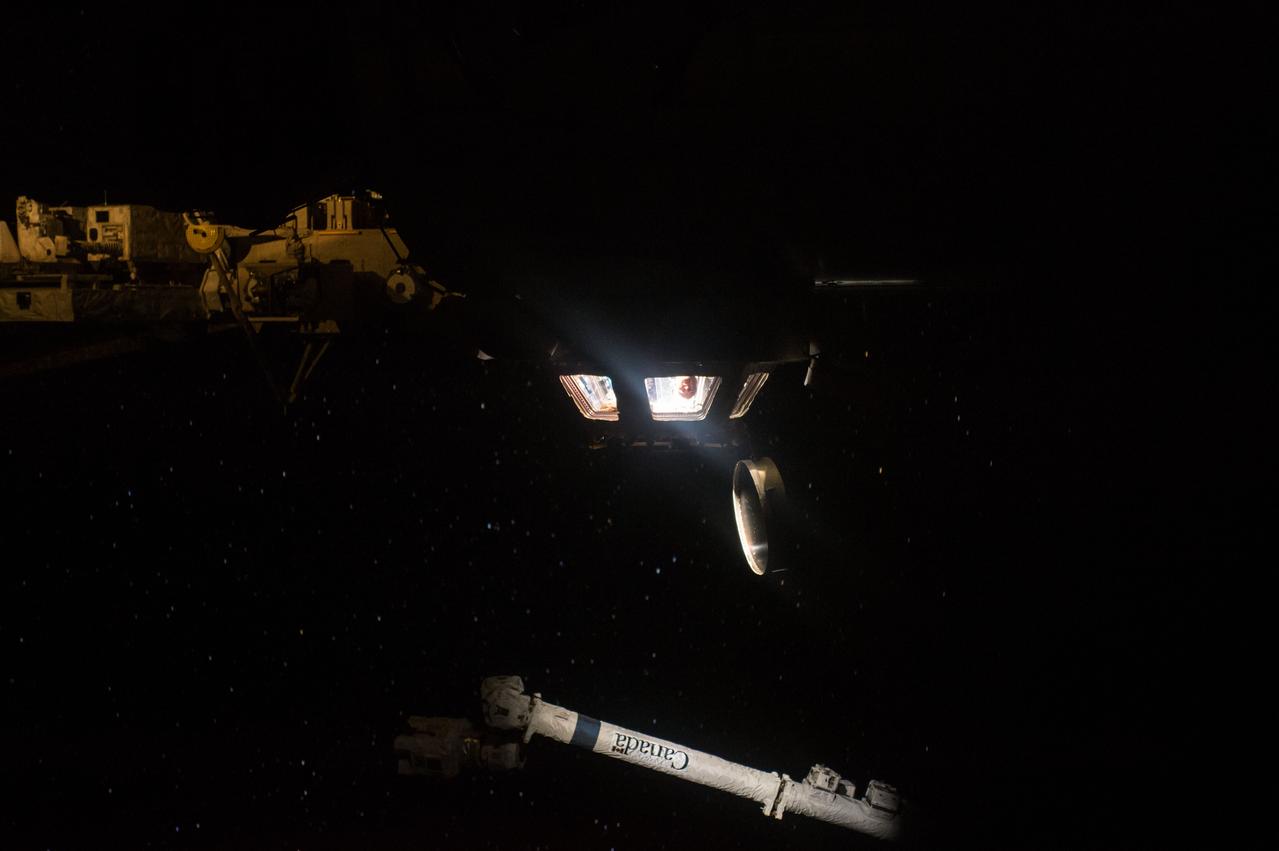
ISS045E002596 (09/14/2015) --- Expedition 45 commander Scott Kelly is seen peeking out of the space station’s Cupola module which provides a 360-degree view of the Earth below. The module is also used for robotics operations, including controlling the station’s main robotic device Canadarm2, seen below the Cupola.
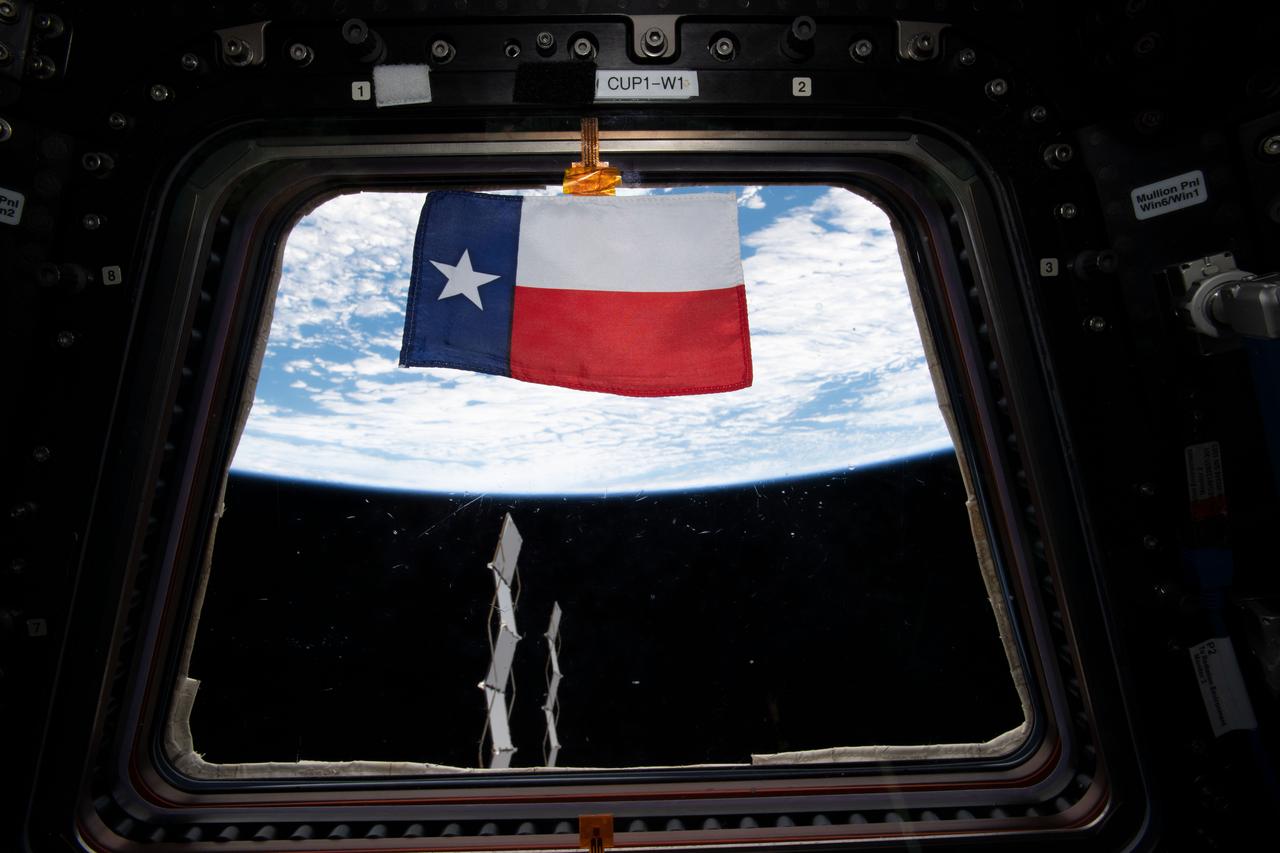
A state flag of Texas floats in front of a window in the Cupola module.
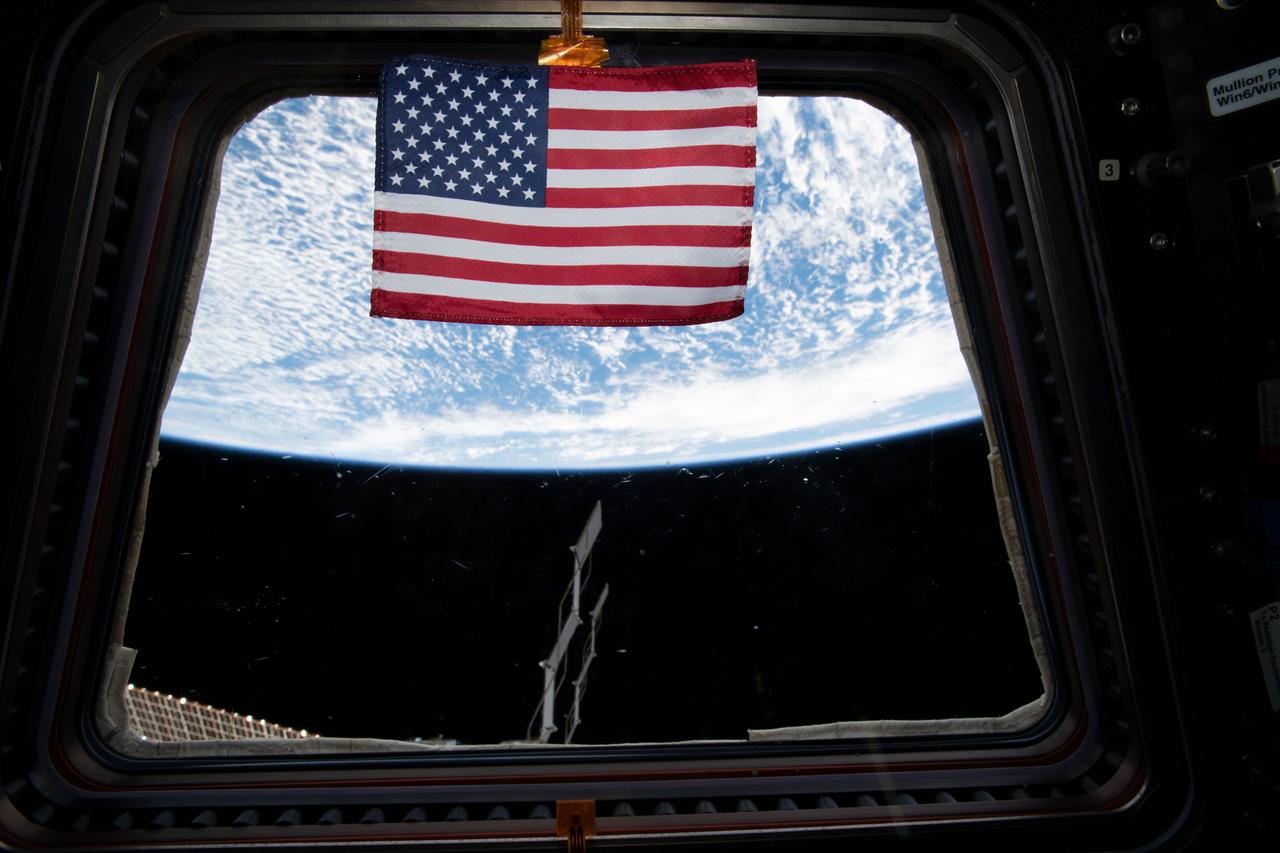
A United States flag floats in front of a window in the Cupola module.
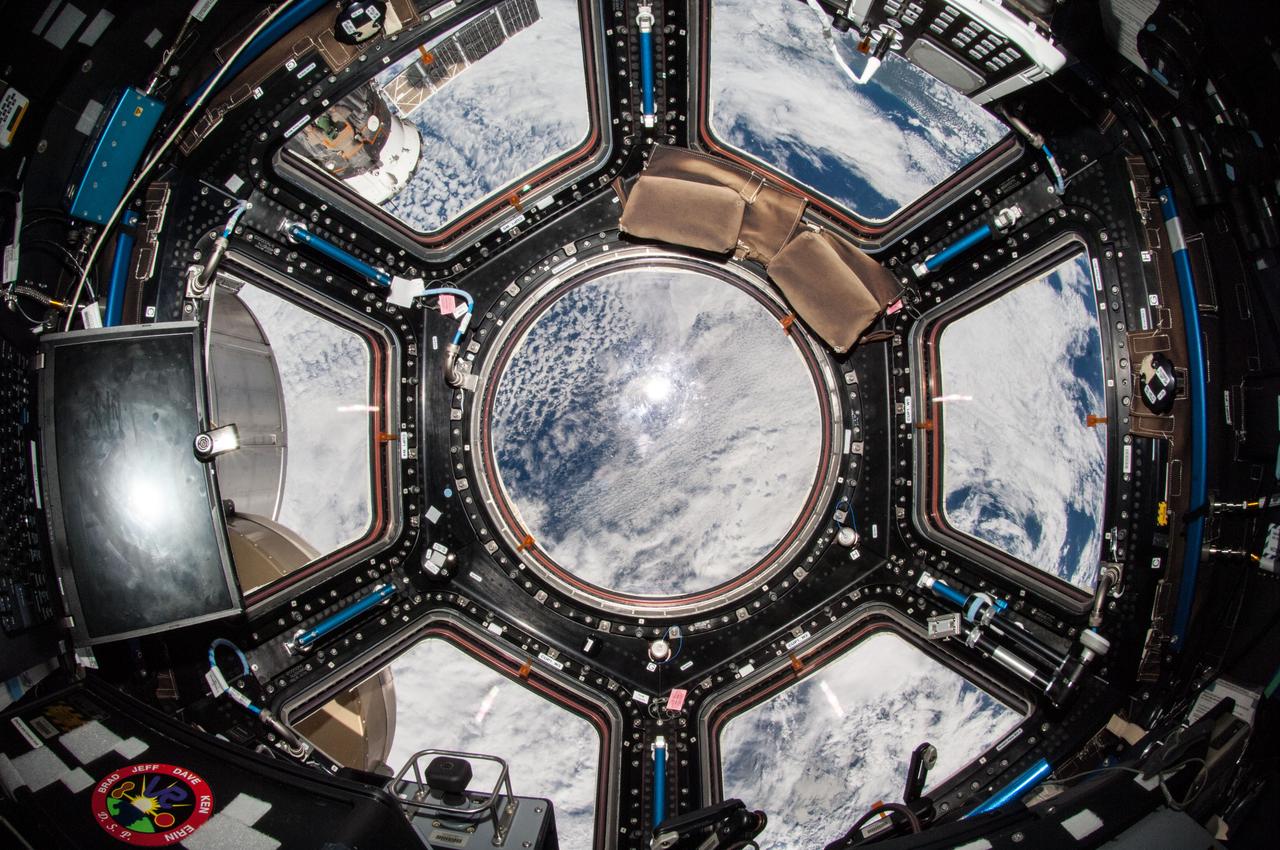
iss038e013587 (12/8/2013) --- A view of the Cupola module aboard the International Space Station (ISS). The cupola is a small module designed for the observation of operations outside the station such as robotic activities, the approach of vehicles, and spacewalks. Its six side windows and a direct nadir viewing window provide spectacular views of Earth and celestial objects. The windows are equipped with shutters to protect them from contamination and collisions with orbital debris or micrometeorites. The cupola house the robotic workstation that controls the Canadarm2.
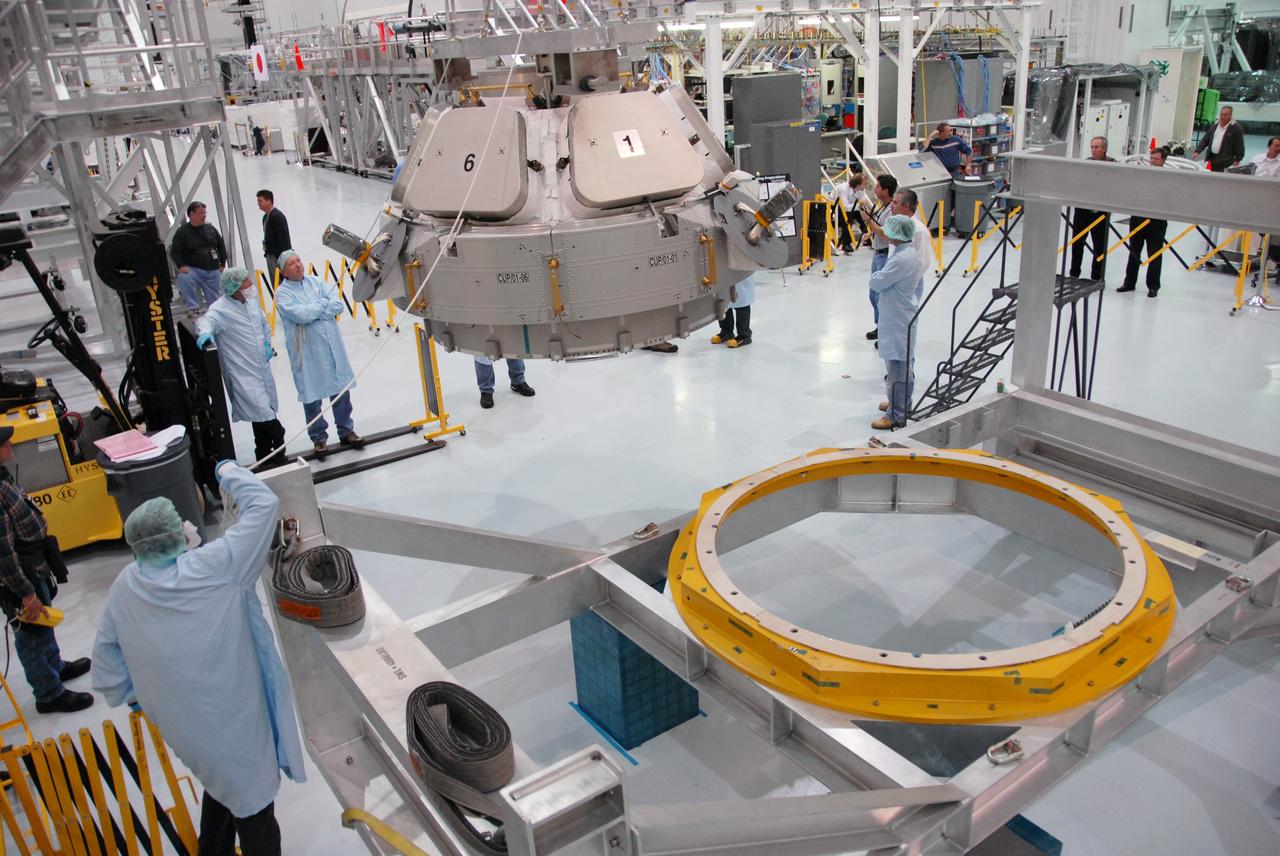
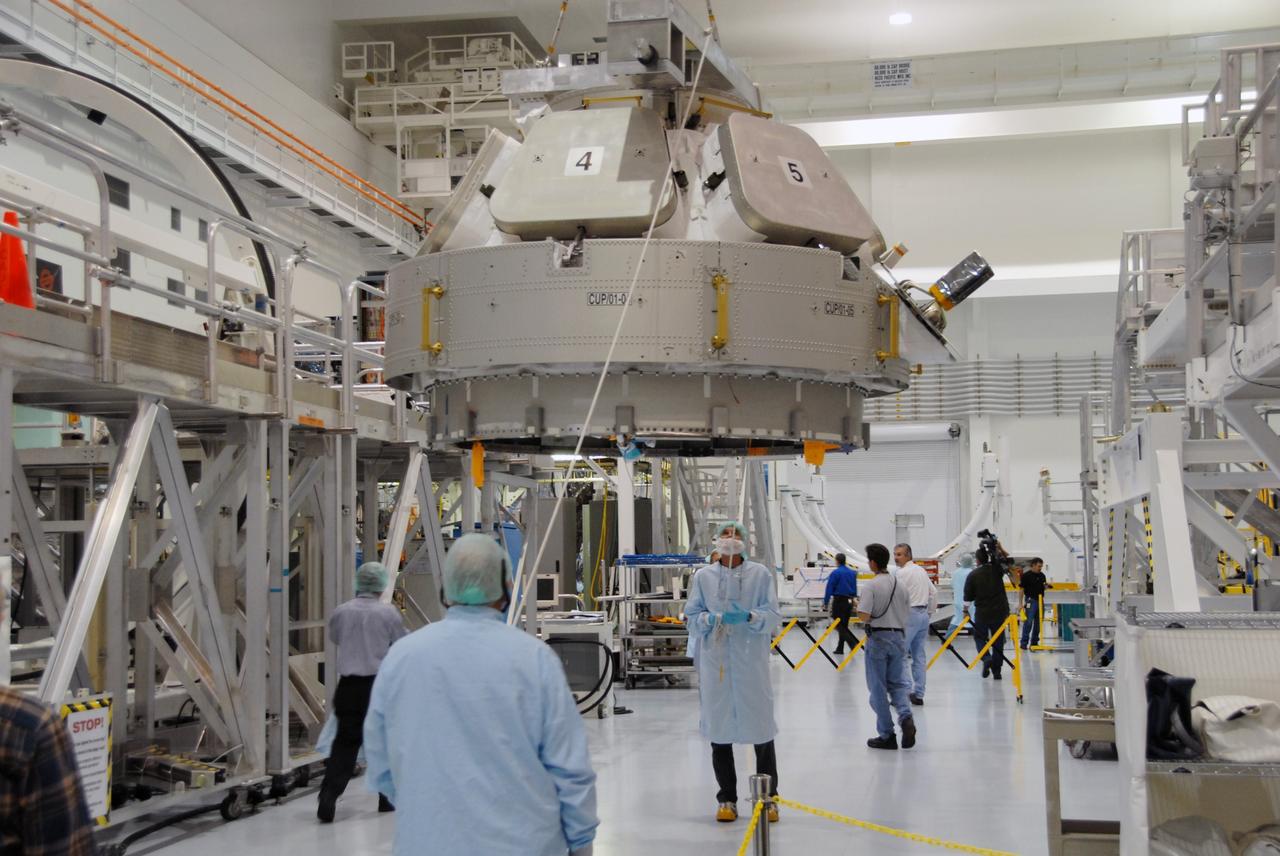
CAPE CANAVERAL, Fla. – Suspended by a crane in the Space Station Processing Facility at NASA's Kennedy Space Center in Florida, the Cupola module moves closer to the workstand at right. The module was delivered to Kennedy by the European Space Agency in 2004 from Alenia Spazio in Turin, Italy. Cupola will provide a 360-degree panoramic view of activities outside the station and spectacular views of the Earth. Cupola has the capability for command and control workstations to be installed to assist in space station remote manipulator system and extra vehicular activities. The final element of the space station core, Cupola is scheduled for launch on space shuttle Endeavour's STS-130 mission, targeted for Dec. 10, 2009. Photo credit: NASA/Cory Huston
CAPE CANAVERAL, Fla. – Suspended by a crane in the Space Station Processing Facility at NASA's Kennedy Space Center in Florida, the Cupola module is being moved to a workstand. The module was delivered to Kennedy by the European Space Agency in 2004 from Alenia Spazio in Turin, Italy. Cupola will provide a 360-degree panoramic view of activities outside the station and spectacular views of the Earth. Cupola has the capability for command and control workstations to be installed to assist in space station remote manipulator system and extra vehicular activities. The final element of the space station core, Cupola is scheduled for launch on space shuttle Endeavour's STS-130 mission, targeted for Dec. 10, 2009. Photo credit: NASA/Cory Huston
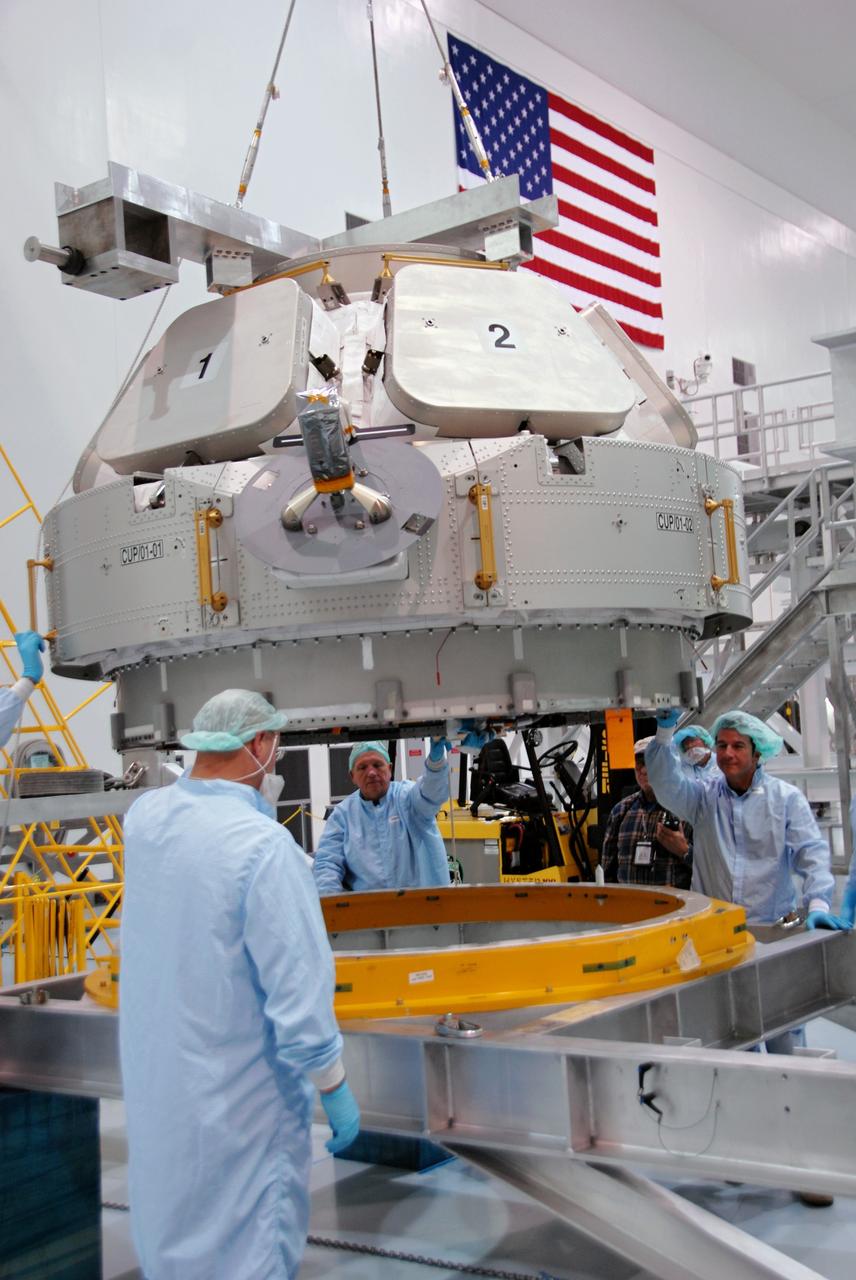
CAPE CANAVERAL, Fla. – Suspended by a crane in the Space Station Processing Facility at NASA's Kennedy Space Center in Florida, the Cupola module is lowered toward the workstand. The module was delivered to Kennedy by the European Space Agency in 2004 from Alenia Spazio in Turin, Italy. Cupola will provide a 360-degree panoramic view of activities outside the station and spectacular views of the Earth. Cupola has the capability for command and control workstations to be installed to assist in space station remote manipulator system and extra vehicular activities. The final element of the space station core, Cupola is scheduled for launch on space shuttle Endeavour's STS-130 mission, targeted for Dec. 10, 2009. Photo credit: NASA/Cory Huston
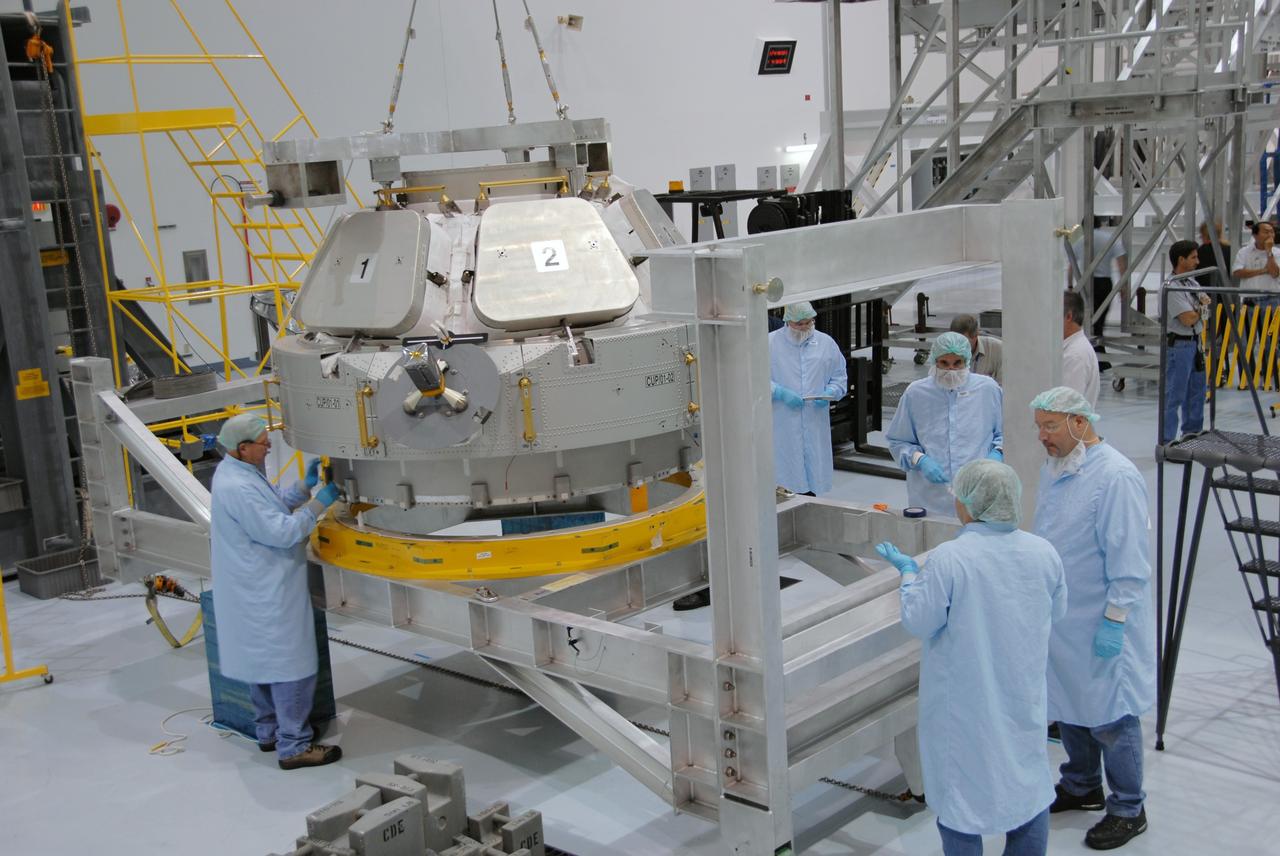
CAPE CANAVERAL, Fla. – Workers in the Space Station Processing Facility at NASA's Kennedy Space Center in Florida oversee placement of the Cupola module onto a workstand. The module was delivered to Kennedy by the European Space Agency in 2004 from Alenia Spazio in Turin, Italy. Cupola will provide a 360-degree panoramic view of activities outside the station and spectacular views of the Earth. Cupola has the capability for command and control workstations to be installed to assist in space station remote manipulator system and extra vehicular activities. The final element of the space station core, Cupola is scheduled for launch on space shuttle Endeavour's STS-130 mission, targeted for Dec. 10, 2009. Photo credit: NASA/Cory Huston
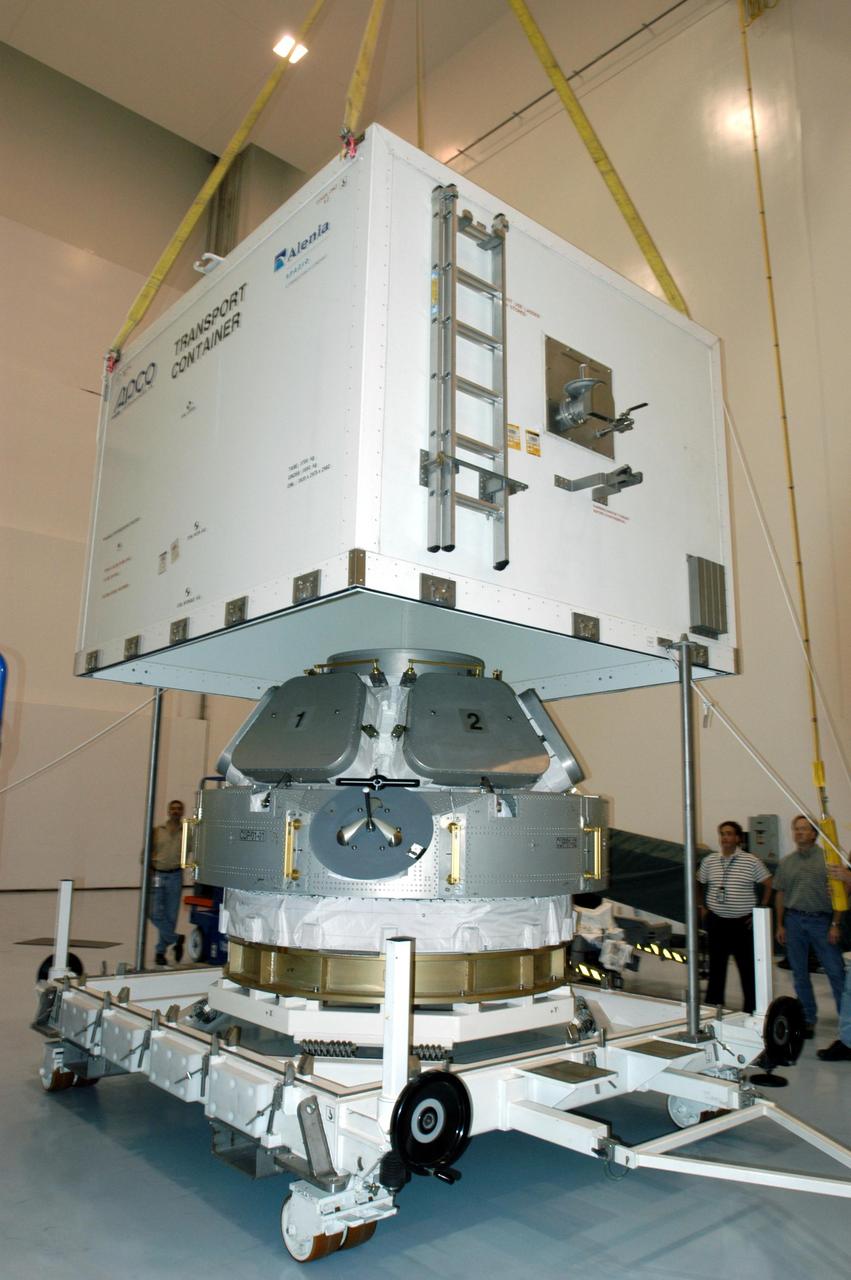
KENNEDY SPACE CENTER, FLA. - Inside the Space Station Processing Facility, the Cupola is uncrated. It was shipped from Alenia Spazio in Turin, Italy, for the European Space Agency. The Cupola is an element scheduled to be installed on the International Space Station in early 2009. A dome-shaped module with seven windows, the Cupola will give astronauts a panoramic view for observing many operations on the outside of the orbiting complex. The view out of the Cupola windows will enhance an arm operator's situational awareness, supplementing television camera views and graphics. It will provide external observation capabilities during spacewalks, docking operations and hardware surveys and for Earth and celestial studies. The Cupola is the final element of the Space Station core.
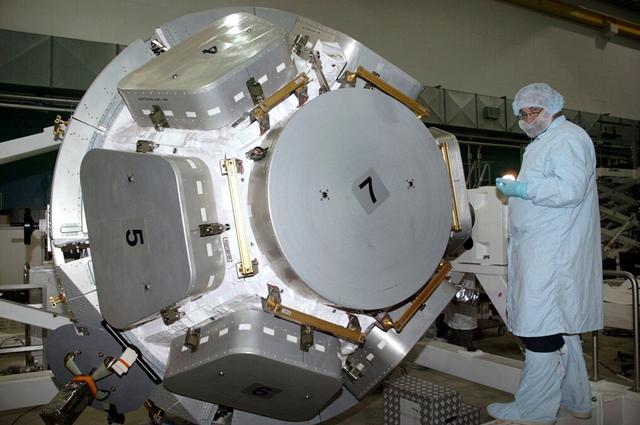
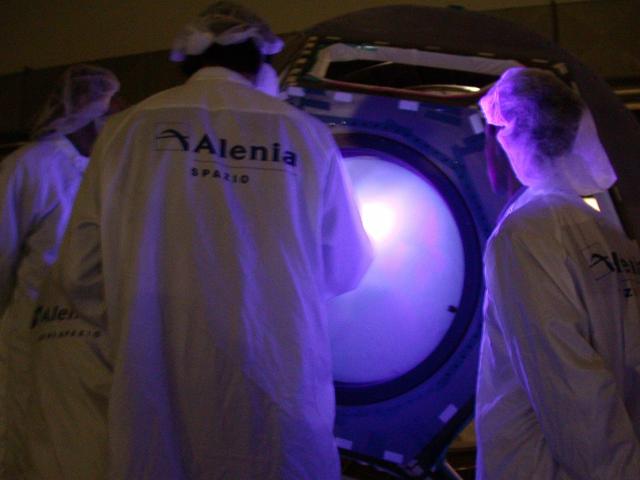
JSC2004-E-44648 (September 2004) --- A technician checks the International Space Station's Cupola in the Alenia Spazio clean room in Turin, Italy. Personnel are preparing the hardware for shipment to NASA's launch facility at Cape Kennedy, Florida. From inside the Cupola, a dome-shaped module with seven windows, astronauts have a panoramic view for observing operations on the outside of the orbiting complex. The Cupola module provides external observation capabilities during spacewalks, docking operations, hardware surveys and for Earth and celestial studies. It also serves as the primary location for executing robot arm operations of Canadarm2. Until the Cupola is installed, crews have been using a robotic control computer station located in the Destiny Laboratory to operate the arm. The Cupola’s windows enhance the robotic arm operator's situational awareness, supplementing camera and graphic views provided by the computer workstation. Photo Credit: Alenia Spazio
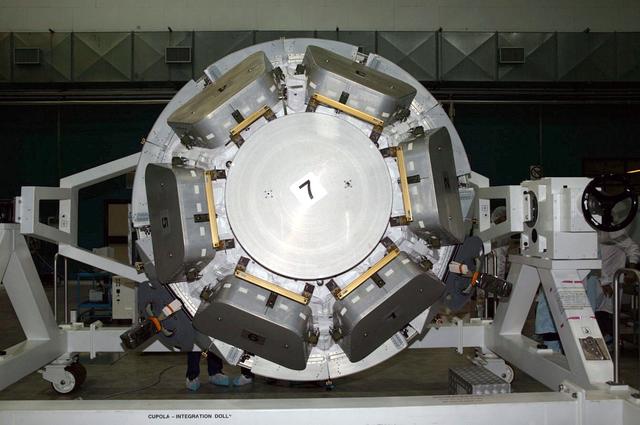
JSC2004-E-44649 (September 2004) --- Engineers and technicians (partially visible in right background) check the International Space Station's Cupola in the Alenia Spazio clean room in Turin, Italy. Personnel are preparing the hardware for shipment to NASA's launch facility at Cape Kennedy, Florida. From inside the Cupola, a dome-shaped module with seven windows, astronauts have a panoramic view for observing operations on the outside of the orbiting complex. The Cupola module provides external observation capabilities during spacewalks, docking operations, hardware surveys and for Earth and celestial studies. It also serves as the primary location for executing robot arm operations of Canadarm2. Until the Cupola is installed, crews have been using a robotic control computer station located in the Destiny Laboratory to operate the arm. The Cupola’s windows enhance the robotic arm operator's situational awareness, supplementing camera and graphic views provided by the computer workstation. Photo Credit: Alenia Spazio

JSC2004-E-42739 (August 2004) --- A low angle view shows the interior of the International Space Station's Cupola in the Alenia Spazio clean room in Turin, Italy. Personnel are preparing the hardware for shipment to NASA's launch facility at Cape Kennedy, Florida. From inside the Cupola, a dome-shaped module with seven windows, astronauts have a panoramic view for observing operations on the outside of the orbiting complex. The Cupola module provides external observation capabilities during spacewalks, docking operations, hardware surveys and for Earth and celestial studies. It also serves as the primary location for executing robot arm operations of Canadarm2. Until the Cupola is installed, crews have been using a robotic control computer station located in the Destiny Laboratory to operate the arm. The Cupola’s windows enhance the robotic arm operator's situational awareness, supplementing camera and graphic views provided by the computer workstation. Photo Credit: Alenia Spazio
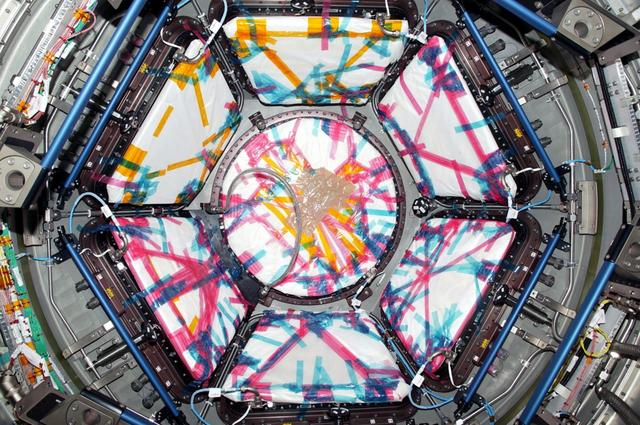
JSC2004-E-44650 (September 2004) --- A crewmember-eye view of the International Space Station's Cupola in the Alenia Spazio clean room in Turin, Italy. Personnel are preparing the hardware for shipment to NASA's launch facility at Cape Kennedy, Florida. From inside the Cupola, a dome-shaped module with seven windows (seen here under a protective cover), astronauts have a panoramic view for observing operations on the outside of the orbiting complex. The Cupola module provides external observation capabilities during spacewalks, docking operations, hardware surveys and for Earth and celestial studies. It also serves as the primary location for executing robot arm operations of Canadarm2. Until the Cupola is installed, crews have been using a robotic control computer station located in the Destiny Laboratory to operate the arm. The Cupola’s windows enhance the robotic arm operator's situational awareness, supplementing camera and graphic views provided by the computer workstation. Photo Credit: Alenia Spazio
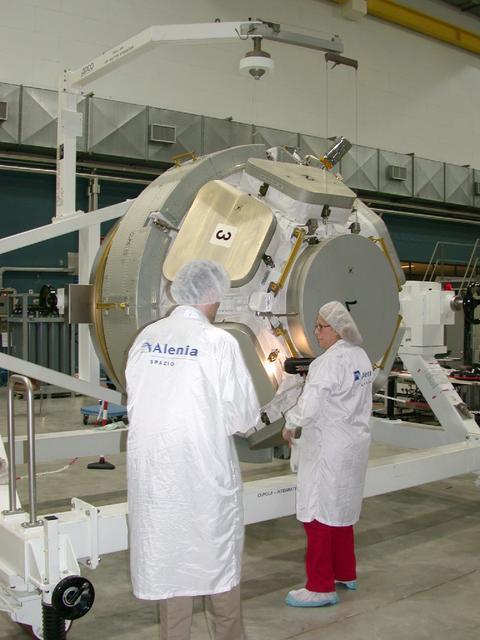
JSC2004-E-42742 (August 2004) --- Engineers and technicians check the International Space Station's Cupola in the Alenia Spazio clean room in Turin, Italy. Personnel are preparing the hardware for shipment to NASA's launch facility at Cape Kennedy, Florida. From inside the Cupola, a dome-shaped module with seven windows, astronauts have a panoramic view for observing operations on the outside of the orbiting complex. The Cupola module provides external observation capabilities during spacewalks, docking operations, hardware surveys and for Earth and celestial studies. It also serves as the primary location for executing robot arm operations of Canadarm2. Until the Cupola is installed, crews have been using a robotic control computer station located in the Destiny Laboratory to operate the arm. The Cupola’s windows enhance the robotic arm operator's situational awareness, supplementing camera and graphic views provided by the computer workstation. Photo Credit: Alenia Spazio
JSC2004-E-42740 (August 2004) --- Engineers and technicians check the International Space Station's Cupola in the Alenia Spazio clean room in Turin, Italy. Personnel are preparing the hardware for shipment to NASA's launch facility at Cape Kennedy, Florida. From inside the Cupola, a dome-shaped module with seven windows, astronauts have a panoramic view for observing operations on the outside of the orbiting complex. The Cupola module provides external observation capabilities during spacewalks, docking operations, hardware surveys and for Earth and celestial studies. It also serves as the primary location for executing robot arm operations of Canadarm2. Until the Cupola is installed, crews have been using a robotic control computer station located in the Destiny Laboratory to operate the arm. The Cupola’s windows enhance the robotic arm operator's situational awareness, supplementing camera and graphic views provided by the computer workstation. Photo Credit: Alenia Spazio
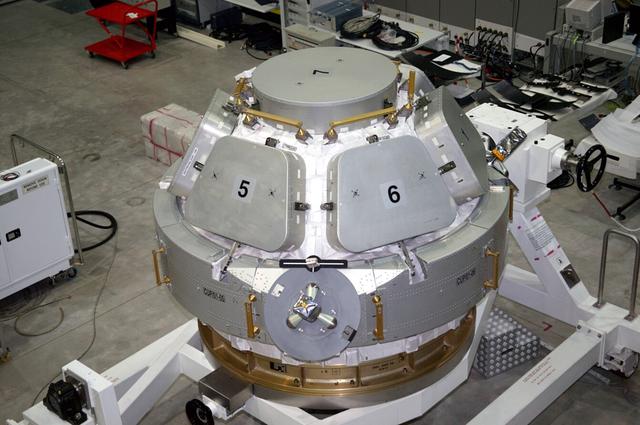
JSC2004-E-44647 (September 2004) --- A slightly high-angle view of the International Space Station's Cupola in the Alenia Spazio clean room in Turin, Italy. Personnel are preparing the hardware for shipment to NASA's launch facility at Cape Kennedy, Florida. From inside the Cupola, a dome-shaped module with seven windows, astronauts have a panoramic view for observing operations on the outside of the orbiting complex. The Cupola module provides external observation capabilities during spacewalks, docking operations, hardware surveys and for Earth and celestial studies. It also serves as the primary location for executing robot arm operations of Canadarm2. Until the Cupola is installed, crews have been using a robotic control computer station located in the Destiny Laboratory to operate the arm. The Cupola’s windows enhance the robotic arm operator's situational awareness, supplementing camera and graphic views provided by the computer workstation. Photo Credit: Alenia Spazio
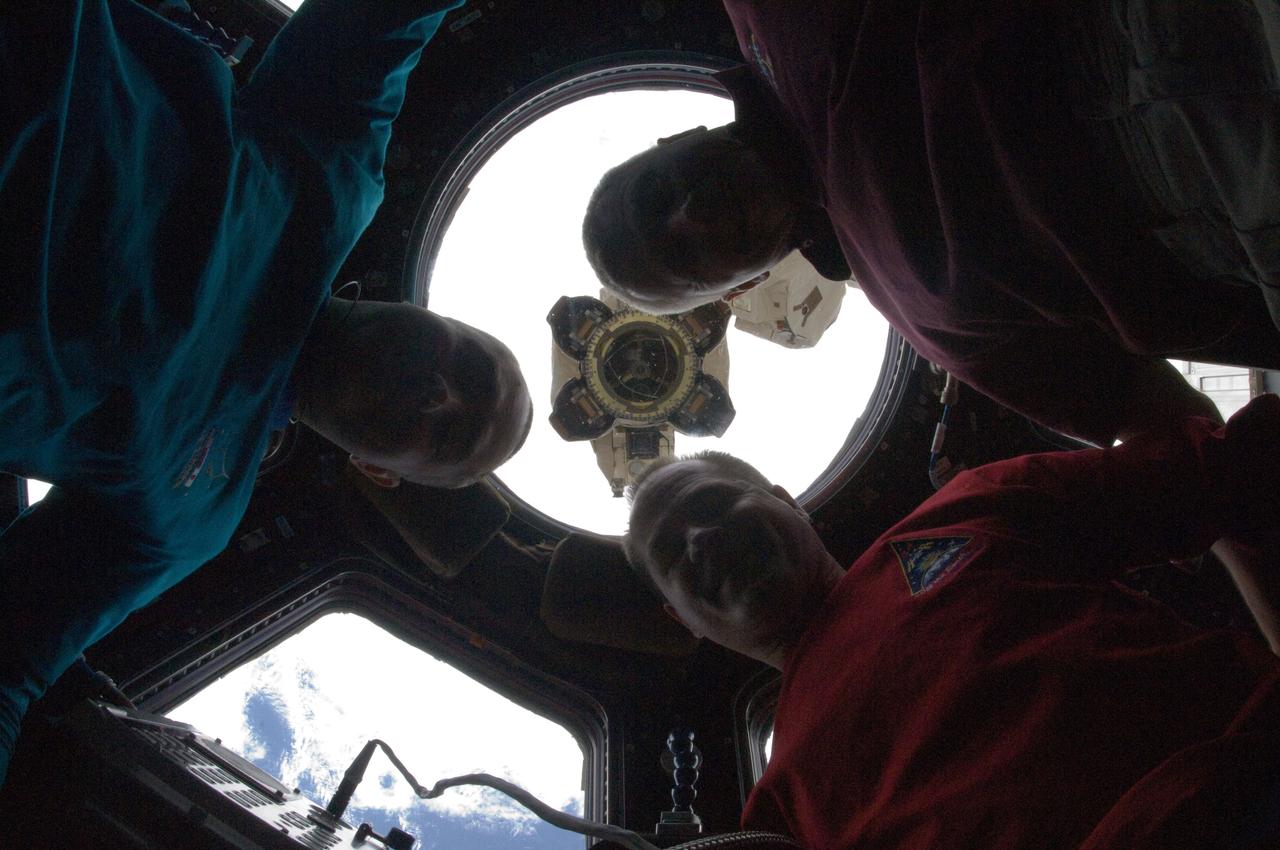
ISS034-E-010955 (27 Nov. 2012) --- NASA astronaut Kevin Ford (lower right), Expedition 34 commander; along with Russian cosmonauts Evgeny Tarelkin (left) and Oleg Novitskiy, both flight engineers, are partially silhouetted as they pose for a photo in the Cupola of the International Space Station. The Canadarm2 robotic arm's Latching End Effector (LEE) is visible through a window in the background.
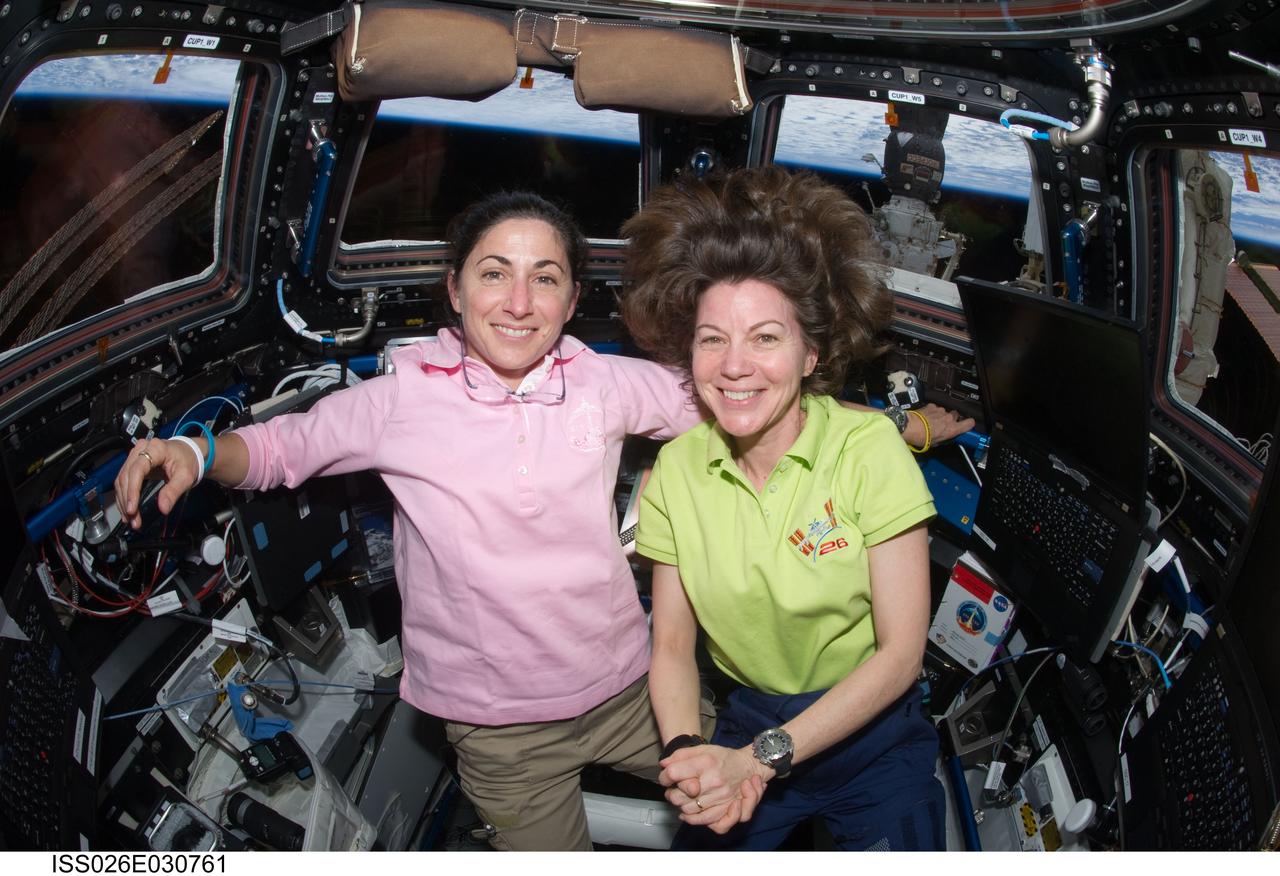
ISS026-E-030761 (27 Feb. 2011) --- NASA astronauts Nicole Stott (left), STS-133 mission specialist; and Cady Coleman, Expedition 26 flight engineer, pose for a photo in the Cupola of the International Space Station while space shuttle Discovery remains docked with the station.
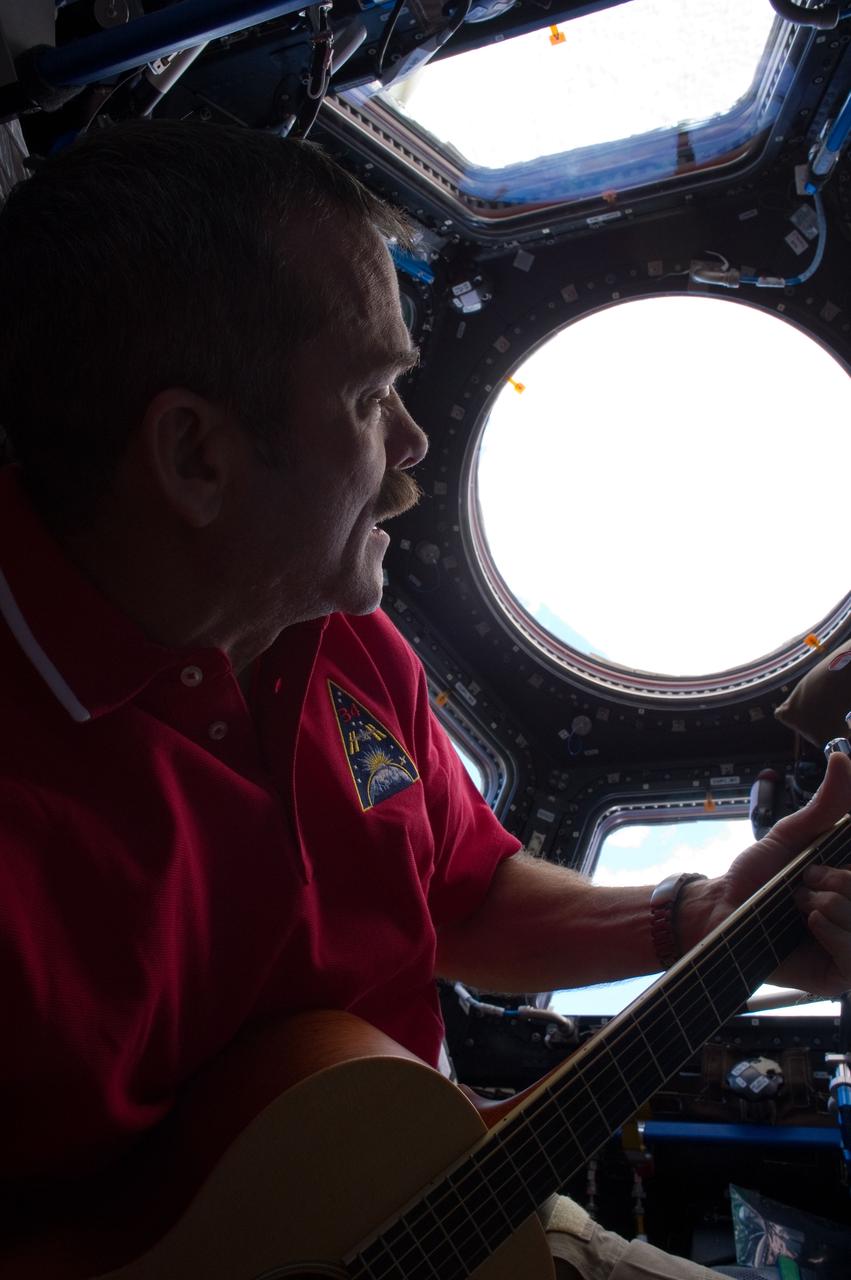
ISS034-E-010295 (25 Dec. 2012) --- Canadian Space Agency astronaut Chris Hadfield strums his guitar in the International Space Station's Cupola on Dec. 25, 2012. Hadfield, a long-time member of an astronaut band called Max Q, later joined with the other five Expedition 34 crew members in a more spacious location to provide an assortment of Christmas carols for the public.
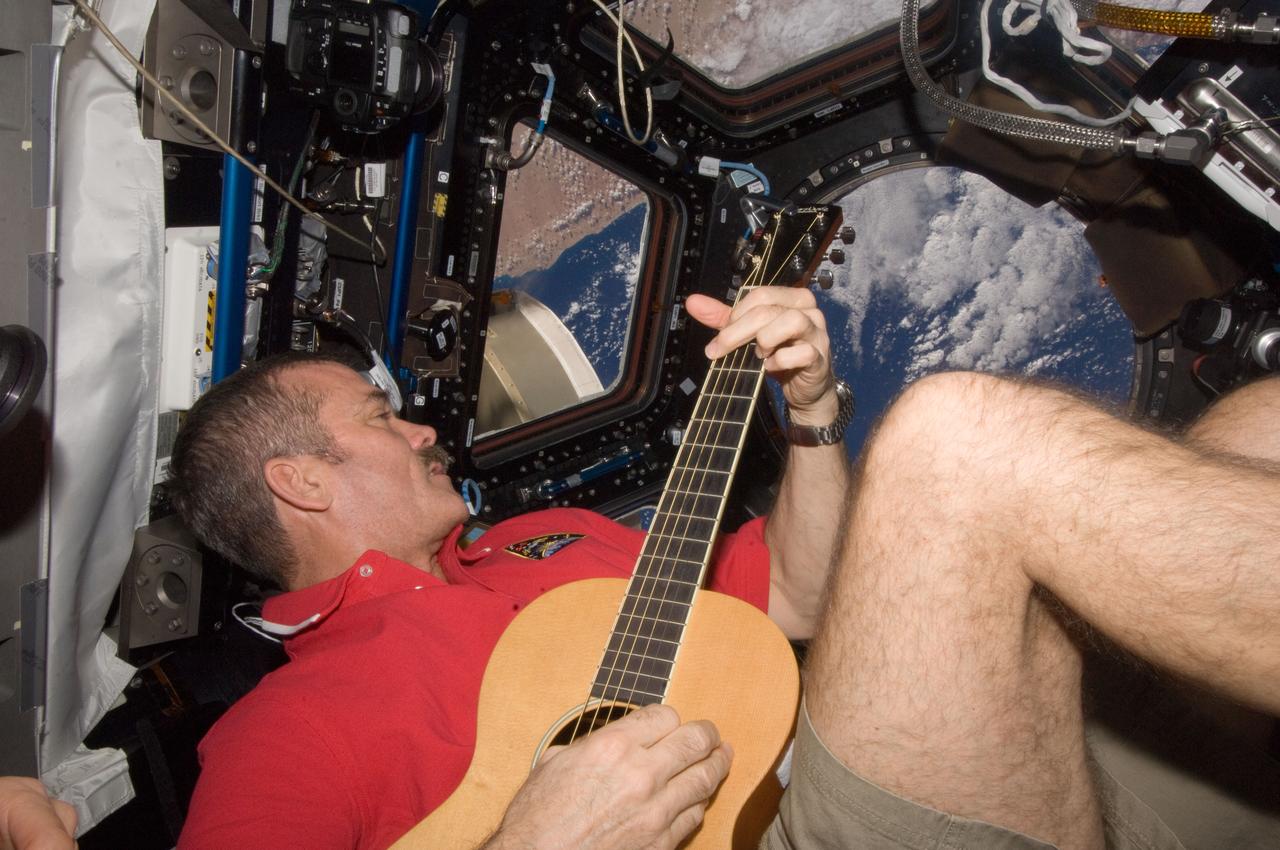
ISS034-E-009799 (25 Dec. 2012) --- Canadian Space Agency astronaut Chris Hadfield strums his guitar in the International Space Station's Cupola on Dec. 25, 2012. Hadfield, a long-time member of an astronaut band called Max Q, later joined with the other five Expedition 34 crew members in a more spacious location to provide an assortment of Christmas carols for the public.
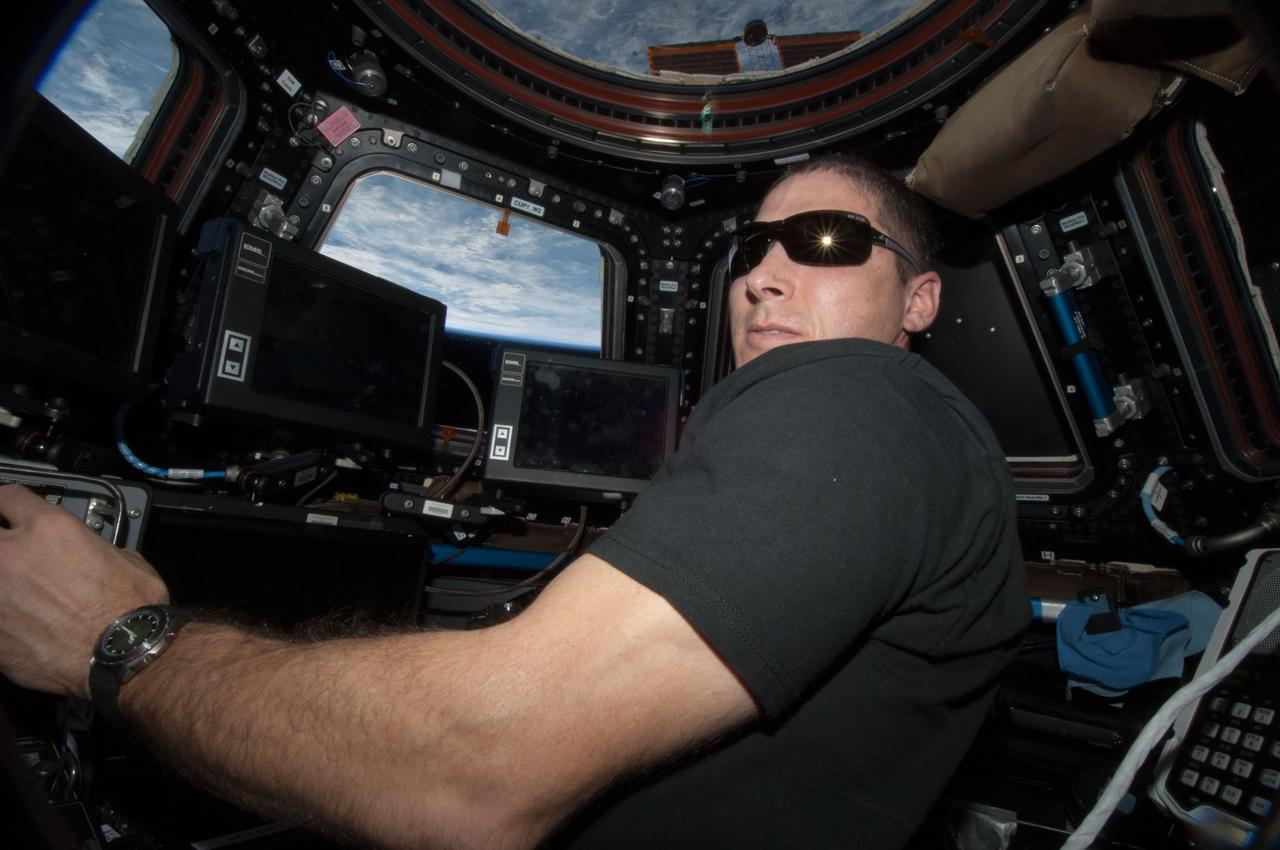
ISS038-E-011798 (4 Dec. 2013) --- In the Cupola, NASA astronaut Mike Hopkins, Expedition 38 flight engineer, has his left hand on the controls of robotics aboard the International Space Station.
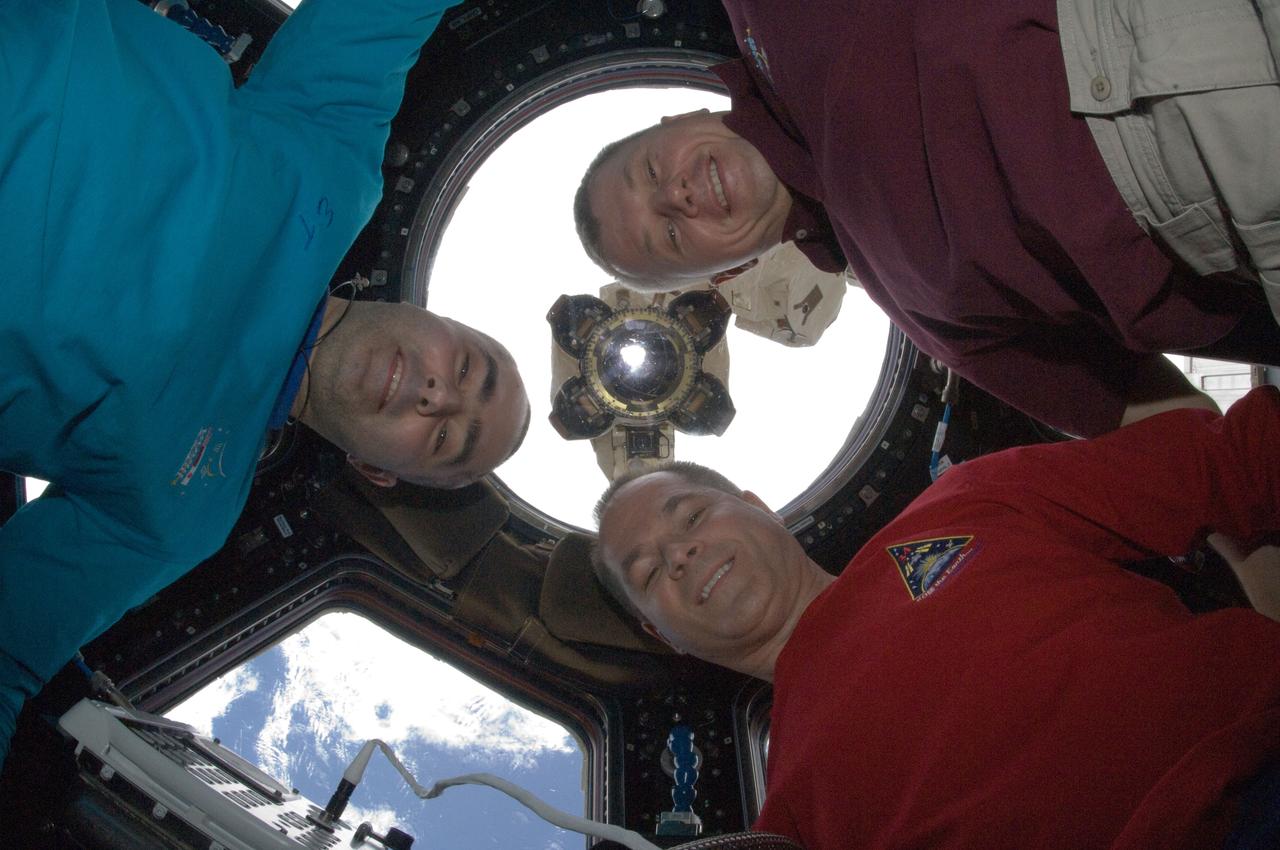
ISS034-E-010953 (27 Nov. 2012) --- NASA astronaut Kevin Ford (lower right), Expedition 34 commander; along with Russian cosmonauts Evgeny Tarelkin (left) and Oleg Novitskiy, both flight engineers, pose for a photo in the Cupola of the International Space Station. The Canadarm2 robotic arm's Latching End Effector (LEE) is visible through a window in the background.
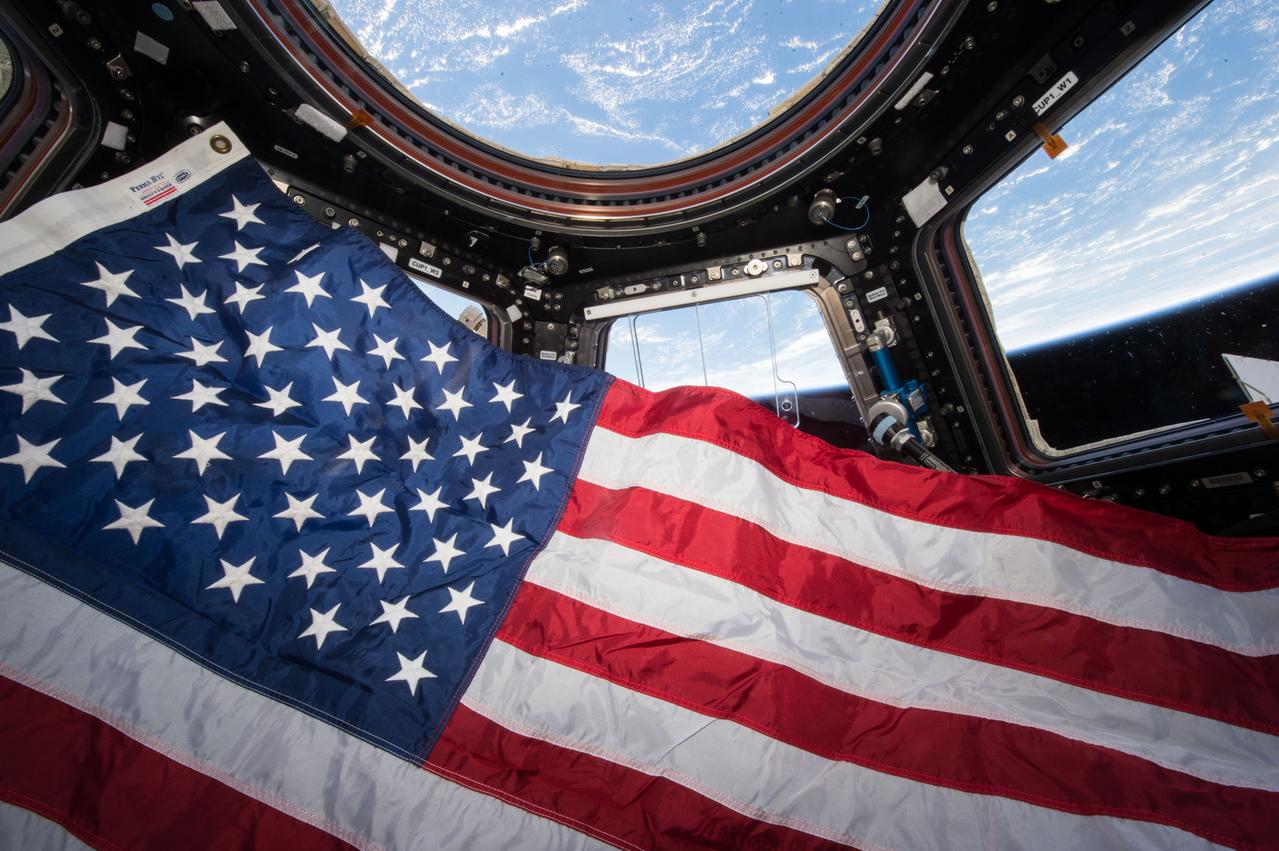
ISS044E000305 (06/14/2015) --- On the International Space Station June 14, 2015 the crew of Expedition 44 prepare to observe Flag Day in the USA in the Cupola, the 360 degree observation point.
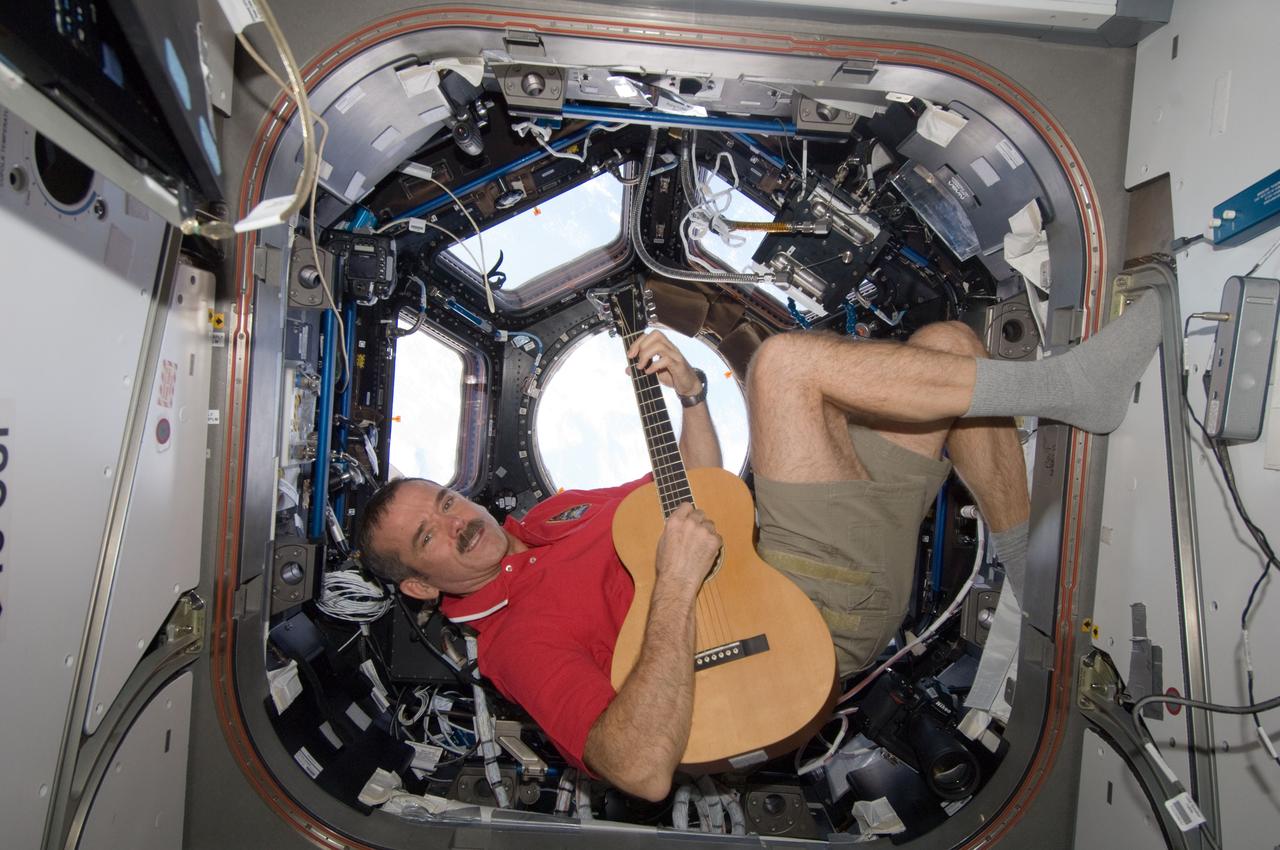
ISS034-E-009787 (25 Dec. 2012) --- Canadian Space Agency astronaut Chris Hadfield strums his guitar in the International Space Station's Cupola on Dec. 25, 2012. Hadfield, a long-time member of an astronaut band called Max Q, later joined with the other five Expedition 34 crew members in a more spacious location to provide an assortment of Christmas carols for the public.
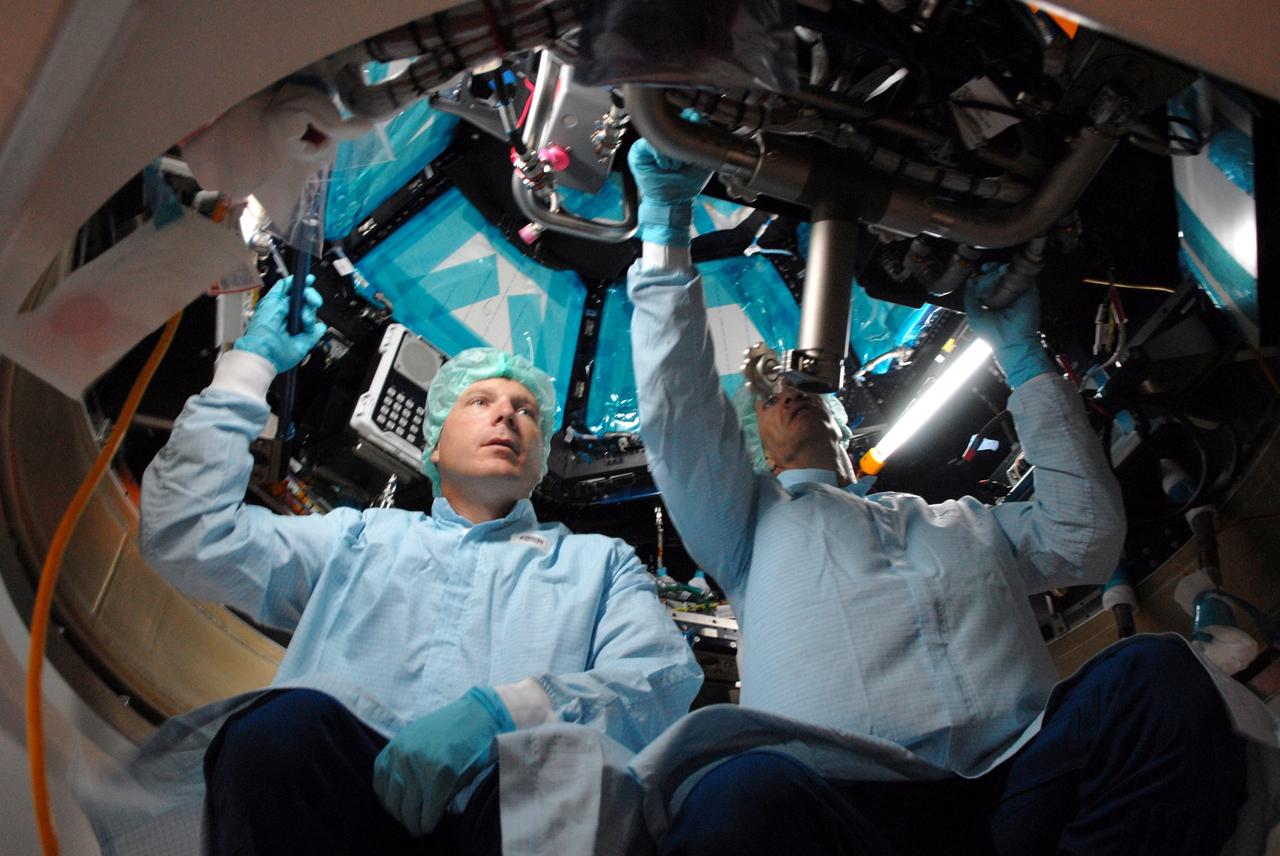
CAPE CANAVERAL, Fla. – In the Space Station Processing Facility at NASA's Kennedy Space Center, astronauts Terry Virts, left, and Charles Hobaugh familiarize themselves with the operation of the robotic workstation, or RWS, in the International Space Station's Cupola module. The RWS is provided by the Canadian Space Agency. The module was delivered by the European Space Agency in 2004 to Kennedy from Alenia Spazio in Turin, Italy. Cupola will provide unprecedented views of activities outside the station and spectacular views of the Earth. Crew members working inside the module will have a 360-degree panoramic view. Cupola has the capability for command and control workstations to be installed to assist in space station remote manipulator system and extra vehicular activities. Cupola is the final element of the space station core and is scheduled for launch on space shuttle Endeavour's STS-130 mission, targeted for Dec. 10, 2009. Photo credit: NASA/Cory Huston
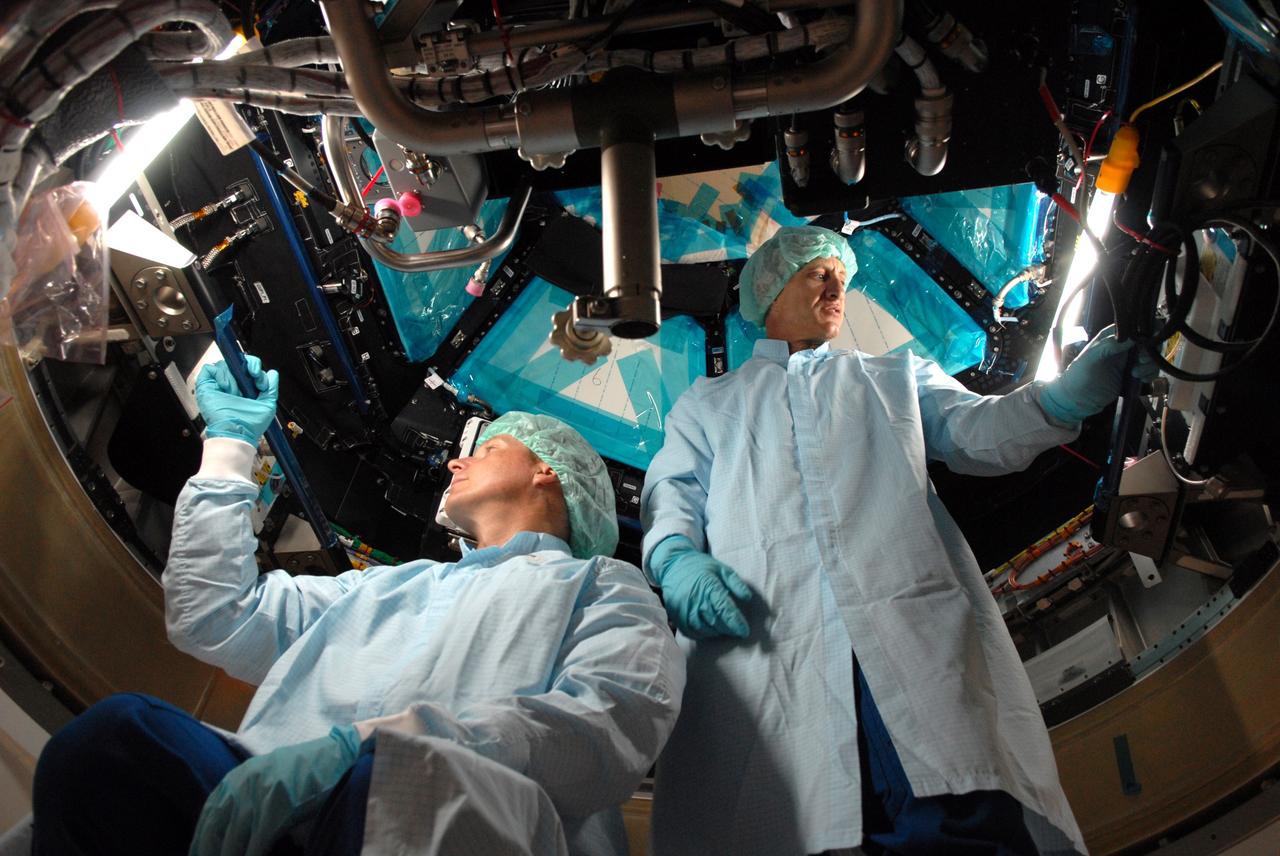
CAPE CANAVERAL, Fla. – In the Space Station Processing Facility at NASA's Kennedy Space Center, astronauts Terry Virts, left, and Charles Hobaugh familiarize themselves with the placement and operation of the robotic workstation, or RWS, in the International Space Station's Cupola module. The RWS is provided by the Canadian Space Agency. The module was delivered by the European Space Agency in 2004 to Kennedy from Alenia Spazio in Turin, Italy. Cupola will provide unprecedented views of activities outside the station and spectacular views of the Earth. Crew members working inside the module will have a 360-degree panoramic view. Cupola has the capability for command and control workstations to be installed to assist in space station remote manipulator system and extra vehicular activities. Cupola is the final element of the space station core and is scheduled for launch on space shuttle Endeavour's STS-130 mission, targeted for Dec. 10, 2009. Photo credit: NASA/Cory Huston
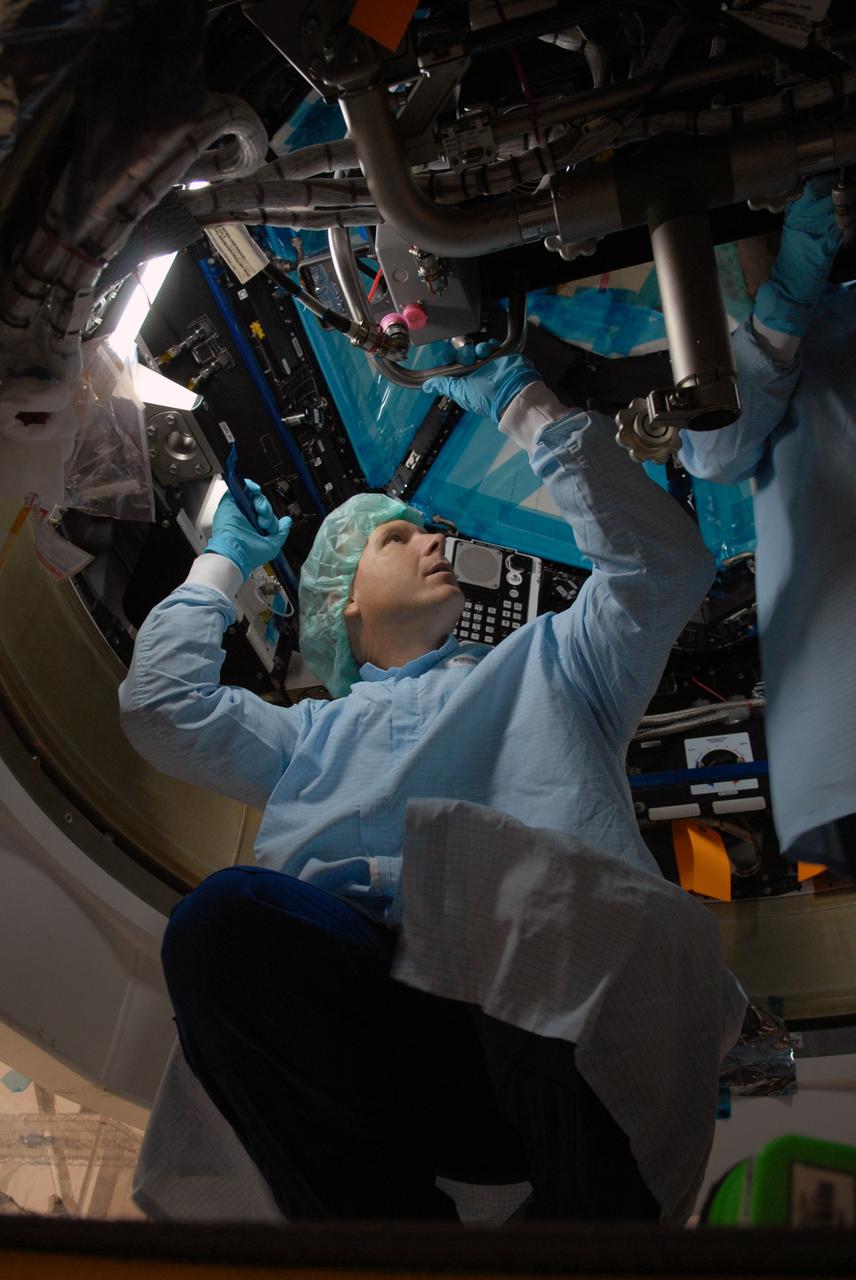
CAPE CANAVERAL, Fla. – In the Space Station Processing Facility at NASA's Kennedy Space Center, astronaut Terry Virts conducts a fit check of the robotic workstation, or RWS, in the International Space Station's Cupola module. The RWS is provided by the Canadian Space Agency. The module was delivered by the European Space Agency in 2004 to Kennedy from Alenia Spazio in Turin, Italy. Cupola will provide unprecedented views of activities outside the station and spectacular views of the Earth. Crew members working inside the module will have a 360-degree panoramic view. Cupola has the capability for command and control workstations to be installed to assist in space station remote manipulator system and extra vehicular activities. Cupola is the final element of the space station core and is scheduled for launch on space shuttle Endeavour's STS-130 mission, targeted for Dec. 10, 2009. Photo credit: NASA/Cory Huston
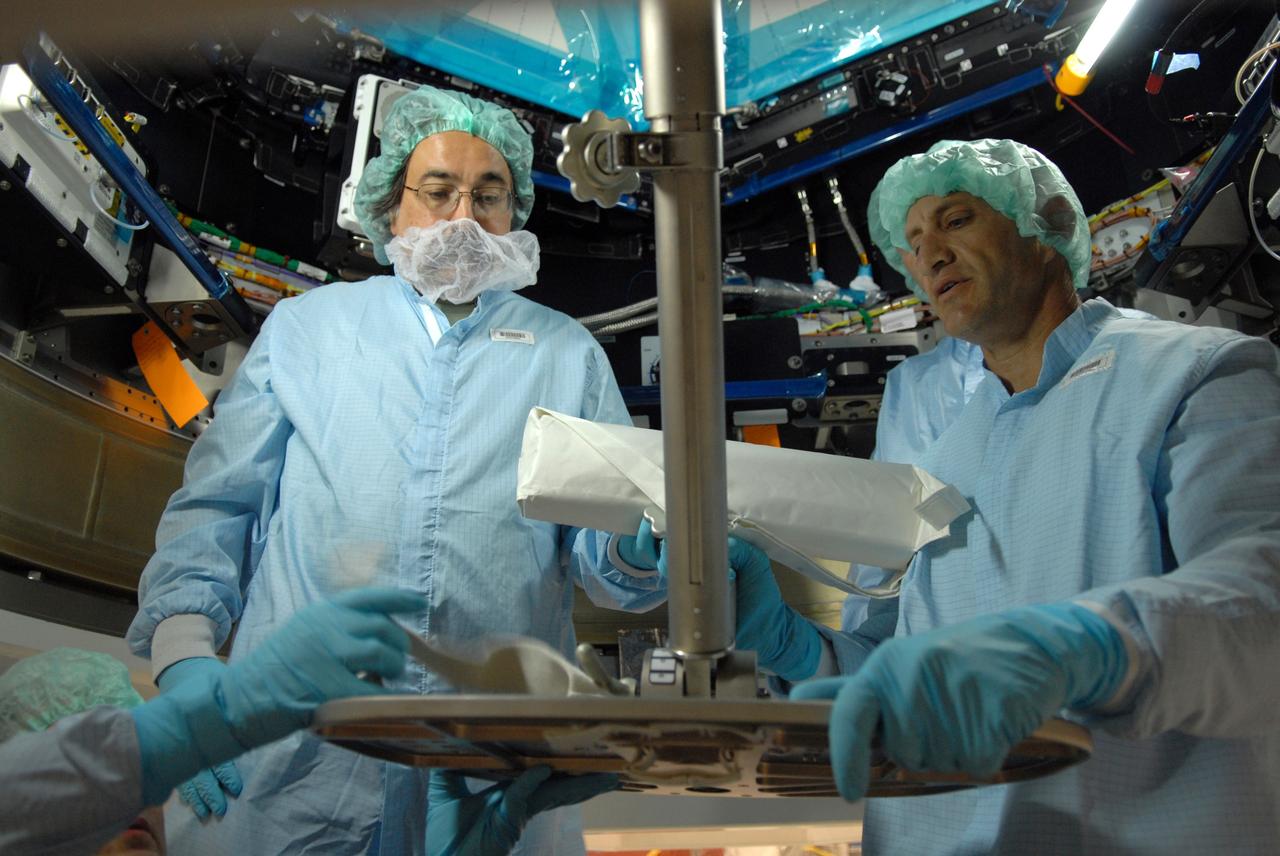
CAPE CANAVERAL, Fla. – In the Space Station Processing Facility at NASA's Kennedy Space Center, astronaut Charles Hobaugh, right, conducts a fit check of the robotic workstation, or RWS, in the International Space Station's Cupola module. He is assisted by Boeing technician Terry Camarata, left. The RWS is provided by the Canadian Space Agency. The module was delivered by the European Space Agency in 2004 to Kennedy from Alenia Spazio in Turin, Italy. Cupola will provide unprecedented views of activities outside the station and spectacular views of the Earth. Crew members working inside the module will have a 360-degree panoramic view. Cupola has the capability for command and control workstations to be installed to assist in space station remote manipulator system and extra vehicular activities. Cupola is the final element of the space station core and is scheduled for launch on space shuttle Endeavour's STS-130 mission, targeted for Dec. 10, 2009. Photo credit: NASA/Cory Huston
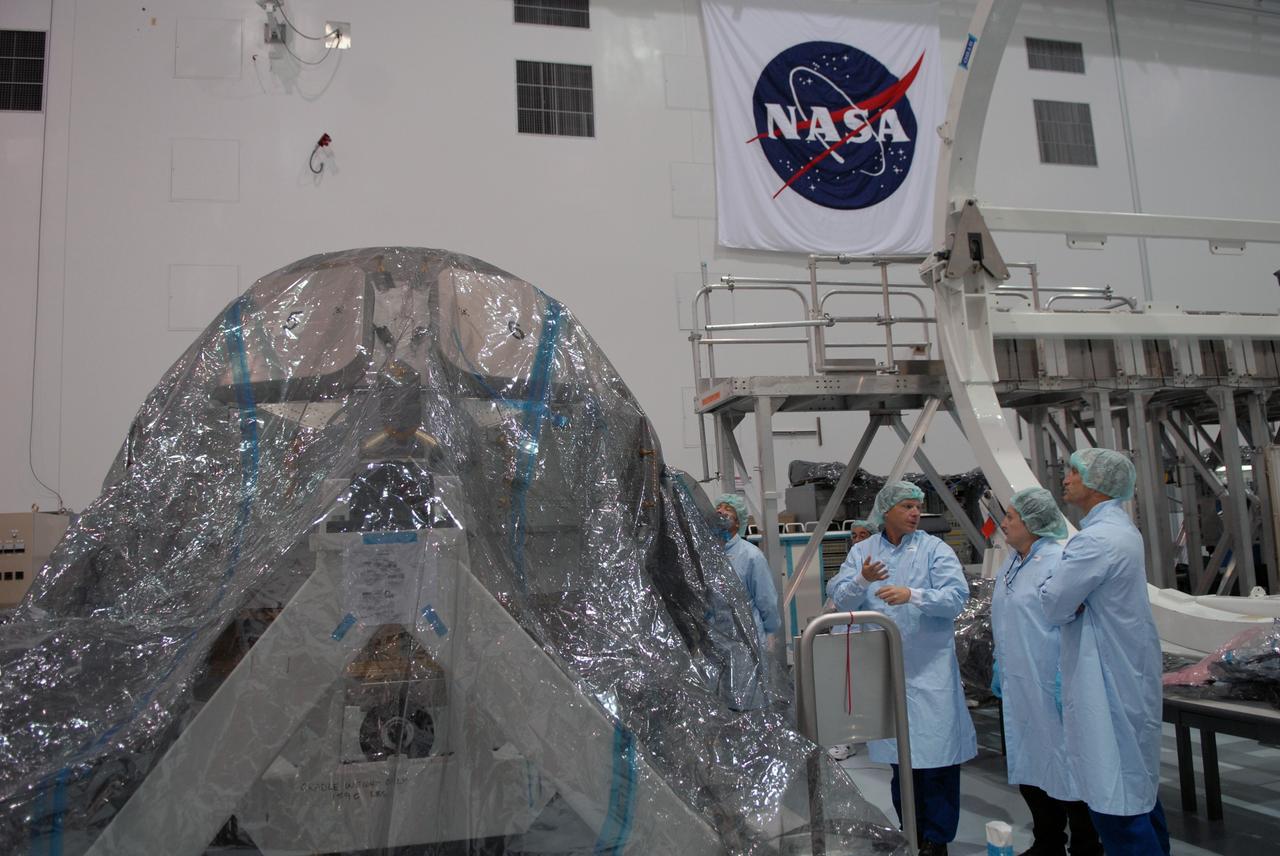
CAPE CANAVERAL, Fla. – In the Space Station Processing Facility at NASA's Kennedy Space Center, astronaut Terry Virts, third from left, discusses the intricacies of the International Space Station's Cupola module with vehicle integration test engineer Louise Kleba of Flight Crew Operations and astronaut Charles Hobaugh, right. The module was delivered by the European Space Agency in 2004 to Kennedy from Alenia Spazio in Turin, Italy. Cupola will provide unprecedented views of activities outside the station and spectacular views of the Earth. Crew members working inside the module will have a 360-degree panoramic view. Cupola has the capability for command and control workstations to be installed to assist in space station remote manipulator system and extra vehicular activities. Cupola is the final element of the space station core and is scheduled for launch on space shuttle Endeavour's STS-130 mission, targeted for Dec. 10, 2009. Photo credit: NASA/Cory Huston
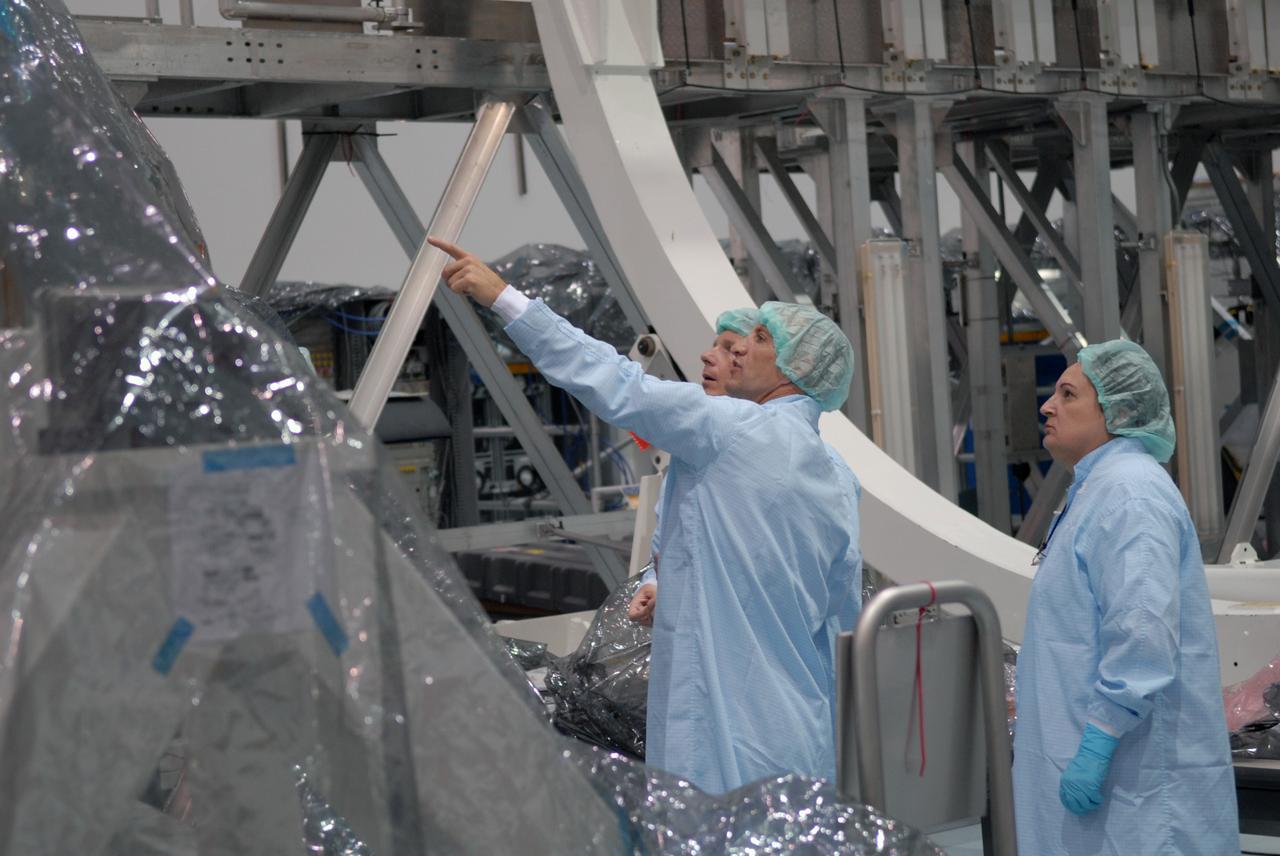
CAPE CANAVERAL, Fla. – In the Space Station Processing Facility at NASA's Kennedy Space Center, astronauts Terry Virts, left, and Charles Hobaugh, pointing, familiarize themselves with the International Space Station's Cupola module. Vehicle integration test engineer Louise Kleba of Flight Crew Operations looks on, at right. The module was delivered by the European Space Agency in 2004 to Kennedy from Alenia Spazio in Turin, Italy. Cupola will provide unprecedented views of activities outside the station and spectacular views of the Earth. Crew members working inside the module will have a 360-degree panoramic view. Cupola has the capability for command and control workstations to be installed to assist in space station remote manipulator system and extra vehicular activities. Cupola is the final element of the space station core and is scheduled for launch on space shuttle Endeavour's STS-130 mission, targeted for Dec. 10, 2009. Photo credit: NASA/Cory Huston
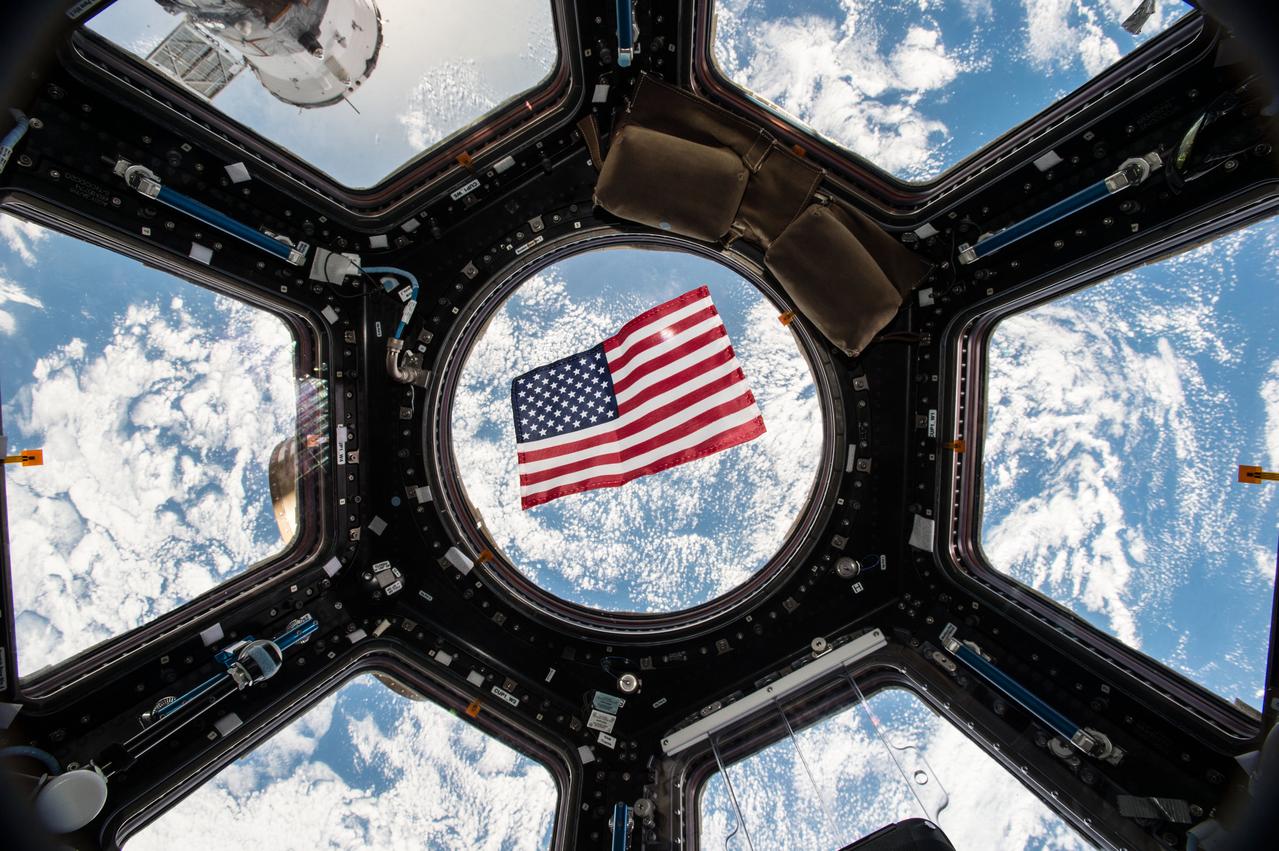
A United States flag floats in front of Window 7 in the Cupola module. Image was released by astronaut on social media.
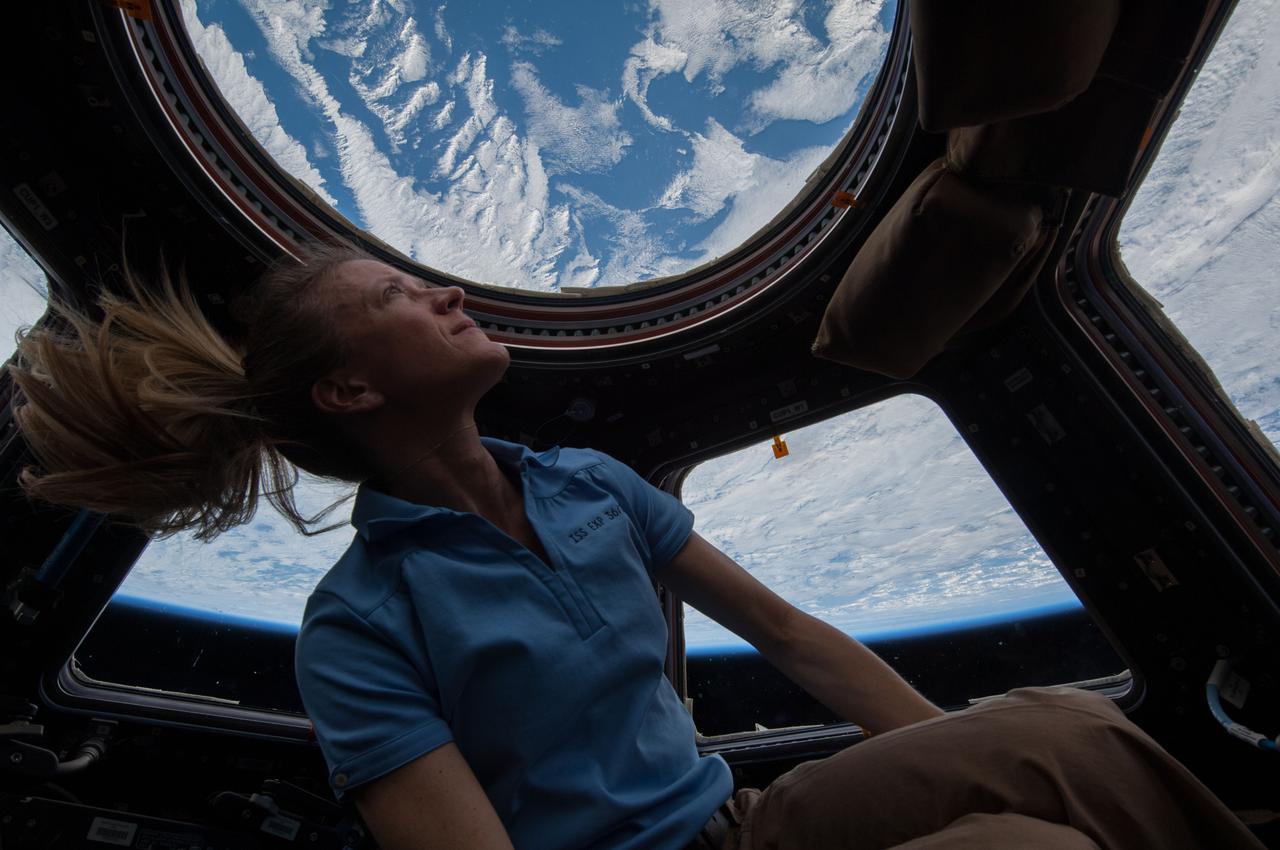
Astronaut Karen Nyberg, Expedition 37 flight engineer, is photographed in front of the windows in the Cupola module .
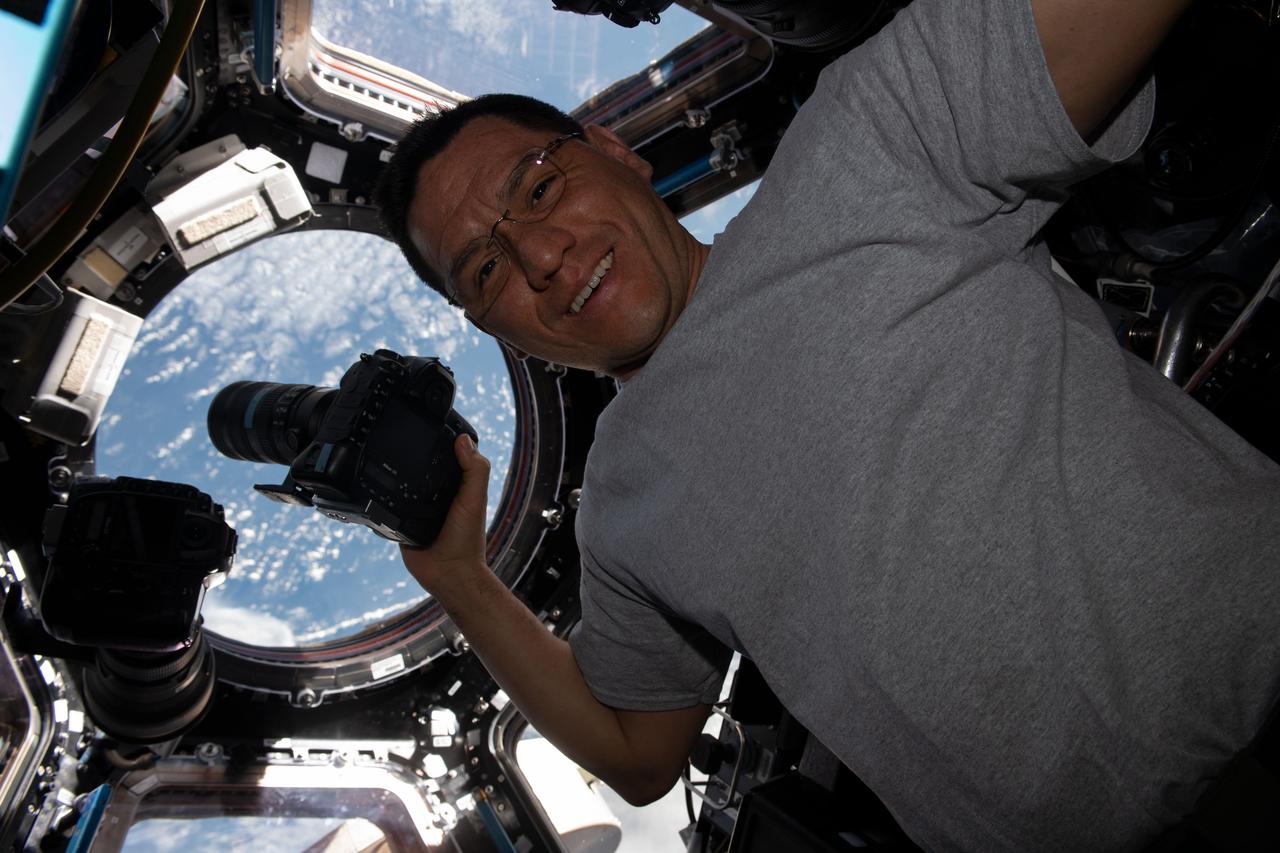
View of Frank Rubo taking photos with camera in the Cupola Module during Expedition 69.
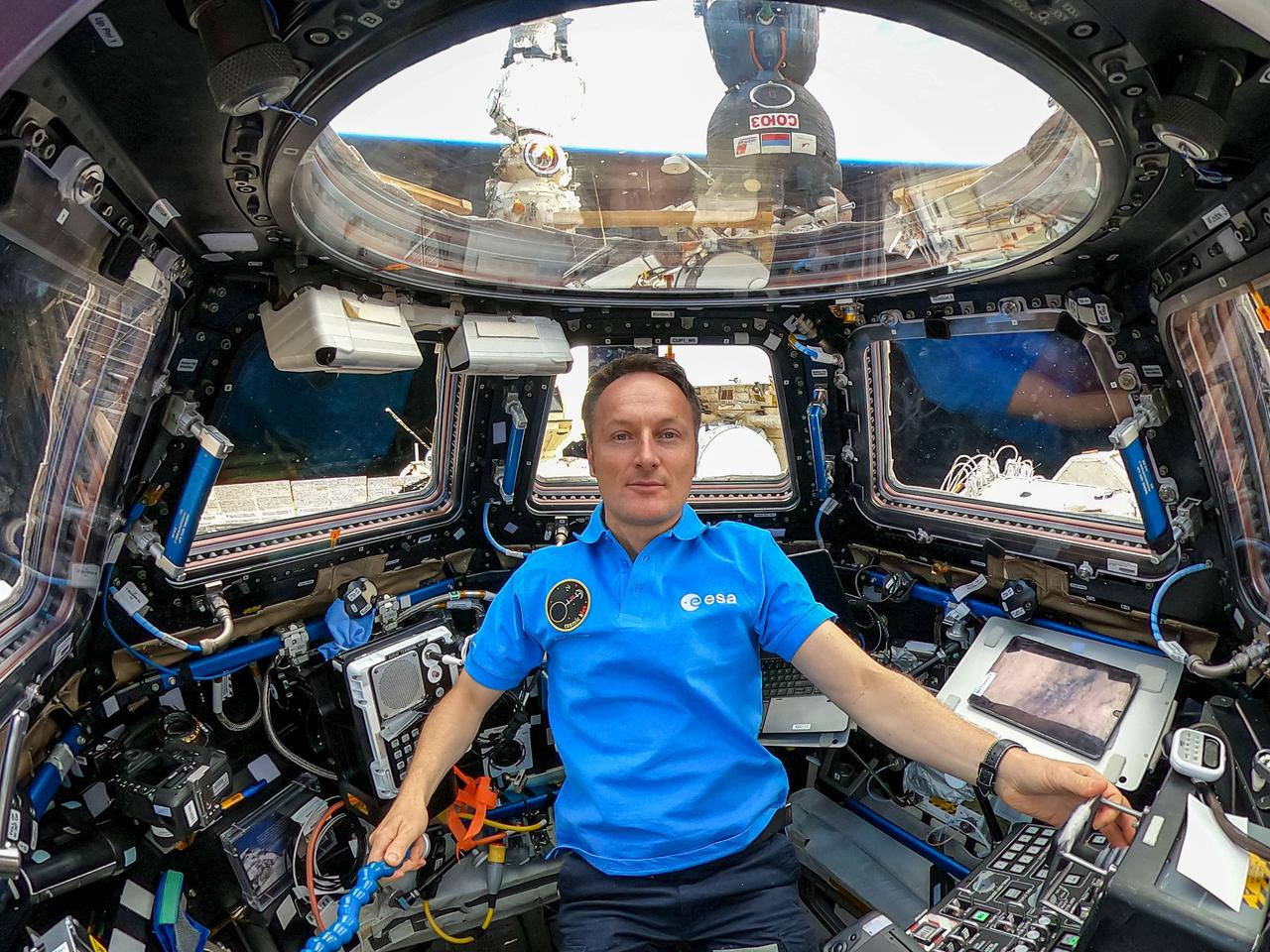
iss066e085145 (Nov. 30, 2021) --- ESA (European Space Agency) astronaut and Expedition 66 Flight Engineer Matthias Maurer is pictured inside the seven-windowed cupola, the International Space Station's "window to the world." Just outside the cupola and behind Maurer is a portion of the Soyuz MS-19 crew ship docked to the Rassvet module and the Prichal docking module attached to the Nauka multipurpose laboratory service module.
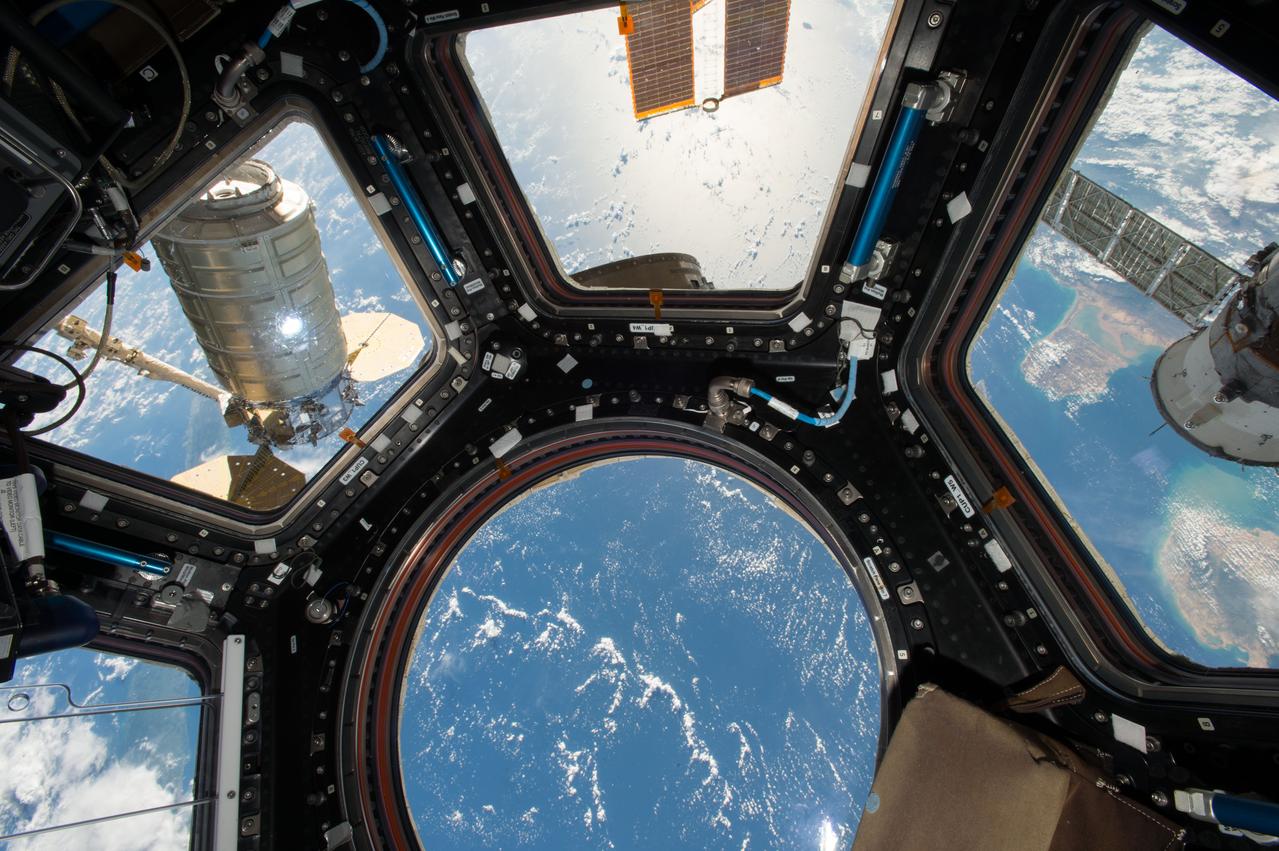
ISS049e042840 (10/23/2016) --- Orbital ATK’s Cygnus cargo craft (left) is seen from the Cupola module windows aboard the International Space Station. The main robotic work station for controlling the Canadarm2 robotic arm is located inside the Cupola and was used to capture Cygnus upon its arrival.
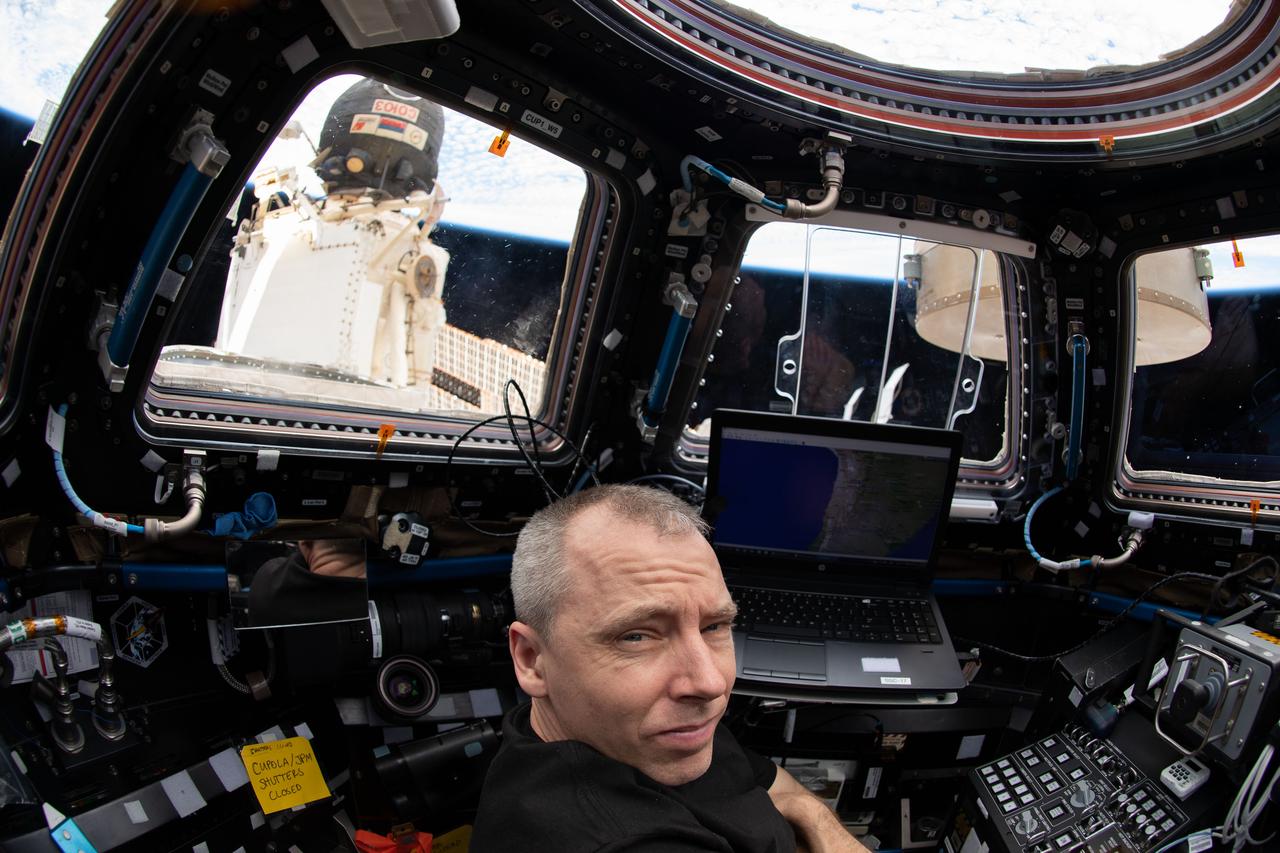
iss056e161464 (Sept. 6, 2018) --- Expedition 56 Commander Drew Feustel of NASA works inside the seven-windowed Cupola as the International Space Station was about to fly over the coast of Chile in South America. Just outside the Cupola and docked to the Rassvet module is the Soyuz MS-09 spacecraft.
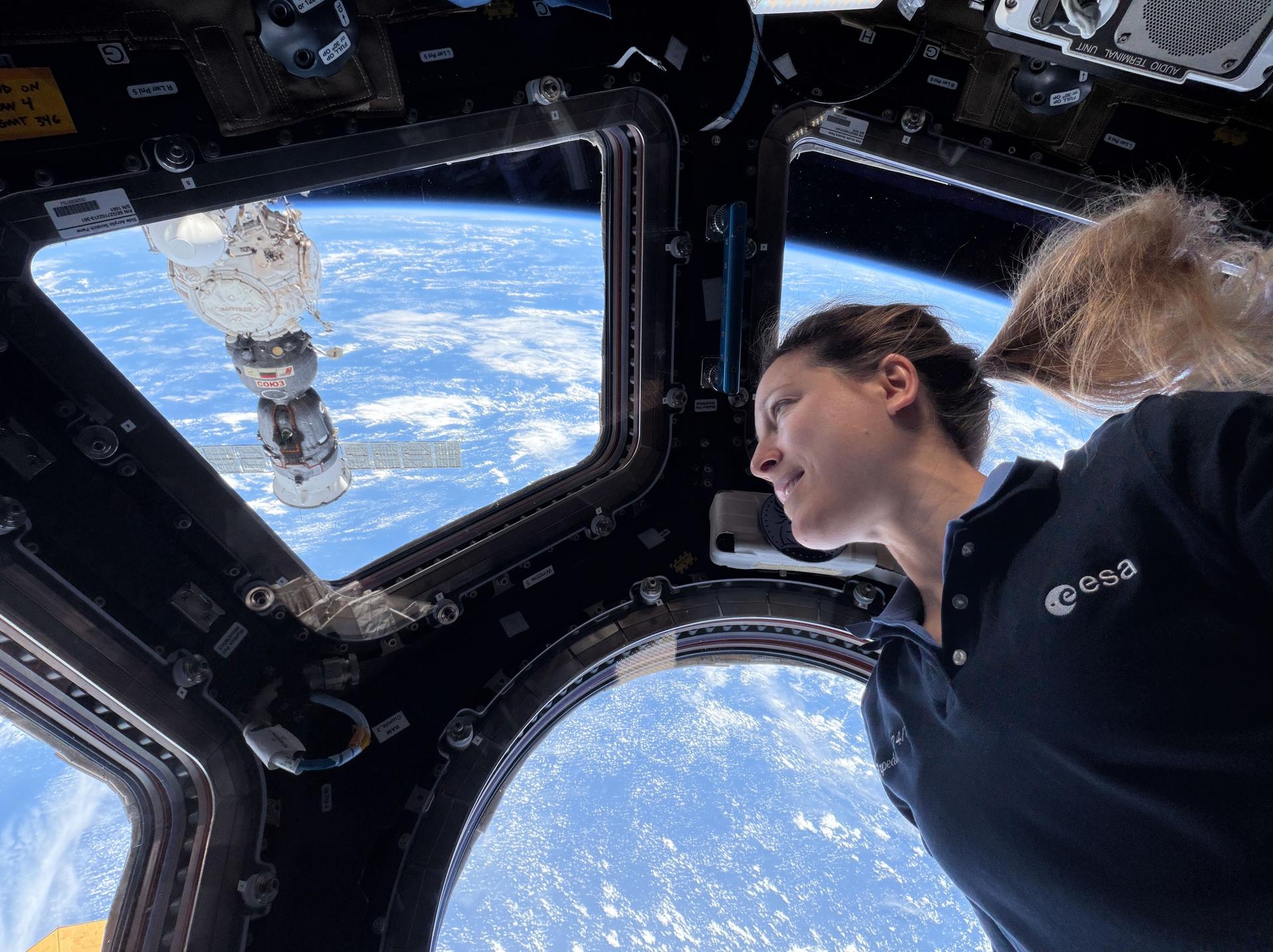
iss075e0121412 (Sept. 21, 2026) --- ESA (European Space Agency) astronaut and Expedition 75 flight engineer Sophie Adenot looks at the Earth below from the cupola, the International Space Station's "window to the world." Just outisde the cupola is the Soyuz MS-29 spacecraft from Roscosmos docked to the Prichal module. Credit: ESA
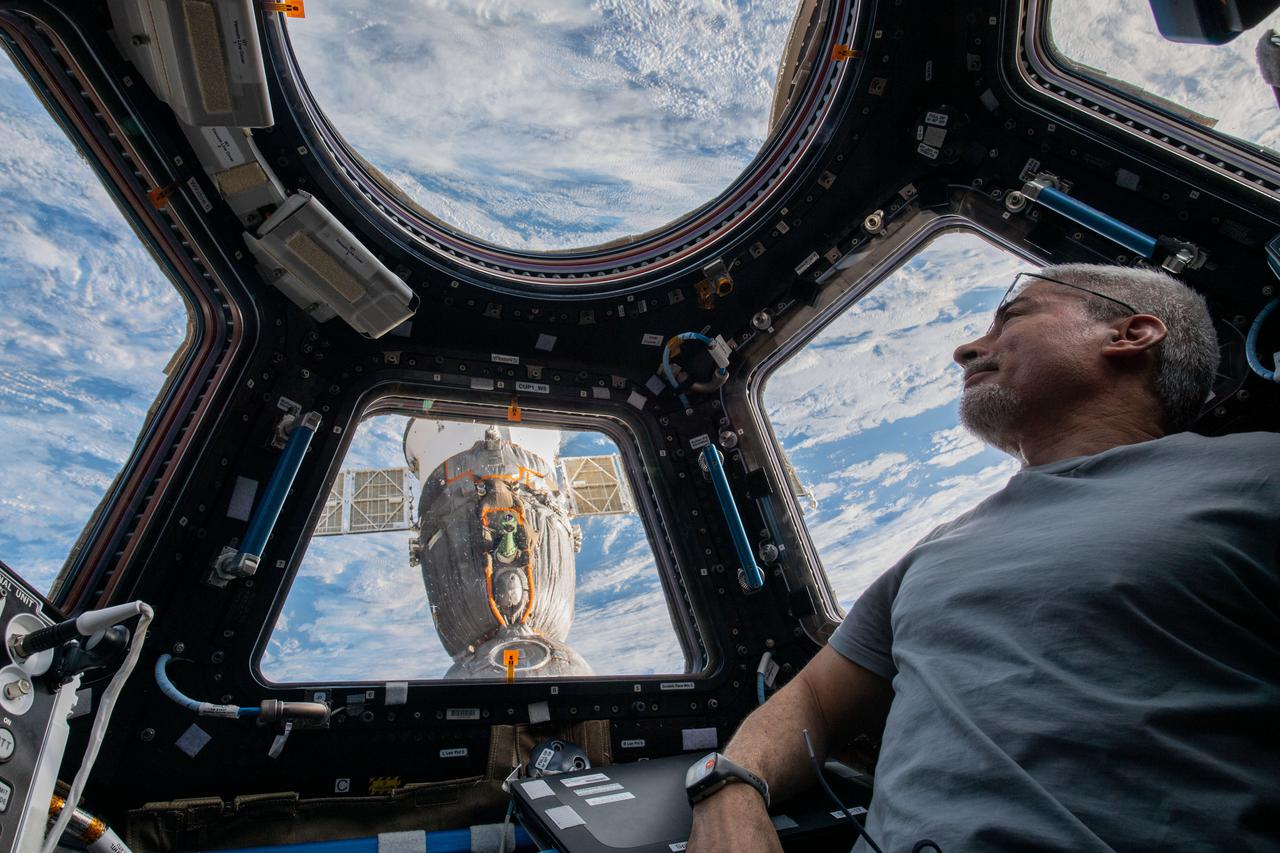
iss066e136051 (Feb. 4, 2022) --- NASA astronaut and Expedition 66 Flight Engineer Mark Vande Hei peers at the Earth below from inside the seven-windowed cupola, the International Space Station's window to the world. Just outside the cupola is the Soyuz MS-19 crew ship docked to the Rassvet module.

iss055e006790 (April 1, 2018) --- The "Horn of Africa" is seen through one of the seven windows that make up the Cupola, a dome-shaped module on the International Space Station. The space station crew will be inside the Cupola Wednesday morning operating a robotics workstation to capture the upcoming SpaceX Dragon.
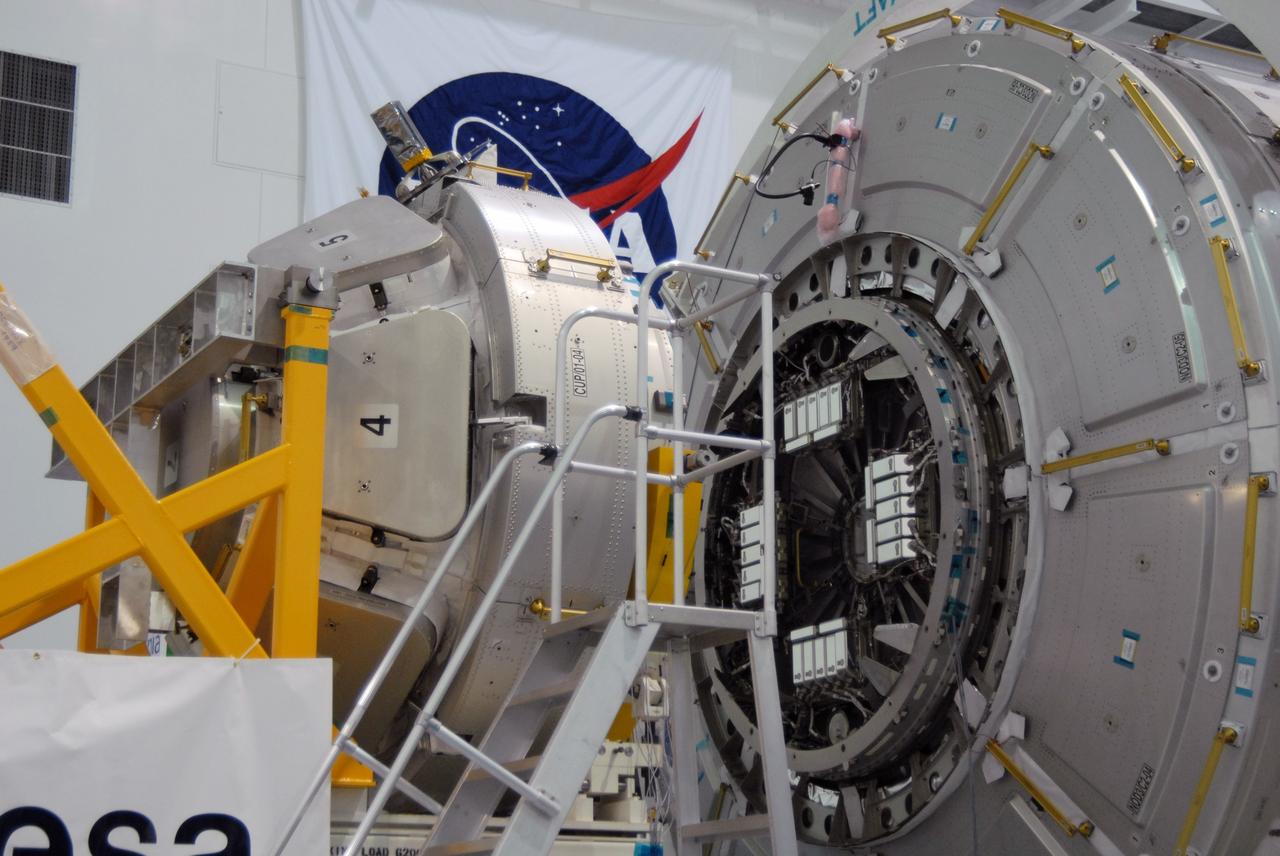
CAPE CANAVERAL, Fla. – In the Space Station Processing Facility at NASA's Kennedy Space Center in Florida, NASA's Cupola module, at left, is being aligned with the Tranquility module, at right, for assembly. Cupola and Tranquility are the payload for space shuttle Endeavour's STS-130 mission to the International Space Station. The module was built for the European Space Agency by Alenia Spazio in Turin, Italy. When attached to the Tranquility Node 3 module, Cupola will resemble a circular bay window that will provide a vastly improved view of the station's exterior. Just under 10 feet in diameter, the module will accommodate two crew members and portable workstations that can control station and robotic activities. The multi-directional view will allow the crew to monitor spacewalks and docking operations, as well as provide a spectacular view of Earth and other celestial objects. Endeavour is targeted to launch Feb. 4, 2010. Photo credit: NASA/Jim Grossmann
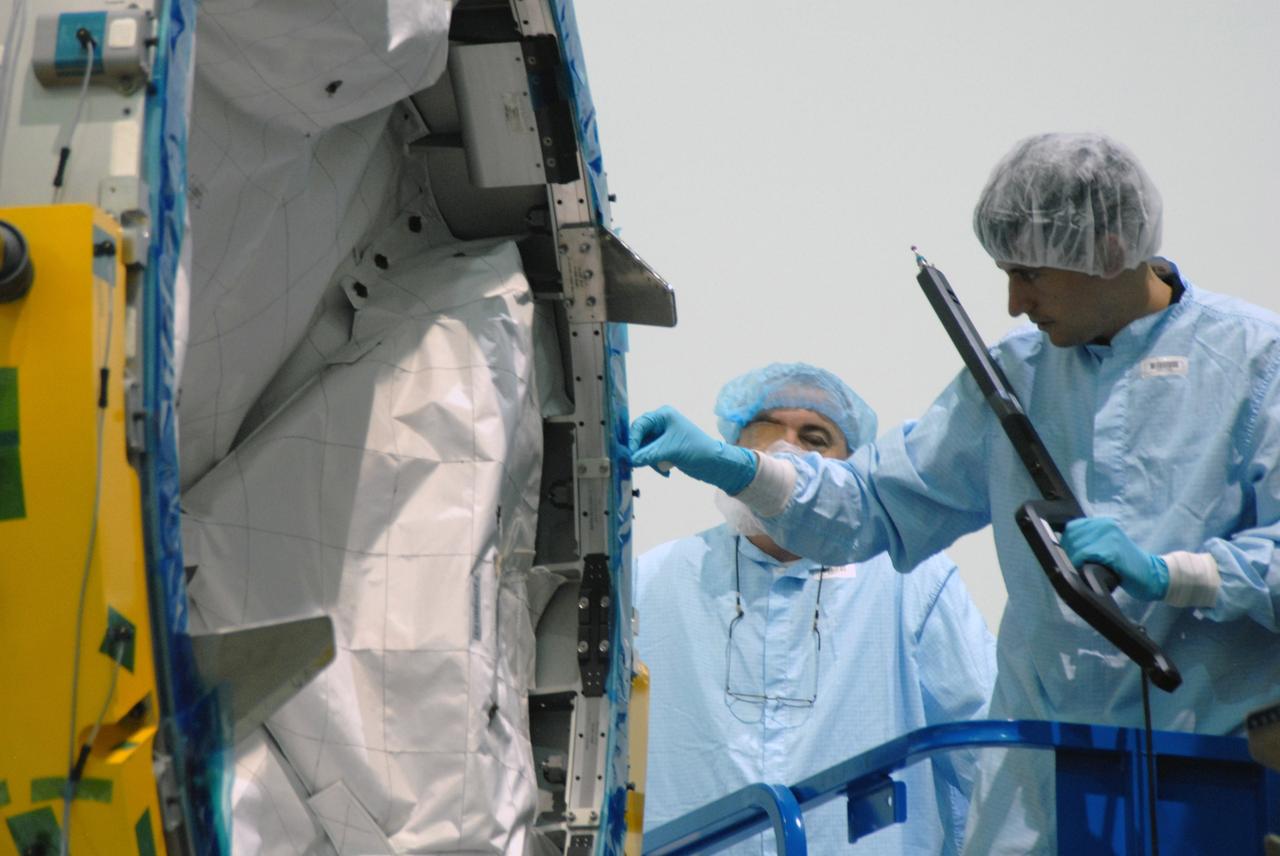
CAPE CANAVERAL, Fla. – In the Space Station Processing Facility at NASA's Kennedy Space Center in Florida, workers take measurements of the Cupola module being aligned with the Tranquility module for assembly. Cupola and Tranquility are the payload for space shuttle Endeavour's STS-130 mission to the International Space Station. The module was built for the European Space Agency by Alenia Spazio in Turin, Italy. When attached to the Tranquility Node 3 module, Cupola will resemble a circular bay window that will provide a vastly improved view of the station's exterior. Just under 10 feet in diameter, the module will accommodate two crew members and portable workstations that can control station and robotic activities. The multi-directional view will allow the crew to monitor spacewalks and docking operations, as well as provide a spectacular view of Earth and other celestial objects. Endeavour is targeted to launch Feb. 4, 2010. Photo credit: NASA/Jim Grossmann