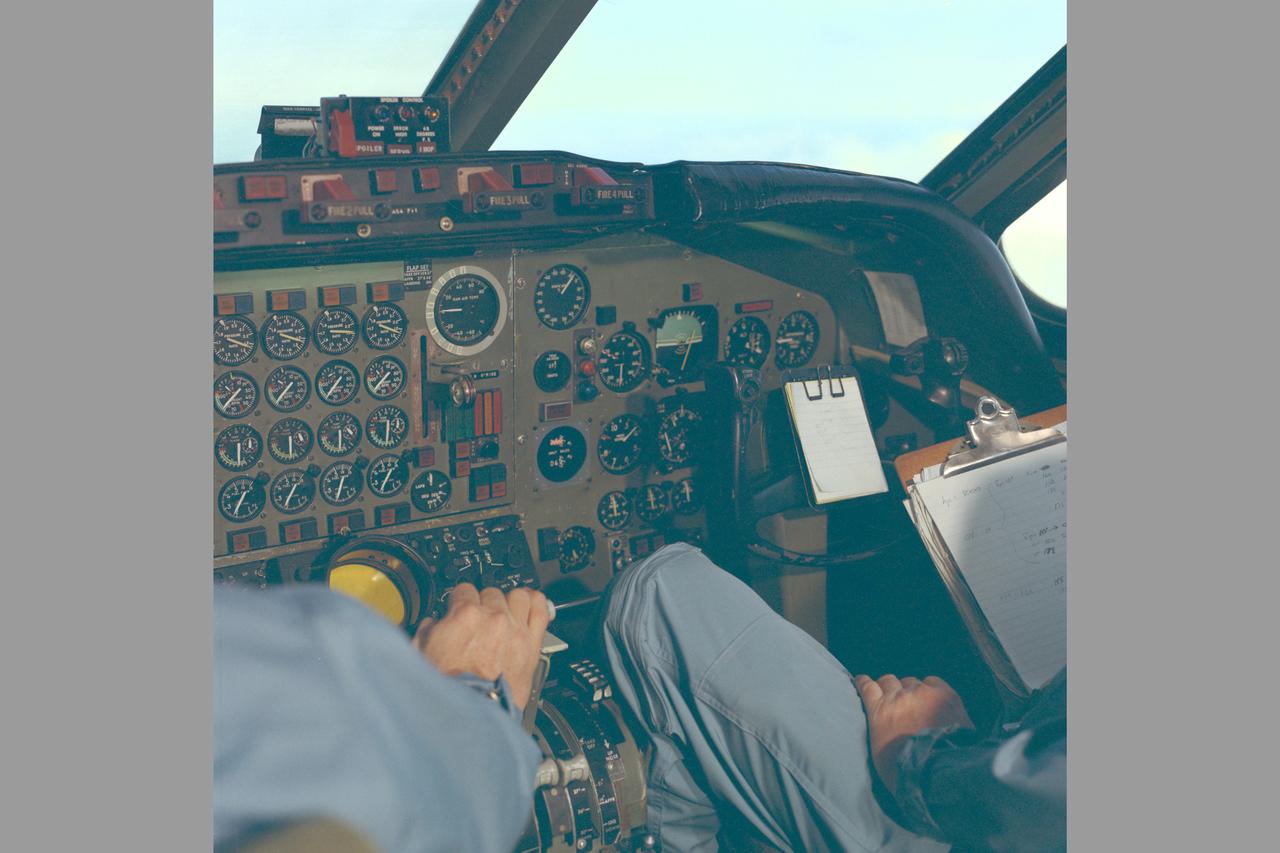
Pilots in cockpit of CV-990
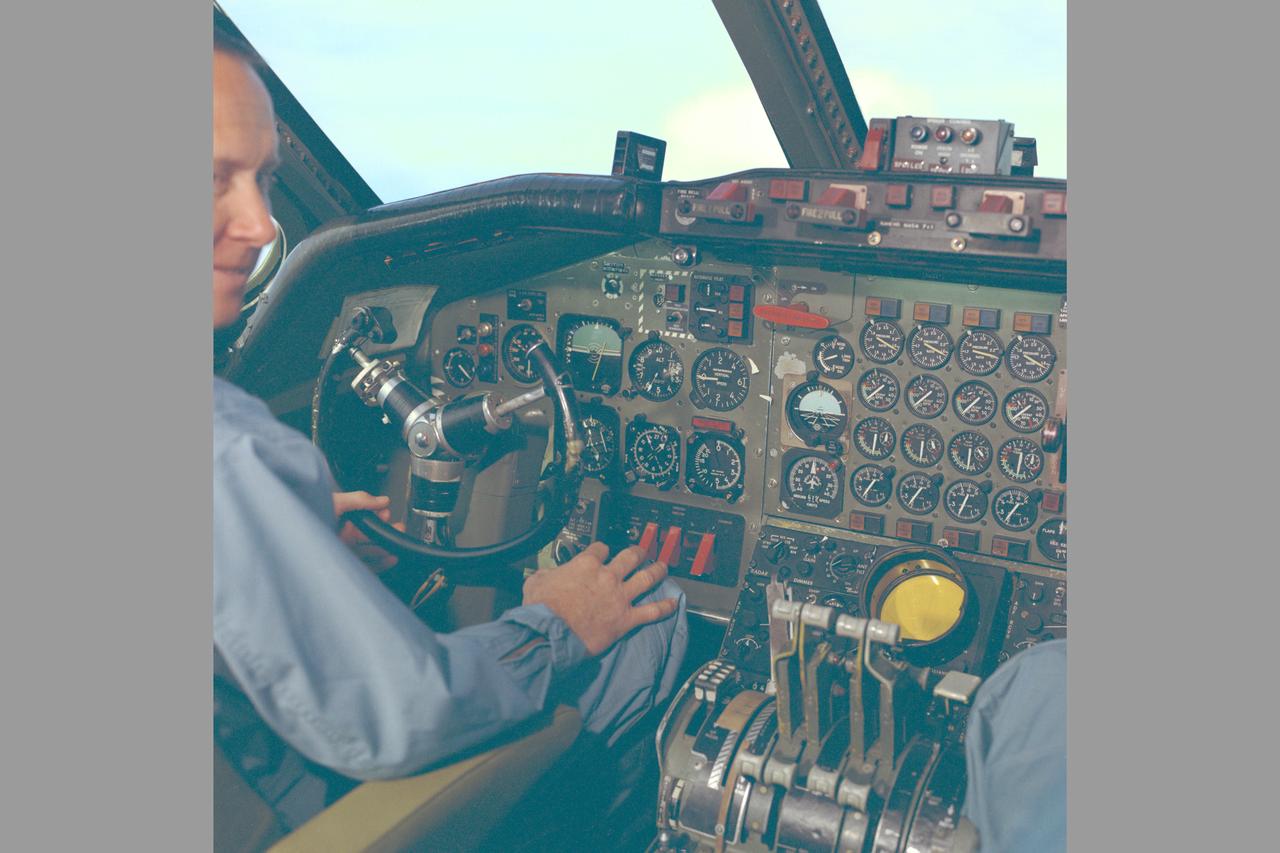
Pilot in cockpit of CV-990
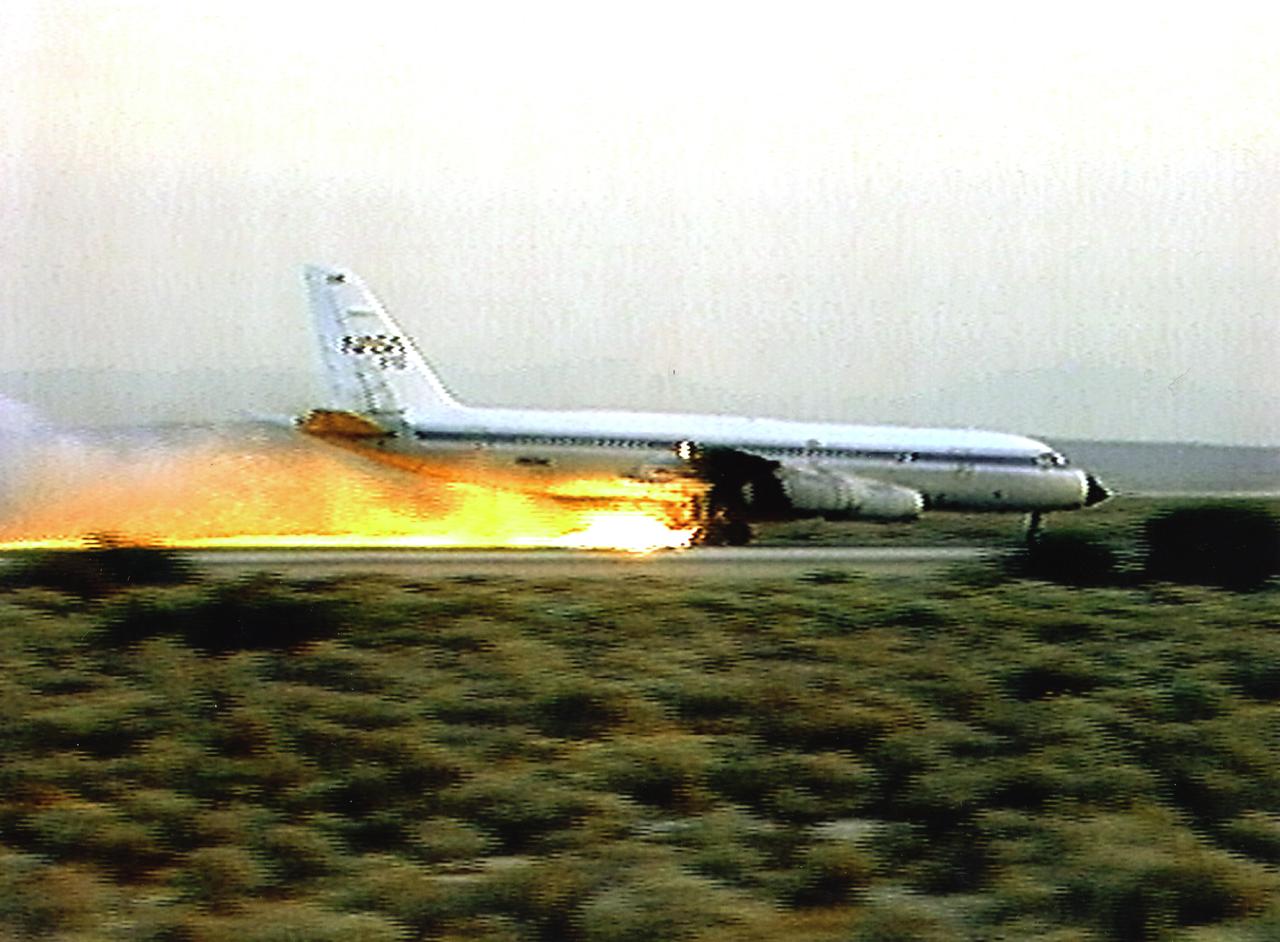
A NASA CV-990, modified as a Landing Systems Research Aircraft (LSRA), lands on the Edwards AFB main runway in test of the space shuttle landing gear system. In this case, the shuttle tire failed, bursting into flame during the rollout. The space shuttle landing gear test unit, operated by a high-pressure hydraulic system, allowed engineers to assess and document the performance of space shuttle main and nose landing gear systems, tires and wheel assemblies, plus braking and nose wheel steering performance. The series of 155 test missions for the space shuttle program provided extensive data about the life and endurance of the shuttle tire systems and helped raise the shuttle crosswind landing limits at Kennedy. The CV-990 used as the LSRA was built in 1962 by the Convair Division of General Dynamics Corp., Ft. Worth, Texas, served as a research aircraft at Ames Research Center, Moffett Field, California, before it came to Dryden.
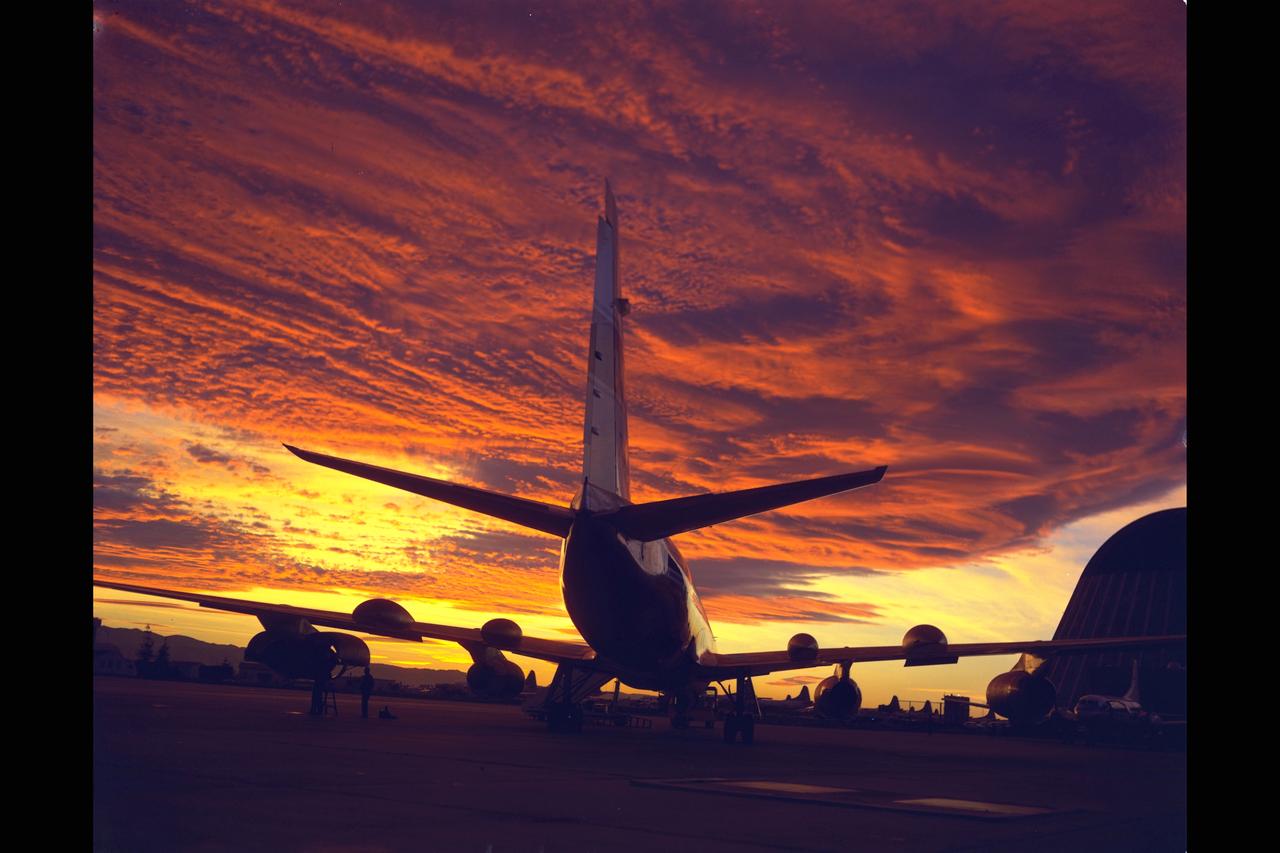
CV-990 (NASA 711) on Ames ramp at sunrise
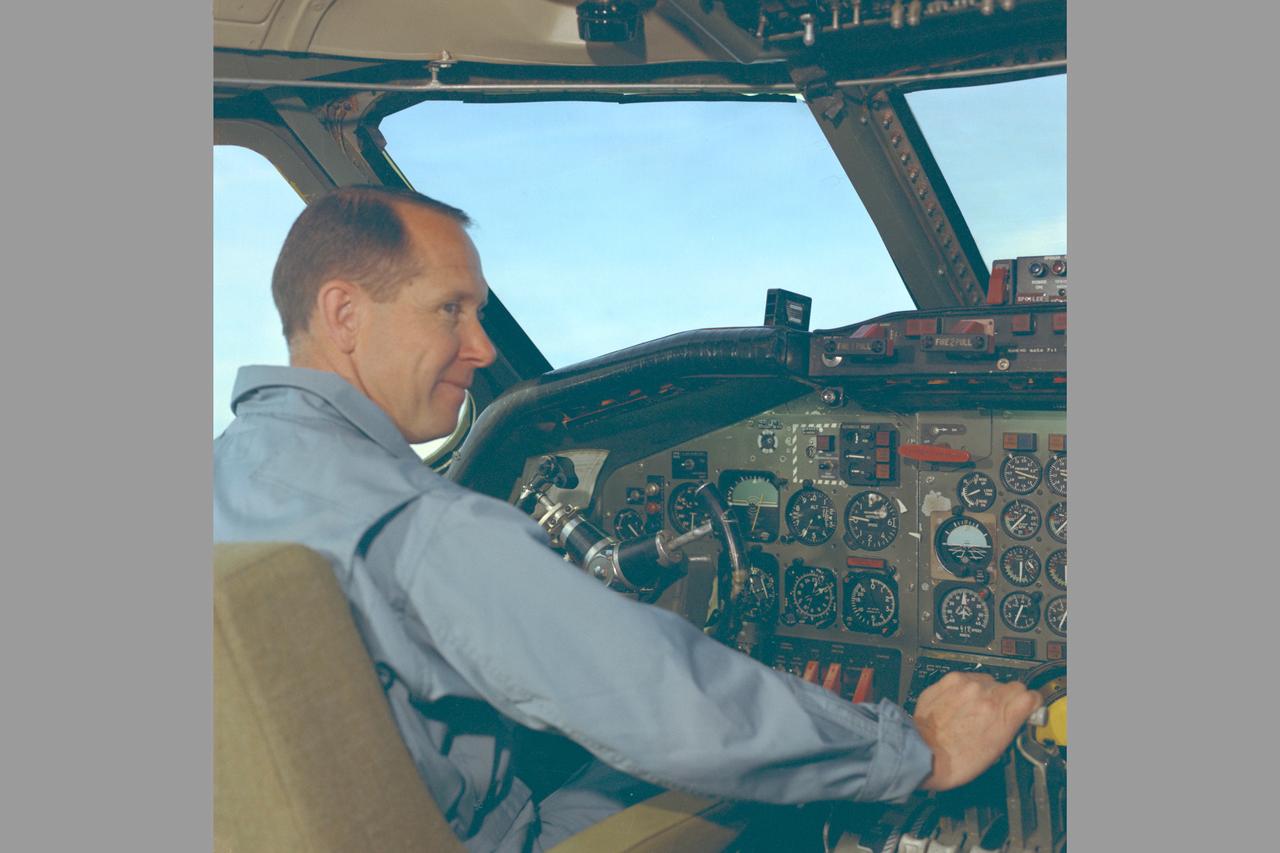
Pilot Fred Drinkwater in cockpit of CV-990
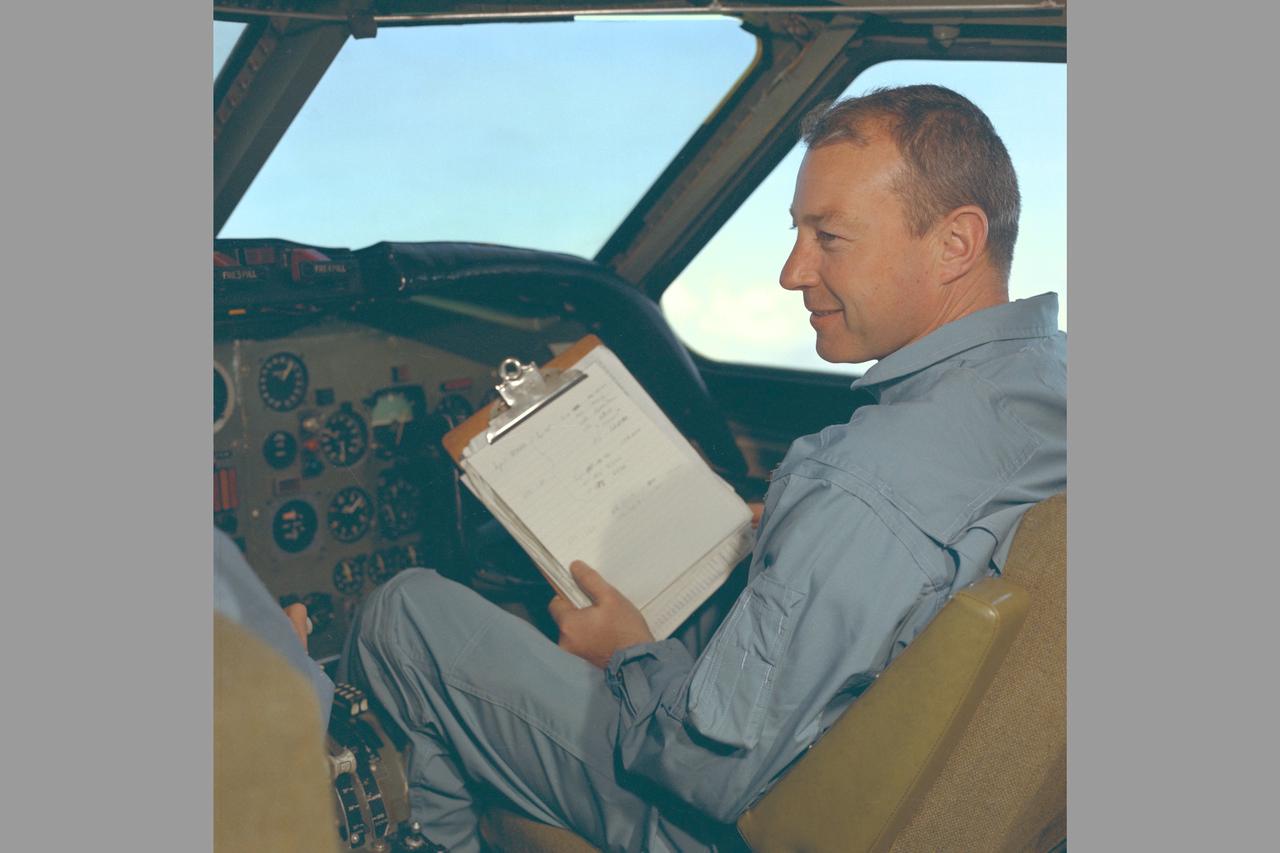
Pilot Bob Innis in cockpit of CV-990
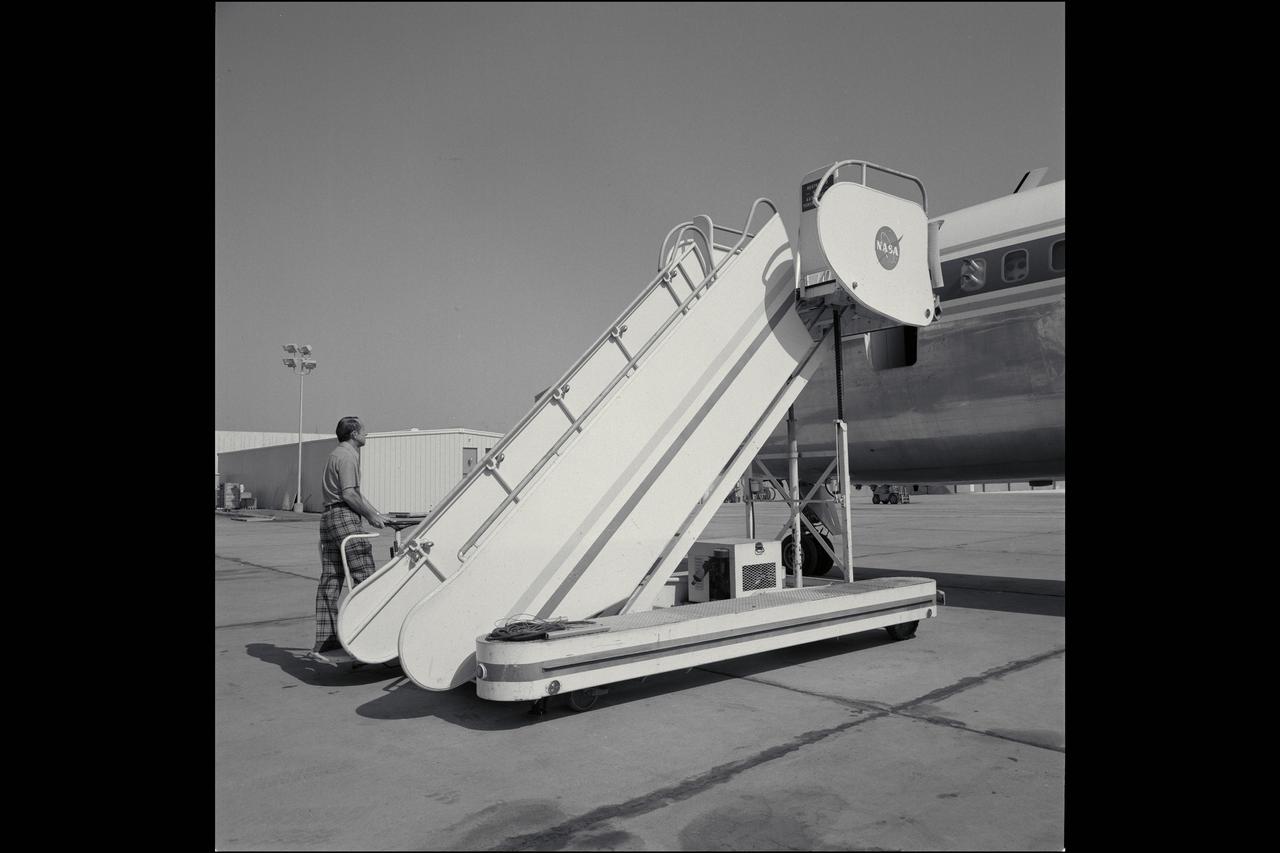
CV-990 Galileo II arrival at Ames after first expedition
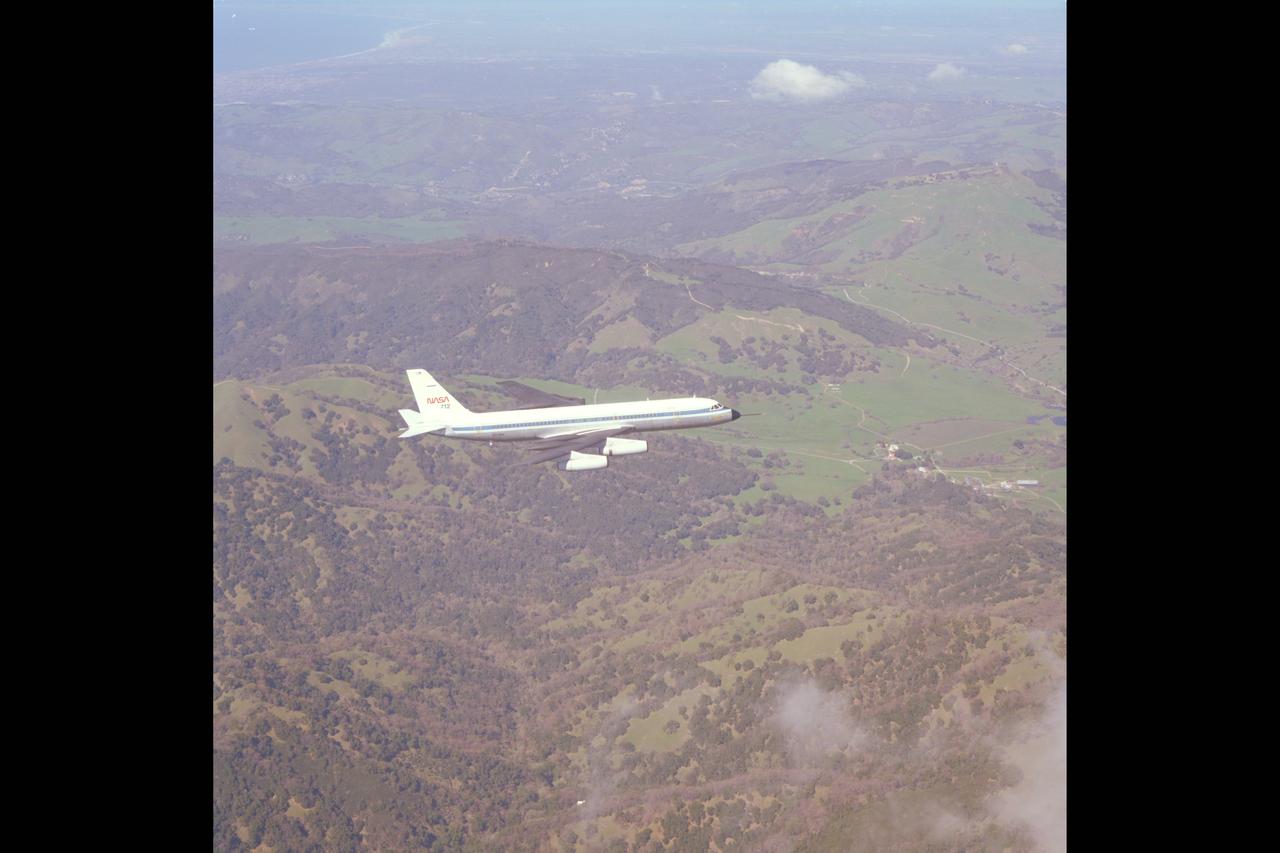
CV-990 (NASA-712) air to air view of flight up California coastline
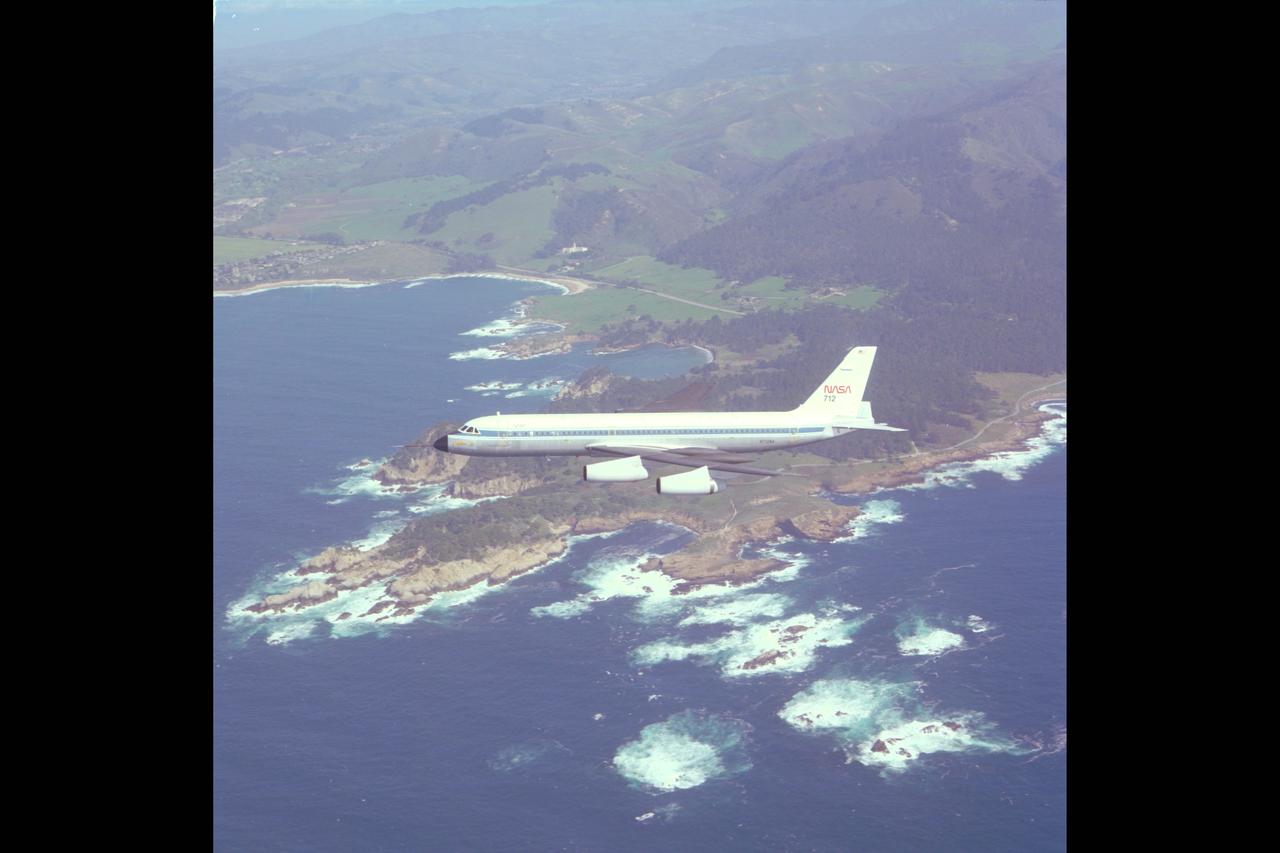
CV-990 (NASA-712) air to air view of flight up California coastline
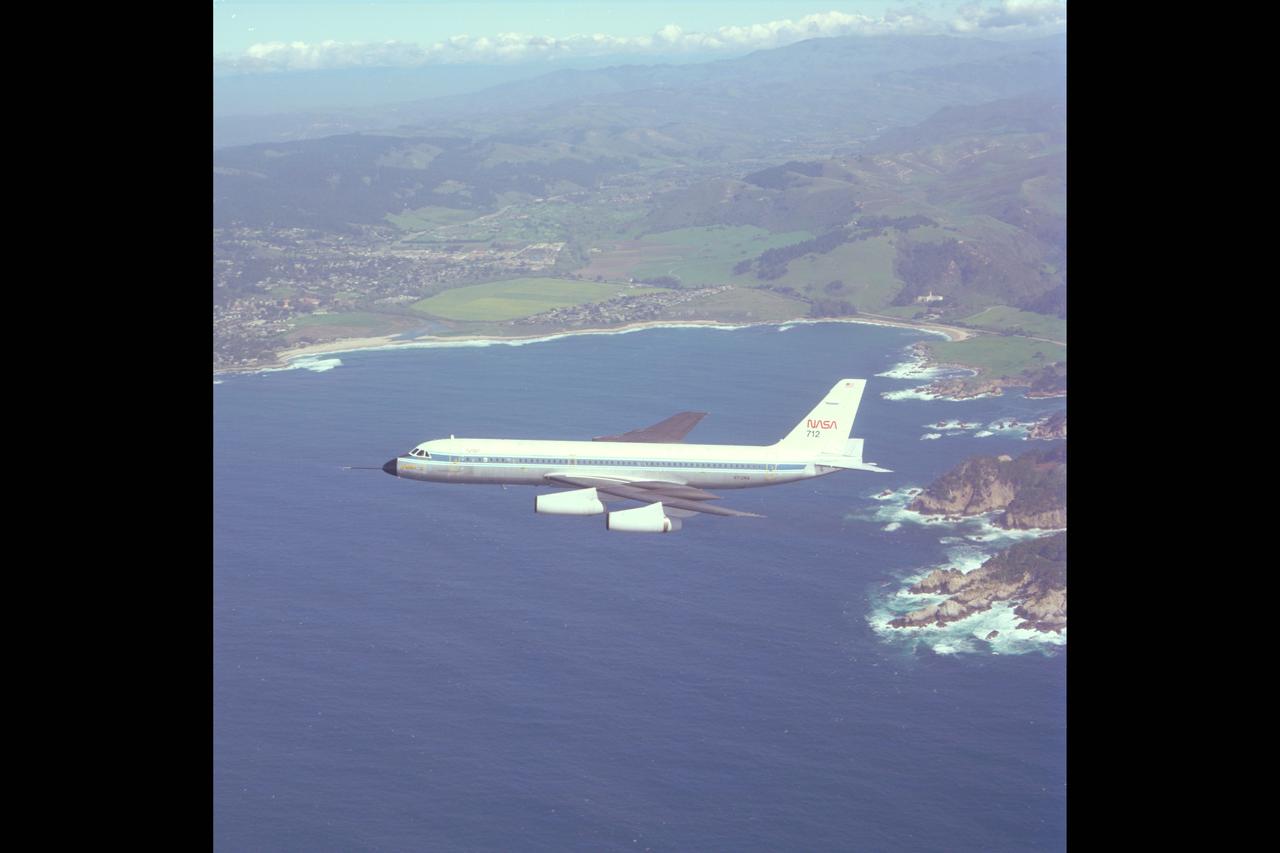
CV-990 (NASA-712) air to air view of flight up California coastline
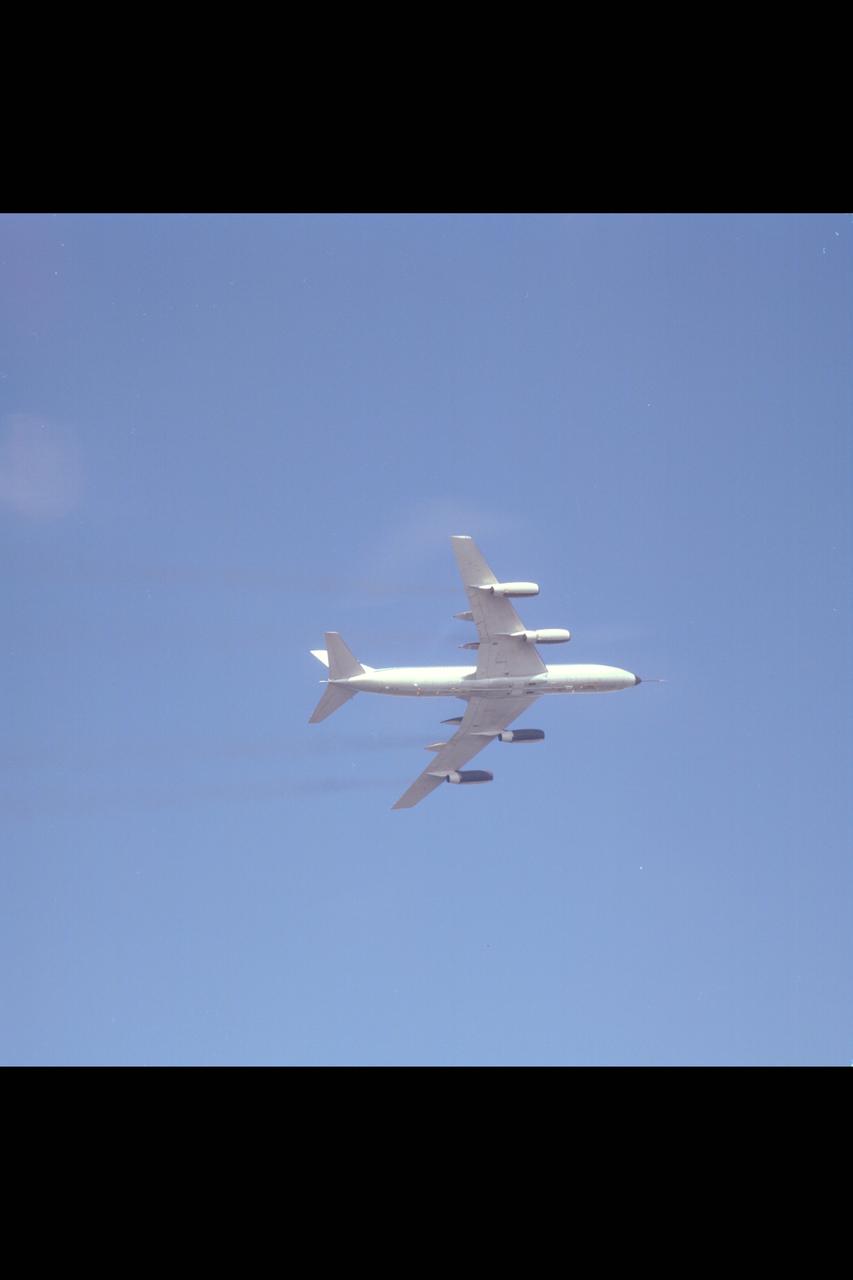
CV-990 (NASA-712) air to air view of underside of aircraft during banked turn during flight up California coastline
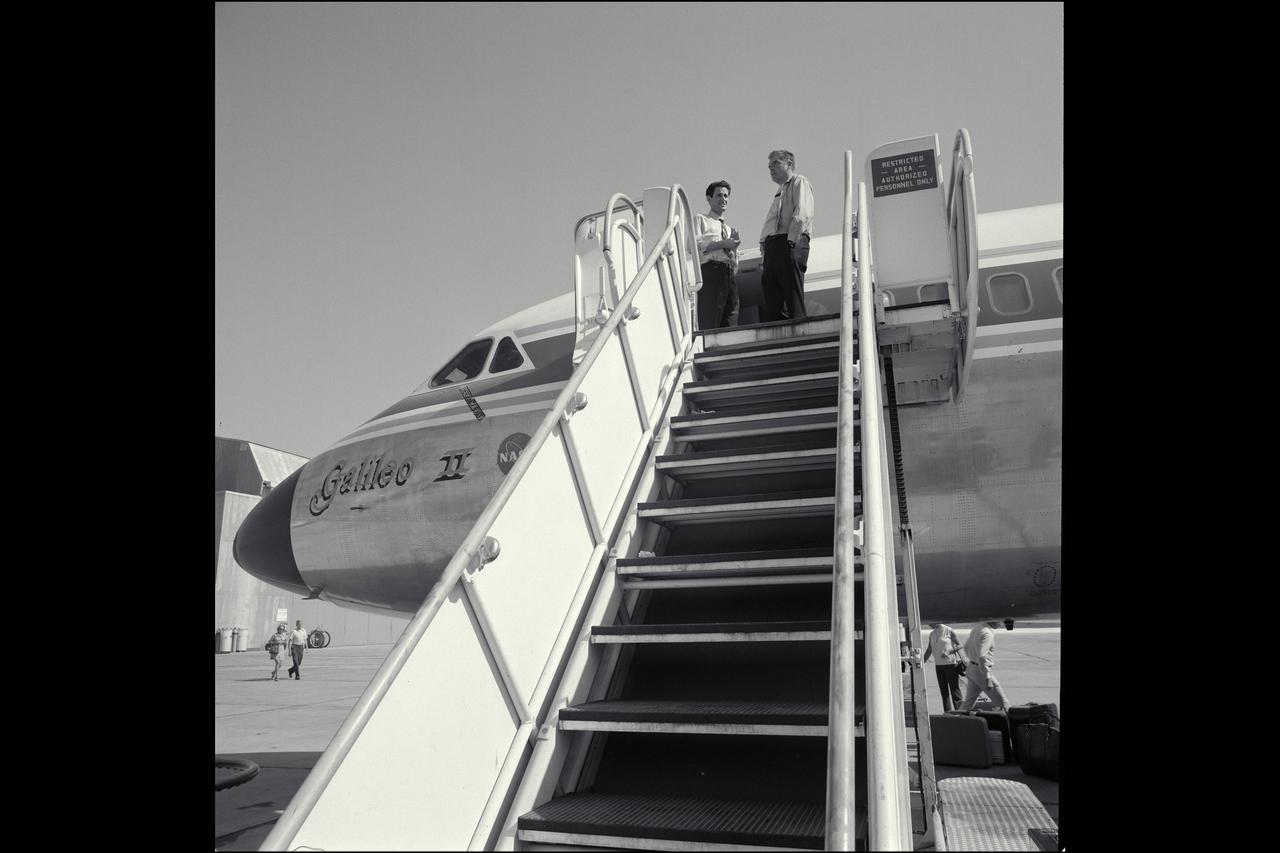
CV-990 Galileo II arrival at Ames after first expedition - decending ramp are from top Don Anderson, Mike Bader, Hans Mark
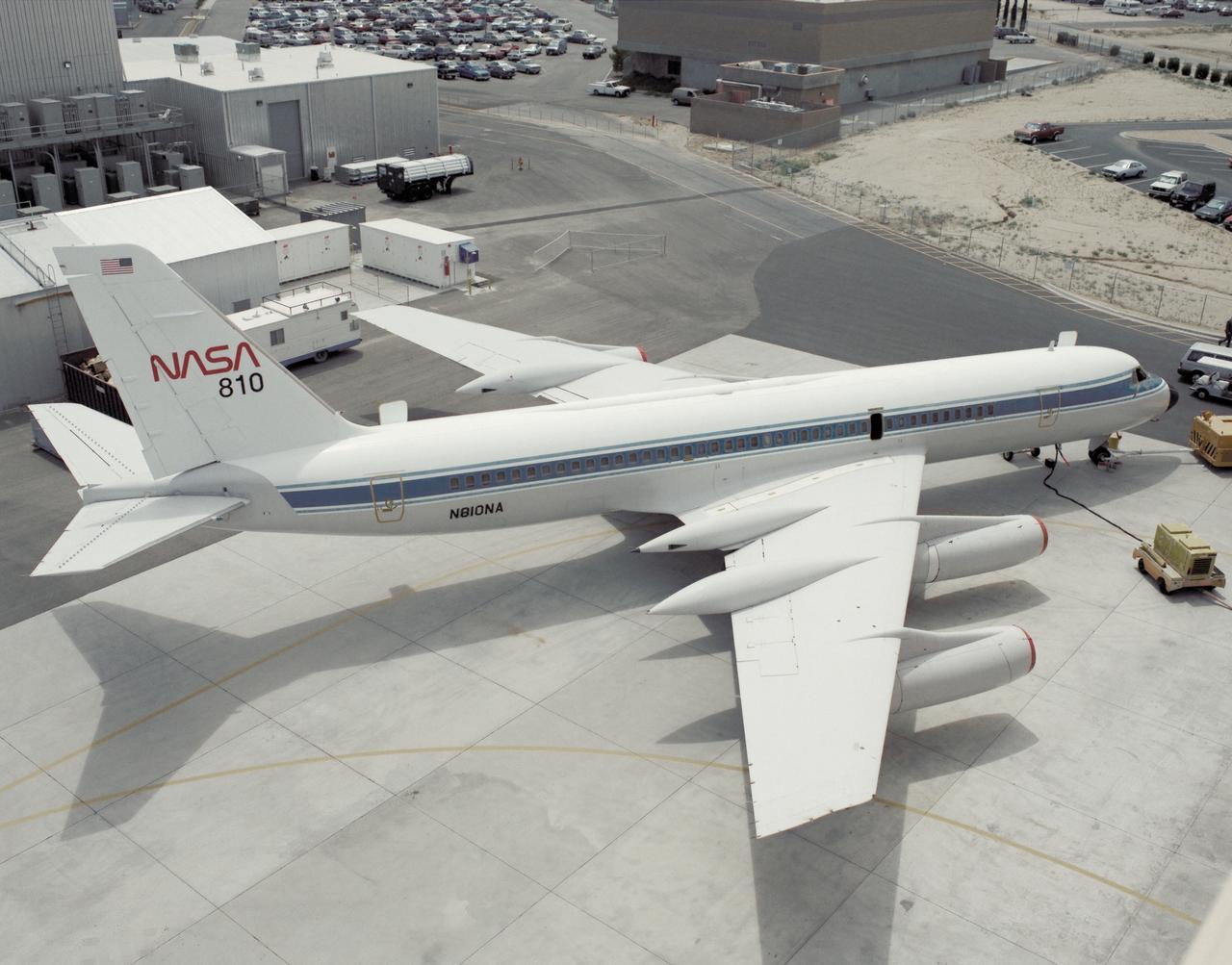
A NASA CV-990, modified as a Landing Systems Research Aircraft (LSRA), is serviced on the ramp at NASA's Dryden Flight Research Center, Edwards, California, before a test of the space shuttle landing gear system. The space shuttle landing gear test unit, operated by a high-pressure hydraulic system, allowed engineers to assess and document the performance of space shuttle main and nose landing gear systems, tires and wheel assemblies, plus braking and nose wheel steering performance. The series of 155 test missions for the space shuttle program provided extensive data about the life and endurance of the shuttle tire systems and helped raise the shuttle crosswind landing limits at Kennedy.
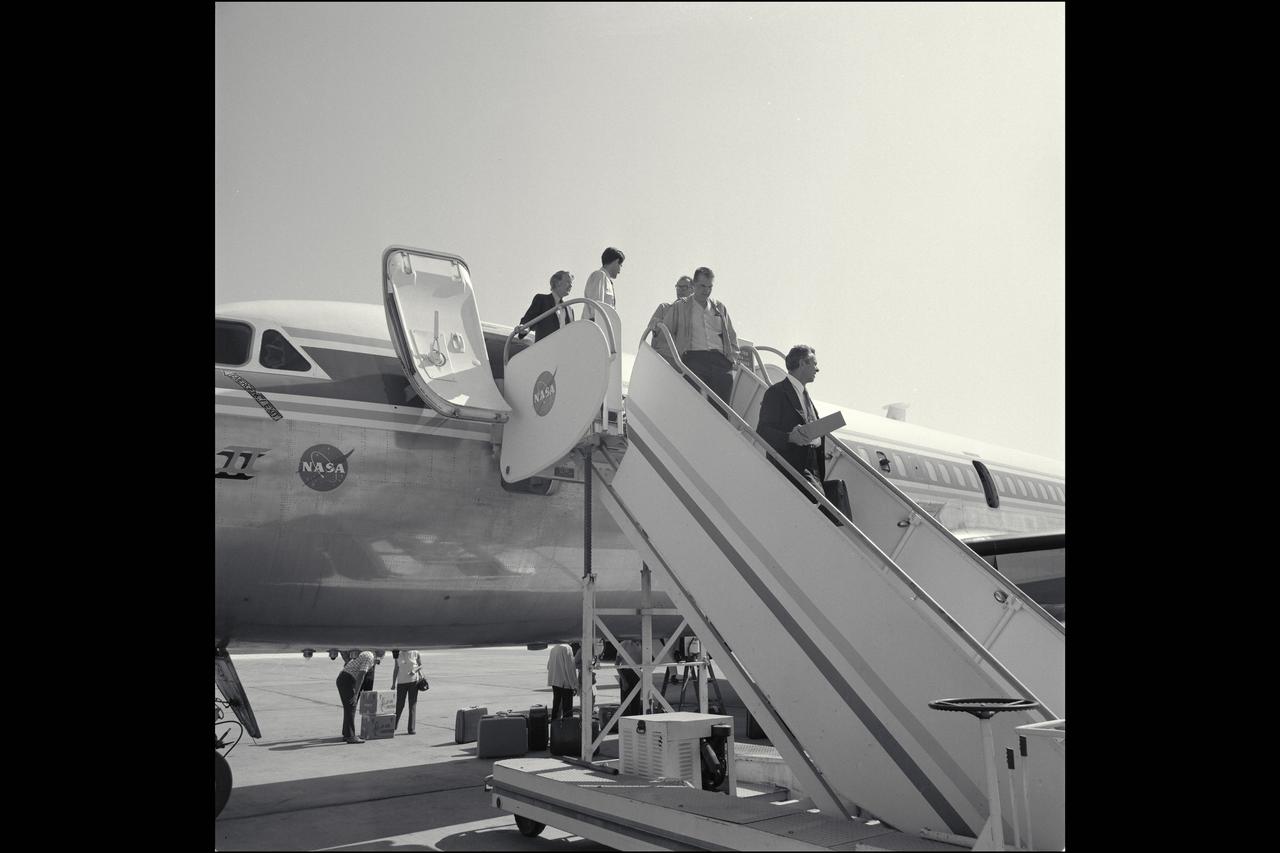
CV-990 Galileo II arrival at Ames after first expedition - decending ramp are from top Don Anderson, Mike Bader, Dean Chapman (?), Hans Mark and unknown
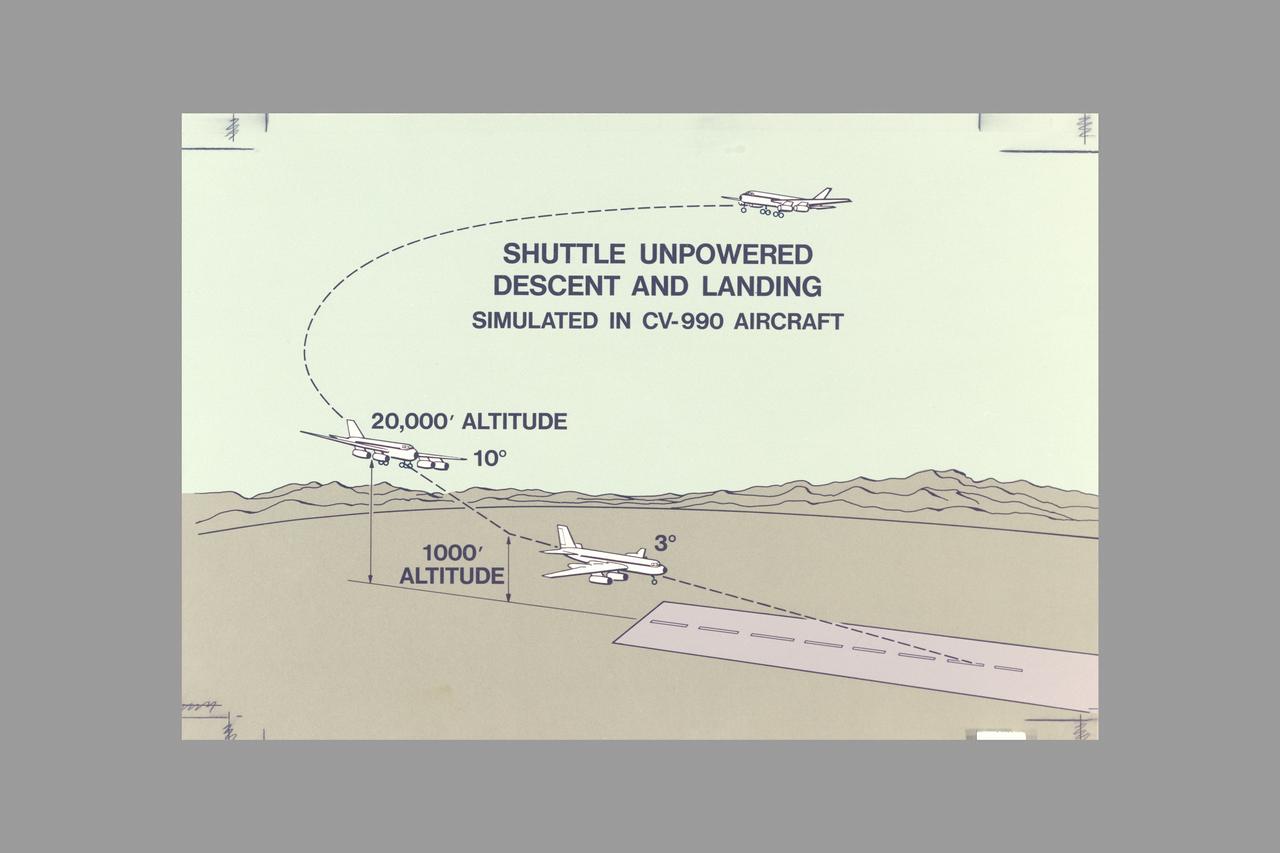
Guidance and Navaigation: CV-990 Shuttle simulation - descent at Edwards Airforce Base, Dryden Flight Research Center, CA (Shuttle un-powered descent and landing diagram)
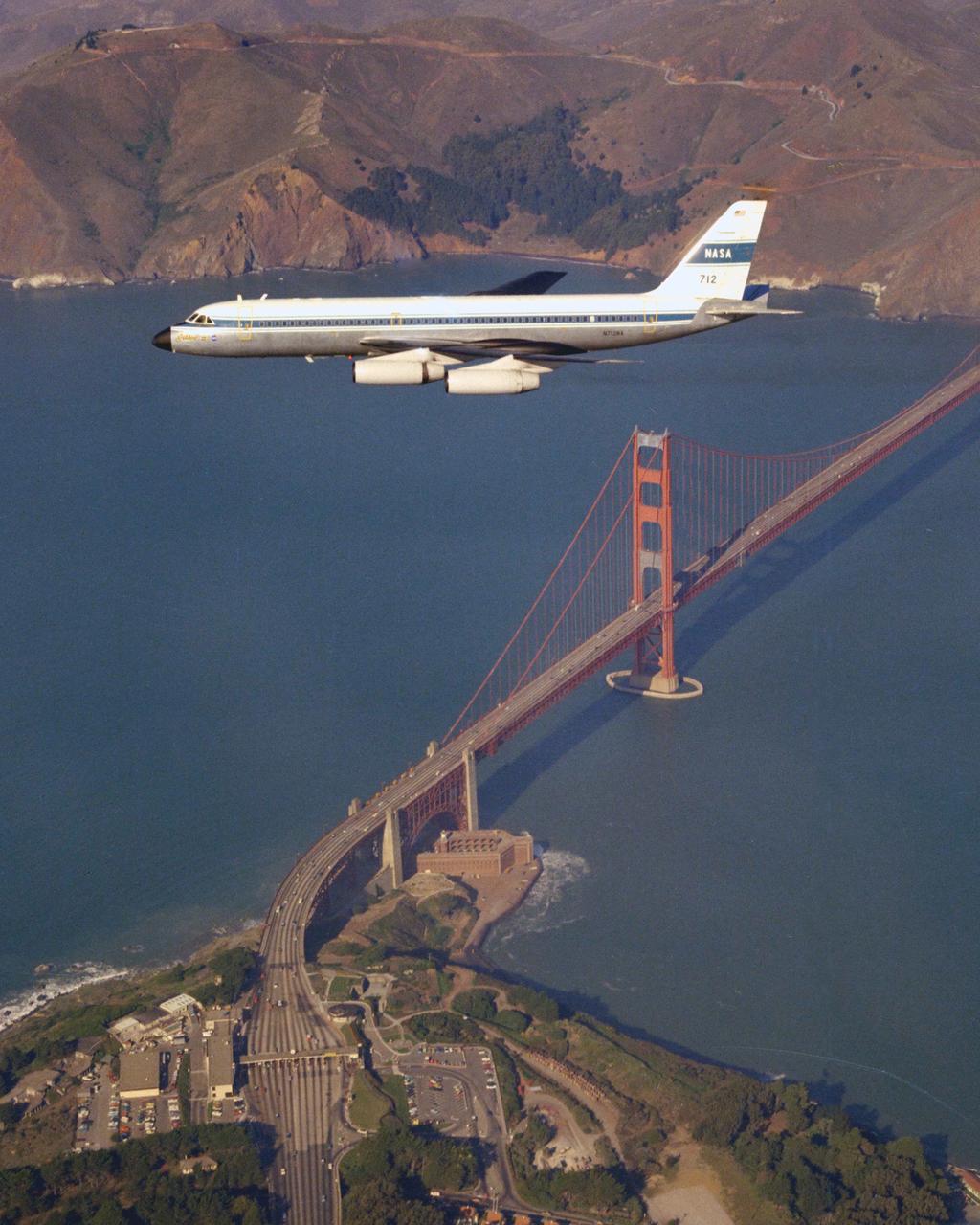
CV-990 (NASA-712) Galileo II aircraft in flight over the San Francisco's Golden Gate Bridge. A digital navigation, guidance and autopilot system tested on Galileo 1 and Galileo II in 1975 looked at the feasibility of energy-management approach concepts for an unpowered vehicle. Flight tests carried out by pilot Fred Drinkwater with technical direction by Fred Edwards and John D Foster along with significant input from Gordon Hardy on the pilot's system interface. Note: Used in publication in Flight Research at Ames; 57 Years of Development and Validation of Aeronautical Technology NASA SP-1998-3300 fig 95 ref 99

Ames Science & Applications Aircraft composite: U-2, ER-2, Lear Jet (NASA-705), C-141, CV-990 & C-130
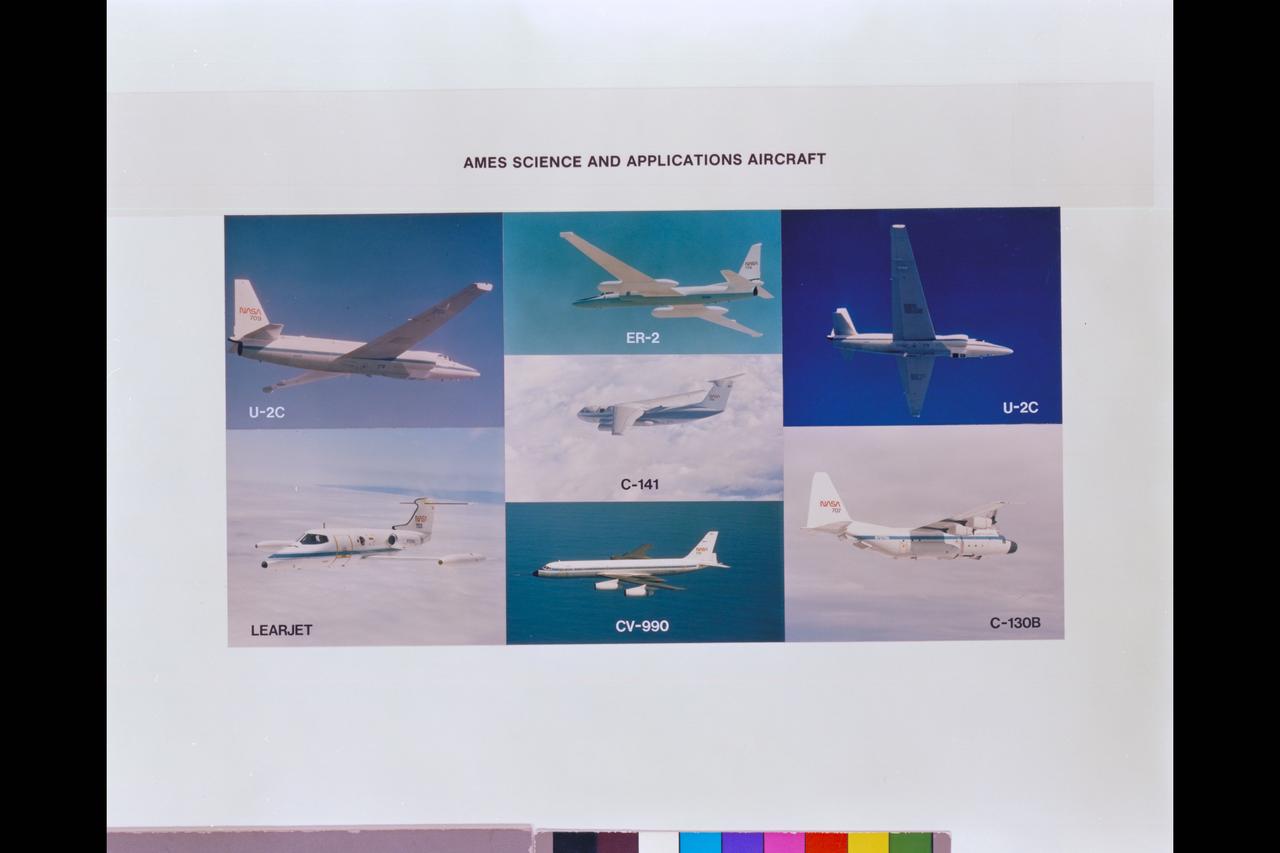
Aircraft Platform for Light Research Composite: Ames North U-2, ER-2, Learjet (NASA-705), C-141, CV-990 and C-130
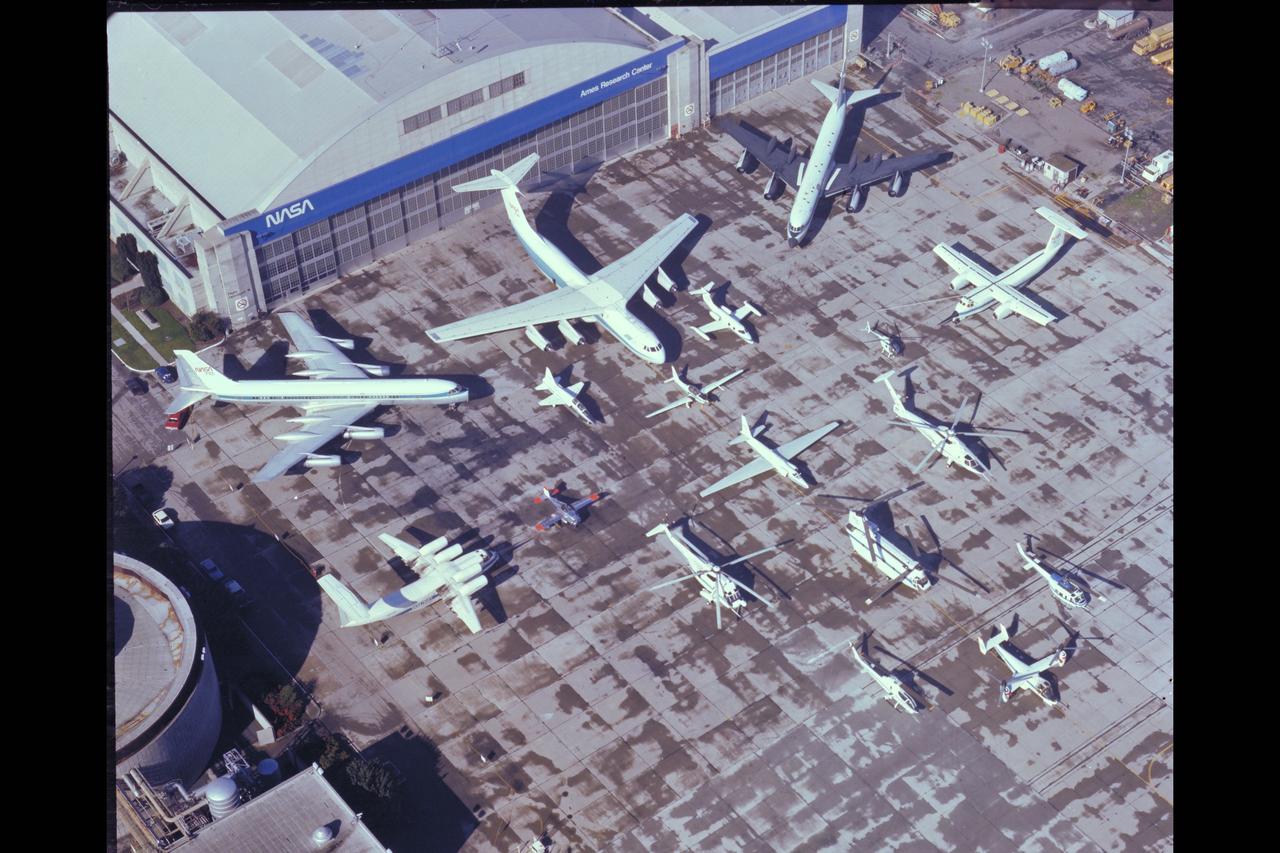
NASA Aircraft on ramp (Aerial view) Sides: (L) QSRA (R) C-8A AWJSRA - Back to Front: CV-990 (711) C-141 KAO, CV-990 (712) Galileo, T-38, YO-3A, Lear Jet, X-14, U-2, OH-6, CH-47, SH-3G, RSRA, AH-1G, XV-15, UH-1H
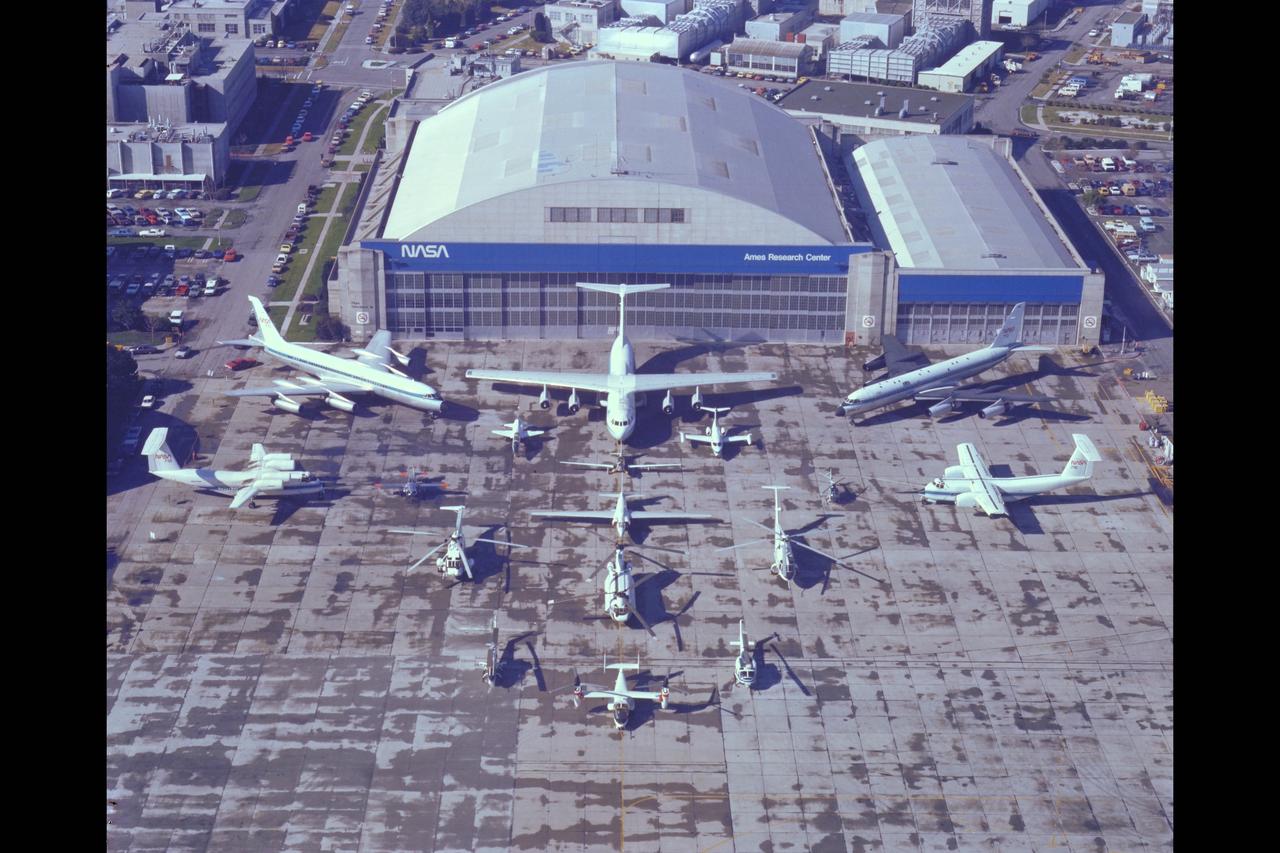
NASA Aircraft on ramp (Aerial view) Sides: (L) QSRA (R) C-8A AWJSRA - Back to Front: CV-990 (711) C-141 KAO, CV-990 (712) Galileo, T-38, YO-3A, Lear Jet, X-14, U-2, OH-6, CH-47, SH-3G, RSRA, AH-1G, XV-15, UH-1H
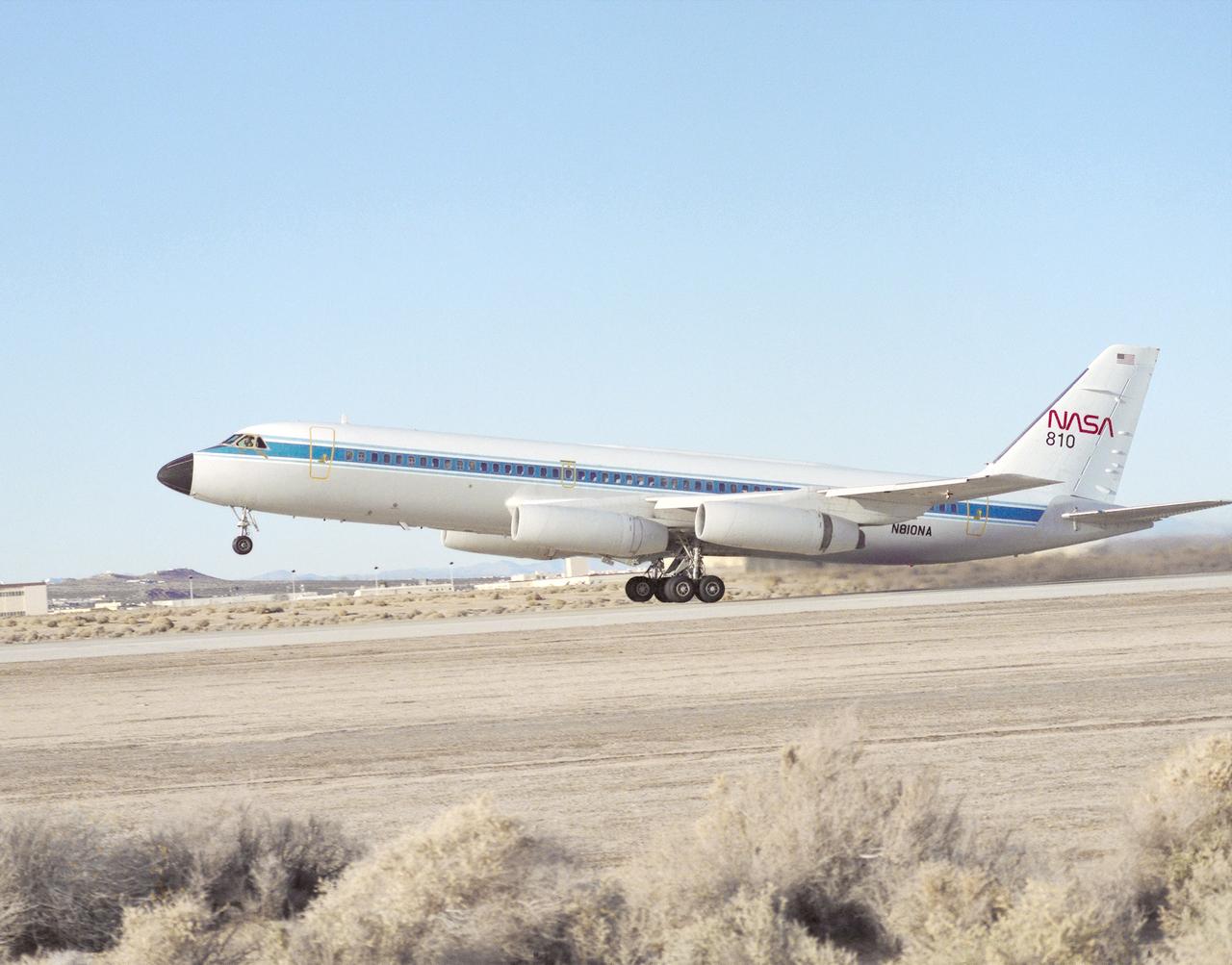
Taking off on a flight from NASA's Dryden Flight Research Center, Edwards, California, is NASA's Landing Systems Research Aircraft (LSRA), a modified Convair (CV) 990. A new landing gear test fixture representative of the shuttle's landing gear system had been installed in the lower fuselage of the CV-990 test aircraft between the aircraft's normal main landing gear. Following initial flights, static loads testing and calibration of the test gear were conducted at Dryden. Tests allowed engineers to assess the performance of the space shuttle's main and nose landing gear systems under varying conditions.
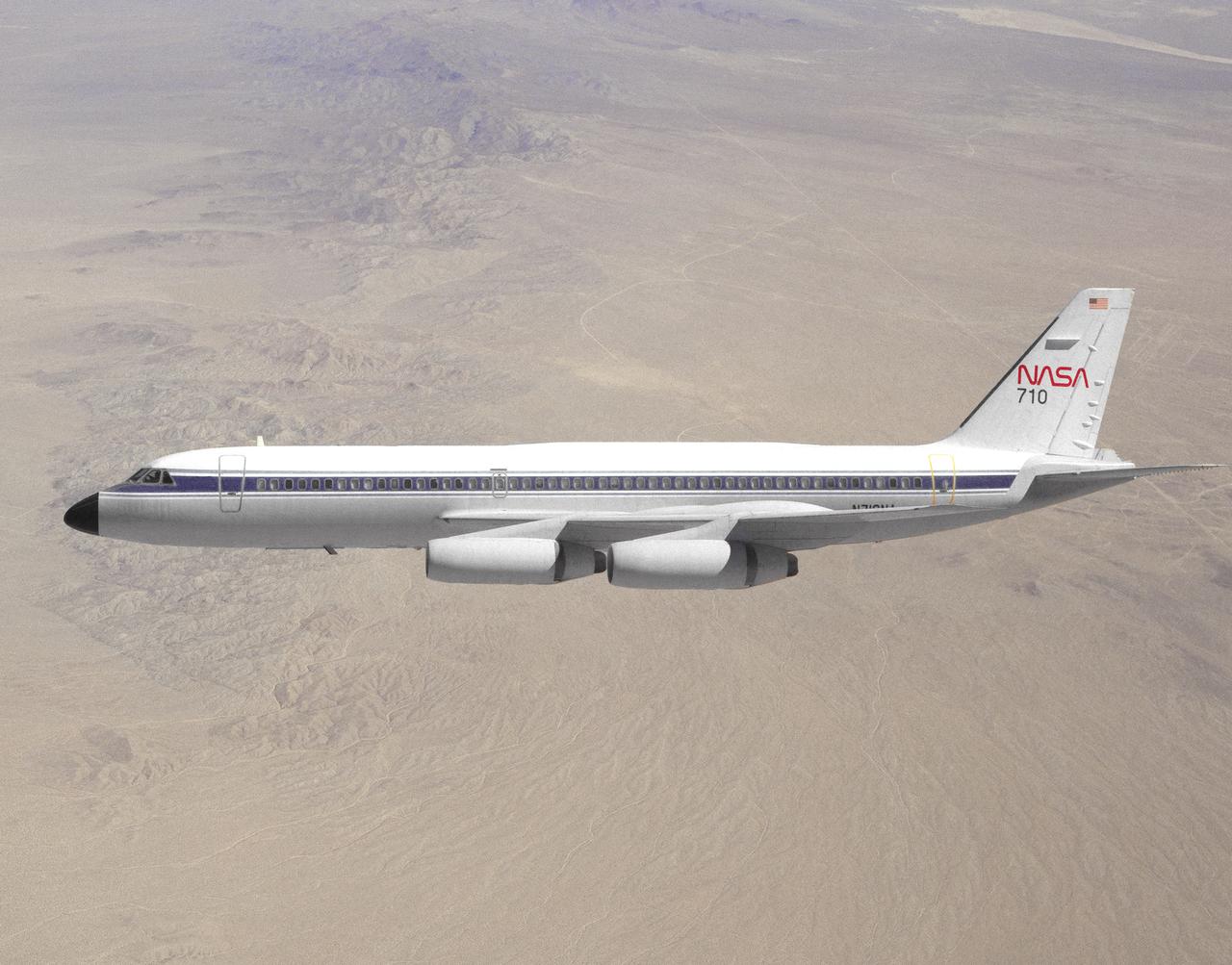
NASA 710, a Convair 990 transport aircraft formerly used for medium altitude atmospheric research, cruises over the Mojave Desert near NASA's Dryden Flight Research Center, Edwards, California. The flight was a final speed calibration run prior to the start of extensive modifications that turned the aircraft into a landing systems research aircraft to test and evaluate brakes and landing gear systems on space shuttles and also conventional aircraft. Research flights with the aircraft began in April of 1993. Testing of shuttle components lasted into fiscal year 1995.
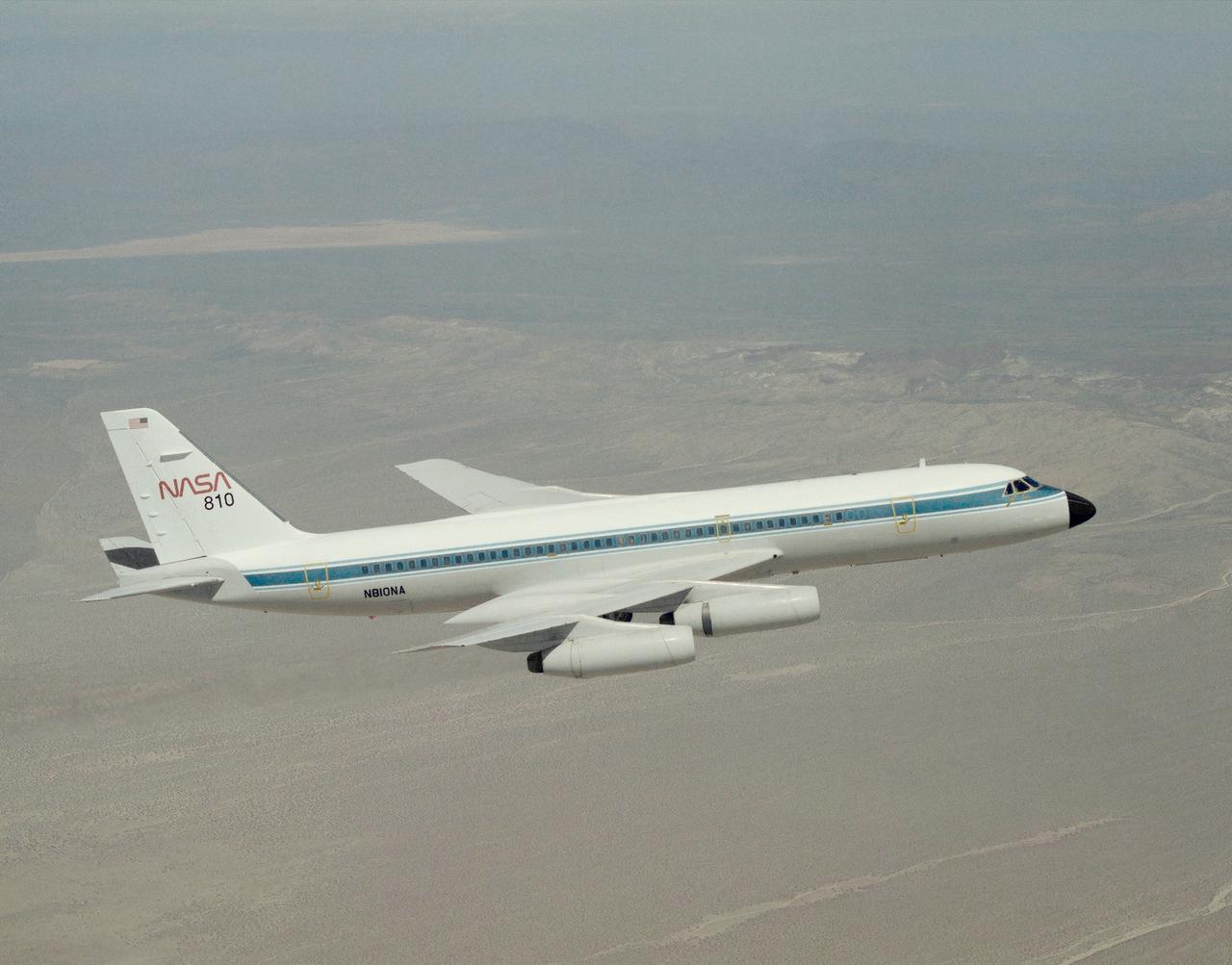
A NASA CV-990, modified as a Landing Systems Research Aircraft (LSRA), in flight over NASA's Dryden Flight Research Center, Edwards, California, for a test of the space shuttle landing gear system. The space shuttle landing gear test unit, operated by a high-pressure hydraulic system, allowed engineers to assess and document the performance of space shuttle main and nose landing gear systems, tires and wheel assemblies, plus braking and nose wheel steering performance. The series of 155 test missions for the space shuttle program provided extensive data about the life and endurance of the shuttle tire systems and helped raise the shuttle crosswind landing limits at Kennedy.
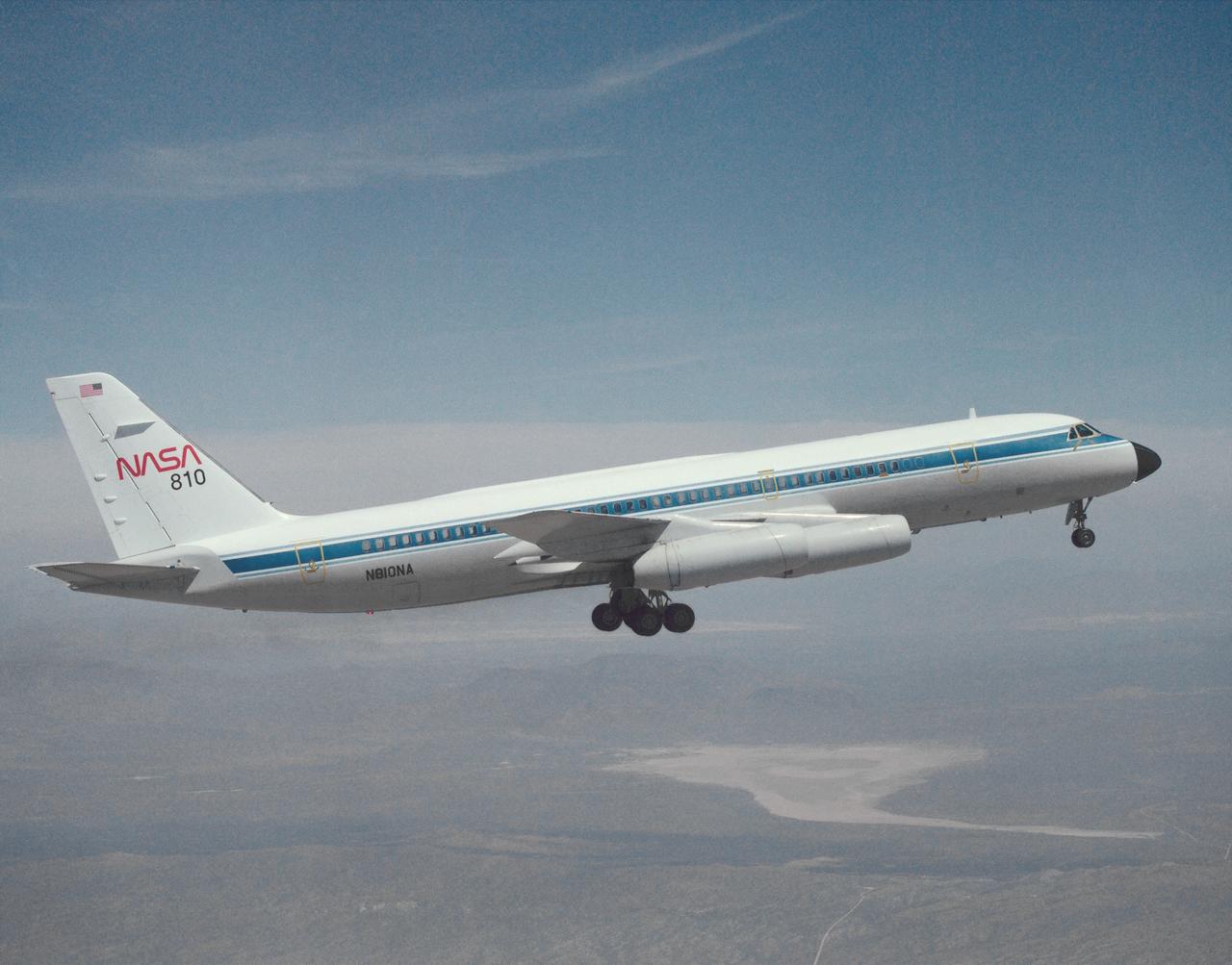
A NASA CV-990, modified as a Landing Systems Research Aircraft (LSRA), in flight over NASA's Dryden Flight Research Center, Edwards, California, for a test of the space shuttle landing gear system. The space shuttle landing gear test unit, operated by a high-pressure hydraulic system, allowed engineers to assess and document the performance of space shuttle main and nose landing gear systems, tires and wheel assemblies, plus braking and nose wheel steering performance. The series of 155 test missions for the space shuttle program provided extensive data about the life and endurance of the shuttle tire systems and helped raise the shuttle crosswind landing limits at Kennedy.
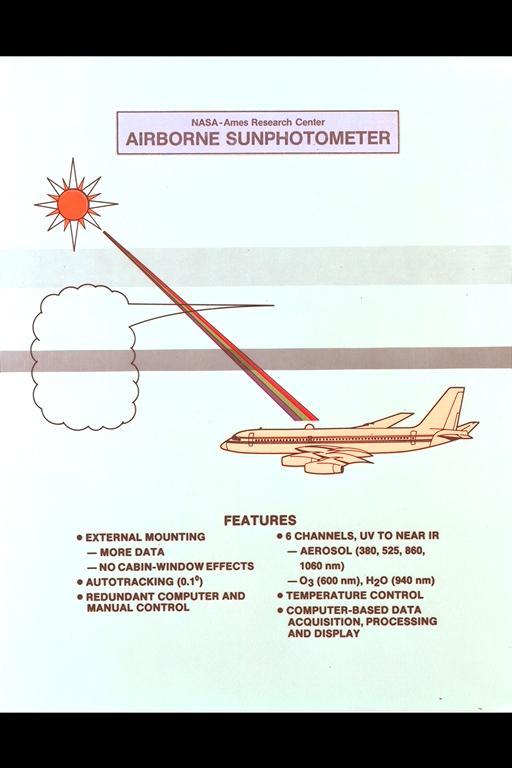
artwork Airborne Sunphotometer on CV-990
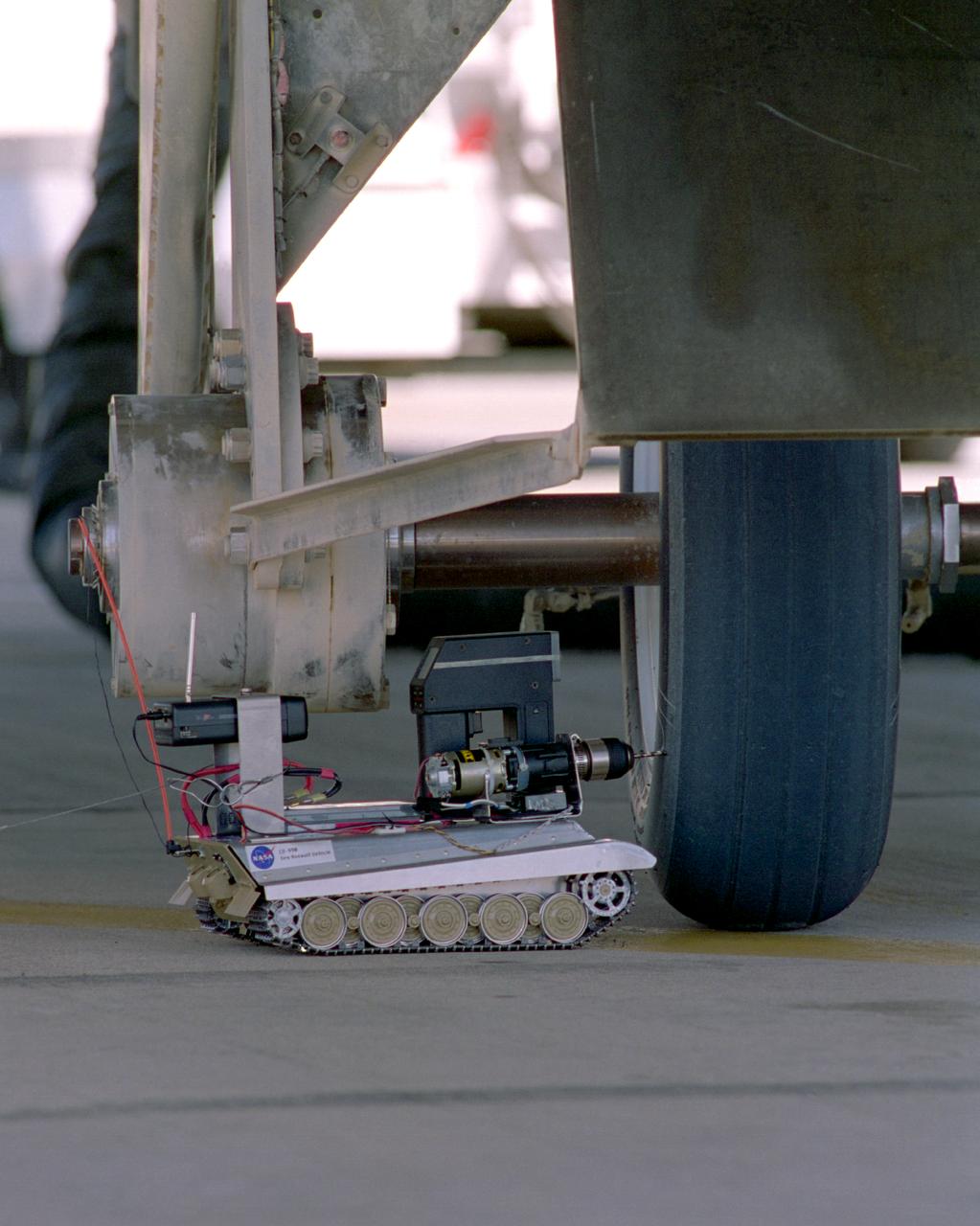
Created from a 1/16th model of a German World War II tank, the TAV (Tire Assault Vehicle) was an important safety feature for the Convair 990 Landing System Research Aircraft, which tested space shuttle tires. It was imperative to know the extreme conditions the shuttle tires could tolerate at landing without putting the shuttle and its crew at risk. In addition, the CV990 was able to land repeatedly to test the tires. The TAV was built from a kit and modified into a radio controlled, video-equipped machine to drill holes in aircraft test tires that were in imminent danger of exploding because of one or more conditions: high air pressure, high temperatures, and cord wear. An exploding test tire releases energy equivalent to two and one-half sticks of dynamite and can cause severe injuries to anyone within 50 ft. of the explosion, as well as ear injury - possibly permanent hearing loss - to anyone within 100 ft. The degree of danger is also determined by the temperature pressure and cord wear of a test tire. The TAV was developed by David Carrott, a PRC employee under contract to NASA.

Wallops Island camera equipment installed on board the Ames CV-990 (NASA 711) Galileo Airborne platform for the 1971 Barium Ion Cloud Airborne expedition (experimenters racks)
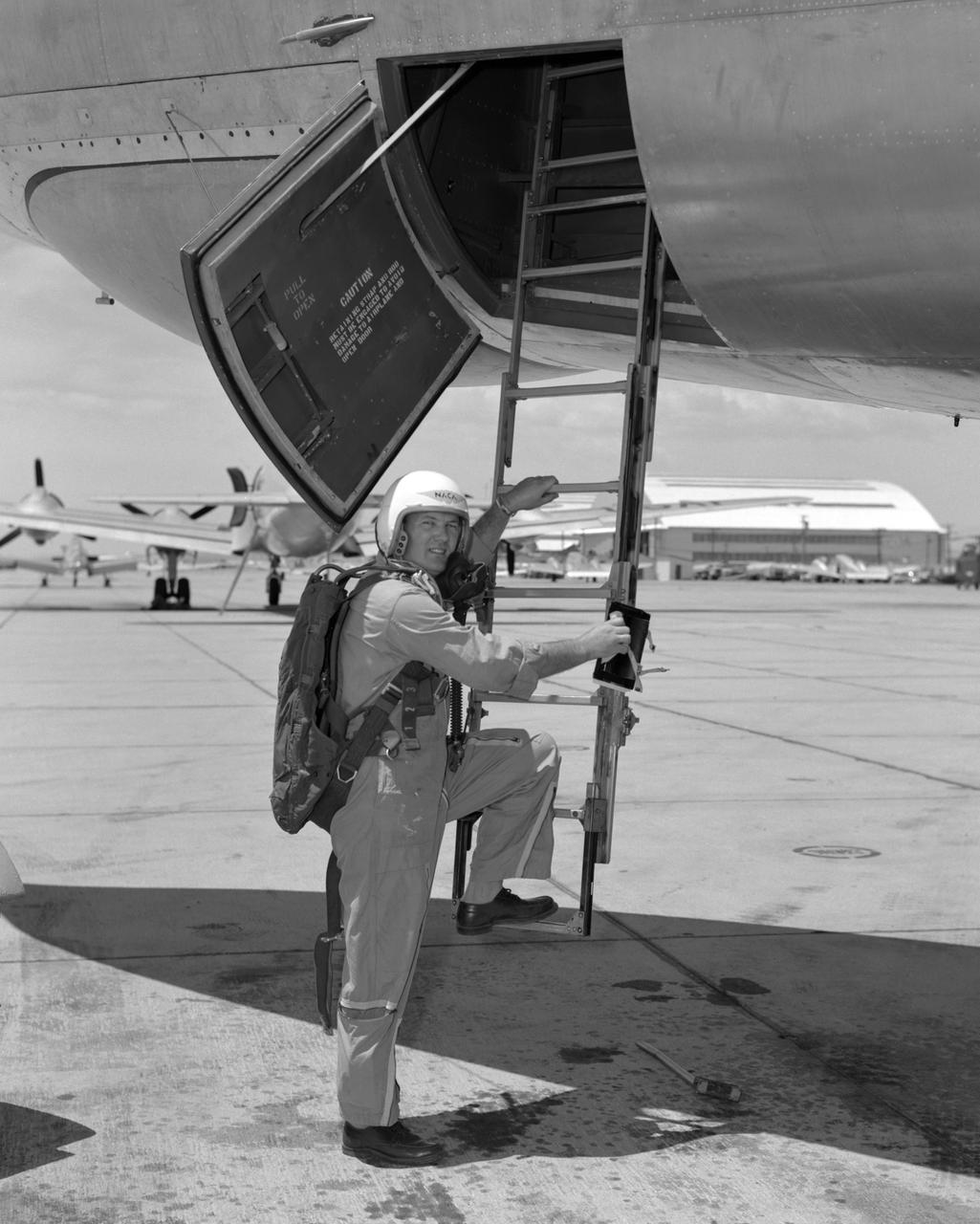
From December 10, 1966, until his retirement on February 27, 1976, Stanley P. Butchart served as Chief (later, Director) of Flight Operations at NASA's Flight Research Center (renamed on March 26, 1976, the Hugh L. Dryden Flight Research Center). Initially, his responsibilities in this position included the Research Pilots Branch, a Maintenance and Manufacturing Branch, and an Operations Engineering Branch, the last of which not only included propulsion and electrical/electronic sections but project engineers for the X-15 and lifting bodies. During his tenure, however, the responsibilities of his directorate came to include not only Flight Test Engineering Support but Flight Systems and Loads laboratories. Before becoming Chief of Flight Operations, Butchart had served since June of 1966 as head of the Research Pilots Branch (Chief Pilot) and then as acting chief of Flight Operations. He had joined the Center (then known as the National Advisory Committee for Aeronautics' High-Speed Flight Research Station) as a research pilot on May 10, 1951. During his career as a research pilot, he flew a great variety of research and air-launch aircraft including the D-558-I, D-558-II, B-29 (plus its Navy version, the P2B), X-4, X-5, KC-135, CV-880, CV-990, B-47, B-52, B-747, F-100A, F-101, F-102, F-104, PA-30 Twin Comanche, JetStar, F-111, R4D, B-720, and B-47. Although previously a single-engine pilot, he became the Center's principal multi-engine pilot during a period of air-launches in which the pilot of the air-launch aircraft (B-29 or P2B) basically directed the operations. It was he who called for the chase planes before each drop, directed the positioning of fire rescue vehicles, and released the experimental aircraft after ensuring that all was ready for the drop. As pilot of the B-29 and P2B, Butchart launched the X-1A once, the X-1B 13 times, the X-1E 22 times, and the D-558-II 102 times. In addition, he towed the M2-F1 lightweight lifting body 14 times behind an R4
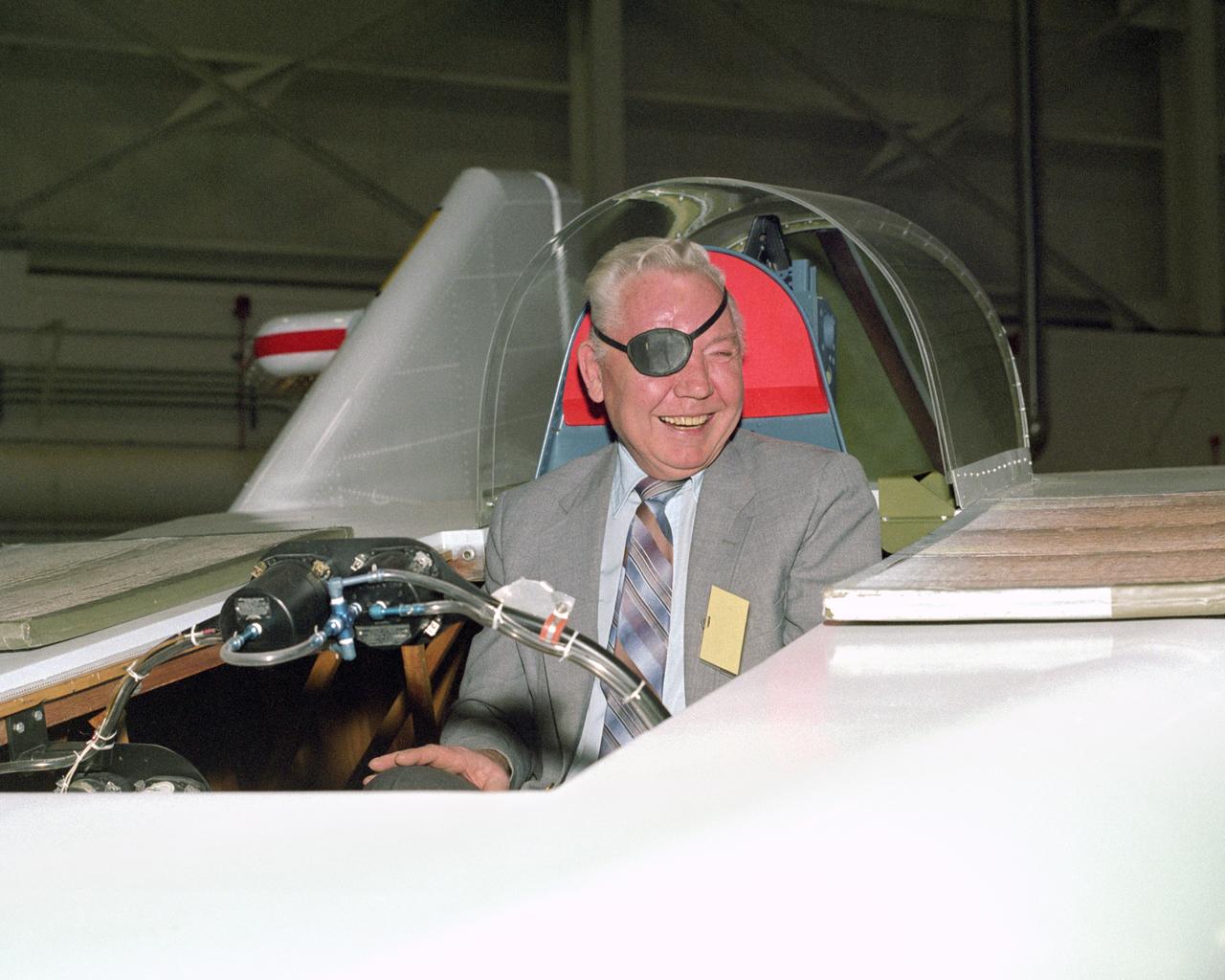
NASA Pilot Bruce Peterson in the cockpit of the restored M2-F1 Lifting Body.
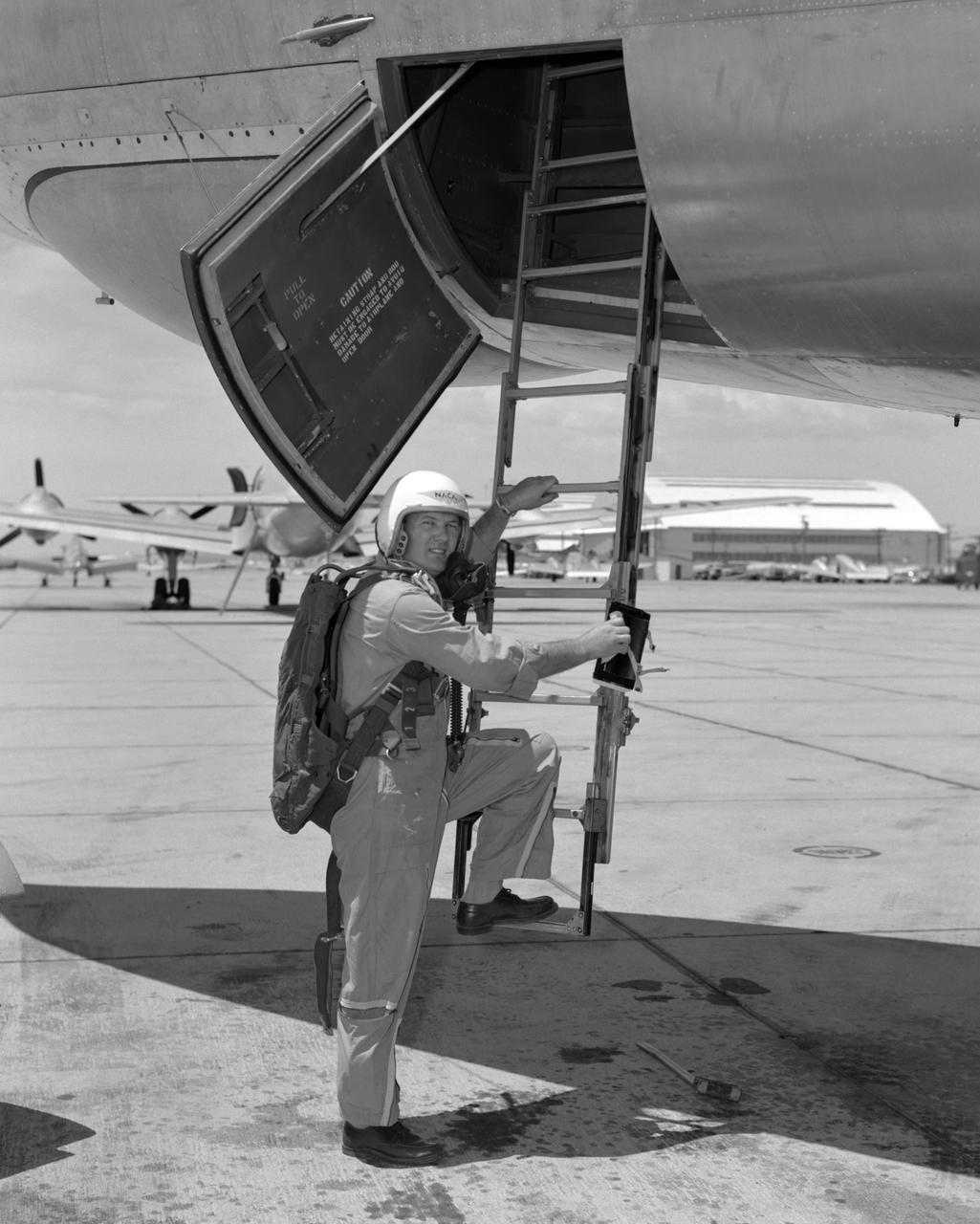
Stan Butchart climbing into B-47.