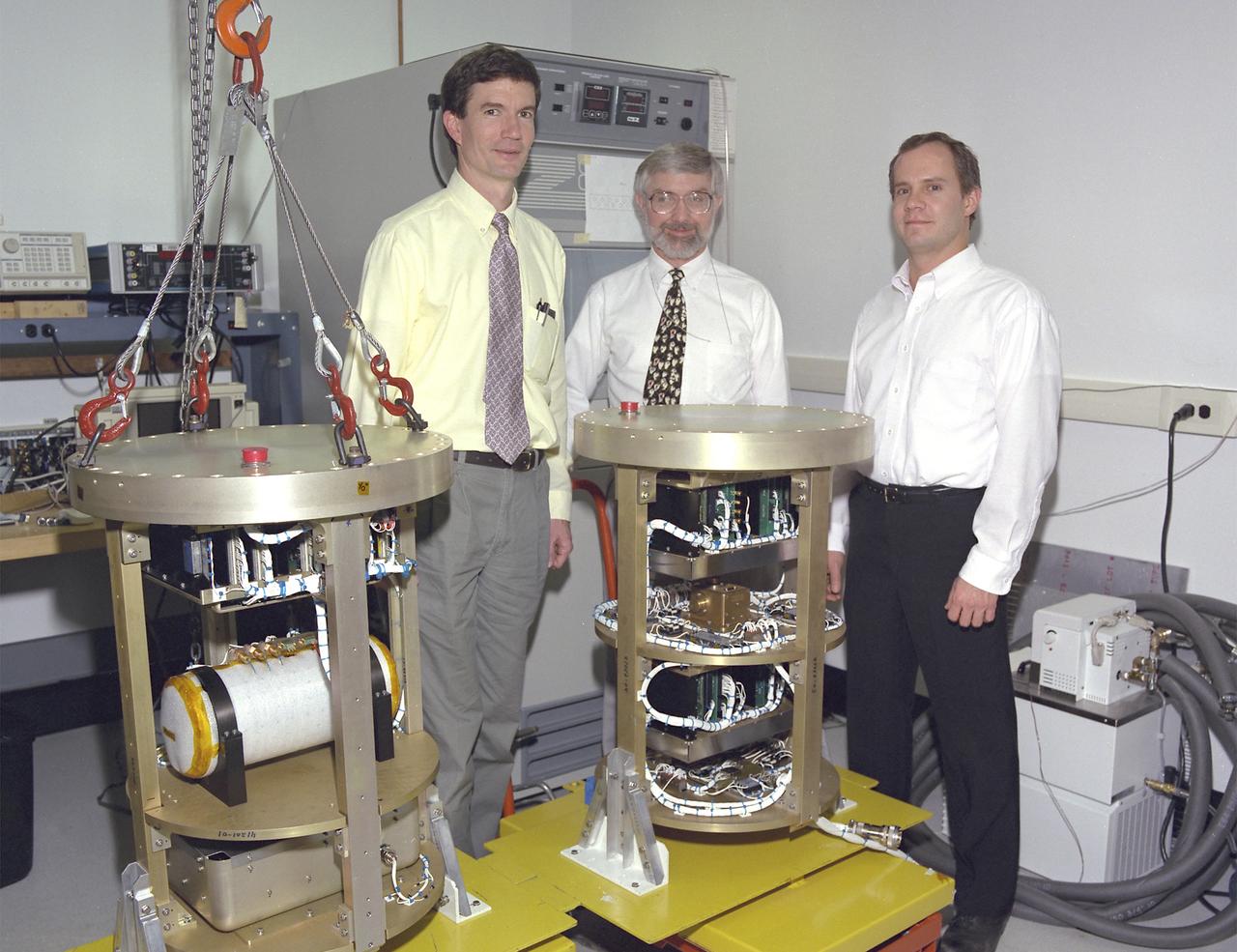
The Critical Viscosity of Xenon Experiment (CVX-2) on the STS-107 Research 1 mission in 2002 will measure the viscous behavior of xenon, a heavy inert gas used in flash lamps and ion rocket engines, at its critical point. The thermostat for CVX sits inside the white cylinder on a support structure (at left) that is placed inside a pressure canister. A similar canister (right) holds the electronics and control systems. The CVX-2 arrangement is identical. The principal investigator is Dr. Robert F. Berg (left) of the National Institutes of Standards and Technology, Gaithersburg, MD.
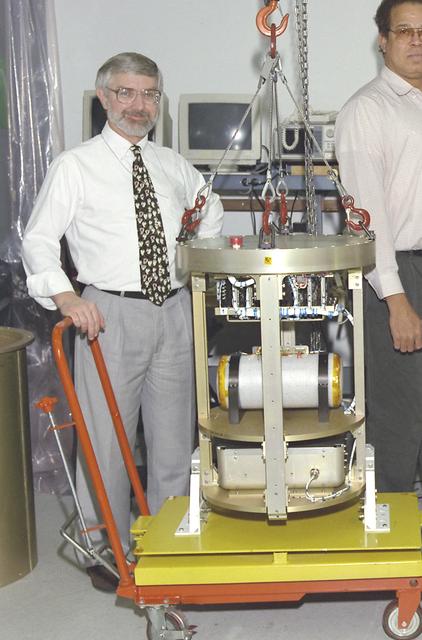
The Critical Viscosity of Xenon Experiment (CVX-2) on the STS-107 Research 1 mission in 2001 will measure the viscous behavior of xenon, a heavy inert gas used in flash lamps and ion rocket engines, at its critical point. The thermostat for CVX sits inside the white cylinder on a support structure that is placed inside a pressure canister. A similar canister holds the electronics and control systems. The CVX-2 arrangement is identical. The principal investigator is Dr. Robert F. Berg (not shown) of the National Institutes of Standards and Technology, Gaithersburg, MD. This is a detail view of MSFC 0100143.
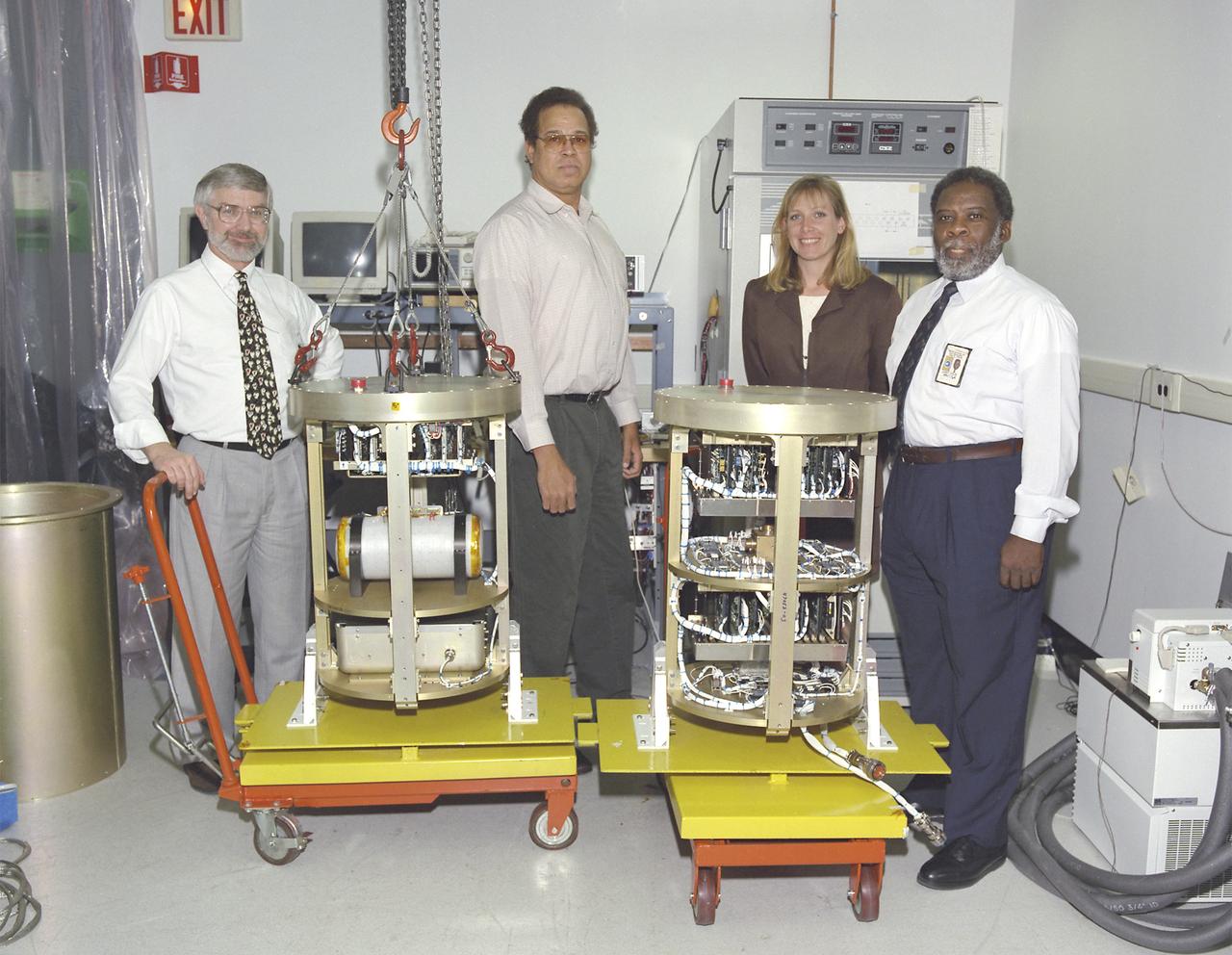
The Critical Viscosity of Xenon Experiment (CVX-2) on the STS-107 Research 1 mission in 2002 will measure the viscous behavior of xenon, a heavy inert gas used in flash lamps and ion rocket engines, at its critical point. The thermostat for CVX sits inside the white cylinder on a support structure (at left) that is placed inside a pressure canister. A similar canister (right) holds the electronics and control systems. The CVX-2 arrangement is identical. The principal investigator is Dr. Robert F. Berg (not shown) of the National Institutes of Standards and Technology, Gaithersburg, MD.
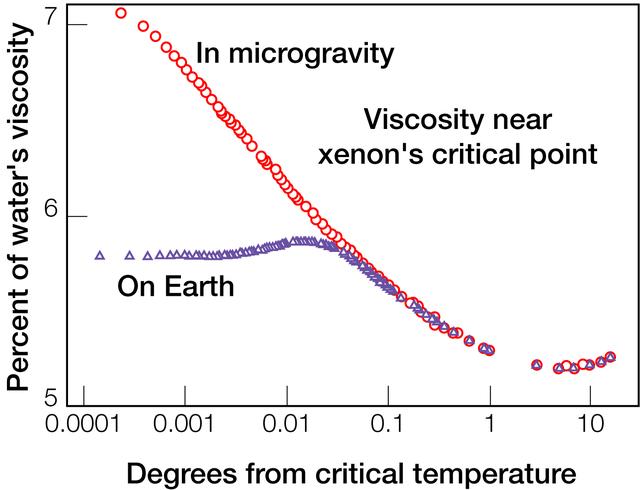
The Critical Viscosity of Xenon Experiment (CVX-2) on the STS-107 Research 1 mission in 2002 will measure the viscous behavior of xenon, a heavy inert gas used in flash lamps and ion rocket engines, at its critical point. Because xenon near the critical point will collapse under its own weight, experiments on Earth (green line) are limited as they get closer (toward the left) to the critical point. CVX in the microgravity of space (red line) moved into unmeasured territory that scientists had not been able to reach.
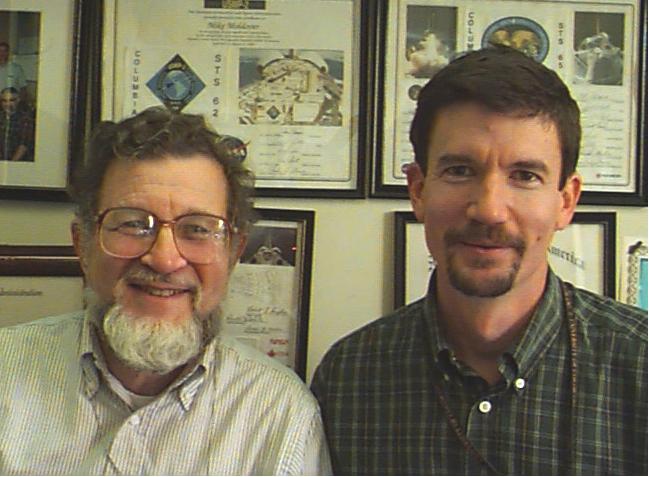
Dr. Dr. Robert F. Berg (right), principal investigator and Dr. Micheal R. Moldover (left), co-investigator, for the Critical Viscosity of Xenon (CVX/CVX-2) experiment. They are with the National Institutes of Standards and Technology, Gaithersburg, MD. The Critical Viscosity of Xenon Experiment (CVX-2) on the STS-107 Research 1 mission in 2002 will measure the viscous behavior of xenon, a heavy inert gas used in flash lamps and ion rocket engines, at its critical point. Although it does not easily combine with other chemicals, its viscosity at the critical point can be used as a model for a range of chemicals.
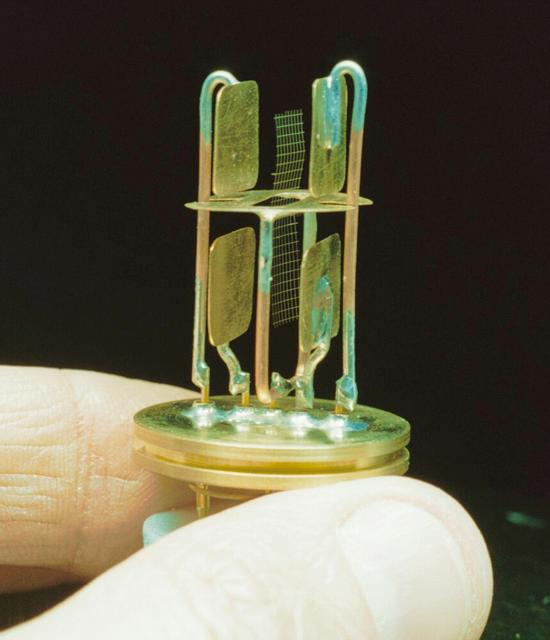
The Critical Viscosity of Xenon Experiment (CVX-2) on the STS-107 Research 1 mission in 2002 will measure the viscous behavior of liquid xenon, a heavy inert gas used in flash lamps and ion rocket engines, at its critical point. Resembling a tiny bit of window screen, the oscillator at the heart of CVX-2 will vibrate between two pairs of paddle-like electrodes. The slight bend in the shape of the mesh has no effect on the data. What counts are the mesh's displacement in the xenon fluid and the rate at which the displacement dampens. The unit shown here is encased in a small test cell and capped with a sapphire windown to contain the xenon at high pressure.
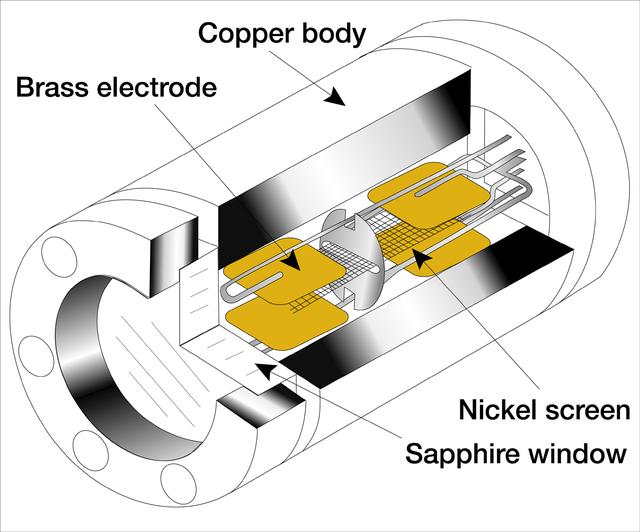
The Critical Viscosity of Xenon Experiment (CVX-2) on the STS-107 Research 1 mission in 2002 will measure the viscous behavior of xenon, a heavy inert gas used in flash lamps and ion rocket engines, at its critical point. The sample cell at the heart of CVX-2 will sit inside a thermostat providing three layers of insulation. The cell itself comprises a copper body that conducts heat efficiently and smoothes out thermal variations that that would destroy the xenon's uniformity. Inside the cell, the oscillating screen viscometer element is supported between two pairs of electrodes that deflect the screen and then measure screen motion.
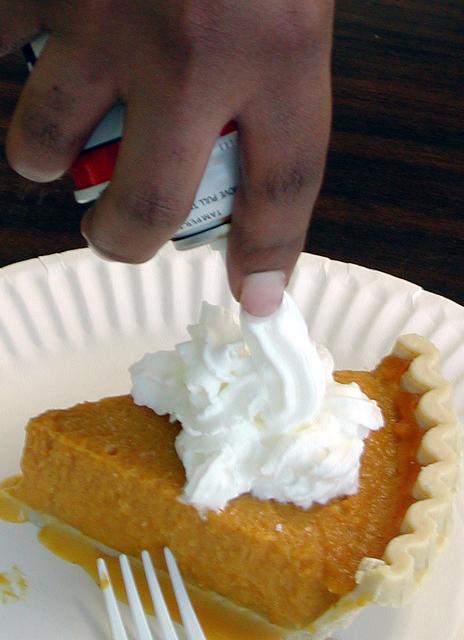
Whipped cream and the filling for pumpkin pie are two familiar materials that exhibit the shear-thinning effect seen in a range of industrial applications. It is thick enough to stand on its own atop a piece of pie, yet flows readily when pushed through a tube. This demonstrates the shear-thinning effect that was studied with the Critical Viscosity of Xenon Experiment (CVX-2) on the STS-107 Research 1 mission in 2002. CVX observed the behavior of xenon, a heavy inert gas used in flash lamps and ion rocket engines, at its critical point. The principal investigator was Dr. Robert Berg of the National Institutes of Standards and Technology in Gaithersburg, MD.
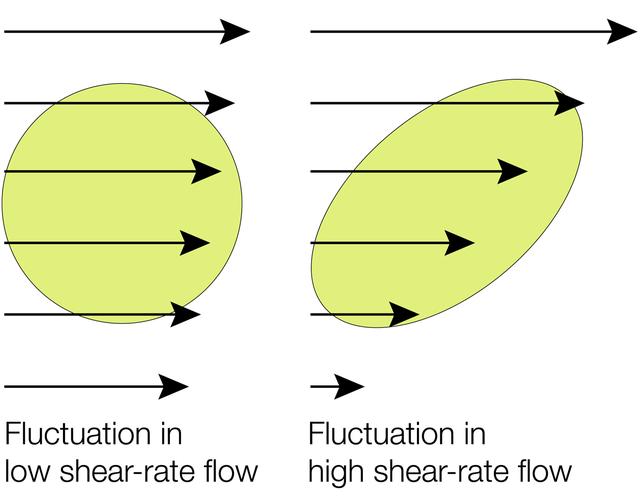
The Critical Viscosity of Xenon Experiment (CVX-2) on the STS-107 Research 1 mission in 2002 will measure the viscous behavior of xenon, a heavy inert gas used in flash lamps and ion rocket engines, at its critical point. Shear thirning will cause a normally viscous fluid -- such as pie filling or whipped cream -- to deform and flow more readily under high shear conditions. In shear thinning, a pocket of fluid will deform and move one edge forward, as depicted here.
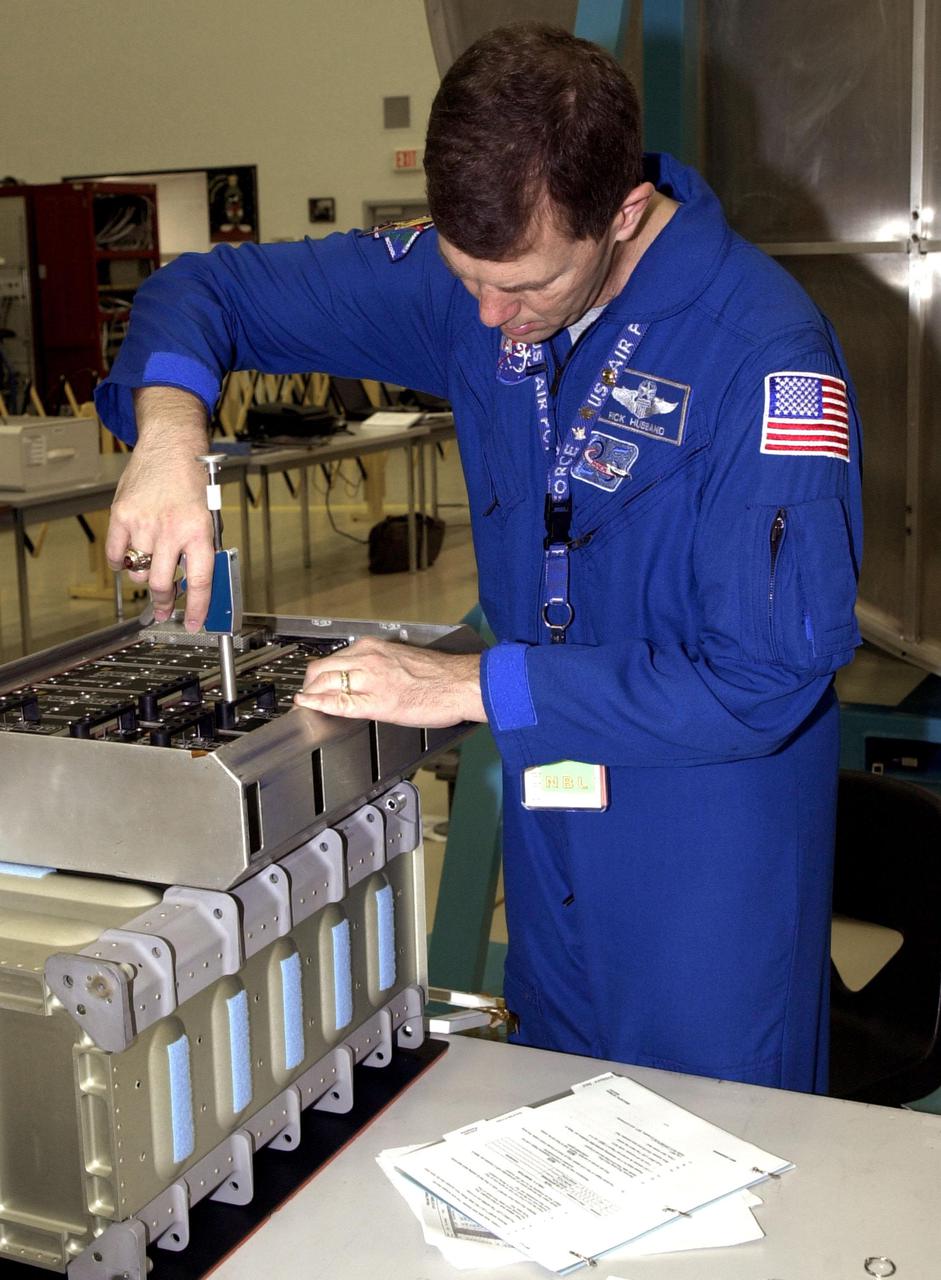
KENNEDY SPACE CENTER, FLA. -- At SPACEHAB, Cape Canaveral, Fla., Commander Rick Husband works with an experiment that will be part of the mission. STS-107 is a research mission. The primary payload is the first flight of the SHI Research Double Module (SHI_RDM). The experiments range from material sciences to life sciences (many rats). Also part of the payload is the Fast Reaction Experiments Enabling Science, Technology, Applications and Research (FREESTAR) that incorporates eight high priority secondary attached shuttle experiments: Mediterranean Israeli Dust Experiment (MEIDEX), Shuttle Ozone Limb Sounding Experiment (SOLSE-2), Student Tracked Atmospheric Research Satellite for Heuristic International Networking Experiment (STARSHINE), Critical Viscosity of Xenon-2 (CVX-2), Solar Constant Experiment-3 (SOLOCON-3), Prototype Synchrotron Radiation Detector (PSRD), Low Power Transceiver (LPT), and Collisions Into Dust Experiment -2 (COLLIDE-2). STS-107 is scheduled to launch in July 2002
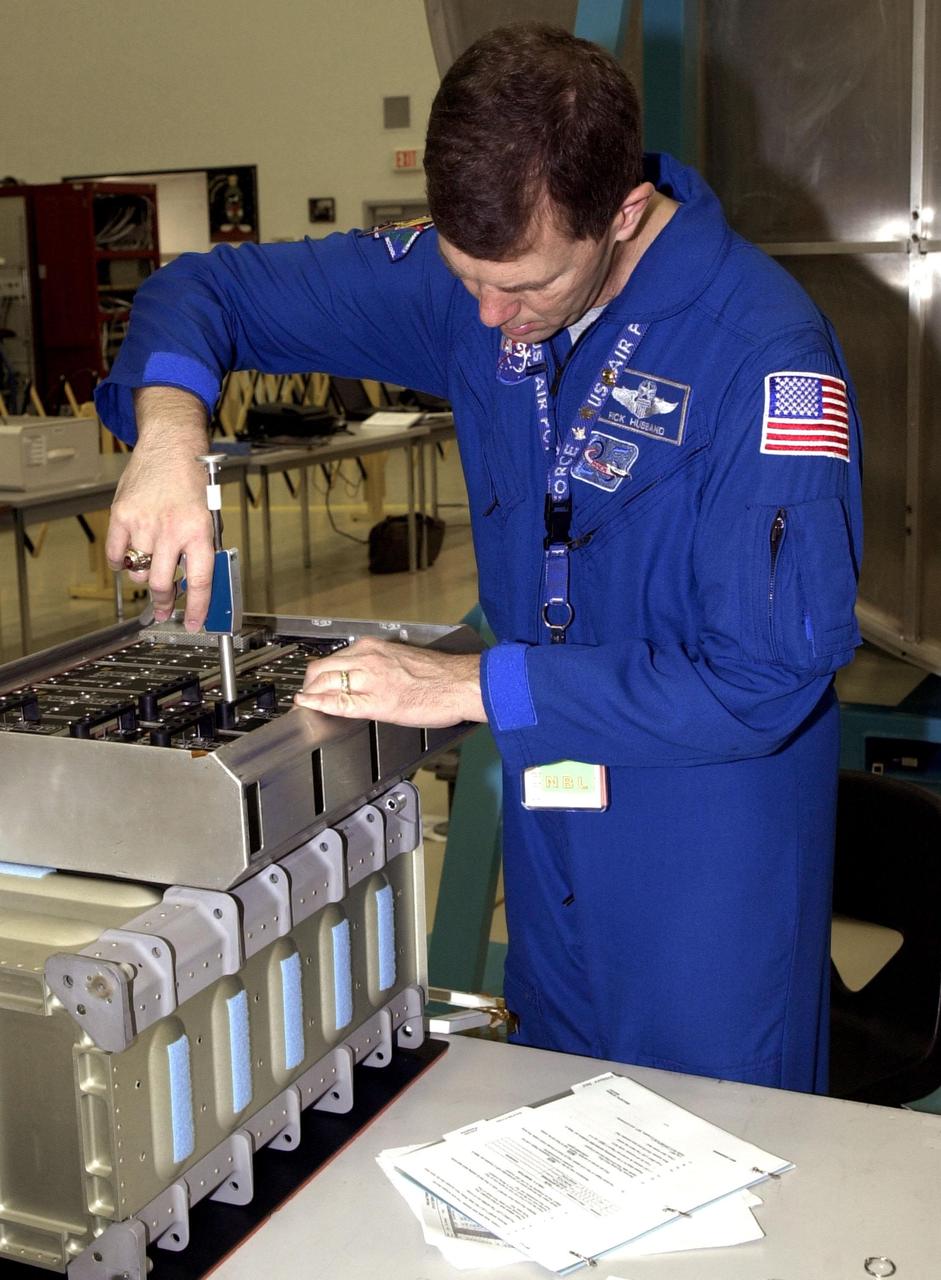
KENNEDY SPACE CENTER, FLA. -- At SPACEHAB, Cape Canaveral, Fla., Commander Rick Husband works with an experiment that will be part of the mission. STS-107 is a research mission. The primary payload is the first flight of the SHI Research Double Module (SHI/RDM). The experiments range from material sciences to life sciences (many rats). Also part of the payload is the Fast Reaction Experiments Enabling Science, Technology, Applications and Research (FREESTAR) that incorporates eight high priority secondary attached shuttle experiments: Mediterranean Israeli Dust Experiment (MEIDEX), Shuttle Ozone Limb Sounding Experiment (SOLSE-2), Student Tracked Atmospheric Research Satellite for Heuristic International Networking Experiment (STARSHINE), Critical Viscosity of Xenon-2 (CVX-2), Solar Constant Experiment-3 (SOLOCON-3), Prototype Synchrotron Radiation Detector (PSRD), Low Power Transceiver (LPT), and Collisions Into Dust Experiment -2 (COLLIDE-2). STS-107 is scheduled to launch in July 2002
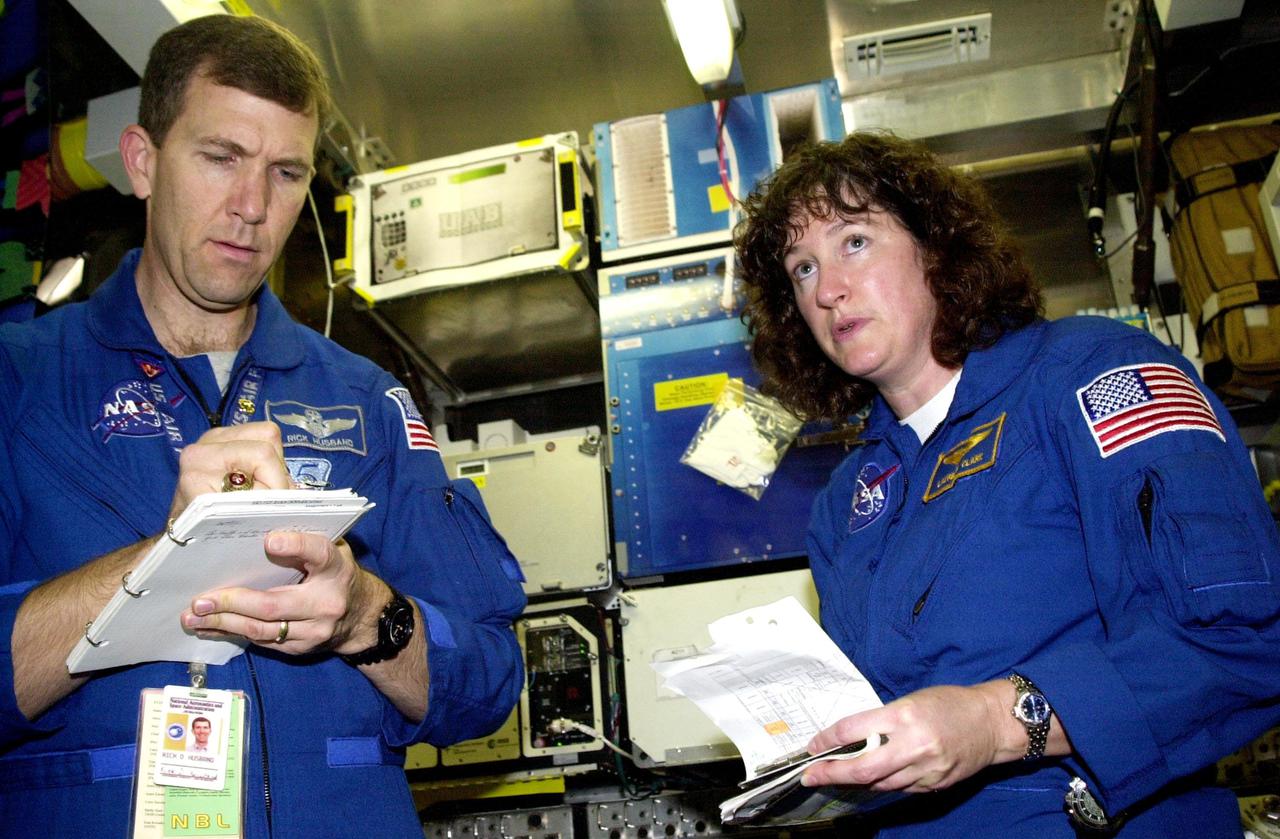
KENNEDY SPACE CENTER, FLA. -- STS-107 Commander Rick Husband and Mission Specialist Laurel Clark learn to work with mission-related equipment at SPACEHAB, Cape Canaveral, Fla. STS-107 is a research mission. The primary payload is the first flight of the SHI Research Double Module (SHI_RDM). The experiments range from material sciences to life sciences (many rats). Also part of the payload is the Fast Reaction Experiments Enabling Science, Technology, Applications and Research (FREESTAR) that incorporates eight high priority secondary attached shuttle experiments: Mediterranean Israeli Dust Experiment (MEIDEX), Shuttle Ozone Limb Sounding Experiment (SOLSE-2), Student Tracked Atmospheric Research Satellite for Heuristic International Networking Experiment (STARSHINE), Critical Viscosity of Xenon-2 (CVX-2), Solar Constant Experiment-3 (SOLOCON-3), Prototype Synchrotron Radiation Detector (PSRD), Low Power Transceiver (LPT), and Collisions Into Dust Experiment -2 (COLLIDE-2). STS-107 is scheduled to launch in July 2002
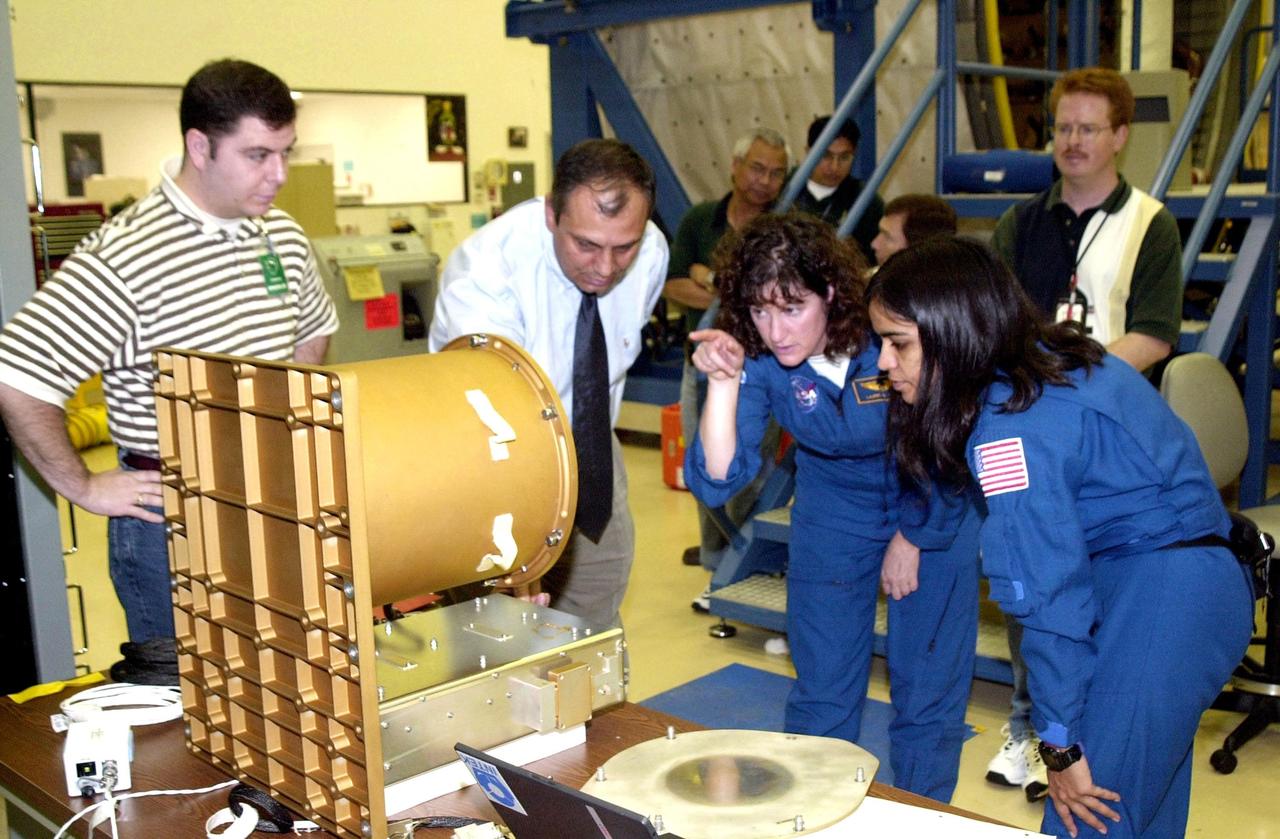
KENNEDY SPACE CENTER, FLA. - At SPACEHAB, Cape Canaveral, Fla., members of the STS-107 crew familiarize themselves with experiments and equipment for the mission. Pointing at a piece of equipment (center) is Mission Specialist Laurel Clark . At right is Mission Specialist Kalpana Chawla. STS-107 is a research mission. The primary payload is the first flight of the SHI Research Double Module (SHI/RDM). The experiments range from material sciences to life sciences (many rats). Also part of the payload is the Fast Reaction Experiments Enabling Science, Technology, Applications and Research (FREESTAR) that incorporates eight high priority secondary attached shuttle experiments: Mediterranean Israeli Dust Experiment (MEIDEX), Shuttle Ozone Limb Sounding Experiment (SOLSE-2), Student Tracked Atmospheric Research Satellite for Heuristic International Networking Experiment (STARSHINE), Critical Viscosity of Xenon-2 (CVX-2), Solar Constant Experiment-3 (SOLOCON-3), Prototype Synchrotron Radiation Detector (PSRD), Low Power Transceiver (LPT), and Collisions Into Dust Experiment -2 (COLLIDE-2). STS-107 is scheduled to launch in July 2002
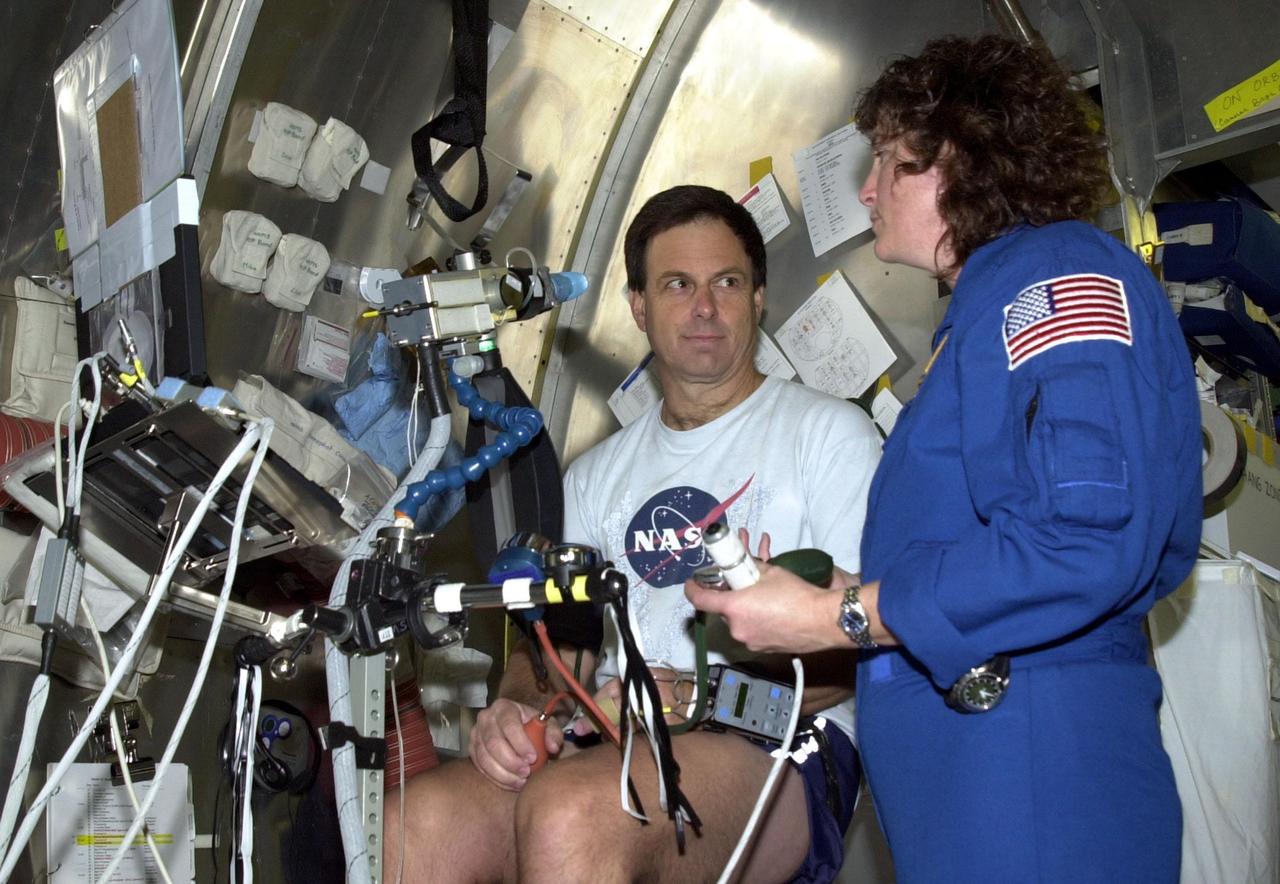
KENNEDY SPACE CENTER, FLA. - STS-107 Payload Specialist Ilan Ramon, from Israel, pauses during an experiment at SPACEHAB, Cape Canaveral, Fla., to talk with Mission Specialist Laurel Clark. STS-107 is a research mission. The primary payload is the first flight of the SHI Research Double Module (SHI/RDM). The experiments range from material sciences to life sciences (many rats). Also part of the payload is the Fast Reaction Experiments Enabling Science, Technology, Applications and Research (FREESTAR) that incorporates eight high priority secondary attached shuttle experiments: Mediterranean Israeli Dust Experiment (MEIDEX), Shuttle Ozone Limb Sounding Experiment (SOLSE-2), Student Tracked Atmospheric Research Satellite for Heuristic International Networking Experiment (STARSHINE), Critical Viscosity of Xenon-2 (CVX-2), Solar Constant Experiment-3 (SOLOCON-3), Prototype Synchrotron Radiation Detector (PSRD), Low Power Transceiver (LPT), and Collisions Into Dust Experiment -2 (COLLIDE-2). STS-107 is scheduled to launch in July 2002.
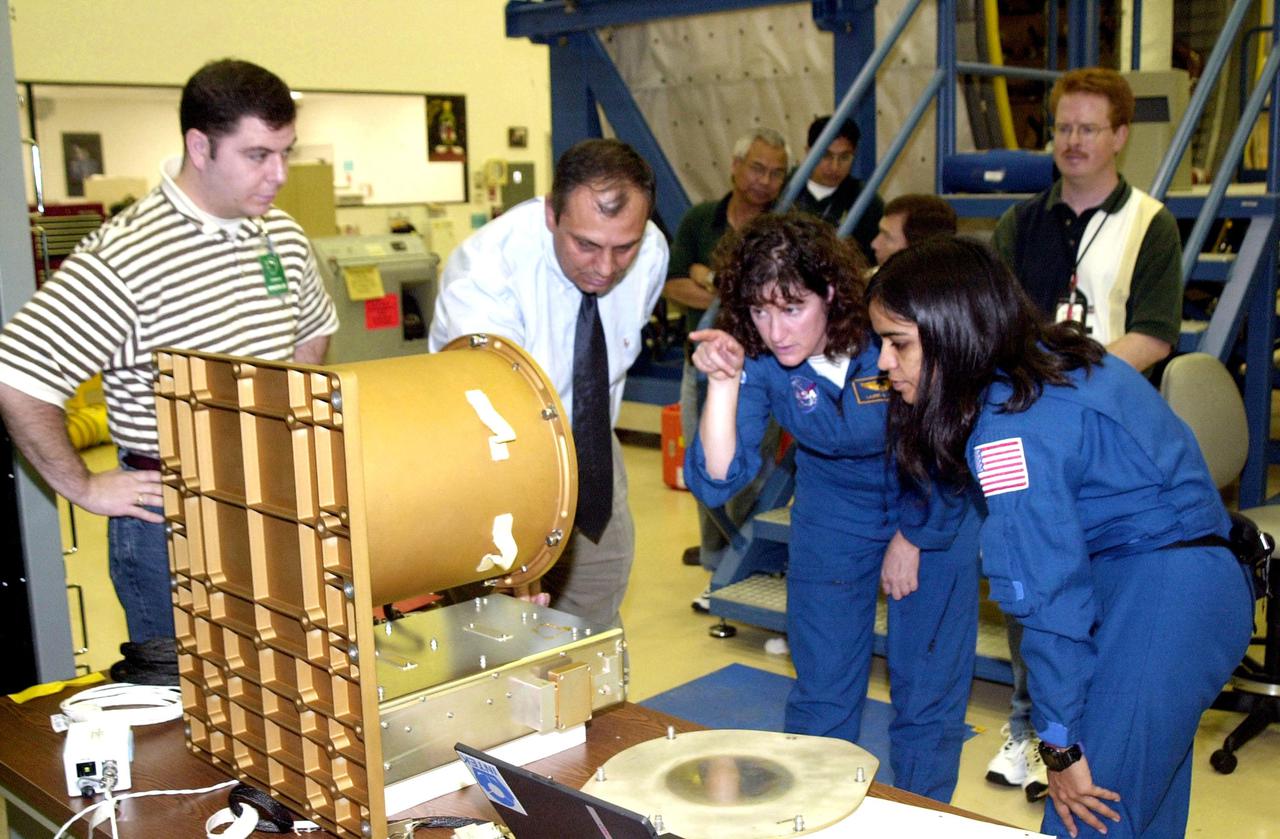
KENNEDY SPACE CENTER, FLA. - At SPACEHAB, Cape Canaveral, Fla., members of the STS-107 crew familiarize themselves with experiments and equipment for the mission. Pointing at a piece of equipment (center) is Mission Specialist Laurel Clark . At right is Mission Specialist Kalpana Chawla. STS-107 is a research mission. The primary payload is the first flight of the SHI Research Double Module (SHI_RDM). The experiments range from material sciences to life sciences (many rats). Also part of the payload is the Fast Reaction Experiments Enabling Science, Technology, Applications and Research (FREESTAR) that incorporates eight high priority secondary attached shuttle experiments: Mediterranean Israeli Dust Experiment (MEIDEX), Shuttle Ozone Limb Sounding Experiment (SOLSE-2), Student Tracked Atmospheric Research Satellite for Heuristic International Networking Experiment (STARSHINE), Critical Viscosity of Xenon-2 (CVX-2), Solar Constant Experiment-3 (SOLOCON-3), Prototype Synchrotron Radiation Detector (PSRD), Low Power Transceiver (LPT), and Collisions Into Dust Experiment -2 (COLLIDE-2). STS-107 is scheduled to launch in July 2002
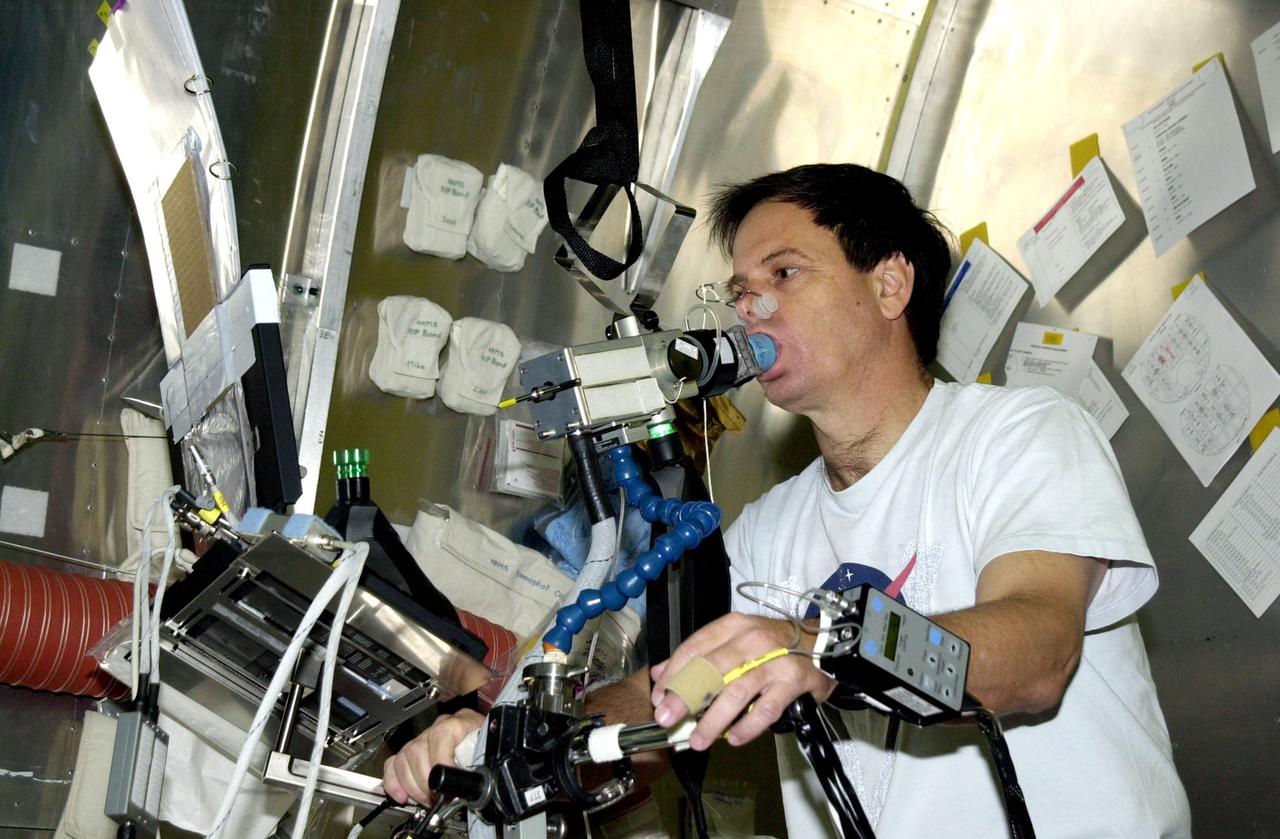
KENNEDY SPACE CENTER, FLA. - - STS-107 Payload Specialist Ilan Ramon, from Israel, works on an experiment at SPACEHAB, Cape Canaveral, Fla. With him is Mission Specialist Laurel Clark. STS-107 is a research mission. The primary payload is the first flight of the SHI Research Double Module (SHI_RDM). The experiments range from material sciences to life sciences (many rats). Also part of the payload is the Fast Reaction Experiments Enabling Science, Technology, Applications and Research (FREESTAR) that incorporates eight high priority secondary attached shuttle experiments: Mediterranean Israeli Dust Experiment (MEIDEX), Shuttle Ozone Limb Sounding Experiment (SOLSE-2), Student Tracked Atmospheric Research Satellite for Heuristic International Networking Experiment (STARSHINE), Critical Viscosity of Xenon-2 (CVX-2), Solar Constant Experiment-3 (SOLOCON-3), Prototype Synchrotron Radiation Detector (PSRD), Low Power Transceiver (LPT), and Collisions Into Dust Experiment -2 (COLLIDE-2). STS-107 is scheduled to launch in July 2002
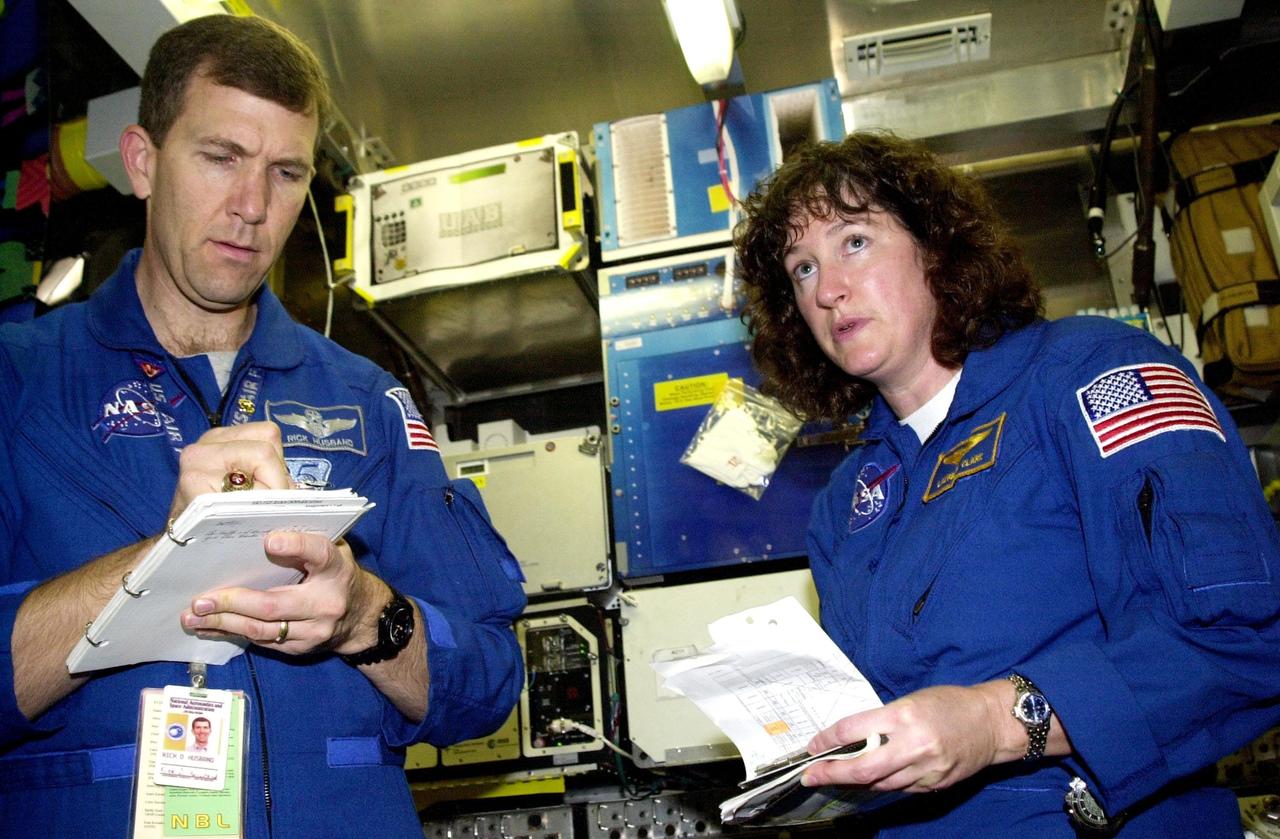
KENNEDY SPACE CENTER, FLA. -- STS-107 Commander Rick Husband and Mission Specialist Laurel Clark learn to work with mission-related equipment at SPACEHAB, Cape Canaveral, Fla. STS-107 is a research mission. The primary payload is the first flight of the SHI Research Double Module (SHI/RDM). The experiments range from material sciences to life sciences (many rats). Also part of the payload is the Fast Reaction Experiments Enabling Science, Technology, Applications and Research (FREESTAR) that incorporates eight high priority secondary attached shuttle experiments: Mediterranean Israeli Dust Experiment (MEIDEX), Shuttle Ozone Limb Sounding Experiment (SOLSE-2), Student Tracked Atmospheric Research Satellite for Heuristic International Networking Experiment (STARSHINE), Critical Viscosity of Xenon-2 (CVX-2), Solar Constant Experiment-3 (SOLOCON-3), Prototype Synchrotron Radiation Detector (PSRD), Low Power Transceiver (LPT), and Collisions Into Dust Experiment -2 (COLLIDE-2). STS-107 is scheduled to launch in July 2002
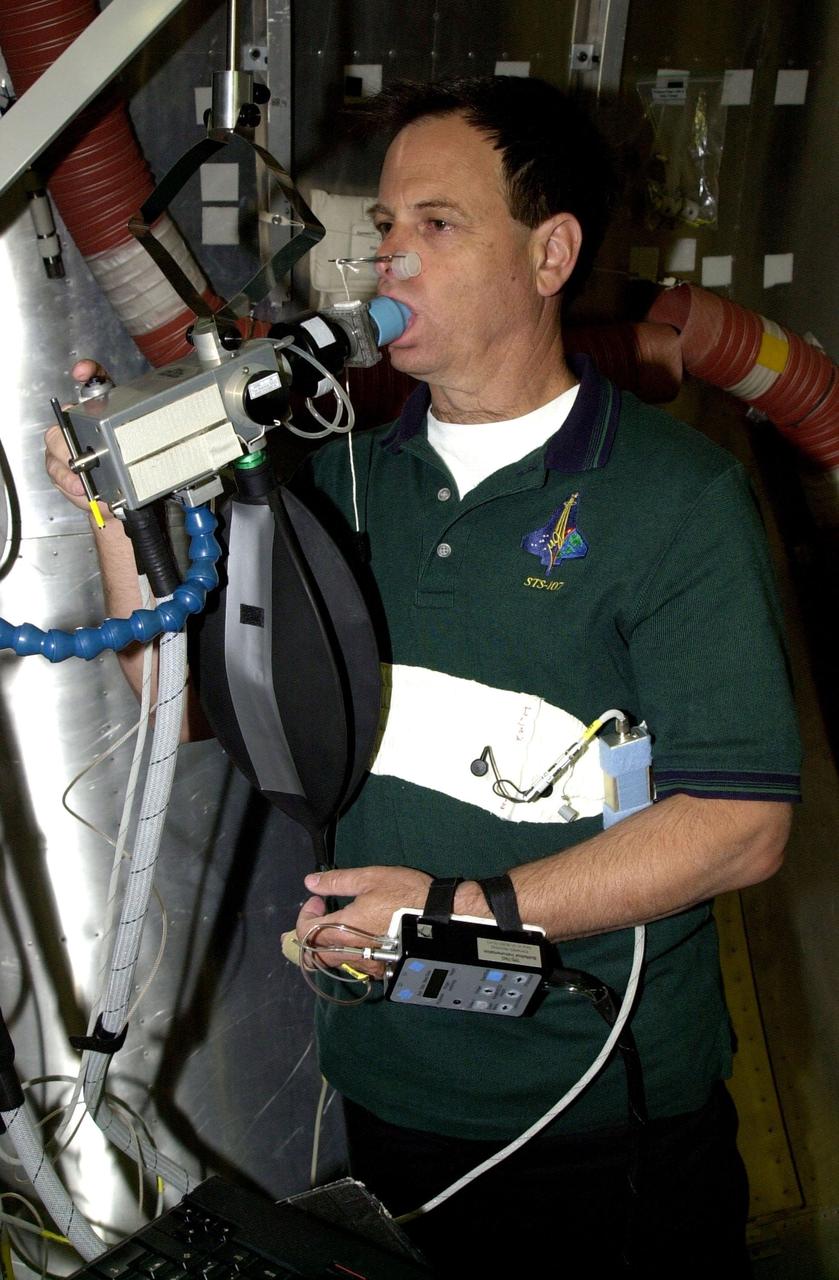
KENNEDY SPACE CENTER, FLA. - STS-107 Payload Specialist Ilan Ramon, from Israel, trains on equipment at SPACEHAB, Cape Canaveral, Fla. STS-107 is a research mission. The primary payload is the first flight of the SHI Research Double Module (SHI/RDM). The experiments range from material sciences to life sciences (many rats). Also part of the payload is the Fast Reaction Experiments Enabling Science, Technology, Applications and Research (FREESTAR) that incorporates eight high priority secondary attached shuttle experiments: Mediterranean Israeli Dust Experiment (MEIDEX), Shuttle Ozone Limb Sounding Experiment (SOLSE-2), Student Tracked Atmospheric Research Satellite for Heuristic International Networking Experiment (STARSHINE), Critical Viscosity of Xenon-2 (CVX-2), Solar Constant Experiment-3 (SOLOCON-3), Prototype Synchrotron Radiation Detector (PSRD), Low Power Transceiver (LPT), and Collisions Into Dust Experiment -2 (COLLIDE-2). STS-107 is scheduled to launch in July 2002
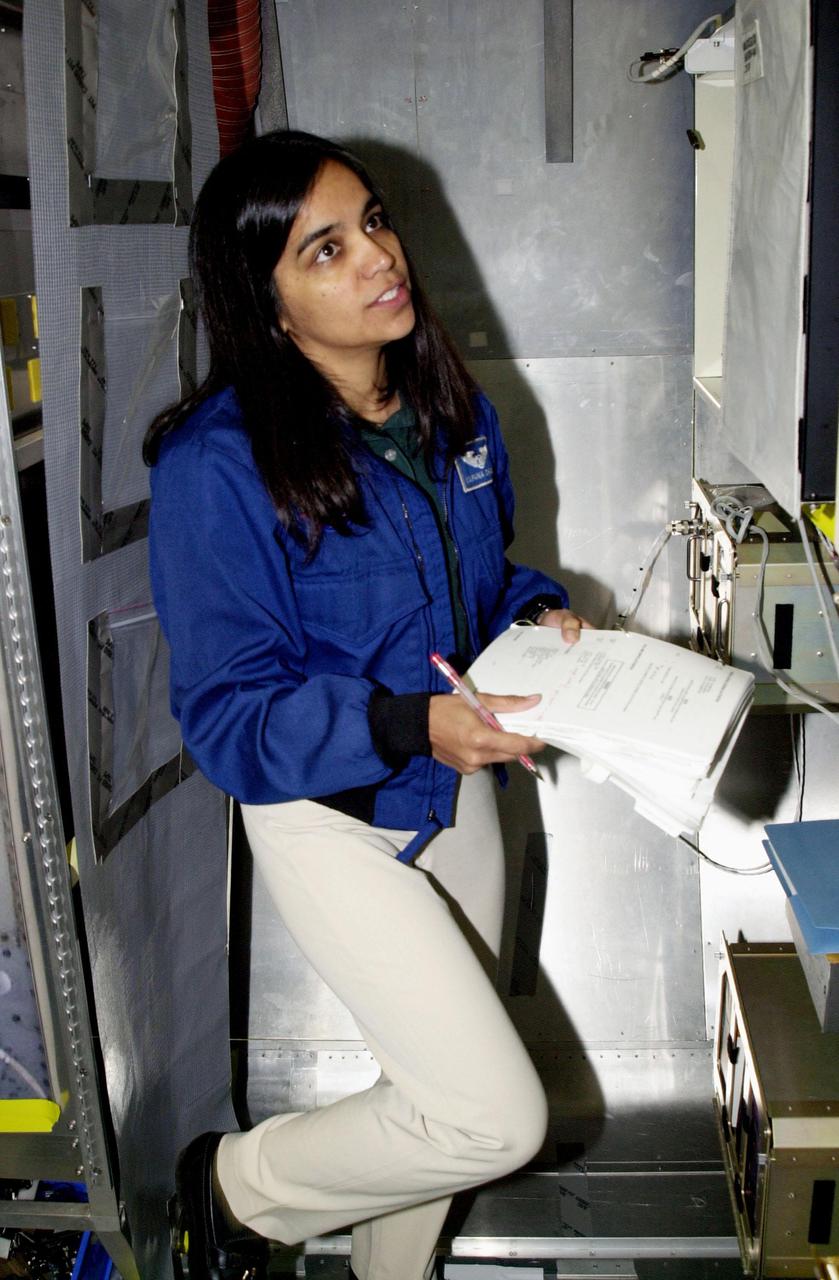
KENNEDY SPACE CENTER, FLA. - STS-107 Mission Specialist Kalpana Chawla looks over equipment at SPACEHAB, Cape Canaveral, Fla., during crew training. STS-107 is a research mission. The primary payload is the first flight of the SHI Research Double Module (SHI_RDM). The experiments range from material sciences to life sciences (many rats). Also part of the payload is the Fast Reaction Experiments Enabling Science, Technology, Applications and Research (FREESTAR) that incorporates eight high priority secondary attached shuttle experiments: Mediterranean Israeli Dust Experiment (MEIDEX), Shuttle Ozone Limb Sounding Experiment (SOLSE-2), Student Tracked Atmospheric Research Satellite for Heuristic International Networking Experiment (STARSHINE), Critical Viscosity of Xenon-2 (CVX-2), Solar Constant Experiment-3 (SOLOCON-3), Prototype Synchrotron Radiation Detector (PSRD), Low Power Transceiver (LPT), and Collisions Into Dust Experiment -2 (COLLIDE-2). STS-107 is scheduled to launch in July 2002
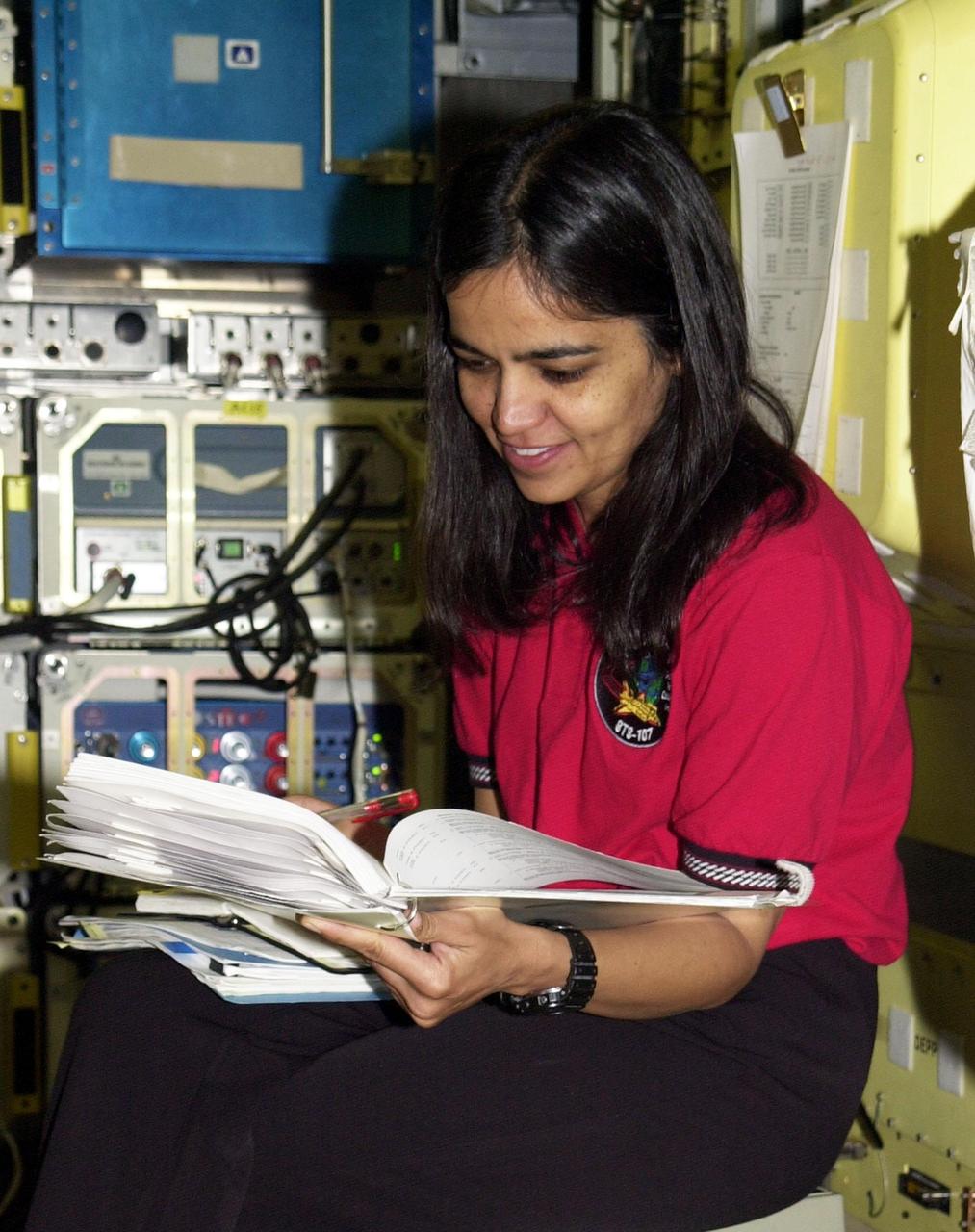
KENNEDY SPACE CENTER, FLA. -- STS-107 Mission Specialist Kalpana Chawla scans paperwork for equipment at SPACEHAB, Cape Canaveral, Fla., during crew training. STS-107 is a research mission. The primary payload is the first flight of the SHI Research Double Module (SHI/RDM). The experiments range from material sciences to life sciences (many rats). Also part of the payload is the Fast Reaction Experiments Enabling Science, Technology, Applications and Research (FREESTAR) that incorporates eight high priority secondary attached shuttle experiments: Mediterranean Israeli Dust Experiment (MEIDEX), Shuttle Ozone Limb Sounding Experiment (SOLSE-2), Student Tracked Atmospheric Research Satellite for Heuristic International Networking Experiment (STARSHINE), Critical Viscosity of Xenon-2 (CVX-2), Solar Constant Experiment-3 (SOLOCON-3), Prototype Synchrotron Radiation Detector (PSRD), Low Power Transceiver (LPT), and Collisions Into Dust Experiment -2 (COLLIDE-2). STS-107 is scheduled to launch in July 2002
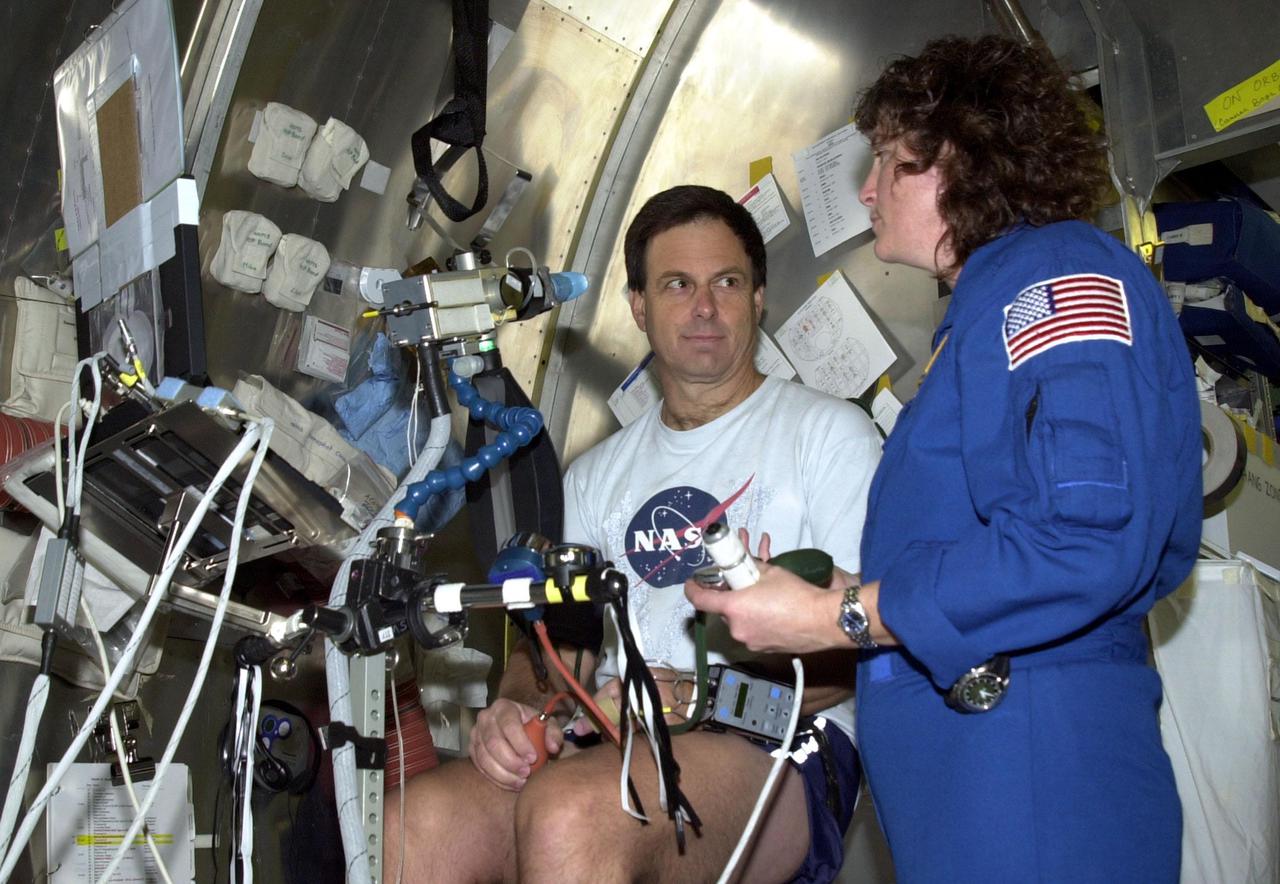
KENNEDY SPACE CENTER, FLA. - STS-107 Payload Specialist Ilan Ramon, from Israel, pauses during an experiment at SPACEHAB, Cape Canaveral, Fla., to talk with Mission Specialist Laurel Clark. STS-107 is a research mission. The primary payload is the first flight of the SHI Research Double Module (SHI_RDM). The experiments range from material sciences to life sciences (many rats). Also part of the payload is the Fast Reaction Experiments Enabling Science, Technology, Applications and Research (FREESTAR) that incorporates eight high priority secondary attached shuttle experiments: Mediterranean Israeli Dust Experiment (MEIDEX), Shuttle Ozone Limb Sounding Experiment (SOLSE-2), Student Tracked Atmospheric Research Satellite for Heuristic International Networking Experiment (STARSHINE), Critical Viscosity of Xenon-2 (CVX-2), Solar Constant Experiment-3 (SOLOCON-3), Prototype Synchrotron Radiation Detector (PSRD), Low Power Transceiver (LPT), and Collisions Into Dust Experiment -2 (COLLIDE-2). STS-107 is scheduled to launch in July 2002.
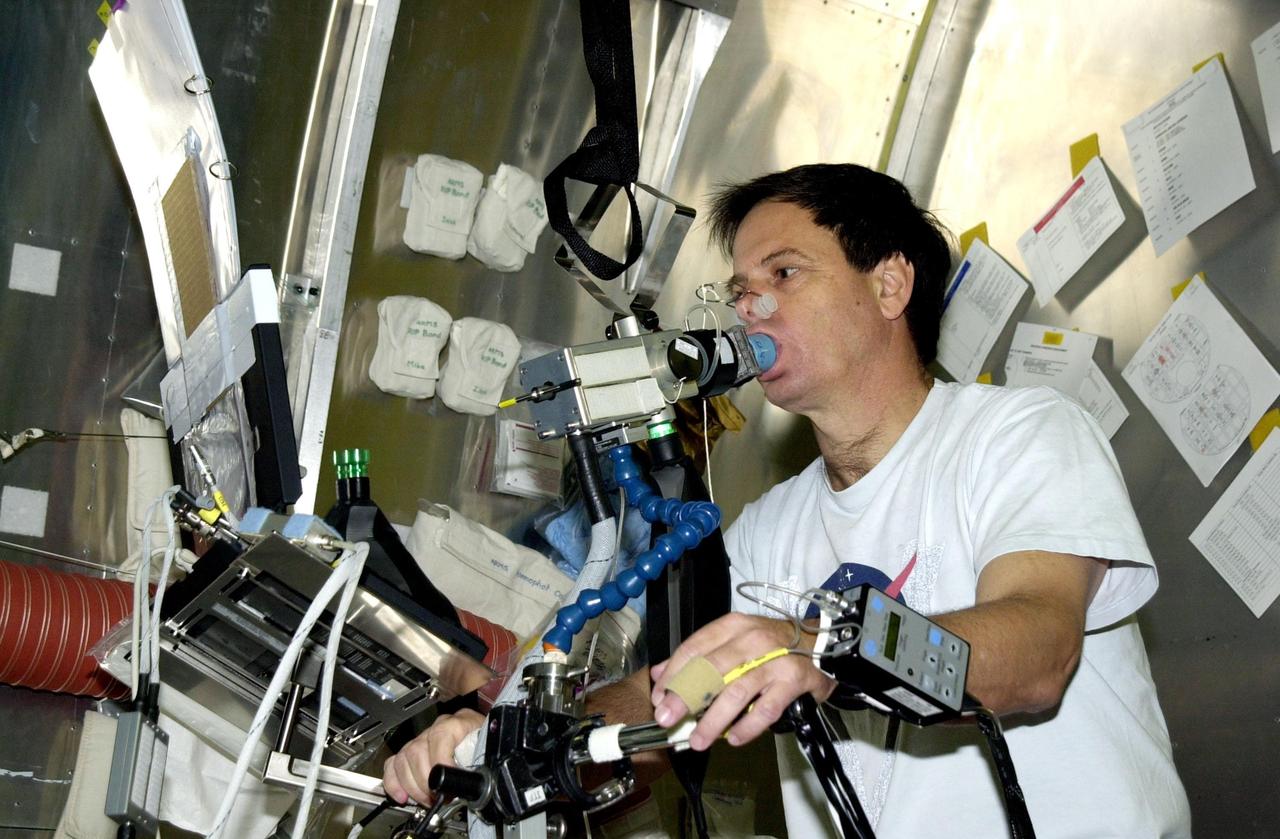
KENNEDY SPACE CENTER, FLA. - - STS-107 Payload Specialist Ilan Ramon, from Israel, works on an experiment at SPACEHAB, Cape Canaveral, Fla. With him is Mission Specialist Laurel Clark. STS-107 is a research mission. The primary payload is the first flight of the SHI Research Double Module (SHI/RDM). The experiments range from material sciences to life sciences (many rats). Also part of the payload is the Fast Reaction Experiments Enabling Science, Technology, Applications and Research (FREESTAR) that incorporates eight high priority secondary attached shuttle experiments: Mediterranean Israeli Dust Experiment (MEIDEX), Shuttle Ozone Limb Sounding Experiment (SOLSE-2), Student Tracked Atmospheric Research Satellite for Heuristic International Networking Experiment (STARSHINE), Critical Viscosity of Xenon-2 (CVX-2), Solar Constant Experiment-3 (SOLOCON-3), Prototype Synchrotron Radiation Detector (PSRD), Low Power Transceiver (LPT), and Collisions Into Dust Experiment -2 (COLLIDE-2). STS-107 is scheduled to launch in July 2002