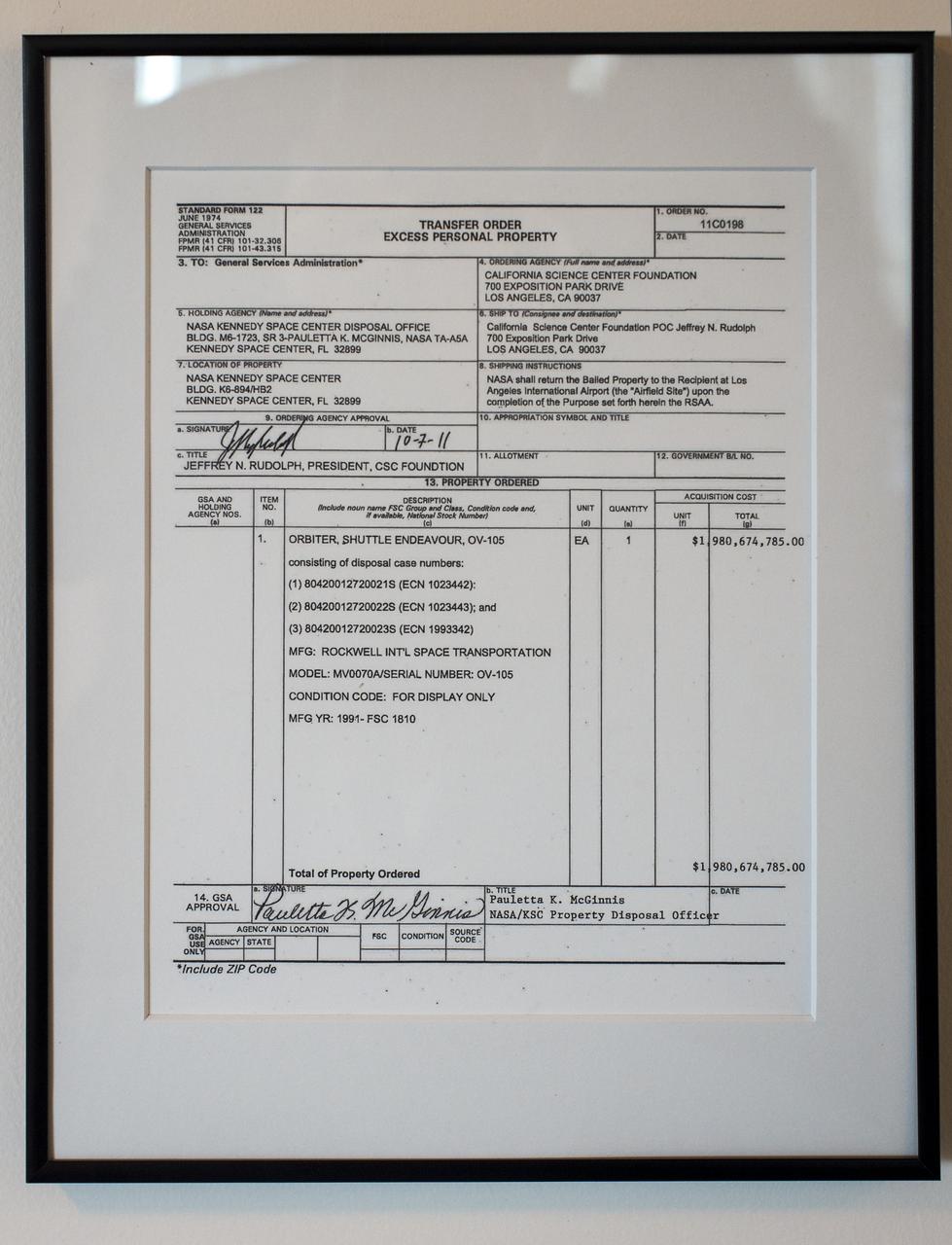
A government Transfer Order for Excess Personal Property is seen framed outside the office of President and CEO, California Science Center, Jeffrey N. Rudolph, on Tuesday, Oct. 30, 2012, in Los Angeles. The grand opening ceremony for the California Science center's Samuel Oschin Space Shuttle Endeavour Display Pavilion took place on Tuesday, Oct. 30, 2012. Endeavour, built as a replacement for space shuttle Challenger, completed 25 missions, spent 299 days in orbit, and orbited Earth 4,671 times while traveling 122,883,151 miles. Photo Credit: (NASA/Bill Ingalls)
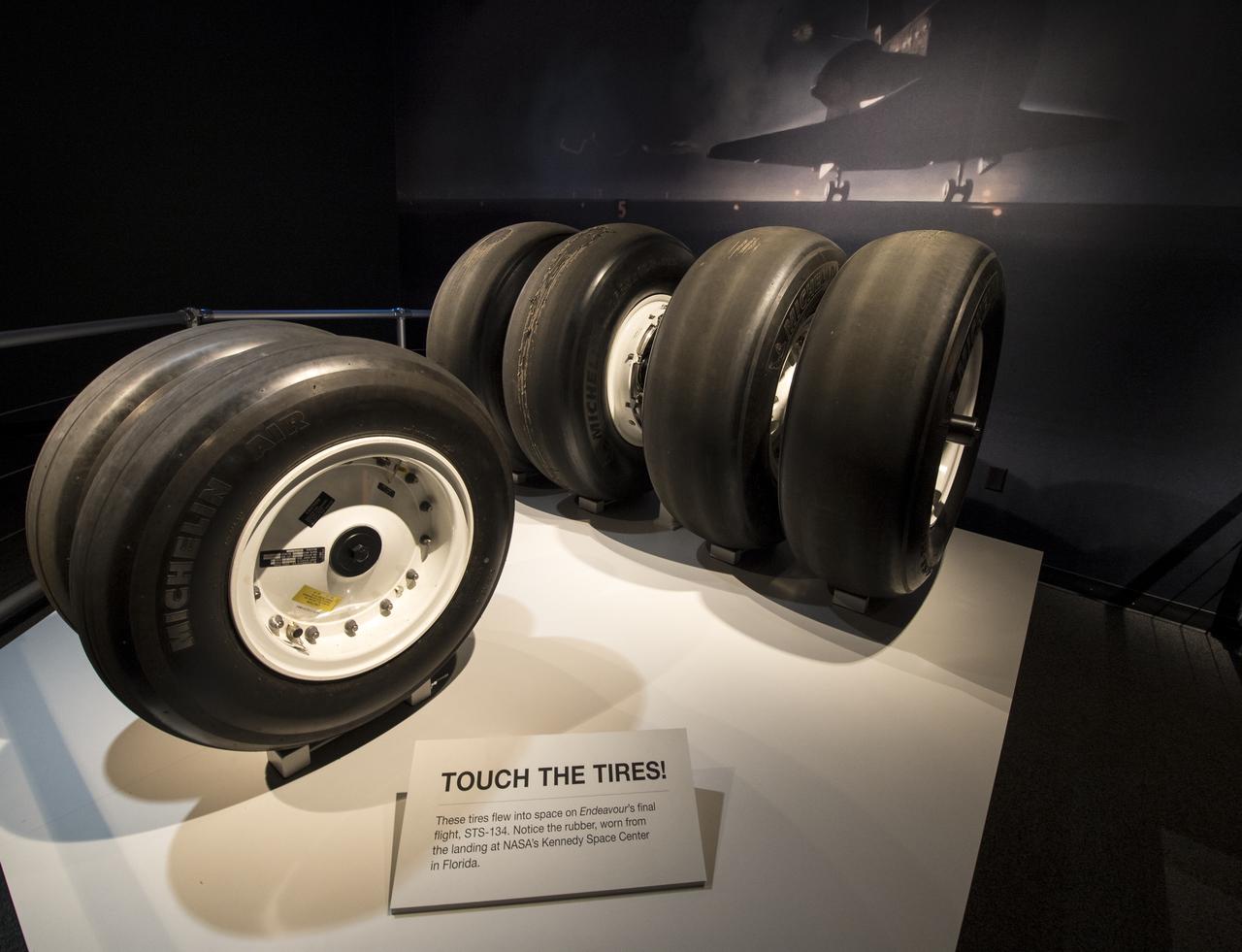
Tires from space shuttle Endeavour's final flight are on display at the California Science Center's, California Experience gallery, Tuesday, Oct. 30, 2012, in Los Angeles. The grand opening ceremony for the California Science center's Samuel Oschin Space Shuttle Endeavour Display Pavilion took place on Tuesday, Oct. 30, 2012. Endeavour, built as a replacement for space shuttle Challenger, completed 25 missions, spent 299 days in orbit, and orbited Earth 4,671 times while traveling 122,883,151 miles. Photo Credit: (NASA/Bill Ingalls)
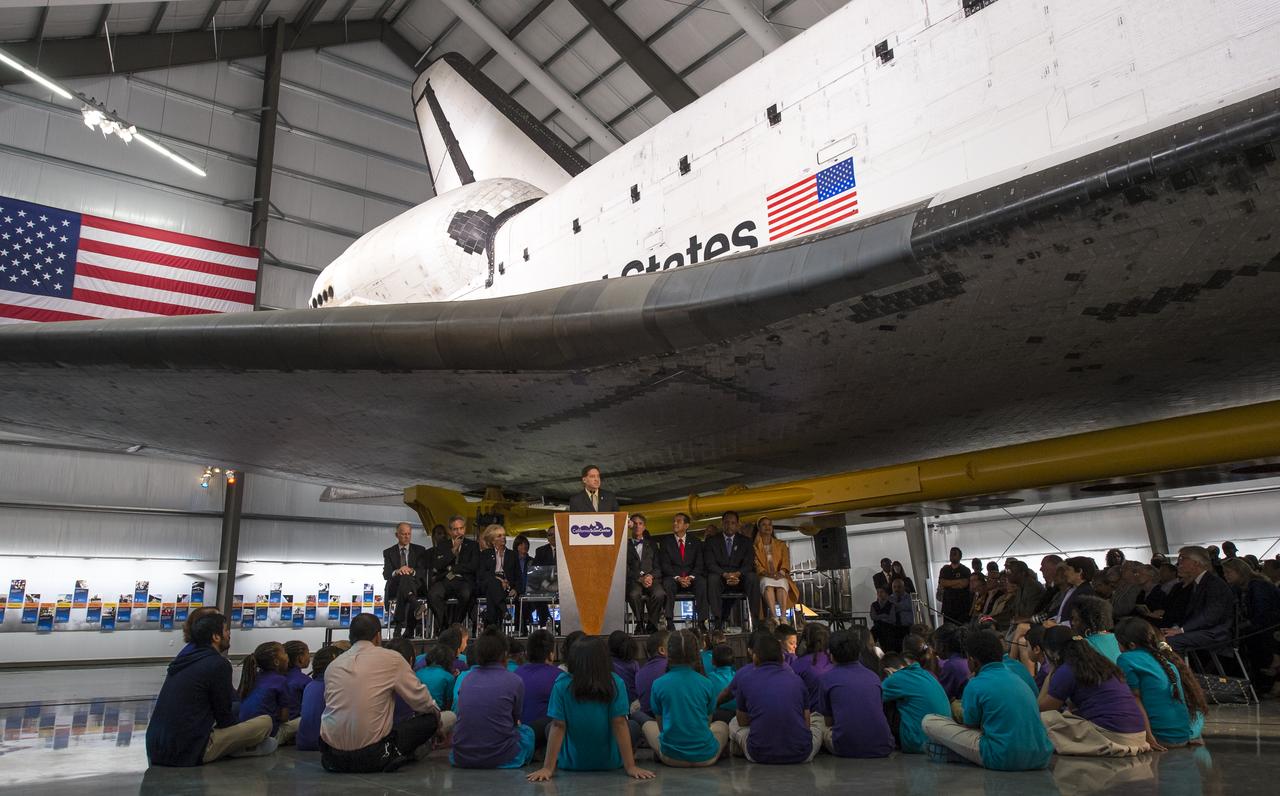
President and CEO of the California Science Center Jeffrey N. Rudolph speaks from a podium underneath the space shuttle Endeavour during the grand opening ceremony for the center's Samuel Oschin Space Shuttle Endeavour Display Pavilion, Tuesday, Oct. 30, 2012, in Los Angeles. Endeavour, built as a replacement for space shuttle Challenger, completed 25 missions, spent 299 days in orbit, and orbited Earth 4,671 times while traveling 122,883,151 miles. Photo Credit: (NASA/Bill Ingalls)
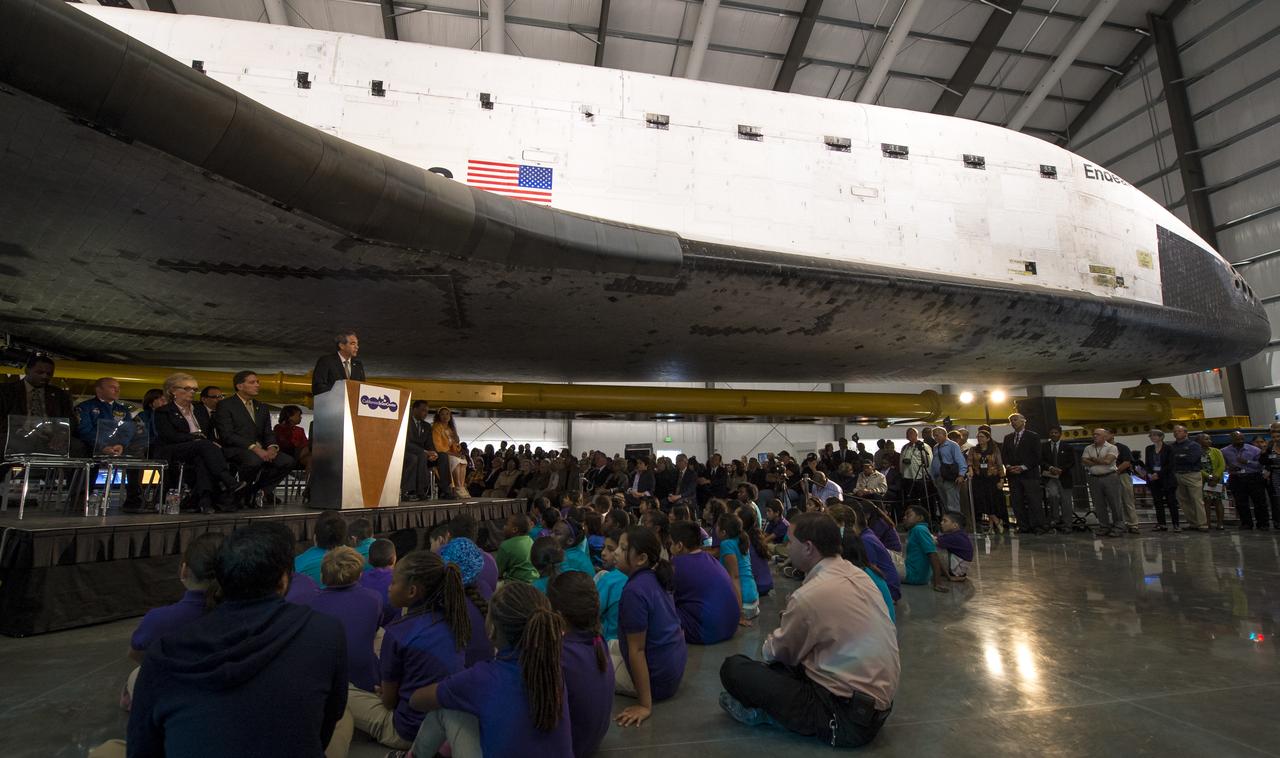
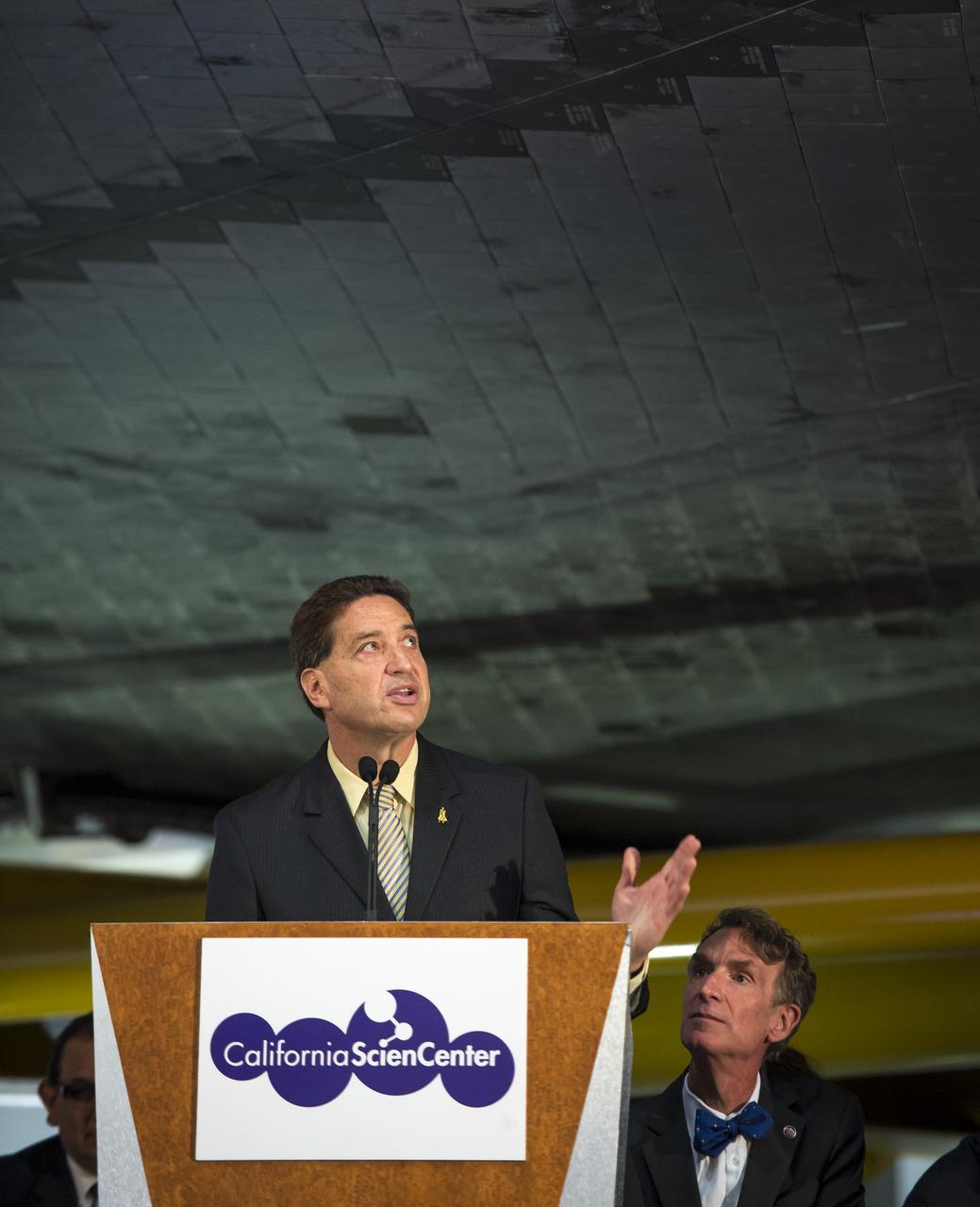
David D. McBride, director of NASA's Dryden Flight Research Center, speaks from a podium underneath the space shuttle Endeavour during the grand opening ceremony for the California Science center's Samuel Oschin Space Shuttle Endeavour Display Pavilion, Tuesday, Oct. 30, 2012, in Los Angeles. Endeavour, built as a replacement for space shuttle Challenger, completed 25 missions, spent 299 days in orbit, and orbited Earth 4,671 times while traveling 122,883,151 miles. Photo Credit: (NASA/Bill Ingalls)
President and CEO of the California Science Center Jeffrey N. Rudolph speaks from a podium underneath the space shuttle Endeavour during the grand opening ceremony for the center's Samuel Oschin Space Shuttle Endeavour Display Pavilion, Tuesday, Oct. 30, 2012, in Los Angeles. Endeavour, built as a replacement for space shuttle Challenger, completed 25 missions, spent 299 days in orbit, and orbited Earth 4,671 times while traveling 122,883,151 miles. Photo Credit: (NASA/Bill Ingalls)
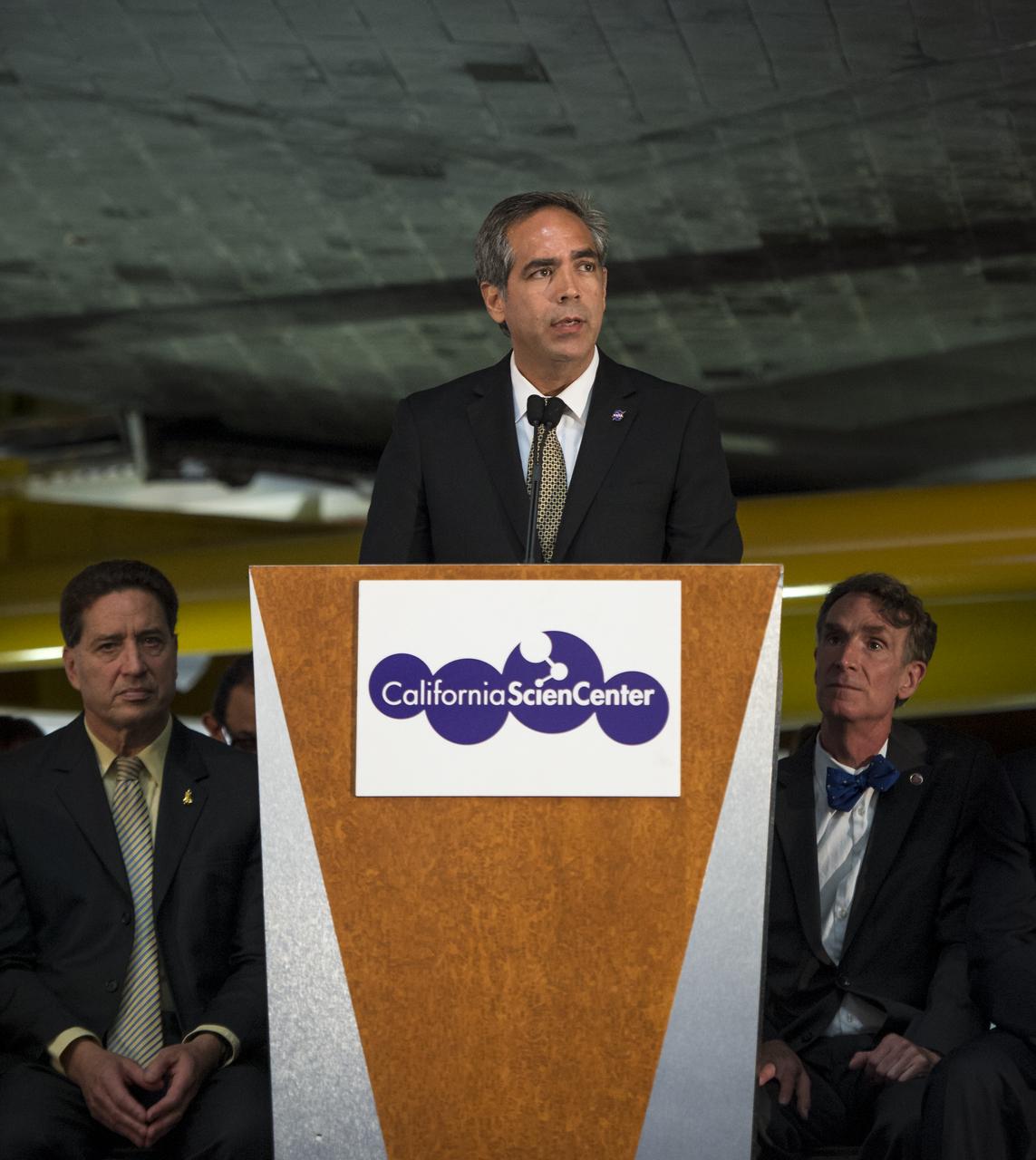
David D. McBride, director of NASA's Dryden Flight Research Center, speaks from a podium underneath the space shuttle Endeavour during the grand opening ceremony for the California Science center's Samuel Oschin Space Shuttle Endeavour Display Pavilion, Tuesday, Oct. 30, 2012, in Los Angeles. Endeavour, built as a replacement for space shuttle Challenger, completed 25 missions, spent 299 days in orbit, and orbited Earth 4,671 times while traveling 122,883,151 miles. Photo Credit: (NASA/Bill Ingalls)
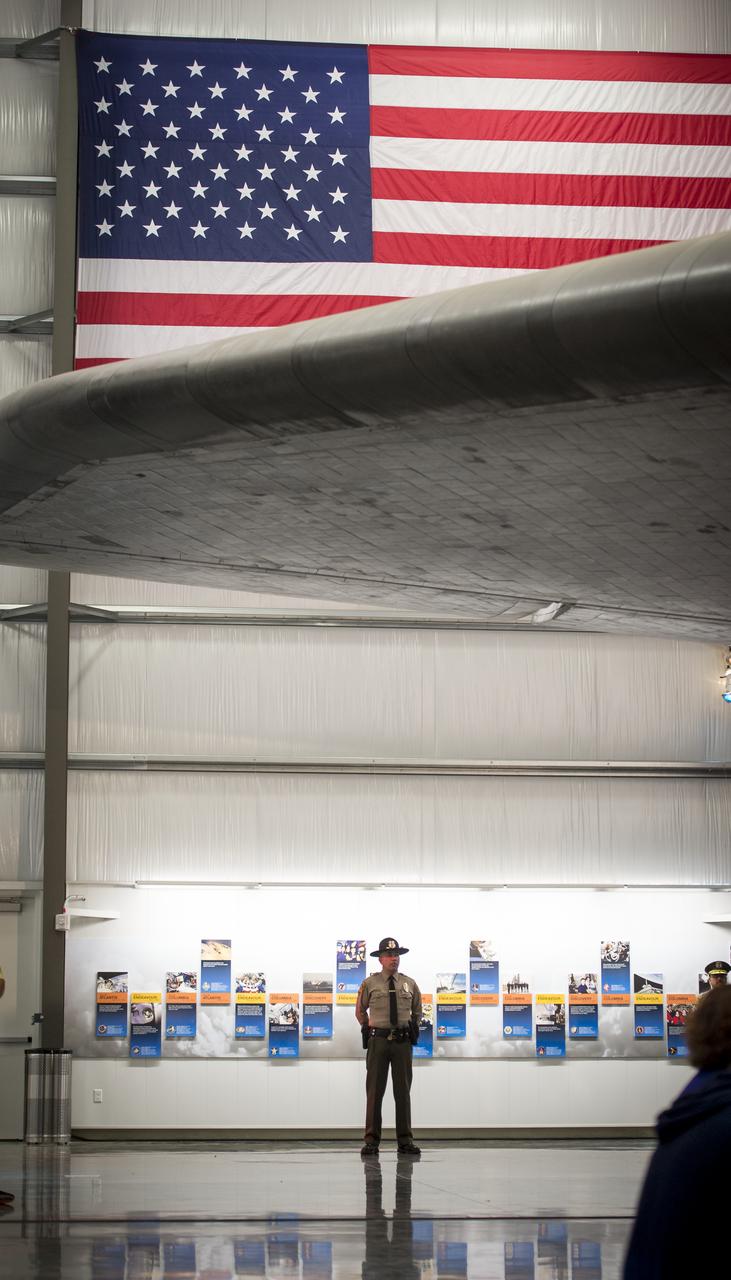
A police officer is seen underneath the wing of the space shuttle Endeavour during the grand opening ceremony for the California Science center's Samuel Oschin Space Shuttle Endeavour Display Pavilion, Tuesday, Oct. 30, 2012, in Los Angeles. Endeavour, built as a replacement for space shuttle Challenger, completed 25 missions, spent 299 days in orbit, and orbited Earth 4,671 times while traveling 122,883,151 miles. Photo Credit: (NASA/Bill Ingalls)
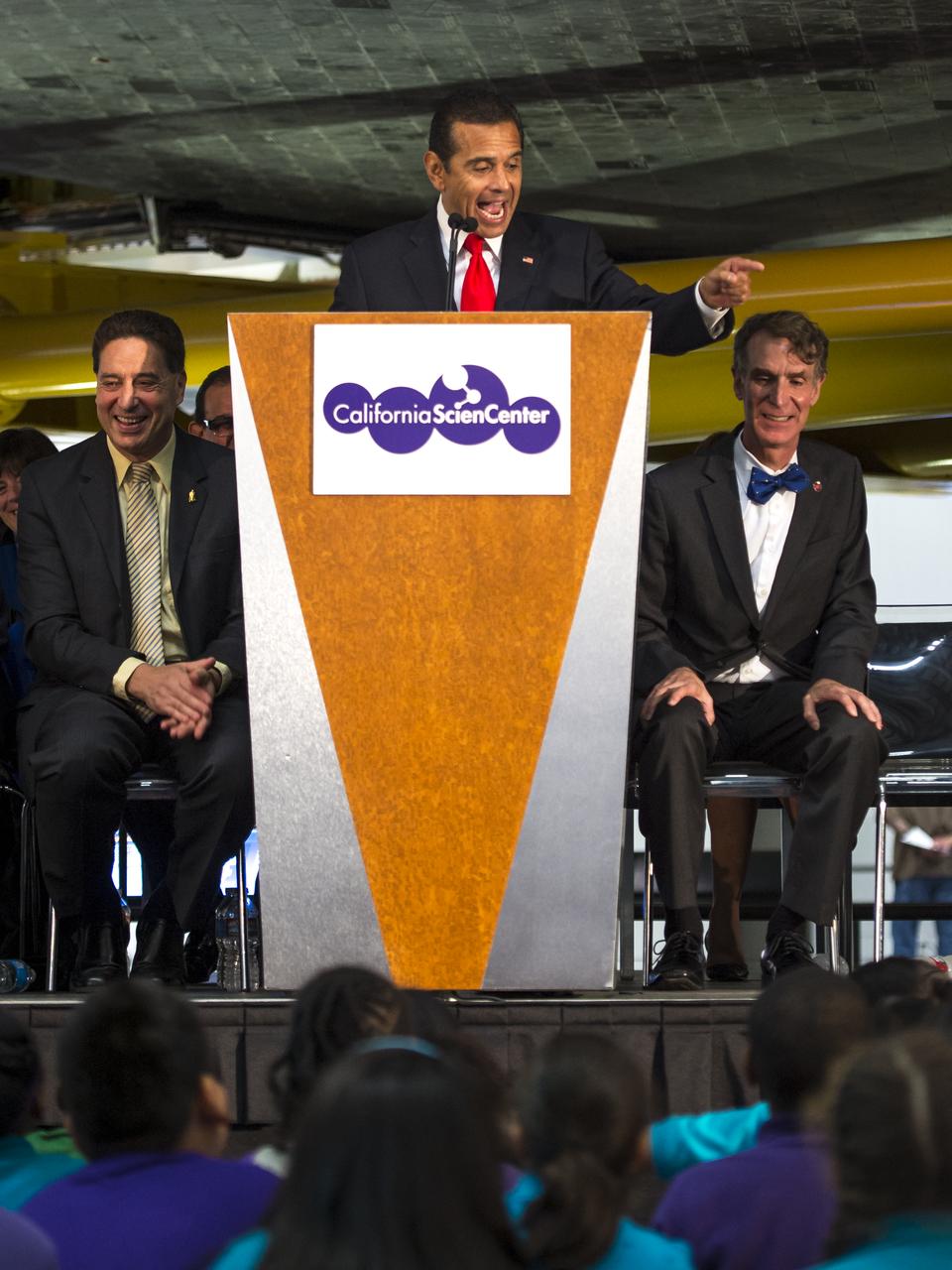
Mayor of Los Angeles Antonio Villaraigosa addresses a class of fourth graders during the grand opening ceremony for the California Science center's Samuel Oschin Space Shuttle Endeavour Display Pavilion, Tuesday, Oct. 30, 2012, in Los Angeles. Endeavour, built as a replacement for space shuttle Challenger, completed 25 missions, spent 299 days in orbit, and orbited Earth 4,671 times while traveling 122,883,151 miles. Photo Credit: (NASA/Bill Ingalls)
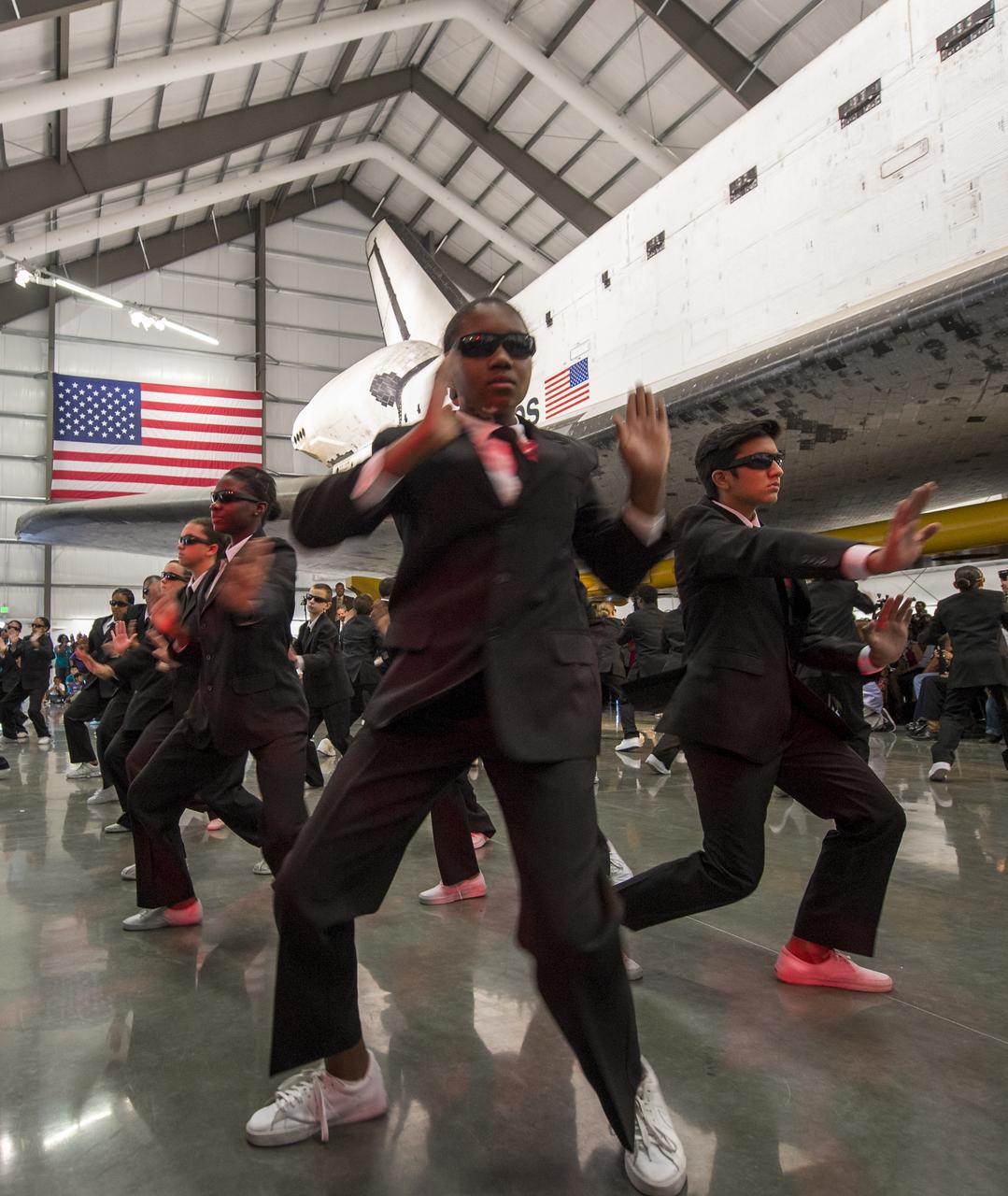
Members of the Debbie Allen Dance Academy perform “Men in Black” choreographed by the legendary Debbie Allen during the grand opening ceremony for the California Science center's Samuel Oschin Space Shuttle Endeavour Display Pavilion, Tuesday, Oct. 30, 2012, in Los Angeles. Endeavour, built as a replacement for space shuttle Challenger, completed 25 missions, spent 299 days in orbit, and orbited Earth 4,671 times while traveling 122,883,151 miles. Photo Credit: (NASA/Bill Ingalls)
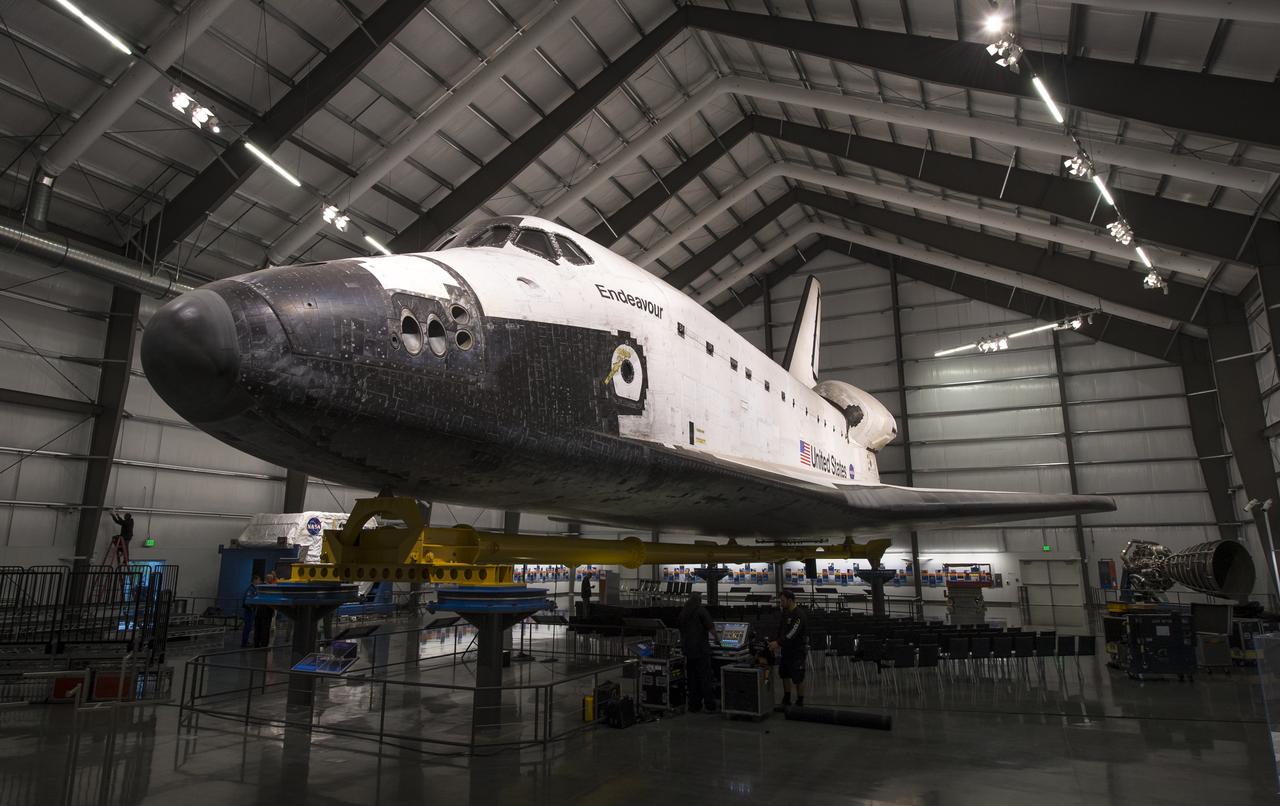
The space shuttle Endeavour is seen as workers prepare for the grand opening ceremony for the California Science center's Samuel Oschin Space Shuttle Endeavour Display Pavilion, Tuesday, Oct. 30, 2012, in Los Angeles. Endeavour, built as a replacement for space shuttle Challenger, completed 25 missions, spent 299 days in orbit, and orbited Earth 4,671 times while traveling 122,883,151 miles. Photo Credit: (NASA/Bill Ingalls)
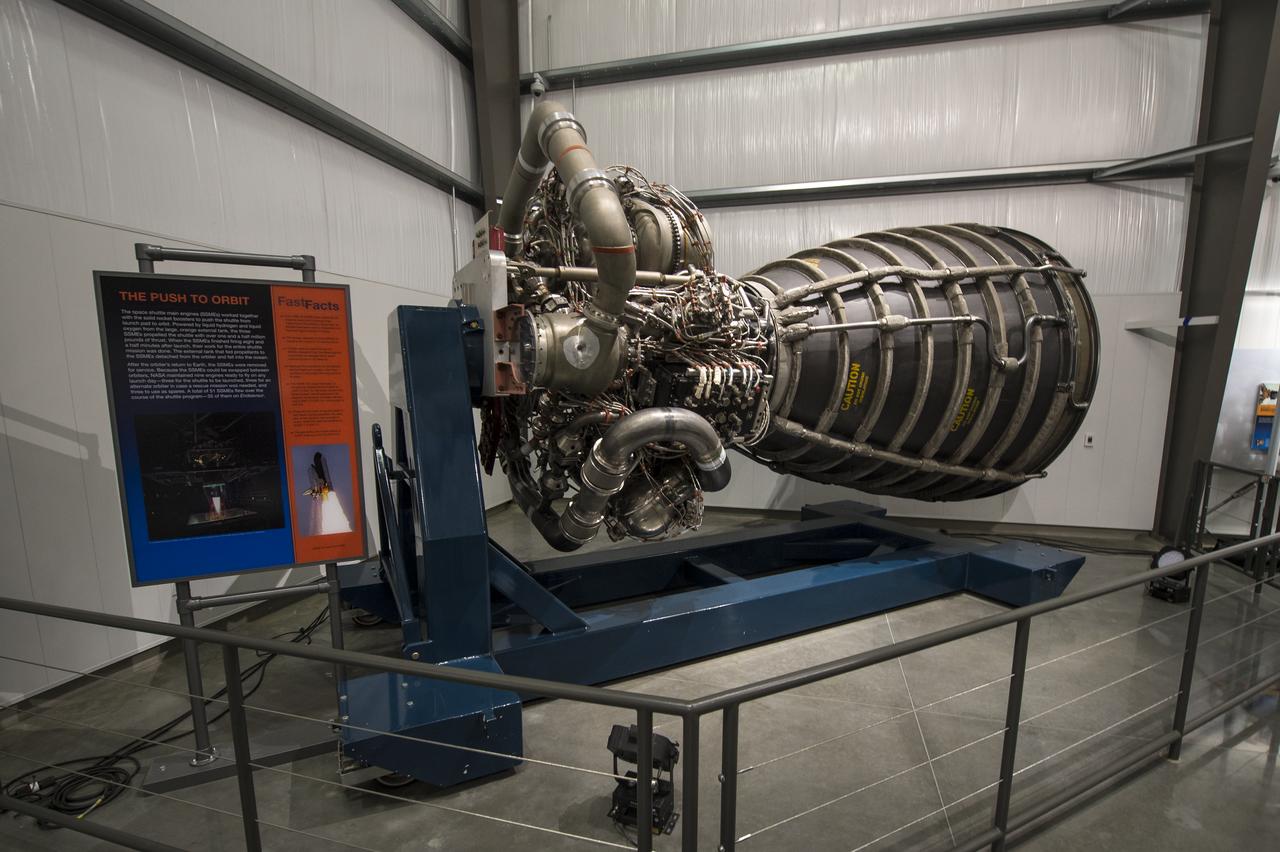
A space shuttle main engine (SSME) is on display near the space shuttle Endeavour at the California Science center's Samuel Oschin Space Shuttle Endeavour Display Pavilion, Tuesday, Oct. 30, 2012, in Los Angeles. Endeavour, built as a replacement for space shuttle Challenger, completed 25 missions, spent 299 days in orbit, and orbited Earth 4,671 times while traveling 122,883,151 miles. Photo Credit: (NASA/Bill Ingalls)
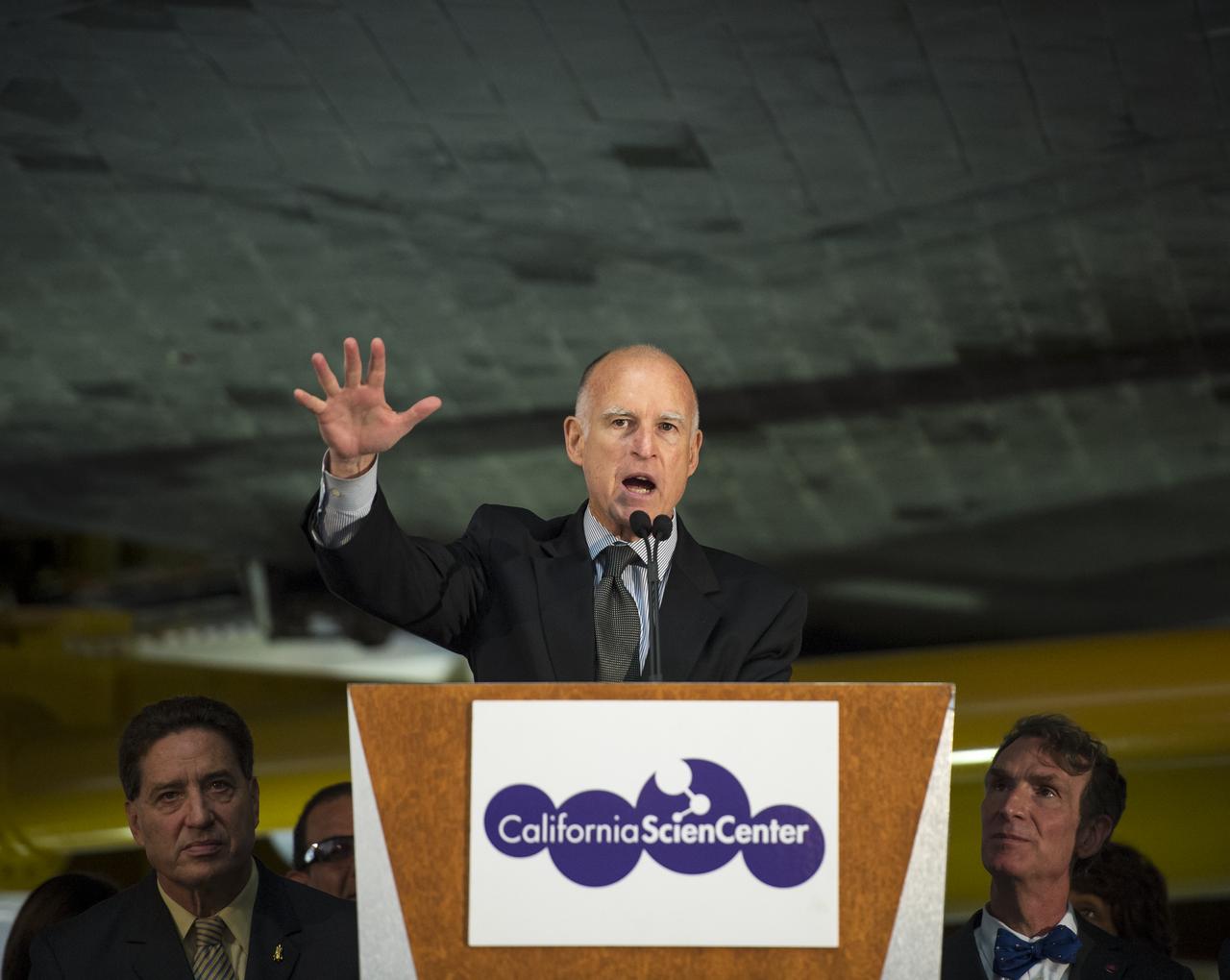
California Governor Jerry Brown speaks from a podium underneath the space shuttle Endeavour during the grand opening ceremony for the California Science center's Samuel Oschin Space Shuttle Endeavour Display Pavilion, Tuesday, Oct. 30, 2012, in Los Angeles. Endeavour, built as a replacement for space shuttle Challenger, completed 25 missions, spent 299 days in orbit, and orbited Earth 4,671 times while traveling 122,883,151 miles. Photo Credit: (NASA/Bill Ingalls)
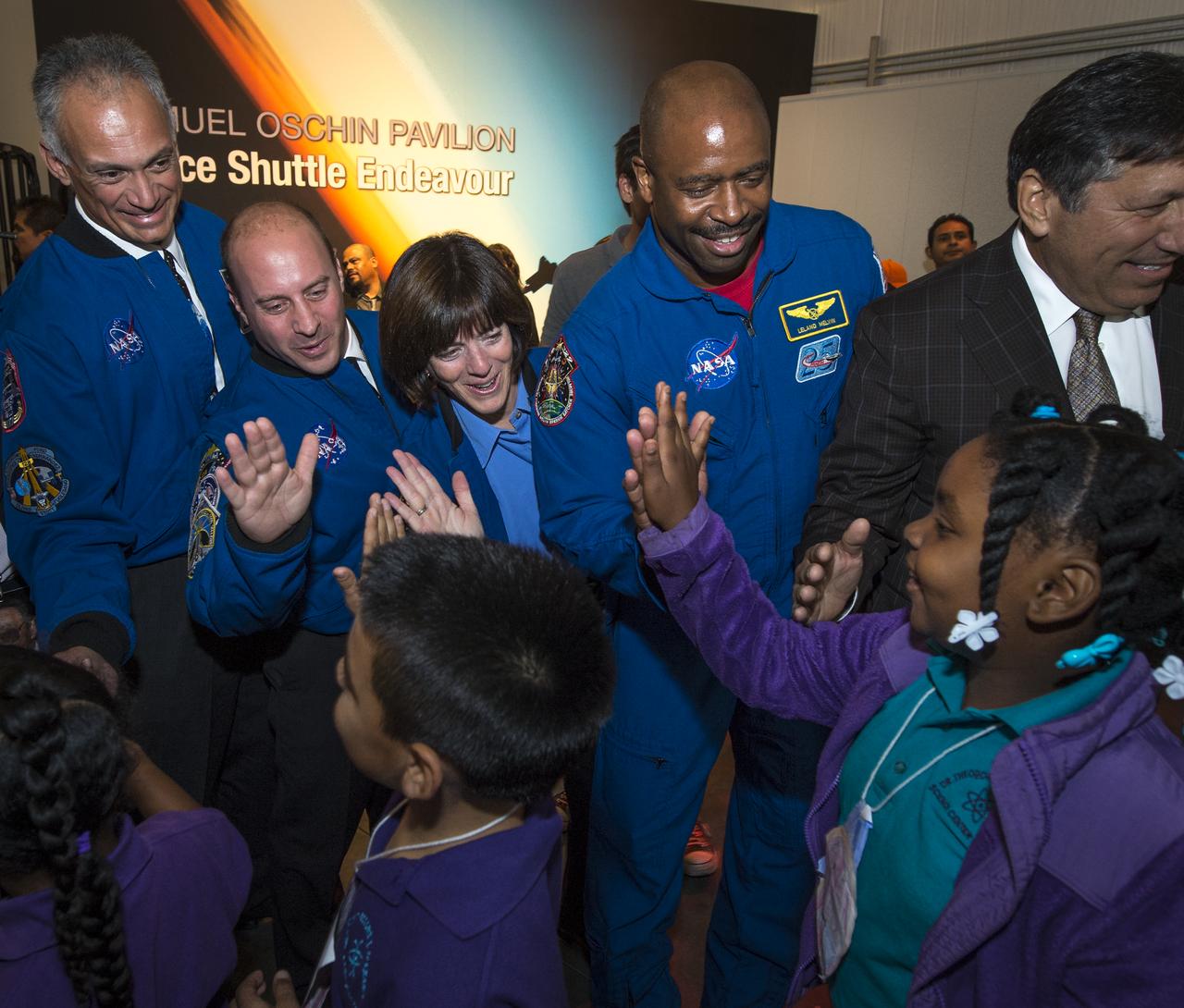
NASA Astronauts, from left, Danny Olivas, Garrett Reisman, Barbara Morgan, and, NASA Associate Administrator for Education and Astronaut, Leland Melvin give high fives to school children as they enter the California Science center's Samuel Oschin Space Shuttle Endeavour Display Pavilion, Tuesday, Oct. 30, 2012, in Los Angeles. Endeavour, built as a replacement for space shuttle Challenger, completed 25 missions, spent 299 days in orbit, and orbited Earth 4,671 times while traveling 122,883,151 miles. Photo Credit: (NASA/Bill Ingalls)
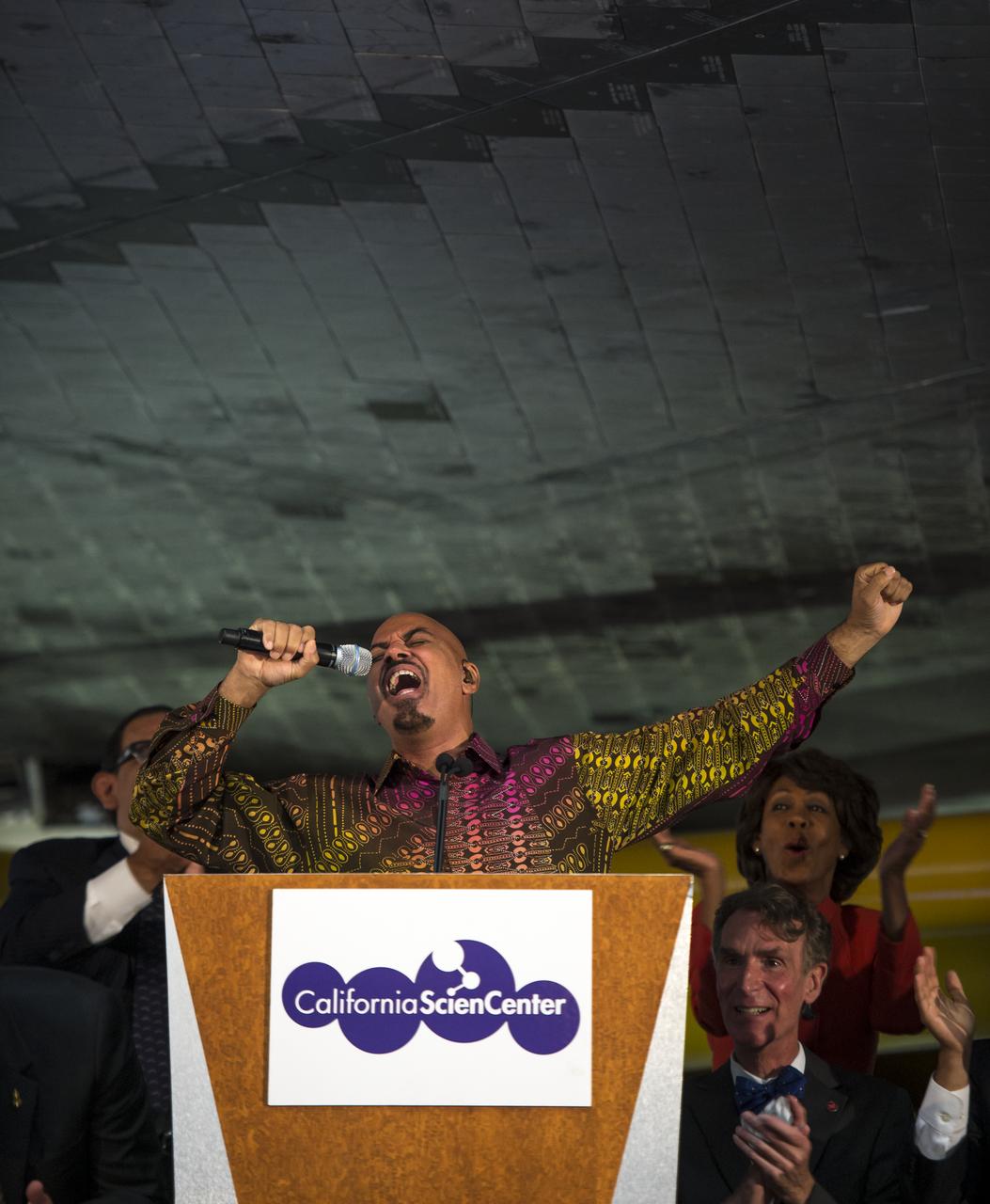
Vocalist James Ingram sings "I Believe I Can Fly" from underneath the space shuttle Endeavour during the grand opening ceremony for the California Science center's Samuel Oschin Space Shuttle Endeavour Display Pavilion, Tuesday, Oct. 30, 2012, in Los Angeles. Endeavour, built as a replacement for space shuttle Challenger, completed 25 missions, spent 299 days in orbit, and orbited Earth 4,671 times while traveling 122,883,151 miles. Photo Credit: (NASA/Bill Ingalls)
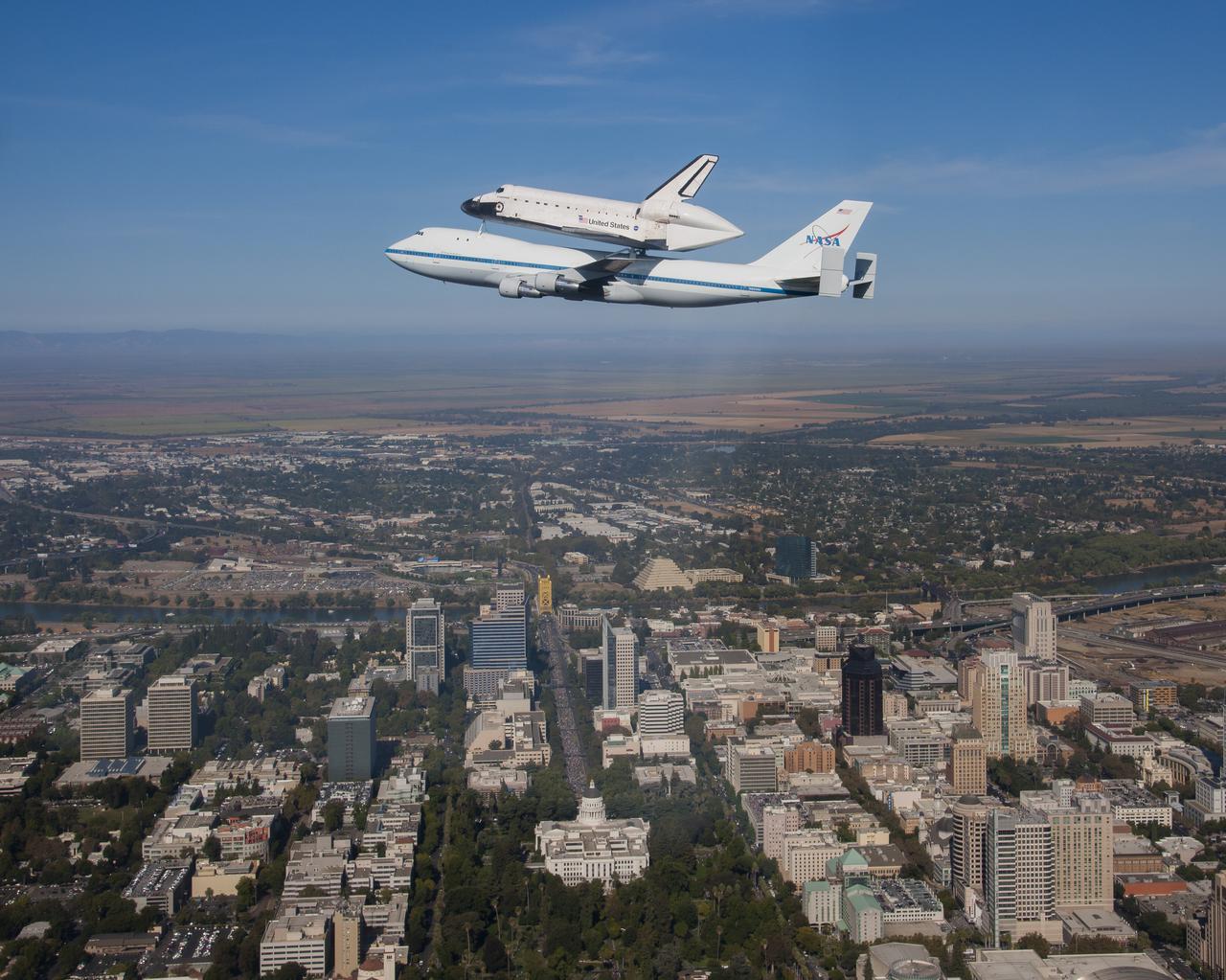
Shuttle Endeavour was ferried to Los Angeles, briefly flying over the California state capitol, Sacramento, then demated from its NASA 747 and trailered to the California Science Center.
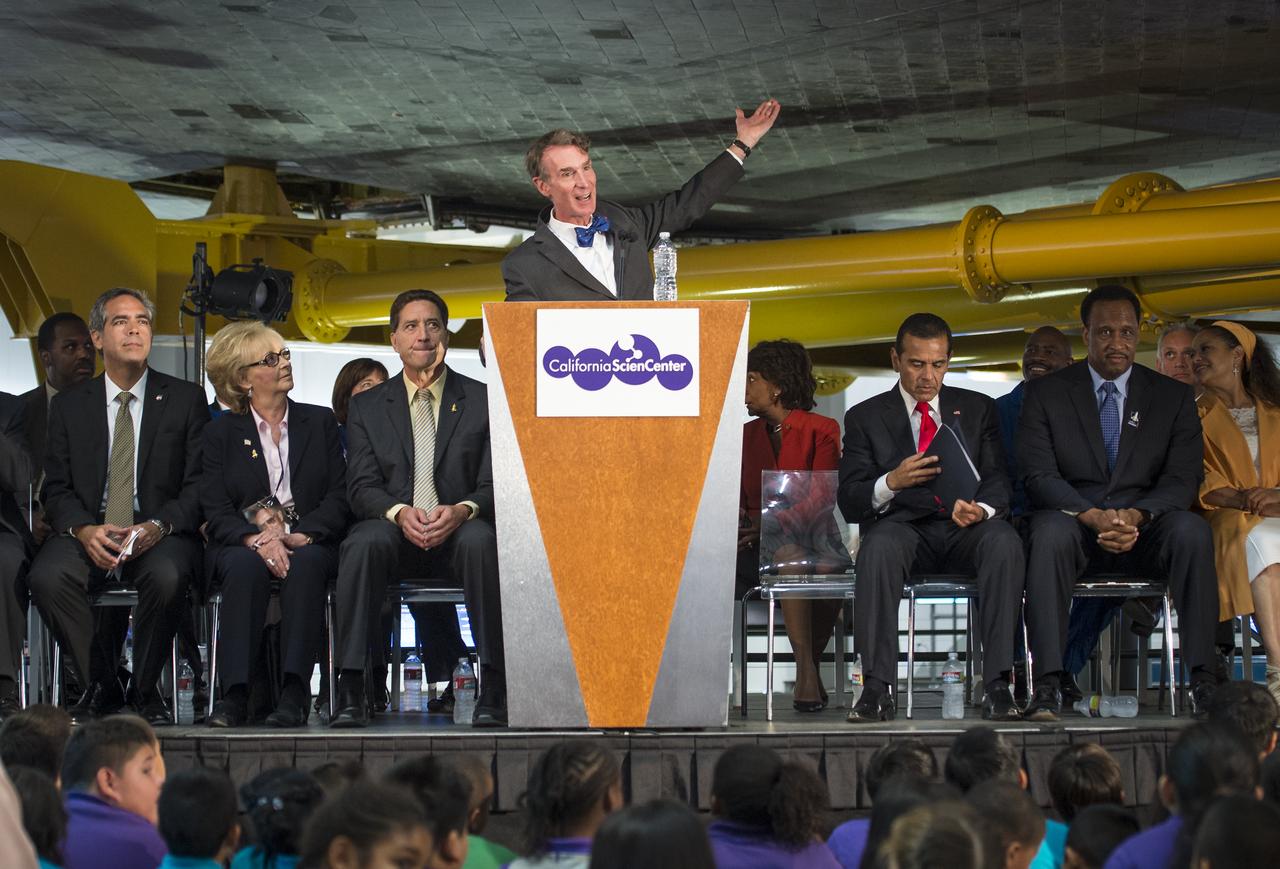
Chief Executive Officer of the Planetary Society, Bill Nye "The Science Guy", acts as emcee from a podium underneath the space shuttle Endeavour during the grand opening ceremony for the center's Samuel Oschin Space Shuttle Endeavour Display Pavilion, Tuesday, Oct. 30, 2012, in Los Angeles. Endeavour, built as a replacement for space shuttle Challenger, completed 25 missions, spent 299 days in orbit, and orbited Earth 4,671 times while traveling 122,883,151 miles. Photo Credit: (NASA/Bill Ingalls)
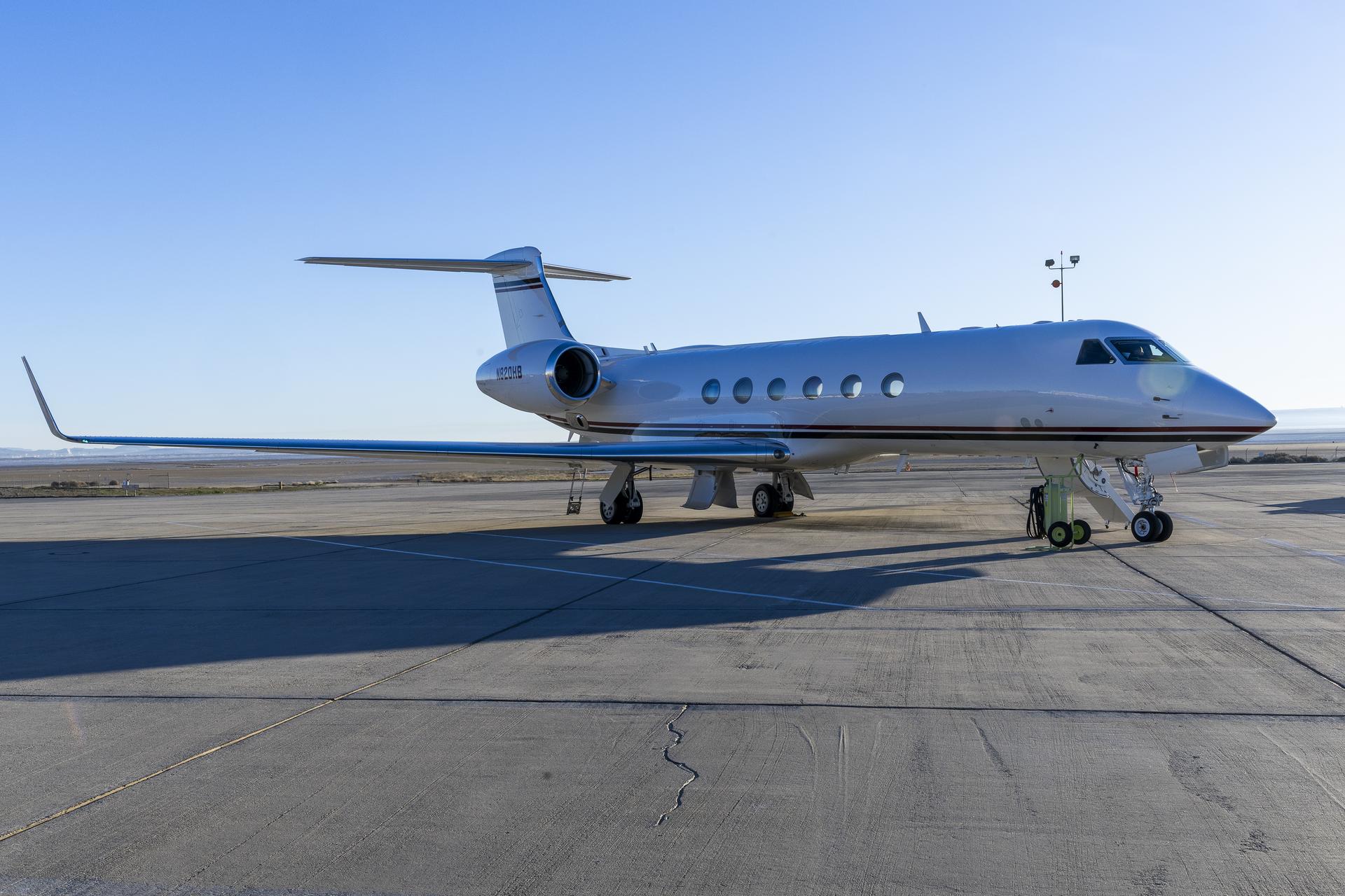
A Gulfstream GV aircraft sits on the ramp at NASA’s Armstrong Flight Research Center in Edwards, California, on Tuesday, Jan. 13, 2026. This aircraft is being modified to support the Airborne Science Program.
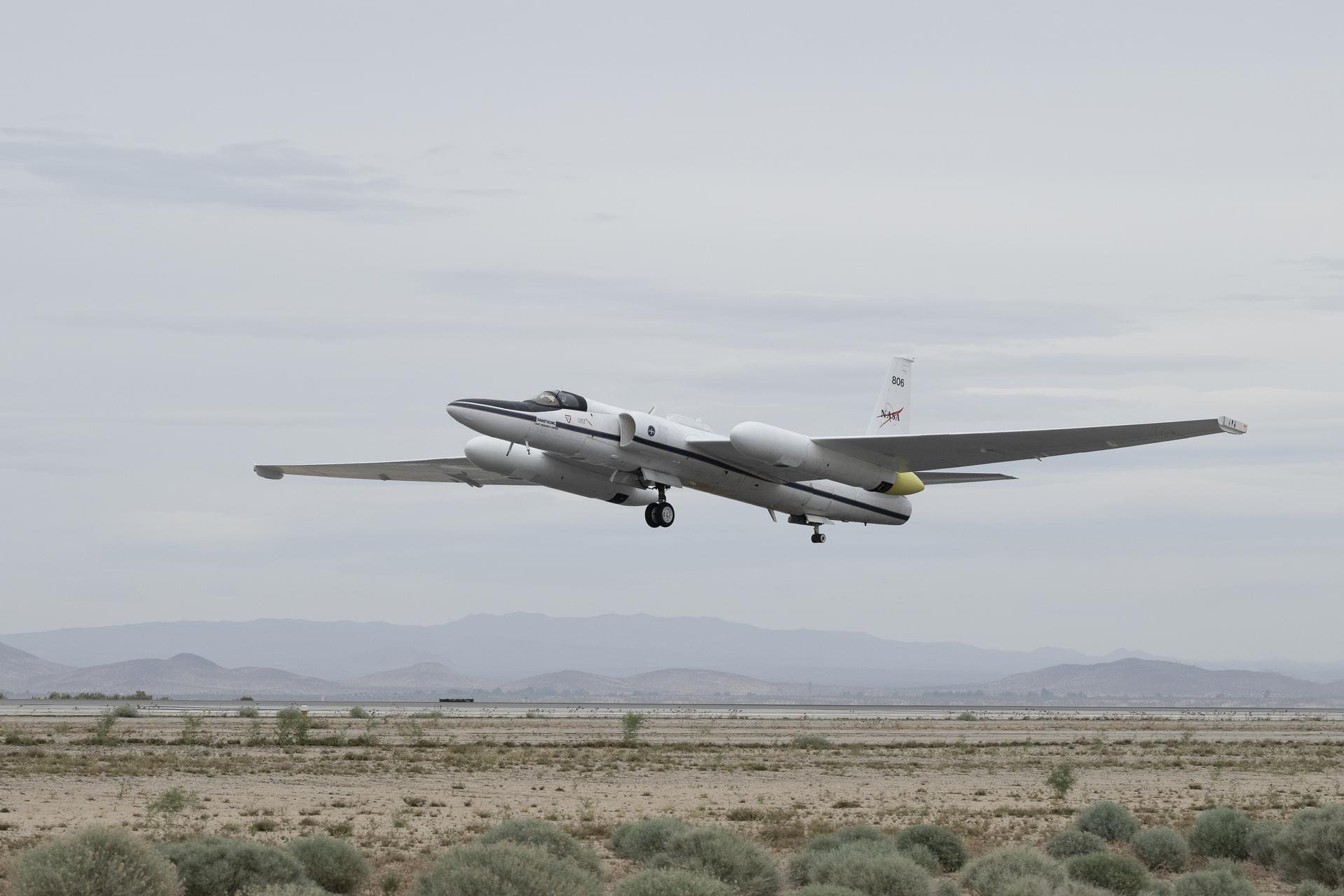
A NASA ER-2 aircraft takes off from NASA’s Armstrong Flight Research Center in Edwards, California, on Tuesday, March 31, 2026, to support the Geological Earth Mapping Experiment (GEMx) airborne science mission.
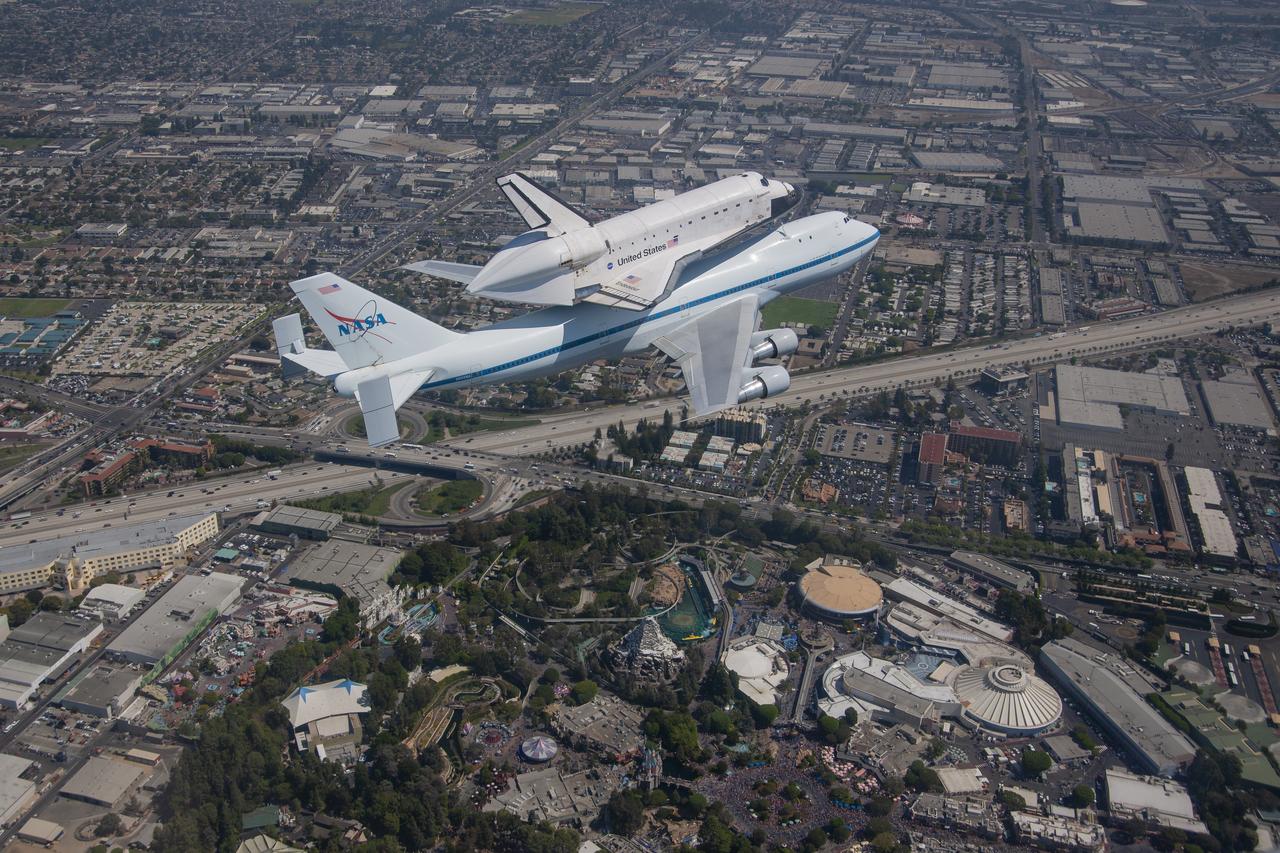
Space shuttle Endeavour and its host NASA 747 Shuttle Carrier Aircraft fly over Disneyland in 2012 on its way to the Los Angeles International Airport, and an overland journey to the California Science Center. Californians gazed at the morning sky Sept. 21 looking to see Endeavour over their community. The final leg of Endeavour’s flight from NASA’s Kennedy Space Center, Florida, offered many people an opportunity to witness the historic flight.
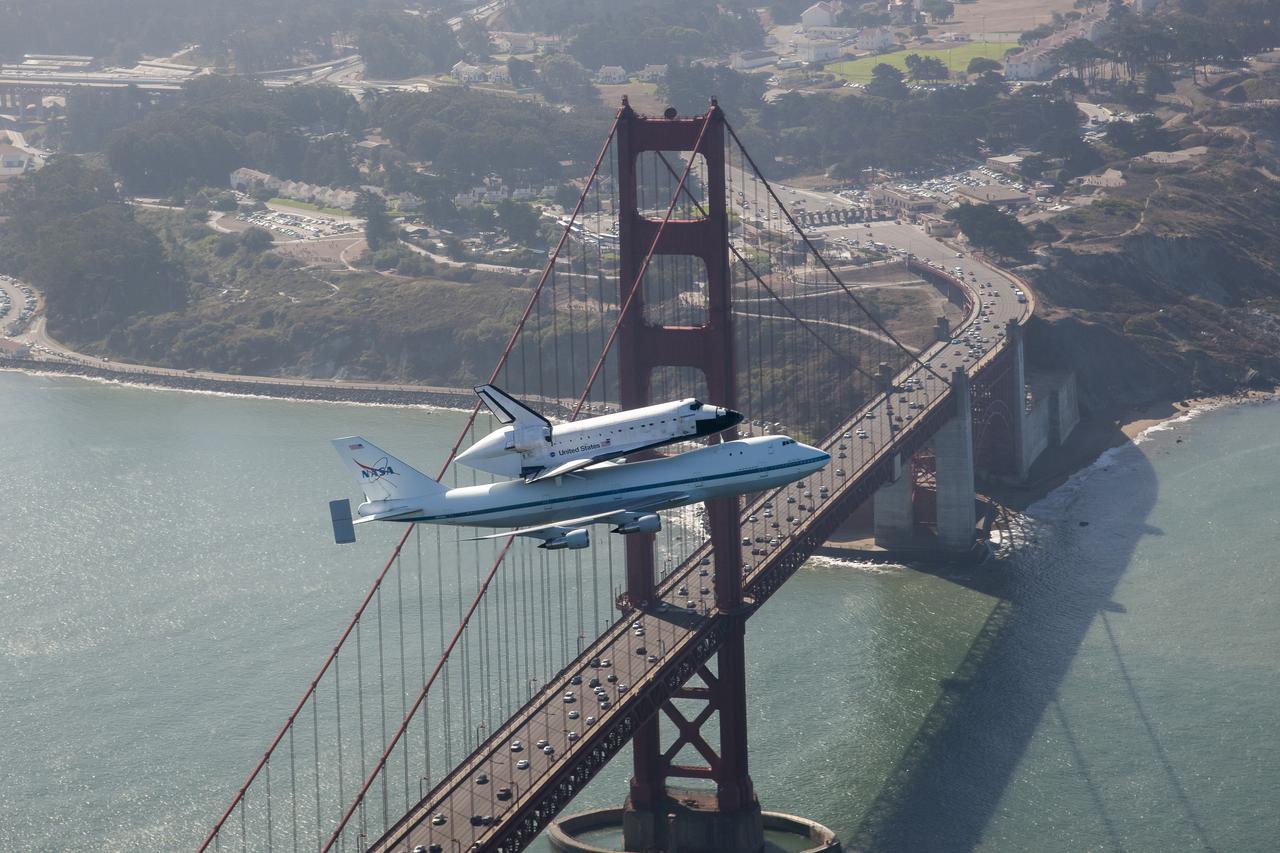
Space shuttle Endeavour and its host NASA 747 Shuttle Carrier Aircraft fly by the Golden Gate Bridge in 2012 on its way to the Los Angeles International Airport and an overland journey to the California Science Center. Californians looked up at the morning sky Sept. 21 to catch a glimpse of Endeavour. The final leg of Endeavour’s flight from NASA’s Kennedy Space Center, Florida, offered many people an opportunity to witness the historic flight. Space shuttle Endeavour and its host NASA 747 Shuttle Carrier Aircraft fly by the Golden Gate Bridge in 2012 on its way to the Los Angeles International Airport and an overland journey to the California Science Center. Californians looked up at the morning sky Sept. 21 to catch a glimpse of Endeavour. The final leg of Endeavour’s flight from NASA’s Kennedy Space Center, Florida, offered many people an opportunity to witness the historic flight.
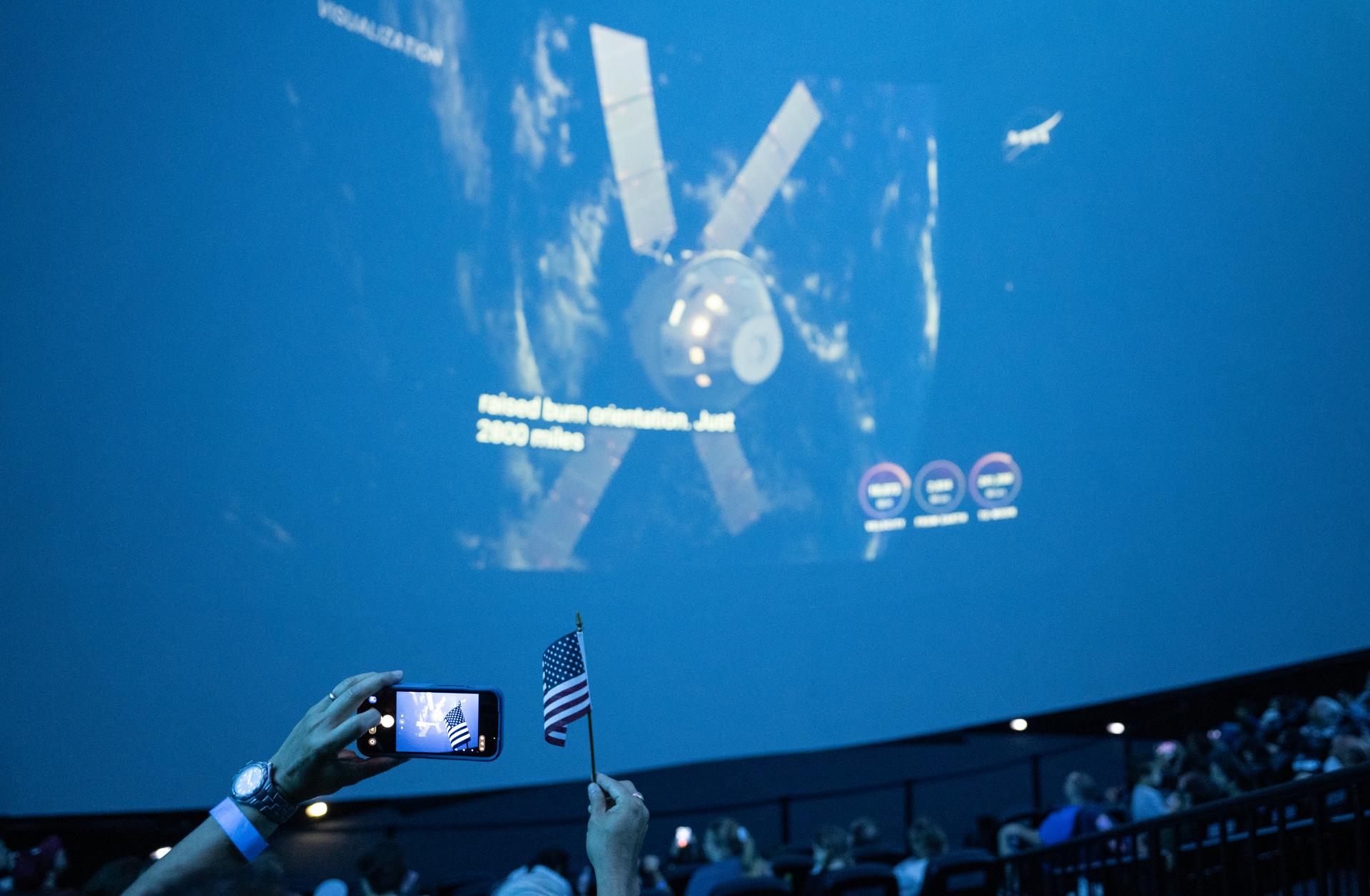
Guests at the Fleet Science Center in San Diego, California watch the live broadcast of NASA’s Orion spacecraft with Artemis II crew members NASA astronauts Reid Wiseman, commander; Victor Glover, pilot; Christina Koch, mission specialist; and CSA (Canadian Space Agency) astronaut Jeremy Hansen, mission specialist aboard landing in the Pacific Ocean off the coast of California, Friday, April 10, 2026. NASA’s Artemis II mission took Wiseman, Glover, Koch, and Hansen on a 10-day journey around the Moon and back to Earth. Photo Credit: (NASA/Keegan Barber)
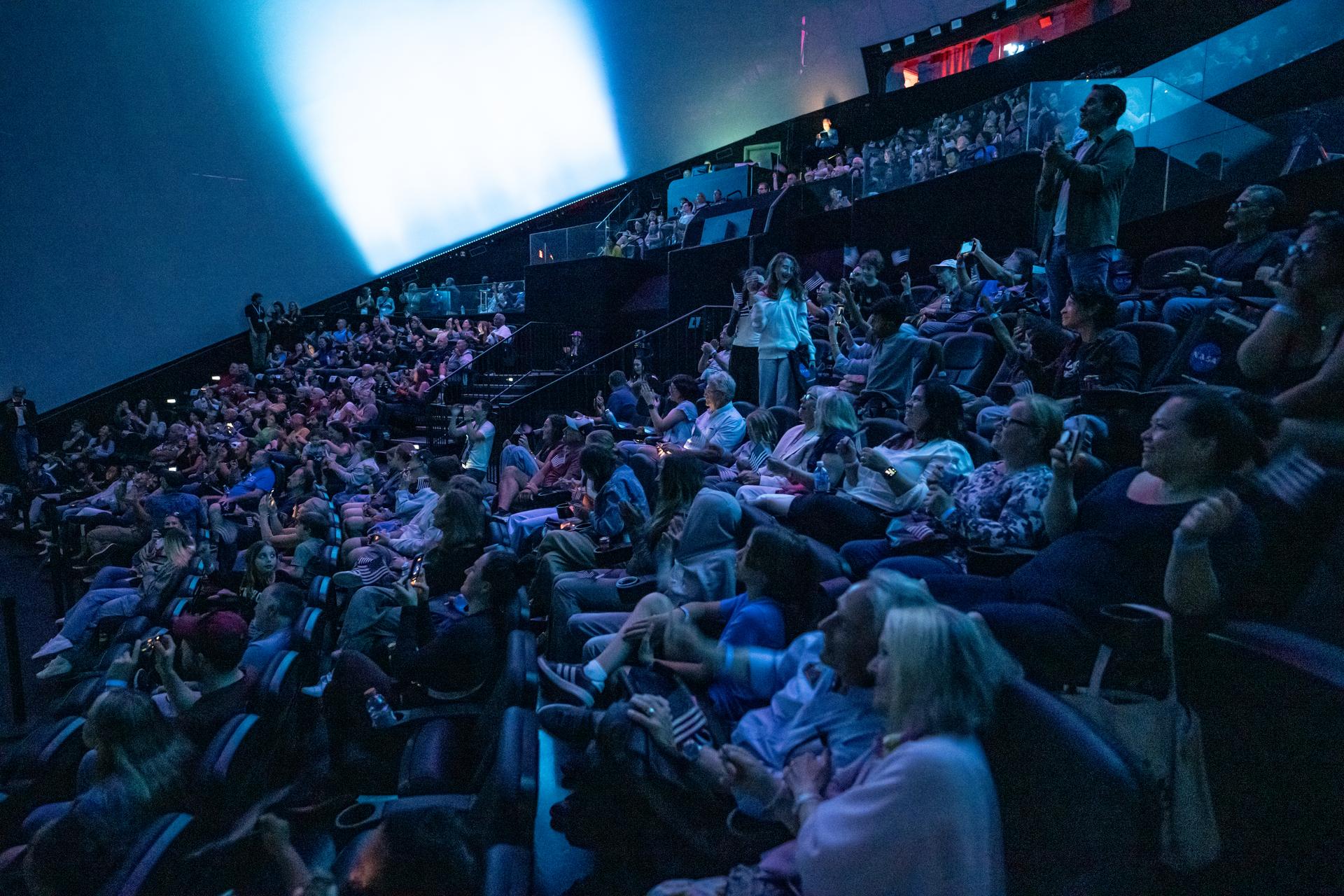
Guests at the Fleet Science Center in San Diego, California watch the live broadcast of NASA’s Orion spacecraft with Artemis II crew members NASA astronauts Reid Wiseman, commander; Victor Glover, pilot; Christina Koch, mission specialist; and CSA (Canadian Space Agency) astronaut Jeremy Hansen, mission specialist aboard landing in the Pacific Ocean off the coast of California, Friday, April 10, 2026. NASA’s Artemis II mission took Wiseman, Glover, Koch, and Hansen on a 10-day journey around the Moon and back to Earth. Photo Credit: (NASA/Keegan Barber)
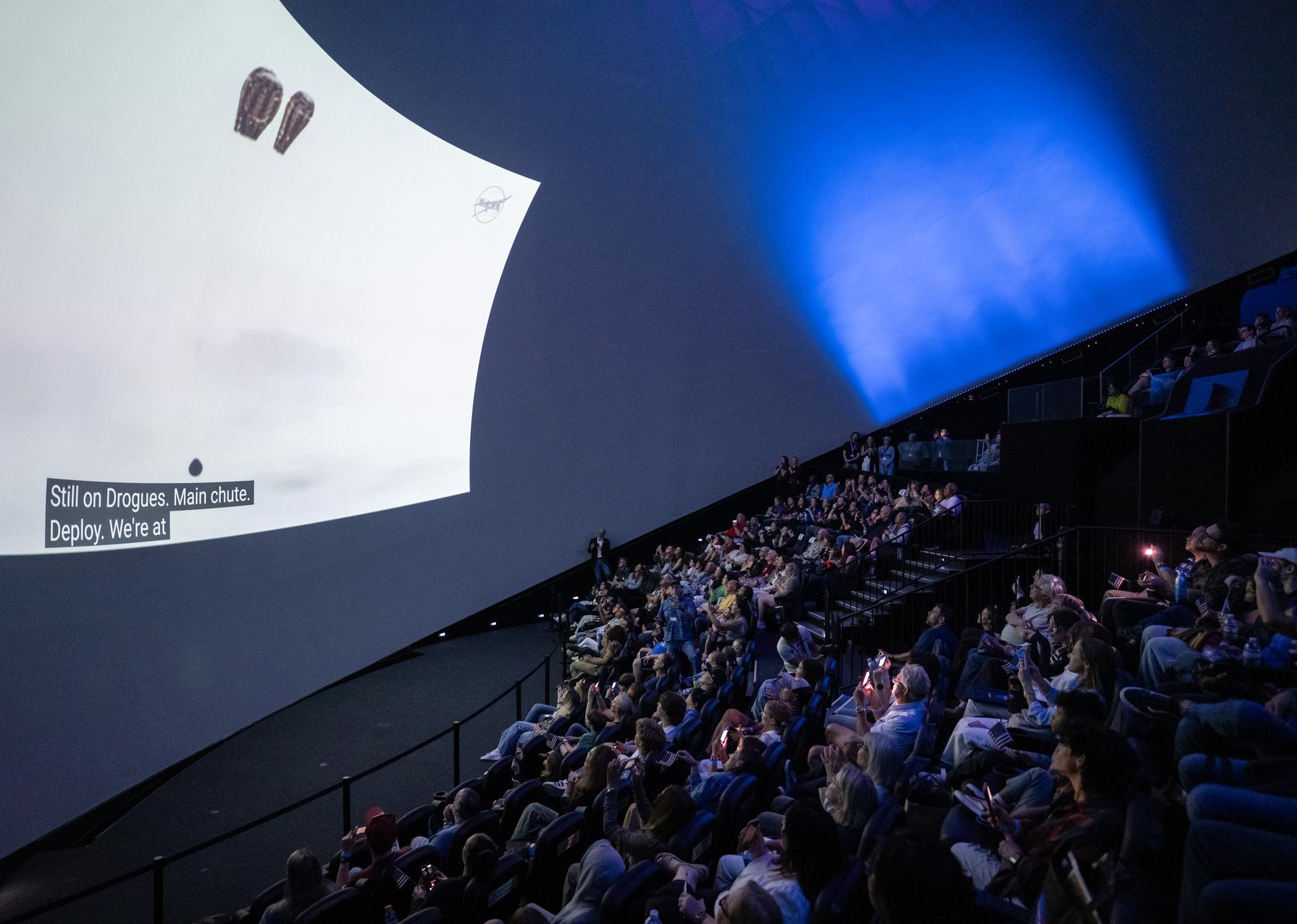
Guests at the Fleet Science Center in San Diego, California watch the live broadcast of NASA’s Orion spacecraft with Artemis II crew members NASA astronauts Reid Wiseman, commander; Victor Glover, pilot; Christina Koch, mission specialist; and CSA (Canadian Space Agency) astronaut Jeremy Hansen, mission specialist aboard landing in the Pacific Ocean off the coast of California, Friday, April 10, 2026. NASA’s Artemis II mission took Wiseman, Glover, Koch, and Hansen on a 10-day journey around the Moon and back to Earth. Photo Credit: (NASA/Keegan Barber)
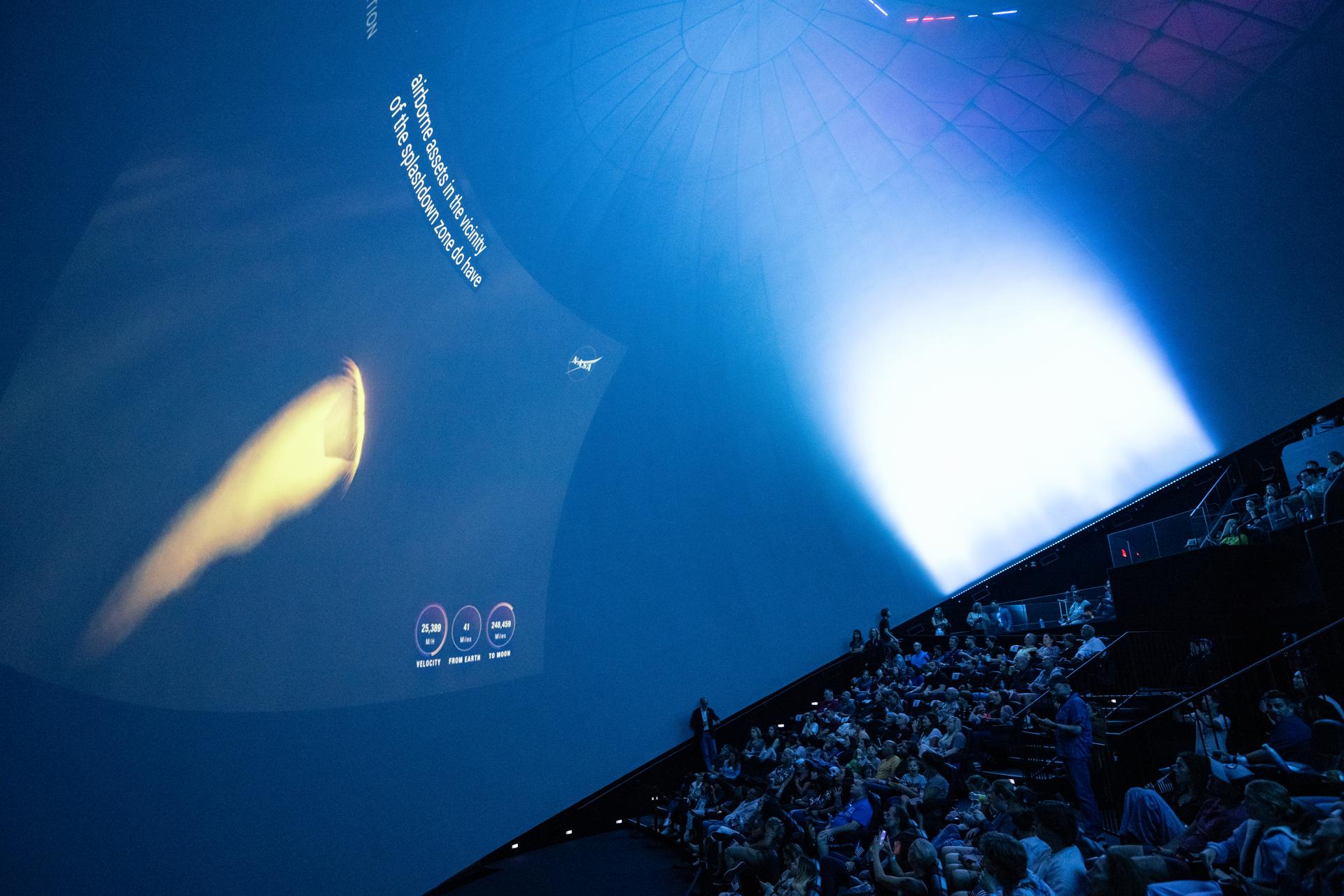
Guests at the Fleet Science Center in San Diego, California watch the live broadcast of NASA’s Orion spacecraft with Artemis II crew members NASA astronauts Reid Wiseman, commander; Victor Glover, pilot; Christina Koch, mission specialist; and CSA (Canadian Space Agency) astronaut Jeremy Hansen, mission specialist aboard landing in the Pacific Ocean off the coast of California, Friday, April 10, 2026. NASA’s Artemis II mission took Wiseman, Glover, Koch, and Hansen on a 10-day journey around the Moon and back to Earth. Photo Credit: (NASA/Keegan Barber)
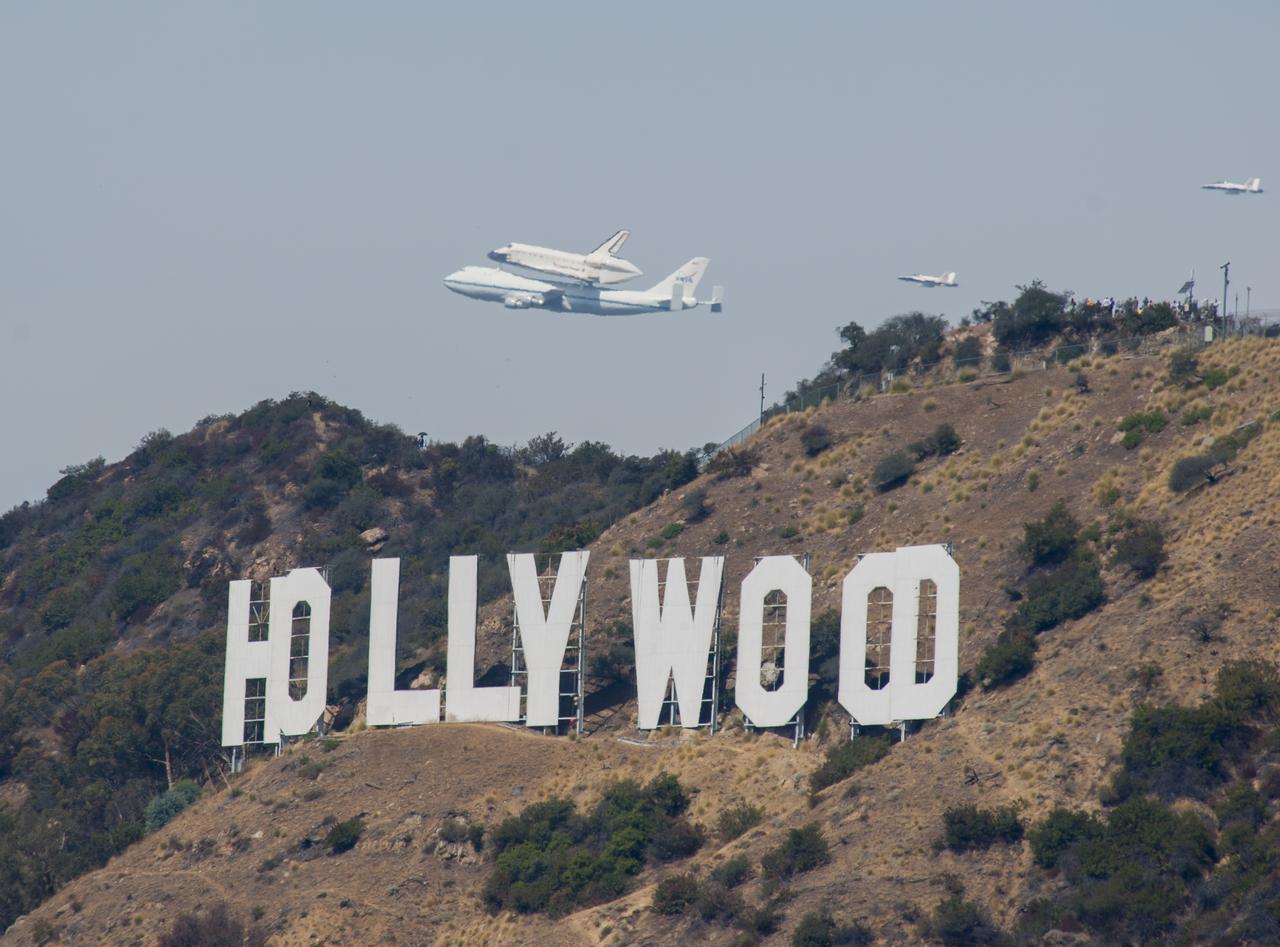
Space shuttle Endeavour and its host NASA 747 Shuttle Carrier Aircraft fly over the Hollywood sign in 2012 on its way to the Los Angeles International Airport, and an overland journey to the California Science Center. Californians looked up at the morning sky Sept. 21 looking to see Endeavour fly over their community. The final leg of Endeavour’s flight from NASA’s Kennedy Space Center, Florida, offered many people an opportunity to witness the historic flight.
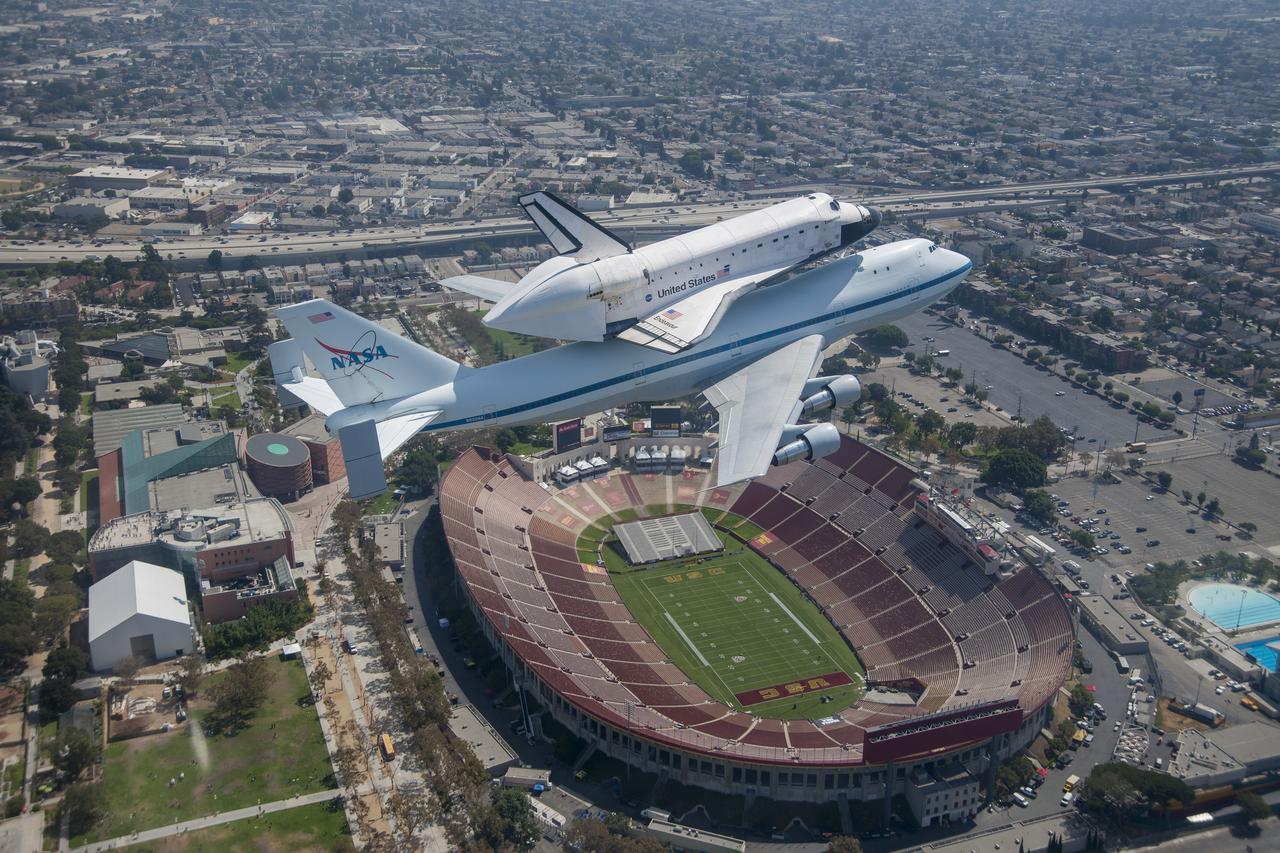
Space shuttle Endeavour and its host NASA 747 Shuttle Carrier Aircraft fly over the Los Angeles Coliseum in 2012 on its way to the Los Angeles International Airport, and an overland journey to the California Science Center. Californians looked up at the morning sky Sept. 21 looking for Endeavour over their community. The final leg of Endeavour’s flight from NASA’s Kennedy Space Center, Florida, offered many people an opportunity to witness the historic flight.
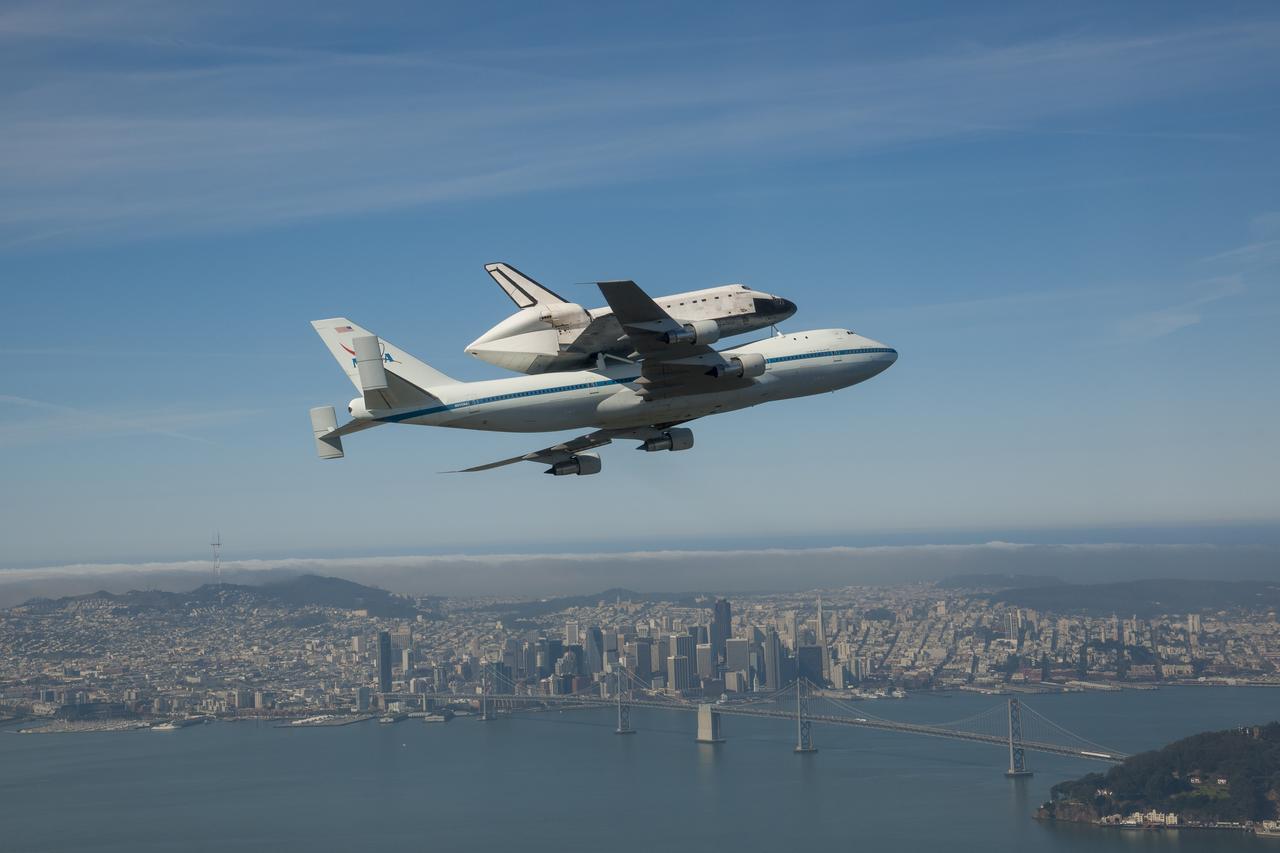
Space shuttle Endeavour and its host NASA 747 Shuttle Carrier Aircraft fly by the Bay Bridge in 2012 on its way to the Los Angeles International Airport and an overland journey to the California Science Center. The final leg of Endeavour’s flight from NASA’s Kennedy Space Center, Florida, offered many people an opportunity to witness the historic flight.
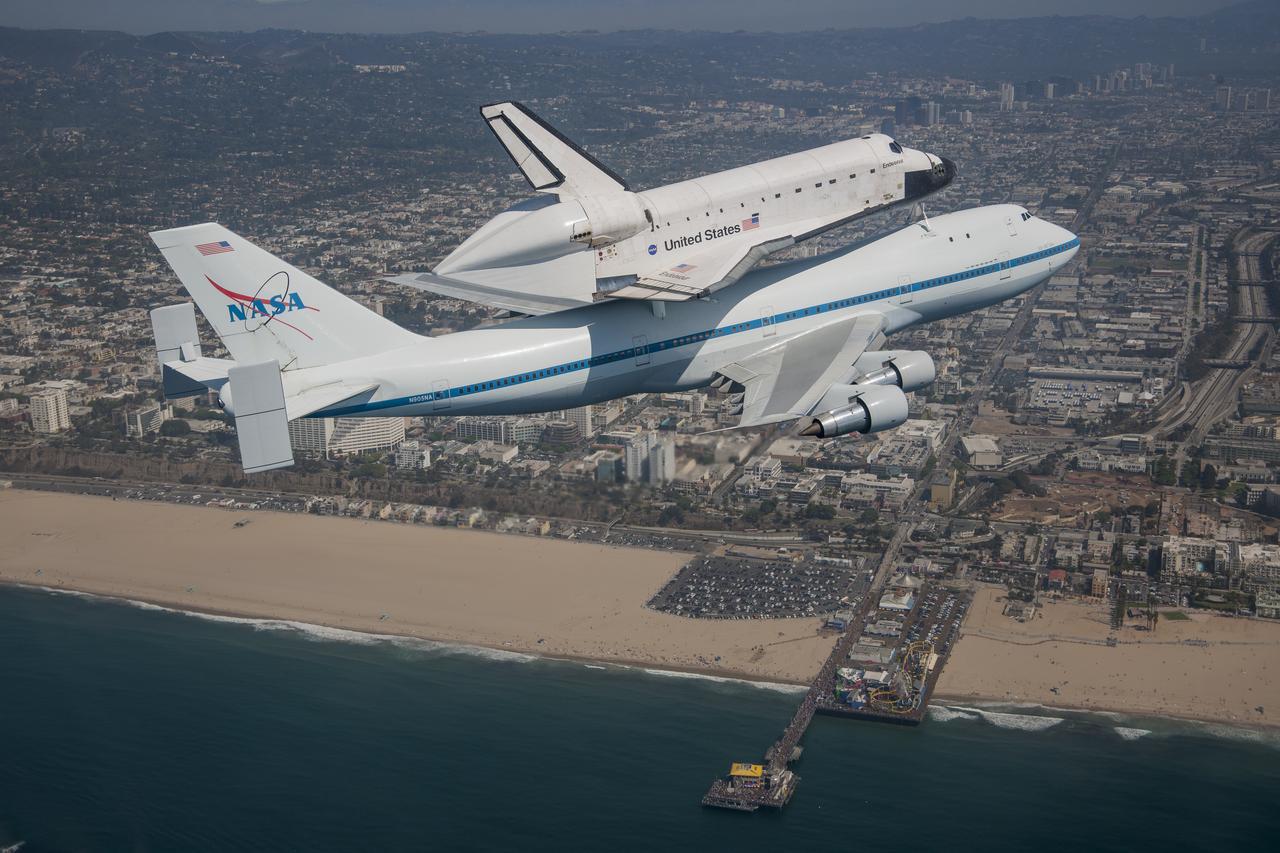
Space shuttle Endeavour and its host NASA 747 Shuttle Carrier Aircraft fly over the Santa Monica Pier in 2012 on its way to the Los Angeles International Airport, and an overland journey to the California Science Center. Californians gazed at the morning sky Sept. 21 looking for Endeavour over their community. The final leg of Endeavour’s flight from NASA’s Kennedy Space Center, Florida, offered many people an opportunity to witness the historic flight.
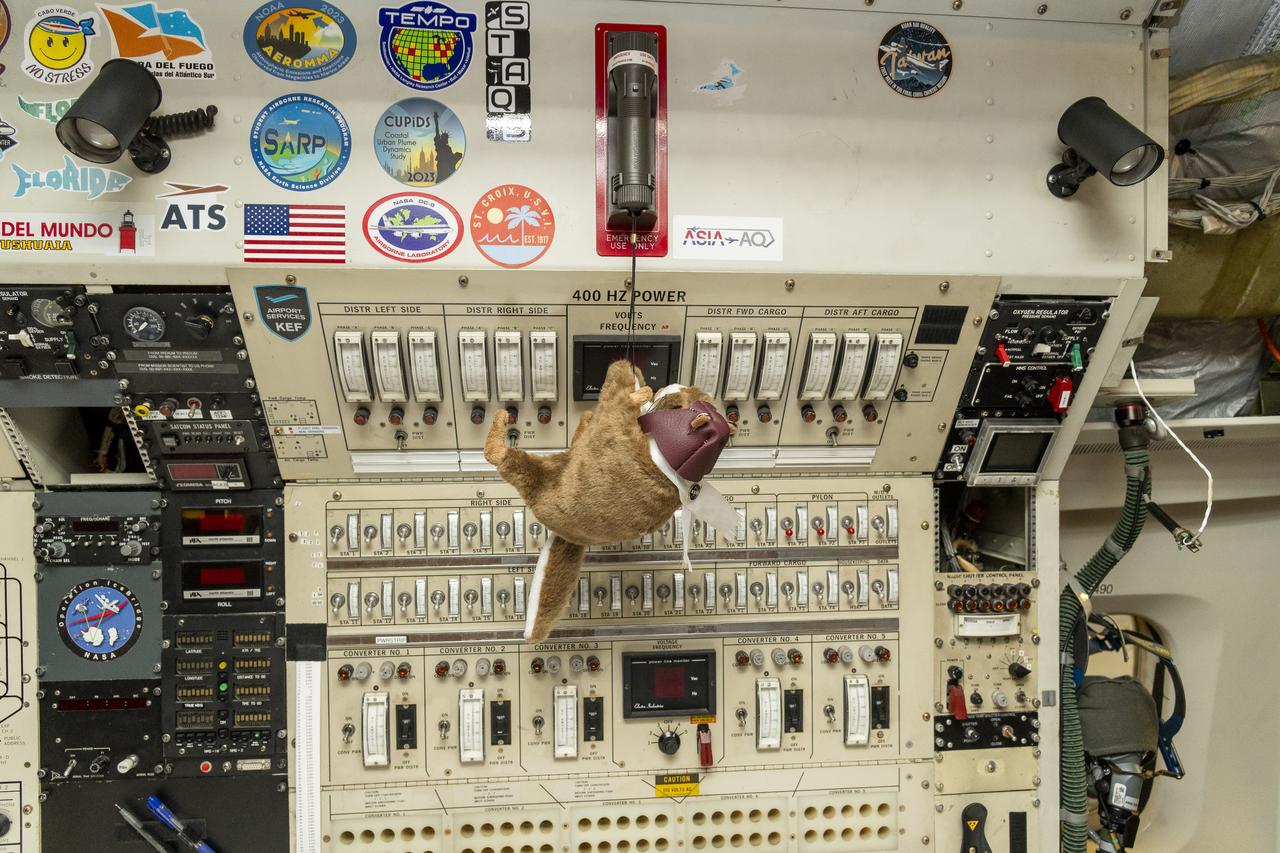
Orville, NASA’s high-flying squirrel, finds mischief onboard the DC-8 aircraft at NASA’s Armstrong Flight Research Center Building 703 in Palmdale, California. On May 2, 2024, NASA personnel, friends, and family celebrated the DC-8 staff, aircraft, and science campaigns.
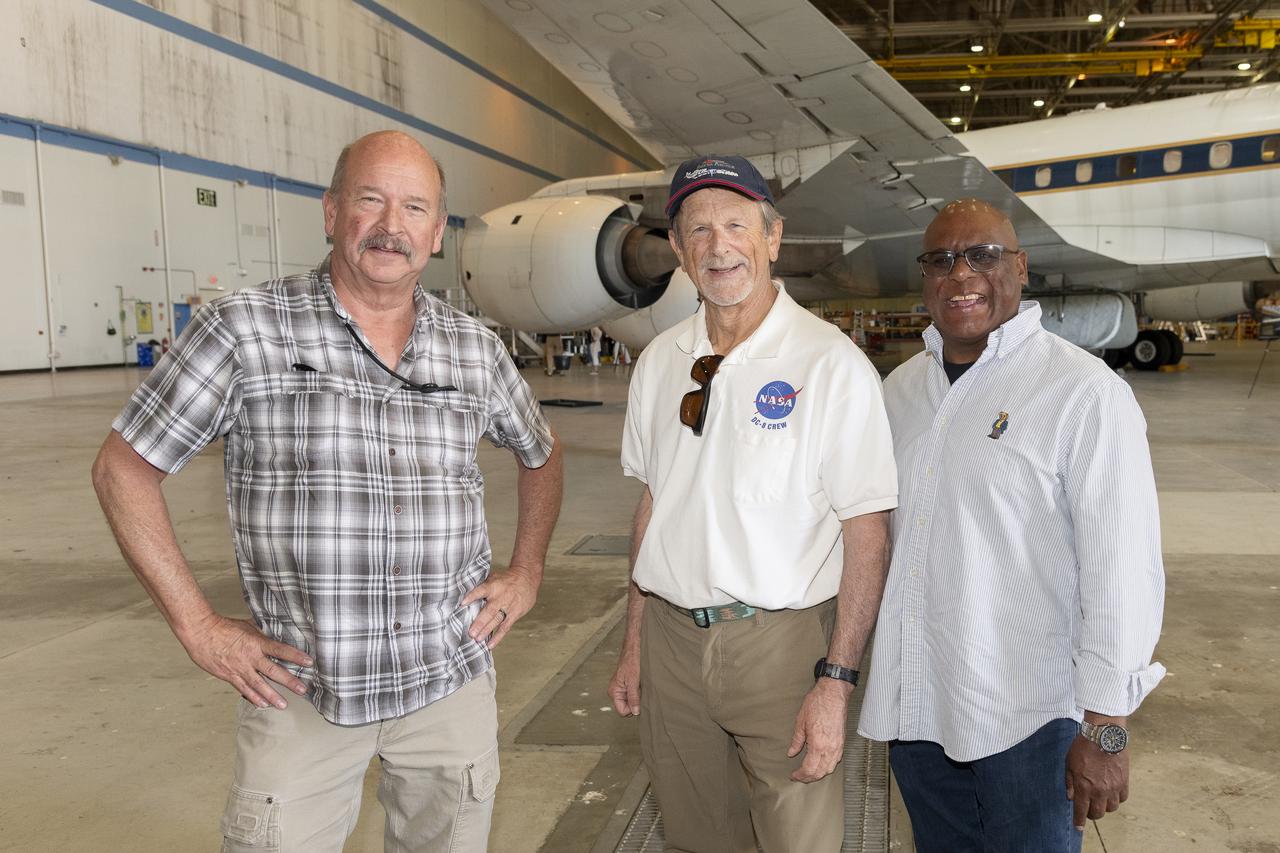
Rocky Radcliff, Kevin Hall, and Herman “Chico” Rijfkogel stand in front of NASA’s DC-8 aircraft at the agency’s Armstrong Flight Research Center Building 703 in Palmdale, California. On May 2, 2024, NASA personnel, friends, and family celebrated the DC-8 staff, aircraft, and science campaigns.
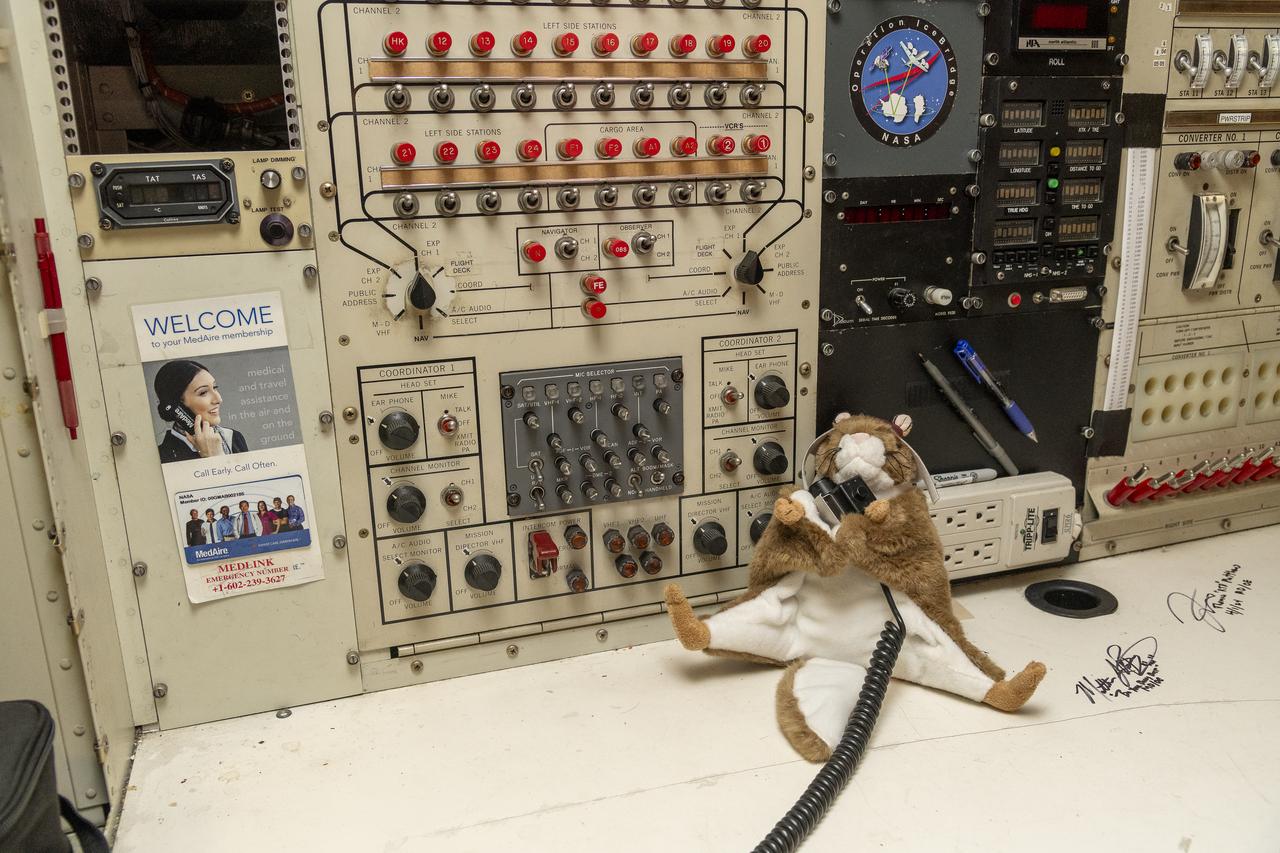
Orville, NASA’s high-flying squirrel, uses the microphone at the mission director station onboard the DC-8 aircraft at NASA’s Armstrong Flight Research Center Building 703 in Palmdale, California. On May 2, 2024, NASA personnel, friends, and family celebrated the DC-8 staff, aircraft, and science campaigns.
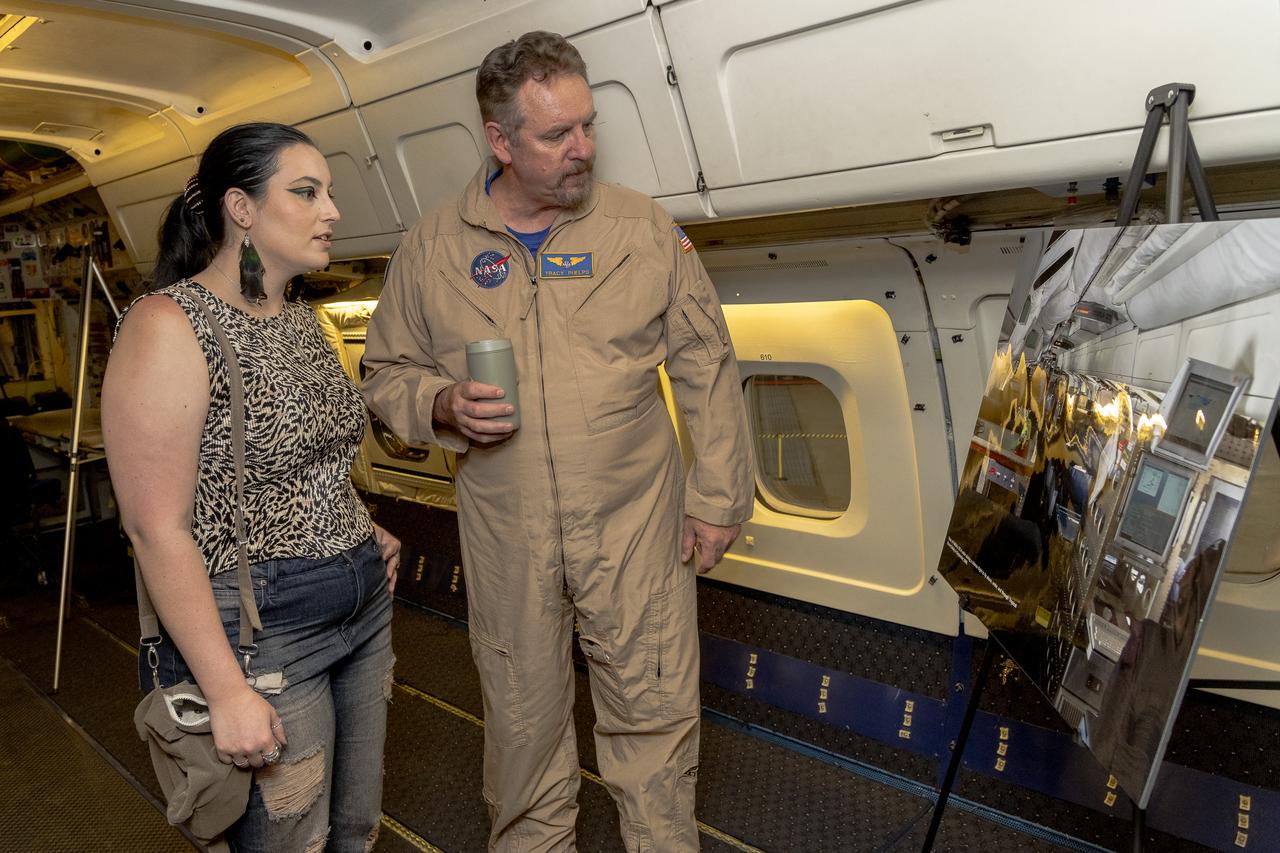
NASA pilot Tracy Phelps and his daughter Rachael Phelps look at a poster onboard the DC-8 at NASA’s Armstrong Flight Research Center Building 703 in Palmdale, California. On May 2, 2024, NASA personnel, friends, and family celebrated the DC-8 staff, aircraft, and science campaigns.

People tour the inside of the DC-8 aircraft at NASA’s Armstrong Flight Research Center Building 703 in Palmdale, California. On May 2, 2024, NASA personnel, friends, and family celebrated the DC-8 staff, aircraft, and science campaigns.
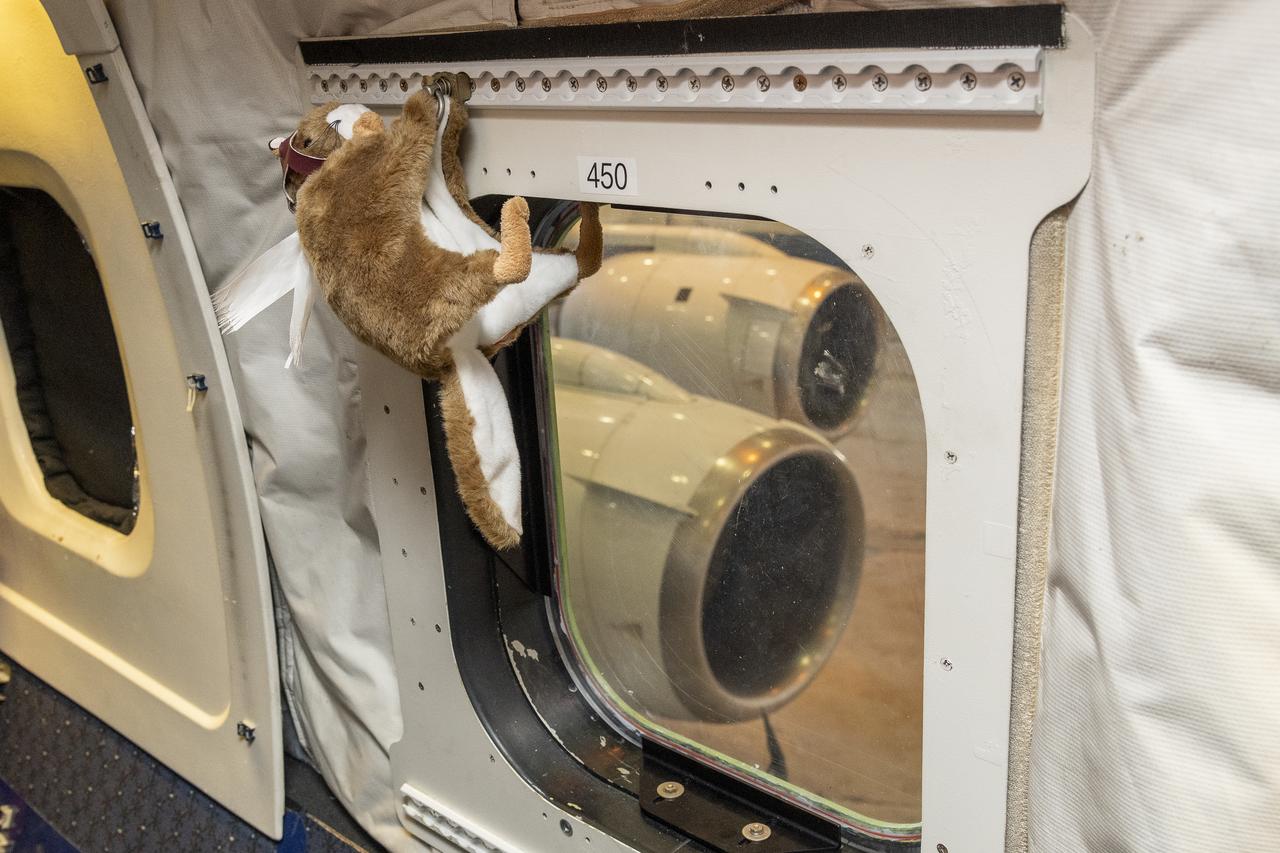
Orville, NASA’s high-flying squirrel, hangs onto the DC-8 aircraft at NASA’s Armstrong Flight Research Center Building 703 in Palmdale, California. On May 2, 2024, NASA personnel, friends, and family celebrated the DC-8 staff, aircraft, and science campaigns.
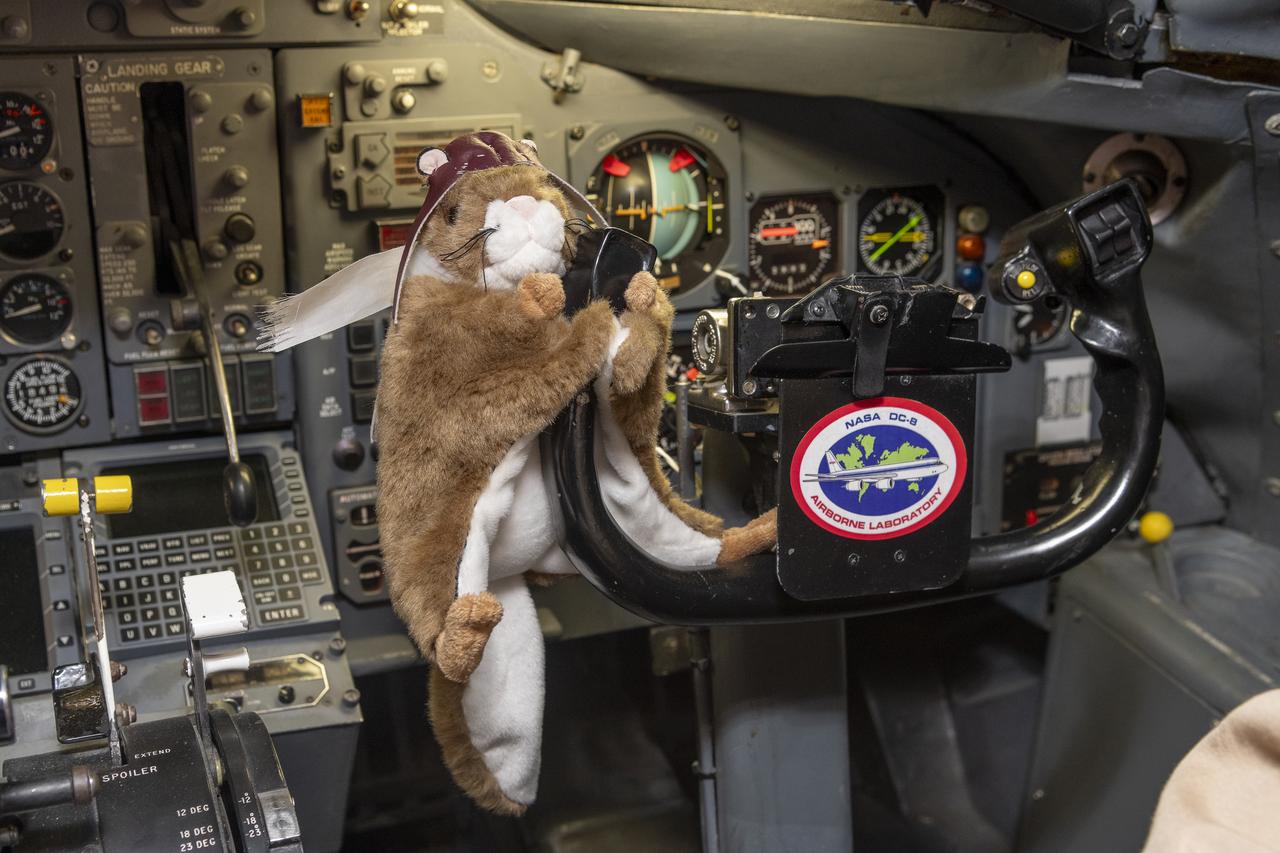
Orville, NASA’s high-flying squirrel, tries his paw at piloting the DC-8 aircraft at NASA’s Armstrong Flight Research Center Building 703 in Palmdale, California. On May 2, 2024, NASA personnel, friends, and family celebrated the DC-8 staff, aircraft, and science campaigns.
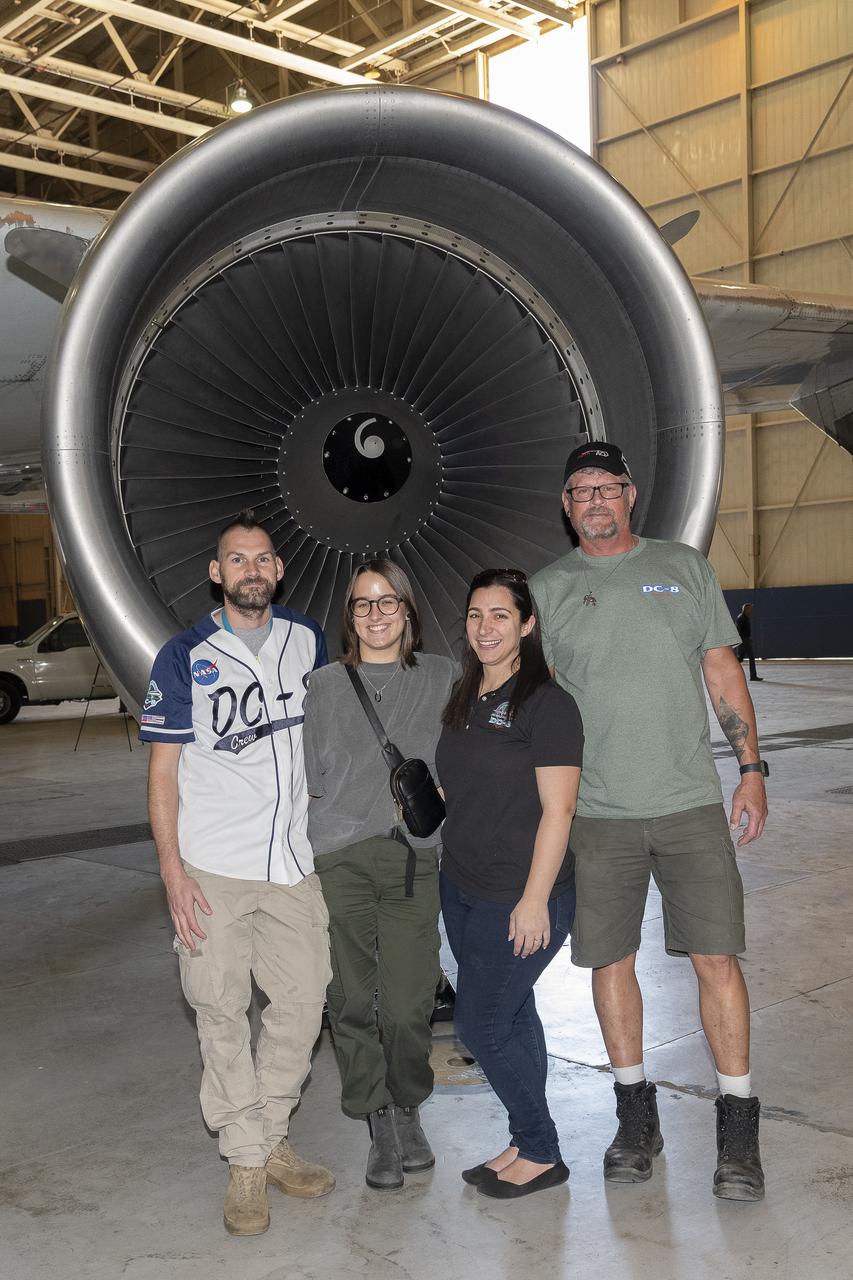
Members of past science missions pose together in front of the DC-8 aircraft’s left engine turbine at NASA’s Armstrong Flight Research Center Building 703 in Palmdale, California. From left are avionics lead Kelly Jellison, chemical scientist Katherine Ball, DC-8 Deputy Program Manager Kirsten Boogaard, and DC-8 safety engineer Garry Moors. On May 2, 2024, NASA personnel, friends, and family celebrated the DC-8 staff, aircraft, and science campaigns.
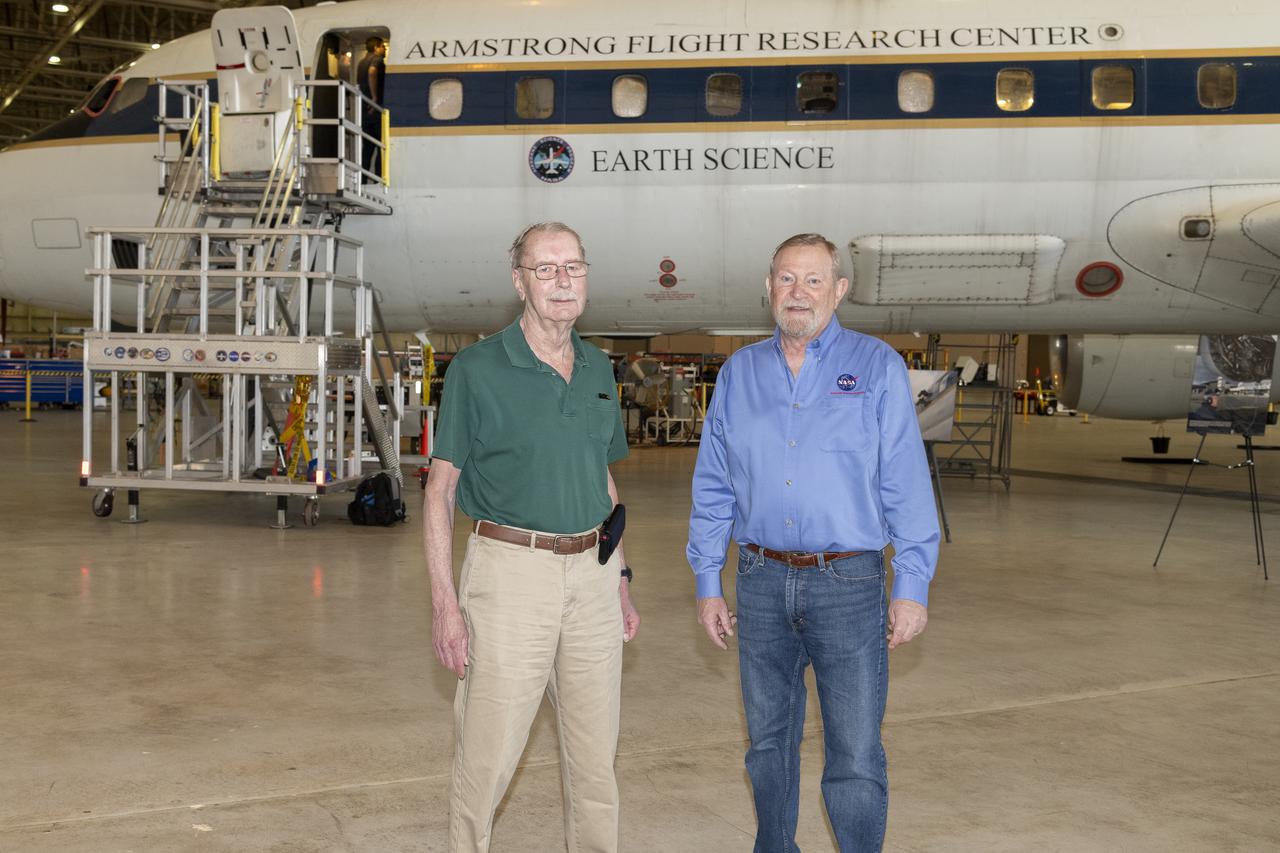
Retired NASA mission manager Chris Jennison and Randy Albertson, right, who retired in 2019 as NASA’s Airborne Science Program deputy director, stand in front of the DC-8 aircraft at NASA’s Armstrong Flight Research Center Building 703 in Palmdale, California. On May 2, 2024, NASA personnel, friends, and family celebrated the DC-8 staff, aircraft, and science campaigns.
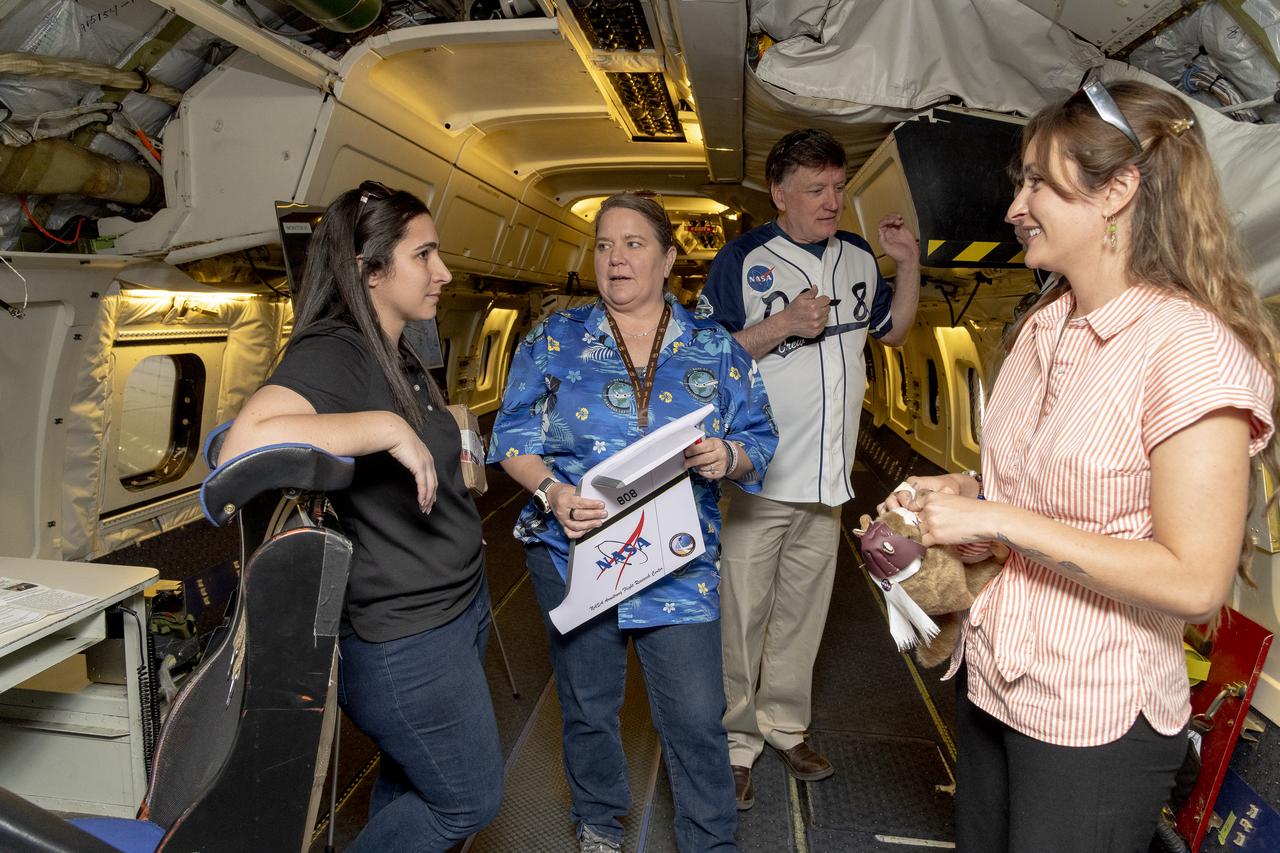
Members of the DC-8 program team tour an empty aircraft and recall past missions. Usually the DC-8 has between 15 and 30 instrument racks installed for a given science mission. The aircraft was spacious by comparison on May 2, 2024, when NASA personnel, friends, and family gathered at NASA’s Armstrong Flight Research Center Building 703 in Palmdale, California to celebrate the DC-8 staff, aircraft, and science campaigns. Conversing here are DC-8 aircraft deputy manager Kirsten Boogaard, left, with NASA Armstrong pilot Carrie Worth, Mike Zimmerman, and NASA Armstrong public affairs specialist for airborne science, Erica Heim.
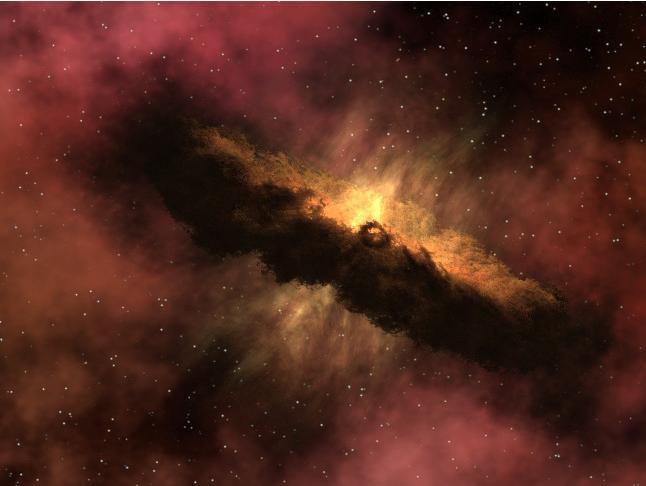
This artist animation depicts one of the most widely accepted theories pertaining to the origin of comets. This image is courtesy of NASA Spitzer Science Center at the California Institute of Technology, Pasadena, Calif.
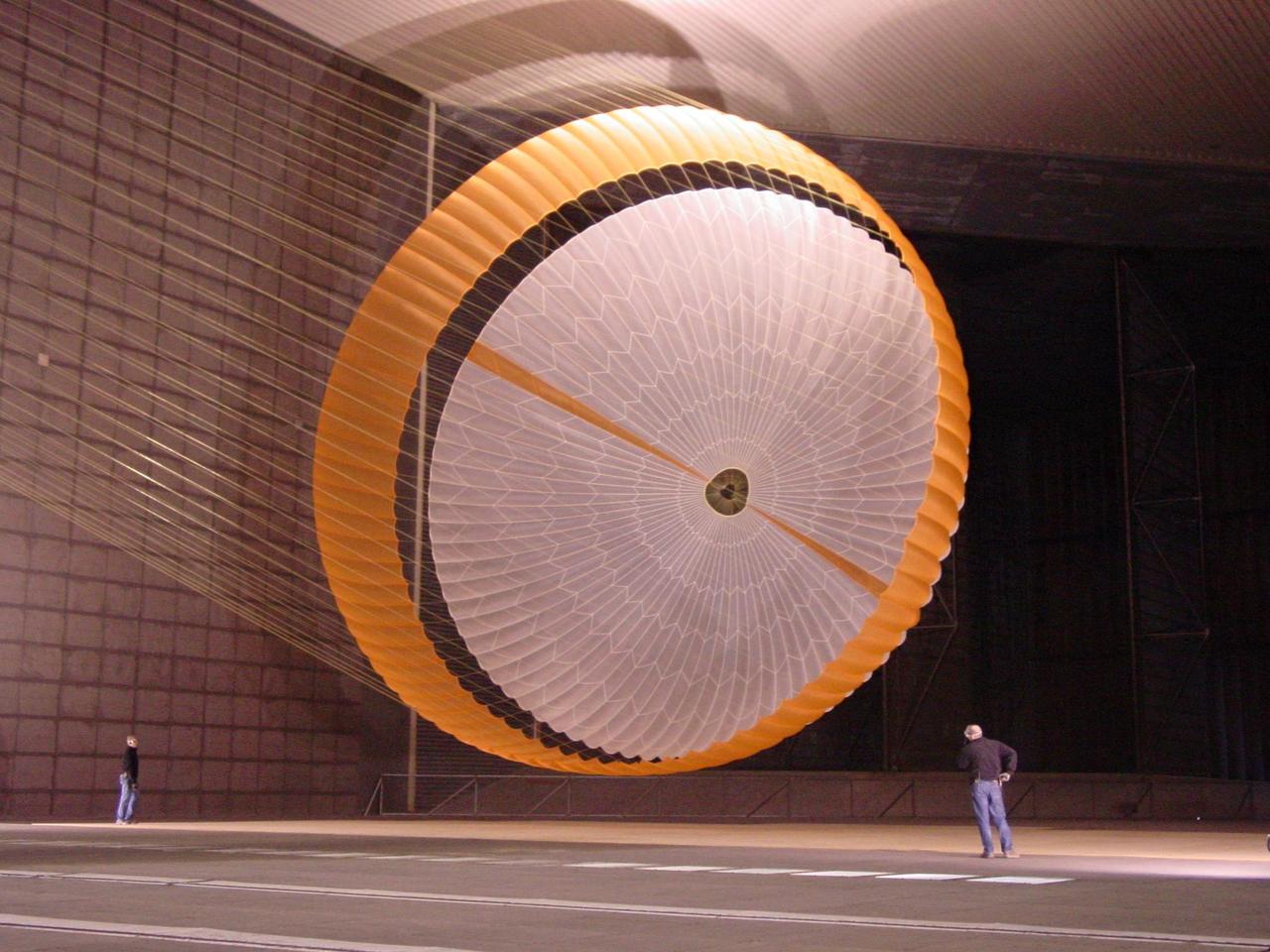
The team developing the landing system for NASA Mars Science Laboratory tested the deployment of an early parachute design in mid-October 2007 inside the world largest wind tunnel, at NASA Ames Research Center, Moffett Field, California.
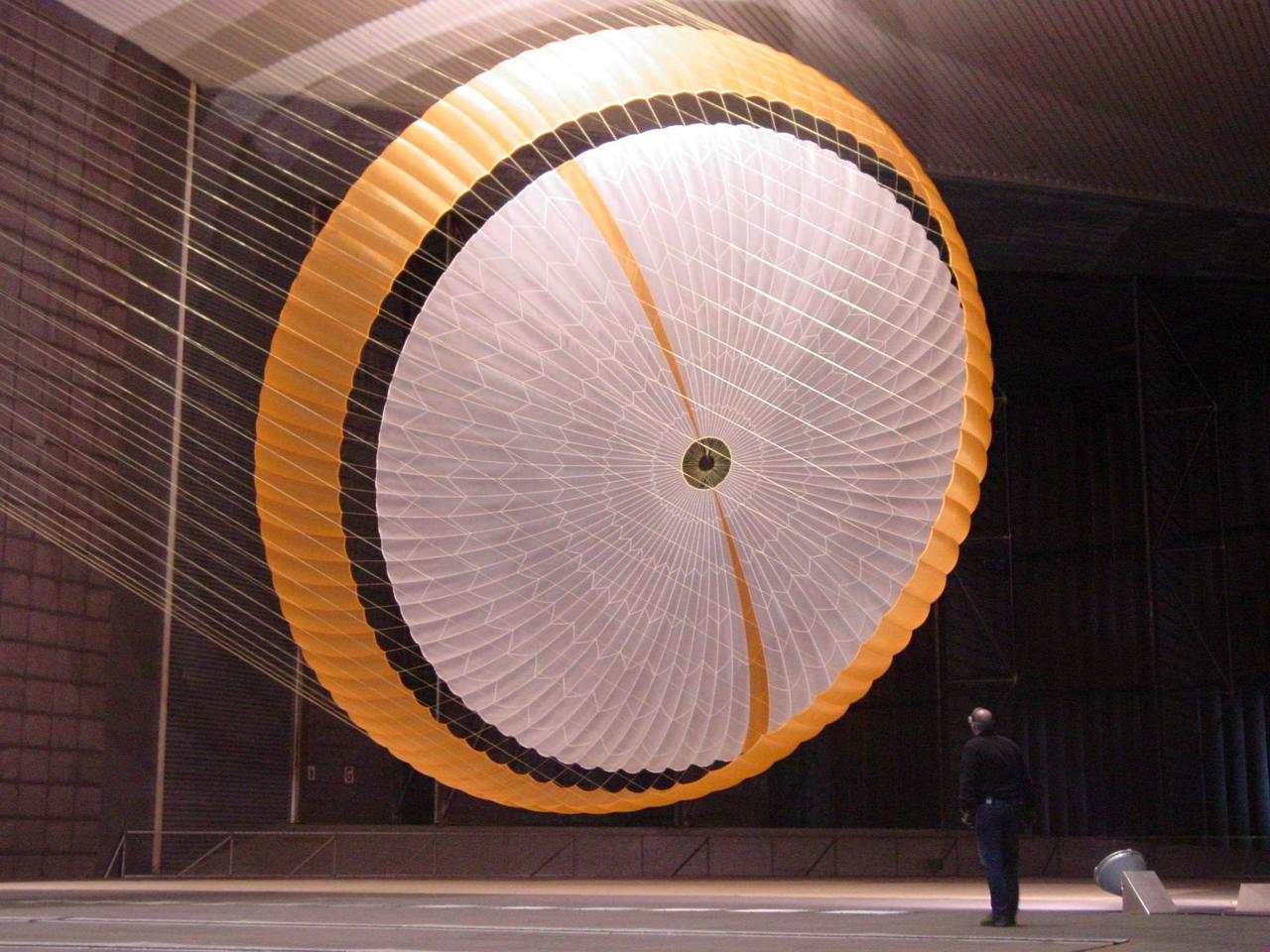
The team developing the landing system for NASA Mars Science Laboratory tested the deployment of an early parachute design in mid-October 2007 inside the world largest wind tunnel, at NASA Ames Research Center, Moffett Field, California.
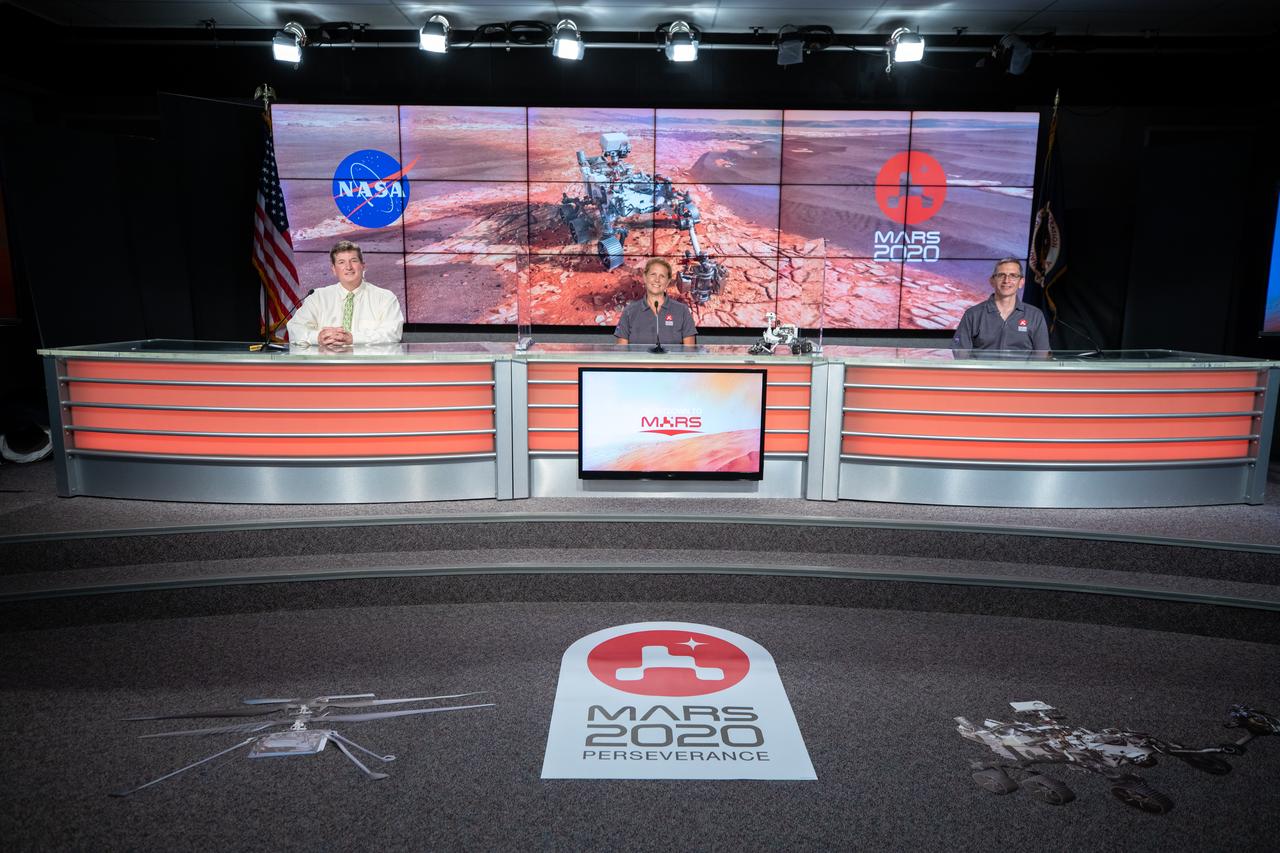
A Mars 2020 Mission Engineering and Science Briefing is held at NASA’s Kennedy Space Center in Florida on July 27, 2020. Participating in the briefing from left, are Moderator DC Agle, NASA’s Jet Propulsion Laboratory; Lori Glaze, Planetary Science Division director, NASA Headquarters; and Ken Farley, project scientist, California Institute of Technology. The Mars Perseverance rover is scheduled to launch July 30, on a United Launch Alliance Atlas V 541 rocket from Space Launch Complex 41 at nearby Cape Canaveral Air Force Station. The rover is part of NASA’s Mars Exploration Program, a long-term effort of robotic exploration of the Red Planet. The rover will search for habitable conditions in the ancient past and signs of past microbial life on Mars. The Launch Services Program at Kennedy is responsible for launch management.
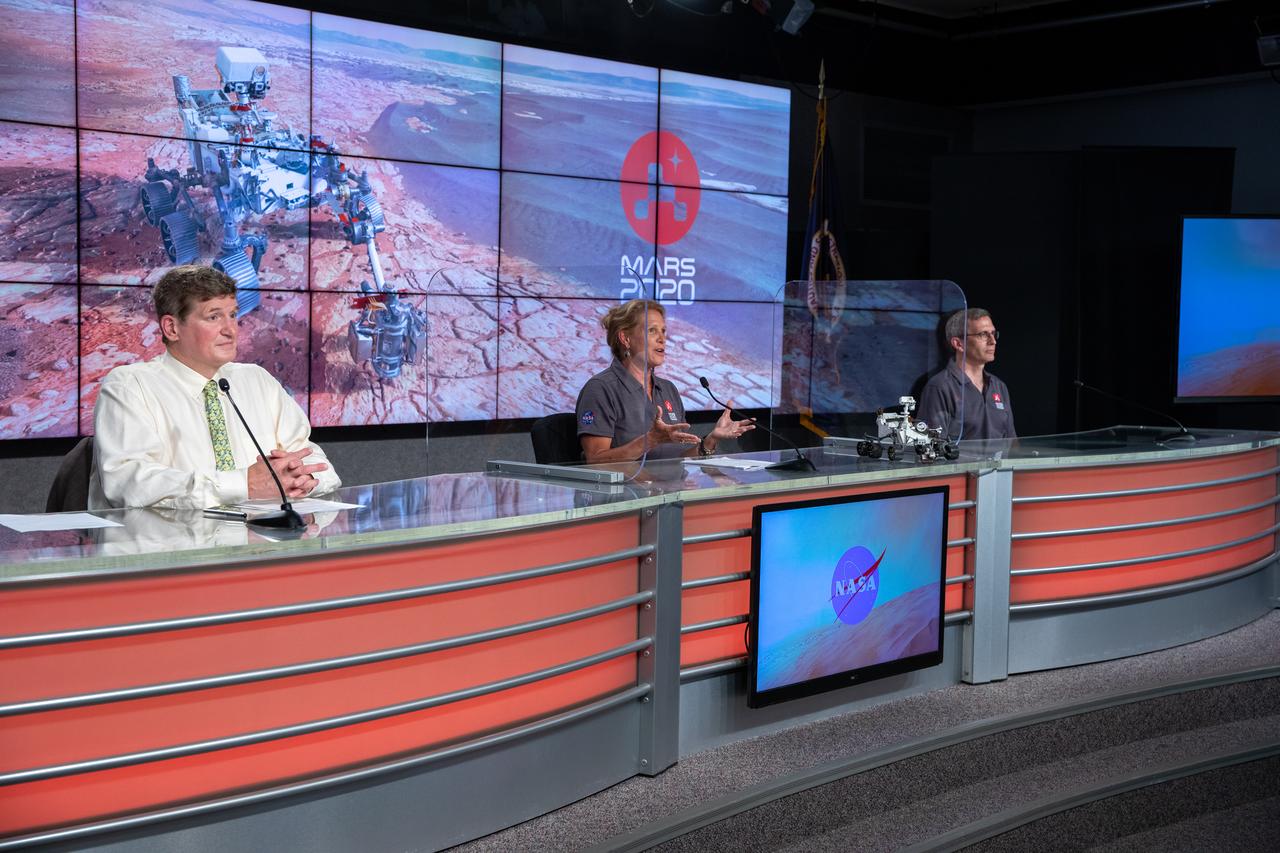
A Mars 2020 Mission Engineering and Science Briefing is held at NASA’s Kennedy Space Center in Florida on July 27, 2020. Participating in the briefing from left, are Moderator DC Agle, NASA’s Jet Propulsion Laboratory; Lori Glaze, Planetary Science Division director, NASA Headquarters; and Ken Farley, project scientist, California Institute of Technology. The Mars Perseverance rover is scheduled to launch July 30, on a United Launch Alliance Atlas V 541 rocket from Space Launch Complex 41 at nearby Cape Canaveral Air Force Station. The rover is part of NASA’s Mars Exploration Program, a long-term effort of robotic exploration of the Red Planet. The rover will search for habitable conditions in the ancient past and signs of past microbial life on Mars. The Launch Services Program at Kennedy is responsible for launch management.
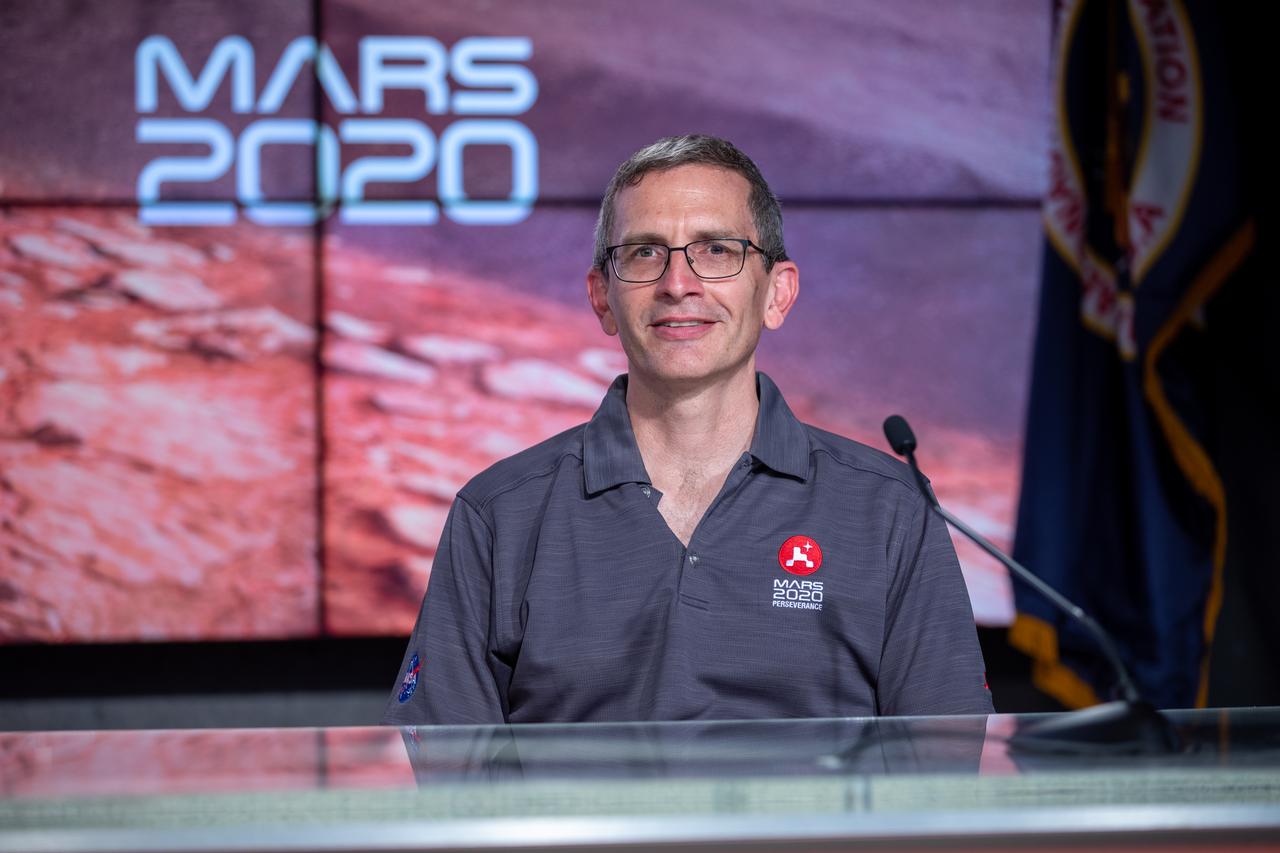
Ken Farley, project scientist, California Institute of Technology, participates in a Mars 2020 Mission Engineering and Science Briefing at NASA’s Kennedy Space Center in Florida on July 27, 2020. The Mars Perseverance rover is scheduled to launch July 30, on a United Launch Alliance Atlas V 541 rocket from Space Launch Complex 41 at nearby Cape Canaveral Air Force Station. The rover is part of NASA’s Mars Exploration Program, a long-term effort of robotic exploration of the Red Planet. The rover will search for habitable conditions in the ancient past and signs of past microbial life on Mars. The Launch Services Program at Kennedy is responsible for launch management.
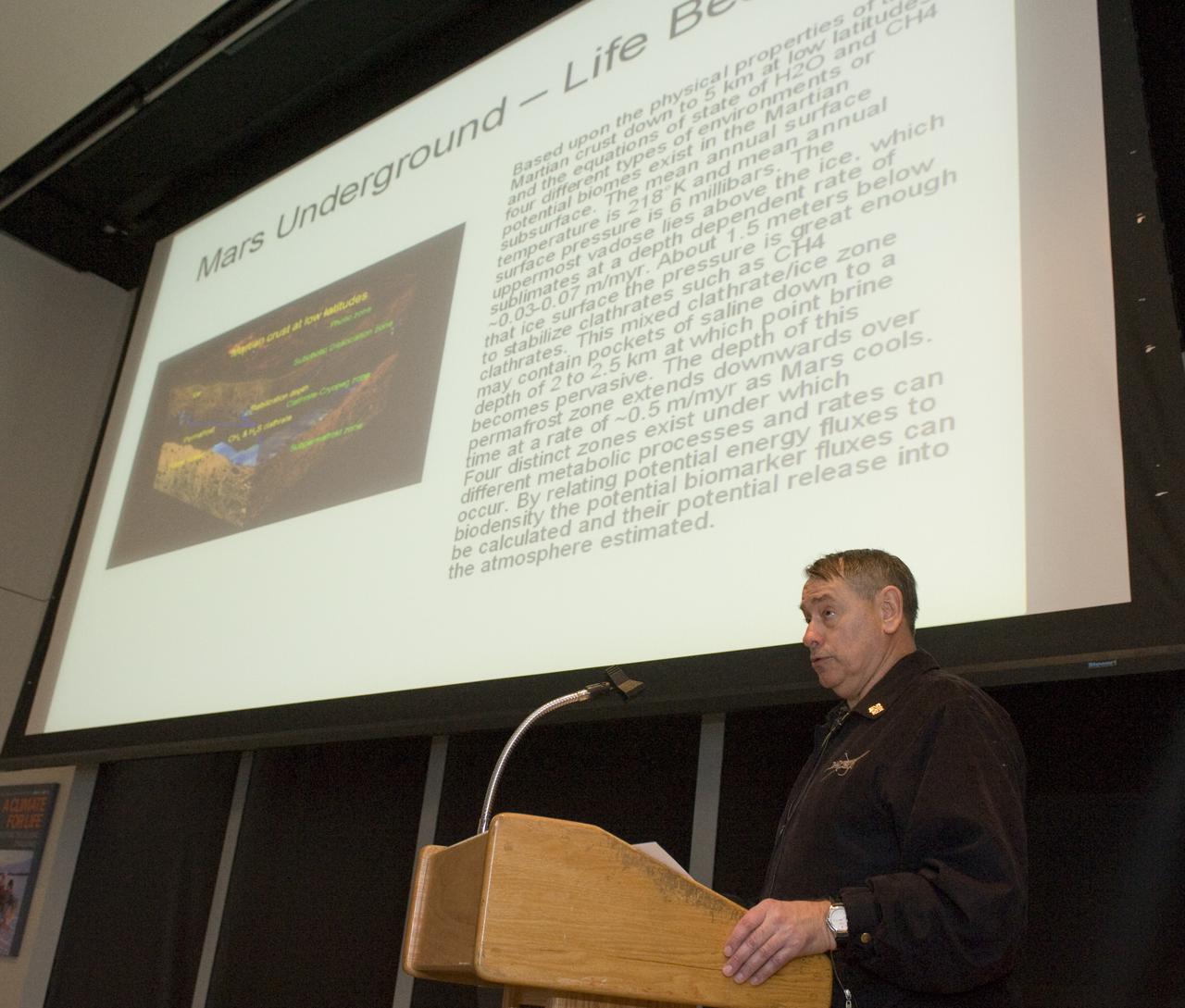
Yuri's Night 2009 held at the California Acaemy of Sciences in San Francisco, California Ames Center Director S. Pete Worden
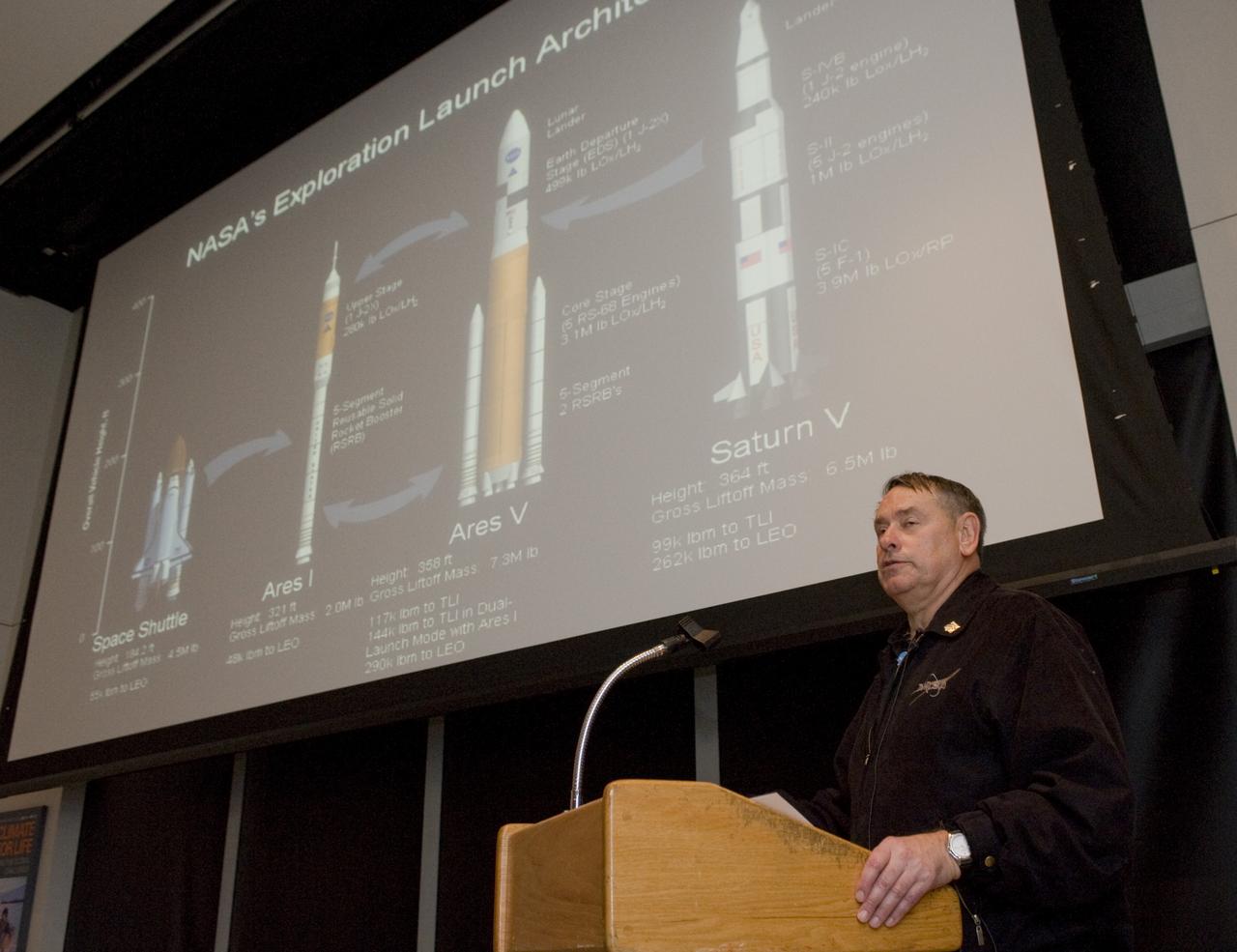
Yuri's Night 2009 held at the California Acaemy of Sciences in San Francisco, California Ames Center Director S. Pete Worden.
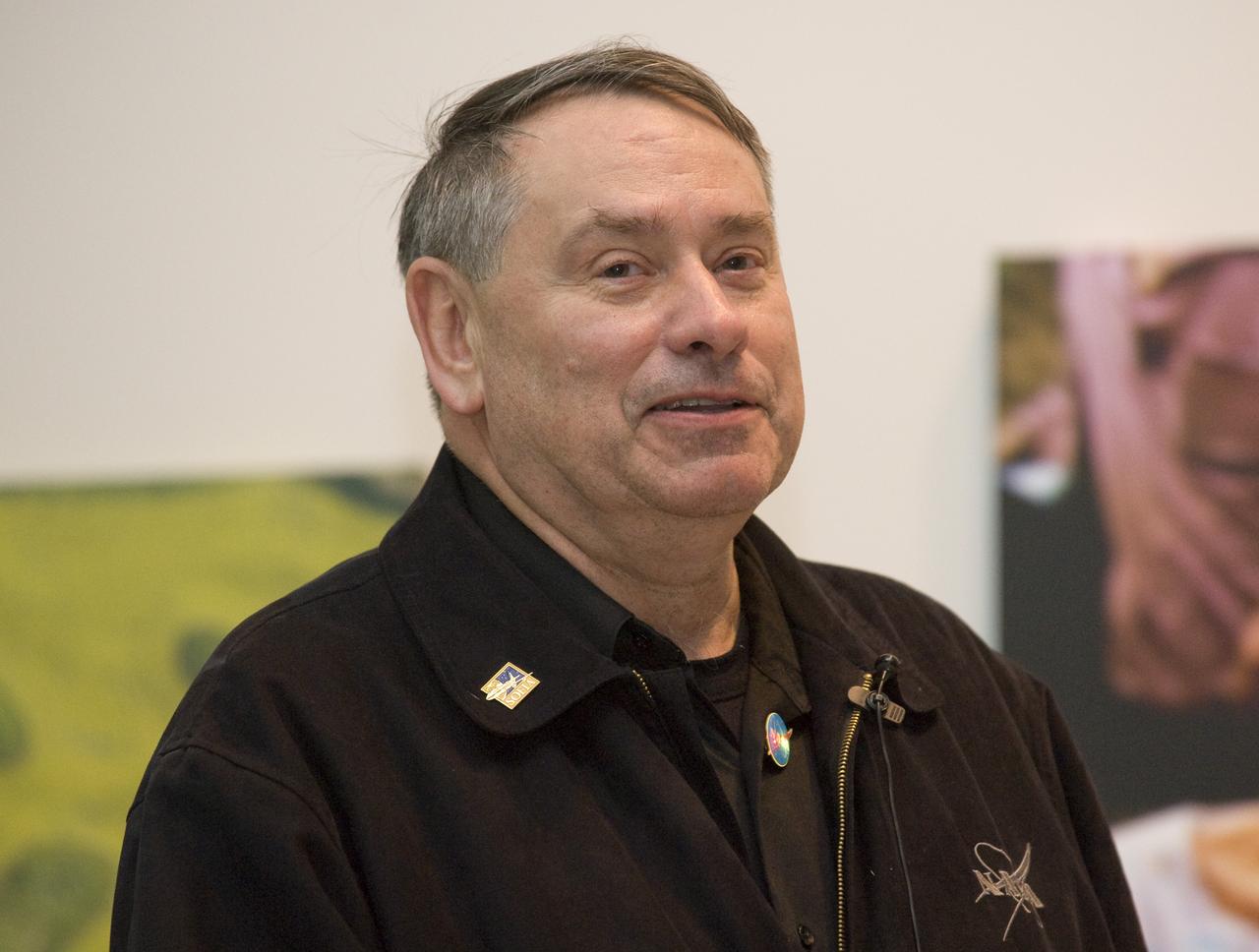
Yuri's Night 2009 held at the California Acaemy of Sciences in San Francisco, California Ames Center Director S. Pete Worden.
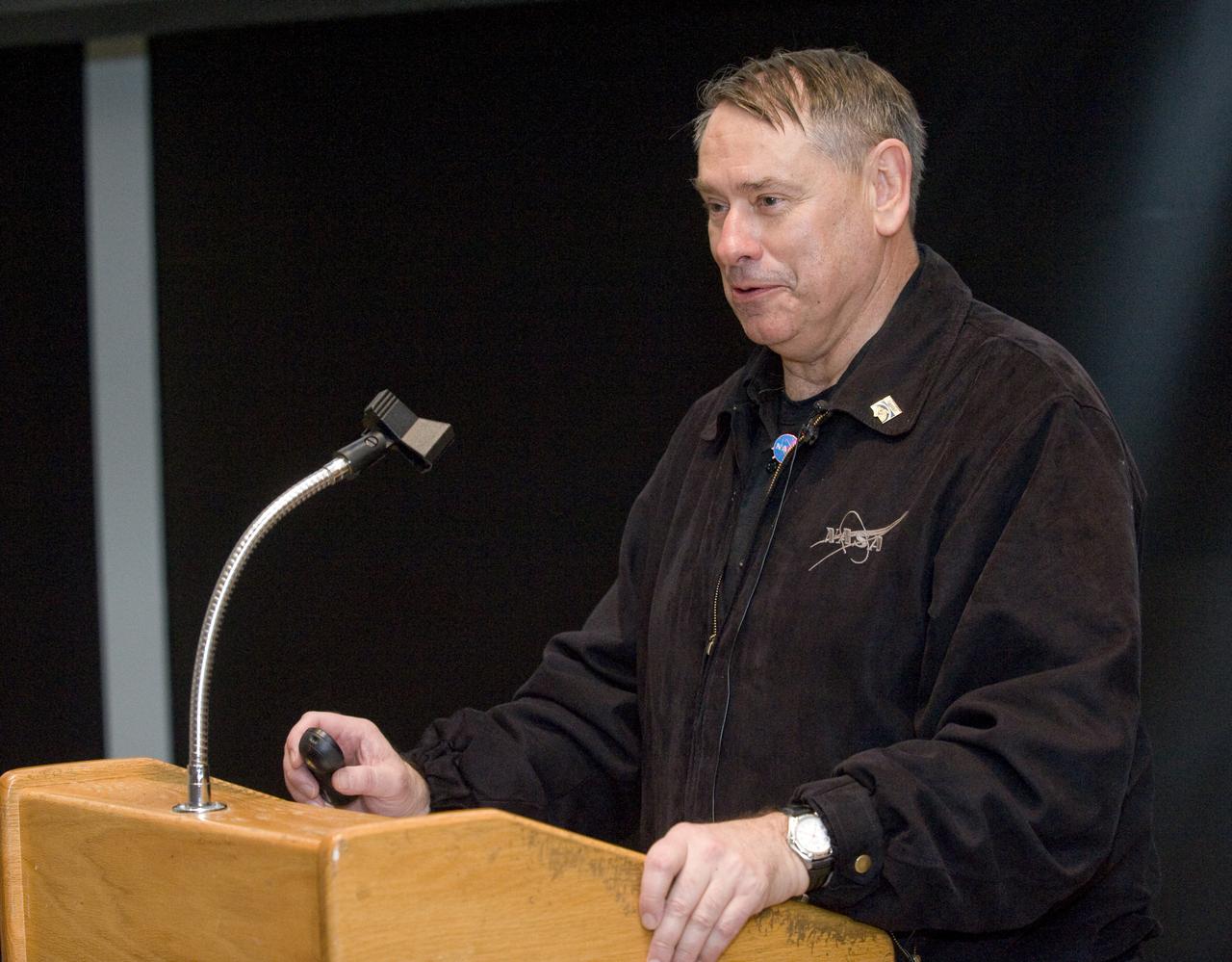
Yuri's Night 2009 held at the California Acaemy of Sciences in San Francisco, California Ames Center Director S. Pete Worden.

Yuri's Night 2009 held at the California Acaemy of Sciences in San Francisco, California Dana Bolles, Christine Ivey and Mike Mewhinney of Ames Research Center.

Yuri's Night 2009 held at the California Acaemy of Sciences in San Francisco, California Yvonne Pendleton, Ames Deputy Associate Center Director
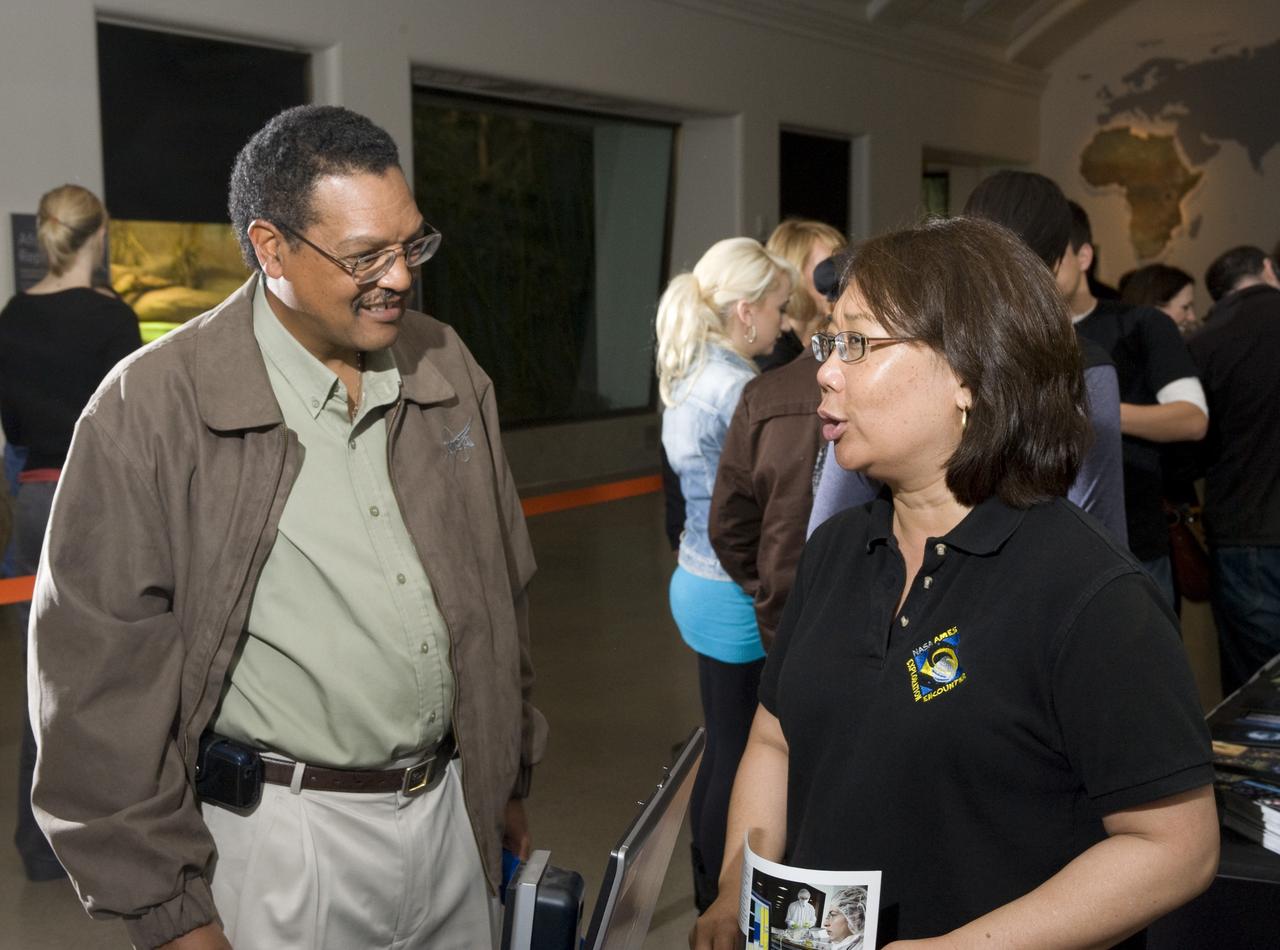
Yuri's Night 2009 held at the California Acaemy of Sciences in San Francisco, California Center Deputy Center Director Lew Braxton talks with a Ames volunteer at the LCROSS booth.
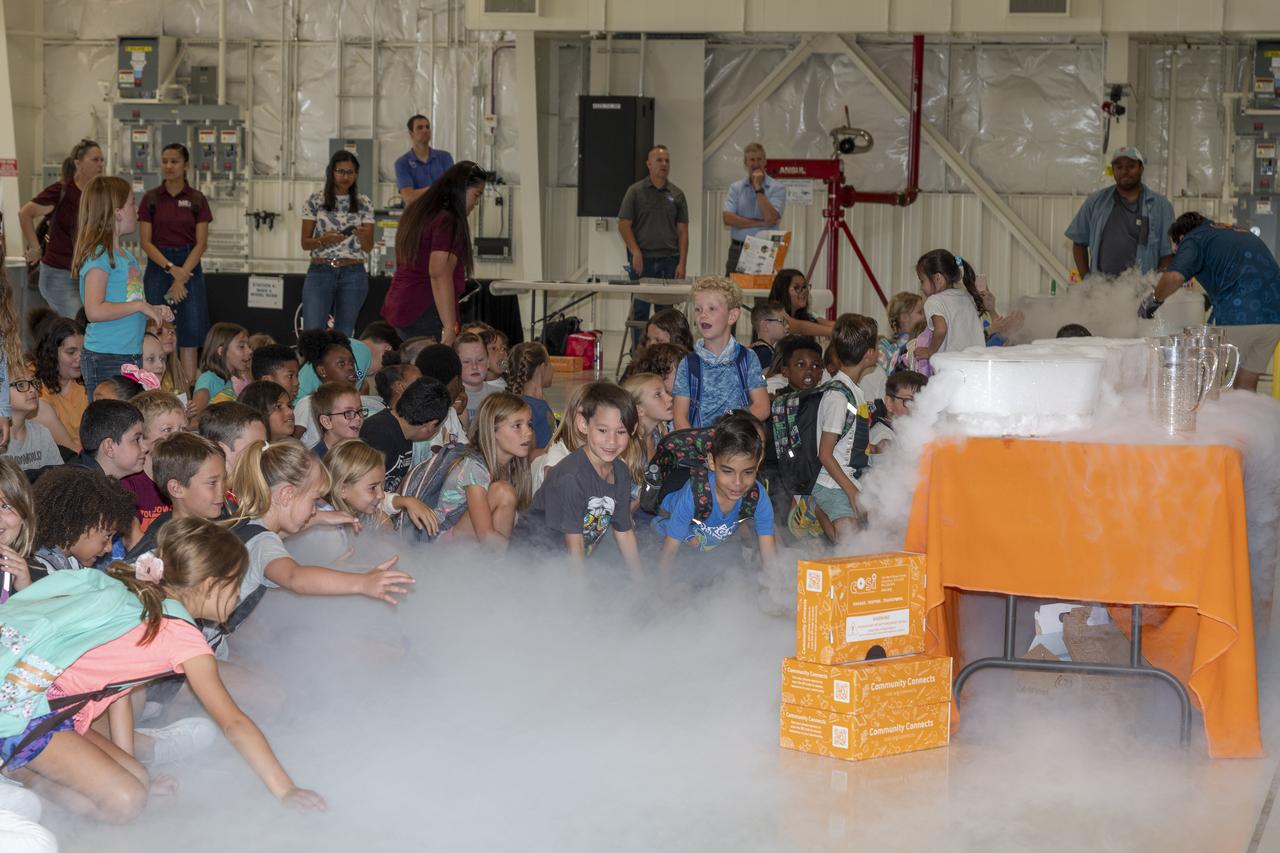
Students are wrapped in a cloud from a demonstration by NASA’s California Office of STEM Engagement event with Center of Science and Industry at NASA’s Armstrong Flight Research Center in Edwards, California.
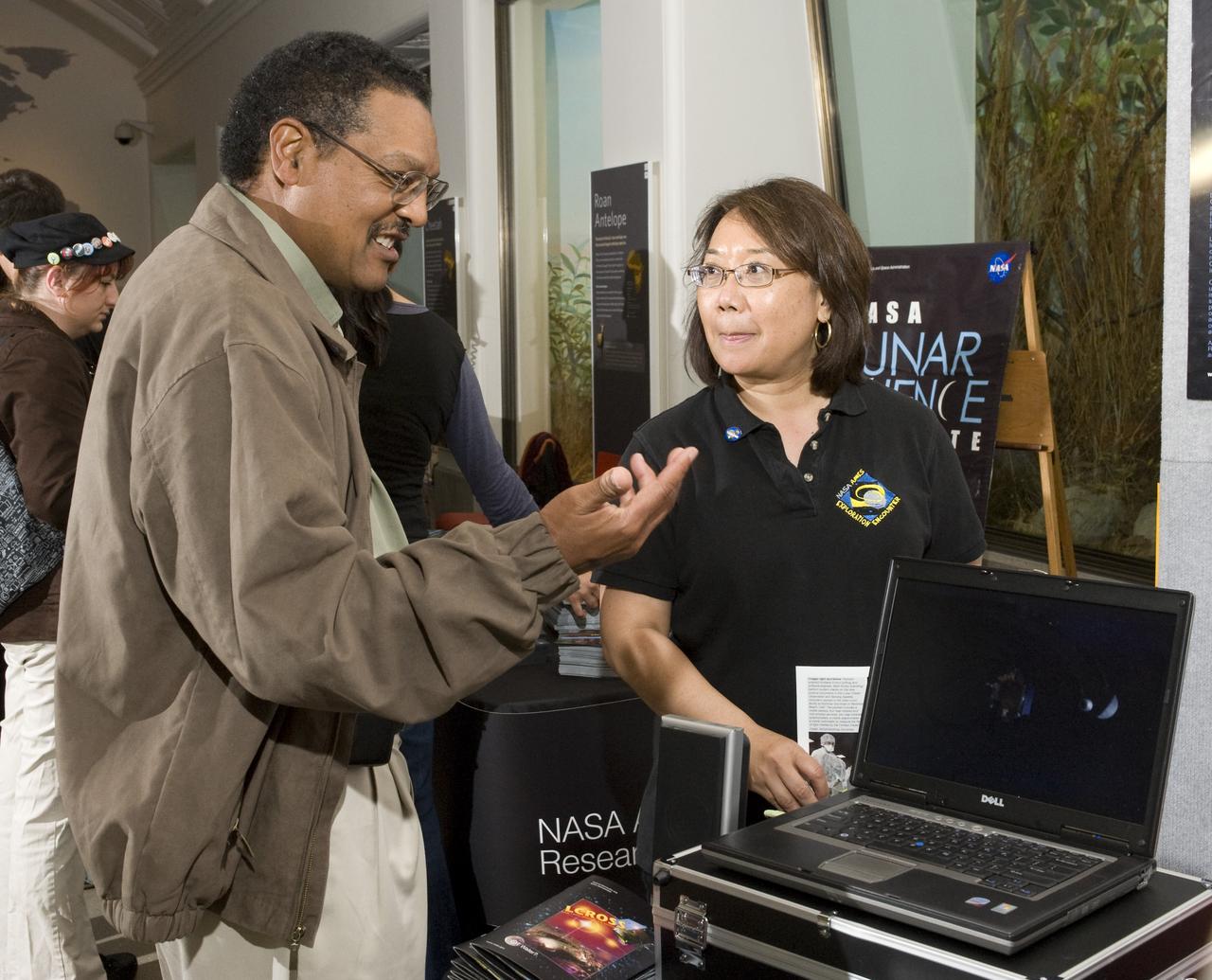
Yuri's Night 2009 held at the California Acaemy of Sciences in San Francisco, California Center Deputy Center Director Lew Braxton talks with a Ames volunteer at the LCROSS booth.
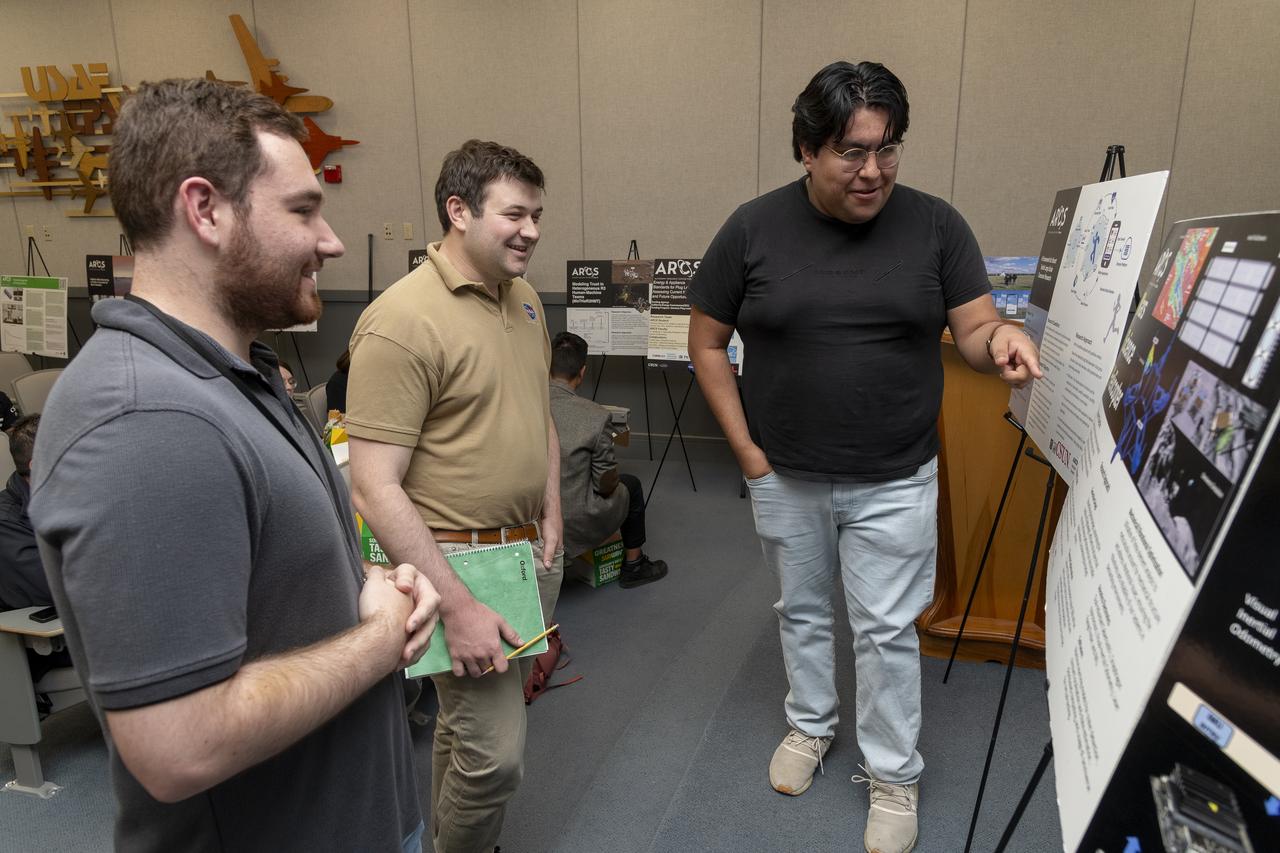
Two men from NASA’s Armstrong Flight Research Center in Edwards, California, ask Jared Carrillo, a student from the California State University, Northridge, Autonomy Research Center for science, technology, engineering, entrepreneurship, arts, humanities, and mathematics, about his work on the Mars Science Helicopter. Students displayed posters and answered questions about their technologies May 23 at the Air Force Test Pilot School auditorium on Edwards Air Force Base, California.
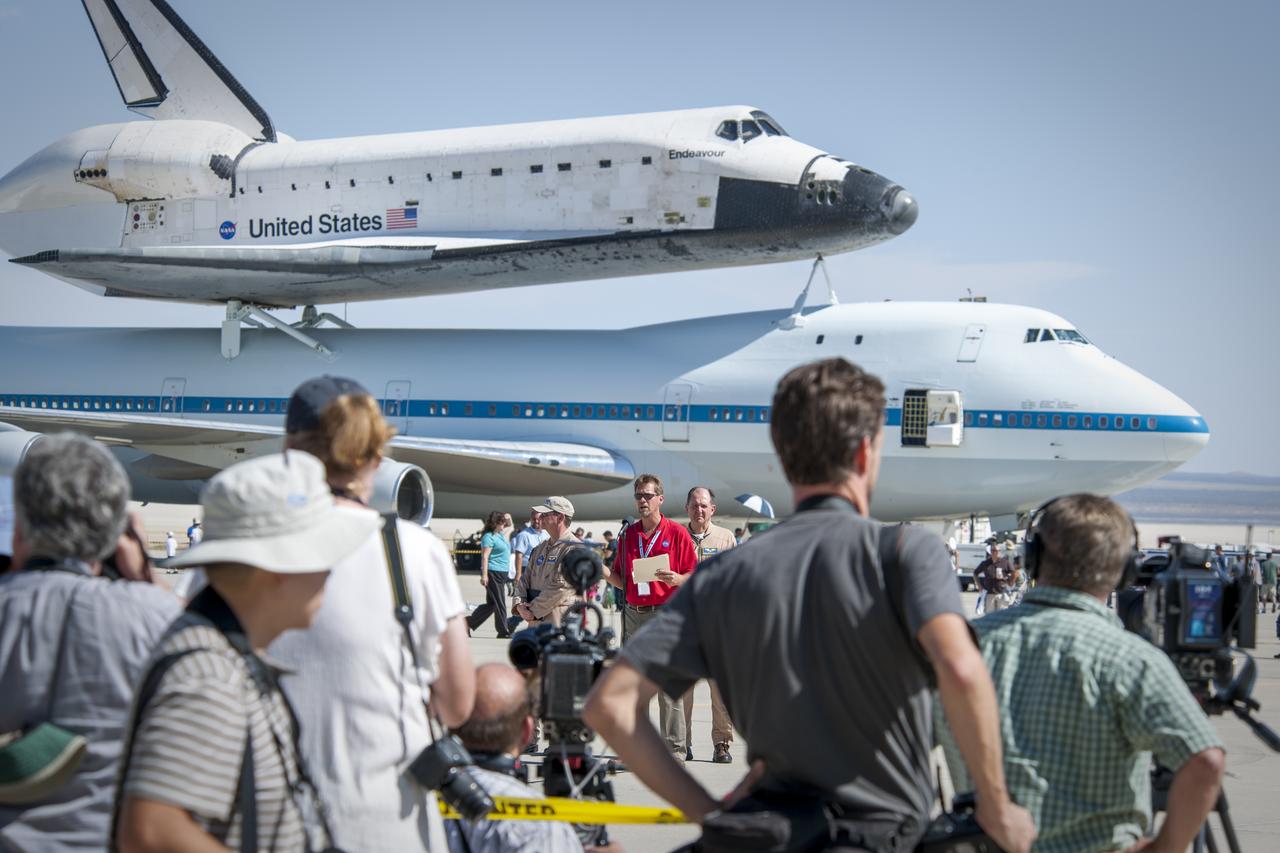
Media, social media, and NASA Armstrong (then Dryden) Flight Research Center employees and family wait for a press conference on the center’s back ramp on Sept. 20, 2012, in Edwards, California.
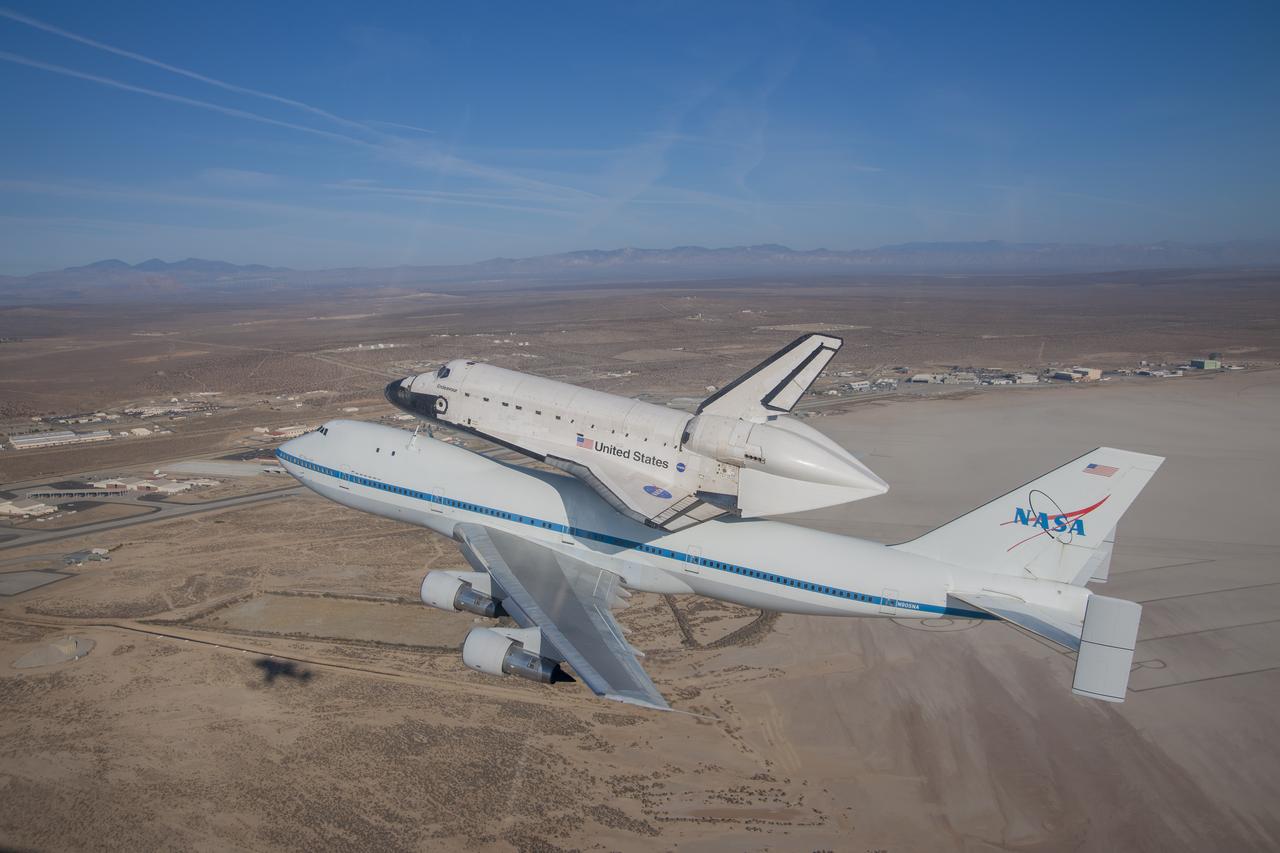
Space shuttle Endeavour and its host NASA 747 Shuttle Carrier Aircraft make a final flight over Edwards Air Force Base on Sept. 21, 2012. NASA’s Armstrong Flight Research Center in Edwards, California, is visible on the upper right of the frame.
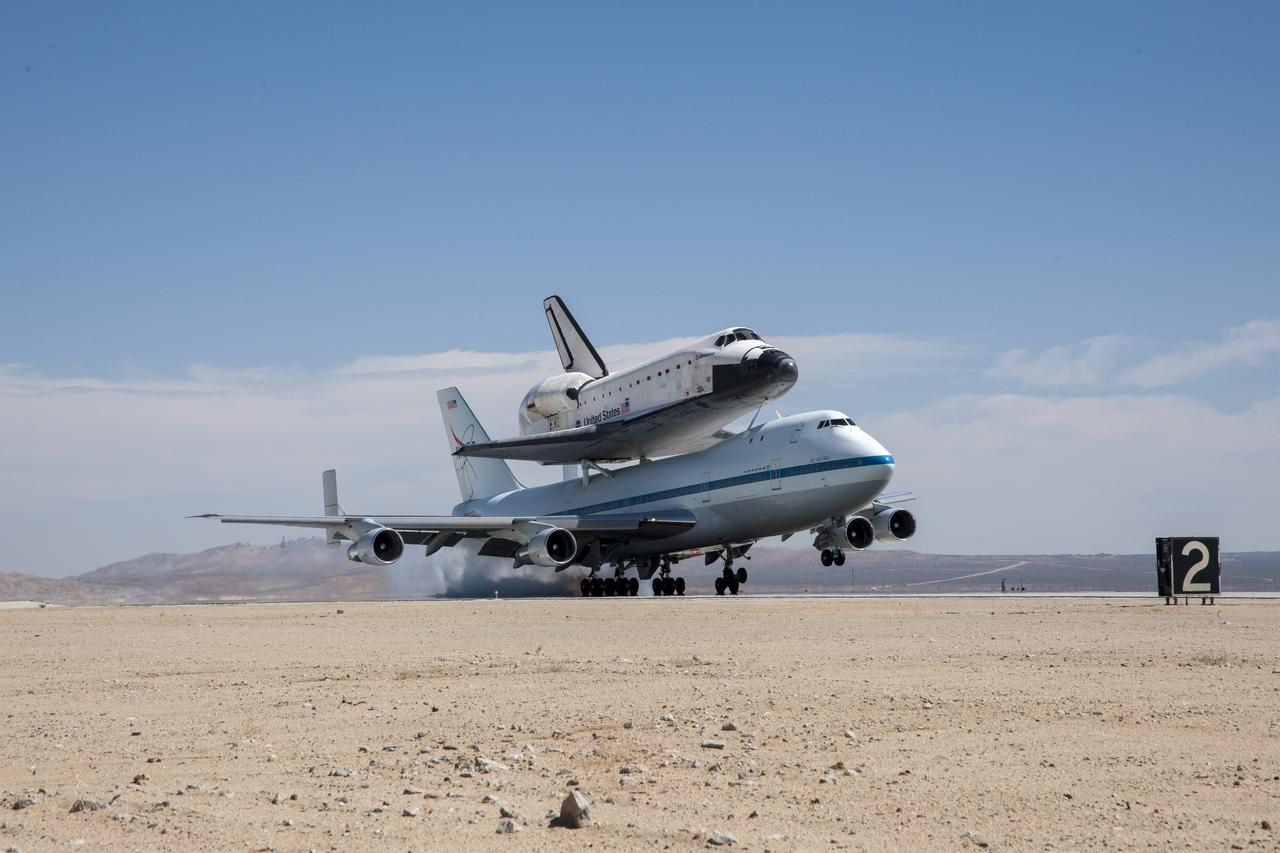
Space shuttle Endeavour and its host NASA 747 Shuttle Carrier Aircraft land at Edwards Air Force Base in California. It completed its third leg of a four-segment final ferry flight from NASA’s Kennedy Space Center in Florida to Los Angeles International Airport on Sept. 20, 2012. The landing was preceded by NASA’s Armstrong (then Dryden) Flight Research Center pilot Bill Brockett’s low-level flyby of the center and the Edwards flight line.
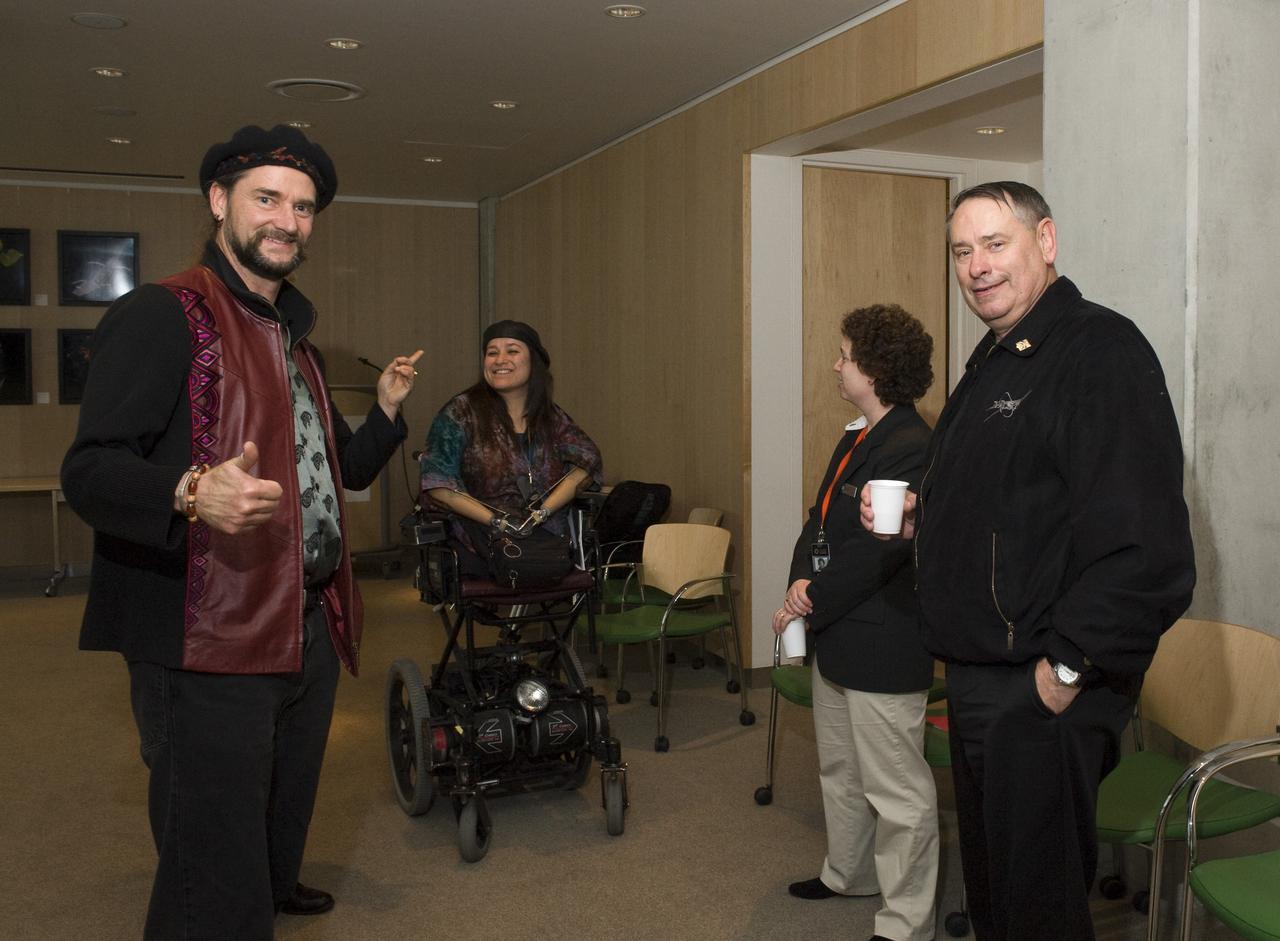
Yuri's Night 2009 held at the California Acaemy of Sciences in San Francisco, California. Image show Ames Center Director S. Pete Worden and Dana Bolles also of Ames at the beginning of the night's festivities.
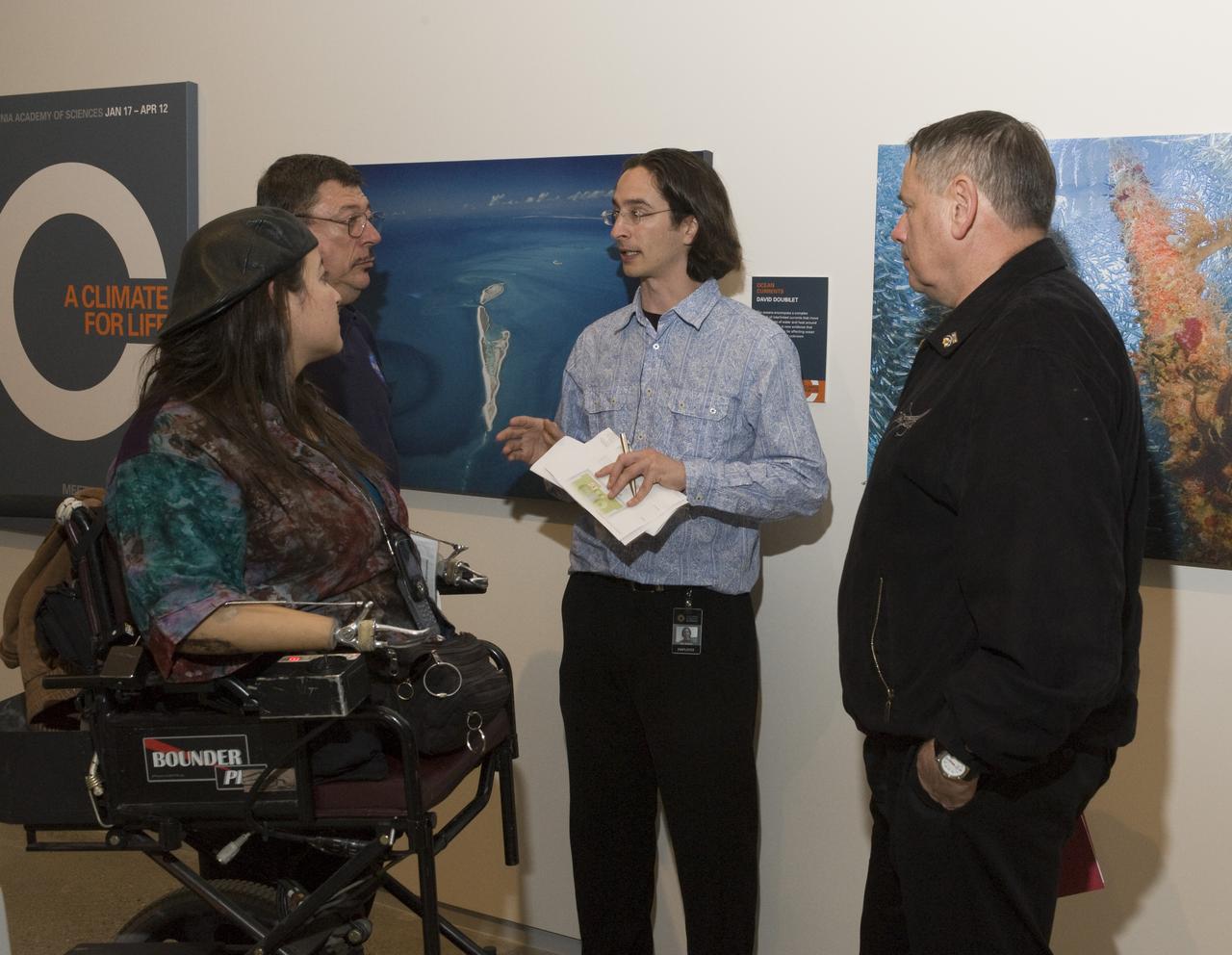
Yuri's Night 2009 held at the California Acaemy of Sciences in San Francisco, California Ames's (l-r) Dana Bolles and Davis Morse speak with a news person as Peter Worden Ames Center Director looks on)
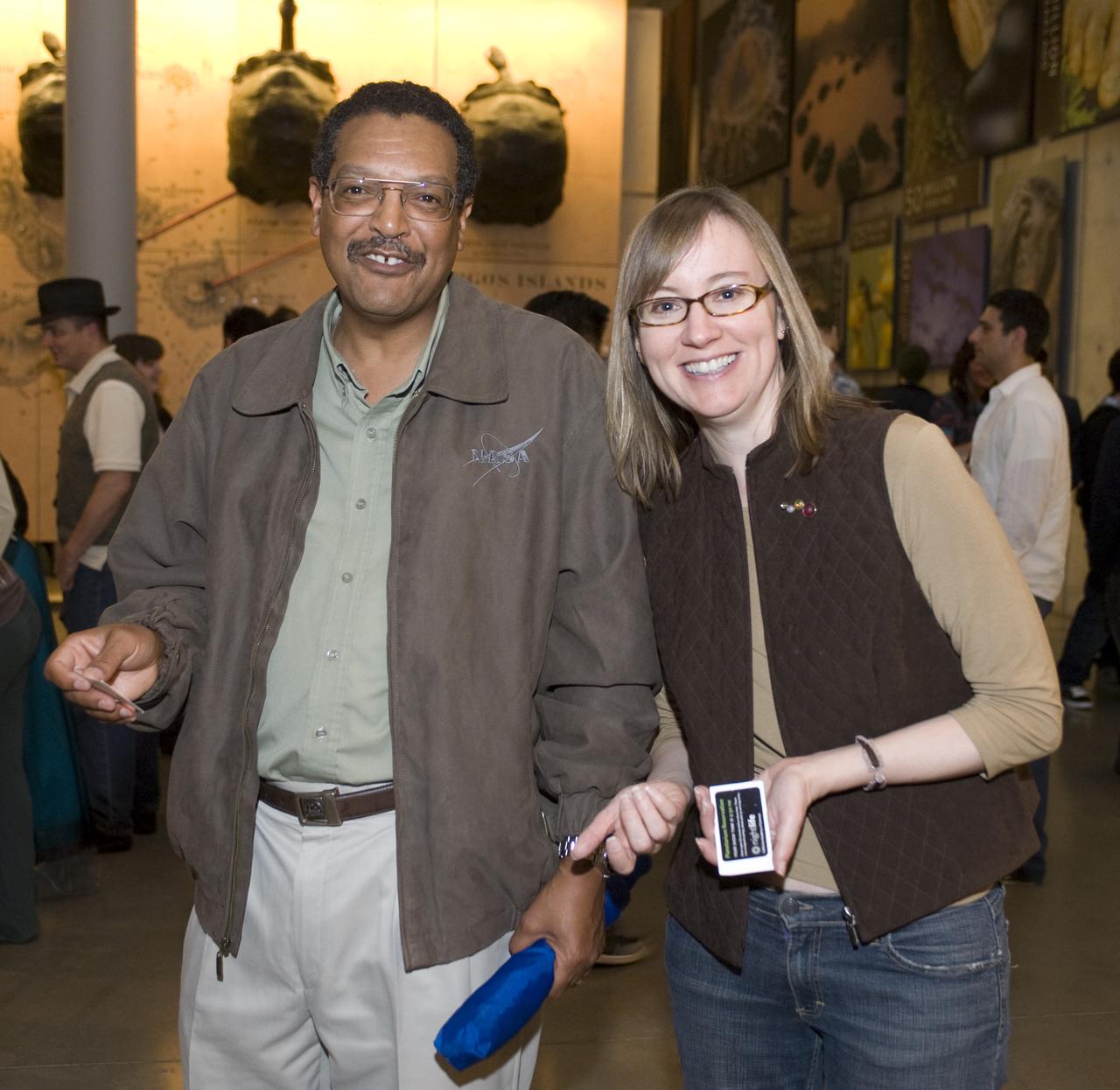
Yuri's Night 2009 held at the California Acaemy of Sciences in San Francisco, California Ames Deputy Center Director Lew Braxton and Lis Lockyear, Deputy Director New Ventures and Communications.
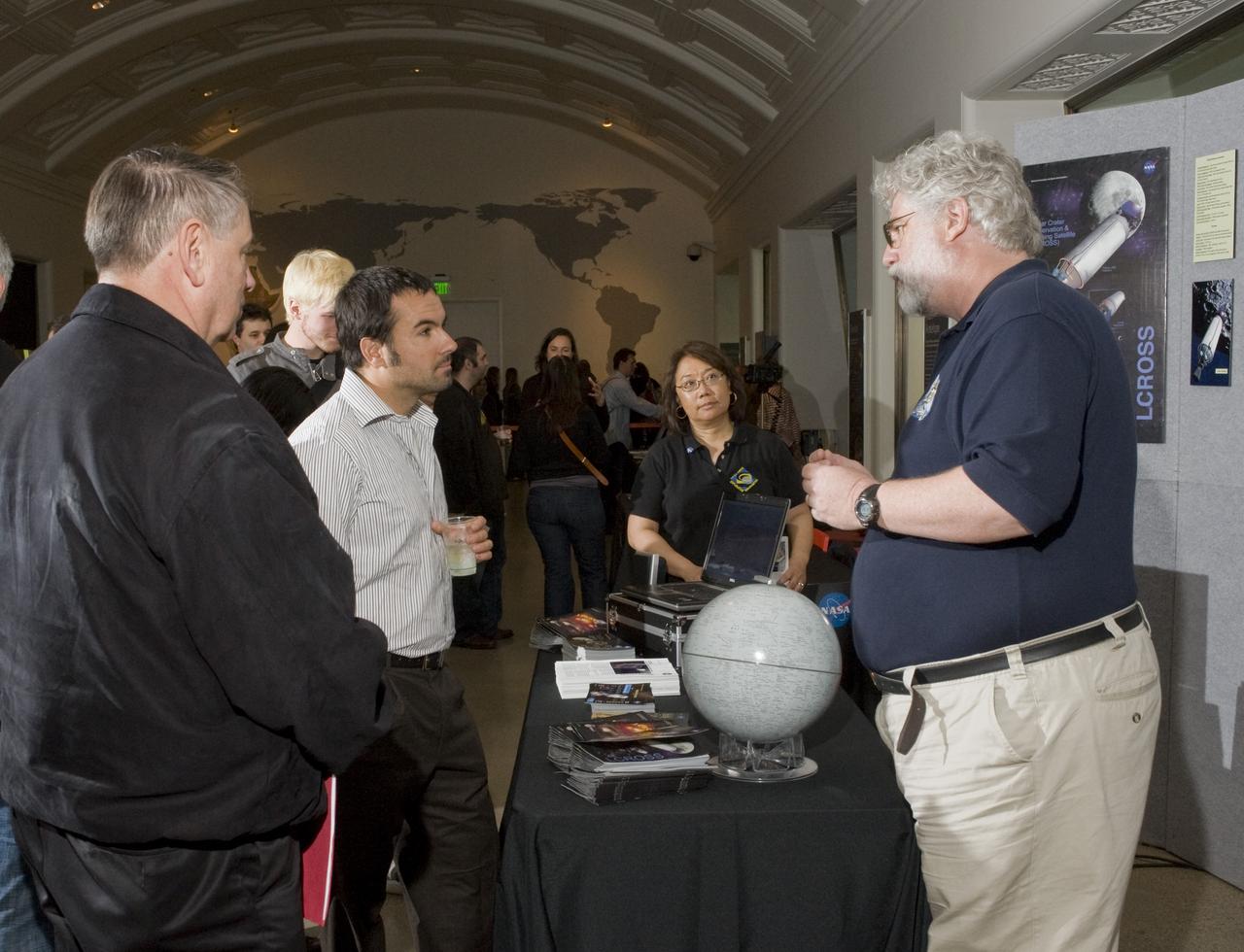
Yuri's Night 2009 held at the California Acaemy of Sciences in San Francisco, California Ames Center Director Pete Worden listens in on Brian Day, Planners, part of the Ames LCROSS team explain the intent of the mission.
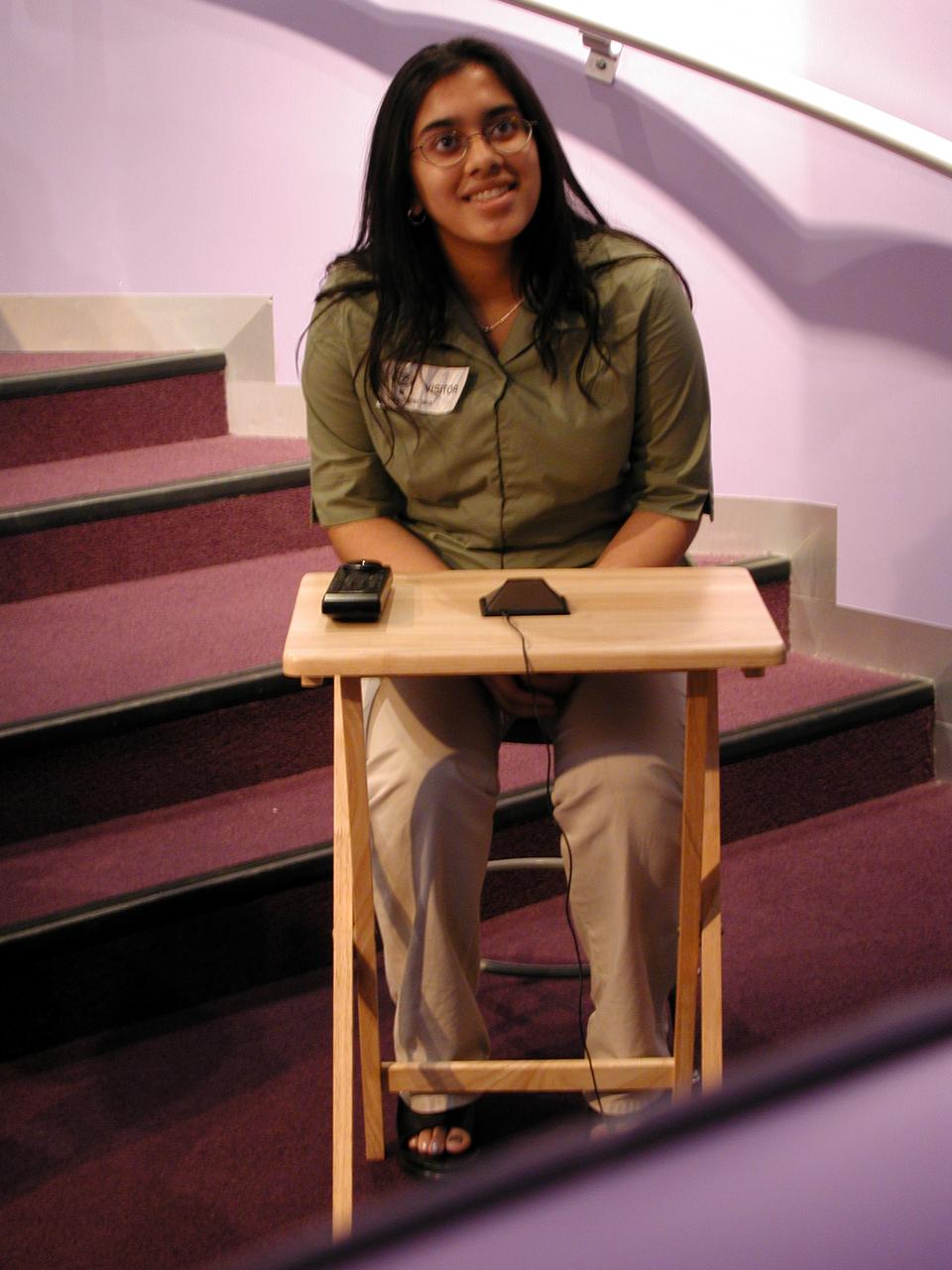
Sutta Chernubhotta (grade 10) from DuPont Manual High School in Louisville, Kentucky, asks a question of on of the on-line lecturers during the Pan-Pacific Basin Workshop on Microgravity Sciences held in Pasadena, California. The event originated at the California Science Center in Los Angeles. The DuPont Manual students patched in to the event through the distance learning lab at the Louisville Science Center. This image is from a digital still camera; higher resolution is not available.
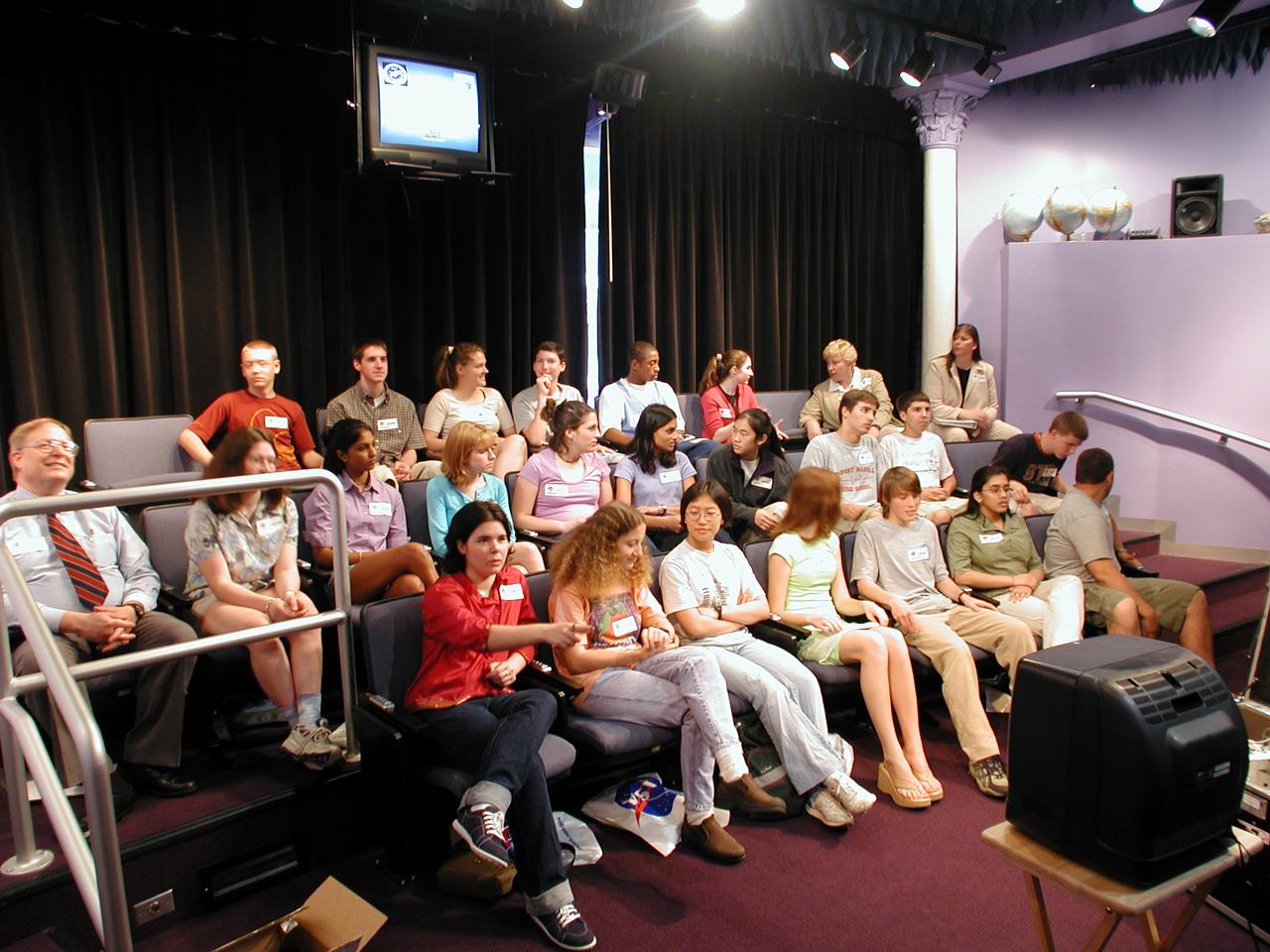
Students from DuPont Manual High School in Louisville, Kentucky participated in a video-teleconference during the Pan-Pacific Basin Workshop on Microgravity Sciences held in Pasadena, California. The event originated at the California Science Center in Los Angeles. The DuPont Manual students patched in to the event through the distance learning lab at the Louisville Science Center. This image is from a digital still camera; higher resolution is not available.
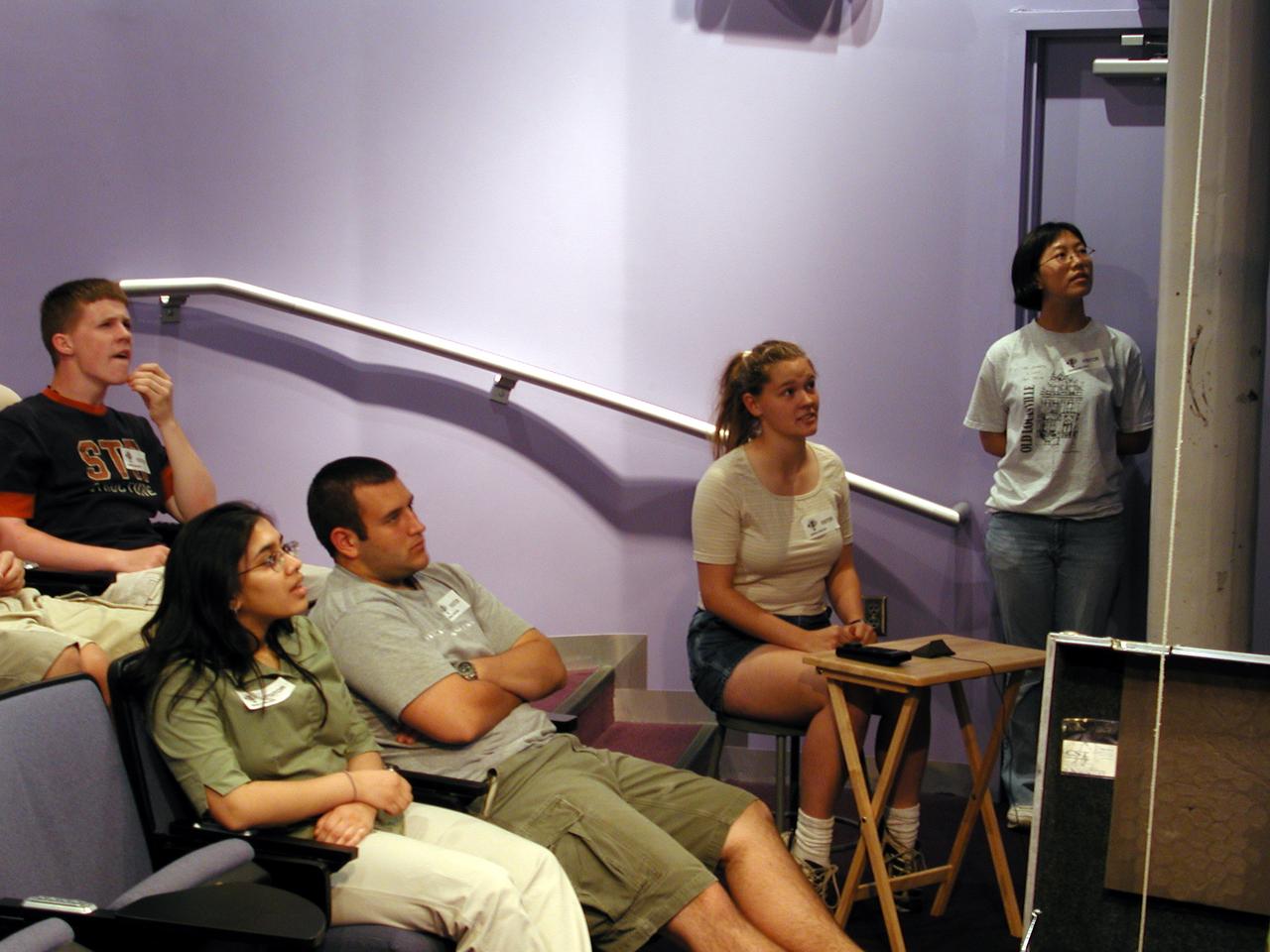
Suzarne Nichols (12th grade) from DuPont Manual High School in Louisville, Kentucky, asks a question of on of the on-line lecturers during the Pan-Pacific Basin Workshop on Microgravity Sciences held in Pasadena, California. The event originated at the California Science Center in Los Angeles. The DuPont Manual students patched in to the event through the distance learning lab at the Louisville Science Center. Jie Ma (grade 10, at right) waits her turn to ask a question. This image is from a digital still camera; higher resolution is not available.
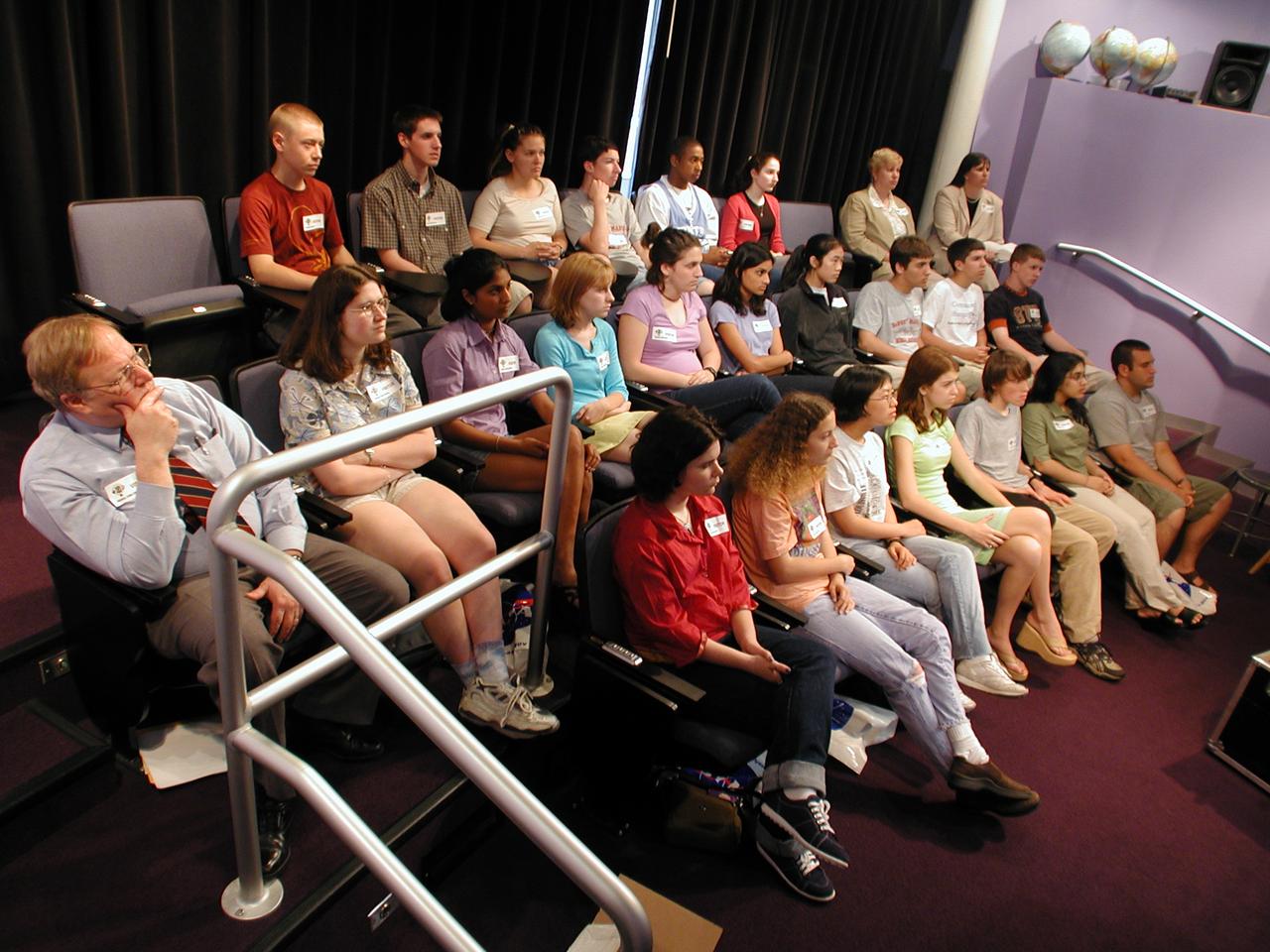
Students from DuPont Manual High School in Louisville, Kentucky participated in a video-teleconference during the Pan-Pacific Basin Workshop on Microgravity Sciences held in Pasadena, California. The event originated at the California Science Center in Los Angeles. The DuPont Manual students patched in to the event through the distance learning lab at the Louisville Science Center. This image is from a digital still camera; higher resolution is not available.
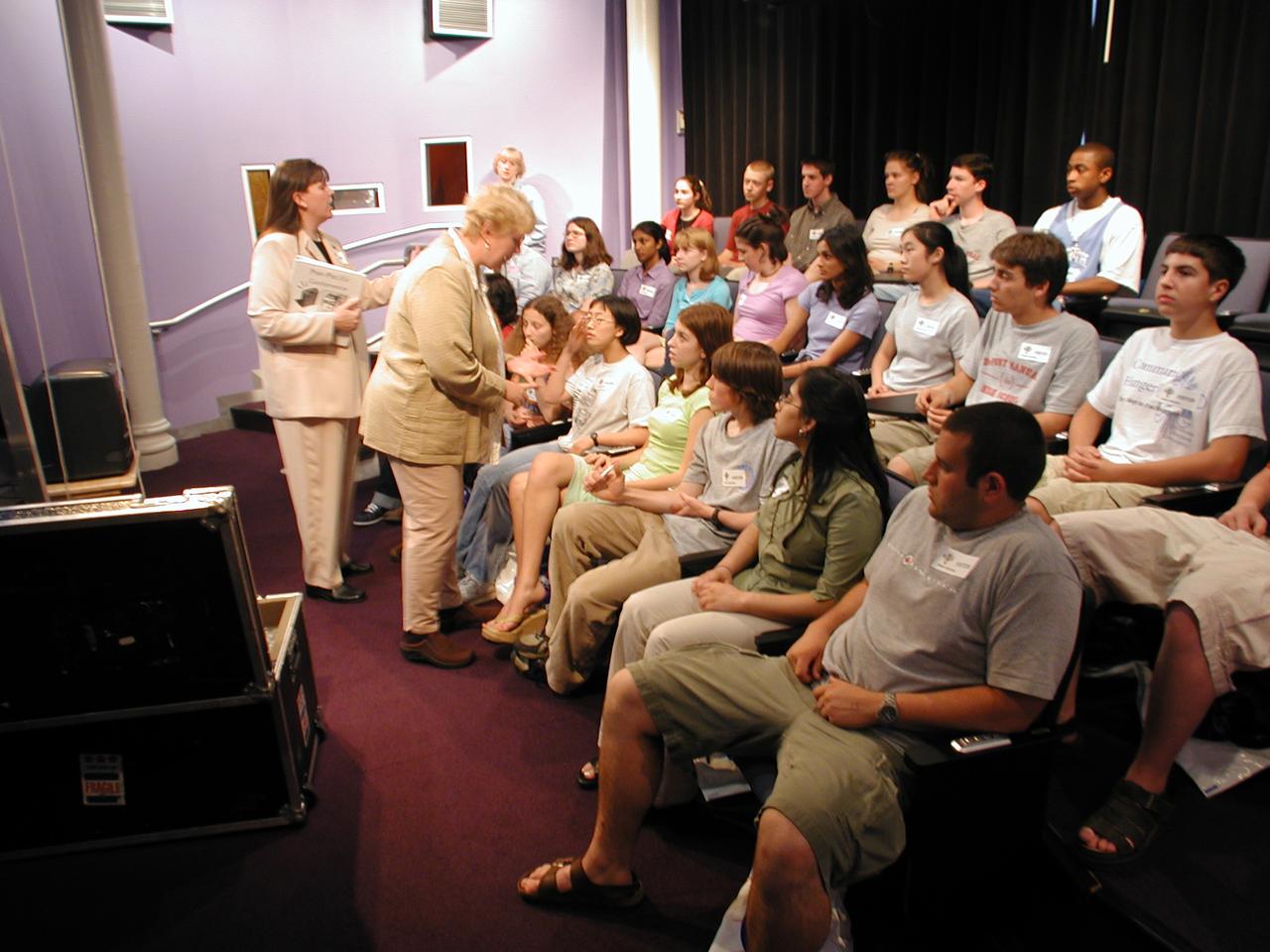
Students from DuPont Manual High School in Louisville, Kentucky participated in a video-teleconference during the Pan-Pacific Basin Workshop on Microgravity Sciences held in Pasadena, California. The event originated at the California Science Center in Los Angeles. The DuPont Manual students patched in to the event through the distance learning lab at the Louisville Science Center. Education coordinator Twila Schneider (left) of Infinity Technology and NASA materials engineer Chris Cochrane prepare students for the on-line workshop. This image is from a digital still camera; higher resolution is not available.
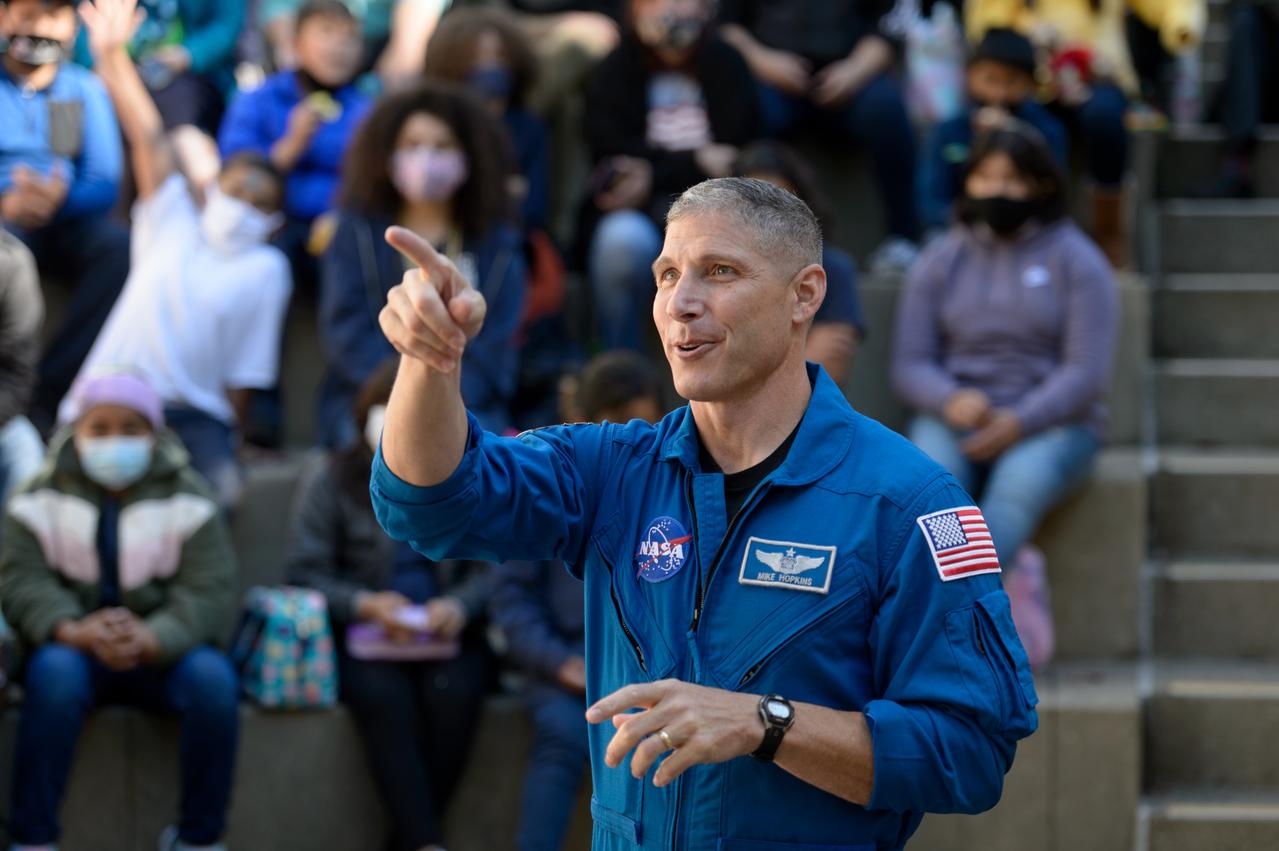
Astronaut Mike Hopkins talks to students during the NASA Experience opening ceremony at the Chabot Space and Science Center in Oakland, California.
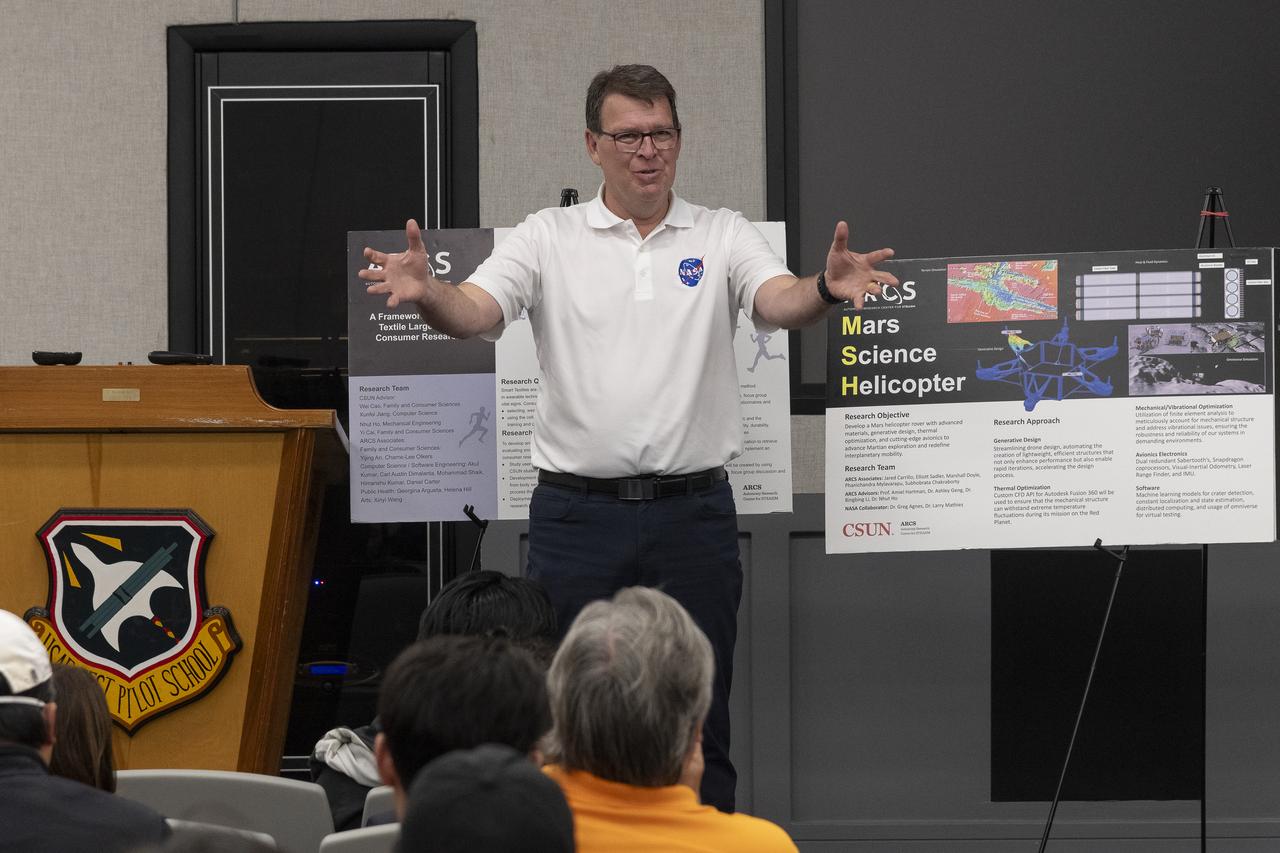
Brad Flick, center director at NASA’s Armstrong Flight Research Center in Edwards, California, talks to students from California State University, Northridge, California. As part of the university’s Autonomy Research Center for science, technology, engineering, entrepreneurship, arts, humanities, and mathematics, the students displayed posters and answered questions about their technologies May 23 at the Air Force Test Pilot School auditorium on Edwards Air Force Base, California.
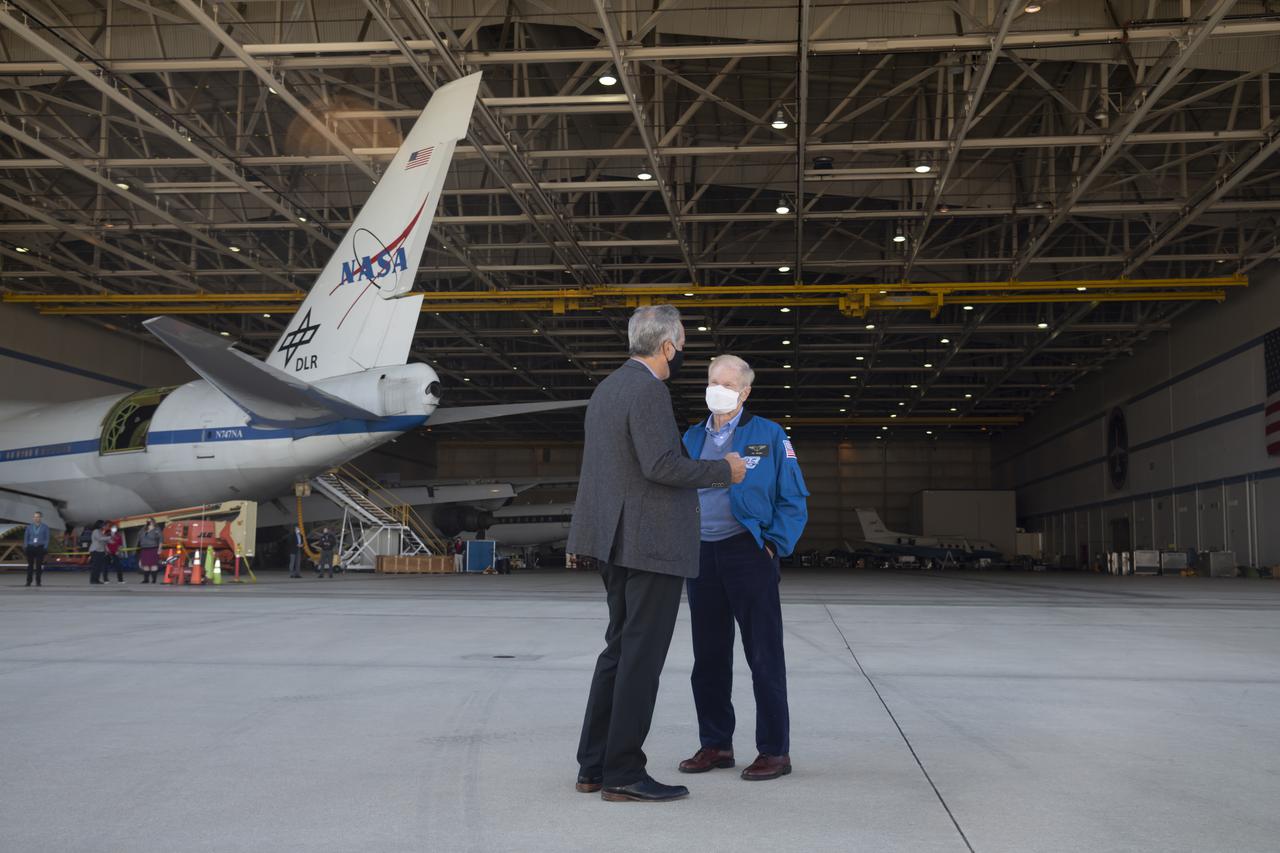
NASA Administrator Bill Nelson, right, and David McBride, center director at NASA’s Armstrong Flight Research Center in Edwards, California, talk by the Stratospheric Observatory for Infrared Science during the administrator’s visit to NASA Armstrong’s Building 703 in Palmdale, California, on Oct. 12.
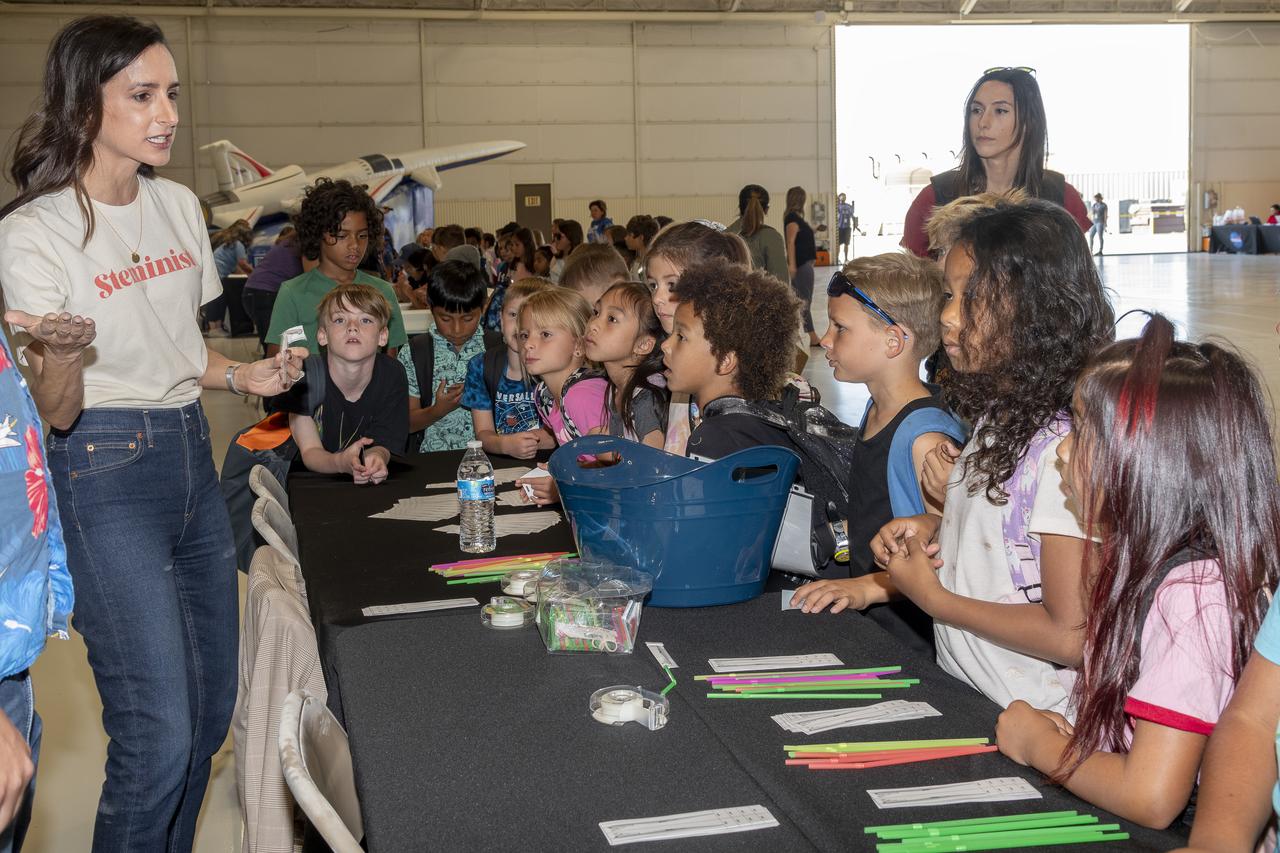
Kate M. McMurtry, deputy director of Integrated Aviation Systems Program shares with students how NASA is working to quiet the sonic boom with the development of the X-59 aircraft at NASA’s California Office of STEM Engagement event with Center of Science and Industry at NASA Armstrong Flight Research Center in Edwards, California.
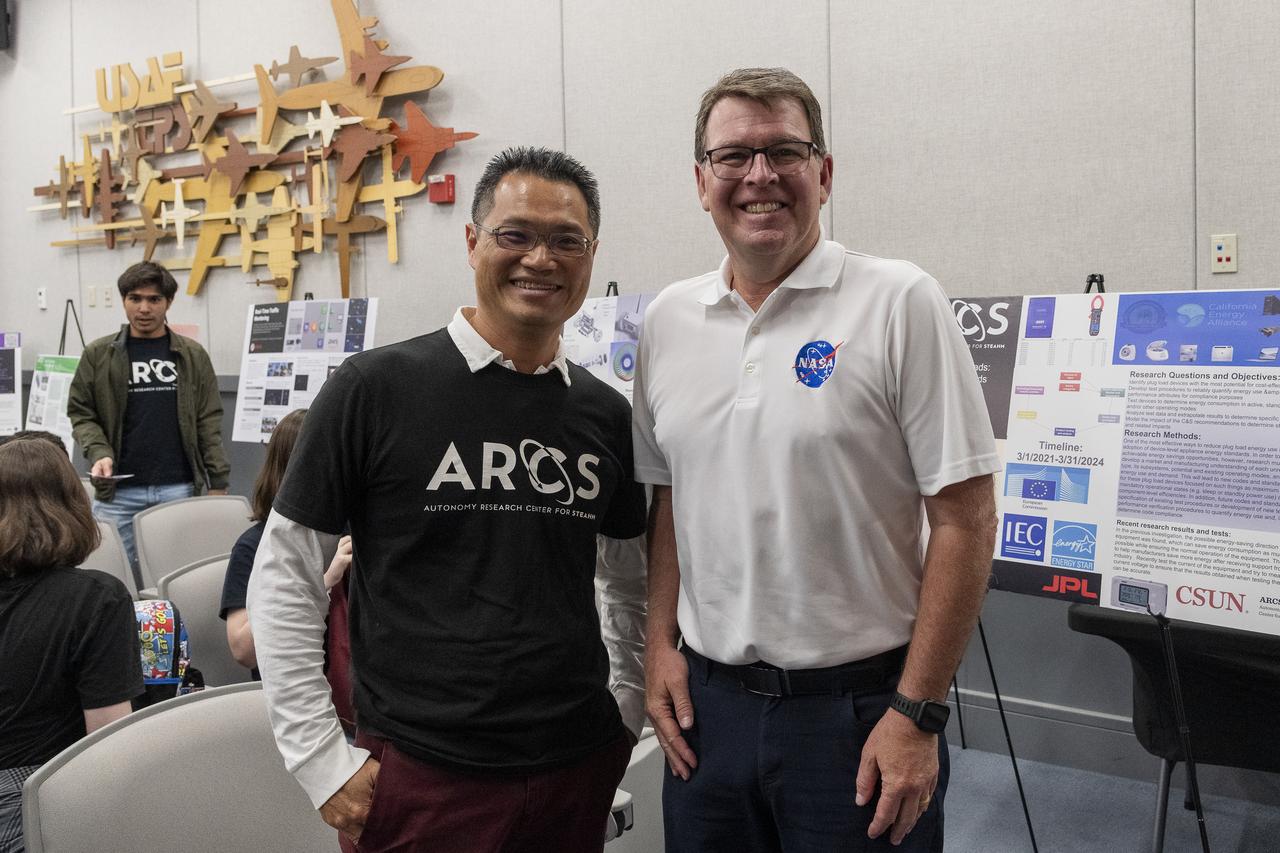
Nhut Ho, director of the NASA-sponsored Autonomy Research Center for science, technology, engineering, entrepreneurship, arts, humanities, and mathematics at California State University, Northridge, left, spoke to Brad Flick, center director at NASA’s Armstrong Flight Research Center in Edwards, California. The men were attending a student poster event, where students showcased their technologies and answered questions May 23 at the Air Force Test Pilot School auditorium on Edwards Air Force Base, California.
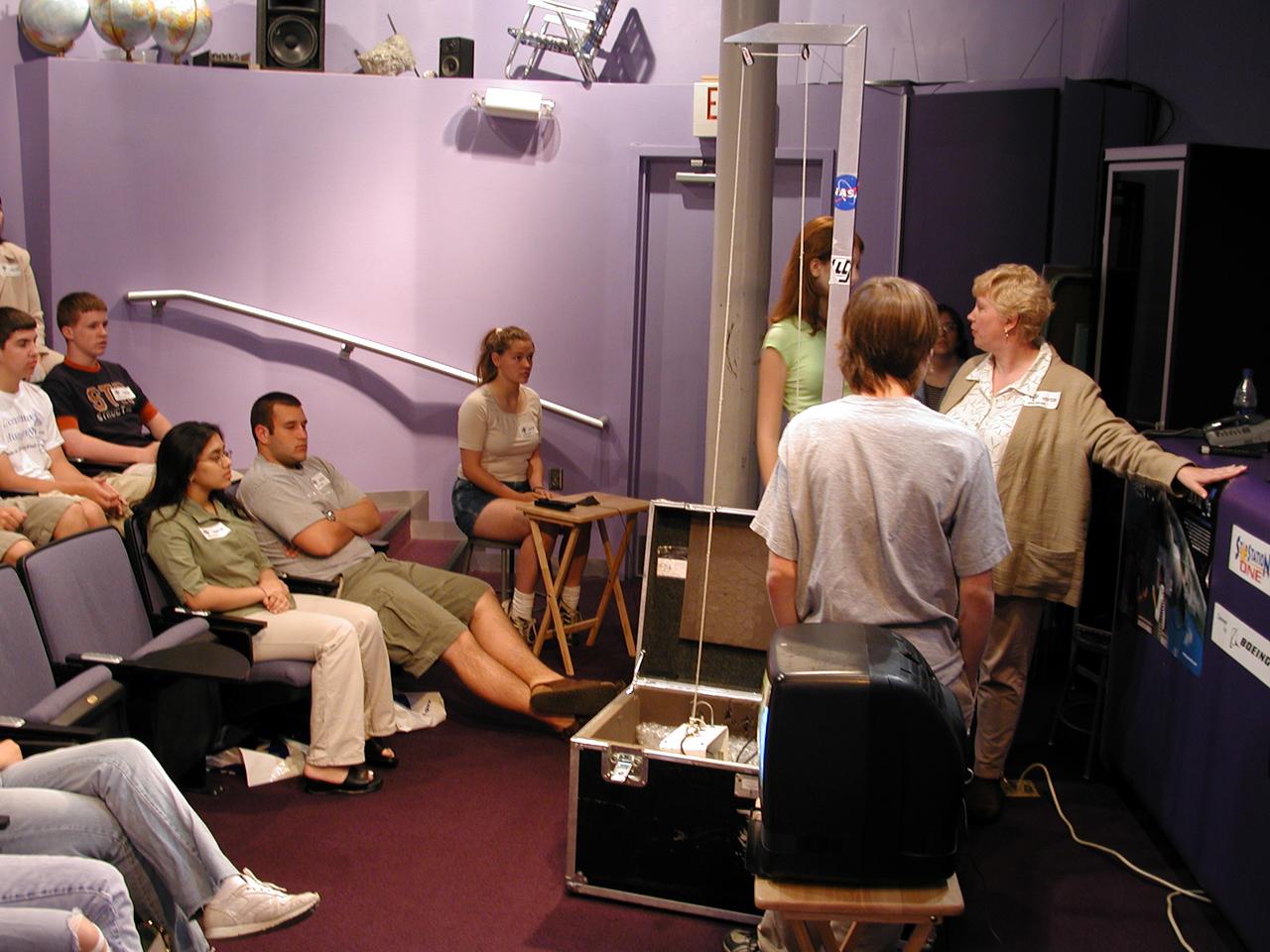
Suzarne Nichols (12th grade) from DuPont Manual High School in Louisville, Kentucky, asks a question of on of the on-line lecturers during the Pan-Pacific Basin Workshop on Microgravity Sciences held in Pasadena, California. The event originated at the California Science Center in Los Angeles. The DuPont Manual students patched in to the event through the distance learning lab at the Louisville Science Center. NASA materials engineer Chris Cochrane prepare students for the on-line workshop helps two students prepare a drop demonstration. This image is from a digital still camera; higher resolution is not available.
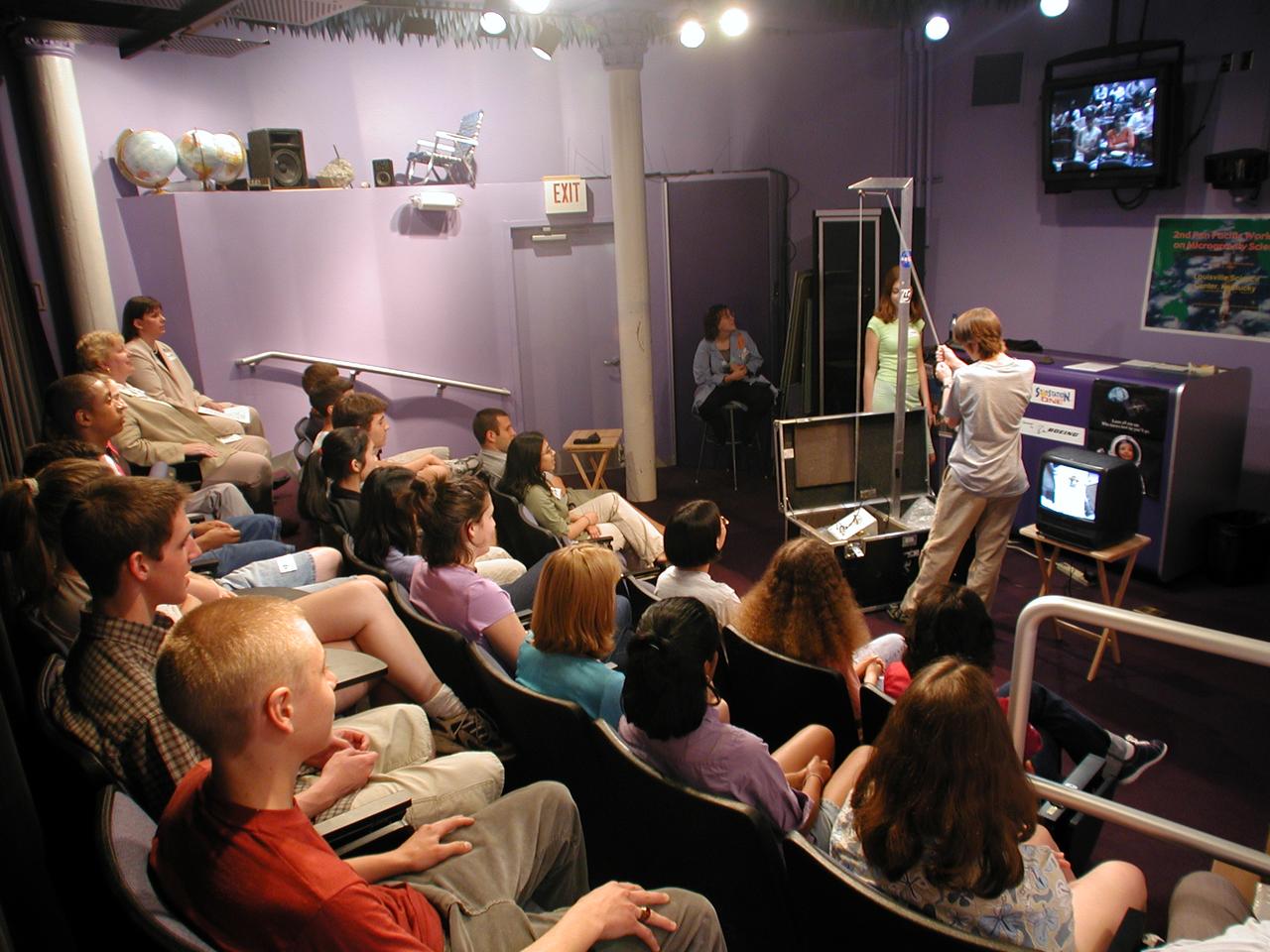
John Henson (grade 12) and Suzi Bryce (grade 10) from DuPont Manual High School in Louisville, Kentucky, conduct a drop with NASA's Microgravity Demonstrator. A camera and a TV/VCR unit let students play back recordings of how different physical devices behave differently during freefall as compared to 1-g. The activity was part of the education outreach segment of the Pan-Pacific Basin Workshop on Microgravity Sciences held in Pasadena, California. The event originated at the California Science Center in Los Angeles. The DuPont Manual students patched in to the event through the distance learning lab at the Louisville Science Center. This image is from a digital still camera; higher resolution is not available.
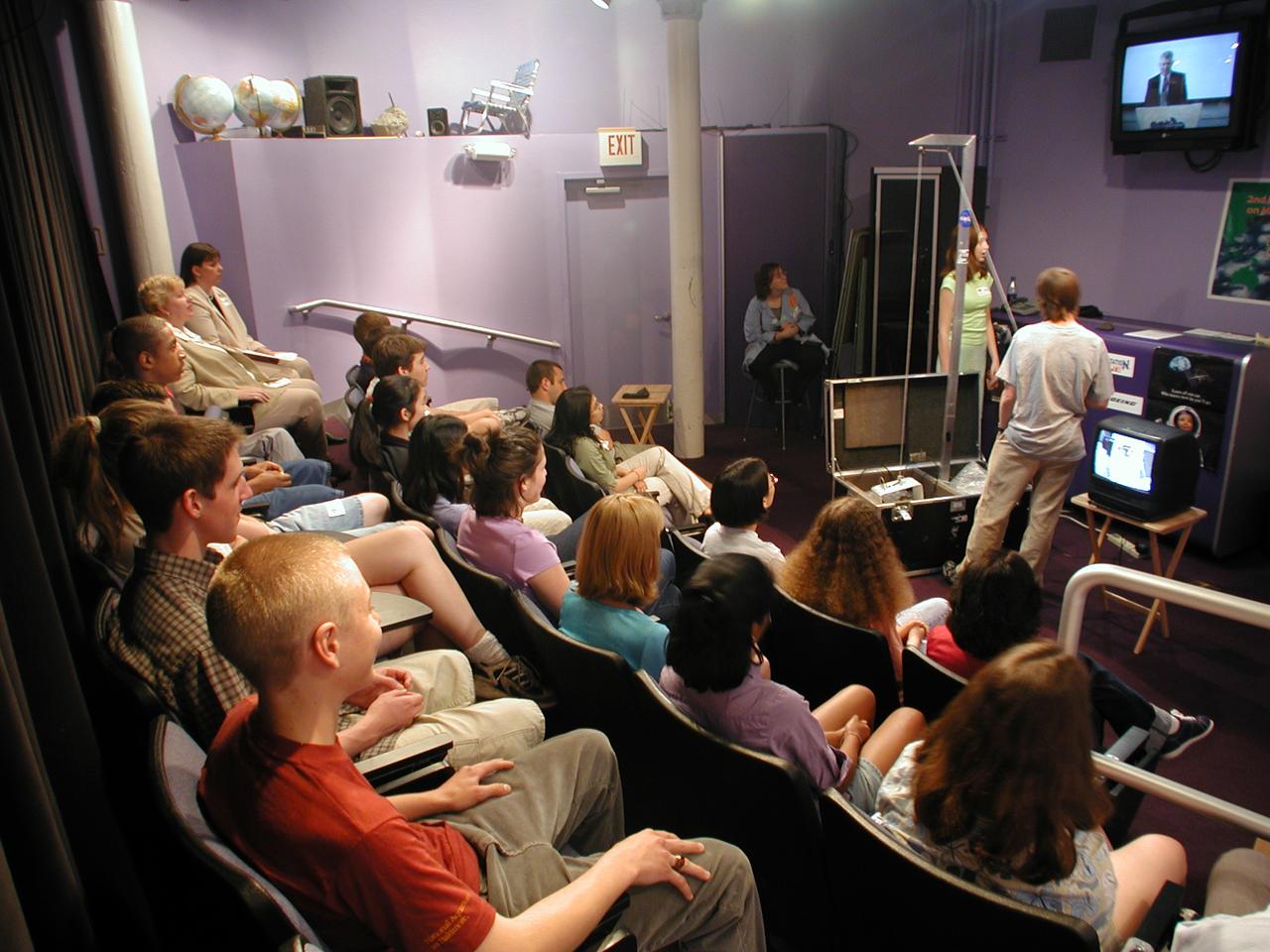
John Henson (grade 12) and Suzi Bryce (grade 10) conducted the drop from DuPont Manual High School in Louisville, Kentucky, conduct a drop with NASA's Microgravity Demonstrator. A camera and a TV/VCR unit let students play back recordings of how different physical devices behave differently during freefall as compared to 1-g. The activity was part of the education outreach segment of the Pan-Pacific Basin Workshop on Microgravity Sciences held in Pasadena, California. The event originated at the California Science Center in Los Angeles. The DuPont Manual students patched in to the event through the distance learning lab at the Louisville Science Center. This image is from a digital still camera; higher resolution is not available.

NASA Administrator Bill Nelson and NASA Deputy Administrator Pam Melroy listen to NASA Armstrong Flight Research Center Director David McBride, at left, tell them about Building 703 in Palmdale, California. The building houses many of NASA's science aircraft. NASA Armstrong's main campus is in nearby Edwards, California.
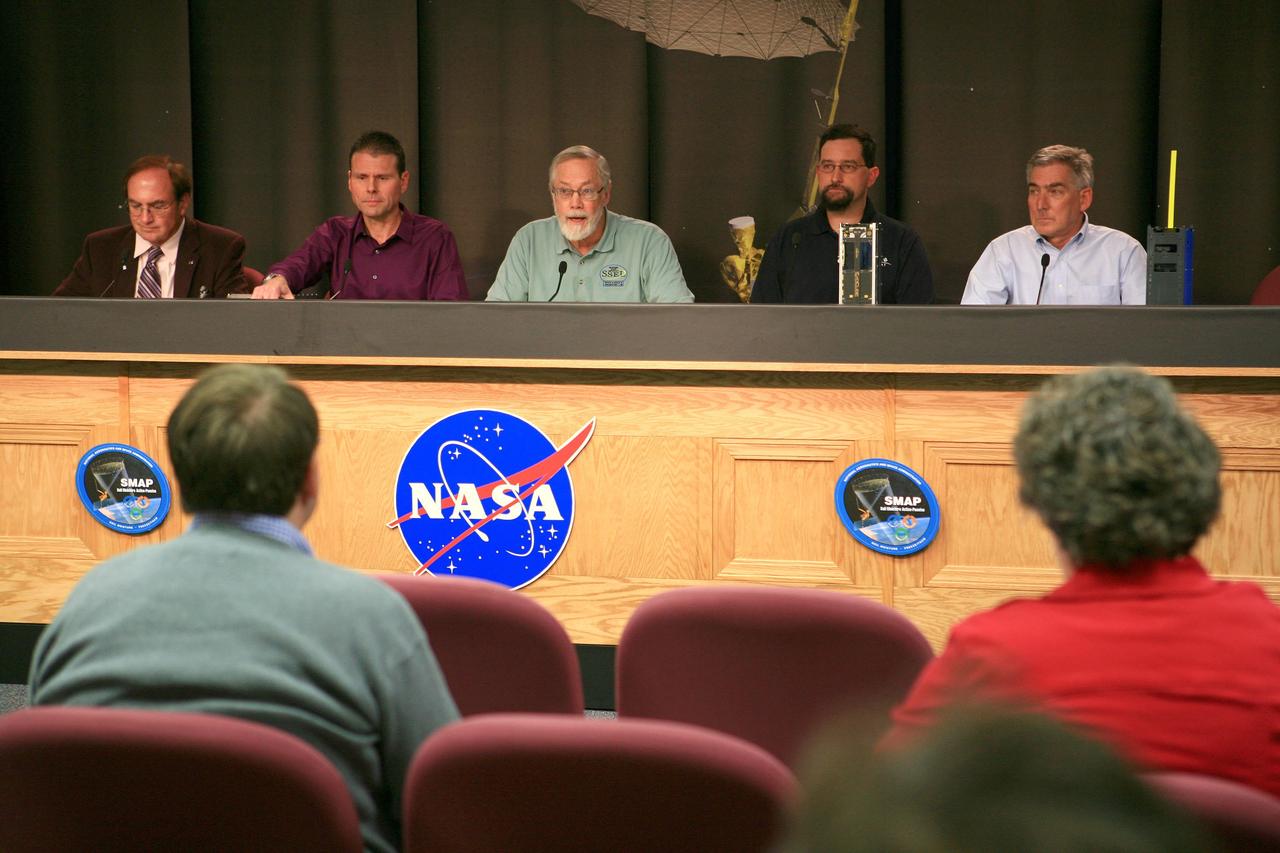
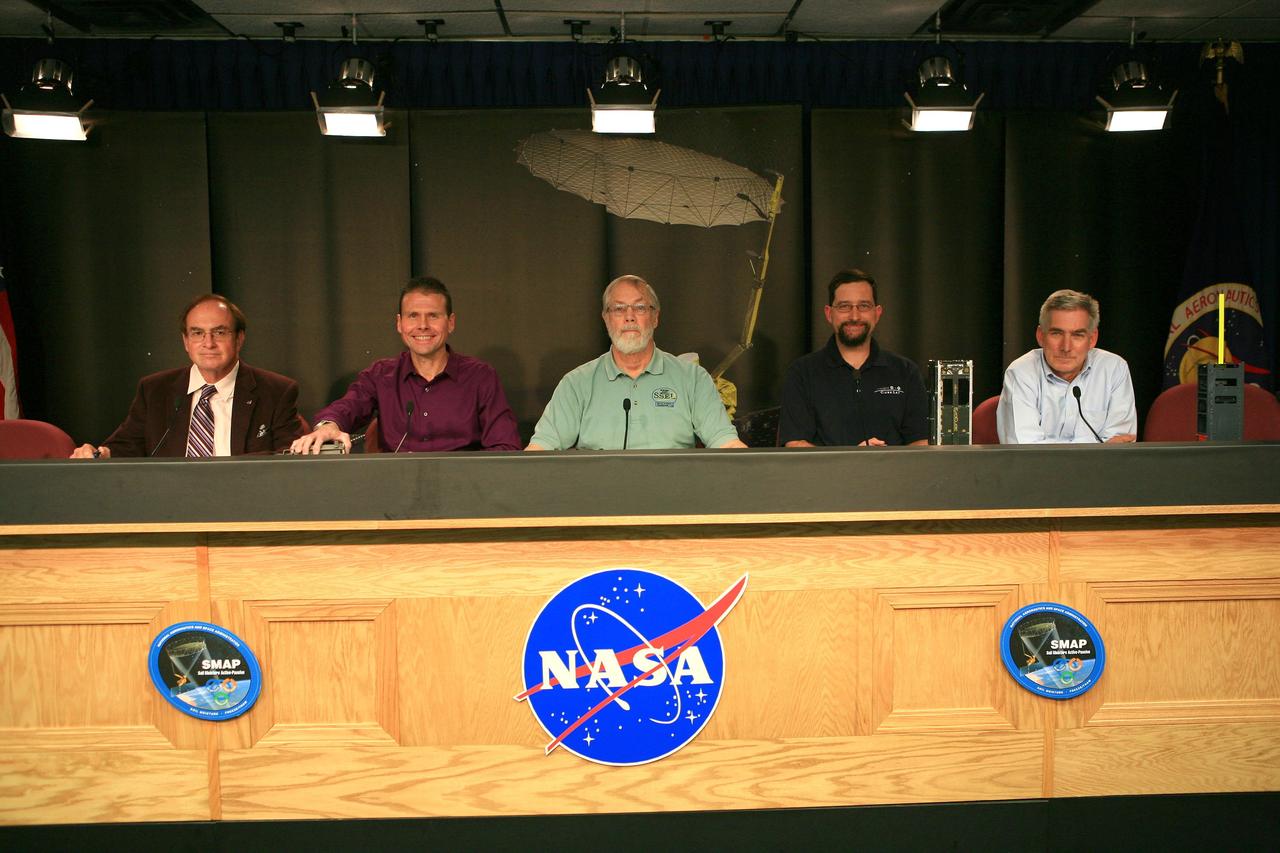
VANDENBERG AIR FORCE BASE, California– At Vandenberg Air Force Base, California, agency leaders held an Educational Launch of Nanosatellites, or ELaNa, CubeSat briefing to discuss three small research satellites that are being flown as auxiliary payloads on the SMAP mission. More than 100 university students have been involved in the design, development and construction of the CubeSats. Presenting the mission science objectives for the ELaNa CubeSats are George Diller of NASA Public Affairs, Scott Higginbotham, NASA ELaNa-X Mission Manager at the Kennedy Space Center, Florida, Dave Klumpar, Firebird-II principal investigator and director of the Space Science and Engineering Laboratory at Montana State University in Bozeman, Montana, Jordi Puig-Sauri, EXOCUBE principal investigator at the California Polytechnic State University in San Luis Obispo, California, and David Rider, GRIFEX principal investigator at Jet Propulsion Laboratory, Pasadena, California. Photo credit: NASA/Kim Shiflett
VANDENBERG AIR FORCE BASE, California– At Vandenberg Air Force Base, California, agency leaders held an Educational Launch of Nanosatellites, or ELaNa, CubeSat briefing to discuss three small research satellites that are being flown as auxiliary payloads on the SMAP mission. More than 100 university students have been involved in the design, development and construction of the CubeSats. Presenting the mission science objectives for the ELaNa CubeSats are George Diller of NASA Public Affairs, Scott Higginbotham, NASA ELaNa-X Mission Manager at the Kennedy Space Center, Florida, Dave Klumpar, Firebird-II principal investigator and director of the Space Science and Engineering Laboratory at Montana State University in Bozeman, Montana, Jordi Puig-Sauri, EXOCUBE principal investigator at the California Polytechnic State University in San Luis Obispo, California, and David Rider, GRIFEX principal investigator at Jet Propulsion Laboratory, Pasadena, California. Photo credit: NASA/Kim Shiflett

NASA’s B200 taking off for an eight-hour science flight on March 5. Located on the center of the aircraft’s fuselage is the DopplerScatt radar instrument, developed by NASA’s Jet Propulsion Laboratory in California.
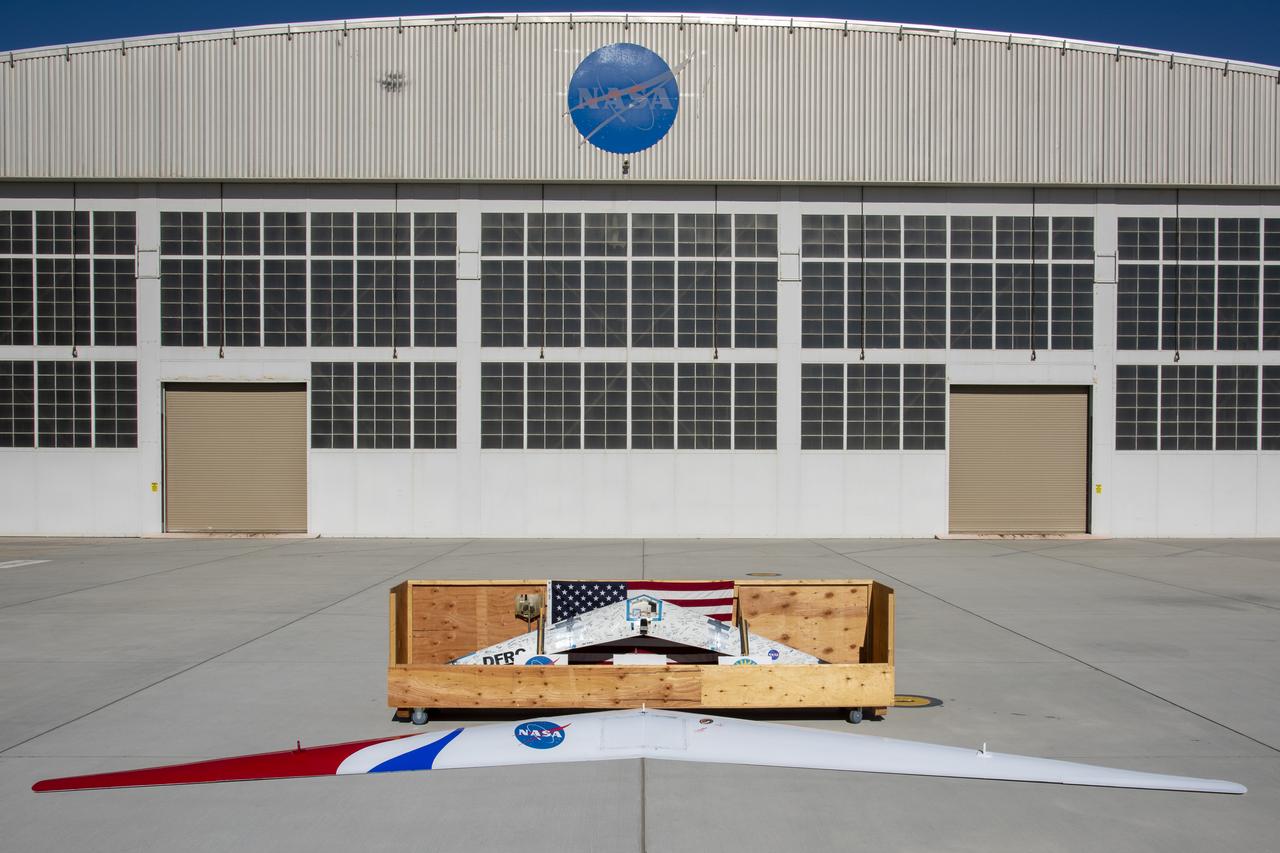
NASA Armstrong says goodbye to its Prandtl-D1 that is being shipped to the National Air and Space Museum, Smithsonian Institution and Prandl-D3 that will be going to the California Science Center.
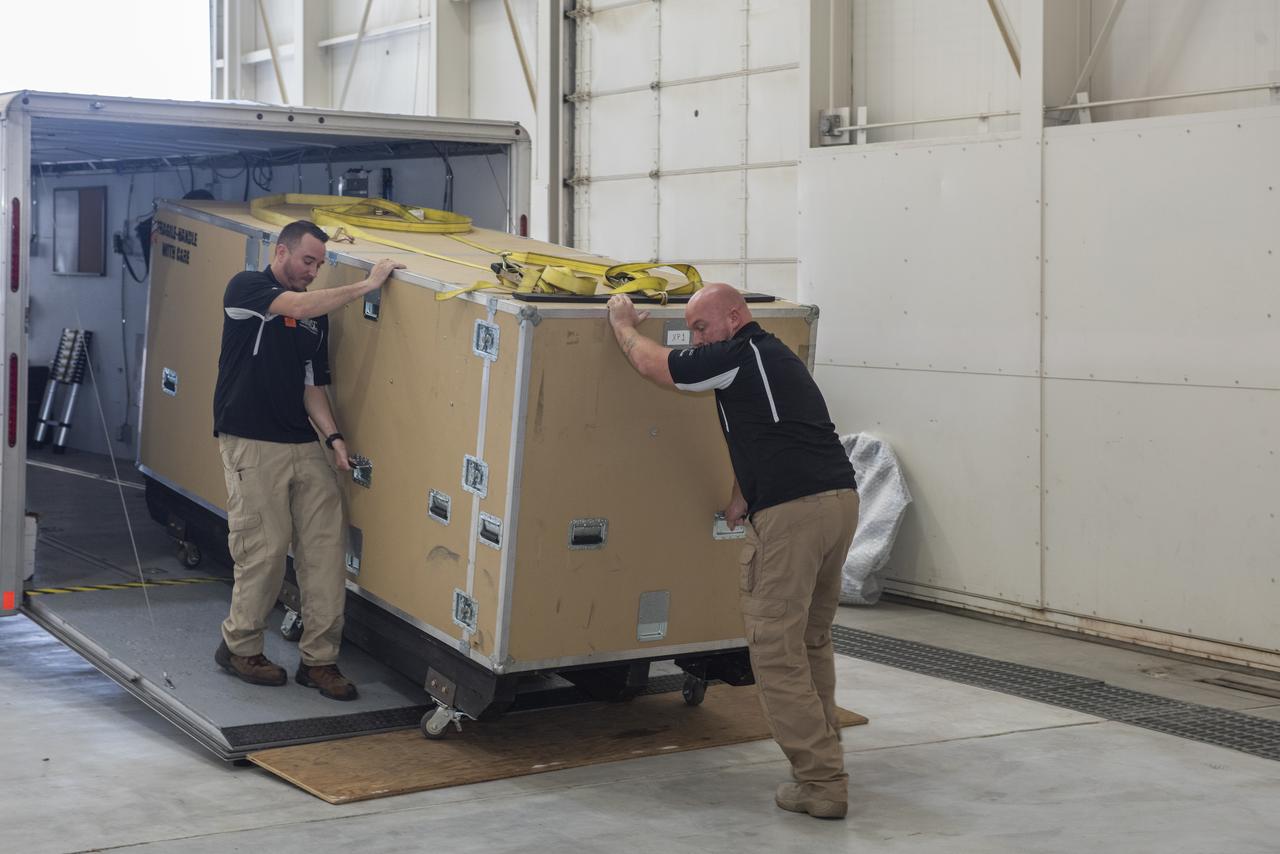
Navmar Applied Sciences Corporation's Steve Hamilton, lead TigerShark pilot, and Brad Petty, mission commander and pilot, unload the crate containing the TigerShark at NASA's Armstrong Flight Research Center in California.
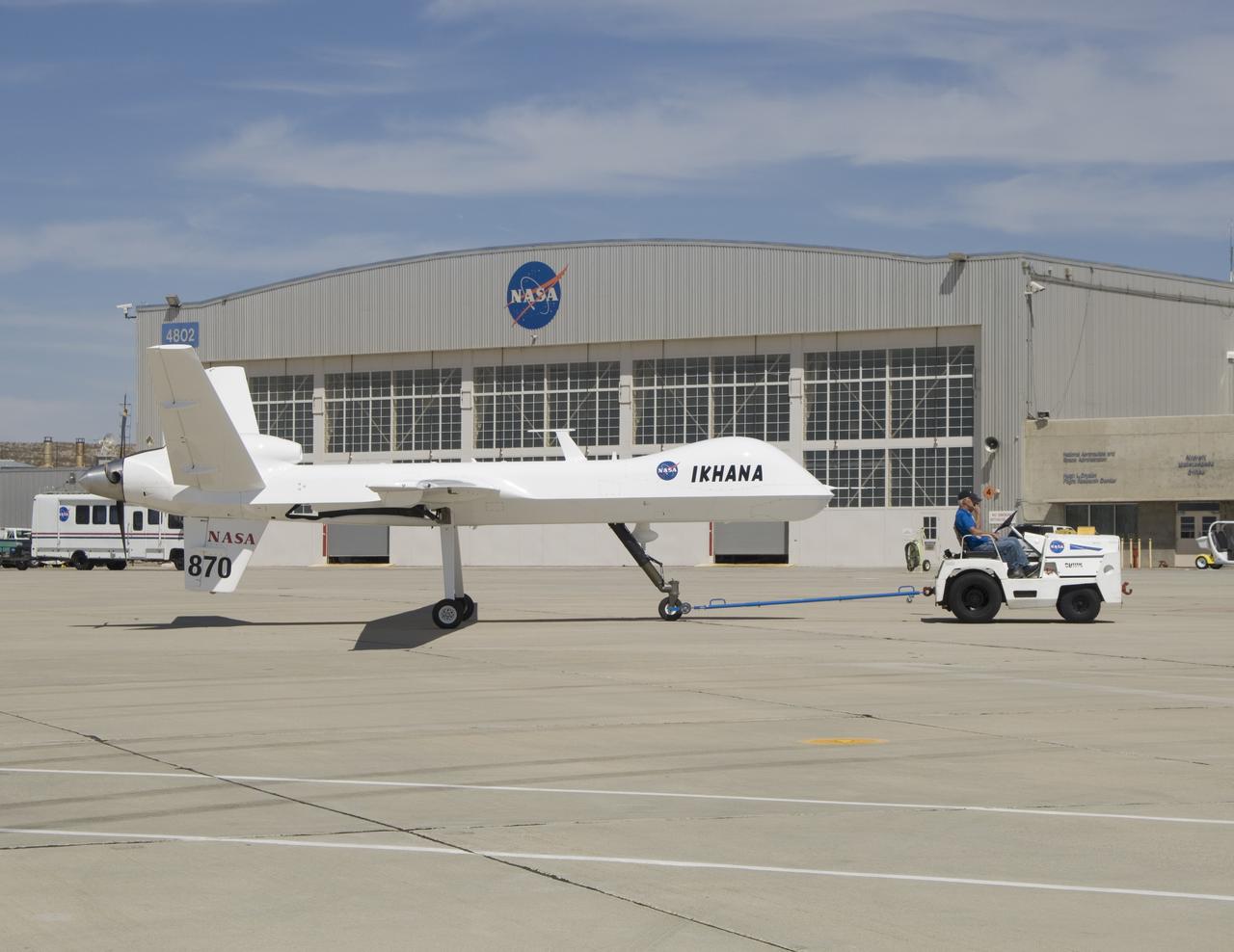
After arriving via a ferry flight on June 23, 2007, NASA's Ikhana unmanned science demonstration aircraft is towed to a hangar at its new home, the Dryden Flight Research Center in Southern California.
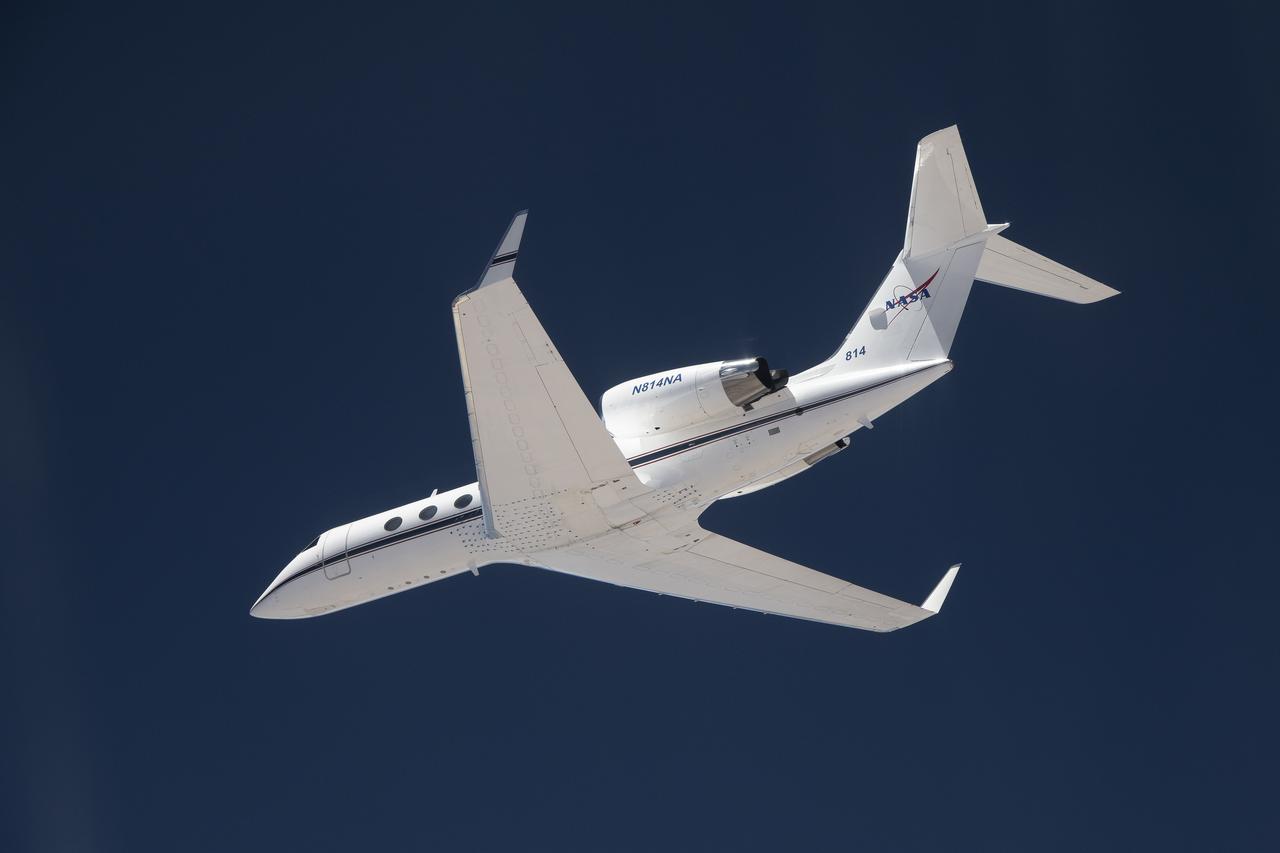
The G-IV aircraft flies overhead in the Mojave Desert near NASA’s Armstrong Flight Research Center in Edwards, California. Baseline flights like this one occurred in June 2024, and future flights in service of science research will benefit from the installment of the Soxnav navigational system, developed in collaboration with NASA’s Jet Propulsion Laboratory in Southern California and the Bay Area Environmental Research Institute in California’s Silicon Valley. This navigational system provides precise, economical aircraft guidance for a variety of aircraft types moving at high speeds.
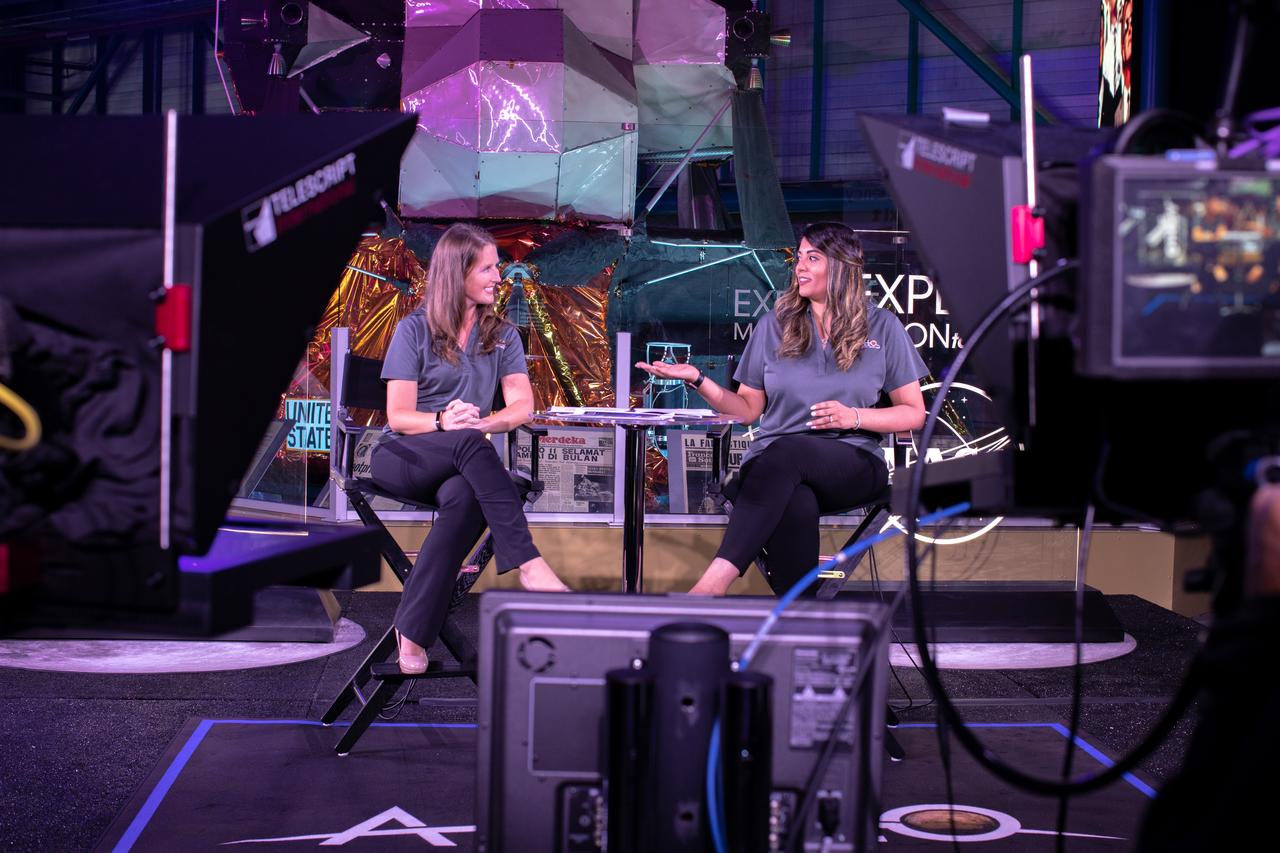
Stephanie Martin, left, NASA Office of Communications, and Nilufar Ramji, NASA Office of STEM Engagement, host a live broadcast of “STEM Forward to the Moon” on July 19, 2019 from Kennedy Space Center’s Apollo/Saturn V Center in Florida. The special program featured kids participating in Moon landing simulations at four museums throughout the country: Cosmosphere in Hutchinson, Kansas; Saint Louis Science Center; Columbia Memorial Space Center in Downey, California; and Arizona Science Center in Phoenix.
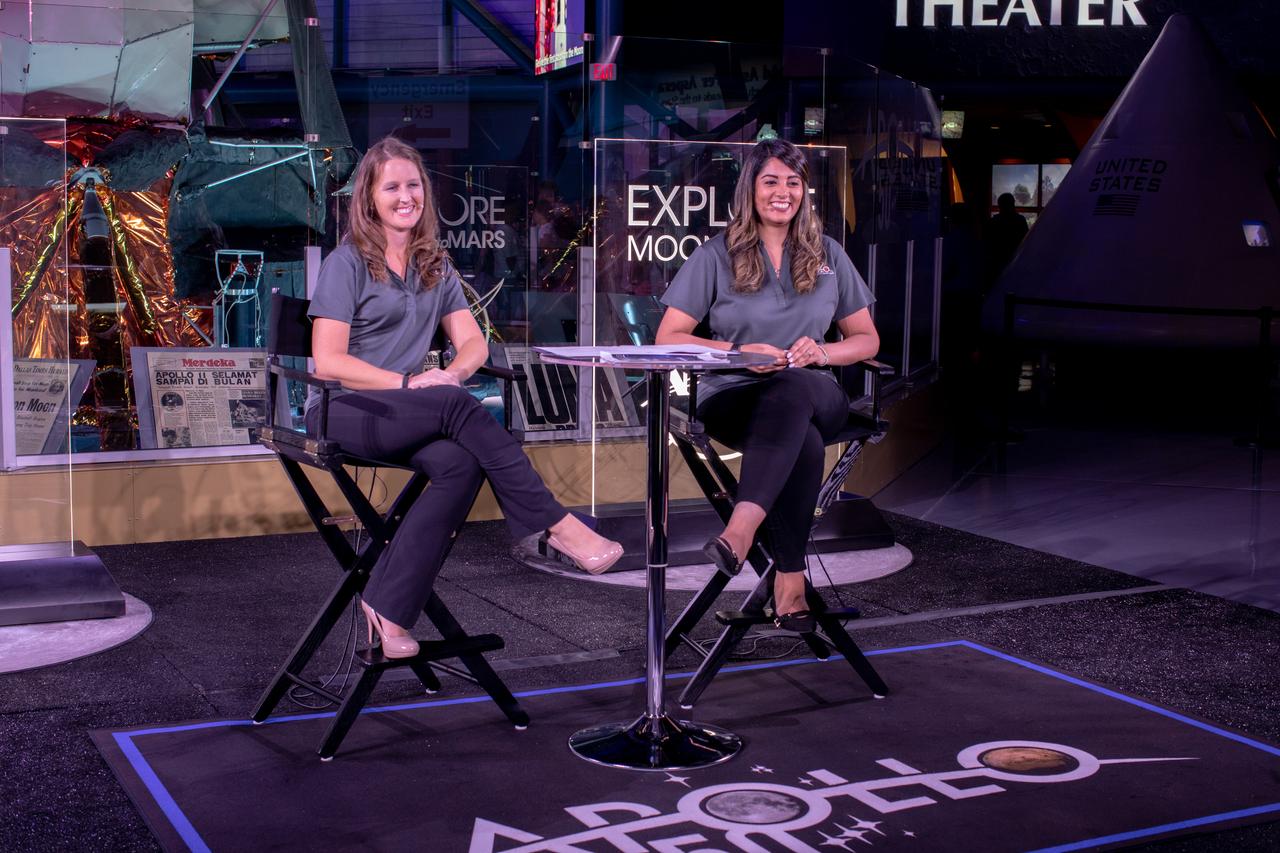
Stephanie Martin, left, NASA Office of Communications, and Nilufar Ramji, NASA Office of STEM Engagement, host a live broadcast of “STEM Forward to the Moon” on July 19, 2019 from Kennedy Space Center’s Apollo/Saturn V Center in Florida. The special program featured kids participating in Moon landing simulations at four museums throughout the country: Cosmosphere in Hutchinson, Kansas; Saint Louis Science Center; Columbia Memorial Space Center in Downey, California; and Arizona Science Center in Phoenix.
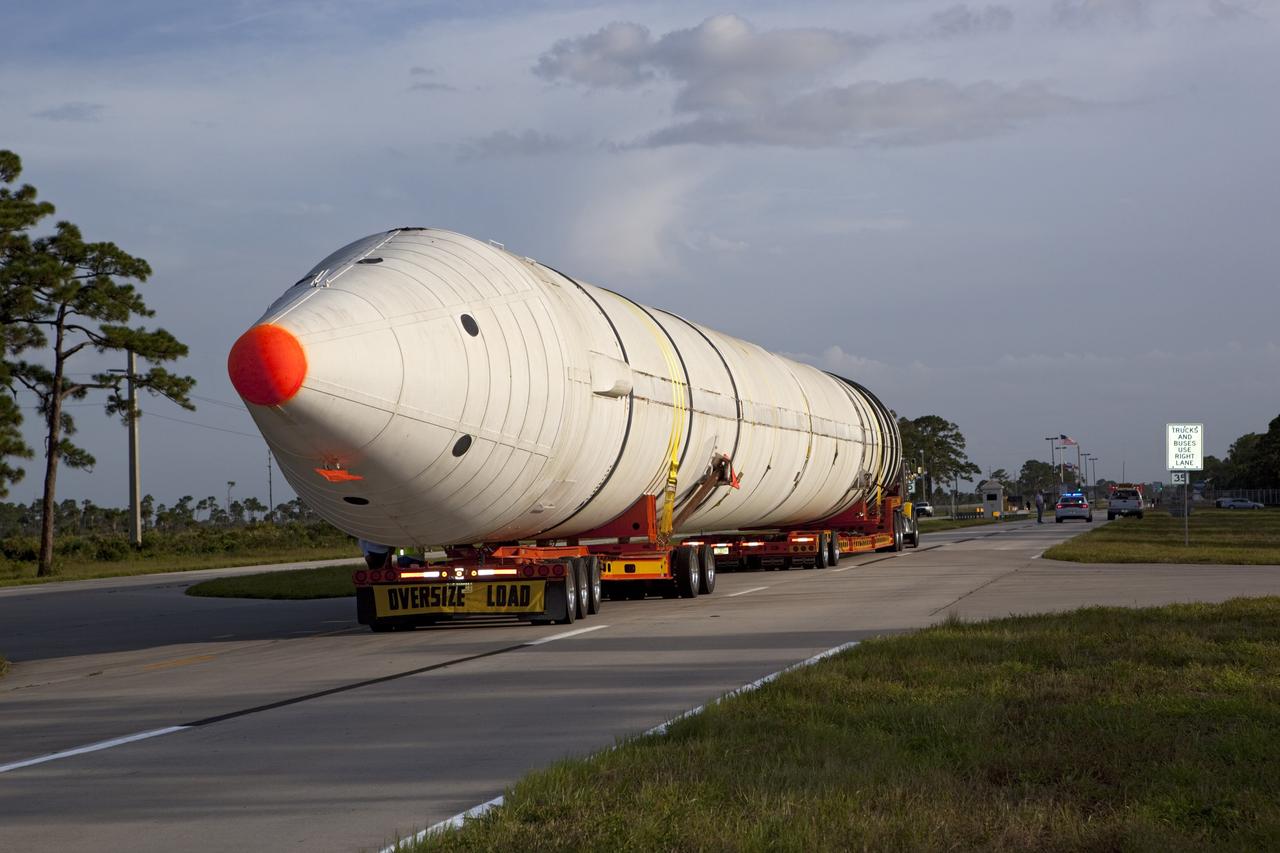
CAPE CANAVERAL, Fla. – At NASA’s Kennedy Space Center in Florida, a space shuttle solid rocket booster is being transported by truck to California. The solid rocket boosters, or SRBs, will be displayed at the California Science Center in Los Angeles. The 149-foot SRBs together provided six million pounds of thrust. The work is part of Transition and Retirement of the space shuttle. For more information, visit http://www.nasa.gov/transition Photo credit: NASA/ Dimitri Gerondidakis

CAPE CANAVERAL, Fla. – At NASA’s Kennedy Space Center in Florida, a crane is used to load a space shuttle solid rocket booster on trucks for transport to California. The solid rocket boosters, or SRBs, will be displayed at the California Science Center in Los Angeles. The 149-foot SRBs together provided six million pounds of thrust. The work is part of Transition and Retirement of the space shuttle. For more information, visit http://www.nasa.gov/transition Photo credit: NASA/ Dimitri Gerondidakis
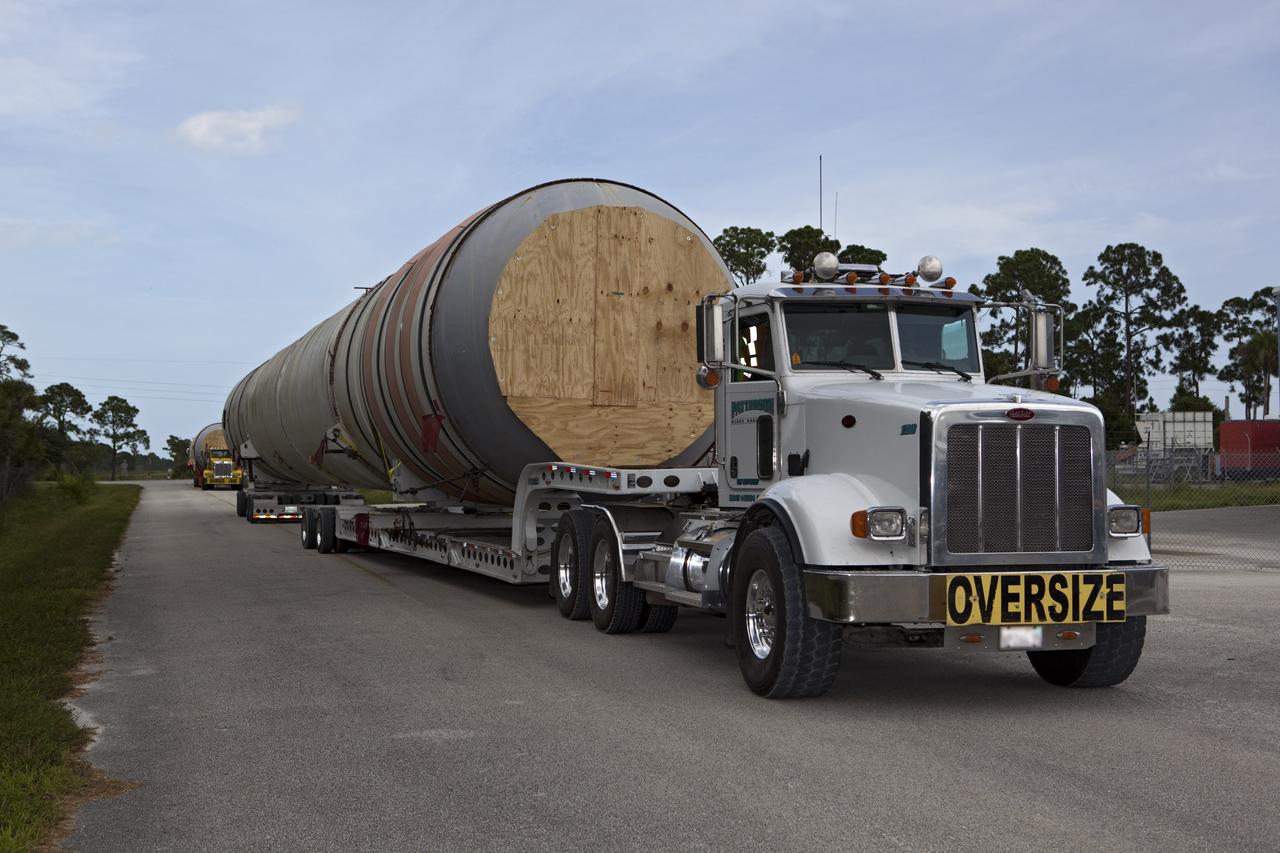
CAPE CANAVERAL, Fla. – At NASA’s Kennedy Space Center in Florida, a twin set of space shuttle solid rocket boosters have been loaded on trucks for transport to California. The solid rocket boosters, or SRBs, will be displayed at the California Science Center in Los Angeles. The 149-foot SRBs together provided six million pounds of thrust. The work is part of Transition and Retirement of the space shuttle. For more information, visit http://www.nasa.gov/transition Photo credit: NASA/ Dimitri Gerondidakis
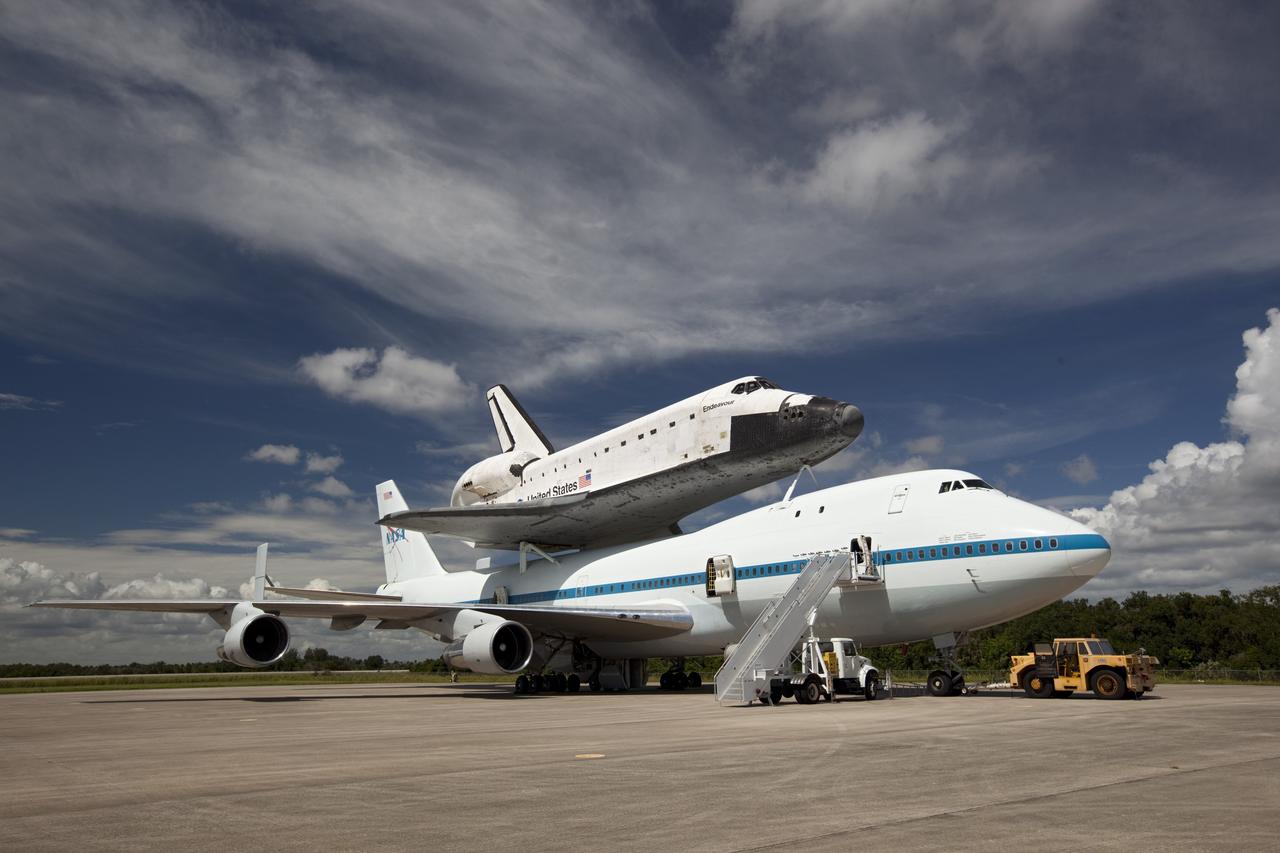
CAPE CANAVERAL, Fla. – At the Shuttle Landing Facility at NASA's Kennedy Space Center in Florida, the space shuttle Endeavour, mounted atop NASA's Shuttle Carrier Aircraft, or SCA, prepares for its ferry flight to California. The SCA, a modified 747 jetliner, will fly Endeavour to Los Angeles where it will be placed on public display at the California Science Center. This is the final ferry flight scheduled in the Space Shuttle Program era. For more information on the shuttles' transition and retirement, visit http://www.nasa.gov/transition. Photo credit: NASA/ Dimitri Gerondidakis

CAPE CANAVERAL, Fla. – At NASA’s Kennedy Space Center in Florida, a space shuttle solid rocket booster is being transported by truck to California. The solid rocket boosters, or SRBs, will be displayed at the California Science Center in Los Angeles. The 149-foot SRBs together provided six million pounds of thrust. The work is part of Transition and Retirement of the space shuttle. For more information, visit http://www.nasa.gov/transition Photo credit: NASA/ Dimitri Gerondidakis
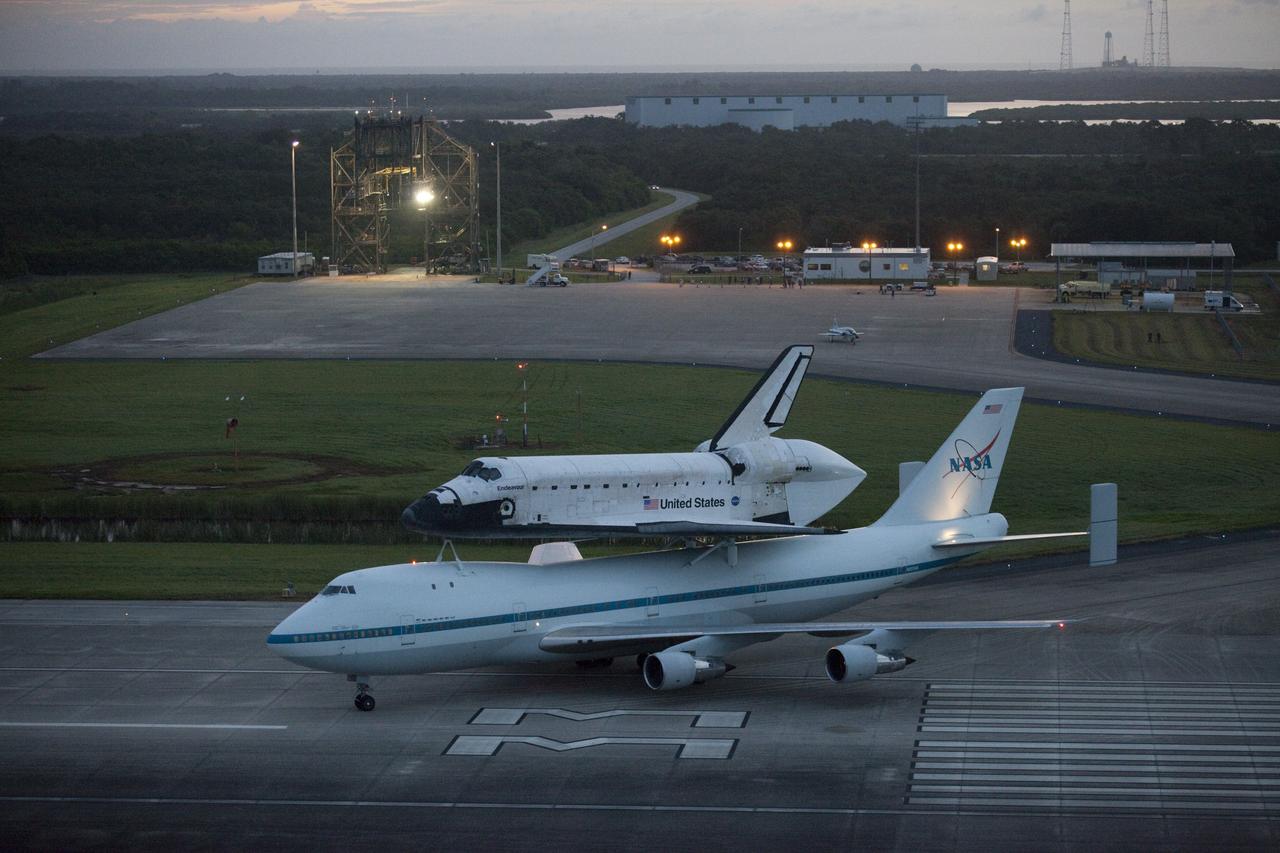
CAPE CANAVERAL, Fla. – At the Shuttle Landing Facility at NASA's Kennedy Space Center in Florida, NASA's Shuttle Carrier Aircraft, or SCA, with the space shuttle Endeavour mounted atop, taxis on to the runway for its ferry flight to California. The SCA, a modified 747 jetliner, will fly Endeavour to Los Angeles where it will be placed on public display at the California Science Center. This is the final ferry flight scheduled in the Space Shuttle Program era. For more information on the shuttles' transition and retirement, visit http://www.nasa.gov/transition. Photo credit: NASA/Kim Shiflett
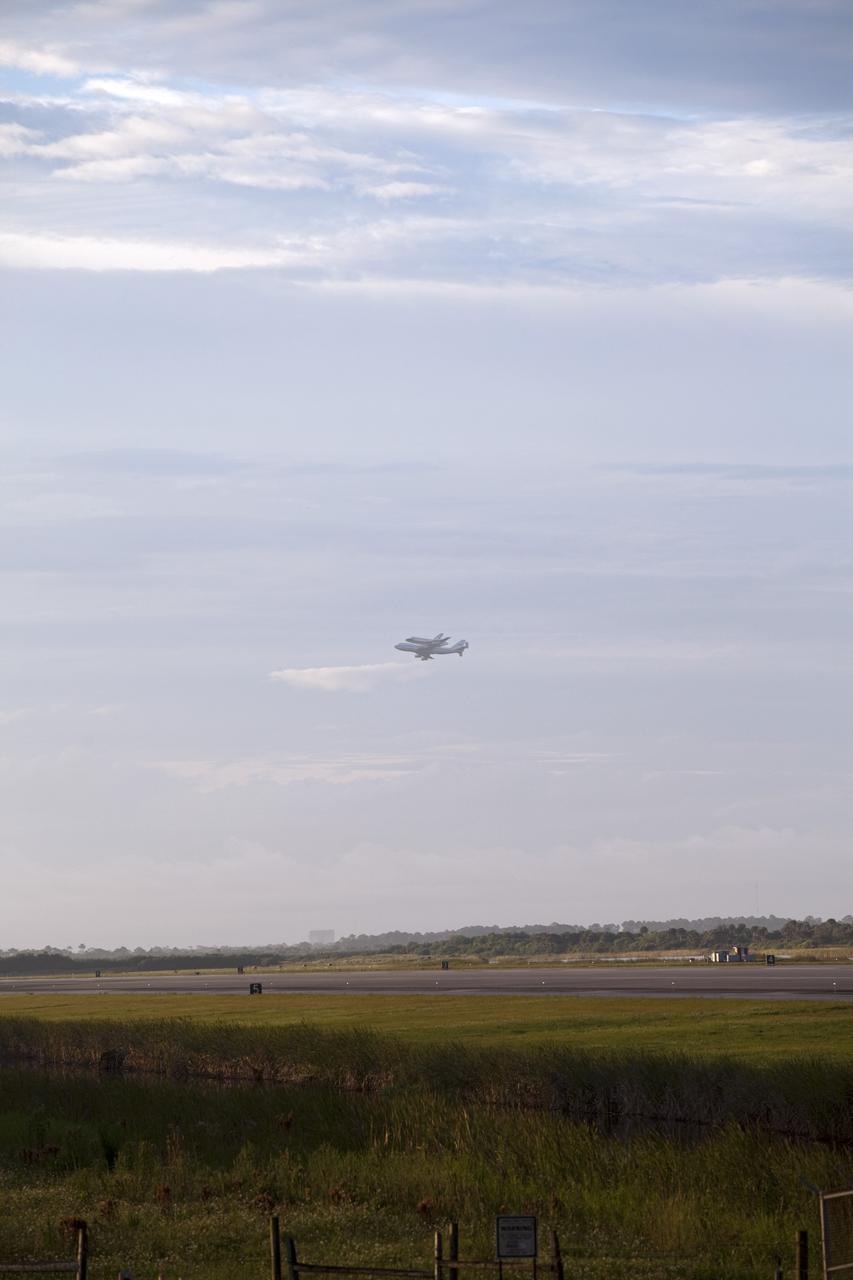
CAPE CANAVERAL, Fla. – At the Shuttle Landing Facility at NASA's Kennedy Space Center in Florida, NASA's Shuttle Carrier Aircraft, or SCA, with the space shuttle Endeavour mounted atop, takes off for its ferry flight to California. The SCA, a modified 747 jetliner, will fly Endeavour to Los Angeles where it will be placed on public display at the California Science Center. This is the final ferry flight scheduled in the Space Shuttle Program era. For more information on the shuttles' transition and retirement, visit http://www.nasa.gov/transition. Photo credit: NASA/Frankie Martin
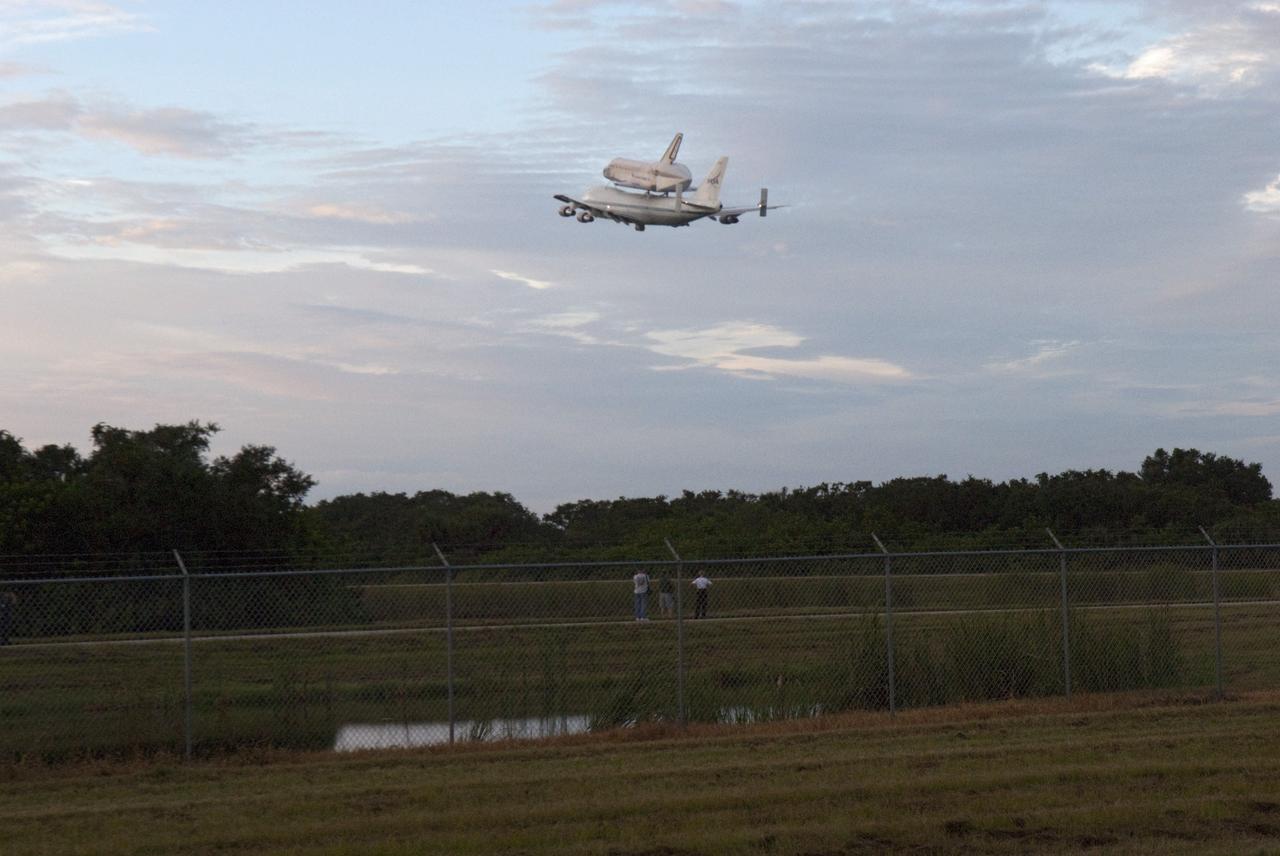
CAPE CANAVERAL, Fla. – At the Shuttle Landing Facility at NASA's Kennedy Space Center in Florida, NASA's Shuttle Carrier Aircraft, or SCA, with the space shuttle Endeavour mounted atop, takes off for its ferry flight to California. The SCA, a modified 747 jetliner, will fly Endeavour to Los Angeles where it will be placed on public display at the California Science Center. This is the final ferry flight scheduled in the Space Shuttle Program era. For more information on the shuttles' transition and retirement, visit http://www.nasa.gov/transition. Photo credit: NASA/George Sampson
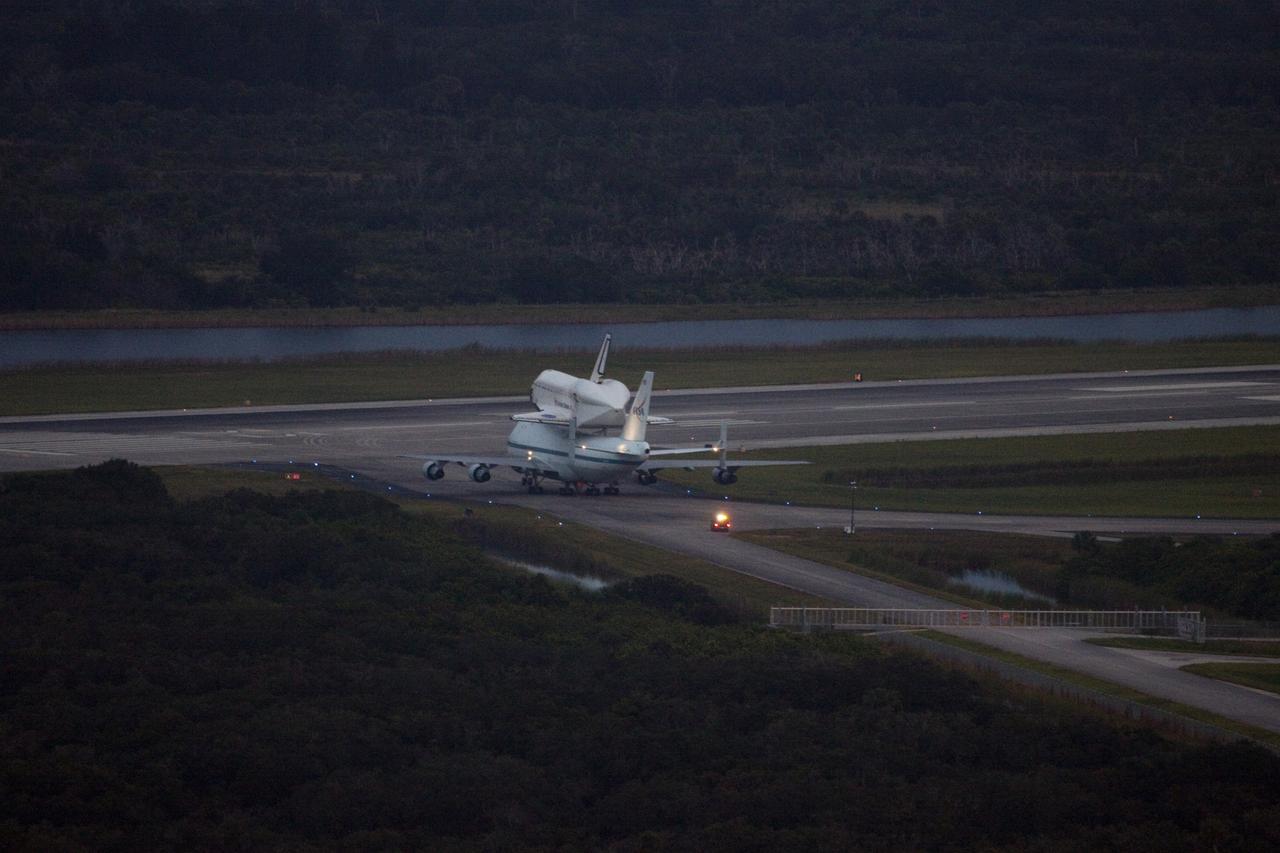
CAPE CANAVERAL, Fla. – At the Shuttle Landing Facility at NASA's Kennedy Space Center in Florida, NASA's Shuttle Carrier Aircraft, or SCA, with the space shuttle Endeavour mounted atop, taxis to the runway for its ferry flight to California. The SCA, a modified 747 jetliner, will fly Endeavour to Los Angeles where it will be placed on public display at the California Science Center. This is the final ferry flight scheduled in the Space Shuttle Program era. For more information on the shuttles' transition and retirement, visit http://www.nasa.gov/transition. Photo credit: NASA/Jim Grossmann
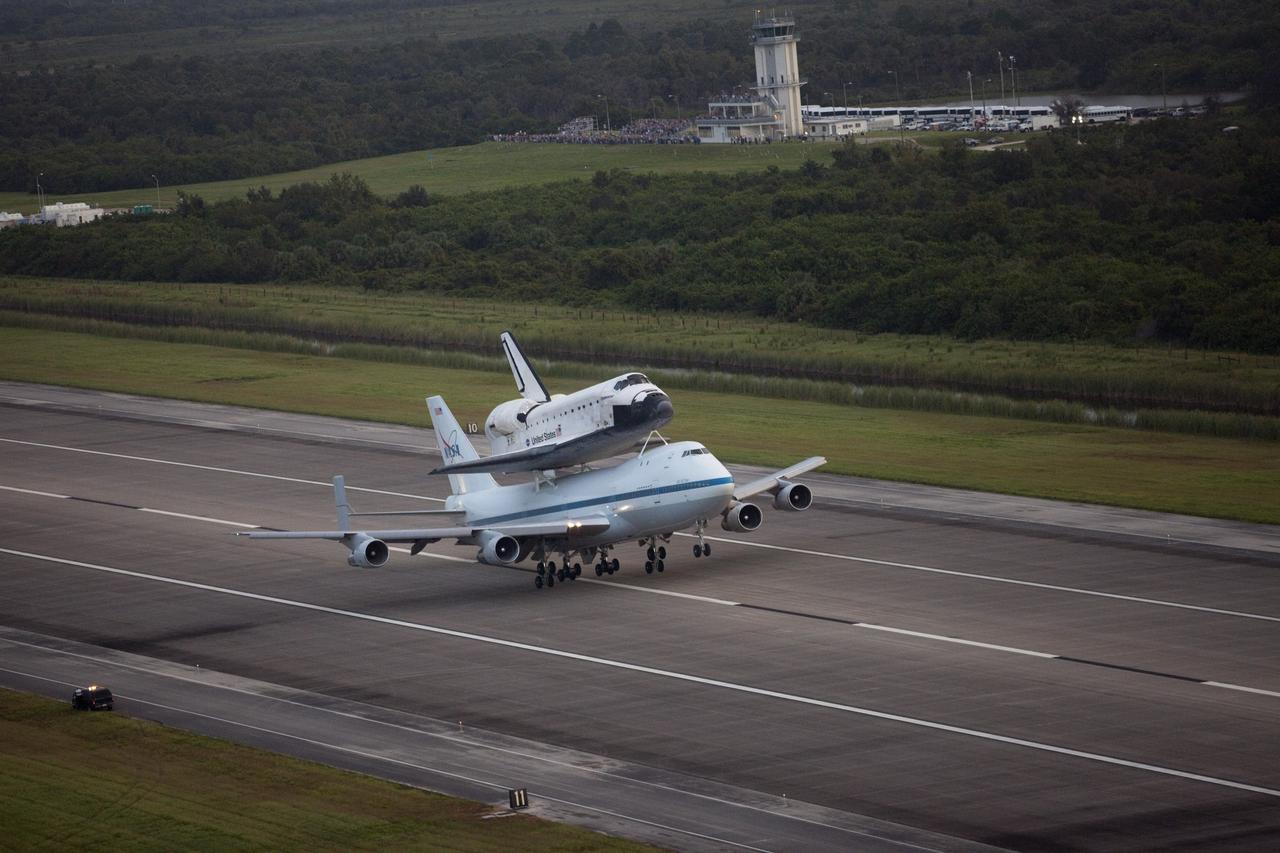
CAPE CANAVERAL, Fla. – At the Shuttle Landing Facility at NASA's Kennedy Space Center in Florida, NASA's Shuttle Carrier Aircraft, or SCA, with the space shuttle Endeavour mounted atop, takes off for its ferry flight to California. The SCA, a modified 747 jetliner, will fly Endeavour to Los Angeles where it will be placed on public display at the California Science Center. This is the final ferry flight scheduled in the Space Shuttle Program era. For more information on the shuttles' transition and retirement, visit http://www.nasa.gov/transition. Photo credit: NASA/Kim Shiflett
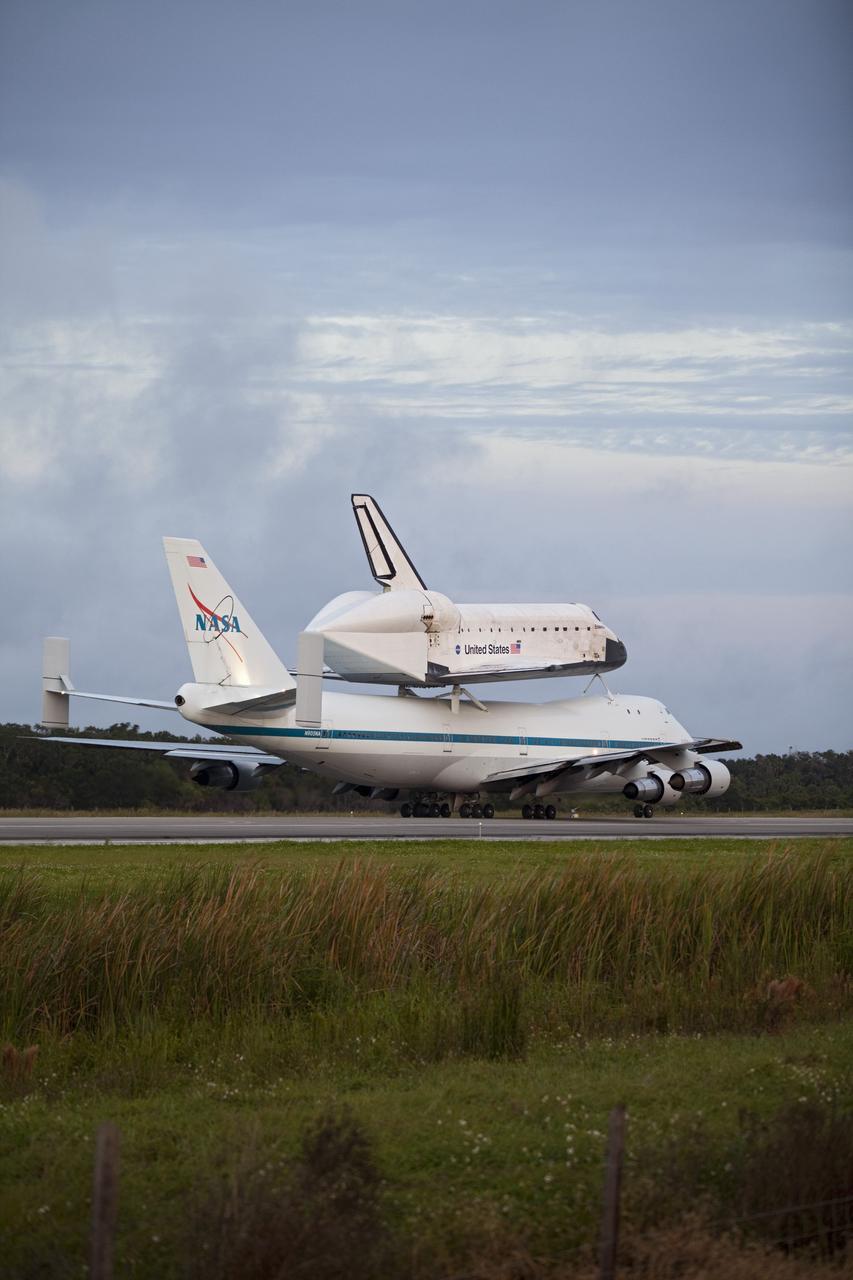
CAPE CANAVERAL, Fla. – At the Shuttle Landing Facility at NASA's Kennedy Space Center in Florida, NASA's Shuttle Carrier Aircraft, or SCA, with the space shuttle Endeavour mounted atop, taxis on the runway for its ferry flight to California. The SCA, a modified 747 jetliner, will fly Endeavour to Los Angeles where it will be placed on public display at the California Science Center. This is the final ferry flight scheduled in the Space Shuttle Program era. For more information on the shuttles' transition and retirement, visit http://www.nasa.gov/transition. Photo credit: NASA/Frankie Martin
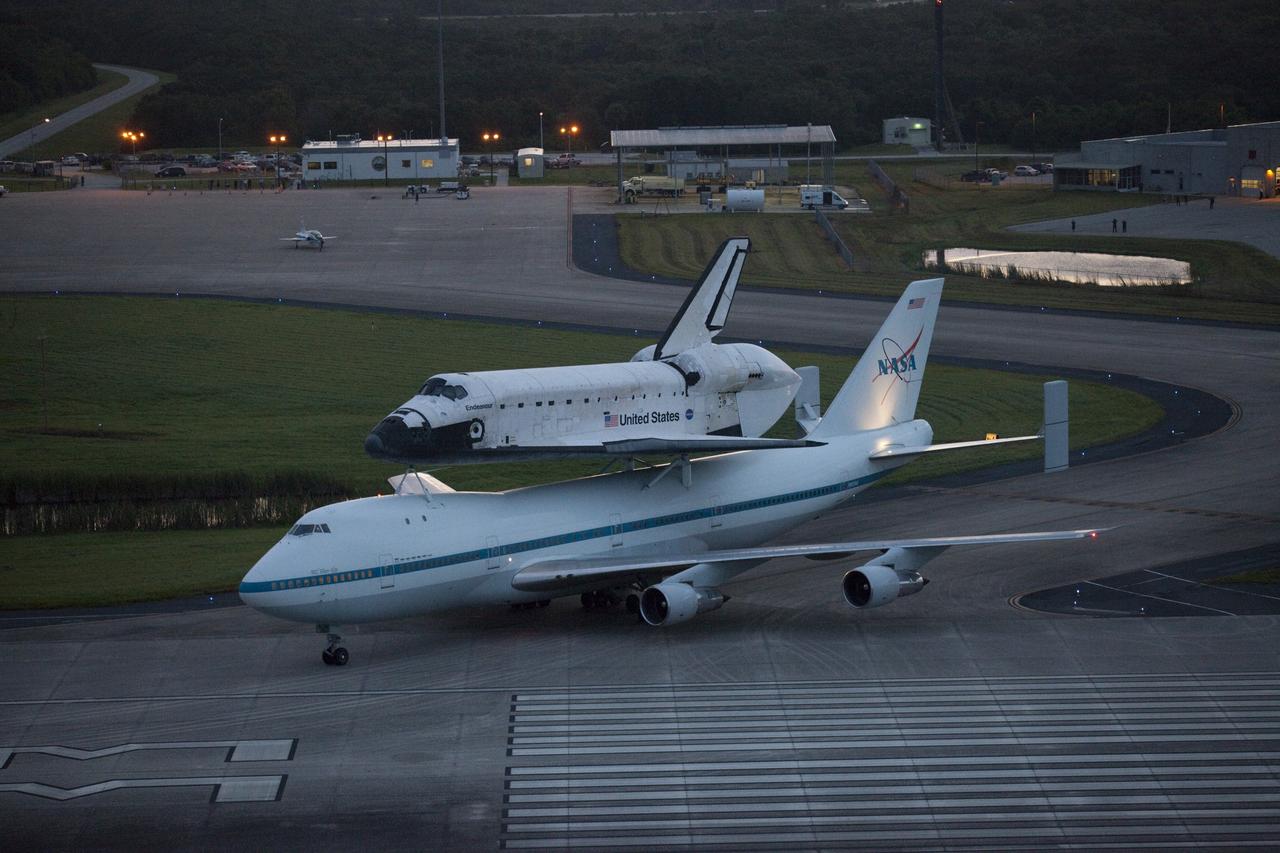
CAPE CANAVERAL, Fla. – At the Shuttle Landing Facility at NASA's Kennedy Space Center in Florida, NASA's Shuttle Carrier Aircraft, or SCA, with the space shuttle Endeavour mounted atop, taxis on to the runway for its ferry flight to California. The SCA, a modified 747 jetliner, will fly Endeavour to Los Angeles where it will be placed on public display at the California Science Center. This is the final ferry flight scheduled in the Space Shuttle Program era. For more information on the shuttles' transition and retirement, visit http://www.nasa.gov/transition. Photo credit: NASA/Kim Shiflett
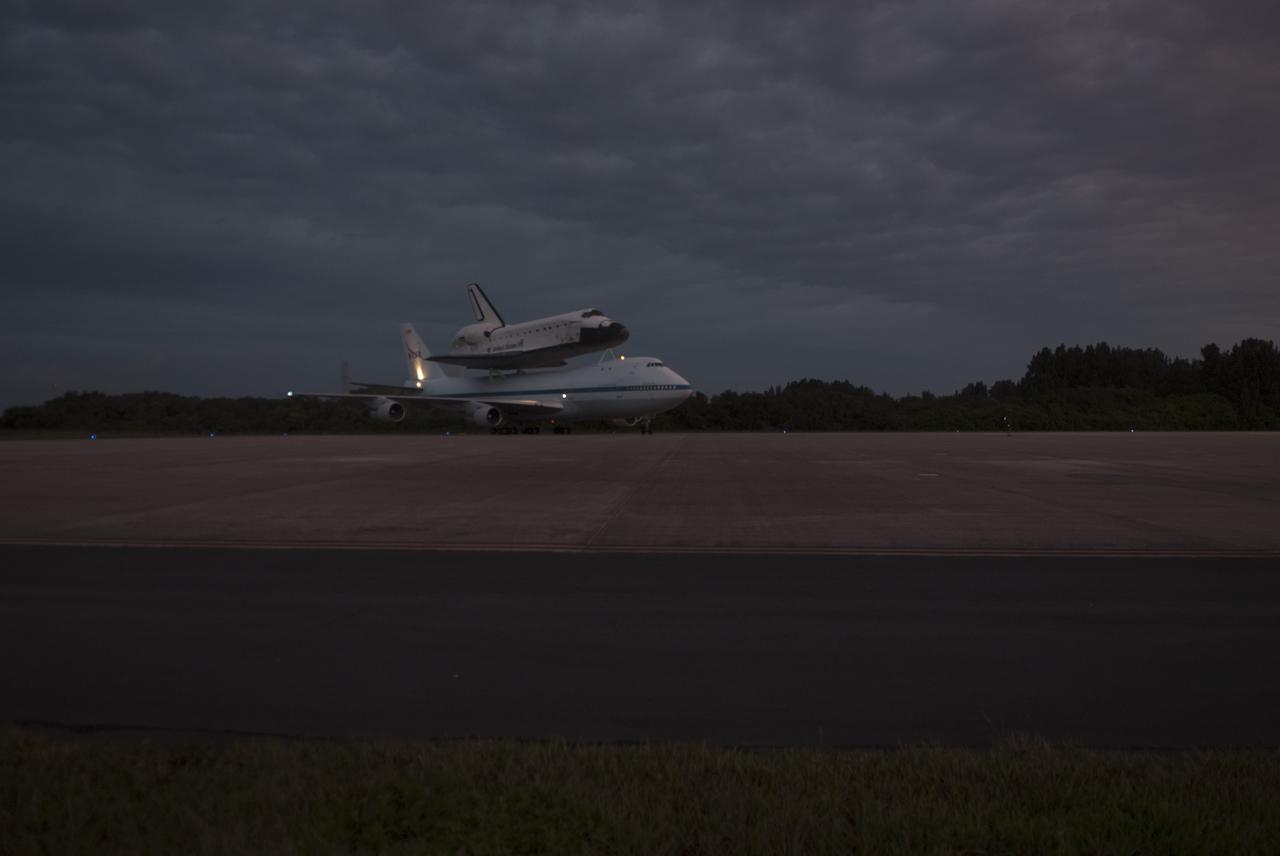
CAPE CANAVERAL, Fla. – At the Shuttle Landing Facility at NASA's Kennedy Space Center in Florida, NASA's Shuttle Carrier Aircraft, or SCA, with the space shuttle Endeavour mounted atop, taxis to the runway for its ferry flight to California. The SCA, a modified 747 jetliner, will fly Endeavour to Los Angeles where it will be placed on public display at the California Science Center. This is the final ferry flight scheduled in the Space Shuttle Program era. For more information on the shuttles' transition and retirement, visit http://www.nasa.gov/transition. Photo credit: NASA/George Sampson

CAPE CANAVERAL, Fla. – At the Shuttle Landing Facility at NASA's Kennedy Space Center in Florida, NASA's Shuttle Carrier Aircraft, or SCA, with the space shuttle Endeavour mounted atop, takes off for its ferry flight to California. The SCA, a modified 747 jetliner, will fly Endeavour to Los Angeles where it will be placed on public display at the California Science Center. This is the final ferry flight scheduled in the Space Shuttle Program era. For more information on the shuttles' transition and retirement, visit http://www.nasa.gov/transition. Photo credit: NASA/Frankie Martin
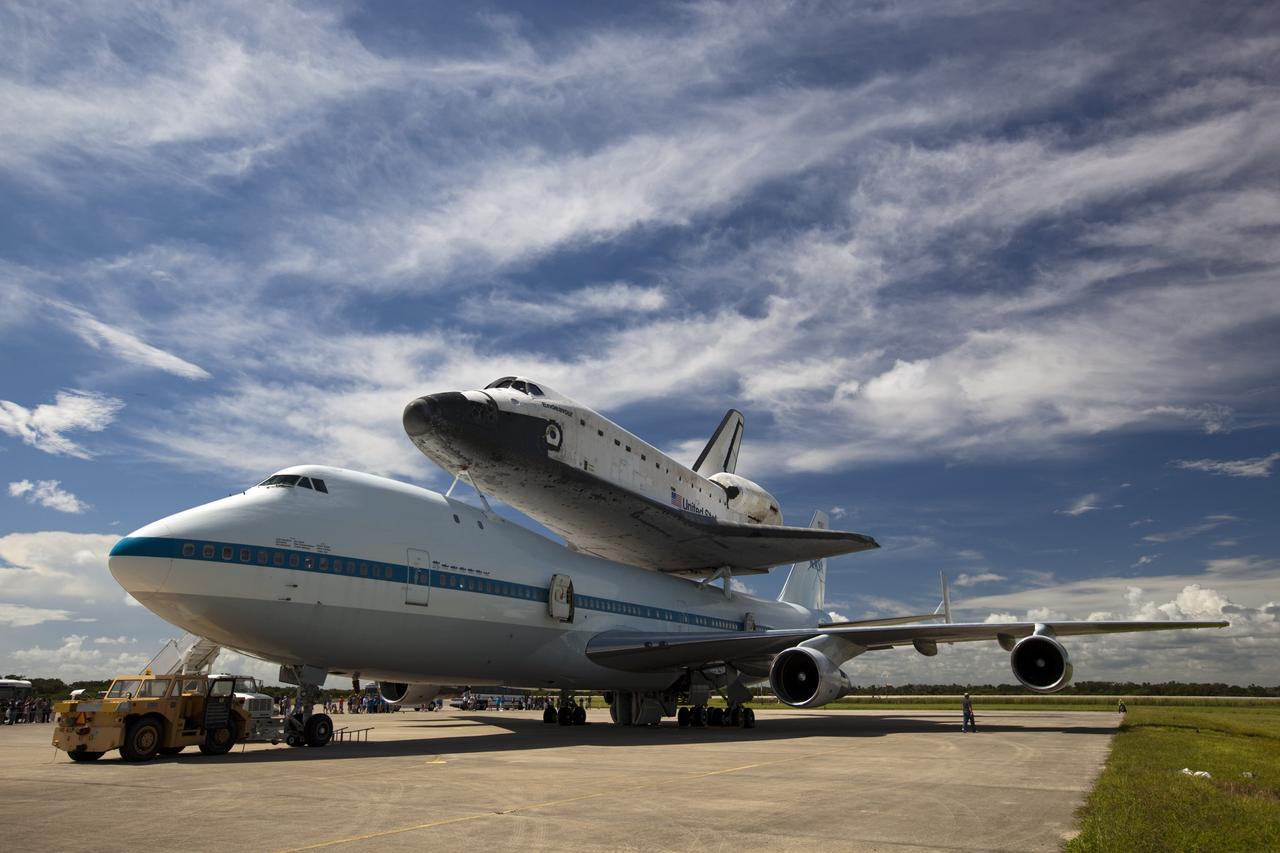
CAPE CANAVERAL, Fla. – At the Shuttle Landing Facility at NASA's Kennedy Space Center in Florida, the space shuttle Endeavour, mounted atop NASA's Shuttle Carrier Aircraft, or SCA, prepares for its ferry flight to California. The SCA, a modified 747 jetliner, will fly Endeavour to Los Angeles where it will be placed on public display at the California Science Center. This is the final ferry flight scheduled in the Space Shuttle Program era. For more information on the shuttles' transition and retirement, visit http://www.nasa.gov/transition. Photo credit: NASA/ Dimitri Gerondidakis

CAPE CANAVERAL, Fla. – At the Shuttle Landing Facility at NASA's Kennedy Space Center in Florida, NASA's Shuttle Carrier Aircraft, or SCA, with the space shuttle Endeavour mounted atop, taxis on the runway for its ferry flight to California. The SCA, a modified 747 jetliner, will fly Endeavour to Los Angeles where it will be placed on public display at the California Science Center. This is the final ferry flight scheduled in the Space Shuttle Program era. For more information on the shuttles' transition and retirement, visit http://www.nasa.gov/transition. Photo credit: NASA/Frankie Martin