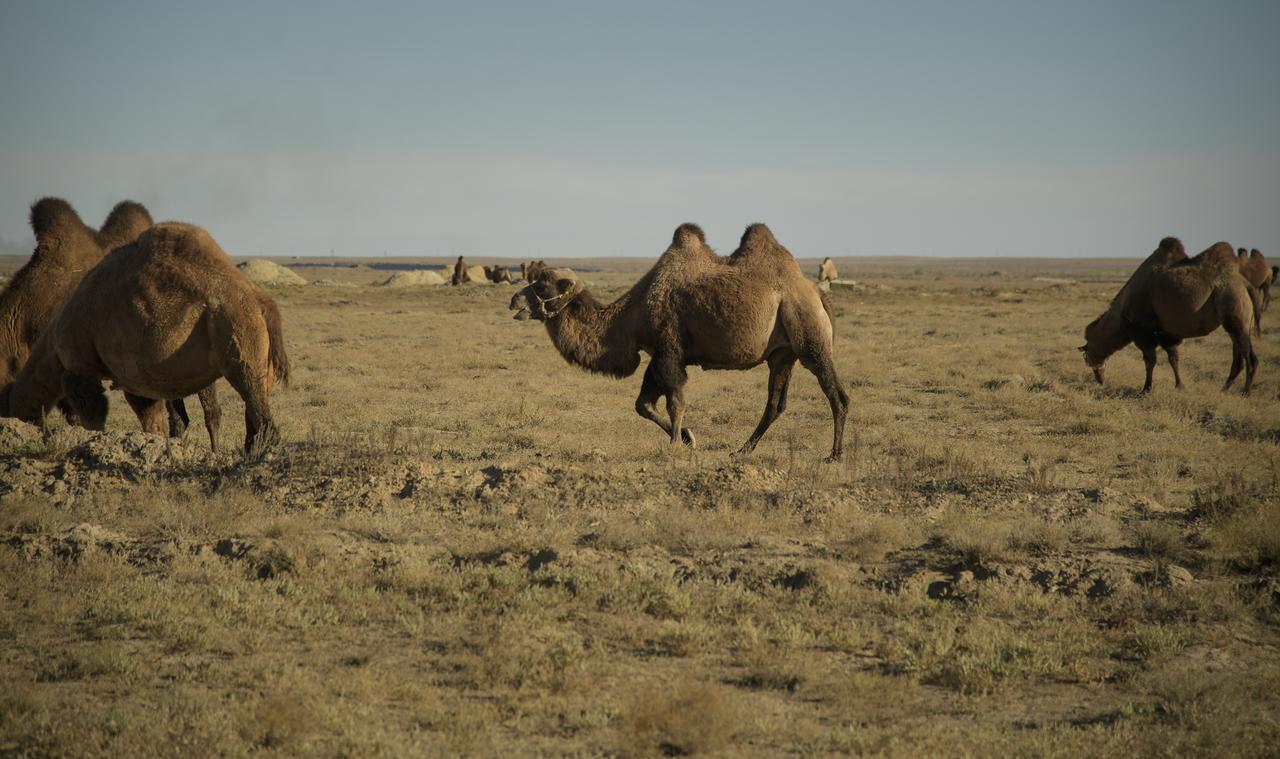
Camels are seen as NASA and Roscosmos teams arrive in advance of the launch of Expedition 57 Flight Engineer Nick Hague of NASA and Flight Engineer Alexey Ovchinin of Roscosmos, Monday, Oct. 8, 2018 in Baikonur, Kazakhstan. Hague and Ovchinin are scheduled to launch October 11 on a Soyuz rocket and will spend the next six months living and working aboard the International Space Station. Photo Credit: (NASA/Bill Ingalls)
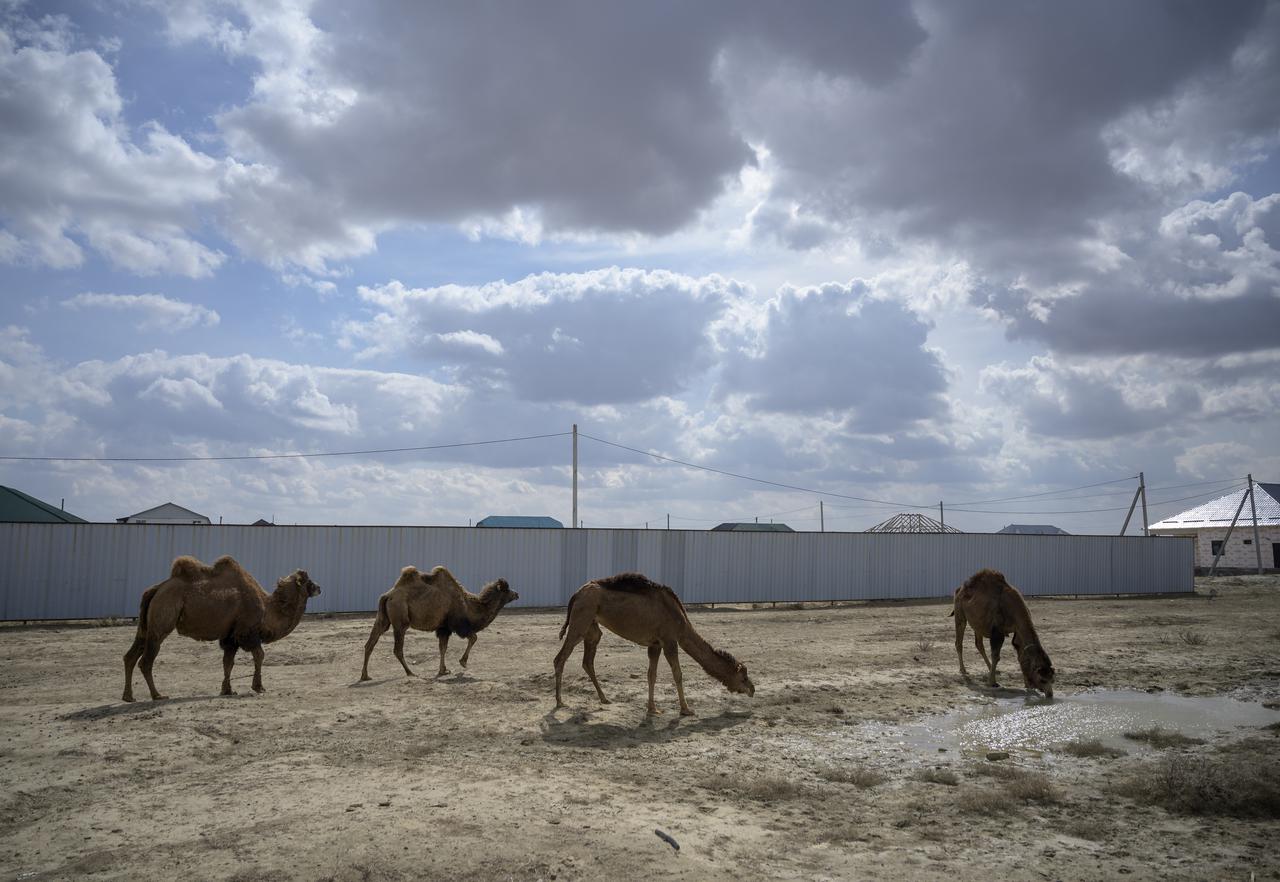
Camels are spotted as NASA team members arrive in Baikonur, Kazakhstan in advance of the launch of Expedition 65 crewmembers Mark Vande Hei of NASA, Pyotr Dubrov and Oleg Novitskiy of Roscosmos, Monday, April 5, 2021. Vande Hei, Dubrov, and Novitskiy are scheduled to launch aboard their Soyuz MS-18 spacecraft on April 9. Photo Credit: (NASA/Bill Ingalls)

Camels line the road as NASA team members drive to the site 31 launch pad to prepare for the launch of Expedition 68 crewmembers Frank Rubio of NASA, and Sergey Prokopyev and Dmitri Petelin of Roscosmos, Tuesday, Sept. 20, 2022. Rubio, Prokopyev, and Petelin are scheduled to launch aboard their Soyuz MS-22 spacecraft on Sept. 21. Photo Credit: (NASA/Bill Ingalls)
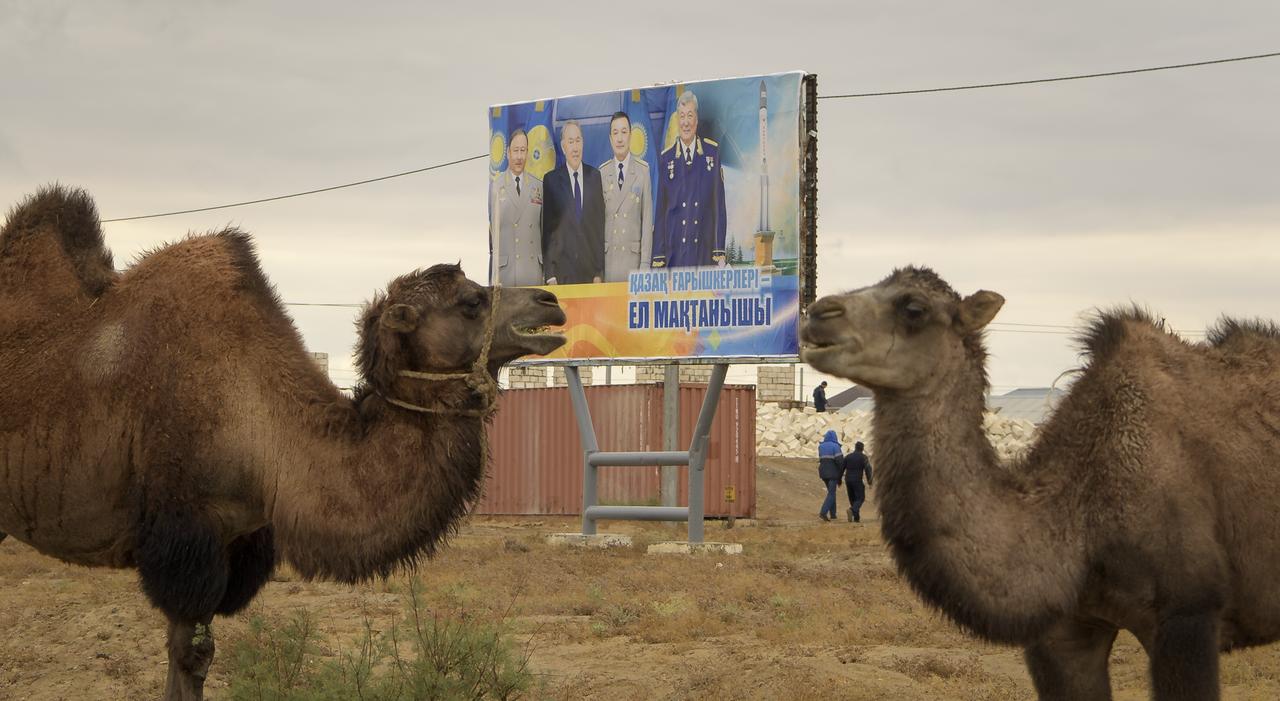
Camels are seen as NASA and Roscosmos teams arrive in advance of the launch of Expedition 61 crewmembers Jessica Meir of NASA and Oleg Skripochka of Roscosmos, and spaceflight participant Hazzaa Ali Almansoori of the United Arab Emirates Sunday, Sept. 22, 2019 in Baikonur, Kazakhstan. Meir, Skripochka, and Almansoori will launch September 25 on the Soyuz MS-15 spacecraft from the Baikonur Cosmodrome to the International Space Station. Photo Credit: (NASA/Bill Ingalls)
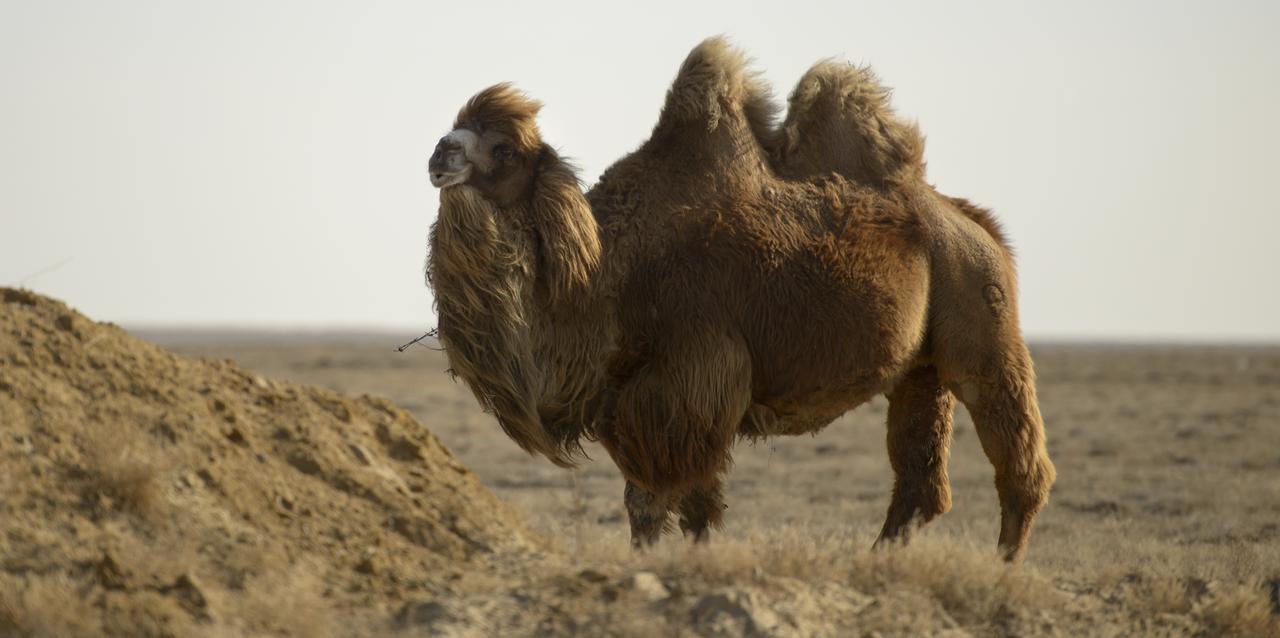
A camel is seen as NASA and Roscosmos teams arrive at the Krayniy Airport in Baikonur, Kazakhstan several days ahead of the launch of Expedition 59 crewmembers Nick Hague and Christina Koch of NASA, along with Alexey Ovchinin of Roscosmos, Monday, March 11, 2019. Hague, Koch, and Ovchinin will launch March 14, U.S. time, on the Soyuz MS-12 spacecraft from the Baikonur Cosmodrome for a six-and-a-half month mission on the International Space Station. Photo Credit: (NASA/Bill Ingalls)
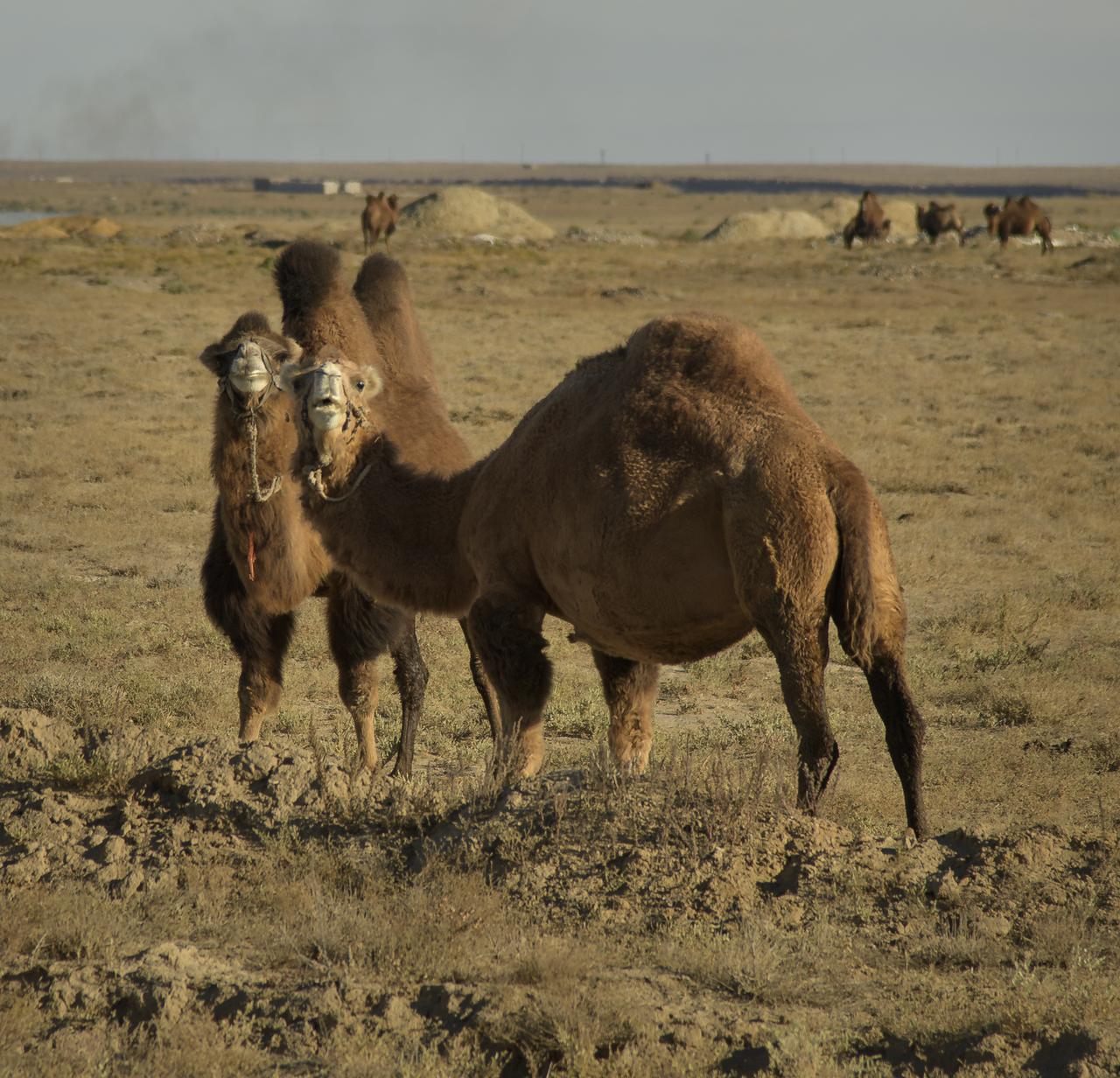
Camels are seen as NASA and Roscosmos teams arrive in advance of the launch of Expedition 57 Flight Engineer Nick Hague of NASA and Flight Engineer Alexey Ovchinin of Roscosmos, Monday, Oct. 8, 2018 in Baikonur, Kazakhstan. Hague and Ovchinin are scheduled to launch October 11 on a Soyuz rocket and will spend the next six months living and working aboard the International Space Station. Photo Credit: (NASA/Bill Ingalls)
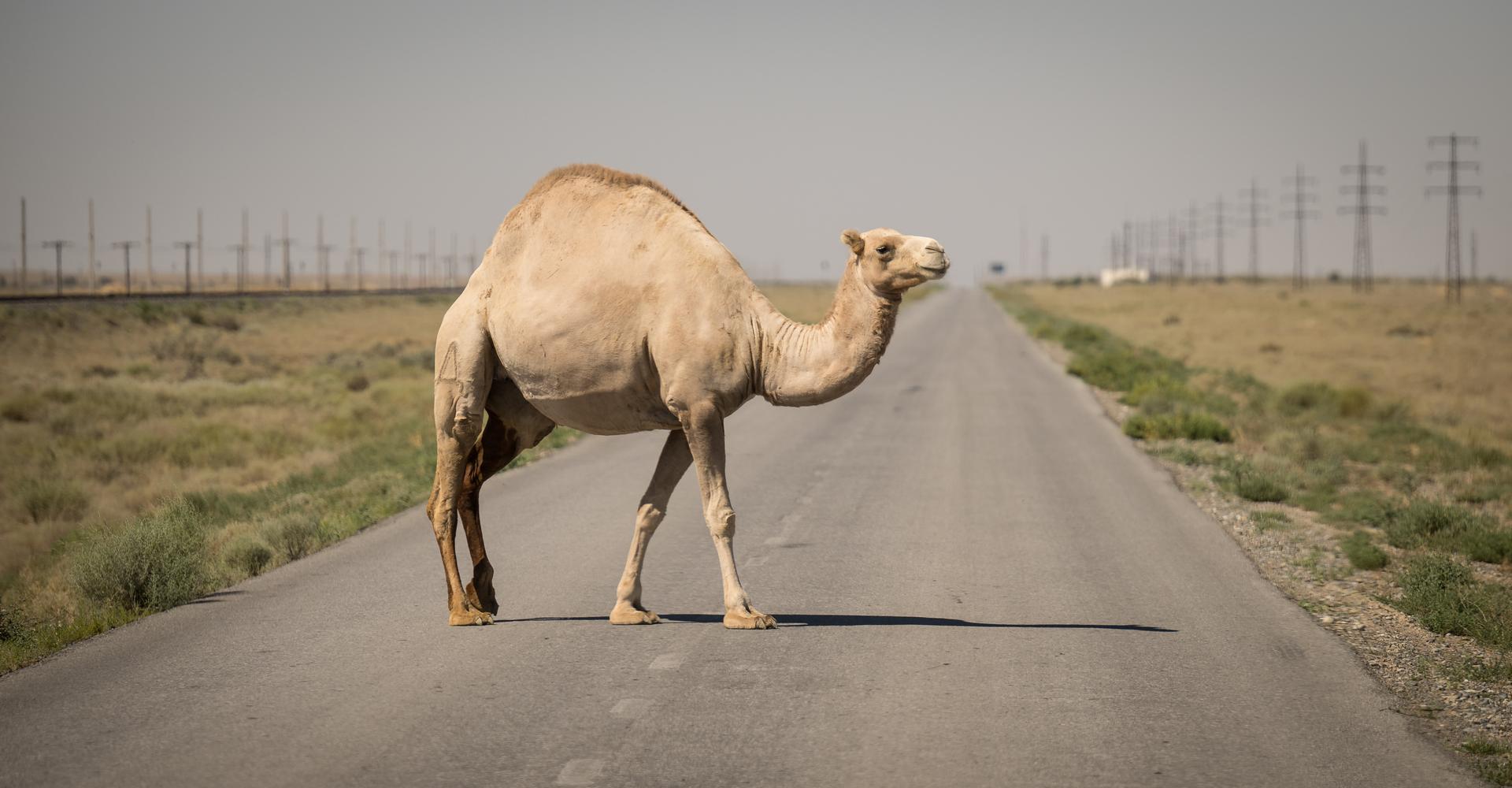
A camels is seen in the road, Saturday, July 11, 2026, at the Baikonur Cosmodrome in Kazakhstan. Expedition 75 crewmembers: NASA astronaut Anil Menon, Roscosmos cosmonauts Pyotr Dubrov and Anna Kikina are scheduled to launch aboard their Soyuz MS-29 spacecraft on July 14. Photo Credit: (NASA/Bill Ingalls)
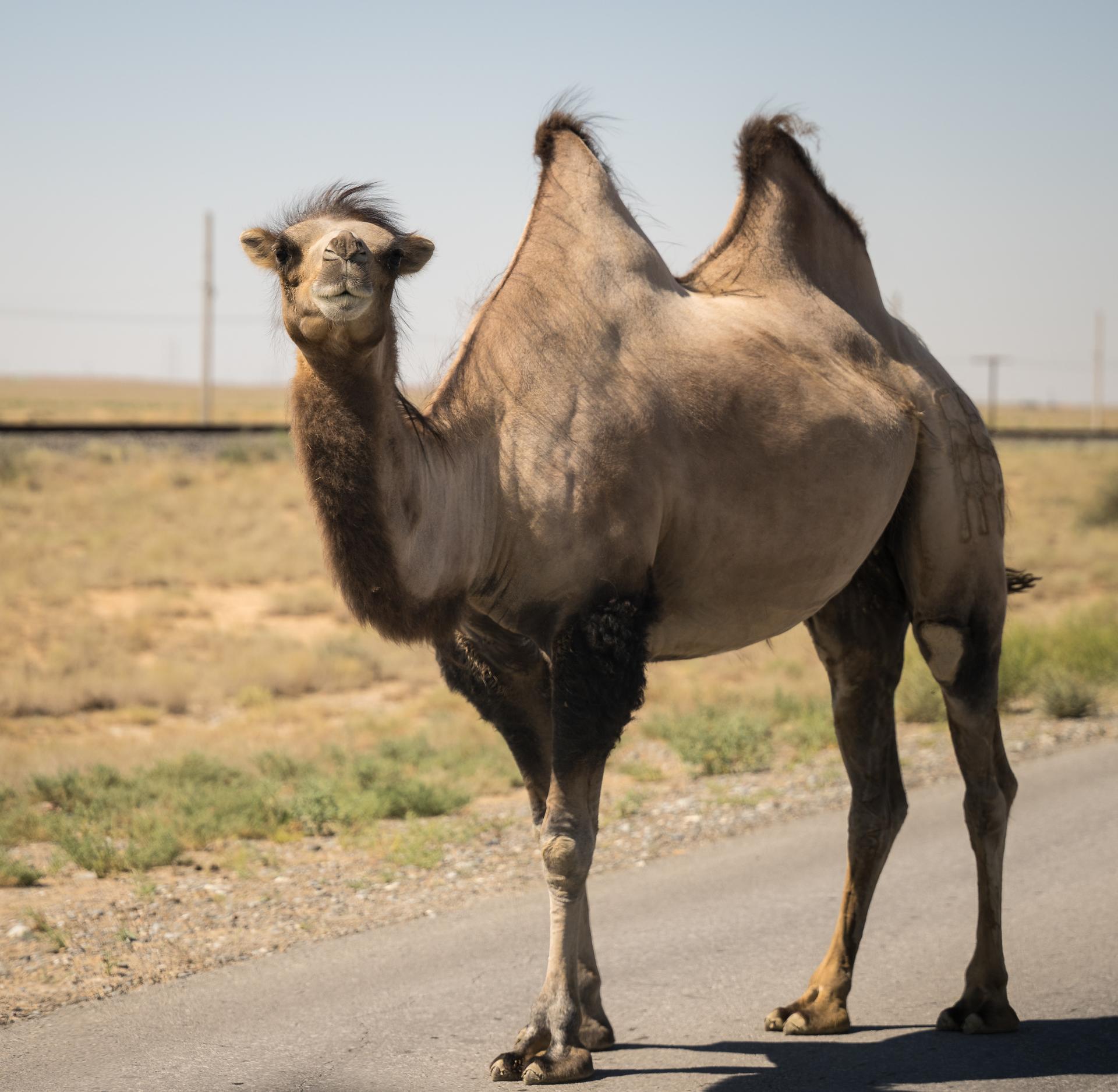
A camel is seen in the road, Saturday, July 11, 2026, at the Baikonur Cosmodrome in Kazakhstan. Expedition 75 crewmembers: NASA astronaut Anil Menon, Roscosmos cosmonauts Pyotr Dubrov and Anna Kikina are scheduled to launch aboard their Soyuz MS-29 spacecraft on July 14. Photo Credit: (NASA/Bill Ingalls)
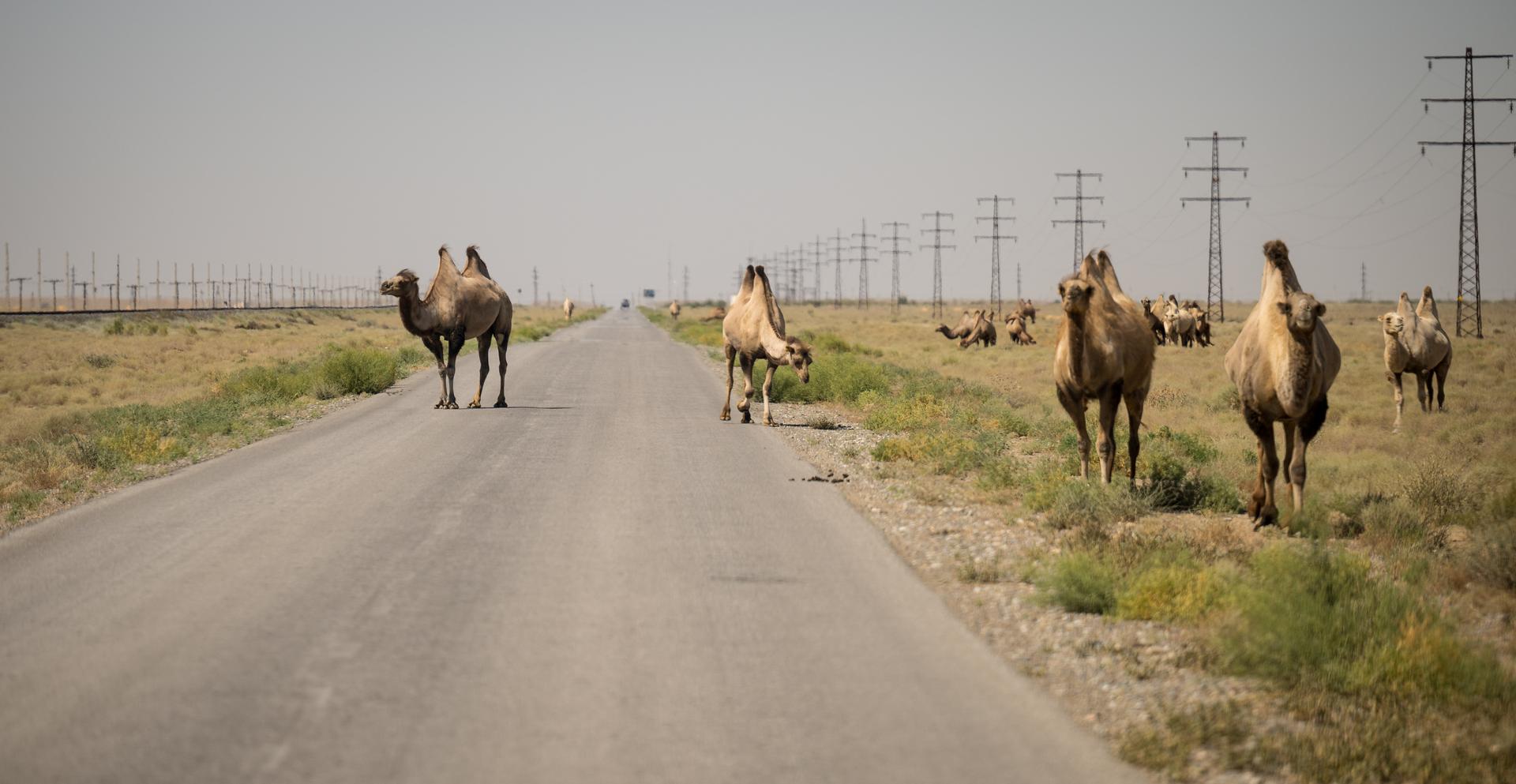
Camels are seen grazing, Saturday, July 11, 2026, at the Baikonur Cosmodrome in Kazakhstan. Expedition 75 crewmembers: NASA astronaut Anil Menon, Roscosmos cosmonauts Pyotr Dubrov and Anna Kikina are scheduled to launch aboard their Soyuz MS-29 spacecraft on July 14. Photo Credit: (NASA/Bill Ingalls)
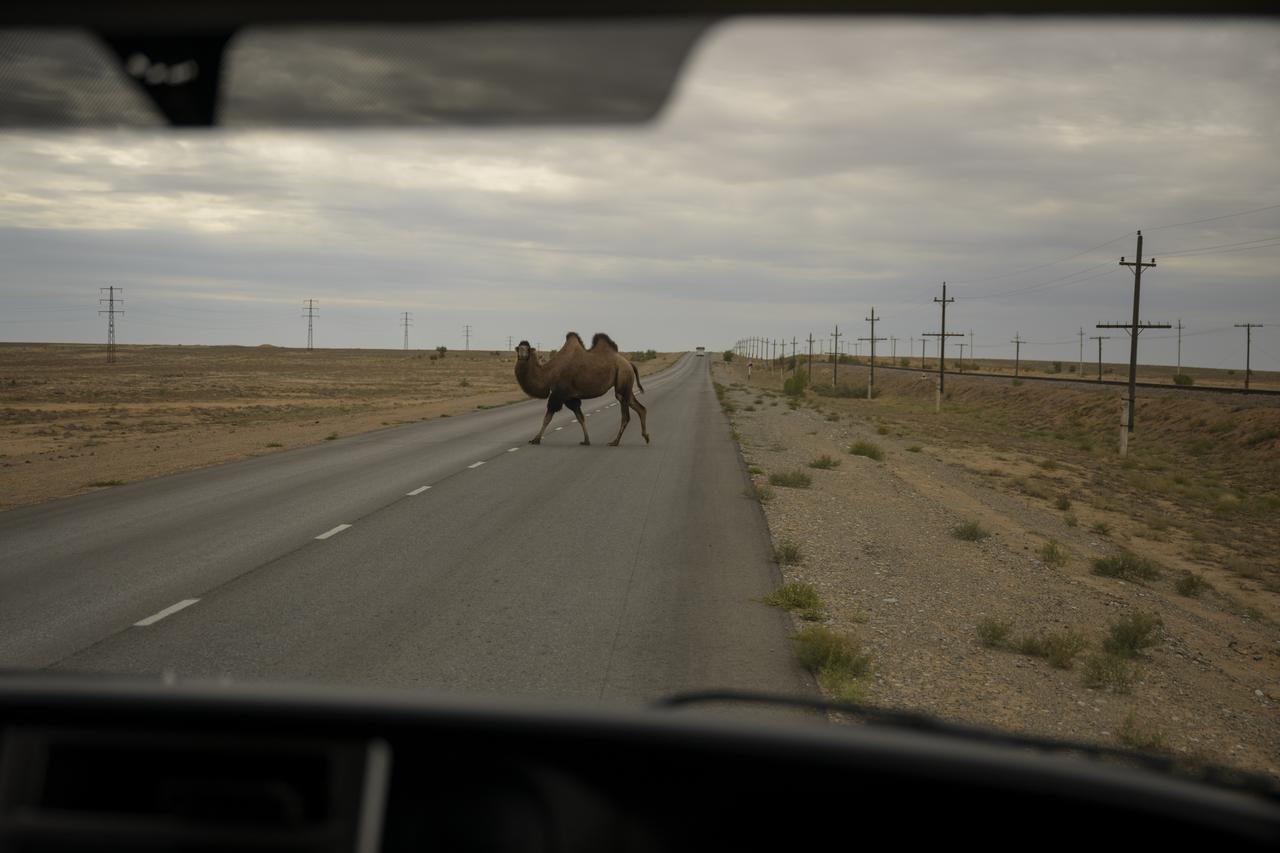
A camel crosses the road, Sunday, Sept. 8, 2024, at the Baikonur Cosmodrome in Kazakhstan. Roscosmos teams rolled out the Soyuz MS-26 rocket today in preparation for the launch of Expedition 72 crew members: NASA astronaut Don Pettit, Roscosmos cosmonauts Alexey Ovchinin, and Ivan Vagner, on September 11. Photo Credit: (NASA/Bill Ingalls)
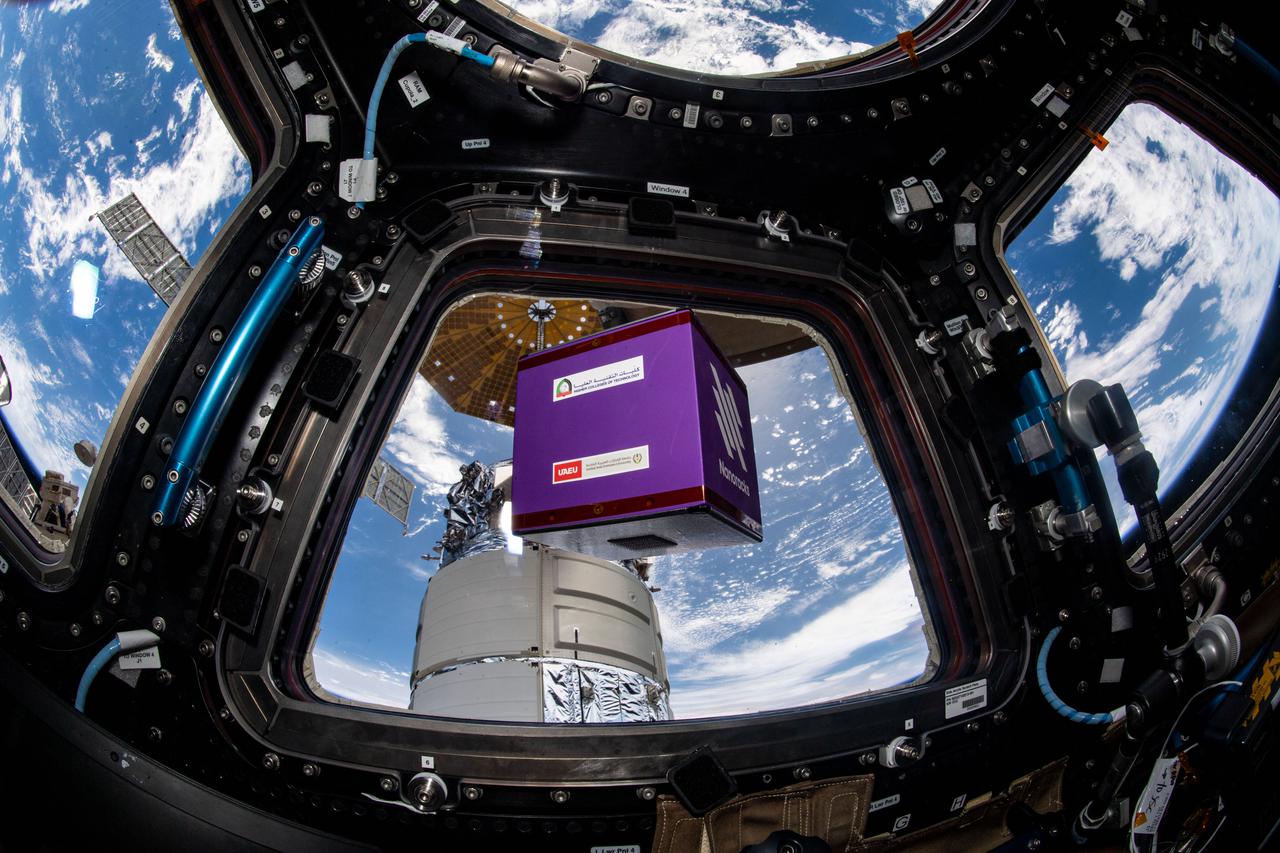
iss065e096320 (6/11/2021) --- A view of the SmoothISS Nanolab in the Cupola window aboard the International space Station (ISS). Space Food for Bone Health: Vitamin D Fortified Camel Milk with Dates Smoothie (SmoothISS) tests microgravity’s effects on the sensory, nutritional, and microbial properties of a smoothie drink made from dehydrated camel’s milk, dates, and vitamin D.
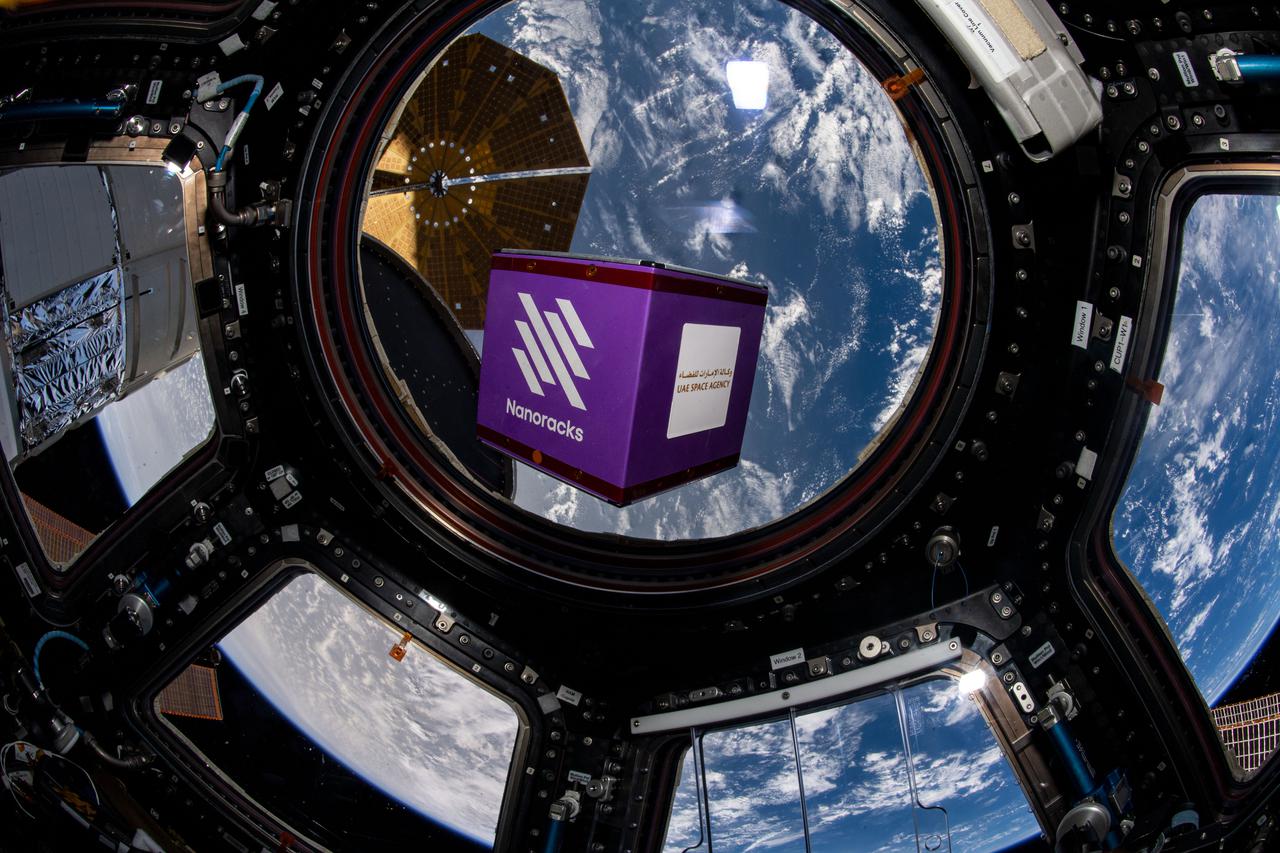
iss065e096305 (6/11/2021) --- A view of the SmoothISS Nanolab in the Cupola window aboard the International space Station (ISS). Space Food for Bone Health: Vitamin D Fortified Camel Milk with Dates Smoothie (SmoothISS) tests microgravity’s effects on the sensory, nutritional, and microbial properties of a smoothie drink made from dehydrated camel’s milk, dates, and vitamin D.
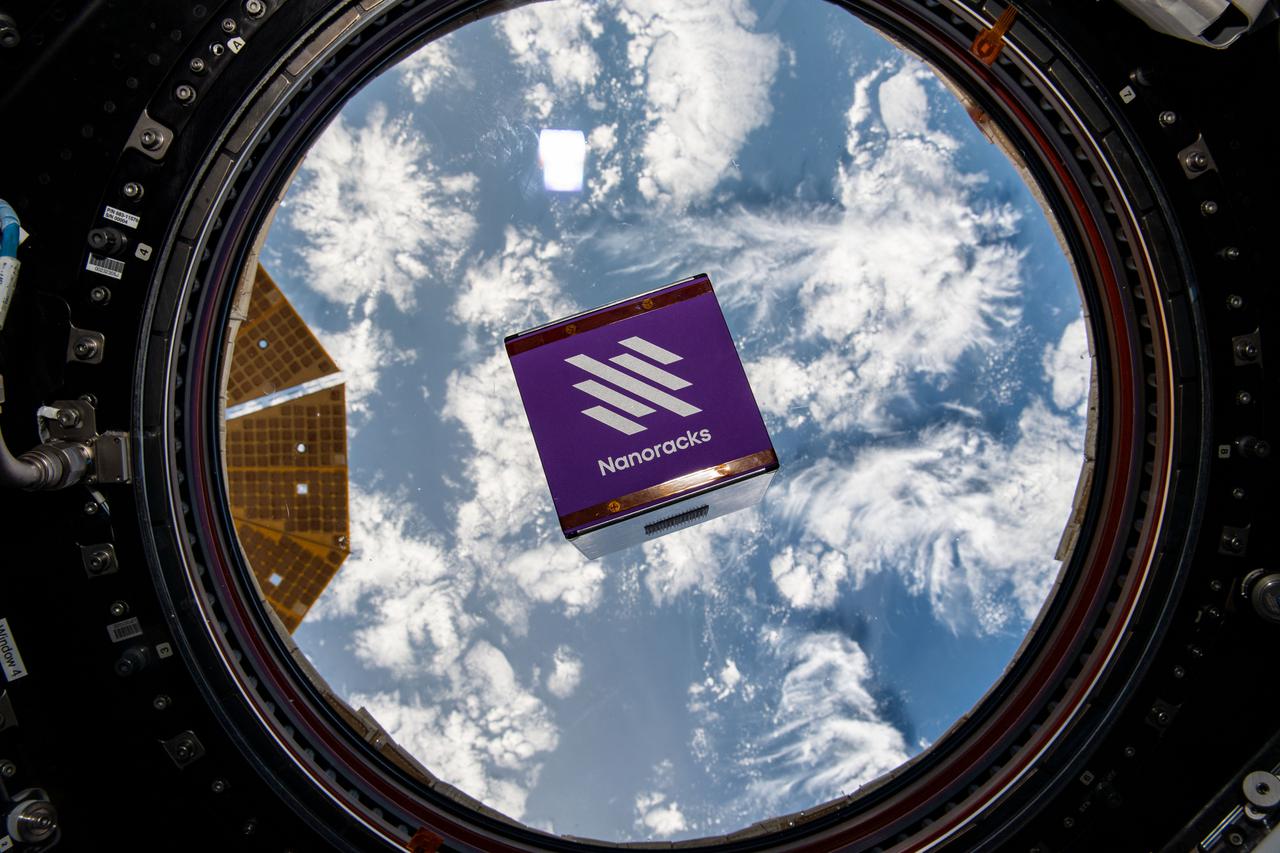
iss065e096031 (6/11/2021) --- A view of the SmoothISS Nanolab in the Cupola window aboard the International space Station (ISS). Space Food for Bone Health: Vitamin D Fortified Camel Milk with Dates Smoothie (SmoothISS) tests microgravity’s effects on the sensory, nutritional, and microbial properties of a smoothie drink made from dehydrated camel’s milk, dates, and vitamin D.
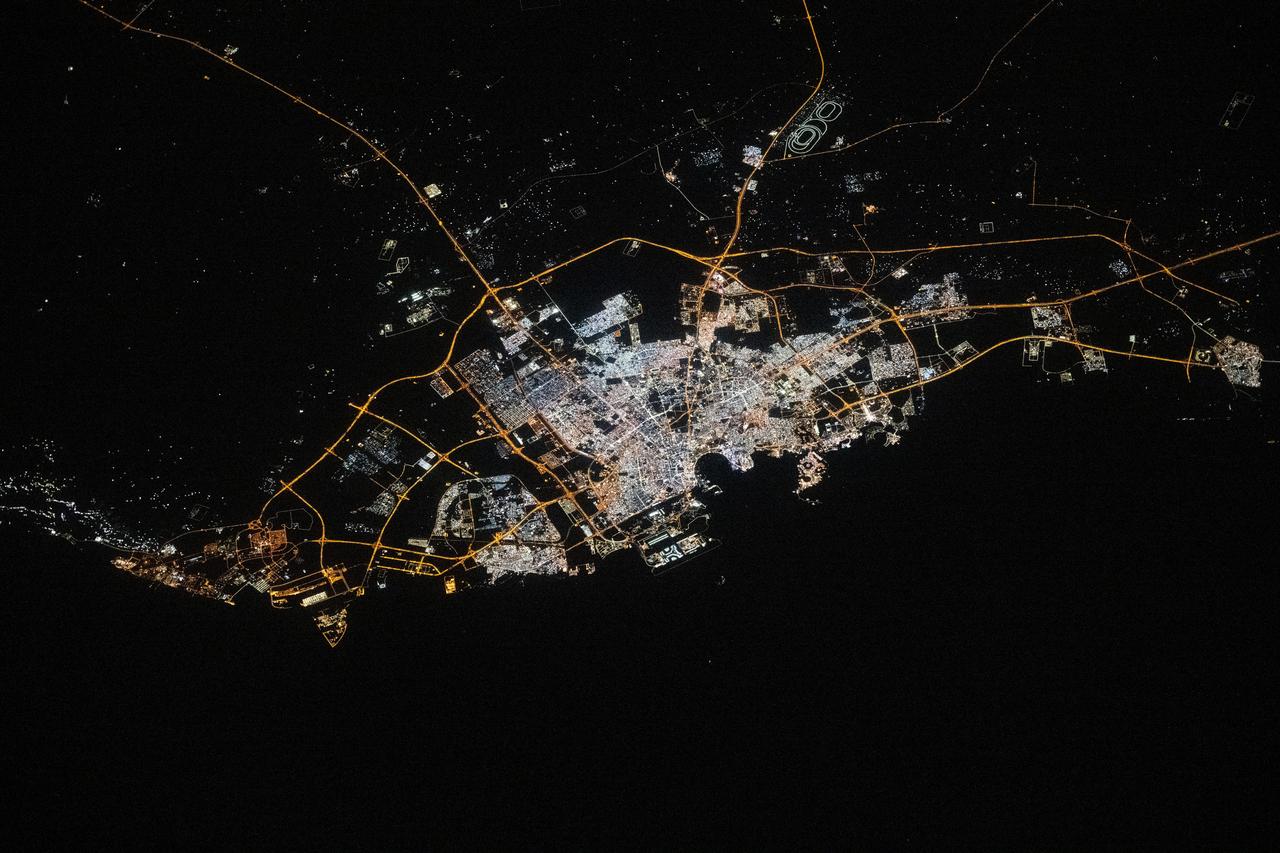
iss072e519924 (Jan. 23, 2025) --- The city lights of Doha, Qatar, the Middle Eastern nation's capital with a population of about 1.2 million, are pictured at approximately 9:51 p.m. local time from the International Space Station as it orbited 258 miles above. Some prominent landmarks include the Shahaniyah Camel Race Track (top right), Hamad International Airport, and the artificial Pearl Island (both at center and on the Persian Gulf Coast).
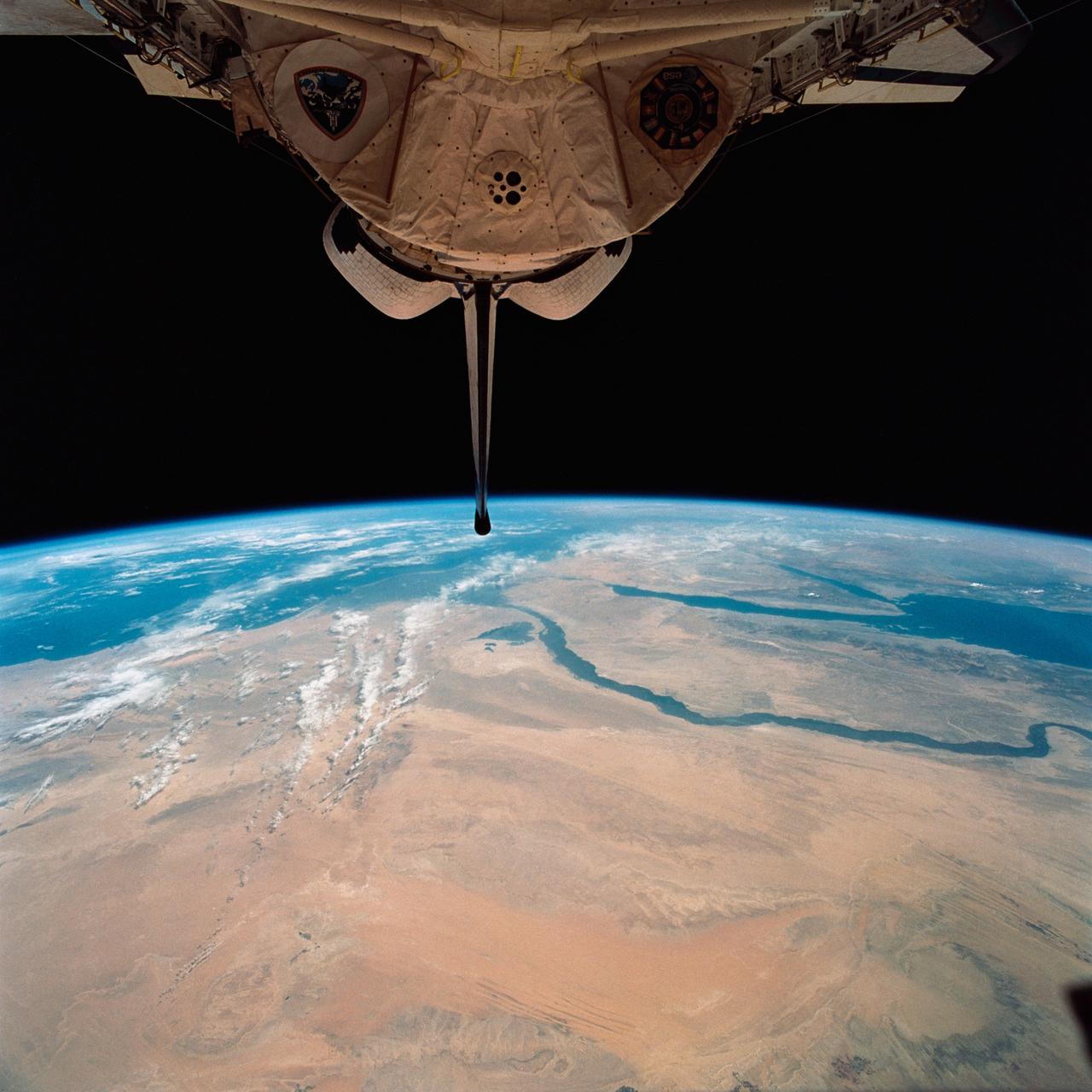
STS058-92-064 (18 Oct-1 Nov 1993) --- This oblique view, looking northeast from central Egypt, shows great expanses of the sand covered and rocky Western Desert in the foreground (bottom). The dark patches bottom right are the Dakhla Oases on the south side of an escarpment. For centuries camel trains have moved from here to the Nile Valley, seen here as a broad green line winding through the desert. The northern half of Egypt's Nile appears here, from about the latitude of Luxor to the delta. Green colors indicate the small area of crops which feed Egypt's population of 55 million. The Nile Delta is partly obscured by a band of clouds, but can be discerned at the coast as a flattened triangle of green. The smaller triangle close by is the Faiyum Basin, a depression irrigated by water from the Nile. The coast of the Mediterranean Sea appears left.
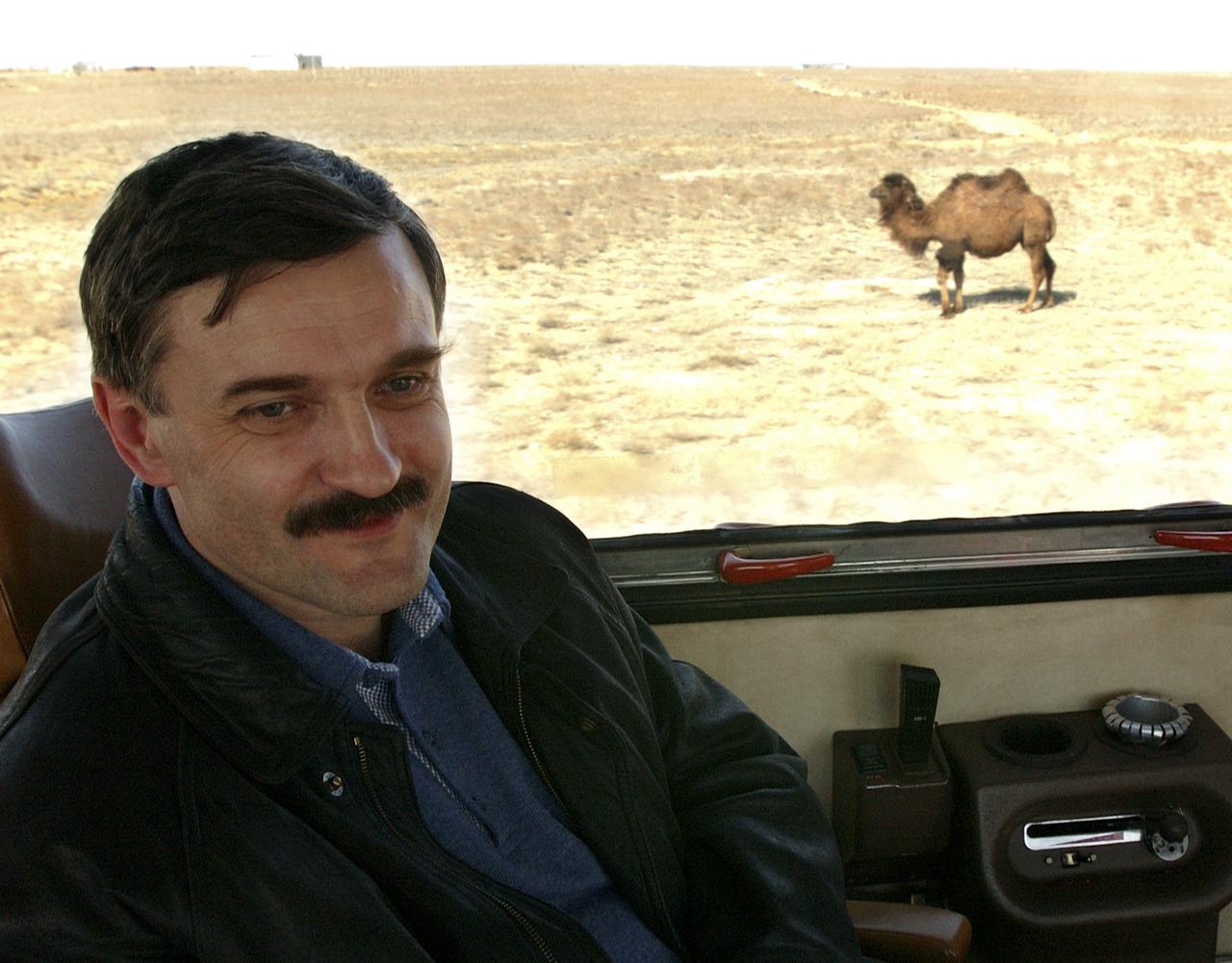
Cosmonaut Alexander Kaleri, backup crew member for Expedition 7, enjoys the bus ride to the Cosmonuat hotel after arriving in Baikonur, Kazakhstan on Wednesday, April 9, 2003. The crews performed fit checks on their Russian Sokol suits and performed a Soyuz inspection at the Baikonur Cosmodrome. Photo Credit: (NASA/Bill Ingalls)
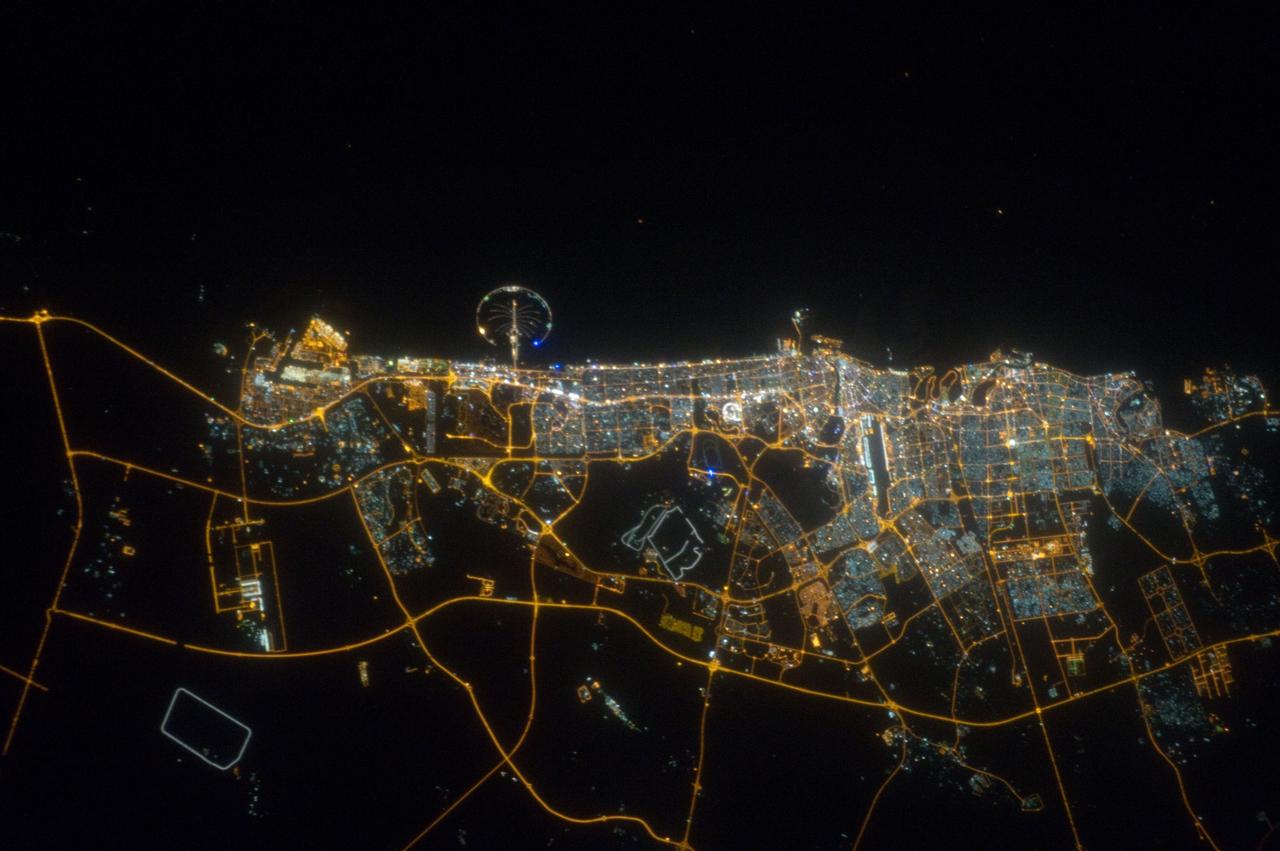
ISS032-E-023718 (11 Aug. 2012) --- The city of Dubai, United Arab Emirates, is featured in this night view photographed by an Expedition 32 crew member on the International Space Station. The city of Dubai is the largest metropolitan area in the emirate of Dubai, one of the member states of the United Arab Emirates. Dubai is located along the southern Persian Gulf on the Arabian Peninsula, and its signature city is known for high profile architectural and development projects. Among the most notable is the Palm Island Resort, a manmade peninsula and surrounding islands built from over 50 million cubic meters of sand. Two other island projects (out of frame), one similar to the Palm Island Resort and another crafted to look like a map of the world, are also visible in other space station imagery along the Dubai coastline. Orange sodium vapor lights trace out the major highways and surface street grid in and around the metropolitan area, while grey-white mercury vapor lamps fill in the commercial and residential areas. The lighted islands and peninsula of the Palm Island Resort are clearly visible along the coastline. An interesting spiral pattern of lights on the southeastern fringe of the urban area is a camel racetrack. Night time images like this are useful to climate modelers, urban planners, and geographers as they allow for simple definition of urban (densely lit) and rural (sparsely lit) areas.
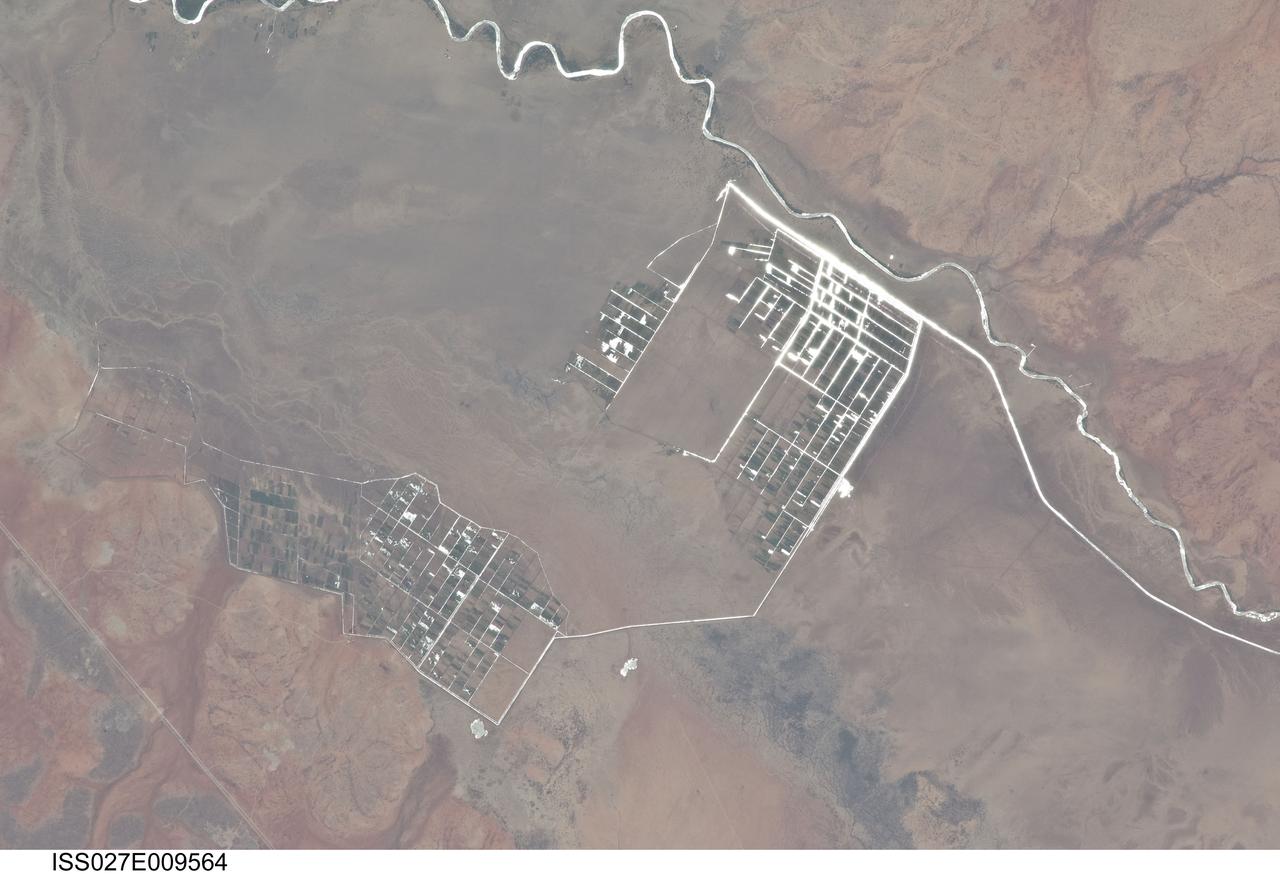
ISS027-E-009564 (31 March 2011) --- Agricultural fields along the Shebelle River in Ethiopia are featured in this image photographed by an Expedition 27 crew member on the International Space Station. The Shebelle River supports limited agricultural development within the arid to semi-arid Ogaden Plateau region of southeastern Ethiopia. This detailed photograph illustrates a network of irrigation canals and fields located approximately 42 kilometers to the west-northwest of the city of Gode, Ethiopia. Floodplain sediments and soils are dark brown to gray (center), and contrast with reddish rocks and soils of the adjacent plateau. Water in the Shebelle River, and the irrigation canals, has a bright, mirror-like appearance due to sunglint, or light reflecting off the water surface back towards the observer on the space station. Vegetation in the floodplain (bottom center) and agricultural fields is dark green. The river water supports a variety of crops?the most common being sorghum and maize?as well as grazing for livestock (cattle, sheep, goats, and camels). The Shebelle River has its headwaters in the Ethiopian Highlands, and transports water and sediment 1,000 kilometers to the southeast across Ethiopia, continuing an additional 130 kilometers into neighboring Somalia. The Shebelle River does not reach the Indian Ocean during most years, but disappears into the sands near the coast in Somalia. During periods of heavy rainfall and flooding however, the Shebelle can reach the Indian Ocean.
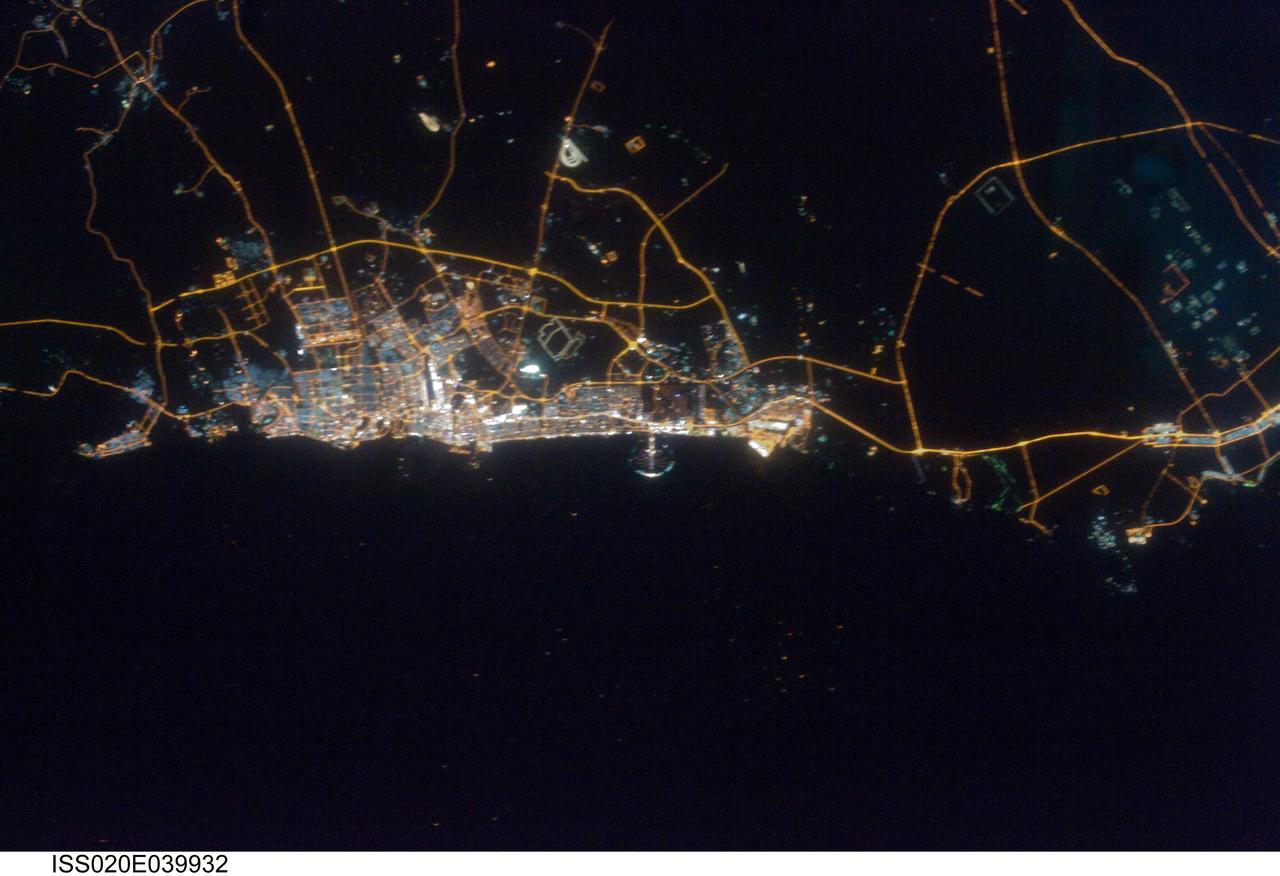
ISS020-E-039932 (11 Sept. 2009) --- City of Dubai, United Arab Emirates is featured in this night view photographed by an Expedition 20 crew member on the International Space Station. The city of Dubai is the largest metropolitan area in the emirate of Dubai, one of the member states of the United Arab Emirates. Dubai is located along the southern Persian Gulf on the Arabian Peninsula, and its signature city is known for high profile architectural and development projects. Among the most notable is the Palm Island Resort, a manmade peninsula and surrounding islands built from over 50 million cubic meters of sand. Two other island projects, one similar to the Palm Island Resort and another crafted to look like a map of the world, are also underway along the Dubai coastline. This night time photograph of the city of Dubai was taken at approximately 2:00 a.m. local time. Orange sodium vapor lights trace out the major highways and surface street grid in and around the metropolitan area, while grey-white mercury vapor lamps fill in the commercial and residential areas. The lighted islands and peninsula of the Palm Island Resort are clearly visible along the coastline. An interesting spiral pattern of lights on the southeastern fringe of the urban area is a camel racetrack. Night time images like these are useful to climate modelers, urban planners, and geographers as they allow for simple definition of urban (densely lit) and rural (sparely lit) areas.