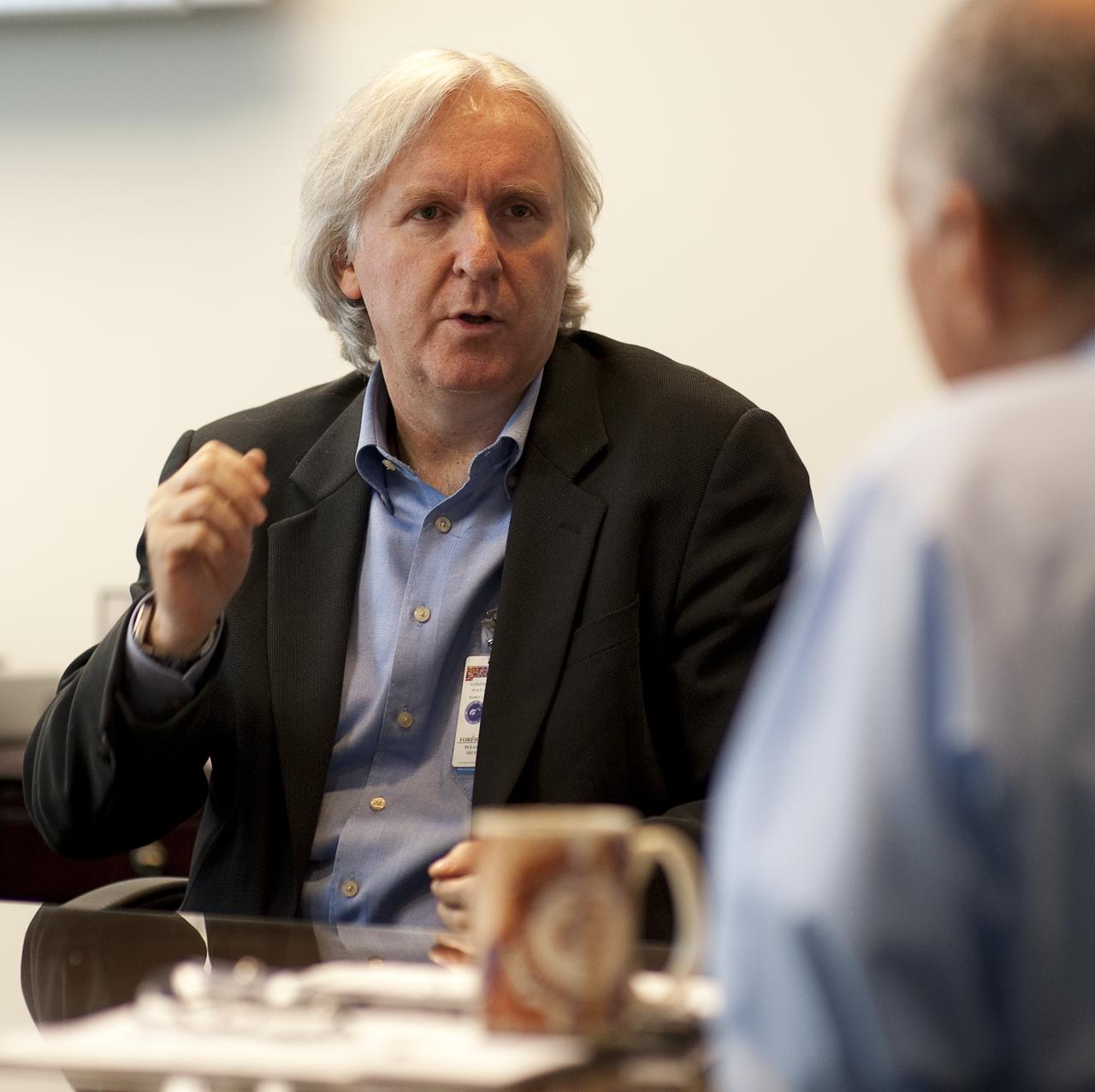
Award-winning writer-director James Cameron, left, and NASA Administrator Charles Bolden, meet at NASA Headquarters in Washington, DC on Tuesday, Jan. 19, 2010. Cameron who is a former member of the NASA Advisory Council has had a life-long interest in space and science. The two talked about public outreach and education among other subjects. Photo Credit: (NASA/Bil Ingalls)
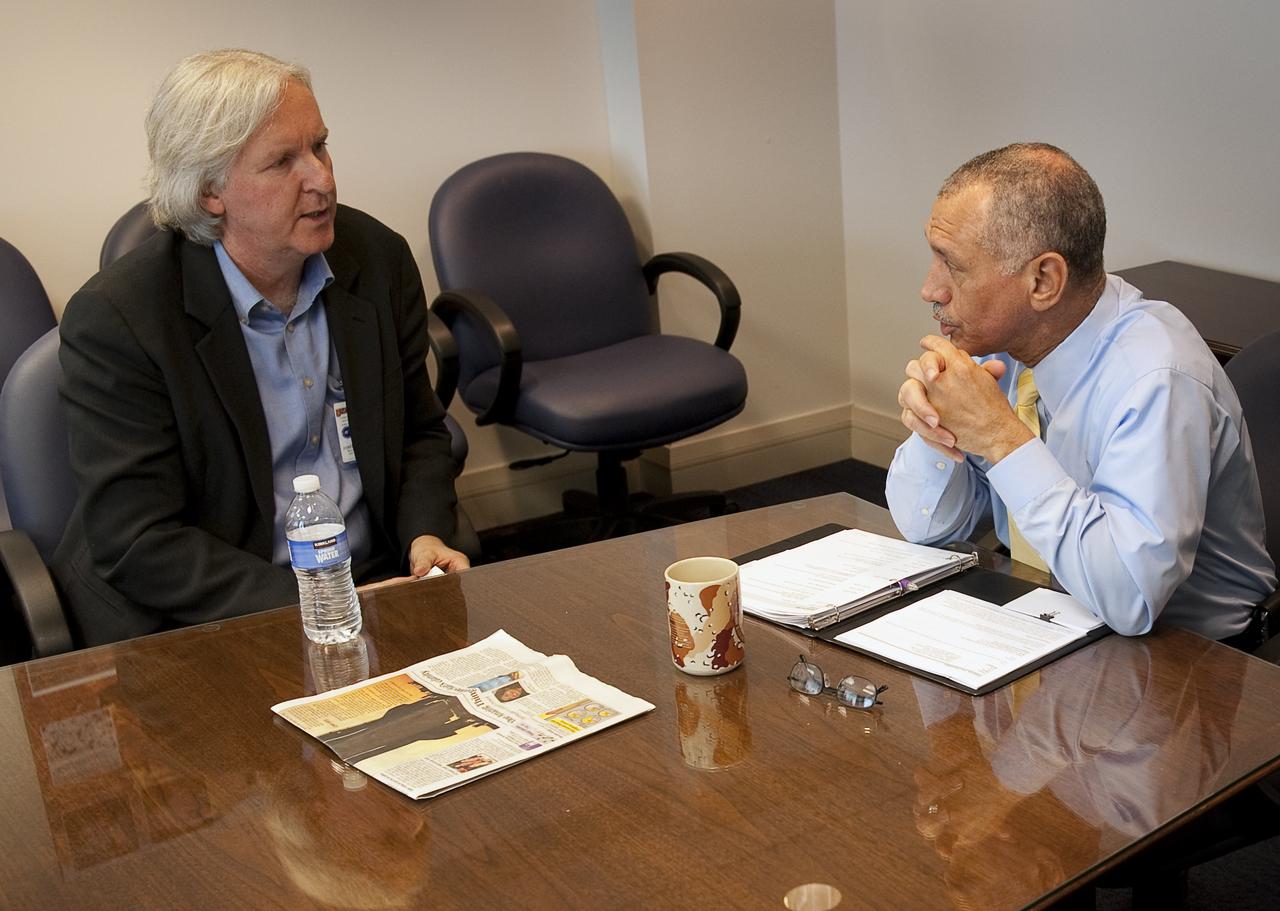
NASA Administrator Charles Bolden, right, and award-winning writer-director James Cameron, meet at NASA Headquarters in Washington, DC on Tuesday, Jan. 19, 2010. Cameron who is a former member of the NASA Advisory Council has had a life-long interest in space and science. The two talked about public outreach and education among other subjects. Photo Credit: (NASA/Bill Ingalls)
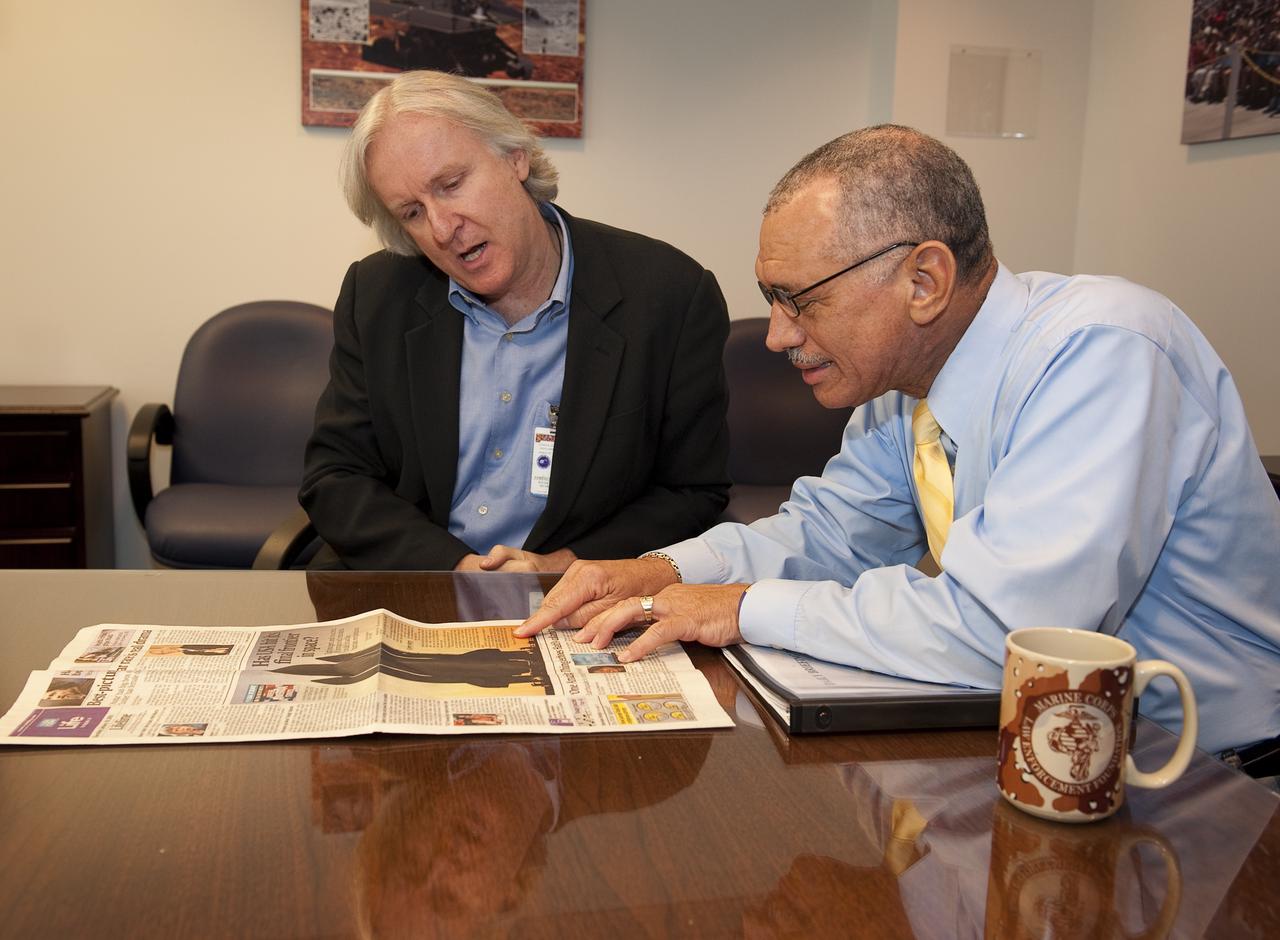
NASA Administrator Charles Bolden, right, and award-winning writer-director James Cameron, meet at NASA Headquarters in Washington, DC on Tuesday, Jan. 19, 2010. Cameron who is a former member of the NASA Advisory Council has had a life-long interest in space and science. The two talked about public outreach and education among other subjects. Photo Credit: (NASA/Bill Ingalls)
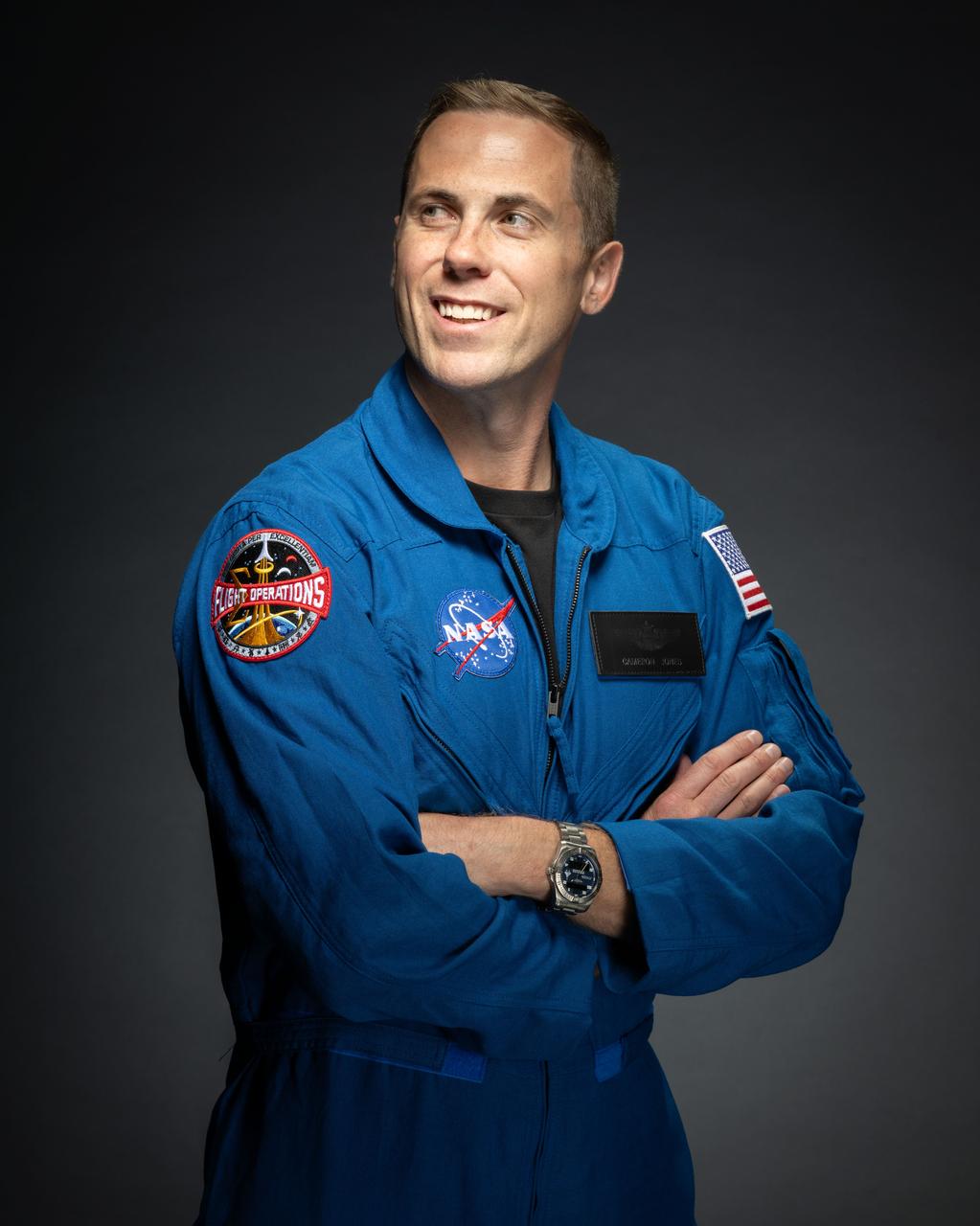
jsc2025e074940 (September 15, 2025) --- Cameron Jones was selected by NASA to join the 2025 astronaut candidate class. He reported for duty in September 2025. Credit: NASA/Bill Stafford
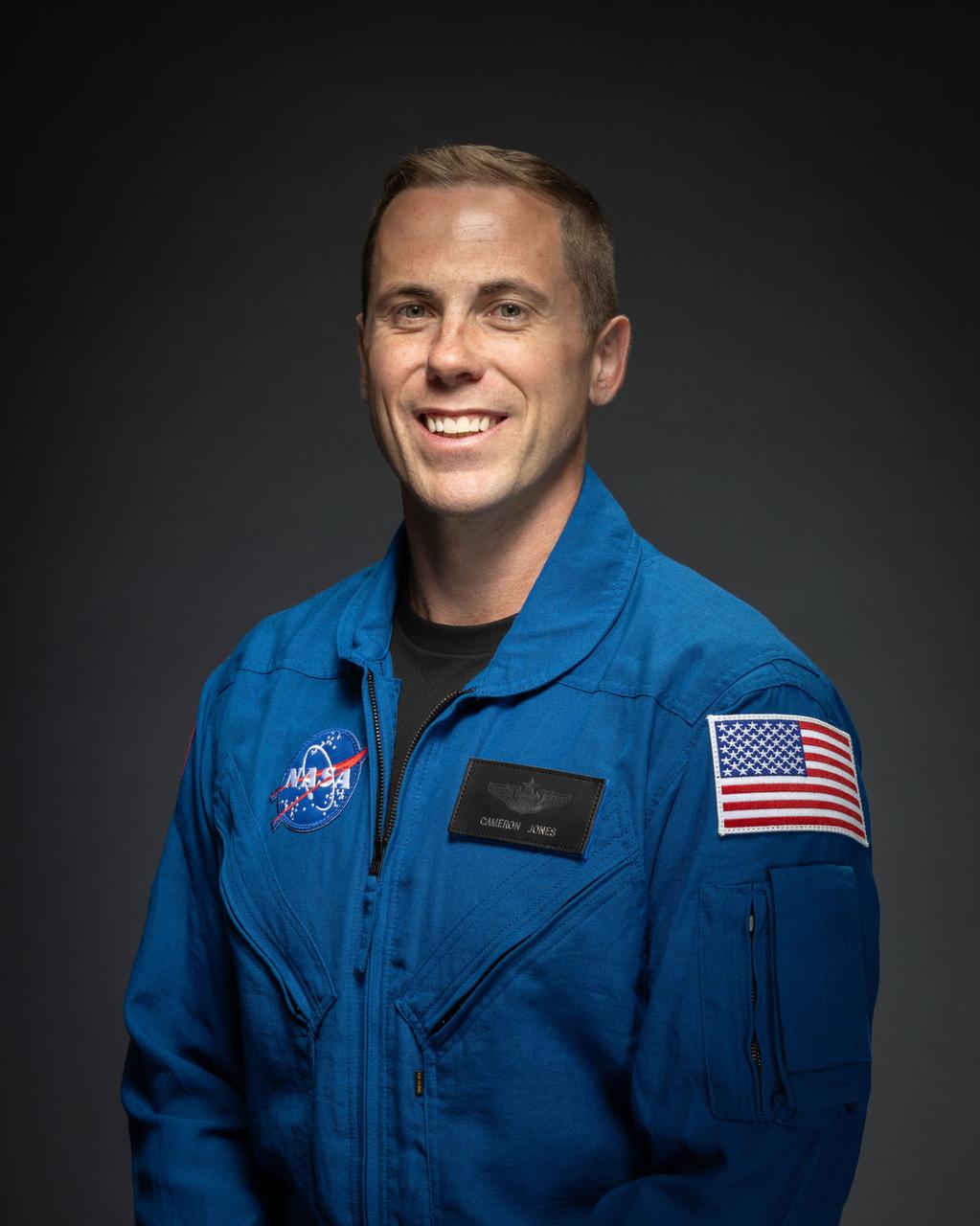
jsc2025e074935 (September 15, 2025) --- Cameron Jones was selected by NASA to join the 2025 astronaut candidate class. He reported for duty in September 2025. Credit: NASA/Bill Stafford
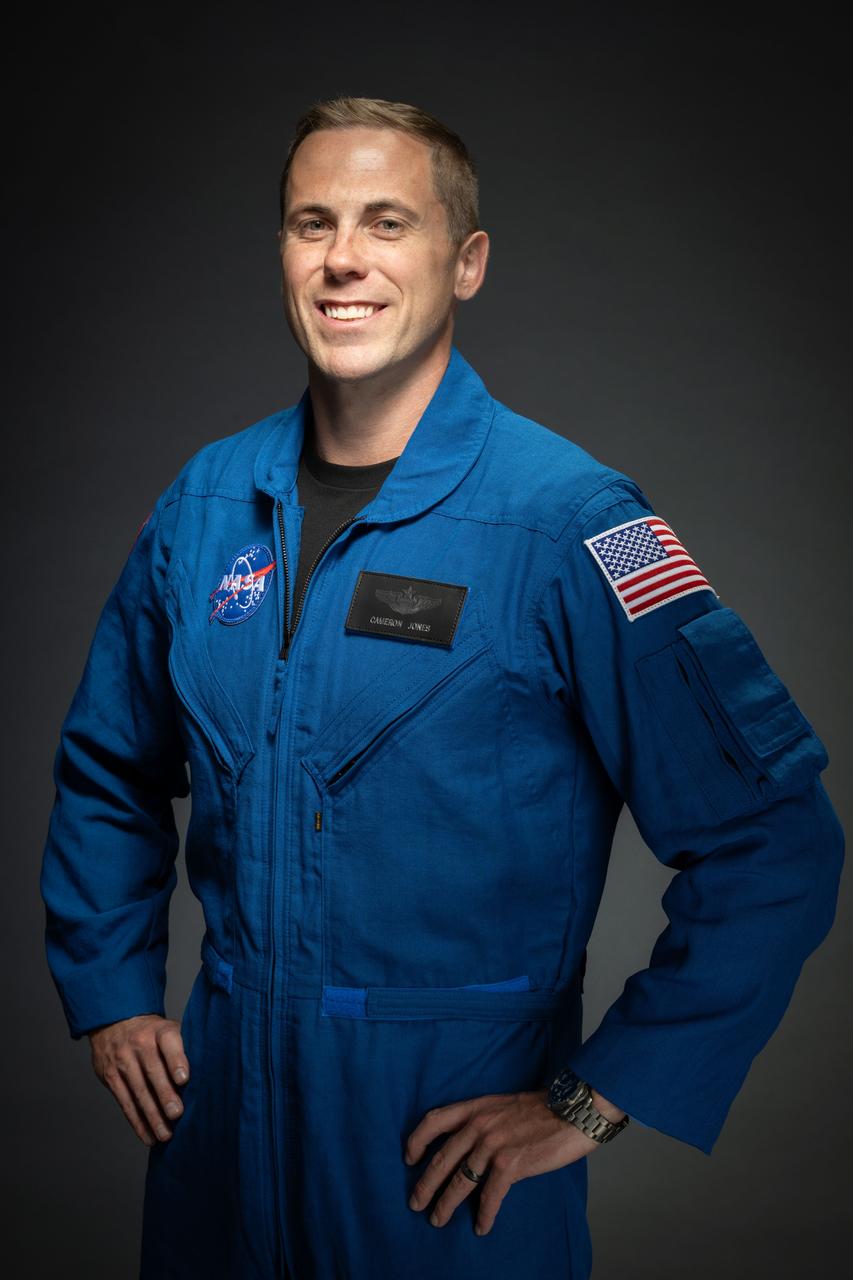
jsc2025e074937 (September 15, 2025) --- Cameron Jones was selected by NASA to join the 2025 astronaut candidate class. He reported for duty in September 2025. Credit: NASA/Bill Stafford
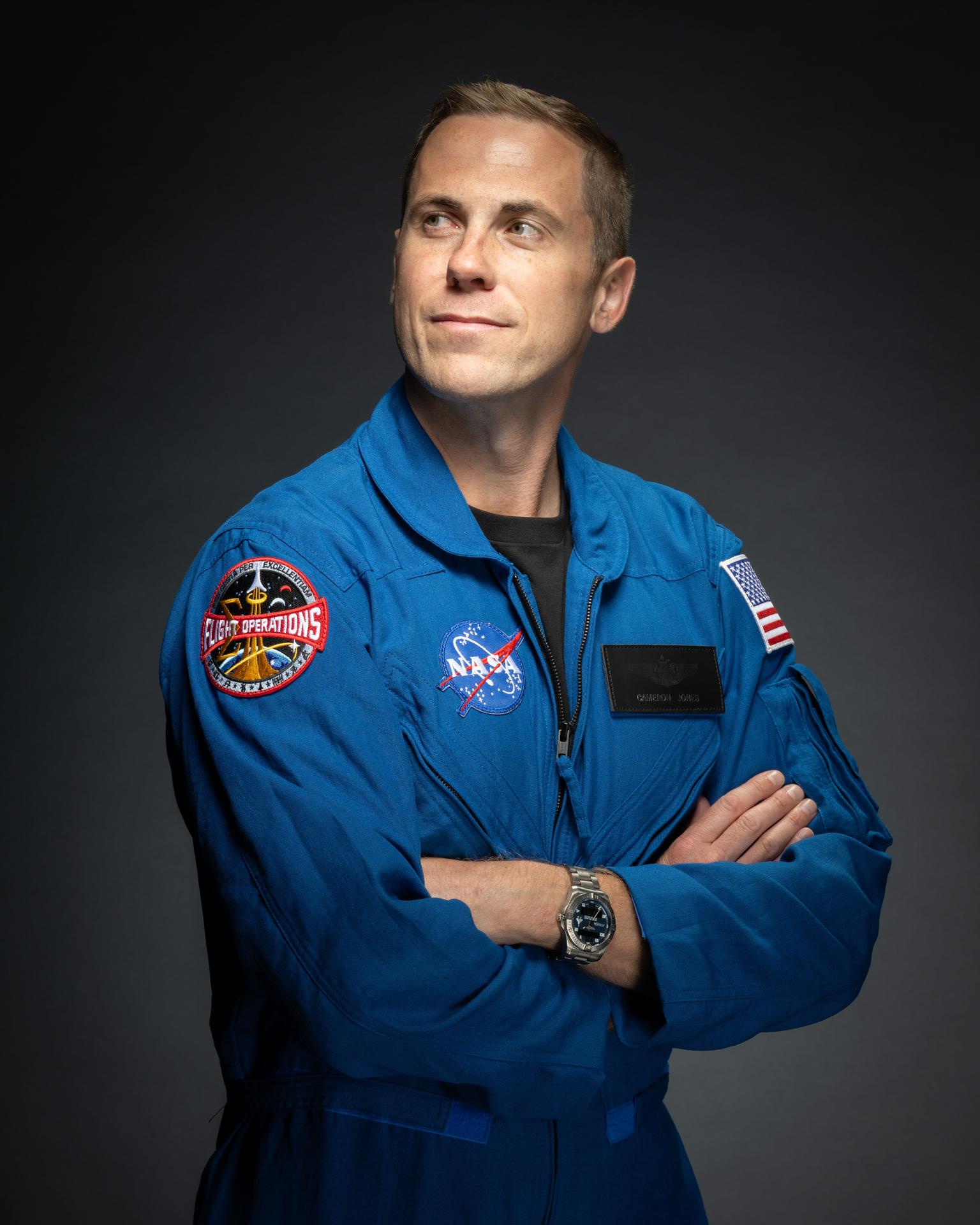
jsc2025e074939 (September 15, 2025) --- Cameron Jones was selected by NASA to join the 2025 astronaut candidate class. He reported for duty in September 2025. Credit: NASA/Bill Stafford
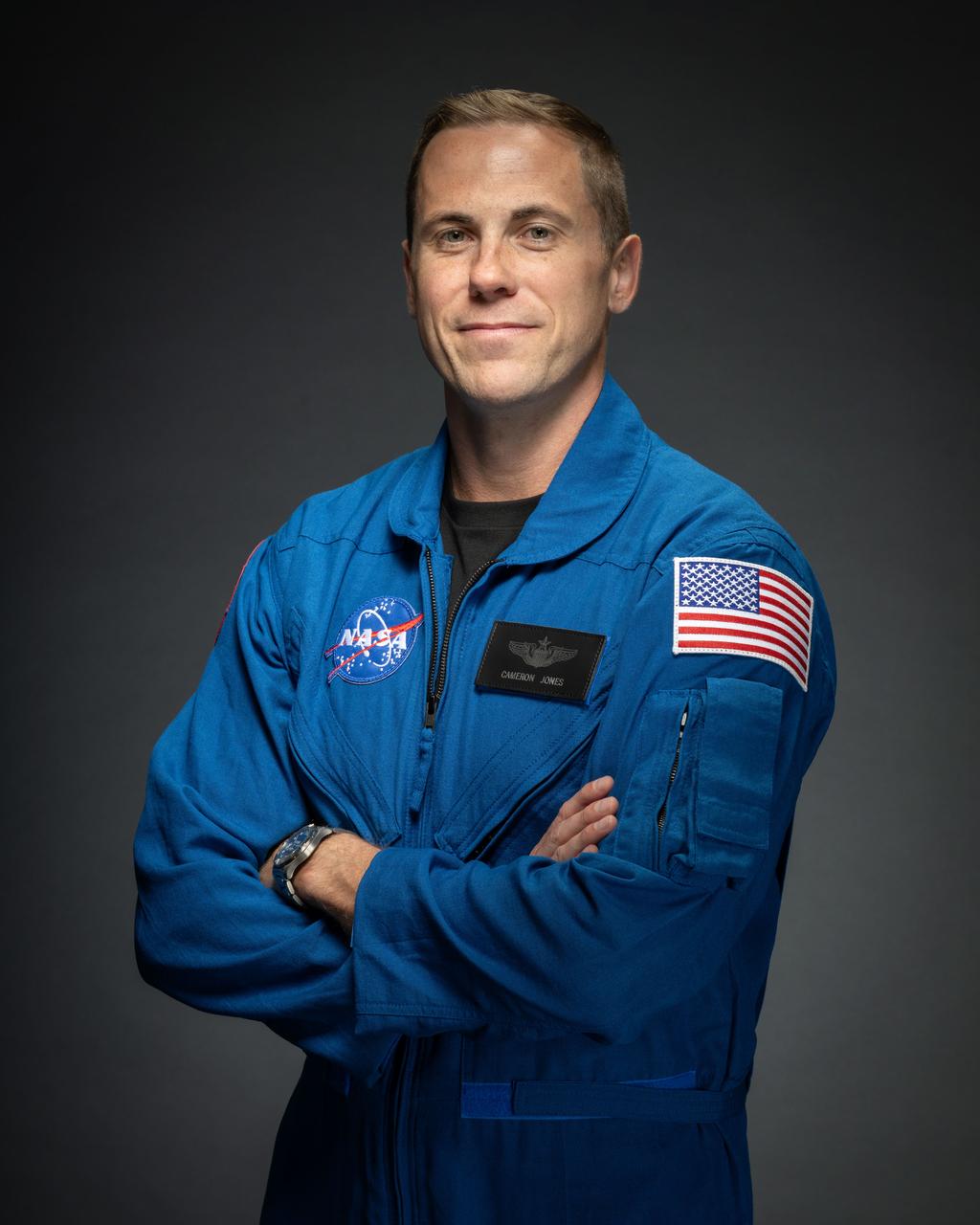
jsc2025e074936 (September 15, 2025) --- Cameron Jones was selected by NASA to join the 2025 astronaut candidate class. He reported for duty in September 2025. Credit: NASA/Bill Stafford
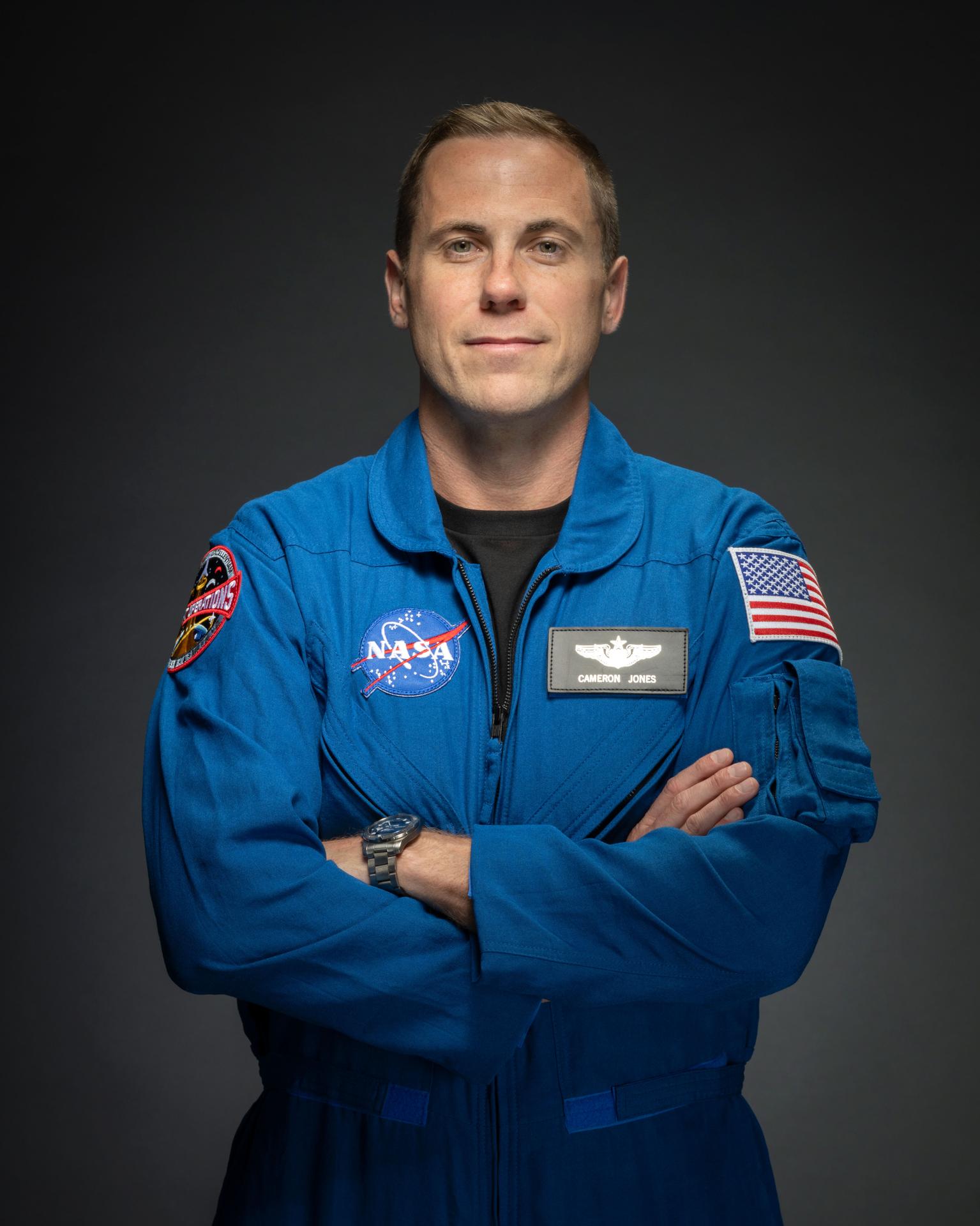
jsc2025e074938 (September 15, 2025) --- Cameron Jones was selected by NASA to join the 2025 astronaut candidate class. He reported for duty in September 2025. Credit: NASA/Bill Stafford
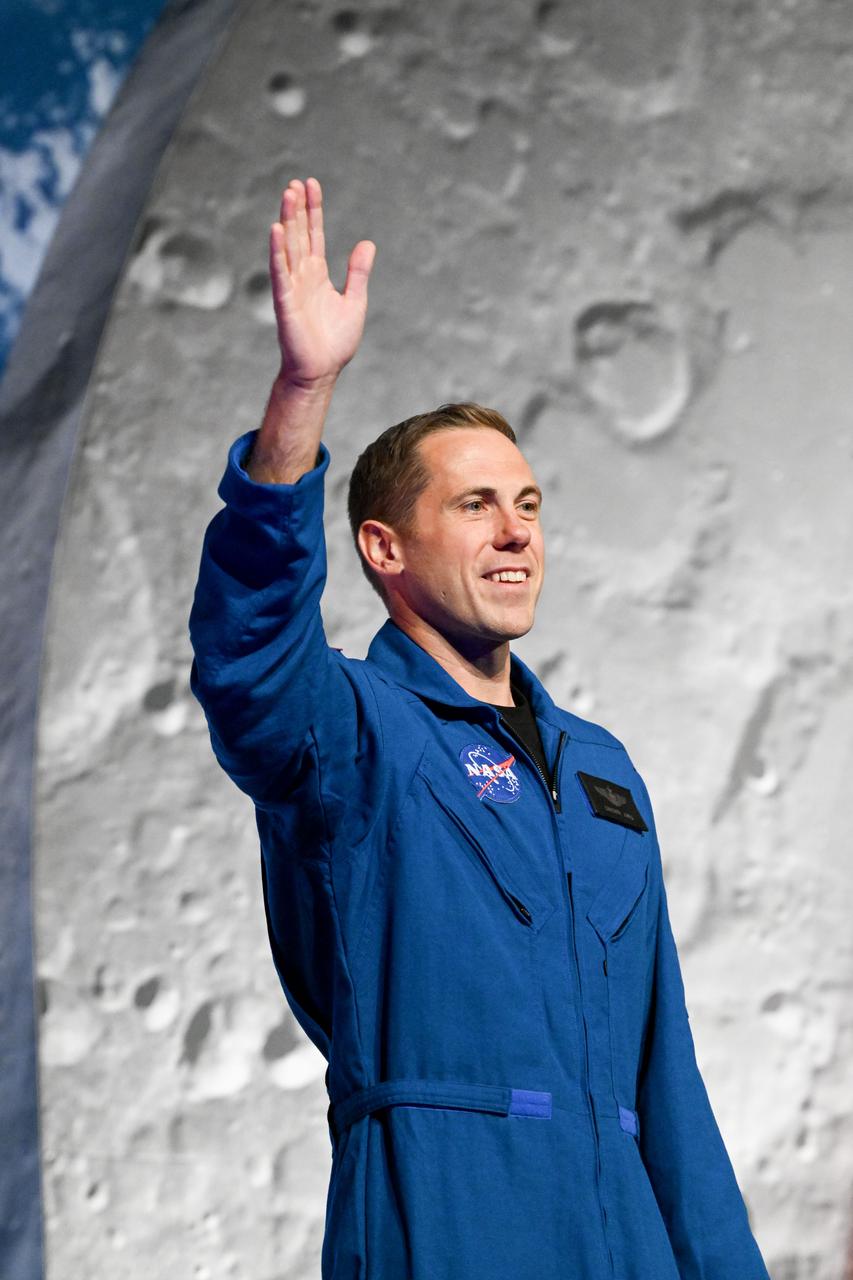
jsc2025e076351 (09/22/2025) ---NASA announced its 2025 Astronaut Candidate Class on Sept. 22, 2025. Cameron Jones was selected by NASA to join the 2025 astronaut candidate class. He reported for duty in September 2025.

jsc2025e076412 (09/22/2025) --- NASA announced its 2025 Astronaut Candidate Class on Sept. 22, 2025. Cameron Jones was selected by NASA to join the 2025 astronaut candidate class. He reported for duty in September 2025.
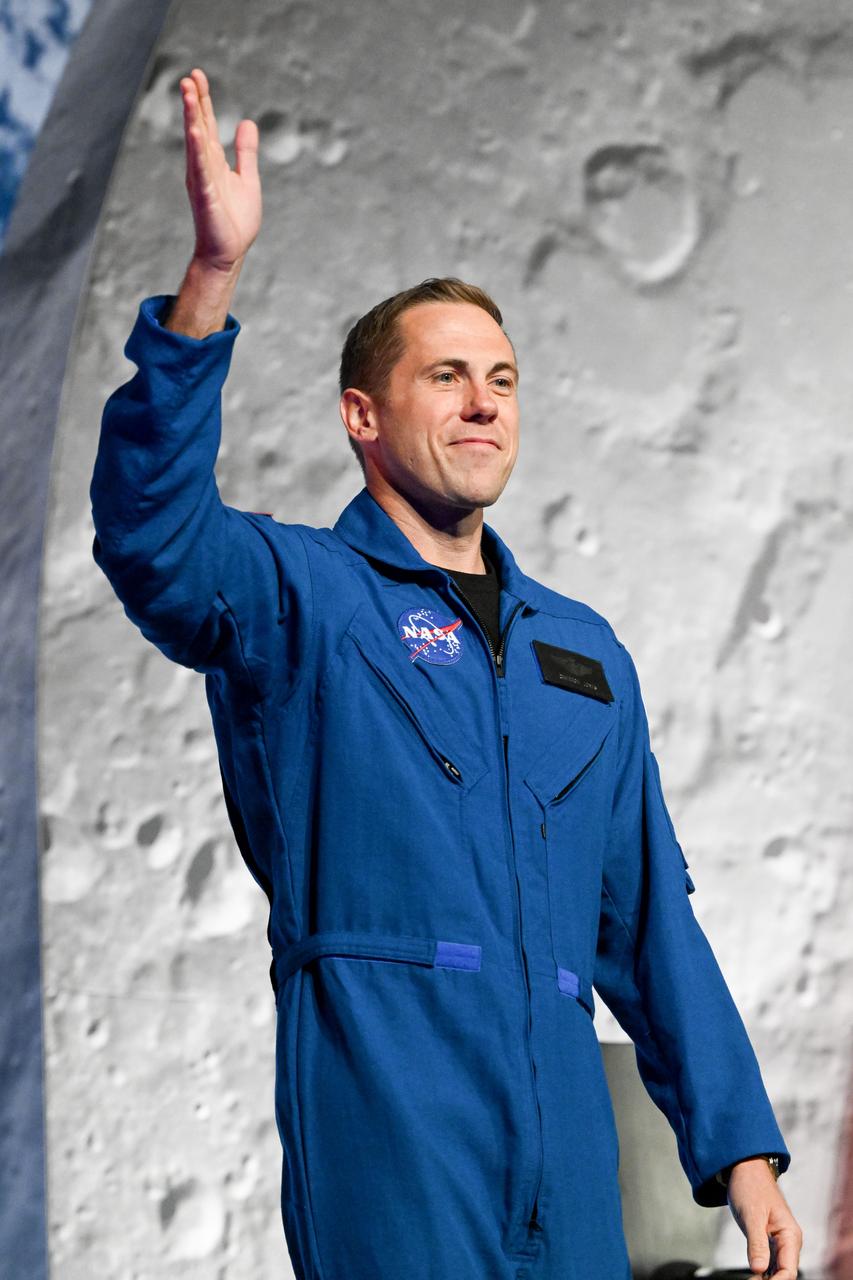
jsc2025e076350 (09/22/2025) --- NASA announced its 2025 Astronaut Candidate Class on Sept. 22, 2025. Cameron Jones was selected by NASA to join the 2025 astronaut candidate class. He reported for duty in September 2025.
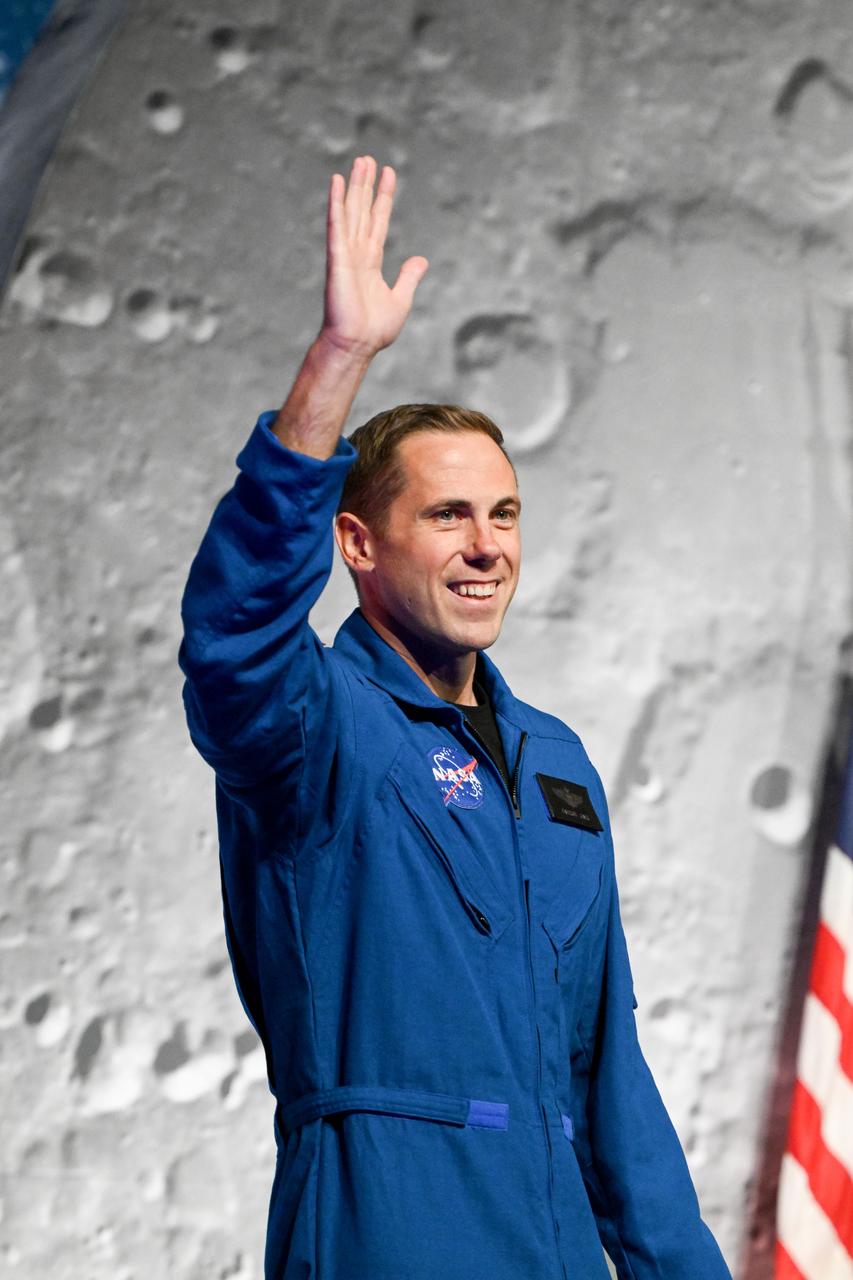
jsc2025e076352 (09/22/2025) --- NASA announced its 2025 Astronaut Candidate Class on Sept. 22, 2025. Cameron Jones was selected by NASA to join the 2025 astronaut candidate class. He reported for duty in September 2025.
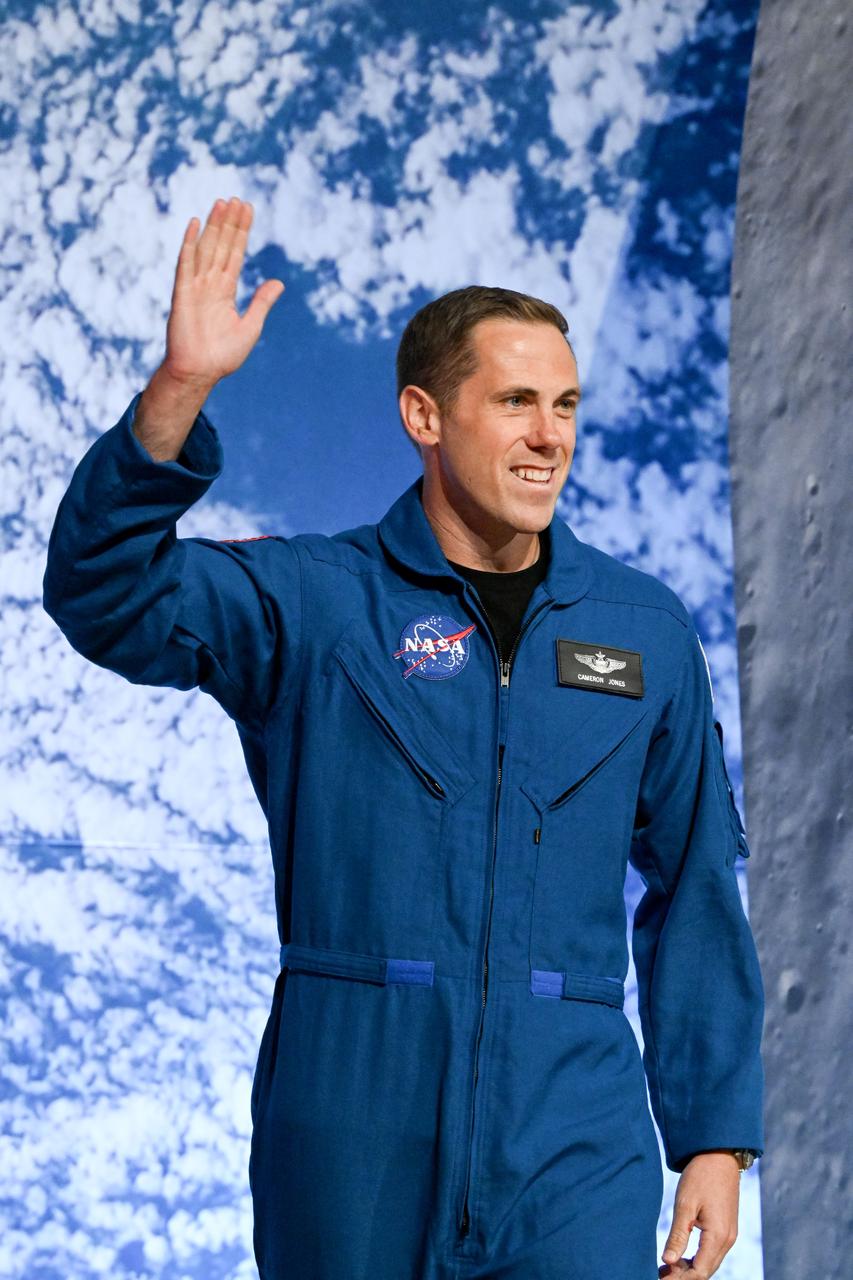
jsc2025e076349 (09/22/2025) --- NASA announced its 2025 Astronaut Candidate Class on Sept. 22, 2025. Cameron Jones was selected by NASA to join the 2025 astronaut candidate class. He reported for duty in September 2025.
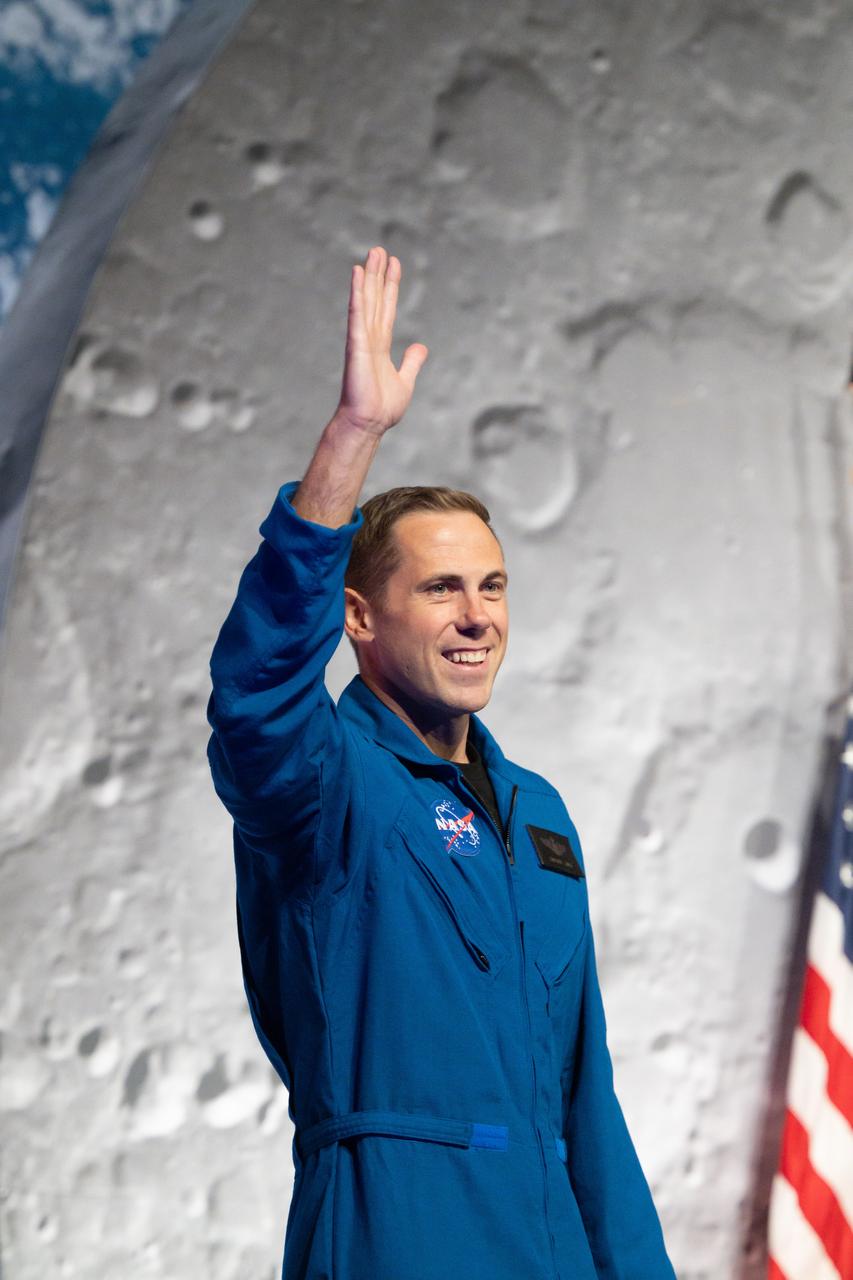
jsc2025e076413 (09/22/2025) --- NASA announced its 2025 Astronaut Candidate Class on Sept. 22, 2025. Cameron Jones was selected by NASA to join the 2025 astronaut candidate class. He reported for duty in September 2025.
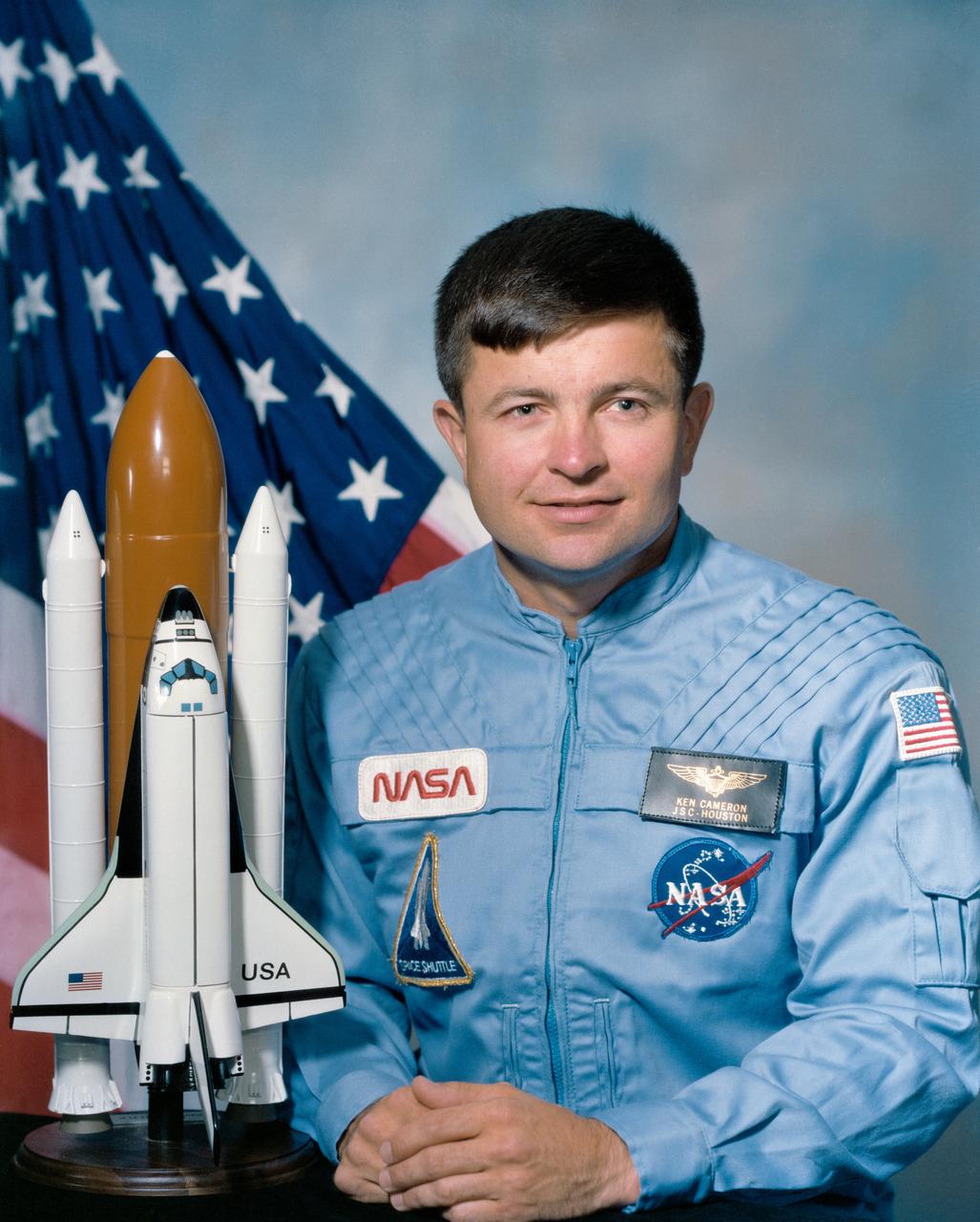
S84-40231 (July 1984) - Astronaut Kenneth D. Cameron, 1984 ASCAN.
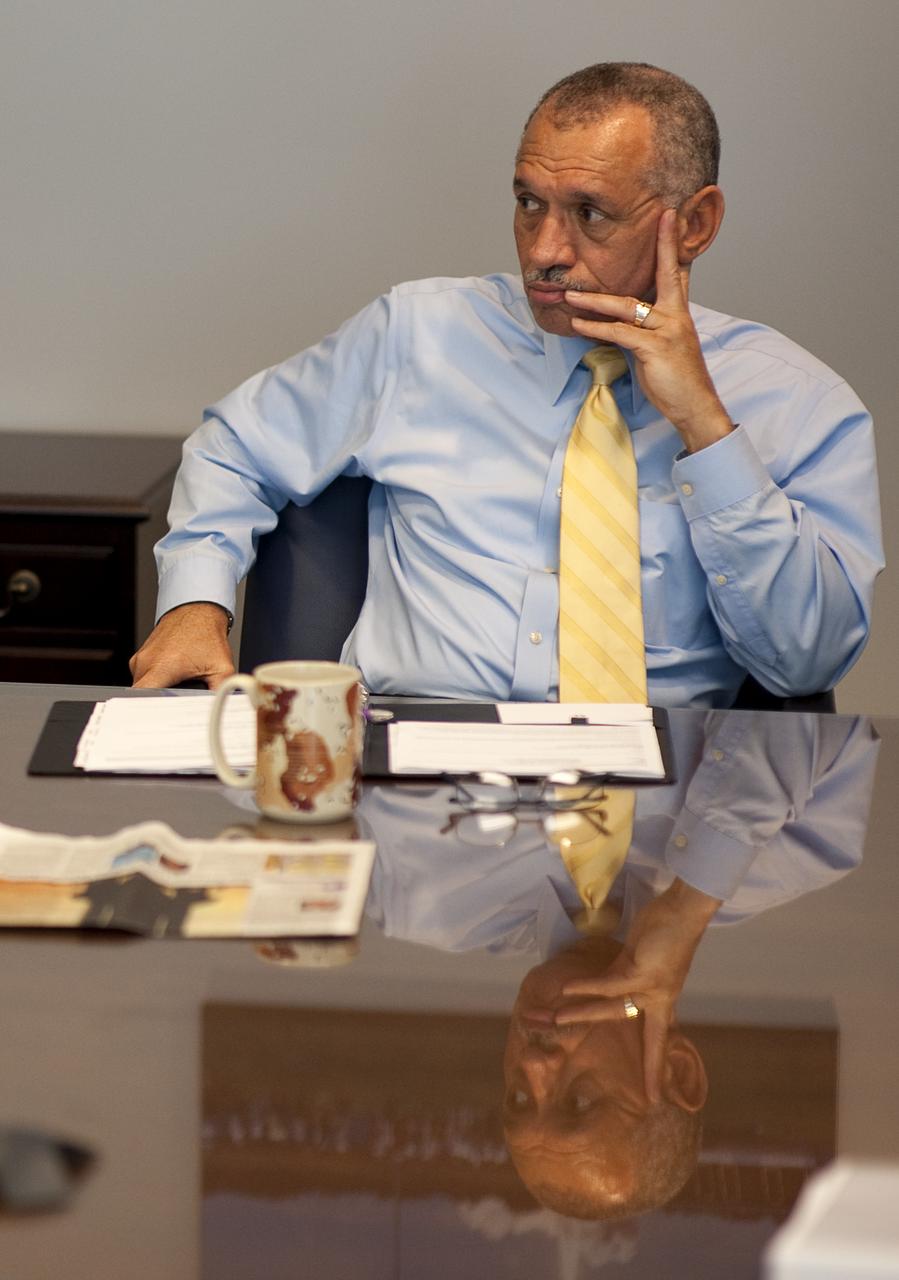
NASA Administrator Charles Bolden listens to award-winning writer-director James Cameron, during a meeting at NASA Headquarters in Washington, DC on Tuesday, Jan. 19, 2010. Cameron who is a former member of the NASA Advisory Council has had a life-long interest in space and science. The two talked about public outreach and education among other subjects. Photo Credit: (NASA/Bill Ingalls)
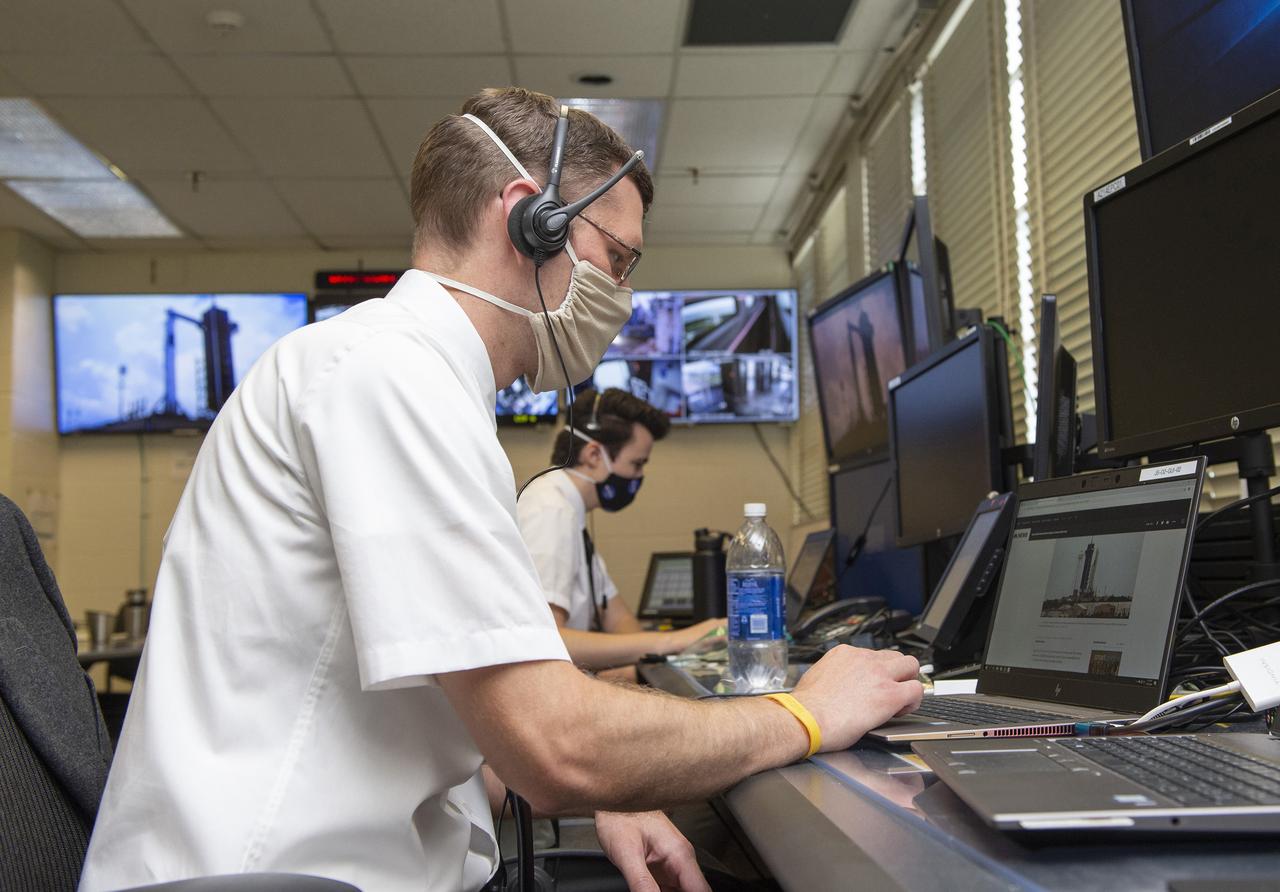
Stewart Whaley, Cameron Muelling, foreground, and teams at NASA’s Marshall Space Flight Center help monitor launch conditions for the Demo-2 mission from the Huntsville Operations Support Center, HOSC.
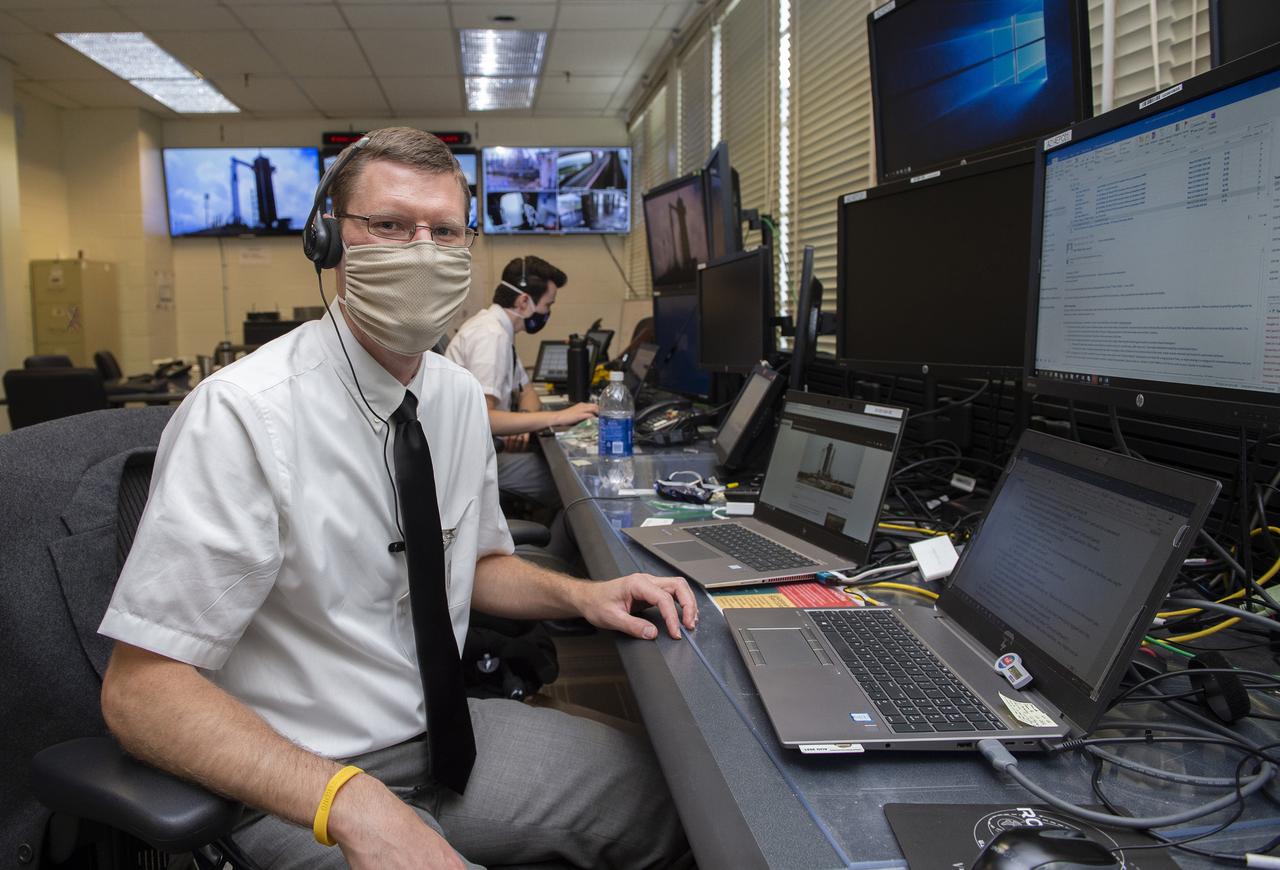
Stewart Whaley, Cameron Muelling, foreground, and teamsat NASA’s Marshall Space Flight Center help monitor launch conditions for the Demo-2 mission from the Huntsville Operations Support Center, HOSC.
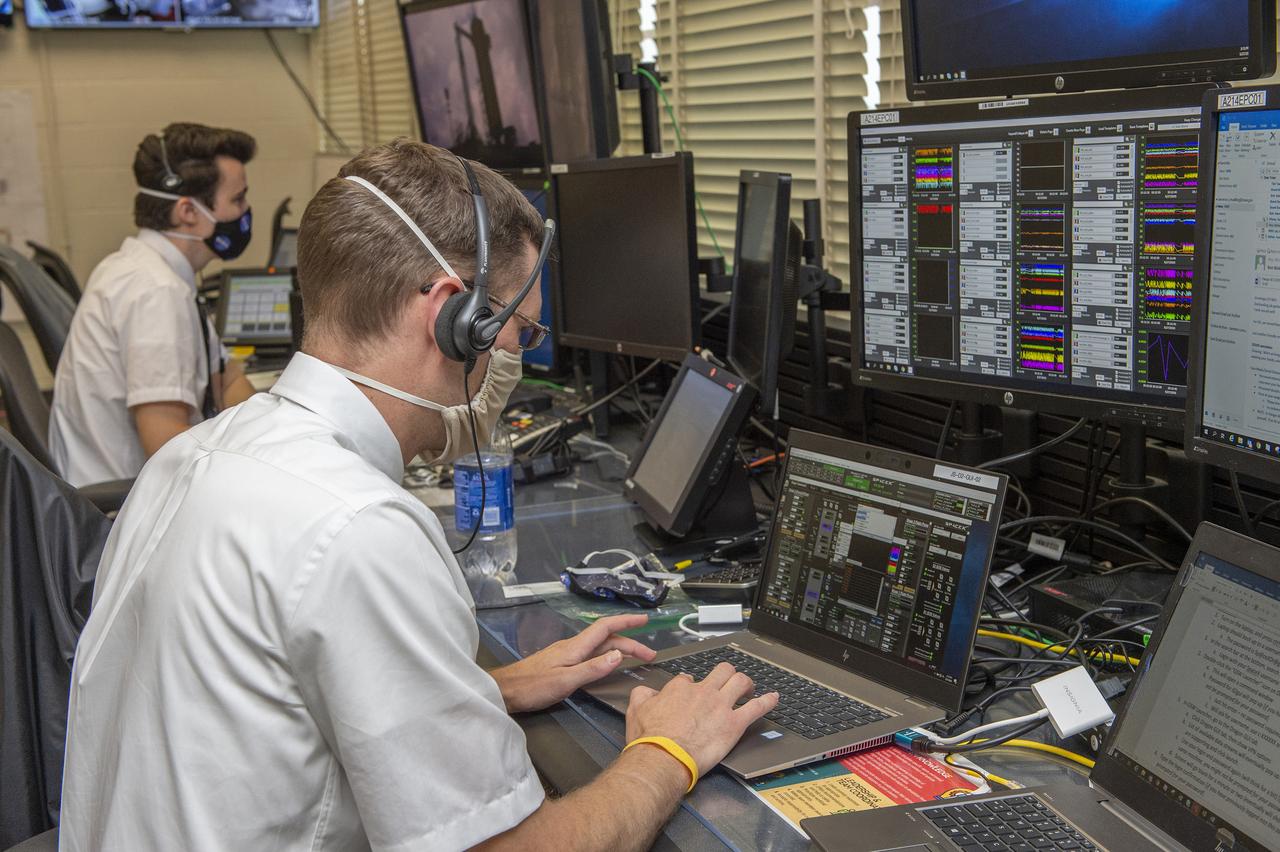
Stewart Whaley, Cameron Muelling, foreground, and teams at NASA’s Marshall Space Flight Center help monitor launch conditions for the Demo-2 mission from the Huntsville Operations Support Center, HOSC.
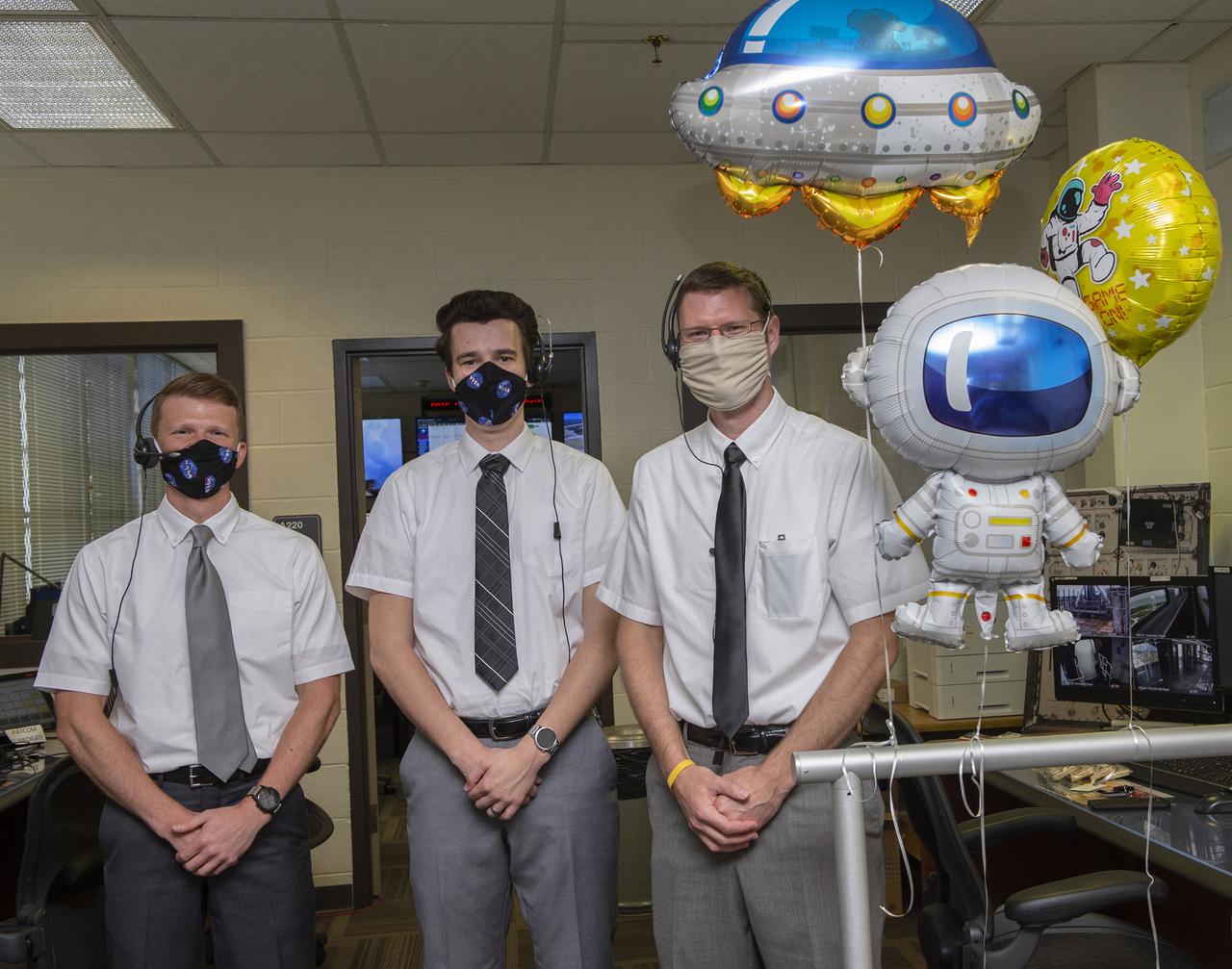
Patrick Mills, Stewart Whaley, Cameron Muelling and teams at NASA’s Marshall Space Flight Center help monitor launch conditions for the Demo-2 mission from the Huntsville Operations Support Center, HOSC.
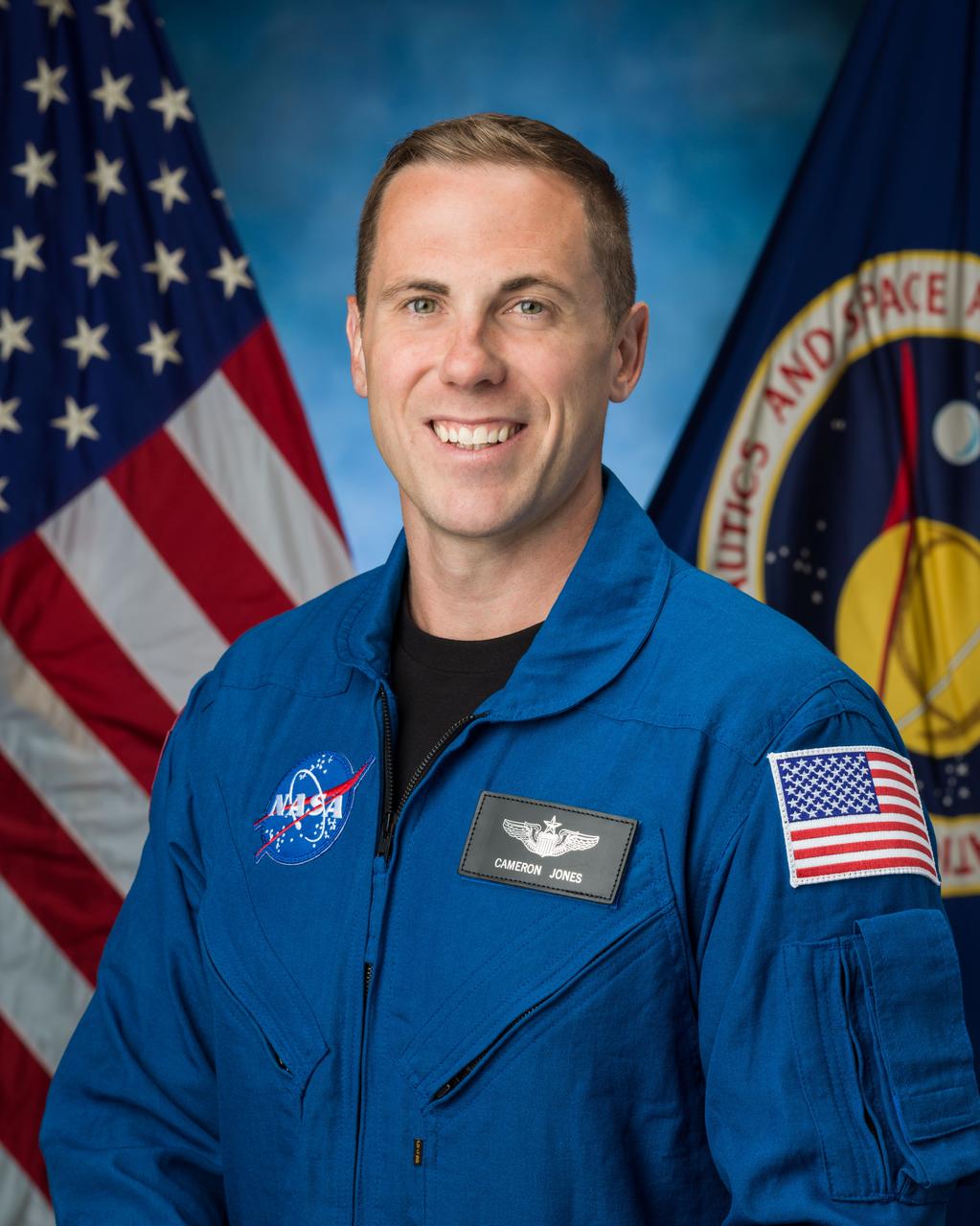
jsc2025e074718 (September 15, 2025) --- NASA astronaut candidate Cameron Jones poses for a portrait at NASA’s Johnson Space Center in Houston, Texas. Jones was selected by NASA to join the 2025 astronaut candidate class and reported for duty in September 2025. Credit: NASA/Josh Valcarcel
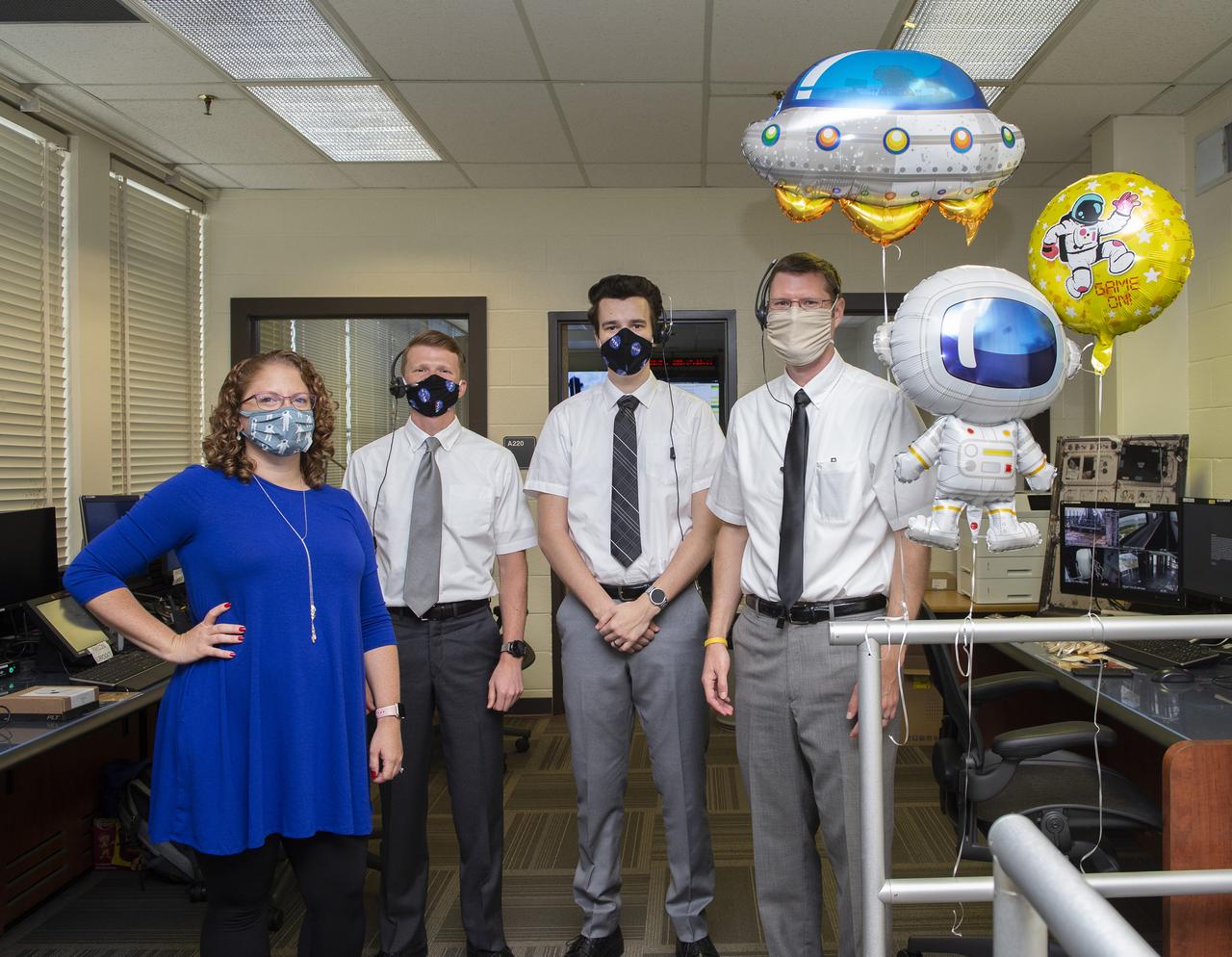
Amanda Stein, Patrick Mills, Stewart Whaley, Cameron Muelling and teams at NASA’s Marshall Space Flight Center help monitor launch conditions for the Demo-2 mission from the Huntsville Operations Support Center, HOSC.
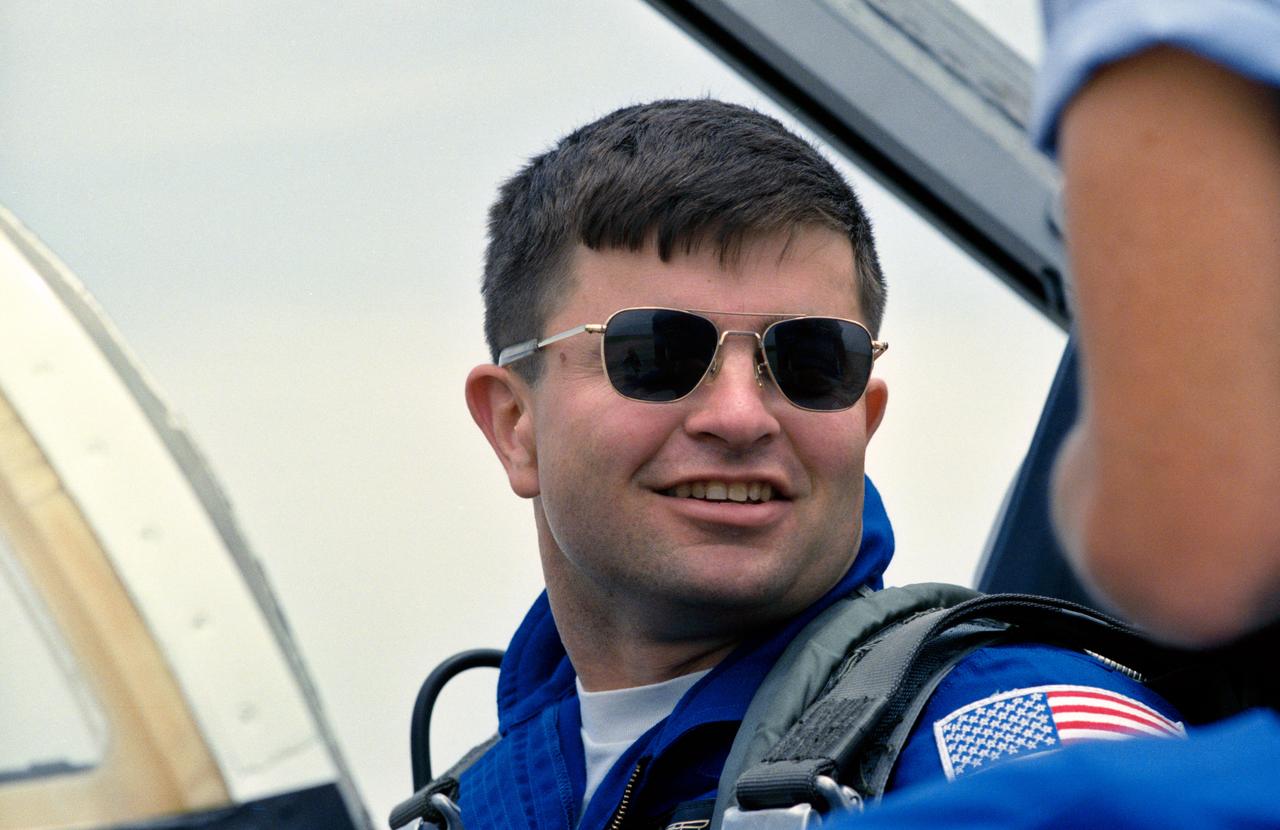
Head and shoulders view of astronaut Ken Cameron sitting in the cockpit of a T 38 at Ellington Field prior to his departure to Fairchild AFB, Washington.
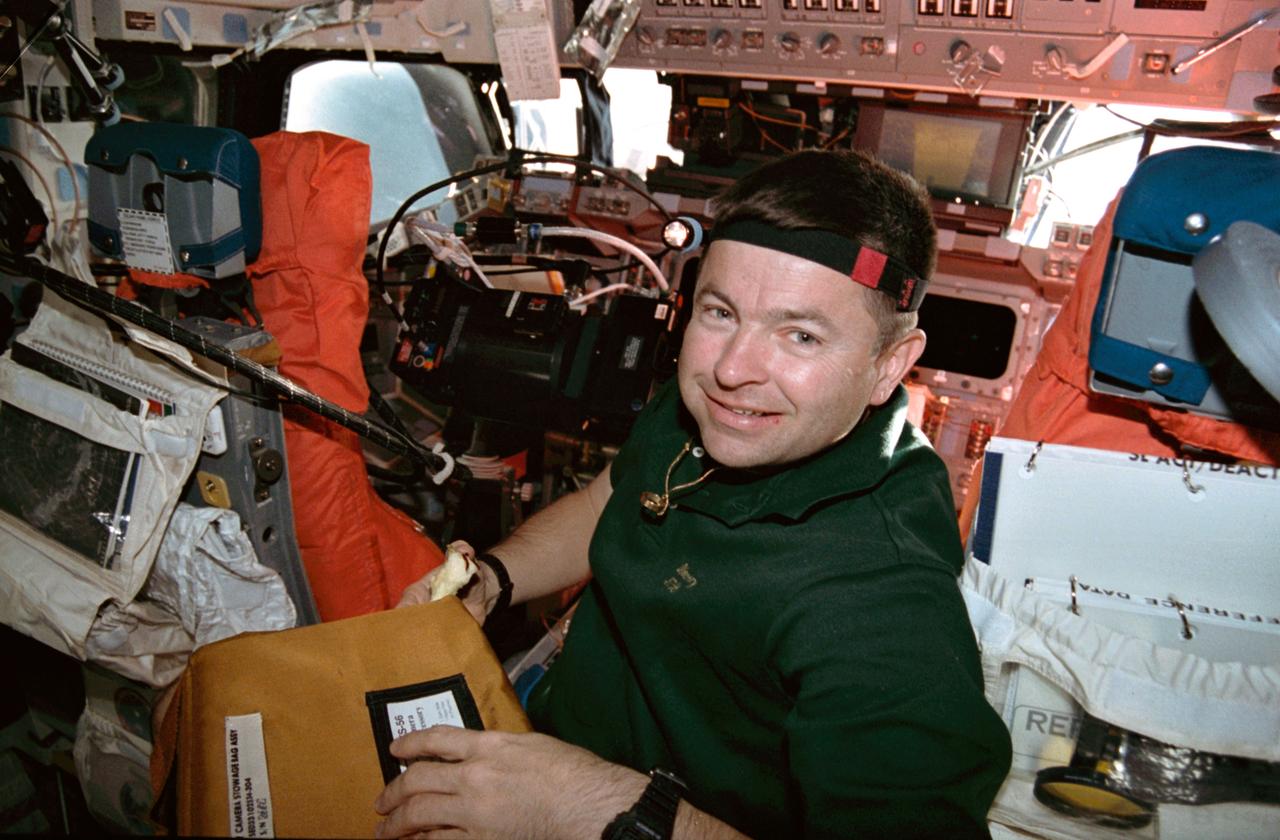
STS056-08-028 (8-17 April 1993) --- Astronaut Kenneth D. Cameron, mission commander, prepares to remove a camera before making exposures with it on Discovery's flight-deck. Cameron and four other NASA astronauts spent nine days in space supporting the Atlas 2 mission.
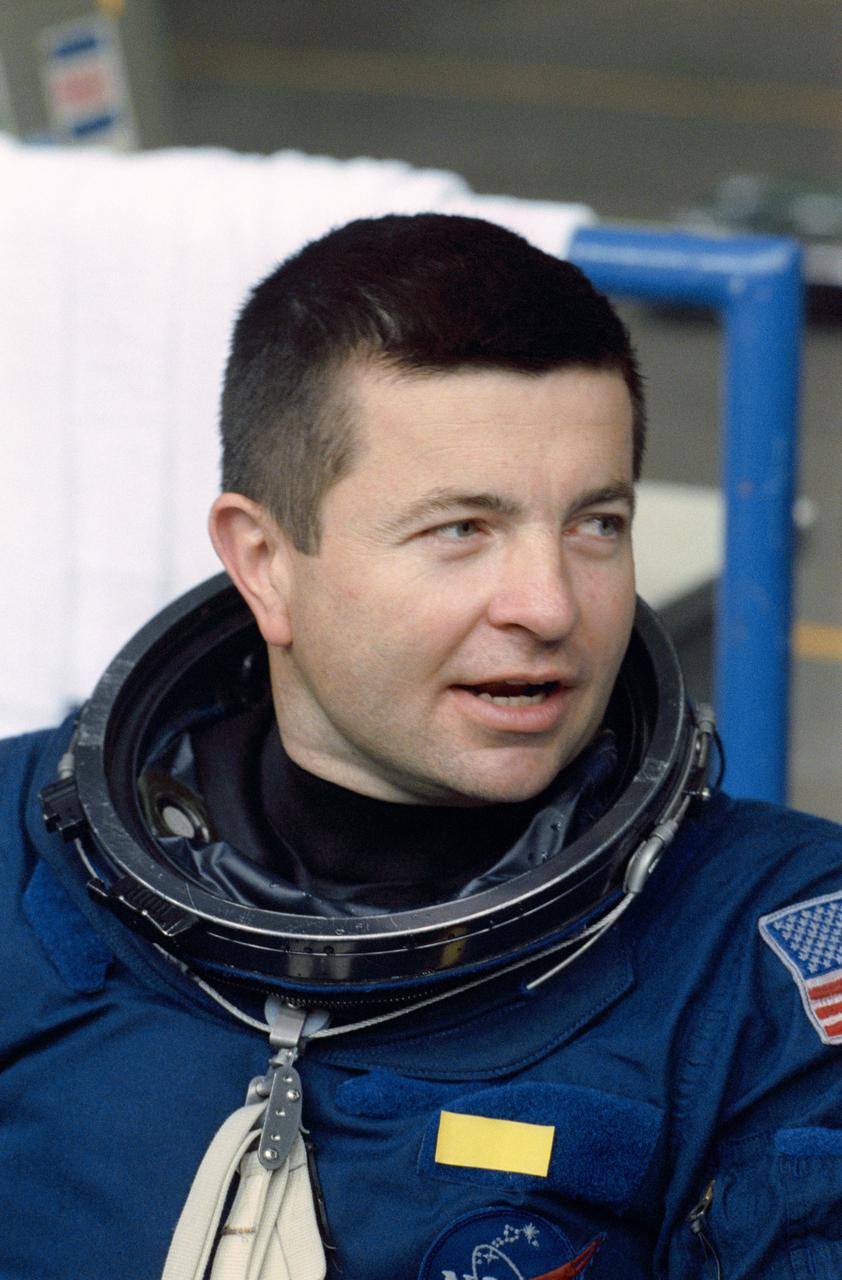
STS-37 Pilot Kenneth D. Cameron, wearing launch and entry suit (LES), discusses simulated emergency egress training on the pool side of JSC's Weightless Environment Training Facility (WETF) Bldg 29. Cameron will be dropped into a simulated ocean, the WETF's 25-ft pool, into which a parachute landing might be made.
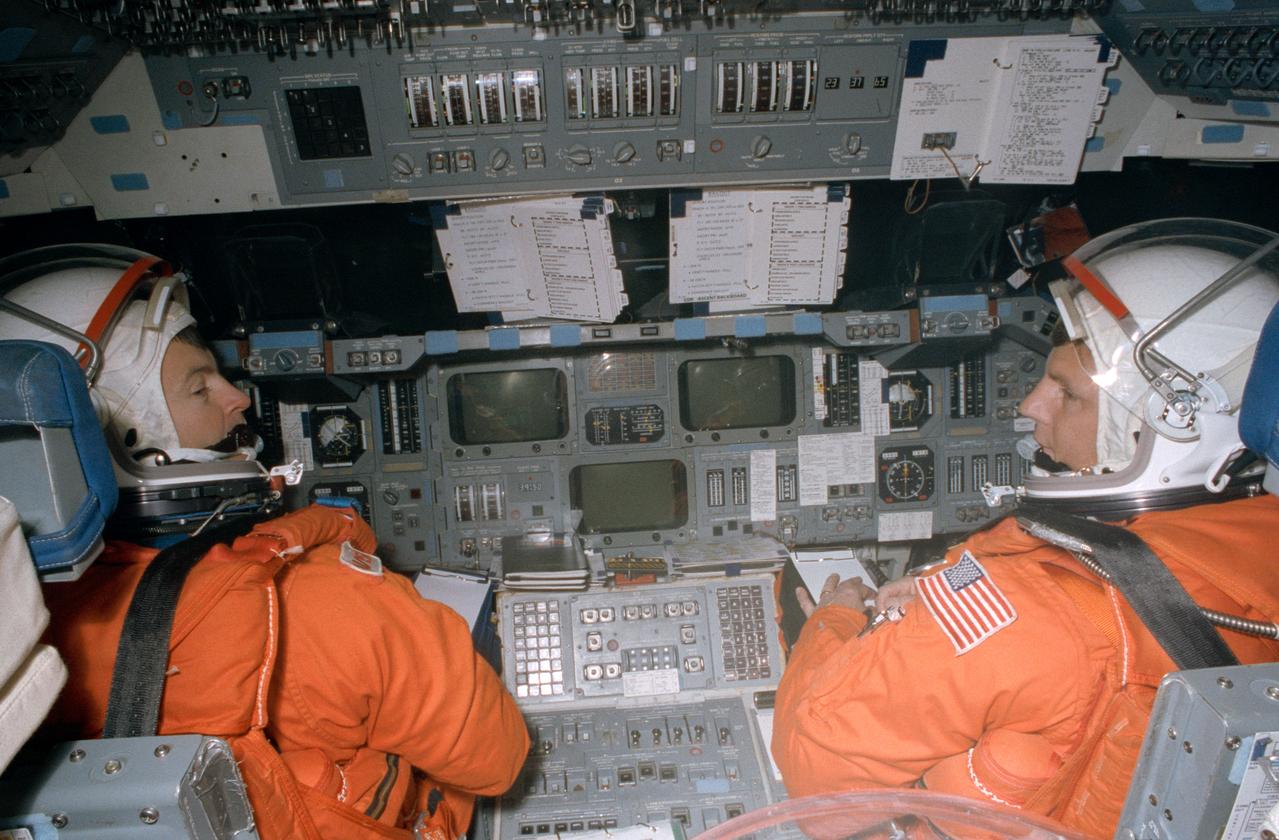
STS-56 Discovery, Orbiter Vehicle (OV) 103, Commander Kenneth Cameron, (left) and Pilot Stephen S. Oswald, wearing launch and entry suits (LESs) and launch and entry helmets (LEHs), are seated on the forward flight deck of the crew compartment trainer (CCT), a shuttle mockup. Cameron mans the commander station controls and Oswald the pilots station controls during an emergency egress (bailout) simulation. The view was taken from the aft flight deck looking forward and includes Cameron's and Oswald's profiles and the forward flight deck controls and checklists. The CCT is located in JSC's Mockup and Integration Laboratory (MAIL) Bldg 9NE.
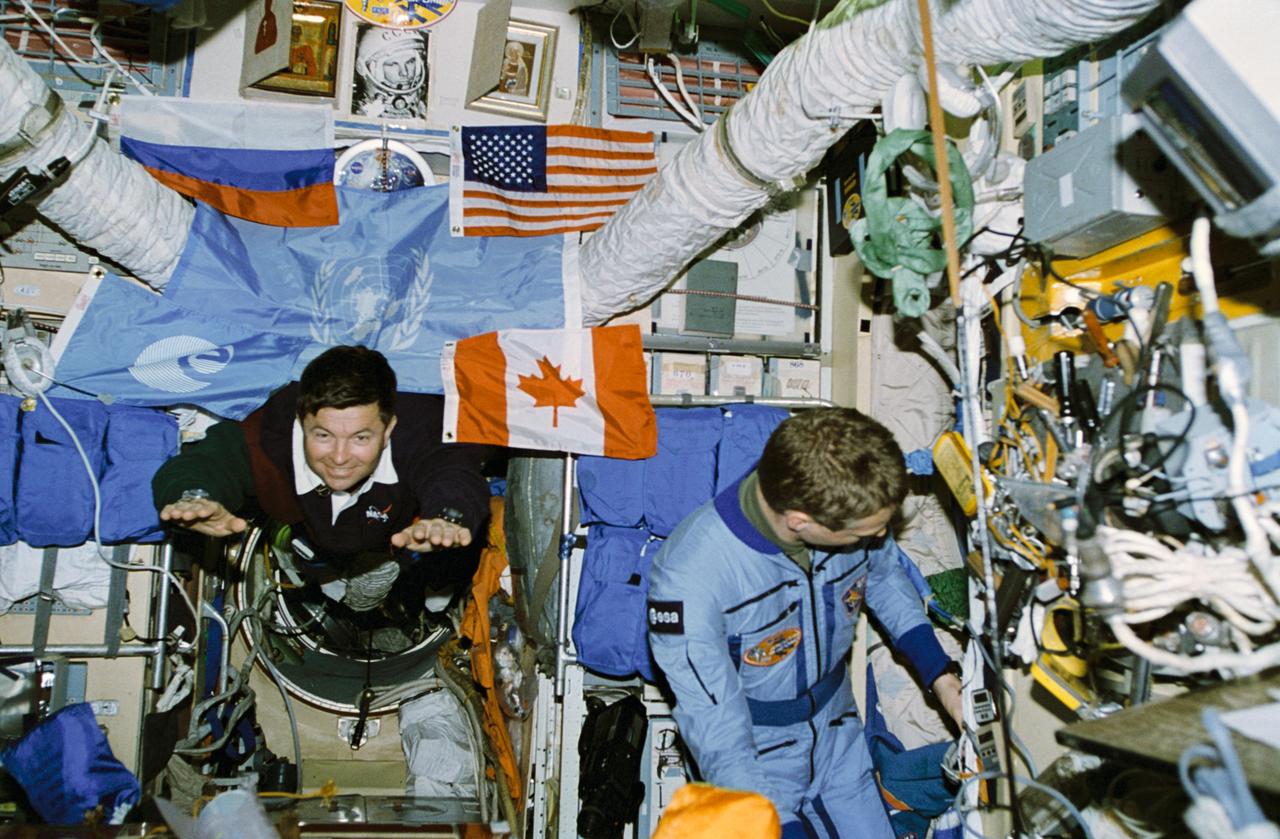
STS074-331-036 (12-20 Nov 1995) --- Astronaut Kenneth D. Cameron floats into the Core Module of Russia?s Mir Space Station. The European Space Agency?s (ESA) Thomas Reiter checks out an array of tools. With five NASA astronauts aboard the Space Shuttle Atlantis, the flight began with a November 12, 1995, launch from Kennedy Space Center (KSC) and ended with landing there on November 20, 1995. The crew members were astronauts Cameron, mission commander; James D. Halsell, Jr., pilot; William S. McArthur, Jr., Jerry L. Ross and Canadian astronaut Chris A. Hadfield, all mission specialists. On November 15, 1995, the Space Shuttle Atlantis docked with the Mir Space Station, on which the NASA astronauts joined the Mir-20 crew. The Mir-20 crew is composed of cosmonauts Yuriy P. Gidzenko, commander; and Sergei V. Avdeyev, engineer; along with Reiter, cosmonaut researcher. Joint activities on the Mir and the Space Shuttle Atlantis ended November 18, 1995, when the two spacecraft separated.
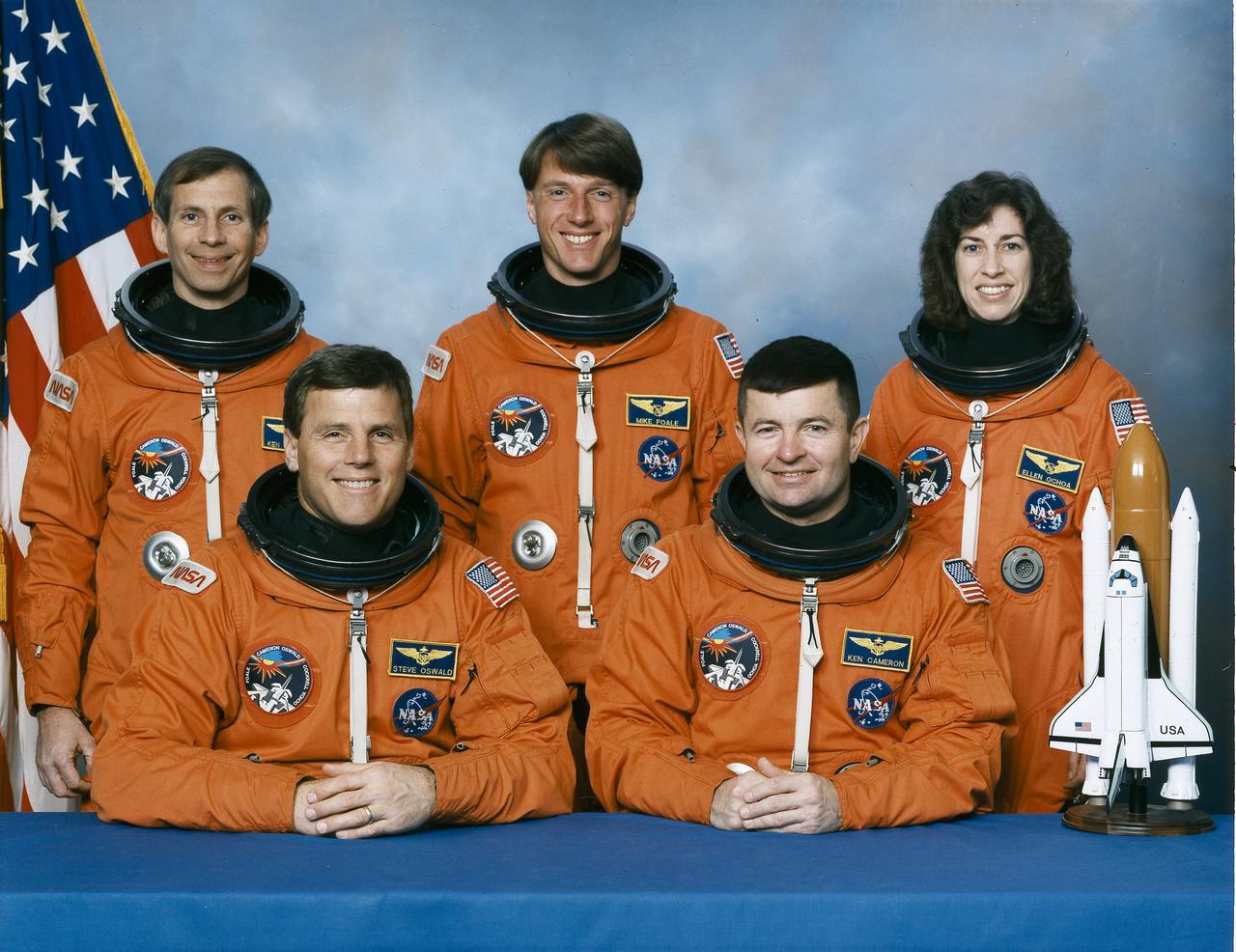
The STS-56 crew portrait includes five astronauts. Seated from the left are Stephen S. Oswald, pilot; and Kenneth D. Cameron, commander. Standing, from the left, are mission specialists Kenneth D. Cockrell, C. Michael Foal, and Ellen Ochoa. The crew launched aboard the Space Shuttle Discovery on April 8, 1993 at 1:29:00 am (EDT) with the Atmospheric Laboratory for Applications and Science-2 (ATLAS-2) as the primary payload.
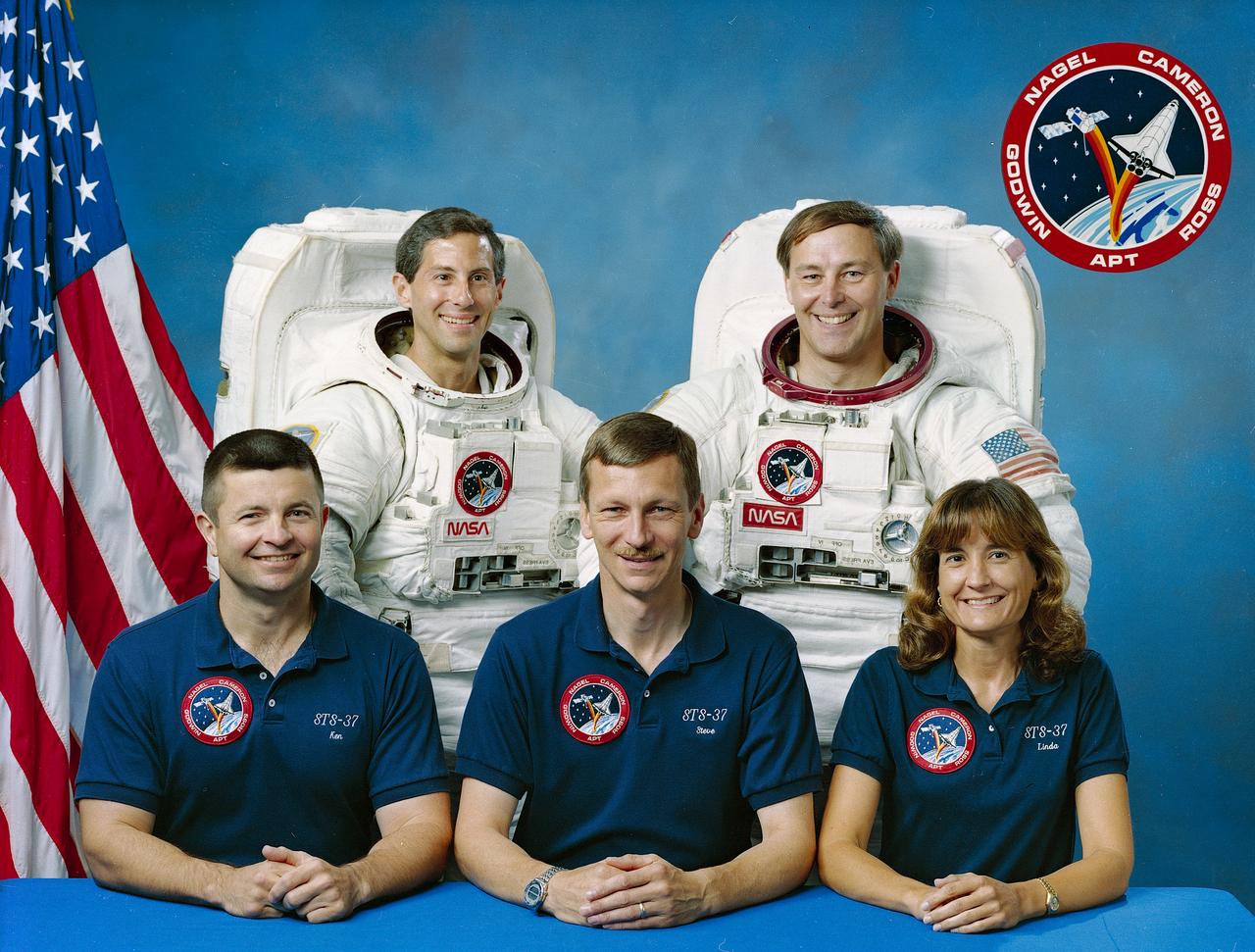
This is the STS-37 Crew portrait. Pictured from left to right are Kenneth D. (Ken) Cameron, pilot; Jay Apt, mission specialist; Steven R. Nagel, commander; and Jerry L. Ross and Linda M. Godwin, mission specialists. Launched aboard the Space Shuttle Atlantis on April 5, 1991 at 9:22:44am (EST), the crew’s major objective was the deployment of the Gamma Ray Observatory (GRO). Included in the observatory were the Burst and Transient Source Experiment (BATSE); the Imaging Compton Telescope (COMPTEL); the Energetic Gamma Ray Experiment Telescope (EGRET); and the Oriented Scintillation Spectrometer Telescope (OSSEE).
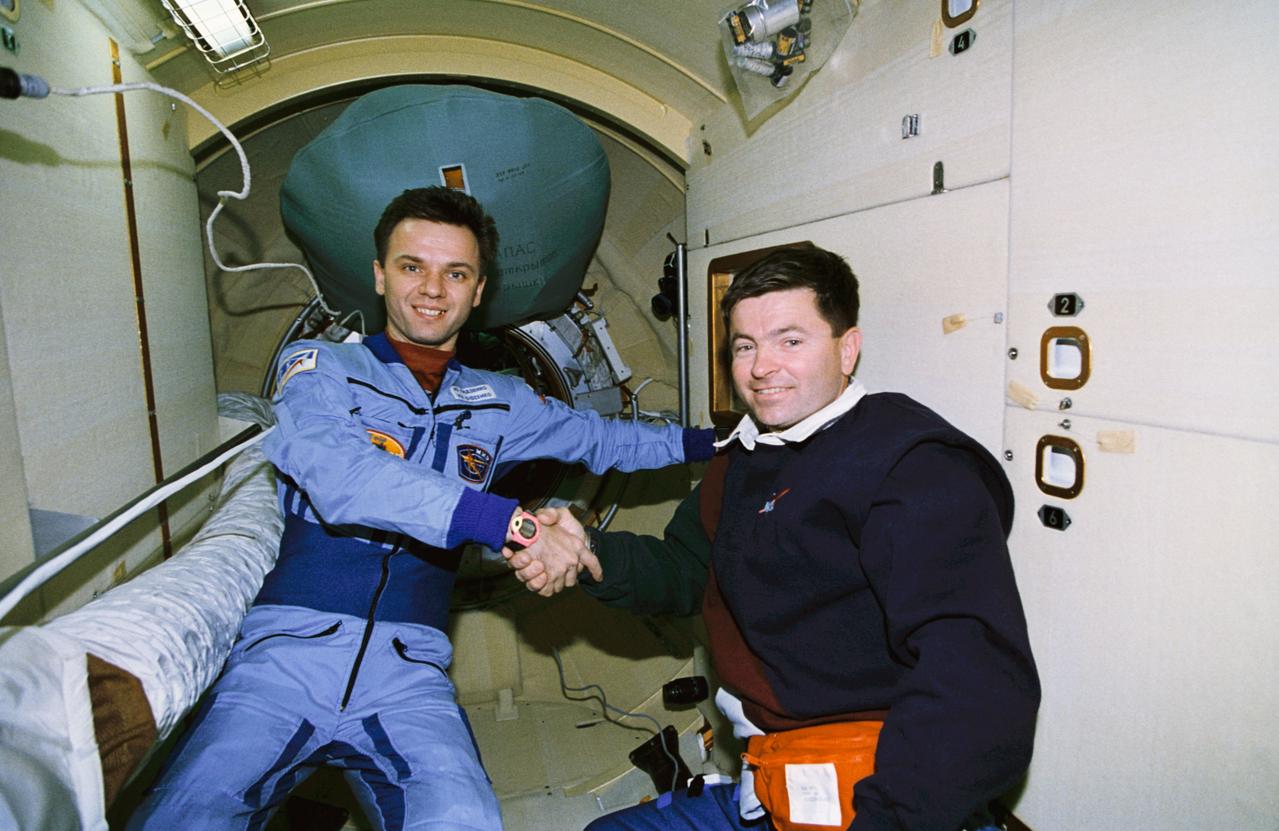
STS074-322-036 (18 Nov 1995) --- Astronaut Kenneth D. Cameron, STS-74 mission commander, shakes hands with cosmonaut Yuriy P. Gidzenko, Mir-20 commander, just prior to the undocking of the Space Shuttle Atlantis with Russia?s Mir Space Station in Earth-orbit. The STS-74 flight began with a November 12, 1995, launch from Kennedy Space Center (KSC) and ended with landing there on November 20, 1995. The STS-74 crew members were astronauts Cameron; James D. Halsell, Jr., pilot; William S. McArthur, Jr., Jerry L. Ross and Canadian astronaut Chris A. Hadfield, all mission specialists. On November 15, 1995, Atlantis docked with Mir, on which the NASA astronauts joined the Mir-20 crew. The Mir-20 crew is composed of cosmonauts Gidzenko; and Sergei V. Avdeyev, engineer; along with the European Space Agency?s (ESA) Thomas Reiter, cosmonaut researcher. Joint activities on the Mir and the Atlantis ended on November 18, 1995, when the two spacecraft separated.
Aboard the Space Shuttle Atlantis, the STS-37 mission launched April 5, 1991 from launch pad 39B at the Kennedy Space Center in Florida, and landed back on Earth April 11, 1991. The 39th shuttle mission included crew members: Steven R. Nagel, commander; Kenneth D. Cameron, pilot; Jerry L,. Ross, mission specialist 1; Jay Apt, mission specialist 2; and Linda M. Godwin, mission specialist 3. The primary payload for the mission was the Gamma Ray Observatory (GRO). The GRO included the Burst and Transient Experiment (BATSE); the Imaging Compton Telescope (COMPTEL); the Energetic Gamma Ray Experiment Telescope (EGRET); and the Oriented Scintillation Spectrometer Experiment (OSSEE). Secondary payloads included Crew and Equipment Translation Aids (CETA); the Ascent Particle Monitor (APM); the Shuttle Amateur Radio Experiment II (SAREXII), the Protein Crystal Growth (PCG); the Bioserve Instrumentation Technology Associates Materials Dispersion Apparatus (BIMDA); Radiation Monitoring Equipment III (RMEIII); and Air Force Maui Optical Site (AMOS).
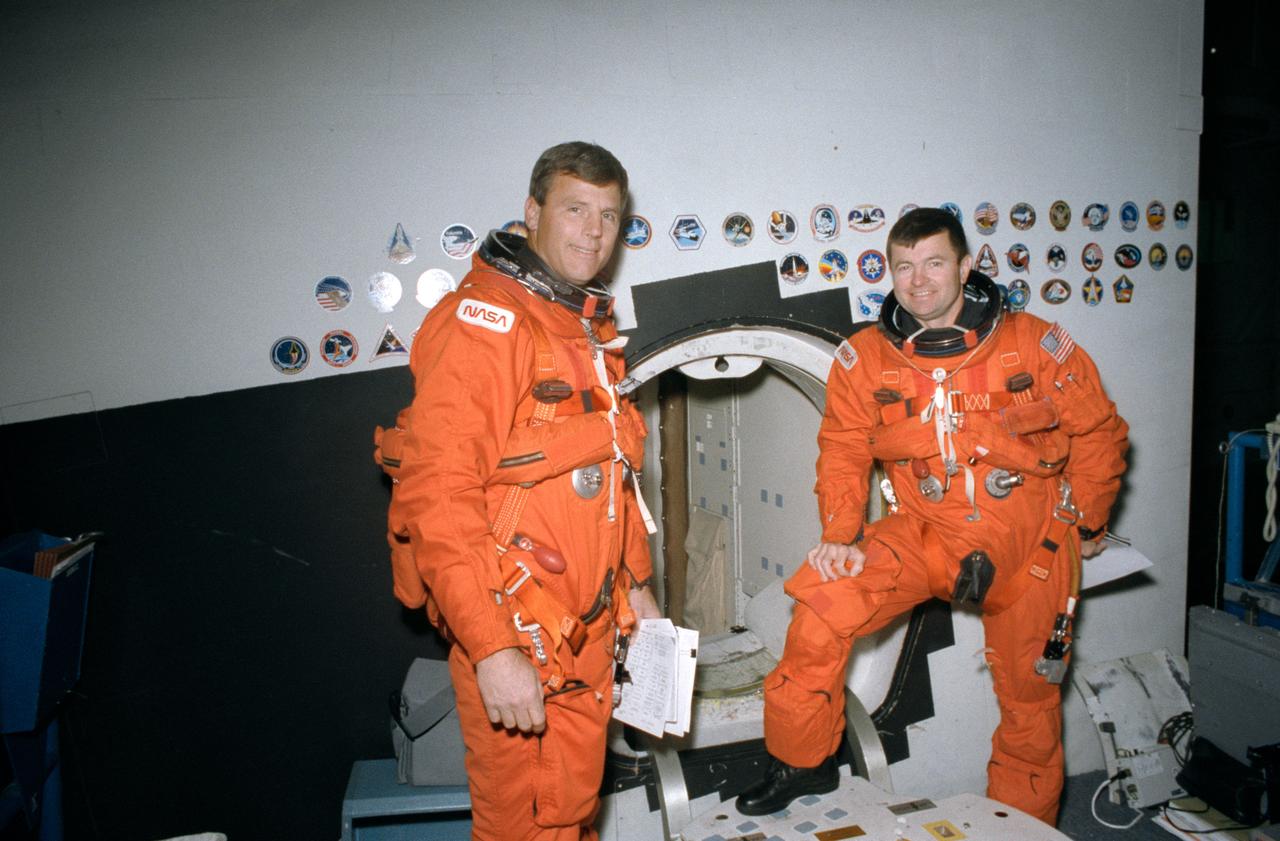
STS-56 Discovery, Orbiter Vehicle (OV) 103, Commander Kenneth Cameron (right) and Pilot Stephen S. Oswald, wearing launch and entry suits (LESs), stand at the side hatch of the crew compartment trainer (CCT), a shuttle mockup, prior to entering the mockup. Once inside the CCT, they will don their launch and entry helmets (LEHs) and participate in emergency egress (bailout) procedures. The CCT is located in JSC's Mockup and Integration Laboratory (MAIL) Bldg 9NE.

(L-R) Miranda (9) and Cameron Dyal, Yudi Lewis, and Cameron Dyal (7) view a partial solar eclipse in Washington, DC, Monday, April 8, 2024. A total solar eclipse swept across a narrow portion of the North American continent from Mexico’s Pacific coast to the Atlantic coast of Newfoundland, Canada. A partial solar eclipse was visible across the entire North American continent along with parts of Central America and Europe. Photo Credit: (NASA/Denny Henry)W

Camila (right), and Cameron (center), with their father Cameron Dyal view a partial solar eclipse in Washington, DC, Monday, April 8, 2024. A total solar eclipse swept across a narrow portion of the North American continent from Mexico’s Pacific coast to the Atlantic coast of Newfoundland, Canada. A partial solar eclipse was visible across the entire North American continent along with parts of Central America and Europe. Photo Credit: (NASA/Denny Henry)
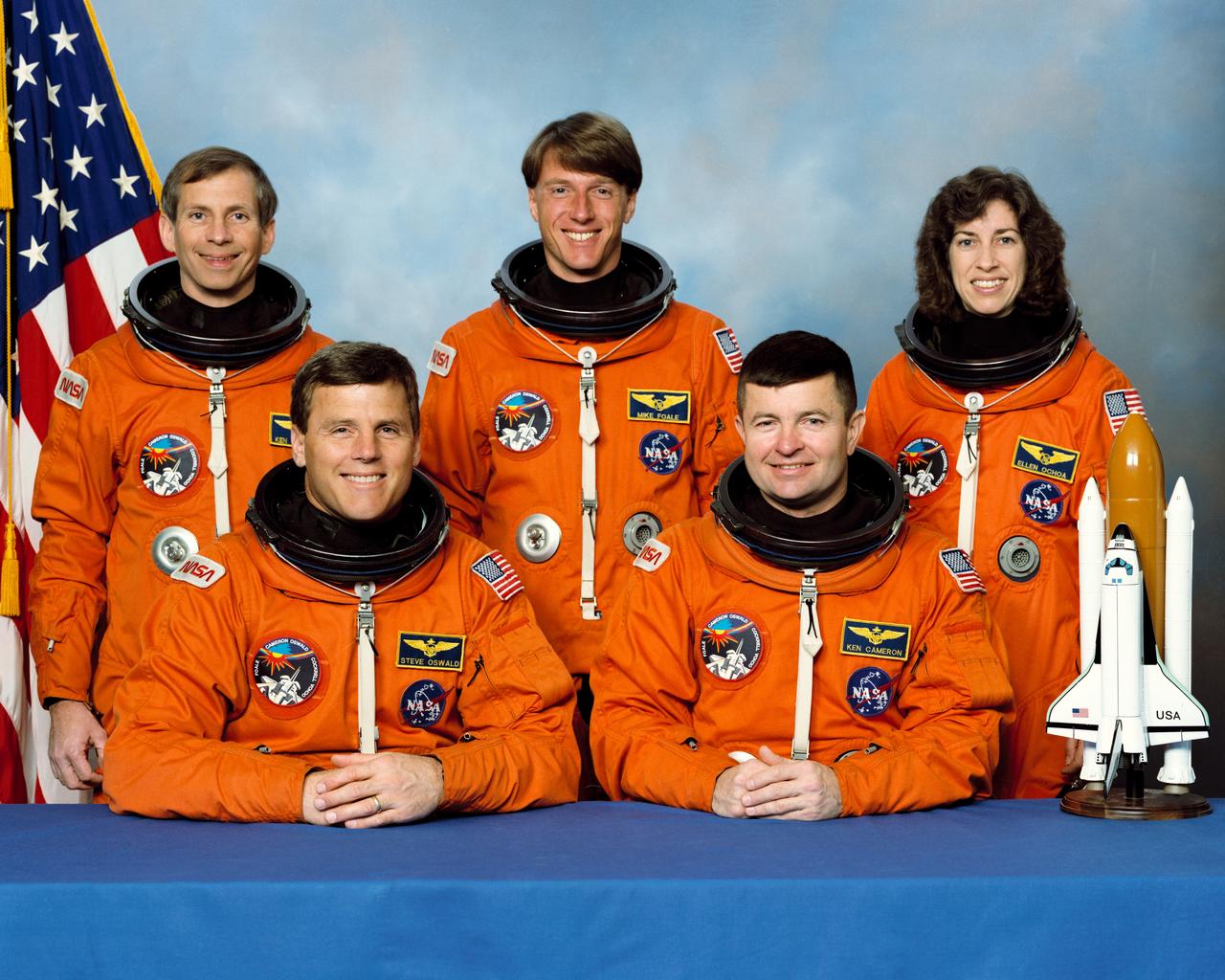
STS056-S-002 (January 1993) --- The five NASA astronauts assigned to fly aboard the Space Shuttle Discovery for the STS-56\Atlas-2 mission are pictured in training versions of their partial-pressure launch and entry garments. Left to right are astronauts Kenneth D. Cockrell, Steven S. Oswald, C. Michael Foale, Kenneth D. Cameron and Ellen Ochoa. Cameron is mission commander; Oswald, pilot; while the other three will serve as mission specialists.
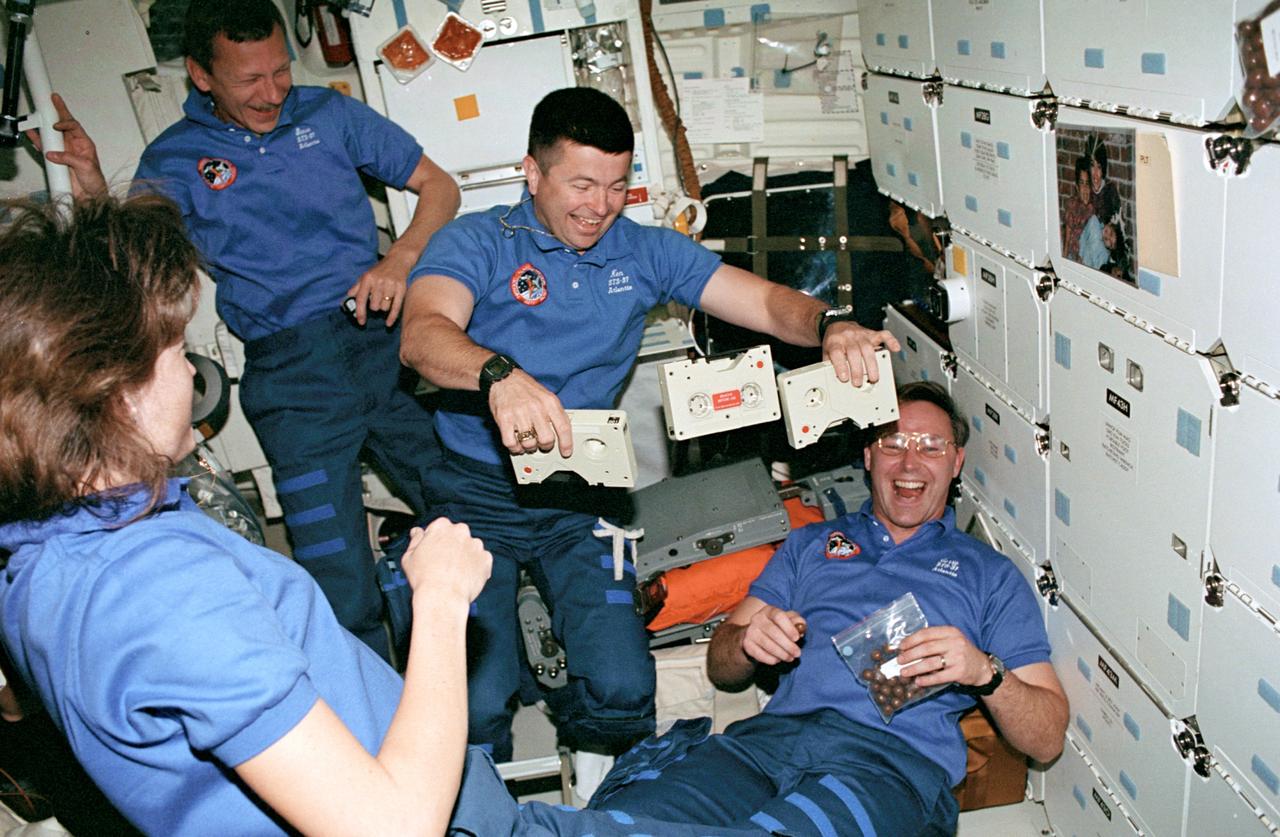
STS037-54-004 (5-11 April 1991) --- Four crew members have fun with weightlessness on the Space Shuttle Atlantis' middeck. Astronaut Kenneth D. Cameron, pilot, performs a "quick hands" feat with three tape cassettes -- obviously a feat much more difficult on Earth. Looking on, left to right, are astronauts Linda M. Godwin, mission specialist; Steven R. Nagel, mission commander; and Jerry L. Ross, mission specialist. Ross later used the microgravity environment to have some fun with the bag of malted milk balls in his hands. This 35mm frame was exposed by astronaut Jerome (Jay) Apt, mission specialist. This was one of the visuals used by the crew members during their April 19 Post Flight Press Conference (PFPC) at the Johnson Space Center (JSC).
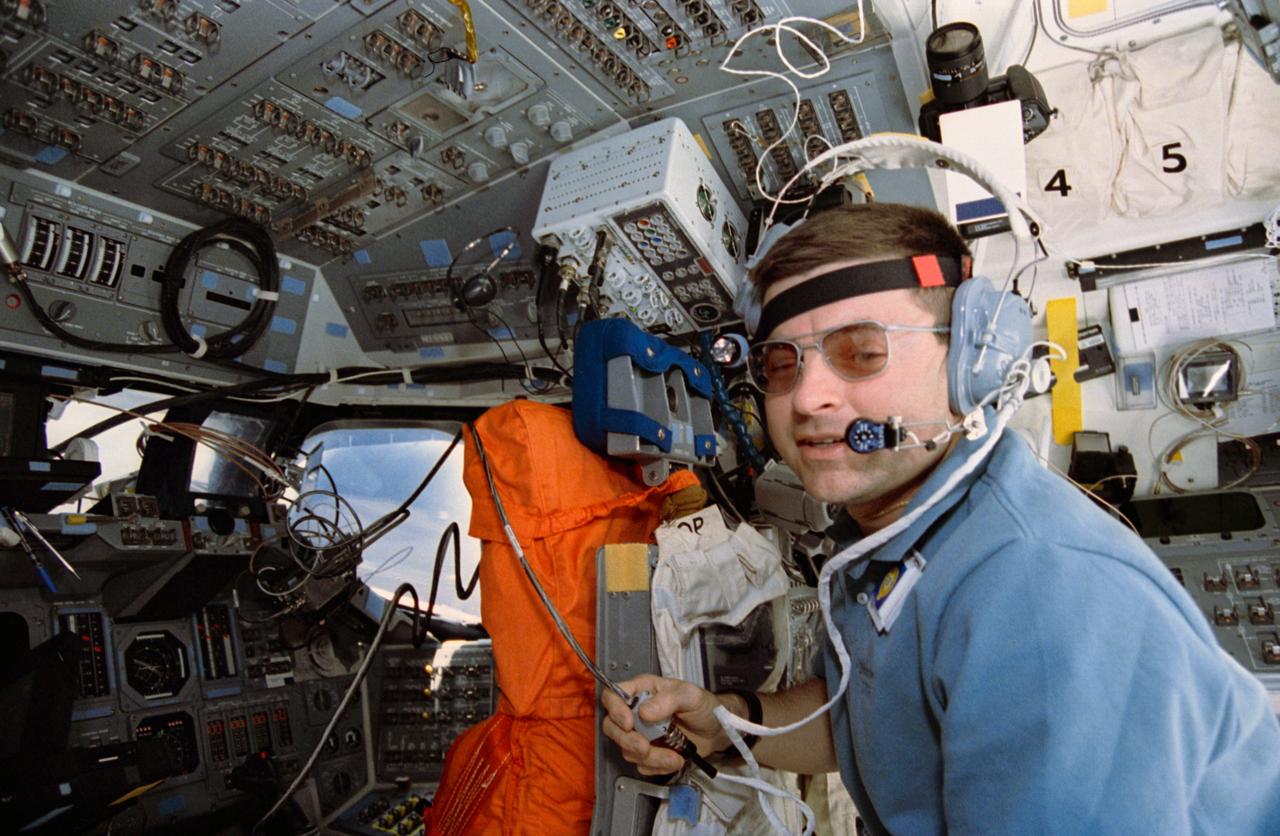
STS056-30-022 (8-17 April 1993) --- Aboard Discovery, astronaut Kenneth D. Cameron (call letters N5AWP), talks to amateur radio operators on Earth via the Shuttle Amateur Radio Experiment (SAREX). SAREX was established by NASA, the American Radio League\Amateur Satellite Corporation and the Johnson Space Center Amateur Radio Club to encourage public participation in the space program. It is part of an endeavor to demonstrate the effectiveness of conducting short-wave radio transmissions between the Shuttle and ground-based radio operators at low cost ground stations with amateur and digital techniques. As on several previous missions, SAREX was used on this flight as an educational opportunity for students around the world to learn about space firsthand by speaking directly to astronauts aboard the Shuttle.
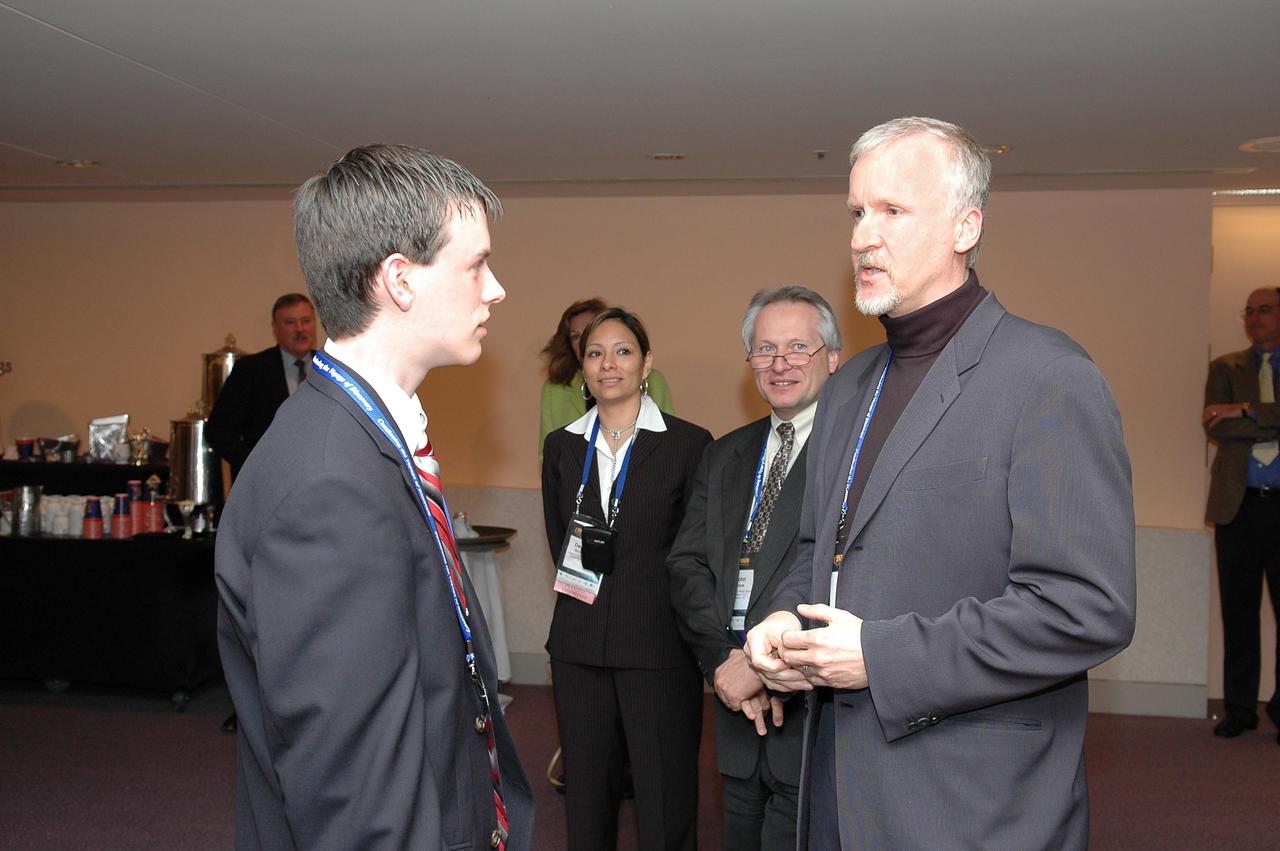
KENNEDY SPACE CENTER, FLA. - At the “1st Space Exploration Conference: Continuing the Voyage of Discovery,” held at Disney’s Contemporary Resort in Orlando, film director James Cameron (right) talks to Daniel Stearns, a 13-year-old student from Longmeadow, Mass., who won the Space Exploration Video Festival award sponsored by Lockheed Martin. Stearns shared first place with a team from McNair High School in Dekalb County, Ga. The Georgia school participates in NASA’s Explorer School program. Cameron is one of the keynote speakers at the conference. Topics being presented focus on new missions, technologies and infrastructure needed to turn the vision for space exploration into reality. Other keynote speakers at the three-day conference are Congressman Dave Weldon, film director James Cameron and NASA’s senior Mars scientist James Garvin. The conference has drawn attendees from around the world.
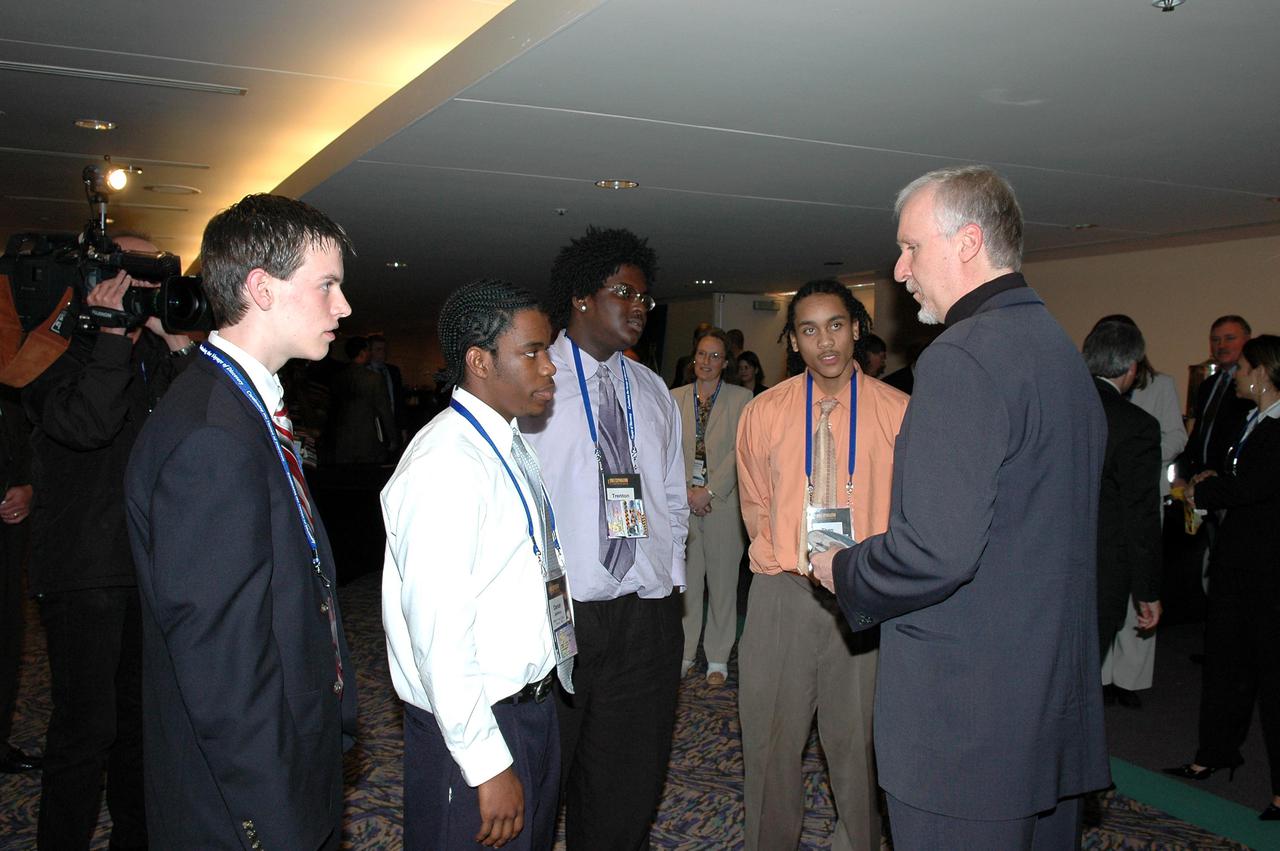
KENNEDY SPACE CENTER, FLA. - At the “1st Space Exploration Conference: Continuing the Voyage of Discovery,” held at Disney’s Contemporary Resort in Orlando, film director James Cameron (right) talks to the winning students of the Space Exploration Video Festival award sponsored by Lockheed Martin. At left is Daniel Stearns, from East Longmeadow, Mass. The others are Daniel Jackson, Trenten Nash and Theo Maxie, from the NASA Explorer School McNair High School in Dekalb County, Ga.. Cameron is one of the keynote speakers at the conference. Topics being presented focus on new missions, technologies and infrastructure needed to turn the vision for space exploration into reality. Keynote speakers at the three-day conference include NASA Administrator Sean O'Keefe, Congressman Dave Weldon, film director James Cameron and NASA’s senior Mars scientist James Garvin. The conference has drawn attendees from around the world.
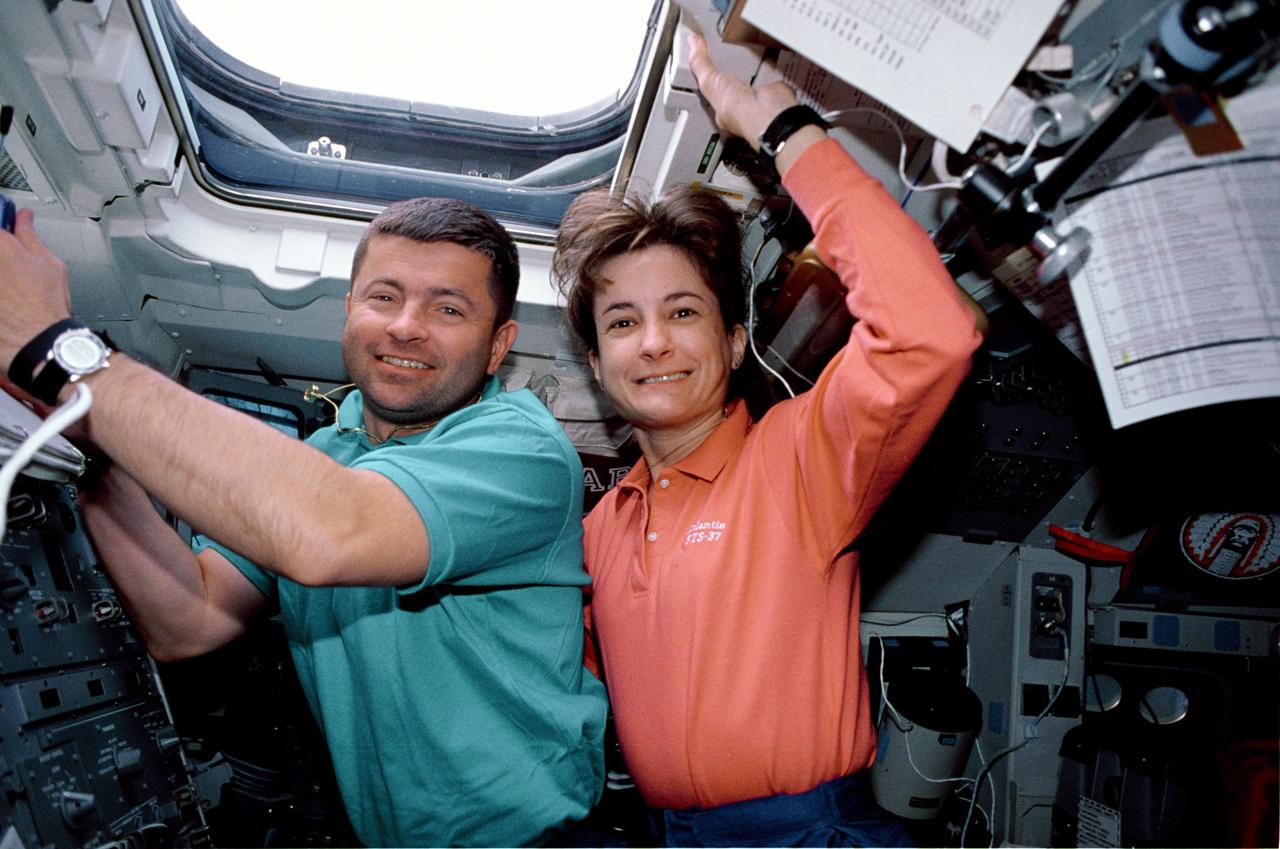
STS037-33-031 (5-11 April 1991) --- Astronauts Kenneth D. Cameron, STS-37 pilot, and Linda M. Godwin, mission specialist, take advantage of a well-lighted crew cabin to pose for an in-space portrait on the Space Shuttle Atlantis' aft flight deck. The two shared duties controlling the Remote Manipulator System (RMS) during operations involving the release of the Gamma Ray Observatory (GRO) and the Extravehicular Activity (EVA) of astronauts Jerry L. Ross and Jerome (Jay) Apt. The overhead window seen here and nearby eye-level windows (out of frame at left) are in a busy location on Shuttle missions, as they are used for payload surveys, Earth observation operations, astronomical studies and other purposes. Note the temporarily stowed large format still photo camera at lower right corner. This photo was made with a 35mm camera. This was one of the visuals used by the crew members during their April 19 Post Flight Press Conference (PFPC) at the Johnson Space Center (JSC).
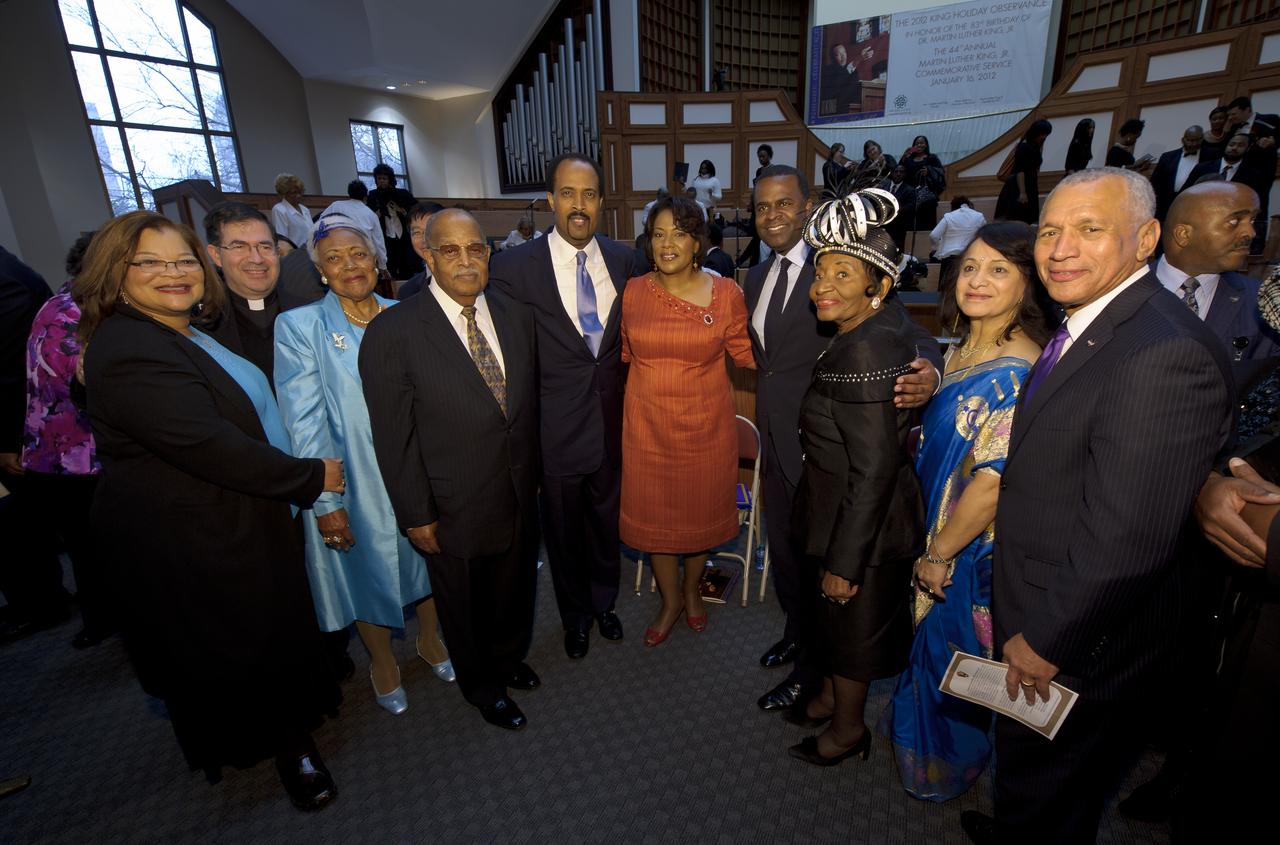
NASA Administrator Charles Bolden, right, joins in a group portrait with the niece of Martin Luther King, Jr., Alveda King, far left, Father Frank Pavone, wife of Martin Luther King, Jr's brother, Mrs. Naomi Barber King, Dr. Cameron Alexander, Dr. Frederick D. Haynes III, daughter of Martin Luther King, Jr., Dr. Bernice A. King, Kasim Reed, Mayor of Atlanta, Dr. Christine King Farris, Martin Luther King, Jr's sister, and Ms. Raj Razdan shortly after the 44th annual Martin Luther King, Jr. Commemorative Service on Monday, Jan. 16, 2012 at Ebenezer Baptist Church in Atlanta. Photo Credit: (NASA/Bill Ingalls)
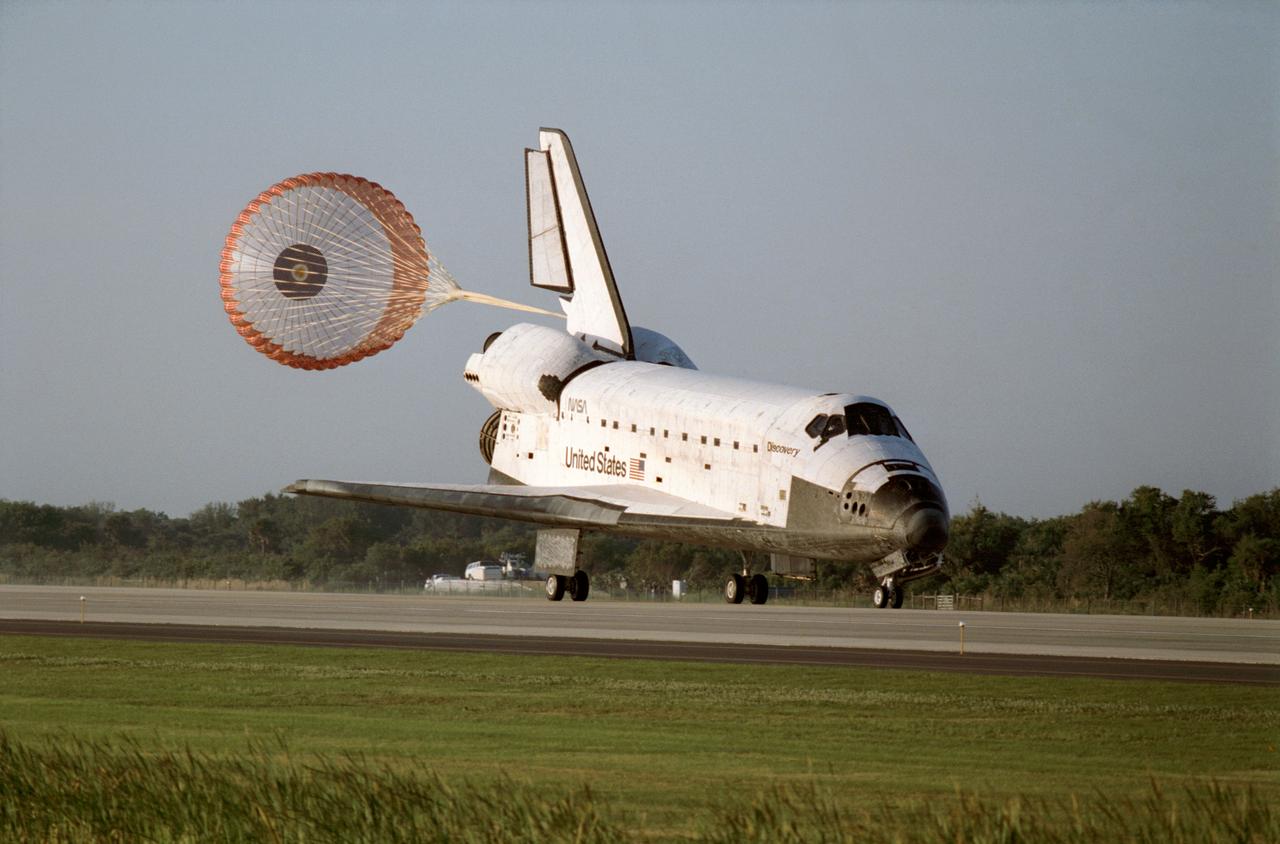
STS056-S-098 (17 April 1993) --- The drag chute is deployed following landing of the Space Shuttle Discovery on the Shuttle landing facility at the Kennedy Space Center to complete the STS-56\Atlas 2 mission. Touchdown occurred at 7:37 a.m. (EDT). Onboard the spacecraft were astronauts Kenneth D. Cameron, commander; Stephen S. Oswald, pilot; and C. Michael Foale, Ellen Ochoa and Kenneth D. Cockrell, mission specialists.
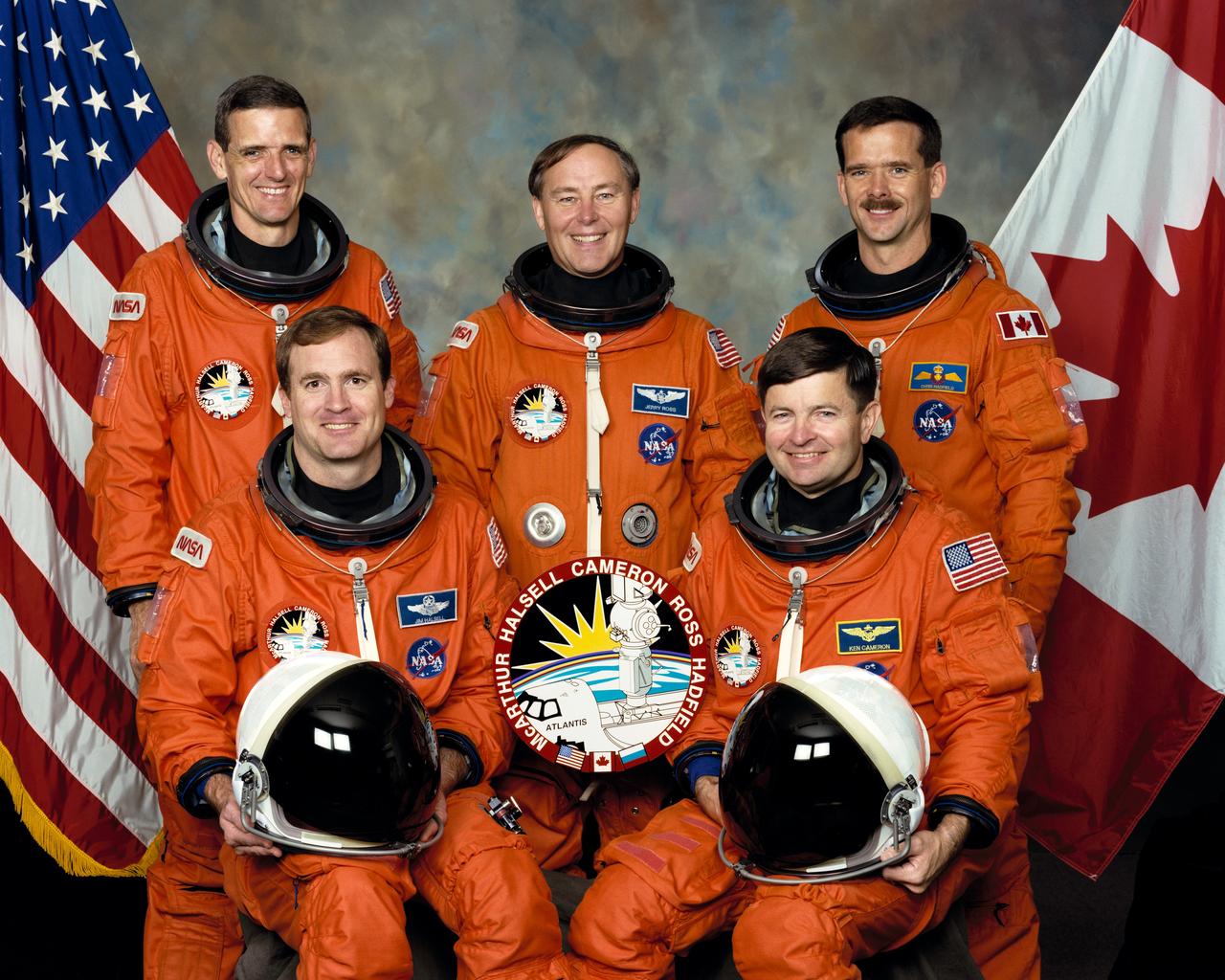
STS074-S-002(August 1995) --- These five NASA astronauts including one Canadian are in training for the STS-74 mission of the Space Shuttle Atlantis, scheduled later this year. Astronauts Kenneth D. Cameron (front right) and James D. Halsell Jr. (front left) are commander and pilot, respectively, for the flight. On the back row, left to right, are astronauts William McArthur Jr., Jerry L Ross and Chris A. Hadfield, all mission specialists. Hadfield is an international mission specialist representing the Canadian Space Agency (CSA).
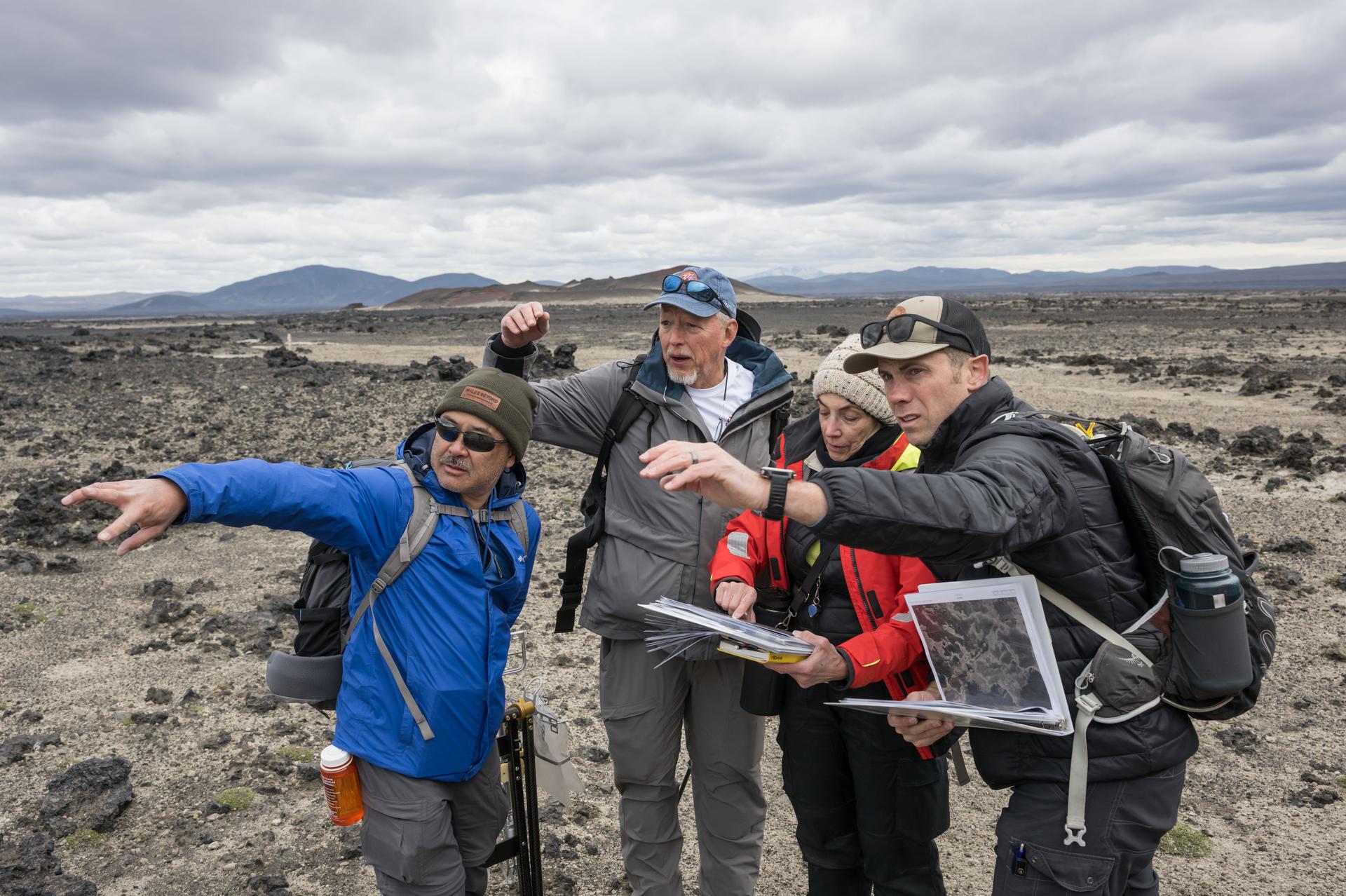
From left, Japan Aerospace Exploration Agency (JAXA) astronaut Aki Hoshide, chief training officer John Ray, EVA task officer Bridget Scheib, and NASA astronaut candidate Cameron Jones participate in a navigation training activity in Iceland as part of an Artemis geology field training expedition. Iceland’s diverse volcanic terrain is an excellent stand-in for lunar and planetary processes and provides an ideal environment in which to simulate surface science operations. Credit: NASA/James Blair
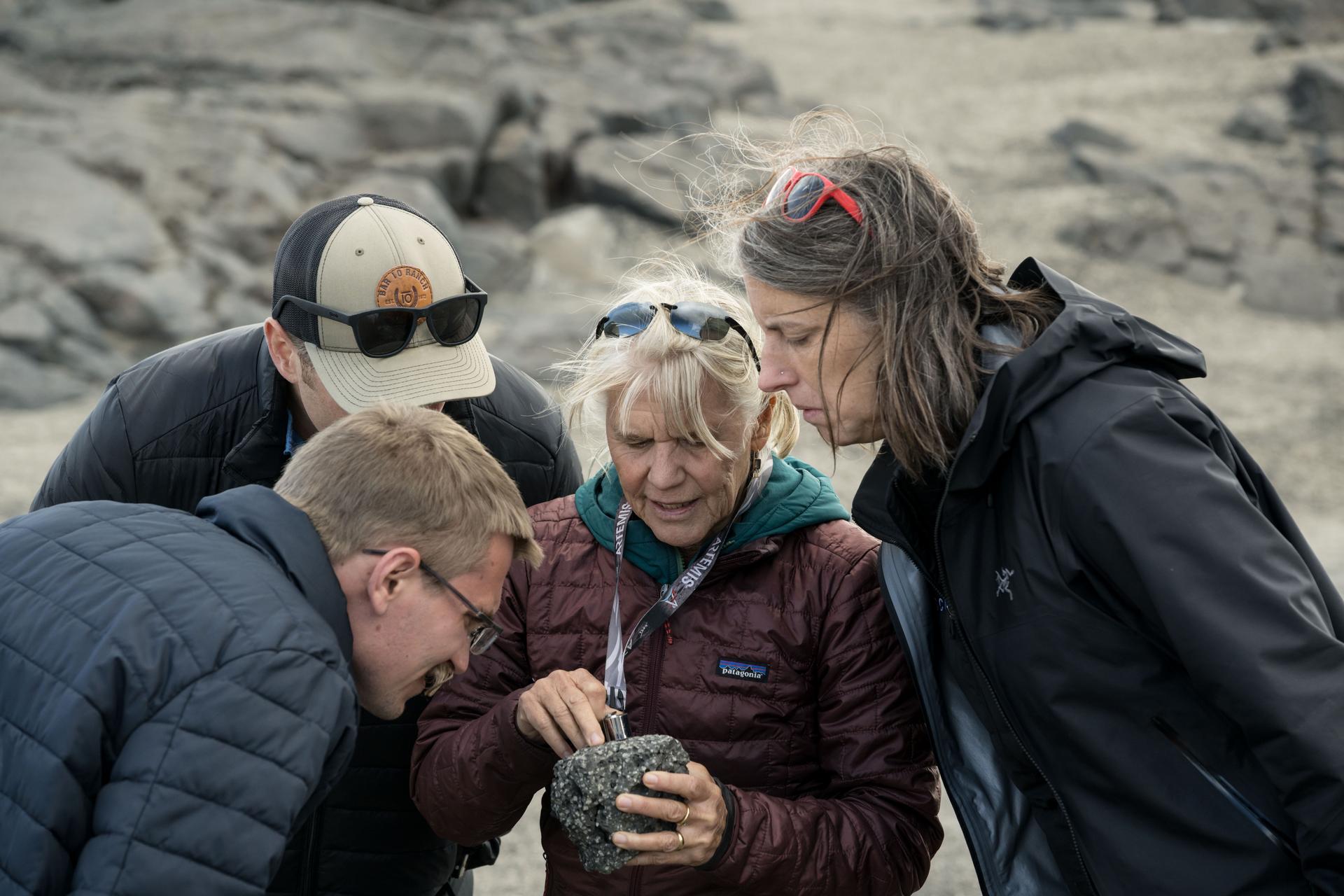
From left, Bryce Prescott, NASA astronaut candidate Cameron Jones, Artemis geology training lead Cindy Evans, and Artemis curation lead Juliane Gross, examine a rock during a geology field training in Iceland. Iceland serves as a lunar stand-in for training astronauts and mission support teams in preparation for lunar surface science missions. Credit: NASA/James Blair
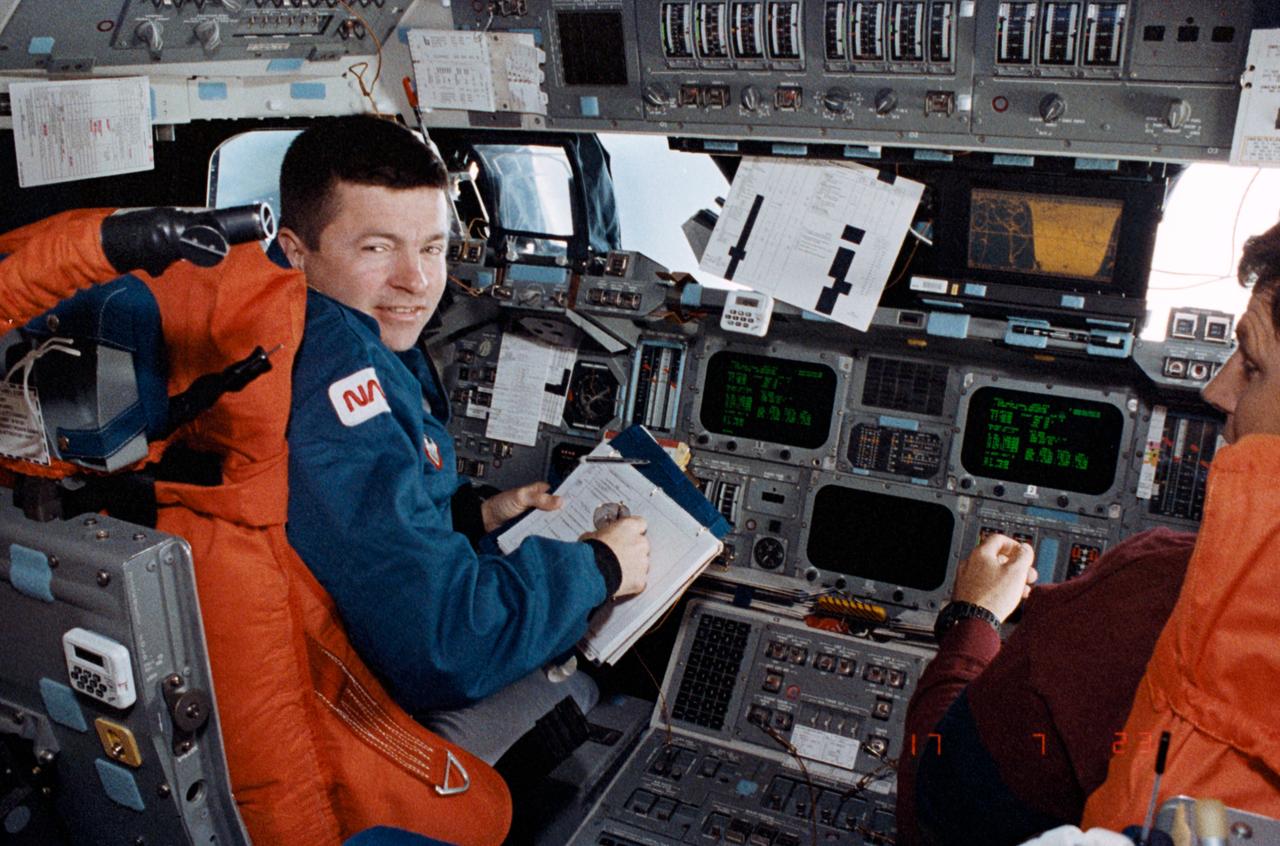
STS056-39-010 (8-17 April 1993) --- Astronaut Kenneth D. Cameron mans the mission commander's station during an orbiter maneuver aboard the Earth-orbiting Space Shuttle Discovery. Astronaut Stephen S. Oswald, pilot, is partially visible at right edge of the frame. The two were joined by three other NASA astronauts for nine days of science in support of the Atlas 2 mission in Earth orbit.
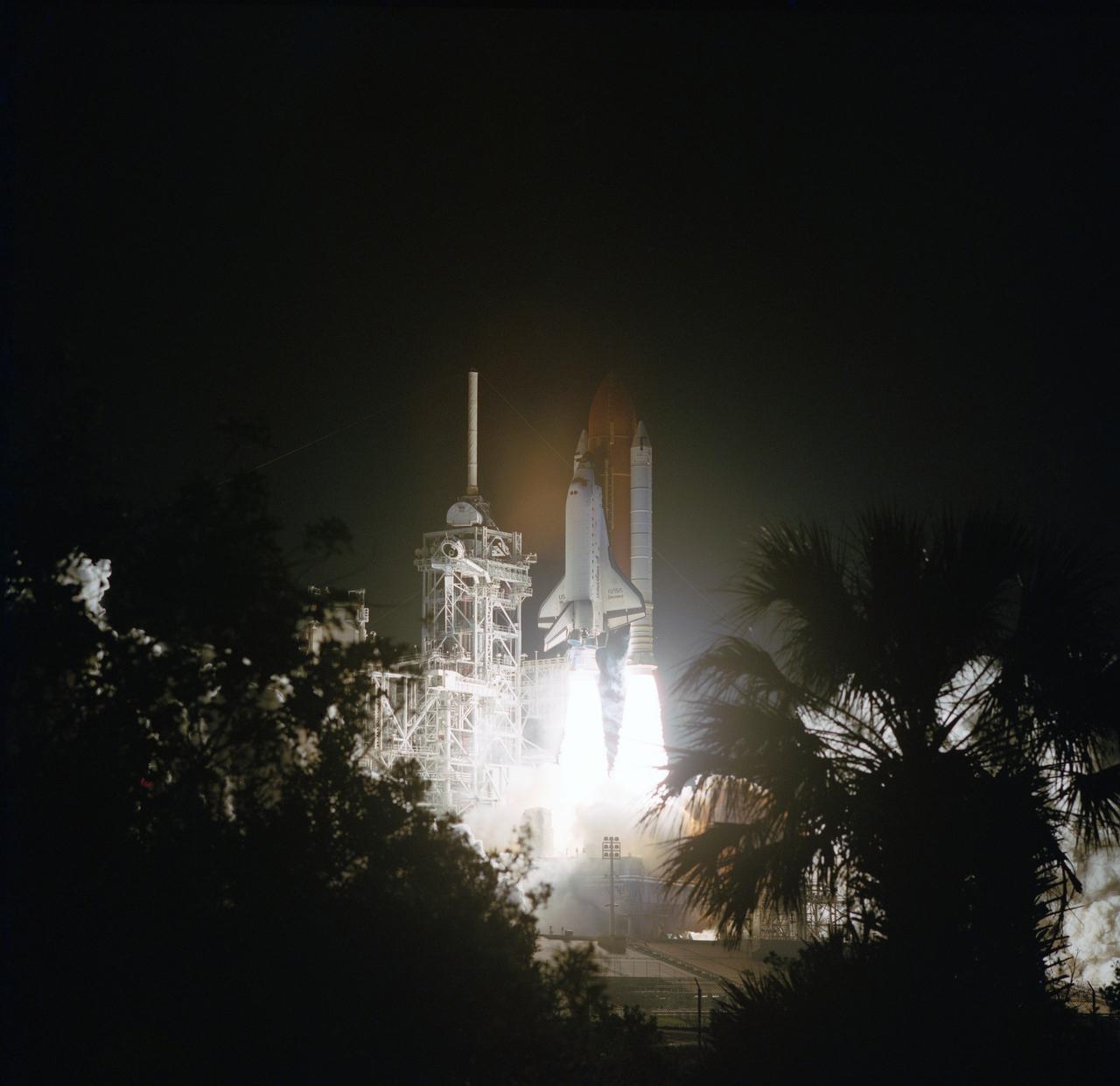
STS056-S-052 (8 April 1993) --- A nocturnal scene shows the Space Shuttle Discovery leaving the Launch Pad to begin the Atlas-2 mission in Earth-orbit. Launch occurred at 1:29 a.m. (EDT), April 8. Onboard were astronauts Kenneth D. Cameron, Stephen S. Oswald, C. Michael Foale, Kenneth D. Cockrell and Ellen Ochoa.
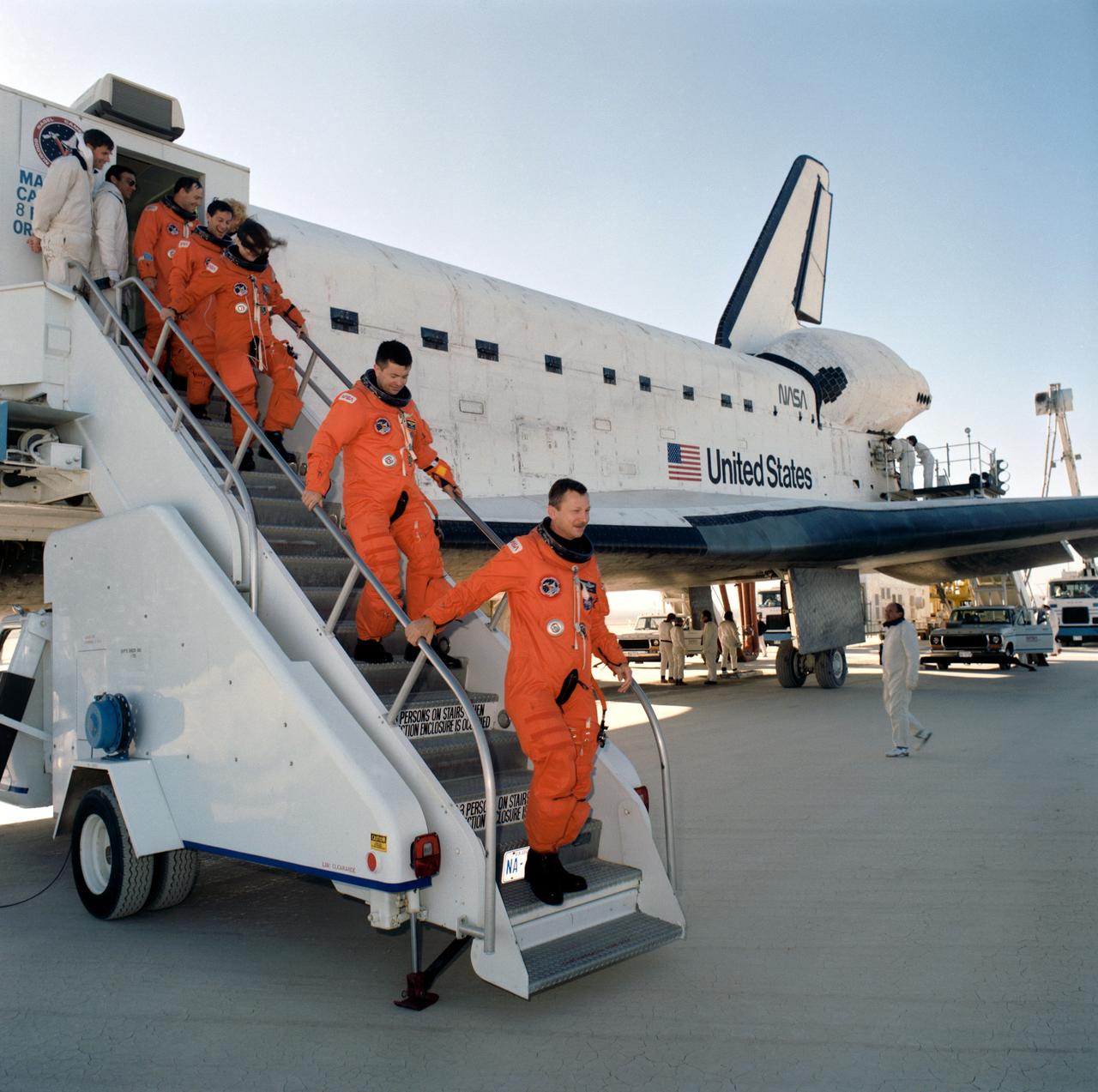
STS037-S-087 (11 April 1991) --- STS-37 crewmembers egress Atlantis via mobile stairway after landing on runway 33 dry lake bed at Edwards Air Force Base. Leading the crewmembers down the stairway is mission commander Steven R. Nagel. He is followed by pilot Kenneth D. Cameron, Mission Specialists Linda M. Godwin, Jerome Apt and Jerry L. Ross.
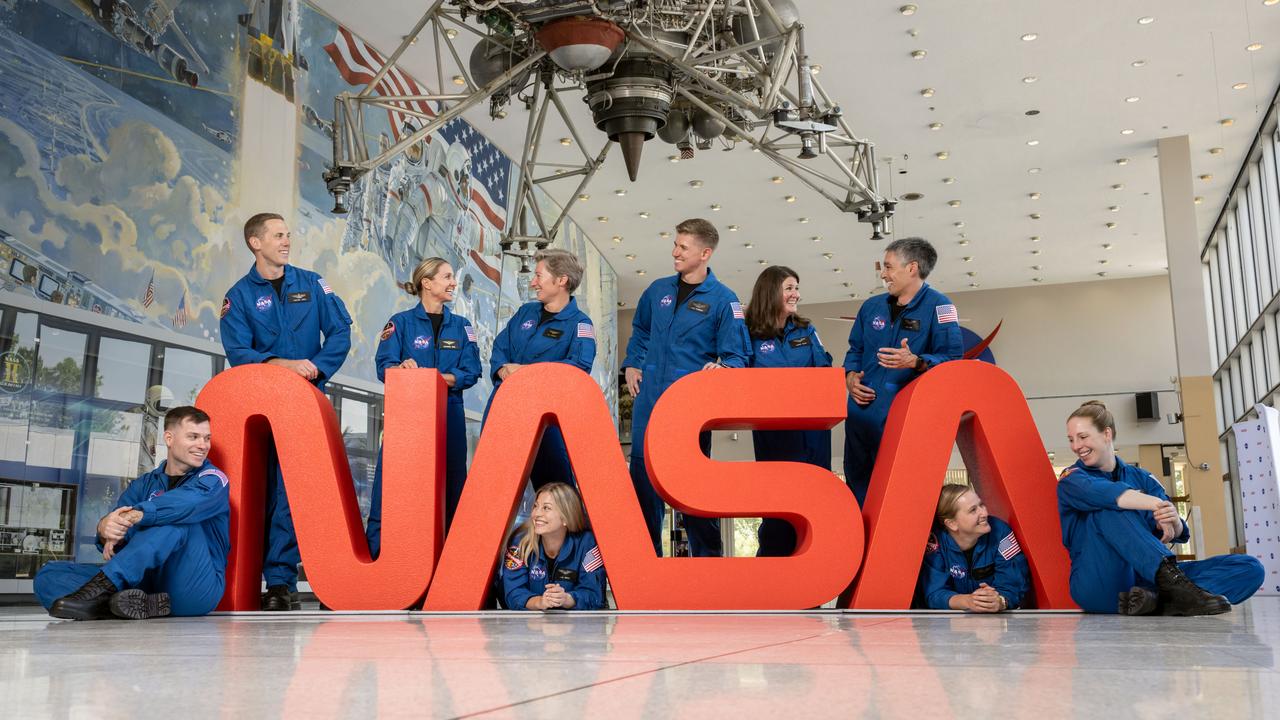
jsc2025e075905_alt (September 17, 2025) --- NASA announced its 2025 Astronaut Candidate Class on Sept. 22, 2025. The 10 candidates, pictured here at NASA’s Johnson Space Center in Houston are: U.S. Army CW3 Ben Bailey, Anna Menon, Rebecca Lawler, Katherine Spies, U.S. Air Force Maj. Cameron Jones, Dr. Lauren Edgar, U.S. Navy Lt. Cmdr. Erin Overcash, Yuri Kubo, Dr. Imelda Muller, and U.S. Air Force Maj. Adam Fuhrmann. Credit: NASA/Josh Valcarcel
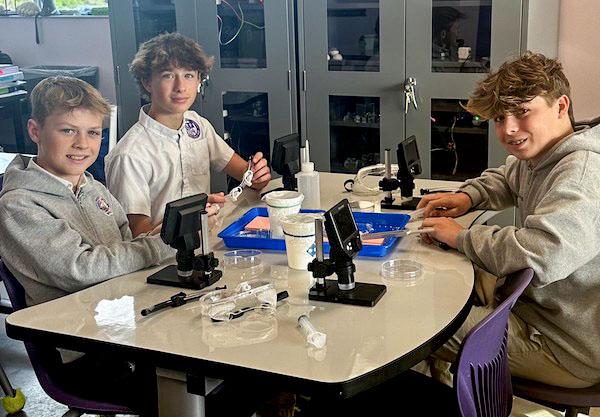
jsc2024e066527 (10/4/2024) --- Pinecrest Academy Space Coast students Cameron Winchester, Chase Elden-Moore and Baylen Wreggit experiment on tardigrades extending the efficacy of Hemlibra. Their experiment is part of the Nanoracks-National Center for Earth and Space Science Education-Surveyor-Student Spaceflight Experiments Program Mission 18 to ISS (Nanoracks-NCESSE-Surveyor-SSEP).
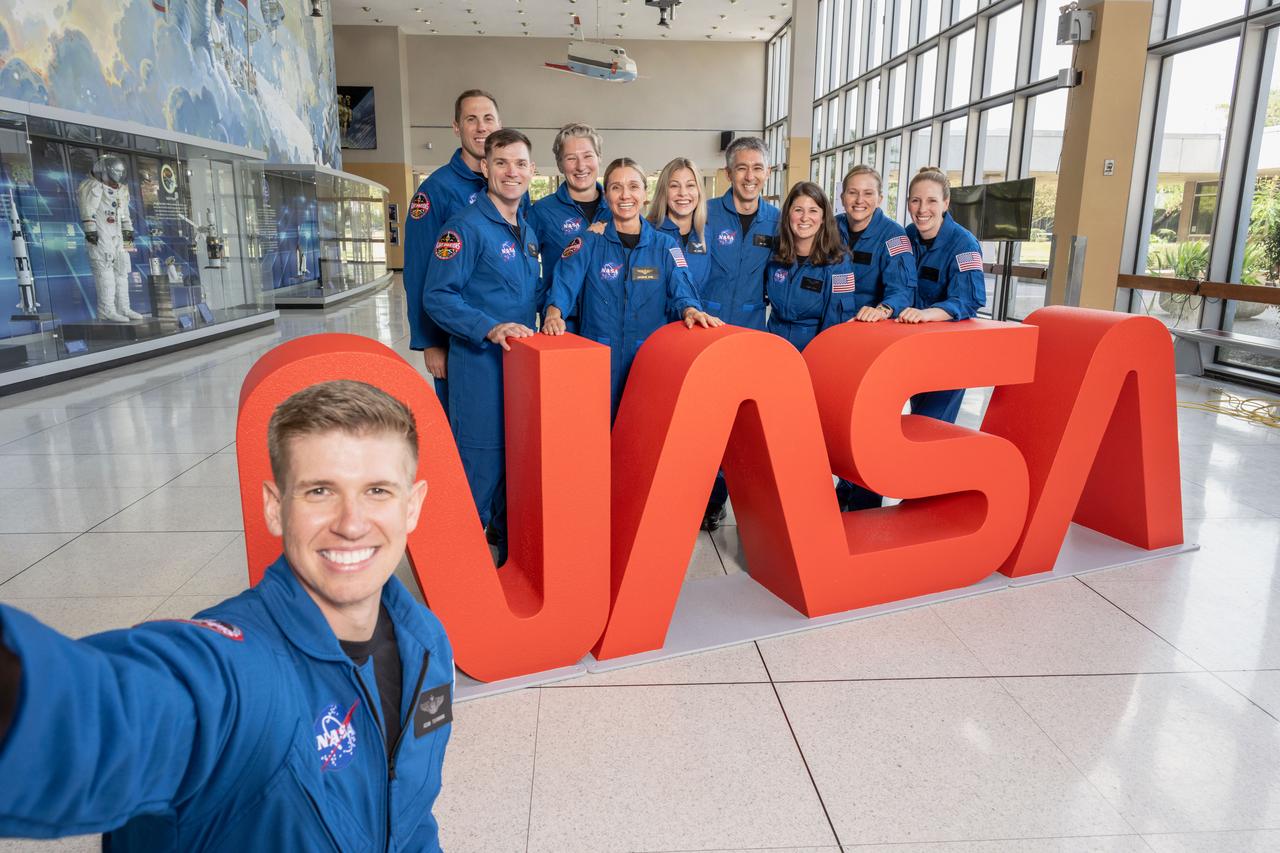
jsc2025e075922_alt (September 17, 2025) --- NASA announced its 2025 Astronaut Candidate Class on Sept. 22, 2025. The 10 candidates, pictured here at NASA’s Johnson Space Center in Houston are: U.S. Air Force Maj. Adam Fuhrmann, U.S. Air Force Maj. Cameron Jones, U.S. Army CW3 Ben Bailey, U.S. Navy Lt. Cmdr. Erin Overcash, Katherine Spies, Anna Menon, Yuri Kubo, Dr. Lauren Edgar, Rebecca Lawler, and Dr. Imelda Muller. Credit: NASA/Josh Valcarcel

Miranda (9) and Cameron Dyal view a partial solar eclipse in Washington, DC, Monday, April 8, 2024. A total solar eclipse swept across a narrow portion of the North American continent from Mexico’s Pacific coast to the Atlantic coast of Newfoundland, Canada. A partial solar eclipse was visible across the entire North American continent along with parts of Central America and Europe. Photo Credit: (NASA/Denny Henry)
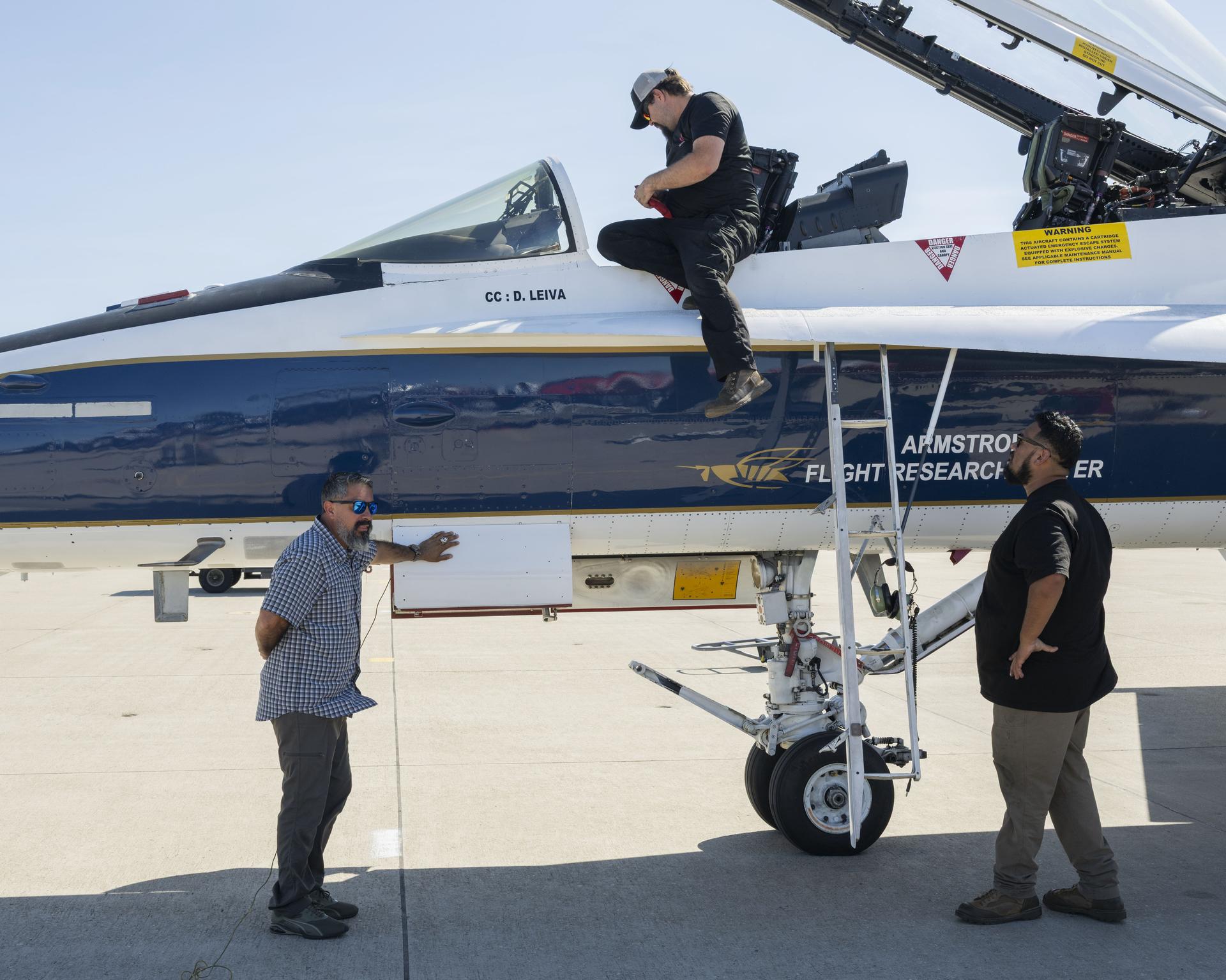
NASA quality assurance specialist Alejandro Rodriguez Mendez; Cameron Copple, F/A-18 crew chief; and F/A-18 mechanic Michael Lara inspect the aircraft at Los Alamitos Joint Forces Training Base, California, Sunday, Oct. 4, 2026. The jet was among the NASA aircraft that flew in the Pacific Airshow in Huntington Beach, California, Oct. 2-4.
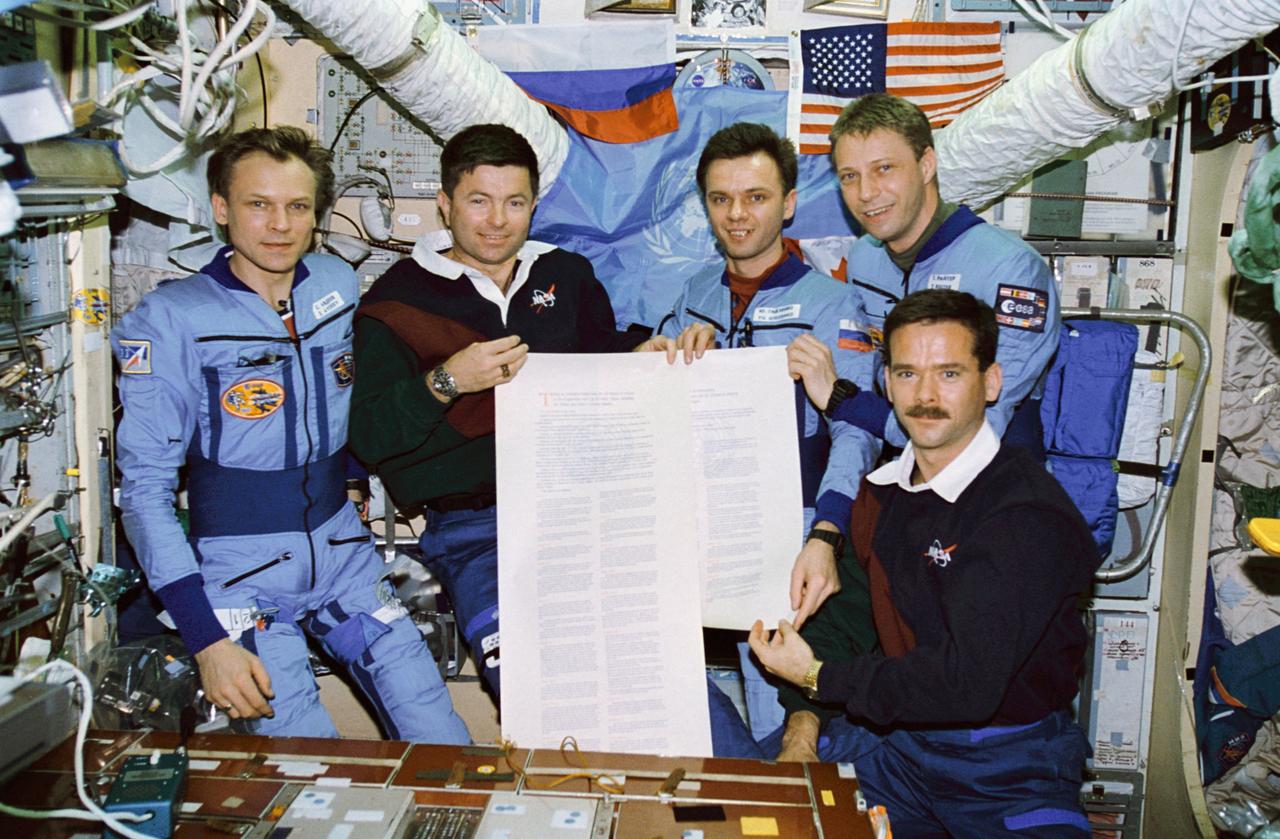
STS074-324-002 (12-20 Nov 1995) --- Several crew members with a scroll they signed commemorating the 50th anniversary of the United Nations (U.N.). In the frame (left to right) are Sergei V. Avdeyev, Kenneth D. Cameron, Yuriy P. Gidzenko, Thomas Reiter and Chris A. Hadfield (front). With five NASA astronauts aboard the Space Shuttle Atlantis, the flight began with a November 12, 1995 launch from Kennedy Space Center (KSC) and ended with landing there on November 20, 1995. The STS-74 crew members were astronauts Cameron, mission commander; James D. Halsell Jr., pilot; William S. McArthur Jr., Jerry L. Ross and Canadian astronaut Hadfield, all mission specialists. On November 15, 1995, the Space Shuttle Atlantis docked with Russia?s Mir Space Station, on which the STS-74 astronauts joined the Mir-20 crew. The Mir-20 crew is composed of cosmonauts Gidzenko, commander; and Avdeyev, engineer; along with the European Space Agency?s (ESA) Reiter, cosmonaut researcher. Joint activities on the Mir Space Station and the Space Shuttle Atlantis ended November 18, 1995, when the two spacecraft separated.
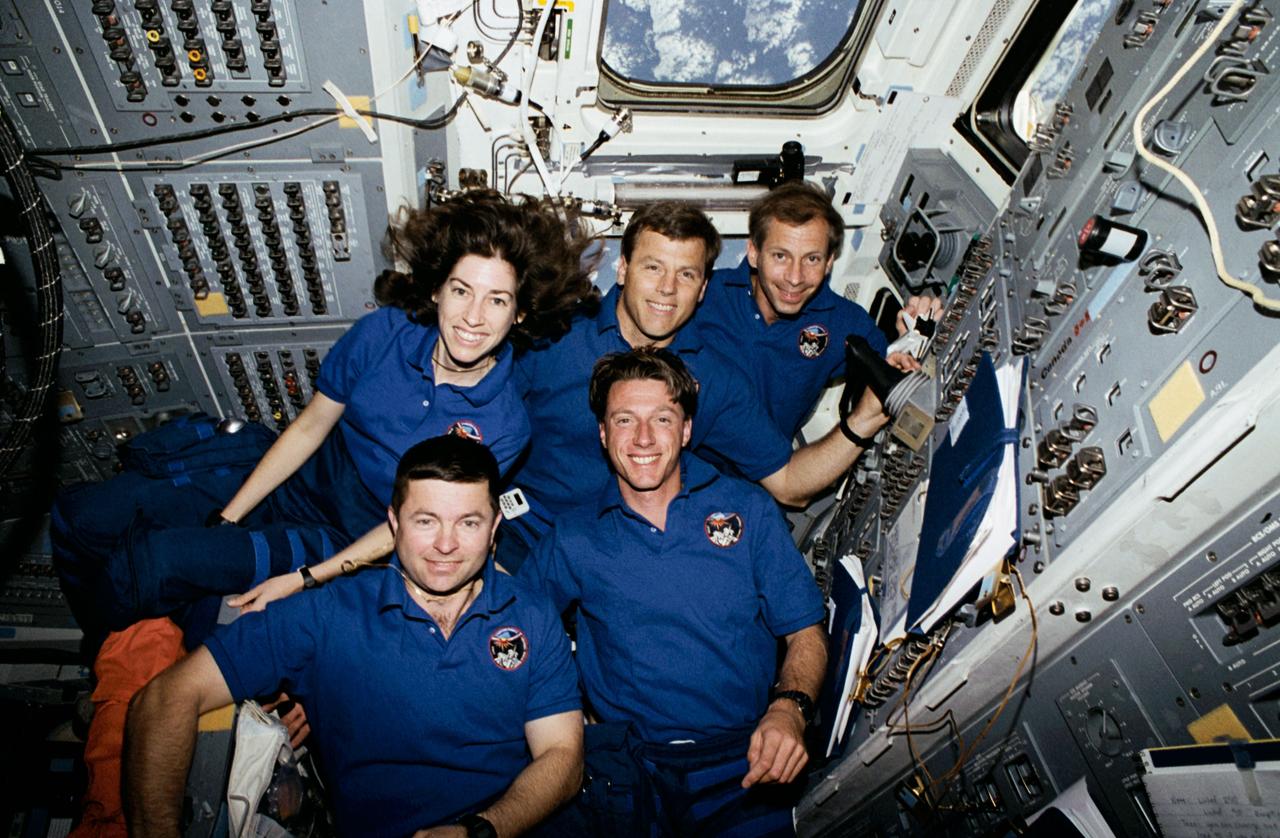
STS056-31-020 (8-17 April 1993) --- The five astronaut crew members assemble on the Space Shuttle Discovery's aft flight deck for the traditional inflight crew portrait. In front are astronauts Kenneth D. Cameron, mission commander; and C. Michael Foale, mission specialist. In back are (left to right) astronauts Ellen Ochoa, mission specialist; Stephen S. Oswald, pilot; and Kenneth D. Cockrell, mission specialist. The five went on to spend nine days in Earth-orbit in support of the Atlas-2 mission. A 35mm camera with a 20mm lens was used to expose this frame.
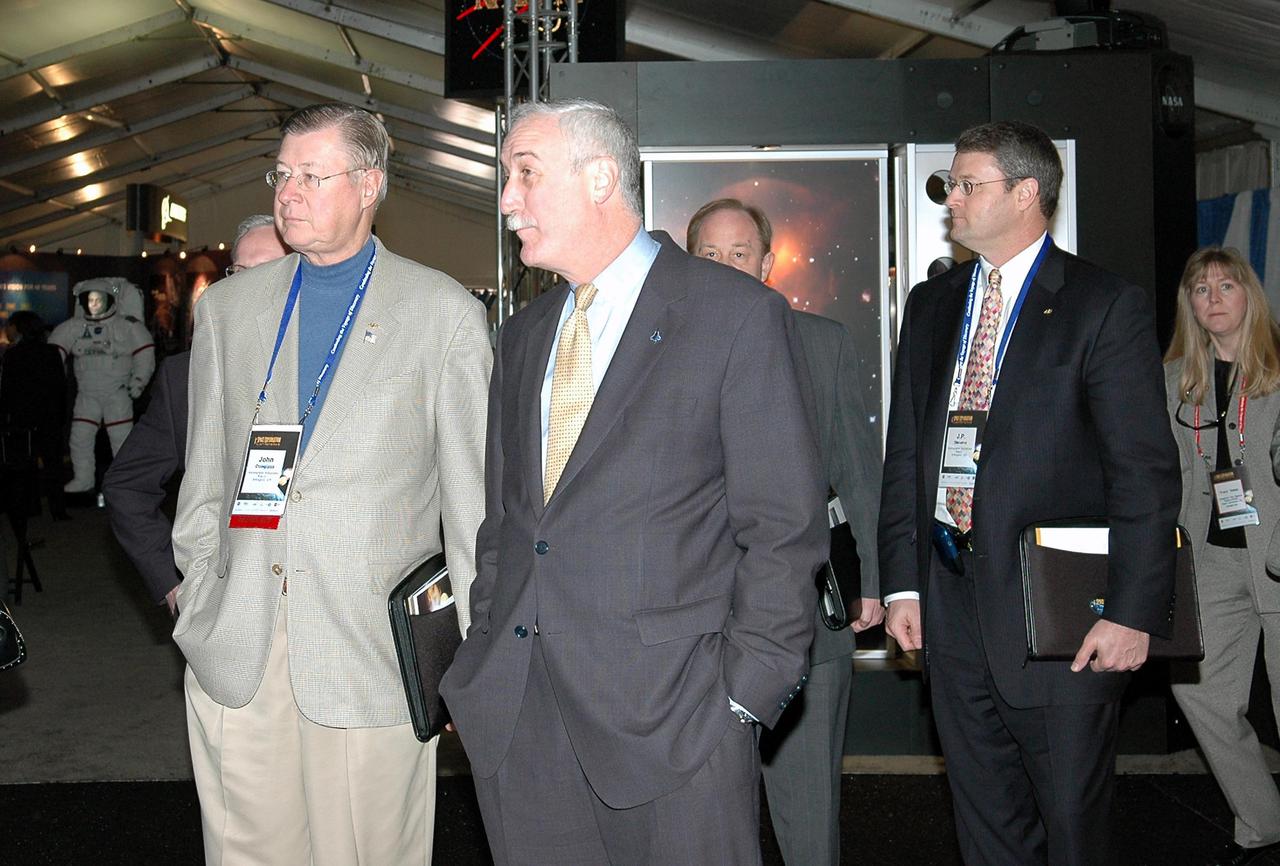
KENNEDY SPACE CENTER, FLA. - NASA Administrator Sean O’Keefe (center) talks to John Douglass, with the Aerospace Industries Association, at the “1st Space Exploration Conference: Continuing the Voyage of Discovery,” being held at Disney’s Contemporary Resort in Orlando. O’Keefe is the keynote speaker kicking off the conference. Douglass is one of the panelists. Topics being presented focus on new missions, technologies and infrastructure needed to turn the vision for space exploration into reality. Other keynote speakers at the three-day conference are Congressman Dave Weldon, film director James Cameron and NASA’s senior Mars scientist James Garvin. The conference has drawn attendees from around the world.
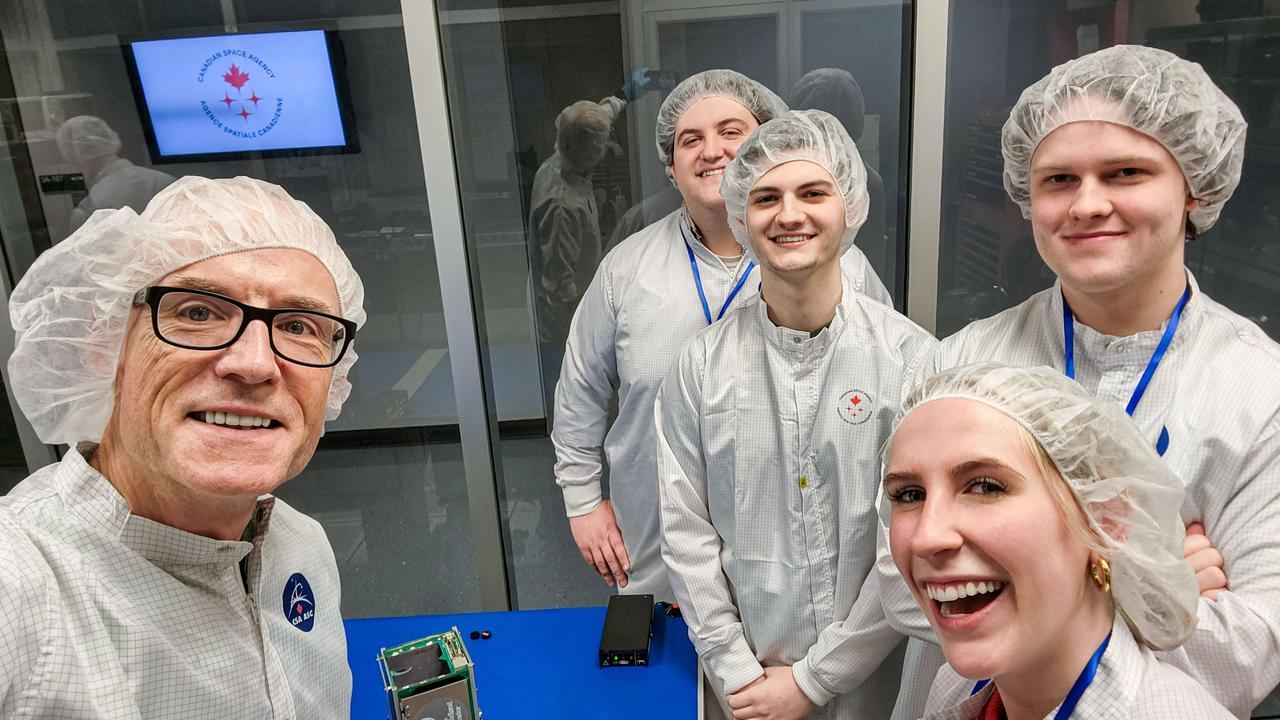
jsc2024e016246 (11/27/2023) --- Selfie of Killick-1 Satellite Integration Team in the Canadian Space Agency Clean Room with the Killick-1 satellite (foreground). From left to right – Desmond Power (Co-Principal Investigator), Matthew Fewer (Computer Engineering Student), Cameron King (Computer Engineering Student), Victoria Vaters (Mechanical Engineering Student), Daniel Dolomount (computer Engineering Student). Nanoracks-Killick-1 is a CubeSat that measures sea ice parameters using Global Navigation Satellite System (GNSS) reflectometry or reflected signals. Image courtesy of C-CORE and Memorial University.
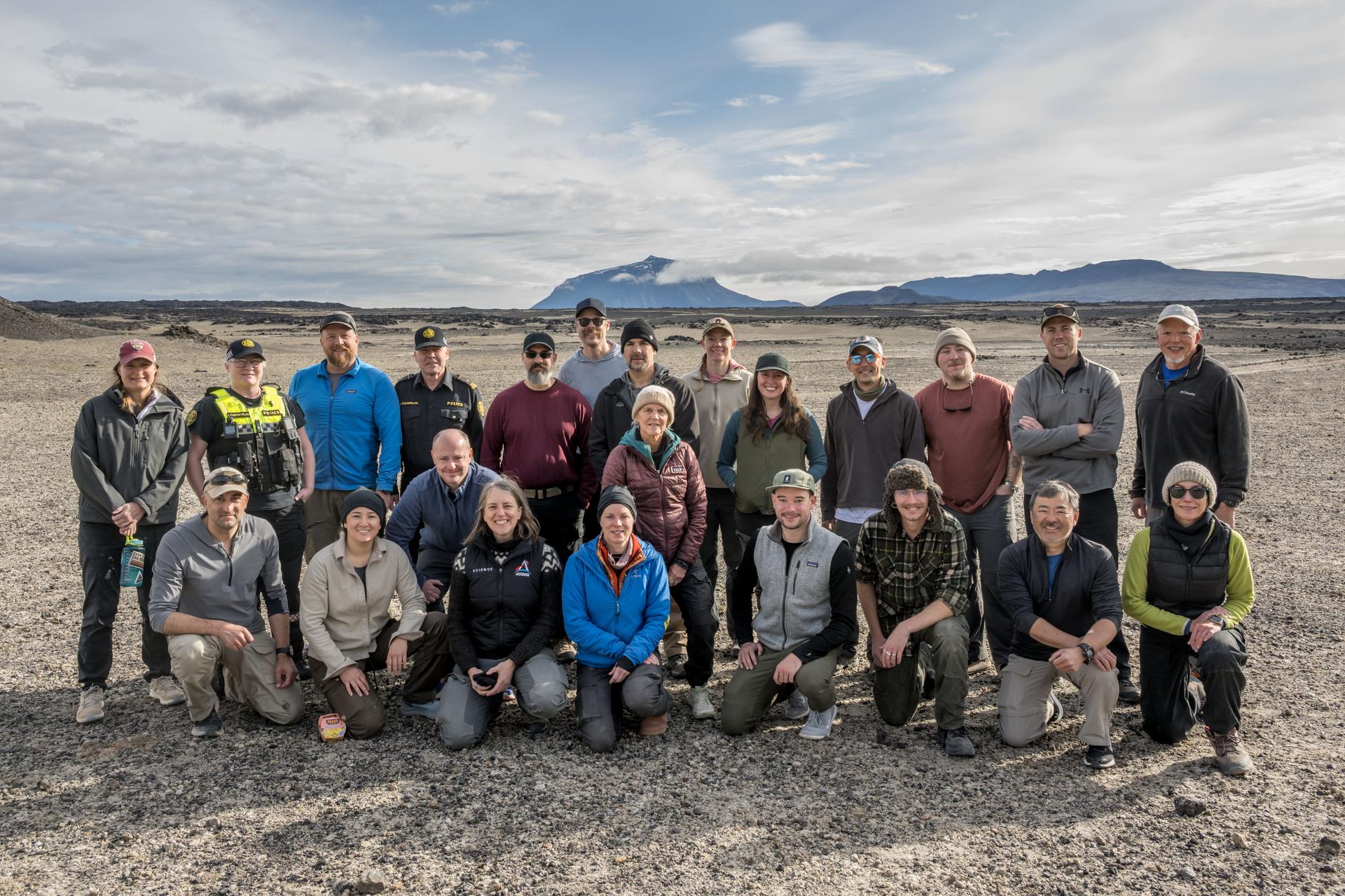
Artemis astronauts, astronaut candidates, mission support team members, and the geology training field team pose in a valley in Iceland’s Vatnajökull national park, accompanied by local park first responders. From front left: Trevor Graff, Angela Garcia, Vincent Lacourt, Juliane Gross, Zena Cardman, Cindy Evans, Jacob Richardson, Bryce Prescott, Aki Hoshide, Bridget Scheib, back row from left: Sarah Korona, Icelandic police officer, Patrick Whelley, Icelandic police officer, John Ramsey, Scott Wray, Marco Lozano, Nichole Ayers, Kelsey Young, Yuri Kubo, Isaac Hollingsworth, Cameron Jones, and John Ray. Credit: NASA/James Blair

Cameron Symonds, of New Mexico Tech, prepares his team’s prototype lunar robot for its turn during the finals for NASA’s 2026 Lunabotics Challenge competition on Tuesday, May 19, 2026, inside the Astronauts Memorial Foundation’s Center for Space Education at the Kennedy Space Center Visitor Complex in Florida. Forty-seven teams from around the U.S. designed and built remote-controlled robots capable of traversing challenging lunar terrain while constructing regolith-based berm under conditions similar to those the agency will face as it returns to the lunar surface through Artemis.
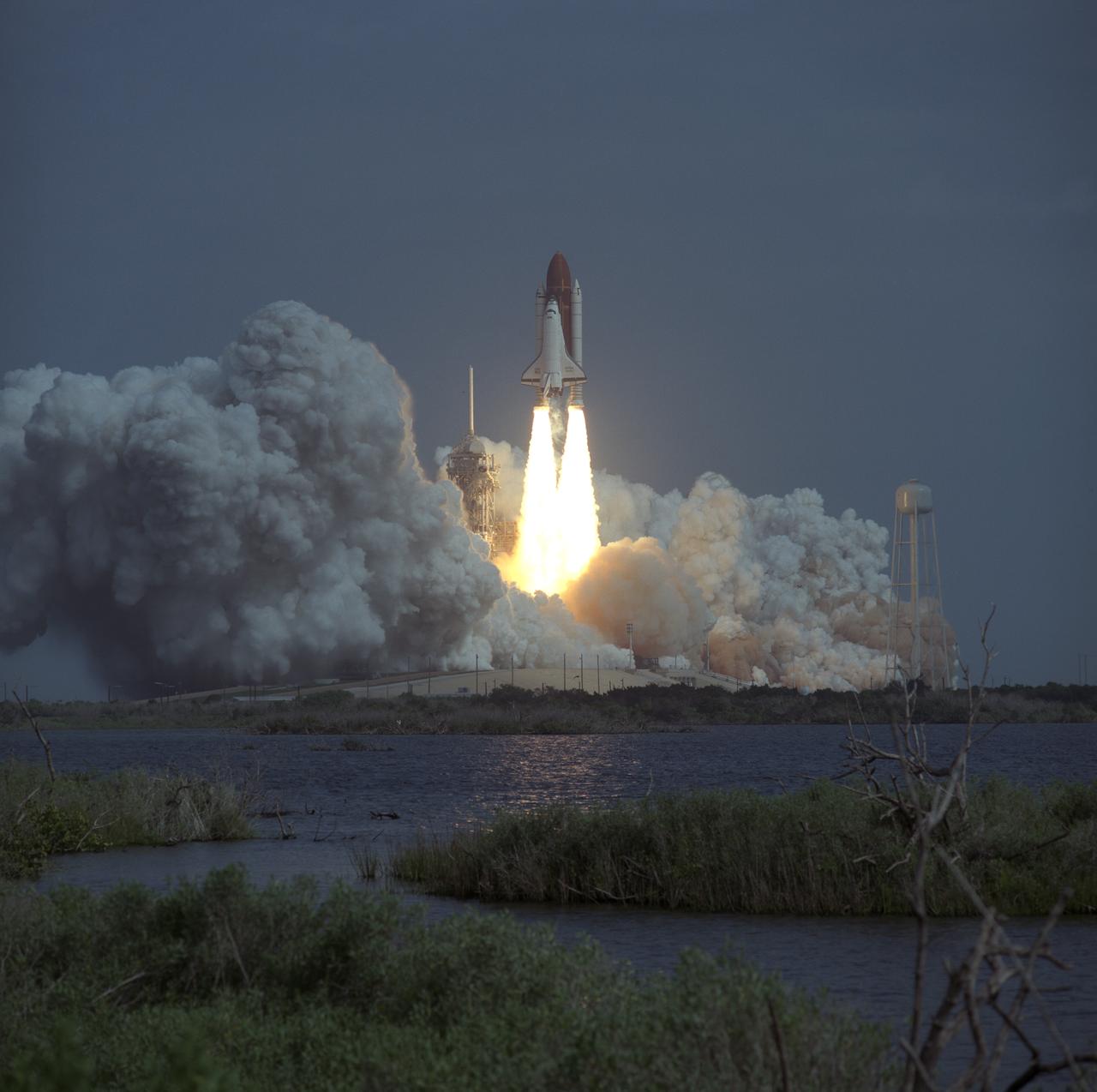
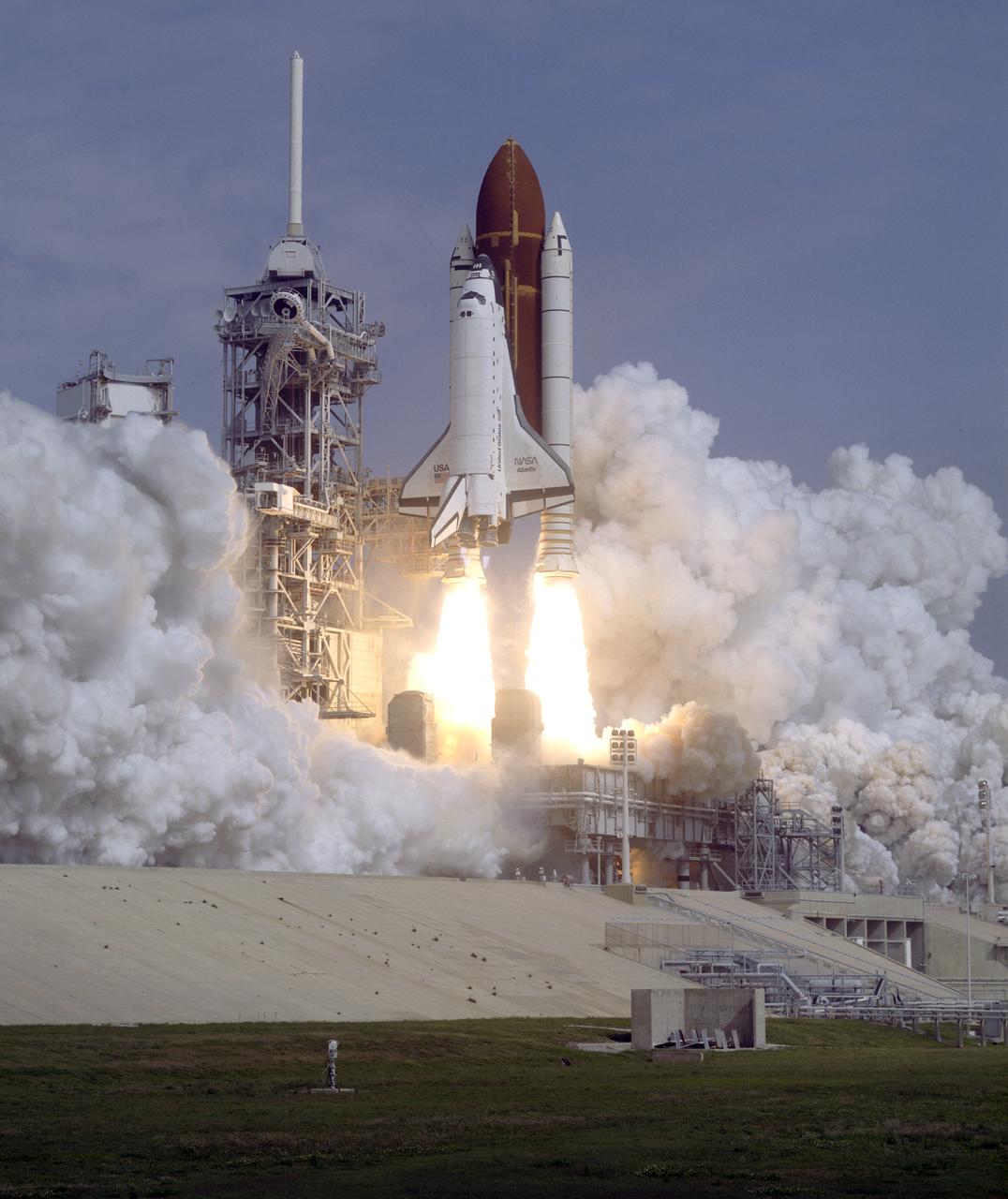
Launched aboard the Space Shuttle Atlantis on April 5, 1991 at 9:22:44am (EST), the STS-37 mission hurtles toward space. Her crew included Steven R. Nagel, commander; Kenneth D. (Ken) Cameron, pilot; and Jay Apt, Jerry L. Ross, and Linda M. Godwin, all mission specialists. The crew’s major objective was the deployment of the Gamma Ray Observatory (GRO). Included in the observatory were the Burst and Transient Source Experiment (BATSE); the Imaging Compton Telescope (COMPTEL); the Energetic Gamma Ray Experiment Telescope (EGRET); and the Oriented Scintillation Spectrometer Telescope (OSSEE).
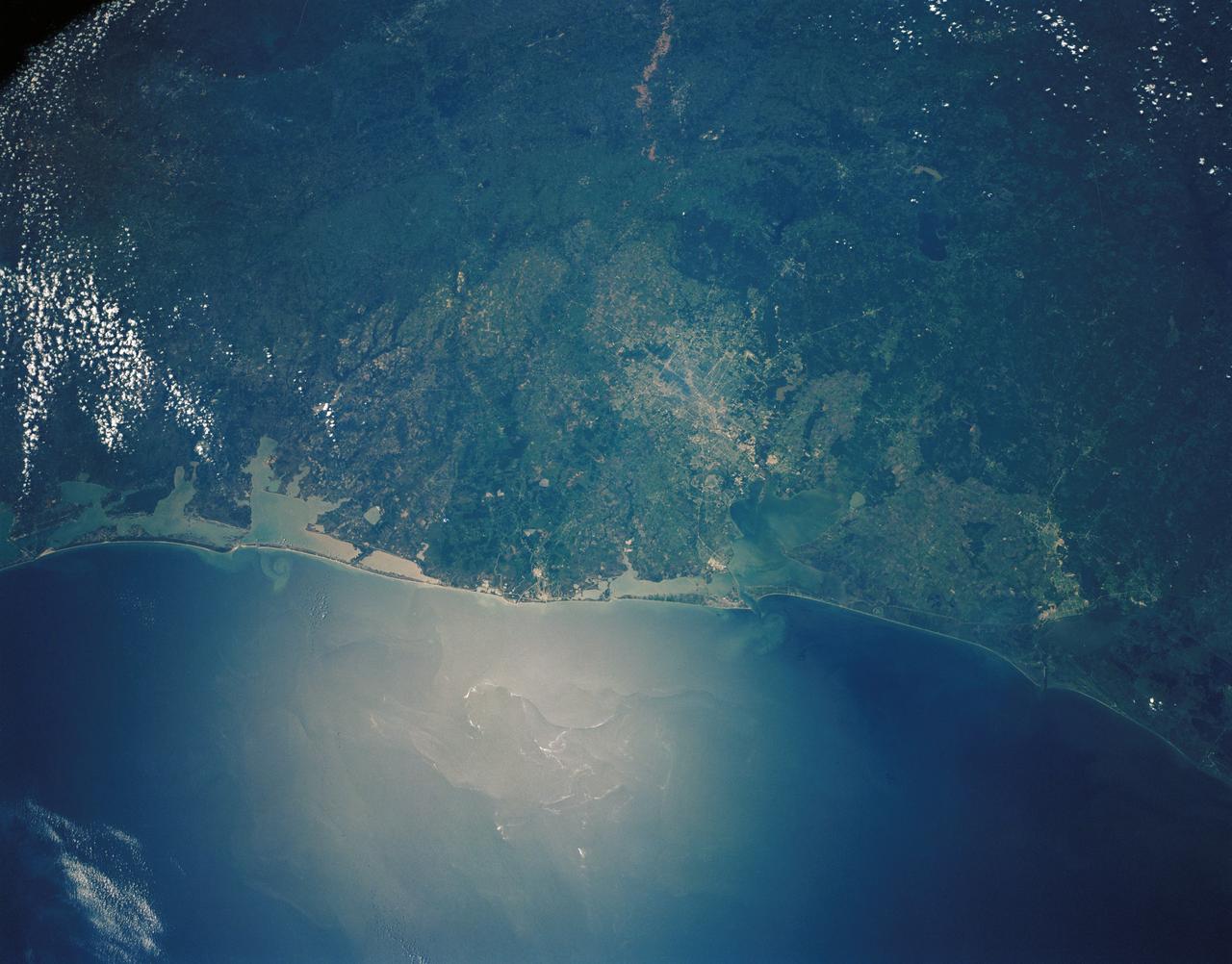
STS030-152-066 (4-8 May 1989) --- The upper Texas and Louisiana Gulf Coast area was clearly represented in this large format frame photographed by the astronaut crew of the Earth-orbiting Space Shuttle Atlantis. The area covered stretches almost 300 miles from Aransas Pass, Texas to Cameron, Louisiana. The sharp detail of both the natural and cultural features noted throughout the scene is especially evident in the Houston area, where highways, major streets, airport runways and even some neighborhood lanes are easily seen. Other major areas seen are Austin, San Antonio and the Golden Triangle. An Aero Linhof camera was used to expose the frame.
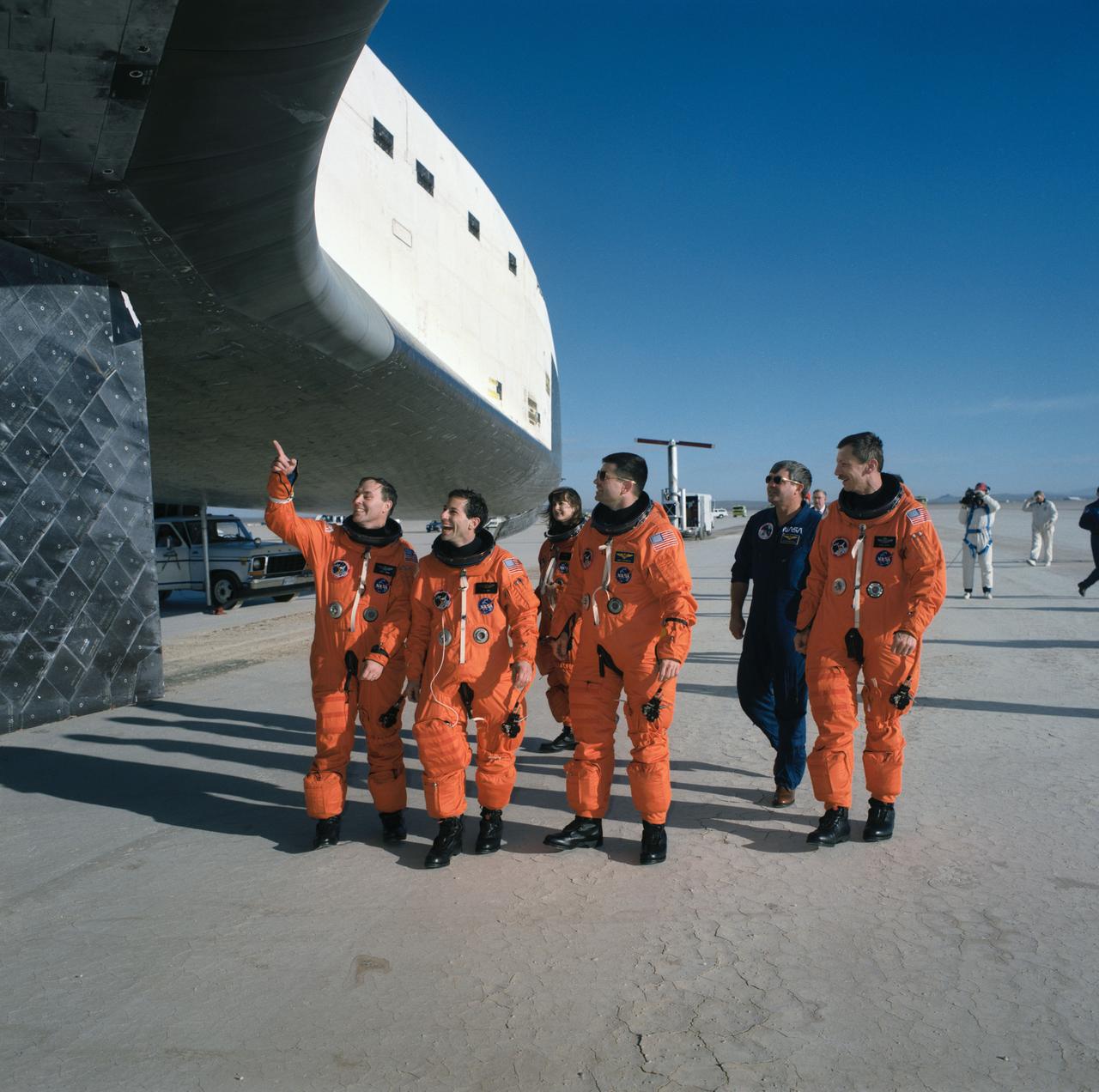
STS037-S-085 (11 April 1991) --- Following their egress from the Space Shuttle Atlantis at Edwards Air Force Base the STS-37 astronauts survey their "home" for the past six days. Pictured, left to right, are astronauts Jerry L. Ross, Jerome J. Apt, Linda M. Godwin, Kenneth D. Cameron, Daniel C. Brandenstein and Steven R. Nagel, mission commander. Brandenstein, chief of the Astronaut Office at JSC, flew the Shuttle training aircraft and took photographs during Atlantis's landing. Complete wheel stop occurred at 6:56:26 (PDT), April 11, 1991.
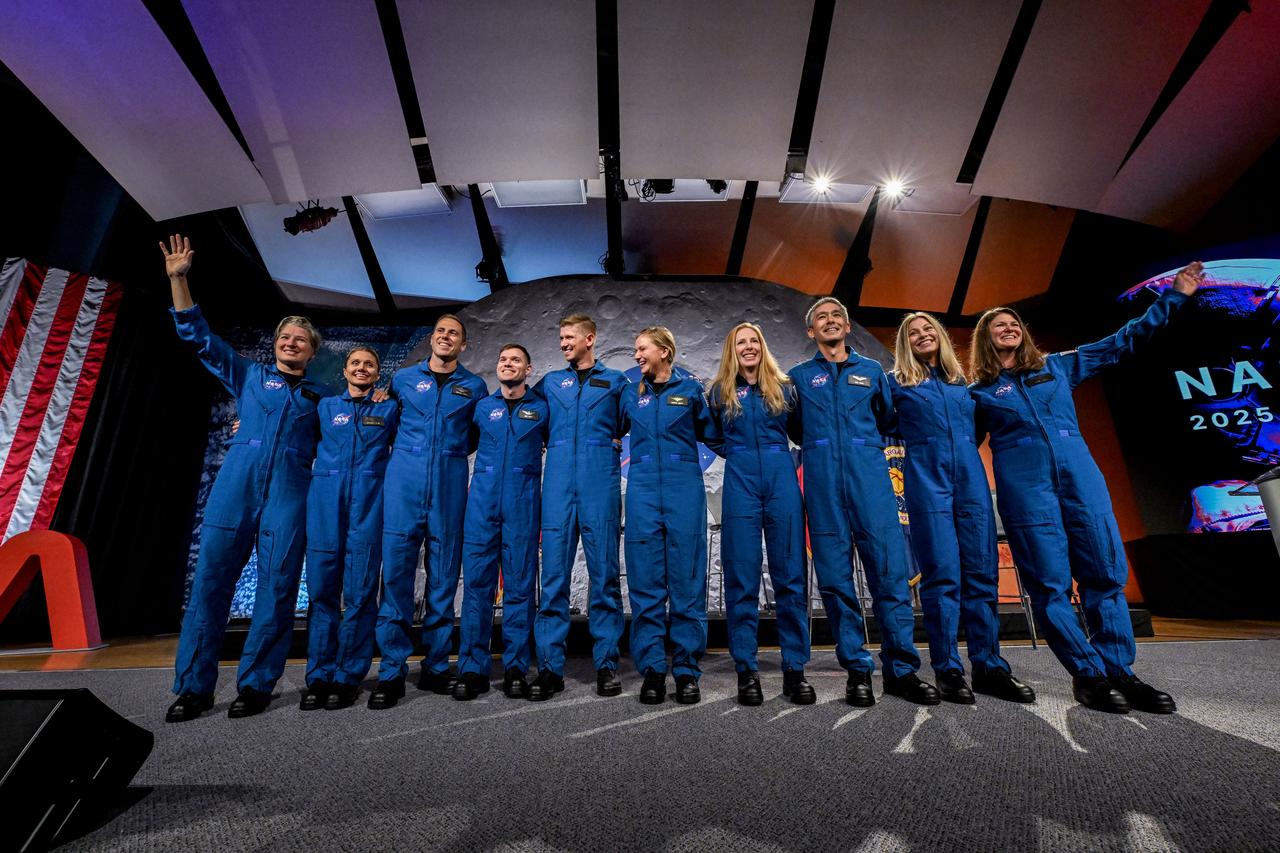
jsc2025e076333 (09/22/2025) --- NASA announced its 2025 Astronaut Candidate Class on Sept. 22, 2025. The 10 candidates, pictured here at NASA’s Johnson Space Center in Houston are: U.S. Navy Lt. Cmdr. Erin Overcash, Katherine Spies, U.S. Air Force Maj. Cameron Jones, U.S. Army CW3 Ben Bailey, U.S. Air Force Maj. Adam Fuhrmann, Rebecca Lawler, Dr. Imelda Muller, Yuri Kubo, Anna Menon, and Dr. Lauren Edgar. Photo Credit: NASA - James Blair
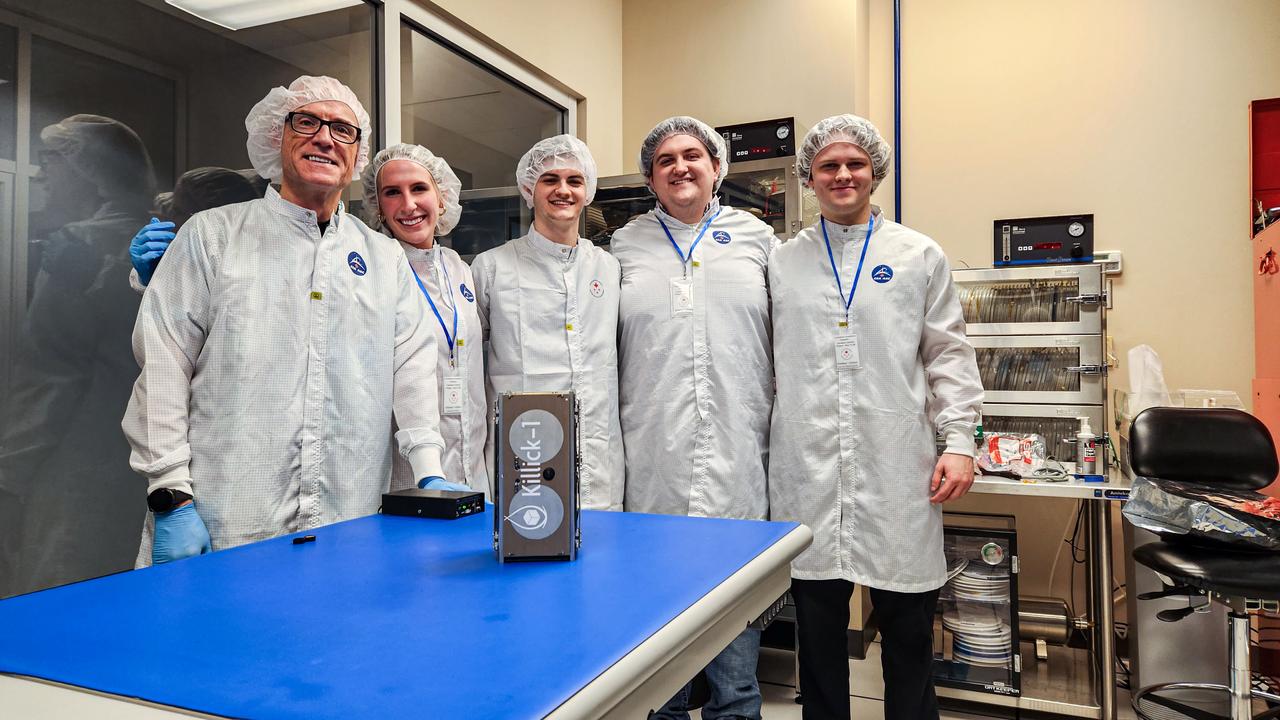
jsc2024e016245 (11/27/2023) --- The Nanoracks-Killick-1 Satellite Integration Team in the Canadian Space Agency (CSA) clean room with the Killick-1 satellite (foreground). From left to right – Desmond Power (Co-Principal Investigator), Victoria Vaters (Mechanical Engineering Student), Cameron King (Computer Engineering Student), Matthew Fewer (Computer Engineering Student), Daniel Dolomount (computer Engineering Student). Nanoracks-Killick-1 is a CubeSat that measures sea ice parameters using Global Navigation Satellite System (GNSS) reflectometry or reflected signals. Image courtesy of C-CORE and Memorial University.
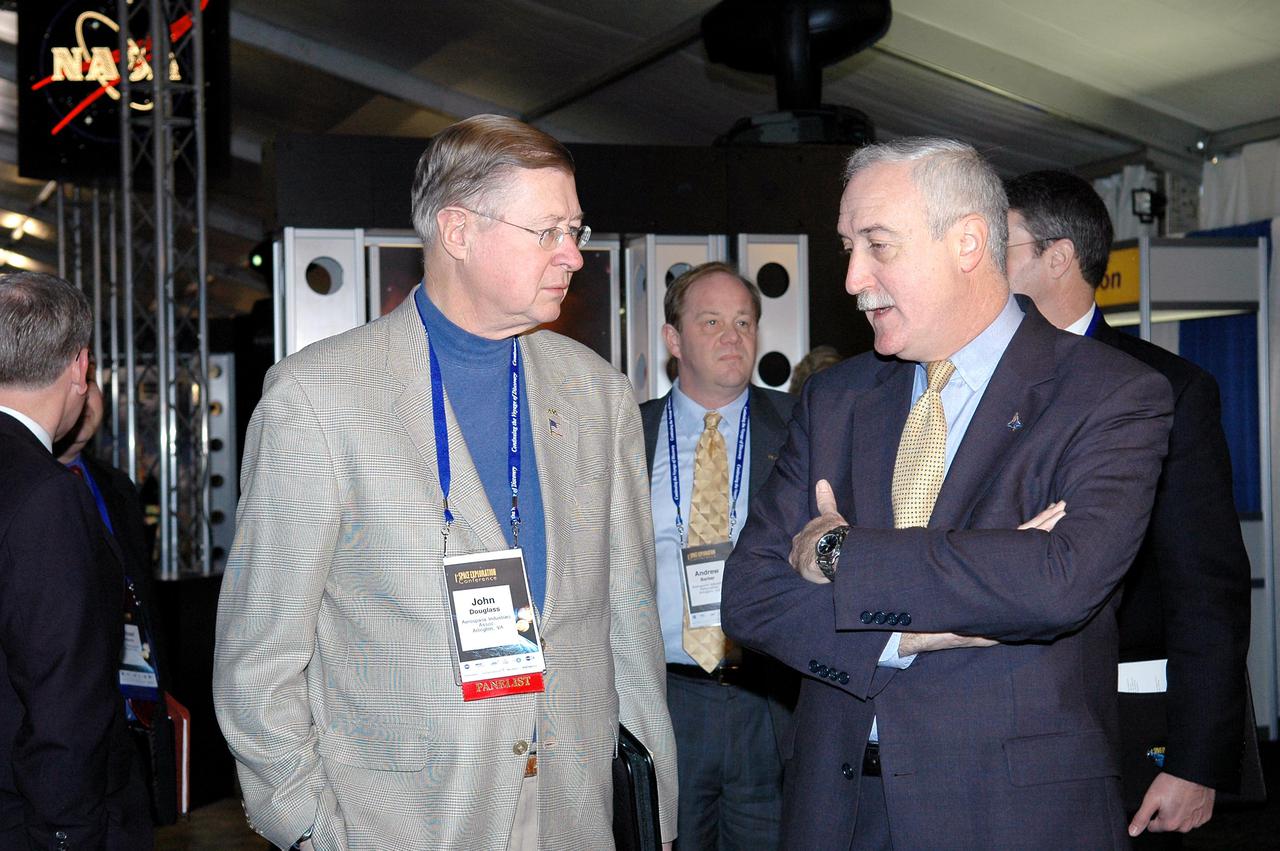
KENNEDY SPACE CENTER, FLA. - NASA Administrator Sean O’Keefe (center) talks to John Douglass, with the Aerospace Industries Association, at the “1st Space Exploration Conference: Continuing the Voyage of Discovery,” being held at Disney’s Contemporary Resort in Orlando. O’Keefe is the keynote speaker kicking off the conference. Douglass is one of the panelists. Topics being presented focus on new missions, technologies and infrastructure needed to turn the vision for space exploration into reality. Other keynote speakers at the three-day conference include Congressman Dave Weldon, film director James Cameron and NASA’s senior Mars scientist James Garvin. The conference has drawn attendees from around the world.
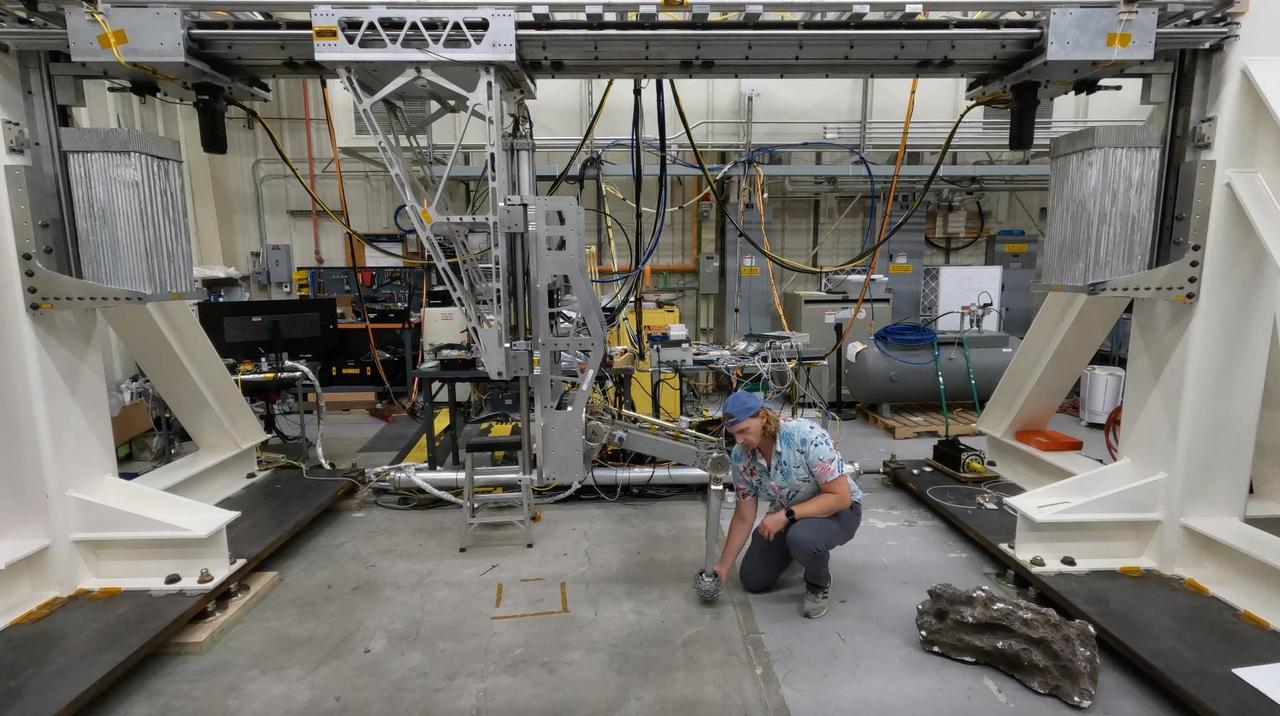
Engineer Matthew Cameron-Hooper performs a checkout on some systems of the Europa Lander landing gear testbed at NASA's Jet Propulsion Laboratory in Southern California on May 27, 2022. Europa Lander is a concept for a potential future mission that would look for signs of life in the icy surface material of Jupiter's moon Europa. The moon is thought to contain a global ocean of salty water beneath its frozen crust. If life exists in that ocean, signs of its existence called biosignatures could potentially find their way to the surface. In this mission concept, a spacecraft would land on Europa and collect and study samples from about 4 inches (10 centimeters) beneath the surface, looking for signs of life. The Europa Lander landing gear testbed was developed to test and inform the design of the landing gear for the spacecraft: It mimics the landing loads and ground interaction forces that a single flight landing gear would experience when touching down on the Europan surface. It does this by using gravity offloading to simulate the reduced gravity on Europa, and by replicating the mass and inertial properties of a flight lander as well as all the degrees of freedom that the landing gear would experience. This system checkout confirmed two critical functionalities of the testbed: low friction of the horizontal degree of freedom that carries the test landing gear, and proper functioning of the gravity offloading system. Together these functionalities ensure that only ground interaction forces cause the test landing gear to come to a stop during a test, just as a flight landing gear would experience when landing on the Europan surface. Video available at https://photojournal.jpl.nasa.gov/catalog/PIA26200
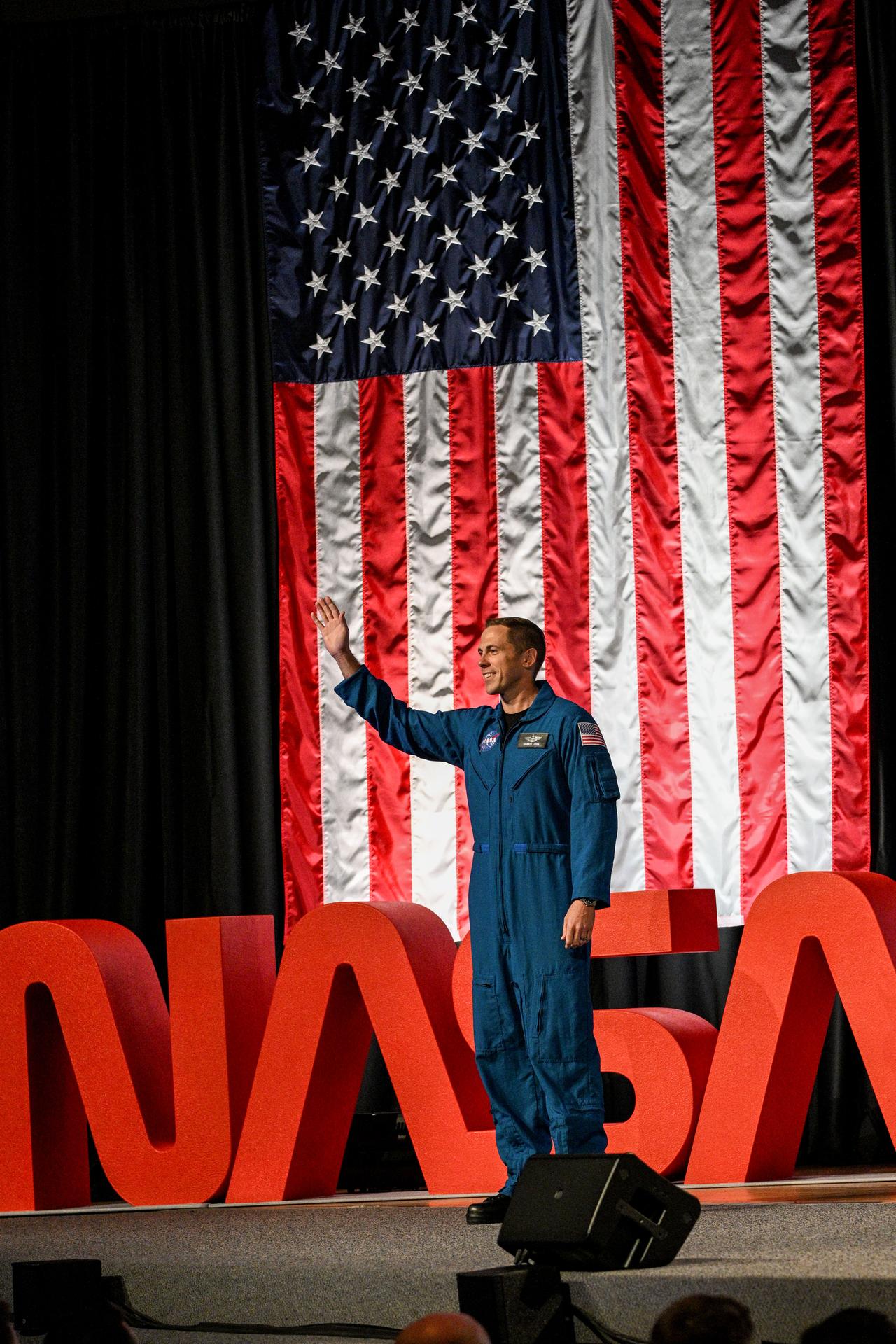
jsc2025e076269 (09/22/2025) --- NASA 2025 Astronaut Candidate (ASCAN) Announcement Ceremony Photo Date: 09/22/2025 Location: JSC B2 - Teague Auditorium Photo Credit: NASA - Helen Arase Vargas
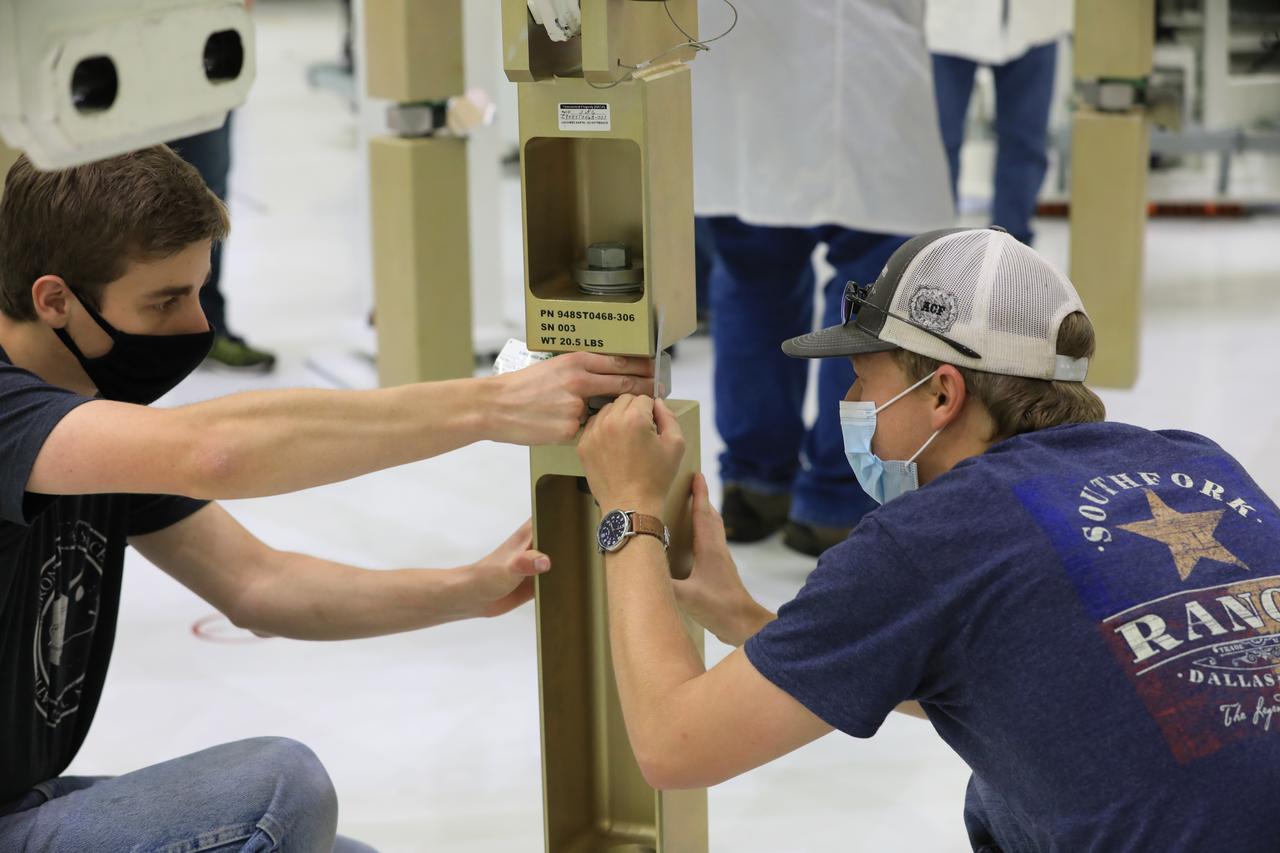
ASRC technicians William Coddington, to the left and Cameron Fitch, to the right, work to ready the Super Station fixture that will support the installation of the spacecraft adapter (SA) cone to the Artemis I Orion spacecraft is in progress inside the Neil Armstrong Operations and Checkout Building at NASA’s Kennedy Space Center in Florida on Aug. 6, 2020. This is one of the final major hardware operations the spacecraft will undergo during closeout processing prior to being integrated with the Space Launch System (SLS) rocket in preparation for the first Artemis mission. The spacecraft adapter cone connects the bottom portion of Orion’s service module to the top part of the rocket known as the interim cryogenic propulsion stage (ICPS). Orion will fly on the agency’s Artemis I mission – the first in a series of increasingly complex missions to the Moon that will ultimately lead to the exploration of Mars.
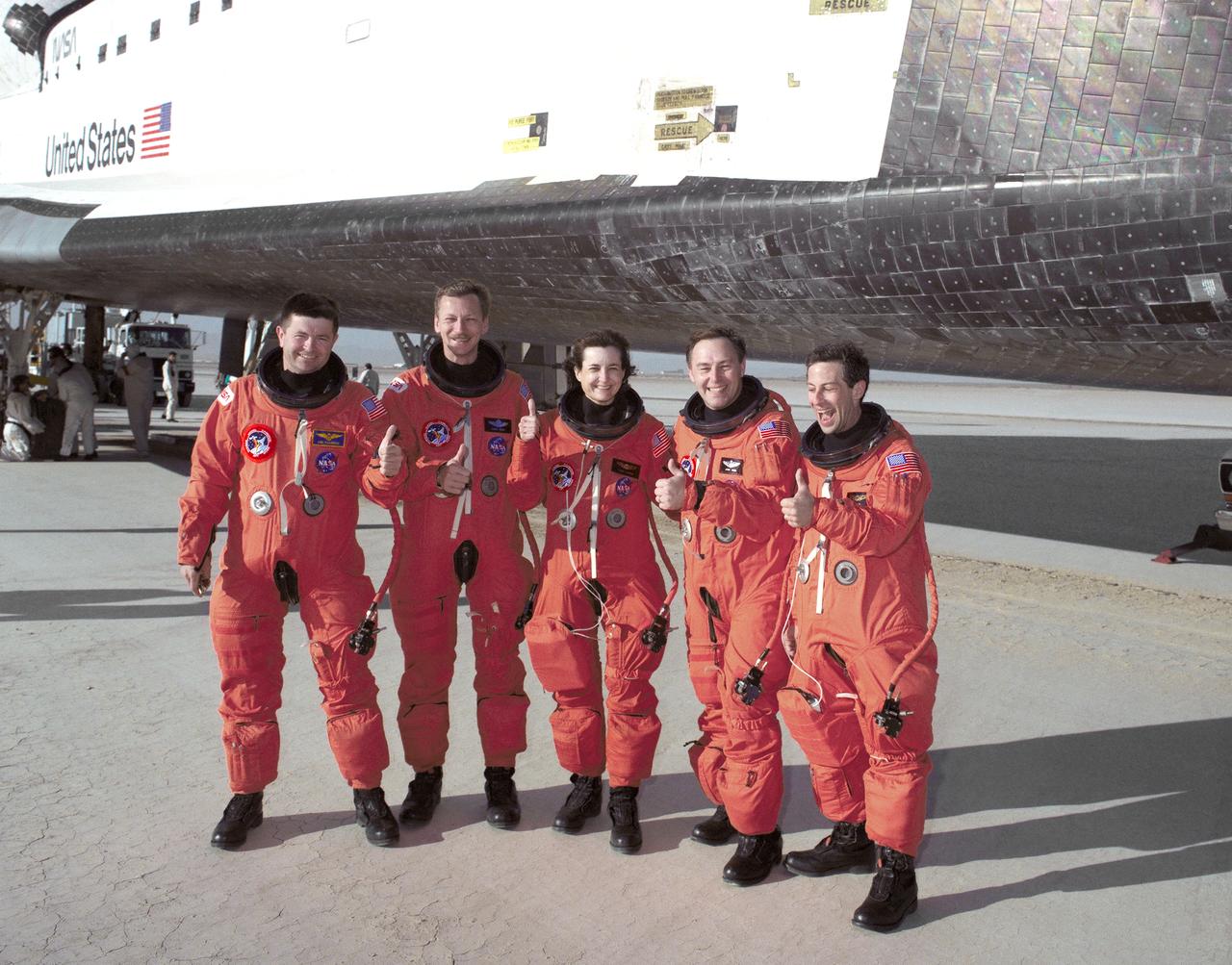
The crew of the Space Shuttle Atlantis gives the "all's well" thumb's-up sign after leaving the 100-ton orbiter following their landing at 6:55 a.m. (PDT), 11 April 1991, at NASA's Ames Dryden Flight Research Facility (later redesignated Dryden Flight Research Center), Edwards, California, to conclude mission STS-37. They are, from left, Kenneth D. Cameron, pilot; Steven R. Nagel, mission commander; and mission specialists Linda M. Godwin, Jerry L. Ross, and Jay Apt. During the mission,which began with launch April 5 at Kennedy Space Center, Florida, the crew deployed the Gamma Ray Observatory. Ross and Jay also carried out two spacewalks, one to deploy an antenna on the Gamma Ray Observatory and the other to test equipment and mobility techniques for the construction of the future Space Station. The planned five-day mission was extended one day because of high winds at Edwards.
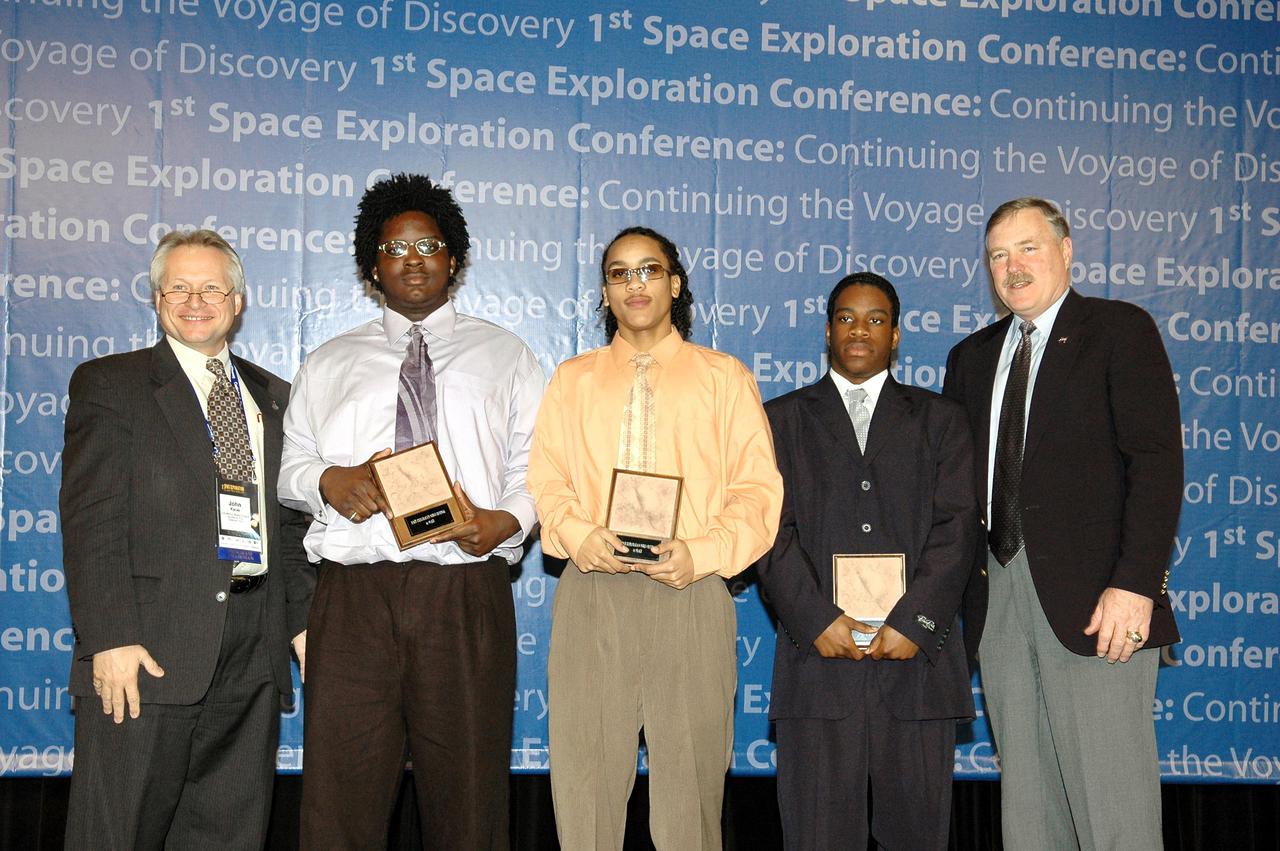
KENNEDY SPACE CENTER, FLA. - At the “1st Space Exploration Conference: Continuing the Voyage of Discovery,” being held at Disney’s Contemporary Resort in Orlando, the NASA Explorer School team from McNair High School in Dekalb County, Ga., receives the Space Exploration Video Festival award sponsored by Lockheed Martin. Standing with the awards are Trenten Nash, Theo Maxie and Daniel Jackson. Presenting the awards were John Karas (left), with Lockheed, and Adm. Craig Steidle (right), associate administrator, Office of Exploration Systems at NASA. The three-day conference drew attendees from around the world. It presented topics on new missions, technologies and infrastructure needed to turn the vision for space exploration into reality. Keynote speakers at the three-day conference include NASA Administrator Sean O'Keefe, Congressman Dave Weldon, film director James Cameron and NASA’s senior Mars scientist James Garvin. The conference has drawn attendees from around the world.
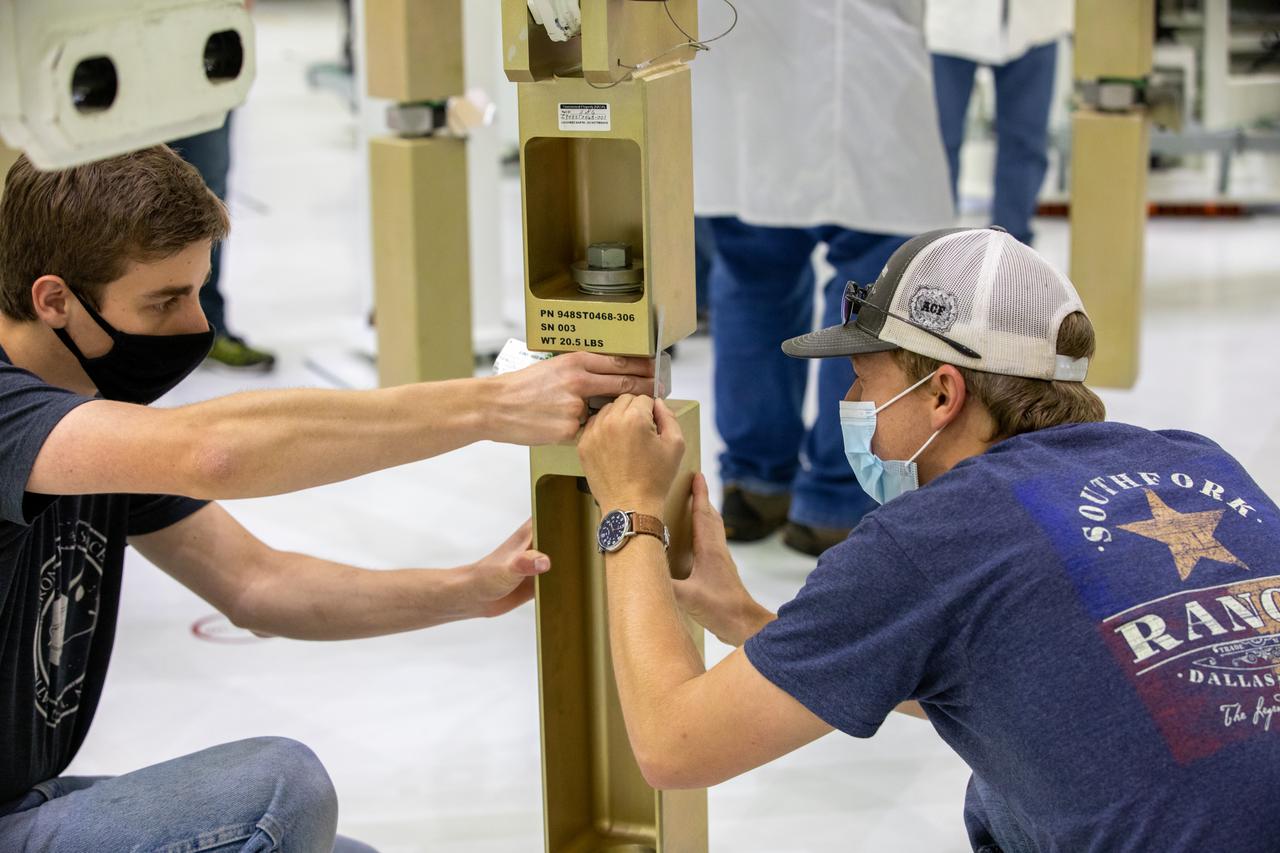
ASRC technicians William Coddington, to the left and Cameron Fitch, to the right, work to ready the Super Station fixture that will support the installation of the spacecraft adapter (SA) cone to the Artemis I Orion spacecraft is in progress inside the Neil Armstrong Operations and Checkout Building at NASA’s Kennedy Space Center in Florida on Aug. 6, 2020. This is one of the final major hardware operations the spacecraft will undergo during closeout processing prior to being integrated with the Space Launch System (SLS) rocket in preparation for the first Artemis mission. The spacecraft adapter cone connects the bottom portion of Orion’s service module to the top part of the rocket known as the interim cryogenic propulsion stage (ICPS). Orion will fly on the agency’s Artemis I mission – the first in a series of increasingly complex missions to the Moon that will ultimately lead to the exploration of Mars.
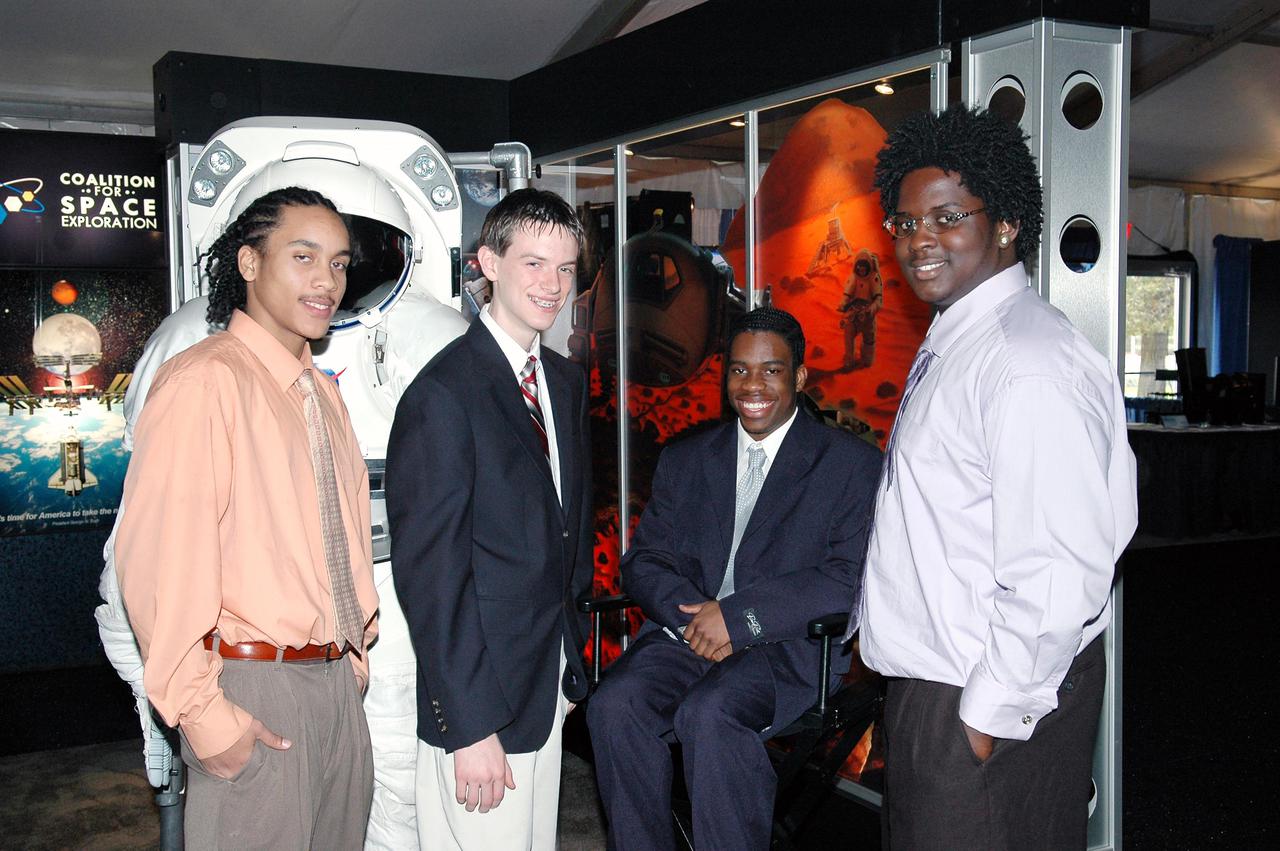
KENNEDY SPACE CENTER, FLA. - At the “1st Space Exploration Conference: Continuing the Voyage of Discovery,” held at Disney’s Contemporary Resort in Orlando, the winners of the Space Exploration Video Festival award sponsored by Lockheed Martin get together. Second from left is Daniel Stearns, from East Longmeadow, Mass. The others are the winning team from NASA Explorer School McNair High School in Dekalb County, Ga. At left is Theo Maxie; at right are Daniel Jackson and Trenten Nash. The three-day conference drew attendees from around the world. It presented topics on new missions, technologies and infrastructure needed to turn the vision for space exploration into reality. Keynote speakers at the three-day conference include NASA Administrator Sean O'Keefe, Congressman Dave Weldon, film director James Cameron and NASA’s senior Mars scientist James Garvin. The conference has drawn attendees from around the world.
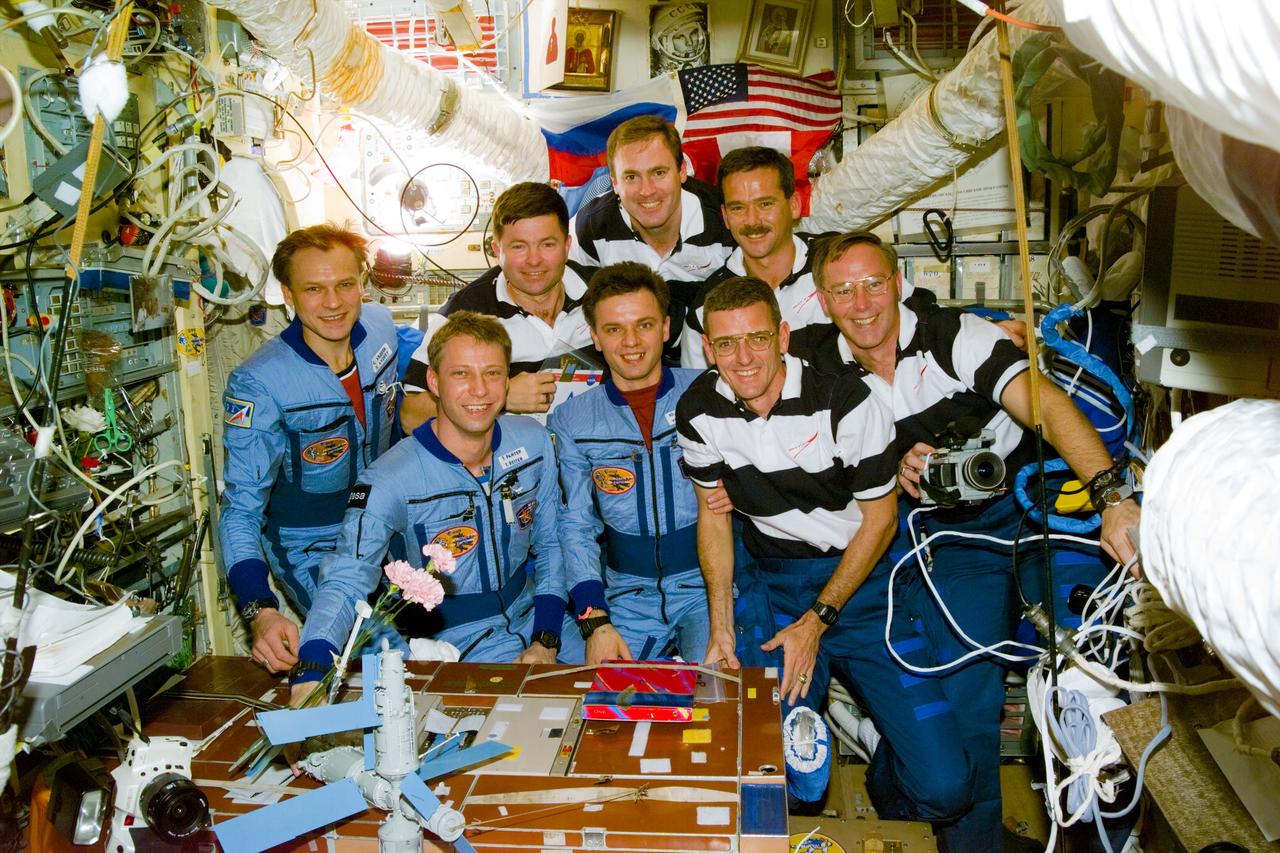
S74-E-5117 (15 Nov 1995) --- Following the successful in-space docking of Russia?s Mir Space Station and the Space Shuttle Atlantis, STS-74 and Mir-20 crew members pose for a group portrait aboard the Mir Space Station?s Base Block. Wearing the two-tone shirts are the five STS-74 crew members - Kenneth D. Cameron, from the left, James D. Halsell, Jr., Chris A. Hadfield, William S. McArthur, Jr. and Jerry L. Ross. The Mir-20 crew members are, left to right, cosmonaut Sergei V. Avdeyev, the European Space Agency?s (ESA) Thomas Reiter and cosmonaut Yuriy P. Gidzenko. This image was among a series of still images downlinked and released by NASA on November 15, 1995.
![KENNEDY SPACE CENTER, FLA. -- Seventeen new astronaut candidates visited the Vehicle Assembly Building as part of an orientation tour of KSC facilities. Here they are grouped around one of the external fuel tanks in the transfer aisle of the VAB. This latest group of candidates is the tenth chosen since the original seven Mercury astronauts. [From left, Michael J. McCulley, Curtis L. Brown Jr., Frank L. Culbertson Jr., Kathryn C. Thornton, Mark N. Brown, Mark C. Lee, Kenneth D. Cameron, John H. Casper, L. Blaine Hammond Jr., Charles Lacy Veach (deceased), James C. Adamson, William M. Shepherd, Sidney M. Gutierrez, Marsha S. Ivins, David G. Low, Michael J. Smith (deceased), Ellen S. Baker, Sonny Carter (deceased).]](https://images-assets.nasa.gov/image/108-KSC-84P-339/108-KSC-84P-339~medium.jpg)
KENNEDY SPACE CENTER, FLA. -- Seventeen new astronaut candidates visited the Vehicle Assembly Building as part of an orientation tour of KSC facilities. Here they are grouped around one of the external fuel tanks in the transfer aisle of the VAB. This latest group of candidates is the tenth chosen since the original seven Mercury astronauts. [From left, Michael J. McCulley, Curtis L. Brown Jr., Frank L. Culbertson Jr., Kathryn C. Thornton, Mark N. Brown, Mark C. Lee, Kenneth D. Cameron, John H. Casper, L. Blaine Hammond Jr., Charles Lacy Veach (deceased), James C. Adamson, William M. Shepherd, Sidney M. Gutierrez, Marsha S. Ivins, David G. Low, Michael J. Smith (deceased), Ellen S. Baker, Sonny Carter (deceased).]
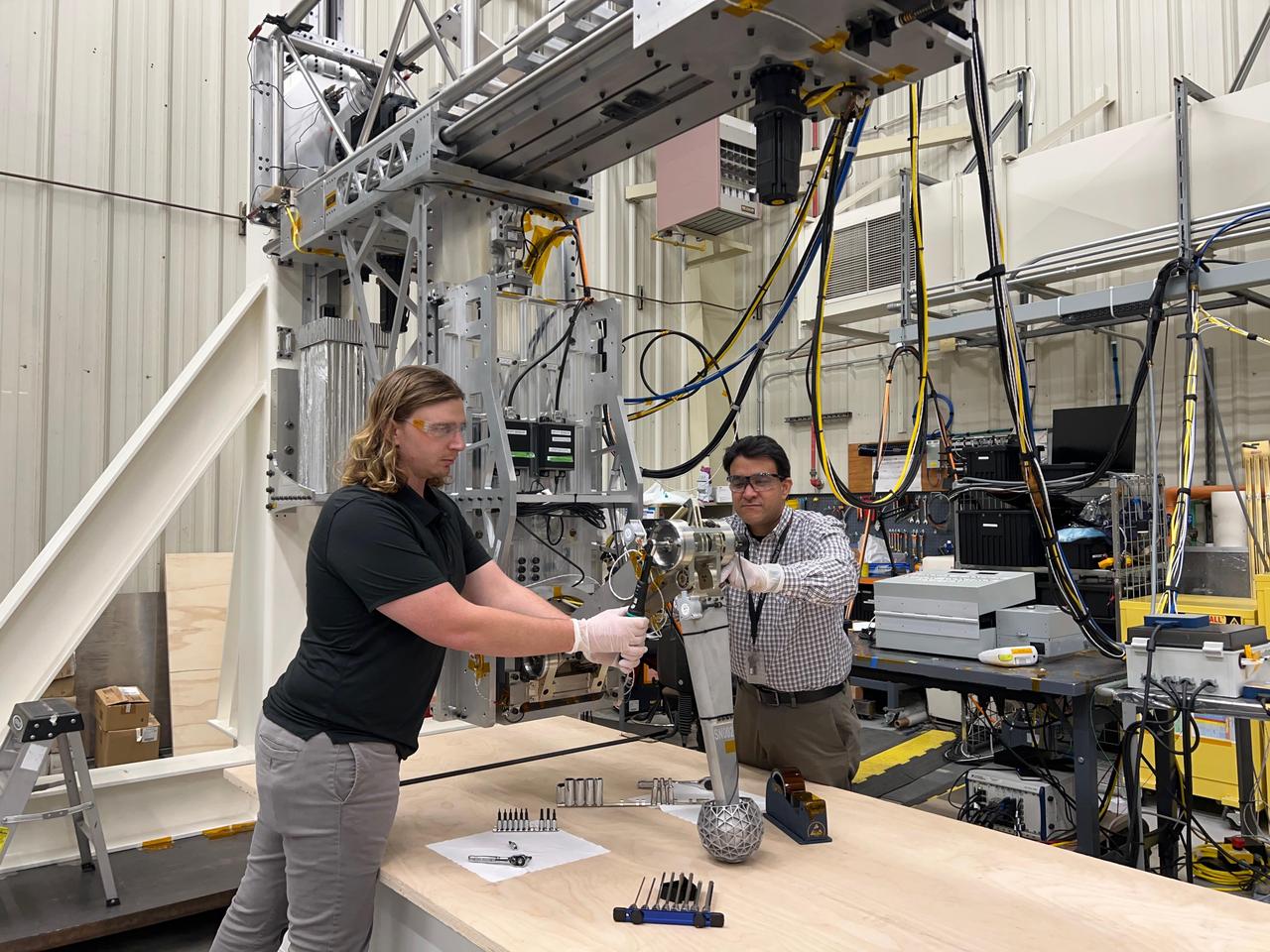
Engineers at NASA's Jet Propulsion Laboratory – from left, Matthew Cameron-Hooper, and Thomas Reynoso – prepare flight-like landing gear in the Europa Lander landing gear testbed in summer 2022. Europa Lander is a concept for a potential future mission that would look for signs of life in the icy surface material of Jupiter's moon Europa. The moon is thought to contain a global ocean of salty water beneath its frozen crust. If life exists in that ocean, signs of its existence called biosignatures could potentially find their way to the surface. In this mission concept, a spacecraft would land on Europa and collect and study samples from about 4 inches (10 centimeters) beneath the surface, looking for signs of life. The Europa Lander landing gear testbed was developed to test and inform the design of the landing gear for the spacecraft: It mimics the landing loads and ground interaction forces that a single flight landing gear would experience when touching down on the Europan surface. It does this by using gravity offloading to simulate the reduced gravity on Europa, and by replicating the mass and inertial properties of a flight lander as well as all the degrees of freedom that the landing gear would experience. https://photojournal.jpl.nasa.gov/catalog/PIA26198
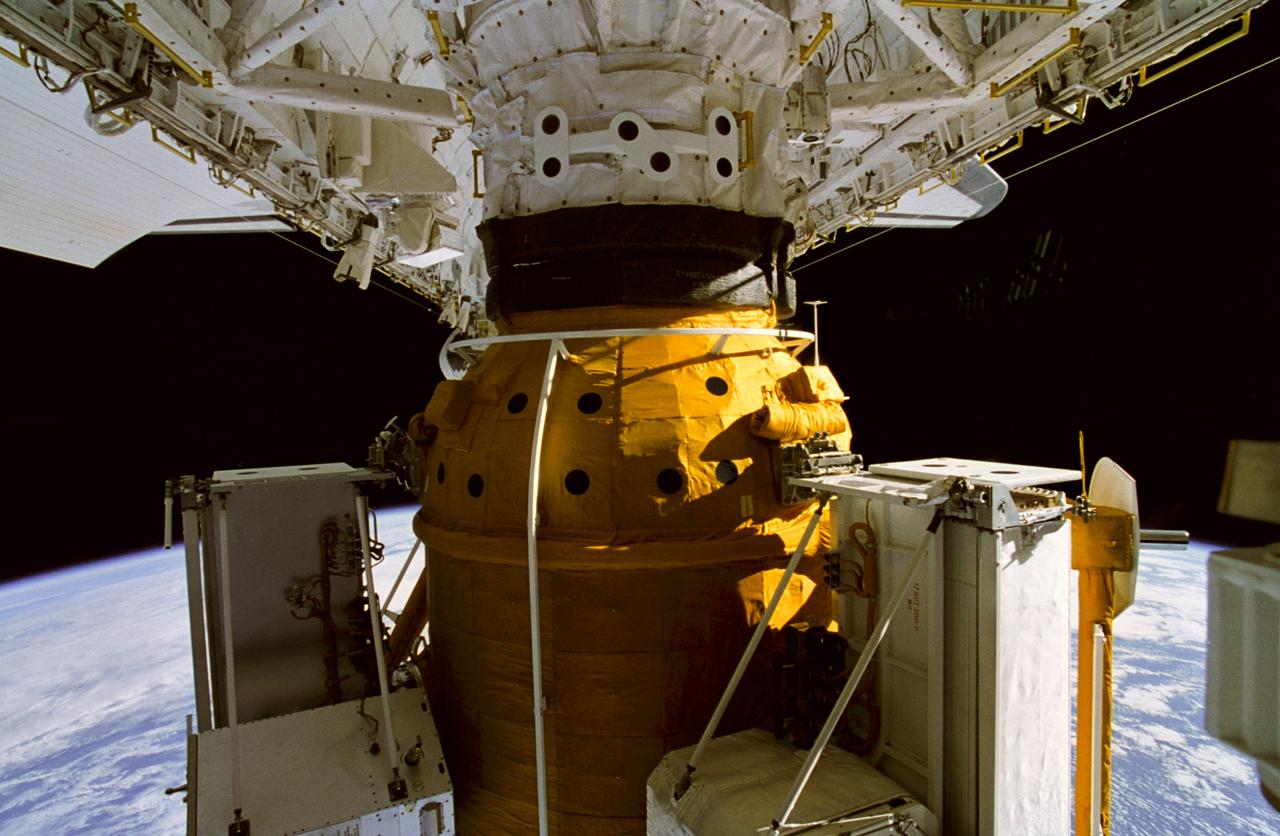
STS074-302-033 (14 Nov 1995) --- A 35mm camera aimed through the Space Shuttle Atlantis? aft windows captured the deployment of the Docking Module (DM), which was later delivered to Russia?s Mir Space Station in Earth-orbit. The Orbiter Docking System (ODS) is partially visible at bottom center. The flight began with a November 12, 1995, launch from Kennedy Space Center (KSC) and ended with landing there on November 20, 1995. The STS-74 crew members were astronauts Kenneth D. Cameron, mission commander; James D. Halsell, pilot; William S. McArthur, Jr., Jerry L. Ross and Canadian astronaut Chris A. Hadfield, all mission specialists. The Mir-20 crew is composed of cosmonauts Yuriy P. Gidzenko, commander; and Sergei V. Avdeyev, engineer; along with the European Space Agency?s (ESA) Thomas Reiter, cosmonaut researcher. Joint activities on the Mir and the Atlantis ended on November 18, 1995, when the two spacecraft separated.
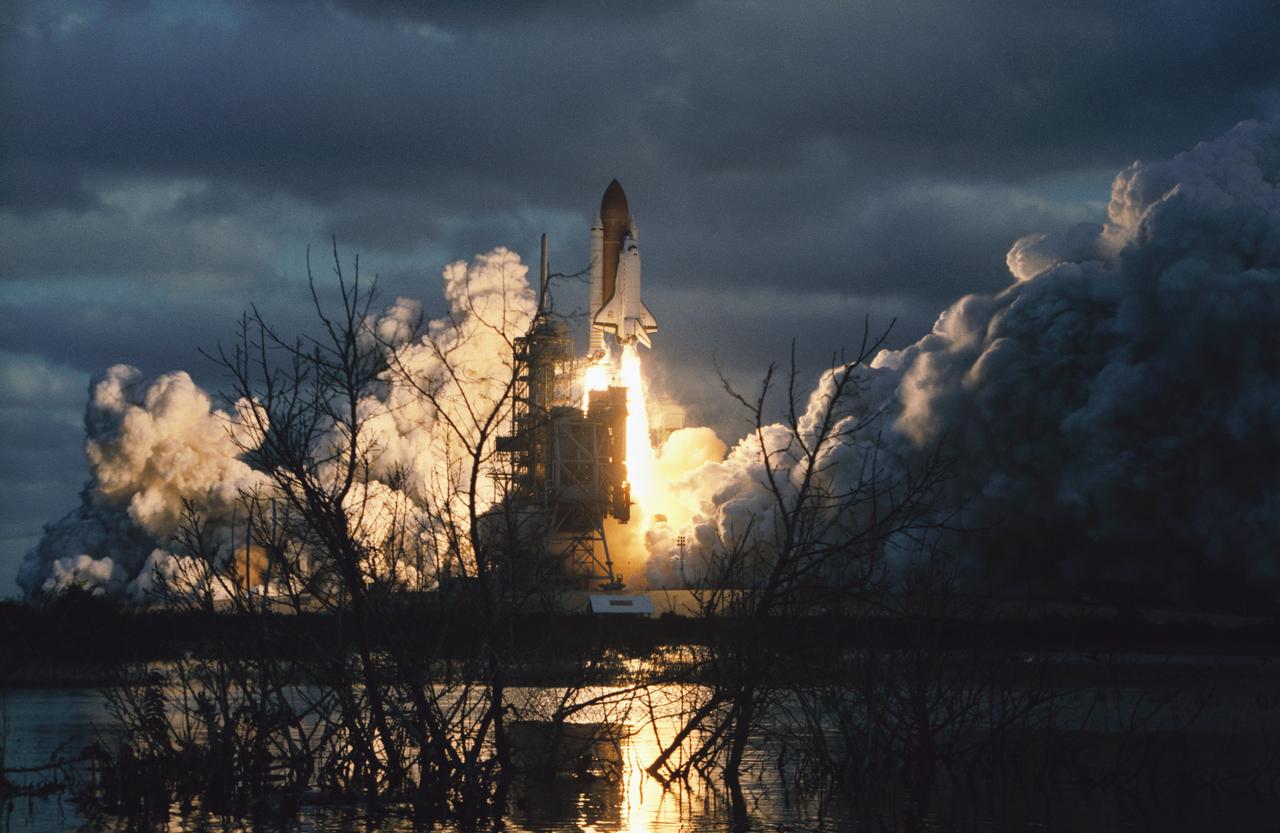
STS074-S-017 (12 Nov 1995) --- With five astronauts aboard, the Space Shuttle Atlantis lifts off from the Kennedy Space Center?s (KSC) Launch Pad 39A. Launch occurred at 7:30:43:071 a.m. (EST), November 12, 1995. The crew members were astronauts Kenneth D. Cameron, mission commander; James D. Halsell Jr., pilot; William S. McArthur Jr., Jerry L. Ross and Canadian astronaut Chris A. Hadfield, all mission specialists. On November 15, 1995, the Space Shuttle Atlantis docked with Russia?s Mir Space Station, on which the NASA astronauts joined the Mir-20 crew. The Mir-20 crew is composed of cosmonauts Yuriy P. Gidzenko, commander; and Sergei V. Avdeyev, engineer; along with the European Space Agency?s (ESA) Thomas Reiter, cosmonaut researcher. Joint activities on the Mir Space Station and the Space Shuttle Atlantis ended on November 18, 1995, when the two spacecraft separated. The November 20, 1995, landing also took place at KSC.
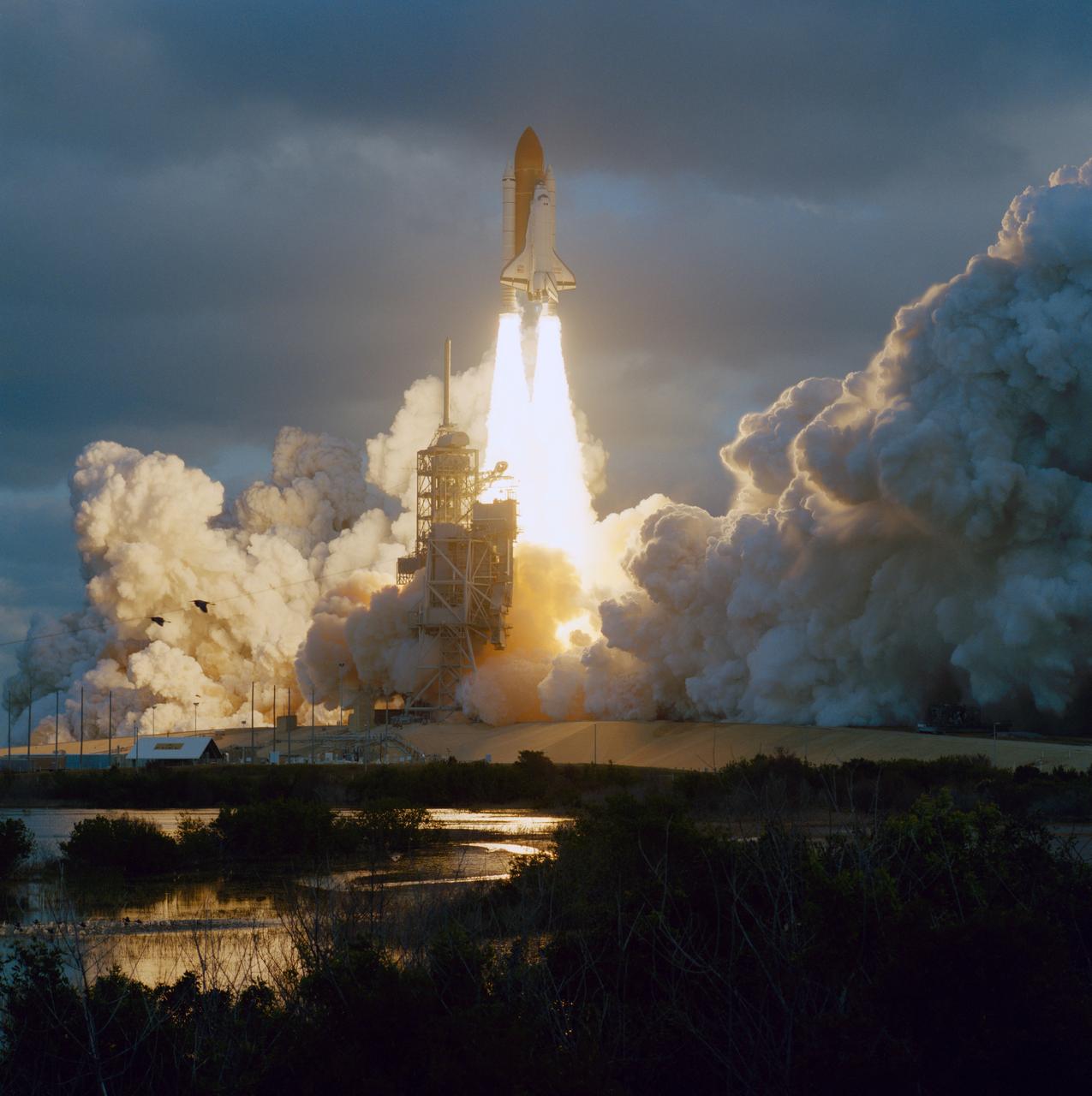
STS074-S-013 (12 Nov 1995) --- With five astronauts aboard, the Space Shuttle Atlantis lifts off from the Kennedy Space Center?s (KSC) Launch Pad 39A. Launch occurred at 7:30:43:071 a.m. (EST), November 12, 1995. The crew members were astronauts Kenneth D. Cameron, mission commander; James D. Halsell Jr., pilot; William S. McArthur Jr., Jerry L. Ross and Canadian astronaut Chris A. Hadfield, all mission specialists. On November 15, 1995, the Space Shuttle Atlantis docked with Russia?s Mir Space Station, on which the NASA astronauts joined the Mir-20 crew. The Mir-20 crew is composed of cosmonauts Yuriy P. Gidzenko, commander; and Sergei V. Avdeyev, engineer; along with the European Space Agency?s (ESA) Thomas Reiter, cosmonaut researcher. Joint activities on the Mir Space Station and the Space Shuttle Atlantis ended on November 18, 1995, when the two spacecraft separated. The November 20, 1995, landing also took place at KSC.
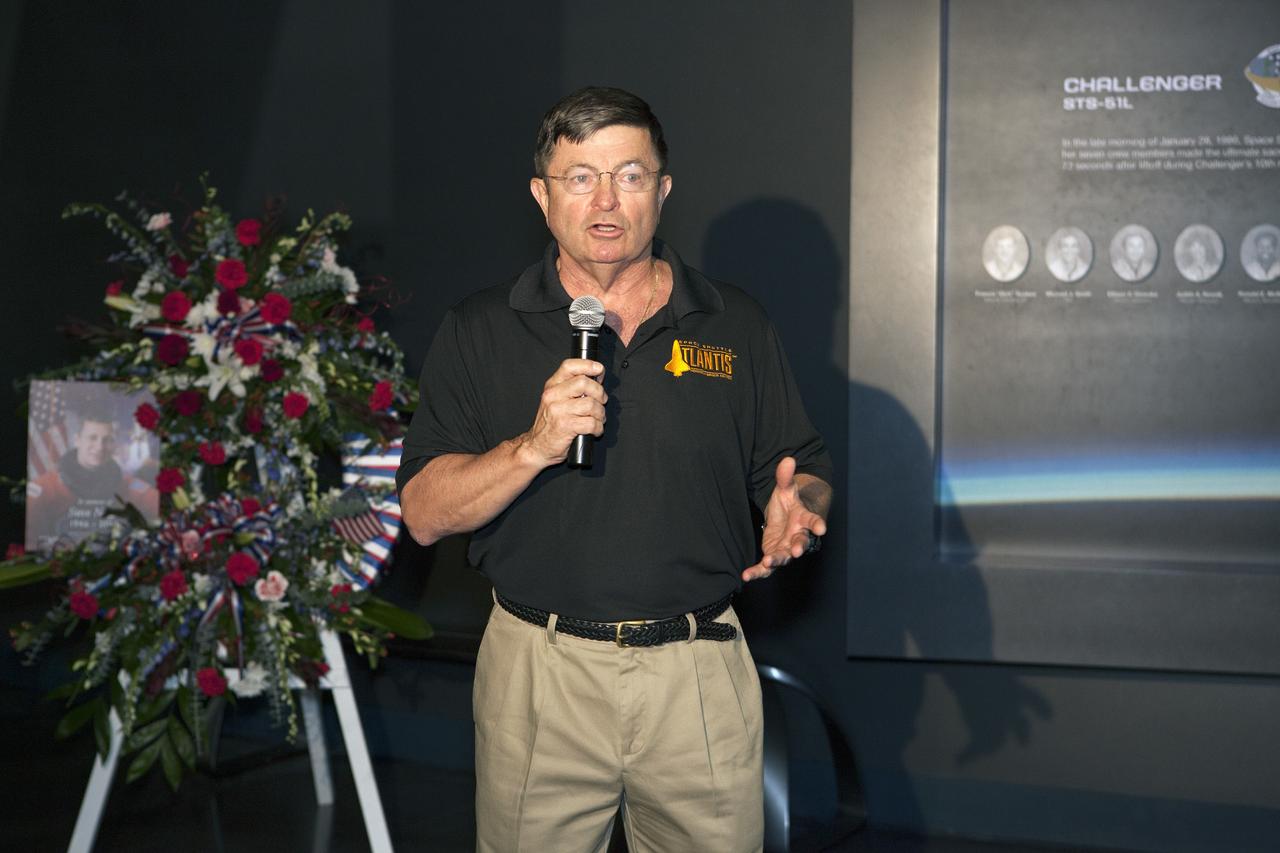
CAPE CANAVERAL, Fla. – Former NASA astronaut Kenneth Cameron speaks at a wreath-laying ceremony honoring former NASA astronaut Steven R. Nagel at the Space Shuttle Atlantis exhibit at the Kennedy Space Center Visitor Complex in Florida. Former NASA astronaut Jon McBride looks on, at right. Nagel died Aug. 21 after a long illness. He was 67 years old. Nagel served as a mission specialist on his first space shuttle flight, STS-51G, in 1985. He was pilot on his second shuttle flight, STS-61A, also in 1985. He commanded his final two flights, STS-37 and STS-55, in 1991 and 1993, respectively. He logged a total of 723 hours in space. To learn more about Nagel's career, visit http://www.nasa.gov/press/2014/august/former-nasa-astronaut-steven-nagel-veteran-of-four-shuttle-flights-dies-at-67/. Photo credit: NASA/Dimitri Gerondidakis
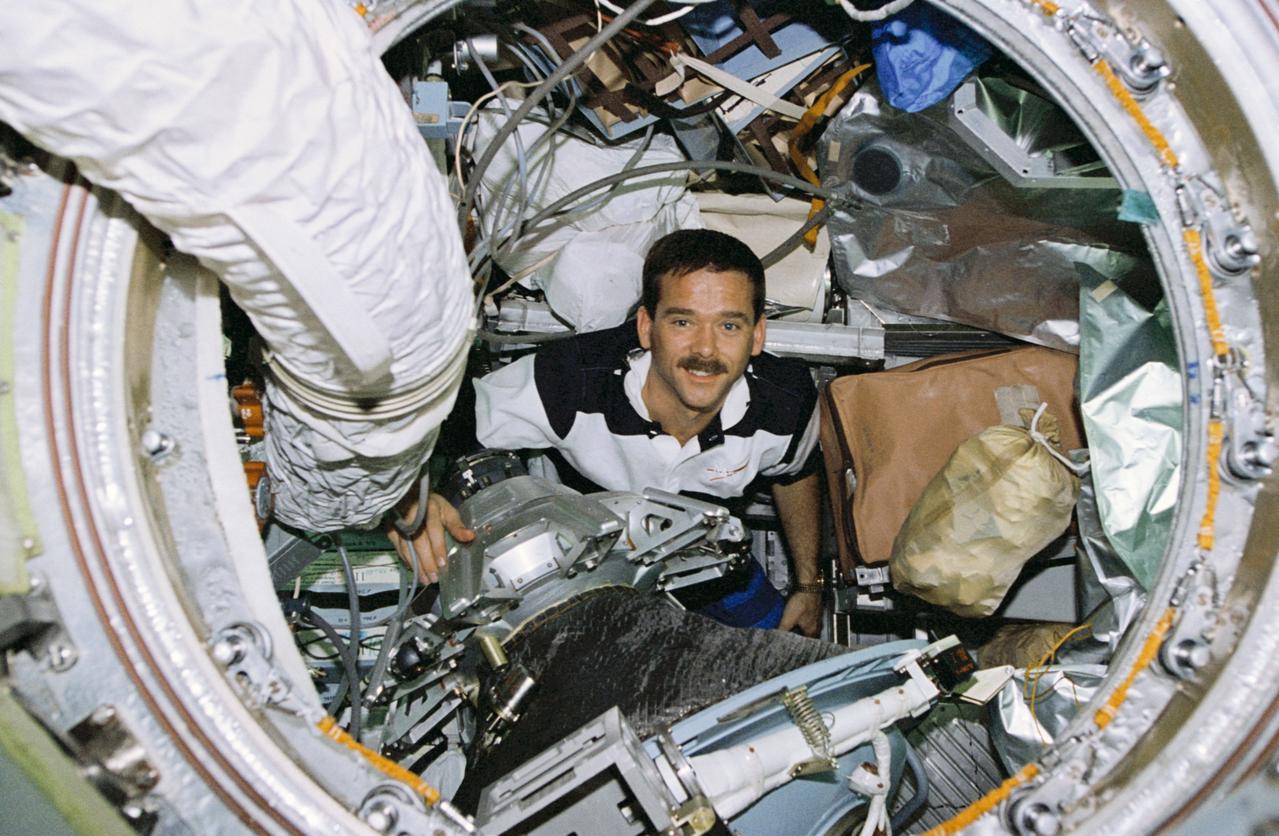
STS074-344-003 (12-20 Nov 1995) --- Astronaut Chris A. Hadfield makes his way among supplies and docking hardware onboard Russia?s Mir Space Station. With five NASA astronauts aboard the Space Shuttle Atlantis, the flight began with a November 12, 1995, launch from Kennedy Space Center (KSC) and ended with landing there on November 20, 1995. The STS-74 crew members were astronauts Kenneth D. Cameron, mission commander; James D. Halsell Jr., pilot; William S. McArthur Jr., Jerry L. Ross and Canadian astronaut Hadfield, all mission specialists. On November 15, 1995, the Space Shuttle Atlantis docked with Russia?s Mir Space Station, on which the NASA astronauts joined the Mir-20 crew. The Mir-20 crew is composed of cosmonauts Yuriy P. Gidzenko, commander; and Sergei V. Avdeyev, engineer; along with the European Space Agency?s (ESA) Thomas Reiter, cosmonaut researcher. Joint activities on the Mir Space Station and the Space Shuttle Atlantis ended on November 18, 1995, when the two spacecraft separated.
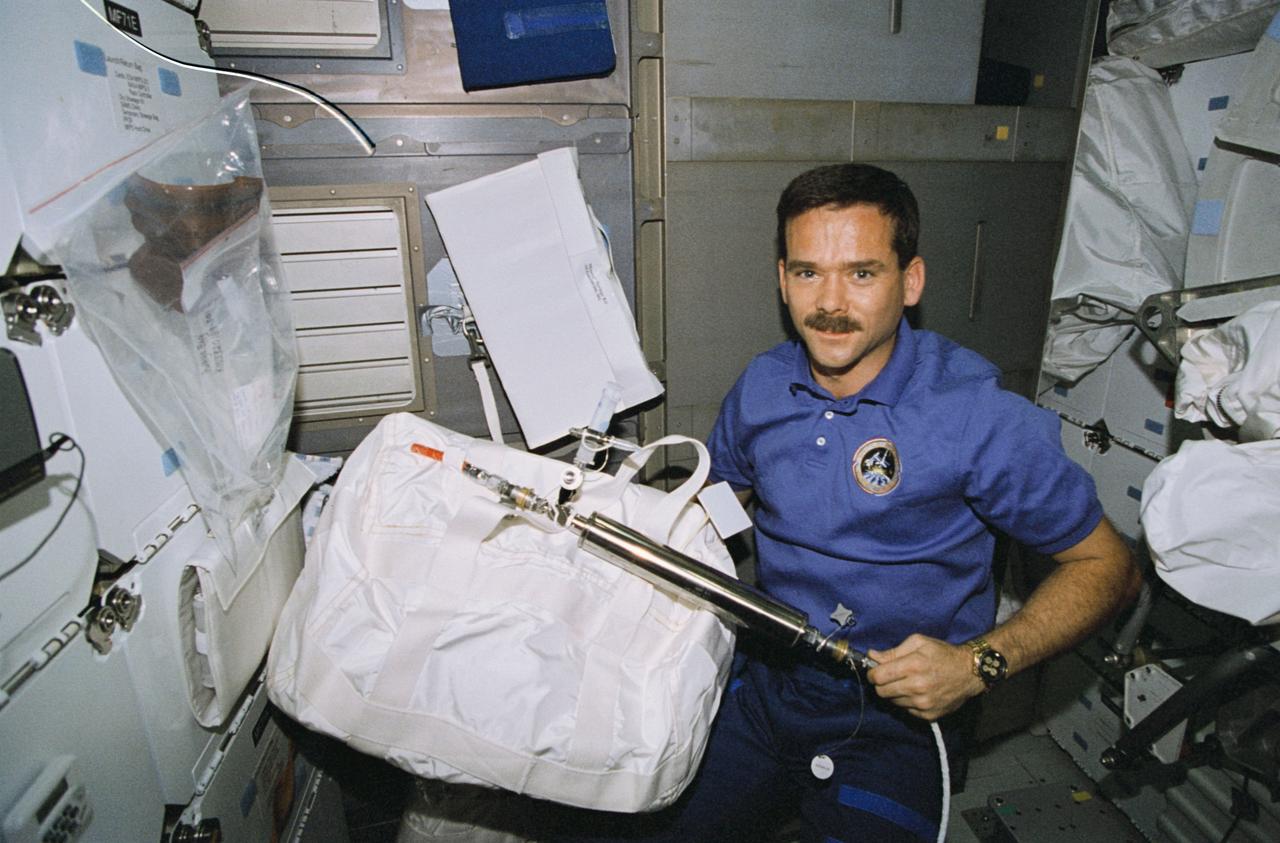
STS074-363-028 (12-20 Nov 1995) --- Canadian astronaut Chris A. Hadfield is seen with a microgravity water production system on the middeck of the Space Shuttle Atlantis. He is filling a fresh water supply bag for Russia?s Mir Space Station. With five NASA astronauts aboard, the flight of the Space Shuttle Atlantis began with a November 12, 1995, launch from Kennedy Space Center (KSC) and ended with landing there on November 20, 1995. The STS-74 crew members were astronauts Kenneth D. Cameron, mission commander; James D. Halsell Jr., pilot; William S. McArthur Jr., Jerry L. Ross and Hadfield, all mission specialists. On November 15, 1995, the Space Shuttle Atlantis docked with the Mir Space Station, on which the STS-74 astronauts joined the Mir-20 crew. The Mir-20 crew is composed of cosmonauts Yuriy P. Gidzenko, commander; and Sergei V. Avdeyev, flight engineer; along with the European Space Agency?s (ESA) Thomas Reiter, cosmonaut researcher. Joint activities on the Mir Space Station and the Space Shuttle Atlantis ended November 18, 1995, when the two spacecraft separated.
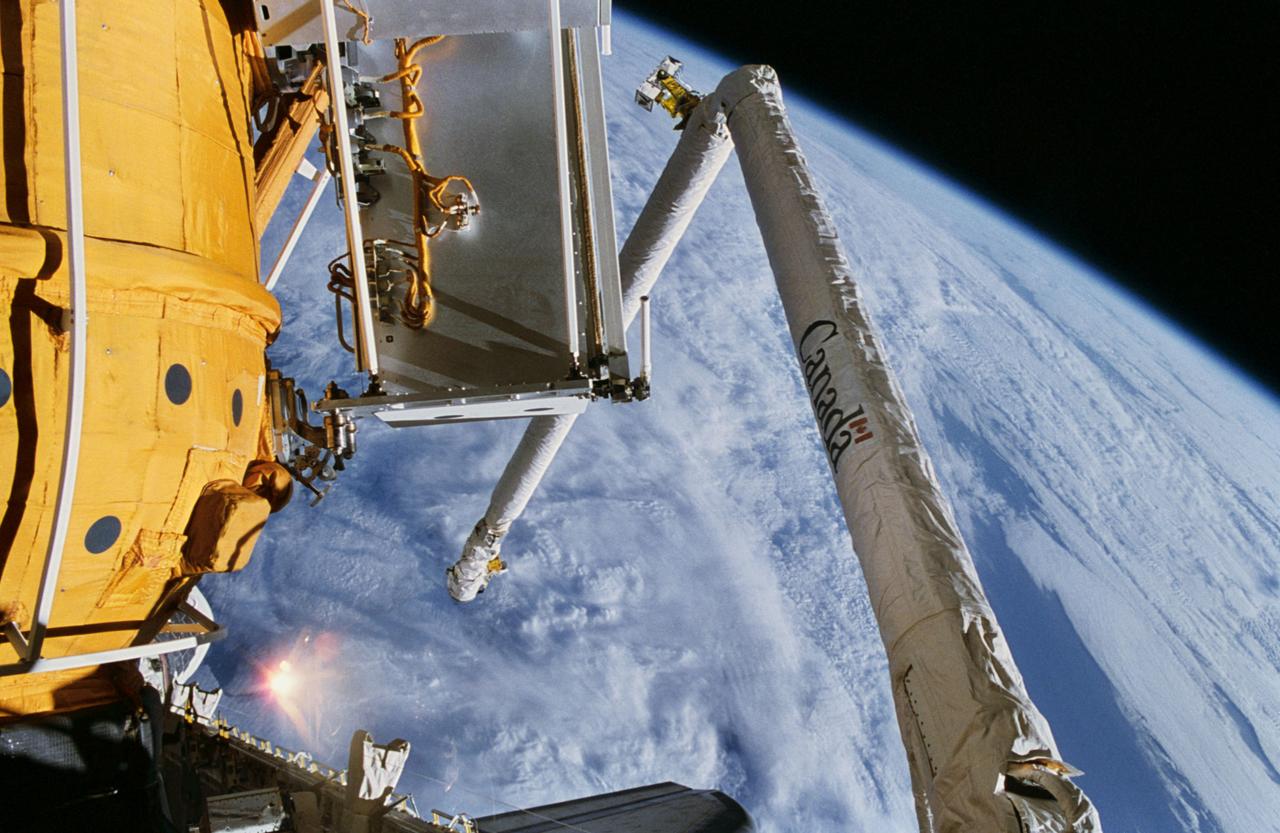
STS074-321-027 (12-20 Nov 1995) --- One of the STS-74 crew members aimed a 35mm camera through aft flight deck windows of the Space Shuttle Atlantis to record this scene of the Remote Manipulator System (RMS) arm and the new Russian Docking Module (DM), backdropped against storm clouds on Earth. With five NASA astronauts aboard, the flight of Atlantis began with a November 12, 1995, launch from Kennedy Space Center (KSC) and ended with landing there on November 20, 1995. The STS-74 crew members were astronauts Kenneth D. Cameron, mission commander; James D. Halsell Jr., pilot; William S. McArthur Jr., Jerry L. Ross and Canadian astronaut Chris A. Hadfield, all mission specialists. On November 15, 1995, the Space Shuttle Atlantis docked with the Mir Space Station, on which the STS-74 astronauts joined the Mir-20 crew. The Mir-20 crew is composed of cosmonauts Yuriy P. Gidzenko, commander; and Sergei V. Avdeyev, flight engineer; along with the European Space Agency?s (ESA) Thomas Reiter, cosmonaut researcher. Joint activities on the Mir Space Station and the Space Shuttle Atlantis ended November 18, 1995, when the two spacecraft separated.
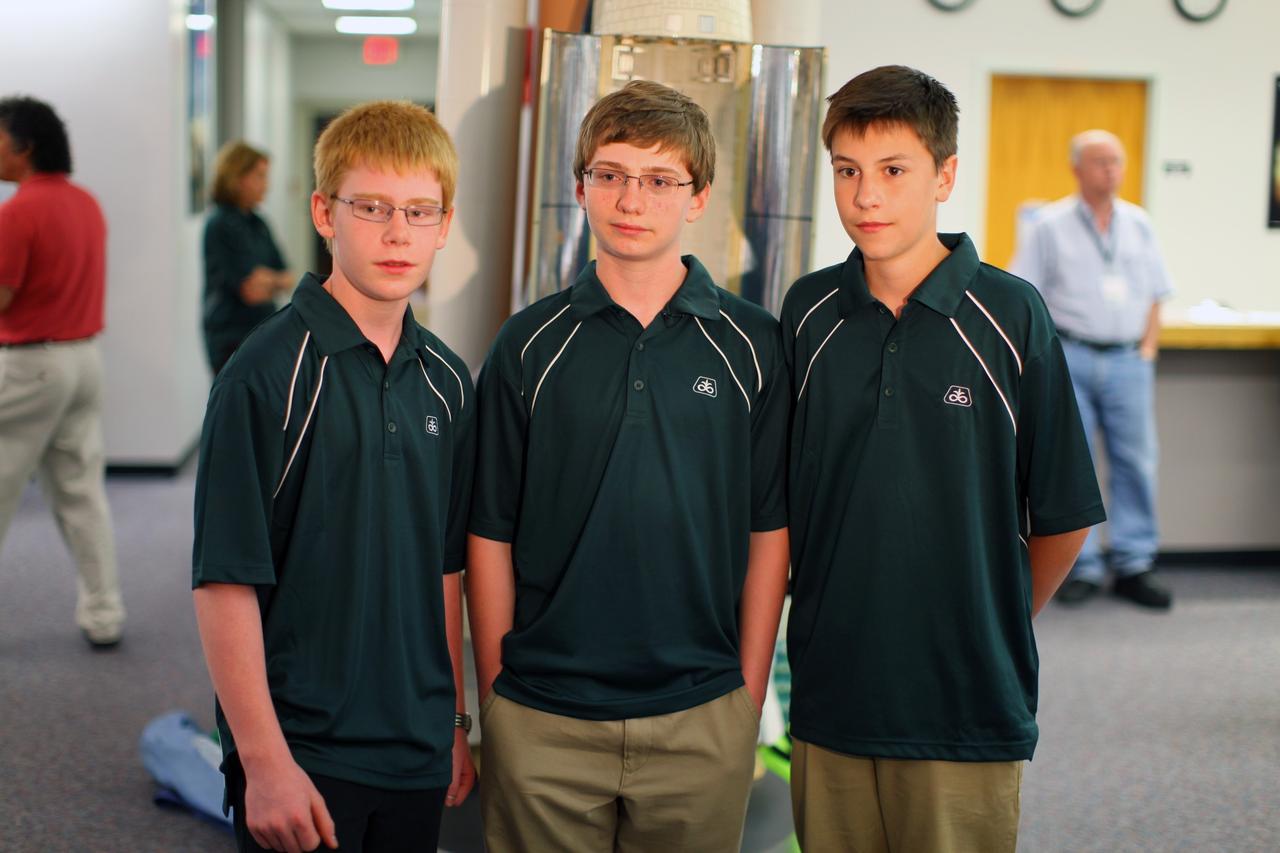
CAPE CANAVERAL, Fla. – Student investigators Cameron Zandstra, Jack Barth and JP Peerbolte are interviewed by the media in the NASA Newsroom at Kennedy Space Center in Florida during prelaunch activities for the SpaceX demonstration test flight. The team members are seventh- and eighth-grade students at Highland Christian School in Lake County, Ind. Their experiment, “The Effect of Microgravity on the Quality and Nutritional Value of the Seed Sprout of Germinated 92M72 Genetically-Modified Soy Bean,” is one of 15 in the Student Spaceflight Experiments Program, or SSEP, being ferried to the International Space Station inside the Dragon capsule. The launch will be the second demonstration test flight for SpaceX for NASA's Commercial Orbital Transportation Services program, or COTS. SSEP, which began operation in June 2010 through a partnership of the National Center for Earth and Space Science Education with NanoRacks LLC, is a U.S. national science, technology, engineering and mathematics STEM education initiative that gives students across a community the opportunity to propose and design real experiments to fly in low Earth orbit. SSEP experiments flew on space shuttle missions STS-134 and STS-135 in 2011, the final flights of space shuttles Endeavour and Atlantis. For more information on SSEP, visit http://www.nasa.gov/audience/foreducators/station-here-we-come.html. Photo credit: NASA/Gianni Woods
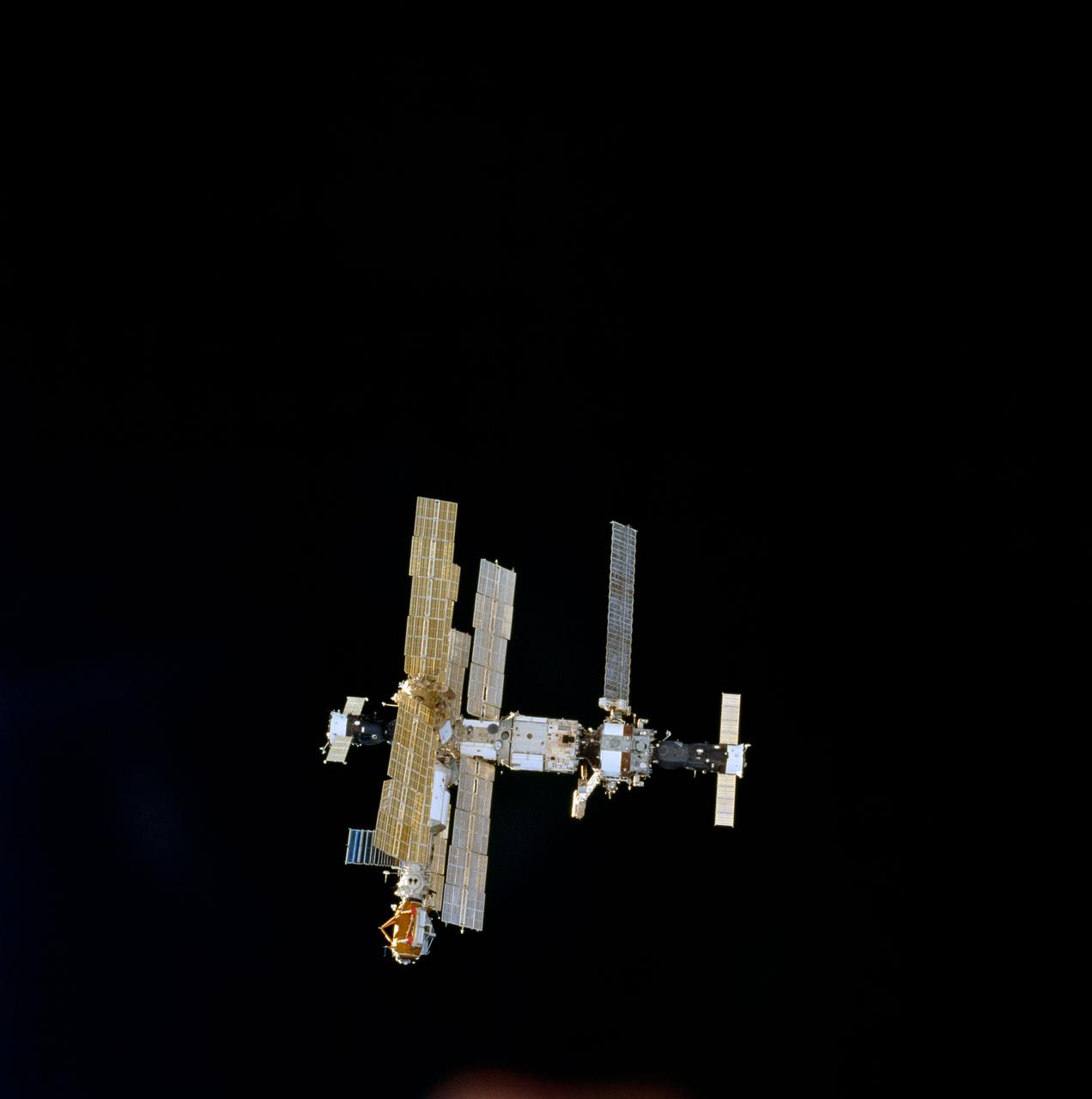
STS074-716-044 (18 Nov 1995) --- With the darkness of space providing the backdrop, this is the Russia?s Mir Space Station as seen from the Space Shuttle Atlantis, not long after the two spacecraft began their relative separation on November 18, 1995. The new Docking Module (DM), delivered by Atlantis over three days earlier, is easily identified in the 70mm frame. With five NASA astronauts aboard the Space Shuttle Atlantis, the flight began with a November 12, 1995, launch from Kennedy Space Center (KSC) and ended with landing there on November 20, 1995. The STS-74 crew members were astronauts Kenneth D. Cameron, mission commander; James D. Halsell Jr., pilot; William S. McArthur Jr., Jerry L. Ross and Canadian astronaut Chris A. Hadfield, all mission specialists. On November 15, 1995, the Space Shuttle Atlantis docked with the Mir Space Station, on which the STS-74 astronauts joined the Mir-20 crew. The Mir-20 crew is composed of cosmonauts Yuriy P. Gidzenko, commander; and Sergei V. Avdeyev, flight engineer; along with the European Space Agency?s (ESA) Thomas Reiter, cosmonaut researcher. Joint activities on the Mir Space Station and the Space Shuttle Atlantis ended November 18, 1995, when the two spacecraft separated.
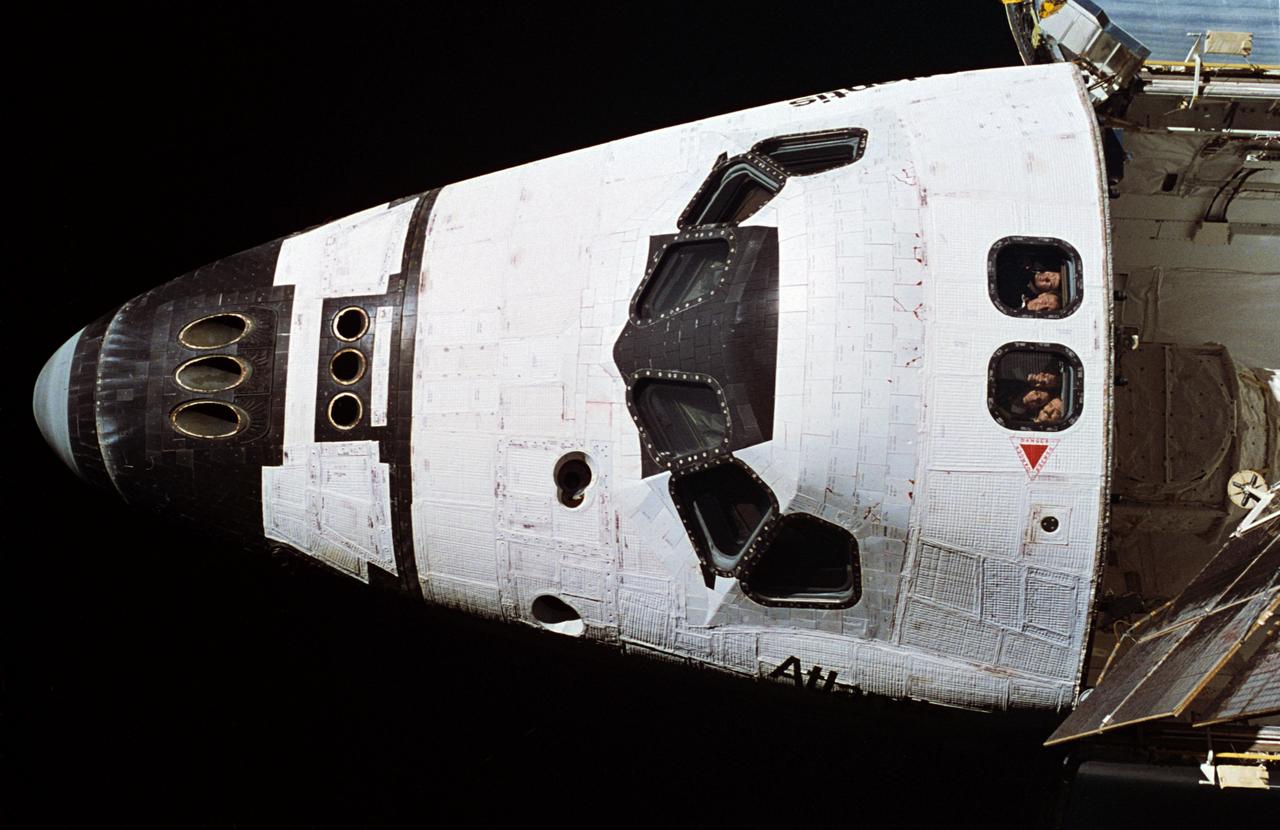
STS074-320-019 (15 Nov 1995) --- The five NASA astronauts aboard the Space Shuttle Atlantis look out overhead windows on the aft flight deck toward their counterparts aboard the Russian Mir Space Station, with which they had just rendezvoused. For orientation purposes, the photo should be held with the nose at frame?s left edge. The STS-74 crew members (from the top) are astronauts Kenneth D. Cameron, mission commander; Jerry L. Ross, mission specialist; James D. Halsell Jr., pilot; William S. McArthur Jr., and Canadian astronaut Chris A. Hadfield, both mission specialists. The flight began with a November 12, 1995, launch from Kennedy Space Center (KSC) and ended with landing there on November 20, 1995. On November 15, 1995, the Space Shuttle Atlantis docked with Russia?s Mir Space Station, on which the STS-74 astronauts joined the Mir-20 crew. The Mir-20 crew is composed of cosmonauts Yuriy P. Gidzenko, commander; and Sergei V. Avdeyev, engineer; along with the European Space Agency?s (ESA) Thomas Reiter, cosmonaut researcher. Joint activities on Mir Space Station and the Space Shuttle ended November 18, 1995, when the two spacecraft separated.
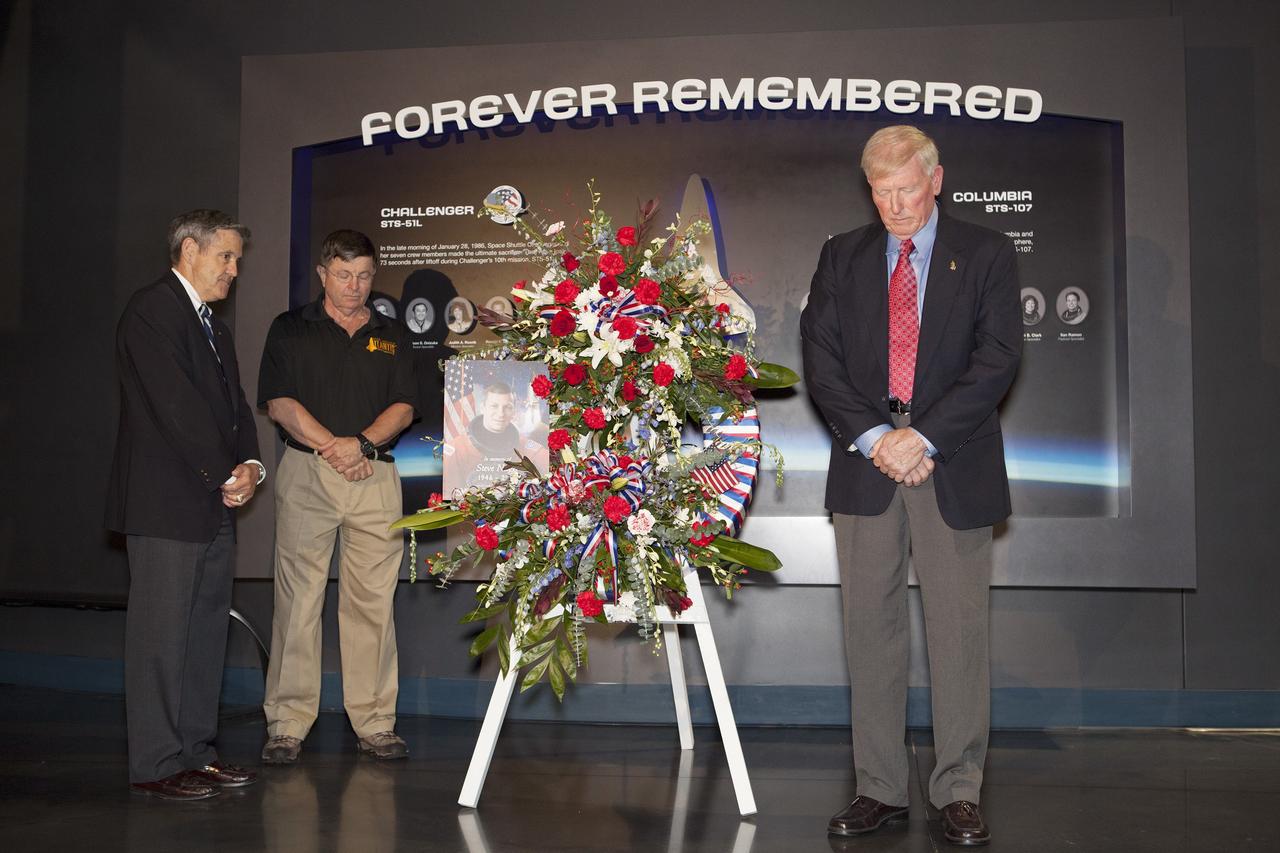
CAPE CANAVERAL, Fla. -- From left, Kennedy Space Center Director Bob Cabana, Kenneth Cameron, and Jon McBride, all former NASA astronauts, pause for reflection after placing a wreath honoring former NASA astronaut Steven R. Nagel at the Space Shuttle Atlantis exhibit at the Kennedy Space Center Visitor Complex in Florida. Nagel died Aug. 21 after a long illness. He was 67 years old. Nagel served as a mission specialist on his first space shuttle flight, STS-51G, in 1985. He was pilot on his second shuttle flight, STS-61A, also in 1985. He commanded his final two flights, STS-37 and STS-55, in 1991 and 1993, respectively. He logged a total of 723 hours in space. To learn more about Nagel's career, visit http://www.nasa.gov/press/2014/august/former-nasa-astronaut-steven-nagel-veteran-of-four-shuttle-flights-dies-at-67/. Photo credit: NASA/Dimitri Gerondidakis
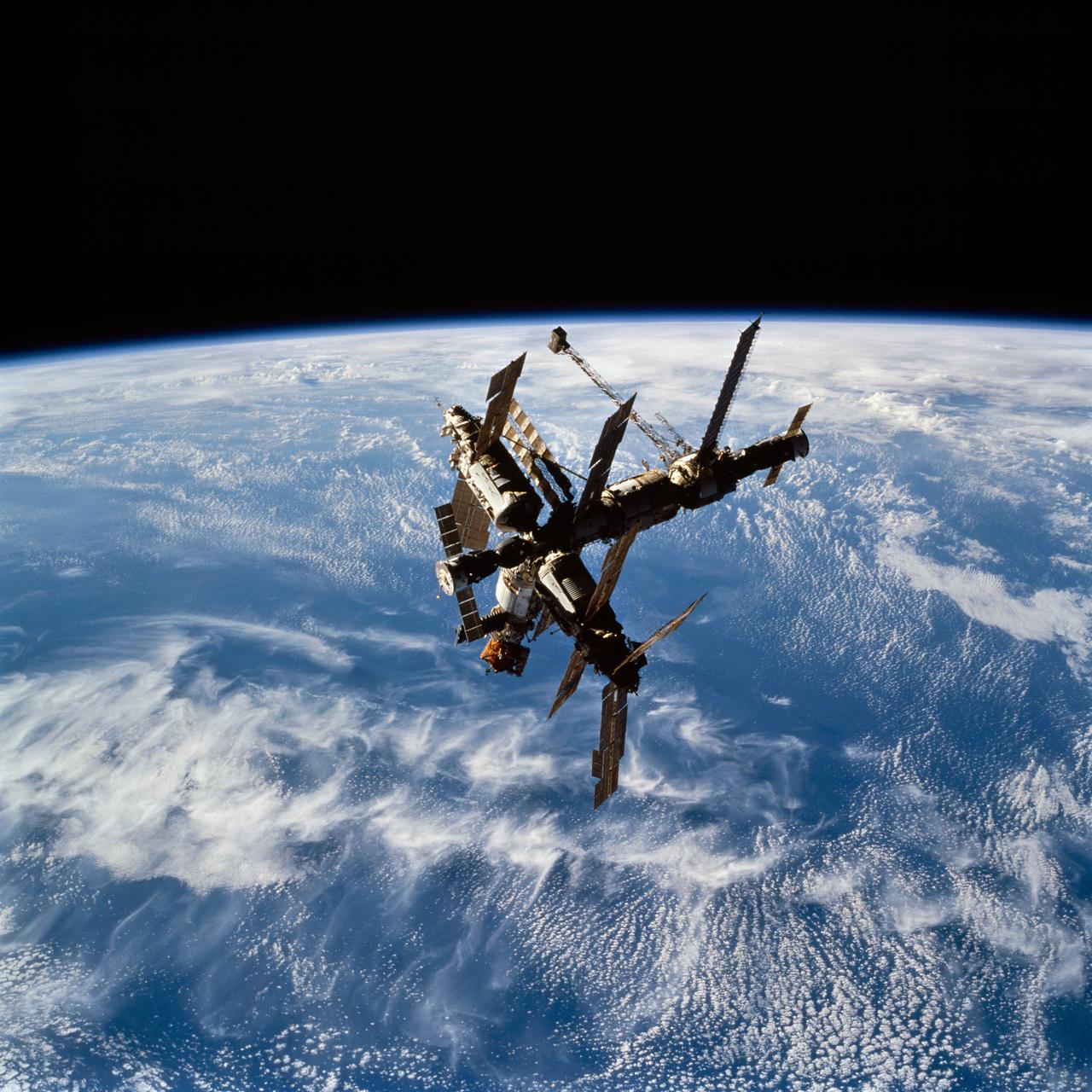
STS074-716-021 (18 Nov 1995) --- With Earth?s horizon providing the backdrop, this is the Russia?s Mir Space Station as seen from the Space Shuttle Atlantis, soon after the two spacecraft began their relative separation on November 18, 1995. With five NASA astronauts aboard the Space Shuttle Atlantis, the flight began with a November 12, 1995, launch from Kennedy Space Center (KSC) and ended with landing there on November 20, 1995. The STS-74 crew members were astronauts Kenneth D. Cameron, mission commander; James D. Halsell Jr., pilot; William S. McArthur Jr., Jerry L. Ross and Canadian astronaut Chris A. Hadfield, all mission specialists. On November 15, 1995, the Space Shuttle Atlantis docked with the Mir Space Station, on which the STS-74 astronauts joined the Mir-20 crew. The Mir-20 crew is composed of cosmonauts Yuriy P. Gidzenko, commander; and Sergei V. Avdeyev, engineer; along with the European Space Agency?s (ESA) Thomas Reiter, cosmonaut researcher. Joint activities on the Mir Space Station and the Space Shuttle Atlantis ended November 18, 1995, when the two spacecraft separated.
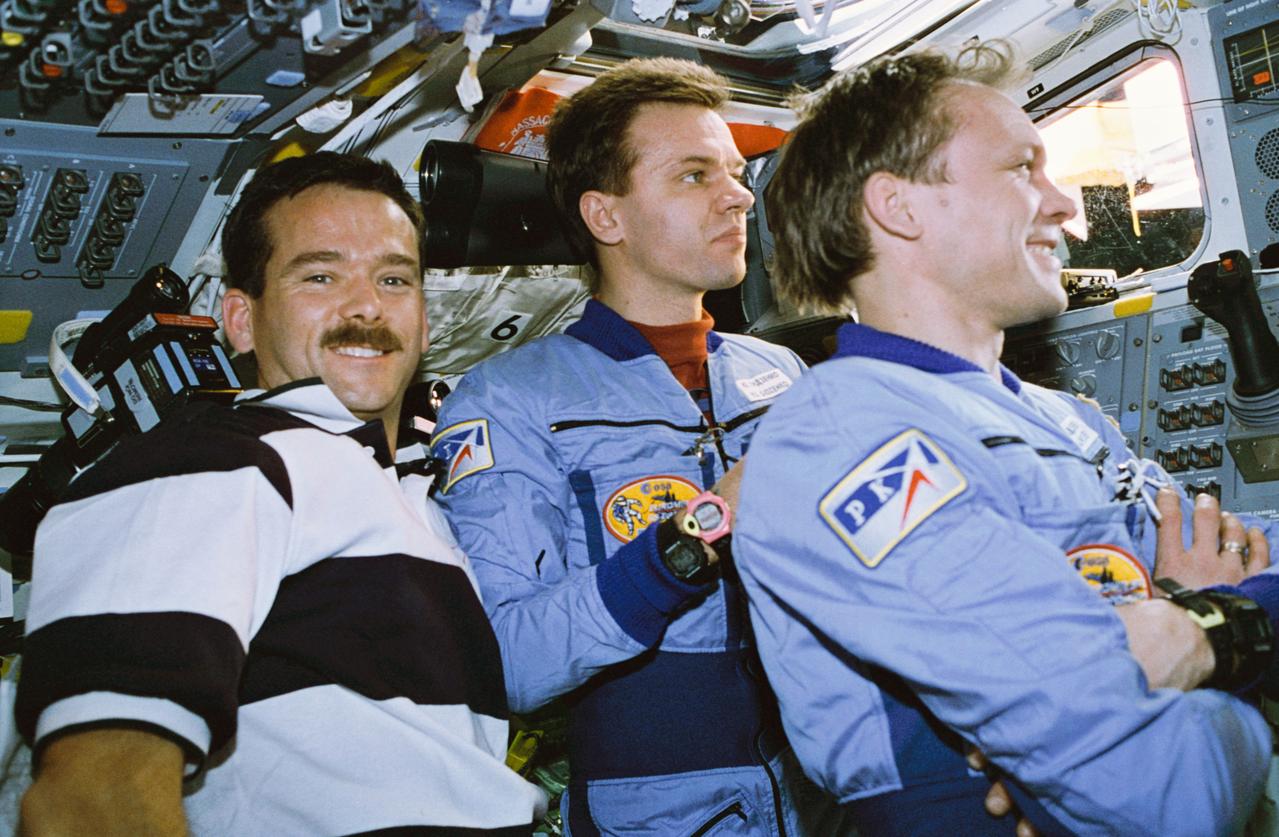
STS074-335-027 (12-20 Nov 1995) --- Astronaut Chris A. Hadfield joins two Mir-20 cosmonauts as they share a unique view through windows on the aft flight deck of the Space Shuttle Atlantis. Cosmonauts Yuriy P. Gidzenko (center), Mir-20 mission commander, and Sergei V. Avdeyev (right), flight engineer, along with the European Space Agency?s (ESA) Thomas Reiter (out of frame), cosmonaut researcher, have been onboard Russia?s Mir Space Station since September 5, 1995. At the time this photo was taken, the Space Shuttle Atlantis is docked with Mir Space Station, which is the subject of interest by the three international spectators here. With five NASA astronauts aboard the Space Shuttle Atlantis, the STS-74 flight began with a November 12, 1995, launch from Kennedy Space Center (KSC) and ended with landing there on November 20, 1995. The STS-74 crew members were astronauts Kenneth D. Cameron, mission commander; James D. Halsell Jr., pilot; William S. McArthur Jr., Jerry L. Ross and Canadian astronaut Hadfield, all mission specialists. Joint activities on the Mir Space Station and the Space Shuttle Atlantis ended on November 18, 1995, when the two spacecraft separated.
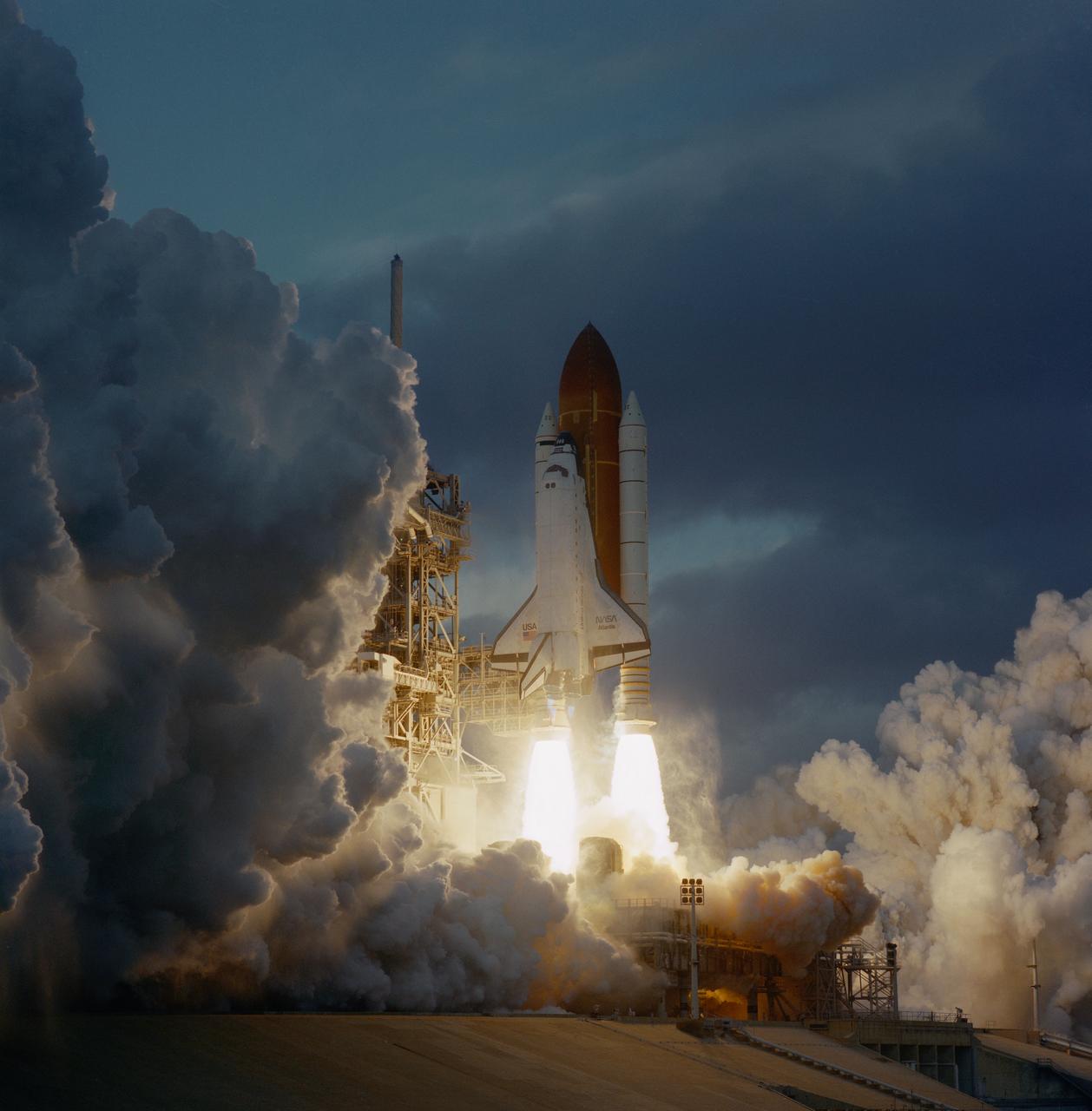
STS074-S-016 (12 Nov 1995) --- With five astronauts aboard, the Space Shuttle Atlantis lifts off from the Kennedy Space Center?s (KSC) Launch Pad 39A. Launch occurred at 7:30:43:071 a.m. (EST), November 12, 1995. The crew members were astronauts Kenneth D. Cameron, mission commander; James D. Halsell Jr., pilot; William S. McArthur Jr., Jerry L. Ross and Canadian astronaut Chris A. Hadfield, all mission specialists. On November 15, 1995, the Space Shuttle Atlantis docked with Russia?s Mir Space Station, on which the NASA astronauts joined the Mir-20 crew. The Mir-20 crew is composed of cosmonauts Yuriy P. Gidzenko, commander; and Sergei V. Avdeyev, engineer; along with the European Space Agency?s (ESA) Thomas Reiter, cosmonaut researcher. Joint activities on the Mir Space Station and the Space Shuttle Atlantis ended on November 18, 1995, when the two spacecraft separated. The November 20, 1995, landing also took place at KSC.
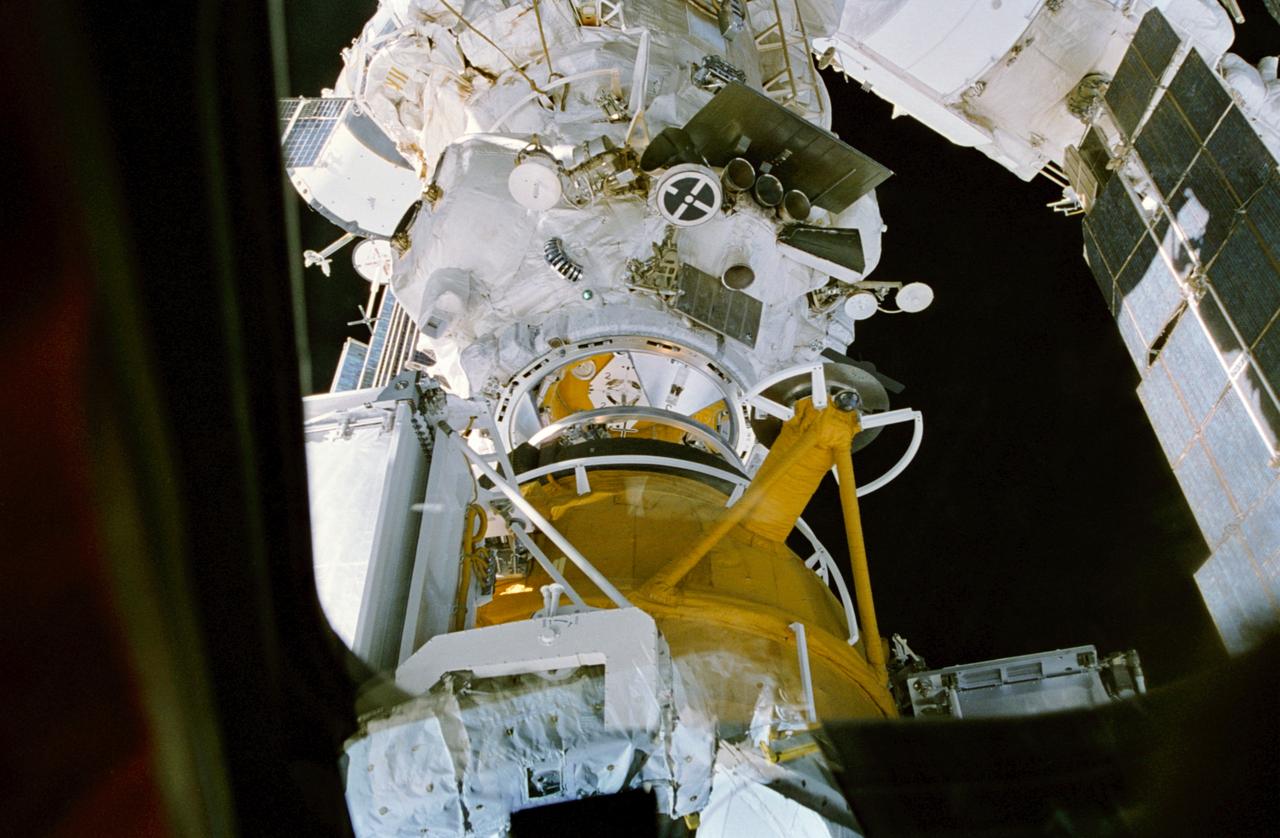
STS074-332-029 (15 Nov 1995) --- A 35mm camera aimed through the Space Shuttle Atlantis? aft windows captured rendezvous and docking operations with the Space Shuttle Atlantis and Russia?s Mir Space Station in Earth-orbit. The new Docking Module (DM), carried into space by the Atlantis is about to contact Kristall on the cluster of Mir components. The flight began with a November 12, 1995, launch from Kennedy Space Center (KSC) and ended with landing there on November 20, 1995. The crew members were astronauts Kenneth D. Cameron, mission commander; James D. Halsell, Jr., pilot; William S. McArthur, Jr., Jerry L. Ross and Canadian astronaut Chris A. Hadfield, all mission specialists. The Mir-20 crew is composed of cosmonauts Yuriy P. Gidzenko, commander; and Sergei V. Avdeyev, engineer; along with the European Space Agency?s (ESA) Thomas Reiter, cosmonaut researcher. Joint activities on the Mir and the Space Shuttle Atlantis ended on November 18, 1995, when the two spacecraft separated.
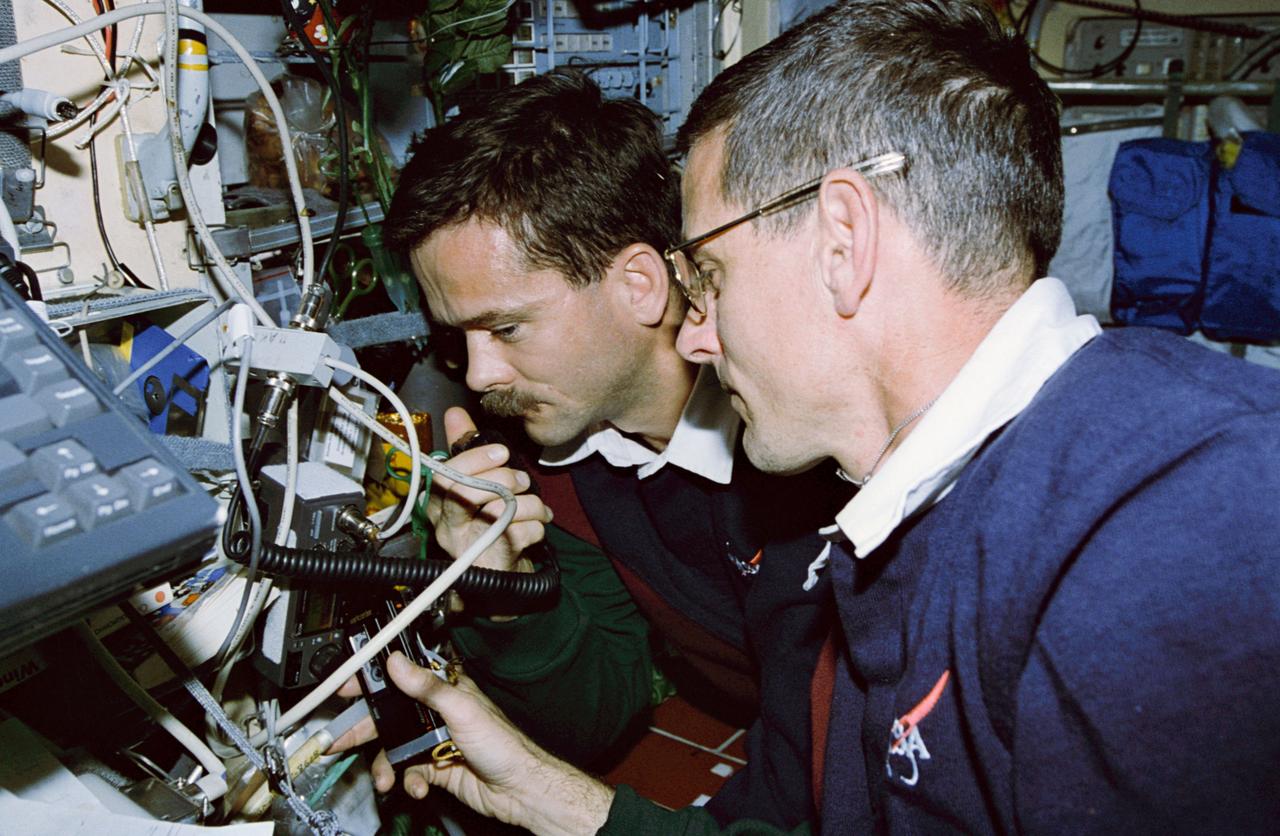
STS074-324-030 (12-20 Nov 1995) --- Astronauts Chris A. Hadfield (left) and William S. McArthur, Jr. check out the Shuttle Amateur Radio Experiment (SAREX) onboard Russia?s Mir Space Station. With five NASA astronauts aboard, the flight of the Space Shuttle Atlantis began with a November 12, 1995, launch from Kennedy Space Center (KSC) and ended with landing there on November 20, 1995. The STS-74 crew members were astronauts Kenneth D. Cameron, mission commander; James D. Halsell, Jr., pilot; McArthur, Jerry L. Ross and Canadian astronaut Hadfield, all mission specialists. On November 15, 1995, the Space Shuttle Atlantis docked with the Mir Space Station, on which the STS-74 astronauts joined the Mir-20 crew. The Mir-20 crew is composed of cosmonauts Yuriy P. Gidzenko, commander; and Sergei V. Avdeyev, flight engineer; along with the European Space Agency?s (ESA) Thomas Reiter, cosmonaut researcher. Joint activities on the Mir Space Station and the Space Shuttle Atlantis ended November 18, 1995, when the two spacecraft separated.
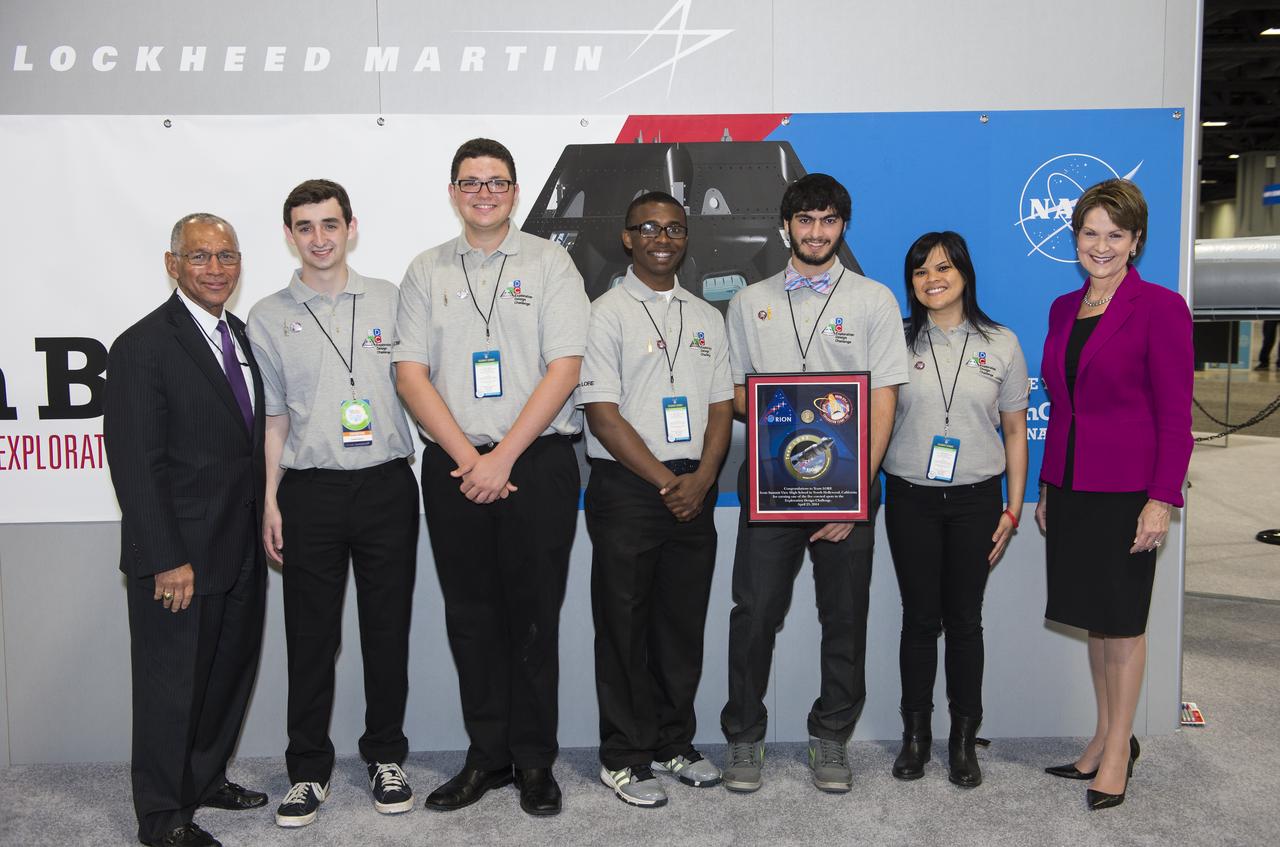
Team Lore poses with NASA Administrator Charles Bolden and Lockheed Martin CEO, Marillyn Hewson. Team Lore was one of the semi-finalists in the Exploration Design Challenge. The goal of the Exploration Design Challenge is for students to research and design ways to protect astronauts from space radiation. The winner of the challenge was announced on April 25, 2014 at the USA Science and Engineering Festival at the Washington Convention Center in Washington, DC. Photo Credit: (NASA/Aubrey Gemignani)
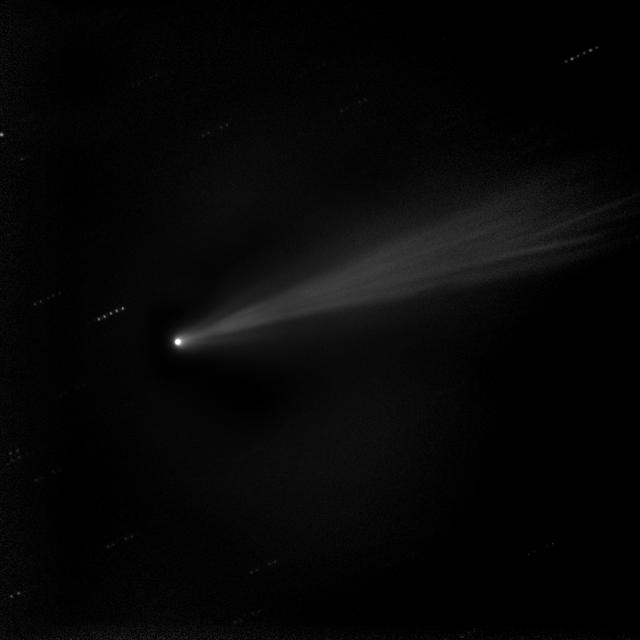
Taken on 19 Nov. 2013, this image shows a composite "stacked" image of comet ISON. These five stacked images of 10 seconds each were taken with the 20" Marshall Space Flight Center telescope in New Mexico. This technique allows the comet's sweeping tail to emerge with more detail. Credit: NASA/MSFC/MEO/Cameron McCarty -------- More details on Comet ISON: Comet ISON began its trip from the Oort cloud region of our solar system and is now travelling toward the sun. The comet will reach its closest approach to the sun on Thanksgiving Day -- 28 Nov 2013 -- skimming just 730,000 miles above the sun's surface. If it comes around the sun without breaking up, the comet will be visible in the Northern Hemisphere with the naked eye, and from what we see now, ISON is predicted to be a particularly bright and beautiful comet. Catalogued as C/2012 S1, Comet ISON was first spotted 585 million miles away in September 2012. This is ISON's very first trip around the sun, which means it is still made of pristine matter from the earliest days of the solar system’s formation, its top layers never having been lost by a trip near the sun. Comet ISON is, like all comets, a dirty snowball made up of dust and frozen gases like water, ammonia, methane and carbon dioxide -- some of the fundamental building blocks that scientists believe led to the formation of the planets 4.5 billion years ago. NASA has been using a vast fleet of spacecraft, instruments, and space- and Earth-based telescope, in order to learn more about this time capsule from when the solar system first formed. The journey along the way for such a sun-grazing comet can be dangerous. A giant ejection of solar material from the sun could rip its tail off. Before it reaches Mars -- at some 230 million miles away from the sun -- the radiation of the sun begins to boil its water, the first step toward breaking apart. And, if it survives all this, the intense radiation and pressure as it flies near the surface of the sun could destroy it altogether. This collection of images show ISON throughout that journey, as scientists watched to see whether the comet would break up or remain intact. The comet reaches its closest approach to the sun on Thanksgiving Day -- Nov. 28, 2013 -- skimming just 730,000 miles above the sun’s surface. If it comes around the sun without breaking up, the comet will be visible in the Northern Hemisphere with the naked eye, and from what we see now, ISON is predicted to be a particularly bright and beautiful comet. ISON stands for International Scientific Optical Network, a group of observatories in ten countries who have organized to detect, monitor, and track objects in space. ISON is managed by the Keldysh Institute of Applied Mathematics, part of the Russian Academy of Sciences. <b><a href="http://www.nasa.gov/audience/formedia/features/MP_Photo_Guidelines.html" rel="nofollow">NASA image use policy.</a></b> <b><a href="http://www.nasa.gov/centers/goddard/home/index.html" rel="nofollow">NASA Goddard Space Flight Center</a></b> enables NASA’s mission through four scientific endeavors: Earth Science, Heliophysics, Solar System Exploration, and Astrophysics. Goddard plays a leading role in NASA’s accomplishments by contributing compelling scientific knowledge to advance the Agency’s mission. <b>Follow us on <a href="http://twitter.com/NASA_GoddardPix" rel="nofollow">Twitter</a></b> <b>Like us on <a href="http://www.facebook.com/pages/Greenbelt-MD/NASA-Goddard/39501</b>
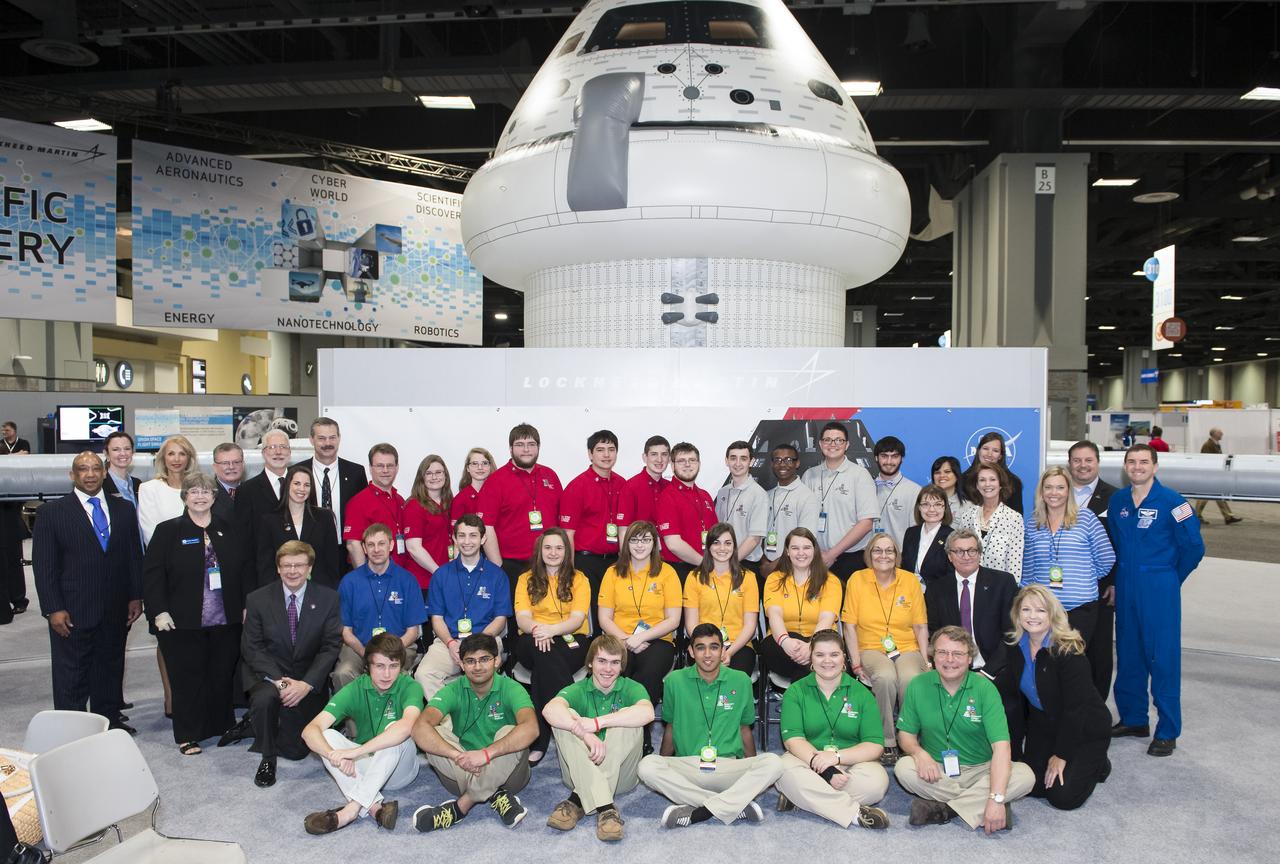
Sponsors of all of the semi-finalist teams in the Exploration Design Challenge pose for a group photo with the teams. Team ARES from the Governors School for Science and Technology in Hampton, Va. won the challenge with their radiation shield design, which will be built and flown aboard the Orion/EFT-1. The award was announced at the USA Science and Engineering Festival on April 25, 2014 at the Washington Convention Center. Photo Credit: (NASA/Aubrey Gemignani)
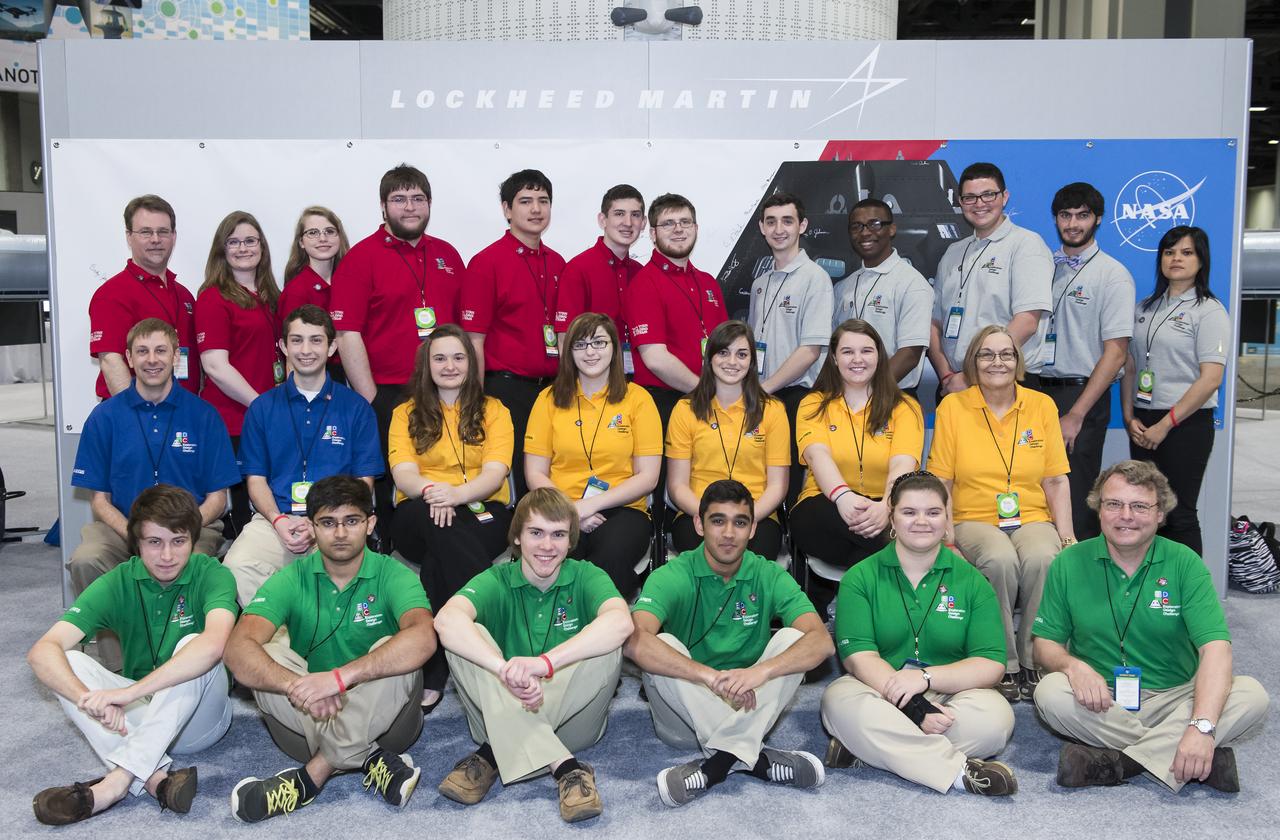
Pictured are all Semi-finalist teams in the Exploration Design Challenge. NASA Administrator, Charles Bolden and Lockheed Martin CEO, Marillyn Hewson announced the winner of the Exploration Design Challenge at the USA Science and Engineering Festival on April 25, 2014. The goal of the challenge was for students to research and design ways to protect astronauts from space radiation. The winning team's design will be built and flown aboard the Orion/EFT-1. The USA Science and Engineering Festival is taking place at the Washington Convention Center in Washington, DC on April 26 and 27, 2014. Photo Credit: (NASA/Aubrey Gemignani)