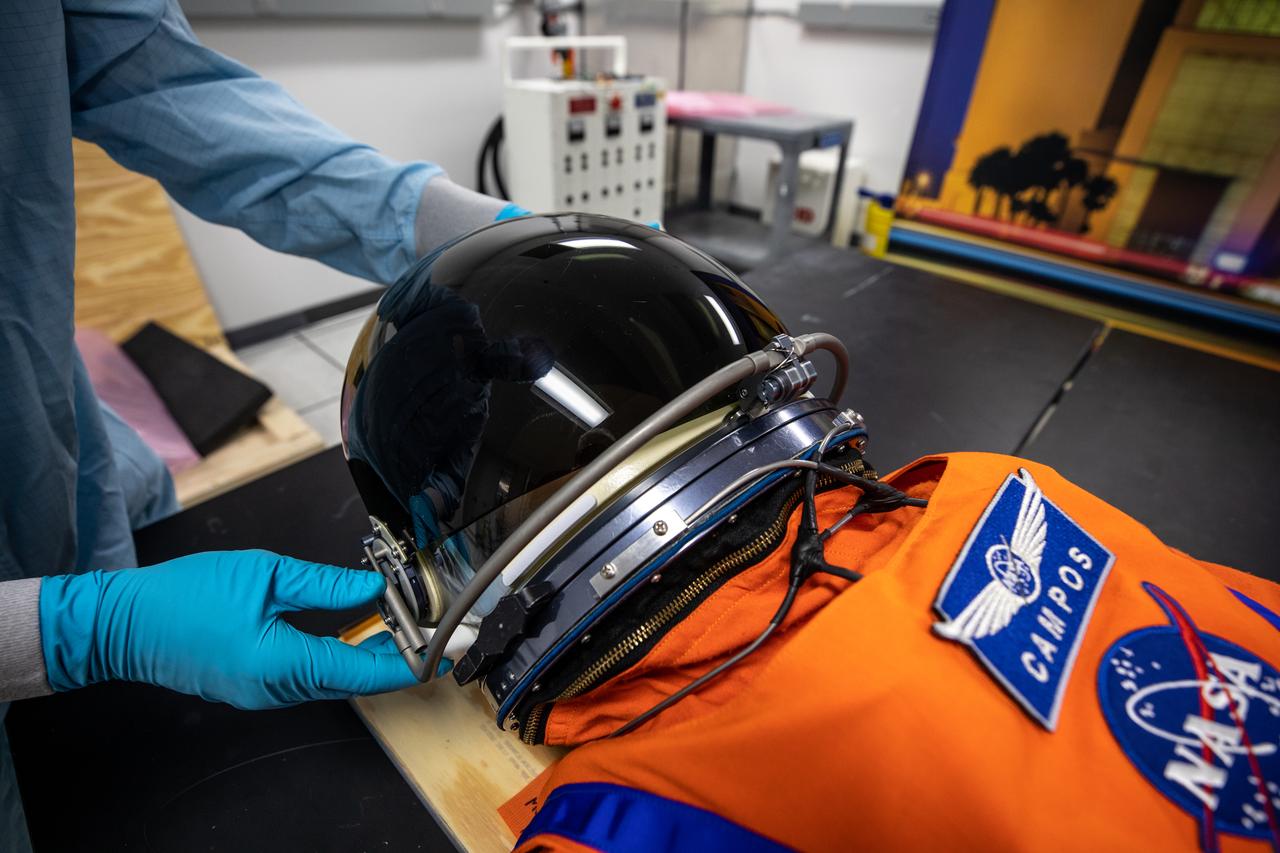
Teams from Johnson Space Center, Exploration Ground Systems, and Jacobs TOSC conduct final inspections of Moonikin “Campos” on Nov. 9, 2021, inside the Space Station Processing Facility at NASA’s Kennedy Space Center in Florida. Moonikin “Campos” will be installed into the Orion crew module. Technicians checked connectivity and performed fit checks on his flight suit to ensure he is ready for flight aboard the Artemis flight test. Artemis I will be an uncrewed test flight of the Orion spacecraft and Space Launch System rocket as an integrated system ahead of crewed flights to the Moon. Under Artemis, NASA aims to land the first woman and first person of color on the Moon and establish sustainable lunar exploration.
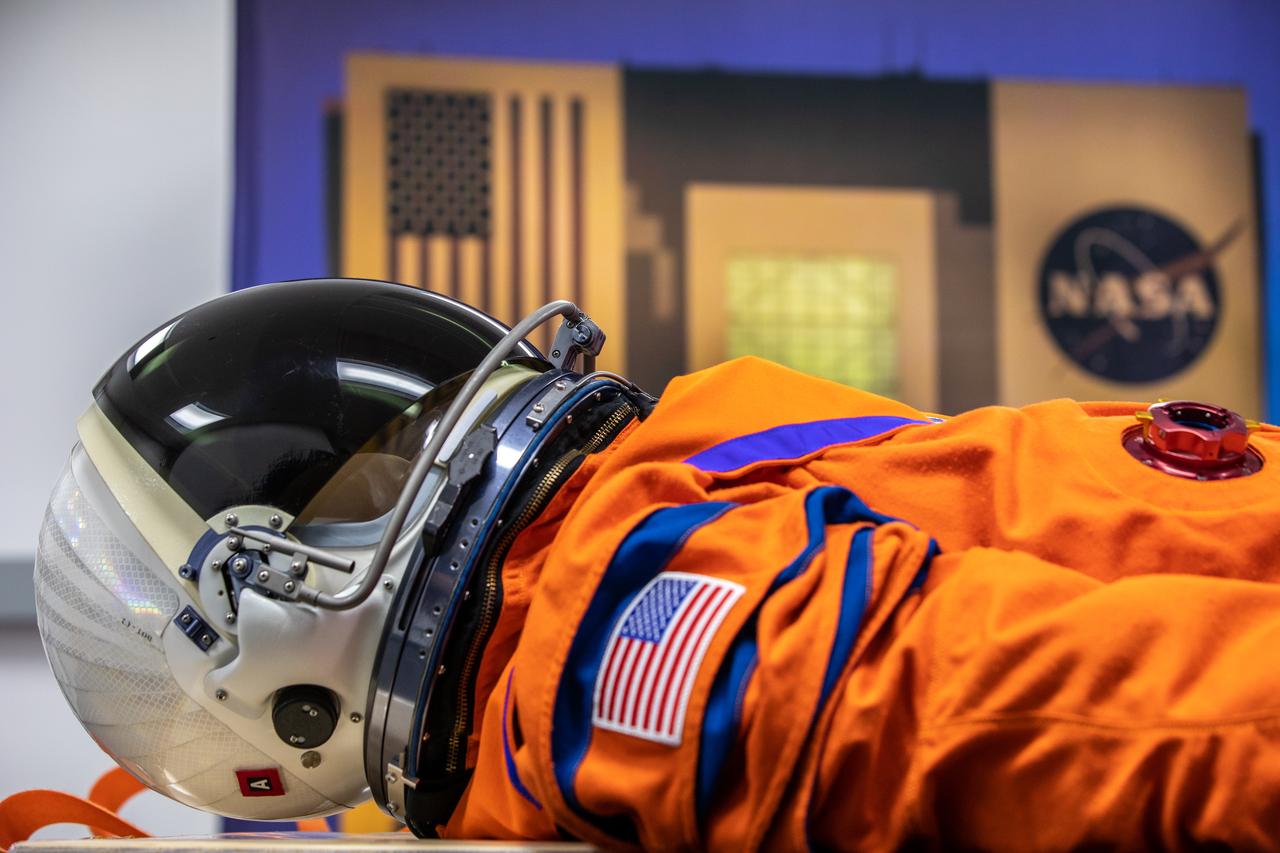
Teams from Johnson Space Center, Exploration Ground Systems, and Jacobs TOSC conduct final inspections of Moonikin “Campos” on Nov. 9, 2021, inside the Space Station Processing Facility at NASA’s Kennedy Space Center in Florida. Moonikin “Campos” will be installed into the Orion crew module. Technicians checked connectivity and performed fit checks on his flight suit to ensure he is ready for flight aboard the Artemis flight test. Artemis I will be an uncrewed test flight of the Orion spacecraft and Space Launch System rocket as an integrated system ahead of crewed flights to the Moon. Under Artemis, NASA aims to land the first woman and first person of color on the Moon and establish sustainable lunar exploration.
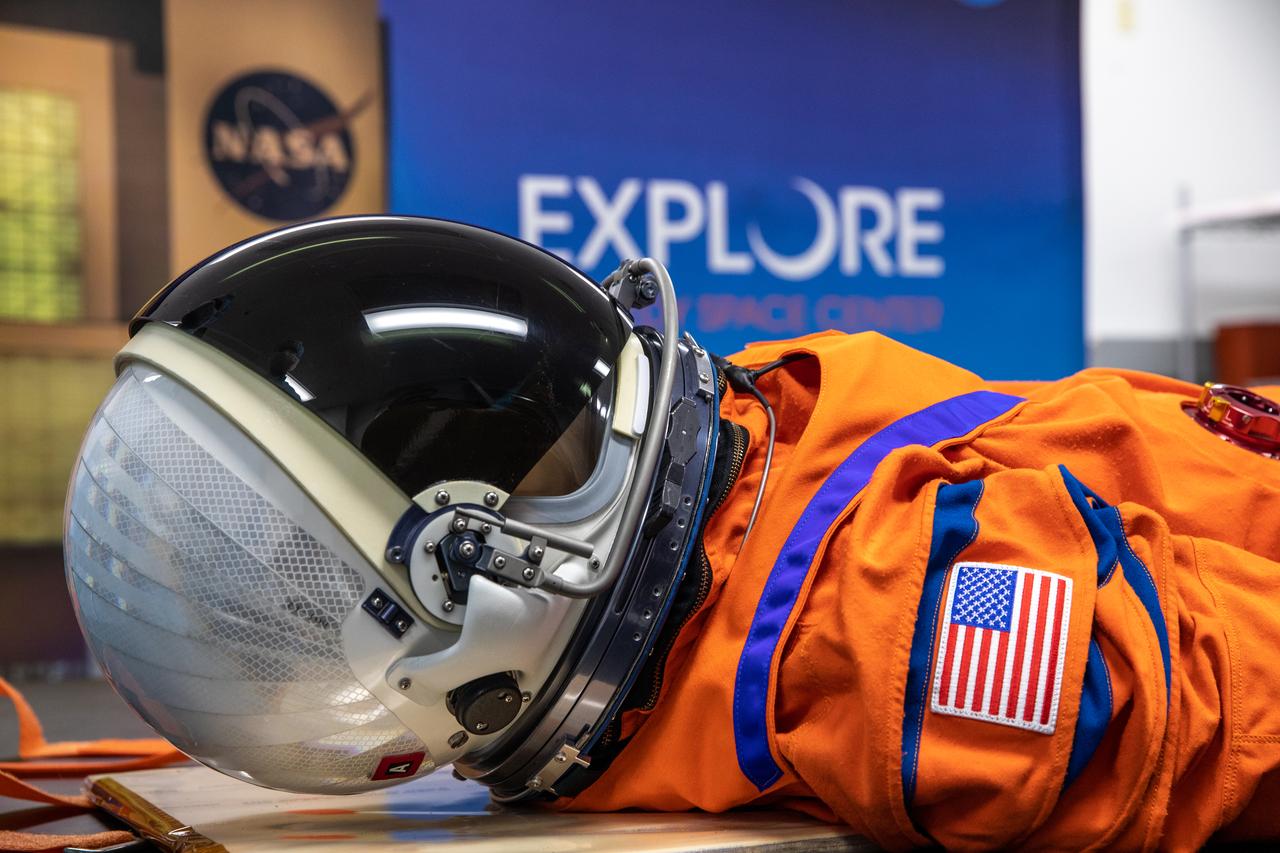
Teams from Johnson Space Center, Exploration Ground Systems, and Jacobs TOSC conduct final inspections of Moonikin “Campos” on Nov. 9, 2021, inside the Space Station Processing Facility at NASA’s Kennedy Space Center in Florida. Moonikin “Campos” will be installed into the Orion crew module. Technicians checked connectivity and performed fit checks on his flight suit to ensure he is ready for flight aboard the Artemis flight test. Artemis I will be an uncrewed test flight of the Orion spacecraft and Space Launch System rocket as an integrated system ahead of crewed flights to the Moon. Under Artemis, NASA aims to land the first woman and first person of color on the Moon and establish sustainable lunar exploration.
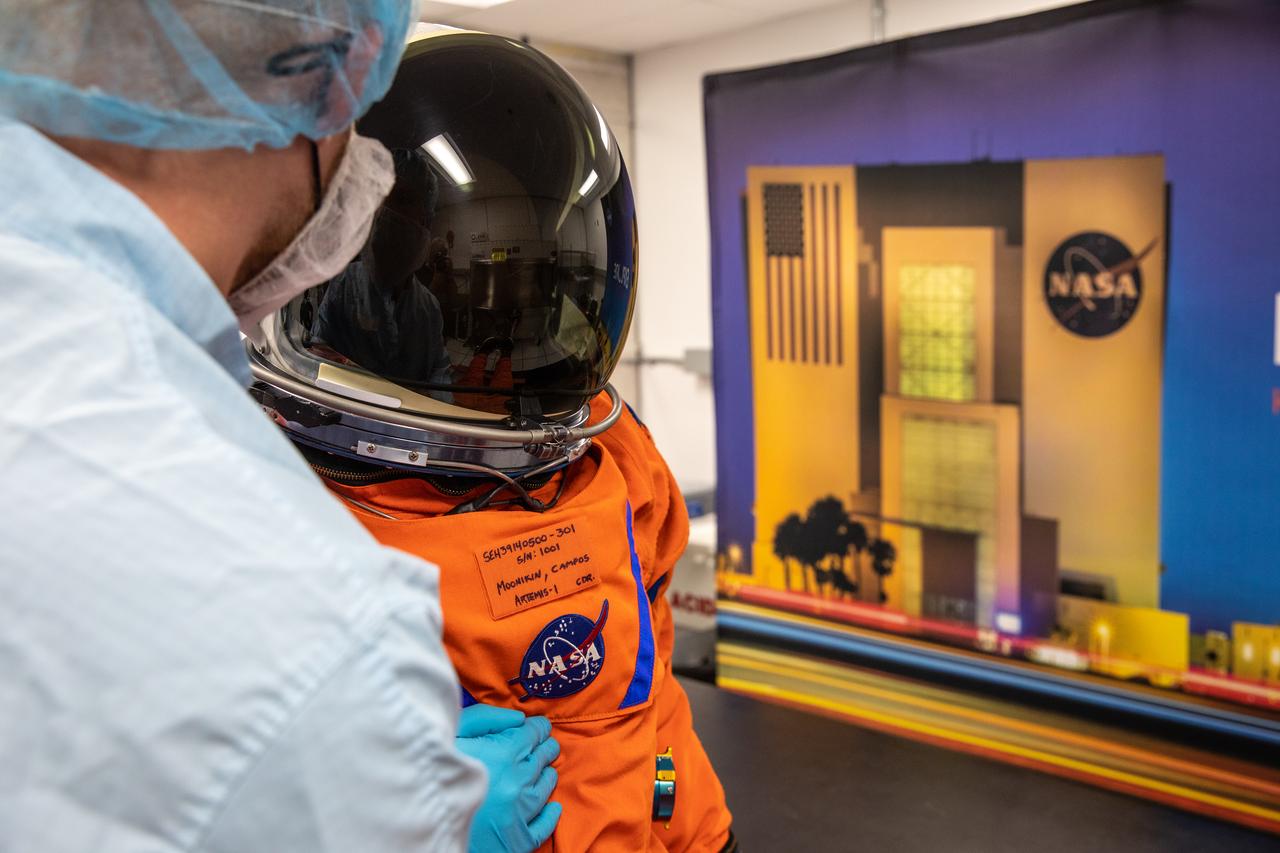
Teams from Johnson Space Center, Exploration Ground Systems, and Jacobs TOSC conduct final inspections of Moonikin “Campos” on Nov. 9, 2021, inside the Space Station Processing Facility at NASA’s Kennedy Space Center in Florida. Moonikin “Campos” will be installed into the Orion crew module. Technicians checked connectivity and performed fit checks on his flight suit to ensure he is ready for flight aboard the Artemis flight test. Artemis I will be an uncrewed test flight of the Orion spacecraft and Space Launch System rocket as an integrated system ahead of crewed flights to the Moon. Under Artemis, NASA aims to land the first woman and first person of color on the Moon and establish sustainable lunar exploration.
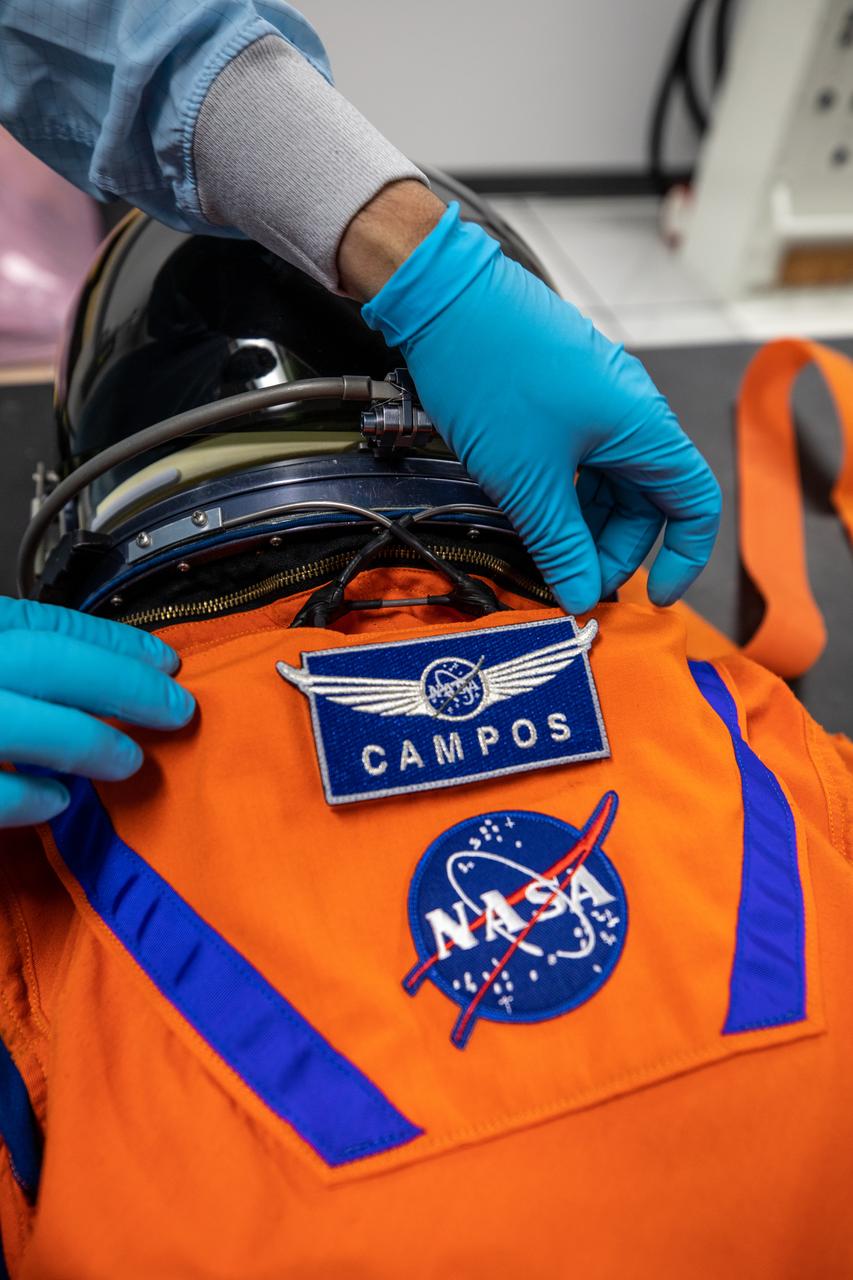
Teams from Johnson Space Center, Exploration Ground Systems, and Jacobs TOSC conduct final inspections of Moonikin “Campos” on Nov. 9, 2021, inside the Space Station Processing Facility at NASA’s Kennedy Space Center in Florida. Moonikin “Campos” will be installed into the Orion crew module. Technicians checked connectivity and performed fit checks on his flight suit to ensure he is ready for flight aboard the Artemis flight test. Artemis I will be an uncrewed test flight of the Orion spacecraft and Space Launch System rocket as an integrated system ahead of crewed flights to the Moon. Under Artemis, NASA aims to land the first woman and first person of color on the Moon and establish sustainable lunar exploration.

Teams from Johnson Space Center, Exploration Ground Systems, and Jacobs TOSC conduct final inspections of Moonikin “Campos” on Nov. 9, 2021, inside the Space Station Processing Facility at NASA’s Kennedy Space Center in Florida. Moonikin “Campos” will be installed into the Orion crew module. Technicians checked connectivity and performed fit checks on his flight suit to ensure he is ready for flight aboard the Artemis flight test. Artemis I will be an uncrewed test flight of the Orion spacecraft and Space Launch System rocket as an integrated system ahead of crewed flights to the Moon. Under Artemis, NASA aims to land the first woman and first person of color on the Moon and establish sustainable lunar exploration.
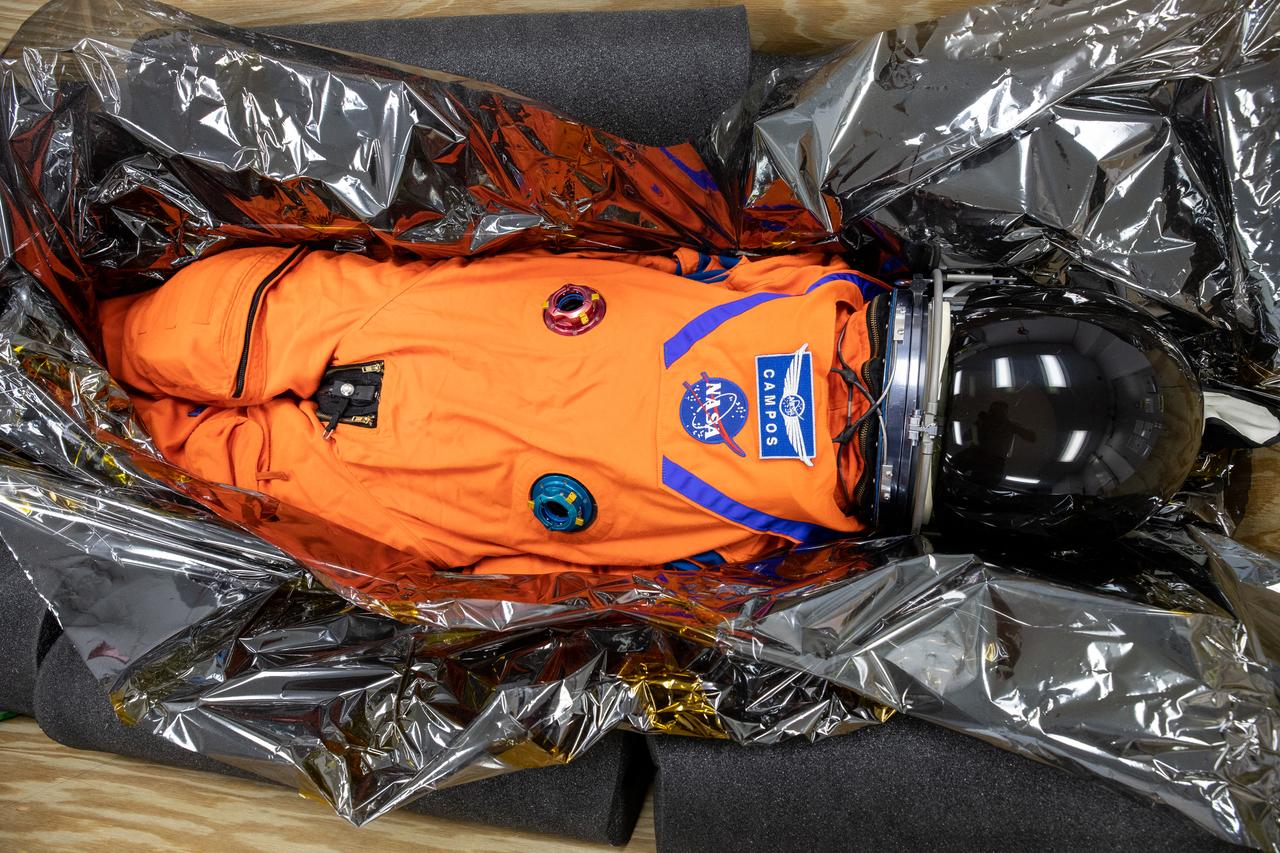
Commander Moonikin Campos, a sensored stand-in for humans from NASA’s Artemis I mission, is packed within its transport crate inside the Space Station Processing Facility at Kennedy Space Center in Florida on Jan. 10, 2023, for its trip back to NASA’s Johnson Space Center in Houston. Moonikin Campos was secured inside the Orion spacecraft for the mission beyond the Moon and back to Earth. Artemis I Orion launched atop the Space Launch System (SLS) rocket from Kennedy’s Launch Complex 39B on Nov. 16, 2022, at 1:47 a.m. EST for a 25-day trip beyond the Moon and back. During the flight, Orion flew farther than any human-rated spacecraft has ever flown, paving the way for human deep space exploration and demonstrating NASA’s commitment and capability to extend human presence to the Moon and beyond. The primary goal of Artemis I was to thoroughly test the SLS and Orion spacecraft’s integrated systems before crewed missions. Under Artemis, NASA aims to land the first woman and first person of color on the Moon and establish sustainable lunar exploration.
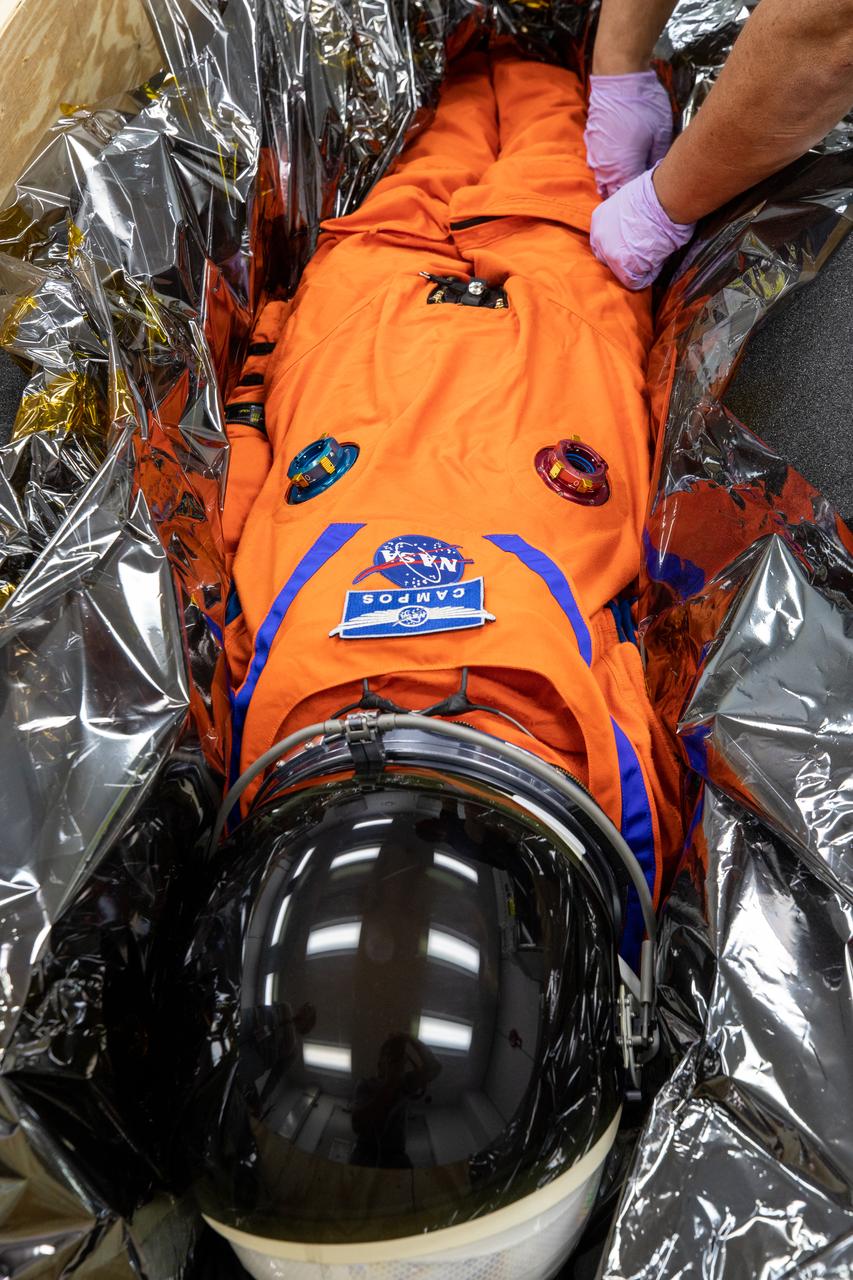
Commander Moonikin Campos, a sensored stand-in for humans from NASA’s Artemis I mission, is packed within its transport crate inside the Space Station Processing Facility at Kennedy Space Center in Florida on Jan. 10, 2023, for its trip back to NASA’s Johnson Space Center in Houston. Moonikin Campos was secured inside the Orion spacecraft for the mission beyond the Moon and back to Earth. Artemis I Orion launched atop the Space Launch System (SLS) rocket from Kennedy’s Launch Complex 39B on Nov. 16, 2022, at 1:47 a.m. EST for a 25-day trip beyond the Moon and back. During the flight, Orion flew farther than any human-rated spacecraft has ever flown, paving the way for human deep space exploration and demonstrating NASA’s commitment and capability to extend human presence to the Moon and beyond. The primary goal of Artemis I was to thoroughly test the SLS and Orion spacecraft’s integrated systems before crewed missions. Under Artemis, NASA aims to land the first woman and first person of color on the Moon and establish sustainable lunar exploration.
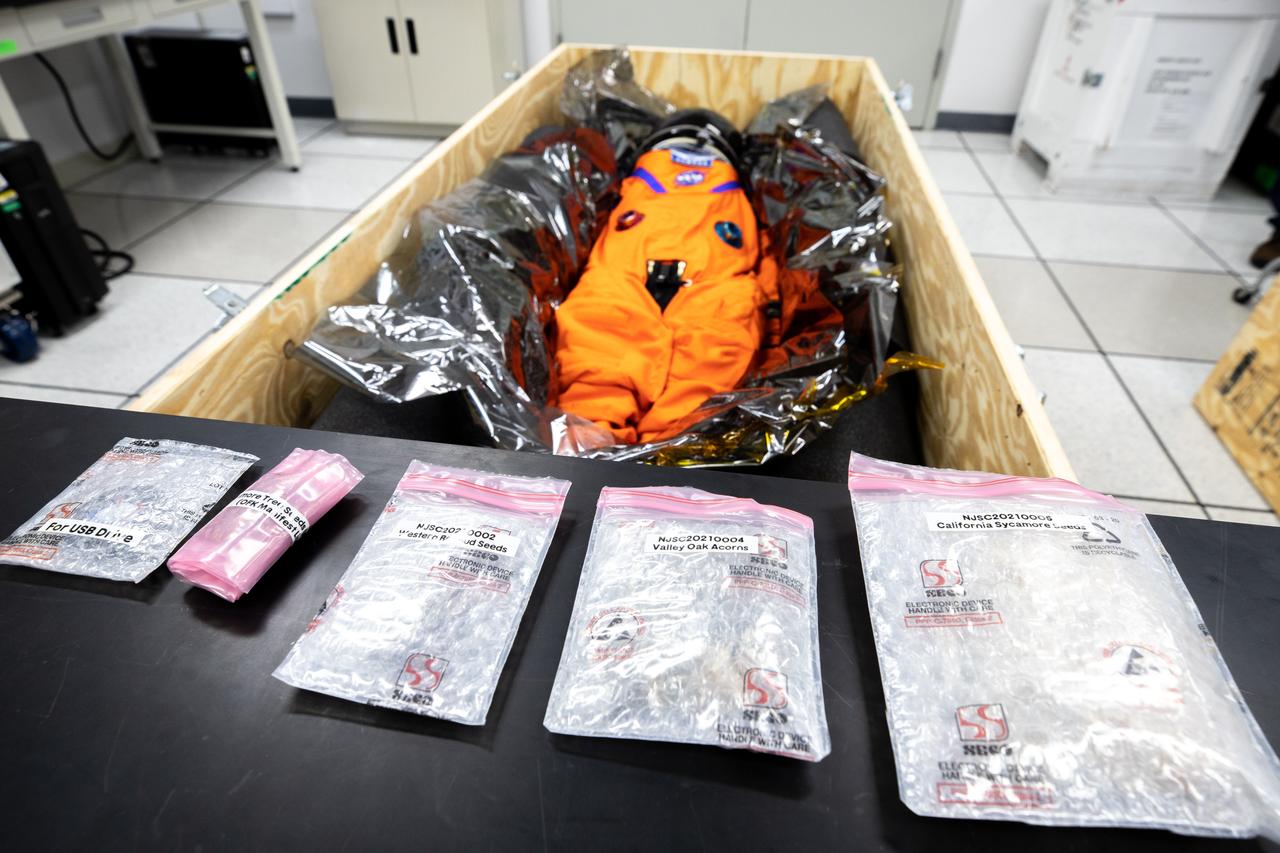
Commander Moonikin Campos, a sensored stand-in for humans from NASA’s Artemis I mission, is packed within its transport crate inside the Space Station Processing Facility at Kennedy Space Center in Florida on Jan. 10, 2023, for its trip back to NASA’s Johnson Space Center in Houston. In the foreground are packages of seeds that rode with Moonikin Campos secured inside the Orion spacecraft for the mission beyond the Moon and back to Earth. Artemis I Orion launched atop the Space Launch System (SLS) rocket from Kennedy’s Launch Complex 39B on Nov. 16, 2022, at 1:47 a.m. EST for a 25-day trip beyond the Moon and back. During the flight, Orion flew farther than any human-rated spacecraft has ever flown, paving the way for human deep space exploration and demonstrating NASA’s commitment and capability to extend human presence to the Moon and beyond. The primary goal of Artemis I was to thoroughly test the SLS and Orion spacecraft’s integrated systems before crewed missions. Under Artemis, NASA aims to land the first woman and first person of color on the Moon and establish sustainable lunar exploration.
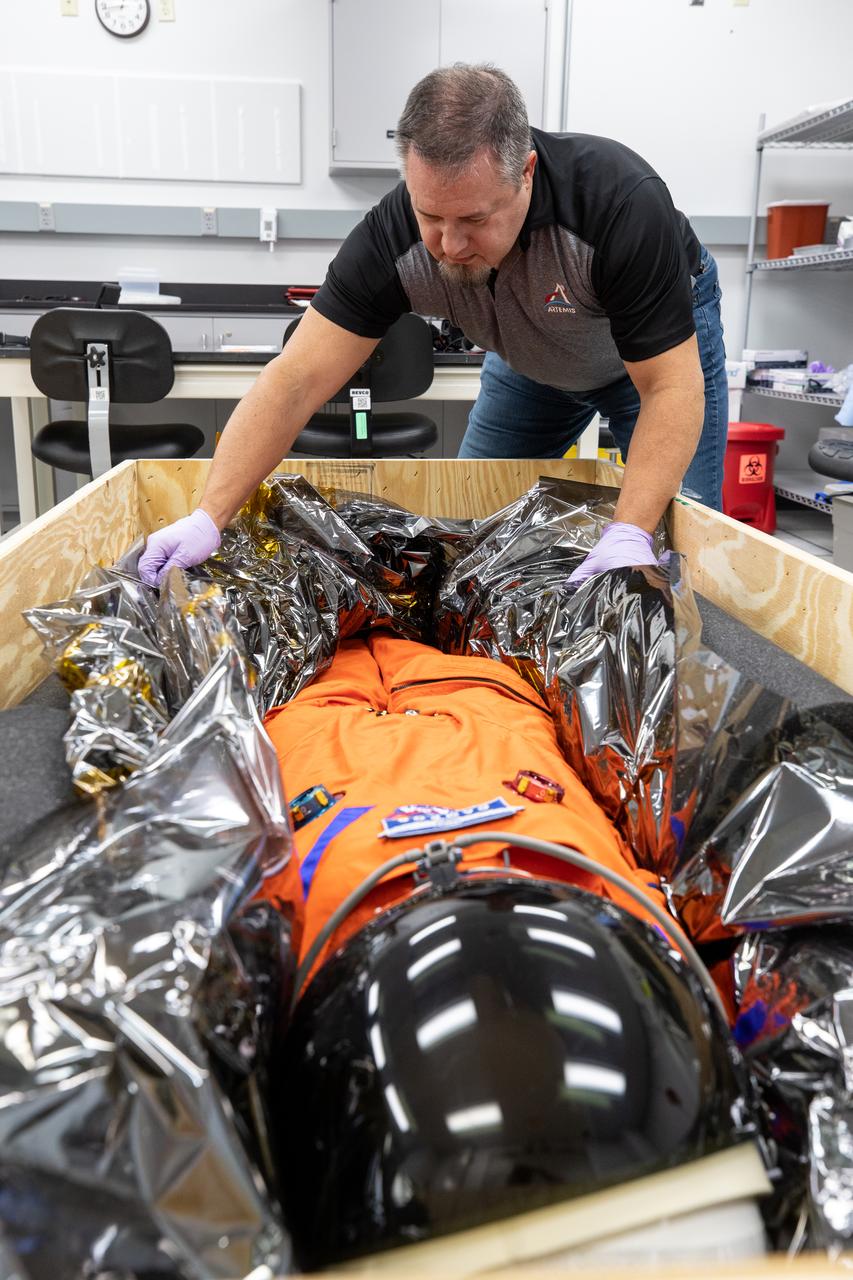
Joe Leblanc, Orion payload and cargo manager with Lockheed Martin, secures Commander Moonikin Campos, a sensored stand-in for humans from NASA’s Artemis I mission, inside its transport crate in the Space Station Processing Facility at Kennedy Space Center in Florida on Jan. 10, 2023, for its trip back to NASA’s Johnson Space Center in Houston. Moonikin Campos was secured inside the Orion spacecraft for the mission beyond the Moon and back to Earth. Artemis I Orion launched atop the Space Launch System (SLS) rocket from Kennedy’s Launch Complex 39B on Nov. 16, 2022, at 1:47 a.m. EST for a 25-day trip beyond the Moon and back. During the flight, Orion flew farther than any human-rated spacecraft has ever flown, paving the way for human deep space exploration and demonstrating NASA’s commitment and capability to extend human presence to the Moon and beyond. The primary goal of Artemis I was to thoroughly test the SLS and Orion spacecraft’s integrated systems before crewed missions. Under Artemis, NASA aims to land the first woman and first person of color on the Moon and establish sustainable lunar exploration.
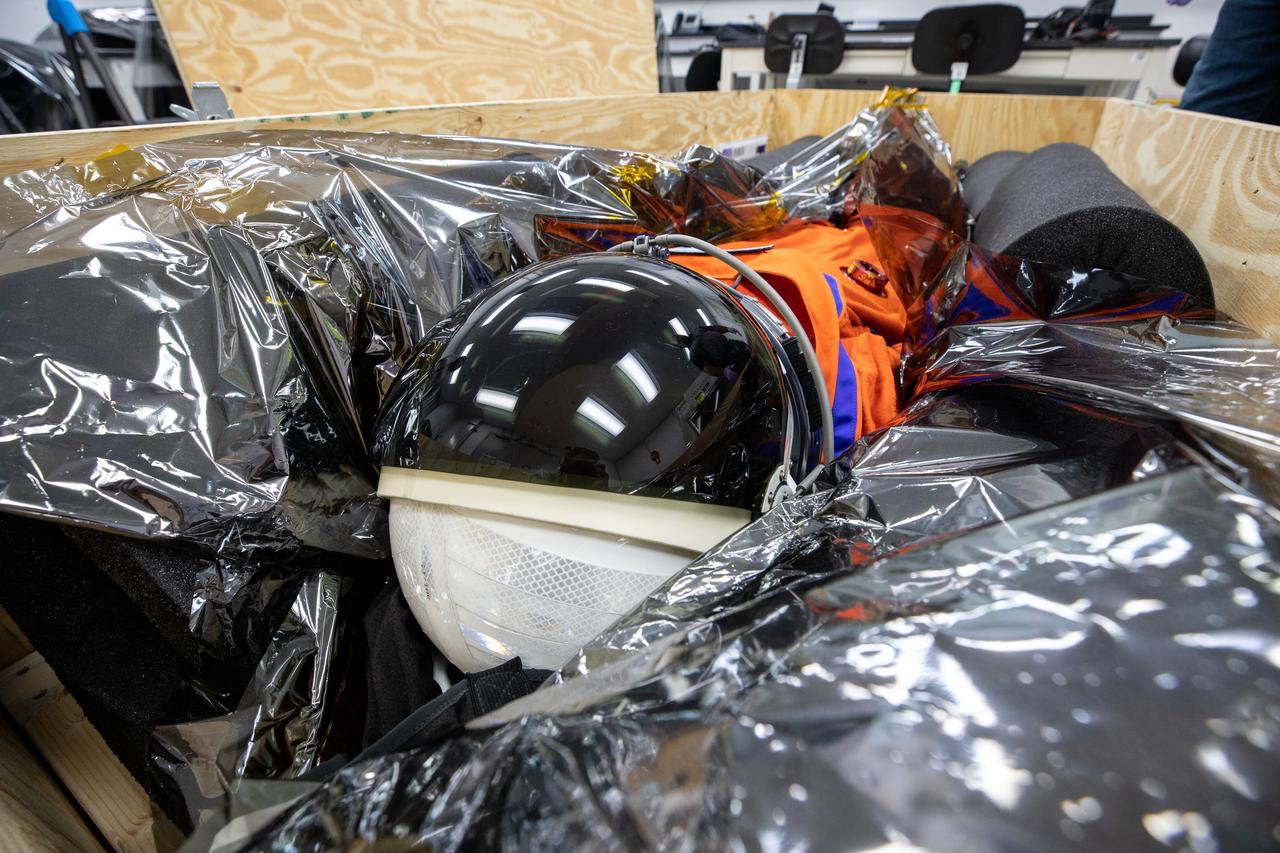
Commander Moonikin Campos, a sensored stand-in for humans from NASA’s Artemis I mission, is packed within its transport crate inside the Space Station Processing Facility at Kennedy Space Center in Florida on Jan. 10, 2023, for its trip back to NASA’s Johnson Space Center in Houston. Moonikin Campos was secured inside the Orion spacecraft for the mission beyond the Moon and back to Earth. Artemis I Orion launched atop the Space Launch System (SLS) rocket from Kennedy’s Launch Complex 39B on Nov. 16, 2022, at 1:47 a.m. EST for a 25-day trip beyond the Moon and back. During the flight, Orion flew farther than any human-rated spacecraft has ever flown, paving the way for human deep space exploration and demonstrating NASA’s commitment and capability to extend human presence to the Moon and beyond. The primary goal of Artemis I was to thoroughly test the SLS and Orion spacecraft’s integrated systems before crewed missions. Under Artemis, NASA aims to land the first woman and first person of color on the Moon and establish sustainable lunar exploration.
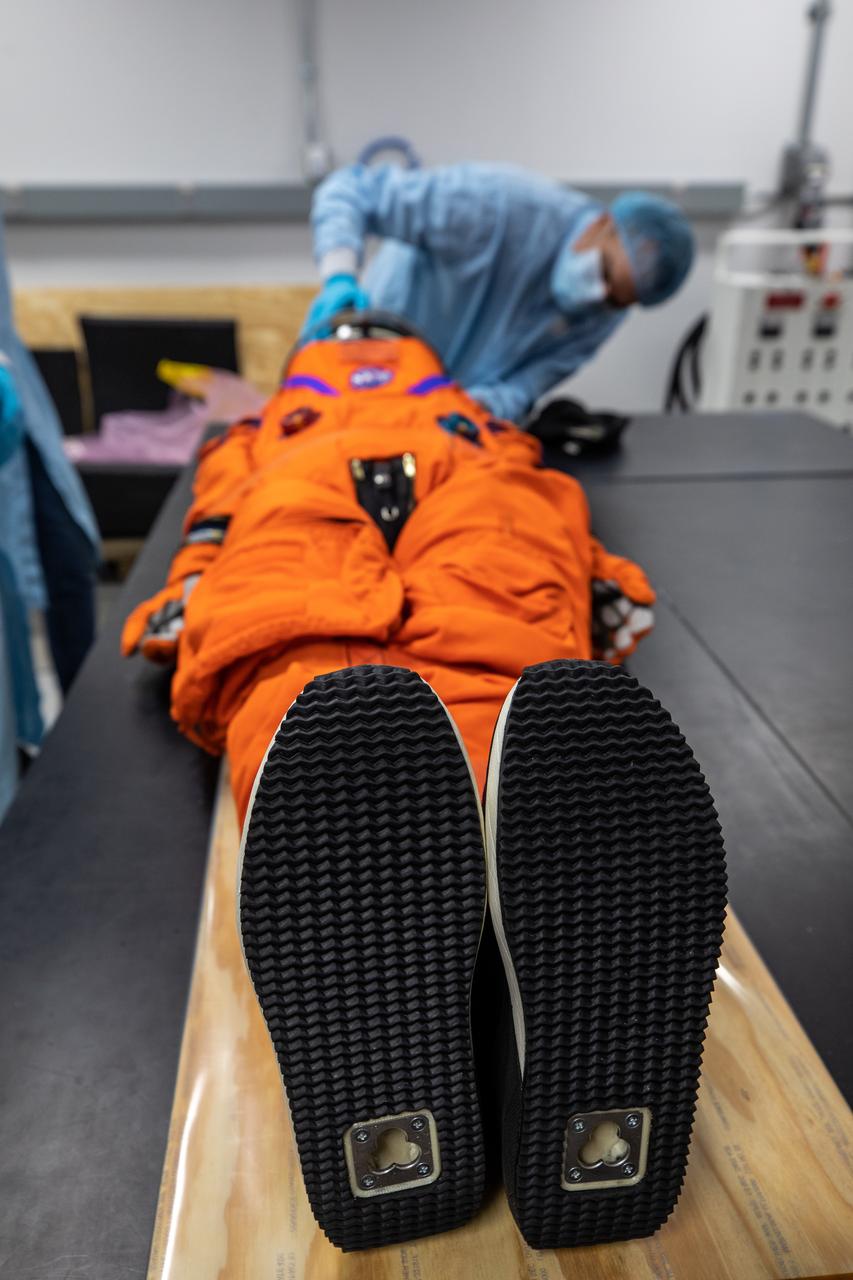
Inside the Space Station Processing Facility at NASA’s Kennedy Space Center in Florida, teams from Johnson Space Center, Exploration Ground Systems, and Jacobs TOSC conduct final inspections of Moonikin “Campos” on Nov. 9, 2021, prior to installation into the Orion crew module. Technicians checked connectivity and performed fit checks on his flight suit to ensure he is ready for flight aboard the Artemis flight test. Artemis I will be an uncrewed test flight of the Orion spacecraft and Space Launch System rocket as an integrated system ahead of crewed flights to the Moon. Under Artemis, NASA aims to land the first woman and first person of color on the Moon and establish sustainable lunar exploration.
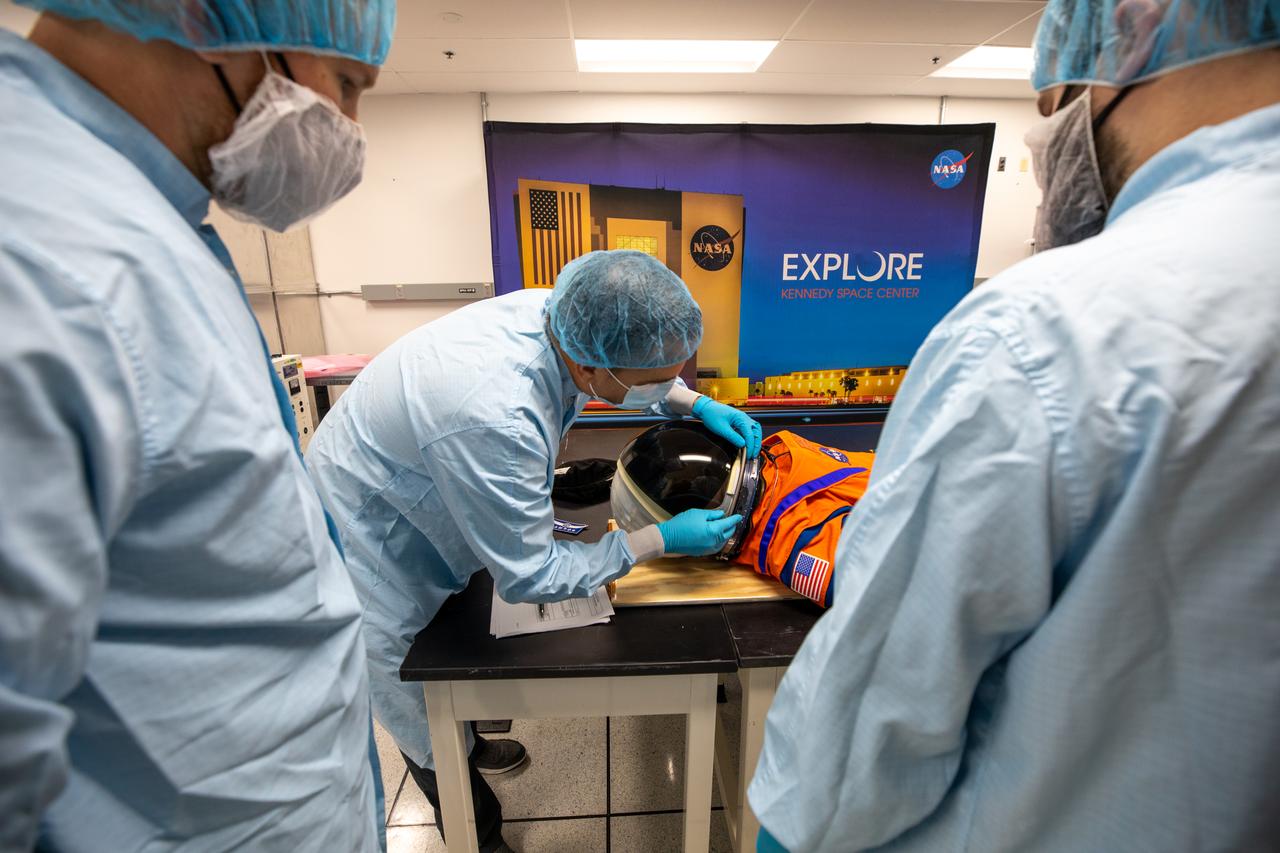
Inside the Space Station Processing Facility at NASA’s Kennedy Space Center in Florida, teams from Johnson Space Center, Exploration Ground Systems, and Jacobs TOSC conduct final inspections of Moonikin “Campos” on Nov. 9, 2021, prior to installation into the Orion crew module. Technicians checked connectivity and performed fit checks on his flight suit to ensure he is ready for flight aboard the Artemis flight test. Artemis I will be an uncrewed test flight of the Orion spacecraft and Space Launch System rocket as an integrated system ahead of crewed flights to the Moon. Under Artemis, NASA aims to land the first woman and first person of color on the Moon and establish sustainable lunar exploration.
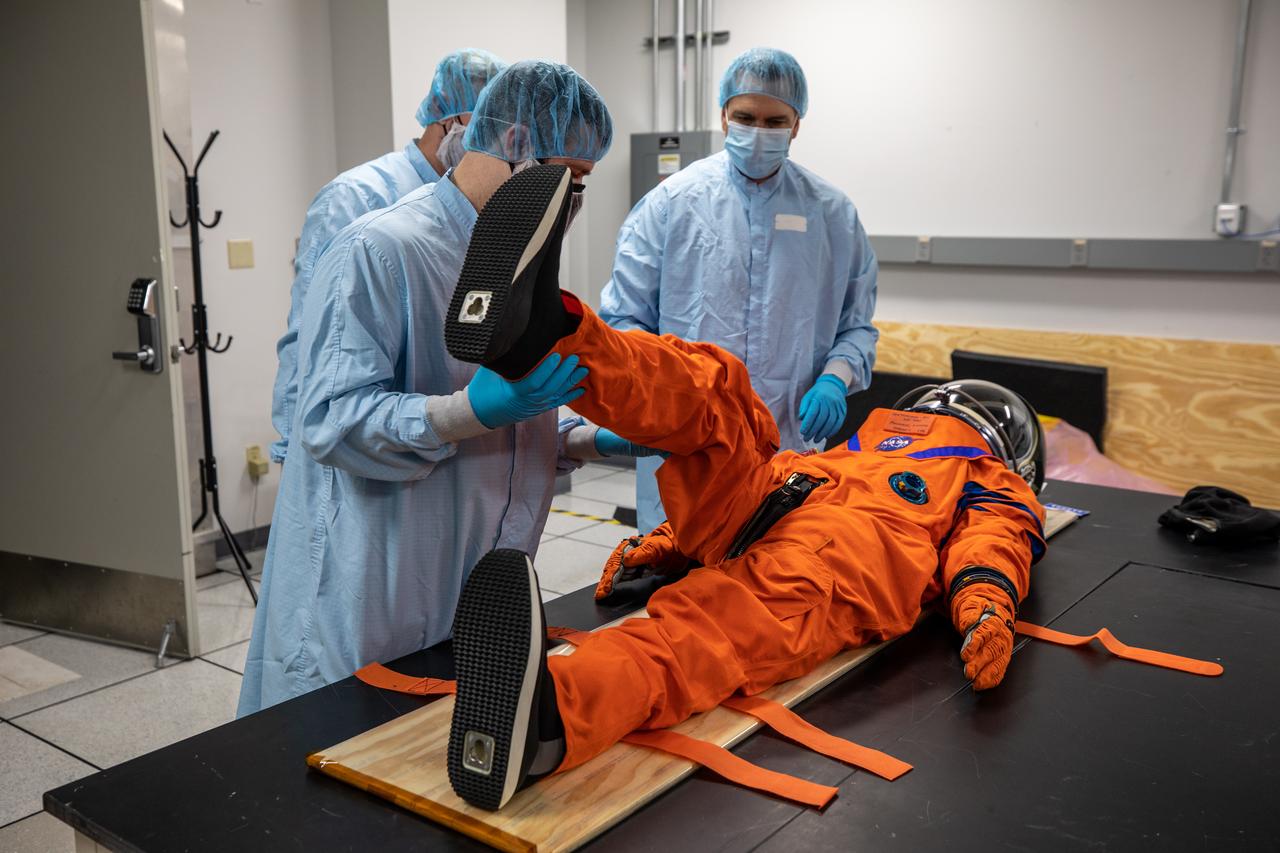
Inside the Space Station Processing Facility at NASA’s Kennedy Space Center in Florida, teams from Johnson Space Center, Exploration Ground Systems, and Jacobs TOSC conduct final inspections of Moonikin “Campos” on Nov. 9, 2021, prior to installation into the Orion crew module. Technicians checked connectivity and performed fit checks on his flight suit to ensure he is ready for flight aboard the Artemis flight test. Artemis I will be an uncrewed test flight of the Orion spacecraft and Space Launch System rocket as an integrated system ahead of crewed flights to the Moon. Under Artemis, NASA aims to land the first woman and first person of color on the Moon and establish sustainable lunar exploration.
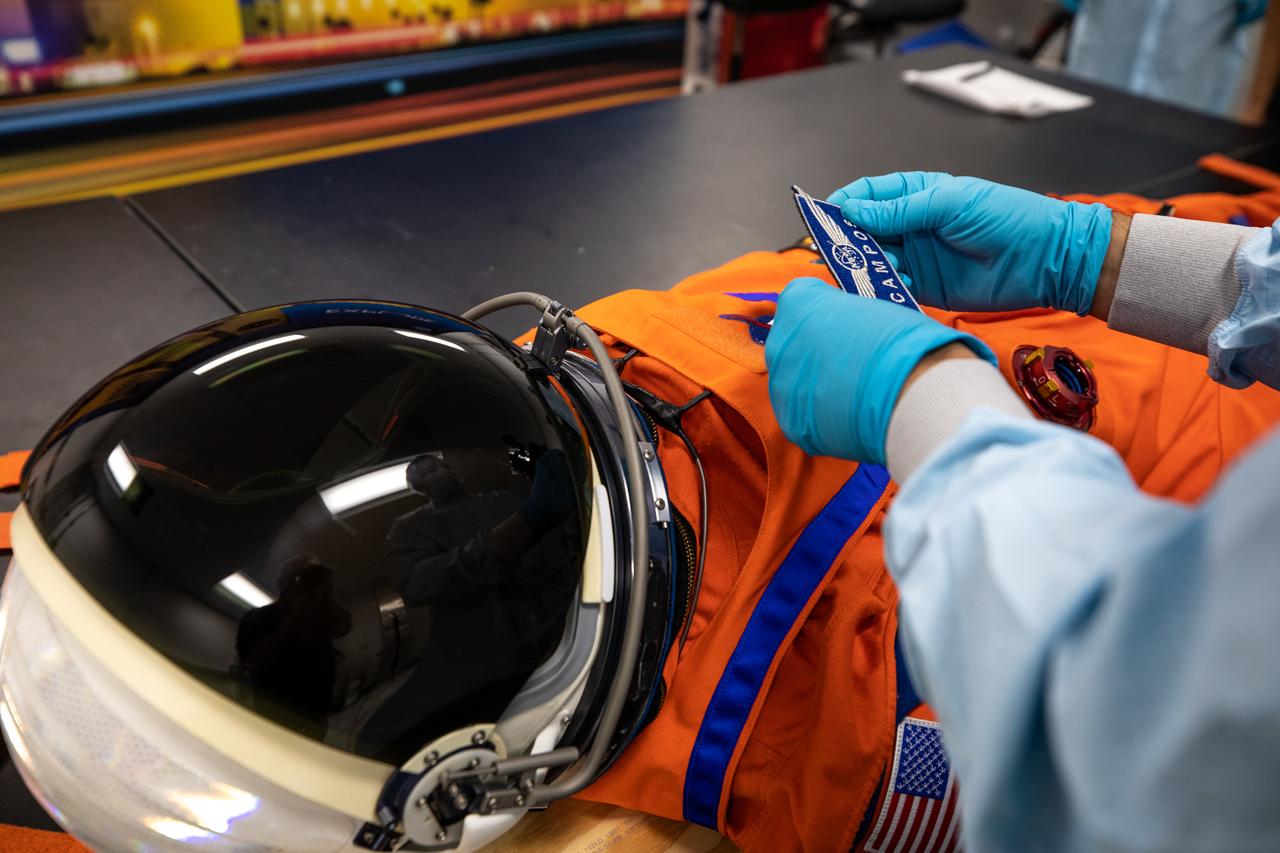
Inside the Space Station Processing Facility at NASA’s Kennedy Space Center in Florida, teams from Johnson Space Center, Exploration Ground Systems, and Jacobs TOSC conduct final inspections of Moonikin “Campos” on Nov. 9, 2021, prior to installation into the Orion crew module. Technicians checked connectivity and performed fit checks on his flight suit to ensure he is ready for flight aboard the Artemis flight test. Artemis I will be an uncrewed test flight of the Orion spacecraft and Space Launch System rocket as an integrated system ahead of crewed flights to the Moon. Under Artemis, NASA aims to land the first woman and first person of color on the Moon and establish sustainable lunar exploration.
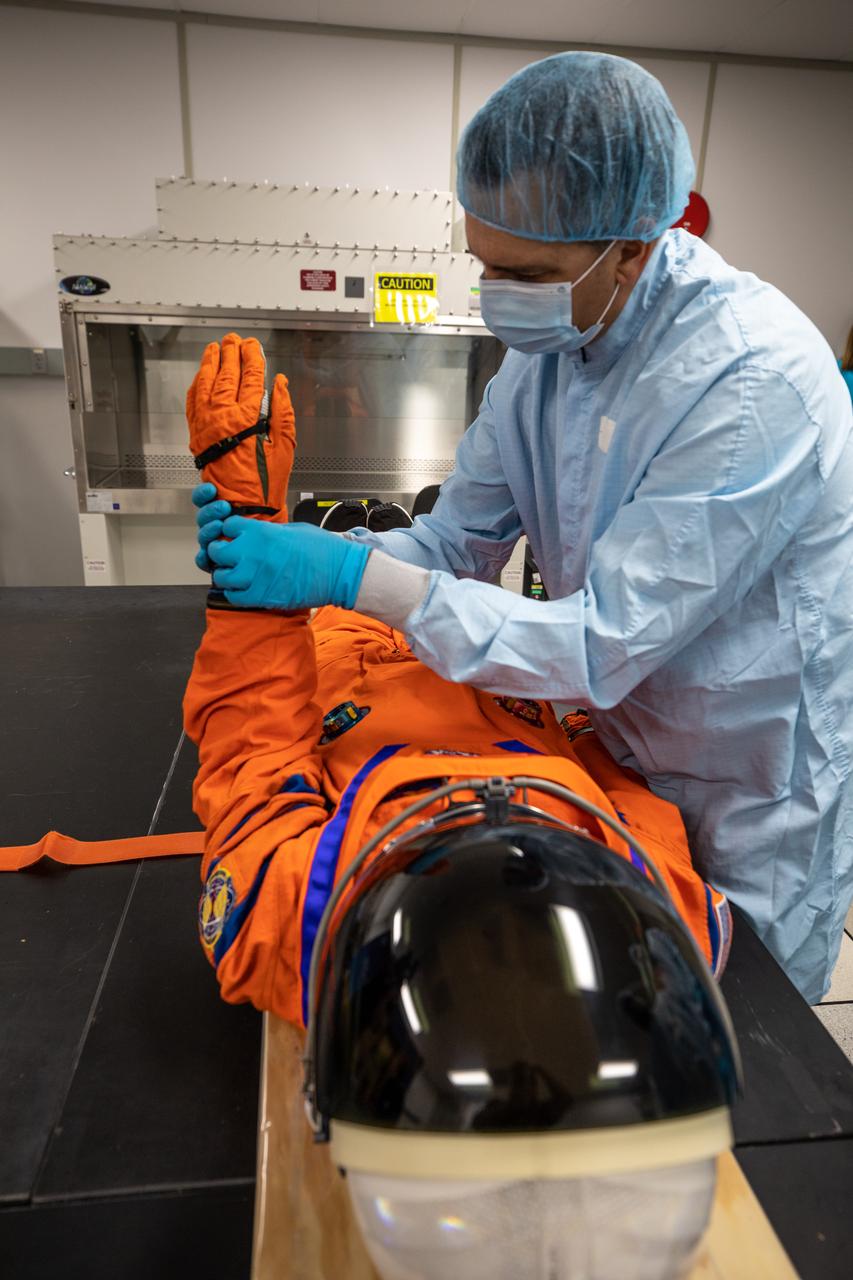
Inside the Space Station Processing Facility at NASA’s Kennedy Space Center in Florida, teams from Johnson Space Center, Exploration Ground Systems, and Jacobs TOSC conduct final inspections of Moonikin “Campos” on Nov. 9, 2021, prior to installation into the Orion crew module. Technicians checked connectivity and performed fit checks on his flight suit to ensure he is ready for flight aboard the Artemis flight test. Artemis I will be an uncrewed test flight of the Orion spacecraft and Space Launch System rocket as an integrated system ahead of crewed flights to the Moon. Under Artemis, NASA aims to land the first woman and first person of color on the Moon and establish sustainable lunar exploration.

A close-up view of Moonikin “Campos” secured in a seat inside the Artemis I Orion crew module atop the Space Launch System rocket in High Bay 3 of the Vehicle Assembly Building at NASA’s Kennedy Space Center in Florida on Aug. 3, 2022. Artemis I will provide a foundation for human deep space exploration and demonstrate NASA’s capability to extend human present to the Moon and beyond. The primary goal of Artemis I is to thoroughly test the Space Launch System rocket and Orion spacecraft’s integrated systems before crewed missions. Under Artemis, NASA aims to land the first woman and first person of color on the Moon and establish sustainable lunar exploration.

A view of Moonikin “Campos” secured in a seat inside the Artemis I Orion crew module atop the Space Launch System rocket in High Bay 3 of the Vehicle Assembly Building at NASA’s Kennedy Space Center in Florida on Aug. 3, 2022. Artemis I will provide a foundation for human deep space exploration and demonstrate NASA’s capability to extend human present to the Moon and beyond. The primary goal of Artemis I is to thoroughly test the Space Launch System rocket and Orion spacecraft’s integrated systems before crewed missions. Under Artemis, NASA aims to land the first woman and first person of color on the Moon and establish sustainable lunar exploration.
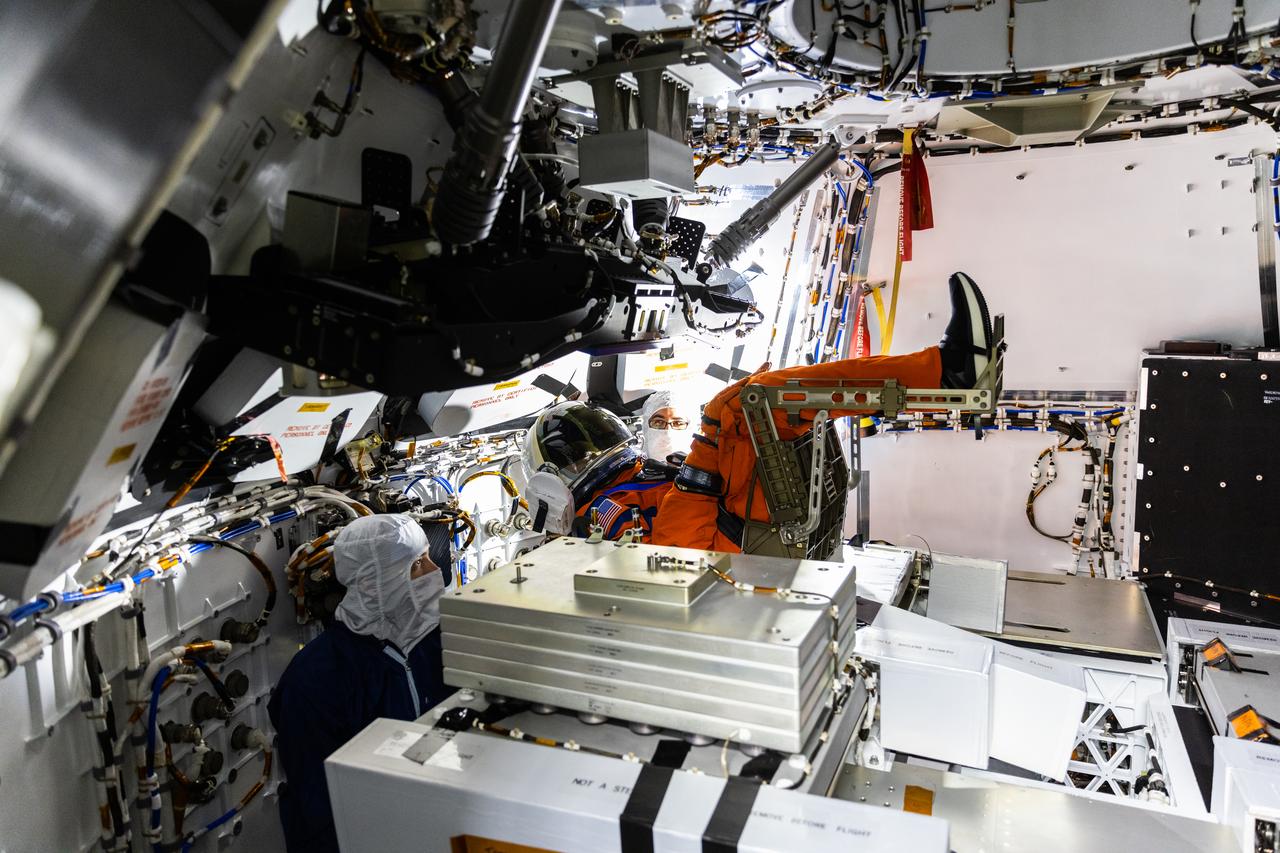
A view of Moonikin “Campos” secured in a seat inside the Artemis I Orion crew module atop the Space Launch System rocket in High Bay 3 of the Vehicle Assembly Building at NASA’s Kennedy Space Center in Florida on Aug. 3, 2022. Artemis I will provide a foundation for human deep space exploration and demonstrate NASA’s capability to extend human present to the Moon and beyond. The primary goal of Artemis I is to thoroughly test the Space Launch System rocket and Orion spacecraft’s integrated systems before crewed missions. Under Artemis, NASA aims to land the first woman and first person of color on the Moon and establish sustainable lunar exploration.
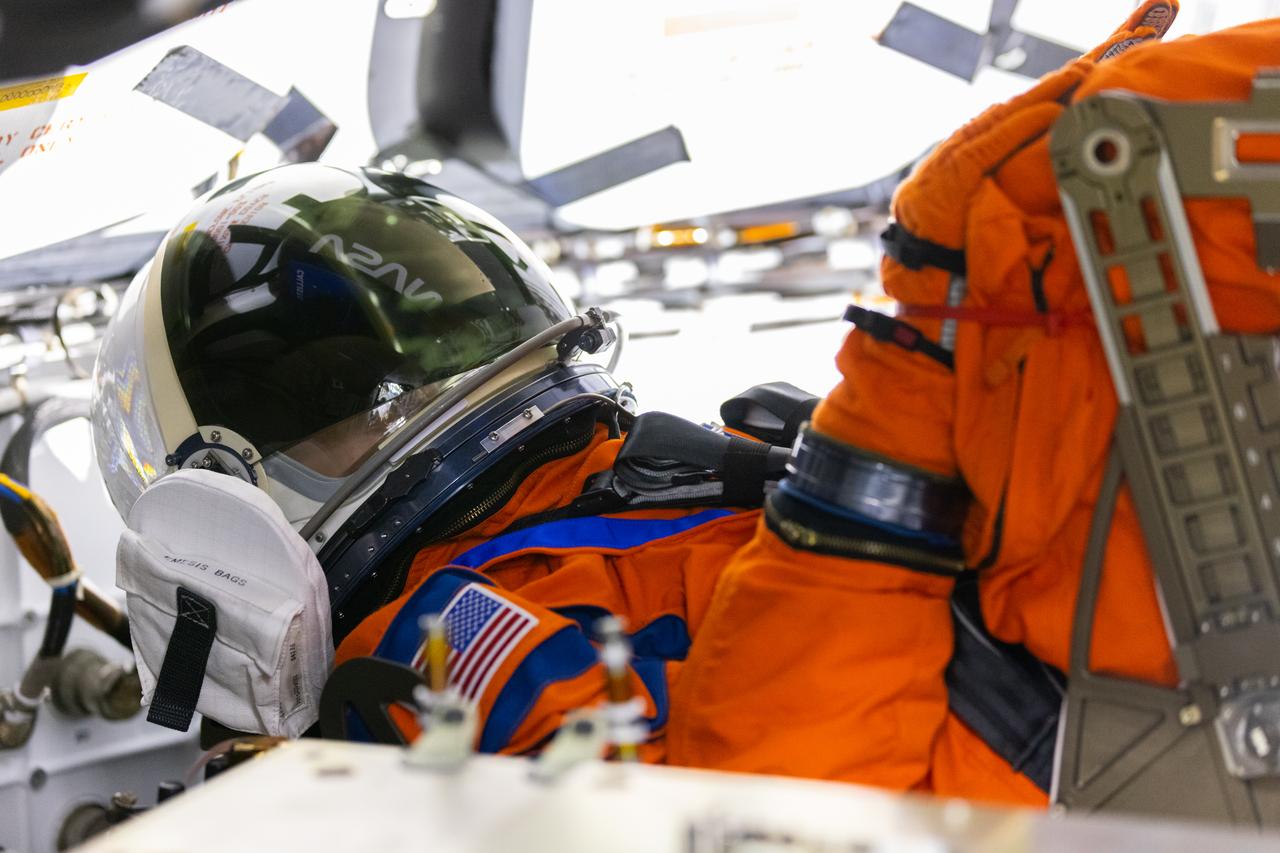
A close-up view of Moonikin “Campos” secured in a seat inside the Artemis I Orion crew module atop the Space Launch System rocket in High Bay 3 of the Vehicle Assembly Building at NASA’s Kennedy Space Center in Florida on Aug. 3, 2022. Artemis I will provide a foundation for human deep space exploration and demonstrate NASA’s capability to extend human present to the Moon and beyond. The primary goal of Artemis I is to thoroughly test the Space Launch System rocket and Orion spacecraft’s integrated systems before crewed missions. Under Artemis, NASA aims to land the first woman and first person of color on the Moon and establish sustainable lunar exploration.
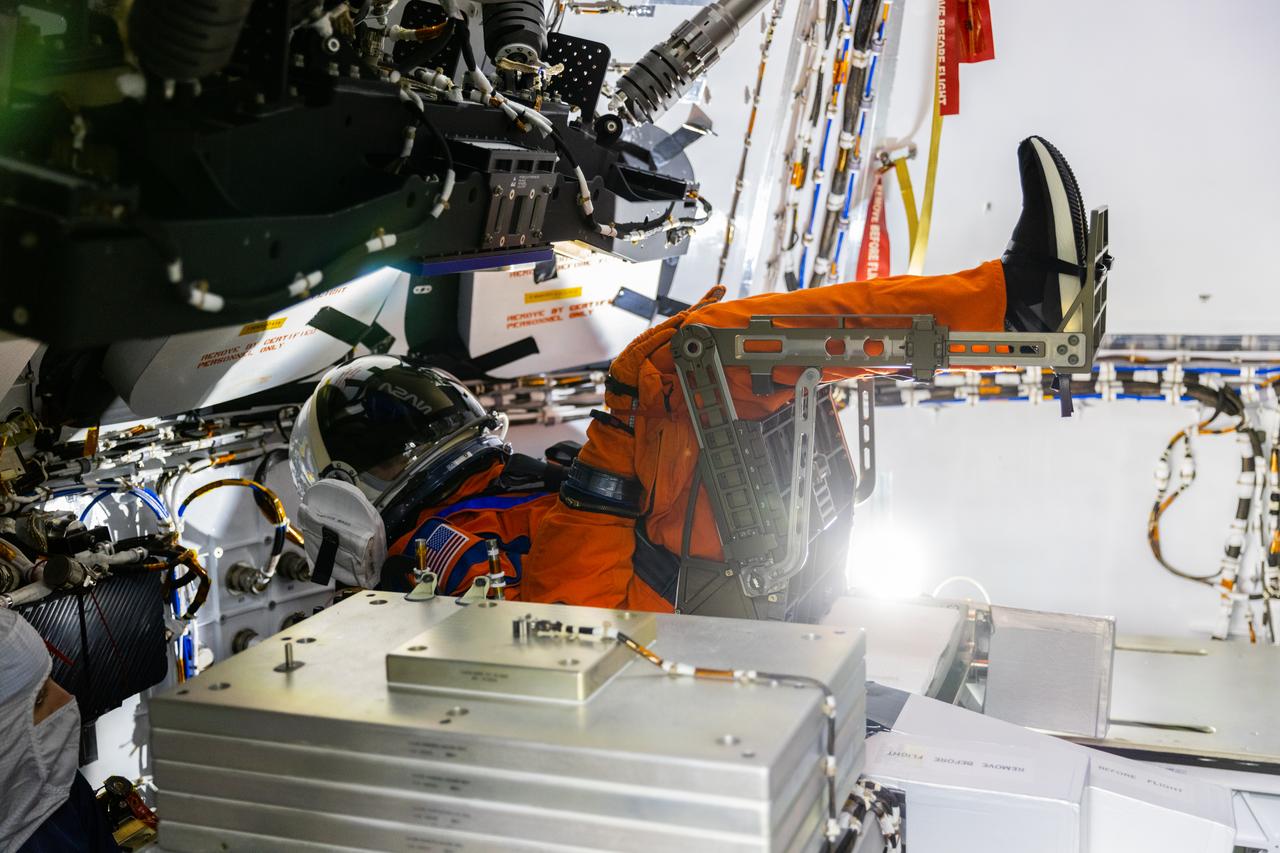
A view of Moonikin “Campos” secured in a seat inside the Artemis I Orion crew module atop the Space Launch System rocket in High Bay 3 of the Vehicle Assembly Building at NASA’s Kennedy Space Center in Florida on Aug. 3, 2022. Artemis I will provide a foundation for human deep space exploration and demonstrate NASA’s capability to extend human present to the Moon and beyond. The primary goal of Artemis I is to thoroughly test the Space Launch System rocket and Orion spacecraft’s integrated systems before crewed missions. Under Artemis, NASA aims to land the first woman and first person of color on the Moon and establish sustainable lunar exploration.
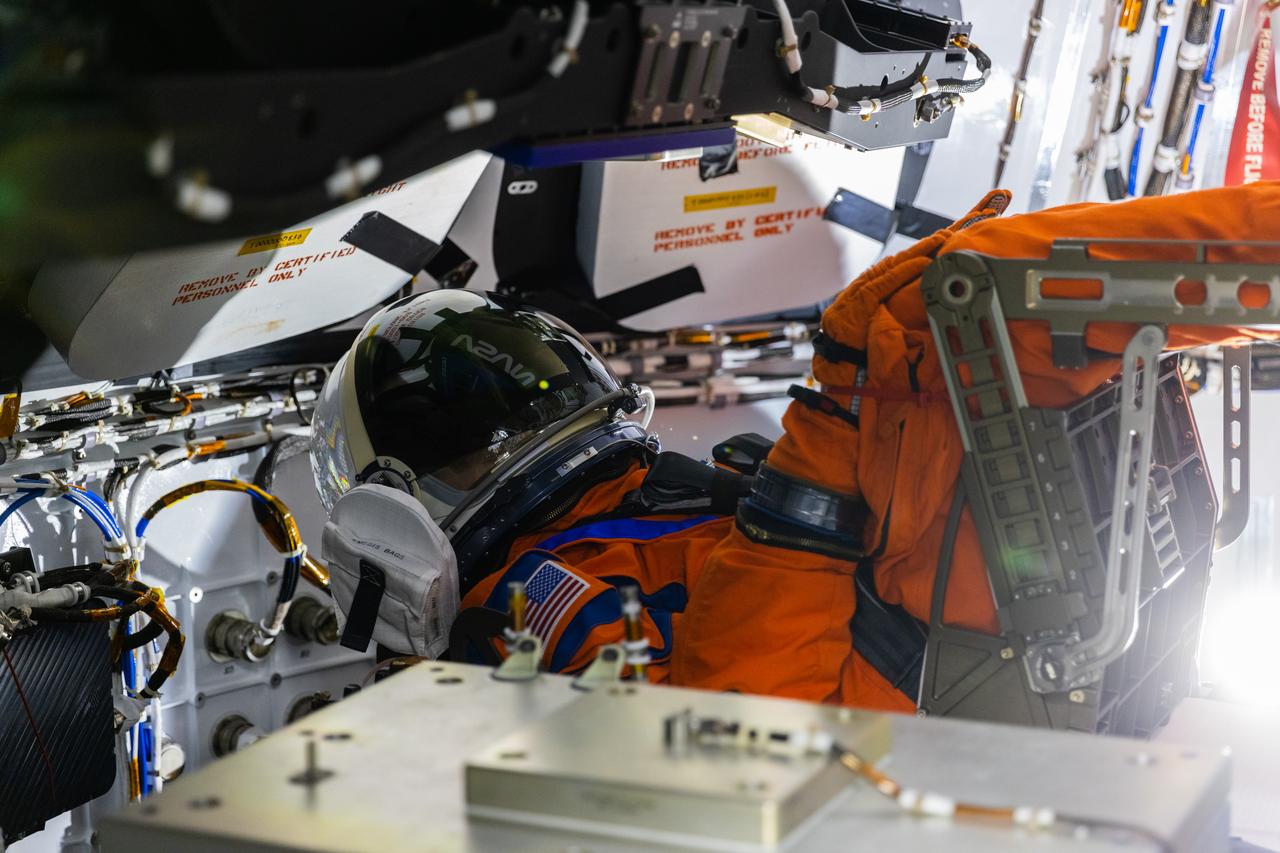
A view of Moonikin “Campos” secured in a seat inside the Artemis I Orion crew module atop the Space Launch System rocket in High Bay 3 of the Vehicle Assembly Building at NASA’s Kennedy Space Center in Florida on Aug. 3, 2022. Artemis I will provide a foundation for human deep space exploration and demonstrate NASA’s capability to extend human present to the Moon and beyond. The primary goal of Artemis I is to thoroughly test the Space Launch System rocket and Orion spacecraft’s integrated systems before crewed missions. Under Artemis, NASA aims to land the first woman and first person of color on the Moon and establish sustainable lunar exploration.
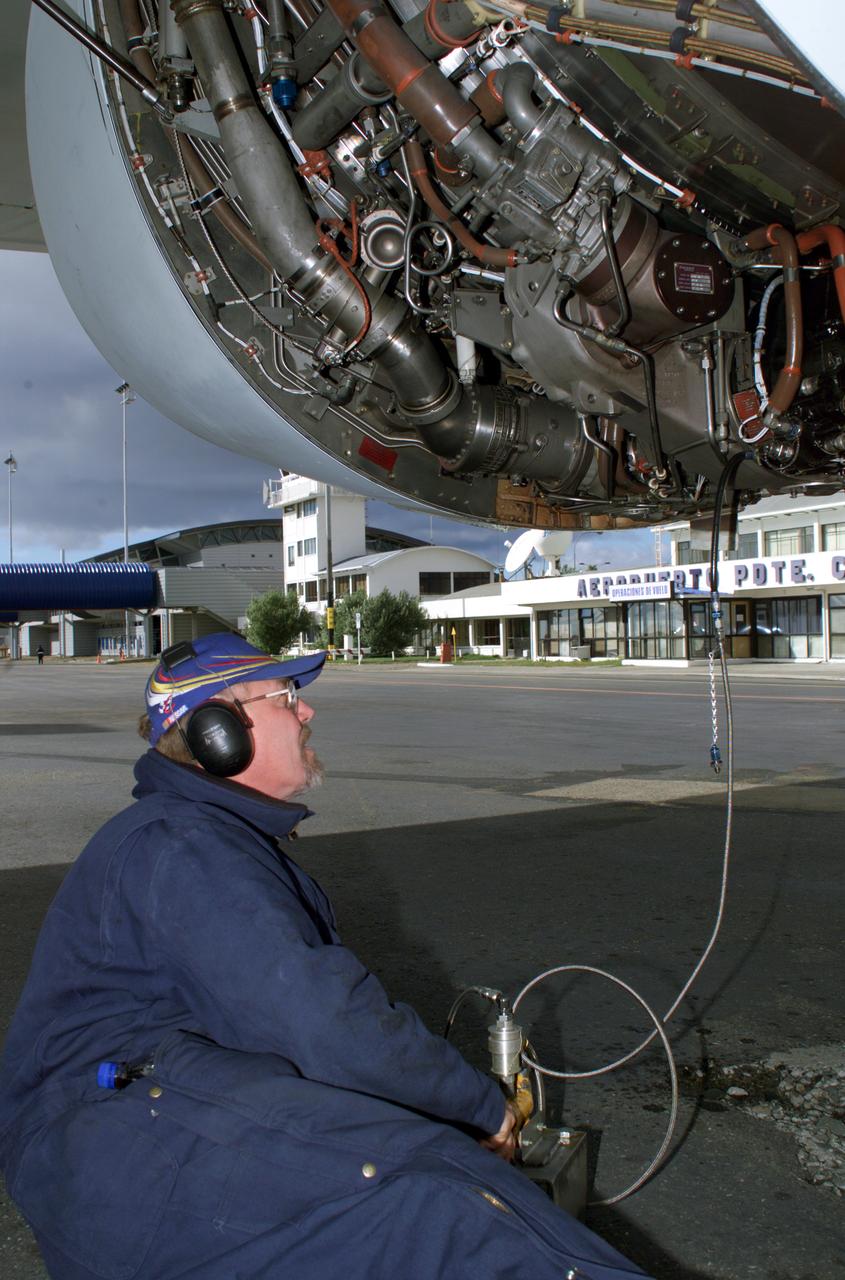
NASA DC-8 Ground Support Technician Joe Niquette performs routine maintenance on the DC-8 aircraft at Carlos Ibanez del Campo International Airport in Punta Arenas, Chile. AirSAR 2004 is a three-week expedition by an international team of scientists that is using an all-weather imaging tool, called the Airborne Synthetic Aperture Radar (AirSAR) which is located onboard NASA's DC-8 airborne laboratory. Scientists from many parts of the world including NASA's Jet Propulsion Laboratory are combining ground research done in several areas in Central and South America with NASA's AirSAR technology to improve and expand on the quality of research they are able to conduct. In South America and Antarctica, AirSAR will collect imagery and data to help determine the contribution of Southern Hemisphere glaciers to sea level rise due to climate change. In Patagonia, researchers found this contribution had more than doubled from 1995 to 2000, compared to the previous 25 years. AirSAR data will make it possible to determine whether that trend is decreasing, continuing or accelerating. AirSAR will also provide reliable information on ice shelf thickness to measure the contribution of the glaciers to sea level.
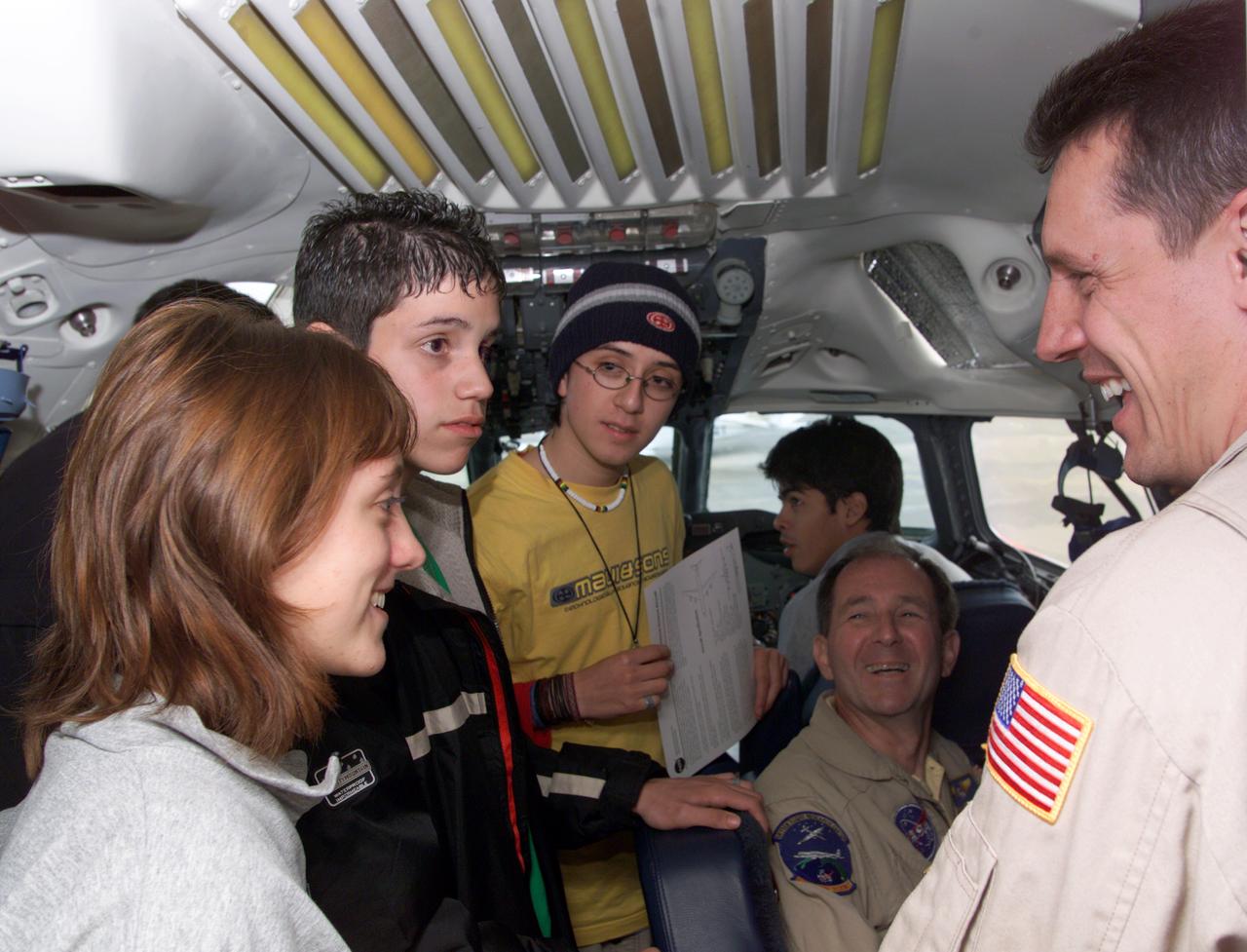
NASA DC-8 Pilots Craig Bomben and Bill Brockett explain the DC-8 cockpit to Chilean students onboard the DC-8 aircraft at Carlos Ibanez del Campo International Airport in Punta Arenas, Chile. AirSAR 2004 is a three-week expedition by an international team of scientists that is using an all-weather imaging tool, called the Airborne Synthetic Aperture Radar (AirSAR) which is located onboard NASA's DC-8 airborne laboratory. Scientists from many parts of the world including NASA's Jet Propulsion Laboratory are combining ground research done in several areas in Central and South America with NASA's AirSAR technology to improve and expand on the quality of research they are able to conduct. In South America and Antarctica, AirSAR will collect imagery and data to help determine the contribution of Southern Hemisphere glaciers to sea level rise due to climate change. In Patagonia, researchers found this contribution had more than doubled from 1995 to 2000, compared to the previous 25 years. AirSAR data will make it possible to determine whether that trend is decreasing, continuing or accelerating. AirSAR will also provide reliable information on ice shelf thickness to measure the contribution of the glaciers to sea level.
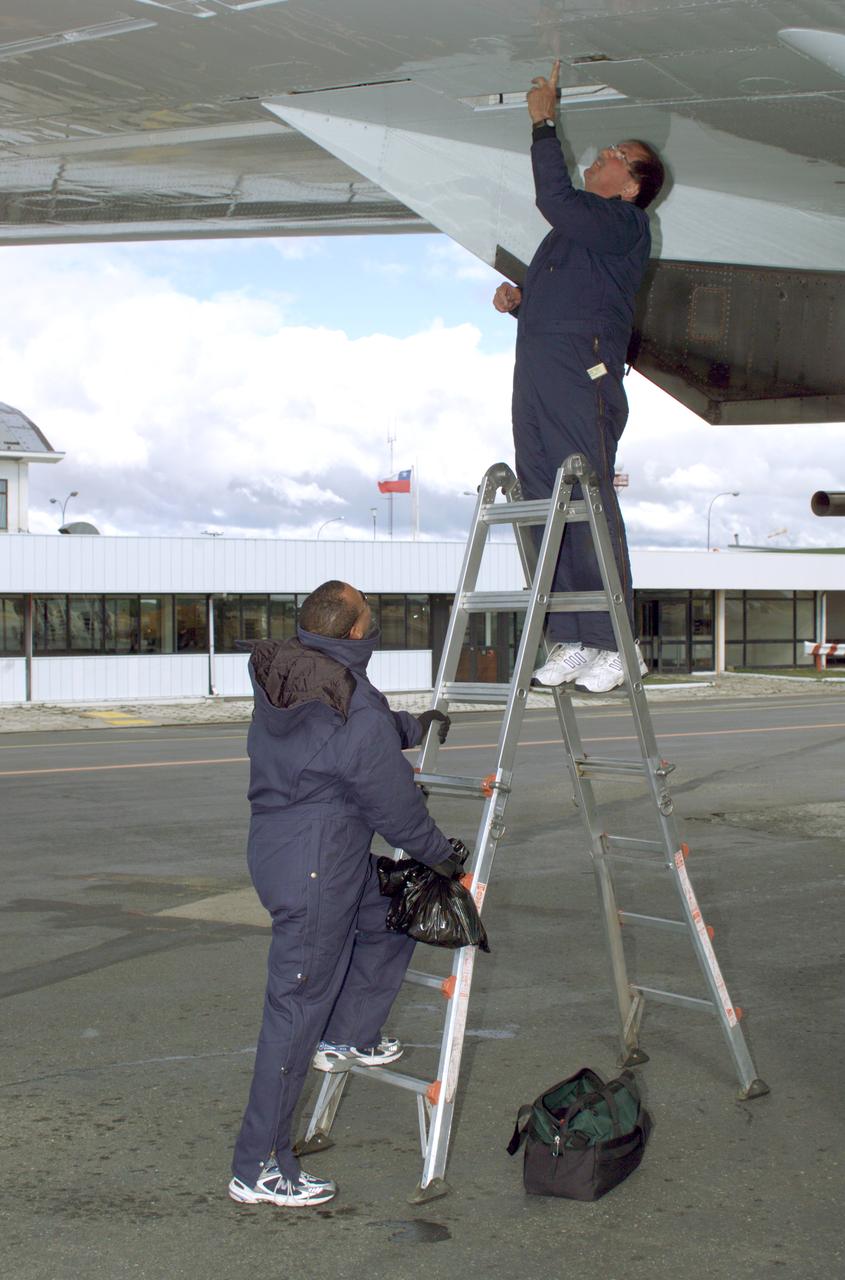
NASA DC-8 Ground Support Technicians Mark Corlew and Mike Lakowski perform routine maintenance on the aircraft at Carlos Ibanez del Campo International Airport in Punta Arenas, Chile. AirSAR 2004 is a three-week expedition by an international team of scientists that is using an all-weather imaging tool, called the Airborne Synthetic Aperture Radar (AirSAR) which is located onboard NASA's DC-8 airborne laboratory. Scientists from many parts of the world including NASA's Jet Propulsion Laboratory are combining ground research done in several areas in Central and South America with NASA's AirSAR technology to improve and expand on the quality of research they are able to conduct. In South America and Antarctica, AirSAR will collect imagery and data to help determine the contribution of Southern Hemisphere glaciers to sea level rise due to climate change. In Patagonia, researchers found this contribution had more than doubled from 1995 to 2000, compared to the previous 25 years. AirSAR data will make it possible to determine whether that trend is decreasing, continuing or accelerating. AirSAR will also provide reliable information on ice shelf thickness to measure the contribution of the glaciers to sea level.
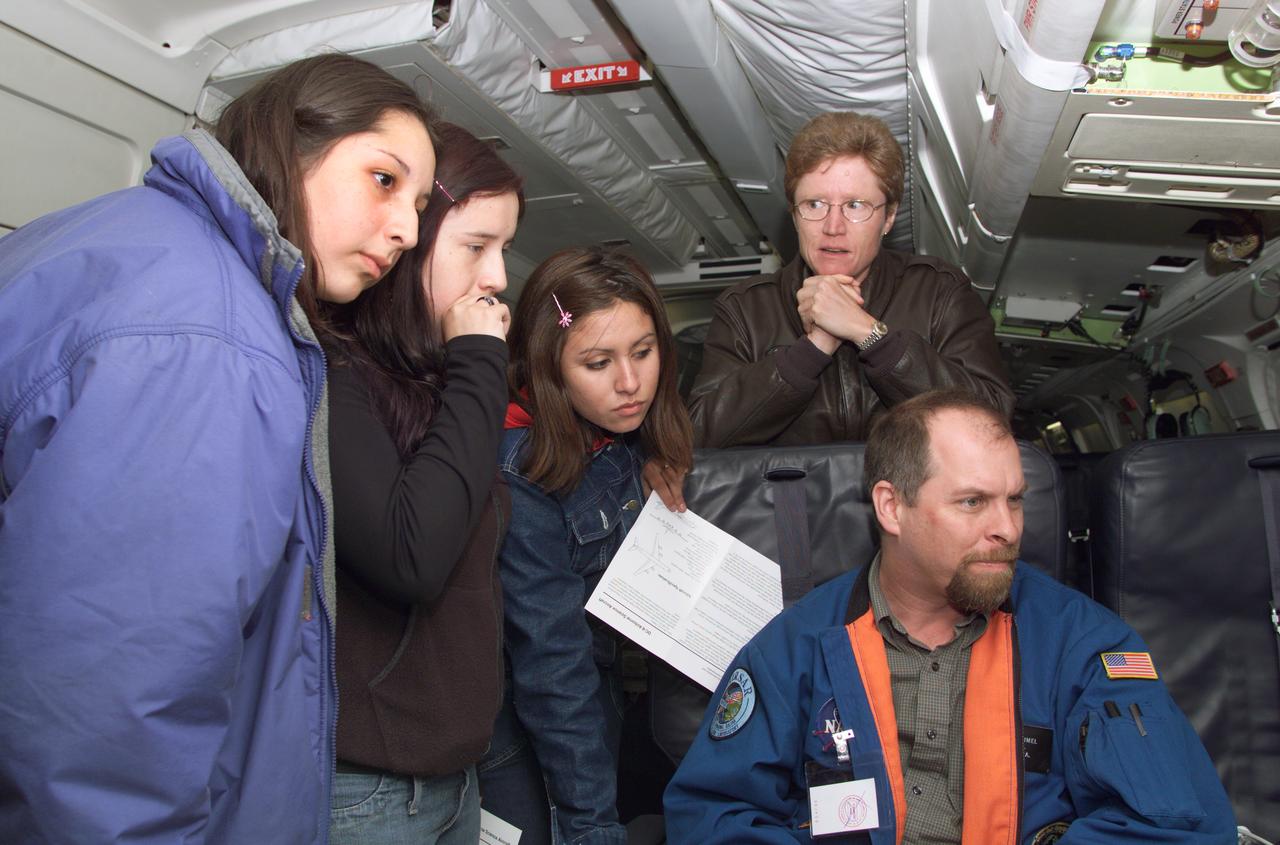
JPL scientist Dr. David Imel and U.S. Air Force Colonel Gwen Linde, the Defense Department Attache Officer assigned to the Chilean Embassy, lead Chilean students on a tour of the DC-8 aircraft at Carlos Ibanez del Campo International Airport in Punta Arenas, Chile. AirSAR 2004 is a three-week expedition by an international team of scientists that is using an all-weather imaging tool, called the Airborne Synthetic Aperture Radar (AirSAR) which is located onboard NASA's DC-8 airborne laboratory. Scientists from many parts of the world including NASA's Jet Propulsion Laboratory are combining ground research done in several areas in Central and South America with NASA's AirSAR technology to improve and expand on the quality of research they are able to conduct. In South America and Antarctica, AirSAR will collect imagery and data to help determine the contribution of Southern Hemisphere glaciers to sea level rise due to climate change. In Patagonia, researchers found this contribution had more than doubled from 1995 to 2000, compared to the previous 25 years. AirSAR data will make it possible to determine whether that trend is decreasing, continuing or accelerating. AirSAR will also provide reliable information on ice shelf thickness to measure the contribution of the glaciers to sea level.
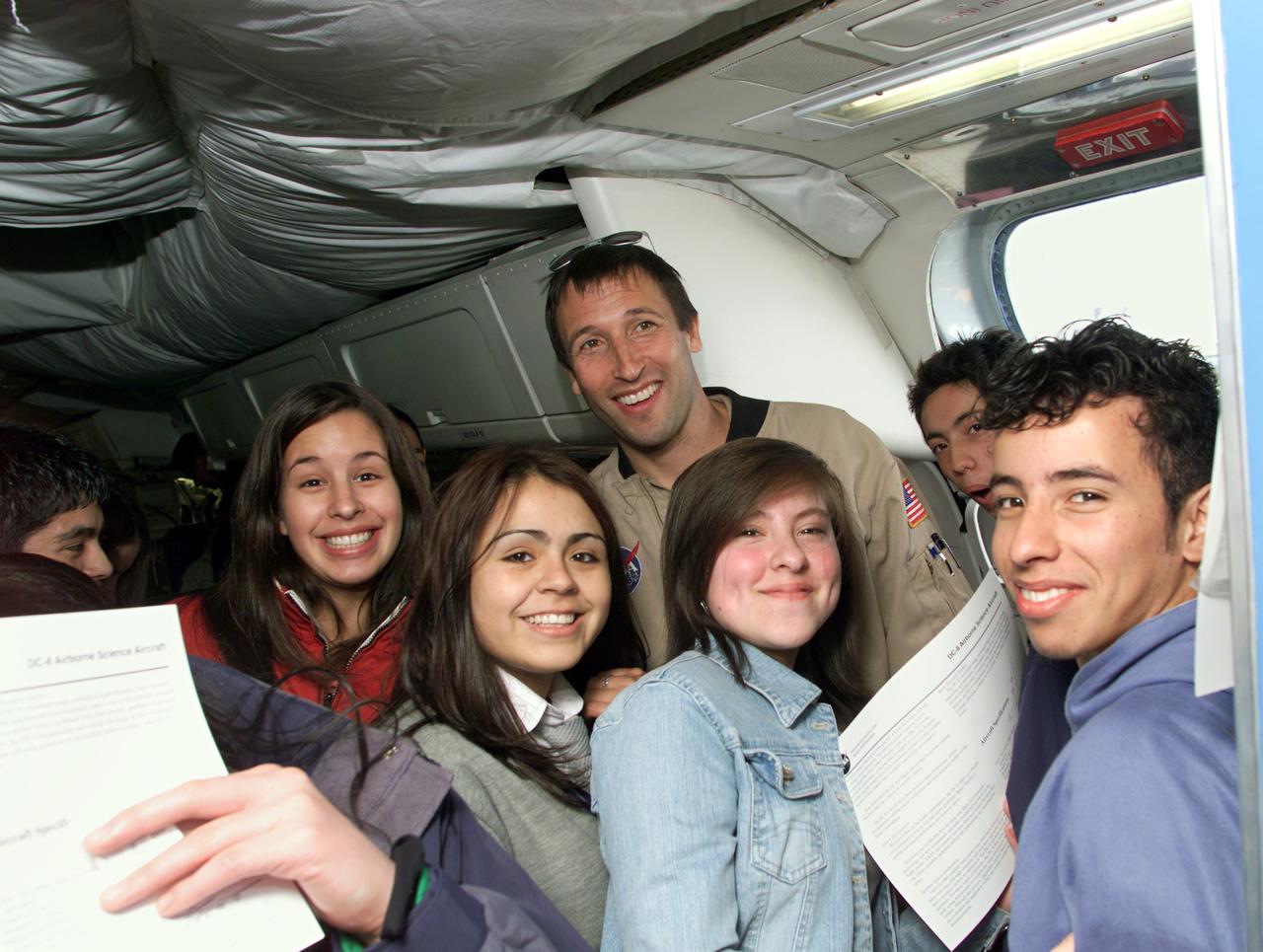
NASA DC-8 Mission Manager Walter Klein poses with a group of Chilean Students onboard the aircraft at Carlos Ibanez del Campo International Airport in Punta Arenas, Chile. AirSAR 2004 is a three-week expedition by an international team of scientists that is using an all-weather imaging tool, called the Airborne Synthetic Aperture Radar (AirSAR) which is located onboard NASA's DC-8 airborne laboratory. Scientists from many parts of the world including NASA's Jet Propulsion Laboratory are combining ground research done in several areas in Central and South America with NASA's AirSAR technology to improve and expand on the quality of research they are able to conduct. In South America and Antarctica, AirSAR will collect imagery and data to help determine the contribution of Southern Hemisphere glaciers to sea level rise due to climate change. In Patagonia, researchers found this contribution had more than doubled from 1995 to 2000, compared to the previous 25 years. AirSAR data will make it possible to determine whether that trend is decreasing, continuing or accelerating. AirSAR will also provide reliable information on ice shelf thickness to measure the contribution of the glaciers to sea level.
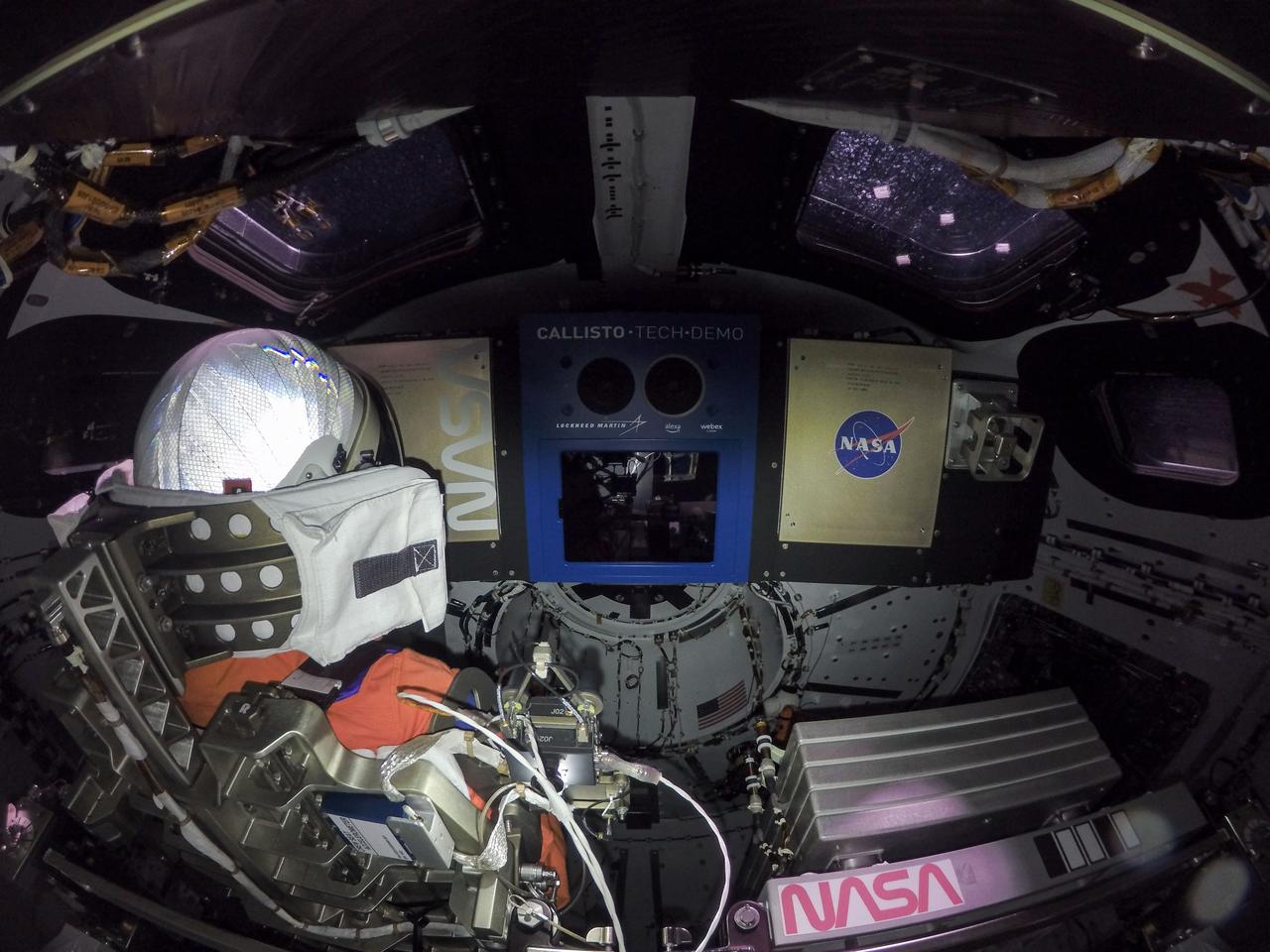
This high-resolution image captures the inside of the Orion crew module on flight day one of the Artemis I mission. At left is Commander Moonikin Campos, a purposeful passenger equipped with sensors to collect data that will help scientists and engineers understand the deep-space environment for future Artemis missions. At center is the Callisto payload, a technology demonstration of voice-activated audio and video technology from Lockheed Martin in collaboration with Amazon and Cisco. Callisto could assist future astronauts on deep-space missions. Below and to the right of Callisto is the Artemis I zero-gravity indicator, astronaut Snoopy.
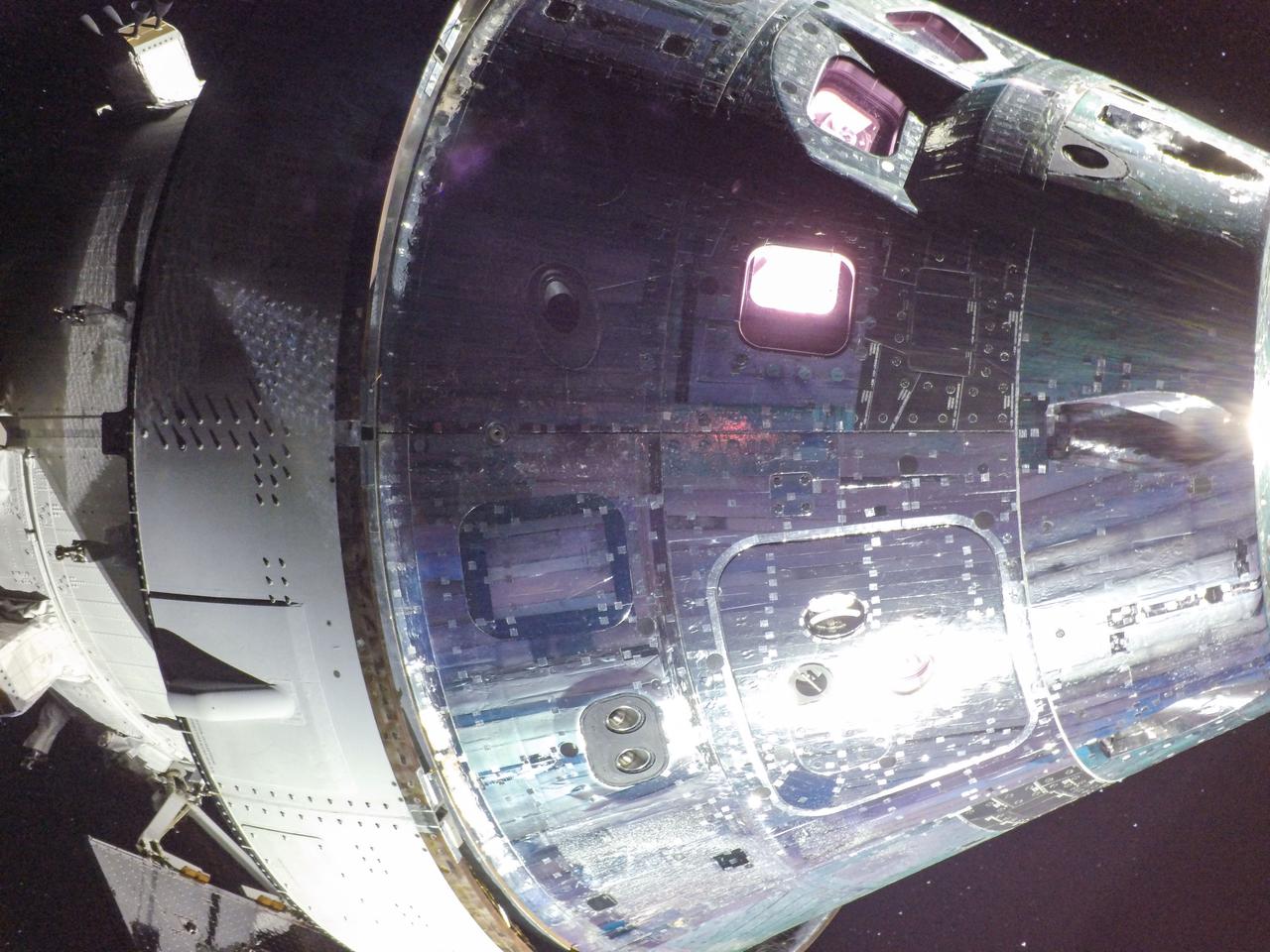
art001e002143 (Dec. 5, 2022) - Solar array-mounted cameras capture close-up images of NASA's Orion Command Module and European Service Module on the 20th day of the Artemis I mission. Windows on the Orion capsule offer a glimpse of “Commander Moonikin Campos," a manikin equipped with sensors measuring radiation, acceleration, and vibration data throughout the mission.
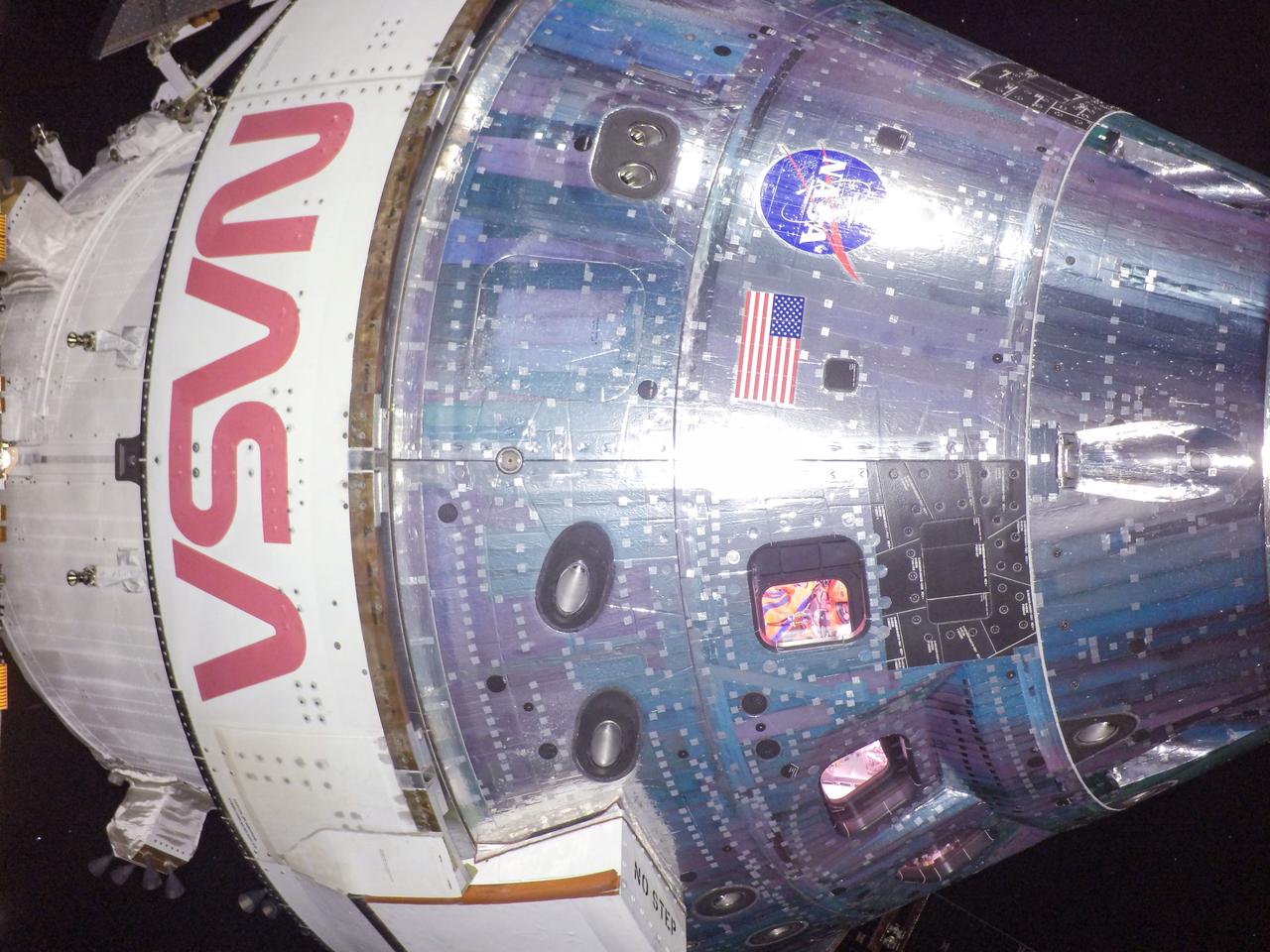
art001e002135 (Dec. 5, 2022) - Solar array-mounted cameras capture close-up images of NASA's Orion Command Module and European Service Module on the 20th day of the Artemis I mission. Windows on the Orion capsule offer a glimpse of “Commander Moonikin Campos," a manikin equipped with sensors measuring radiation, acceleration, and vibration data throughout the mission.
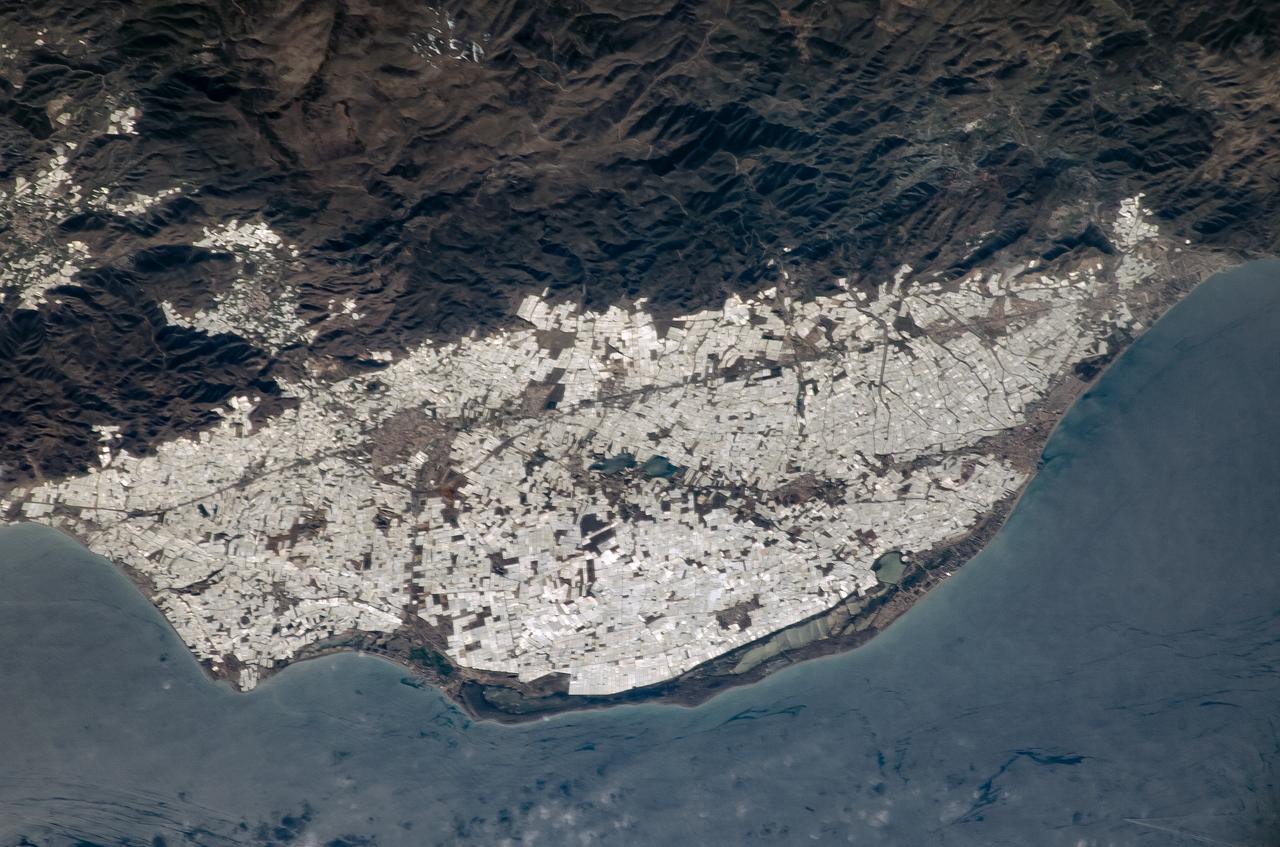
ISS008-E-14686 (7 February 2004) --- This image featuring southern Spain was photographed by an Expedition 8 crewmember on the International Space Station (ISS). Over the past 50 years, the small coastal plain (campo), some 30 kilometers southwest of the city of Almeria, has been intensively developed for agriculture. The area has a dry mild, Mediterranean climate and is further sheltered on the north by the Sierra de Gador. Note the dense, bright pattern of thousands of greenhouses extending from the shoreline right up to the base of the mountains and even into some of the smaller valleys. Saltpan operations can also be seen in the long coastal lagoons.
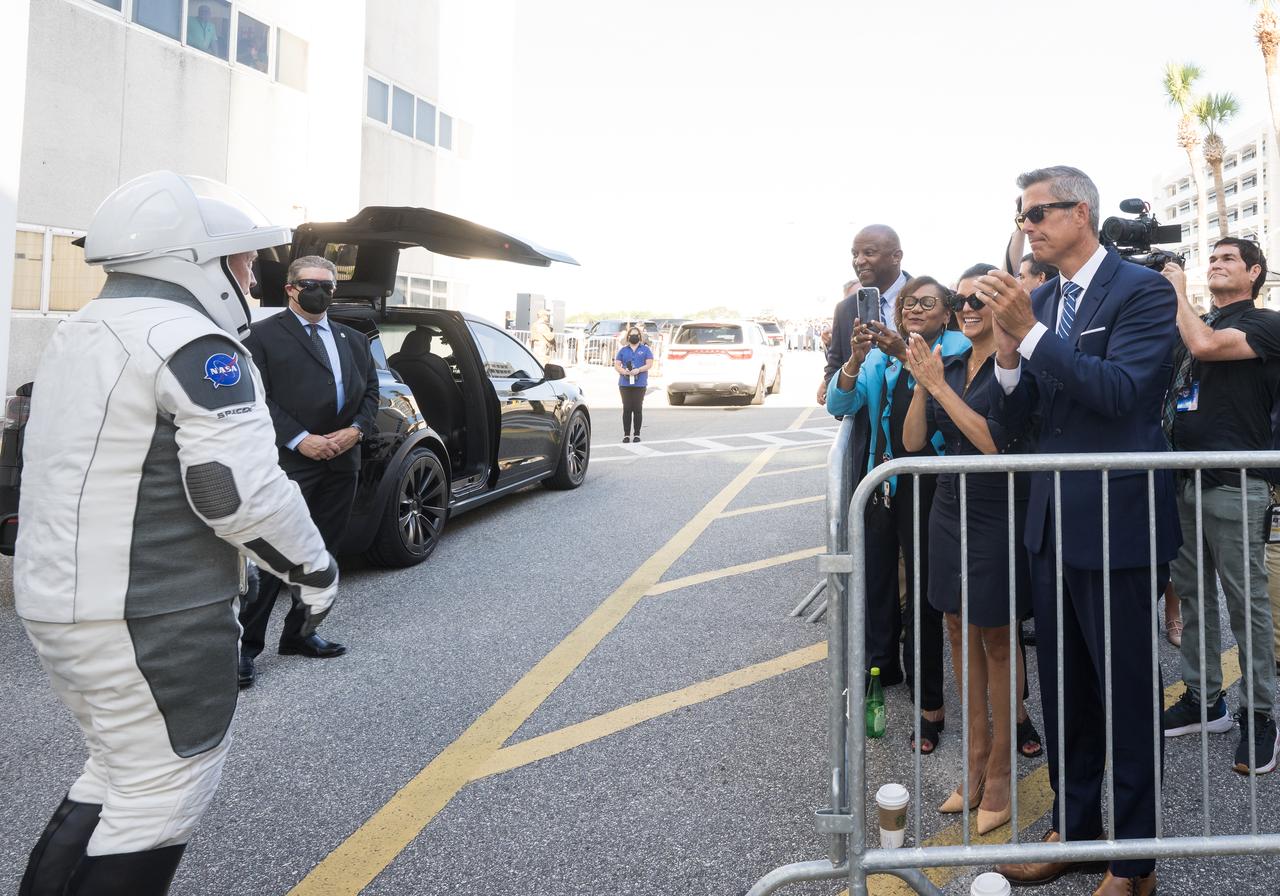
From right to left, Acting NASA Administrator Sean Duffy, his wife Rachel Campos-Duffy, acting NASA Associate Administrator Vanessa Wyche, and Deputy Director of NASA’s Kennedy Space Center, Kelvin Manning, react as NASA astronauts Mike Fincke, Zena Cardman, JAXA (Japan Aerospace Exploration Agency) astronaut Kimiya Yui, and Roscosmos cosmonaut Oleg Platonov, depart the Neil A. Armstrong Operations and Checkout Building for Launch Complex 39A on NASA's Kennedy Space Center to board the SpaceX Dragon spacecraft for the Crew-11 mission launch, before it was scrubbed due to weather concerns, Thursday, July 31, 2025, at NASA’s Kennedy Space Center in Florida. NASA’s SpaceX Crew-11 mission is the eleventh crew rotation mission of the SpaceX Crew Dragon spacecraft and Falcon 9 rocket to the International Space Station as part of the agency’s Commercial Crew Program. Cardman, Fincke, Yui, and Platonov launched at 11:43 a.m. EDT, Friday, August 1, from Launch Complex 39A at the NASA's Kennedy Space Center. Photo Credit: (NASA/Aubrey Gemignani)

From right to left, Acting NASA Administrator Sean Duffy, his wife Rachel Campos-Duffy, acting NASA Associate Administrator Vanessa Wyche, and Deputy Director of NASA’s Kennedy Space Center, Kelvin Manning, wave as NASA astronauts Zena Cardman, Mike Fincke, JAXA (Japan Aerospace Exploration Agency) astronaut Kimiya Yui, and Roscosmos cosmonaut Oleg Platonov, depart the Neil A. Armstrong Operations and Checkout Building for Launch Complex 39A on NASA's Kennedy Space Center to board the SpaceX Dragon spacecraft for the Crew-11 mission launch, before it was scrubbed due to weather concerns, Thursday, July 31, 2025, at NASA’s Kennedy Space Center in Florida. NASA’s SpaceX Crew-11 mission is the eleventh crew rotation mission of the SpaceX Crew Dragon spacecraft and Falcon 9 rocket to the International Space Station as part of the agency’s Commercial Crew Program. Cardman, Fincke, Yui, and Platonov launched at 11:43 a.m. EDT, Friday, August 1, from Launch Complex 39A at the NASA's Kennedy Space Center. Photo Credit: (NASA/Aubrey Gemignani)

Acting NASA Administrator Sean Duffy, second from left, and his wife Rachel Campos-Duffy, left, react as NASA astronauts Mike Fincke, Zena Cardman, JAXA (Japan Aerospace Exploration Agency) astronaut Kimiya Yui, and Roscosmos cosmonaut Oleg Platonov, depart the Neil A. Armstrong Operations and Checkout Building for Launch Complex 39A on NASA's Kennedy Space Center to board the SpaceX Dragon spacecraft for the Crew-11 mission launch, before it was scrubbed due to weather concerns, Thursday, July 31, 2025, at NASA’s Kennedy Space Center in Florida. NASA’s SpaceX Crew-11 mission is the eleventh crew rotation mission of the SpaceX Crew Dragon spacecraft and Falcon 9 rocket to the International Space Station as part of the agency’s Commercial Crew Program. Cardman, Fincke, Yui, and Platonov launched at 11:43 a.m. EDT, Friday, August 1, from Launch Complex 39A at the NASA's Kennedy Space Center. Photo Credit: (NASA/Aubrey Gemignani)
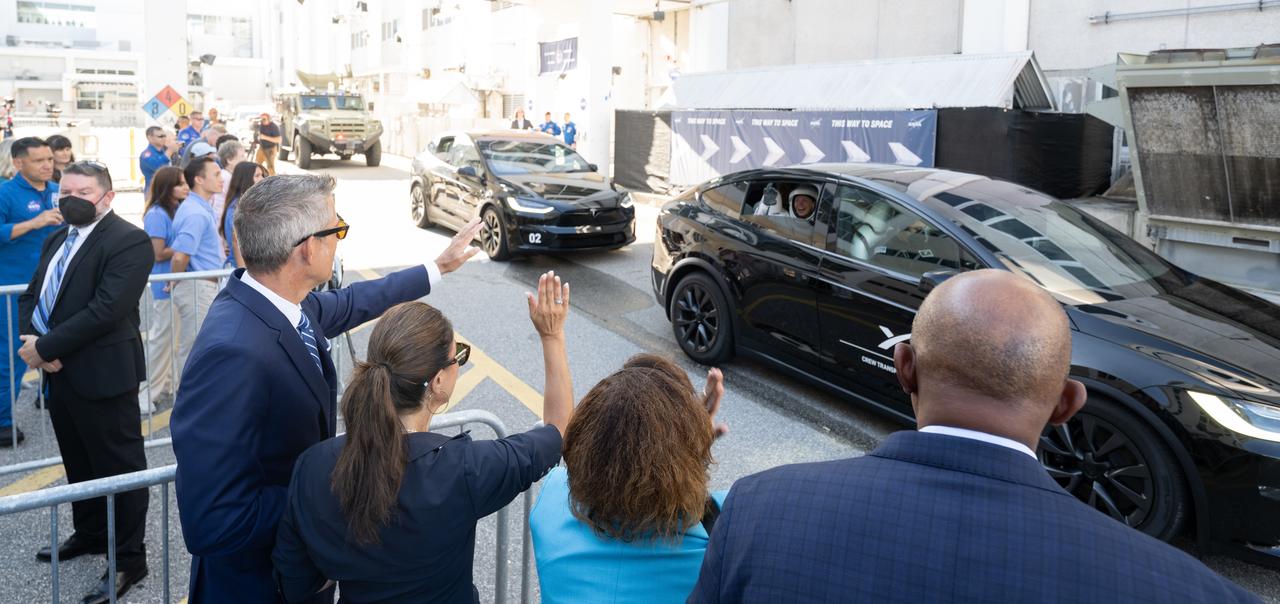
Acting NASA Administrator Sean Duffy, left, his wife Rachel Campos-Duffy, acting NASA Associate Administrator Vanessa Wyche, and acting Kennedy Space Center Director Kelvin Manning, wave as NASA astronauts Zena Cardman, Mike Fincke, JAXA (Japan Aerospace Exploration Agency) astronaut Kimiya Yui, and Roscosmos cosmonaut Oleg Platonov, depart the Neil A. Armstrong Operations and Checkout Building for Launch Complex 39A on NASA's Kennedy Space Center to board the SpaceX Dragon spacecraft for the Crew-11 mission launch, Thursday, July 31, 2025, at NASA’s Kennedy Space Center in Florida. NASA’s SpaceX Crew-11 mission is the eleventh crew rotation mission of the SpaceX Crew Dragon spacecraft and Falcon 9 rocket to the International Space Station as part of the agency’s Commercial Crew Program. Cardman, Fincke, Yui, Platonov are scheduled to launch at 12:09 p.m. EDT, from Launch Complex 39A at the NASA's Kennedy Space Center. Photo Credit: (NASA/Joel Kowsky)

From right to left, Acting NASA Administrator Sean Duffy, his wife Rachel Campos-Duffy, acting NASA Associate Administrator Vanessa Wyche, and Deputy Director of NASA’s Kennedy Space Center, Kelvin Manning, wave as NASA astronauts Zena Cardman, Mike Fincke, JAXA (Japan Aerospace Exploration Agency) astronaut Kimiya Yui, and Roscosmos cosmonaut Oleg Platonov, depart the Neil A. Armstrong Operations and Checkout Building for Launch Complex 39A on NASA's Kennedy Space Center to board the SpaceX Dragon spacecraft for the Crew-11 mission launch, before it was scrubbed due to weather concerns, Thursday, July 31, 2025, at NASA’s Kennedy Space Center in Florida. NASA’s SpaceX Crew-11 mission is the eleventh crew rotation mission of the SpaceX Crew Dragon spacecraft and Falcon 9 rocket to the International Space Station as part of the agency’s Commercial Crew Program. Cardman, Fincke, Yui, and Platonov launched at 11:43 a.m. EDT, Friday, August 1, from Launch Complex 39A at the NASA's Kennedy Space Center. Photo Credit: (NASA/Aubrey Gemignani)

From right to left, Acting NASA Administrator Sean Duffy, his wife Rachel Campos-Duffy, acting NASA Associate Administrator Vanessa Wyche, and Deputy Director of NASA’s Kennedy Space Center, Kelvin Manning, watch as NASA astronauts Zena Cardman, Mike Fincke, JAXA (Japan Aerospace Exploration Agency) astronaut Kimiya Yui, and Roscosmos cosmonaut Oleg Platonov, depart the Neil A. Armstrong Operations and Checkout Building for Launch Complex 39A on NASA's Kennedy Space Center to board the SpaceX Dragon spacecraft for the Crew-11 mission launch, before it was scrubbed due to weather concerns, Thursday, July 31, 2025, at NASA’s Kennedy Space Center in Florida. NASA’s SpaceX Crew-11 mission is the eleventh crew rotation mission of the SpaceX Crew Dragon spacecraft and Falcon 9 rocket to the International Space Station as part of the agency’s Commercial Crew Program. Cardman, Fincke, Yui, and Platonov launched at 11:43 a.m. EDT, Friday, August 1, from Launch Complex 39A at the NASA's Kennedy Space Center. Photo Credit: (NASA/Aubrey Gemignani)

From right to left, Acting NASA Administrator Sean Duffy, his wife Rachel Campos-Duffy, acting NASA Associate Administrator Vanessa Wyche, and Deputy Director of NASA’s Kennedy Space Center, Kelvin Manning, wave as NASA astronauts Zena Cardman, Mike Fincke, JAXA (Japan Aerospace Exploration Agency) astronaut Kimiya Yui, and Roscosmos cosmonaut Oleg Platonov, depart the Neil A. Armstrong Operations and Checkout Building for Launch Complex 39A on NASA's Kennedy Space Center to board the SpaceX Dragon spacecraft for the Crew-11 mission launch, before it was scrubbed due to weather concerns, Thursday, July 31, 2025, at NASA’s Kennedy Space Center in Florida. NASA’s SpaceX Crew-11 mission is the eleventh crew rotation mission of the SpaceX Crew Dragon spacecraft and Falcon 9 rocket to the International Space Station as part of the agency’s Commercial Crew Program. Cardman, Fincke, Yui, and Platonov launched at 11:43 a.m. EDT, Friday, August 1, from Launch Complex 39A at the NASA's Kennedy Space Center. Photo Credit: (NASA/Aubrey Gemignani)
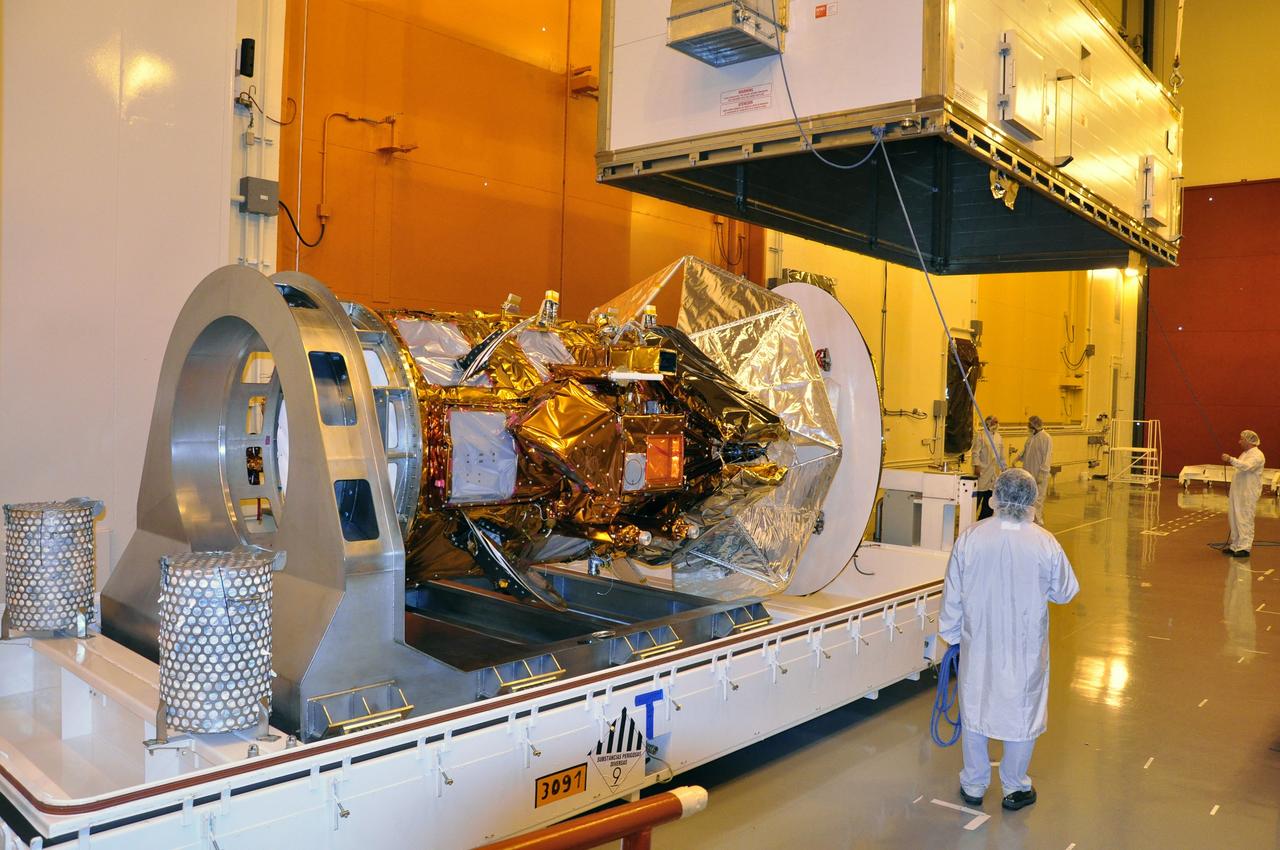
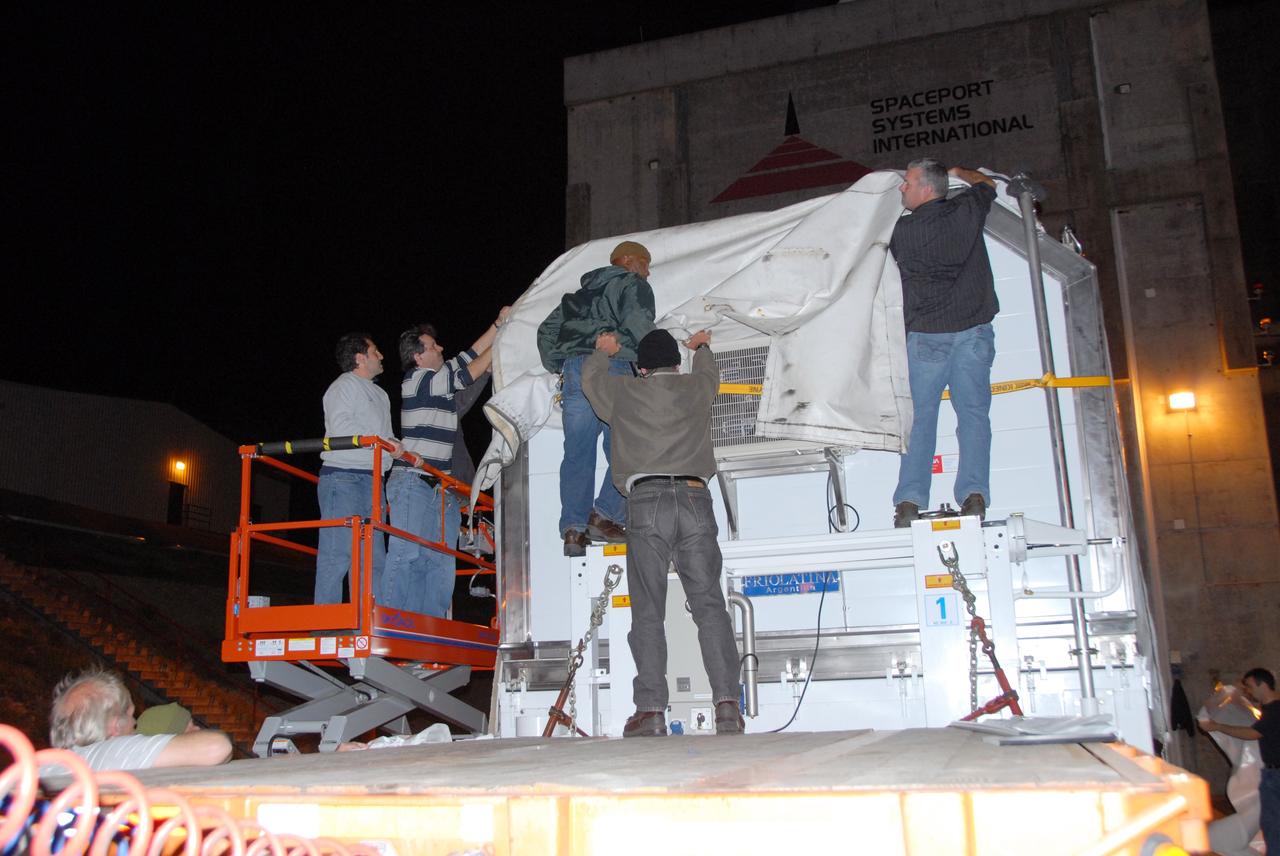
VANDENBERG AIR FORCE BASE, Calif. -- The Aquarius/SAC-D spacecraft is unpacked and unveiled in the Spaceport Systems International payload processing facility at Vandenberg Air Force Base in California. The container protected the spacecraft on its journey from Campos, Brazil, aboard a U.S. Air Force C-17 transport plane. Following final tests, the spacecraft will be integrated to a United Launch Alliance Delta II rocket in preparation for the targeted June launch to low Earth orbit. Aquarius, the NASA-built primary instrument on the SAC-D spacecraft, will map global changes in salinity at the ocean's surface. Salinity is a key measurement for understanding how changes in rainfall, evaporation and the melting of freezing of ice influence ocean circulation and are linked to variations in Earth's climate. The three-year mission will provide new insights into how variations in ocean surface salinity relate to these fundamental climate processes. Photo credit: NASA/Randy Beaudoin, VAFB
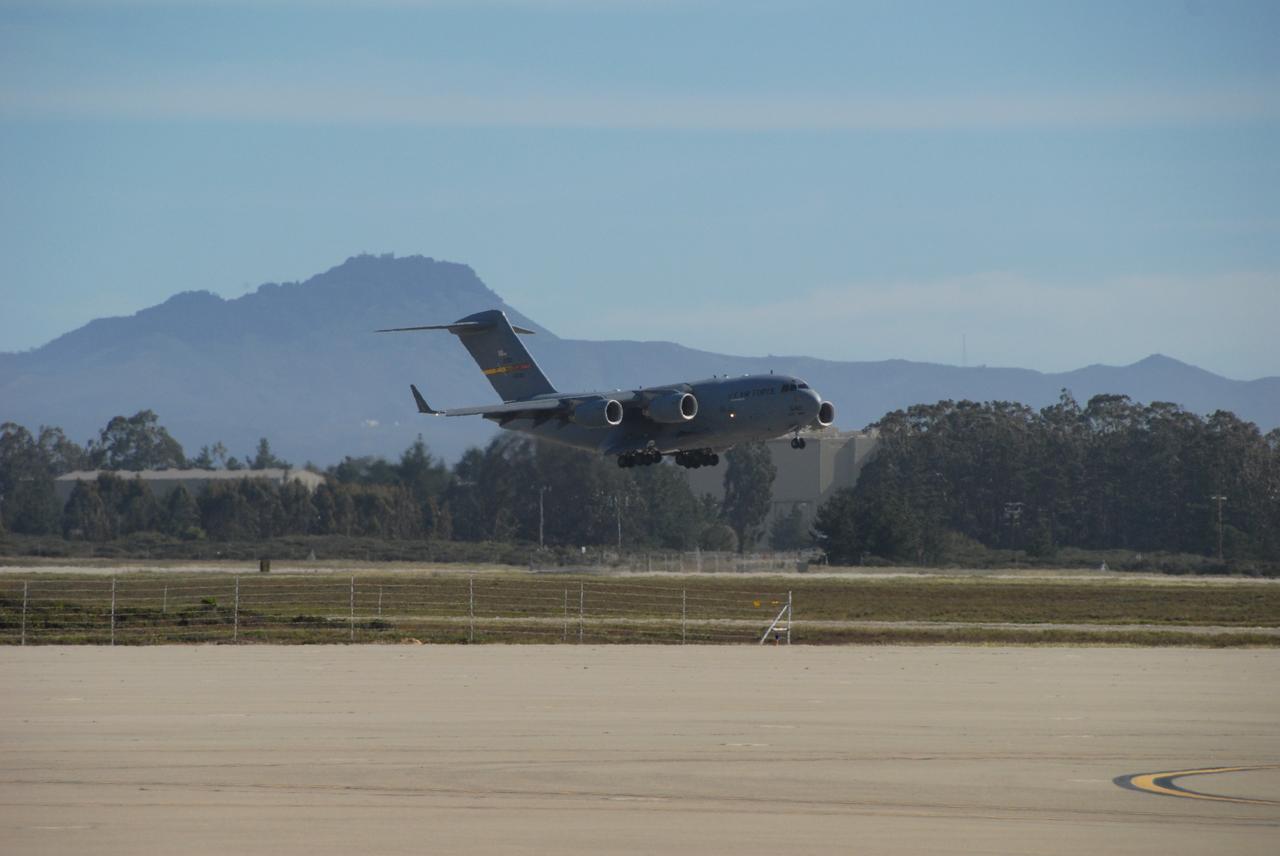
VANDENBERG AIR FORCE BASE, Calif. -- The Aquarius/SAC-D spacecraft arrives at Vandenberg Air Force Base in California from Campos, Brazil, aboard a U.S. Air Force C-17 transport plane. Following final tests, the spacecraft will be integrated to a United Launch Alliance Delta II rocket in preparation for the targeted June launch to low Earth orbit. Aquarius, the NASA-built primary instrument on the SAC-D spacecraft, will map global changes in salinity at the ocean's surface. Salinity is a key measurement for understanding how changes in rainfall, evaporation and the melting of freezing of ice influence ocean circulation and are linked to variations in Earth's climate. The three-year mission will provide new insights into how variations in ocean surface salinity relate to these fundamental climate processes. Photo credit: VAFB/30th Space Wing
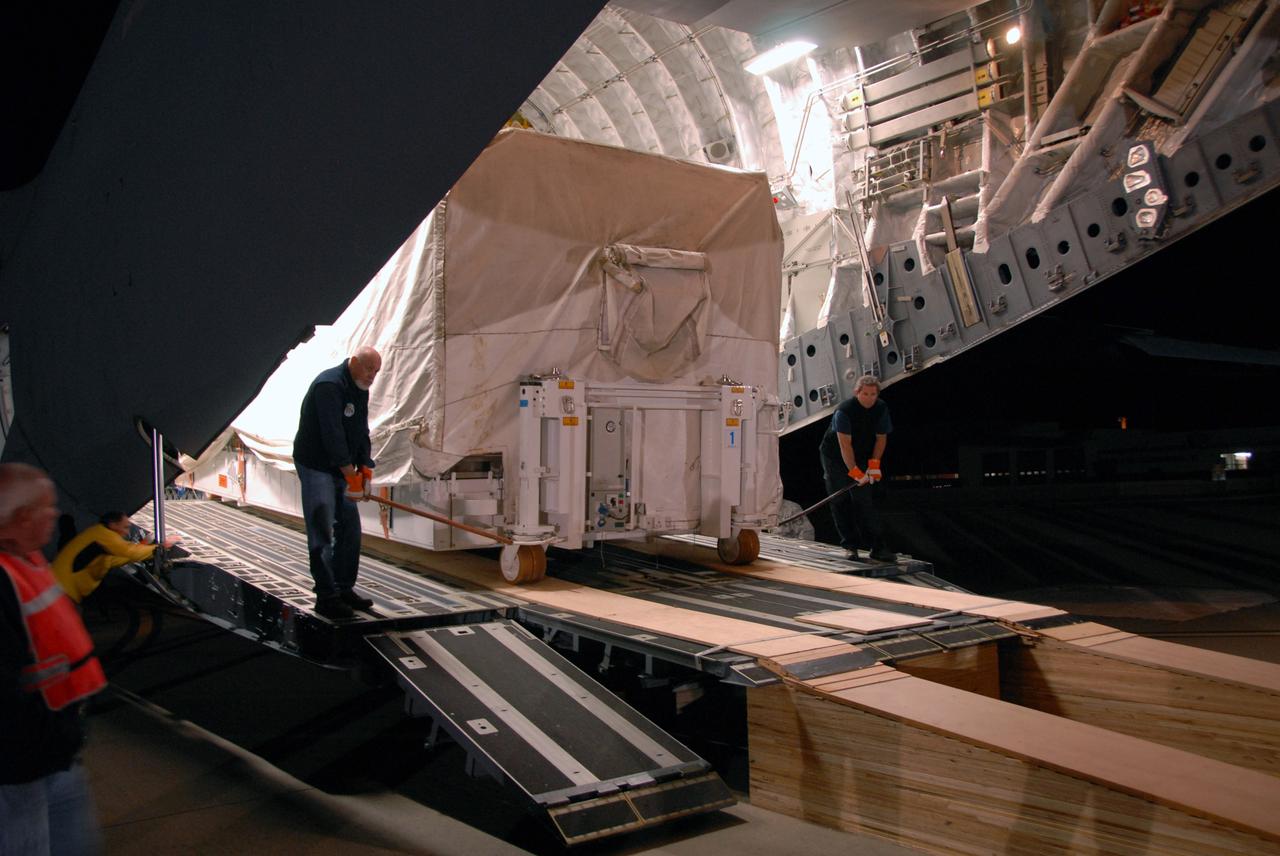
VANDENBERG AIR FORCE BASE, Calif. -- The Aquarius/SAC-D spacecraft is offloaded from a U.S. Air Force C-17 transport at Vandenberg Air Force Base in California. The aircraft traveled from Campos, Brazil. Following final tests, the spacecraft will be integrated to a United Launch Alliance Delta II rocket in preparation for the targeted June launch to low Earth orbit. Aquarius, the NASA-built primary instrument on the SAC-D spacecraft, will map global changes in salinity at the ocean's surface. Salinity is a key measurement for understanding how changes in rainfall, evaporation and the melting of freezing of ice influence ocean circulation and are linked to variations in Earth's climate. The three-year mission will provide new insights into how variations in ocean surface salinity relate to these fundamental climate processes. Photo credit: VAFB/30th Space Wing
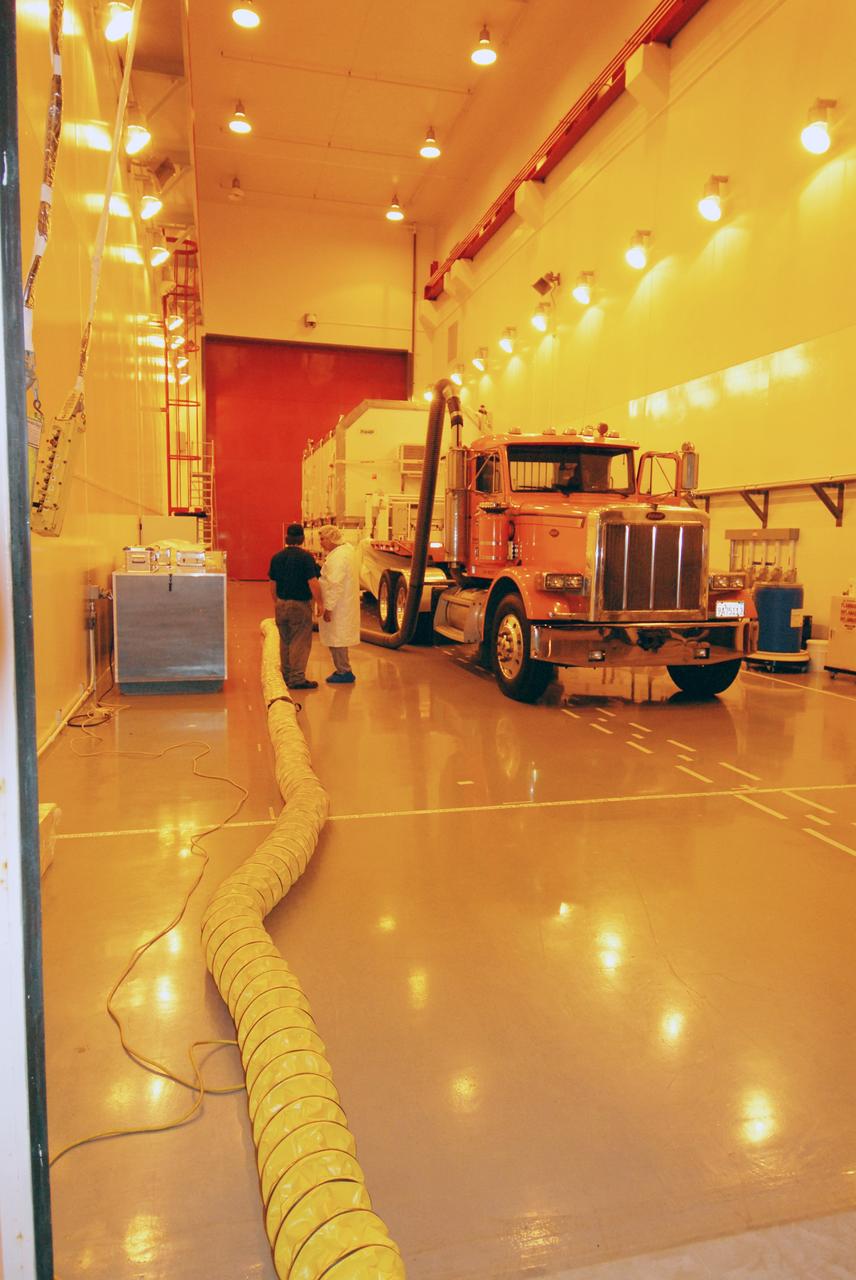
VANDENBERG AIR FORCE BASE, Calif. -- The Aquarius/SAC-D spacecraft is in the Spaceport Systems International payload processing facility at Vandenberg Air Force Base in California. Earlier, a U.S. Air Force C-17 transport plane delivered the spacecraft from Campos, Brazil. Following final tests, the spacecraft will be integrated to a United Launch Alliance Delta II rocket in preparation for the targeted June launch to low Earth orbit. Aquarius, the NASA-built primary instrument on the SAC-D spacecraft, will map global changes in salinity at the ocean's surface. Salinity is a key measurement for understanding how changes in rainfall, evaporation and the melting of freezing of ice influence ocean circulation and are linked to variations in Earth's climate. The three-year mission will provide new insights into how variations in ocean surface salinity relate to these fundamental climate processes. Photo credit: VAFB/30th Space Wing
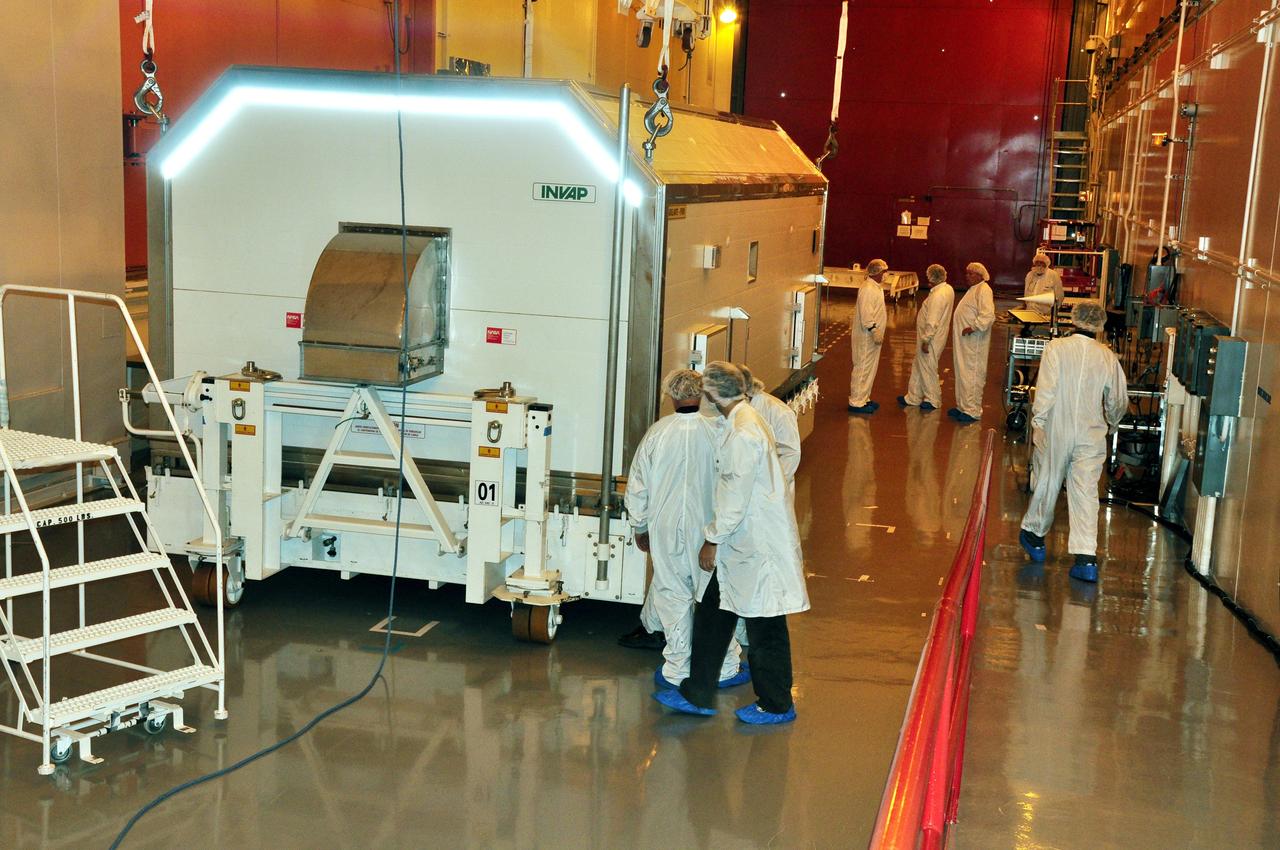
VANDENBERG AIR FORCE BASE, Calif. -- Technicians prepare to unpack and unveil the Aquarius/SAC-D spacecraft in the Spaceport Systems International payload processing facility at Vandenberg Air Force Base in California. The container protected the spacecraft on its journey from Campos, Brazil, aboard a U.S. Air Force C-17 transport plane. Following final tests, the spacecraft will be integrated to a United Launch Alliance Delta II rocket in preparation for the targeted June launch to low Earth orbit. Aquarius, the NASA-built primary instrument on the SAC-D spacecraft, will map global changes in salinity at the ocean's surface. Salinity is a key measurement for understanding how changes in rainfall, evaporation and the melting of freezing of ice influence ocean circulation and are linked to variations in Earth's climate. The three-year mission will provide new insights into how variations in ocean surface salinity relate to these fundamental climate processes. Photo credit: NASA/Randy Beaudoin, VAFB
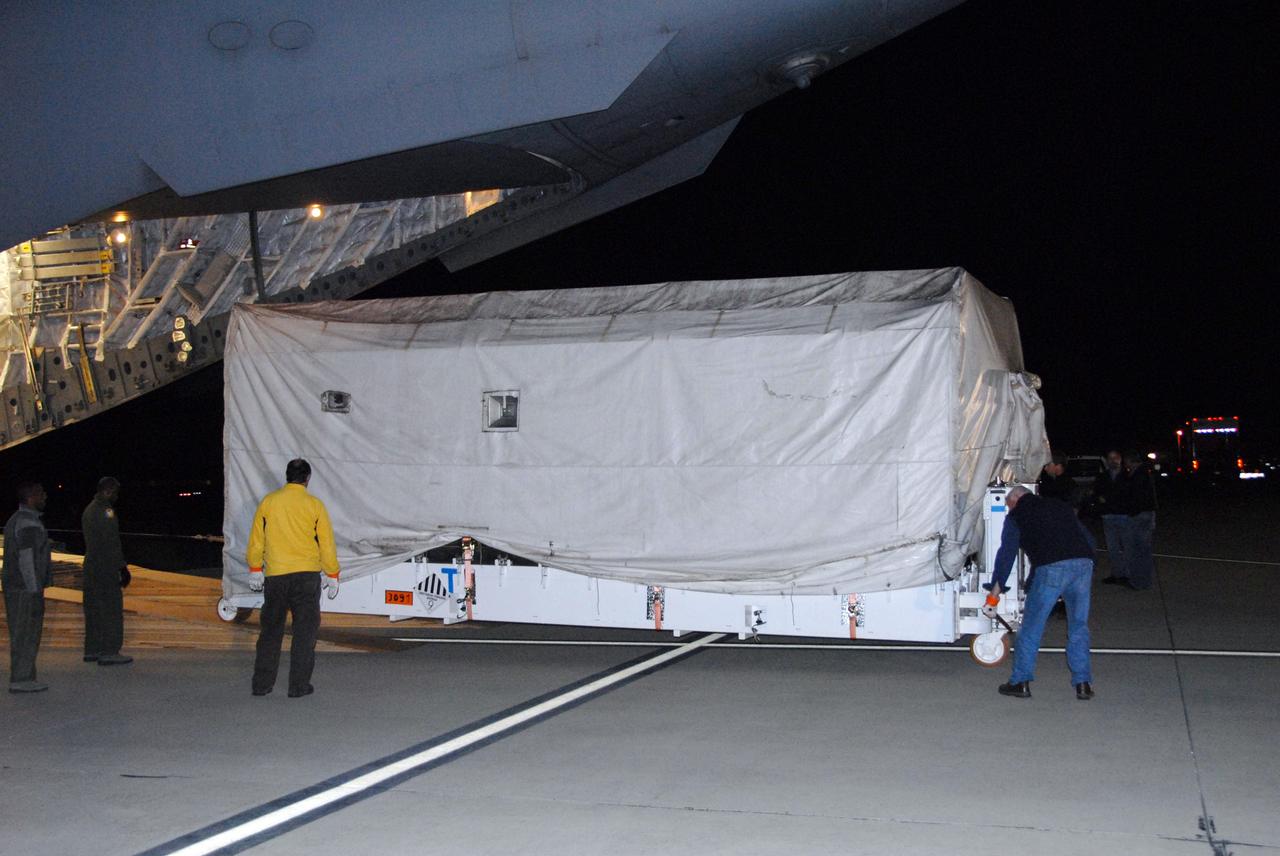
VANDENBERG AIR FORCE BASE, Calif. -- The Aquarius/SAC-D spacecraft is offloaded from a U.S. Air Force C-17 transport at Vandenberg Air Force Base in California. The aircraft traveled from Campos, Brazil. Following final tests, the spacecraft will be integrated to a United Launch Alliance Delta II rocket in preparation for the targeted June launch to low Earth orbit. Aquarius, the NASA-built primary instrument on the SAC-D spacecraft, will map global changes in salinity at the ocean's surface. Salinity is a key measurement for understanding how changes in rainfall, evaporation and the melting of freezing of ice influence ocean circulation and are linked to variations in Earth's climate. The three-year mission will provide new insights into how variations in ocean surface salinity relate to these fundamental climate processes. Photo credit: VAFB/30th Space Wing
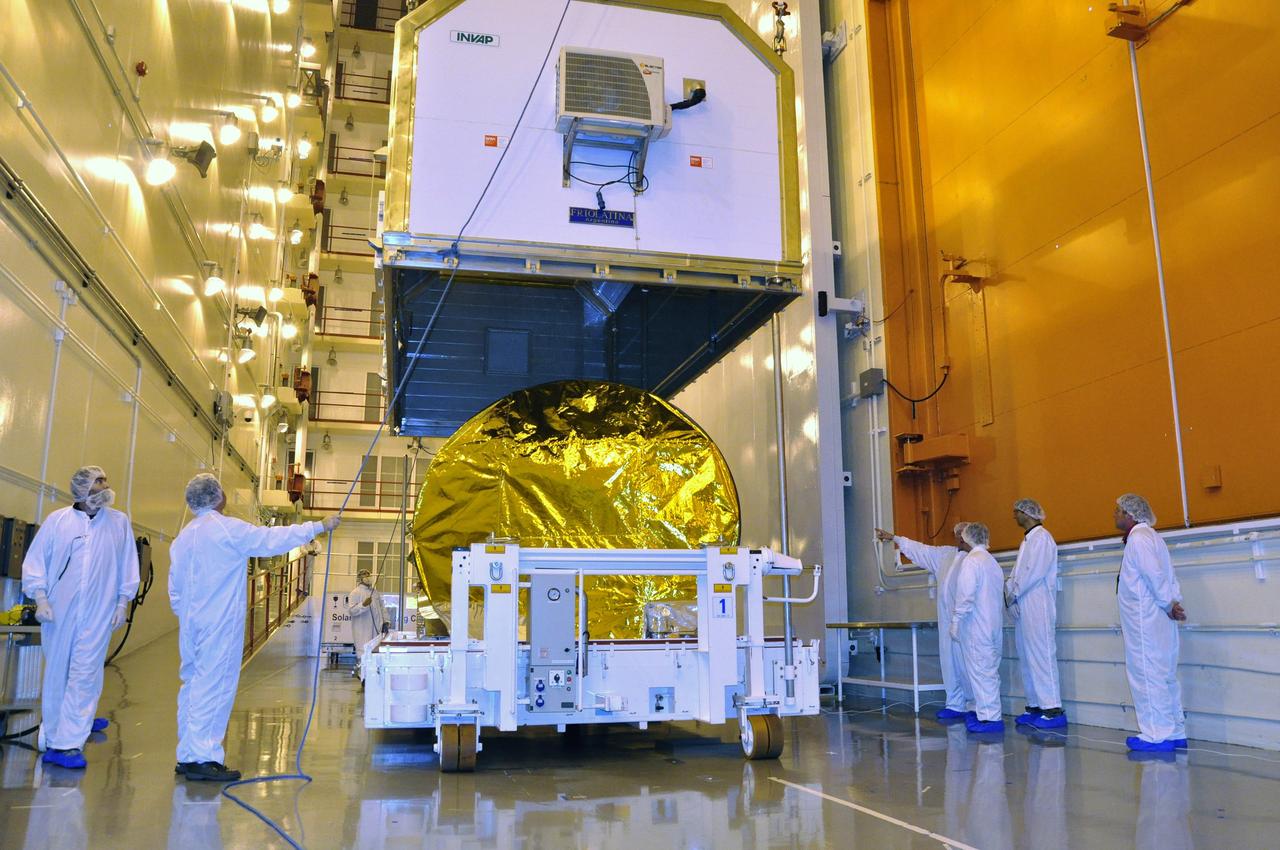
VANDENBERG AIR FORCE BASE, Calif. -- Technicians unpack and unveil the Aquarius/SAC-D spacecraft in the Spaceport Systems International payload processing facility at Vandenberg Air Force Base in California. The container protected the spacecraft on its journey from Campos, Brazil, aboard a U.S. Air Force C-17 transport plane. Following final tests, the spacecraft will be integrated to a United Launch Alliance Delta II rocket in preparation for the targeted June launch to low Earth orbit. Aquarius, the NASA-built primary instrument on the SAC-D spacecraft, will map global changes in salinity at the ocean's surface. Salinity is a key measurement for understanding how changes in rainfall, evaporation and the melting of freezing of ice influence ocean circulation and are linked to variations in Earth's climate. The three-year mission will provide new insights into how variations in ocean surface salinity relate to these fundamental climate processes. Photo credit: NASA/Randy Beaudoin, VAFB
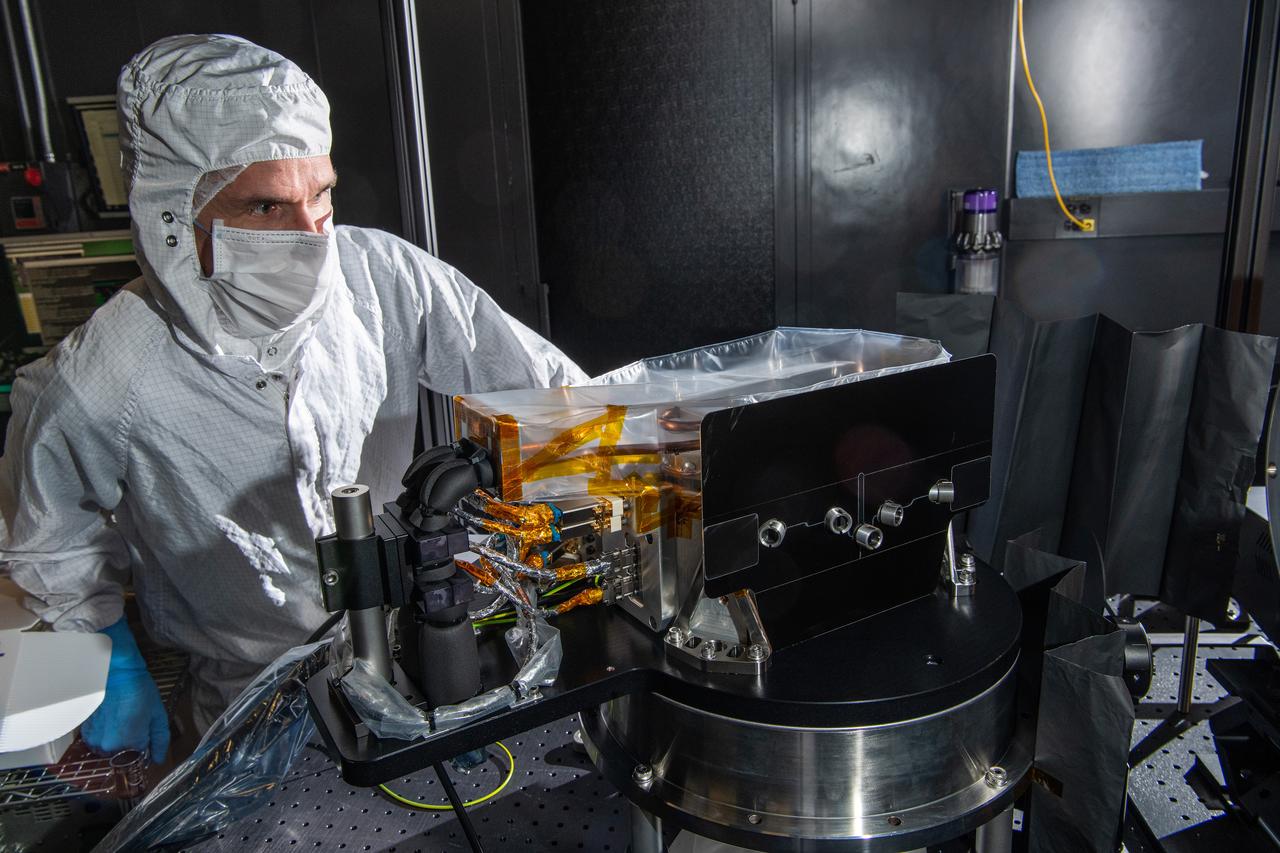
Jochen Campo from SRON Netherlands Institute for Space Research with the The SPEXone Polarimetric Calibration at NASA's Goddard Space Flight Center in Greenbelt,Maryland on April 8th, 2021. SPEXone is one of three instruments on NASA's Plankton, Aerosol, Cloud, ocean Ecosystem (PACE) observatory and has been developed by a Dutch consortium consisting of SRON Netherlands Institute for Space Research and Airbus Defence and Space Netherlands, supported by opto-mechanical expertise from TNO. SRON and Airbus DS NL are responsible for the design, manufacturing and testing of the instrument. The scientific lead is in the hands of SRON. SPEXone is a public-private initiative, funded by the Netherlands Space Office (NSO), the Netherlands Organization of Scientific Research (NWO), SRON and Airbus DS NL.
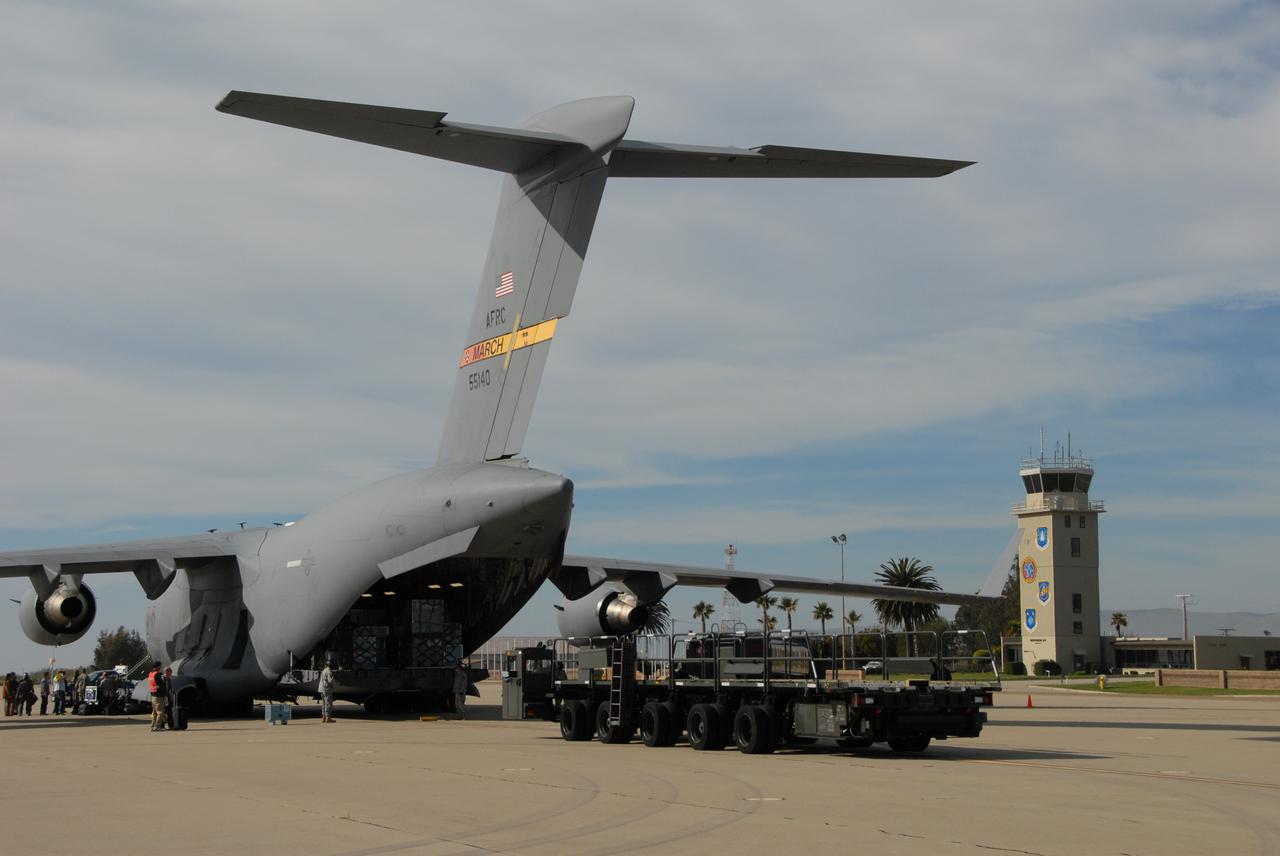
VANDENBERG AIR FORCE BASE, Calif. -- Workers at Vandenberg Air Force Base in California prepare to offload the Aquarius/SAC-D spacecraft from a U.S. Air Force C-17 transport plane. The aircraft traveled from Campos, Brazil. Following final tests, the spacecraft will be integrated to a United Launch Alliance Delta II rocket in preparation for the targeted June launch to low Earth orbit. Aquarius, the NASA-built primary instrument on the SAC-D spacecraft, will map global changes in salinity at the ocean's surface. Salinity is a key measurement for understanding how changes in rainfall, evaporation and the melting of freezing of ice influence ocean circulation and are linked to variations in Earth's climate. The three-year mission will provide new insights into how variations in ocean surface salinity relate to these fundamental climate processes. Photo credit: VAFB/30th Space Wing
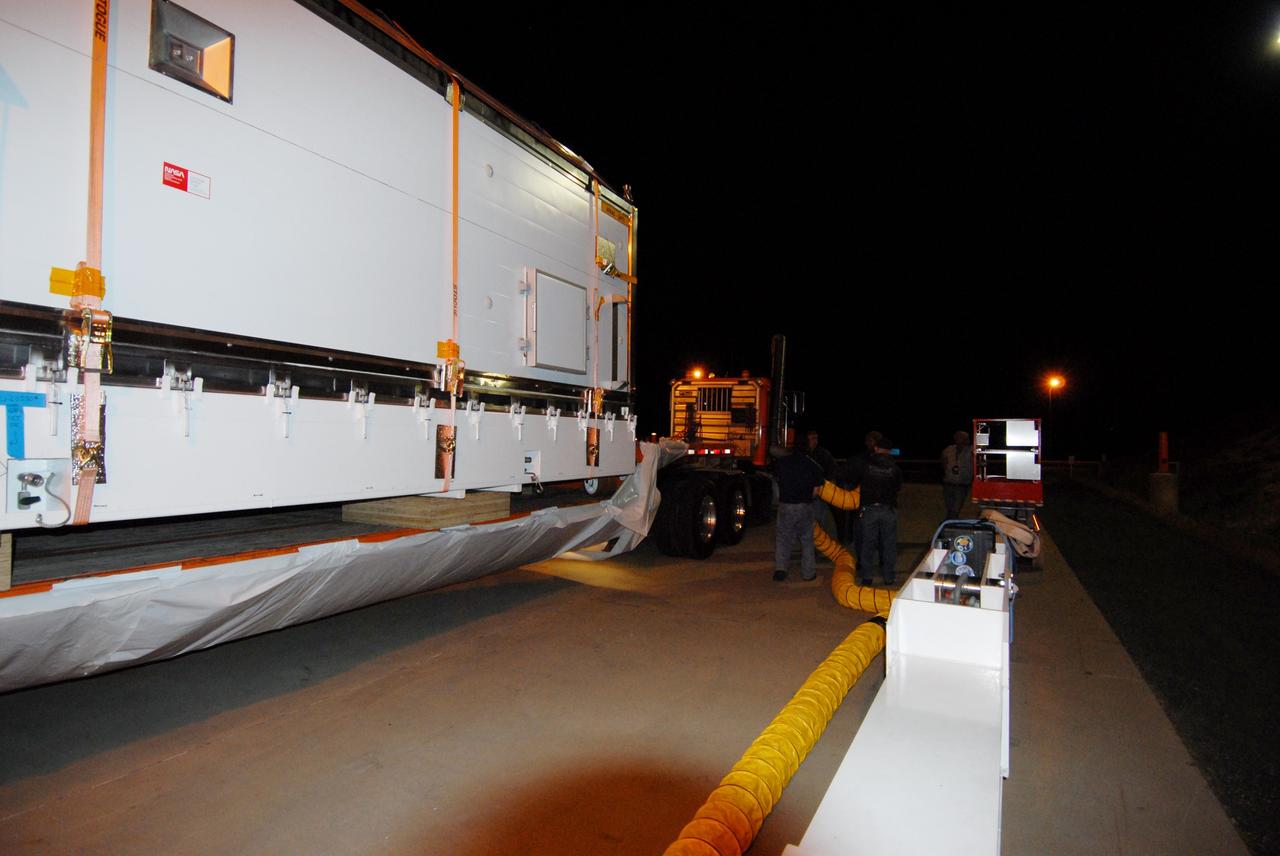
VANDENBERG AIR FORCE BASE, Calif. -- The Aquarius/SAC-D spacecraft is transported to the Spaceport Systems International payload processing facility at Vandenberg Air Force Base in California. Earlier, a U.S. Air Force C-17 transport plane delivered the spacecraft from Campos, Brazil. Following final tests, the spacecraft will be integrated to a United Launch Alliance Delta II rocket in preparation for the targeted June launch to low Earth orbit. Aquarius, the NASA-built primary instrument on the SAC-D spacecraft, will map global changes in salinity at the ocean's surface. Salinity is a key measurement for understanding how changes in rainfall, evaporation and the melting of freezing of ice influence ocean circulation and are linked to variations in Earth's climate. The three-year mission will provide new insights into how variations in ocean surface salinity relate to these fundamental climate processes. Photo credit: VAFB/30th Space Wing
VANDENBERG AIR FORCE BASE, Calif. -- Workers at Vandenberg Air Force Base in California prepare to offload the Aquarius/SAC-D spacecraft from a U.S. Air Force C-17 transport plane. The aircraft traveled from Campos, Brazil. Following final tests, the spacecraft will be integrated to a United Launch Alliance Delta II rocket in preparation for the targeted June launch to low Earth orbit. Aquarius, the NASA-built primary instrument on the SAC-D spacecraft, will map global changes in salinity at the ocean's surface. Salinity is a key measurement for understanding how changes in rainfall, evaporation and the melting of freezing of ice influence ocean circulation and are linked to variations in Earth's climate. The three-year mission will provide new insights into how variations in ocean surface salinity relate to these fundamental climate processes. Photo credit: VAFB/30th Space Wing
VANDENBERG AIR FORCE BASE, Calif. -- The Aquarius/SAC-D spacecraft is transported to the Spaceport Systems International processing facility at Vandenberg Air Force Base in California. Earlier, a U.S. Air Force C-17 transport plane delivered the spacecraft from Campos, Brazil. Following final tests, the spacecraft will be integrated to a United Launch Alliance Delta II rocket in preparation for the targeted June launch to low Earth orbit. Aquarius, the NASA-built primary instrument on the SAC-D spacecraft, will map global changes in salinity at the ocean's surface. Salinity is a key measurement for understanding how changes in rainfall, evaporation and the melting of freezing of ice influence ocean circulation and are linked to variations in Earth's climate. The three-year mission will provide new insights into how variations in ocean surface salinity relate to these fundamental climate processes. Photo credit: VAFB/30th Space Wing
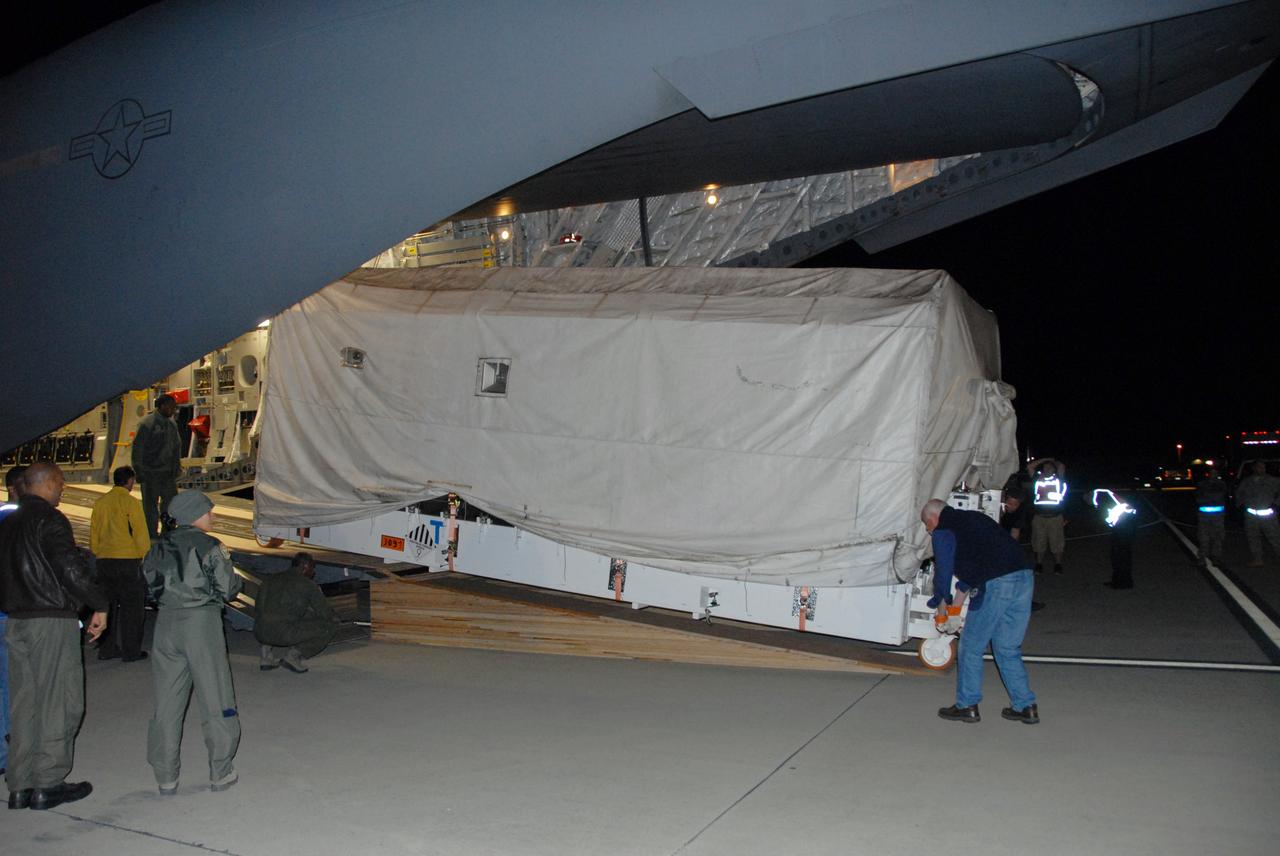
VANDENBERG AIR FORCE BASE, Calif. -- The Aquarius/SAC-D spacecraft is offloaded from a U.S. Air Force C-17 transport at Vandenberg Air Force Base in California. The aircraft traveled from Campos, Brazil. Following final tests, the spacecraft will be integrated to a United Launch Alliance Delta II rocket in preparation for the targeted June launch to low Earth orbit. Aquarius, the NASA-built primary instrument on the SAC-D spacecraft, will map global changes in salinity at the ocean's surface. Salinity is a key measurement for understanding how changes in rainfall, evaporation and the melting of freezing of ice influence ocean circulation and are linked to variations in Earth's climate. The three-year mission will provide new insights into how variations in ocean surface salinity relate to these fundamental climate processes. Photo credit: VAFB/30th Space Wing
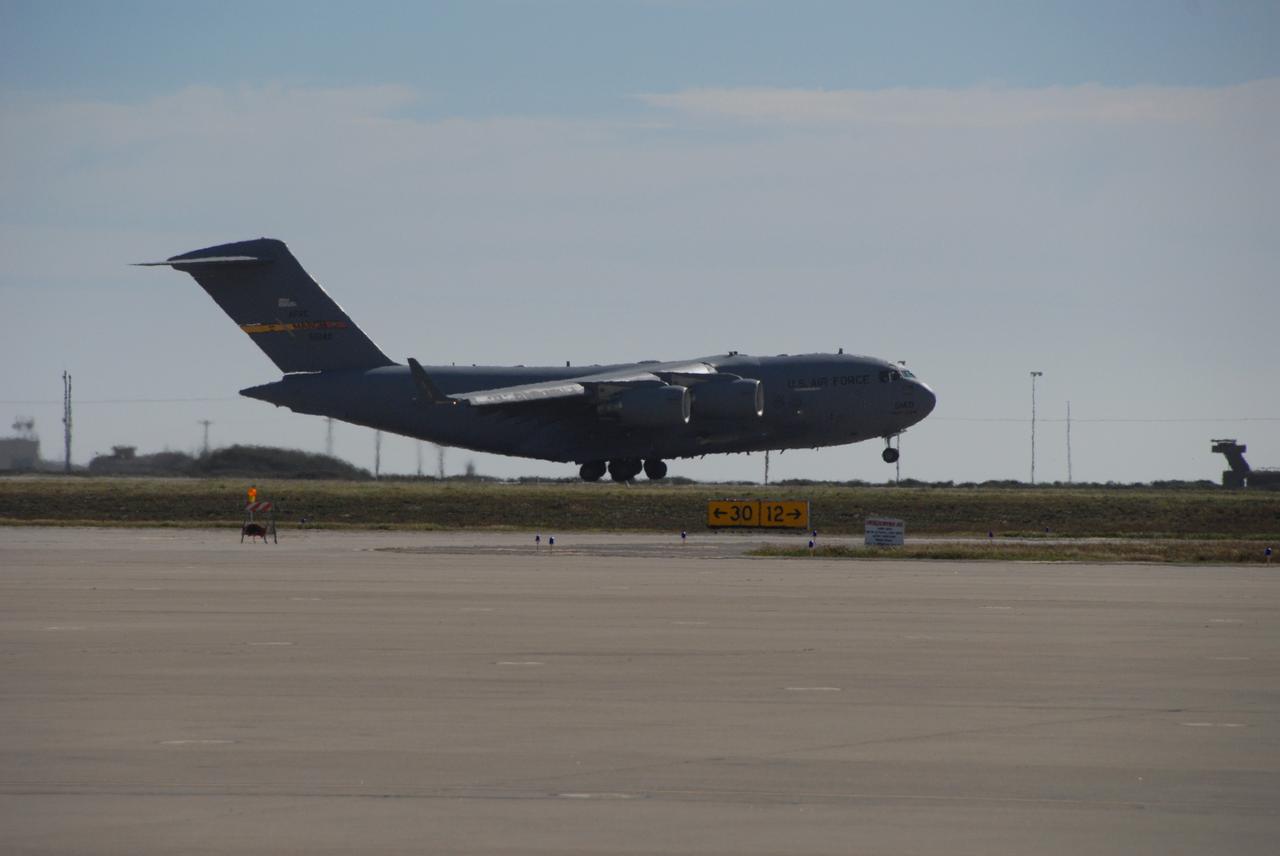
VANDENBERG AIR FORCE BASE, Calif. -- The Aquarius/SAC-D spacecraft arrives at Vandenberg Air Force Base in California from Campos, Brazil, aboard a U.S. Air Force C-17 transport plane. Following final tests, the spacecraft will be integrated to a United Launch Alliance Delta II rocket in preparation for the targeted June launch to low Earth orbit. Aquarius, the NASA-built primary instrument on the SAC-D spacecraft, will map global changes in salinity at the ocean's surface. Salinity is a key measurement for understanding how changes in rainfall, evaporation and the melting of freezing of ice influence ocean circulation and are linked to variations in Earth's climate. The three-year mission will provide new insights into how variations in ocean surface salinity relate to these fundamental climate processes. Photo credit: VAFB/30th Space Wing
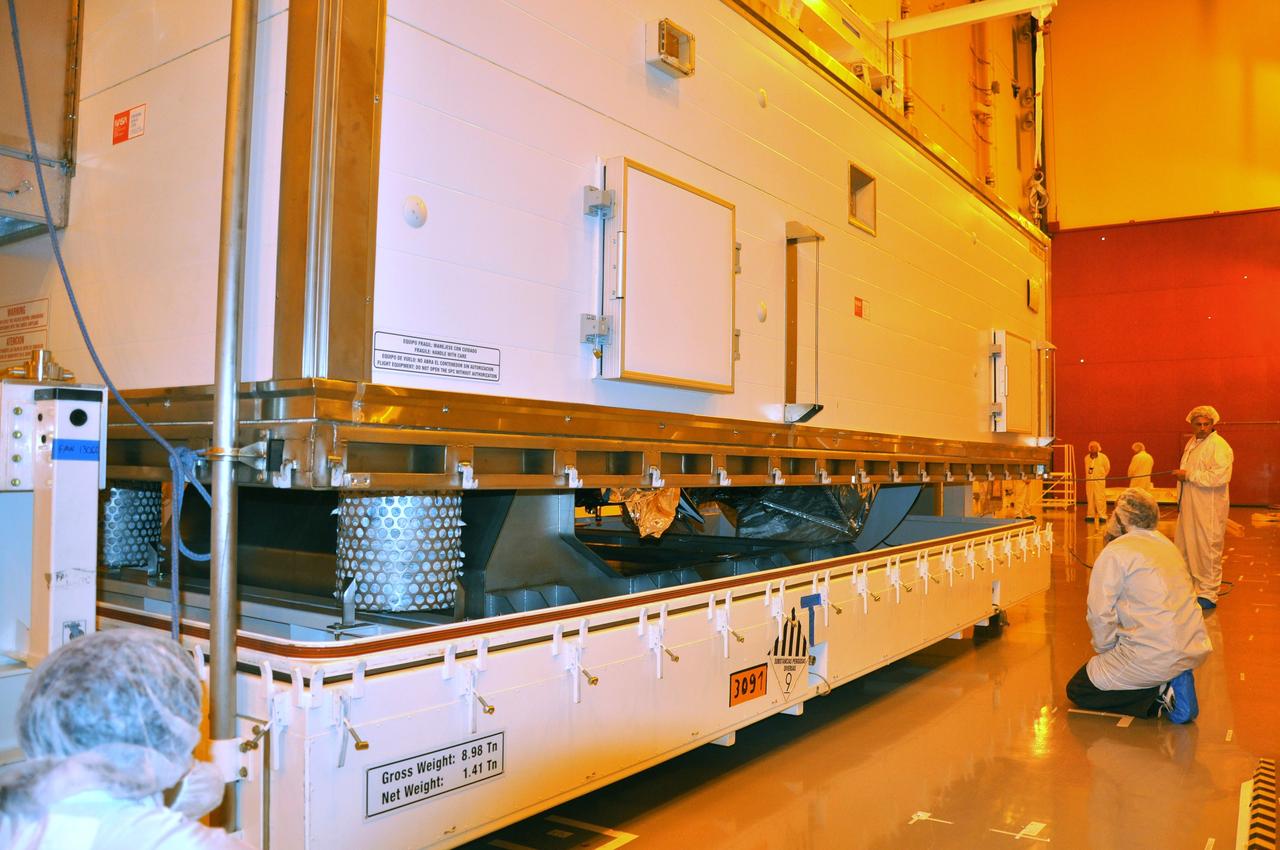
VANDENBERG AIR FORCE BASE, Calif. -- Technicians begin to unpack and unveil the Aquarius/SAC-D spacecraft in the Spaceport Systems International payload processing facility at Vandenberg Air Force Base in California. The container protected the spacecraft on its journey from Campos, Brazil, aboard a U.S. Air Force C-17 transport plane. Following final tests, the spacecraft will be integrated to a United Launch Alliance Delta II rocket in preparation for the targeted June launch to low Earth orbit. Aquarius, the NASA-built primary instrument on the SAC-D spacecraft, will map global changes in salinity at the ocean's surface. Salinity is a key measurement for understanding how changes in rainfall, evaporation and the melting of freezing of ice influence ocean circulation and are linked to variations in Earth's climate. The three-year mission will provide new insights into how variations in ocean surface salinity relate to these fundamental climate processes. Photo credit: NASA/Randy Beaudoin, VAFB
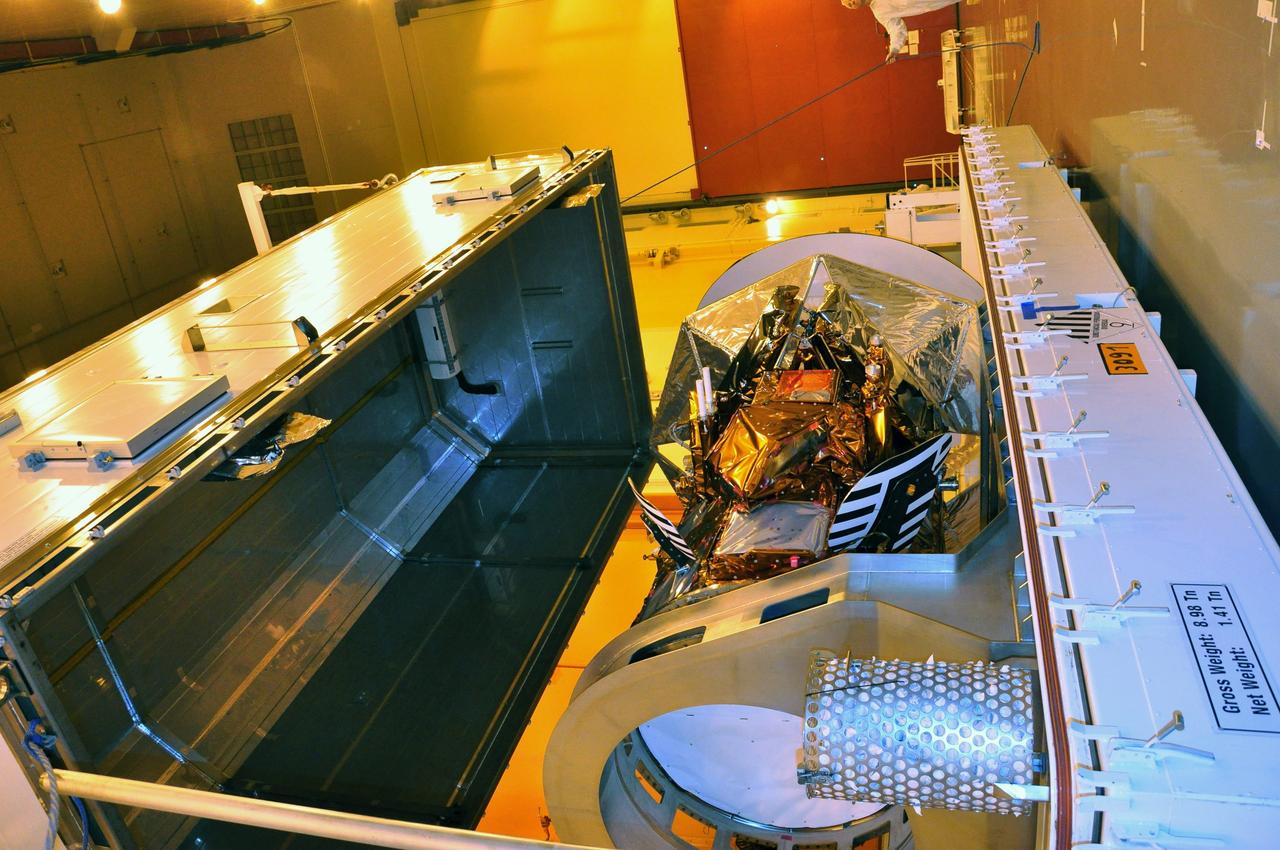
VANDENBERG AIR FORCE BASE, Calif. -- The Aquarius/SAC-D spacecraft is unpacked and unveiled in the Spaceport Systems International payload processing facility at Vandenberg Air Force Base in California. The container protected the spacecraft on its journey from Campos, Brazil, aboard a U.S. Air Force C-17 transport plane. Following final tests, the spacecraft will be integrated to a United Launch Alliance Delta II rocket in preparation for the targeted June launch to low Earth orbit. Aquarius, the NASA-built primary instrument on the SAC-D spacecraft, will map global changes in salinity at the ocean's surface. Salinity is a key measurement for understanding how changes in rainfall, evaporation and the melting of freezing of ice influence ocean circulation and are linked to variations in Earth's climate. The three-year mission will provide new insights into how variations in ocean surface salinity relate to these fundamental climate processes. Photo credit: NASA/Randy Beaudoin, VAFB
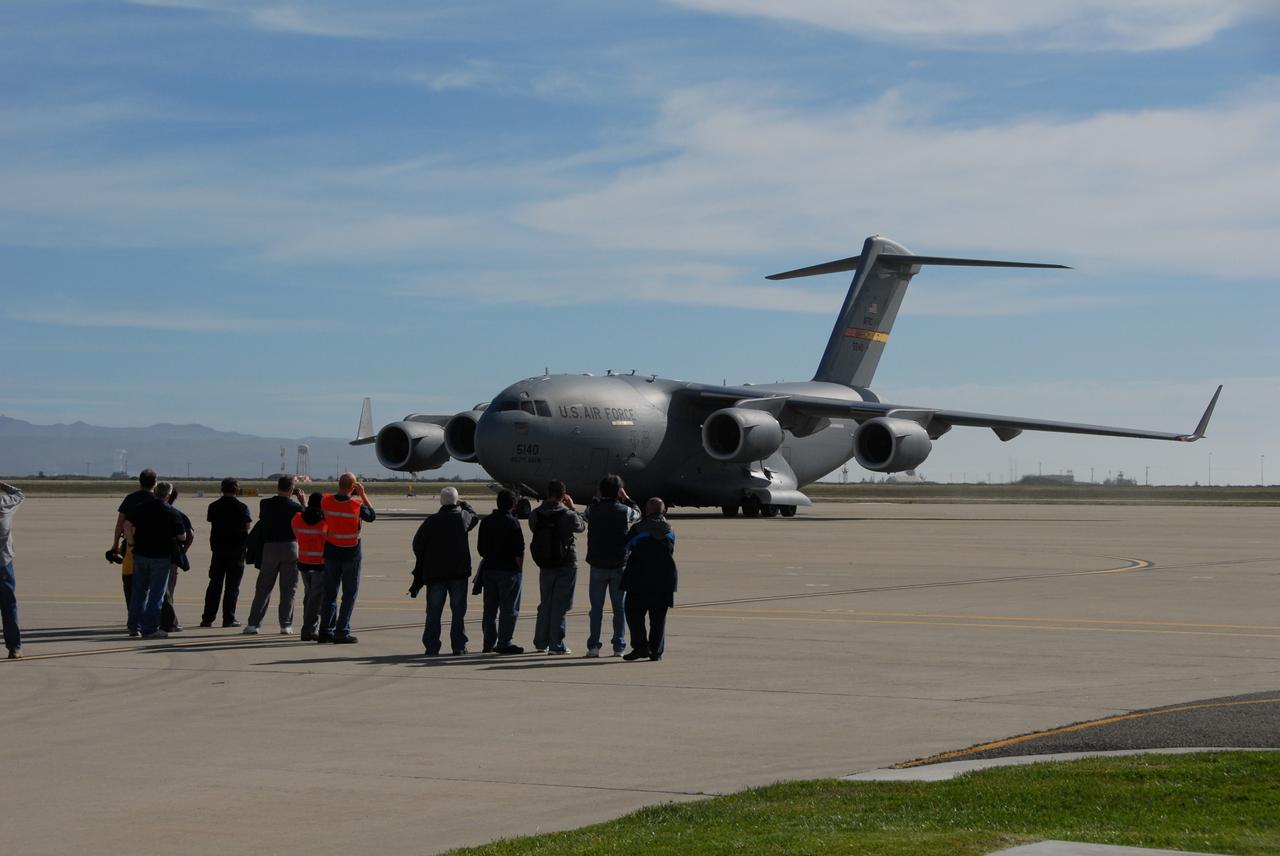
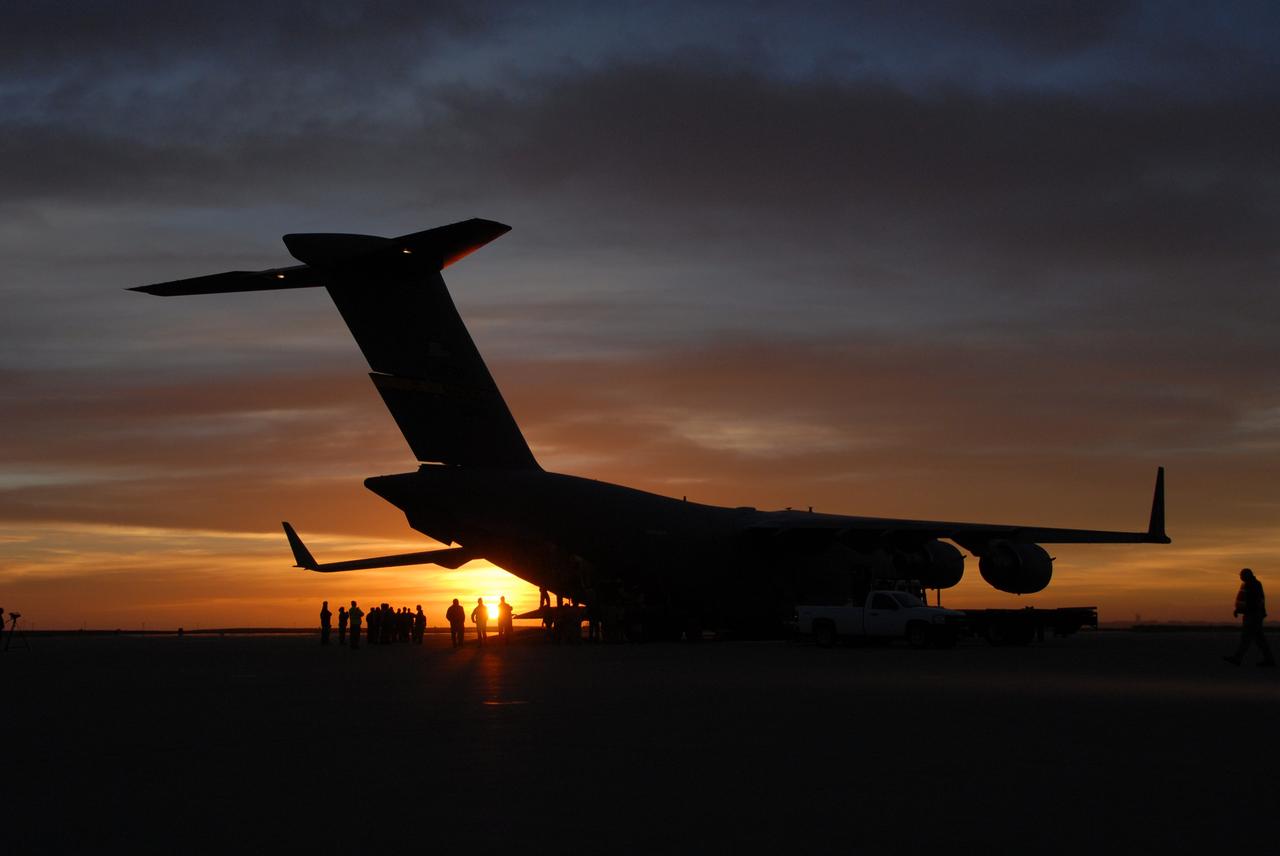
VANDENBERG AIR FORCE BASE, Calif. -- Workers at Vandenberg Air Force Base in California snap photos of the U.S. Air Force C-17 transport plane carrying the Aquarius/SAC-D spacecraft. The aircraft traveled from Campos, Brazil. Following final tests, the spacecraft will be integrated to a United Launch Alliance Delta II rocket in preparation for the targeted June launch to low Earth orbit. Aquarius, the NASA-built primary instrument on the SAC-D spacecraft, will map global changes in salinity at the ocean's surface. Salinity is a key measurement for understanding how changes in rainfall, evaporation and the melting of freezing of ice influence ocean circulation and are linked to variations in Earth's climate. The three-year mission will provide new insights into how variations in ocean surface salinity relate to these fundamental climate processes. Photo credit: VAFB/30th Space Wing
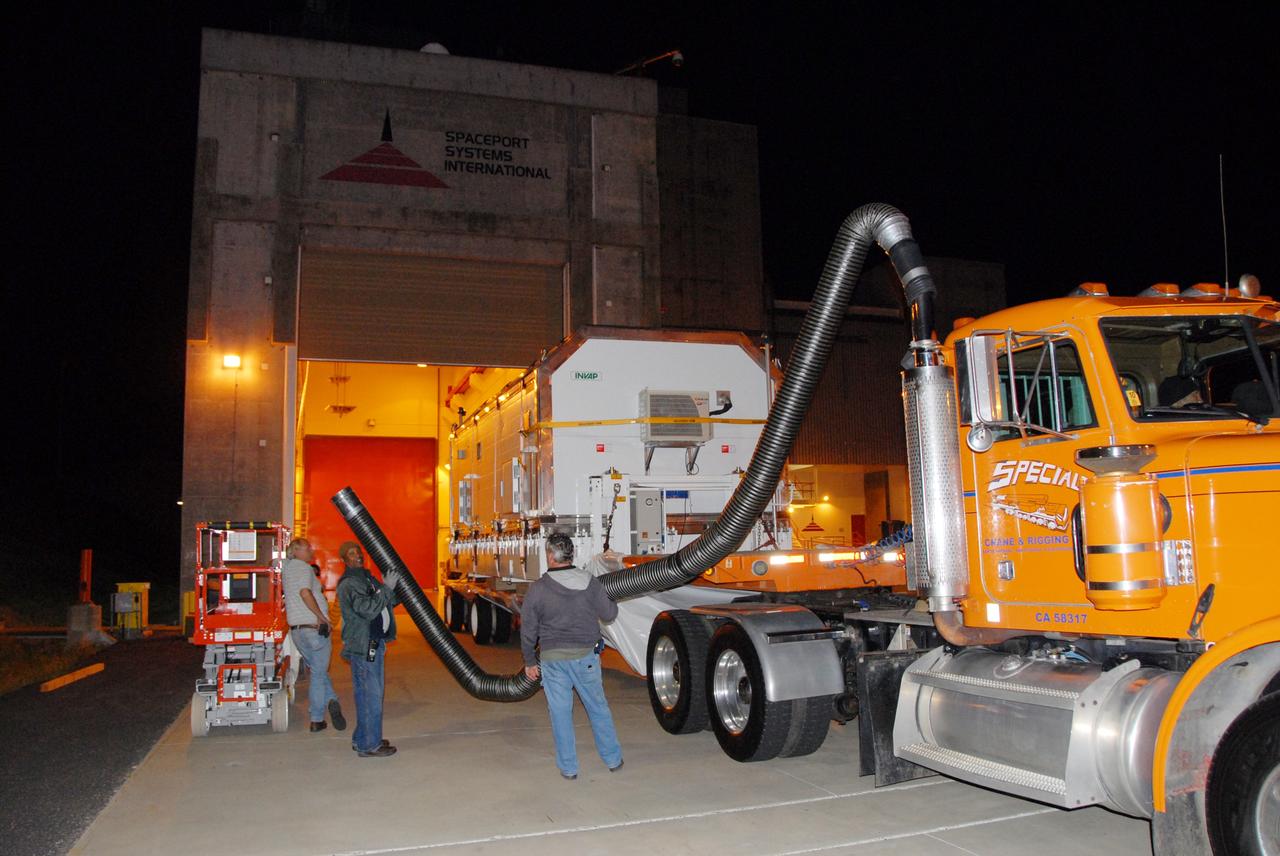
VANDENBERG AIR FORCE BASE, Calif. -- The Aquarius/SAC-D spacecraft is transported to the Spaceport Systems International payload processing facility at Vandenberg Air Force Base in California. Earlier, a U.S. Air Force C-17 transport plane delivered the spacecraft from Campos, Brazil. Following final tests, the spacecraft will be integrated to a United Launch Alliance Delta II rocket in preparation for the targeted June launch to low Earth orbit. Aquarius, the NASA-built primary instrument on the SAC-D spacecraft, will map global changes in salinity at the ocean's surface. Salinity is a key measurement for understanding how changes in rainfall, evaporation and the melting of freezing of ice influence ocean circulation and are linked to variations in Earth's climate. The three-year mission will provide new insights into how variations in ocean surface salinity relate to these fundamental climate processes. Photo credit: VAFB/30th Space Wing
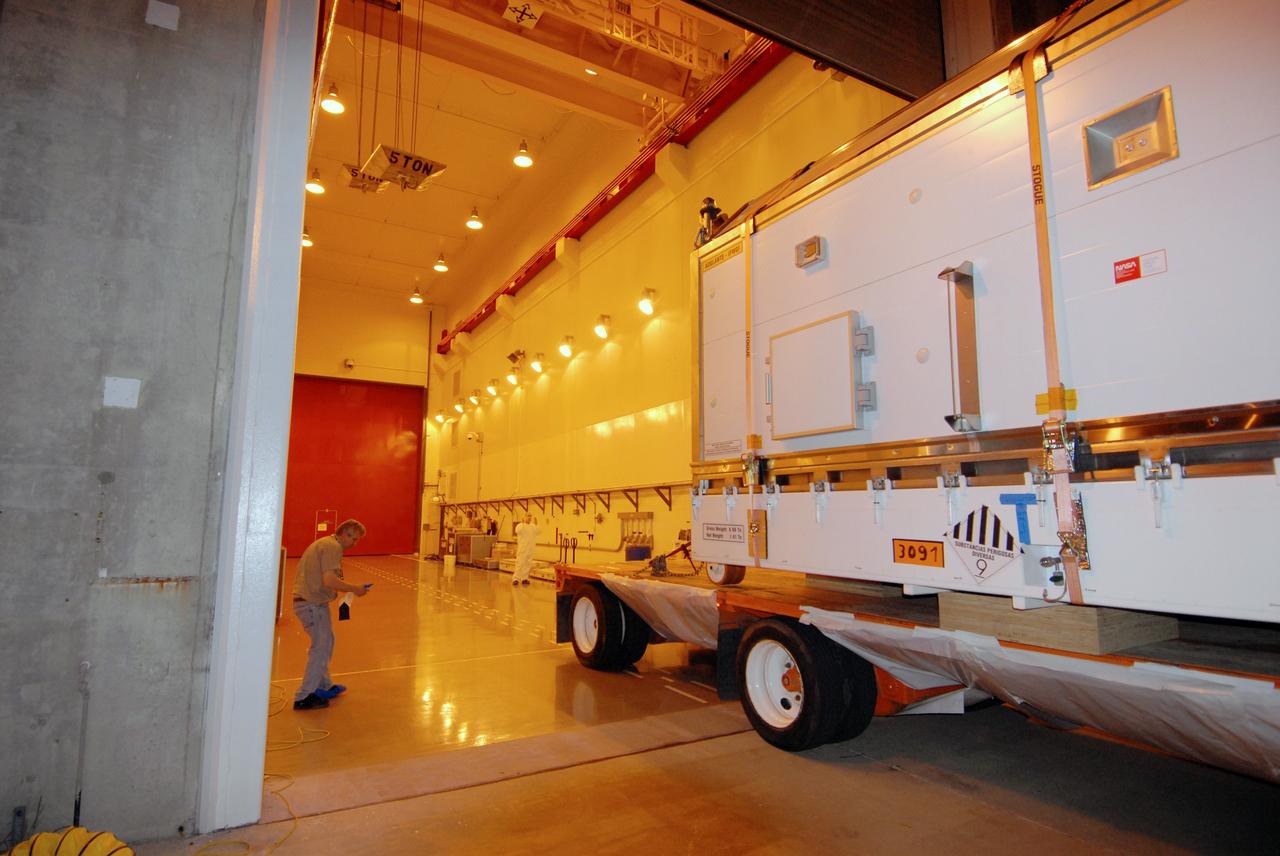
VANDENBERG AIR FORCE BASE, Calif. -- The Aquarius/SAC-D spacecraft enters the Spaceport Systems International payload processing facility at Vandenberg Air Force Base in California. Earlier, a U.S. Air Force C-17 transport plane delivered the spacecraft from Campos, Brazil. Following final tests, the spacecraft will be integrated to a United Launch Alliance Delta II rocket in preparation for the targeted June launch to low Earth orbit. Aquarius, the NASA-built primary instrument on the SAC-D spacecraft, will map global changes in salinity at the ocean's surface. Salinity is a key measurement for understanding how changes in rainfall, evaporation and the melting of freezing of ice influence ocean circulation and are linked to variations in Earth's climate. The three-year mission will provide new insights into how variations in ocean surface salinity relate to these fundamental climate processes. Photo credit: VAFB/30th Space Wing
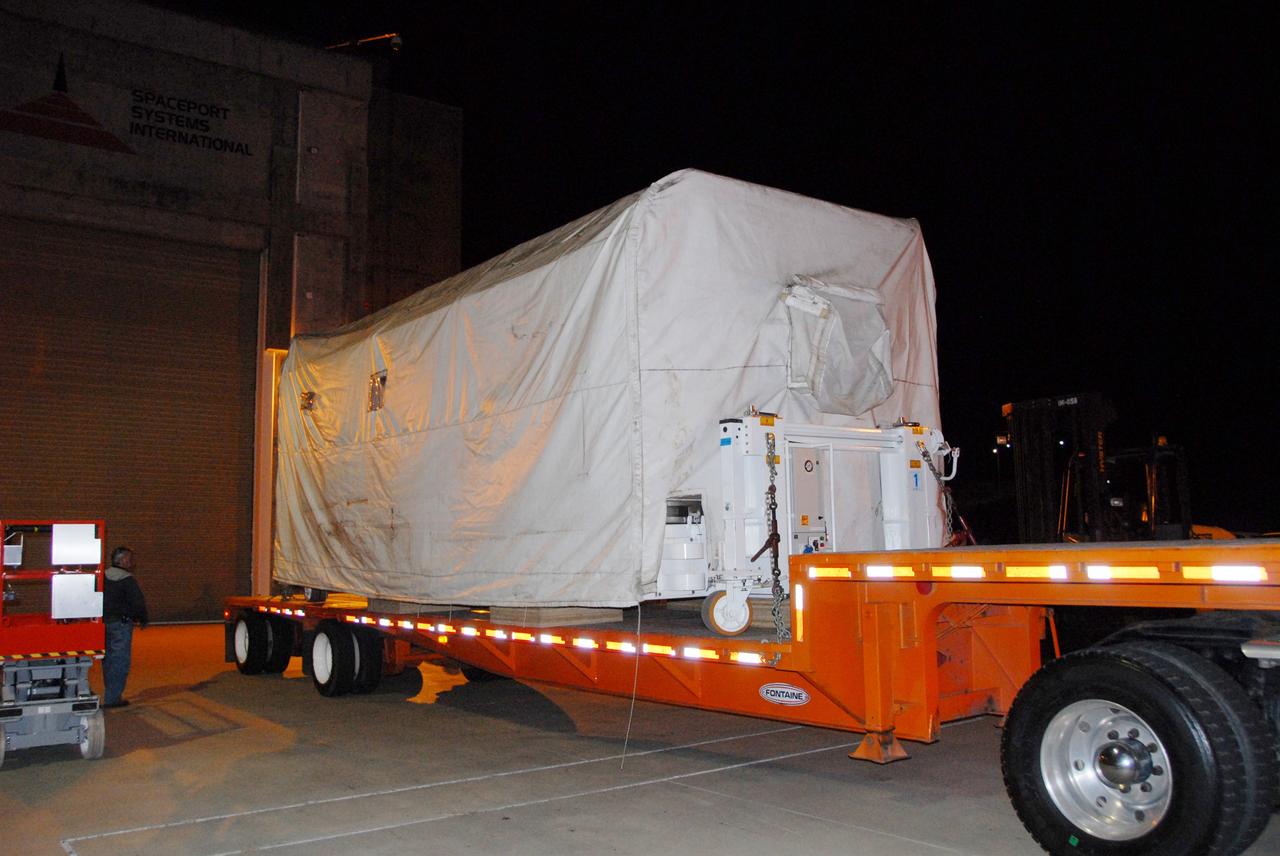
VANDENBERG AIR FORCE BASE, Calif. -- The Aquarius/SAC-D spacecraft is transported to the Spaceport Systems International processing facility at Vandenberg Air Force Base in California. Earlier, a U.S. Air Force C-17 transport plane delivered the spacecraft from Campos, Brazil. Following final tests, the spacecraft will be integrated to a United Launch Alliance Delta II rocket in preparation for the targeted June launch to low Earth orbit. Aquarius, the NASA-built primary instrument on the SAC-D spacecraft, will map global changes in salinity at the ocean's surface. Salinity is a key measurement for understanding how changes in rainfall, evaporation and the melting of freezing of ice influence ocean circulation and are linked to variations in Earth's climate. The three-year mission will provide new insights into how variations in ocean surface salinity relate to these fundamental climate processes. Photo credit: VAFB/30th Space Wing
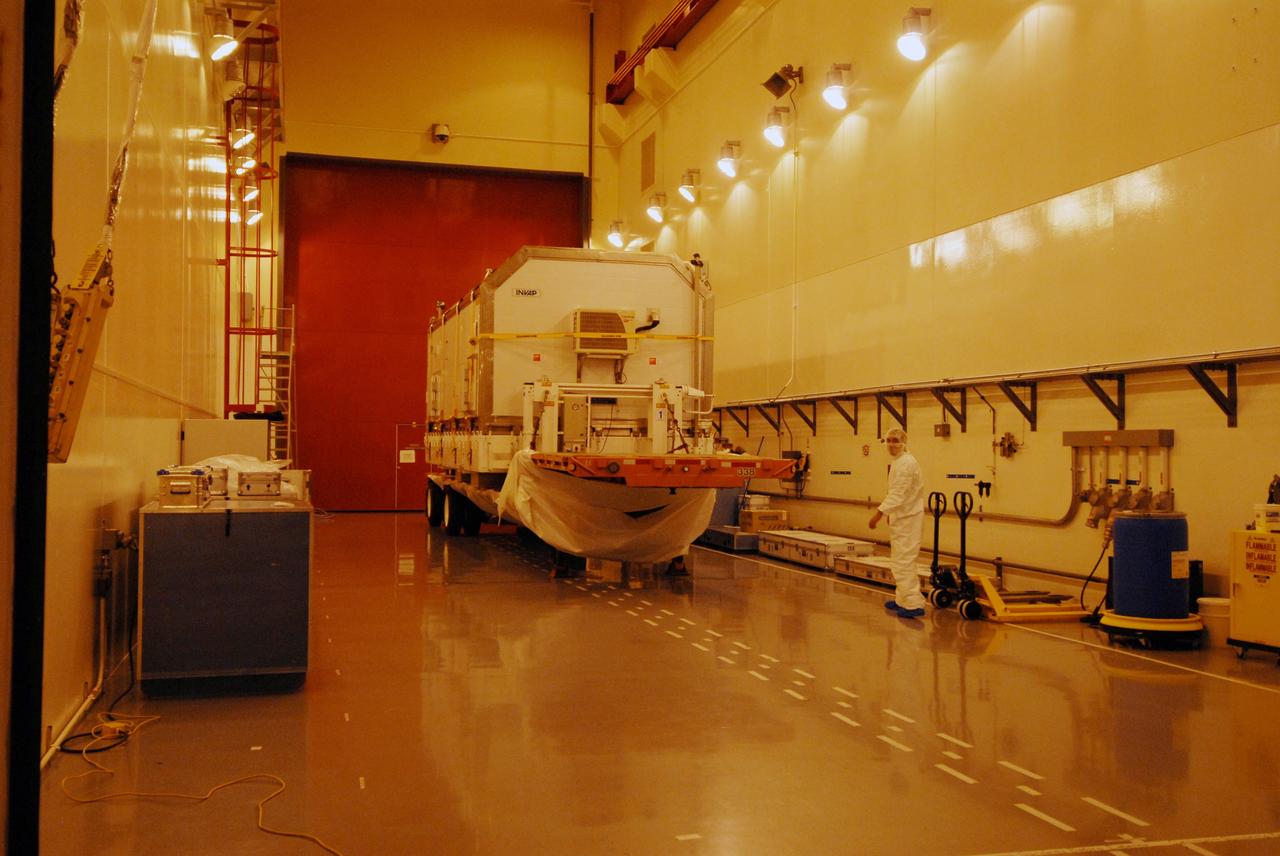
VANDENBERG AIR FORCE BASE, Calif. -- The Aquarius/SAC-D spacecraft is in the Spaceport Systems International payload processing facility at Vandenberg Air Force Base in California. Earlier, a U.S. Air Force C-17 transport plane delivered the spacecraft from Campos, Brazil. Following final tests, the spacecraft will be integrated to a United Launch Alliance Delta II rocket in preparation for the targeted June launch to low Earth orbit. Aquarius, the NASA-built primary instrument on the SAC-D spacecraft, will map global changes in salinity at the ocean's surface. Salinity is a key measurement for understanding how changes in rainfall, evaporation and the melting of freezing of ice influence ocean circulation and are linked to variations in Earth's climate. The three-year mission will provide new insights into how variations in ocean surface salinity relate to these fundamental climate processes. Photo credit: VAFB/30th Space Wing

VANDENBERG AIR FORCE BASE, Calif. -- The Aquarius/SAC-D spacecraft is transported to the Spaceport Systems International processing facility at Vandenberg Air Force Base in California. Earlier, a U.S. Air Force C-17 transport plane delivered the spacecraft from Campos, Brazil. Following final tests, the spacecraft will be integrated to a United Launch Alliance Delta II rocket in preparation for the targeted June launch to low Earth orbit. Aquarius, the NASA-built primary instrument on the SAC-D spacecraft, will map global changes in salinity at the ocean's surface. Salinity is a key measurement for understanding how changes in rainfall, evaporation and the melting of freezing of ice influence ocean circulation and are linked to variations in Earth's climate. The three-year mission will provide new insights into how variations in ocean surface salinity relate to these fundamental climate processes. Photo credit: VAFB/30th Space Wing
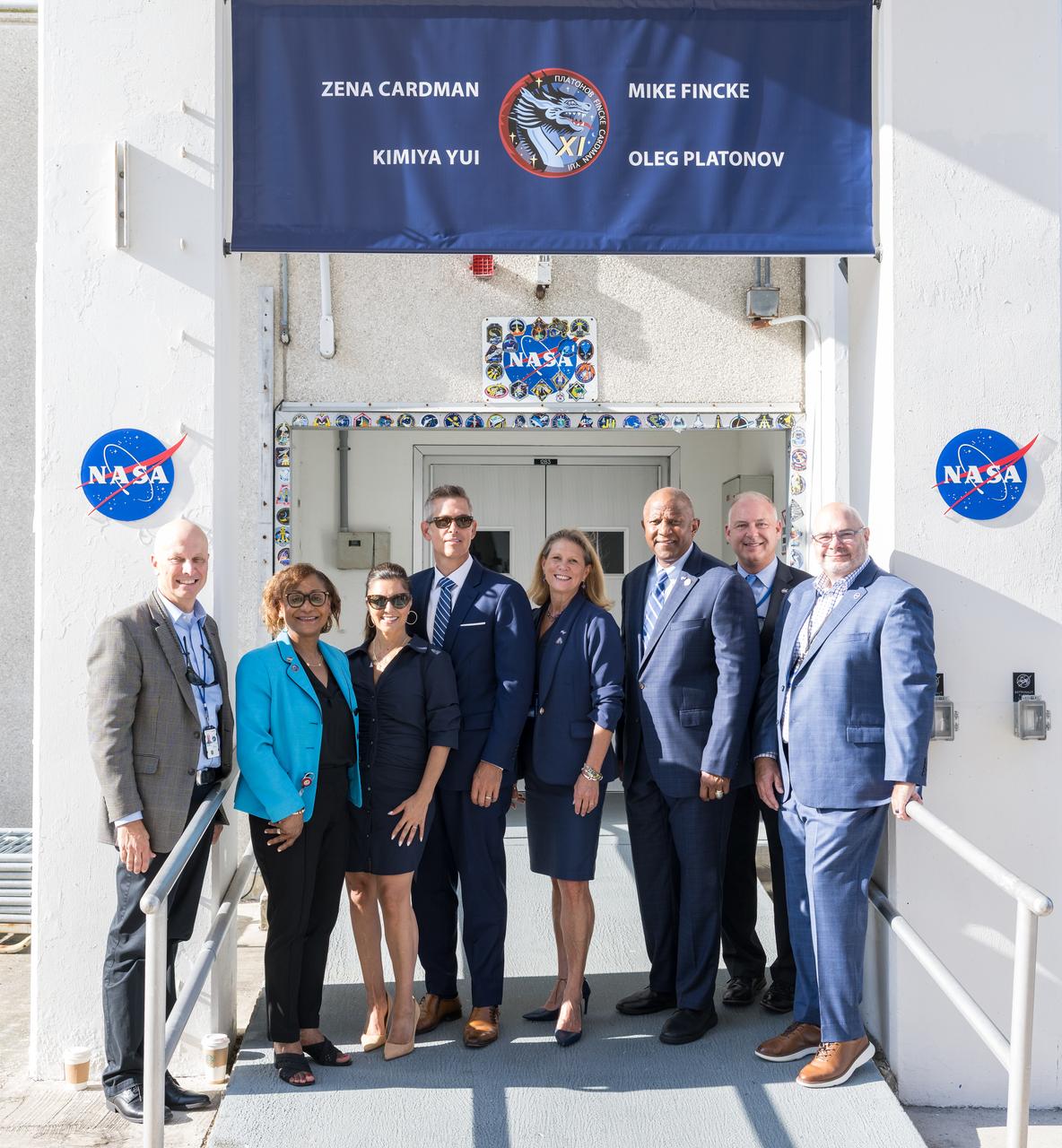
From left to right, Acting Director of NASA's Johnson Space Center, Steve Koerner, Acting NASA Associate Administrator, Vanessa Wyche, wife of Acting NASA Administrator Sean Duffy, Rachel Campos-Duffy, Sean Duffy, Acting Associate Administrator, Exploration Systems Development, Lori Glaze, Acting Director of NASA's John F. Kennedy Space Center, Kelvin Manning, Acting Deputy Director of NASA's Johnson Space Center, Norm Knight, and director of NASA's Marshall Space Flight Center, Joseph Pelfrey pose for a photo at the door to the Neil A. Armstrong Operations and Checkout Building after NASA astronauts Zena Cardman, Mike Fincke, JAXA (Japan Aerospace Exploration Agency) astronaut Kimiya Yui, and Roscosmos cosmonaut Oleg Platonov, departed for Launch Complex 39A to board the SpaceX Dragon spacecraft for the Crew-11 mission launch, before it was scrubbed due to weather concerns, Thursday, July 31, 2025, at NASA’s Kennedy Space Center in Florida. NASA’s SpaceX Crew-11 mission is the eleventh crew rotation mission of the SpaceX Crew Dragon spacecraft and Falcon 9 rocket to the International Space Station as part of the agency’s Commercial Crew Program. Cardman, Fincke, Yui, and Platonov launched at 11:43 a.m. EDT, Friday, August 1, from Launch Complex 39A at the NASA's Kennedy Space Center. Photo Credit: (NASA/Aubrey Gemignani)
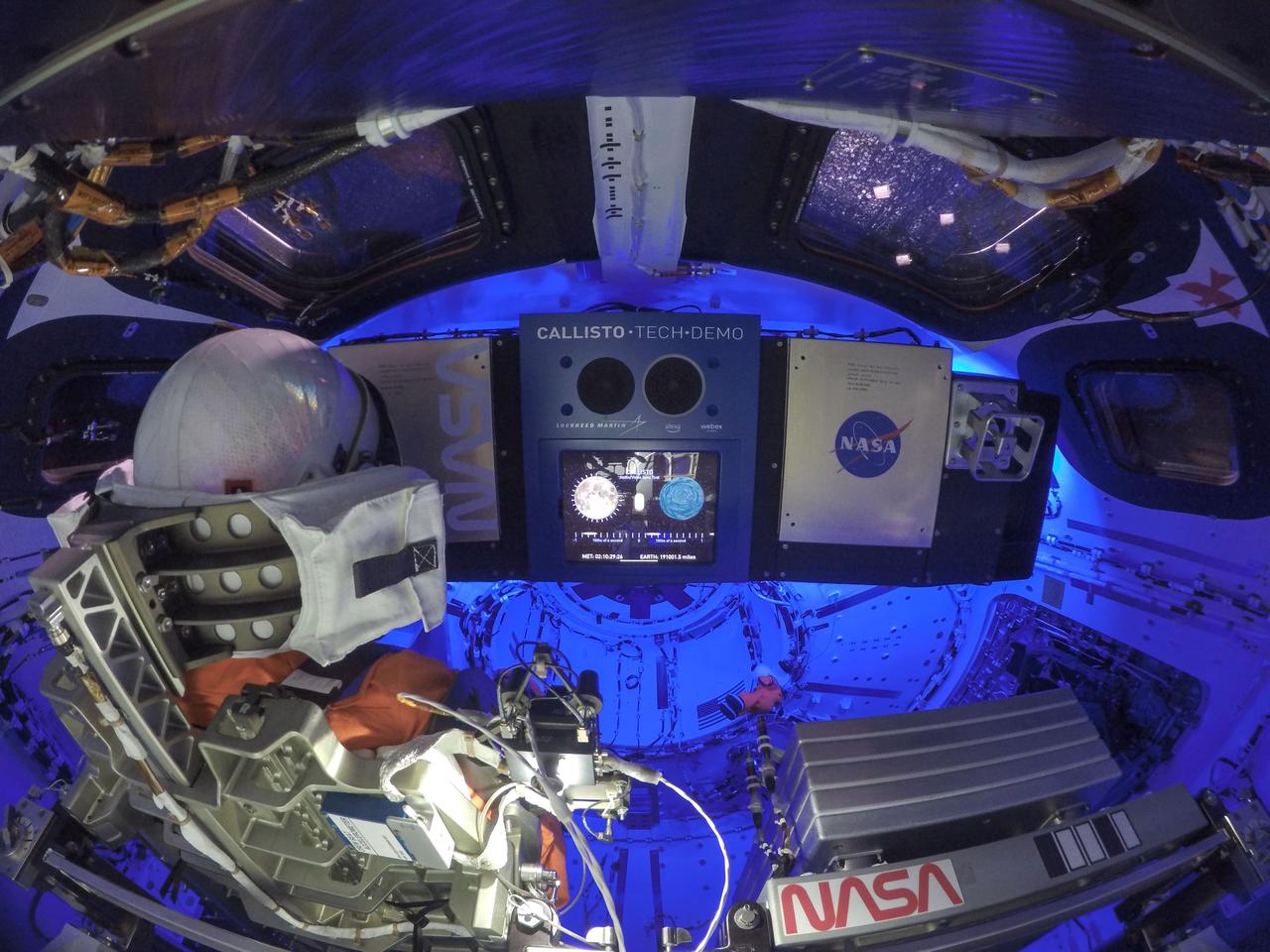
Engineers activated the Callisto payload, Lockheed Martin’s technology demonstration in collaboration with Amazon and Cisco. Callisto will test voice-activated and video technology that may assist future astronauts on deep space missions.