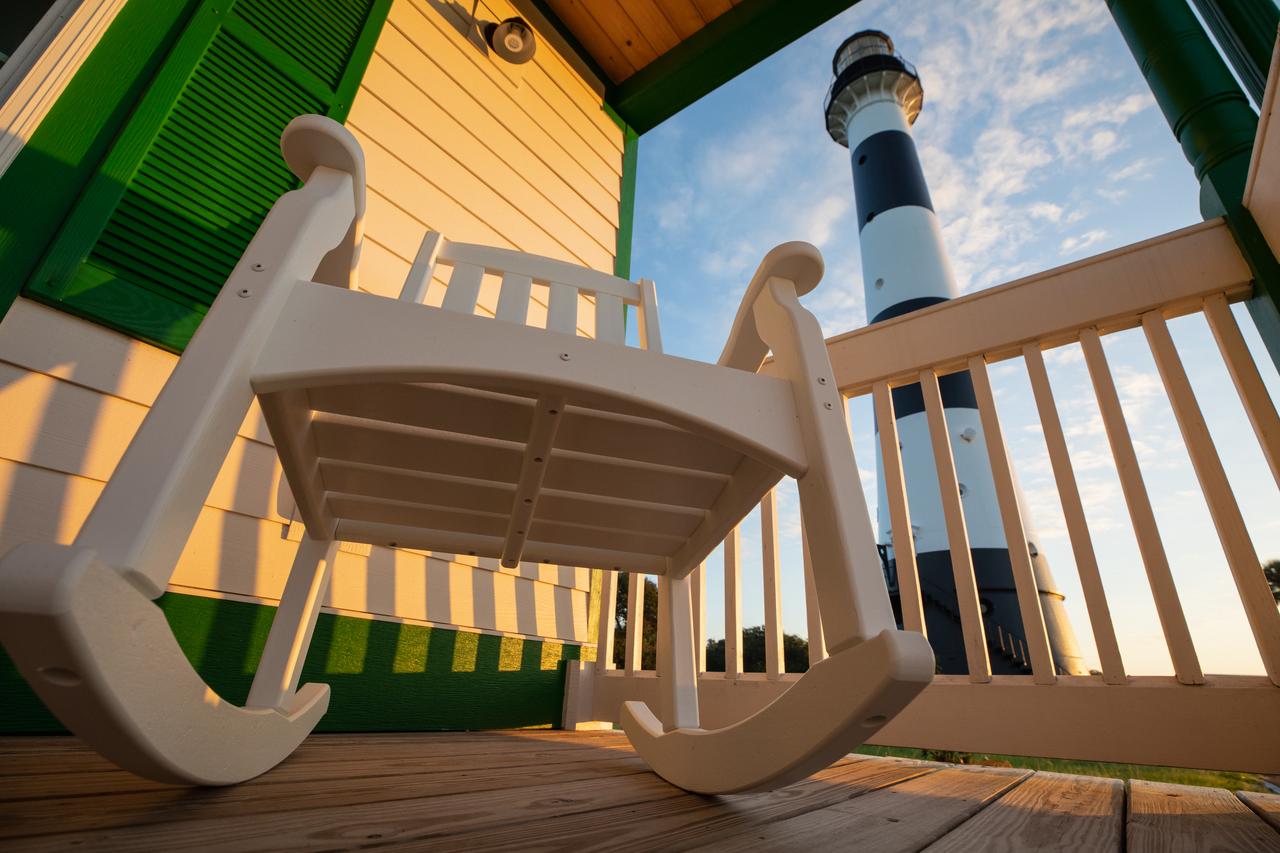
The Cape Canaveral Lighthouse at Cape Canaveral Air Force Station in Florida stands tall during an Oct. 13, 2020, sunrise.
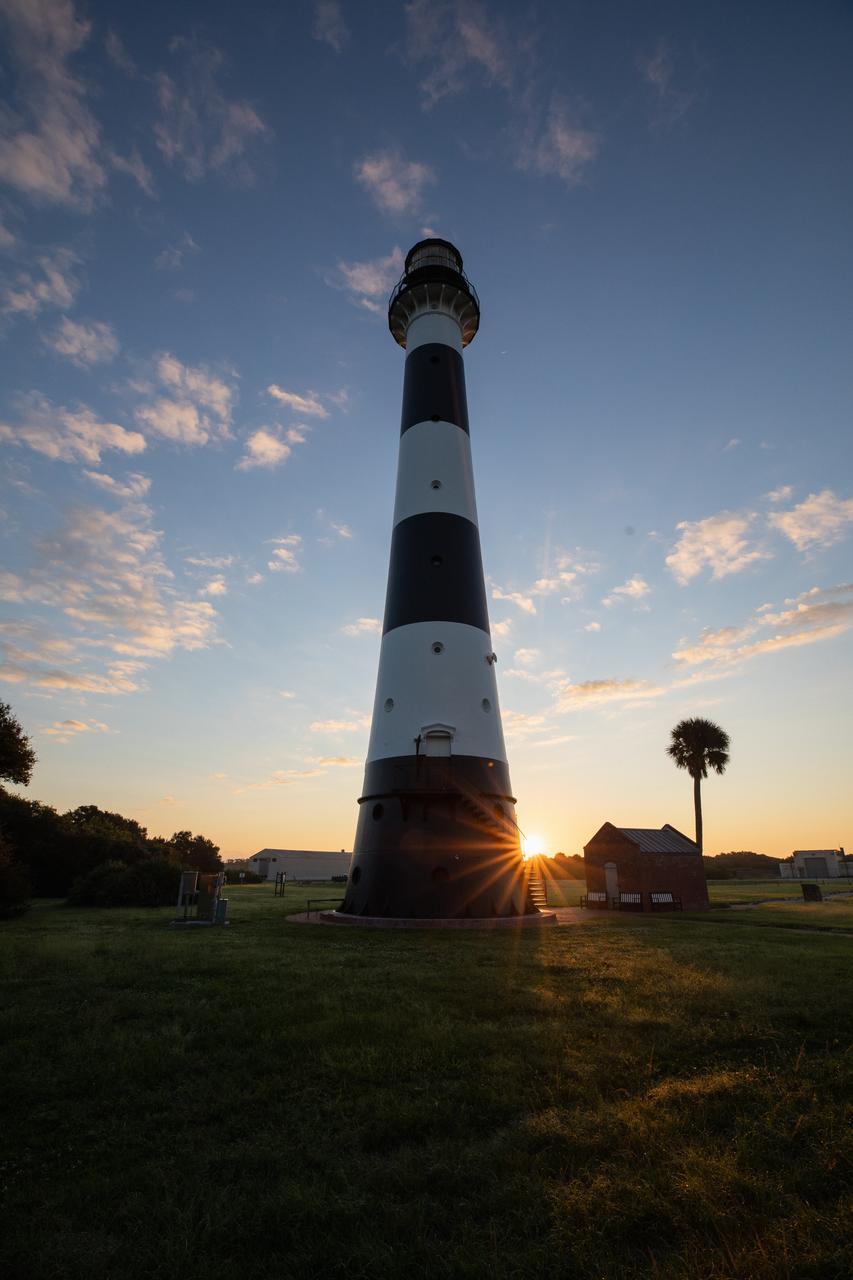
The sun rises behind Cape Canaveral Lighthouse at Cape Canaveral Air Force Station in Florida on Oct. 13, 2020.
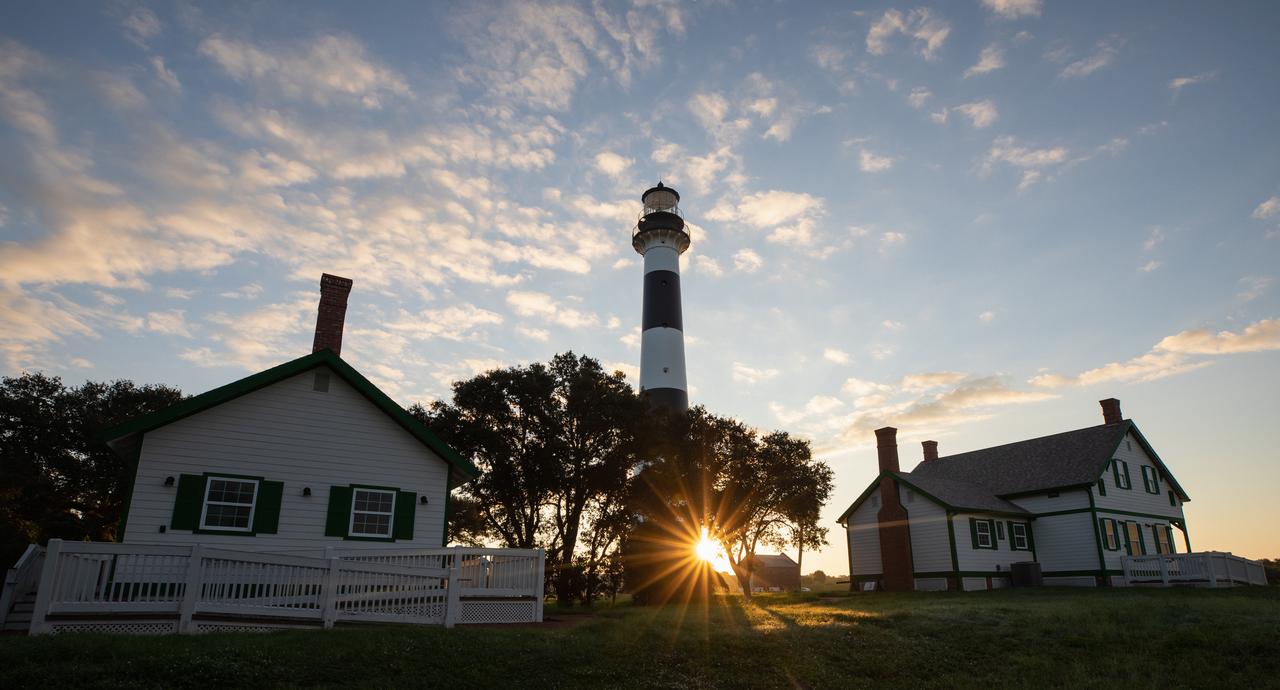
The sun rises behind Cape Canaveral Lighthouse at Cape Canaveral Air Force Station in Florida on Oct. 13, 2020.
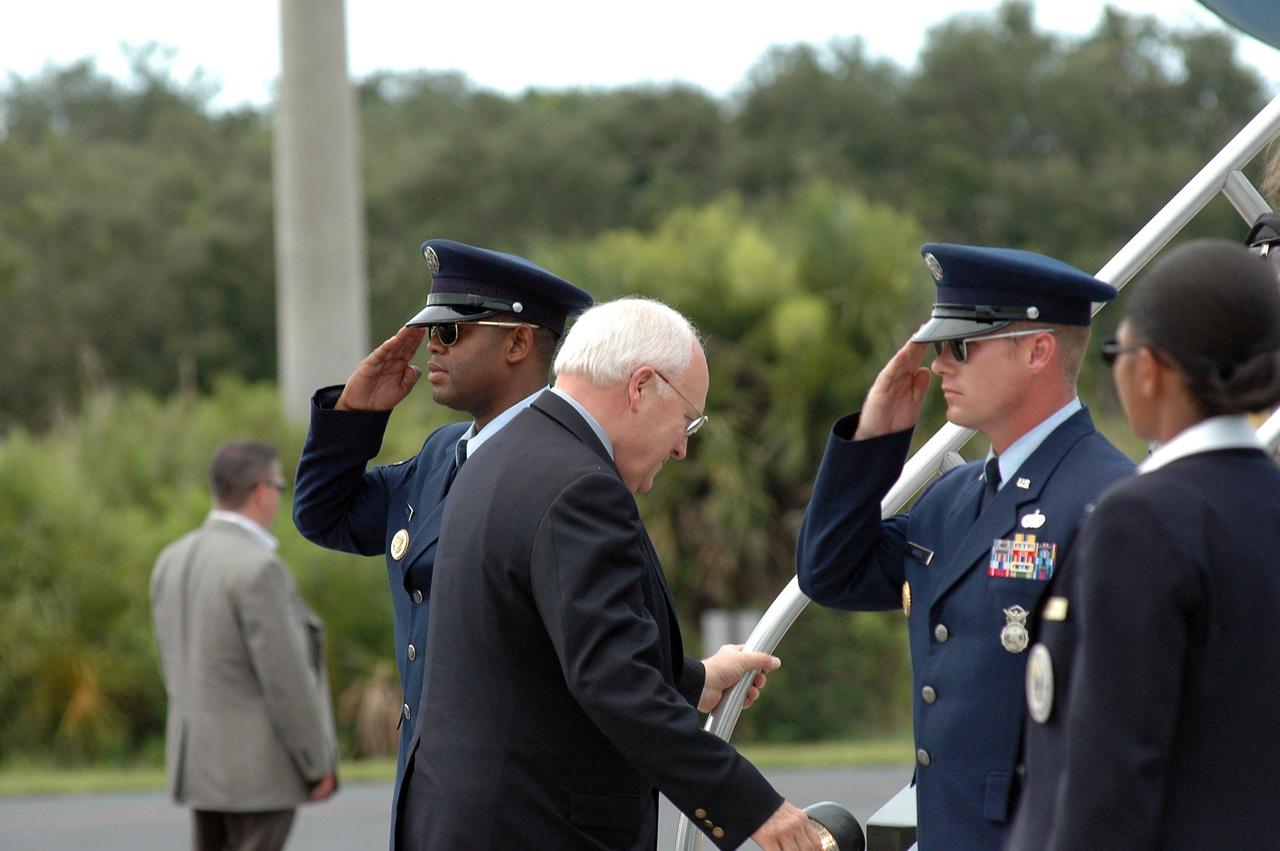
KENNEDY SPACE CENTER, FLA. - On the Skid Strip at Cape Canaveral Air Force Station in Florida, U.S. Vice President Dick Cheney is saluted by officers from Patrick Air Force Base as he boards Air Force Two for a return trip to Washington. Cheney and his family flew in earlier to witness the launch of Space Shuttle Discovery on mission STS-121. The launch was scrubbed due to weather concerns and postponed 24 hours. Photo credit: NASA/Kim Shiflett
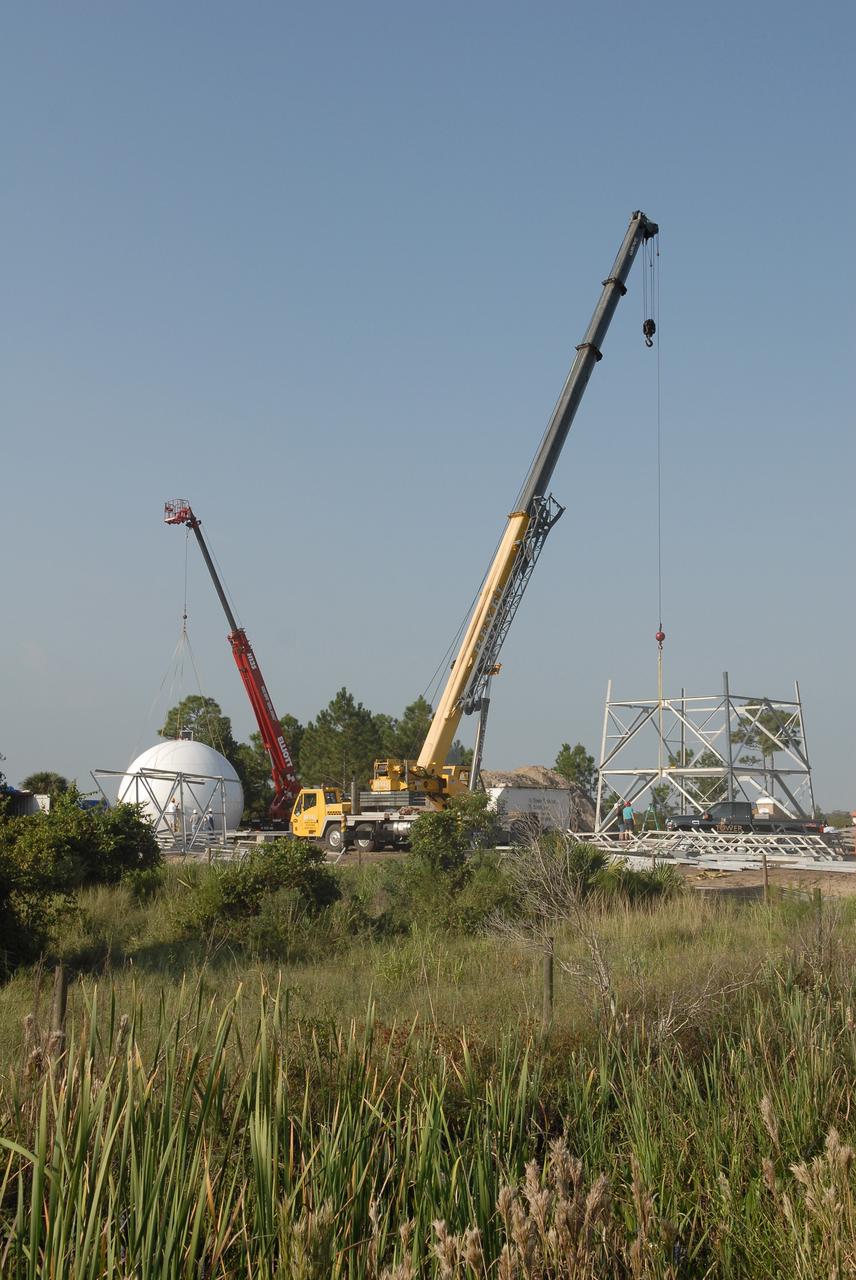
CAPE CANAVERAL, Fla. - Construction continues on the Doppler weather radar facility for the 45th Weather Squadron being built in an area near S.R. 520 in Orange County, Florida. The new site will replace one at Patrick Air Force Base and will be used by NASA's Kennedy Space Center, the 45th Space Wing and their customers. The site will be able to monitor weather conditions directly above the launch pads at Kennedy. The weather radar is essential in issuing lightning and other severe weather warnings and vital in evaluating lightning launch commit criteria. The new radar, replacing what was installed 25 years ago at Patrick Air Force Base, includes Doppler capability to detect winds and identify the type, size and number of precipitation particles. The site is ideally distant from the launch pads and has unobstructed views of Cape Canaveral Air Force Station and Kennedy. The radar will be used by forecasters at the USAF 45th Weather Squadron. Photo credit: NASA/Troy Cryder
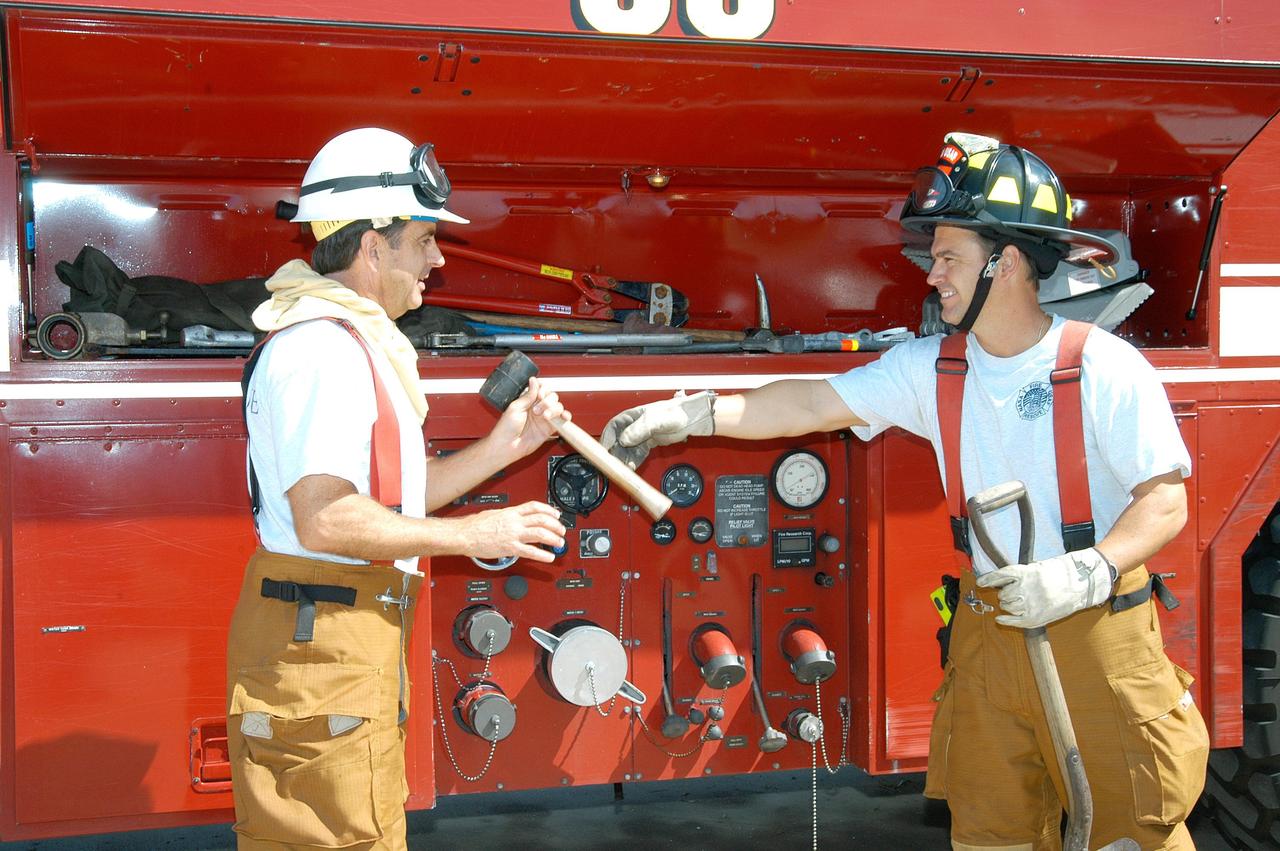
KENNEDY SPACE CENTER, FLA. - At Cape Canaveral Air Force Station, Lt. Keith Abell (left) hands equipment to KSC Firefighter Chris Maupin for storage. They and other KSC firefighters teamed up with task forces from Satellite Beach, Malabar, Melbourne, Palm Bay, Patrick Air Force Base and Brevard County to help fight wildfires in the Palm Bay and Malabar areas that threatened homes and property during the Memorial Day holiday weekend.
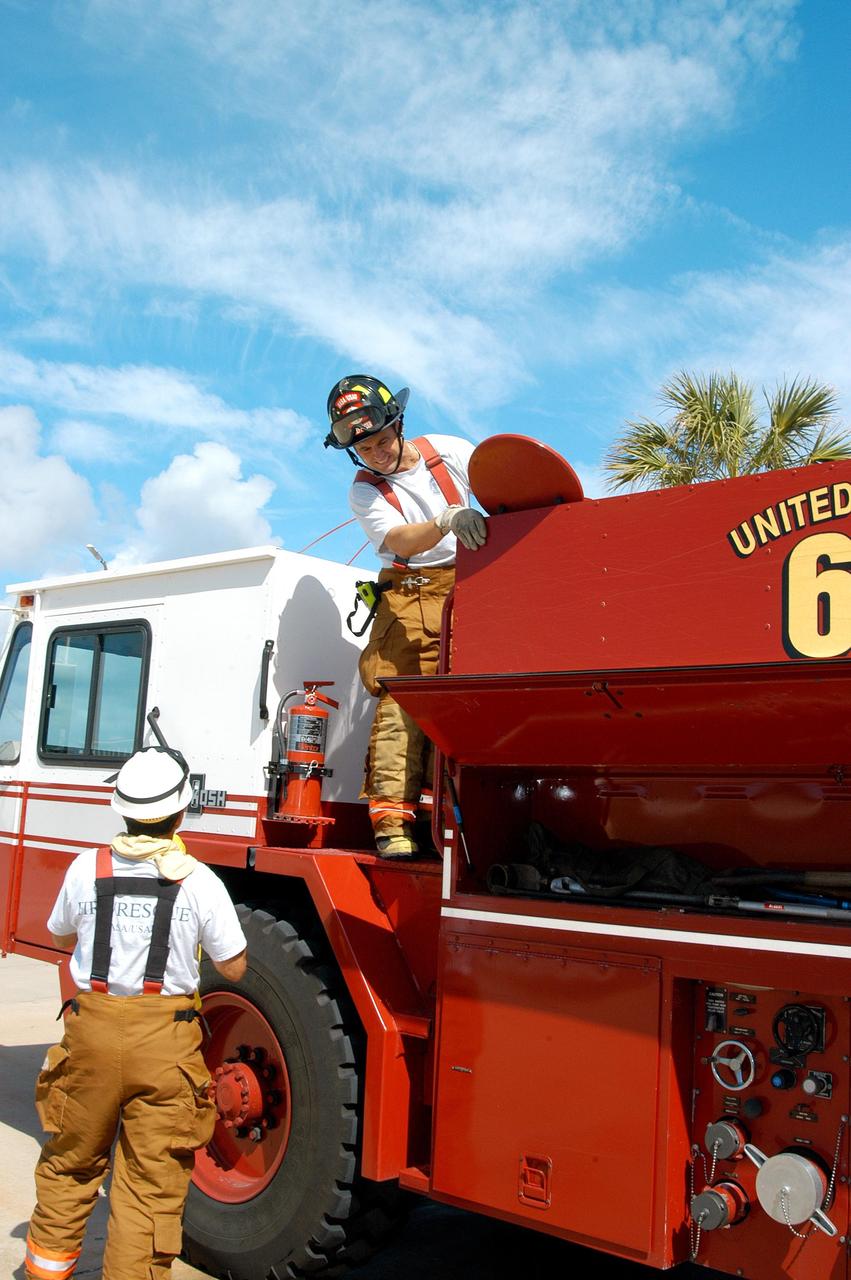
KENNEDY SPACE CENTER, FLA. - At Cape Canaveral Air Force Station, Lt. Keith Abell (left) and KSC Firefighter Chris Maupin store equipment on the fire truck. They and other KSC firefighters teamed up with task forces from Satellite Beach, Malabar, Melbourne, Palm Bay, Patrick Air Force Base and Brevard County to help fight wildfires in the Palm Bay and Malabar areas that threatened homes and property during the Memorial Day holiday weekend.
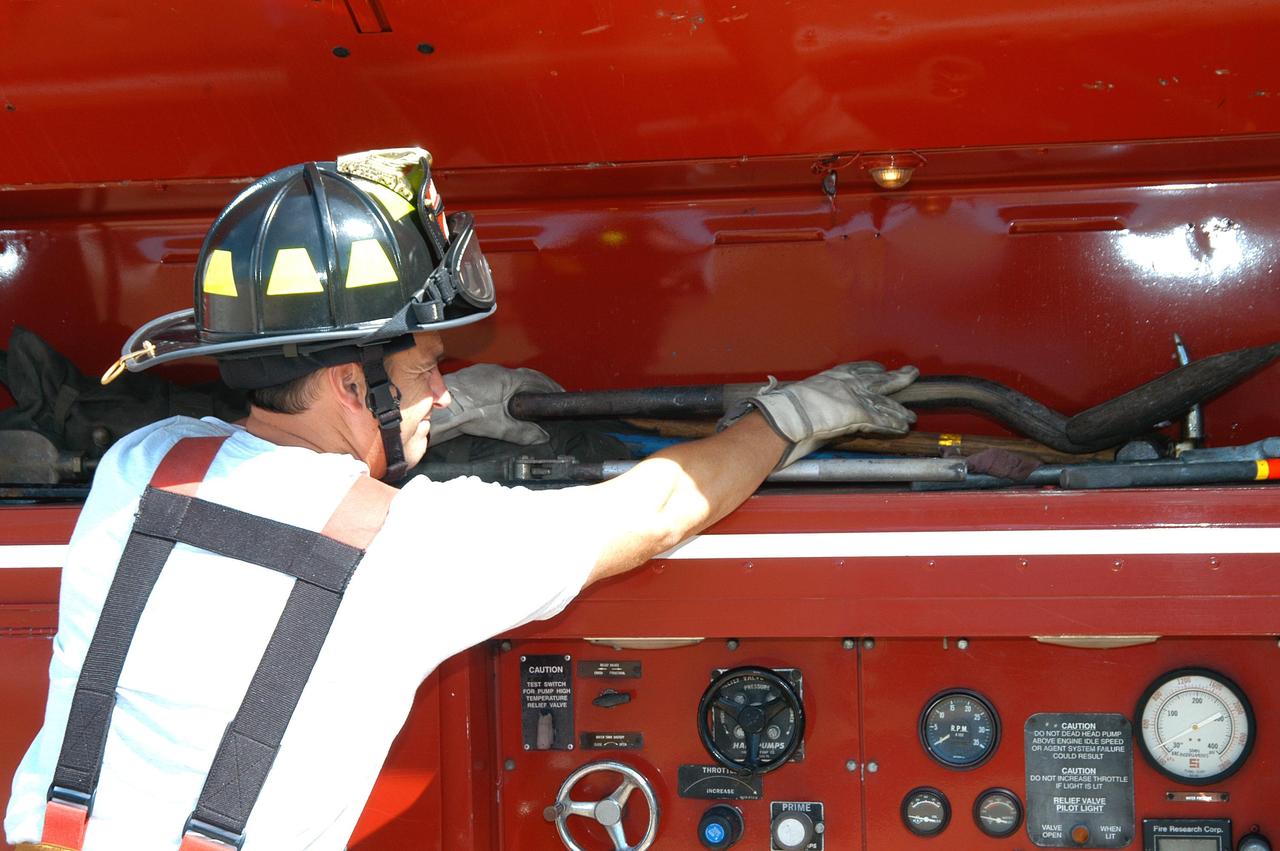
KENNEDY SPACE CENTER, FLA. - At Cape Canaveral Air Force Station, KSC Firefighter Chris Maupin puts away a piece of equipment. He and other KSC firefighters teamed up with task forces from Satellite Beach, Malabar, Melbourne, Palm Bay, Patrick Air Force Base and Brevard County to help fight wildfires in the Palm Bay and Malabar areas that threatened homes and property during the Memorial Day holiday weekend.
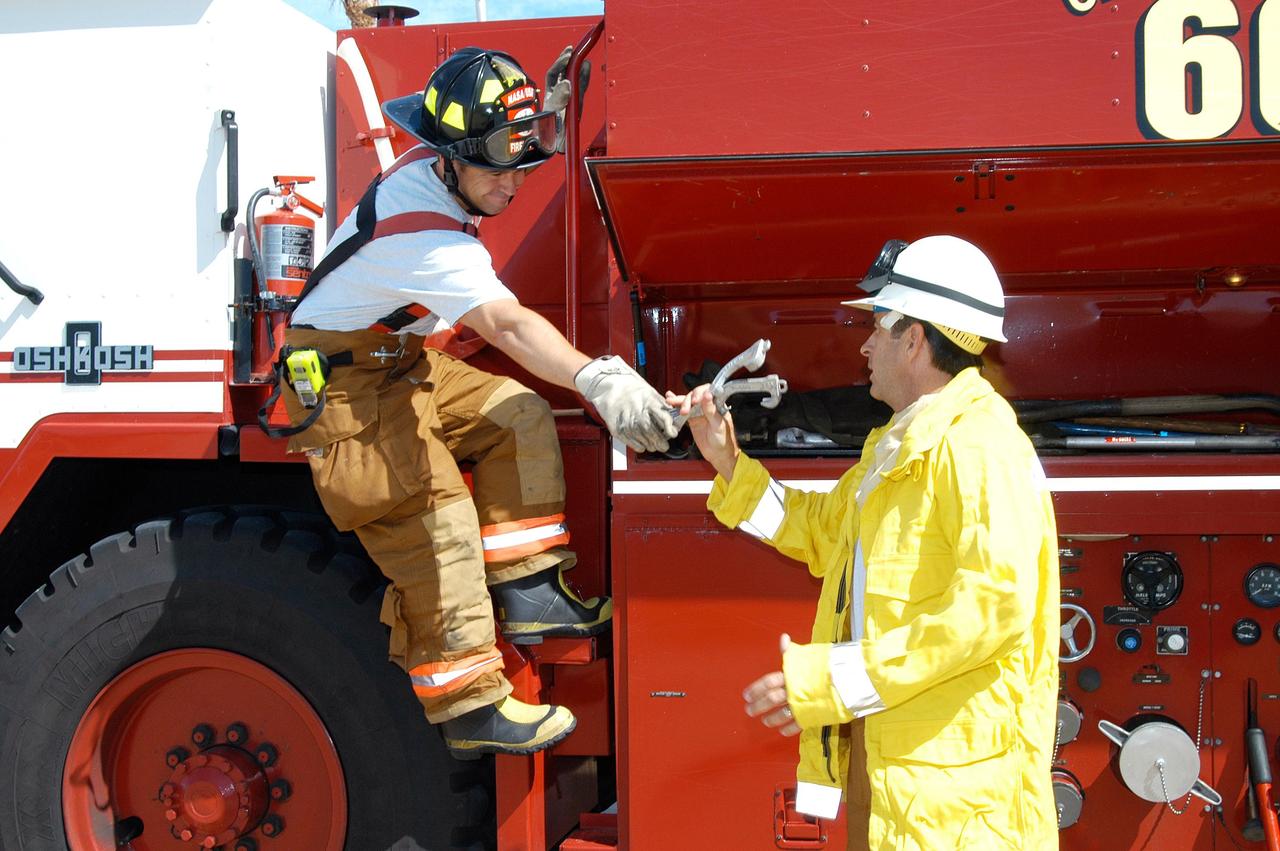
KENNEDY SPACE CENTER, FLA. - At Cape Canaveral Air Force Station, KSC Firefighter Chris Maupin (left) takes equipment from Lt. Keith Abell. They and other KSC firefighters teamed up with task forces from Satellite Beach, Malabar, Melbourne, Palm Bay, Patrick Air Force Base and Brevard County to help fight wildfires in the Palm Bay and Malabar areas that threatened homes and property during the Memorial Day holiday weekend.
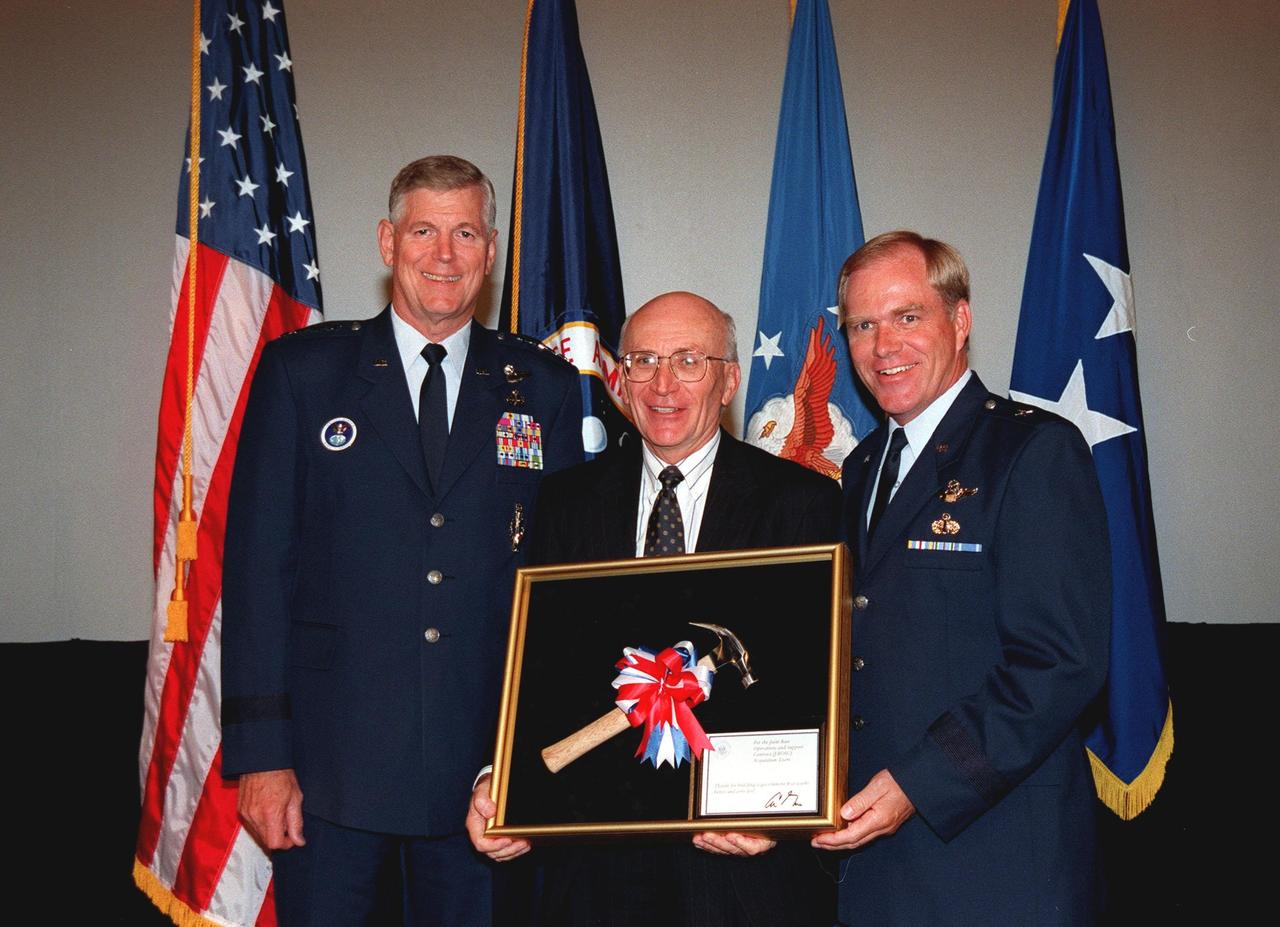
Commander of the Air Force Space Command, General Richard B. Myers (left) joins Ed Gormel (center) and Commander of the 45th Space Wing Brig. Gen. F. Randall Starbuck (right) after the presentation of the Hammer Award. The Hammer Award is Vice President Al Gore's special recognition of teams of federal employees who have made significant contributions in support of the principles of the National Partnership for Reinventing Government. Morley Winograd, director of the National Partnership for Reinventing Government, presented the award to the Joint Base Operations and Support Contract (J-BOSC) Source Evaluation Board (SEB). Gormel is a co-chair of the SEB. This Hammer Award acknowledges the accomplishments of a joint NASA and Air Force team that established the J-BOSC SEB. The team developed and implemented the acquisition strategy for establishing a single set of base operations and support service requirements for KSC, Cape Canaveral Air Station and Patrick Air Force Base
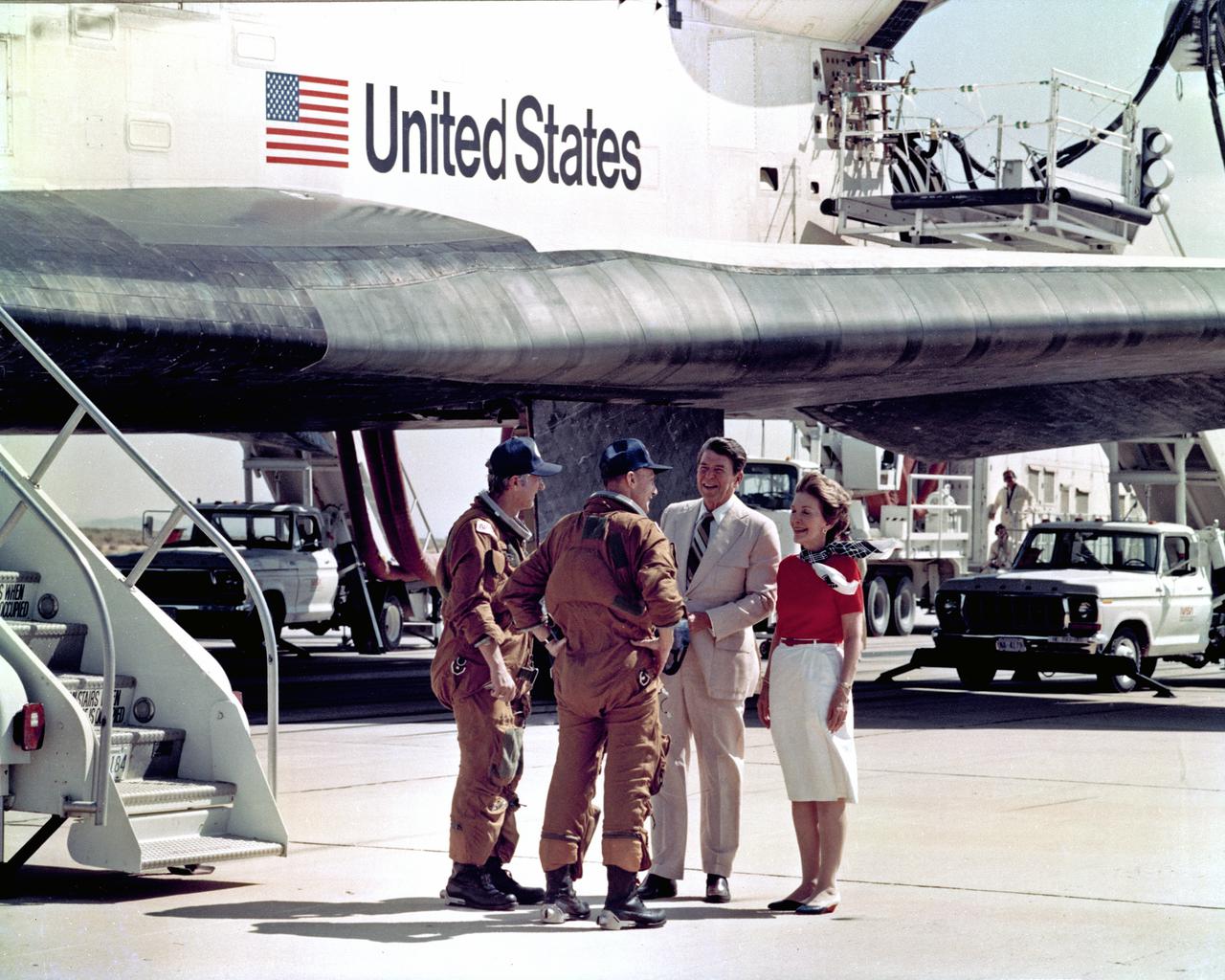
CAPE CANAVERAL, Fla. -- President and First Lady Reagan meet astronauts Thomas K. Mattingly II and Henry W. Hartsfield Jr. after the landing of space shuttle Columbia at Edwards Air Force Base in California. Photo credit: NASA
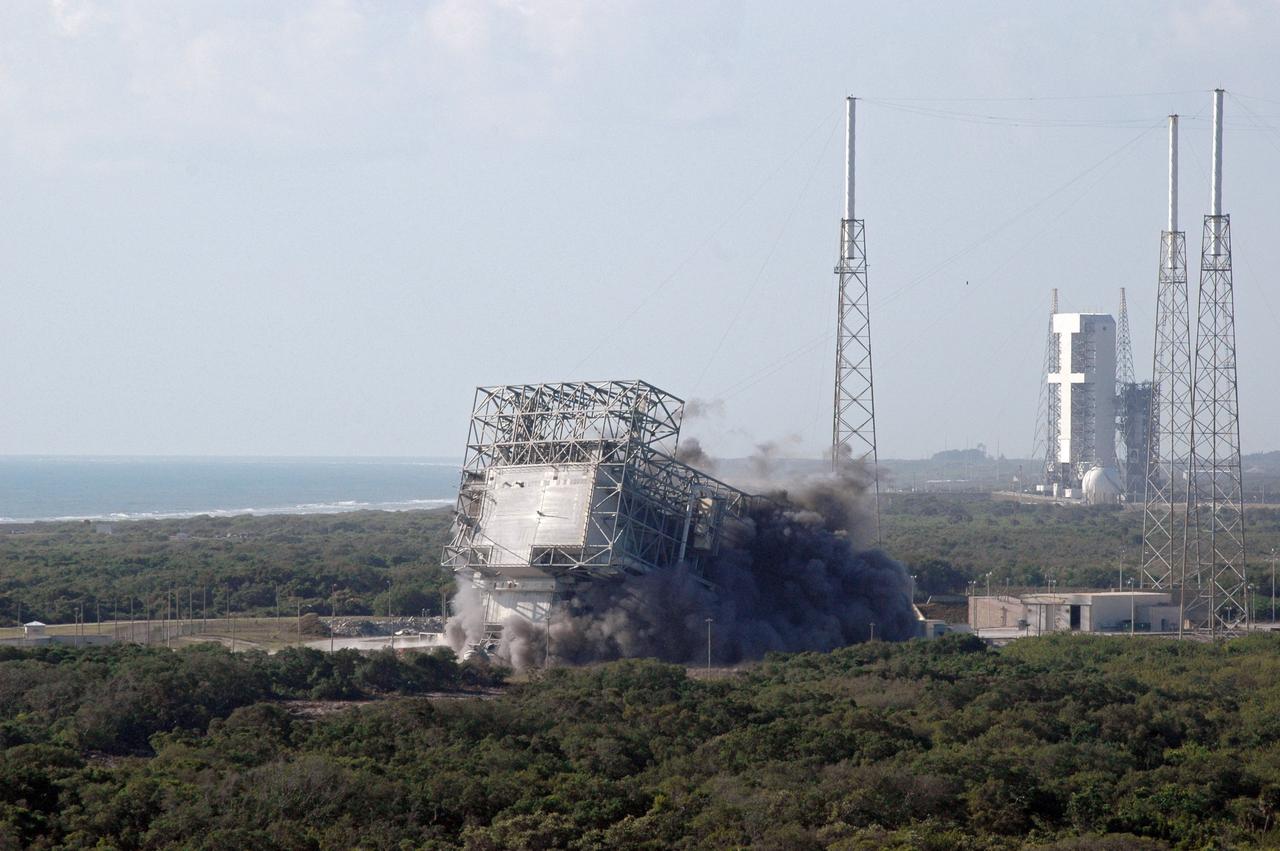
CAPE CANAVERAL, Fla. – The mobile service tower, or gantry, at Space Launch Complex 40 on Cape Canaveral Air Force Station falls to the ground after the base was demolished. The tall lightning towers around it will remain. This mammoth structure, with its cavernous clean room, was used for the final spacecraft launch preparations for NASA’s Cassini spacecraft, currently orbiting Saturn. The launch occurred on Oct. 15, 1997, aboard an Air Force Titan IV-Centaur rocket. The facilities at the pad are being dismantled to make room for the construction of launch pad access and servicing facilities for the new Falcon rockets to be launched by Space Exploration Technologies, known as SpaceX. Photo credit: NASA/Cory Huston
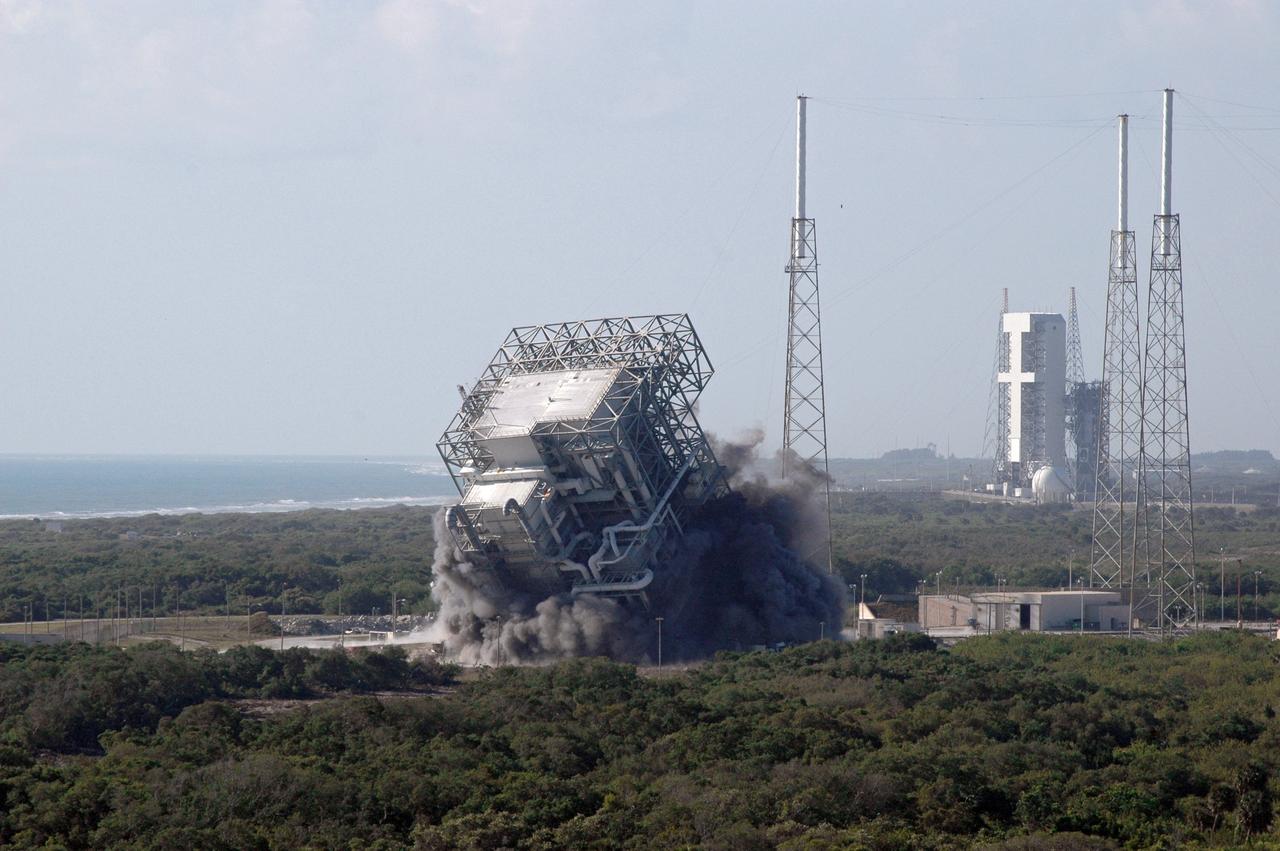
CAPE CANAVERAL, Fla. – The upper part of the mobile service tower, or gantry, at Space Launch Complex 40 on Cape Canaveral Air Force Station falls to the ground after the base was demolished. The tall lightning towers around it will remain. This mammoth structure, with its cavernous clean room, was used for the final spacecraft launch preparations for NASA’s Cassini spacecraft, currently orbiting Saturn. The launch occurred on Oct. 15, 1997, aboard an Air Force Titan IV-Centaur rocket. The facilities at the pad are being dismantled to make room for the construction of launch pad access and servicing facilities for the new Falcon rockets to be launched by Space Exploration Technologies, known as SpaceX. Photo credit: NASA/Cory Huston

VANDENBERG AIR FORCE BASE, CALIF. -- An overhead crane lifts the probe carrier assembly on the THEMIS spacecraft to a dolly. Visible are some of the solar array covers. THEMIS, which stands for Time History of Events and Macroscale Interactions during Substorms, comprises five identical probes that will study the dynamic and colorful eruptions of auroras. THEMIS is scheduled to launch Oct. 19 from Cape Canaveral Air Force Station in Florida.
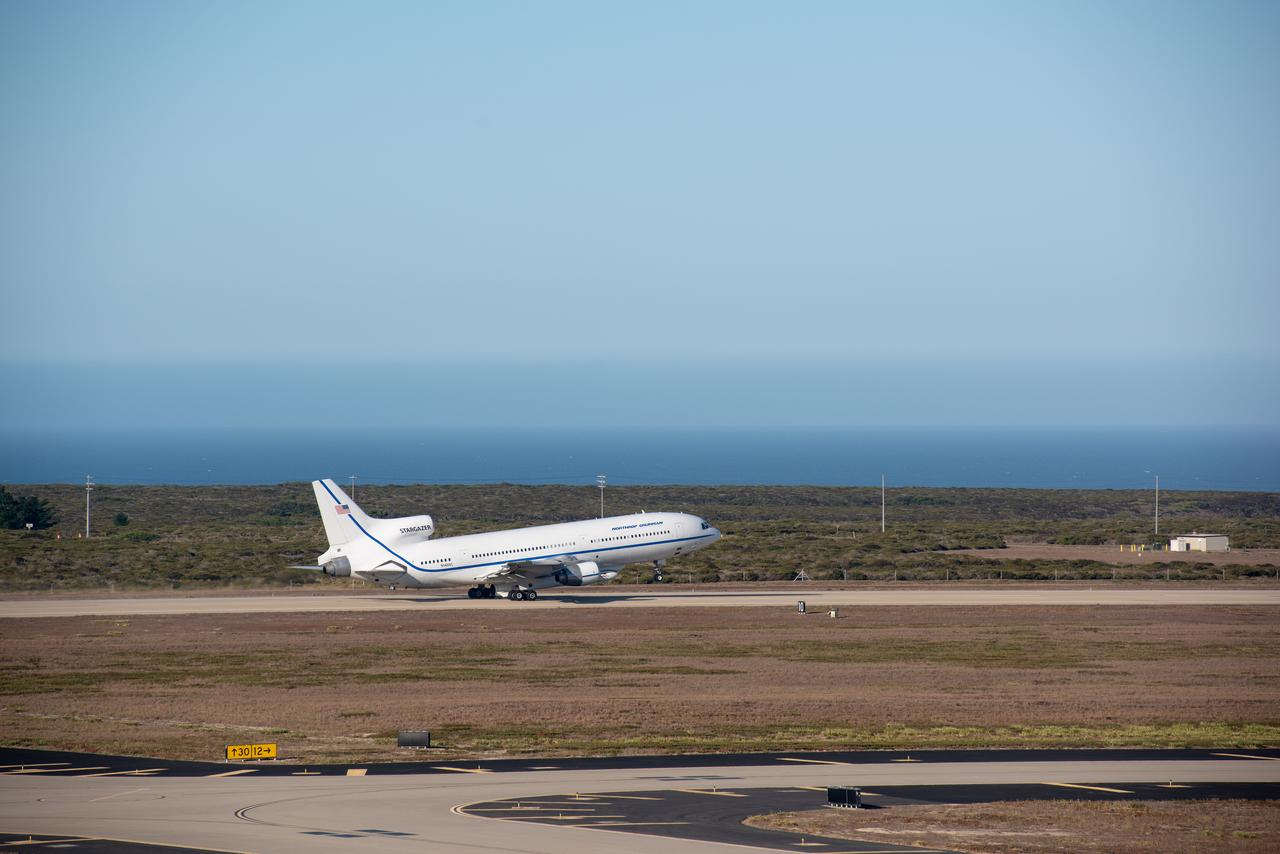
Northrop Grumman's L-1011 Stargazer takes off from Vandenberg Air Force Base in California on Oct. 1, 2019. The company's Pegasus XL rocket, containing NASA's Ionospheric Connection Explorer (ICON), is attached beneath the aircraft. The explorer is targeted to launch on Oct. 9, 2019, from Cape Canaveral Air Force Station in Florida. ICON will study the frontier of space - the dynamic zone high in Earth's atmosphere where terrestrial weather from below meets space weather above.
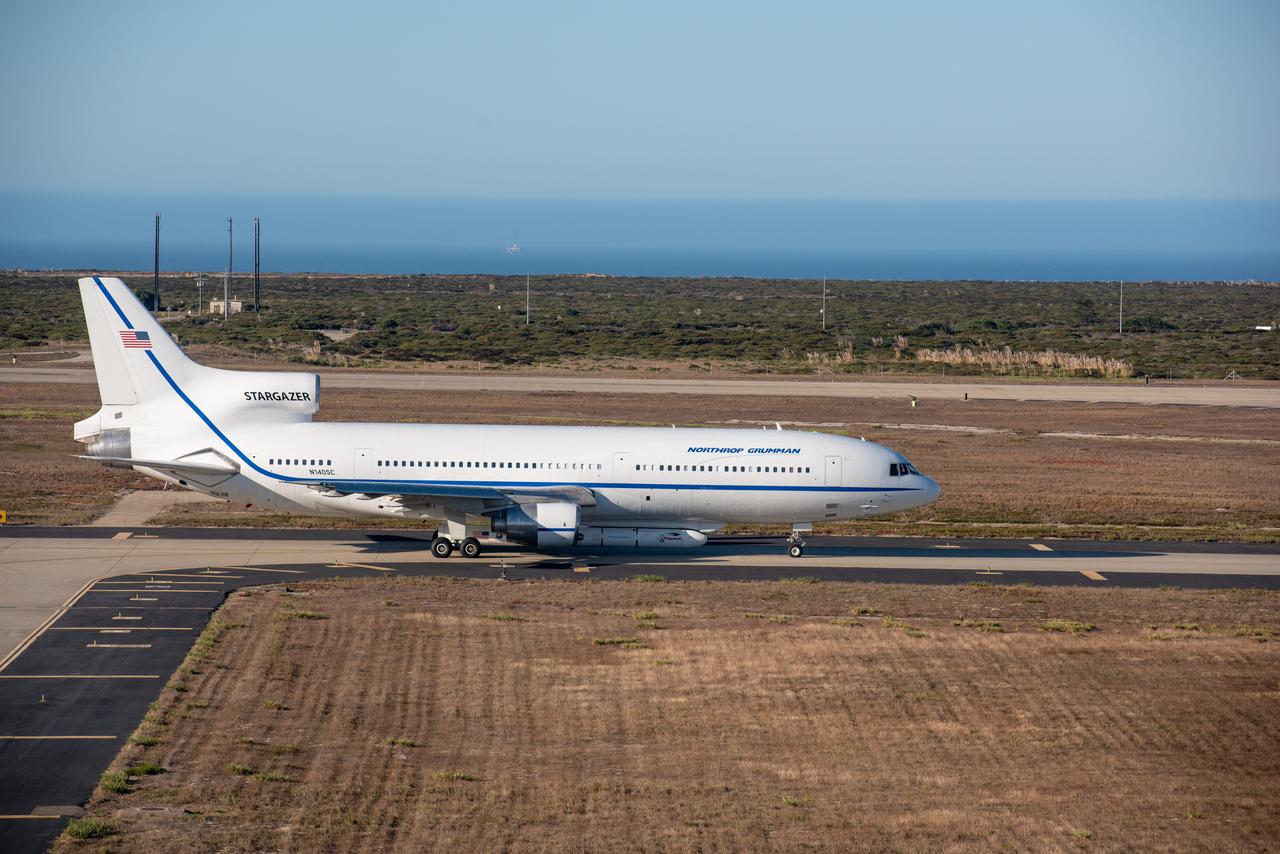
Northrop Grumman's L-1011 Stargazer awaits takeoff from Vandenberg Air Force Base in California on Oct. 1, 2019. The company's Pegasus XL rocket, containing NASA's Ionospheric Connection Explorer (ICON), is attached beneath the aircraft. The explorer is targeted to launch on Oct. 9, 2019, from Cape Canaveral Air Force Station in Florida. ICON will study the frontier of space - the dynamic zone high in Earth's atmosphere where terrestrial weather from below meets space weather above.
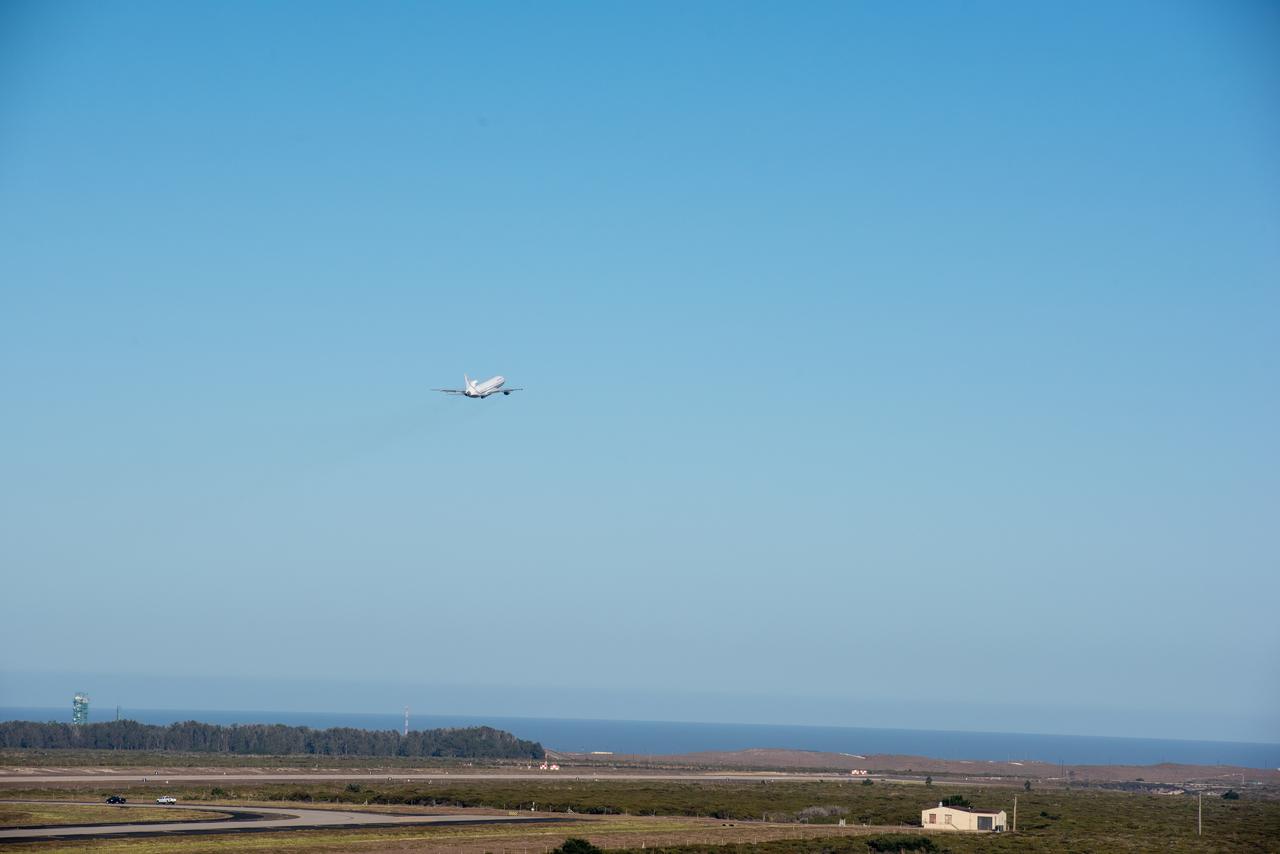
Northrop Grumman's L-1011 Stargazer takes off from Vandenberg Air Force Base in California on Oct. 1, 2019. The company's Pegasus XL rocket, containing NASA's Ionospheric Connection Explorer (ICON), is attached beneath the aircraft. The explorer is targeted to launch on Oct. 9, 2019, from Cape Canaveral Air Force Station in Florida. ICON will study the frontier of space - the dynamic zone high in Earth's atmosphere where terrestrial weather from below meets space weather above.
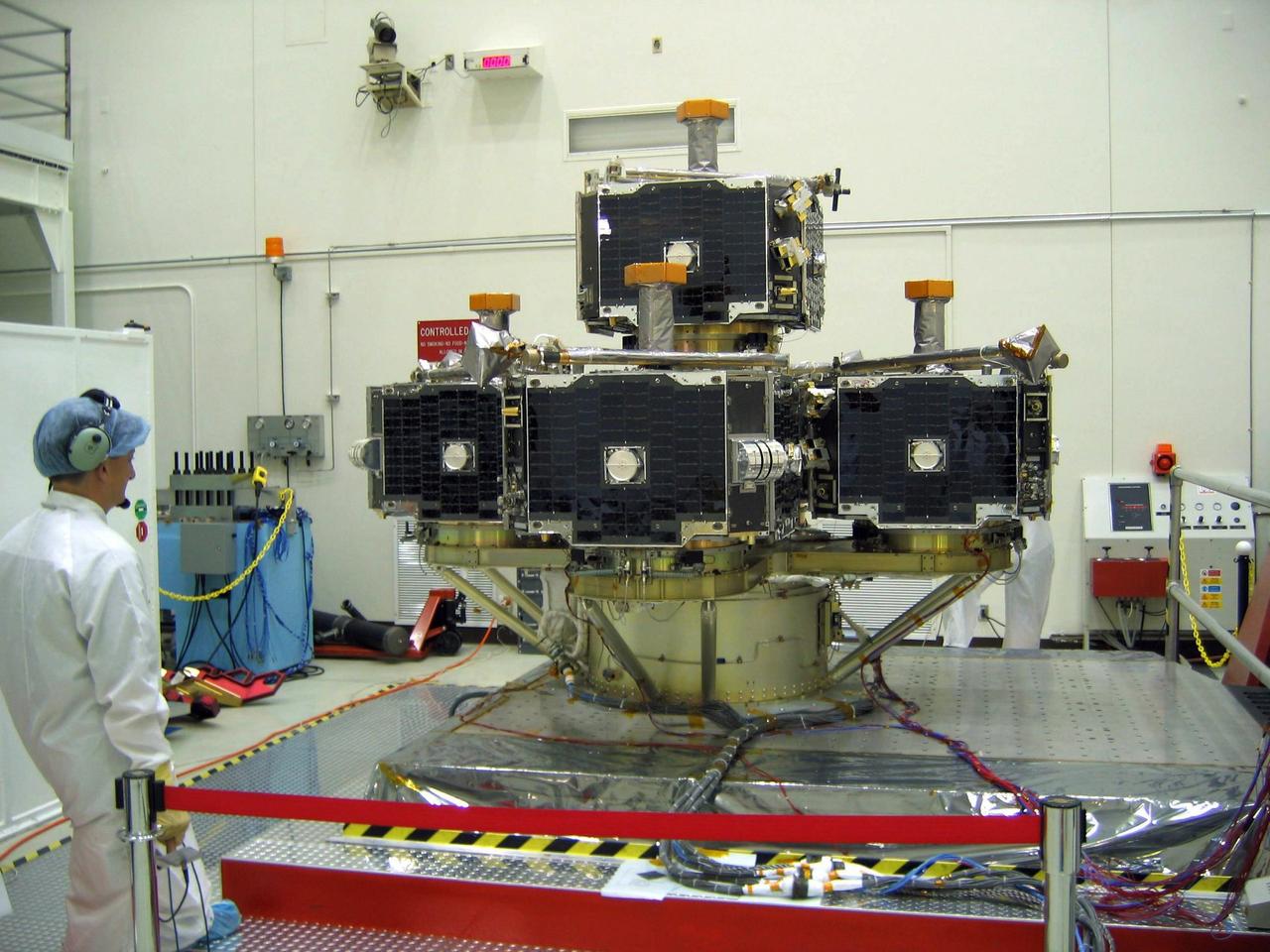
VANDENBERG AIR FORCE BASE, CALIF. -- The probe carrier assembly on the THEMIS spacecraft undergoes a vibration test. THEMIS, which stands for Time History of Events and Macroscale Interactions during Substorms, comprises five identical probes that will study the dynamic and colorful eruptions of auroras. THEMIS is scheduled to launch Oct. 19 from Cape Canaveral Air Force Station in Florida.
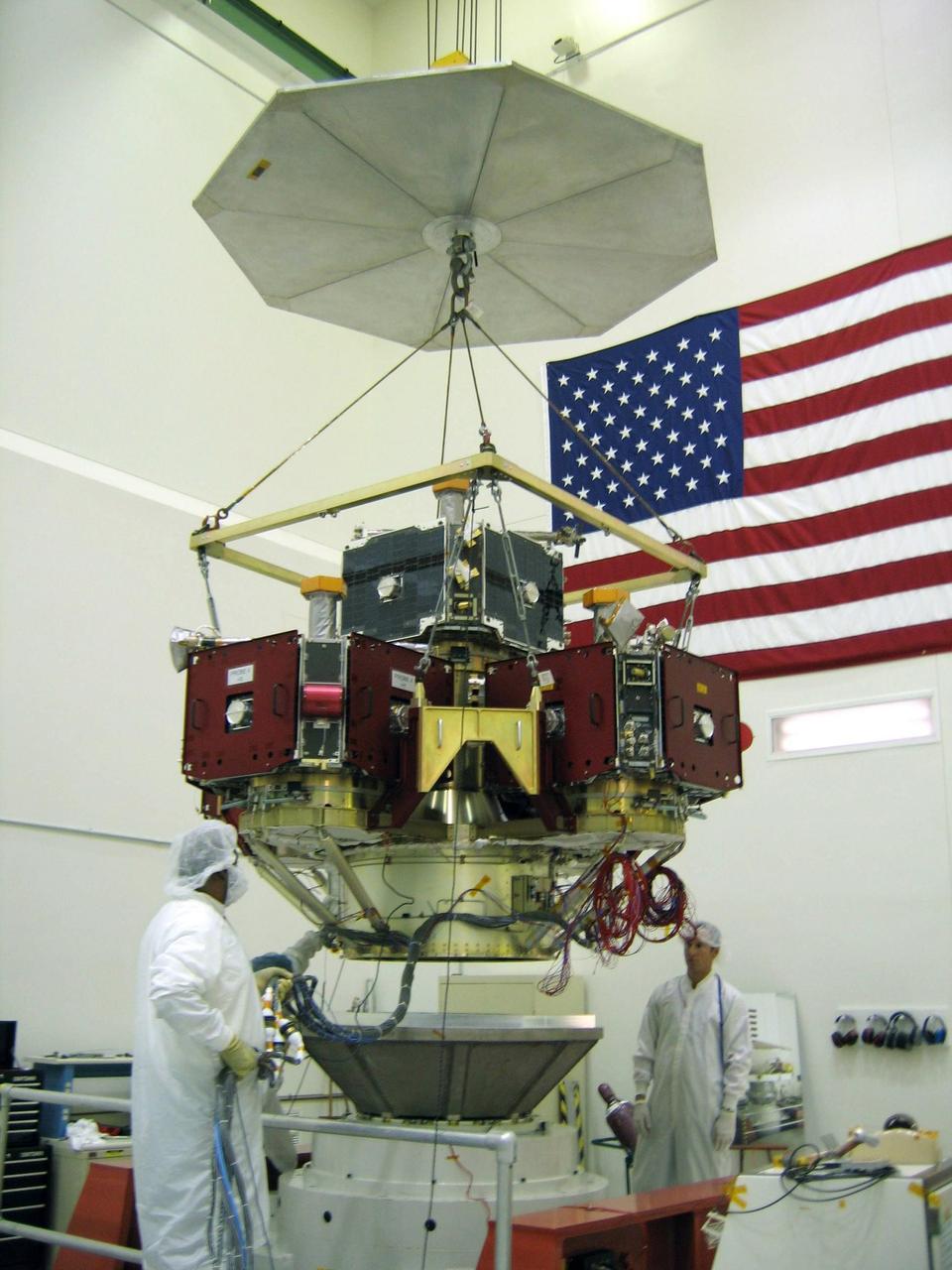
VANDENBERG AIR FORCE BASE, CALIF. -- An overhead crane hoists the probe carrier assembly on the THEMIS spacecraft to the vibration table (Z-axis). THEMIS, which stands for Time History of Events and Macroscale Interactions during Substorms, comprises five identical probes that will study the dynamic and colorful eruptions of auroras. THEMIS is scheduled to launch Oct. 19 from Cape Canaveral Air Force Station in Florida.
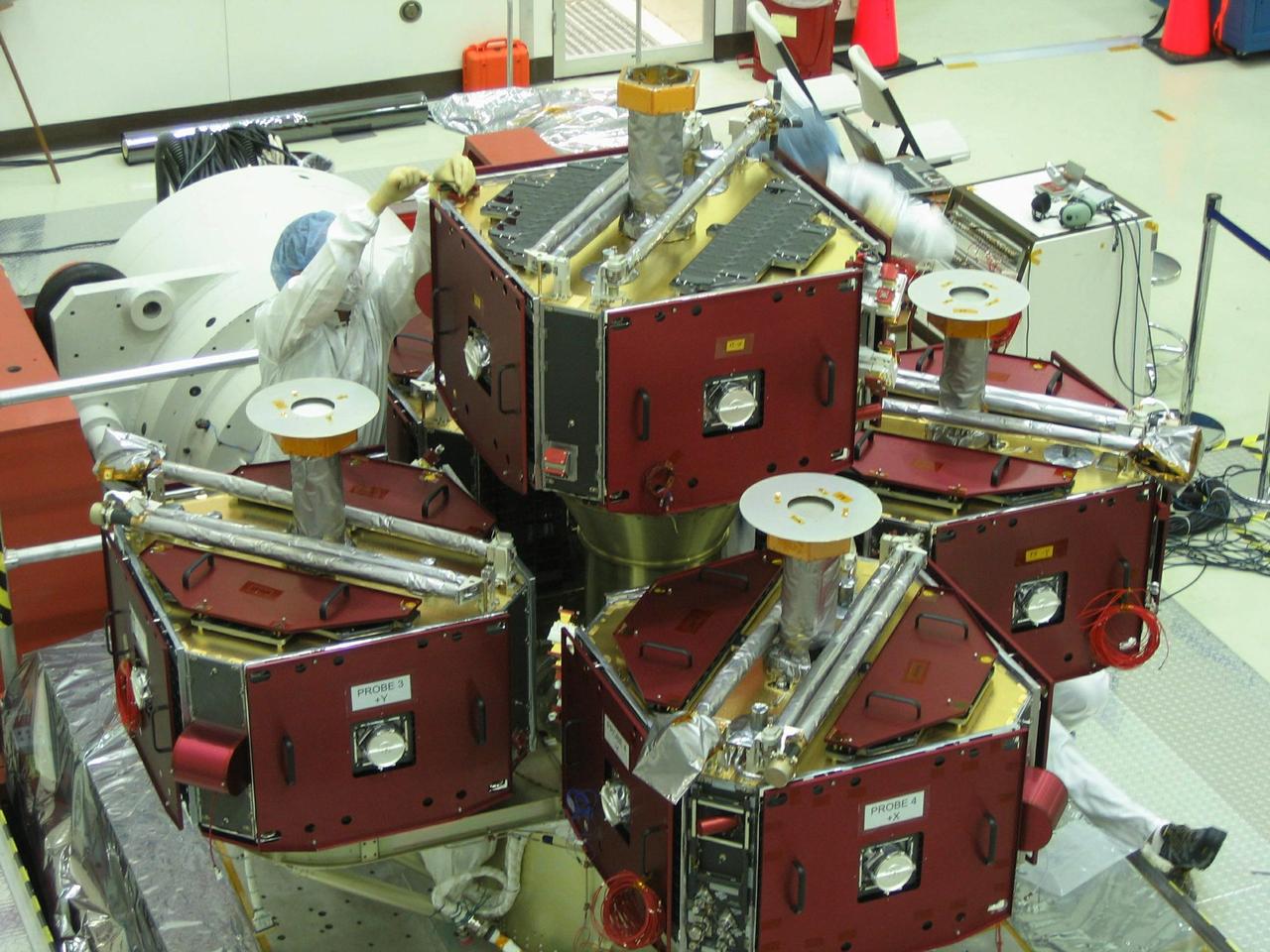
VANDENBERG AIR FORCE BASE, CALIF. -- The probe carrier assembly on the THEMIS spacecraft is prepared for a vibration test. The assembly has solar array covers attached. THEMIS, which stands for Time History of Events and Macroscale Interactions during Substorms, comprises five identical probes that will study the dynamic and colorful eruptions of auroras. THEMIS is scheduled to launch Oct. 19 from Cape Canaveral Air Force Station in Florida.
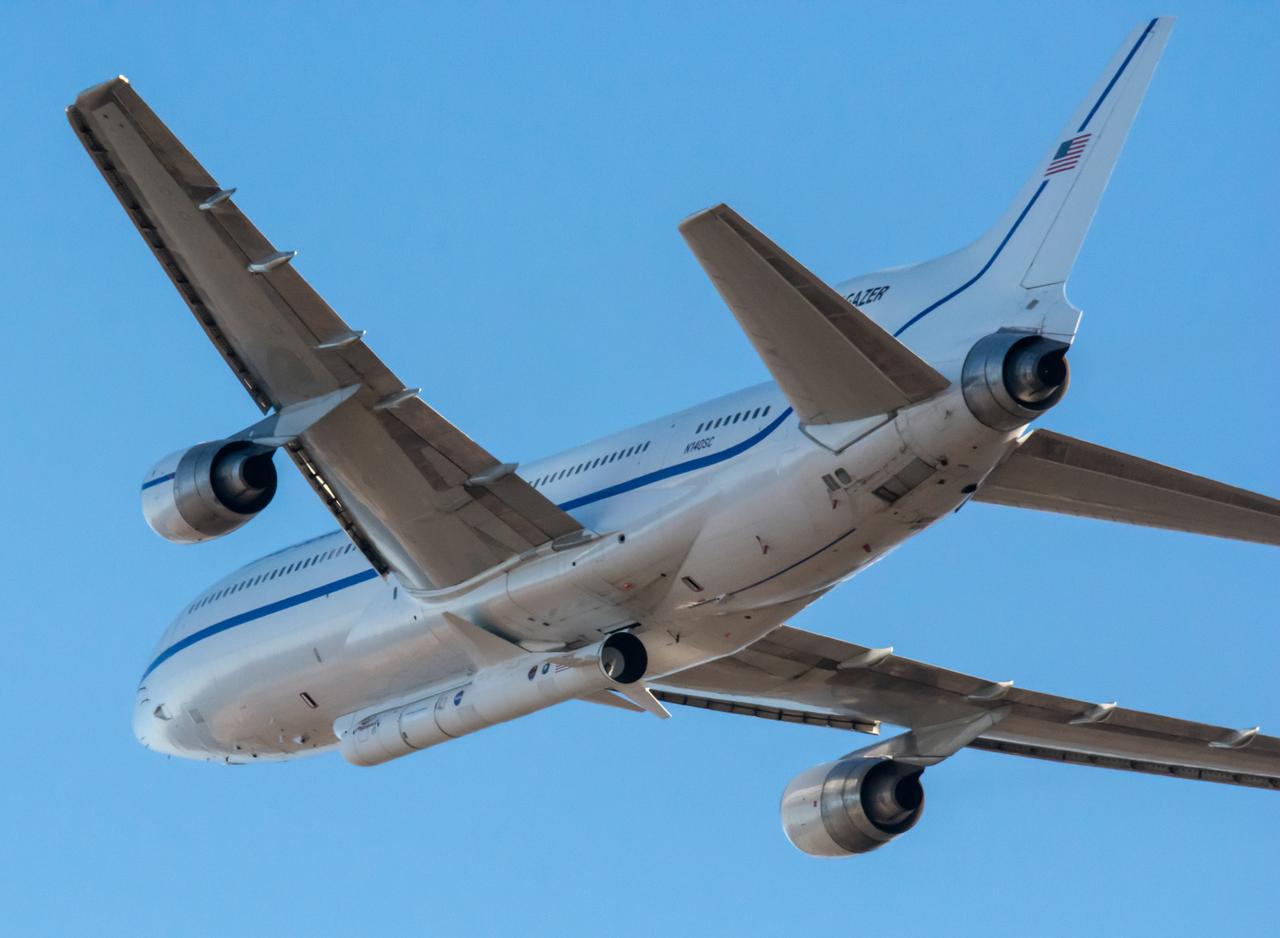
Northrop Grumman's L-1011 Stargazer takes off from Vandenberg Air Force Base in California on Oct. 1, 2019. The company's Pegasus XL rocket, containing NASA's Ionospheric Connection Explorer (ICON), is attached beneath the aircraft. The explorer is targeted to launch on Oct. 9, 2019, from Cape Canaveral Air Force Station in Florida. ICON will study the frontier of space - the dynamic zone high in Earth's atmosphere where terrestrial weather from below meets space weather above.
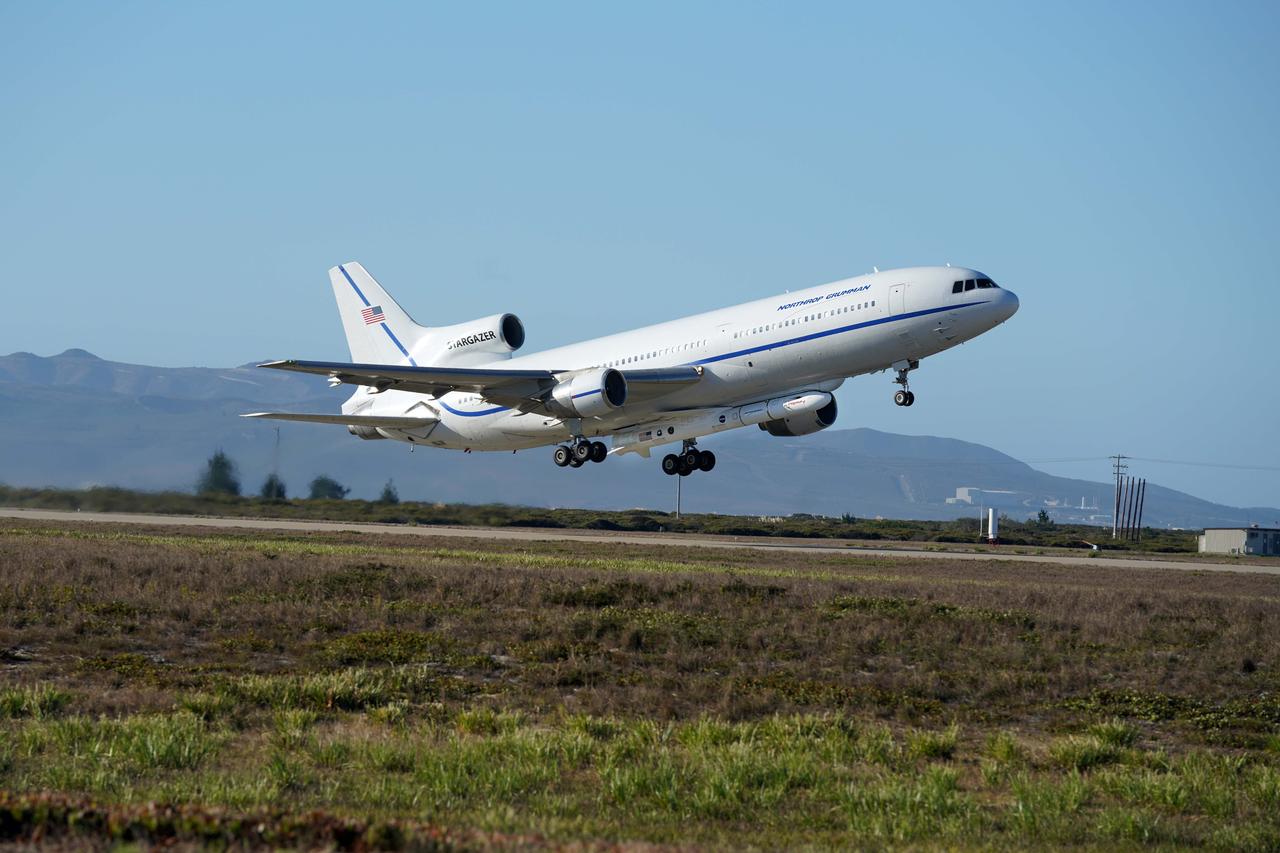
Northrop Grumman's L-1011 Stargazer takes off from Vandenberg Air Force Base in California on Oct. 1, 2019. The company's Pegasus XL rocket, containing NASA's Ionospheric Connection Explorer (ICON), is attached beneath the aircraft. The explorer is targeted to launch on Oct. 9, 2019, from Cape Canaveral Air Force Station in Florida. ICON will study the frontier of space - the dynamic zone high in Earth's atmosphere where terrestrial weather from below meets space weather above.
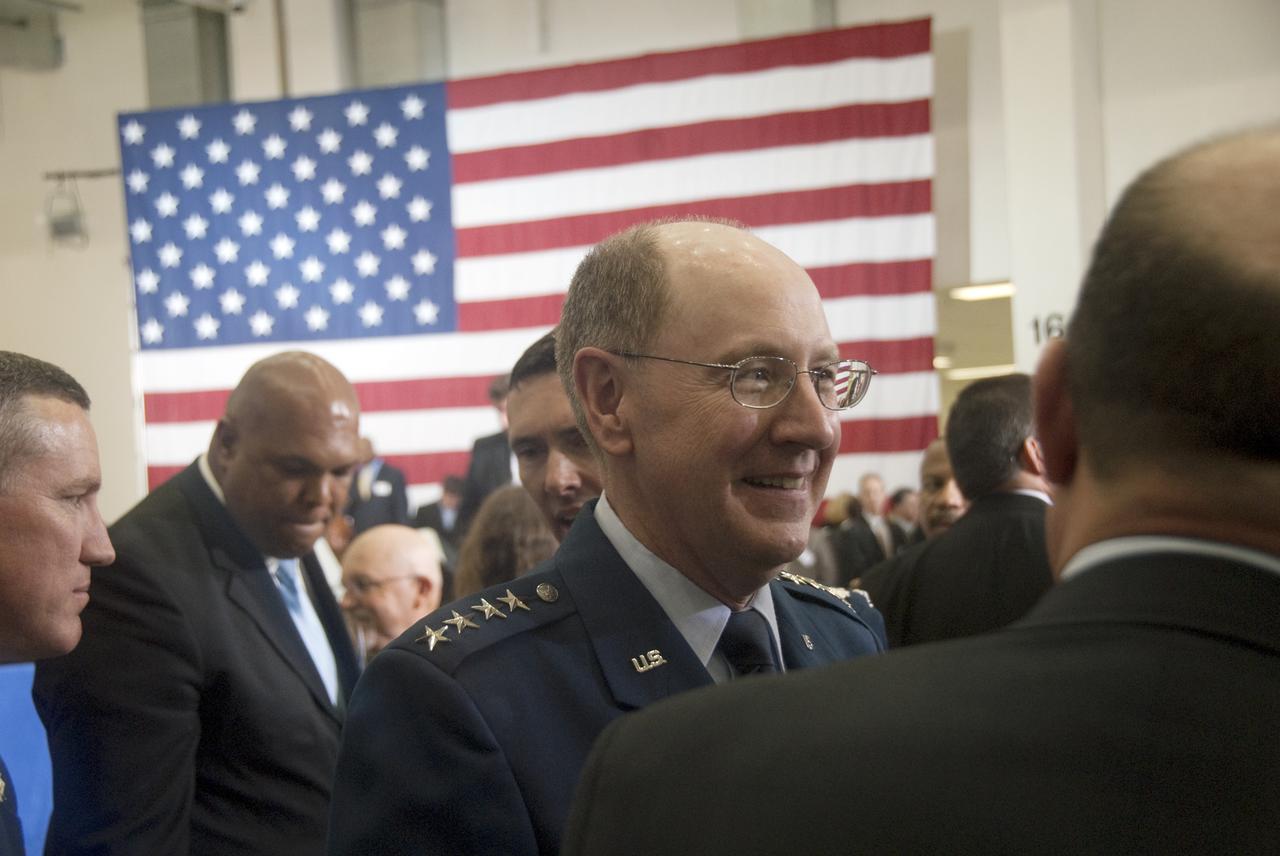
CAPE CANAVERAL, Fla. - In the Operations and Checkout Building at NASA's Kennedy Space Center in Florida, Gen. C. Robert 'Bob' Kehler, Commander of the Air Force Space Command at Peterson Air Force Base in Colorado, speaks with other members of the Conference on the American Space Program for the 21st Century following President Barack Obama's remarks describing the new course his administration is charting for NASA and the future of U.S. leadership in human spaceflight. Photo credit: NASA_Jim Grossmann
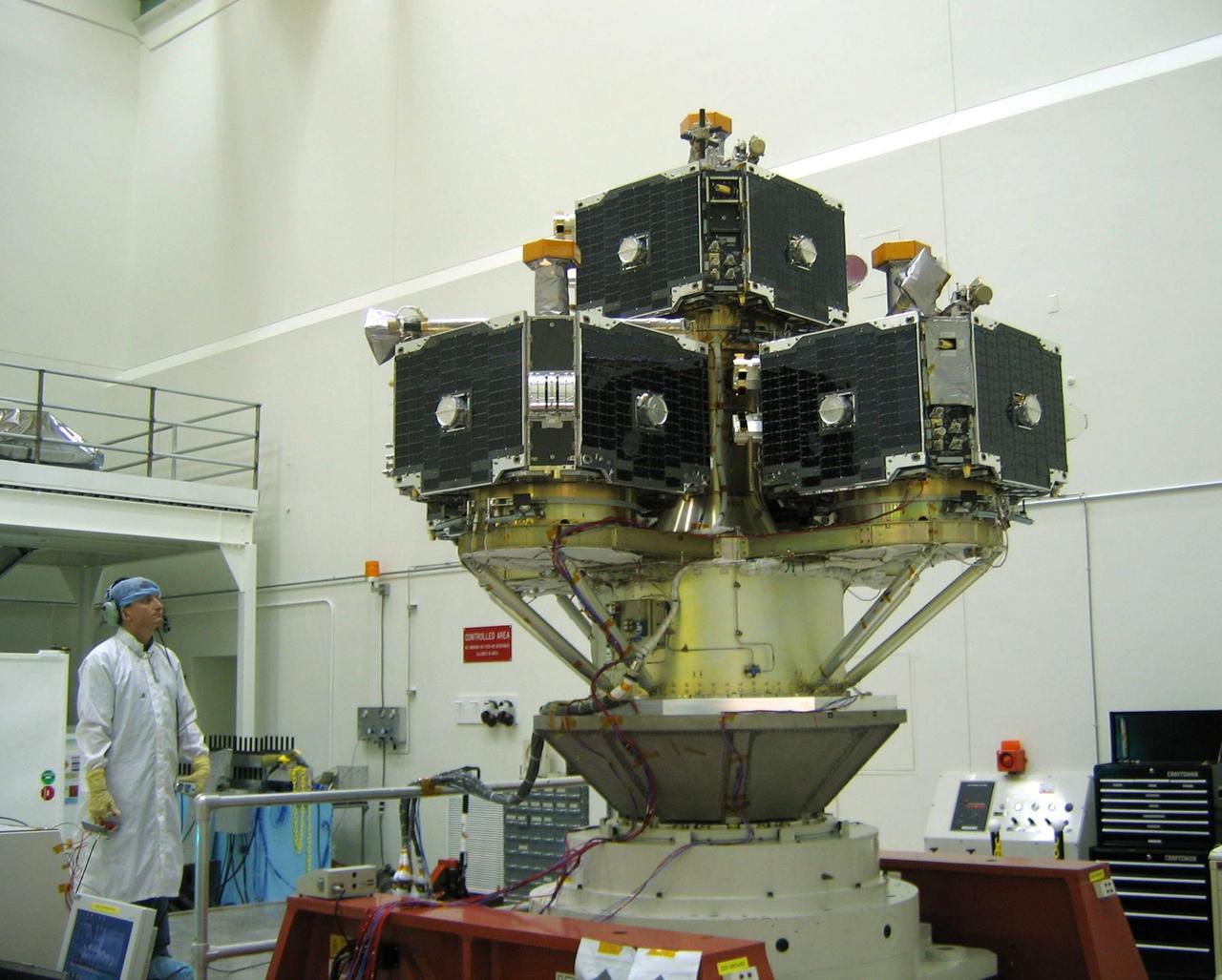
VANDENBERG AIR FORCE BASE, CALIF. -- The probe carrier assembly on the THEMIS spacecraft undergoes a vibration test (Z-axis). THEMIS, which stands for Time History of Events and Macroscale Interactions during Substorms, comprises five identical probes that will study the dynamic and colorful eruptions of auroras. THEMIS is scheduled to launch Oct. 19 from Cape Canaveral Air Force Station in Florida.
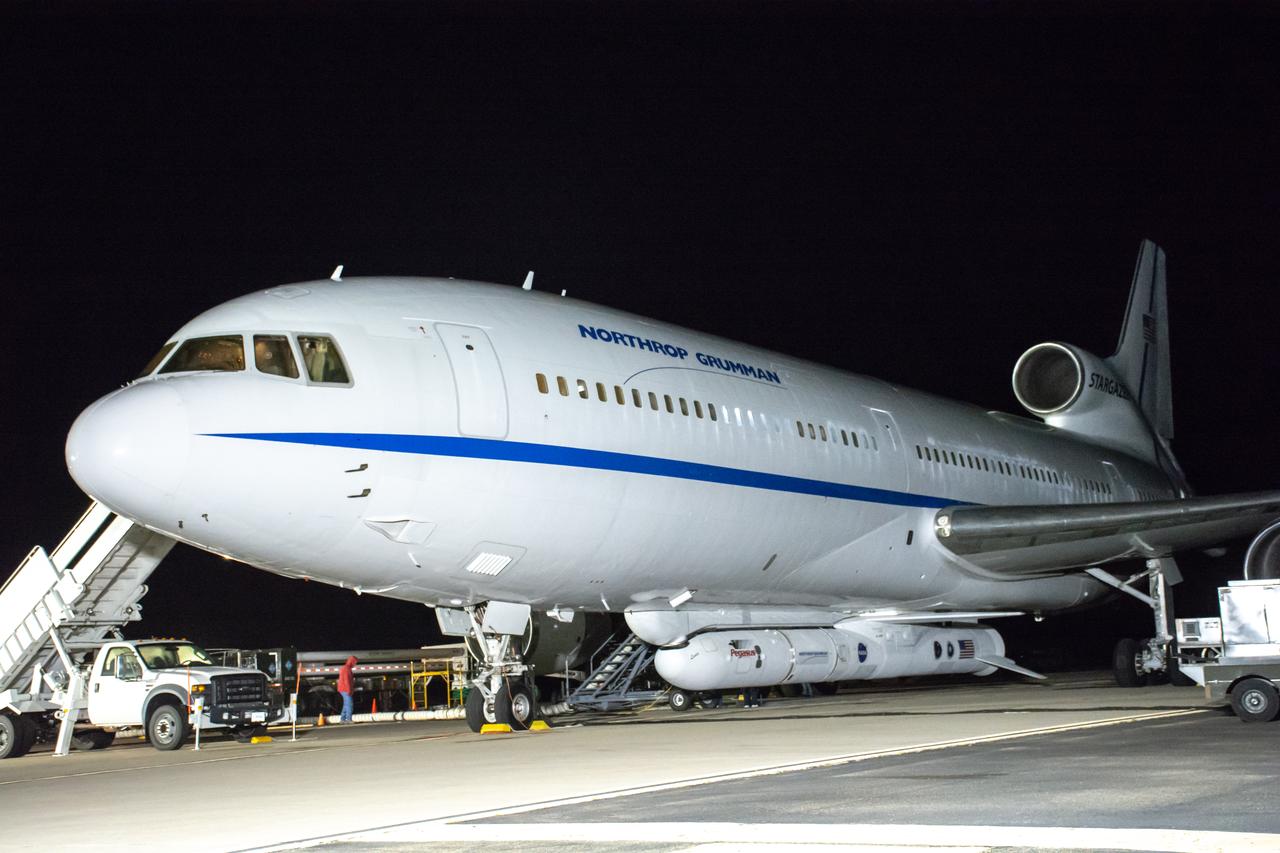
Northrop Grumman's L-1011 Stargazer is undergoing final preparations prior to its takeoff from Vandenberg Air Force Base in California on Oct. 1, 2019. The company's Pegasus XL rocket, containing NASA's Ionospheric Connection Explorer (ICON), is attached beneath the aircraft. The explorer is targeted to launch on Oct. 9, 2019, from Cape Canaveral Air Force Station in Florida. ICON will study the frontier of space - the dynamic zone high in Earth's atmosphere where terrestrial weather from below meets space weather above.
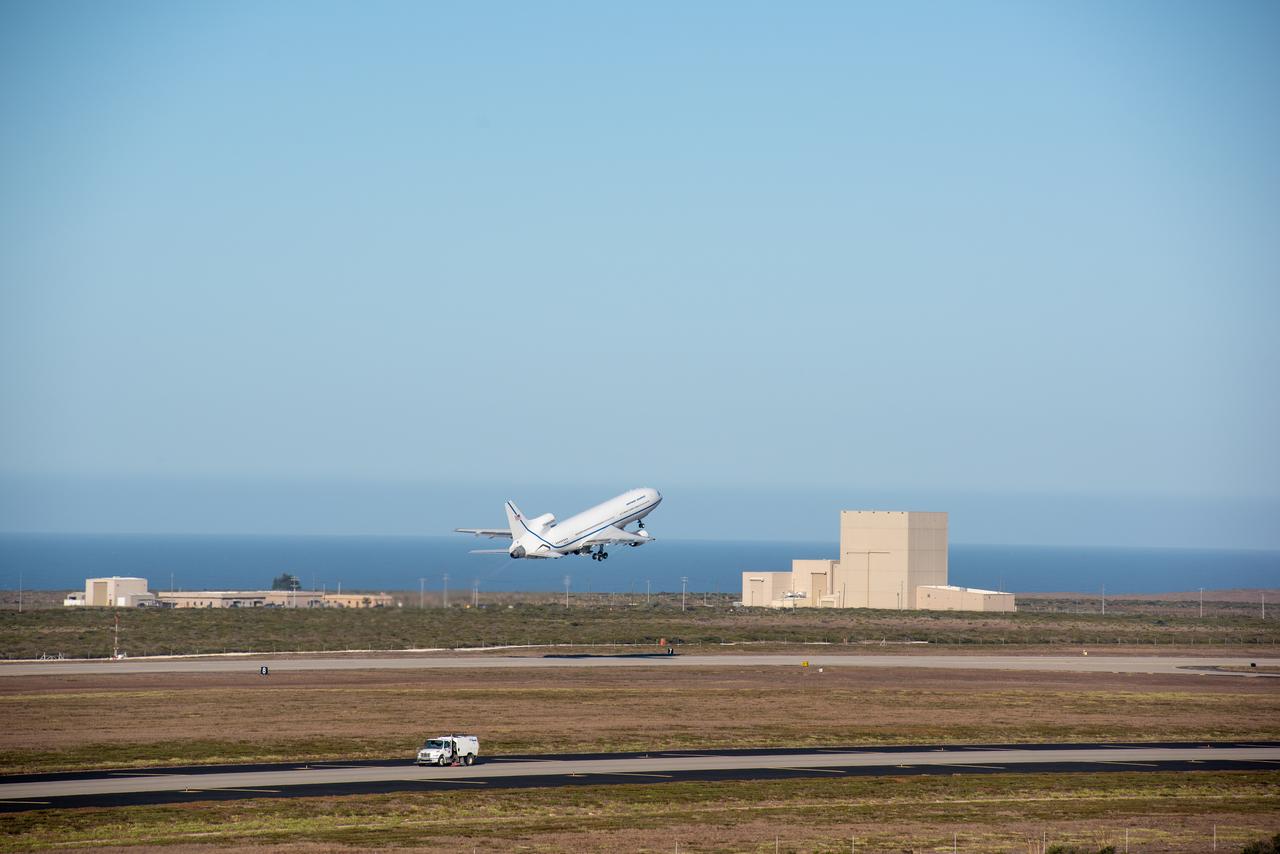
Northrop Grumman's L-1011 Stargazer takes off from Vandenberg Air Force Base in California on Oct. 1, 2019. The company's Pegasus XL rocket, containing NASA's Ionospheric Connection Explorer (ICON), is attached beneath the aircraft. The explorer is targeted to launch on Oct. 9, 2019, from Cape Canaveral Air Force Station in Florida. ICON will study the frontier of space - the dynamic zone high in Earth's atmosphere where terrestrial weather from below meets space weather above.
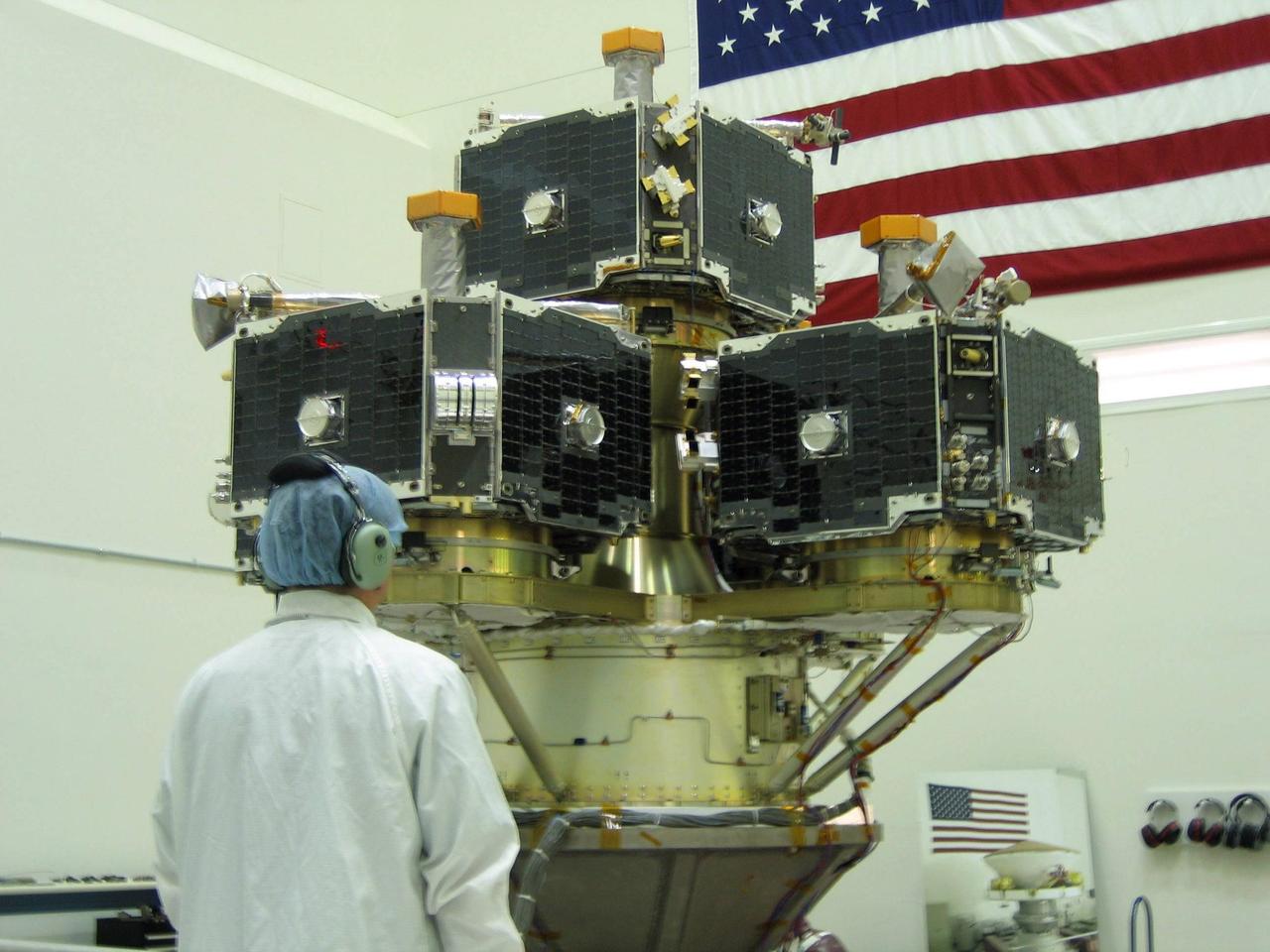
VANDENBERG AIR FORCE BASE, CALIF. -- The probe carrier assembly on the THEMIS spacecraft undergoes a vibration test (Z-axis). THEMIS, which stands for Time History of Events and Macroscale Interactions during Substorms, comprises five identical probes that will study the dynamic and colorful eruptions of auroras. THEMIS is scheduled to launch Oct. 19 from Cape Canaveral Air Force Station in Florida.
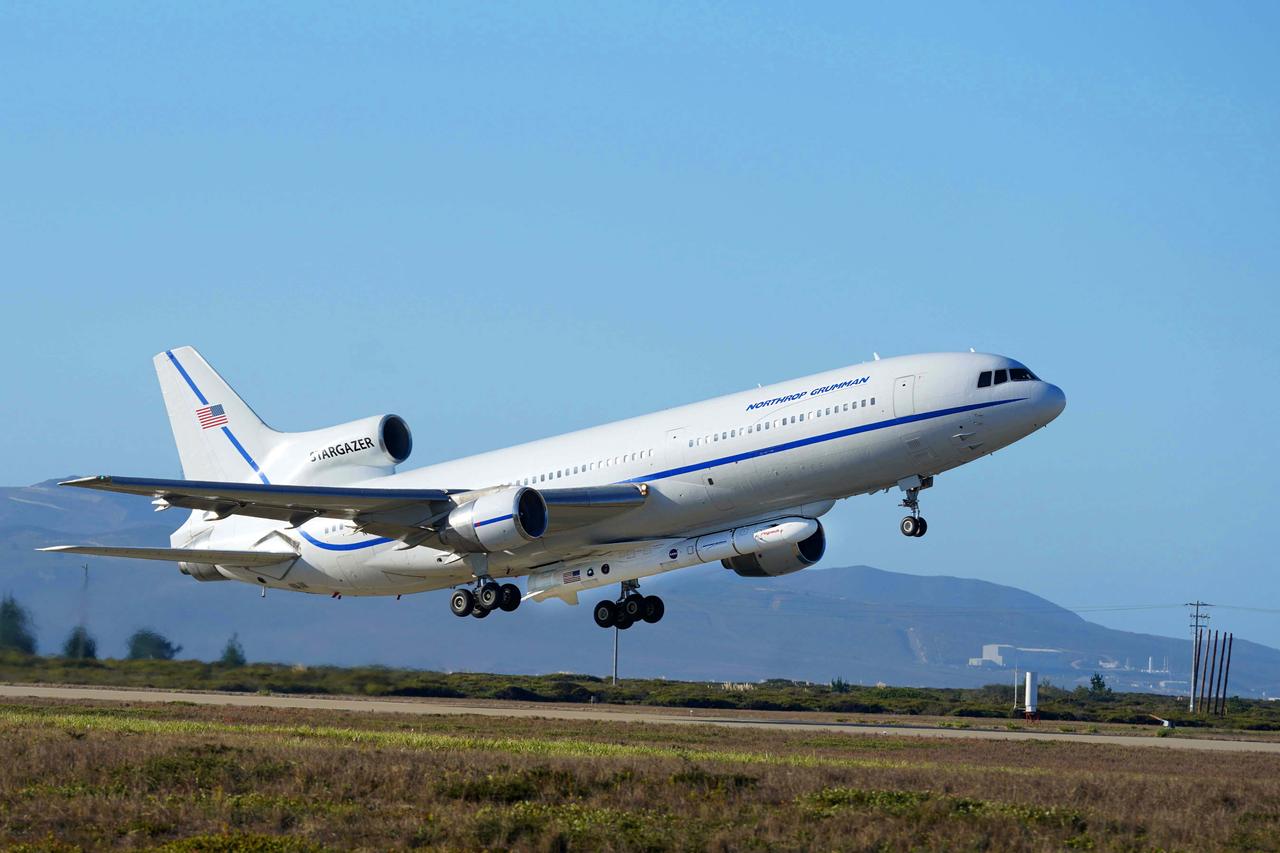
Northrop Grumman's L-1011 Stargazer takes off from Vandenberg Air Force Base in California on Oct. 1, 2019. The company's Pegasus XL rocket, containing NASA's Ionospheric Connection Explorer (ICON), is attached beneath the aircraft. The explorer is targeted to launch on Oct. 9, 2019, from Cape Canaveral Air Force Station in Florida. ICON will study the frontier of space - the dynamic zone high in Earth's atmosphere where terrestrial weather from below meets space weather above.
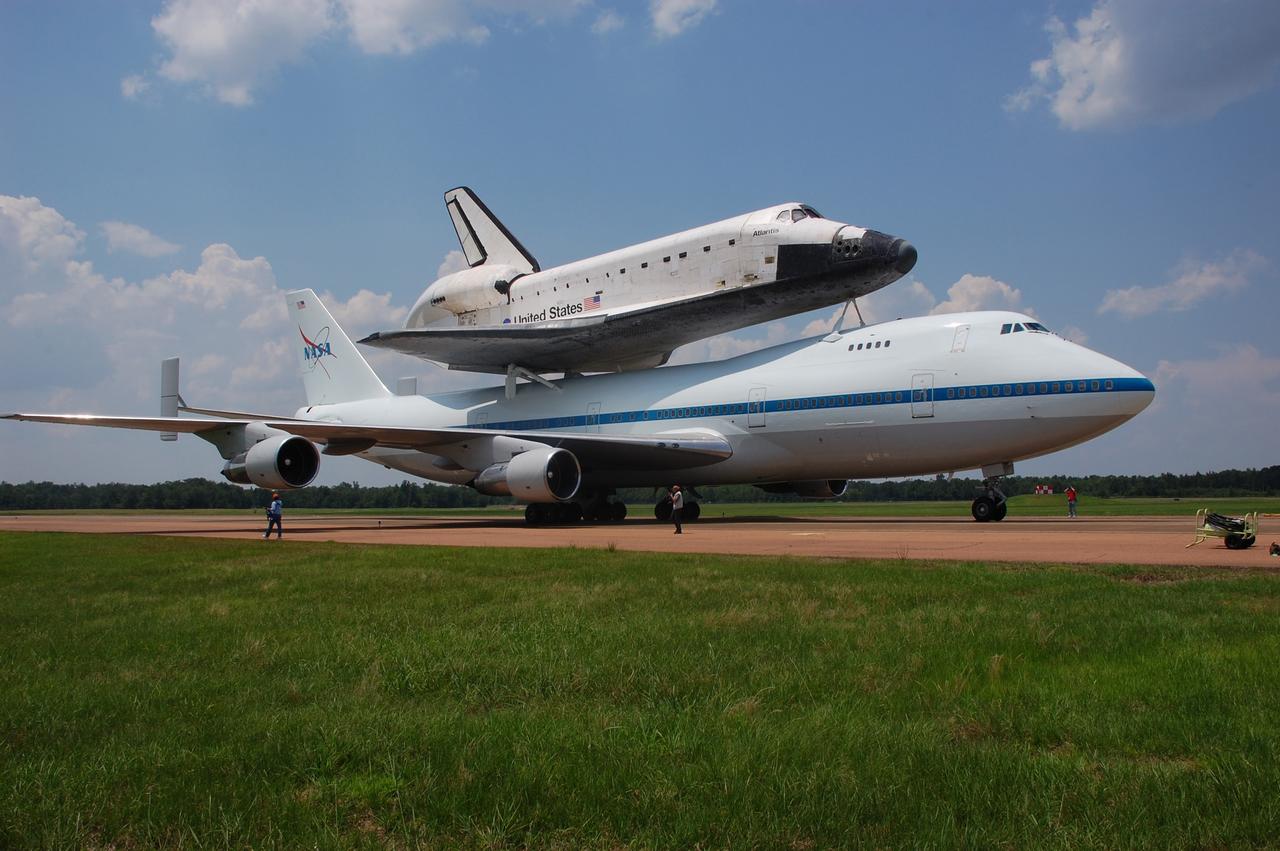
CAPE CANAVERAL, Fla. – Space shuttle Atlantis, atop the Shuttle Carrier Aircraft, or SCA, a modified Boeing 747, is ready for takeoff from Columbus Air Force Base in Mississippi after a fuel stop on its journey back to Florida. Atlantis landed at Edwards Air Force Base in California on May 24, which concluded mission STS-125, after two landing opportunities at Kennedy were waved off due to weather concerns. Atlantis is being returned to Florida on a ferry flight on the SCA. Atlantis' next assignment is the STS-129 mission, targeted to launch in November 2009. Photo credit: NASA/Ben Smegelsky
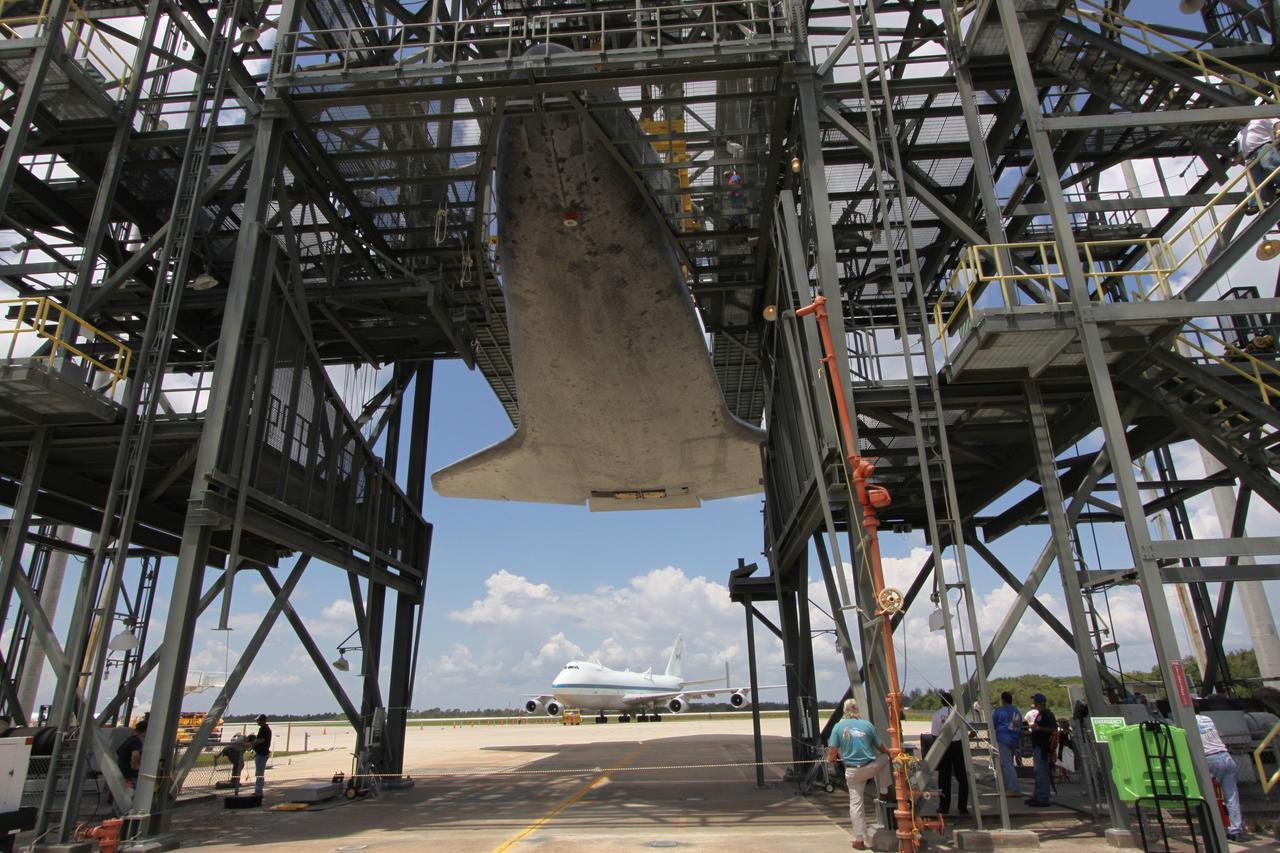
CAPE CANAVERAL, Fla. – On the Shuttle Landing Facility at NASA's Kennedy Space Center in Florida, space shuttle Atlantis remains suspended in the mate/demate device after the Shuttle Carrier Aircraft (below in the background) was moved away. Atlantis will be lowered to the ground via the hoist that is holding it. Atlantis returned from California atop the SCA, a modified Boeing 747, after its May 24 landing at Edwards Air Force Base, concluding mission STS-125. The ferry flight from Edwards Air Force Base began June 1. Atlantis' next assignment is the STS-129 mission, targeted to launch in November 2009. Photo credit: NASA/Jack Pfaller
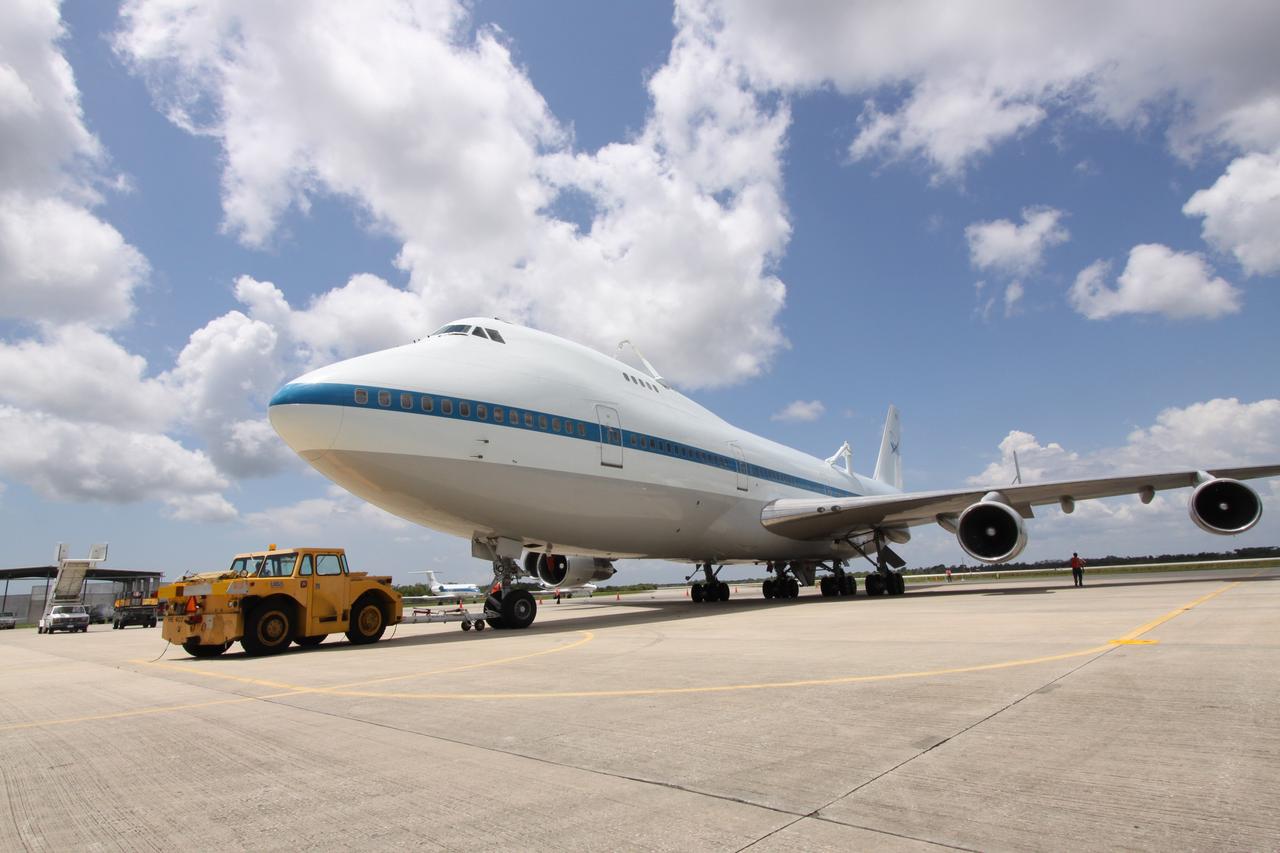
CAPE CANAVERAL, Fla. – On the Shuttle Landing Facility at NASA's Kennedy Space Center in Florida, the Shuttle Carrier Aircraft, or SCA, is towed away from the mate/demate device. The SCA was just demated from the shuttle. Atlantis returned from California atop the SCA, a modified Boeing 747, after its May 24 landing at Edwards Air Force Base, concluding mission STS-125. The ferry flight from Edwards Air Force Base began June 1. Atlantis' next assignment is the STS-129 mission, targeted to launch in November 2009. Photo credit: NASA/Jack Pfaller
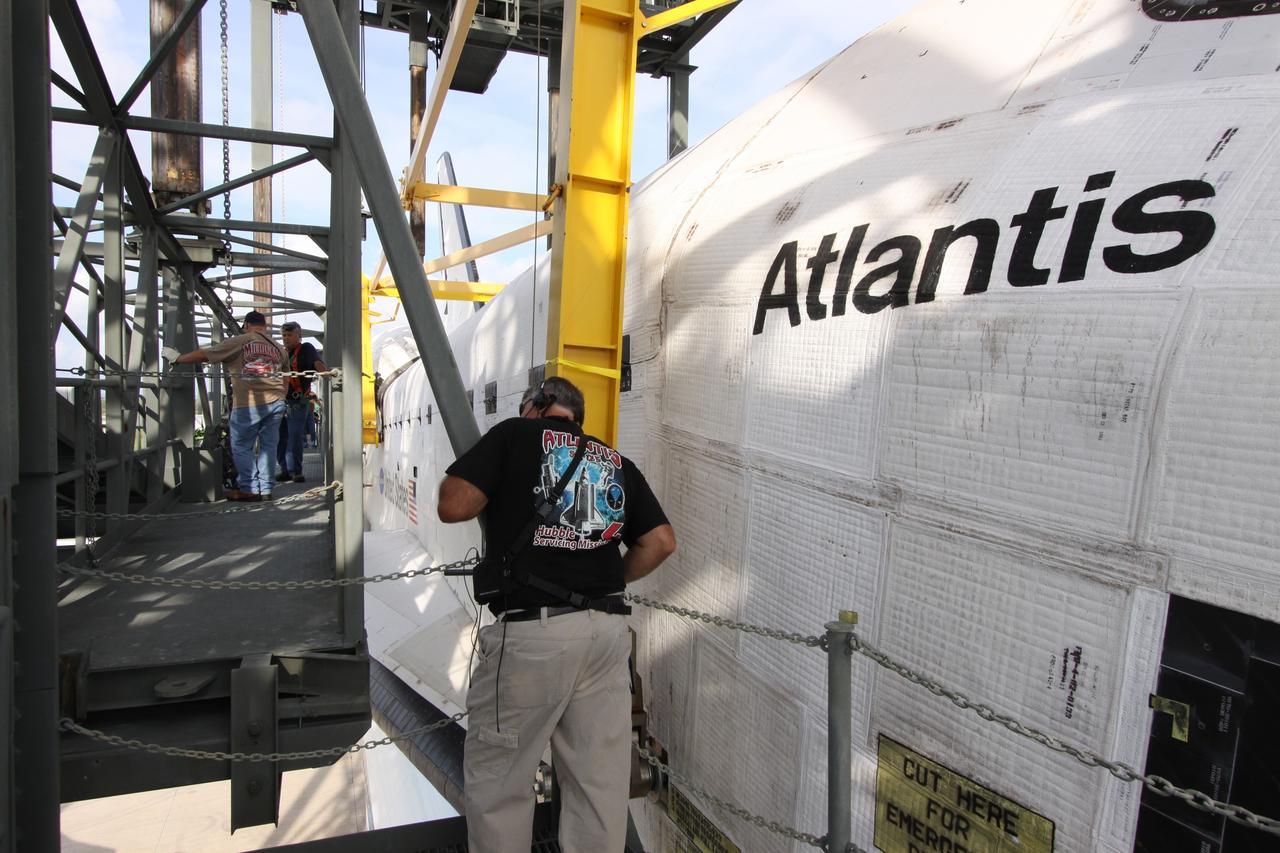
CAPE CANAVERAL, Fla. – Preparations are under way to separate space shuttle Atlantis from the Shuttle Carrier Aircraft, or SCA, underneath via the mate/demate device on the Shuttle Landing Facility at NASA's Kennedy Space Center in Florida. A hoist is attached to Atlantis to lower the shuttle to the ground. Atlantis returned from California atop the SCA, a modified Boeing 747, after its May 24 landing at Edwards Air Force Base, concluding mission STS-125. The ferry flight from Edwards Air Force Base began June 1. Atlantis' next assignment is the STS-129 mission, targeted to launch in November 2009. Photo credit: NASA/Jack Pfaller
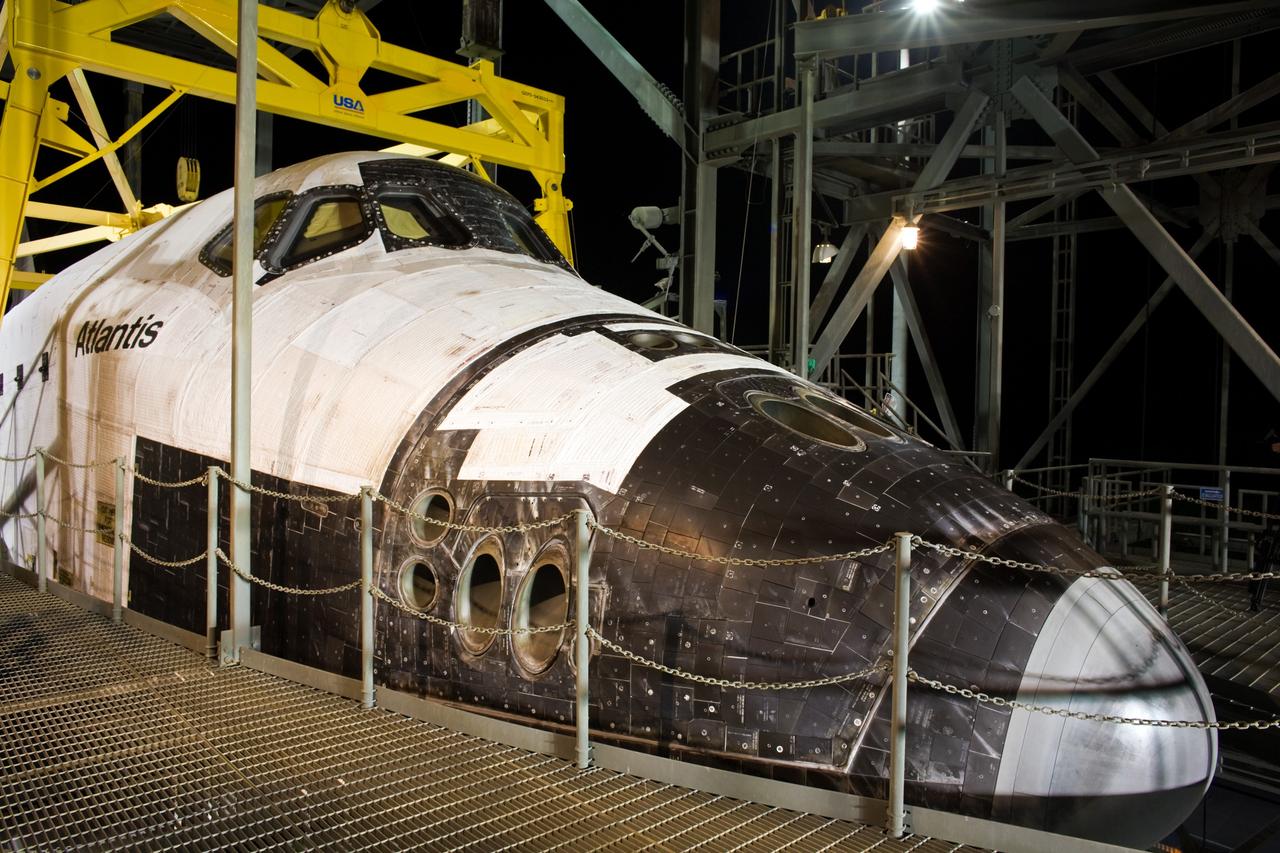
CAPE CANAVERAL, Fla. – Just before sunrise, preparations are underway to separate space shuttle Atlantis from the Shuttle Carrier Aircraft, or SCA, underneath via the mate/demate device. The hoist is attached to Atlantis to lower the shuttle to the ground. Atlantis returned from California atop the SCA after its May 24 landing at Edwards Air Force Base, concluding mission STS-125. The ferry flight from Edwards Air Force Base began June 1. Atlantis' next assignment is the STS-129 mission, targeted to launch in November 2009. Photo credit: NASA/Dimitri Gerondidakis
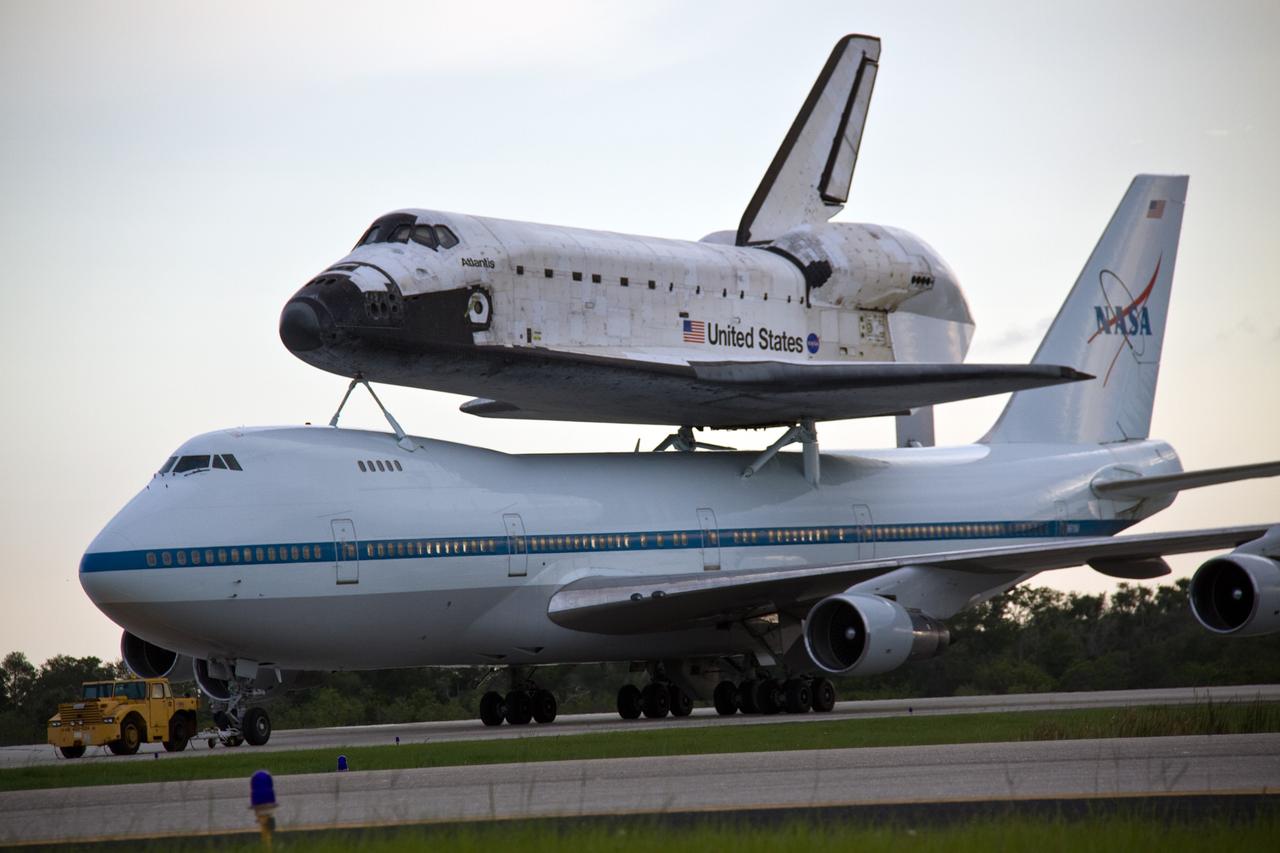
CAPE CANAVERAL, Fla. – After a two-day trip from California, space shuttle Atlantis, atop a Shuttle Carrier Aircraft, or SCA, is towed from the runway at NASA's Kennedy Space Center in Florida. The SCA is a modified Boeing 747 jetliner. Atlantis returned from California atop the SCA after its May 24 landing at Edwards Air Force Base, concluding mission STS-125. The ferry flight from Edwards Air Force Base began June 1. Atlantis' next assignment is the STS-129 mission, targeted to launch in November 2009. Photo credit: NASA/Jack Pfaller
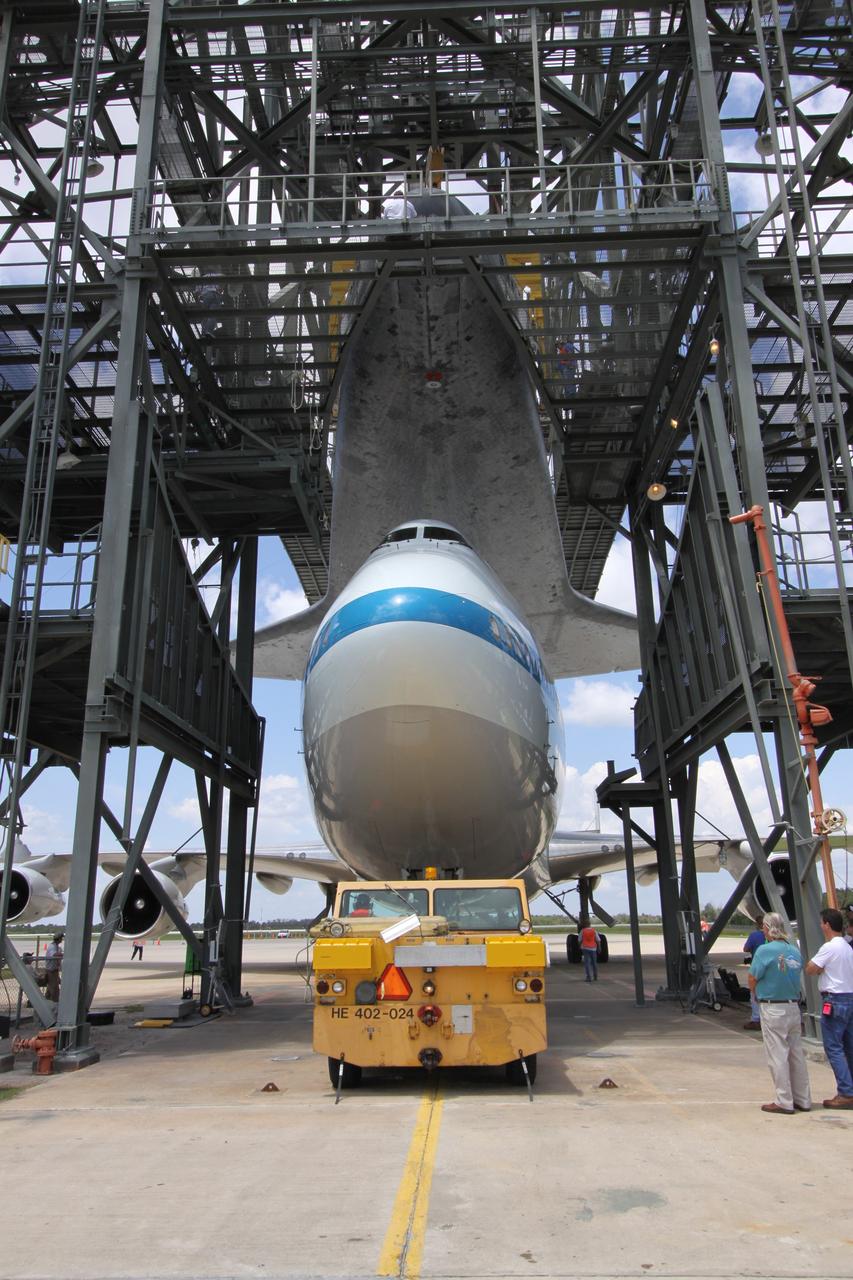
CAPE CANAVERAL, Fla. – On the Shuttle Landing Facility at NASA's Kennedy Space Center in Florida, the Shuttle Carrier Aircraft, or SCA, is moved from underneath space shuttle Atlantis in the mate/demate device. A hoist attached to Atlantis suspends the shuttle while the SCA is moved away. Atlantis returned from California atop the SCA, a modified Boeing 747, after its May 24 landing at Edwards Air Force Base, concluding mission STS-125. The ferry flight from Edwards Air Force Base began June 1. Atlantis' next assignment is the STS-129 mission, targeted to launch in November 2009. Photo credit: NASA/Jack Pfaller

CAPE CANAVERAL, Fla. – Against a setting sun, space shuttle Atlantis, atop a Shuttle Carrier Aircraft, or SCA, is towed from the runway at NASA's Kennedy Space Center in Florida. The SCA is a modified Boeing 747 jetliner. Atlantis returned from California atop the SCA after its May 24 landing at Edwards Air Force Base, concluding mission STS-125. The ferry flight from Edwards Air Force Base began June 1. Atlantis' next assignment is the STS-129 mission, targeted to launch in November 2009. Photo credit: NASA/Jack Pfaller
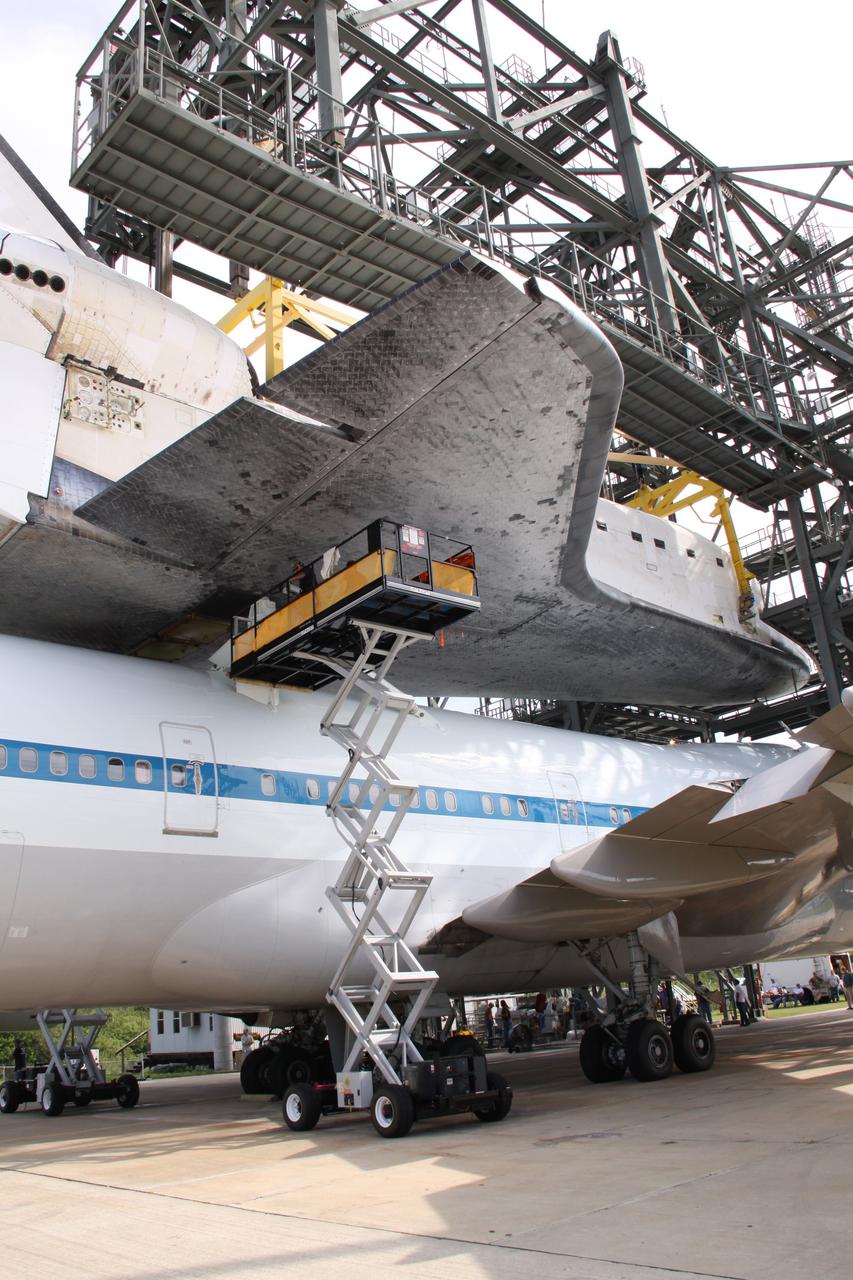
CAPE CANAVERAL, Fla. – Work is under way to separate space shuttle Atlantis from the Shuttle Carrier Aircraft, or SCA, underneath via the mate/demate device on the Shuttle Landing Facility at NASA's Kennedy Space Center in Florida. A hoist is attached to Atlantis to suspend the shuttle and then lower it to the ground. Atlantis returned from California atop the SCA, a modified Boeing 747, after its May 24 landing at Edwards Air Force Base, concluding mission STS-125. The ferry flight from Edwards Air Force Base began June 1. Atlantis' next assignment is the STS-129 mission, targeted to launch in November 2009. Photo credit: NASA/Jack Pfaller
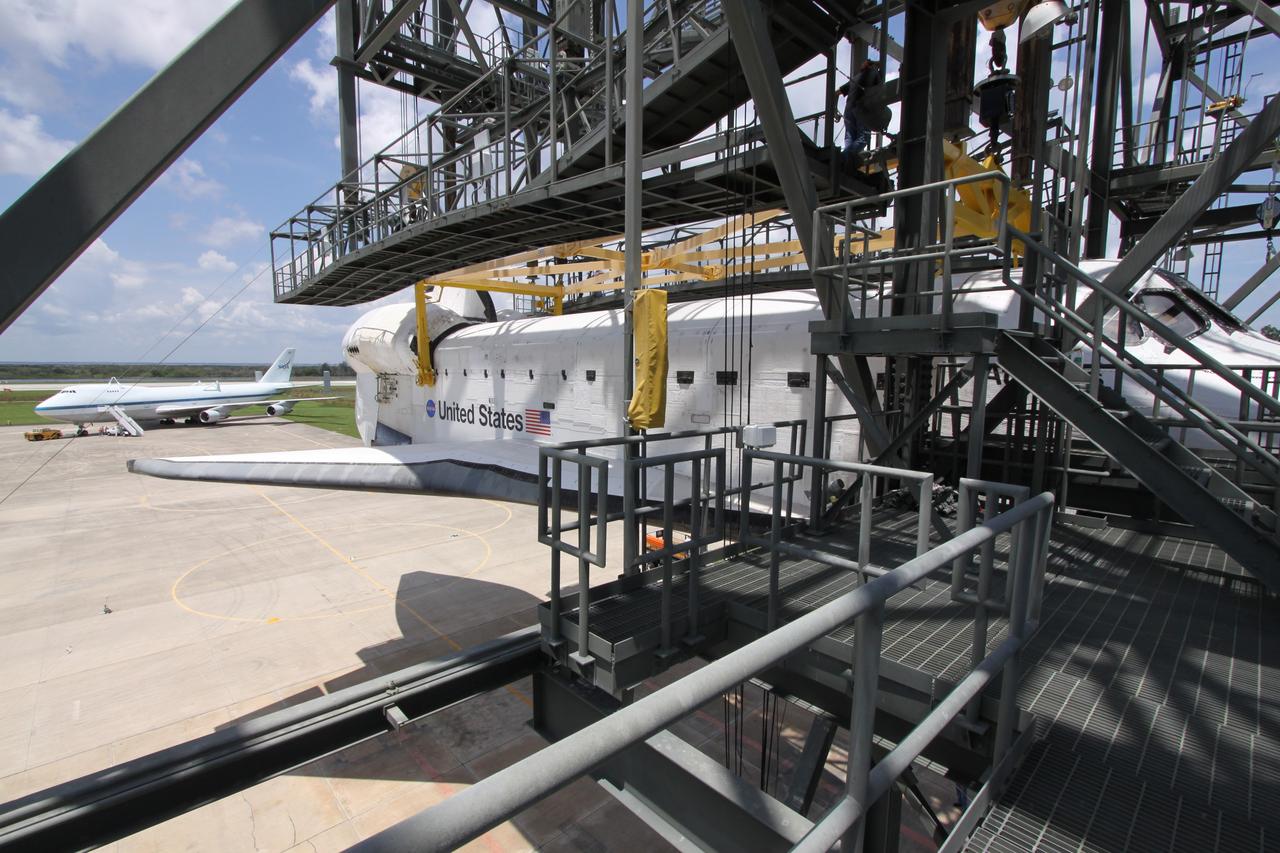
CAPE CANAVERAL, Fla. – On the Shuttle Landing Facility at NASA's Kennedy Space Center in Florida, space shuttle Atlantis is lowered toward the ground after being demated from the Shuttle Carrier Aircraft seen at left. Atlantis' wheels still must be lowered. Atlantis returned from California atop the SCA, a modified Boeing 747, after its May 24 landing at Edwards Air Force Base, concluding mission STS-125. The ferry flight from Edwards Air Force Base began June 1. Atlantis' next assignment is the STS-129 mission, targeted to launch in November 2009. Photo credit: NASA/Jack Pfaller
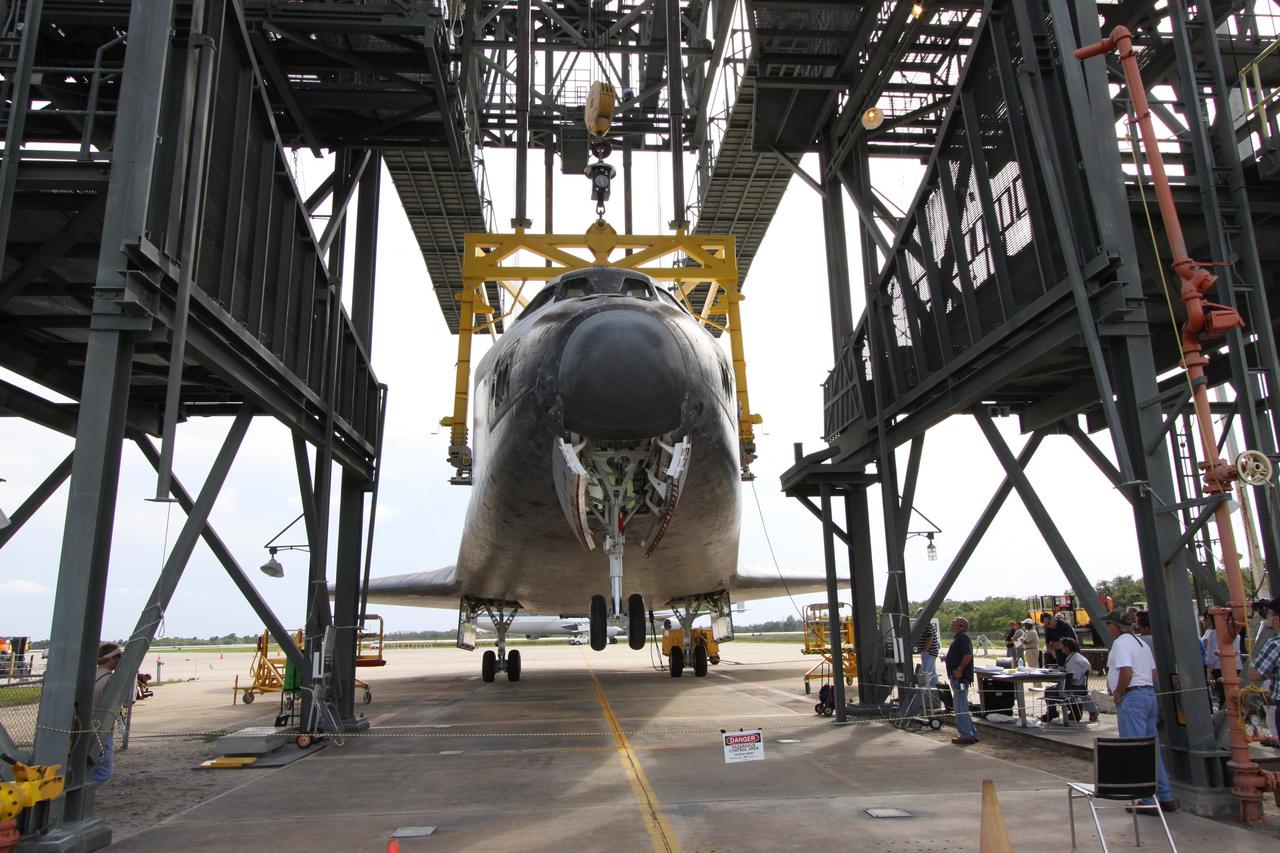
CAPE CANAVERAL, Fla. – With wheels lowered, Atlantis is placed on the ground via the hoist that is suspending it in the mate/demate device. Atlantis was separated from the Shuttle Carrier Aircraft, or SCA, a modified Boeing 747, that returned it from California after its May 24 landing at Edwards Air Force Base, concluding mission STS-125. The ferry flight from Edwards Air Force Base began June 1. Atlantis' next assignment is the STS-129 mission, targeted to launch in November 2009. Photo credit: NASA/Jack Pfaller
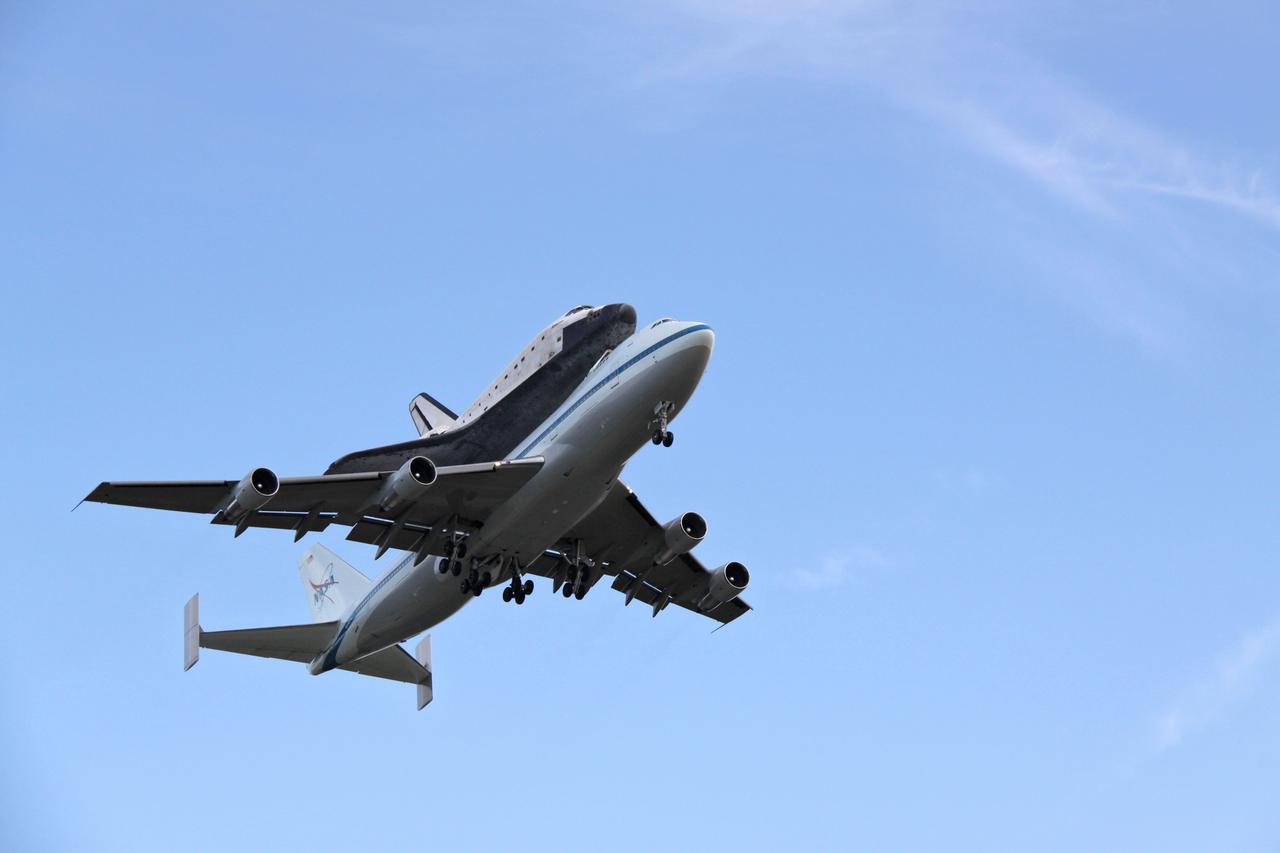
CAPE CANAVERAL, Fla. – After a two-day trip from California, the Shuttle Carrier Aircraft, or SCA, and its piggyback passenger space shuttle Atlantis approach NASA Kennedy Space Center's Shuttle Landing Facility runway. The SCA is a modified Boeing 747 jetliner. Atlantis returned from California atop the SCA after its May 24 landing at Edwards Air Force Base, concluding mission STS-125. The ferry flight from Edwards Air Force Base began June 1. Touchdown at Kennedy was at 6:53 p.m. EDT. Photo credit: NASA/Jack Pfaller
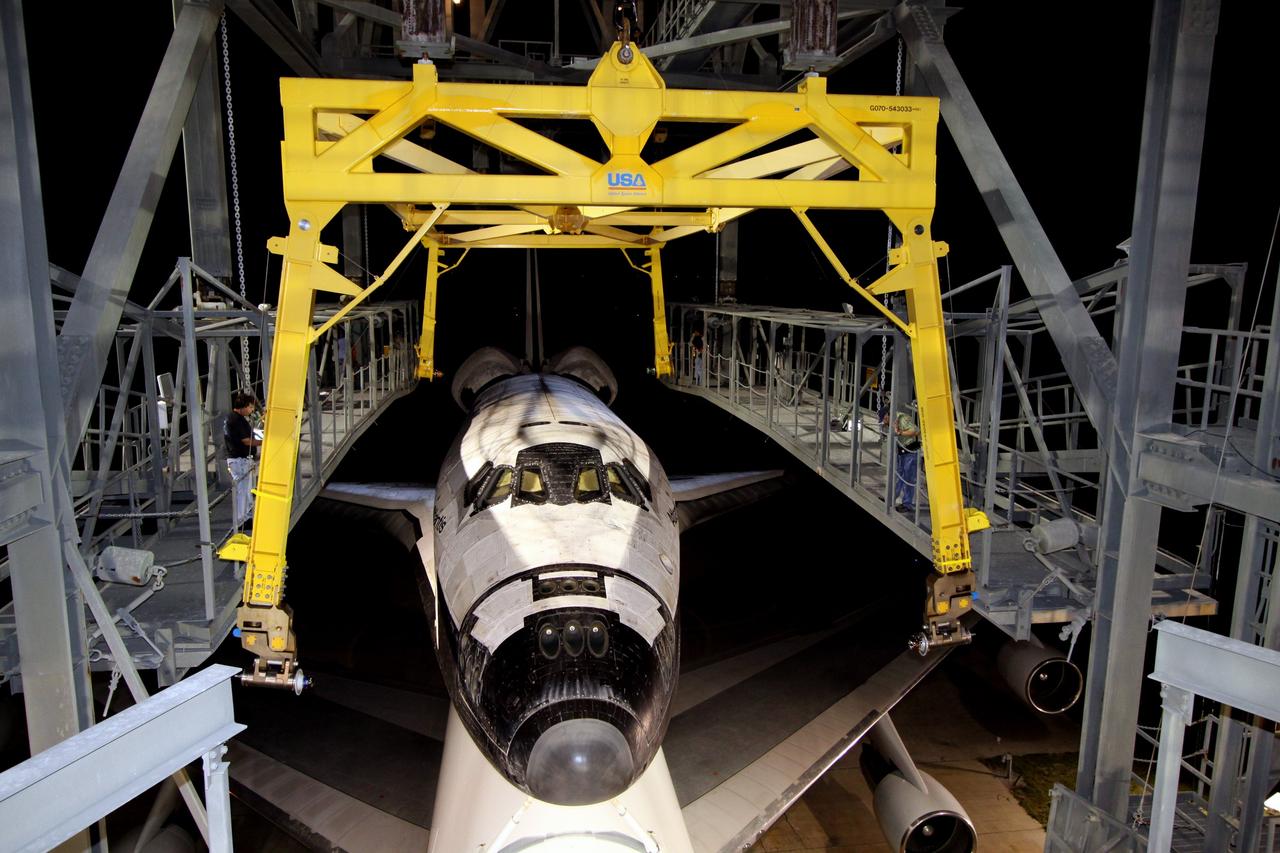
CAPE CANAVERAL, Fla. – After dark on the Shuttle Landing Facility at NASA's Kennedy Space Center in Florida, the hoist in the mate/demate device is lowered toward space shuttle Atlantis, secured on top of the Shuttle Carrier Aircraft, or SCA. The hoist will lift the shuttle from the SCA and place it on the ground. Atlantis returned from California atop the SCA after its May 24 landing at Edwards Air Force Base, concluding mission STS-125. The ferry flight from Edwards Air Force Base began June 1. Atlantis' next assignment is the STS-129 mission, targeted to launch in November 2009. Photo credit: NASA/Jack Pfaller
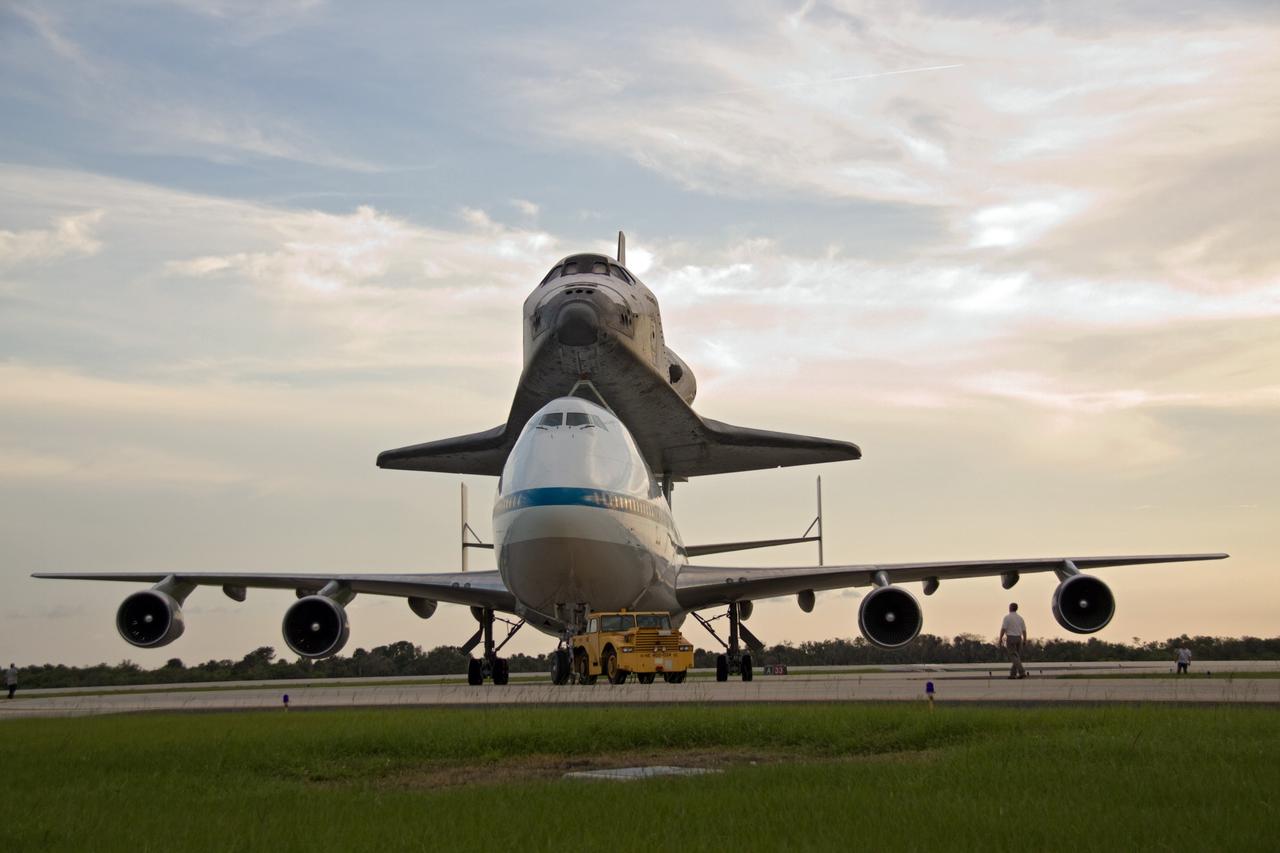
CAPE CANAVERAL, Fla. – Against a setting sun, space shuttle Atlantis, atop a Shuttle Carrier Aircraft, or SCA, is towed from the runway at NASA's Kennedy Space Center in Florida. The SCA is a modified Boeing 747 jetliner. Atlantis returned from California atop the SCA after its May 24 landing at Edwards Air Force Base, concluding mission STS-125. The ferry flight from Edwards Air Force Base began June 1. Atlantis' next assignment is the STS-129 mission, targeted to launch in November 2009. Photo credit: NASA/Jack Pfaller
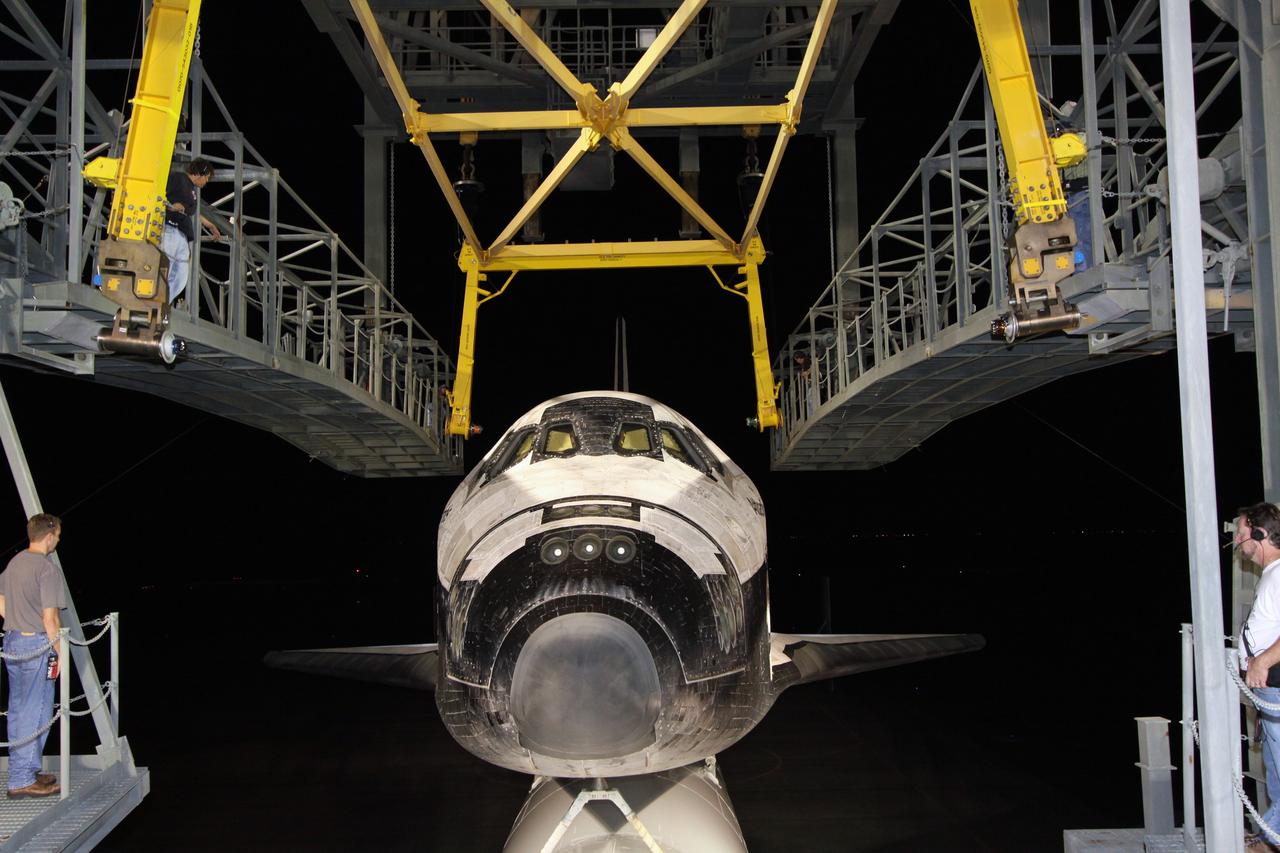
CAPE CANAVERAL, Fla. – After dark, space shuttle Atlantis, atop a Shuttle Carrier Aircraft, or SCA, rolls into place under the mate/demate device on the Shuttle Landing Facility at NASA's Kennedy Space Center in Florida. The hoist seen above Atlantis will lift the shuttle from the SCA and place it on the ground. Atlantis returned from California atop the SCA after its May 24 landing at Edwards Air Force Base, concluding mission STS-125. The ferry flight from Edwards Air Force Base began June 1. Atlantis' next assignment is the STS-129 mission, targeted to launch in November 2009. Photo credit: NASA/Jack Pfaller

CAPE CANAVERAL, Fla. – Sunrise breaks on the mate/demate device at the Shuttle Landing Facility at NASA's Kennedy Space Center in Florida. Space shuttle Atlantis will be lifted from the Shuttle Carrier Aircraft, or SCA, underneath and lowered to the ground. Atlantis returned from California atop the SCA after its May 24 landing at Edwards Air Force Base, concluding mission STS-125. The ferry flight from Edwards Air Force Base began June 1. Atlantis' next assignment is the STS-129 mission, targeted to launch in November 2009. Photo credit: NASA/Dimitri Gerondidakis
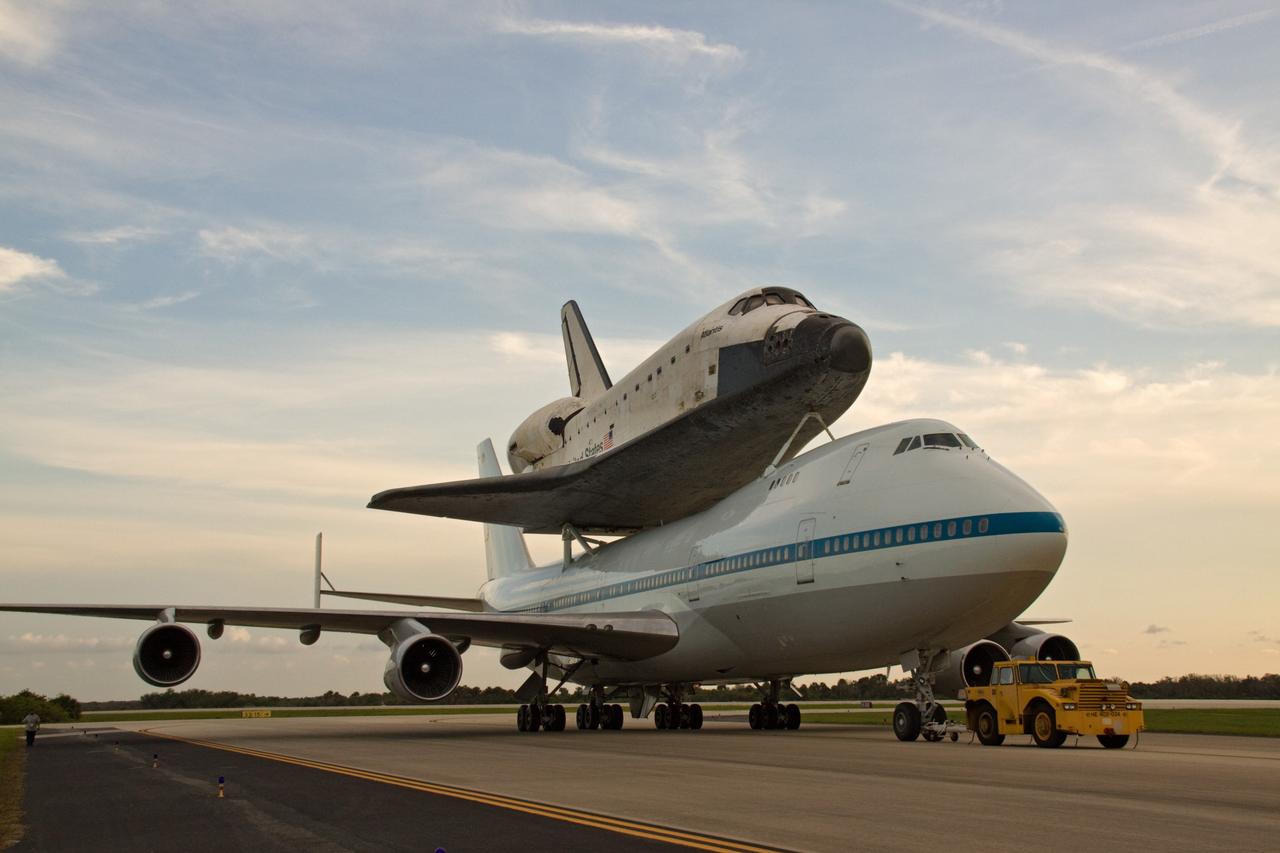
CAPE CANAVERAL, Fla. – Against a setting sun, space shuttle Atlantis, atop a Shuttle Carrier Aircraft, or SCA, is towed from the runway at NASA's Kennedy Space Center in Florida. The SCA is a modified Boeing 747 jetliner. Atlantis returned from California atop the SCA after its May 24 landing at Edwards Air Force Base, concluding mission STS-125. The ferry flight from Edwards Air Force Base began June 1. Atlantis' next assignment is the STS-129 mission, targeted to launch in November 2009. Photo credit: NASA/Jack Pfaller
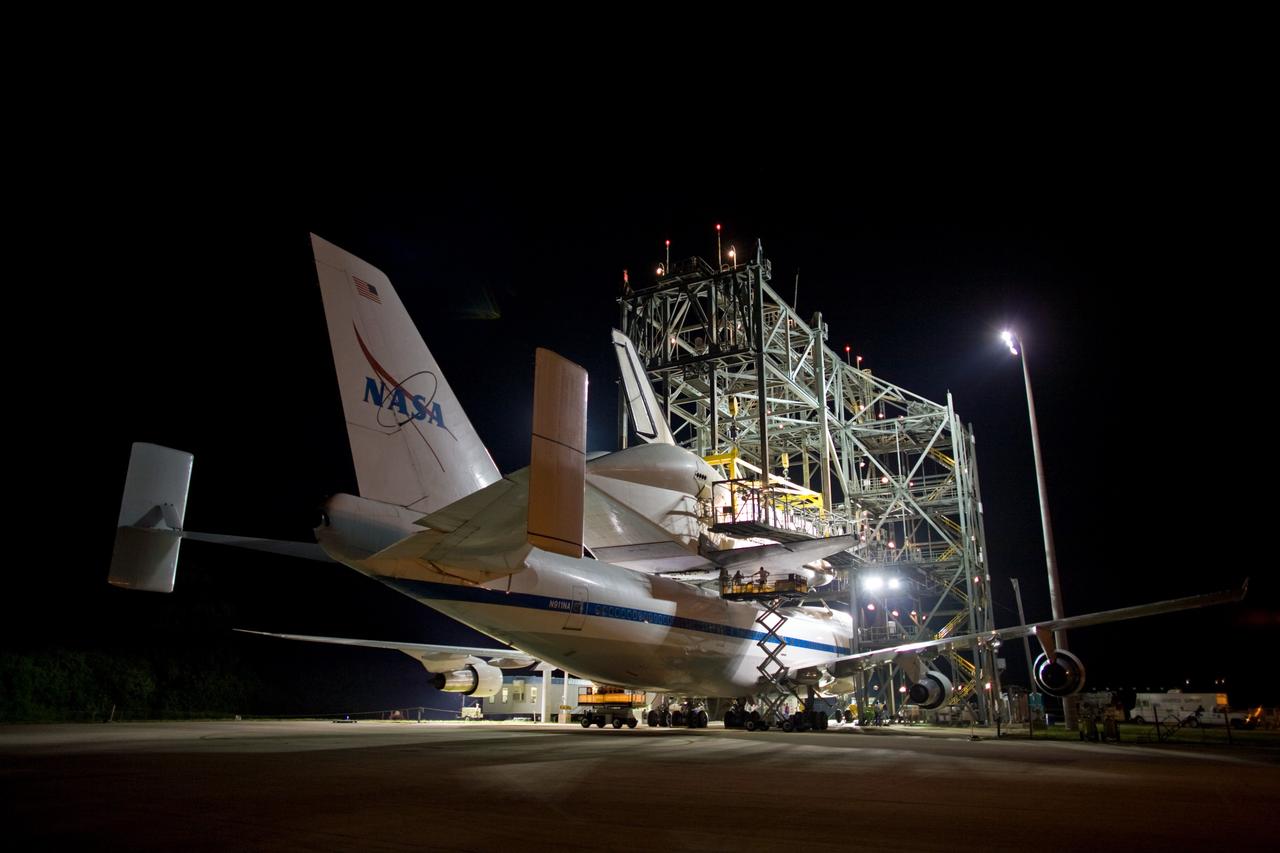
CAPE CANAVERAL, Fla. – Just before sunrise, preparations are underway to separate space shuttle Atlantis from the Shuttle Carrier Aircraft, or SCA, underneath via the mate/demate device on the Shuttle Landing Facility at NASA's Kennedy Space Center in Florida. The hoist is attached to Atlantis to lower the shuttle to the ground. Atlantis returned from California atop the SCA after its May 24 landing at Edwards Air Force Base, concluding mission STS-125. The ferry flight from Edwards Air Force Base began June 1. Atlantis' next assignment is the STS-129 mission, targeted to launch in November 2009. Photo credit: NASA/Dimitri Gerondidakis
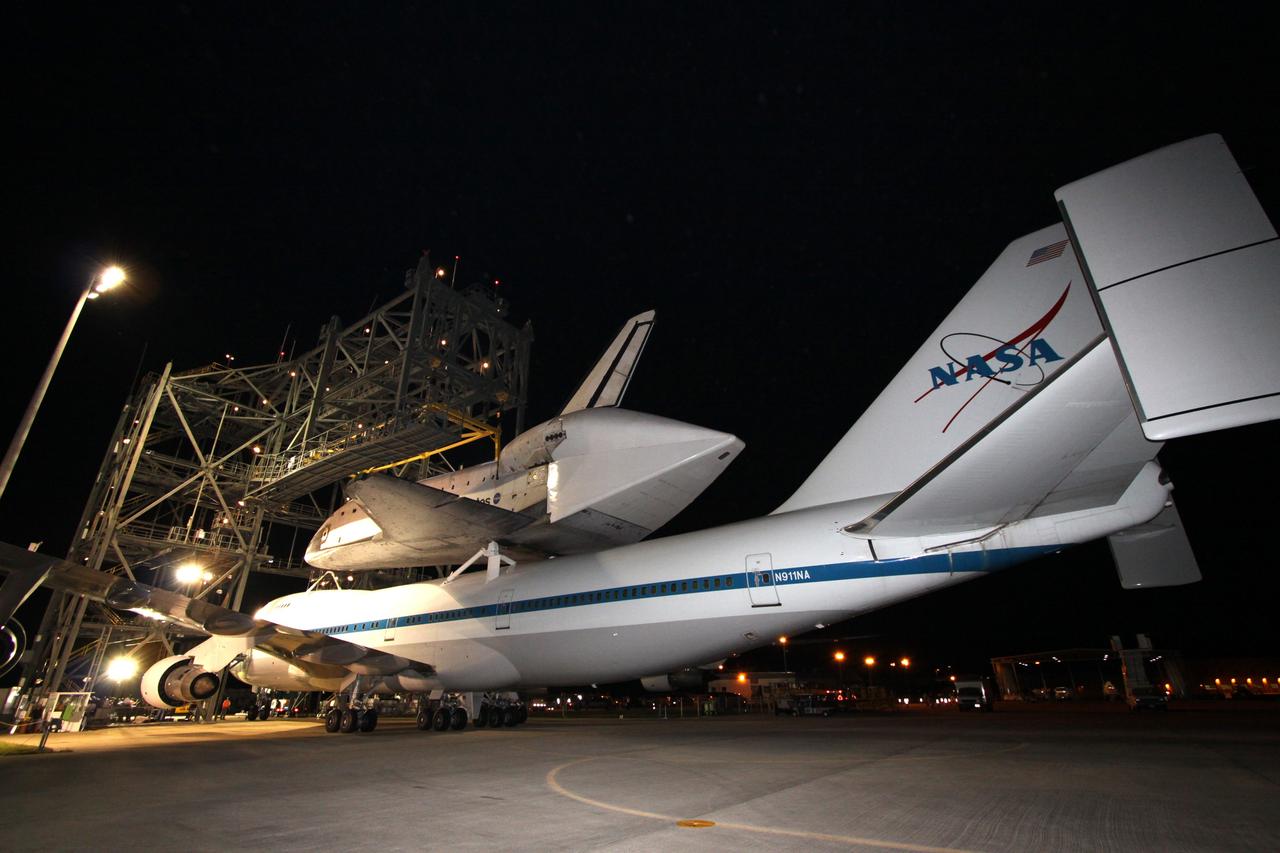
CAPE CANAVERAL, Fla. – After dark, space shuttle Atlantis, atop a Shuttle Carrier Aircraft, or SCA, rolls into place under the mate/demate device on the Shuttle Landing Facility at NASA's Kennedy Space Center in Florida. The hoist seen above Atlantis will lift the shuttle from the SCA and place it on the ground. Atlantis returned from California atop the SCA after its May 24 landing at Edwards Air Force Base, concluding mission STS-125. The ferry flight from Edwards Air Force Base began June 1. Atlantis' next assignment is the STS-129 mission, targeted to launch in November 2009. Photo credit: NASA/Jack Pfaller
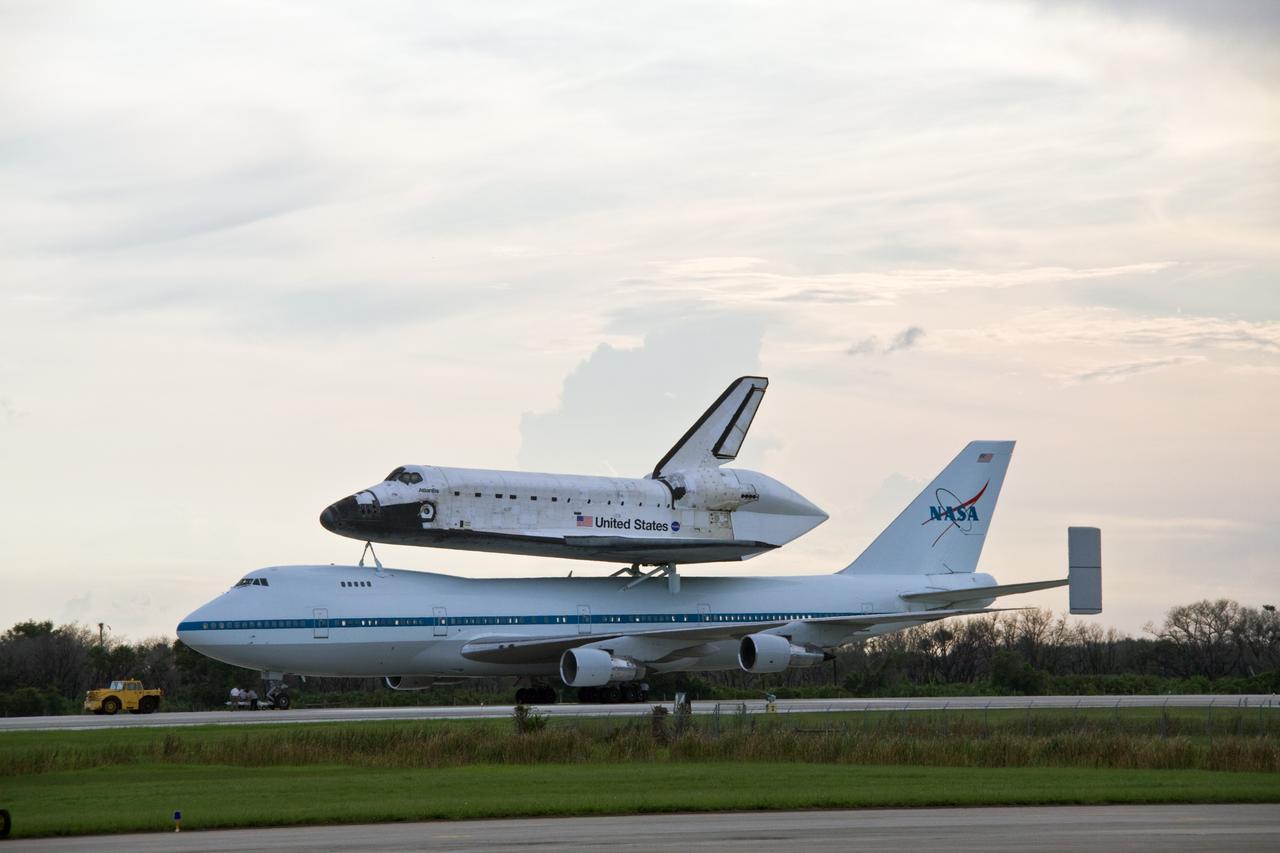
CAPE CANAVERAL, Fla. – After a two-day trip from California, space shuttle Atlantis, atop a Shuttle Carrier Aircraft, or SCA, is towed from the runway at NASA's Kennedy Space Center in Florida. The SCA is a modified Boeing 747 jetliner. Atlantis returned from California atop the SCA after its May 24 landing at Edwards Air Force Base, concluding mission STS-125. The ferry flight from Edwards Air Force Base began June 1. Atlantis' next assignment is the STS-129 mission, targeted to launch in November 2009. Photo credit: NASA/Jack Pfaller
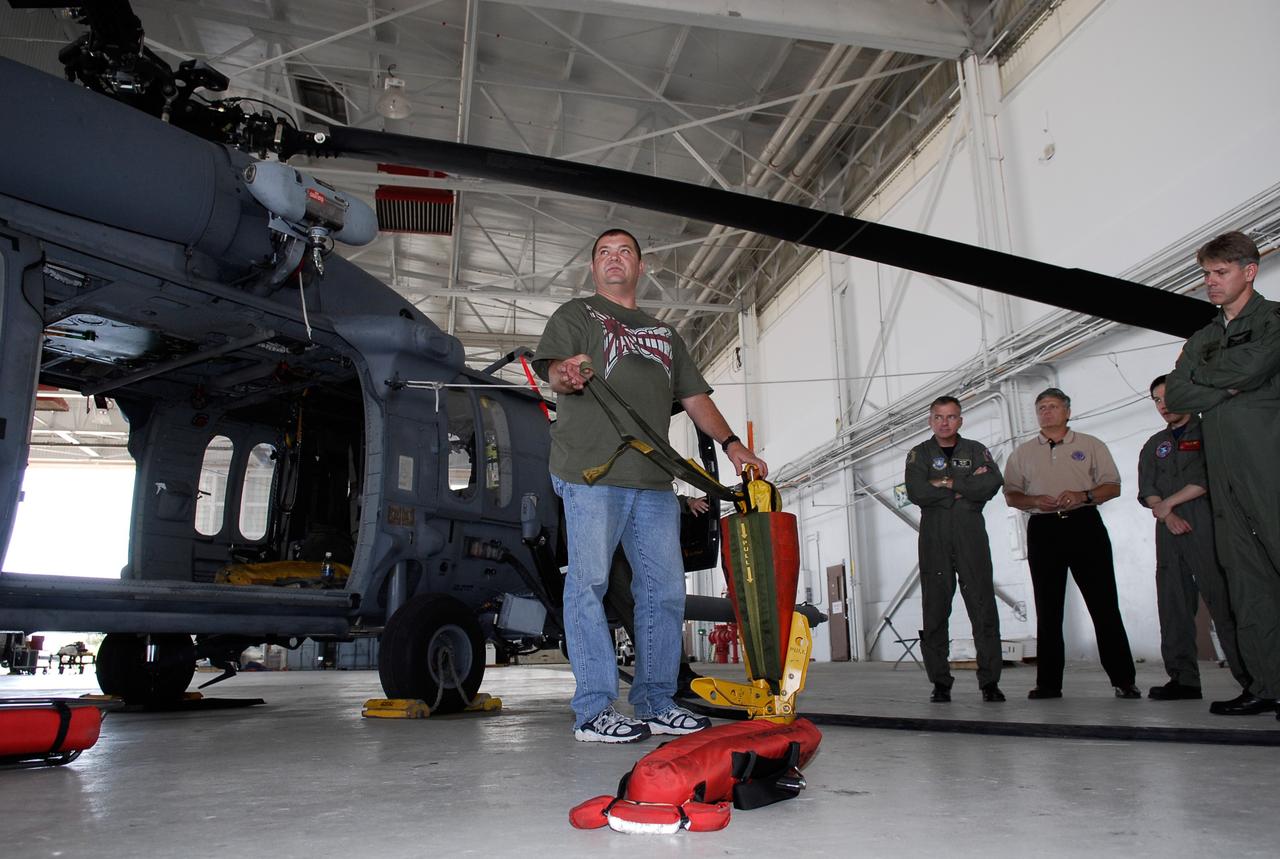
CAPE CANAVERAL, Fla. -- A representative of the 301st Rescue Squadron demonstrates rescue equipment that is used by participants in the Mode VIII exercise being conducted at Patrick Air Force Base, Fla. In the background is an HH-60G helicopter. In support of, and with logistical support from, NASA, USSTRATCOM is hosting a major exercise involving Department of Defense, Department of Homeland Security, search and rescue (SAR) forces, including the 45th Space Wing at Patrick Air Force Base, which support space shuttle astronaut bailout contingency operations, known as Mode VIII. This exercise tests SAR capabilities to locate, recover and provide medical treatment for astronauts following a space shuttle launch phase open-ocean bailout. Participants include members of the U.S. Navy, U.S. Coast Guard, U.S. Air Force, and NASA's Kennedy Space Center and Johnson Space Center. This will be the 15th Mode VIII exercise conducted in the past 20 years. Photo credit: NASA/Kim Shiflett
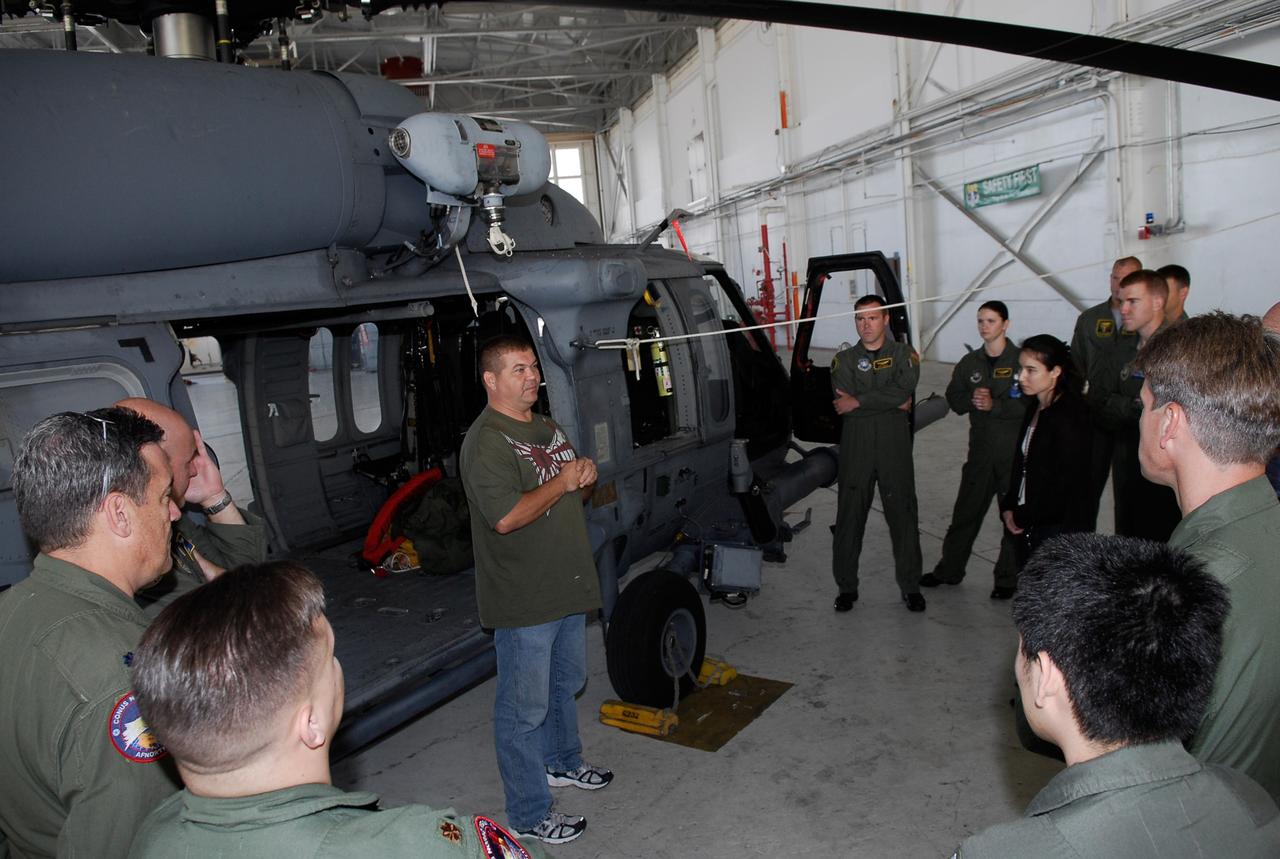
CAPE CANAVERAL, Fla. -- Participants in the Mode VIII exercise being conducted at Patrick Air Force Base, Fla., get instruction about the rescue equipment they will be working with. In support of, and with logistical support from, NASA, USSTRATCOM is hosting a major exercise involving Department of Defense, Department of Homeland Security, search and rescue (SAR) forces, including the 45th Space Wing at Patrick Air Force Base, which support space shuttle astronaut bailout contingency operations, known as Mode VIII. This exercise tests SAR capabilities to locate, recover and provide medical treatment for astronauts following a space shuttle launch phase open-ocean bailout. Participants include members of the U.S. Navy, U.S. Coast Guard, U.S. Air Force, and NASA's Kennedy Space Center and Johnson Space Center. This will be the 15th Mode VIII exercise conducted in the past 20 years. Photo credit: NASA/Kim Shiflett
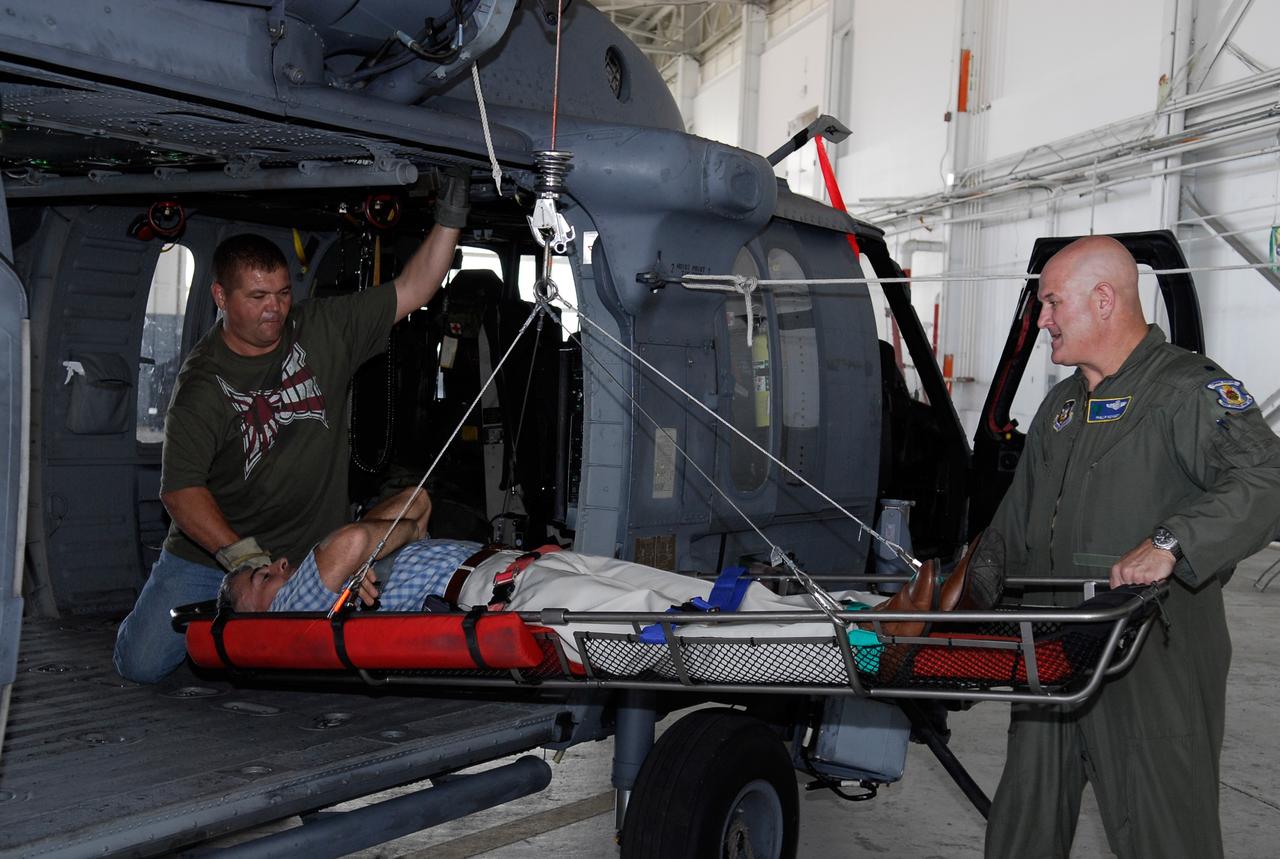
CAPE CANAVERAL, Fla. -- Representatives of the 301st Rescue Squadron demonstrate the use of rescue equipment on the HH-60G helicopter that is used by participants in the Mode VIII exercise being conducted at Patrick Air Force Base, Fla. In support of, and with logistical support from, NASA, USSTRATCOM is hosting a major exercise involving Department of Defense, Department of Homeland Security, search and rescue (SAR) forces, including the 45th Space Wing at Patrick Air Force Base, which support space shuttle astronaut bailout contingency operations, known as Mode VIII. This exercise tests SAR capabilities to locate, recover and provide medical treatment for astronauts following a space shuttle launch phase open-ocean bailout. Participants include members of the U.S. Navy, U.S. Coast Guard, U.S. Air Force, and NASA's Kennedy Space Center and Johnson Space Center. This will be the 15th Mode VIII exercise conducted in the past 20 years. Photo credit: NASA/Kim Shiflett
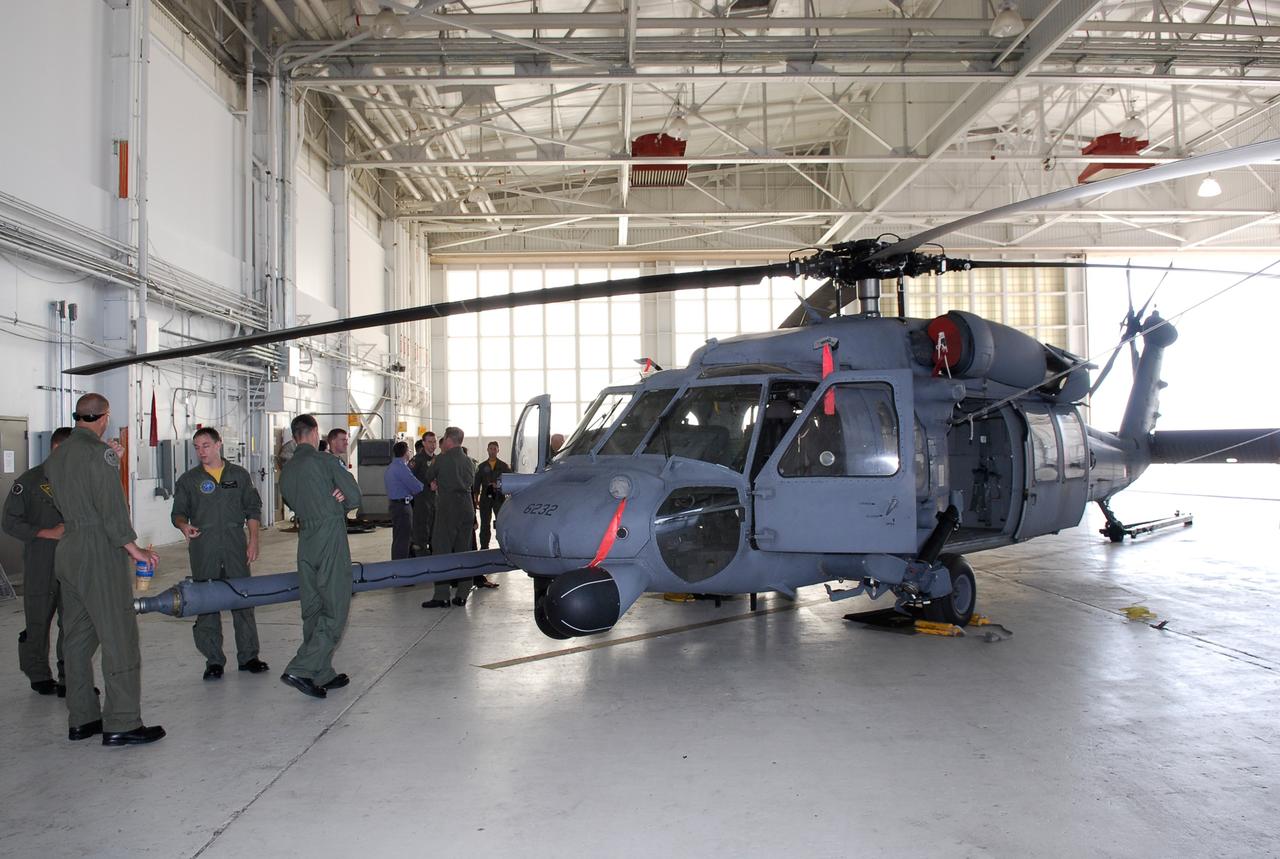
CAPE CANAVERAL, Fla. -- Participants in the Mode VIII exercise being conducted at Patrick Air Force Base, Fla., are introduced to the equipment they will be working with. In the foreground is an HH-60 helicopter. In support of, and with logistical support from, NASA, USSTRATCOM is hosting a major exercise involving Department of Defense, Department of Homeland Security, search and rescue (SAR) forces, including the 45th Space Wing at Patrick Air Force Base, which support space shuttle astronaut bailout contingency operations, known as Mode VIII. This exercise tests SAR capabilities to locate, recover and provide medical treatment for astronauts following a space shuttle launch phase open-ocean bailout. Participants include members of the U.S. Navy, U.S. Coast Guard, U.S. Air Force, and NASA's Kennedy Space Center and Johnson Space Center. This will be the 15th Mode VIII exercise conducted in the past 20 years. Photo credit: NASA/Kim Shiflett
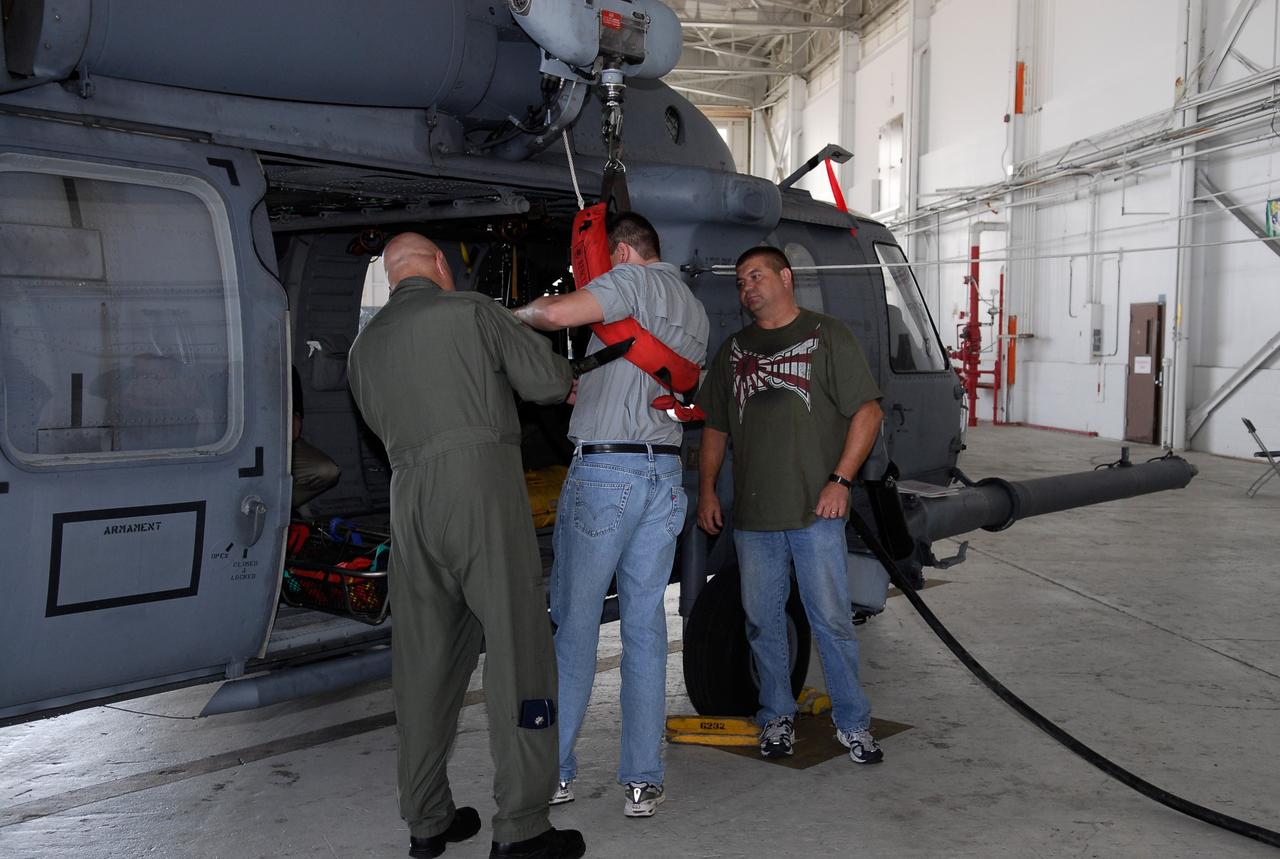
CAPE CANAVERAL, Fla. -- Representatives of the 301st Rescue Squadron demonstrate the use of rescue equipment on the HH-60G helicopter that is used by participants in the Mode VIII exercise being conducted at Patrick Air Force Base, Fla. In support of, and with logistical support from, NASA, USSTRATCOM is hosting a major exercise involving Department of Defense, Department of Homeland Security, search and rescue (SAR) forces, including the 45th Space Wing at Patrick Air Force Base, which support space shuttle astronaut bailout contingency operations, known as Mode VIII. This exercise tests SAR capabilities to locate, recover and provide medical treatment for astronauts following a space shuttle launch phase open-ocean bailout. Participants include members of the U.S. Navy, U.S. Coast Guard, U.S. Air Force, and NASA's Kennedy Space Center and Johnson Space Center. This will be the 15th Mode VIII exercise conducted in the past 20 years. Photo credit: NASA/Kim Shiflett
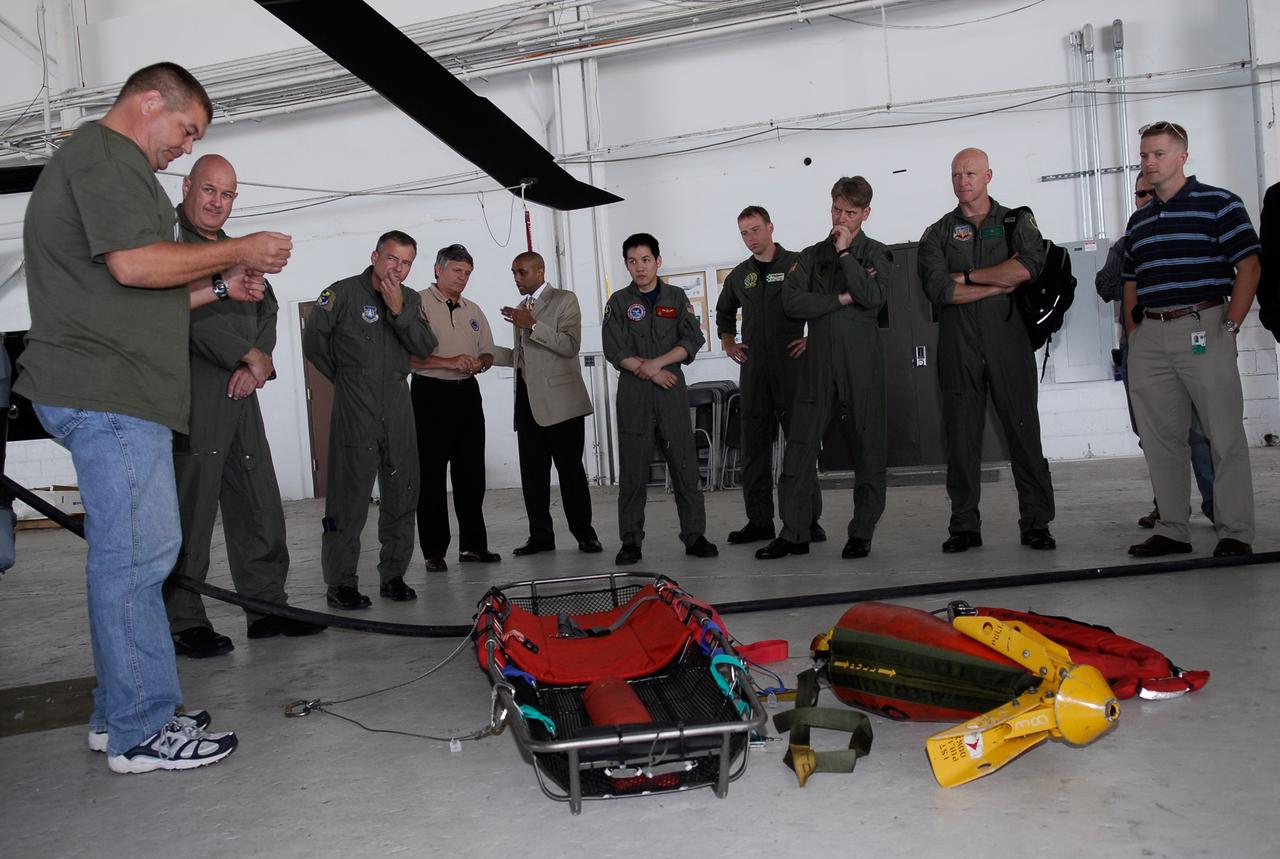
CAPE CANAVERAL, Fla. -- A representative of the 301st Rescue Squadron demonstrates rescue equipment that is used by participants in the Mode VIII exercise being conducted at Patrick Air Force Base, Fla. In support of, and with logistical support from, NASA, USSTRATCOM is hosting a major exercise involving Department of Defense, Department of Homeland Security, search and rescue (SAR) forces, including the 45th Space Wing at Patrick Air Force Base, which support space shuttle astronaut bailout contingency operations, known as Mode VIII. This exercise tests SAR capabilities to locate, recover and provide medical treatment for astronauts following a space shuttle launch phase open-ocean bailout. Participants include members of the U.S. Navy, U.S. Coast Guard, U.S. Air Force, and NASA's Kennedy Space Center and Johnson Space Center. This will be the 15th Mode VIII exercise conducted in the past 20 years. Photo credit: NASA/Kim Shiflett
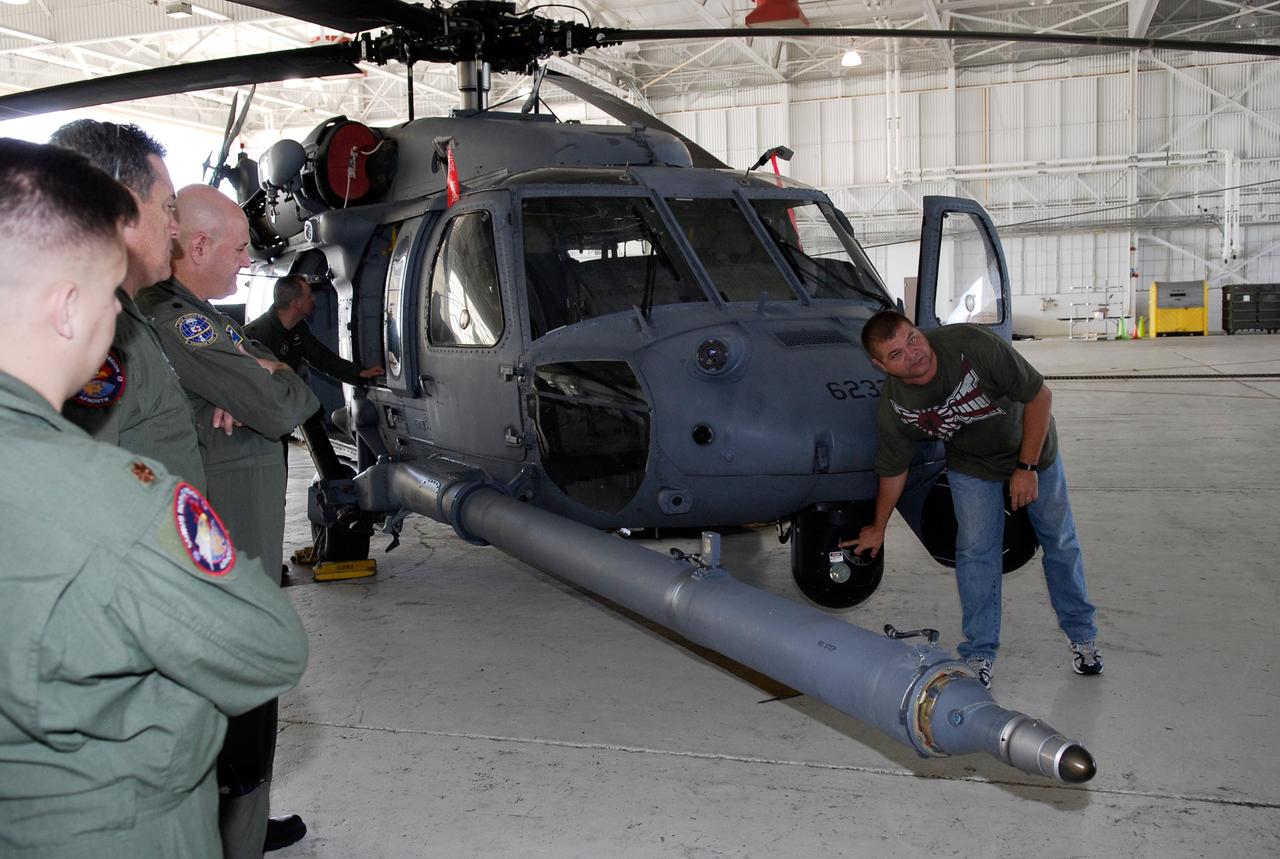
CAPE CANAVERAL, Fla. -- A representative of the 301st Rescue Squadron familiarizes participants in the Mode VIII exercise with the HH-60G helicopter that will play a part. The Mode VIII is being conducted at Patrick Air Force Base, Fla. In support of, and with logistical support from, NASA, USSTRATCOM is hosting a major exercise involving Department of Defense, Department of Homeland Security, search and rescue (SAR) forces, including the 45th Space Wing at Patrick Air Force Base, which support space shuttle astronaut bailout contingency operations, known as Mode VIII. This exercise tests SAR capabilities to locate, recover and provide medical treatment for astronauts following a space shuttle launch phase open-ocean bailout. Participants include members of the U.S. Navy, U.S. Coast Guard, U.S. Air Force, and NASA's Kennedy Space Center and Johnson Space Center. This will be the 15th Mode VIII exercise conducted in the past 20 years. Photo credit: NASA/Kim Shiflett
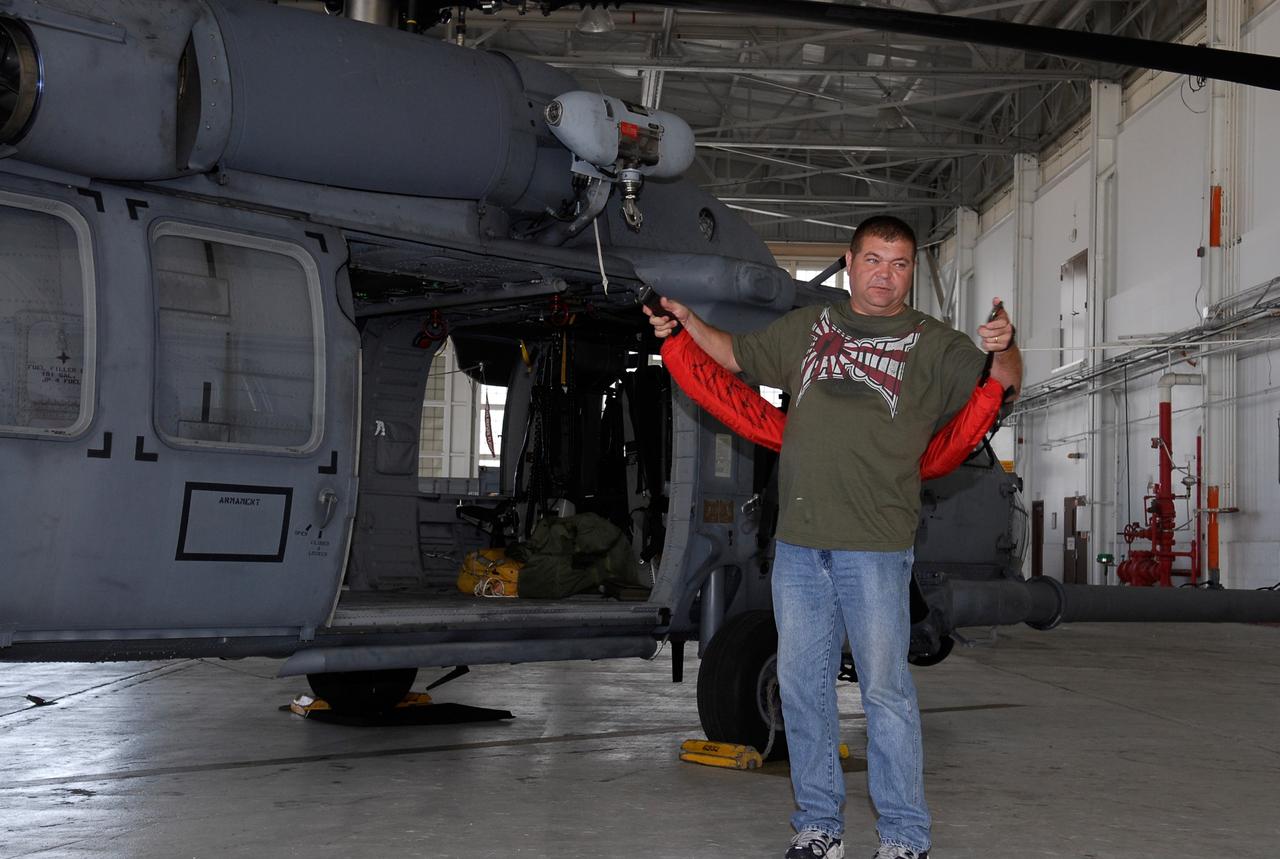
CAPE CANAVERAL, Fla. -- A representative of the 301st Rescue Squadron demonstrates rescue equipment that is used by participants in the Mode VIII exercise being conducted at Patrick Air Force Base, Fla. In the background is an HH-60G helicopter. In support of, and with logistical support from, NASA, USSTRATCOM is hosting a major exercise involving Department of Defense, Department of Homeland Security, search and rescue (SAR) forces, including the 45th Space Wing at Patrick Air Force Base, which support space shuttle astronaut bailout contingency operations, known as Mode VIII. This exercise tests SAR capabilities to locate, recover and provide medical treatment for astronauts following a space shuttle launch phase open-ocean bailout. Participants include members of the U.S. Navy, U.S. Coast Guard, U.S. Air Force, and NASA's Kennedy Space Center and Johnson Space Center. This will be the 15th Mode VIII exercise conducted in the past 20 years. Photo credit: NASA/Kim Shiflett
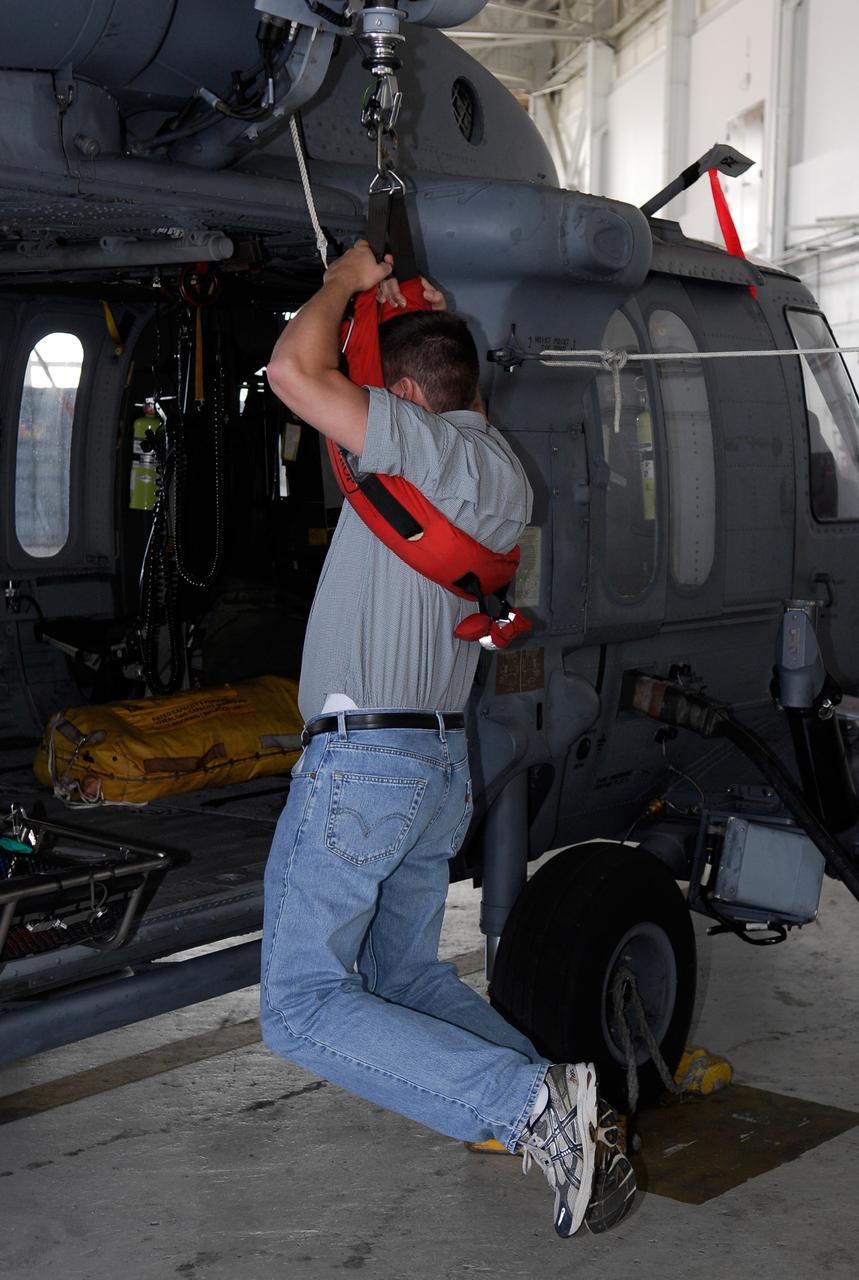
CAPE CANAVERAL, Fla. -- A representative of the 301st Rescue Squadron demonstrates rescue equipment on the HH-60G helicopter that is used by participants in the Mode VIII exercise being conducted at Patrick Air Force Base, Fla. In support of, and with logistical support from, NASA, USSTRATCOM is hosting a major exercise involving Department of Defense, Department of Homeland Security, search and rescue (SAR) forces, including the 45th Space Wing at Patrick Air Force Base, which support space shuttle astronaut bailout contingency operations, known as Mode VIII. This exercise tests SAR capabilities to locate, recover and provide medical treatment for astronauts following a space shuttle launch phase open-ocean bailout. Participants include members of the U.S. Navy, U.S. Coast Guard, U.S. Air Force, and NASA's Kennedy Space Center and Johnson Space Center. This will be the 15th Mode VIII exercise conducted in the past 20 years. Photo credit: NASA/Kim Shiflett
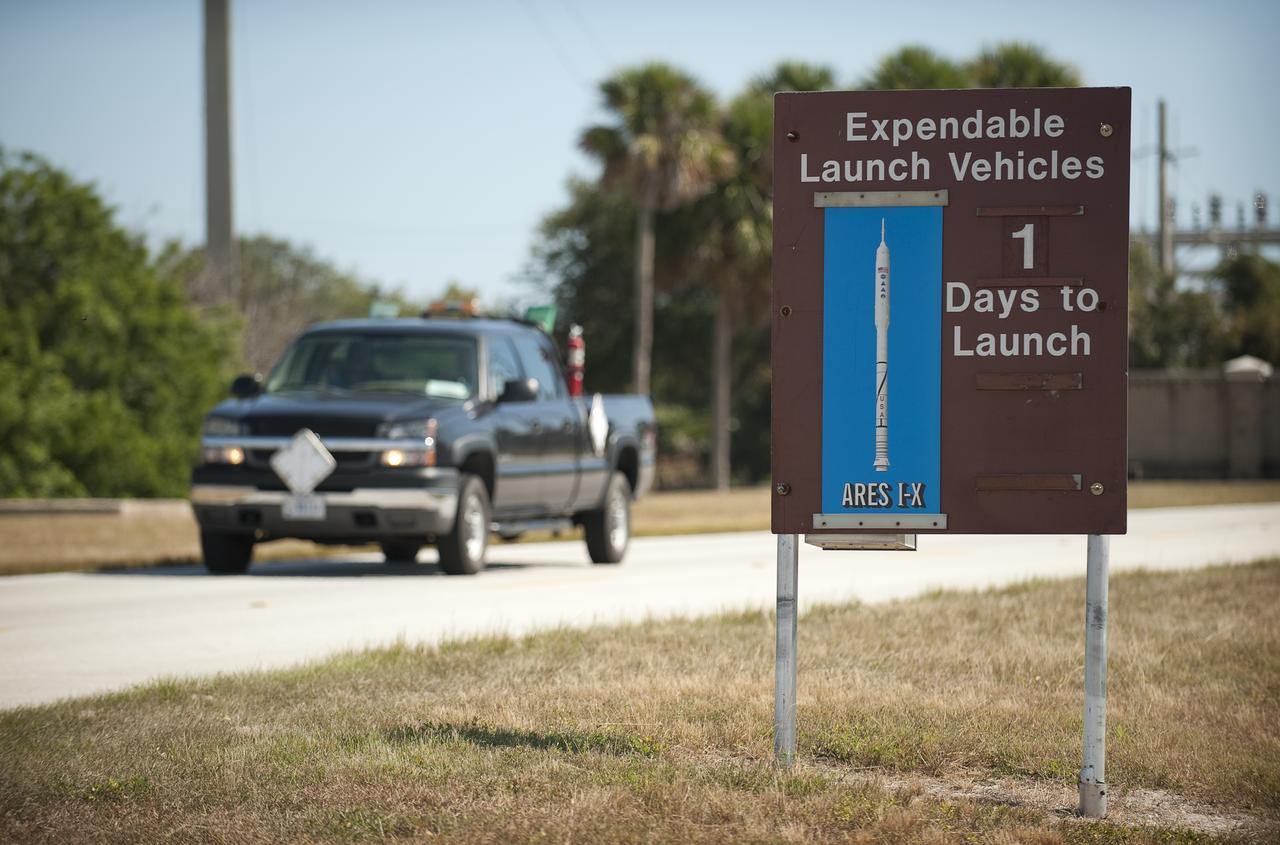
A launch countdown sign showing one day until launch of the NASA ARES I-X rocket is seen along the road between Cape Canaveral Air Force Base and the NASA Kennedy Space Center in Cape Canaveral, Florida on Monday, Oct. 26, 2009. The flight test of Ares I-X, scheduled for Tuesday, Oct. 27, 2009, will provide NASA with an early opportunity to test and prove flight characteristics, hardware, facilities and ground operations associated with the Ares I. Photo Credit: (NASA/Bill Ingalls)

CAPE CANAVERAL, Fla. -- President John F. Kennedy honors John H. Glenn Jr. during welcome back ceremonies at Patrick Air Force Base and Cape Canaveral in Florida after his historic three-orbit mission aboard Friendship 7. Vice President Lyndon B. Johnson looks on, with his back to the camera. Photo credit: NASA
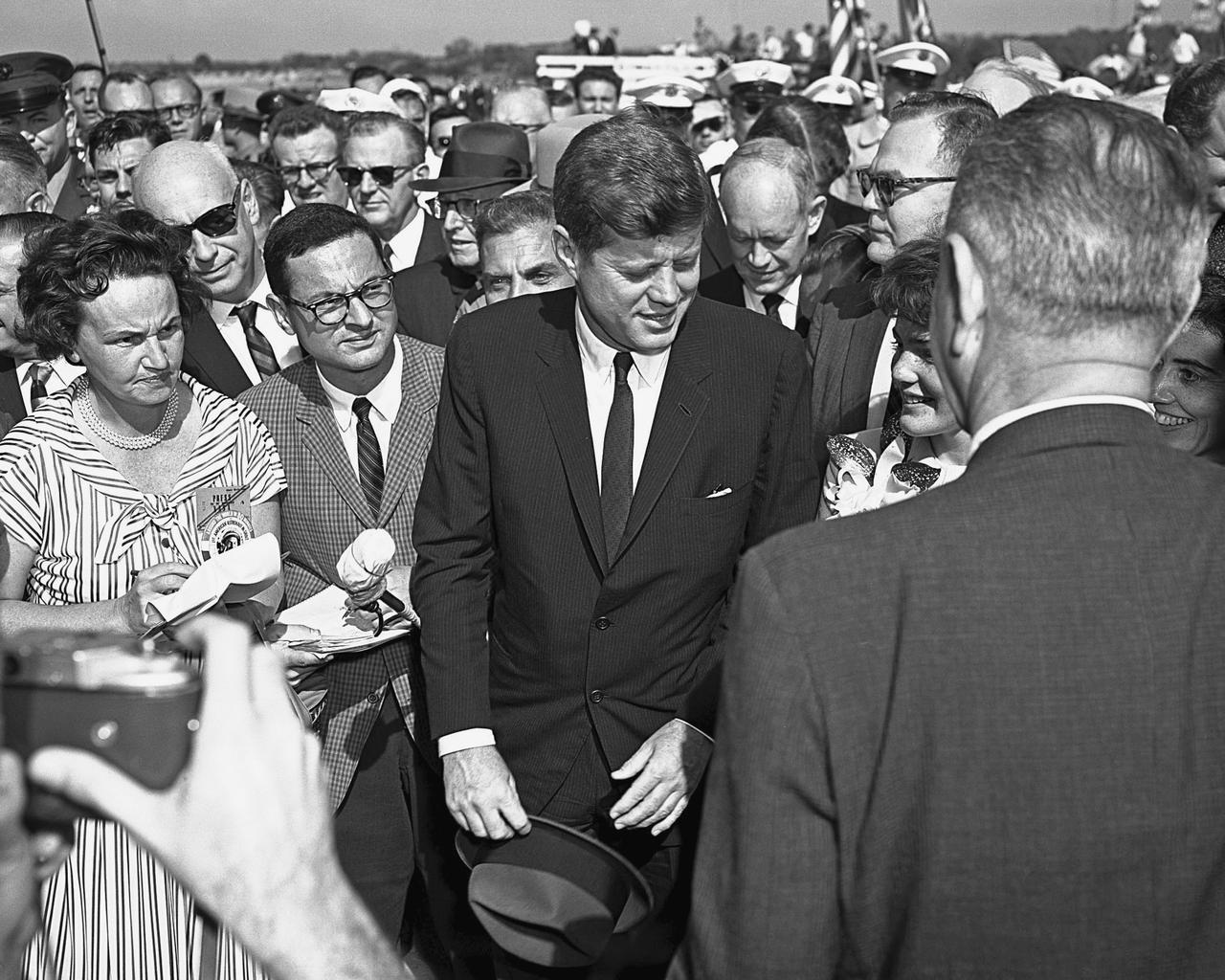
CAPE CANAVERAL, Fla. -- President John F. Kennedy honors John H. Glenn Jr. during welcome-back ceremonies at Patrick Air Force Base and Cape Canaveral in Florida after his historic three-orbit mission aboard Friendship 7. Vice President Lyndon B. Johnson also is in attendance, with his back to the camera. Photo credit: NASA

CAPE CANAVERAL, Fla. – At Biggs Army Air Field in El Paso, Texas, the Shuttle Carrier Aircraft, or SCA, a modified Boeing 747, is ready to take off after an overnight stop at Biggs Army Air Field in El Paso, Texas. The shuttle and SCA left Edwards Air Force Base in California for its return to Florida.Atlantis is being returned to Florida on a ferry flight on the SCA. Atlantis' next assignment is the STS-129 mission, targeted to launch in November 2009. Photo credit: NASA/Ben Smegelsky
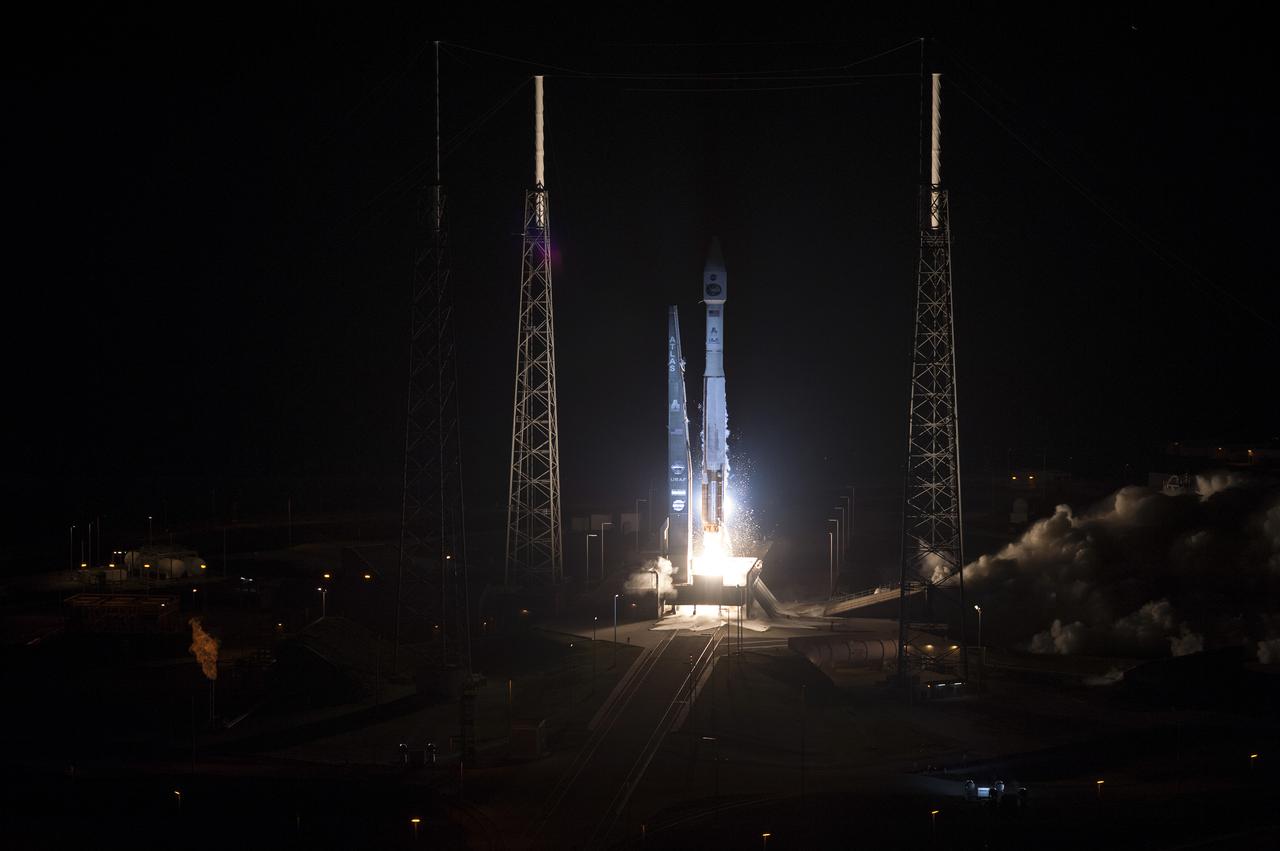
CAPE CANAVERAL, Fla. -- Plumes of exhaust and smoke form around the base of a lightning mast on Space Launch Complex 41 on Cape Canaveral Air Force Station in Florida as a United Launch Alliance Atlas V 401 rocket lifts off at 8:48 p.m. EST, carrying NASA's Tracking and Data Relay Satellite-K, TDRS-K, to orbit. The TDRS-K spacecraft is part of the next-generation series in the Tracking and Data Relay Satellite System, a constellation of space-based communication satellites providing tracking, telemetry, command and high-bandwidth data return services. For more information, visit http:__www.nasa.gov_mission_pages_tdrs_index.html. Photo credit: NASA_Tony Gray and Don Kight
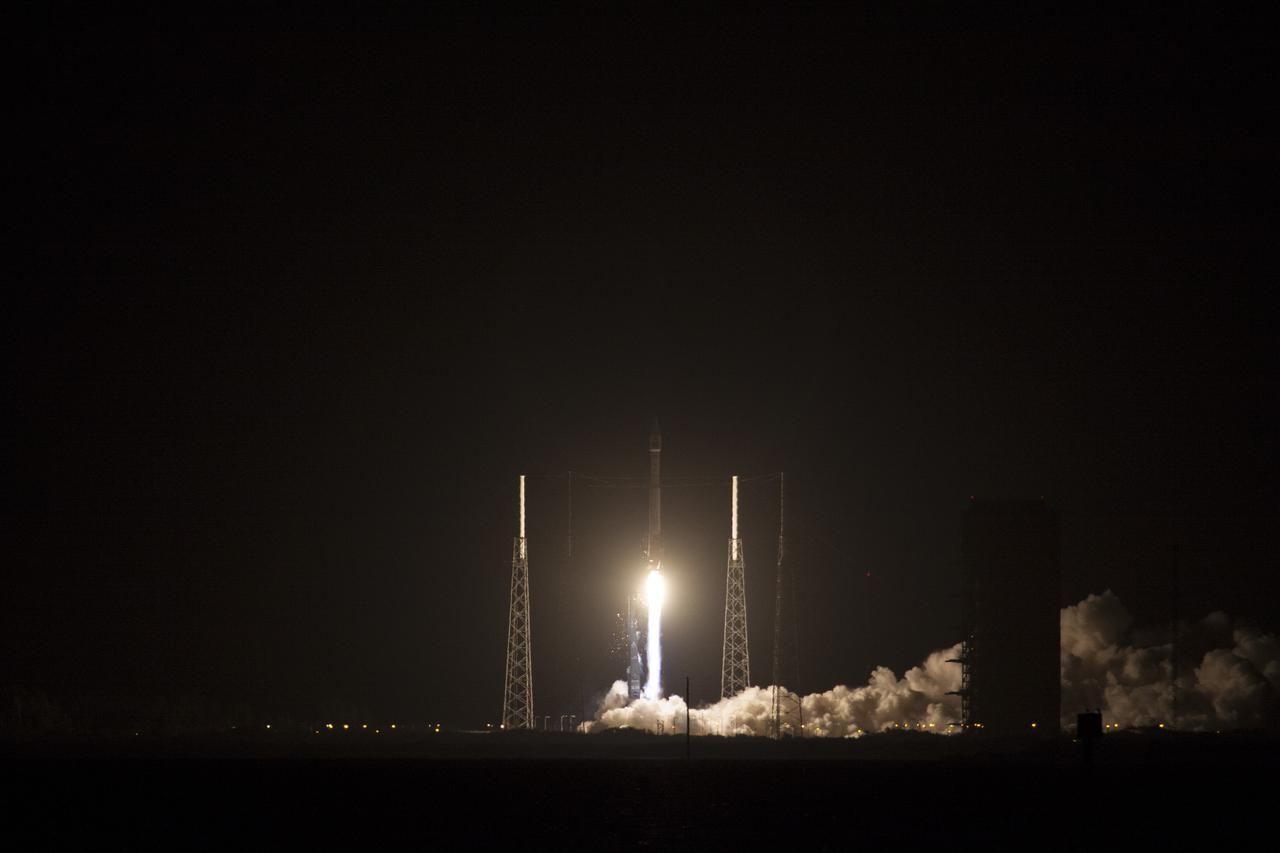
CAPE CANAVERAL, Fla. -- Plumes of exhaust and smoke build around the base of a lightning mast on Space Launch Complex 41 on Cape Canaveral Air Force Station in Florida as a United Launch Alliance Atlas V 401 rocket lifts off at 8:48 p.m. EST, carrying NASA's Tracking and Data Relay Satellite-K, TDRS-K, to orbit. The TDRS-K spacecraft is part of the next-generation series in the Tracking and Data Relay Satellite System, a constellation of space-based communication satellites providing tracking, telemetry, command and high-bandwidth data return services. For more information, visit http:__www.nasa.gov_mission_pages_tdrs_index.html. Photo credit: NASA_Jim Grossmann
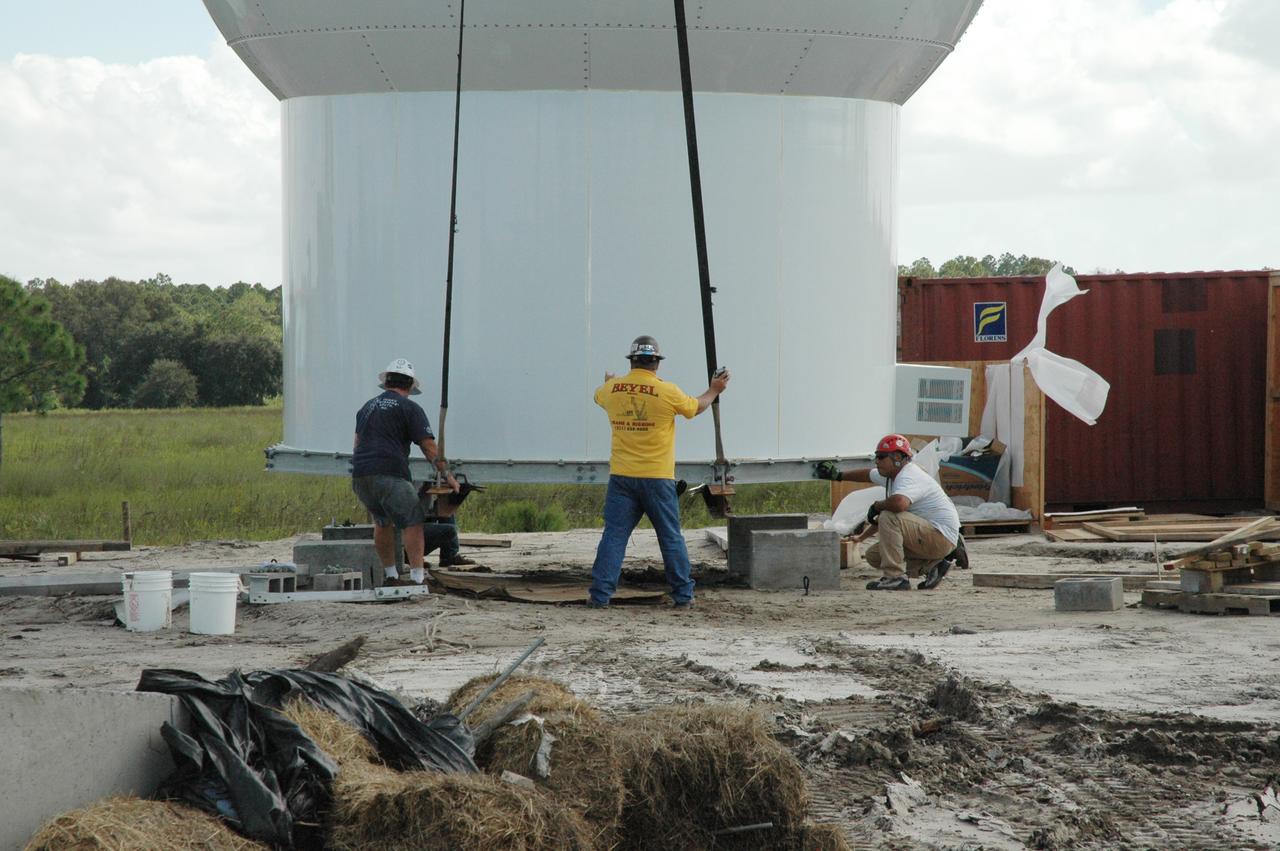
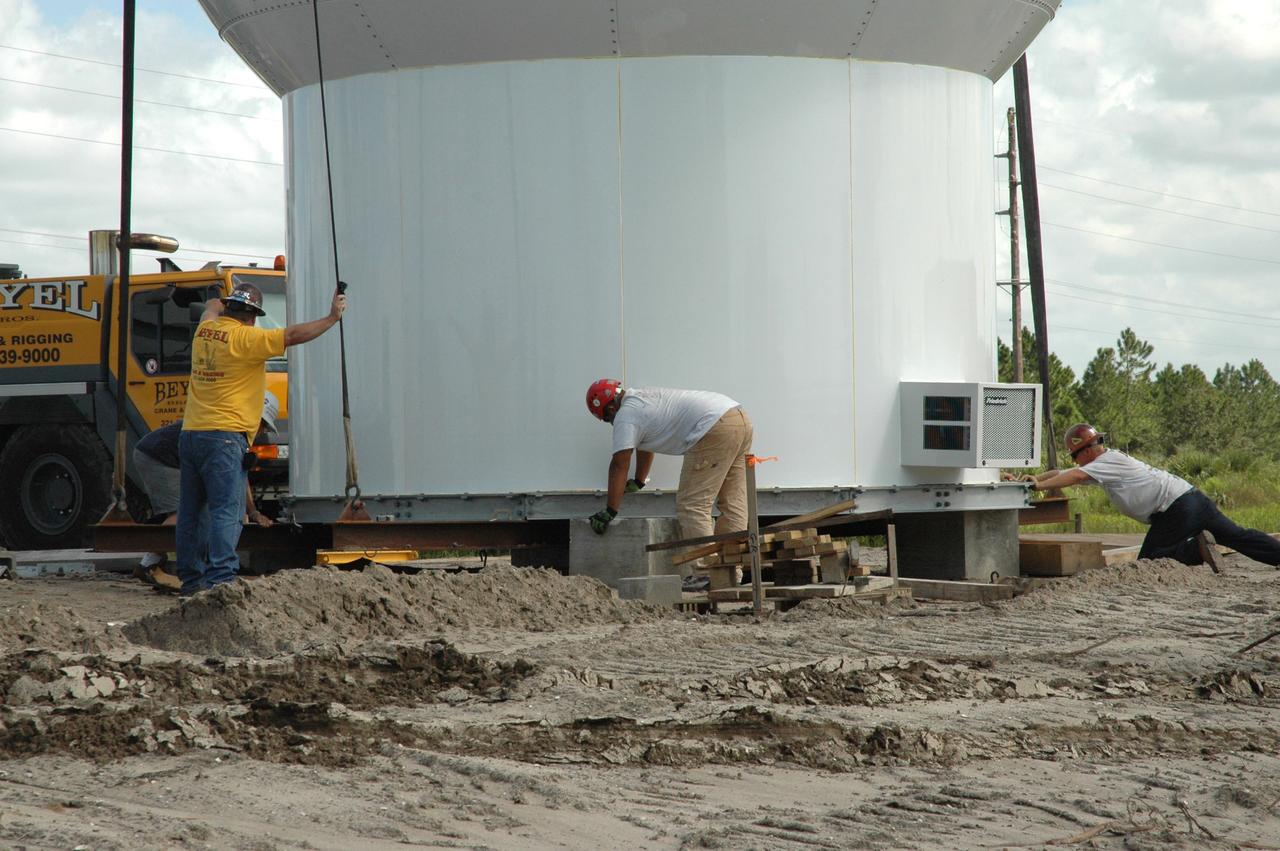
CAPE CANAVERAL, Fla. – In an area near S.R. 520 in Orange County, Florida, workers help guide the cables on a crane lifting a radome onto concrete blocks. The radome will be lifted onto a steel tower constructed for a Doppler weather radar for the 45th Weather Squadron. The new site replaces one at Patrick Air Force Base and will be used by NASA's Kennedy Space Center, the U.S. Air Force's 45th Space Wing and their customers. The facility will be able to monitor weather conditions directly above and surrounding the launch pads at Kennedy. The weather radar is essential in issuing lightning and other severe weather warnings and vital in evaluating lightning launch commit criteria. Replacing what was installed 25 years ago at Patrick Air Force Base, the new radar includes Doppler capability to detect winds and identify the type, size and number of precipitation particles. The site is ideally distant from the launch pads and has unobstructed views of Cape Canaveral Air Force Station and Kennedy. The radar will be used by forecasters at the USAF 45th Weather Squadron. Photo credit: NASA/Jim Grossmann
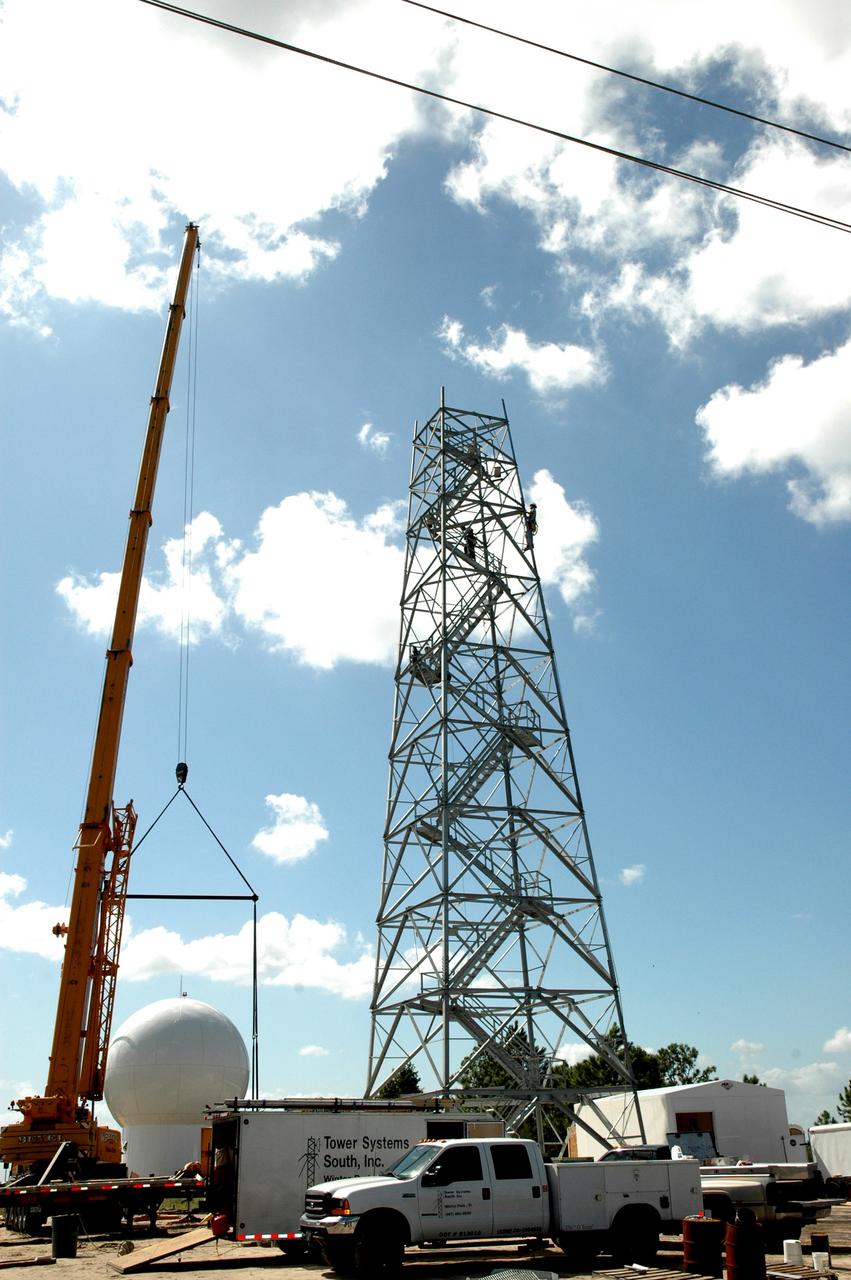
CAPE CANAVERAL, Fla. – In an area near S.R. 520 in Orange County, Florida, the steel tower for a Doppler weather radar facility for the 45th Weather Squadron is nearly complete. At left is the radome that will go on top of the tower, enclosing the radar. The new site replaces one at Patrick Air Force Base and will be used by NASA's Kennedy Space Center, the U.S. Air Force's 45th Space Wing and their customers. The facility will be able to monitor weather conditions directly above and surrounding the launch pads at Kennedy. The weather radar is essential in issuing lightning and other severe weather warnings and vital in evaluating lightning launch commit criteria. Replacing what was installed 25 years ago at Patrick Air Force Base, the new radar includes Doppler capability to detect winds and identify the type, size and number of precipitation particles. The site is ideally distant from the launch pads and has unobstructed views of Cape Canaveral Air Force Station and Kennedy. The radar will be used by forecasters at the USAF 45th Weather Squadron. Photo credit: NASA/Jim Grossmann
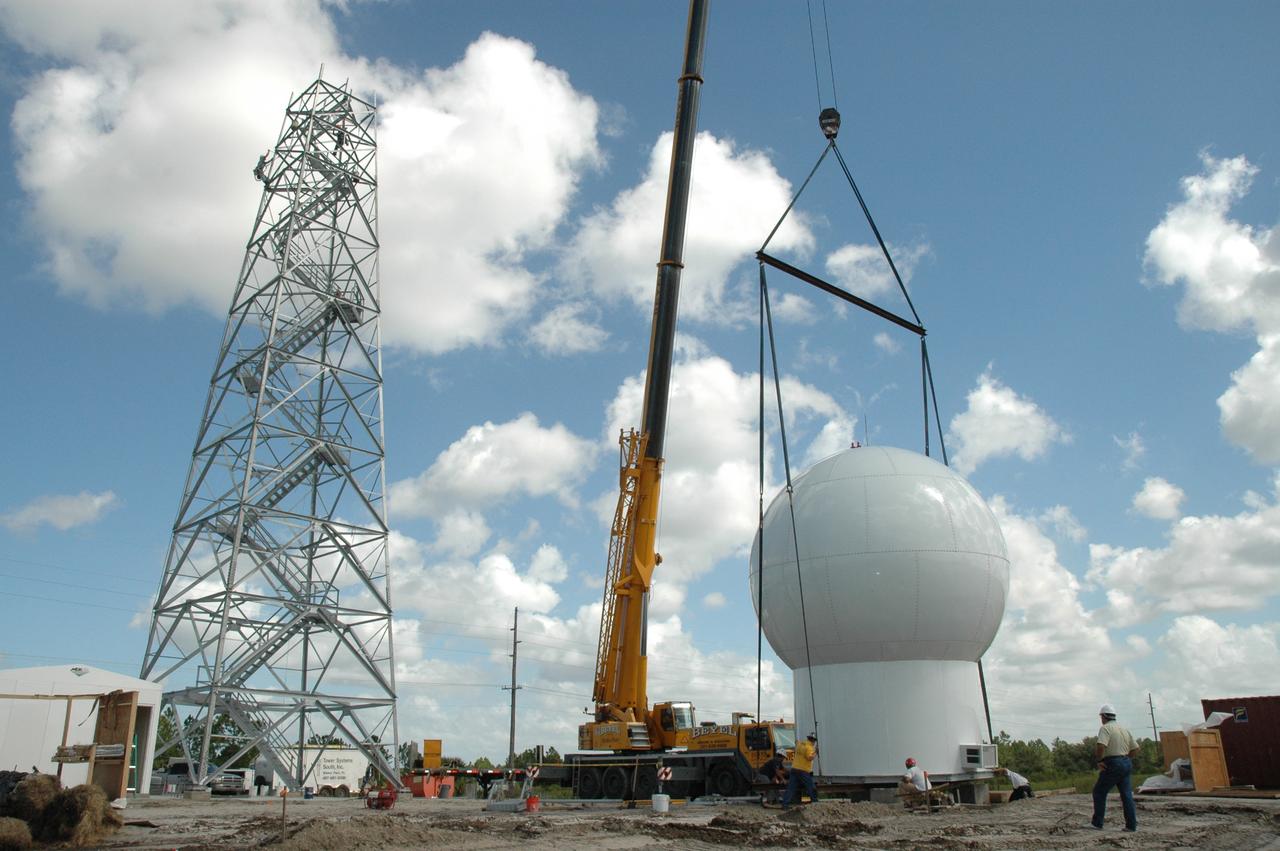
CAPE CANAVERAL, Fla. – In an area near S.R. 520 in Orange County, Florida, workers help position a radome onto concrete blocks. The radome will be lifted onto a steel tower constructed for a Doppler weather radar for the 45th Weather Squadron. The new site replaces one at Patrick Air Force Base and will be used by NASA's Kennedy Space Center, the U.S. Air Force's 45th Space Wing and their customers. The facility will be able to monitor weather conditions directly above and surrounding the launch pads at Kennedy. The weather radar is essential in issuing lightning and other severe weather warnings and vital in evaluating lightning launch commit criteria. Replacing what was installed 25 years ago at Patrick Air Force Base, the new radar includes Doppler capability to detect winds and identify the type, size and number of precipitation particles. The site is ideally distant from the launch pads and has unobstructed views of Cape Canaveral Air Force Station and Kennedy. The radar will be used by forecasters at the USAF 45th Weather Squadron. Photo credit: NASA/Jim Grossmann
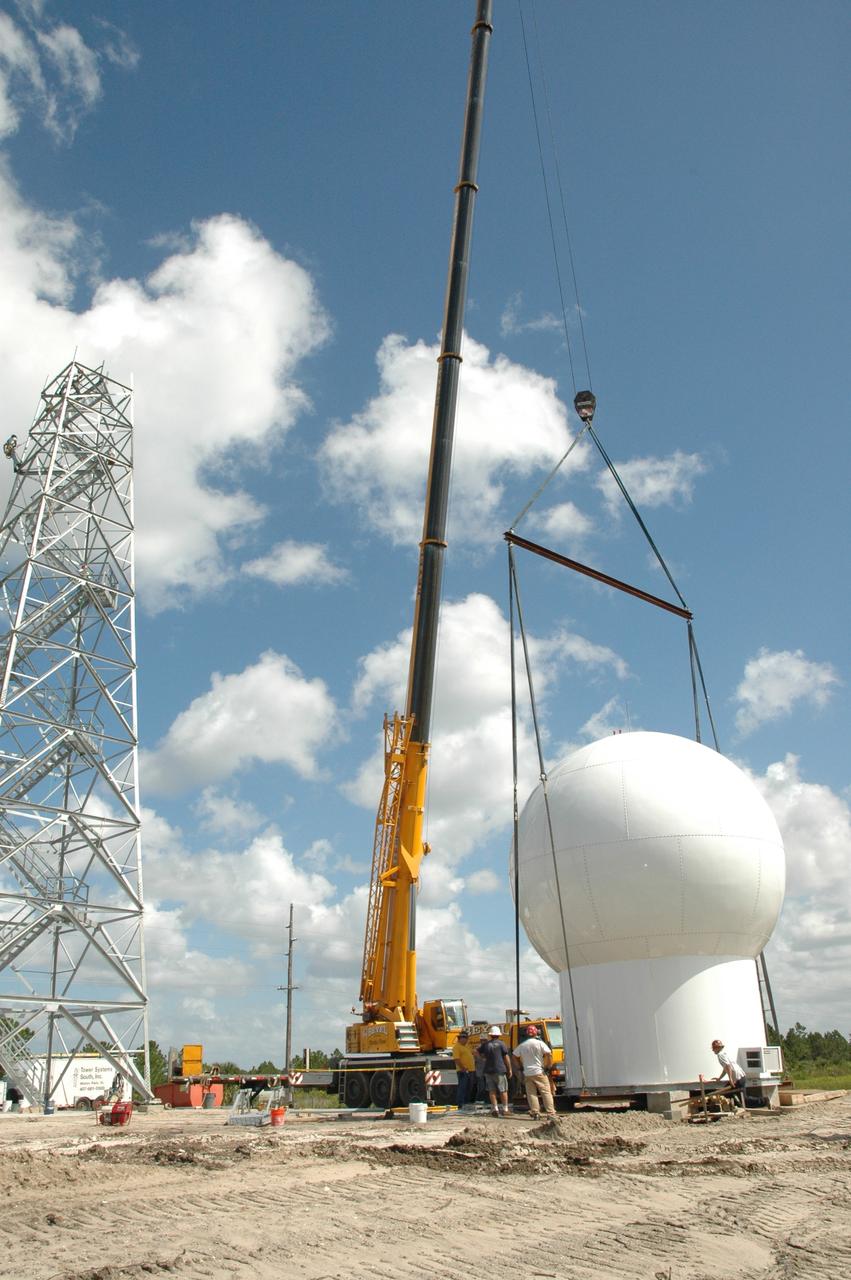
CAPE CANAVERAL, Fla. – In In an area near S.R. 520 in Orange County, Florida, a crane is used to position a radome on concrete blocks. The radome will be lifted onto a steel tower constructed for a Doppler weather radar for the 45th Weather Squadron. The new site replaces one at Patrick Air Force Base and will be used by NASA's Kennedy Space Center, the U.S. Air Force's 45th Space Wing and their customers. The facility will be able to monitor weather conditions directly above and surrounding the launch pads at Kennedy. The weather radar is essential in issuing lightning and other severe weather warnings and vital in evaluating lightning launch commit criteria. Replacing what was installed 25 years ago at Patrick Air Force Base, the new radar includes Doppler capability to detect winds and identify the type, size and number of precipitation particles. The site is ideally distant from the launch pads and has unobstructed views of Cape Canaveral Air Force Station and Kennedy. The radar will be used by forecasters at the USAF 45th Weather Squadron. Photo credit: NASA/Jim Grossmann
CAPE CANAVERAL, Fla. – In an area near S.R. 520 in Orange County, Florida, workers help guide the cables on a crane lifting a radome onto concrete blocks. The radome will be lifted onto a steel tower constructed for a Doppler weather radar for the 45th Weather Squadron. The new site replaces one at Patrick Air Force Base and will be used by NASA's Kennedy Space Center, the U.S. Air Force's 45th Space Wing and their customers. The facility will be able to monitor weather conditions directly above and surrounding the launch pads at Kennedy. The weather radar is essential in issuing lightning and other severe weather warnings and vital in evaluating lightning launch commit criteria. Replacing what was installed 25 years ago at Patrick Air Force Base, the new radar includes Doppler capability to detect winds and identify the type, size and number of precipitation particles. The site is ideally distant from the launch pads and has unobstructed views of Cape Canaveral Air Force Station and Kennedy. The radar will be used by forecasters at the USAF 45th Weather Squadron. Photo credit: NASA/Jim Grossmann
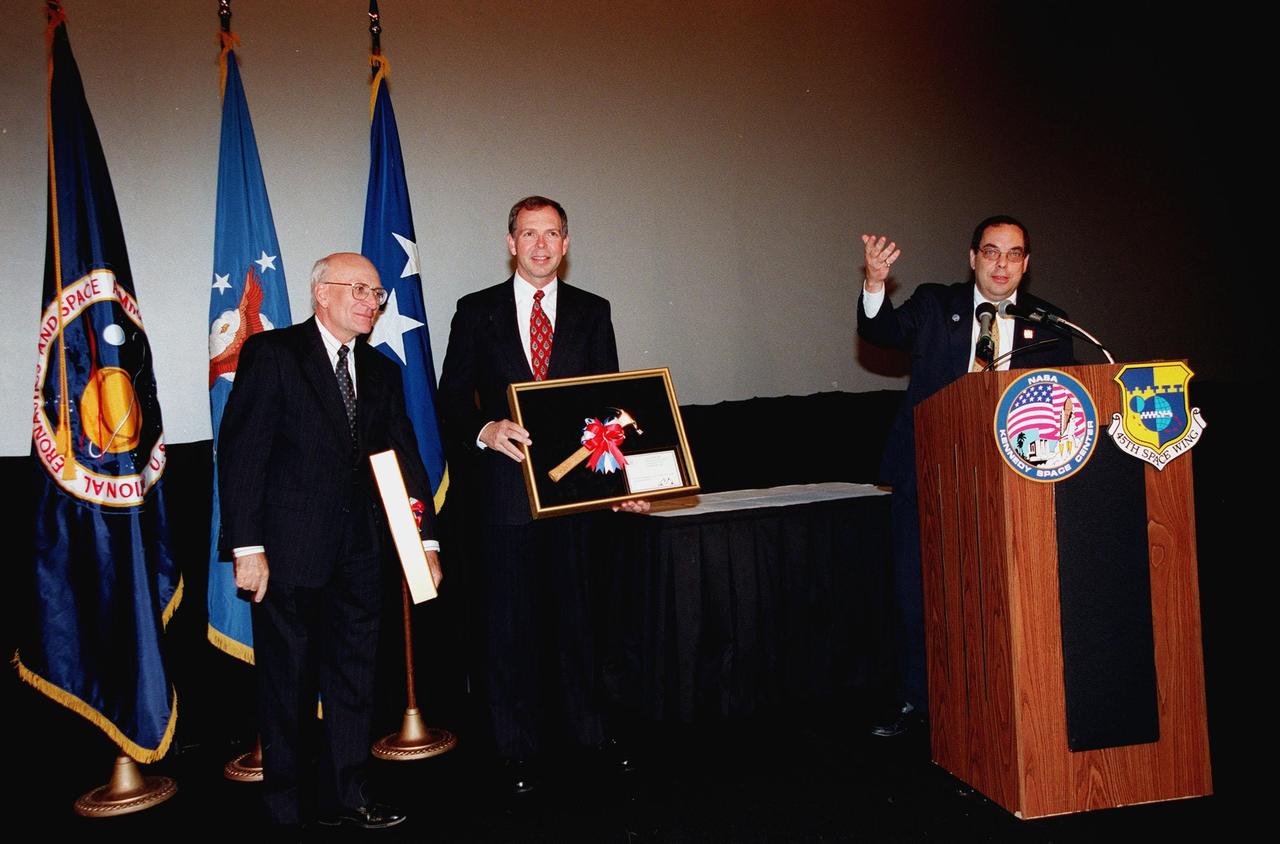
Ed Gormel (left) and Chris Fairey (center) display the Hammer Award they received at a special presentation in the IMAX 2 Theater in the Kennedy Space Center Visitor Complex. The Hammer Award is Vice President Al Gore's special recognition of teams of federal employees who have made significant contributions in support of the principles of the National Partnership for Reinventing Government. At the podium is Morley Winograd director of the National Partnership for Reinventing Government, who presented the award. This Hammer Award acknowledges the accomplishments of a joint NASA and Air Force team that established the Joint Base Operations and Support Contract (J-BOSC) Source Evaluation Board (SEB). Fairey and Gormel are co-chairs of the SEB. The team developed and implemented the acquisition strategy for establishing a single set of base operations and support service requirements for KSC, Cape Canaveral Air Station and Patrick Air Force Base
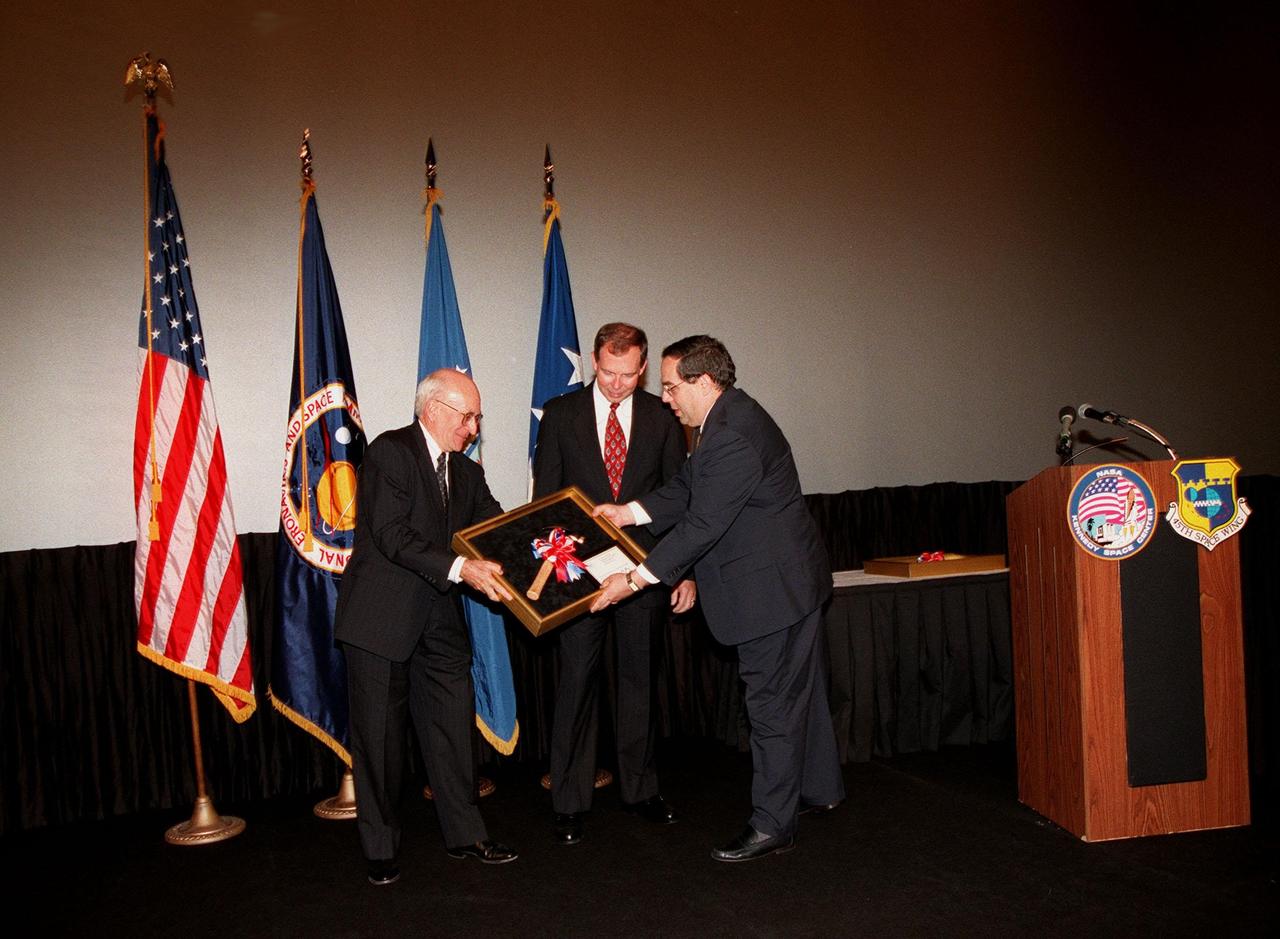
Ed Gormel (left) and Chris Fairey (center) accept the Hammer Award at a special presentation in the IMAX 2 Theater in the Kennedy Space Center Visitor Complex. Presenting the award is Morley Winograd (right), director of the National Partnership for Reinventing Government. The Hammer Award is Vice President Al Gore's special recognition of teams of federal employees who have made significant contributions in support of the principles of the National Partnership for Reinventing Government. This Hammer Award acknowledges the accomplishments of a joint NASA and Air Force team that established the Joint Base Operations and Support Contract (J-BOSC) Source Evaluation Board (SEB). Gormel and Fairey are co-chairs of the SEB. The team developed and implemented the acquisition strategy for establishing a single set of base operations and support service requirements for KSC, Cape Canaveral Air Station and Patrick Air Force Base

KSC's Director of Public Affairs Joe Gordon (left) applauds as Ed Gormel and Chris Fairey are named recipients of the Hammer Award at a special presentation in the IMAX 2 Theater in the Kennedy Space Center Visitor Complex. Presenting the award is Morley Winograd (at the podium), director of the National Partnership for Reinventing Government. The Hammer Award is Vice President Al Gore's special recognition of teams of federal employees who have made significant contributions in support of the principles of the National Partnership for Reinventing Government. This Hammer Award acknowledges the accomplishments of a joint NASA and Air Force team that established the Joint Base Operations and Support Contract (J-BOSC) Source Evaluation Board (SEB). Gormel and Fairey are co-chairs of the SEB. The team developed and implemented the acquisition strategy for establishing a single set of base operations and support service requirements for KSC, Cape Canaveral Air Station and Patrick Air Force Base
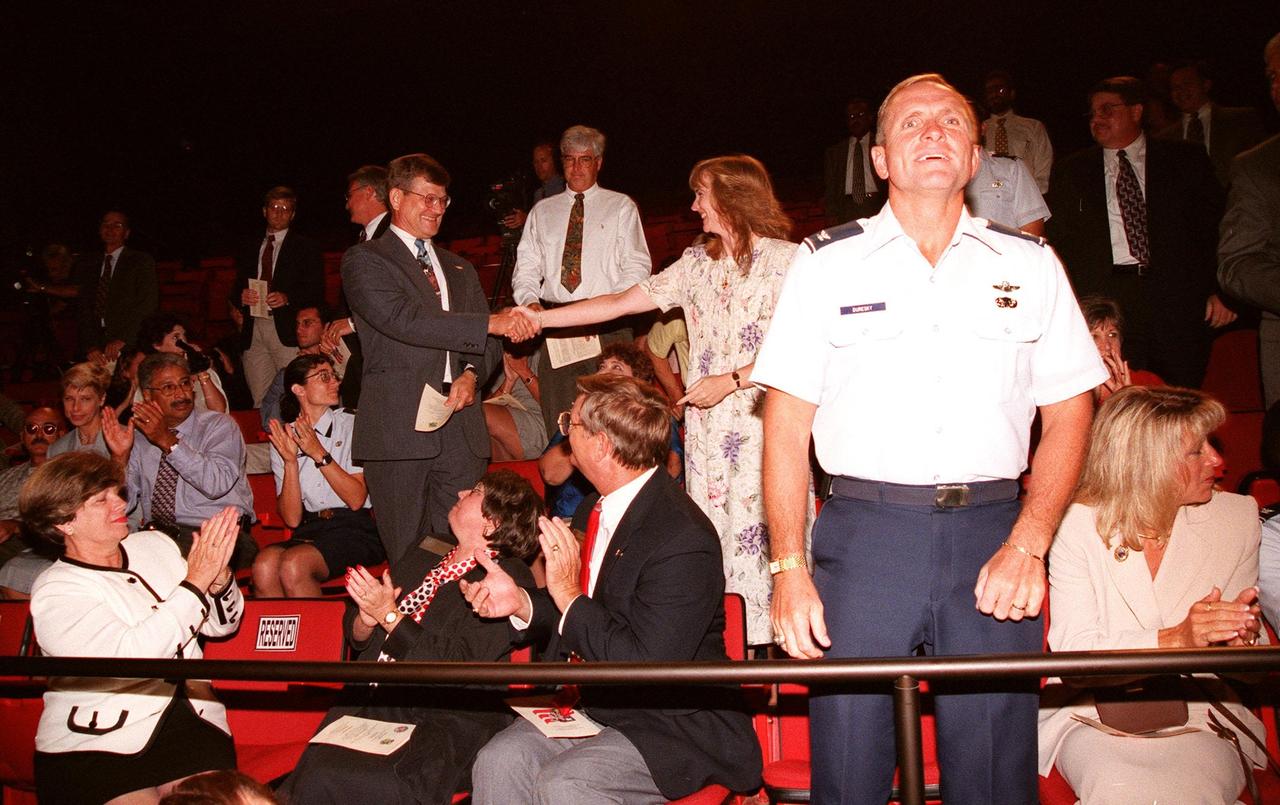
At a special presentation in the IMAX 2 Theater in the Kennedy Space Center Visitor Complex, KSC and 45th Space Wing employees share the honors as recipients of the Hammer Award. The Hammer Award is Vice President Al Gore's special recognition of teams of federal employees who have made significant contributions in support of the principles of the National Partnership for Reinventing Government. Morley Winograd, director of the National Partnership for Reinventing Government, presented the award to Ed Gormel and Chris Fairey, co-chairs of the Joint Base Operations and Support Contract (J-BOSC) Source Evaluation Board (SEB. This Hammer Award acknowledges the accomplishments of a joint NASA and Air Force team that established the J-BOSC SEB. The team developed and implemented the acquisition strategy for establishing a single set of base operations and support service requirements for KSC, Cape Canaveral Air Station and Patrick Air Force Base

Morley Winograd (right), director of the National Partnership for Reinventing Government, presents the Hammer Award to Ed Gormel (left) and Chris Fairey (center) at a special presentation in the IMAX 2 Theater in the Kennedy Space Center Visitor Complex. The Hammer Award is Vice President Al Gore's special recognition of teams of federal employees who have made significant contributions in support of the principles of the National Partnership for Reinventing Government. This Hammer Award acknowledges the accomplishments of a joint NASA and Air Force team that established the Joint Base Operations and Support Contract (J-BOSC) Source Evaluation Board (SEB). Gormel and Fairey are co-chairs of the SEB. The team developed and implemented the acquisition strategy for establishing a single set of base operations and support service requirements for KSC, Cape Canaveral Air Station and Patrick Air Force Base
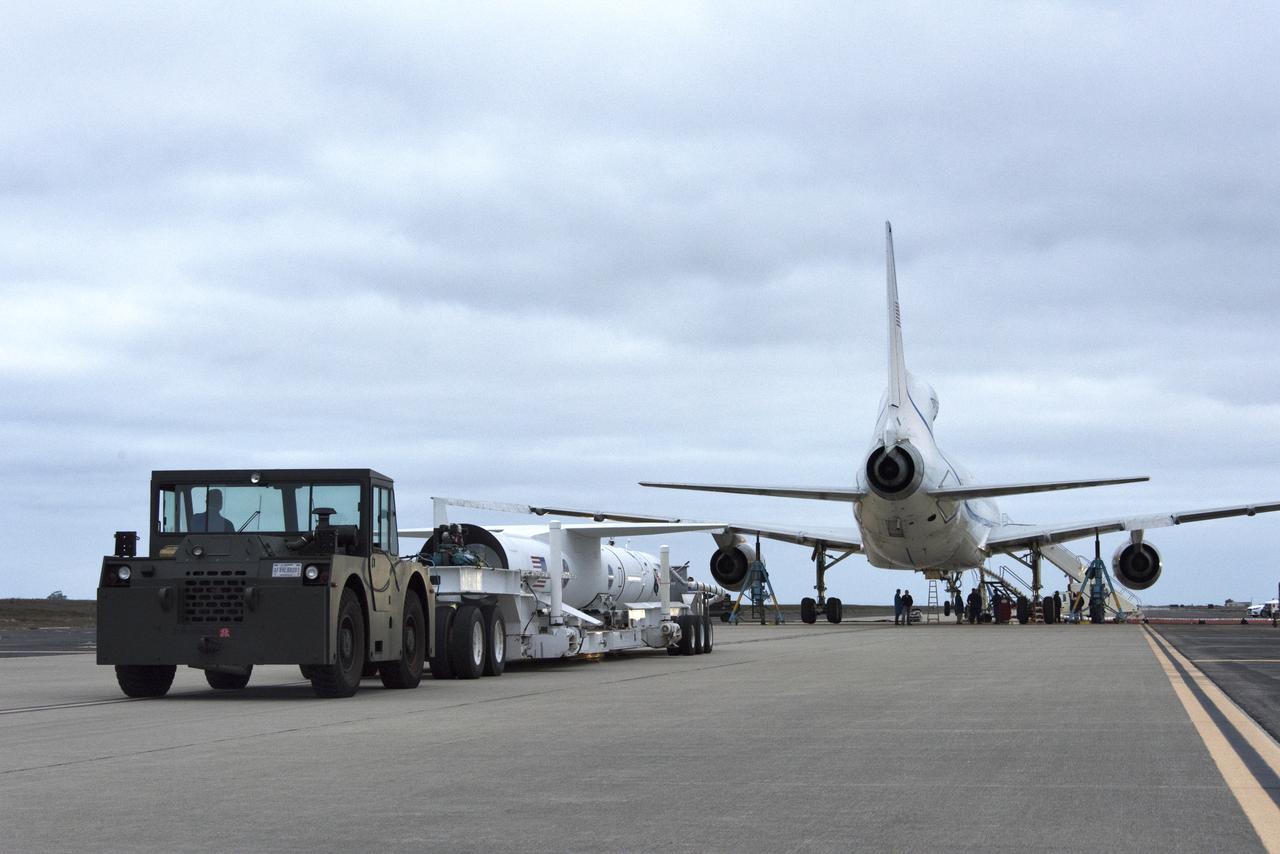
Northrop Grumman's Pegasus XL rocket, containing NASA's Ionospheric Connection Explorer (ICON), is transported to the hot pad at Vandenberg Air Force Base in California, on Oct. 14, 2018. Pegasus will be attached beneath the company's L-1011 Stargazer aircraft for the trip to Cape Canaveral Air Force Station in Florida. The Pegasus XL rocket will launch ICON from the Skid Strip at the Cape. ICON will study the frontier of space - the dynamic zone high in Earth's atmosphere where terrestrial weather from below meets space weather above. The explorer will help determine the physics of Earth's space environment and pave the way for mitigating its effects on our technology and communications systems.
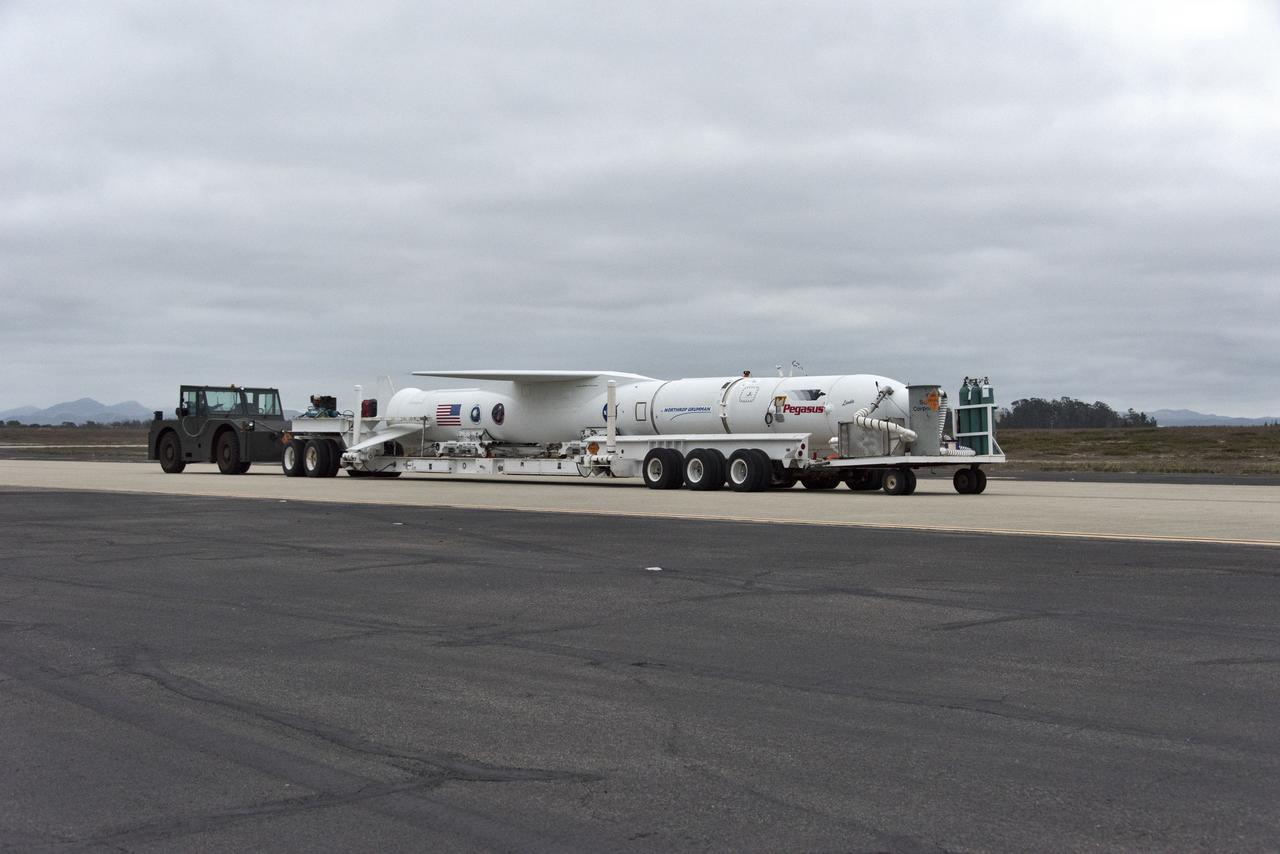
Northrop Grumman's Pegasus XL rocket, containing NASA's Ionospheric Connection Explorer (ICON), is transported to the hot pad at Vandenberg Air Force Base in California, on Oct. 14, 2018. Pegasus will be attached beneath the company's L-1011 Stargazer aircraft for the trip to Cape Canaveral Air Force Station in Florida. The Pegasus XL rocket will launch ICON from the Skid Strip at the Cape. ICON will study the frontier of space - the dynamic zone high in Earth's atmosphere where terrestrial weather from below meets space weather above. The explorer will help determine the physics of Earth's space environment and pave the way for mitigating its effects on our technology and communications systems.
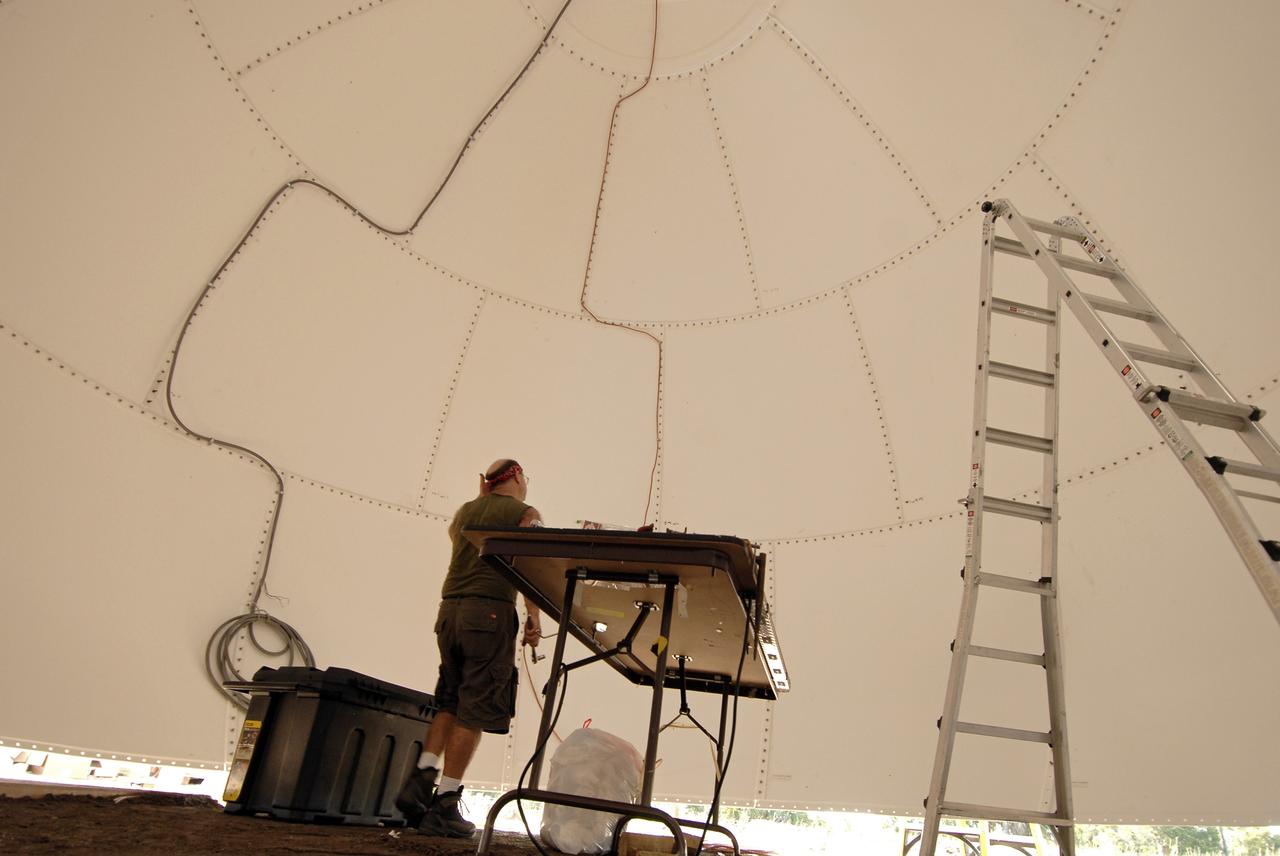
CAPE CANAVERAL, Fla. - A worker inside the radar dome, or radome, monitors equipment before it is lifted onto its base. The dome is part of a new Doppler weather radar facility for the 45th Weather Squadron in an area near S.R. 520 in Orange County, Florida, replacing one at Patrick Air Force Base. It will be used by NASA's Kennedy Space Center, the 45th Space Wing and their customers. The site will be able to monitor weather conditions directly above the launch pads at Kennedy. The weather radar is essential in issuing lightning and other severe weather warnings and vital in evaluating lightning launch commit criteria. The new radar, replacing what was installed 25 years ago at Patrick Air Force Base, includes Doppler capability to detect winds and identify the type, size and number of precipitation particles. The site is ideally distant from the launch pads and has unobstructed views of Cape Canaveral Air Force Station and Kennedy. The radar will be used by forecasters at the USAF 45th Weather Squadron. Photo credit: NASA/Troy Cryder
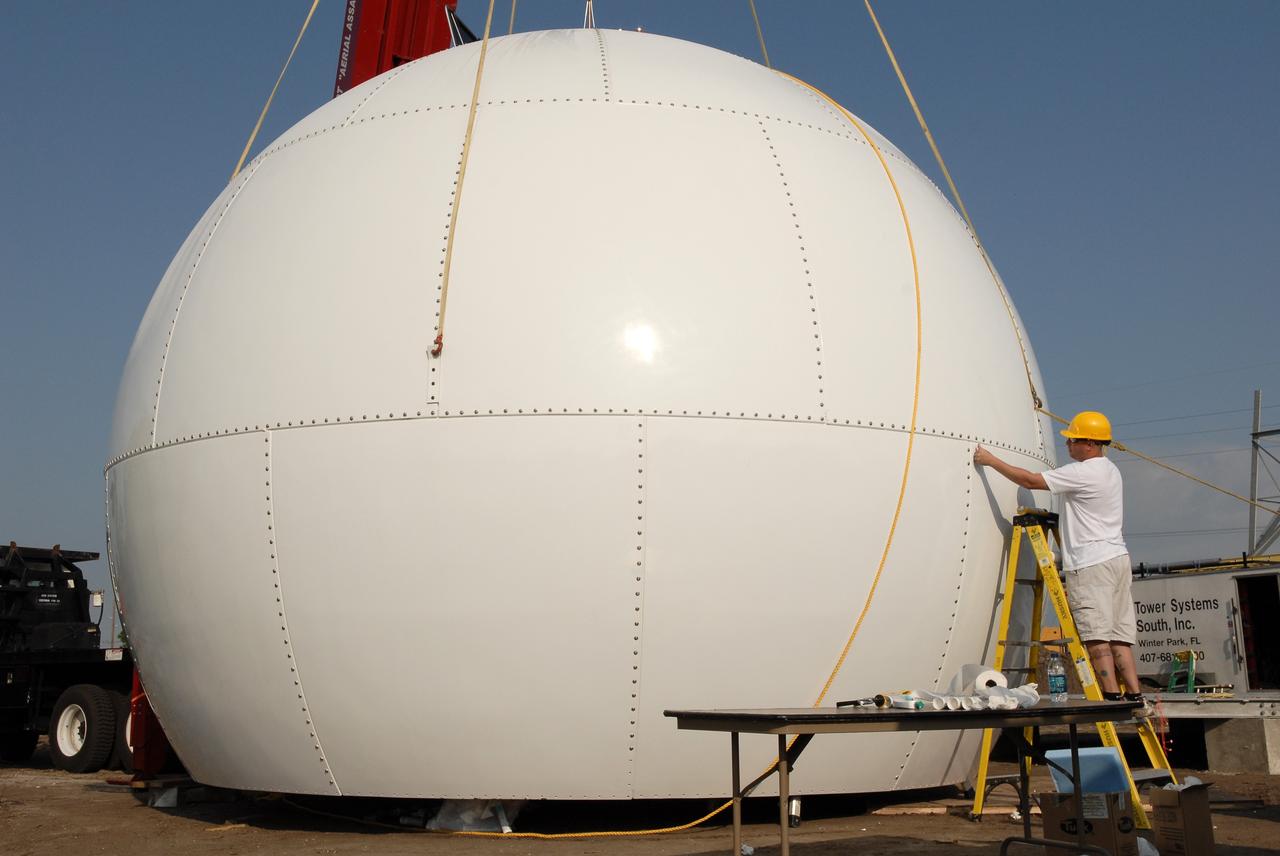
CAPE CANAVERAL, Fla. - At a site near S.R. 520 in Orange County, Florida, a radar dome, or radome, is being completed before moving it to its base. It is part of a new Doppler weather radar facility for the 45th Weather Squadron, replacing one at Patrick Air Force Base and will be used by NASA's Kennedy Space Center, the 45th Space Wing and their customers. The site will be able to monitor weather conditions directly above the launch pads at Kennedy. The weather radar is essential in issuing lightning and other severe weather warnings and vital in evaluating lightning launch commit criteria. The new radar, replacing what was installed 25 years ago at Patrick Air Force Base, includes Doppler capability to detect winds and identify the type, size and number of precipitation particles. The site is ideally distant from the launch pads and has unobstructed views of Cape Canaveral Air Force Station and Kennedy. The radar will be used by forecasters at the USAF 45th Weather Squadron. Photo credit: NASA/Troy Cryder
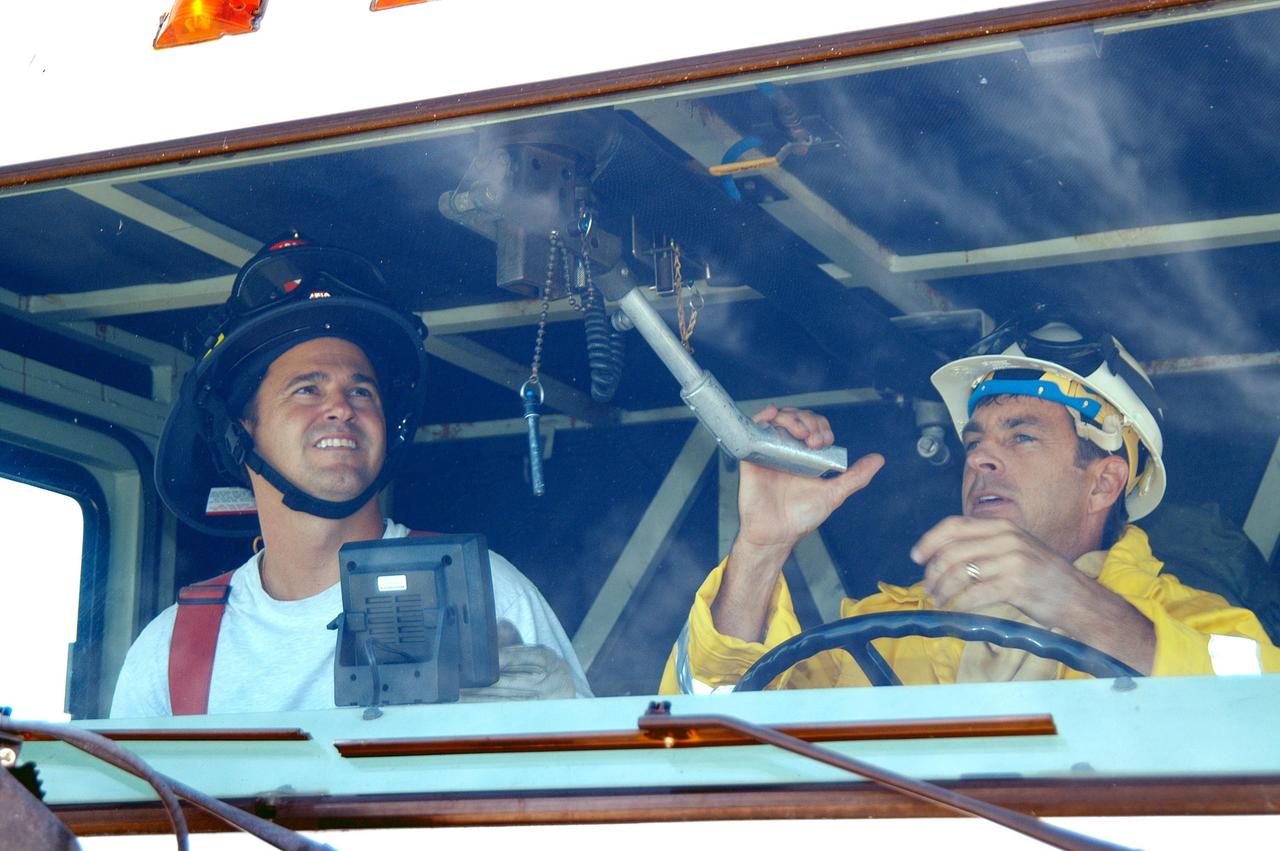
KENNEDY SPACE CENTER, FLA. - At Cape Canaveral Air Force Station, KSC Firefighter Chris Maupin (left) watches as Lt. Keith Abell practices maneuvering apparatus on top of the firefighting vehicle with which they are able to direct the hoses to attack fires from above and below. The firefighters teamed up with task forces from Satellite Beach, Malabar, Melbourne, Palm Bay, Patrick Air Force Base and Brevard County to help fight wildfires in the Palm Bay and Malabar areas that threatened homes and property during the Memorial Day holiday weekend.
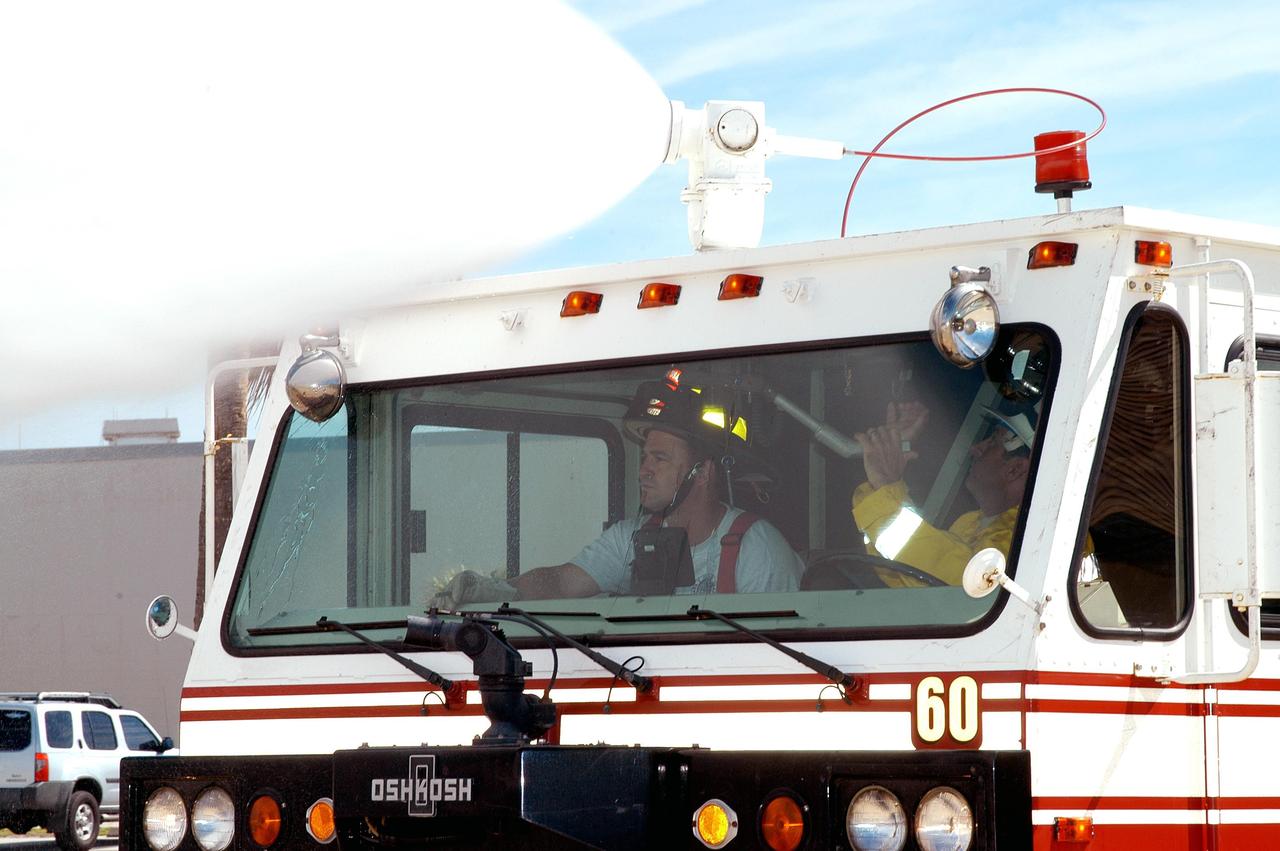
KENNEDY SPACE CENTER, FLA. - At Cape Canaveral Air Force Station, Firefighter Chris Maupin (left) and Lt. Keith Abell demonstrate how the special aircraft firefighting vehicle (known as ARF) was used at the site of a recent fire in Brevard County, Fla. The firefighters sit inside the vehicle with a "driver" in the middle. They are able to direct the hoses to attack fires from above and below. The firefighters teamed up with task forces from Satellite Beach, Malabar, Melbourne, Palm Bay, Patrick Air Force Base and Brevard County to help fight wildfires in the Palm Bay and Malabar areas that threatened homes and property during the Memorial Day holiday weekend.
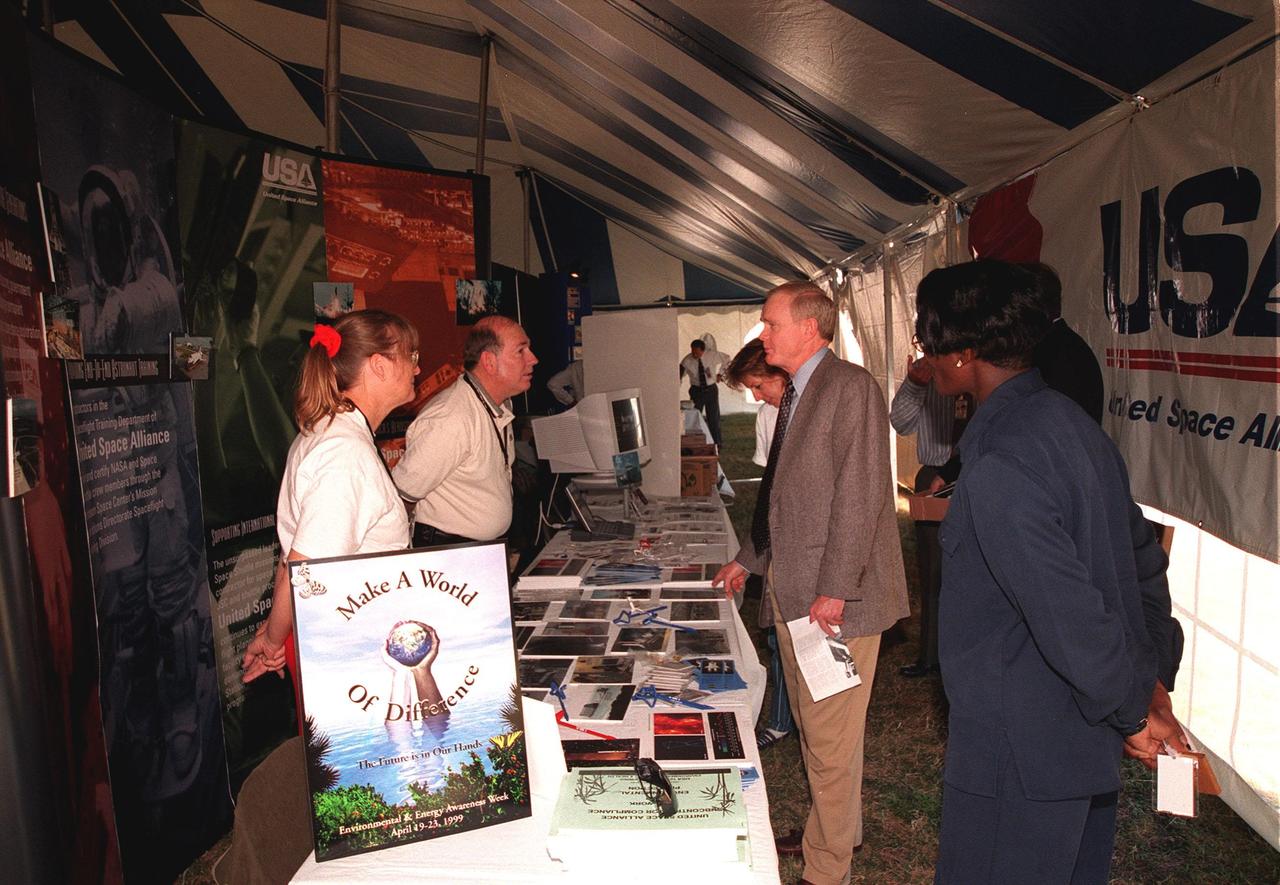
At the opening of Environmental and Energy Awareness Week at the Kennedy Space Center Visitor Complex, Center Director Roy Bridges talks to members of the Awareness team inside the United Space Alliance exhibit. The exhibits and displays by KSC and 45th Space Wing organizations detail accomplishments in minimizing environmental impacts and conserving resources. They are on view April 19 22 at various sites at KSC, Cape Canaveral Air Station and Patrick Air Force Base
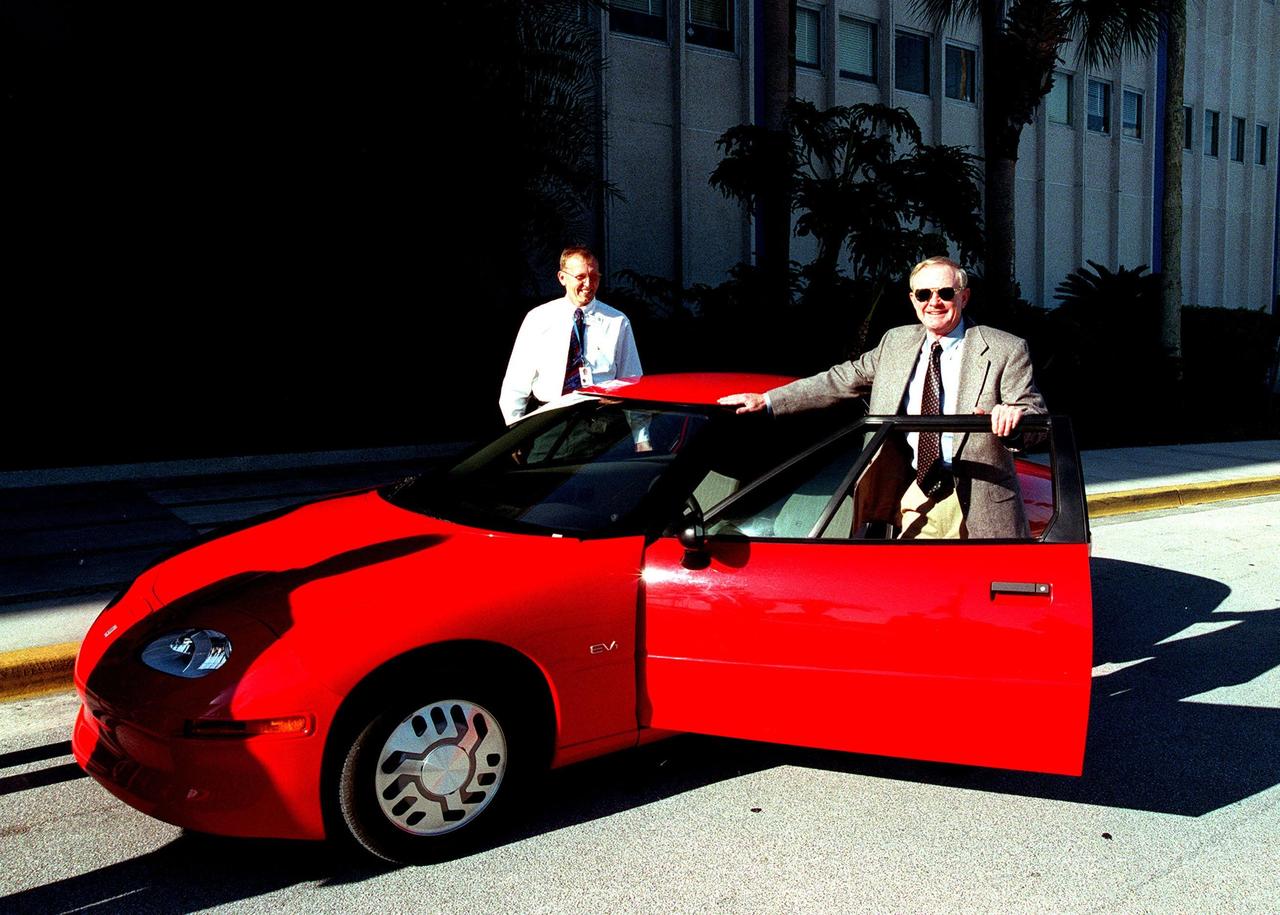
Center Director Roy Bridges (right) gets ready to drive an electric car, provided by Florida Power & Light, to the opening of Environmental and Energy Awareness Week at the Kennedy Space Center Visitor Complex. Exhibits and displays by KSC and 45th Space Wing organizations detail accomplishments in minimizing environmental impacts and conserving resources. They are on view April 19 22 at various sites at KSC, Cape Canaveral Air Station and Patrick Air Force Base
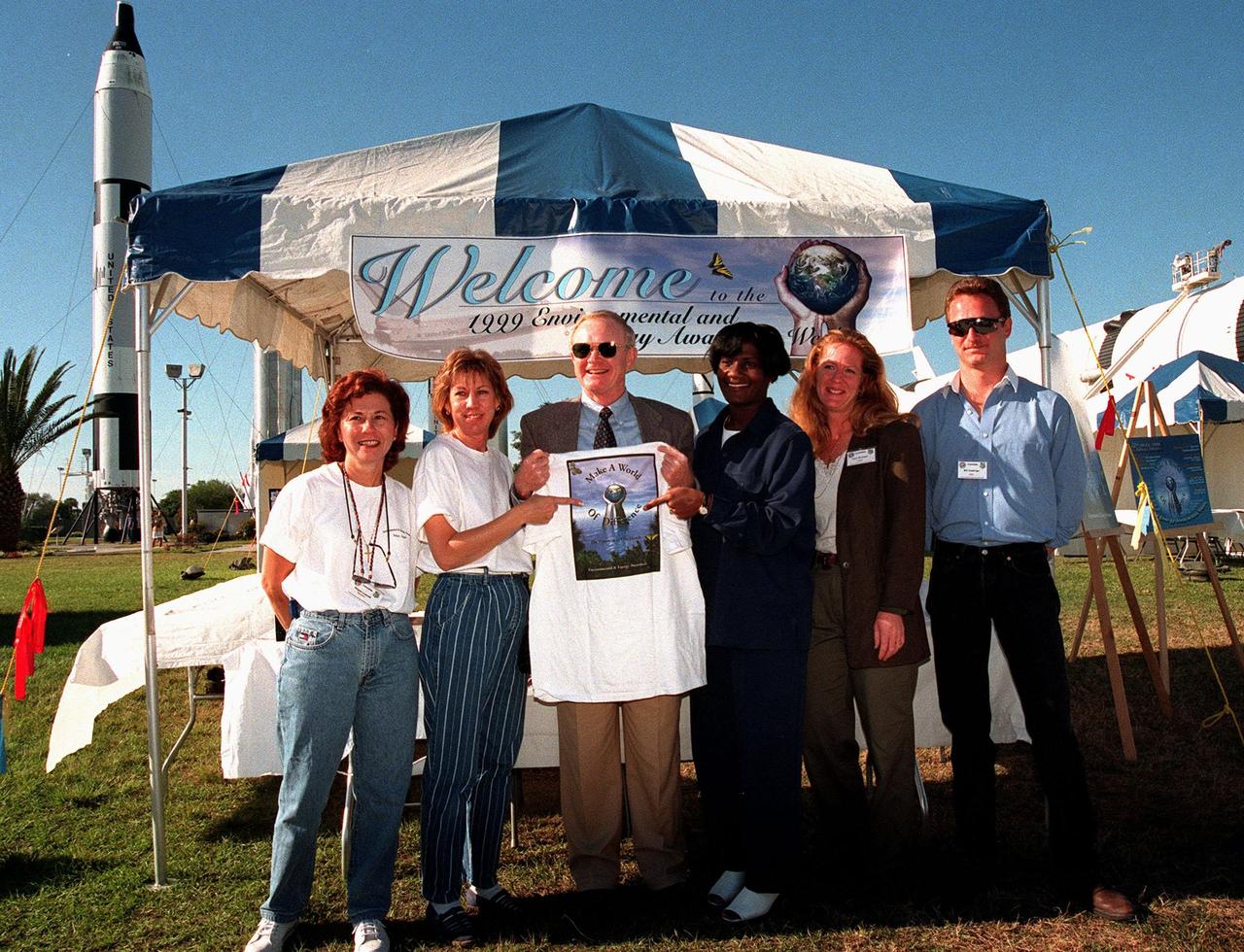
The opening of Environmental and Energy Awareness Week at the Kennedy Space Center Visitor Complex kicked off with a visit by Center Director Roy Bridges and the Awareness team, who presented him with a t-shirt. Exhibits and displays by KSC and 45th Space Wing organizations detail accomplishments in minimizing environmental impacts and conserving resources. They are on view April 19 22 at various sites at KSC, Cape Canaveral Air Station and Patrick Air Force Base
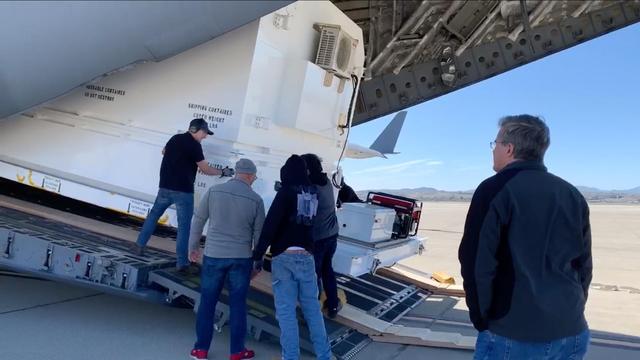
On Feb. 11, 2020, Mars 2020 Assembly, Test and Launch Operations Manager David Gruel watched as members of his team loaded NASA's next Mars rover onto an Air Force C-17 at March Air Reserve Base in Riverside, California. The rover was flown to Cape Canaveral, Florida, in preparation for its July launch. https://photojournal.jpl.nasa.gov/catalog/PIA23591
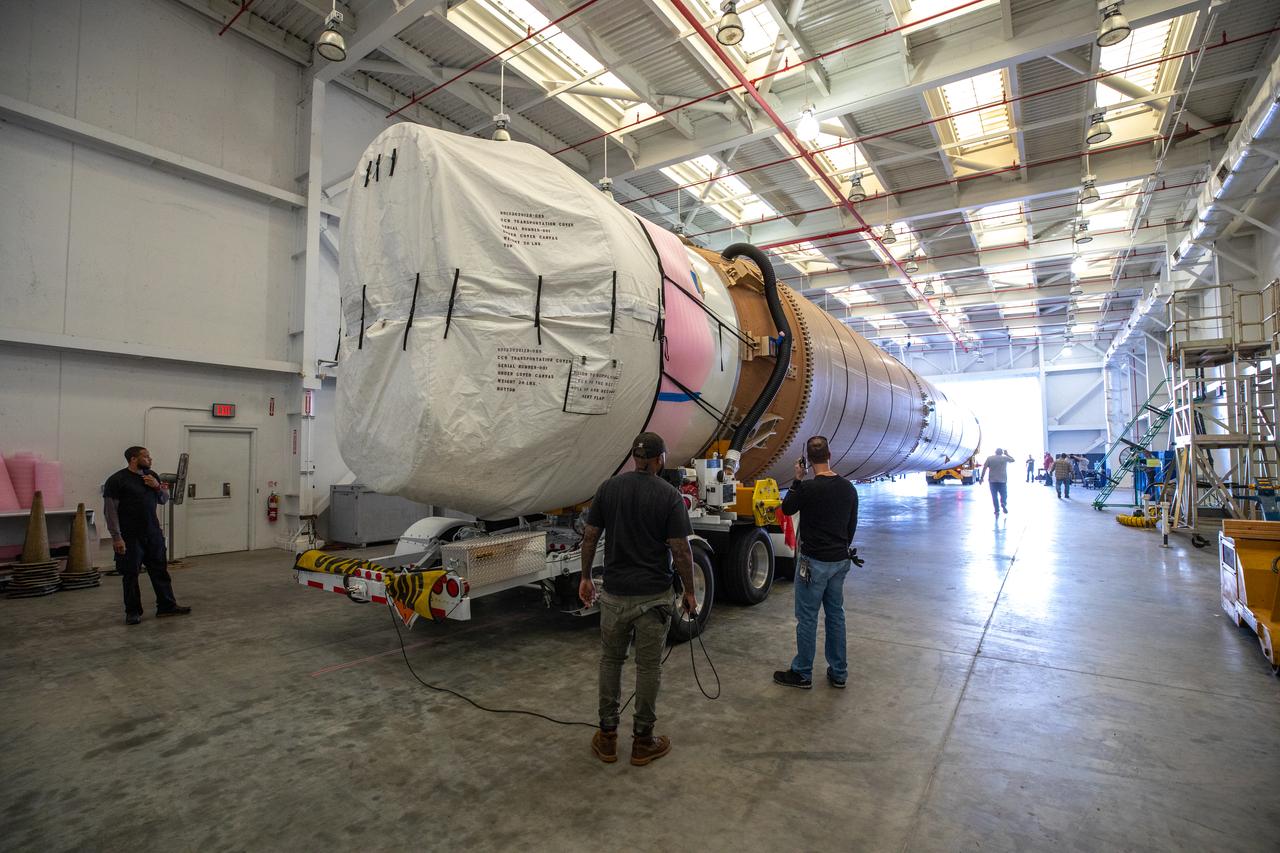
The United Launch Alliance Atlas V booster that will launch the Solar Orbiter spacecraft is delivered by truck to the Atlas Spaceflight Operations Center at Florida’s Cape Canaveral Air Force Station on Nov. 21, 2019. The company’s Rocketship vessel carried the booster from its manufacturing facility in Decatur, Alabama, to Port Canaveral. Solar Orbiter is a European Space Agency mission with strong NASA participation. The mission aims to study the Sun, its outer atmosphere and solar winds. The spacecraft will provide the first images of the Sun’s poles. NASA’s Launch Services Program based at Kennedy is managing the launch. Liftoff is scheduled for Feb. 5, 2020, from Launch Complex 41 at Cape Canaveral Air Force Station aboard the ULA Atlas V rocket.
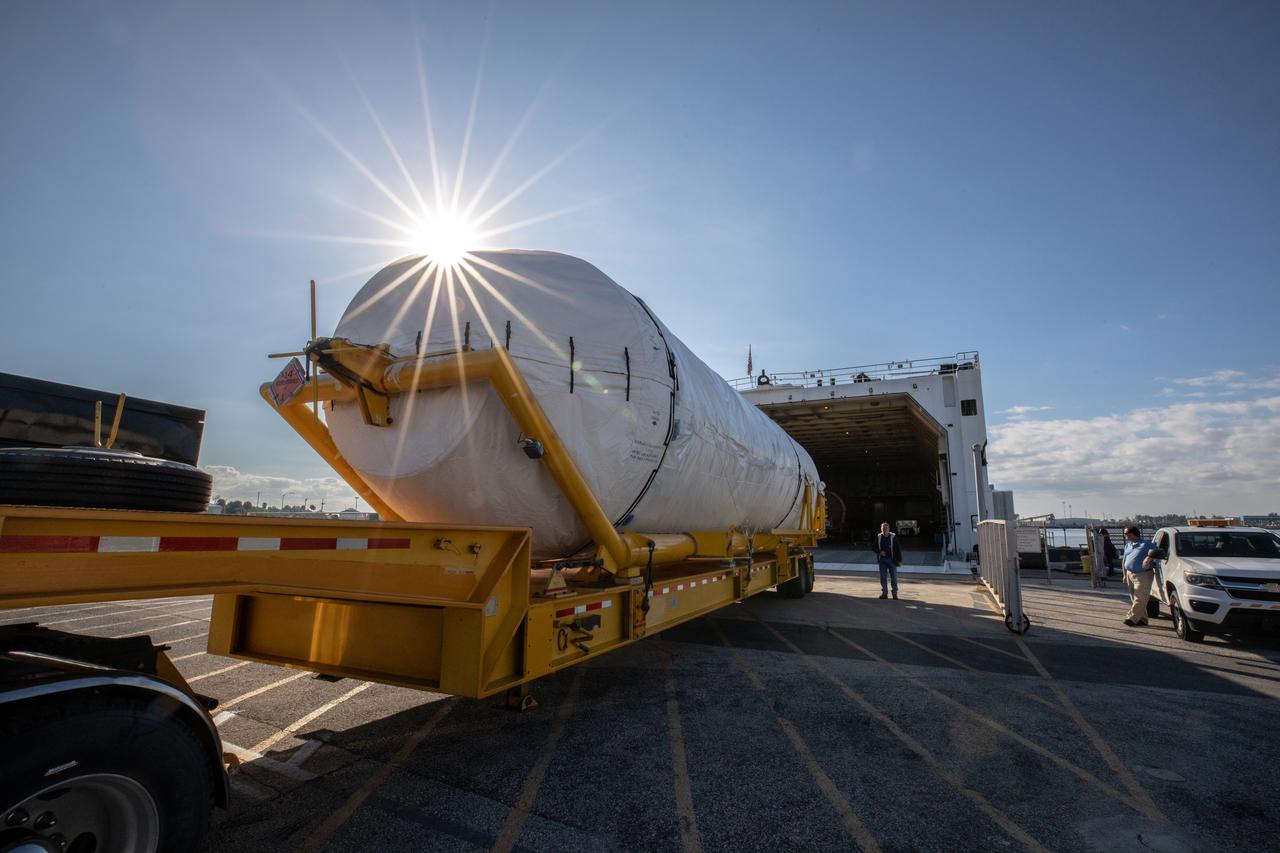
The United Launch Alliance Centaur upper stage that will help launch the Solar Orbiter spacecraft is removed from the company’s Rocketship vessel upon its arrival at Florida’s Port Canaveral on Nov. 21, 2019. Also onboard is the Atlas V rocket’s first-stage booster. Once offloaded, the booster was transported to the Atlas Spaceflight Operations Center and the Centaur was transported to a separate facility, both at nearby Cape Canaveral Air Force Station. Solar Orbiter is a European Space Agency mission with strong NASA participation. The mission aims to study the Sun, its outer atmosphere and solar winds. The spacecraft will provide the first images of the Sun’s poles. NASA’s Launch Services Program based at Kennedy is managing the launch. Liftoff is scheduled for Feb. 5, 2020, from Launch Complex 41 at Cape Canaveral Air Force Station aboard the ULA Atlas V rocket.
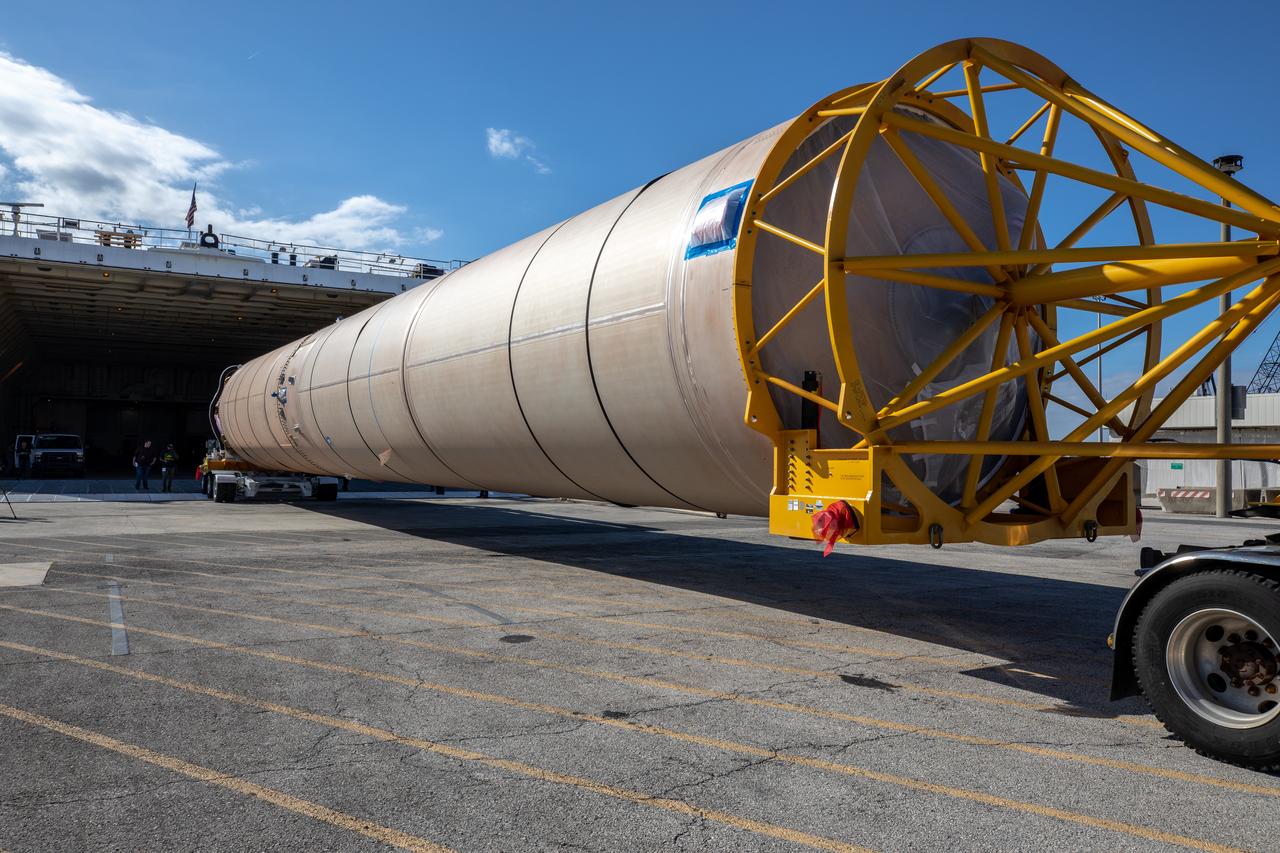
The United Launch Alliance Atlas V booster that will launch the Solar Orbiter spacecraft is removed from the company’s Rocketship vessel upon its arrival at Florida’s Port Canaveral on Nov. 21, 2019. Once offloaded, the booster was transported to the Atlas Spaceflight Operations Center at nearby Cape Canaveral Air Force Station. Solar Orbiter is a European Space Agency mission with strong NASA participation. The mission aims to study the Sun, its outer atmosphere and solar winds. The spacecraft will provide the first images of the Sun’s poles. NASA’s Launch Services Program based at Kennedy is managing the launch. Liftoff is scheduled for Feb. 5, 2020, from Launch Complex 41 at Cape Canaveral Air Force Station aboard the ULA Atlas V rocket.
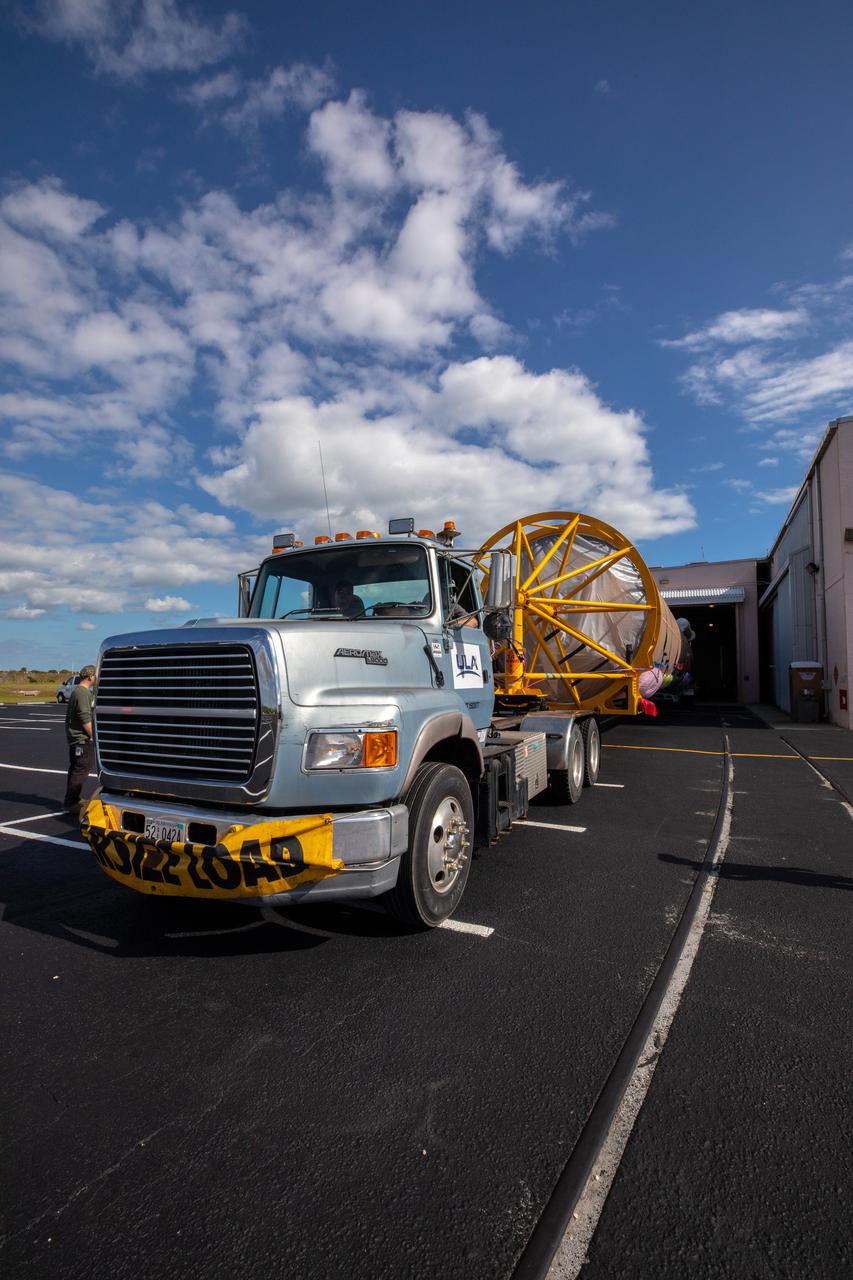
The United Launch Alliance Atlas V booster that will launch the Solar Orbiter spacecraft is delivered by truck to the Atlas Spaceflight Operations Center at Florida’s Cape Canaveral Air Force Station on Nov. 21, 2019. The company’s Rocketship vessel carried the booster from its manufacturing facility in Decatur, Alabama, to Port Canaveral. Solar Orbiter is a European Space Agency mission with strong NASA participation. The mission aims to study the Sun, its outer atmosphere and solar winds. The spacecraft will provide the first images of the Sun’s poles. NASA’s Launch Services Program based at Kennedy is managing the launch. Liftoff is scheduled for Feb. 5, 2020, from Launch Complex 41 at Cape Canaveral Air Force Station aboard the ULA Atlas V rocket.
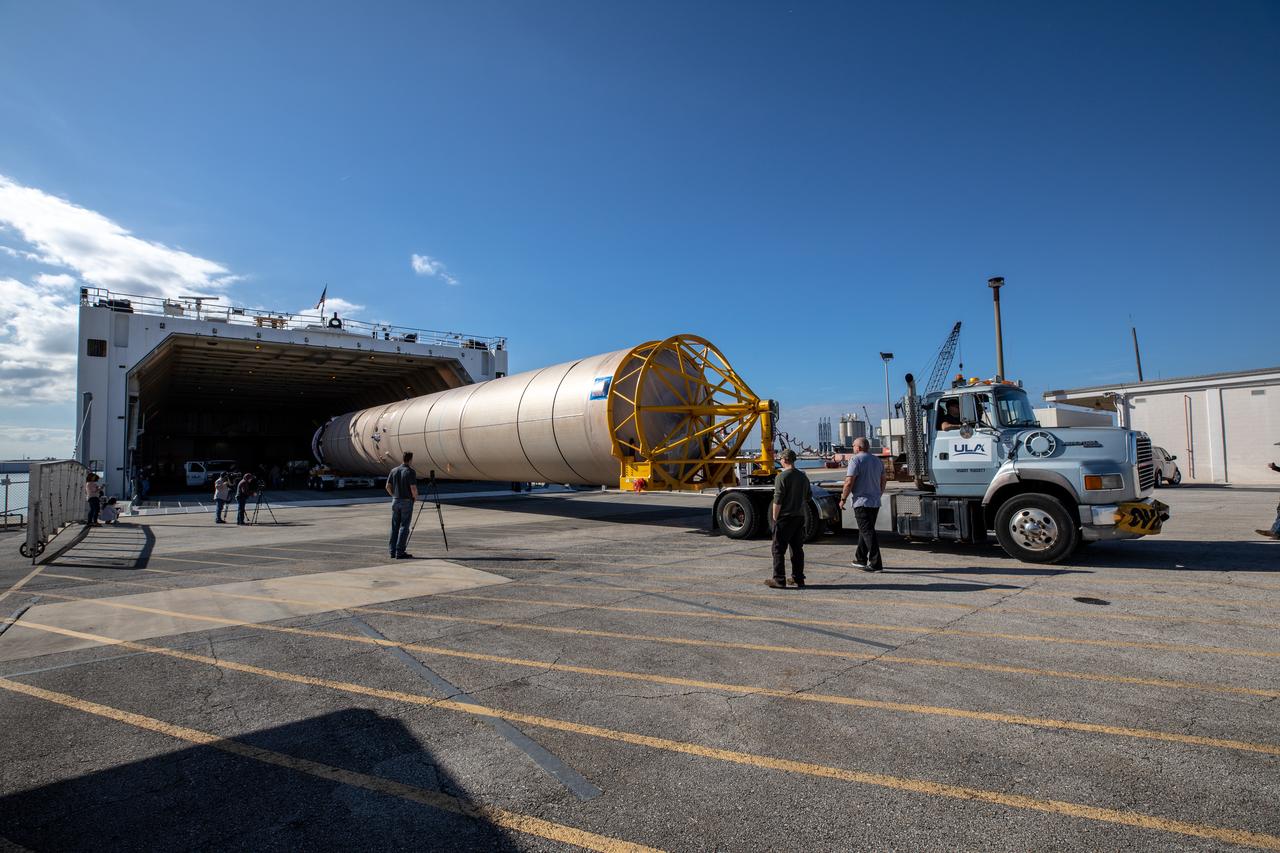
The United Launch Alliance Atlas V booster that will launch the Solar Orbiter spacecraft is removed from the company’s Rocketship vessel upon its arrival at Florida’s Port Canaveral on Nov. 21, 2019. Once offloaded, the booster was transported to the Atlas Spaceflight Operations Center at nearby Cape Canaveral Air Force Station. Solar Orbiter is a European Space Agency mission with strong NASA participation. The mission aims to study the Sun, its outer atmosphere and solar winds. The spacecraft will provide the first images of the Sun’s poles. NASA’s Launch Services Program based at Kennedy is managing the launch. Liftoff is scheduled for Feb. 5, 2020, from Launch Complex 41 at Cape Canaveral Air Force Station aboard the ULA Atlas V rocket.
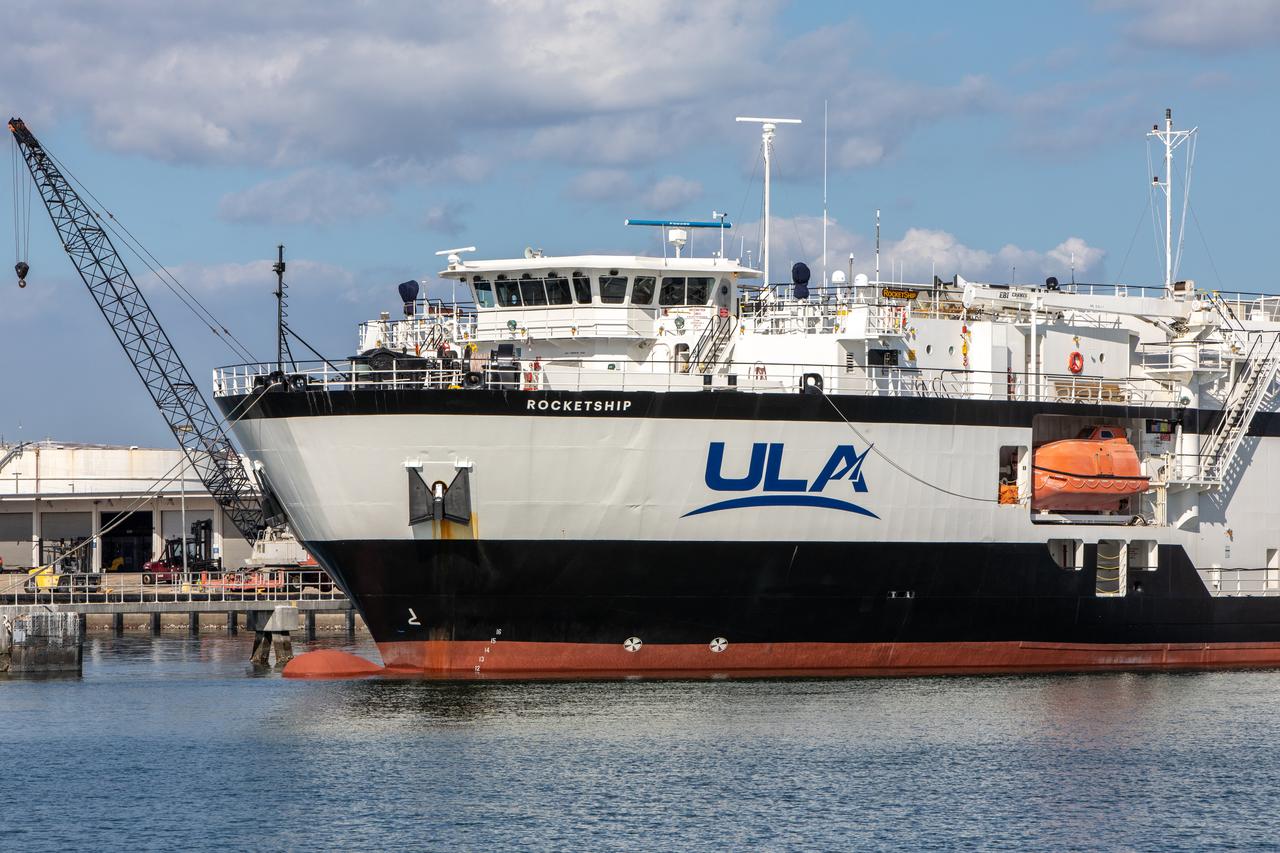
The United Launch Alliance cargo vessel, Rocketship, is docked at Florida’s Port Canaveral on Nov. 21, 2019, after arriving with the Atlas V booster and Centaur upper stage that will launch the Solar Orbiter spacecraft. Once offloaded, the booster was transported to the Atlas Spaceflight Operations Center and the Centaur was transported to a separate facility, both at nearby Cape Canaveral Air Force Station. Solar Orbiter is a European Space Agency mission with strong NASA participation. The mission aims to study the Sun, its outer atmosphere and solar winds. The spacecraft will provide the first images of the Sun’s poles. NASA’s Launch Services Program based at Kennedy is managing the launch. Liftoff is scheduled for Feb. 5, 2020, from Cape Canaveral Air Force Station aboard the ULA Atlas V rocket.
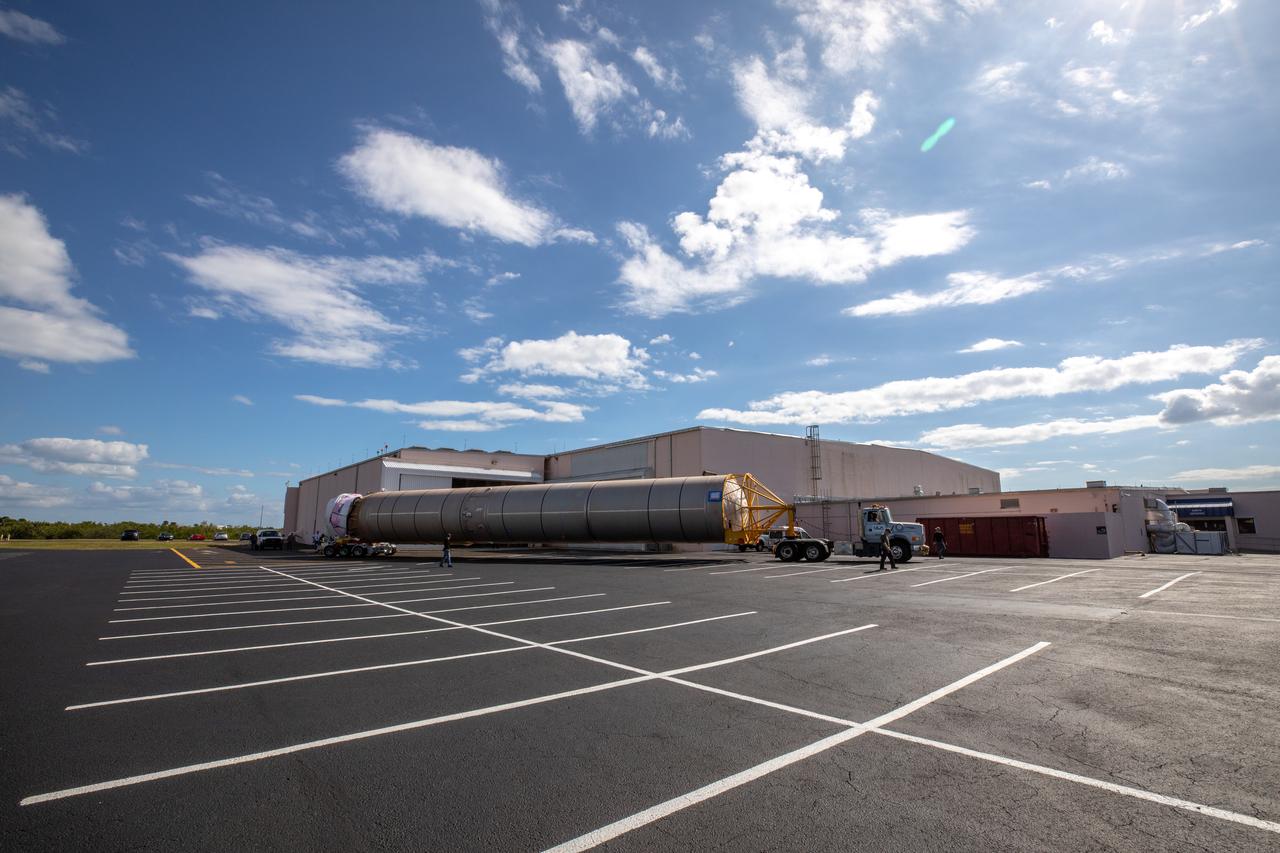
The United Launch Alliance Atlas V booster that will launch the Solar Orbiter spacecraft is delivered by truck to the Atlas Spaceflight Operations Center at Florida’s Cape Canaveral Air Force Station on Nov. 21, 2019. The company’s Rocketship vessel carried the booster from its manufacturing facility in Decatur, Alabama, to Port Canaveral. Solar Orbiter is a European Space Agency mission with strong NASA participation. The mission aims to study the Sun, its outer atmosphere and solar winds. The spacecraft will provide the first images of the Sun’s poles. NASA’s Launch Services Program based at Kennedy is managing the launch. Liftoff is scheduled for Feb. 5, 2020, from Launch Complex 41 at Cape Canaveral Air Force Station aboard the ULA Atlas V rocket.
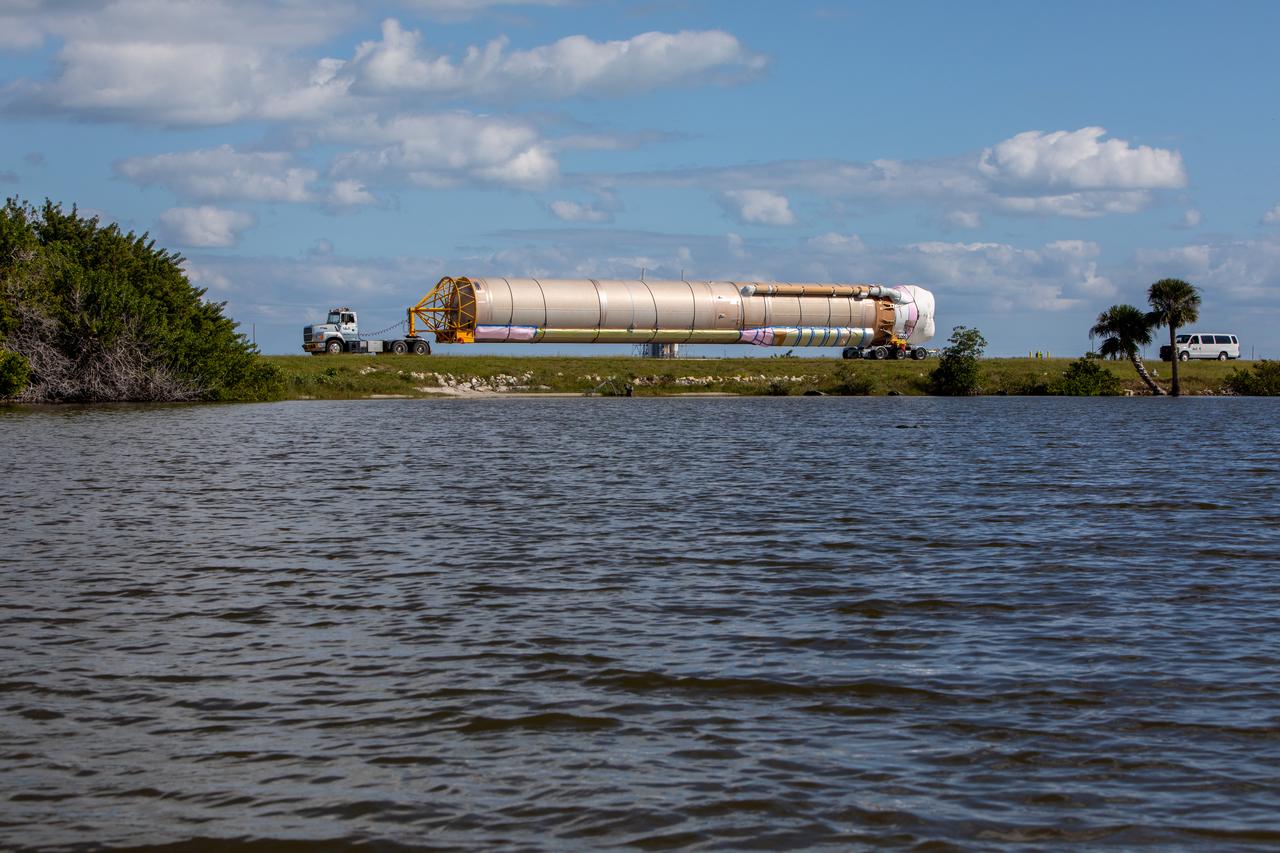
The United Launch Alliance Atlas V booster that will launch the Solar Orbiter spacecraft is transported by truck from Port Canaveral to the Atlas Spaceflight Operations Center at Florida’s Cape Canaveral Air Force Station on Nov. 21, 2019. The company’s Rocketship vessel carried the booster from its manufacturing facility in Decatur, Alabama, to the port. Solar Orbiter is a European Space Agency mission with strong NASA participation. The mission aims to study the Sun, its outer atmosphere and solar winds. The spacecraft will provide the first images of the Sun’s poles. NASA’s Launch Services Program based at Kennedy is managing the launch. Liftoff is scheduled for Feb. 5, 2020, from Launch Complex 41 at Cape Canaveral Air Force Station aboard the ULA Atlas V rocket.
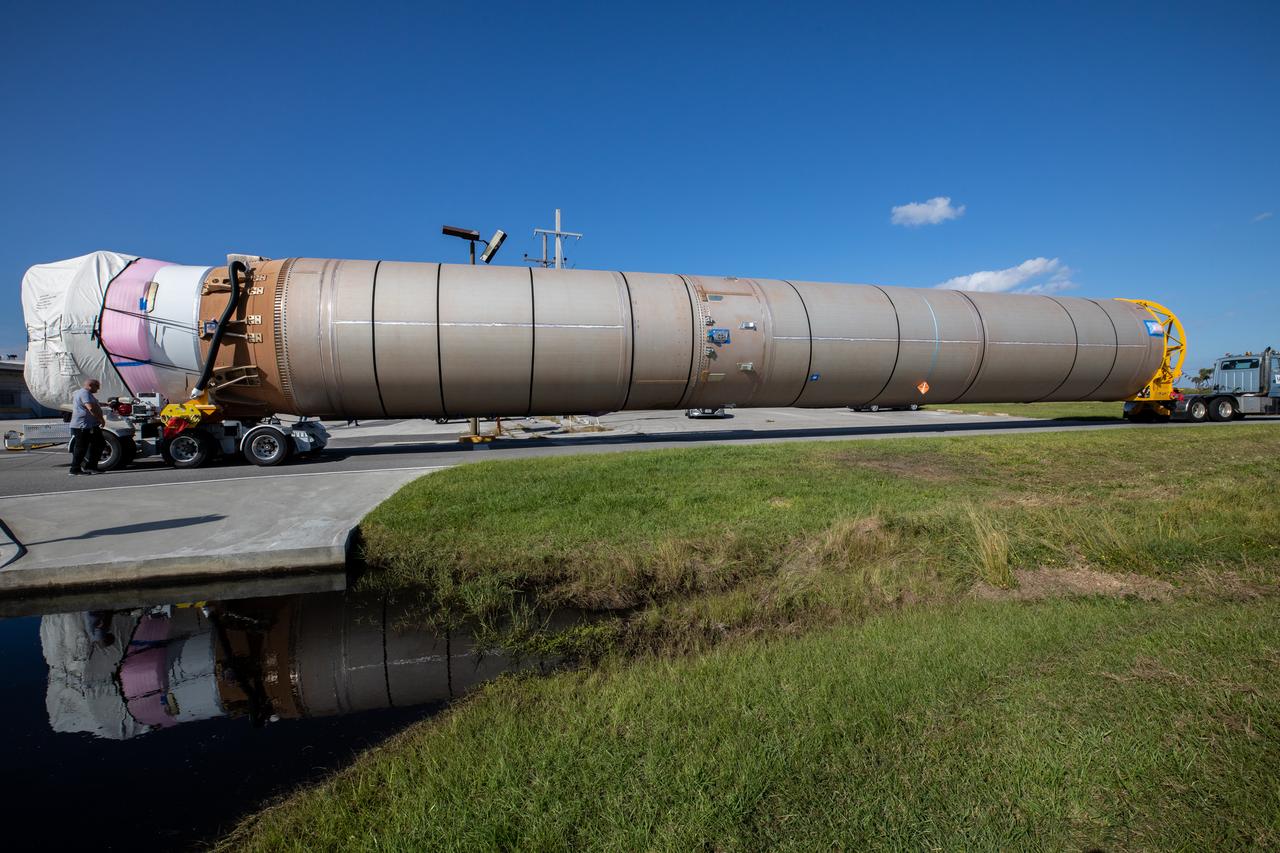
The United Launch Alliance Atlas V booster that will launch the Solar Orbiter spacecraft is transported by truck from Port Canaveral to the Atlas Spaceflight Operations Center at Florida’s Cape Canaveral Air Force Station on Nov. 21, 2019. The company’s Rocketship vessel carried the booster from its manufacturing facility in Decatur, Alabama, to the port. Solar Orbiter is a European Space Agency mission with strong NASA participation. The mission aims to study the Sun, its outer atmosphere and solar winds. The spacecraft will provide the first images of the Sun’s poles. NASA’s Launch Services Program based at Kennedy is managing the launch. Liftoff is scheduled for Feb. 5, 2020, from Launch Complex 41 at Cape Canaveral Air Force Station aboard the ULA Atlas V rocket.
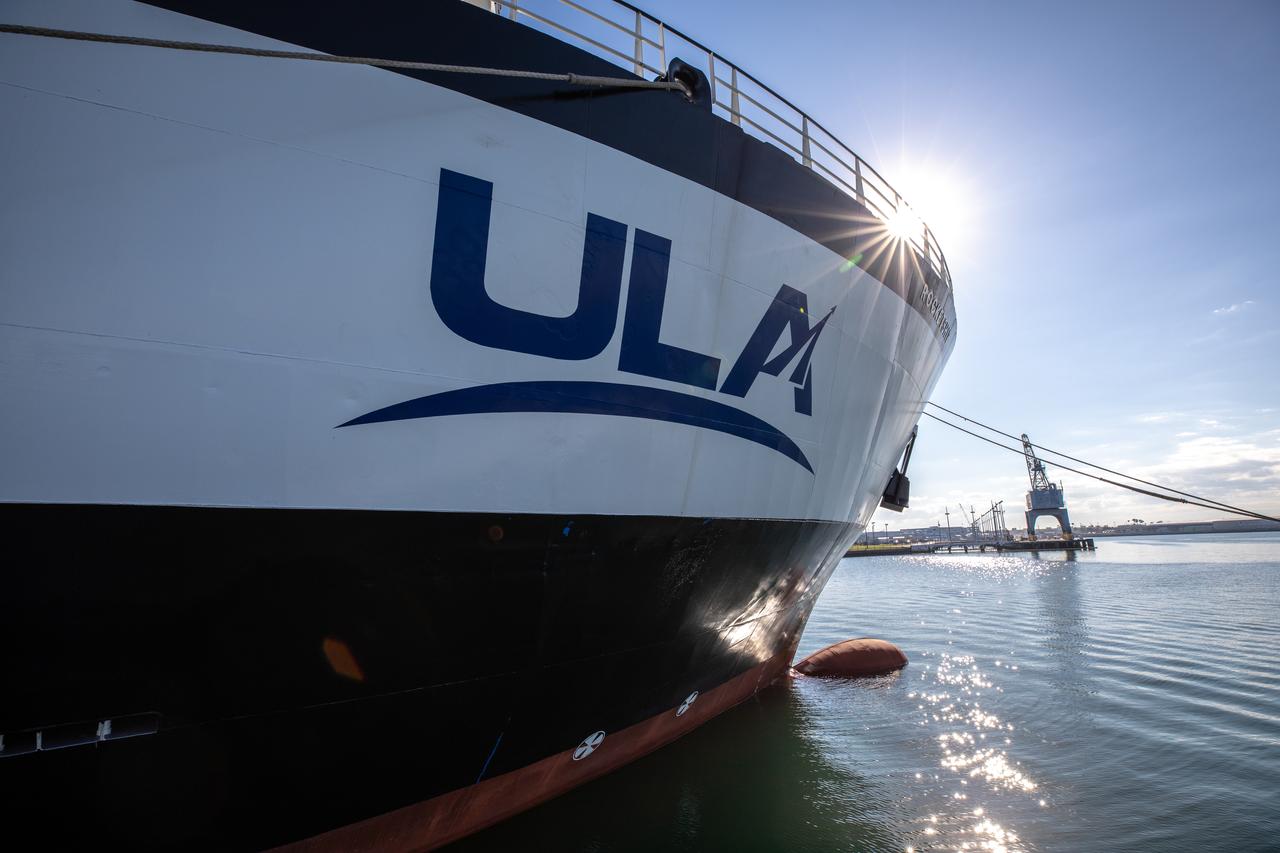
The United Launch Alliance cargo vessel, Rocketship, is docked at Florida’s Port Canaveral on Nov. 21, 2019, after arriving with the Atlas V booster and Centaur upper stage that will launch the Solar Orbiter spacecraft. Once offloaded, the booster was transported to the Atlas Spaceflight Operations Center and the Centaur was transported to a separate facility, both at nearby Cape Canaveral Air Force Station. Solar Orbiter is a European Space Agency mission with strong NASA participation. The mission aims to study the Sun, its outer atmosphere and solar winds. The spacecraft will provide the first images of the Sun’s poles. NASA’s Launch Services Program based at Kennedy is managing the launch. Liftoff is scheduled for Feb. 5, 2020, from Cape Canaveral Air Force Station aboard the ULA Atlas V rocket.
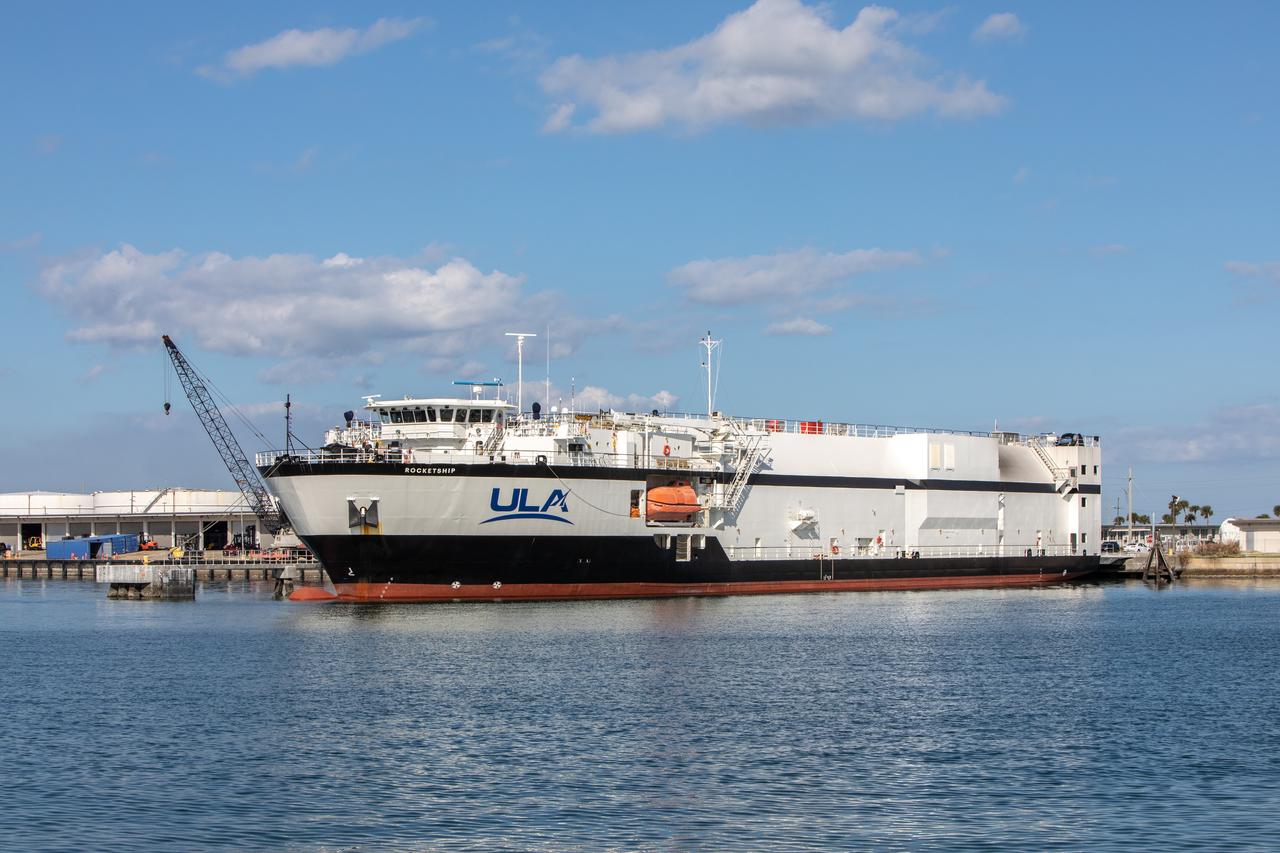
The United Launch Alliance cargo vessel, Rocketship, is docked at Florida’s Port Canaveral on Nov. 21, 2019, after arriving with the Atlas V booster and Centaur upper stage that will launch the Solar Orbiter spacecraft. Once offloaded, the booster was transported to the Atlas Spaceflight Operations Center and the Centaur was transported to a separate facility, both at nearby Cape Canaveral Air Force Station. Solar Orbiter is a European Space Agency mission with strong NASA participation. The mission aims to study the Sun, its outer atmosphere and solar winds. The spacecraft will provide the first images of the Sun’s poles. NASA’s Launch Services Program based at Kennedy is managing the launch. Liftoff is scheduled for Feb. 5, 2020, from Cape Canaveral Air Force Station aboard the ULA Atlas V rocket.
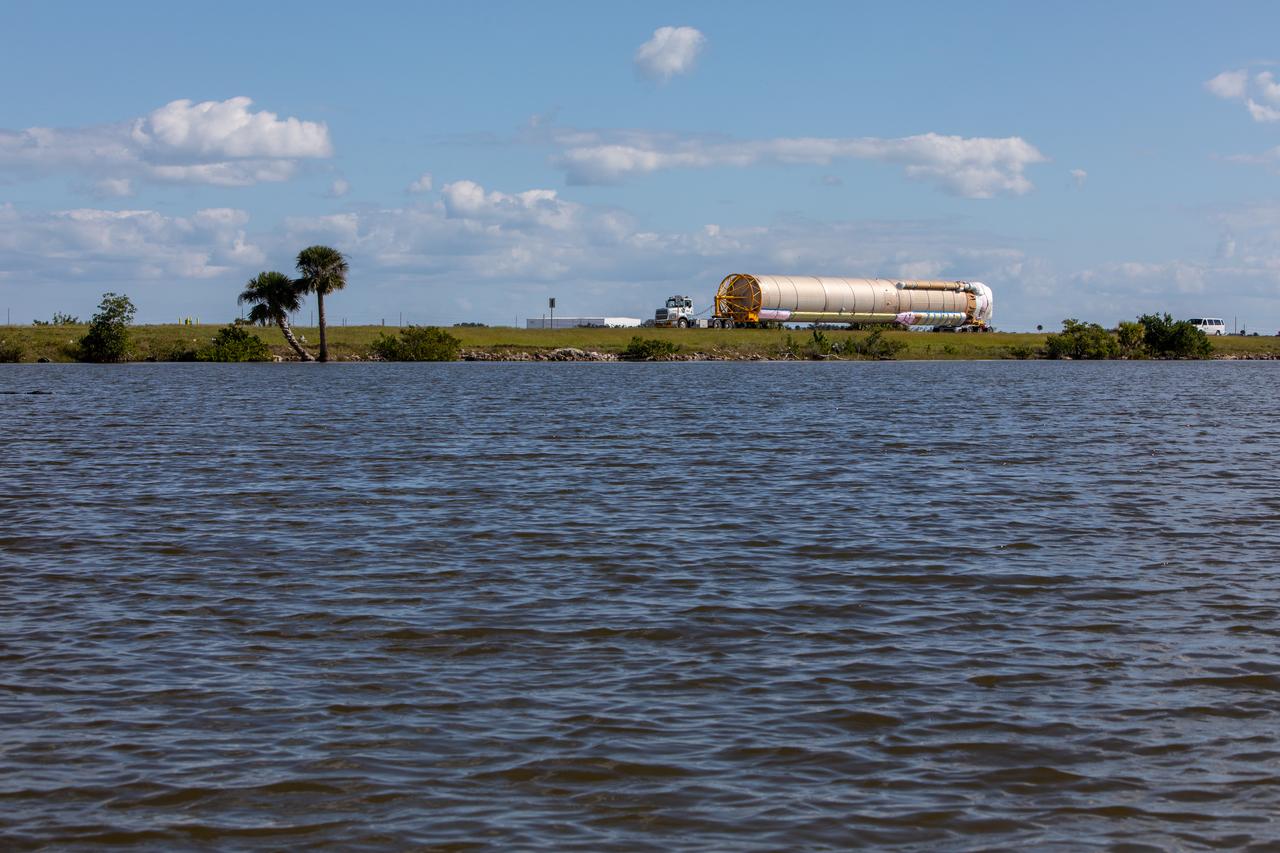
The United Launch Alliance Atlas V booster that will launch the Solar Orbiter spacecraft is transported by truck from Port Canaveral to the Atlas Spaceflight Operations Center at Florida’s Cape Canaveral Air Force Station on Nov. 21, 2019. The company’s Rocketship vessel carried the booster from its manufacturing facility in Decatur, Alabama, to the port. Solar Orbiter is a European Space Agency mission with strong NASA participation. The mission aims to study the Sun, its outer atmosphere and solar winds. The spacecraft will provide the first images of the Sun’s poles. NASA’s Launch Services Program based at Kennedy is managing the launch. Liftoff is scheduled for Feb. 5, 2020, from Launch Complex 41 at Cape Canaveral Air Force Station aboard the ULA Atlas V rocket.
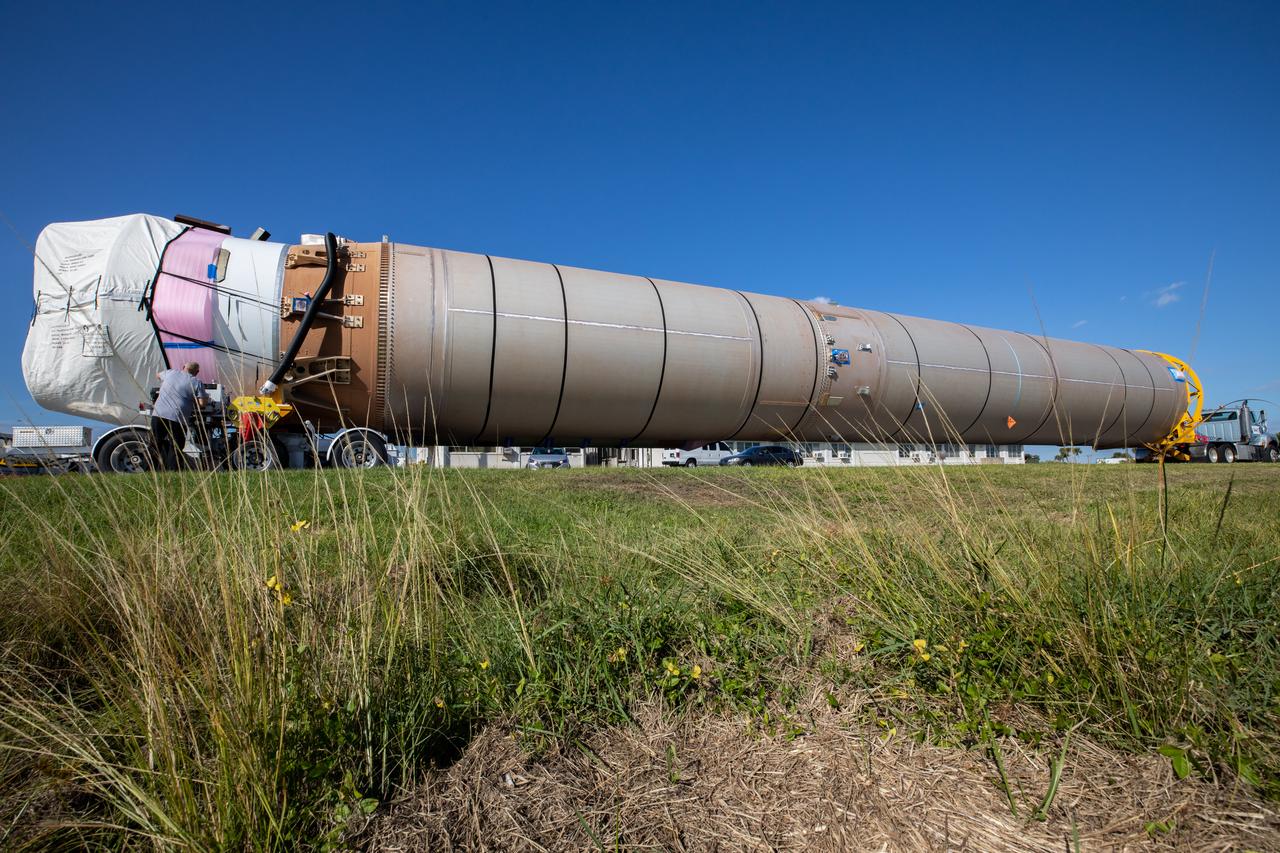
The United Launch Alliance Atlas V booster that will launch the Solar Orbiter spacecraft is transported by truck from Port Canaveral to the Atlas Spaceflight Operations Center at Florida’s Cape Canaveral Air Force Station on Nov. 21, 2019. The company’s Rocketship vessel carried the booster from its manufacturing facility in Decatur, Alabama, to the port. Solar Orbiter is a European Space Agency mission with strong NASA participation. The mission aims to study the Sun, its outer atmosphere and solar winds. The spacecraft will provide the first images of the Sun’s poles. NASA’s Launch Services Program based at Kennedy is managing the launch. Liftoff is scheduled for Feb. 5, 2020, from Launch Complex 41 at Cape Canaveral Air Force Station aboard the ULA Atlas V rocket.
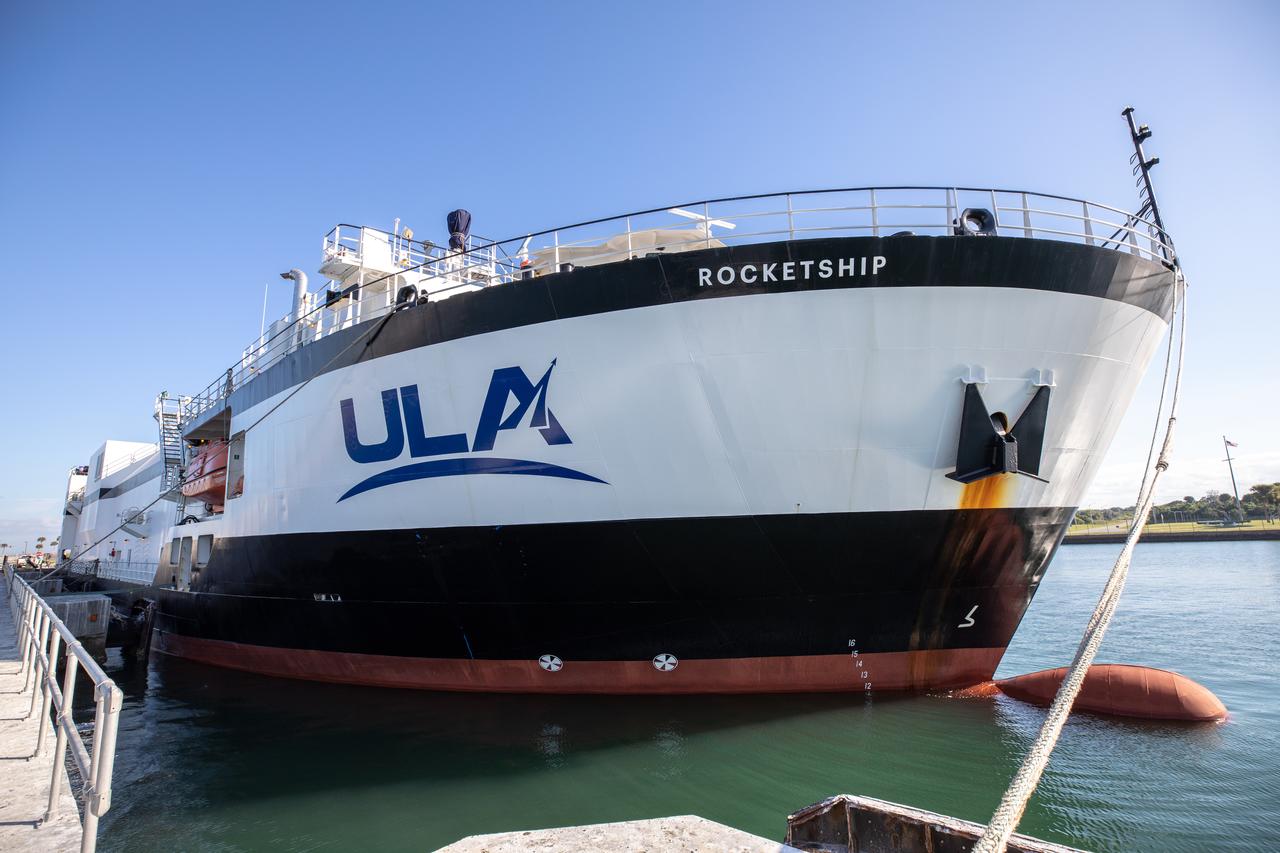
The United Launch Alliance cargo vessel, Rocketship, is docked at Florida’s Port Canaveral on Nov. 21, 2019, after arriving with the Atlas V booster and Centaur upper stage that will launch the Solar Orbiter spacecraft. Once offloaded, the booster was transported to the Atlas Spaceflight Operations Center and the Centaur was transported to a separate facility, both at nearby Cape Canaveral Air Force Station. Solar Orbiter is a European Space Agency mission with strong NASA participation. The mission aims to study the Sun, its outer atmosphere and solar winds. The spacecraft will provide the first images of the Sun’s poles. NASA’s Launch Services Program based at Kennedy is managing the launch. Liftoff is scheduled for Feb. 5, 2020, from Cape Canaveral Air Force Station aboard the ULA Atlas V rocket.
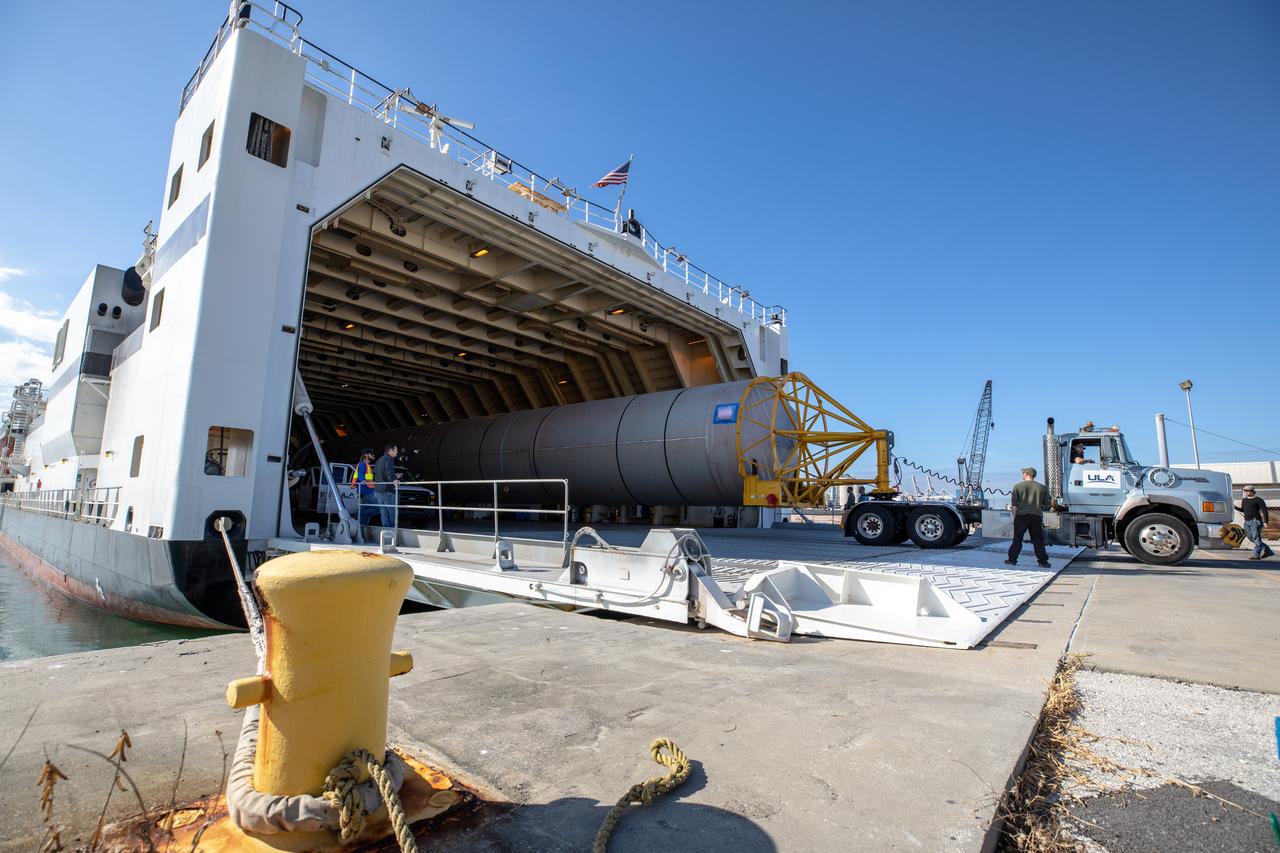
The United Launch Alliance Atlas V booster that will launch the Solar Orbiter spacecraft is removed from the company’s Rocketship vessel upon its arrival at Florida’s Port Canaveral on Nov. 21, 2019. Once offloaded, the booster was transported to the Atlas Spaceflight Operations Center at nearby Cape Canaveral Air Force Station. Solar Orbiter is a European Space Agency mission with strong NASA participation. The mission aims to study the Sun, its outer atmosphere and solar winds. The spacecraft will provide the first images of the Sun’s poles. NASA’s Launch Services Program based at Kennedy is managing the launch. Liftoff is scheduled for Feb. 5, 2020, from Launch Complex 41 at Cape Canaveral Air Force Station aboard the ULA Atlas V rocket.
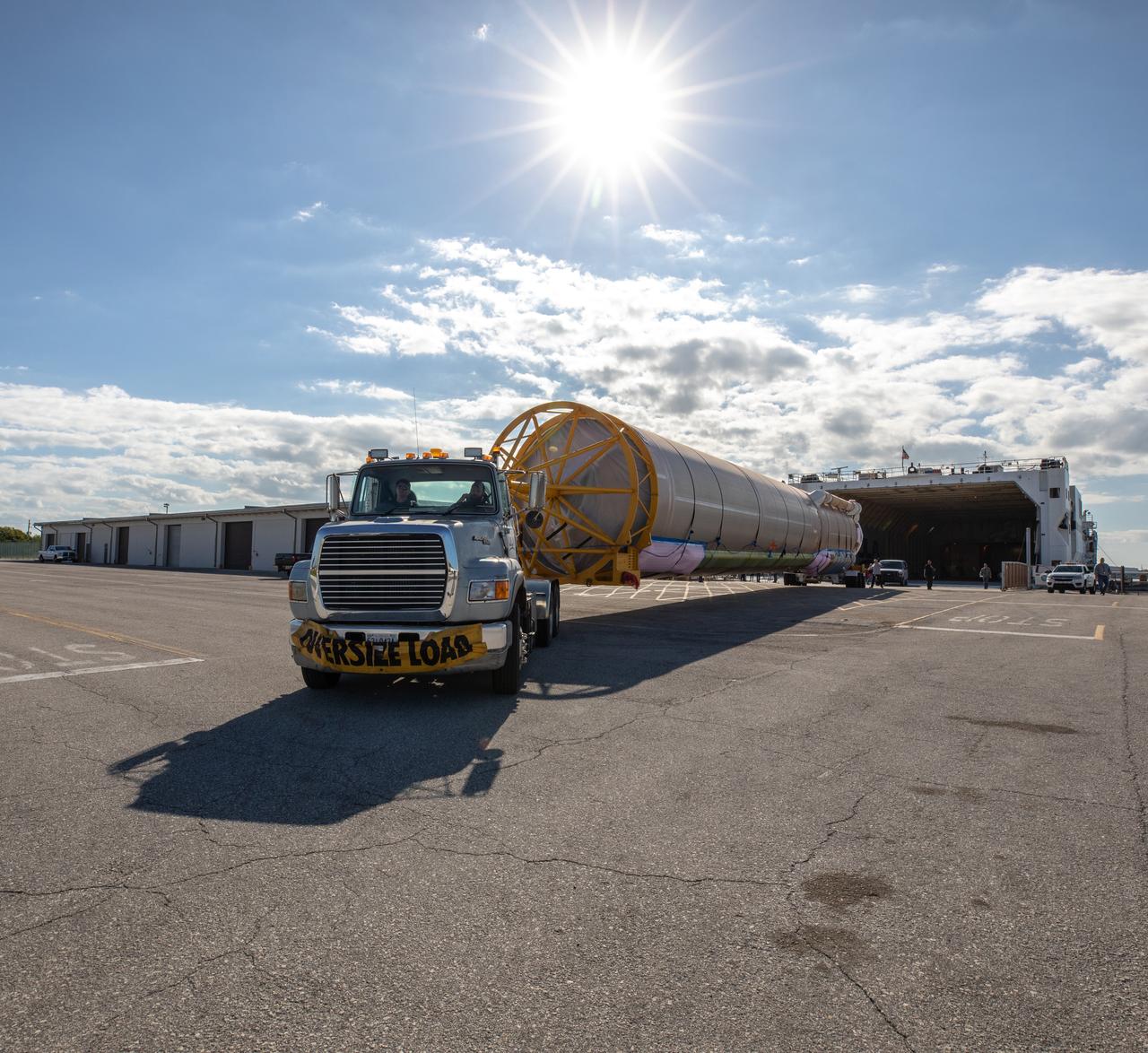
The United Launch Alliance Atlas V booster that will launch the Solar Orbiter spacecraft is removed from the company’s Rocketship vessel upon its arrival at Florida’s Port Canaveral on Nov. 21, 2019. Once offloaded, the booster was transported to the Atlas Spaceflight Operations Center at nearby Cape Canaveral Air Force Station. Solar Orbiter is a European Space Agency mission with strong NASA participation. The mission aims to study the Sun, its outer atmosphere and solar winds. The spacecraft will provide the first images of the Sun’s poles. NASA’s Launch Services Program based at Kennedy is managing the launch. Liftoff is scheduled for Feb. 5, 2020, from Launch Complex 41 at Cape Canaveral Air Force Station aboard the ULA Atlas V rocket.
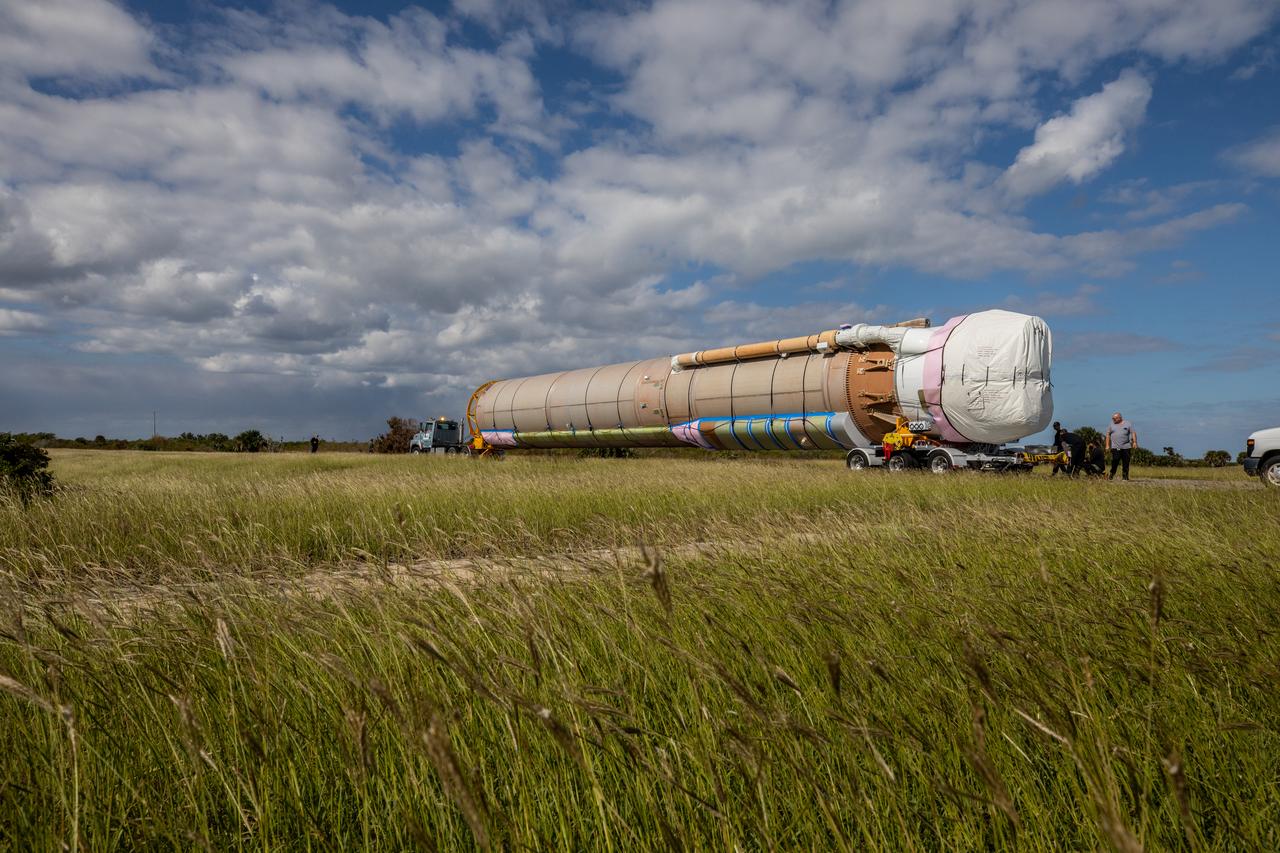
The United Launch Alliance Atlas V booster that will launch the Solar Orbiter spacecraft is transported by truck from Port Canaveral to the Atlas Spaceflight Operations Center at Florida’s Cape Canaveral Air Force Station on Nov. 21, 2019. The company’s Rocketship vessel carried the booster from its manufacturing facility in Decatur, Alabama, to the port. Solar Orbiter is a European Space Agency mission with strong NASA participation. The mission aims to study the Sun, its outer atmosphere and solar winds. The spacecraft will provide the first images of the Sun’s poles. NASA’s Launch Services Program based at Kennedy is managing the launch. Liftoff is scheduled for Feb. 5, 2020, from Launch Complex 41 at Cape Canaveral Air Force Station aboard the ULA Atlas V rocket.