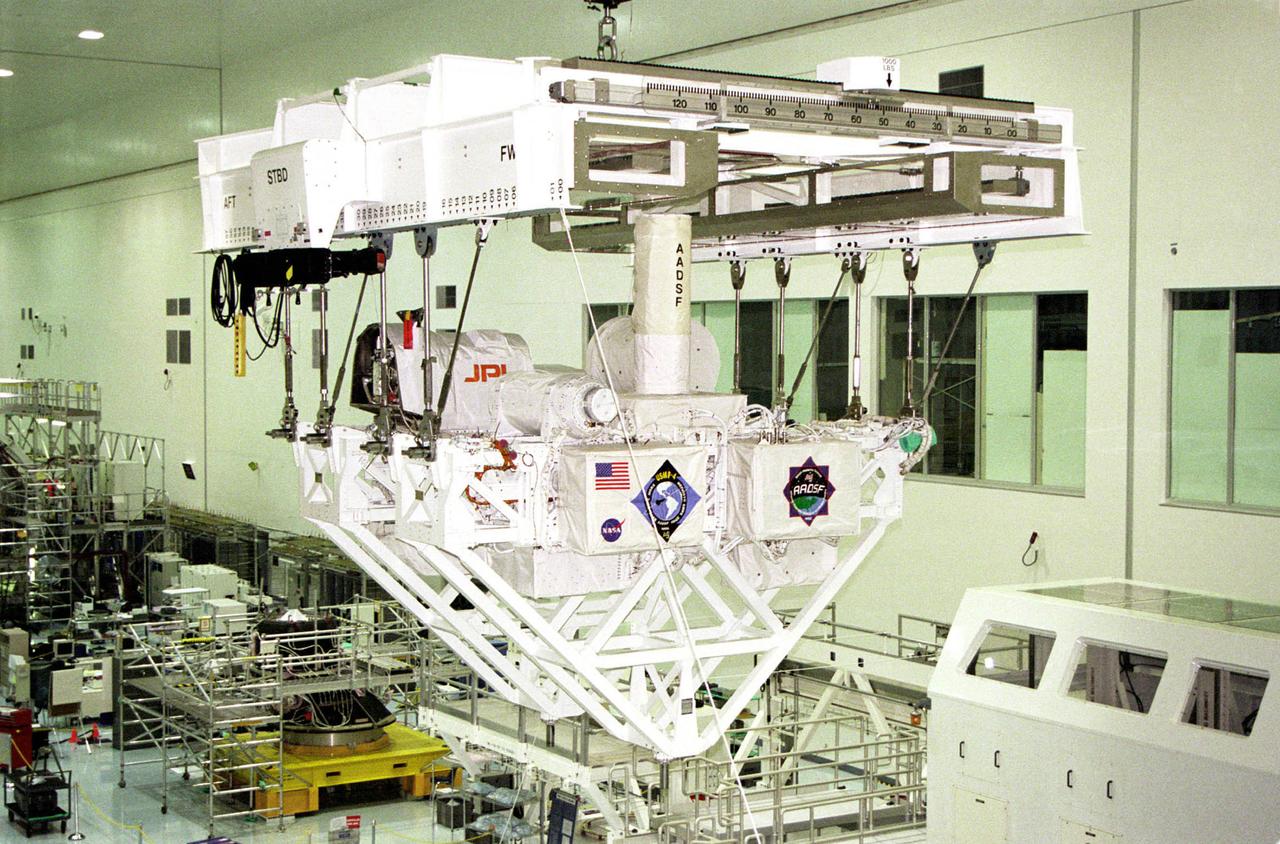
The USMP mission series pioneered sophisticated telescience technology to control experiments in the open cargo bay of the space shuttle. At Kennedy Space Center, the system of trusses that supported the USMP-4 experiments was loaded into the cargo bay. The bay doors were closed during launch but were opened in orbit.
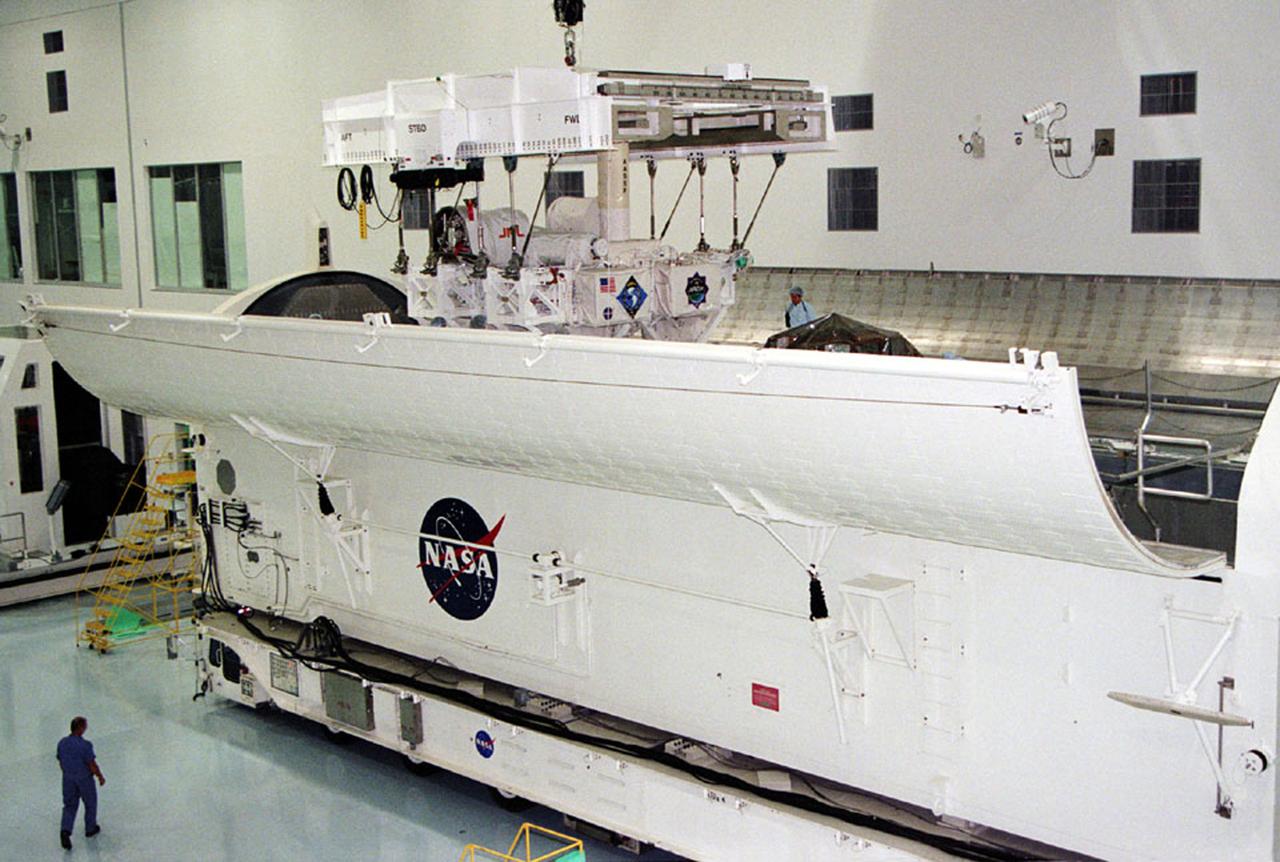
The USMP mission series pioneered sophisticated telescience technology to control experiments in the open cargo bay of the space shuttle. At Kennedy Space Center, the system of trusses that supported the USMP-4 experiments was loaded into the cargo bay. The bay doors were closed during launch but were opened in orbit.
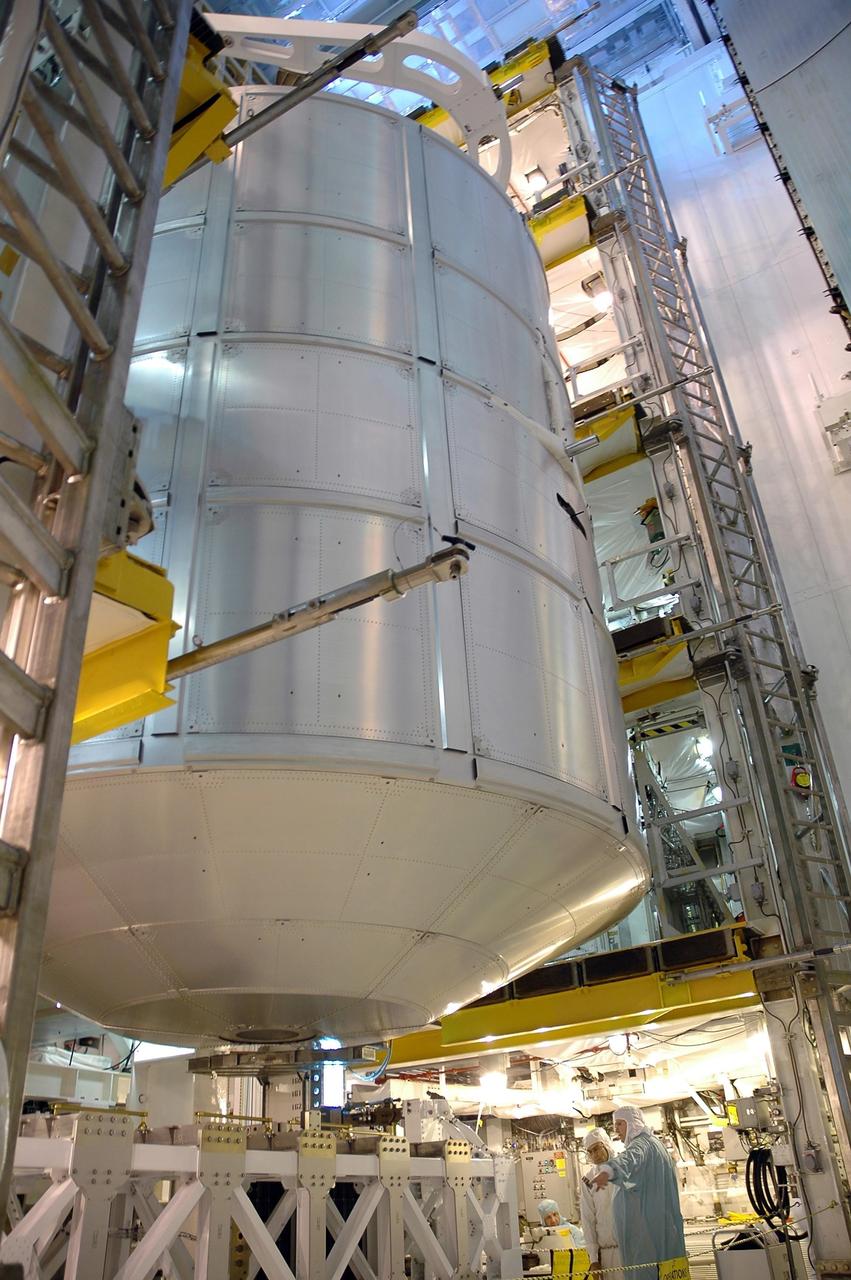
KENNEDY SPACE CENTER, FLA. -- From inside the payload changeout room on the rotating service structure on Launch Pad 39B, the multi-purpose logistics module Leonardo is being moved into Space Shuttle Discovery's payload bay. The payload ground-handling mechanism (PGHM) is used to transfer the module into the payload bay. Leonardo is a reusable logistics carrier. It is the primary delivery system used to resupply and return station cargo requiring a pressurized environment. Leonardo is part of the payload on mission STS-121. Other payloads include the integrated cargo carrier with the mobile transporter reel assembly and a spare pump module, and the lightweight multi-purpose experiment support structure carrier. Discovery is scheduled to launch in a window extending from July 1 through July 19. Photo credit: NASA/Jack Pfaller
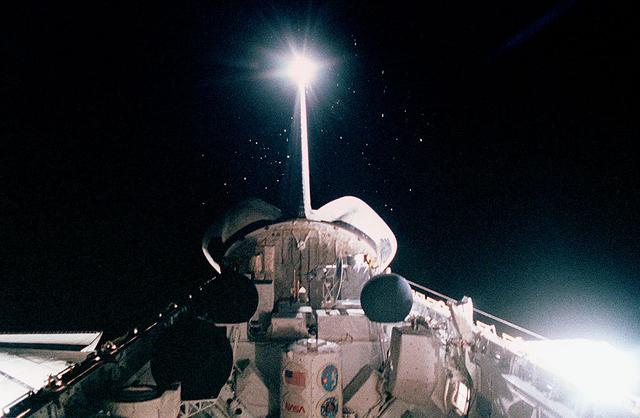
Space Shuttle Atlantis (STS-45) onboard photo of open cargo bay with the forward portion of the Atmospheric Laboratory for Applications and Science (Atlas-1) shown at night.
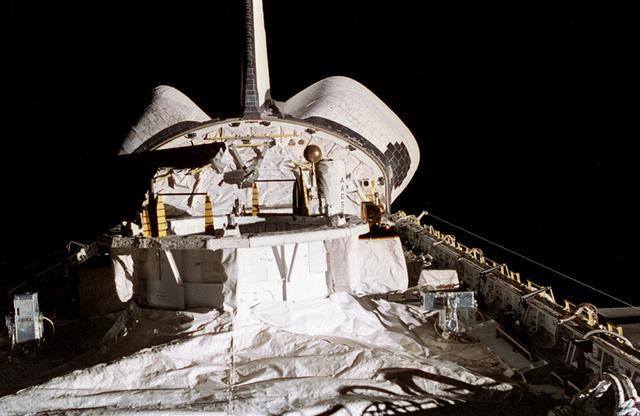
Onboard photo of space shuttle Columbia's (STS-75) open cargo bay carrying the United States Microgravity Payload-3 (USMP-3) at night.
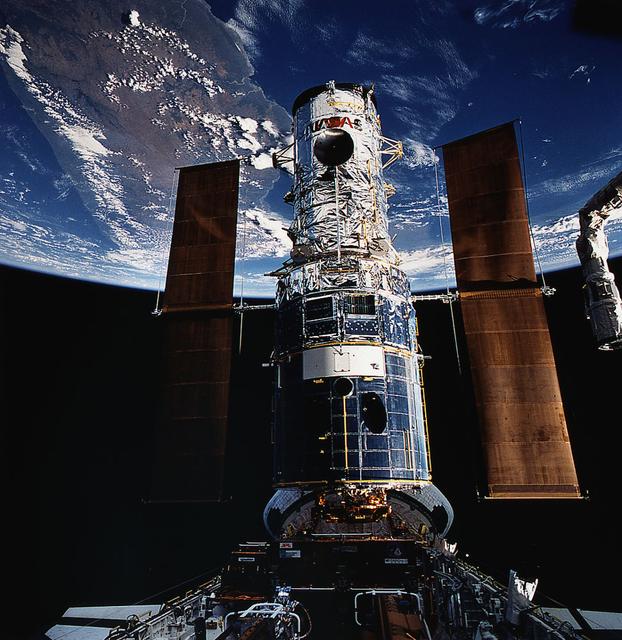
The Hubble Space Telescope (HST), backdropped over Madagascar, is berthed in Endeavour's cargo bay following its capture for repair by the STS-61 astronauts.
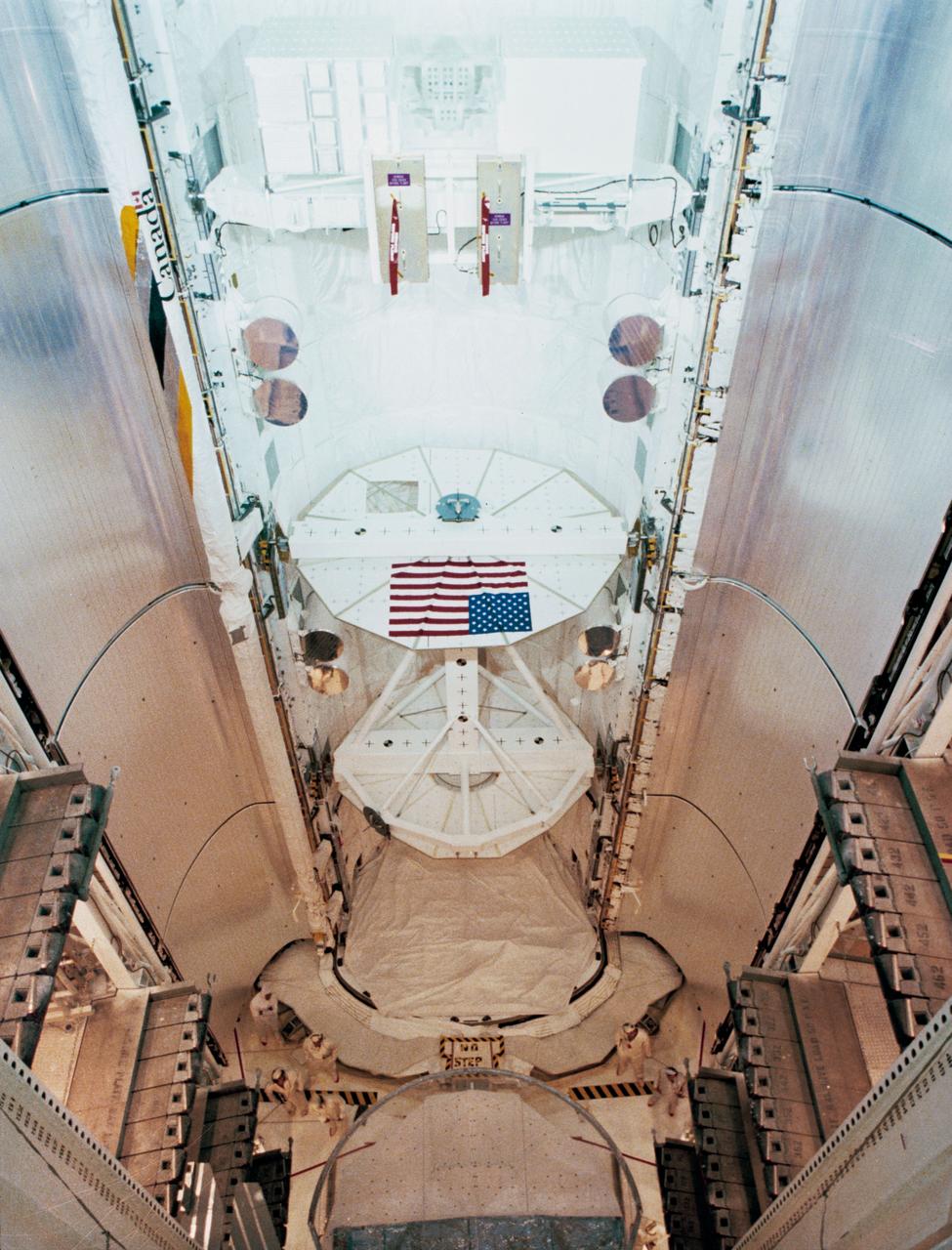
View of the Payload Flight Test Article (PFTA) installed into Challenger's cargo bay in the Payload Changeout Room at Pad 39A at the Kennedy Space Center (KSC). The American flag is visible on one side of the PFTA in the cargo bay. The Kennedy Space Center alternative photo number is KSC-108-83PC-566.
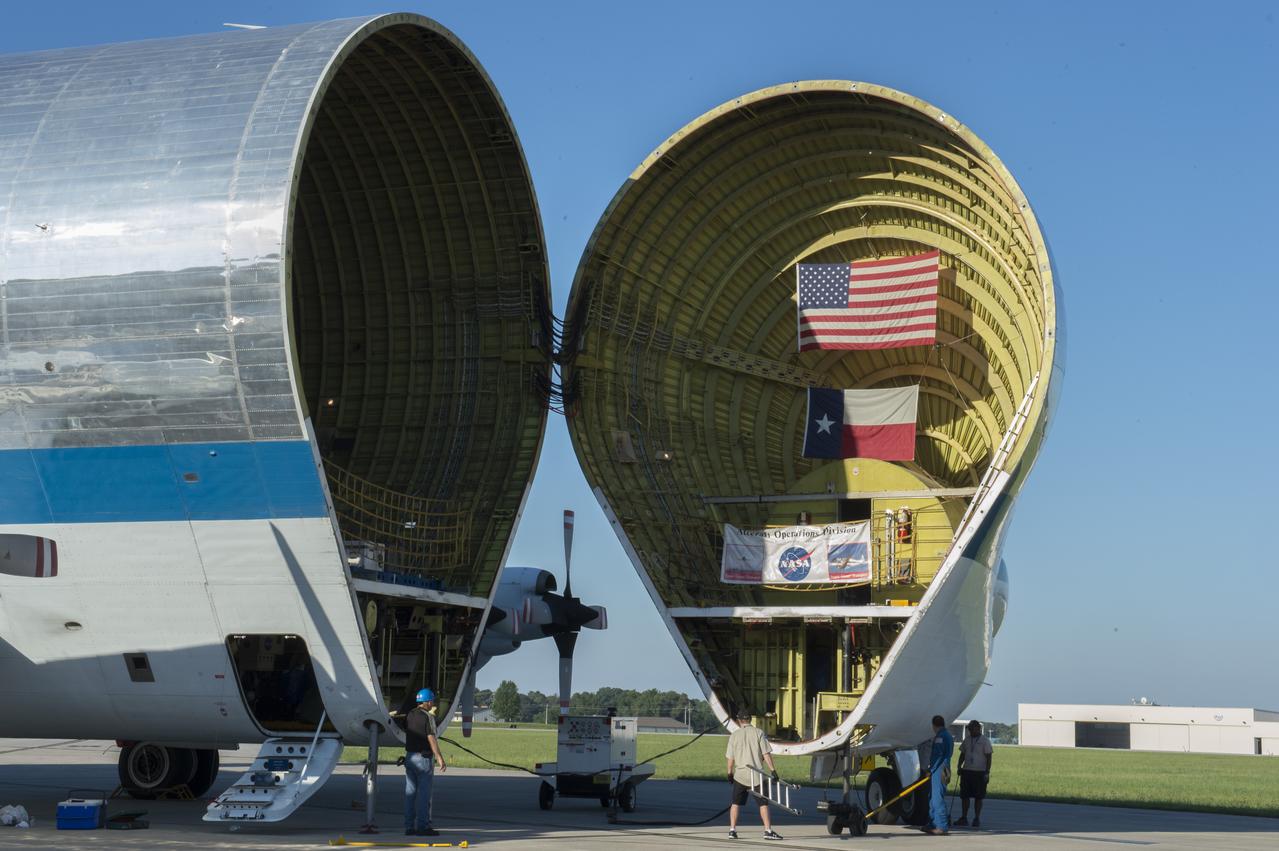
NASA's Super Guppie arrives at Redstone Arsenal airfield to transport the Orion stage adapter to Denver Colorado for further testing. The nose is open exposing the cargo bay.
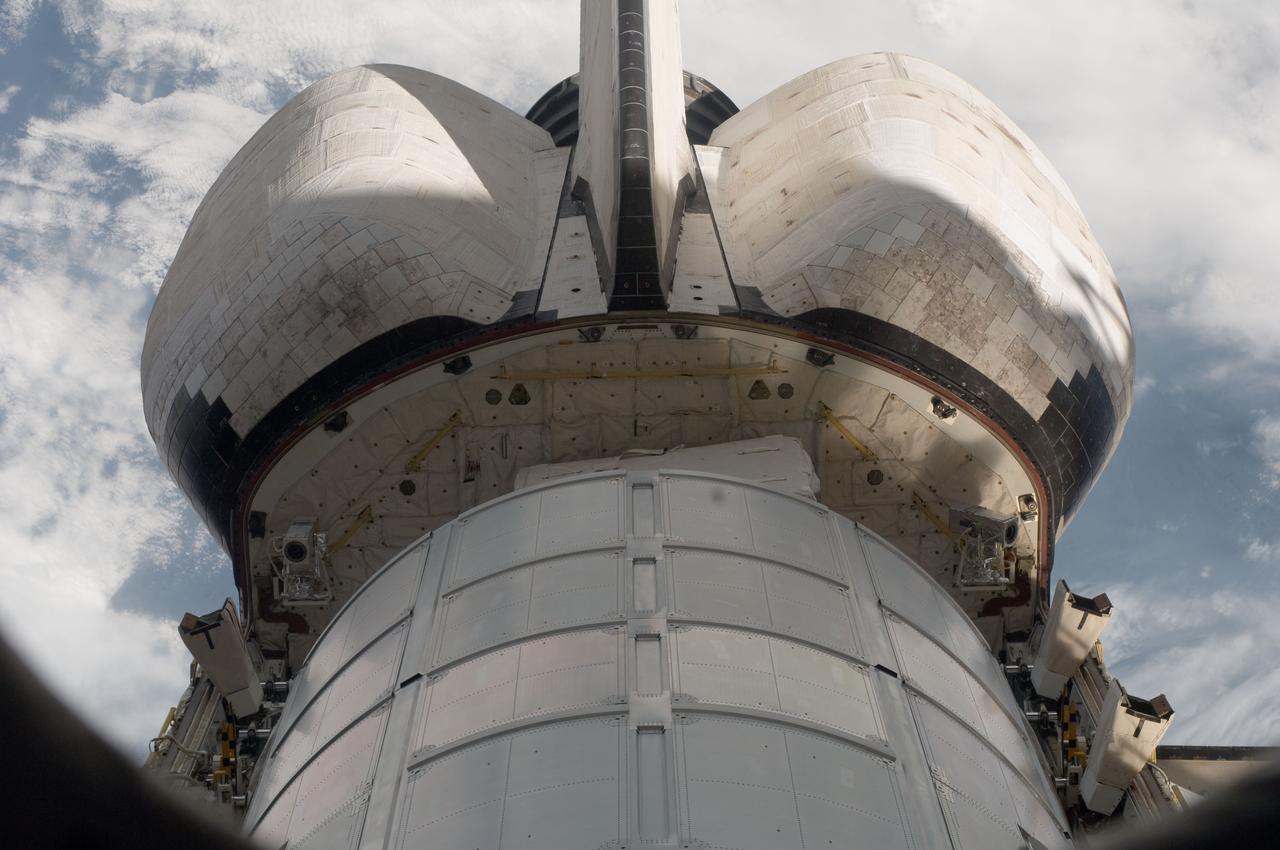
ISS028-E-017435 (18 July 2011) --- The space shuttle Atlantis' cargo bay now holds the Raffaello multi-purpose logistics module, as photographed by one of the Expedition 28 crew members onboard the International Space Station before the two spacecraft undocked.
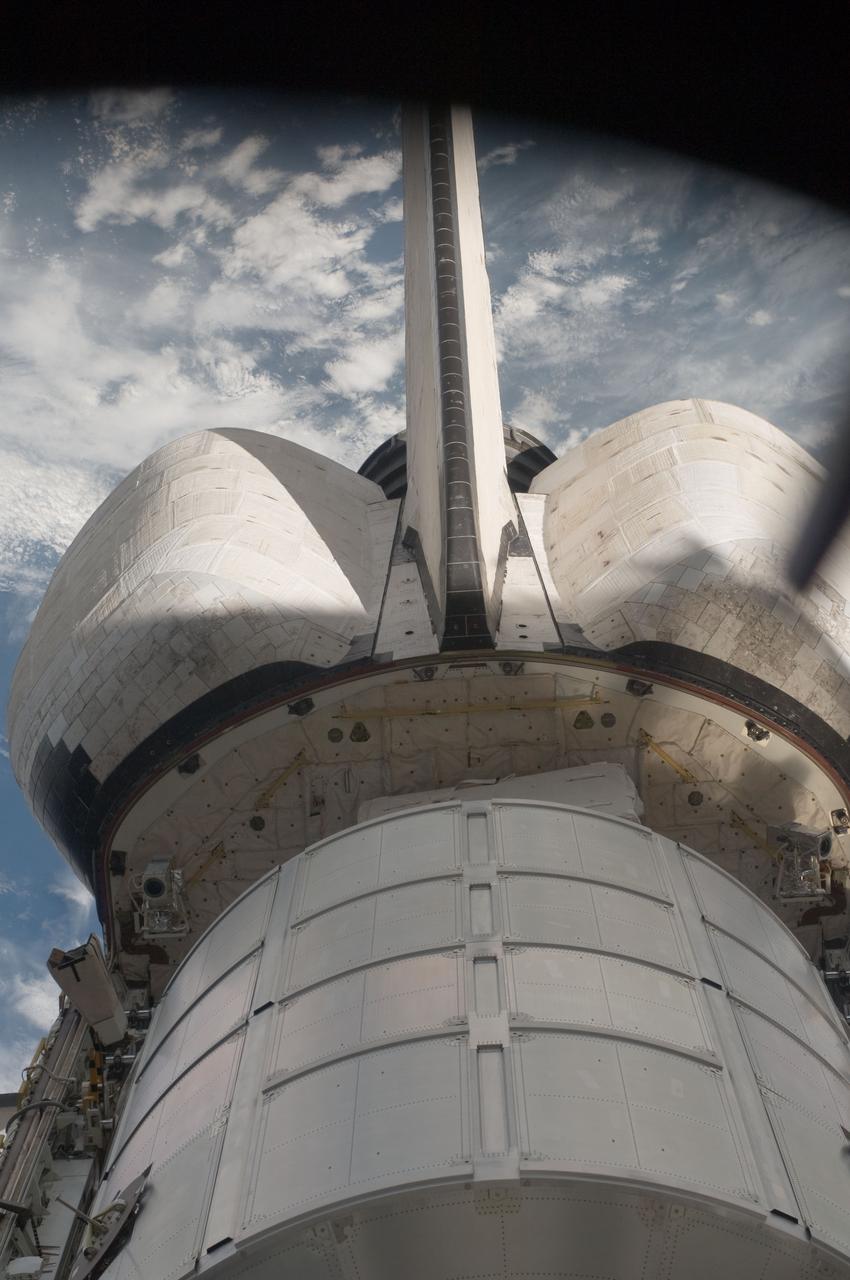
ISS028-E-017434 (18 July 2011) --- The space shuttle Atlantis' cargo bay now holds the Raffaello multi-purpose logistics module, as photographed by one of the Expedition 28 crew members onboard the International Space Station before the two spacecraft undocked.
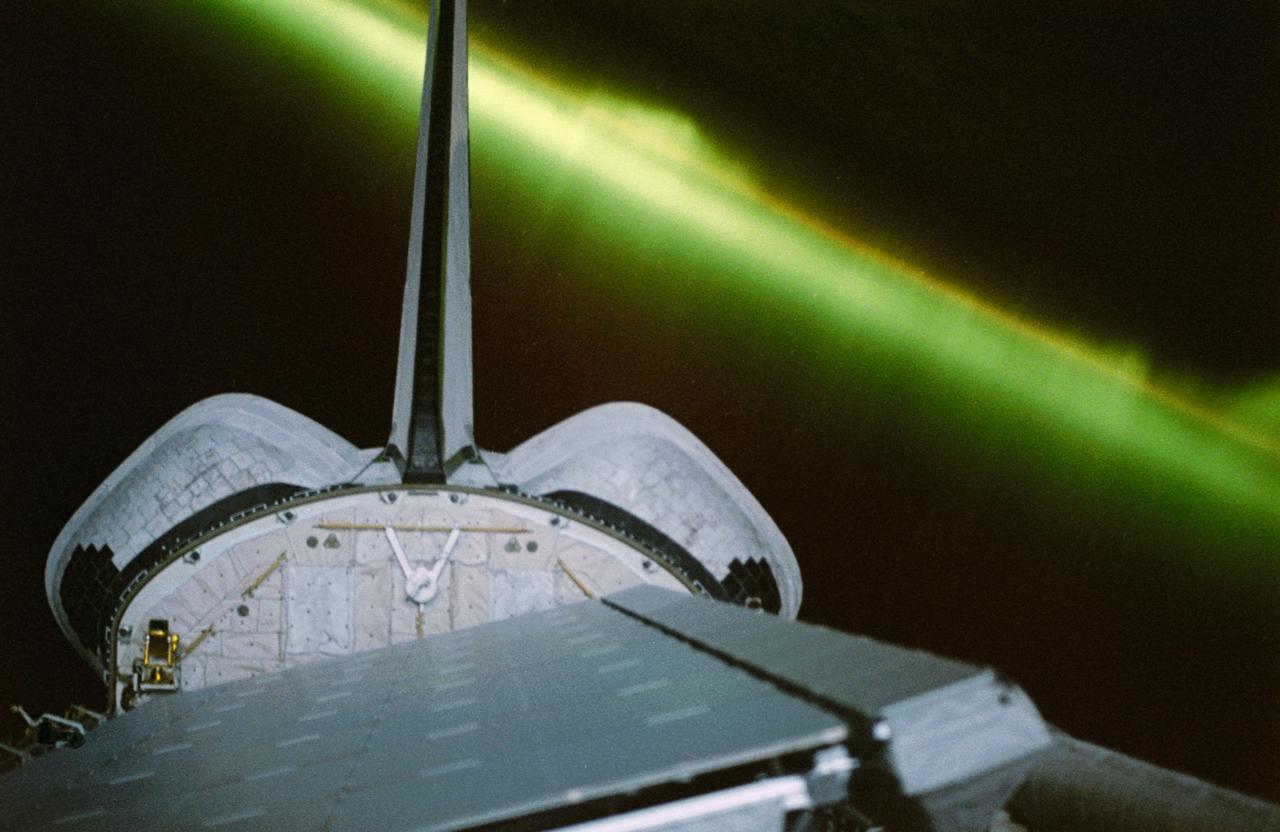
STS059-50-011 (9-20 April 94) --- A greenish appearing aurora forms the backdrop for this 35mm scene of the Earth orbiting Space Shuttle Endeavour's aft cargo bay. Featured in the bay are the antennae for the SIR-C/X-SAR imaging radar instruments, illuminated by moonlight. The crew sighted the southern lights (aurora australis) several times during each of the eleven days of the mission.
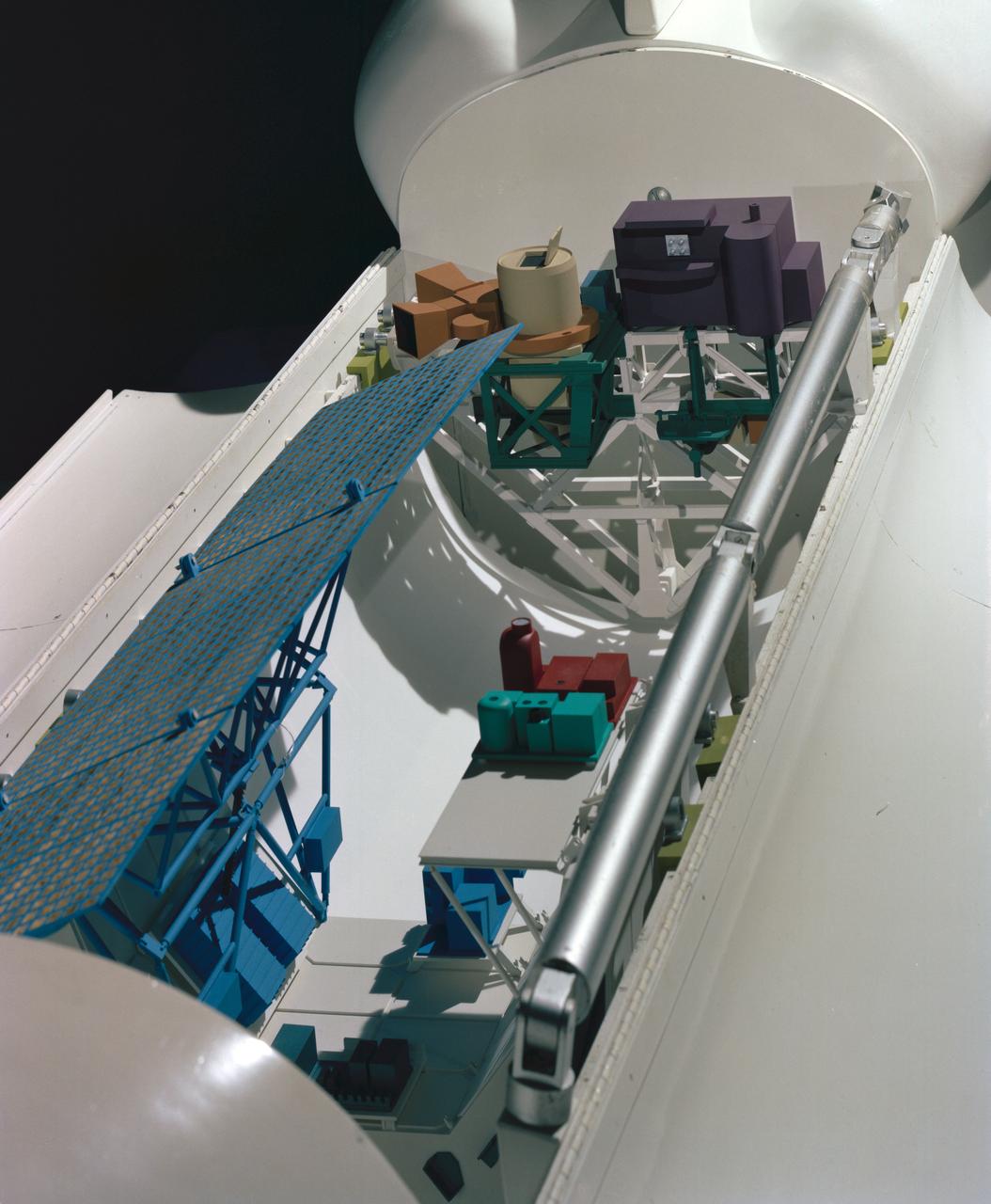
Model showing OSTA-3 and other payloads in the open shuttle orbiter cargo bay.
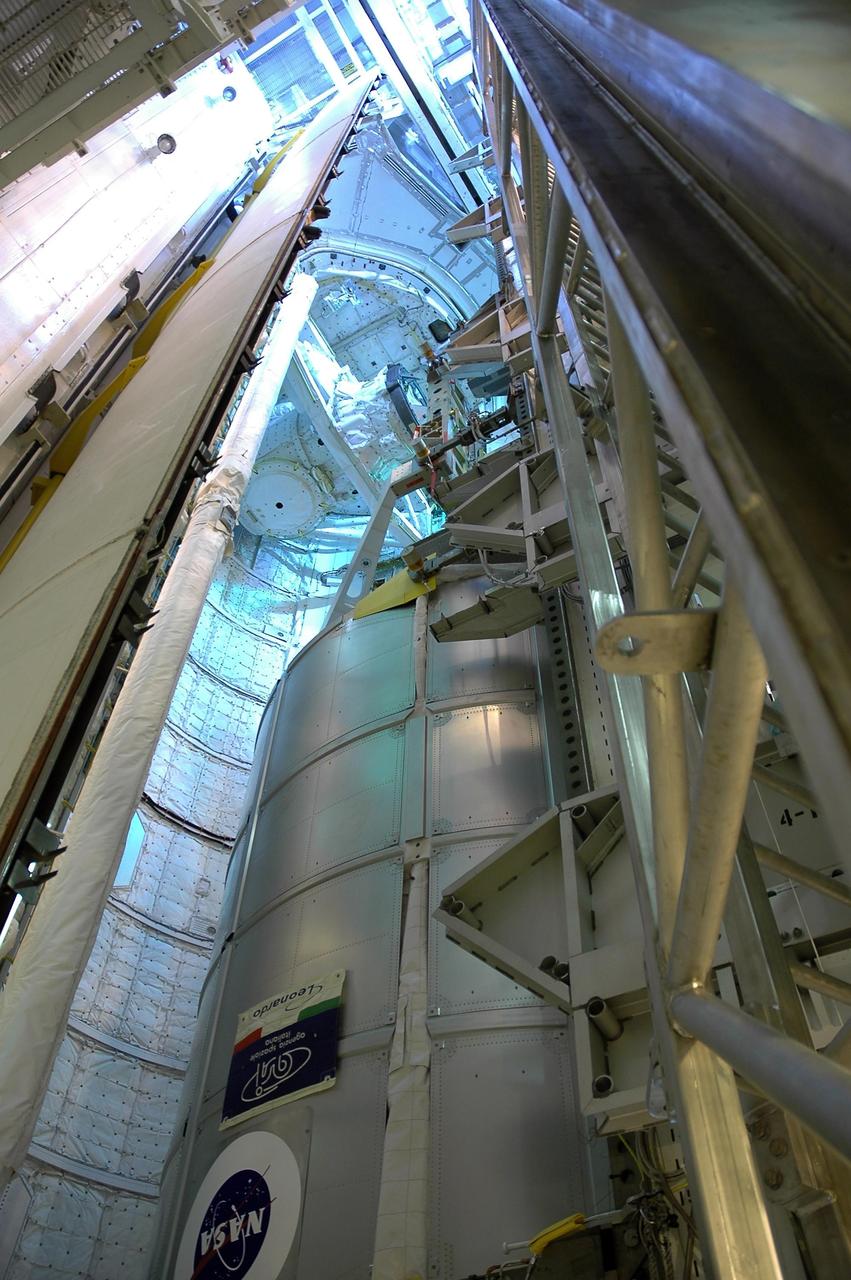
KENNEDY SPACE CENTER, FLA. -- From inside the payload changeout room on the rotating service structure on Launch Pad 39B, the multi-purpose logistics module Leonardo is lowered into Space Shuttle Discovery's payload bay. The payload ground-handling mechanism (PGHM) is used to transfer the module into the payload bay. Leonardo is a reusable logistics carrier. It is the primary delivery system used to resupply and return station cargo requiring a pressurized environment. Leonardo is part of the payload on mission STS-121. Other payloads include the integrated cargo carrier with the mobile transporter reel assembly and a spare pump module, and the lightweight multi-purpose experiment support structure carrier. Discovery is scheduled to launch in a window extending from July 1 through July 19. Photo credit: NASA/Jack Pfaller
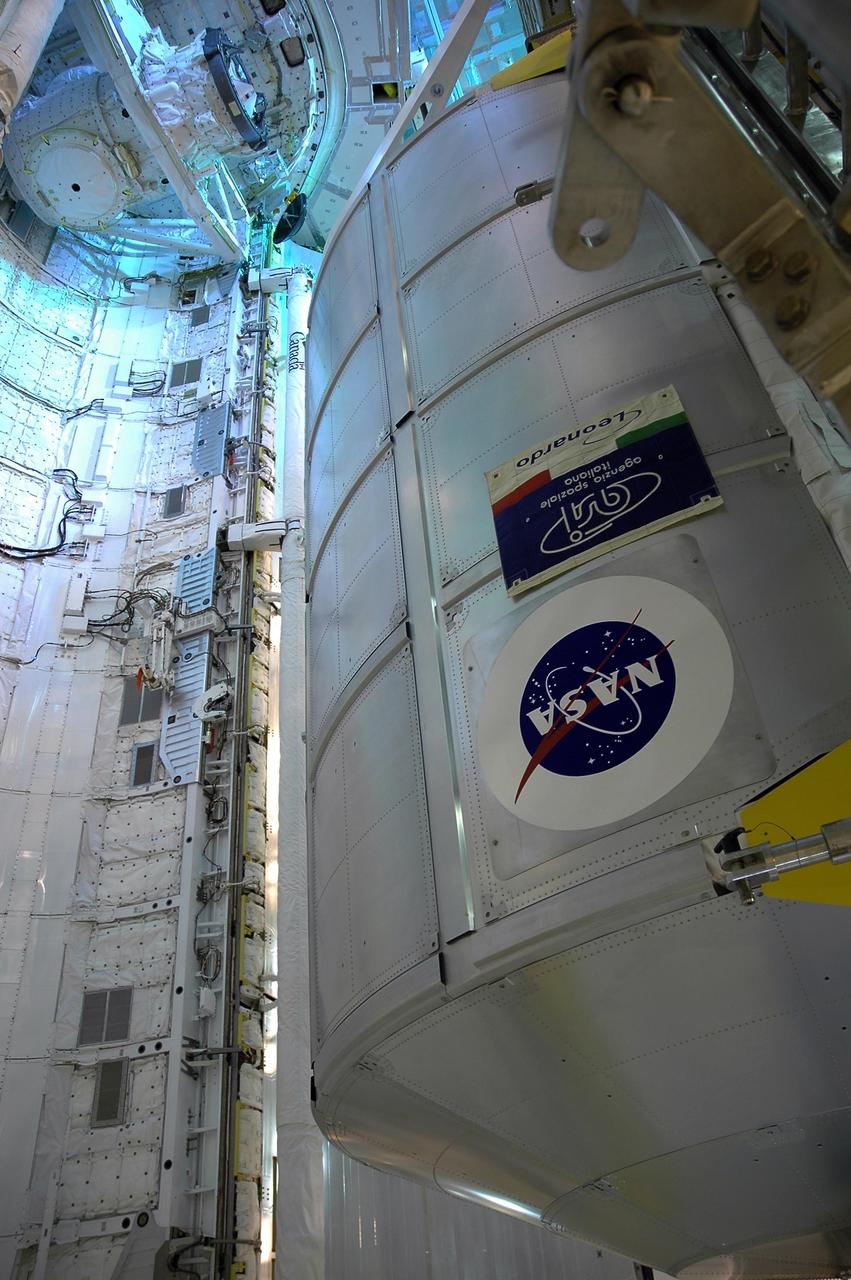
KENNEDY SPACE CENTER, FLA. -- From inside the payload changeout room on the rotating service structure on Launch Pad 39B, the multi-purpose logistics module Leonardo is being moved into Space Shuttle Discovery's payload bay (at left). The payload ground-handling mechanism (PGHM) is used to transfer the module into the payload bay. Leonardo is a reusable logistics carrier. It is the primary delivery system used to resupply and return station cargo requiring a pressurized environment. Leonardo is part of the payload on mission STS-121. Other payloads include the integrated cargo carrier with the mobile transporter reel assembly and a spare pump module, and the lightweight multi-purpose experiment support structure carrier. Discovery is scheduled to launch in a window extending from July 1 through July 19. Photo credit: NASA/Jack Pfaller
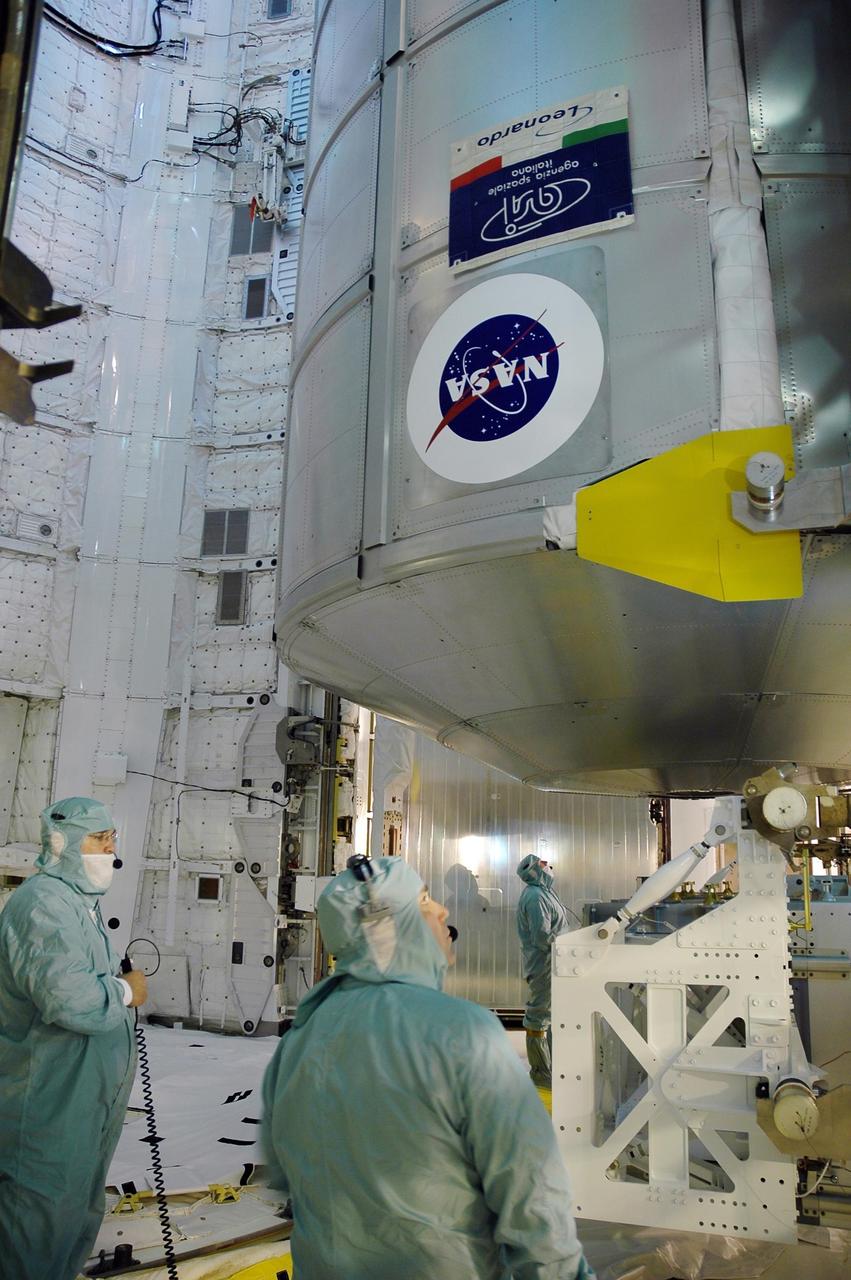
KENNEDY SPACE CENTER, FLA. -- From inside the payload changeout room on the rotating service structure on Launch Pad 39B, workers maneuver the multi-purpose logistics module Leonardo into Space Shuttle Discovery's payload bay (at left). The payload ground-handling mechanism (PGHM) is used to transfer the module into the payload bay. Leonardo is a reusable logistics carrier. It is the primary delivery system used to resupply and return station cargo requiring a pressurized environment. Leonardo is part of the payload on mission STS-121. Other payloads include the integrated cargo carrier with the mobile transporter reel assembly and a spare pump module, and the lightweight multi-purpose experiment support structure carrier. Discovery is scheduled to launch in a window extending from July 1 through July 19. Photo credit: NASA/Jack Pfaller
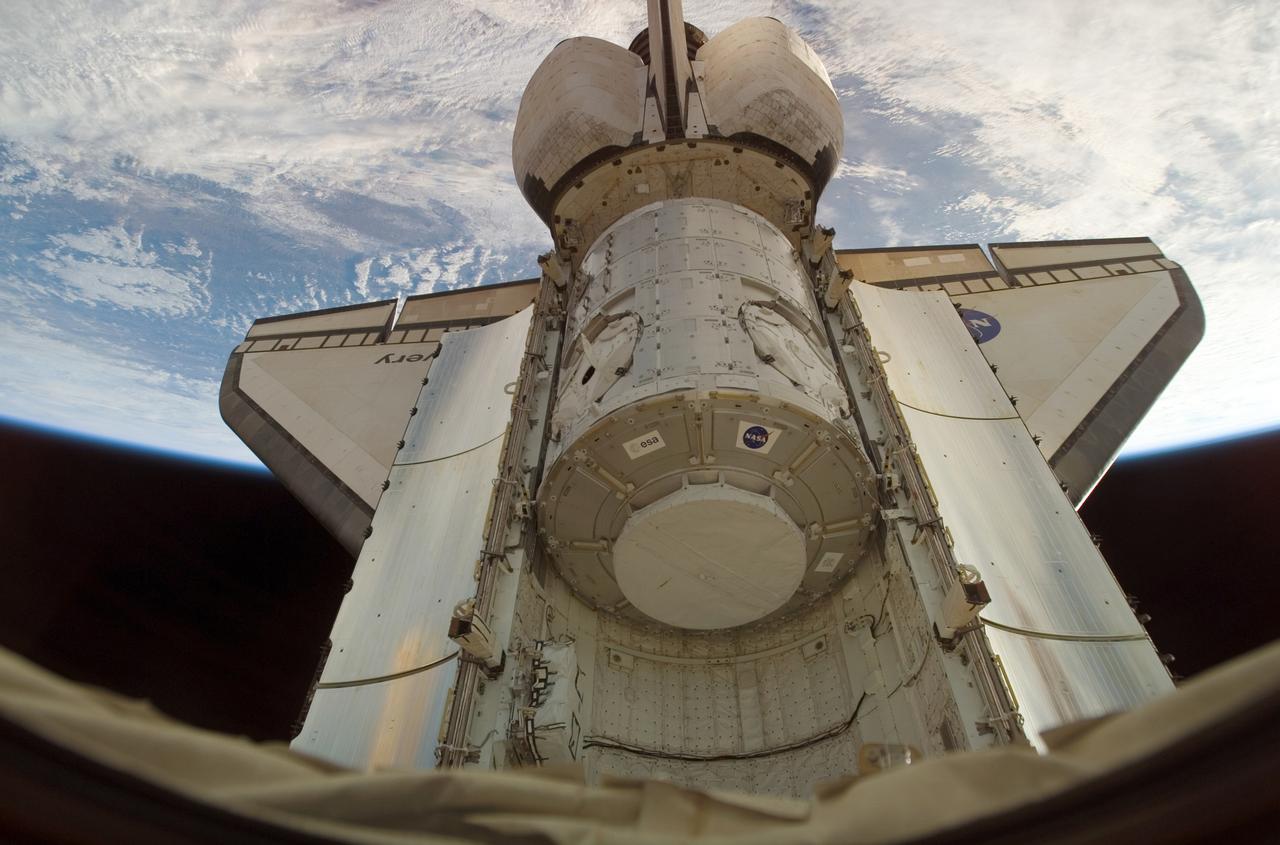
Back dropped by Earth's horizon and the blackness of space, the Italian-built U.S. Node 2, Harmony, is featured in Space Shuttle Discovery's cargo bay during the STS-120 mission. This image was photographed by an Expedition 16 crew member on the International Space Station (ISS) while Discovery was docked with the station. The aluminum node is 7.2 meters (23.6 feet) long and 4.4 meters (14.5 feet) in diameter. Its pressurized volume is 75.5 cubic meters (2666 cubic feet), and its launch weight is approximately 14,288 kilograms (31,500 pounds). The installation of Harmony increases the living and working space inside the station to approximately 500 cubic meters (18,000 cubic feet). It also allows the addition of international laboratories from Europe and Japan to the station.
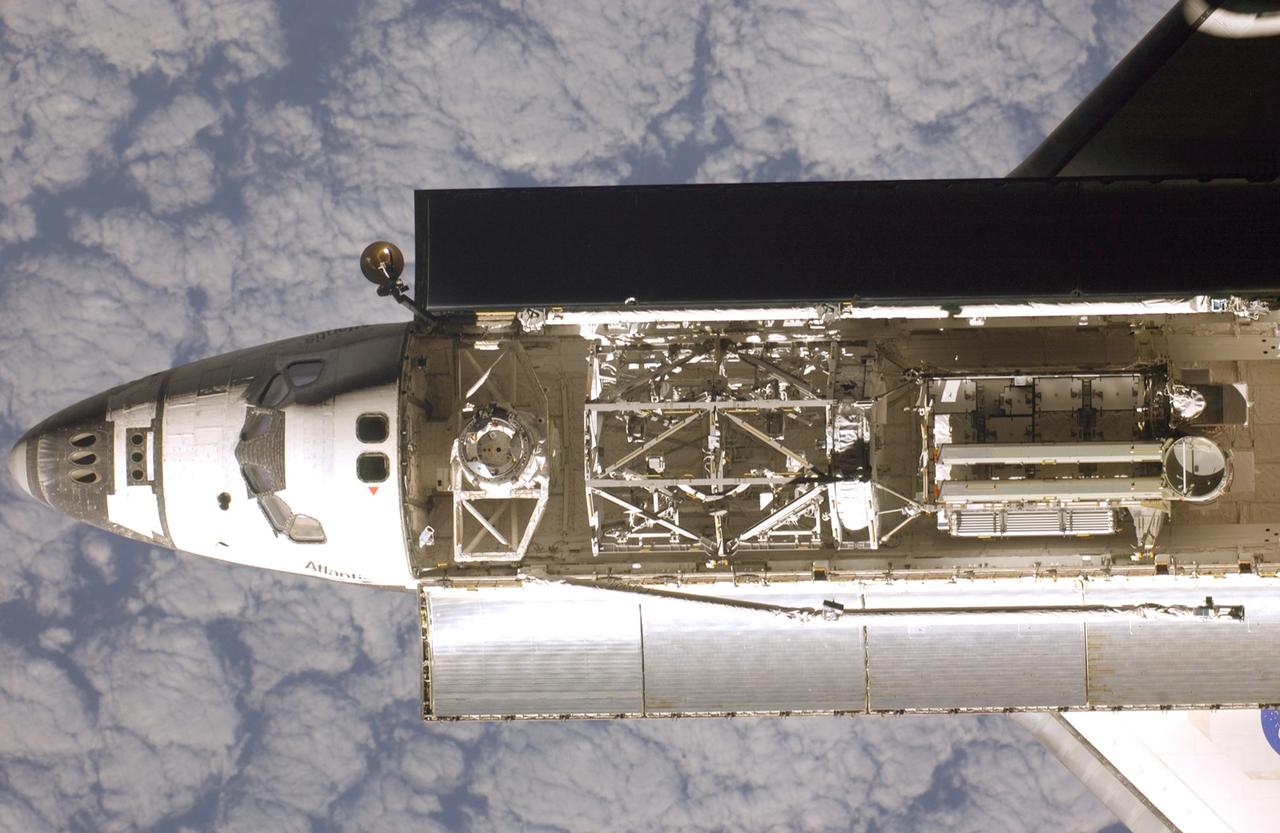
This nadir view of the STS-117 mission Space Shuttle Atlantis, taken by the Expedition 15 crew aboard the International Space Station (ISS), occurred just before the two spacecraft linked up in Earth orbit. Berthed in the cargo bay are the 17.8 ton second and third (S3 and S4) truss segments ready for installment. STS-117 mission objectives included the addition of S3 and S4 with Photovoltaic Radiator (PVR), the deployment of the third set of solar arrays, and the retraction of the P4 starboard solar array wing and one radiator.
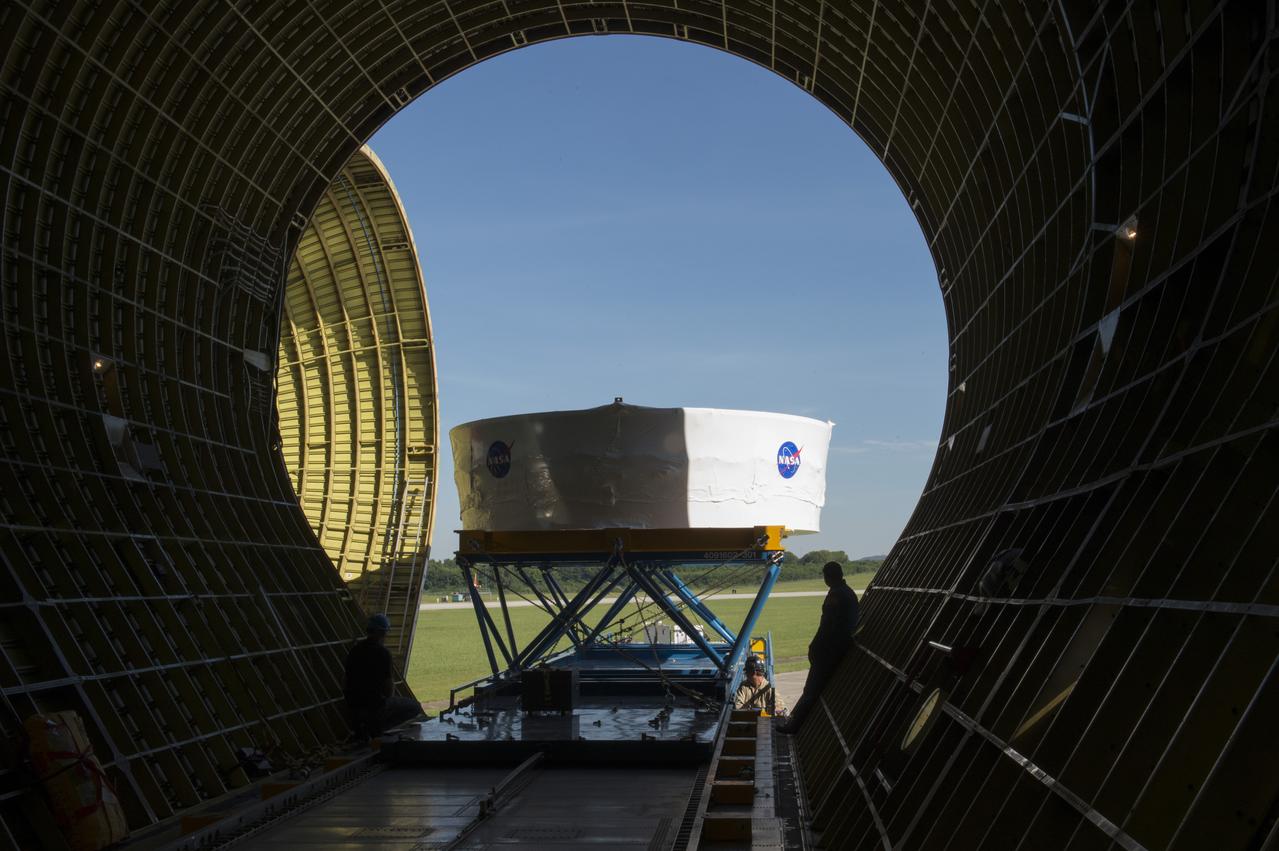
The Orion stage adapter is being placed inside the cargo bay of NASA's Super Guppie aircraft before being flown to Denver, Colorado for further testing.
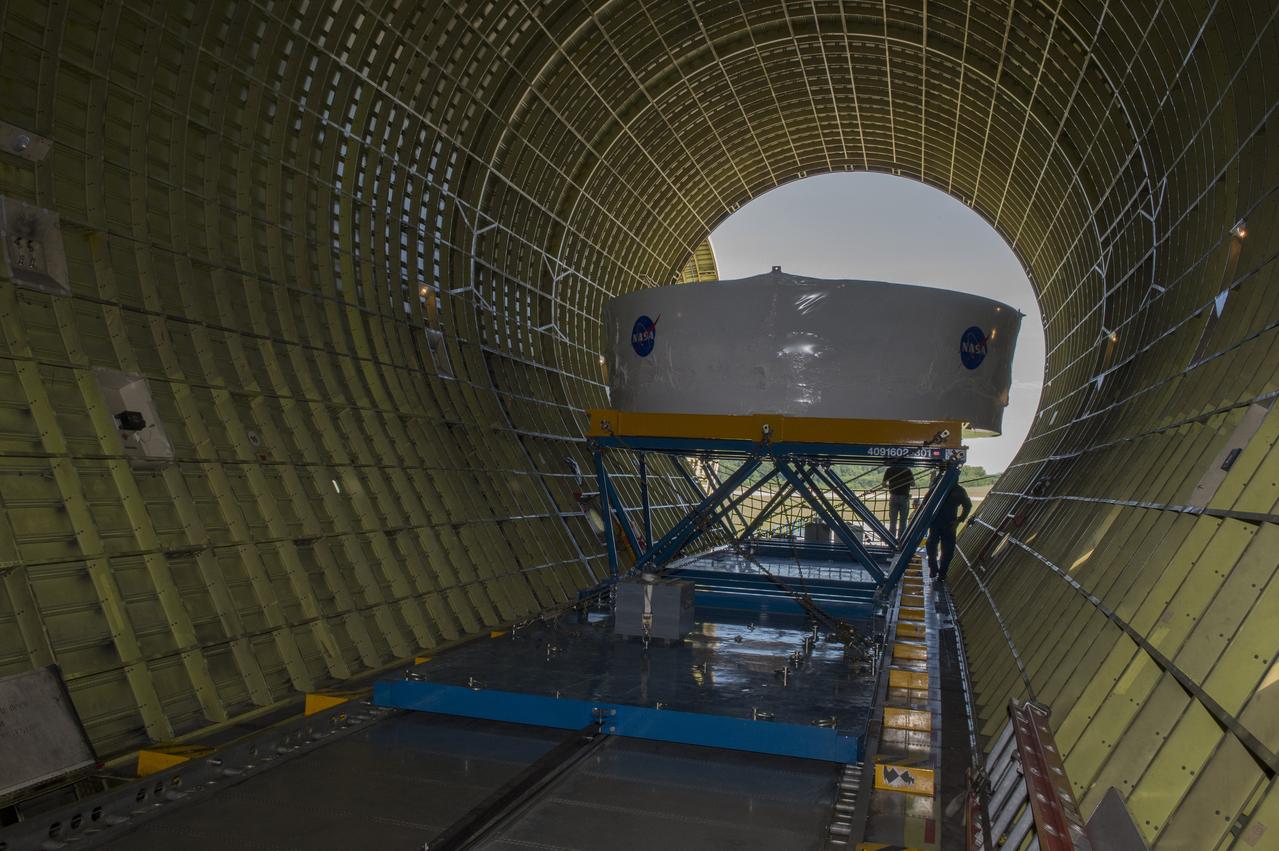
The Orion stage adapter is being placed inside the cargo bay of NASA's Super Guppie aircraft before being flown to Denver, Colorado for further testing.
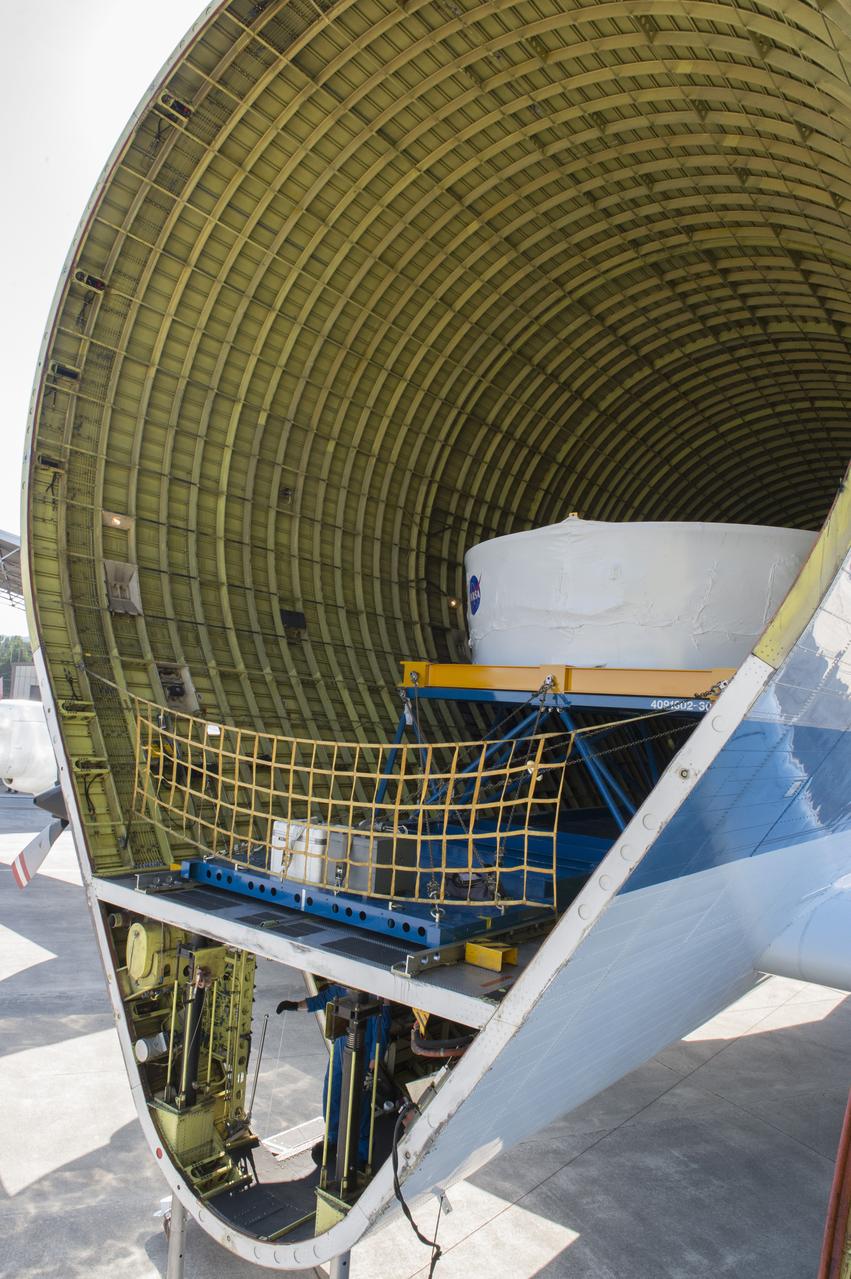
The Orion stage adapter shown inside the cargo bay of NASA's Super Guppie aircraft prior to being flown to Denver, Colorado for further testing.
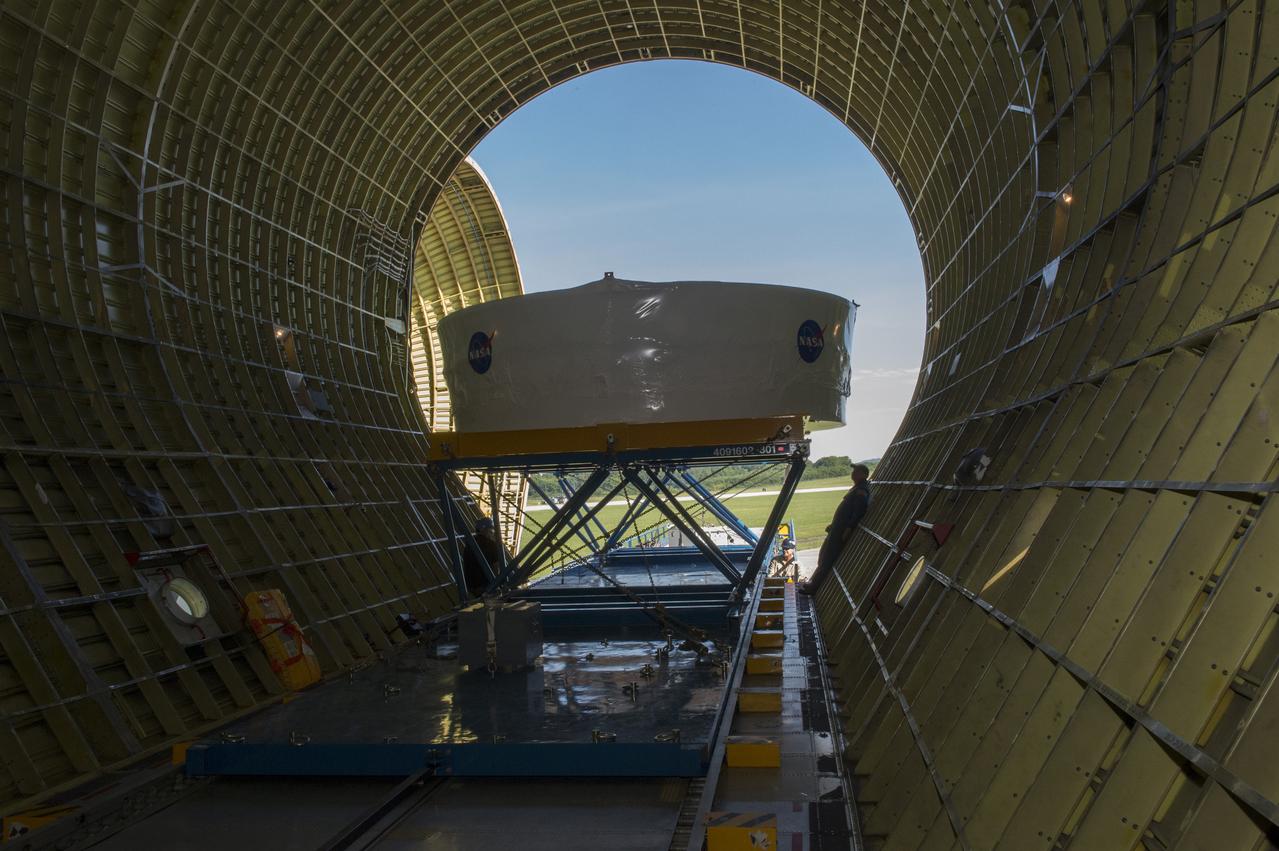
The Orion stage adapter is being placed inside the cargo bay of NASA's Super Guppie aircraft before being flown to Denver, Colorado for further testing.
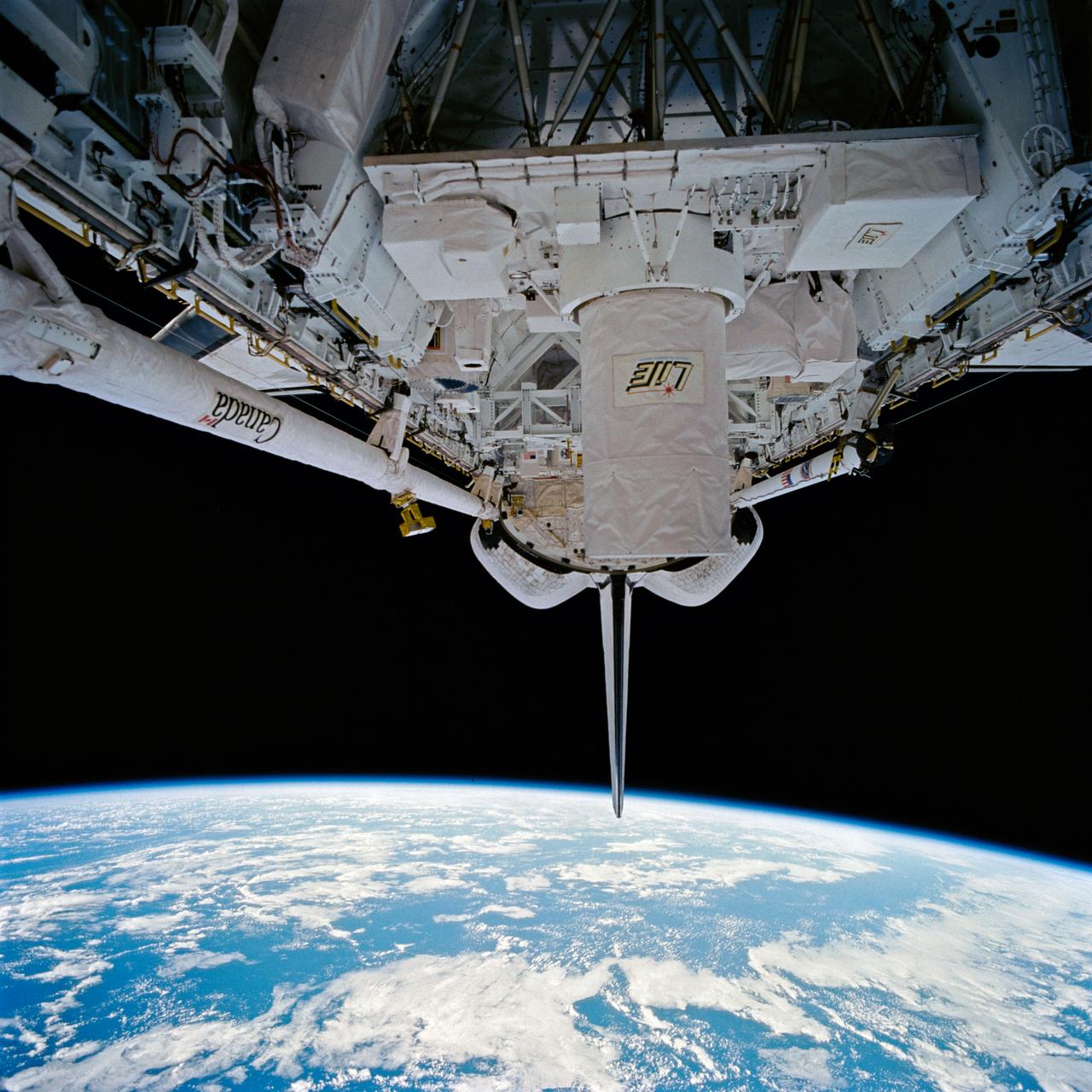
STS064-90-031 (9-20 Sept. 1994) --- Backdropped against the darkness of space beneath Earth's horizon 130 nautical miles away, the cargo bay of the space shuttle Discovery and its related payloads were captured on 70mm film by one of the six cabin-bound astronauts. In the foreground is the Lidar In-space Technology Experiment (LITE). The robot arm portion of the Remote Manipulator System (RMS), busy throughout much of the almost 11-day mission, is in a stowed position on Discovery's port side. Photo credit: NASA or National Aeronautics and Space Administration
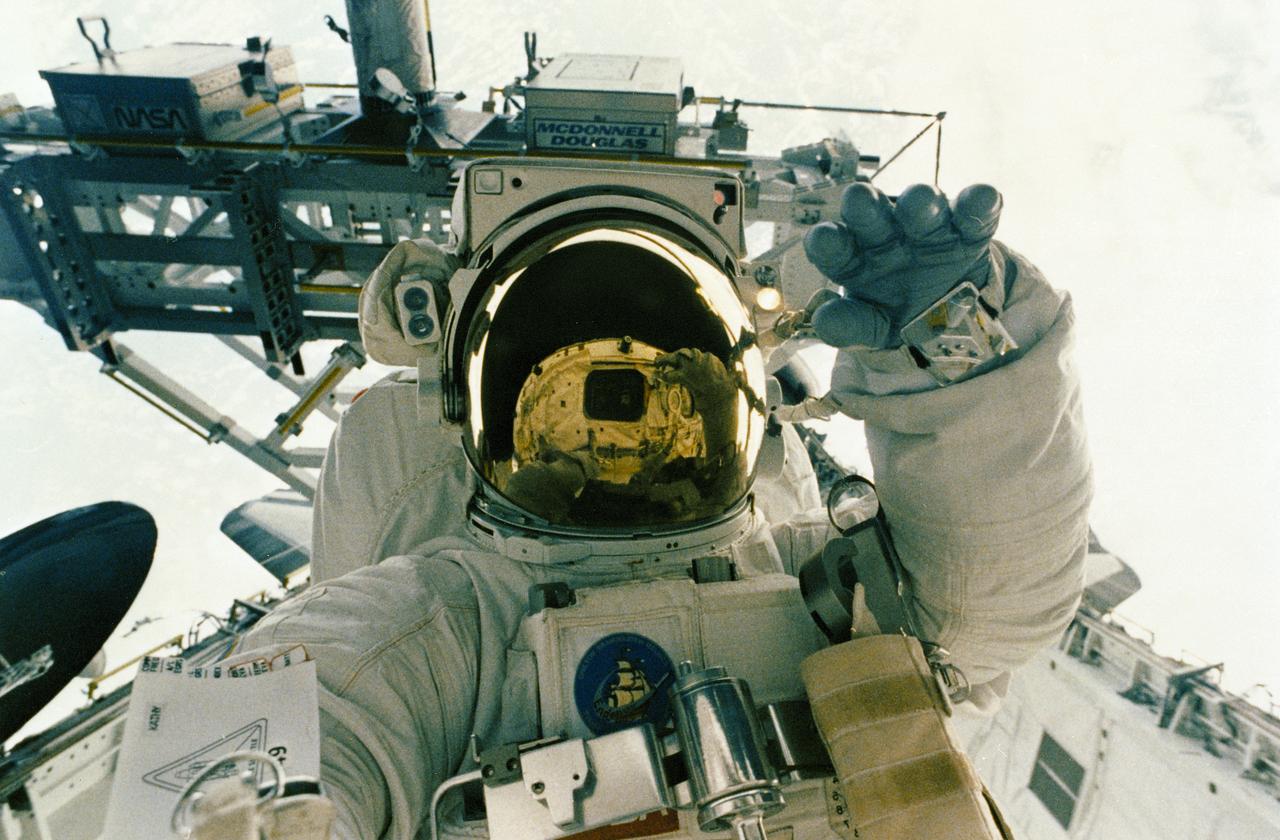
STS-49, the first flight of the Space Shuttle Orbiter Endeavour, lifted off from launch pad 39B on May 7, 1992 at 6:40 pm CDT. The STS-49 mission was the first U.S. orbital flight to feature 4 extravehicular activities (EVAs), and the first flight to involve 3 crew members working simultaneously outside of the spacecraft. The primary objective was the capture and redeployment of the INTELSAT VI (F-3), a communication satellite for the International Telecommunication Satellite organization, which was stranded in an unusable orbit since its launch aboard the Titan rocket in March 1990. In this onboard photo, astronaut Kathryn Thornton is working on the Assembly of Station by EVA Methods (ASEM) in the cargo bay.
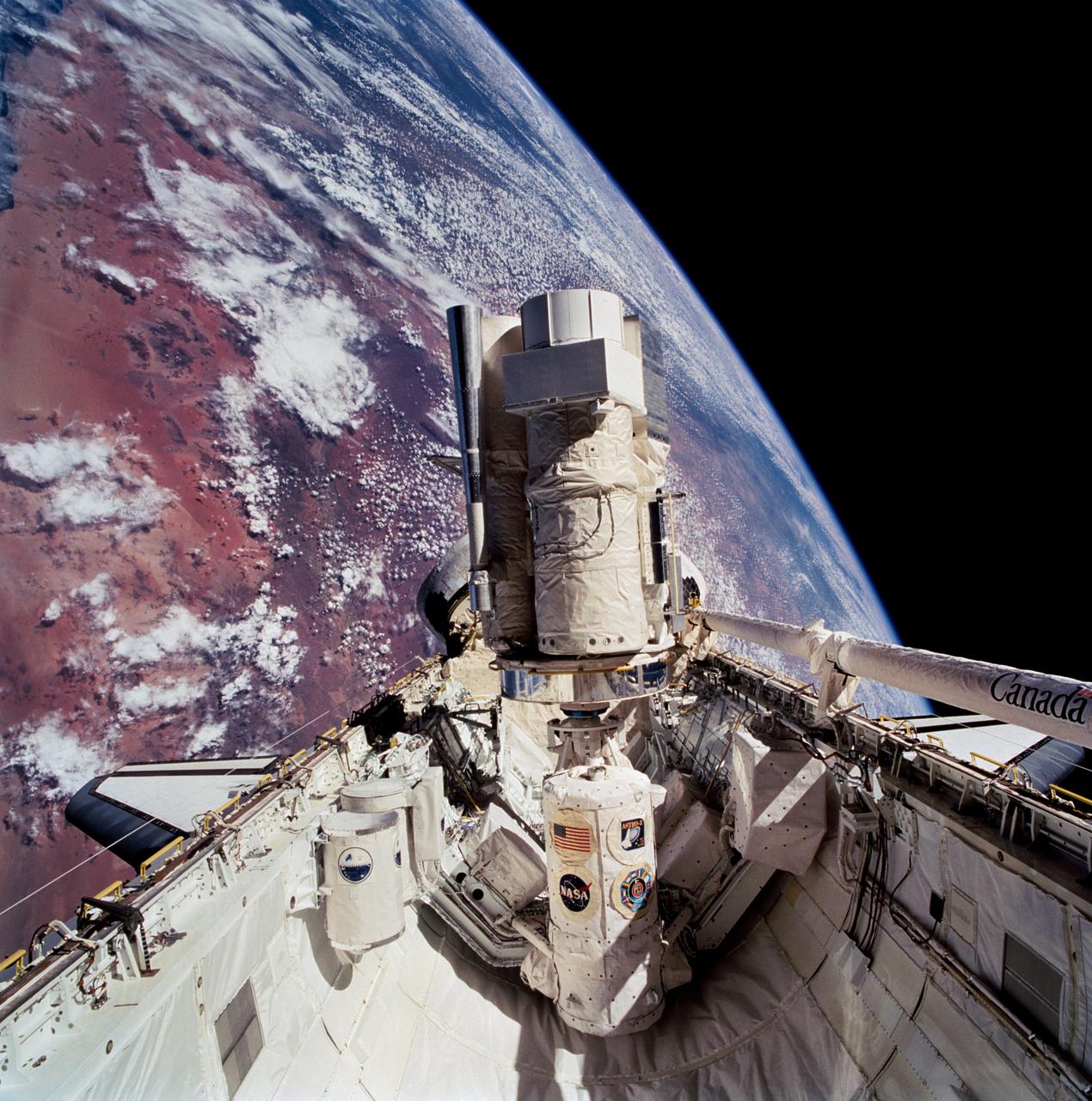
STS067-713-072 (2-18 March 1995) --- This 70mm cargo bay scene, backdropped against a desert area of Namibia, typifies the view that daily greeted the Astro-2 crew members during their almost 17-days aboard the Space Shuttle Endeavour. Positioned on the Spacelab pallet amidst other hardware, the Astro-2 payload is in its operational mode. Visible here are the Instrument Pointing System (IPS), Hopkins Ultraviolet Telescope (HUT), Star Tracker (ST), Ultraviolet Imaging Telescope (UIT), Wisconsin Ultraviolet Photo-Polarimeter Experiment (WUPPE), and Integrated Radiator System (IRS). At this angle, the Optical Sensor Package (OPS) is not seen. The Igloo, which supports the package of experiments, is in center foreground. Two Get-Away Special (GAS) canisters are in lower left foreground. The Extended Duration Orbiter (EDO) pallet, located aft of the cargo bay, is obscured by the Astro-2 payload. The Endeavour was 190 nautical miles above Earth.
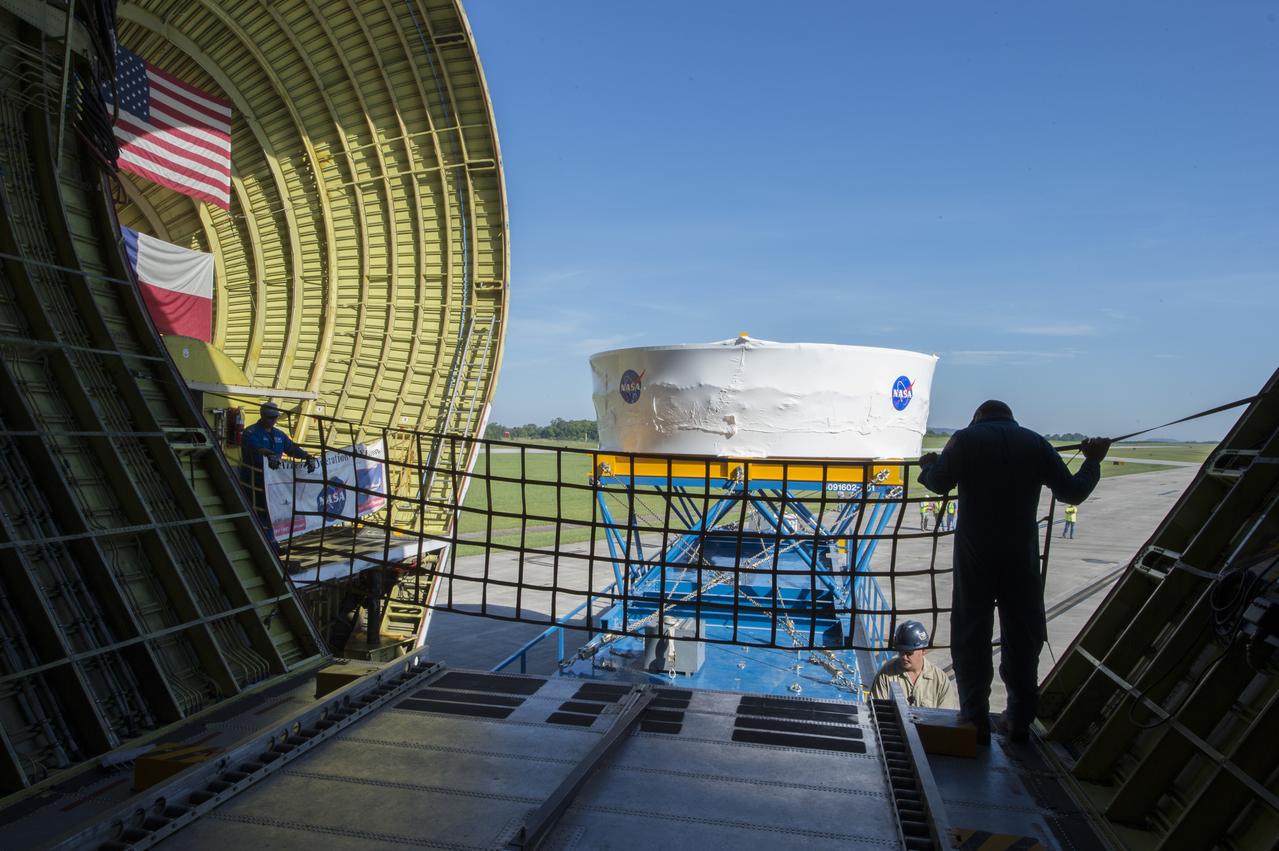
The Orion stage adapter is shown in the background from inside the cargo bay of NASA's Super Guppie. The stage adapter is being flown to Denver, Colorado where it will undergo further testing.
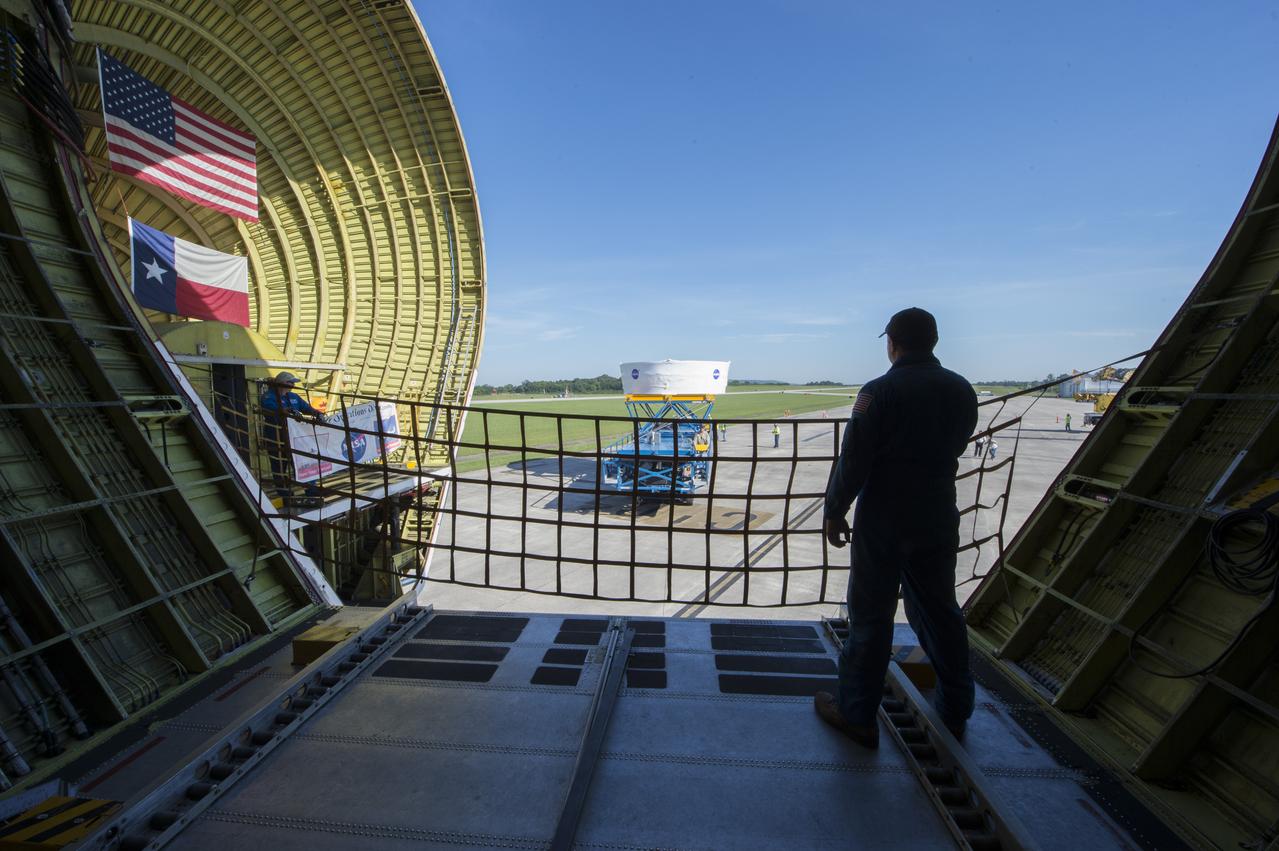
The Orion stage adapter is shown in the background from inside the cargo bay of NASA's Super Guppie. The stage adapter is being flown to Denver, Colorado where it will undergo further testing.

STS060-93-043 (9 Feb 1994) --- BREMSAT, a 140 pound (63 kilogram) satellite, quickly leaves the cargo bay of the Space Shuttle Discovery. The 480 mm (19 inch) deployable satellite was built by the University of Bremen's Center of Applied Space Technology and Microgravity (ZARM) under sponsorship of the German Space Agency (DARA). A modified ejection system in one of the payload bay's getaway special (GAS) type canisters aided the STS-60 crew members in deploying the satellite toward the end of their eight-day mission in Earth orbit.
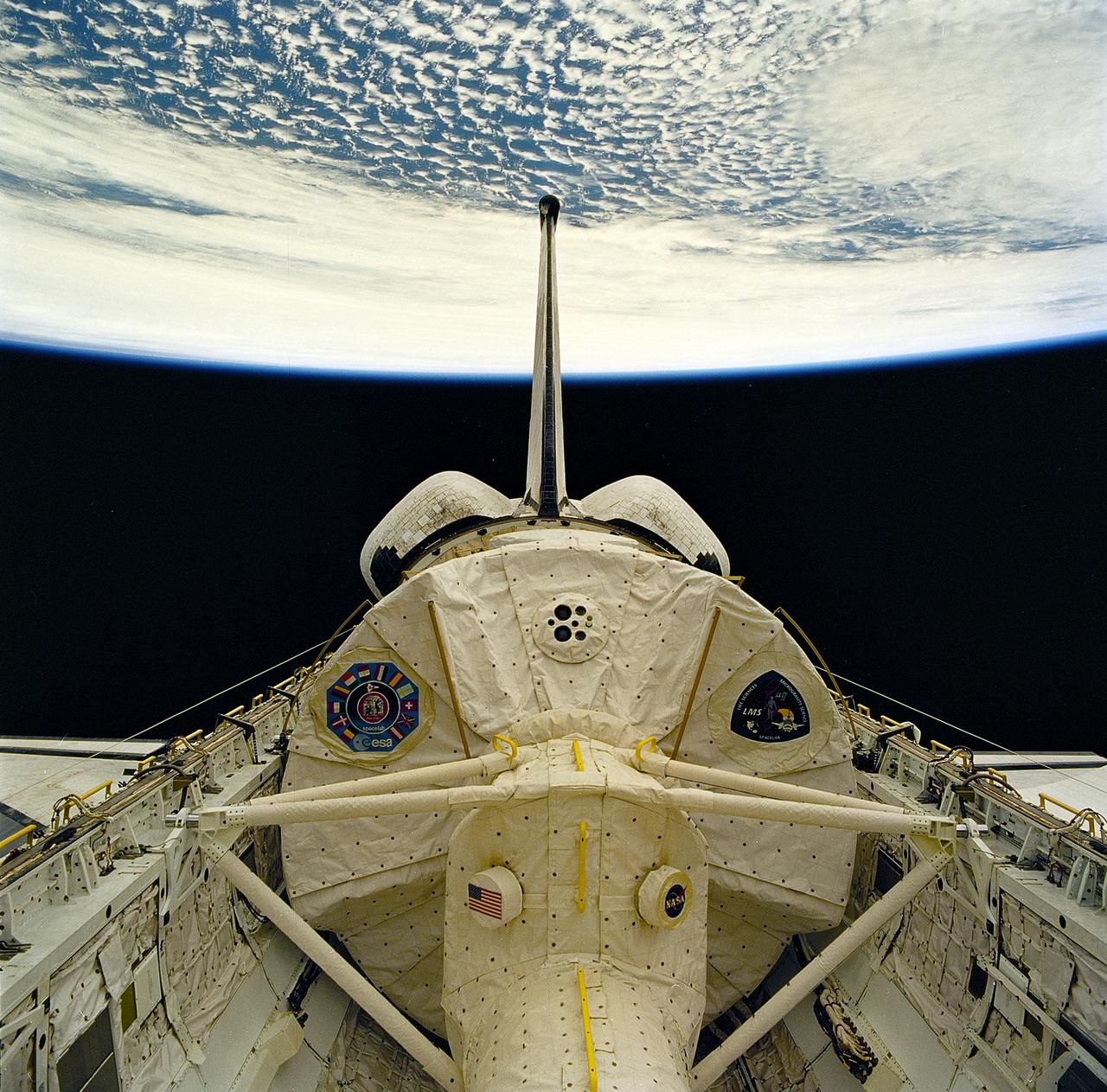
Launched on June 20, 1996, the STS-78 mission’s primary payload was the Life and Microgravity Spacelab (LMS), which was managed by the Marshall Space Flight Center (MSFC). During the 17 day space flight, the crew conducted a diverse slate of experiments divided into a mix of life science and microgravity investigations. In a manner very similar to future International Space Station operations, LMS researchers from the United States and their European counterparts shared resources such as crew time and equipment. Five space agencies (NASA/USA, European Space Agency/Europe (ESA), French Space Agency/France, Canadian Space Agency /Canada, and Italian Space Agency/Italy) along with research scientists from 10 countries worked together on the design, development and construction of the LMS. This onboard photo represents a view of the LMS Module in the Cargo Bay of the Space Shuttle Orbiter Columbia.
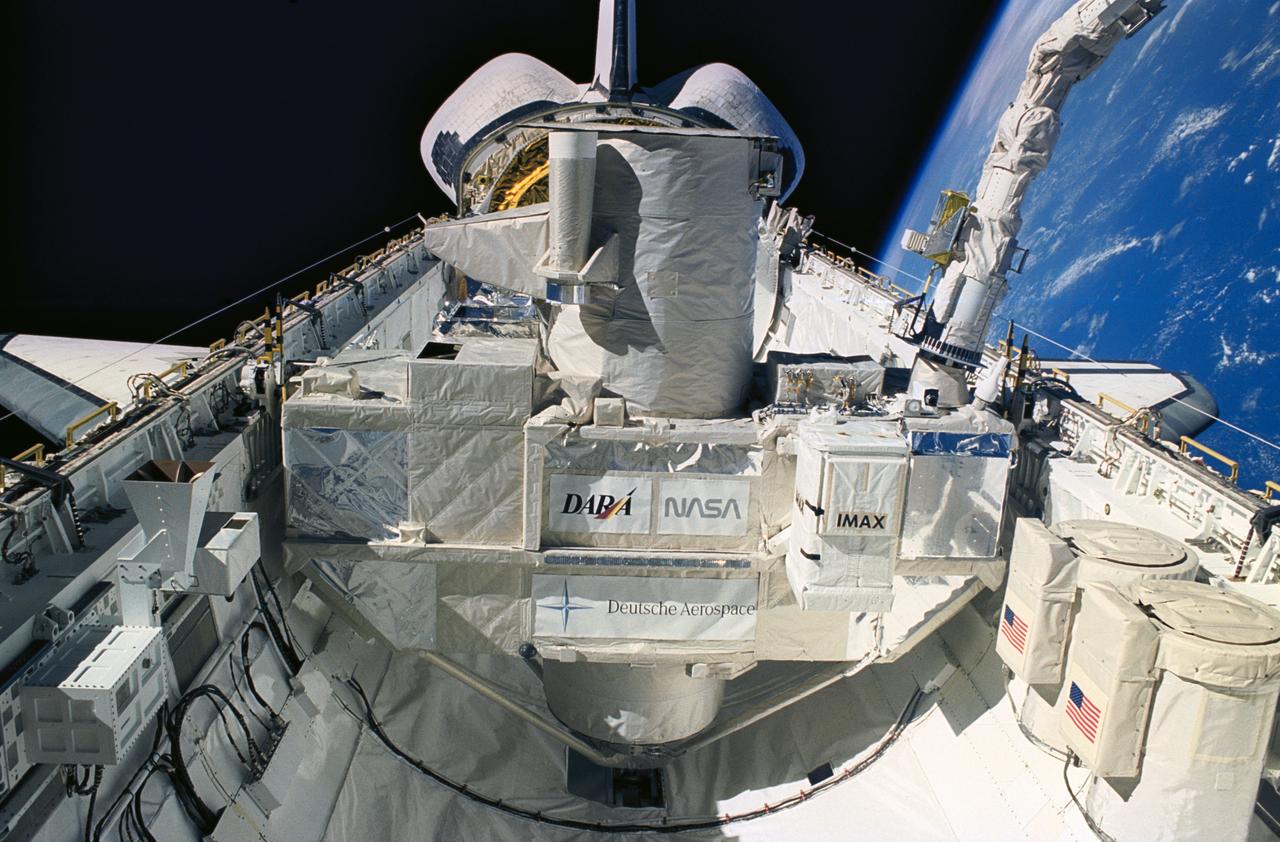
STS051-15-035 (19 Sept 1993) --- Backdropped against black space and the blue and white Earth, the Orbiting Retrievable Far and Extreme Ultraviolet Spectrometer (ORFEUS) and its Shuttle Pallet Satellite (SPAS) are pictured during berthing in Discovery's cargo bay. The free-flying craft had spent several days orbiting at a distance from Discovery with several experiments in operation. Here, the satellite is still in the grasp of the Canadian-built Remote Manipulator System (RMS), which was used also for the earlier deployment.
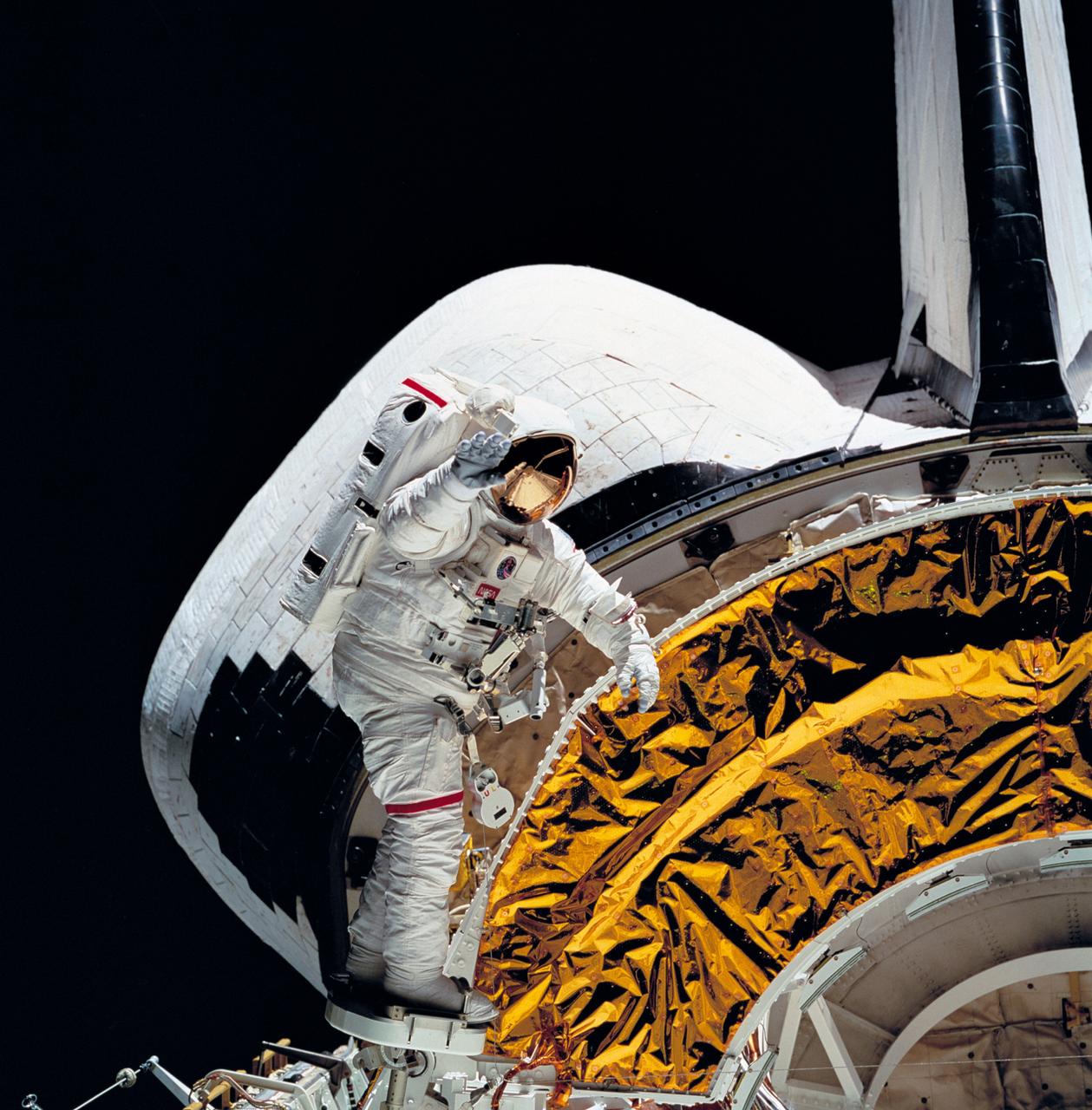
STS051-98-021 (16 Sept. 1993) --- In the Space Shuttle Discovery's aft cargo bay, astronaut Carl E. Walz gets his turn on the Portable Foot Restraint (PFR). Astronauts Walz, waving to his crew mates inside Discovery's cabin, and James H. Newman each put in some time evaluating the PFR, one of the pieces of gear to be used on the Hubble Space Telescope (HST) STS-61 servicing mission (scheduled later this year) and other Shuttle missions.
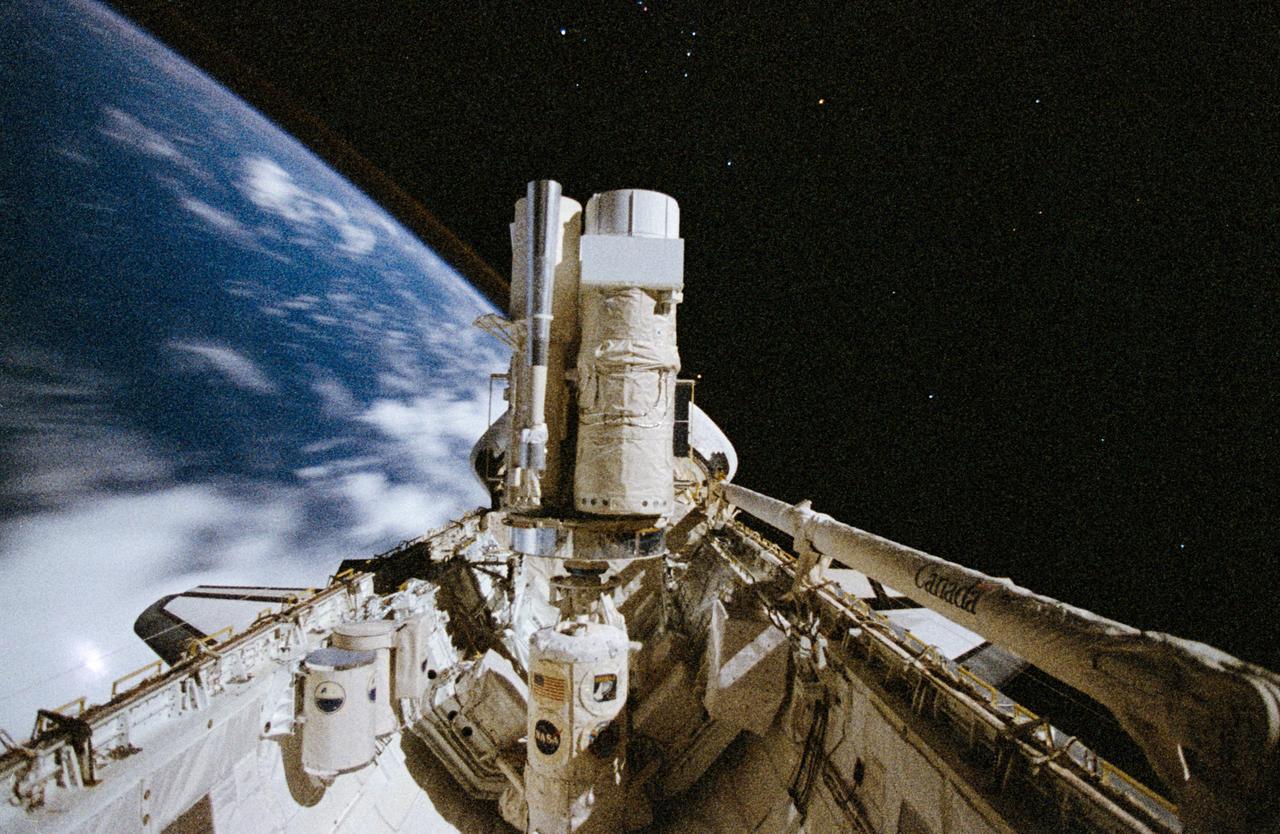
STS067-371-028 (2-18 March 1995) --- This 35mm lunar-illuminated scene of the Astro-2 payload in the Space Shuttle Endeavour's cargo bay was recorded by one of by the seven crew members during one of the many night passes of the almost 17-day mission. The cluster of telescopes and the Instrument Pointing System (IPS) are backdropped against the blue and white Earth and the darkness of space. What is believed to be the Constellation Orion is visible at upper center.
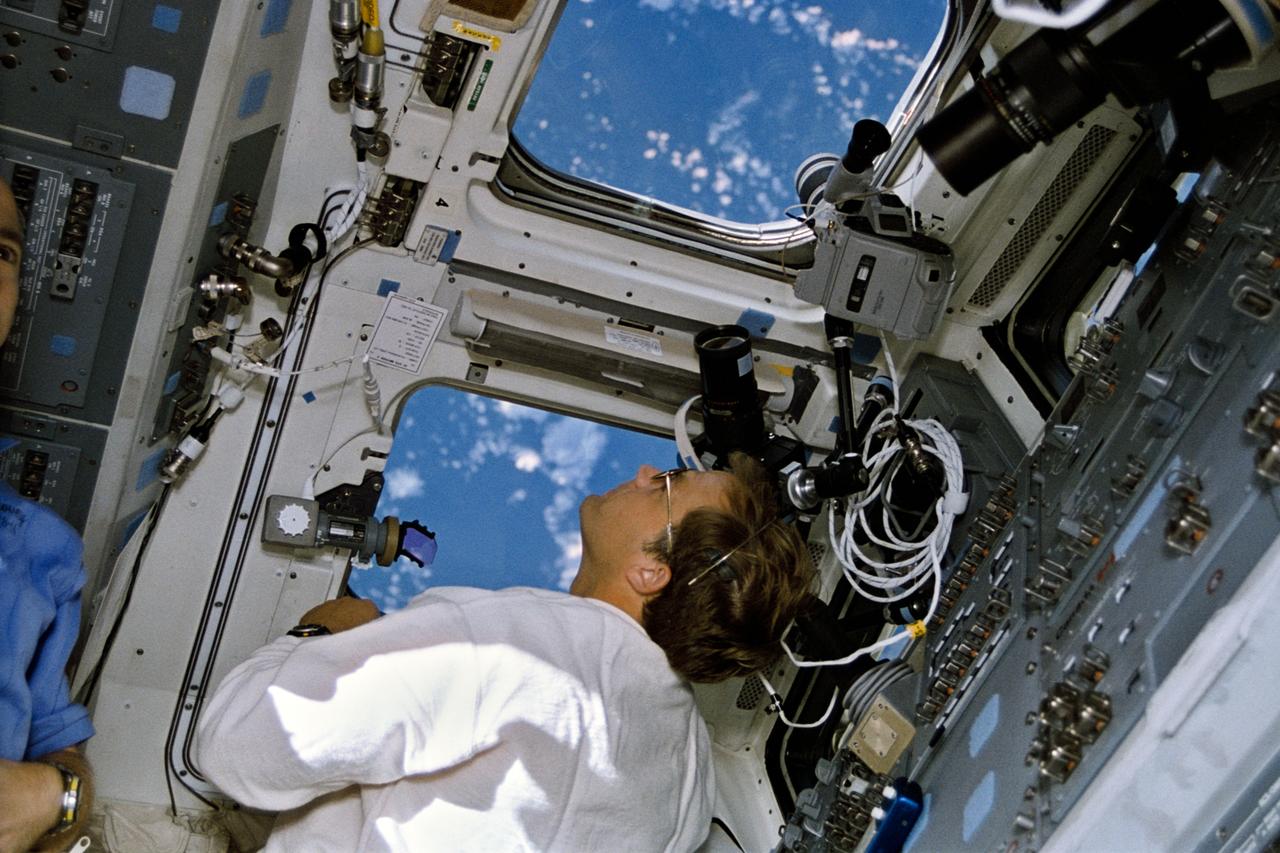
STS064-08-016 (9-20 Sept. 1994) --- Astronaut Mark C. Lee monitors the Lidar In-Space Technology Experiment (LITE) at work in the space shuttle Discovery's cargo bay. The mission specialist is surrounded by cameras which were used by the six NASA astronauts onboard for the almost 11-day mission. Near Lee's head is a 100mm lens which he used to collect data on a myriad of cloud formations which he observed on Earth, 130 nautical miles away. Photo credit: NASA or National Aeronautics and Space Administration EDITOR'S NOTE: In uncropped versions of this picture, astronaut Carl J. Meade is partially in frame at left.
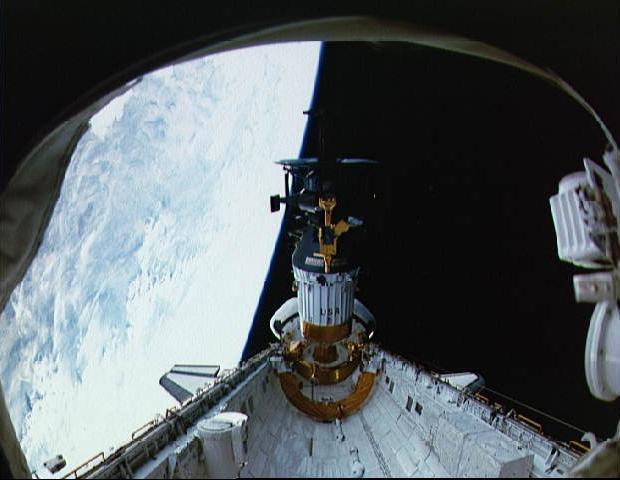
Deployment of NASA Galileo and the IUS from the cargo bay of STS-34 Atlantis at 7:15 p.m. EDT on October 18, 1989. P-35213
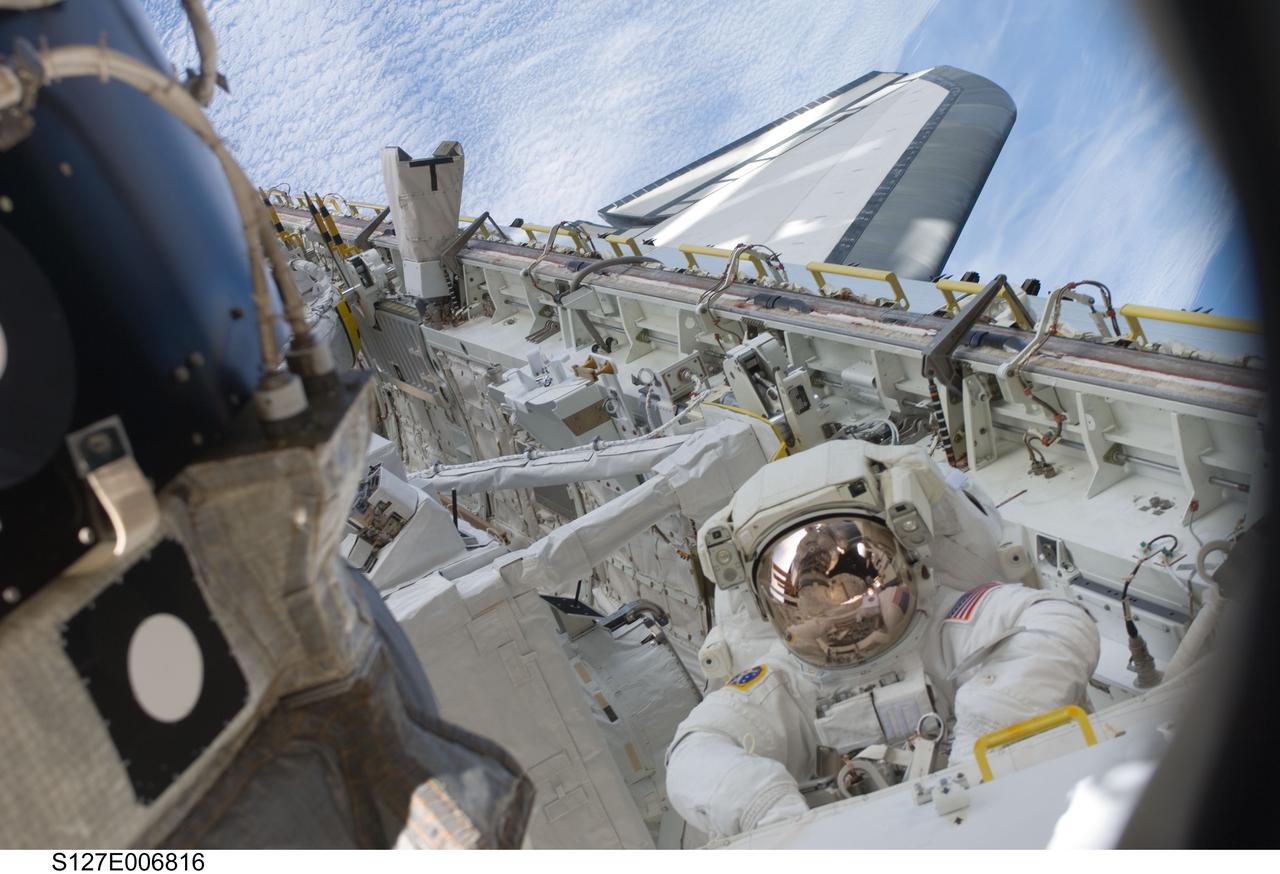
S127-E-006816 (18 July 2009) --- Astronaut Tim Kopra, mission specialist, is pictured in the forward port side area of Endeavour's cargo bay during the first of five planned spacewalks to be performed on the International Space Station by the STS-127 crew. When the Endeavour crew returns to Earth, Kopra will stay onboard the space station to serve as flight engineer for ISS expedition duty.
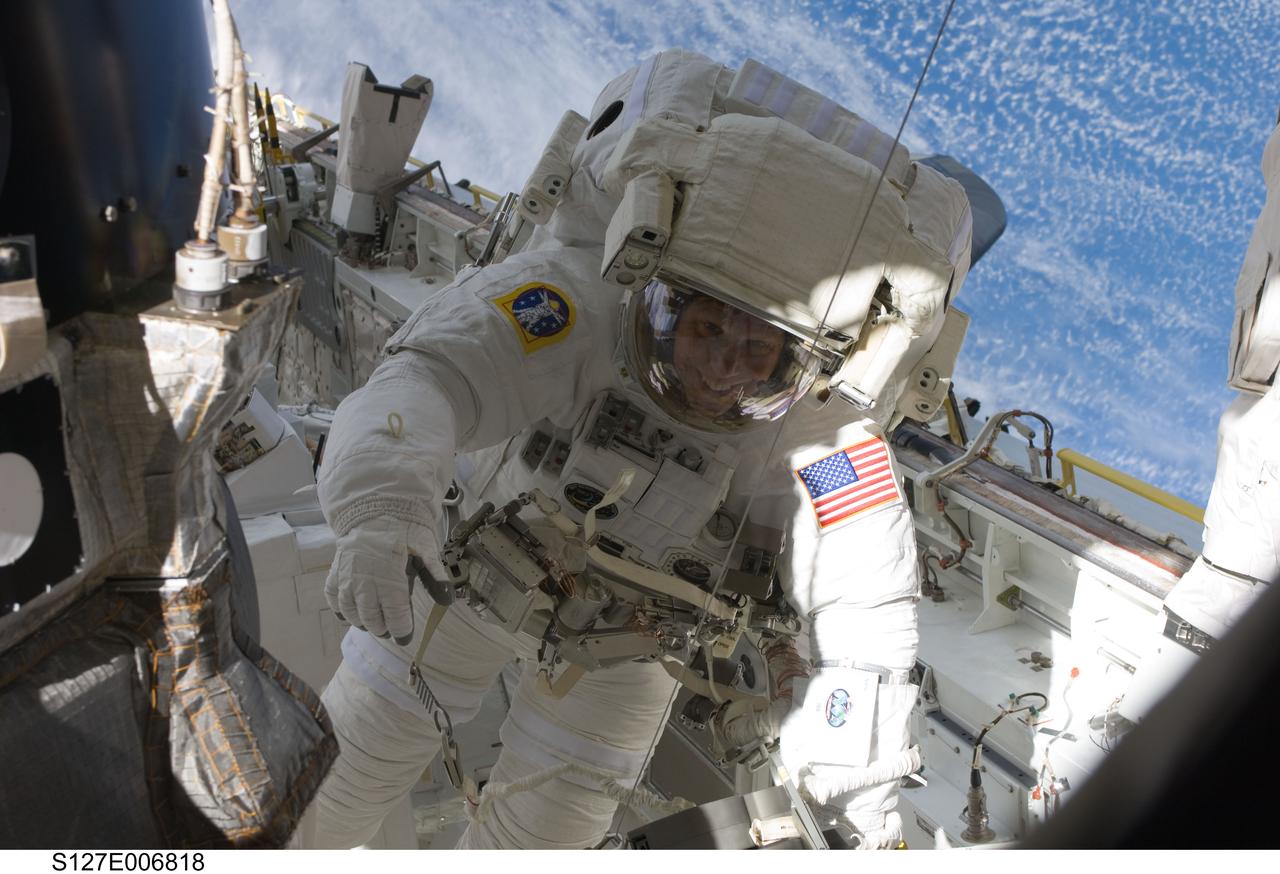
S127-E-006818 (18 July 2009) --- Astronaut Tim Kopra, mission specialist, is pictured in Endeavour's cargo bay during the first of five planned spacewalks to be performed on the International Space Station by the STS-127 crew. When the Endeavour crew returns to Earth, Kopra will stay onboard to serve as flight engineer for ISS expedition duty.
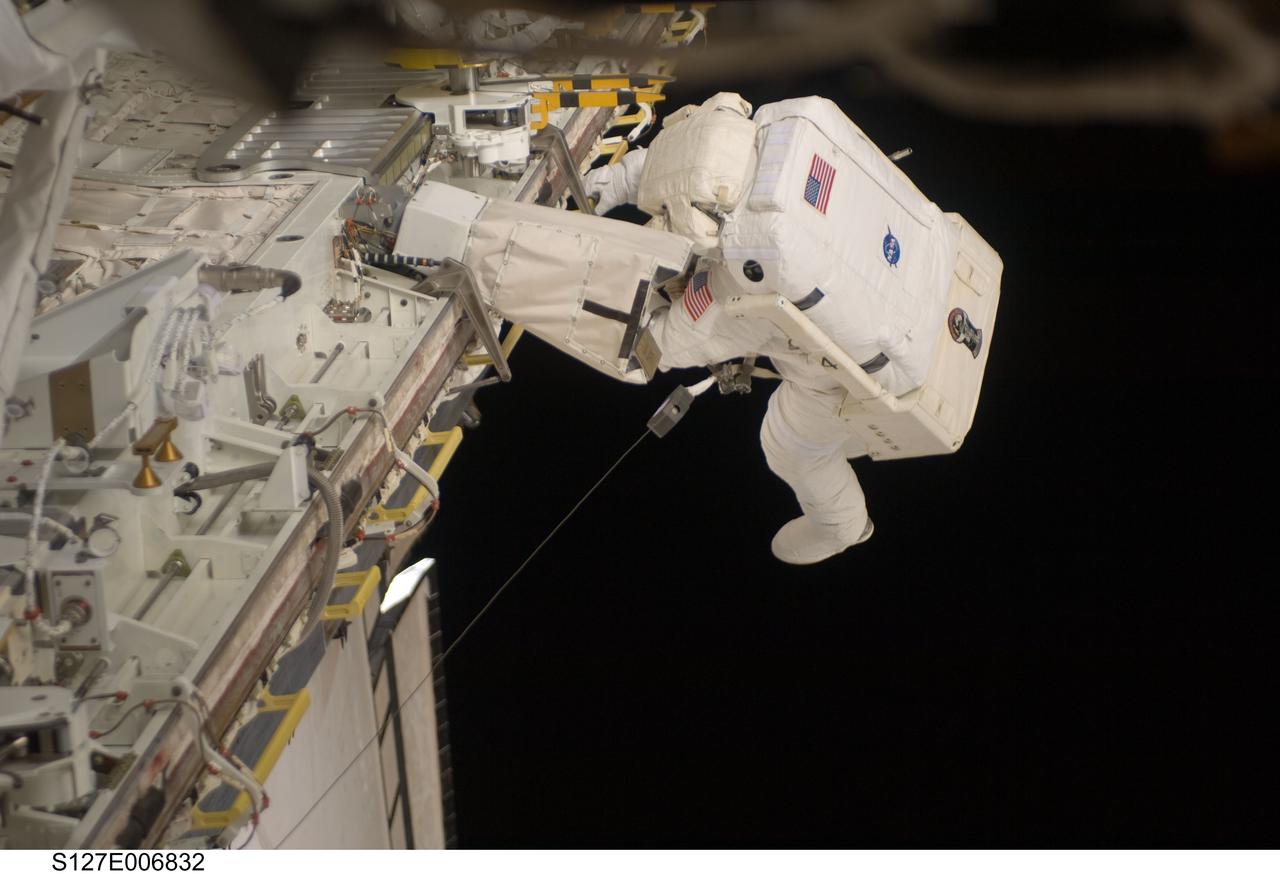
S127-E-006832 (18 July 2009) --- Astronaut Tim Kopra, mission specialist, is pictured at the edge of Endeavour's cargo bay during the first of five planned spacewalks to be performed on the International Space Station by the STS-127 crew. When the Endeavour crew returns to Earth, Kopra will stay onboard the space station to serve as flight engineer for ISS expedition duty.
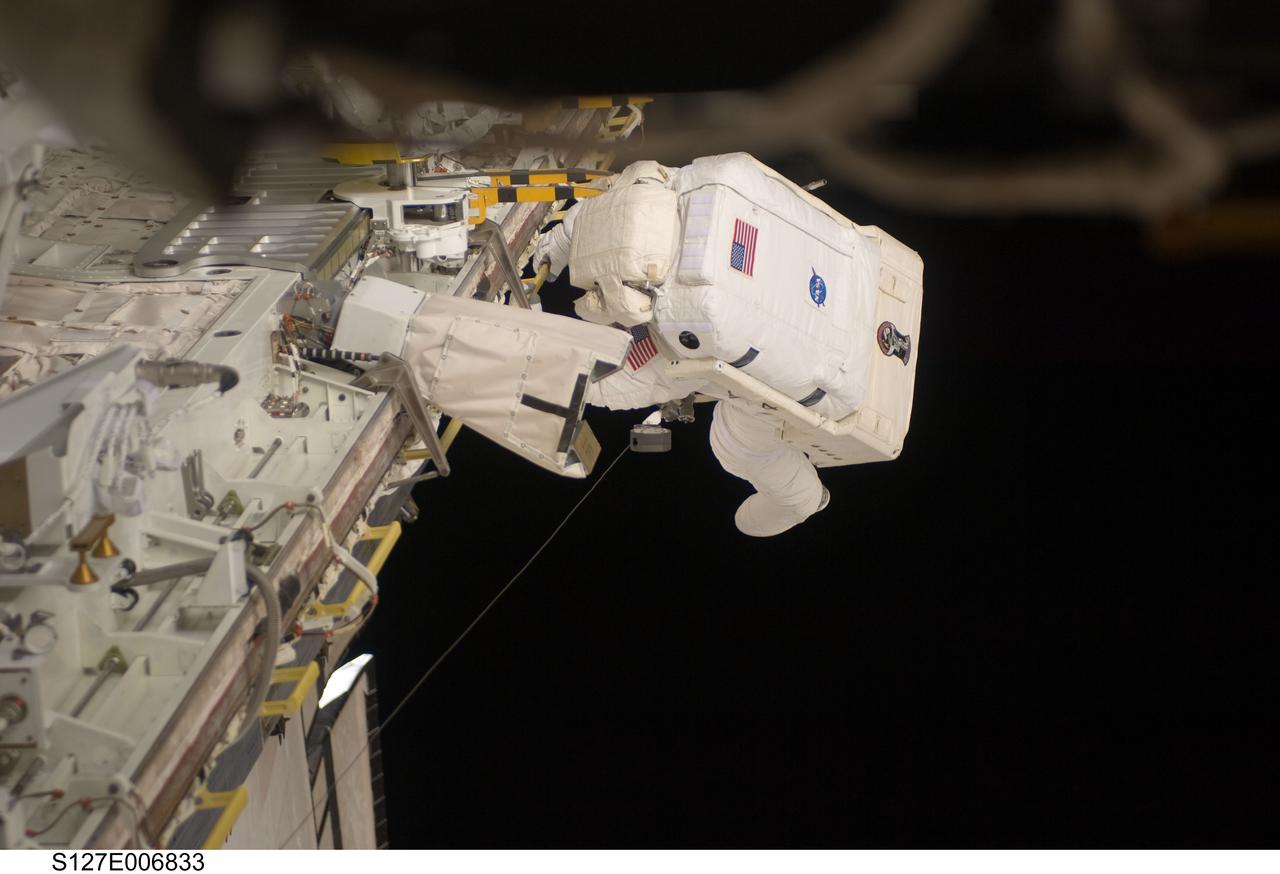
S127-E-006833 (18 July 2009) --- Astronaut Tim Kopra, mission specialist, is pictured at the edge of Endeavour's cargo bay during the first of five planned spacewalks to be performed on the International Space Station by the STS-127 crew. When the Endeavour crew returns to Earth, Kopra will stay onboard the space station to serve as flight engineer for ISS expedition duty.
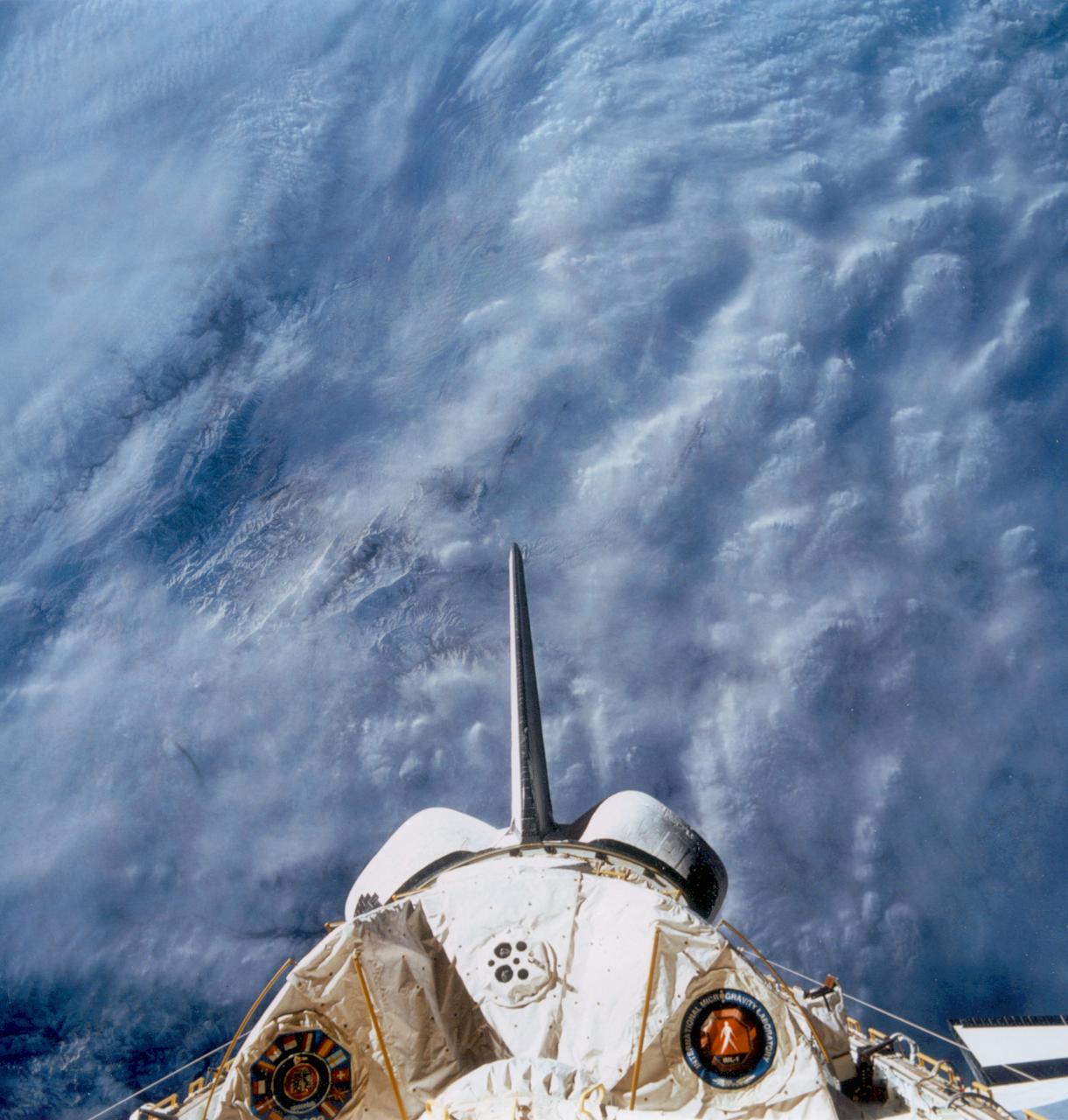
Viewing earth from STS-42.
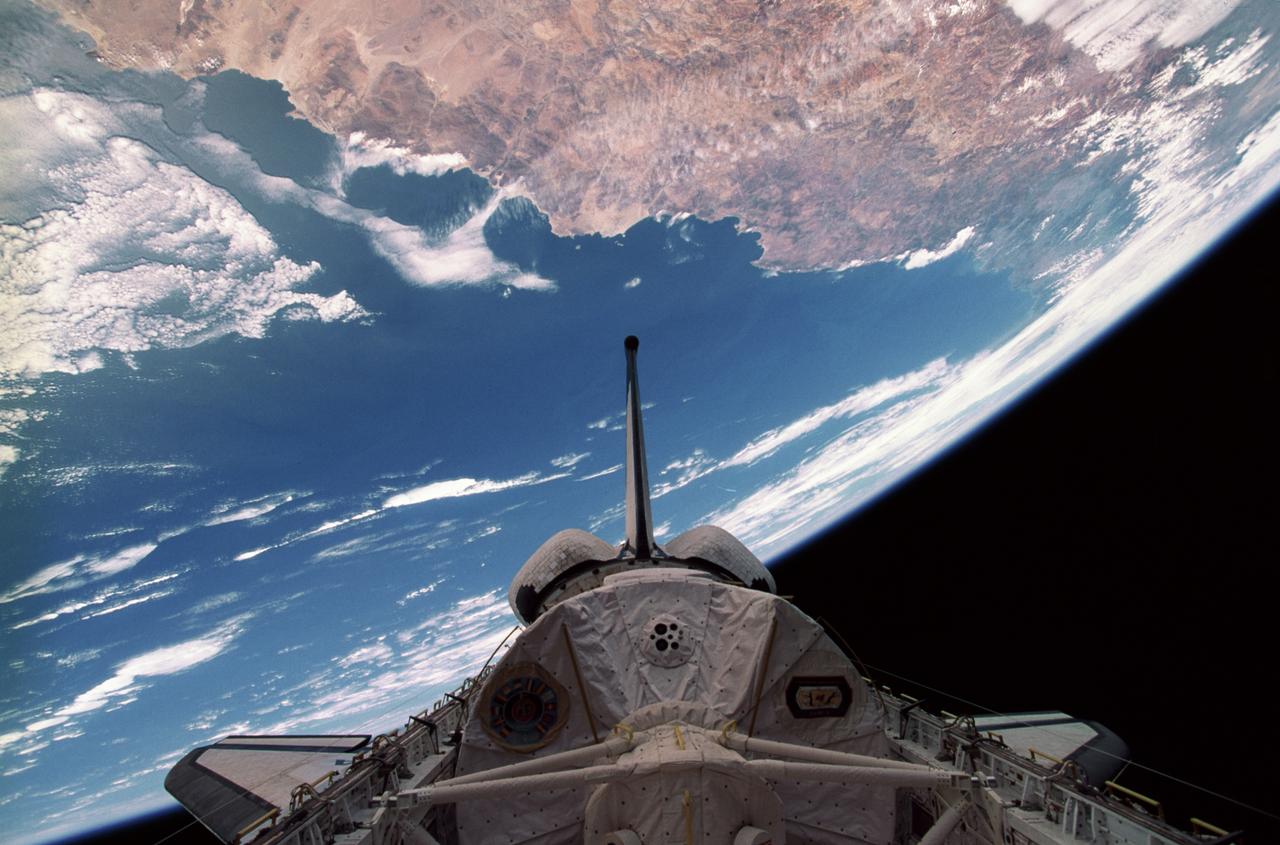
View of earth from STS-73, USML-2.
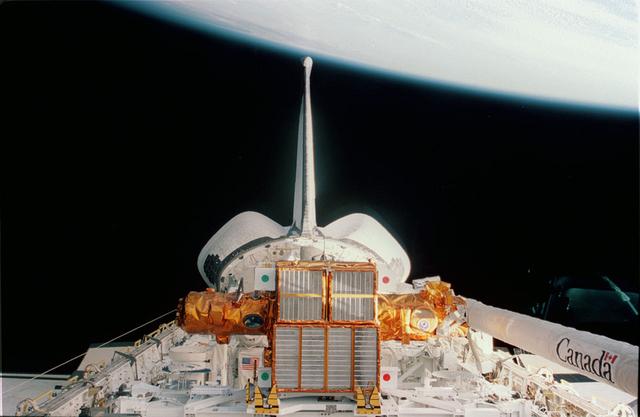
STS-87 Onboard Photo: The U. S. Microgravity Payload-4 (USMP-4) is carried aboard multi-purpose experiment support structures mounted in the shuttle payload bay and sparning the width of the orbiter.
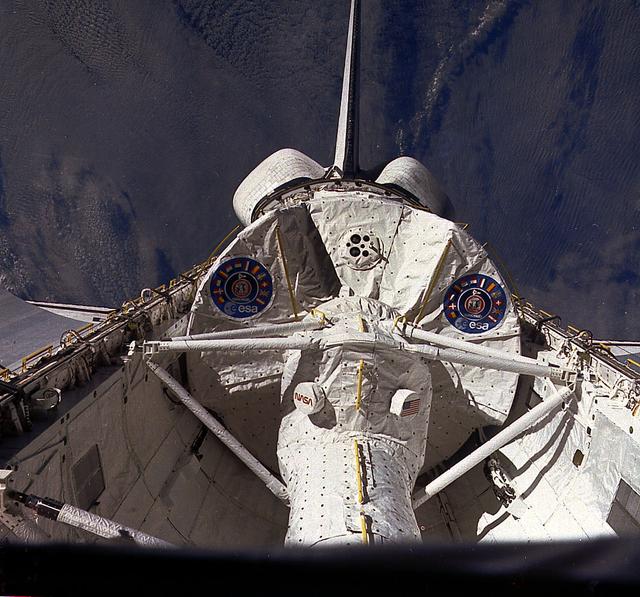
A Space Shuttle mission STS-9 onboard view show's Spacelab-1 (SL-1) module in orbiter Columbia's payload bay. Spacelab-1 was a cooperative venture of NASA and the European Space Agency. Scientists from eleven European nations plus Canada, Japan and the U.S. provided instruments and experimental procedures for over 70 different investigations in five research areas of disciplines: astronomy and solar physics, space plasma physics, atmospheric physics and Earth observations, life sciences and materials science.
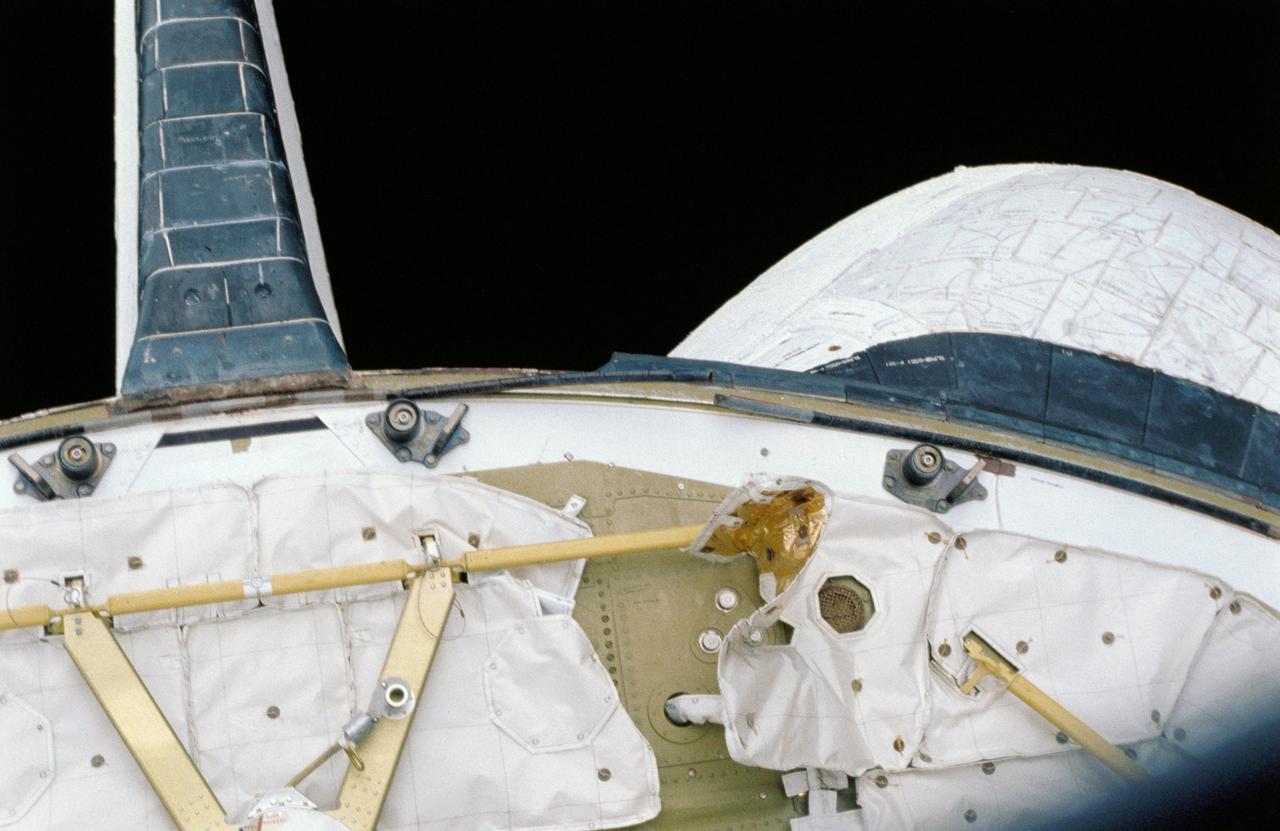
STS040-31-029 (5-14 June 1991) --- This close-up 35mm scene of the aft firewall in the Space Shuttle Columbia's cargo bay reveals a piece of thermal insulation that had loosened. The crew discovered the loose blanket soon after opening the cargo bay doors on June 5, 1991.
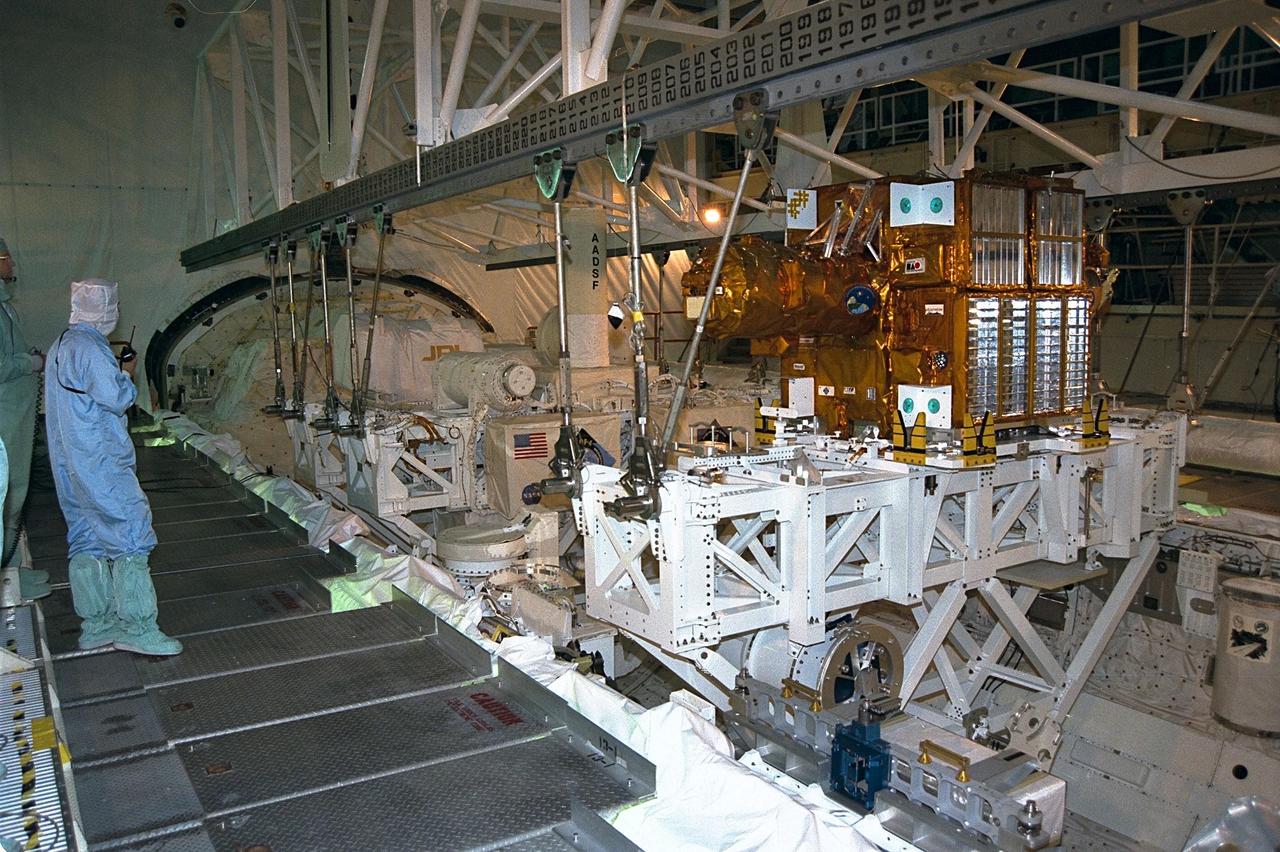
The Spartan payload, which flew on STS-87, is removed from Columbia's cargo bay in Orbiter Processing Facility Bay 3 and will be transported to the Vertical Processing Facility
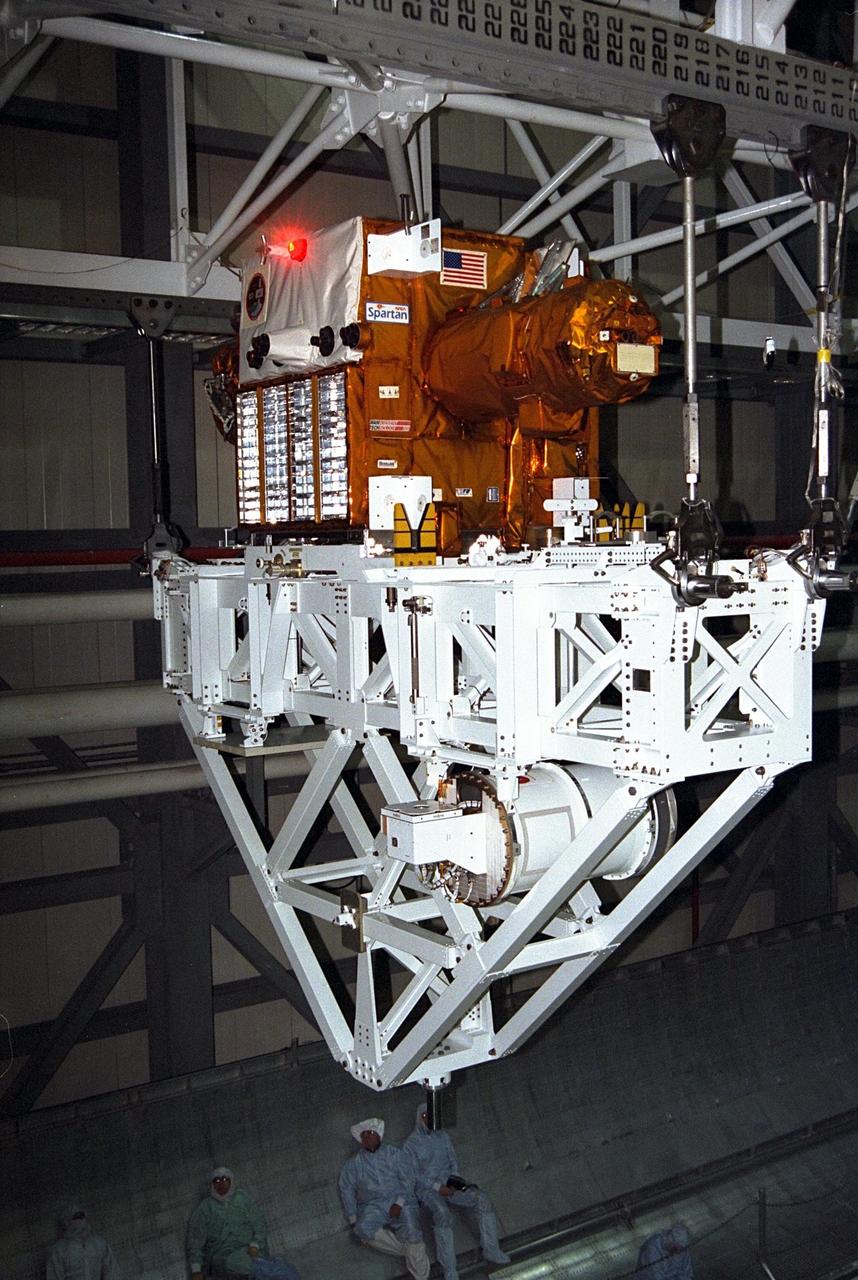
The Spartan payload, which flew on STS-87, is removed from Columbia's cargo bay in Orbiter Processing Facility Bay 3 and will be transported to the Vertical Processing Facility
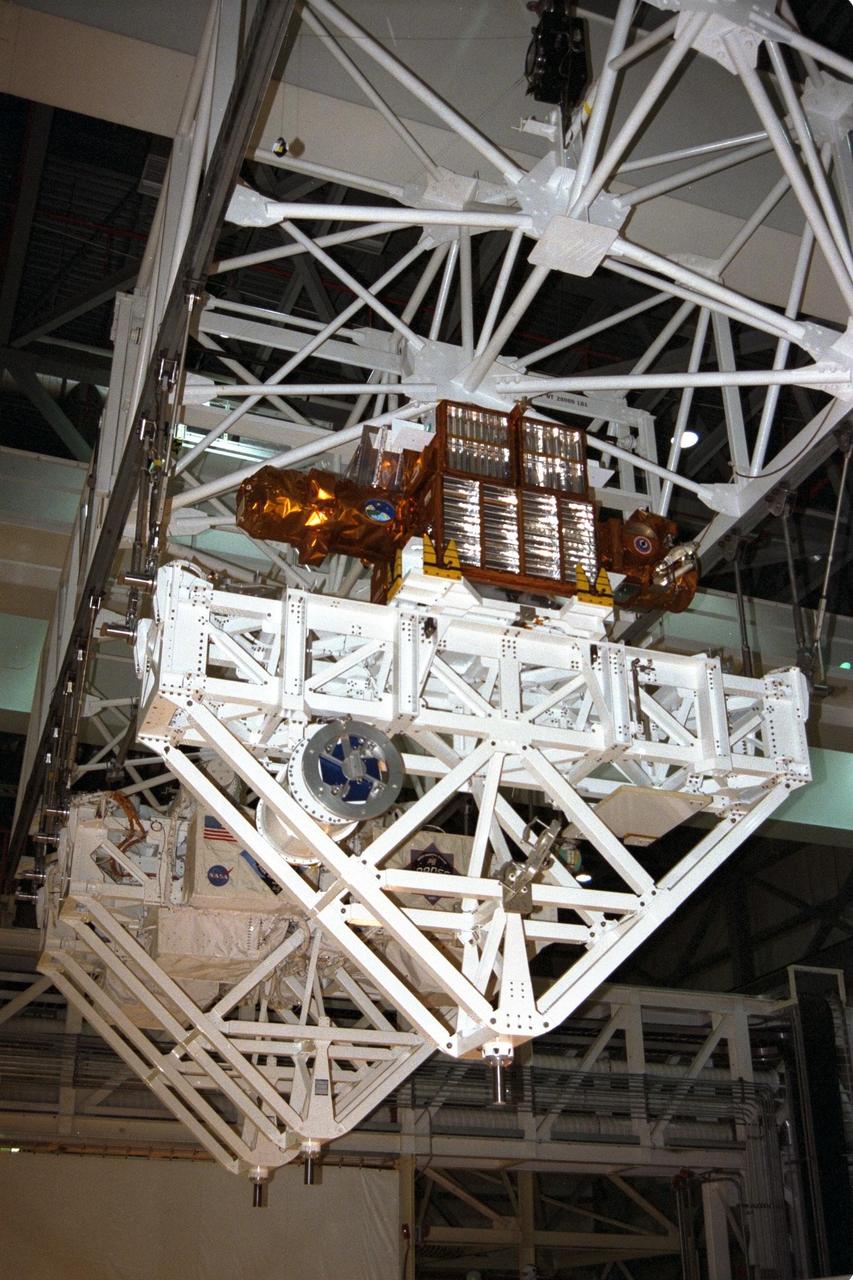
The Spartan payload, which flew on STS-87, is removed from Columbia's cargo bay in Orbiter Processing Facility Bay 3 and will be transported to the Vertical Processing Facility
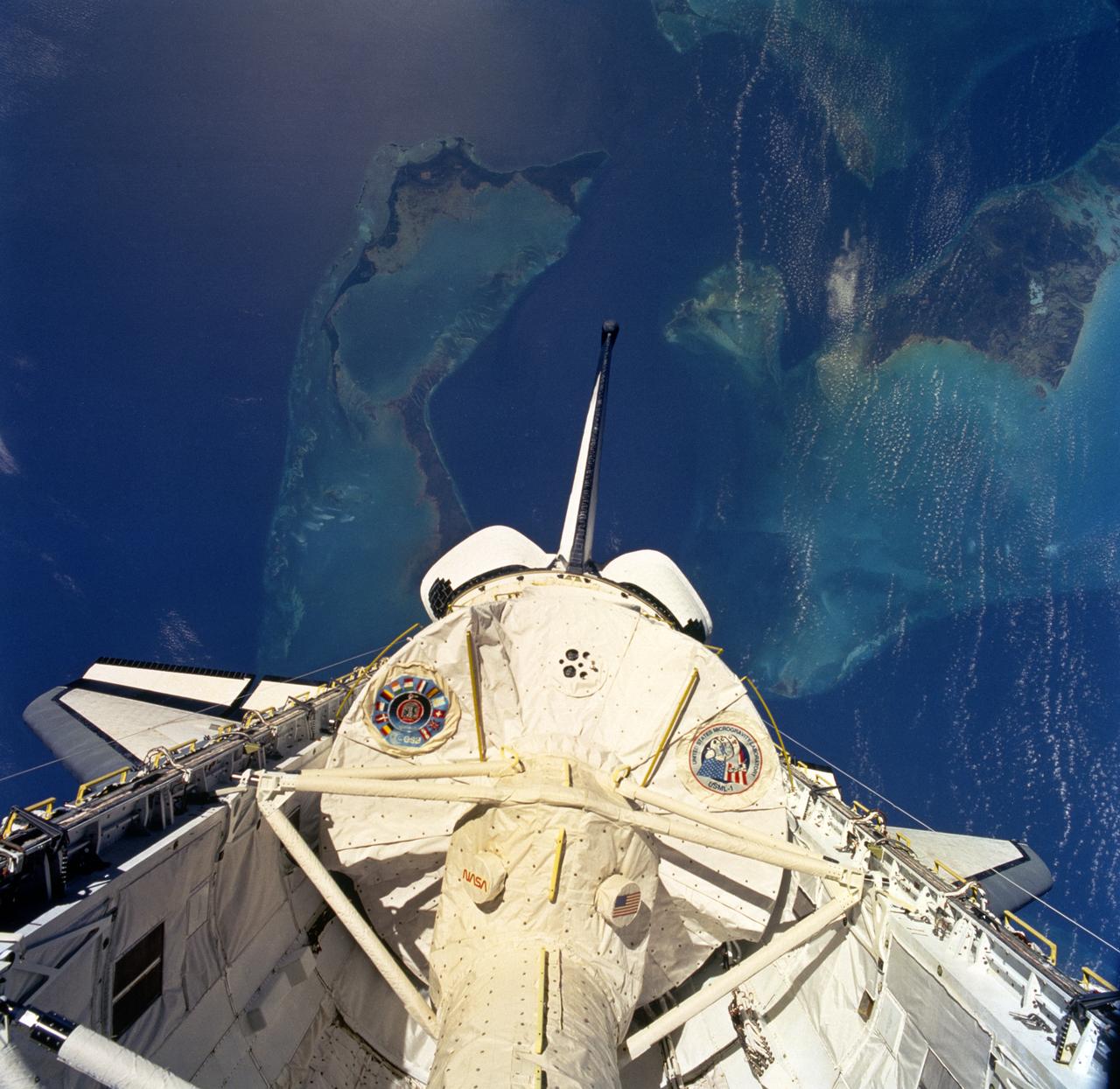
STS-50, USML-1, Spacelab module in cargo bay with earth in background
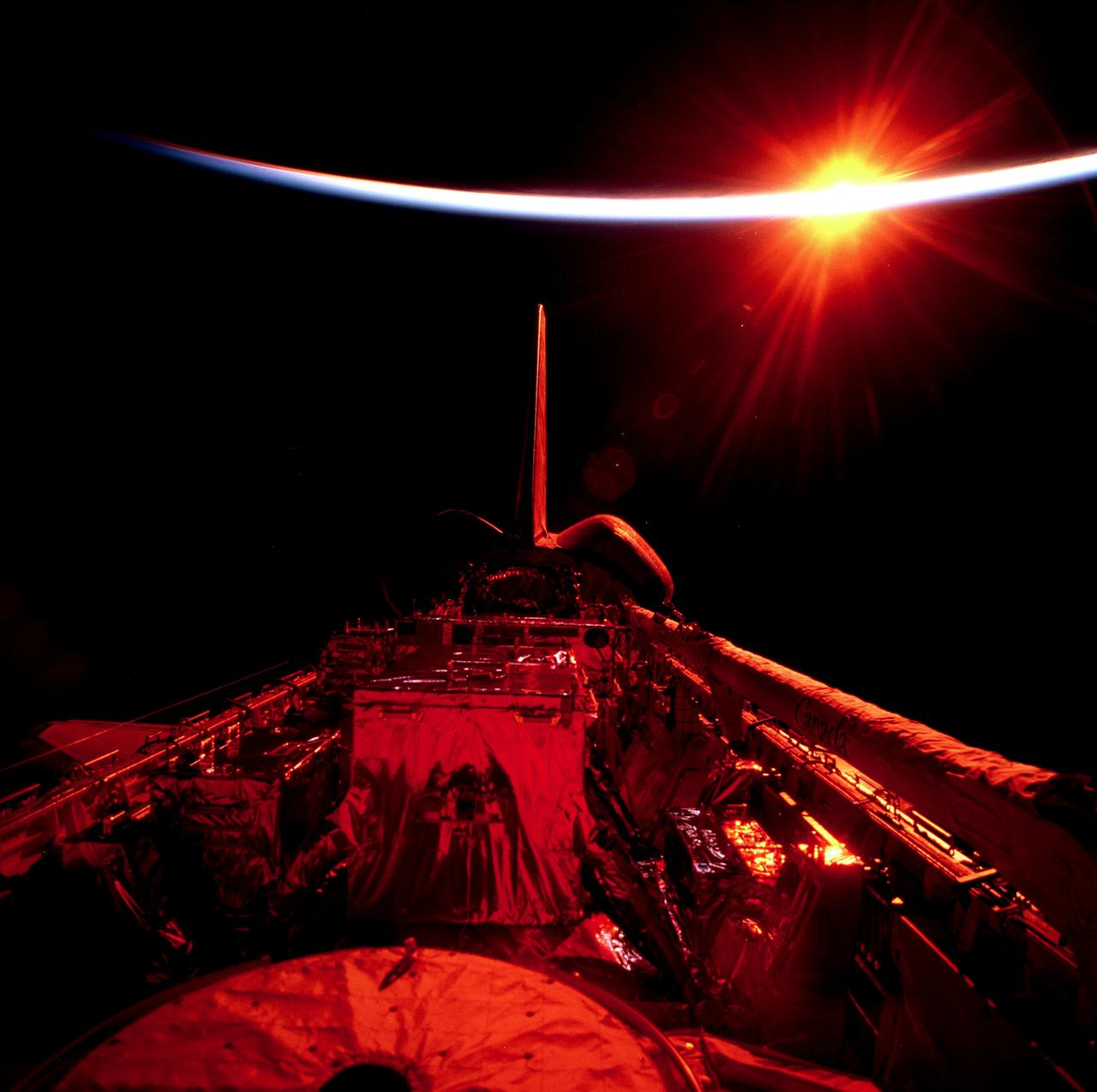
STS082-765-007 (21 Feb. 1997) --- This scene of the sun setting on the Space Shuttle Discovery's almost empty cargo bay symbolizes the successful conclusion of the mission, as the seven astronauts inside the crew cabin approach one of the final mission chores -- that of closing the cargo bay doors. The astronauts earlier completed five days of Extravehicular Activities (EVA) designed to service the giant Hubble Space Telescope (HST), now noticeably missing in the bay. At bottom center is part of the top of the exit airlock, making its first flight.
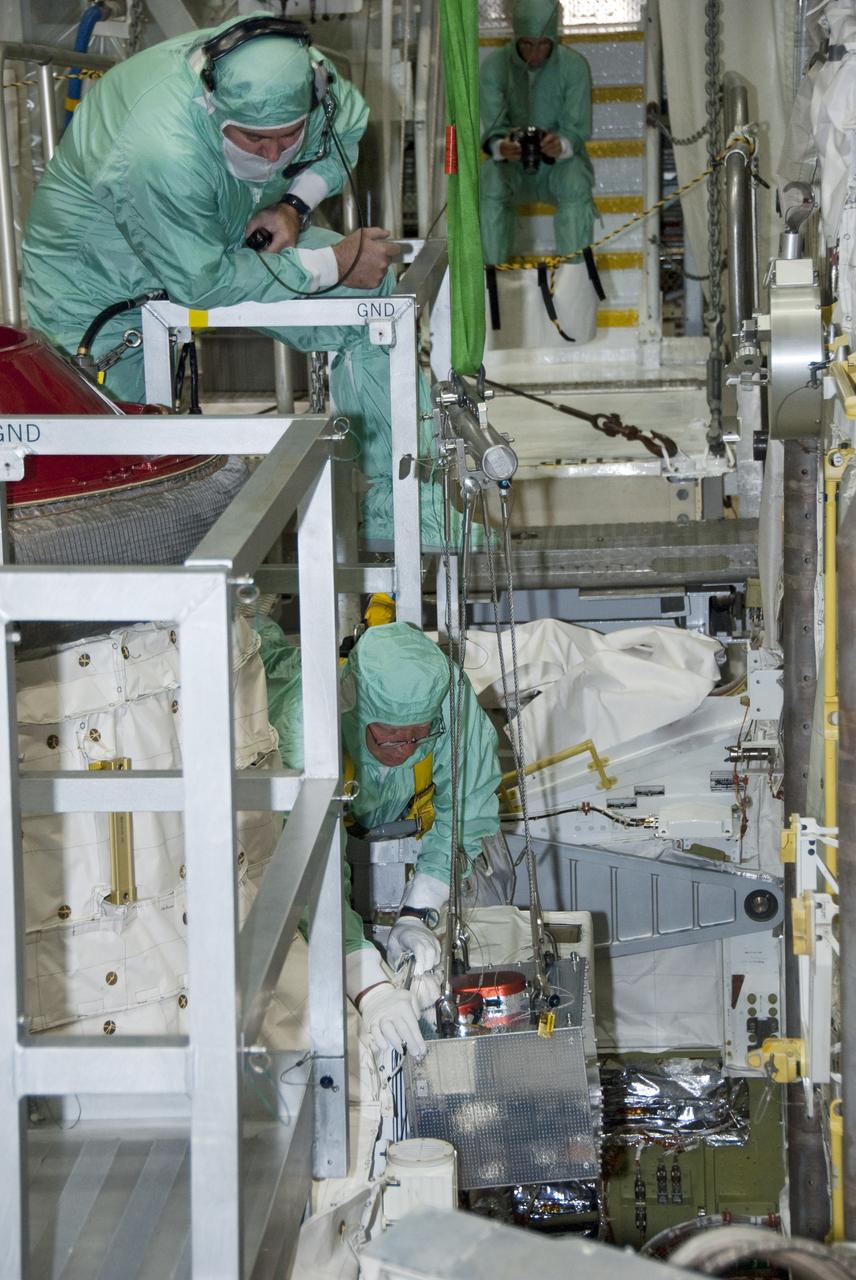
STS-134 ENDEAVOUR STORRM INSTLN FORWARD CARGO BAY FOR "BALL" ORION PROJECT - DOCKING EXPERIMENT - LARK
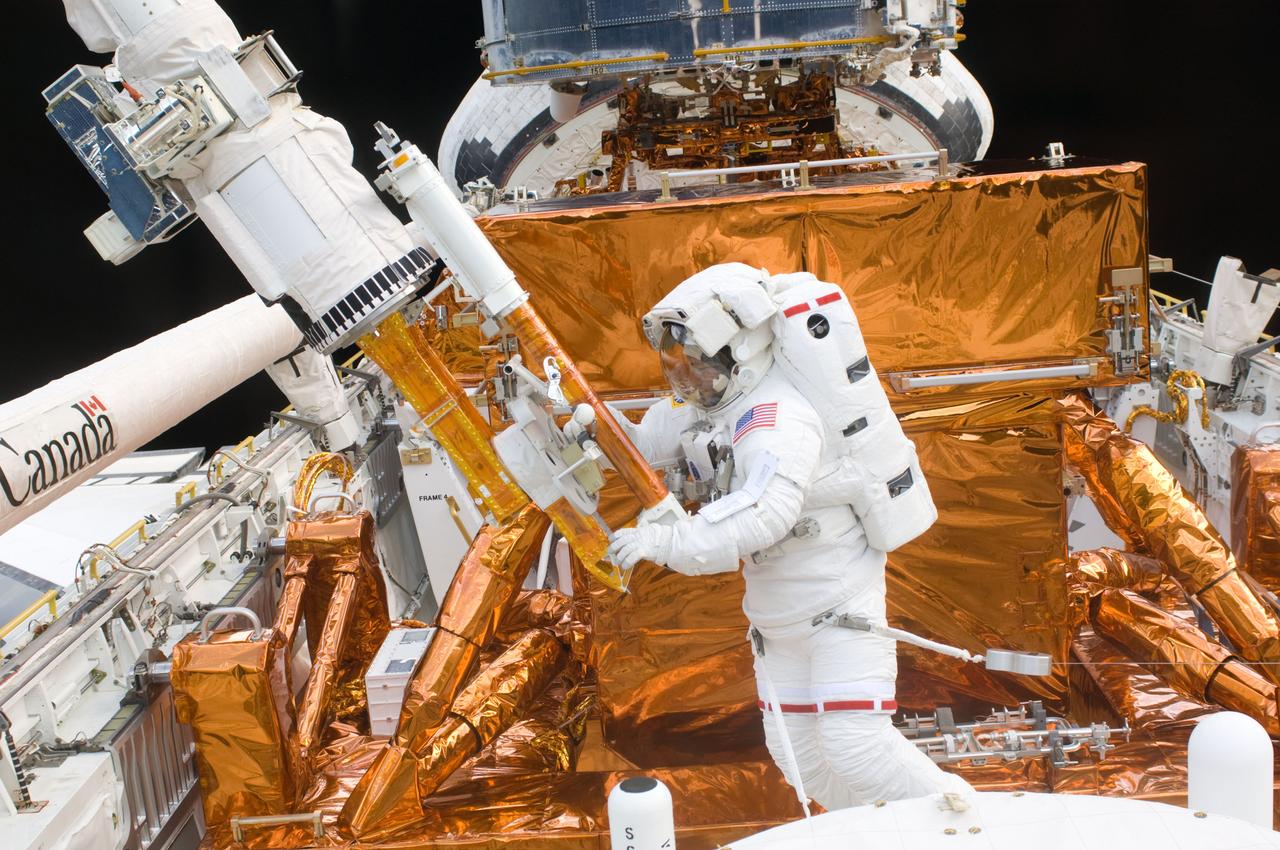
S125-E-007532 (15 May 2009) --- Astronaut Mike Massimino in Atlantis' cargo bay works with the Hubble Space Telescope.
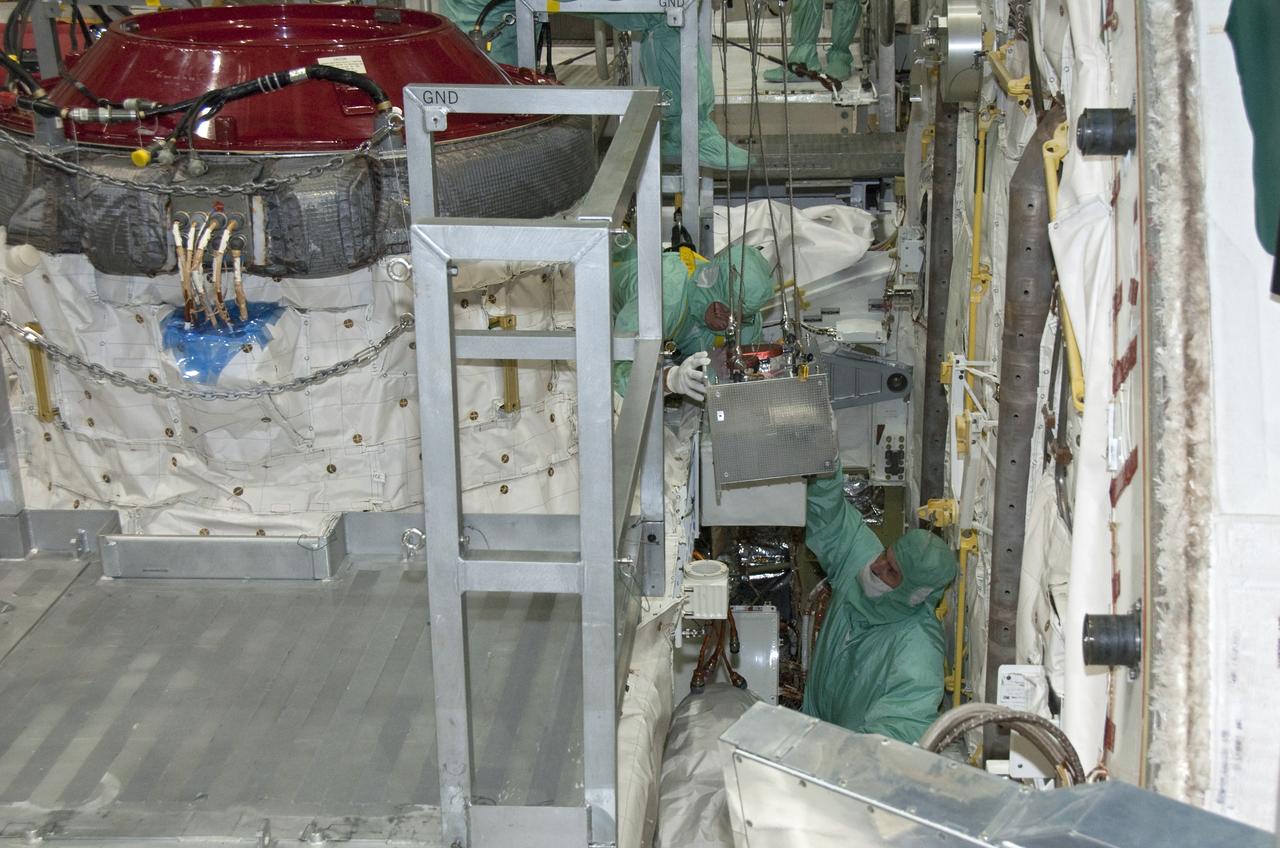
STS-134 ENDEAVOUR STORRM INSTLN FORWARD CARGO BAY FOR "BALL" ORION PROJECT - DOCKING EXPERIMENT - LARK
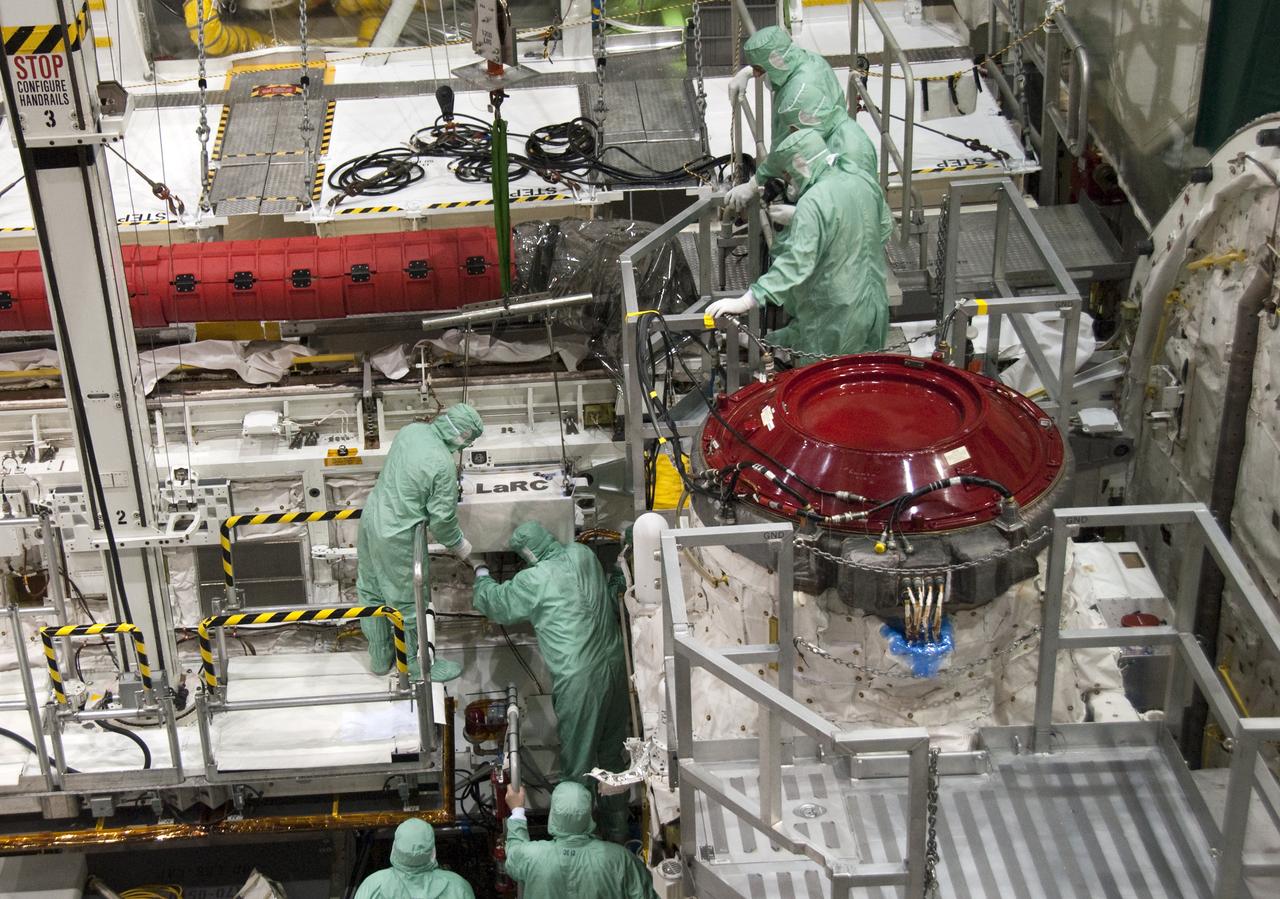
STS-134 ENDEAVOUR STORRM INSTLN FORWARD CARGO BAY FOR "BALL" ORION PROJECT - DOCKING EXPERIMENT - LARK
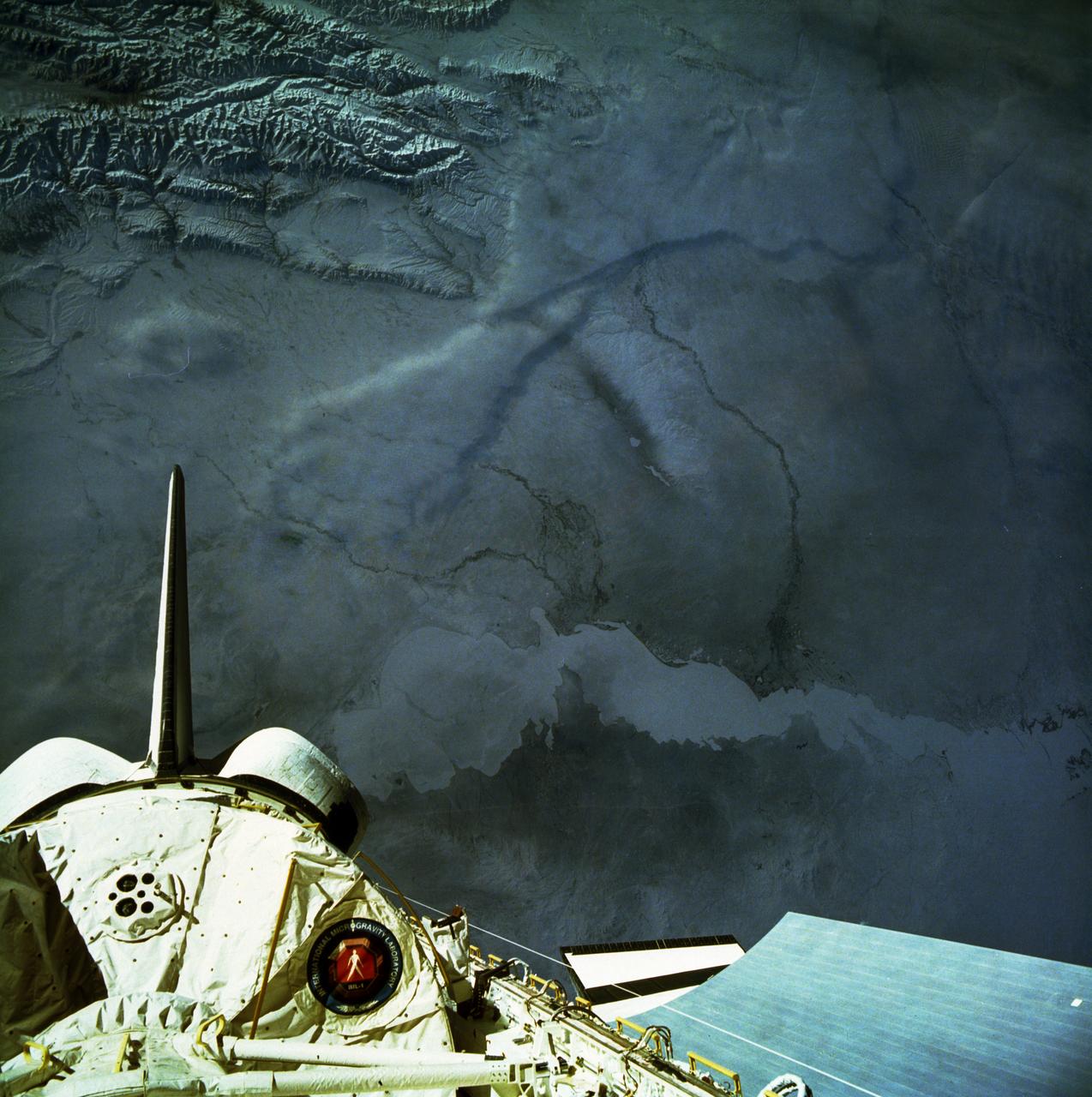
STS-42, Viewing earth with lots of snow, partial view of IML-1 (International Microgravity Laboratory) in cargo bay.
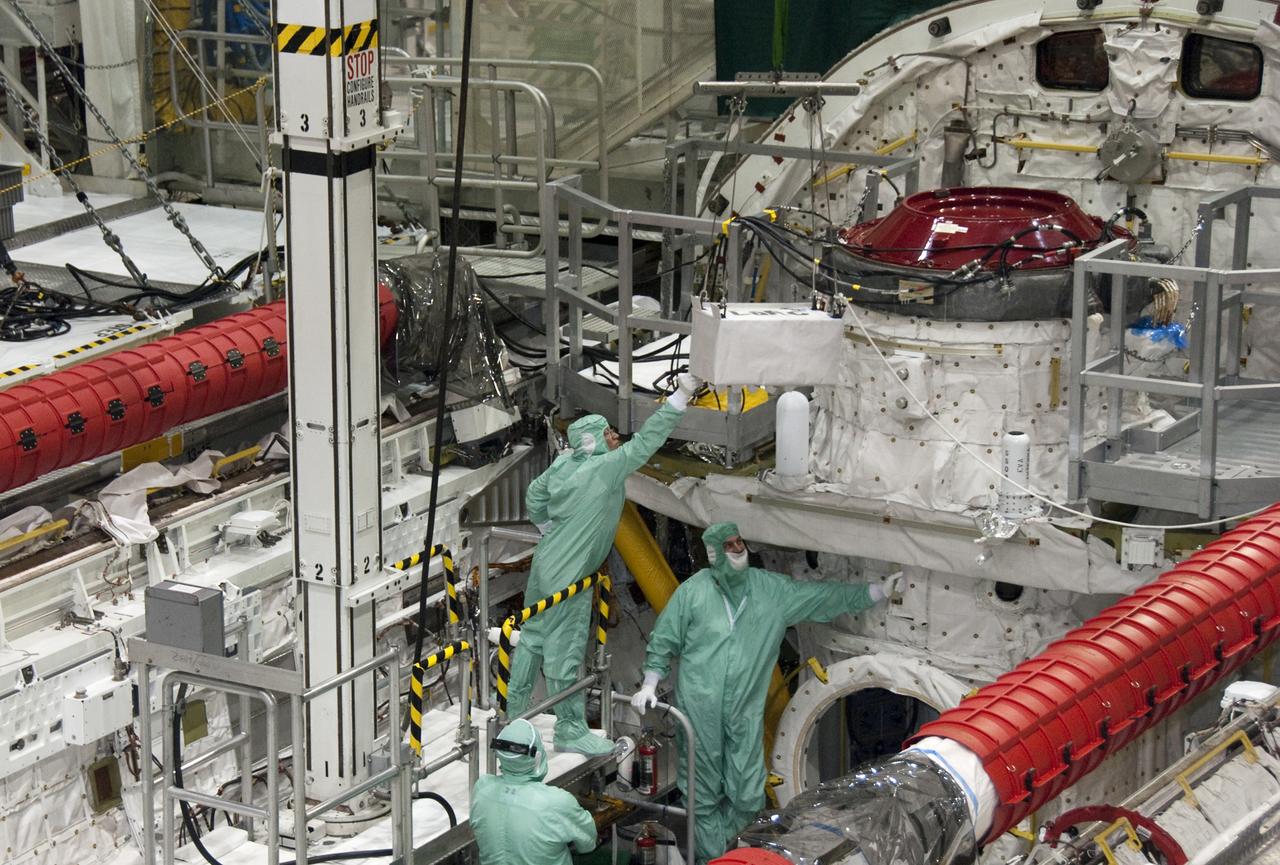
STS-134 ENDEAVOUR STORRM INSTLN FORWARD CARGO BAY FOR "BALL" ORION PROJECT - DOCKING EXPERIMENT - LARK
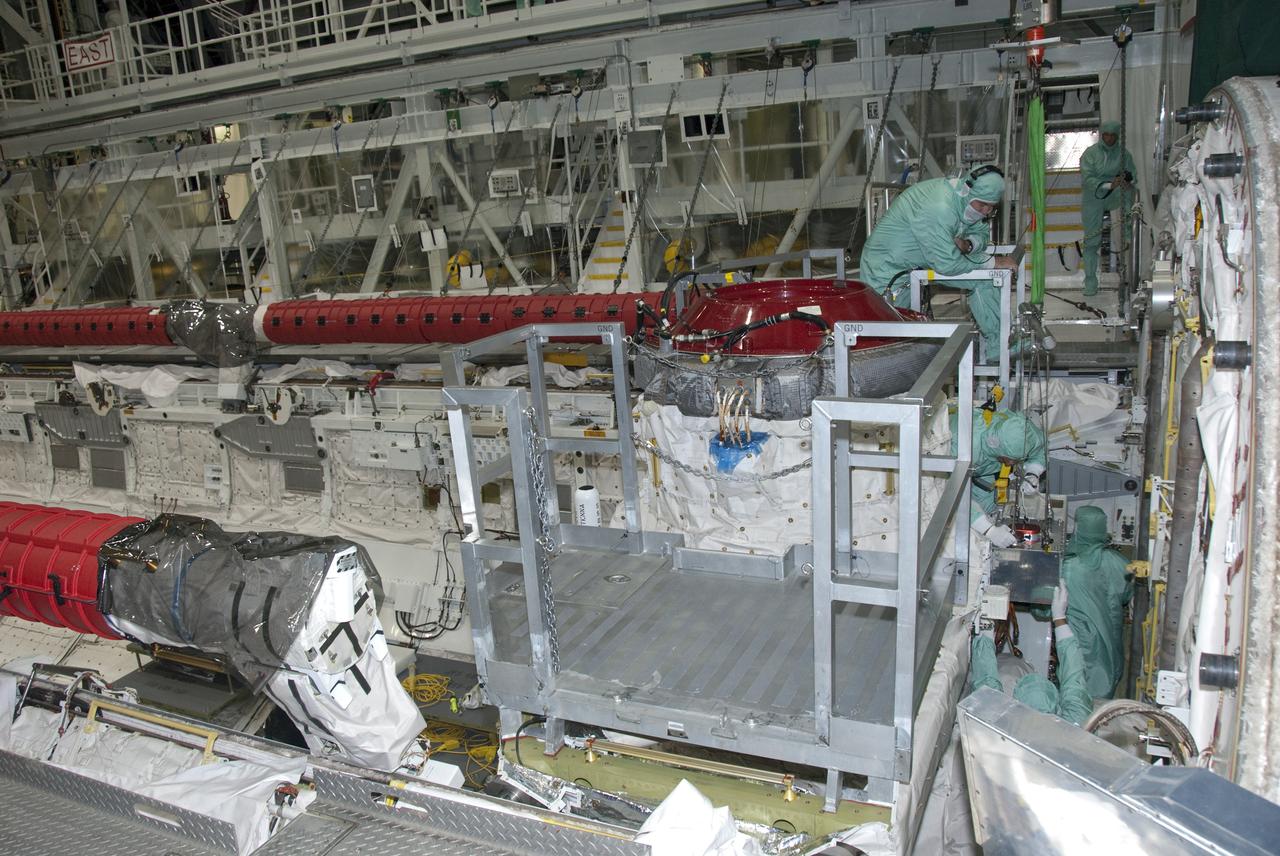
STS-134 ENDEAVOUR STORRM INSTLN FORWARD CARGO BAY FOR "BALL" ORION PROJECT - DOCKING EXPERIMENT - LARK
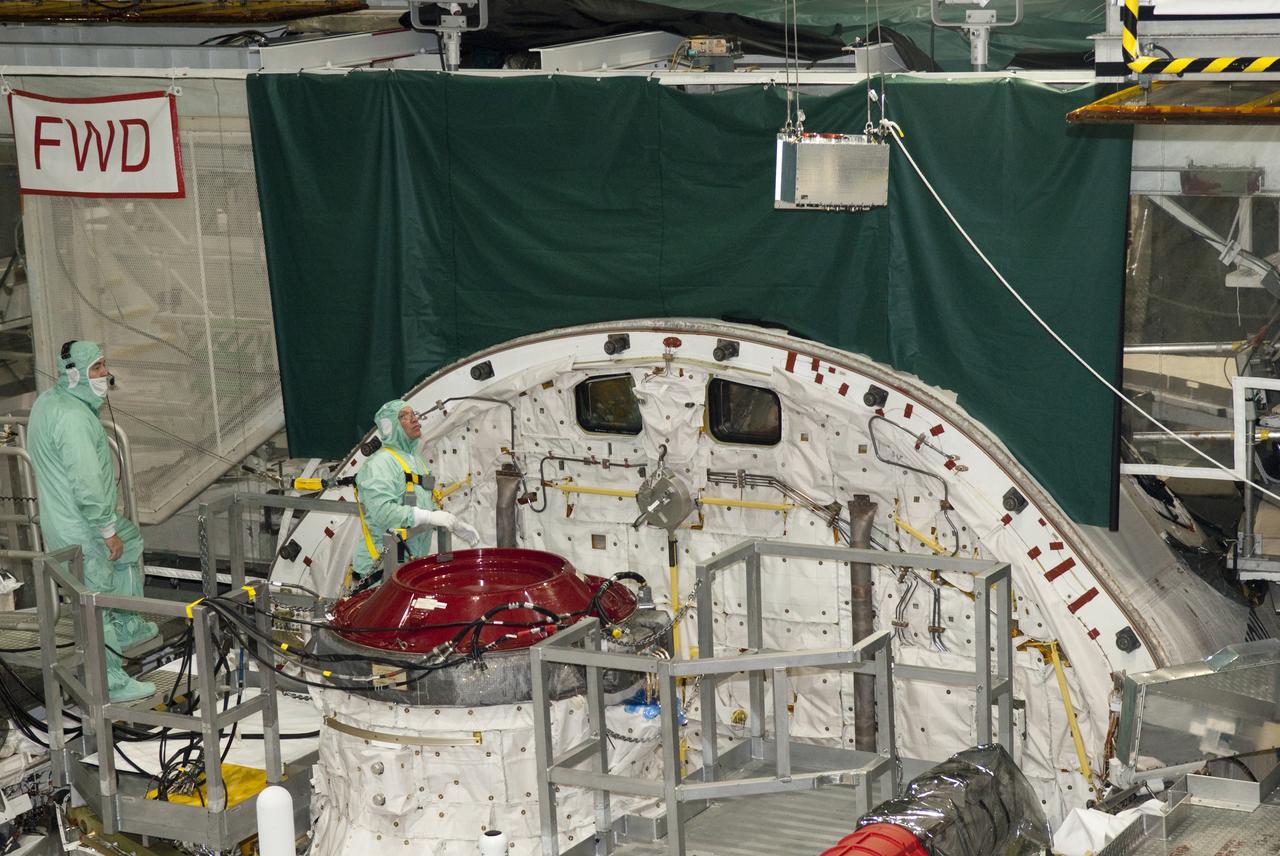
STS-134 ENDEAVOUR STORRM INSTLN FORWARD CARGO BAY FOR "BALL" ORION PROJECT - DOCKING EXPERIMENT - LARK
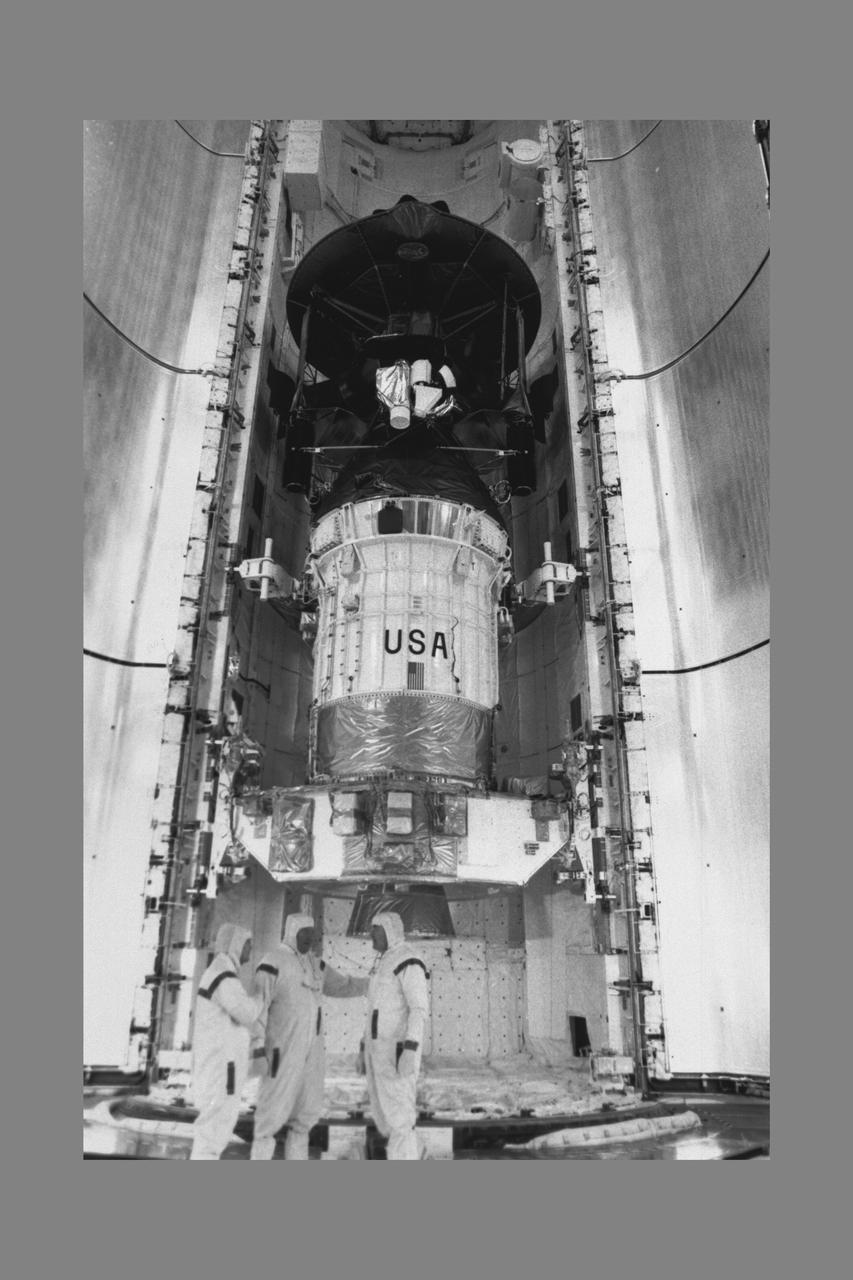
Space Shuttle Mission STS-34 Atlantis: Pioneer Galileo spacecraft in cargo bay
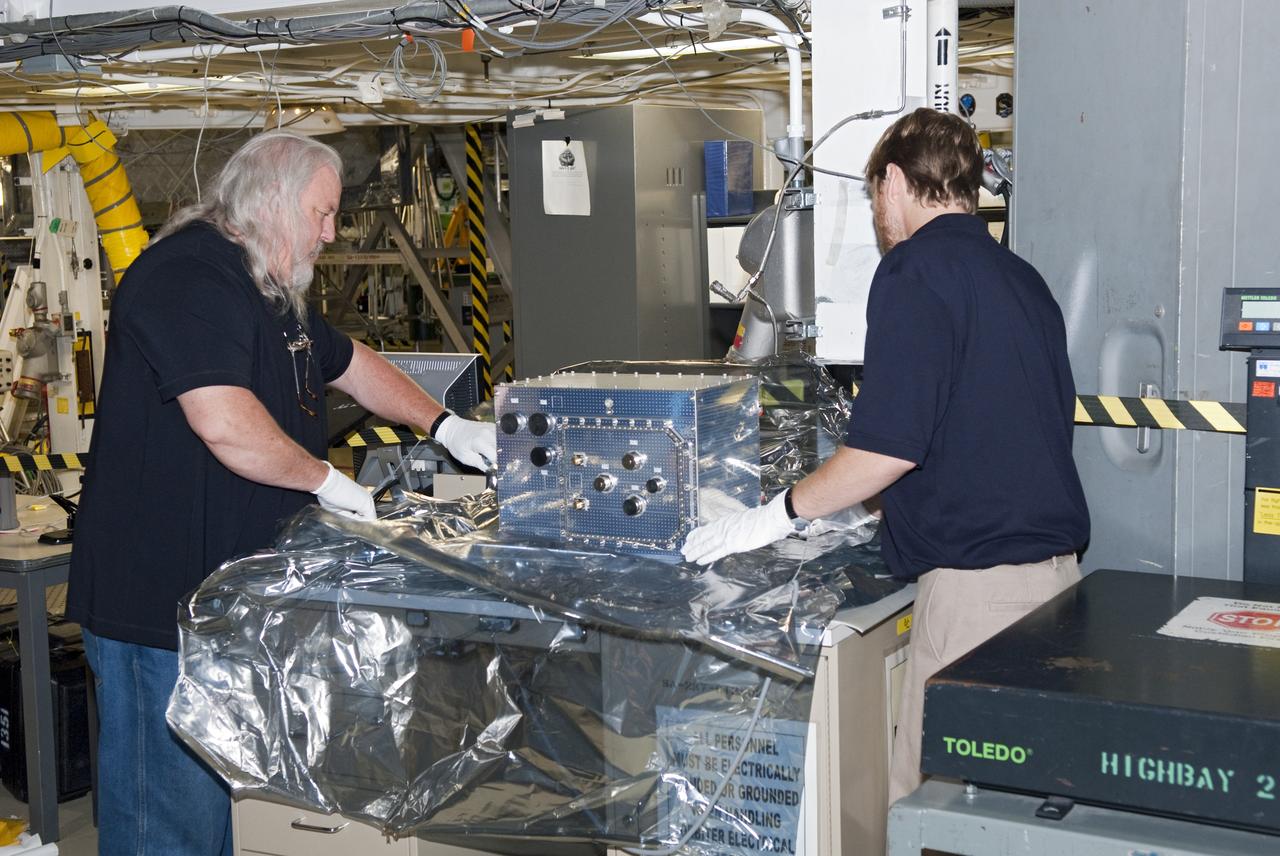
STS-134 ENDEAVOUR STORRM INSTLN FORWARD CARGO BAY FOR "BALL" ORION PROJECT - DOCKING EXPERIMENT - LARK
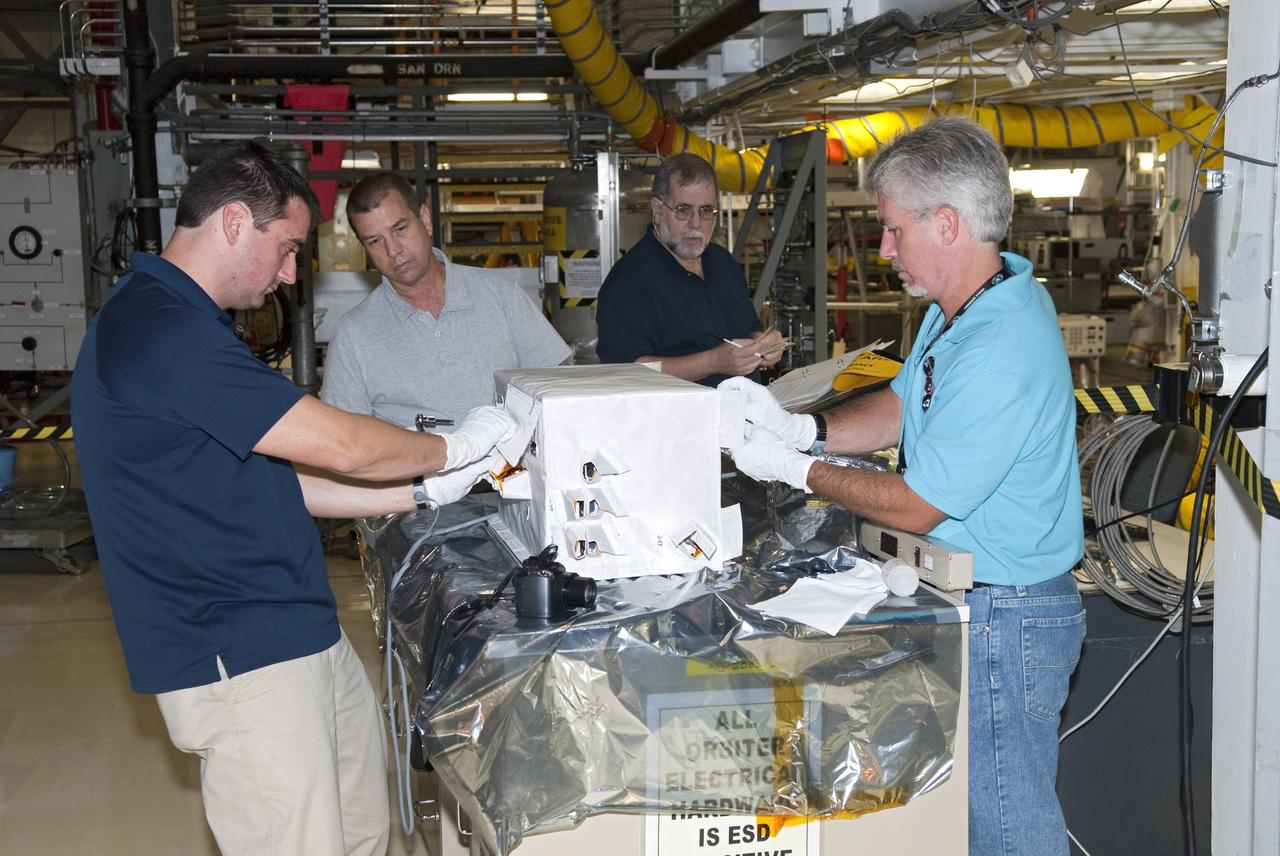
STS-134 ENDEAVOUR STORRM INSTLN FORWARD CARGO BAY FOR "BALL" ORION PROJECT - DOCKING EXPERIMENT - LARK
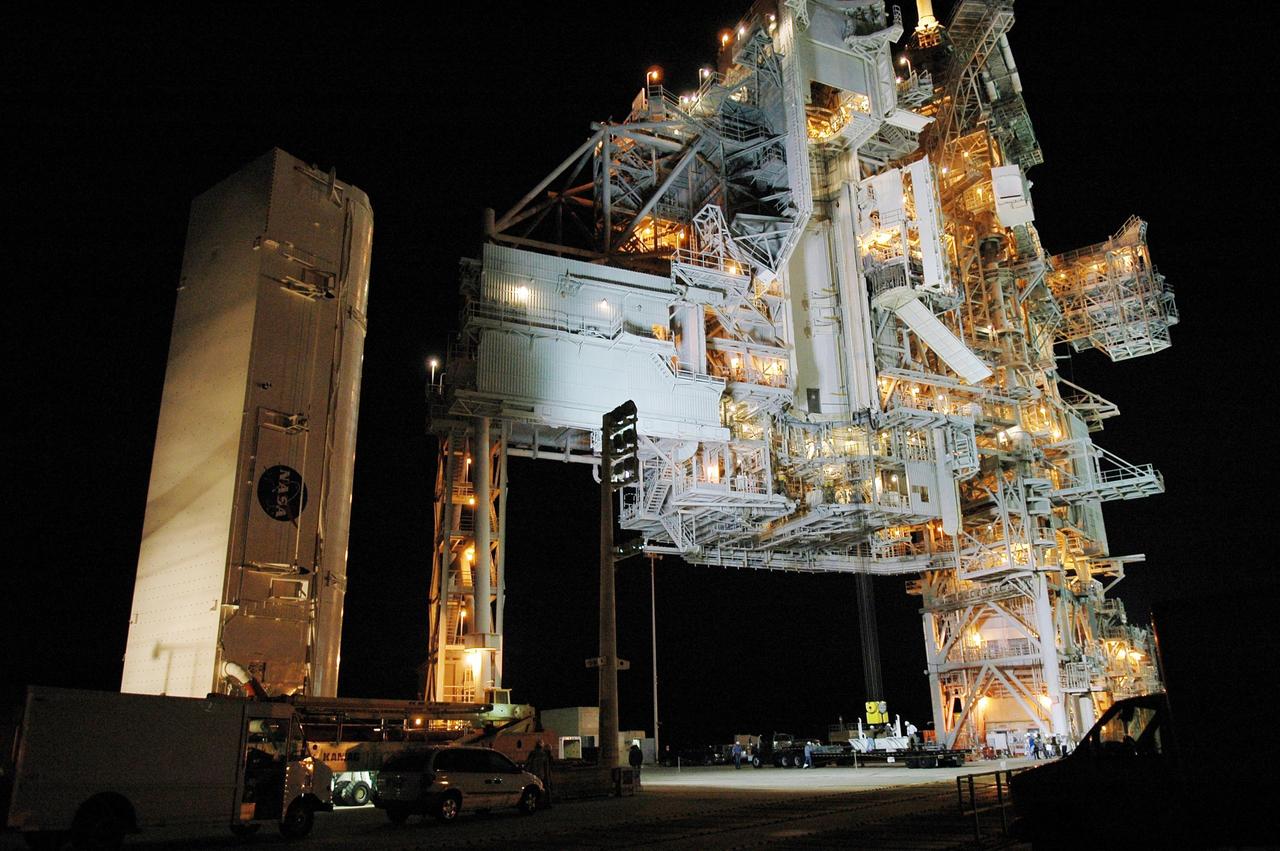
KENNEDY SPACE CENTER, FLA. -- The payload canister transporter and canister approach the rotating service structure (RSS) on Launch Pad 39B. Inside the canister are the SPACEHAB module and the port 5 truss segment for mission STS-116. They will be moved into the payload changeout room (PCR) on the RSS and transferred into Space Shuttle Discovery's payload bay once the vehicle has rolled out to the pad. The PCR is the enclosed, environmentally controlled portion of the RSS that supports cargo delivery to the pad and subsequent vertical installation into the orbiter payload bay. Seals around the mating surface of the PCR fit against the orbiter and allow the opening of the payload bay or canister doors and removal of the cargo without exposure to outside air and contaminants. A clean-air purge in the PCR maintains environmental control during PCR cargo operations. Cargo is removed from the payload canister and installed vertically in the orbiter by the payload ground handling mechanism (PGHM). Photo credit: NASA/Kim Shiflett
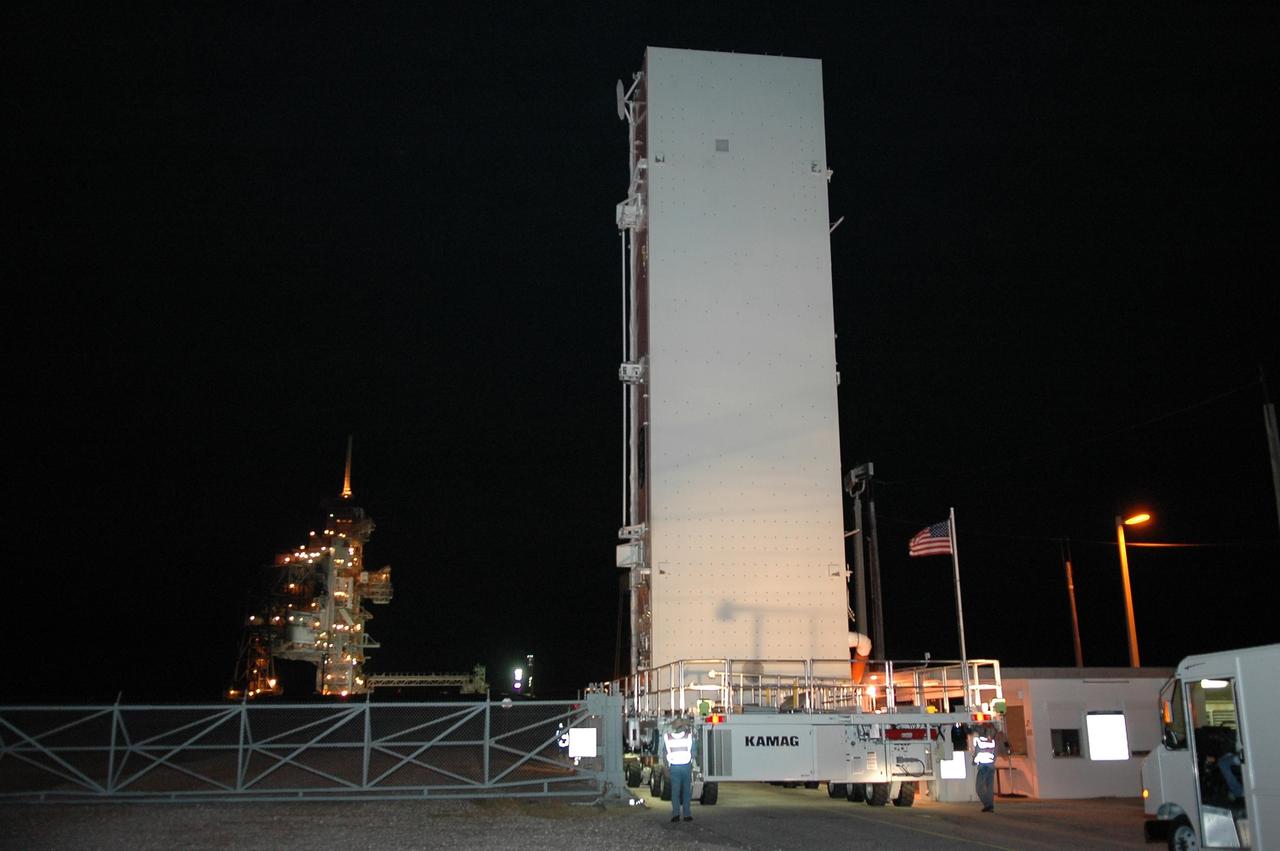
KENNEDY SPACE CENTER, FLA. -- The payload canister transporter and canister arrive at the gate to Launch Pad 39B. Inside the canister are the SPACEHAB module and the port 5 truss segment for mission STS-116. They will be moved into the payload changeout room (PCR) at the pad and transferred into Space Shuttle Discovery's payload bay once the vehicle has rolled out to the pad. The PCR is the enclosed, environmentally controlled portion of the RSS that supports cargo delivery to the pad and subsequent vertical installation into the orbiter payload bay. Seals around the mating surface of the PCR fit against the orbiter and allow the opening of the payload bay or canister doors and removal of the cargo without exposure to outside air and contaminants. A clean-air purge in the PCR maintains environmental control during PCR cargo operations. Cargo is removed from the payload canister and installed vertically in the orbiter by the payload ground handling mechanism (PGHM). Photo credit: NASA/Kim Shiflett
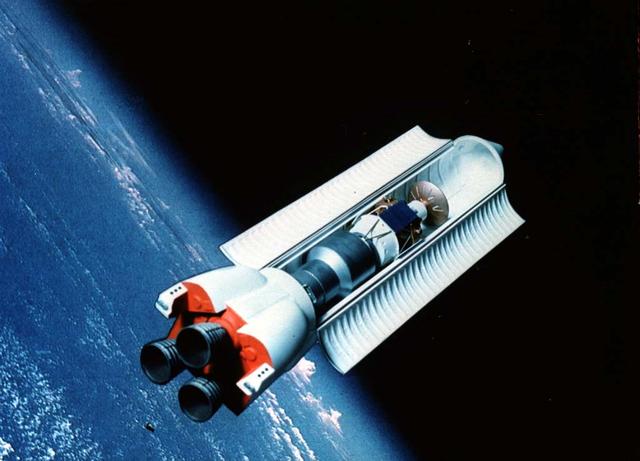
In this 1989 artist's concept, the Shuttle-C floats in space with its cargo bay doors open. As envisioned by Marshall Space Flight Center plarners, the Shuttle-C would be an unmanned heavy lift cargo vehicle derived from Space Shuttle elements. The vehicle would utilize the basic Shuttle propulsion units (Solid Rocket Boosters, Space Shuttle Main Engine, External Tank), but would replace the Oribiter with an unmanned Shuttle-C Cargo Element (SCE). The SCE would have a payload bay length of eighty-two feet, compared to sixty feet for the Orbiter cargo bay, and would be able to deliver 170,000 pound payloads to low Earth orbit, more than three times the Orbiter's capacity.
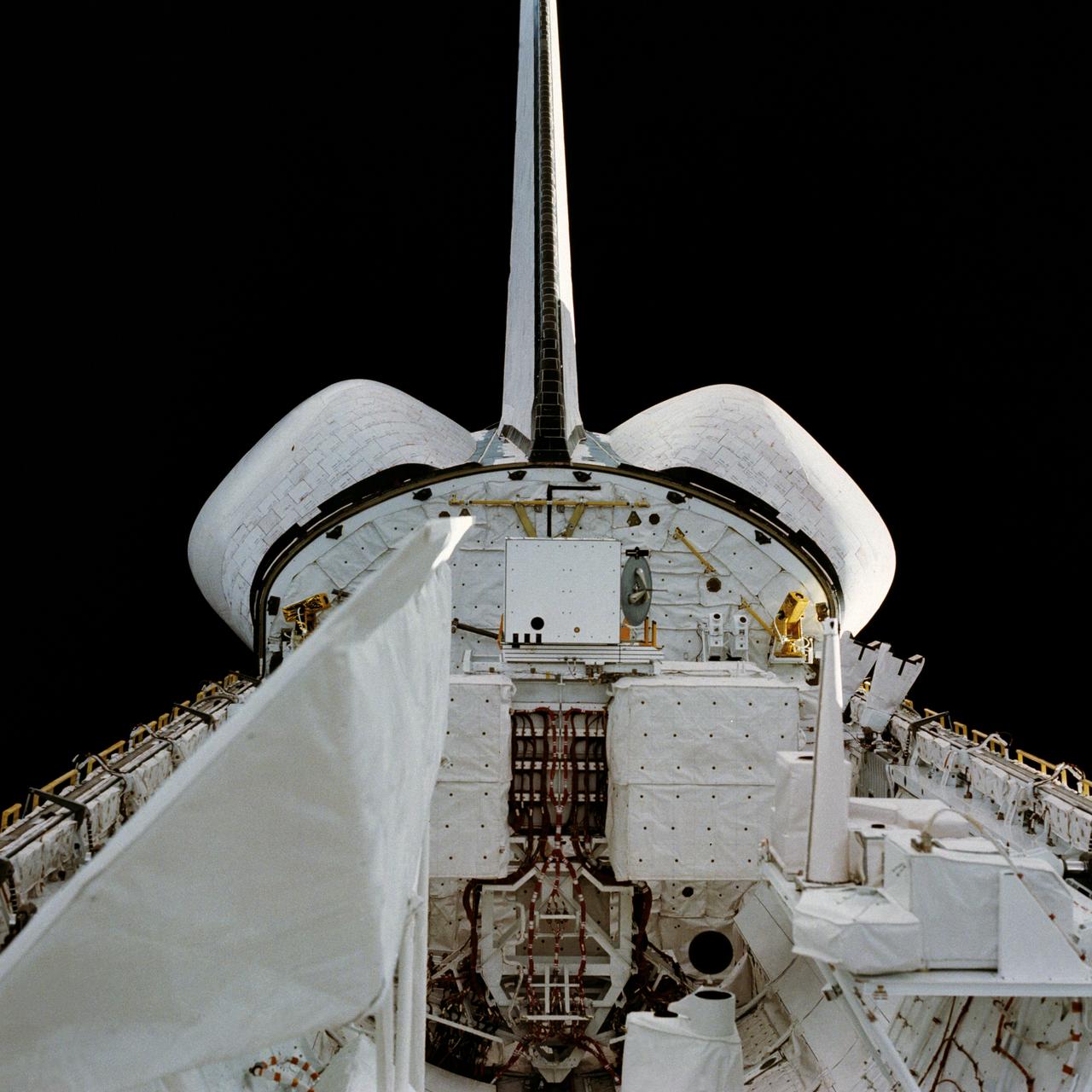
STS002-13-208 (12-14 Nov. 1981) --- This clear view of the aft section of the Earth-orbiting space shuttle Columbia's cargo bay and some of its cargo was photographed through the flight deck's aft windows. Visible in the center of the photo are the twin orbital maneuvering system (OMS) pods. The vertical stabilizer or tail splits the top part of the image in half. The Induced Environment Contamination Monitor (IECM) Location experiment is located in the back center of the cargo bay, near the top. There is a grapple fixture attached to the side of the IECM. Various components of the Office of Space Terrestrial Applications (OSTA-1) payload are seen near the aft section of the cargo bay, such as the Feature Identification and Location Experiment (FILE) (the long cone shaped object on the right back), the Shuttle Multispectral Infrared Radiometer (SMIRR) (on pallet base) and the SIR-A recorder in the right foreground. In the left foreground the Shuttle Imaging Radar-A (SIR-A) antenna can be seen. Photo credit: NASA
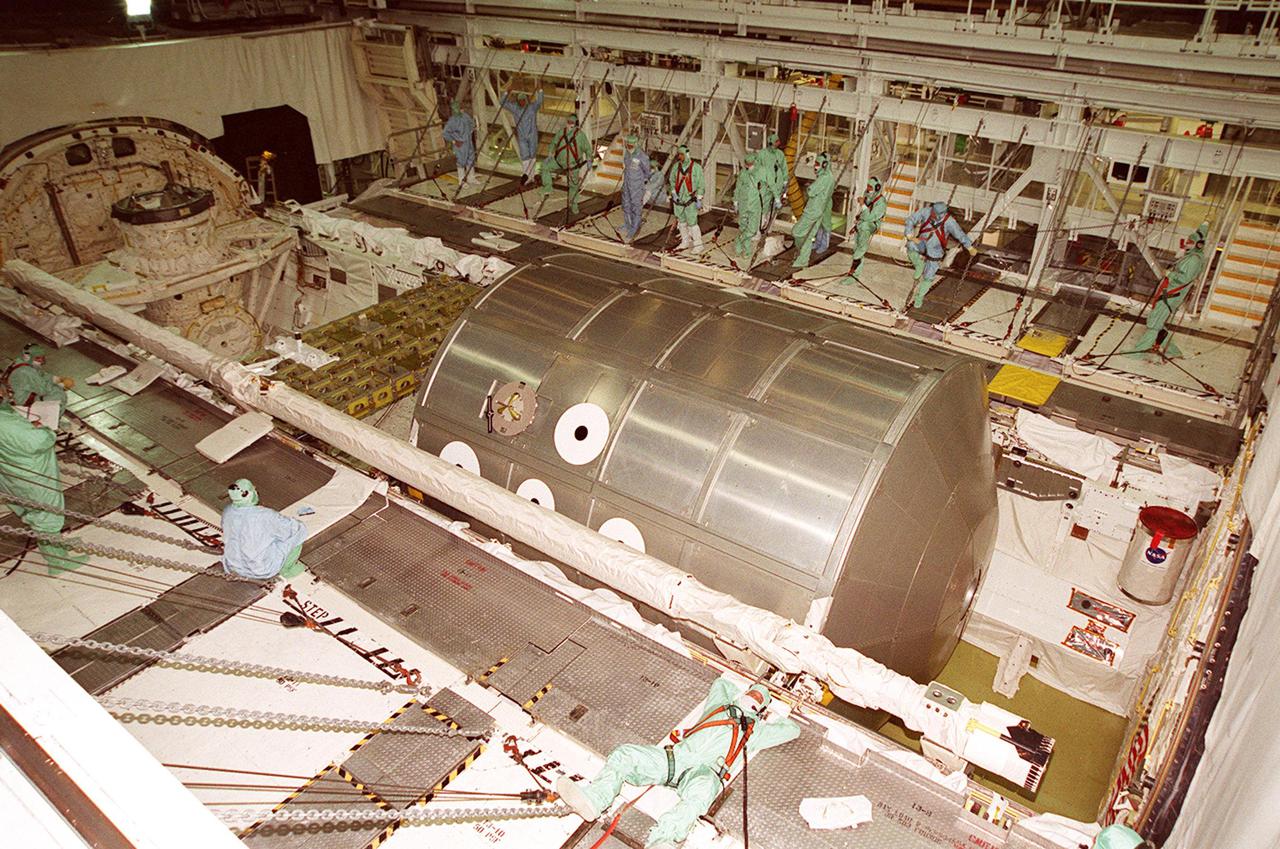
KENNEDY SPACE CENTER, FLA. -- In the Orbiter Processing Facility bay 2, Discovery’s payload bay doors are open to reveal the Multi-Purpose Logistics Module Leonardo, which has just returned from its first round trip to the International Space Station on mission STS-102. Behind it to the left is the integrated cargo carrier. Attached to the length of the payload bay, in front of Leonardo, is the robotic arm that was used to remove and position Leonardo on the ISS. Leonardo will be lifted from the payload bay and transferred to the SSPF to prepare it for future missions. The MPLM serves as a cargo van, carrying equipment and supplies to the Space Station
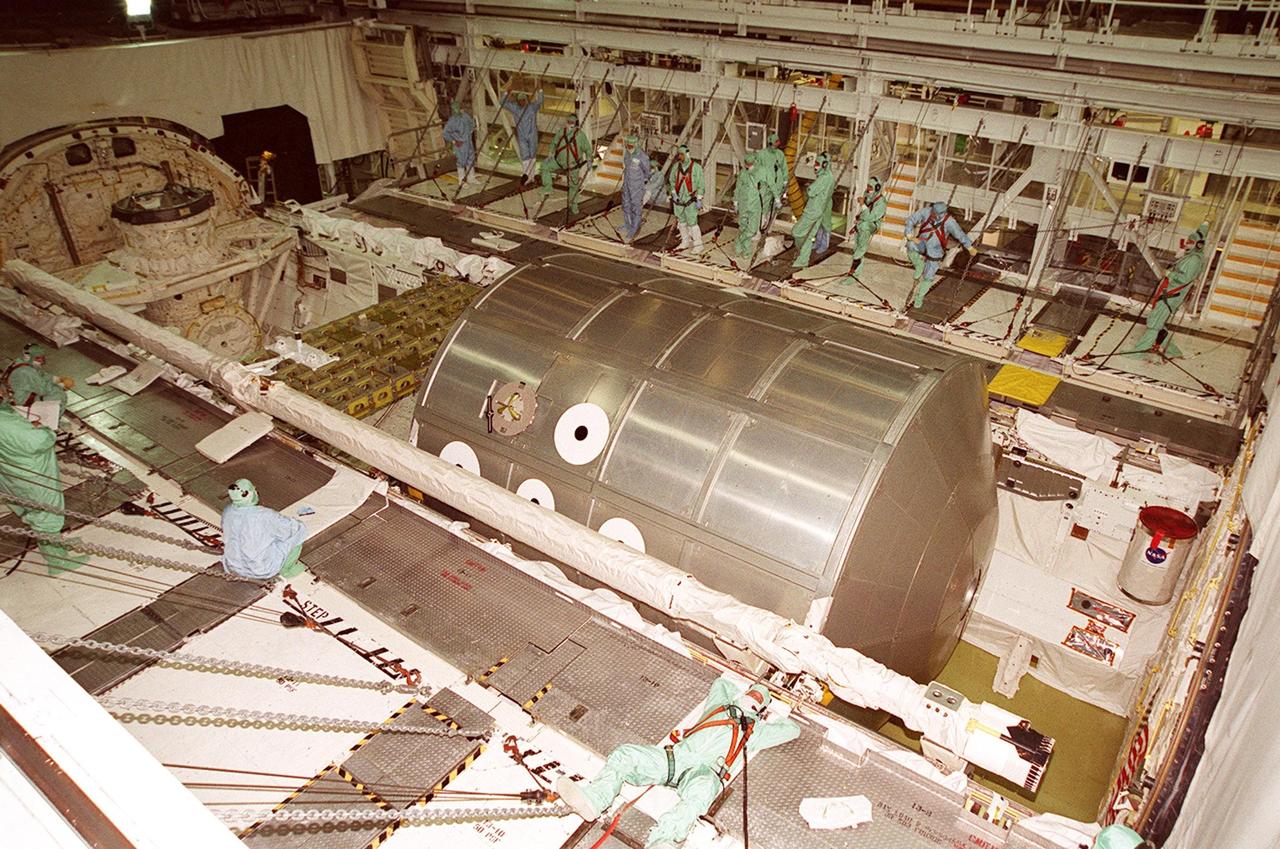
KENNEDY SPACE CENTER, FLA. -- In the Orbiter Processing Facility bay 2, Discovery’s payload bay doors are open to reveal the Multi-Purpose Logistics Module Leonardo, which has just returned from its first round trip to the International Space Station on mission STS-102. Behind it to the left is the integrated cargo carrier. Attached to the length of the payload bay, in front of Leonardo, is the robotic arm that was used to remove and position Leonardo on the ISS. Leonardo will be lifted from the payload bay and transferred to the SSPF to prepare it for future missions. The MPLM serves as a cargo van, carrying equipment and supplies to the Space Station
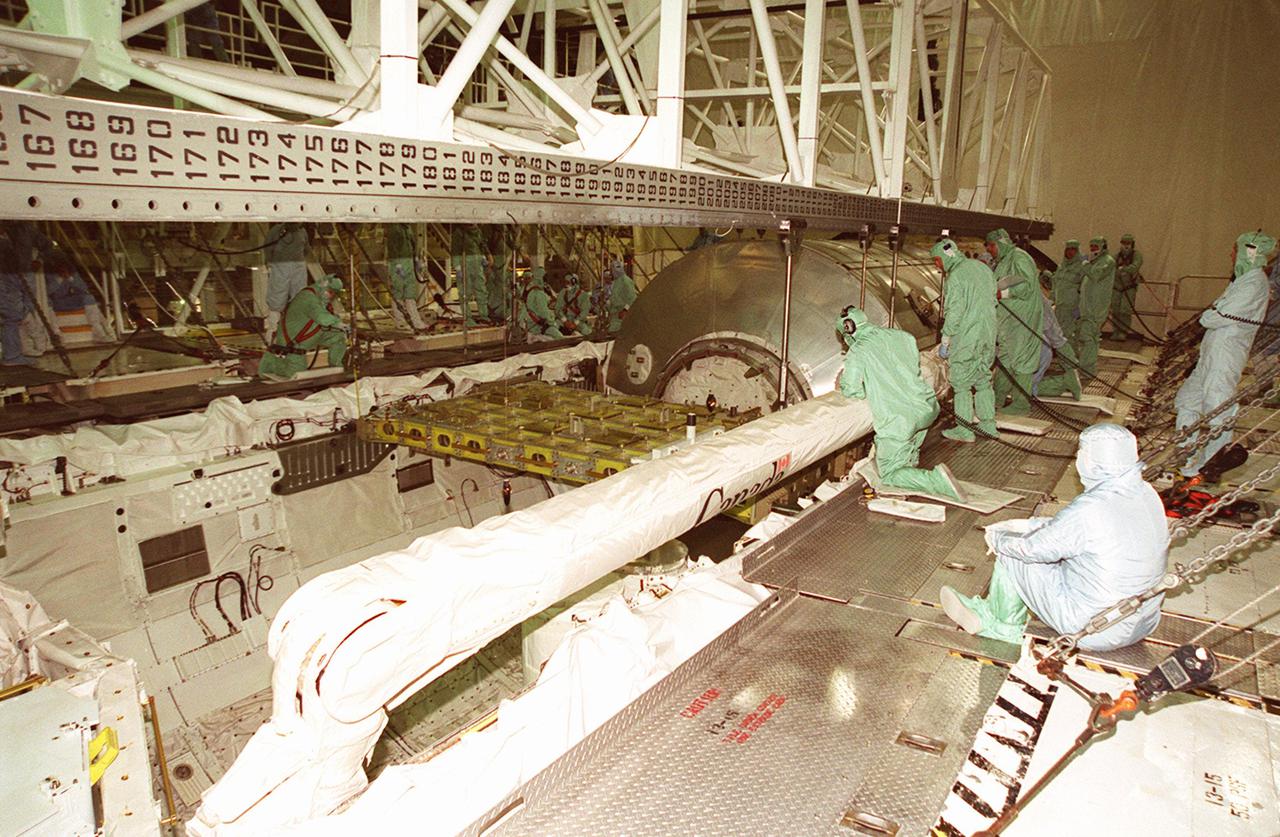
KENNEDY SPACE CENTER, FLA. -- In the Orbiter Processing Facility bay 2, workers attach an overhead crane to the Multi-Purpose Logistics Module Leonardo and the integrated cargo carrier behind it sitting in Discovery’s payload bay. The MPLM has just returned from its first round trip to the International Space Station on mission STS-102. Attached to the length of the payload bay, in front of Leonardo, is the robotic arm that was used to remove and position Leonardo on the ISS. Leonardo will be lifted from the payload bay and transferred to the SSPF to prepare it for future missions. The MPLM serves as a cargo van, carrying equipment and supplies to the Space Station
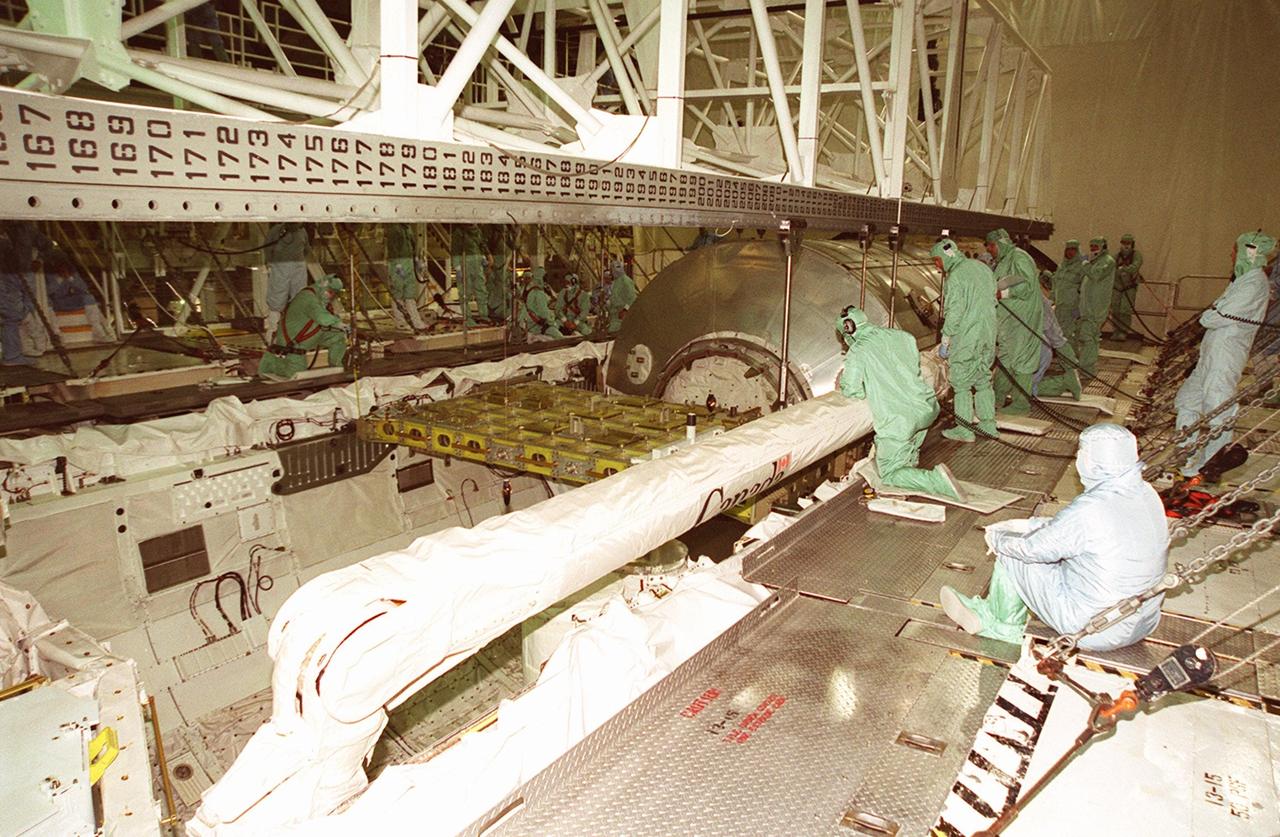
KENNEDY SPACE CENTER, FLA. -- In the Orbiter Processing Facility bay 2, workers attach an overhead crane to the Multi-Purpose Logistics Module Leonardo and the integrated cargo carrier behind it sitting in Discovery’s payload bay. The MPLM has just returned from its first round trip to the International Space Station on mission STS-102. Attached to the length of the payload bay, in front of Leonardo, is the robotic arm that was used to remove and position Leonardo on the ISS. Leonardo will be lifted from the payload bay and transferred to the SSPF to prepare it for future missions. The MPLM serves as a cargo van, carrying equipment and supplies to the Space Station
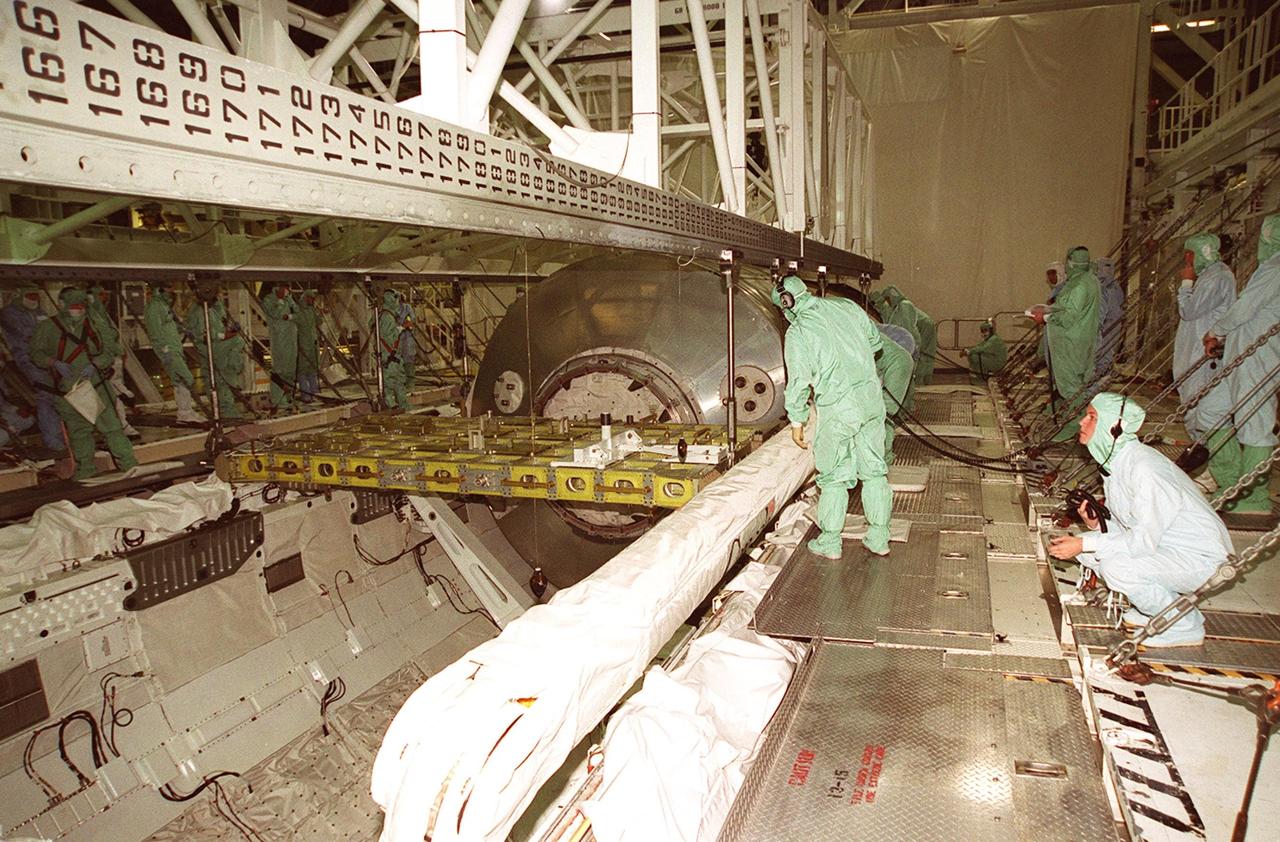
KENNEDY SPACE CENTER, FLA. -- Workers in the Orbiter Processing Facility bay 2 check the attachments on the overhead crane to the Multi-Purpose Logistics Module Leonardo and the integrated cargo carrier behind it sitting in Discovery’s payload bay. The MPLM has just returned from its first round trip to the International Space Station on mission STS-102. Attached to the length of the payload bay, in front of Leonardo, is the robotic arm that was used to remove and position Leonardo on the ISS. Leonardo will be lifted from the payload bay and transferred to the SSPF to prepare it for future missions. The MPLM serves as a cargo van, carrying equipment and supplies to the Space Station
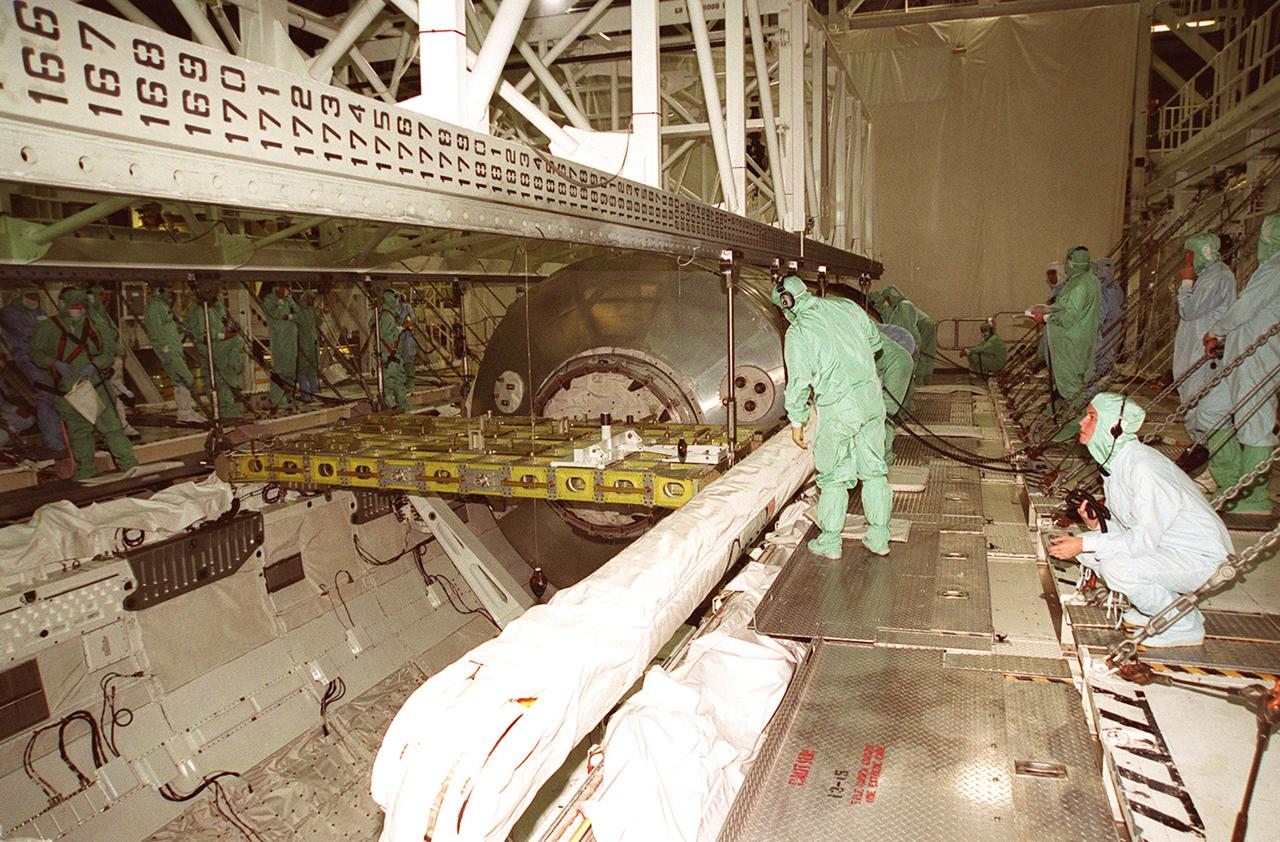
KENNEDY SPACE CENTER, FLA. -- Workers in the Orbiter Processing Facility bay 2 check the attachments on the overhead crane to the Multi-Purpose Logistics Module Leonardo and the integrated cargo carrier behind it sitting in Discovery’s payload bay. The MPLM has just returned from its first round trip to the International Space Station on mission STS-102. Attached to the length of the payload bay, in front of Leonardo, is the robotic arm that was used to remove and position Leonardo on the ISS. Leonardo will be lifted from the payload bay and transferred to the SSPF to prepare it for future missions. The MPLM serves as a cargo van, carrying equipment and supplies to the Space Station
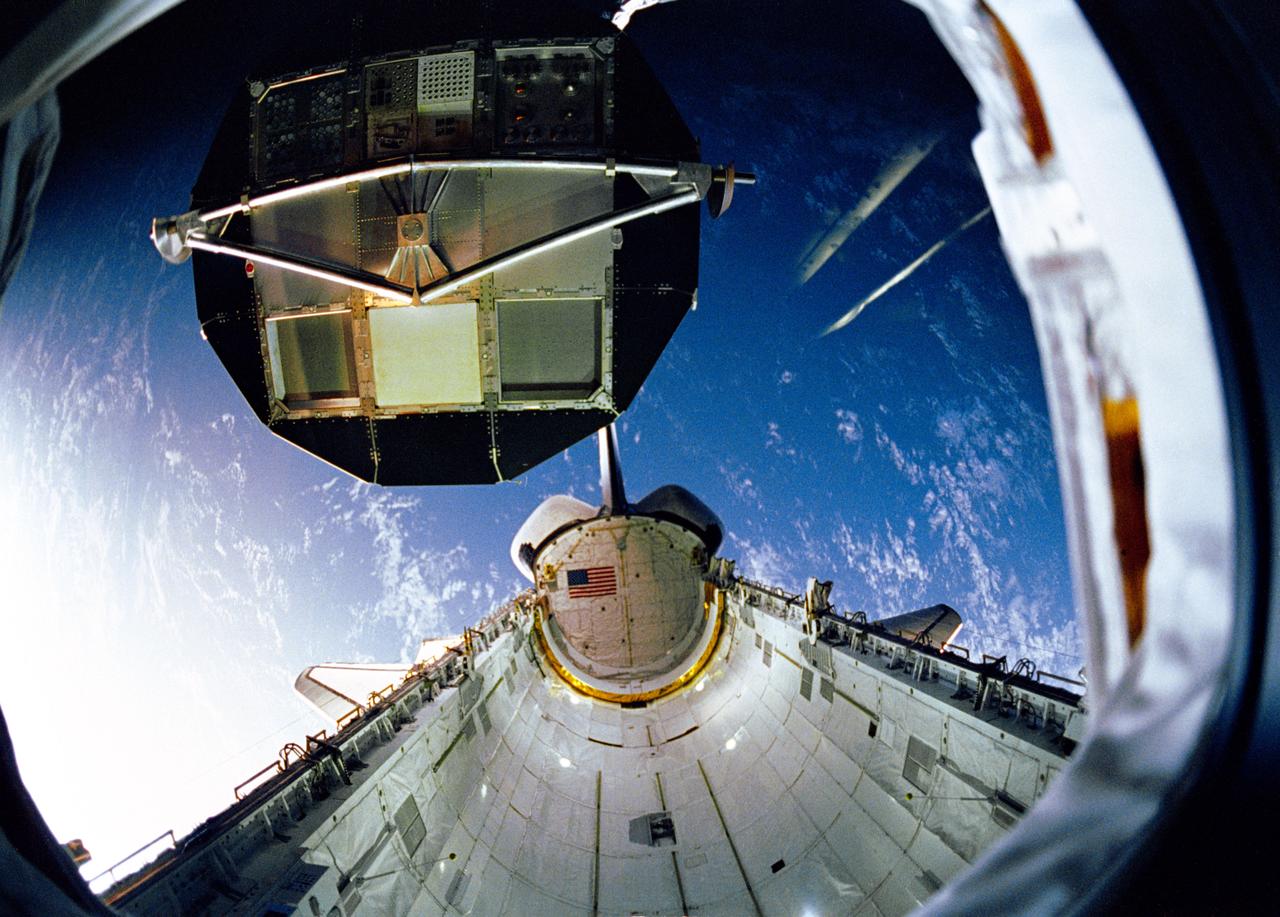
STS032-544-010 (12 Jan 1990) --- Canadian-built RMS suspends LDEF over cargo bay during extensive in-space survey.
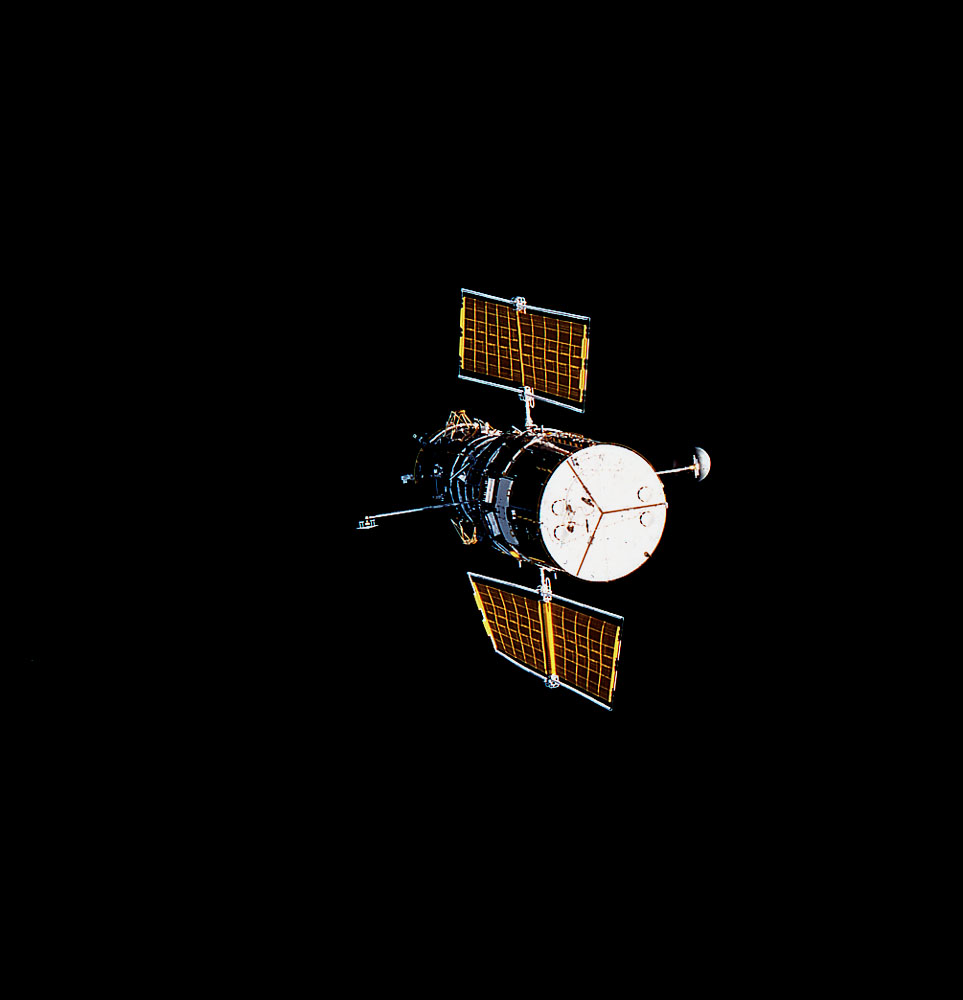
The Hubble Space Telescope (HST) begins its separation from the space shuttle Endeavour following a week and a half of repairs while in the space vehicle's cargo bay.
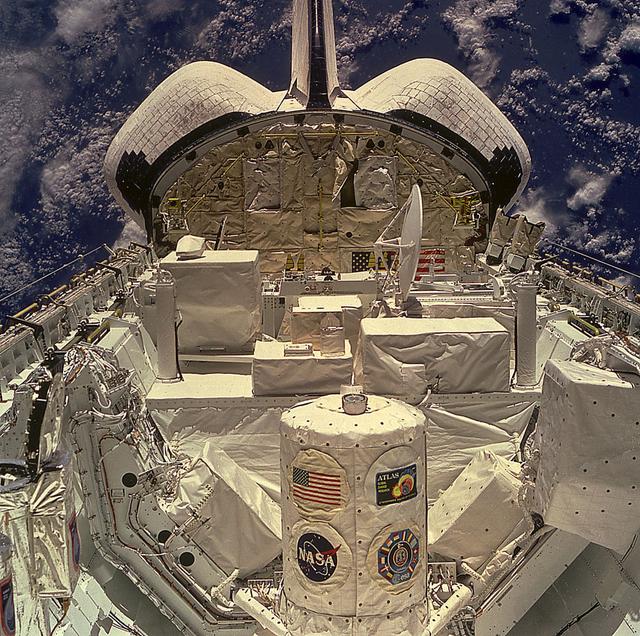
Space Shuttle Discovery (STS-56) onboard photo of the Atmospheric Laboratory for Applications and Science (ATLAS-2) payload on the pallet in the cargo bay of the orbiter.
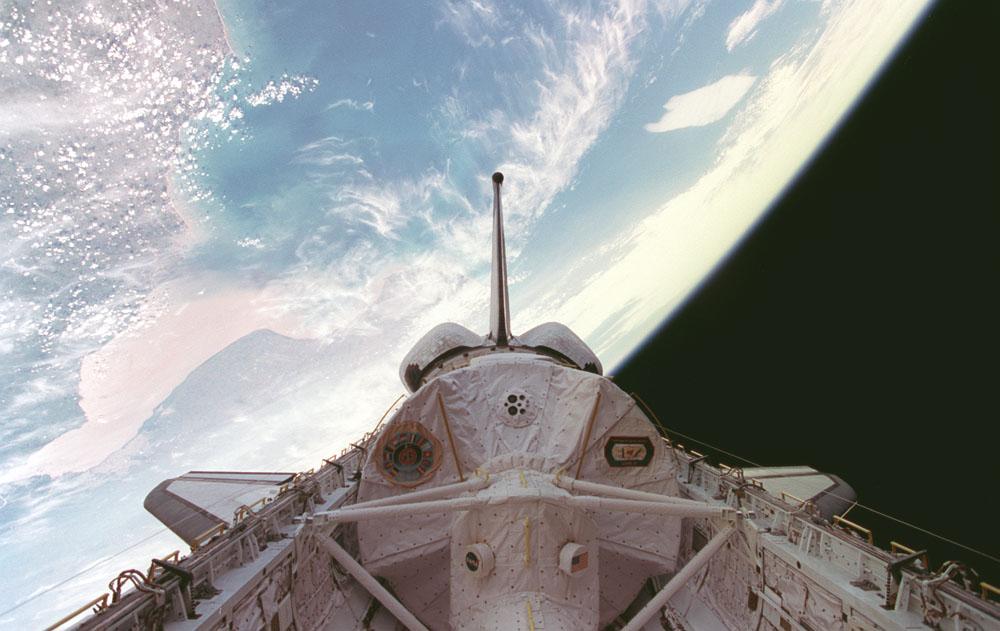
Onboard photo of space shuttle Columbia (STS-73) cargo bay payload - the United States Microgravity Laboratory-2 (USML-2) with an earthview.
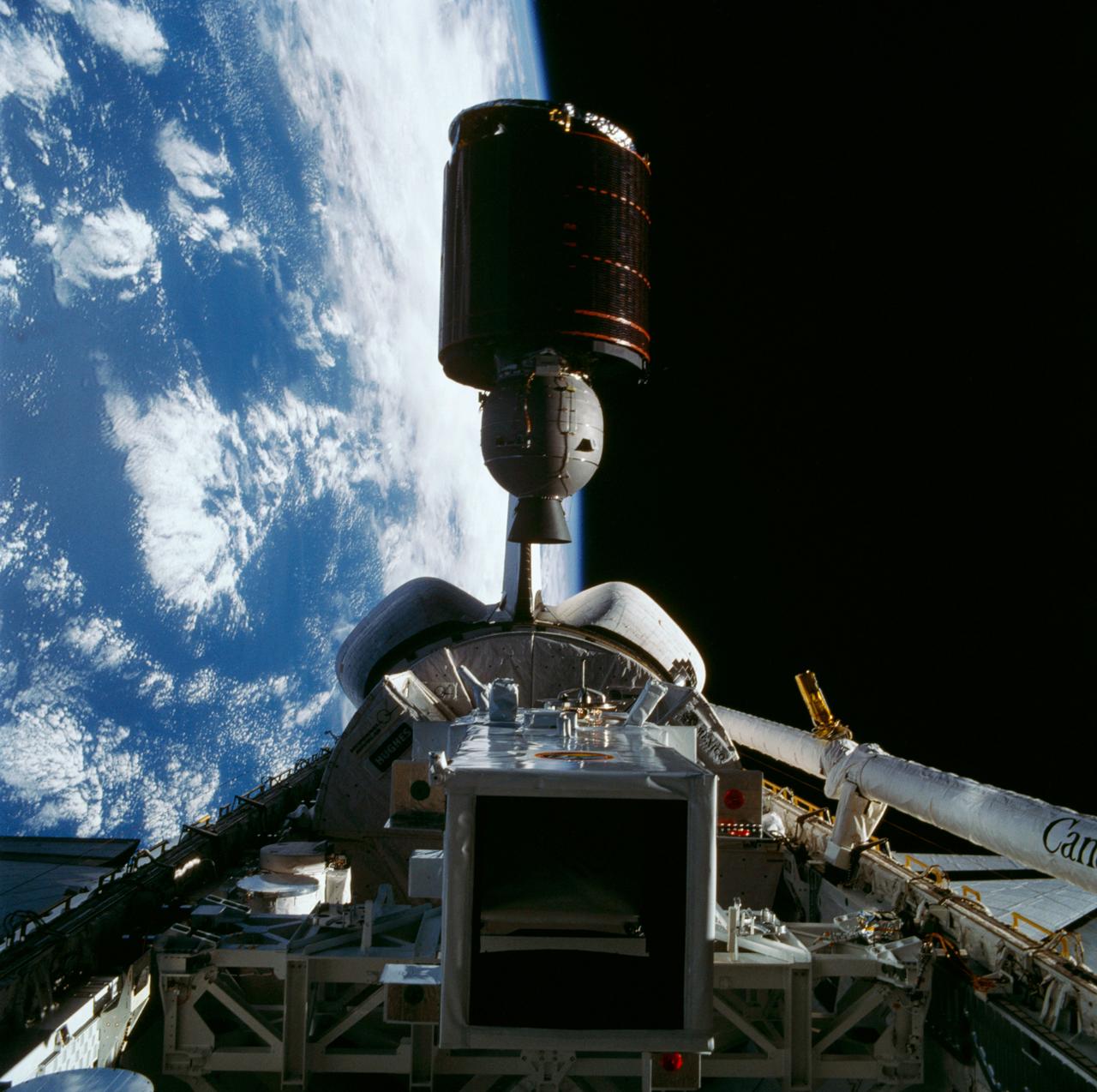
51G-32-082 (17-24 June 1985) --- Mexico's Morelos satellite rises from Discovery's cargo bay to begin its life in space.
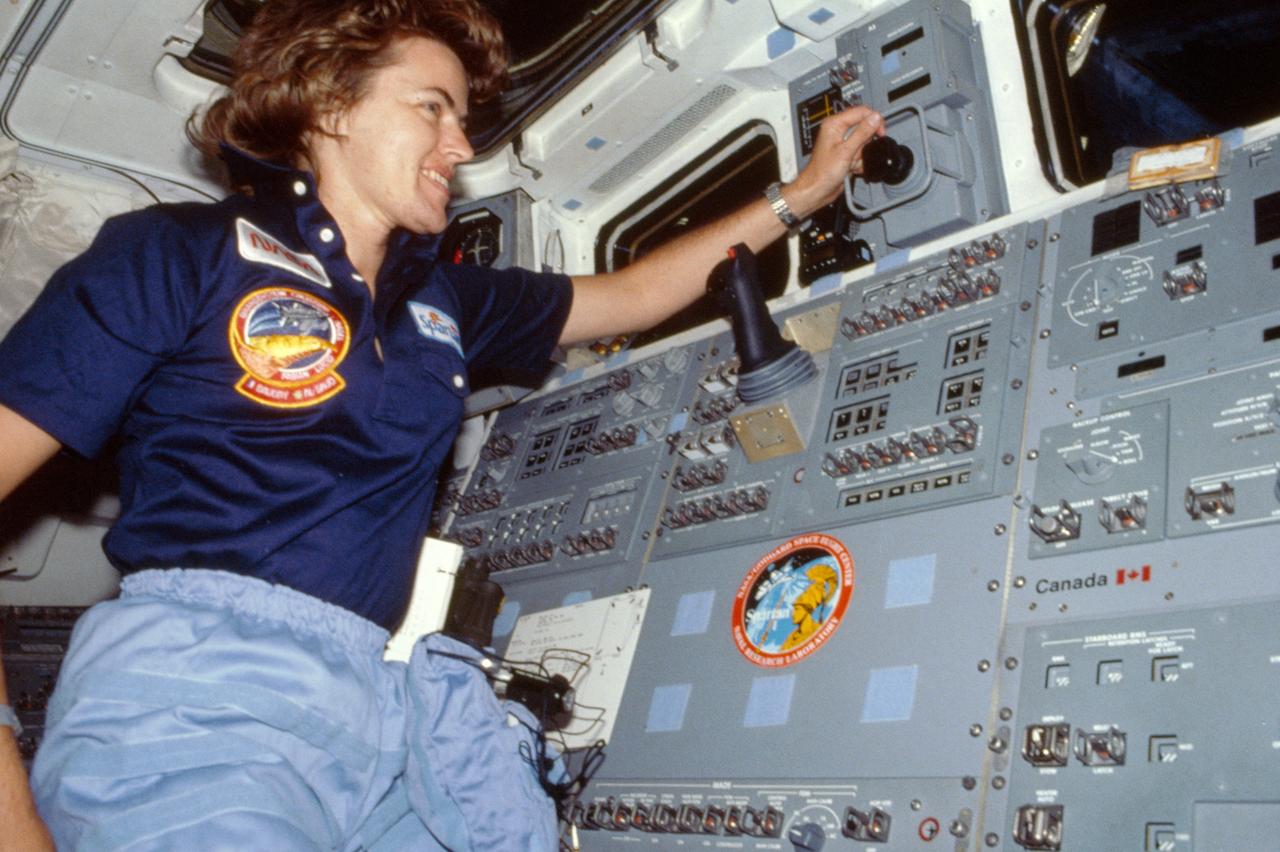
51G-04-010 (17-24 June 1985) --- Astronaut Shannon W. Lucid monitors cargo bay activities with one of the satellite payloads aboard.
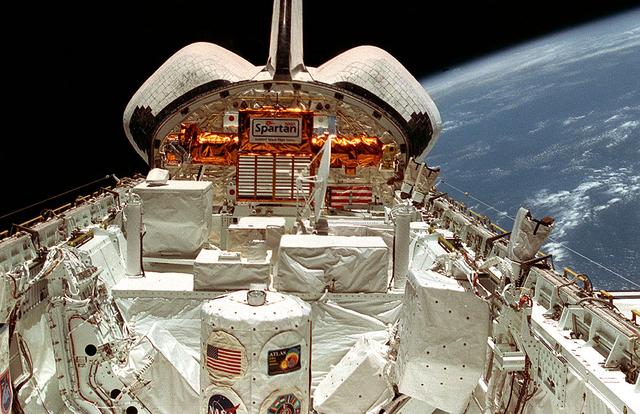
Space Shuttle Discovery (STS-56) onboard photo of the Atmospheric Laboratory for Applications and Science (ATLAS-2) payload on the pallet in the cargo bay of the orbiter.
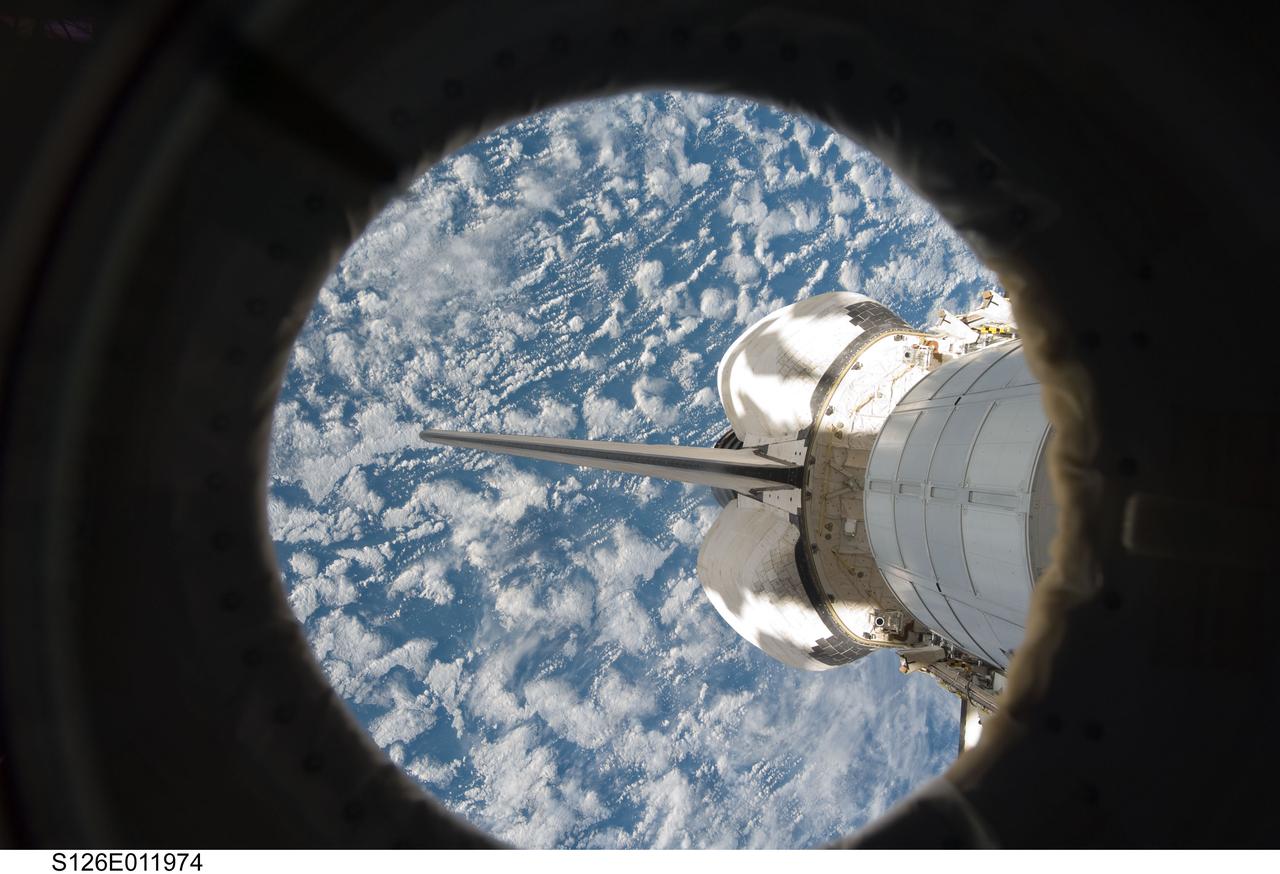
S126-E-11974 (26 Nov. 2008) --- Backdropped against white clouds, the aft section of Endeavour's cargo bay, now holding the multipurpose logistics module Leonardo, is featured in this digital still photo, framed through a window on the International Space Station. Endeavour and the orbital outpost have been docked for almost two weeks while their crews have joined efforts in home improvement on the station and other work. Astronauts Donald Pettit and Shane Kimbrough, operating the space station's robot arm from inside the Destiny laboratory module, detached the Leonardo cargo canister from its temporary parking place on the station a few hours earlier and re-berthed it in the cargo bay.
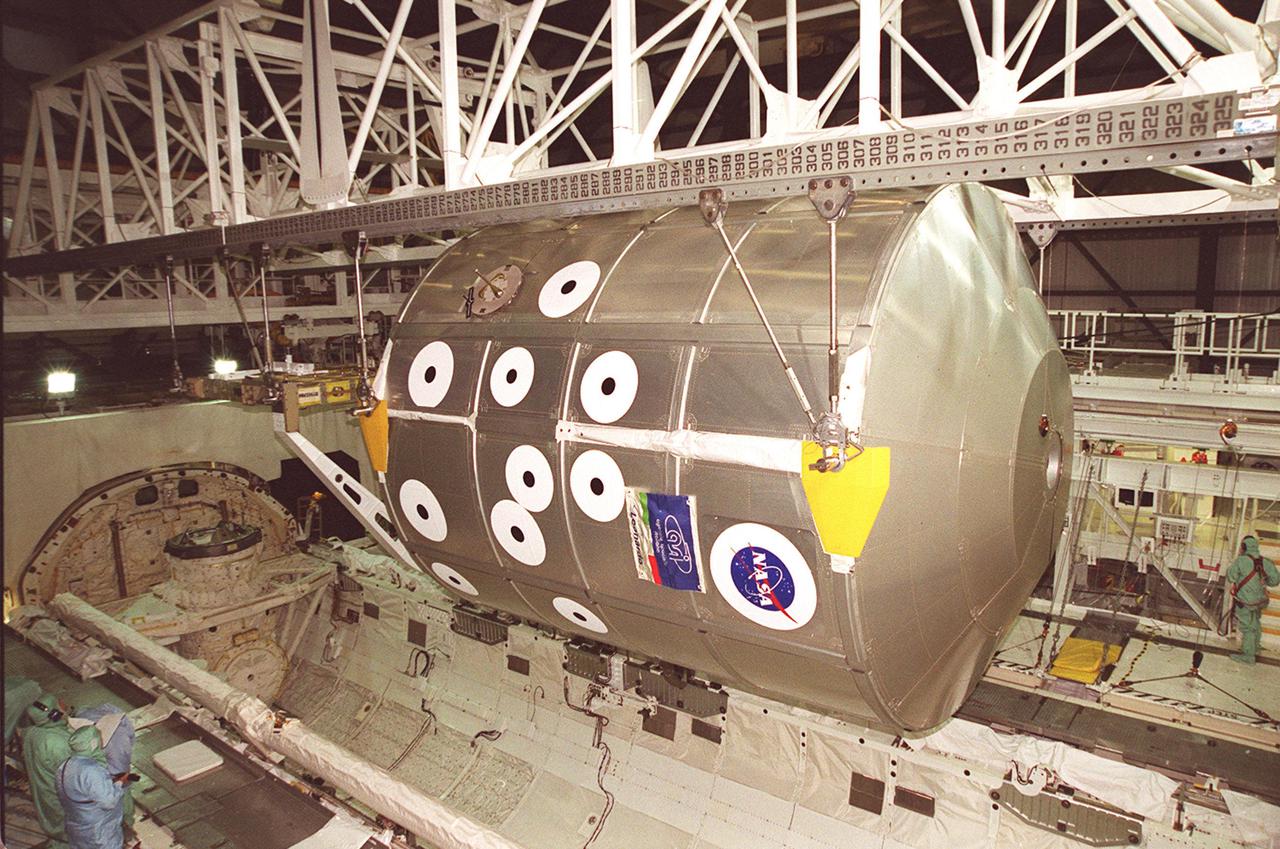
KENNEDY SPACE CENTER, FLA. -- In the Orbiter Processing Facility bay 2, an overhead crane lifts the Multi-Purpose Logistics Module Leonardo and the integrated cargo carrier behind it out of Discovery’s payload bay. The MPLM has just returned from its first round trip to the International Space Station on mission STS-102. Leonardo will be transferred to the SSPF to prepare it for future missions. The MPLM serves as a cargo van, carrying equipment and supplies to the Space Station
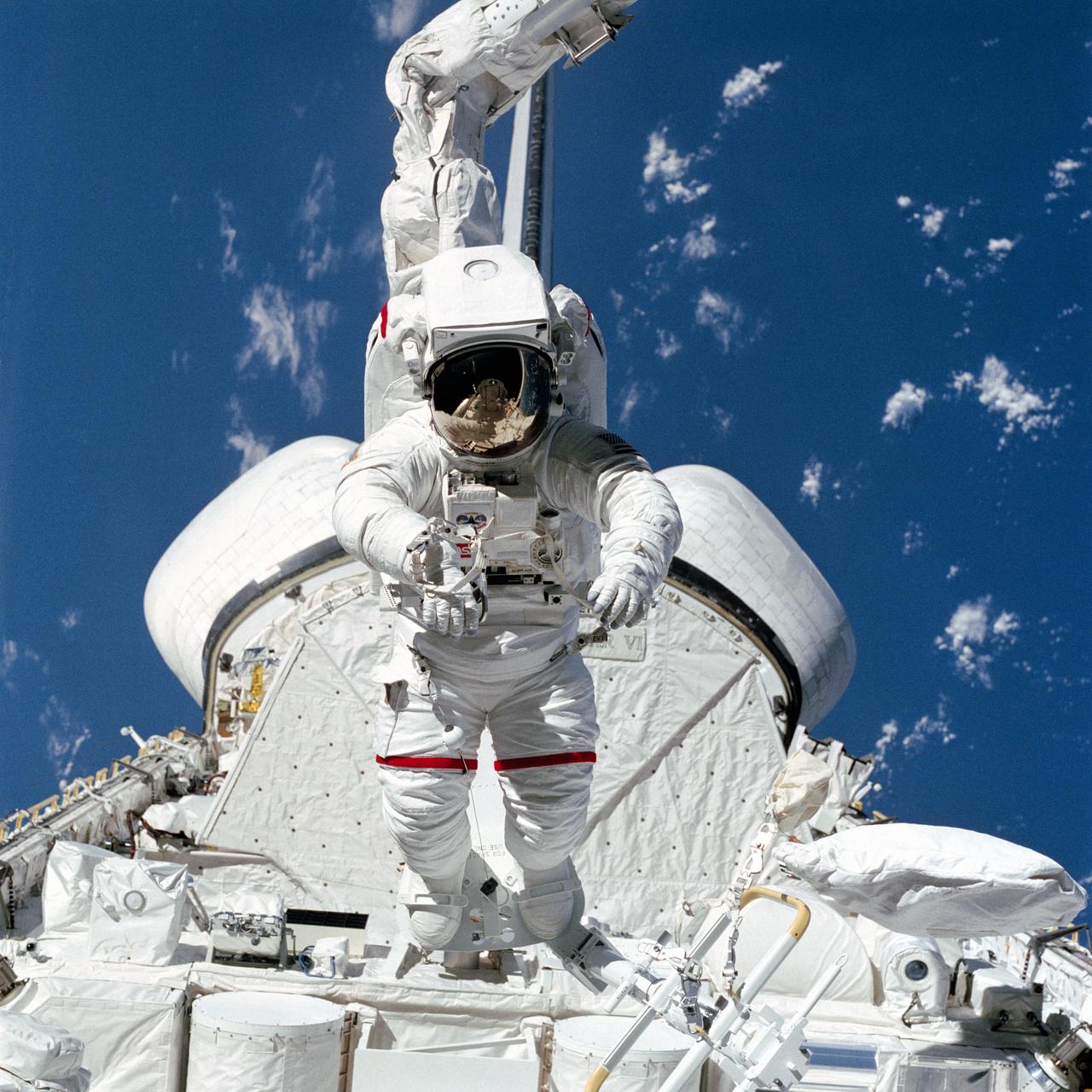
S84-27039 (7 Feb 1984) --- Astronaut Bruce McCandless II, at first glance appears to be walking on cargo in the Space Shuttle Challenger's payload bay. Actually, he is being "flown" around above the stationary cargo. His "flight" is due to the combined configuration of the Mobile Foot Restraint (MFR) and the Remote Manipulator System (RMS). His helmet visor reflects in miniature parts of the payload bay that can't be seen in the larger portion of the photo. A 70mm camera aimed through the aft flight deck windows exposed this frame.
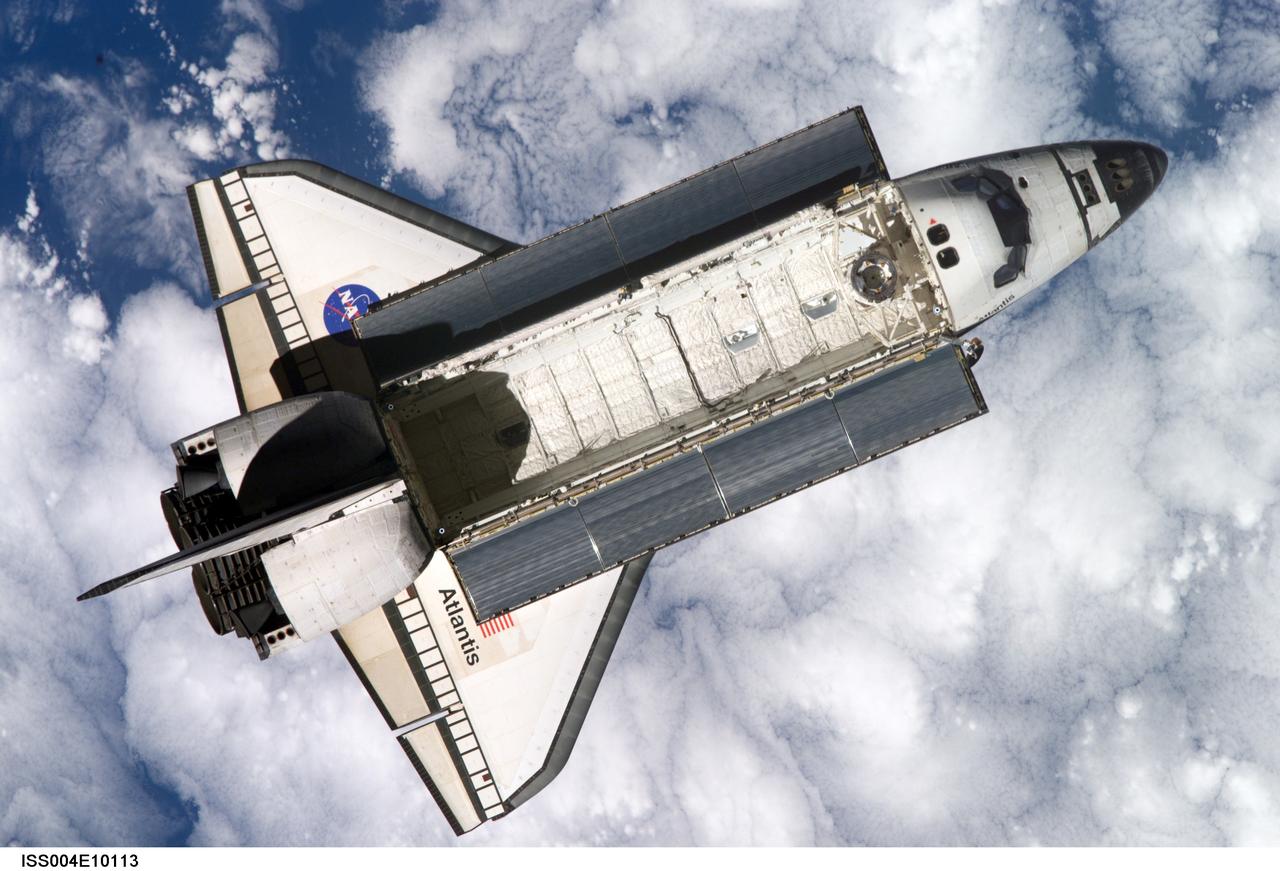
ISS004-E-10113 (17 April 2002) --- Backdropped over clouds some 247 statute miles below, the Space Shuttle Atlantis was photographed with a digital still camera shortly after its separation from the International Space Station (ISS). A big empty space now replaces the "look" in the cargo bay of a scene one and half weeks ago showing the giant S0 (S-zero) truss in the cargo bay as the shuttle prepared to dock with the station. The S0 truss is now part of the orbital outpost.
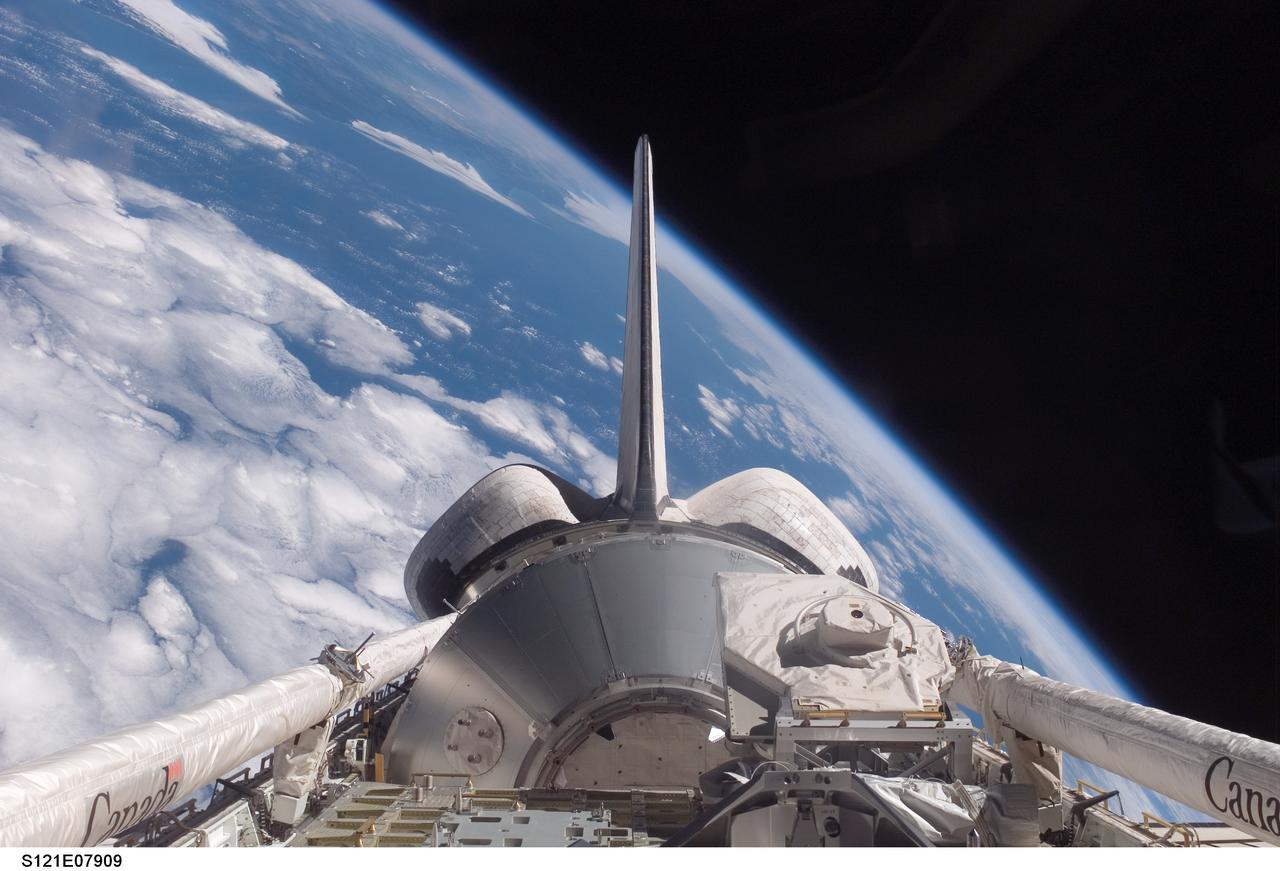
S121-E-07909 (15 July 2006) --- Backdropped by the blackness of space and Earth's horizon, Space Shuttle Discovery's aft cargo bay, its vertical stabilizer and orbital maneuvering system (OMS) pods are seen in this image photographed by an STS-121 crewmember onboard the shuttle. The Italian-built Leonardo Multi-Purpose Logistics Module (MPLM) is visible in the cargo bay.
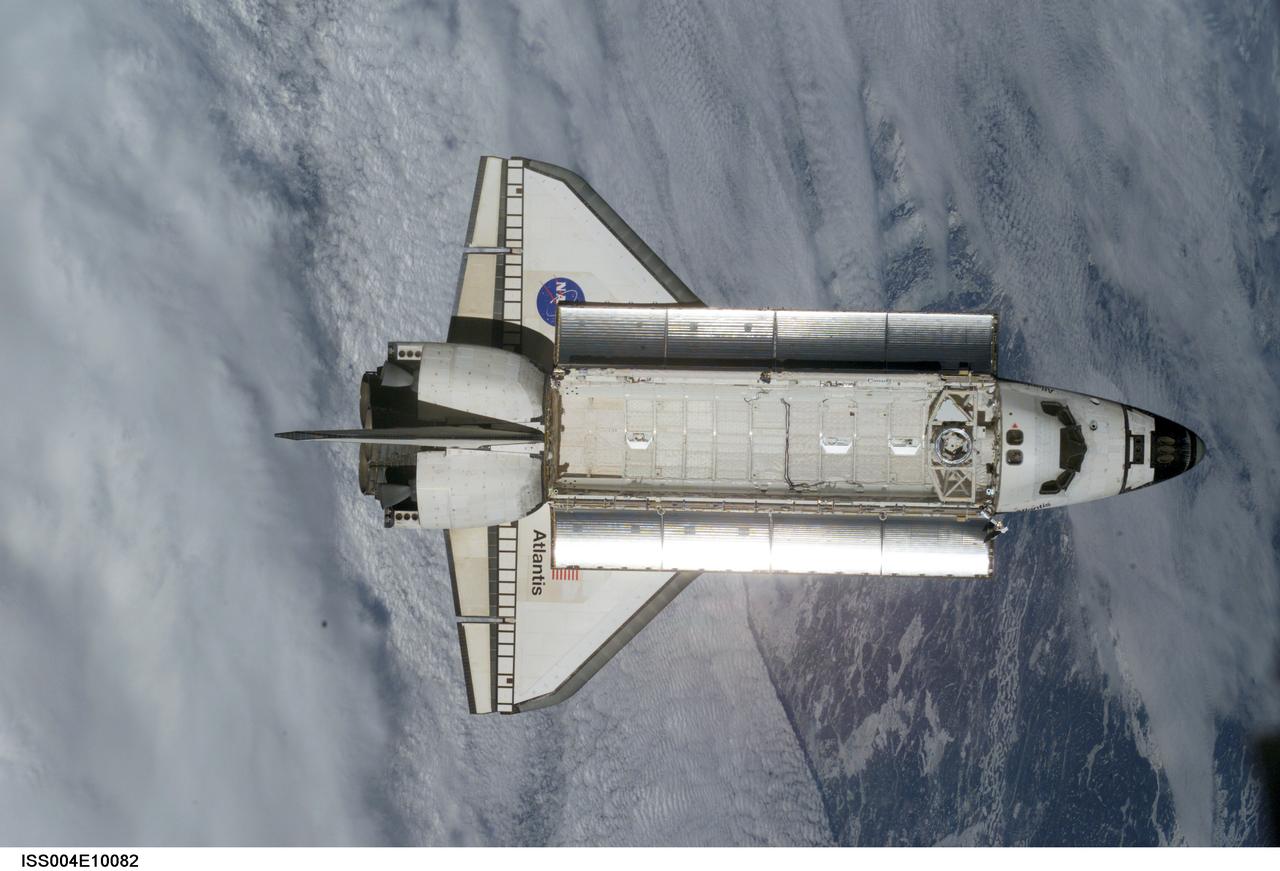
ISS004-E-10082 (17 April 2002) --- Backdropped over clouds some 247 statute miles below, the Space Shuttle Atlantis was photographed with a digital still camera shortly after its separation from the International Space Station (ISS). A big empty space now replaces the "look" in the cargo bay of a scene one and half weeks ago showing the giant S0 (S-zero) truss in the cargo bay as the shuttle prepared to dock with the station. The S0 truss is now part of the orbital outpost.
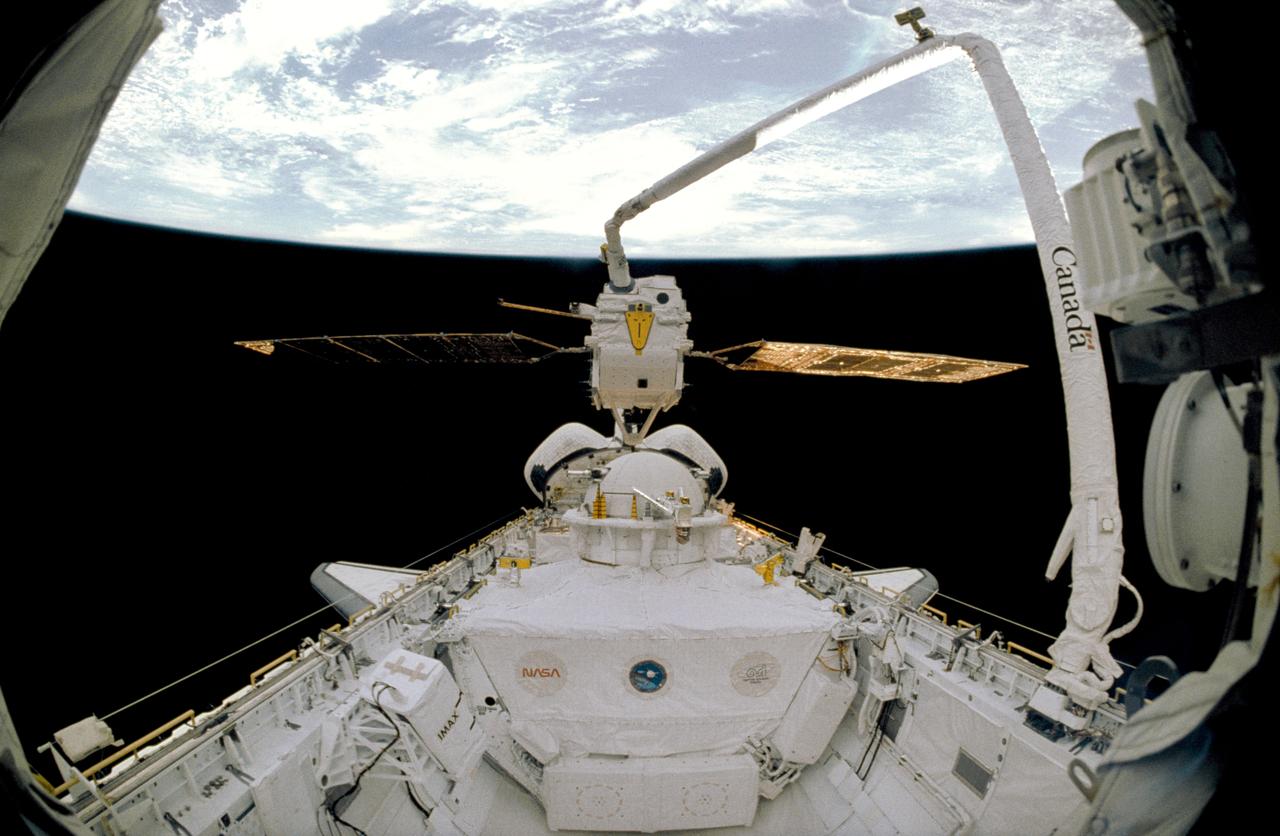
STS046-08-010 (1 Aug 1992) --- The EURECA satellite is hoisted above the Space Shuttle Atlantis' cargo bay by the Remote Manipulator System (RMS) during early mission activity aboard the Earth-orbiting Shuttle. A 16mm lens gives this 35mm frame a "fish-eye" effect. The Tethered Satellite System (TSS), center frame, is stowed in the cargo bay, where it awaits extensive operations by the seven-member crew.
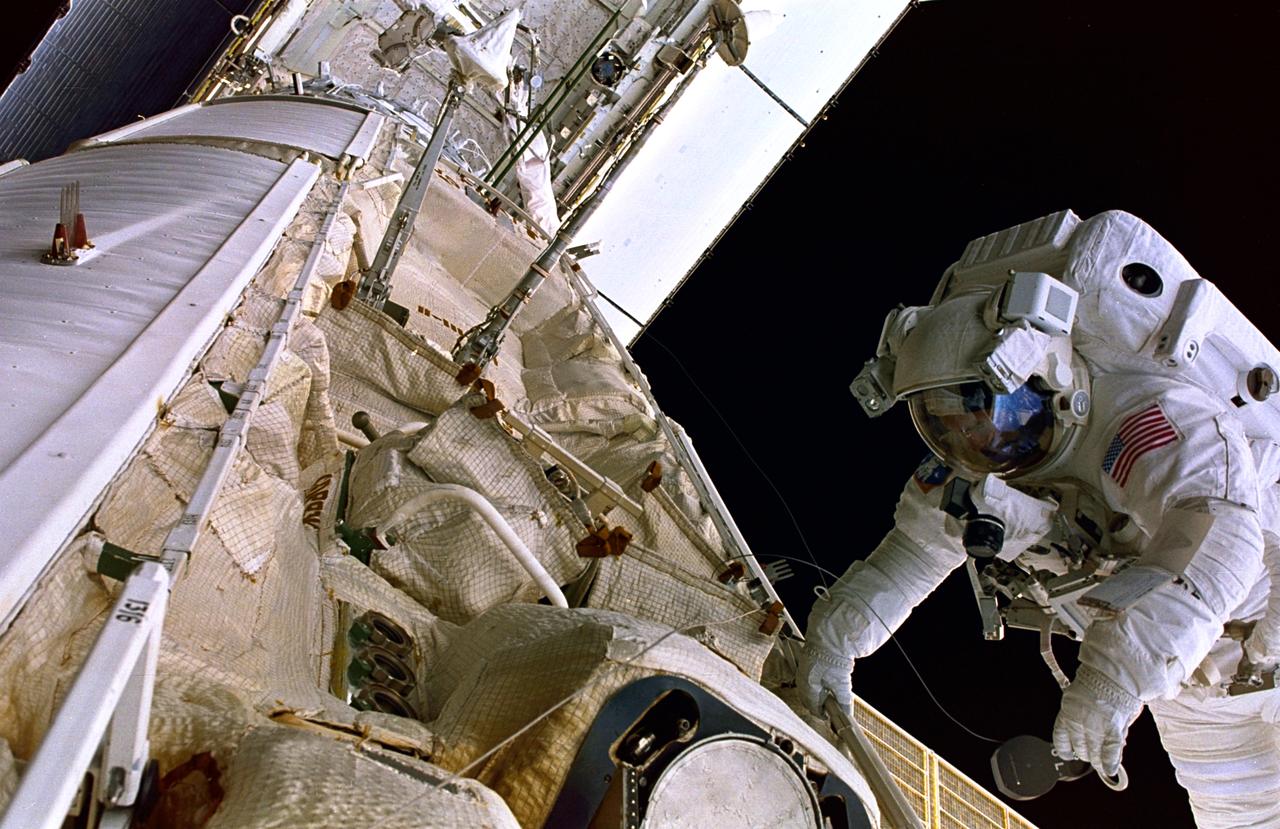
STS088-353-006 (4 -15 Dec. 1998) --- Astronaut James H. Newman, mission specialist, holds onto a handrail on Zarya while conducting a space walk at the top of the Unity-Zarya stack in the cargo bay of the Earth-orbiting Space Shuttle Endeavour. The open payload doors and part of the cargo bay, including the Ku-band antenna, are seen in upper left.
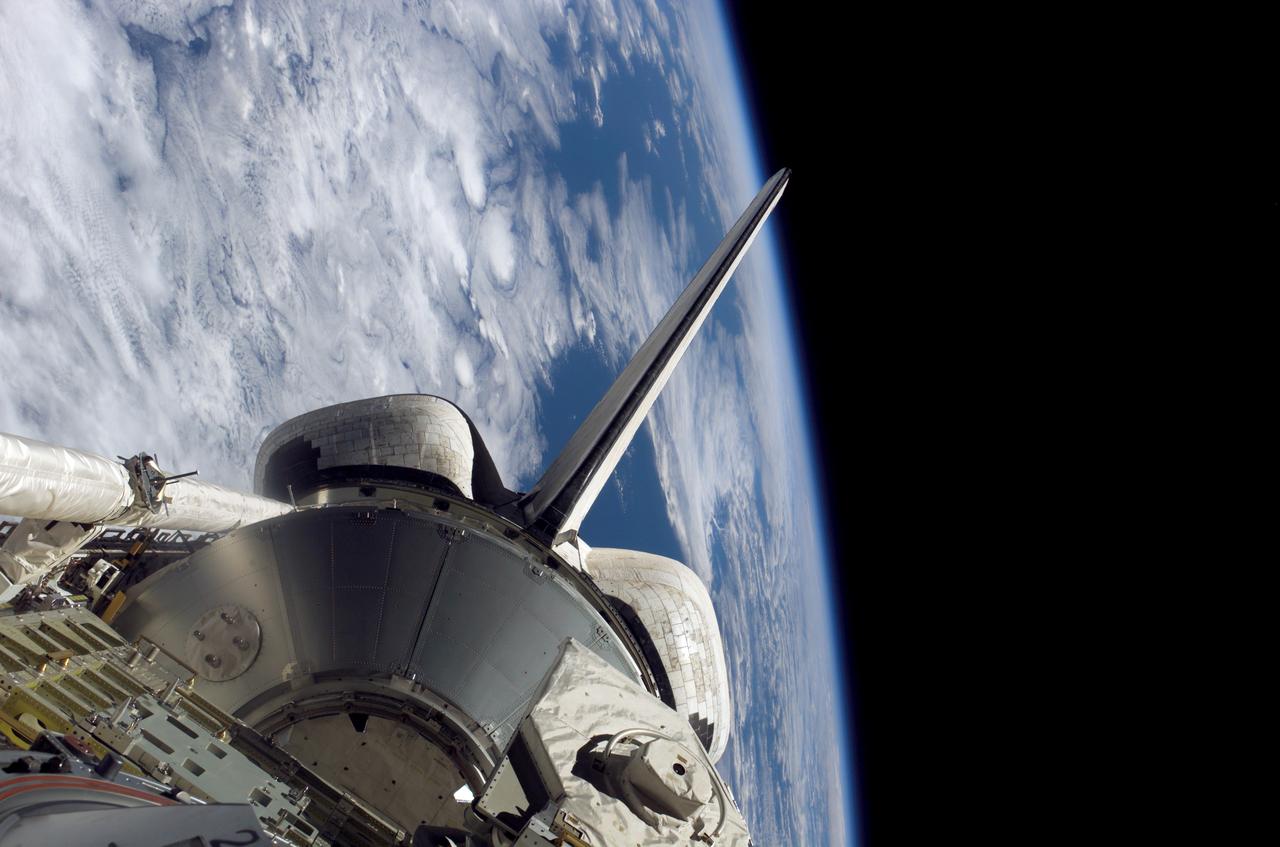
S121-E-07904 (15 July 2006) --- Backdropped by the blackness of space and Earth's horizon, Space Shuttle Discovery's aft cargo bay, its vertical stabilizer and orbital maneuvering system (OMS) pods are seen in this image photographed by an STS-121 crewmember onboard the shuttle. The Italian-built Leonardo Multi-Purpose Logistics Module (MPLM) is visible in the cargo bay.
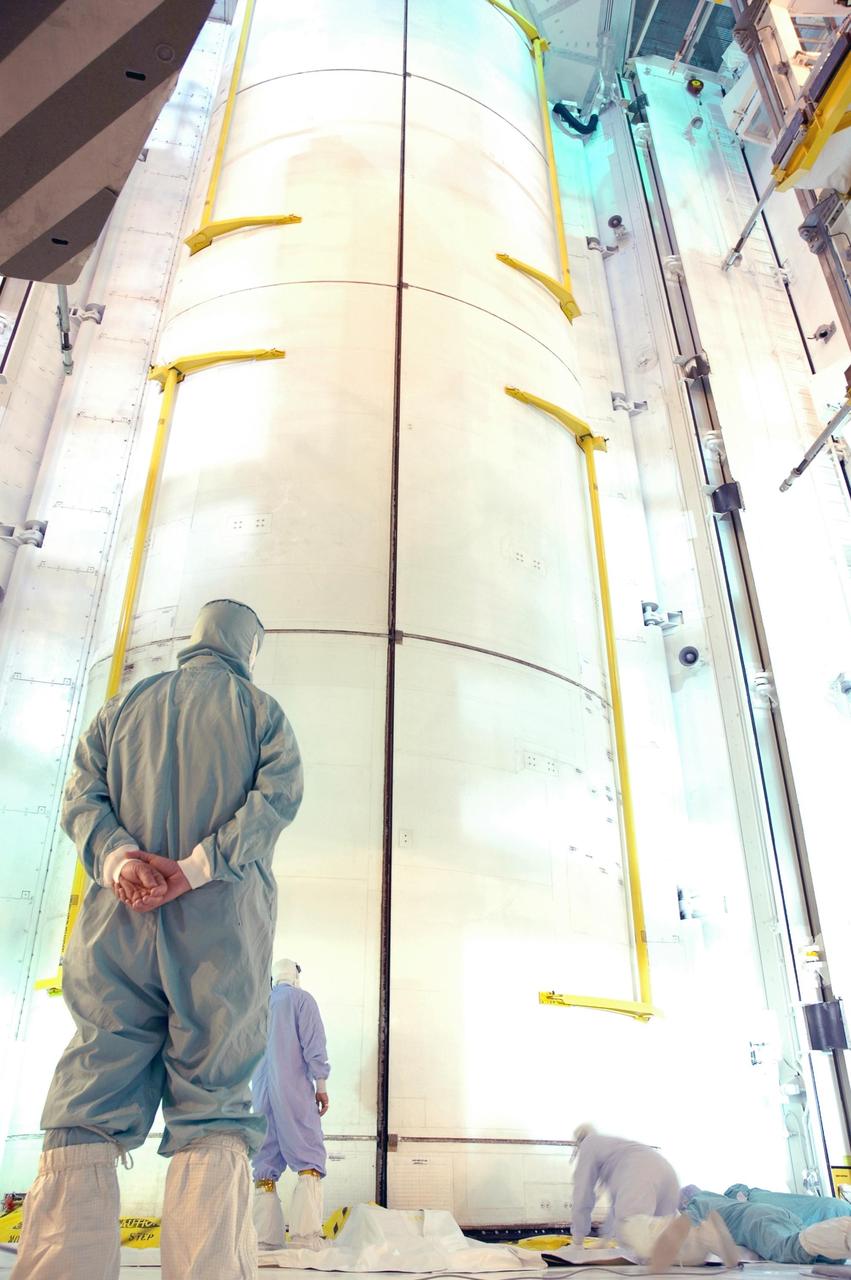
KENNEDY SPACE CENTER, FLA. - At Launch Pad 39B, both of Space Shuttle Discovery's payload bay doors are closing for launch. Inside the payload bay, the cargo includes the multi-purpose logistics module Leonardo and the integrated cargo carrier. Discovery is scheduled to launch on mission STS-121 at 3:49 p.m. July 1 carrying a crew of seven on the 12-day mission to the International Space Station. Photo credit: NASA/Jim Grossmann
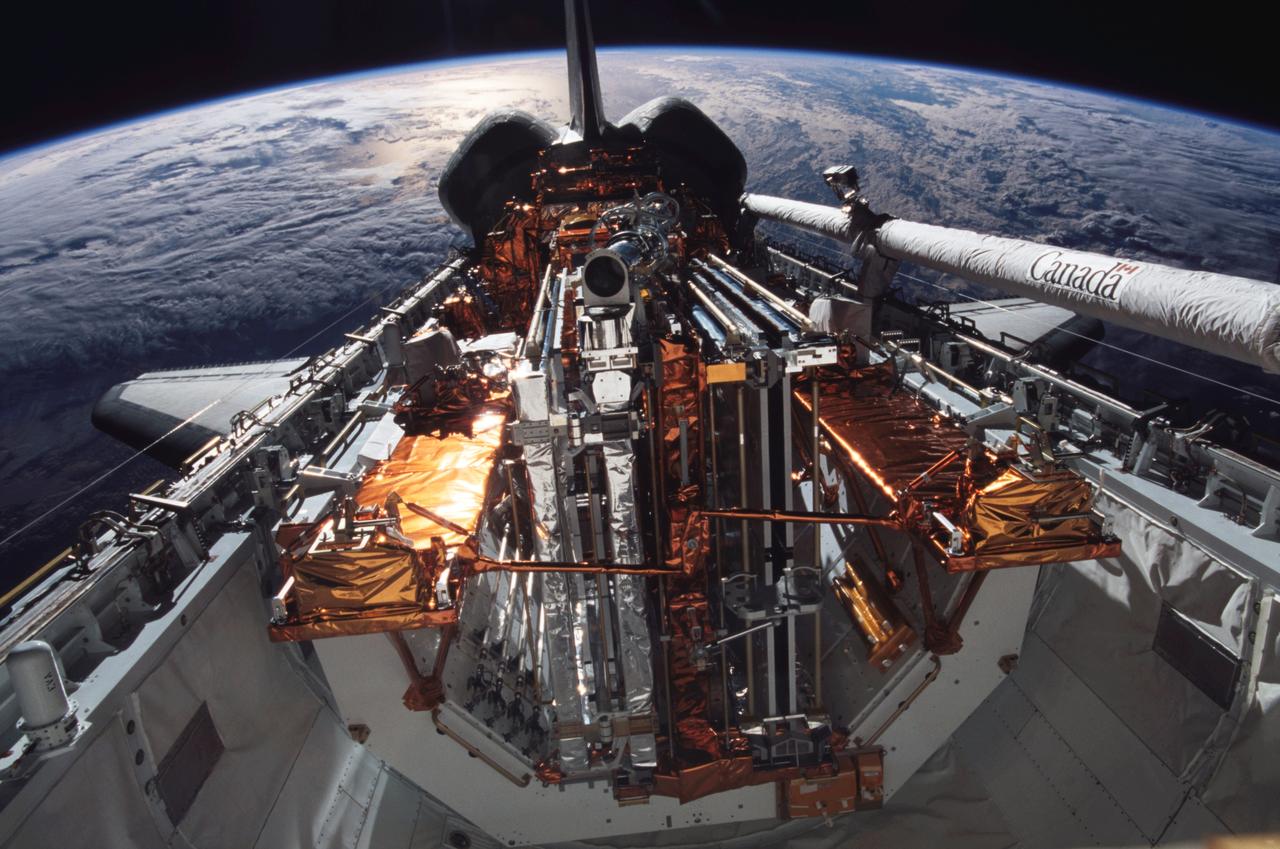
STS109-329-021 (1-12 March 2002) --- The horizon of a blue and white Earth and the blackness of space form the backdrop for this view of the cargo bay of the Space Shuttle Columbia, as seen through windows on the aft flight deck during the STS-109 mission. Pictured in the cargo bay is the Rigid Array Carrier (RAC) holding the new Hubble Solar Arrays. In its stowed position at right center of the frame is the Canadian-built Remote Manipulator System (RMS) arm.
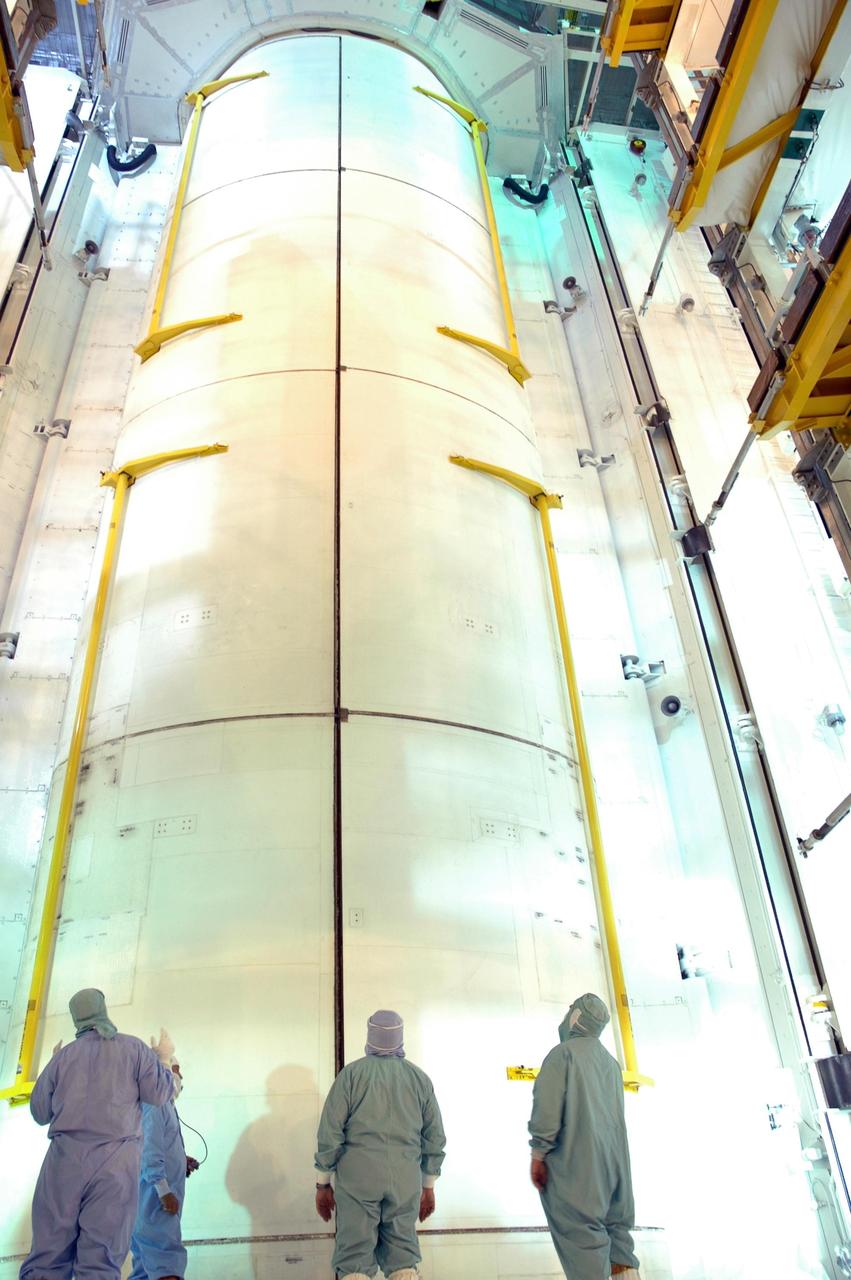
KENNEDY SPACE CENTER, FLA. - At Launch Pad 39B, both of Space Shuttle Discovery's payload bay doors are closed for launch. Inside the payload bay, the cargo includes the multi-purpose logistics module Leonardo and the integrated cargo carrier. Discovery is scheduled to launch on mission STS-121 at 3:49 p.m. July 1 carrying a crew of seven on the 12-day mission to the International Space Station. Photo credit: NASA/Jim Grossmann
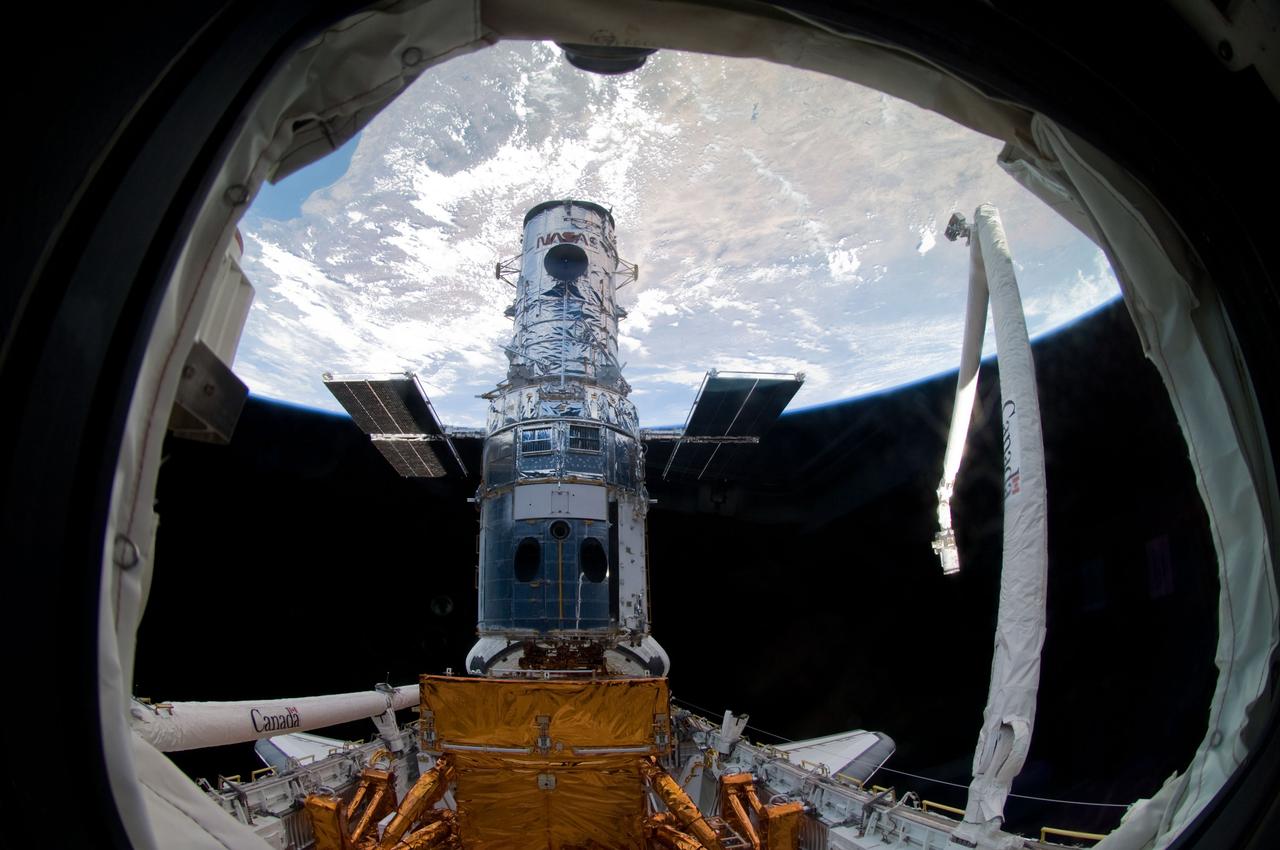
S125-E-007257 (14 May 2009) --- A wide view of the Hubble Space Telescope, locked down in the cargo bay of the Earth-orbiting Space Shuttle Atlantis, which will be site of a great deal of hands-on servicing over the next five days. The Canadian-built remote manipulator system arm (right), with its video cameras documenting activity in the shuttle's cargo bay all week, was instrumental in grappling and subsequently capturing the giant orbital observatory for the final servicing mission.
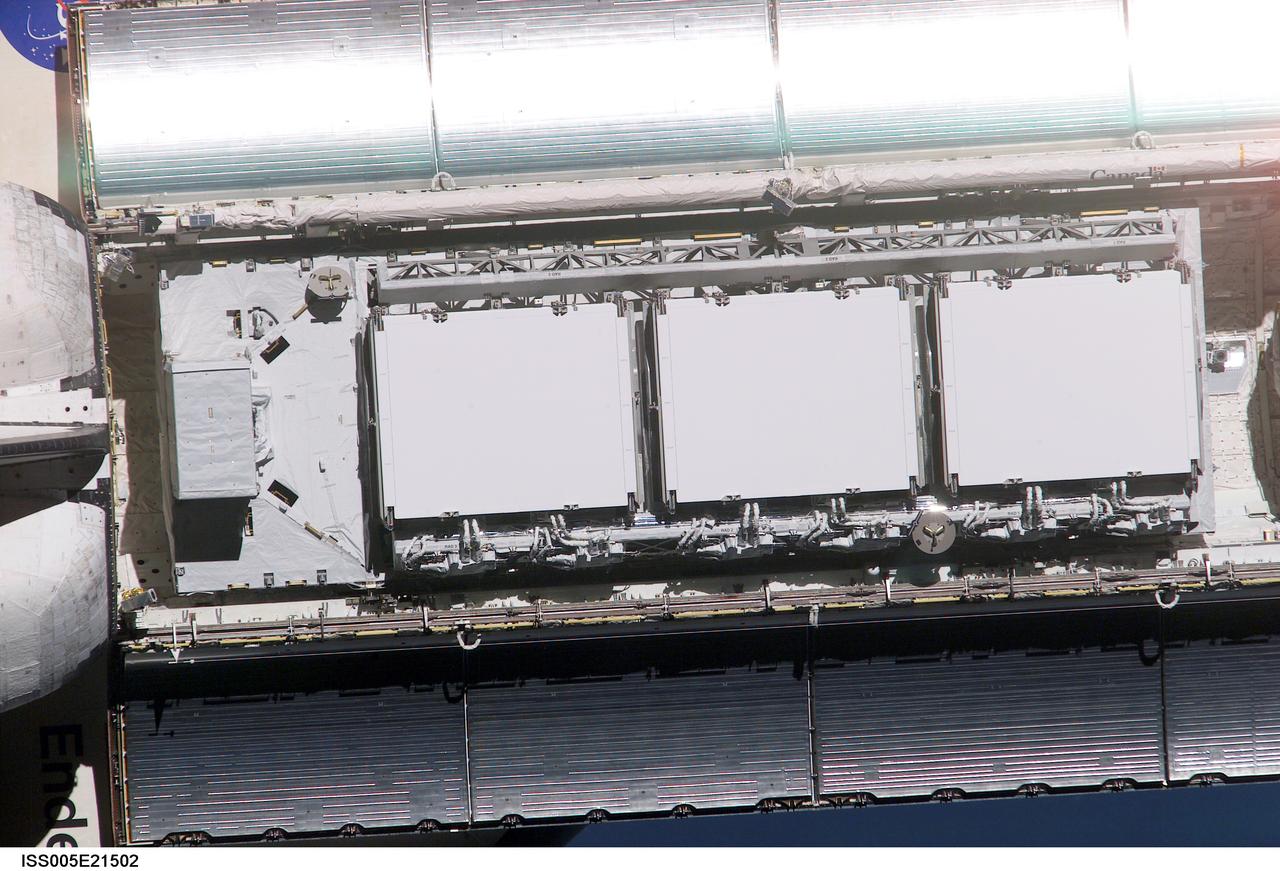
ISS005-E-21502 (25 November 2002) --- This medium close-up view of the Space Shuttle Endeavour's cargo bay was photographed by an Expedition Five crewmember onboard the International Space Station (ISS) during STS-113 rendezvous and docking operations. Docking occurred at 3:59 p.m. (CST) on November 25, 2002. The Port One (P1) truss, which was later to be attached to the station and outfitted during three spacewalks, can be seen in Endeavour's cargo bay.
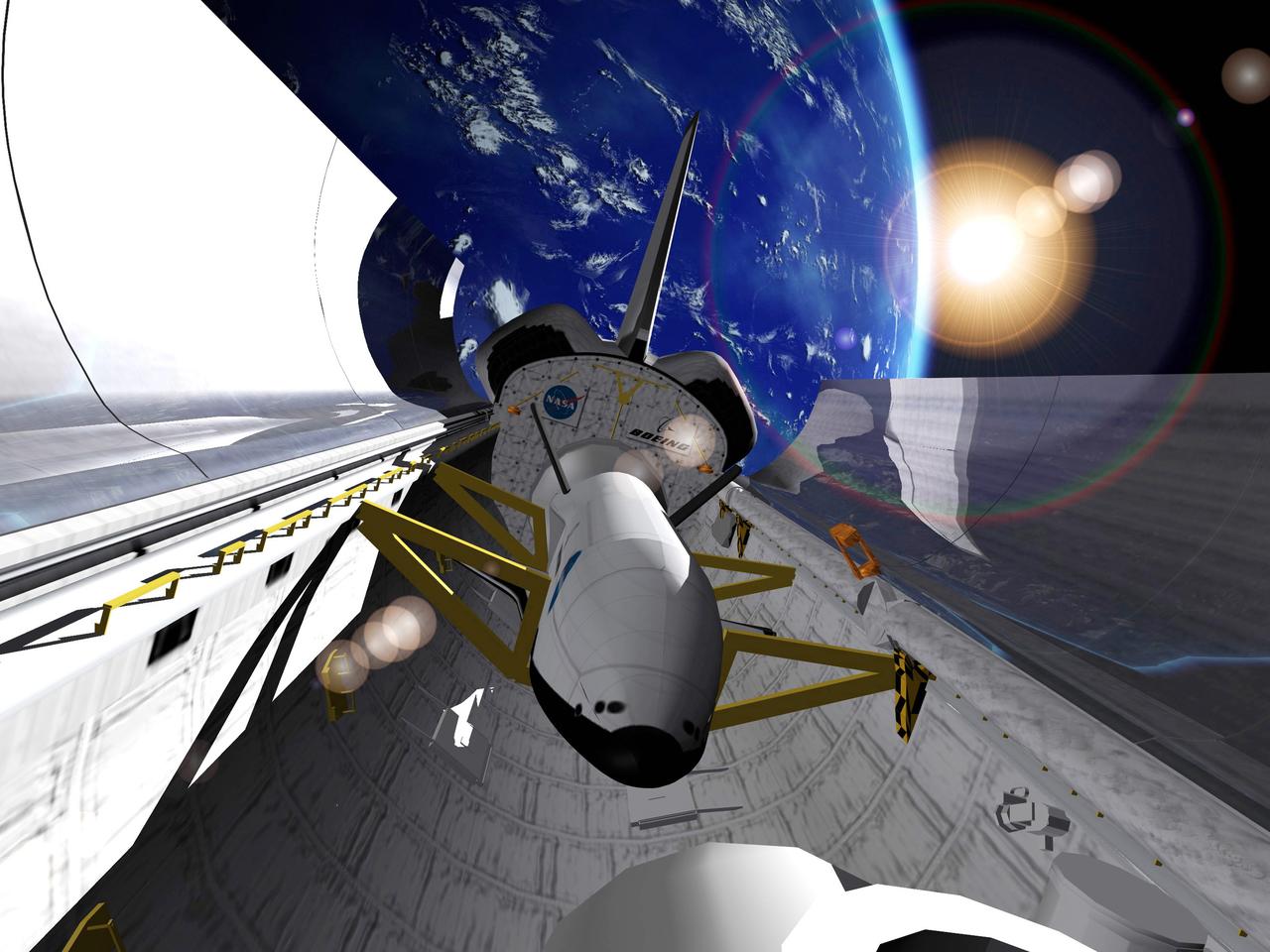
Pictured is an artist's concept of the experimental Reusable Launch Vehicle (RLV), the X-37 located in the cargo bay of a space shuttle with Earth in the background. The X-37 was designed to launch from the space shuttle's cargo bay as a secondary payload. Once deployed, the X-37 would remain on-orbit up to 21 days performing a variety of experiments before re-entering the Earth's atmosphere and landing. The X-37 program was discontinued in 2003.
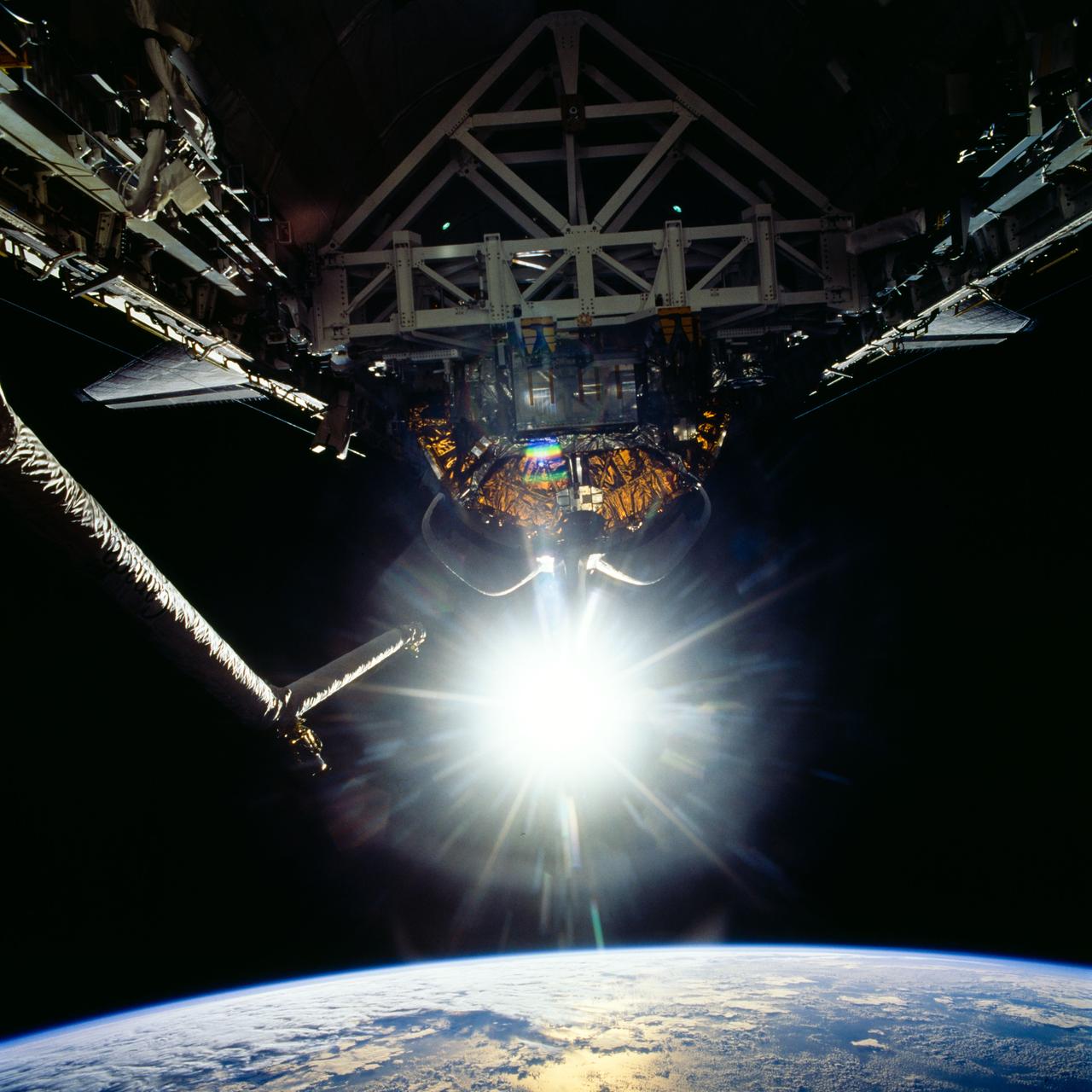
STS072-726-085 (11-20 Jan. 1996) --- The crew members captured this 70mm view of the Space Shuttle Endeavour’s cargo bay, with the reflection of sunglint over Earth’s horizon. The Canadian-built Remote Manipulator System (RMS) arm, with two television cameras affixed, is at frame right. The crew earlier had retrieved the Japanese Space Flyer (SFU) and berthed in the aft cargo bay, along with the Office of Aeronautics and Space Technology (OAST) Flyer satellite.
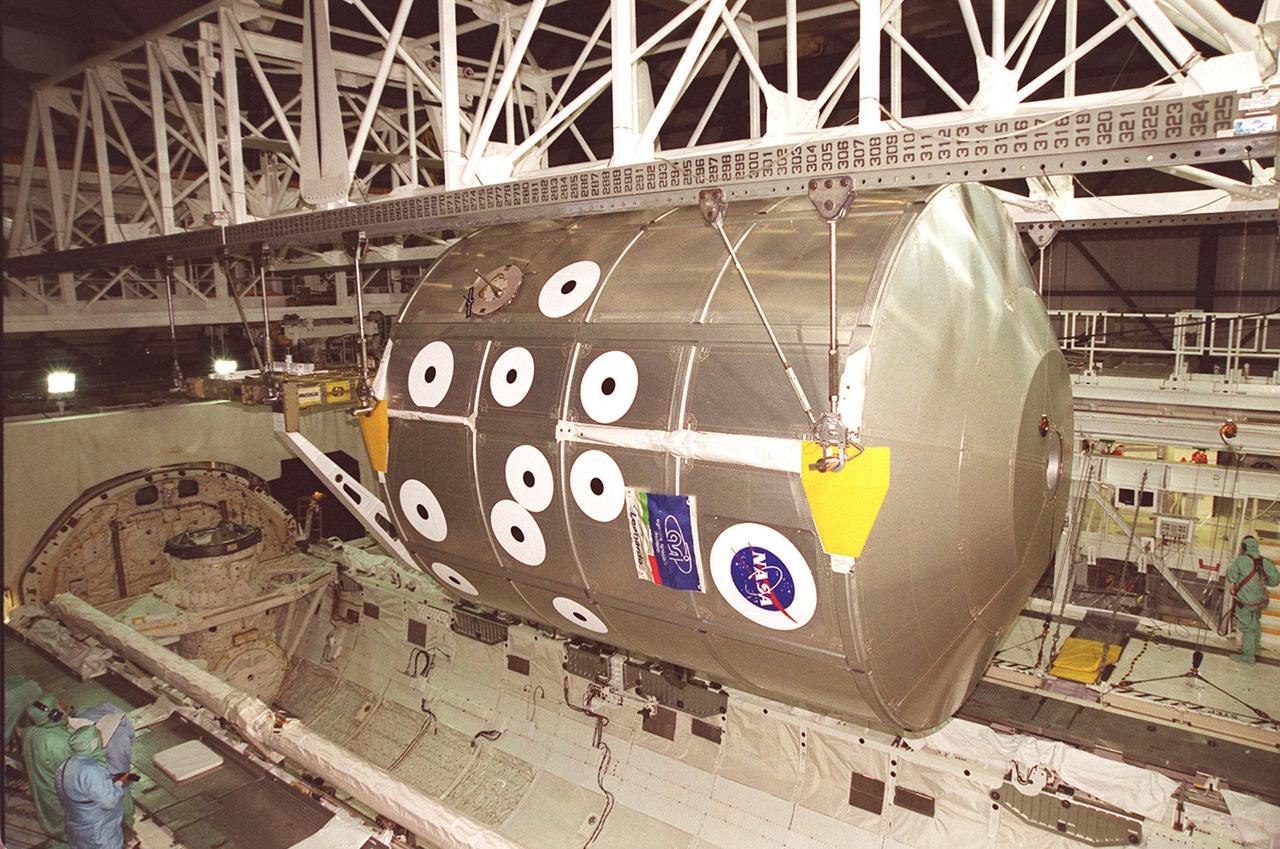
KENNEDY SPACE CENTER, FLA. -- In the Orbiter Processing Facility bay 2, an overhead crane lifts the Multi-Purpose Logistics Module Leonardo and the integrated cargo carrier behind it out of Discovery’s payload bay. The MPLM has just returned from its first round trip to the International Space Station on mission STS-102. Leonardo will be transferred to the SSPF to prepare it for future missions. The MPLM serves as a cargo van, carrying equipment and supplies to the Space Station
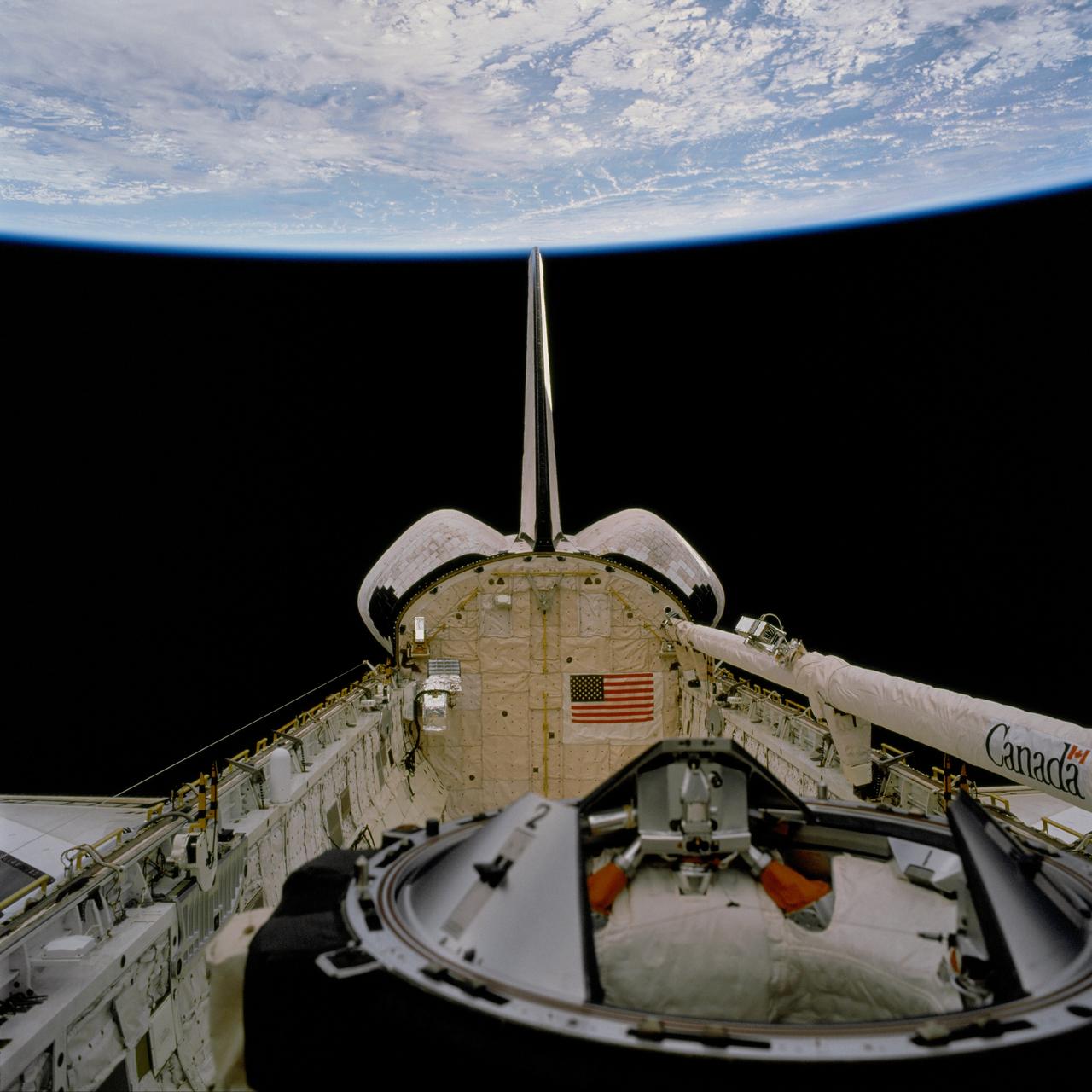
STS097-715-090 (30 Nov.-11 Dec. 2000) --- The horizon of a blue and white Earth and the blackness of space form the backdrop for this view of the cargo bay of the Space Shuttle Endeavour, as seen through windows on the aft flight deck during the STS-97 mission. Pictured in the cargo bay is the Orbital Docking System (ODS) in the foreground. In its stowed position at right center of the frame is the Canadian-built Remote Manipulator System (RMS) arm.
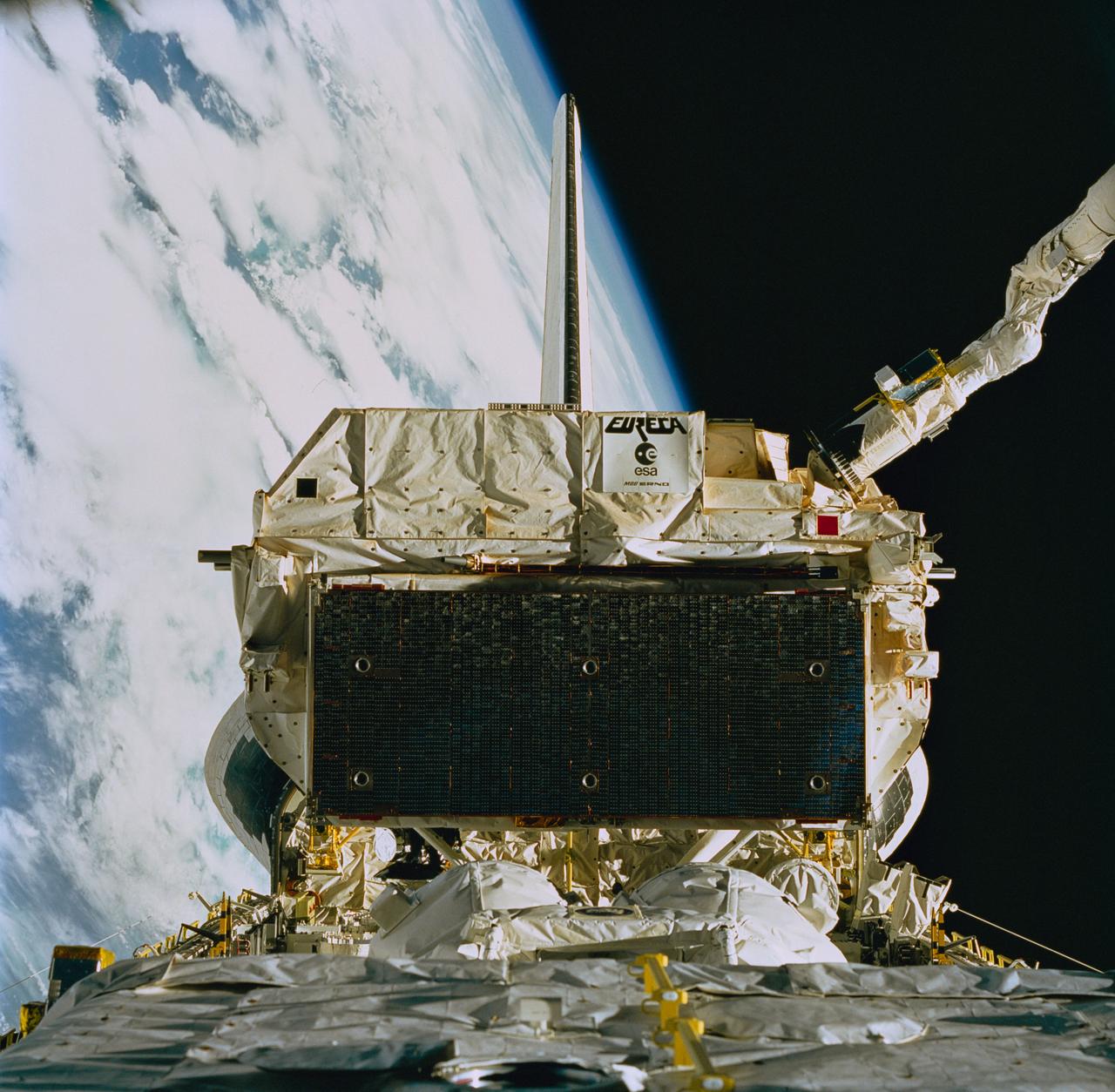
STS057-84-000AD (24 June 1993) --- The recently "captured" European Retrievable Carrier (EURECA) was recorded on 70mm film as it was berthed in the Space Shuttle Endeavour's aft cargo bay, assisted by the Canadian-built Remote Manipulator System (RMS), partially visible in upper right. Moments later the RMS eased EURECA into its stowage area between Endeavour's aft cargo bay firewall and the SpaceHab module (partially visible in foreground).
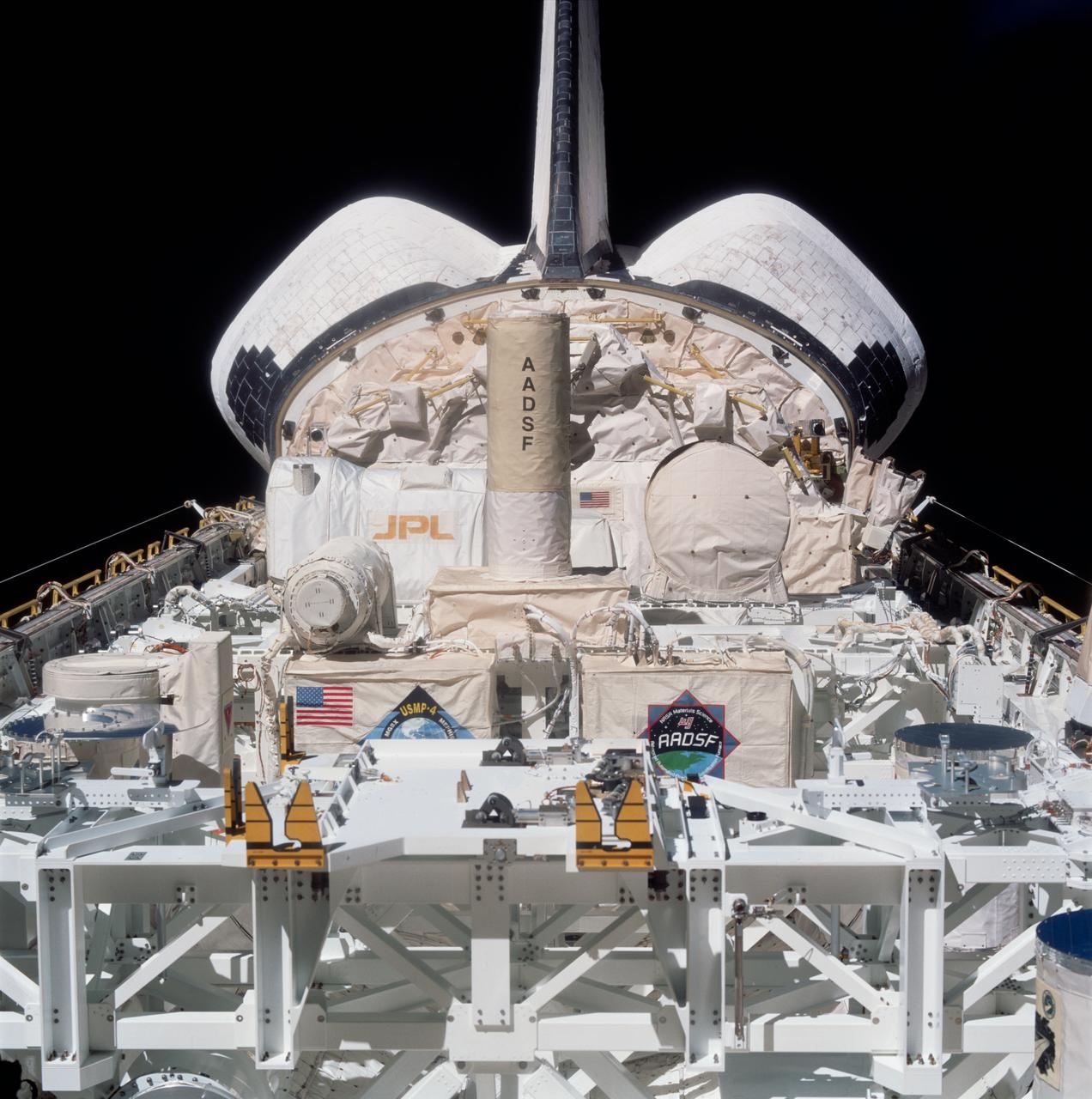
STS087-752-023 (19 November – 5 December 1997) --- This picture of Columbia's cargo bay, taken through the aft flight deck windows with a handheld 70mm camera, shows the U.S. Microgravity Payload (USMP-4) mission's cargo.
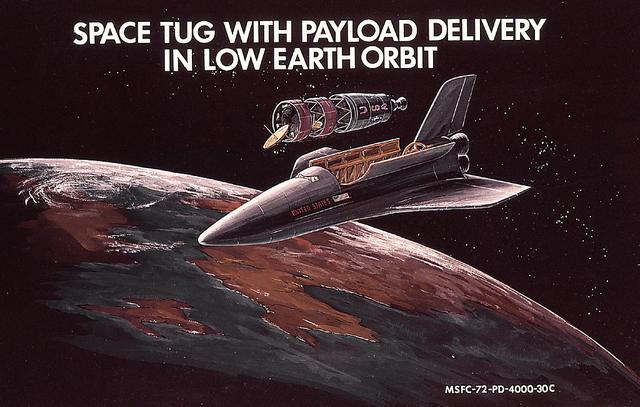
The Space Tug, managed by Marshall Space Flight Center, was designed to carry a variety of cargo into different orbital inclinations. In this 1972 artist's concept, a Space Tug prepares to transport a payload to its intended orbit shortly after its release from the Space Shuttle's cargo bay.
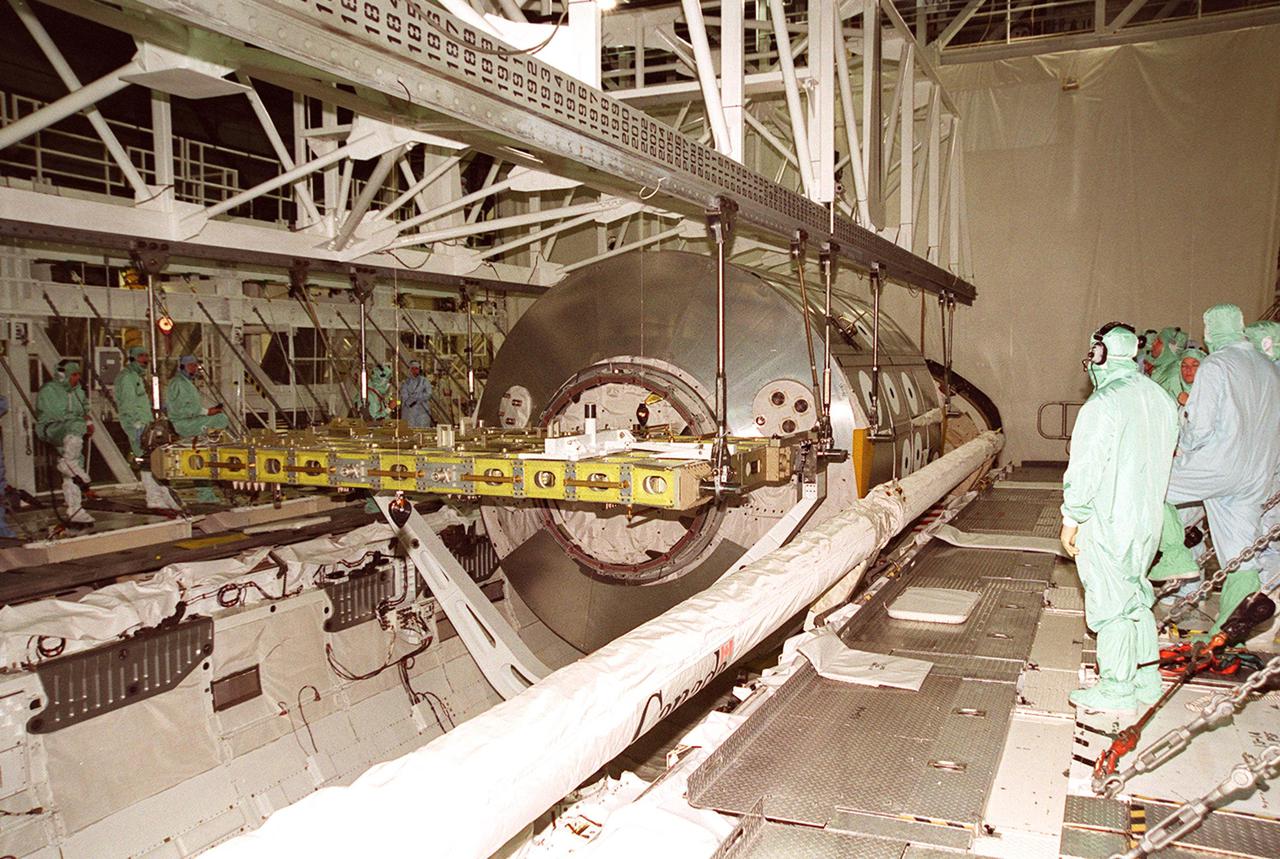
KENNEDY SPACE CENTER, FLA. -- In the Orbiter Processing Facility bay 2, an overhead crane begins lifting the Multi-Purpose Logistics Module Leonardo and the integrated cargo carrier next to it out of Discovery’s payload bay. The MPLM has just returned from its first round trip to the International Space Station on mission STS-102. Attached to the length of the payload bay, next to Leonardo, is the robotic arm that was used to remove and position Leonardo on the ISS. Leonardo will be transferred to the SSPF to prepare it for future missions. The MPLM serves as a cargo van, carrying equipment and supplies to the Space Station
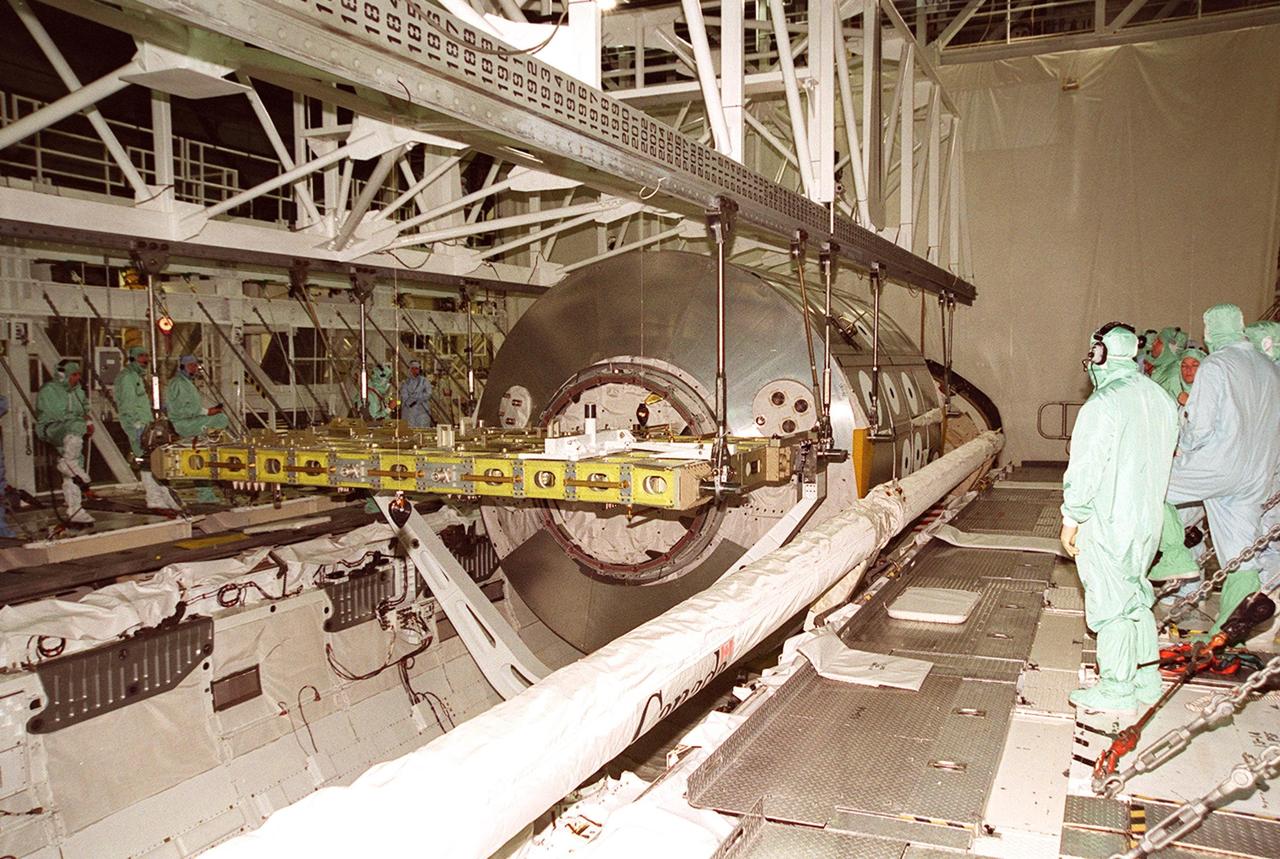
KENNEDY SPACE CENTER, FLA. -- In the Orbiter Processing Facility bay 2, an overhead crane begins lifting the Multi-Purpose Logistics Module Leonardo and the integrated cargo carrier next to it out of Discovery’s payload bay. The MPLM has just returned from its first round trip to the International Space Station on mission STS-102. Attached to the length of the payload bay, next to Leonardo, is the robotic arm that was used to remove and position Leonardo on the ISS. Leonardo will be transferred to the SSPF to prepare it for future missions. The MPLM serves as a cargo van, carrying equipment and supplies to the Space Station
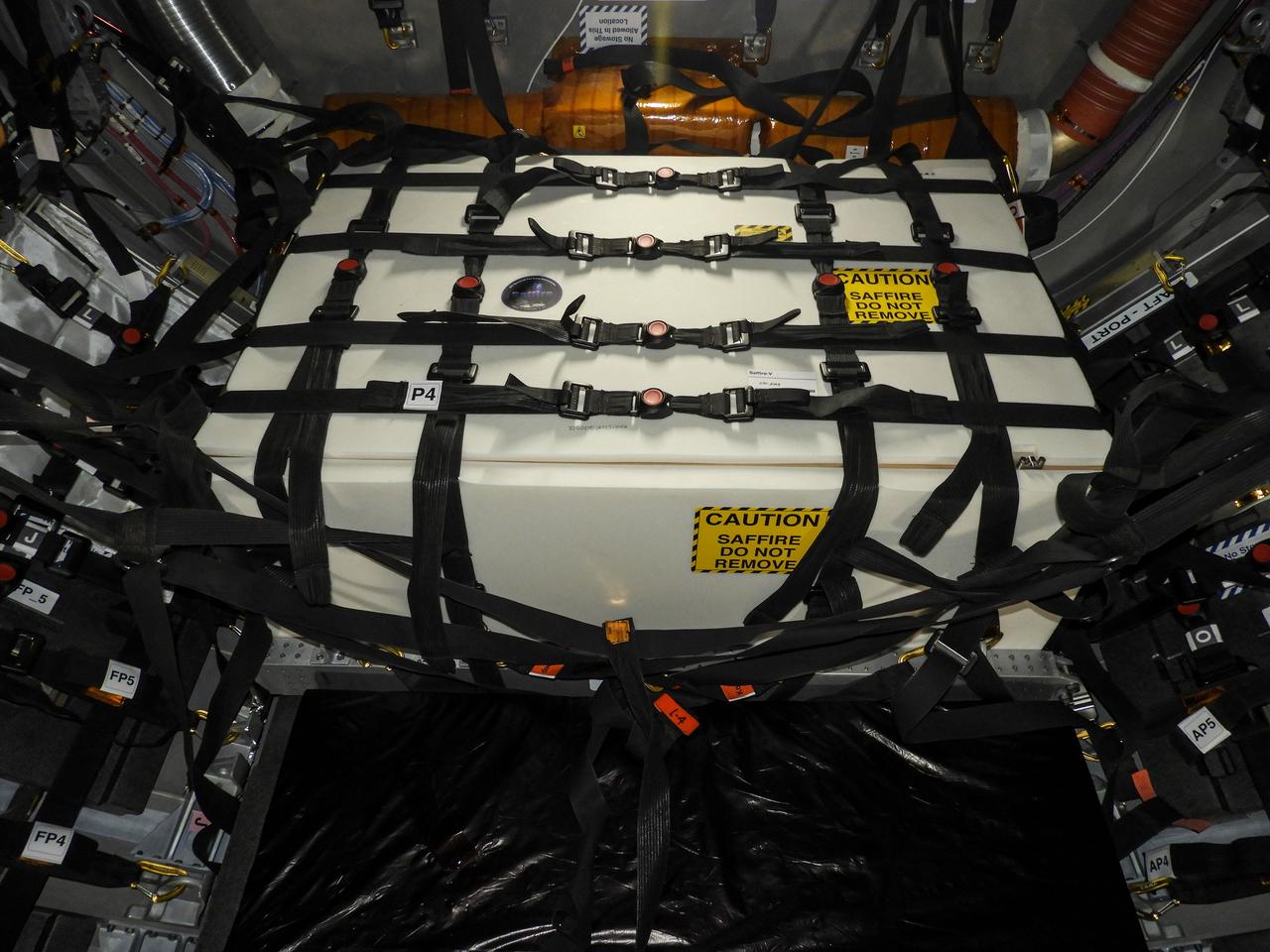
jsc2020e043815 (Sept. 10, 2020) --- A view of the Spacecraft Fire Safety Experiments (Saffire) V experiment hardware, loaded inside the Northrop Grumman(NG) Cygnus cargo vehicle for the 14th NG resupply mission to the International Space Station. Saffire is a series of experiments to investigate how fire spreads on a variety of combustible materials in the microgravity environment. The experiments are ignited in Cygnus cargo spacecraft after it departs the space station and before it reenters the Earth's atmosphere. Studying the development and growth of fire in a re-supply cargo vehicle eliminates the risk of exposure to humans in an occupied spacecraft. Understanding how fire behaves in microgravity, and how different materials propagate flames in space is immensely important for the development of future crew spacecraft.
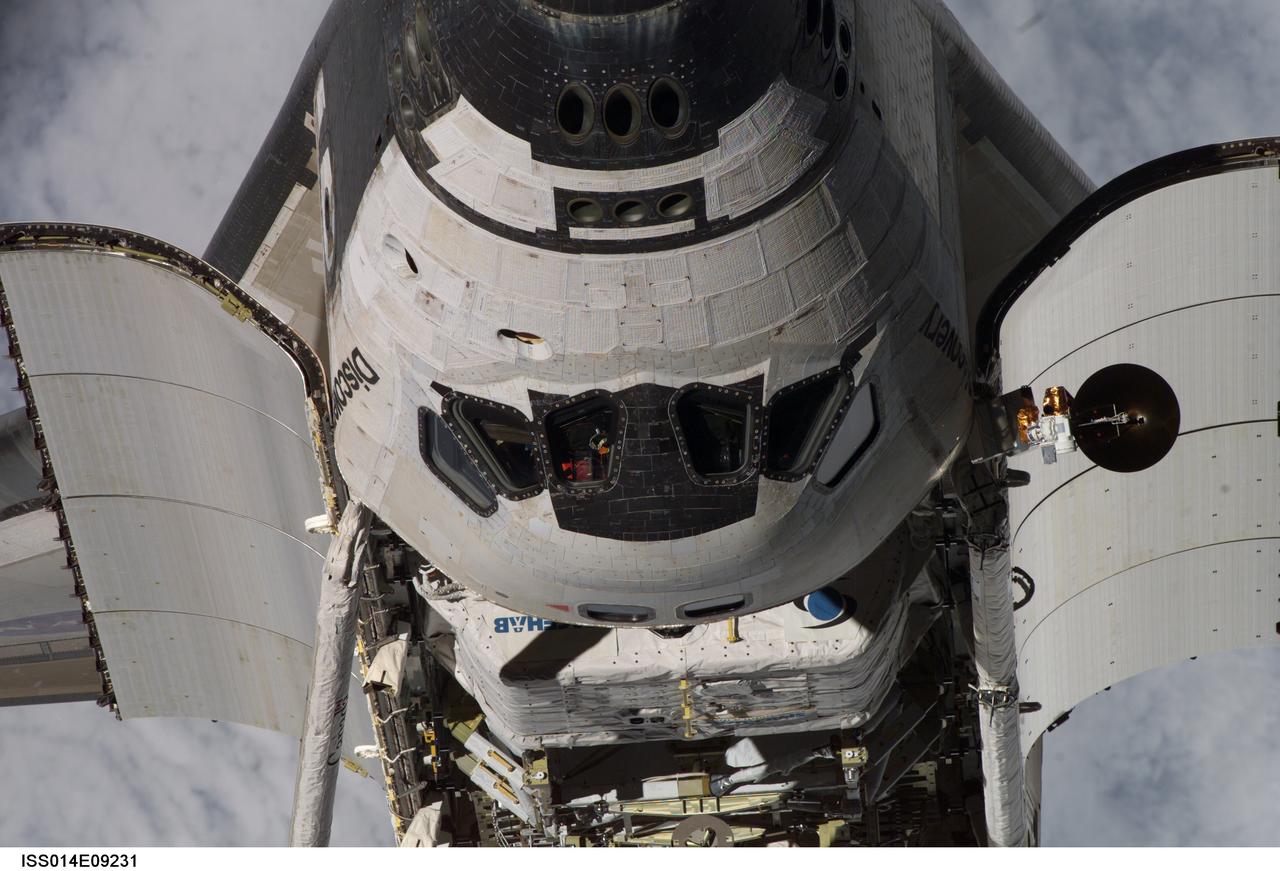
ISS014-E-09231 (11 Dec. 2006) --- This view of part of the crew cabin and the forward portion of the cargo bay of Space Shuttle Discovery was provided by an Expedition 14 crewmember during a back-flip performed by the approaching STS-116 crew to the International Space Station. Spacehab can be seen in Discovery's payload bay.