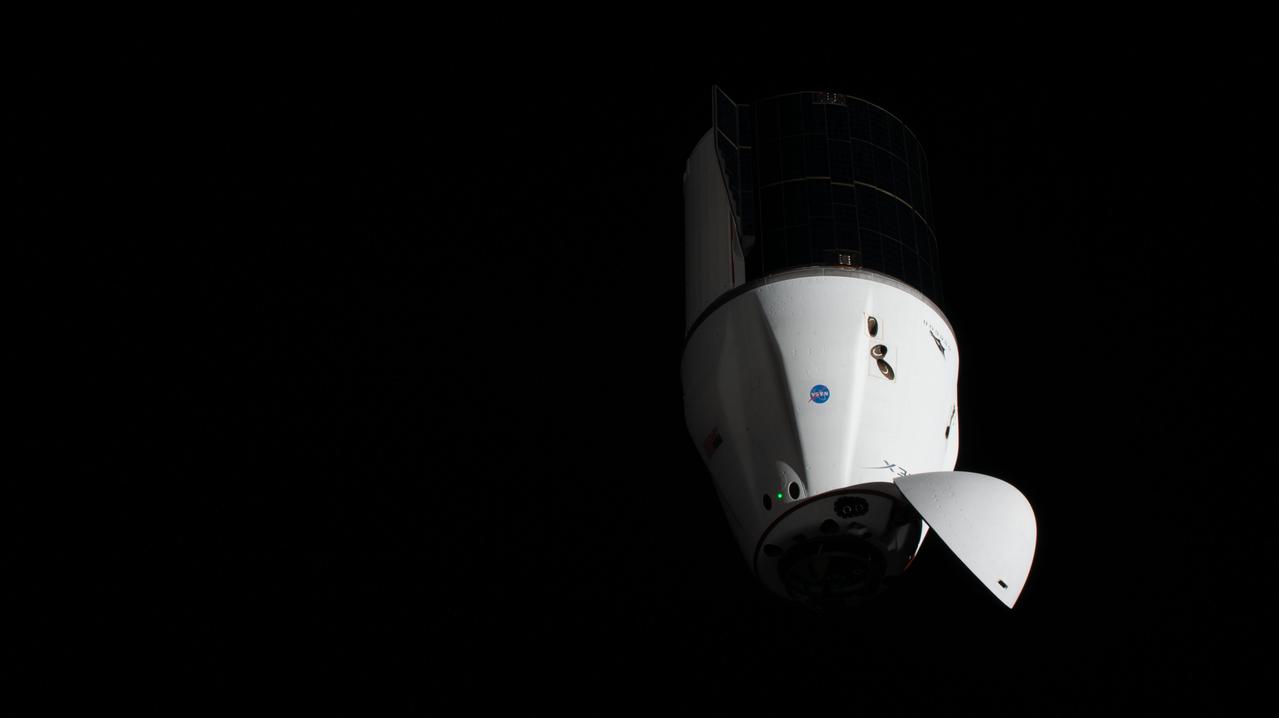
iss065e086706 (June 5, 2021) --- The SpaceX Cargo Dragon resupply ship approaches the International Space Station carrying over 7,300 pounds of new science, supplies and solar arrays to replenish the Expedition 65 crew.
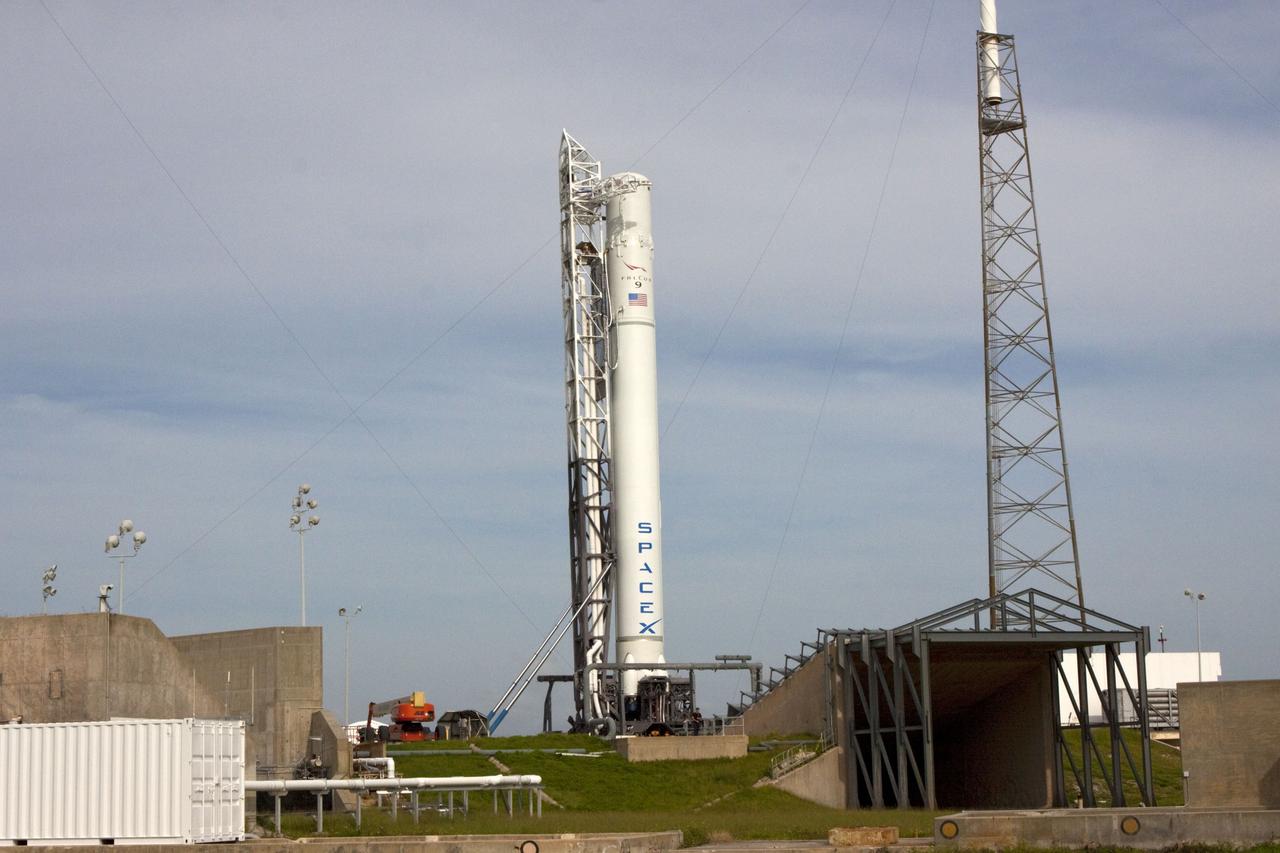
CAPE CANAVERAL, Fla. -- The Space Exploration Technologies, or SpaceX, Falcon 9 rocket is in position for a wet dress rehearsal at Space Launch Complex 40 at Cape Canaveral Air Force Station in Florida. During the rehearsal, the rocket will be fully fueled and launch controllers will perform a countdown demonstration. The rehearsal is in preparation for the company's first Commercial Resupply Services, or CRS, mission to the International Space Station aboard the Dragon capsule. The SpaceX CRS contract with NASA provides for 12 cargo resupply missions to the station through 2015, the first of which is targeted to launch in October 2012.SpaceX became the first private company to berth a spacecraft with the space station in 2012 during its final demonstration flight under the Commercial Orbital Transportation Services, or COTS, program managed by NASA's Johnson Space Center in Houston. Photo credit: NASA/Jim Grossmann
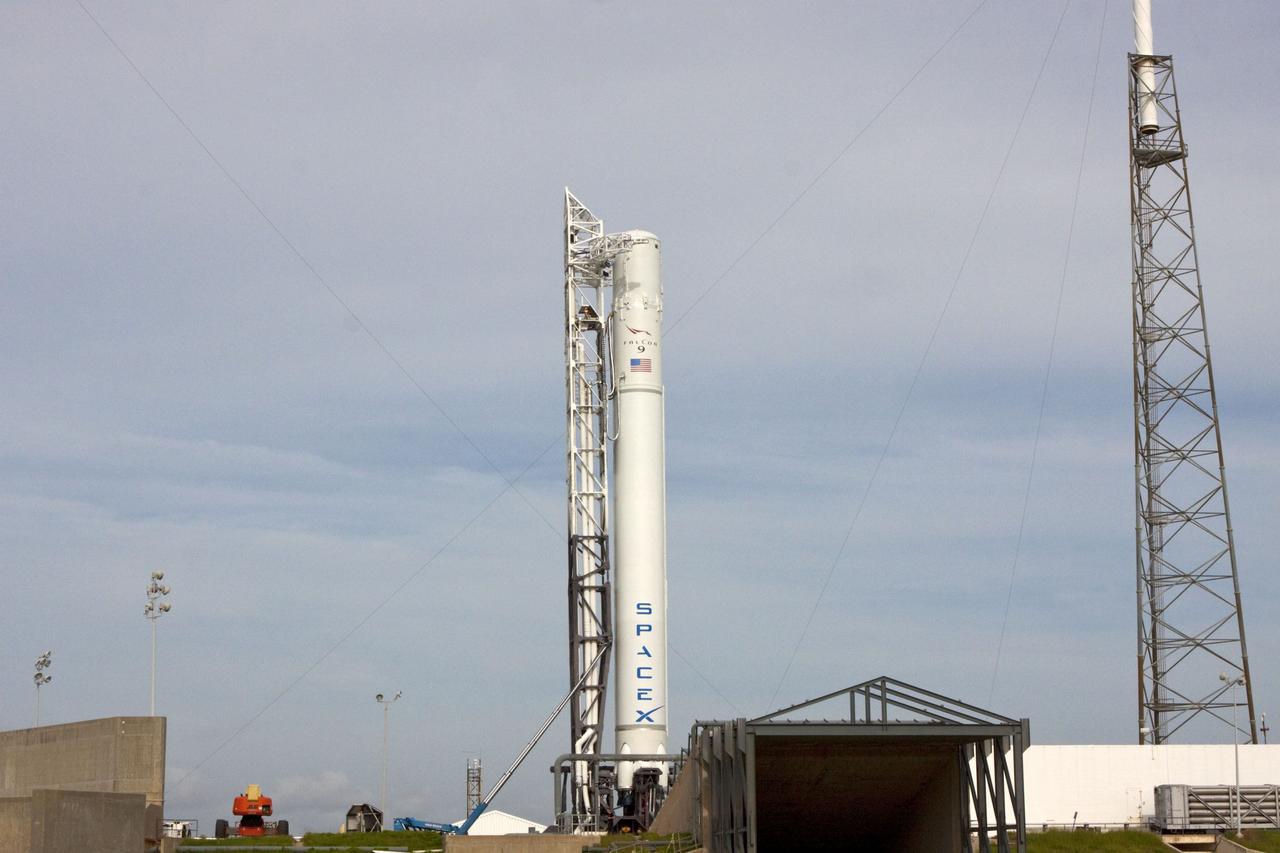
CAPE CANAVERAL, Fla. -- The Space Exploration Technologies, or SpaceX, Falcon 9 rocket is in position for a wet dress rehearsal at Space Launch Complex 40 at Cape Canaveral Air Force Station in Florida. During the rehearsal, the rocket will be fully fueled and launch controllers will perform a countdown demonstration. The rehearsal is in preparation for the company's first Commercial Resupply Services, or CRS, mission to the International Space Station aboard the Dragon capsule. The SpaceX CRS contract with NASA provides for 12 cargo resupply missions to the station through 2015, the first of which is targeted to launch in October 2012.SpaceX became the first private company to berth a spacecraft with the space station in 2012 during its final demonstration flight under the Commercial Orbital Transportation Services, or COTS, program managed by NASA's Johnson Space Center in Houston. Photo credit: NASA/Jim Grossmann
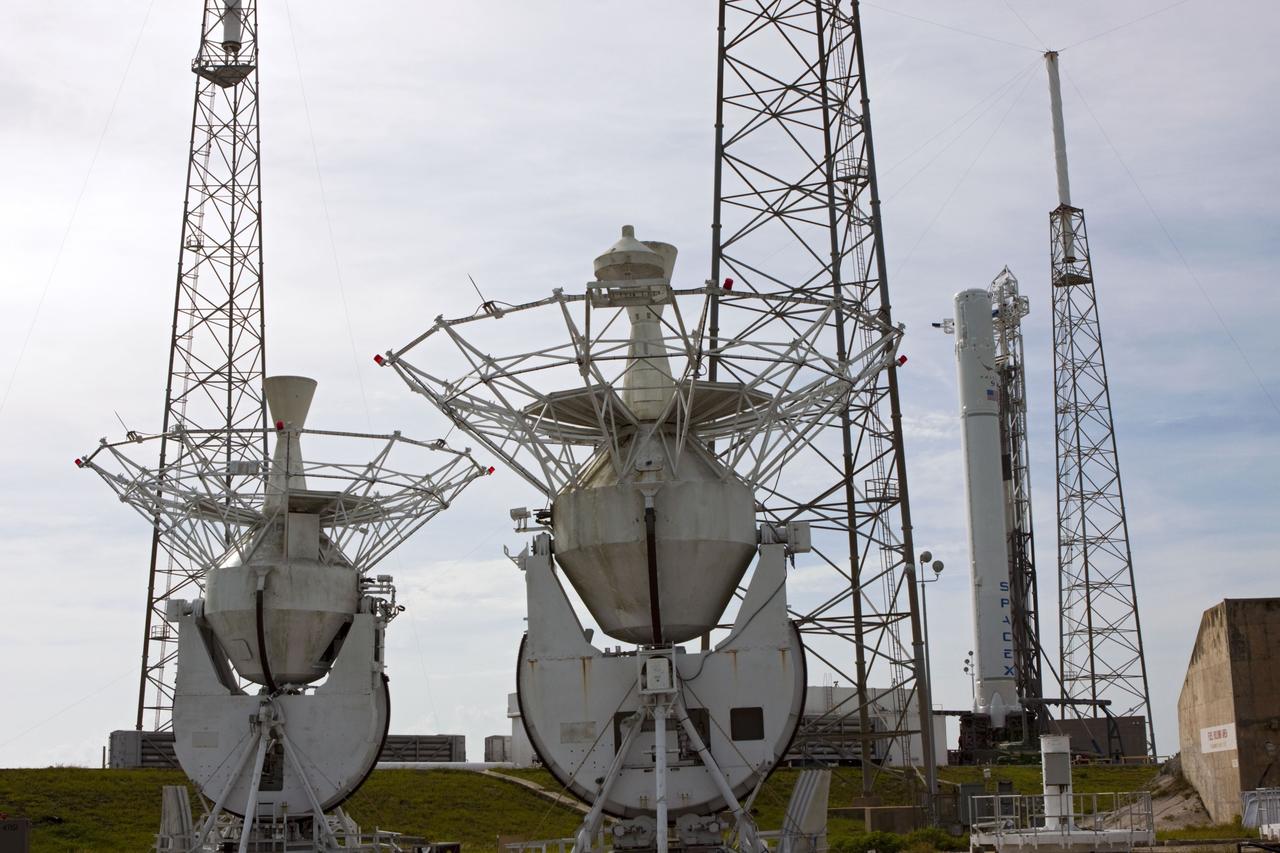
CAPE CANAVERAL, Fla. - Just prior to the wet dress rehearsal for the SpaceX Falcon 9 rocket, the frameworks of the former MILA tracking station S-band 9-meter tracking antennas are seen with the Falcon 9 rocket. These antennas were used by NASA during the Apollo and space shuttle programs. They are being re-purposed by SpaceX. The antennas will moved to another location, reassembled and refurbished for tracking during future SpaceX launches and missions. The SpaceX CRS contract with NASA provides for 12 cargo resupply missions to the station through 2015, the first of which is targeted to launch in October 2012.SpaceX became the first private company to berth a spacecraft with the space station in 2012 during its final demonstration flight under the Commercial Orbital Transportation Services, or COTS, program managed by NASA's Johnson Space Center in Houston. Photo credit: NASA/Jim Grossmann
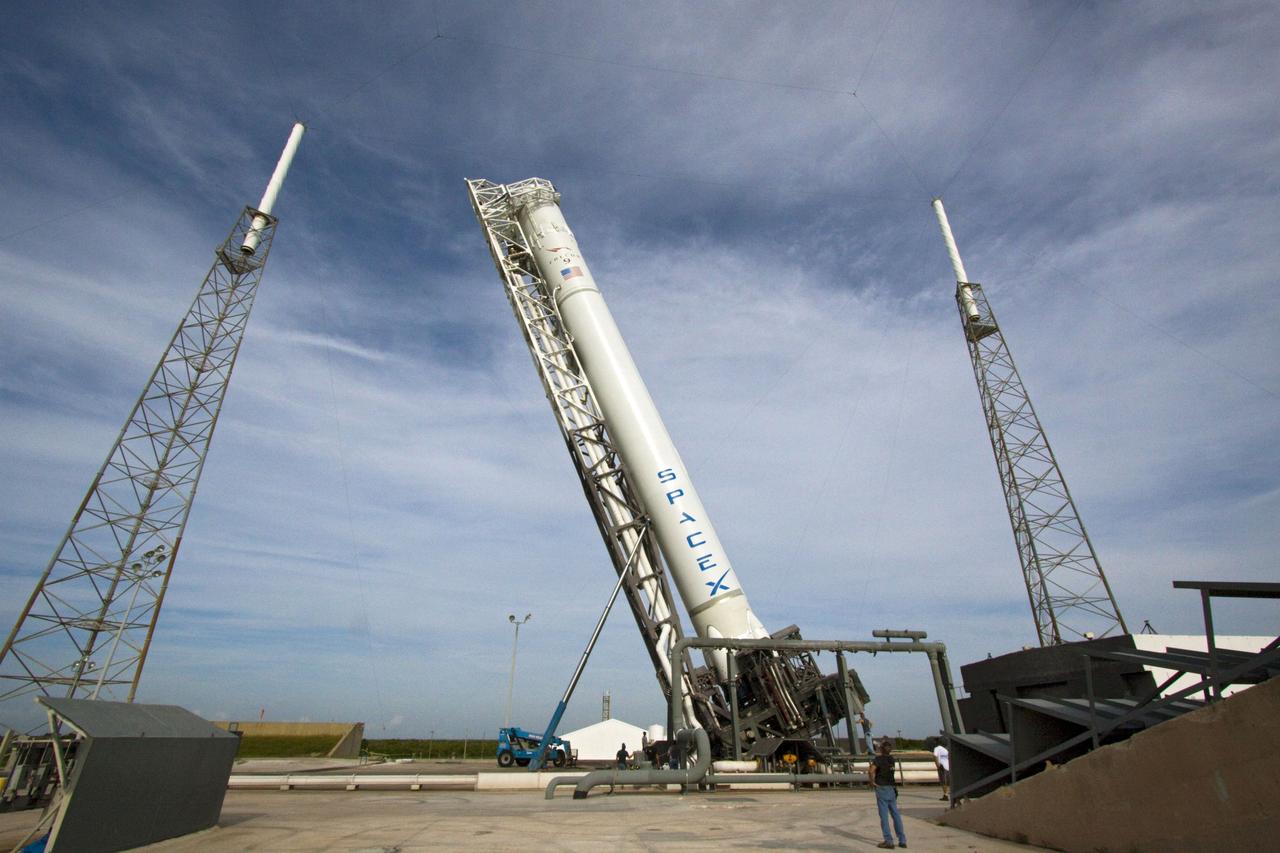
CAPE CANAVERAL, Fla. -- At Space Launch Complex 40 on Cape Canaveral Air Force Station in Florida, the Space Exploration Technologies, or SpaceX, Falcon 9 rocket is moved into a vertical position for a wet dress rehearsal. During the rehearsal, the rocket will be fully fueled and launch controllers will perform a countdown demonstration. The rehearsal is in preparation for the company's first Commercial Resupply Services, or CRS, mission to the International Space Station aboard the Dragon capsule. The SpaceX CRS contract with NASA provides for 12 cargo resupply missions to the station through 2015, the first of which is targeted to launch in October 2012.SpaceX became the first private company to berth a spacecraft with the space station in 2012 during its final demonstration flight under the Commercial Orbital Transportation Services, or COTS, program managed by NASA's Johnson Space Center in Houston. Photo credit: NASA/Jim Grossmann
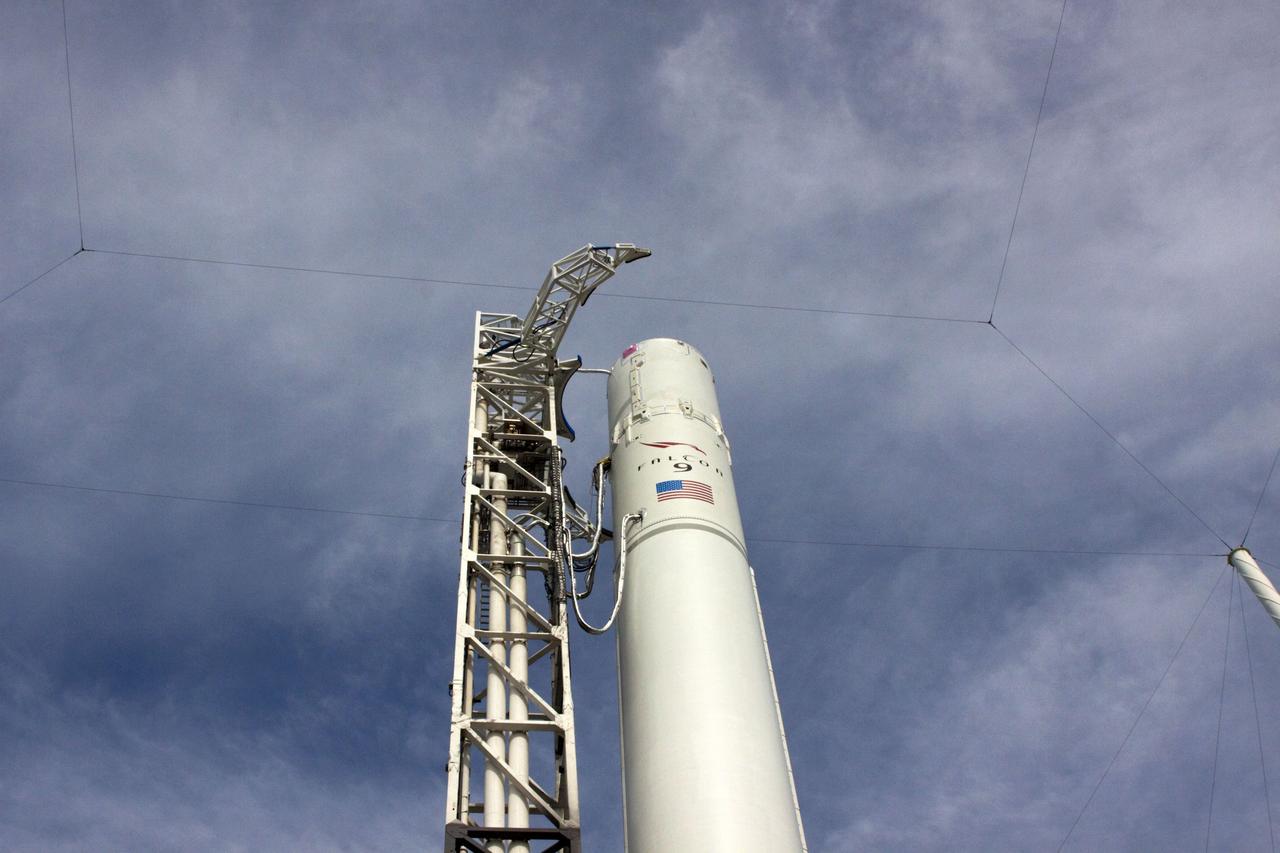
CAPE CANAVERAL, Fla. -- The Space Exploration Technologies, or SpaceX, Falcon 9 rocket is in position for a wet dress rehearsal at Space Launch Complex 40 at Cape Canaveral Air Force Station in Florida. During the rehearsal, the rocket will be fully fueled and launch controllers will perform a countdown demonstration. The rehearsal is in preparation for the company's first Commercial Resupply Services, or CRS, mission to the International Space Station aboard the Dragon capsule. The SpaceX CRS contract with NASA provides for 12 cargo resupply missions to the station through 2015, the first of which is targeted to launch in October 2012.SpaceX became the first private company to berth a spacecraft with the space station in 2012 during its final demonstration flight under the Commercial Orbital Transportation Services, or COTS, program managed by NASA's Johnson Space Center in Houston. Photo credit: NASA/Jim Grossmann
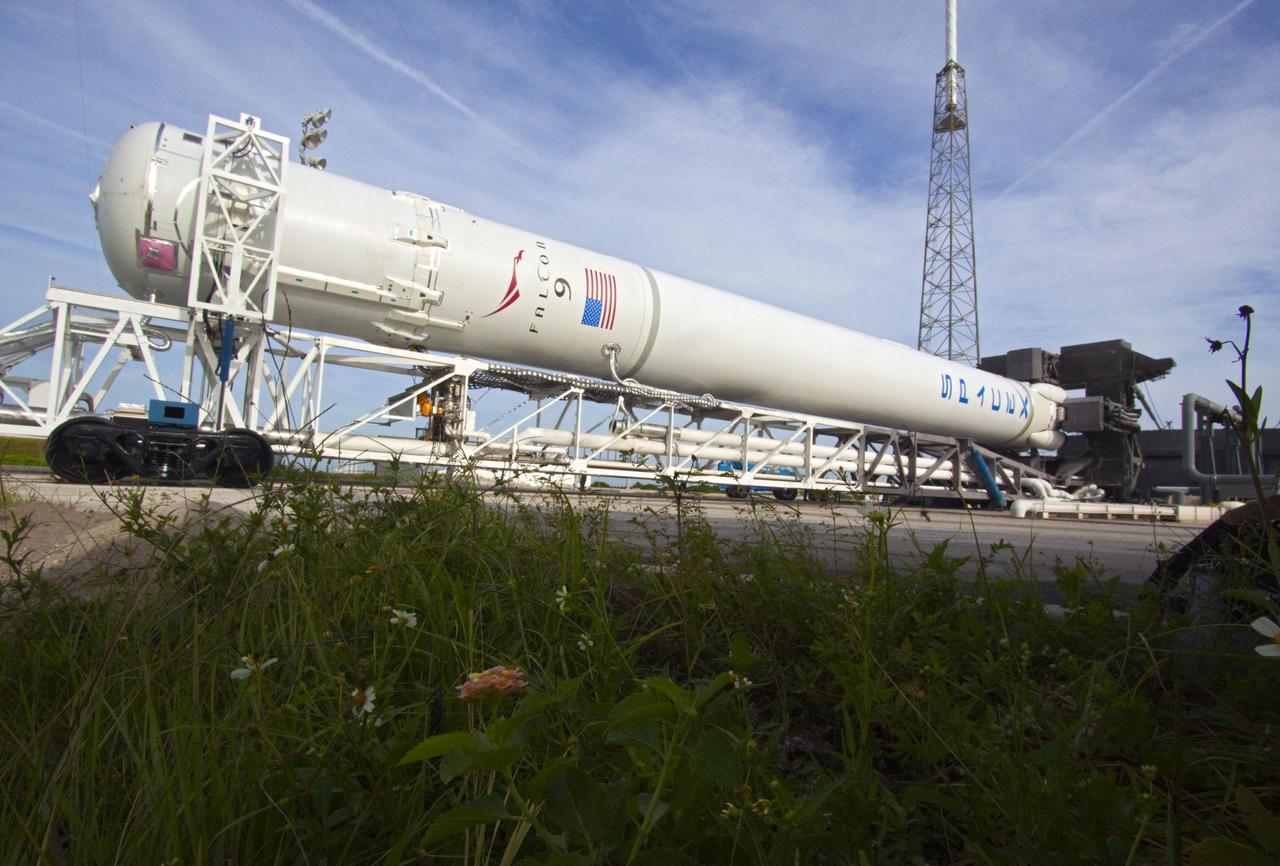
CAPE CANAVERAL, Fla. -- At Space Launch Complex 40 on Cape Canaveral Air Force Station in Florida, the Space Exploration Technologies, or SpaceX, Falcon 9 rocket is moved into a vertical position for a wet dress rehearsal. During the rehearsal, the rocket will be fully fueled and launch controllers will perform a countdown demonstration. The rehearsal is in preparation for the company's first Commercial Resupply Services, or CRS, mission to the International Space Station aboard the Dragon capsule. The SpaceX CRS contract with NASA provides for 12 cargo resupply missions to the station through 2015, the first of which is targeted to launch in October 2012.SpaceX became the first private company to berth a spacecraft with the space station in 2012 during its final demonstration flight under the Commercial Orbital Transportation Services, or COTS, program managed by NASA's Johnson Space Center in Houston. Photo credit: NASA/Jim Grossmann
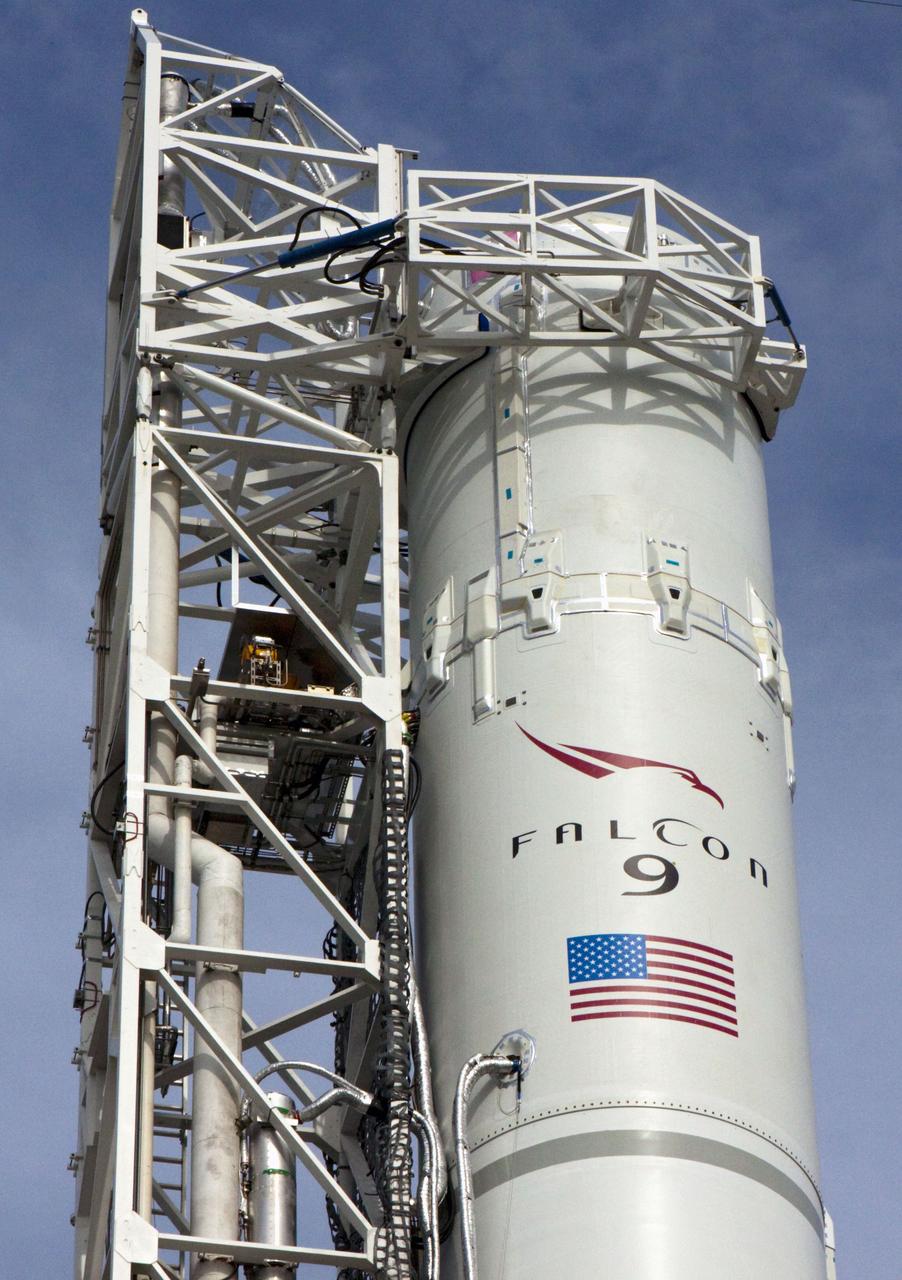
CAPE CANAVERAL, Fla. -- The Space Exploration Technologies, or SpaceX, Falcon 9 rocket is in position for a wet dress rehearsal at Space Launch Complex 40 at Cape Canaveral Air Force Station in Florida. During the rehearsal, the rocket will be fully fueled and launch controllers will perform a countdown demonstration. The rehearsal is in preparation for the company's first Commercial Resupply Services, or CRS, mission to the International Space Station aboard the Dragon capsule. The SpaceX CRS contract with NASA provides for 12 cargo resupply missions to the station through 2015, the first of which is targeted to launch in October 2012.SpaceX became the first private company to berth a spacecraft with the space station in 2012 during its final demonstration flight under the Commercial Orbital Transportation Services, or COTS, program managed by NASA's Johnson Space Center in Houston. Photo credit: NASA/Jim Grossmann
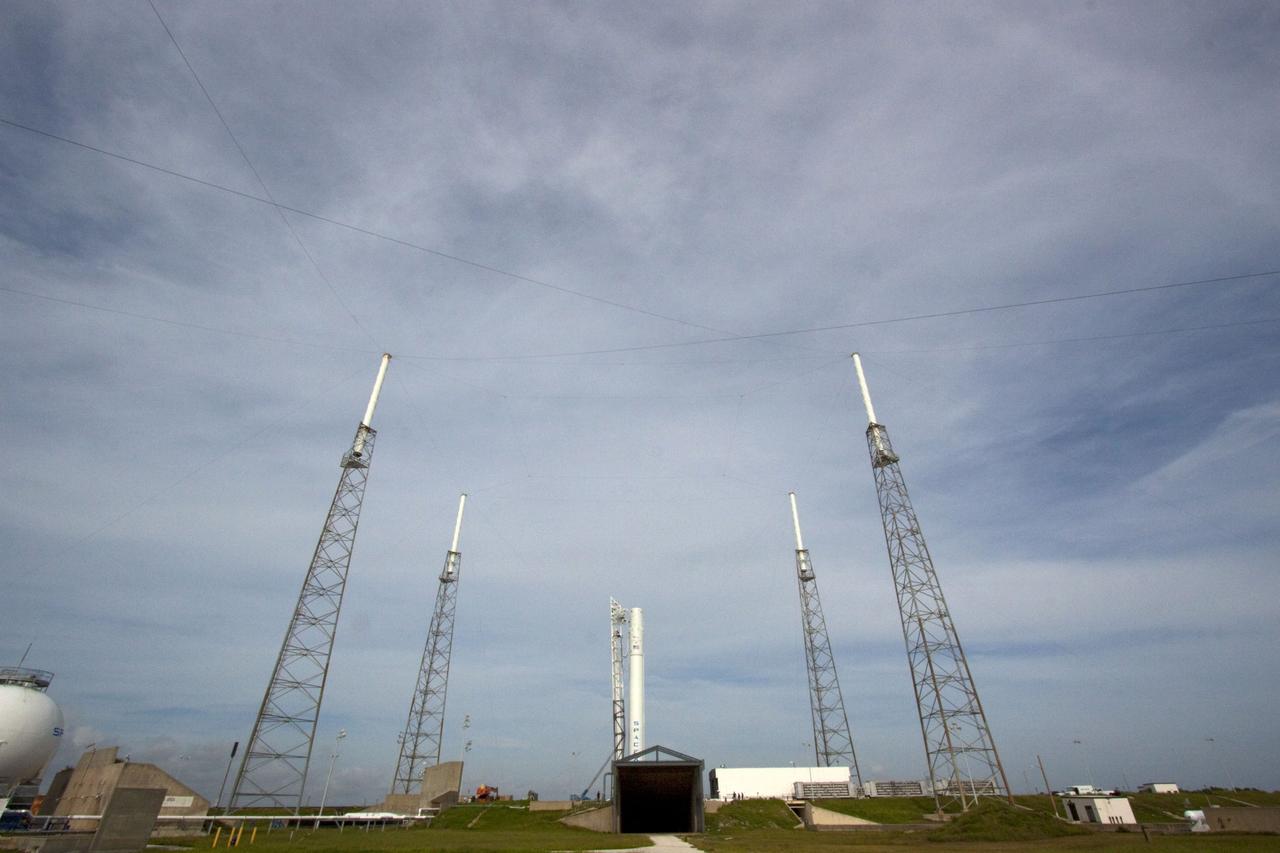
CAPE CANAVERAL, Fla. -- The Space Exploration Technologies, or SpaceX, Falcon 9 rocket is in position for a wet dress rehearsal at Space Launch Complex 40 at Cape Canaveral Air Force Station in Florida. During the rehearsal, the rocket will be fully fueled and launch controllers will perform a countdown demonstration. The rehearsal is in preparation for the company's first Commercial Resupply Services, or CRS, mission to the International Space Station aboard the Dragon capsule. The SpaceX CRS contract with NASA provides for 12 cargo resupply missions to the station through 2015, the first of which is targeted to launch in October 2012.SpaceX became the first private company to berth a spacecraft with the space station in 2012 during its final demonstration flight under the Commercial Orbital Transportation Services, or COTS, program managed by NASA's Johnson Space Center in Houston. Photo credit: NASA/Jim Grossmann
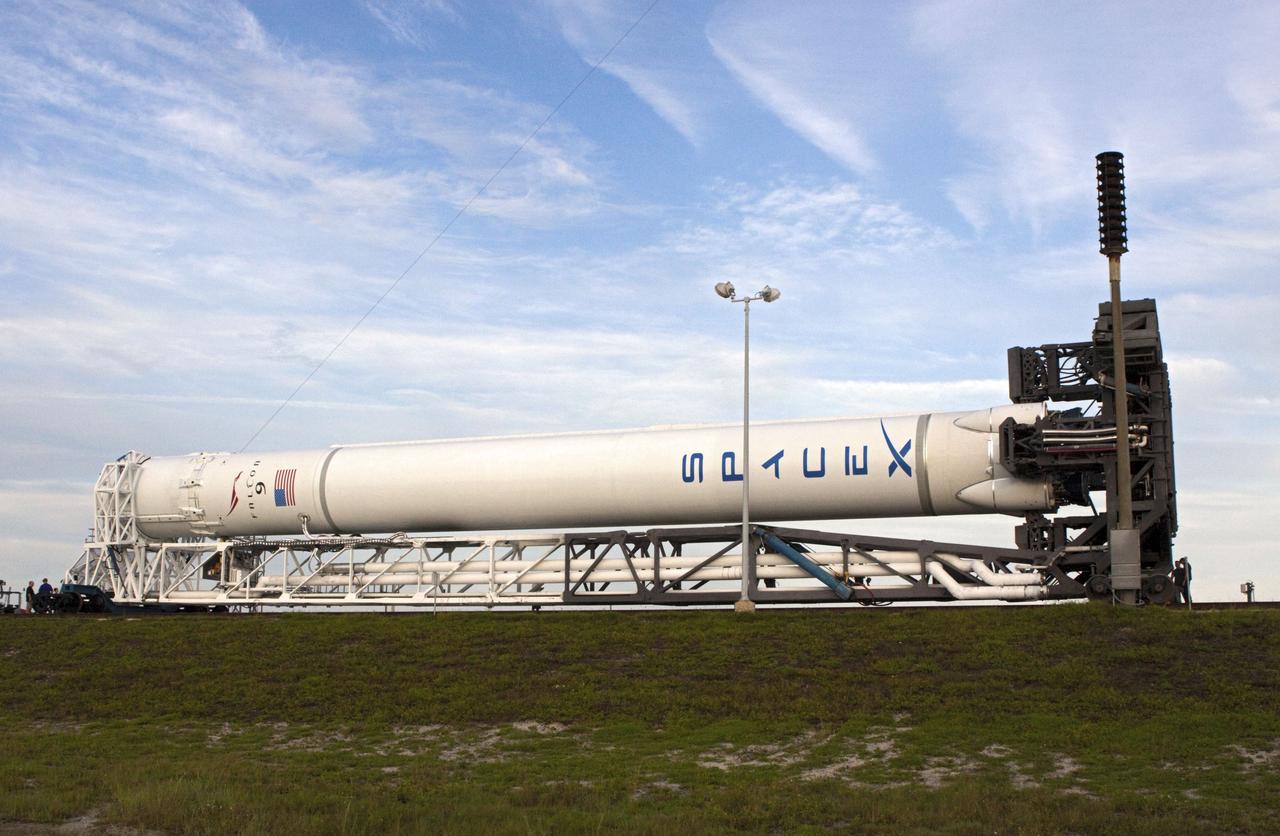
CAPE CANAVERAL, Fla. -- The Space Exploration Technologies, or SpaceX, Falcon 9 rocket rolls out of its processing hangar toward Space Launch Complex 40 at Cape Canaveral Air Force Station in Florida for a wet dress rehearsal. During the rehearsal, the rocket will be fully fueled and launch controllers will perform a countdown demonstration. The rehearsal is in preparation for the company's first Commercial Resupply Services, or CRS, mission to the International Space Station aboard the Dragon capsule. The SpaceX CRS contract with NASA provides for 12 cargo resupply missions to the station through 2015, the first of which is targeted to launch in October 2012.SpaceX became the first private company to berth a spacecraft with the space station in 2012 during its final demonstration flight under the Commercial Orbital Transportation Services, or COTS, program managed by NASA's Johnson Space Center in Houston. Photo credit: NASA/Jim Grossmann
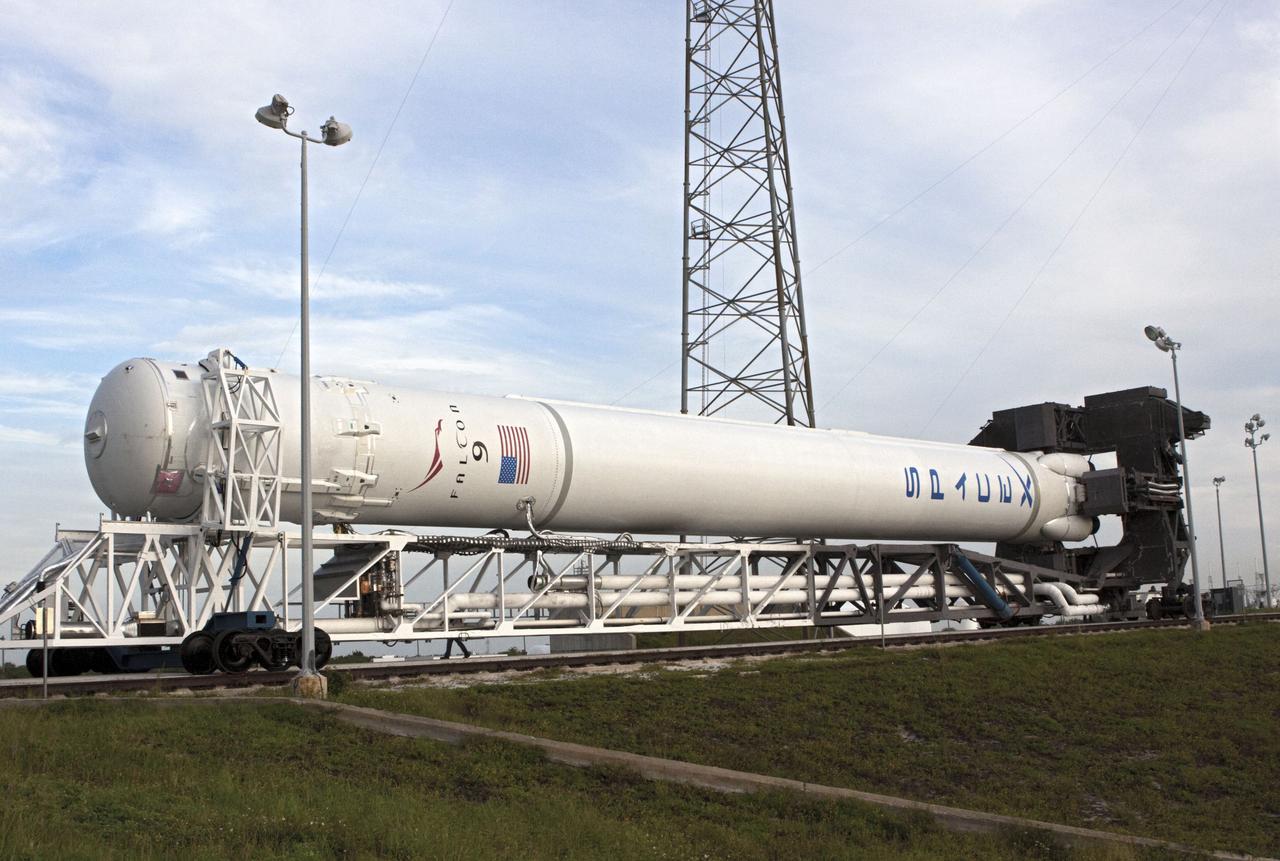
CAPE CANAVERAL, Fla. -- The Space Exploration Technologies, or SpaceX, Falcon 9 rocket rolls out of its processing hangar toward Space Launch Complex 40 at Cape Canaveral Air Force Station in Florida for a wet dress rehearsal. During the rehearsal, the rocket will be fully fueled and launch controllers will perform a countdown demonstration. The rehearsal is in preparation for the company's first Commercial Resupply Services, or CRS, mission to the International Space Station aboard the Dragon capsule. The SpaceX CRS contract with NASA provides for 12 cargo resupply missions to the station through 2015, the first of which is targeted to launch in October 2012.SpaceX became the first private company to berth a spacecraft with the space station in 2012 during its final demonstration flight under the Commercial Orbital Transportation Services, or COTS, program managed by NASA's Johnson Space Center in Houston. Photo credit: NASA/Jim Grossmann
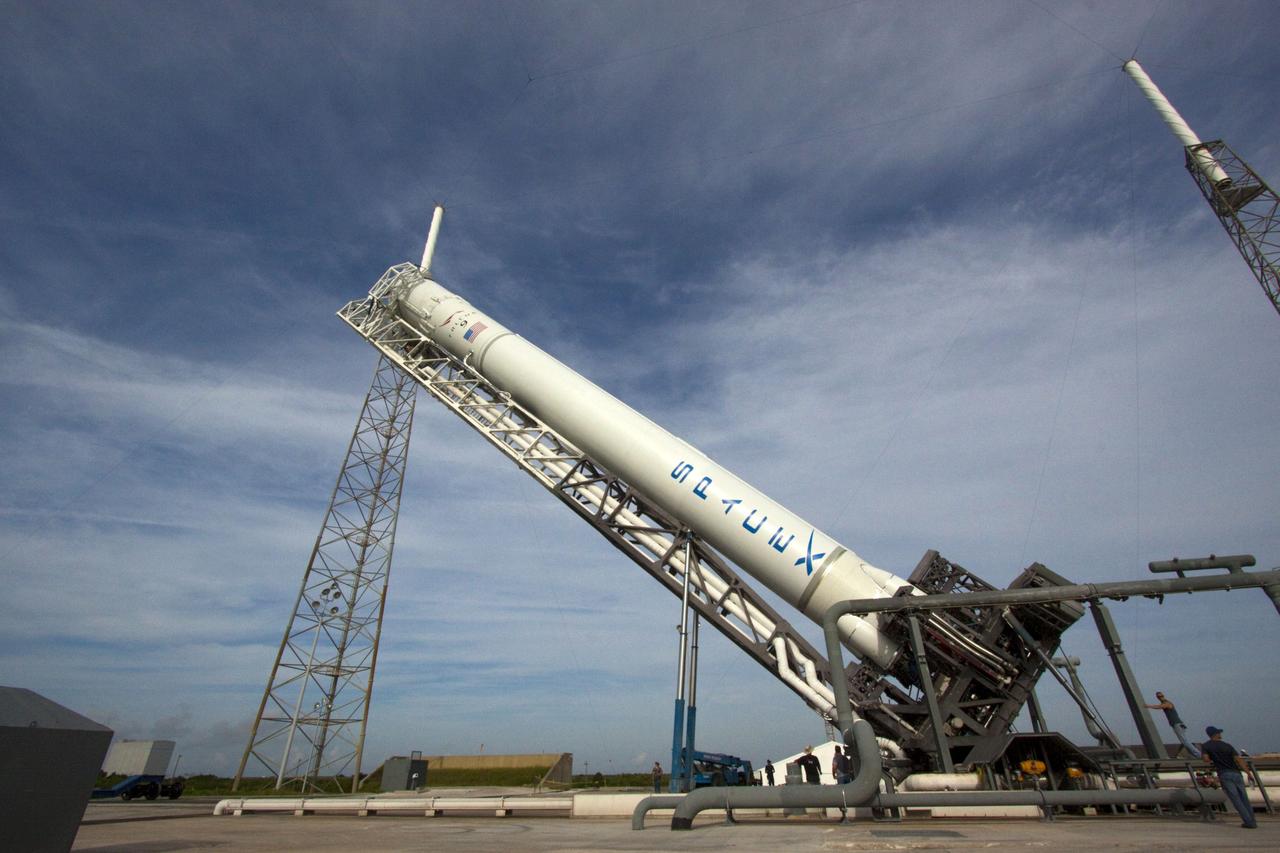
CAPE CANAVERAL, Fla. -- At Space Launch Complex 40 on Cape Canaveral Air Force Station in Florida, the Space Exploration Technologies, or SpaceX, Falcon 9 rocket is moved into a vertical position for a wet dress rehearsal. During the rehearsal, the rocket will be fully fueled and launch controllers will perform a countdown demonstration. The rehearsal is in preparation for the company's first Commercial Resupply Services, or CRS, mission to the International Space Station aboard the Dragon capsule. The SpaceX CRS contract with NASA provides for 12 cargo resupply missions to the station through 2015, the first of which is targeted to launch in October 2012.SpaceX became the first private company to berth a spacecraft with the space station in 2012 during its final demonstration flight under the Commercial Orbital Transportation Services, or COTS, program managed by NASA's Johnson Space Center in Houston. Photo credit: NASA/Jim Grossmann
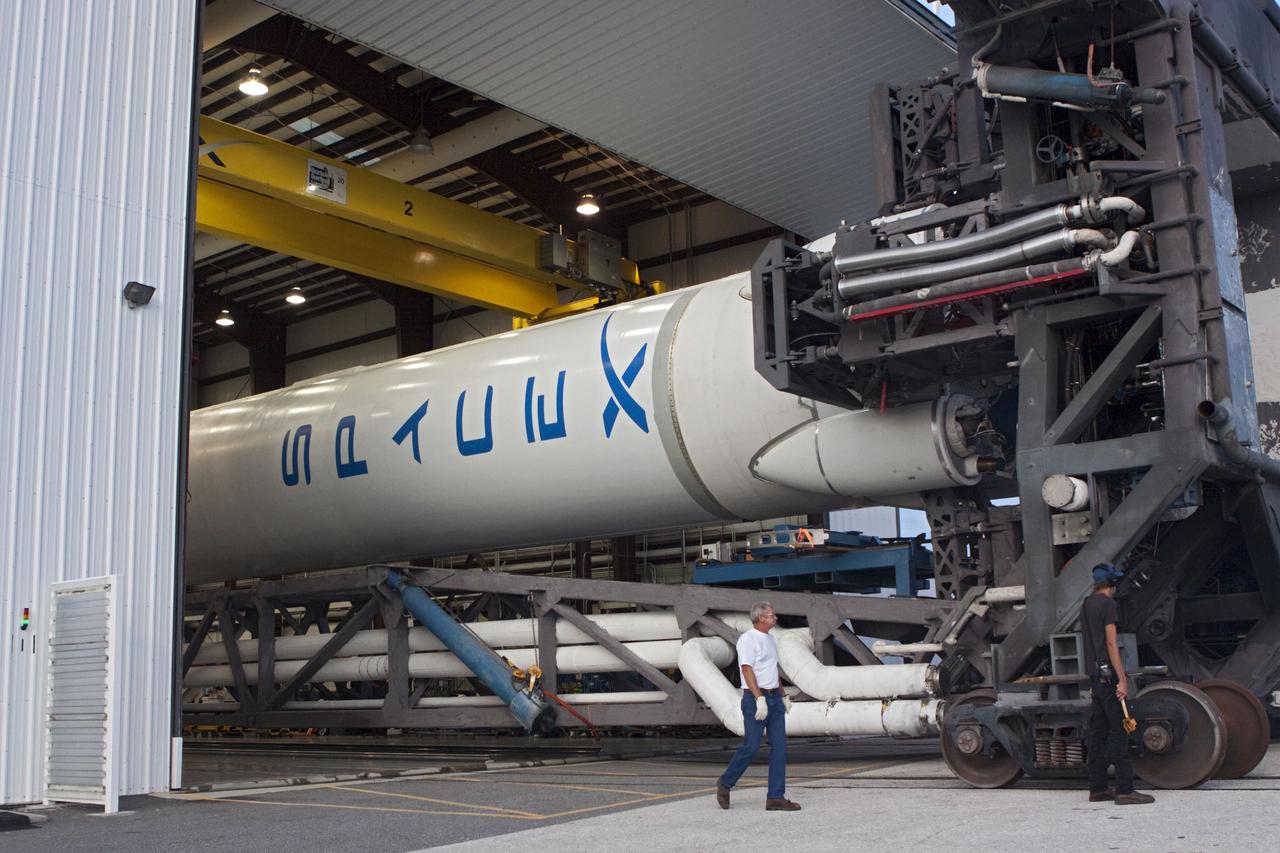
CAPE CANAVERAL, Fla. -- The Space Exploration Technologies, or SpaceX, Falcon 9 rocket rolls out of its processing hangar toward Space Launch Complex 40 at Cape Canaveral Air Force Station in Florida for a wet dress rehearsal. During the rehearsal, the rocket will be fully fueled and launch controllers will perform a countdown demonstration. The rehearsal is in preparation for the company's first Commercial Resupply Services, or CRS, mission to the International Space Station aboard the Dragon capsule. The SpaceX CRS contract with NASA provides for 12 cargo resupply missions to the station through 2015, the first of which is targeted to launch in October 2012.SpaceX became the first private company to berth a spacecraft with the space station in 2012 during its final demonstration flight under the Commercial Orbital Transportation Services, or COTS, program managed by NASA's Johnson Space Center in Houston. Photo credit: NASA/Jim Grossmann
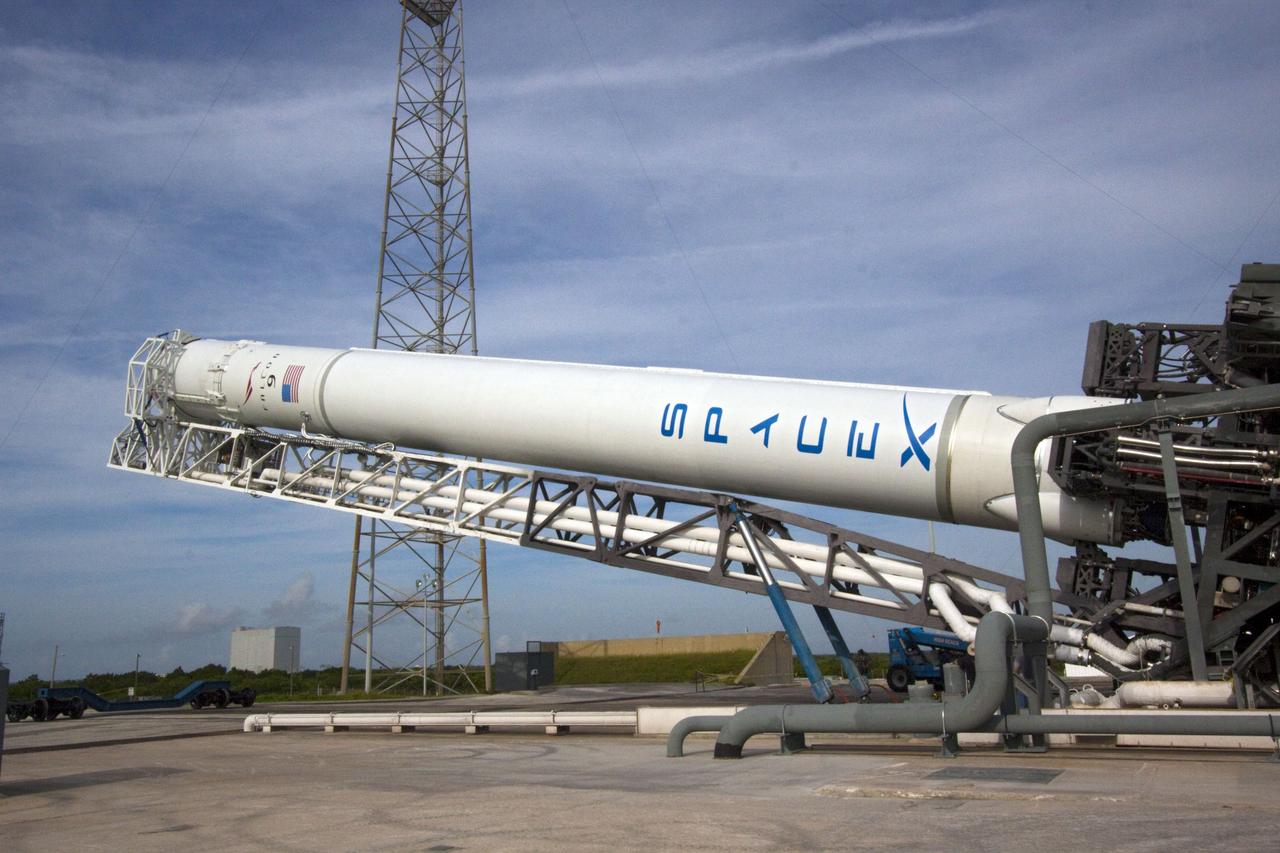
CAPE CANAVERAL, Fla. -- At Space Launch Complex 40 on Cape Canaveral Air Force Station in Florida, the Space Exploration Technologies, or SpaceX, Falcon 9 rocket is moved into a vertical position for a wet dress rehearsal. During the rehearsal, the rocket will be fully fueled and launch controllers will perform a countdown demonstration. The rehearsal is in preparation for the company's first Commercial Resupply Services, or CRS, mission to the International Space Station aboard the Dragon capsule. The SpaceX CRS contract with NASA provides for 12 cargo resupply missions to the station through 2015, the first of which is targeted to launch in October 2012.SpaceX became the first private company to berth a spacecraft with the space station in 2012 during its final demonstration flight under the Commercial Orbital Transportation Services, or COTS, program managed by NASA's Johnson Space Center in Houston. Photo credit: NASA/Jim Grossmann
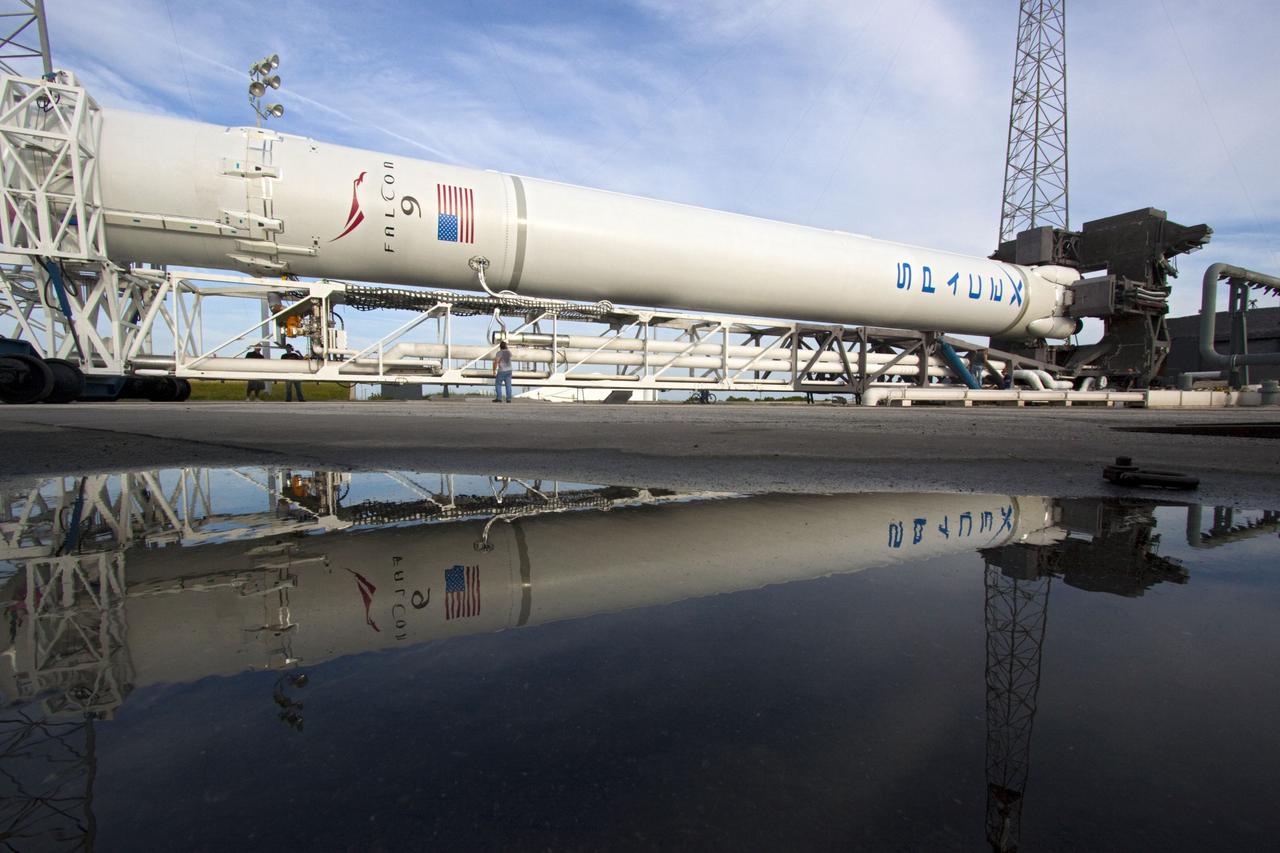
CAPE CANAVERAL, Fla. -- The Space Exploration Technologies, or SpaceX, Falcon 9 rocket rolls out of its processing hangar toward Space Launch Complex 40 at Cape Canaveral Air Force Station in Florida for a wet dress rehearsal. During the rehearsal, the rocket will be fully fueled and launch controllers will perform a countdown demonstration. The rehearsal is in preparation for the company's first Commercial Resupply Services, or CRS, mission to the International Space Station aboard the Dragon capsule. The SpaceX CRS contract with NASA provides for 12 cargo resupply missions to the station through 2015, the first of which is targeted to launch in October 2012.SpaceX became the first private company to berth a spacecraft with the space station in 2012 during its final demonstration flight under the Commercial Orbital Transportation Services, or COTS, program managed by NASA's Johnson Space Center in Houston. Photo credit: NASA/Jim Grossmann
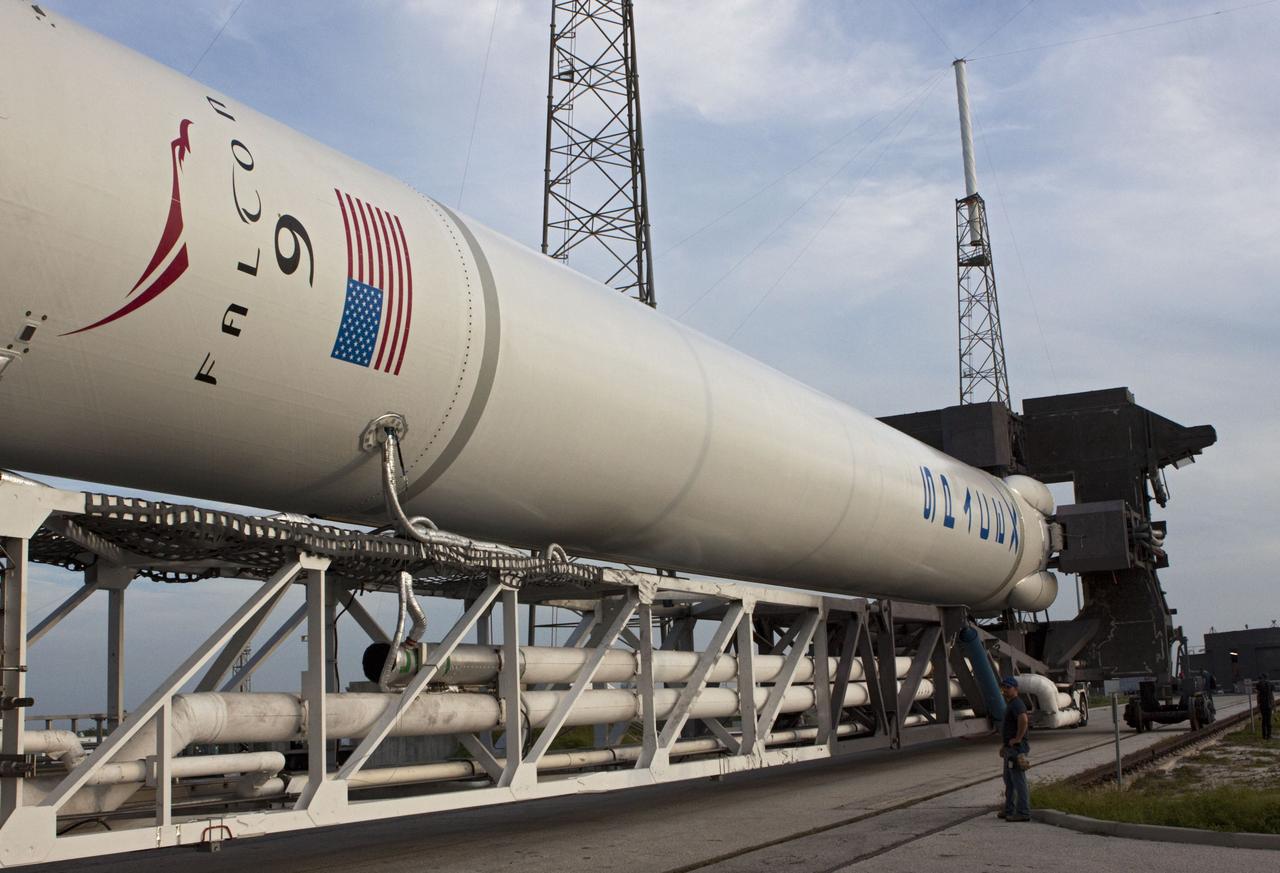
CAPE CANAVERAL, Fla. -- The Space Exploration Technologies, or SpaceX, Falcon 9 rocket rolls out of its processing hangar toward Space Launch Complex 40 at Cape Canaveral Air Force Station in Florida for a wet dress rehearsal. During the rehearsal, the rocket will be fully fueled and launch controllers will perform a countdown demonstration. The rehearsal is in preparation for the company's first Commercial Resupply Services, or CRS, mission to the International Space Station aboard the Dragon capsule. The SpaceX CRS contract with NASA provides for 12 cargo resupply missions to the station through 2015, the first of which is targeted to launch in October 2012.SpaceX became the first private company to berth a spacecraft with the space station in 2012 during its final demonstration flight under the Commercial Orbital Transportation Services, or COTS, program managed by NASA's Johnson Space Center in Houston. Photo credit: NASA/Jim Grossmann
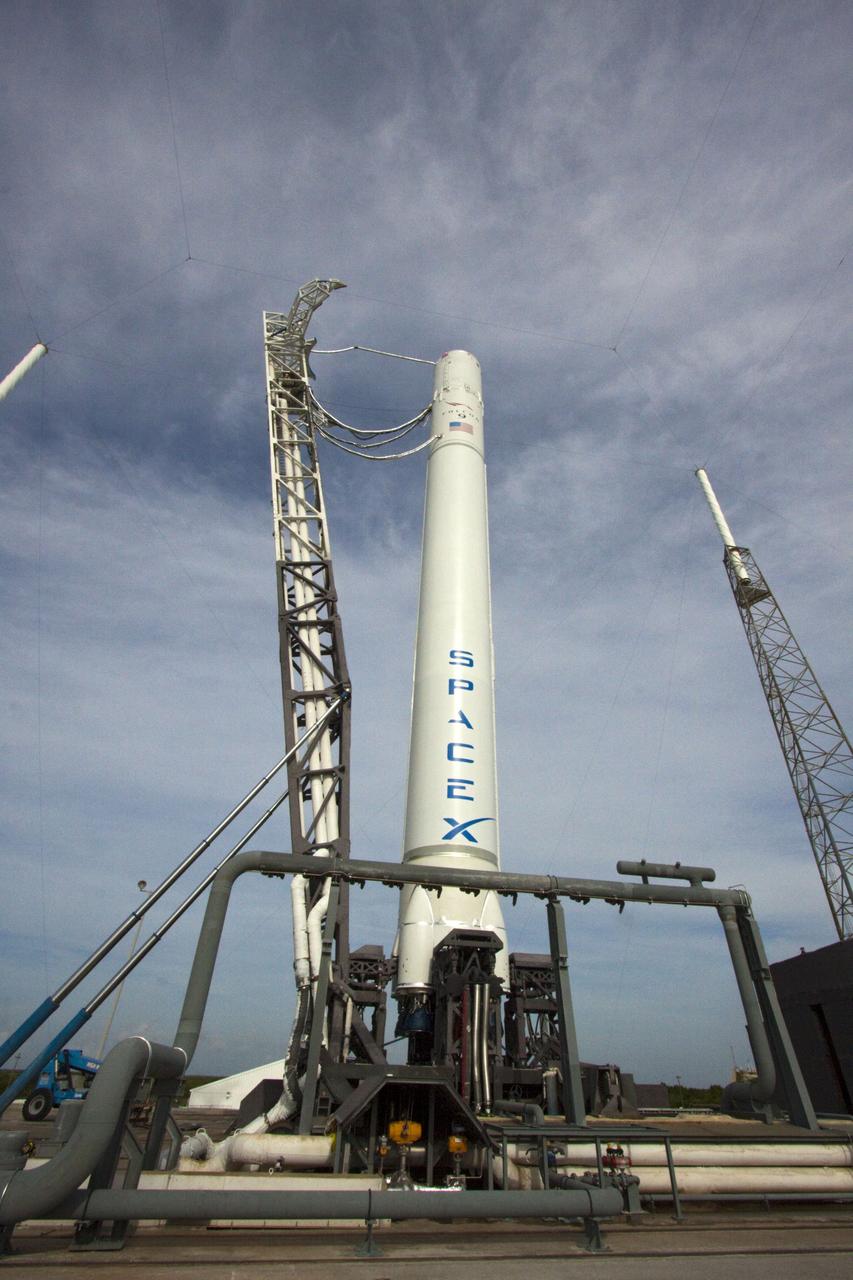
CAPE CANAVERAL, Fla. -- The Space Exploration Technologies, or SpaceX, Falcon 9 rocket is in position for a wet dress rehearsal at Space Launch Complex 40 at Cape Canaveral Air Force Station in Florida. During the rehearsal, the rocket will be fully fueled and launch controllers will perform a countdown demonstration. The rehearsal is in preparation for the company's first Commercial Resupply Services, or CRS, mission to the International Space Station aboard the Dragon capsule. The SpaceX CRS contract with NASA provides for 12 cargo resupply missions to the station through 2015, the first of which is targeted to launch in October 2012.SpaceX became the first private company to berth a spacecraft with the space station in 2012 during its final demonstration flight under the Commercial Orbital Transportation Services, or COTS, program managed by NASA's Johnson Space Center in Houston. Photo credit: NASA/Jim Grossmann
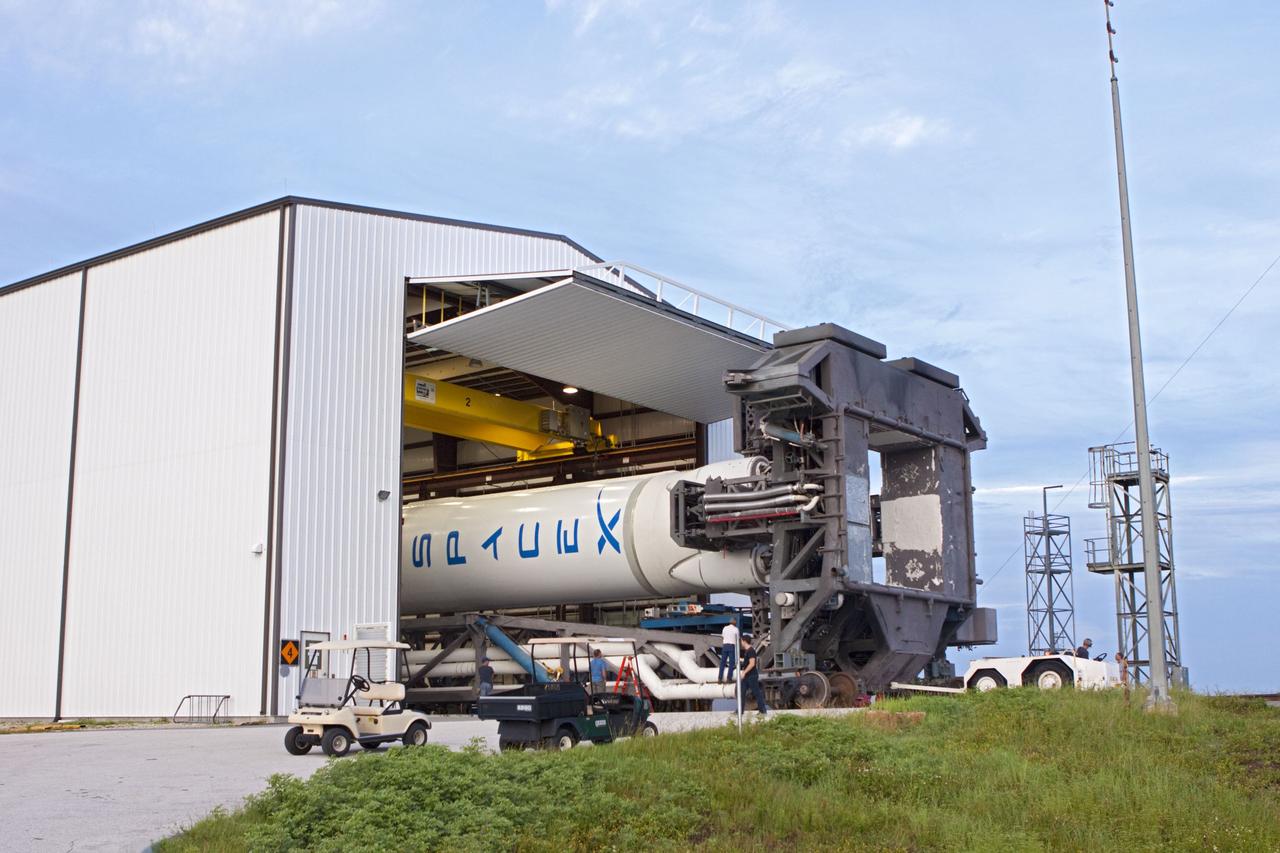
CAPE CANAVERAL, Fla. -- The Space Exploration Technologies, or SpaceX, Falcon 9 rocket rolls out of its processing hangar toward Space Launch Complex 40 at Cape Canaveral Air Force Station in Florida for a wet dress rehearsal. During the rehearsal, the rocket will be fully fueled and launch controllers will perform a countdown demonstration. The rehearsal is in preparation for the company's first Commercial Resupply Services, or CRS, mission to the International Space Station aboard the Dragon capsule. The SpaceX CRS contract with NASA provides for 12 cargo resupply missions to the station through 2015, the first of which is targeted to launch in October 2012.SpaceX became the first private company to berth a spacecraft with the space station in 2012 during its final demonstration flight under the Commercial Orbital Transportation Services, or COTS, program managed by NASA's Johnson Space Center in Houston. Photo credit: NASA/Jim Grossmann
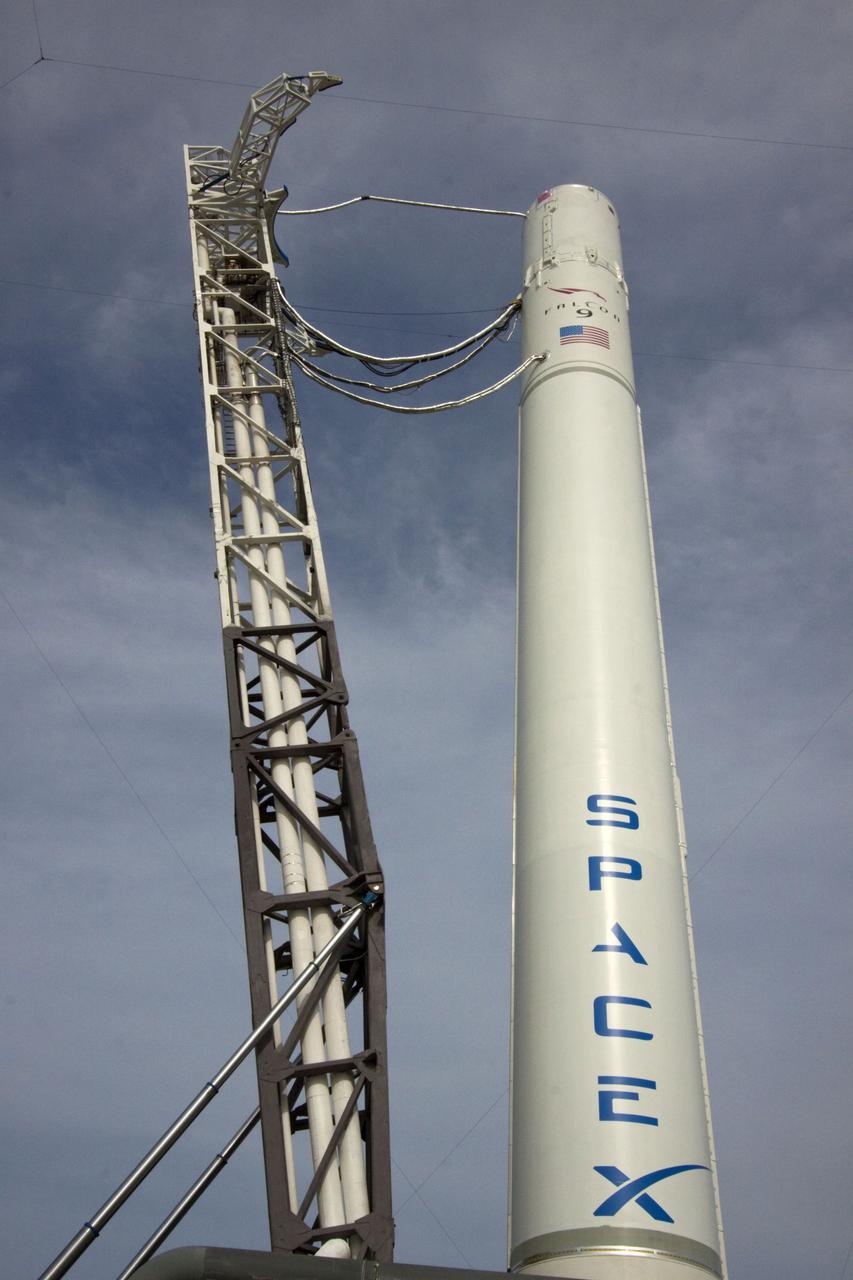
CAPE CANAVERAL, Fla. -- The Space Exploration Technologies, or SpaceX, Falcon 9 rocket is in position for a wet dress rehearsal at Space Launch Complex 40 at Cape Canaveral Air Force Station in Florida. During the rehearsal, the rocket will be fully fueled and launch controllers will perform a countdown demonstration. The rehearsal is in preparation for the company's first Commercial Resupply Services, or CRS, mission to the International Space Station aboard the Dragon capsule. The SpaceX CRS contract with NASA provides for 12 cargo resupply missions to the station through 2015, the first of which is targeted to launch in October 2012.SpaceX became the first private company to berth a spacecraft with the space station in 2012 during its final demonstration flight under the Commercial Orbital Transportation Services, or COTS, program managed by NASA's Johnson Space Center in Houston. Photo credit: NASA/Jim Grossmann
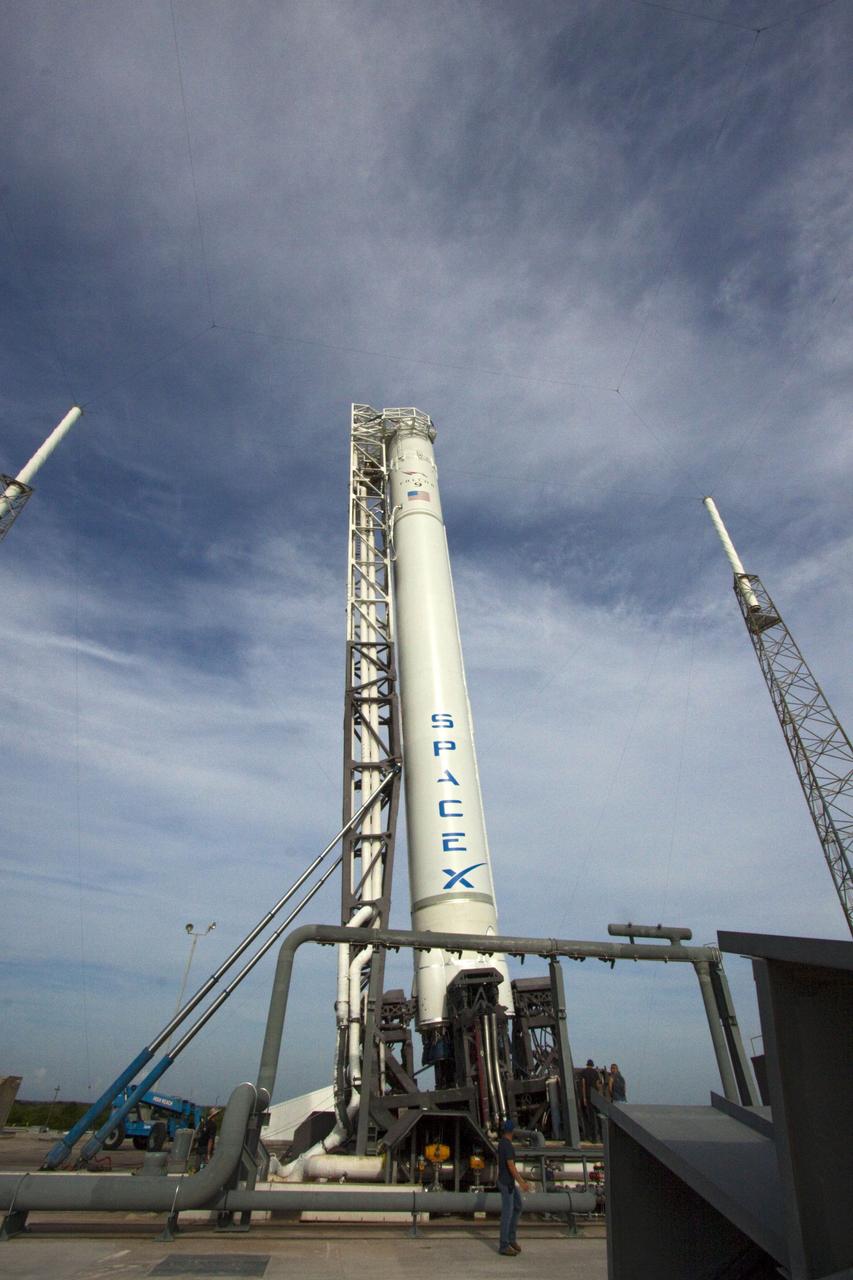
CAPE CANAVERAL, Fla. -- At Space Launch Complex 40 on Cape Canaveral Air Force Station in Florida, the Space Exploration Technologies, or SpaceX, Falcon 9 rocket is moved into a vertical position for a wet dress rehearsal. During the rehearsal, the rocket will be fully fueled and launch controllers will perform a countdown demonstration. The rehearsal is in preparation for the company's first Commercial Resupply Services, or CRS, mission to the International Space Station aboard the Dragon capsule. The SpaceX CRS contract with NASA provides for 12 cargo resupply missions to the station through 2015, the first of which is targeted to launch in October 2012.SpaceX became the first private company to berth a spacecraft with the space station in 2012 during its final demonstration flight under the Commercial Orbital Transportation Services, or COTS, program managed by NASA's Johnson Space Center in Houston. Photo credit: NASA/Jim Grossmann
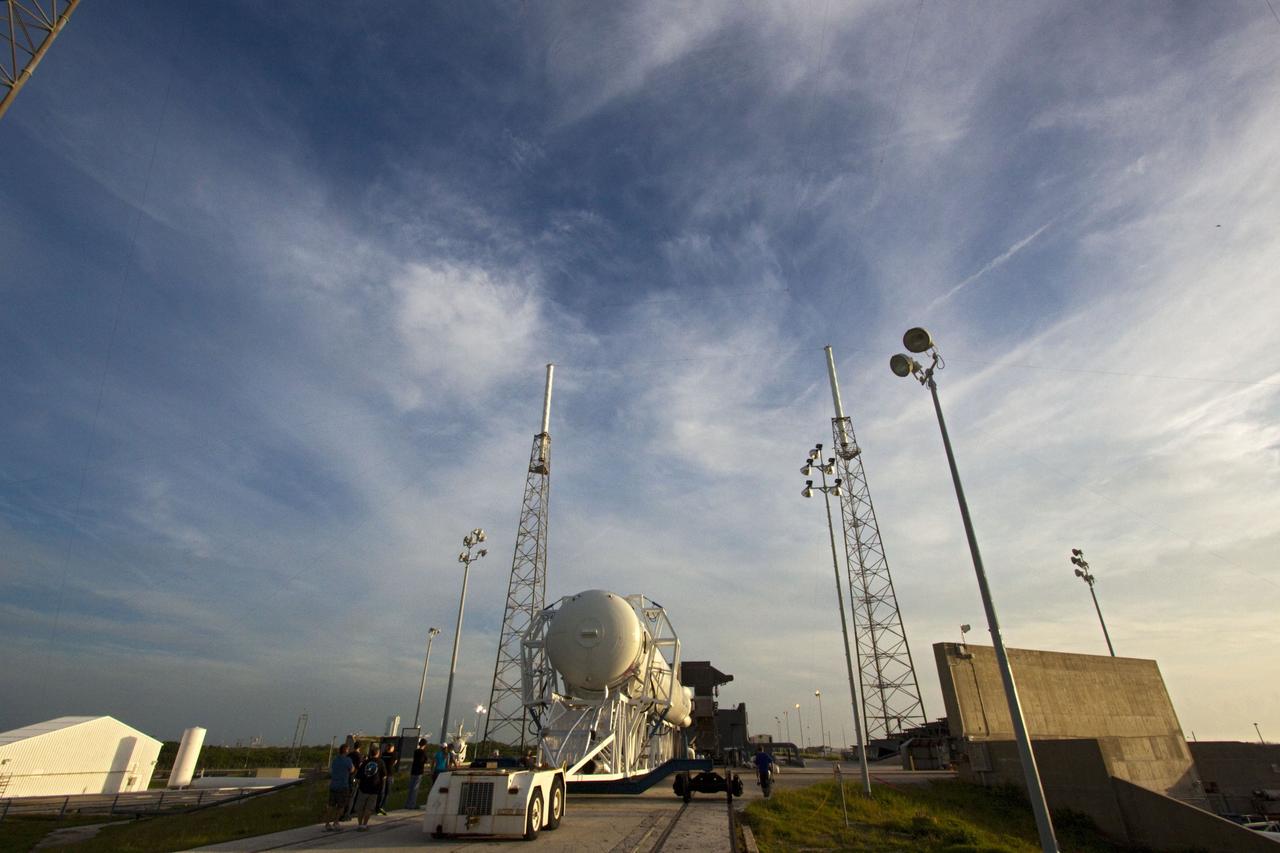
CAPE CANAVERAL, Fla. -- The Space Exploration Technologies, or SpaceX, Falcon 9 rocket rolls out of its processing hangar toward Space Launch Complex 40 at Cape Canaveral Air Force Station in Florida for a wet dress rehearsal. During the rehearsal, the rocket will be fully fueled and launch controllers will perform a countdown demonstration. The rehearsal is in preparation for the company's first Commercial Resupply Services, or CRS, mission to the International Space Station aboard the Dragon capsule. The SpaceX CRS contract with NASA provides for 12 cargo resupply missions to the station through 2015, the first of which is targeted to launch in October 2012.SpaceX became the first private company to berth a spacecraft with the space station in 2012 during its final demonstration flight under the Commercial Orbital Transportation Services, or COTS, program managed by NASA's Johnson Space Center in Houston. Photo credit: NASA/Jim Grossmann
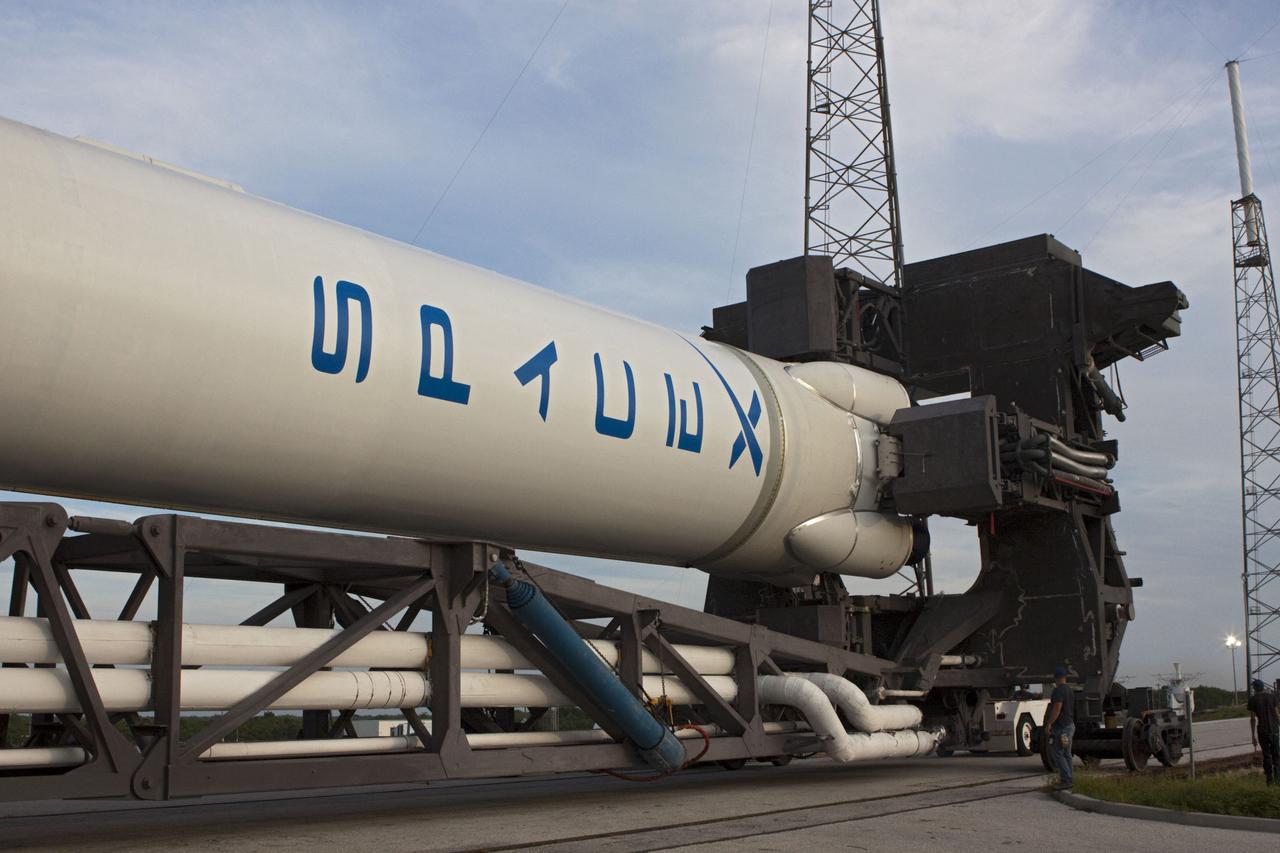
CAPE CANAVERAL, Fla. -- The Space Exploration Technologies, or SpaceX, Falcon 9 rocket rolls out of its processing hangar toward Space Launch Complex 40 at Cape Canaveral Air Force Station in Florida for a wet dress rehearsal. During the rehearsal, the rocket will be fully fueled and launch controllers will perform a countdown demonstration. The rehearsal is in preparation for the company's first Commercial Resupply Services, or CRS, mission to the International Space Station aboard the Dragon capsule. The SpaceX CRS contract with NASA provides for 12 cargo resupply missions to the station through 2015, the first of which is targeted to launch in October 2012.SpaceX became the first private company to berth a spacecraft with the space station in 2012 during its final demonstration flight under the Commercial Orbital Transportation Services, or COTS, program managed by NASA's Johnson Space Center in Houston. Photo credit: NASA/Jim Grossmann
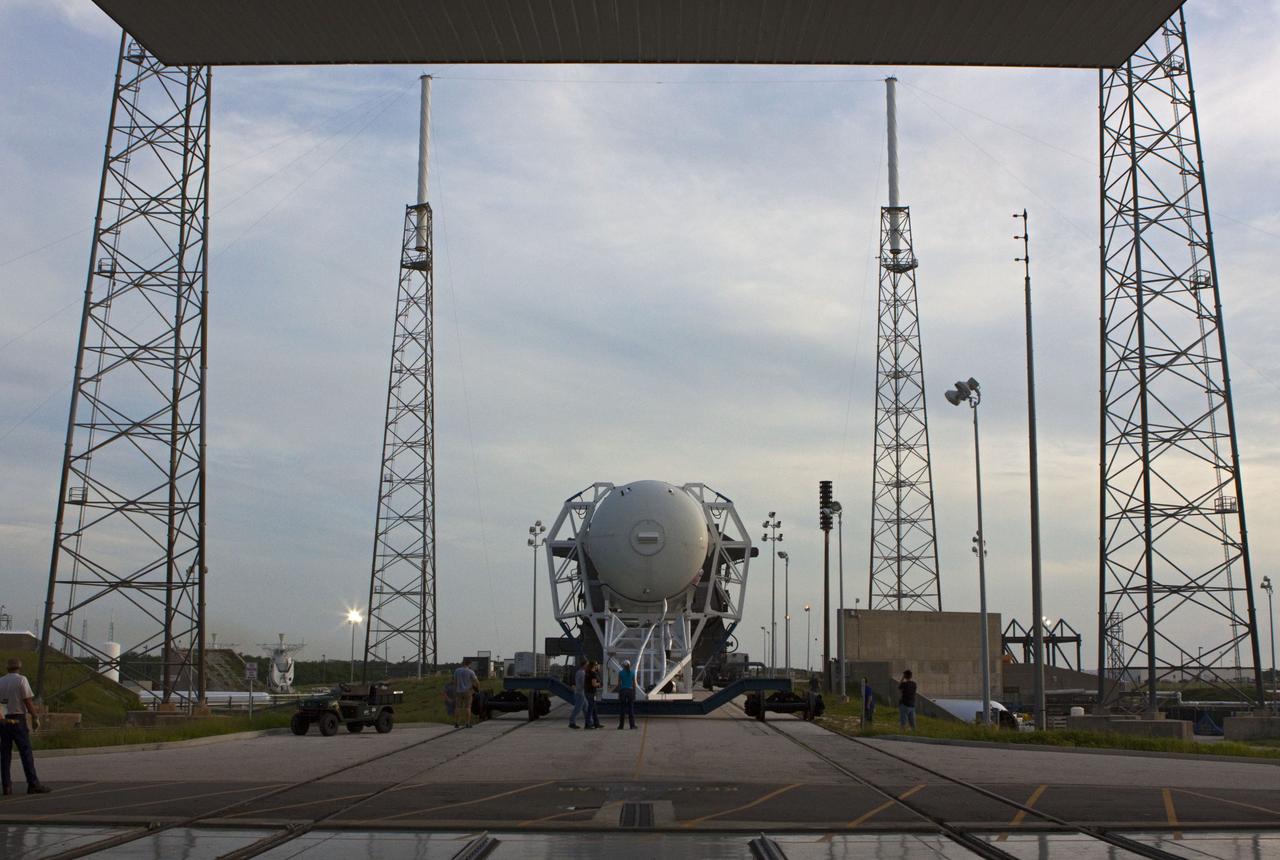
CAPE CANAVERAL, Fla. -- The Space Exploration Technologies, or SpaceX, Falcon 9 rocket rolls out of its processing hangar toward Space Launch Complex 40 at Cape Canaveral Air Force Station in Florida for a wet dress rehearsal. During the rehearsal, the rocket will be fully fueled and launch controllers will perform a countdown demonstration. The rehearsal is in preparation for the company's first Commercial Resupply Services, or CRS, mission to the International Space Station aboard the Dragon capsule. The SpaceX CRS contract with NASA provides for 12 cargo resupply missions to the station through 2015, the first of which is targeted to launch in October 2012.SpaceX became the first private company to berth a spacecraft with the space station in 2012 during its final demonstration flight under the Commercial Orbital Transportation Services, or COTS, program managed by NASA's Johnson Space Center in Houston. Photo credit: NASA/Jim Grossmann
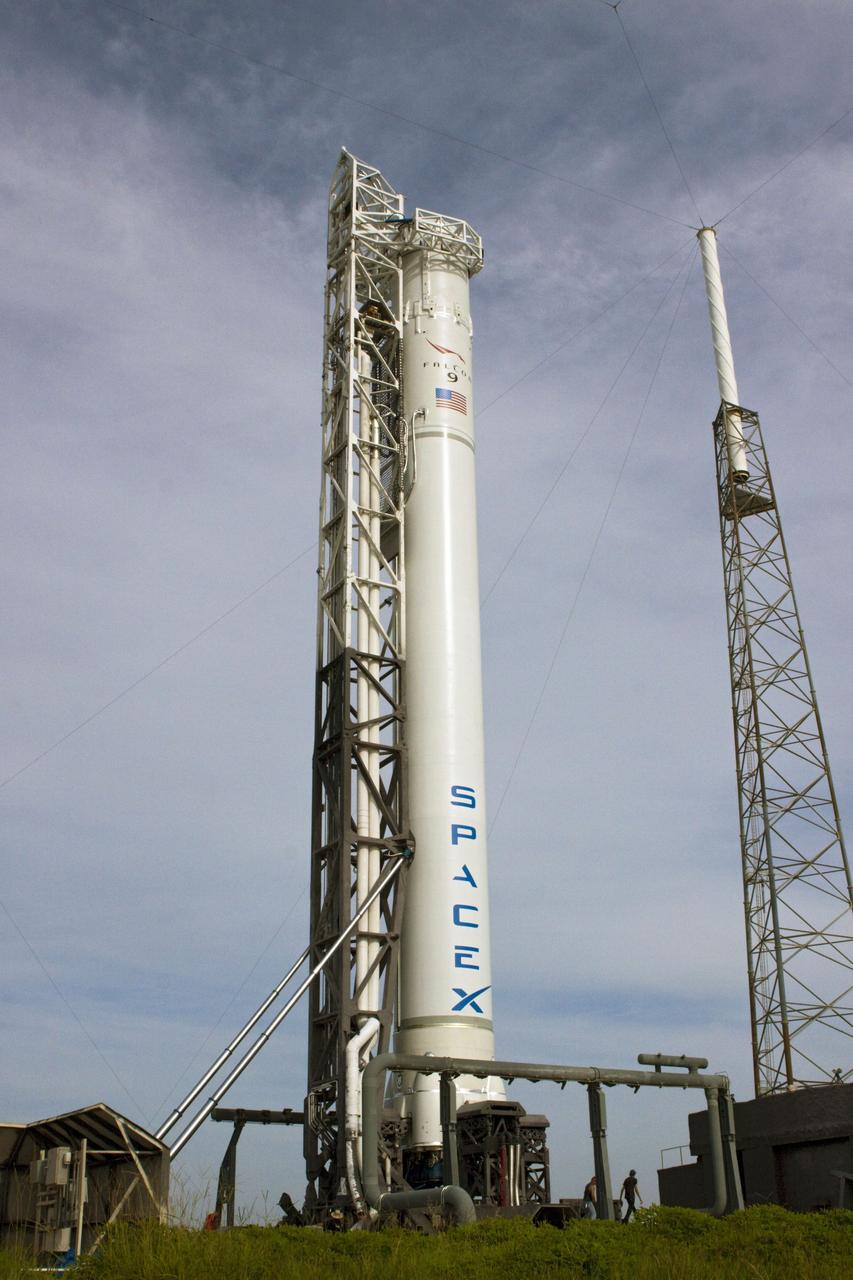
CAPE CANAVERAL, Fla. -- The Space Exploration Technologies, or SpaceX, Falcon 9 rocket is in position for a wet dress rehearsal at Space Launch Complex 40 at Cape Canaveral Air Force Station in Florida. During the rehearsal, the rocket will be fully fueled and launch controllers will perform a countdown demonstration. The rehearsal is in preparation for the company's first Commercial Resupply Services, or CRS, mission to the International Space Station aboard the Dragon capsule. The SpaceX CRS contract with NASA provides for 12 cargo resupply missions to the station through 2015, the first of which is targeted to launch in October 2012.SpaceX became the first private company to berth a spacecraft with the space station in 2012 during its final demonstration flight under the Commercial Orbital Transportation Services, or COTS, program managed by NASA's Johnson Space Center in Houston. Photo credit: NASA/Jim Grossmann
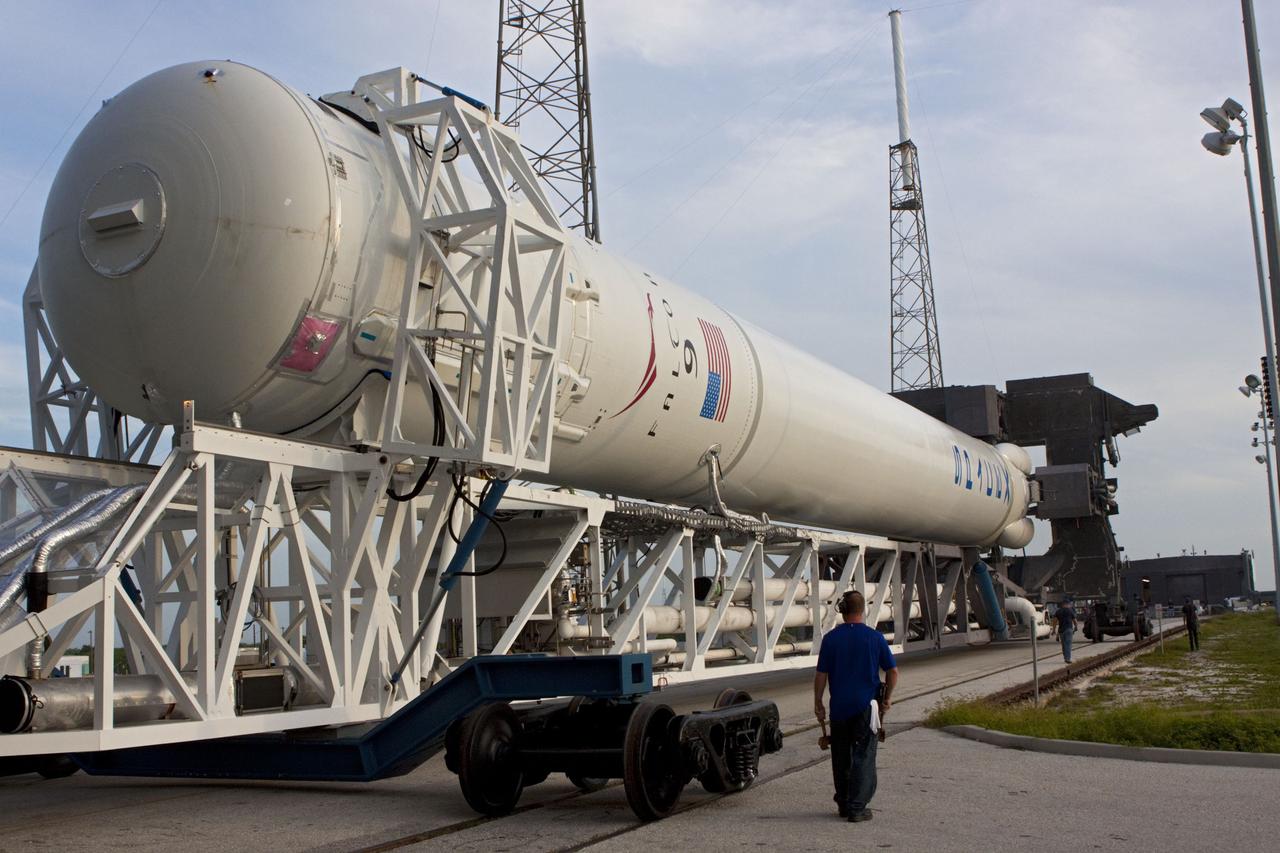
CAPE CANAVERAL, Fla. -- The Space Exploration Technologies, or SpaceX, Falcon 9 rocket rolls out of its processing hangar toward Space Launch Complex 40 at Cape Canaveral Air Force Station in Florida for a wet dress rehearsal. During the rehearsal, the rocket will be fully fueled and launch controllers will perform a countdown demonstration. The rehearsal is in preparation for the company's first Commercial Resupply Services, or CRS, mission to the International Space Station aboard the Dragon capsule. The SpaceX CRS contract with NASA provides for 12 cargo resupply missions to the station through 2015, the first of which is targeted to launch in October 2012.SpaceX became the first private company to berth a spacecraft with the space station in 2012 during its final demonstration flight under the Commercial Orbital Transportation Services, or COTS, program managed by NASA's Johnson Space Center in Houston. Photo credit: NASA/Jim Grossmann
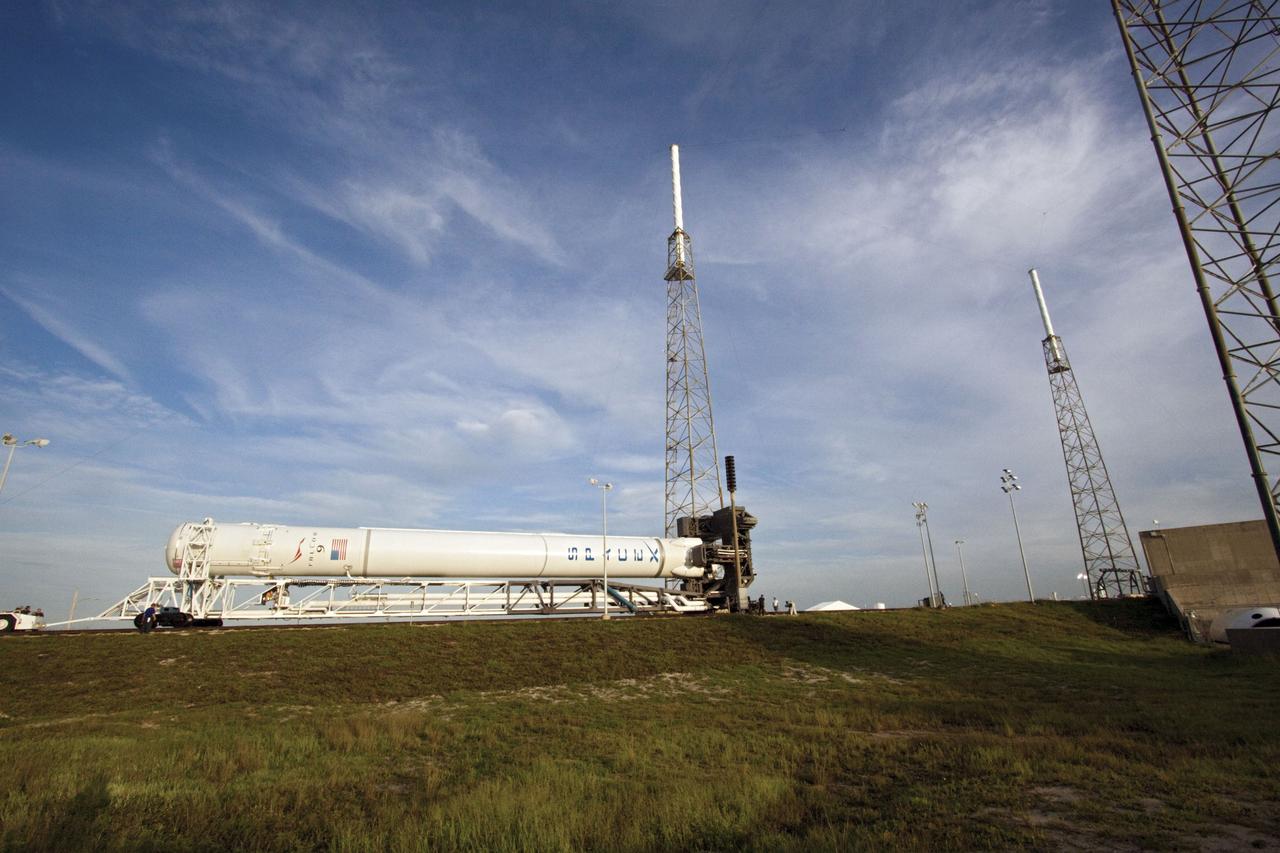
CAPE CANAVERAL, Fla. -- The Space Exploration Technologies, or SpaceX, Falcon 9 rocket rolls out of its processing hangar toward Space Launch Complex 40 at Cape Canaveral Air Force Station in Florida for a wet dress rehearsal. During the rehearsal, the rocket will be fully fueled and launch controllers will perform a countdown demonstration. The rehearsal is in preparation for the company's first Commercial Resupply Services, or CRS, mission to the International Space Station aboard the Dragon capsule. The SpaceX CRS contract with NASA provides for 12 cargo resupply missions to the station through 2015, the first of which is targeted to launch in October 2012.SpaceX became the first private company to berth a spacecraft with the space station in 2012 during its final demonstration flight under the Commercial Orbital Transportation Services, or COTS, program managed by NASA's Johnson Space Center in Houston. Photo credit: NASA/Jim Grossmann
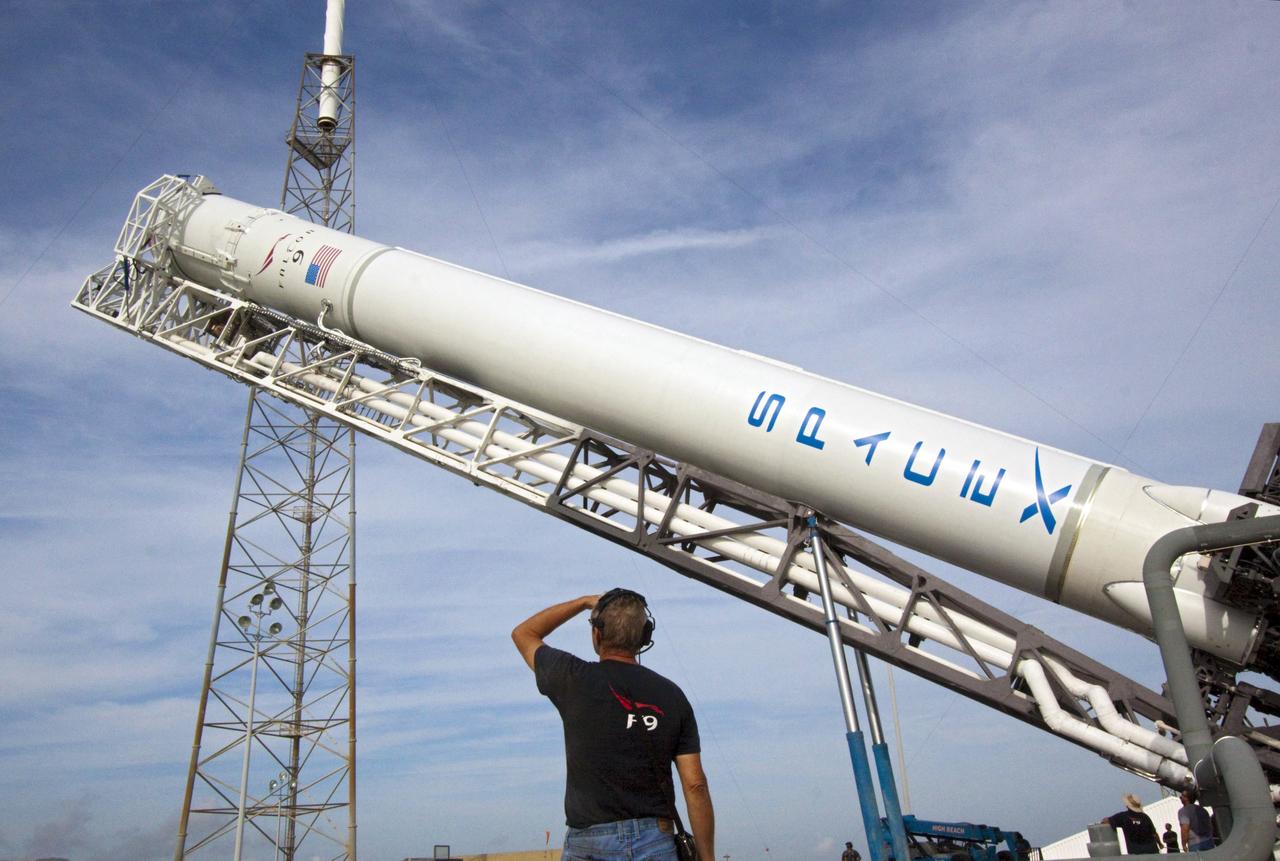
CAPE CANAVERAL, Fla. -- At Space Launch Complex 40 on Cape Canaveral Air Force Station in Florida, the Space Exploration Technologies, or SpaceX, Falcon 9 rocket is moved into a vertical position for a wet dress rehearsal. During the rehearsal, the rocket will be fully fueled and launch controllers will perform a countdown demonstration. The rehearsal is in preparation for the company's first Commercial Resupply Services, or CRS, mission to the International Space Station aboard the Dragon capsule. The SpaceX CRS contract with NASA provides for 12 cargo resupply missions to the station through 2015, the first of which is targeted to launch in October 2012.SpaceX became the first private company to berth a spacecraft with the space station in 2012 during its final demonstration flight under the Commercial Orbital Transportation Services, or COTS, program managed by NASA's Johnson Space Center in Houston. Photo credit: NASA/Jim Grossmann
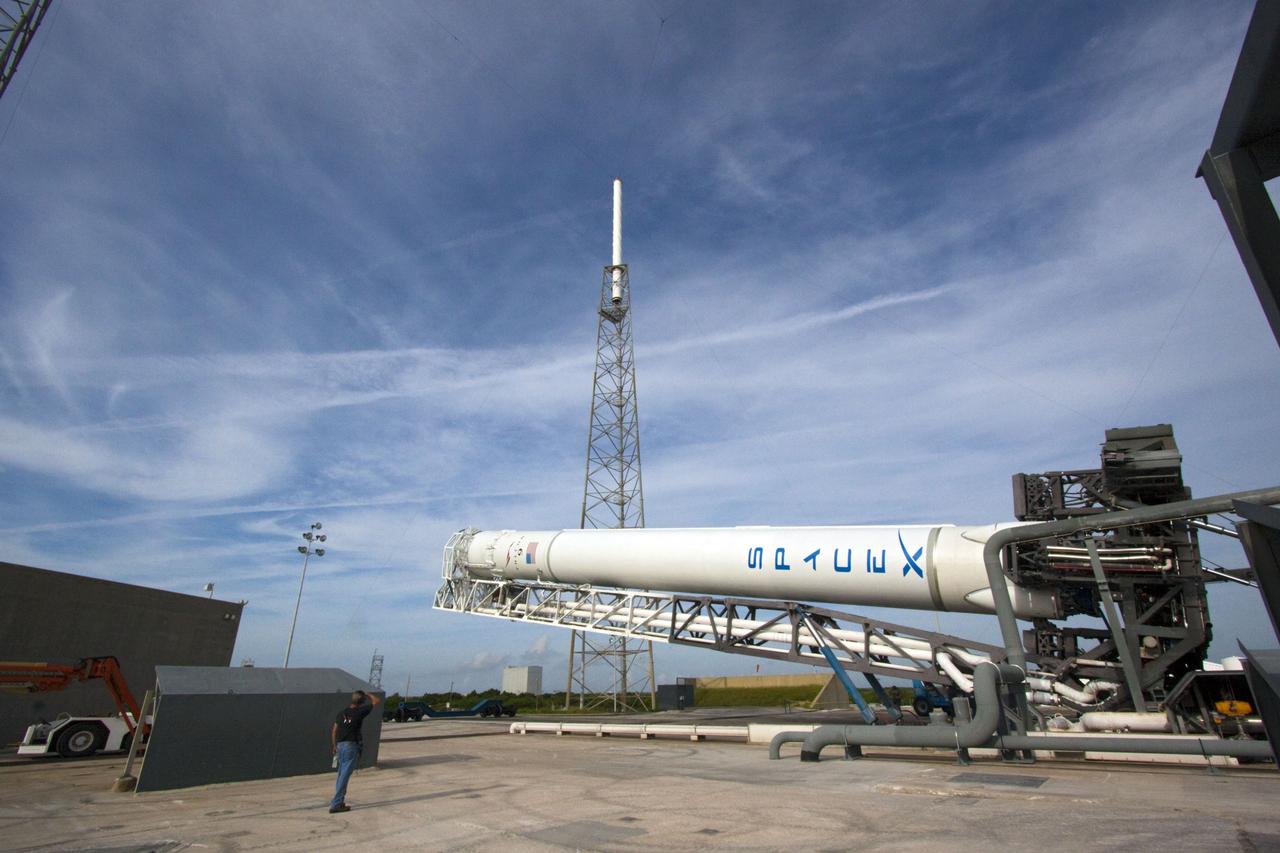
CAPE CANAVERAL, Fla. -- At Space Launch Complex 40 on Cape Canaveral Air Force Station in Florida, the Space Exploration Technologies, or SpaceX, Falcon 9 rocket is moved into a vertical position for a wet dress rehearsal. During the rehearsal, the rocket will be fully fueled and launch controllers will perform a countdown demonstration. The rehearsal is in preparation for the company's first Commercial Resupply Services, or CRS, mission to the International Space Station aboard the Dragon capsule. The SpaceX CRS contract with NASA provides for 12 cargo resupply missions to the station through 2015, the first of which is targeted to launch in October 2012.SpaceX became the first private company to berth a spacecraft with the space station in 2012 during its final demonstration flight under the Commercial Orbital Transportation Services, or COTS, program managed by NASA's Johnson Space Center in Houston. Photo credit: NASA/Jim Grossmann
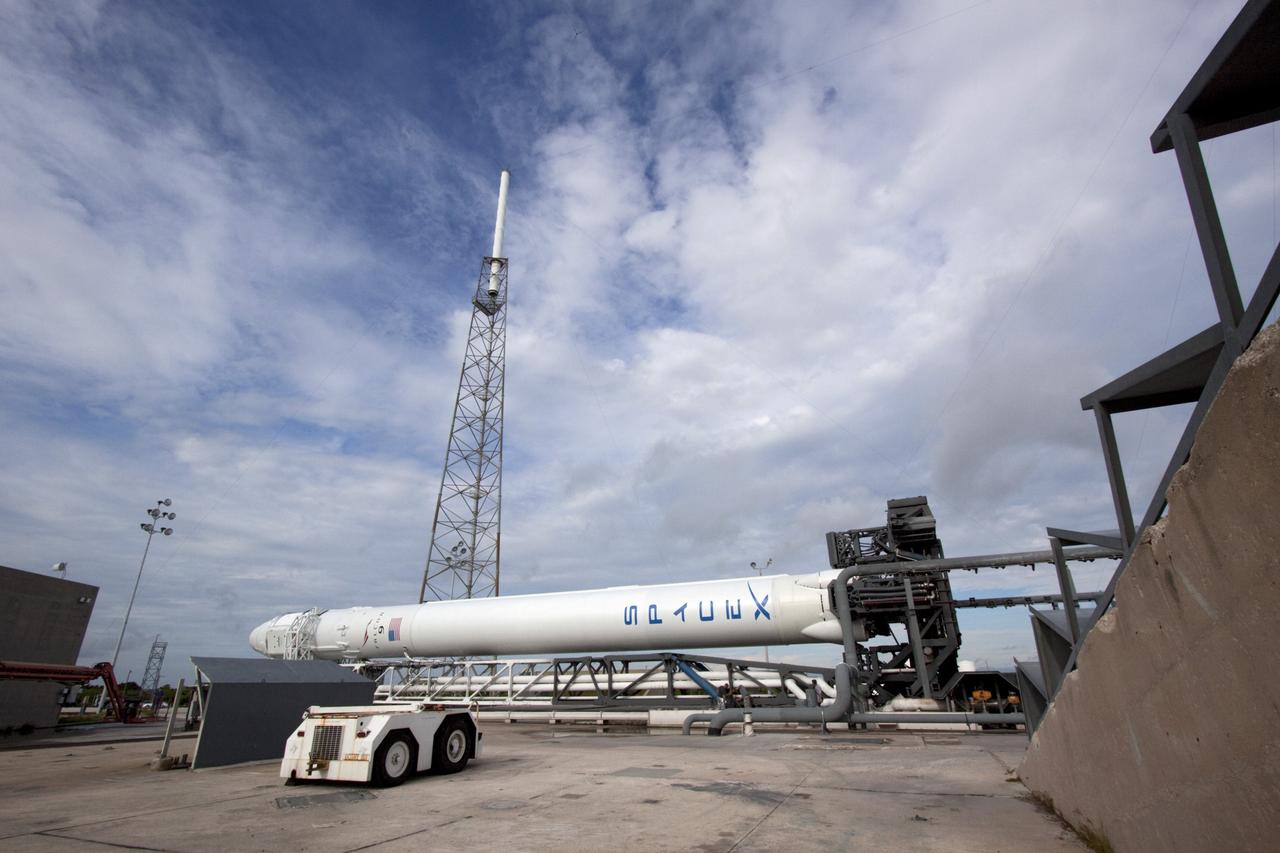
CAPE CANAVERAL, Fla. -- The Space Exploration Technologies Corp., or SpaceX, Falcon 9 rocket with Dragon capsule attached on top continues along on a rollout demonstration test to Space Launch Complex-40 at Cape Canaveral Air Force Station in Florida. Preparations continue for NASA’s first Commercial Resupply Services, or CRS-1, mission to the International Space Station. The rollout to the pad for liftoff is planned for Sunday morning, Oct. 7. Liftoff from CCAFS is scheduled during an instantaneous window at 8:35 p.m. EDT Sunday evening. SpaceX CRS-1 is an important step toward making America’s microgravity research program self-sufficient by providing a way to deliver and return significant amounts of cargo, including science experiments, to and from the orbiting laboratory. To learn more, visit http://www.nasa.gov/mission_pages/station/living/launch/index.html. Photo credit: NASA/Jim Grossmann
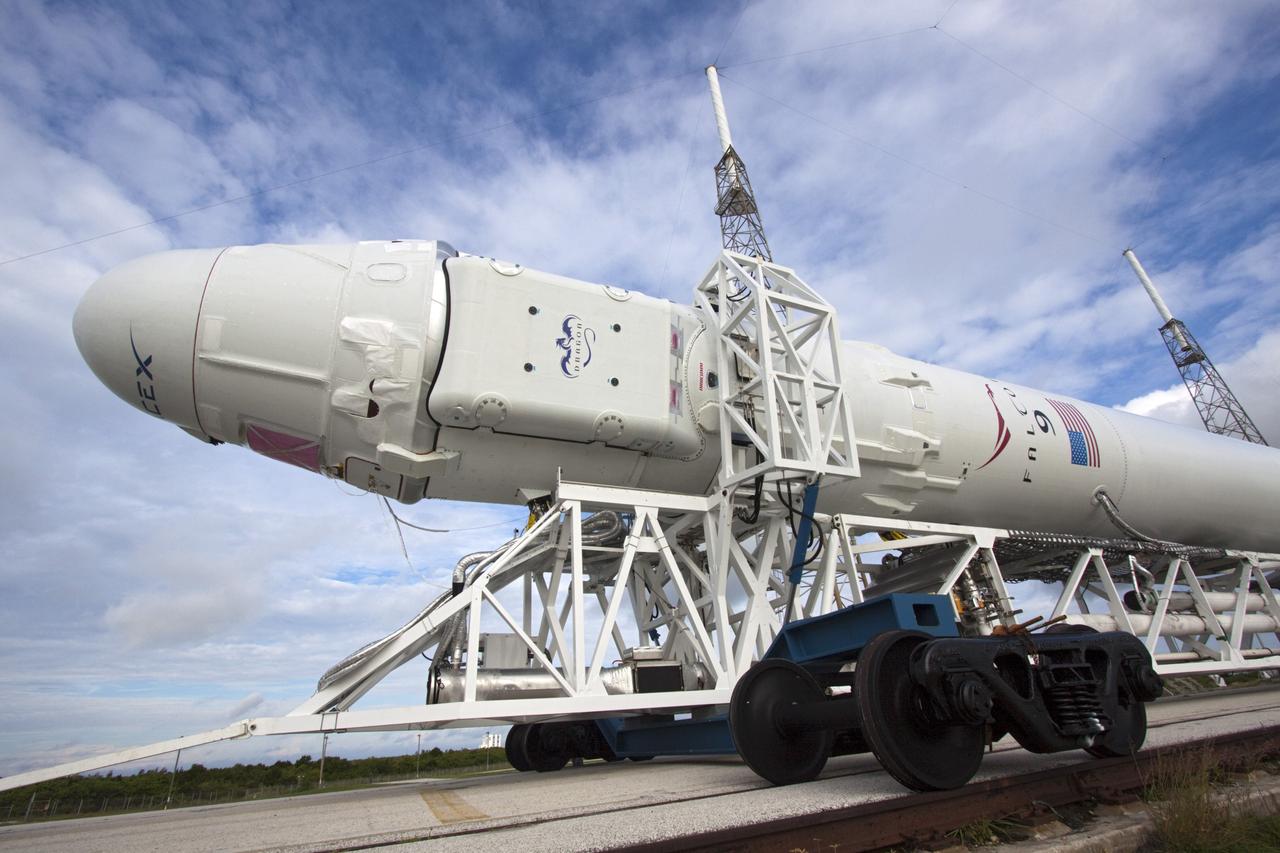
CAPE CANAVERAL, Fla. -- In a close-up view, the Space Exploration Technologies Corp., or SpaceX, Falcon 9 rocket with Dragon capsule attached on top begins a rollout demonstration test to Space Launch Complex-40 at Cape Canaveral Air Force Station in Florida. Preparations continue for NASA’s first Commercial Resupply Services, or CRS-1, mission to the International Space Station. The rollout to the pad for liftoff is planned for Sunday morning, Oct. 7. Liftoff from CCAFS is scheduled during an instantaneous window at 8:35 p.m. EDT Sunday evening. SpaceX CRS-1 is an important step toward making America’s microgravity research program self-sufficient by providing a way to deliver and return significant amounts of cargo, including science experiments, to and from the orbiting laboratory. To learn more, visit http://www.nasa.gov/mission_pages/station/living/launch/index.html. Photo credit: NASA/Jim Grossmann
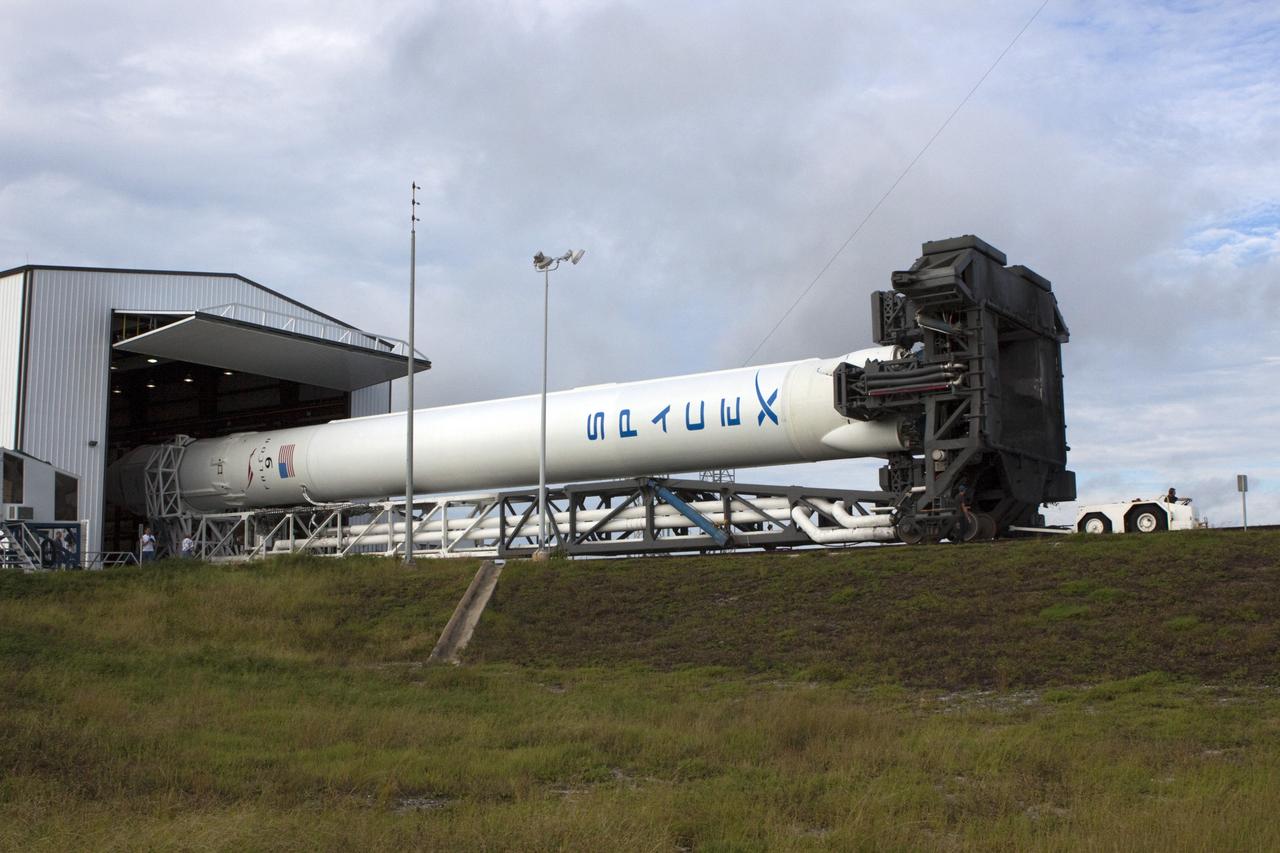
CAPE CANAVERAL, Fla. -- The Space Exploration Technologies Corp., or SpaceX, Falcon 9 rocket with Dragon capsule attached on top begins a rollout demonstration test to Space Launch Complex-40 at Cape Canaveral Air Force Station in Florida. Preparations continue for NASA’s first Commercial Resupply Services, or CRS-1, mission to the International Space Station. The rollout to the pad for liftoff is planned for Sunday morning, Oct. 7. Liftoff from CCAFS is scheduled during an instantaneous window at 8:35 p.m. EDT Sunday evening. SpaceX CRS-1 is an important step toward making America’s microgravity research program self-sufficient by providing a way to deliver and return significant amounts of cargo, including science experiments, to and from the orbiting laboratory. To learn more, visit http://www.nasa.gov/mission_pages/station/living/launch/index.html. Photo credit: NASA/Jim Grossmann
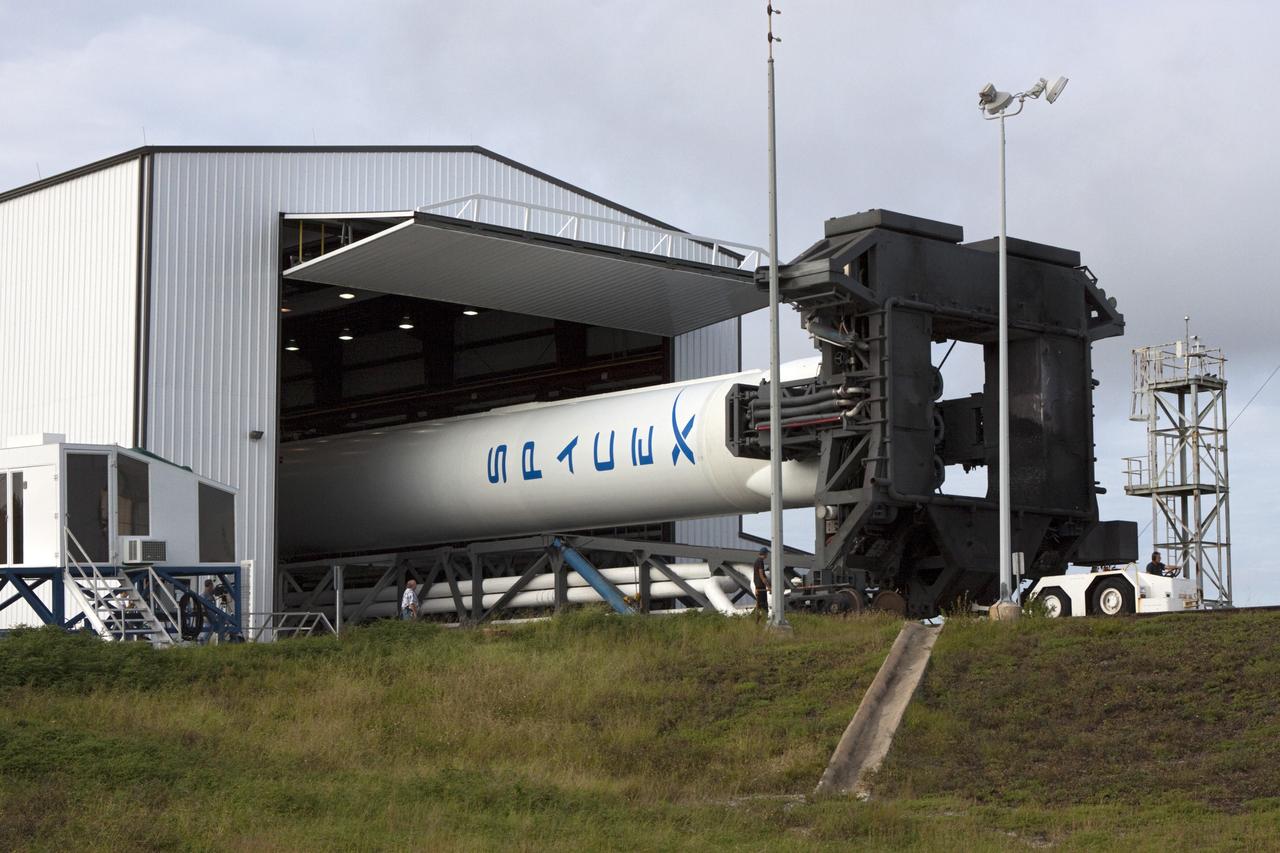
CAPE CANAVERAL, Fla. -- The Space Exploration Technologies Corp., or SpaceX, Falcon 9 rocket with Dragon capsule attached on top begins a rollout demonstration test to Space Launch Complex-40 at Cape Canaveral Air Force Station in Florida. Preparations continue for NASA’s first Commercial Resupply Services, or CRS-1, mission to the International Space Station. The rollout to the pad for liftoff is planned for Sunday morning, Oct. 7. Liftoff from CCAFS is scheduled during an instantaneous window at 8:35 p.m. EDT Sunday evening. SpaceX CRS-1 is an important step toward making America’s microgravity research program self-sufficient by providing a way to deliver and return significant amounts of cargo, including science experiments, to and from the orbiting laboratory. To learn more, visit http://www.nasa.gov/mission_pages/station/living/launch/index.html. Photo credit: NASA/Jim Grossmann
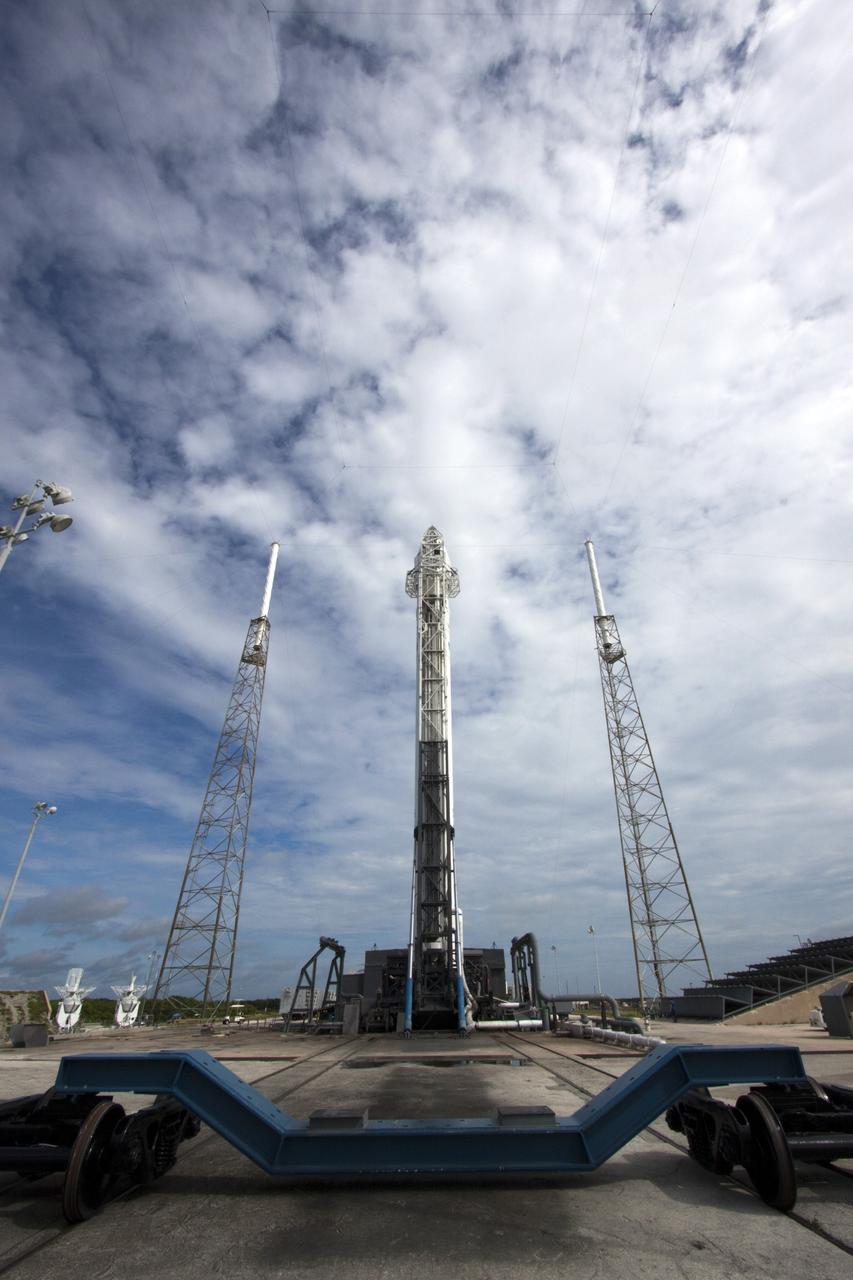
CAPE CANAVERAL, Fla. --The Space Exploration Technologies Corp., or SpaceX, Falcon 9 rocket with Dragon capsule attached on top is in the vertical position during a rollout demonstration test at Space Launch Complex-40 at Cape Canaveral Air Force Station in Florida. Preparations continue for NASA’s first Commercial Resupply Services, or CRS-1, mission to the International Space Station. The rollout to the pad for liftoff is planned for Sunday morning, Oct. 7. Liftoff from CCAFS is scheduled during an instantaneous window at 8:35 p.m. EDT Sunday evening. SpaceX CRS-1 is an important step toward making America’s microgravity research program self-sufficient by providing a way to deliver and return significant amounts of cargo, including science experiments, to and from the orbiting laboratory. To learn more, visit http://www.nasa.gov/mission_pages/station/living/launch/index.html. Photo credit: NASA/Jim Grossmann
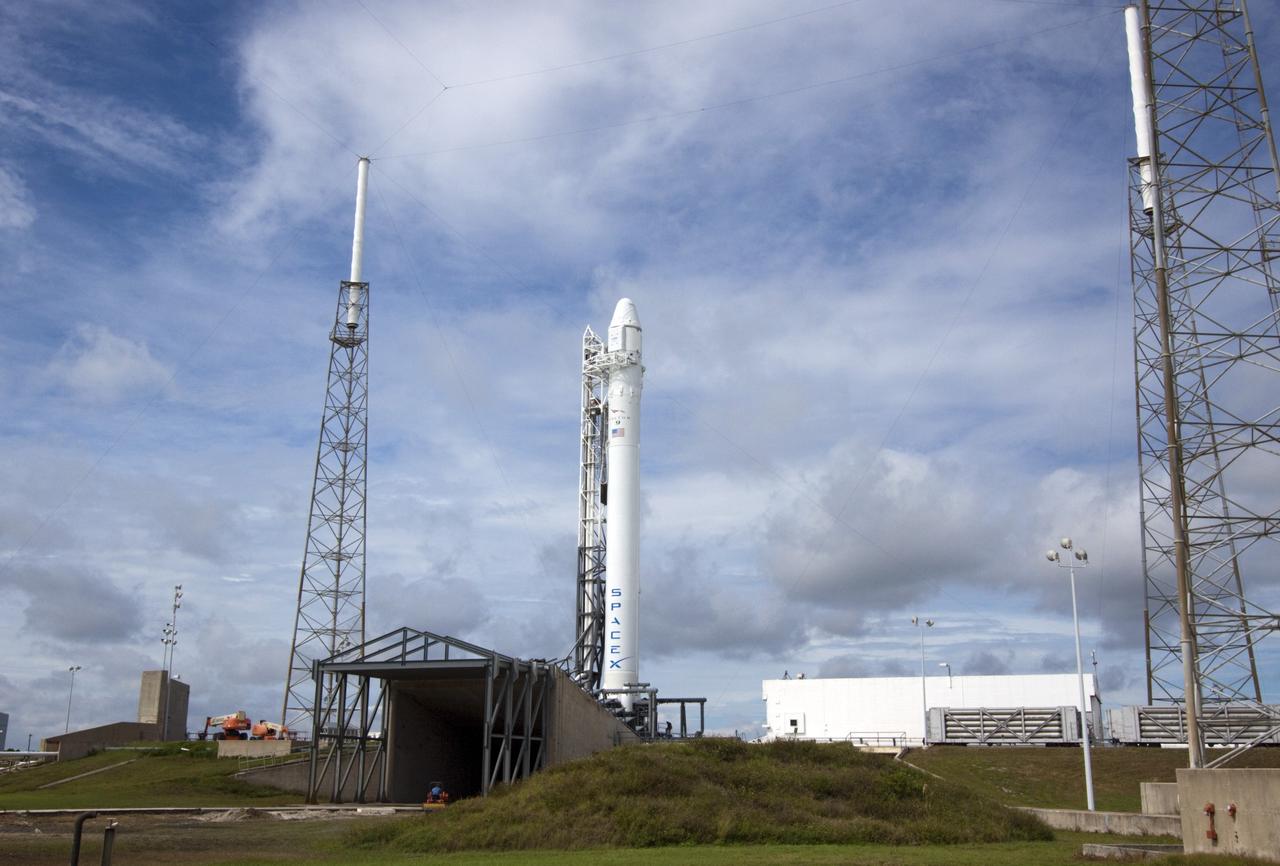
CAPE CANAVERAL, Fla. -- The Space Exploration Technologies Corp., or SpaceX, Falcon 9 rocket with Dragon capsule attached on top sits in the vertical position during a rollout demonstration test at Space Launch Complex-40 at Cape Canaveral Air Force Station in Florida. Preparations continue for NASA’s first Commercial Resupply Services, or CRS-1, mission to the International Space Station. The rollout to the pad for liftoff is planned for Sunday morning, Oct. 7. Liftoff from CCAFS is scheduled during an instantaneous window at 8:35 p.m. EDT Sunday evening. SpaceX CRS-1 is an important step toward making America’s microgravity research program self-sufficient by providing a way to deliver and return significant amounts of cargo, including science experiments, to and from the orbiting laboratory. To learn more, visit http://www.nasa.gov/mission_pages/station/living/launch/index.html. Photo credit: NASA/Jim Grossmann
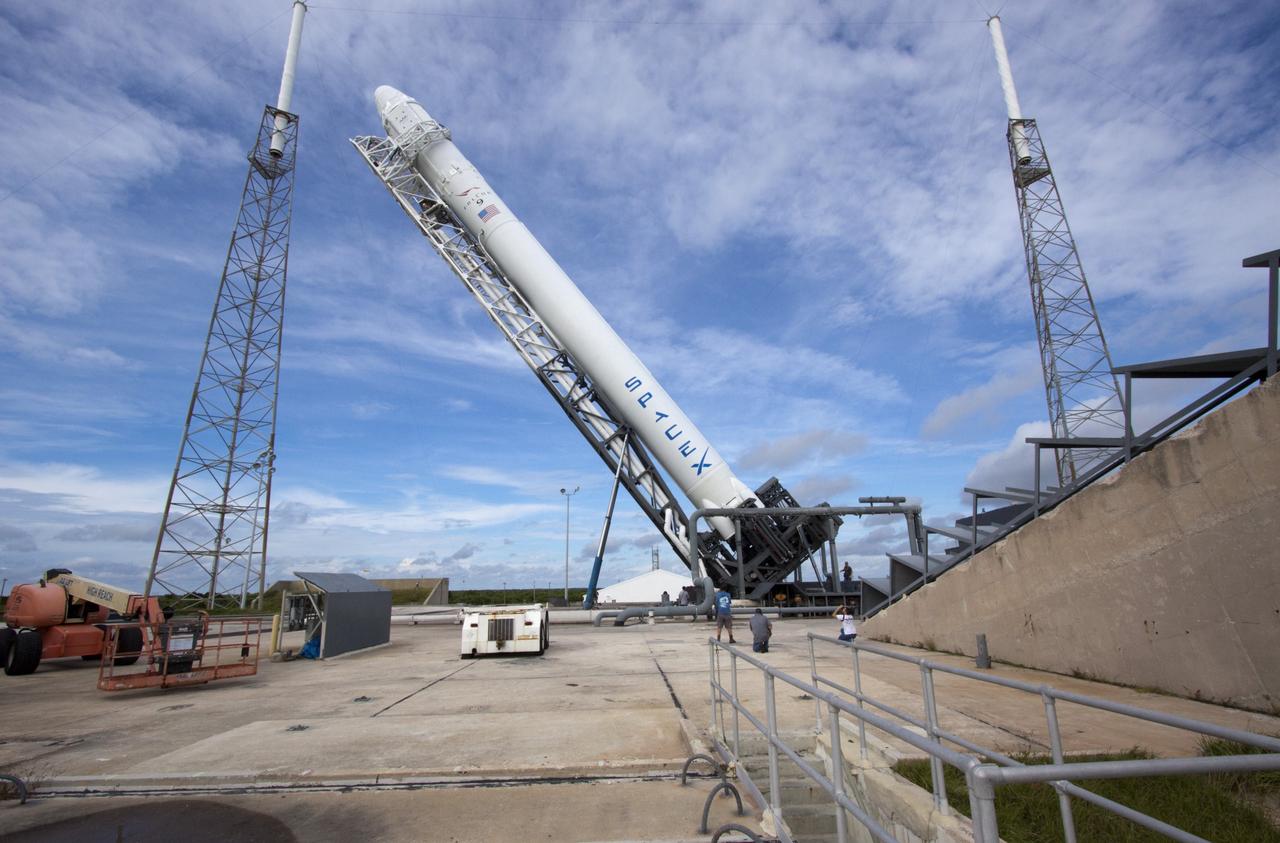
CAPE CANAVERAL, Fla. -- The Space Exploration Technologies Corp., or SpaceX, Falcon 9 rocket with Dragon capsule attached on top is lifted into the vertical position during a rollout demonstration test at Space Launch Complex-40 at Cape Canaveral Air Force Station in Florida. Preparations continue for NASA’s first Commercial Resupply Services, or CRS-1, mission to the International Space Station. The rollout to the pad for liftoff is planned for Sunday morning, Oct. 7. Liftoff from CCAFS is scheduled during an instantaneous window at 8:35 p.m. EDT Sunday evening. SpaceX CRS-1 is an important step toward making America’s microgravity research program self-sufficient by providing a way to deliver and return significant amounts of cargo, including science experiments, to and from the orbiting laboratory. To learn more, visit http://www.nasa.gov/mission_pages/station/living/launch/index.html. Photo credit: NASA/Jim Grossmann
CAPE CANAVERAL, Fla. -- The Space Exploration Technologies Corp., or SpaceX, Falcon 9 rocket with Dragon capsule attached on top is lifted into the vertical position during a rollout demonstration test at Space Launch Complex-40 at Cape Canaveral Air Force Station in Florida. Preparations continue for NASA’s first Commercial Resupply Services, or CRS-1, mission to the International Space Station. The rollout to the pad for liftoff is planned for Sunday morning, Oct. 7. Liftoff from CCAFS is scheduled during an instantaneous window at 8:35 p.m. EDT Sunday evening. SpaceX CRS-1 is an important step toward making America’s microgravity research program self-sufficient by providing a way to deliver and return significant amounts of cargo, including science experiments, to and from the orbiting laboratory. To learn more, visit http://www.nasa.gov/mission_pages/station/living/launch/index.html. Photo credit: NASA/Jim Grossmann
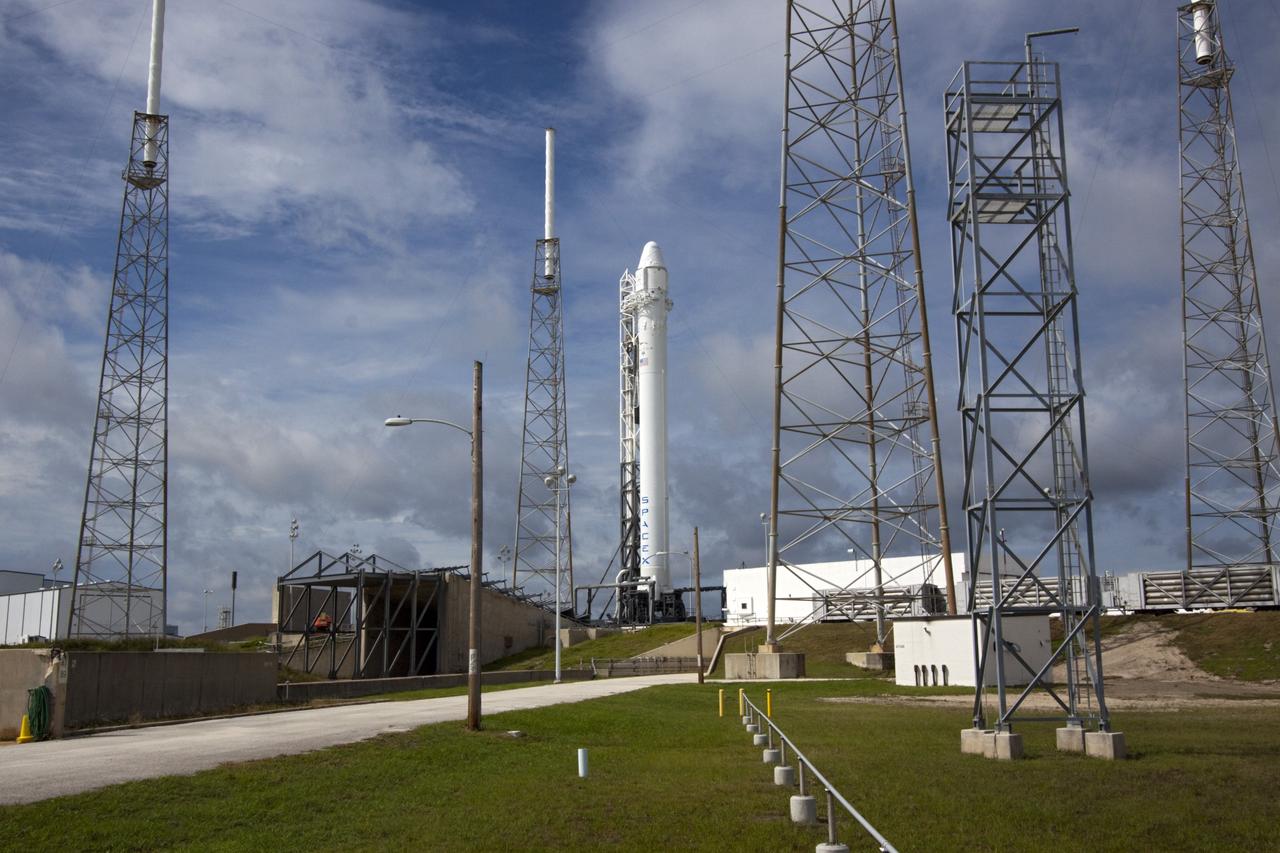
CAPE CANAVERAL, Fla. -- The Space Exploration Technologies Corp., or SpaceX, Falcon 9 rocket with Dragon capsule attached on top sits in the vertical position during a rollout demonstration test at Space Launch Complex-40 at Cape Canaveral Air Force Station in Florida. Preparations continue for NASA’s first Commercial Resupply Services, or CRS-1, mission to the International Space Station. The rollout to the pad for liftoff is planned for Sunday morning, Oct. 7. Liftoff from CCAFS is scheduled during an instantaneous window at 8:35 p.m. EDT Sunday evening. SpaceX CRS-1 is an important step toward making America’s microgravity research program self-sufficient by providing a way to deliver and return significant amounts of cargo, including science experiments, to and from the orbiting laboratory. To learn more, visit http://www.nasa.gov/mission_pages/station/living/launch/index.html. Photo credit: NASA/Jim Grossmann
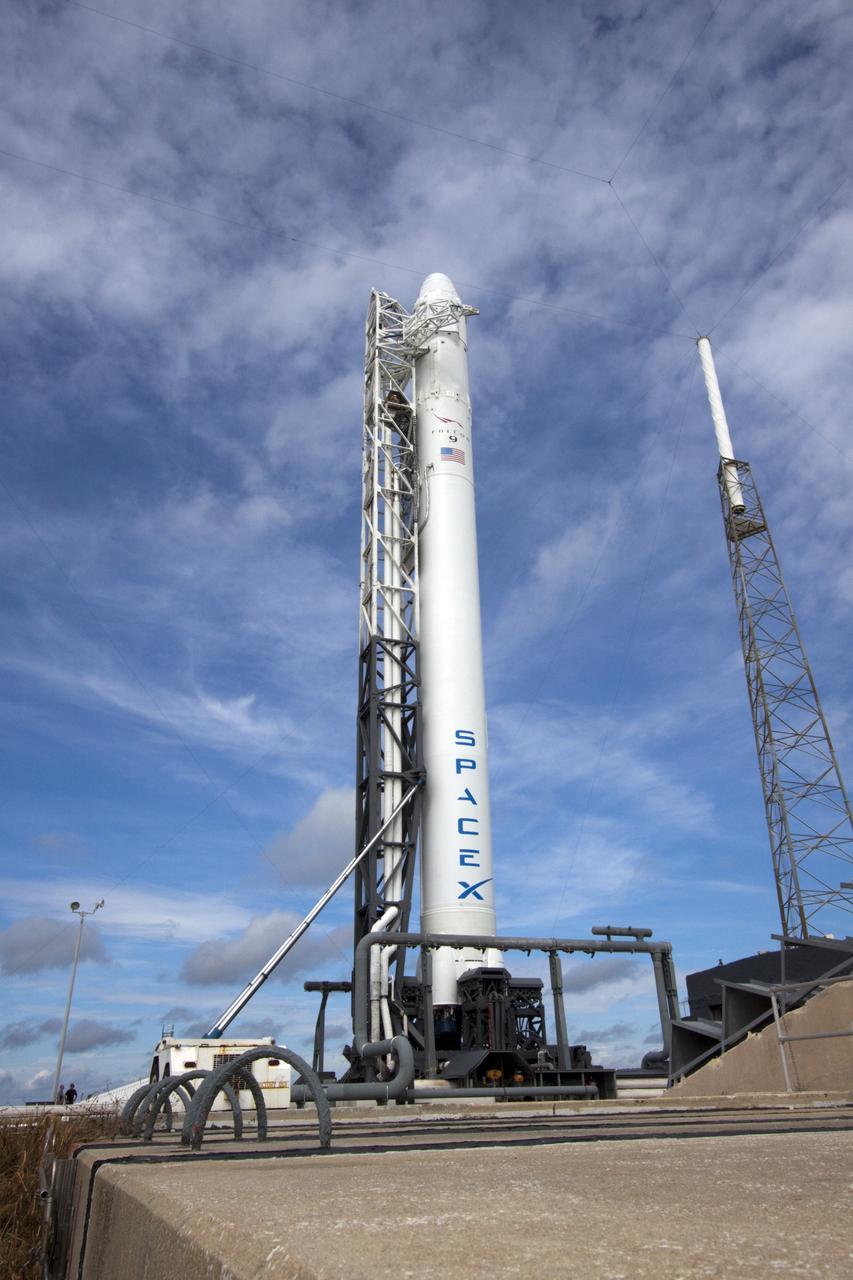
CAPE CANAVERAL, Fla. -- The Space Exploration Technologies Corp., or SpaceX, Falcon 9 rocket with Dragon capsule attached on top is in the vertical position during a rollout demonstration test at Space Launch Complex-40 at Cape Canaveral Air Force Station in Florida. Preparations continue for NASA’s first Commercial Resupply Services, or CRS-1, mission to the International Space Station. The rollout to the pad for liftoff is planned for Sunday morning, Oct. 7. Liftoff from CCAFS is scheduled during an instantaneous window at 8:35 p.m. EDT Sunday evening. SpaceX CRS-1 is an important step toward making America’s microgravity research program self-sufficient by providing a way to deliver and return significant amounts of cargo, including science experiments, to and from the orbiting laboratory. To learn more, visit http://www.nasa.gov/mission_pages/station/living/launch/index.html. Photo credit: NASA/Jim Grossmann
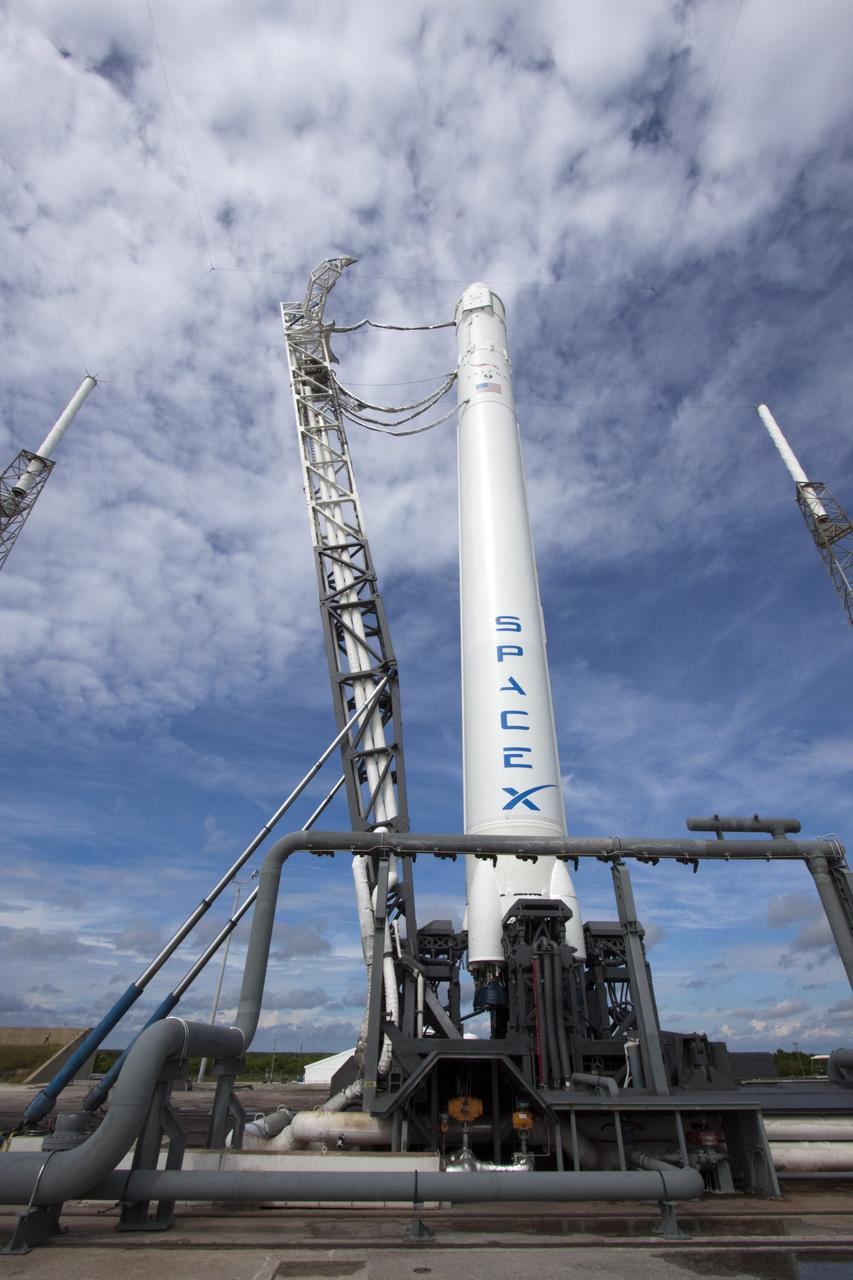
CAPE CANAVERAL, Fla. -- The Space Exploration Technologies Corp., or SpaceX, Falcon 9 rocket with Dragon capsule atop is in the vertical position with associated launch pad umbilicals attached, during a rollout demonstration test at Space Launch Complex-40 at Cape Canaveral Air Force Station in Florida. Preparations continue for NASA’s first Commercial Resupply Services, or CRS-1, mission to the International Space Station. The rollout to the pad for liftoff is planned for Sunday morning, Oct. 7. Liftoff from CCAFS is scheduled during an instantaneous window at 8:35 p.m. EDT Sunday evening. SpaceX CRS-1 is an important step toward making America’s microgravity research program self-sufficient by providing a way to deliver and return significant amounts of cargo, including science experiments, to and from the orbiting laboratory. To learn more, visit http://www.nasa.gov/mission_pages/station/living/launch/index.html. Photo credit: NASA/Jim Grossmann
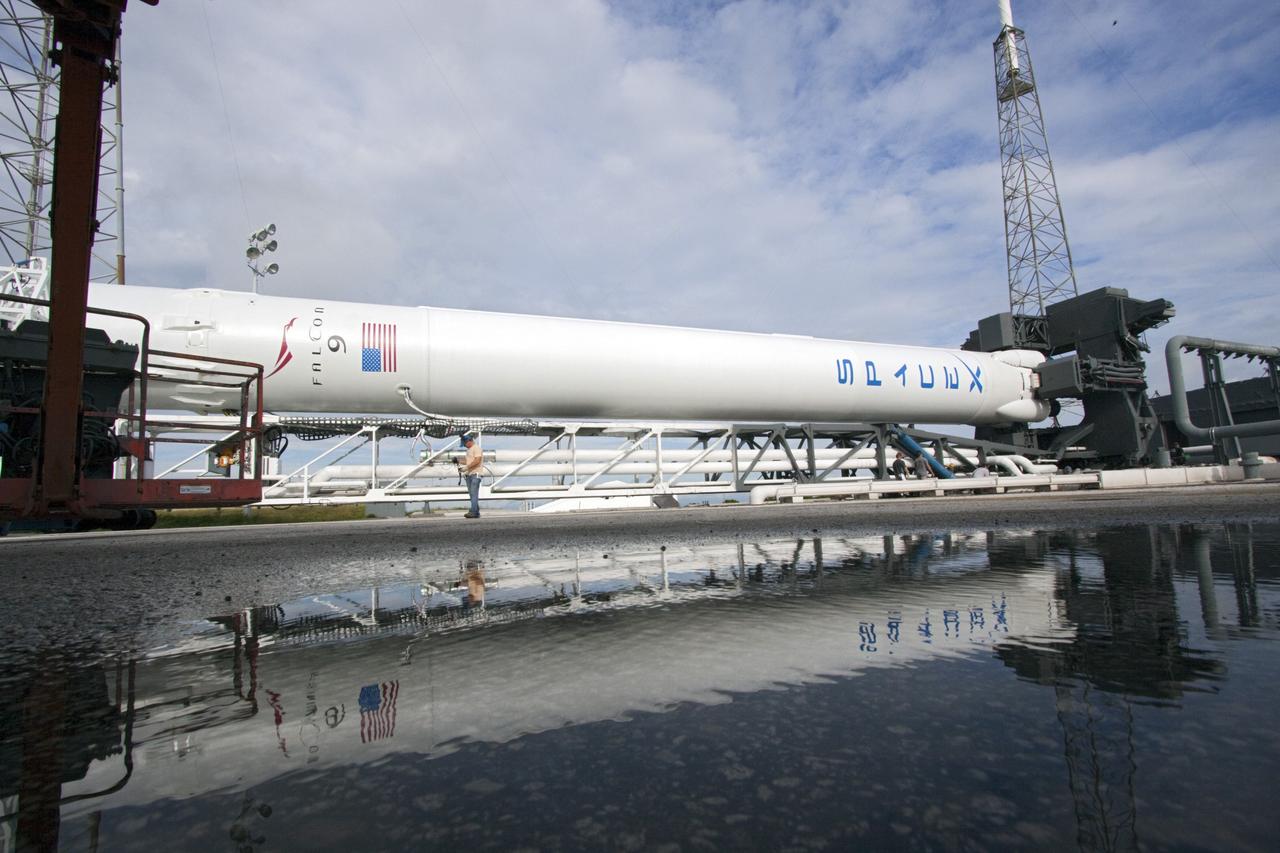
CAPE CANAVERAL, Fla. -- Casting a reflection in the water, the Space Exploration Technologies Corp., or SpaceX, Falcon 9 rocket with Dragon capsule attached on top continues along on a rollout demonstration test to Space Launch Complex-40 at Cape Canaveral Air Force Station in Florida. Preparations continue for NASA’s first Commercial Resupply Services, or CRS-1, mission to the International Space Station. The rollout to the pad for liftoff is planned for Sunday morning, Oct. 7. Liftoff from CCAFS is scheduled during an instantaneous window at 8:35 p.m. EDT Sunday evening. SpaceX CRS-1 is an important step toward making America’s microgravity research program self-sufficient by providing a way to deliver and return significant amounts of cargo, including science experiments, to and from the orbiting laboratory. To learn more, visit http://www.nasa.gov/mission_pages/station/living/launch/index.html. Photo credit: NASA/Jim Grossmann
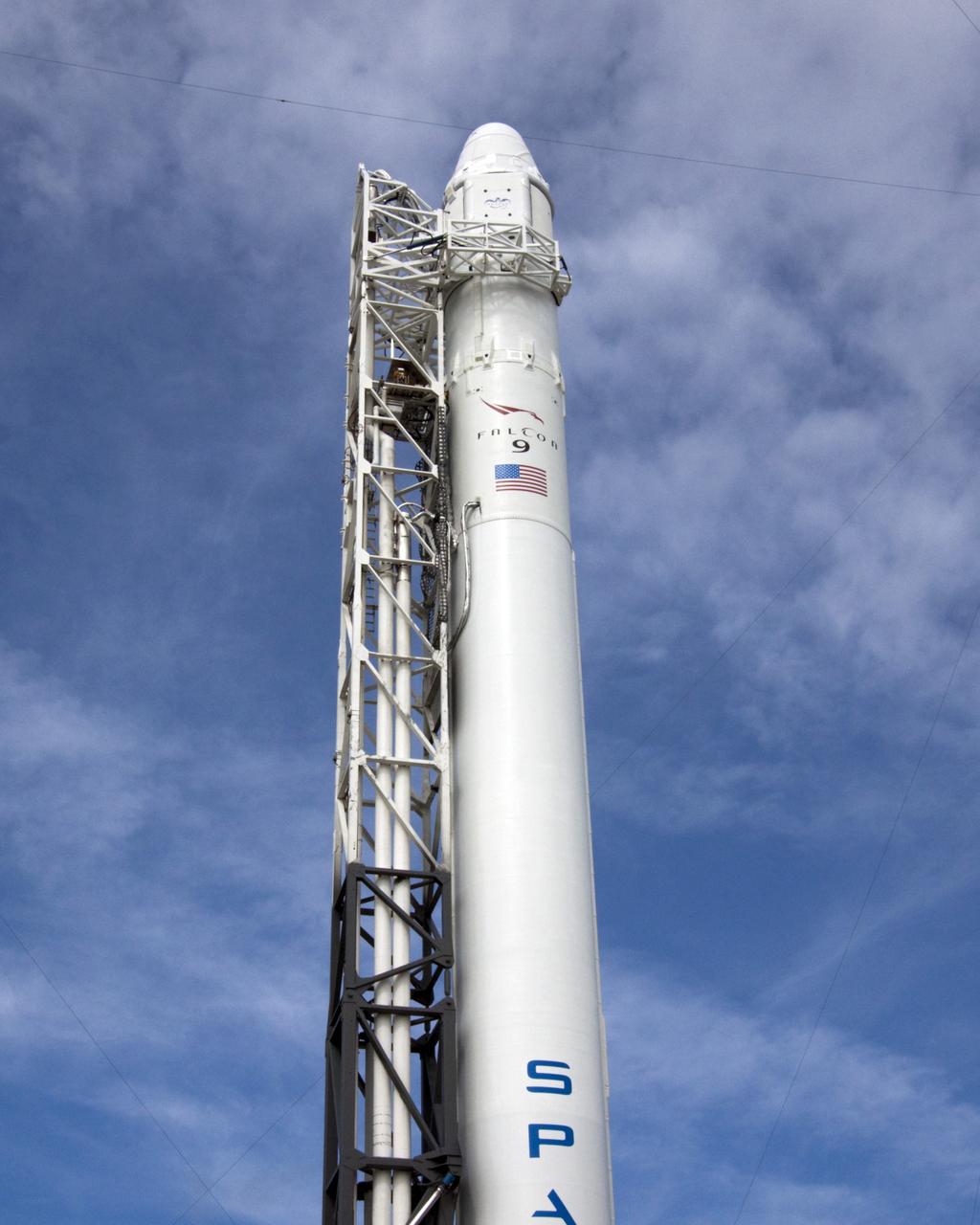
CAPE CANAVERAL, Fla. -- The Space Exploration Technologies Corp., or SpaceX, Falcon 9 rocket with Dragon capsule attached on top is lifted into the vertical position during a rollout demonstration test at Space Launch Complex-40 at Cape Canaveral Air Force Station in Florida. Preparations continue for NASA’s first Commercial Resupply Services, or CRS-1, mission to the International Space Station. The rollout to the pad for liftoff is planned for Sunday morning, Oct. 7. Liftoff from CCAFS is scheduled during an instantaneous window at 8:35 p.m. EDT Sunday evening. SpaceX CRS-1 is an important step toward making America’s microgravity research program self-sufficient by providing a way to deliver and return significant amounts of cargo, including science experiments, to and from the orbiting laboratory. To learn more, visit http://www.nasa.gov/mission_pages/station/living/launch/index.html. Photo credit: NASA/Jim Grossmann
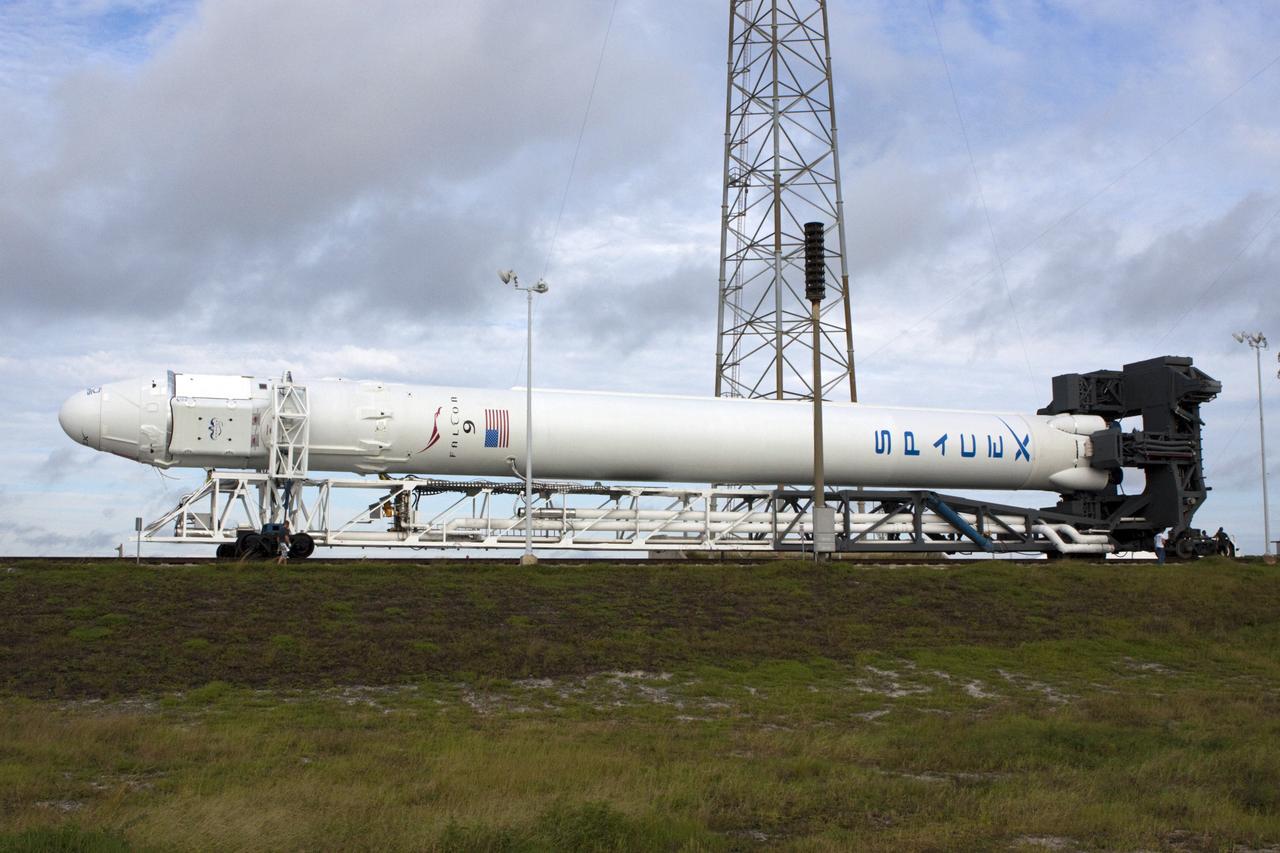
CAPE CANAVERAL, Fla. -- The Space Exploration Technologies Corp., or SpaceX, Falcon 9 rocket with Dragon capsule attached on top begins a rollout demonstration test to Space Launch Complex-40 at Cape Canaveral Air Force Station in Florida. Preparations continue for NASA’s first Commercial Resupply Services, or CRS-1, mission to the International Space Station. The rollout to the pad for liftoff is planned for Sunday morning, Oct. 7. Liftoff from CCAFS is scheduled during an instantaneous window at 8:35 p.m. EDT Sunday evening. SpaceX CRS-1 is an important step toward making America’s microgravity research program self-sufficient by providing a way to deliver and return significant amounts of cargo, including science experiments, to and from the orbiting laboratory. To learn more, visit http://www.nasa.gov/mission_pages/station/living/launch/index.html. Photo credit: NASA/Jim Grossmann
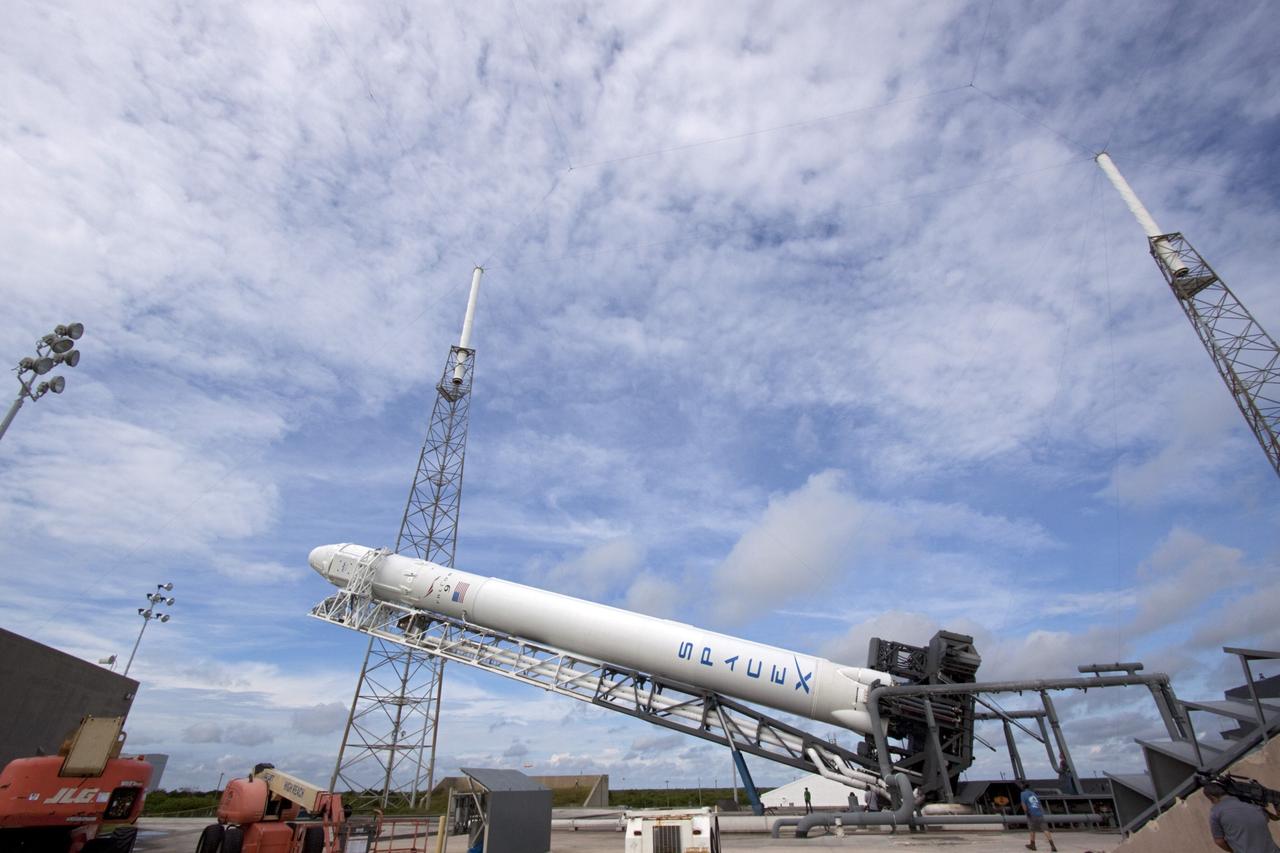
CAPE CANAVERAL, Fla. -- The Space Exploration Technologies Corp., or SpaceX, Falcon 9 rocket with Dragon capsule attached on top is lifted into the vertical position during a rollout demonstration test at Space Launch Complex-40 at Cape Canaveral Air Force Station in Florida. Preparations continue for NASA’s first Commercial Resupply Services, or CRS-1, mission to the International Space Station. The rollout to the pad for liftoff is planned for Sunday morning, Oct. 7. Liftoff from CCAFS is scheduled during an instantaneous window at 8:35 p.m. EDT Sunday evening. SpaceX CRS-1 is an important step toward making America’s microgravity research program self-sufficient by providing a way to deliver and return significant amounts of cargo, including science experiments, to and from the orbiting laboratory. To learn more, visit http://www.nasa.gov/mission_pages/station/living/launch/index.html. Photo credit: NASA/Jim Grossmann
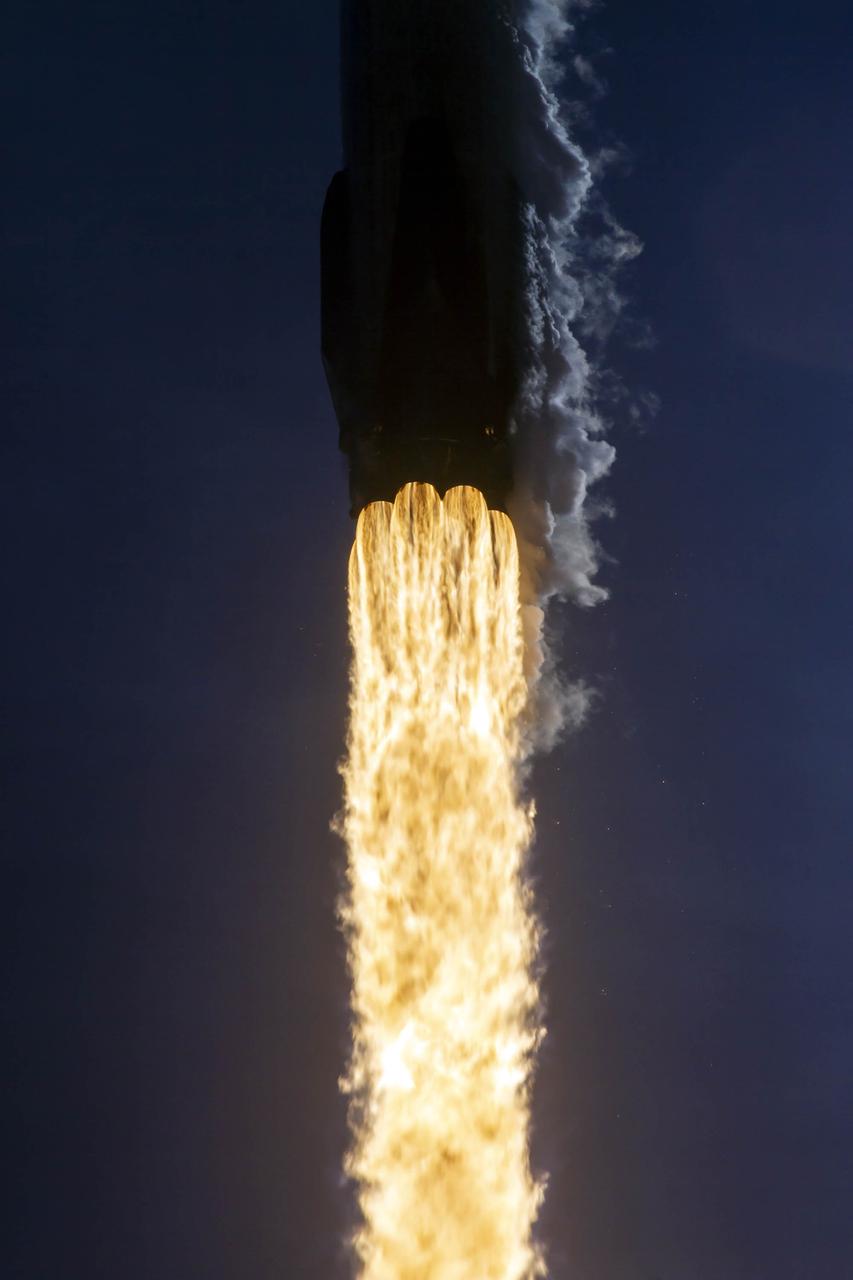
A SpaceX Falcon 9 rocket lifts off from Launch Complex 39A at Kennedy Space Center in Florida at 11:17 a.m. EST on Dec. 6, 2020, carrying the uncrewed cargo Dragon spacecraft on its journey to the International Space Station for NASA and SpaceX’s 21st Commercial Resupply Services (CRS-21) mission. Dragon will deliver more than 6,400 pounds of science investigations and cargo to the orbiting laboratory. The mission marks the first launch for SpaceX under NASA’s CRS-2 contract.
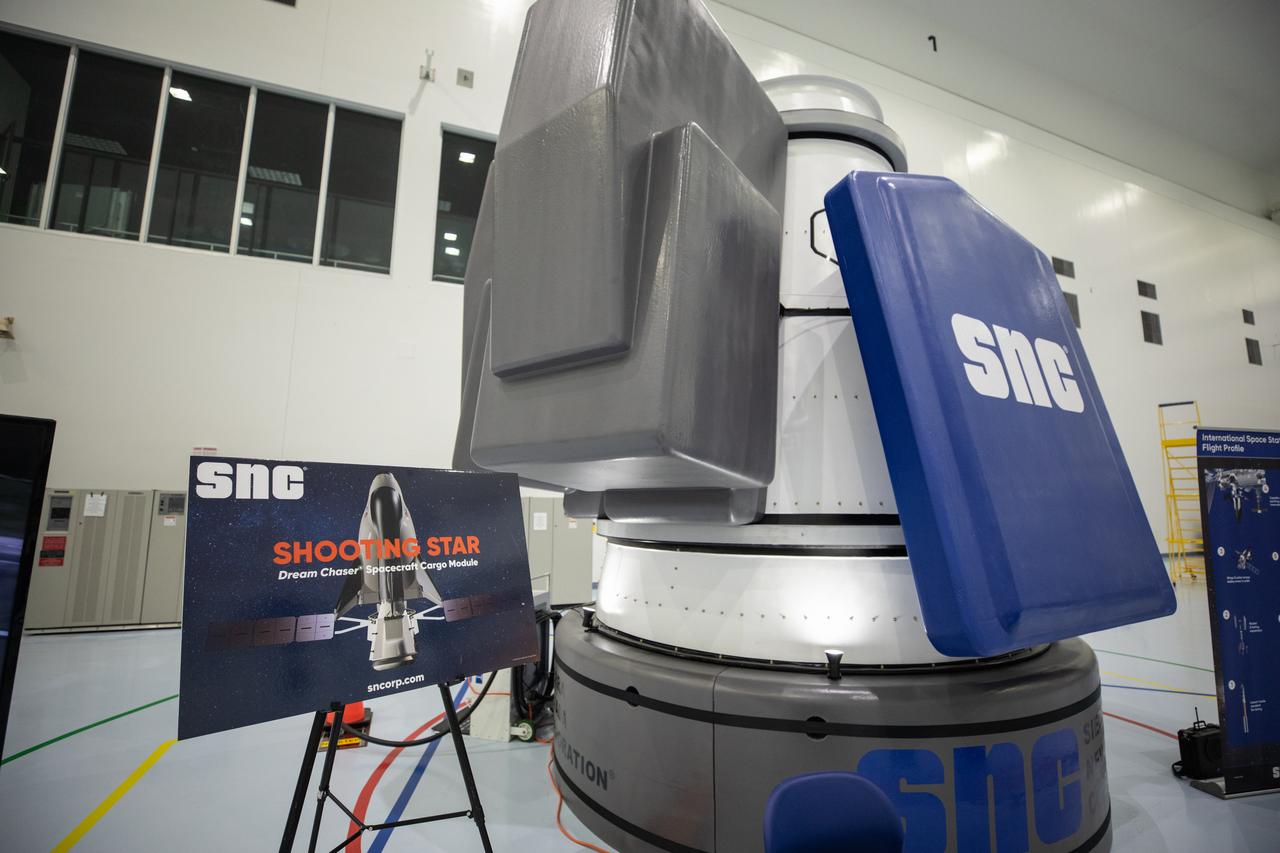
A look at a testing mockup of Sierra Nevada Corporation’s Shooting Star cargo module in the Space Station Processing Facility high bay at Kennedy Space Center on Nov. 19, 2019. Shooting Star will attach to the back of the company’s Dream Chaser spacecraft. The cargo module will deliver more than 12,000 pounds of supplies and other cargo to the International Space Station for NASA as part of the Commercial Resupply Services-2 contract.
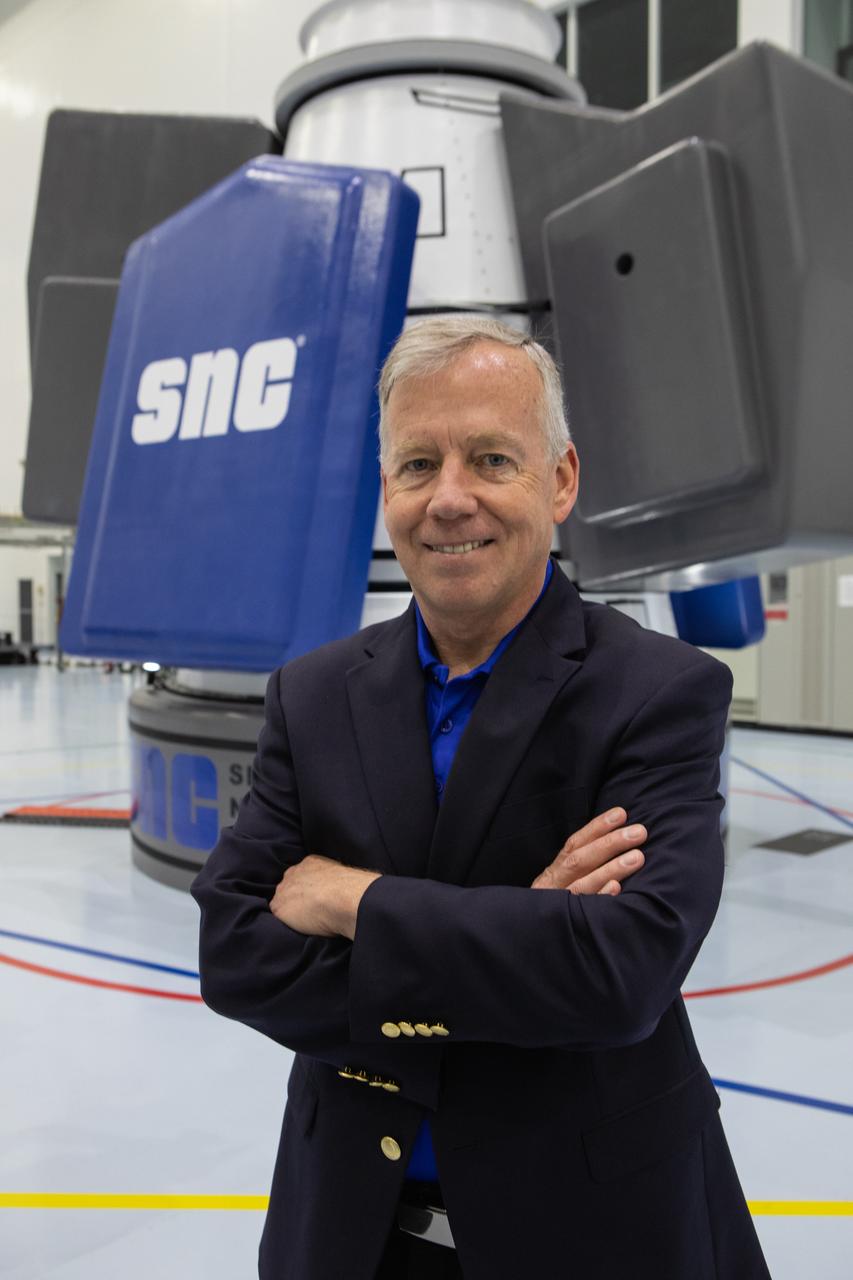
Steve Lindsey, senior vice president of strategy for Sierra Nevada Corporation Space Systems and a former NASA astronaut, poses in front of the company’s Shooting Star cargo module in the Space Station Processing Facility high bay at Kennedy Space Center on Nov. 19, 2019. Shooting Star will attach to the back of the company’s Dream Chaser spacecraft. The cargo module will deliver more than 12,000 pounds of supplies and other cargo to the International Space Station for NASA as part of the Commercial Resupply Services-2 contract.

A look at a testing mockup of Sierra Nevada Corporation’s Shooting Star cargo module in the Space Station Processing Facility high bay at Kennedy Space Center on Nov. 19, 2019. Shooting Star will attach to the back of the company’s Dream Chaser spacecraft. The cargo module will deliver more than 12,000 pounds of supplies and other cargo to the International Space Station for NASA as part of the Commercial Resupply Services-2 contract.
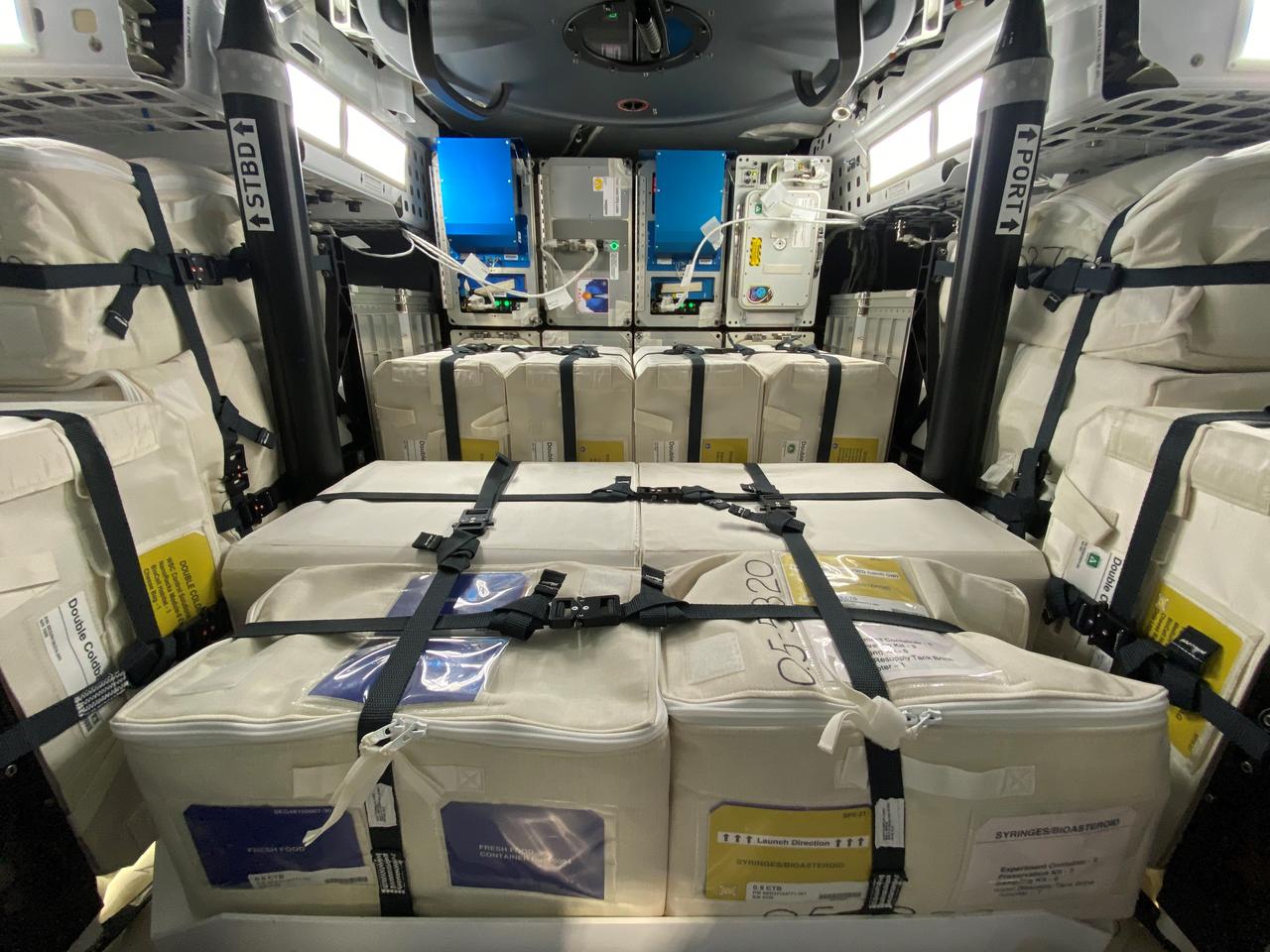
The remaining time-sensitive payloads bound for the International Space Station on SpaceX’s 21st Commercial Resupply Services (CRS-21) mission are loaded into the Cargo Dragon spacecraft on Friday, Dec. 4, 2020. A SpaceX Falcon 9 rocket, carrying the Cargo Dragon, lifted off from Launch Complex 39A at Kennedy Space Center in Florida at 11:17 a.m. EST on Dec. 6, 2020. The spacecraft is delivering more than 6,400 pounds of science investigations and cargo to the orbiting laboratory.
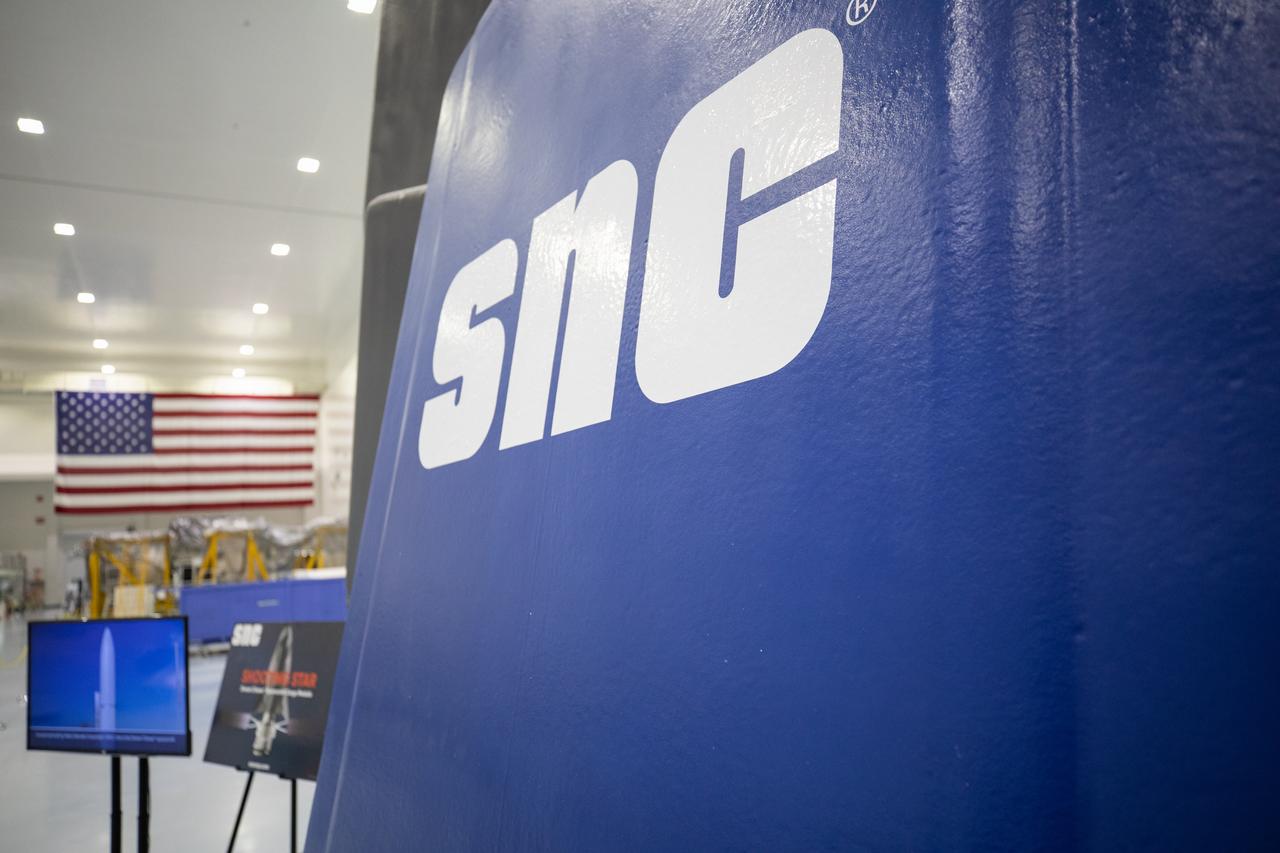
A look at a testing mockup of Sierra Nevada Corporation’s Shooting Star cargo module in the Space Station Processing Facility high bay at Kennedy Space Center on Nov. 19, 2019. Shooting Star will attach to the back of the company’s Dream Chaser spacecraft. The cargo module will deliver more than 12,000 pounds of supplies and other cargo to the International Space Station for NASA as part of the Commercial Resupply Services-2 contract.
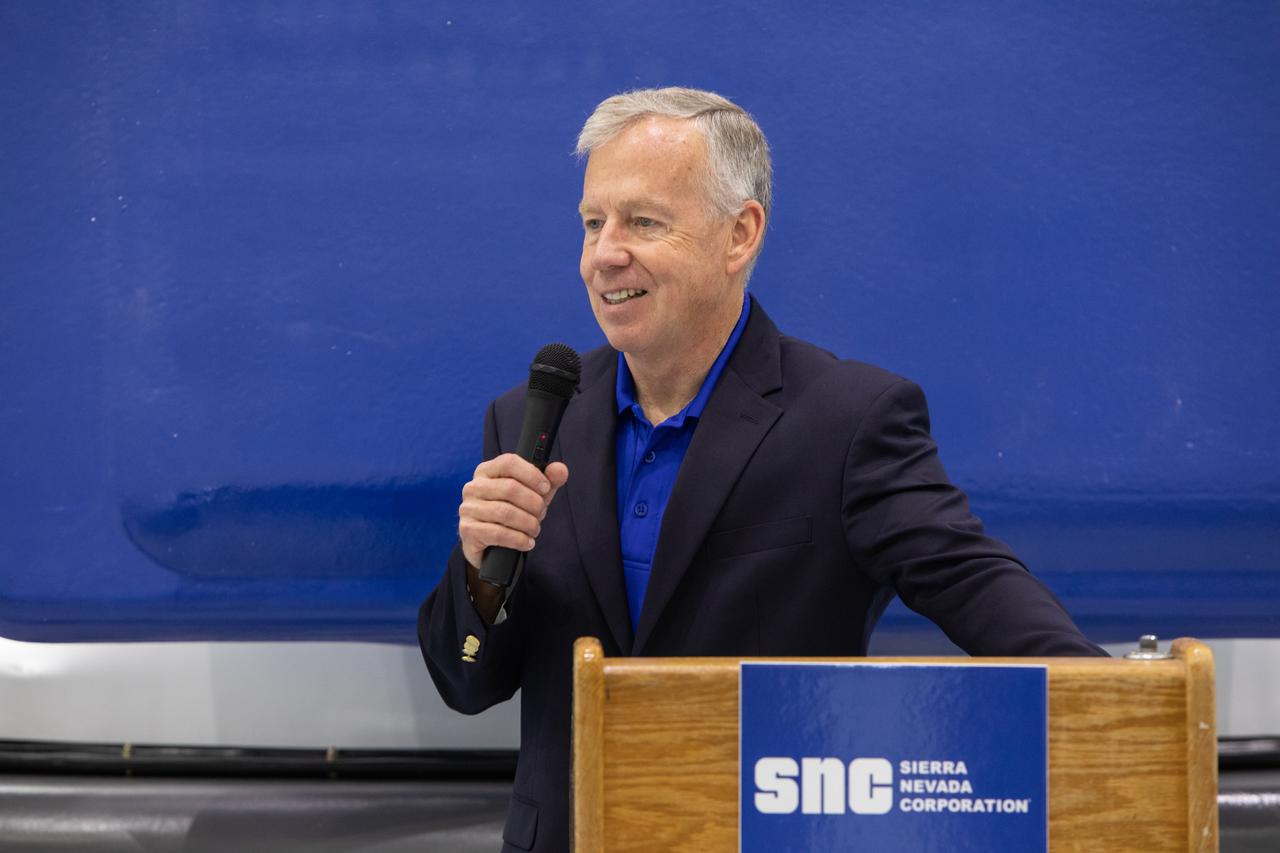
Steve Lindsey, senior vice president of strategy for Sierra Nevada Corporation Space Systems and a former NASA astronaut, discusses the capabilities of the company’s Shooting Star cargo module in the Space Station Processing Facility high bay at Kennedy Space Center on Nov. 19, 2019. Shooting Star will attach to the back of the company’s Dream Chaser spacecraft. The cargo module will deliver more than 12,000 pounds of supplies and other cargo to the International Space Station for NASA as part of the Commercial Resupply Services-2 contract.
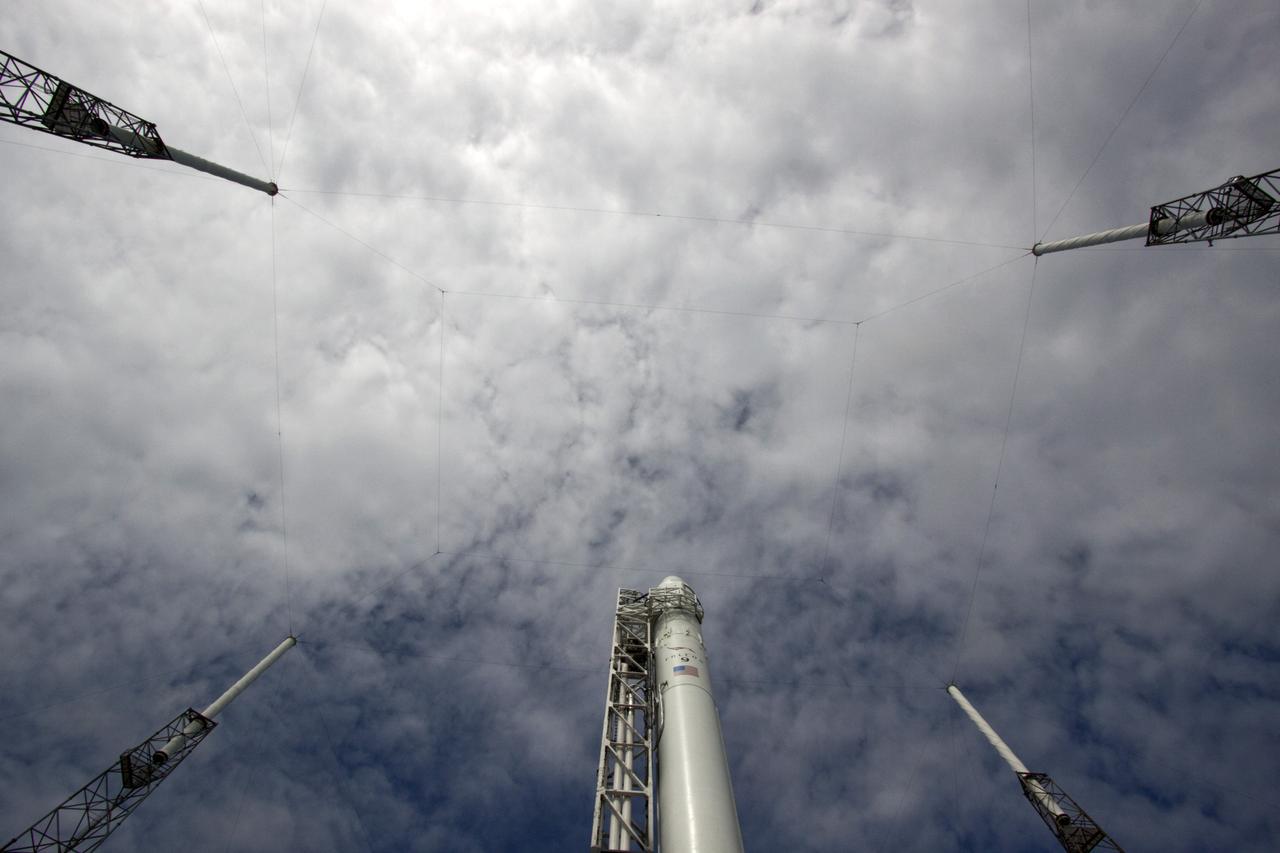
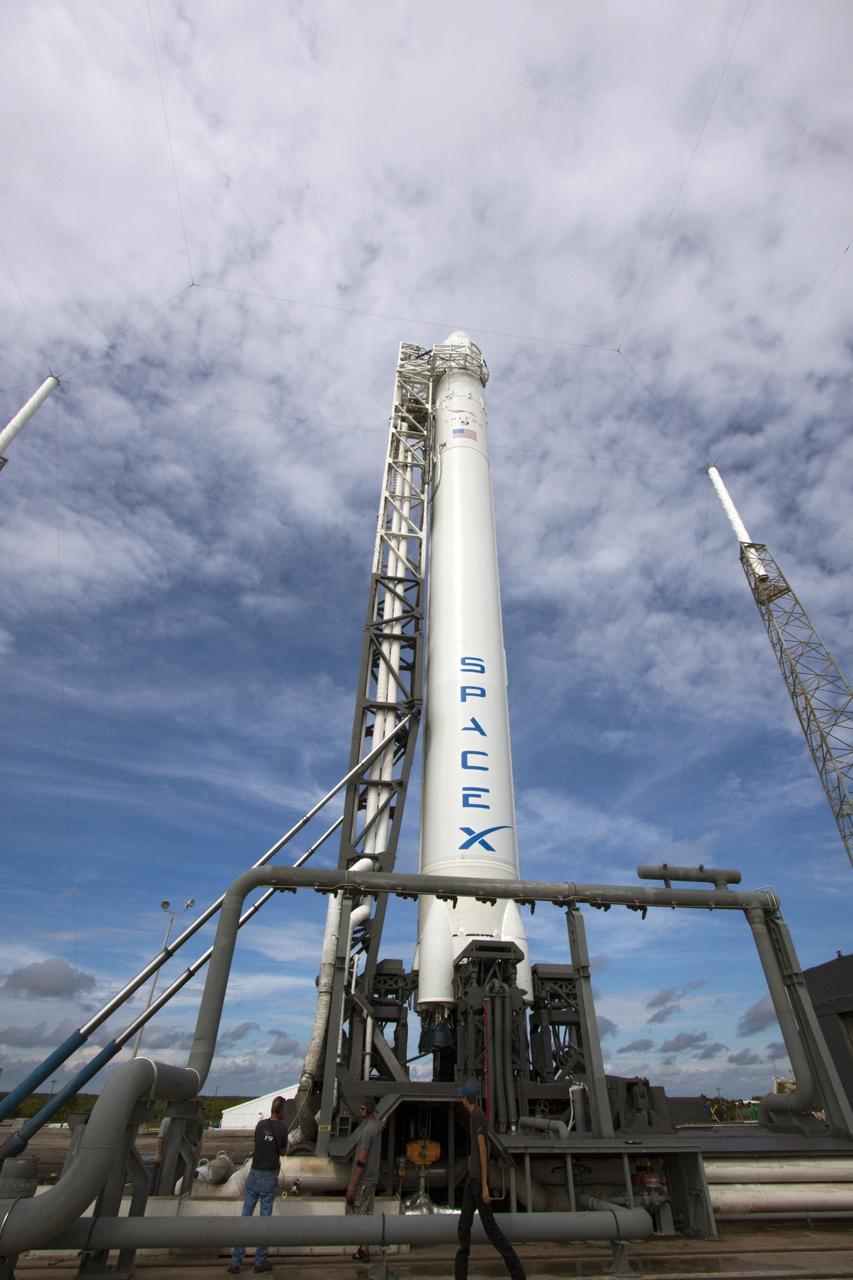
CAPE CANAVERAL, Fla. -- A unique view from the ground looking up shows the Space Exploration Technologies Corp., or SpaceX, Falcon 9 rocket with Dragon capsule attached after it was lifted into the vertical position during a rollout demonstration test to Space Launch Complex-40 at Cape Canaveral Air Force Station in Florida. Preparations continue for NASA’s first Commercial Resupply Services, or CRS-1, mission to the International Space Station. The rollout to the pad for liftoff is planned for Sunday morning, Oct. 7. Liftoff from CCAFS is scheduled during an instantaneous window at 8:35 p.m. EDT Sunday evening. SpaceX CRS-1 is an important step toward making America’s microgravity research program self-sufficient by providing a way to deliver and return significant amounts of cargo, including science experiments, to and from the orbiting laboratory. To learn more, visit http://www.nasa.gov/mission_pages/station/living/launch/index.html. Photo credit: NASA/Jim Grossmann
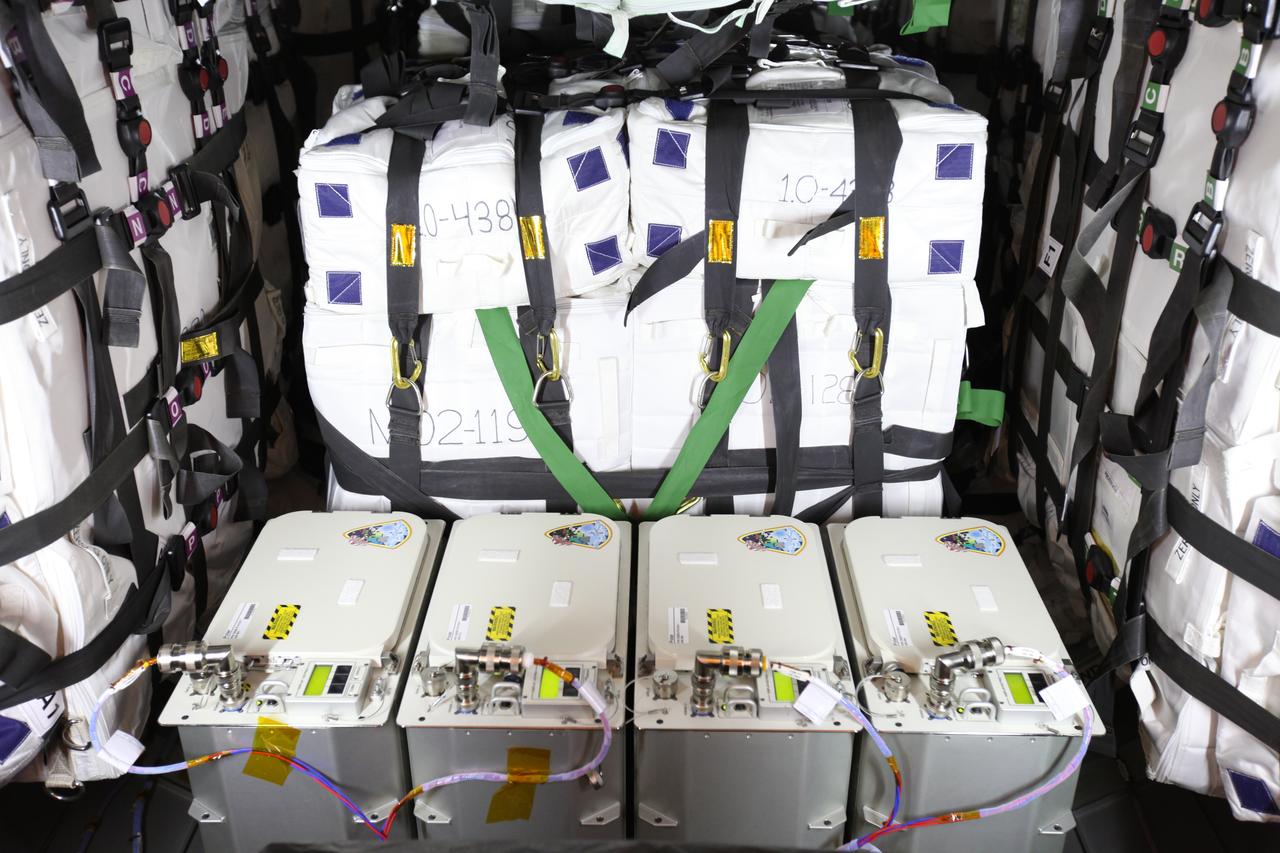
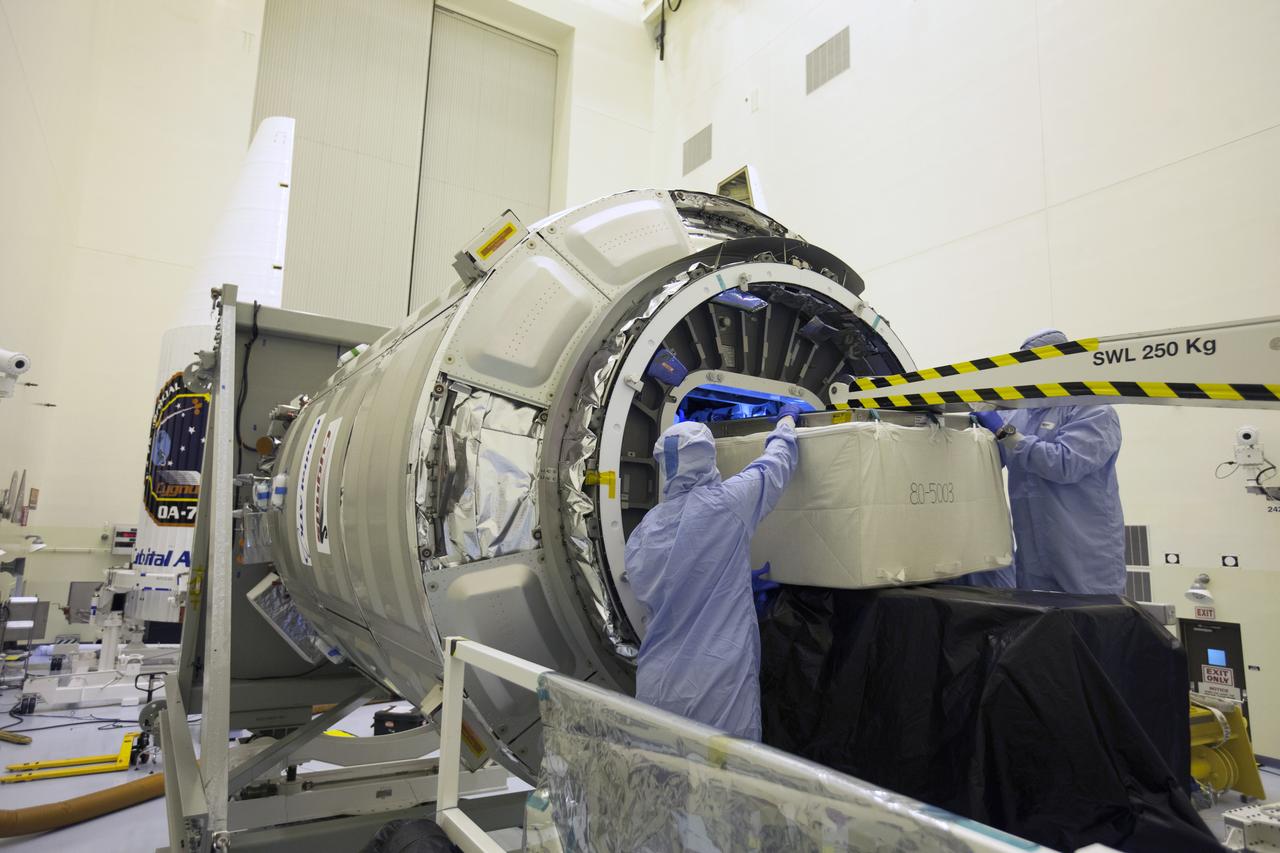
Inside the Payload Hazardous Servicing Facility at NASA's Kennedy Space Center in Florida, technicians have completed installation of the final cargo and power in the Orbital ATK Cygnus pressurized cargo module. The Orbital ATK CRS-7 commercial resupply services mission to the International Space Station is scheduled to launch atop a United Launch Alliance Atlas V rocket from Space Launch Complex 41 at Cape Canaveral Air Force Station no earlier than March 21, 2017. Cygnus will deliver 7,600 pounds of supplies, equipment and scientific research materials to the space station.
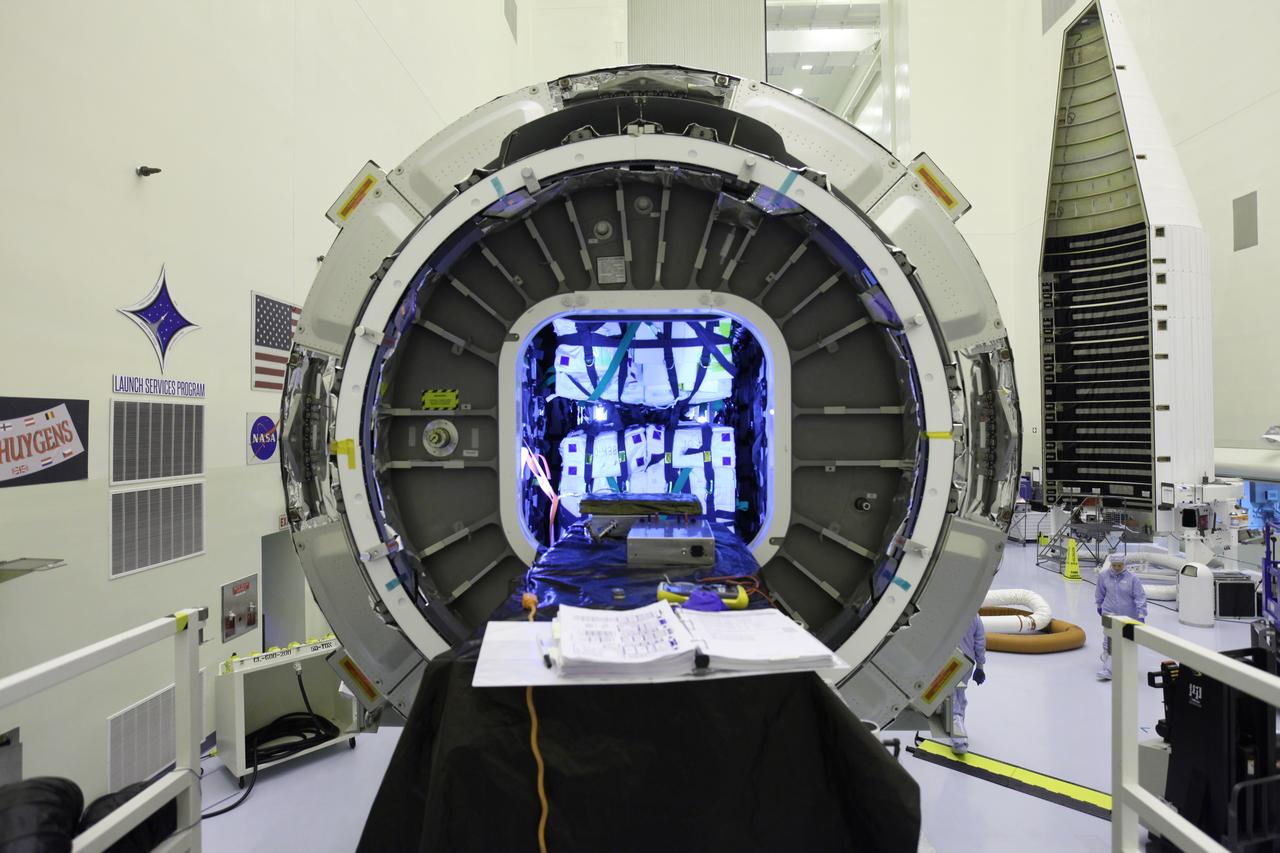
Inside the Payload Hazardous Servicing Facility at NASA's Kennedy Space Center in Florida, preparations are underway for final stowage of powered cargo in the Orbital ATK Cygnus pressurized cargo module. The Orbital ATK CRS-7 commercial resupply services mission to the International Space Station is scheduled to launch atop a United Launch Alliance Atlas V rocket from Space Launch Complex 41 at Cape Canaveral Air Force Station targeted for March 24, 2017. Cygnus will deliver 7,600 pounds of supplies, equipment and scientific research materials to the space station.
Inside the Payload Hazardous Servicing Facility at NASA's Kennedy Space Center in Florida, technicians use a special mechanism to assist with late cargo installation in the Orbital ATK Cygnus pressurized cargo module. The Orbital ATK CRS-7 commercial resupply services mission to the International Space Station is scheduled to launch atop a United Launch Alliance Atlas V rocket from Space Launch Complex 41 at Cape Canaveral Air Force Station targeted for March 24, 2017. Cygnus will deliver 7,600 pounds of supplies, equipment and scientific research materials to the space station.
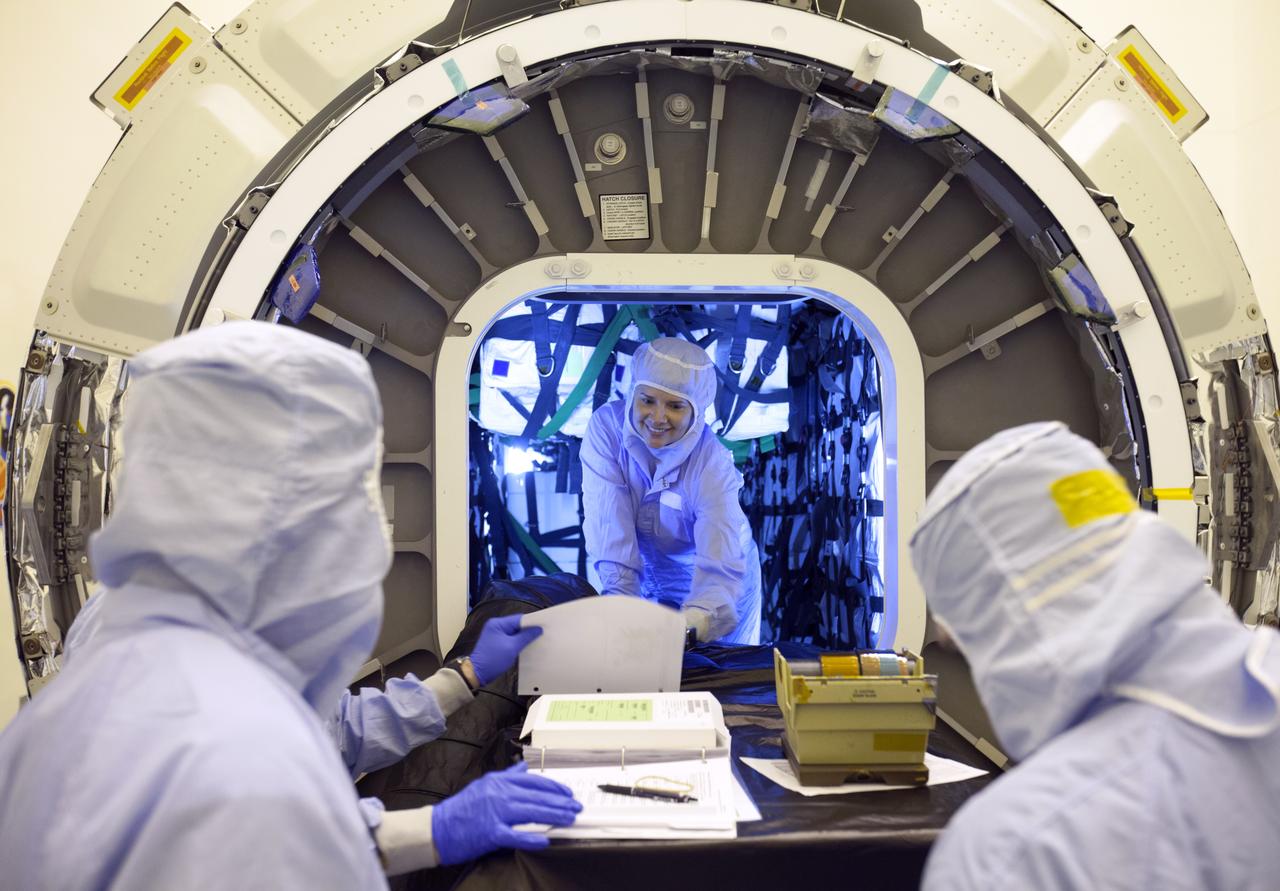
Inside the Payload Hazardous Servicing Facility at NASA's Kennedy Space Center in Florida, preparations are underway for late cargo installation in the Orbital ATK Cygnus pressurized cargo module. The Orbital ATK CRS-7 commercial resupply services mission to the International Space Station is scheduled to launch atop a United Launch Alliance Atlas V rocket from Space Launch Complex 41 at Cape Canaveral Air Force Station targeted for March 24, 2017. Cygnus will deliver 7,600 pounds of supplies, equipment and scientific research materials to the space station.
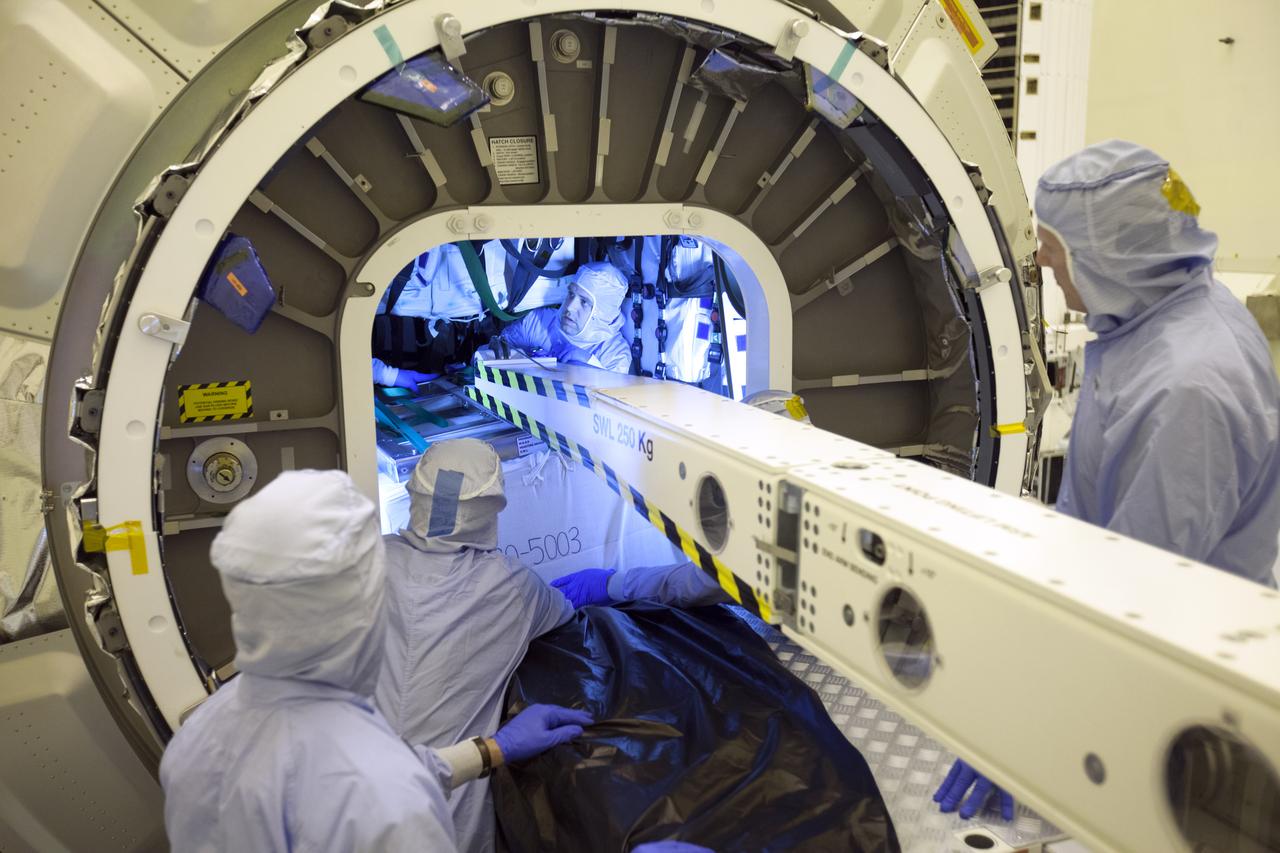
Inside the Payload Hazardous Servicing Facility at NASA's Kennedy Space Center in Florida, technicians use a special mechanism to assist with late cargo installation in the Orbital ATK Cygnus pressurized cargo module. The Orbital ATK CRS-7 commercial resupply services mission to the International Space Station is scheduled to launch atop a United Launch Alliance Atlas V rocket from Space Launch Complex 41 at Cape Canaveral Air Force Station targeted for March 24, 2017. Cygnus will deliver 7,600 pounds of supplies, equipment and scientific research materials to the space station.
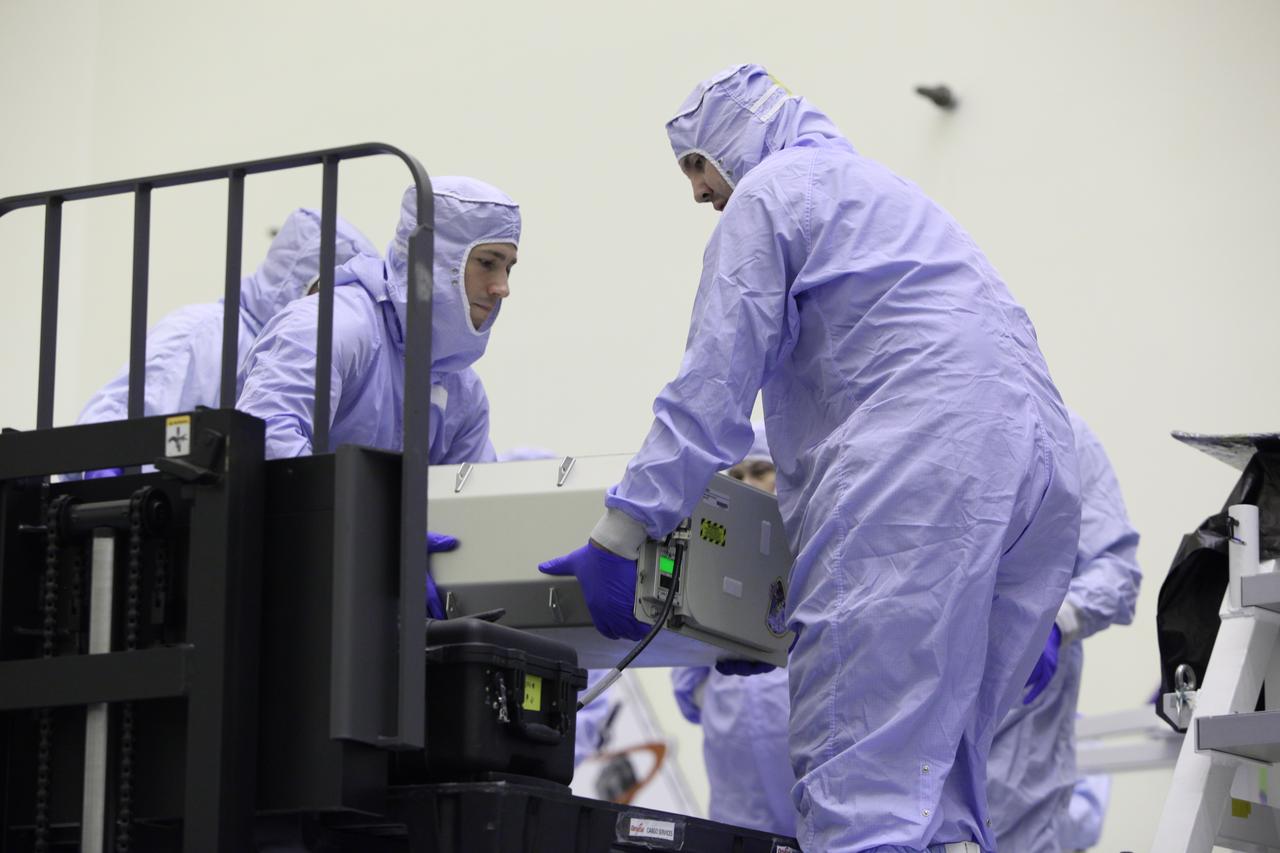
Inside the Payload Hazardous Servicing Facility at NASA's Kennedy Space Center in Florida, technicians prepare a powered cargo unit for late stowage in the Orbital ATK Cygnus pressurized cargo module. The Orbital ATK CRS-7 commercial resupply services mission to the International Space Station is scheduled to launch atop a United Launch Alliance Atlas V rocket from Space Launch Complex 41 at Cape Canaveral Air Force Station targeted for March 24, 2017. Cygnus will deliver 7,600 pounds of supplies, equipment and scientific research materials to the space station.
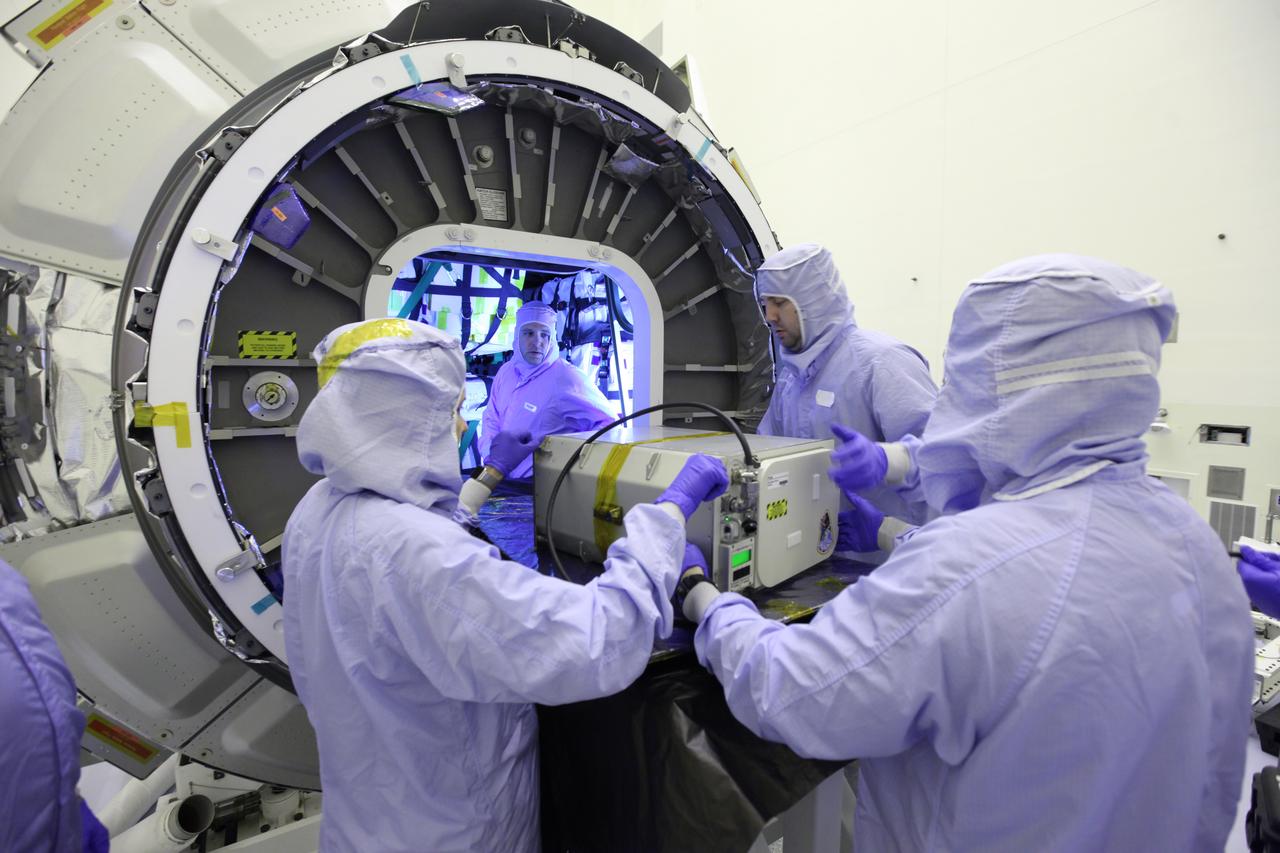
Inside the Payload Hazardous Servicing Facility at NASA's Kennedy Space Center in Florida, technicians perform final cargo installation in the Orbital ATK Cygnus pressurized cargo module. The Orbital ATK CRS-7 commercial resupply services mission to the International Space Station is scheduled to launch atop a United Launch Alliance Atlas V rocket from Space Launch Complex 41 at Cape Canaveral Air Force Station no earlier than March 21, 2017. Cygnus will deliver 7,600 pounds of supplies, equipment and scientific research materials to the space station.
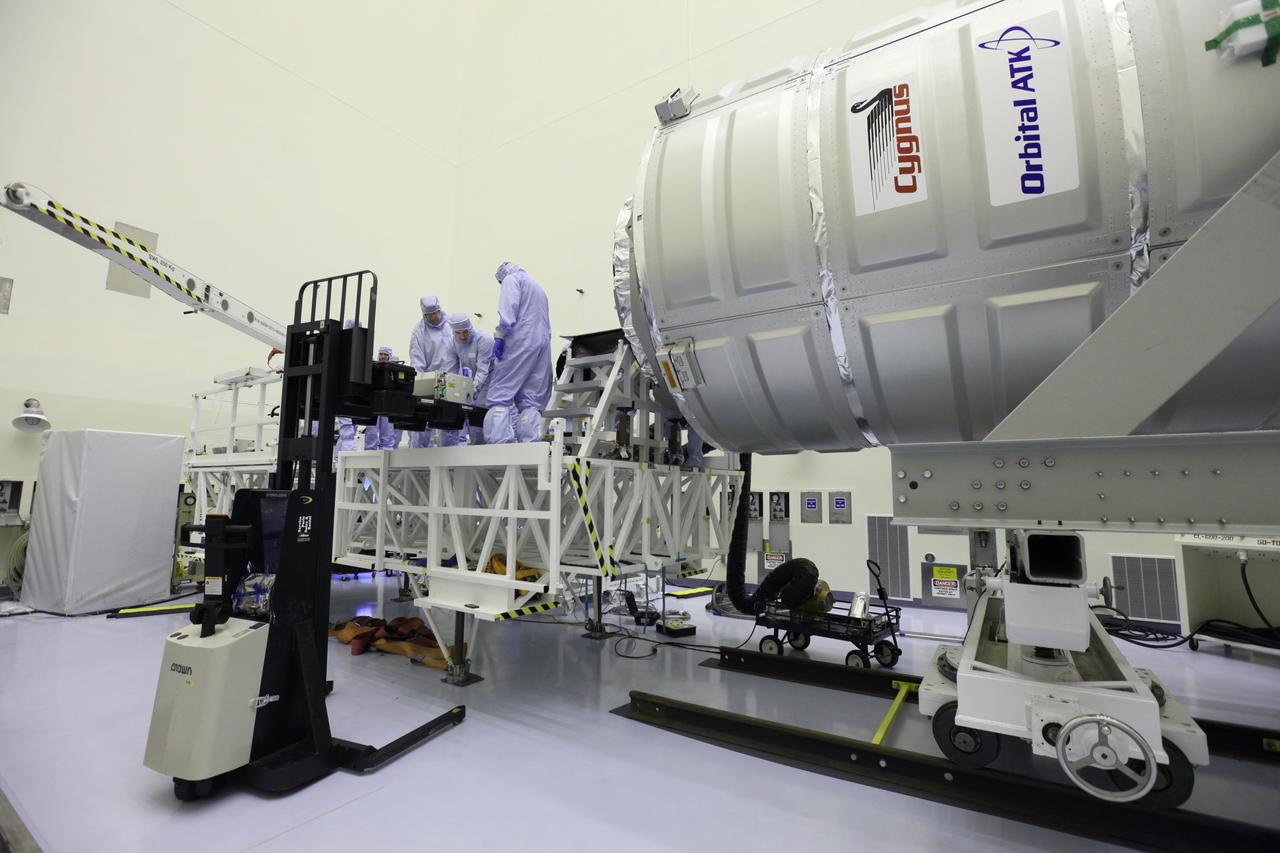
Inside the Payload Hazardous Servicing Facility at NASA's Kennedy Space Center in Florida, technicians prepare a powered cargo unit for late stowage in the Orbital ATK Cygnus pressurized cargo module. The Orbital ATK CRS-7 commercial resupply services mission to the International Space Station is scheduled to launch atop a United Launch Alliance Atlas V rocket from Space Launch Complex 41 at Cape Canaveral Air Force Station targeted for March 24, 2017. Cygnus will deliver 7,600 pounds of supplies, equipment and scientific research materials to the space station.
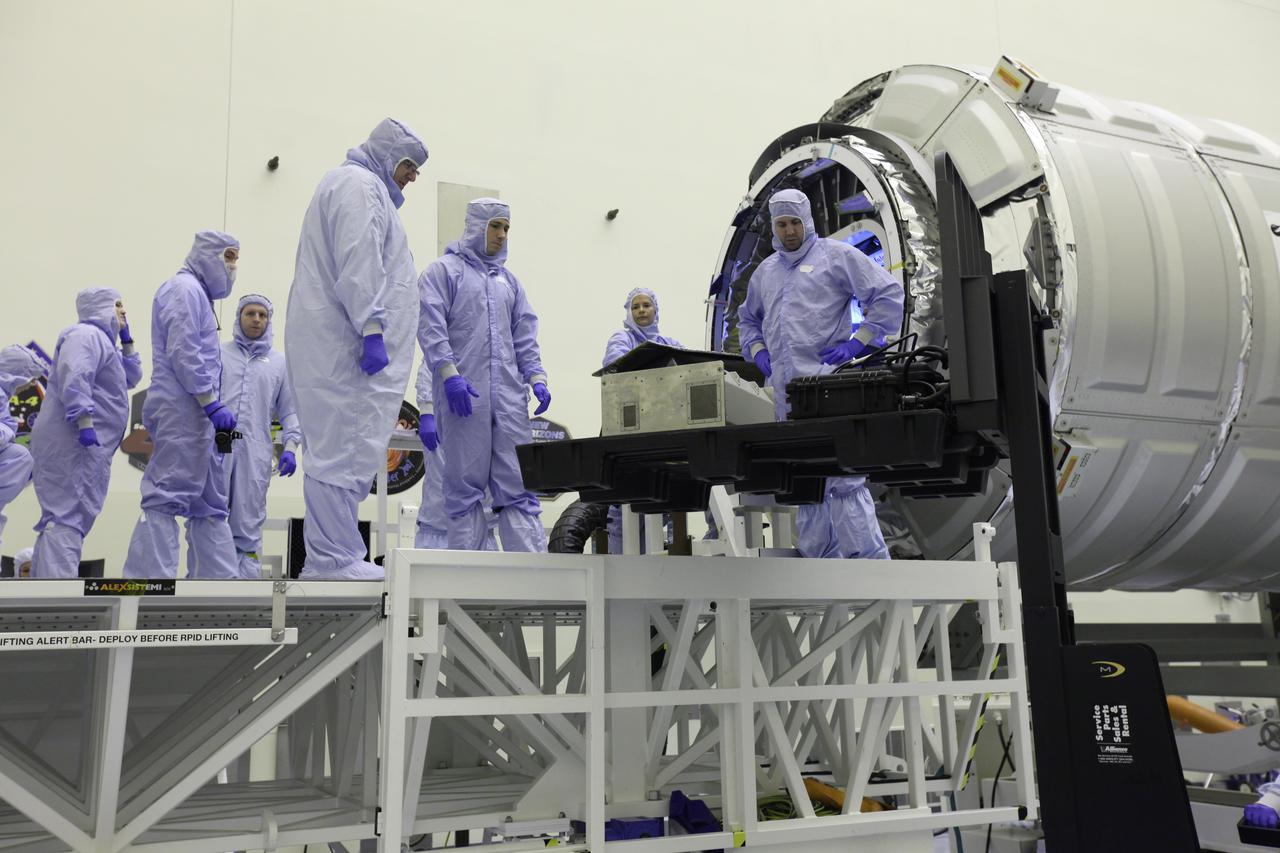
Inside the Payload Hazardous Servicing Facility at NASA's Kennedy Space Center in Florida, technicians prepare a powered cargo unit for late stowage in the Orbital ATK Cygnus pressurized cargo module. The Orbital ATK CRS-7 commercial resupply services mission to the International Space Station is scheduled to launch atop a United Launch Alliance Atlas V rocket from Space Launch Complex 41 at Cape Canaveral Air Force Station targeted for March 24, 2017. Cygnus will deliver 7,600 pounds of supplies, equipment and scientific research materials to the space station.
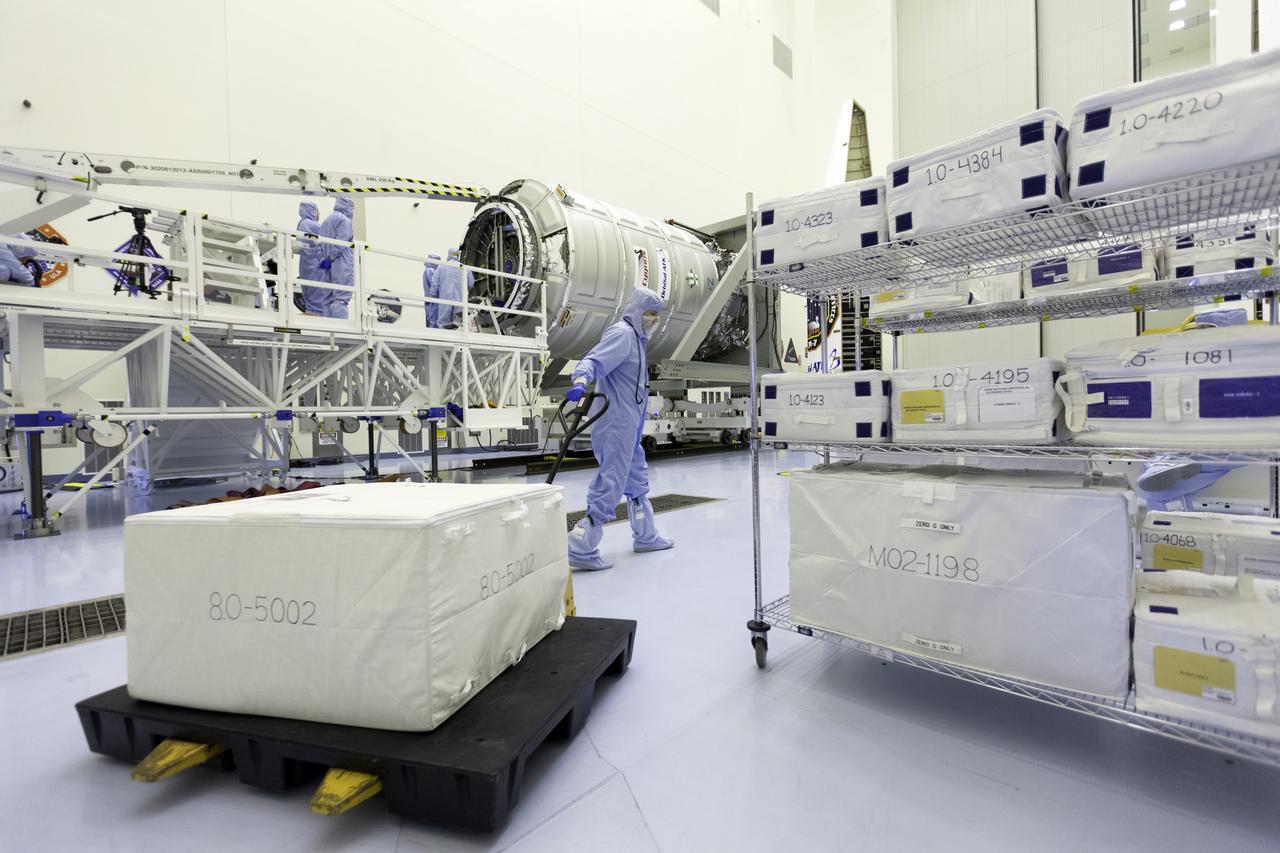
Inside the Payload Hazardous Servicing Facility at NASA's Kennedy Space Center in Florida, cargo has arrived for late loading in the Orbital ATK Cygnus pressurized cargo module. The Orbital ATK CRS-7 commercial resupply services mission to the International Space Station is scheduled to launch atop a United Launch Alliance Atlas V rocket from Space Launch Complex 41 at Cape Canaveral Air Force Station targeted for March 24, 2017. Cygnus will deliver 7,600 pounds of supplies, equipment and scientific research materials to the space station.
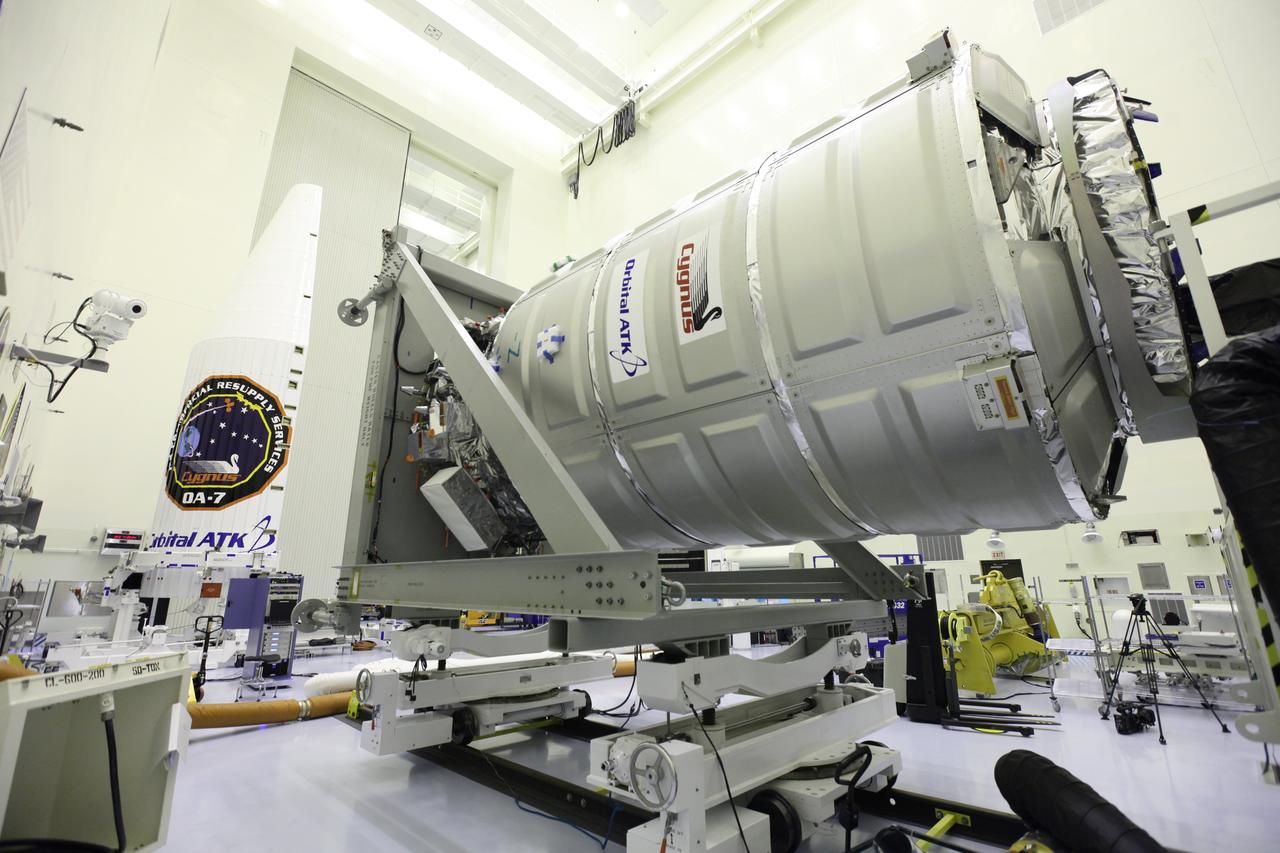
Inside the Payload Hazardous Servicing Facility at NASA's Kennedy Space Center in Florida, the Orbital ATK Cygnus pressurized cargo module is tilted to the horizontal position to prepare for final stowage of powered cargo. The Orbital ATK CRS-7 commercial resupply services mission to the International Space Station is scheduled to launch atop a United Launch Alliance Atlas V rocket from Space Launch Complex 41 at Cape Canaveral Air Force Station targeted for March 24, 2017. Cygnus will deliver 7,600 pounds of supplies, equipment and scientific research materials to the space station.
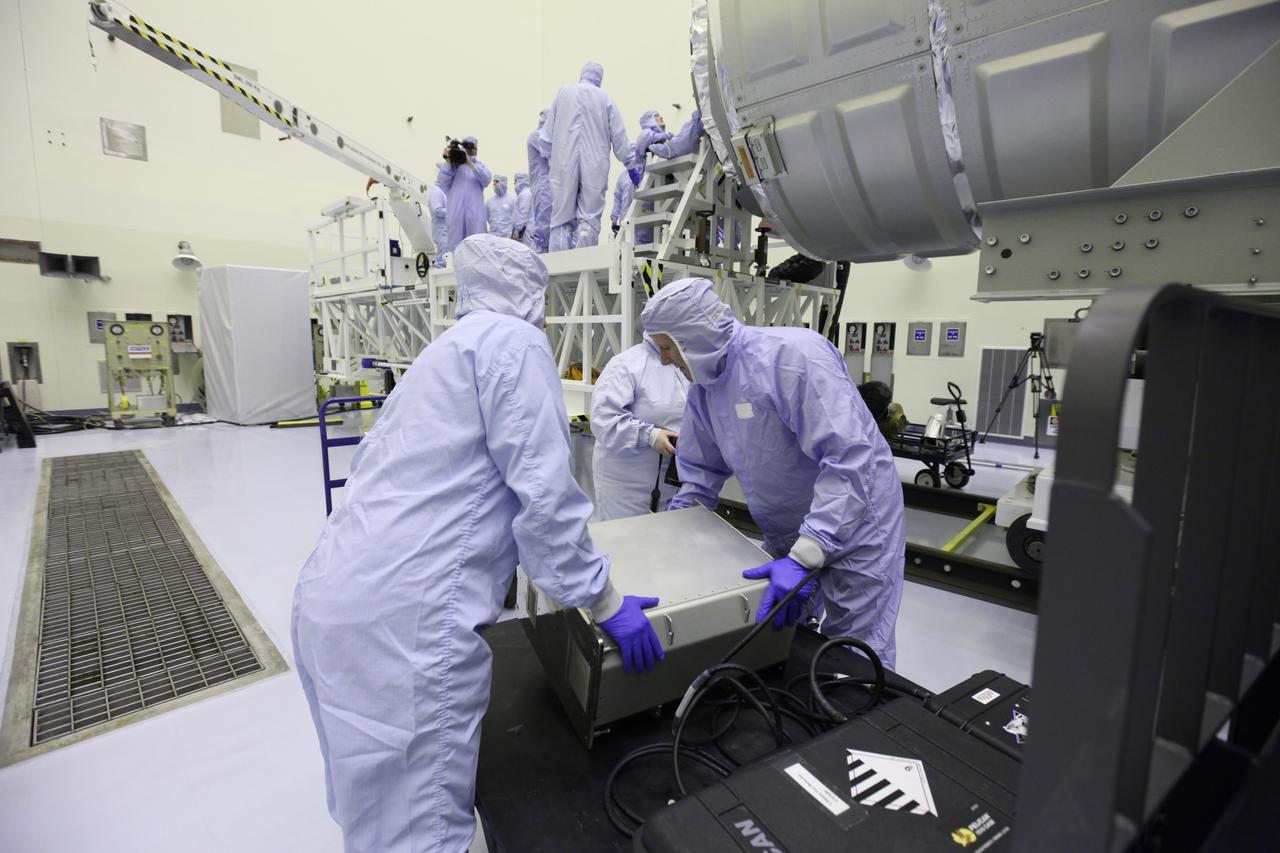
Inside the Payload Hazardous Servicing Facility at NASA's Kennedy Space Center in Florida, preparations are underway for final cargo installation in the Orbital ATK Cygnus pressurized cargo module. The Orbital ATK CRS-7 commercial resupply services mission to the International Space Station is scheduled to launch atop a United Launch Alliance Atlas V rocket from Space Launch Complex 41 at Cape Canaveral Air Force Station no earlier than March 21, 2017. Cygnus will deliver 7,600 pounds of supplies, equipment and scientific research materials to the space station.

Inside the Payload Hazardous Servicing Facility at NASA's Kennedy Space Center in Florida, technicians begin late cargo installation in the Orbital ATK Cygnus pressurized cargo module. The Orbital ATK CRS-7 commercial resupply services mission to the International Space Station is scheduled to launch atop a United Launch Alliance Atlas V rocket from Space Launch Complex 41 at Cape Canaveral Air Force Station targeted for March 24, 2017. Cygnus will deliver 7,600 pounds of supplies, equipment and scientific research materials to the space station.
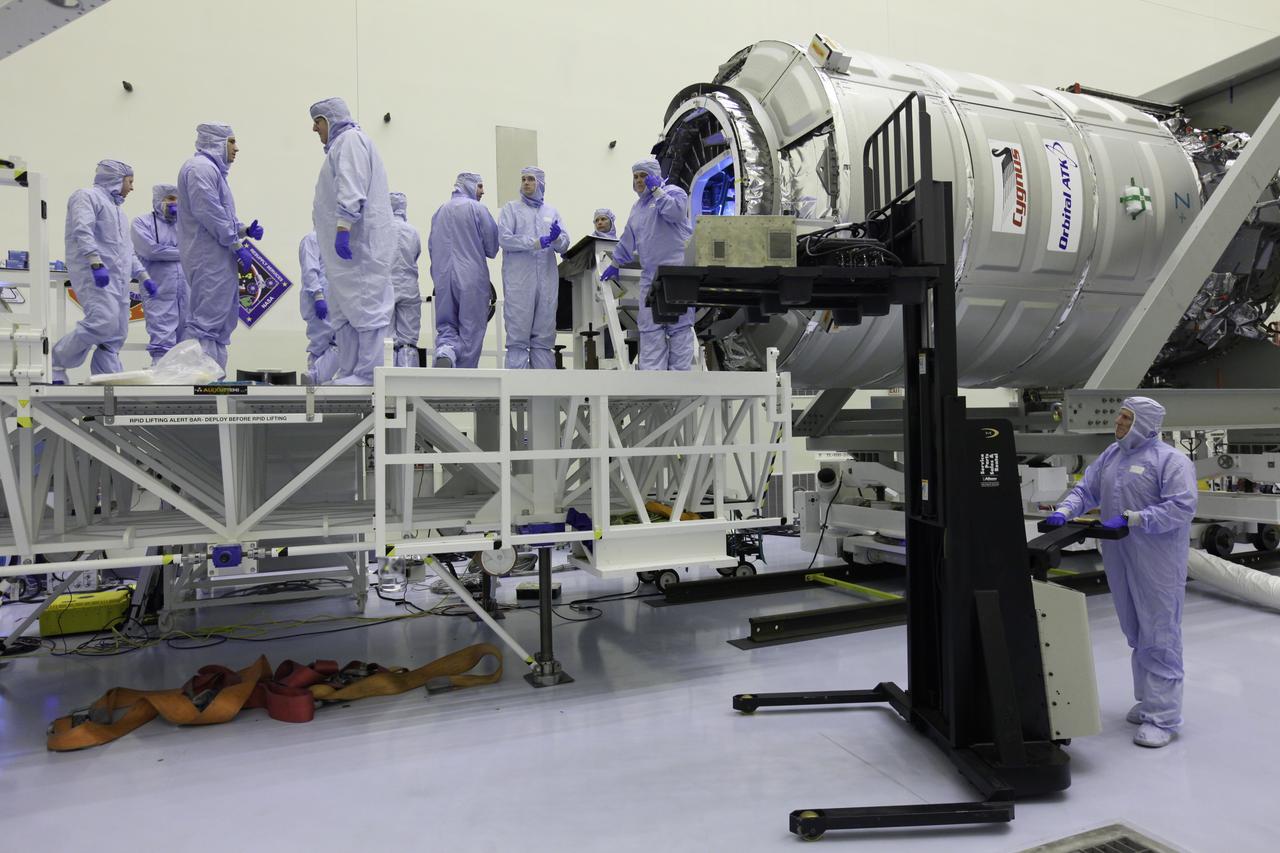
Inside the Payload Hazardous Servicing Facility at NASA's Kennedy Space Center in Florida, technicians prepare payloads for final cargo installation in the Orbital ATK Cygnus pressurized cargo module. The Orbital ATK CRS-7 commercial resupply services mission to the International Space Station is scheduled to launch atop a United Launch Alliance Atlas V rocket from Space Launch Complex 41 at Cape Canaveral Air Force Station no earlier than March 21, 2017. Cygnus will deliver 7,600 pounds of supplies, equipment and scientific research materials to the space station.
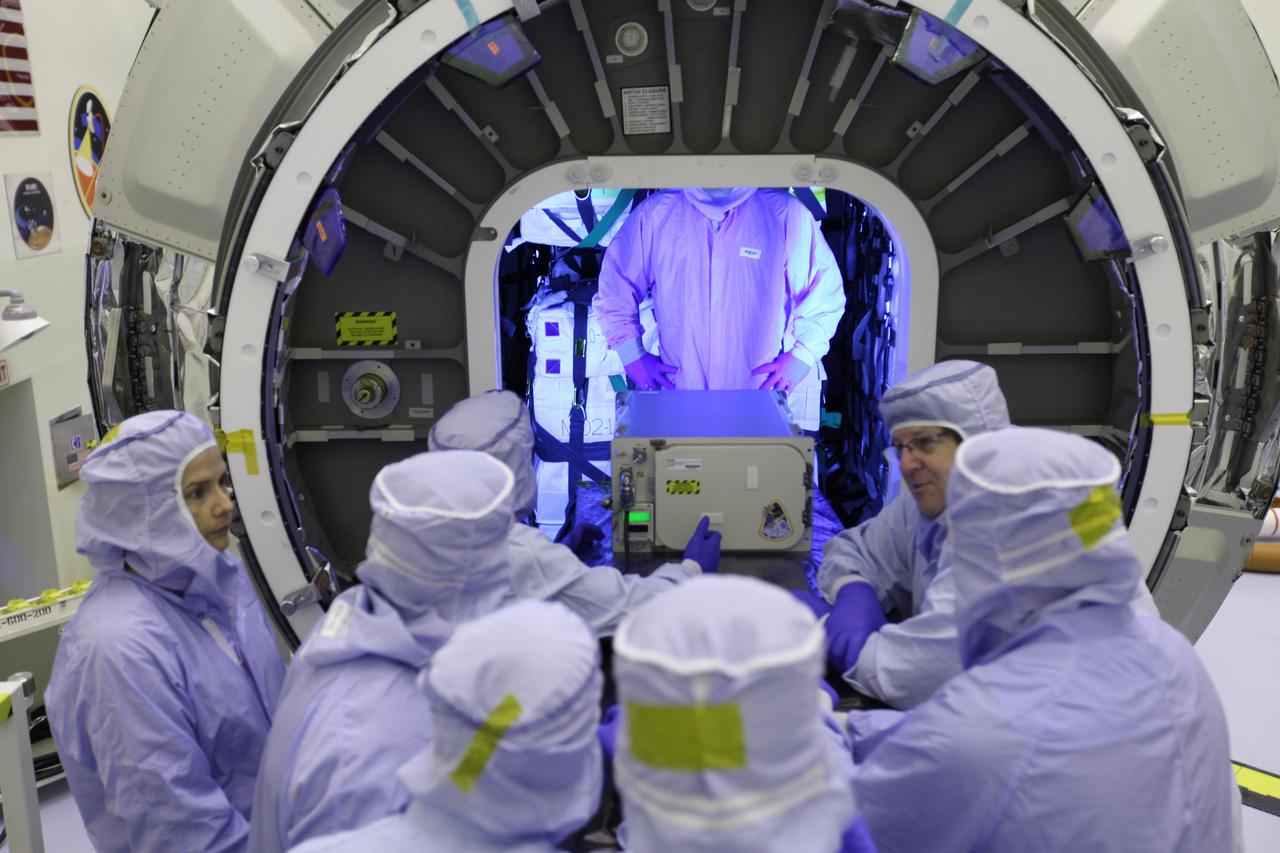
Inside the Payload Hazardous Servicing Facility at NASA's Kennedy Space Center in Florida, technicians load a powered cargo unit into the Orbital ATK Cygnus pressurized cargo module during final stowage. The Orbital ATK CRS-7 commercial resupply services mission to the International Space Station is scheduled to launch atop a United Launch Alliance Atlas V rocket from Space Launch Complex 41 at Cape Canaveral Air Force Station targeted for March 24, 2017. Cygnus will deliver 7,600 pounds of supplies, equipment and scientific research materials to the space station.
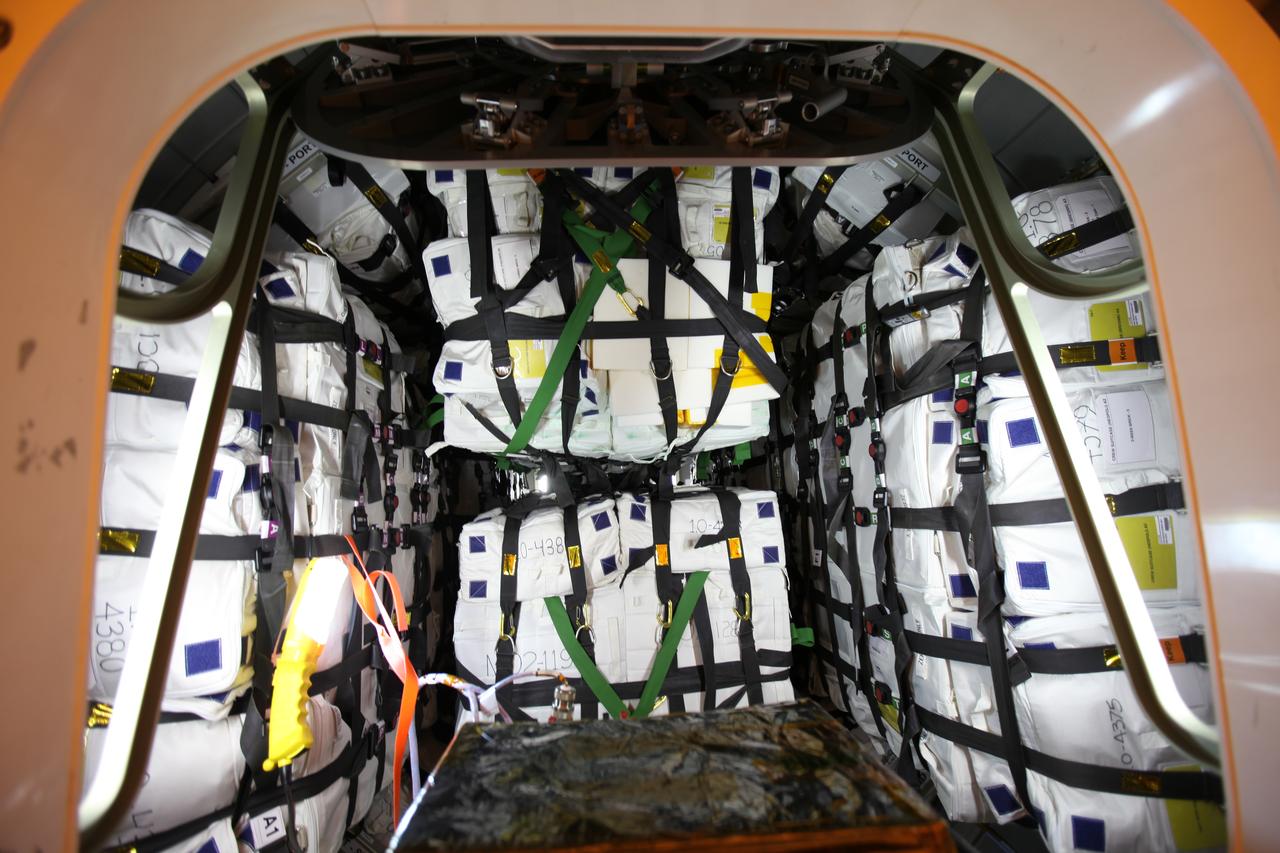
Inside the Payload Hazardous Servicing Facility at NASA's Kennedy Space Center in Florida, the hatch on the Orbital ATK Cygnus pressurized cargo module is open for final stowage of powered cargo. The Orbital ATK CRS-7 commercial resupply services mission to the International Space Station is scheduled to launch atop a United Launch Alliance Atlas V rocket from Space Launch Complex 41 at Cape Canaveral Air Force Station targeted for March 24, 2017. Cygnus will deliver 7,600 pounds of supplies, equipment and scientific research materials to the space station.
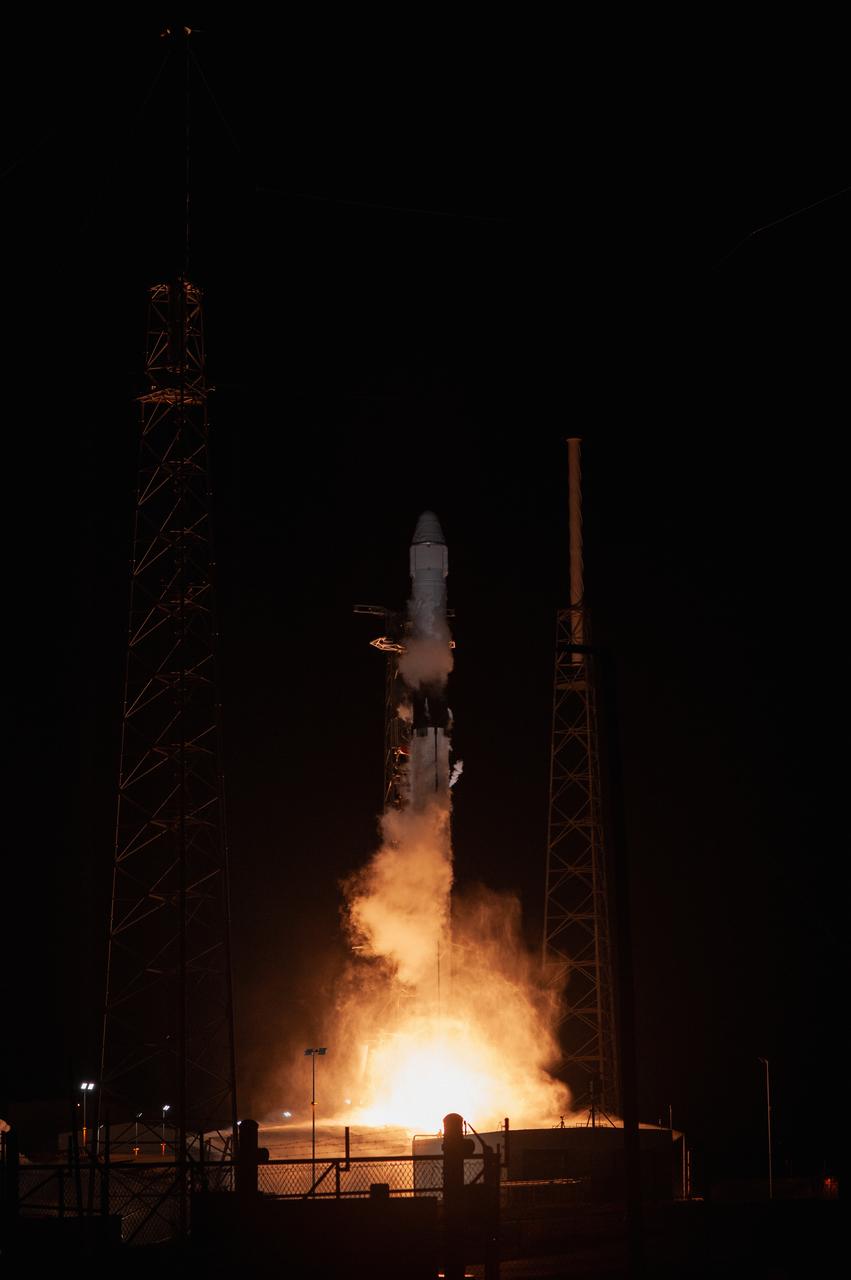
The SpaceX Falcon 9 rocket with the Dragon cargo module lifts off Space Launch Complex 40 on Cape Canaveral Air Force Station in Florida in the early morning May 4, 2019. Liftoff was at 2:48 a.m. EDT. This is SpaceX’s 17th Commercial Resupply Services (CRS-17) mission for NASA to the International Space Station. The Dragon cargo module will deliver about 5,500 pounds of science and research, crew supplies and vehicle hardware to the orbital laboratory and its crew.
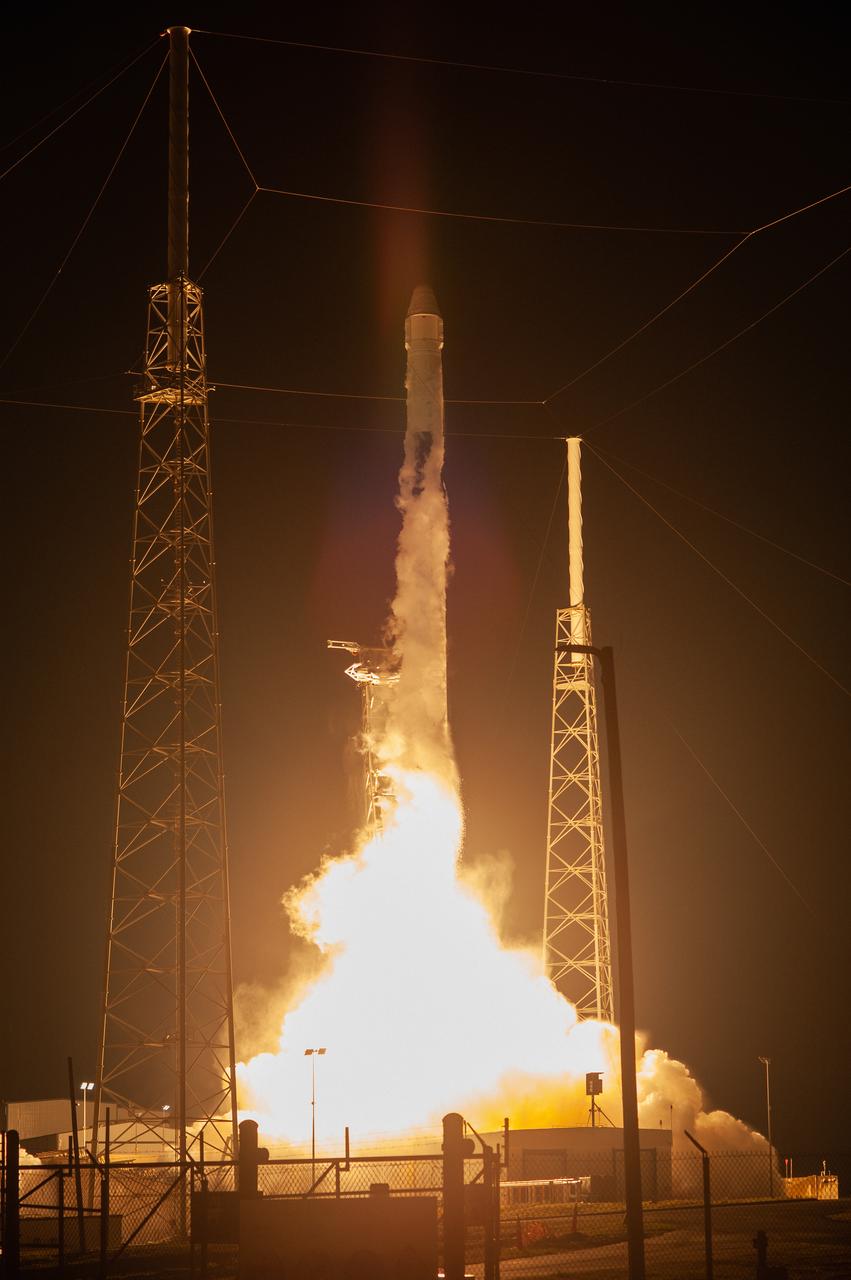
The SpaceX Falcon 9 rocket with the Dragon cargo module lifts off Space Launch Complex 40 on Cape Canaveral Air Force Station in Florida in the early morning May 4, 2019. Liftoff was at 2:48 a.m. EDT. This is SpaceX’s 17th Commercial Resupply Services (CRS-17) mission for NASA to the International Space Station. The Dragon cargo module will deliver about 5,500 pounds of science and research, crew supplies and vehicle hardware to the orbital laboratory and its crew.
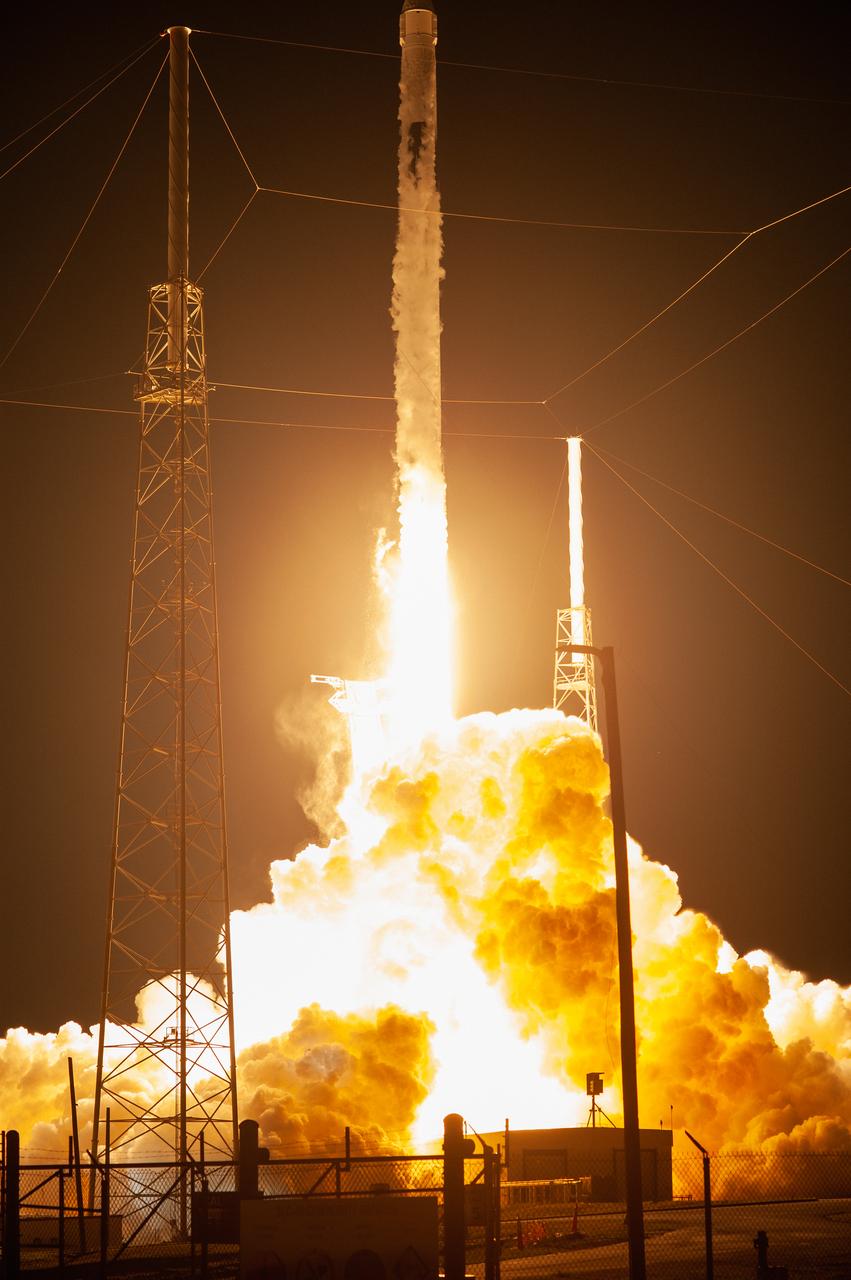
The SpaceX Falcon 9 rocket with the Dragon cargo module lifts off Space Launch Complex 40 on Cape Canaveral Air Force Station in Florida in the early morning May 4, 2019. Liftoff was at 2:48 a.m. EDT. This is SpaceX’s 17th Commercial Resupply Services (CRS-17) mission for NASA to the International Space Station. The Dragon cargo module will deliver about 5,500 pounds of science and research, crew supplies and vehicle hardware to the orbital laboratory and its crew.
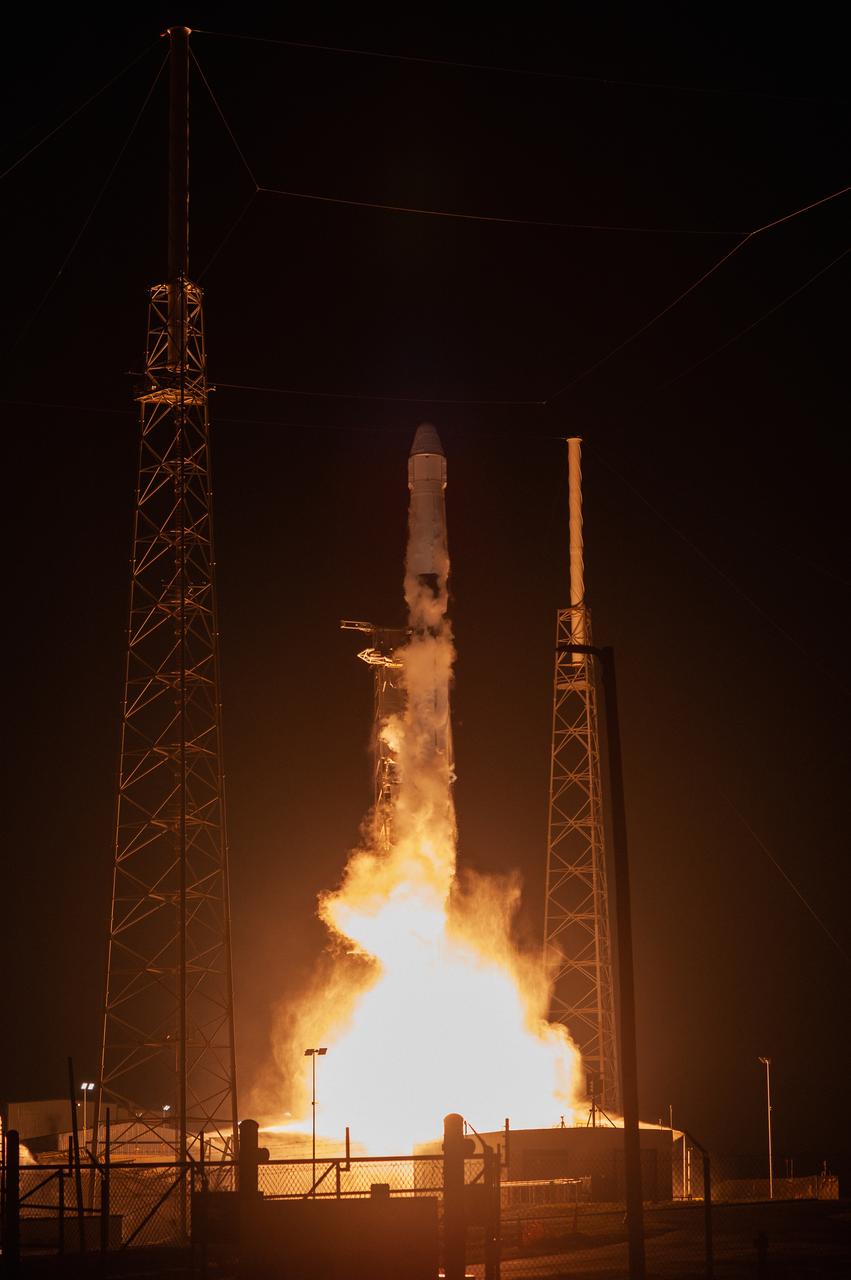
The SpaceX Falcon 9 rocket with the Dragon cargo module lifts off Space Launch Complex 40 on Cape Canaveral Air Force Station in Florida in the early morning May 4, 2019. Liftoff was at 2:48 a.m. EDT. This is SpaceX’s 17th Commercial Resupply Services (CRS-17) mission for NASA to the International Space Station. The Dragon cargo module will deliver about 5,500 pounds of science and research, crew supplies and vehicle hardware to the orbital laboratory and its crew.
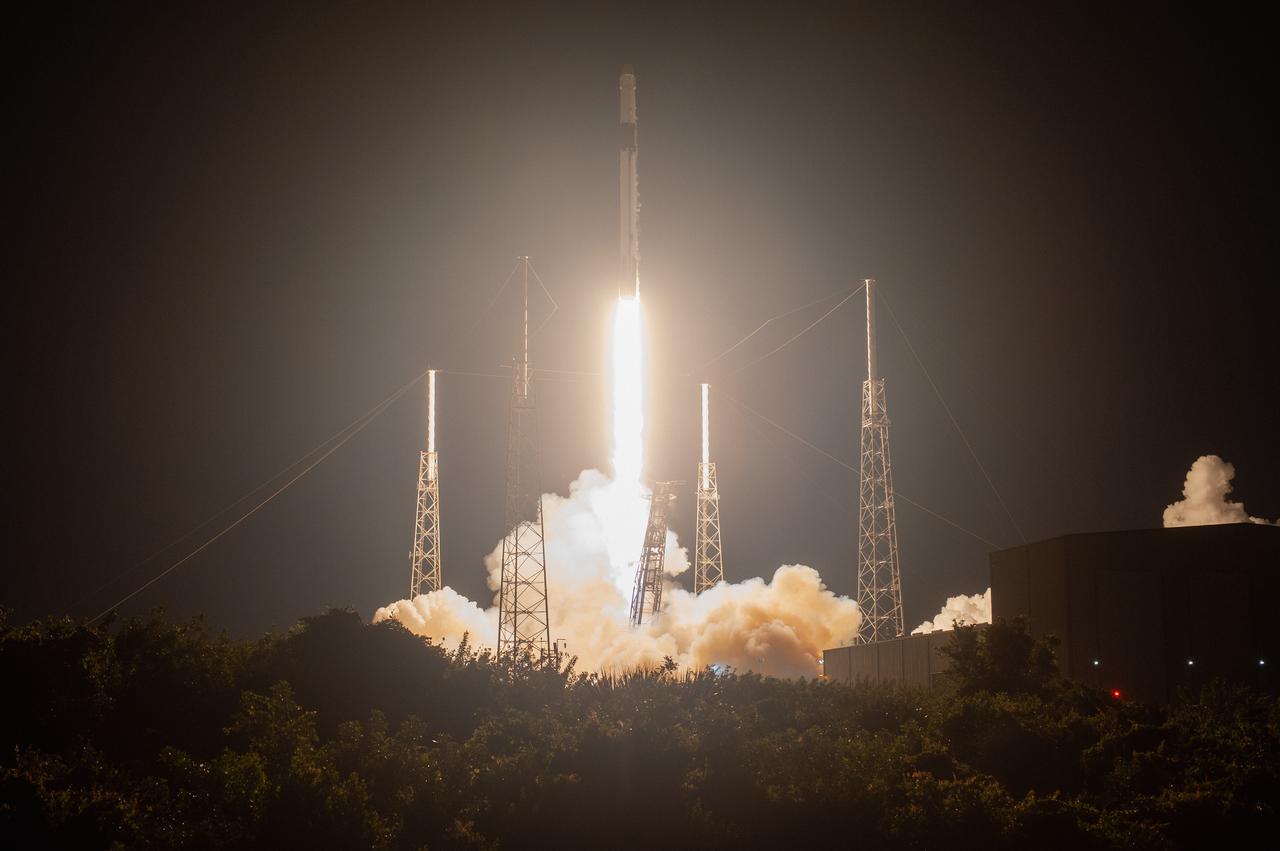
The SpaceX Falcon 9 rocket with the Dragon cargo module lifts off Space Launch Complex 40 on Cape Canaveral Air Force Station in Florida in the early morning May 4, 2019. Liftoff was at 2:48 a.m. EDT. This is SpaceX’s 17th Commercial Resupply Services (CRS-17) mission for NASA to the International Space Station. The Dragon cargo module will deliver about 5,500 pounds of science and research, crew supplies and vehicle hardware to the orbital laboratory and its crew.
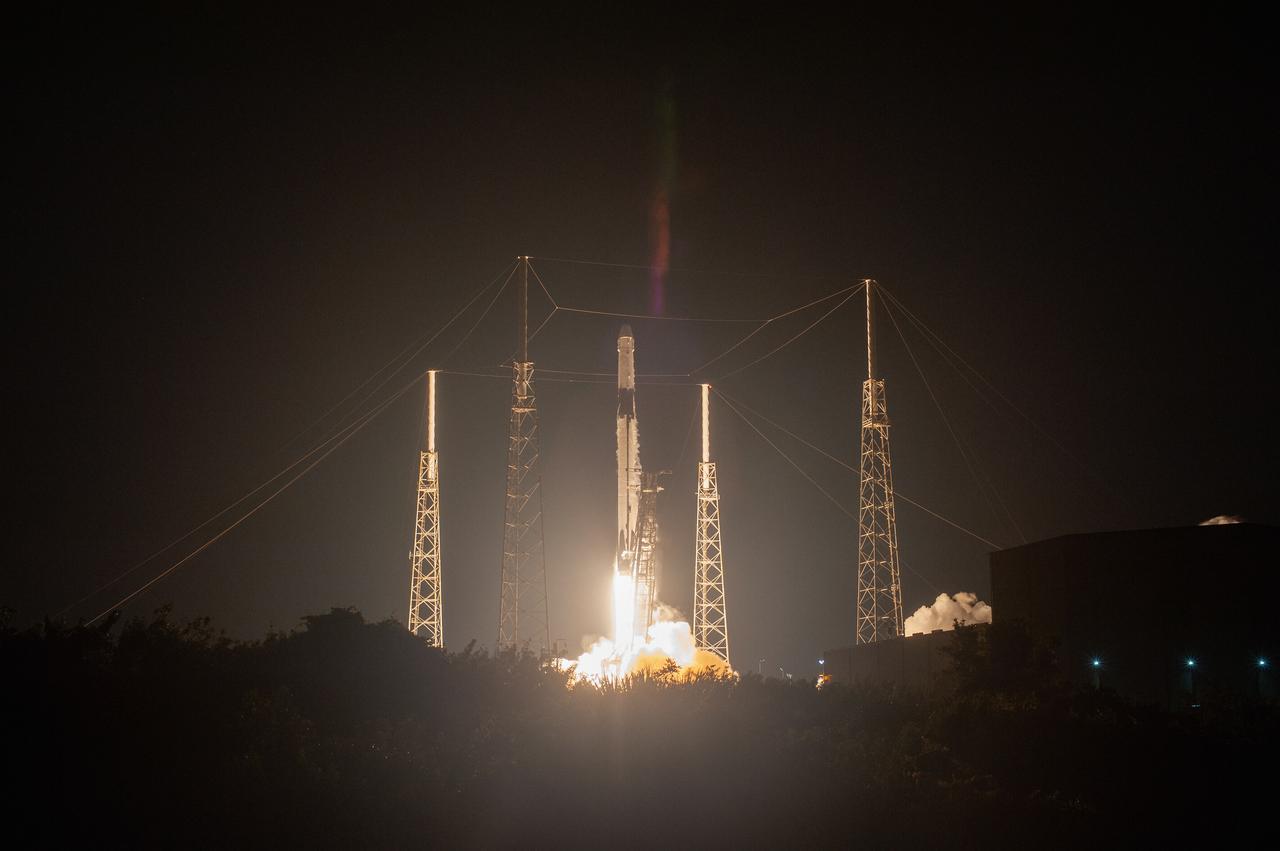
The SpaceX Falcon 9 rocket with the Dragon cargo module lifts off Space Launch Complex 40 on Cape Canaveral Air Force Station in Florida in the early morning May 4, 2019. Liftoff was at 2:48 a.m. EDT. This is SpaceX’s 17th Commercial Resupply Services (CRS-17) mission for NASA to the International Space Station. The Dragon cargo module will deliver about 5,500 pounds of science and research, crew supplies and vehicle hardware to the orbital laboratory and its crew.
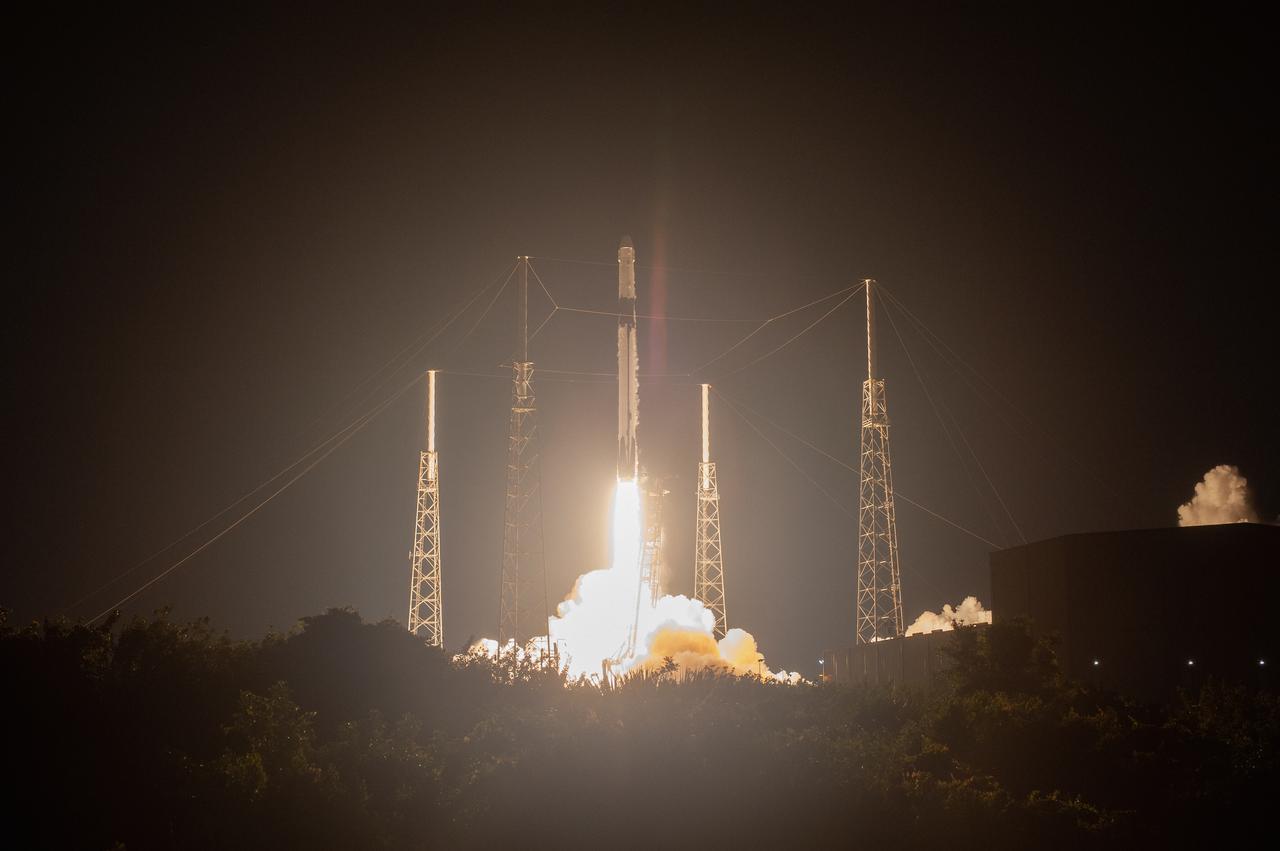
The SpaceX Falcon 9 rocket with the Dragon cargo module lifts off Space Launch Complex 40 on Cape Canaveral Air Force Station in Florida in the early morning May 4, 2019. Liftoff was at 2:48 a.m. EDT. This is SpaceX’s 17th Commercial Resupply Services (CRS-17) mission for NASA to the International Space Station. The Dragon cargo module will deliver about 5,500 pounds of science and research, crew supplies and vehicle hardware to the orbital laboratory and its crew.

The SpaceX Falcon 9 rocket with the Dragon cargo module lifts off Space Launch Complex 40 on Cape Canaveral Air Force Station in Florida in the early morning May 4, 2019. Liftoff was at 2:48 a.m. EDT. This is SpaceX’s 17th Commercial Resupply Services (CRS-17) mission for NASA to the International Space Station. The Dragon cargo module will deliver about 5,500 pounds of science and research, crew supplies and vehicle hardware to the orbital laboratory and its crew.
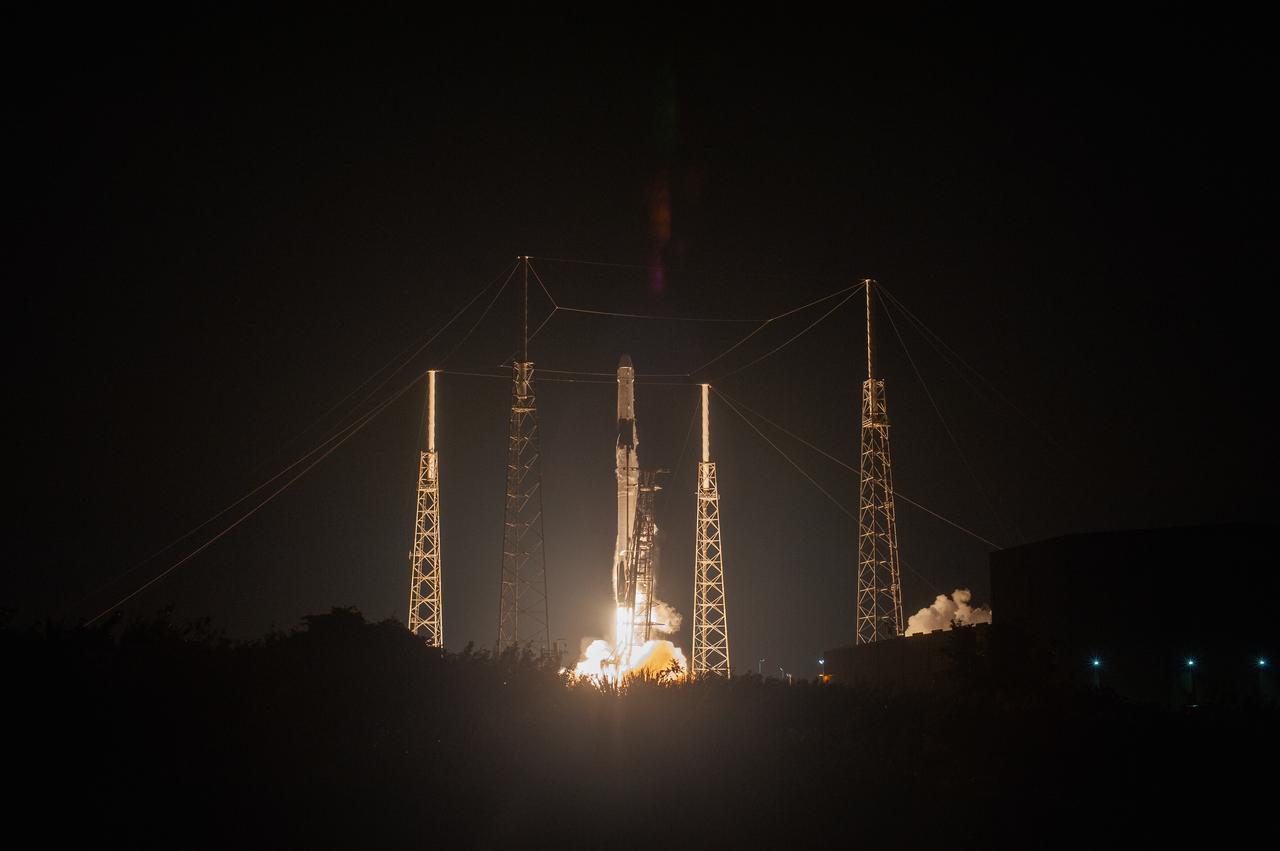
The SpaceX Falcon 9 rocket with the Dragon cargo module lifts off Space Launch Complex 40 on Cape Canaveral Air Force Station in Florida in the early morning May 4, 2019. Liftoff was at 2:48 a.m. EDT. This is SpaceX’s 17th Commercial Resupply Services (CRS-17) mission for NASA to the International Space Station. The Dragon cargo module will deliver about 5,500 pounds of science and research, crew supplies and vehicle hardware to the orbital laboratory and its crew.
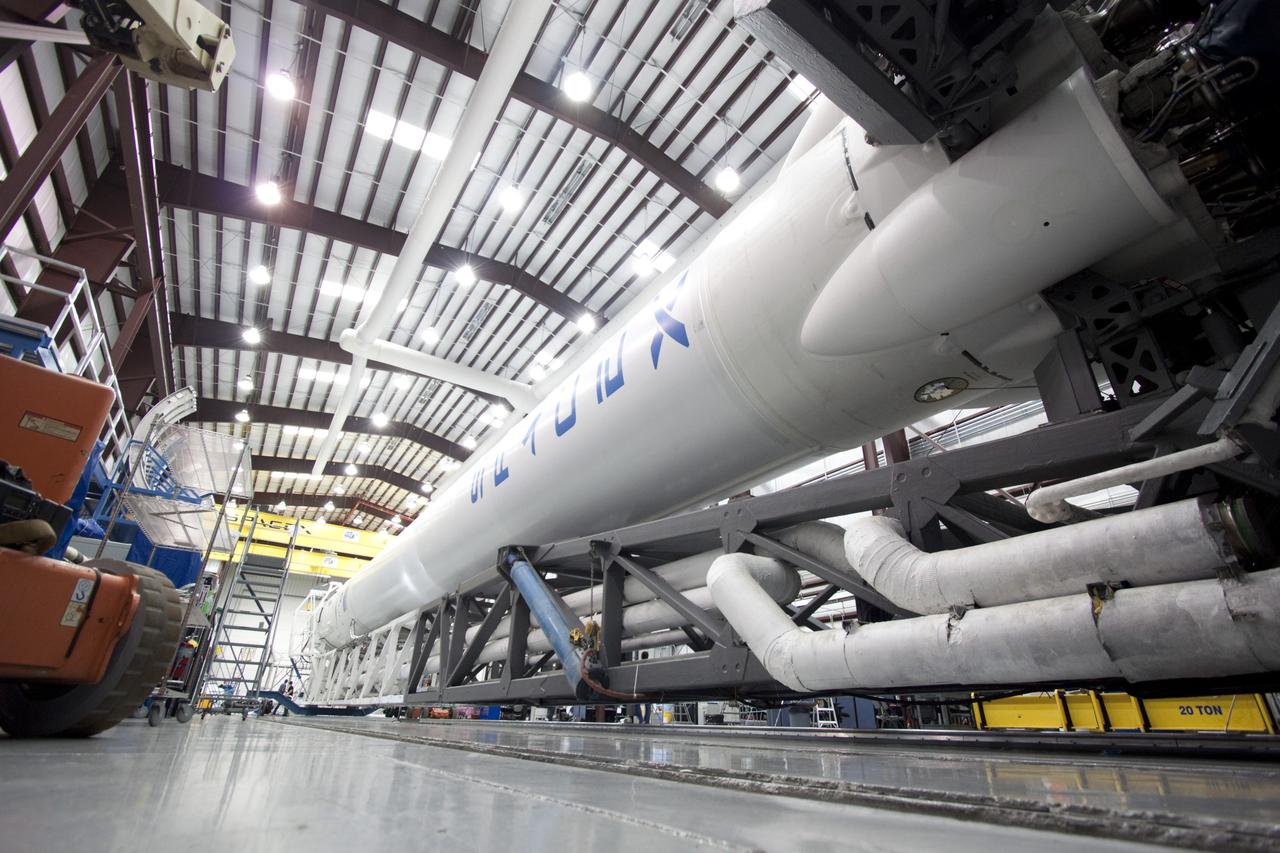
TITUSVILLE, Fla. - The Space Exploration Technologies Corp., or SpaceX, Falcon 9 rocket was mated to the Dragon capsule inside the SpaceX operations building at Space Launch Complex-40 at Cape Canaveral Air Force Station in Florida. Preparations continue for NASA’s first Commercial Resupply Services, or CRS-1, mission to the International Space Station. The rollout to the pad for liftoff is planned for Sunday morning, Oct. 7. Liftoff from CCAFS is scheduled during an instantaneous window at 8:35 p.m. EDT Sunday. SpaceX CRS-1 is an important step toward making America’s microgravity research program self-sufficient by providing a way to deliver and return significant amounts of cargo, including science experiments, to and from the orbiting laboratory. To learn more, visit http://www.nasa.gov/mission_pages/station/living/launch/index.html. Photo credit: NASA/Jim Grossmann
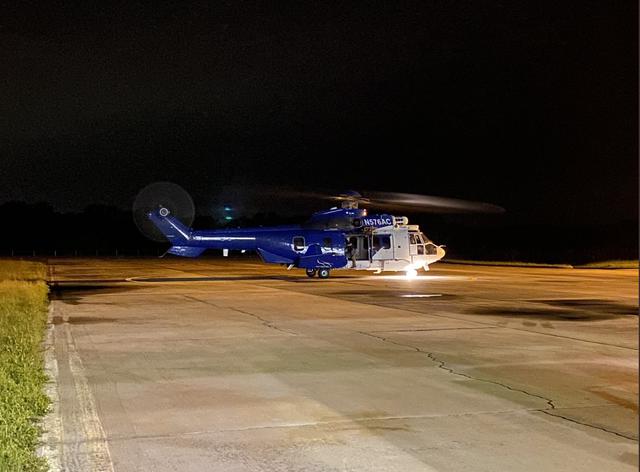
An Airbus H225 helicopter with cargo from SpaceX’s 22nd commercial resupply services mission lands during the early morning on July 10, 2021, at the Launch and Landing Facility at NASA’s Kennedy Space Center in Florida. From there, contractor Jacobs transported the cargo to the center’s Space Station Processing Facility (SSPF). After its successful parachute-assisted splashdown off the coast of Tallahassee, Florida, at 11:29 p.m. EST on Friday, July 9, the SpaceX cargo Dragon returned more than 5,300 pounds of scientific experiments and other cargo from the International Space Station. Splashing down off the coast of Florida enables quick transportation of the science aboard the capsule to the SSPF, delivering some science back into the hands of the researchers as soon as four to nine hours after splashdown. This shorter transportation timeframe allows researchers to collect data with minimal loss of microgravity effects.
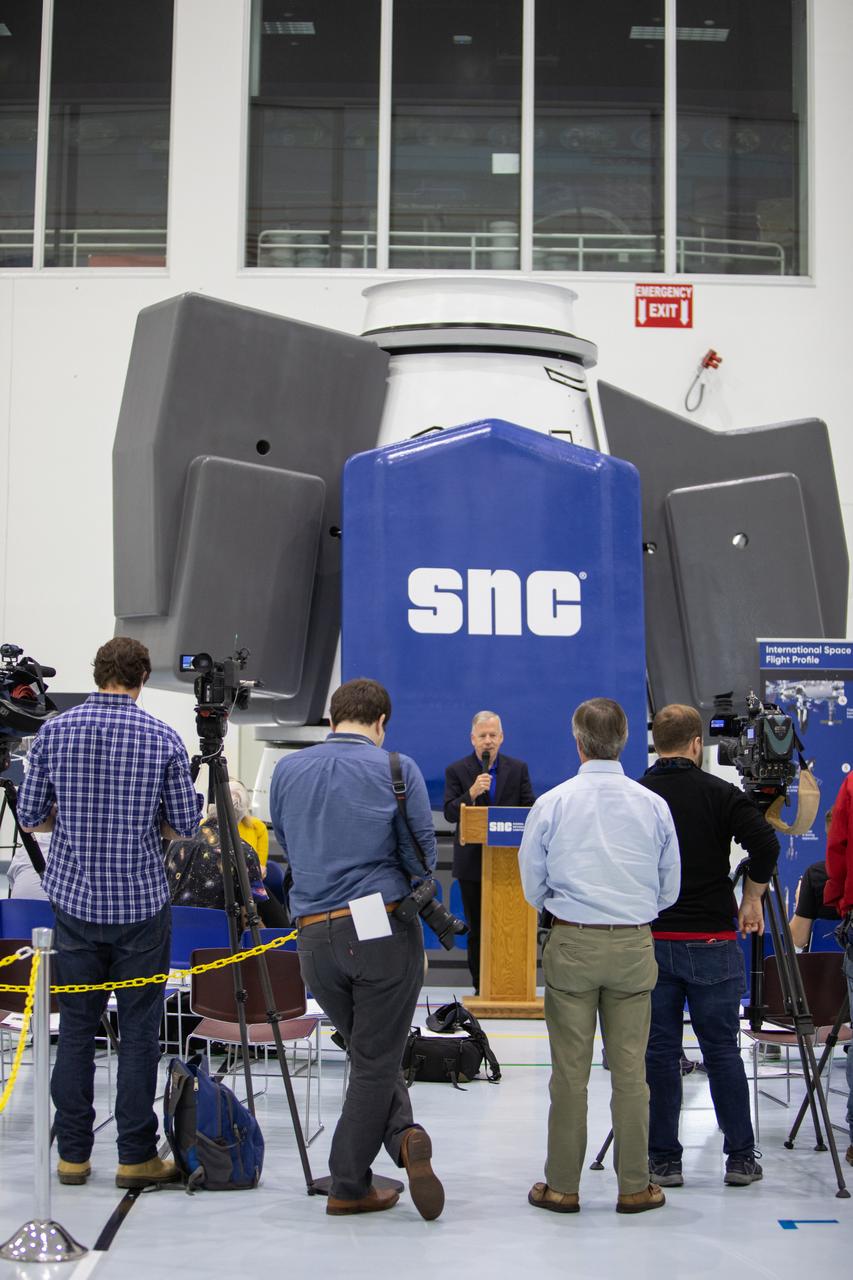
Steve Lindsey, senior vice president of strategy for Sierra Nevada Corporation Space Systems and a former NASA astronaut, discusses the capabilities of the company’s Shooting Star cargo module during a media day event in the Space Station Processing Facility high bay at Kennedy Space Center on Nov. 19, 2019. Shooting Star will attach to the back of the company’s Dream Chaser spacecraft. The cargo module will deliver more than 12,000 pounds of supplies and other cargo to the International Space Station for NASA as part of the Commercial Resupply Services-2 contract.
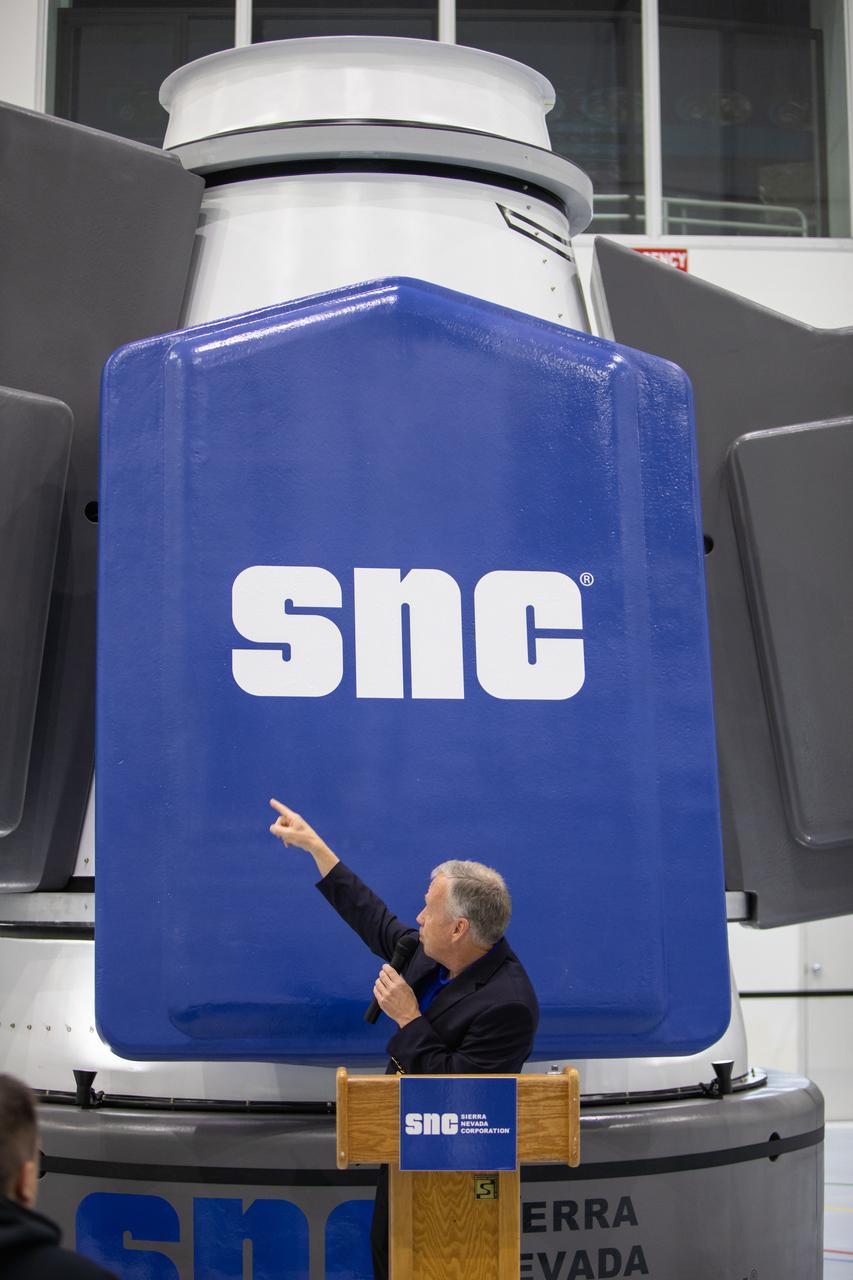
Steve Lindsey, senior vice president of strategy for Sierra Nevada Corporation Space Systems and a former NASA astronaut, discusses the capabilities of the company’s Shooting Star cargo module during a media day event in the Space Station Processing Facility high bay at Kennedy Space Center on Nov. 19, 2019. Shooting Star will attach to the back of the company’s Dream Chaser spacecraft. The cargo module will deliver more than 12,000 pounds of supplies and other cargo to the International Space Station for NASA as part of the Commercial Resupply Services-2 contract.
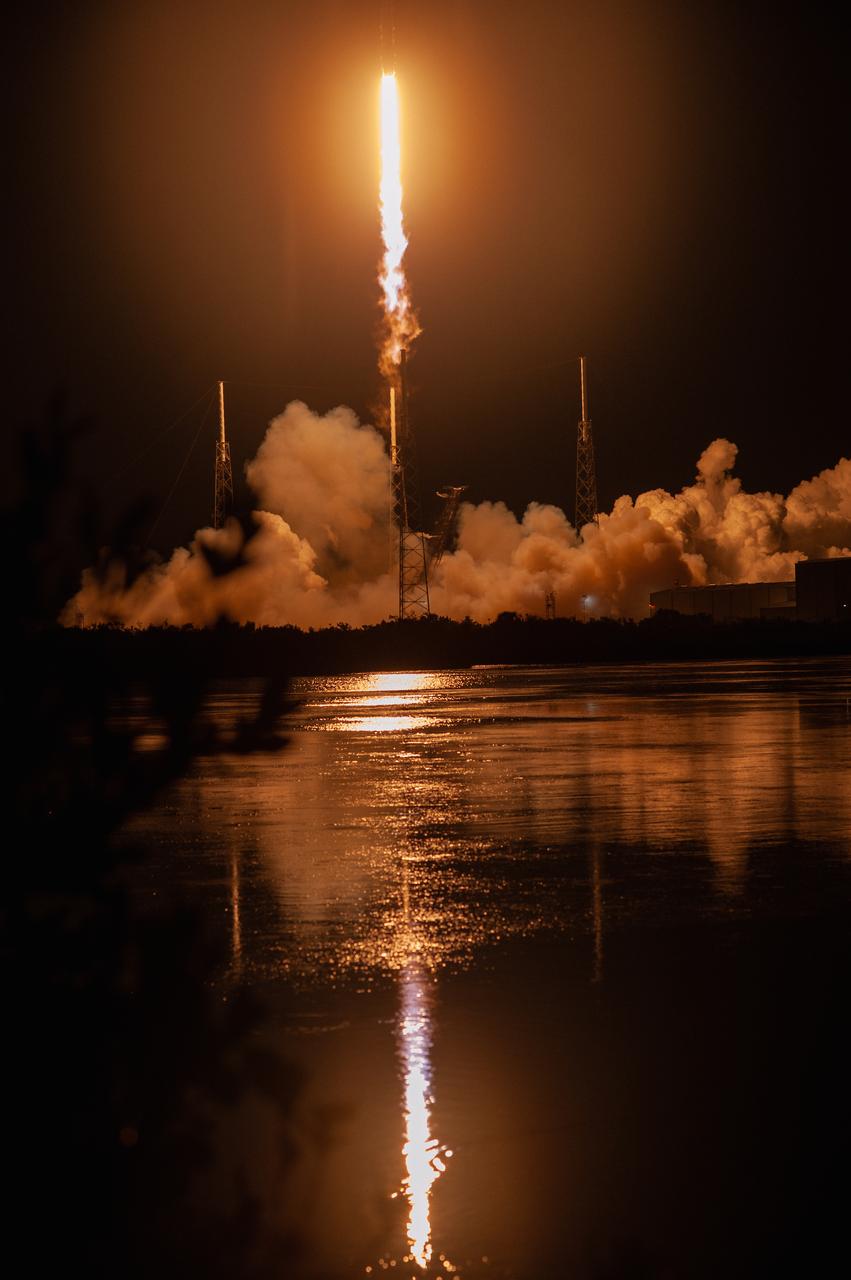
The SpaceX Falcon 9 rocket with the Dragon cargo module lifts off Space Launch Complex 40 on Cape Canaveral Air Force Station in Florida in the early morning May 4, 2019. Liftoff was at 2:48 a.m. EDT. This is SpaceX’s 17th Commercial Resupply Services (CRS-17) mission for NASA to the International Space Station. The Dragon cargo module will deliver about 5,500 pounds of science and research, crew supplies and vehicle hardware to the orbital laboratory and its crew.
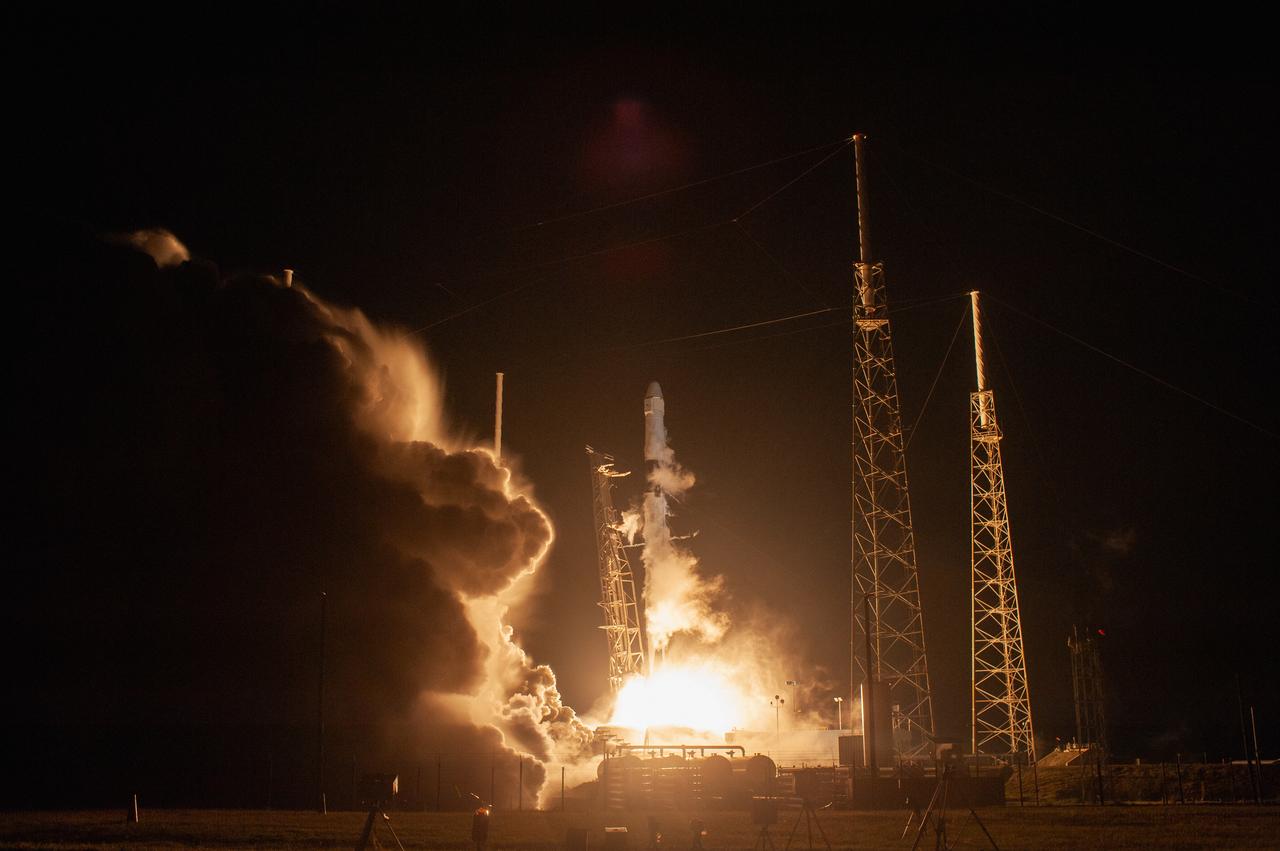
The SpaceX Falcon 9 rocket with the Dragon cargo module lifts off Space Launch Complex 40 on Cape Canaveral Air Force Station in Florida in the early morning May 4, 2019. Liftoff was at 2:48 a.m. EDT. This is SpaceX’s 17th Commercial Resupply Services (CRS-17) mission for NASA to the International Space Station. The Dragon cargo module will deliver about 5,500 pounds of science and research, crew supplies and vehicle hardware to the orbital laboratory and its crew.

The SpaceX Falcon 9 rocket with the Dragon cargo module climbs upward after liftoff from Space Launch Complex 40 on Cape Canaveral Air Force Station in Florida in the early morning May 4, 2019. Liftoff was at 2:48 a.m. EDT. This is SpaceX’s 17th Commercial Resupply Services (CRS-17) mission for NASA to the International Space Station. The Dragon cargo module will deliver about 5,500 pounds of science and research, crew supplies and vehicle hardware to the orbital laboratory and its crew.
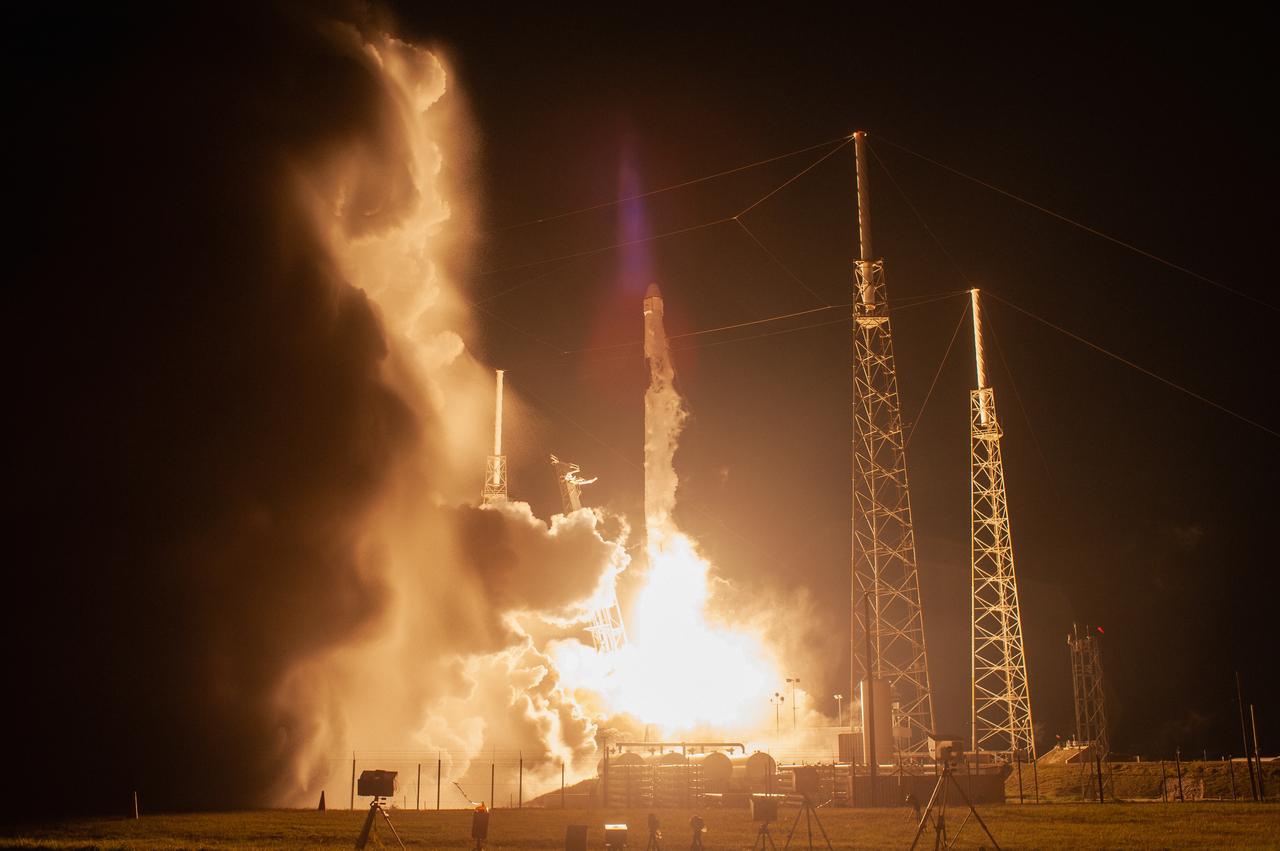
The SpaceX Falcon 9 rocket with the Dragon cargo module lifts off Space Launch Complex 40 on Cape Canaveral Air Force Station in Florida in the early morning May 4, 2019. Liftoff was at 2:48 a.m. EDT. This is SpaceX’s 17th Commercial Resupply Services (CRS-17) mission for NASA to the International Space Station. The Dragon cargo module will deliver about 5,500 pounds of science and research, crew supplies and vehicle hardware to the orbital laboratory and its crew.

The SpaceX Falcon 9 rocket with the Dragon cargo module lifts off Space Launch Complex 40 on Cape Canaveral Air Force Station in Florida in the early morning May 4, 2019. Liftoff was at 2:48 a.m. EDT. This is SpaceX’s 17th Commercial Resupply Services (CRS-17) mission for NASA to the International Space Station. The Dragon cargo module will deliver about 5,500 pounds of science and research, crew supplies and vehicle hardware to the orbital laboratory and its crew.
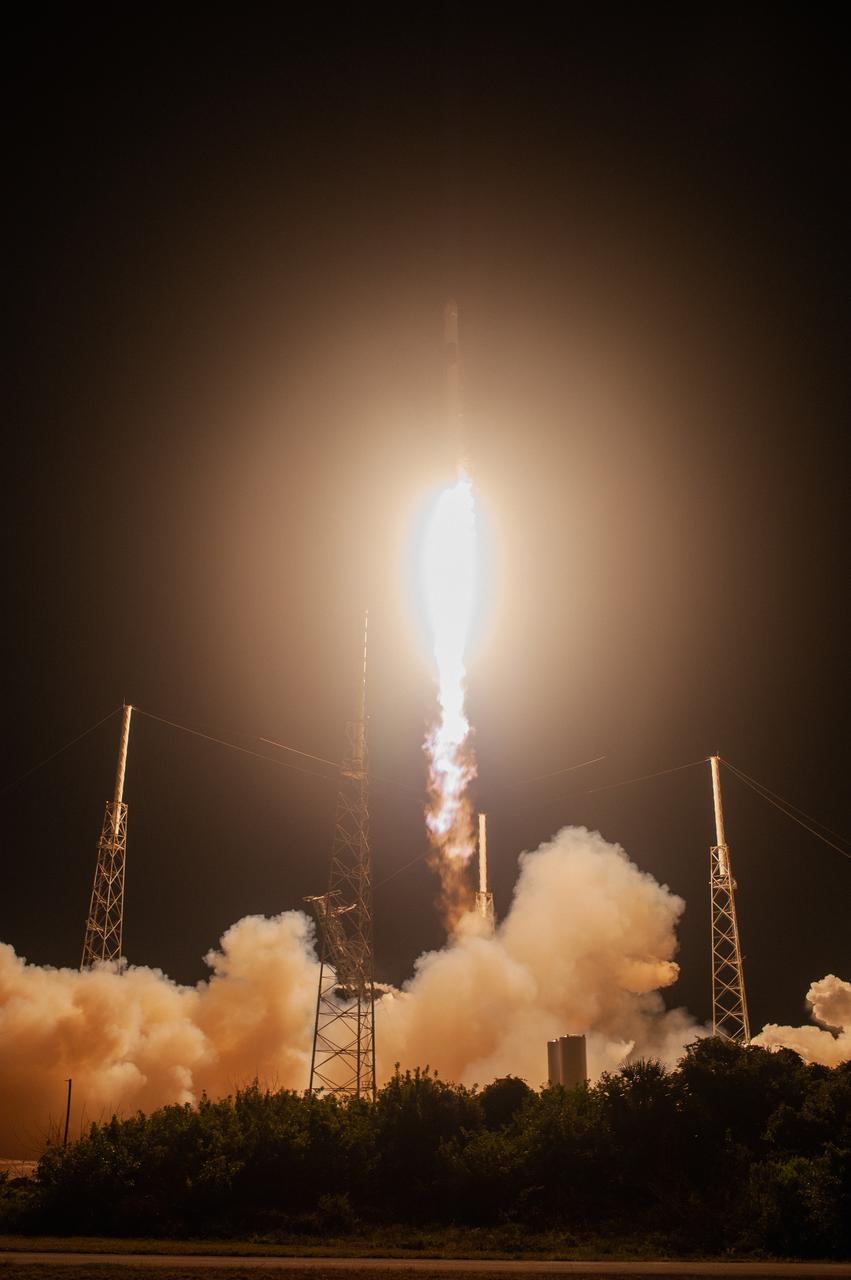
The SpaceX Falcon 9 rocket with the Dragon cargo module climbs upward after liftoff from Space Launch Complex 40 on Cape Canaveral Air Force Station in Florida in the early morning May 4, 2019. Liftoff was at 2:48 a.m. EDT. This is SpaceX’s 17th Commercial Resupply Services (CRS-17) mission for NASA to the International Space Station. The Dragon cargo module will deliver about 5,500 pounds of science and research, crew supplies and vehicle hardware to the orbital laboratory and its crew.
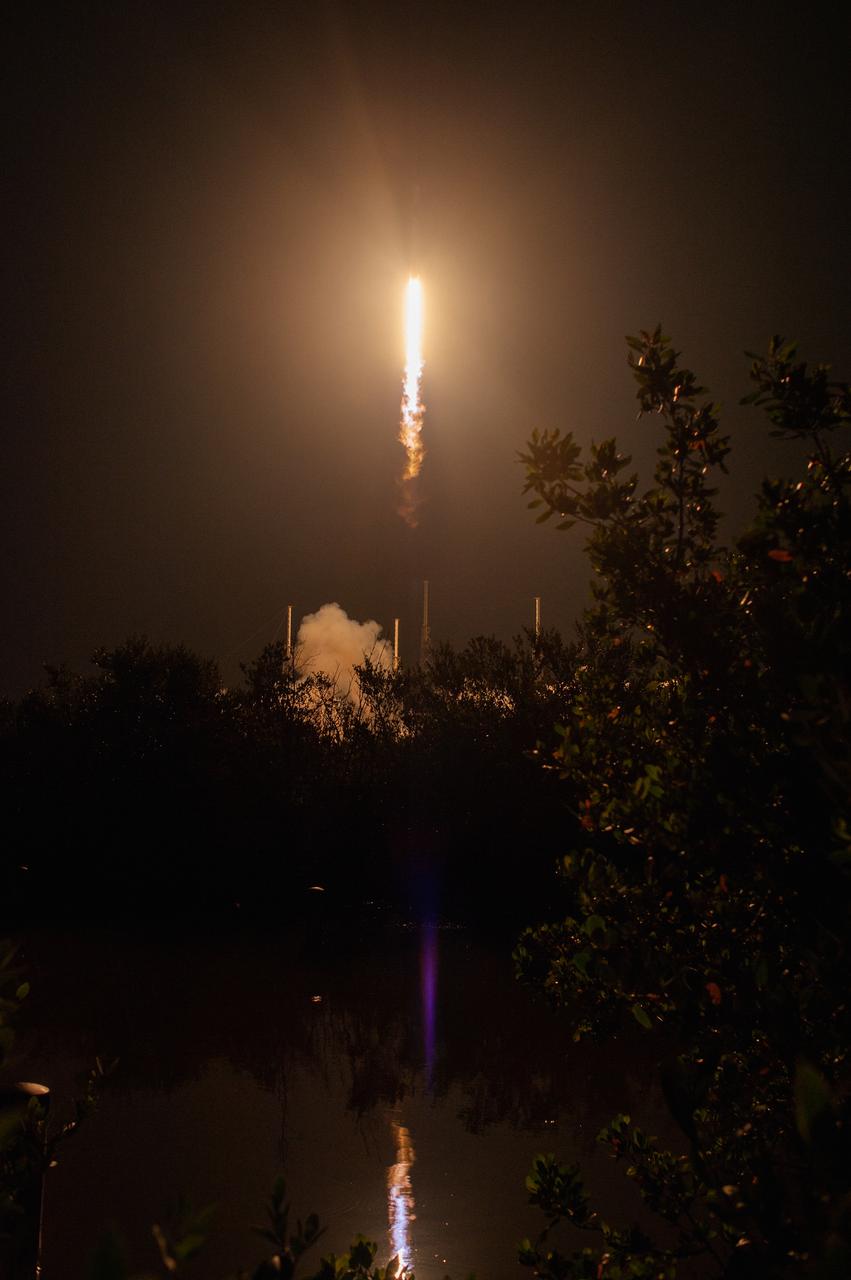
The SpaceX Falcon 9 rocket with the Dragon cargo module climbs upward after liftoff from Space Launch Complex 40 on Cape Canaveral Air Force Station in Florida in the early morning May 4, 2019. Liftoff was at 2:48 a.m. EDT. This is SpaceX’s 17th Commercial Resupply Services (CRS-17) mission for NASA to the International Space Station. The Dragon cargo module will deliver about 5,500 pounds of science and research, crew supplies and vehicle hardware to the orbital laboratory and its crew.
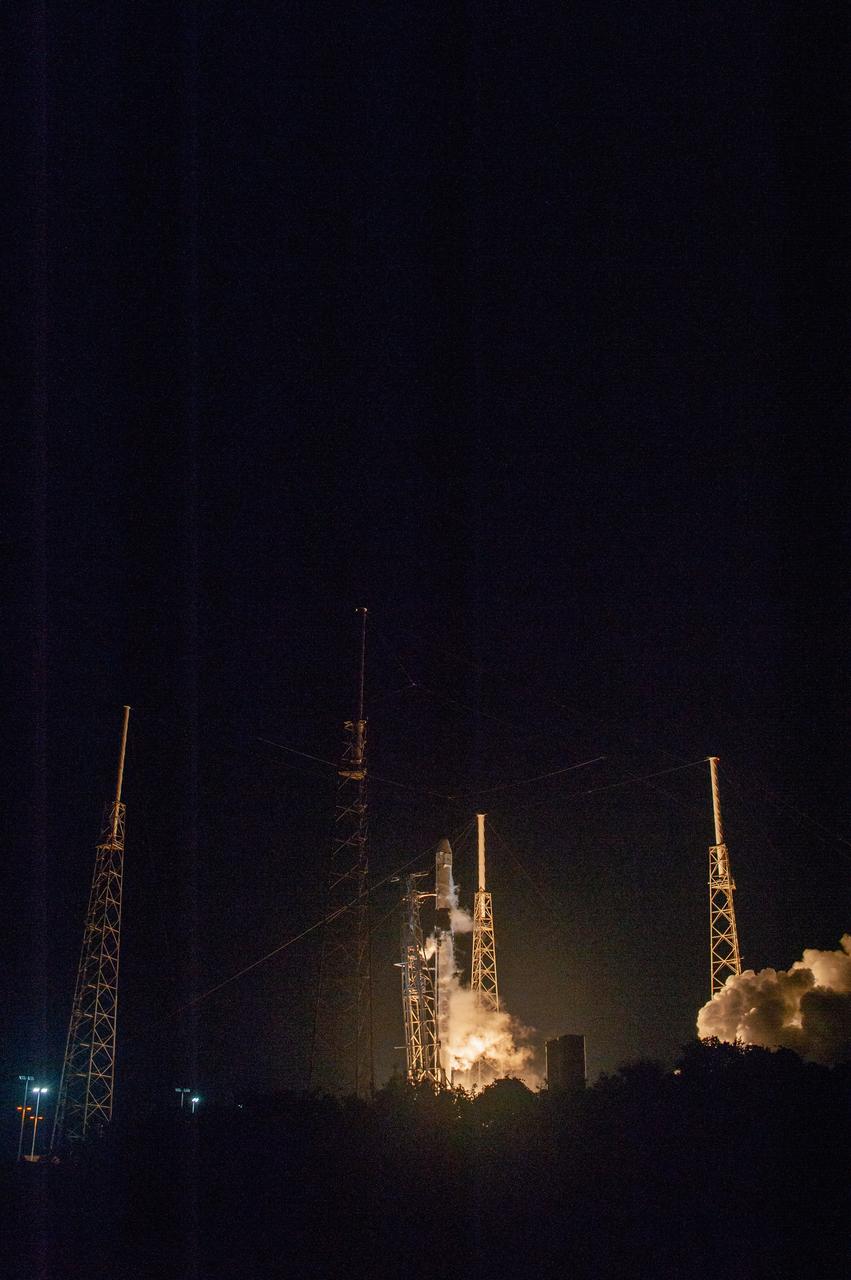
The SpaceX Falcon 9 rocket with the Dragon cargo module lifts off Space Launch Complex 40 on Cape Canaveral Air Force Station in Florida in the early morning May 4, 2019. Liftoff was at 2:48 a.m. EDT. This is SpaceX’s 17th Commercial Resupply Services (CRS-17) mission for NASA to the International Space Station. The Dragon cargo module will deliver about 5,500 pounds of science and research, crew supplies and vehicle hardware to the orbital laboratory and its crew.
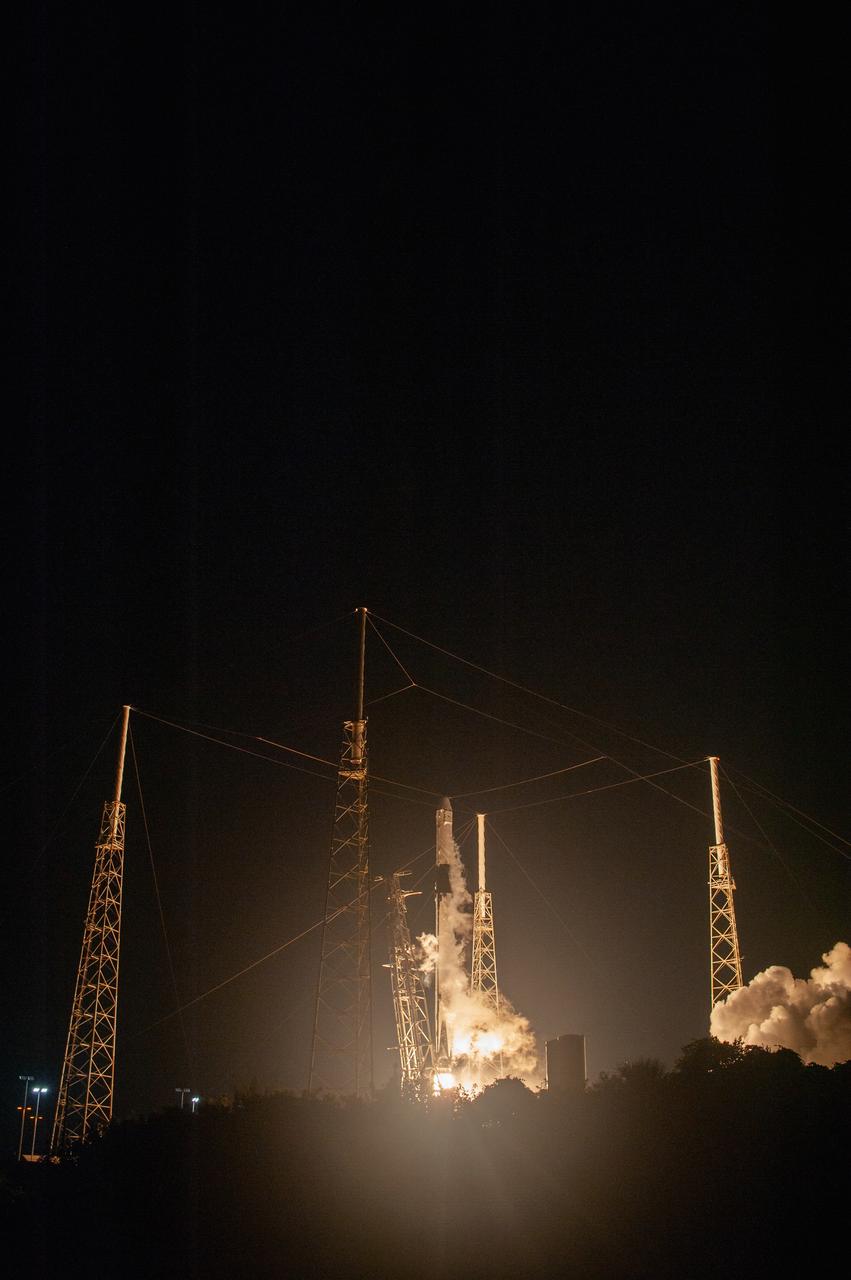
The SpaceX Falcon 9 rocket with the Dragon cargo module lifts off Space Launch Complex 40 on Cape Canaveral Air Force Station in Florida in the early morning May 4, 2019. Liftoff was at 2:48 a.m. EDT. This is SpaceX’s 17th Commercial Resupply Services (CRS-17) mission for NASA to the International Space Station. The Dragon cargo module will deliver about 5,500 pounds of science and research, crew supplies and vehicle hardware to the orbital laboratory and its crew.
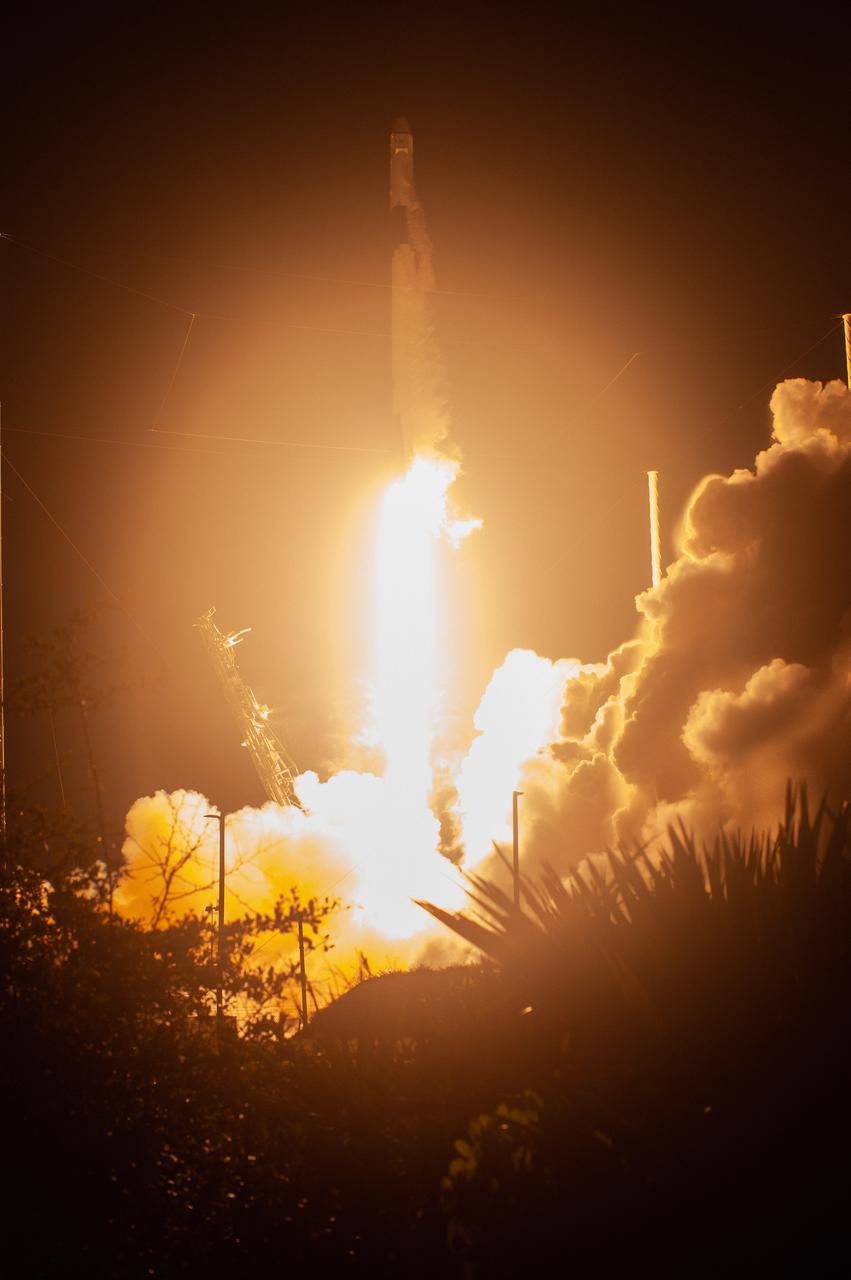
The SpaceX Falcon 9 rocket with the Dragon cargo module climbs upward after liftoff from Space Launch Complex 40 on Cape Canaveral Air Force Station in Florida in the early morning May 4, 2019. Liftoff was at 2:48 a.m. EDT. This is SpaceX’s 17th Commercial Resupply Services (CRS-17) mission for NASA to the International Space Station. The Dragon cargo module will deliver about 5,500 pounds of science and research, crew supplies and vehicle hardware to the orbital laboratory and its crew.
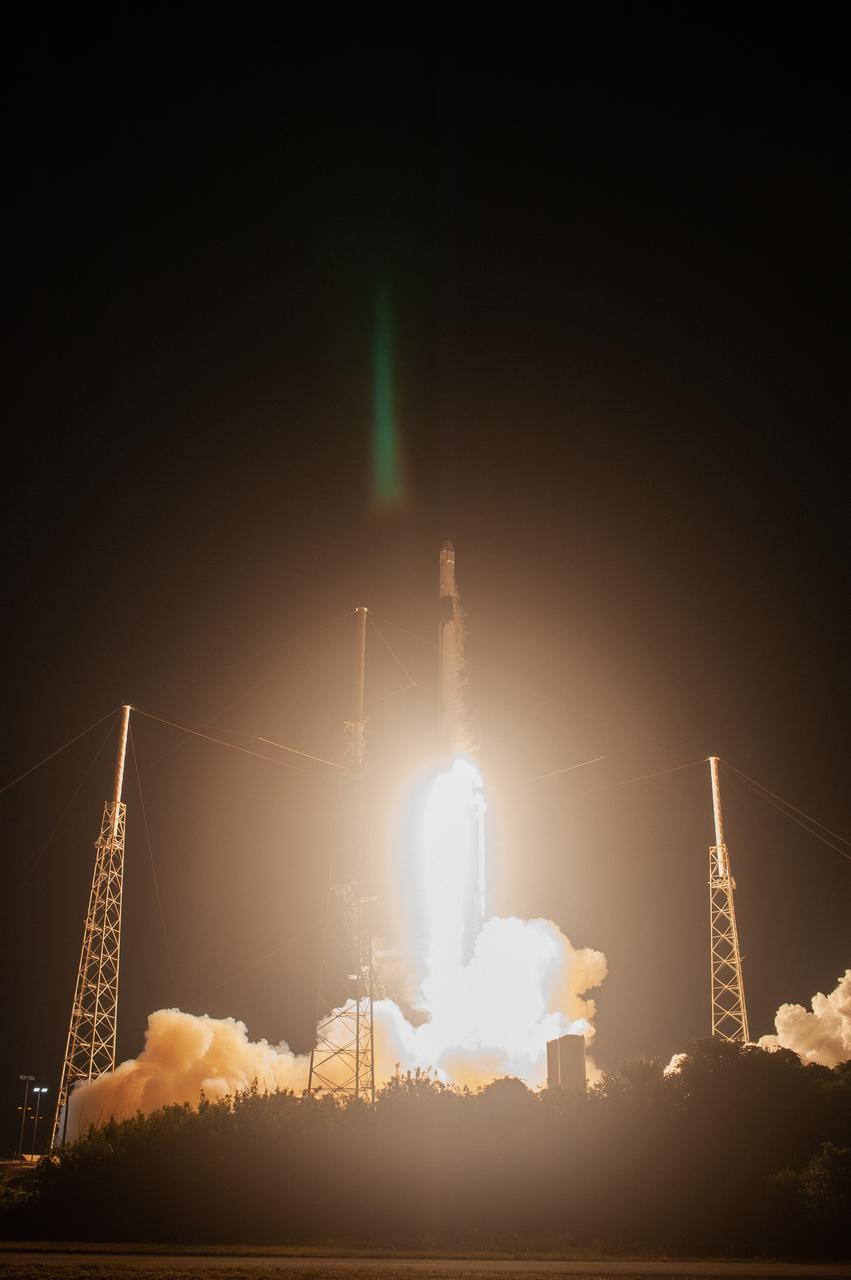
The SpaceX Falcon 9 rocket with the Dragon cargo module climbs upward after liftoff from Space Launch Complex 40 on Cape Canaveral Air Force Station in Florida in the early morning May 4, 2019. Liftoff was at 2:48 a.m. EDT. This is SpaceX’s 17th Commercial Resupply Services (CRS-17) mission for NASA to the International Space Station. The Dragon cargo module will deliver about 5,500 pounds of science and research, crew supplies and vehicle hardware to the orbital laboratory and its crew.
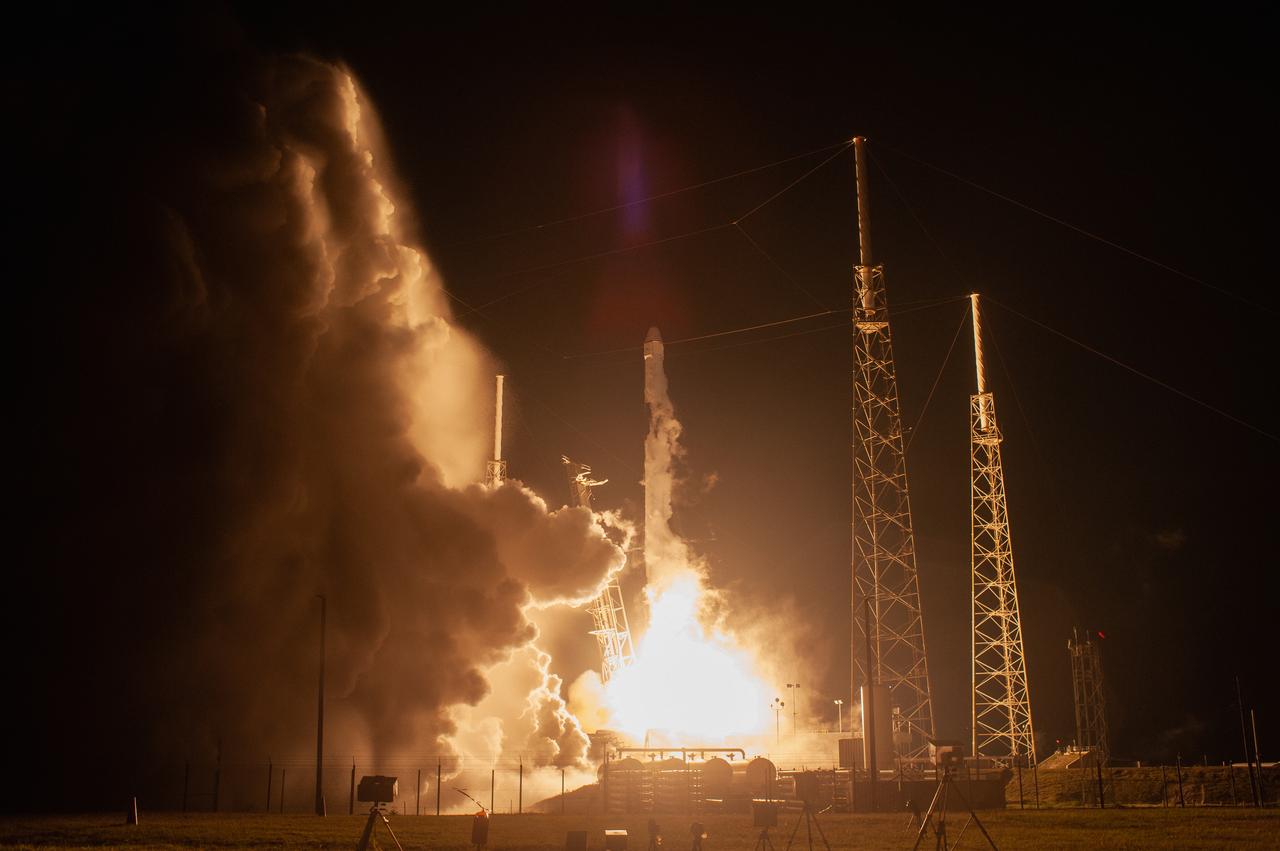
The SpaceX Falcon 9 rocket with the Dragon cargo module lifts off Space Launch Complex 40 on Cape Canaveral Air Force Station in Florida in the early morning May 4, 2019. Liftoff was at 2:48 a.m. EDT. This is SpaceX’s 17th Commercial Resupply Services (CRS-17) mission for NASA to the International Space Station. The Dragon cargo module will deliver about 5,500 pounds of science and research, crew supplies and vehicle hardware to the orbital laboratory and its crew.
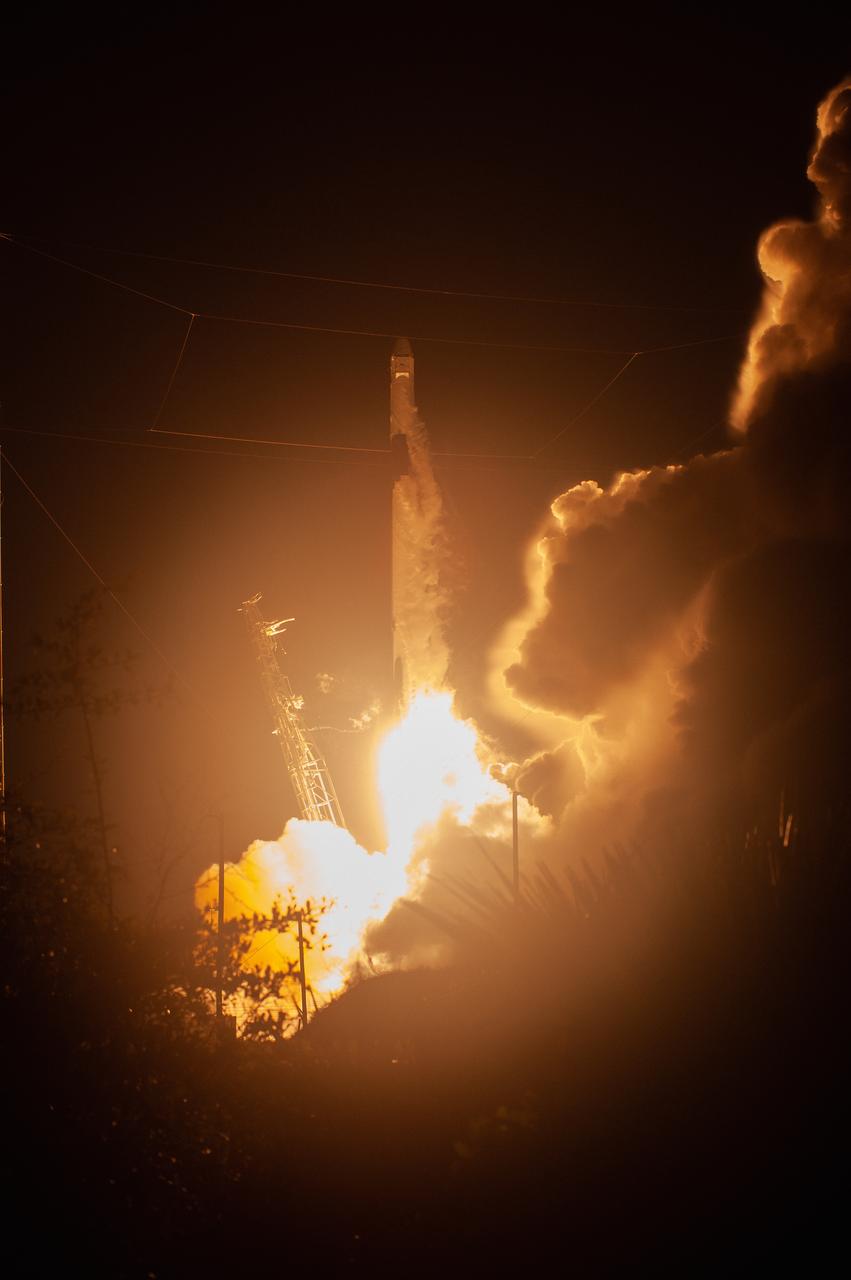
The SpaceX Falcon 9 rocket with the Dragon cargo module climbs upward after liftoff from Space Launch Complex 40 on Cape Canaveral Air Force Station in Florida in the early morning May 4, 2019. Liftoff was at 2:48 a.m. EDT. This is SpaceX’s 17th Commercial Resupply Services (CRS-17) mission for NASA to the International Space Station. The Dragon cargo module will deliver about 5,500 pounds of science and research, crew supplies and vehicle hardware to the orbital laboratory and its crew.

The SpaceX Falcon 9 rocket with the Dragon cargo module lifts off Space Launch Complex 40 on Cape Canaveral Air Force Station in Florida in the early morning May 4, 2019. Liftoff was at 2:48 a.m. EDT. This is SpaceX’s 17th Commercial Resupply Services (CRS-17) mission for NASA to the International Space Station. The Dragon cargo module will deliver about 5,500 pounds of science and research, crew supplies and vehicle hardware to the orbital laboratory and its crew.
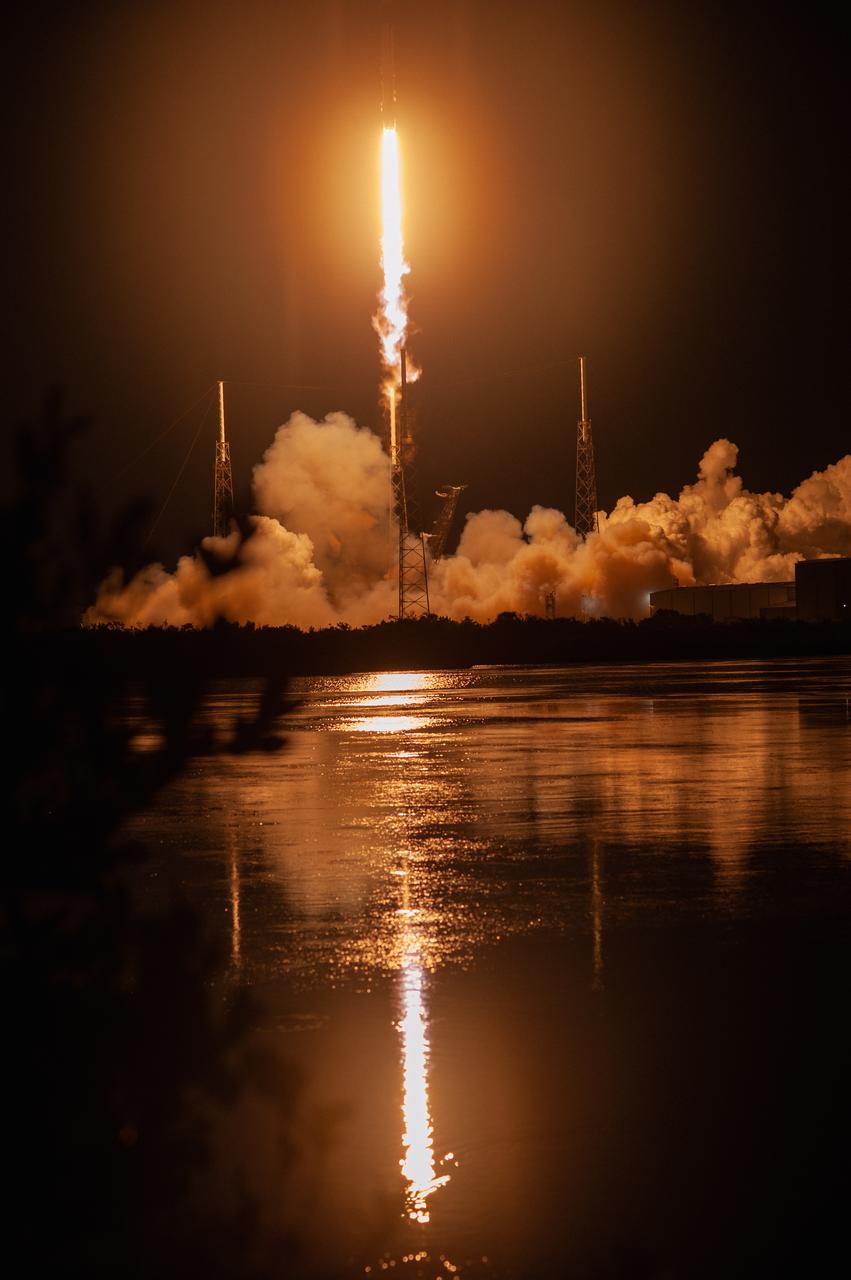
The SpaceX Falcon 9 rocket with the Dragon cargo module lifts off Space Launch Complex 40 on Cape Canaveral Air Force Station in Florida in the early morning May 4, 2019. Liftoff was at 2:48 a.m. EDT. This is SpaceX’s 17th Commercial Resupply Services (CRS-17) mission for NASA to the International Space Station. The Dragon cargo module will deliver about 5,500 pounds of science and research, crew supplies and vehicle hardware to the orbital laboratory and its crew.
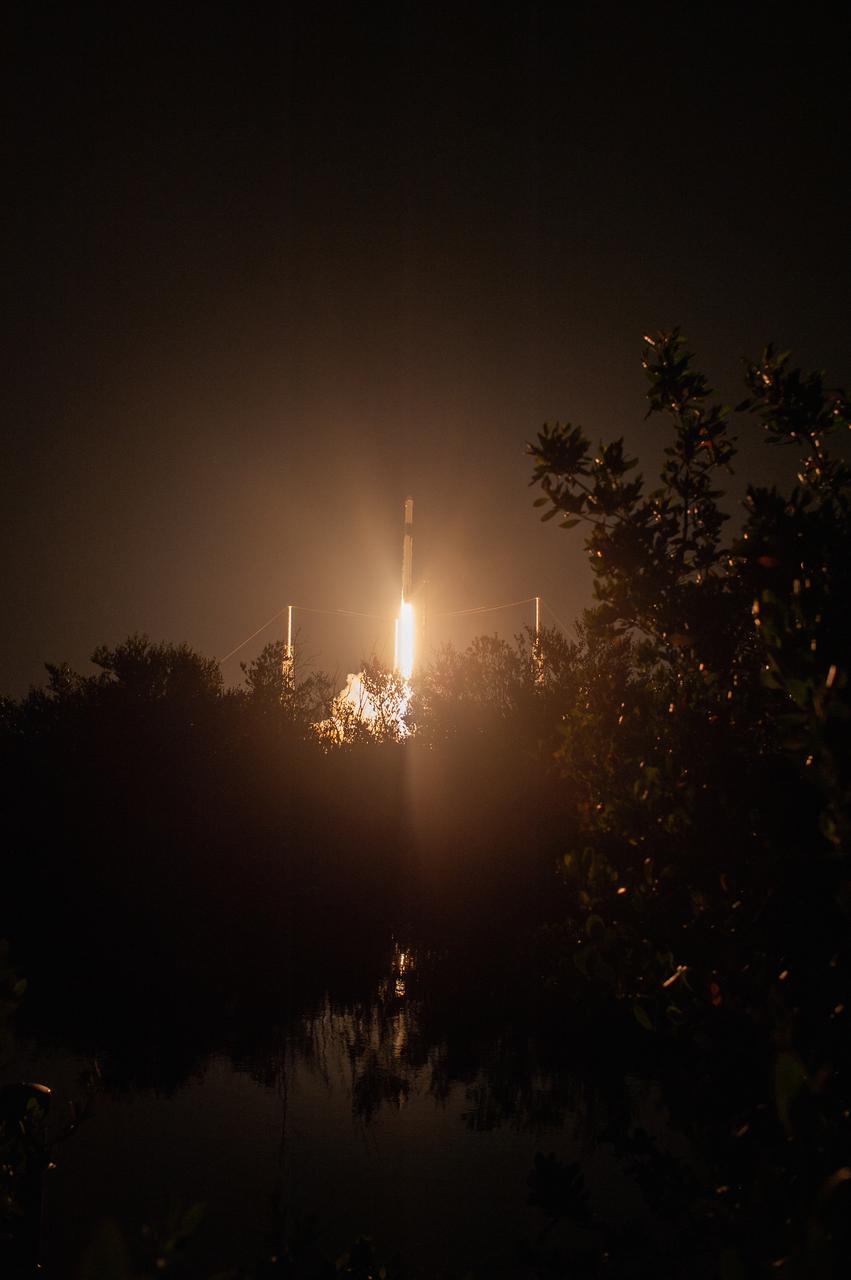
The SpaceX Falcon 9 rocket with the Dragon cargo module lifts off Space Launch Complex 40 on Cape Canaveral Air Force Station in Florida in the early morning May 4, 2019. Liftoff was at 2:48 a.m. EDT. This is SpaceX’s 17th Commercial Resupply Services (CRS-17) mission for NASA to the International Space Station. The Dragon cargo module will deliver about 5,500 pounds of science and research, crew supplies and vehicle hardware to the orbital laboratory and its crew.

The SpaceX Falcon 9 rocket with the Dragon cargo module lifts off Space Launch Complex 40 on Cape Canaveral Air Force Station in Florida in the early morning May 4, 2019. Liftoff was at 2:48 a.m. EDT. This is SpaceX’s 17th Commercial Resupply Services (CRS-17) mission for NASA to the International Space Station. The Dragon cargo module will deliver about 5,500 pounds of science and research, crew supplies and vehicle hardware to the orbital laboratory and its crew.
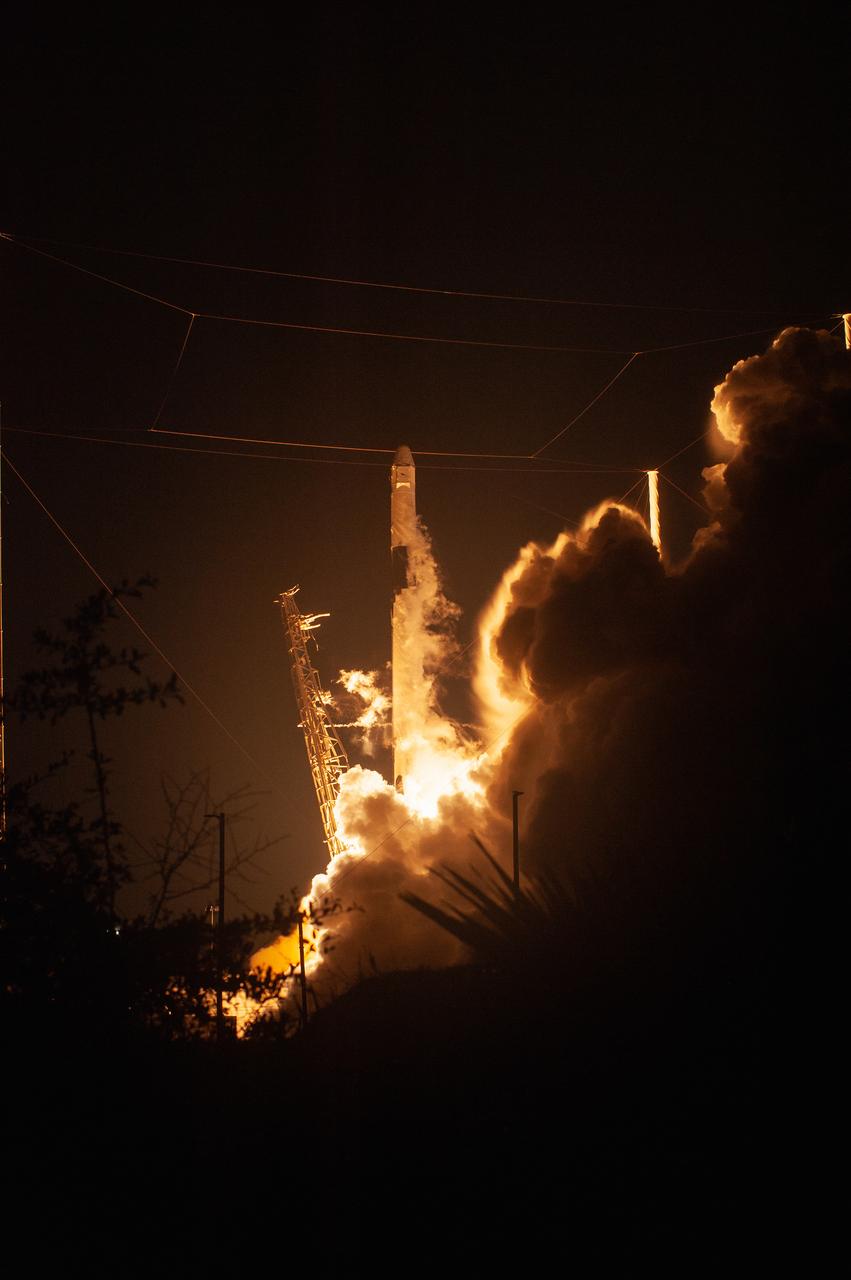
The SpaceX Falcon 9 rocket with the Dragon cargo module climbs upward after liftoff from Space Launch Complex 40 on Cape Canaveral Air Force Station in Florida in the early morning May 4, 2019. Liftoff was at 2:48 a.m. EDT. This is SpaceX’s 17th Commercial Resupply Services (CRS-17) mission for NASA to the International Space Station. The Dragon cargo module will deliver about 5,500 pounds of science and research, crew supplies and vehicle hardware to the orbital laboratory and its crew.

The SpaceX Falcon 9 rocket with the Dragon cargo module lifts off Space Launch Complex 40 on Cape Canaveral Air Force Station in Florida in the early morning May 4, 2019. Liftoff was at 2:48 a.m. EDT. This is SpaceX’s 17th Commercial Resupply Services (CRS-17) mission for NASA to the International Space Station. The Dragon cargo module will deliver about 5,500 pounds of science and research, crew supplies and vehicle hardware to the orbital laboratory and its crew.
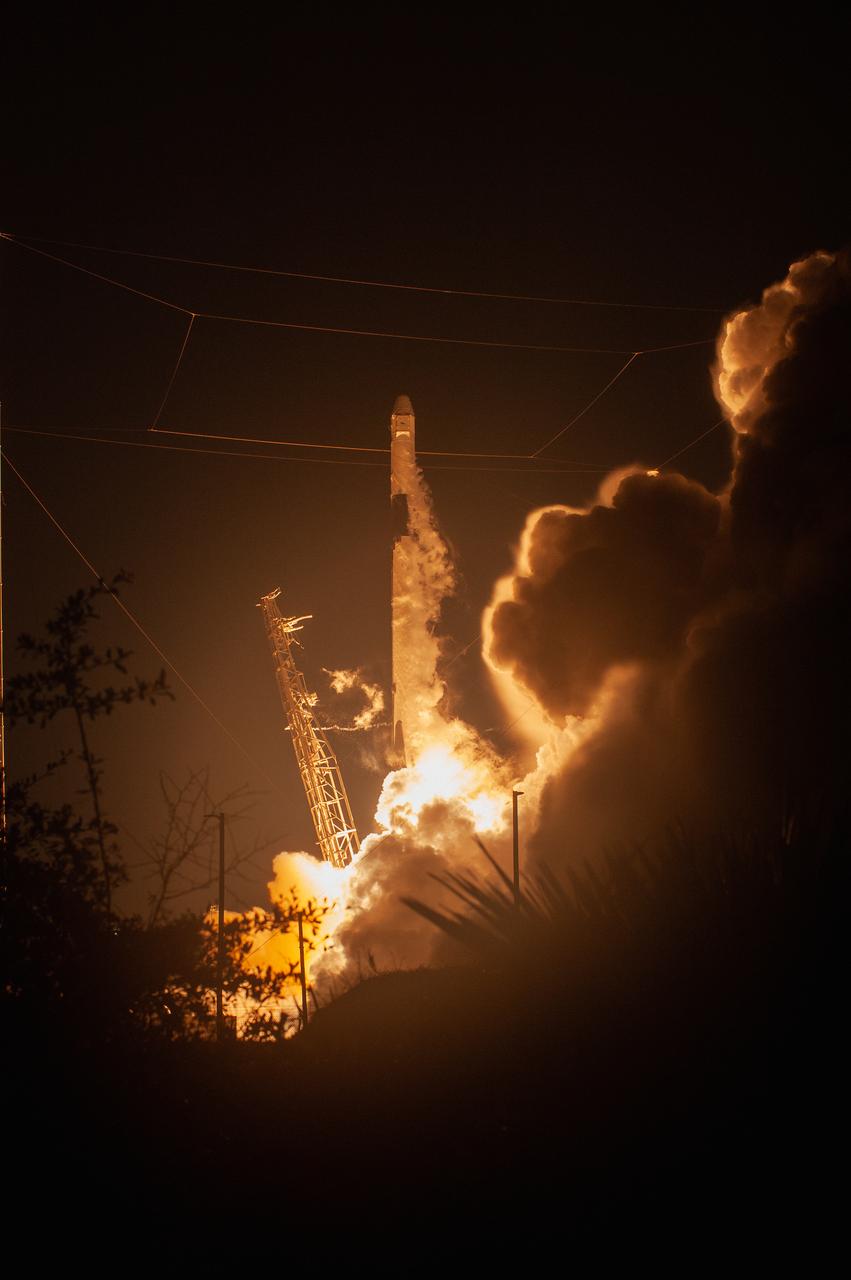
The SpaceX Falcon 9 rocket with the Dragon cargo module climbs upward after liftoff from Space Launch Complex 40 on Cape Canaveral Air Force Station in Florida in the early morning May 4, 2019. Liftoff was at 2:48 a.m. EDT. This is SpaceX’s 17th Commercial Resupply Services (CRS-17) mission for NASA to the International Space Station. The Dragon cargo module will deliver about 5,500 pounds of science and research, crew supplies and vehicle hardware to the orbital laboratory and its crew.