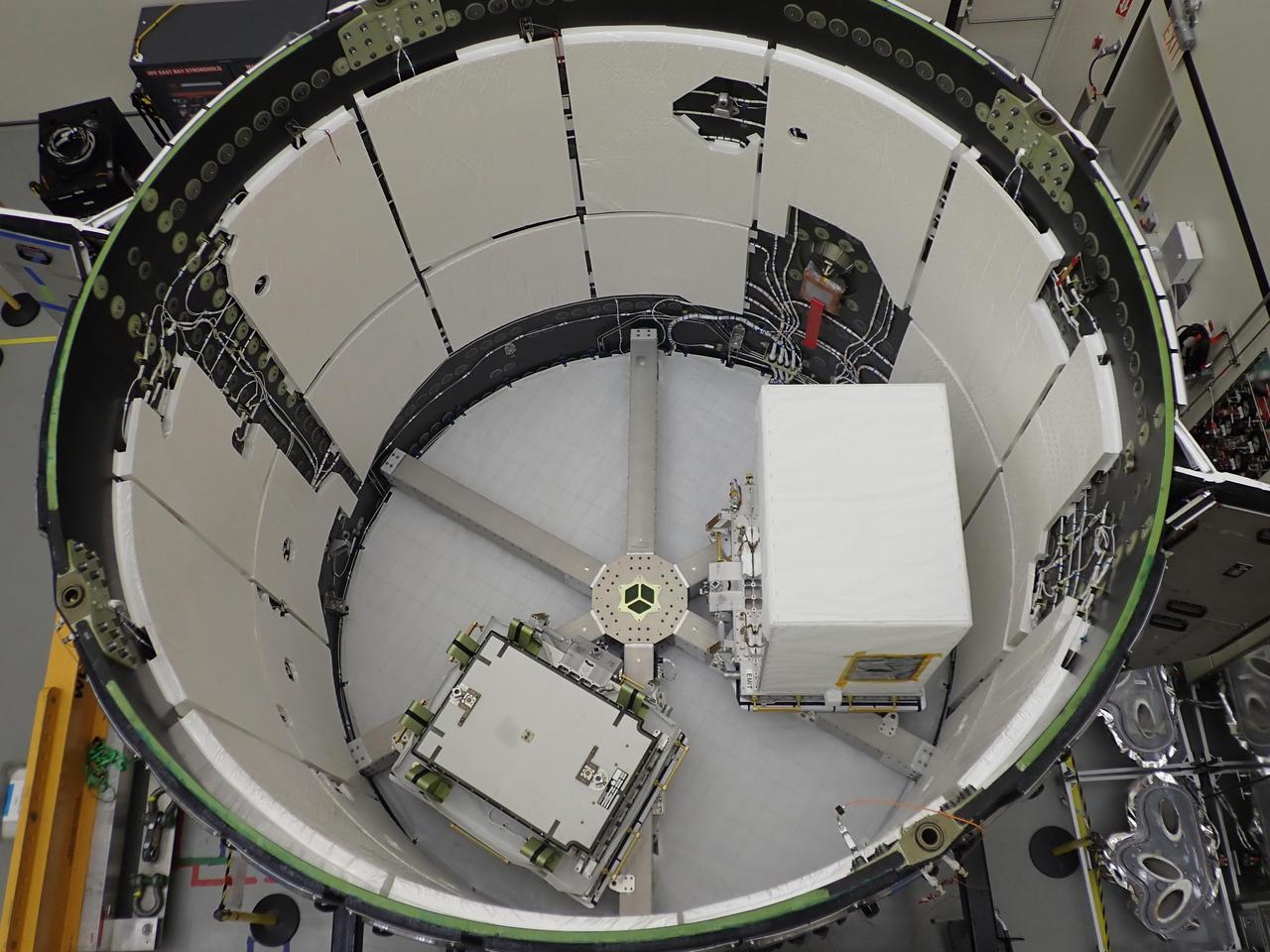
The Earth Surface Mineral Dust Source Investigation (EMIT) mission instrument (right) sits in the "trunk" that will travel aboard SpaceX's 25th cargo resupply mission – planned for June 7, 2022 – to the International Space Station. This image was taken May 3, 2022, at SpaceX's Dragonland facility in Florida. Developed at NASA's Jet Propulsion Laboratory in Southern California and launching from Kennedy Space Center in Florida, EMIT will map the world's mineral-dust sources, gathering information about particle color and composition as it orbits over the planet's dry, sparsely vegetated regions. After being mounted on the space station, EMIT will collect measurements of 10 important surface minerals – hematite, goethite, illite, vermiculite, calcite, dolomite, montmorillonite, kaolinite, chlorite, and gypsum – in arid regions between 50-degree south and north latitudes in Africa, Asia, North and South America, and Australia. The data EMIT collects will help scientists better understand the role of airborne dust particles in heating and cooling Earth's atmosphere on global and regional scales. The white covering will prevent the spread of the heat the instrument generates, keeping it from affecting the space station and nearby instruments. EMIT will be one of two pieces of equipment transported to the space station in the external cargo "trunk" on SpaceX's Falcon 9 rocket. The other (left) is a Battery Charge/Discharge Unit. https://photojournal.jpl.nasa.gov/catalog/PIA25148
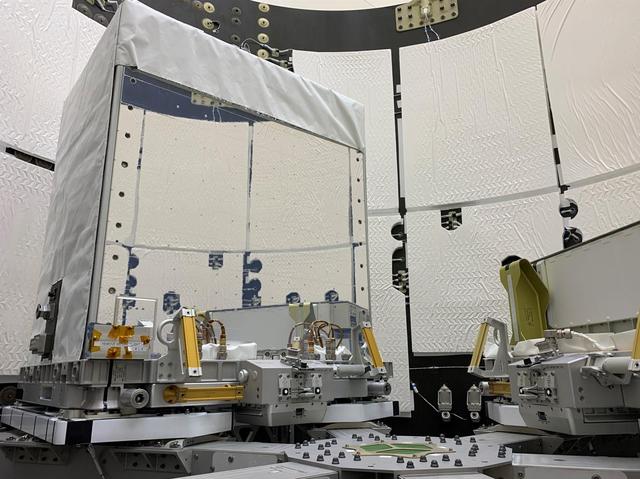
The Earth Surface Mineral Dust Source Investigation (EMIT) mission instrument (left) sits in the "trunk" that will travel aboard SpaceX's 25th cargo resupply mission – planned for June 7, 2022 – to the International Space Station. This image was taken May 3, 2022, at SpaceX's Dragonland facility in Florida. Developed at NASA's Jet Propulsion Laboratory in Southern California and launching from Kennedy Space Center in Florida, EMIT will map the world's mineral-dust sources, gathering information about particle color and composition as it orbits over the planet's dry, sparsely vegetated regions. After being mounted on the space station, EMIT will collect measurements of 10 important surface minerals – hematite, goethite, illite, vermiculite, calcite, dolomite, montmorillonite, kaolinite, chlorite, and gypsum – in arid regions between 50-degree south and north latitudes in Africa, Asia, North and South America, and Australia. The data EMIT collects will help scientists better understand the role of airborne dust particles in heating and cooling Earth's atmosphere on global and regional scales. The mirror-like side radiator panels are designed to keep the instrument's interior electronics and optics at a low enough temperature to work optimally. The white covering will prevent the spread of the heat the instrument generates, keeping it from affecting the space station and nearby instruments. EMIT will be one of two pieces of equipment transported to the space station in the external cargo "trunk" on SpaceX's Falcon 9 rocket. The other (left) is a Battery Charge/Discharge Unit. https://photojournal.jpl.nasa.gov/catalog/PIA25149
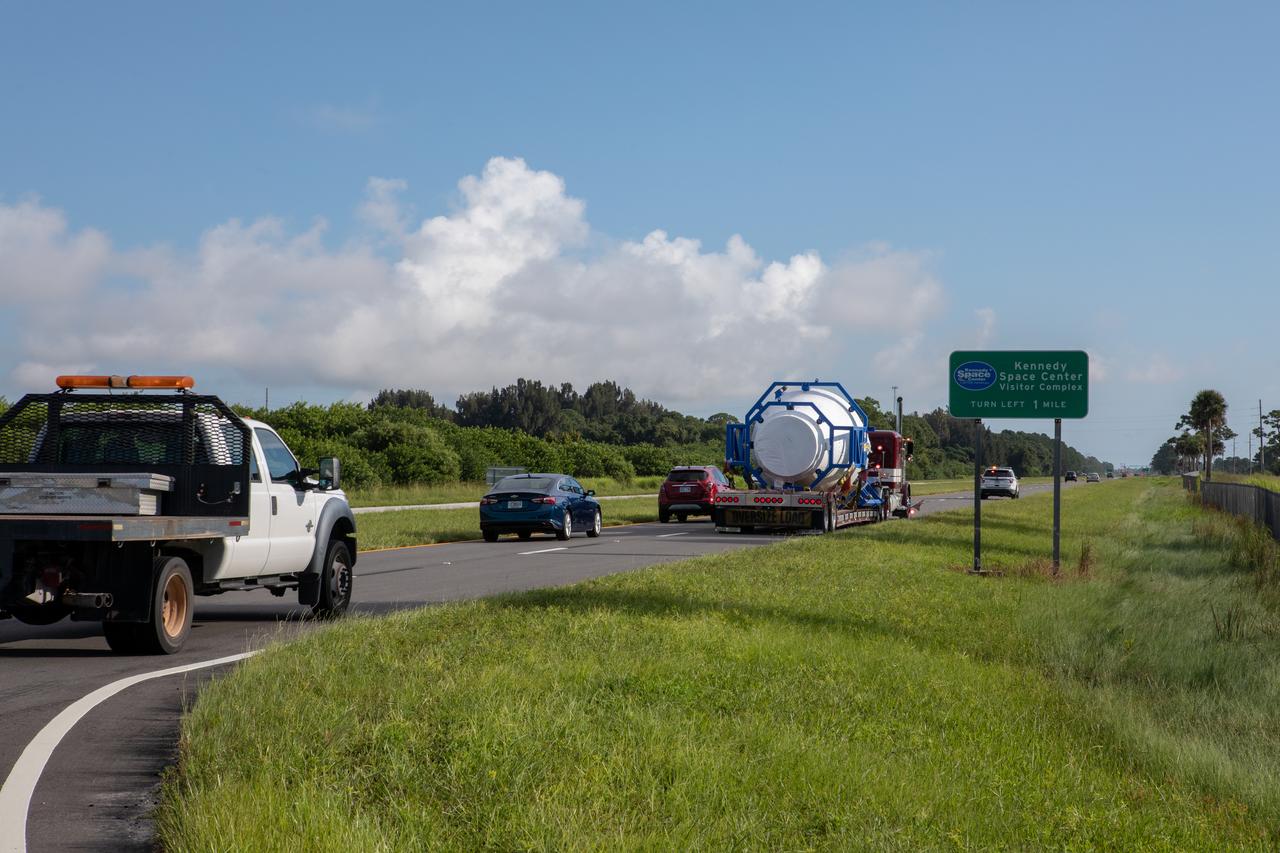
The cargo logistics module for Sierra Nevada Corporation’s Dream Chaser, the company’s reusable spaceplane, arrives at NASA’s Kennedy Space Center in Florida on Aug. 27, 2019. The cargo module – secured atop a truck – is being taken to Kennedy’s Space Station Processing Facility. A 15-foot attachment to Dream Chaser, the cargo module provides extra storage for payloads and provides cargo disposal upon re-entry into Earth’s atmosphere. Dream Chaser will deliver more than 12,000 pounds of cargo to the International Space Station under NASA’s Commercial Resupply Services 2 contract. The spacecraft and cargo module will begin resupply and return services missions to the space station in late 2021.
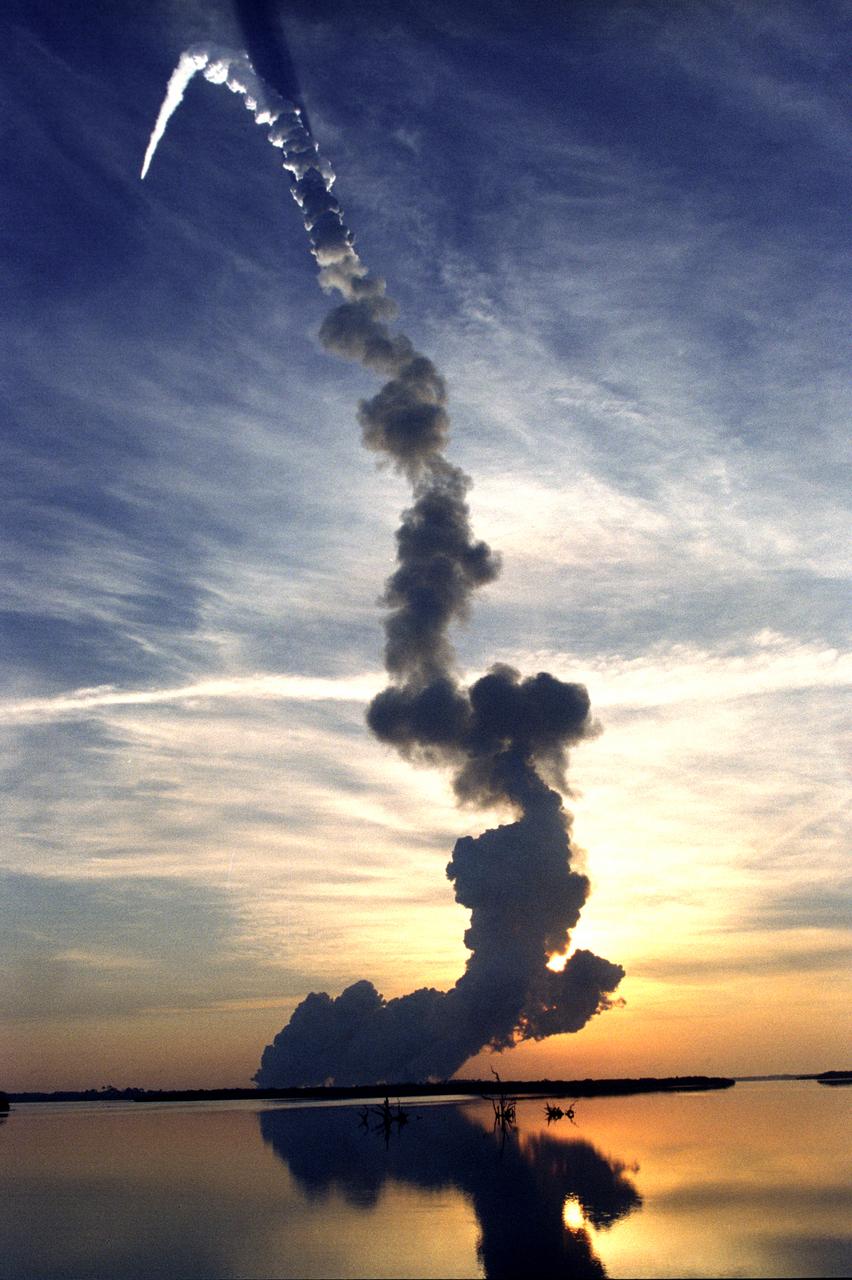
This spectacular photo is of the May 27, 1999 liftoff of the Orbiter Discovery (STS-96). The STS-96 mission, of almost 10 days, was the second International Space Station (ISS) assembly and resupply flight and the first flight to dock with the station. The crew installed foot restraints and the Russian built crane, STRELA. The Shuttle's SPACEHAB double module carried internal and resupply cargo for station outfitting and the Russian cargo crane was carried aboard the shuttle in the integrated Cargo Carrier (ICC).
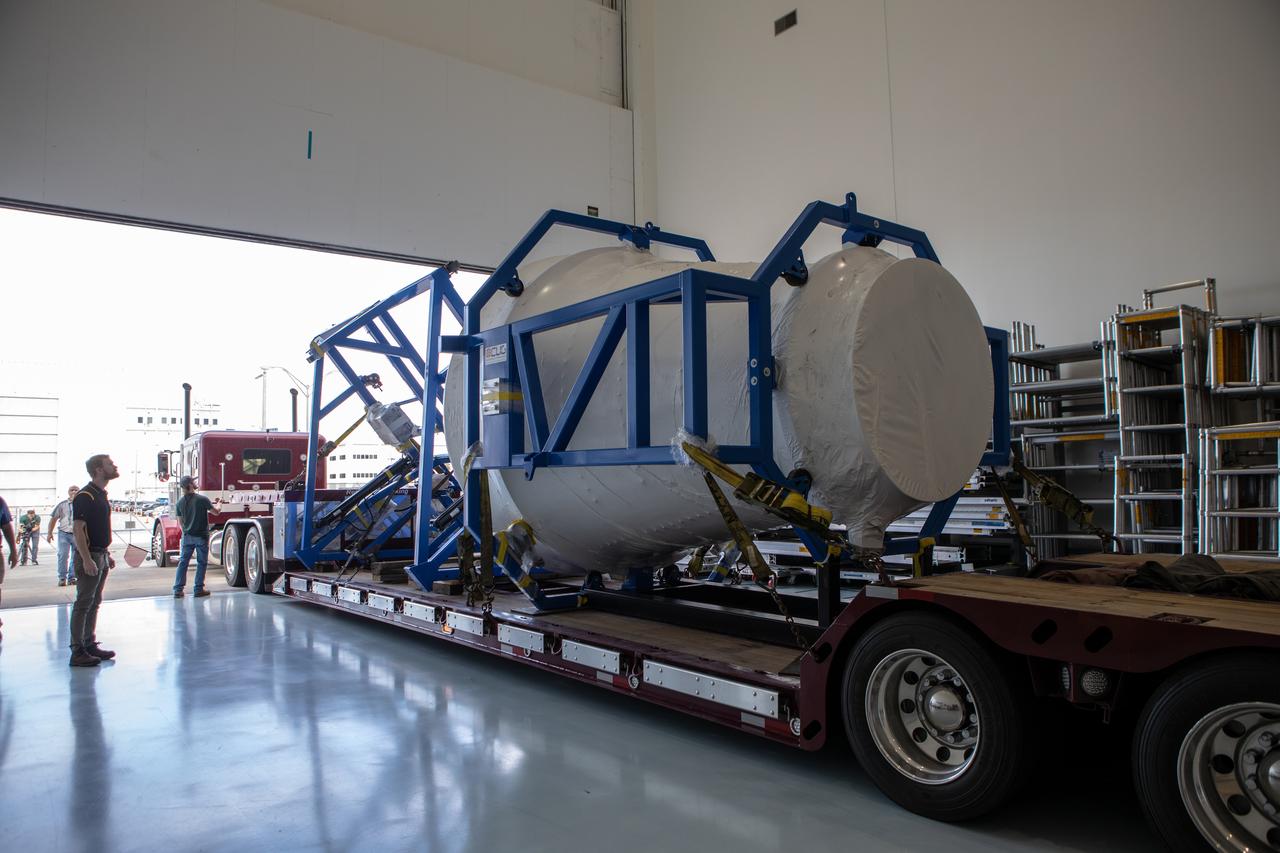
A truck carrying the cargo logistics module for Sierra Nevada Corporation’s Dream Chaser, the company’s reusable spaceplane, enters the Space Station Processing Facility high bay at NASA’s Kennedy Space Center in Florida on Aug. 27, 2019. The cargo module – a 15-foot attachment to Dream Chaser – provides extra storage for payloads and provides cargo disposal upon re-entry into Earth’s atmosphere. Dream Chaser will deliver more than 12,000 pounds of cargo to the International Space Station under the agency’s Commercial Resupply Services 2 contract. The spacecraft and cargo module will begin resupply and return services missions to the space station in late 2021.
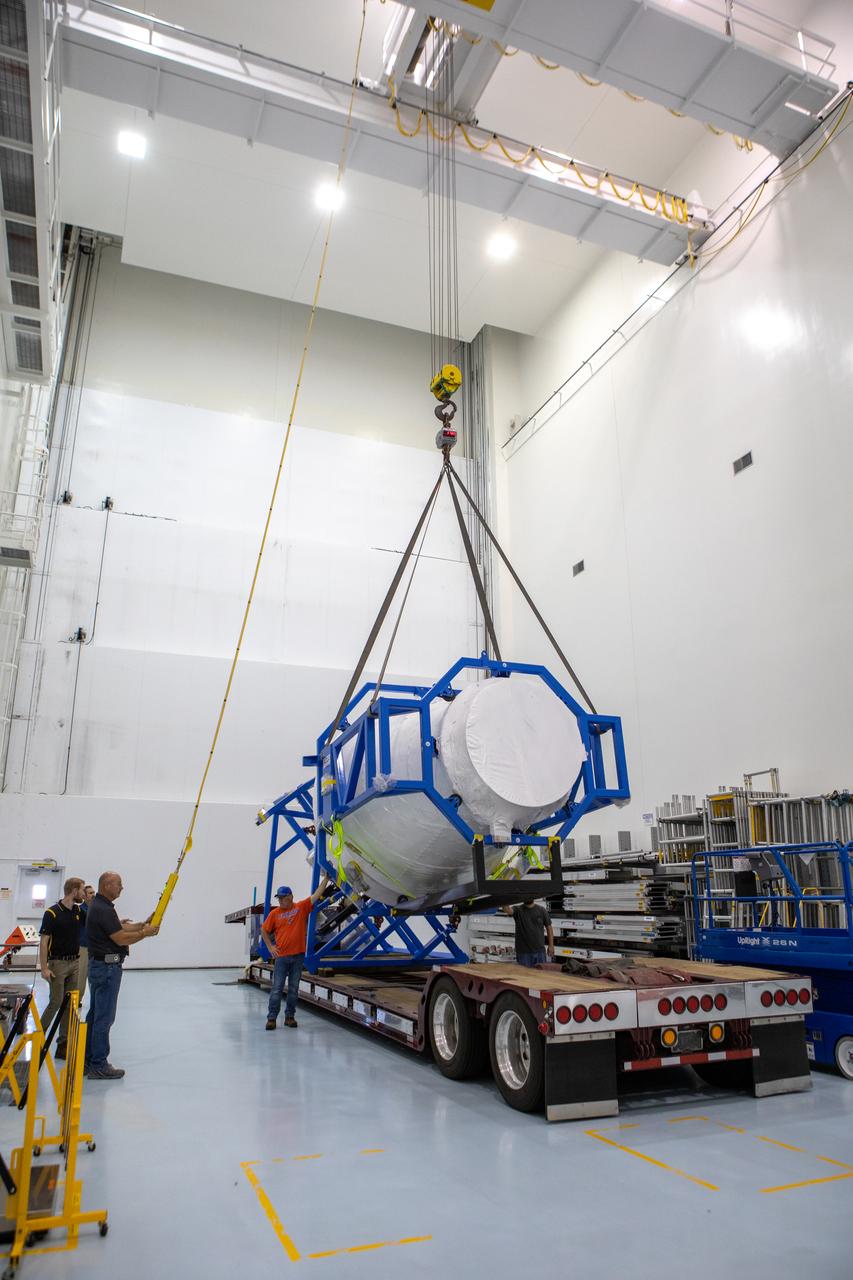
The cargo logistics module for Sierra Nevada Corporation’s Dream Chaser, the company’s reusable spaceplane, is lifted from the bed of a truck following its arrival at the Space Station Processing Facility high bay at NASA’s Kennedy Space Center in Florida on Aug. 27, 2019. The cargo module – a 15-foot attachment to Dream Chaser – provides extra storage for payloads and provides cargo disposal upon re-entry into Earth’s atmosphere. Dream Chaser will deliver more than 12,000 pounds of cargo to the International Space Station under the agency’s Commercial Resupply Services 2 contract. The spacecraft and cargo module will begin resupply and return services missions to the space station in late 2021.
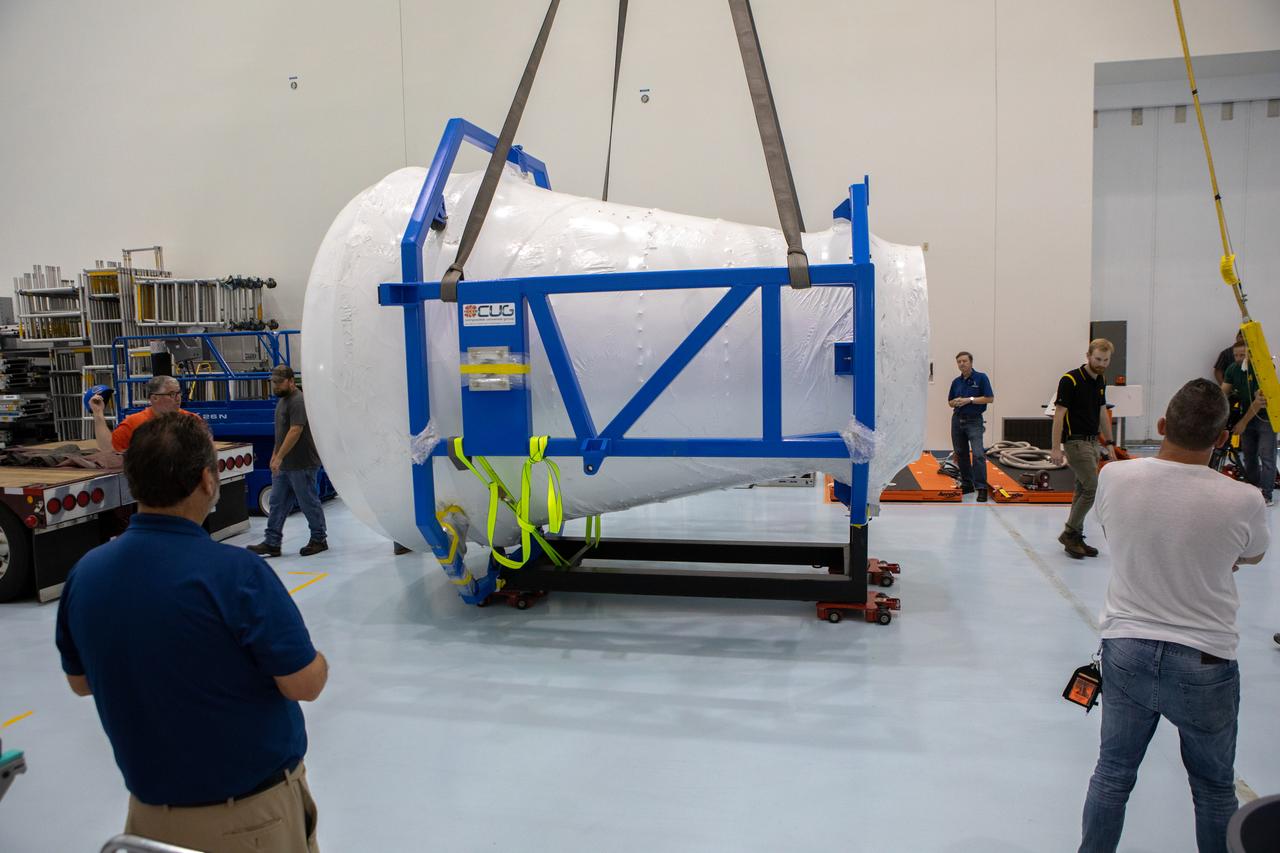
The cargo logistics module for Sierra Nevada Corporation’s Dream Chaser, the company’s reusable spaceplane, arrives at the Space Station Processing Facility high bay at NASA’s Kennedy Space Center in Florida on Aug. 27, 2019. The cargo module – a 15-foot attachment to Dream Chaser – provides extra storage for payloads and provides cargo disposal upon re-entry into Earth’s atmosphere. Dream Chaser will deliver more than 12,000 pounds of cargo to the International Space Station under the agency’s Commercial Resupply Services 2 contract. The spacecraft and cargo module will begin resupply and return services missions to the space station in late 2021.
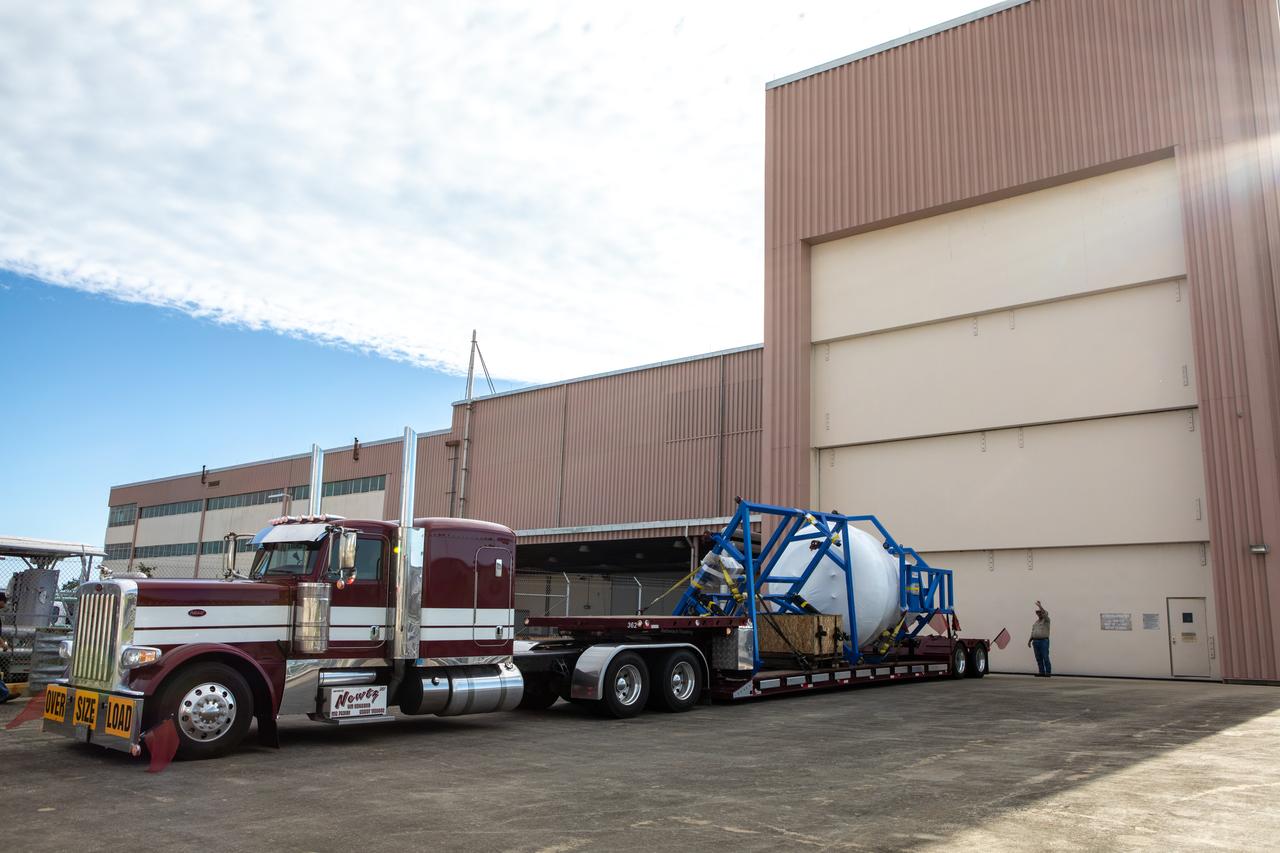
A truck carrying the cargo logistics module for Sierra Nevada Corporation’s Dream Chaser, the company’s reusable spaceplane, arrives at the Space Station Processing Facility high bay entrance at NASA’s Kennedy Space Center in Florida on Aug. 27, 2019. The cargo module – a 15-foot attachment to Dream Chaser – provides extra storage for payloads and provides cargo disposal upon re-entry into Earth’s atmosphere. Dream Chaser will deliver more than 12,000 pounds of cargo to the International Space Station under the agency’s Commercial Resupply Services 2 contract. The spacecraft and cargo module will begin resupply and return services missions to the space station in late 2021.
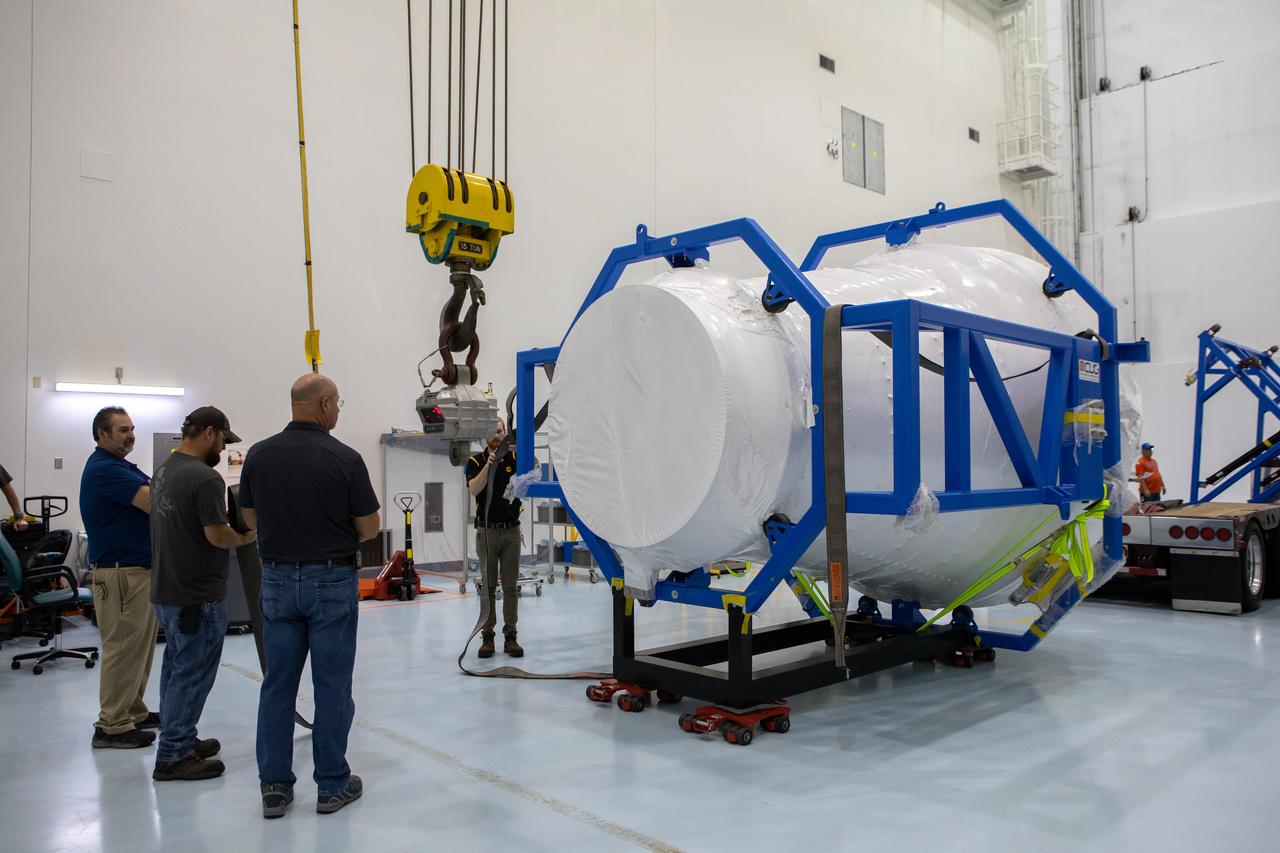
The cargo logistics module for Sierra Nevada Corporation’s Dream Chaser, the company’s reusable spaceplane, is photographed inside the Space Station Processing Facility high bay at NASA’s Kennedy Space Center in Florida following its arrival on Aug. 27, 2019. The cargo module – a 15-foot attachment to Dream Chaser – provides extra storage for payloads and provides cargo disposal upon re-entry into Earth’s atmosphere. Dream Chaser will deliver more than 12,000 pounds of cargo to the International Space Station under the agency’s Commercial Resupply Services 2 contract. The spacecraft and cargo module will begin resupply and return services missions to the space station in late 2021.
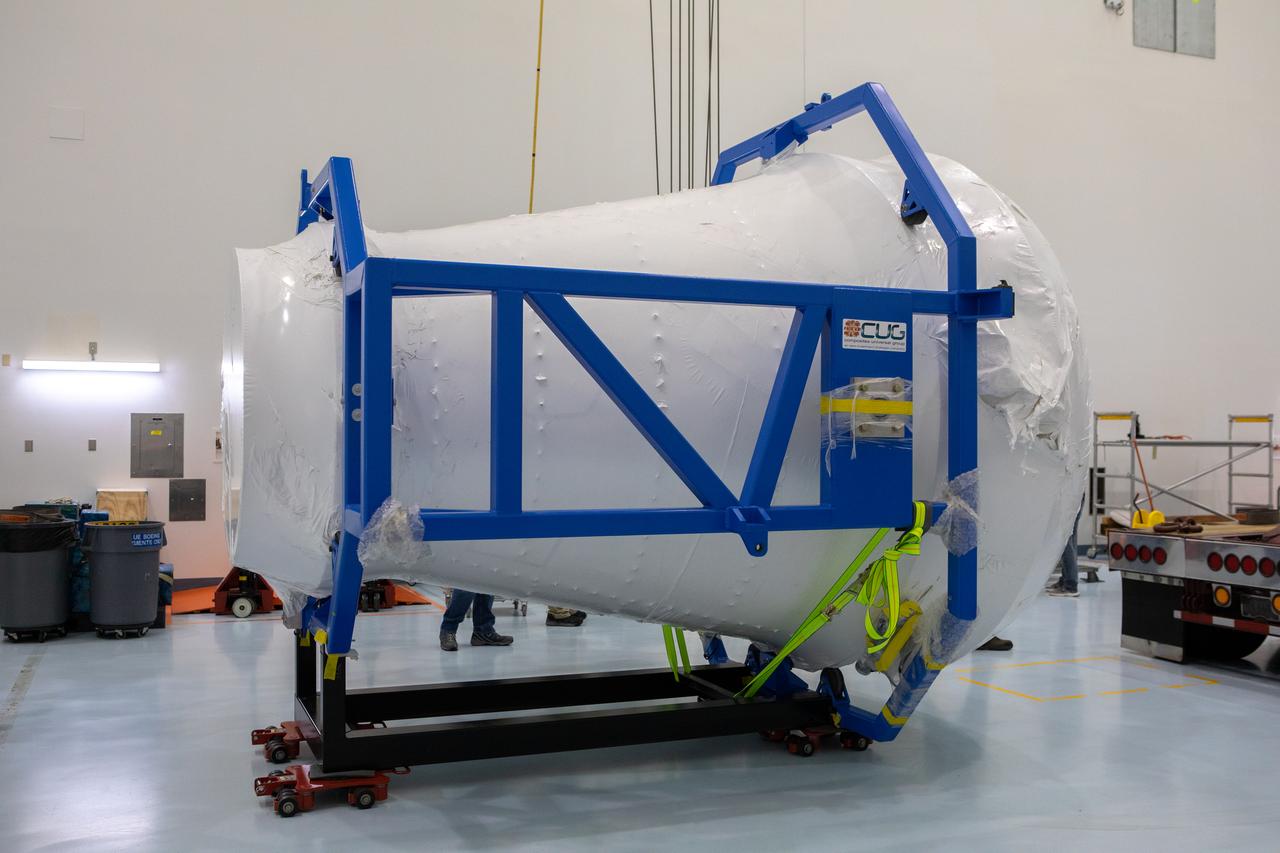
The cargo logistics module for Sierra Nevada Corporation’s Dream Chaser, the company’s reusable spaceplane, is photographed inside the Space Station Processing Facility high bay at NASA’s Kennedy Space Center in Florida following its arrival on Aug. 27, 2019. The cargo module – a 15-foot attachment to Dream Chaser – provides extra storage for payloads and provides cargo disposal upon re-entry into Earth’s atmosphere. Dream Chaser will deliver more than 12,000 pounds of cargo to the International Space Station under the agency’s Commercial Resupply Services 2 contract. The spacecraft and cargo module will begin resupply and return services missions to the space station in late 2021.
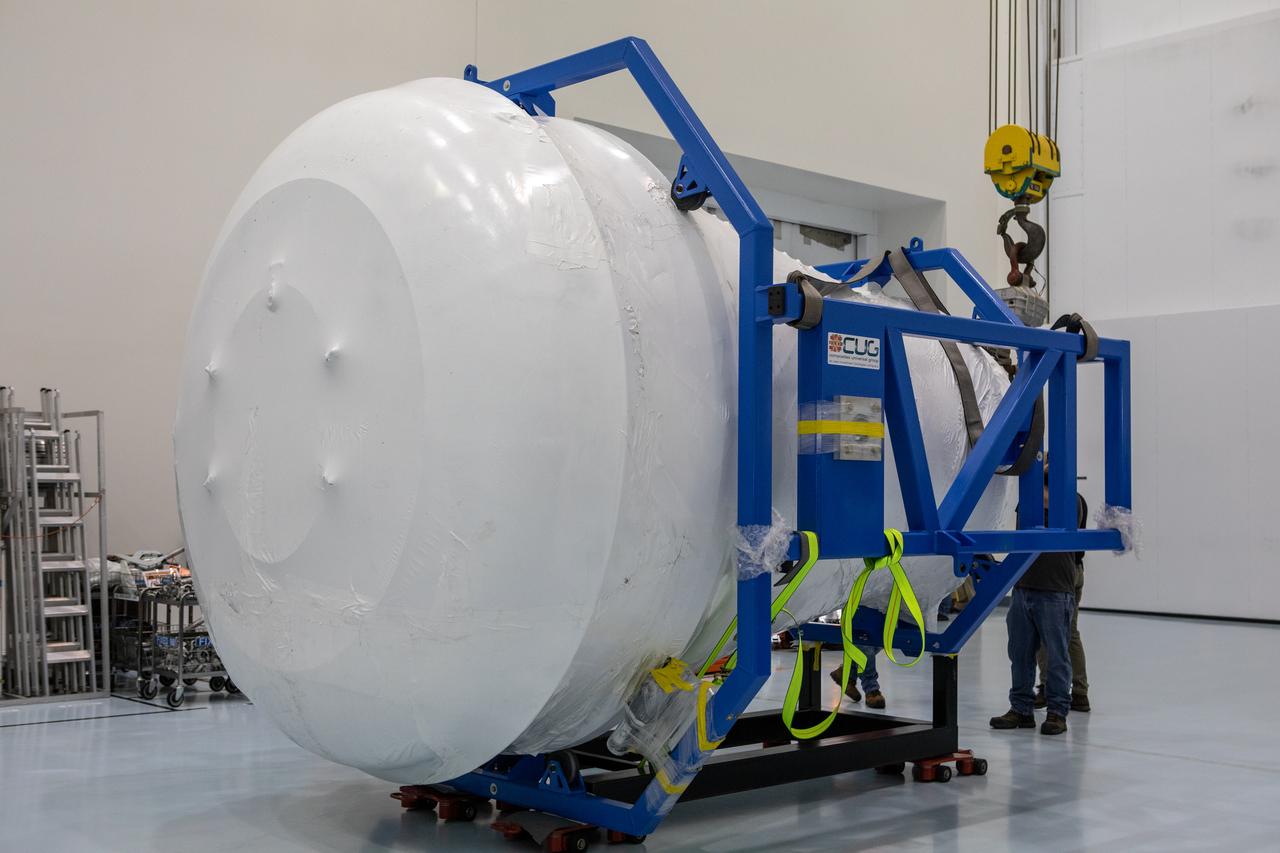
The cargo logistics module for Sierra Nevada Corporation’s Dream Chaser, the company’s reusable spaceplane, is photographed inside the Space Station Processing Facility high bay at NASA’s Kennedy Space Center in Florida following its arrival on Aug. 27, 2019. The cargo module – a 15-foot attachment to Dream Chaser – provides extra storage for payloads and provides cargo disposal upon re-entry into Earth’s atmosphere. Dream Chaser will deliver more than 12,000 pounds of cargo to the International Space Station under the agency’s Commercial Resupply Services 2 contract. The spacecraft and cargo module will begin resupply and return services missions to the space station in late 2021.
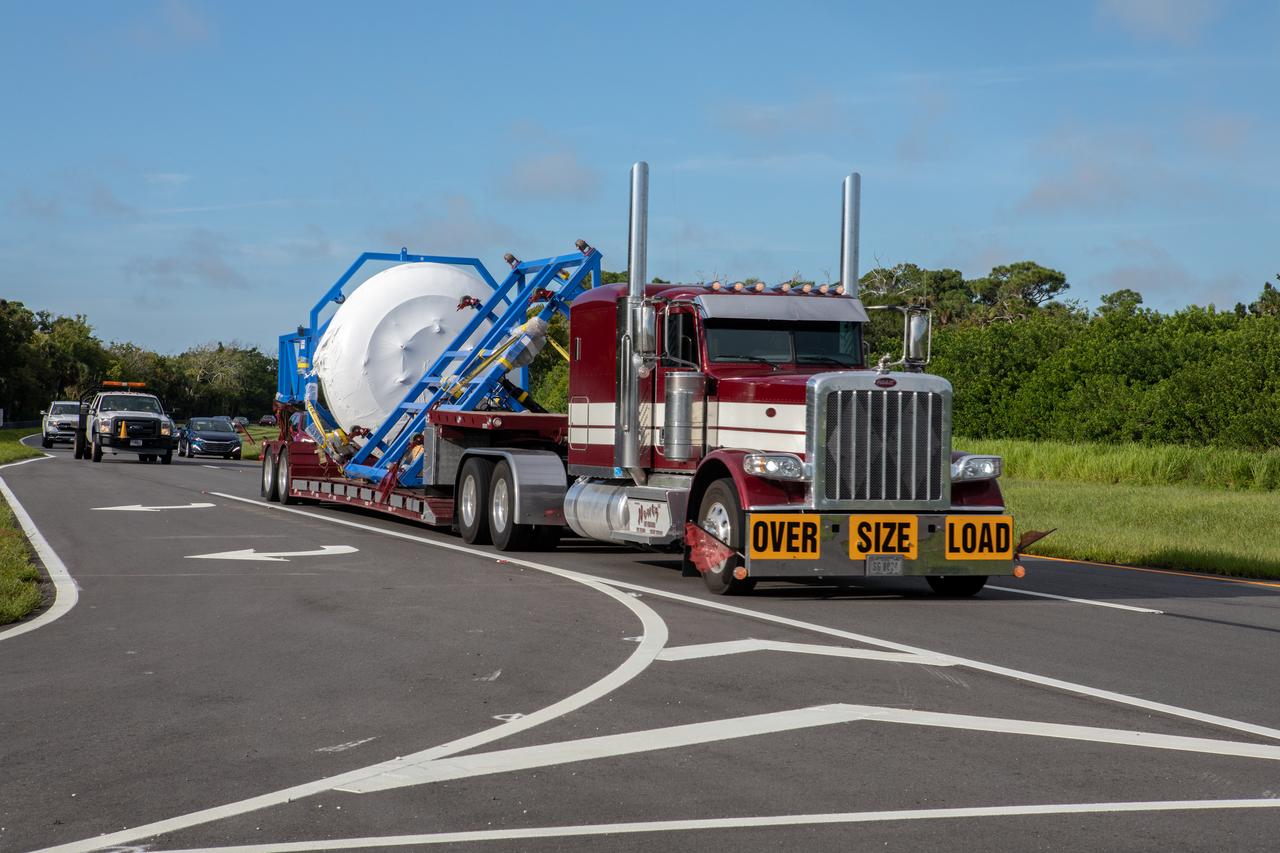
The cargo logistics module for Sierra Nevada Corporation’s Dream Chaser, the company’s reusable spaceplane, is in transit to the Space Station Processing Facility at NASA’s Kennedy Space Center in Florida on Aug. 27, 2019. The cargo module – a 15-foot attachment to Dream Chaser – provides extra storage for payloads and provides cargo disposal upon re-entry into Earth’s atmosphere. Dream Chaser will deliver more than 12,000 pounds of cargo to the International Space Station under NASA’s Commercial Resupply Services 2 contract. The spacecraft and cargo module will begin resupply and return services missions to the space station in late 2021.
Mission engineers load the final cargo into the Cygnus resupply spacecraft onboard the Northrop Grumman Antares rocket, Tuesday, April 16, 2019 at launch Pad-0A of NASA's Wallops Flight Facility in Virginia. Northrop Grumman’s 11th contracted cargo resupply mission with NASA to the International Space Station will deliver about 7,600 pounds of science and research, crew supplies and vehicle hardware to the orbital laboratory and its crew. Photo Credit: (NASA/Bill Ingalls)
Mission engineers prepare the final cargo before loading it into the Cygnus resupply spacecraft onboard the Northrop Grumman Antares rocket, Saturday, Feb. 8, 2020 at launch Pad-0A of NASA's Wallops Flight Facility in Virginia. Northrop Grumman’s 13th contracted cargo resupply mission with NASA to the International Space Station will deliver more than 7,500 pounds of science and research, crew supplies and vehicle hardware to the orbital laboratory and its crew. Photo Credit: (NASA/Aubrey Gemignani)
Mission engineers load the final cargo into the Cygnus resupply spacecraft onboard the Northrop Grumman Antares rocket, Tuesday, April 16, 2019 at launch Pad-0A of NASA's Wallops Flight Facility in Virginia. Northrop Grumman’s 11th contracted cargo resupply mission with NASA to the International Space Station will deliver about 7,600 pounds of science and research, crew supplies and vehicle hardware to the orbital laboratory and its crew. Photo Credit: (NASA/Bill Ingalls)
Mission engineers load the final cargo into the Cygnus resupply spacecraft onboard the Northrop Grumman Antares rocket, Tuesday, April 16, 2019 at launch Pad-0A of NASA's Wallops Flight Facility in Virginia. Northrop Grumman’s 11th contracted cargo resupply mission with NASA to the International Space Station will deliver about 7,600 pounds of science and research, crew supplies and vehicle hardware to the orbital laboratory and its crew. Photo Credit: (NASA/Bill Ingalls)
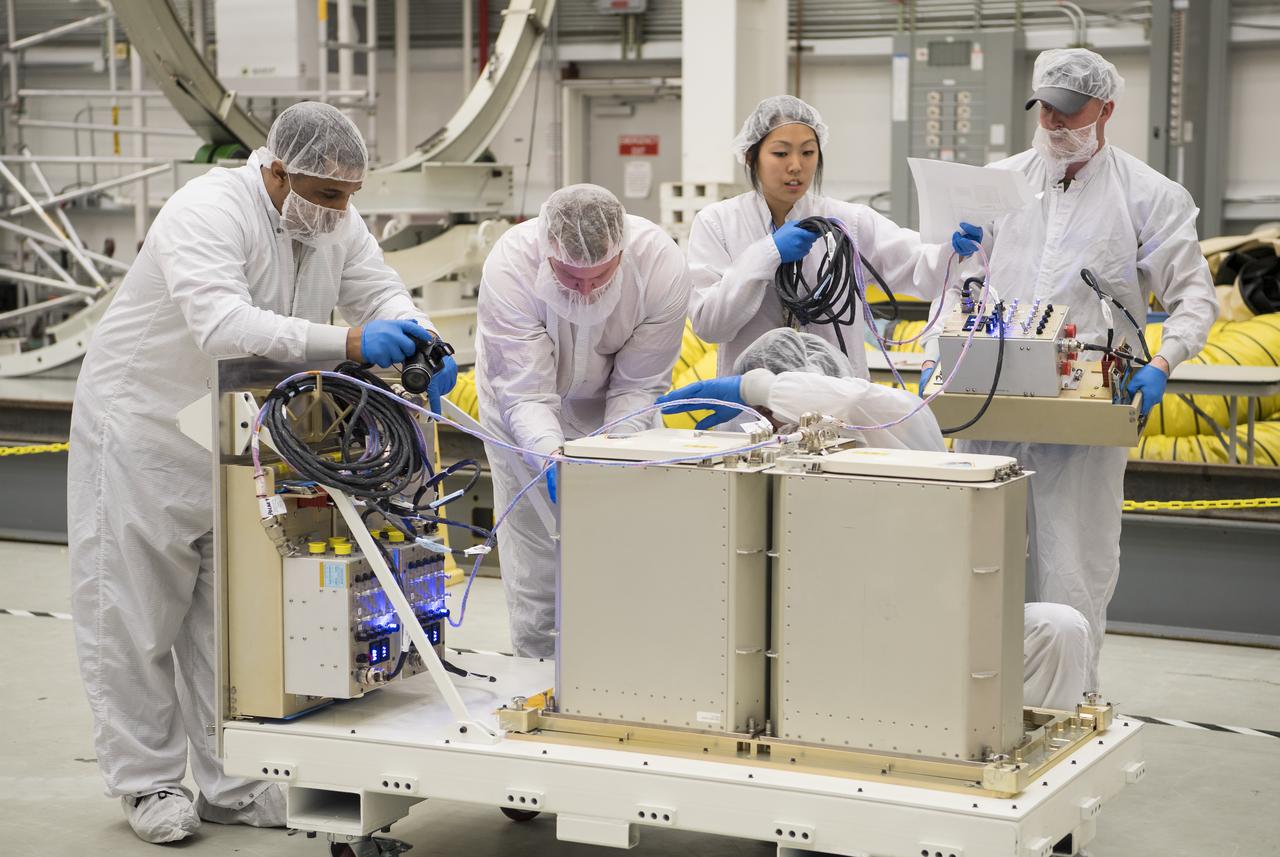
Mission engineers receive and prepare science and research and food items for the final cargo load into the Cygnus resupply spacecraft onboard the Northrop Grumman Antares rocket, Saturday, Feb. 8, 2020 at the Horizontal Integration Facility (HIF) of NASA's Wallops Flight Facility in Virginia. Northrop Grumman’s 13th contracted cargo resupply mission with NASA to the International Space Station will deliver more than 7,500 pounds of science and research, crew supplies and vehicle hardware to the orbital laboratory and its crew. Photo Credit: (NASA/Aubrey Gemignani)
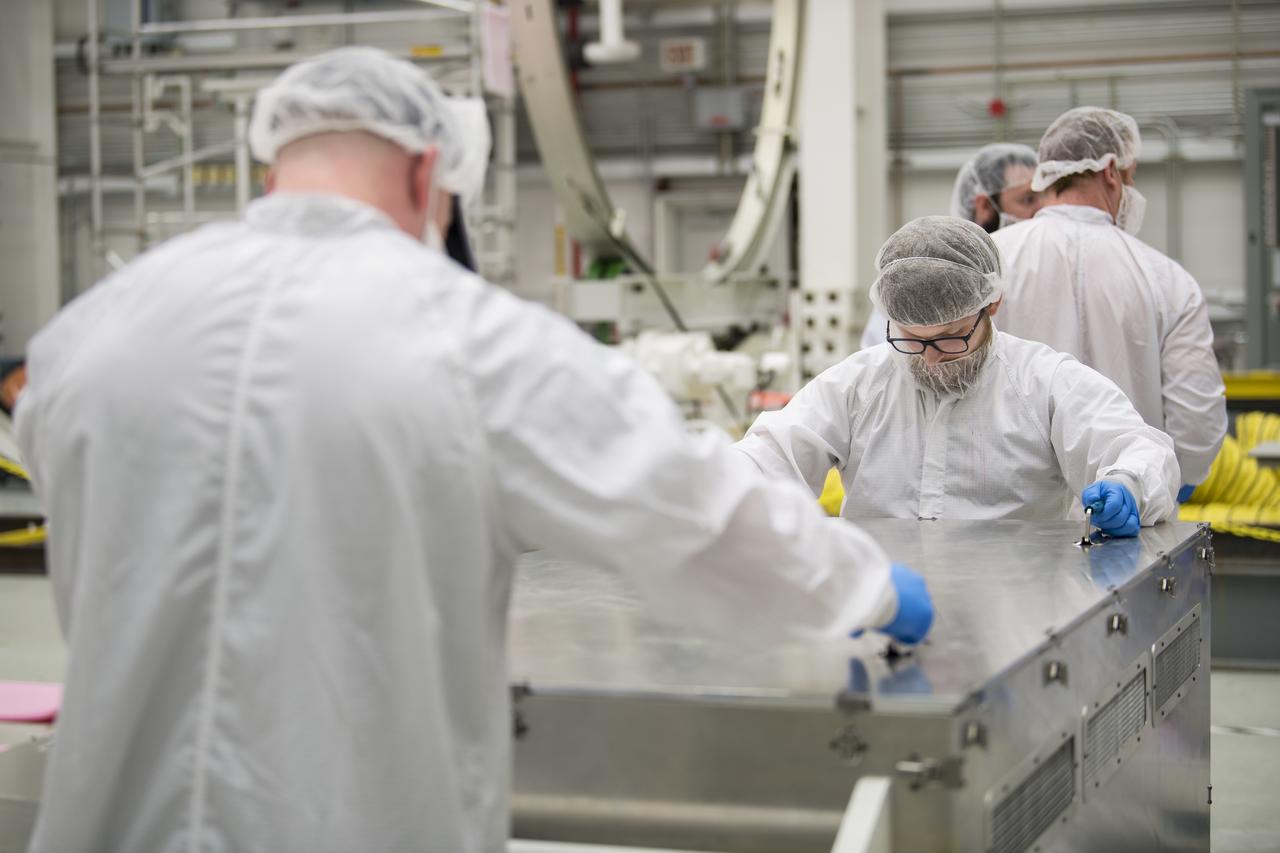
Mission engineers receive and prepare science and research and food items for the final cargo load into the Cygnus resupply spacecraft onboard the Northrop Grumman Antares rocket, Saturday, Feb. 8, 2020 at the Horizontal Integration Facility (HIF) of NASA's Wallops Flight Facility in Virginia. Northrop Grumman’s 13th contracted cargo resupply mission with NASA to the International Space Station will deliver more than 7,500 pounds of science and research, crew supplies and vehicle hardware to the orbital laboratory and its crew. Photo Credit: (NASA/Aubrey Gemignani)
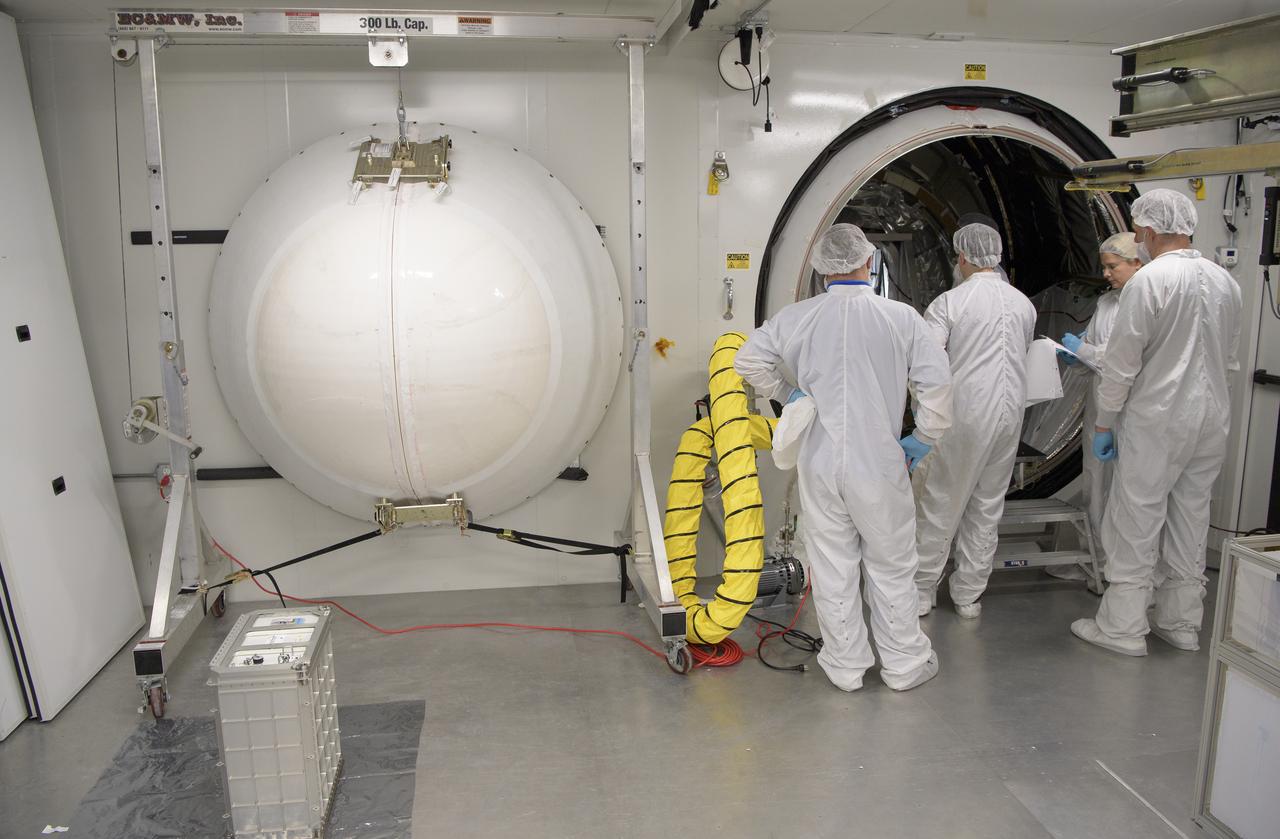
Mission engineers load the final cargo into the Cygnus resupply spacecraft onboard the Northrop Grumman Antares rocket, Tuesday, April 16, 2019 at launch Pad-0A of NASA's Wallops Flight Facility in Virginia. Northrop Grumman’s 11th contracted cargo resupply mission with NASA to the International Space Station will deliver about 7,600 pounds of science and research, crew supplies and vehicle hardware to the orbital laboratory and its crew. Photo Credit: (NASA/Bill Ingalls)
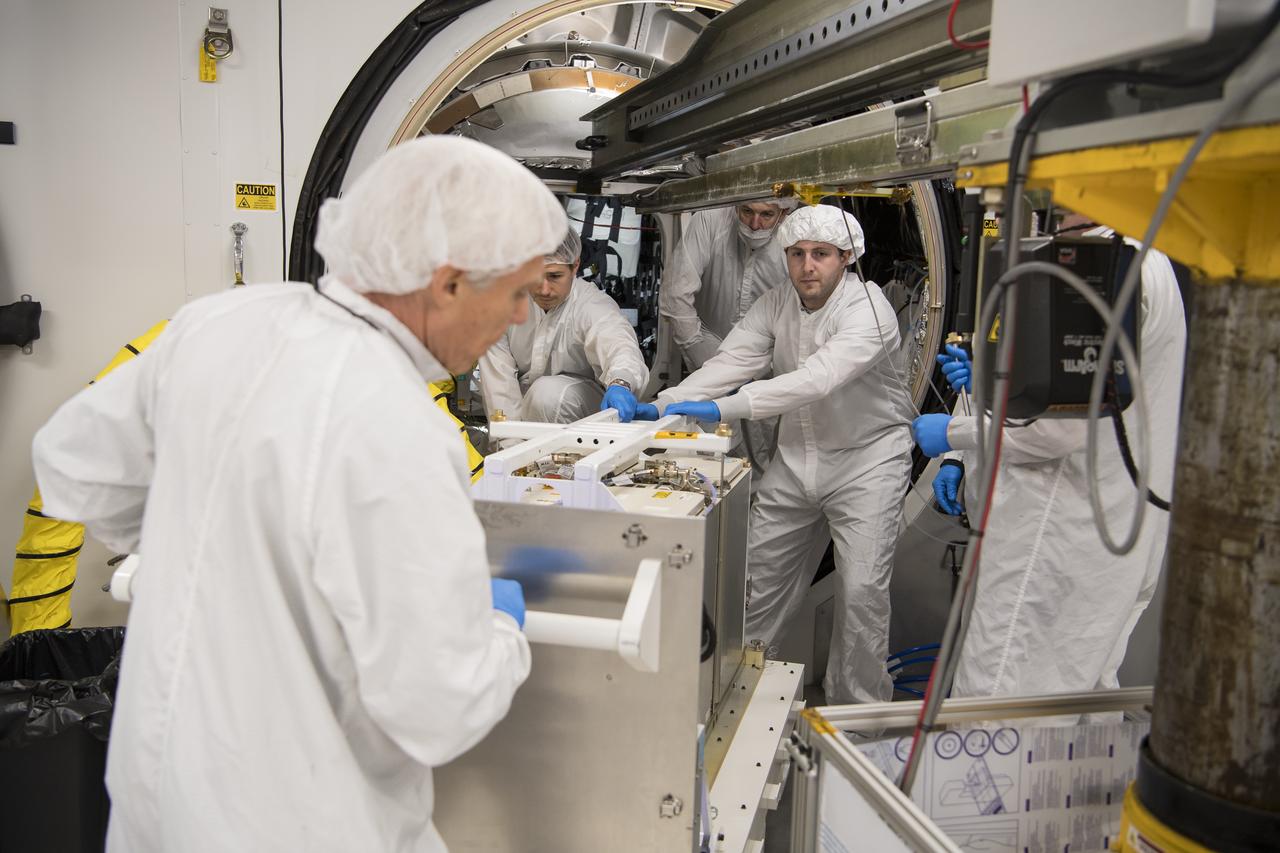
Mission engineers bring in the final cargo to load it into the Cygnus resupply spacecraft onboard the Northrop Grumman Antares rocket, Saturday, Feb. 8, 2020 at launch Pad-0A of NASA's Wallops Flight Facility in Virginia. Northrop Grumman’s 13th contracted cargo resupply mission with NASA to the International Space Station will deliver more than 7,500 pounds of science and research, crew supplies and vehicle hardware to the orbital laboratory and its crew. Photo Credit: (NASA/Aubrey Gemignani)
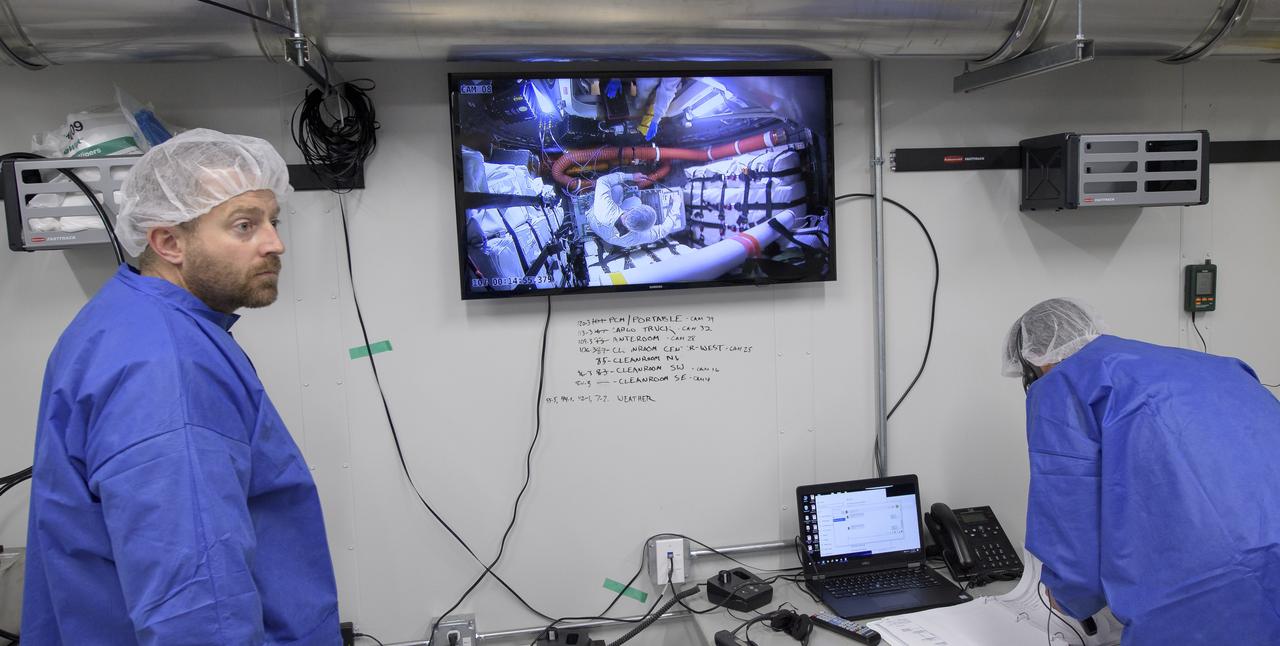
Mission engineers load the final cargo into the Cygnus resupply spacecraft onboard the Northrop Grumman Antares rocket, Tuesday, April 16, 2019 at launch Pad-0A of NASA's Wallops Flight Facility in Virginia. Northrop Grumman’s 11th contracted cargo resupply mission with NASA to the International Space Station will deliver about 7,600 pounds of science and research, crew supplies and vehicle hardware to the orbital laboratory and its crew. Photo Credit: (NASA/Bill Ingalls)
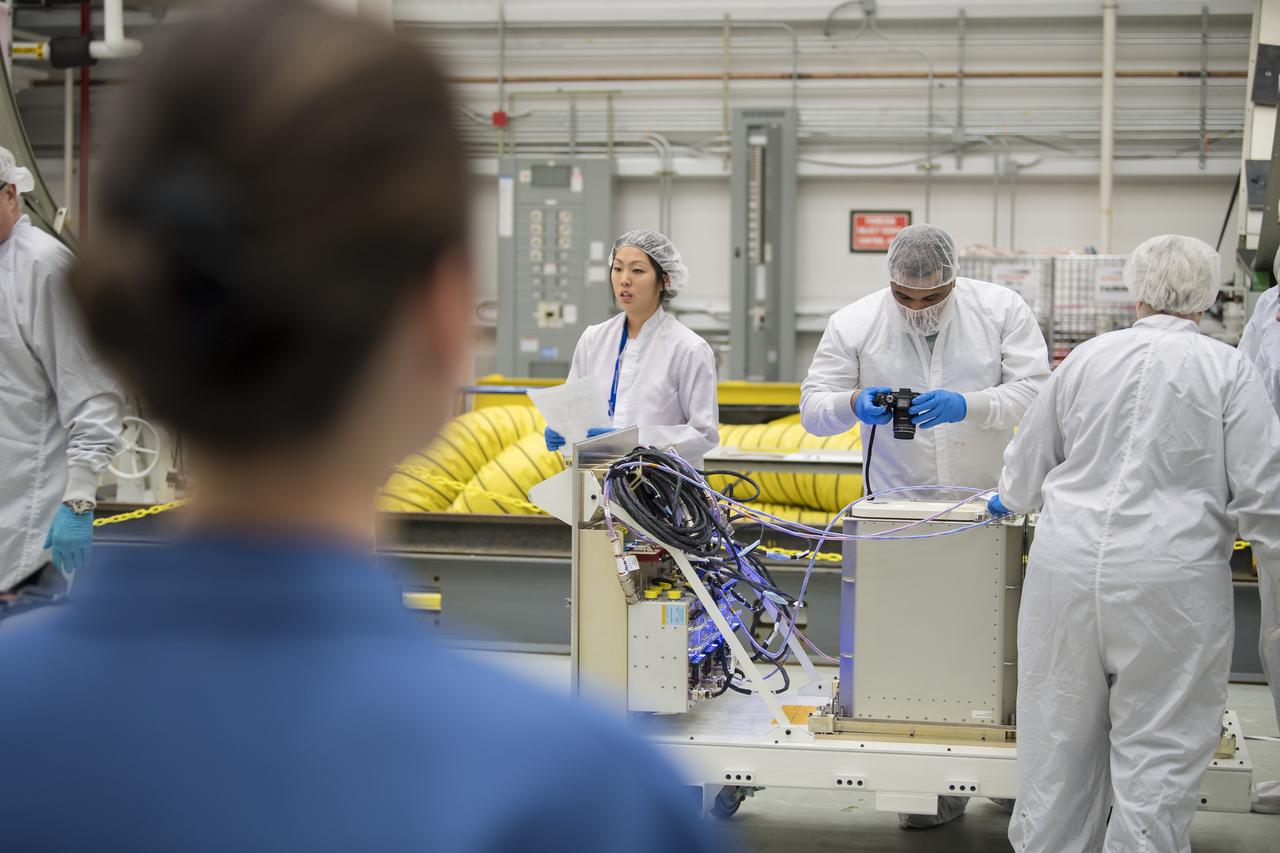
Mission engineers receive and prepare science and research and food items for the final cargo load into the Cygnus resupply spacecraft onboard the Northrop Grumman Antares rocket, Saturday, Feb. 8, 2020 at the Horizontal Integration Facility (HIF) of NASA's Wallops Flight Facility in Virginia. Northrop Grumman’s 13th contracted cargo resupply mission with NASA to the International Space Station will deliver more than 7,500 pounds of science and research, crew supplies and vehicle hardware to the orbital laboratory and its crew. Photo Credit: (NASA/Aubrey Gemignani)
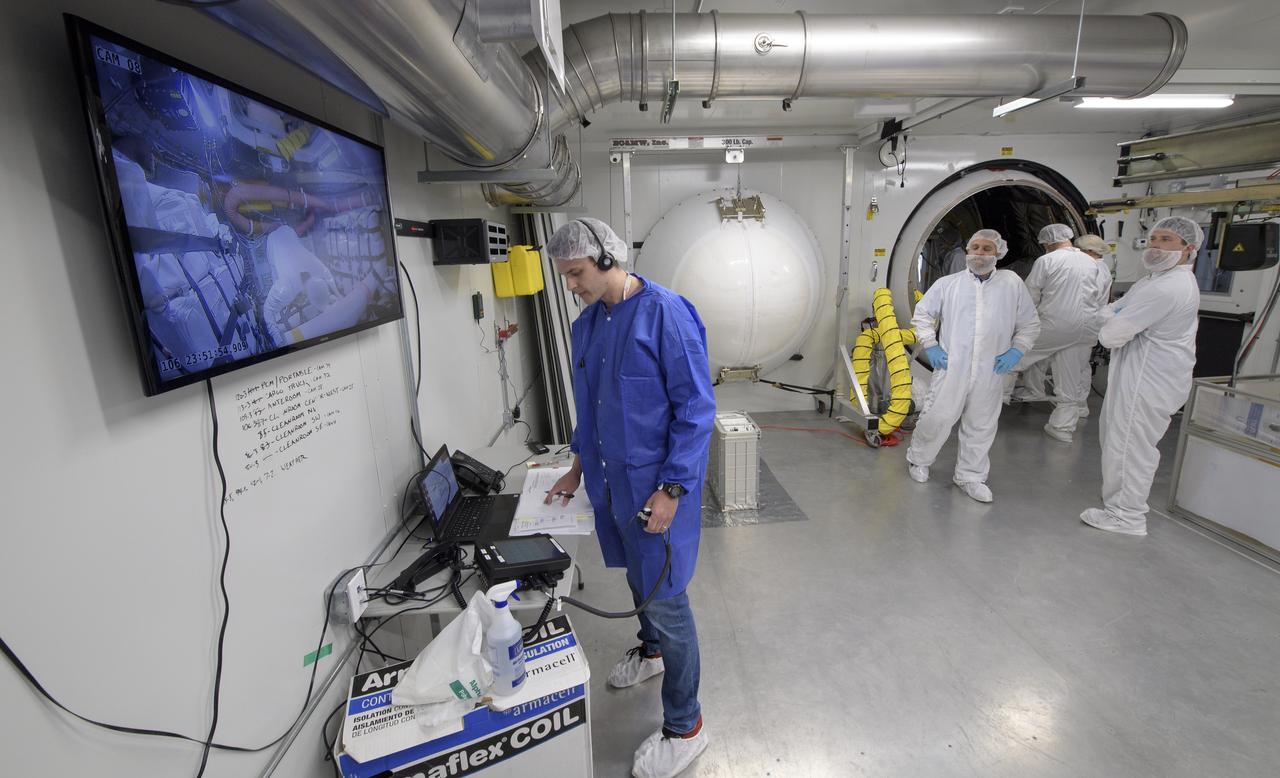
Mission engineers load the final cargo into the Cygnus resupply spacecraft onboard the Northrop Grumman Antares rocket, Tuesday, April 16, 2019 at launch Pad-0A of NASA's Wallops Flight Facility in Virginia. Northrop Grumman’s 11th contracted cargo resupply mission with NASA to the International Space Station will deliver about 7,600 pounds of science and research, crew supplies and vehicle hardware to the orbital laboratory and its crew. Photo Credit: (NASA/Bill Ingalls)
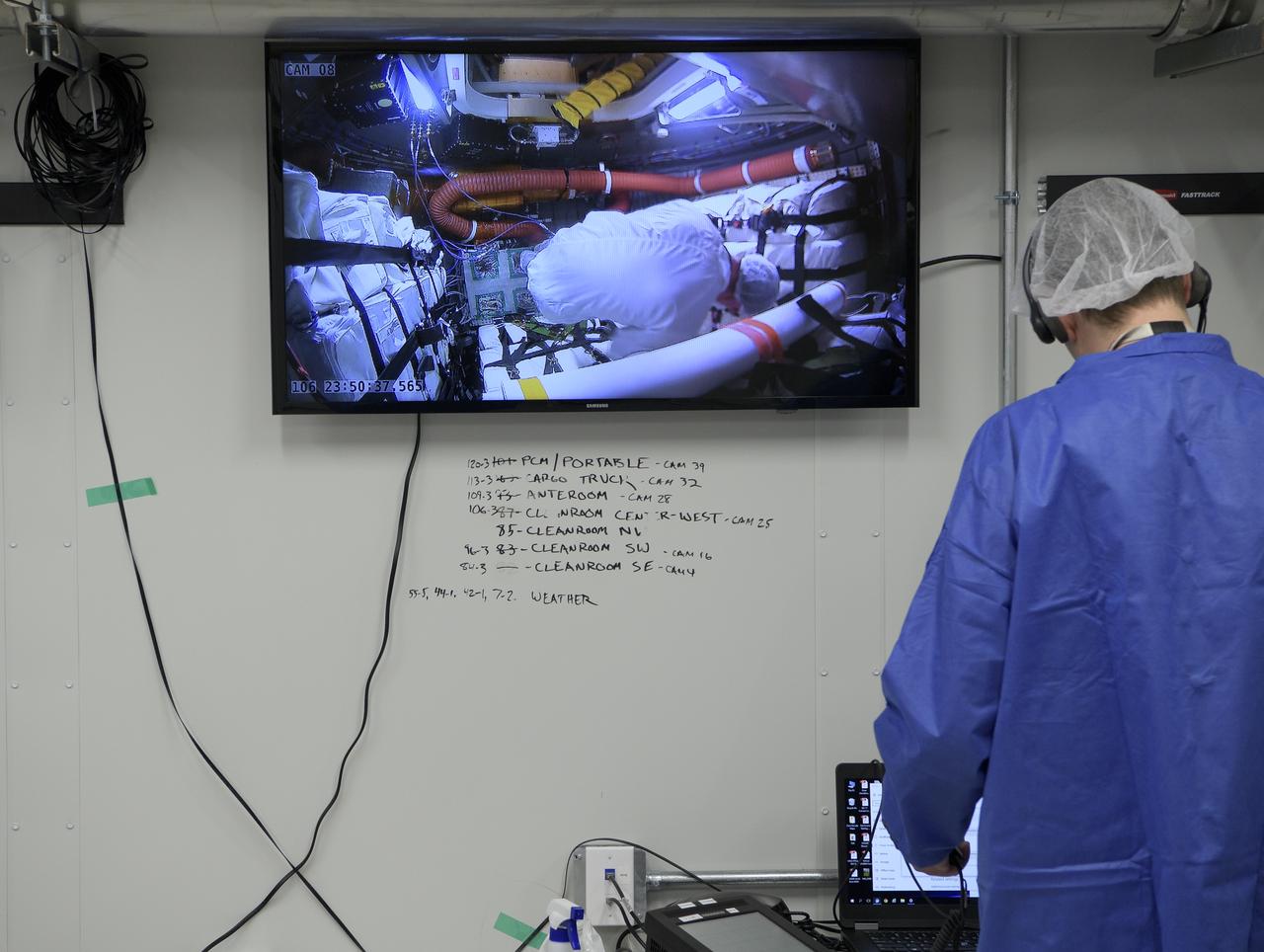
Mission engineers load the final cargo into the Cygnus resupply spacecraft onboard the Northrop Grumman Antares rocket, Tuesday, April 16, 2019 at launch Pad-0A of NASA's Wallops Flight Facility in Virginia. Northrop Grumman’s 11th contracted cargo resupply mission with NASA to the International Space Station will deliver about 7,600 pounds of science and research, crew supplies and vehicle hardware to the orbital laboratory and its crew. Photo Credit: (NASA/Bill Ingalls)
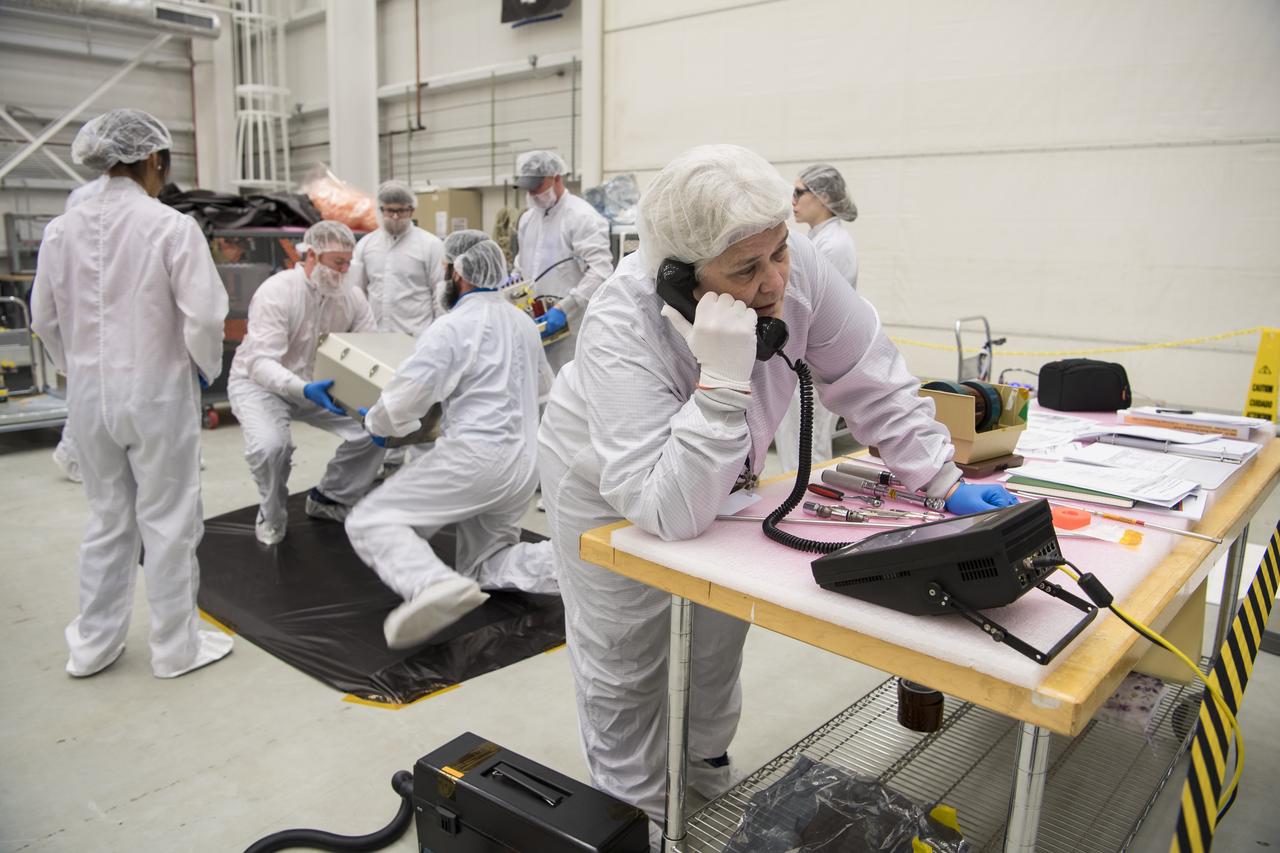
Mission engineers receive and prepare science and research and food items for the final cargo load into the Cygnus resupply spacecraft onboard the Northrop Grumman Antares rocket, Saturday, Feb. 8, 2020 at the Horizontal Integration Facility (HIF) of NASA's Wallops Flight Facility in Virginia. Northrop Grumman’s 13th contracted cargo resupply mission with NASA to the International Space Station will deliver more than 7,500 pounds of science and research, crew supplies and vehicle hardware to the orbital laboratory and its crew. Photo Credit: (NASA/Aubrey Gemignani)
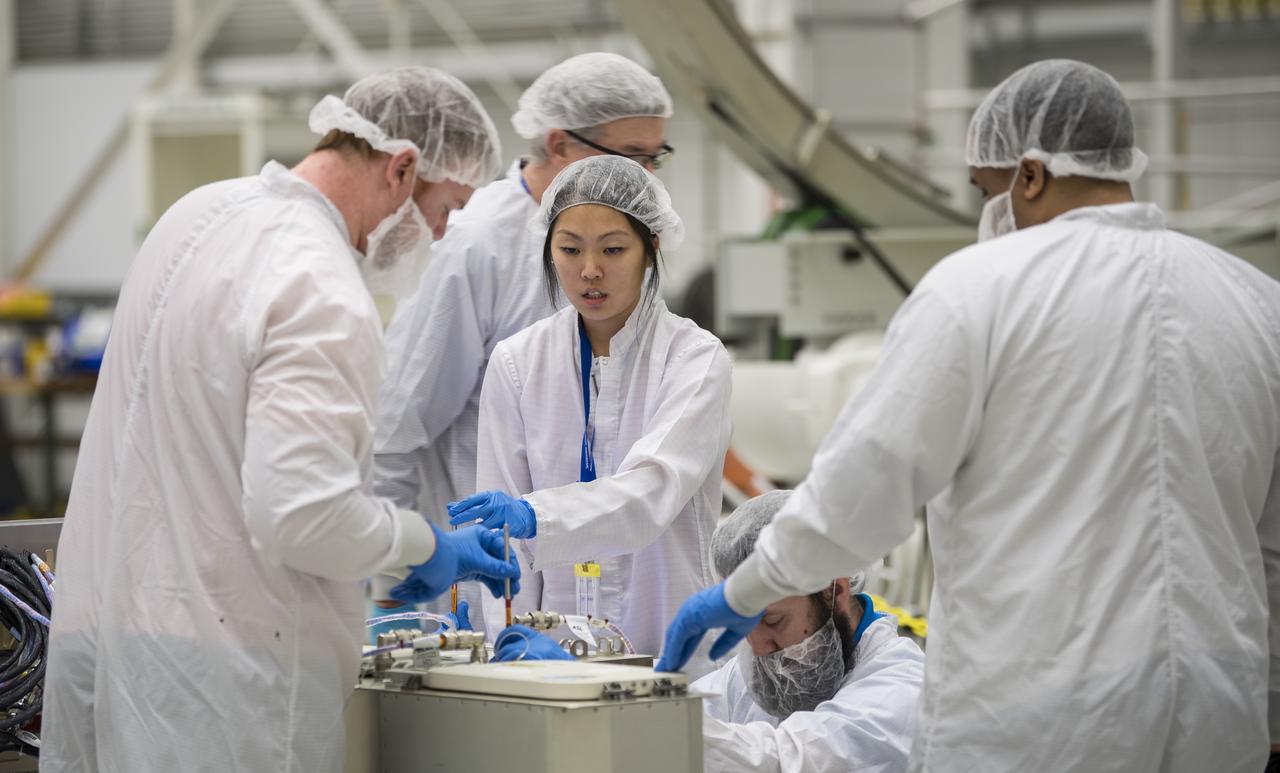
Mission engineers receive and prepare science and research and food items for the final cargo load into the Cygnus resupply spacecraft onboard the Northrop Grumman Antares rocket, Saturday, Feb. 8, 2020 at the Horizontal Integration Facility (HIF) of NASA's Wallops Flight Facility in Virginia. Northrop Grumman’s 13th contracted cargo resupply mission with NASA to the International Space Station will deliver more than 7,500 pounds of science and research, crew supplies and vehicle hardware to the orbital laboratory and its crew. Photo Credit: (NASA/Aubrey Gemignani)
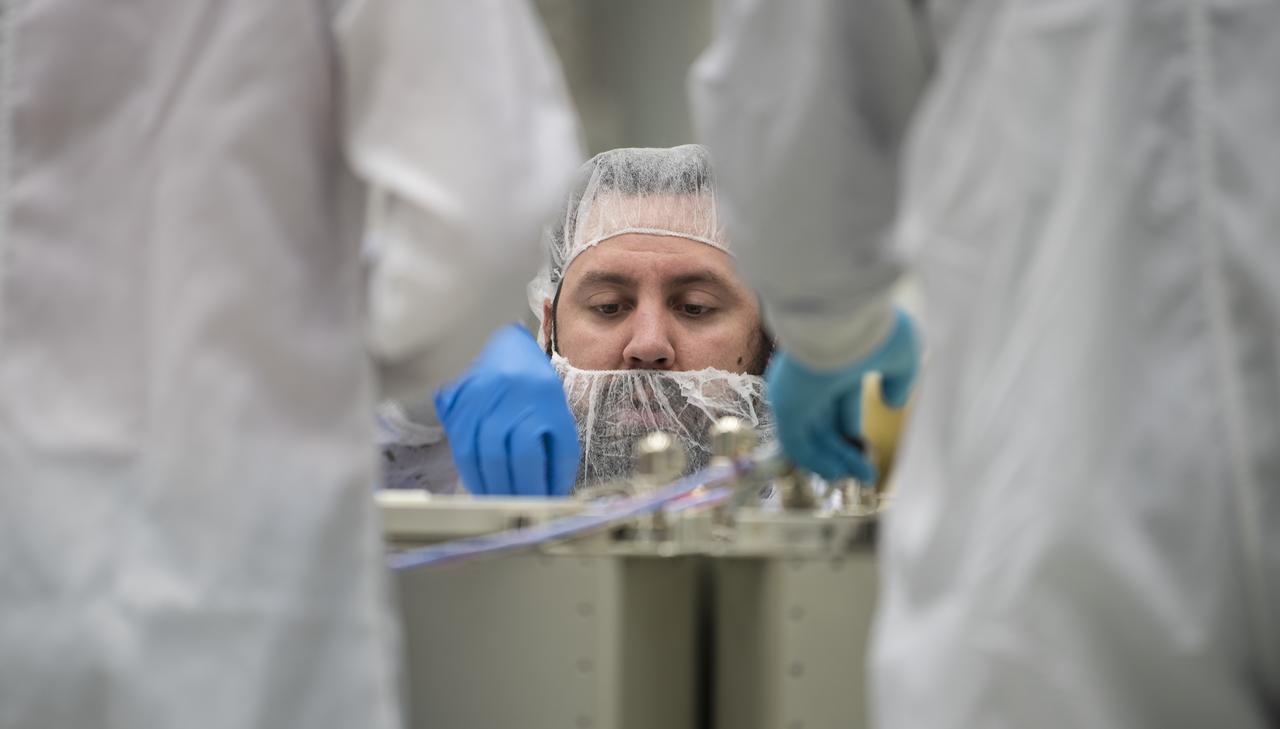
Mission engineers receive and prepare science and research and food items for the final cargo load into the Cygnus resupply spacecraft onboard the Northrop Grumman Antares rocket, Saturday, Feb. 8, 2020 at the Horizontal Integration Facility (HIF) of NASA's Wallops Flight Facility in Virginia. Northrop Grumman’s 13th contracted cargo resupply mission with NASA to the International Space Station will deliver more than 7,500 pounds of science and research, crew supplies and vehicle hardware to the orbital laboratory and its crew. Photo Credit: (NASA/Aubrey Gemignani)
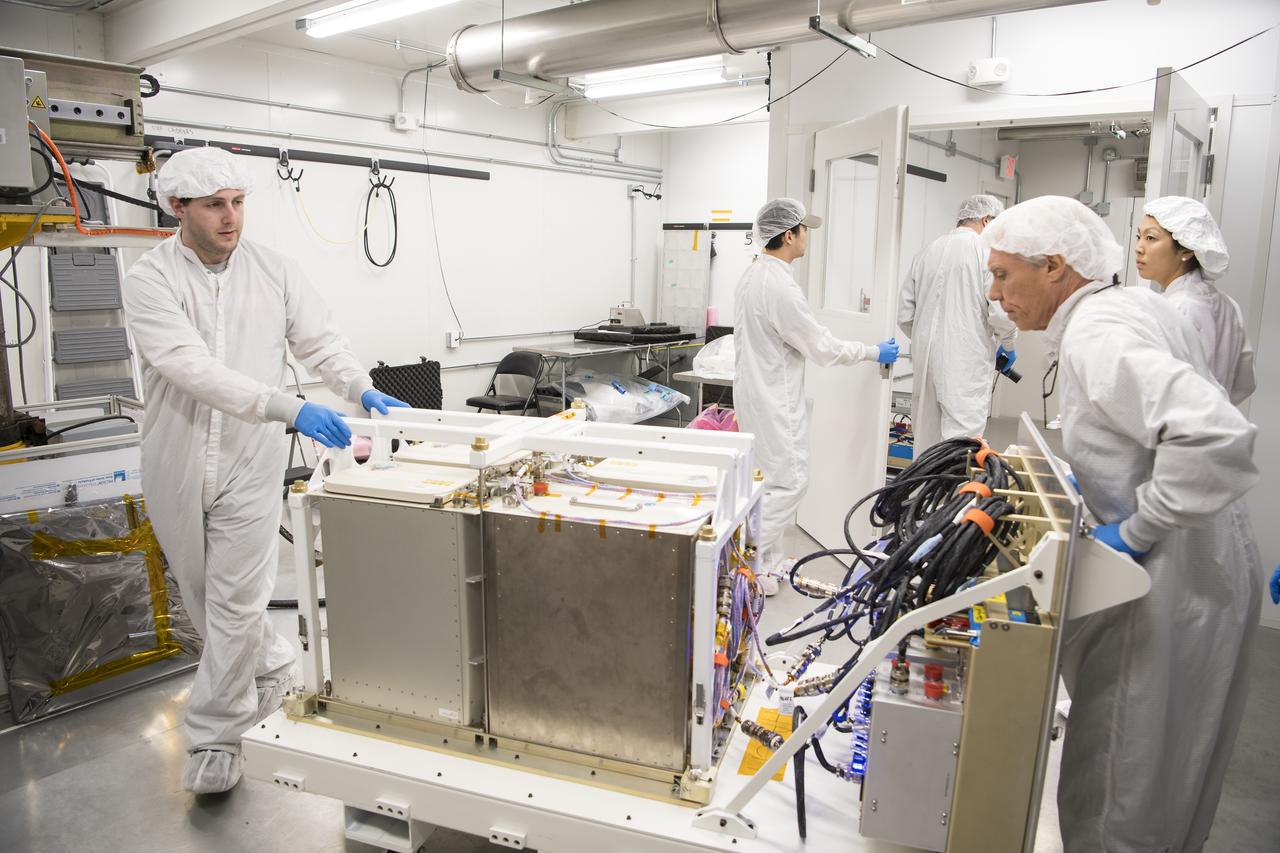
Mission engineers bring in the final cargo to load it into the Cygnus resupply spacecraft onboard the Northrop Grumman Antares rocket, Saturday, Feb. 8, 2020 at launch Pad-0A of NASA's Wallops Flight Facility in Virginia. Northrop Grumman’s 13th contracted cargo resupply mission with NASA to the International Space Station will deliver more than 7,500 pounds of science and research, crew supplies and vehicle hardware to the orbital laboratory and its crew. Photo Credit: (NASA/Aubrey Gemignani)
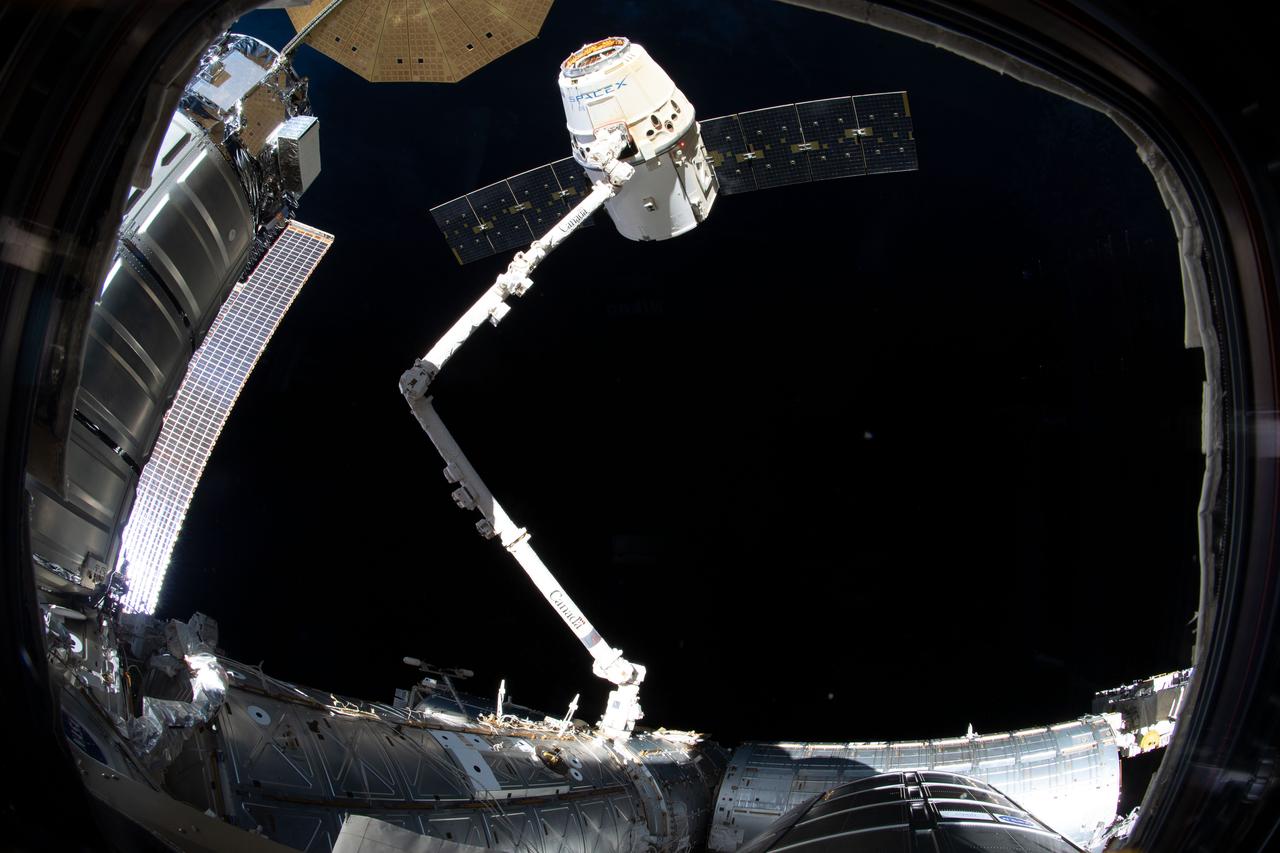
iss059e089342 (June 3, 2019) --- The SpaceX Dragon cargo craft on its 17th contracted mission to resupply mission to the International Space Station is in the grips of the Canadarm2 robotic arm moments before being released.
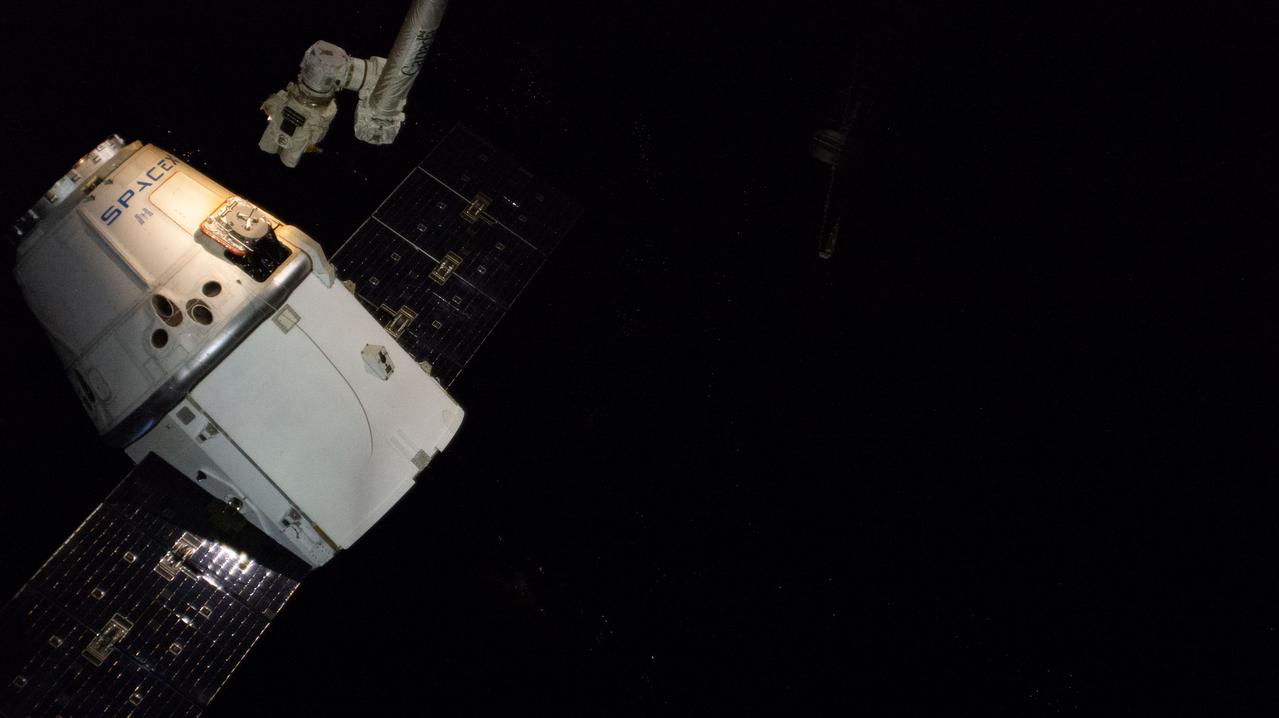
iss059e088882 (June 3, 2019) --- The SpaceX Dragon cargo craft on its 17th contracted mission to resupply mission to the International Space Station is pictured just after being released from the Canadarm2 robotic arm.
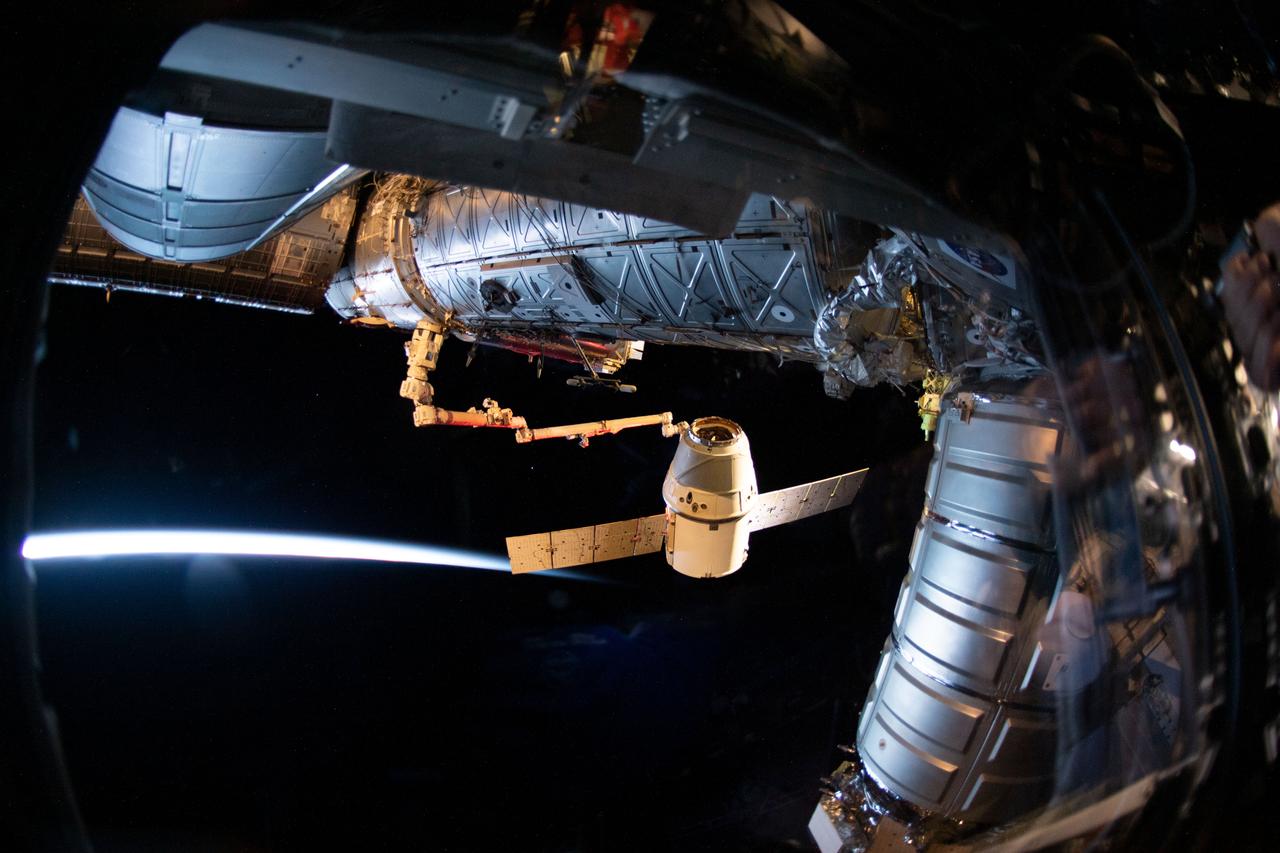
iss059e088998 (June 3, 2019) --- The SpaceX Dragon cargo craft on its 17th contracted mission to resupply mission to the International Space Station is pictured moments before being released from the Canadarm2 robotic arm.
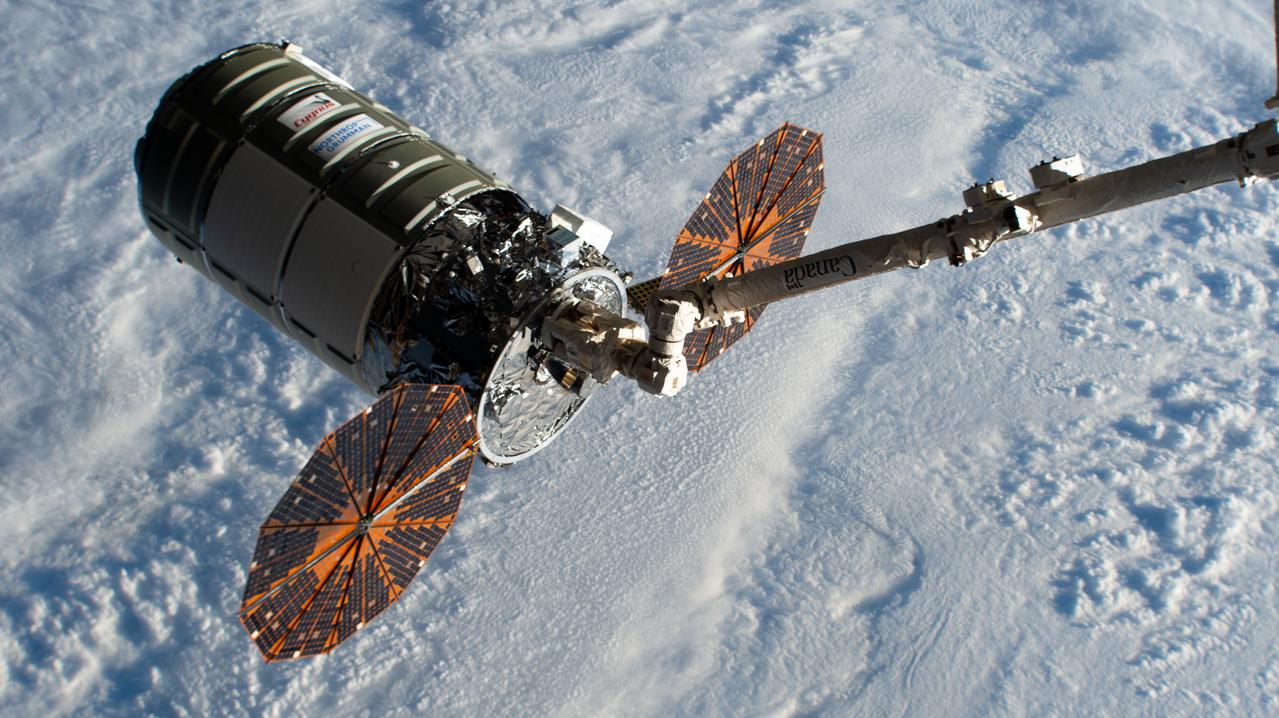
iss066e147592 (Feb. 21, 2022) --- Northrop Grumman's Cygnus space freighter is pictured in the grip of the Canadarm2 robotic arm moments after NASA astronaut Raja Chari commanded it to capture the U.S. cargo craft. Robotics controllers on the ground would take over shortly afterward and remotely guide the Canadarm2 with Cygnus attached and install it to the Unity module to begin three months of cargo operations. This is Northrop Grumman’s 17th contracted resupply mission under the second Commercial Resupply Services contract with NASA.
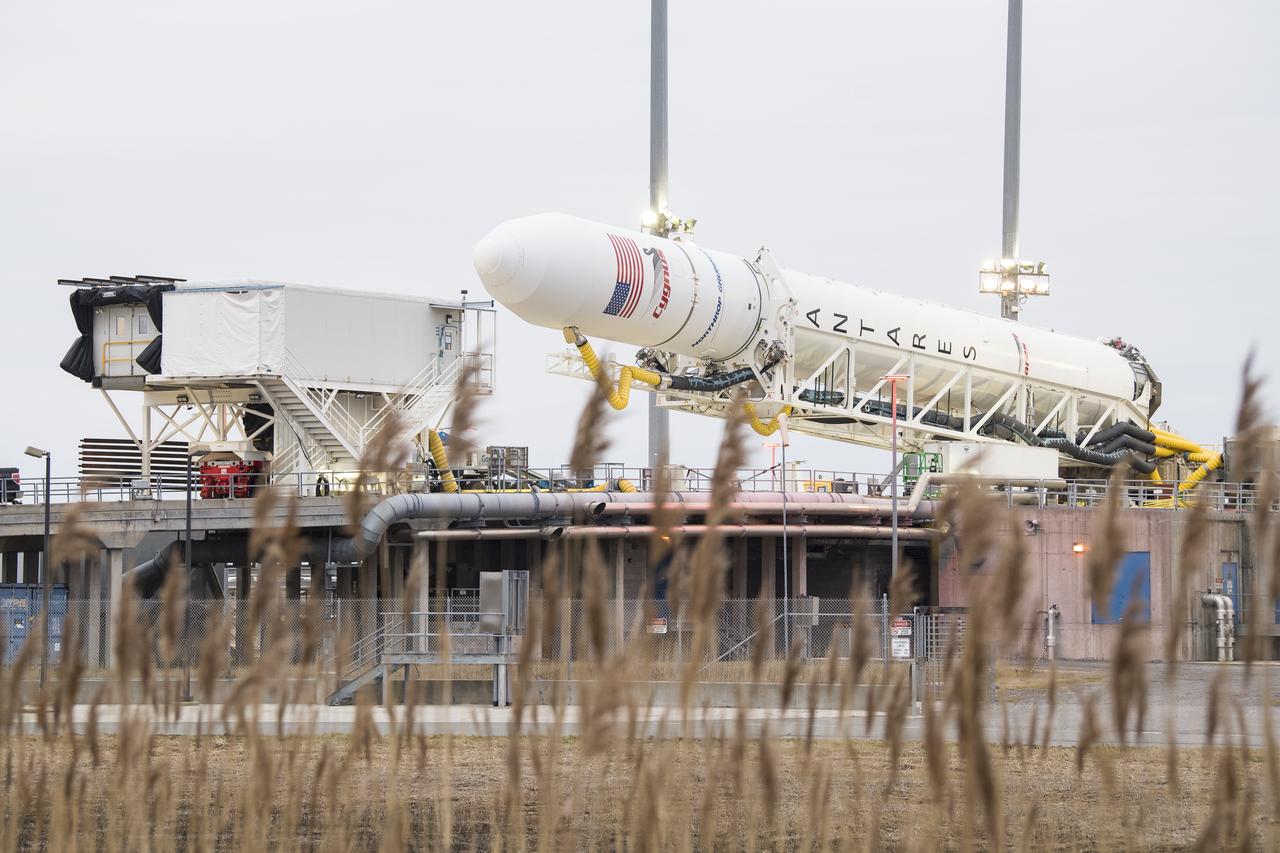
The Northrop Grumman Antares rocket is lowered into a horizontal position to refresh and reload the final cargo into the Cygnus resupply spacecraft, Wednesday, Feb. 12, 2020, at launch Pad-0A of NASA's Wallops Flight Facility in Virginia. Northrop Grumman’s 13th contracted cargo resupply mission with NASA to the International Space Station will deliver more than 7,500 pounds of science and research, crew supplies and vehicle hardware to the orbital laboratory and its crew. Photo Credit: (NASA/Aubrey Gemignani)
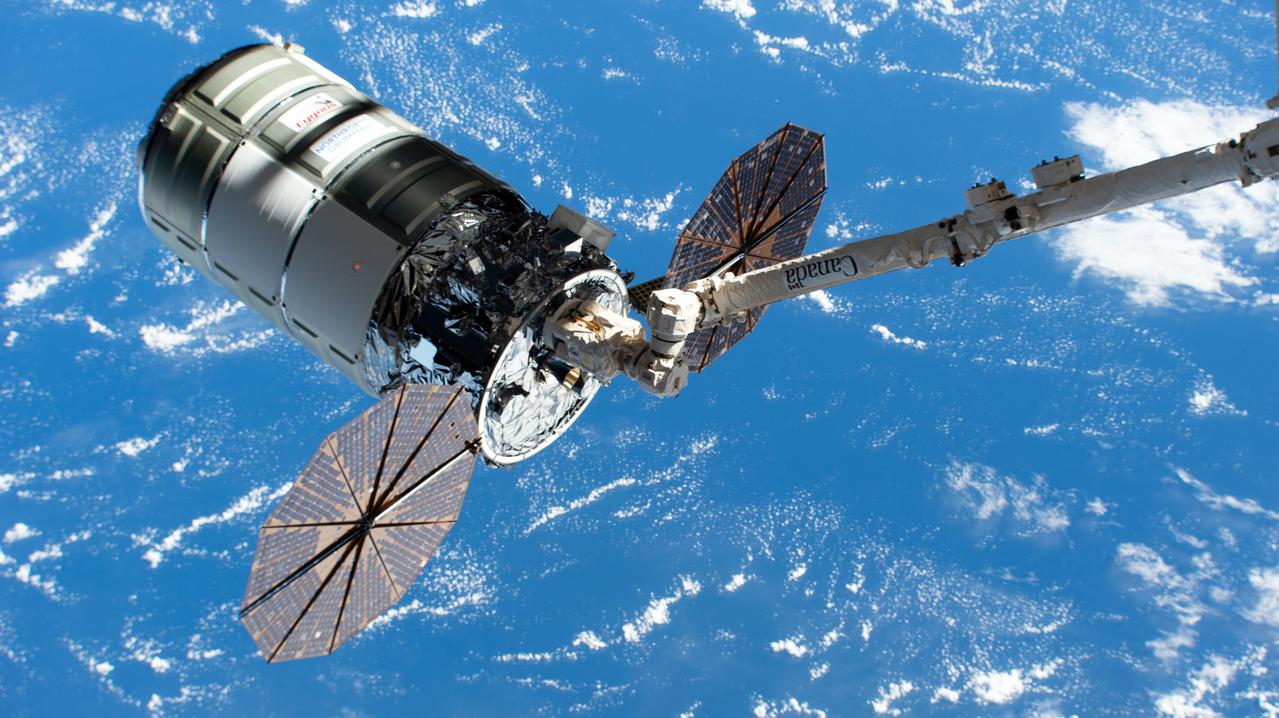
iss066e147590 (Feb. 21, 2022) --- Northrop Grumman's Cygnus space freighter is pictured in the grip of the Canadarm2 robotic arm moments after NASA astronaut Raja Chari commanded it to capture the U.S. cargo craft. Robotics controllers on the ground would take over shortly afterward and remotely guide the Canadarm2 with Cygnus attached and install it to the Unity module to begin three months of cargo operations. This is Northrop Grumman’s 17th contracted resupply mission under the second Commercial Resupply Services contract with NASA.
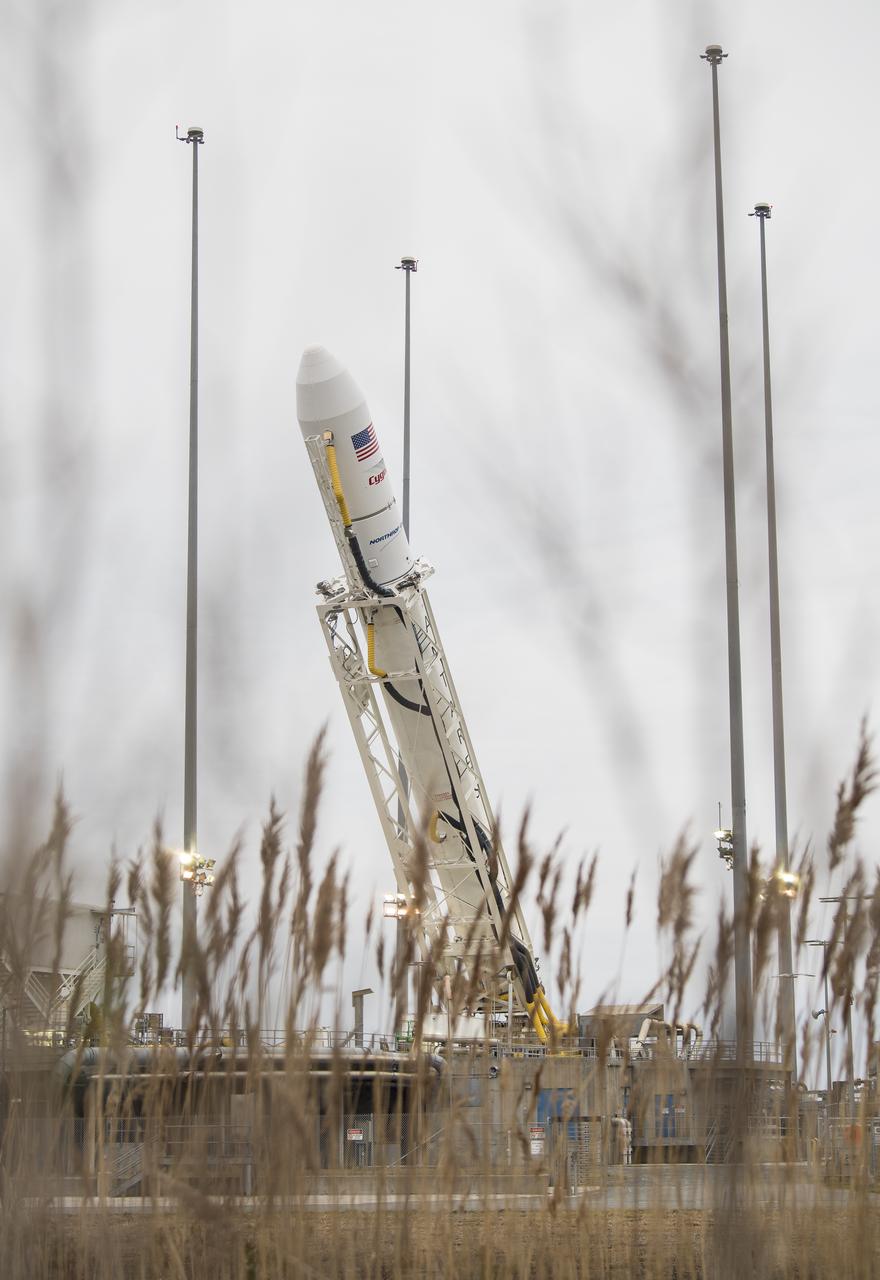
The Northrop Grumman Antares rocket is lowered into a horizontal position to refresh and reload the final cargo into the Cygnus resupply spacecraft, Wednesday, Feb. 12, 2020, at launch Pad-0A of NASA's Wallops Flight Facility in Virginia. Northrop Grumman’s 13th contracted cargo resupply mission with NASA to the International Space Station will deliver more than 7,500 pounds of science and research, crew supplies and vehicle hardware to the orbital laboratory and its crew. Photo Credit: (NASA/Aubrey Gemignani)
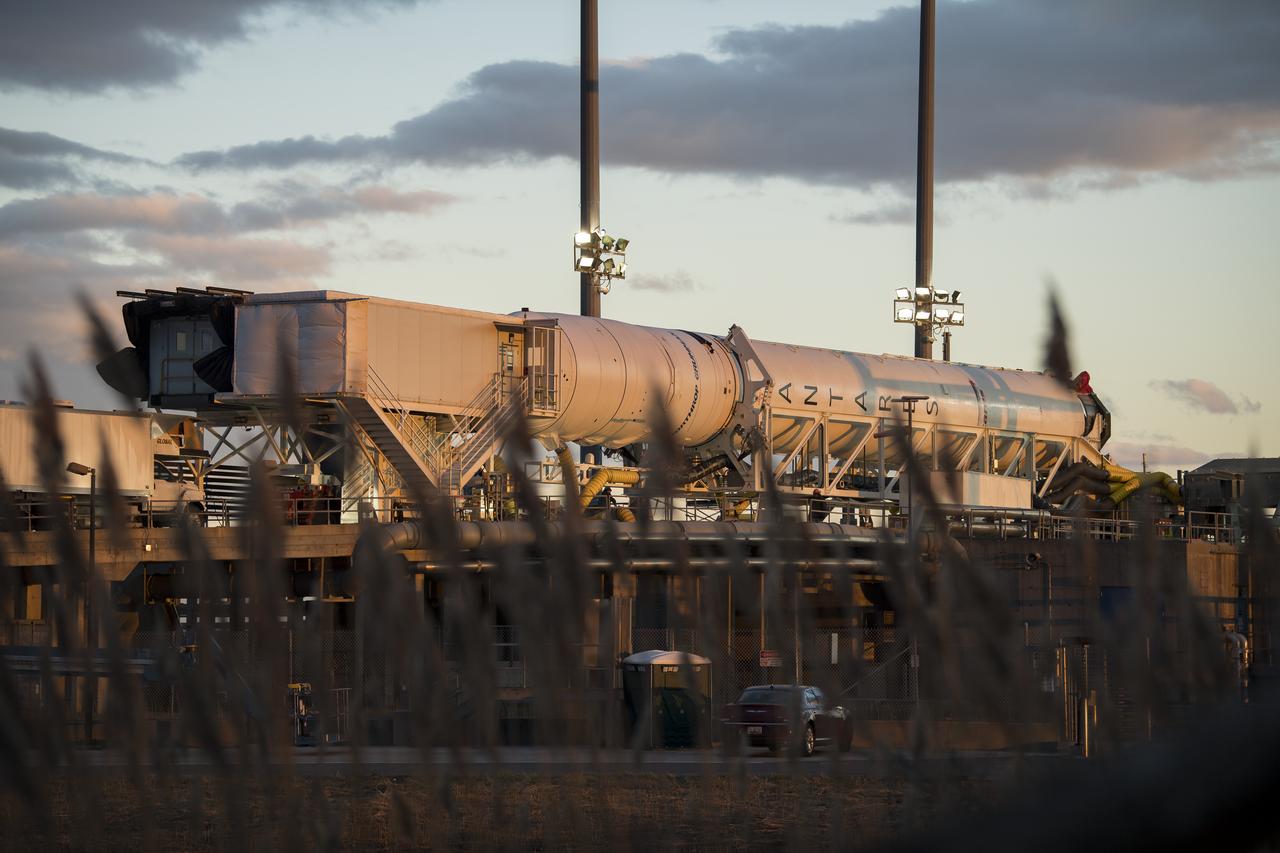
A Northrop Grumman Antares rocket carrying a Cygnus resupply spacecraft is horizontal for the final cargo load on Pad-0A, Friday, Feb. 7, 2020 at NASA's Wallops Flight Facility in Virginia. Northrop Grumman’s 13th contracted cargo resupply mission with NASA to the International Space Station will deliver more than 7,500 pounds of science and research, crew supplies and vehicle hardware to the orbital laboratory and its crew. Photo Credit: (NASA/Aubrey Gemignani)
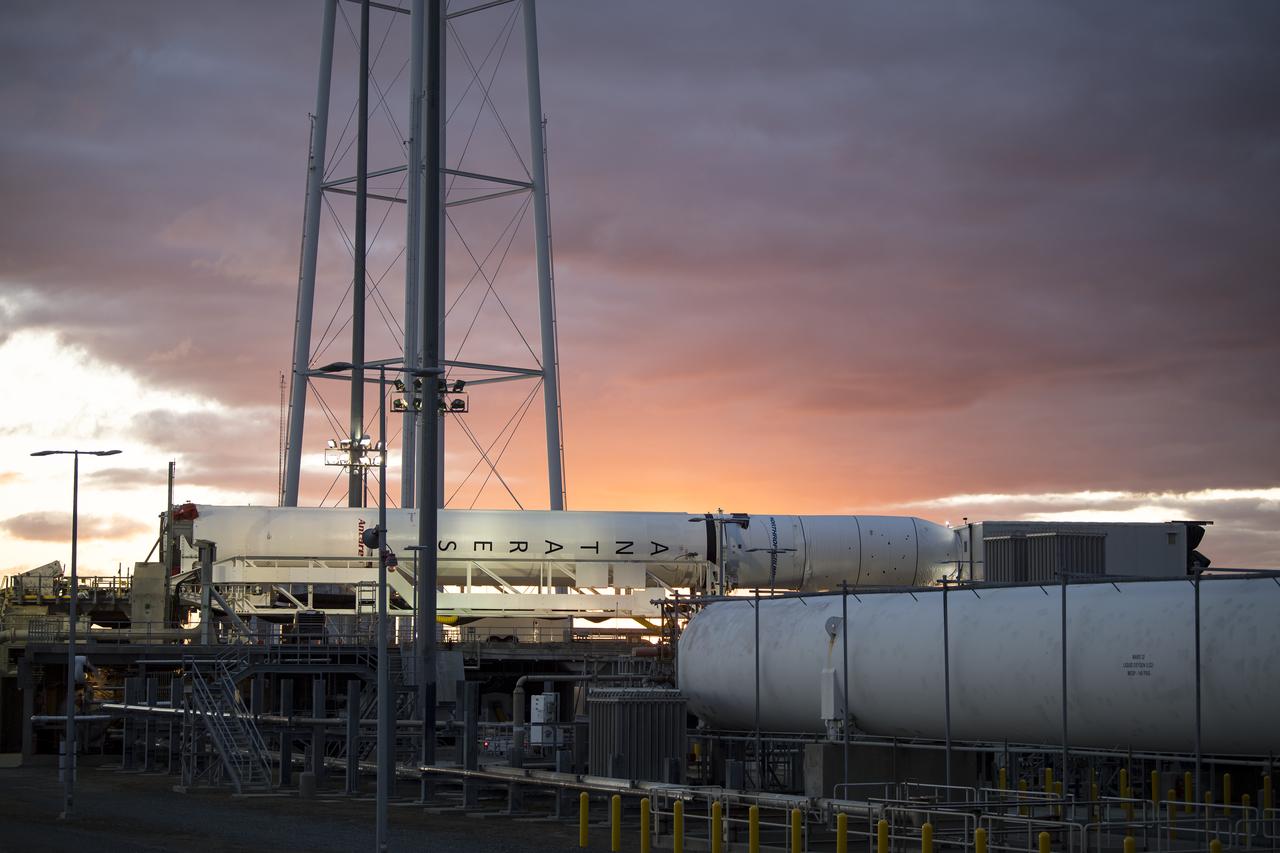
A Northrop Grumman Antares rocket carrying a Cygnus resupply spacecraft is horizontal for the final cargo load on Pad-0A, Friday, Feb. 7, 2020 at NASA's Wallops Flight Facility in Virginia. Northrop Grumman’s 13th contracted cargo resupply mission with NASA to the International Space Station will deliver more than 7,500 pounds of science and research, crew supplies and vehicle hardware to the orbital laboratory and its crew. Photo Credit: (NASA/Aubrey Gemignani)
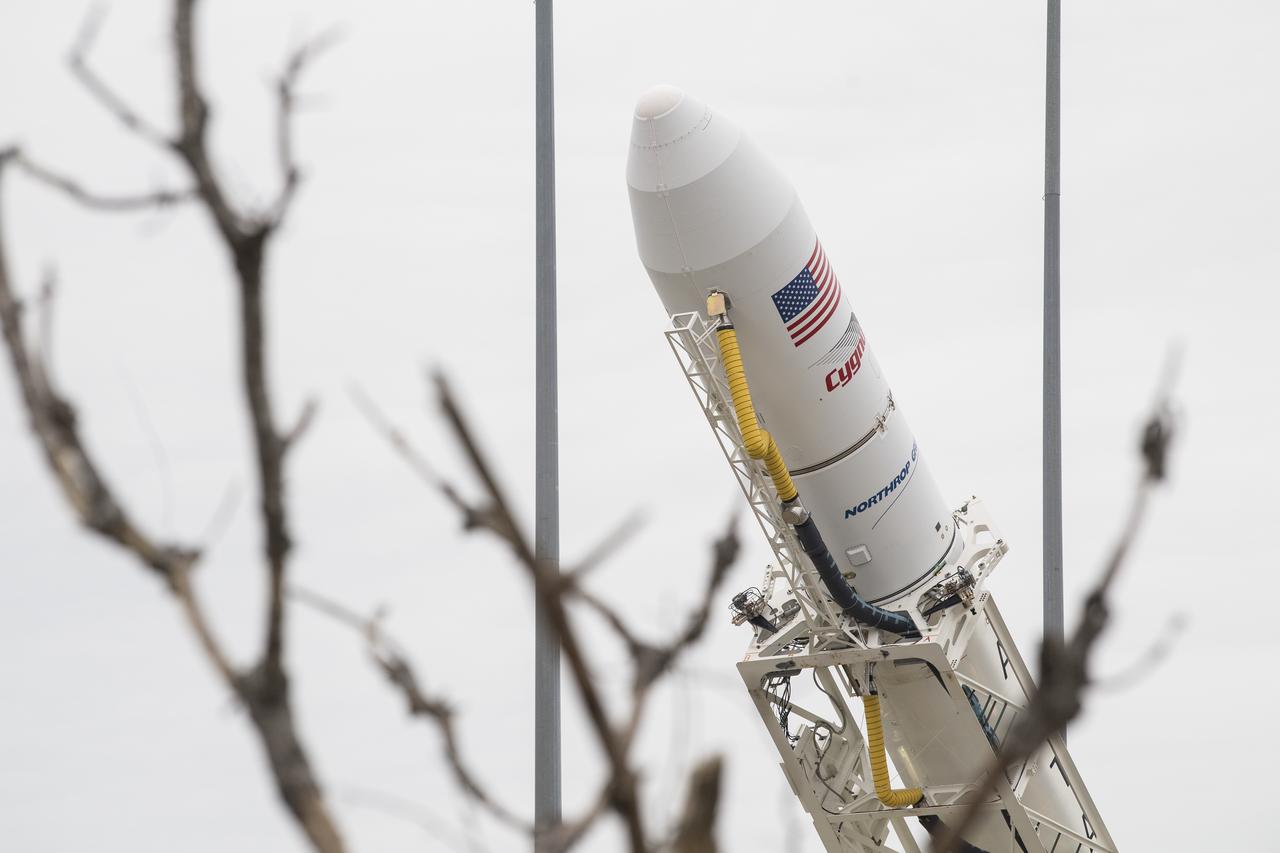
The Cygnus resupply spacecraft is seen atop the Northrop Grumman Antares rocket as it is lowered into a horizontal position to refresh and reload the final cargo, Wednesday, Feb. 12, 2020, at launch Pad-0A of NASA's Wallops Flight Facility in Virginia. Northrop Grumman’s 13th contracted cargo resupply mission with NASA to the International Space Station will deliver more than 7,500 pounds of science and research, crew supplies and vehicle hardware to the orbital laboratory and its crew. Photo Credit: (NASA/Aubrey Gemignani)
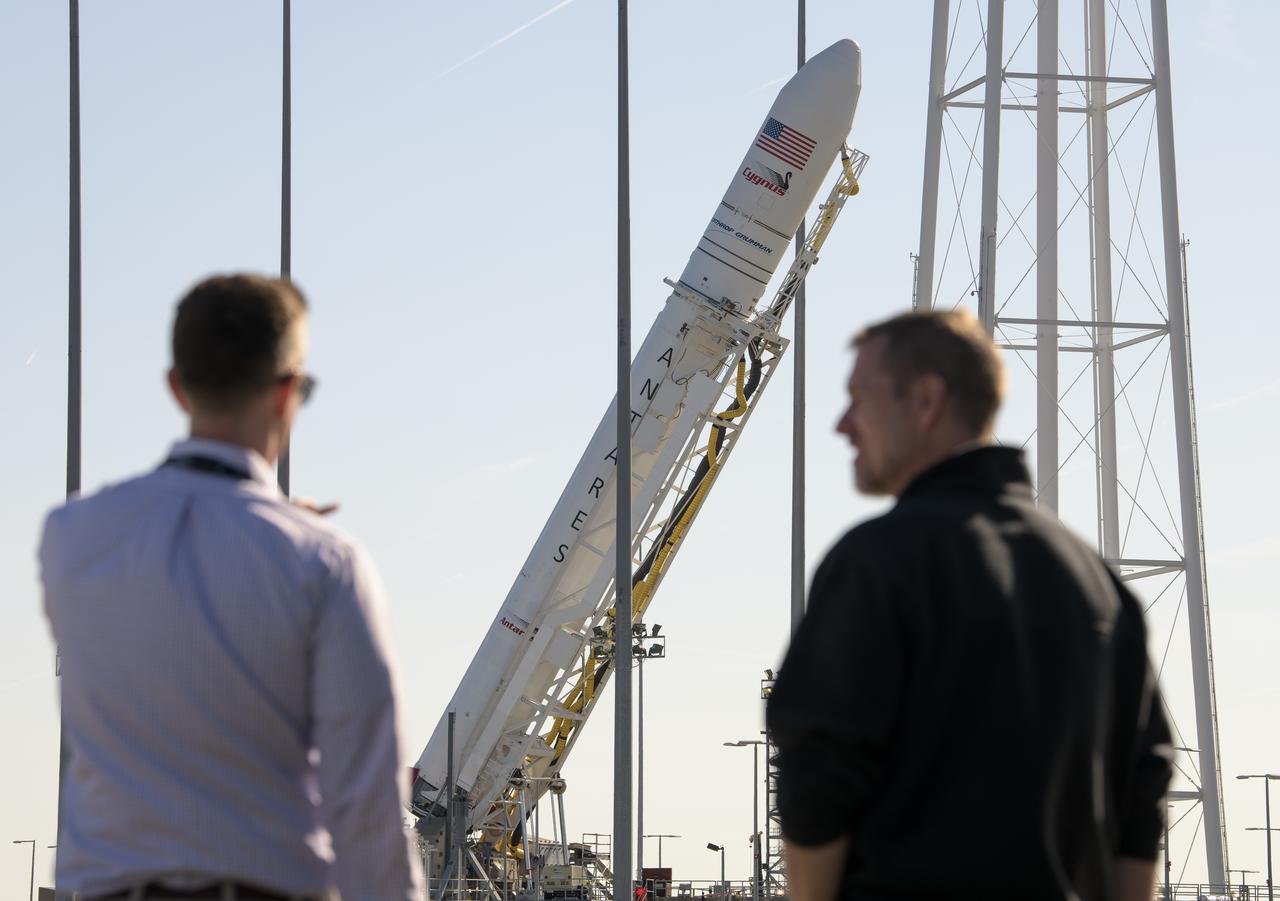
A Northrop Grumman Antares rocket carrying a Cygnus resupply spacecraft is lowered into a horizontal position for final cargo load on Pad-0A, Tuesday, April 16, 2019 at NASA's Wallops Flight Facility in Virginia. Northrop Grumman’s 11th contracted cargo resupply mission with NASA to the International Space Station will deliver about 7,600 pounds of science and research, crew supplies and vehicle hardware to the orbital laboratory and its crew. Photo Credit: (NASA/Bill Ingalls)
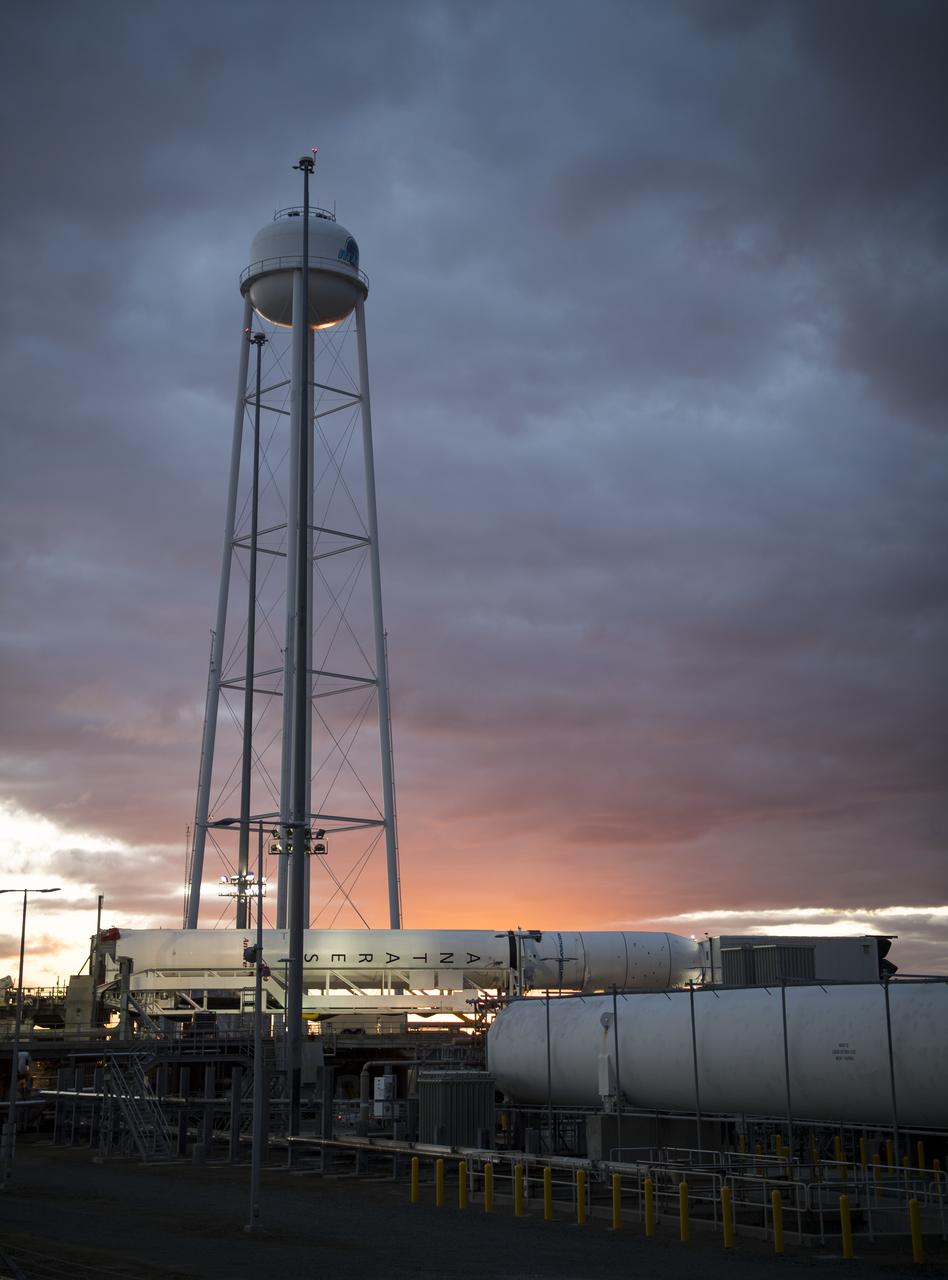
A Northrop Grumman Antares rocket carrying a Cygnus resupply spacecraft is horizontal for the final cargo load on Pad-0A, Friday, Feb. 7, 2020 at NASA's Wallops Flight Facility in Virginia. Northrop Grumman’s 13th contracted cargo resupply mission with NASA to the International Space Station will deliver more than 7,500 pounds of science and research, crew supplies and vehicle hardware to the orbital laboratory and its crew. Photo Credit: (NASA/Aubrey Gemignani)
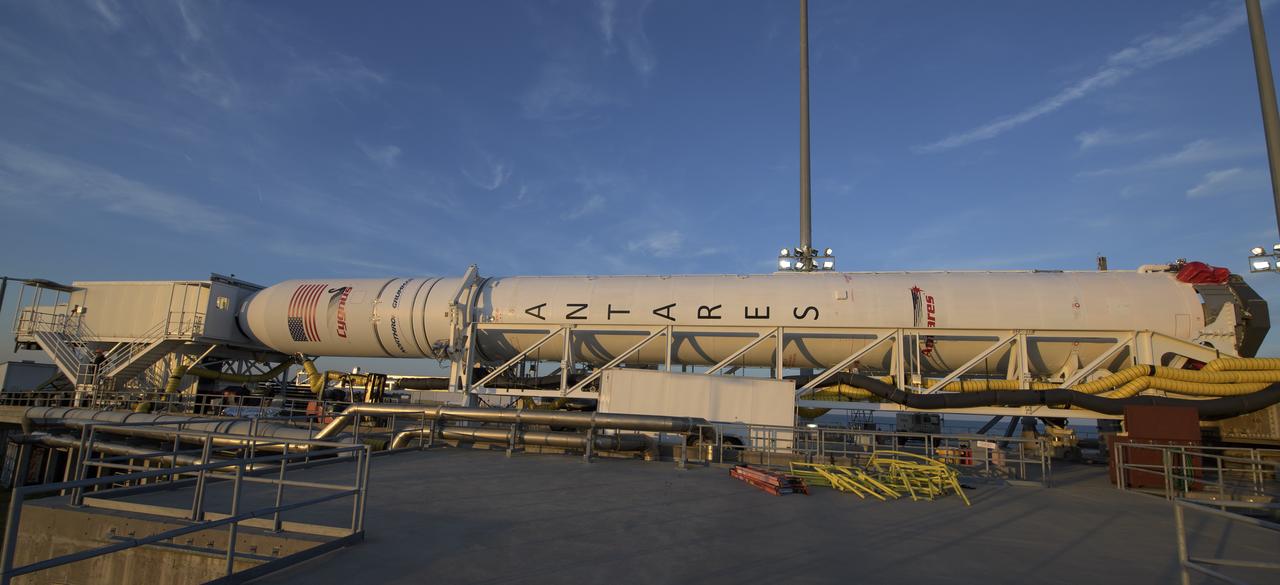
A Northrop Grumman Antares rocket carrying a Cygnus resupply spacecraft is horizontal for the final cargo load on Pad-0A, Tuesday, April 16, 2019 at NASA's Wallops Flight Facility in Virginia. Northrop Grumman’s 11th contracted cargo resupply mission with NASA to the International Space Station will deliver about 7,600 pounds of science and research, crew supplies and vehicle hardware to the orbital laboratory and its crew. Photo Credit: (NASA/Bill Ingalls)
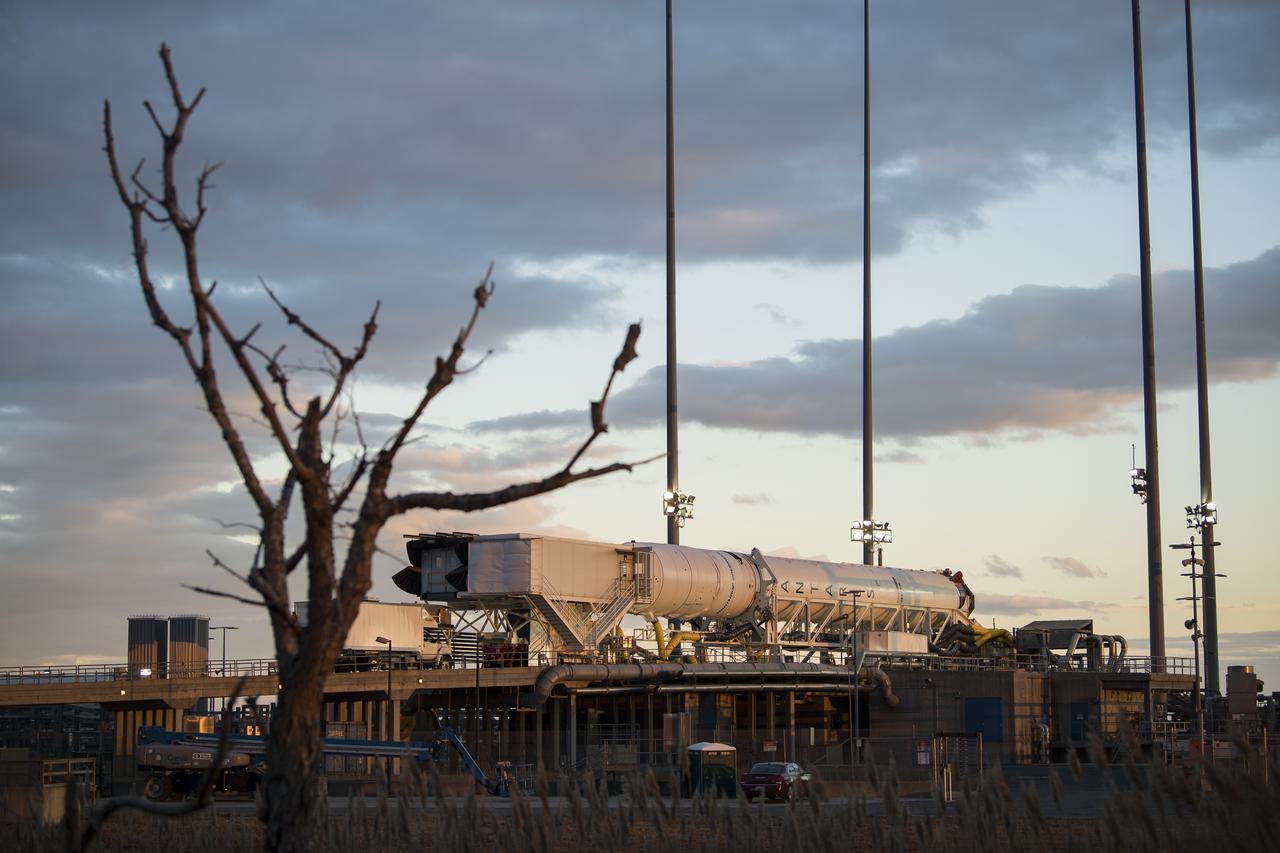
A Northrop Grumman Antares rocket carrying a Cygnus resupply spacecraft is horizontal for the final cargo load on Pad-0A, Friday, Feb. 7, 2020 at NASA's Wallops Flight Facility in Virginia. Northrop Grumman’s 13th contracted cargo resupply mission with NASA to the International Space Station will deliver more than 7,500 pounds of science and research, crew supplies and vehicle hardware to the orbital laboratory and its crew. Photo Credit: (NASA/Aubrey Gemignani)
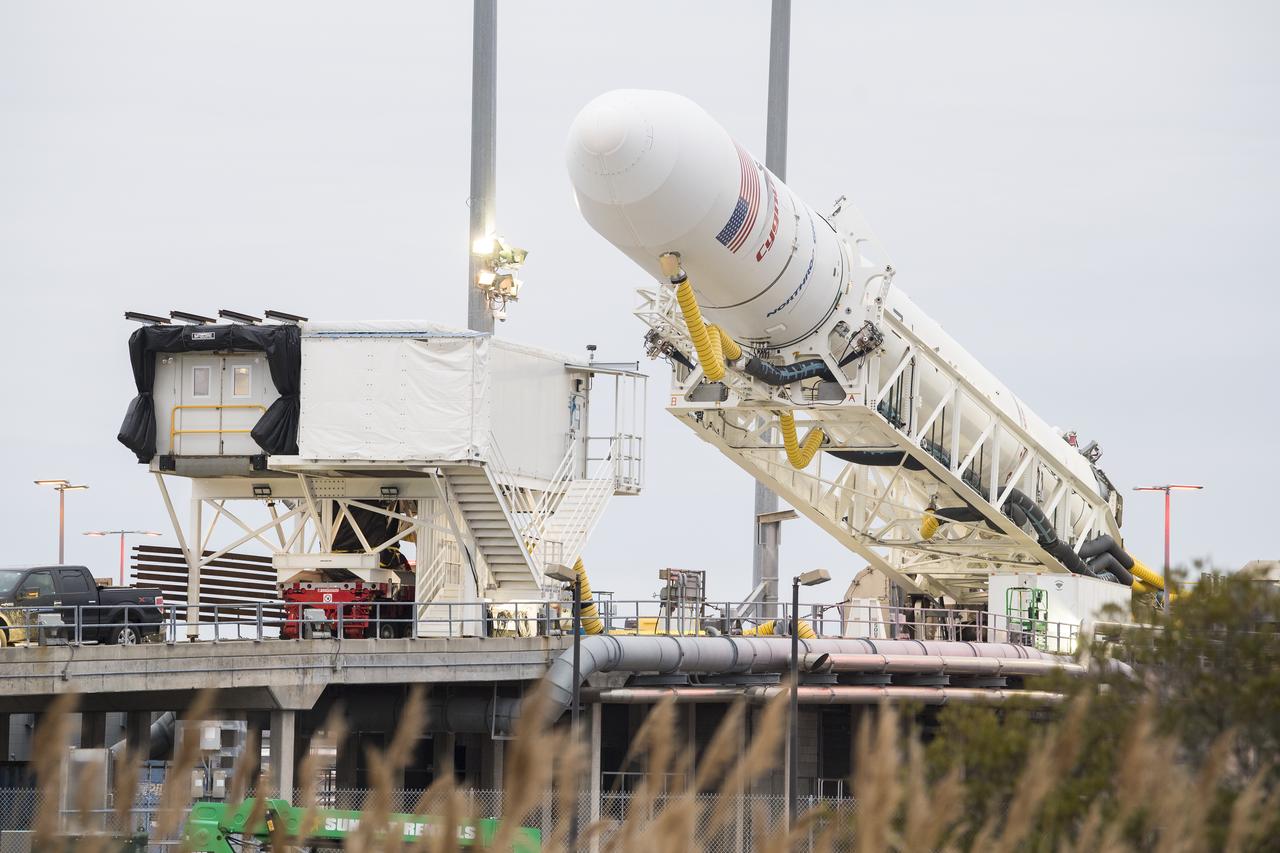
The Northrop Grumman Antares rocket is lowered into a horizontal position to refresh and reload the final cargo into the Cygnus resupply spacecraft, Wednesday, Feb. 12, 2020, at launch Pad-0A of NASA's Wallops Flight Facility in Virginia. Northrop Grumman’s 13th contracted cargo resupply mission with NASA to the International Space Station will deliver more than 7,500 pounds of science and research, crew supplies and vehicle hardware to the orbital laboratory and its crew. Photo Credit: (NASA/Aubrey Gemignani)
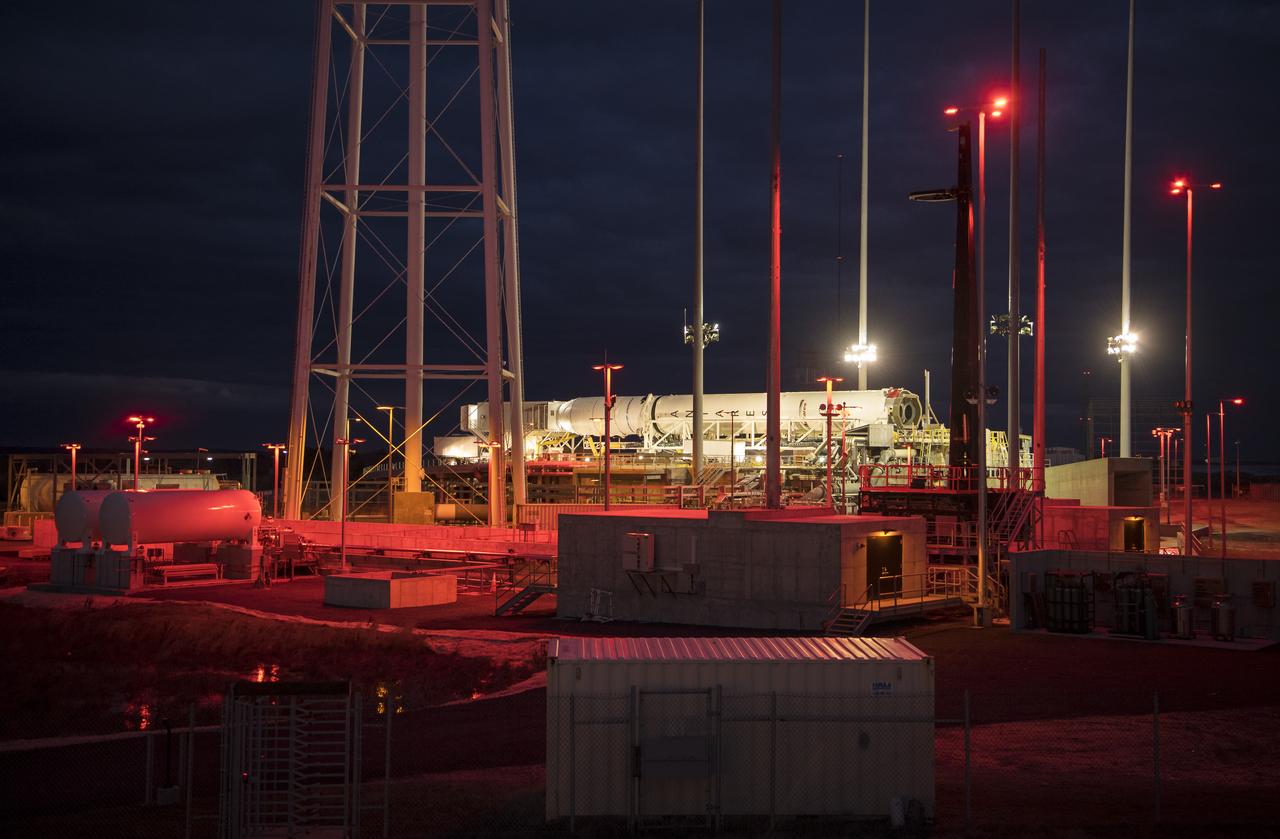
A Northrop Grumman Antares rocket carrying a Cygnus resupply spacecraft is horizontal for the final cargo load on Pad-0A, Friday, Feb. 7, 2020 at NASA's Wallops Flight Facility in Virginia. Northrop Grumman’s 13th contracted cargo resupply mission with NASA to the International Space Station will deliver more than 7,500 pounds of science and research, crew supplies and vehicle hardware to the orbital laboratory and its crew. Photo Credit: (NASA/Aubrey Gemignani)
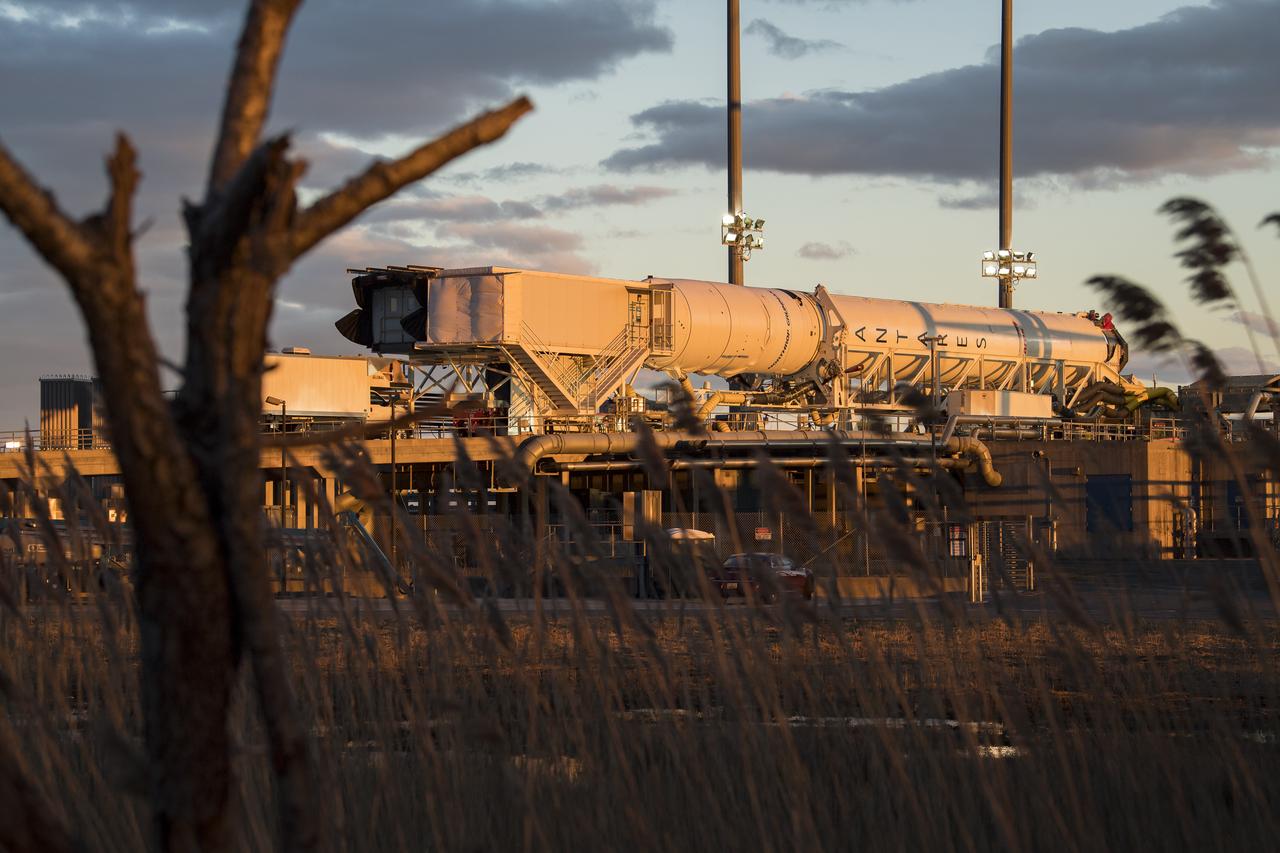
A Northrop Grumman Antares rocket carrying a Cygnus resupply spacecraft is horizontal for the final cargo load on Pad-0A, Friday, Feb. 7, 2020 at NASA's Wallops Flight Facility in Virginia. Northrop Grumman’s 13th contracted cargo resupply mission with NASA to the International Space Station will deliver more than 7,500 pounds of science and research, crew supplies and vehicle hardware to the orbital laboratory and its crew. Photo Credit: (NASA/Aubrey Gemignani)
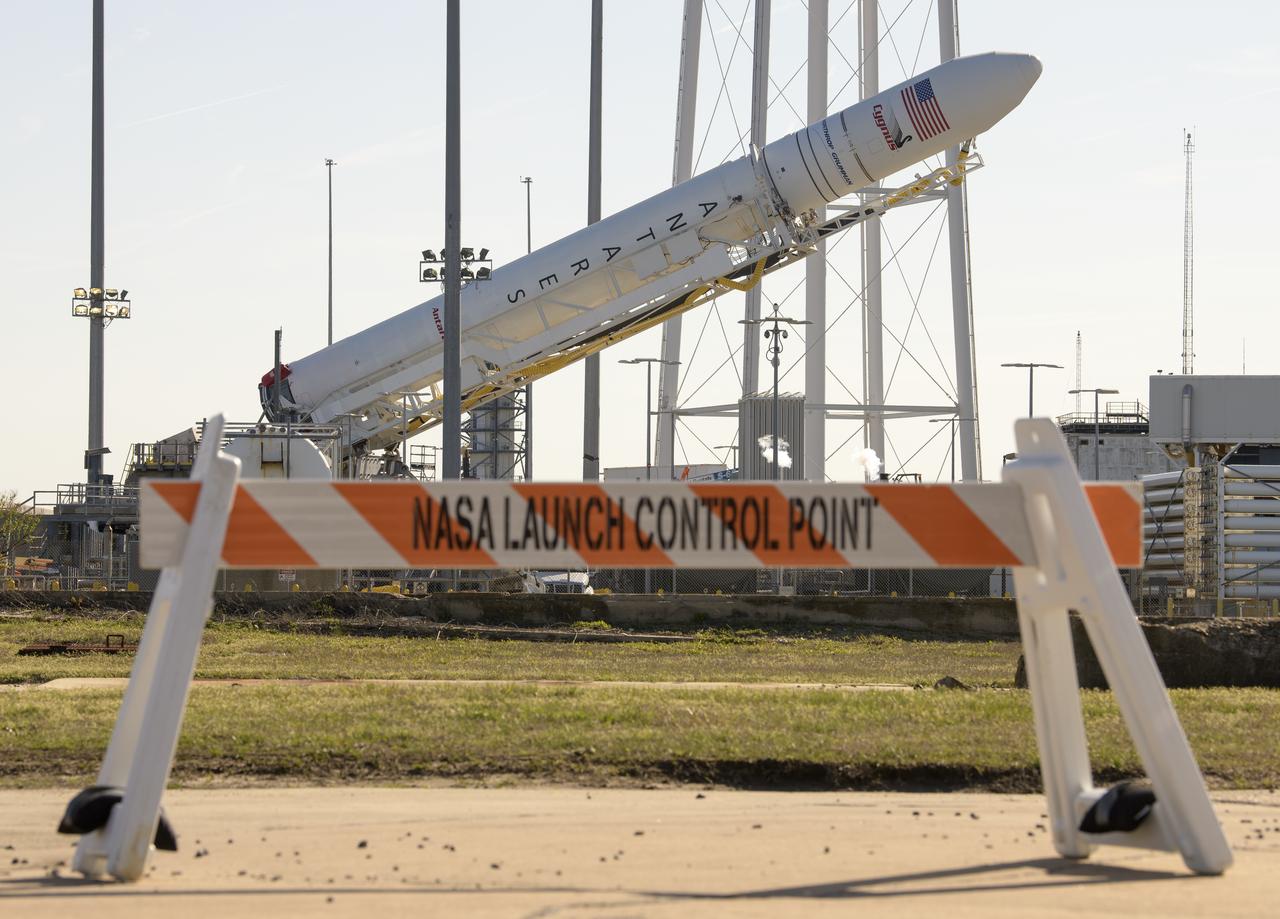
A Northrop Grumman Antares rocket carrying a Cygnus resupply spacecraft is lowered into a horizontal position for final cargo load on Pad-0A, Tuesday, April 16, 2019 at NASA's Wallops Flight Facility in Virginia. Northrop Grumman’s 11th contracted cargo resupply mission with NASA to the International Space Station will deliver about 7,600 pounds of science and research, crew supplies and vehicle hardware to the orbital laboratory and its crew. Photo Credit: (NASA/Bill Ingalls)
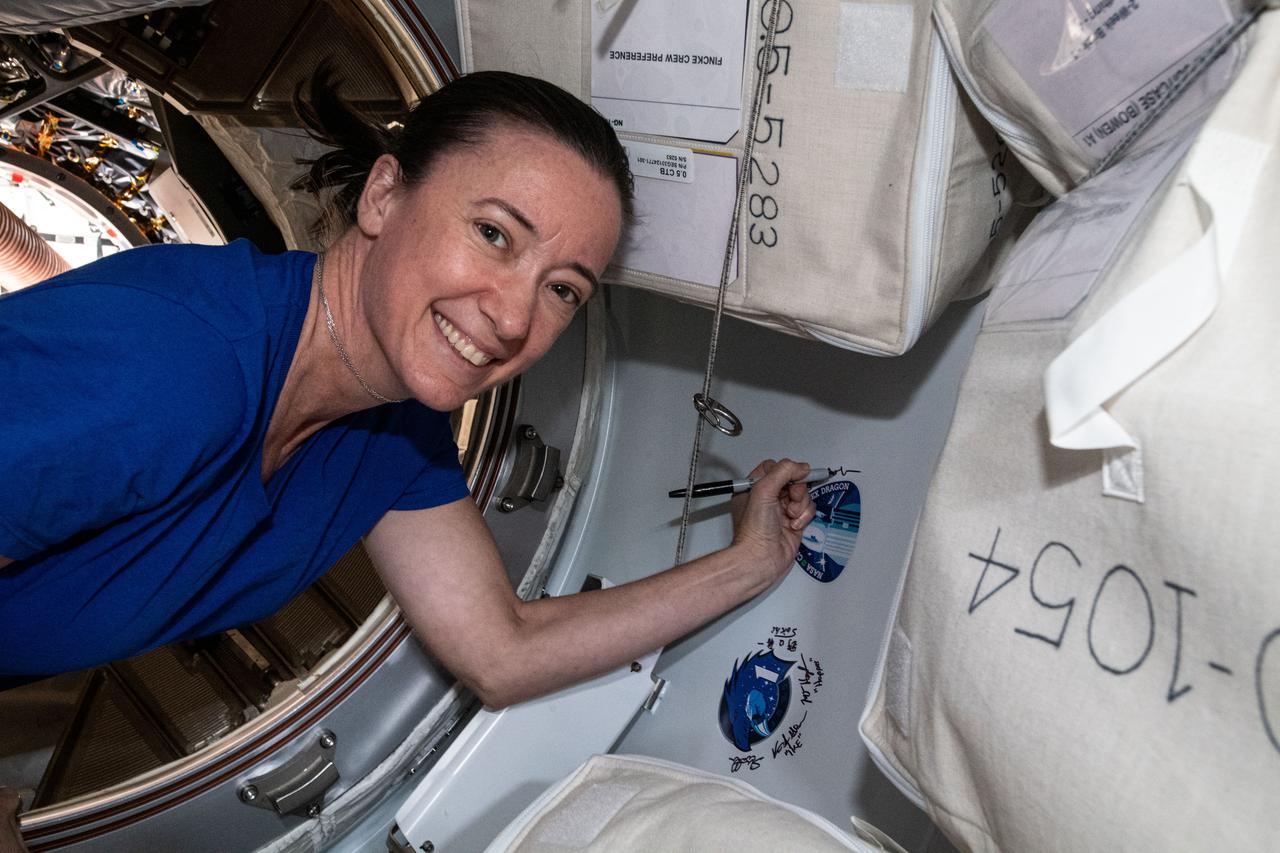
iss065e162499 (July 6, 2021) --- NASA astronaut and Expedition 65 Flight Engineer Megan McArthur signs her name next to the SpaceX CRS-22 cargo mission sticker attached to the vestibule between the SpaceX Cargo Dragon resupply ship and the Harmony module's space-facing international docking adapter.
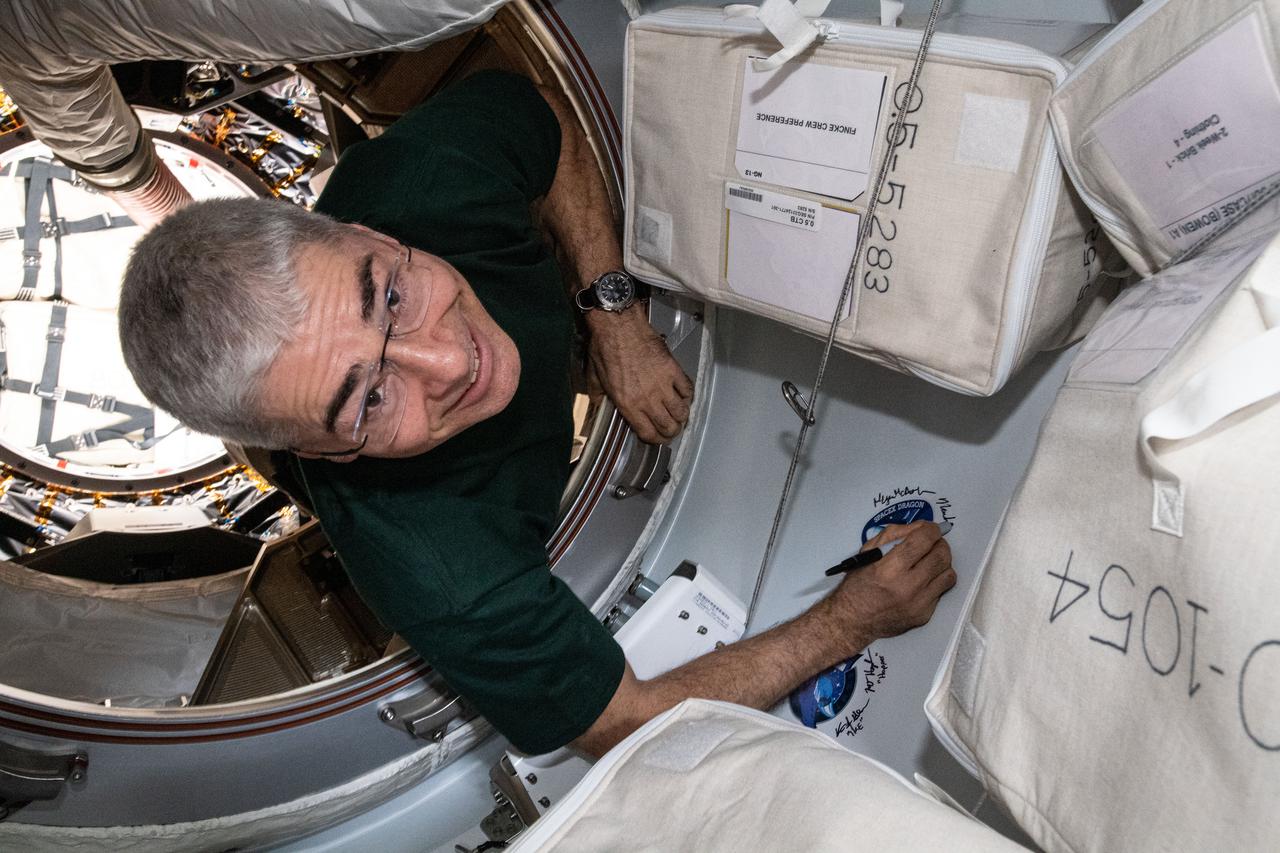
iss065e162500 (July 6, 2021) --- NASA astronaut and Expedition 65 Flight Engineer Mark Vande Hei signs his name next to the SpaceX CRS-22 cargo mission sticker attached to the vestibule between the SpaceX Cargo Dragon resupply ship and the Harmony module's space-facing international docking adapter.
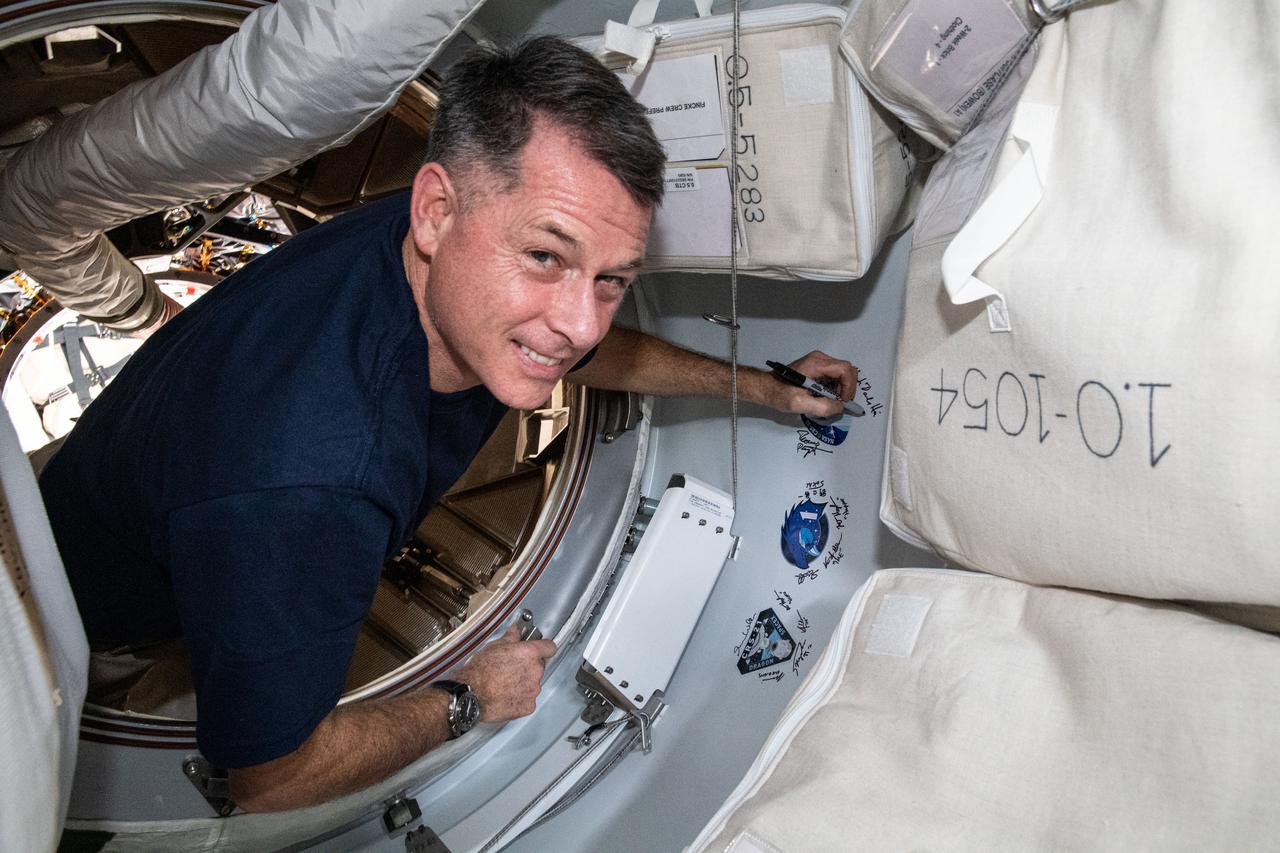
iss065e162506 (July 6, 2021) --- NASA astronaut and Expedition 65 Flight Engineer Shane Kimbrough signs his name next to the SpaceX CRS-22 cargo mission sticker attached to the vestibule between the SpaceX Cargo Dragon resupply ship and the Harmony module's space-facing international docking adapter.
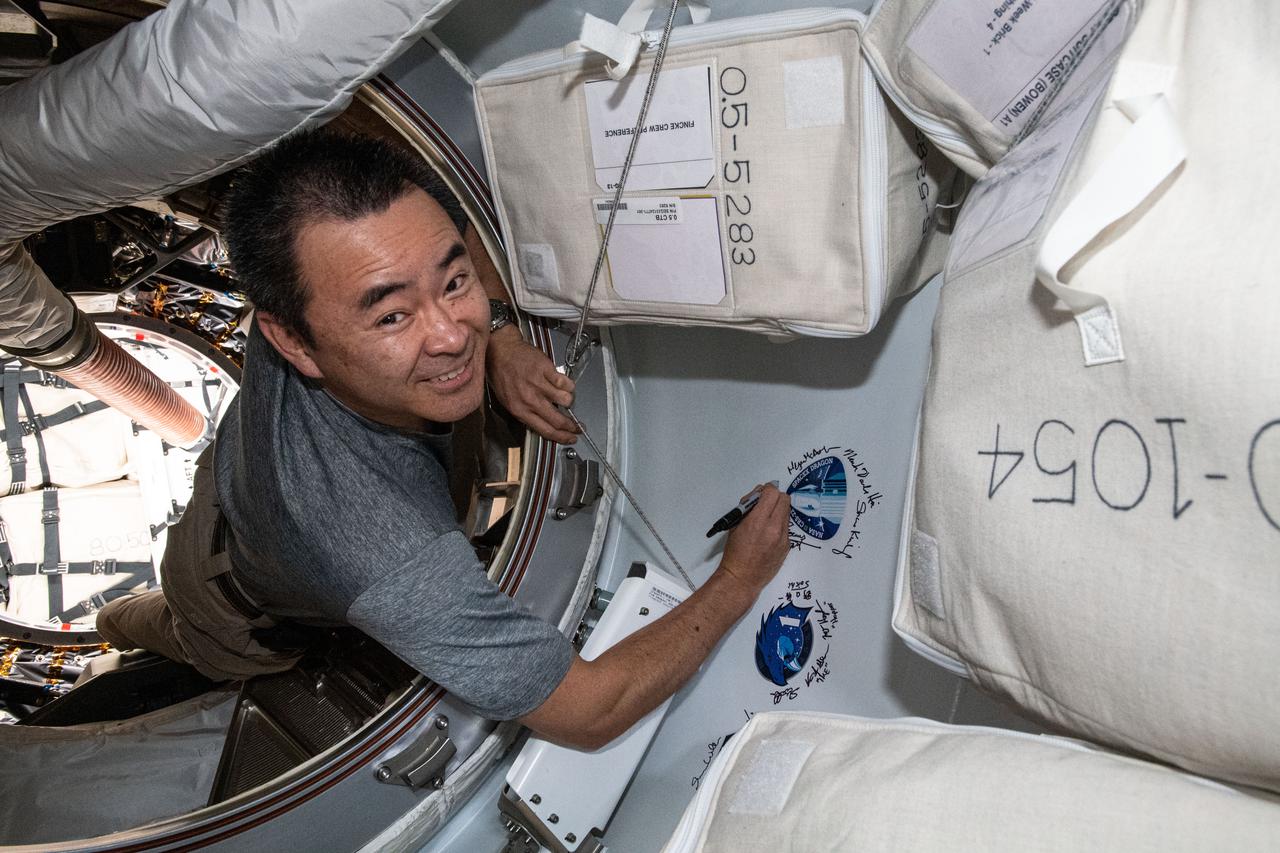
iss065e162509 (July 6, 2021) --- Expedition 65 Commander Akihiko Hoshide of the Japan Aerospace Exploration Agency (JAXA) signs his name next to the SpaceX CRS-22 cargo mission sticker attached to the vestibule between the SpaceX Cargo Dragon resupply ship and the Harmony module's space-facing international docking adapter.
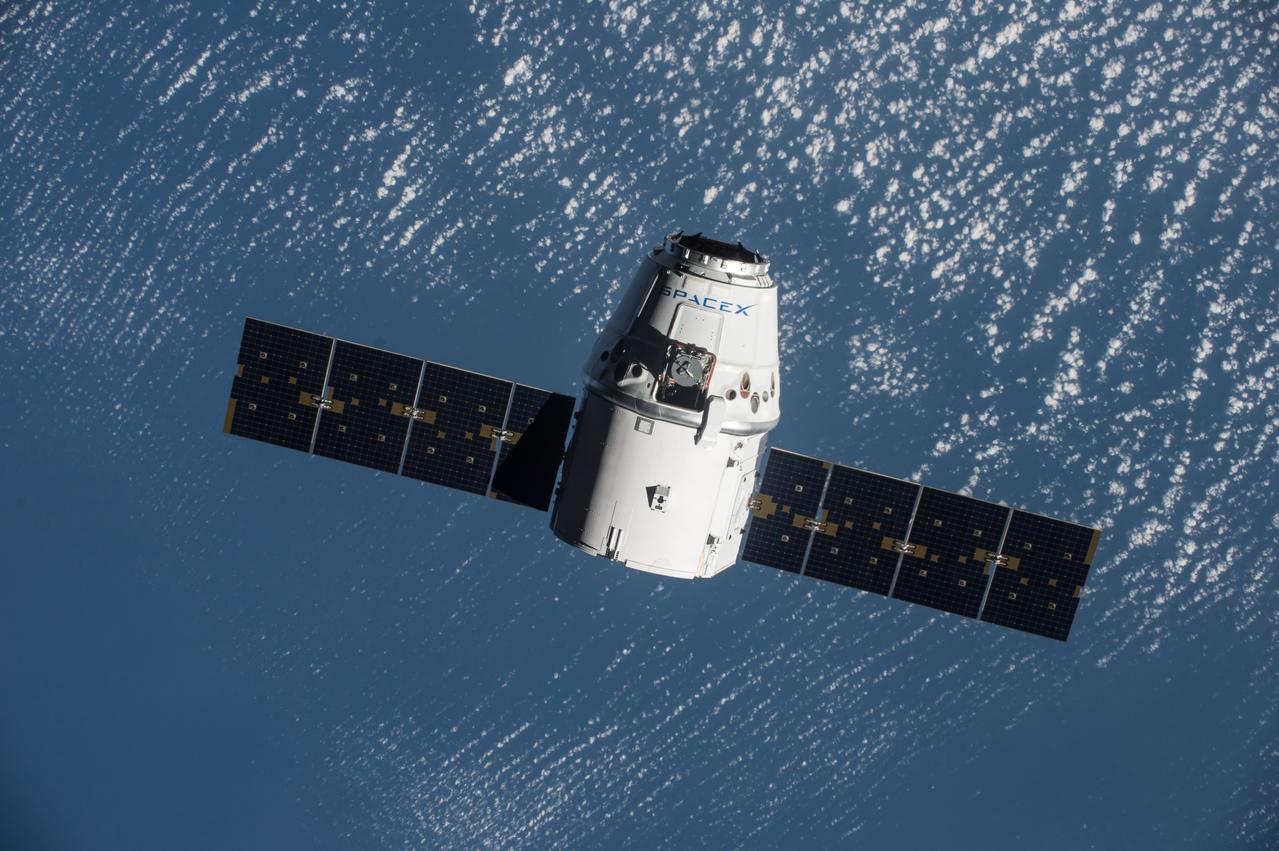
ISS048e042023 (07/20/2016) --- The SpaceX Dragon spacecraft arrives at the International Space Station with nearly 5,000 pounds of cargo. Instruments to perform the first-ever DNA sequencing in space, and the first international docking adapter for commercial crew spacecraft, are among the cargo of the SpaceX Commercial Resupply Services-9 (CRS-9) mission.
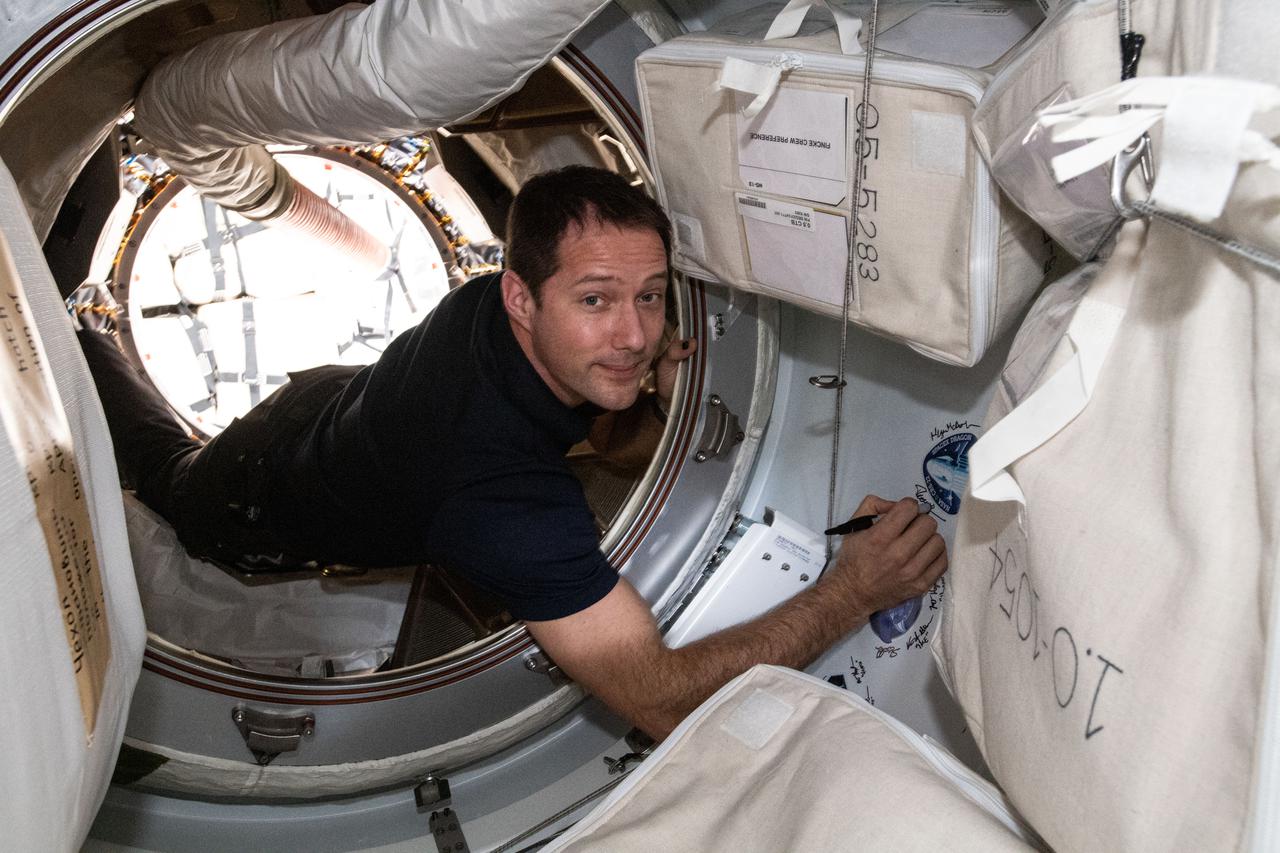
iss065e162503 (July 6, 2021) --- Expedition 65 Flight Engineer Thomas Pesquet of ESA (European Space Agency) signs his name next to the SpaceX CRS-22 cargo mission sticker attached to the vestibule between the SpaceX Cargo Dragon resupply ship and the Harmony module's space-facing international docking adapter.
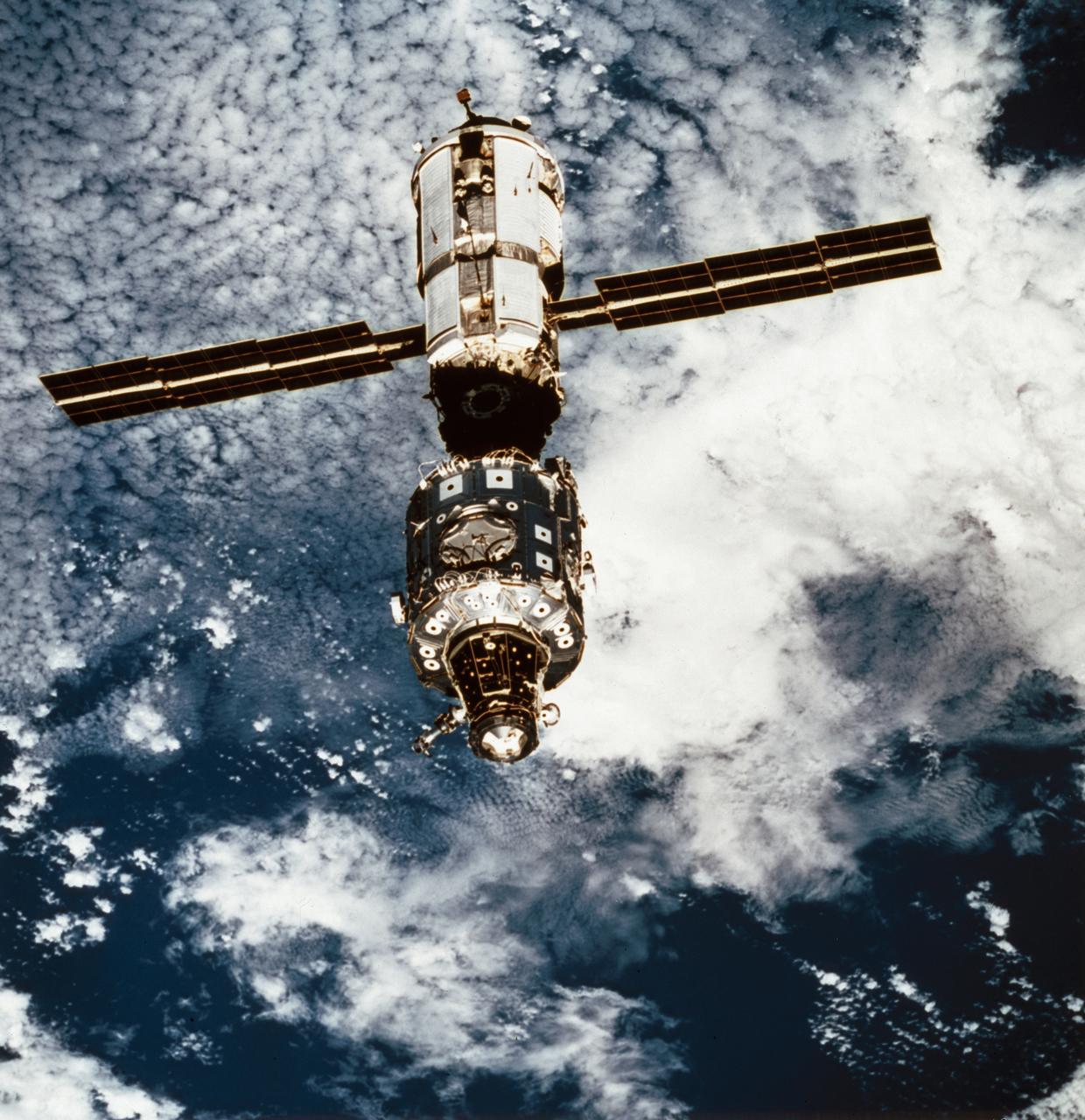
This STS-96 onboard photo of the International Space Station (ISS) was taken from Orbiter Discovery during a fly-around following separation of the two spacecraft. STS-96, the second Space Station assembly and resupply flight, launched on May 27, 1999 for an almost 10 day mission. The Shuttle's SPACEHAB double module carried internal and resupply cargo for station outfitting. Evident in the photo is the newly mounted Russian cargo crane, known as STRELA, which was carried aboard the shuttle in the integrated Cargo Carrir (ICC). The STS-96 flight was the first to perform docking with the ISS.

iss067e266393 (Aug. 14, 2022) --- ESA (European Space Agency) astronaut Samantha Cristoforetti unloads cargo from the SpaceX Dragon 25th resupply mission to the space station in July, 2022.
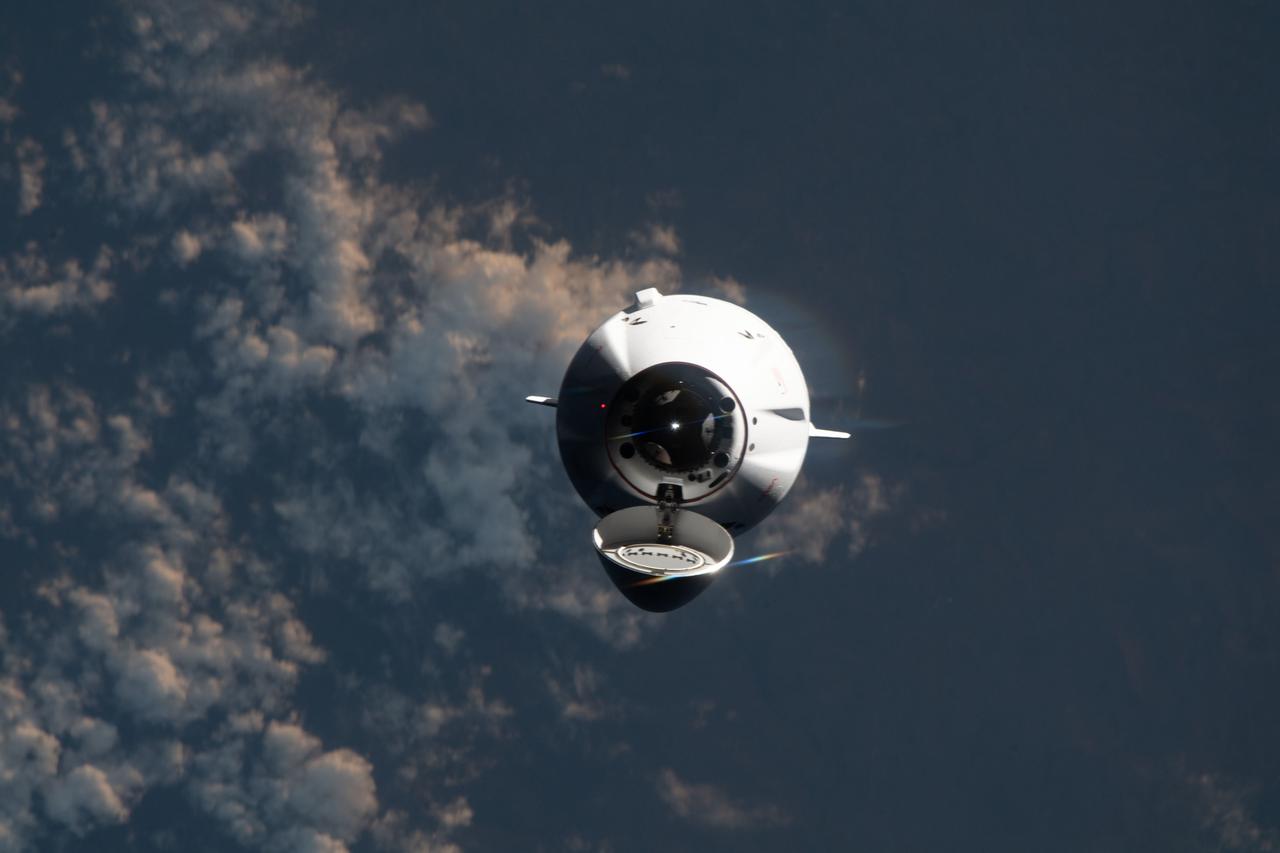
iss070e022160 (Nov. 11, 2023) --- The SpaceX Dragon cargo craft, on the company's 29th commercial resupply mission for NASA, approaches the International Space Station while orbiting 261 miles above Indonesia's Savu Sea.
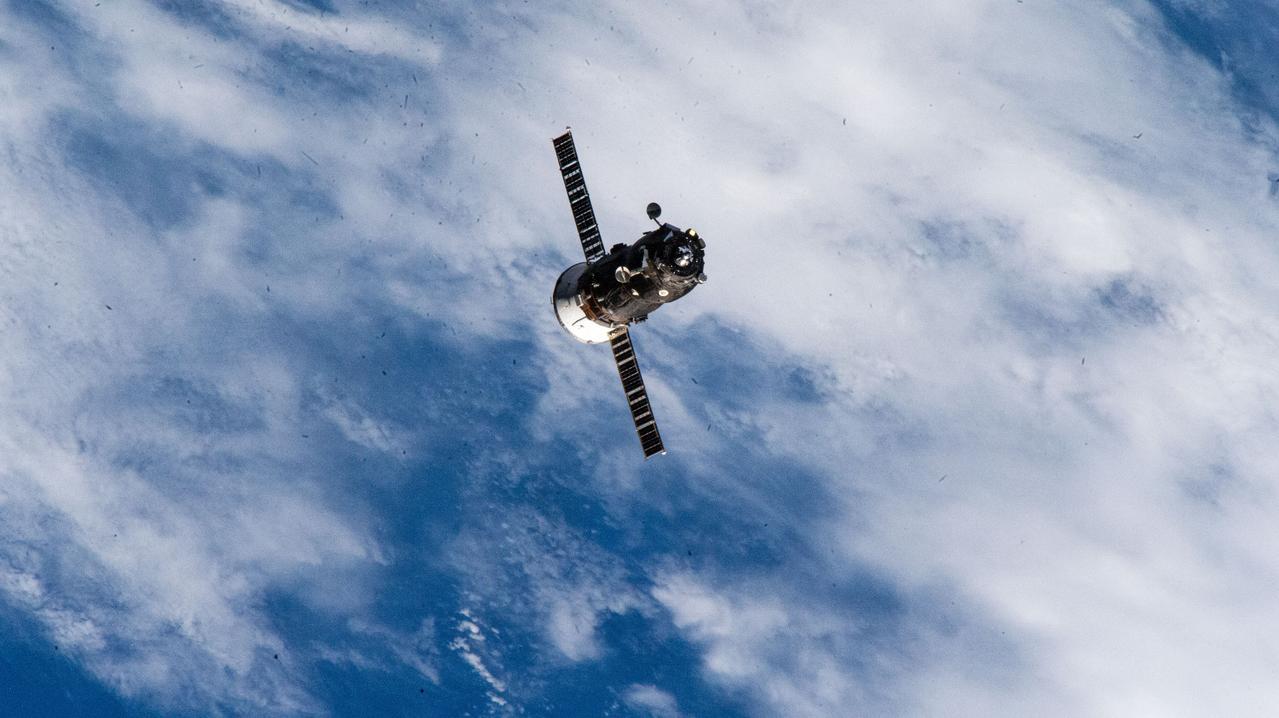
iss071e464298 (Aug. 13, 2024) --- The Progress 87 cargo craft, packed with trash and discarded gear, departs the International Space Station following a six-month resupply mission docked to the Zvezda service module's rear port.
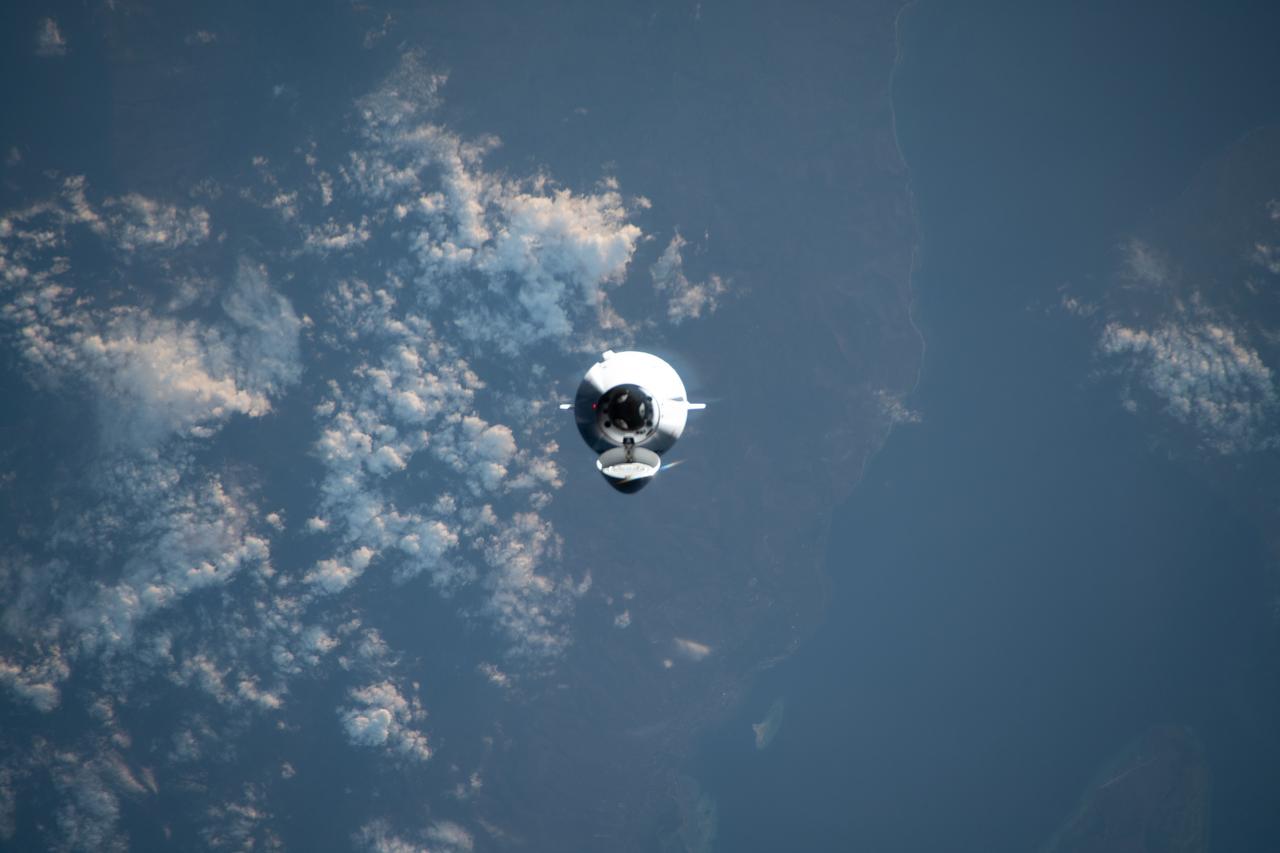
iss070e023587 (Nov. 11, 2023) --- The SpaceX Dragon cargo craft, on the company's 29th commercial resupply mission for NASA, approaches the International Space Station while orbiting 261 miles above the Lesser Sunda Islands.
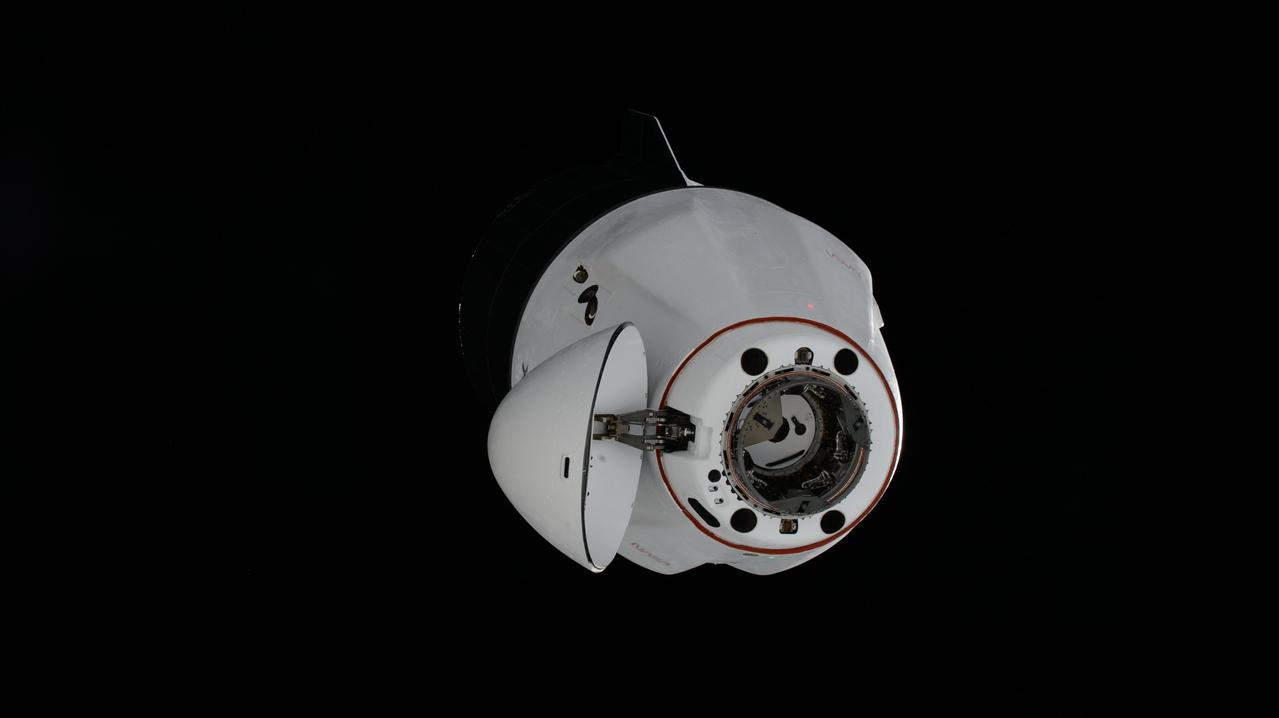
iss070e129463 (March 23, 2024) --- The SpaceX Dragon cargo spacecraft, on NASA's 30th Commercial Resupply Services (CRS-30) mission, approaches the International Space Station for a docking to the Harmony module's space-facing port.

iss062e087495 (March 9, 2020) --- Expedition 62 Flight Engineers Jessica Meir and Andrew Morgan are pictured in front of the hatch to the Space Dragon resupply ship shortly after it was attached to the Harmony module for a month-long cargo mission.
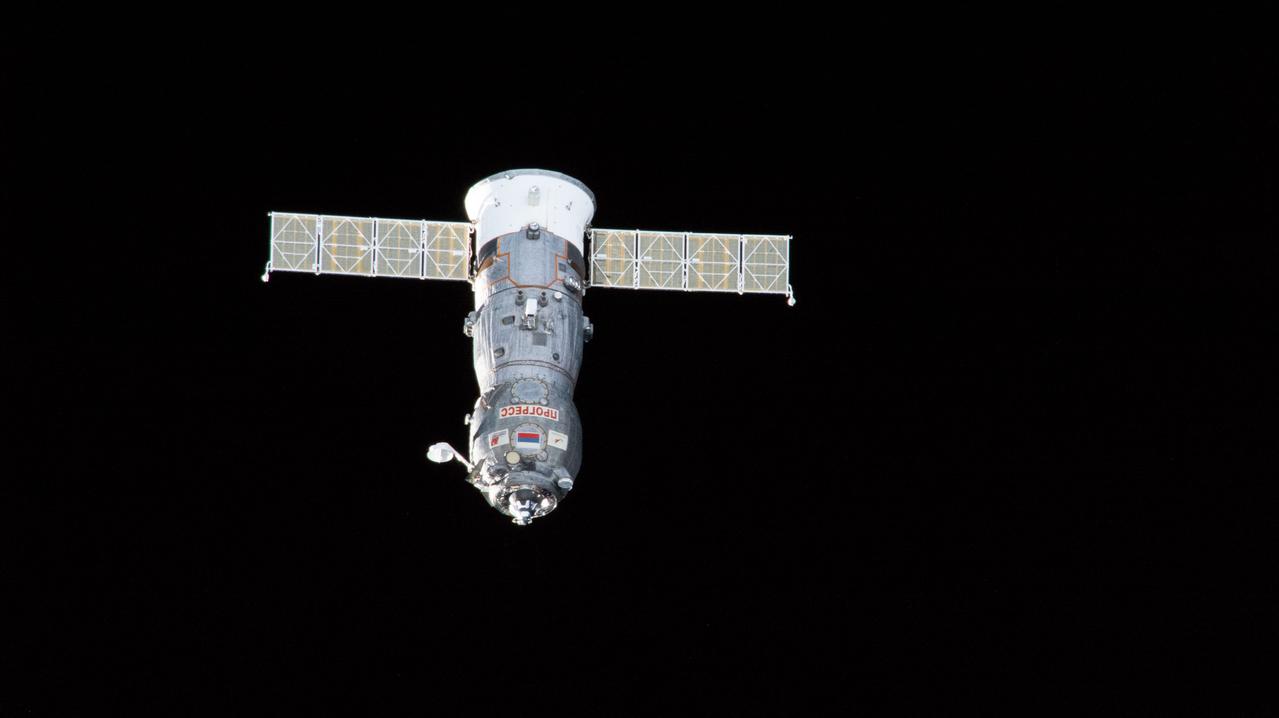
iss068e056697 (Feb. 18, 2023) --- The ISS Progress 82 cargo craft is pictured departing the vicinity of the International Space Station after undocking from the Poisk module ending a four-month resupply mission.

iss068e055642 (Feb. 18, 2023) --- The ISS Progress 82 cargo craft is pictured departing the vicinity of the International Space Station after undocking from the Poisk module ending a four-month resupply mission.
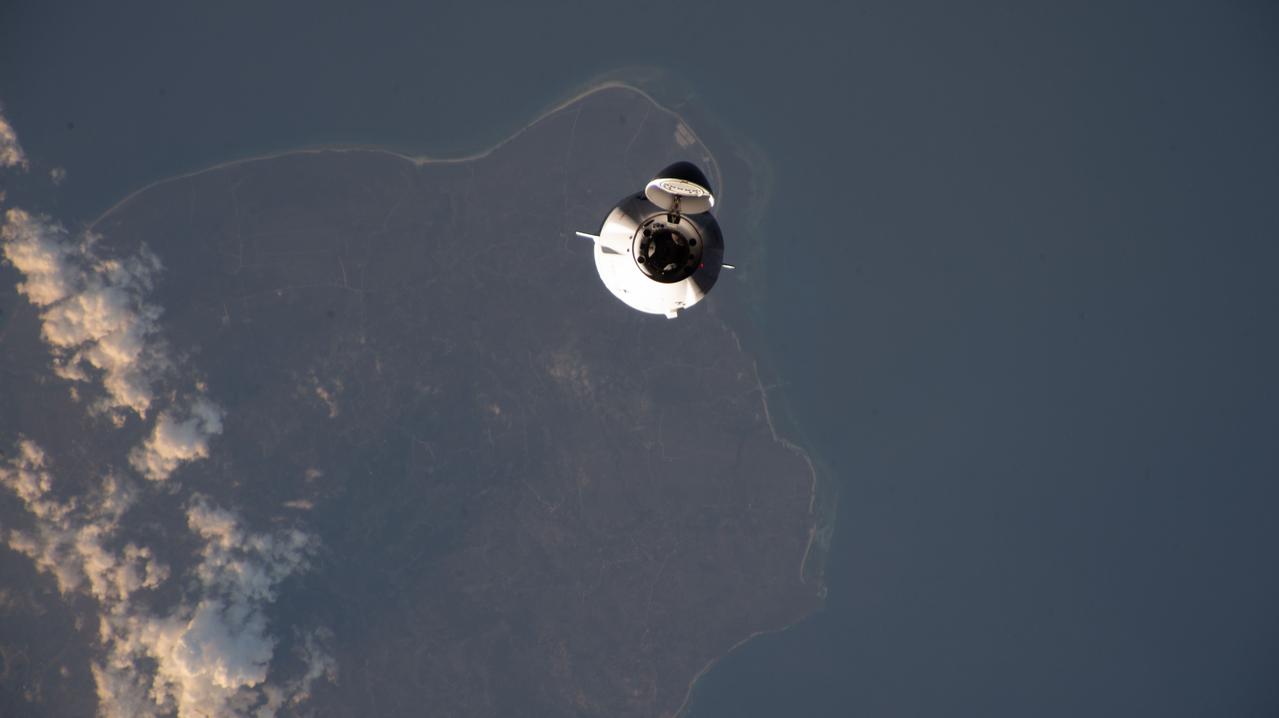
iss070e022097 (Nov. 11, 2023) --- The SpaceX Dragon cargo craft, on the company's 29th commercial resupply mission for NASA, approaches the International Space Station while orbiting 261 miles above the Lesser Sunda Islands.
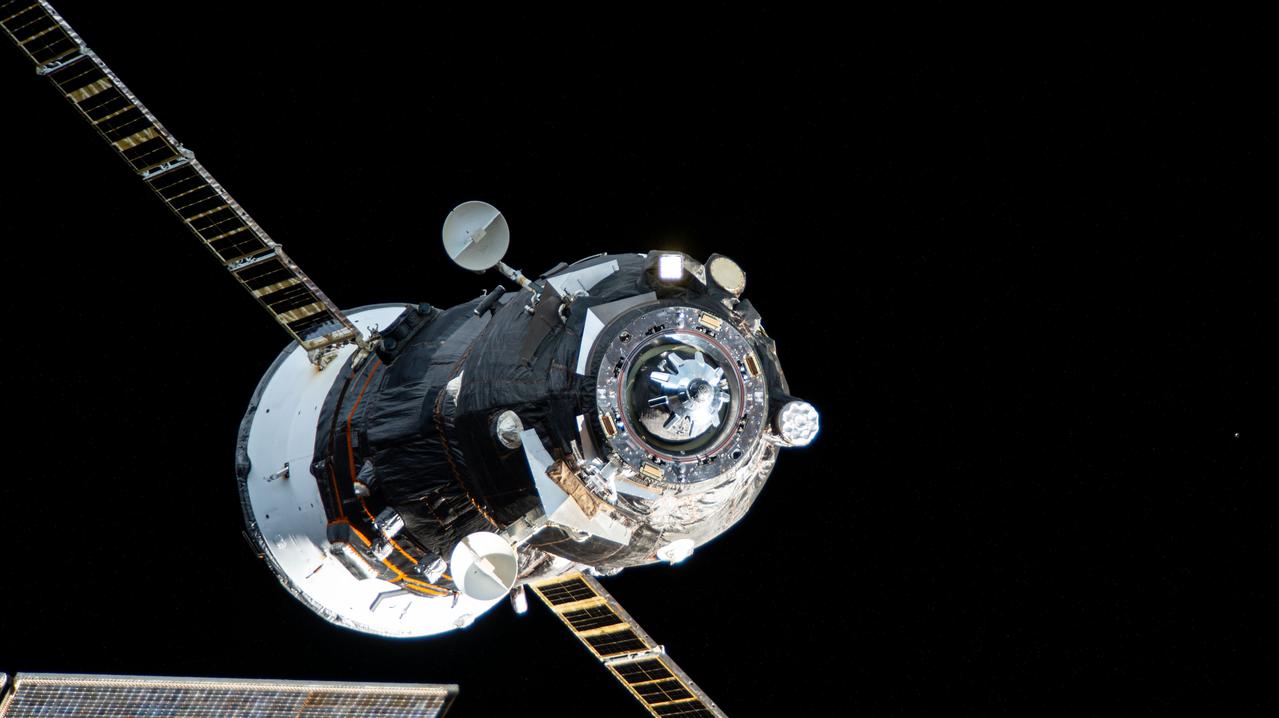
iss071e464295 (Aug. 13, 2024) --- The Progress 87 cargo craft, packed with trash and discarded gear, departs the International Space Station following a six-month resupply mission docked to the Zvezda service module's rear port.
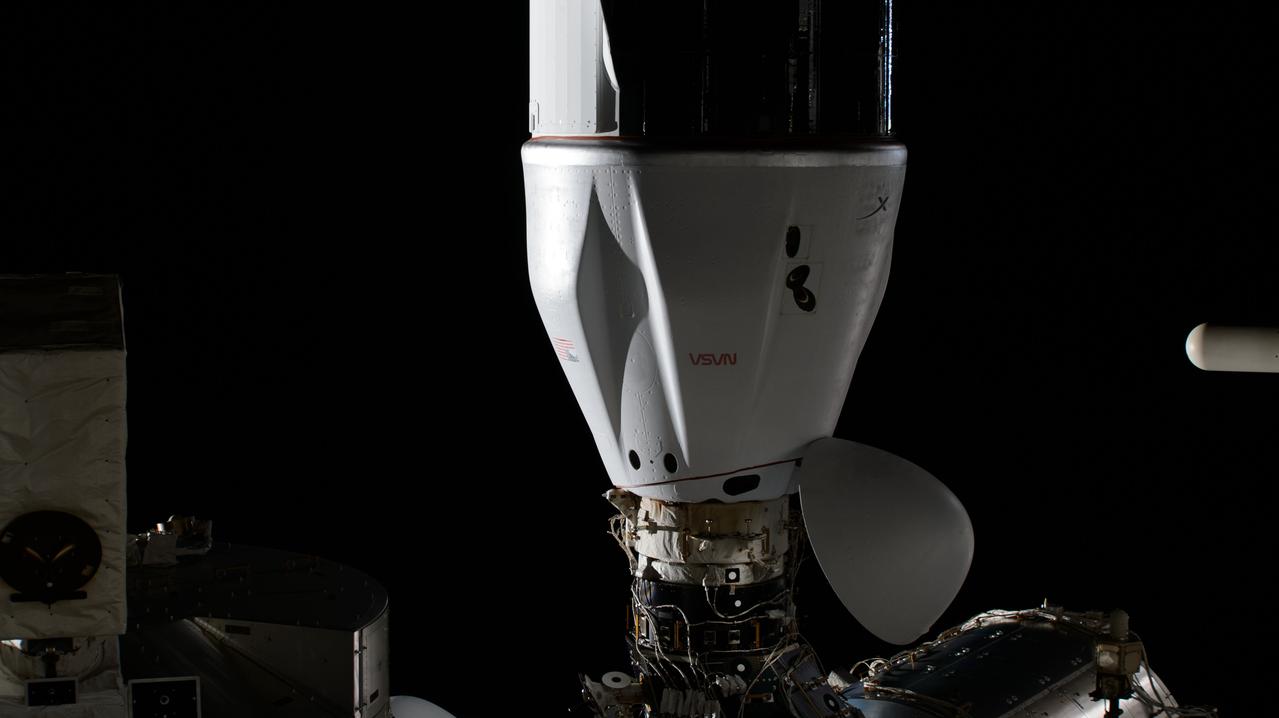
iss070e129455 (March 23, 2024) --- The SpaceX Dragon cargo spacecraft, on NASA's 30th Commercial Resupply Services (CRS-30) mission, is pictured docked to the space-facing port on the International Space Station's Harmony module.

iss070e129454 (March 23, 2024) --- The SpaceX Dragon cargo craft, on NASA's 30th Commercial Resupply Services (CRS-30) mission, approaches the International Space Station for a docking to the Harmony module's space-facing port.
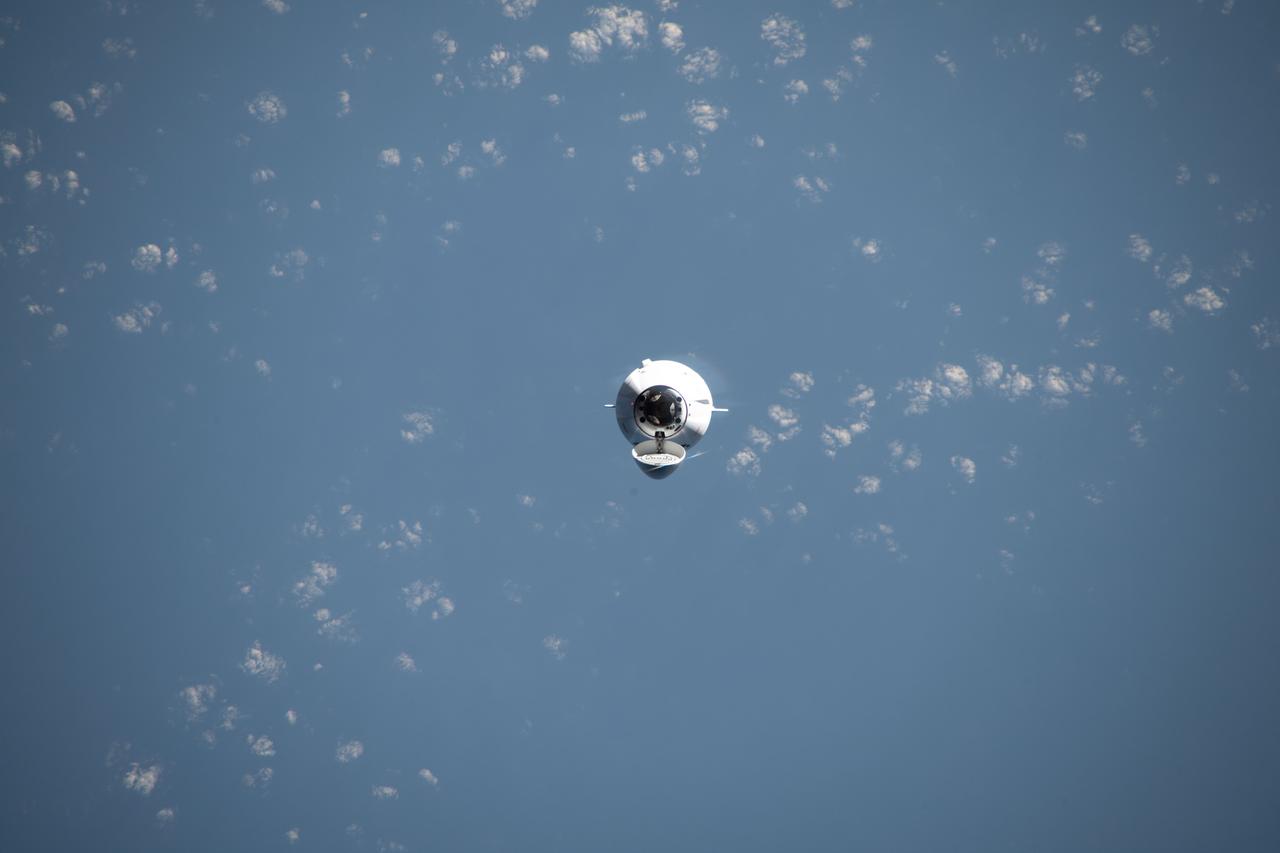
iss070e023576 (Nov. 11, 2023) --- The SpaceX Dragon cargo craft, on the company's 29th commercial resupply mission for NASA, approaches the International Space Station while orbiting 261 miles above the Indian Ocean in between Australia and Indonesia.
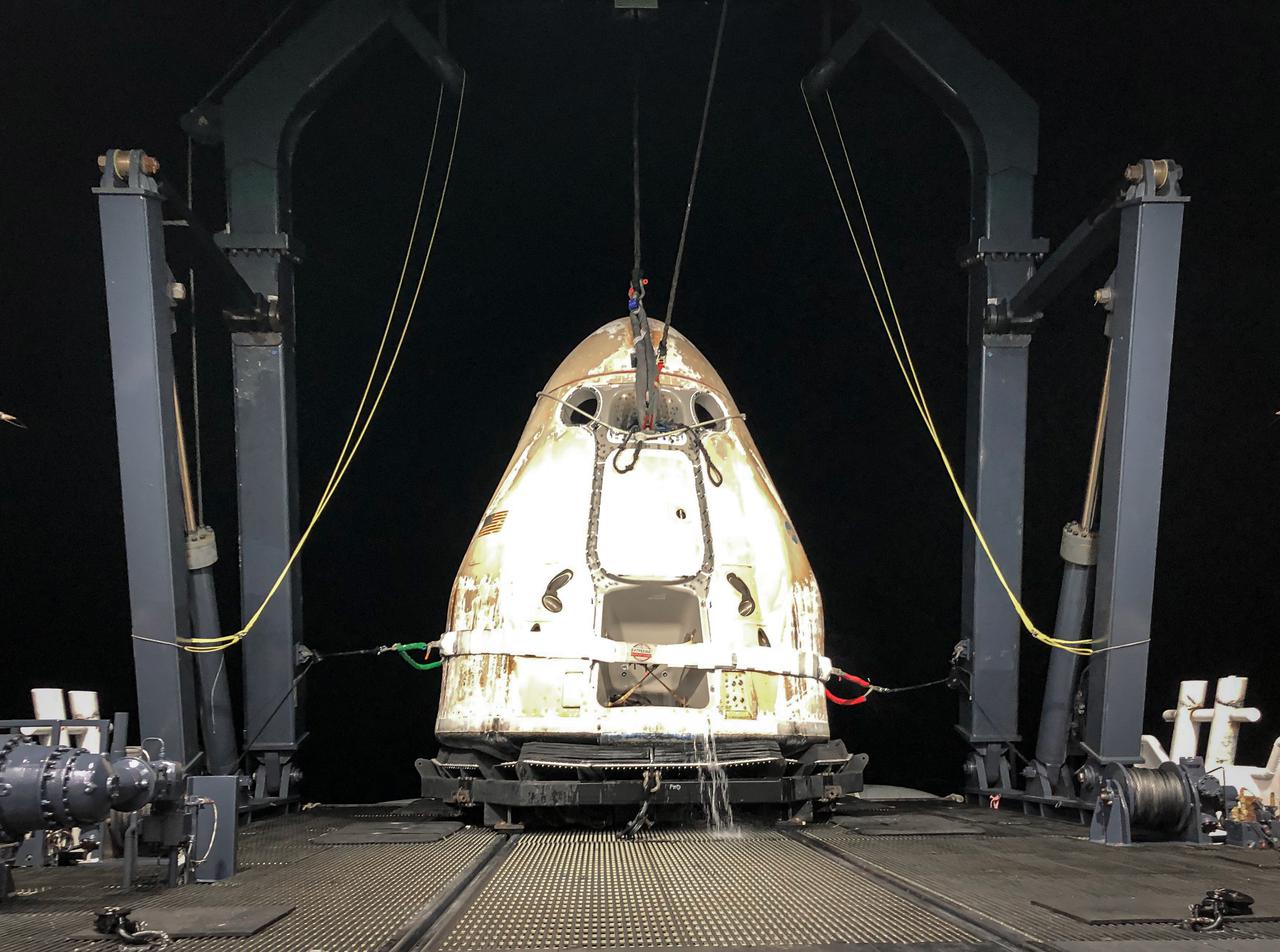
SpaceX’s Cargo Dragon spacecraft is lifted aboard a recovery vessel after splashing down in the Atlantic Ocean off the coast of Florida on Thursday, Sept. 30, 2021. The capsule, carrying cargo that flew aboard NASA’s SpaceX 23rd commercial resupply services mission, undocked from the International Space Station Thursday at approximately 9 a.m. The event marked the first time a Cargo Dragon splashed down in the Atlantic Ocean. Cargo from the capsule was delivered to the Launch and Landing Facility at Kennedy Space Center.
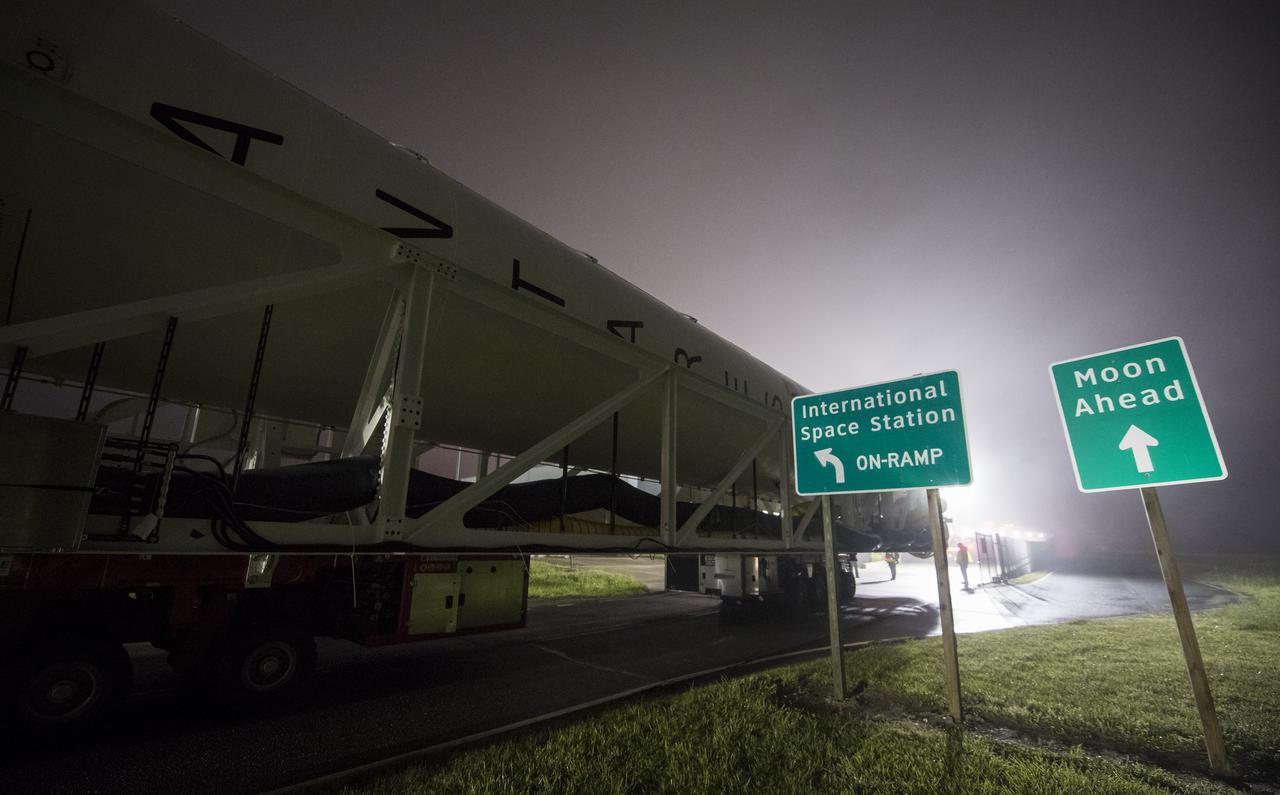
An Orbital ATK rocket is seen as it is rolled out to launch Pad-0A at Wallops Flight Facility Thursday, May 17, 2018 at Wallops Island, VA. The Antares will launch a Cygnus spacecraft on a cargo resupply mission to the International Space Station. The mission is Orbital ATK’s ninth contracted cargo delivery flight to the space station for NASA. Included in the 7,400 pounds of cargo onboard Cygnus, are science experiments, crew supplies, and vehicle hardware. Photo Credit: (NASA/Aubrey Gemignani)
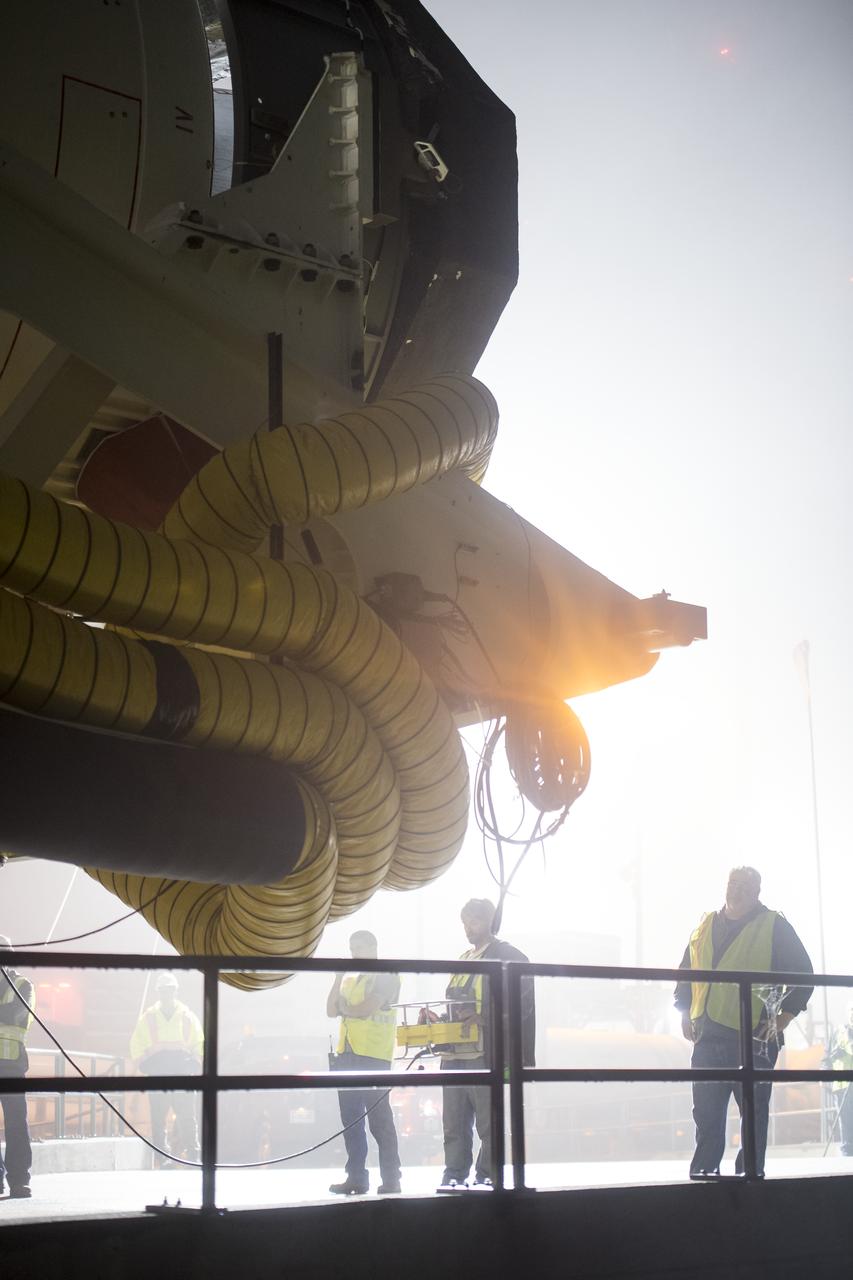
An Orbital ATK rocket is seen as it is rolled out to launch Pad-0A at Wallops Flight Facility Thursday, May 17, 2018 at Wallops Island, VA. The Antares will launch a Cygnus spacecraft on a cargo resupply mission to the International Space Station. The mission is Orbital ATK’s ninth contracted cargo delivery flight to the space station for NASA. Included in the 7,400 pounds of cargo onboard Cygnus, are science experiments, crew supplies, and vehicle hardware. Photo Credit: (NASA/Aubrey Gemignani)
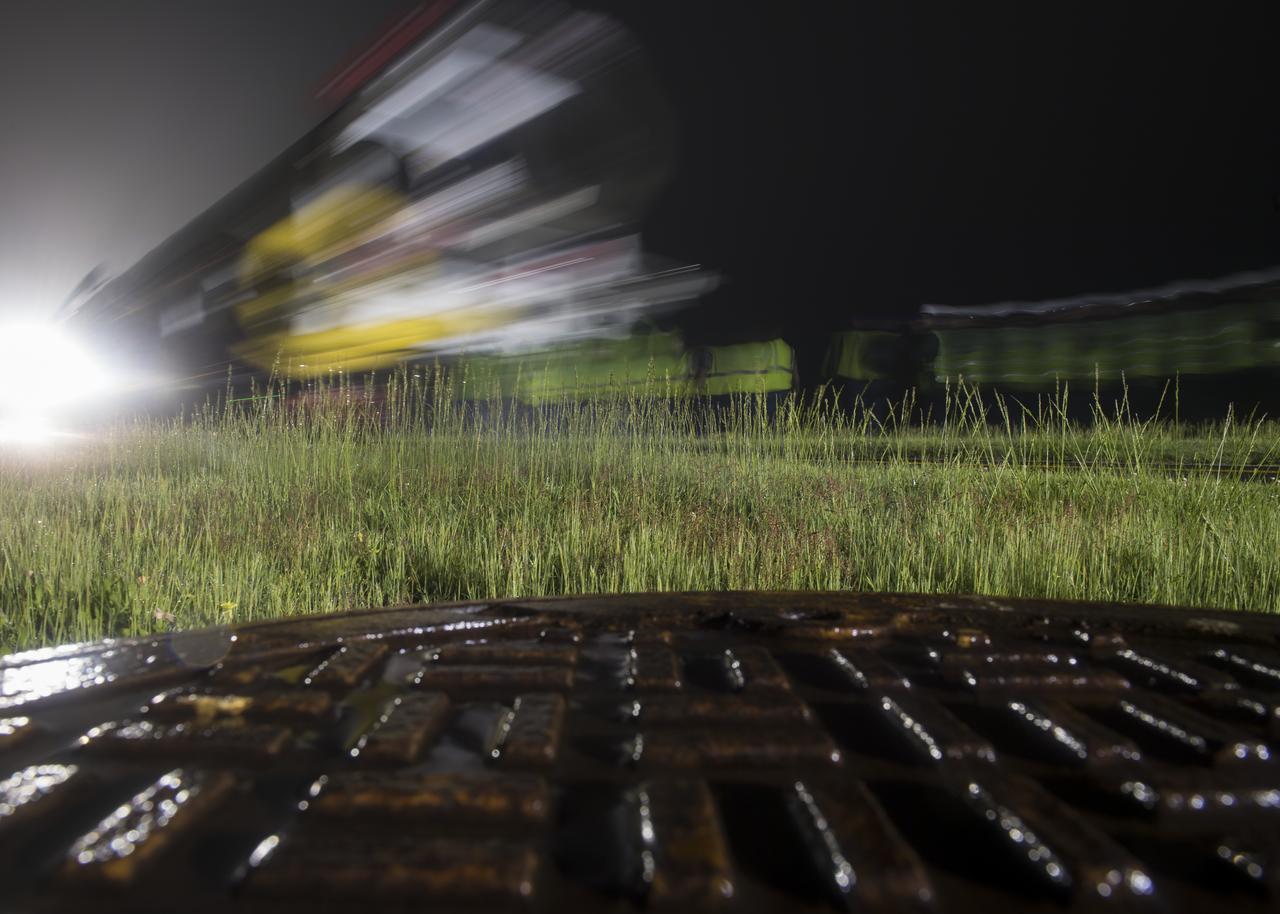
An Orbital ATK rocket is seen in this long exposure as it is rolled out to launch Pad-0A at Wallops Flight Facility Thursday, May 17, 2018 at Wallops Island, VA. The Antares will launch a Cygnus spacecraft on a cargo resupply mission to the International Space Station. The mission is Orbital ATK’s ninth contracted cargo delivery flight to the space station for NASA. Included in the 7,400 pounds of cargo onboard Cygnus, are science experiments, crew supplies, and vehicle hardware. Photo Credit: (NASA/Aubrey Gemignani)
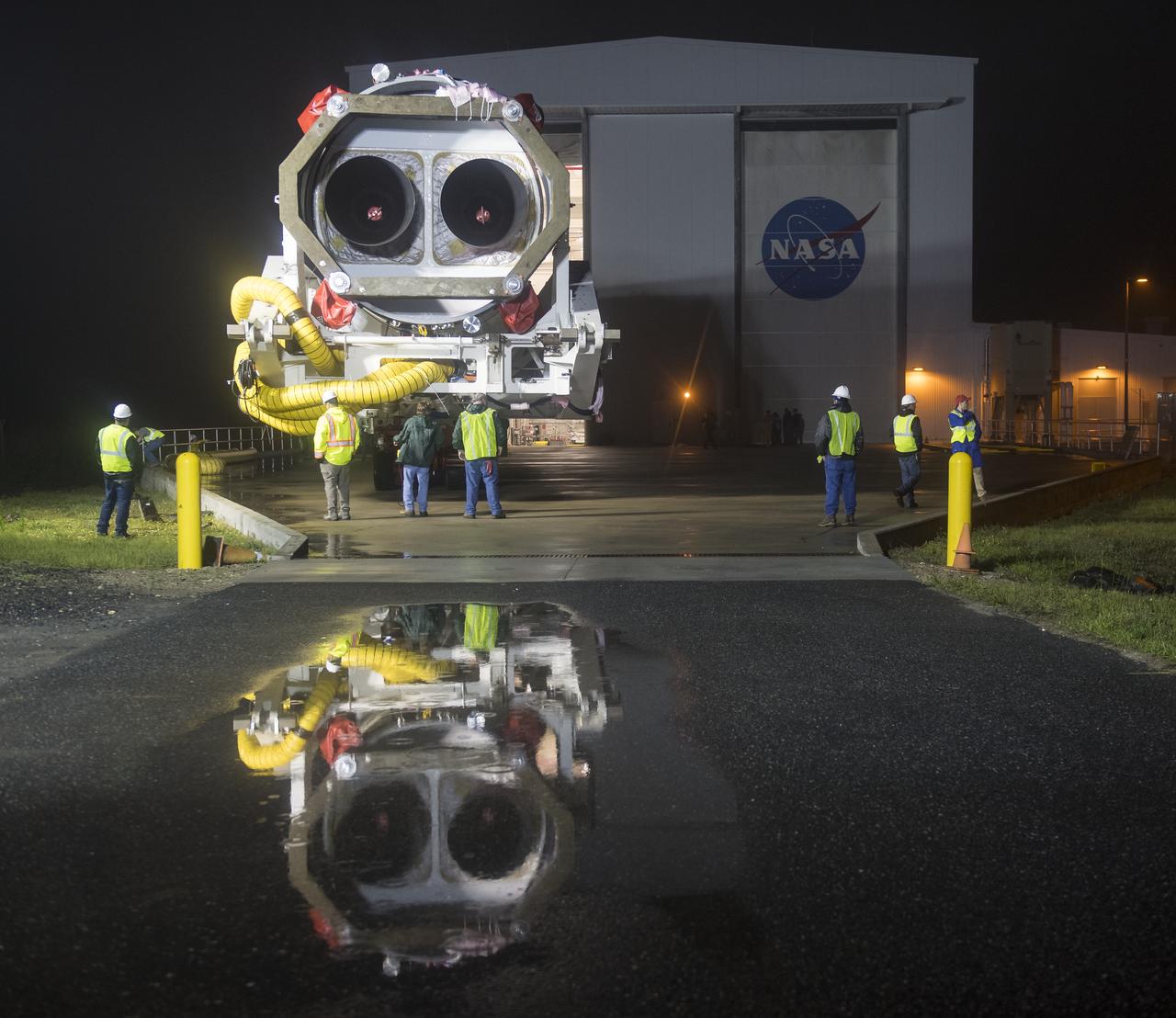
An Orbital ATK rocket is seen as it is rolled out to launch Pad-0A at Wallops Flight Facility Thursday, May 17, 2018 at Wallops Island, VA. The Antares will launch a Cygnus spacecraft on a cargo resupply mission to the International Space Station. The mission is Orbital ATK’s ninth contracted cargo delivery flight to the space station for NASA. Included in the 7,400 pounds of cargo onboard Cygnus, are science experiments, crew supplies, and vehicle hardware. Photo Credit: (NASA/Aubrey Gemignani)
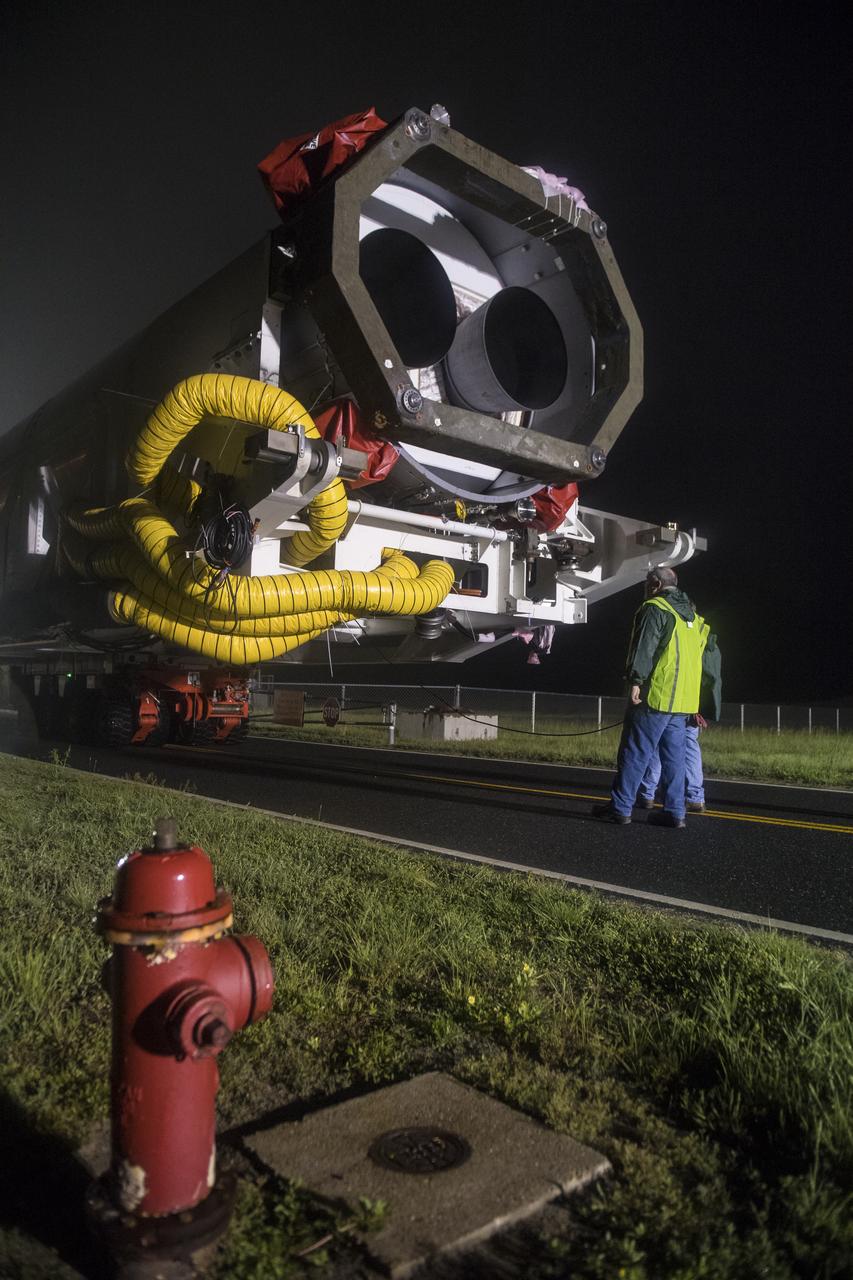
An Orbital ATK rocket is seen as it is rolled out to launch Pad-0A at Wallops Flight Facility Thursday, May 17, 2018 at Wallops Island, VA. The Antares will launch a Cygnus spacecraft on a cargo resupply mission to the International Space Station. The mission is Orbital ATK’s ninth contracted cargo delivery flight to the space station for NASA. Included in the 7,400 pounds of cargo onboard Cygnus, are science experiments, crew supplies, and vehicle hardware. Photo Credit: (NASA/Aubrey Gemignani)
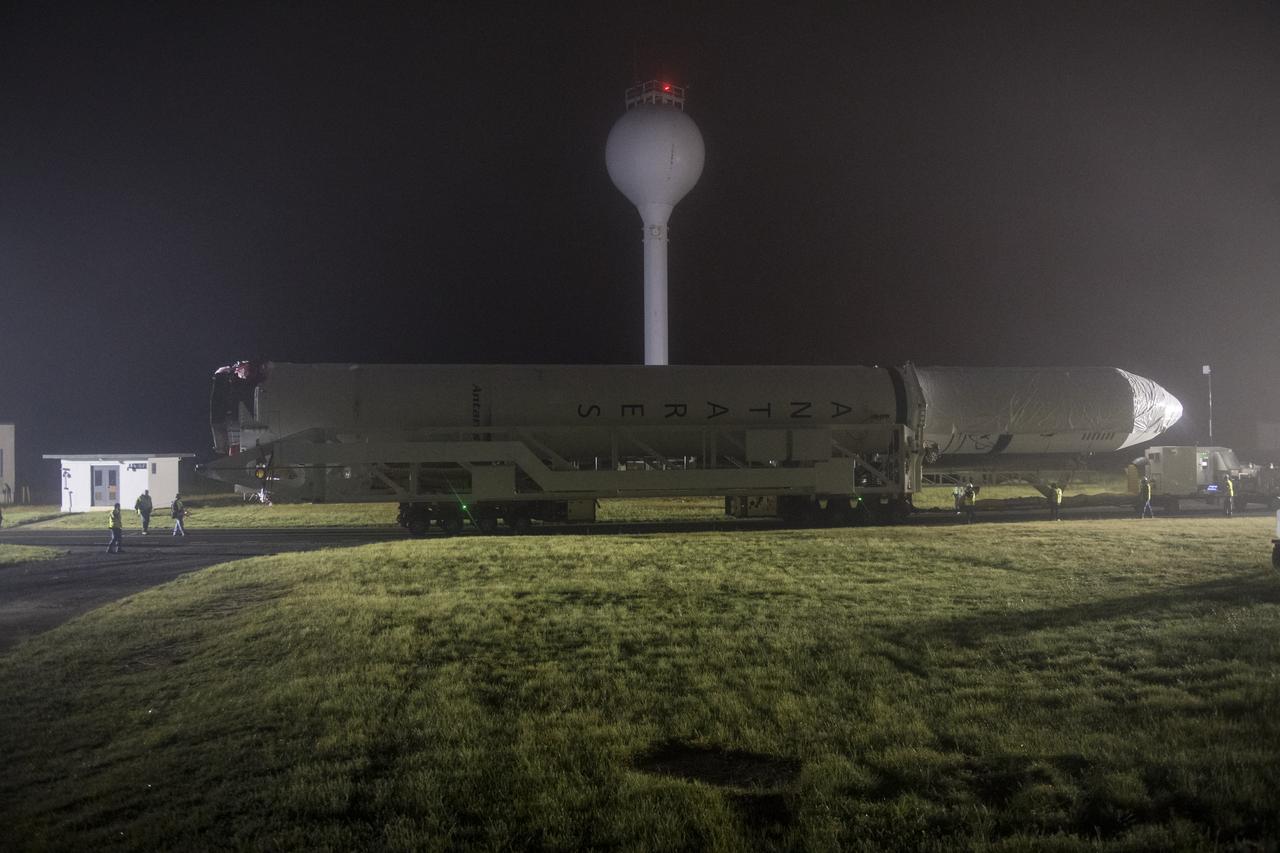
An Orbital ATK rocket is seen as it is rolled out to launch Pad-0A at Wallops Flight Facility Thursday, May 17, 2018 at Wallops Island, VA. The Antares will launch a Cygnus spacecraft on a cargo resupply mission to the International Space Station. The mission is Orbital ATK’s ninth contracted cargo delivery flight to the space station for NASA. Included in the 7,400 pounds of cargo onboard Cygnus, are science experiments, crew supplies, and vehicle hardware. Photo Credit: (NASA/Aubrey Gemignani)
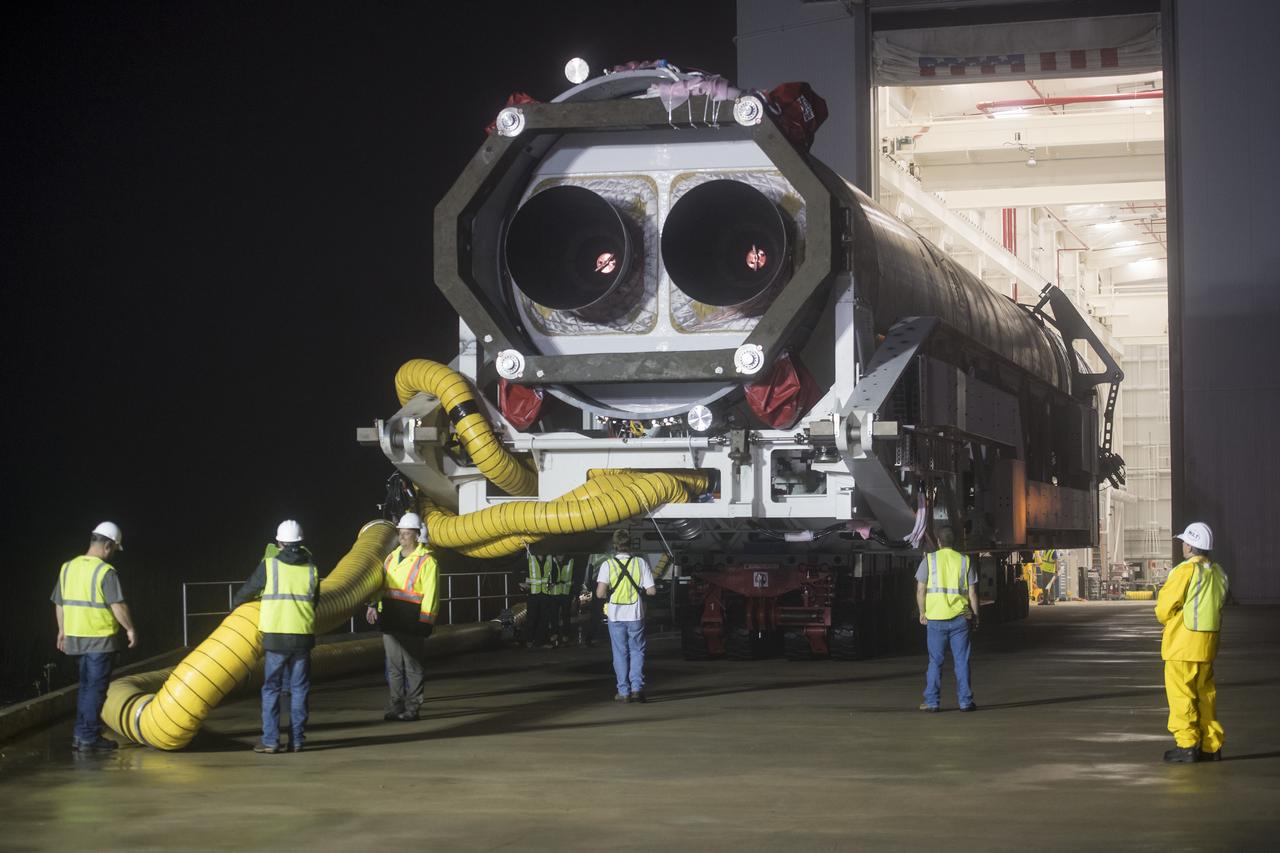
An Orbital ATK rocket is seen as it is rolled out to launch Pad-0A at Wallops Flight Facility Thursday, May 17, 2018 at Wallops Island, VA. The Antares will launch a Cygnus spacecraft on a cargo resupply mission to the International Space Station. The mission is Orbital ATK’s ninth contracted cargo delivery flight to the space station for NASA. Included in the 7,400 pounds of cargo onboard Cygnus, are science experiments, crew supplies, and vehicle hardware. Photo Credit: (NASA/Aubrey Gemignani)
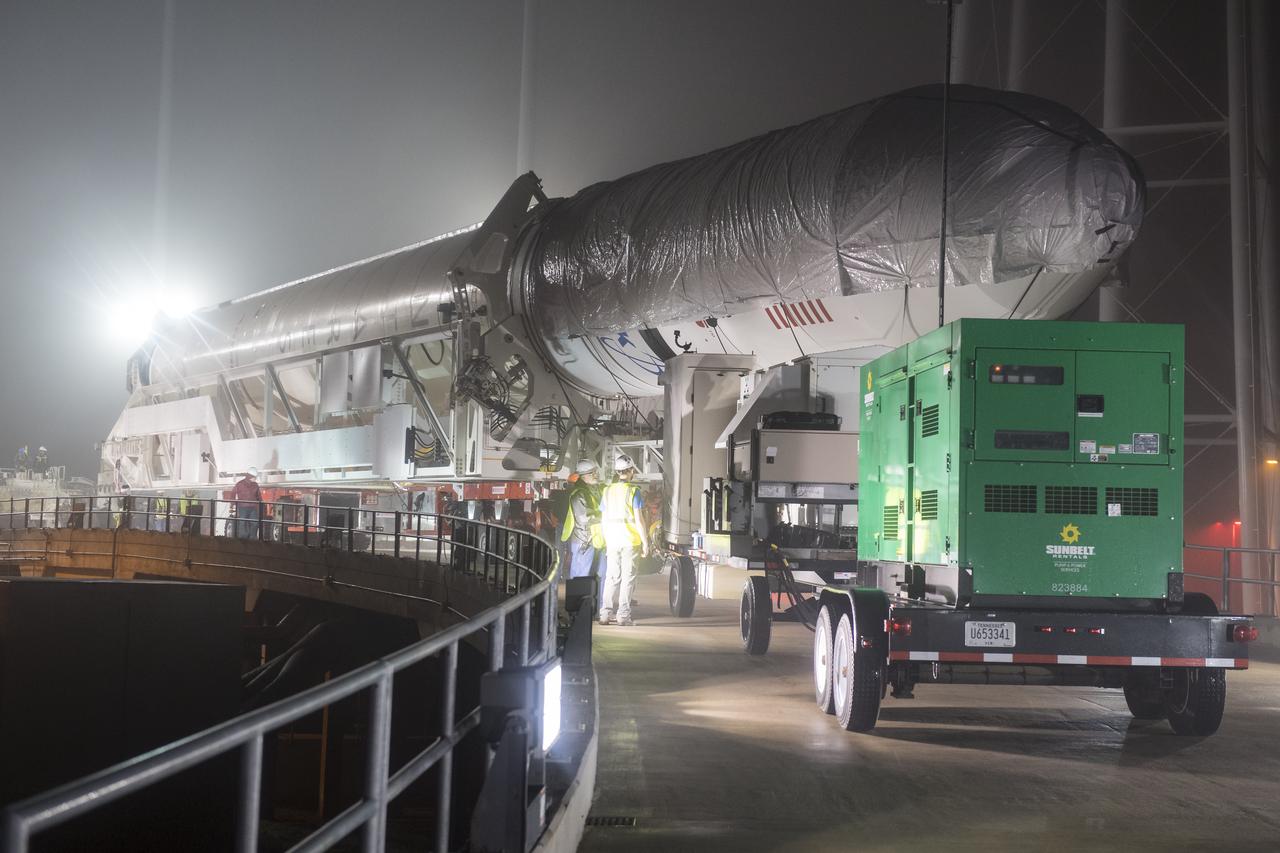
An Orbital ATK rocket is seen as it makes its final approach to launch Pad-0A at Wallops Flight Facility Thursday, May 17, 2018 at Wallops Island, VA. The Antares will launch a Cygnus spacecraft on a cargo resupply mission to the International Space Station. The mission is Orbital ATK’s ninth contracted cargo delivery flight to the space station for NASA. Included in the 7,400 pounds of cargo onboard Cygnus, are science experiments, crew supplies, and vehicle hardware. Photo Credit: (NASA/Aubrey Gemignani)
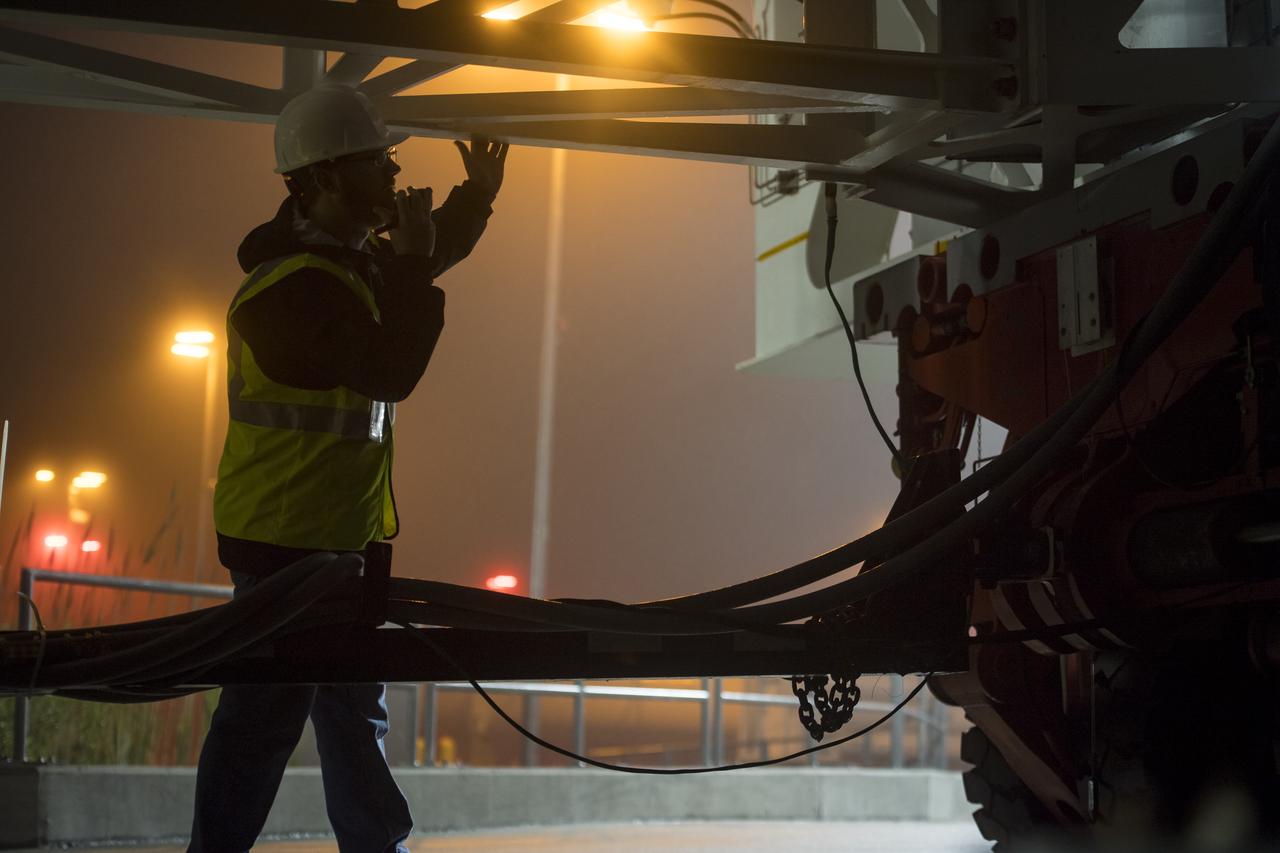
A worker watches the Orbital ATK rocket closely just before it makes its final approach to launch Pad-0A at Wallops Flight Facility Thursday, May 17, 2018 at Wallops Island, VA. The Antares will launch a Cygnus spacecraft on a cargo resupply mission to the International Space Station. The mission is Orbital ATK’s ninth contracted cargo delivery flight to the space station for NASA. Included in the 7,400 pounds of cargo onboard Cygnus, are science experiments, crew supplies, and vehicle hardware. Photo Credit: (NASA/Aubrey Gemignani)
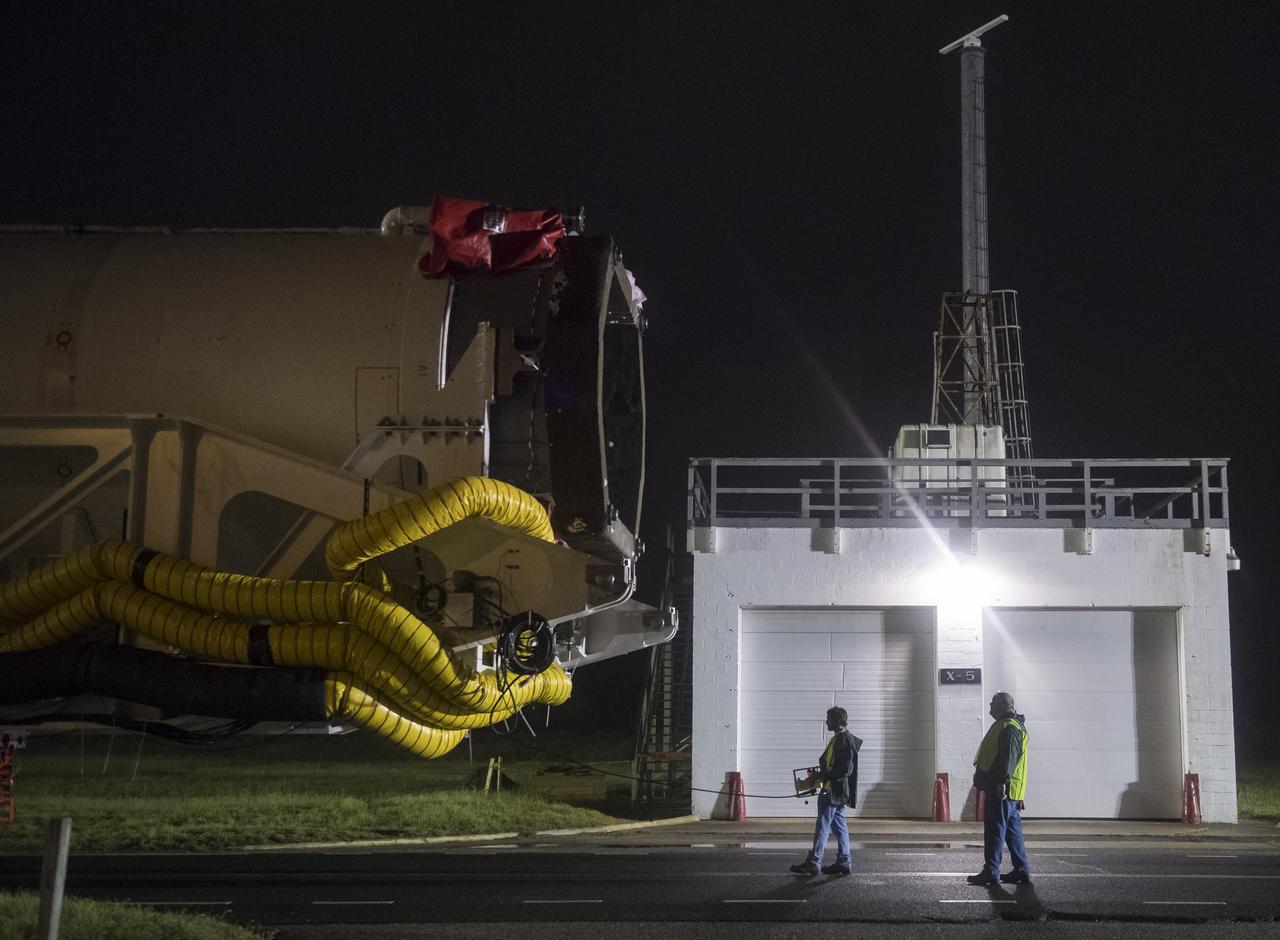
An Orbital ATK rocket is seen as it is rolled out to launch Pad-0A at Wallops Flight Facility Thursday, May 17, 2018 at Wallops Island, VA. The Antares will launch a Cygnus spacecraft on a cargo resupply mission to the International Space Station. The mission is Orbital ATK’s ninth contracted cargo delivery flight to the space station for NASA. Included in the 7,400 pounds of cargo onboard Cygnus, are science experiments, crew supplies, and vehicle hardware. Photo Credit: (NASA/Aubrey Gemignani)
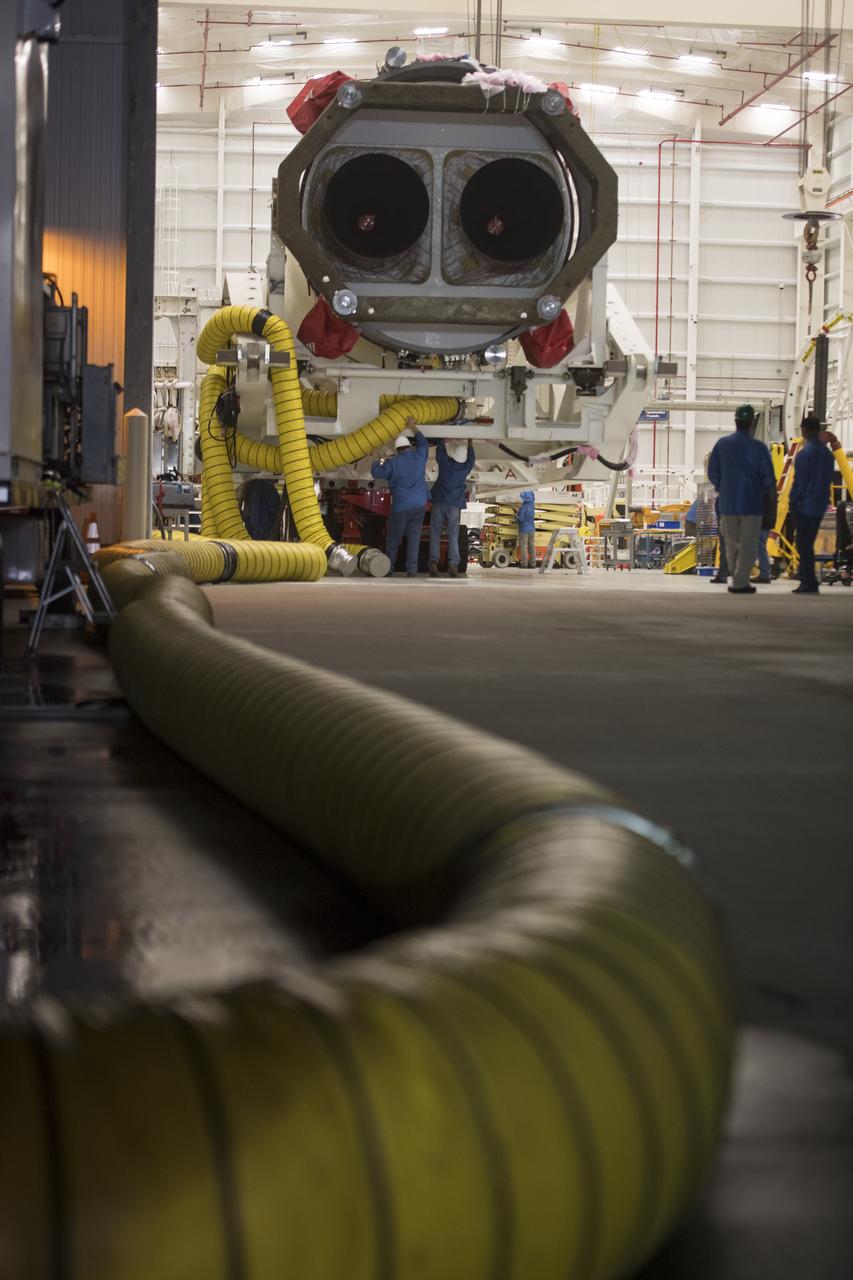
An Orbital ATK rocket is seen just before it is rolled out to launch Pad-0A at Wallops Flight Facility Thursday, May 17, 2018 at Wallops Island, VA. The Antares will launch a Cygnus spacecraft on a cargo resupply mission to the International Space Station. The mission is Orbital ATK’s ninth contracted cargo delivery flight to the space station for NASA. Included in the 7,400 pounds of cargo onboard Cygnus, are science experiments, crew supplies, and vehicle hardware. Photo Credit: (NASA/Aubrey Gemignani)
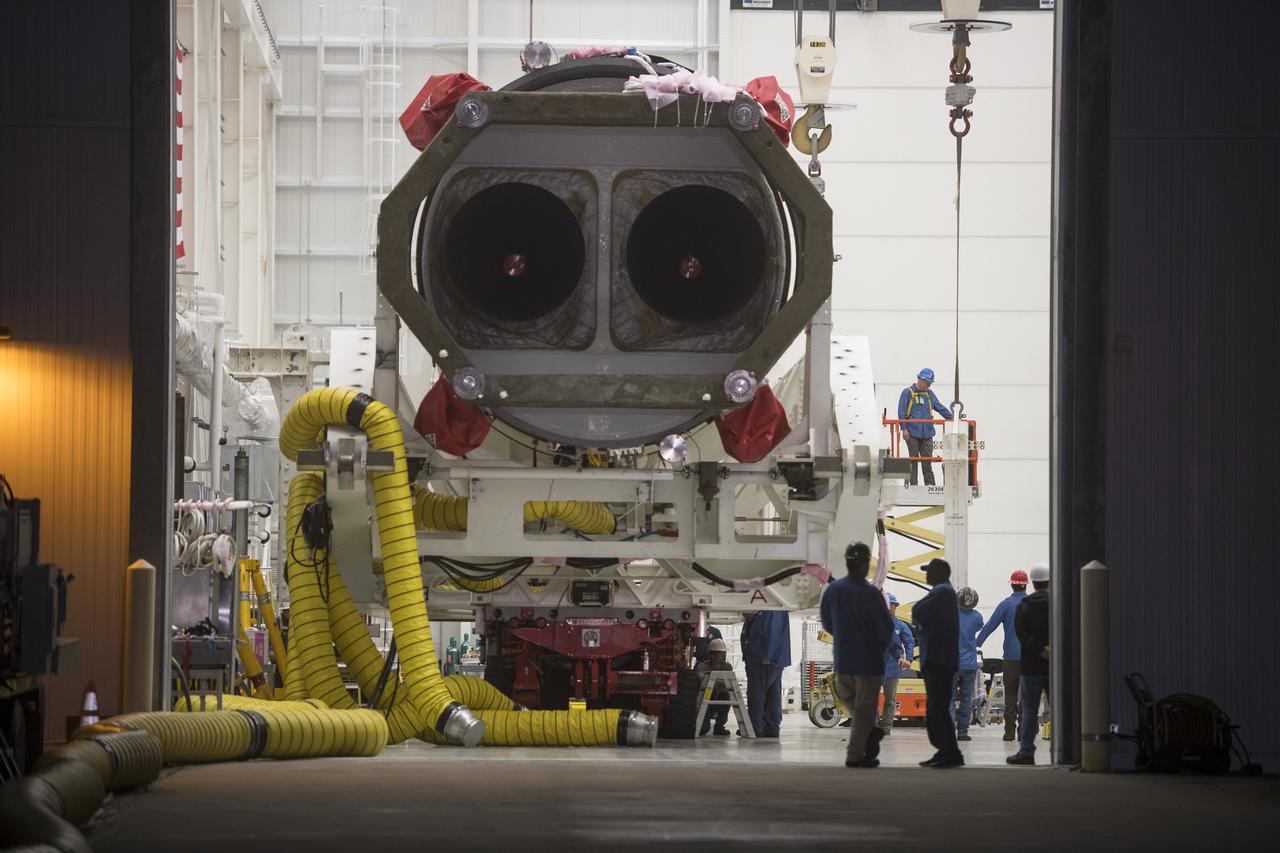
An Orbital ATK rocket is seen just before it is rolled out to launch Pad-0A at Wallops Flight Facility Thursday, May 17, 2018 at Wallops Island, VA. The Antares will launch a Cygnus spacecraft on a cargo resupply mission to the International Space Station. The mission is Orbital ATK’s ninth contracted cargo delivery flight to the space station for NASA. Included in the 7,400 pounds of cargo onboard Cygnus, are science experiments, crew supplies, and vehicle hardware. Photo Credit: (NASA/Aubrey Gemignani)
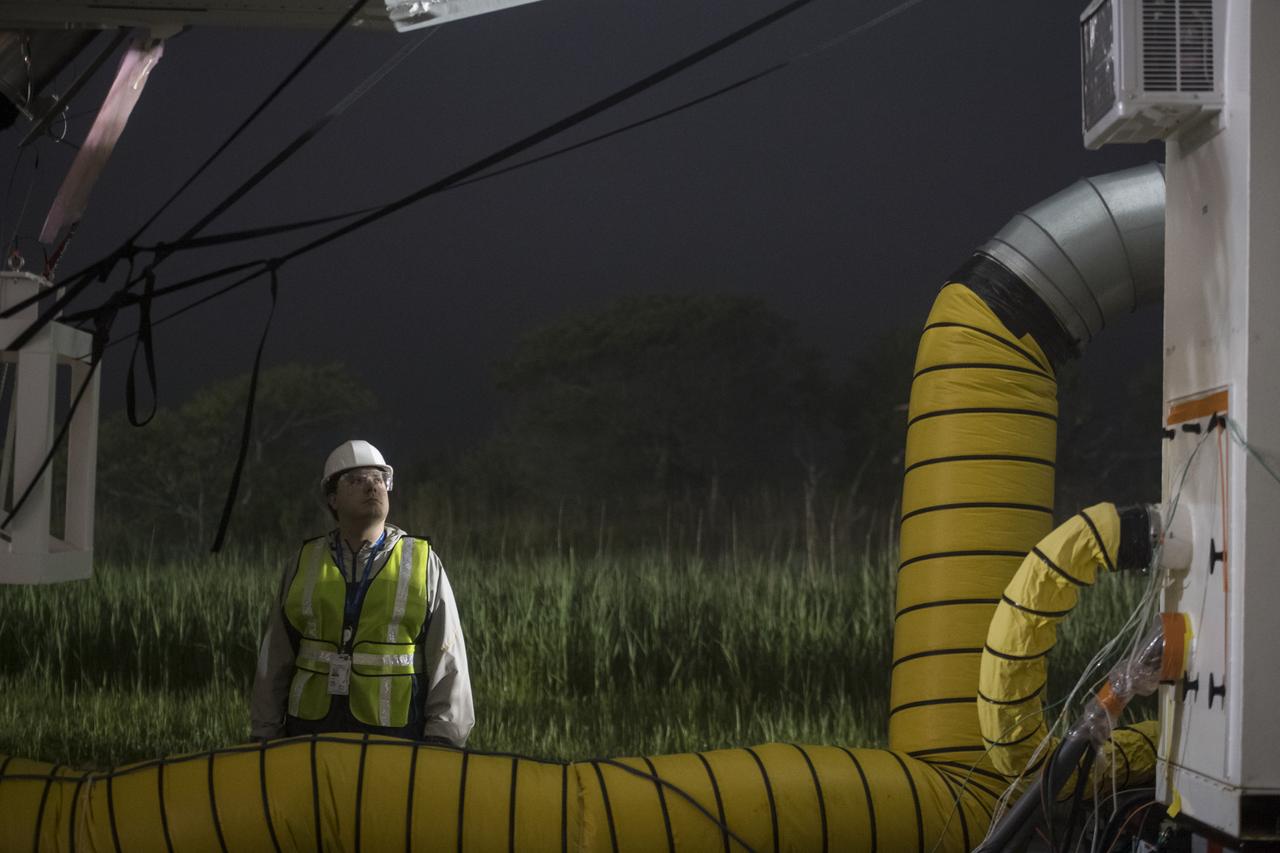
Workers survey the Orbital ATK rocket just before it makes its final approach to launch Pad-0A at Wallops Flight Facility Thursday, May 17, 2018 at Wallops Island, VA. The Antares will launch a Cygnus spacecraft on a cargo resupply mission to the International Space Station. The mission is Orbital ATK’s ninth contracted cargo delivery flight to the space station for NASA. Included in the 7,400 pounds of cargo onboard Cygnus, are science experiments, crew supplies, and vehicle hardware. Photo Credit: (NASA/Aubrey Gemignani)
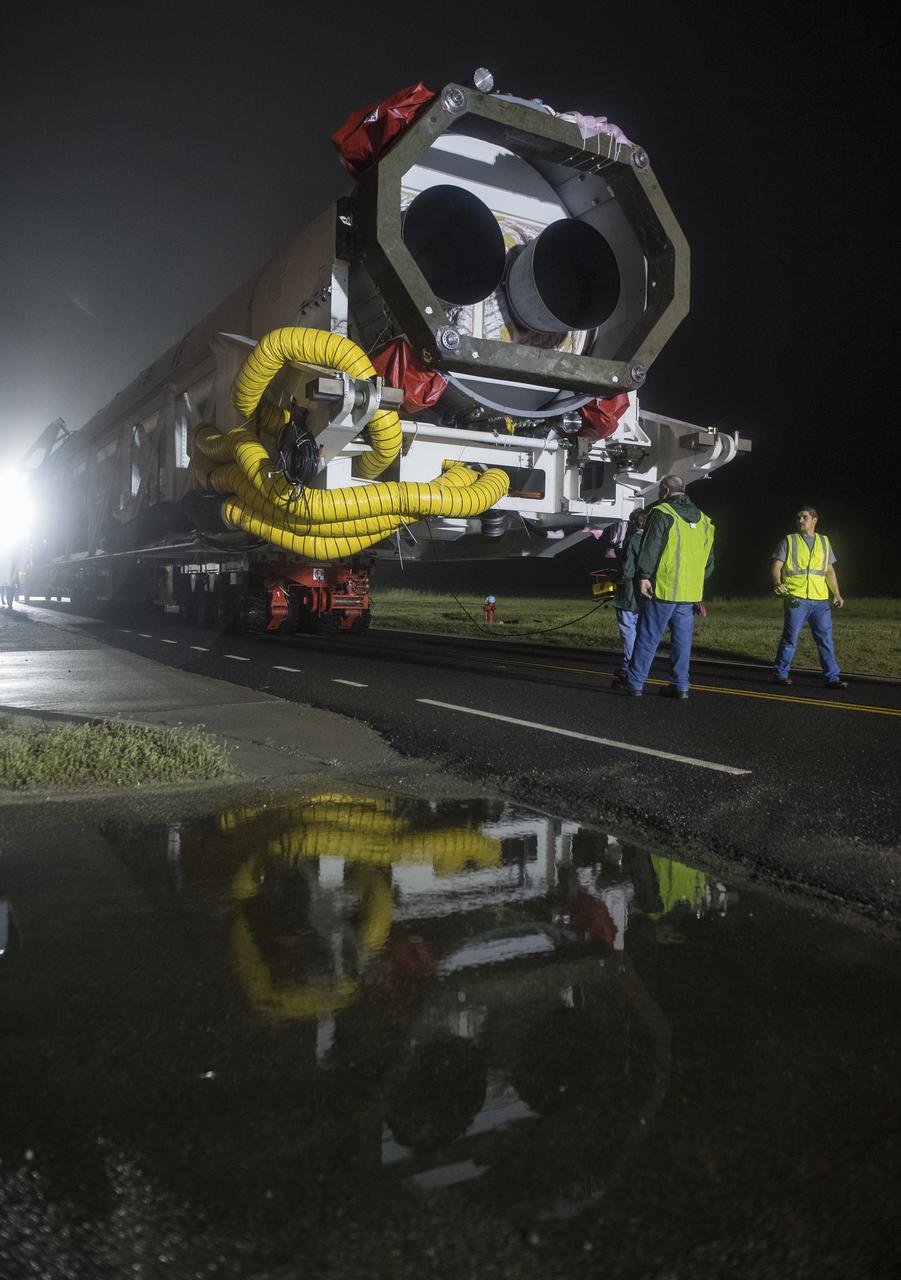
An Orbital ATK rocket is seen as it is rolled out to launch Pad-0A at Wallops Flight Facility Thursday, May 17, 2018 at Wallops Island, VA. The Antares will launch a Cygnus spacecraft on a cargo resupply mission to the International Space Station. The mission is Orbital ATK’s ninth contracted cargo delivery flight to the space station for NASA. Included in the 7,400 pounds of cargo onboard Cygnus, are science experiments, crew supplies, and vehicle hardware. Photo Credit: (NASA/Aubrey Gemignani)
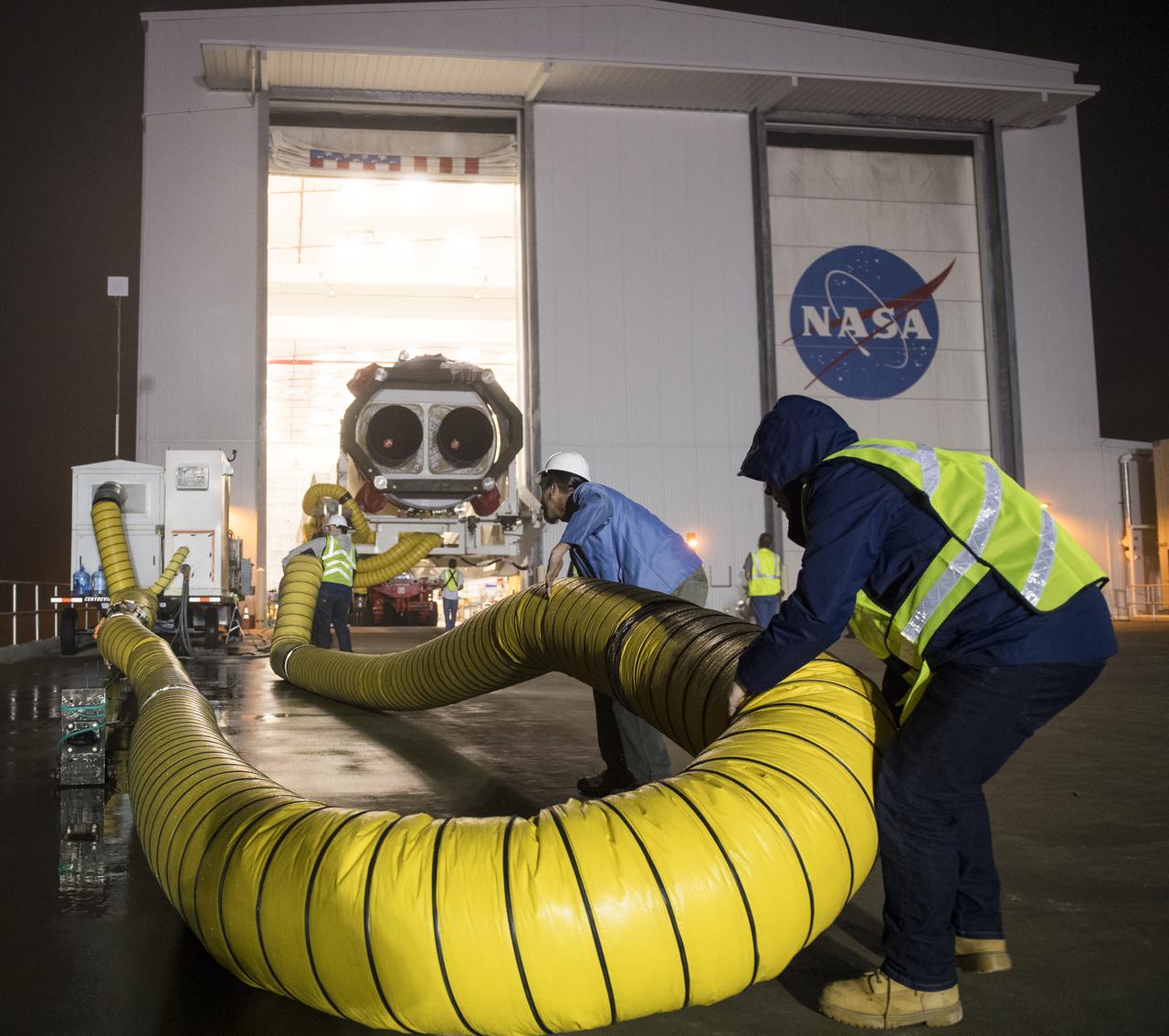
An Orbital ATK rocket is seen as it is rolled out to launch Pad-0A at Wallops Flight Facility Thursday, May 17, 2018 at Wallops Island, VA. The Antares will launch a Cygnus spacecraft on a cargo resupply mission to the International Space Station. The mission is Orbital ATK’s ninth contracted cargo delivery flight to the space station for NASA. Included in the 7,400 pounds of cargo onboard Cygnus, are science experiments, crew supplies, and vehicle hardware. Photo Credit: (NASA/Aubrey Gemignani)

An Orbital ATK rocket is seen as it is rolled out to launch Pad-0A at Wallops Flight Facility Thursday, May 17, 2018 at Wallops Island, VA. The Antares will launch a Cygnus spacecraft on a cargo resupply mission to the International Space Station. The mission is Orbital ATK’s ninth contracted cargo delivery flight to the space station for NASA. Included in the 7,400 pounds of cargo onboard Cygnus, are science experiments, crew supplies, and vehicle hardware. Photo Credit: (NASA/Aubrey Gemignani)
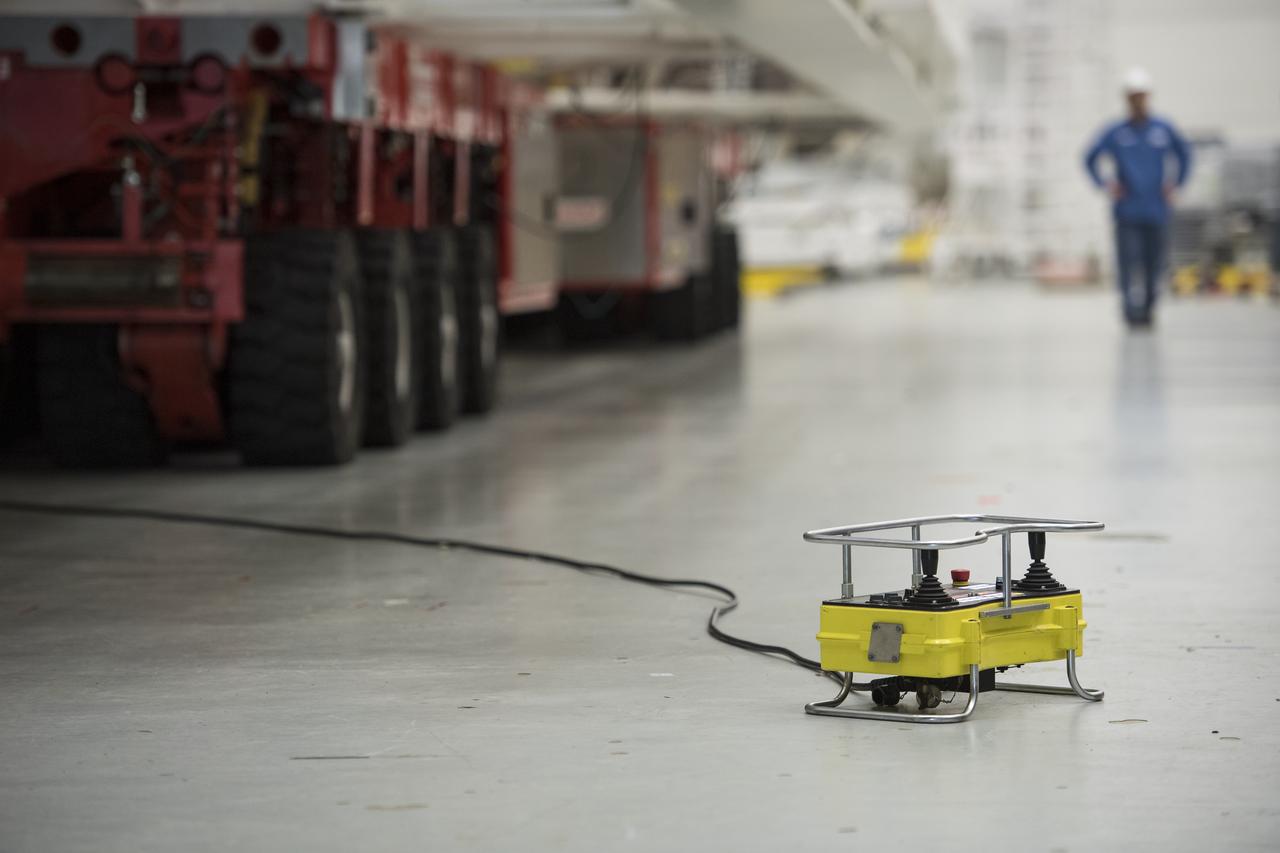
The controller for an Orbital ATK rocket is seen just before it is rolled out to launch Pad-0A at Wallops Flight Facility Thursday, May 17, 2018 at Wallops Island, VA. The Antares will launch a Cygnus spacecraft on a cargo resupply mission to the International Space Station. The mission is Orbital ATK’s ninth contracted cargo delivery flight to the space station for NASA. Included in the 7,400 pounds of cargo onboard Cygnus, are science experiments, crew supplies, and vehicle hardware. Photo Credit: (NASA/Aubrey Gemignani)
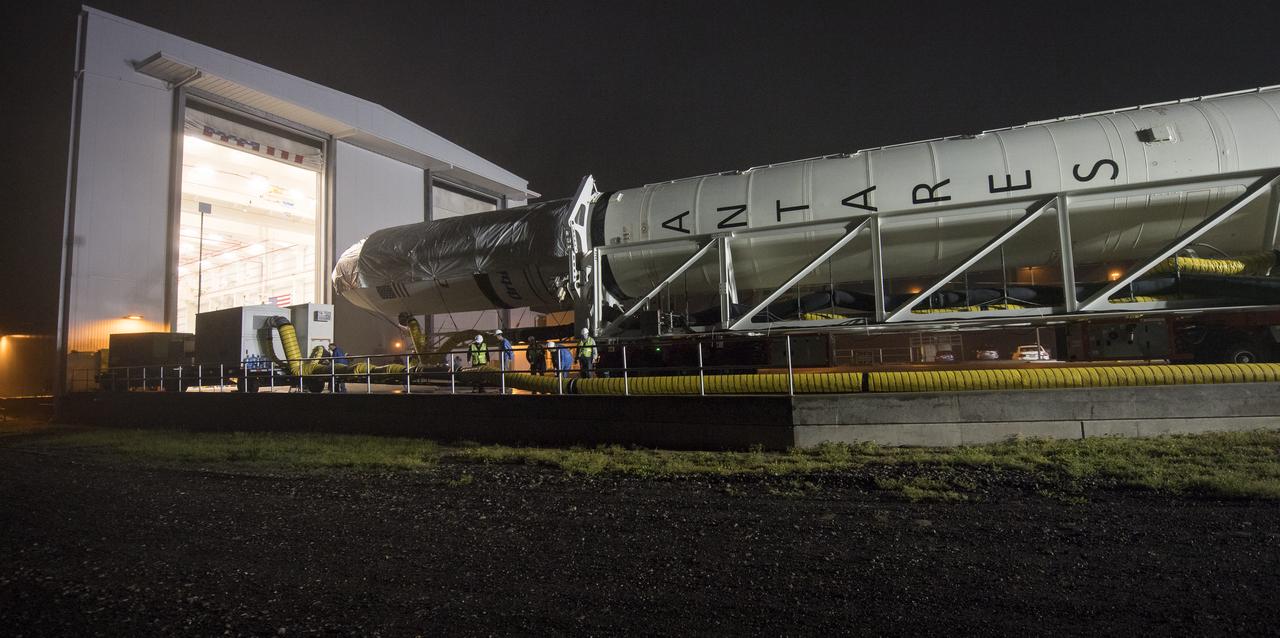
An Orbital ATK rocket is seen as it is rolled out to launch Pad-0A at Wallops Flight Facility Thursday, May 17, 2018 at Wallops Island, VA. The Antares will launch a Cygnus spacecraft on a cargo resupply mission to the International Space Station. The mission is Orbital ATK’s ninth contracted cargo delivery flight to the space station for NASA. Included in the 7,400 pounds of cargo onboard Cygnus, are science experiments, crew supplies, and vehicle hardware. Photo Credit: (NASA/Aubrey Gemignani)
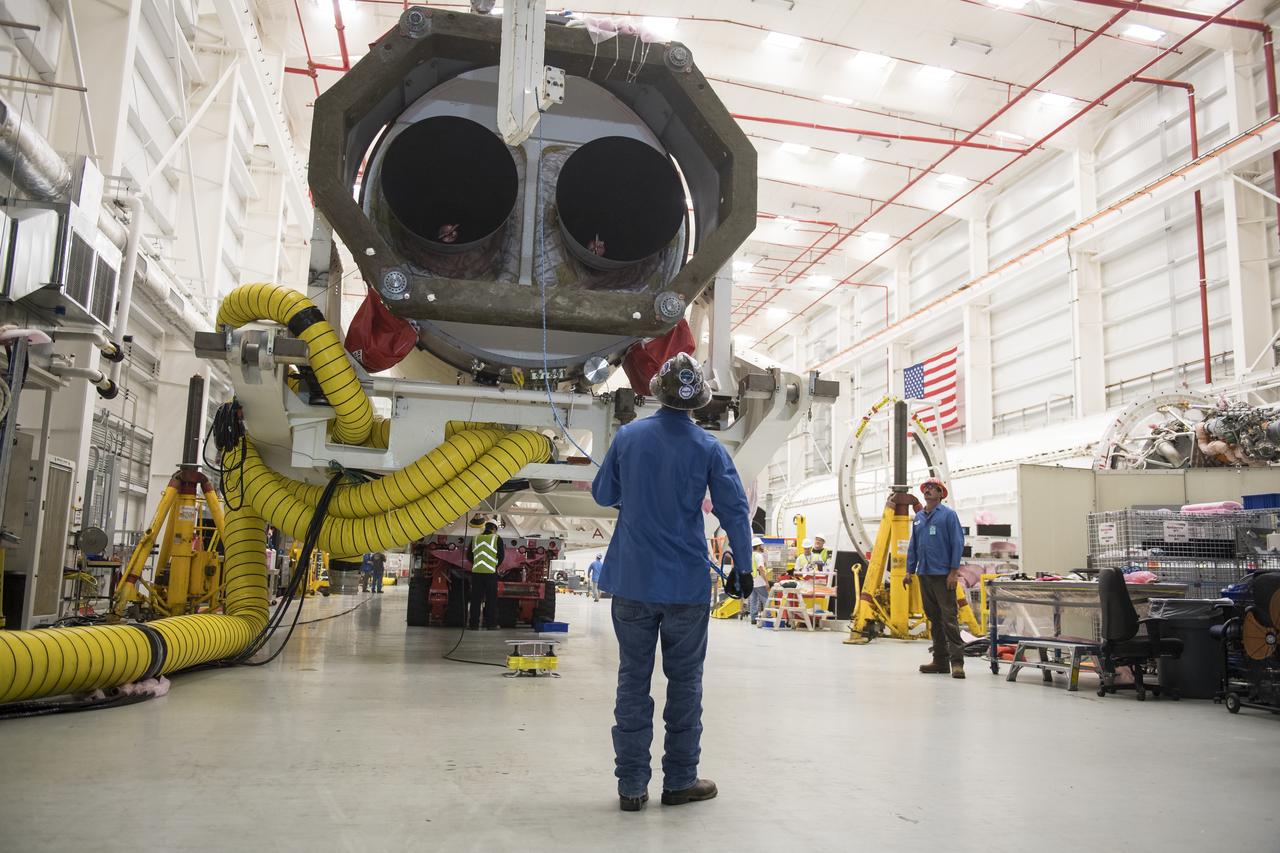
An Orbital ATK rocket is seen just before it is rolled out to launch Pad-0A at Wallops Flight Facility Thursday, May 17, 2018 at Wallops Island, VA. The Antares will launch a Cygnus spacecraft on a cargo resupply mission to the International Space Station. The mission is Orbital ATK’s ninth contracted cargo delivery flight to the space station for NASA. Included in the 7,400 pounds of cargo onboard Cygnus, are science experiments, crew supplies, and vehicle hardware. Photo Credit: (NASA/Aubrey Gemignani)
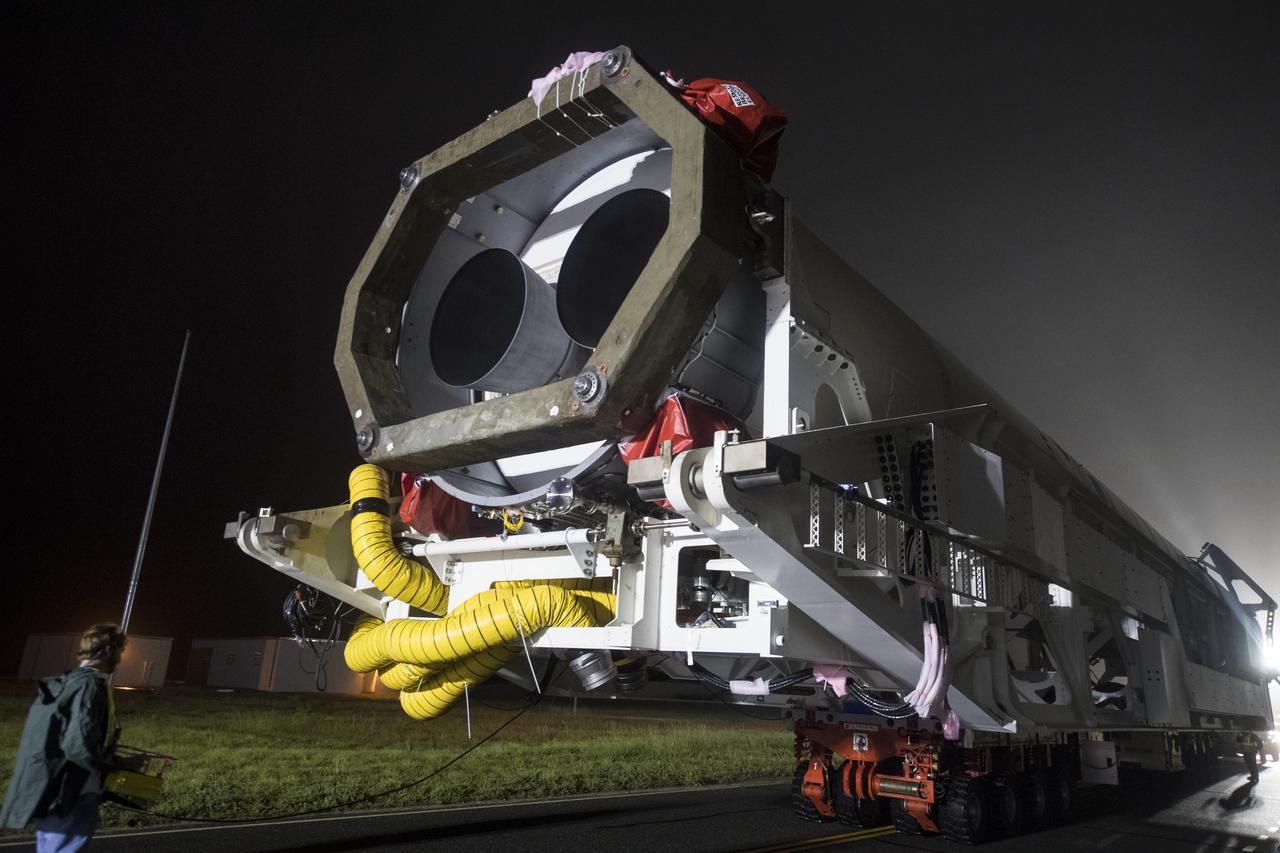
An Orbital ATK rocket is seen as it is rolled out to launch Pad-0A at Wallops Flight Facility Thursday, May 17, 2018 at Wallops Island, VA. The Antares will launch a Cygnus spacecraft on a cargo resupply mission to the International Space Station. The mission is Orbital ATK’s ninth contracted cargo delivery flight to the space station for NASA. Included in the 7,400 pounds of cargo onboard Cygnus, are science experiments, crew supplies, and vehicle hardware. Photo Credit: (NASA/Aubrey Gemignani)
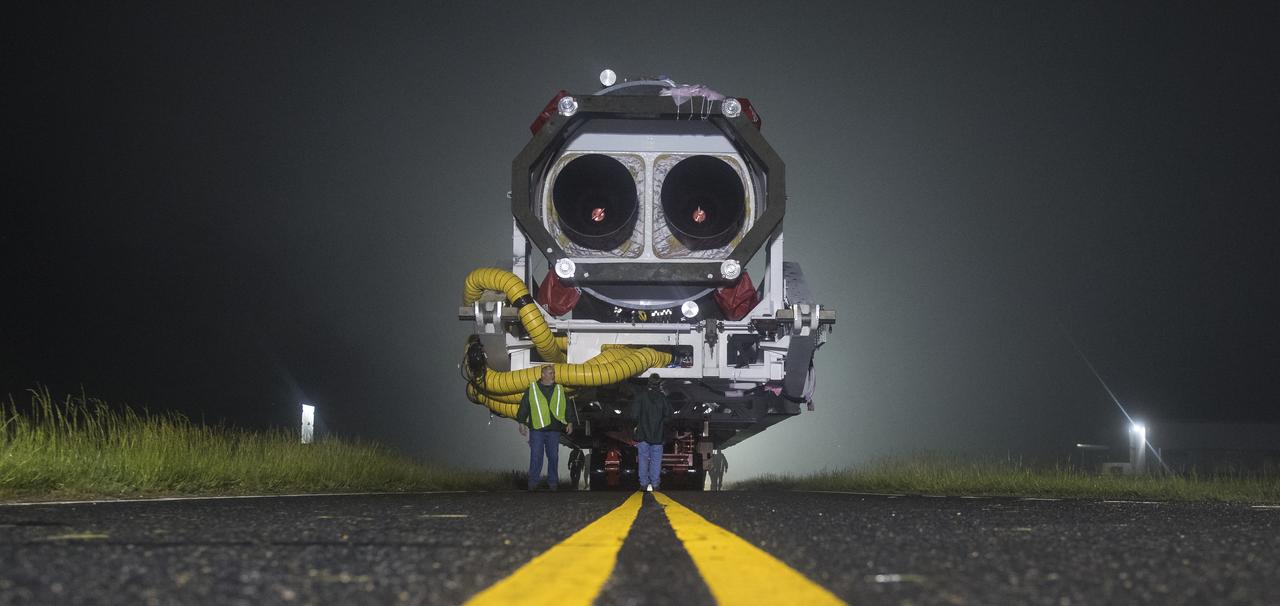
An Orbital ATK rocket is seen as it is rolled out to launch Pad-0A at Wallops Flight Facility Thursday, May 17, 2018 at Wallops Island, VA. The Antares will launch a Cygnus spacecraft on a cargo resupply mission to the International Space Station. The mission is Orbital ATK’s ninth contracted cargo delivery flight to the space station for NASA. Included in the 7,400 pounds of cargo onboard Cygnus, are science experiments, crew supplies, and vehicle hardware. Photo Credit: (NASA/Aubrey Gemignani)
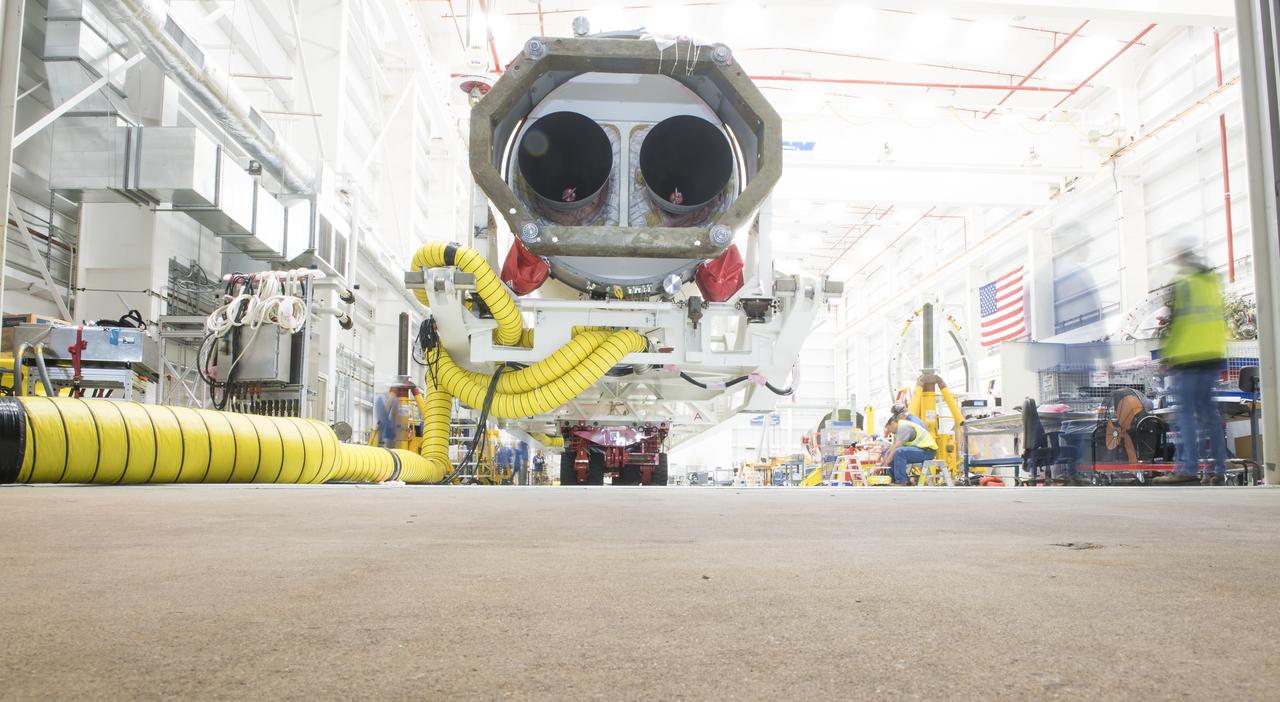
An Orbital ATK rocket is seen in this long exposure, as workers prepare to roll it out to launch Pad-0A at Wallops Flight Facility Thursday, May 17, 2018 at Wallops Island, VA. The Antares will launch a Cygnus spacecraft on a cargo resupply mission to the International Space Station. The mission is Orbital ATK’s ninth contracted cargo delivery flight to the space station for NASA. Included in the 7,400 pounds of cargo onboard Cygnus, are science experiments, crew supplies, and vehicle hardware. Photo Credit: (NASA/Aubrey Gemignani)
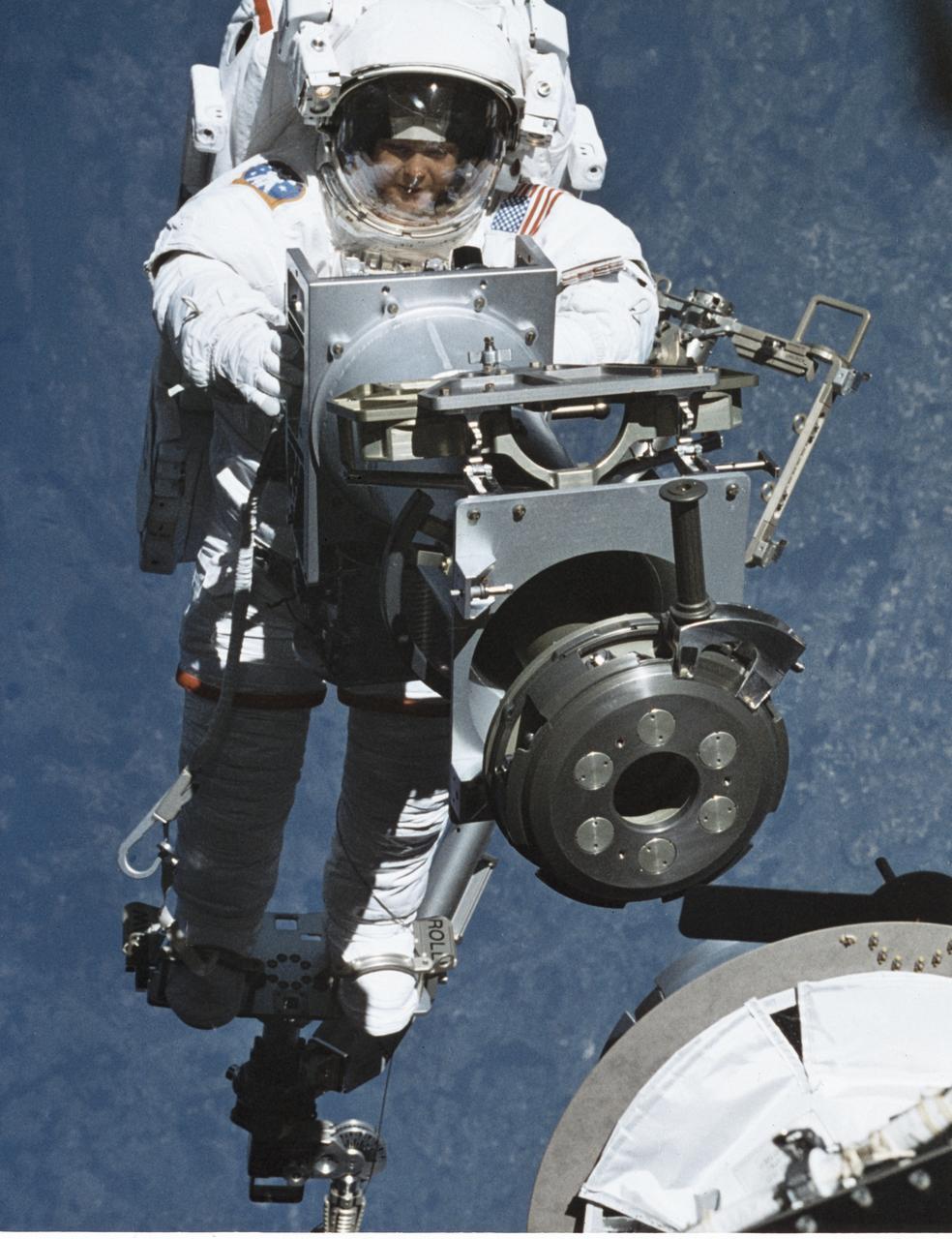
The STS-96 mission, the second International Space Station (ISS) assembly and resupply flight, launched on May 27, 1999 aboard the Orbiter Discovery for an almost 10 day mission. The Shuttle's SPACEHAB double module carried internal and resupply cargo for station outfitting and the Russian cargo crane, STRELA, was carried aboard the shuttle in the integrated Cargo Carrier (ICC). In this STS-96 onboard photo of the first Extra Vehicular Activity (EVA), Mission Specialist Tamara Jernigan totes part of the Russian built crane. Jernigans' feet are anchored on a mobile foot restraint cornected to the Shuttle's Remote Manipulator System (RMS) operated by Mission Specialist Ellen Ochoa. The STS-96 flight was the first to perform docking with the ISS.
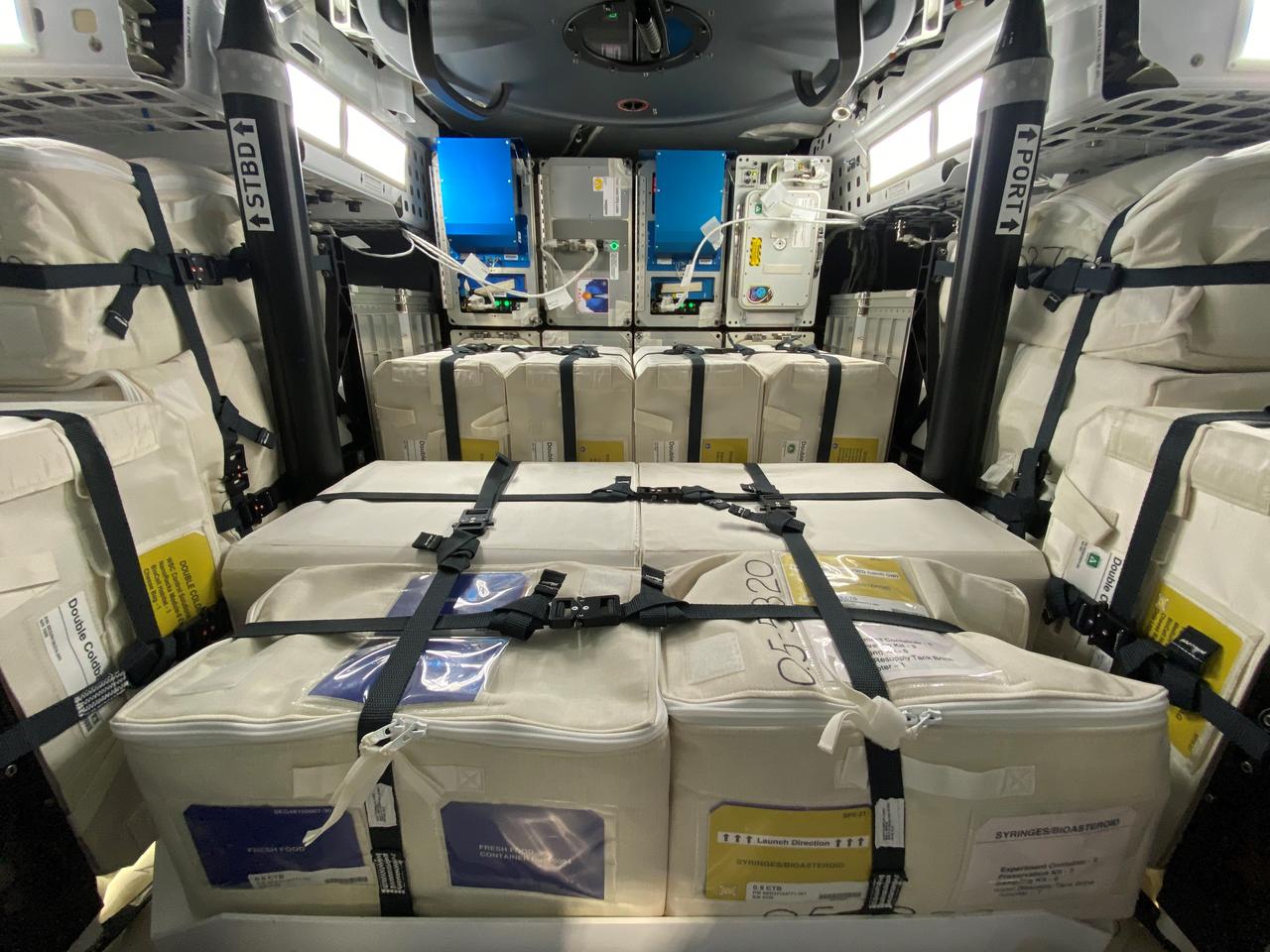
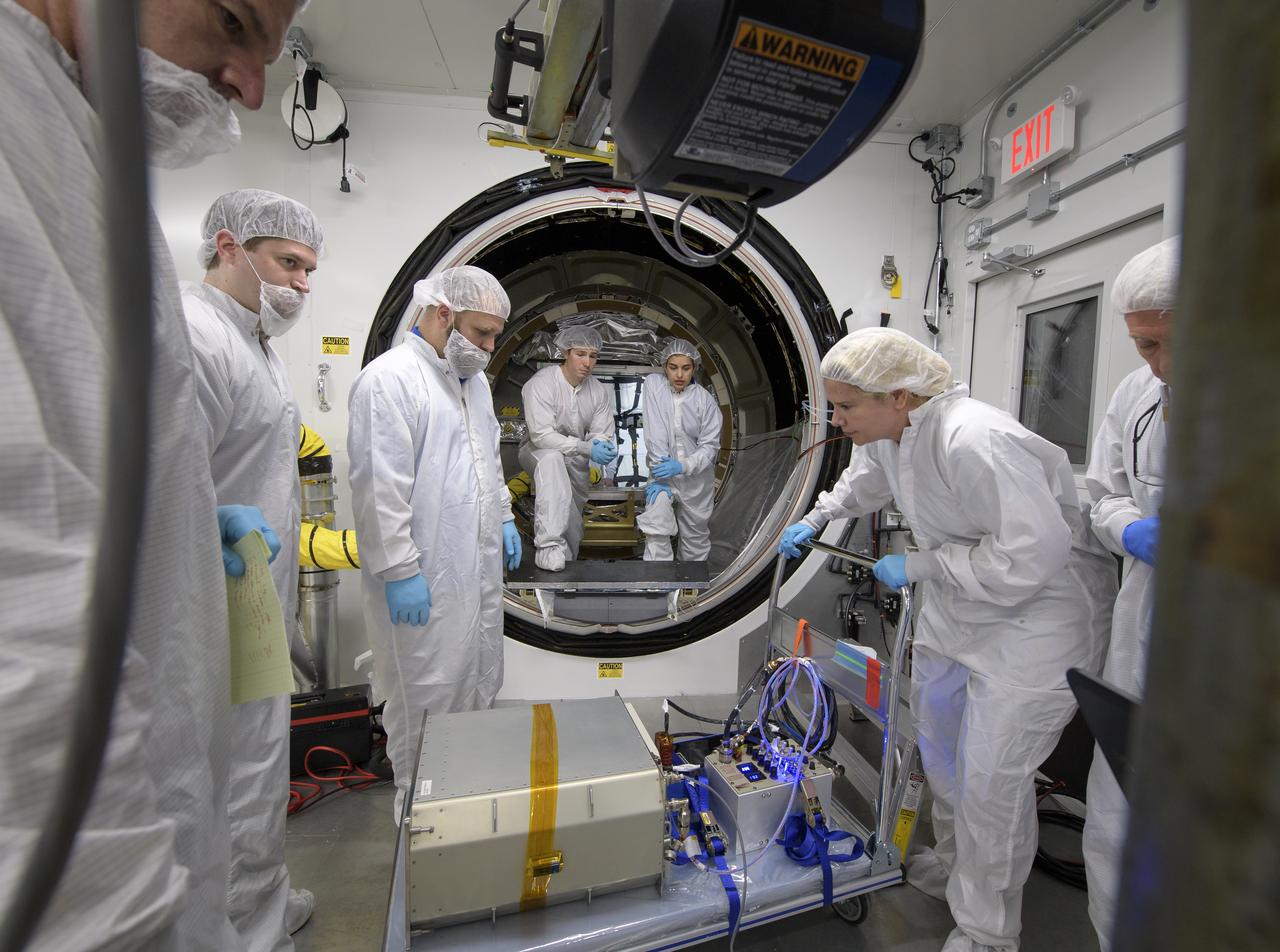
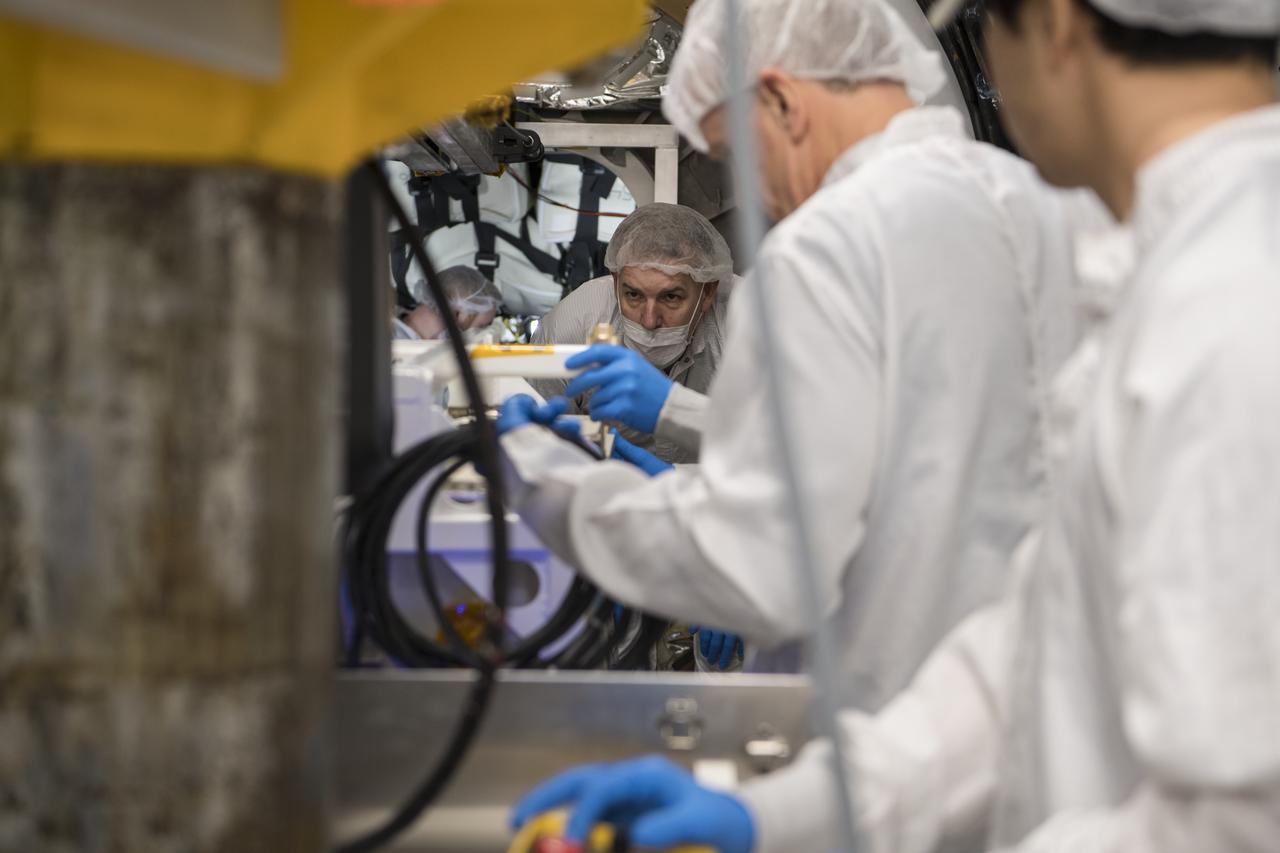
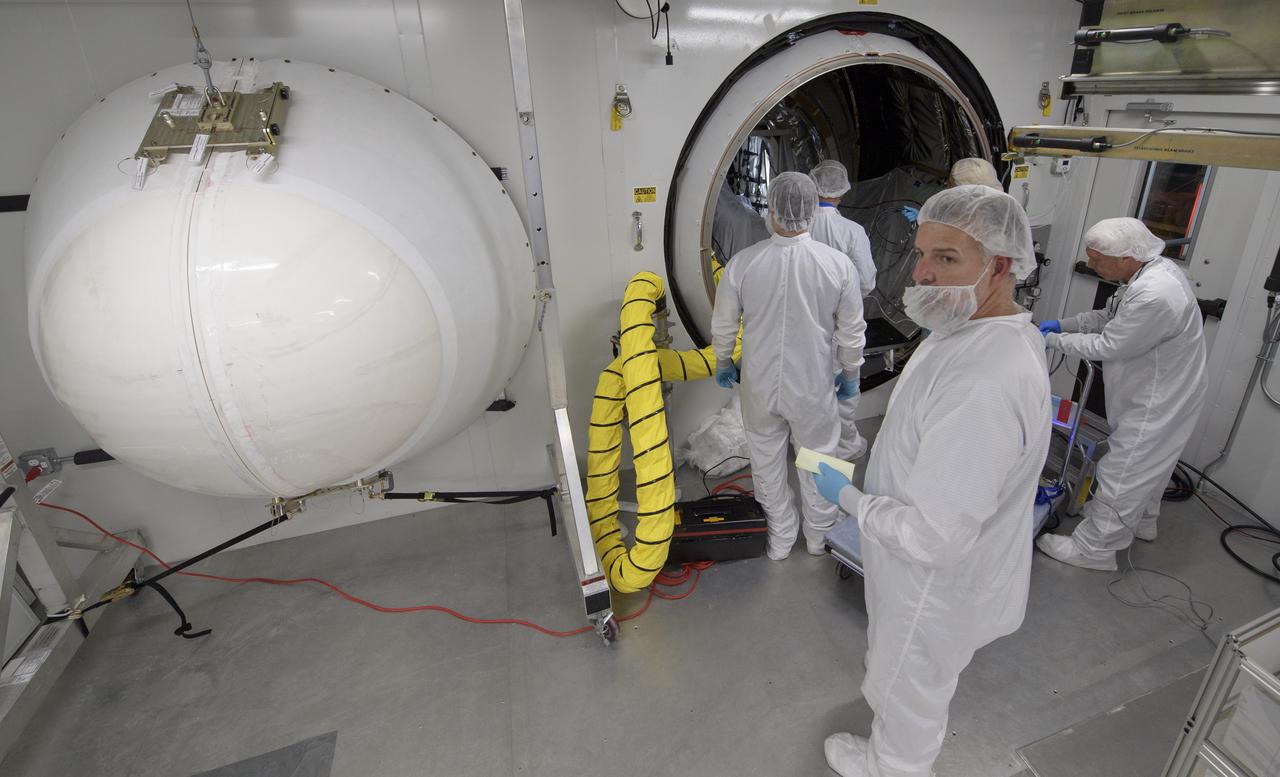
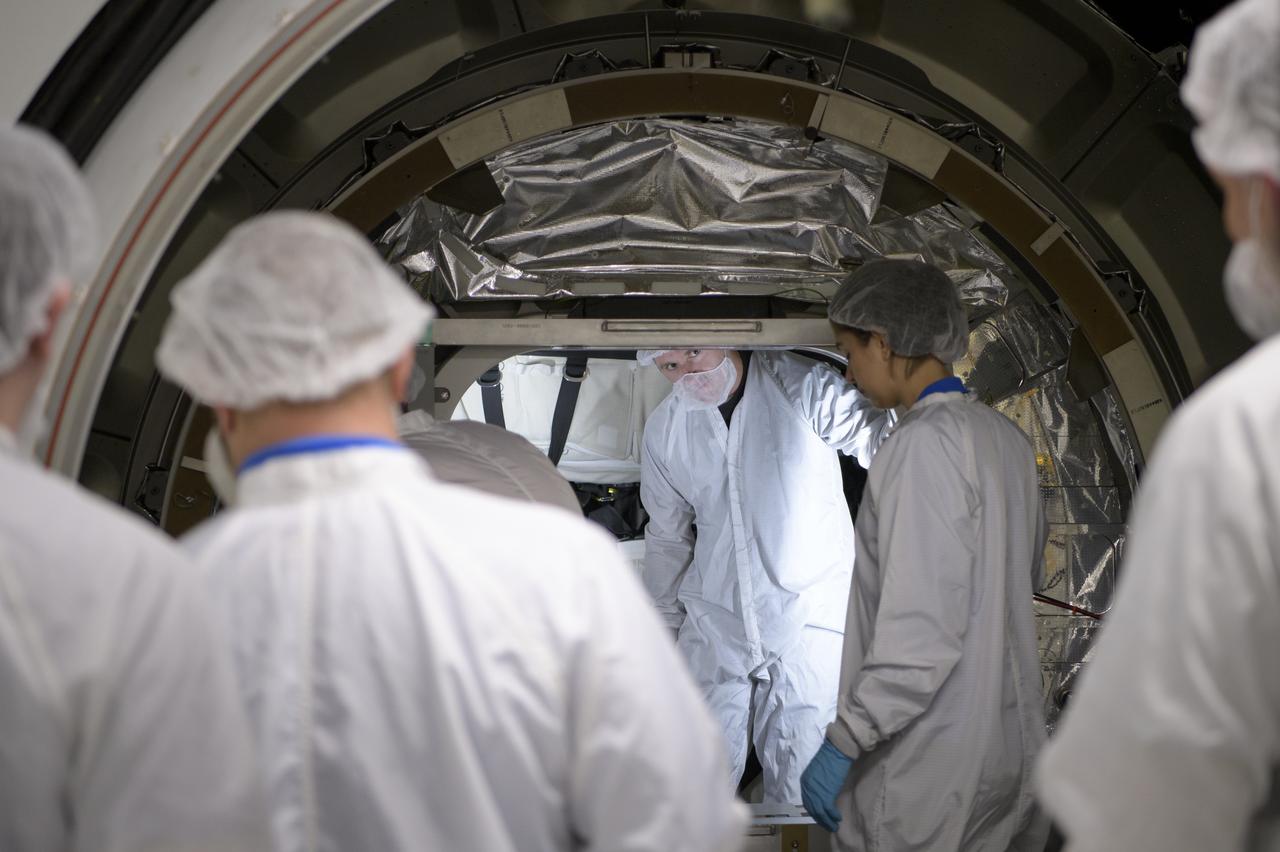
The remaining time-sensitive payloads bound for the International Space Station on SpaceX’s 21st Commercial Resupply Services (CRS-21) mission are loaded into the Cargo Dragon spacecraft on Friday, Dec. 4, 2020. A SpaceX Falcon 9 rocket, carrying the Cargo Dragon, lifted off from Launch Complex 39A at Kennedy Space Center in Florida at 11:17 a.m. EST on Dec. 6, 2020. The spacecraft is delivering more than 6,400 pounds of science investigations and cargo to the orbiting laboratory.
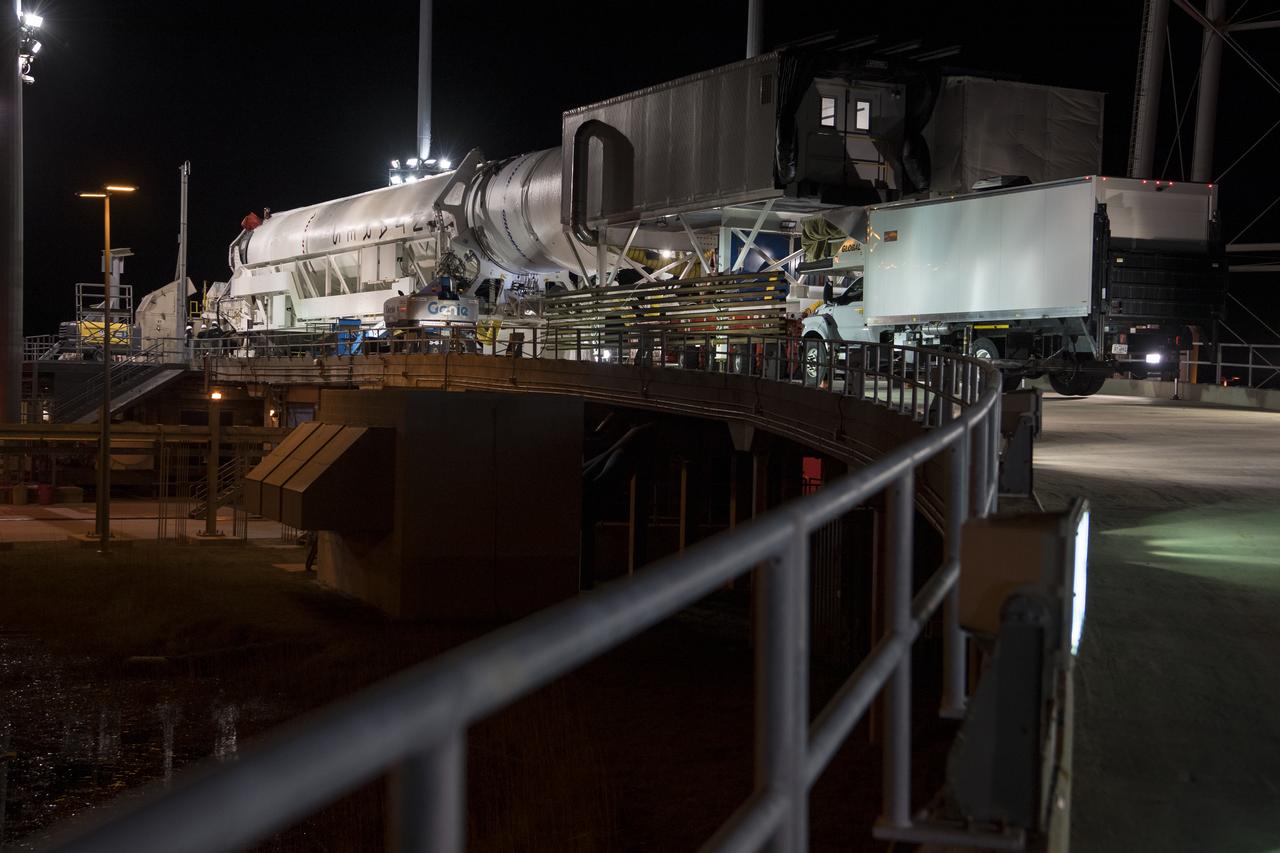
A Northrop Grumman Antares rocket carrying a Cygnus resupply spacecraft is seen horizontal on Pad-0A for the final cargo load, Saturday, Feb. 8, 2020, at NASA's Wallops Flight Facility in Virginia. Northrop Grumman’s 13th contracted cargo resupply mission with NASA to the International Space Station will more than 7,500 pounds of science and research, crew supplies and vehicle hardware to the orbital laboratory and its crew. The CRS-13 Cygnus spacecraft is named after the first African American astronaut, Major Robert Henry Lawrence Jr., and is scheduled to launch at 5:39pm EST Sunday, Feb. 9. Photo Credit: (NASA/Aubrey Gemignani)
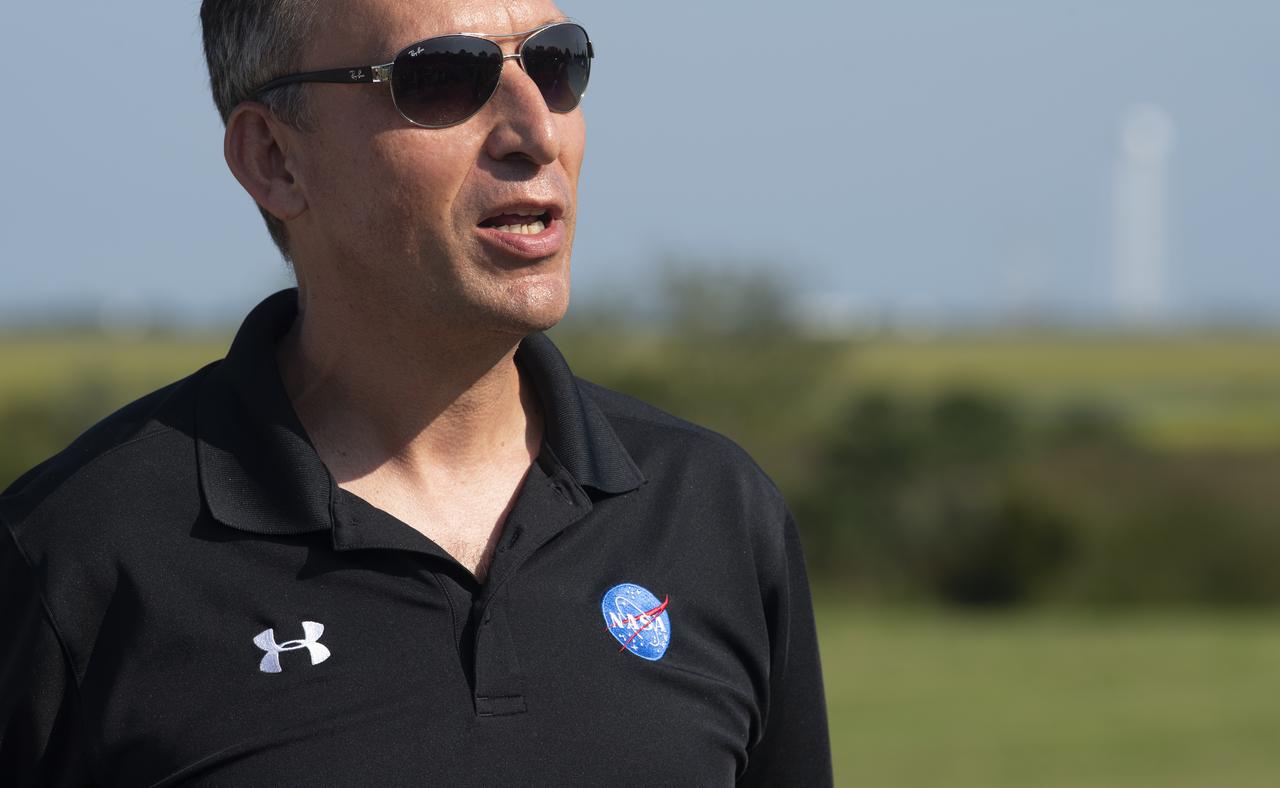
Thomas Zurbuchen, associate administrator for NASA’s Science Mission Directorate, speaks to members of the media prior to the launch of a Northrop Grumman Antares rocket carrying a Cygnus resupply spacecraft, Tuesday, Aug. 10, 2021, at NASA's Wallops Flight Facility in Virginia. Northrop Grumman’s 16th contracted cargo resupply mission for NASA launched at 6:01 p.m. EDT and will deliver nearly 8,200 pounds of science and research, crew supplies and vehicle hardware to the International Space Station and its crew. Photo Credit: (NASA/Joel Kowsky)
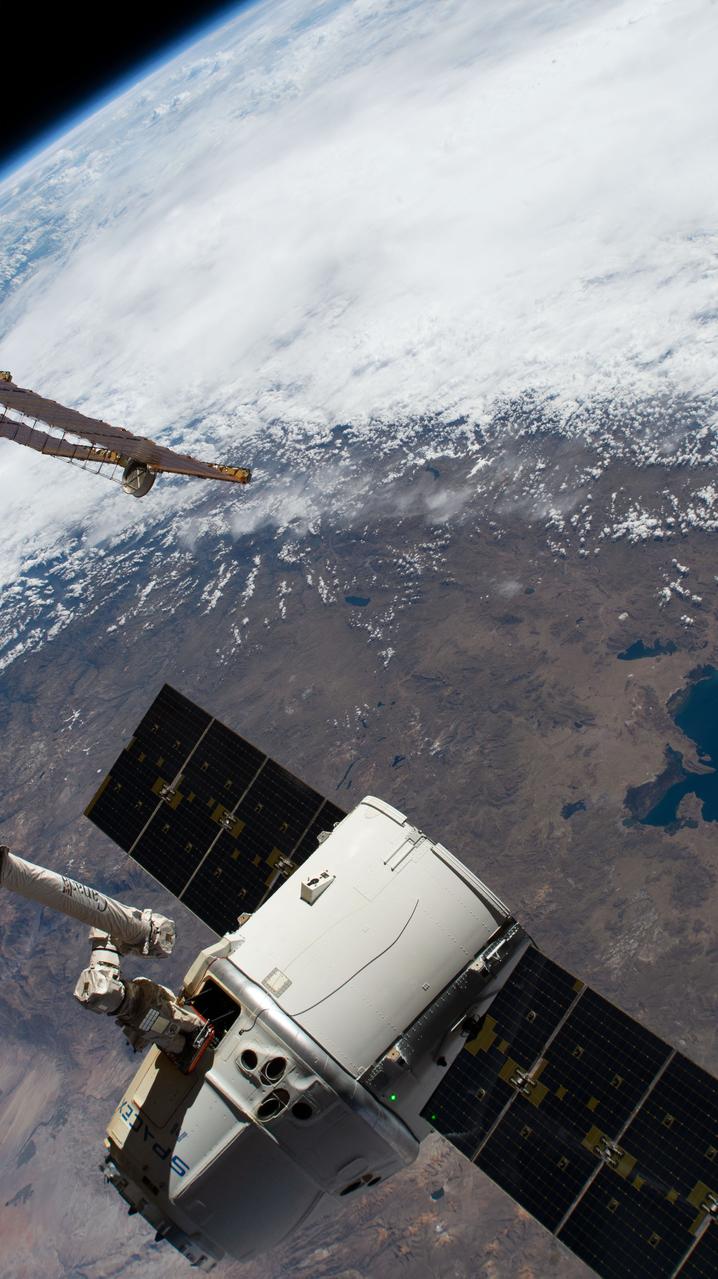
iss059e088880 (June 3, 2019) --- The SpaceX Dragon cargo craft on its 17th contracted mission to resupply mission to the International Space Station is pictured moments before being released from the Canadarm2 robotic arm. The orbiting lab was flying 257 miles above the Pacific coast of South America.
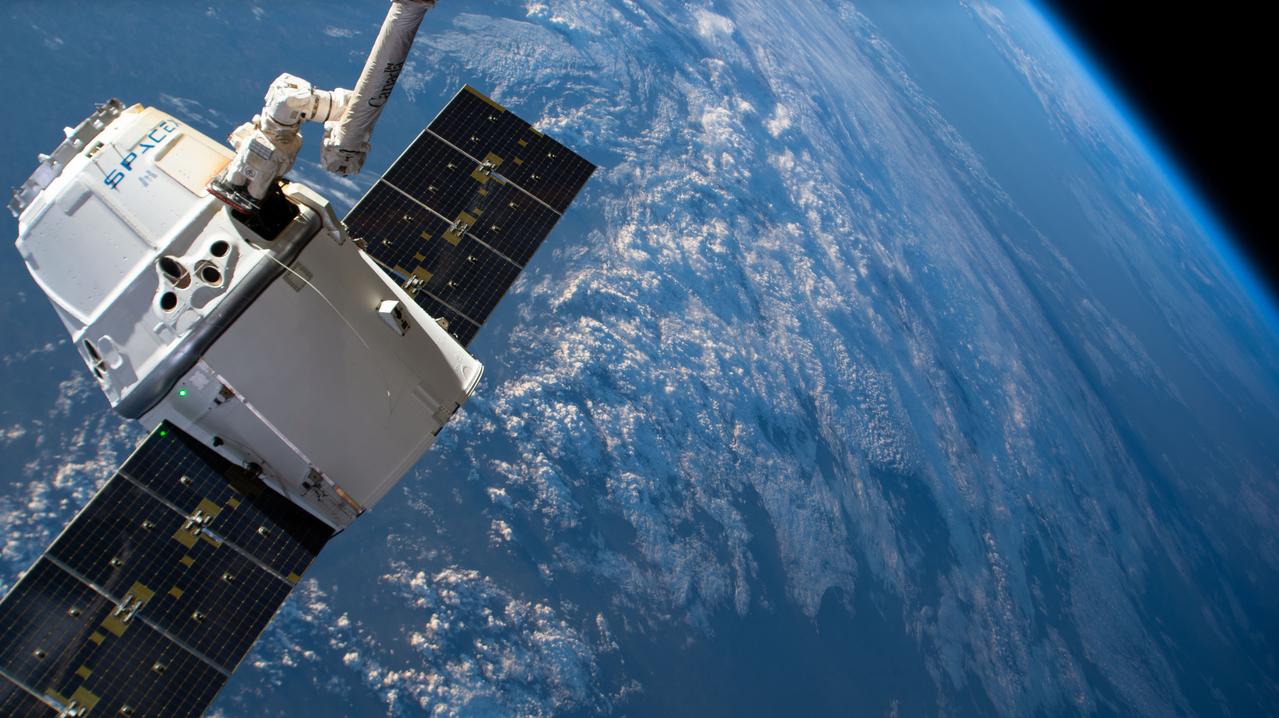
iss059e088875 (June 3, 2019) --- The SpaceX Dragon cargo craft on its 17th contracted mission to resupply mission to the International Space Station is pictured moments before being released from the Canadarm2 robotic arm. The orbiting lab was flying 261 miles above central Asia.
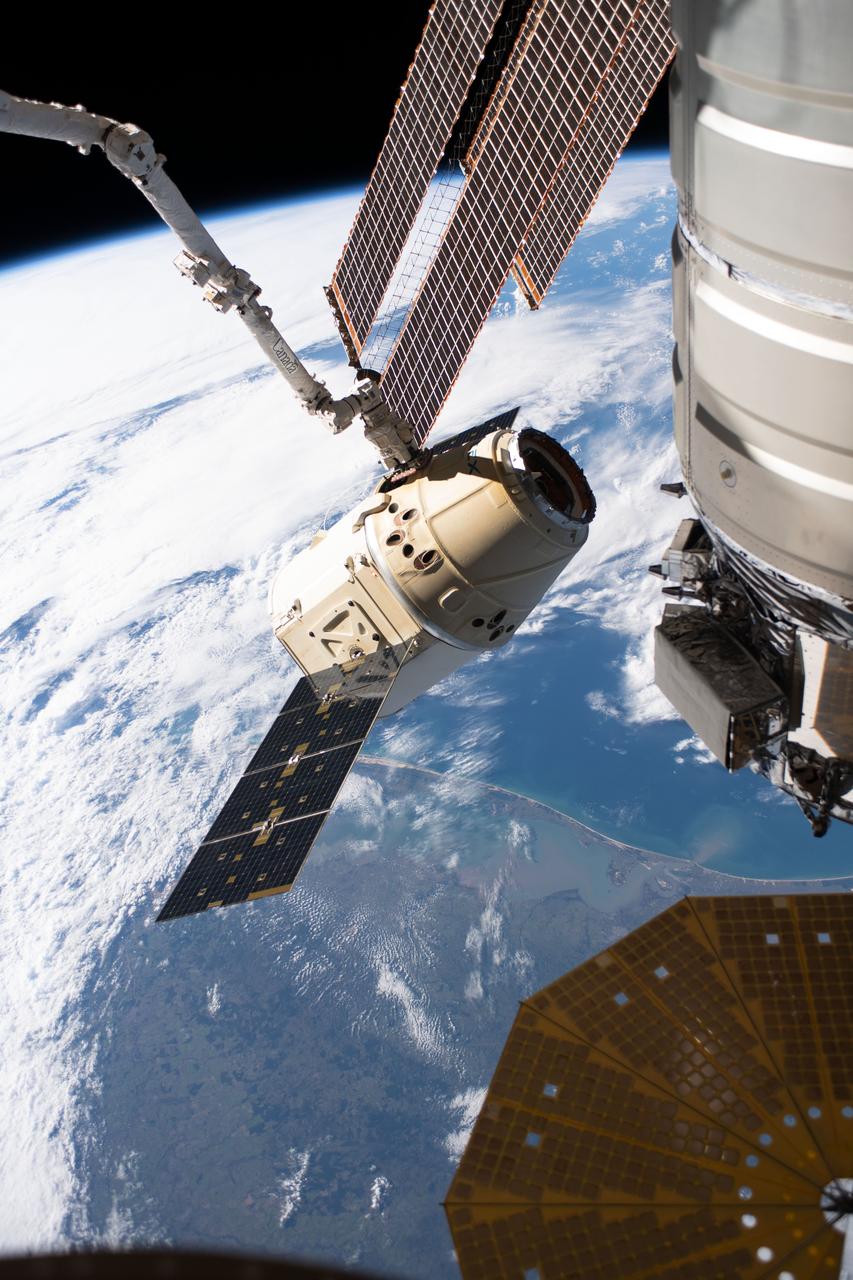
iss059e088996 (June 3, 2019) --- The SpaceX Dragon cargo craft on its 17th contracted mission to resupply mission to the International Space Station is pictured moments before being released from the Canadarm2 robotic arm. The orbiting lab was flying 261 miles above the Atlantic coast of South America.
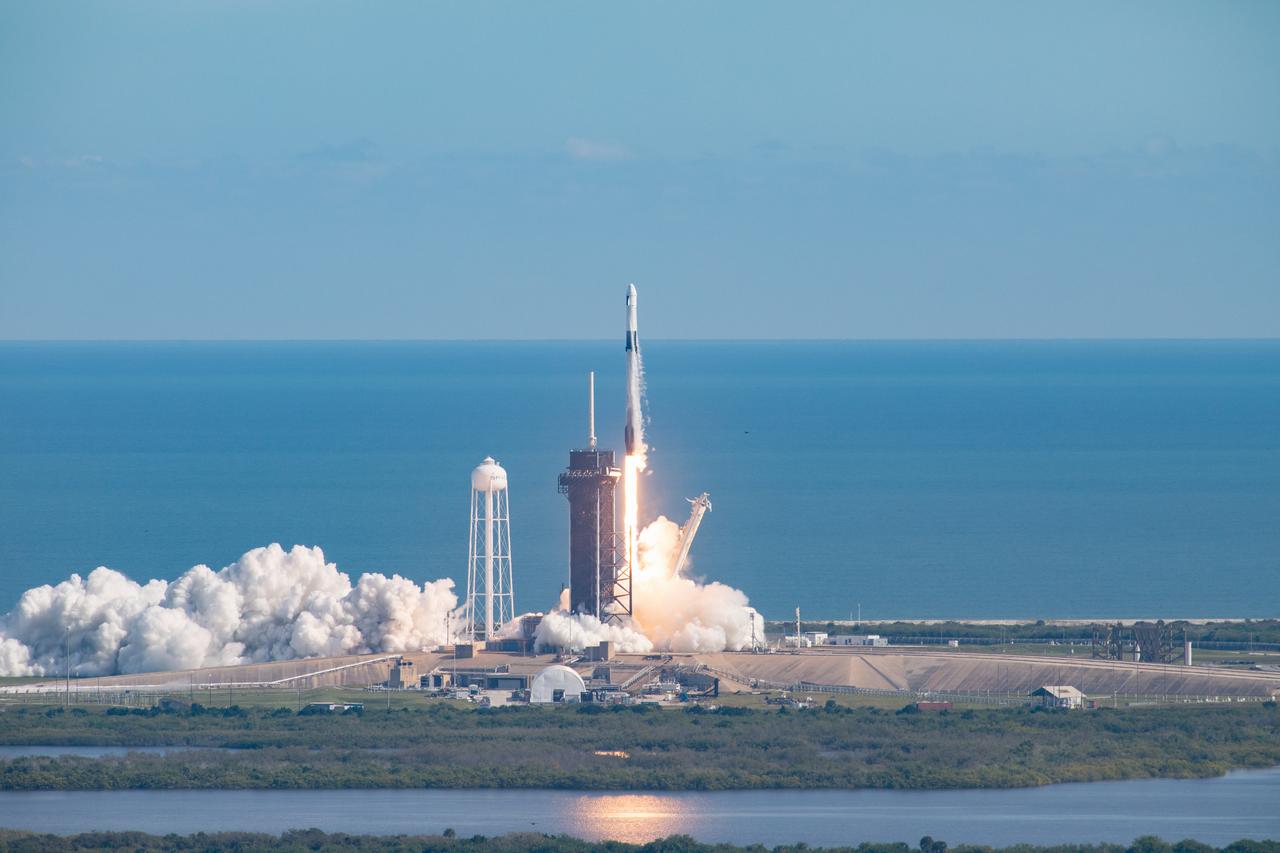
A SpaceX Falcon 9 rocket lifts off from Launch Complex 39A at Kennedy Space Center in Florida at 11:17 a.m. EST on Dec. 6, 2020, carrying the uncrewed cargo Dragon spacecraft on its journey to the International Space Station for NASA and SpaceX’s 21st Commercial Resupply Services (CRS-21) mission. Dragon will deliver more than 6,400 pounds of science investigations and cargo to the orbiting laboratory. The mission marks the first launch for SpaceX under NASA’s CRS-2 contract.
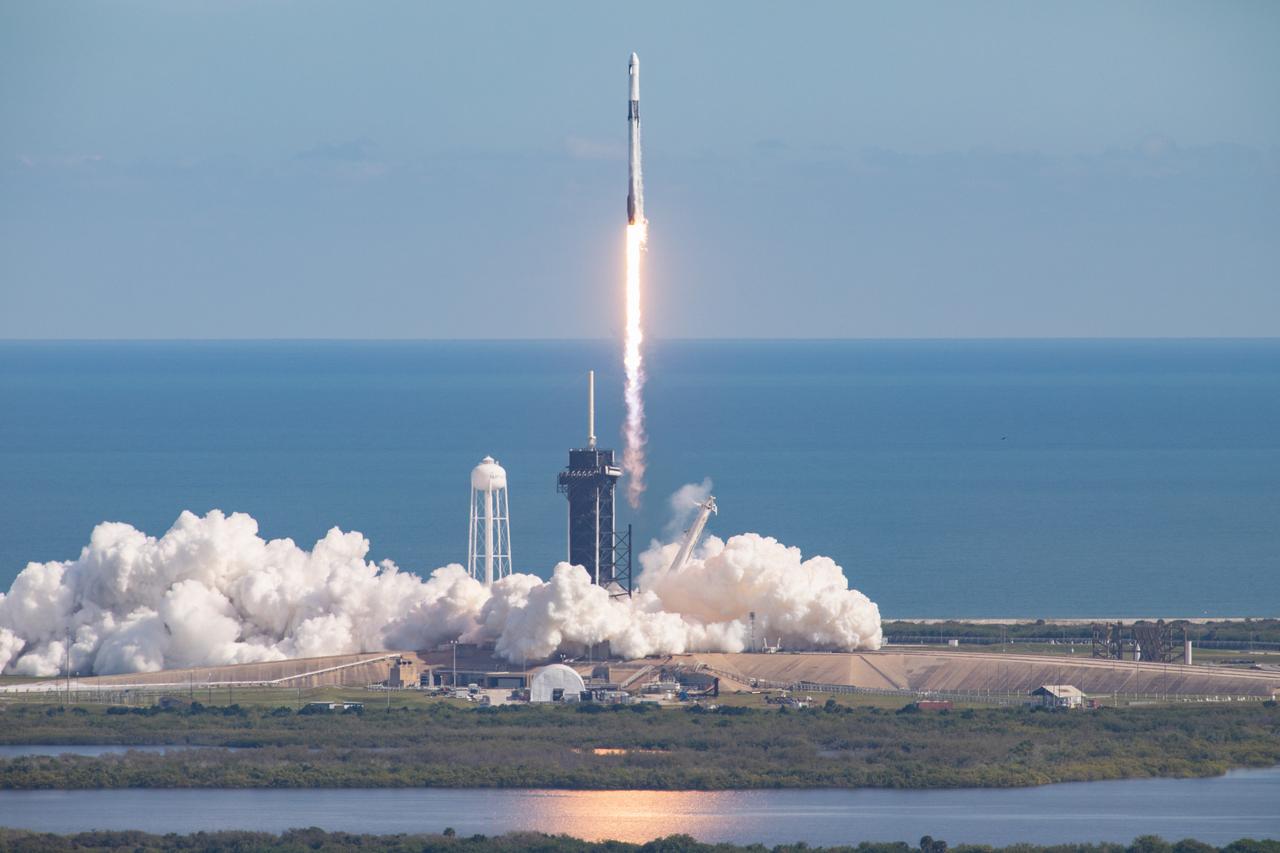
A SpaceX Falcon 9 rocket lifts off from Launch Complex 39A at Kennedy Space Center in Florida at 11:17 a.m. EST on Dec. 6, 2020, carrying the uncrewed cargo Dragon spacecraft on its journey to the International Space Station for NASA and SpaceX’s 21st Commercial Resupply Services (CRS-21) mission. Dragon will deliver more than 6,400 pounds of science investigations and cargo to the orbiting laboratory. The mission marks the first launch for SpaceX under NASA’s CRS-2 contract.
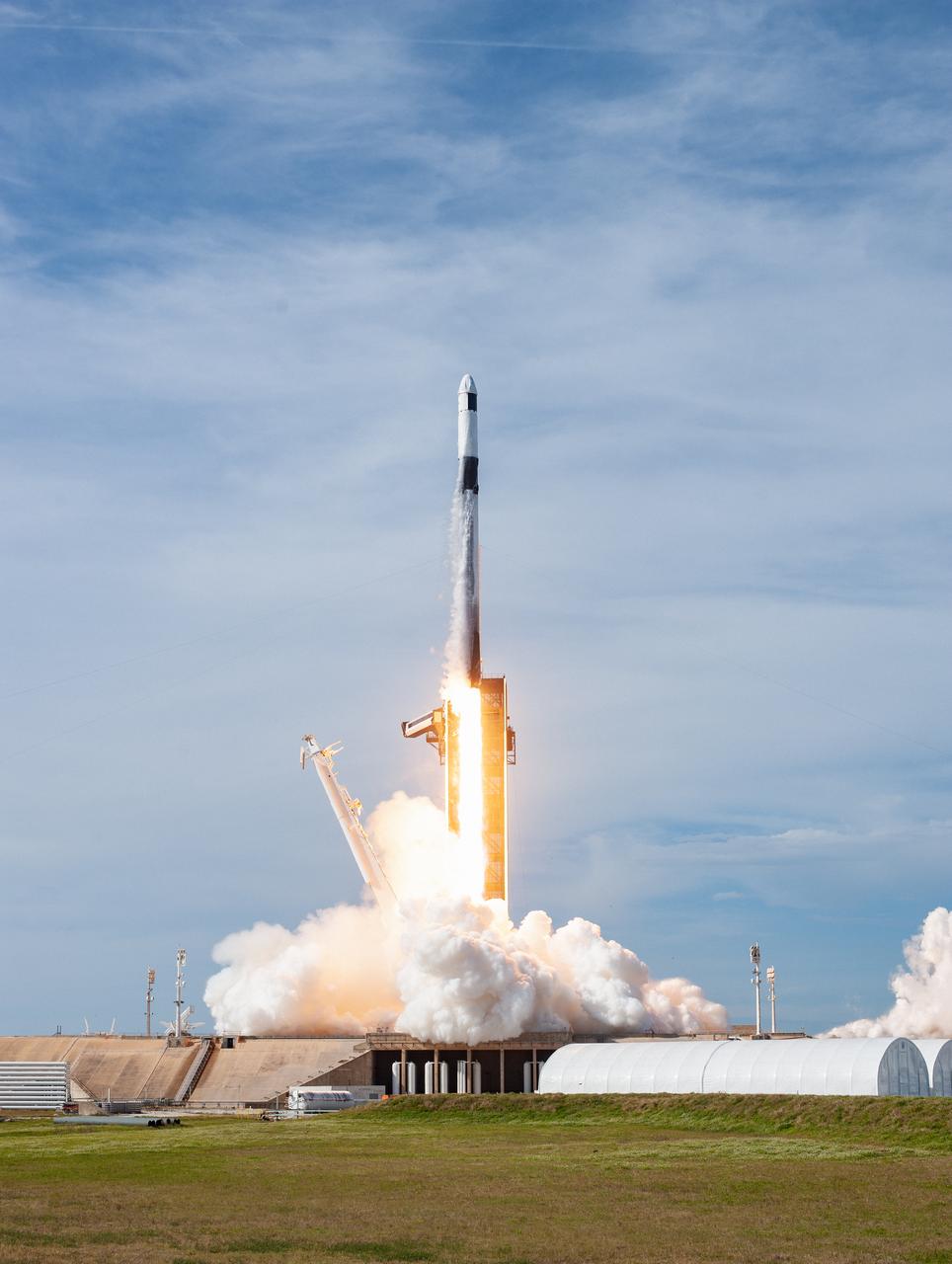
A SpaceX Falcon 9 rocket lifts off from Launch Complex 39A at Kennedy Space Center in Florida at 11:17 a.m. EST on Dec. 6, 2020, carrying the uncrewed cargo Dragon spacecraft on its journey to the International Space Station for NASA and SpaceX’s 21st Commercial Resupply Services (CRS-21) mission. Dragon will deliver more than 6,400 pounds of science investigations and cargo to the orbiting laboratory. The mission marks the first launch for SpaceX under NASA’s CRS-2 contract.
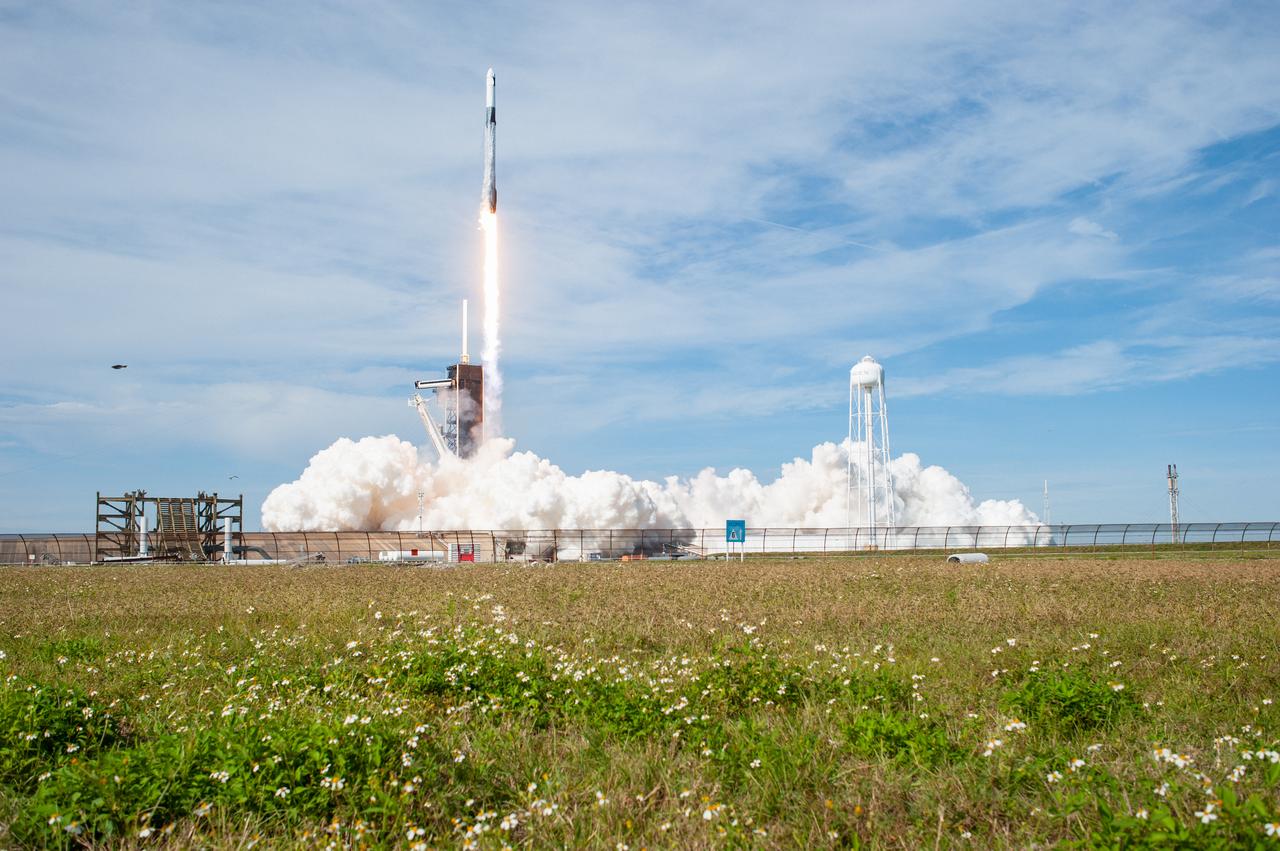
A SpaceX Falcon 9 rocket lifts off from Launch Complex 39A at Kennedy Space Center in Florida at 11:17 a.m. EST on Dec. 6, 2020, carrying the uncrewed cargo Dragon spacecraft on its journey to the International Space Station for NASA and SpaceX’s 21st Commercial Resupply Services (CRS-21) mission. Dragon will deliver more than 6,400 pounds of science investigations and cargo to the orbiting laboratory. The mission marks the first launch for SpaceX under NASA’s CRS-2 contract.