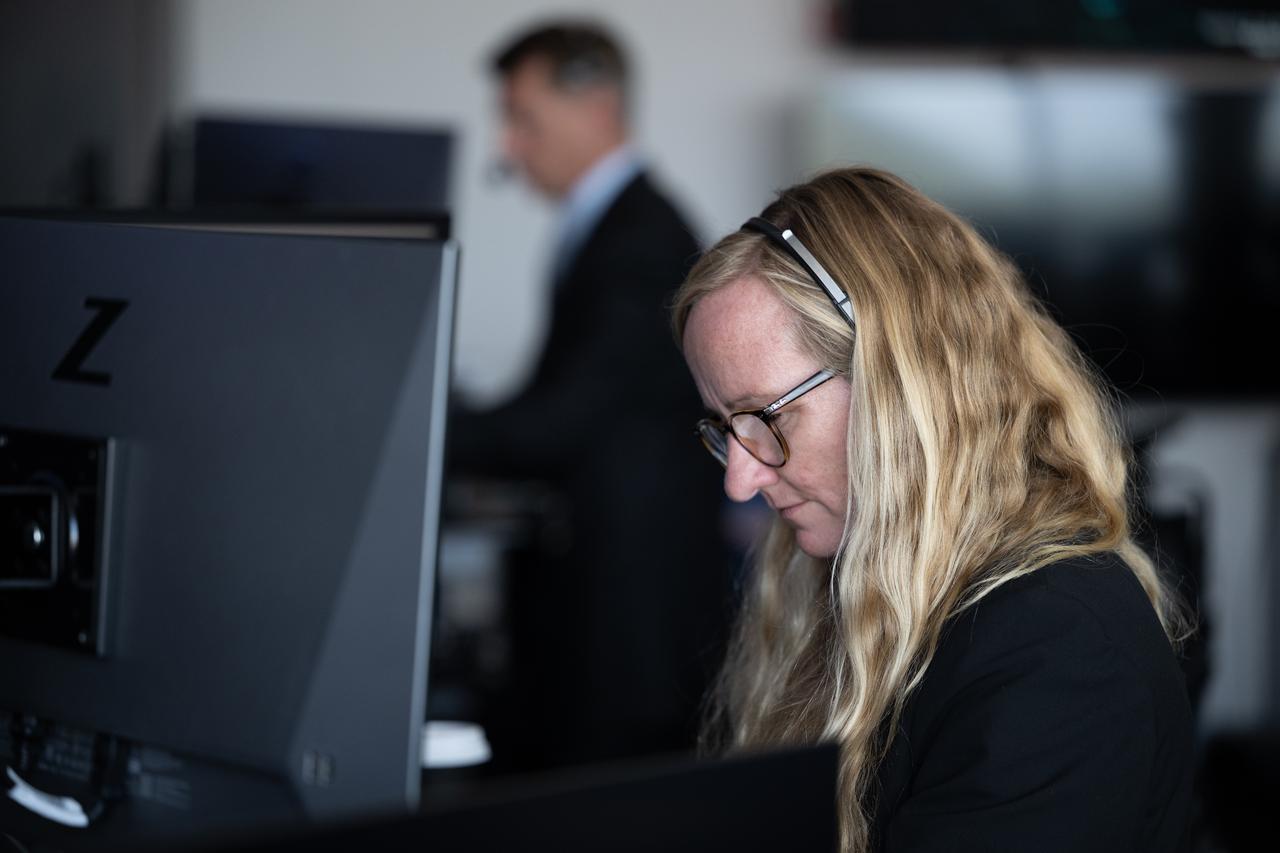
Carla Rekucki, NASA Commercial Crew Program mission manager, monitors the countdown of the launch of a SpaceX Falcon 9 rocket carrying the company's Dragon spacecraft on NASA’s SpaceX Crew-11 mission with NASA astronauts Zena Cardman, Mike Fincke, JAXA (Japan Aerospace Exploration Agency) astronaut Kimiya Yui, and Roscosmos cosmonaut Oleg Platonov onboard, Friday, Aug. 1, 2025, in the control center of SpaceX’s HangarX at NASA’s Kennedy Space Center in Florida. NASA’s SpaceX Crew-11 mission is the eleventh crew rotation mission of the SpaceX Dragon spacecraft and Falcon 9 rocket to the International Space Station as part of the agency’s Commercial Crew Program. Cardman, Fincke, Yui, Platonov launched at 11:43 a.m. EDT, from Launch Complex 39A at the NASA's Kennedy Space Center. Photo Credit: (NASA/Joel Kowsky)
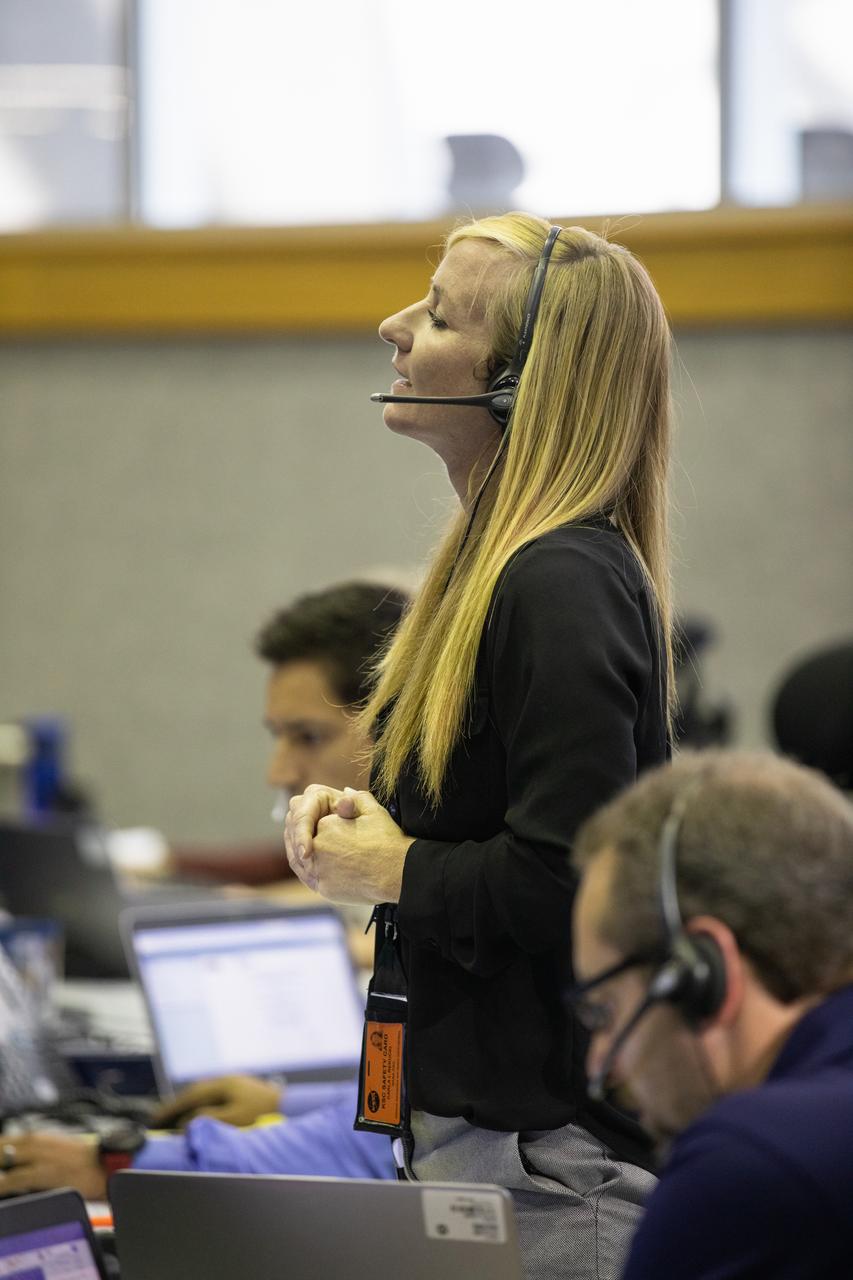
Carla Rekucki, lead NASA test director in NASA’s Exploration Ground Systems (EGS), center, and other launch team members participate in validation testing inside Firing Room 1 in the Launch Control Center at NASA’s Kennedy Space Center in Florida on July 11, 2019. The team includes personnel with NASA’s Exploration Ground Systems (EGS) and Jacobs Test and Operations Contract (TOSC). The simulation was designed to validate the firing room consoles and communications systems, as well as the new Spaceport Command and Control System (SCCS), which will operate, monitor and coordinate ground equipment in preparation for Artemis 1, the uncrewed first flight of the Space Launch System rocket and Orion spacecraft.
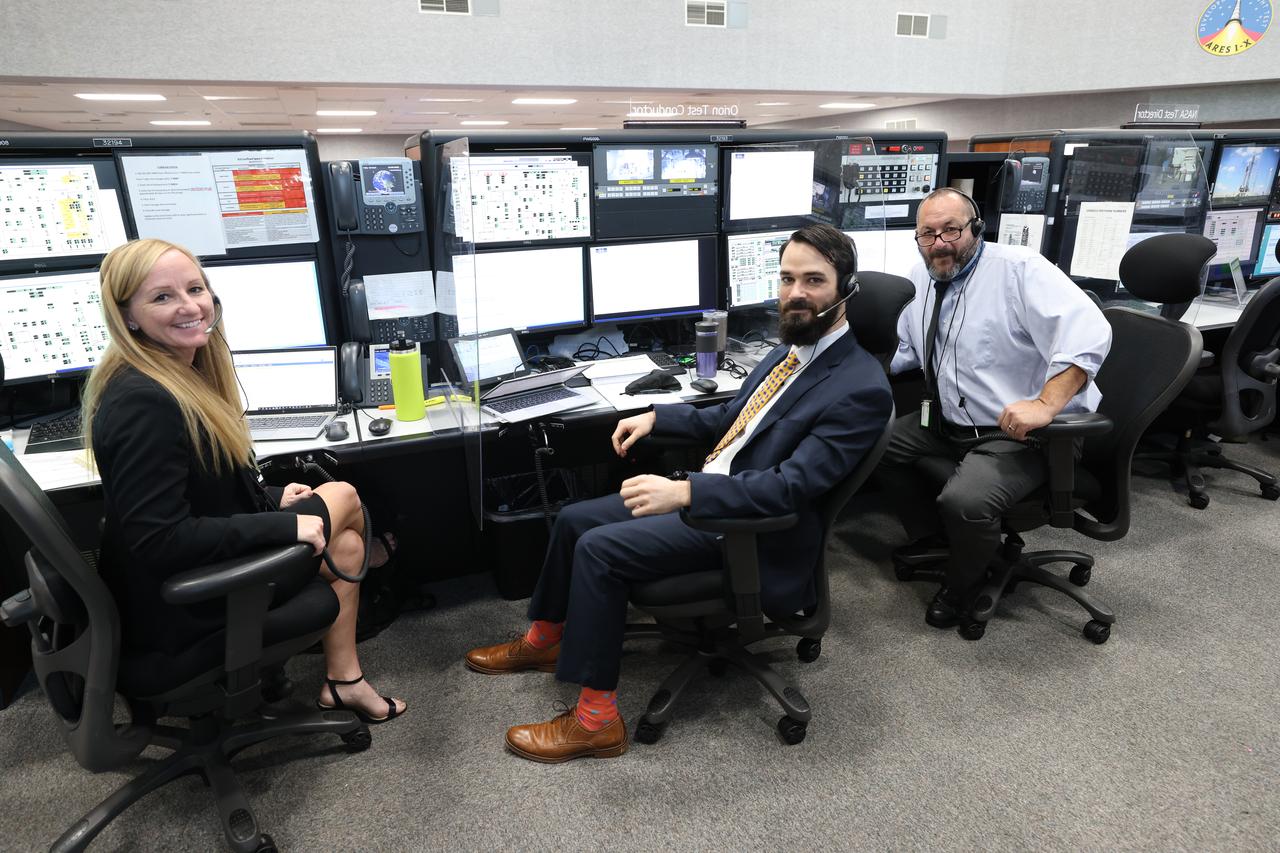
Launch team members, from left, Carla Rekucki, Joshua Coleman, and John Kracsun, are seated at consoles inside Firing Room 1 of the Launch Control Center at NASA’s Kennedy Space Center in Florida on Dec. 13, 2021. They are participating in a joint integrated simulation for the Artemis I launch that covered both cryogenic loading and terminal countdown portions of prelaunch activities. Members of NASA’s mission management team and launch team conducted the simulation together. The Kennedy team was certified for the Artemis I launch. During Artemis I, the agency’s Orion spacecraft will lift off from Kennedy aboard NASA’s most powerful rocket – the Space Launch System – to fly farther than any spacecraft built for humans has ever flown. Through NASA’s Artemis missions, the agency, along with commercial and international partners, will establish a sustainable human presence on the Moon to prepare for missions to Mars.
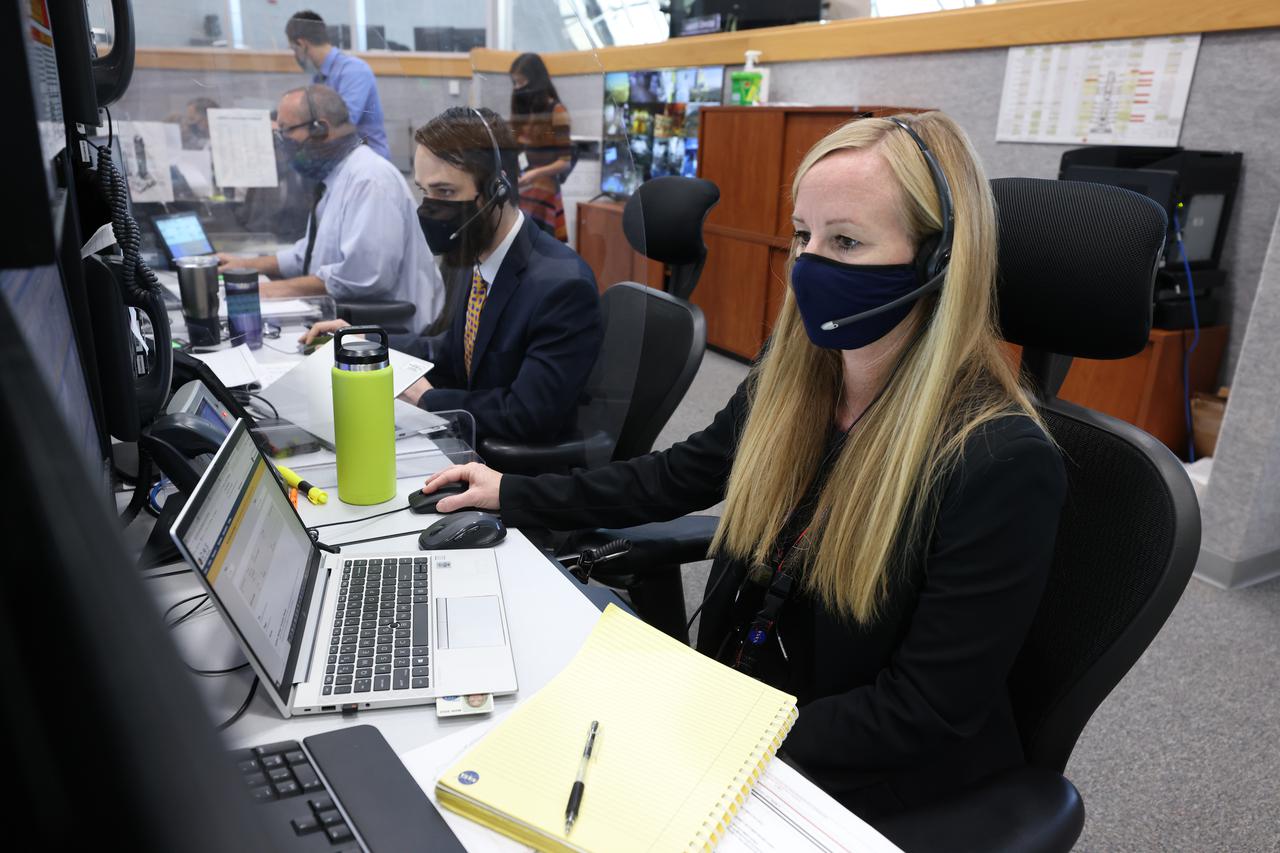
Launch team members are seated at the Orion Test Conductor consoles inside Firing Room 1 of the Launch Control Center at NASA’s Kennedy Space Center in Florida on Dec. 13, 2021. From right are Carla Rekucki, Joshua Coleman, John Kracsun, and Dan Florez. They are participating in a joint integrated simulation for the Artemis I launch that covered both cryogenic loading and terminal countdown portions of prelaunch activities. Members of NASA’s mission management team and launch team conducted the simulation together. The Kennedy team was certified for the Artemis I launch. During Artemis I, the agency’s Orion spacecraft will lift off from Kennedy aboard NASA’s most powerful rocket – the Space Launch System – to fly farther than any spacecraft built for humans has ever flown. Through NASA’s Artemis missions, the agency, along with commercial and international partners, will establish a sustainable human presence on the Moon to prepare for missions to Mars.
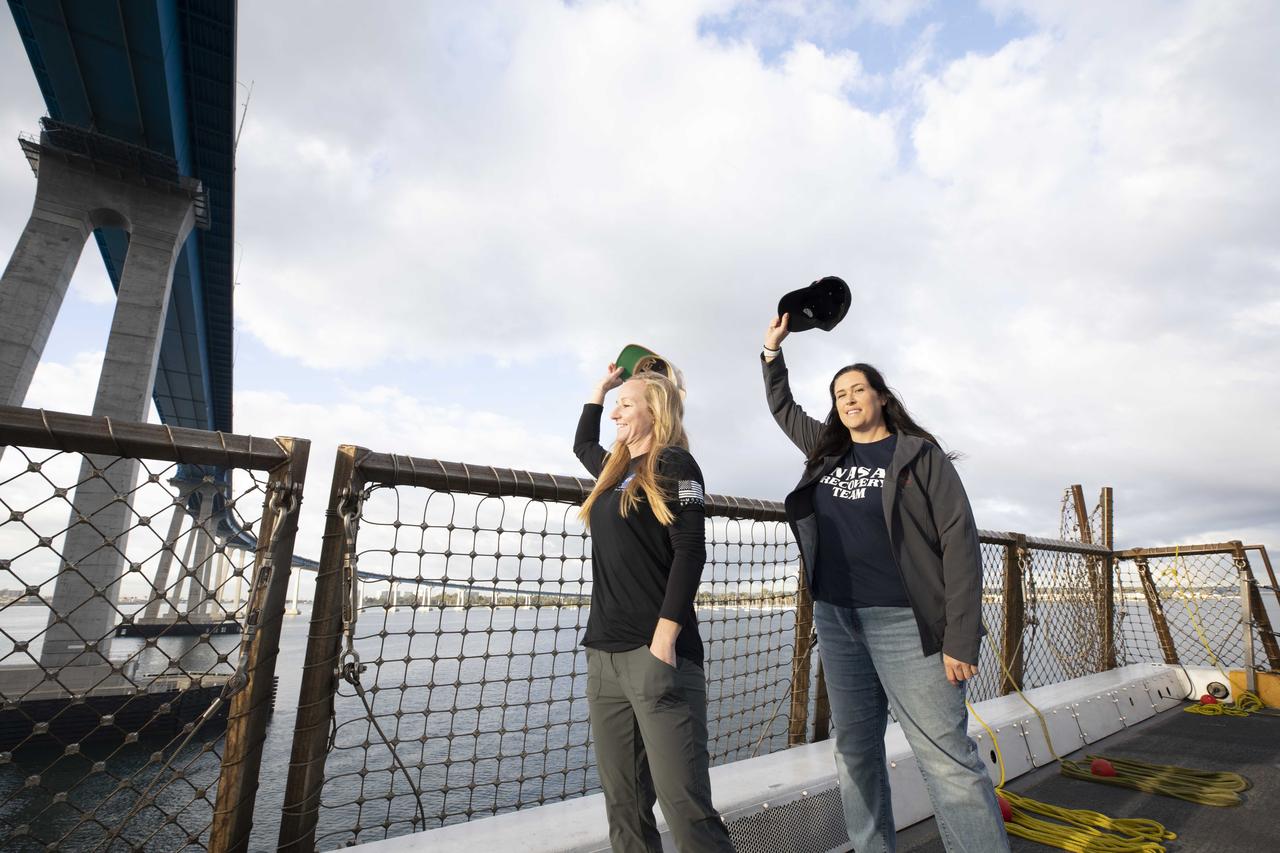
While returning to port after successfully recovering the Orion spacecraft for the Artemis I mission, NASA Artemis Recovery Director Melissa Jones, at right, and Assistant NASA Recovery Director Carla Rekucki, throw their hats in the air aboard the USS Portland as they pass under the San Diego-Coronado bridge on Dec. 13, 2022. The Artemis I Orion spacecraft is secured inside the ship’s well deck after splashing down at 12:40 p.m. EST on Dec. 11, 2022. U.S. Navy divers helped recover the Orion spacecraft. NASA, the Navy and other Department of Defense partners worked together to secure the spacecraft inside the ship’s well deck approximately five hours after Orion splashed down in the Pacific Ocean off the coast of Baja, California.