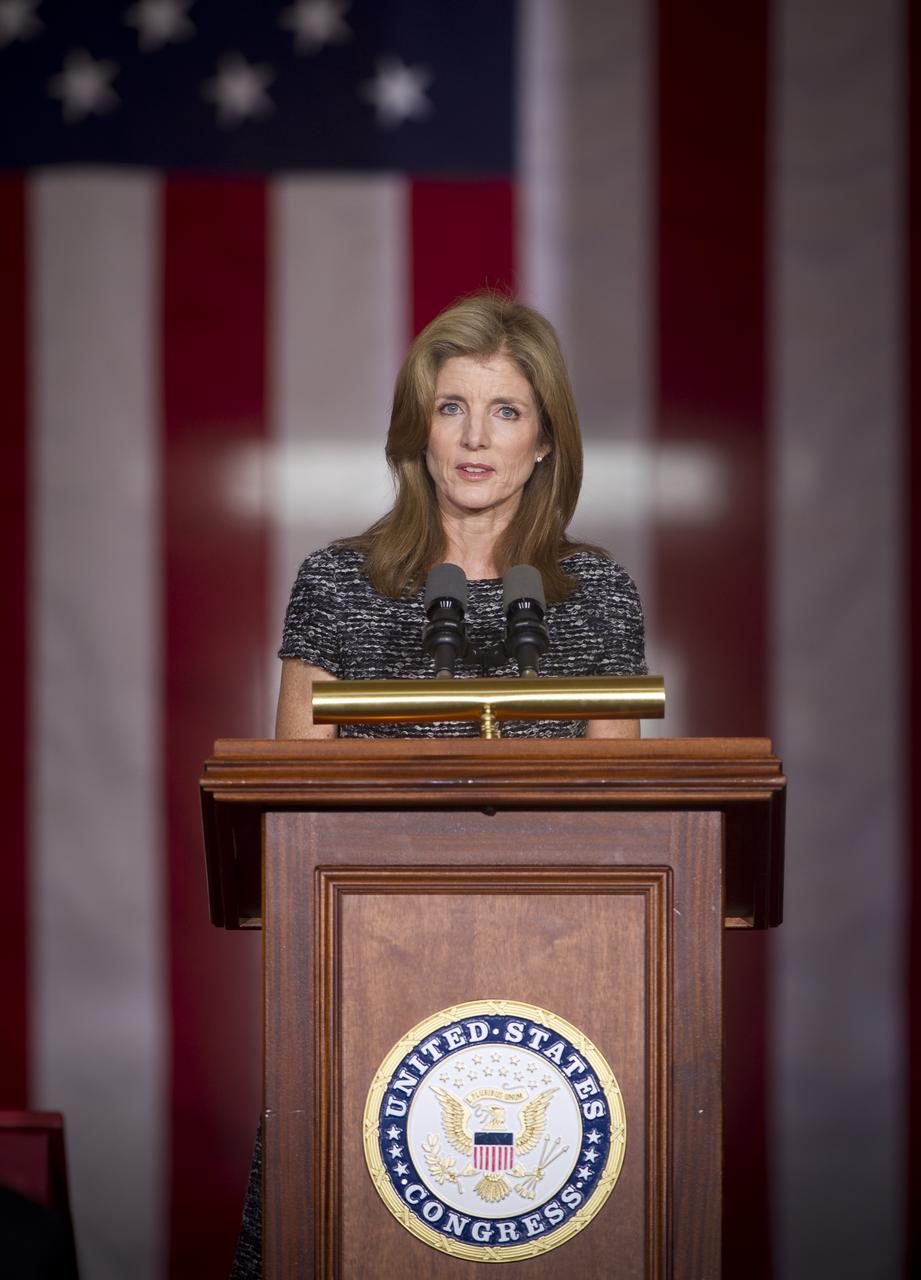
Caroline Kennedy speaks at an event recognizing the 50th anniversary of the inauguration of John F. Kennedy as President of the United States, Thursday, Jan. 20, 2011 in the rotunda at the U.S. Capitol. Photo Credit: (NASA/Bill Ingalls)
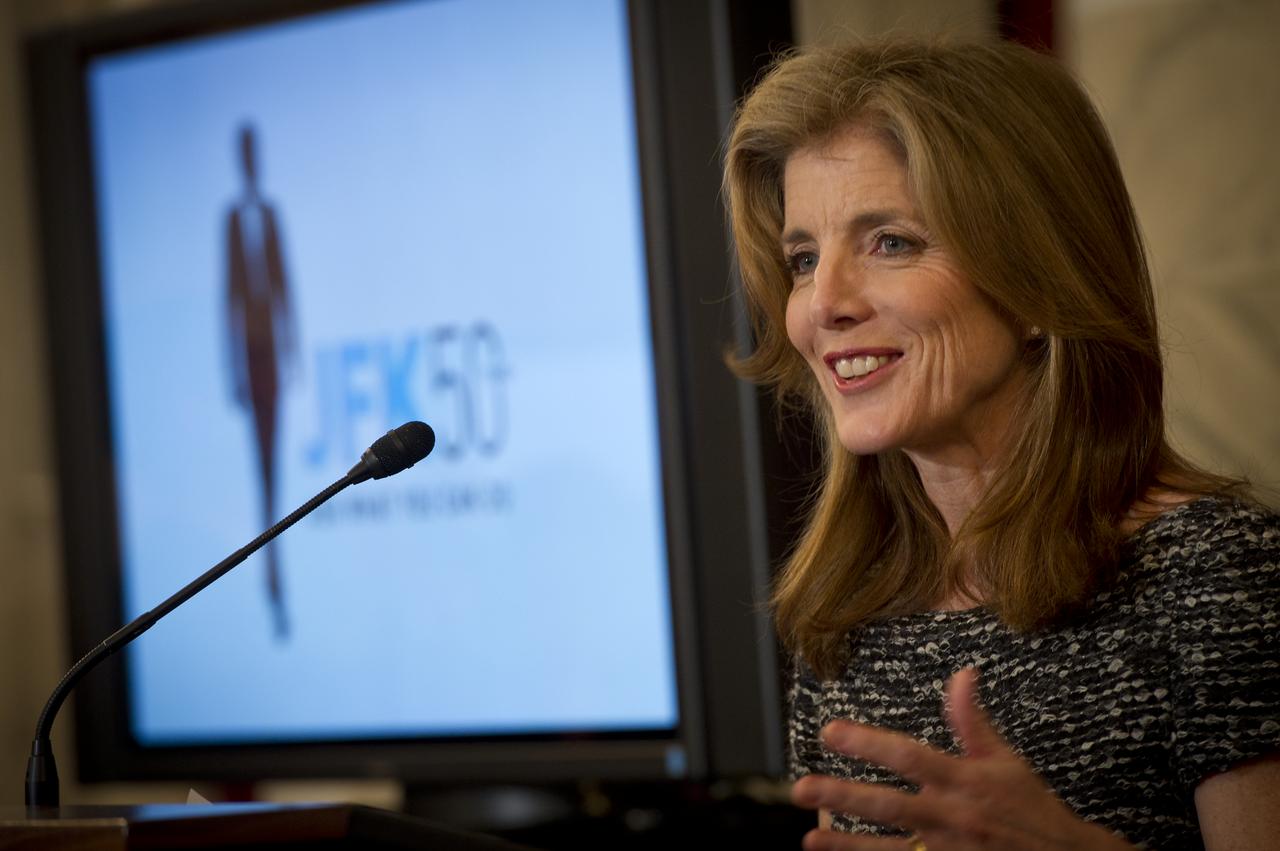
Caroline Kennedy speaks at an event recognizing the 50th anniversary of the inauguration of John F. Kennedy as President of the United States and where the website jfk50.org was unveiled, Thursday, Jan. 20, 2011 at the Russell Senate Office Building in Washington. Photo Credit: (NASA/Bill Ingalls)
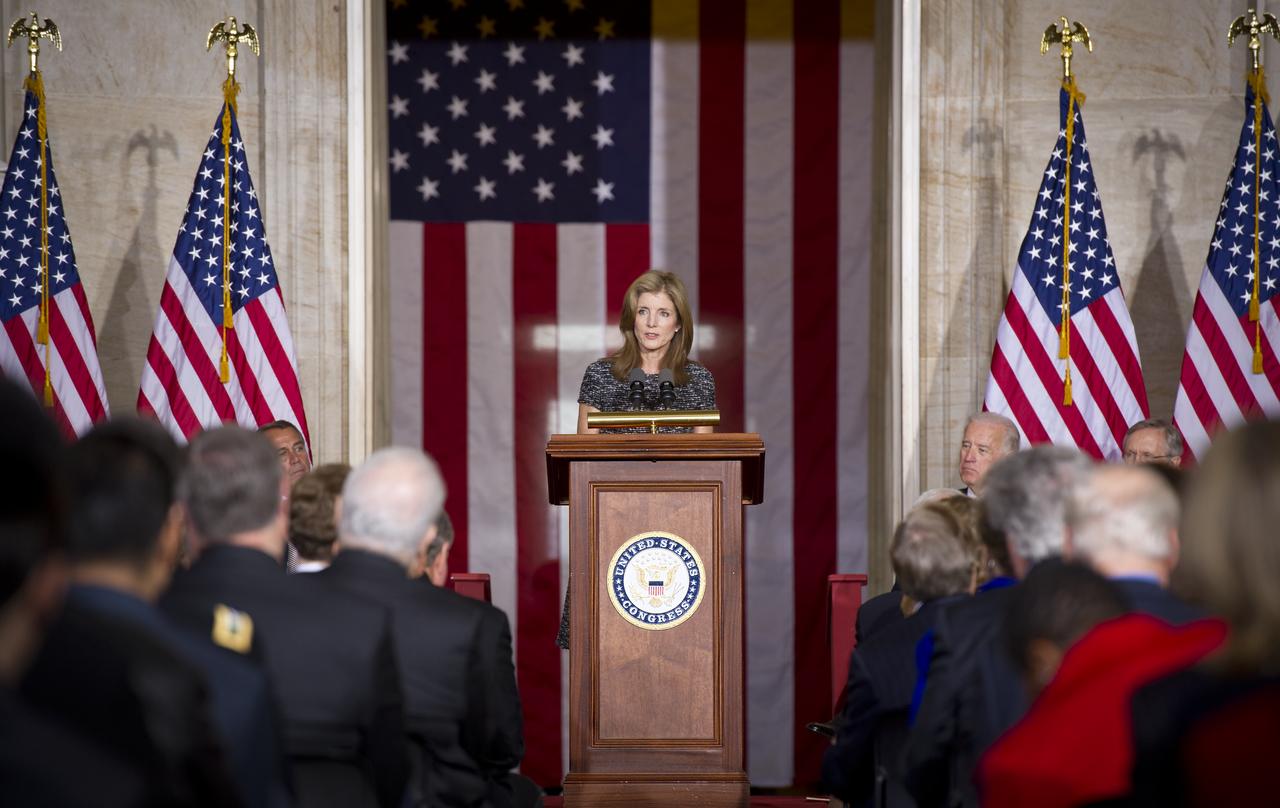
Caroline Kennedy speaks at an event recognizing the 50th anniversary of the inauguration of John F. Kennedy as President of the United States, Thursday, Jan. 20, 2011 in the rotunda at the U.S. Capitol. Photo Credit: (NASA/Bill Ingalls)
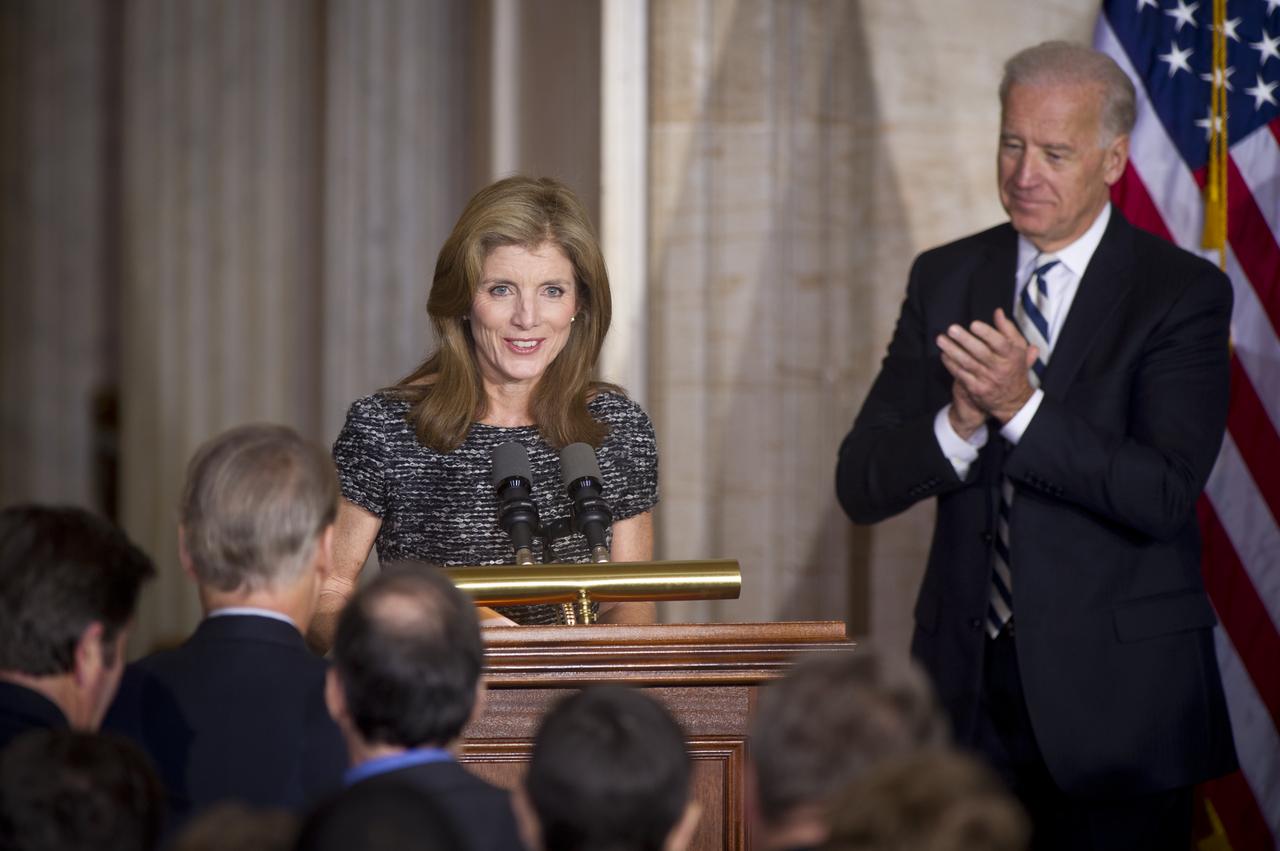
Caroline Kennedy is welcomed the podium by U.S. Vice President Joe Biden and other dignitaries before speaking at an event recognizing the 50th anniversary of the inauguration of John F. Kennedy as President of the United States, Thursday, Jan. 20, 2011 in the rotunda at the U.S. Capitol. Photo Credit: (NASA/Bill Ingalls)
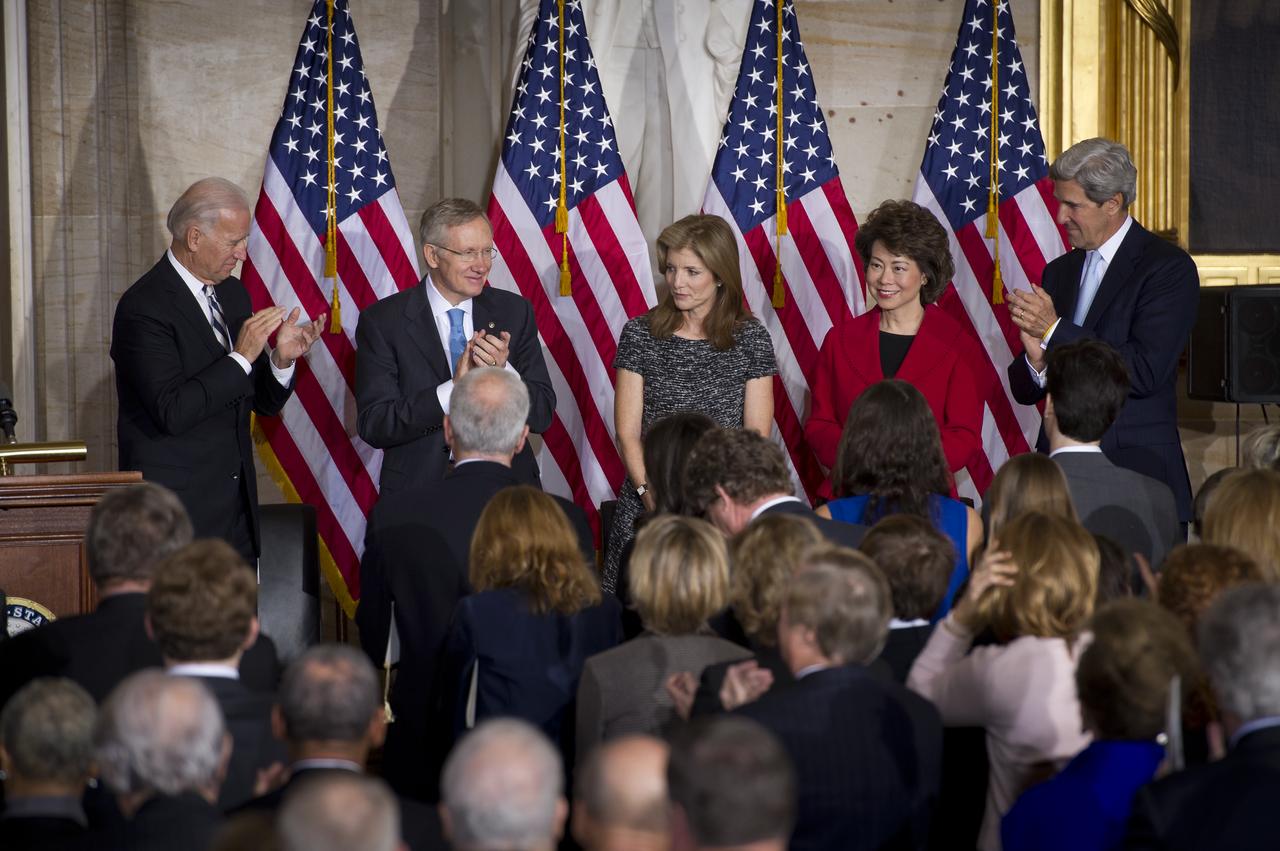
Caroline Kennedy, center, is recognized by U.S. Vice President Joe Biden, left, Senate Majority Leader Harry Reid (D-NV), second from left, former U.S. Labor Secretary Elaine Chao, and U.S. Senator John Kerry (D-MA), right, at an event recognizing the 50th anniversary of the inauguration of John F. Kennedy as President of the United States, Thursday, Jan. 20, 2011 in the rotunda at the U.S. Capitol. Photo Credit: (NASA/Bill Ingalls)
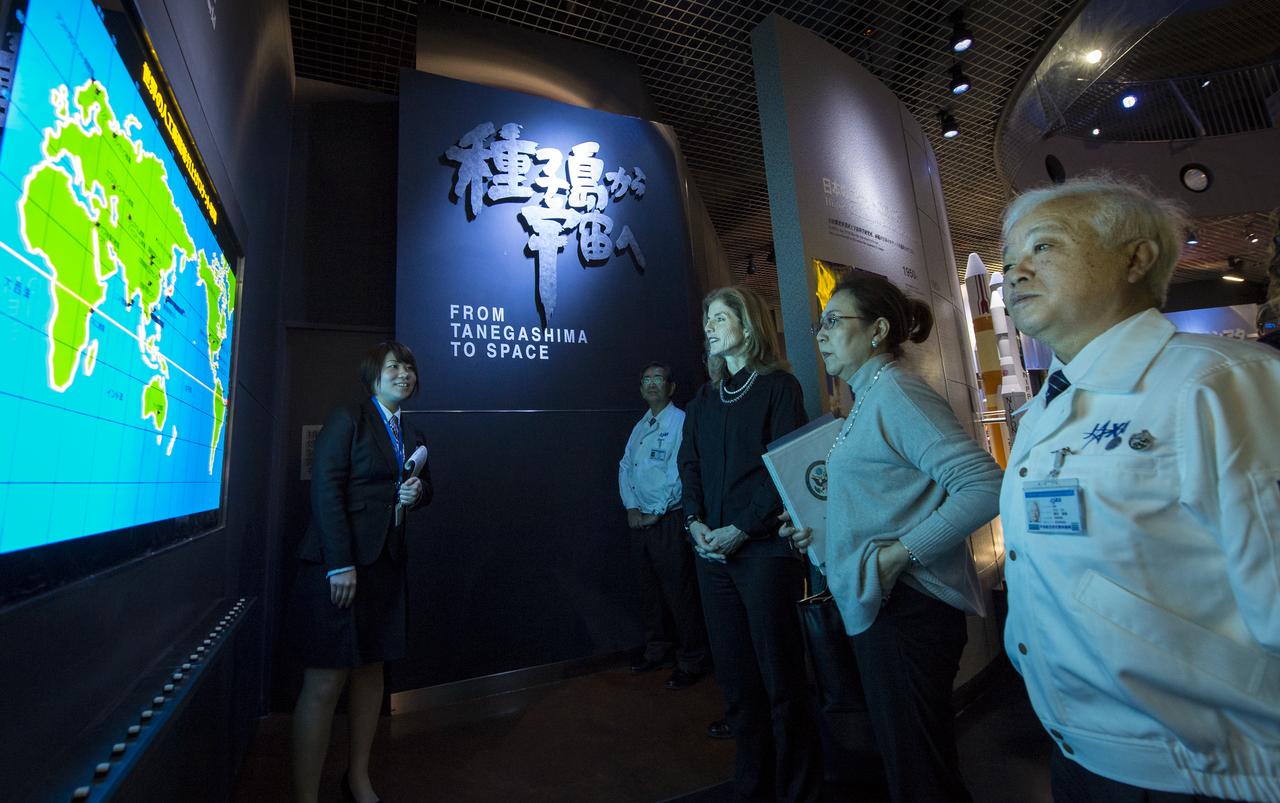
Caroline Bouvier Kennedy, U.S. Ambassador Extraordinary and Plenipotentiary to Japan, center, tours the Tanegashima Space Center, Visitors Center with Japan Aerospace Exploration Agency (JAXA), President, Naoki Okumura, right, on Thursday, Feb. 27, 2014, Tanegashima, Japan. The Ambassador visiting the space center and hopes to witness the planned launch of a Japanese H-IIA rocket carrying the NASA-JAXA, Global Precipitation Measurement (GPM) Core Observatory. Once launched, the GPM spacecraft will collect information that unifies data from an international network of existing and future satellites to map global rainfall and snowfall every three hours. Photo Credit: (NASA/Bill Ingalls)
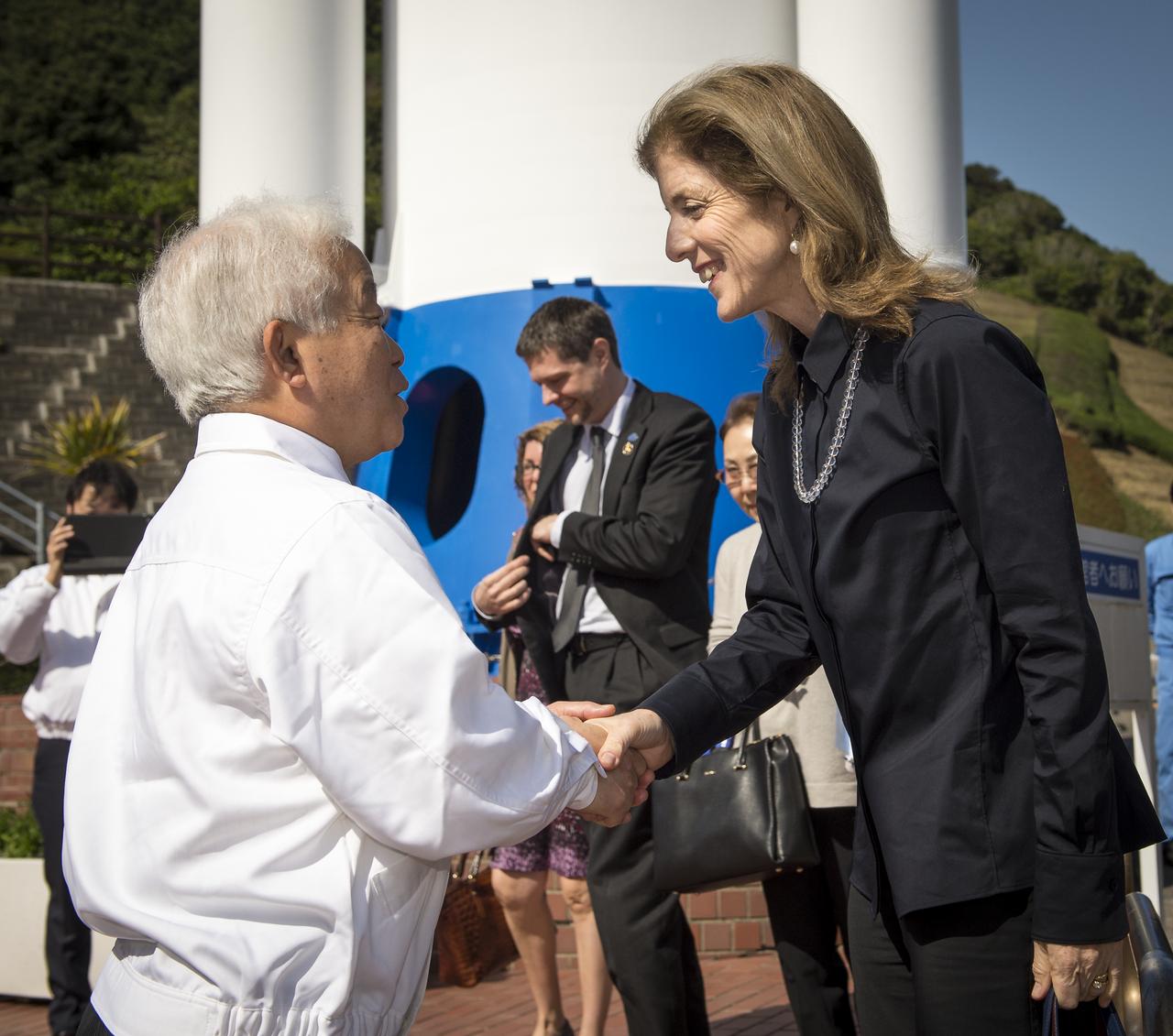
Caroline Kennedy, U.S. Ambassador Extraordinary and Plenipotentiary to Japan, right, is welcomed by Japan Aerospace Exploration Agency (JAXA), President, Naoki Okumura, at the Tanegashima Space Center Visitors Center on Thursday, Feb. 27, 2014, Tanegashima, Japan. The Ambassador is visiting the space center and hopes to witness the planned launch of a Japanese H-IIA rocket carrying the NASA-JAXA, Global Precipitation Measurement (GPM) Core Observatory. Once launched, the GPM spacecraft will collect information that unifies data from an international network of existing and future satellites to map global rainfall and snowfall every three hours. Photo Credit: (NASA/Bill Ingalls)
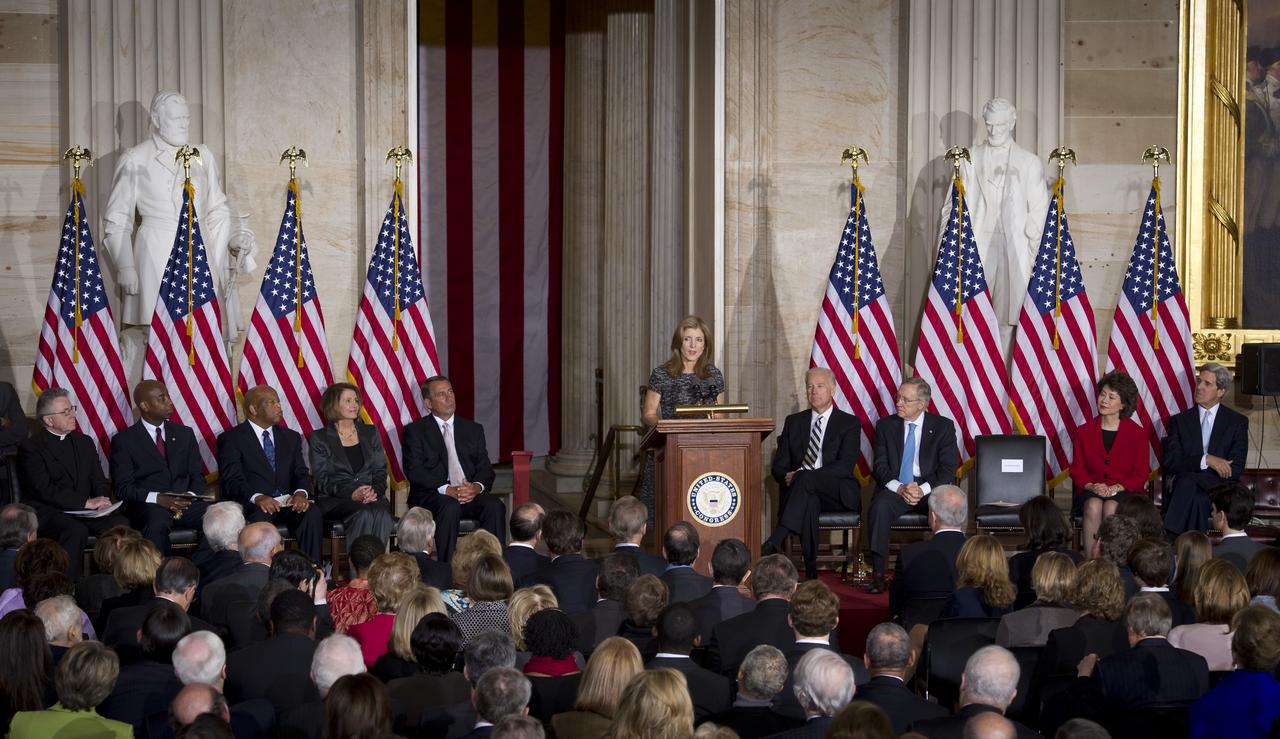
Caroline Kennedy speaks at an event recognizing the 50th anniversary of the inauguration of John F. Kennedy as President of the United States, Thursday, Jan. 20, 2011 in the rotunda at the U.S. Capitol. Also participating in the event, seated from left, Reverend Daniel P. Coughlin, Dr. Barry Black, U.S. Congressman John Lewis (D-GA), U.S. House Minority Leader Nancy Pelosi (D-CA), House Speaker John Boehner (R-OH), U.S. Vice President Joe Biden, Senate Majority Leader Harry Reid (D-NV), former U.S. Labor Secretary Elaine Chao, and U.S. Senator John Kerry (D-MA). Photo Credit: (NASA/Bill Ingalls)
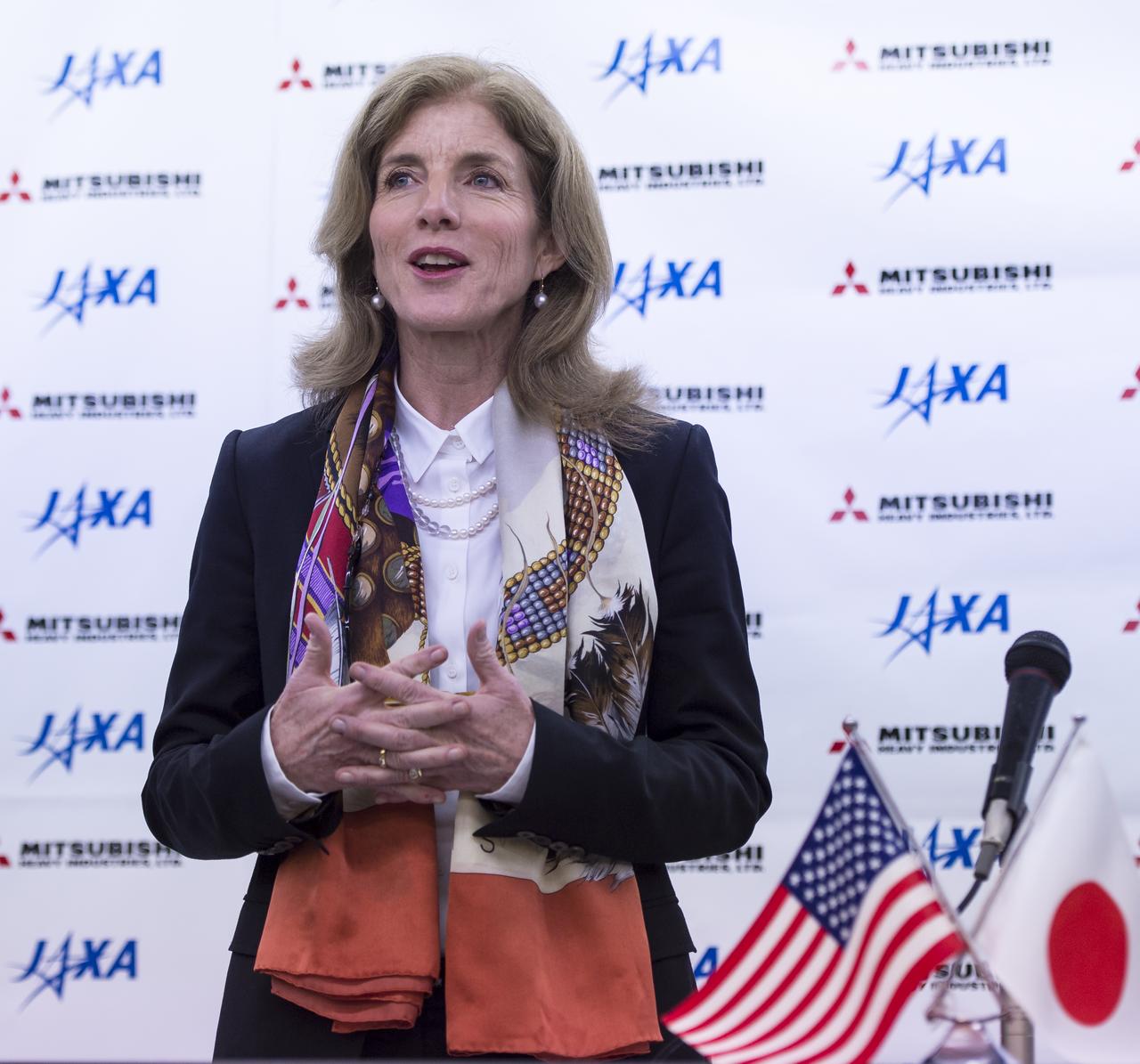
Caroline Kennedy, U.S. Ambassador Extraordinary and Plenipotentiary to Japan, congratulated both NASA and the Japan Aerospace Exploration Agency (JAXA) Global Precipitation Measurement (GPM) Core Observatory teams and noted it was an example of over 40 years of strong U.S. and Japan relations, Friday Feb. 28, 2014, Tanegashima Space Center (TNSC) Tanegashima, Japan. The Ambassador witnessed the launch of a Japanese H-IIA rocket carrying the NASA-JAXA, GPM Core Observatory. The GPM spacecraft will collect information that unifies data from an international network of existing and future satellites to map global rainfall and snowfall every three hours. Photo Credit: (NASA/Bill Ingalls)

Caroline Bouvier Kennedy, U.S. Ambassador Extraordinary and Plenipotentiary to Japan, center, tours the Tanegashima Space Center, Visitors Center with Japan Aerospace Exploration Agency (JAXA), President, Naoki Okumura, right, on Thursday, Feb. 27, 2014, Tanegashima, Japan. The Ambassador visiting the space center and hopes to witness the planned launch of a Japanese H-IIA rocket carrying the NASA-JAXA, Global Precipitation Measurement (GPM) Core Observatory. Once launched, the GPM spacecraft will collect information that unifies data from an international network of existing and future satellites to map global rainfall and snowfall every three hours. Photo Credit: (NASA/Bill Ingalls)

Caroline Bouvier Kennedy, U.S. Ambassador Extraordinary and Plenipotentiary to Japan, right, is welcomed by Japan Aerospace Exploration Agency (JAXA), President, Naoki Okumura, at the Tanegashima Space Center Visitors Center on Thursday, Feb. 27, 2014, Tanegashima, Japan. The Ambassador is visiting the space center and hopes to witness the planned launch of a Japanese H-IIA rocket carrying the NASA-JAXA, Global Precipitation Measurement (GPM) Core Observatory. Once launched, the GPM spacecraft will collect information that unifies data from an international network of existing and future satellites to map global rainfall and snowfall every three hours. Photo Credit: (NASA/Bill Ingalls)
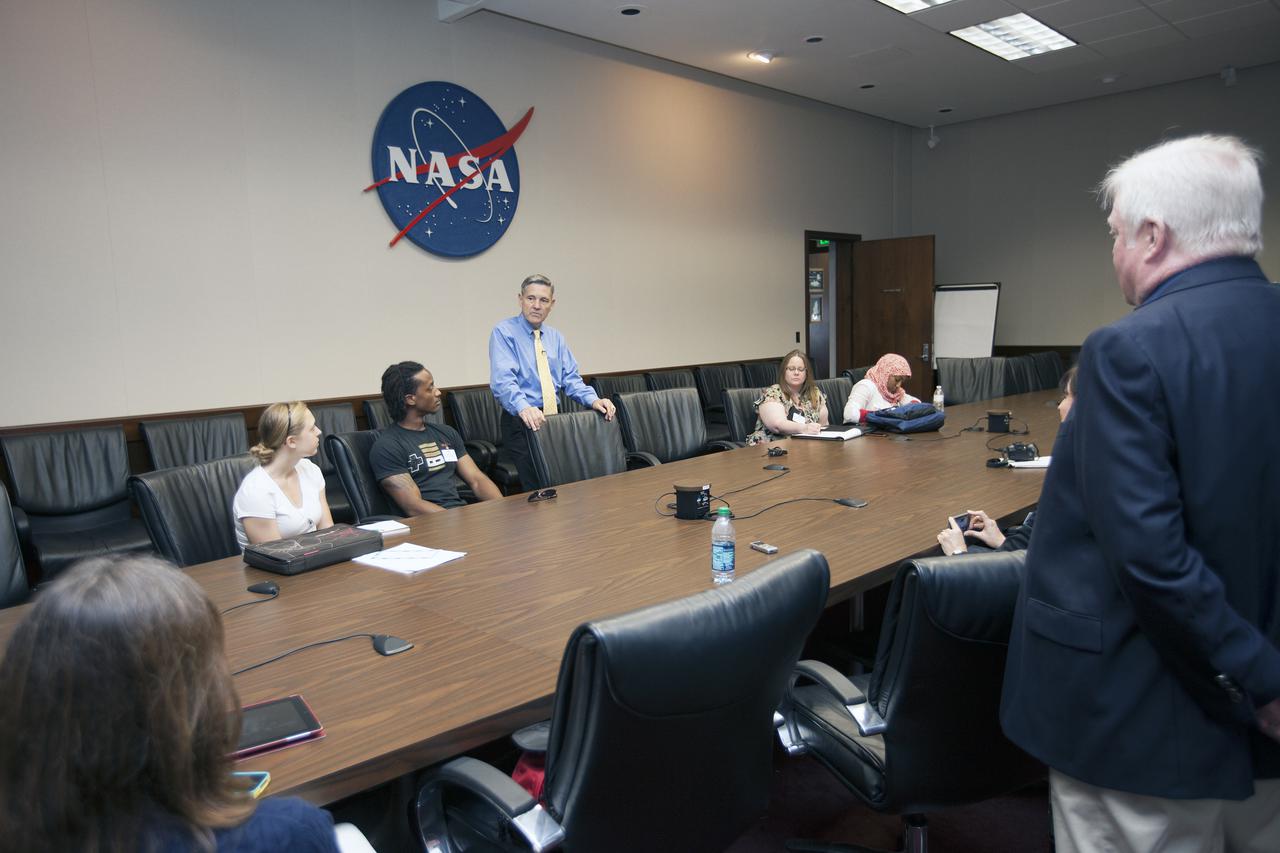
Kennedy Center Director Bob Cabana, standing left, addresses nine Florida Institute of Technology aspiring journalists at NASA's Kennedy Space Center Headquarters Building in Florida on May 22. Cabana talked about NASA's goals for the future and his own experience in space, answering questions about health effects of spaceflight. The journalists, in collaboration with Florida Today, are working on a multimedia project that examines health in zero gravity and how life in space can help people live better on Earth. At right are Florida Today videographer Caroline Perez and reporter Todd Halverson These multimedia stories will be published for the print and online versions of Florida Today. During their visit, the journalists interviewed astronaut and Expedition 35 flight engineer Chris Cassidy during an International Space Station downlink, after which they worked on multimedia deadline news assignments at the Press Site. The journalists toured the Vehicle Assembly Building and the Apollo Saturn V Center. Learn about the Florida Institute of Technology journalists' findings on their Facebook page at http:__www.facebook.com_FT3atFIT or Twitter at #SpaceHealth. Photo credit: NASA_Kim Shiflett
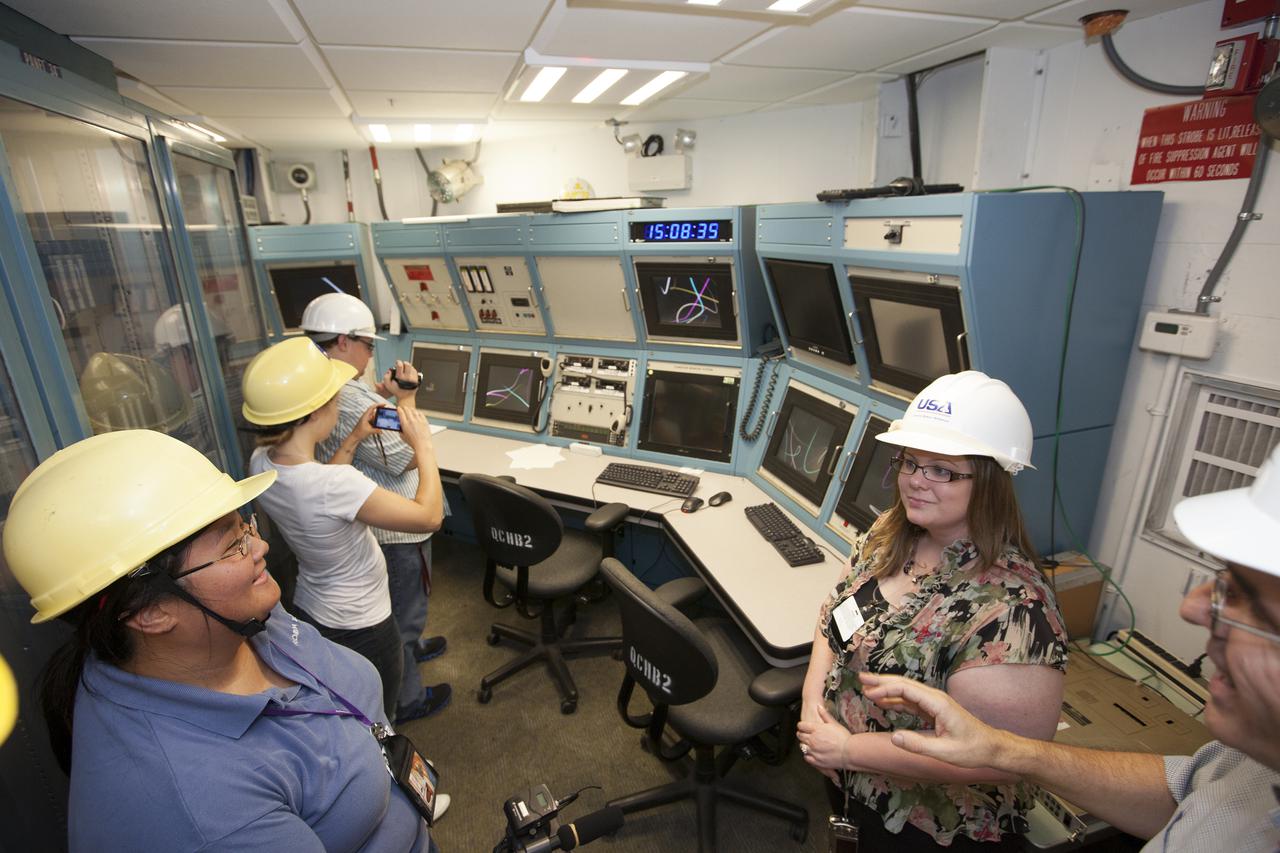
CAPE CANAVERAL, Fla. – A group of nine Florida Institute of Technology aspiring journalists observe the interior of the mobile launcher inside the Vehicle Assembly Building, or VAB, at NASA's Kennedy Space Center in Florida on May 22. The group of students, in collaboration with Florida Today, is working on a multimedia project that examines health in zero gravity and how life in space can help people live better on Earth. These multimedia stories will be published for the print and online versions of Florida Today. At left is Florida Today videographer Caroline Perez. During their visit, the students interviewed astronaut and Expedition 35 flight engineer Chris Cassidy during an International Space Station downlink in the Press Site auditorium. The journalists also met with Kennedy Director Bob Cabana who talked about NASA's goals for the future and his own experience in space, answering questions about health effects of spaceflight. The journalists also toured the Apollo Saturn V Center. Learn about the Florida Institute of Technology journalists' findings on their Facebook page at http:__www.facebook.com_FT3atFIT or Twitter at #SpaceHealth. Photo credit: Photo credit: NASA_Kim Shiflett
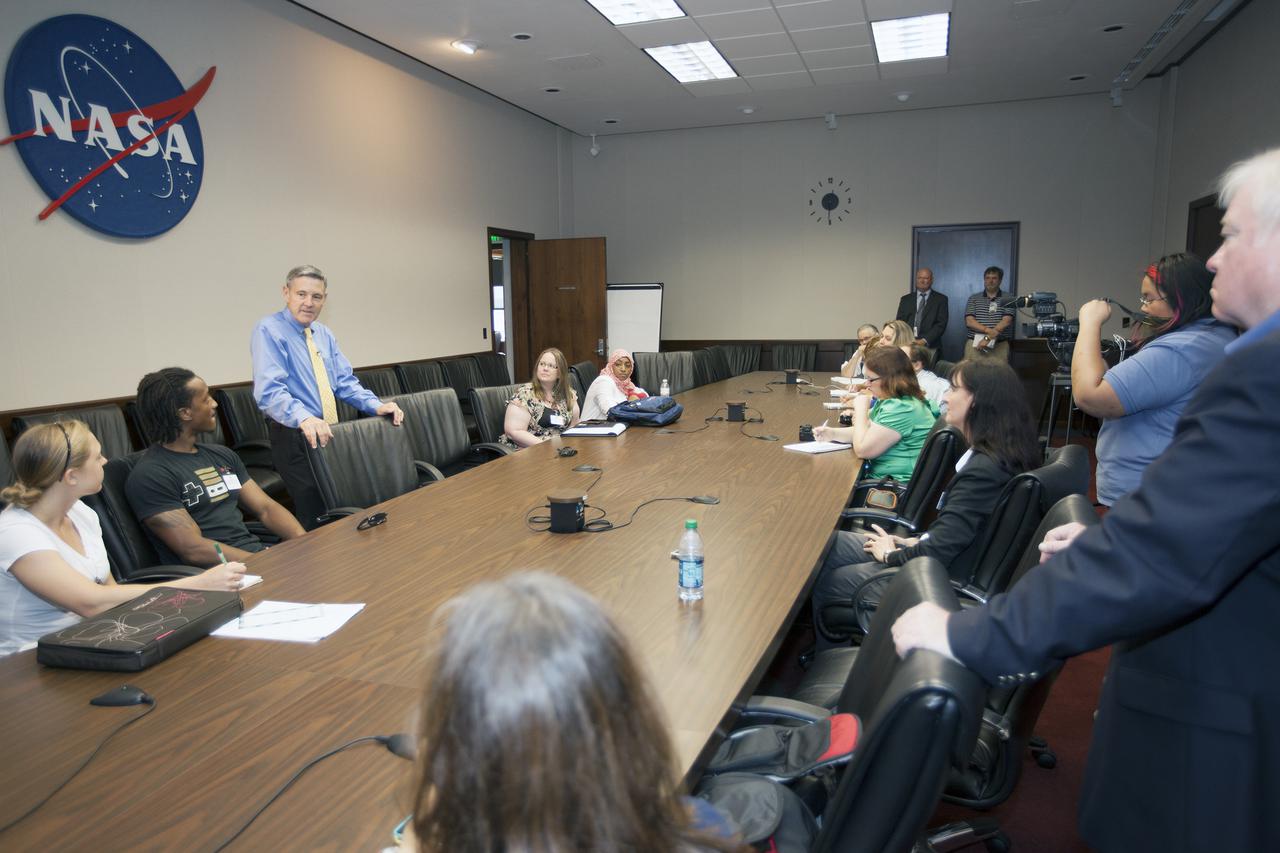
Kennedy Center Director Bob Cabana, standing left, addresses nine Florida Institute of Technology aspiring journalists at NASA's Kennedy Space Center Headquarters Building in Florida on May 22. Cabana talked about NASA's goals for the future and his own experience in space, answering questions about health effects of spaceflight. The journalists, in collaboration with Florida Today, are working on a multimedia project that examines health in zero gravity and how life in space can help people live better on Earth. At right are Florida Today videographer Caroline Perez and reporter Todd Halverson These multimedia stories will be published for the print and online versions of Florida Today. During their visit, the journalists interviewed astronaut and Expedition 35 flight engineer Chris Cassidy during an International Space Station downlink, after which they worked on multimedia deadline news assignments at the Press Site. The journalists toured the Vehicle Assembly Building and the Apollo Saturn V Center. Learn about the Florida Institute of Technology journalists' findings on their Facebook page at http:__www.facebook.com_FT3atFIT or Twitter at #SpaceHealth. Photo credit: NASA_Kim Shiflett
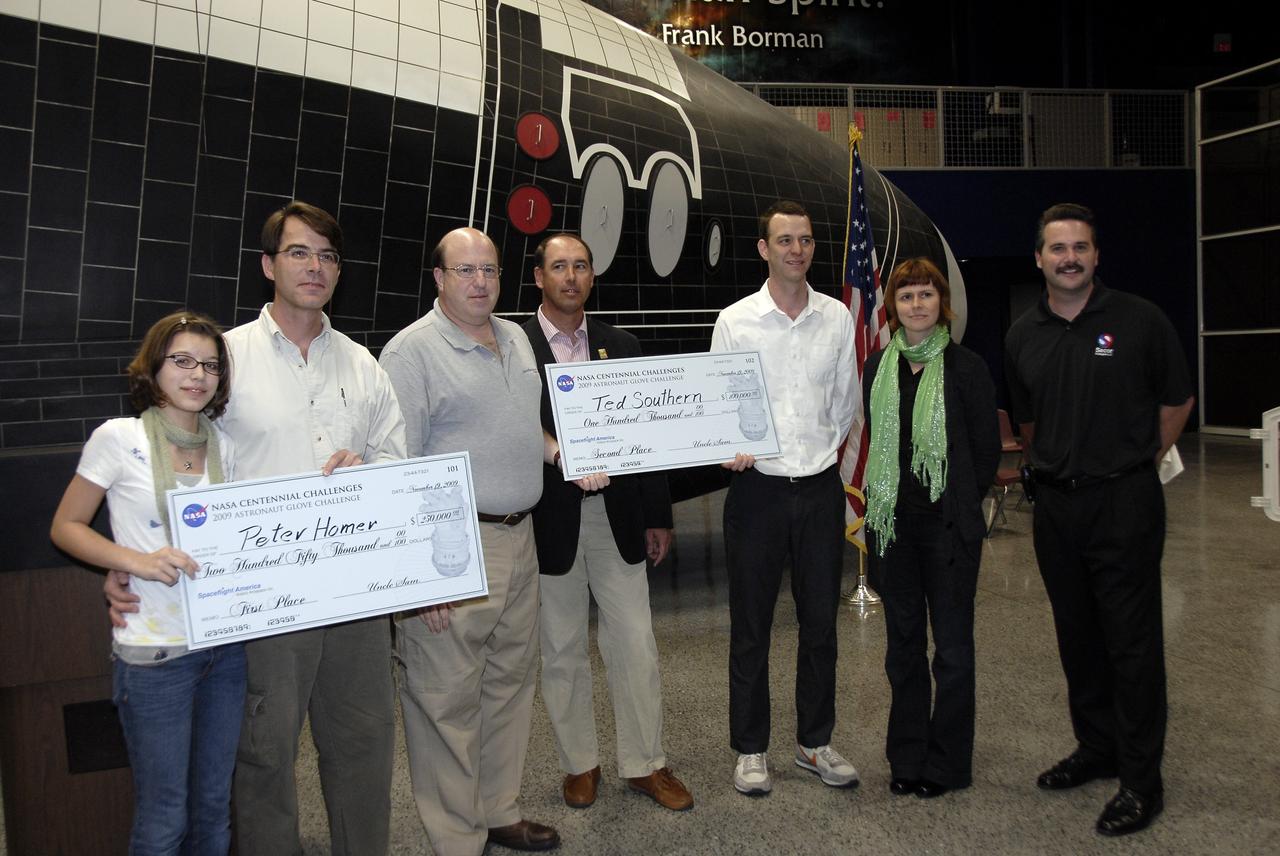
CAPE CANAVERAL, Fla. - At the Astronaut Hall of Fame near NASA’s Kennedy Space Center in Florida, the winners of the 2009 Astronaut Glove Challenge, part of NASA’s Centennial Challenges Program, pose for a group photograph with their friends, family and the event organizers. From left are Caroline Homer and her father, Peter Homer, winner of the $250,000 first prize; Alan Hayes, chairman of Volanz Aerospace Inc.; Andy Petro, manager of NASA Centennial Challenges; Ted Southern, winner of the $100,000 second prize; his friend and glove tester Amy Miller; and Paul Secor, Secor Strategies LLC. The nationwide competition focused on developing improved pressure suit gloves for astronauts to use while working in space. During the challenge, the gloves were submitted to burst tests, joint force tests and tests to measure their dexterity and strength during operation in a glove box which simulates the vacuum of space. Centennial Challenges is NASA’s program of technology prizes for the citizen-inventor. The winning prize for the Glove Challenge is $250,000 provided by the Centennial Challenges Program. Photo credit: NASA/Kim Shiflett