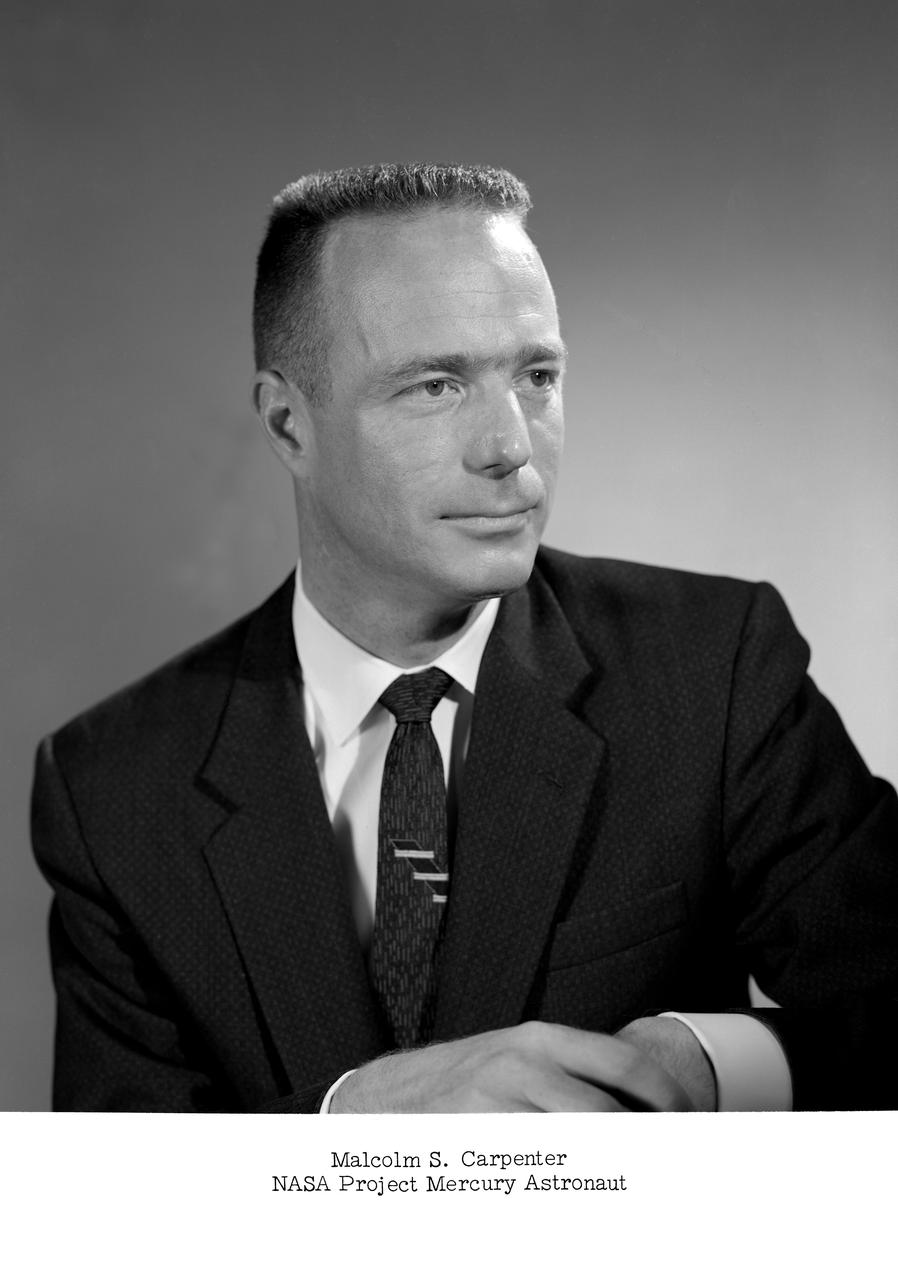
NASA Project Mercury astronaut. -- Carpenter was later known as M. Scott Carpenter.
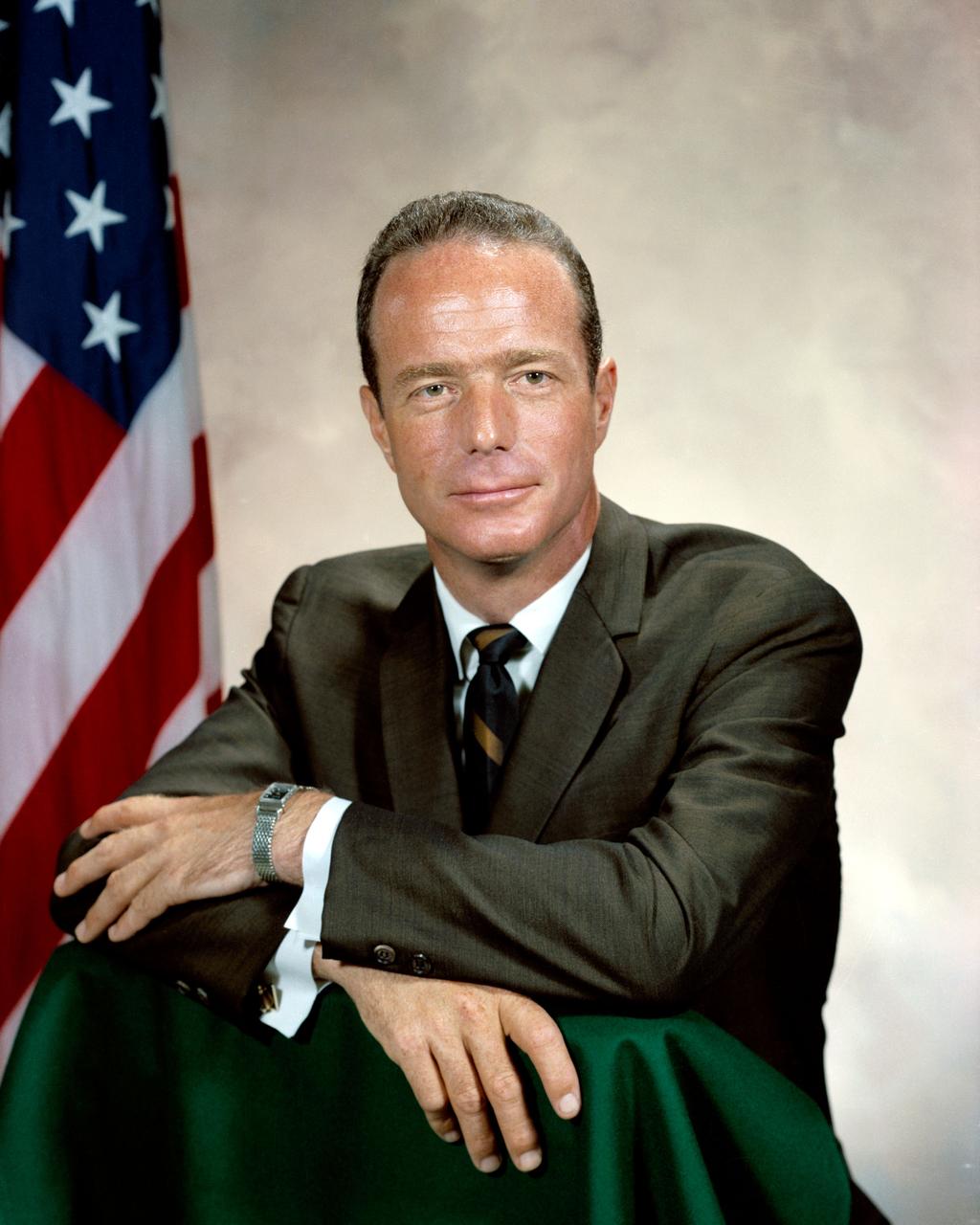
S64-34357 (22 Oct. 1964) --- Astronaut M. Scott Carpenter. NOTE: Commander M. Scott Carpenter, USN, resigned September 1967, and transferred to the U.S. Navy Project Sealab.
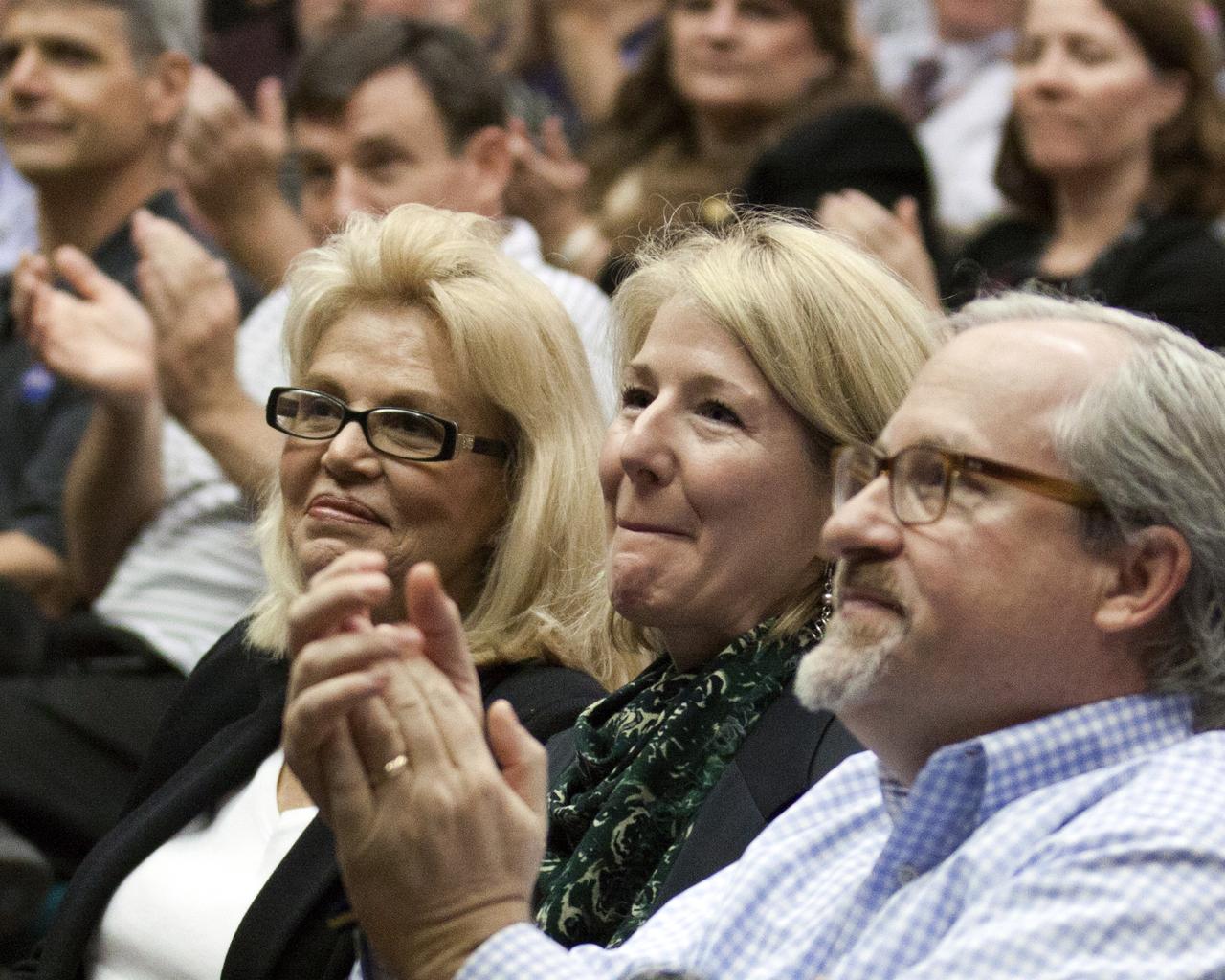
CAPE CANAVERAL, Fla. -- Mercury astronaut Scott Carpenter's wife, Patricia Carpenter, left, and children listen during the "50 Years of Americans in Orbit" presentation for employees at NASA's Kennedy Space Center in Florida. John Glenn and fellow Mercury astronaut Scott Carpenter were joined by NASA Administrator Charles Bolden and Center Director Bob Cabana on stage in Kennedy's training auditorium. This year marks 50 years since Glenn and Carpenter became the first two Americans to orbit Earth. Photo credit: NASA/Kim Shiflett
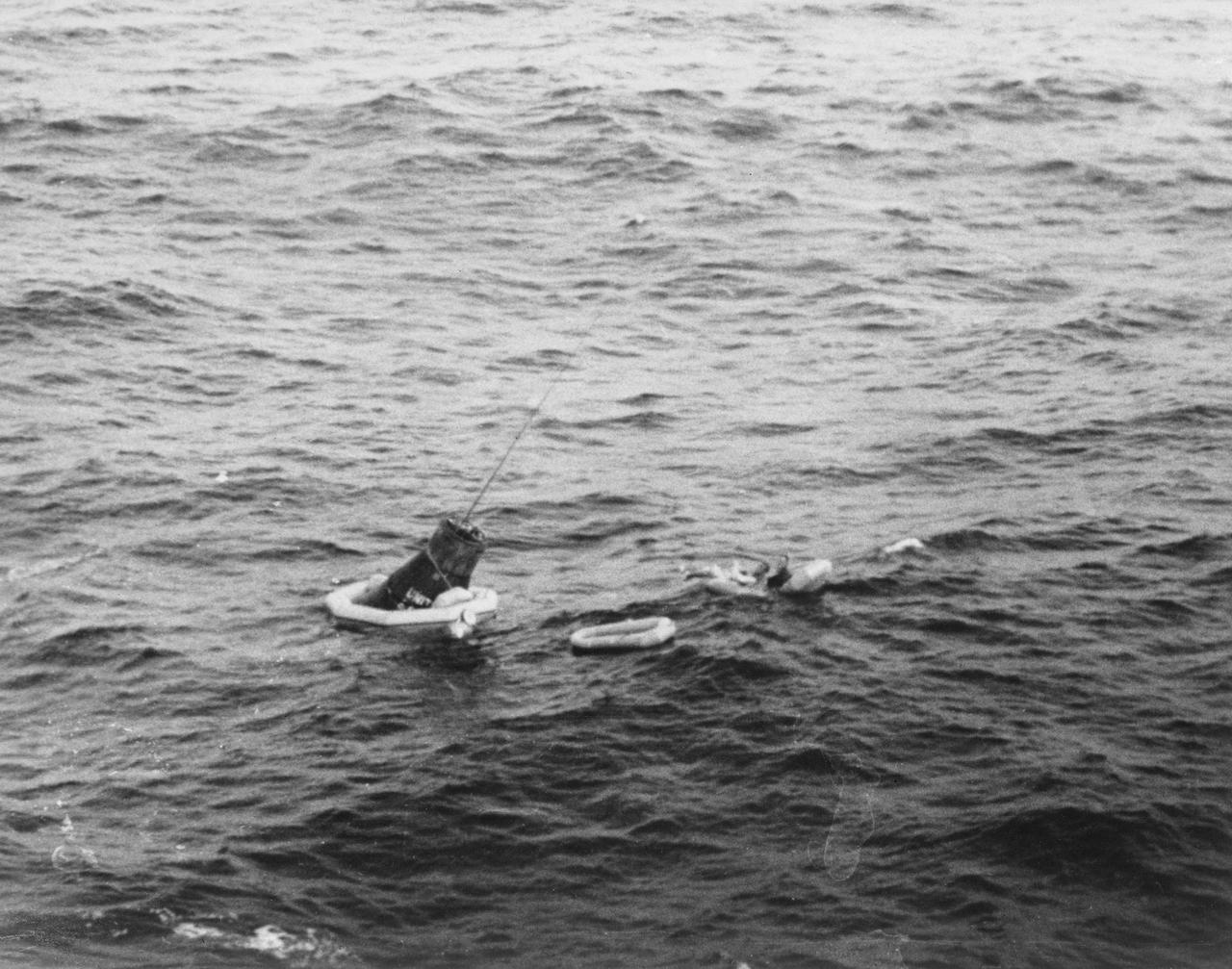
S62-04065 (24 May 1962) --- Astronaut M. Scott Carpenter, prime pilot for the Mercury-Atlas 7 (MA-7) mission, is seen being recovered from the Atlantic Ocean after MA-7 flight. A diver helps Carpenter into a life raft while the capsule floats nearby. Photo credit: NASA
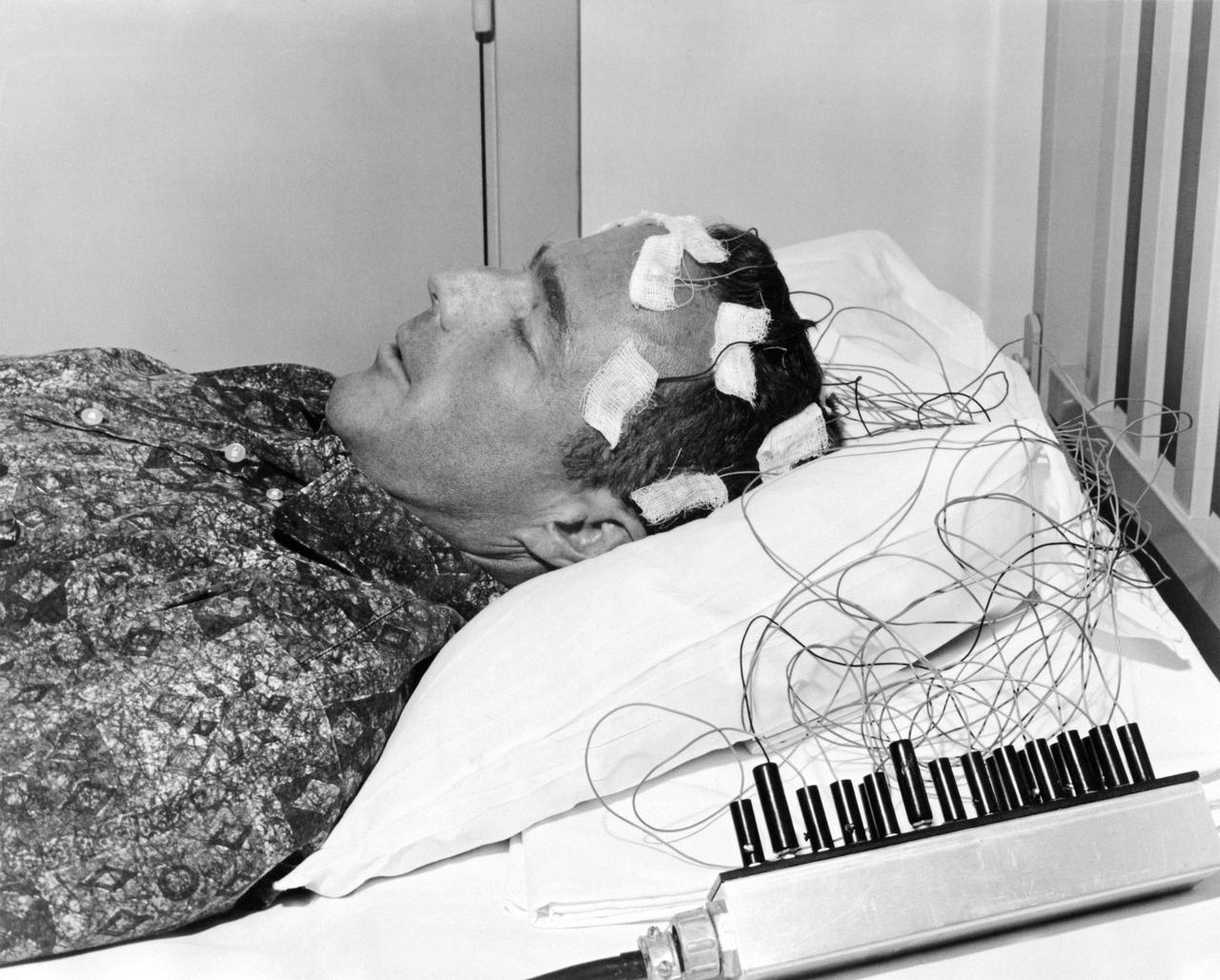
S62-04074 (1962) --- Mercury astronaut M. Scott Carpenter lies on a bed with biosensors attached to his head during astronaut training activities at Cape Canaveral, Florida. Photo credit: NASA
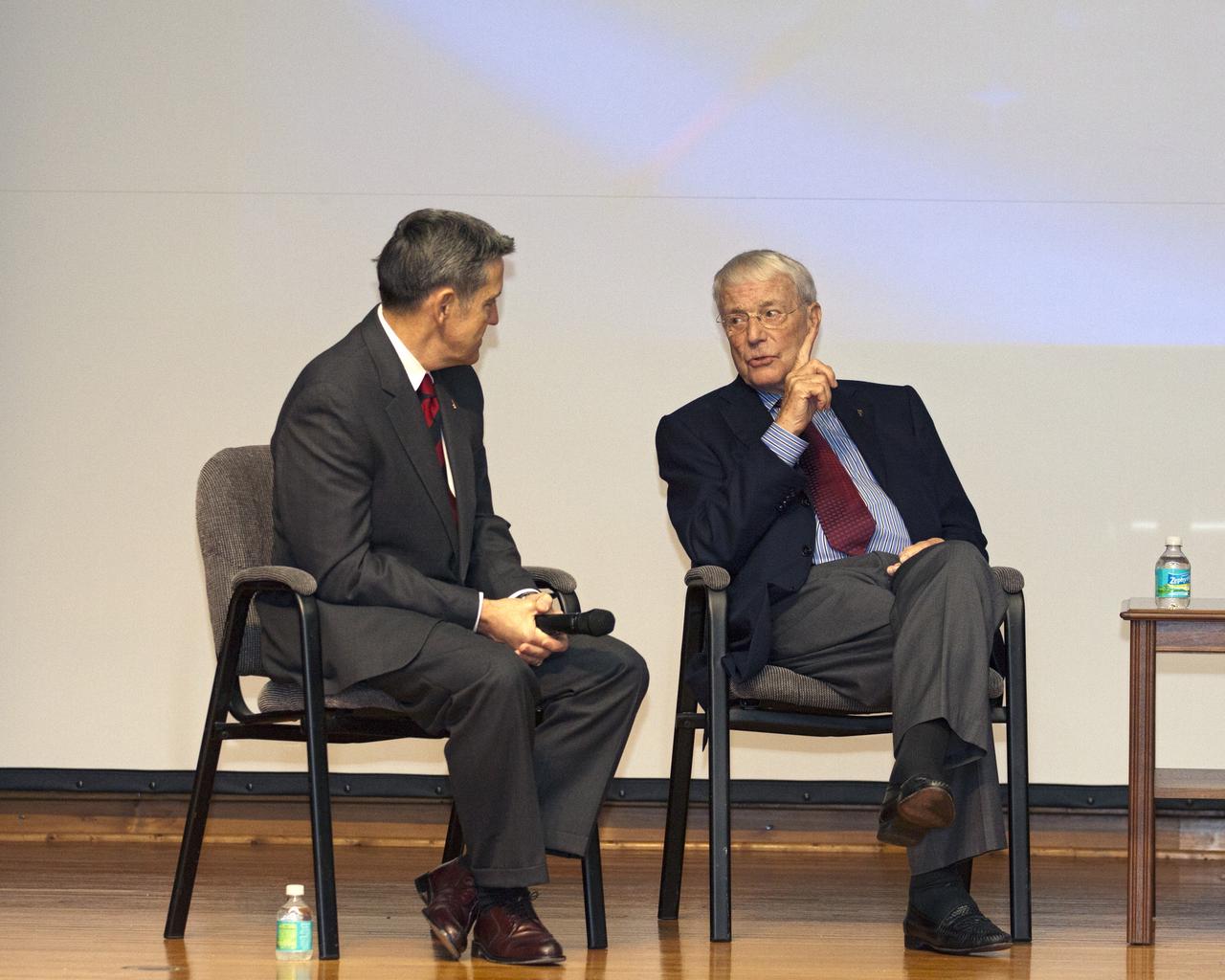
CAPE CANAVERAL, Fla. -- Mercury astronaut Scott Carpenter talks to Bob Cabana, director of NASA's Kennedy Space Center in Florida, during the "50 Years of Americans in Orbit" presentation for employees at NASA's Kennedy Space Center in Florida. Mercury astronaut John Glenn and NASA Administrator Charles Bolden joined Carpenter and Cabana for the event. This year marks 50 years since Glenn and Carpenter became the first two Americans to orbit Earth. Photo credit: NASA/Kim Shiflett
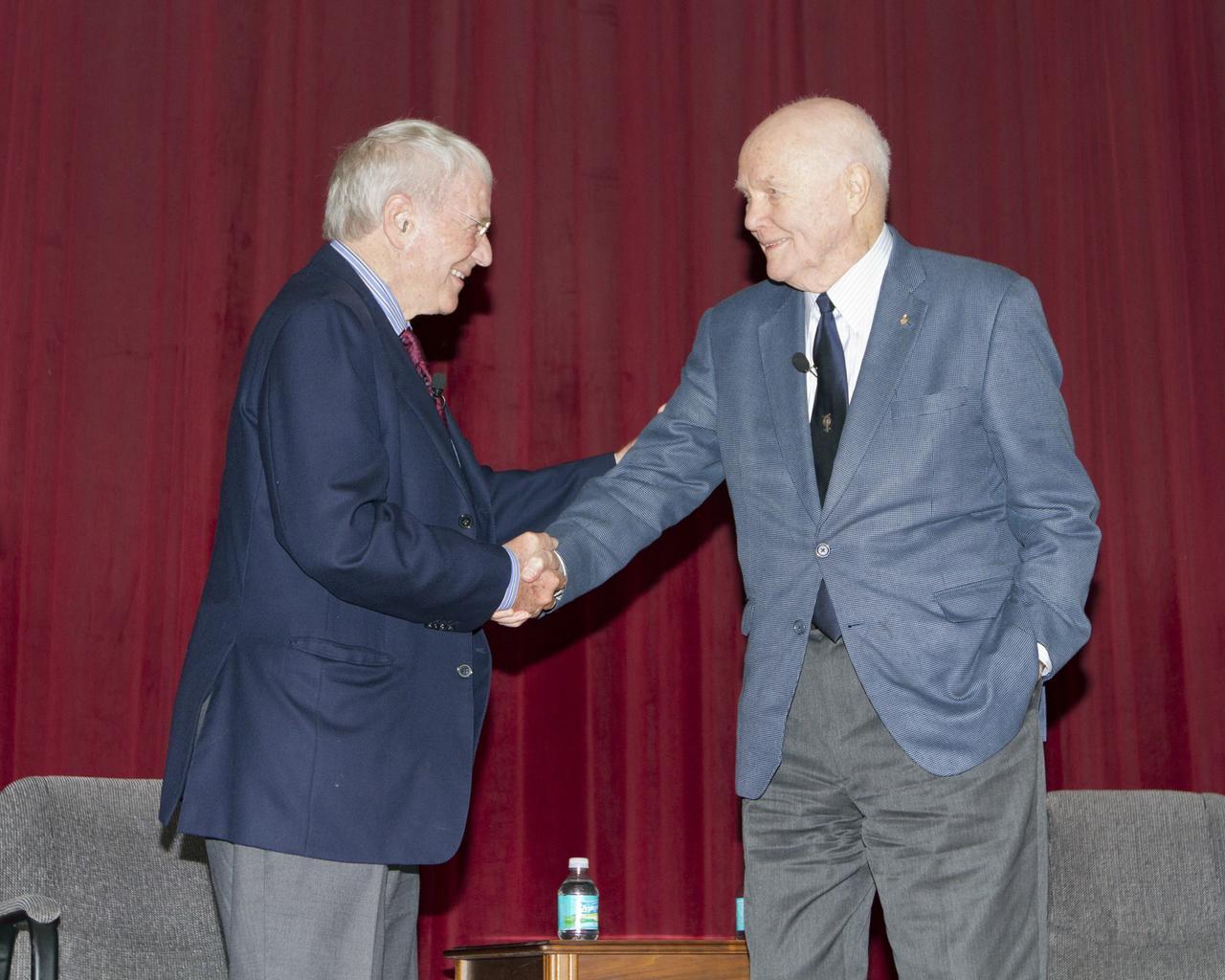
CAPE CANAVERAL, Fla. -- Mercury astronauts Scott Carpenter and John Glenn pause for a handshake at the conclusion of the "50 Years of Americans in Orbit" presentation for employees at NASA's Kennedy Space Center in Florida. NASA Administrator Charles Bolden and Center Director Bob Cabana joined Carpenter and Glenn for the event. This year marks 50 years since Glenn and Carpenter became the first two Americans to orbit Earth. Photo credit: NASA/Kim Shiflett
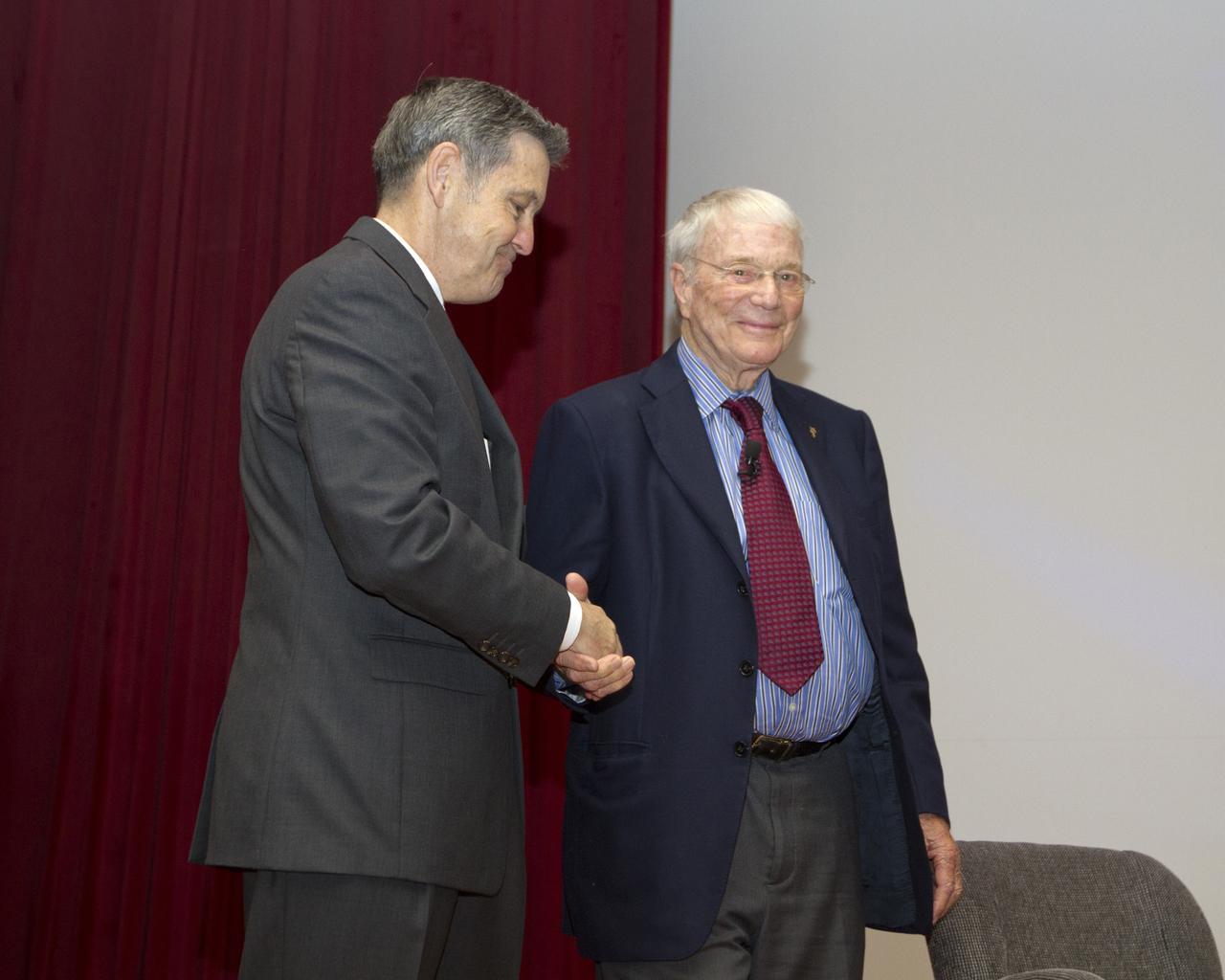
CAPE CANAVERAL, Fla. -- Bob Cabana, director of NASA's Kennedy Space Center in Florida, shakes the hand of Mercury astronaut Scott Carpenter at the "50 Years of Americans in Orbit" presentation for Kennedy employees. Mercury astronaut John Glenn and NASA Administrator Charles Bolden joined Carpenter and Cabana for the event. This year marks 50 years since Glenn and Carpenter became the first two Americans to orbit Earth. Photo credit: NASA/Kim Shiflett
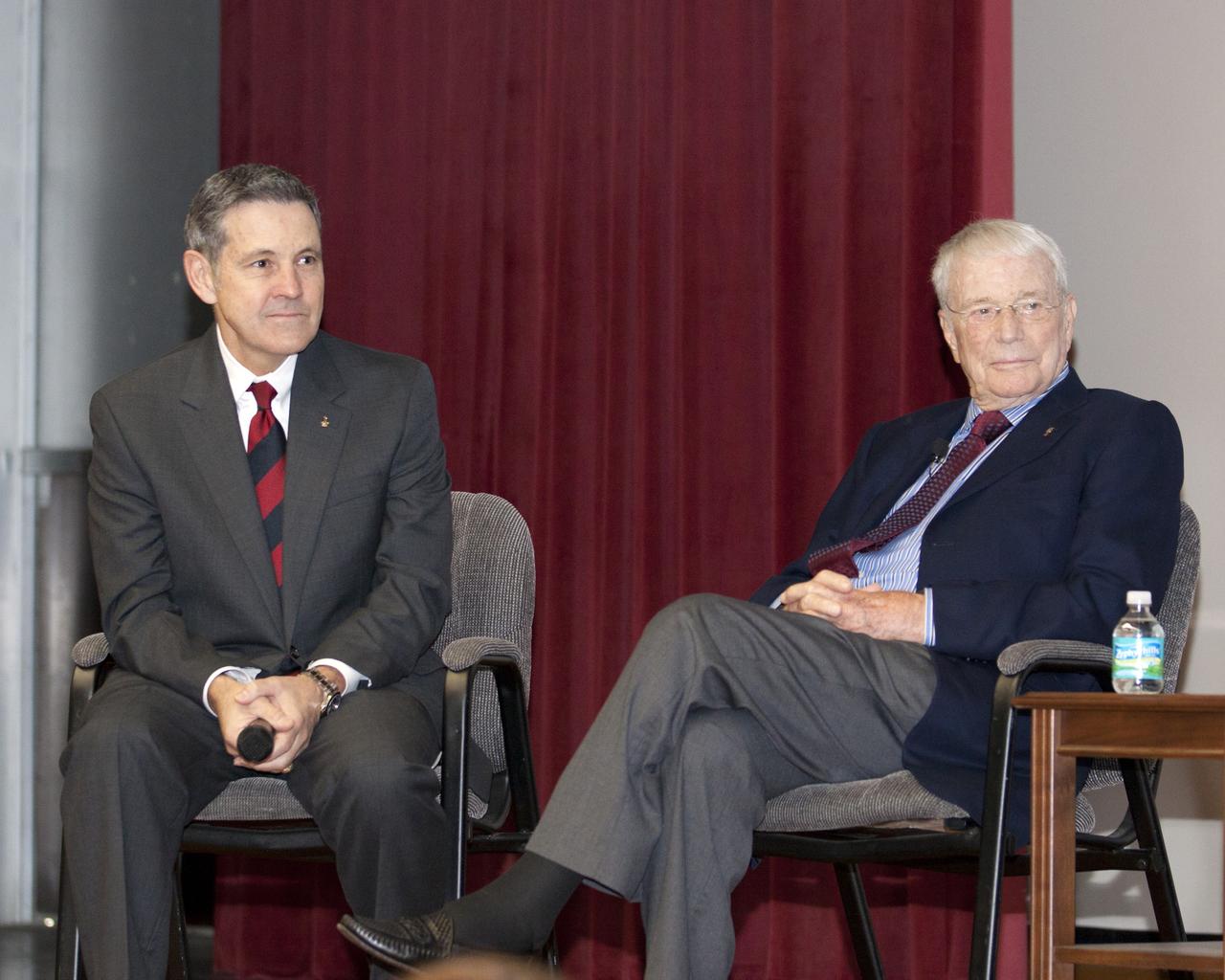
CAPE CANAVERAL, Fla. -- Bob Cabana, director of NASA's Kennedy Space Center in Florida, and Mercury astronaut Scott Carpenter share the stage during the "50 Years of Americans in Orbit" presentation for employees at NASA's Kennedy Space Center in Florida. Mercury astronaut John Glenn and NASA Administrator Charles Bolden joined Carpenter and Cabana for the event. This year marks 50 years since Glenn and Carpenter became the first two Americans to orbit Earth. Photo credit: NASA/Kim Shiflett
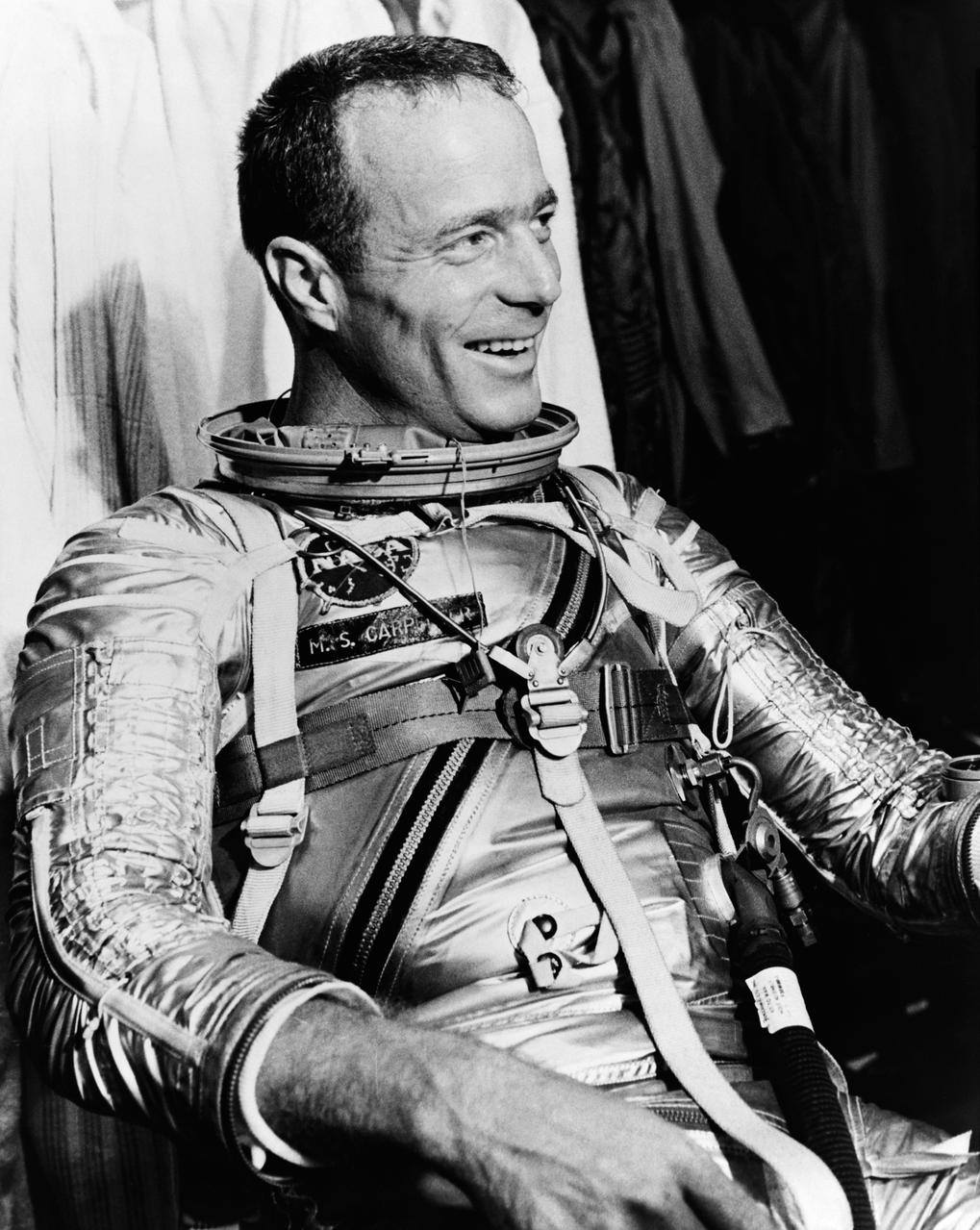
S61-03510 (1961) --- Project Mercury astronaut M. Scott Carpenter smiles, in his pressure suit, prior to participating in a simulated mission run at Cape Canaveral, Florida. Astronaut Carpenter has been selected as the prime pilot on the United States second attempt to put a man into orbit around Earth. Photo credit: NASA
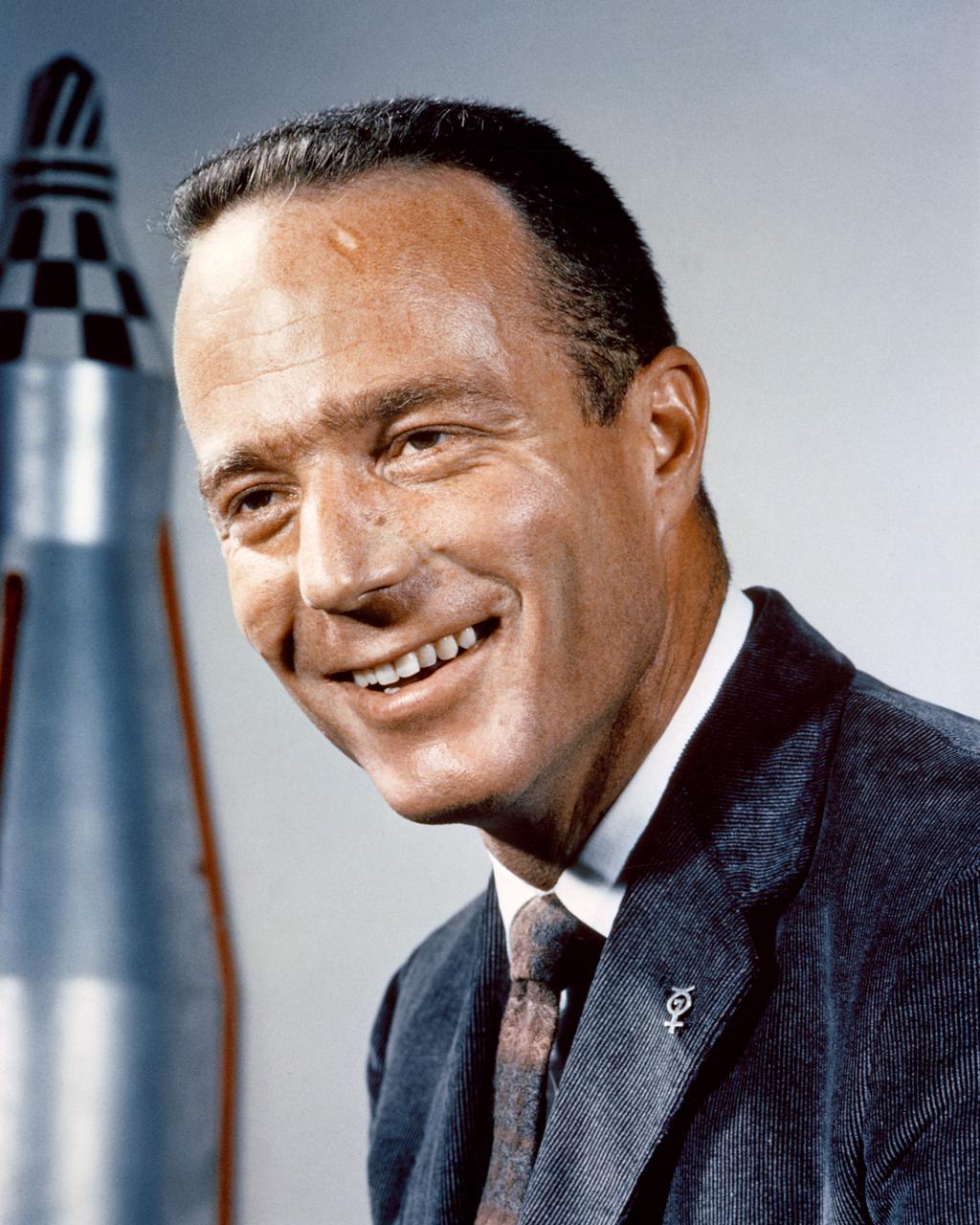
G60-02737 (May 1960) --- Astronaut M. Scott Carpenter. Photo credit: NASA
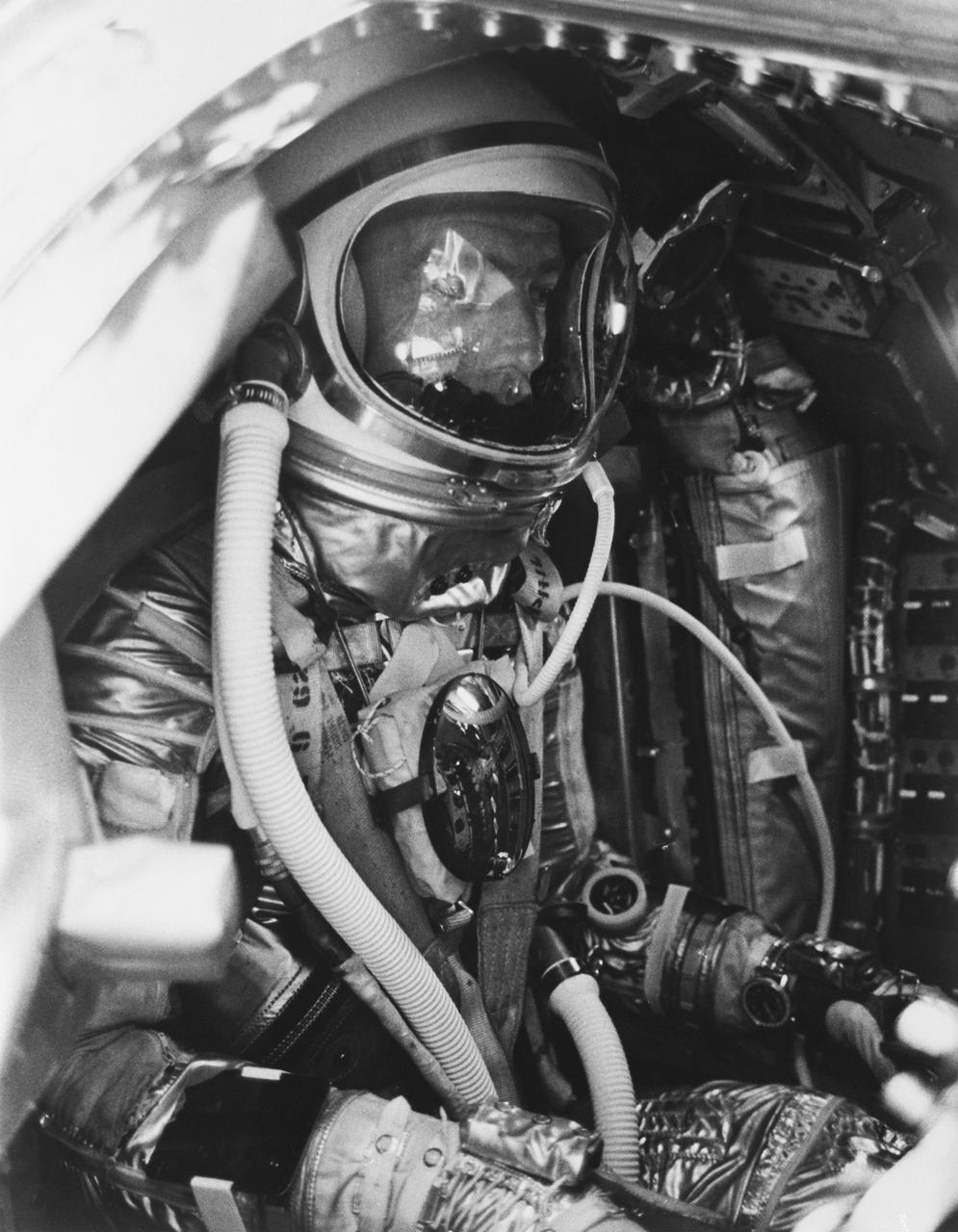
S62-04047 (24 May 1962) --- Close-up of astronaut M. Scott Carpenter inside his Aurora 7 spacecraft before the launch of the Mercury-Atlas 7 (MA-7) mission. Photo credit: NASA
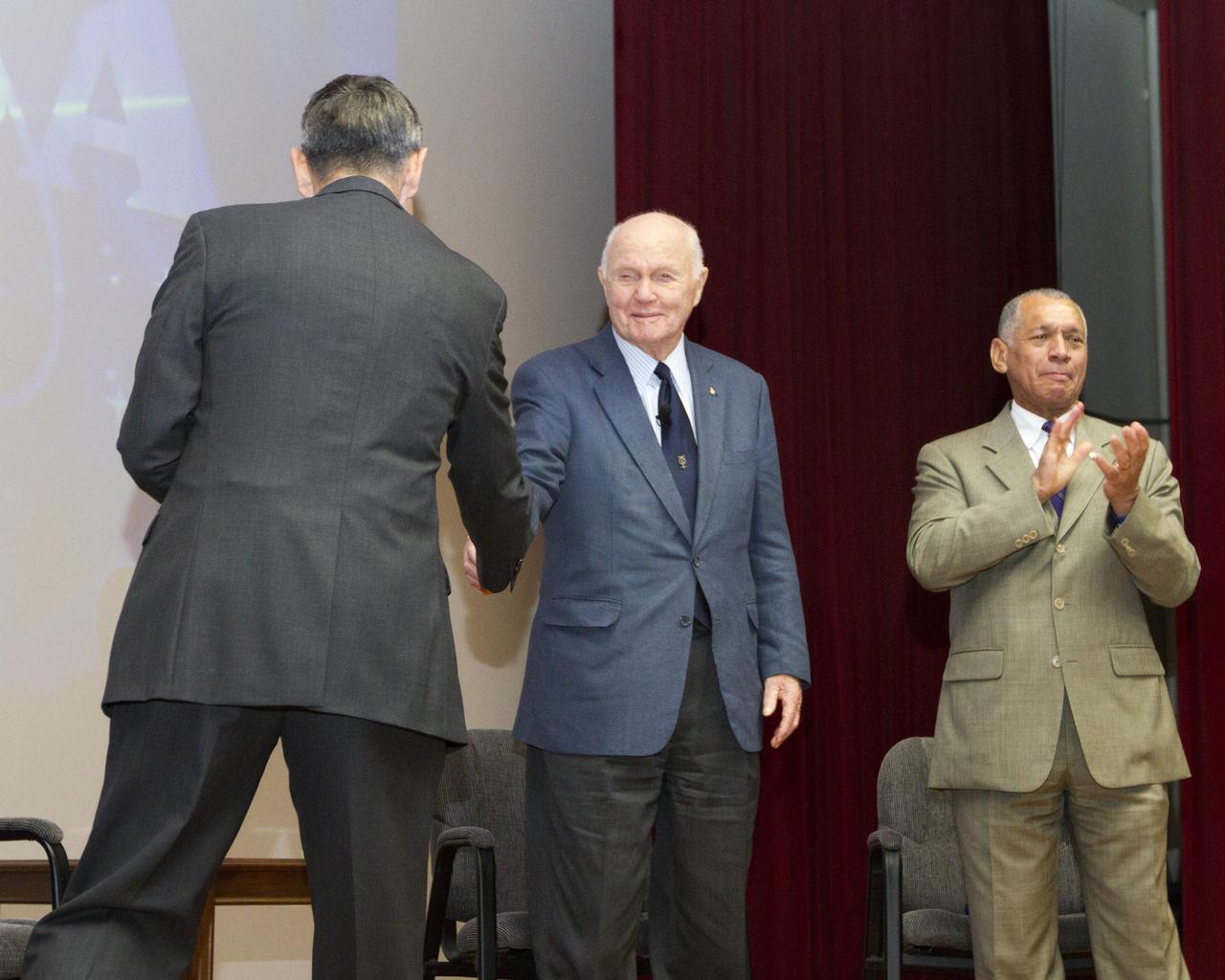
CAPE CANAVERAL, Fla. -- Bob Cabana, director of NASA's Kennedy Space Center in Florida, shakes the hand of Mercury astronaut John Glenn as NASA Administrator Charles Bolden applauds at the "50 Years of Americans in Orbit" presentation for Kennedy employees. Mercury astronaut Scott Carpenter joined Glenn, Bolden and Cabana for the event. This year marks 50 years since Glenn and Carpenter became the first two Americans to orbit Earth. Photo credit: NASA/Kim Shiflett

CAPE CANAVERAL, Fla. -- Annie Glenn, right, wife of Mercury astronaut John Glenn, and their children listen during the "50 Years of Americans in Orbit" presentation for employees at NASA's Kennedy Space Center in Florida. John Glenn and fellow Mercury astronaut Scott Carpenter were joined by NASA Administrator Charles Bolden and Center Director Bob Cabana on stage in Kennedy's training auditorium. This year marks 50 years since Glenn and Carpenter became the first two Americans to orbit Earth. Photo credit: NASA/Kim Shiflett
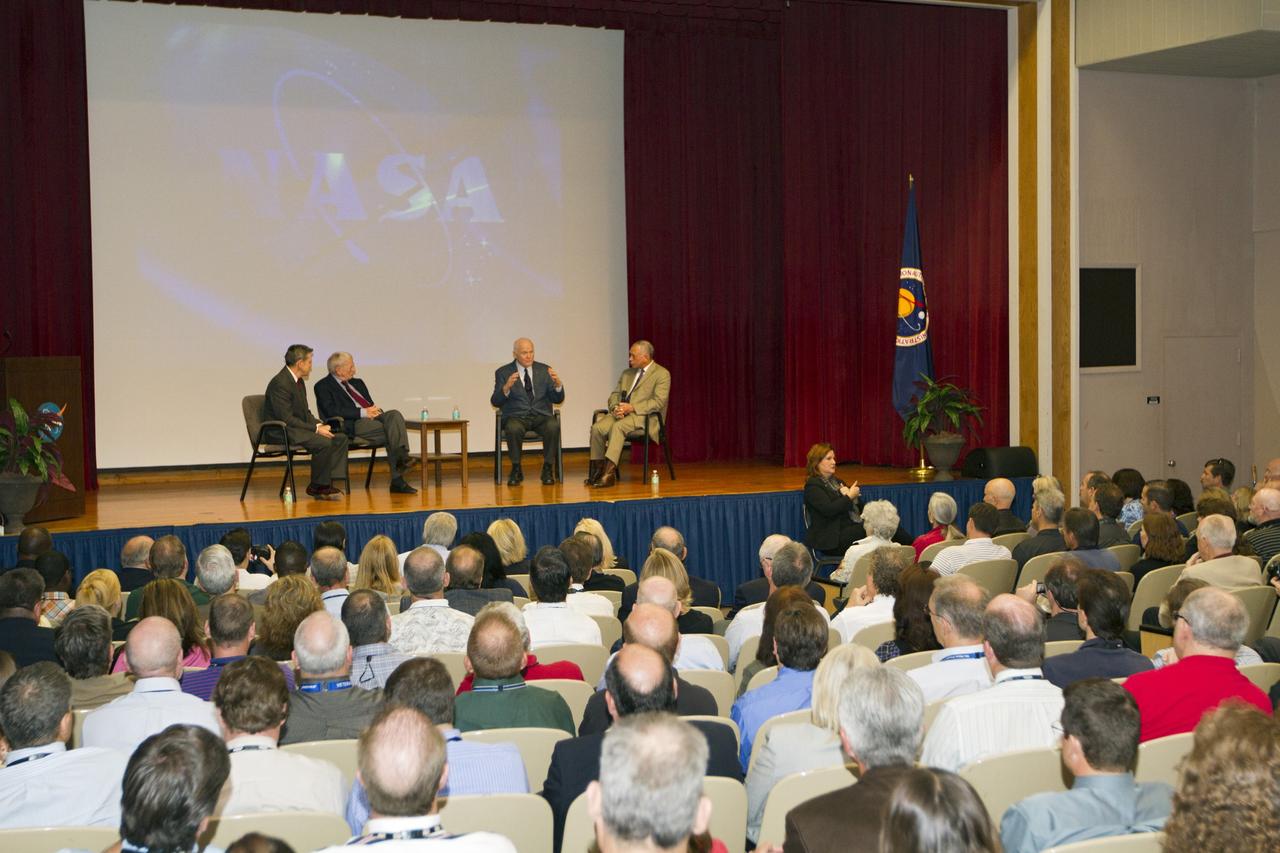
CAPE CANAVERAL, Fla. -- Employees at NASA's Kennedy Space Center in Florida listen as Center Director Bob Cabana, Mercury astronauts Scott Carpenter and John Glenn, and NASA Administrator Charles Bolden share their spaceflight memories during the "50 Years of Americans in Orbit" presentation for employees. This year marks 50 years since Glenn and Carpenter became the first two Americans to orbit Earth. Photo credit: NASA/Kim Shiflett

CAPE CANAVERAL, Fla. -- Mercury astronauts Scott Carpenter and John Glenn shake hands with NASA Administrator Charles Bolden right and Bob Cabana, director of NASA's Kennedy Space Center in Florida left at the conclusion of the "50 Years of Americans in Orbit" presentation for Kennedy employees. This year marks 50 years since Glenn and Carpenter became the first two Americans to orbit Earth. Photo credit: NASA/Kim Shiflett
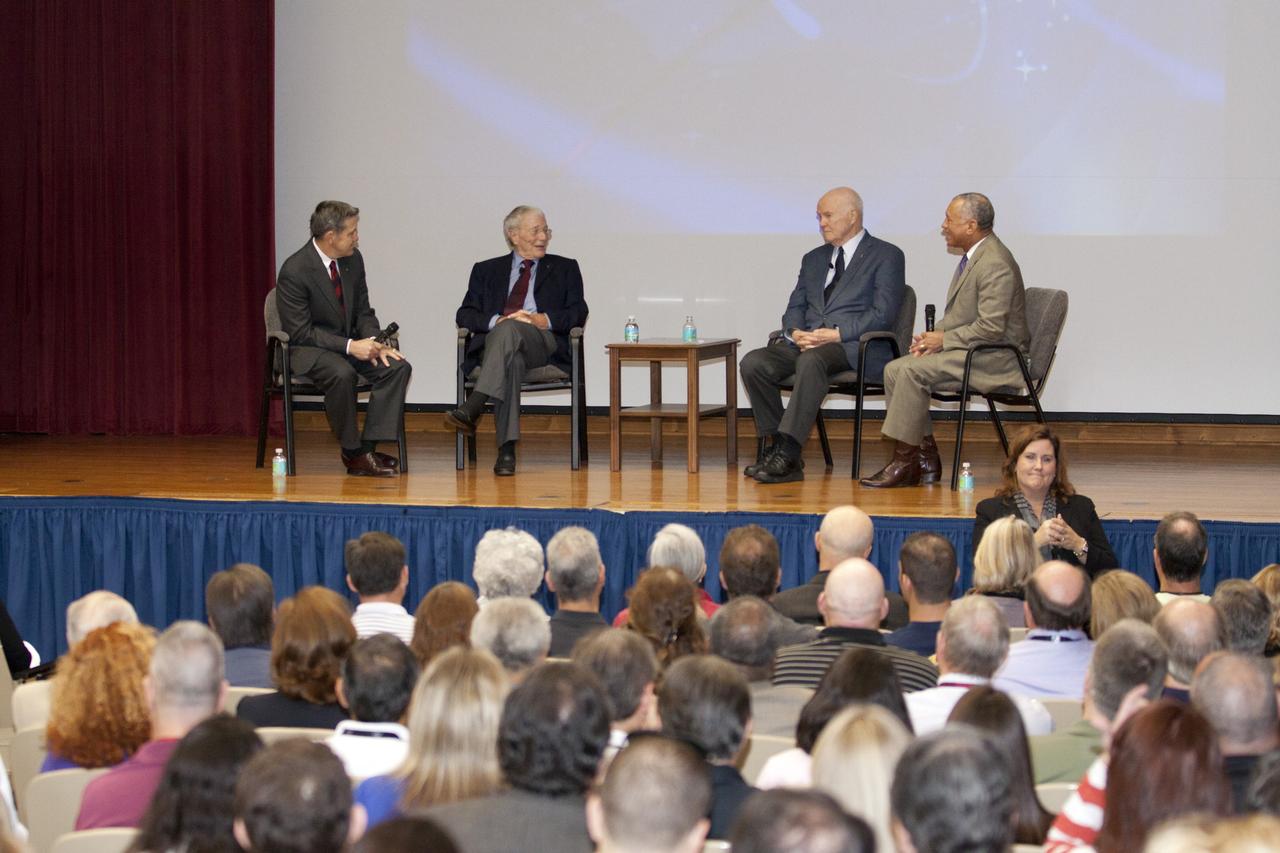
CAPE CANAVERAL, Fla. -- Employees at NASA's Kennedy Space Center in Florida listen as Center Director Bob Cabana, Mercury astronauts Scott Carpenter and John Glenn, and NASA Administrator Charles Bolden share their spaceflight memories during the "50 Years of Americans in Orbit" presentation for employees. This year marks 50 years since Glenn and Carpenter became the first two Americans to orbit Earth. Photo credit: NASA/Kim Shiflett
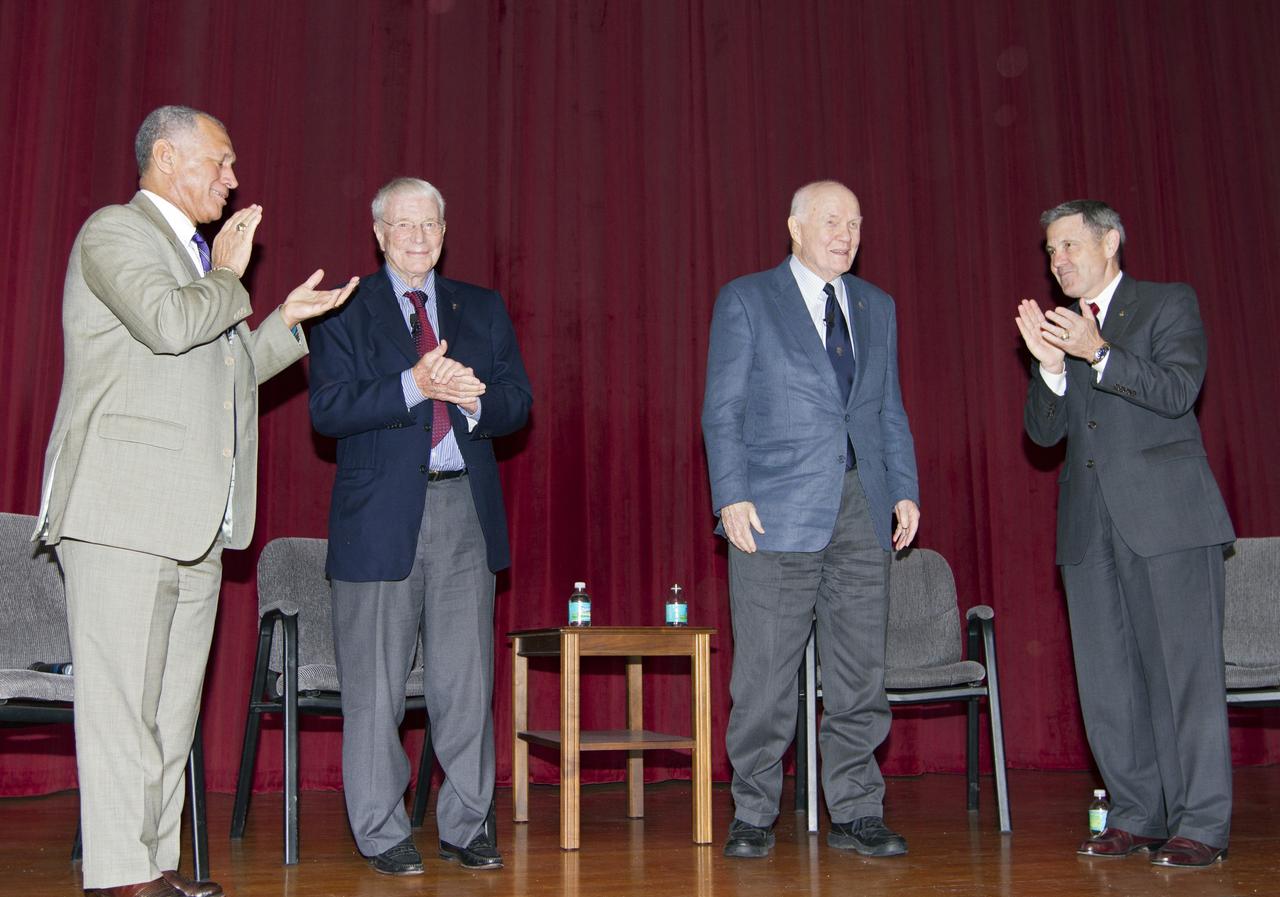
CAPE CANAVERAL, Fla. -- NASA Administrator Charles Bolden, Mercury astronauts Scott Carpenter and John Glenn, and Bob Cabana, director of NASA's Kennedy Space Center in Florida, stand for applause at the conclusion of the "50 Years of Americans in Orbit" presentation for Kennedy employees. This year marks 50 years since Glenn and Carpenter became the first two Americans to orbit Earth. Photo credit: NASA/Kim Shiflett
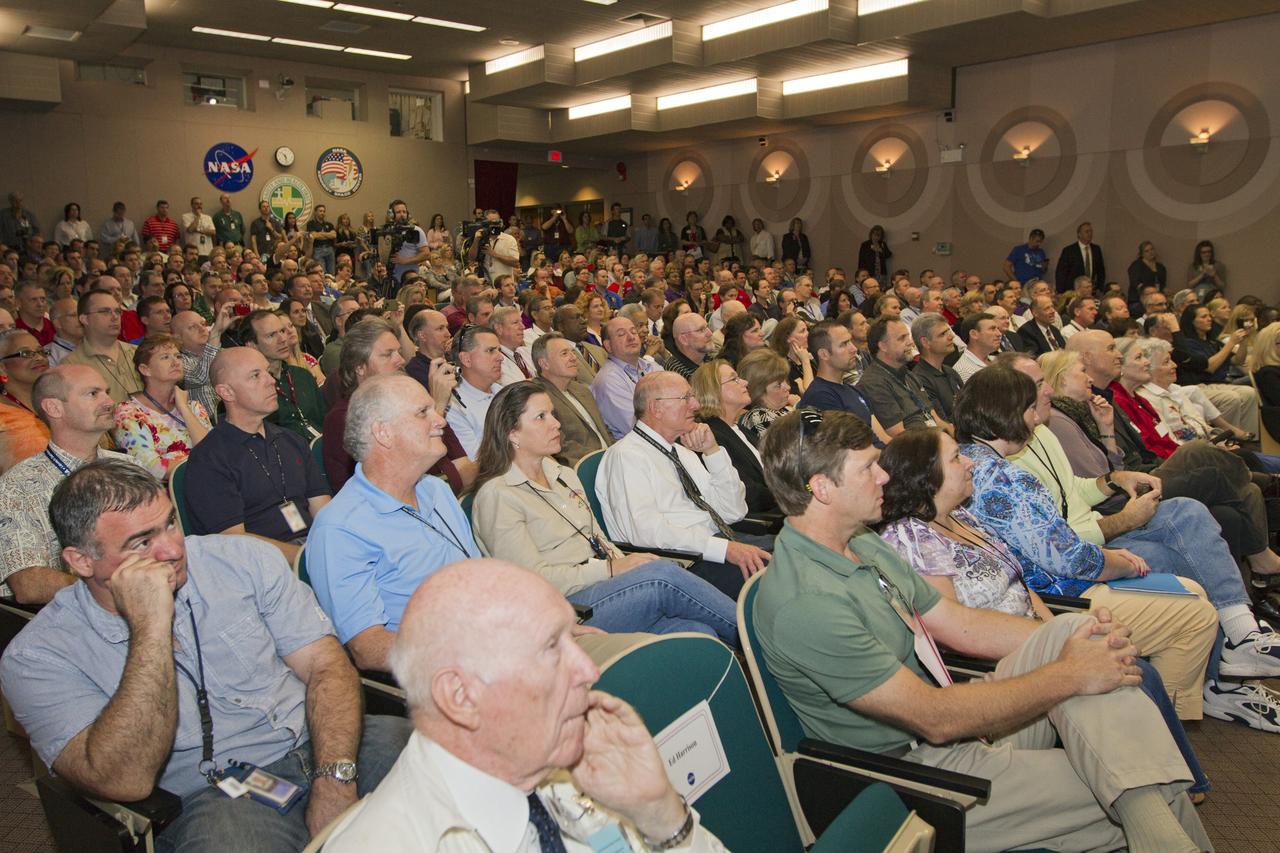
CAPE CANAVERAL, Fla. -- It's "standing room only" in the training auditorium at NASA's Kennedy Space Center in Florida, where Mercury astronauts John Glenn and Scott Carpenter were joined by NASA Administrator Charles Bolden and Center Director Bob Cabana for the "50 Years of Americans in Orbit" presentation for employees. This year marks 50 years since Glenn and Carpenter became the first two Americans to orbit Earth. Photo credit: NASA/Kim Shiflett
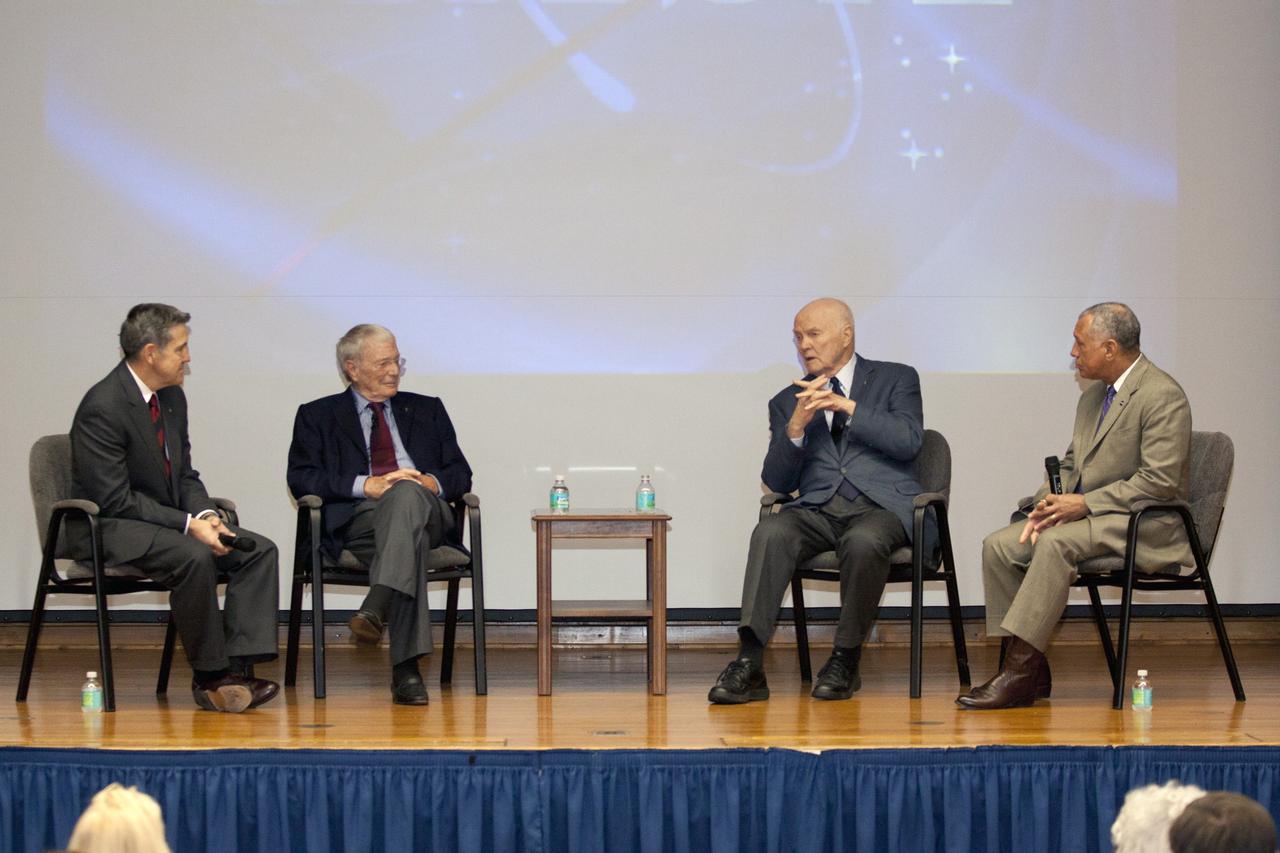
CAPE CANAVERAL, Fla. -- From left to right, Center Director Bob Cabana, Mercury astronauts Scott Carpenter and John Glenn, and NASA Administrator Charles Bolden share the stage during the "50 Years of Americans in Orbit" presentation for employees at NASA's Kennedy Space Center in Florida. This year marks 50 years since Glenn and Carpenter became the first two Americans to orbit Earth. Photo credit: NASA/Kim Shiflett
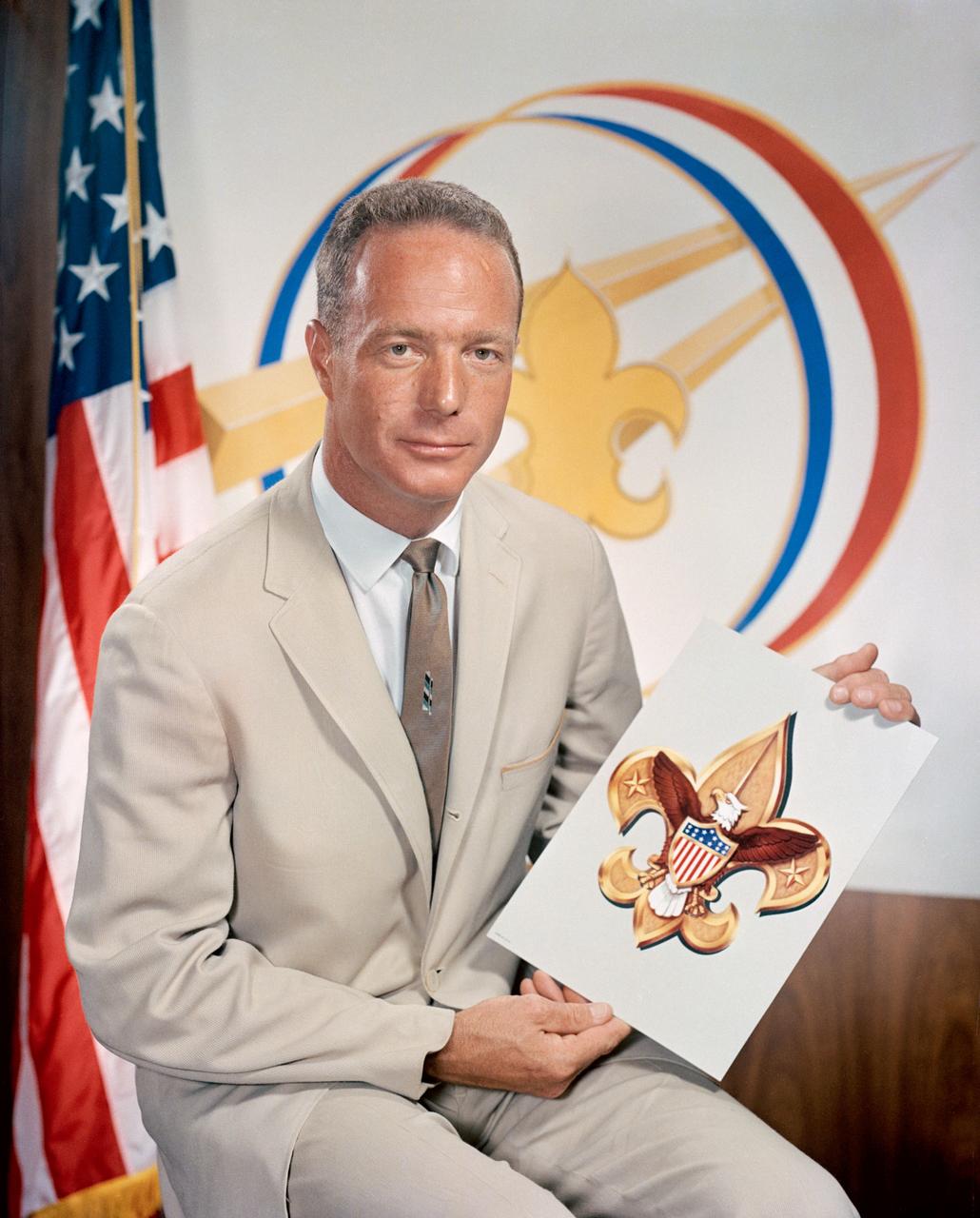
S62-05538 (October 1962) --- Portrait of astronaut M. Scott Carpenter in civilian clothes holding picture of the Boy Scout Emblem. Photo credit: NASA
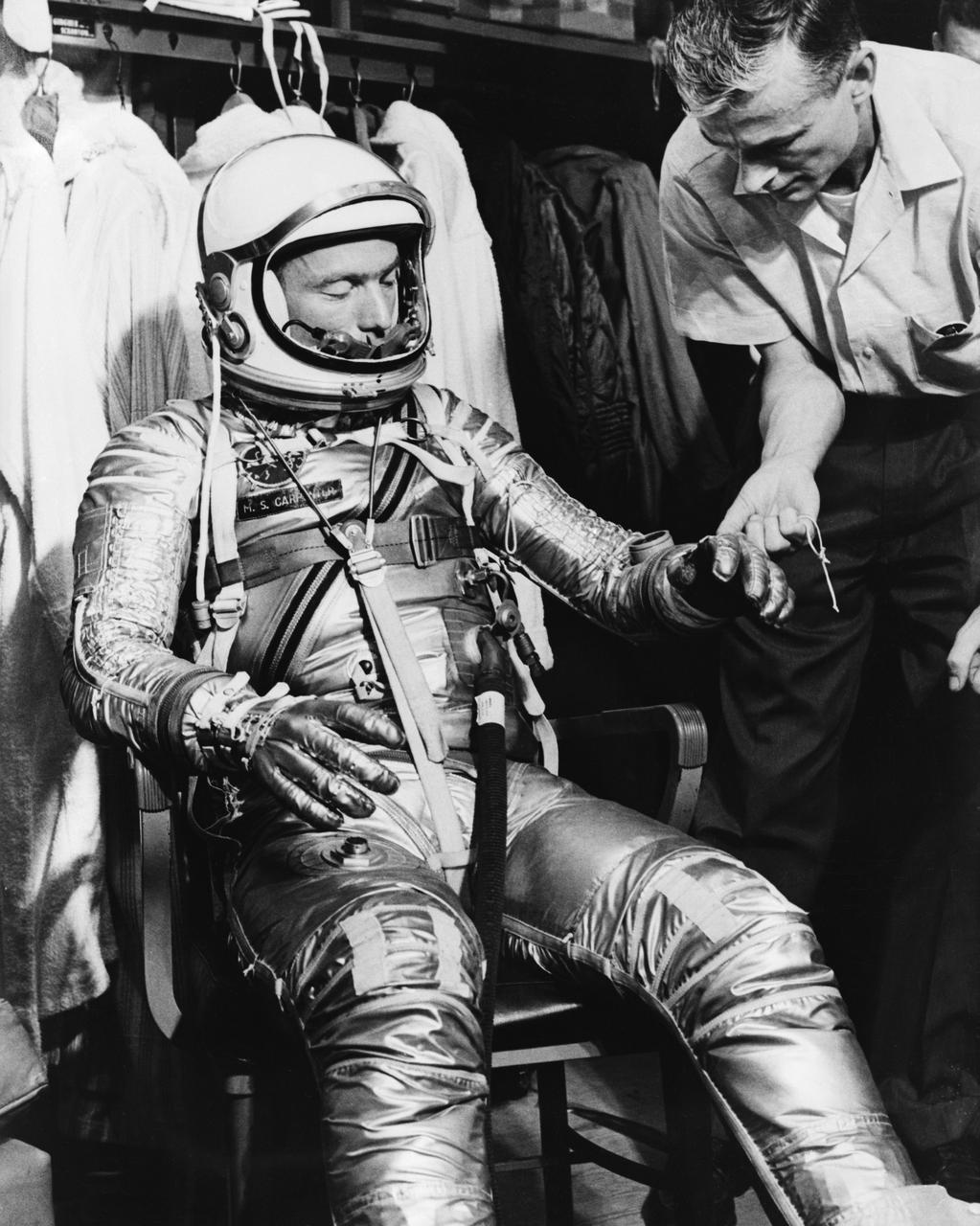
S61-03522 (1961) --- Mercury astronaut M. Scott Carpenter, prime pilot for the Mercury-Atlas 7 (MA-7) spaceflight, and Crew Equipment Specialist Joe Schmitt are pictured during a suiting exercise. Schmidt is seen checking the gloves on Carpenter's pressure suit. Photo credit: NASA
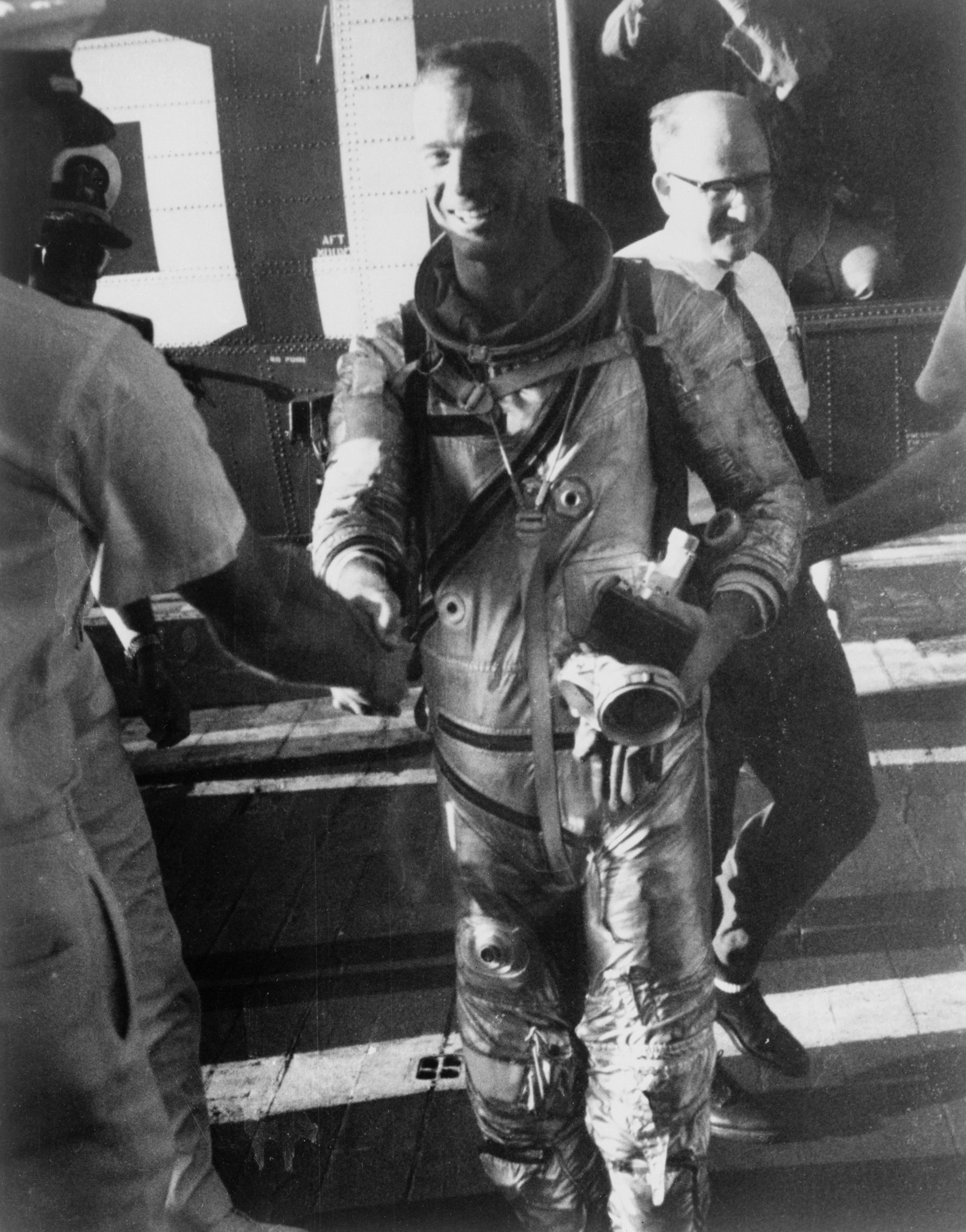
S62-04027 (24 May 1962) --- Astronaut M. Scott Carpenter, prime pilot for the Mercury-Atlas 7 (MA-7) mission, arrives aboard the prime recovery ship, USS Intrepid, during recovery operations following his Earth-orbital mission. Photo credit: NASA
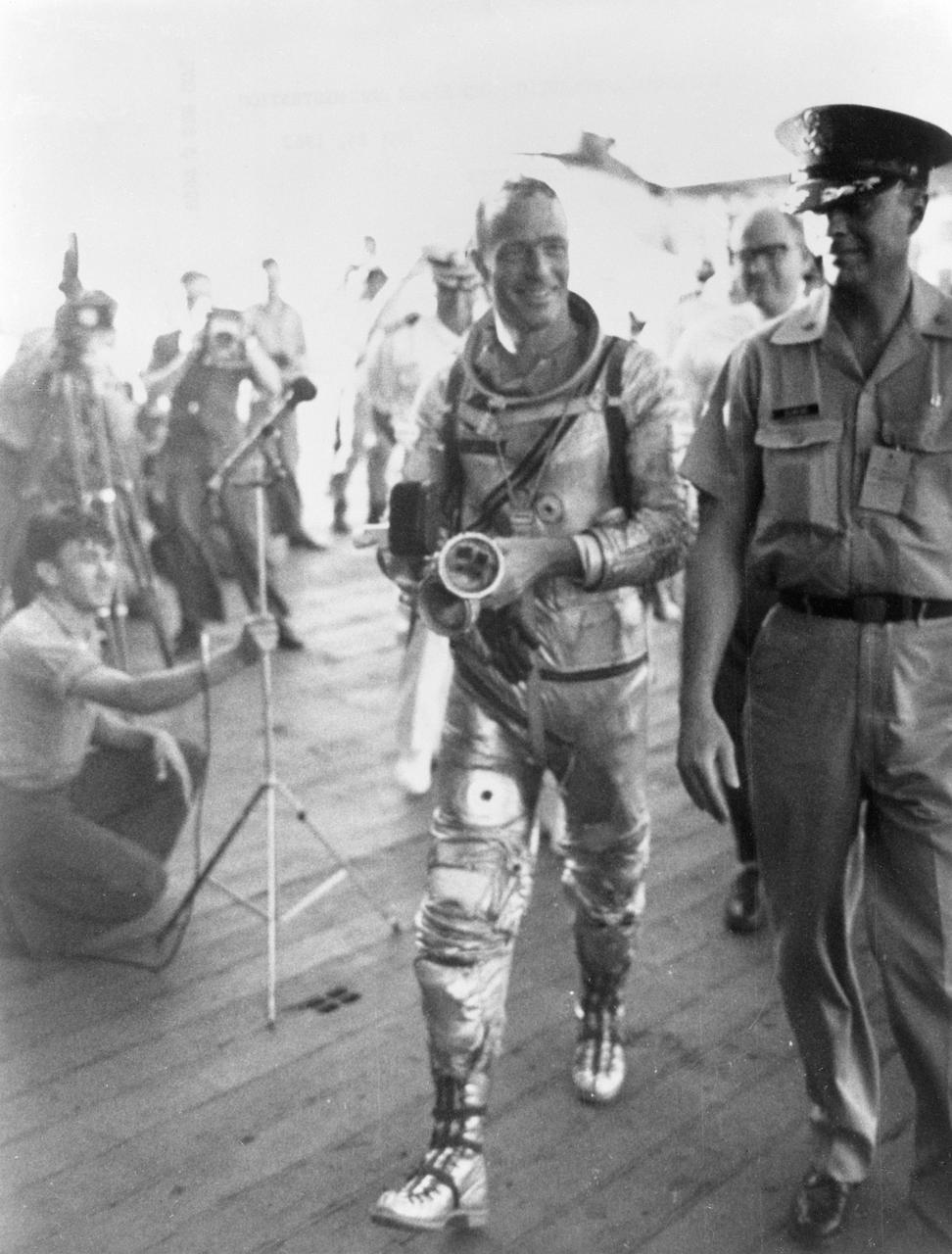
S62-04058 (24 May 1962) --- Astronaut M. Scott Carpenter, prime pilot for the Mercury-Atlas 7 (MA-7) mission, arrives aboard the prime recovery ship, USS Intrepid, during recovery operations following his Earth-orbital mission. Photo credit: NASA
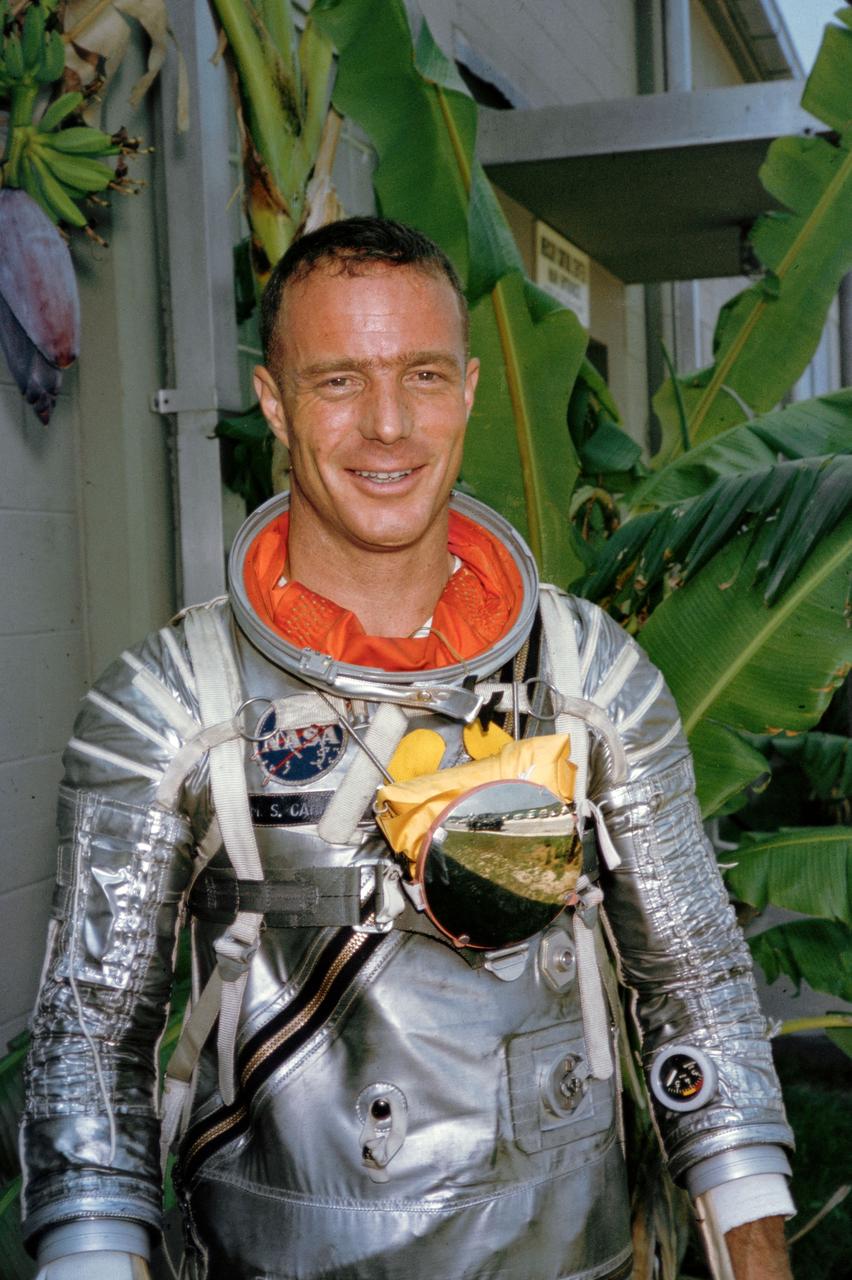
S64-36908 (1962) --- Portrait view of astronaut M. Scott Carpenter, wearing Mercury pressure suit, posing for pictures during astronaut training at the Cape Canaveral, Florida. Photo credit: NASA
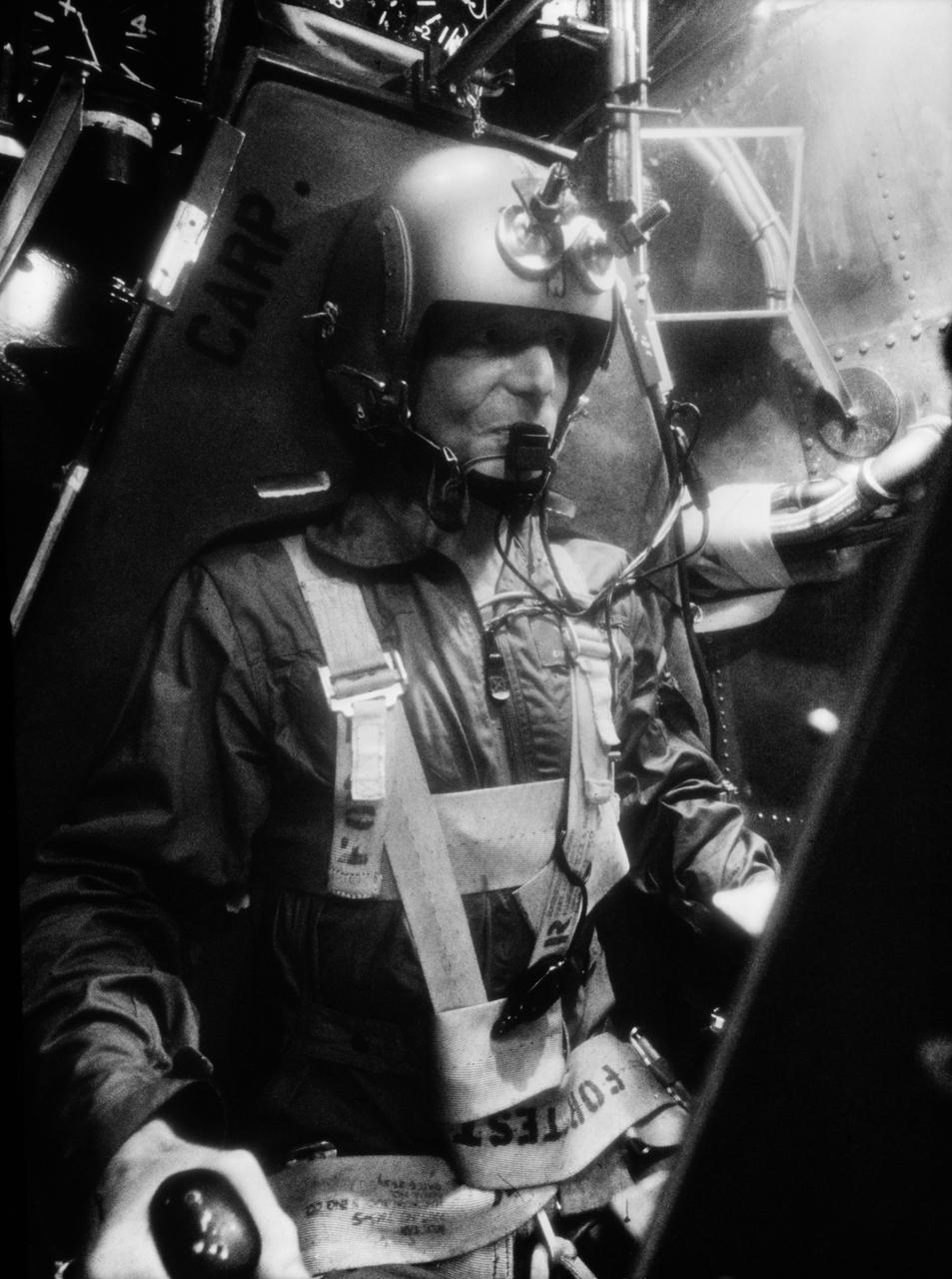
B59-00723 (1959) --- Close-up of astronaut M. Scott Carpenter, prime pilot for the Mercury-Atlas 7 (MA-7) mission, during centrifuge training. (M-199) Photo credit: NASA
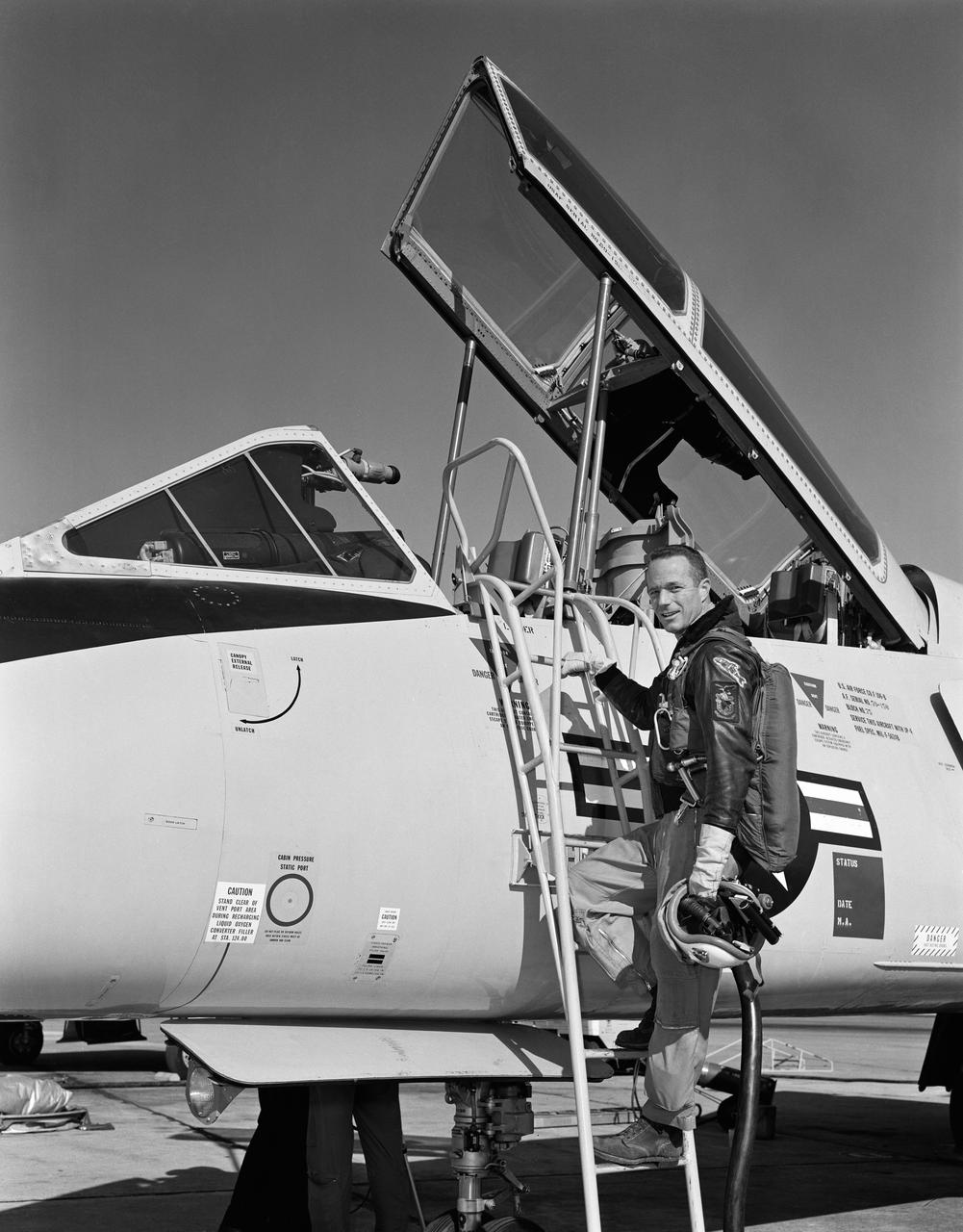
M61-00017 (10 Jan. 1961) --- Astronaut M. Scott Carpenter on flight line with a F-106. Photo credit: NASA
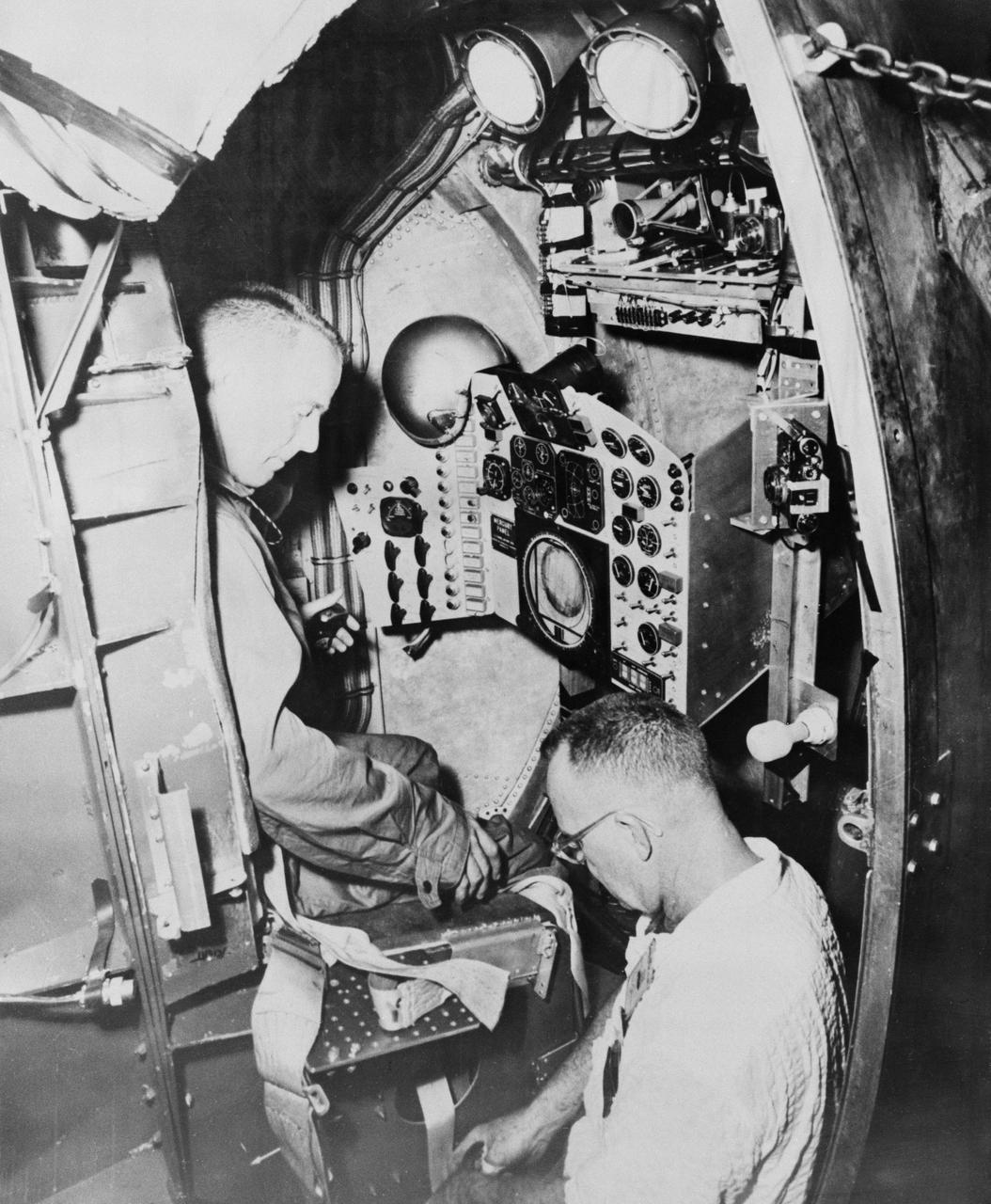
B59-00570 (August 1959) --- Astronaut Scott Carpenter trains at the centrifuge procedures trainer at Wright Field, Johnsville, Pennsylvania, for project Mercury. Photo credit: NASA
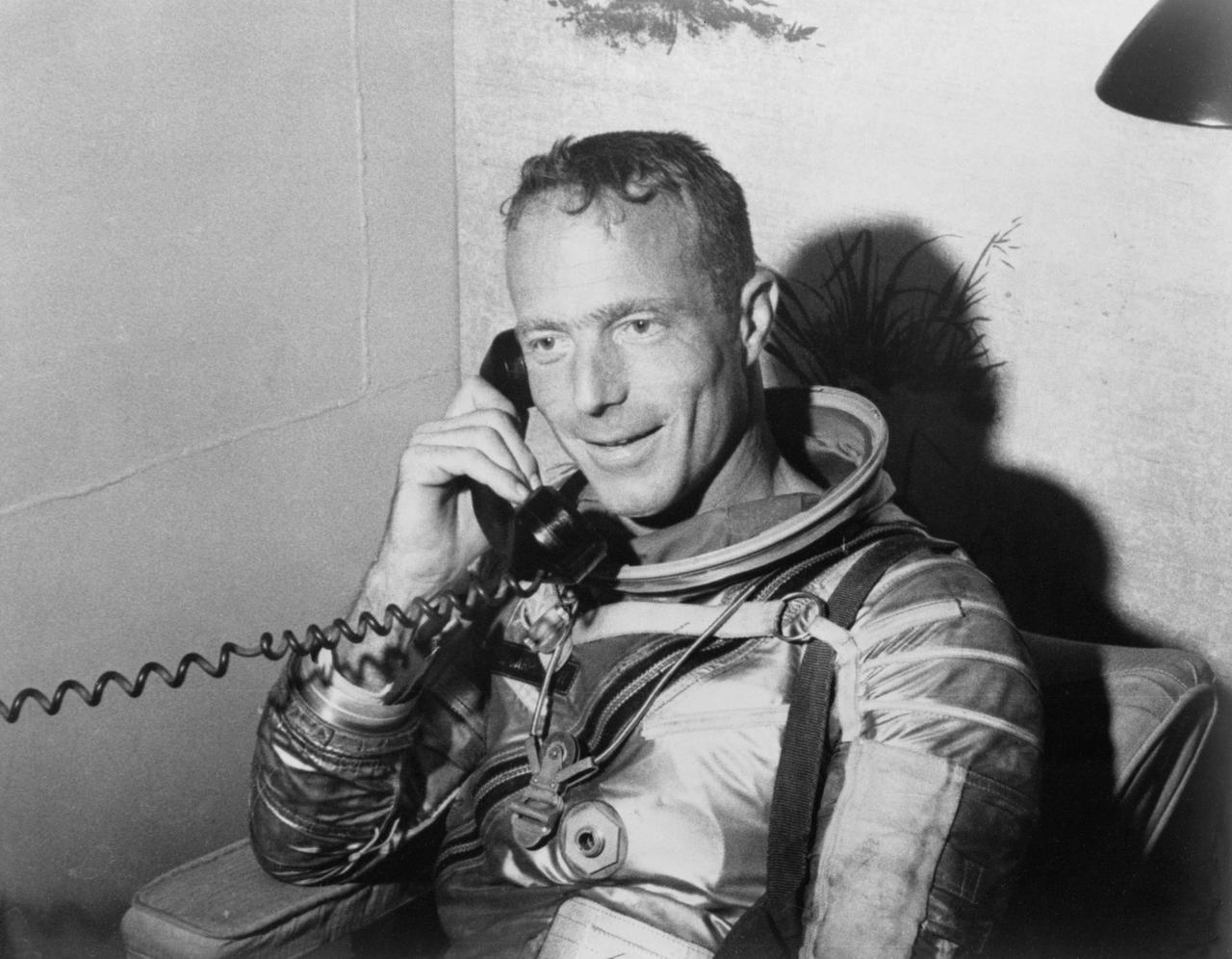
S62-04057 (24 May 1962) --- Astronaut M. Scott Carpenter, prime pilot for the Mercury-Atlas 7 (MA-7) mission, talks with President John F. Kennedy via radio-telephone from aboard the carrier USS Intrepid. Carpenter was recovered by a helicopter and taken to the Intrepid after a four-hour and 56-minute mission in space. Photo credit: NASA
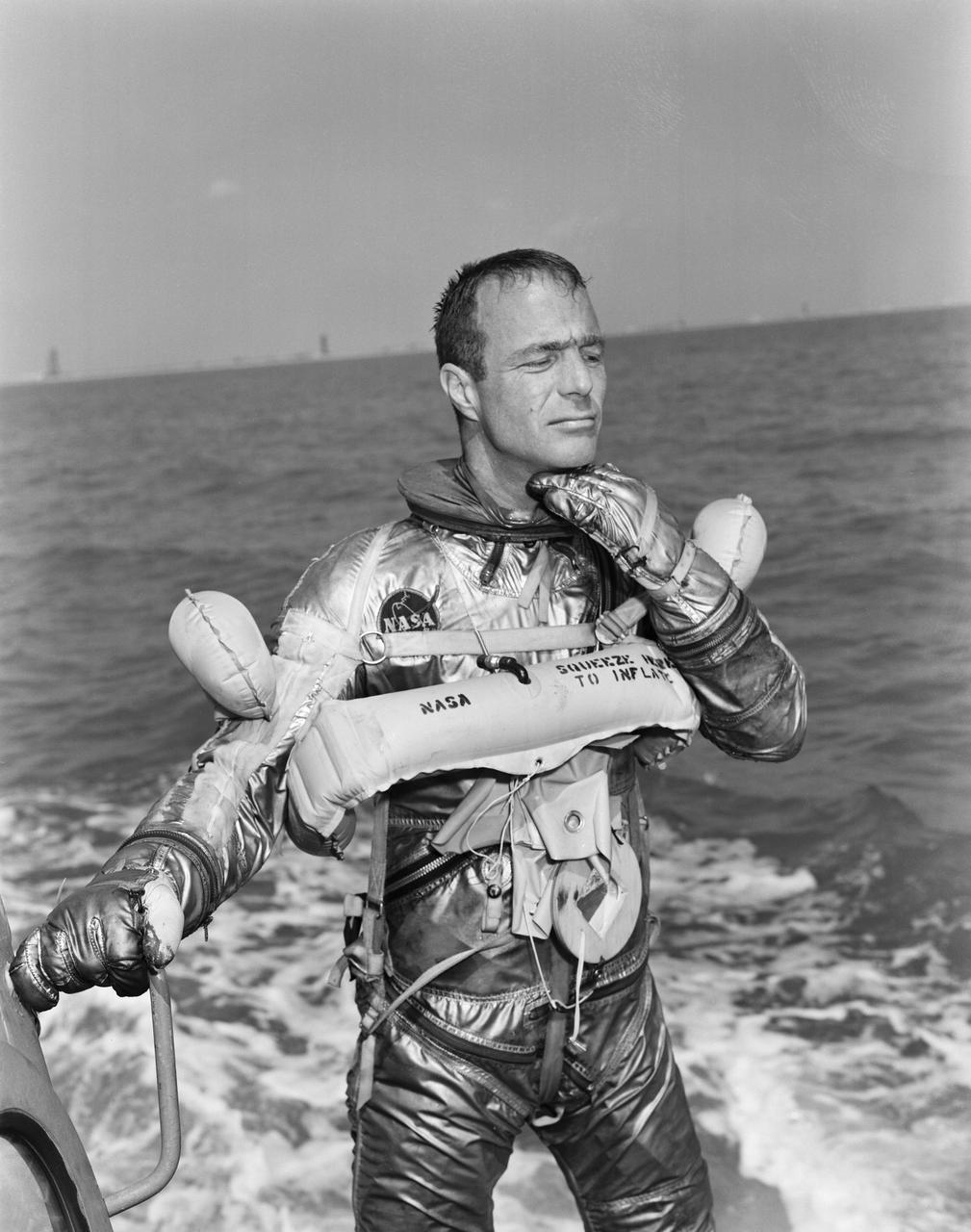
S62-01358 (1962) --- Project Mercury astronaut M. Scott Carpenter, prime pilot of the Mercury-Atlas 7 (MA-7) spaceflight, goes through a water egress test. He is in the Mercury pressure suit, without the helmet, and is wearing a life vest. Photo credit: NASA
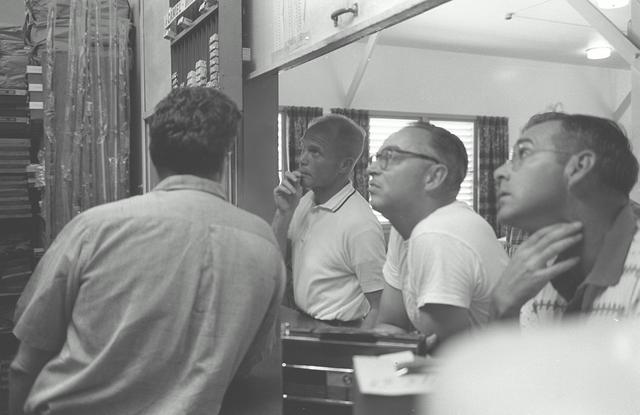
S64-10801 (1962) --- Astronauts M. Scott Carpenter (far left) and John H. Glenn Jr. relax following breakfast during Mercury Atlas 6 (MA-6) preflight activity. Glenn is the MA-6 pilot. Carpenter is the MA-6 backup pilot. Photo credit: NASA
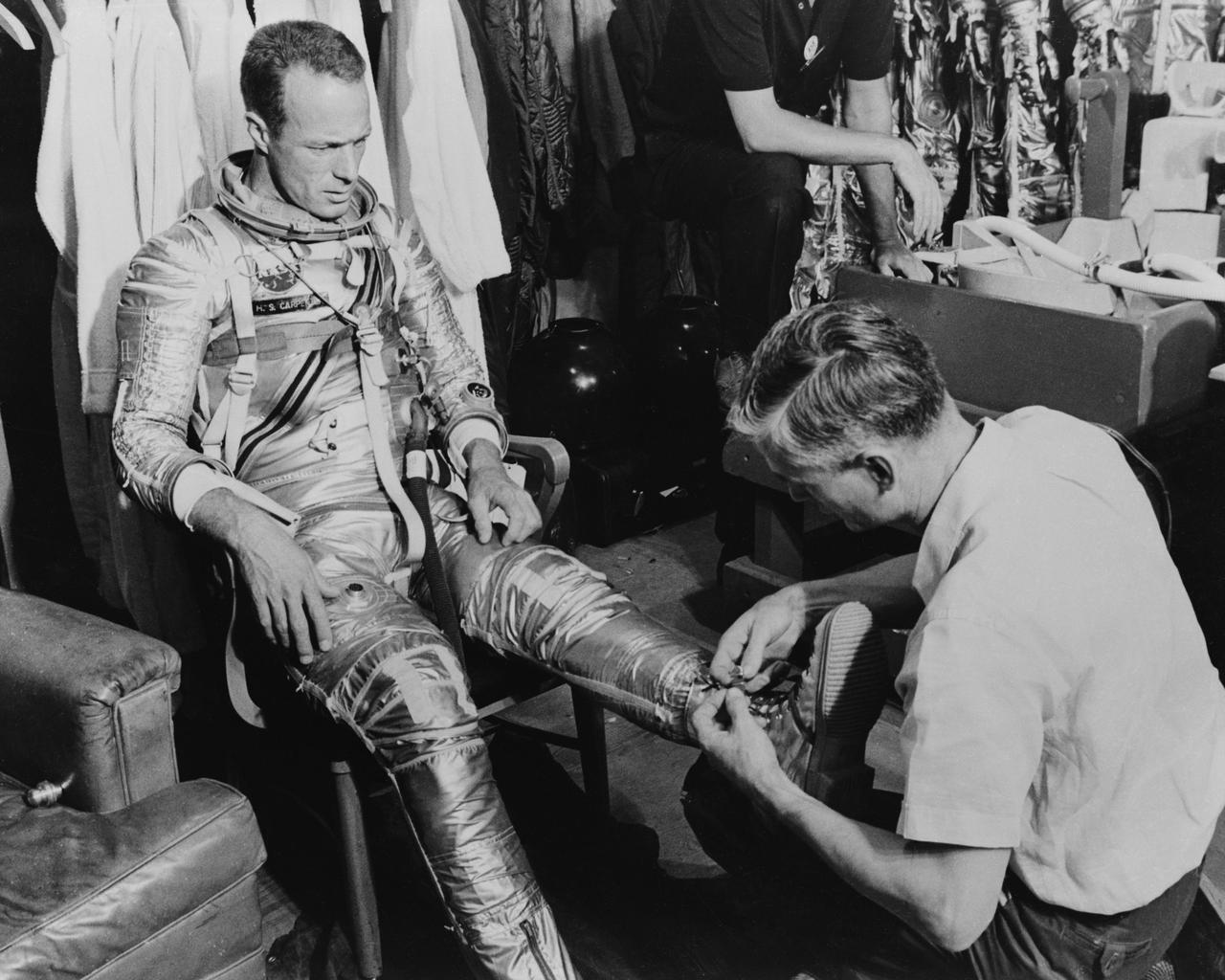
S61-03513 (1961) --- Mercury astronaut M. Scott Carpenter, prime pilot for the Mercury-Atlas 7 (MA-7) spaceflight, and Crew Equipment Specialist Joe Schmitt are pictured during a suiting exercise. Schmitt is seen lacing up Carpenter's boots. Photo credit: NASA
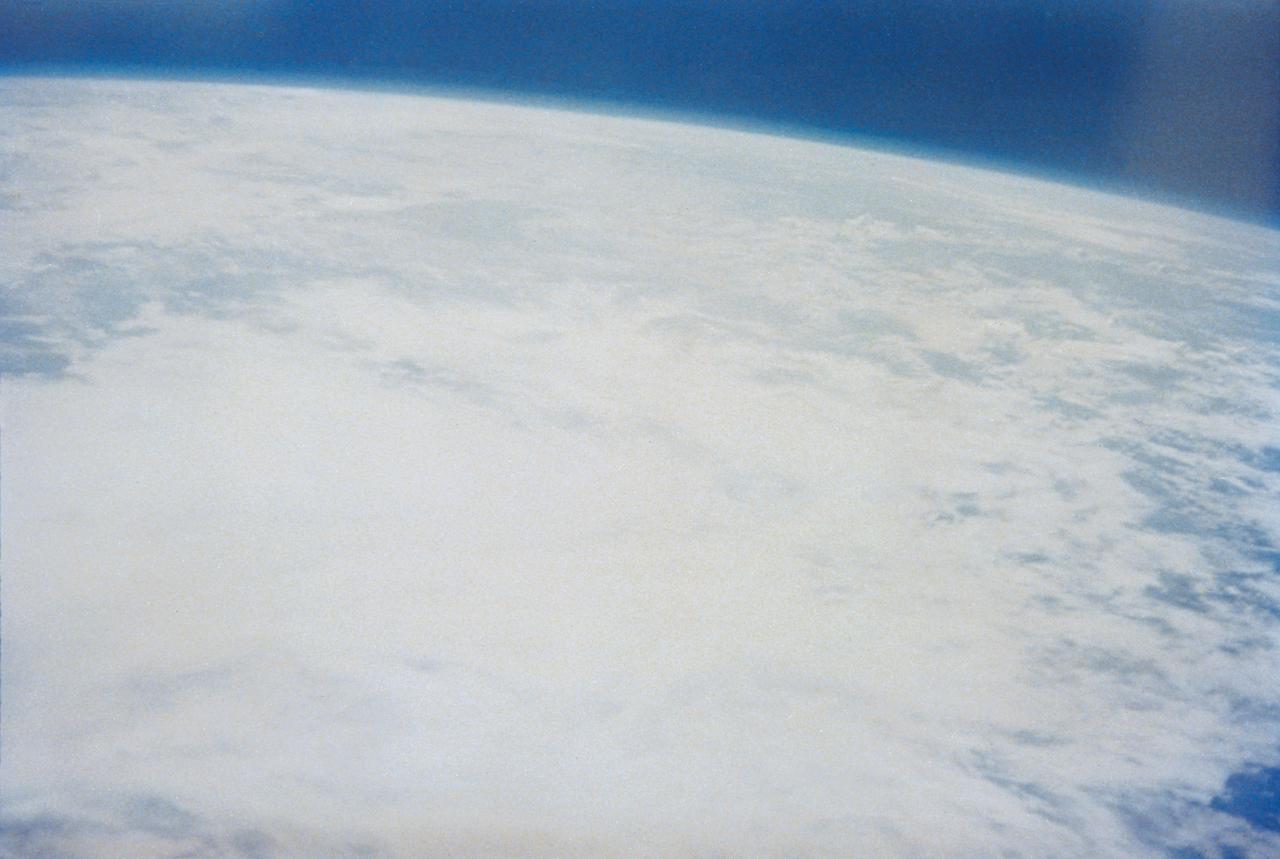
S62-03257 (24 May 1962) --- Earth and sky views taken with hand-held camera by astronaut M. Scott Carpenter during Mercury-Atlas 7 (MA-7) mission. Photo credit: NASA
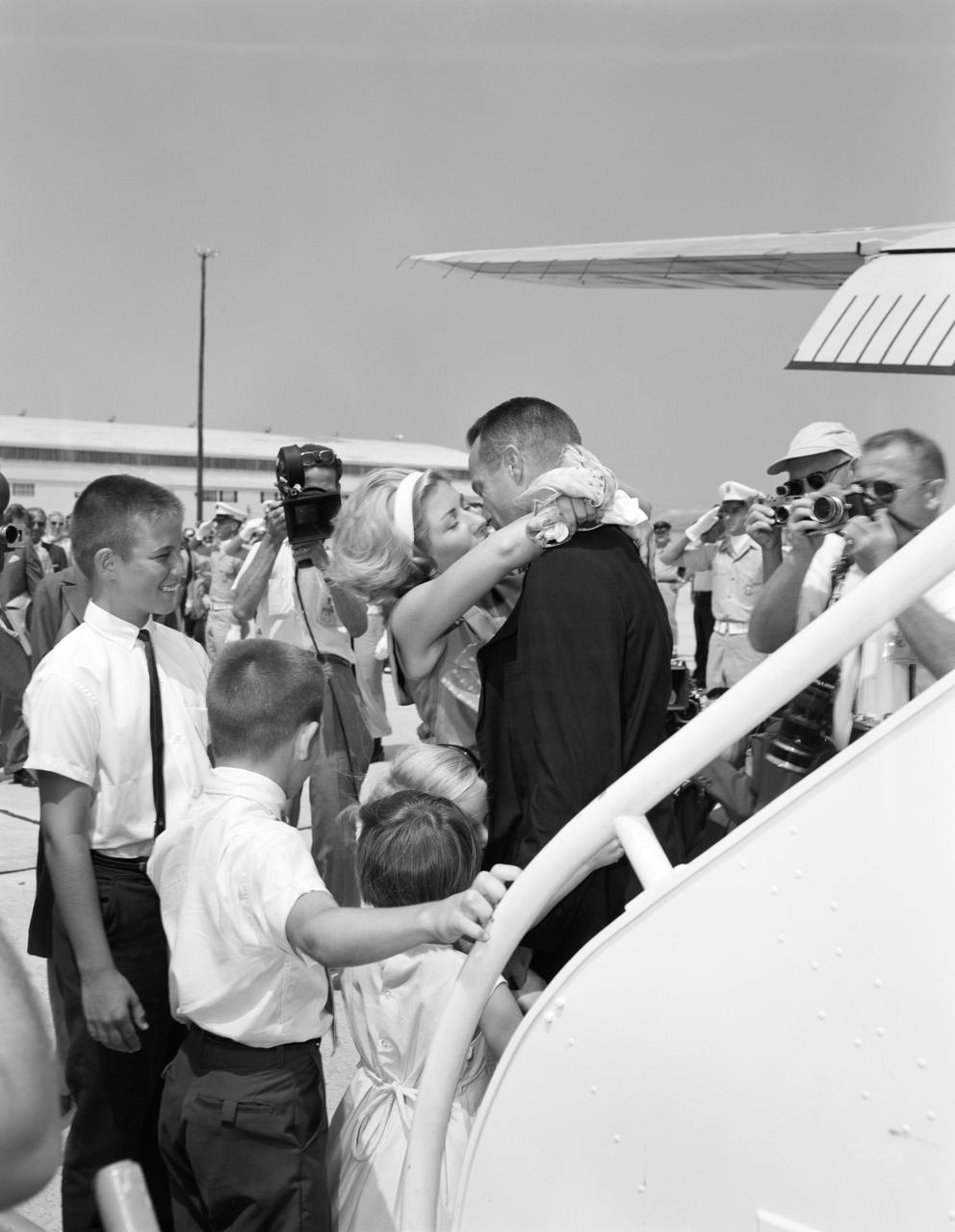
S62-03916 (May 1962) --- The wife and children of astronaut M. Scott Carpenter welcome him after the successful Mercury-Atlas 7 (MA-7) flight. Photo credit: NASA
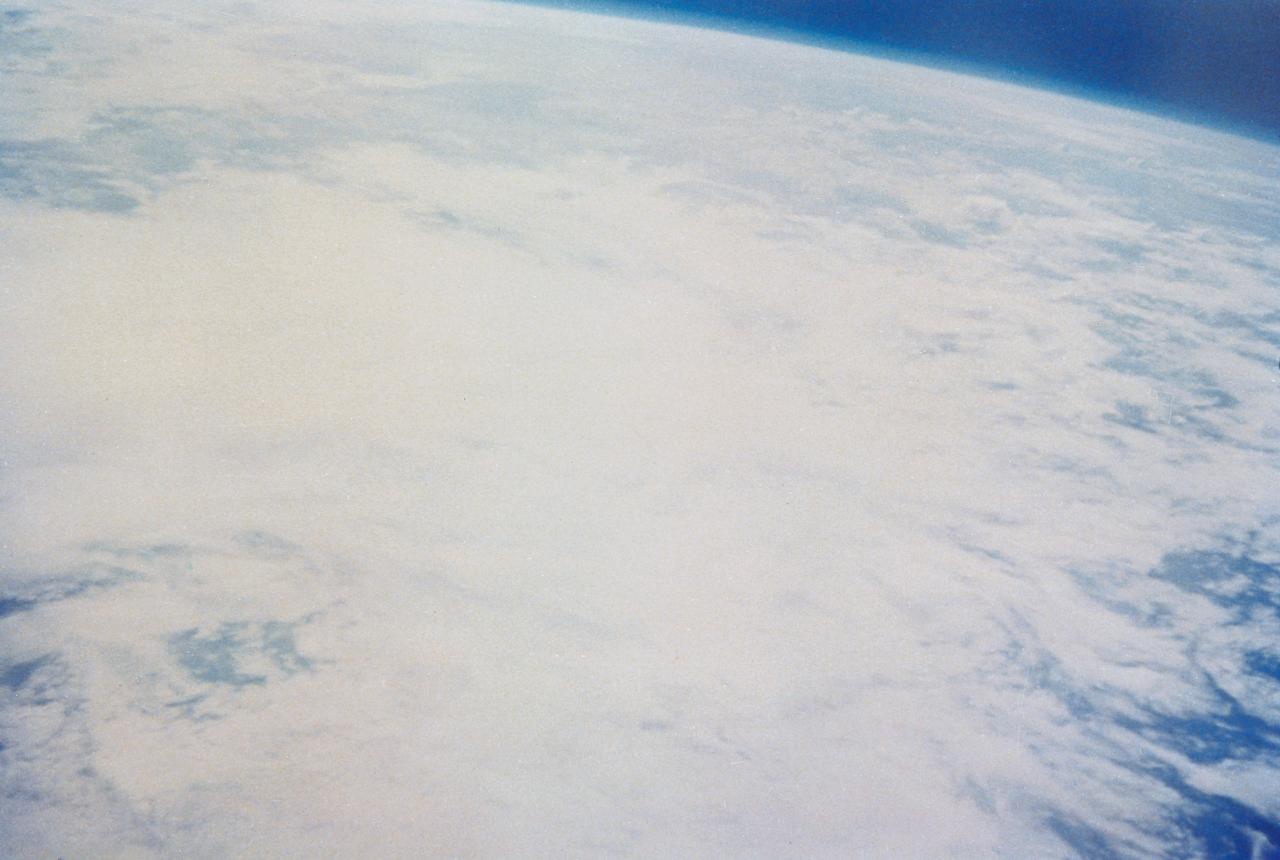
S62-03250 (24 May 1962) --- Earth and sky views taken with hand-held camera by astronaut M. Scott Carpenter during Mercury-Atlas 7 (MA-7) mission. Photo credit: NASA
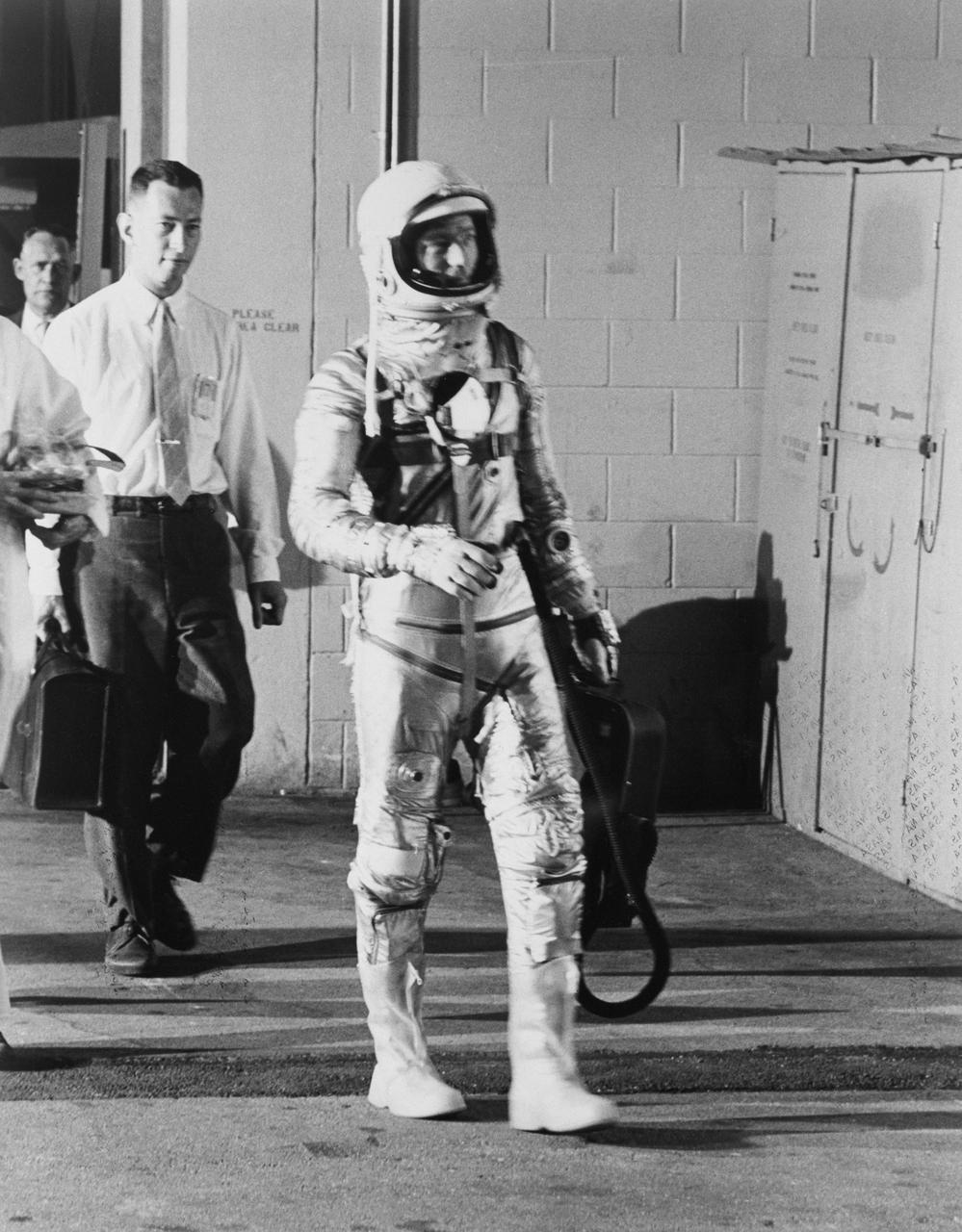
S62-04044 (24 May 1962) --- Astronaut Scott Carpenter leaving White Room for launch site to begin Mercury-Atlas 7 (MA-7) mission. Photo credit: NASA
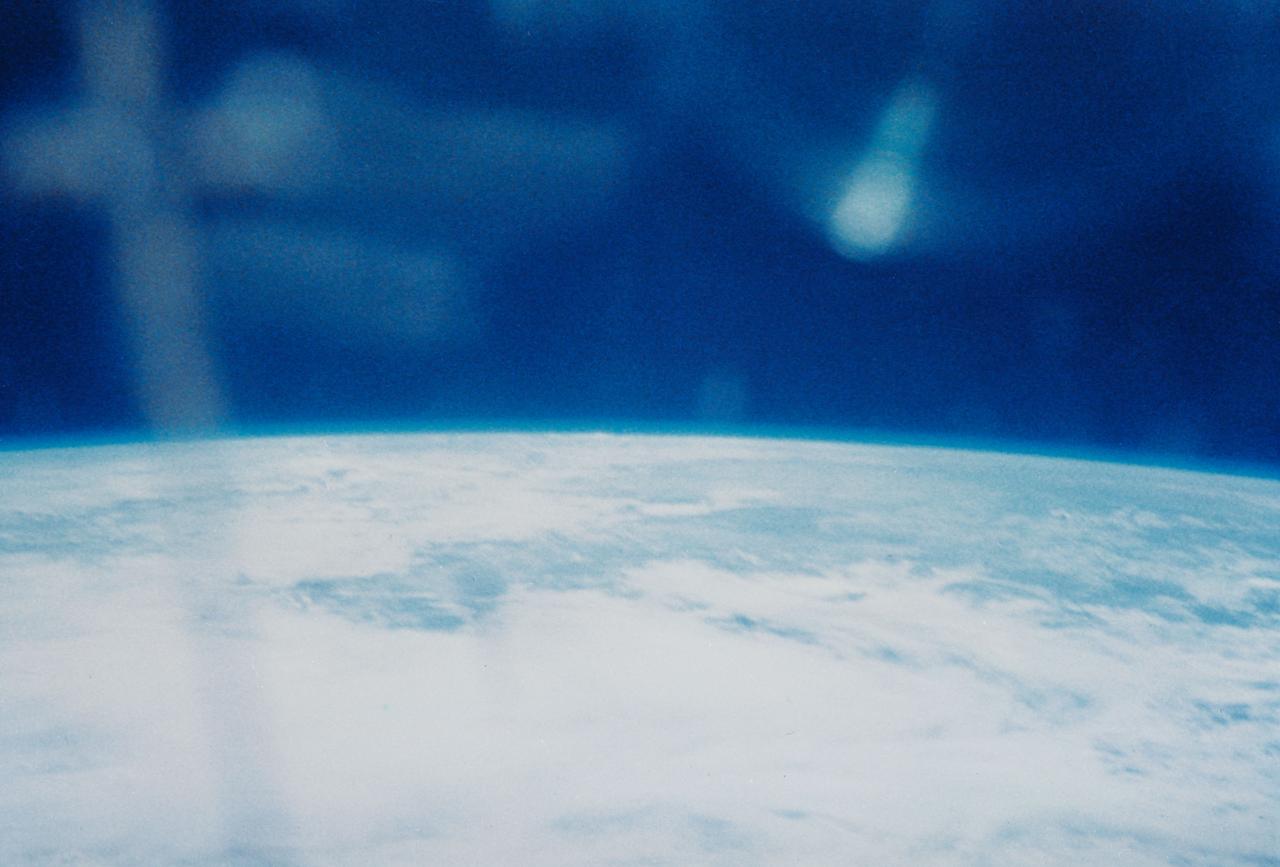
S62-03248 (24 May 1962) --- Earth and sky views taken with hand-held camera by astronaut M. Scott Carpenter during Mercury-Atlas 7 (MA-7) mission. Photo credit: NASA
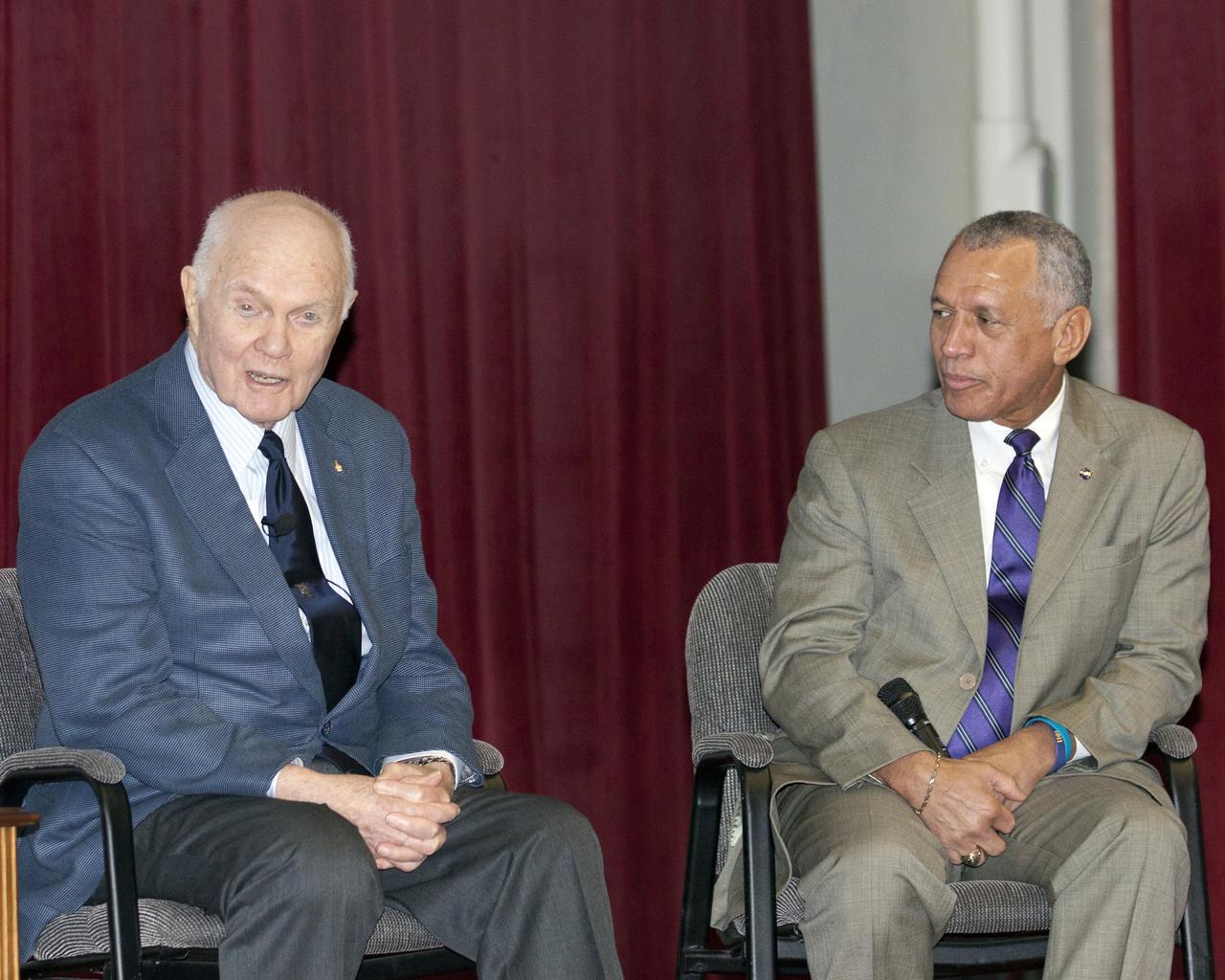
CAPE CANAVERAL, Fla. -- NASA Administrator Charles Bolden, right, listens as Mercury astronaut John Glenn speaks to employees during the "50 Years of Americans in Orbit" presentation at NASA's Kennedy Space Center in Florida. This year marks 50 years since Glenn and Carpenter became the first two Americans to orbit Earth. Photo credit: NASA/Kim Shiflett
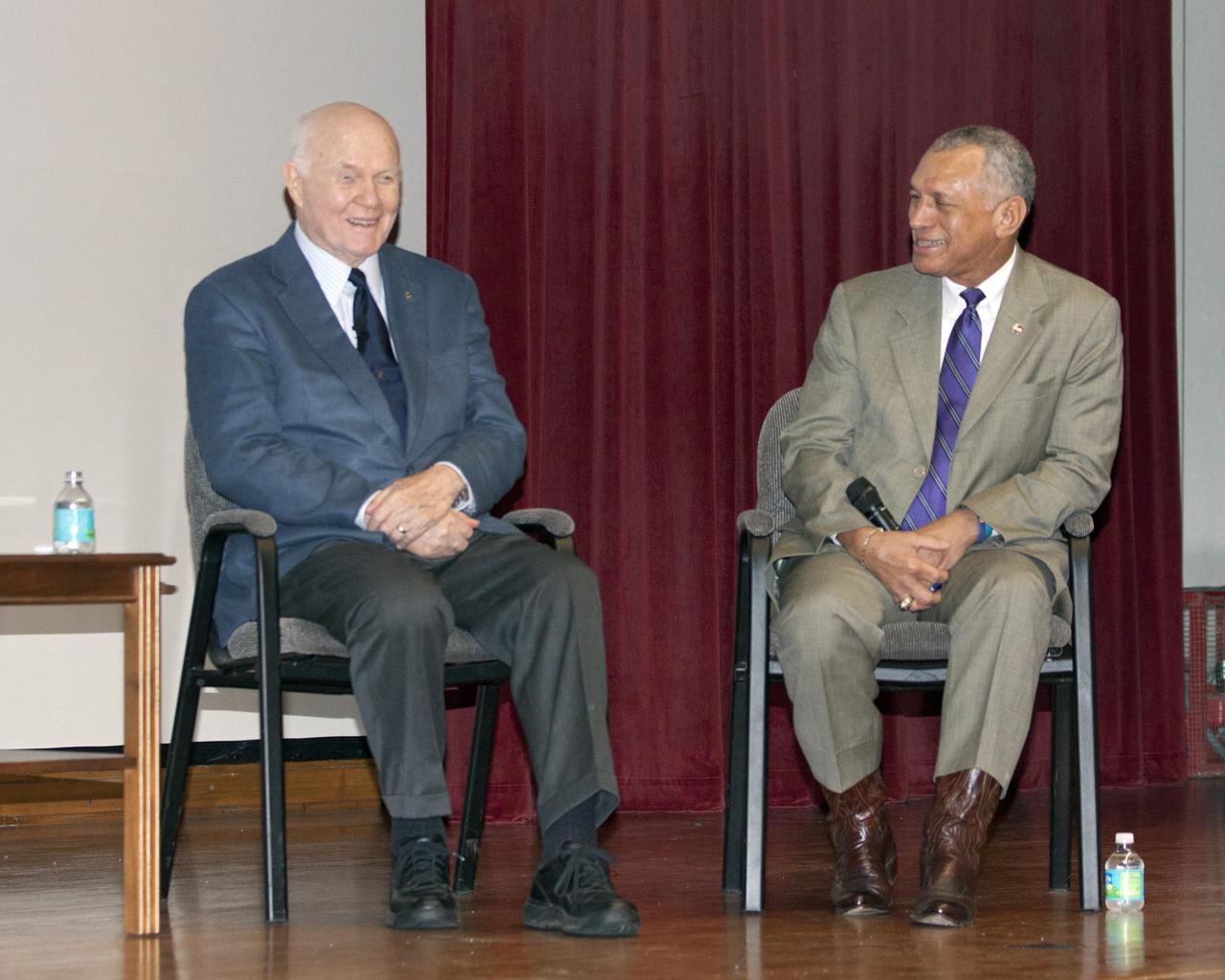
CAPE CANAVERAL, Fla. -- Mercury astronaut John Glenn, left, and NASA Administrator Charles Bolden share a laugh during the "50 Years of Americans in Orbit" presentation for employees at NASA's Kennedy Space Center in Florida. This year marks 50 years since Glenn and Carpenter became the first two Americans to orbit Earth. Photo credit: NASA/Kim Shiflett
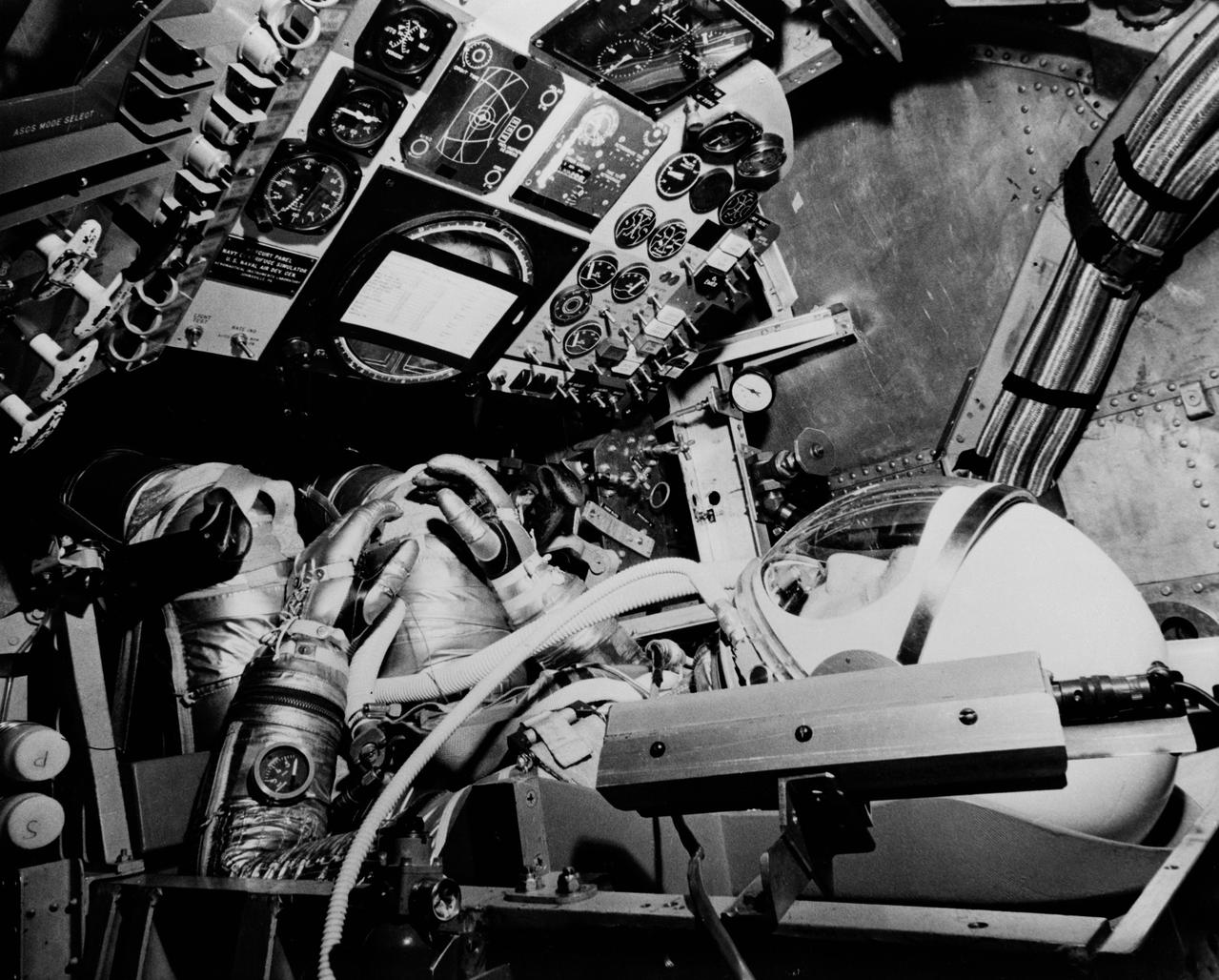
S61-03506 (1961) --- Project Mercury astronaut M. Scott Carpenter, prime pilot for the United States second manned orbital flight, undergoes a simulated mission in the procedures trainer at Langley Air Force Base, Virginia, headquarters for the National Aeronautics and Space Administration?s Manned Spacecraft Center. Photo credit: NASA
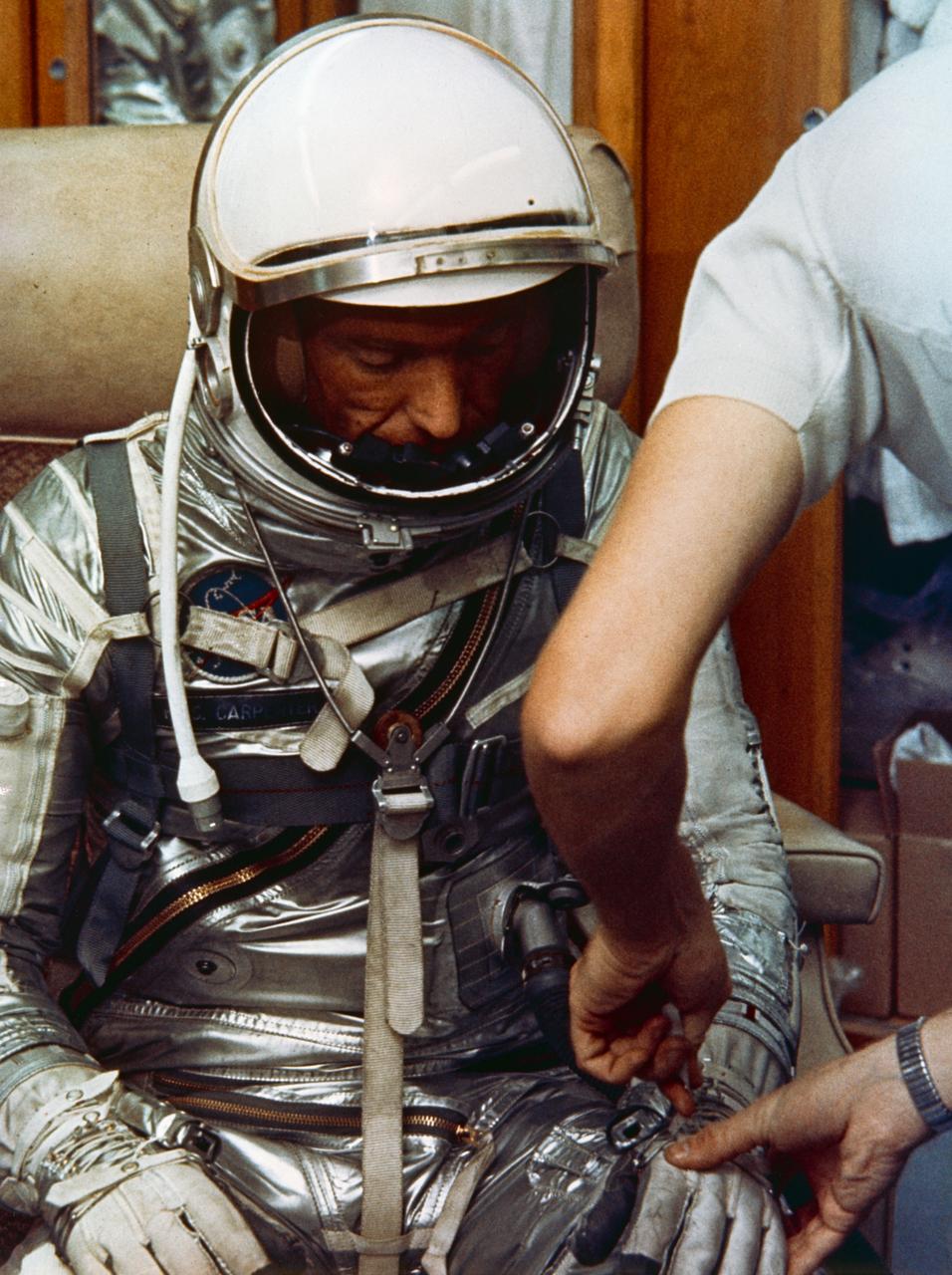
S65-24622 (May 1962) --- Astronaut M. Scott Carpenter, prime pilot for the Mercury-Atlas 7 (MA-7) flight, is seen in Hangar S crew quarters during a suiting exercise. He is assisted in suiting by technician Al Rochford. In this view, Carpenter is fully suited and is having his gloves adjusted. Photo credit: NASA
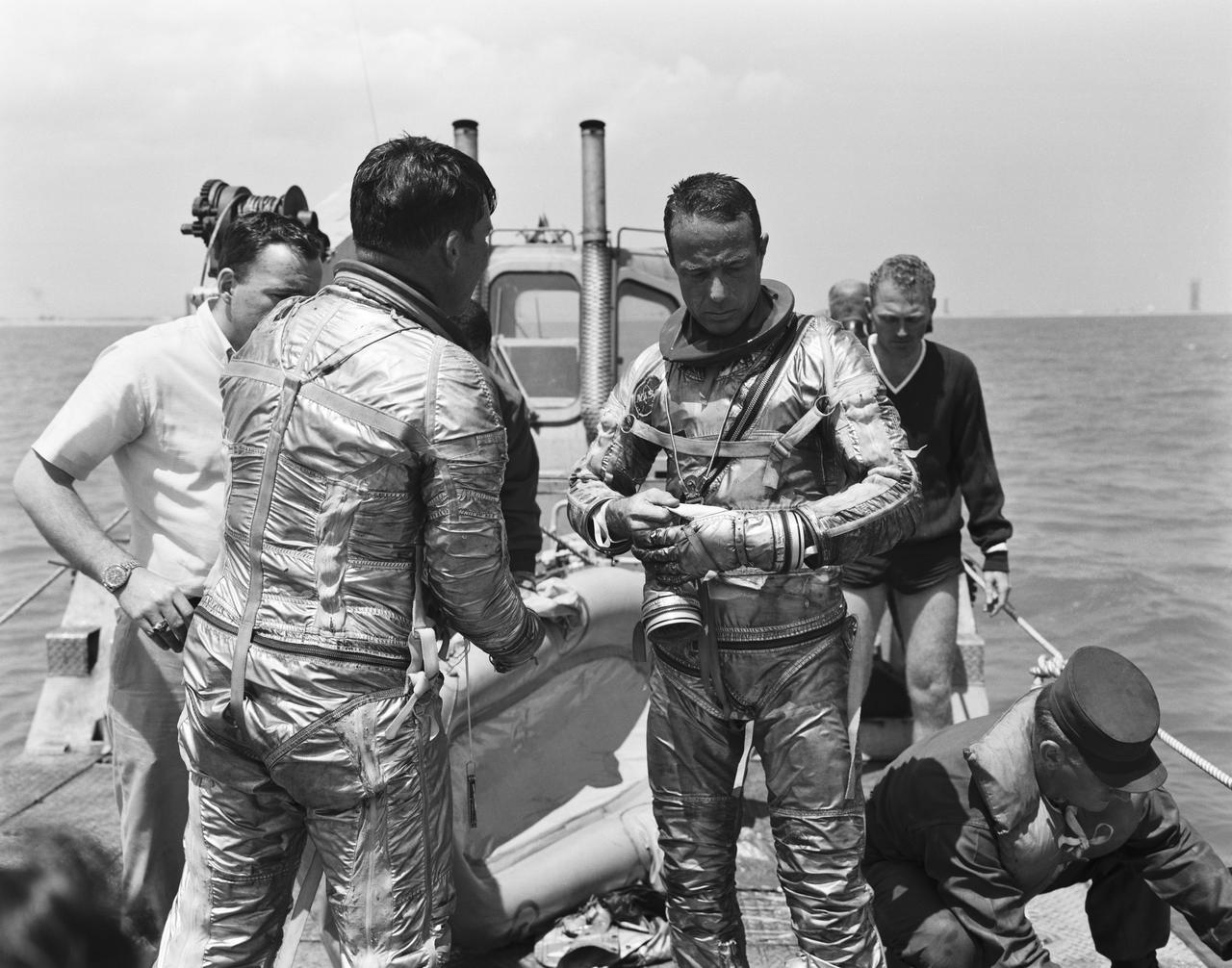
S62-01355 (1962) --- Project Mercury astronauts M. Scott Carpenter, prime pilot of the Mercury-Atlas 7 (MA-7) spaceflight, prepares to go through a water egress test. Astronaut Walter M. Schirra (back to camera), the backup MA-7 pilot is also present. Carpenter and Schirra are in the Mercury pressure suit, without the helmet. Behind them is an inflated life raft. Photo credit: NASA
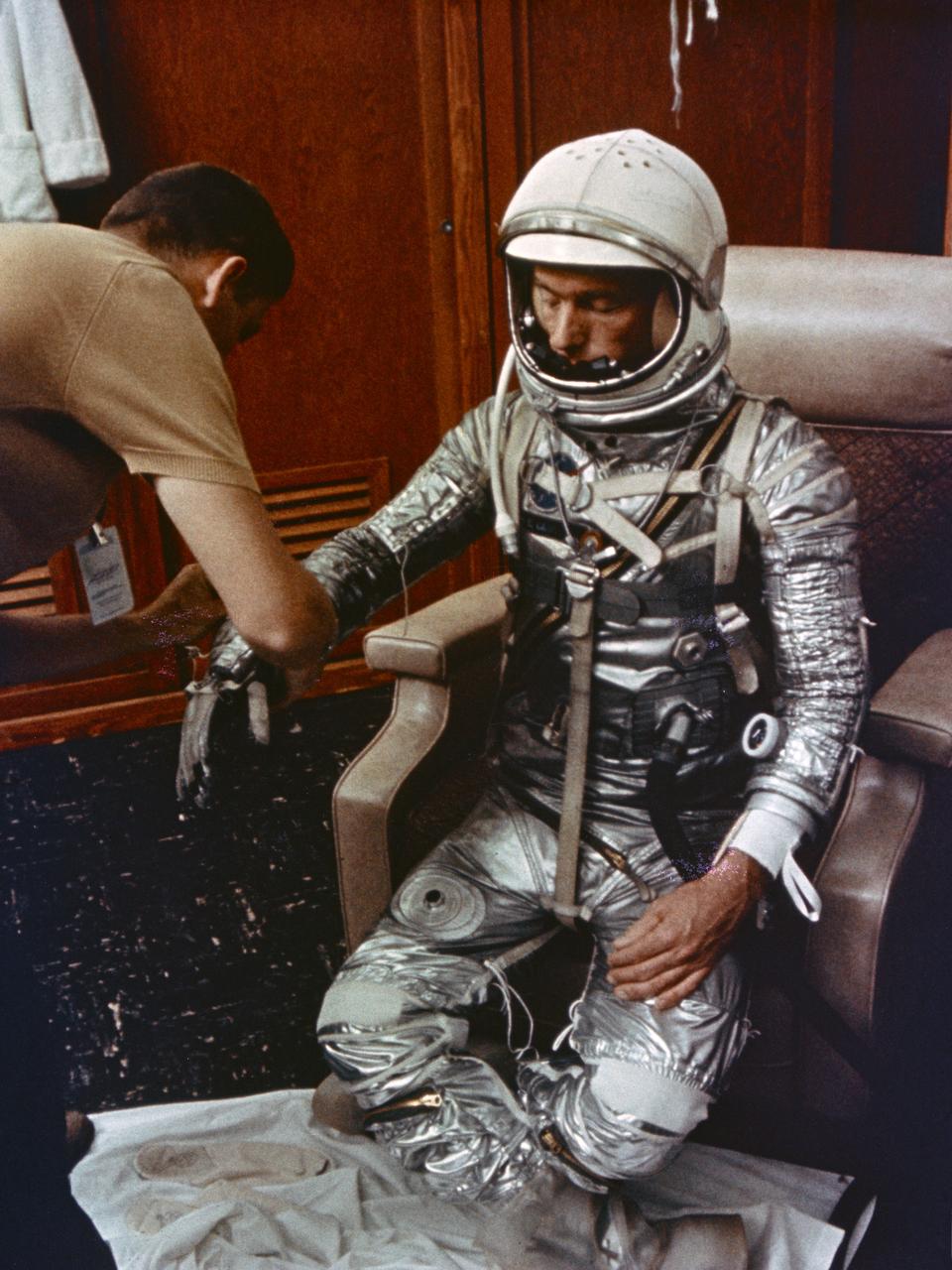
S64-14870 (May 1962) --- Astronaut M. Scott Carpenter, prime pilot for the Mercury-Atlas 7 (MA-7) flight, is seen in Hangar S crew quarters during a preflight suiting activity at Cape Canaveral, Florida. He is assisted in suiting by technician Al Rochford. In this view, Carpenter is fully suited and is having his gloves adjusted. Photo credit: NASA
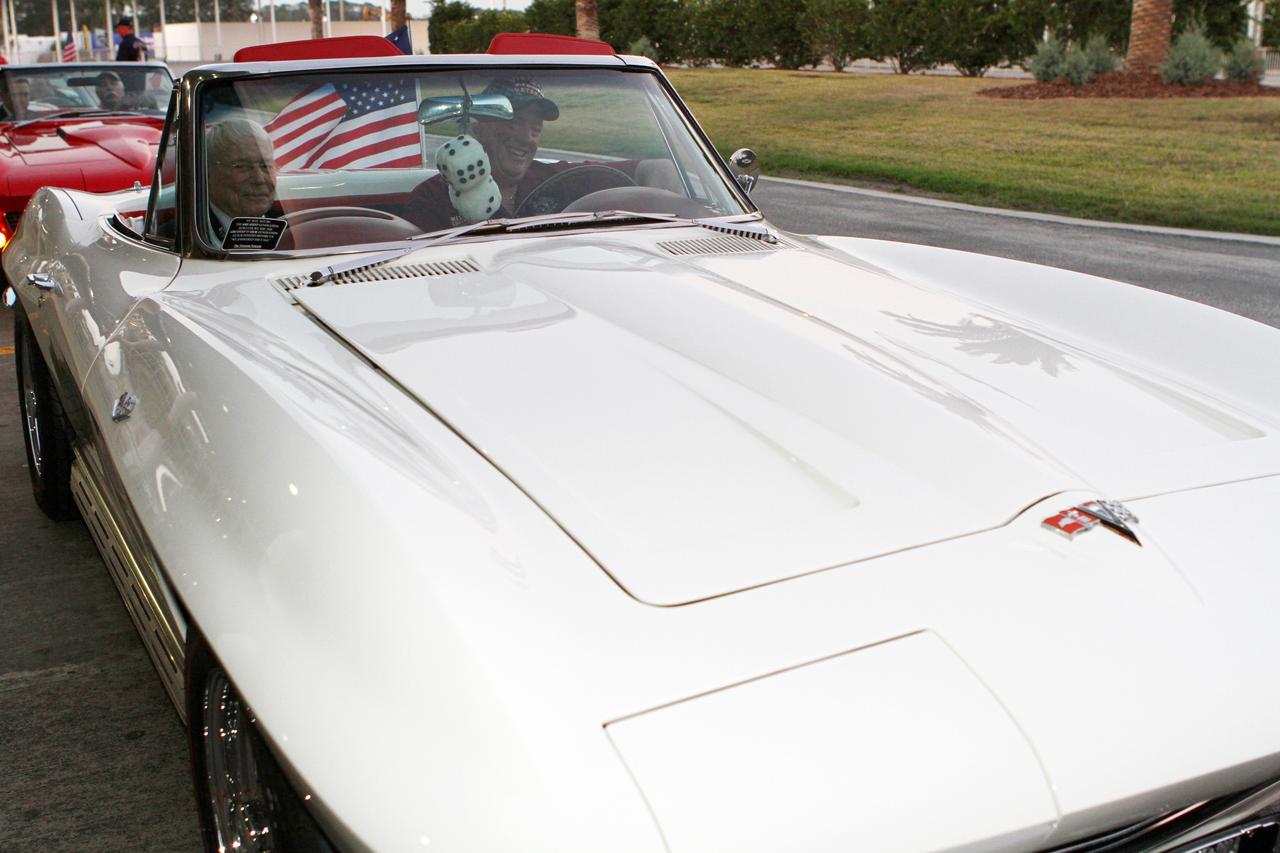
CAPE CANAVERAL, Fla. -- Mercury astronaut Scott Carpenter, left, prepares to ride in the Corvette parade following the "On Shoulders of Giants" program celebrating 50 years of Americans in orbit, an era which began with Glenn's MA-6 mission on Feb. 20, 1962. The event was conducted in the Rocket Garden at the Kennedy Space Center Visitor Complex in Florida a few miles from the launch pad where Glenn and Carpenter took flight in Mercury spacecraft. Glenn's launch aboard an Atlas rocket took with it the hopes of an entire nation and ushered in a new era of space travel that eventually led to Americans walking on the moon by the end of the 1960s. Glenn soon was followed into orbit by Scott Carpenter, Walter Schirra and Gordon Cooper. Their fellow Mercury astronauts Alan Shepard and Virgil "Gus" Grissom flew earlier suborbital flights. Deke Slayton, a member of NASA's original Mercury 7 astronauts, was grounded by a medical condition until the Apollo-Soyuz Test Project in 1975. Photo credit: Kim Shiflett

CAPE CANAVERAL, Fla. -- Mercury astronauts Scott Carpenter, left, and John Glenn and astronaut Steve Robinson of STS-95 listen to remarks during the "On Shoulders of Giants" program celebrating 50 years of Americans in orbit, an era which began with Glenn's MA-6 mission on Feb. 20, 1962. The event was conducted in the Rocket Garden at the Kennedy Space Center Visitor Complex in Florida a few miles from the launch pad where Glenn and Carpenter took flight in Mercury spacecraft. Glenn's launch aboard an Atlas rocket took with it the hopes of an entire nation and ushered in a new era of space travel that eventually led to Americans walking on the moon by the end of the 1960s. Glenn soon was followed into orbit by Carpenter, Walter Schirra and Gordon Cooper. Their fellow Mercury astronauts Alan Shepard and Virgil "Gus" Grissom flew earlier suborbital flights. Deke Slayton, a member of NASA's original Mercury 7 astronauts, was grounded by a medical condition until the Apollo-Soyuz Test Project in 1975. Photo credit: Kim Shiflett
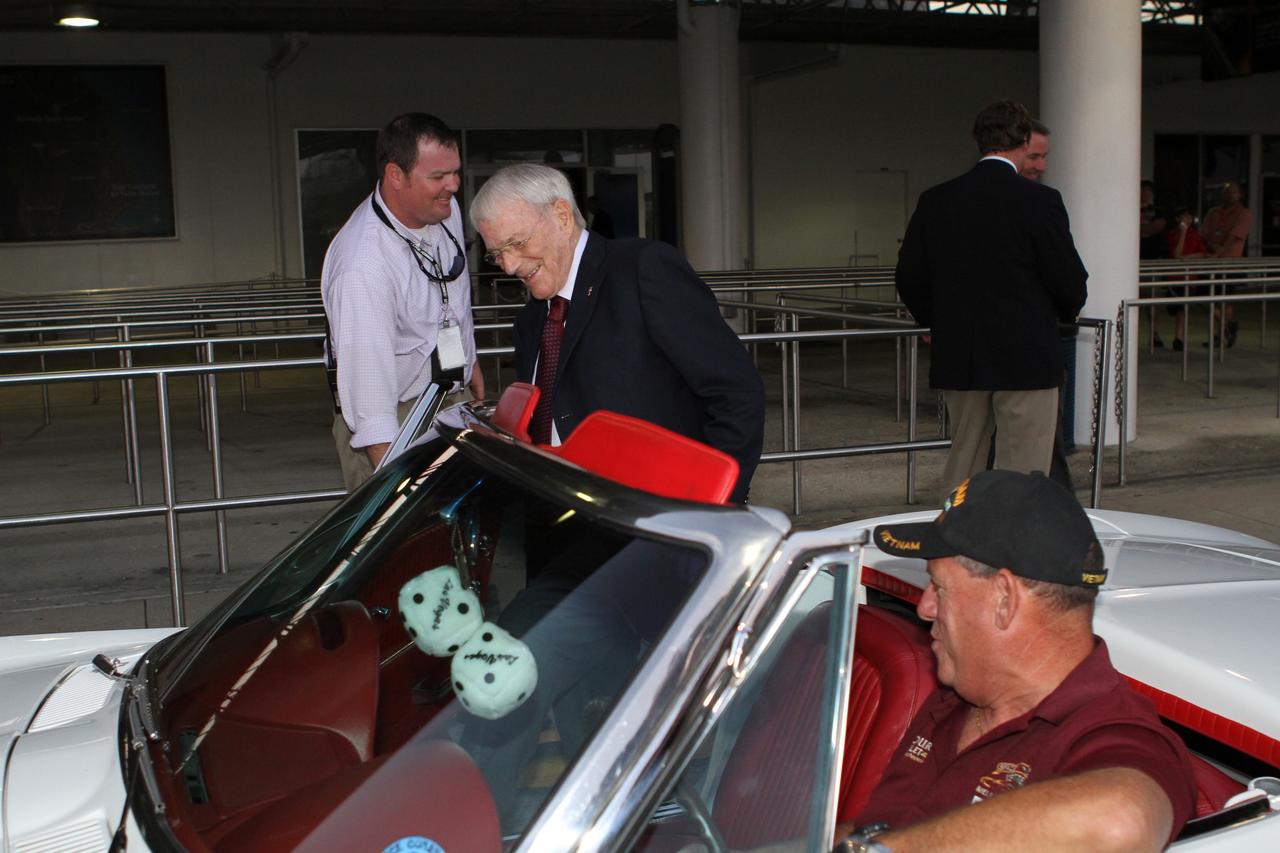
CAPE CANAVERAL, Fla. -- Mercury astronaut Scott Carpenter, center, prepares to ride in the Corvette parade following the "On Shoulders of Giants" program celebrating 50 years of Americans in orbit, an era which began with Glenn's MA-6 mission on Feb. 20, 1962. The event was conducted in the Rocket Garden at the Kennedy Space Center Visitor Complex in Florida a few miles from the launch pad where Glenn and Carpenter took flight in Mercury spacecraft. Glenn's launch aboard an Atlas rocket took with it the hopes of an entire nation and ushered in a new era of space travel that eventually led to Americans walking on the moon by the end of the 1960s. Glenn soon was followed into orbit by Scott Carpenter, Walter Schirra and Gordon Cooper. Their fellow Mercury astronauts Alan Shepard and Virgil "Gus" Grissom flew earlier suborbital flights. Deke Slayton, a member of NASA's original Mercury 7 astronauts, was grounded by a medical condition until the Apollo-Soyuz Test Project in 1975. Photo credit: Kim Shiflett
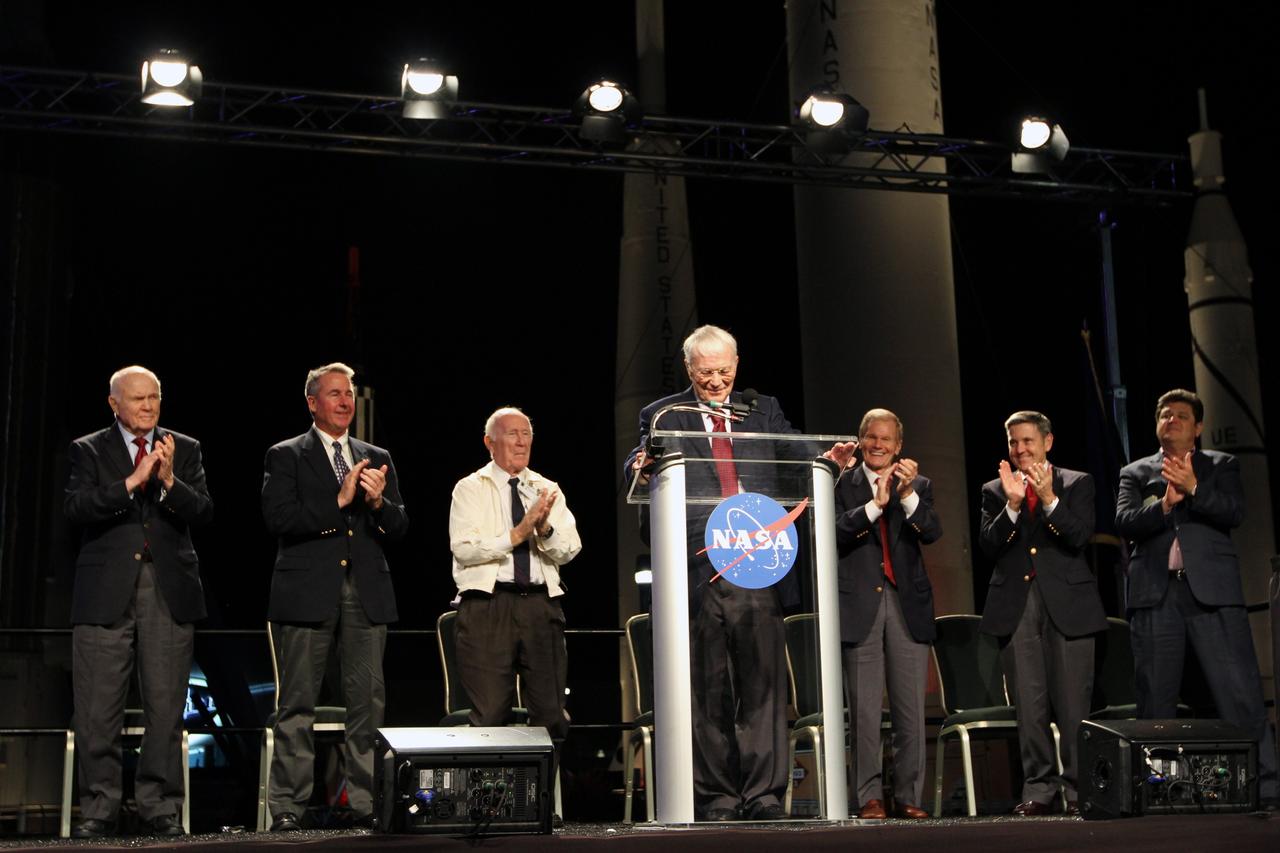
CAPE CANAVERAL, Fla. --Mercury astronaut Scott Carpenter speaks during the "On Shoulders of Giants" program celebrating 50 years of Americans in orbit, an era which began with John Glenn's MA-6 mission on Feb. 20, 1962. The event was conducted in the Rocket Garden at the Kennedy Space Center Visitor Complex in Florida a few miles from the launch pad where Glenn and Scott Carpenter took flight in Mercury spacecraft. Glenn's launch aboard an Atlas rocket took with it the hopes of an entire nation and ushered in a new era of space travel that eventually led to Americans walking on the moon by the end of the 1960s. Glenn soon was followed into orbit by Scott Carpenter, Walter Schirra and Gordon Cooper. Their fellow Mercury astronauts Alan Shepard and Virgil "Gus" Grissom flew earlier suborbital flights. Deke Slayton, a member of NASA's original Mercury 7 astronauts, was grounded by a medical condition until the Apollo-Soyuz Test Project in 1975. Photo credit: Kim Shiflett
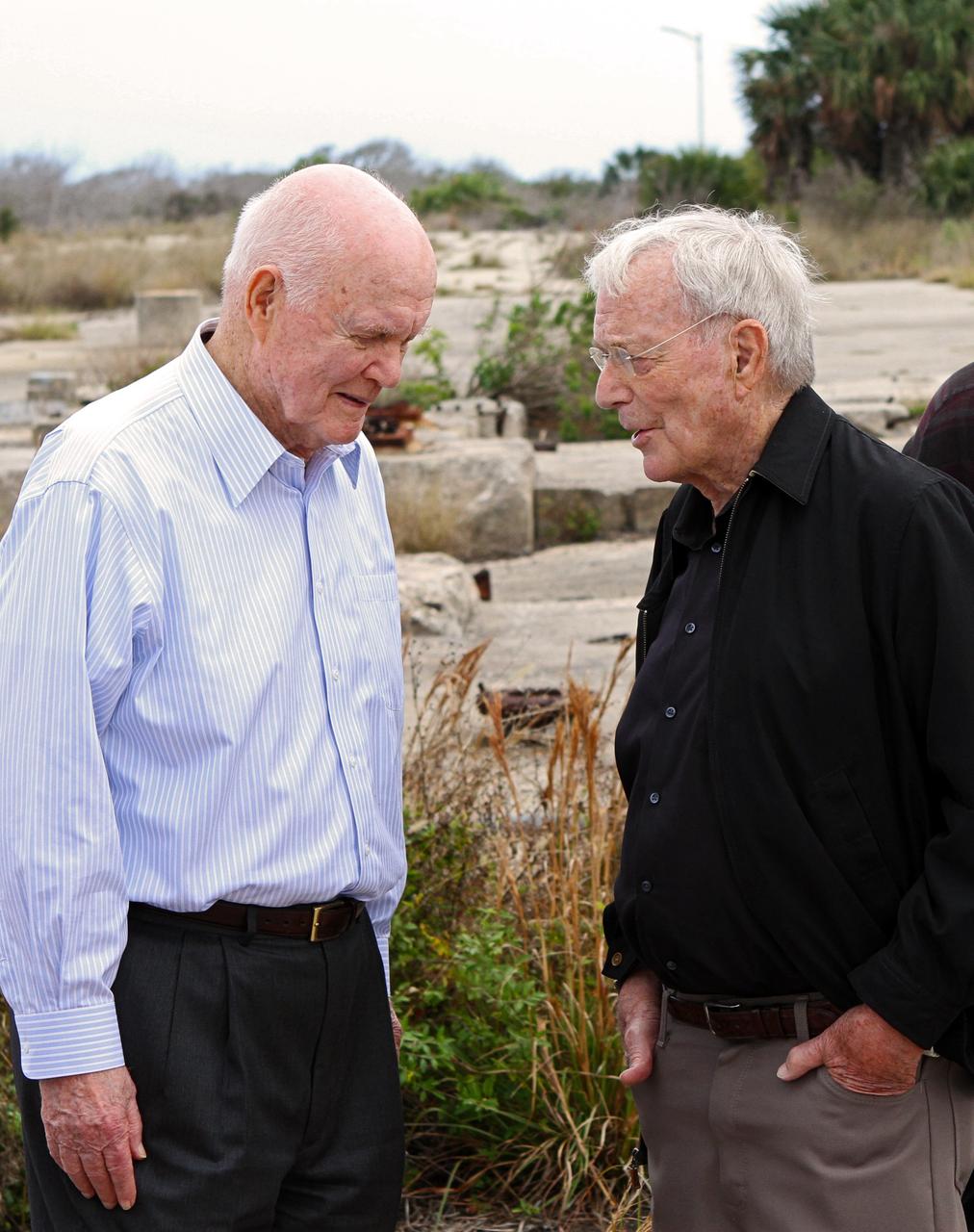
CAPE CANAVERAL, Fla. -- Mercury astronauts John Glenn, left and Scott Carpenter look around at the dismantled Complex 14 at Cape Canaveral Air Force Station in Florida. Glenn and Carpenter launched from the pad on Atlas rockets inside Mercury capsules in 1962. The two astronauts, part of the original class of seven astronauts chosen by NASA, were taking part in events celebrating 50 years of Americans in orbit, an era which began with Glenn's Mercury mission MA-6, on Feb. 20, 1962. Glenn's launch aboard an Atlas rocket took with it the hopes of an entire nation and ushered in a new era of space travel that eventually led to Americans walking on the moon by the end of the 1960s. Glenn soon was followed into orbit by Carpenter, Walter Schirra and Gordon Cooper. Their fellow Mercury astronauts Alan Shepard and Virgil "Gus" Grissom flew earlier suborbital flights. Deke Slayton was grounded by a medical condition until the Apollo-Soyuz Test Project in 1975. Photo credit: NASA/Cory Huston
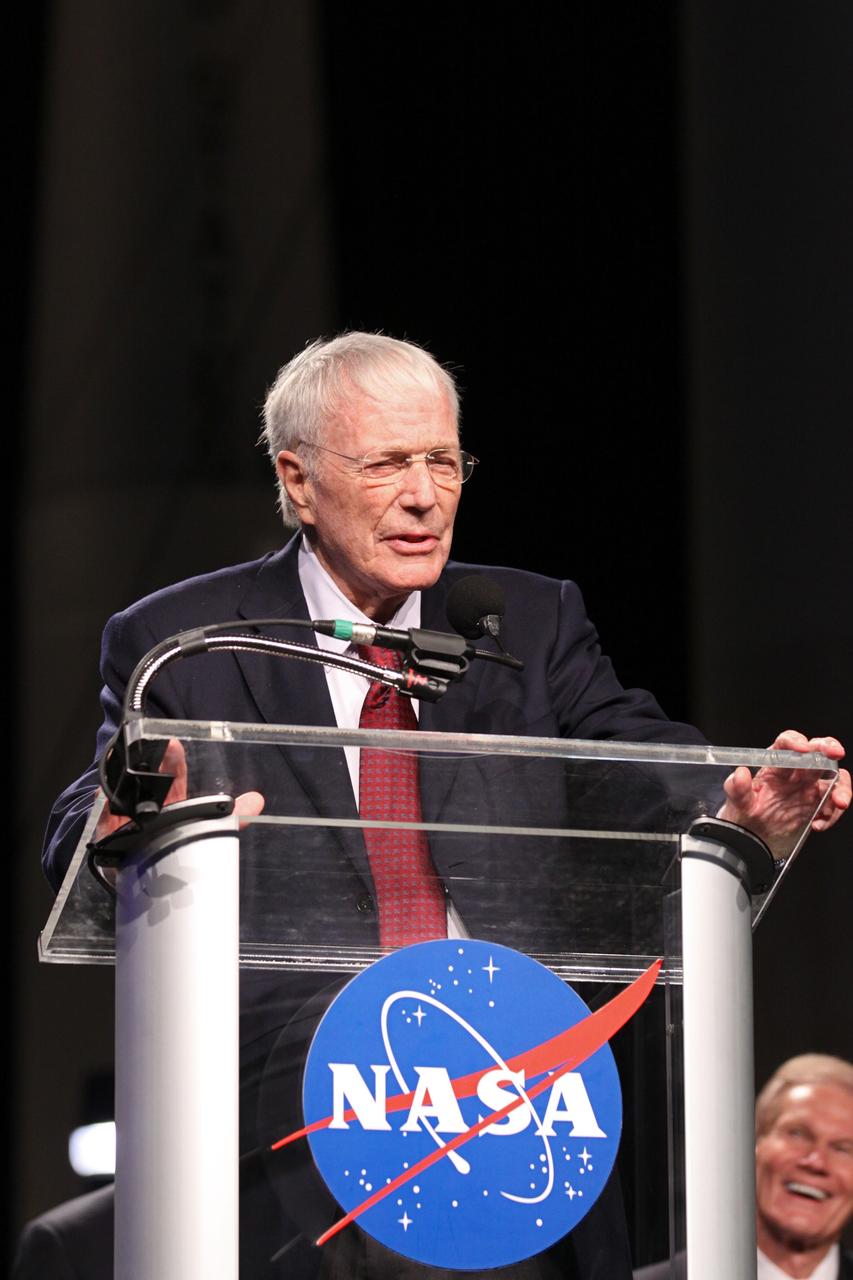
CAPE CANAVERAL, Fla. -- Mercury astronaut Scott Carpenter speaks during the "On Shoulders of Giants" program celebrating 50 years of Americans in orbit, an era which began with John Glenn's MA-6 mission on Feb. 20, 1962. The event was conducted in the Rocket Garden at the Kennedy Space Center Visitor Complex in Florida a few miles from the launch pad where Glenn and Scott Carpenter took flight in Mercury spacecraft. Glenn's launch aboard an Atlas rocket took with it the hopes of an entire nation and ushered in a new era of space travel that eventually led to Americans walking on the moon by the end of the 1960s. Glenn soon was followed into orbit by Scott Carpenter, Walter Schirra and Gordon Cooper. Their fellow Mercury astronauts Alan Shepard and Virgil "Gus" Grissom flew earlier suborbital flights. Deke Slayton, a member of NASA's original Mercury 7 astronauts, was grounded by a medical condition until the Apollo-Soyuz Test Project in 1975. Photo credit: Kim Shiflett
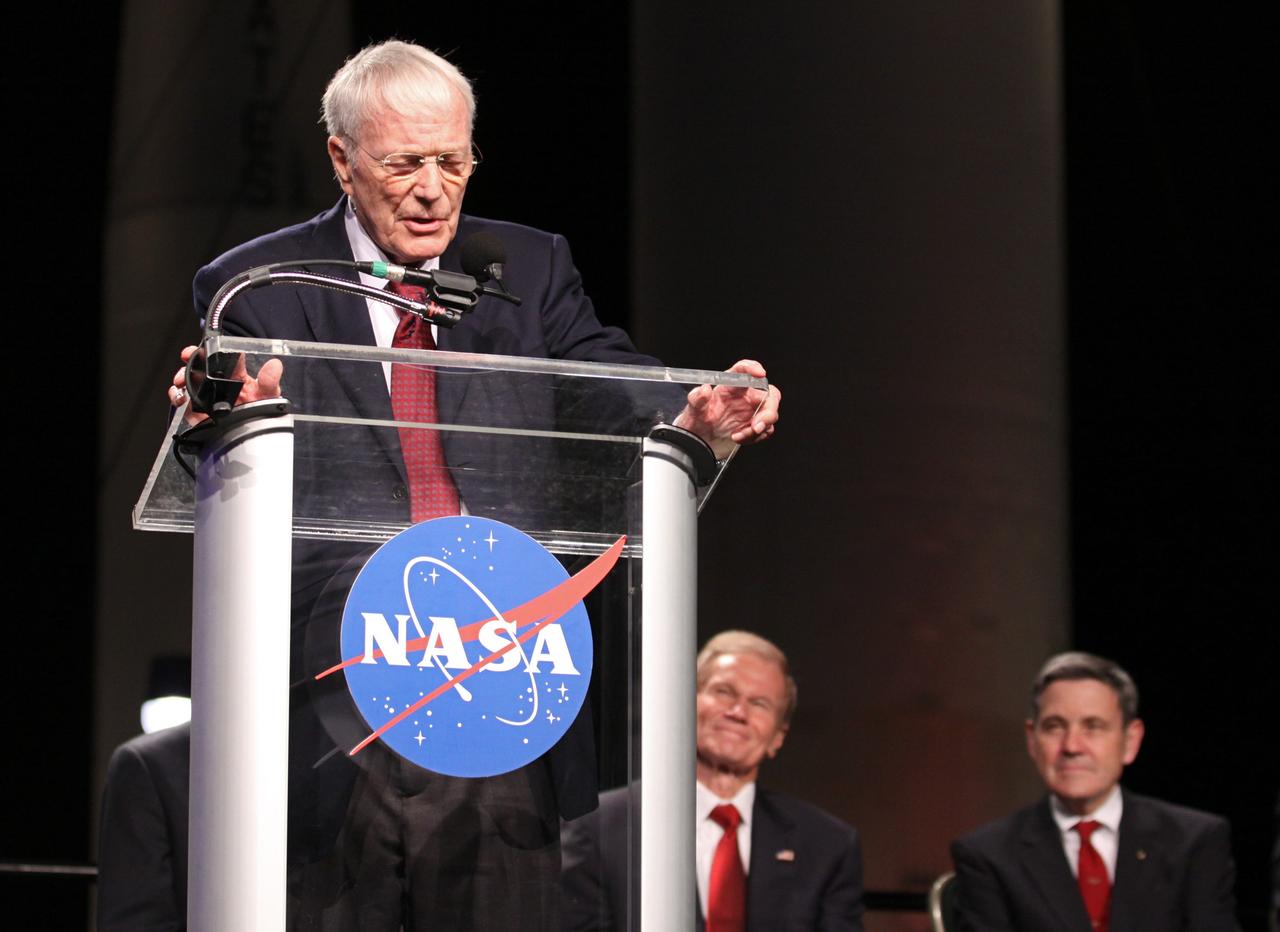
CAPE CANAVERAL, Fla. --Mercury astronaut Scott Carpenter speaks during the "On Shoulders of Giants" program celebrating 50 years of Americans in orbit, an era which began with John Glenn's MA-6 mission on Feb. 20, 1962. The event was conducted in the Rocket Garden at the Kennedy Space Center Visitor Complex in Florida a few miles from the launch pad where Glenn and Scott Carpenter took flight in Mercury spacecraft. Glenn's launch aboard an Atlas rocket took with it the hopes of an entire nation and ushered in a new era of space travel that eventually led to Americans walking on the moon by the end of the 1960s. Glenn soon was followed into orbit by Scott Carpenter, Walter Schirra and Gordon Cooper. Their fellow Mercury astronauts Alan Shepard and Virgil "Gus" Grissom flew earlier suborbital flights. Deke Slayton, a member of NASA's original Mercury 7 astronauts, was grounded by a medical condition until the Apollo-Soyuz Test Project in 1975. Photo credit: Kim Shiflett
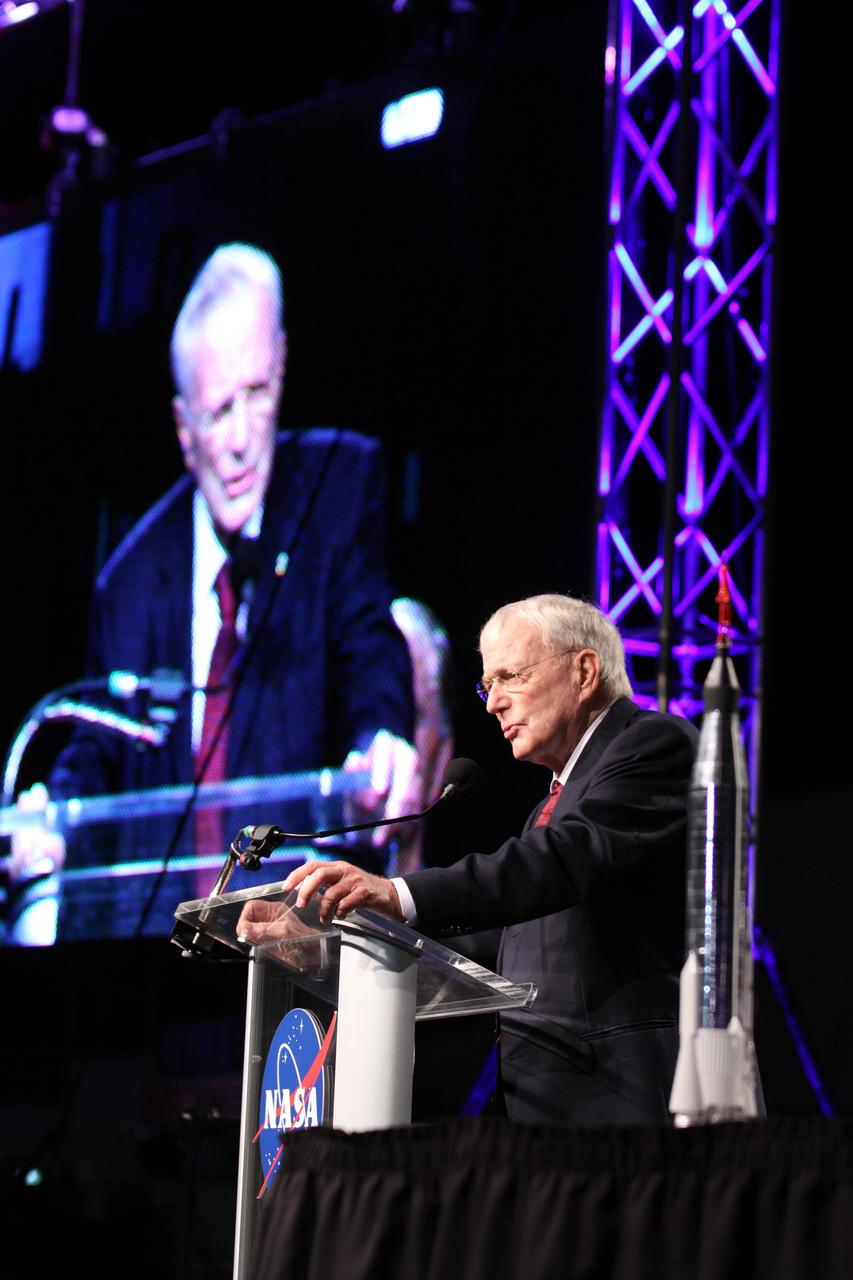
CAPE CANAVERAL, Fla. --Mercury astronaut Scott Carpenter speaks during the "On Shoulders of Giants" program celebrating 50 years of Americans in orbit, an era which began with John Glenn's MA-6 mission on Feb. 20, 1962. The event was conducted in the Rocket Garden at the Kennedy Space Center Visitor Complex in Florida a few miles from the launch pad where Glenn and Scott Carpenter took flight in Mercury spacecraft. Glenn's launch aboard an Atlas rocket took with it the hopes of an entire nation and ushered in a new era of space travel that eventually led to Americans walking on the moon by the end of the 1960s. Glenn soon was followed into orbit by Scott Carpenter, Walter Schirra and Gordon Cooper. Their fellow Mercury astronauts Alan Shepard and Virgil "Gus" Grissom flew earlier suborbital flights. Deke Slayton, a member of NASA's original Mercury 7 astronauts, was grounded by a medical condition until the Apollo-Soyuz Test Project in 1975. Photo credit: Kim Shiflett
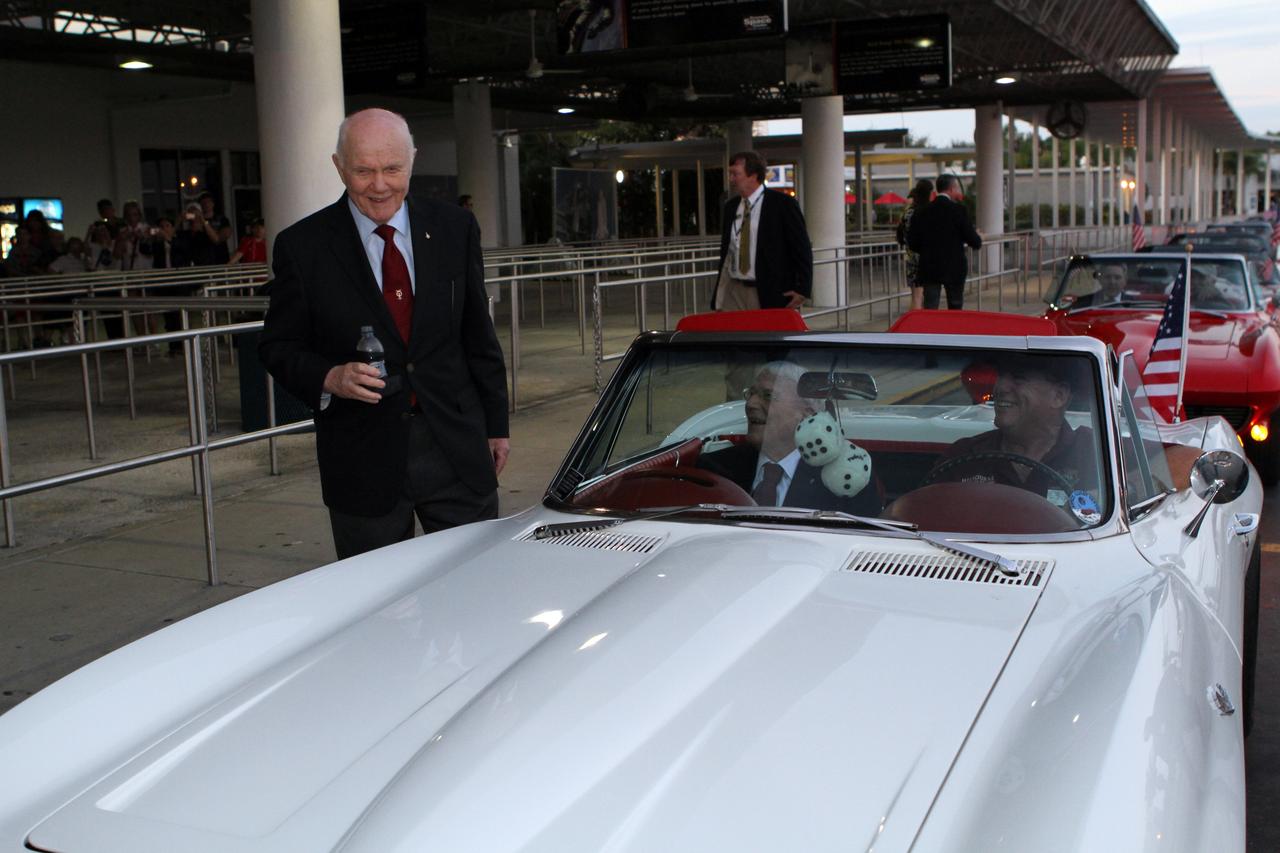
CAPE CANAVERAL, Fla. -- Mercury astronaut John Glenn, left, talks with fellow Mercury astronaut Scott Carpenter before they ride in the Corvette parade following the "On Shoulders of Giants" program celebrating 50 years of Americans in orbit, an era which began with Glenn's MA-6 mission on Feb. 20, 1962. The event was conducted in the Rocket Garden at the Kennedy Space Center Visitor Complex in Florida a few miles from the launch pad where Glenn and Carpenter took flight in Mercury spacecraft. Glenn's launch aboard an Atlas rocket took with it the hopes of an entire nation and ushered in a new era of space travel that eventually led to Americans walking on the moon by the end of the 1960s. Glenn soon was followed into orbit by Scott Carpenter, Walter Schirra and Gordon Cooper. Their fellow Mercury astronauts Alan Shepard and Virgil "Gus" Grissom flew earlier suborbital flights. Deke Slayton, a member of NASA's original Mercury 7 astronauts, was grounded by a medical condition until the Apollo-Soyuz Test Project in 1975. Photo credit: Kim Shiflett
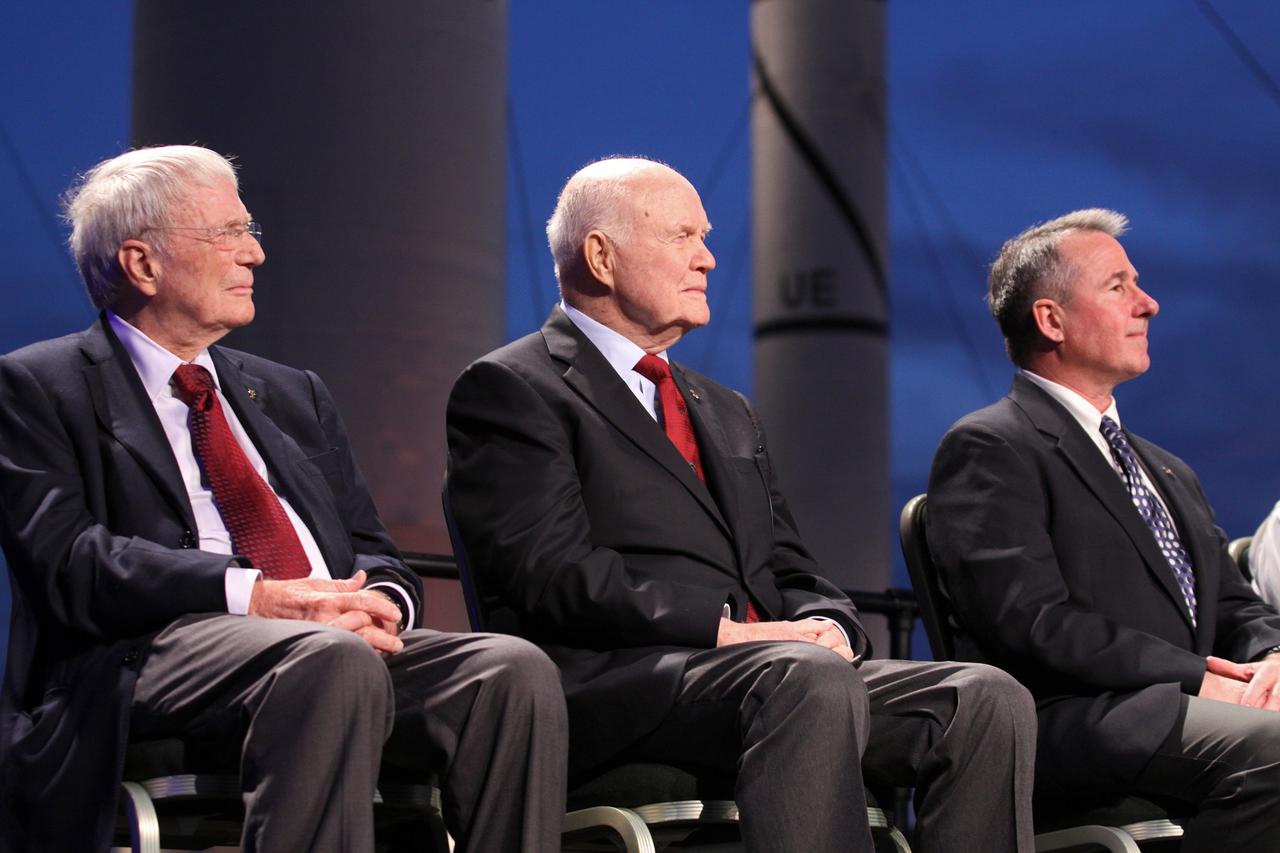
CAPE CANAVERAL, Fla. -- Mercury astronauts Scott Carpenter, left, and John Glenn and astronaut Steve Robinson of STS-95 listen to remarks during the "On Shoulders of Giants" program celebrating 50 years of Americans in orbit, an era which began with Glenn's MA-6 mission on Feb. 20, 1962. The event was conducted in the Rocket Garden at the Kennedy Space Center Visitor Complex in Florida a few miles from the launch pad where Glenn and Carpenter took flight in Mercury spacecraft. Glenn's launch aboard an Atlas rocket took with it the hopes of an entire nation and ushered in a new era of space travel that eventually led to Americans walking on the moon by the end of the 1960s. Glenn soon was followed into orbit by Carpenter, Walter Schirra and Gordon Cooper. Their fellow Mercury astronauts Alan Shepard and Virgil "Gus" Grissom flew earlier suborbital flights. Deke Slayton, a member of NASA's original Mercury 7 astronauts, was grounded by a medical condition until the Apollo-Soyuz Test Project in 1975. Photo credit: Kim Shiflett
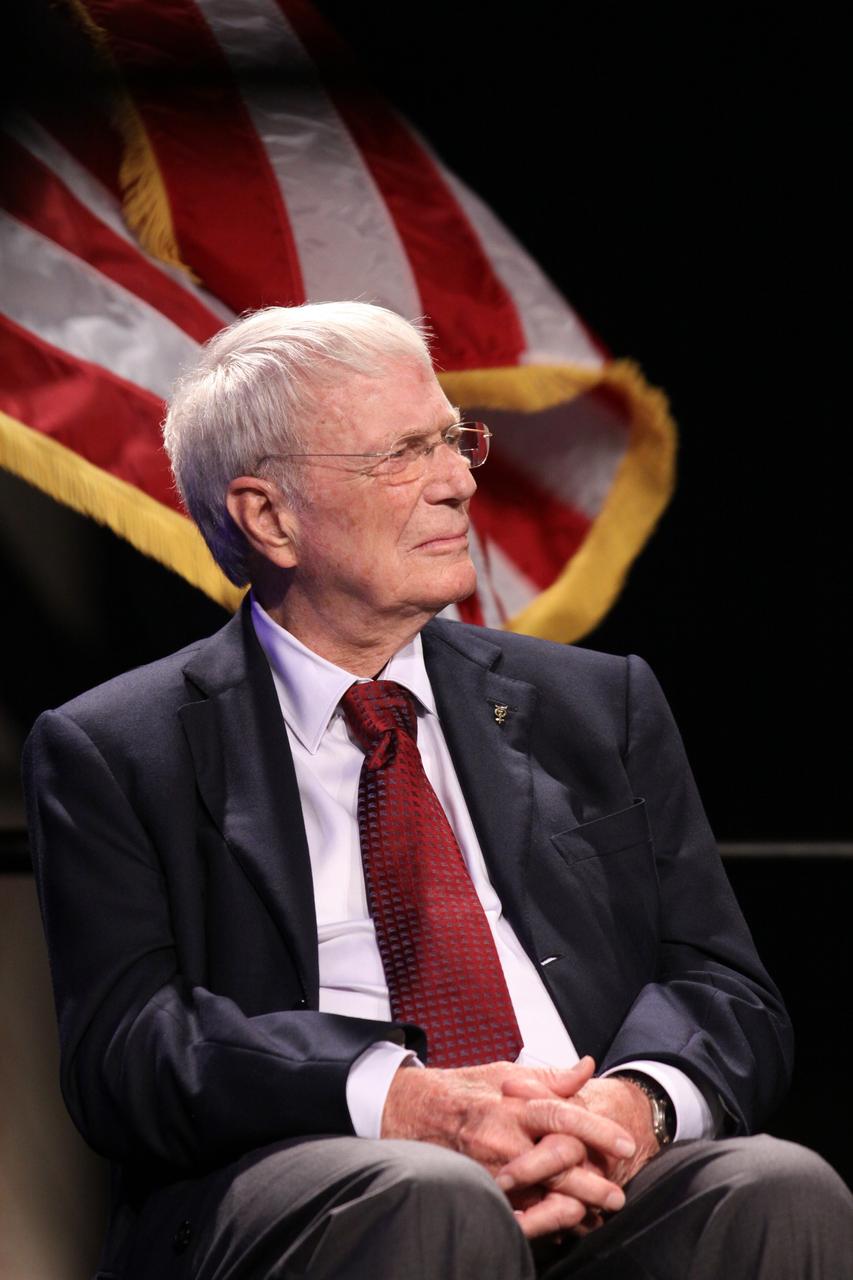
CAPE CANAVERAL, Fla. -- Mercury astronaut Scott Carpenter listens to remarks during the "On Shoulders of Giants" program celebrating 50 years of Americans in orbit, an era which began with John Glenn's MA-6 mission on Feb. 20, 1962. The event was conducted in the Rocket Garden at the Kennedy Space Center Visitor Complex in Florida a few miles from the launch pad where Glenn and Scott Carpenter took flight in Mercury spacecraft. Glenn's launch aboard an Atlas rocket took with it the hopes of an entire nation and ushered in a new era of space travel that eventually led to Americans walking on the moon by the end of the 1960s. Glenn soon was followed into orbit by Scott Carpenter, Walter Schirra and Gordon Cooper. Their fellow Mercury astronauts Alan Shepard and Virgil "Gus" Grissom flew earlier suborbital flights. Deke Slayton, a member of NASA's original Mercury 7 astronauts, was grounded by a medical condition until the Apollo-Soyuz Test Project in 1975. Photo credit: Kim Shiflett
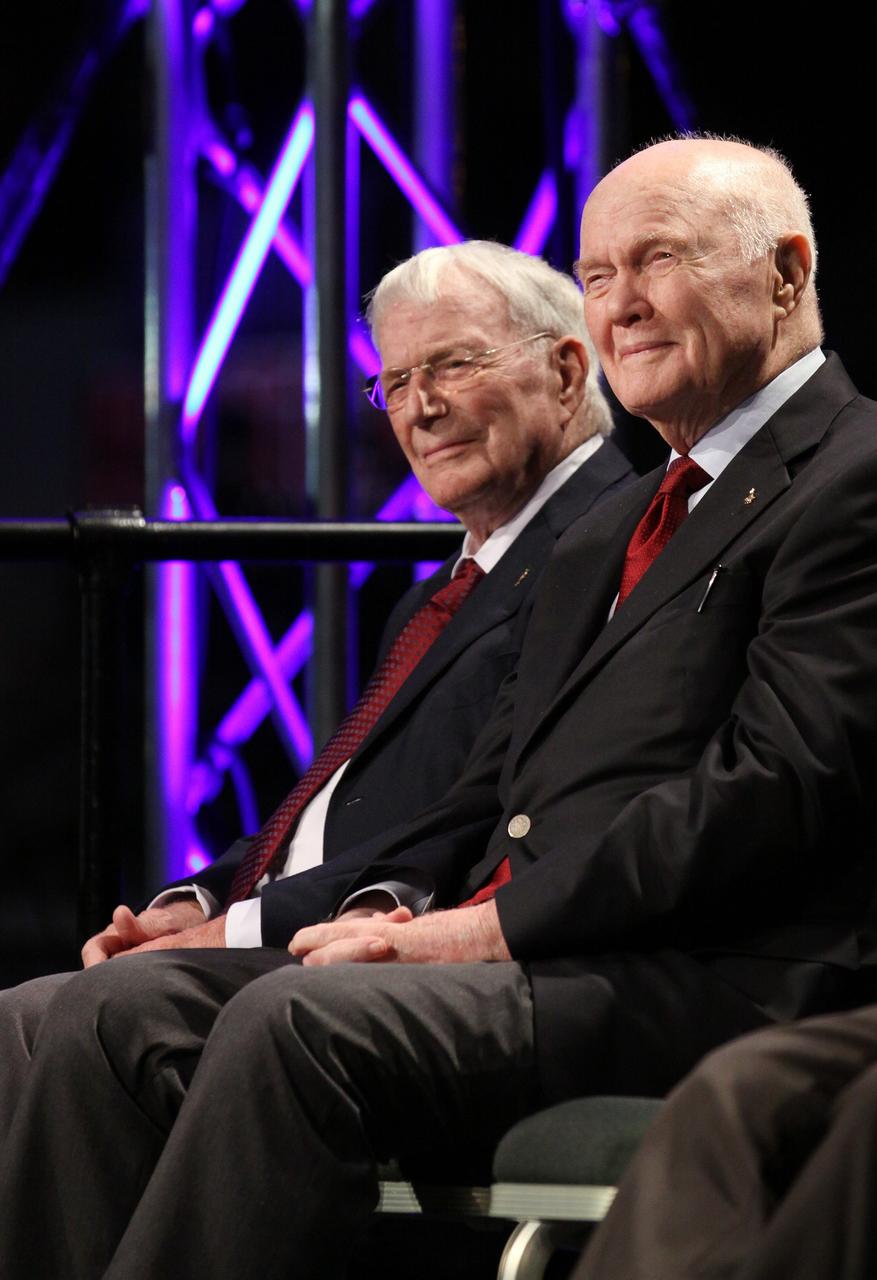
CAPE CANAVERAL, Fla. -- Mercury astronauts Scott Carpenter, left, and John Glenn listen to remarks during the "On Shoulders of Giants" program celebrating 50 years of Americans in orbit, an era which began with Glenn's MA-6 mission on Feb. 20, 1962. The event was conducted in the Rocket Garden at the Kennedy Space Center Visitor Complex in Florida a few miles from the launch pad where Glenn and Carpenter took flight in Mercury spacecraft. Glenn's launch aboard an Atlas rocket took with it the hopes of an entire nation and ushered in a new era of space travel that eventually led to Americans walking on the moon by the end of the 1960s. Glenn soon was followed into orbit by Carpenter, Walter Schirra and Gordon Cooper. Their fellow Mercury astronauts Alan Shepard and Virgil "Gus" Grissom flew earlier suborbital flights. Deke Slayton, a member of NASA's original Mercury 7 astronauts, was grounded by a medical condition until the Apollo-Soyuz Test Project in 1975. Photo credit: Kim Shiflett
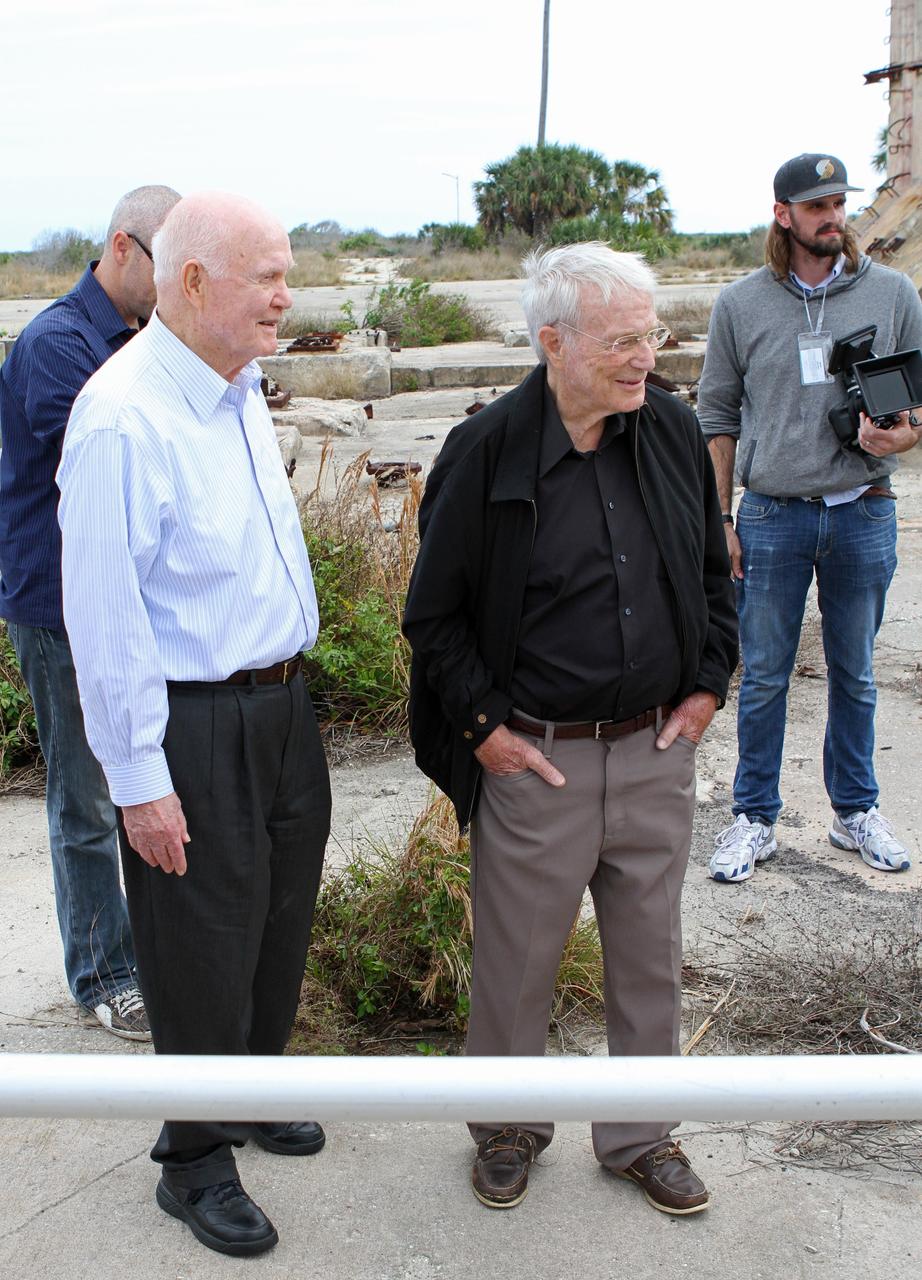
CAPE CANAVERAL, Fla. -- Mercury astronauts John Glenn, second from left and Scott Carpenter look around at the dismantled Complex 14 at Cape Canaveral Air Force Station in Florida. Glenn and Carpenter launched from the pad on Atlas rockets inside Mercury capsules in 1962. The two astronauts, part of the original class of seven astronauts chosen by NASA, were taking part in events celebrating 50 years of Americans in orbit, an era which began with Glenn's Mercury mission MA-6, on Feb. 20, 1962. Glenn's launch aboard an Atlas rocket took with it the hopes of an entire nation and ushered in a new era of space travel that eventually led to Americans walking on the moon by the end of the 1960s. Glenn soon was followed into orbit by Carpenter, Walter Schirra and Gordon Cooper. Their fellow Mercury astronauts Alan Shepard and Virgil "Gus" Grissom flew earlier suborbital flights. Deke Slayton was grounded by a medical condition until the Apollo-Soyuz Test Project in 1975. Photo credit: NASA/ Cory Huston
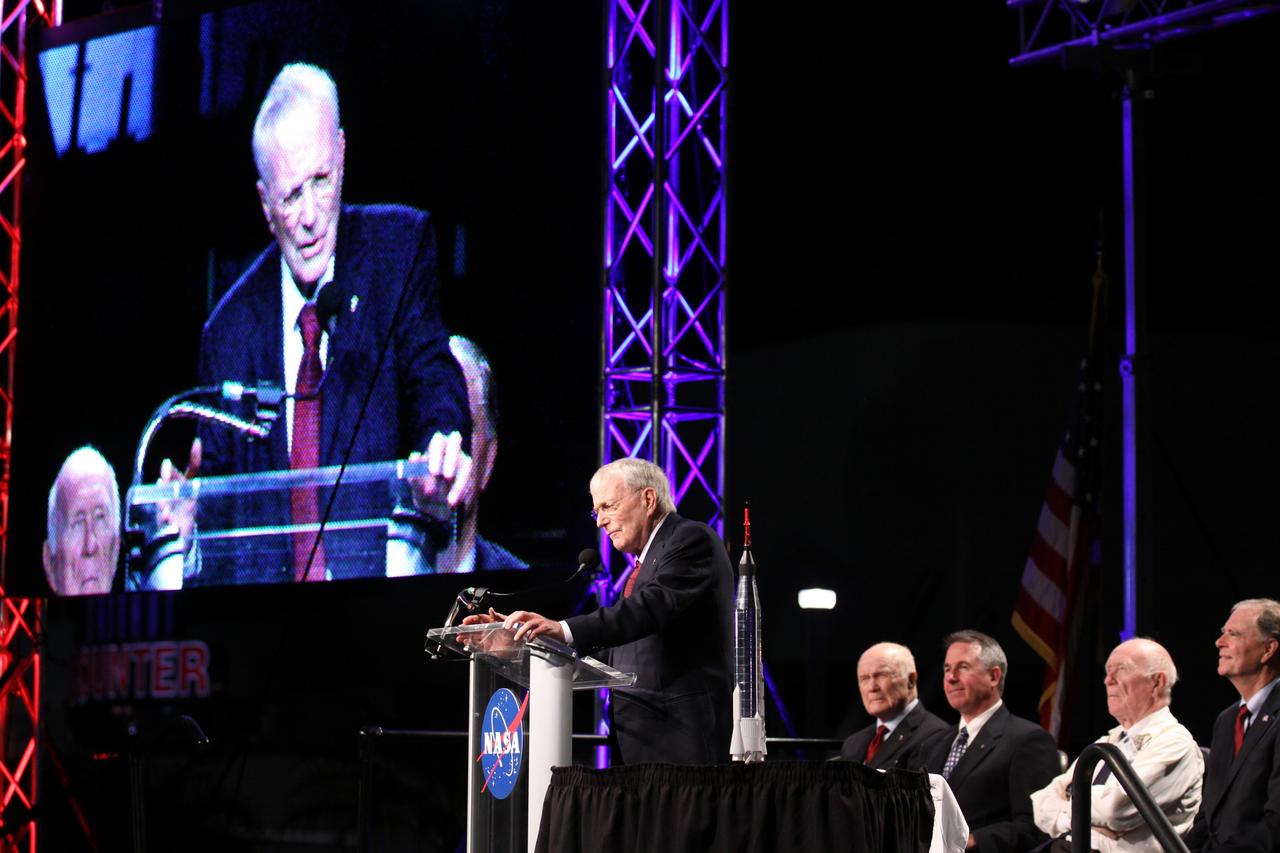
CAPE CANAVERAL, Fla. -- Mercury astronaut Scott Carpenter speaks during the "On Shoulders of Giants" program celebrating 50 years of Americans in orbit, an era which began with John Glenn's MA-6 mission on Feb. 20, 1962. The event was conducted in the Rocket Garden at the Kennedy Space Center Visitor Complex in Florida a few miles from the launch pad where Glenn and Scott Carpenter took flight in Mercury spacecraft. Glenn's launch aboard an Atlas rocket took with it the hopes of an entire nation and ushered in a new era of space travel that eventually led to Americans walking on the moon by the end of the 1960s. Glenn soon was followed into orbit by Scott Carpenter, Walter Schirra and Gordon Cooper. Their fellow Mercury astronauts Alan Shepard and Virgil "Gus" Grissom flew earlier suborbital flights. Deke Slayton, a member of NASA's original Mercury 7 astronauts, was grounded by a medical condition until the Apollo-Soyuz Test Project in 1975. Photo credit: Kim Shiflett
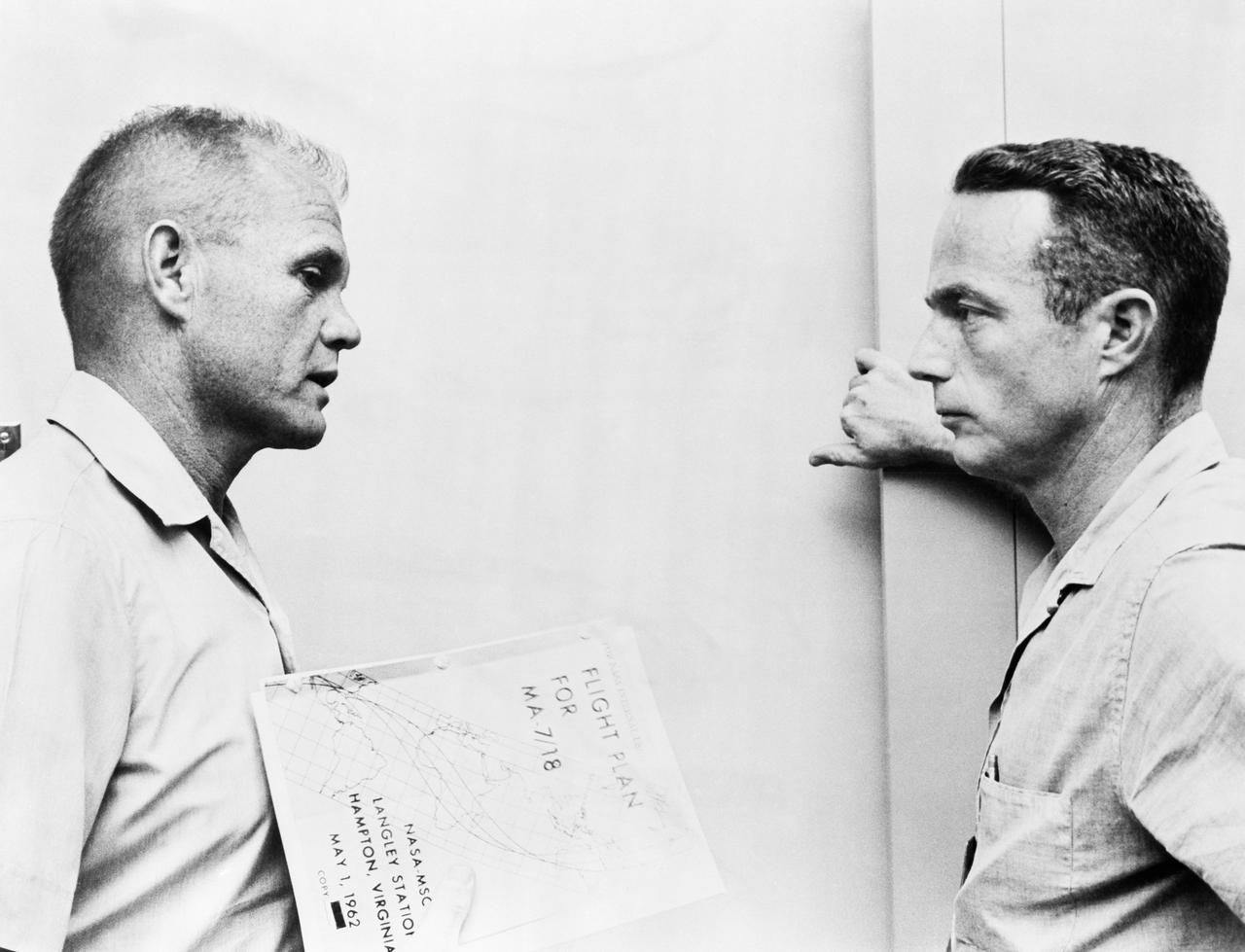
S62-02830 (1962) --- Astronauts John Glenn (left) and Scott Carpenter go over the flight plan for MA-7 mission. (62-MA7-63) Photo credit: NASA
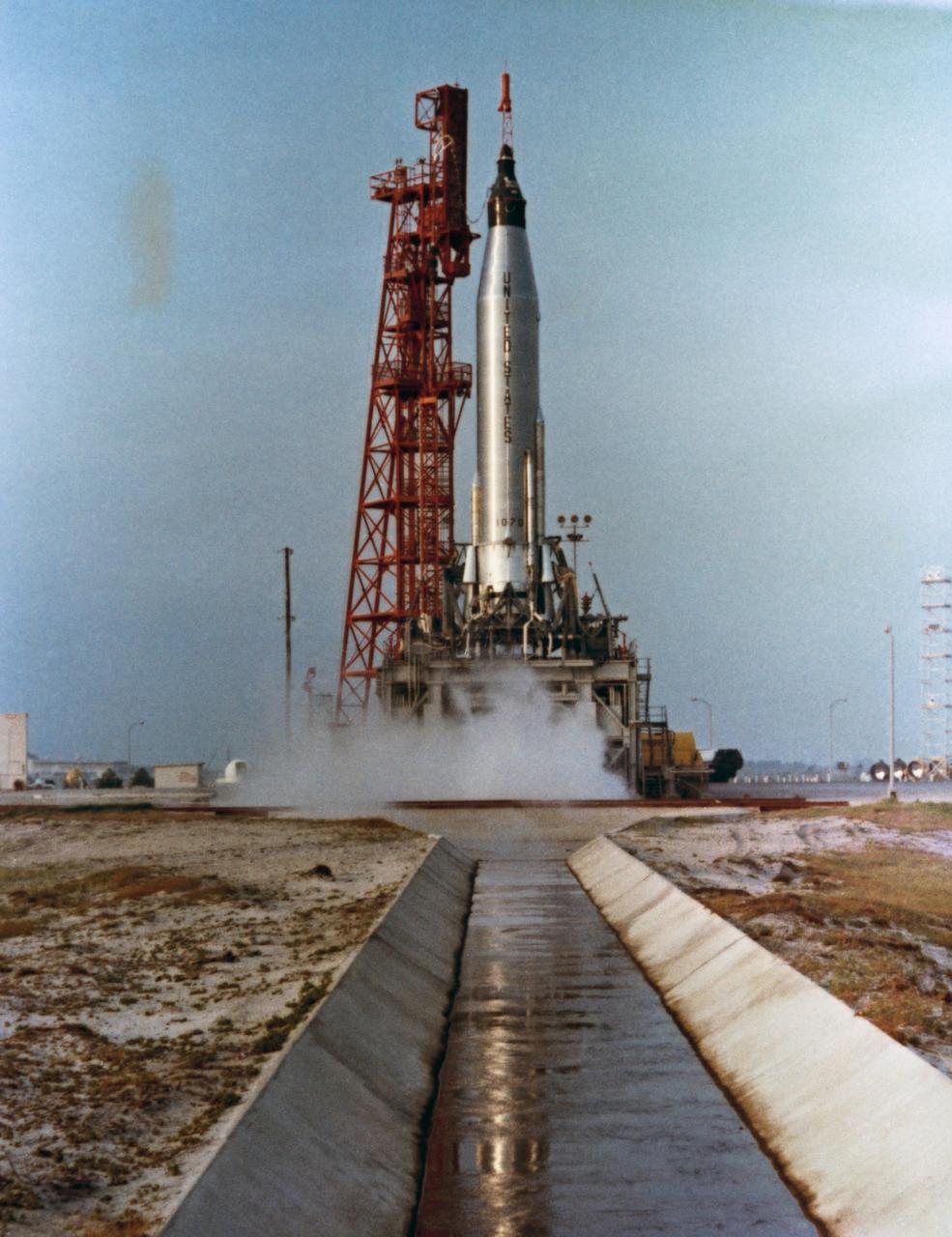
The MA-7 Booster ignites on the pad and is seconds away from actual liftoff. Aboard the spacecraft is Astronaut M. Scott Carpenter, the U.S. second man to orbit the Earth. CAPE CANAVERAL, FL CN
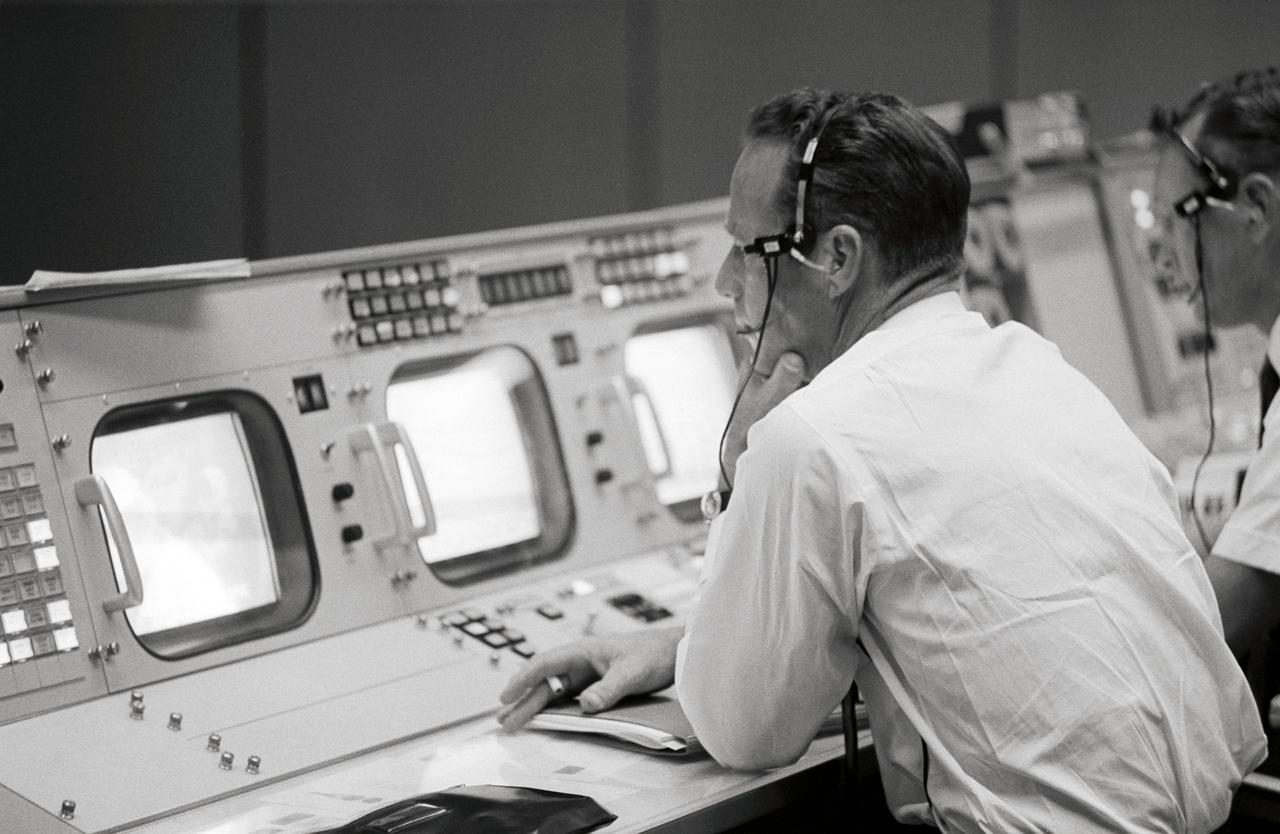
S66-51794 (12 Sept. 1966) --- Astronaut M. Scott Carpenter monitors the Booster Systems Console in the Manned Spacecraft Center (MSC) Mission Control Center during launch of the Gemini-11 spaceflight. Photo credit: NASA
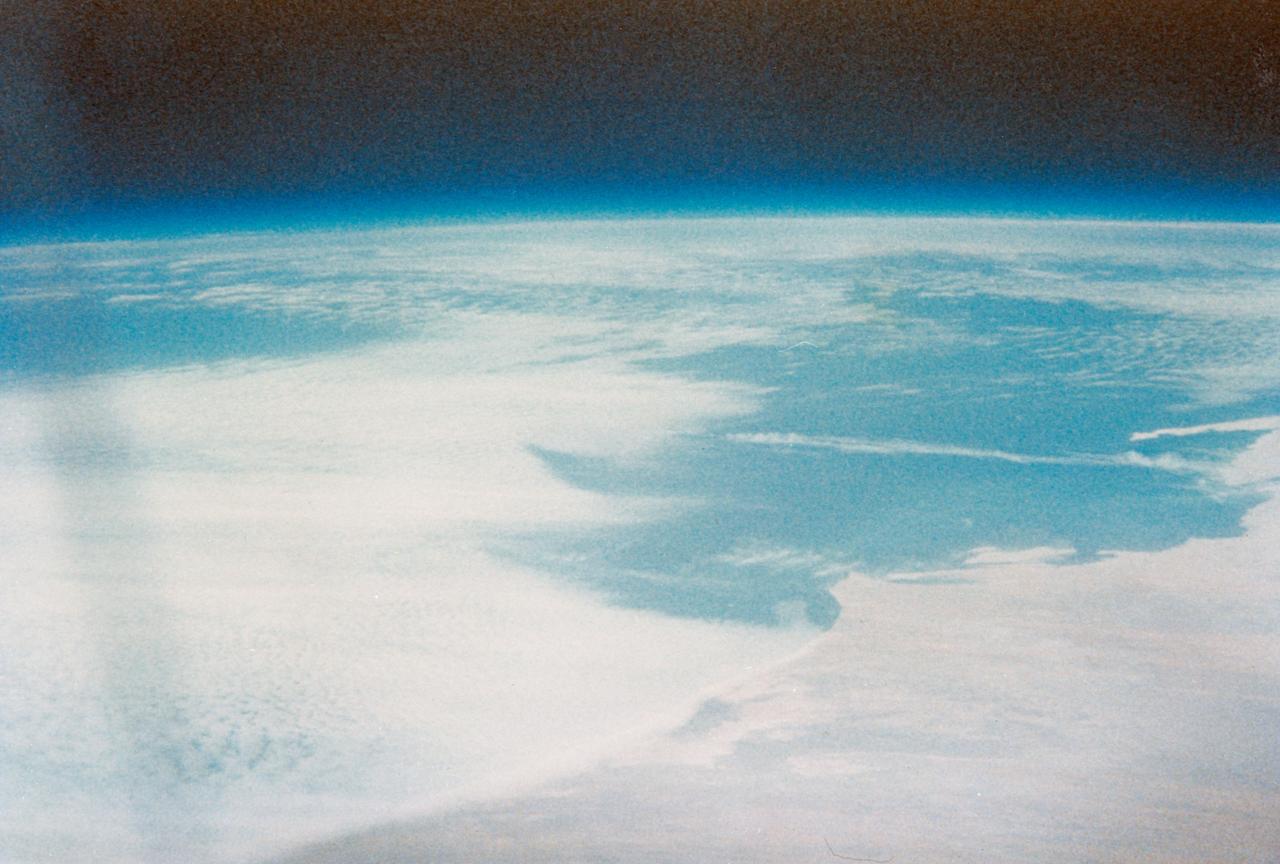
S62-03266 (24 May 1962) --- Earth and sky views taken with hand-held camera by astronaut M. Scott Carpenter during Mercury-Atlas 7 (MA-7) mission. Photo credit: NASA
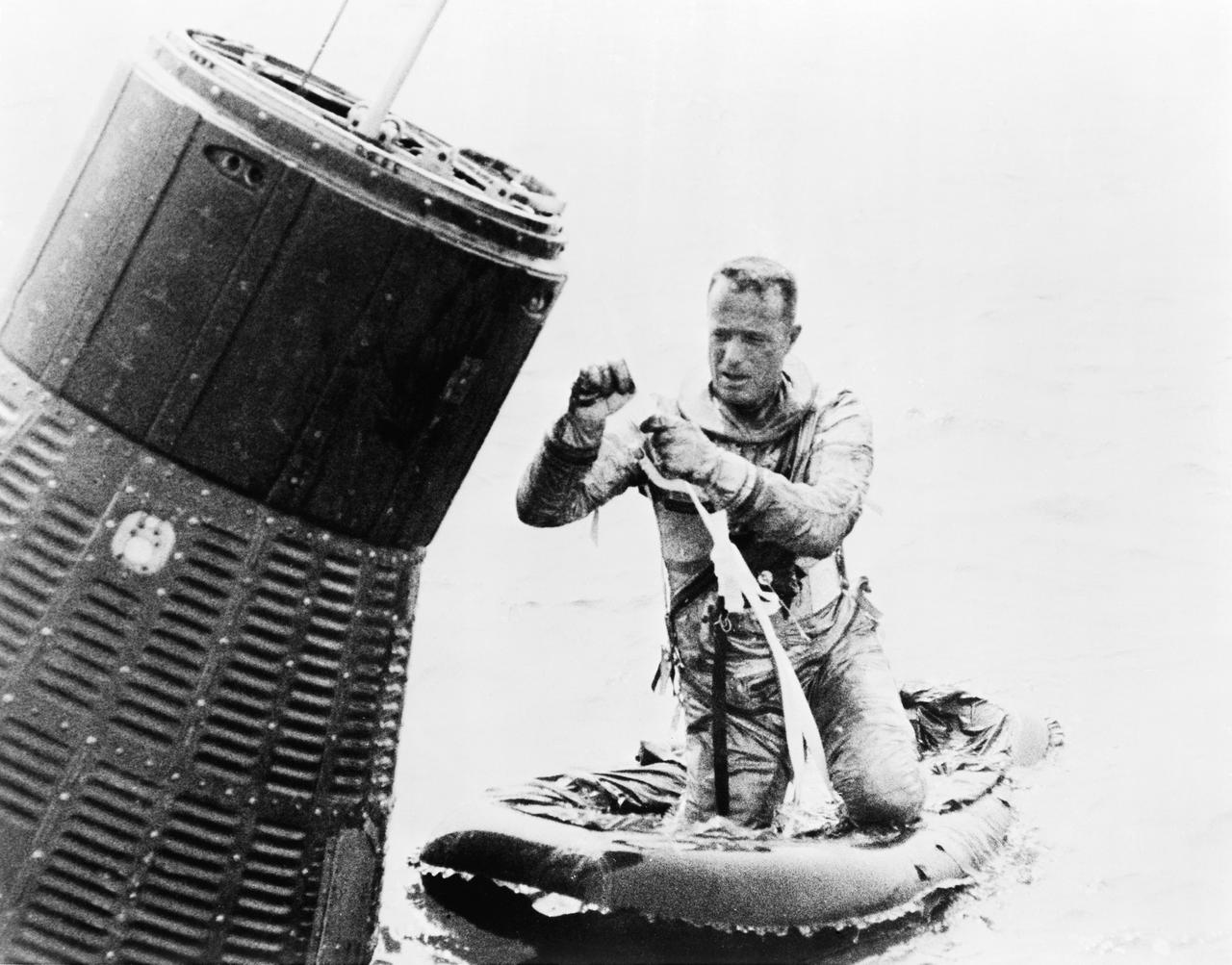
S62-02852 (1962) --- Astronaut M. Scott Carpenter, prime pilot for the Mercury-Atlas 7 (MA-7) mission, goes through a water egress training session. Photo credit: NASA
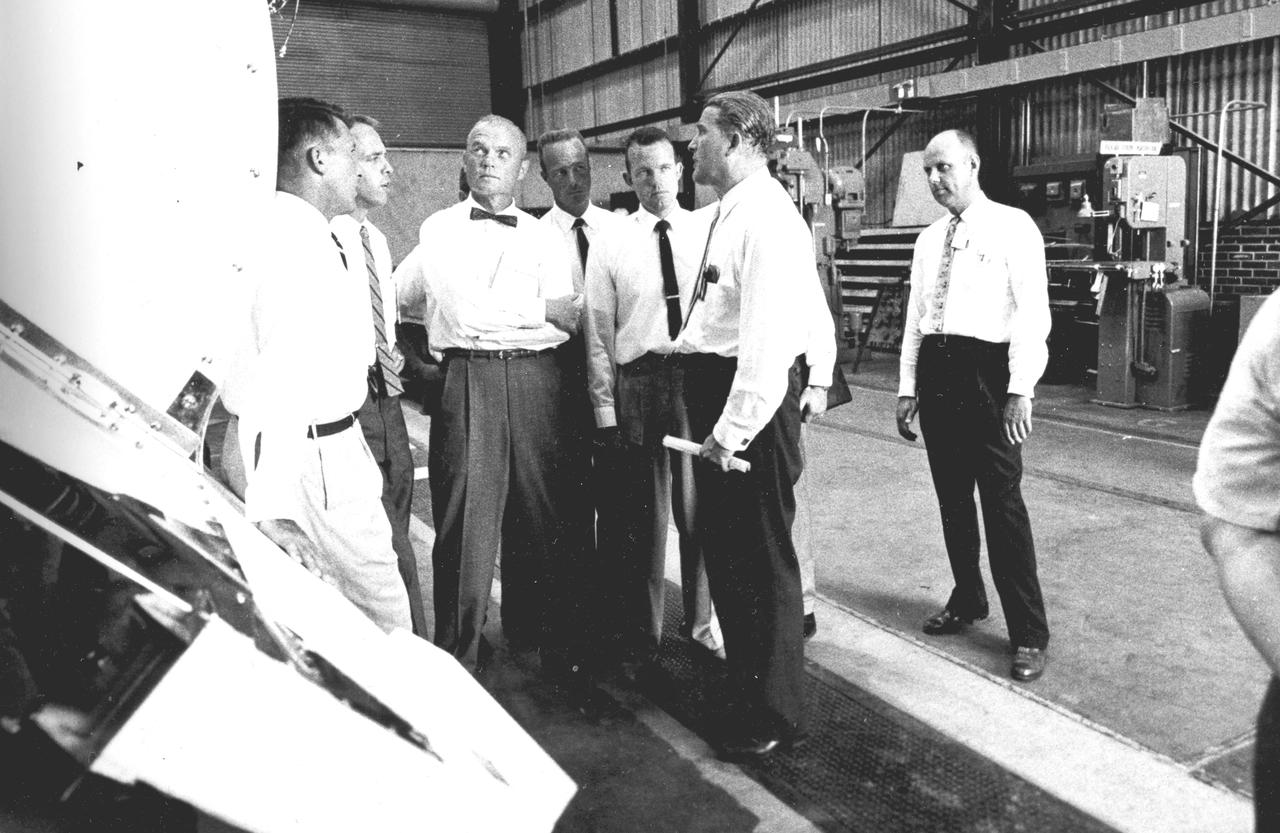
Five of the seven original astronauts are seen with Dr. von Braun inspecting the Mercury-Redstone hardware in the Fabrication Laboratory of Army Ballistic Missile Agency (ABMA) in 1959. Left to right: Astronauts Walter Schirra, Alan Shepard, John Glenn, Scott Carpenter, Gordon Cooper, and Dr. von Braun.
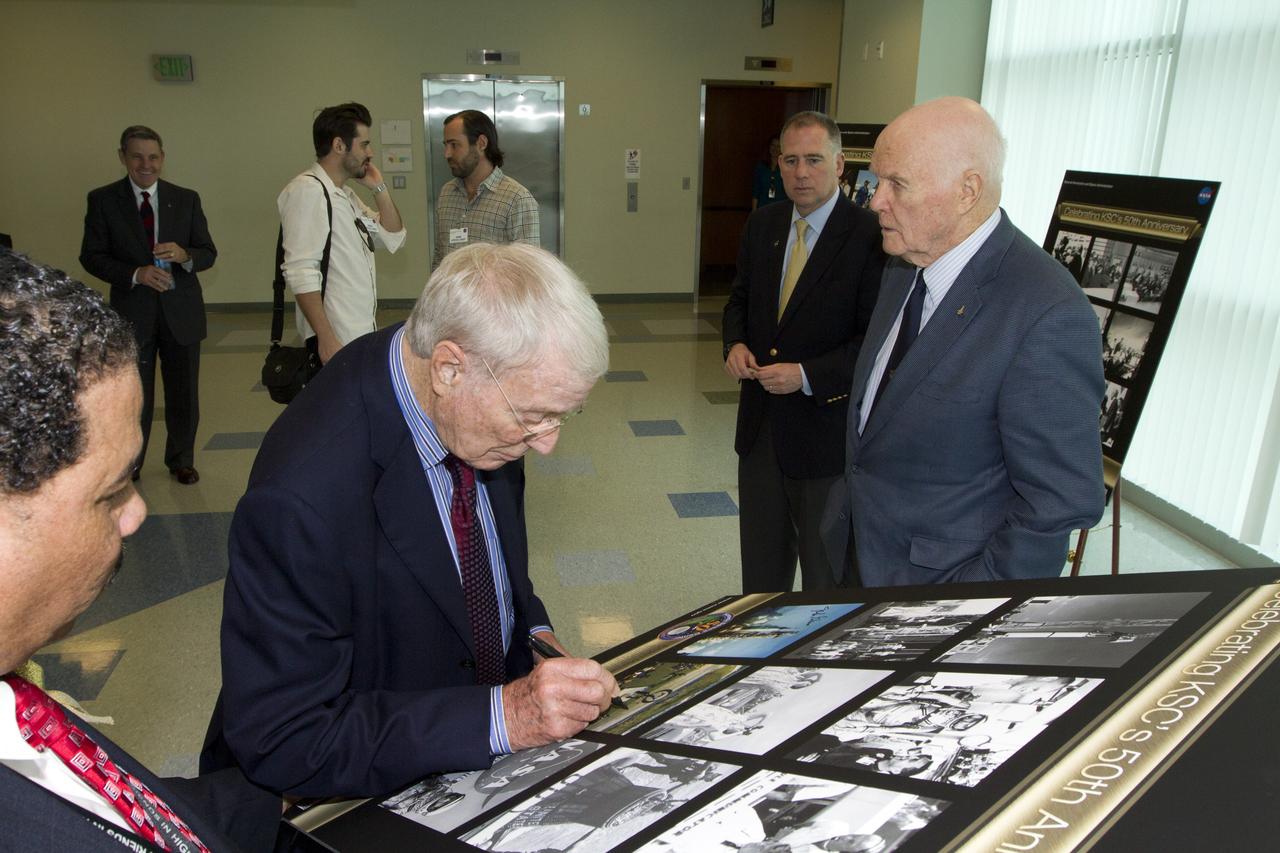
CAPE CANAVERAL, Fla. - Mercury astronaut Scott Carpenter signs a poster celebrating 50 years of Americans in orbit, an era which began with Glenn's Mercury mission MA-6, on Feb. 20, 1962. Glenn's launch aboard an Atlas rocket took with it the hopes of an entire nation and ushered in a new era of space travel that eventually led to Americans walking on the moon by the end of the 1960s. Glenn soon was followed into orbit by Scott Carpenter, Walter Schirra and Gordon Cooper. Their fellow Mercury astronauts Alan Shepard and Virgil "Gus" Grissom flew earlier suborbital flights. Deke Slayton, a member of NASA's original Mercury 7 astronauts, was grounded by a medical condition until the Apollo-Soyuz Test Project in 1975. Photo credit: NASA/Kim Shiflett
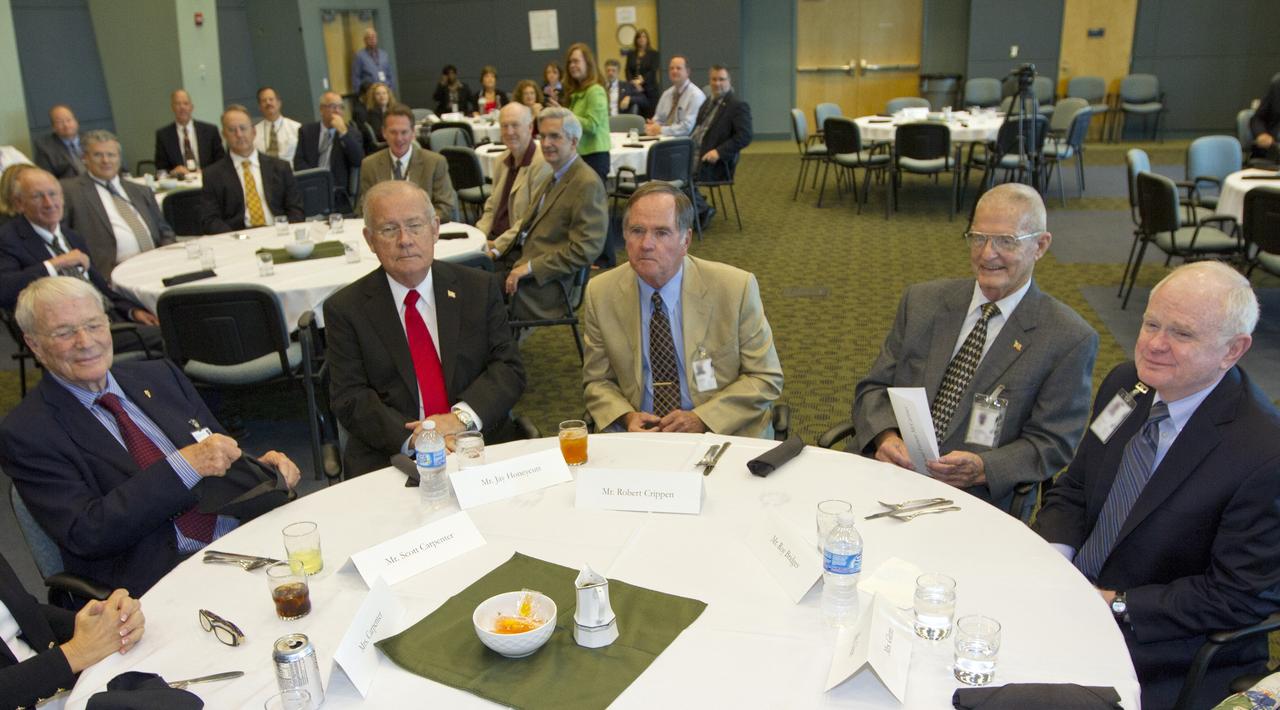
CAPE CANAVERAL, Fla. - Former Mercury astronaut Scott Carpenter, left, and former Kennedy Space Center directors Jay Honeycutt, Bob Crippen, Forrest McCartney and Roy Bridges listen during a luncheon Feb. 17, 2012, celebrating 50 years of Americans in orbit, an era which began with Glenn's Mercury mission MA-6, on Feb. 20, 1962. Glenn's launch aboard an Atlas rocket took with it the hopes of an entire nation and ushered in a new era of space travel that eventually led to Americans walking on the moon by the end of the 1960s. Glenn soon was followed into orbit by Scott Carpenter, Walter Schirra and Gordon Cooper. Their fellow Mercury astronauts Alan Shepard and Virgil "Gus" Grissom flew earlier suborbital flights. Deke Slayton, a member of NASA's original Mercury 7 astronauts, was grounded by a medical condition until the Apollo-Soyuz Test Project in 1975. Photo credit: NASA/Kim Shiflett
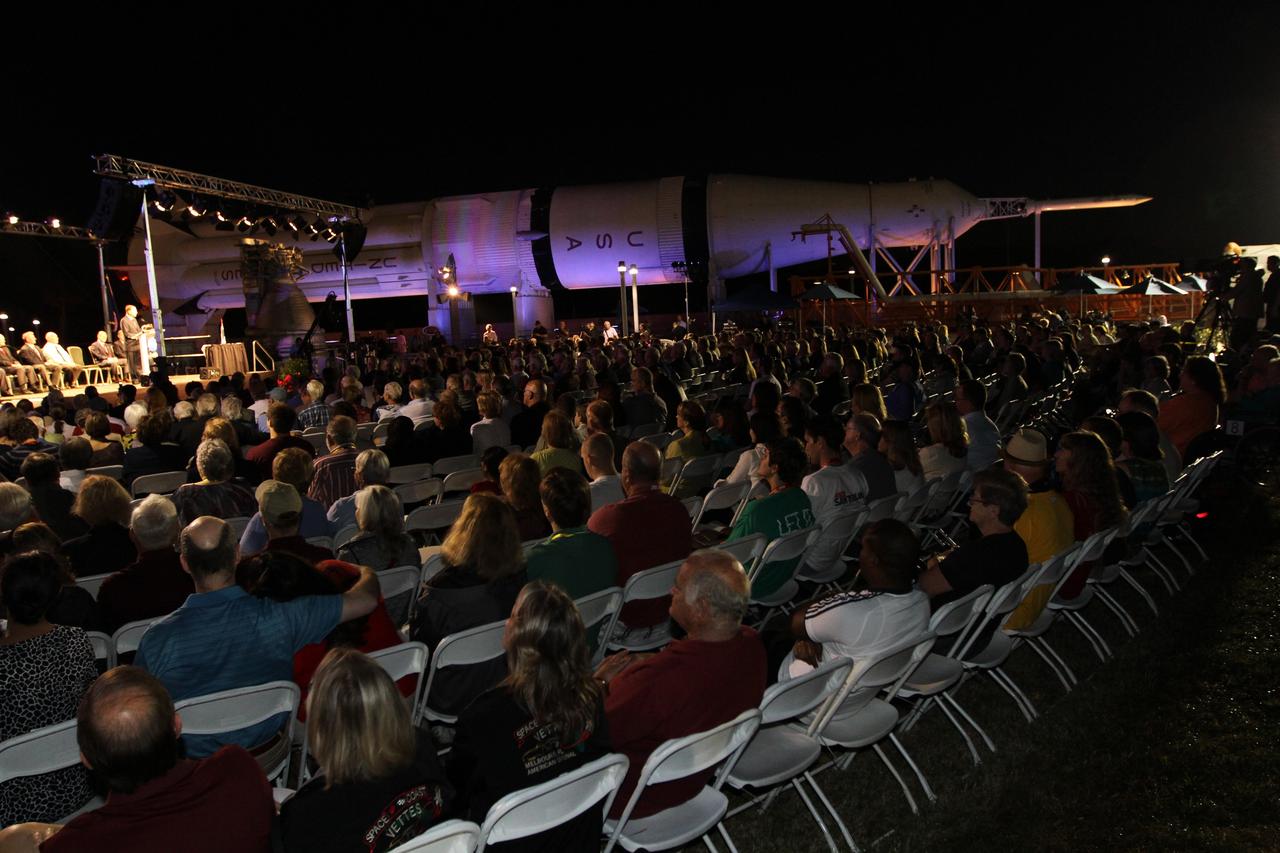
CAPE CANAVERAL, Fla. -- A crowd looks on during the "On Shoulders of Giants" program celebrating 50 years of Americans in orbit, an era which began with John Glenn's MA-6 mission on Feb. 20, 1962. The event was conducted in the Rocket Garden at the Kennedy Space Center Visitor Complex in Florida a few miles from the launch pad where Glenn and Scott Carpenter took flight in Mercury spacecraft. Glenn's launch aboard an Atlas rocket took with it the hopes of an entire nation and ushered in a new era of space travel that eventually led to Americans walking on the moon by the end of the 1960s. Glenn soon was followed into orbit by Scott Carpenter, Walter Schirra and Gordon Cooper. Their fellow Mercury astronauts Alan Shepard and Virgil "Gus" Grissom flew earlier suborbital flights. Deke Slayton, a member of NASA's original Mercury 7 astronauts, was grounded by a medical condition until the Apollo-Soyuz Test Project in 1975. Photo credit: Kim Shiflett
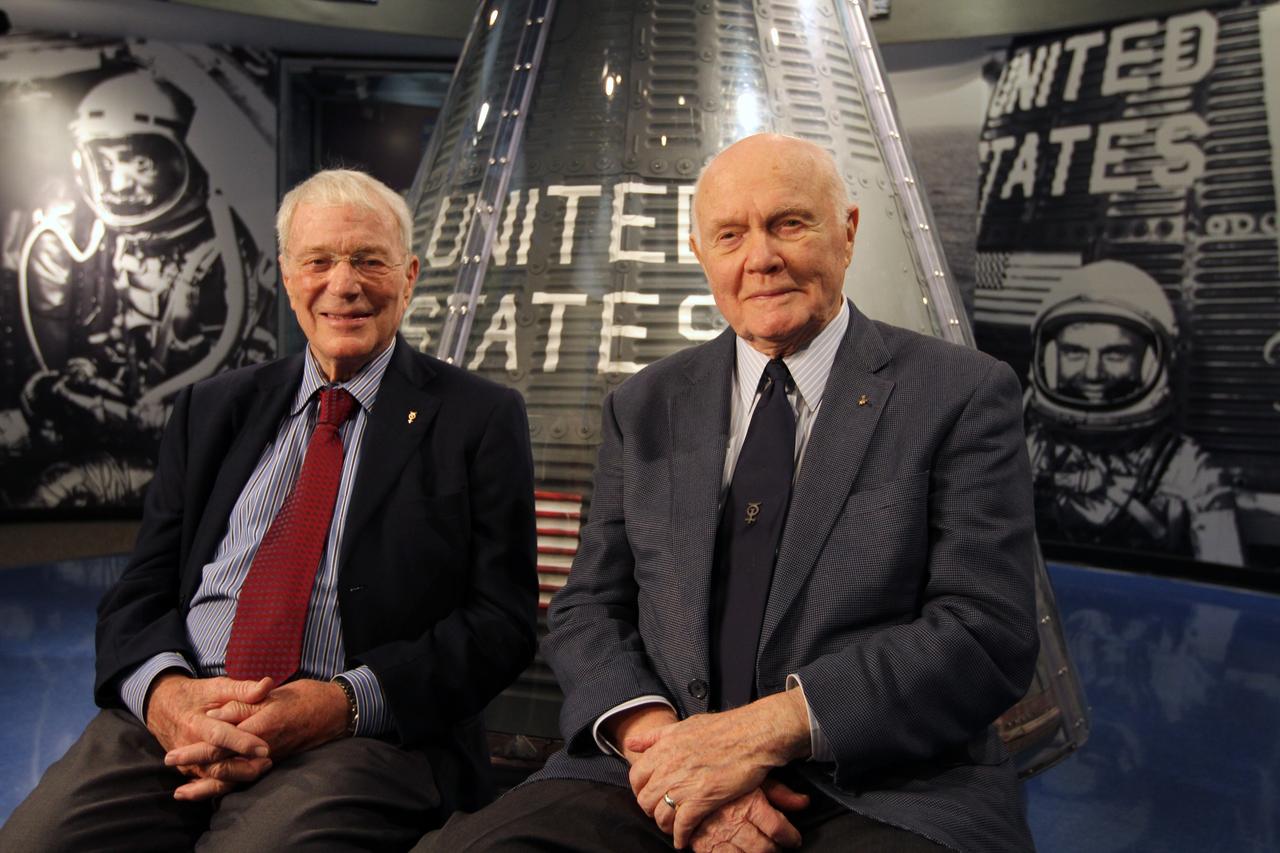
CAPE CANAVERAL, Fla. -- Mercury astronauts Scott Carpenter, left, and John Glenn sit in front of a capsule from the Mercury program on display at the Kennedy Space Center Visitor Complex in Florida. The two astronauts, part of the original class of seven astronauts chosen by NASA, were taking part in events celebrating 50 years of Americans in orbit, an era which began with Glenn's Mercury mission MA-6, on Feb. 20, 1962. Glenn's launch aboard an Atlas rocket took with it the hopes of an entire nation and ushered in a new era of space travel that eventually led to Americans walking on the moon by the end of the 1960s. Glenn soon was followed into orbit by Carpenter, Walter Schirra and Gordon Cooper. Their fellow Mercury astronauts Alan Shepard and Virgil "Gus" Grissom flew earlier suborbital flights. Deke Slayton was grounded by a medical condition until the Apollo-Soyuz Test Project in 1975. Photo credit: NASA/Kim Shiflett
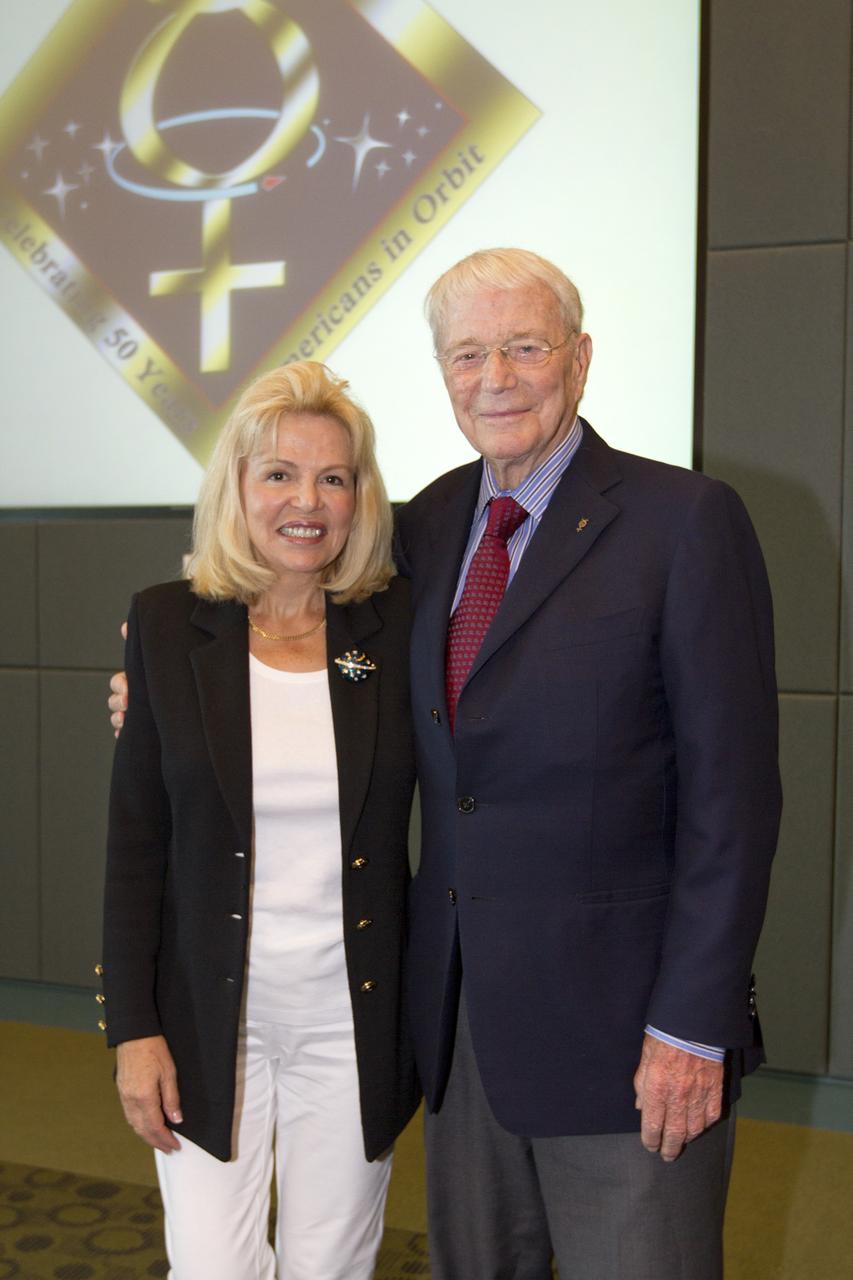
CAPE CANAVERAL, Fla. - Mercury astronaut Scott Carpenter and his wife, Patricia, pose during a luncheon Feb. 17, 2012, celebrating 50 years of Americans in orbit, an era which began with John Glenn's Mercury mission MA-6, on Feb. 20, 1962. Glenn's launch aboard an Atlas rocket took with it the hopes of an entire nation and ushered in a new era of space travel that eventually led to Americans walking on the moon by the end of the 1960s. Glenn soon was followed into orbit by Carpenter, Walter Schirra and Gordon Cooper. Their fellow Mercury astronauts Alan Shepard and Virgil "Gus" Grissom flew earlier suborbital flights. Deke Slayton, a member of NASA's original Mercury 7 astronauts, was grounded by a medical condition until the Apollo-Soyuz Test Project in 1975. Photo credit: NASA/Kim Shiflett
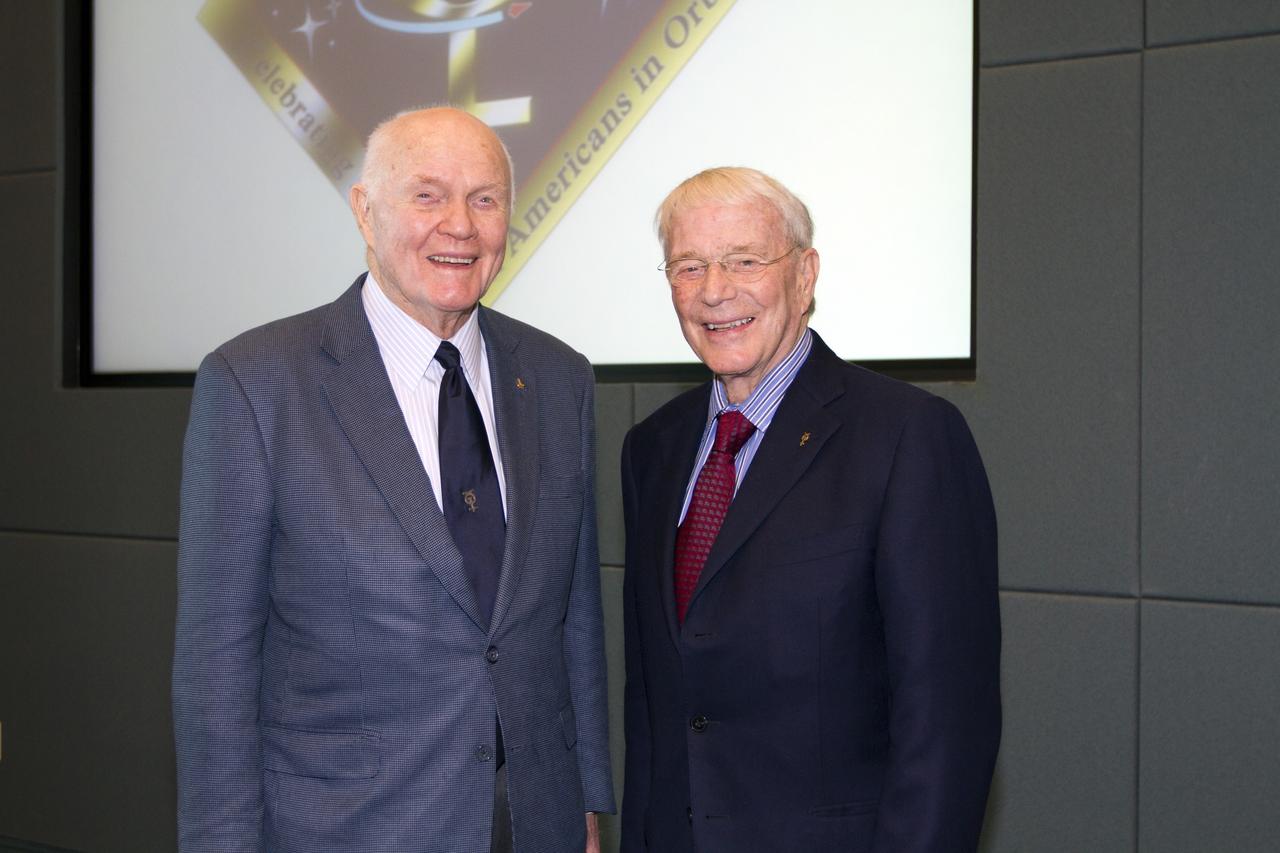
CAPE CANAVERAL, Fla. - Mercury astronauts John Glenn, left, and Scott Carpenter pose during a luncheon Feb. 17, 2012, celebrating 50 years of Americans in orbit, an era which began with Glenn's Mercury mission MA-6, on Feb. 20, 1962. Glenn's launch aboard an Atlas rocket took with it the hopes of an entire nation and ushered in a new era of space travel that eventually led to Americans walking on the moon by the end of the 1960s. Glenn soon was followed into orbit by Scott Carpenter, Walter Schirra and Gordon Cooper. Their fellow Mercury astronauts Alan Shepard and Virgil "Gus" Grissom flew earlier suborbital flights. Deke Slayton, a member of NASA's original Mercury 7 astronauts, was grounded by a medical condition until the Apollo-Soyuz Test Project in 1975. Photo credit: NASA/Kim Shiflett
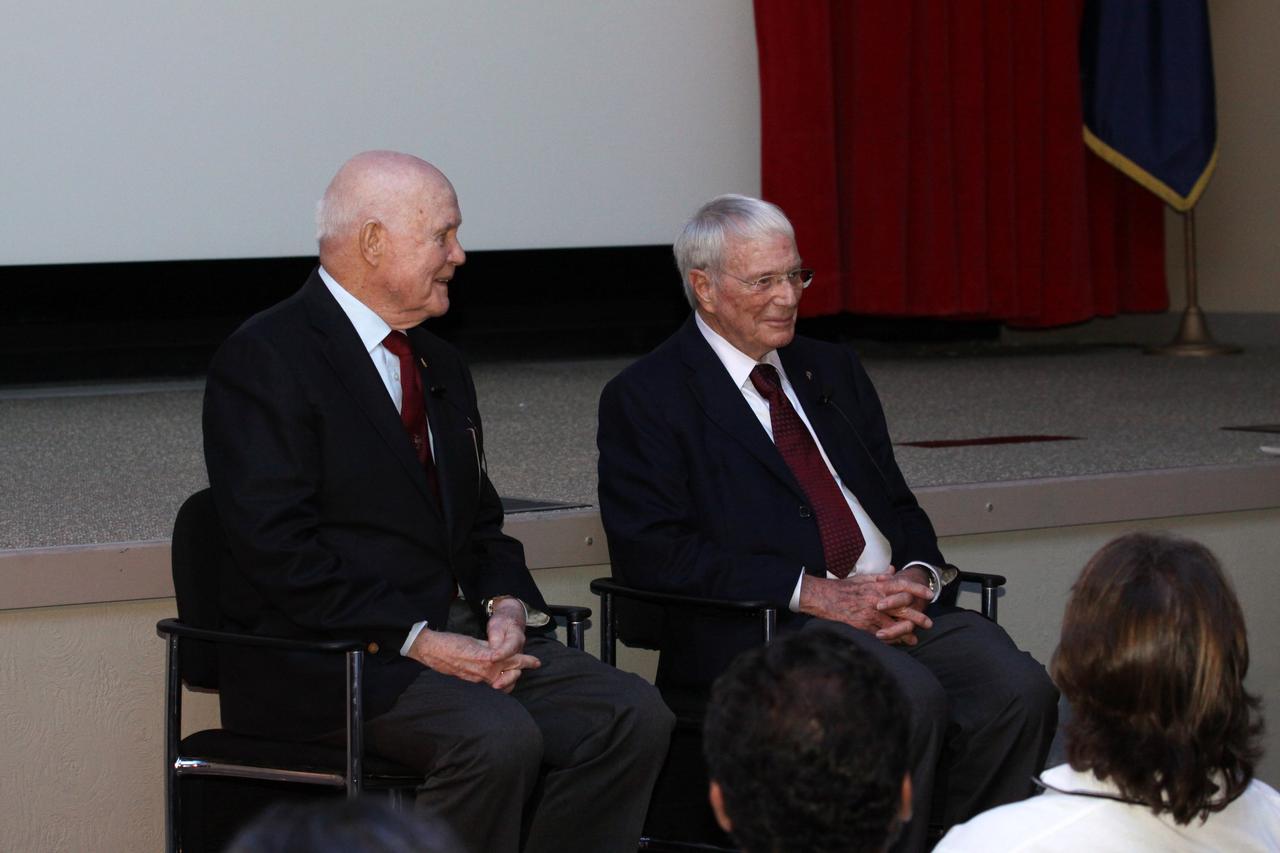
CAPE CANAVERAL, Fla. -- Mercury astronauts, John Glenn, left, and Scott Carpenter, talk to Mercury Project workers and other guests in the Astronaut Encounter Theater at the Kennedy Space Center Visitor Complex in Florida. The pair participated in 50th anniversary events at the launch site of Glenn's first orbital flight aboard NASA's Friendship 7 capsule, which launched Feb. 20, 1962, aboard an Atlas rocket. Glenn's launch aboard an Atlas rocket took with it the hopes of an entire nation and ushered in a new era of space travel that eventually led to Americans walking on the moon by the end of the 1960s. Glenn soon was followed into orbit by Carpenter, Walter Schirra and Gordon Cooper. Their fellow Mercury astronauts Alan Shepard and Virgil "Gus" Grissom flew earlier suborbital flights. Deke Slayton, a member of NASA's original Mercury 7 astronauts, was grounded by a medical condition until the Apollo-Soyuz Test Project in 1975. Photo credit: Kim Shiflett
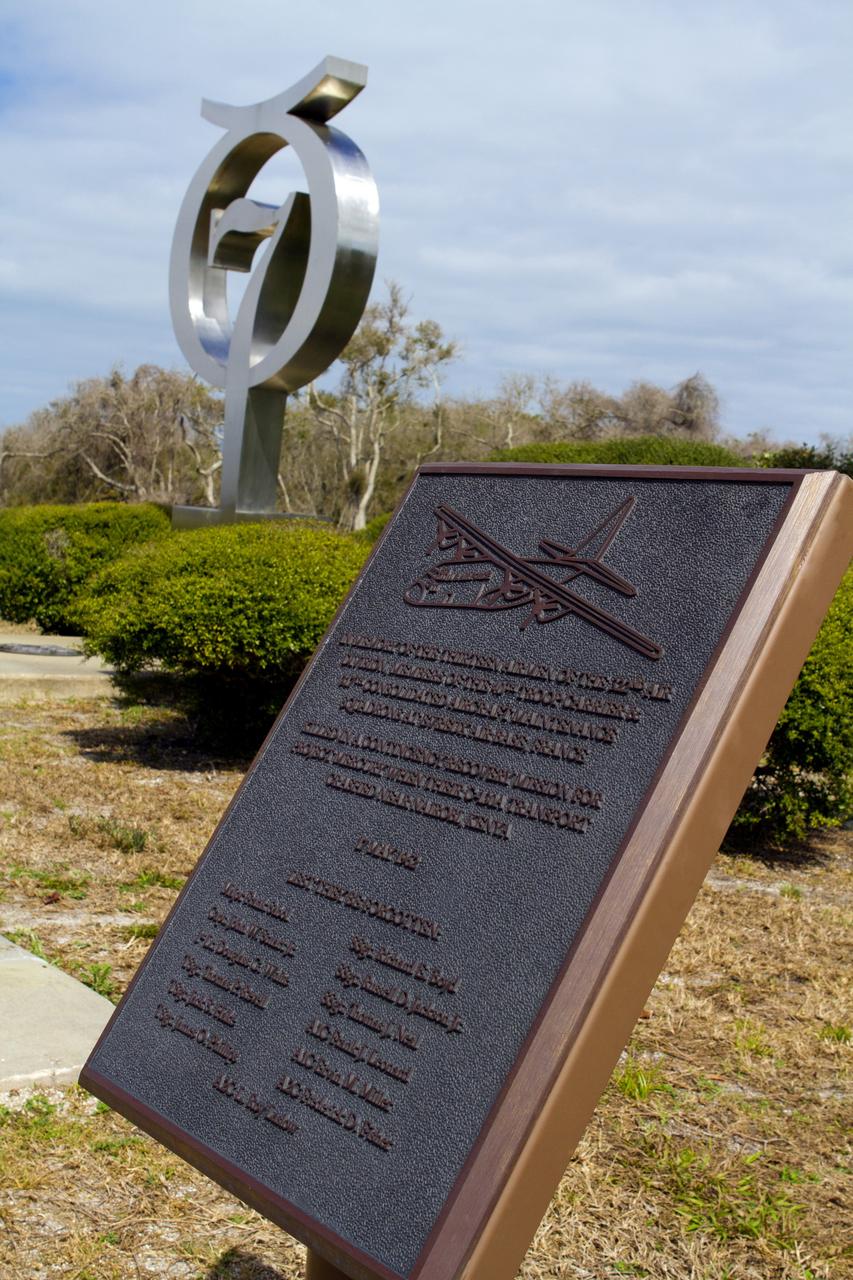
CAPE CANAVERAL, Fla. -- At Launch Complex-14 LC-14 at Cape Canaveral Air Force Station in Florida, a memorial honors the 13 crew members of the U.S. Air Force's 32nd Air Division, 40th Troop Carrier and 317th Consolidated Aircraft Maintenance Squadron, who were killed in a C-130A transport plane crash near Nairobi, Kenya, during a contingency mission for NASA's Project Mercury in 1962. The crash happened 50 years ago, after John Glenn's orbital flight on Feb. 20, 1962, and before Scott Carpenter's on May 24, 1962. Glenn and Carpenter participated in 50th anniversary commemorative events at the Cape and NASA's Kennedy Space Center and stopped by the memorial to honor the Airmen who made the ultimate sacrifice making a distinctive service to their country.
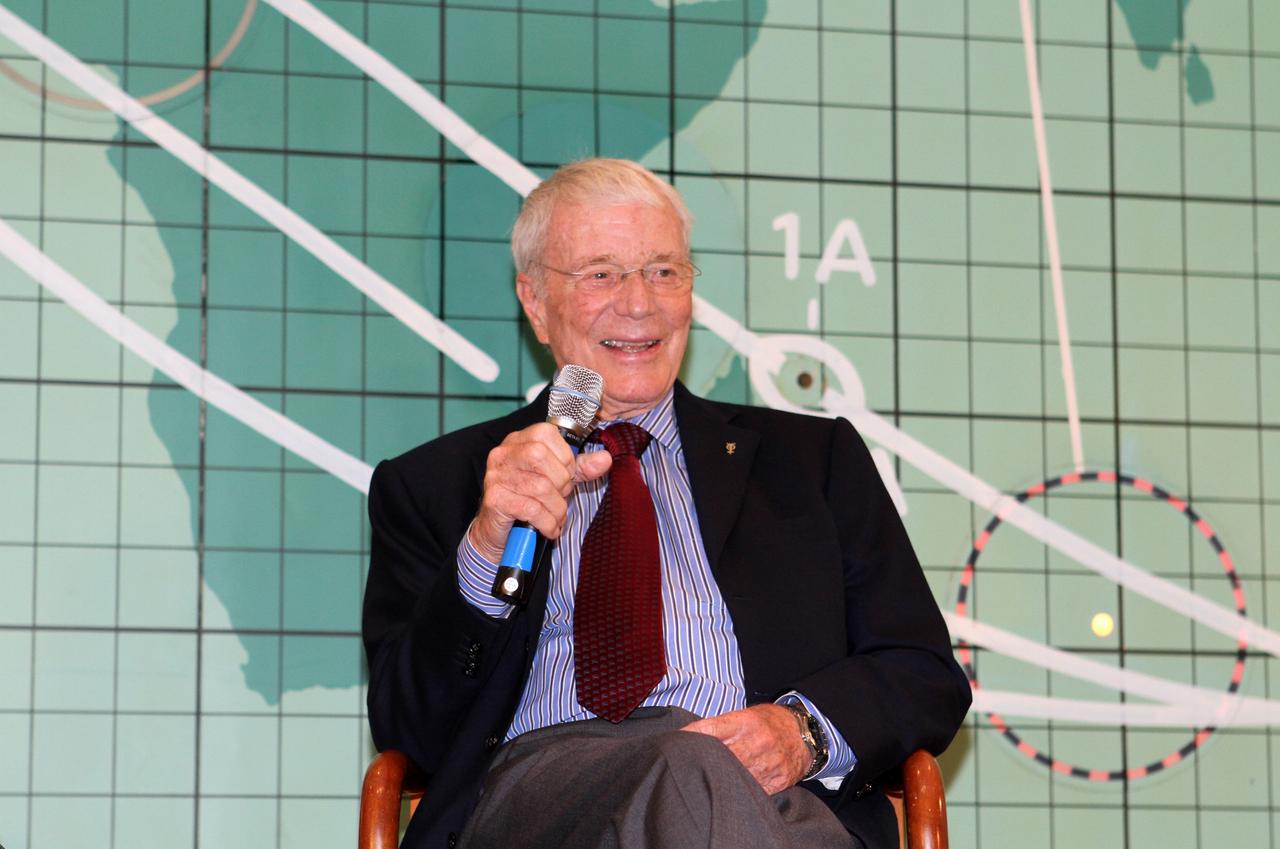
CAPE CANAVERAL, Fla. -- Mercury astronaut Scott Carpenter sits in front of the plot board from the Mercury control center on display at the Kennedy Space Center Visitor Complex in Florida. The astronaut, part of the original class of seven astronauts chosen by NASA, was taking part in a question-and-answer session with the media as part of events celebrating 50 years of Americans in orbit, an era which began with John Glenn's Mercury mission MA-6, on Feb. 20, 1962. Glenn's launch aboard an Atlas rocket took with it the hopes of an entire nation and ushered in a new era of space travel that eventually led to Americans walking on the moon by the end of the 1960s. Glenn soon was followed into orbit by Carpenter, Walter Schirra and Gordon Cooper. Their fellow Mercury astronauts Alan Shepard and Virgil "Gus" Grissom flew earlier suborbital flights. Deke Slayton was grounded by a medical condition until the Apollo-Soyuz Test Project in 1975. Photo credit: NASA/Kim Shiflett
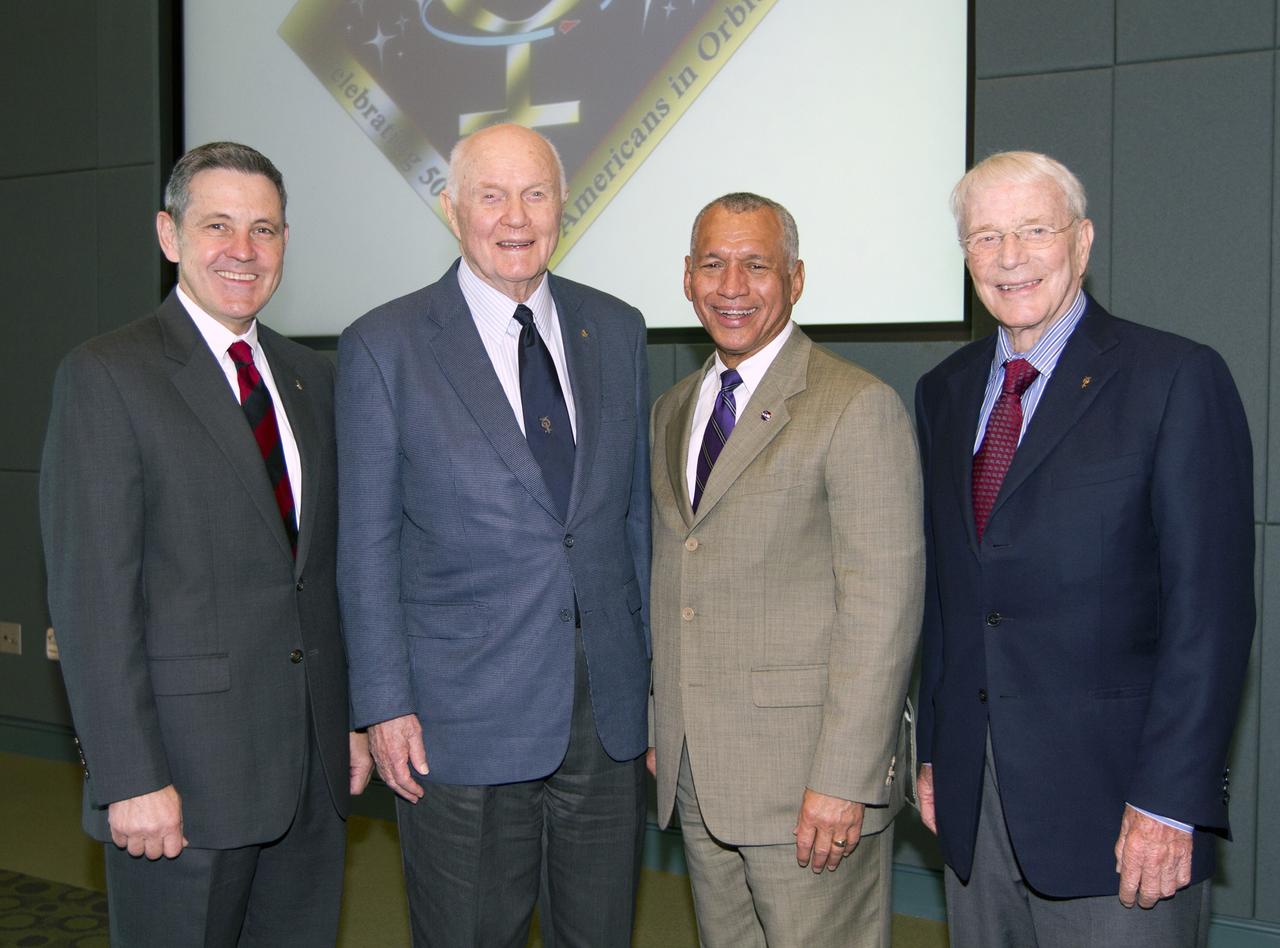
CAPE CANAVERAL, Fla. - Kennedy Space Center Director Bob Cabana, from left, Mercury astronaut John Glenn, NASA Administrator Charles Bolden and Mercury astronaut Scott Carpenter pose during a luncheon Feb. 17, 2012, celebrating 50 years of Americans in orbit, an era which began with Glenn's Mercury mission MA-6, on Feb. 20, 1962. Glenn's launch aboard an Atlas rocket took with it the hopes of an entire nation and ushered in a new era of space travel that eventually led to Americans walking on the moon by the end of the 1960s. Glenn soon was followed into orbit by Scott Carpenter, Walter Schirra and Gordon Cooper. Their fellow Mercury astronauts Alan Shepard and Virgil "Gus" Grissom flew earlier suborbital flights. Deke Slayton, a member of NASA's original Mercury 7 astronauts, was grounded by a medical condition until the Apollo-Soyuz Test Project in 1975. Photo credit: NASA/Kim Shiflett
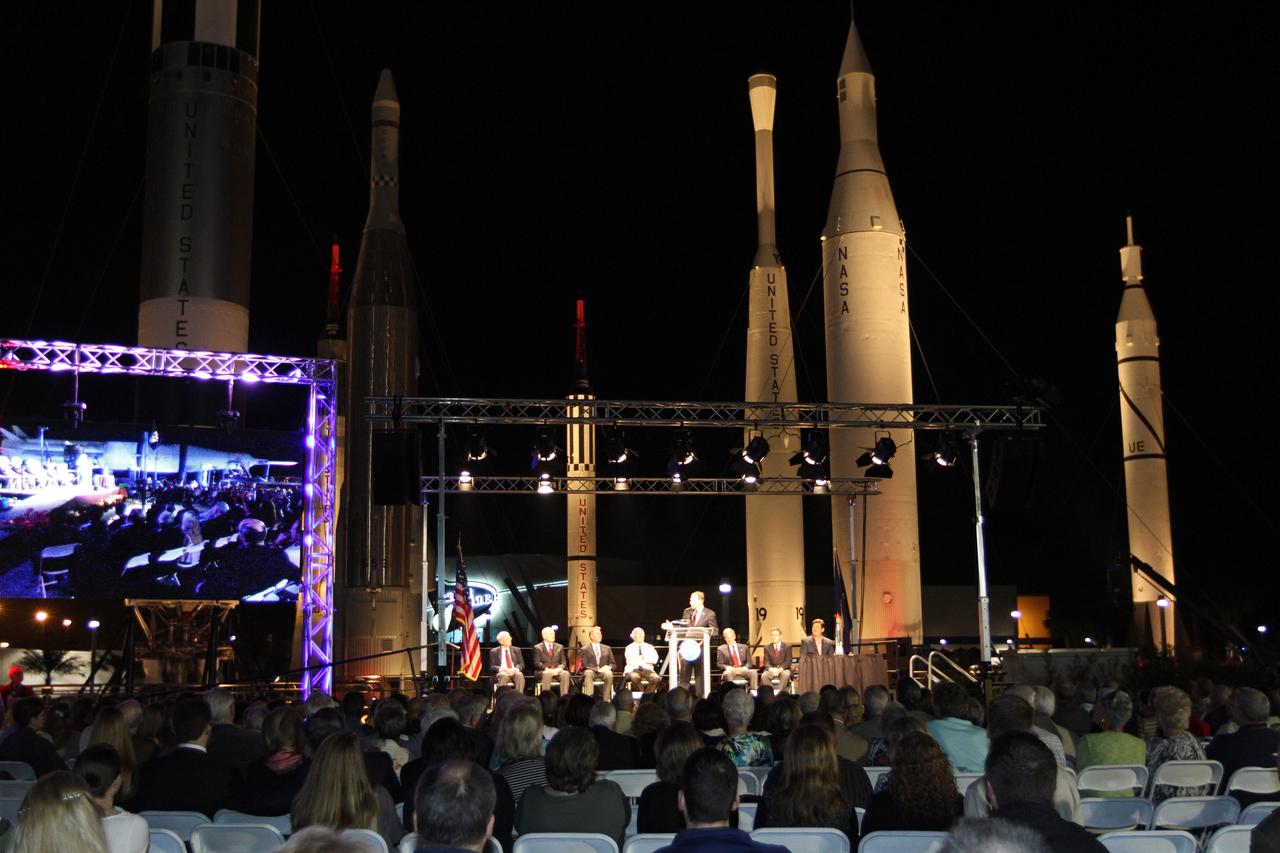
CAPE CANAVERAL, Fla. --A crowd looks on during the "On Shoulders of Giants" program celebrating 50 years of Americans in orbit, an era which began with John Glenn's MA-6 mission on Feb. 20, 1962. The event was conducted in the Rocket Garden at the Kennedy Space Center Visitor Complex in Florida a few miles from the launch pad where Glenn and Scott Carpenter took flight in Mercury spacecraft. Glenn's launch aboard an Atlas rocket took with it the hopes of an entire nation and ushered in a new era of space travel that eventually led to Americans walking on the moon by the end of the 1960s. Glenn soon was followed into orbit by Scott Carpenter, Walter Schirra and Gordon Cooper. Their fellow Mercury astronauts Alan Shepard and Virgil "Gus" Grissom flew earlier suborbital flights. Deke Slayton, a member of NASA's original Mercury 7 astronauts, was grounded by a medical condition until the Apollo-Soyuz Test Project in 1975. Photo credit: Kim Shiflett
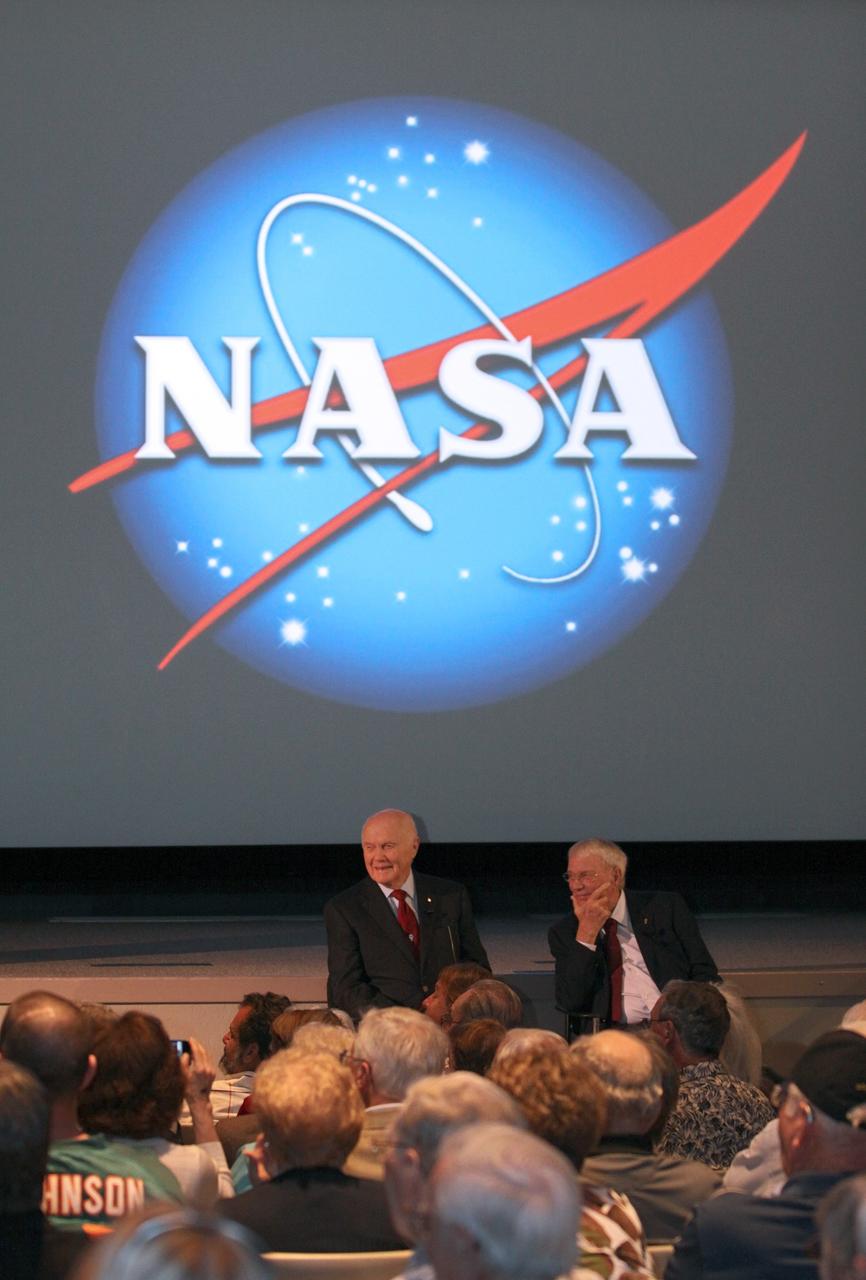
CAPE CANAVERAL, Fla. -- Mercury astronauts, John Glenn, left, and Scott Carpenter, talk to Mercury Project workers and other guests in the Astronaut Encounter Theater at the Kennedy Space Center Visitor Complex in Florida. The pair participated in 50th anniversary events at the launch site of Glenn's first orbital flight aboard NASA's Friendship 7 capsule, which launched Feb. 20, 1962, aboard an Atlas rocket. Glenn's launch aboard an Atlas rocket took with it the hopes of an entire nation and ushered in a new era of space travel that eventually led to Americans walking on the moon by the end of the 1960s. Glenn soon was followed into orbit by Carpenter, Walter Schirra and Gordon Cooper. Their fellow Mercury astronauts Alan Shepard and Virgil "Gus" Grissom flew earlier suborbital flights. Deke Slayton, a member of NASA's original Mercury 7 astronauts, was grounded by a medical condition until the Apollo-Soyuz Test Project in 1975. Photo credit: Kim Shiflett
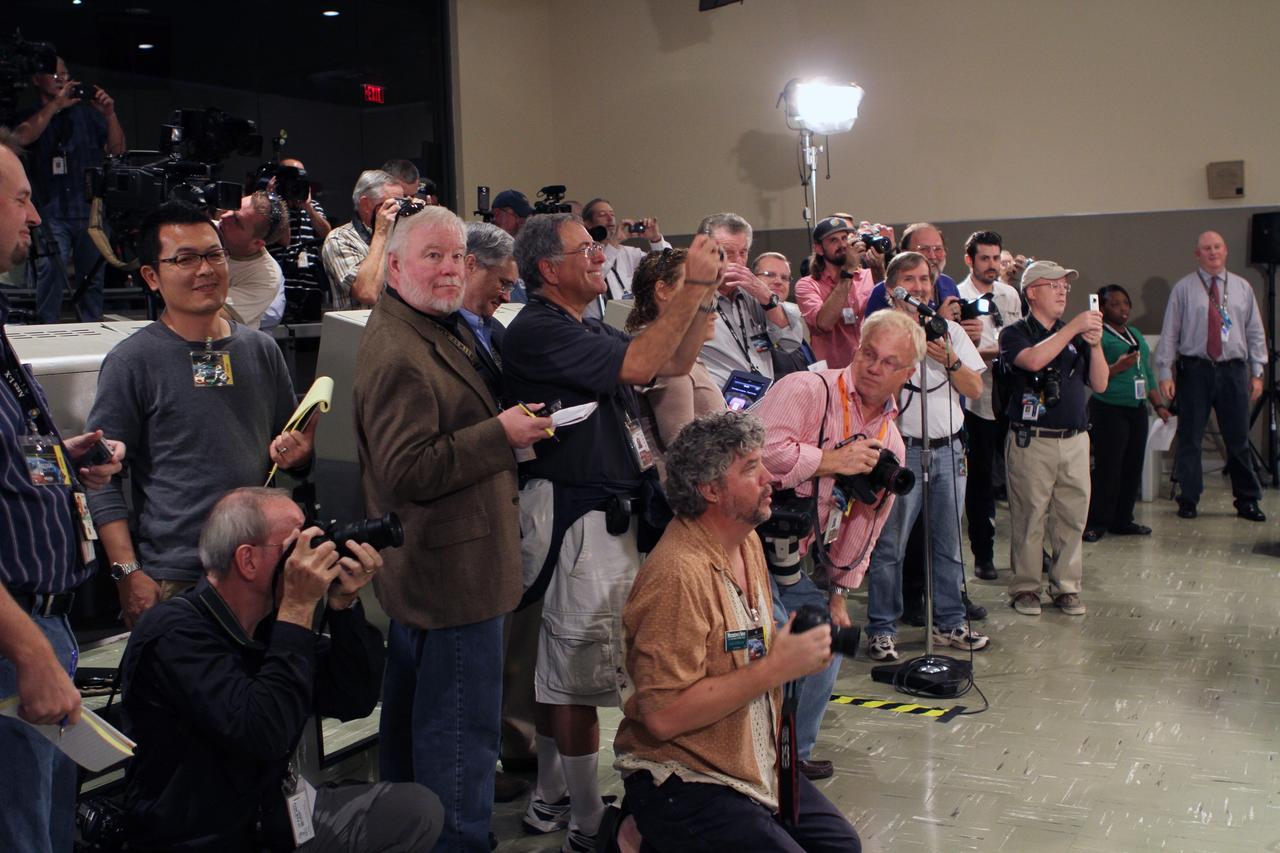
CAPE CANAVERAL, Fla. -- The international news media takes part in a question-and-answer session with Mercury astronauts John Glenn and Scott Carpenter at the Kennedy Space Center Visitor Complex in Florida. The astronauts, part of the original class of seven astronauts chosen by NASA, were taking part in events celebrating 50 years of Americans in orbit, an era which began with John Glenn's Mercury mission MA-6, on Feb. 20, 1962. Glenn's launch aboard an Atlas rocket took with it the hopes of an entire nation and ushered in a new era of space travel that eventually led to Americans walking on the moon by the end of the 1960s. Glenn soon was followed into orbit by Carpenter, Walter Schirra and Gordon Cooper. Their fellow Mercury astronauts Alan Shepard and Virgil "Gus" Grissom flew earlier suborbital flights. Deke Slayton was grounded by a medical condition until the Apollo-Soyuz Test Project in 1975. Photo credit: NASA/Kim Shiflett
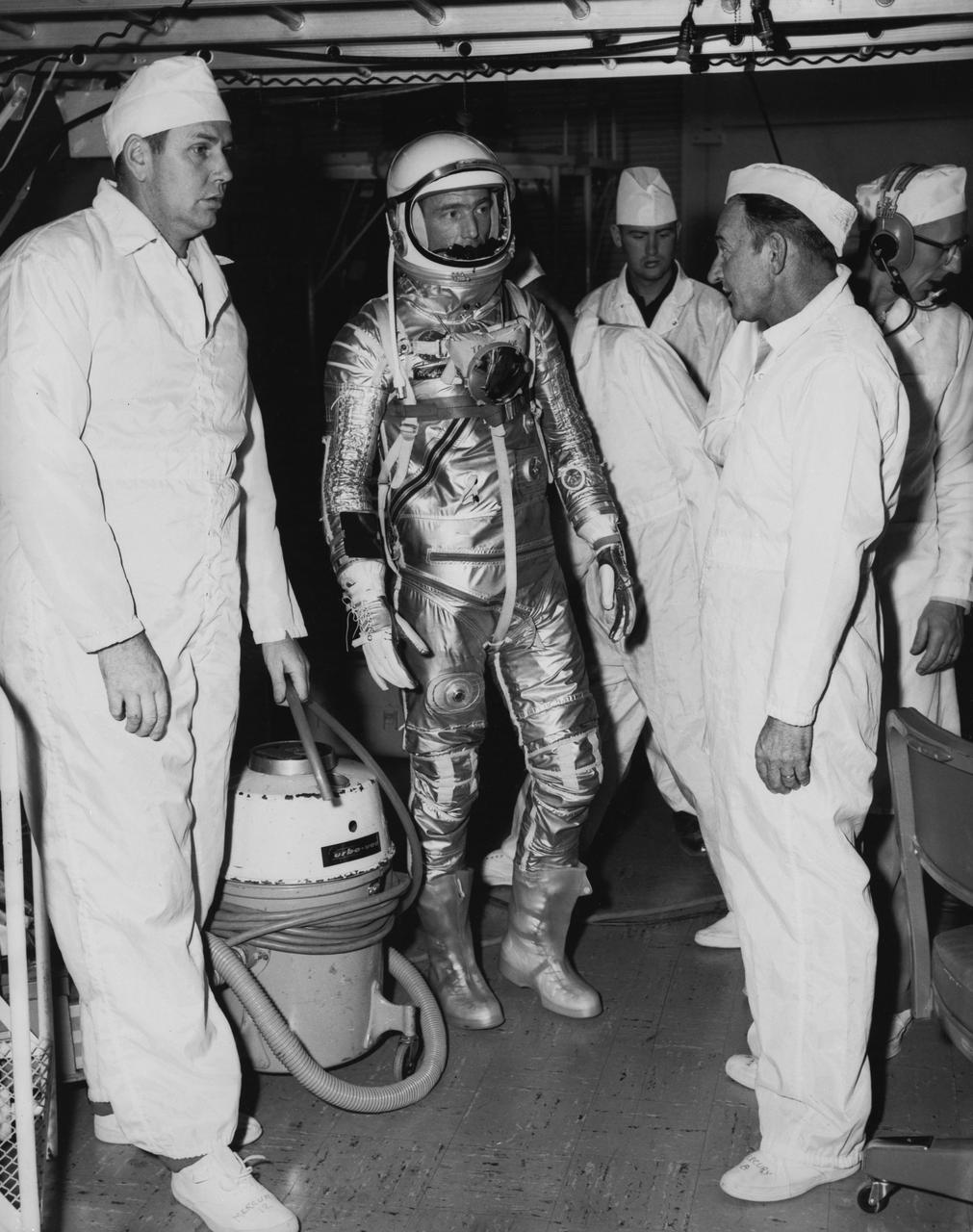
S62-00120 (1961) --- Astronaut M. Scott Carpenter, prime pilot for the Mercury-Atlas 7 (MA-7) spaceflight, is seen in Hangar S crew quarters during a suiting exercise at Cape Canaveral, Florida. Photo credit: NASA
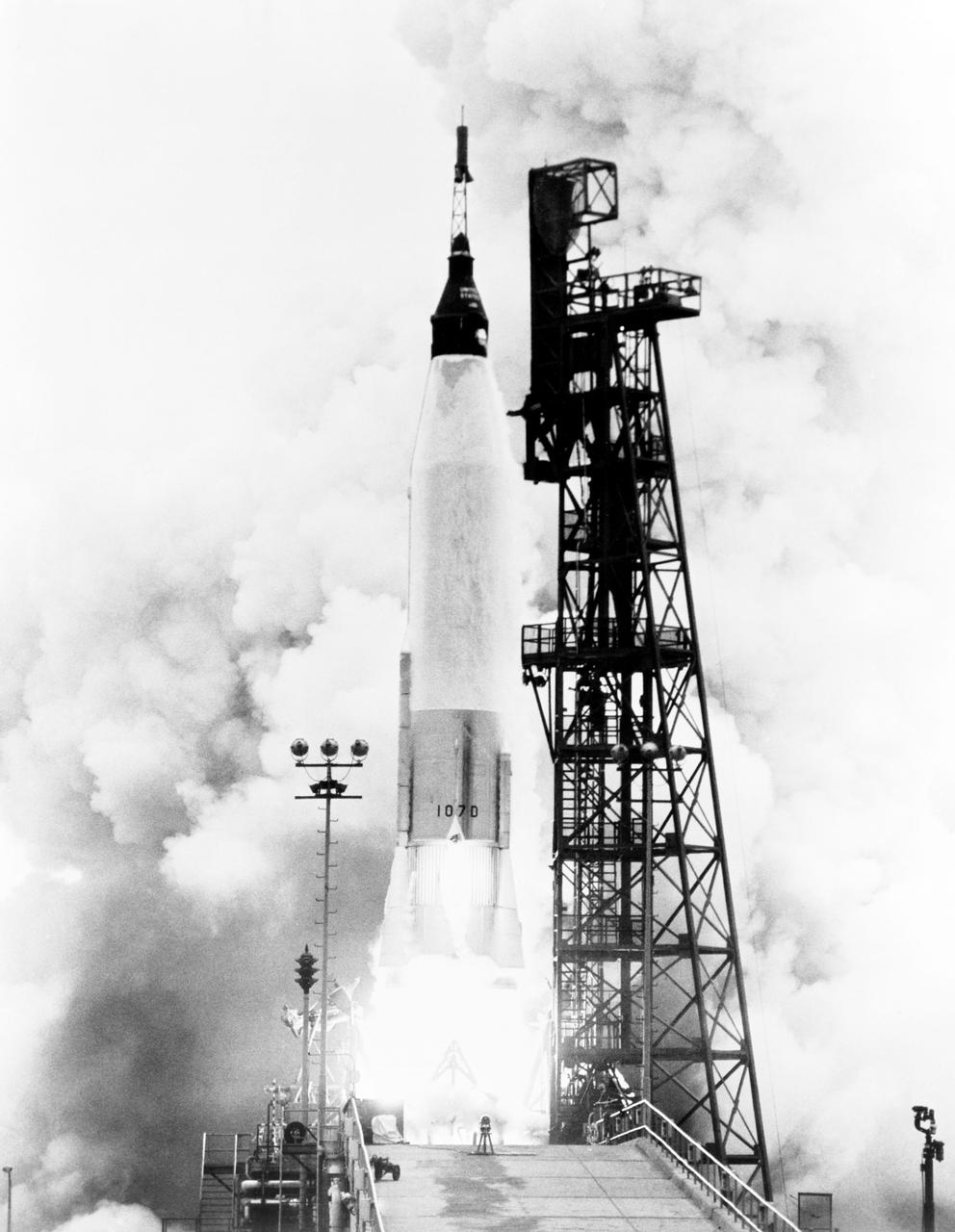
S62-02849 (24 May 1962) --- The Mercury-Atlas 7 (MA-7), carrying astronaut M. Scott Carpenter, was launched by NASA from Pad 14, Cape Canaveral, Florida, on May 24, 1962. Photo credit: NASA
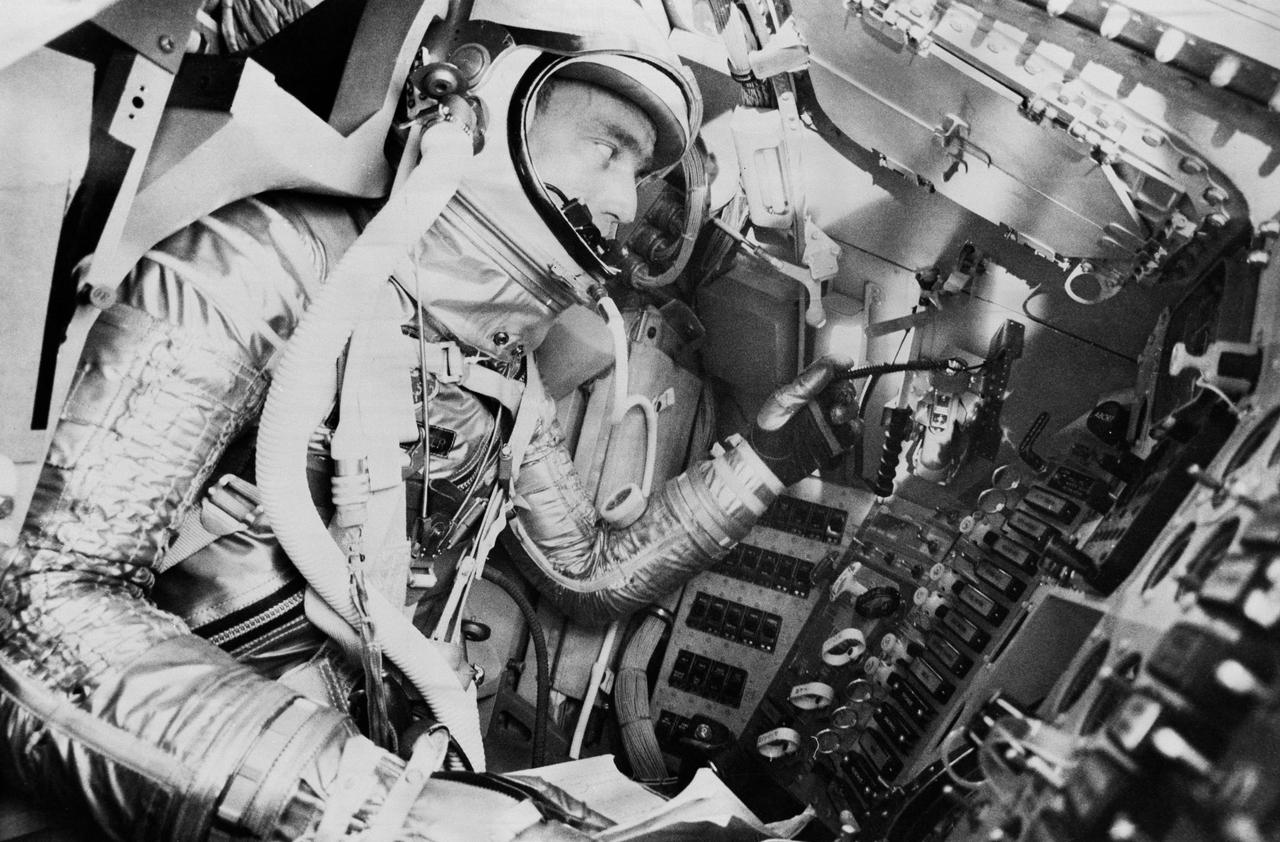
S62-01033 (1961) --- Project Mercury astronaut M. Scott Carpenter, prime pilot for the United States second manned orbital flight, undergoes a simulated mission in the procedures trainer at Langley Air Force Base, Virginia, headquarters for the National Aeronautics and Space Administration?s Manned Spacecraft Center. Photo credit: NASA
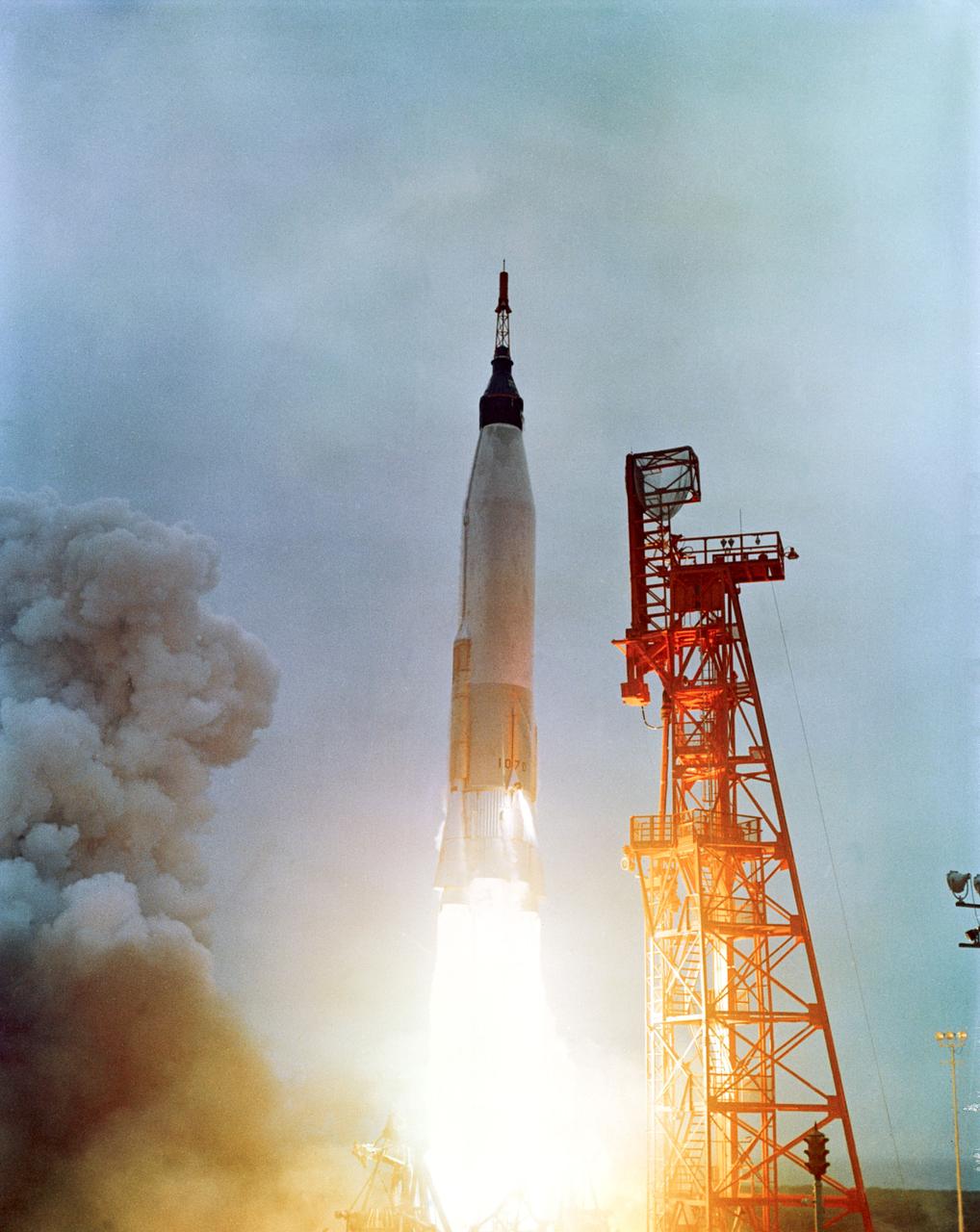
S62-05529 (24 May 1962) --- The Mercury-Atlas 7 (MA-7), carrying astronaut M. Scott Carpenter, was launched by NASA from Pad 14, Cape Canaveral, Florida, on May 24, 1962. Photo credit: NASA
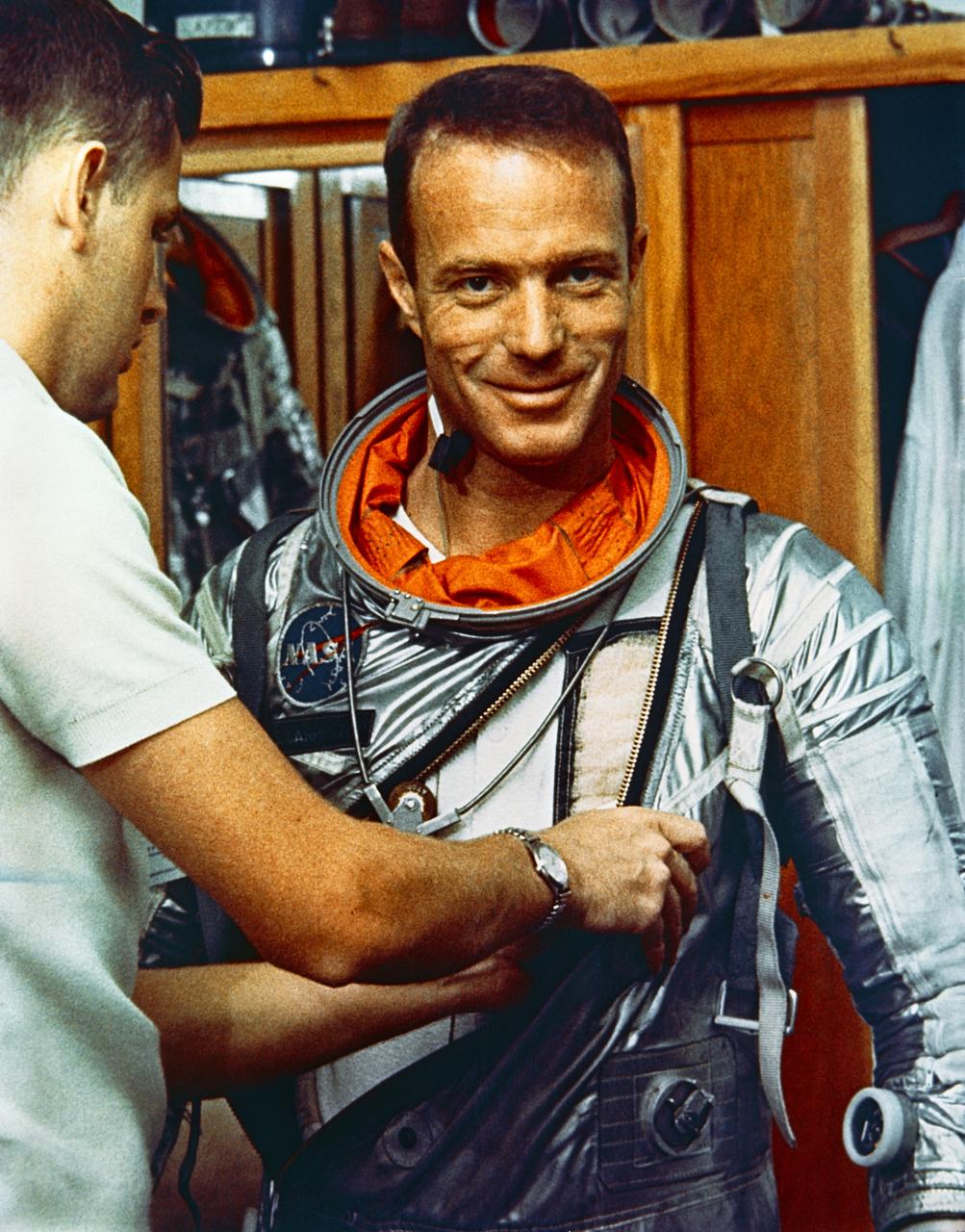
S65-24624 (22 May 1962) --- Astronaut M. Scott Carpenter, prime pilot for the Mercury-Atlas 7 (MA-7) flight, is seen in Hangar S crew quarters during a suiting exercise. He smiles at camera as suiting technician Al Rochford adjusts his suit. Photo credit: NASA
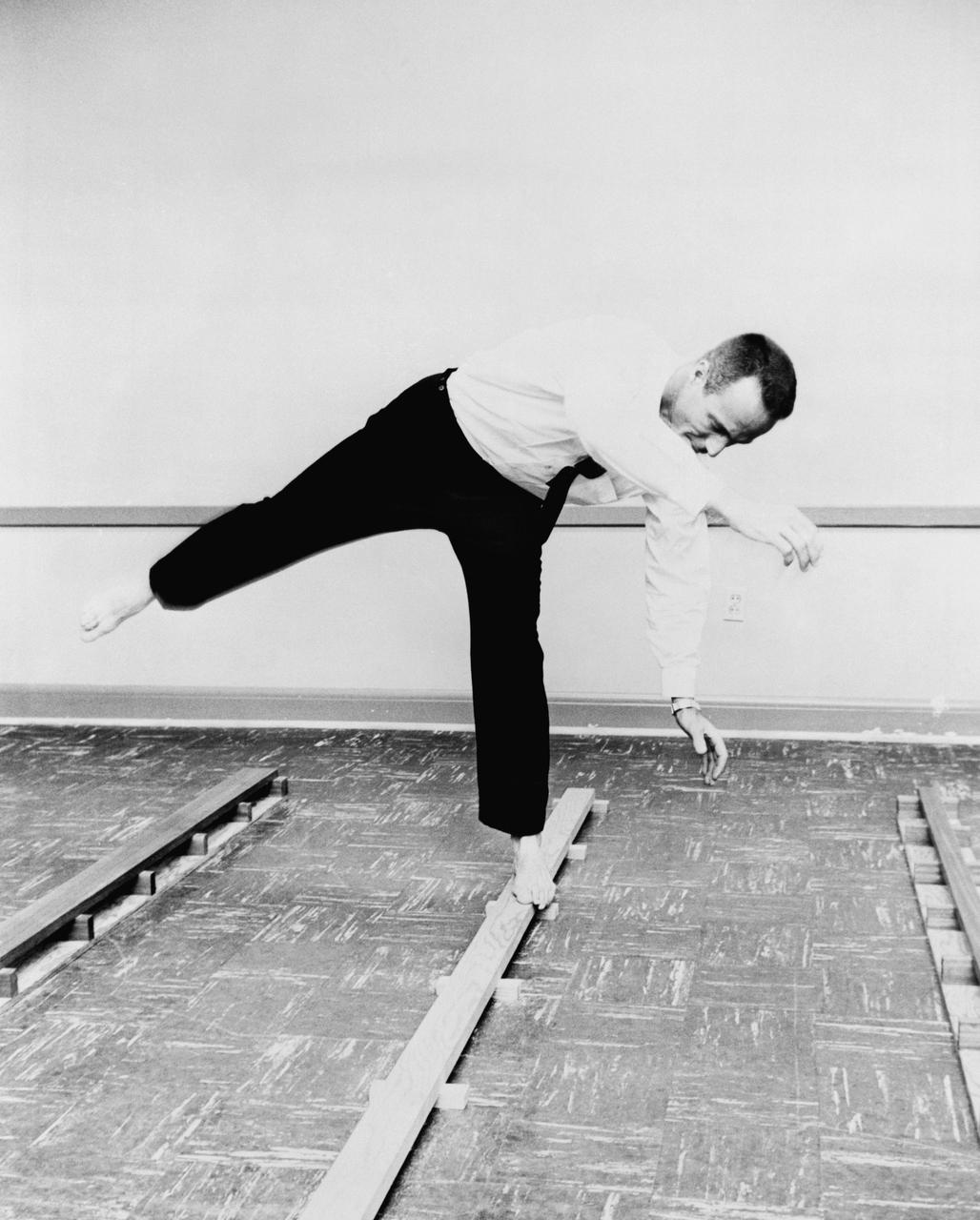
S61-04570 (1961) --- Astronaut M. Scott Carpenter's balance mechanism performance is tested by his walking on a narrow board in his bare feet. He is performing this test at the School of Aviation Medicine, Pensacola, Florida. Photo credit: NASA
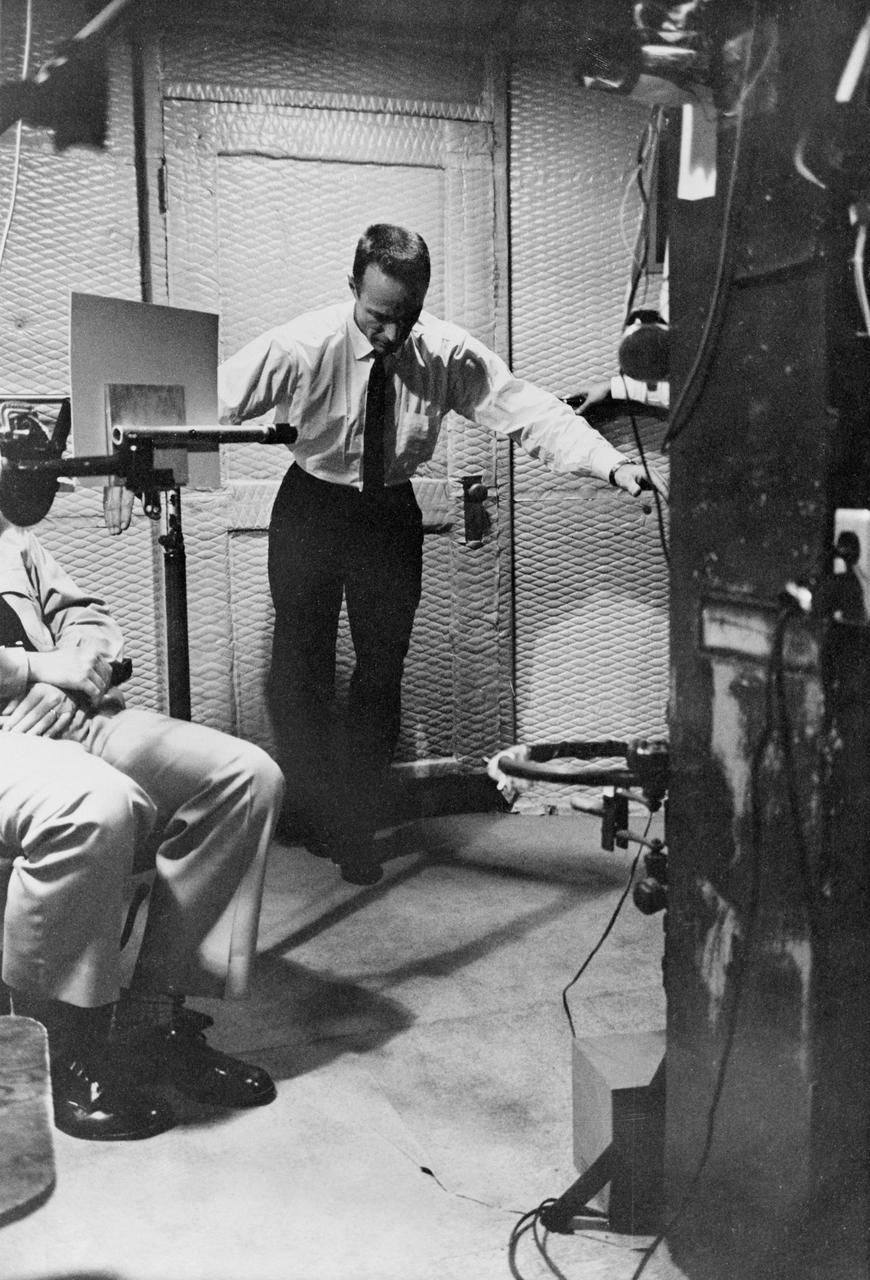
S61-04571 (1961) --- Astronaut M. Scott Carpenter's balance mechanism performance is tested as he walks a straight line by putting one foot directly in front of the other. He is performing this test at the School of Aviation Medicine, Pensicola, Florida. Photo credit: NASA
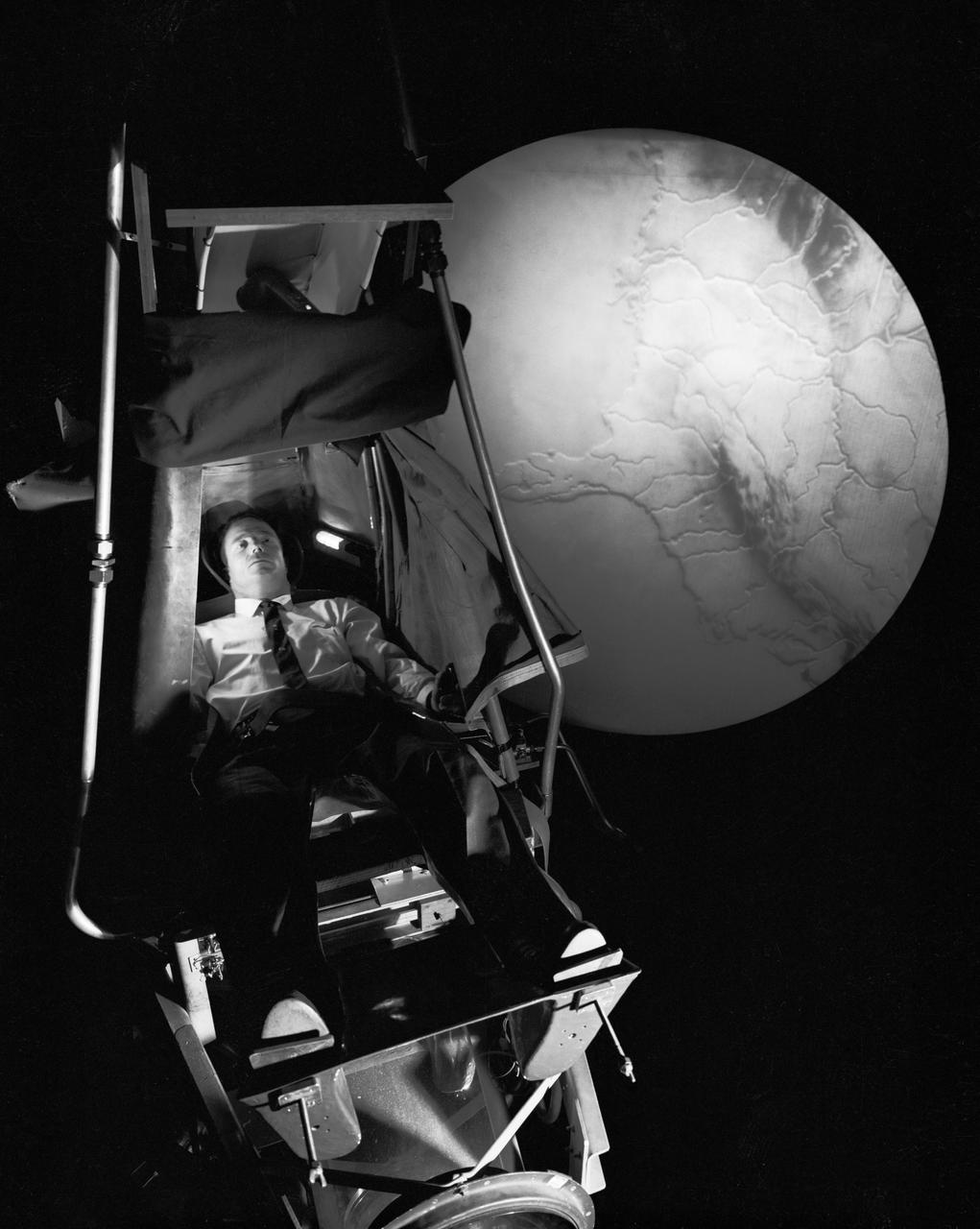
S62-01145 (1961) --- Project Mercury astronaut M. Scott Carpenter practices manual control of a spacecraft in the Air Lubricated Free Attitude (ALFA) trainer located at NASA?s Langley Air Force Base, Virginia. This trainer allows the astronaut to see the image of Earth?s surface at his feet while manually controlling the spacecraft. Carpenter has been selected as the prime pilot of the United States? second orbital flight. Photo credit: NASA
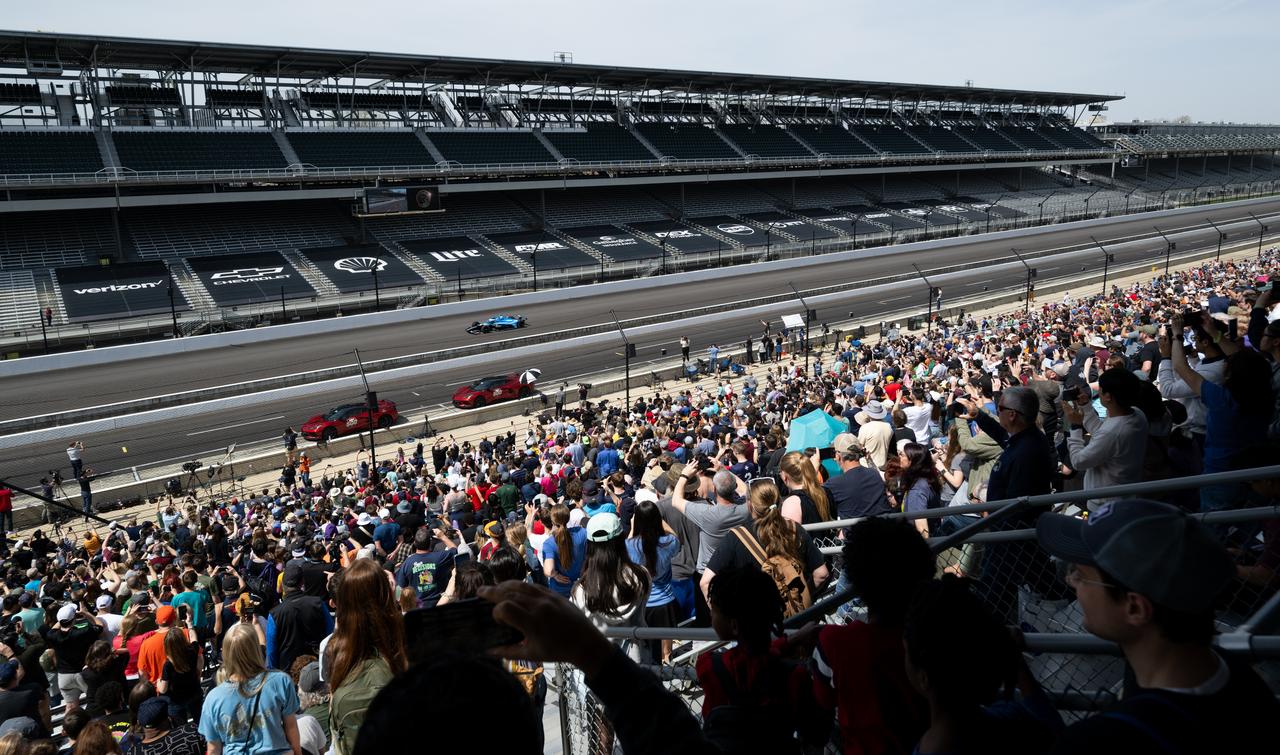
An NTT INDY car is seen as it is driven by Ed Carpenter, around the track following opening ceremonies at the Indianapolis Motor Speedway ahead of the total solar eclipse, Monday, April 8, 2024, in Indianapolis, Ind. A total solar eclipse swept across a narrow portion of the North American continent from Mexico’s Pacific coast to the Atlantic coast of Newfoundland, Canada. A partial solar eclipse was visible across the entire North American continent along with parts of Central America and Europe. Photo Credit: (NASA/Joel Kowsky)
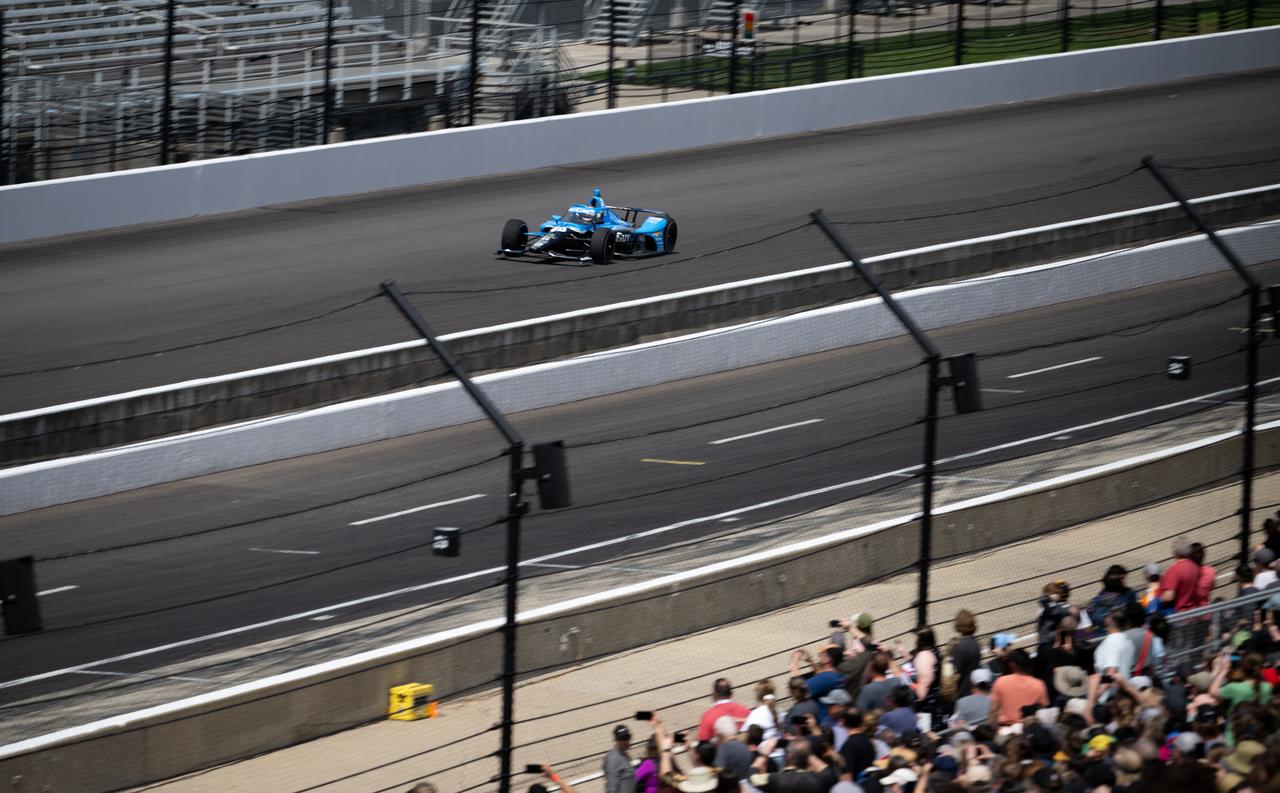
An NTT INDY car is seen as it is driven by Ed Carpenter, around the track following opening ceremonies at the Indianapolis Motor Speedway ahead of the total solar eclipse, Monday, April 8, 2024, in Indianapolis, Ind. A total solar eclipse swept across a narrow portion of the North American continent from Mexico’s Pacific coast to the Atlantic coast of Newfoundland, Canada. A partial solar eclipse was visible across the entire North American continent along with parts of Central America and Europe. Photo Credit: (NASA/Joel Kowsky)
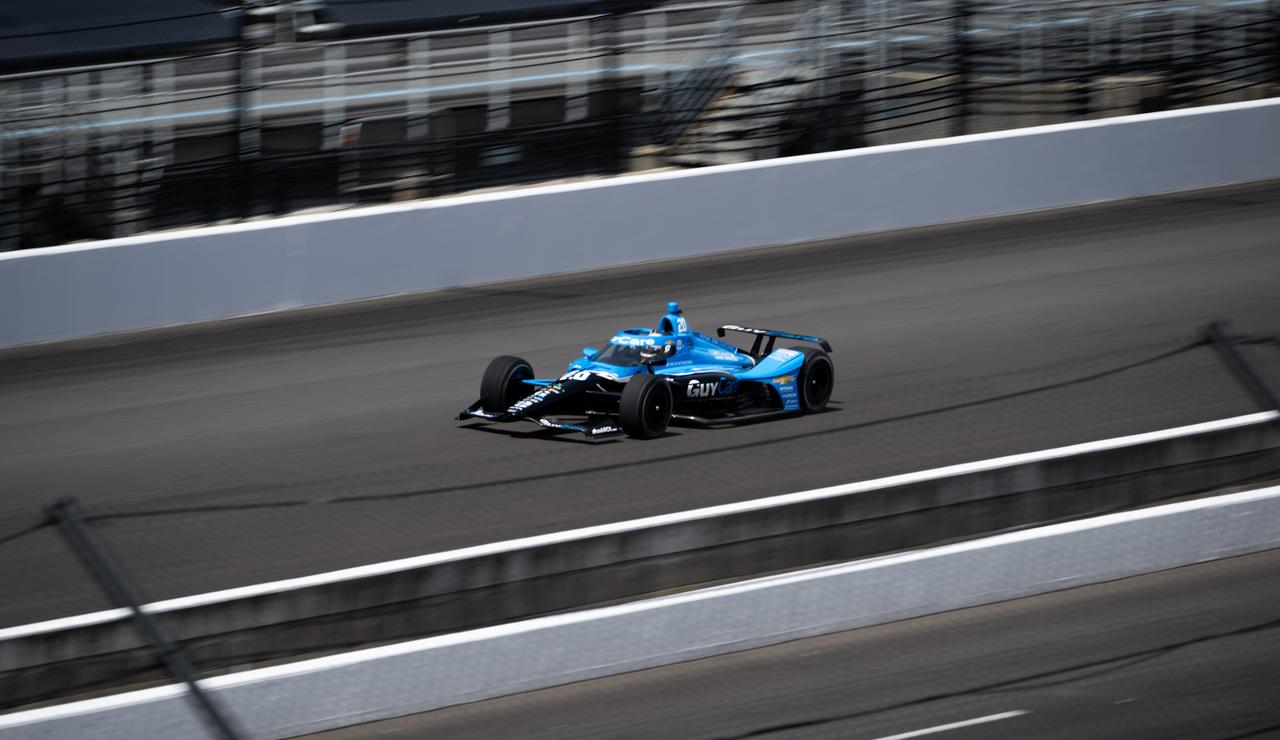
An NTT INDY car is seen as it is driven by Ed Carpenter, around the track following opening ceremonies at the Indianapolis Motor Speedway ahead of the total solar eclipse, Monday, April 8, 2024, in Indianapolis, Ind. A total solar eclipse swept across a narrow portion of the North American continent from Mexico’s Pacific coast to the Atlantic coast of Newfoundland, Canada. A partial solar eclipse was visible across the entire North American continent along with parts of Central America and Europe. Photo Credit: (NASA/Joel Kowsky)
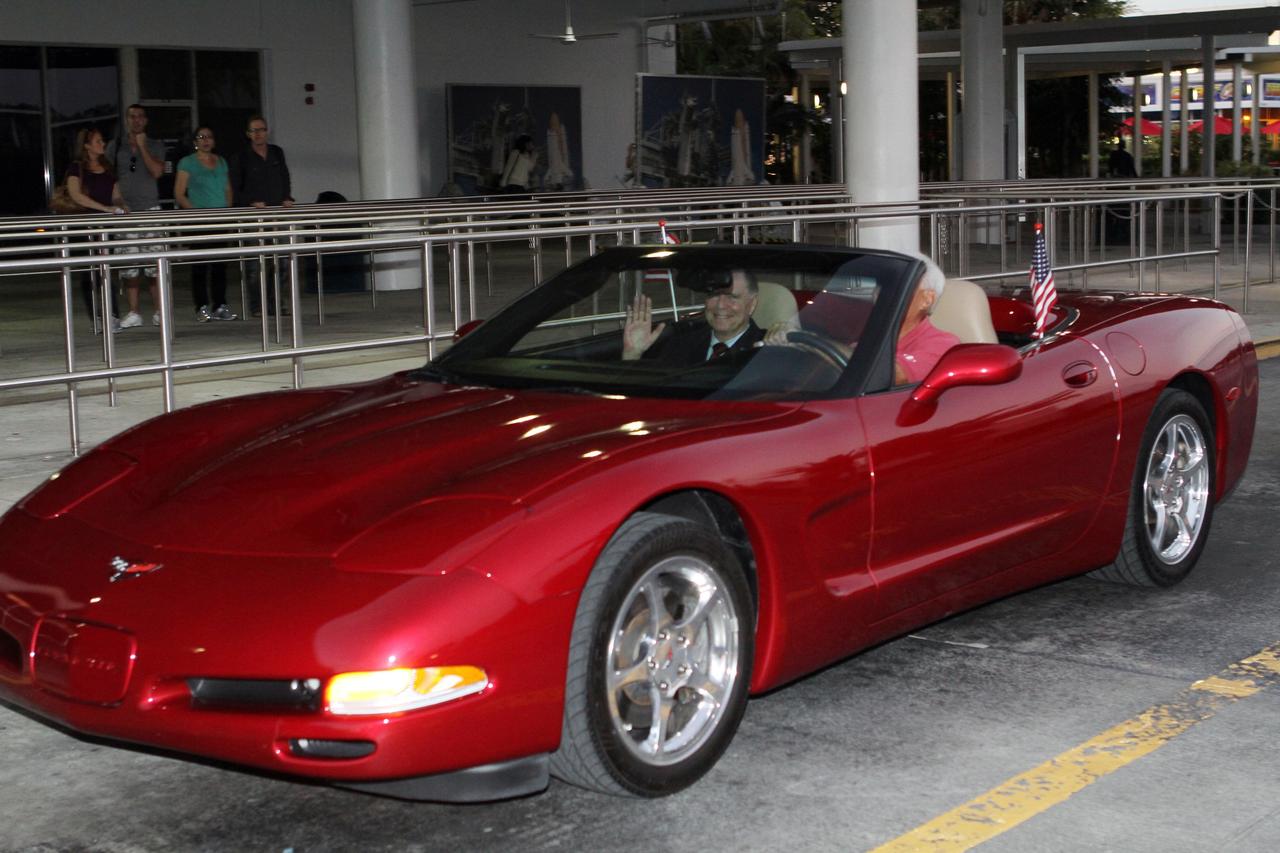
CAPE CANAVERAL, Fla. -- U.S. Rep. Bill Posey, left, prepares to ride in the Corvette parade following the "On Shoulders of Giants" program celebrating 50 years of Americans in orbit, an era which began with Glenn's MA-6 mission on Feb. 20, 1962. The event was conducted in the Rocket Garden at the Kennedy Space Center Visitor Complex in Florida a few miles from the launch pad where Glenn and Scott Carpenter took flight in Mercury spacecraft. Glenn's launch aboard an Atlas rocket took with it the hopes of an entire nation and ushered in a new era of space travel that eventually led to Americans walking on the moon by the end of the 1960s. Glenn soon was followed into orbit by Scott Carpenter, Walter Schirra and Gordon Cooper. Their fellow Mercury astronauts Alan Shepard and Virgil "Gus" Grissom flew earlier suborbital flights. Deke Slayton, a member of NASA's original Mercury 7 astronauts, was grounded by a medical condition until the Apollo-Soyuz Test Project in 1975. Photo credit: Kim Shiflett
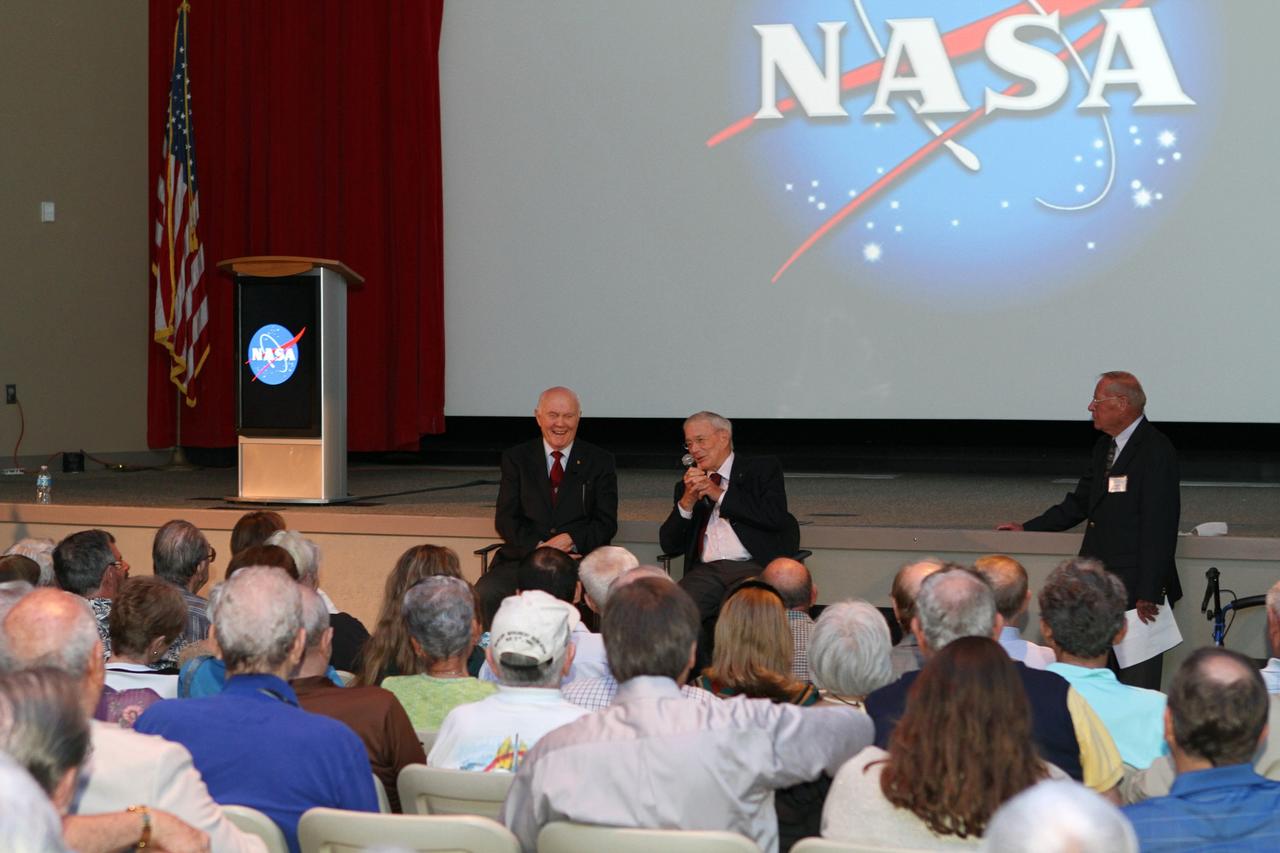
CAPE CANAVERAL, Fla. -- Mercury astronauts, John Glenn, left, and Scott Carpenter, talk to Mercury Project workers and other guests in the Astronaut Encounter Theater at the Kennedy Space Center Visitor Complex in Florida. The pair participated in 50th anniversary events at the launch site of Glenn's first orbital flight aboard NASA's Friendship 7 capsule, which launched Feb. 20, 1962, aboard an Atlas rocket. At right, is Jack King, who was chief of Kennedy's Public Information Office during Project Mercury. Glenn's launch aboard an Atlas rocket took with it the hopes of an entire nation and ushered in a new era of space travel that eventually led to Americans walking on the moon by the end of the 1960s. Glenn soon was followed into orbit by Carpenter, Walter Schirra and Gordon Cooper. Their fellow Mercury astronauts Alan Shepard and Virgil "Gus" Grissom flew earlier suborbital flights. Deke Slayton, a member of NASA's original Mercury 7 astronauts, was grounded by a medical condition until the Apollo-Soyuz Test Project in 1975. Photo credit: Kim Shiflett
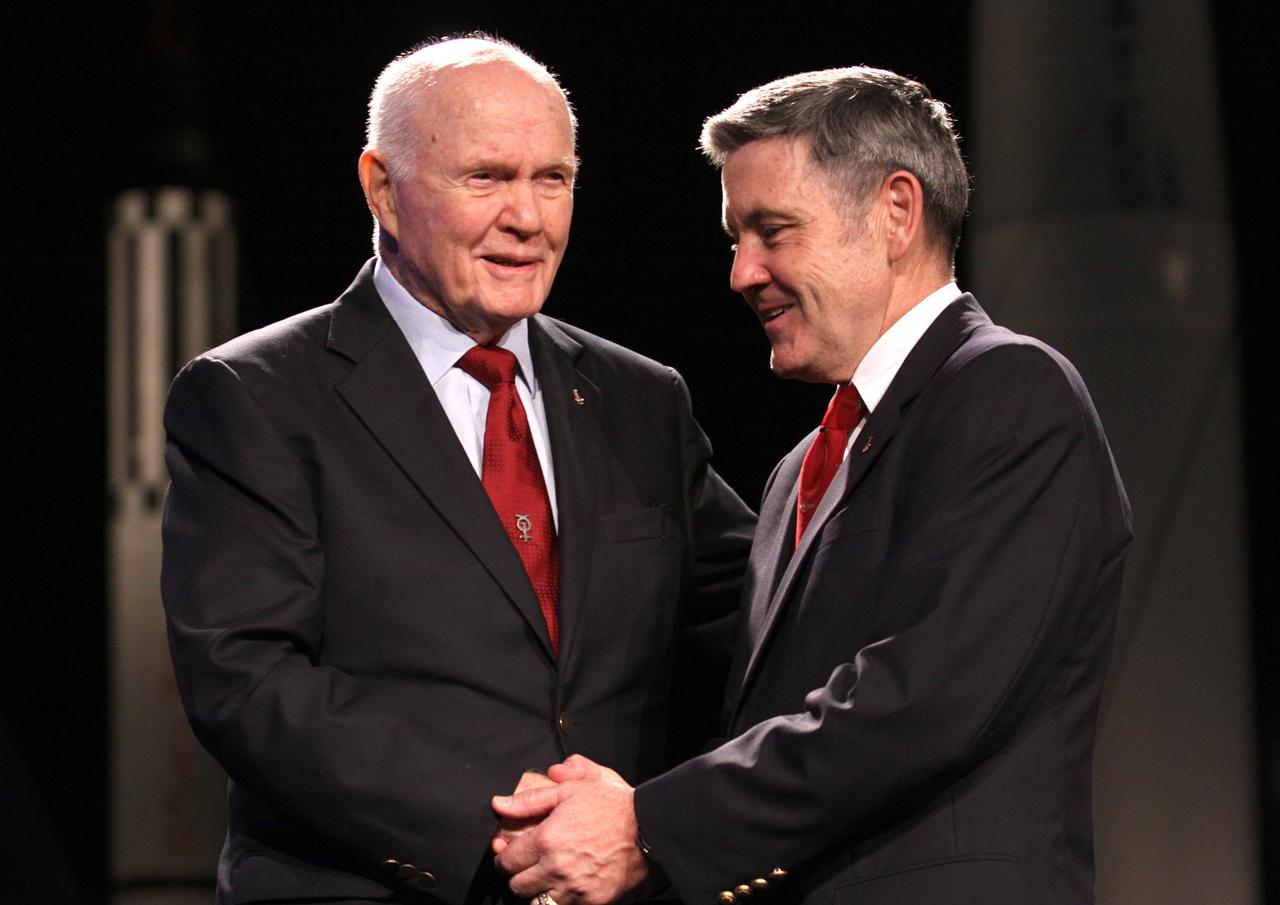
CAPE CANAVERAL, Fla. -- Mercury astronaut John Glenn, left, and Kennedy Space Center Director Bob Cabana shake hands following the "On Shoulders of Giants" program celebrating 50 years of Americans in orbit, an era which began with Glenn's MA-6 mission on Feb. 20, 1962. The event was conducted in the Rocket Garden at the Kennedy Space Center Visitor Complex in Florida a few miles from the launch pad where Glenn and Scott Carpenter took flight in Mercury spacecraft. Glenn's launch aboard an Atlas rocket took with it the hopes of an entire nation and ushered in a new era of space travel that eventually led to Americans walking on the moon by the end of the 1960s. Glenn soon was followed into orbit by Scott Carpenter, Walter Schirra and Gordon Cooper. Their fellow Mercury astronauts Alan Shepard and Virgil "Gus" Grissom flew earlier suborbital flights. Deke Slayton, a member of NASA's original Mercury 7 astronauts, was grounded by a medical condition until the Apollo-Soyuz Test Project in 1975. Photo credit: Kim Shiflett
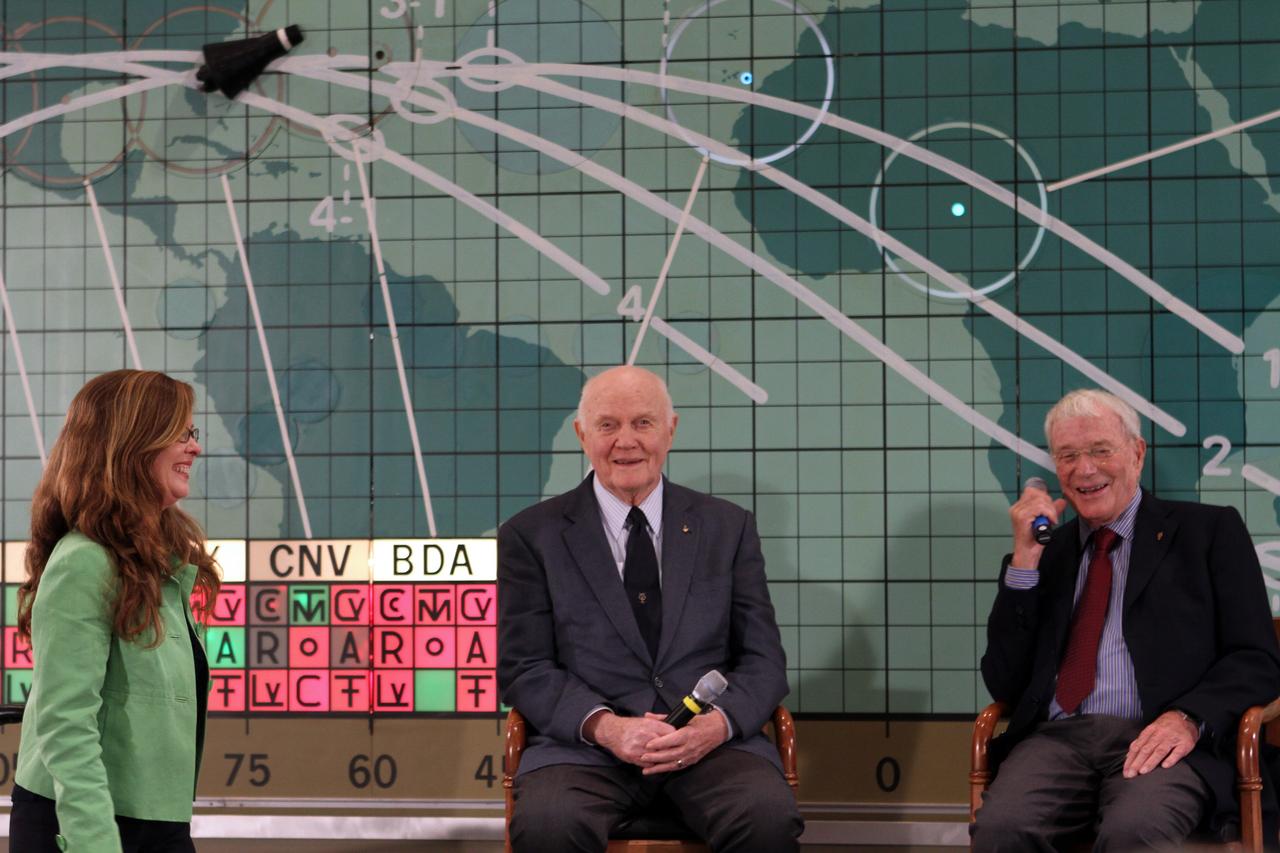
CAPE CANAVERAL, Fla. -- Lisa Malone, left, director of Public Affairs at NASA's Kennedy Space Center in Florida, talks with Mercury astronauts John Glenn, center, and Scott Carpenter in front of the plot board from the Mercury control center on display at the Kennedy Space Center Visitor Complex. The astronauts, part of the original class of seven astronauts chosen by NASA, were taking part in a question-and-answer session with the media as part of events celebrating 50 years of Americans in orbit, an era which began with John Glenn's Mercury mission MA-6, on Feb. 20, 1962. Glenn's launch aboard an Atlas rocket took with it the hopes of an entire nation and ushered in a new era of space travel that eventually led to Americans walking on the moon by the end of the 1960s. Glenn soon was followed into orbit by Carpenter, Walter Schirra and Gordon Cooper. Their fellow Mercury astronauts Alan Shepard and Virgil "Gus" Grissom flew earlier suborbital flights. Deke Slayton was grounded by a medical condition until the Apollo-Soyuz Test Project in 1975. Photo credit: NASA/Kim Shiflett
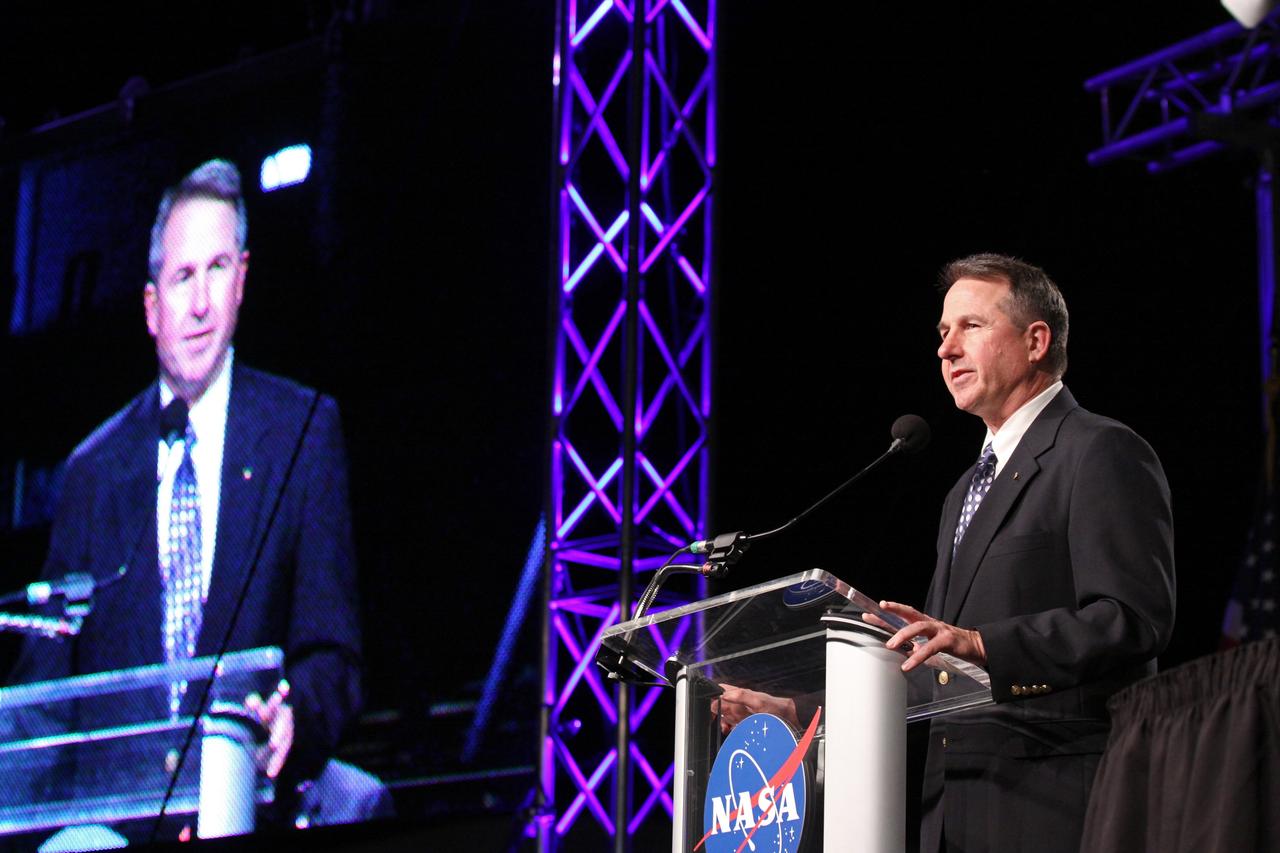
CAPE CANAVERAL, Fla. -- STS-95 astronaut Steve Robinson speaks during the "On Shoulders of Giants" program celebrating 50 years of Americans in orbit, an era which began with John Glenn's MA-6 mission on Feb. 20, 1962. The event was conducted in the Rocket Garden at the Kennedy Space Center Visitor Complex in Florida a few miles from the launch pad where Glenn and Scott Carpenter took flight in Mercury spacecraft. Glenn's launch aboard an Atlas rocket took with it the hopes of an entire nation and ushered in a new era of space travel that eventually led to Americans walking on the moon by the end of the 1960s. Glenn soon was followed into orbit by Scott Carpenter, Walter Schirra and Gordon Cooper. Their fellow Mercury astronauts Alan Shepard and Virgil "Gus" Grissom flew earlier suborbital flights. Deke Slayton, a member of NASA's original Mercury 7 astronauts, was grounded by a medical condition until the Apollo-Soyuz Test Project in 1975. Photo credit: Kim Shiflett
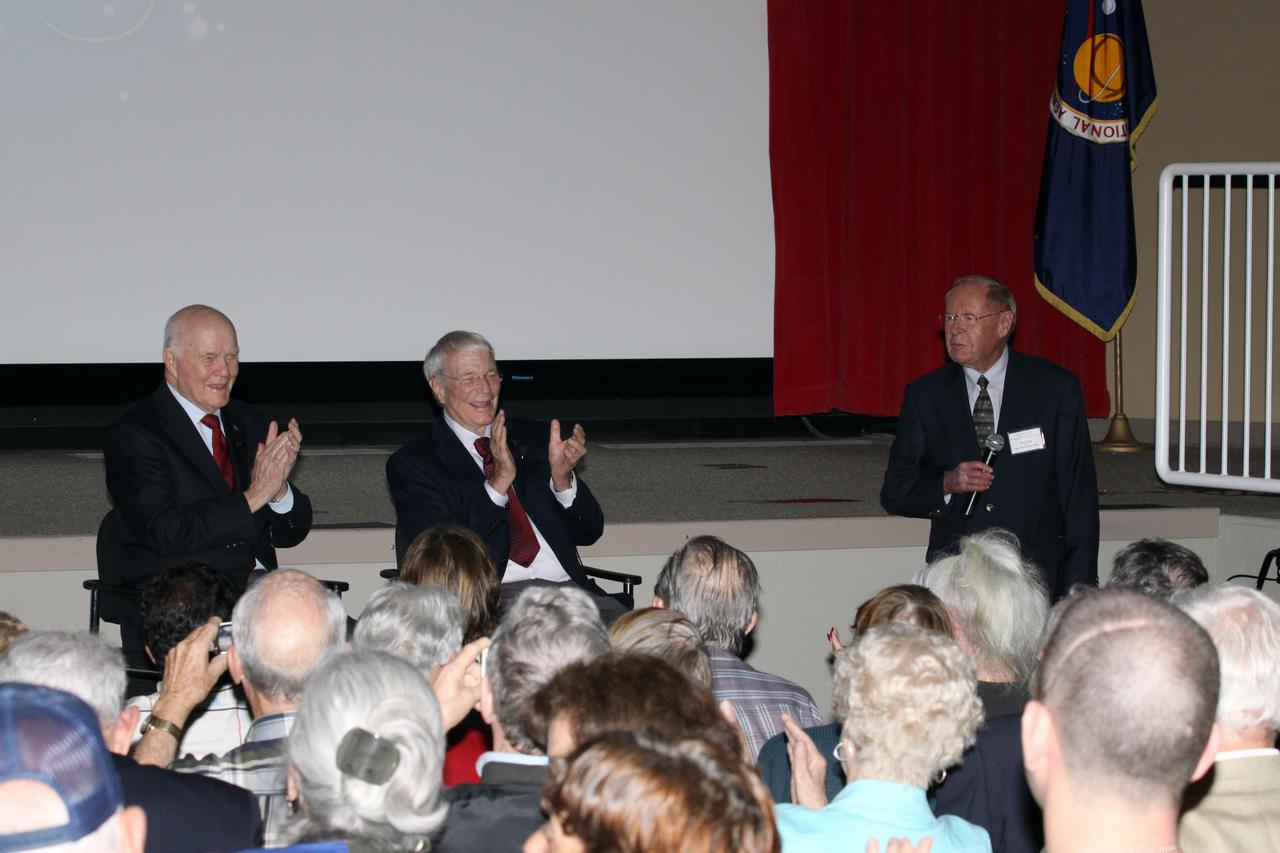
CAPE CANAVERAL, Fla. -- Mercury astronauts, John Glenn, left, and Scott Carpenter, talk to Mercury Project workers and other guests in the Astronaut Encounter Theater at the Kennedy Space Center Visitor Complex in Florida. The pair participated in 50th anniversary events at the launch site of Glenn's first orbital flight aboard NASA's Friendship 7 capsule, which launched Feb. 20, 1962, aboard an Atlas rocket. At right, is Jack King, who was chief of Kennedy's Public Information Office during Project Mercury. Glenn's launch aboard an Atlas rocket took with it the hopes of an entire nation and ushered in a new era of space travel that eventually led to Americans walking on the moon by the end of the 1960s. Glenn soon was followed into orbit by Carpenter, Walter Schirra and Gordon Cooper. Their fellow Mercury astronauts Alan Shepard and Virgil "Gus" Grissom flew earlier suborbital flights. Deke Slayton, a member of NASA's original Mercury 7 astronauts, was grounded by a medical condition until the Apollo-Soyuz Test Project in 1975. Photo credit: Kim Shiflett
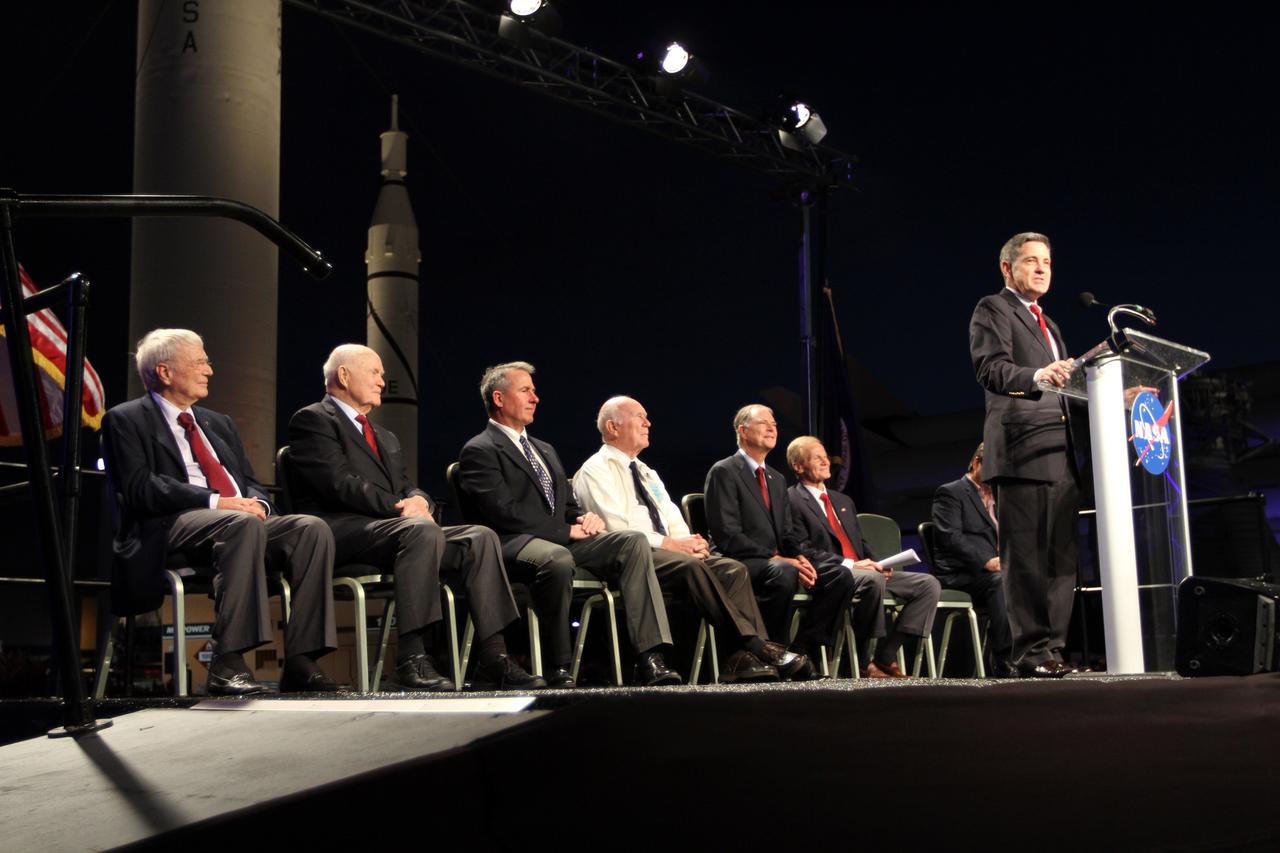
CAPE CANAVERAL, Fla. -- Kennedy Space Center Director Bob Cabana makes remarks during the "On Shoulders of Giants" program celebrating 50 years of Americans in orbit, an era which began with John Glenn's MA-6 mission on Feb. 20, 1962. The event was conducted in the Rocket Garden at the Kennedy Space Center Visitor Complex in Florida a few miles from the launch pad where Glenn and Scott Carpenter took flight in Mercury spacecraft. Glenn's launch aboard an Atlas rocket took with it the hopes of an entire nation and ushered in a new era of space travel that eventually led to Americans walking on the moon by the end of the 1960s. Glenn soon was followed into orbit by Scott Carpenter, Walter Schirra and Gordon Cooper. Their fellow Mercury astronauts Alan Shepard and Virgil "Gus" Grissom flew earlier suborbital flights. Deke Slayton, a member of NASA's original Mercury 7 astronauts, was grounded by a medical condition until the Apollo-Soyuz Test Project in 1975. Photo credit: Kim Shiflett
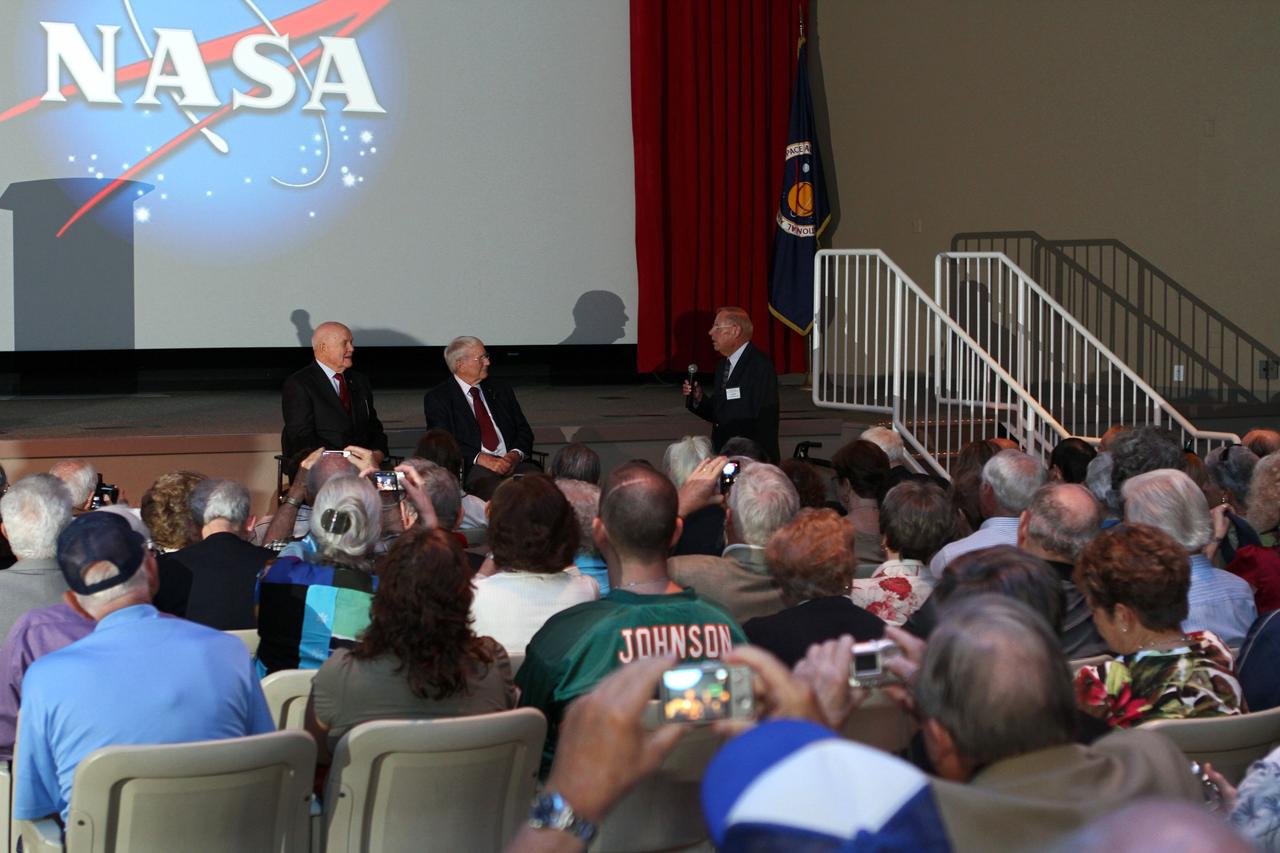
CAPE CANAVERAL, Fla. -- Mercury astronauts, John Glenn, left, and Scott Carpenter, talk to Mercury Project workers and other guests in the Astronaut Encounter Theater at the Kennedy Space Center Visitor Complex in Florida. The pair participated in 50th anniversary events at the launch site of Glenn's first orbital flight aboard NASA's Friendship 7 capsule, which launched Feb. 20, 1962, aboard an Atlas rocket. At right, is Jack King, who was chief of Kennedy's Public Information Office during Project Mercury. Glenn's launch aboard an Atlas rocket took with it the hopes of an entire nation and ushered in a new era of space travel that eventually led to Americans walking on the moon by the end of the 1960s. Glenn soon was followed into orbit by Carpenter, Walter Schirra and Gordon Cooper. Their fellow Mercury astronauts Alan Shepard and Virgil "Gus" Grissom flew earlier suborbital flights. Deke Slayton, a member of NASA's original Mercury 7 astronauts, was grounded by a medical condition until the Apollo-Soyuz Test Project in 1975. Photo credit: Kim Shiflett
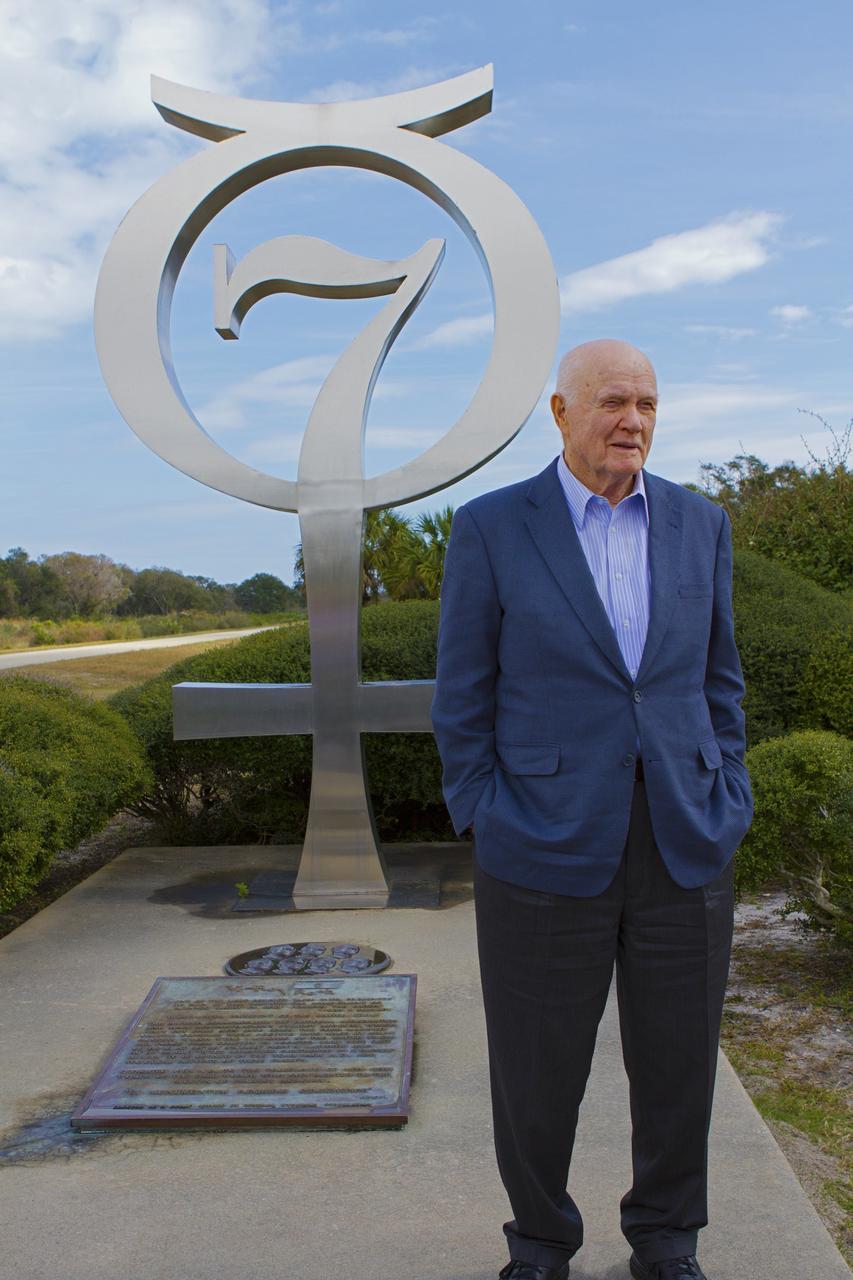
CAPE CANAVERAL, Fla. -- Mercury astronaut John Glenn poses in front of the Mercury 7 memorial near Complex 14 at Cape Canaveral Air Force Station in Florida. Glenn and Carpenter launched from the pad on Atlas rockets inside Mercury capsules in 1962. The two astronauts, part of the original class of seven astronauts chosen by NASA, were taking part in events celebrating 50 years of Americans in orbit, an era which began with Glenn's Mercury mission MA-6, on Feb. 20, 1962. Glenn's launch aboard an Atlas rocket took with it the hopes of an entire nation and ushered in a new era of space travel that eventually led to Americans walking on the moon by the end of the 1960s. Glenn soon was followed into orbit by Carpenter, Walter Schirra and Gordon Cooper. Their fellow Mercury astronauts Alan Shepard and Virgil "Gus" Grissom flew earlier suborbital flights. Deke Slayton was grounded by a medical condition until the Apollo-Soyuz Test Project in 1975. Photo credit: NASA/ Cory Huston
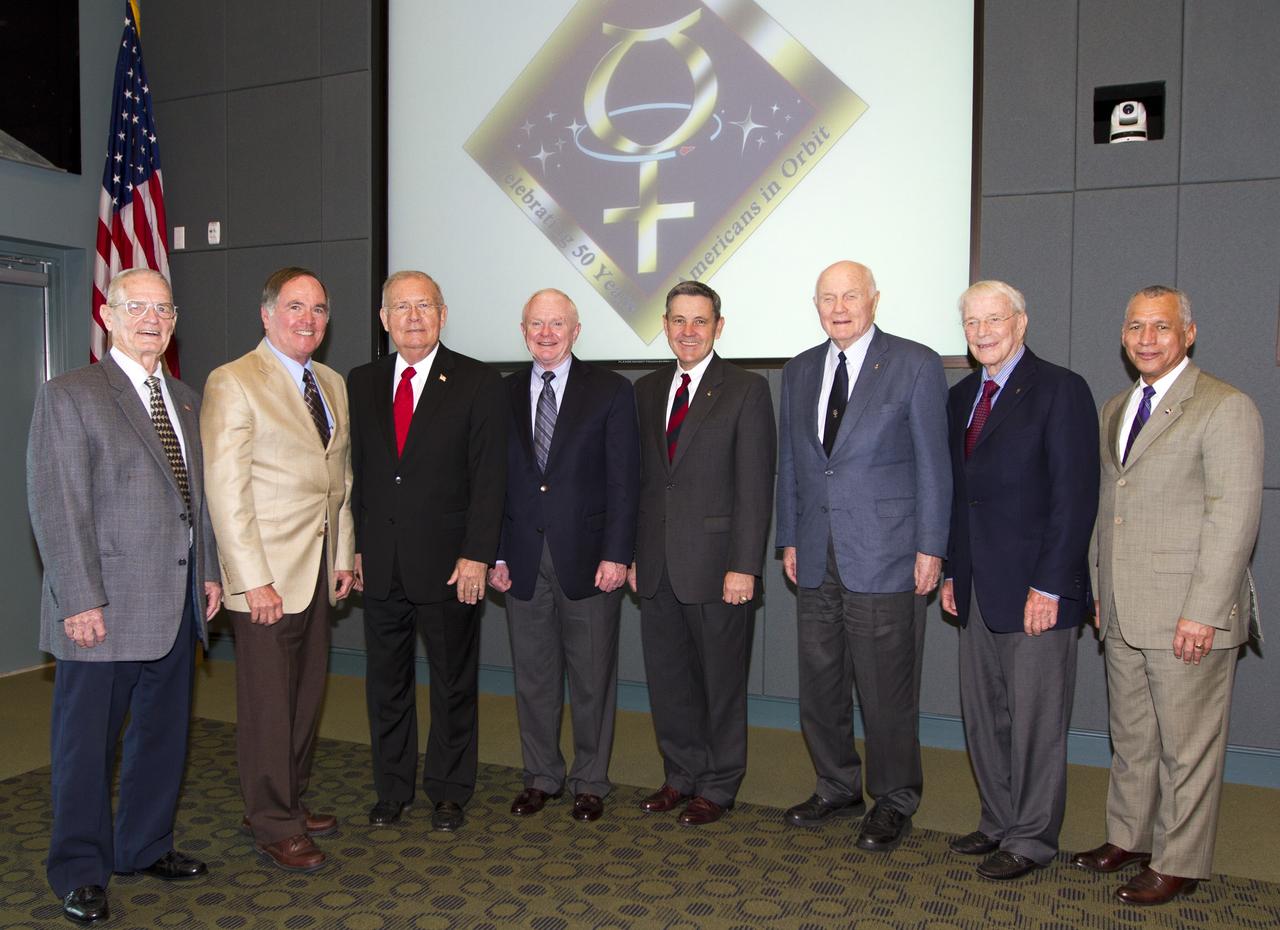
CAPE CANAVERAL, Fla. - Former Kennedy Space Center directors Forrest McCartney, from left, Bob Crippen, Jay Honeycutt and Roy Bridges stand with current Kennedy director Bob Cabana, Mercury astronauts John Glenn and Scott Carpenter and NASA Administrator Charles Bolden during a luncheon Feb. 17, 2012, celebrating 50 years of Americans in orbit, an era which began with Glenn's Mercury mission MA-6, on Feb. 20, 1962. Glenn's launch aboard an Atlas rocket took with it the hopes of an entire nation and ushered in a new era of space travel that eventually led to Americans walking on the moon by the end of the 1960s. Glenn soon was followed into orbit by Scott Carpenter, Walter Schirra and Gordon Cooper. Their fellow Mercury astronauts Alan Shepard and Virgil "Gus" Grissom flew earlier suborbital flights. Deke Slayton, a member of NASA's original Mercury 7 astronauts, was grounded by a medical condition until the Apollo-Soyuz Test Project in 1975. Photo credit: NASA/Kim Shiflett
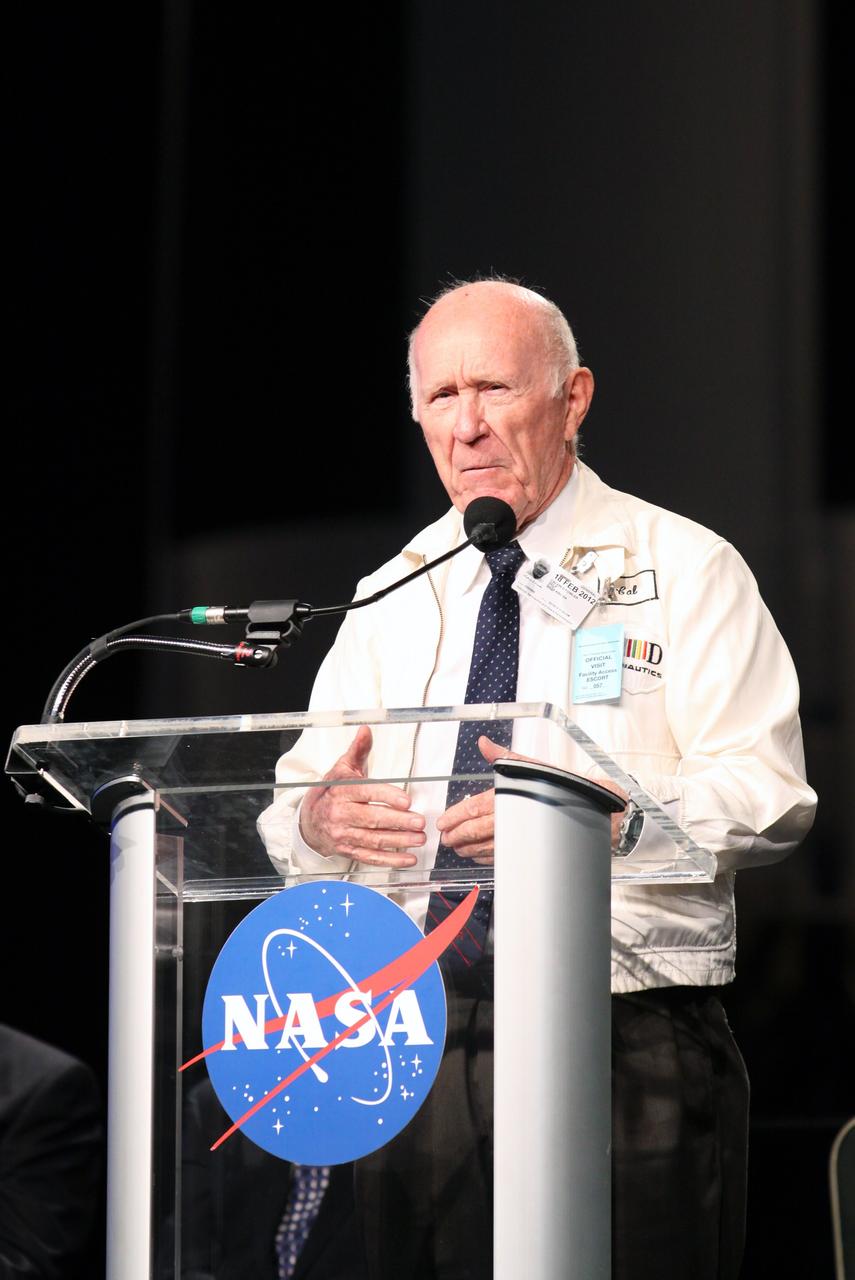
CAPE CANAVERAL, Fla. -- Cal Fowler, Launch test director during Mercury, speaks during the "On Shoulders of Giants" program celebrating 50 years of Americans in orbit, an era which began with John Glenn's MA-6 mission on Feb. 20, 1962. The event was conducted in the Rocket Garden at the Kennedy Space Center Visitor Complex in Florida a few miles from the launch pad where Glenn and Scott Carpenter took flight in Mercury spacecraft. Glenn's launch aboard an Atlas rocket took with it the hopes of an entire nation and ushered in a new era of space travel that eventually led to Americans walking on the moon by the end of the 1960s. Glenn soon was followed into orbit by Carpenter, Walter Schirra and Gordon Cooper. Their fellow Mercury astronauts Alan Shepard and Virgil "Gus" Grissom flew earlier suborbital flights. Deke Slayton, a member of NASA's original Mercury 7 astronauts, was grounded by a medical condition until the Apollo-Soyuz Test Project in 1975. Photo credit: Kim Shiflett
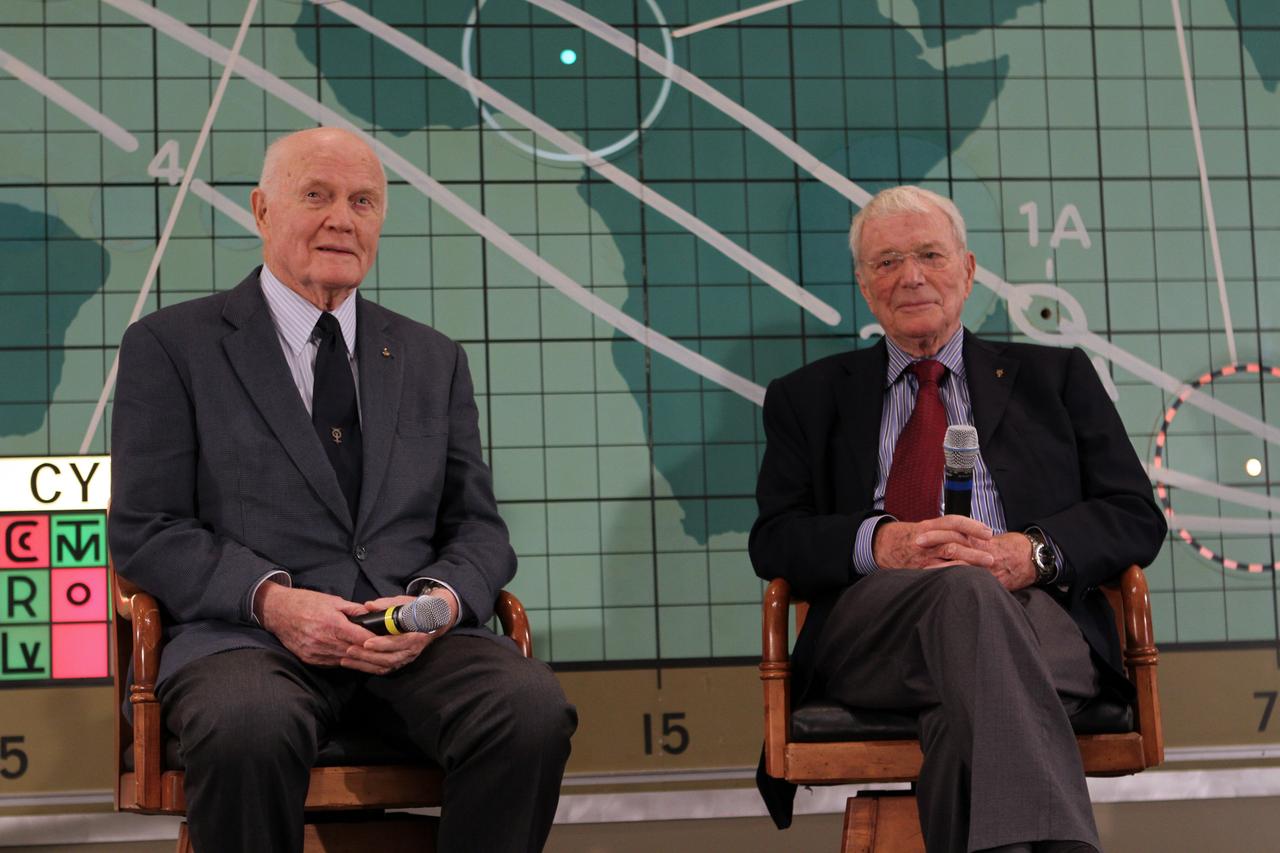
CAPE CANAVERAL, Fla. --Mercury astronauts John Glenn, left, and Scott Carpenter sit in front of the plot board from the Mercury control center on display at the Kennedy Space Center Visitor Complex in Florida. The astronaut, part of the original class of seven astronauts chosen by NASA, was taking part in a question-and-answer session with the media as part of events celebrating 50 years of Americans in orbit, an era which began with John Glenn's Mercury mission MA-6, on Feb. 20, 1962. Glenn's launch aboard an Atlas rocket took with it the hopes of an entire nation and ushered in a new era of space travel that eventually led to Americans walking on the moon by the end of the 1960s. Glenn soon was followed into orbit by Carpenter, Walter Schirra and Gordon Cooper. Their fellow Mercury astronauts Alan Shepard and Virgil "Gus" Grissom flew earlier suborbital flights. Deke Slayton was grounded by a medical condition until the Apollo-Soyuz Test Project in 1975. Photo credit: NASA/Kim Shiflett
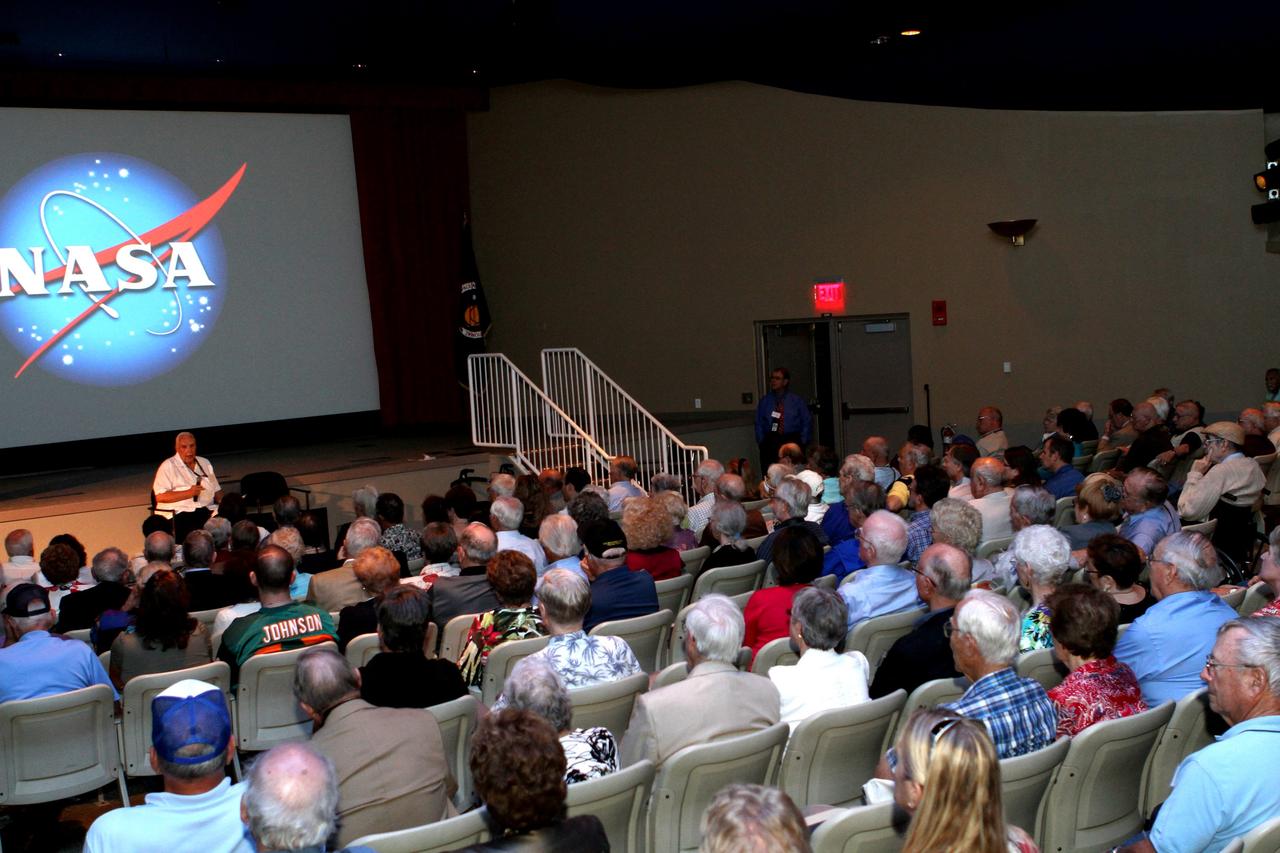
CAPE CANAVERAL, Fla. -- Hugh Harris, the former director of Public Affairs at NASA's Kennedy Space Center in Florida, talks to Mercury Project workers and other guests in the Astronaut Encounter Theater at the Kennedy Space Center Visitor Complex in Florida. Harris is helping Mercury astronauts, John Glenn and Scott Carpenter, mark the 50th anniversary of Glenn being the first American to orbit the Earth inside the NASA Mercury Project's Friendship 7 capsule on Feb. 20, 1962. Glenn's launch aboard an Atlas rocket took with it the hopes of an entire nation and ushered in a new era of space travel that eventually led to Americans walking on the moon by the end of the 1960s. Glenn soon was followed into orbit by Carpenter, Walter Schirra and Gordon Cooper. Their fellow Mercury astronauts Alan Shepard and Virgil "Gus" Grissom flew earlier suborbital flights. Deke Slayton, a member of NASA's original Mercury 7 astronauts, was grounded by a medical condition until the Apollo-Soyuz Test Project in 1975. Photo credit: Kim Shiflett