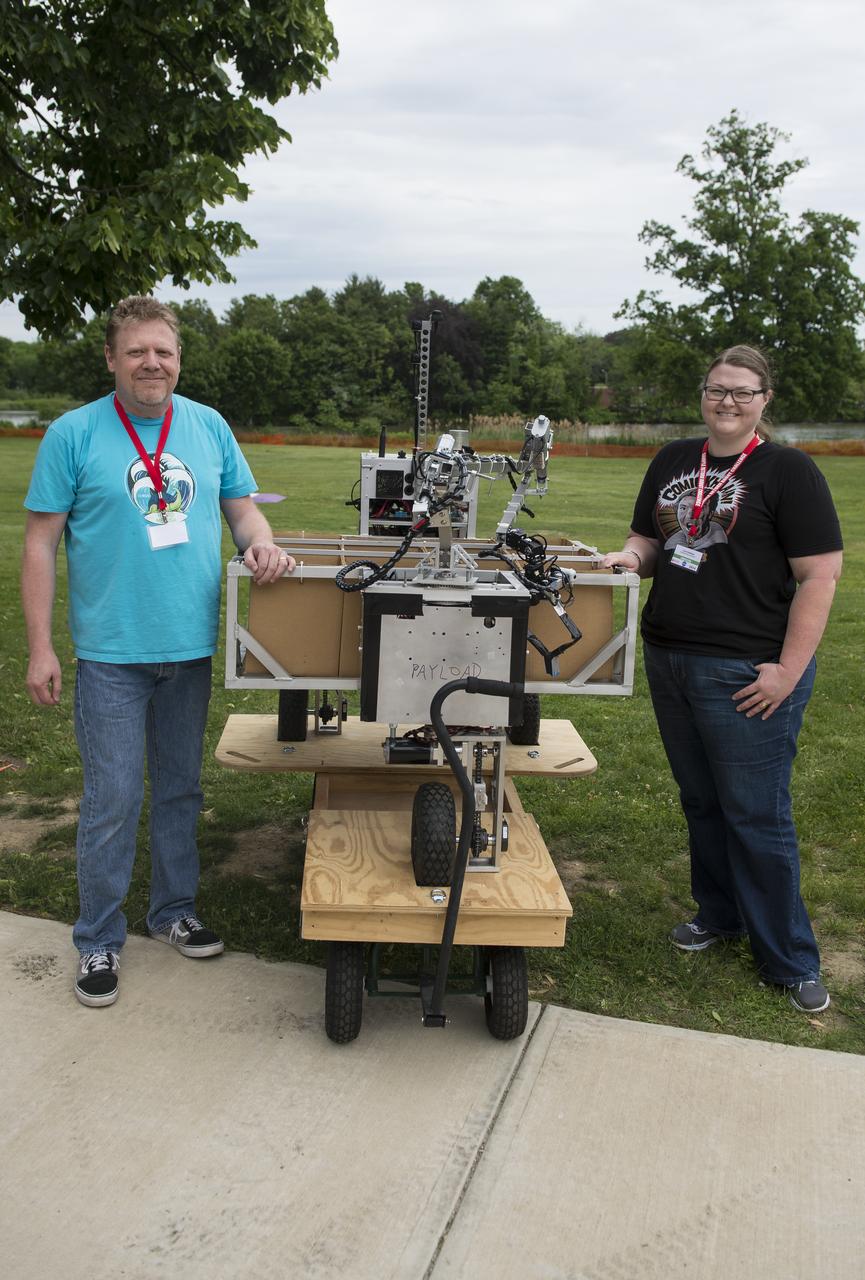
Jim Rothrock, left, and Carrie Johnson, right, of the Wunderkammer Laboratory team pose for a picture with their robot after attempting the level one competition during the 2014 NASA Centennial Challenges Sample Return Robot Challenge, Wednesday, June 11, 2014, at the Worcester Polytechnic Institute (WPI) in Worcester, Mass. Eighteen teams are competing for a $1.5 million NASA prize purse. Teams will be required to demonstrate autonomous robots that can locate and collect samples from a wide and varied terrain, operating without human control. The objective of this NASA-WPI Centennial Challenge is to encourage innovations in autonomous navigation and robotics technologies. Innovations stemming from the challenge may improve NASA's capability to explore a variety of destinations in space, as well as enhance the nation's robotic technology for use in industries and applications on Earth. Photo Credit: (NASA/Joel Kowsky)
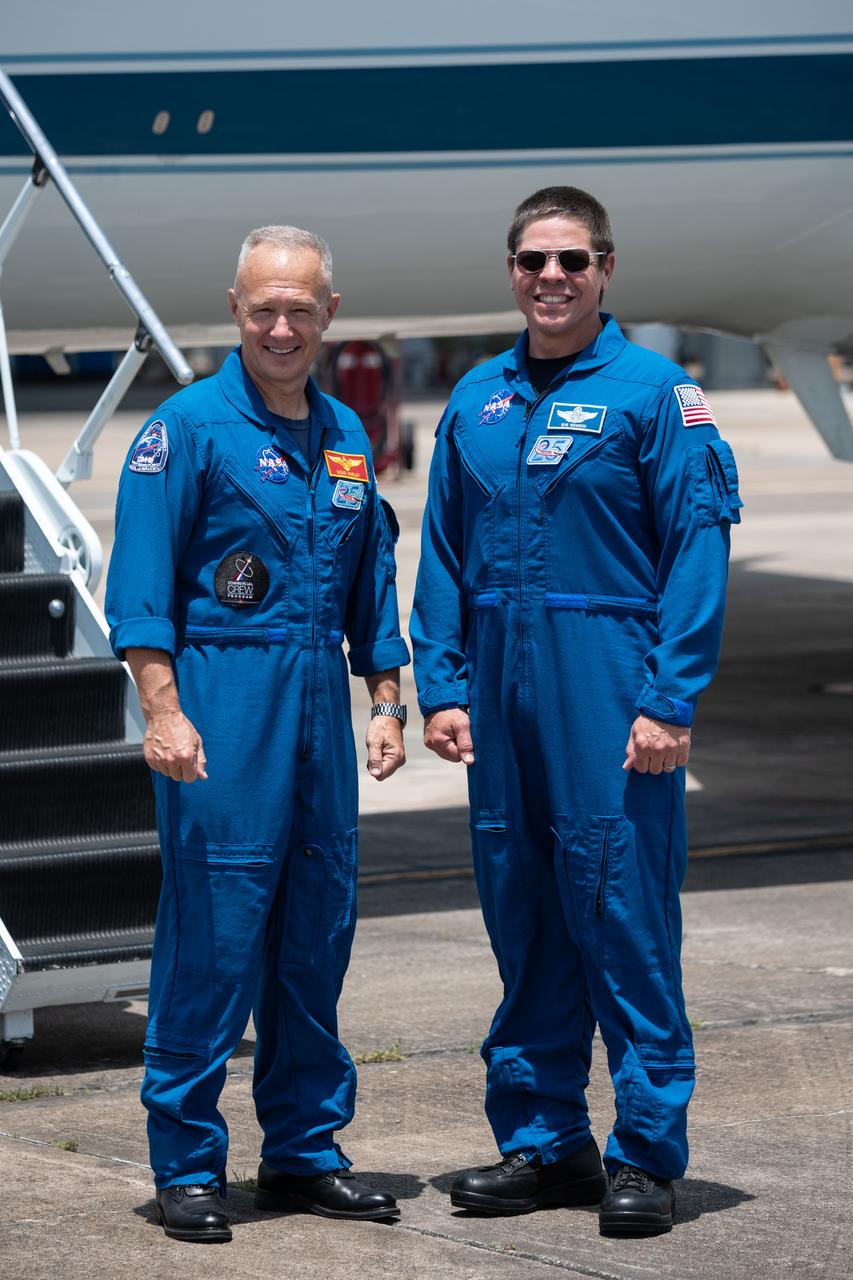
Date: 05-20-2020 Location: Ellington Field - Hangar 276 Tarmac Subject: At Ellington Field near NASA’s Johnson Space Center in Houston, astronauts Douglas Hurley(left) and Robert Behnken pose for a photo before boarding the Gulfstream jet that will carry them to the agency’s Kennedy Space Center in Florida on May 20, 2020, in preparation for NASA’s SpaceX Demo-2 mission. Under NASA’s Commercial Crew Program, Behnken and Hurley will be the first astronauts to launch to the International Space Station from U.S. soil since the end of the Space Shuttle Program in 2011. Liftoff of the SpaceX Falcon 9 rocket and Crew Dragon spacecraft is scheduled for 4:33 p.m. on May 27 from Kennedy’s Launch Complex 39A.
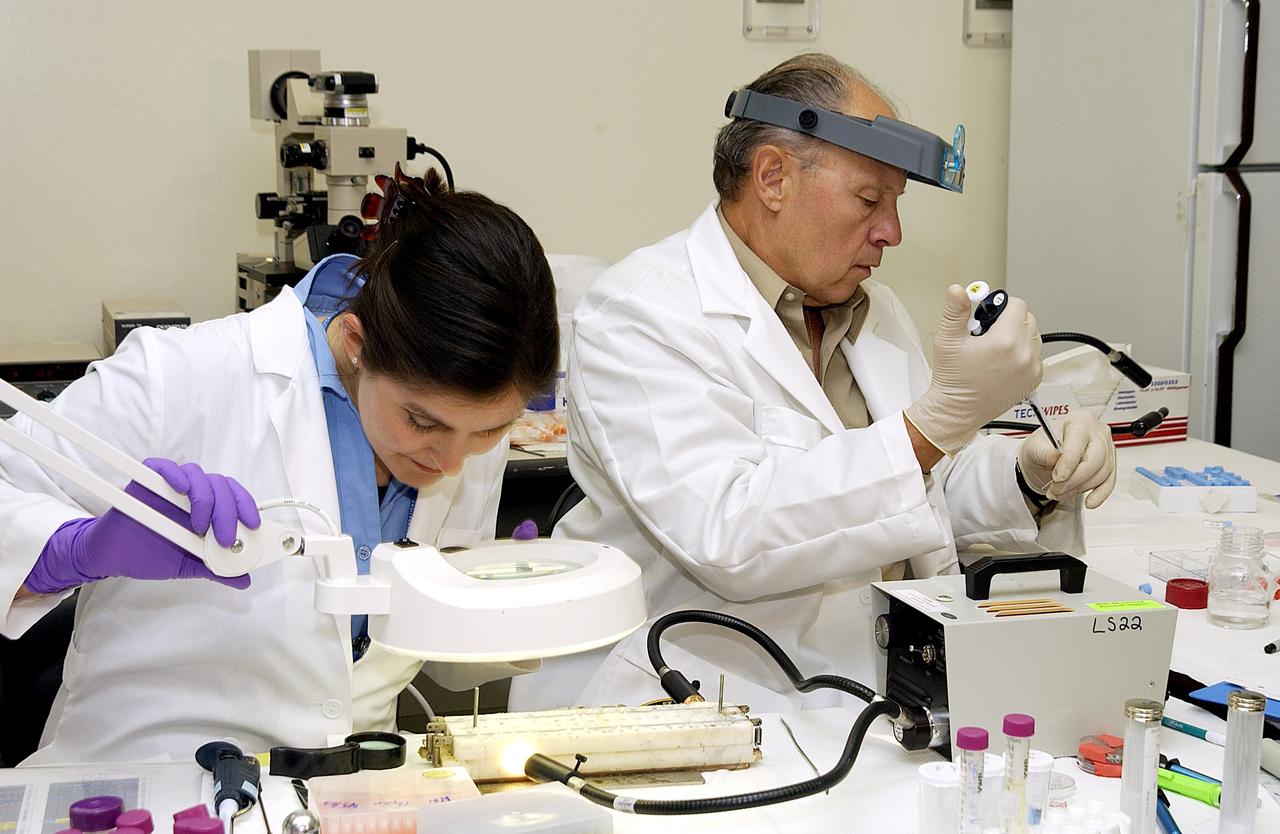
KENNEDY SPACE CENTER, FLA. - From left, Valerie Cassanto, Instrumentation Technology Associates, Inc., and Dr. Dennis Morrison, NASA Johnson Space Center, analyze one of the experiments carried on mission STS-107. Several experiments were found during the search for Columbia debris. Included in the Commercial ITA Biomedical Experiments payload on mission STS-107 are urokinase cancer research, microencapsulation of drugs, the Growth of Bacterial Biofilm on Surfaces during Spaceflight (GOBBSS), and tin crystal formation.
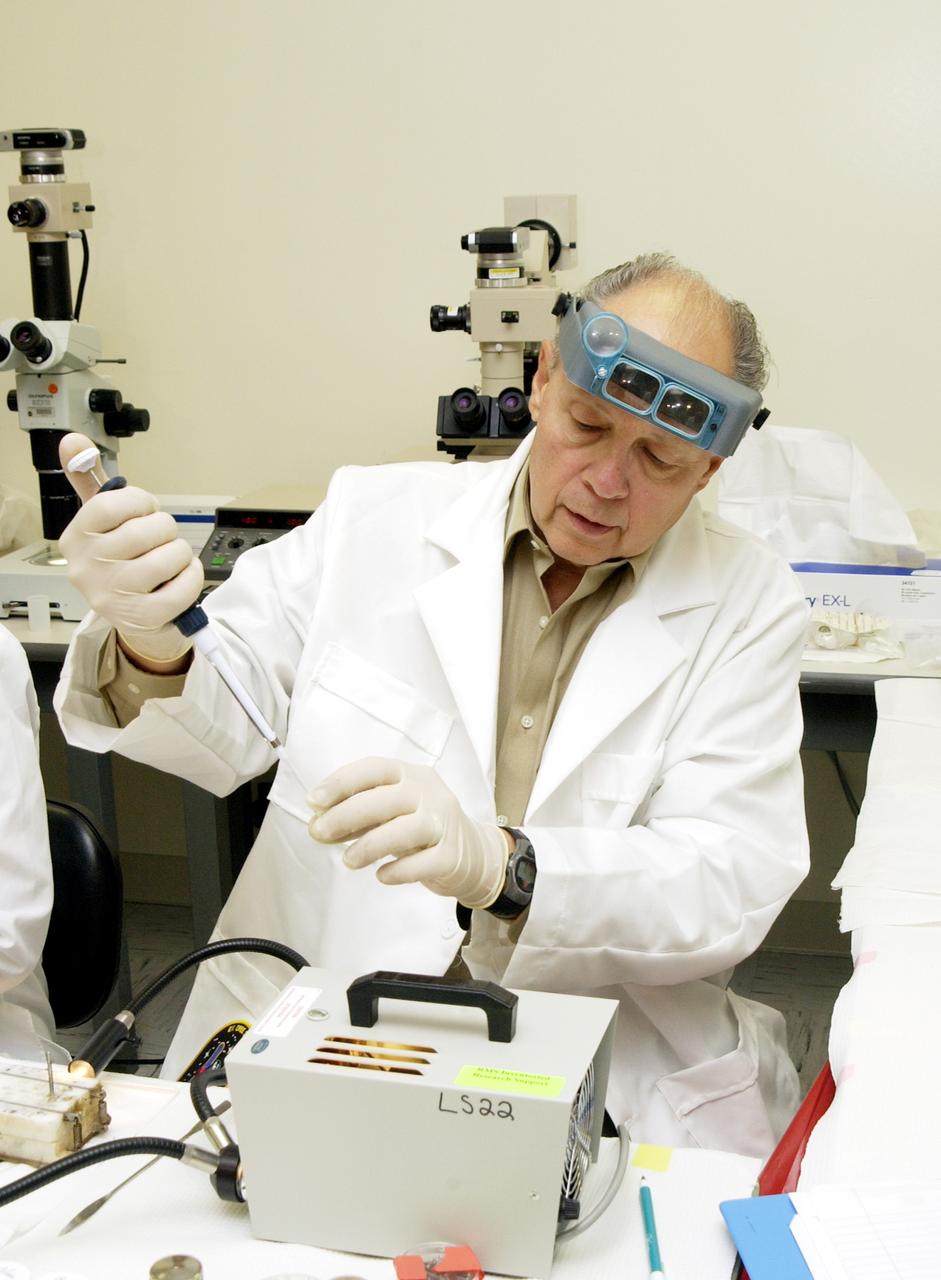
KENNEDY SPACE CENTER, FLA. - Dr. Dennis Morrison, NASA Johnson Space Center, processes one of the experiments carried on mission STS-107. Several experiments were found during the search for Columbia debris. Included in the Commercial ITA Biomedical Experiments payload on mission STS-107 are urokinase cancer research, microencapsulation of drugs, the Growth of Bacterial Biofilm on Surfaces during Spaceflight (GOBBSS), and tin crystal formation.
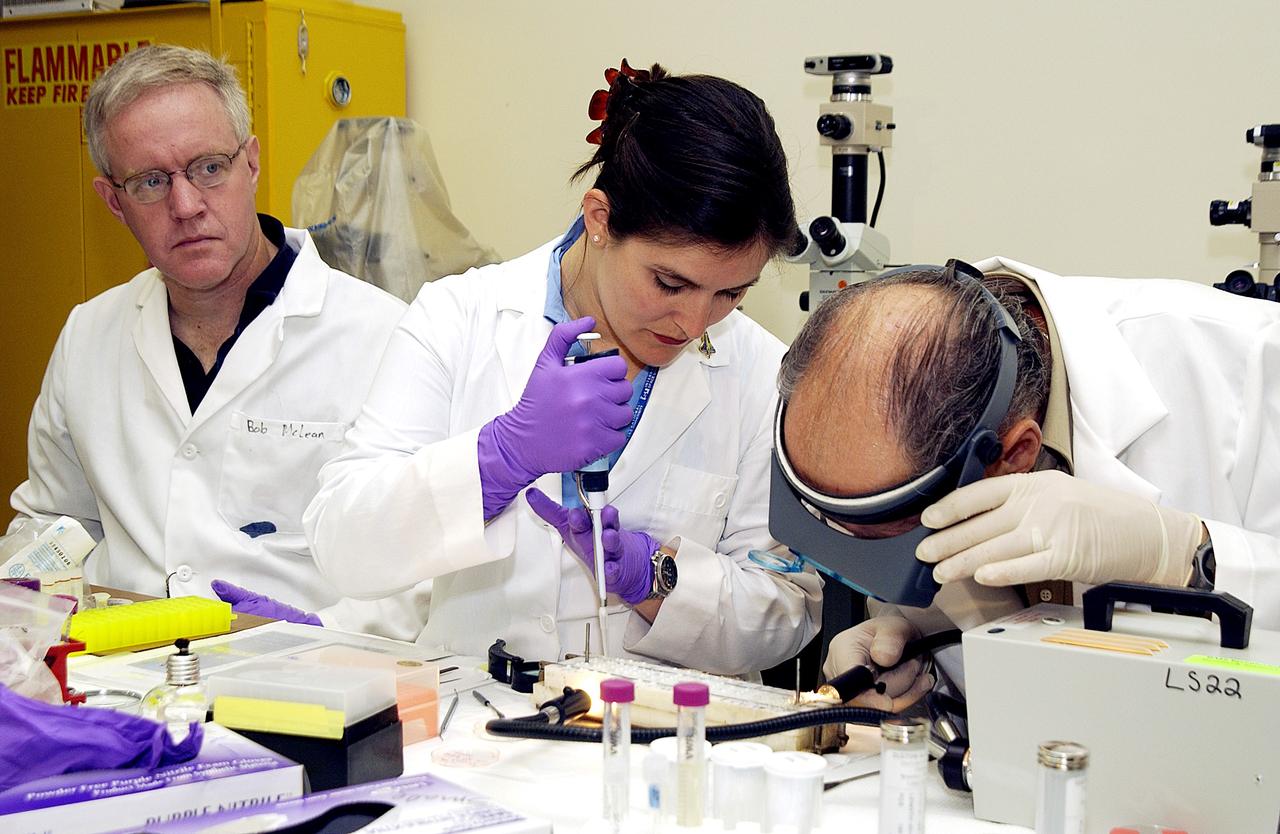
KENNEDY SPACE CENTER, FLA. - From left, Bob McLean, Southwest Texas State University; Valerie Cassanto, Instrumentation Technology Associates, Inc.; and Dennis Morrison, NASA Johnson Space Center, process one of the experiments carried on mission STS-107. Several experiments were found during the search for Columbia debris. Included in the Commercial ITA Biomedical Experiments payload on mission STS-107 are urokinase cancer research, microencapsulation of drugs, the Growth of Bacterial Biofilm on Surfaces during Spaceflight (GOBBSS), and tin crystal formation.
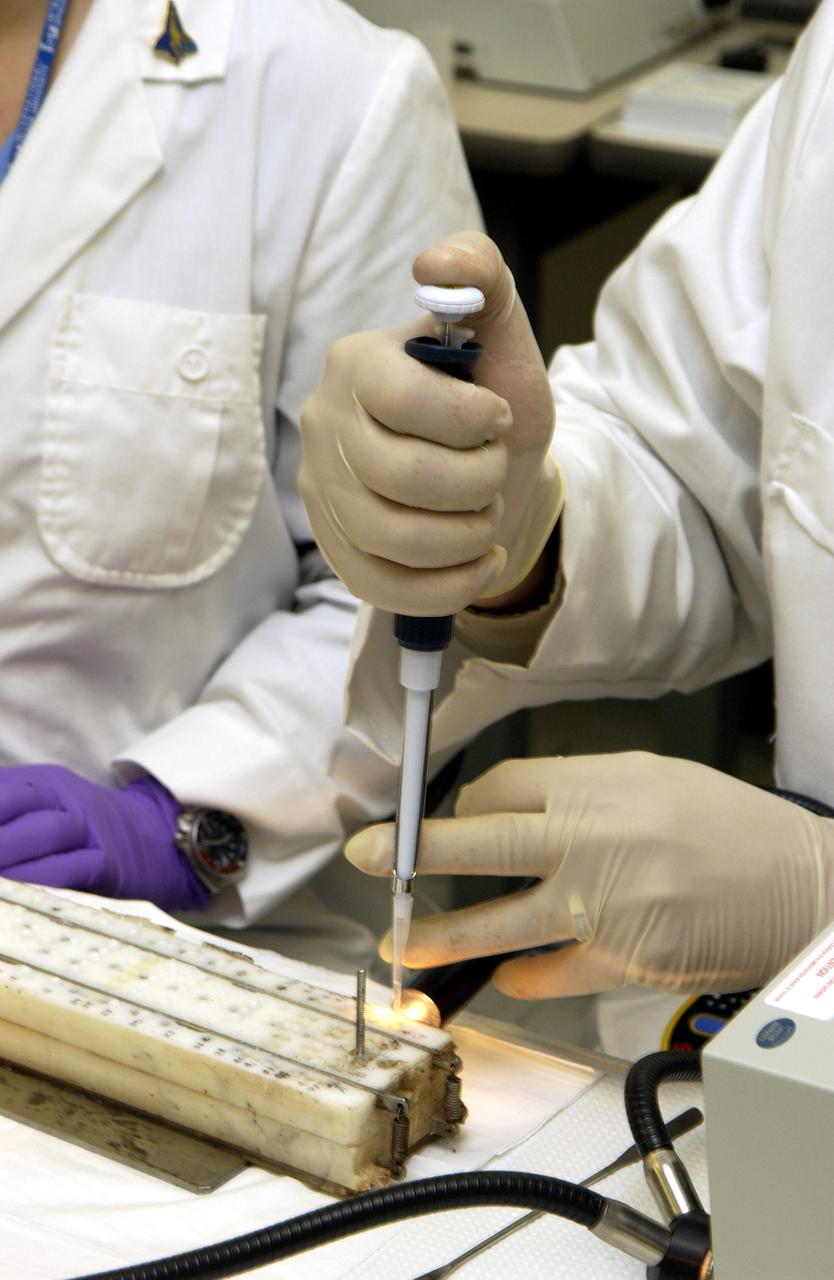
KENNEDY SPACE CENTER, FLA. - Dr. Dennis Morrison, NASA Johnson Space Center, works with one of the experiments carried on mission STS-107. Several experiments were found during the search for Columbia debris. Included in the Commercial ITA Biomedical Experiments payload on mission STS-107 are urokinase cancer research, microencapsulation of drugs, the Growth of Bacterial Biofilm on Surfaces during Spaceflight (GOBBSS), and tin crystal formation.
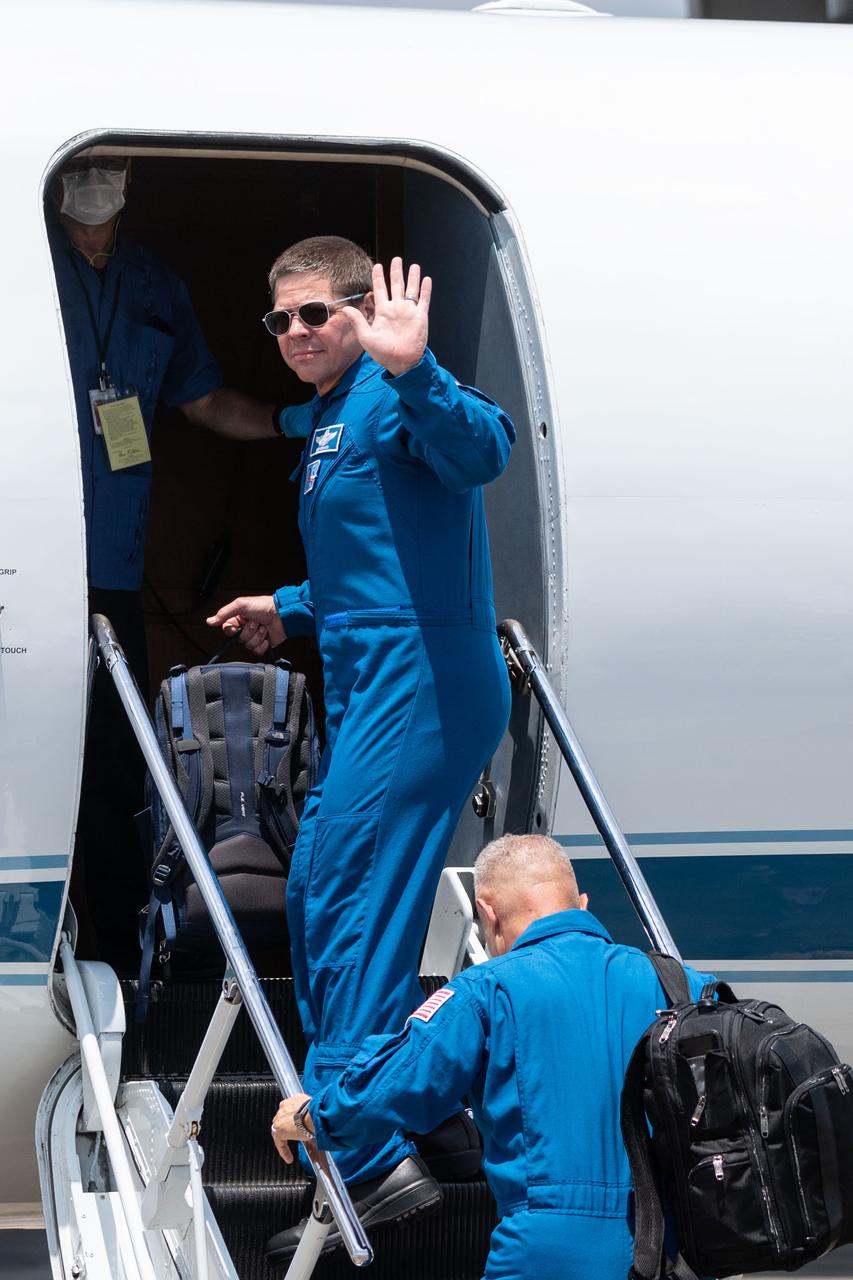
Date: 05-20-2020 Location: Ellington Field - Hangar 276 Tarmac Subject: At Ellington Field near NASA’s Johnson Space Center in Houston, astronauts Robert Behnken(facing) and Douglas Hurley board the Gulfstream jet that will carry them to the agency’s Kennedy Space Center in Florida on May 20, 2020, in preparation for NASA’s SpaceX Demo-2 mission. Under NASA’s Commercial Crew Program, Behnken and Hurley will be the first astronauts to launch to the International Space Station from U.S. soil since the end of the Space Shuttle Program in 2011. Liftoff of the SpaceX Falcon 9 rocket and Crew Dragon spacecraft is scheduled for 4:33 p.m. on May 27 from Kennedy’s Launch Complex 39A.
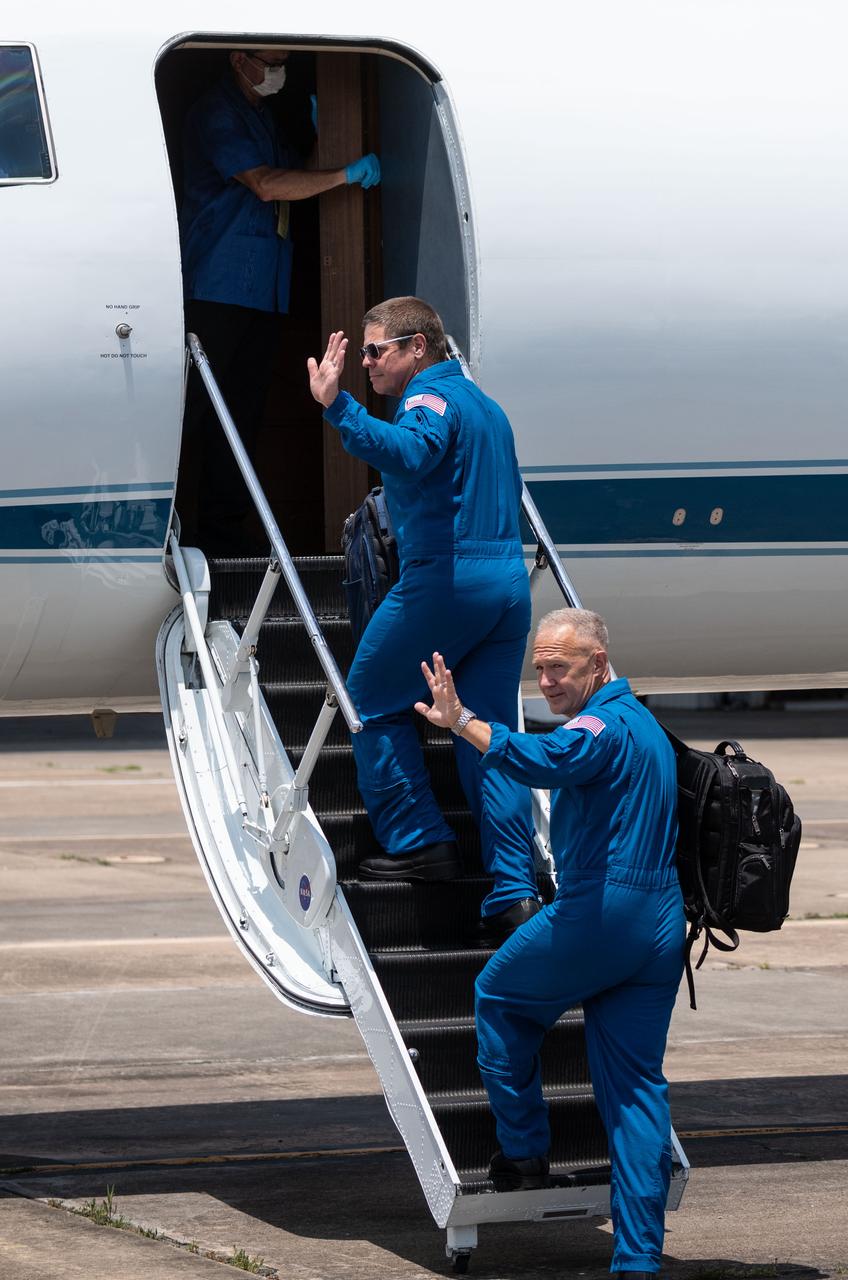
Date: 05-20-2020 Location: Ellington Field - Hangar 276 Tarmac Subject: At Ellington Field near NASA’s Johnson Space Center in Houston, astronauts Robert Behnken(left) and Douglas Hurley board the Gulfstream jet that will carry them to the agency’s Kennedy Space Center in Florida on May 20, 2020, in preparation for NASA’s SpaceX Demo-2 mission. Under NASA’s Commercial Crew Program, Behnken and Hurley will be the first astronauts to launch to the International Space Station from U.S. soil since the end of the Space Shuttle Program in 2011. Liftoff of the SpaceX Falcon 9 rocket and Crew Dragon spacecraft is scheduled for 4:33 p.m. on May 27 from Kennedy’s Launch Complex 39A.
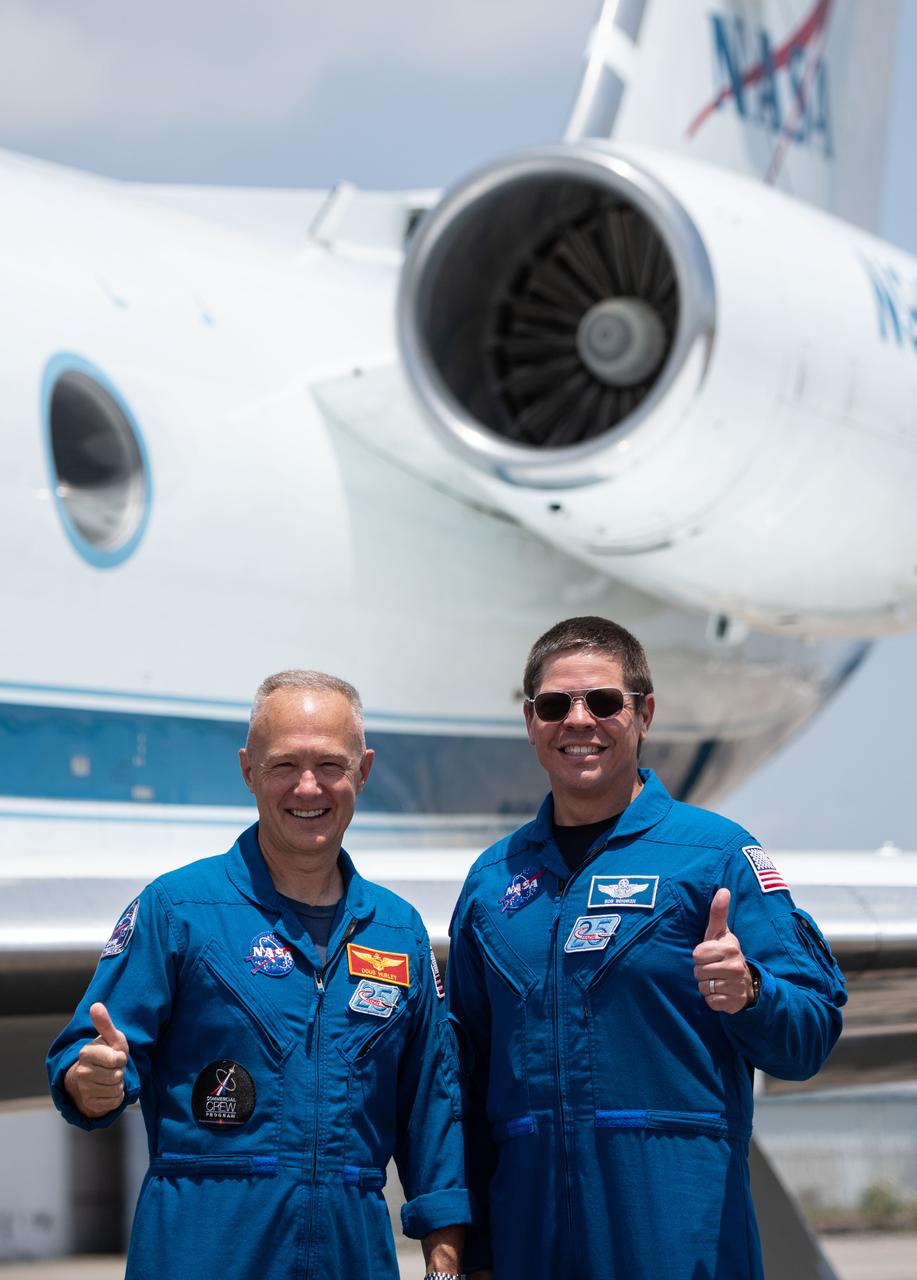
Date: 05-20-2020 Location: Ellington Field - Hangar 276 Tarmac Subject: At Ellington Field near NASA’s Johnson Space Center in Houston, astronauts Douglas Hurley(left) and Robert Behnken pose for a photo before boarding the Gulfstream jet that will carry them to the agency’s Kennedy Space Center in Florida on May 20, 2020, in preparation for NASA’s SpaceX Demo-2 mission. Under NASA’s Commercial Crew Program, Behnken and Hurley will be the first astronauts to launch to the International Space Station from U.S. soil since the end of the Space Shuttle Program in 2011. Liftoff of the SpaceX Falcon 9 rocket and Crew Dragon spacecraft is scheduled for 4:33 p.m. on May 27 from Kennedy’s Launch Complex 39A.
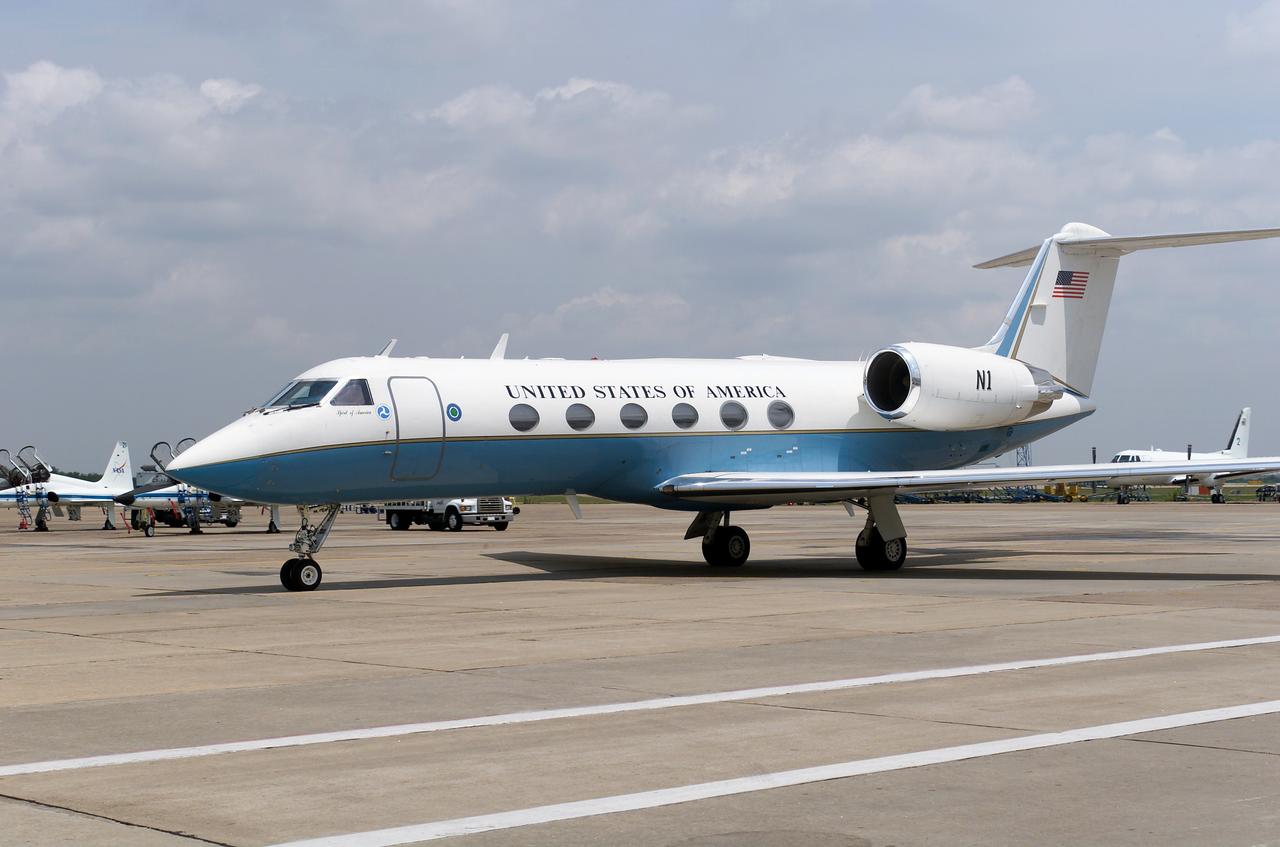
JSC2003-E-37449 (21 May 2003) --- A Federal Aviation Administration Gulfstream IV aircraft, which carried the Expedition 6 crewmembers, is pictured at Ellington Field, near Johnson Space Center (JSC).
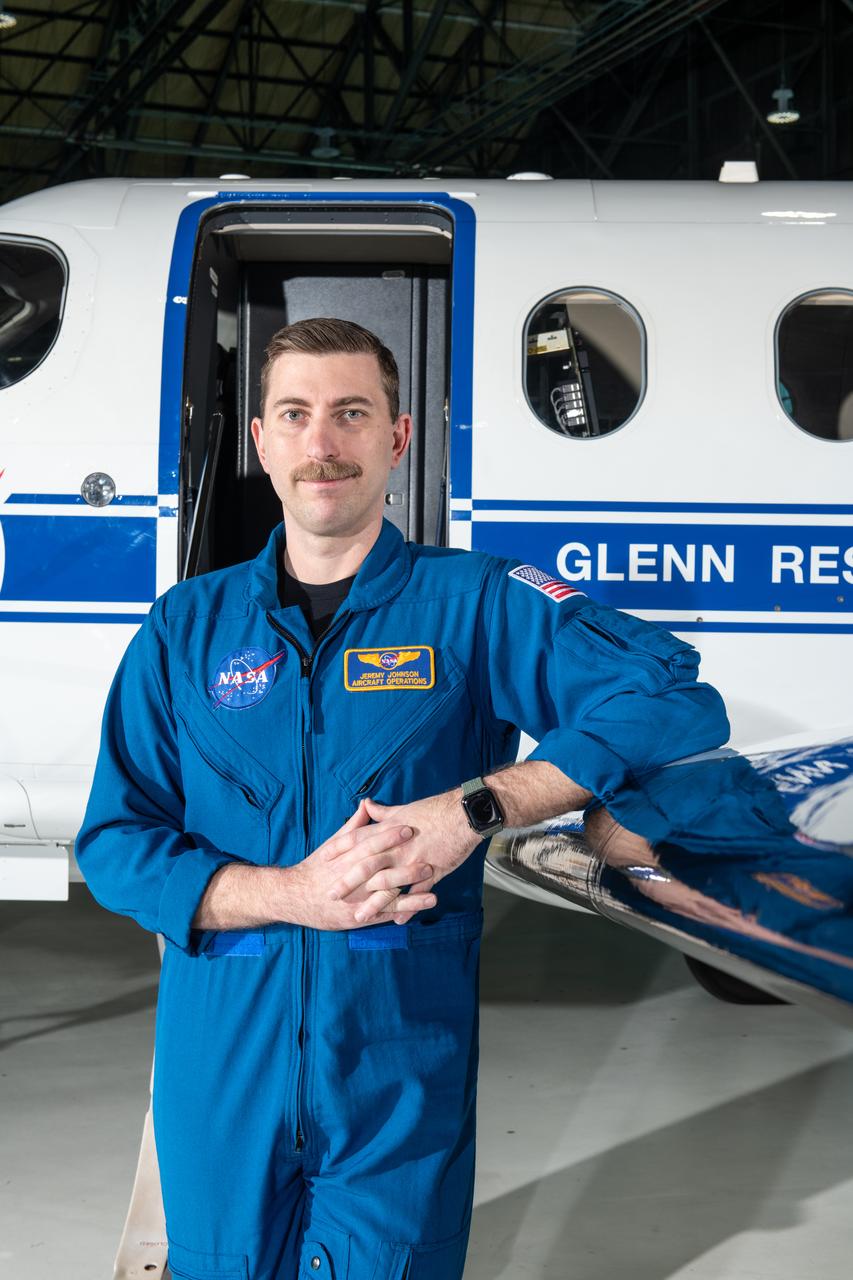
Jeremy Johnson, a research pilot and aviation safety officer, poses in front of a PC-12 aircraft inside the hangar at NASA’s Glenn Research Center in Cleveland on Thursday, April 17, 2025. Johnson flies NASA planes to support important scientific research and testing, working with researchers to plan and carry out flights that will get them the data they need while ensuring safety.
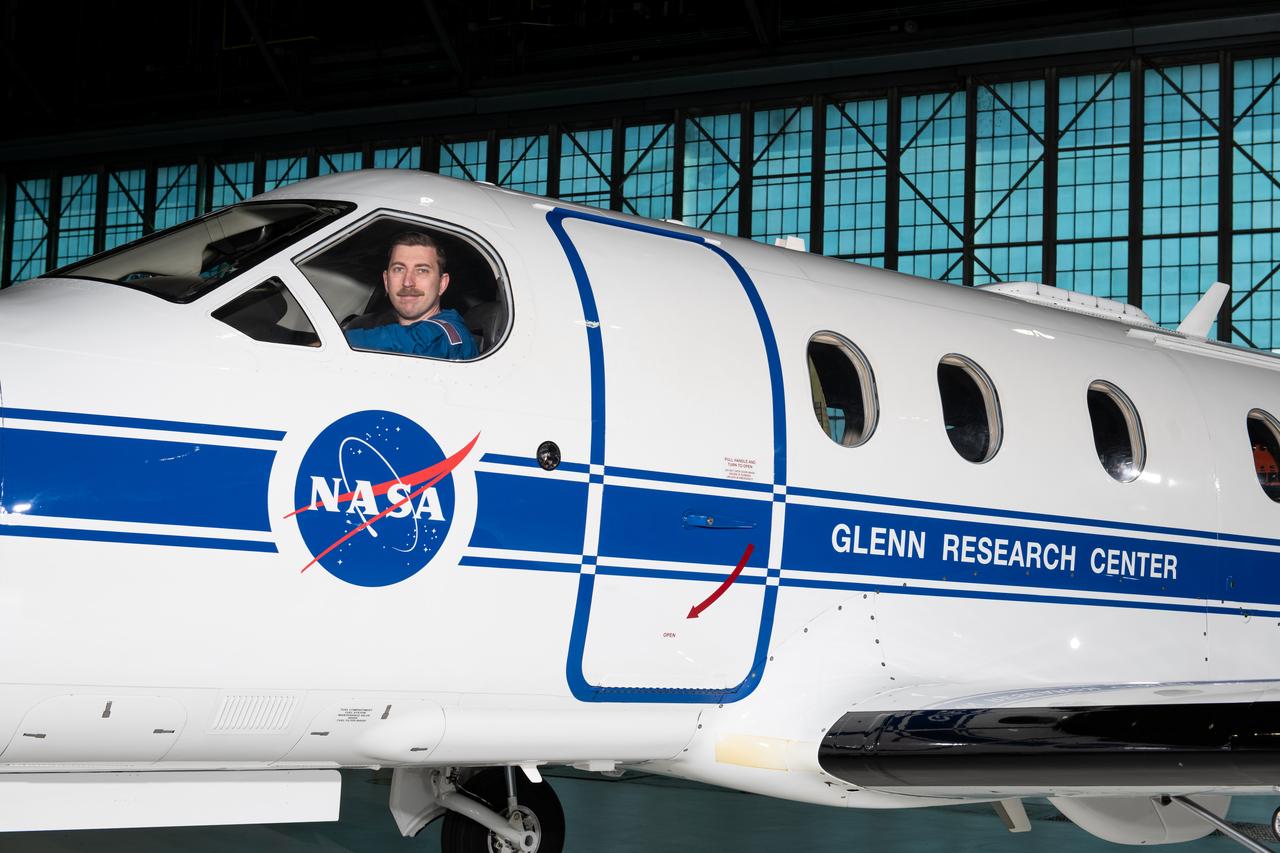
Jeremy Johnson, a research pilot and aviation safety officer, poses in the PC-12 aircraft inside the hangar at NASA’s Glenn Research Center in Cleveland on Thursday, April 17, 2025. Johnson flies NASA planes to support important scientific research and testing, working with researchers to plan and carry out flights that will get them the data they need while ensuring safety.
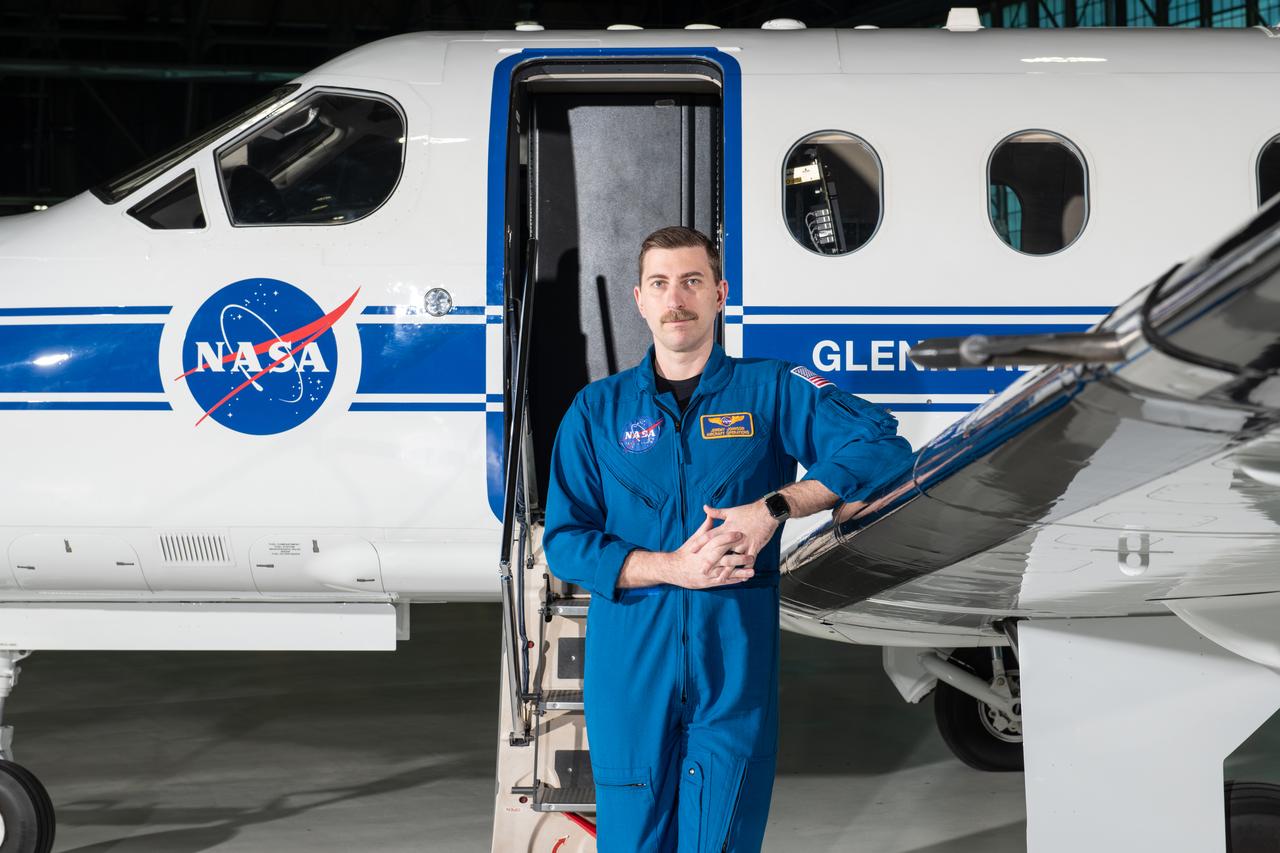
Jeremy Johnson, a research pilot and aviation safety officer, poses in front of a PC-12 aircraft inside the hangar at NASA’s Glenn Research Center in Cleveland on Thursday, April 17, 2025. Johnson flies NASA planes to support important scientific research and testing, working with researchers to plan and carry out flights that will get them the data they need while ensuring safety.
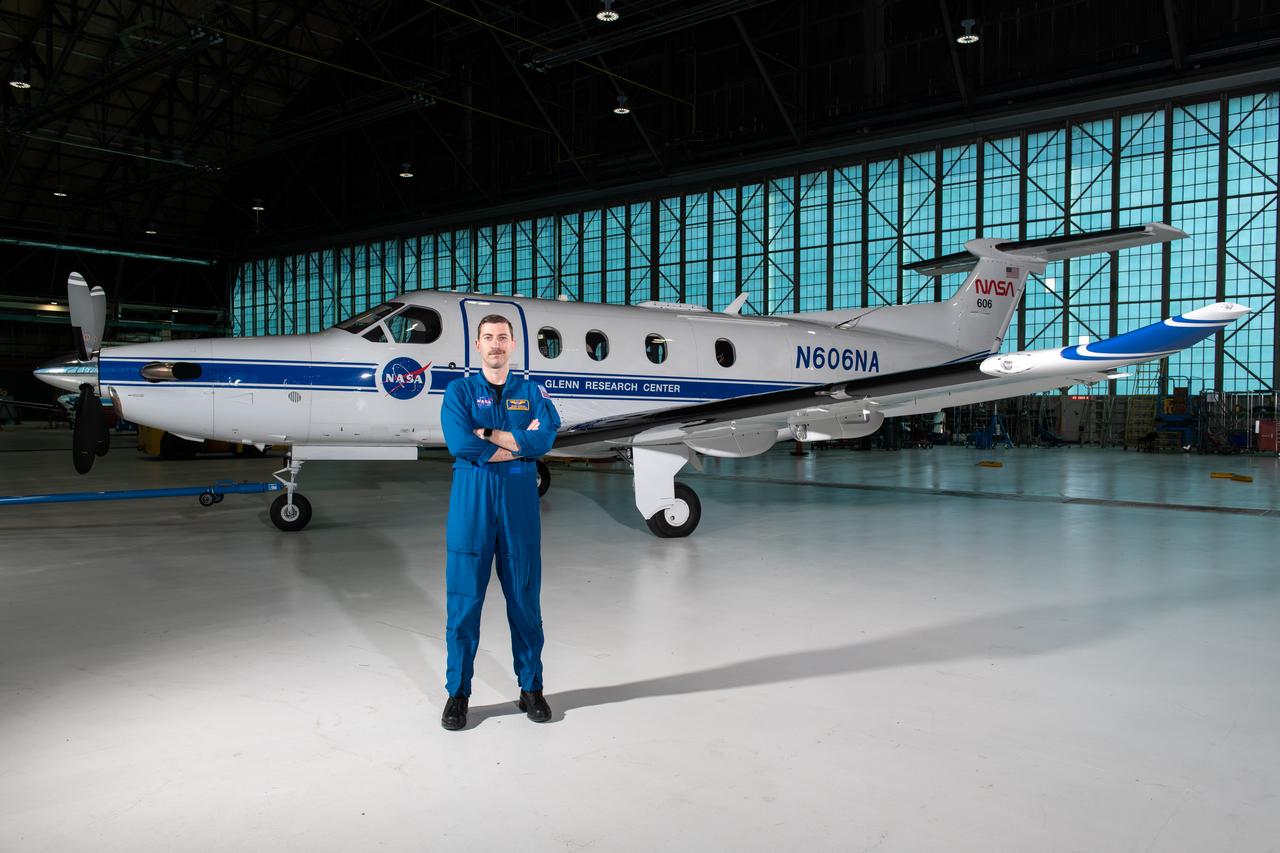
Jeremy Johnson, a research pilot and aviation safety officer, poses in front of a PC-12 aircraft inside the hangar at NASA’s Glenn Research Center in Cleveland on Thursday, April 17, 2025. Johnson flies NASA planes to support important scientific research and testing, working with researchers to plan and carry out flights that will get them the data they need while ensuring safety.
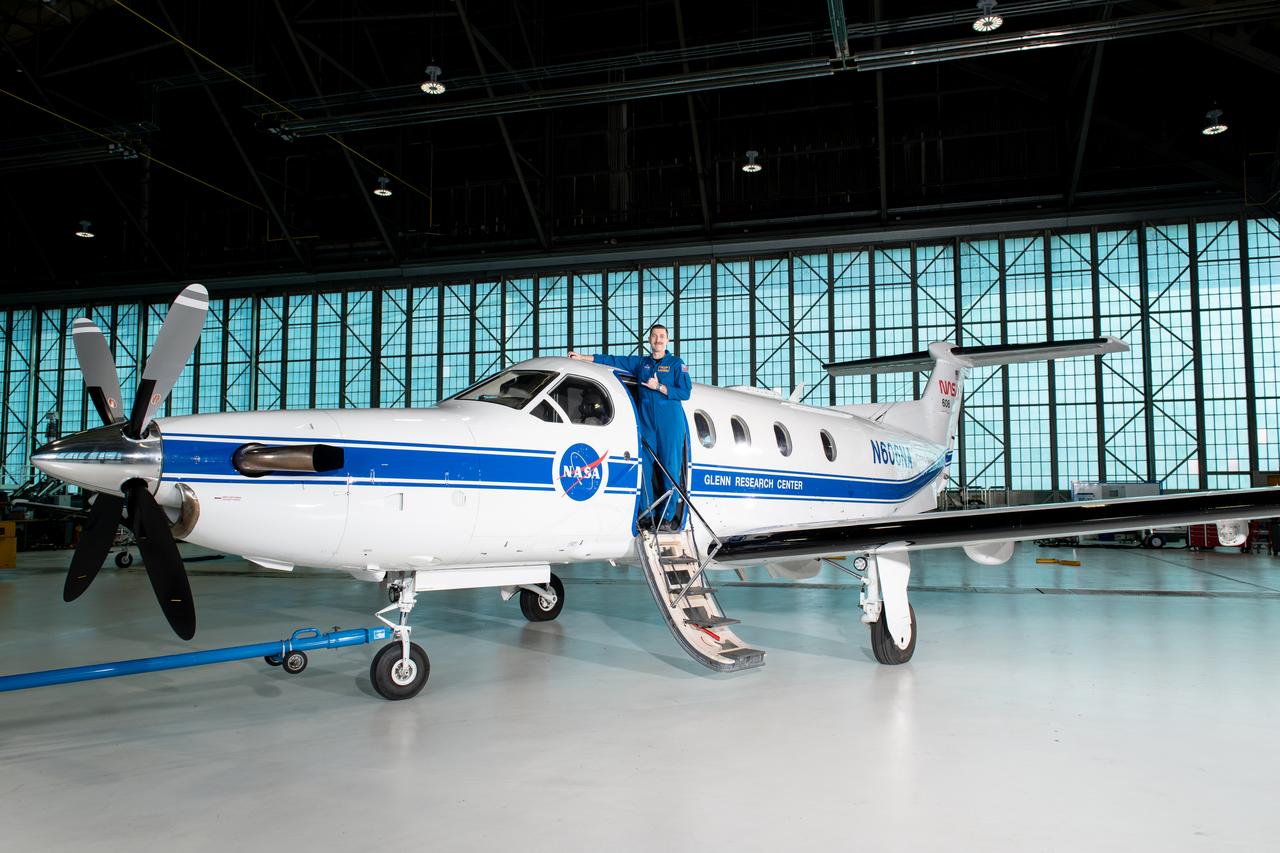
Jeremy Johnson, a research pilot and aviation safety officer, poses in front of a PC-12 aircraft inside the hangar at NASA’s Glenn Research Center in Cleveland on Thursday, April 17, 2025. Johnson flies NASA planes to support important scientific research and testing, working with researchers to plan and carry out flights that will get them the data they need while ensuring safety.
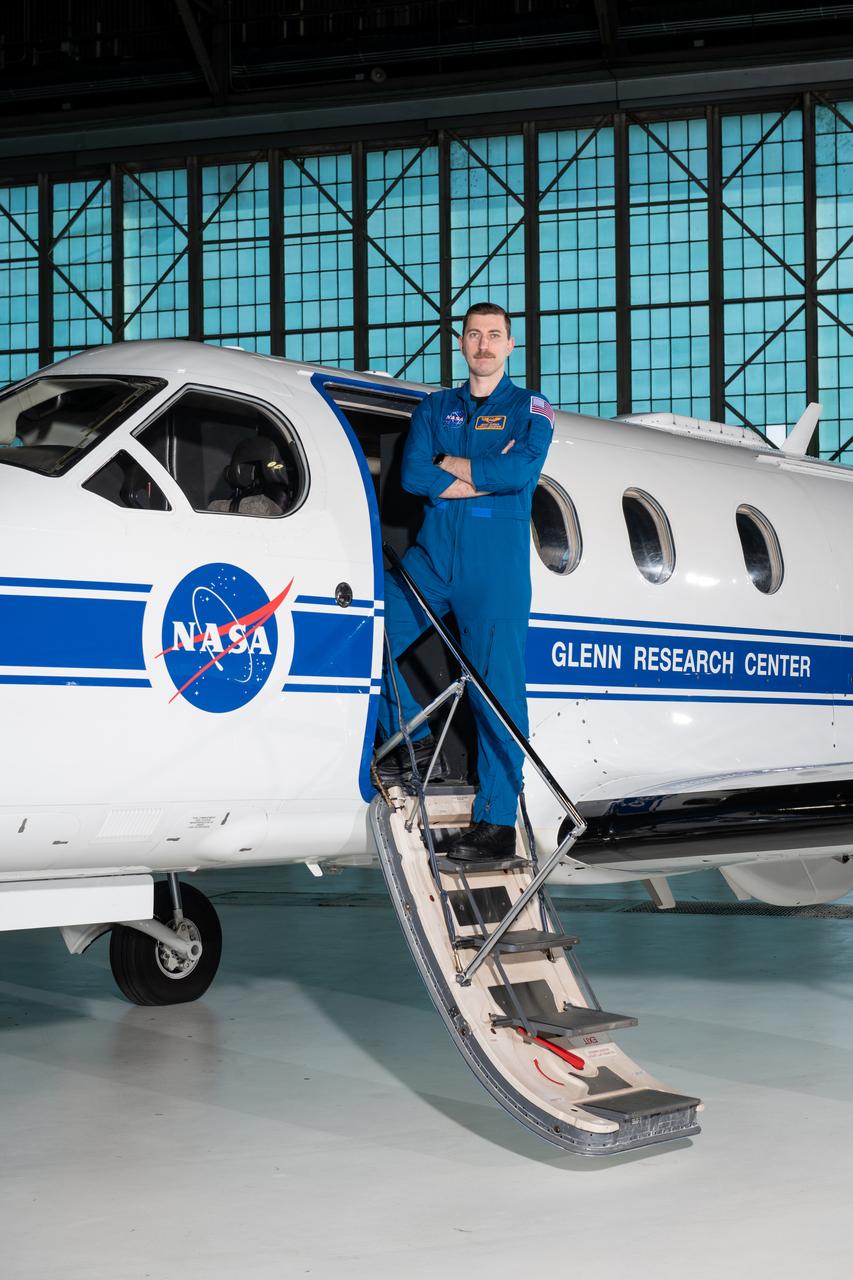
Jeremy Johnson, a research pilot and aviation safety officer, poses in front of a PC-12 aircraft inside the hangar at NASA’s Glenn Research Center in Cleveland on Thursday, April 17, 2025. Johnson flies NASA planes to support important scientific research and testing, working with researchers to plan and carry out flights that will get them the data they need while ensuring safety.

Jeremy Johnson, a research pilot and aviation safety officer, poses in front of a PC-12 aircraft inside the hangar at NASA’s Glenn Research Center in Cleveland on Thursday, April 17, 2025. Johnson flies NASA planes to support important scientific research and testing, working with researchers to plan and carry out flights that will get them the data they need while ensuring safety.
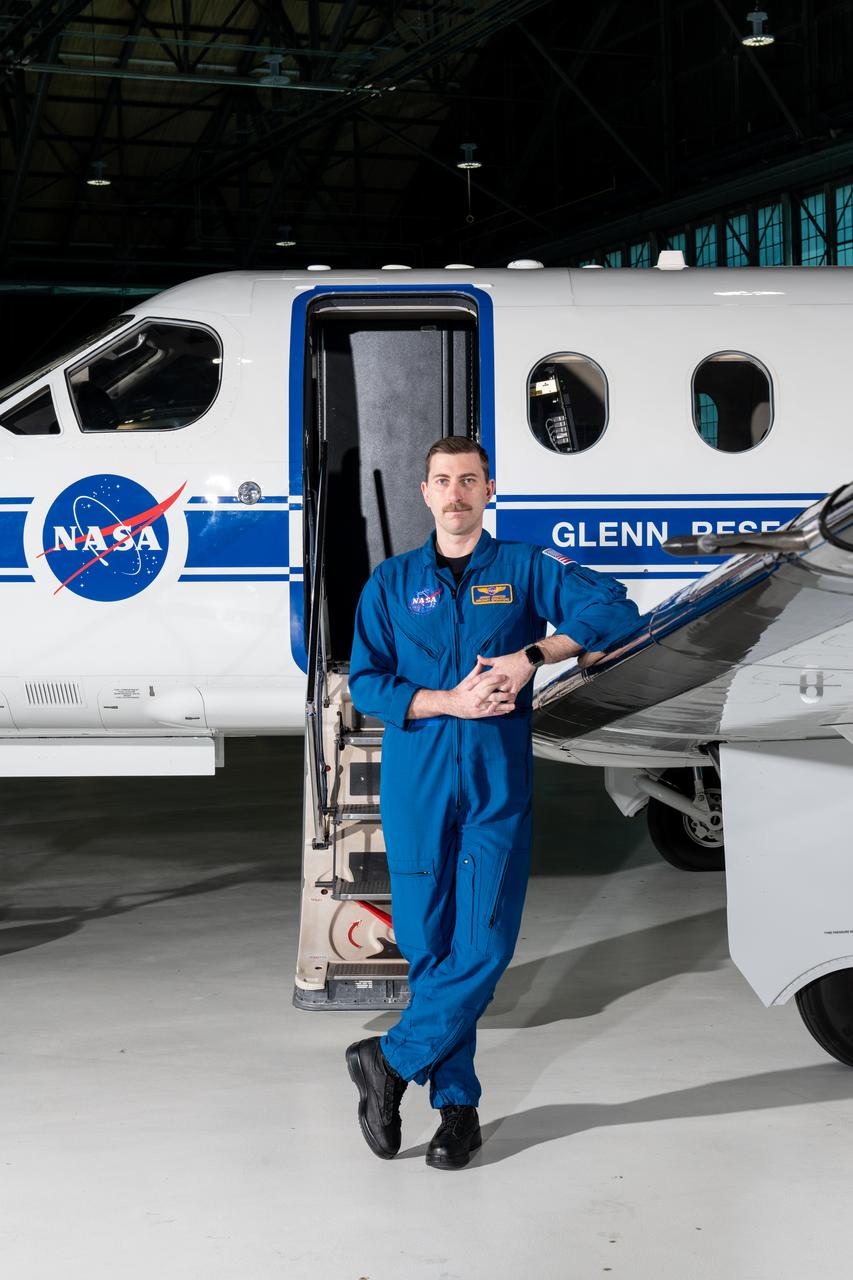
Jeremy Johnson, a research pilot and aviation safety officer, poses in front of a PC-12 aircraft inside the hangar at NASA’s Glenn Research Center in Cleveland on Thursday, April 17, 2025. Johnson flies NASA planes to support important scientific research and testing, working with researchers to plan and carry out flights that will get them the data they need while ensuring safety.
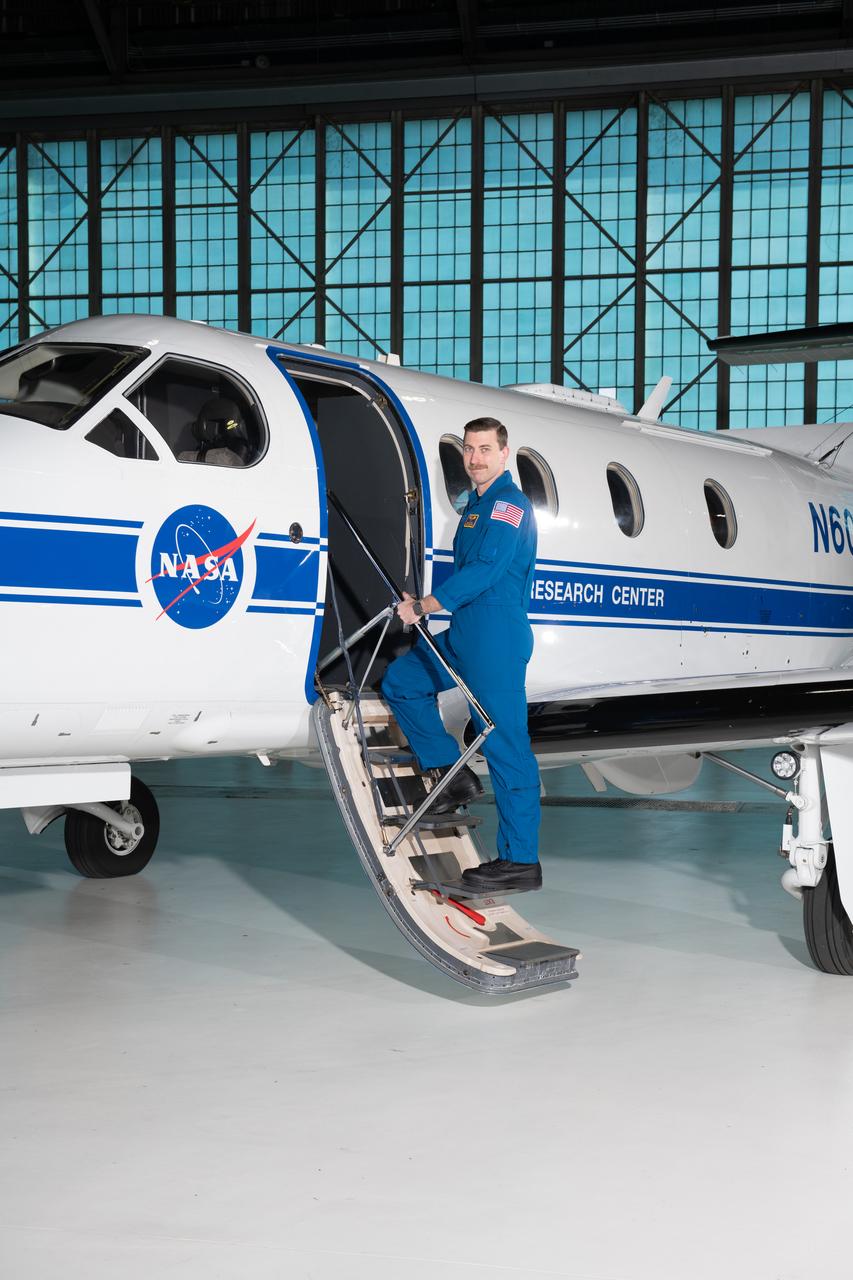
Jeremy Johnson, a research pilot and aviation safety officer, poses in front of a PC-12 aircraft inside the hangar at NASA’s Glenn Research Center in Cleveland on Thursday, April 17, 2025. Johnson flies NASA planes to support important scientific research and testing, working with researchers to plan and carry out flights that will get them the data they need while ensuring safety.
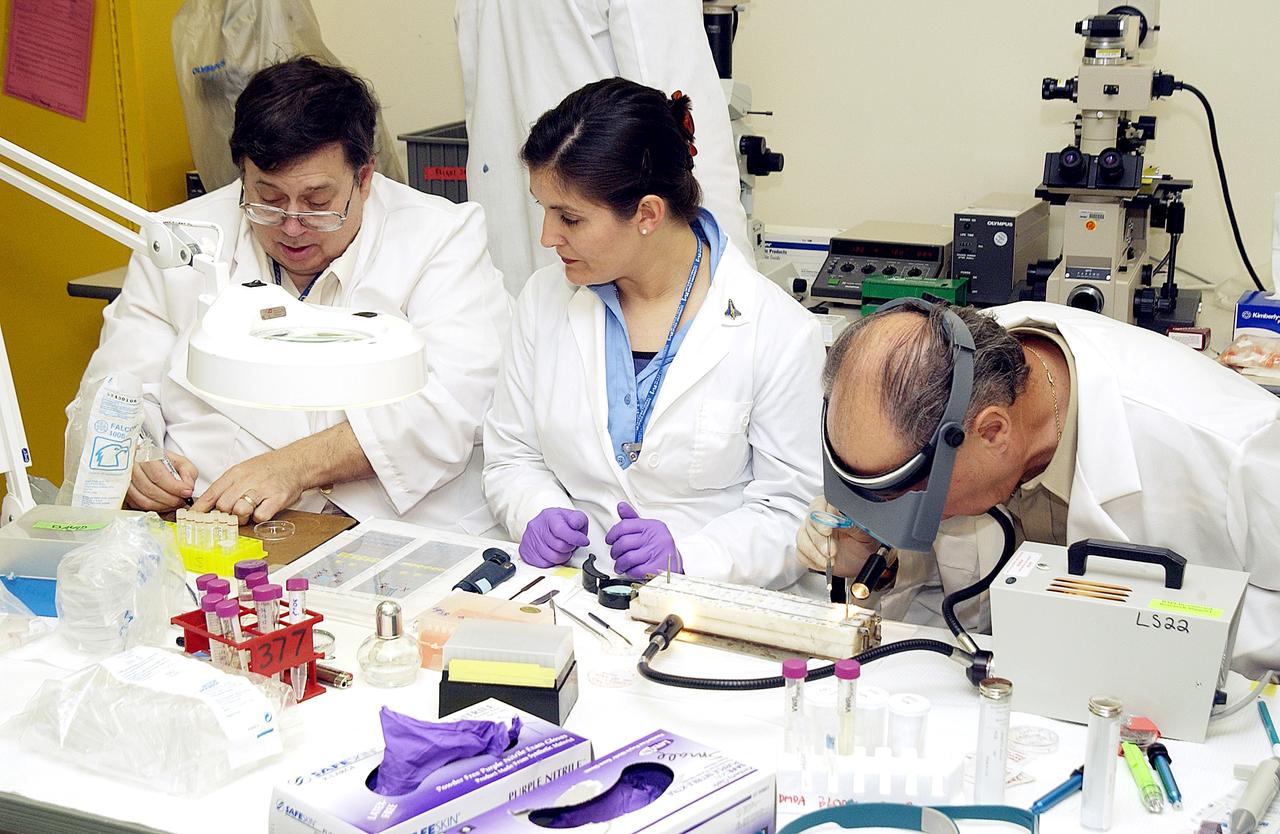
KENNEDY SPACE CENTER, FLA. - From left, Barry Perlman, Pembroke Pines Charter Middle School in Florida; Valerie Cassanto, Instrumentation Technology Associates, Inc.; and Dr. Dennis Morrison, NASA Johnson Space Center, process one of the experiments carried on mission STS-107. Several experiments were found during the search for Columbia debris. Included in the Commercial ITA Biomedical Experiments payload on mission STS-107 are urokinase cancer research, microencapsulation of drugs, the Growth of Bacterial Biofilm on Surfaces during Spaceflight (GOBBSS), and tin crystal formation. The latter was sponsored by the Pembroke Pines Charter Middle School.

CAPE CANAVERAL, Fla. – Theresa Overcash shows elements of a prototype of the StangSat at Kennedy Space Center to Grace Johnson. The satellite is a small cube measuring 10 inches on all sides and will be launched on a rocket that will carry it on a suborbital mission in Mojave, Calif. Photo credit: NASA_ Kim Shiflett
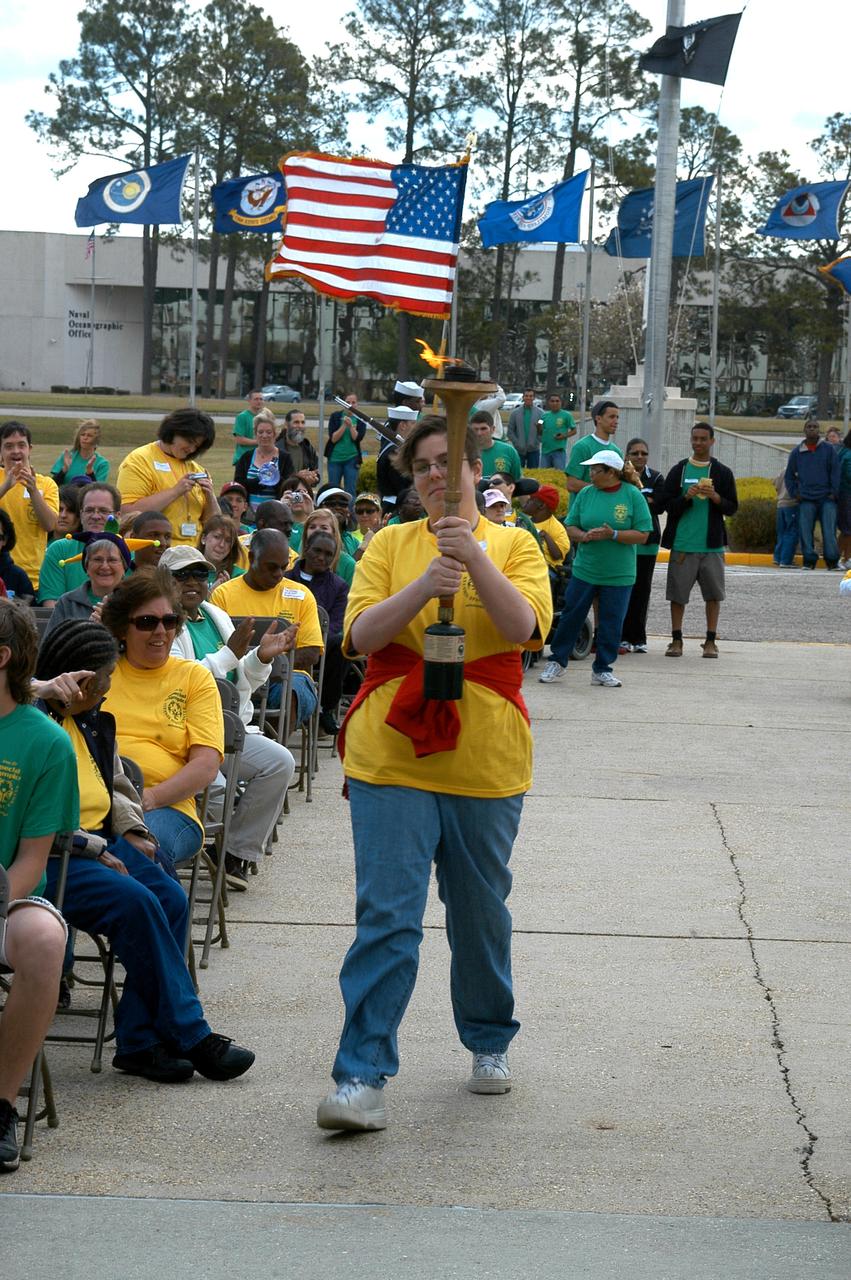
Sarah Johnson, 28, of Gulfport, carries in the Olympic torch to signal the start of the 2010 Area III Special Olympic games at NASA's John C. Stennis Space Center on March 27. Stennis volunteers hosted special needs athletes from across the area for the event. Stennis is an annual host of the games.
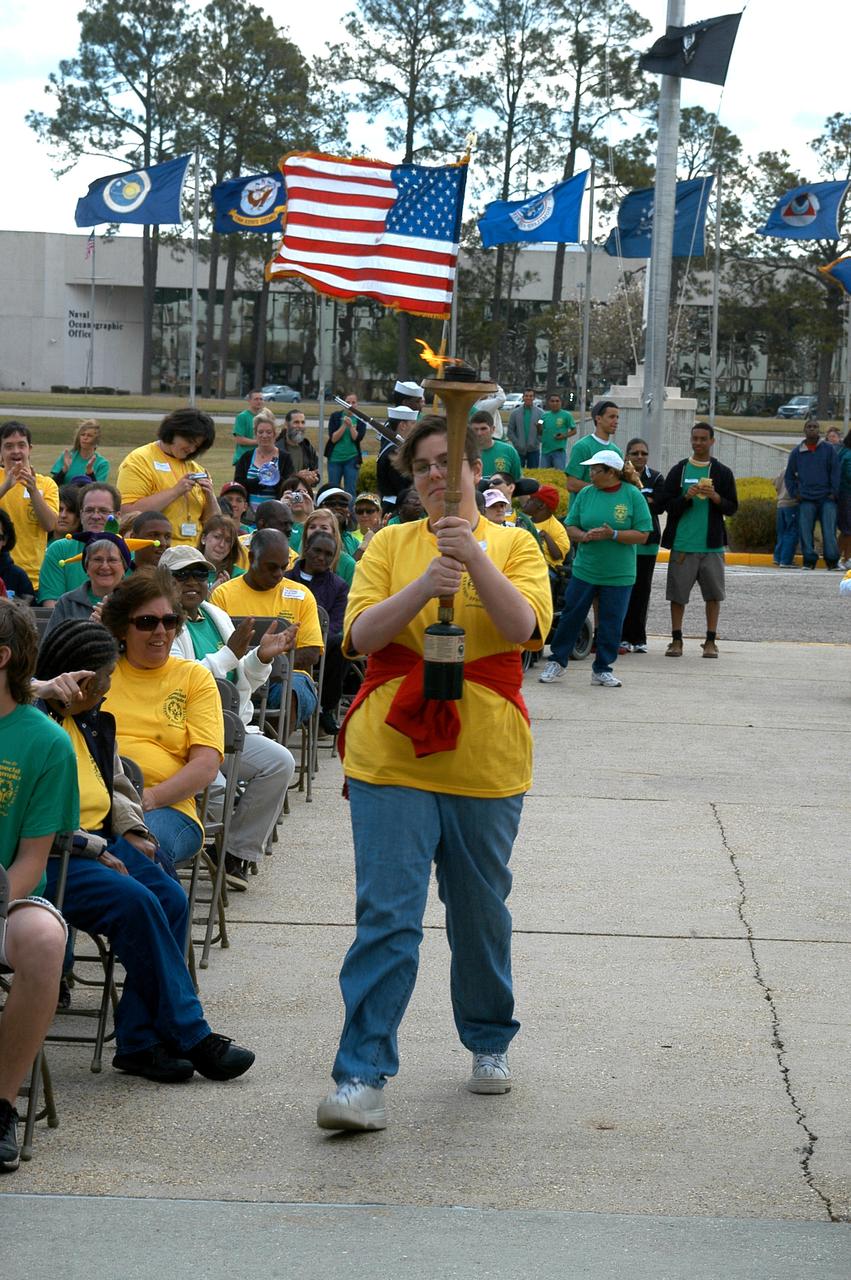
Sarah Johnson, 28, of Gulfport, carries in the Olympic torch to signal the start of the 2010 Area III Special Olympic games at NASA's John C. Stennis Space Center on March 27. Stennis volunteers hosted special needs athletes from across the area for the event. Stennis is an annual host of the games.
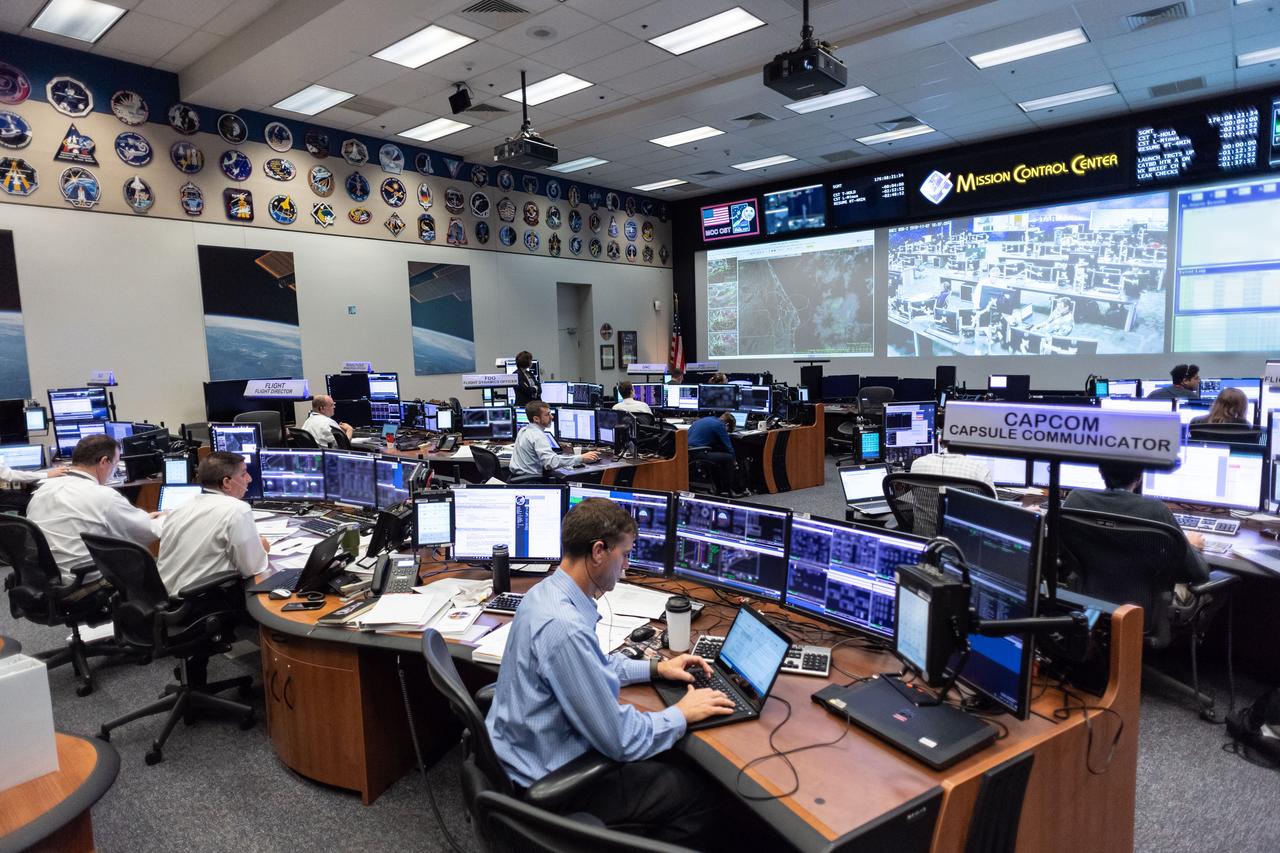
Boeing’s Flight Control Team participated in a rehearsal of prelaunch procedures for the company’s upcoming Orbital Flight Test in the White Flight Control Room in the Mission Control Center at Johnson Space Center in Houston. Boeing’s CST-100 Starliner will fly uncrewed to the International Space Station before NASA will certify the spacecraft to carry astronauts to station.

The Space Shuttle Enterprise, the nation's prototype space shuttle orbiter, departed NASA's Dryden Flight Research Center, Edwards, California, at 11:00 a.m., 16 May 1983, on the first leg of its trek to the Paris Air Show at Le Bourget Airport, Paris, France. Carried by the huge 747 Shuttle Carrier Aircraft (SCA), the first stop for the Enterprise was Peterson AFB, Colorado Springs, Colorado. Piloting the 747 on the Europe trip were Joe Algranti, Johnson Space Center Chief Pilot, Astronaut Dick Scobee, and NASA Dryden Chief Pilot Tom McMurtry. Flight engineers for that portion of the flight were Dryden's Ray Young and Johnson Space Center's Skip Guidry. The Enterprise, named after the spacecraft of Star Trek fame, was originally carried and launched by the 747 during the Approach and Landing Tests (ALT) at Dryden Flight Research Center.
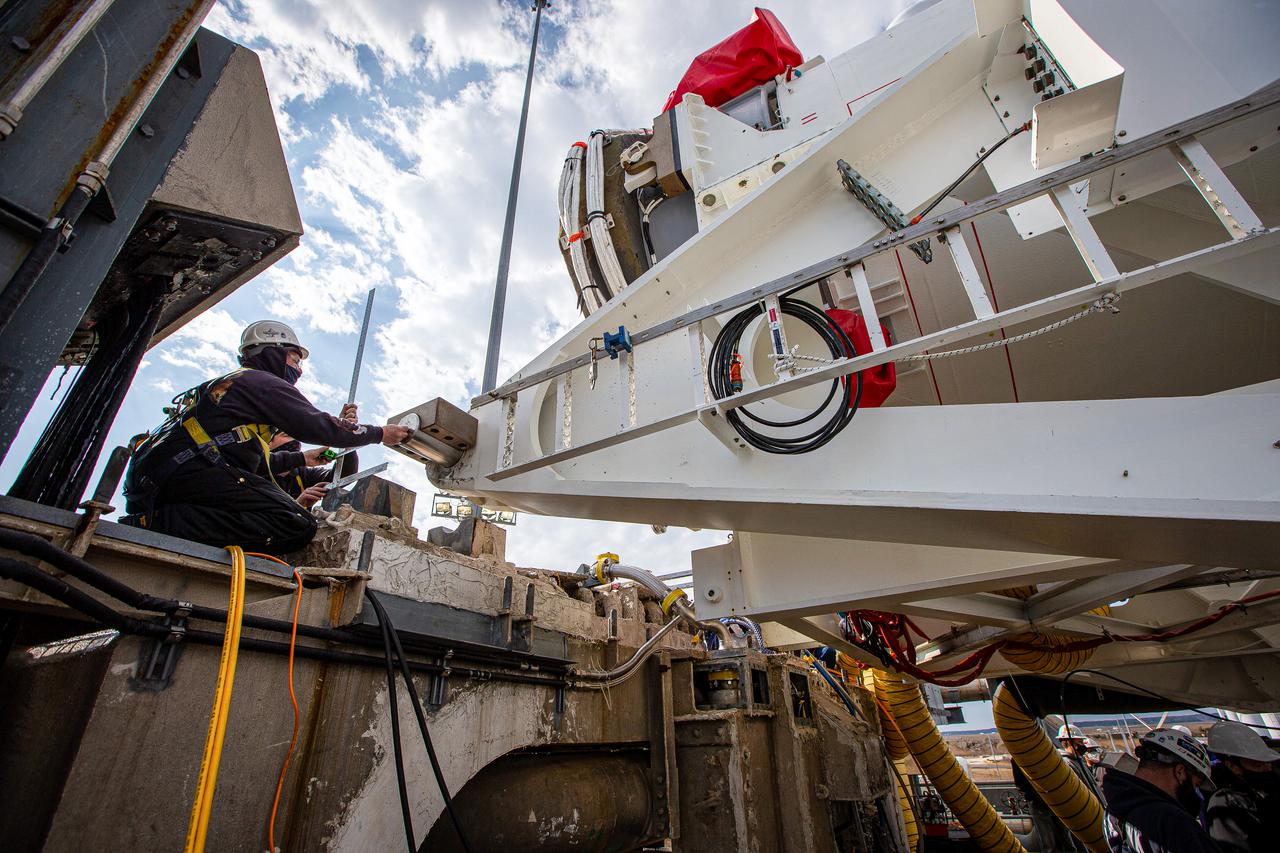
Personnel prepare to mate the Transporter-Erector-Launcher, also called the TEL, carrying a Northrop Grumman Antares rocket to the launch mount on the Mid-Atlantic Regional Spaceport’s Pad 0A at NASA’s Wallops Flight Facility in Virginia. The Antares arrived at the launch pad on Tuesday, Feb. 16, in preparation for launch at 12:36 p.m. EST, Feb. 20, 2021. The launch will be Northrop Grumman’s 15th contracted cargo resupply mission with NASA to the International Space Station, carrying about 8,000 pounds of science and research, crew supplies and vehicle hardware to the orbital laboratory and its crew. Antares is carrying the company’s CRS-15 Cygnus cargo spacecraft named after NASA mathematician, Katherine Johnson, a Black woman who time and again broke through barriers of gender and race. Photo Credit: (NASA/Patrick Black)
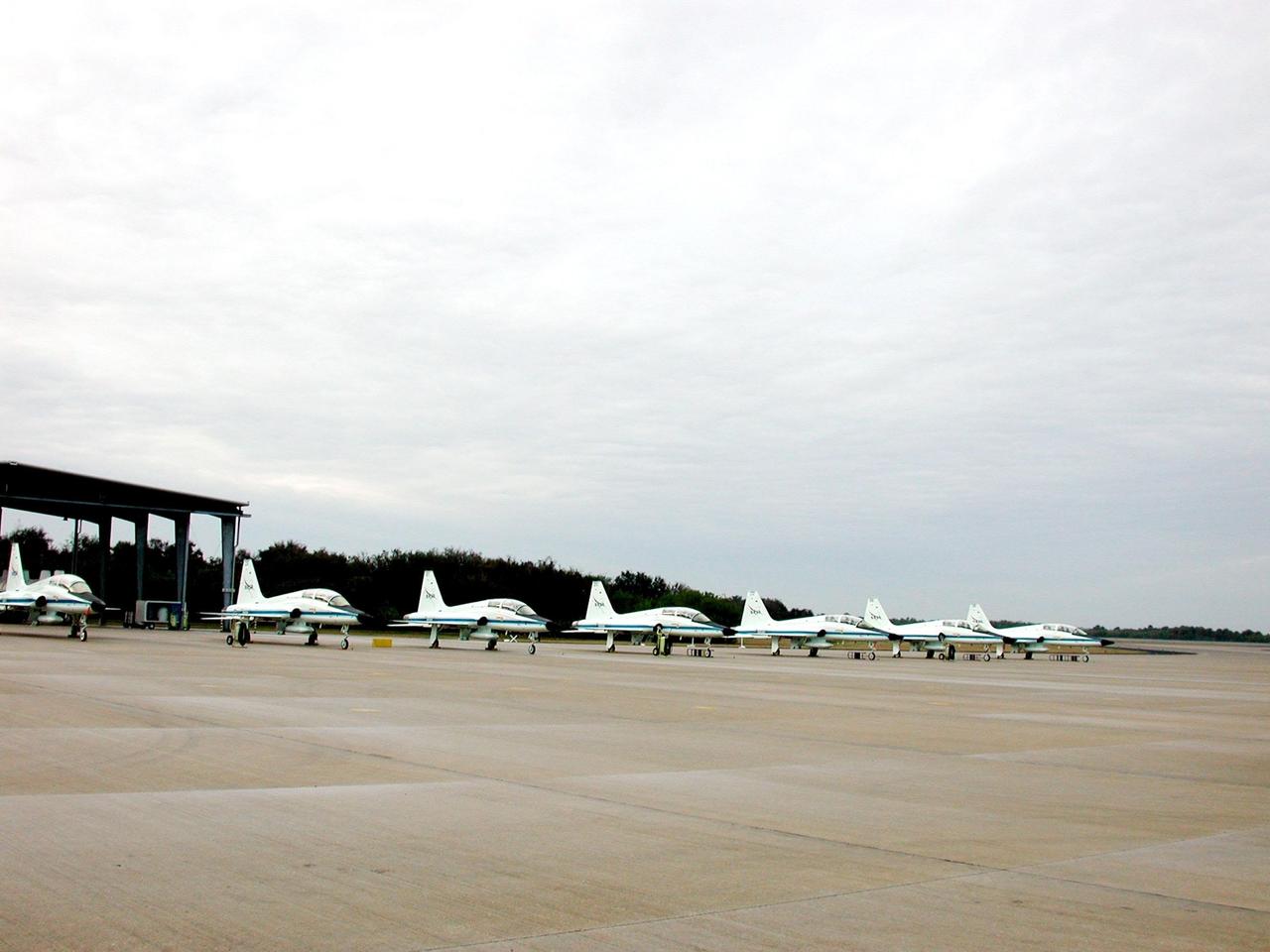
KENNEDY SPACE CENTER, FLA. -- At the Shuttle Landing Facility, T-38 jet training aircraft are lined up on the parking apron. T-38s are typically used by astronauts to travel between Johnson Space Center, Houston, and Kennedy Space Center. The STS-98 crew recently arrived aboard the jets to prepare for their launch Feb. 7 to the International Space Station. The seventh construction flight to the Space Station, it will carry the U.S. Laboratory Destiny, a key module for space experiments
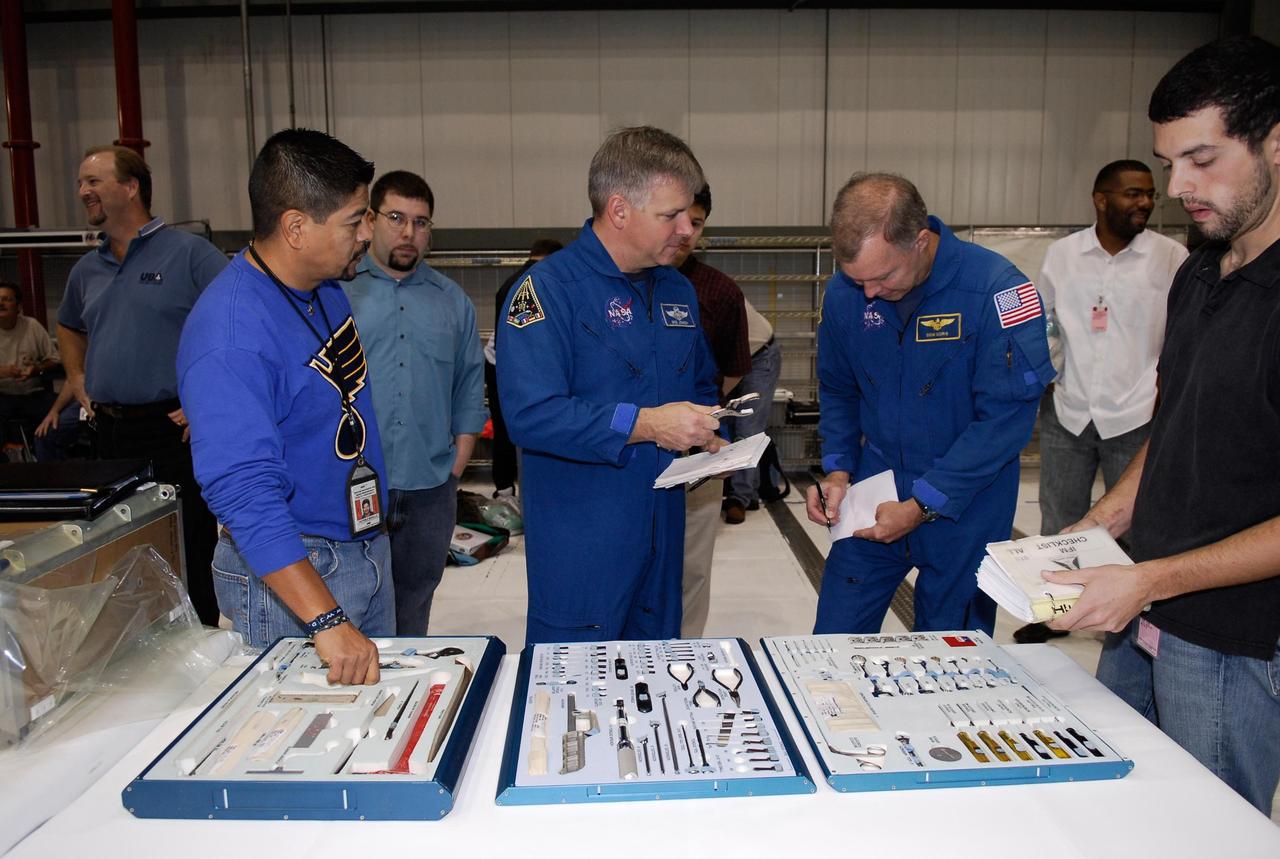
KENNEDY SPACE CENTER, FLA. -- In the Orbiter Processing Facility at NASA's Kennedy Space Center, space shuttle Endeavour's STS-123 Pilot Gregory Johnson (center) and Commander Dominic Gorie (right) look over tools that will be carried on the mission. The crew is at Kennedy for crew equipment interface test, a process of familiarization with payloads, hardware and the space shuttle. The STS-123 mission is targeted for launch on Feb. 14. It will be the 25th assembly flight of the station. Photo credit: NASA/Kim Shiflett
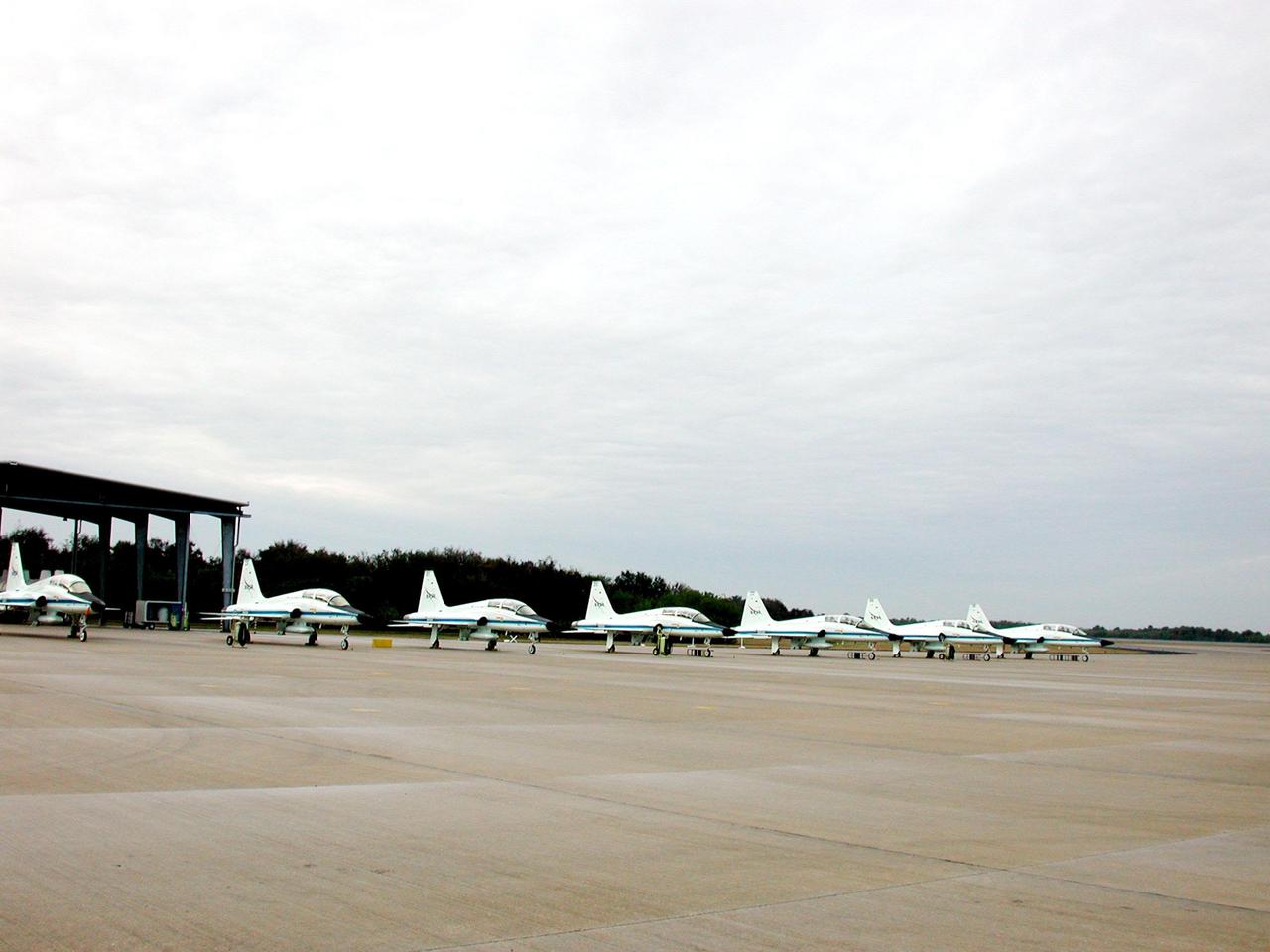
KENNEDY SPACE CENTER, FLA. -- At the Shuttle Landing Facility, T-38 jet training aircraft are lined up on the parking apron. T-38s are typically used by astronauts to travel between Johnson Space Center, Houston, and Kennedy Space Center. The STS-98 crew recently arrived aboard the jets to prepare for their launch Feb. 7 to the International Space Station. The seventh construction flight to the Space Station, it will carry the U.S. Laboratory Destiny, a key module for space experiments
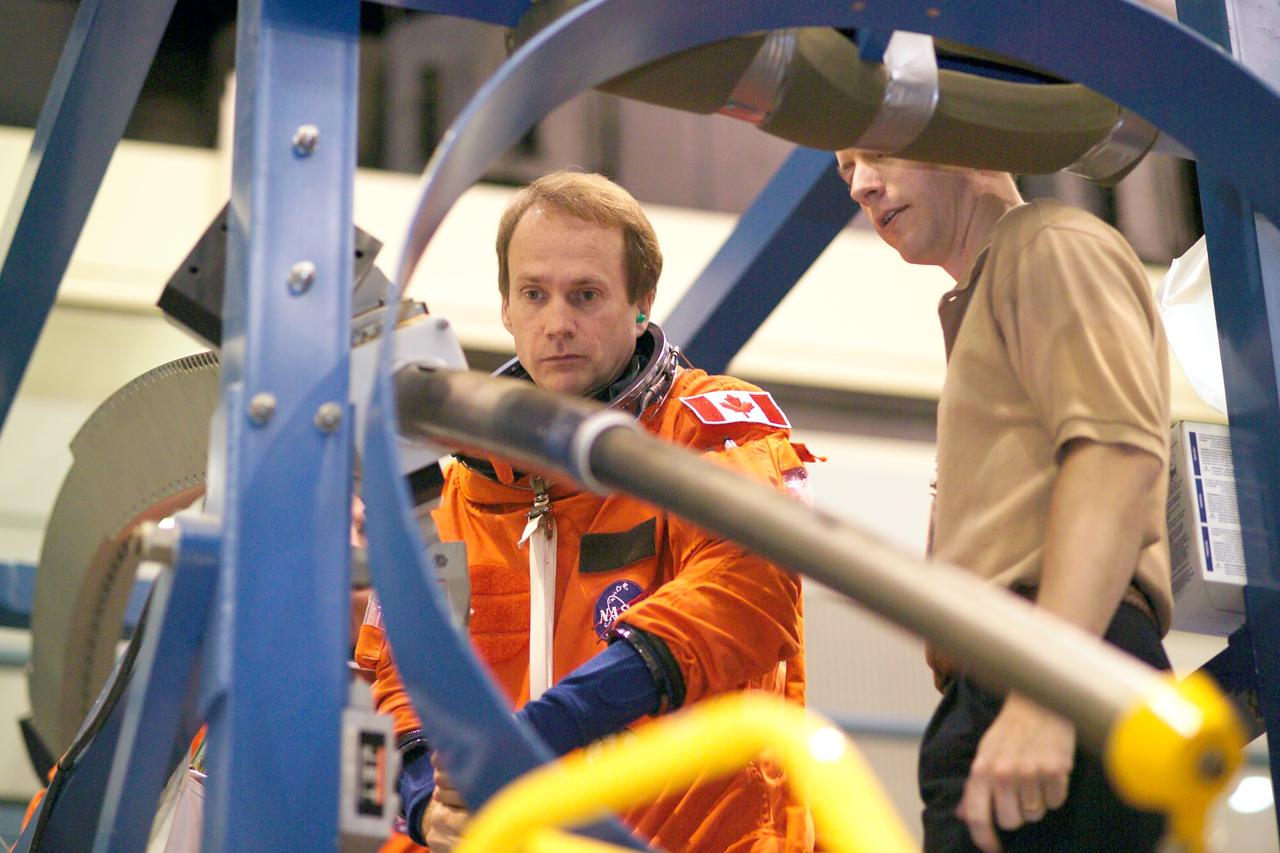
JSC2005-E-17432 (28 April 2005) --- Astronaut Steven G. MacLean, STS-115 mission specialist representing the Canadian Space Agency, wearing a training version of the shuttle launch and entry suit, rehearses emergency egress procedures in the Space Vehicle Mockup Facility at Johnson Space Center. The long tube in the foreground is a training version of the launch escape pole which is now carried onboard for all shuttle flights. Crew trainer David Pogue assisted MacLean.
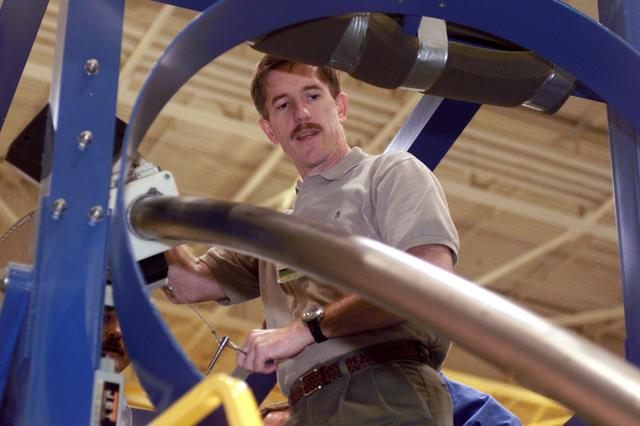
JSC2001-E-06401 (27 February 2001) --- Astronaut James F. Reilly, mission specialist, rehearses emergency egress procedures in the Systems Integration Facility at the Johnson Space Center (JSC). The long tube at left is a training version of the launch escape pole which is now carried onboard for all shuttle flights. The STS-104 mission to the International Space Station (ISS) represents the Space Shuttle Atlantis' first flight using a new engine and is targeted for a liftoff no earlier than June 14, 2001.

JSC2011-E-067680 (12 July 2011) --- This is an overall view of the wiring for the simulated shuttle payload bay in the Shuttle Avionics Integration Laboratory (SAIL) at the Johnson Space Center in Houston on July 12, 2011. The laboratory is a skeletal avionics version of the shuttle that uses actual orbiter hardware and flight software. The facility even carries the official orbiter designation as Orbiter Vehicle 095. Photo credit: NASA Photo/Houston Chronicle, Smiley N. Pool
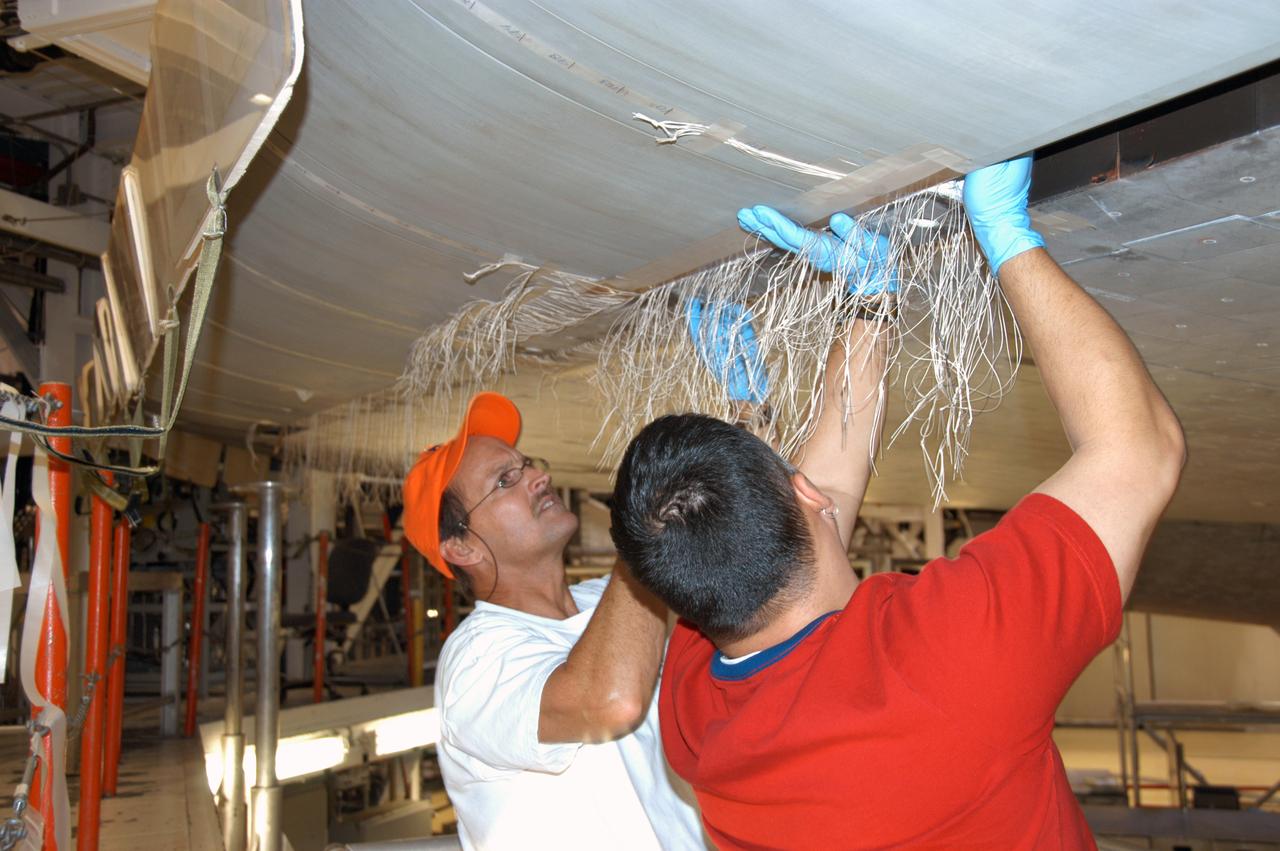
In Orbiter Processing Facility bay 2, technicians James Johnson (left) and Jesus Rodrigues install a leading edge subsystem carrier panel on the right wing of Endeavour. The orbiter is scheduled for mission STS-118, targeted for launch on June 28. The mission will be the 22nd flight to the International Space Station, carrying another starboard array, S5, for installation.
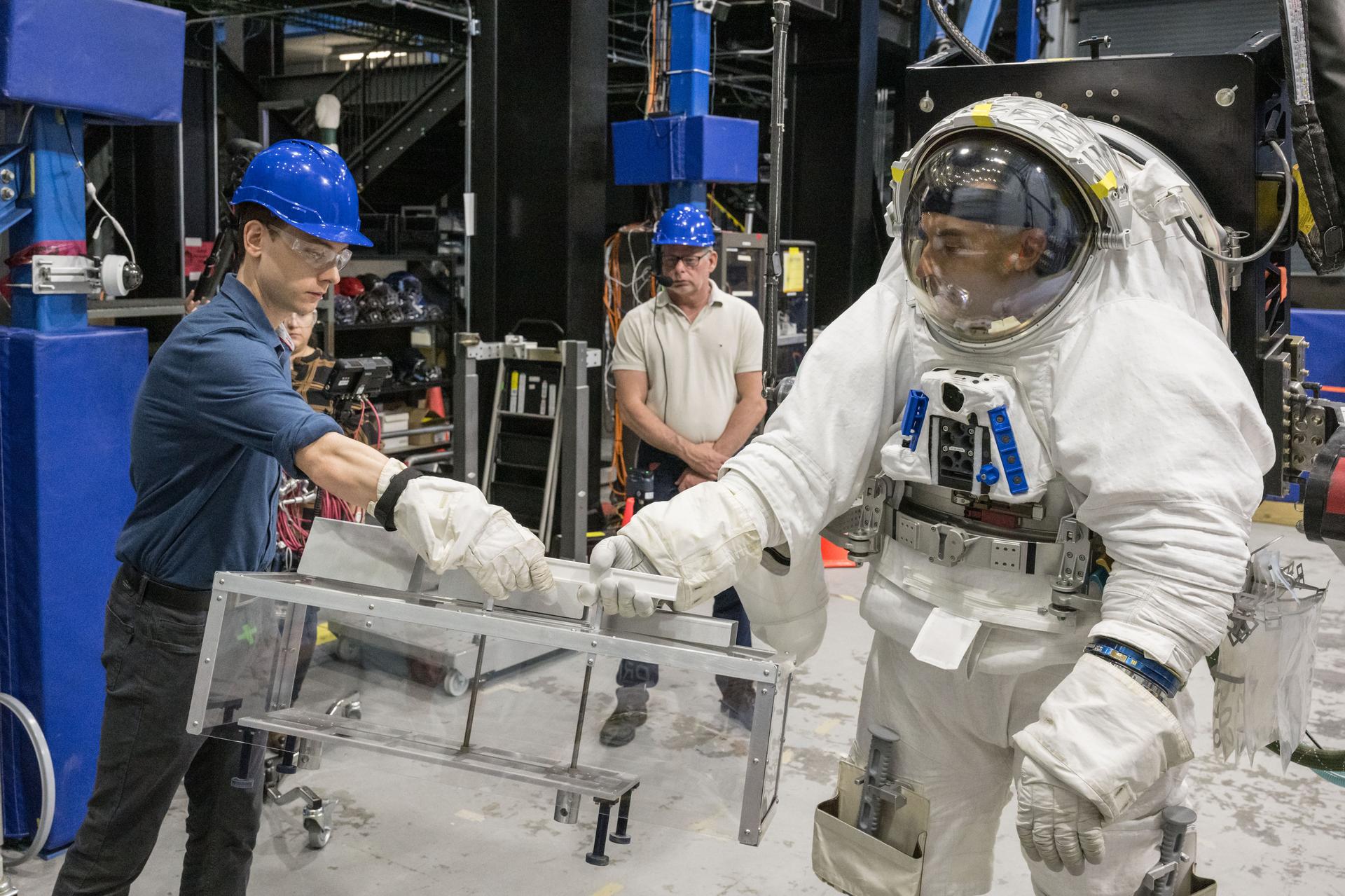
Trevor Graff, the Artemis Science Team Hardware and Testing Lead, handles the Lunar Environment Monitoring Station (LEMS) mass mockup during testing with the Active Response Gravity Offload System (ARGOS) at Johnson Space Center in Houston, Texas on April 21st, 2025. LEMS is a compact, autonomous, and self-sustaining seismometer suite designed to carry out continuous, long-term, monitoring of the lunar seismic environment at the South Polar region. Photo Credit: NASA/ James Blair
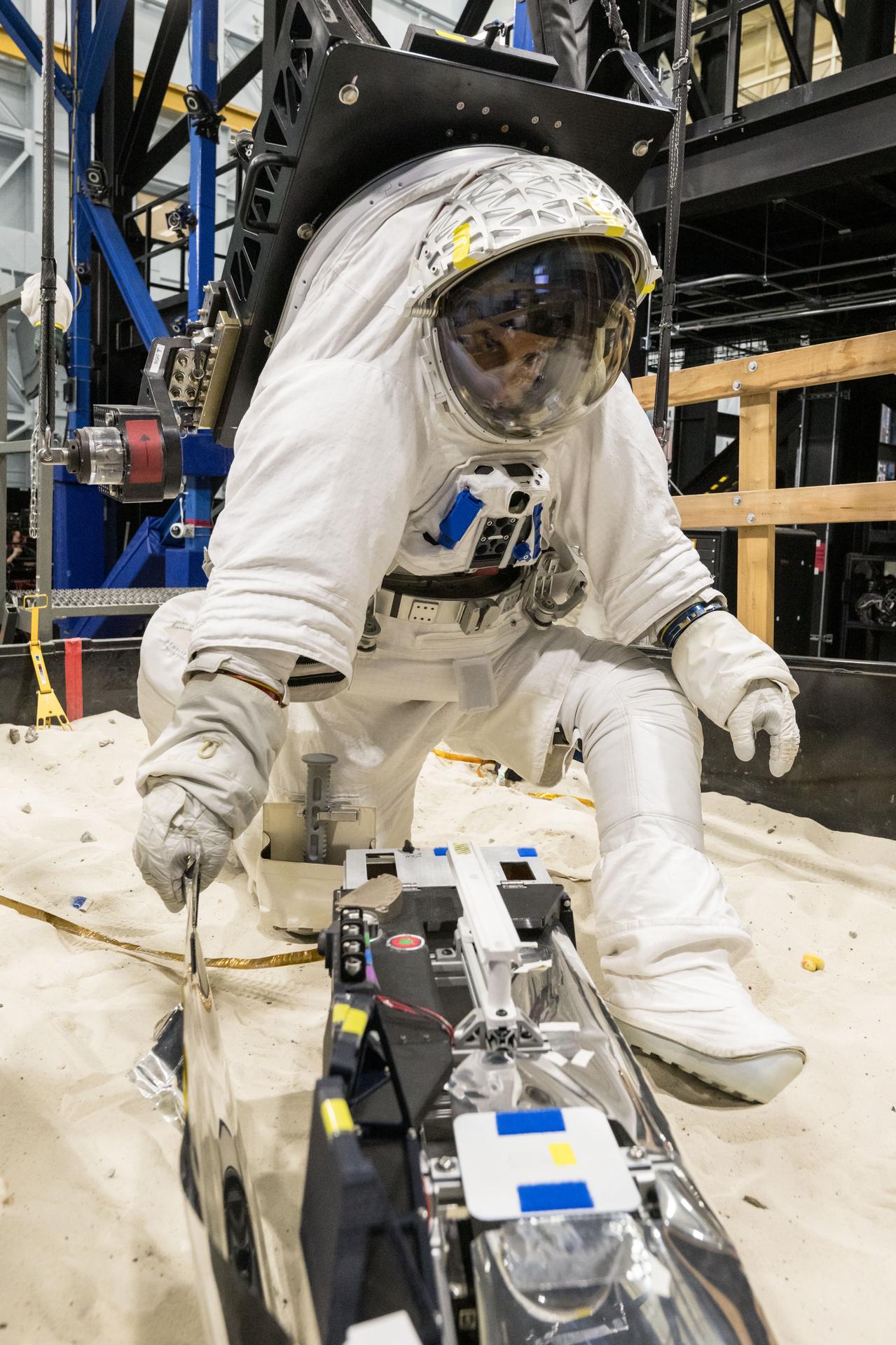
Trevor Graff, the Artemis Science Team Hardware and Testing Lead, deploys a mockup of the Lunar Environment Monitoring Station (LEMS) during testing with the Active Response Gravity Offload System (ARGOS) at Johnson Space Center in Houston, Texas on April 21st, 2025. LEMS is a compact, autonomous, and self-sustaining seismometer suite designed to carry out continuous, long-term, monitoring of the lunar seismic environment at the South Polar region. Photo Credit: NASA/ James Blair
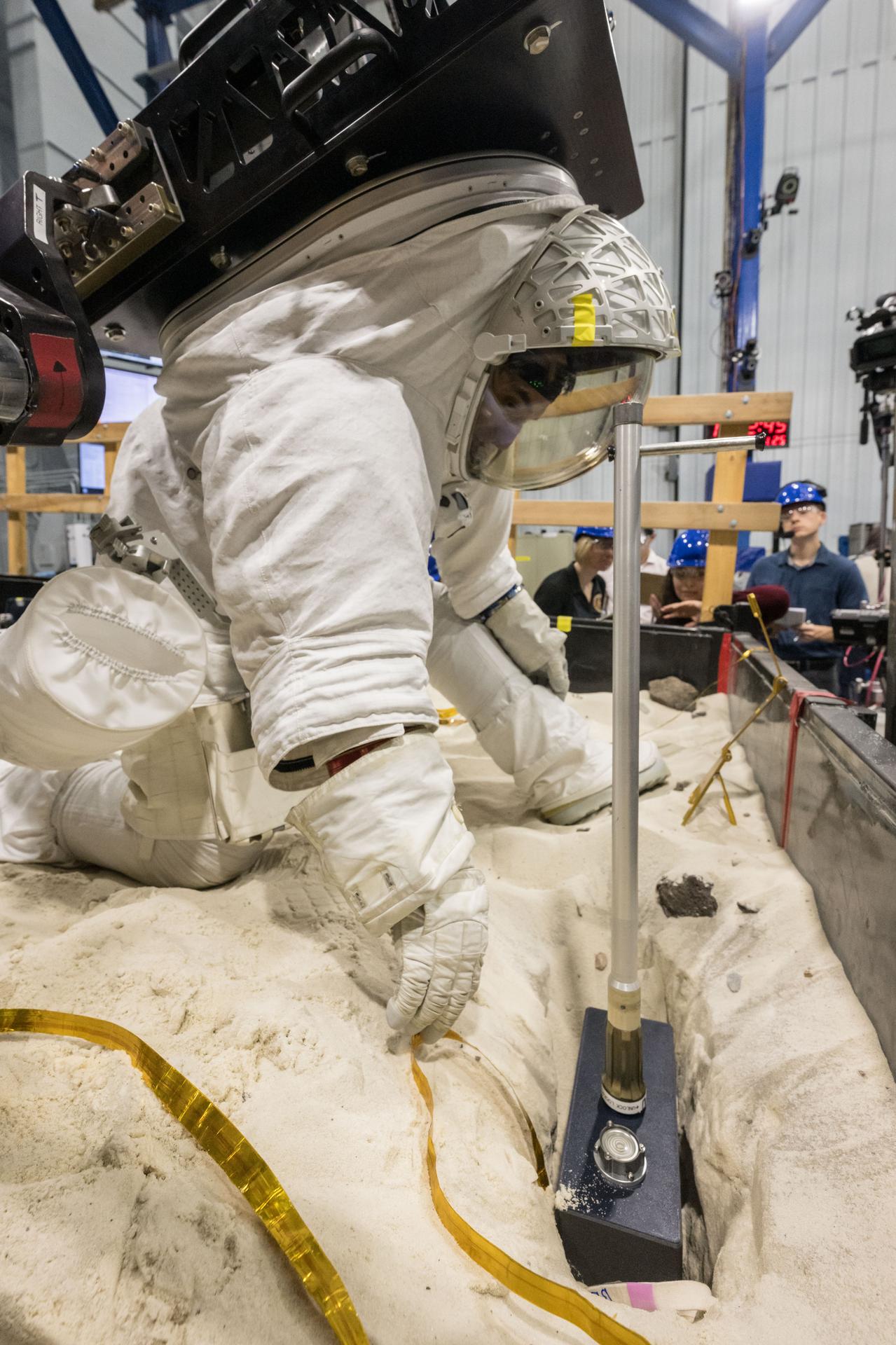
Trevor Graff, the Artemis Science Team Hardware and Testing Lead, deploys a mockup of the Lunar Environment Monitoring Station (LEMS) during testing with the Active Response Gravity Offload System (ARGOS) at Johnson Space Center in Houston, Texas on April 21st, 2025. LEMS is a compact, autonomous, and self-sustaining seismometer suite designed to carry out continuous, long-term, monitoring of the lunar seismic environment at the South Polar region. Photo Credit: NASA/ James Blair
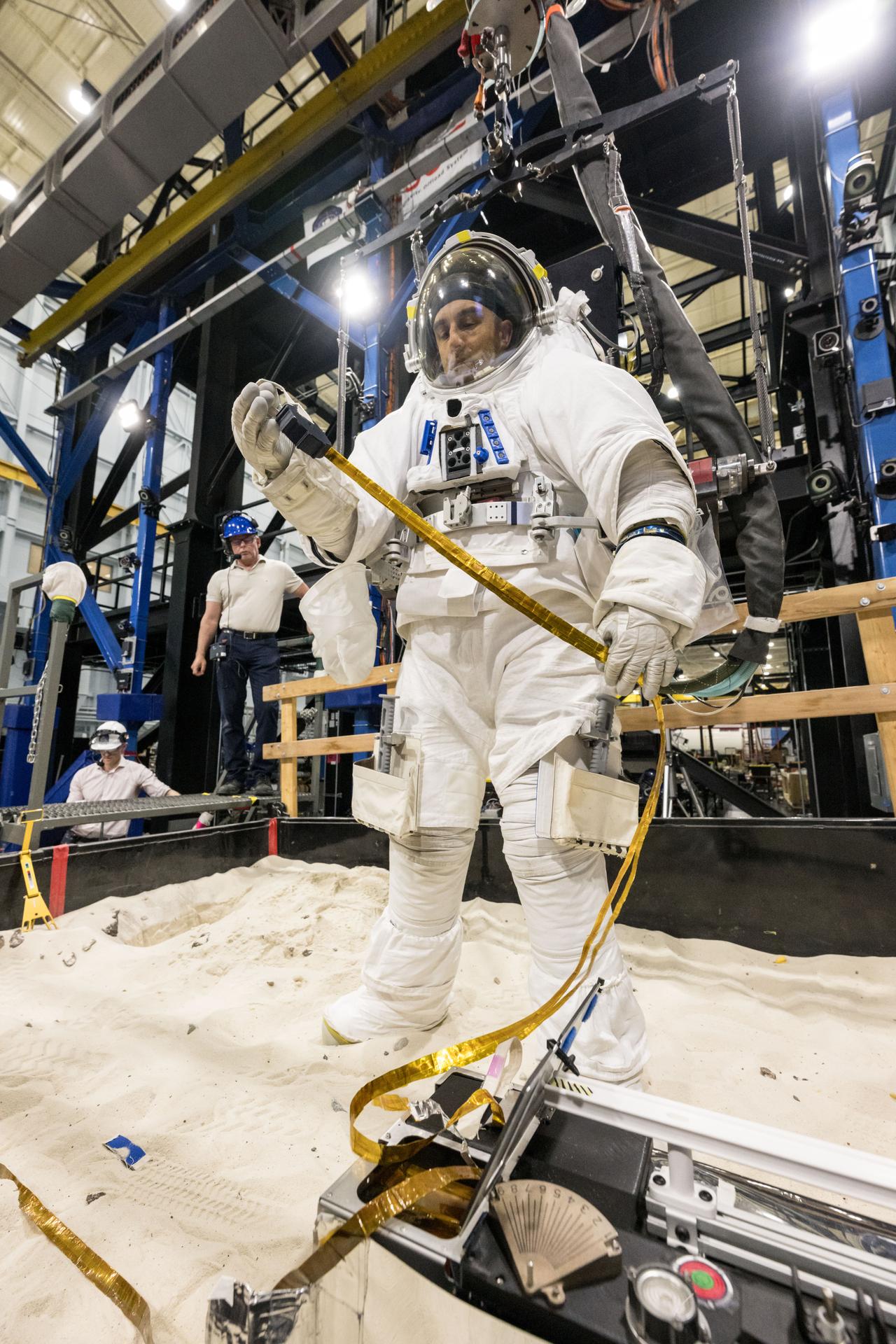
Trevor Graff, the Artemis Science Team Hardware and Testing Lead, deploys a mockup of the Lunar Environment Monitoring Station (LEMS) during testing with the Active Response Gravity Offload System (ARGOS) at Johnson Space Center in Houston, Texas on April 21st, 2025. LEMS is a compact, autonomous, and self-sustaining seismometer suite designed to carry out continuous, long-term, monitoring of the lunar seismic environment at the South Polar region. Photo Credit: NASA/ James Blair

KENNEDY SPACE CENTER, FLA. -- In Orbiter Processing Facility bay 2, technicians Jesus Rodrigues (left) and James Johnson install a leading edge subsystem carrier panel on the right wing of Endeavour. The orbiter is scheduled for mission STS-118, targeted for launch on June 28. The mission will be the 22nd flight to the International Space Station, carrying another starboard array, S5, for installation. Photo credit: NASA/George Shelton
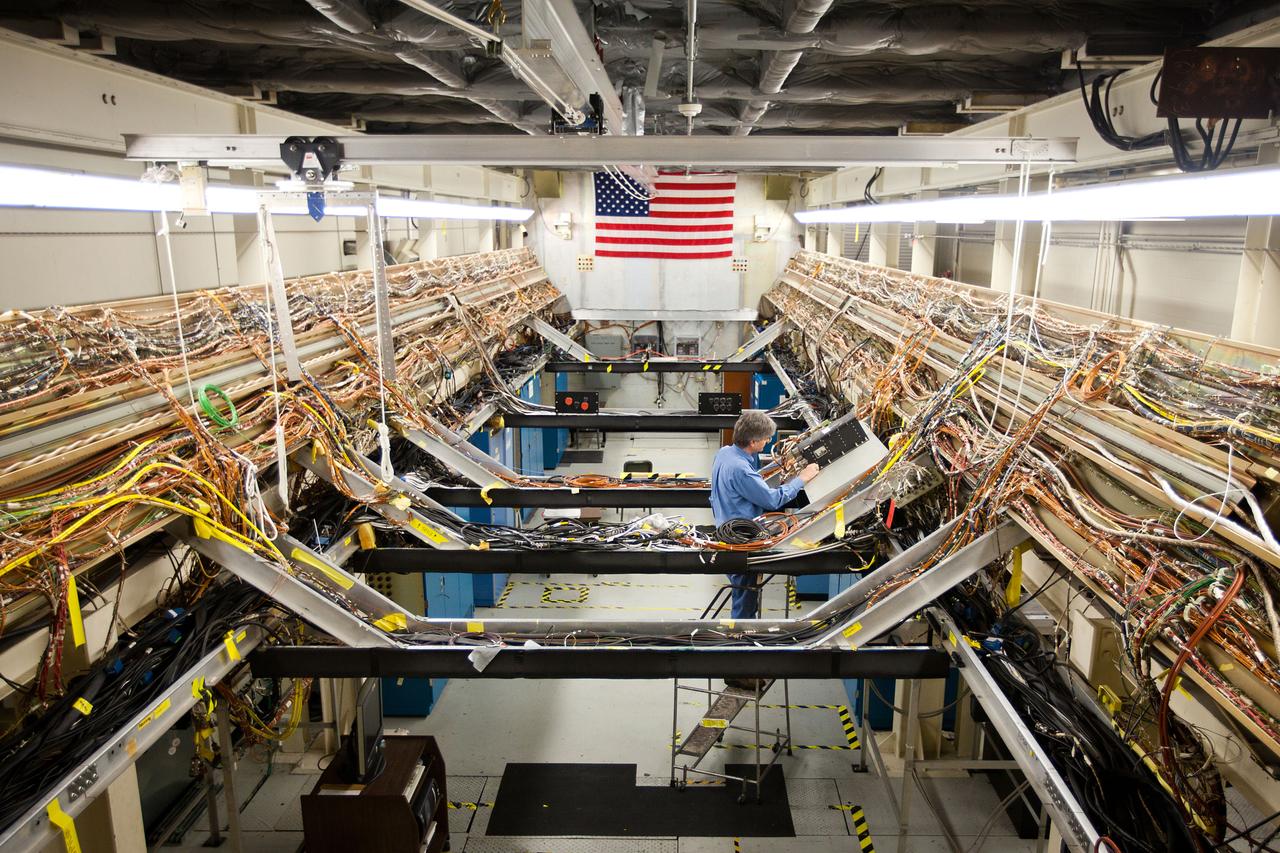
JSC2011-E-067679 (12 July 2011) --- This is an overall view of the wiring for the simulated shuttle payload bay in the Shuttle Avionics Integration Laboratory (SAIL) at the Johnson Space Center in Houston on July 12, 2011. The laboratory is a skeletal avionics version of the shuttle that uses actual orbiter hardware and flight software. The facility even carries the official orbiter designation as Orbiter Vehicle 095. Photo credit: NASA Photo/Houston Chronicle, Smiley N. Pool
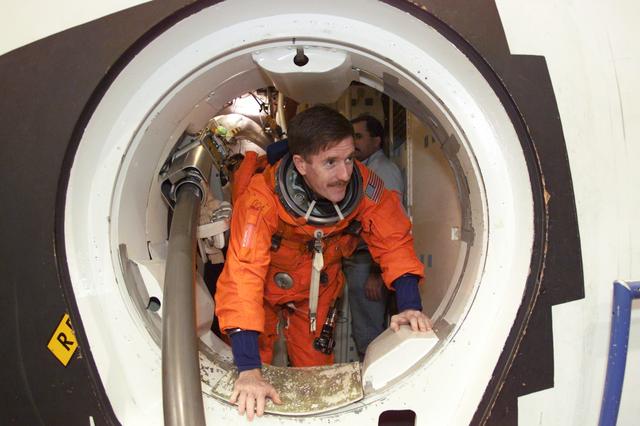
JSC2001-E-06422 (27 February 2001) --- Astronaut James F. Reilly, mission specialist, rehearses emergency egress procedures in the Systems Integration Facility at the Johnson Space Center (JSC). The long tube at left is a training version of the launch escape pole which is now carried onboard for all shuttle flights. The STS-104 mission to the International Space Station (ISS) represents the Space Shuttle Atlantis' first flight using a new engine and is targeted for a liftoff no earlier than June 14, 2001.
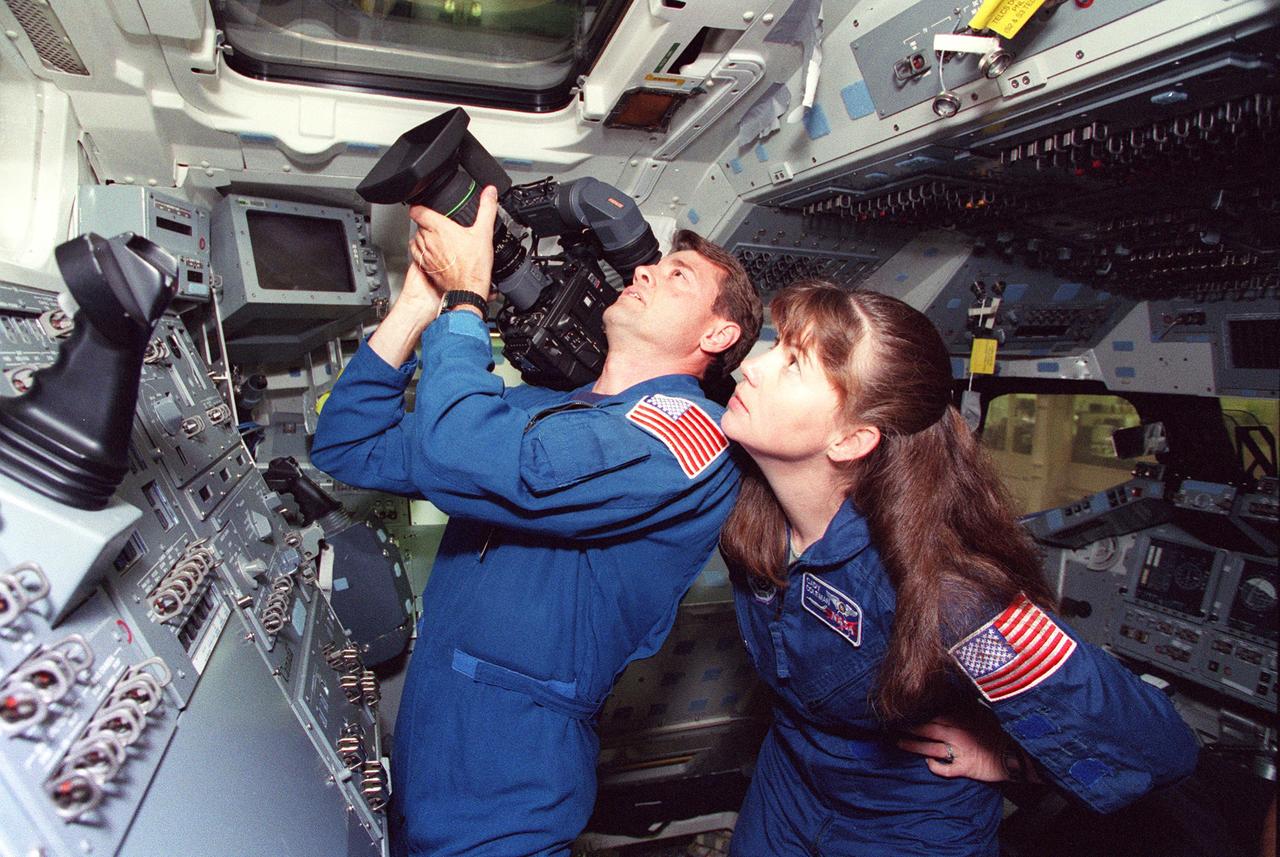
S99-05085 (April 1999) --- In preparation for a STS-93 detailed test objective (DTO), astronauts Jeffrey S. Ashby, pilot, and Catherine G. (Cady) Coleman, mission specialist, train with a high-definition television camcorder. The camera will be carried onboard the Space Shuttle Columbia for their scheduled July mission. The rehearsal with the DTO 700-17A hardware took place in the Crew Compartment Trainer (CCT)in the Systems Integration Facility at the Johnson Space Center (JSC).
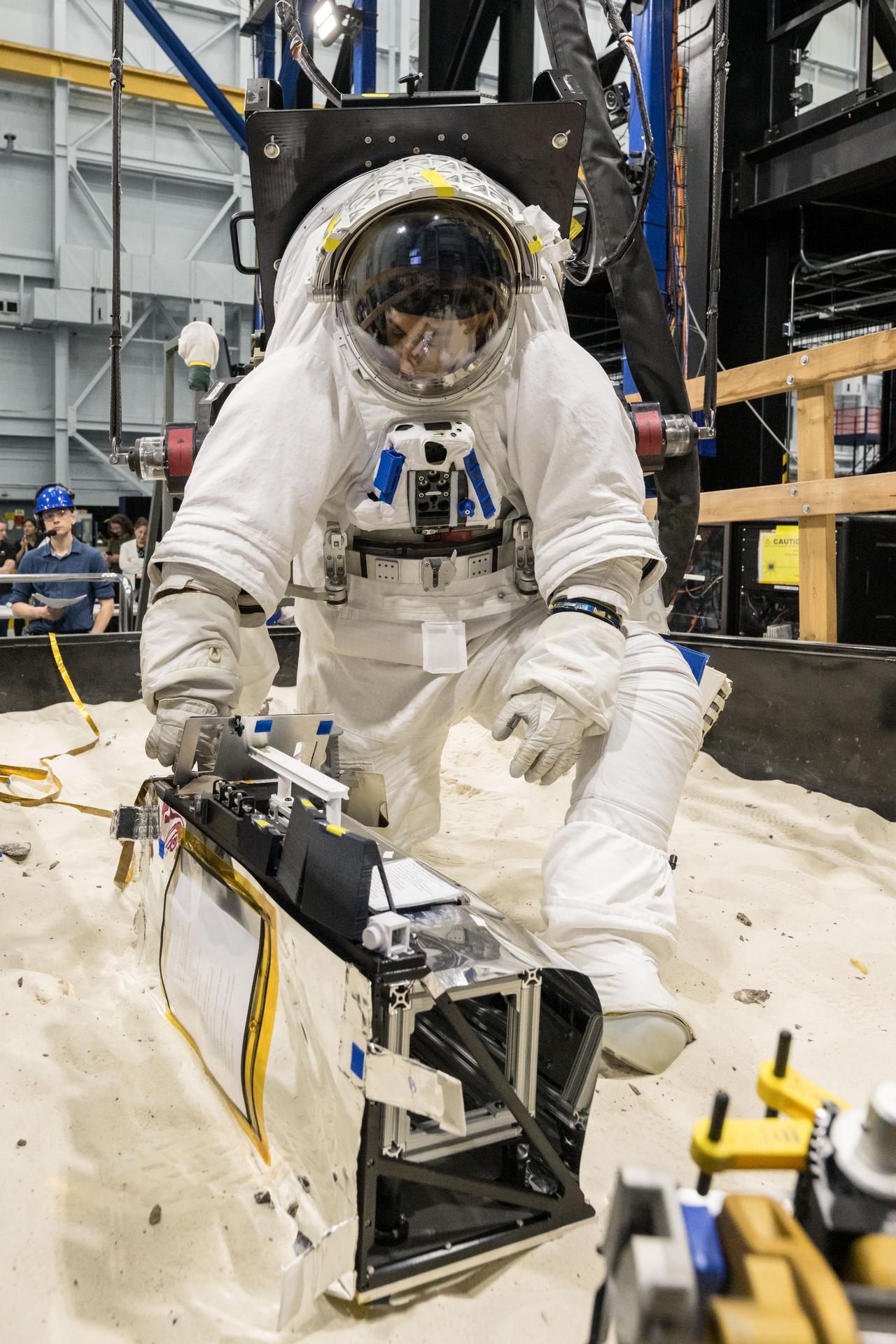
Trevor Graff, the Artemis Science Team Hardware and Testing Lead, deploys a mockup of the Lunar Environment Monitoring Station (LEMS) during testing with the Active Response Gravity Offload System (ARGOS) at Johnson Space Center in Houston, Texas on April 21st, 2025. LEMS is a compact, autonomous, and self-sustaining seismometer suite designed to carry out continuous, long-term, monitoring of the lunar seismic environment at the South Polar region. Photo Credit: NASA/ James Blair
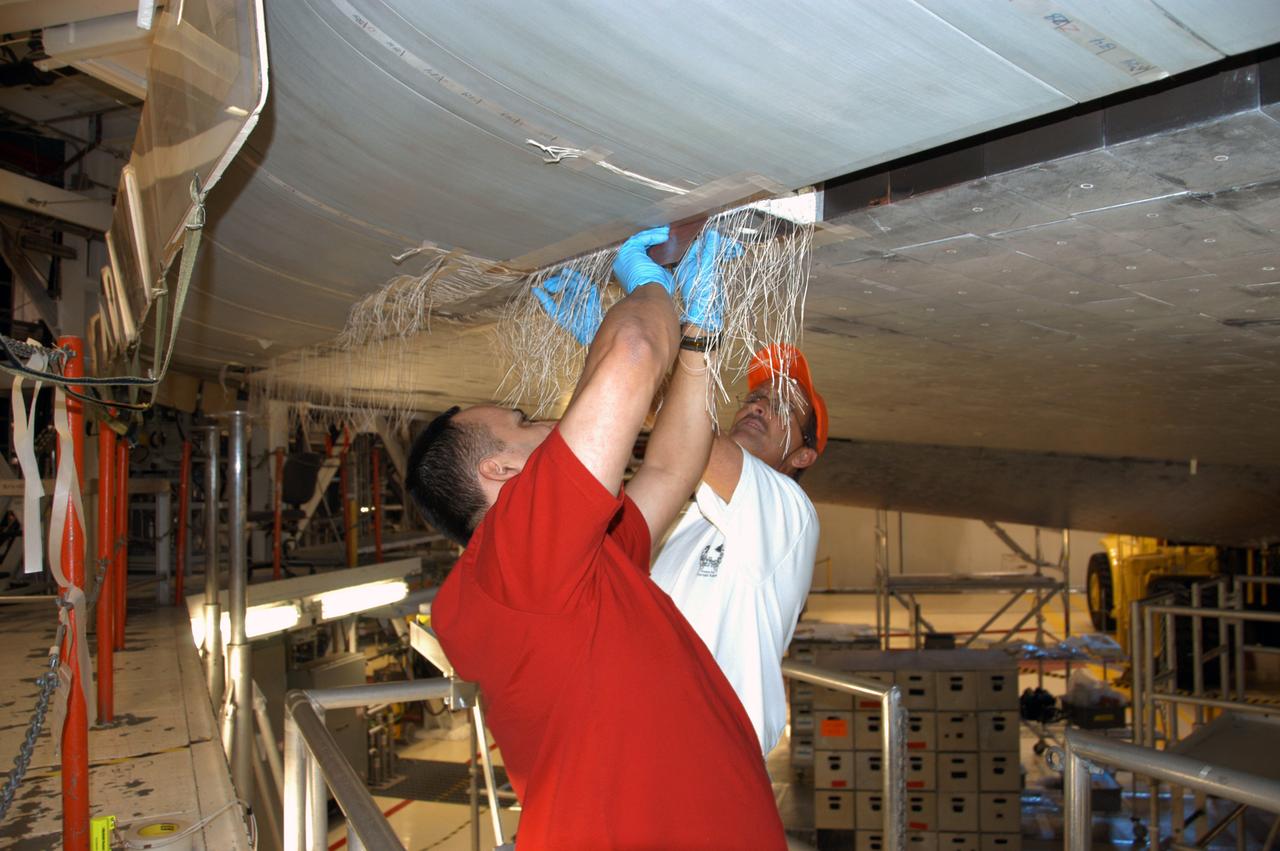
In Orbiter Processing Facility bay 2, technicians Jesus Rodrigues (left) and James Johnson install a leading edge subsystem carrier panel on the right wing of Endeavour. The orbiter is scheduled for mission STS-118, targeted for launch on June 28. The mission will be the 22nd flight to the International Space Station, carrying another starboard array, S5, for installation.
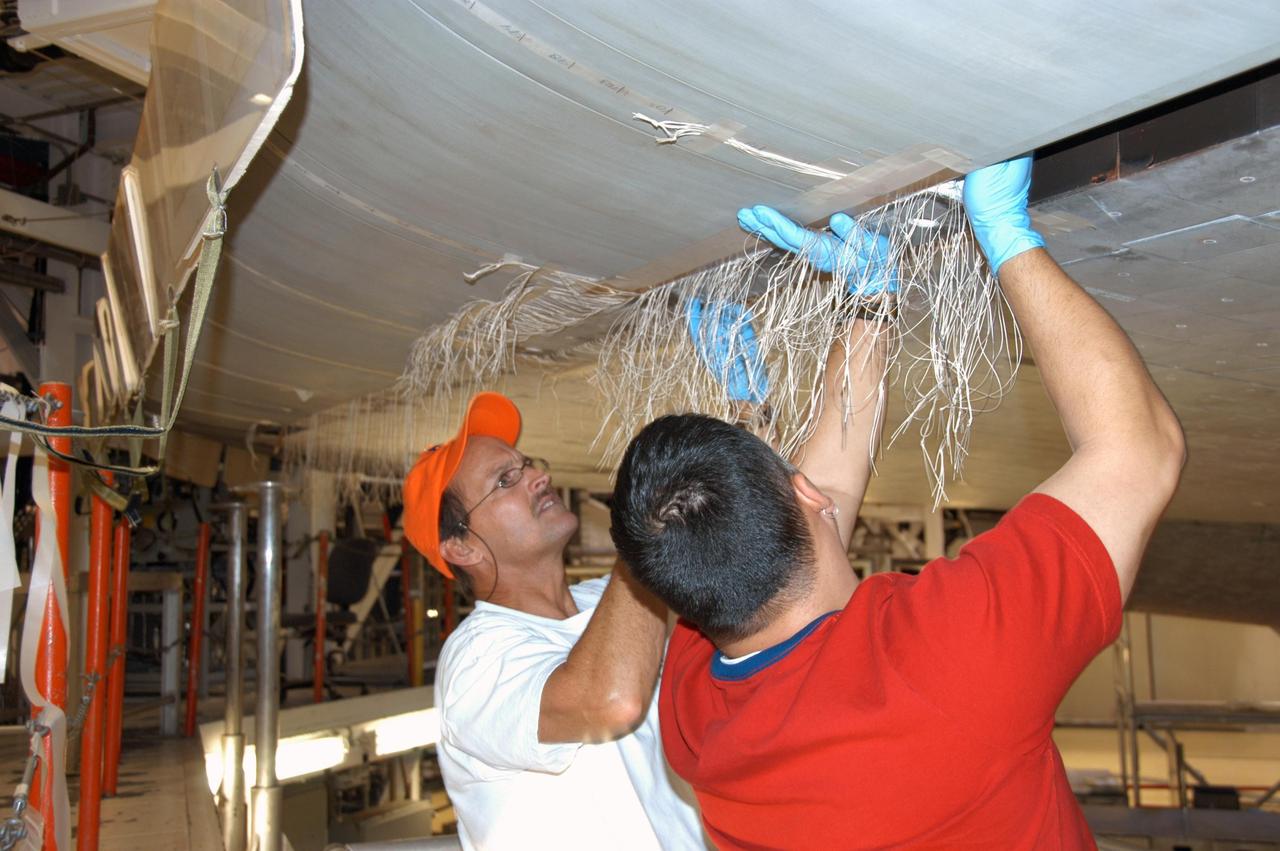
KENNEDY SPACE CENTER, FLA. -- In Orbiter Processing Facility bay 2, technicians James Johnson (left) and Jesus Rodrigues install a leading edge subsystem carrier panel on the right wing of Endeavour. The orbiter is scheduled for mission STS-118, targeted for launch on June 28. The mission will be the 22nd flight to the International Space Station, carrying another starboard array, S5, for installation. Photo credit: NASA/George Shelton
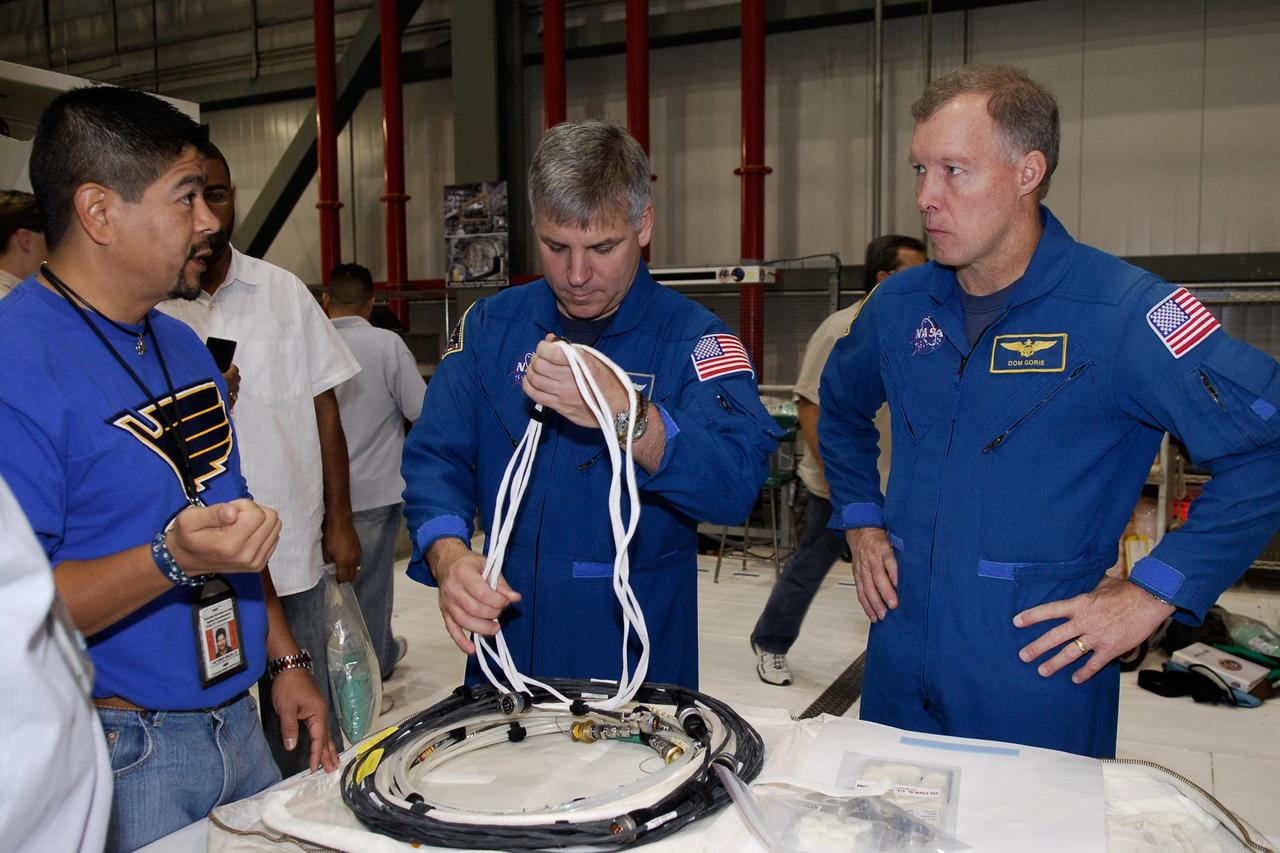
KENNEDY SPACE CENTER, FLA. -- In the Orbiter Processing Facility at NASA's Kennedy Space Center, space shuttle Endeavour's STS-123 Pilot Gregory Johnson (center) handles equipment that will be carried on the mission. At right, Commander Dominic Gorie listens to a technician describing the equipment. The crew is at Kennedy for crew equipment interface test, a process of familiarization with payloads, hardware and the space shuttle. The STS-123 mission is targeted for launch on Feb. 14. It will be the 25th assembly flight of the station. Photo credit: NASA/Kim Shiflett
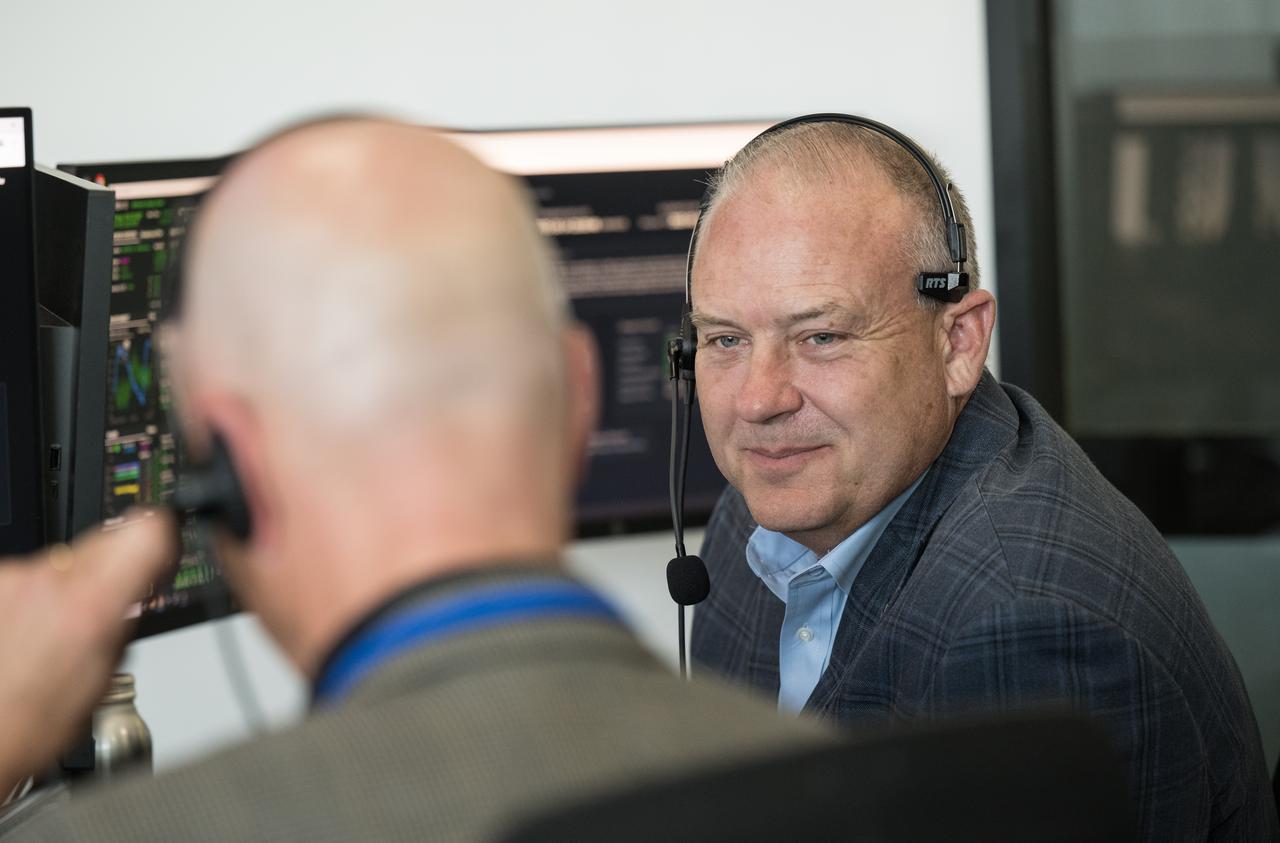
Norm Knight, director of Flight Operations at NASA's Johnson Space Center, and NASA’s Johnson Space Center acting director Stephen Koerner, monitor the launch of a SpaceX Falcon 9 rocket carrying the company's Dragon spacecraft on the Crew-10 mission with NASA astronauts Anne McClain and Nichole Ayers, JAXA (Japan Aerospace Exploration Agency) astronaut Takuya Onishi, and Roscosmos cosmonaut Kirill Peskov onboard, Friday, March 14, 2025, in the control room of SpaceX’s HangarX at NASA’s Kennedy Space Center in Florida. NASA’s SpaceX Crew-10 mission is the tenth crew rotation mission of the SpaceX Dragon spacecraft and Falcon 9 rocket to the International Space Station as part of the agency’s Commercial Crew Program. McClain, Ayers, Onishi, and Peskov launched at 7:03 p.m. EDT, from Launch Complex 39A at the Kennedy Space Center. Photo Credit: (NASA/Aubrey Gemignani)

The Space Shuttle Enterprise, the nation's prototype space shuttle orbiter, before departing NASA's Dryden Flight Research Center, Edwards, California, at 11:00 a.m., 16 May 1983, on the first leg of its trek to the Paris Air Show at Le Bourget Airport, Paris, France. Seen here atop the huge 747 Shuttle Carrier Aircraft (SCA), the first stop for the Enterprise was Peterson AFB, Colorado Springs, Colorado. Piloting the 747 on the Europe trip were Joe Algranti, Johnson Space Center Chief Pilot, Astronaut Dick Scobee, and NASA Dryden Chief Pilot Tom McMurtry. Flight engineers for that portion of the flight were Dryden's Ray Young and Johnson Space Center's Skip Guidry. The Enterprise, named after the spacecraft of Star Trek fame, was originally carried and launched by the 747 during the Approach and Landing Tests (ALT) at Dryden Flight Research Center.
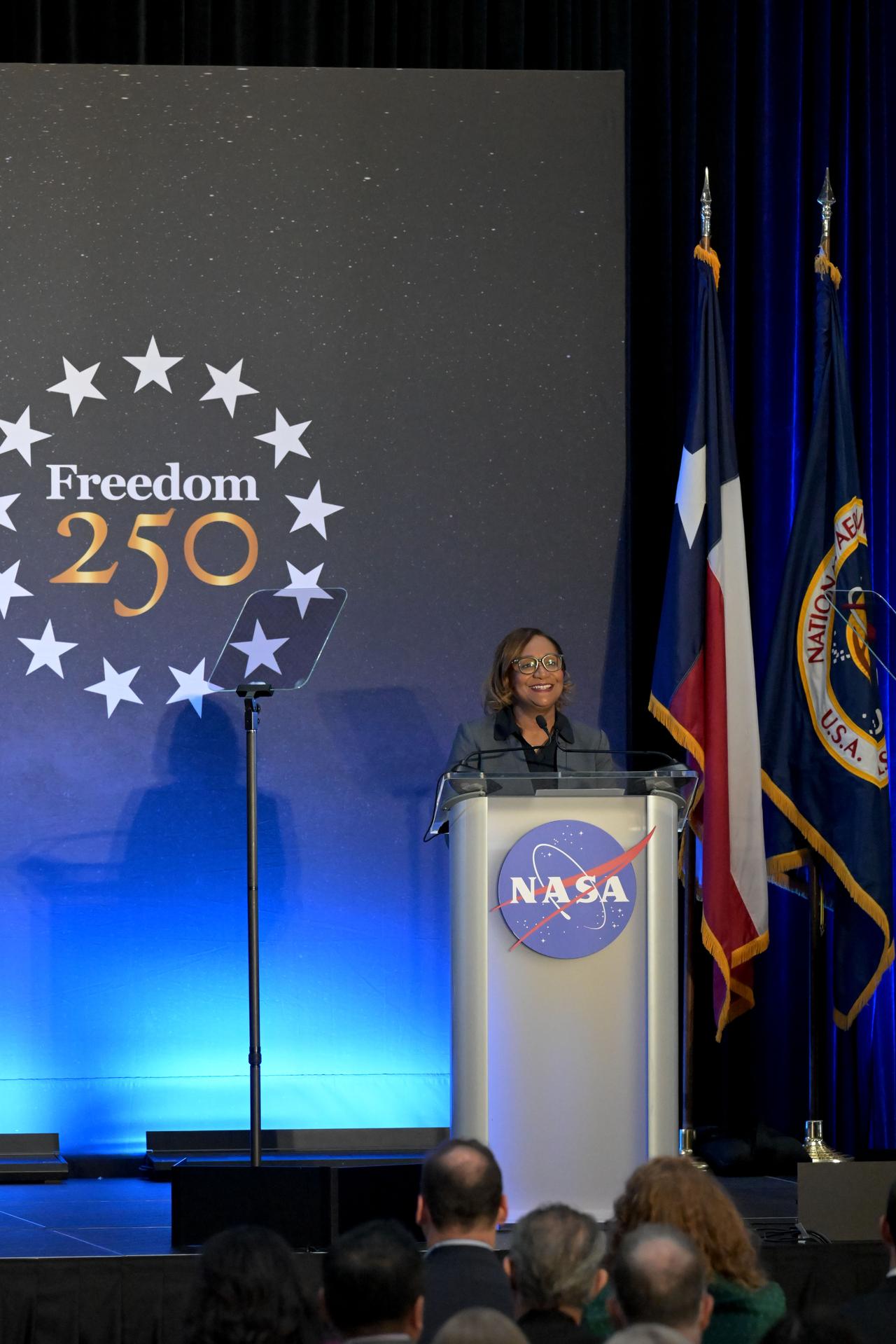
jsc2026e022313 (April 11, 2026) – NASA's Johnson Space Center Director Vanessa Wyche addresses a crowd of friends, family, and colleagues assembled for the return of the Artemis II crew at Ellington Airport near NASA’s Johnson Space Center in Houston on Saturday, April 11, 2026. The Artemis II test flight launched on Wednesday, April 1, from NASA’s Kennedy Space Center in Florida to begin its 10-day journey around the Moon for scientific discovery, economic benefits, and to build on our foundation for the first crewed missions to Mars. NASA's Orion spacecraft carrying Artemis II Commander Reid Wiseman, Pilot Victor Glover, and Mission Specialist Christina Koch from NASA, along with Mission Specialist Jeremy Hansen from the CSA (Canadian Space Agency), splashed down in the Pacific Ocean near San Diego, California, on Friday, April 10, 2026. Credit: NASA/Bill Stafford

KENNEDY SPACE CENTER, FLA. -- In the Space Station Processing Facility at NASA's Kennedy Space Center, STS-123 Pilot Greg Johnson tries on gloves he will wear on the mission. At right is Mission Specialist Robert Behnken. Johnson, Behnken and other crew members are at the center for a crew equipment interface test, which allows familiarization with equipment they will use during the mission. STS-123 will carry and install one of the components of the Japanese Experiment Module, or JEM. Known as Kibo, the JEM comprises six components: two research facilities -- the Pressurized Module and Exposed Facility; a Logistics Module attached to each of them; a Remote Manipulator System; and an Inter-Orbit Communication System unit. The various components of JEM will be assembled in space over the course of three space shuttle missions. The first of those three missions, STS-123, will carry the Experiment Logistics Module Pressurized Section aboard the space shuttle Endeavour, targeted for launch in February 2008. Photo credit: NASA/Kim Shiflett
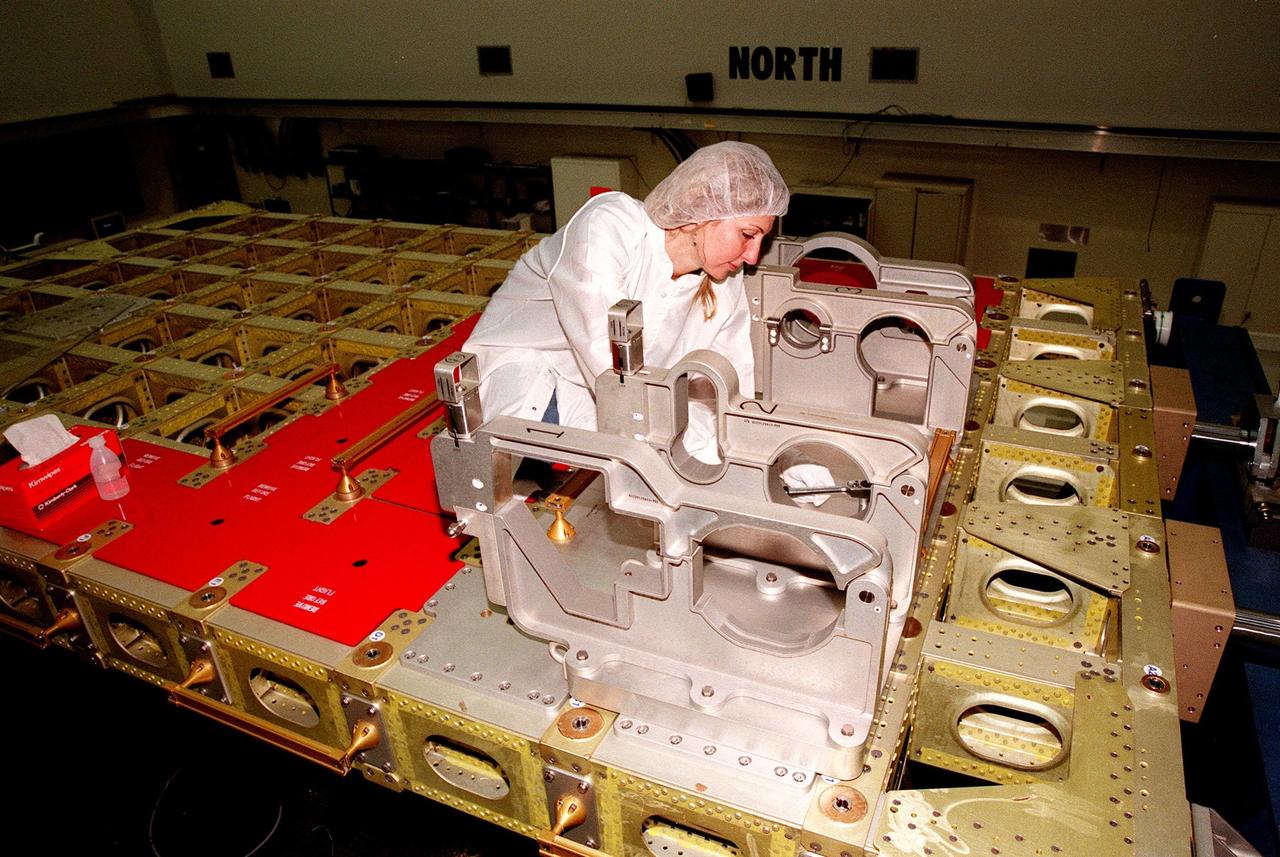
At Astrotech, Titusville, Fla., Lora Lawrence, with Johnson Space Center, makes a bonding check on the International Cargo Carrier that will be used during future International Space Station (ISS) assembly missions. The nonpressurized ICC fits inside the payload bay of the orbiter. The ICC will carry the SPACEHAB Oceaneering Space System Box (SHOSS), a logistics items carrier. SHOSS can hold a maximum of 400 pounds of equipment and will carry items to be used during STS-96 and future ISS assembly flights. Also aboard the ICC will be the ORU Transfer Device (OTD), a U.S.-built crane that will be stowed on Unity for use during future ISS assembly missions. The ICC will fly on mission STS-96, targeted for launch on May 20
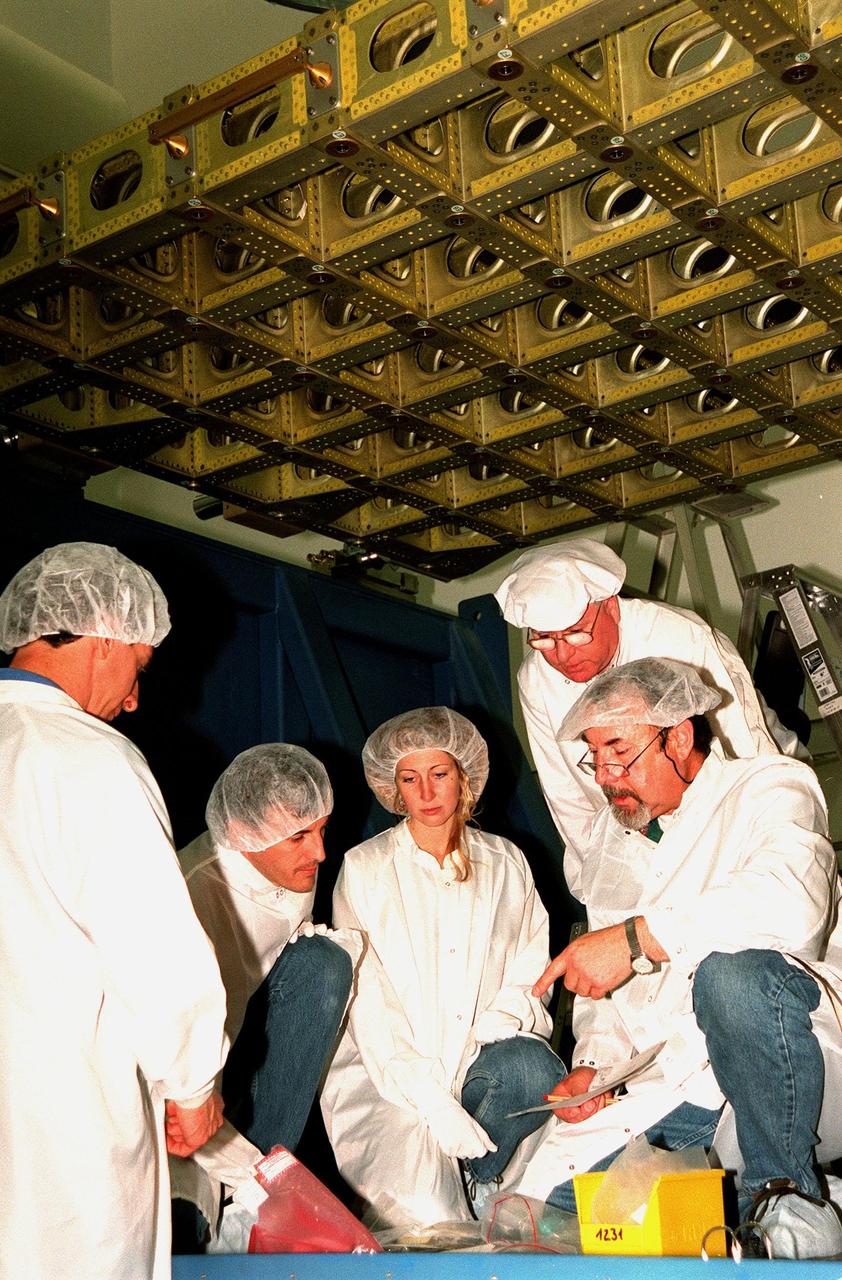
At Astrotech, Titusville, Fla., discussing the International Cargo Carrier (ICC) overhead are Charles Franca, with Johnson Space Center (JSC); Robert Wilkes, with Lockheed Martin; Lora Lawrence, with JSC; Carl Figiel and Harald Schnier, with Daimler-Chrysler Aerospace (DASA). The nonpressurized ICC fits inside the payload bay of the orbiter. The ICC will carry the SPACEHAB Oceaneering Space System Box (SHOSS), a logistics items carrier. SHOSS can hold a maximum of 400 pounds of equipment and will carry items to be used during STS-96 and future ISS assembly flights. Also aboard the ICC will be the ORU Transfer Device (OTD), a U.S.-built crane that will be stowed on Unity for use during future ISS assembly missions. The ICC will fly on mission STS-96, targeted for launch on May 20
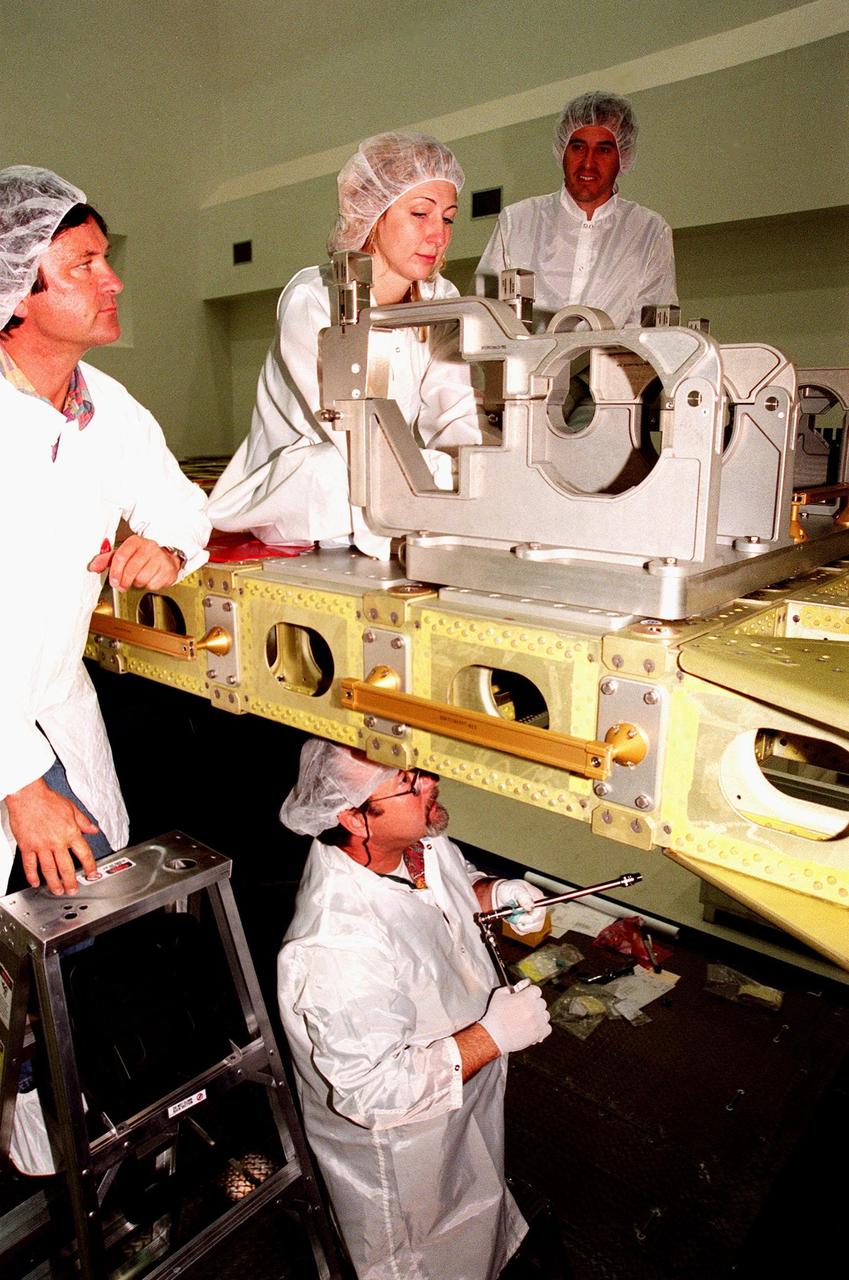
At Astrotech, Titusville, Fla., checking the International Cargo Carrier that will be used during future International Space Station (ISS) assembly missions are (left to right) Manfred Nordhoff, with Daimler-Chrysler Aerospace (DASA); Lora Lawrence, with Johnson Space Center; Robert Wilkes, with Lockheed Martin; and (below) Harald Schnier, with DASA. The ICC fits inside the payload bay of the orbiter. The ICC will carry the SPACEHAB Oceaneering Space System Box (SHOSS), a logistics items carrier. SHOSS can hold a maximum of 400 pounds of equipment and will carry items to be used during STS-96 and future ISS assembly flights. Also aboard the ICC will be the ORU Transfer Device (OTD), a U.S.-built crane that will be stowed on Unity for use during future ISS assembly missions. The ICC will fly on mission STS-96, targeted for launch on May 20
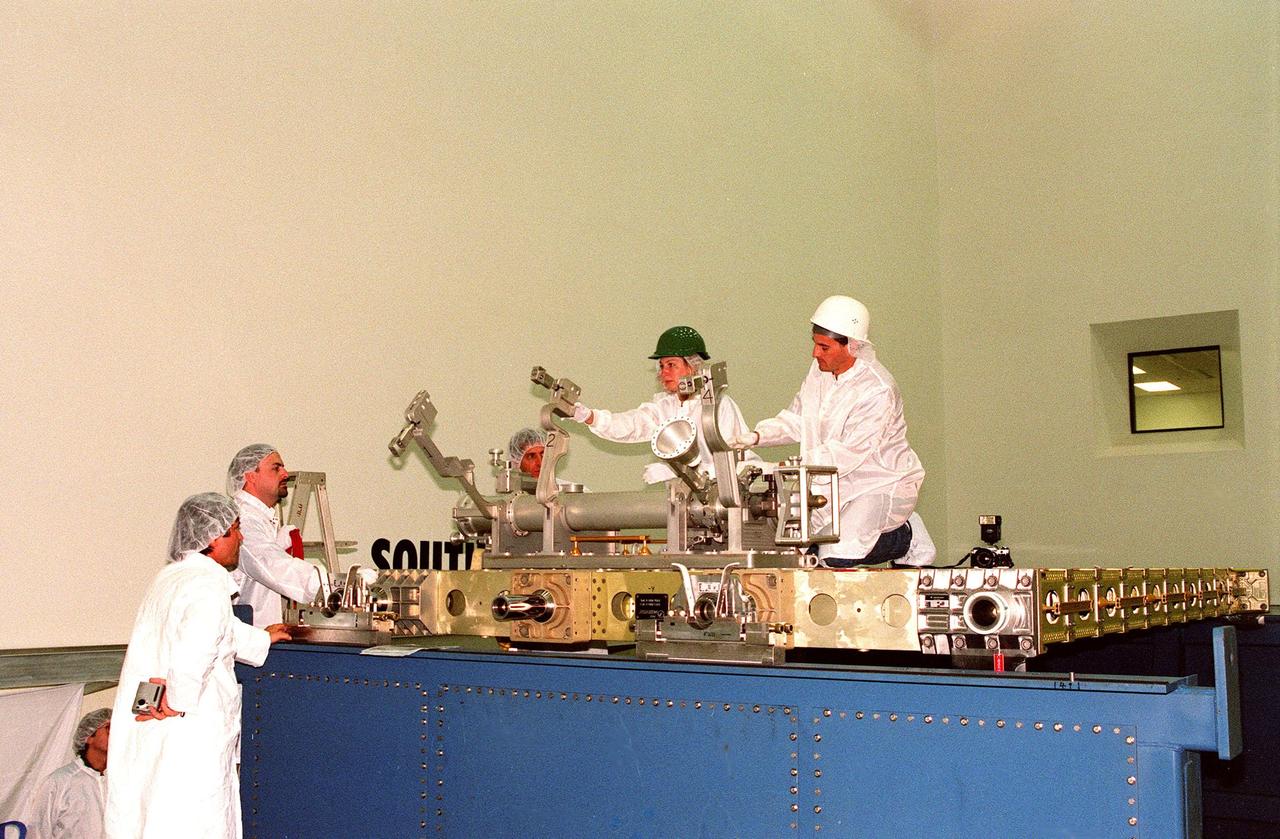
An ORU Transfer Device (OTD) on top of the International Cargo Carrier (ICC) is checked by Manfred Nordhoff, with Daimler-Chrysler Aerospace (DASA); Ben Greene, with Lockheed Martin; Robert Wilkes (behind arm number two), with Lockheed Martin; Lora Laurence and Charles Franca, with Johnson Space Center. The OTD is a U.S.-built crane that will be stowed on the International Space Station's Unity module for use during future ISS assembly missions. The nonpressurized ICC fits inside the payload bay of the orbiter. The ICC will also carry the SPACEHAB Oceaneering Space System Box (SHOSS), a logistics items carrier. SHOSS can hold a maximum of 400 pounds of equipment and will carry items to be used during STS-96 and future ISS assembly flights. The ICC will fly on mission STS-96, targeted for launch on May 20
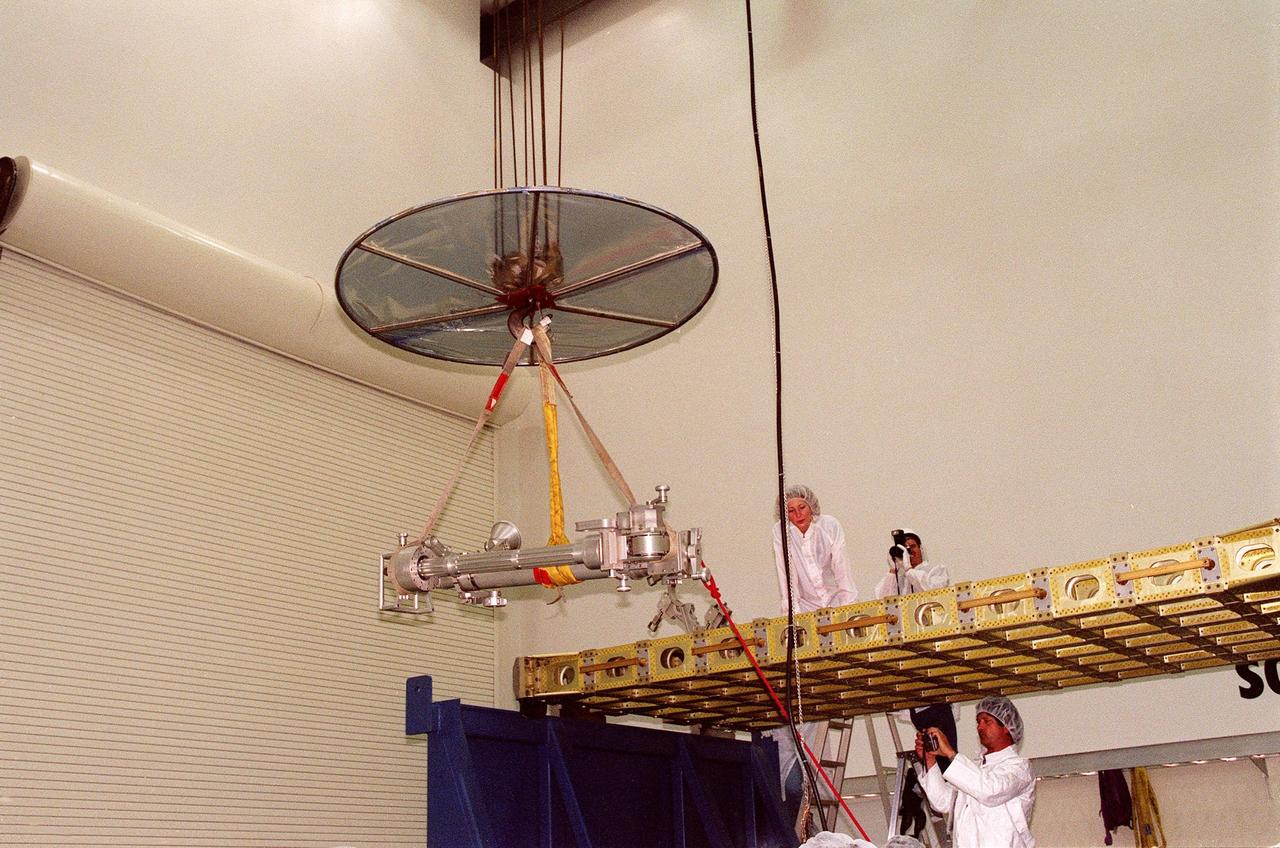
At Astrotech, Titusville, Fla., three workers watch as the overhead crane lifts and moves the ORU Transfer Device (OTD) to the top of the International Cargo Carrier (ICC). From left are Lora Laurence, with Johnson Space Center; Robert Wilkes, with Lockheed Martin; and Manfred Nordhoff, with Daimler-Chrysler Aerospace (DASA). The OTD is a U.S.-built crane that will be stowed on the International Space Station's Unity module for use during future ISS assembly missions. The nonpressurized ICC fits inside the payload bay of the orbiter. The ICC will also carry the SPACEHAB Oceaneering Space System Box (SHOSS), a logistics items carrier. SHOSS can hold a maximum of 400 pounds of equipment and will carry items to be used during STS-96 and future ISS assembly flights. The ICC will fly on mission STS-96, targeted for launch on May 20
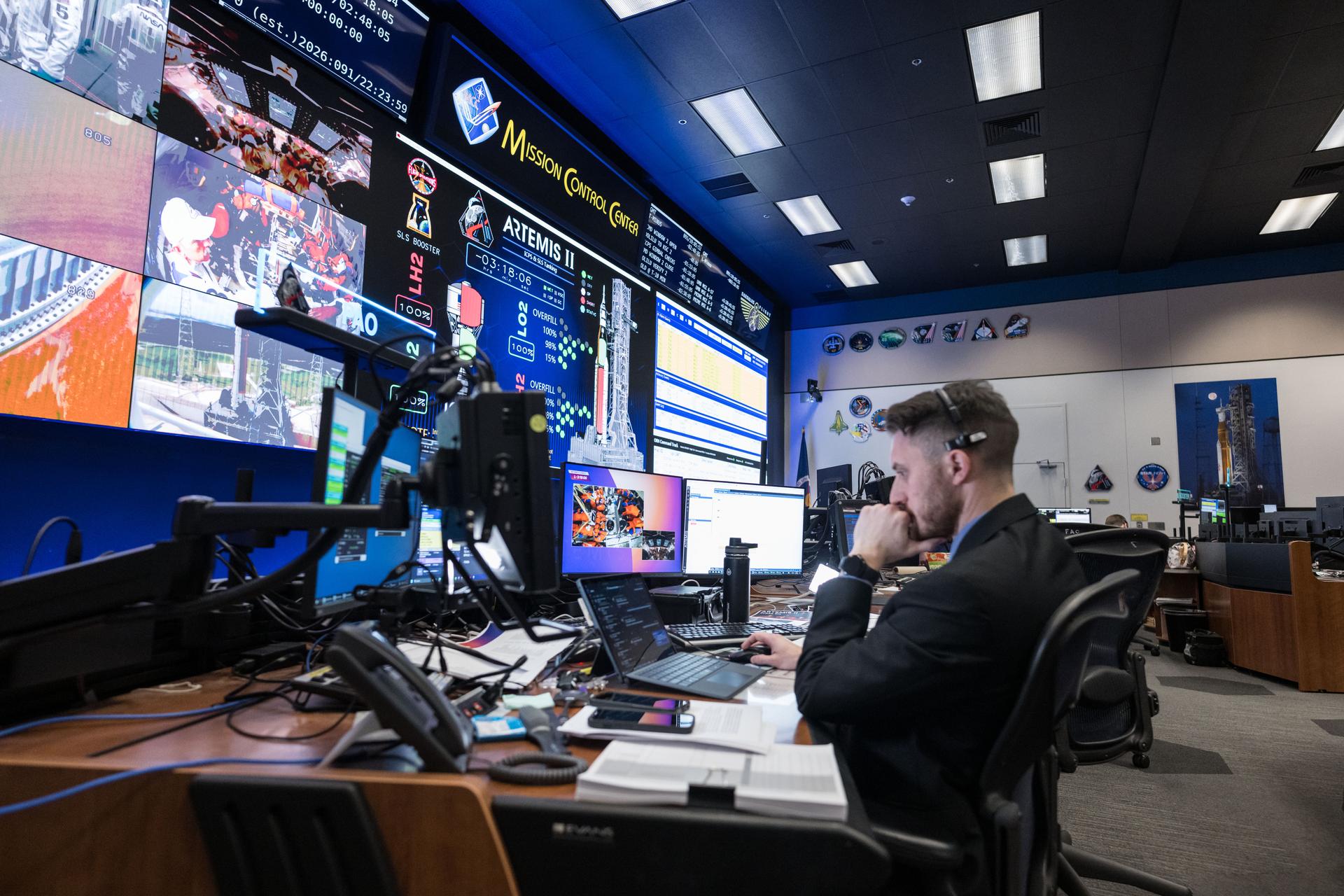
jsc2026e019363 (April 1, 2026) – Public Affairs Officer Gary Jordan prepares for the Artemis II launch in the White Flight Control Room in the Mission Control Center at NASA’s Johnson Space Center. NASA’s Artemis II SLS (Space Launch System) rocket, with the Orion spacecraft atop carrying NASA astronauts Reid Wiseman, Victor Glover, and Christina Koch, along with CSA (Canadian Space Agency) astronaut Jeremy Hansen, lifted off from Kennedy Space Center’s Launch Complex 39B in Florida at 6:35 p.m. ET to begin its journey to deep space. Credit: NASA
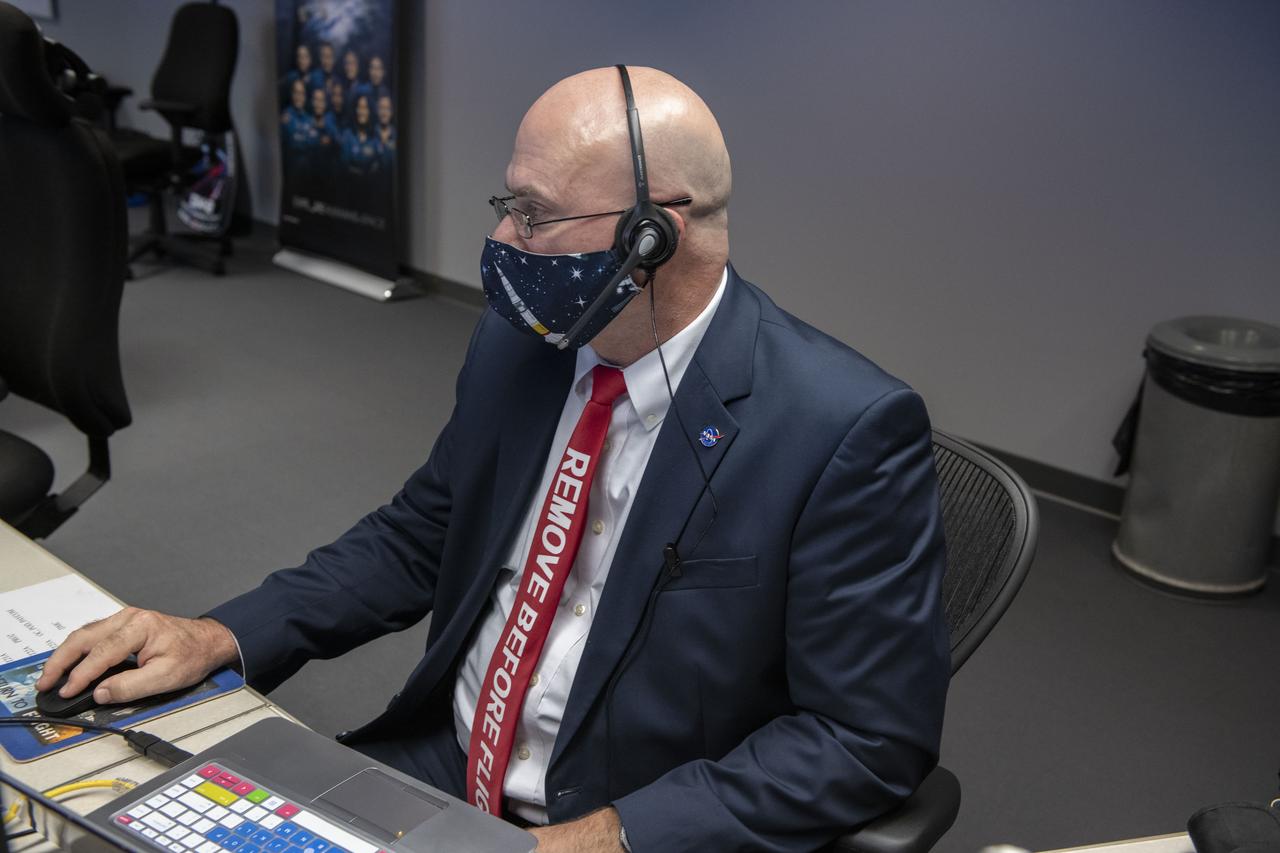
Teams at NASA’s Marshall Space Flight Center help monitor launch conditions for the Crew 1 mission from the Huntsville Operations Support Center in Huntsville, Alabama. SpaceX will launch a Falcon 9 rocket carrying NASA astronauts aboard the company’s Crew Dragon spacecraft to the International Space Station on Nov. 15, 2020. The Marshall team is supporting flight control teams working with NASA’s Johnson Space Center in Houston, Texas, NASA’s Kennedy Space Center in Cape Canaveral, Florida, and SpaceX headquarters in Hawthorne, California, as they monitor the different phases of the upcoming mission. Engineers and technicians at Marshall will use headsets and loops to communicate with the multiple locations on console for the launch.
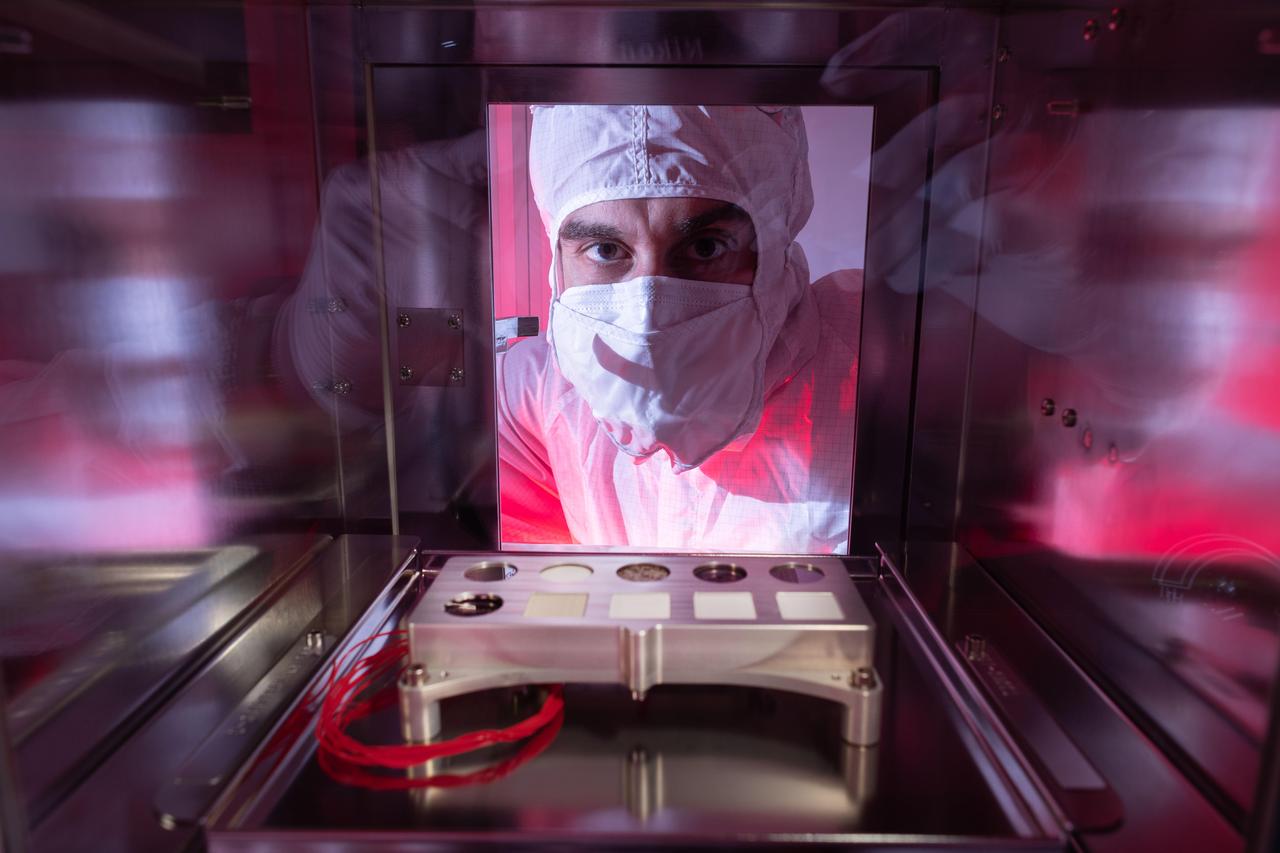
NASA scientist Trevor Graff peers at a calibration target, which will help fine-tune settings on the Scanning Habitable Environments with Raman & Luminescence for Organics and Chemicals (SHERLOC) instrument carried aboard NASA's Perseverance Mars rover. The calibration target is housed inside a special environmental chamber that was used to ship it from NASA's Johnson Space Center, Houston, to the agency's Jet Propulsion Laboratory in Southern California, where the target was added to the rover. There are 10 kinds of materials on SHERLOC's calibration target, including a fragment of a Martian meteorite and five of the first spacesuit materials sent to Mars. They'll be observed to see how they hold up in the intense radiation on the Martian surface. https://photojournal.jpl.nasa.gov/catalog/PIA23979
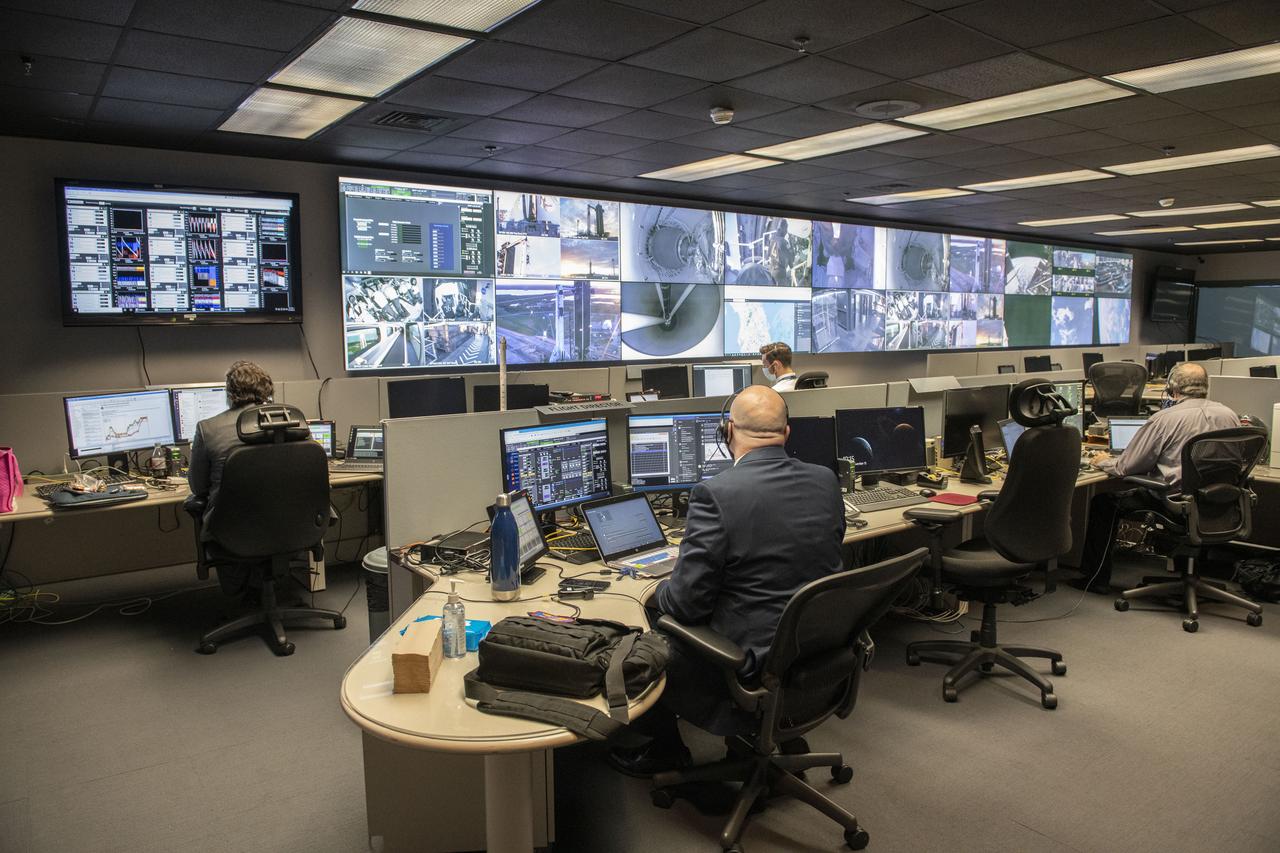
Teams at NASA’s Marshall Space Flight Center help monitor launch conditions for the Crew 1 mission from the Huntsville Operations Support Center in Huntsville, Alabama. SpaceX will launch a Falcon 9 rocket carrying NASA astronauts aboard the company’s Crew Dragon spacecraft to the International Space Station on Nov. 15, 2020. The Marshall team is supporting flight control teams working with NASA’s Johnson Space Center in Houston, Texas, NASA’s Kennedy Space Center in Cape Canaveral, Florida, and SpaceX headquarters in Hawthorne, California, as they monitor the different phases of the upcoming mission. Engineers and technicians at Marshall will use headsets and loops to communicate with the multiple locations on console for the launch.
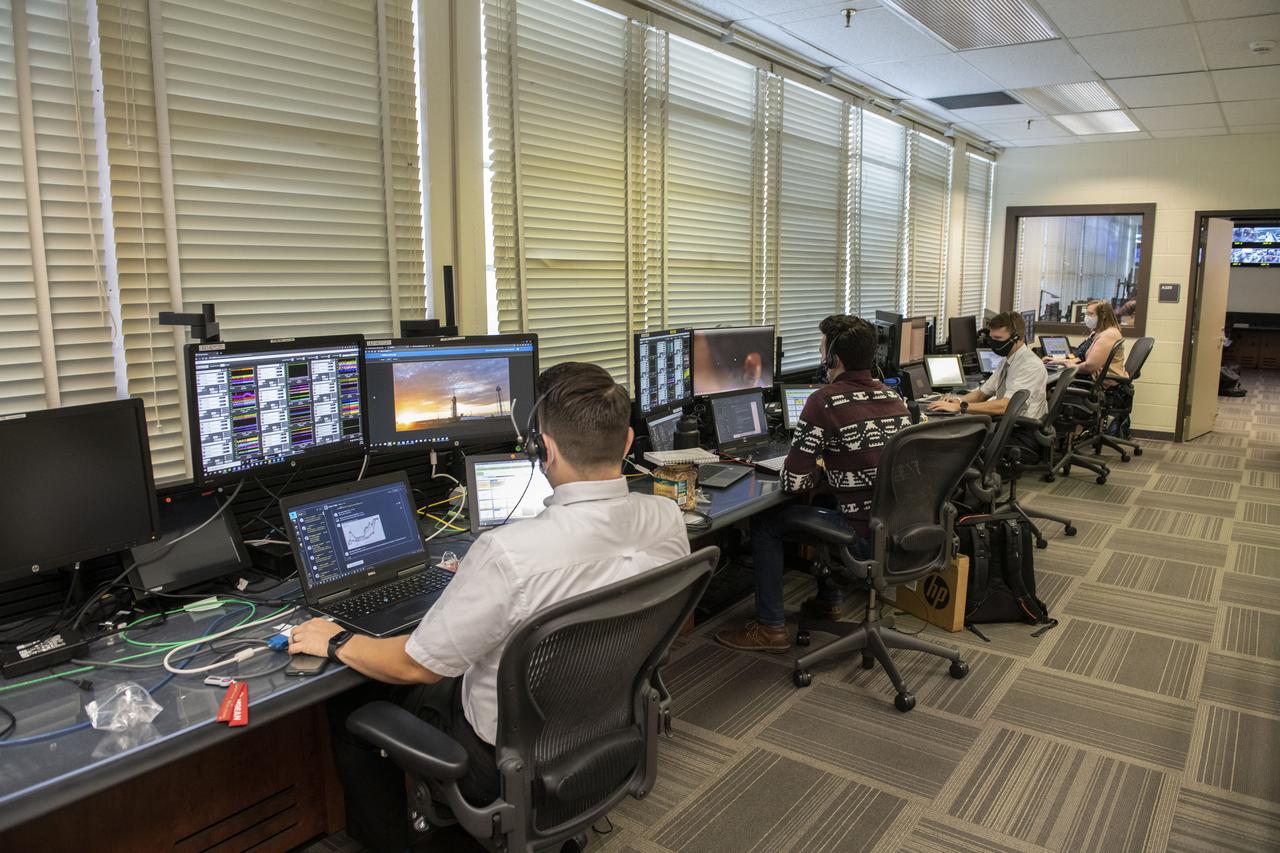
Teams at NASA’s Marshall Space Flight Center help monitor launch conditions for the Crew 1 mission from the Huntsville Operations Support Center in Huntsville, Alabama. SpaceX will launch a Falcon 9 rocket carrying NASA astronauts aboard the company’s Crew Dragon spacecraft to the International Space Station on Nov. 15, 2020. The Marshall team is supporting flight control teams working with NASA’s Johnson Space Center in Houston, Texas, NASA’s Kennedy Space Center in Cape Canaveral, Florida, and SpaceX headquarters in Hawthorne, California, as they monitor the different phases of the upcoming mission. Engineers and technicians at Marshall will use headsets and loops to communicate with the multiple locations on console for the launch.
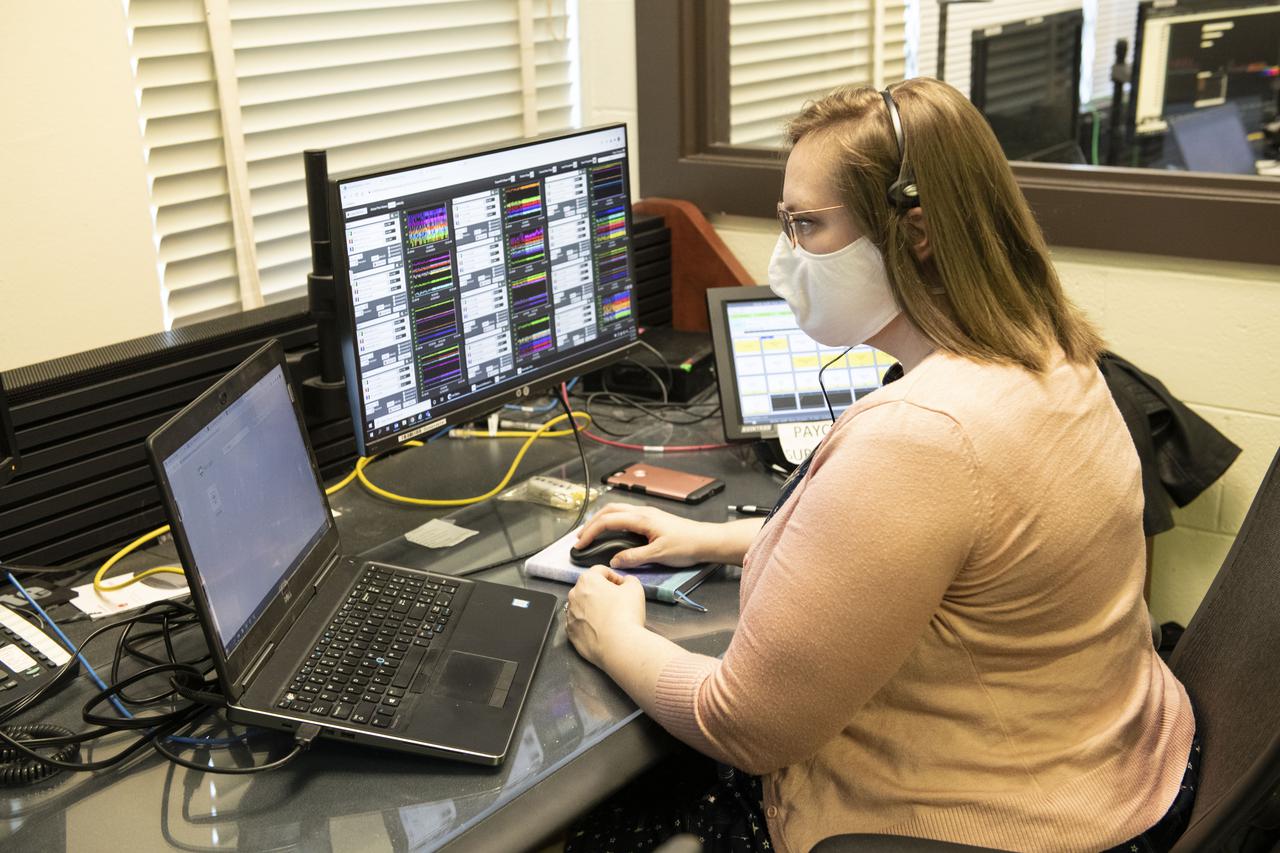
Teams at NASA’s Marshall Space Flight Center help monitor launch conditions for the Crew 1 mission from the Huntsville Operations Support Center in Huntsville, Alabama. SpaceX will launch a Falcon 9 rocket carrying NASA astronauts aboard the company’s Crew Dragon spacecraft to the International Space Station on Nov. 15, 2020. The Marshall team is supporting flight control teams working with NASA’s Johnson Space Center in Houston, Texas, NASA’s Kennedy Space Center in Cape Canaveral, Florida, and SpaceX headquarters in Hawthorne, California, as they monitor the different phases of the upcoming mission. Engineers and technicians at Marshall will use headsets and loops to communicate with the multiple locations on console for the launch.
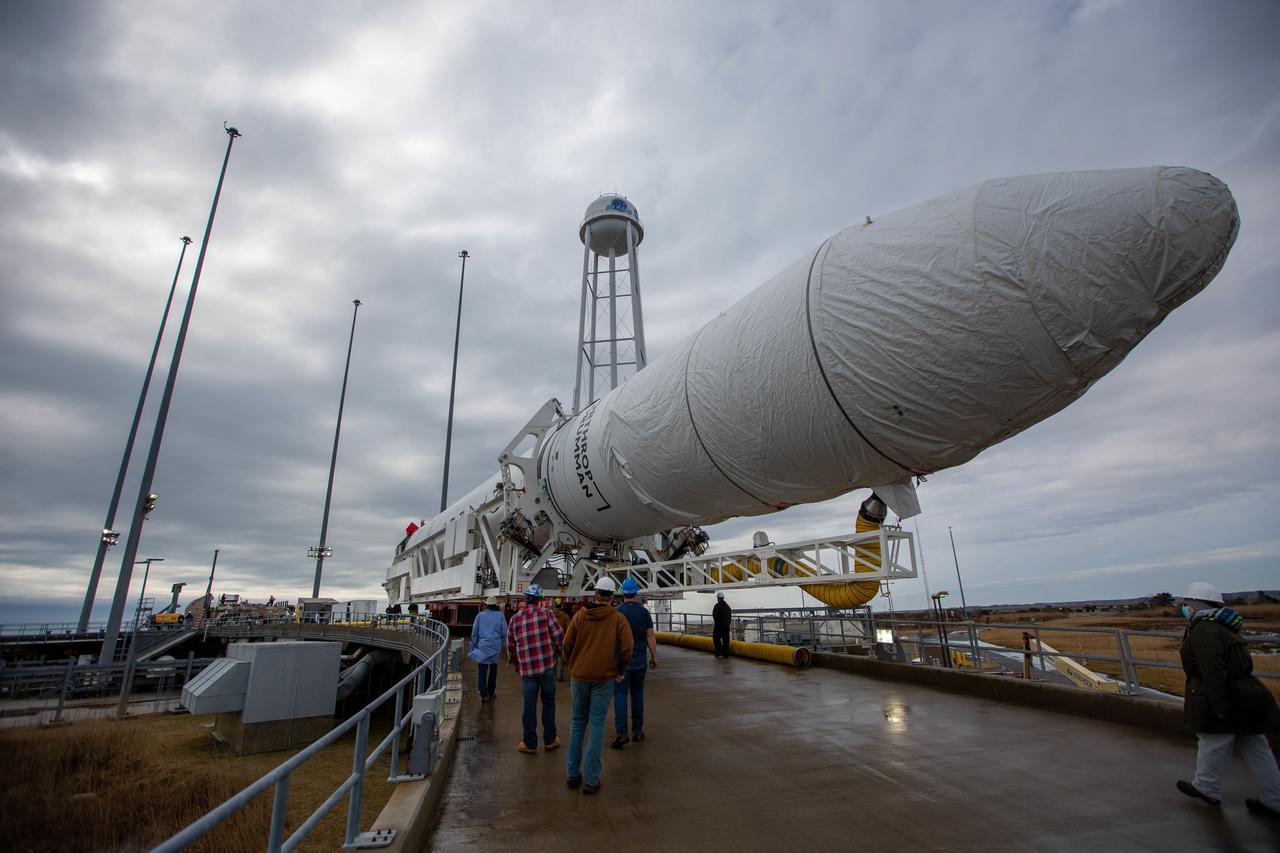
A Northrop Grumman Antares rocket carrying a Cygnus resupply spacecraft arrives at the Mid-Atlantic Regional Spaceport’s Pad-0A, Tuesday, Feb. 16, 2021, at NASA's Wallops Flight Facility in Virginia. Northrop Grumman’s 15th contracted cargo resupply mission with NASA to the International Space Station will deliver about 8,000 pounds of science and research, crew supplies and vehicle hardware to the orbital laboratory and its crew. The CRS-15 Cygnus spacecraft is named after NASA mathematician, Katherine Johnson, a Black woman who time and again broke through barriers of gender and race. The launch is scheduled for 12:36 p.m. EST, Feb. 20, 2021. Photo Credit: (NASA/Patrick Black)
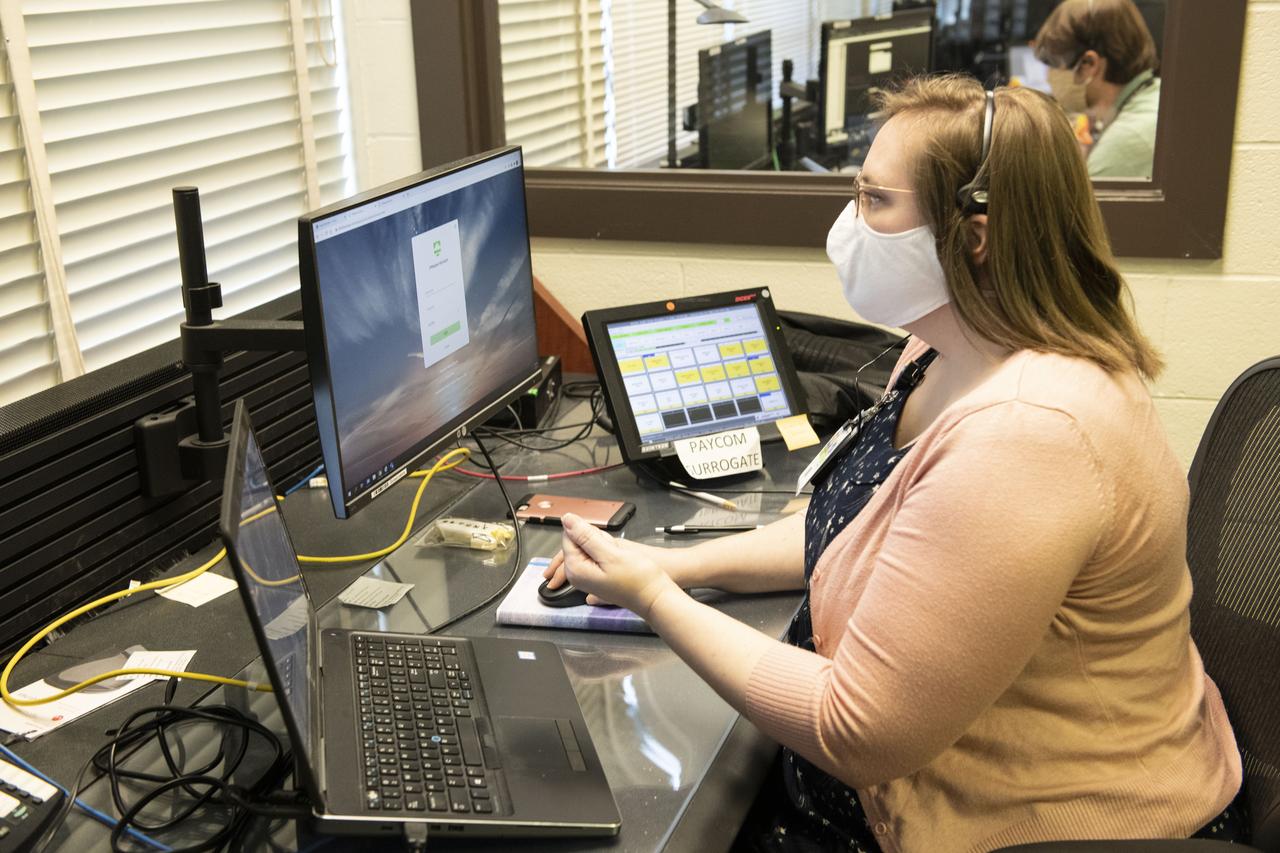
Teams at NASA’s Marshall Space Flight Center help monitor launch conditions for the Crew 1 mission from the Huntsville Operations Support Center in Huntsville, Alabama. SpaceX will launch a Falcon 9 rocket carrying NASA astronauts aboard the company’s Crew Dragon spacecraft to the International Space Station on Nov. 15, 2020. The Marshall team is supporting flight control teams working with NASA’s Johnson Space Center in Houston, Texas, NASA’s Kennedy Space Center in Cape Canaveral, Florida, and SpaceX headquarters in Hawthorne, California, as they monitor the different phases of the upcoming mission. Engineers and technicians at Marshall will use headsets and loops to communicate with the multiple locations on console for the launch.
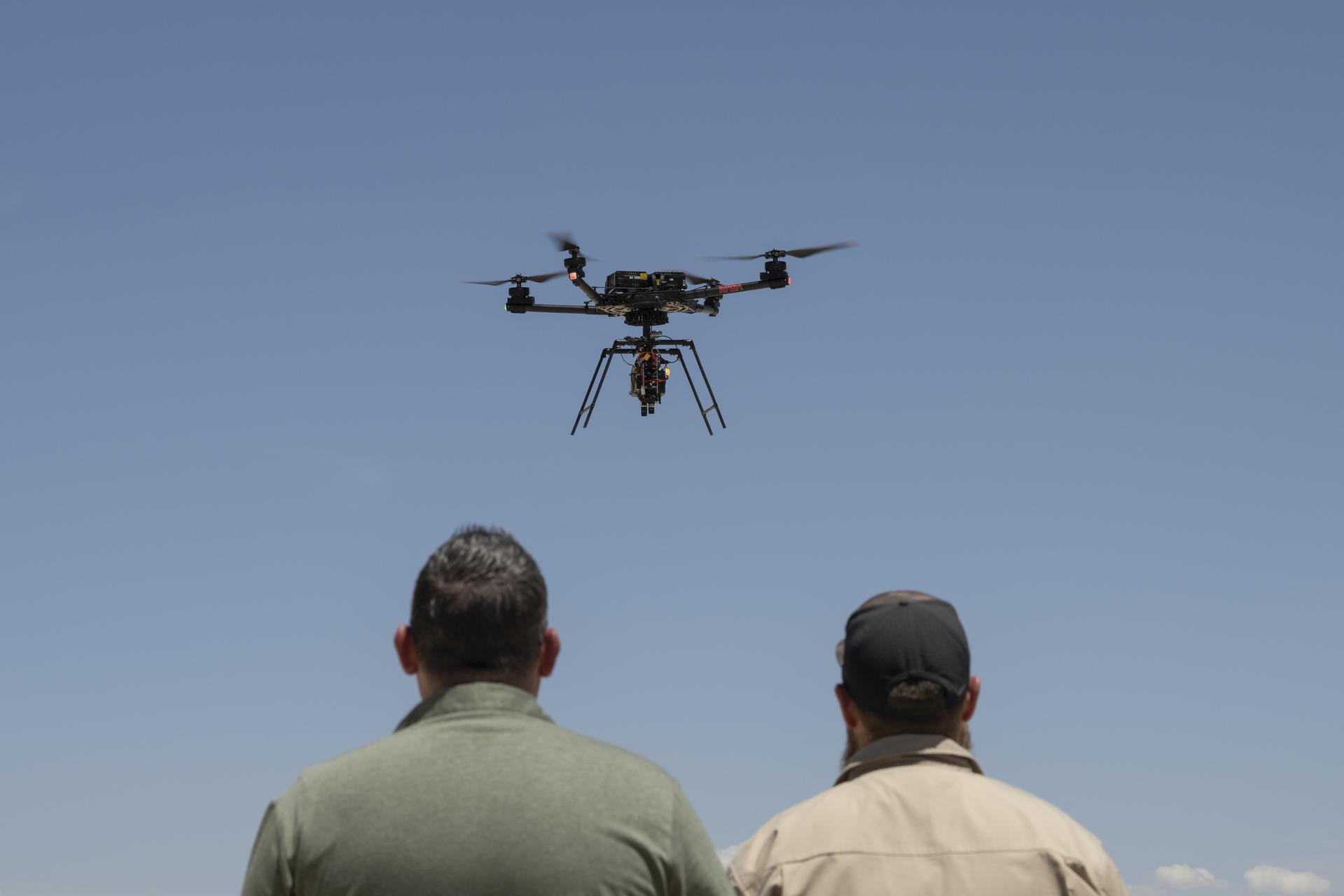
Justin Link, a small uncrewed aircraft pilot, left, and Justin Hall, chief pilot, fly a NASA Alta-X drone carrying an advanced guidance and navigation system known as the Safe and Precise Landing – Integrated Capabilities Evolution (SPLICE) experiment near NASA’s Armstrong Flight Research Center in Edwards, California, on Wednesday, July 15, 2026. Researchers at NASA’s Johnson Space Center in Houston developed SPLICE, which successfully communicated with the remotely piloted aircraft during hover maneuvers in flight. SPLICE will help spacecraft land precisely and detect and avoid potential hazards, which is critical for NASA missions to the Moon and to Mars.
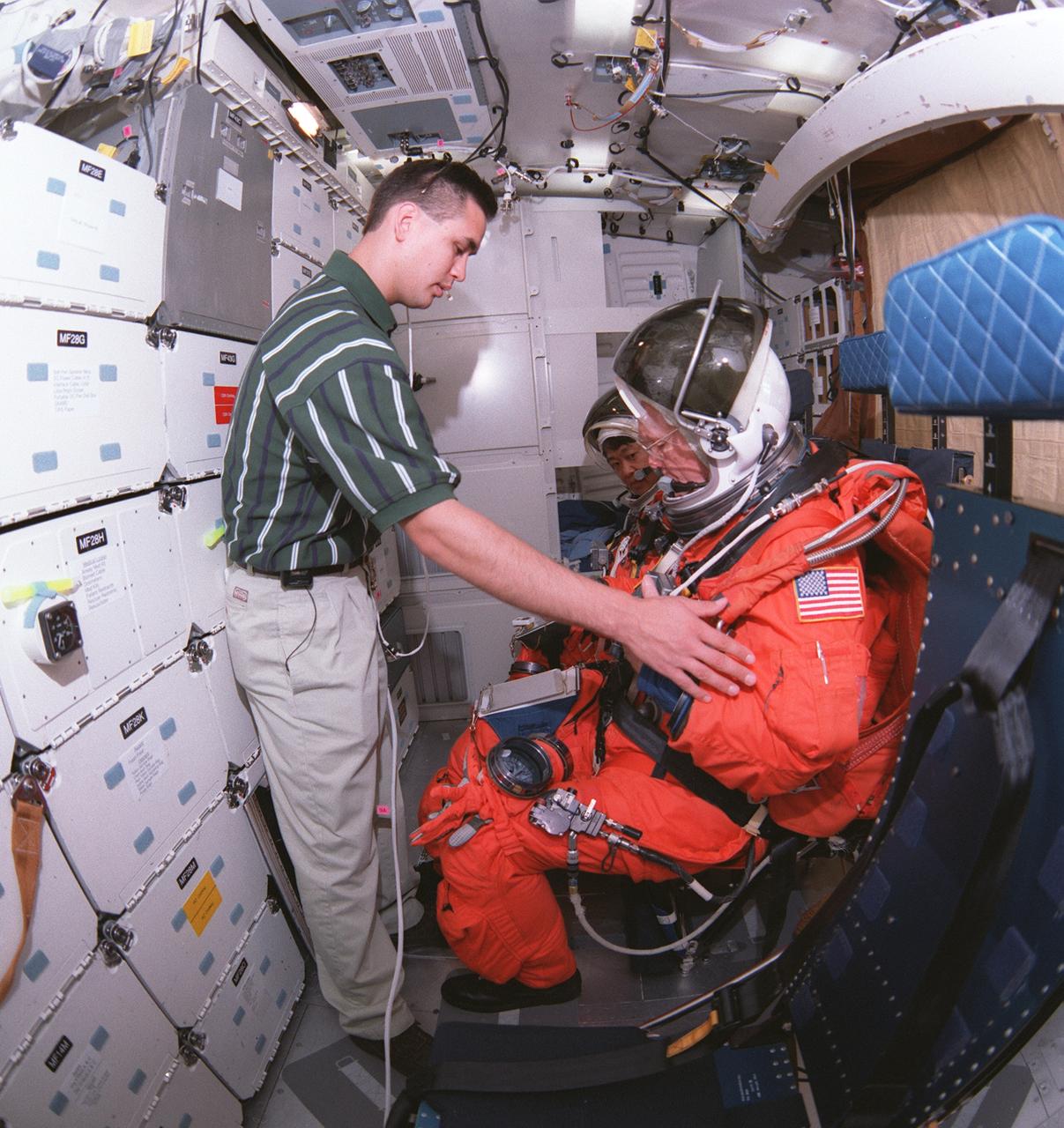
S98-07969 (5 June 1998) --- Crew trainer Adam Flagan (left) checks out STS-95 payload specialists Chiaki Naito-Mukai and John H. Glenn Jr. as they practice launch and entry procedures on the middeck of one of the training mockups in the Johnson Space Center's Space Vehicle Mockup Facility. The STS-95 mission, tentatively scheduled for launch on Oct. 29, will involve a variety of science experiments being carried in the pressurized Spacehab module, deployment and retrieval of the Spartan free-flyer payload, and operations with the HST Orbiting Systems Test and the International Extreme Ultraviolet Hitchhiker payloads.
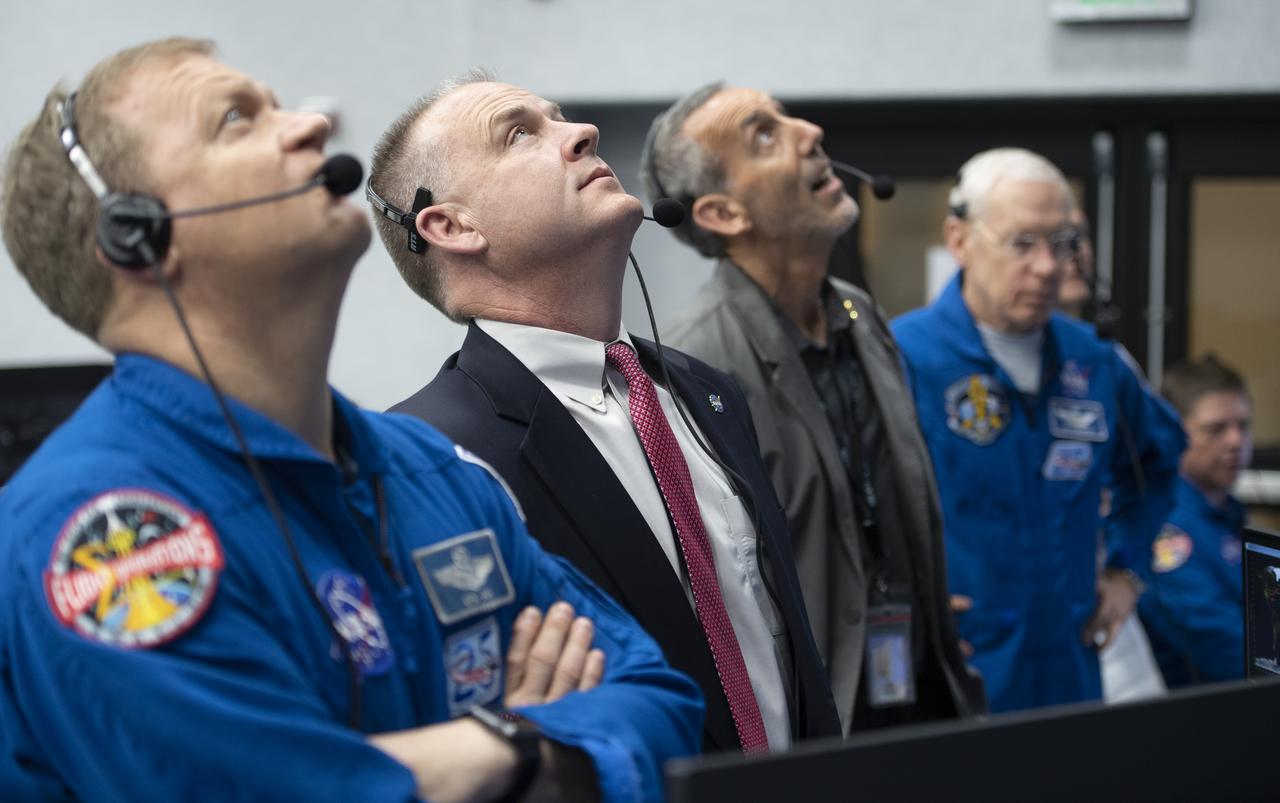
NASA astronaut Eric Boe, assistant to the chief of the astronaut office for commercial crew, left, and Norm Knight, deputy director of flight operations at NASA's Johnson Space Center watch the launch of a SpaceX Falcon 9 rocket carrying the company's Crew Dragon spacecraft on the Demo-1 mission from firing room four of the Launch Control Center, Saturday, March 2, 2019 at the Kennedy Space Center in Florida. The Demo-1 mission is the first launch of a commercially built and operated American spacecraft and space system designed for humans as part of NASA's Commercial Crew Program. The mission will serve as an end-to-end test of the system's capabilities. Photo Credit: (NASA/Joel Kowsky)

Teams at NASA’s Marshall Space Flight Center help monitor launch conditions for the Crew 1 mission from the Huntsville Operations Support Center in Huntsville, Alabama. SpaceX will launch a Falcon 9 rocket carrying NASA astronauts aboard the company’s Crew Dragon spacecraft to the International Space Station on Nov. 15, 2020. The Marshall team is supporting flight control teams working with NASA’s Johnson Space Center in Houston, Texas, NASA’s Kennedy Space Center in Cape Canaveral, Florida, and SpaceX headquarters in Hawthorne, California, as they monitor the different phases of the upcoming mission. Engineers and technicians at Marshall will use headsets and loops to communicate with the multiple locations on console for the launch.
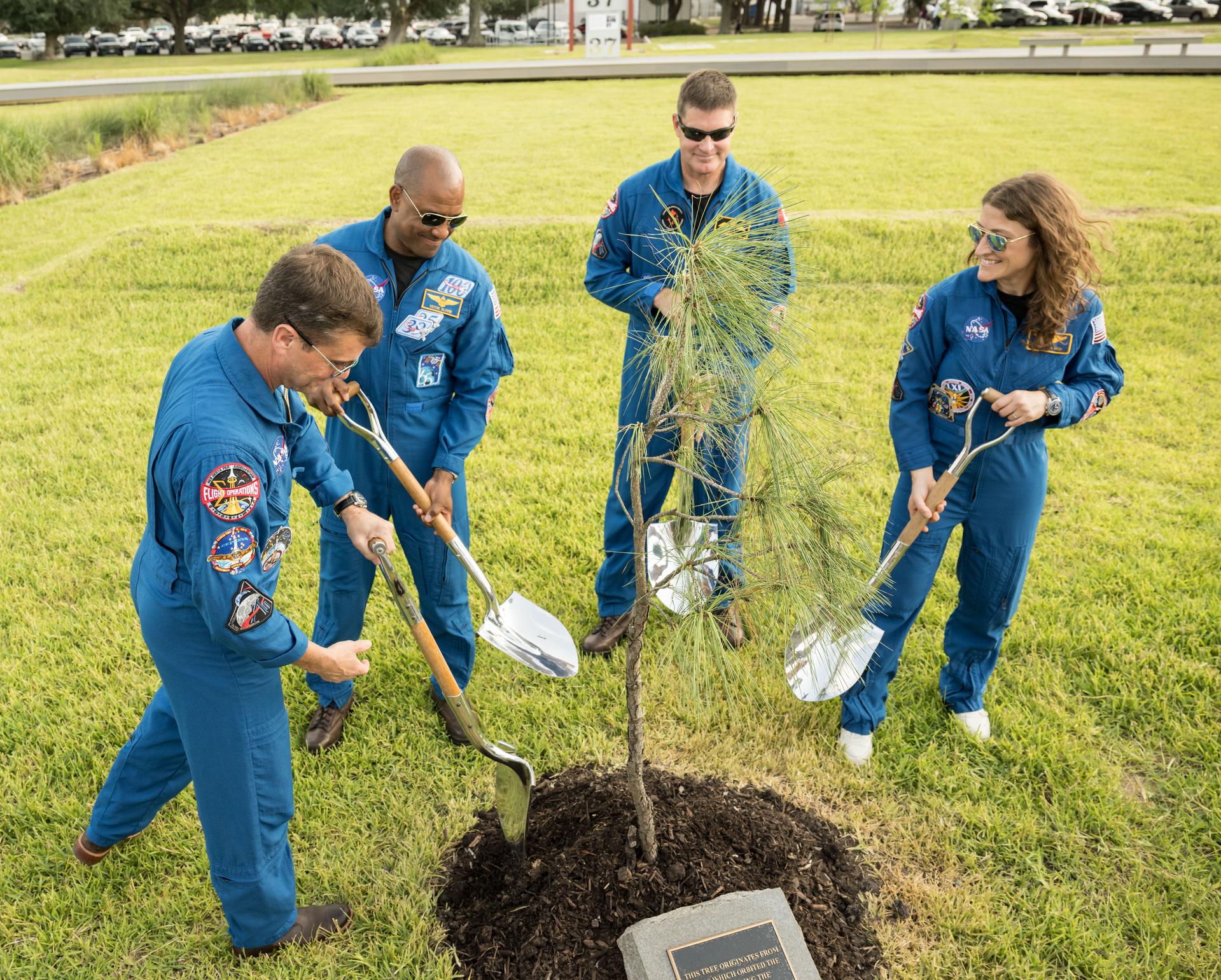
jsc2026e396761 (June 25, 2026) - The Artemis II crew participates in the dedication of the Apollo 14 Moon tree at the Lunar Receiving Park at NASA's Johnson Space Center. This tree is a second-generation Apollo Moon tree of the loblolly pine species. The original Apollo Moon trees were grown from seeds carried aboard Apollo 14 by NASA astronaut Stuart Roosa, a former U.S. Forest Service smoke jumper. Upon return to Earth, the seeds were germinated by the Forest Service, and the resulting seedlings were planted throughout the United States and around the world. Credit: NASA
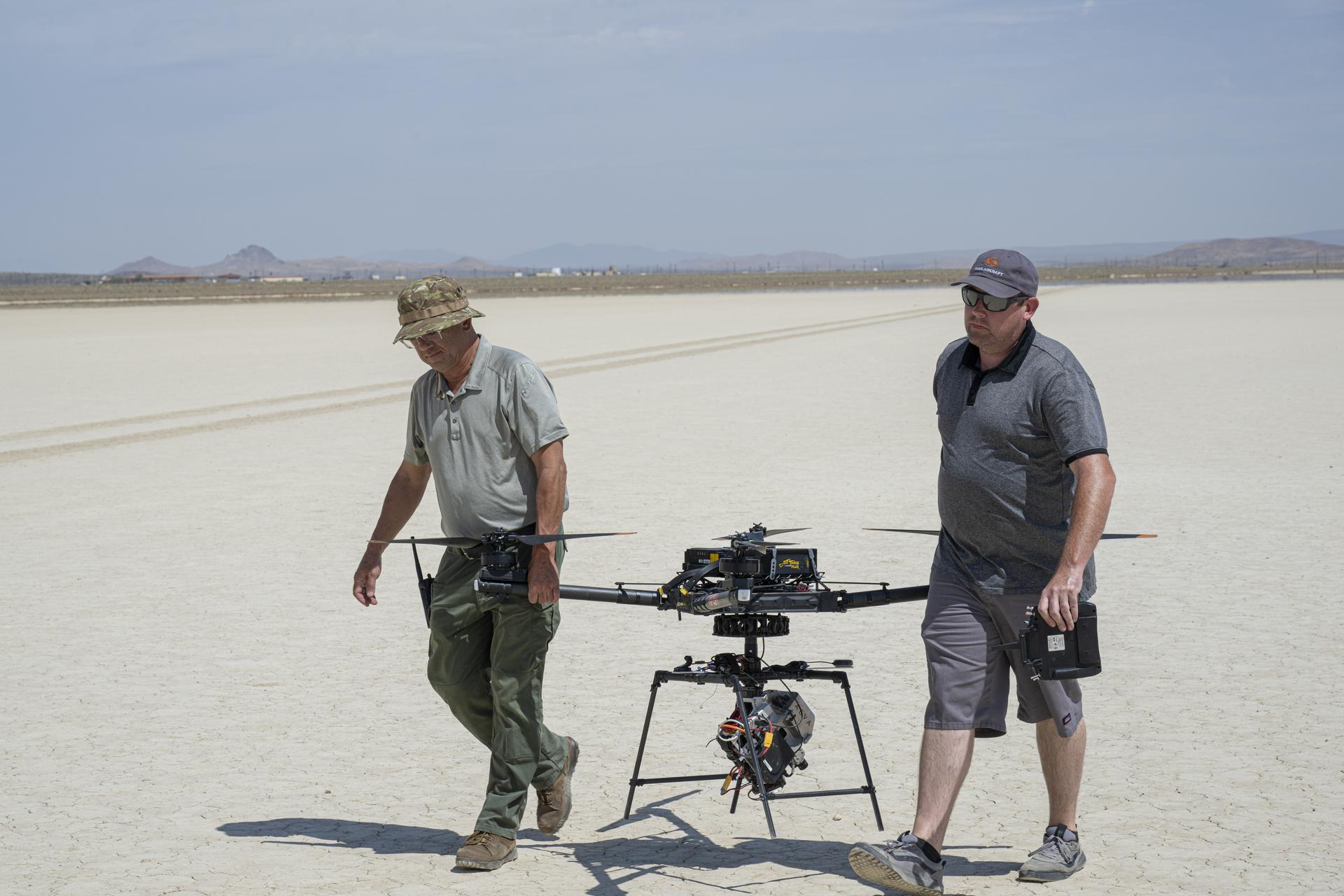
Derek Abramson, Dale Reed Subscale Flight Research Laboratory chief engineer, left, and Justin Link, small uncrewed aircraft pilot, carry NASA’s Alta-X drone near NASA’s Armstrong Flight Research Center in Edwards, California, on Thursday, Aug. 27, 2026. Researchers at NASA’s Johnson Space Center in Houston developed the advanced guidance and navigation system known as the Safe and Precise Landing – Integrated Capabilities Evolution (SPLICE) experiment, which is installed on this drone. SPLICE will help spacecraft land precisely and detect and avoid potential hazards, which is critical for NASA missions to the Moon and to Mars.
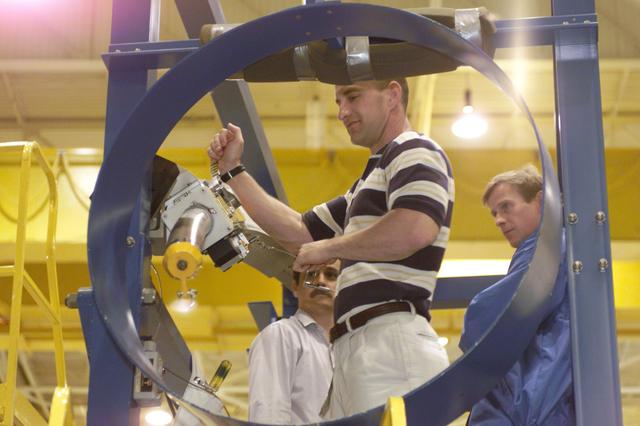
JSC2001-E-06399 (27 February 2001) --- Astronauts Charles O. Hobaugh (center foreground), pilot, and Michael L. Gernhardt (right), mission specialist, assisted by crew trainer Ken Trujillo, rehearse emergency egress procedures in the Systems Integration Facility at the Johnson Space Center (JSC). The crew will use a training version of the launch escape pole which is now carried onboard for all shuttle flights. The STS-104 mission to the International Space Station (ISS) represents the Space Shuttle Atlantis' first flight using a new engine and is targeted for a liftoff no earlier than June 14, 2001.
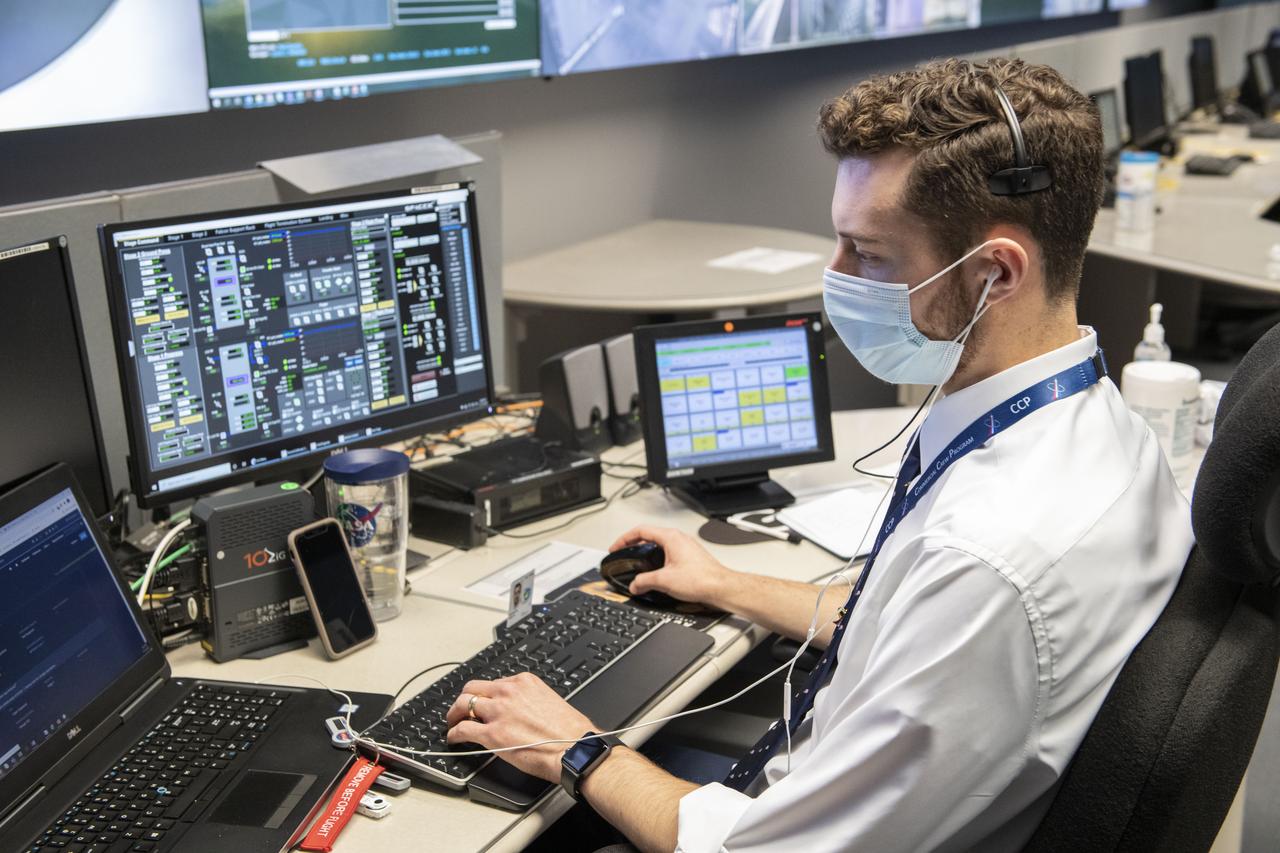
Teams at NASA’s Marshall Space Flight Center help monitor launch conditions for the Crew 1 mission from the Huntsville Operations Support Center in Huntsville, Alabama. SpaceX will launch a Falcon 9 rocket carrying NASA astronauts aboard the company’s Crew Dragon spacecraft to the International Space Station on Nov. 15, 2020. The Marshall team is supporting flight control teams working with NASA’s Johnson Space Center in Houston, Texas, NASA’s Kennedy Space Center in Cape Canaveral, Florida, and SpaceX headquarters in Hawthorne, California, as they monitor the different phases of the upcoming mission. Engineers and technicians at Marshall will use headsets and loops to communicate with the multiple locations on console for the launch.
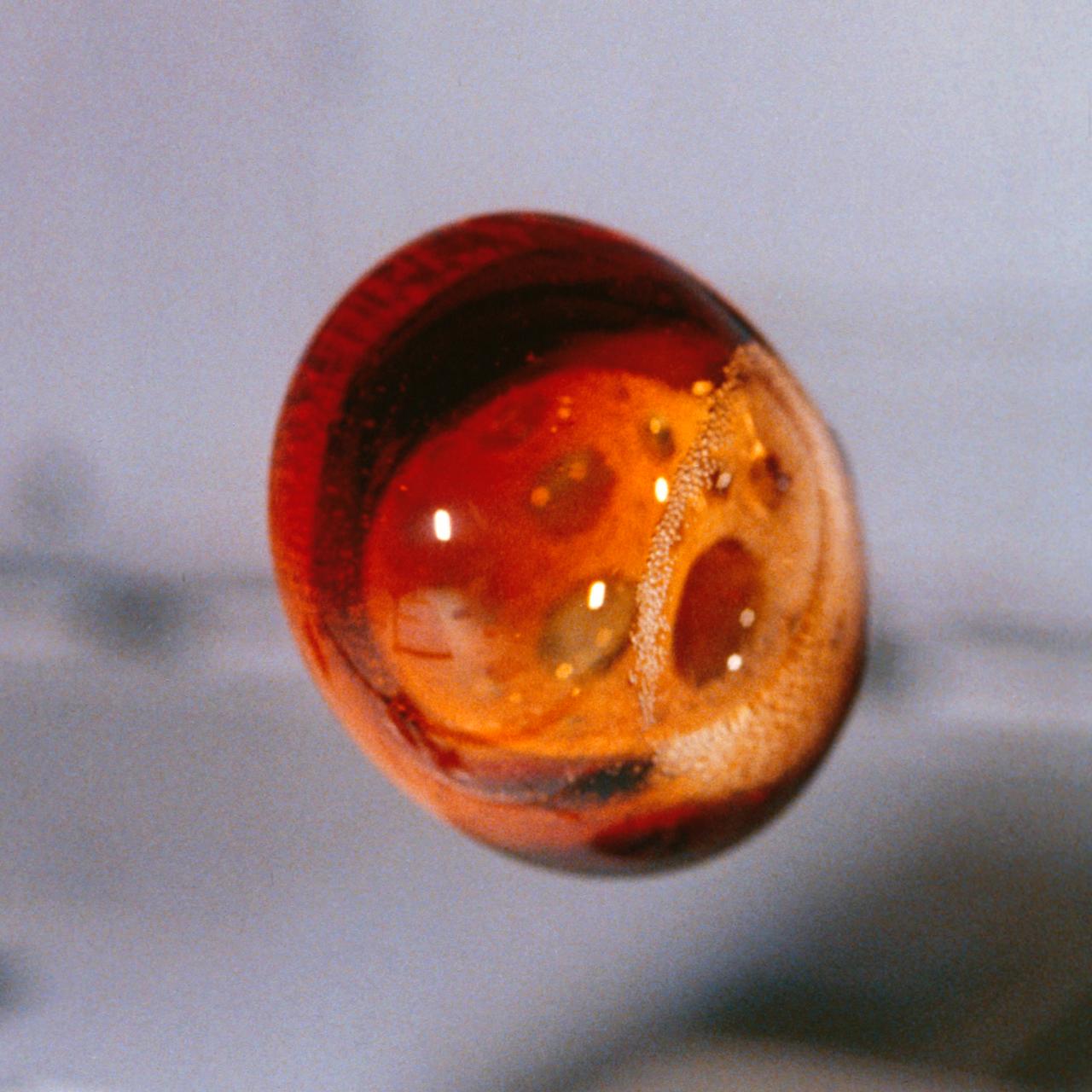
The lack of normal convection in microgravity is demonstrated by a carbonated soft drink floating in the middeck of the Space Shuttle. While the droplet is oscillating slightly and starting to assume a spherical shape, it is filled with carbon dioxide bubbles in a range of sizes. On Earth, the bubbles would quickly foat up to form a head. In space, they are suspended. They may drift with time and eventually the surface tension between individual bubbles breaks, allowing larger bubbles to form. This image was taken during STS-51F mission (Spacelab 2) which carried test models of dispensers from two pupular soft drink manufacturers. Photo credit: NASA/Johnson Space Center (JSC)
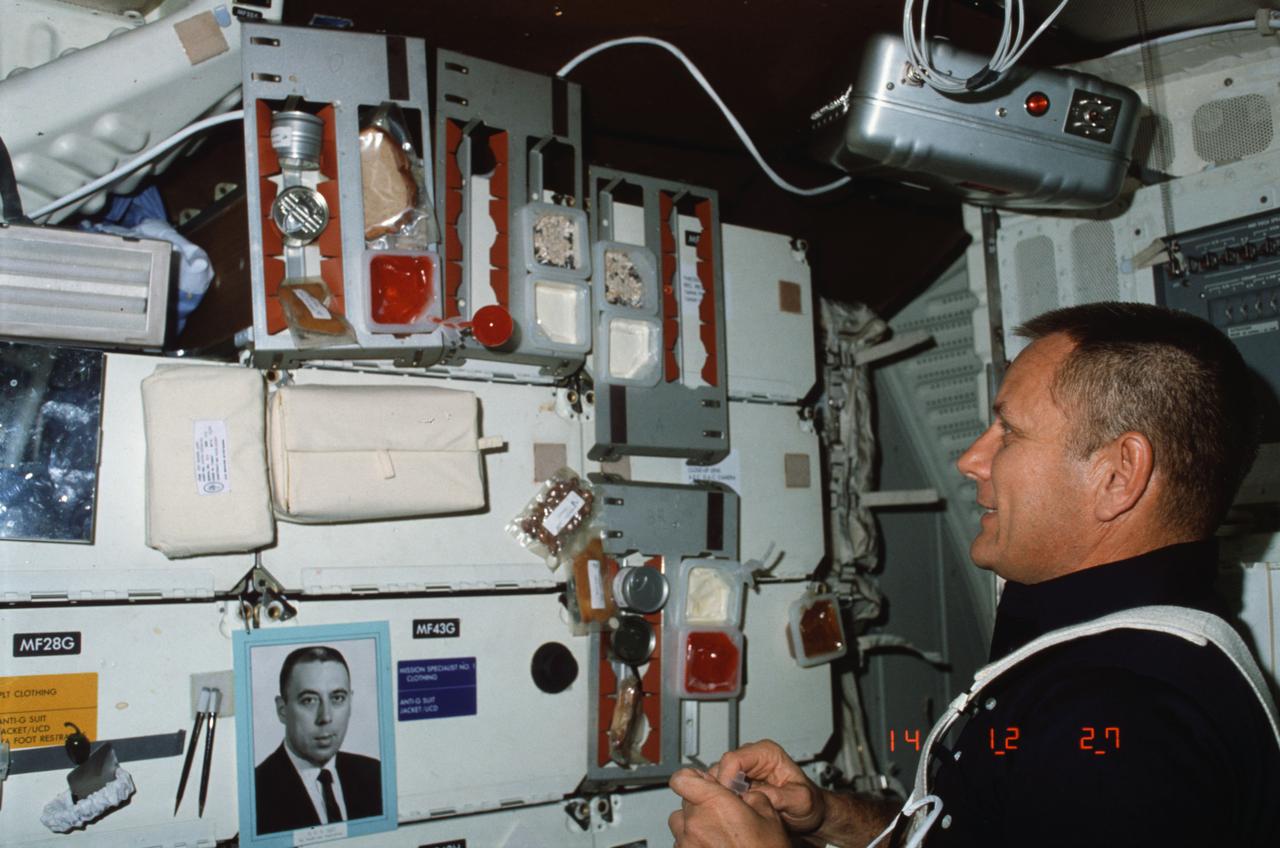
STS005-07-255 (19 Nov. 1982) --- Astronaut Robert F. Overmyer, STS-5 pilot, using beverage container and drinking straw secured in meal tray assembly (ASSY), experiments with microgravity characteristics of liquid on middeck in front of forward lockers. Overmyer also looks over packages of food attached to middeck lockers in meal tray assemblies. Carry-on food warmer appears overhead and other meal tray assemblies, personal hygiene mirror assembly, personal hygiene kit, and portrait of G.W.S. Abbey, Johnson Space Center's (JSC) Director of Flight Operations, appear on lockers. Photo credit: NASA
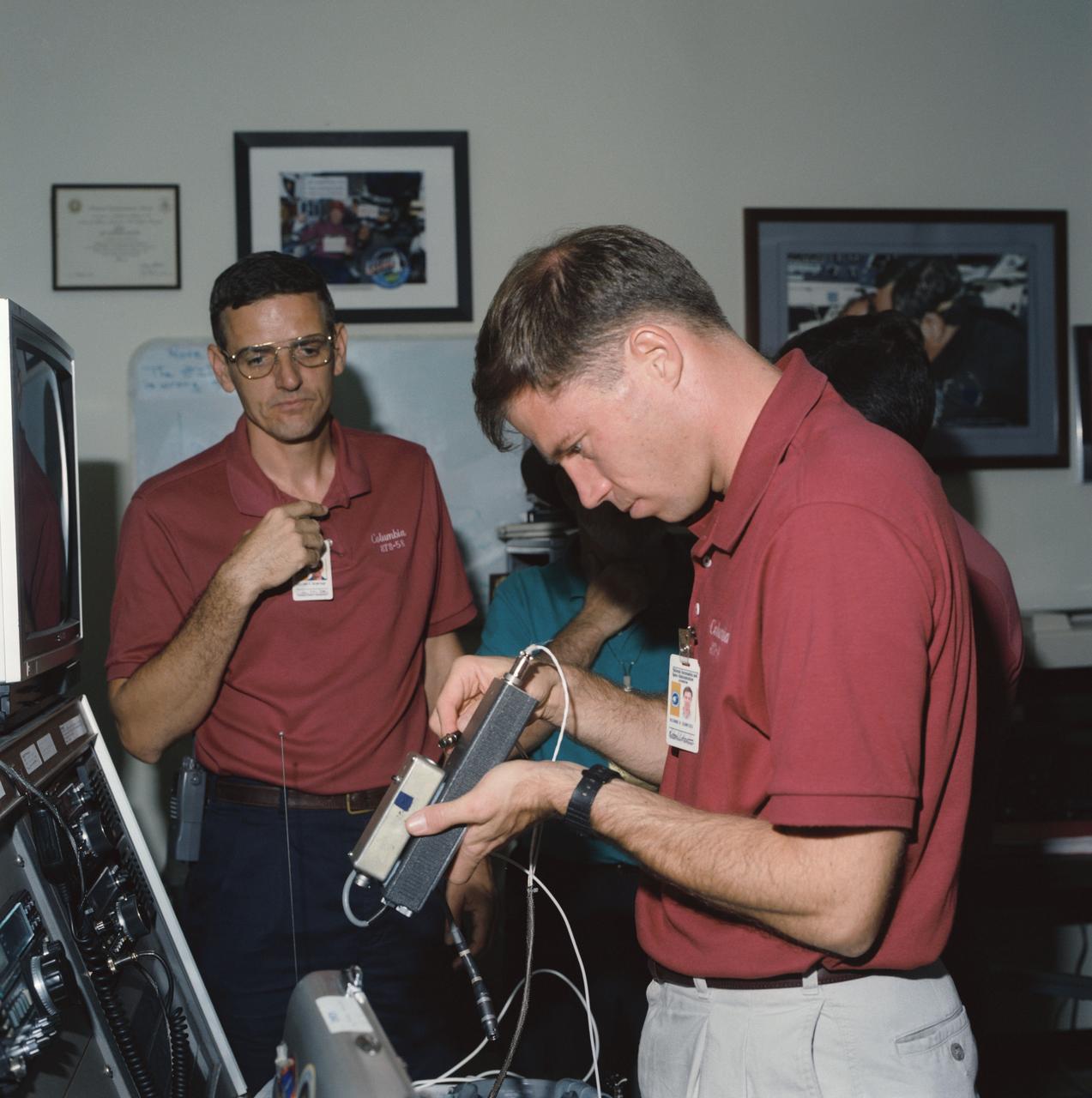
S93-45068 (22 Sept 1993) --- Two members of the STS-58 Spacelab Life Sciences (SLS-2) crew, train with amateur radio equipment at the Johnson Space Center (JSC). They are William S. McArthur (left), mission specialist, and Richard A. Searfoss, pilot. The STS-58 flight will carry the Shuttle Amateur Radio Experiment (SAREX) payload, configuration C, which includes FM voice and packet. Three of the seven crewmembers are licensed amateur radio operators. Searfoss' call letters are KC5CKM; McArthur, KC5ACR; and payload specialist Martin J. Fettman, KC5AXA. Licensed students at a number of schools around the country will have the opportunity to talk directly with the astronauts during the 14-day flight.
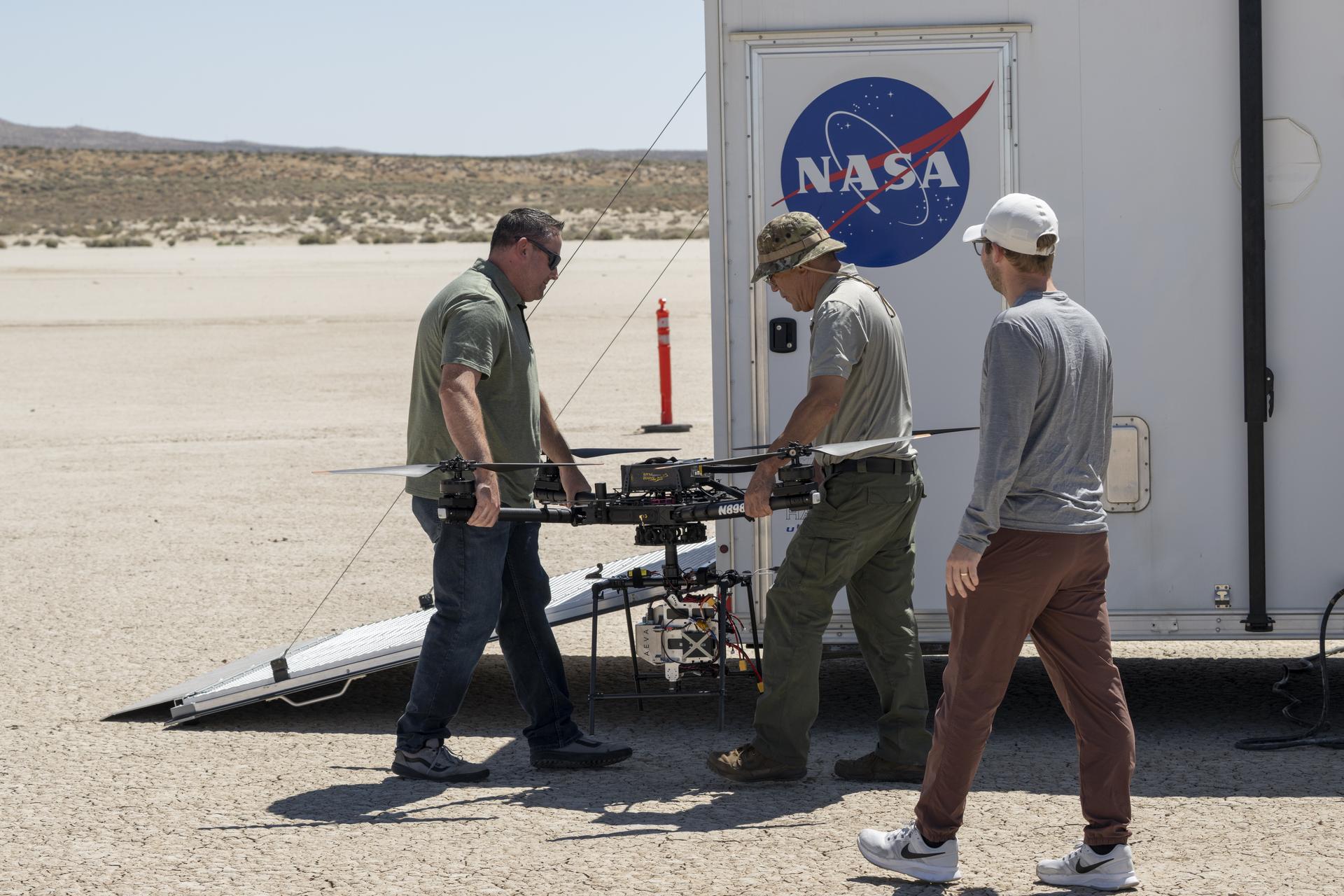
Justin Link, small uncrewed aircraft pilot, left, and Derek Abramson, chief engineer, carry NASA’s Alta-X drone as Davis Adams, project manager, observes test preparations near NASA’s Armstrong Flight Research Center in Edwards, California, on Wednesday, July 15, 2026. Researchers at NASA’s Johnson Space Center in Houston developed the advanced guidance and navigation system known as the Safe and Precise Landing – Integrated Capabilities Evolution (SPLICE) experiment, which was integrated with this drone. SPLICE will help spacecraft land precisely and detect and avoid potential hazards, which is critical for NASA missions to the Moon and to Mars.
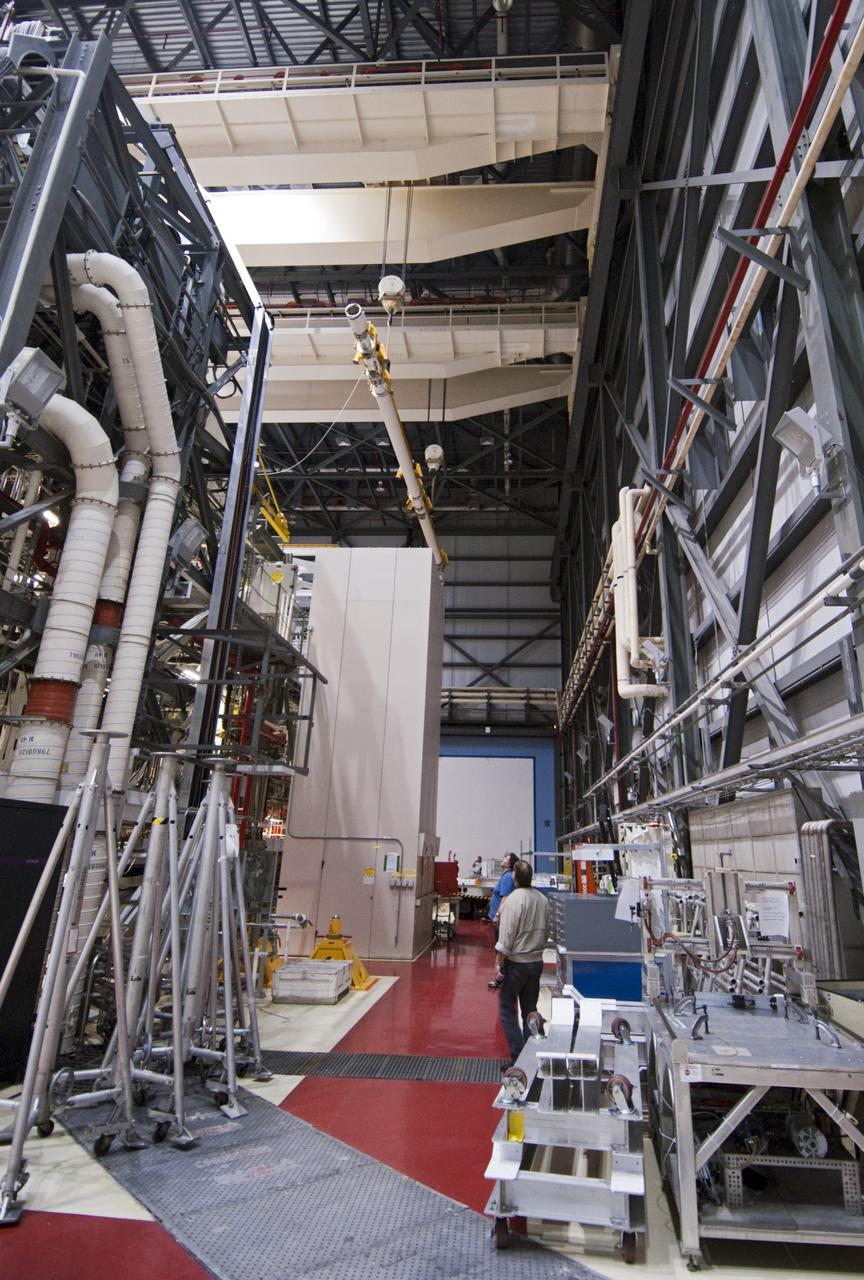
CAPE CANAVERAL, Fla. – Inside Orbiter Processing Facility-2 at NASA’s Kennedy Space Center in Florida, technicians monitor the progress as a large crane carries the remote manipulator system (RMS) robotic arm that was removed from space shuttle Atlantis’ payload bay. The RMS will be transported to NASA’s Johnson Space Center in Houston for possible use on future spaceflights. The work is part of the Space Shuttle Program’s transition and retirement processing of shuttle Atlantis. The shuttle is being prepared for display at the Kennedy Space Center Visitor Complex. Photo credit: NASA/Jim Grossmann
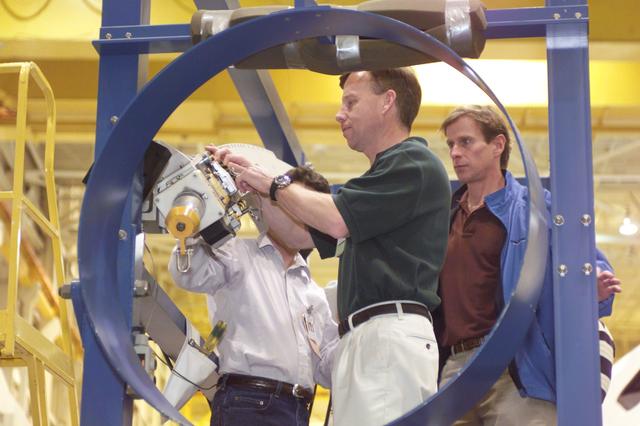
JSC2001-E-06397 (27 February 2001) --- Astronauts Steven W. Lindsey (center foreground), mission commander, and Michael L. Gernhardt (right), mission specialist, assisted by crew trainer Ken Trujillo, rehearse emergency egress procedures in the Systems Integration Facility at the Johnson Space Center (JSC). The crew will use the pictured training version of the launch escape pole which is now carried onboard for all shuttle flights. The STS-104 mission to the International Space Station (ISS) represents the Space Shuttle Atlantis' first flight using a new engine and is targeted for a liftoff no earlier than June 14, 2001.
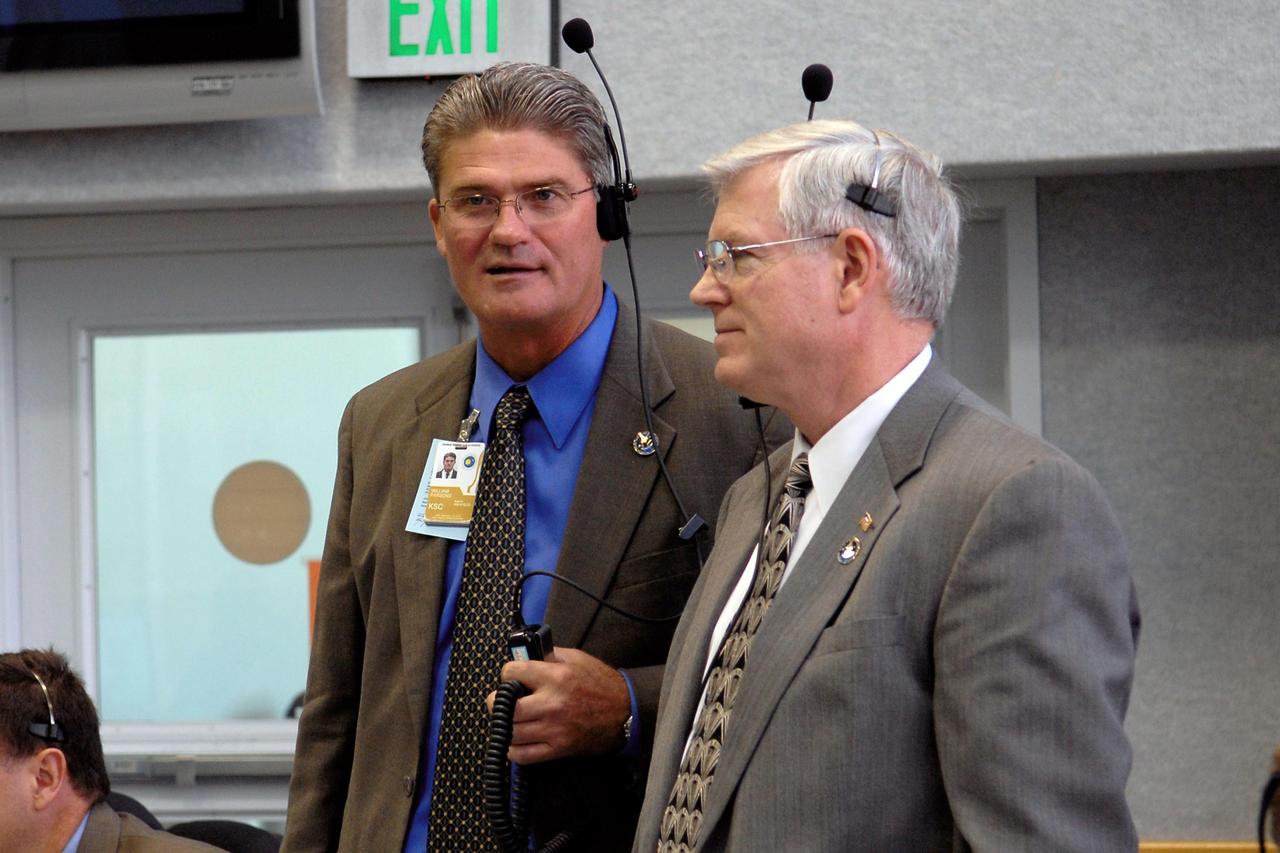
STS120-S-012 (23 Oct. 2007) --- In the firing room of the Launch Control Center at NASA's Kennedy Space Center, KSC Director Bill Parsons (left) and Johnson Space Center Director Michael Coats wait for the final countdown of Space Shuttle Discovery on mission STS-120. Liftoff was on time at 11:38:19 a.m. (EDT). Discovery carries the Italian-built U.S. Node 2, called Harmony. During the 14-day STS-120 mission, the crew will install Harmony and move the P6 solar arrays to their permanent position and deploy them.

Teams at NASA’s Marshall Space Flight Center help monitor launch conditions for the Crew 1 mission from the Huntsville Operations Support Center in Huntsville, Alabama. SpaceX will launch a Falcon 9 rocket carrying NASA astronauts aboard the company’s Crew Dragon spacecraft to the International Space Station on Nov. 15, 2020. The Marshall team is supporting flight control teams working with NASA’s Johnson Space Center in Houston, Texas, NASA’s Kennedy Space Center in Cape Canaveral, Florida, and SpaceX headquarters in Hawthorne, California, as they monitor the different phases of the upcoming mission. Engineers and technicians at Marshall will use headsets and loops to communicate with the multiple locations on console for the launch.
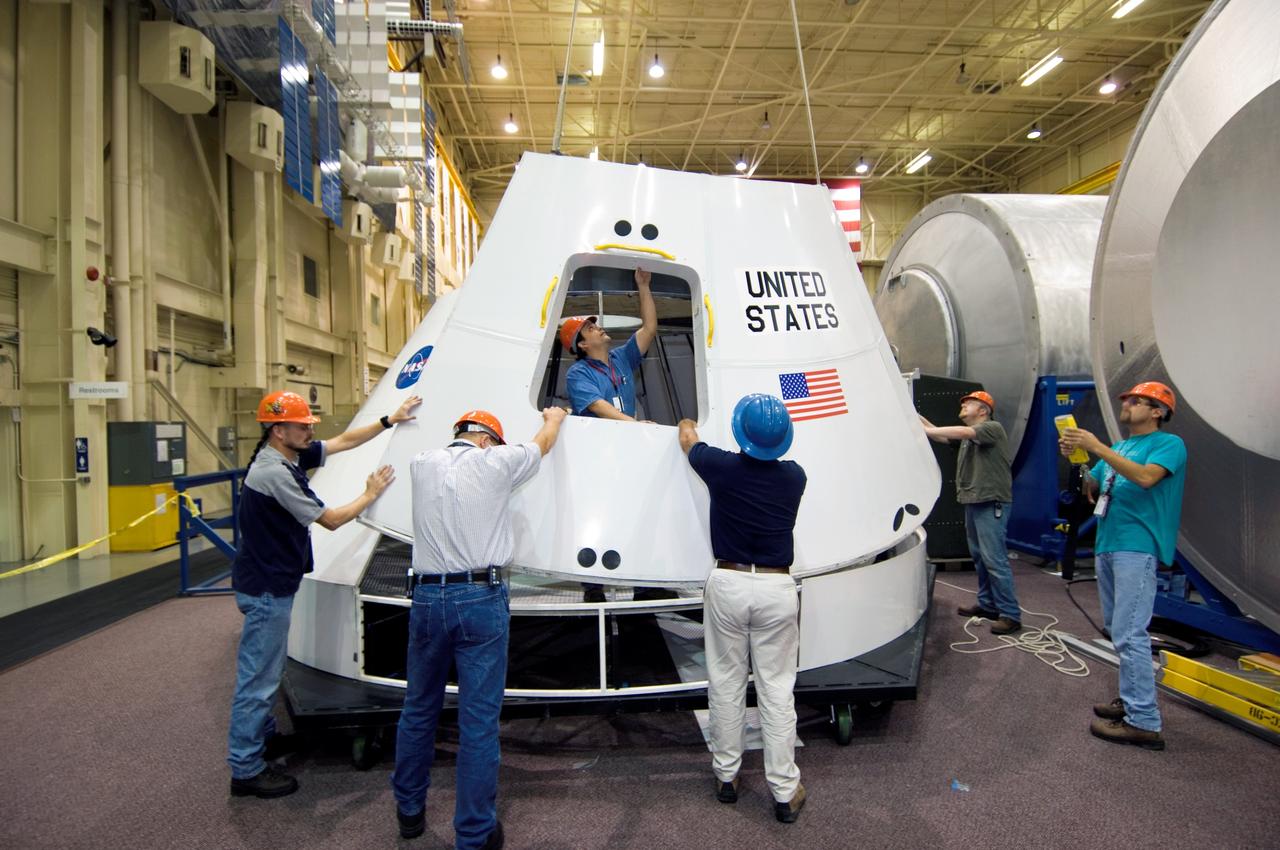
JSC2005-E-42348 (18 October 2005) --- NASA recently started assembling this full-sized mockup of the new Crew Exploration Vehicle's (CEV) cockpit in its Space Vehicle Mockup Facility at the Johnson Space Center. The CEV is the key to making NASA's Vision for Space Exploration a reality. Though the shape is reminiscent of the Apollo command modules of four decades ago, the new capsule will be three times larger and is designed to carry four astronauts to and from the Moon, support up to six crew members on future missions to Mars and deliver crew and supplies to the international space station.
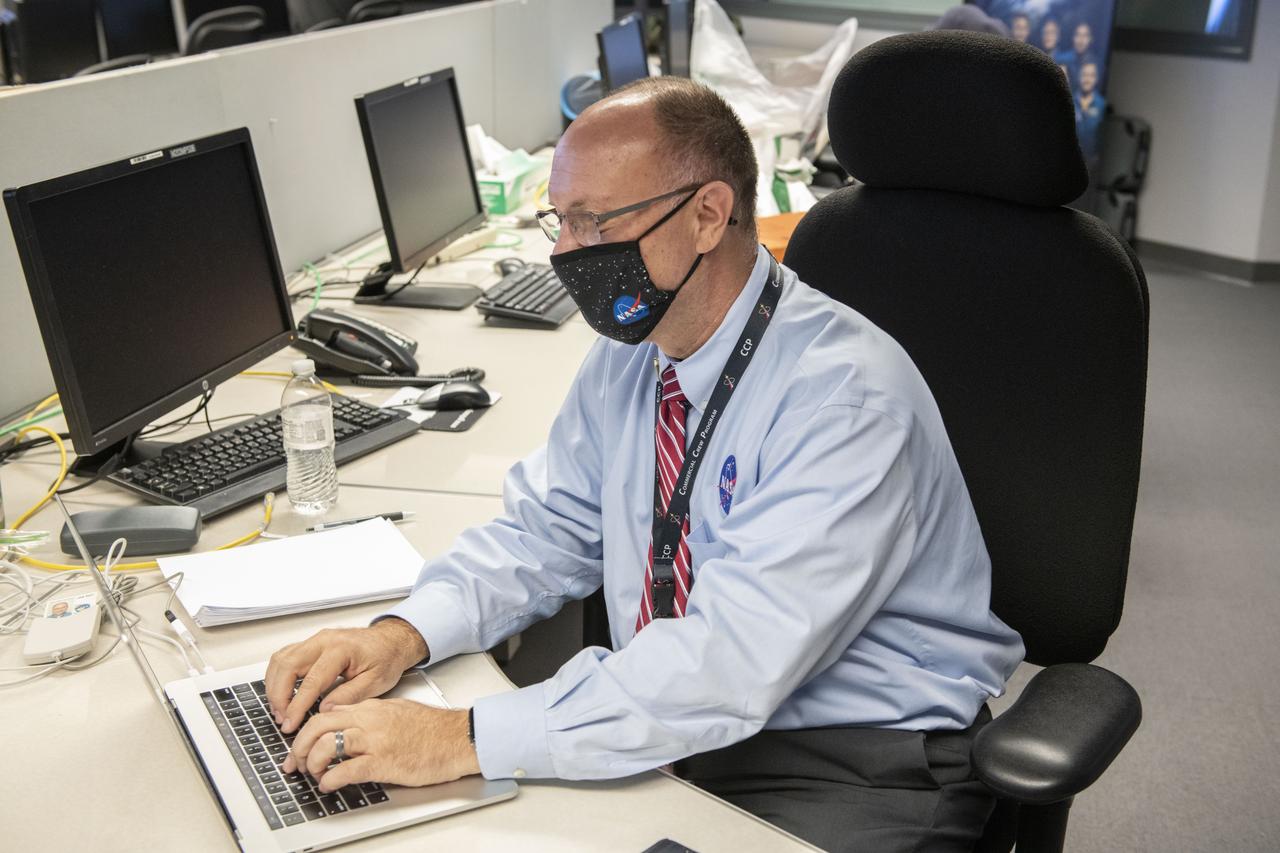
Teams at NASA’s Marshall Space Flight Center help monitor launch conditions for the Crew 1 mission from the Huntsville Operations Support Center in Huntsville, Alabama. SpaceX will launch a Falcon 9 rocket carrying NASA astronauts aboard the company’s Crew Dragon spacecraft to the International Space Station on Nov. 15, 2020. The Marshall team is supporting flight control teams working with NASA’s Johnson Space Center in Houston, Texas, NASA’s Kennedy Space Center in Cape Canaveral, Florida, and SpaceX headquarters in Hawthorne, California, as they monitor the different phases of the upcoming mission. Engineers and technicians at Marshall will use headsets and loops to communicate with the multiple locations on console for the launch.
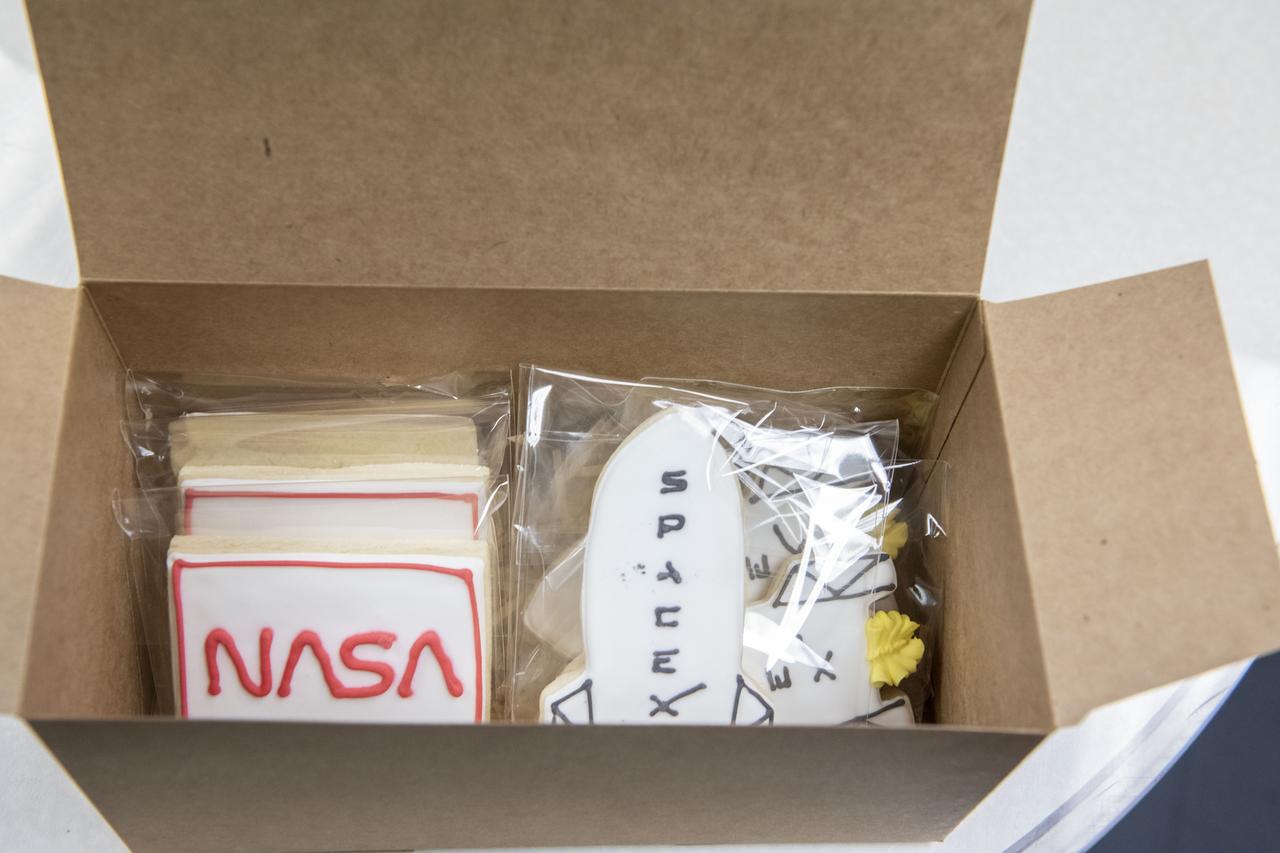
Teams at NASA’s Marshall Space Flight Center help monitor launch conditions for the Crew 1 mission from the Huntsville Operations Support Center in Huntsville, Alabama. SpaceX will launch a Falcon 9 rocket carrying NASA astronauts aboard the company’s Crew Dragon spacecraft to the International Space Station on Nov. 15, 2020. The Marshall team is supporting flight control teams working with NASA’s Johnson Space Center in Houston, Texas, NASA’s Kennedy Space Center in Cape Canaveral, Florida, and SpaceX headquarters in Hawthorne, California, as they monitor the different phases of the upcoming mission. Engineers and technicians at Marshall will use headsets and loops to communicate with the multiple locations on console for the launch.
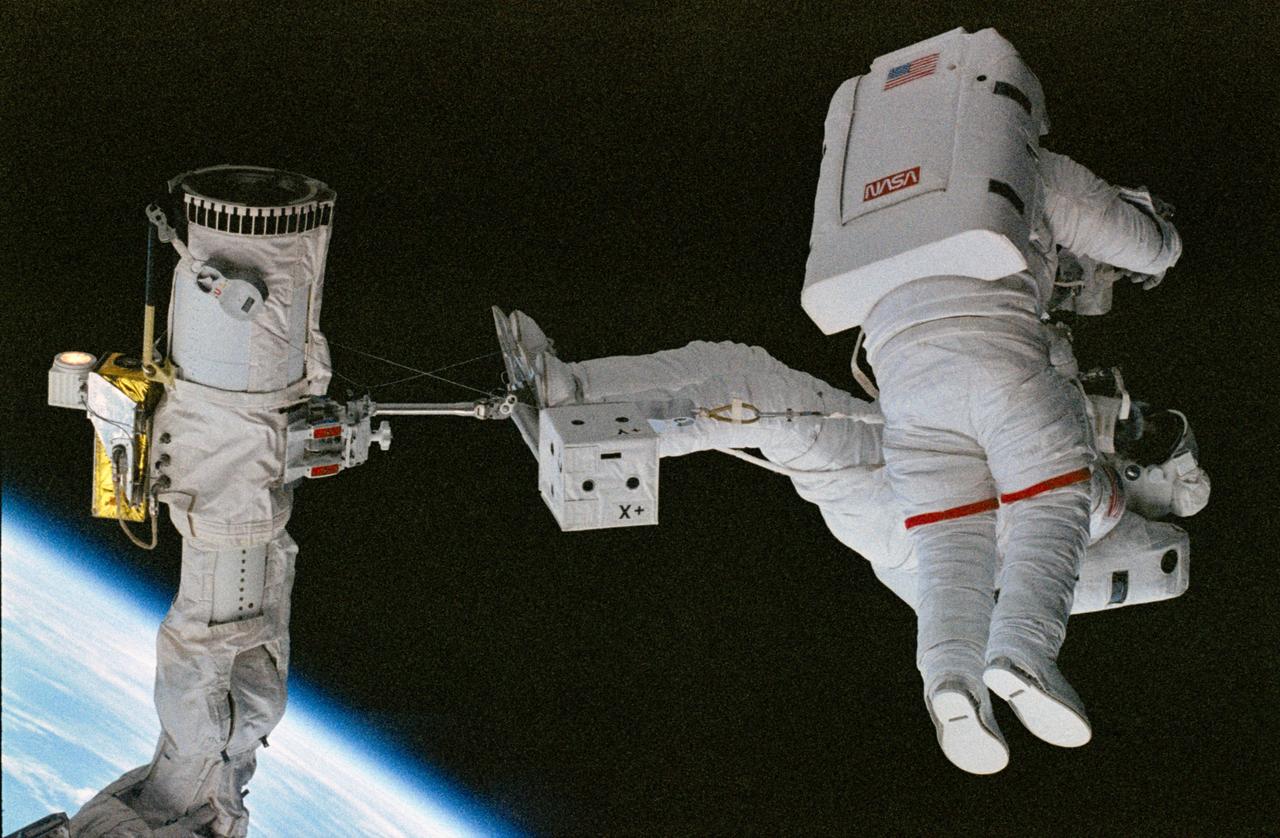
STS063-21-011 (9 Feb 1995) --- Astronaut Bernard A. Harris, Jr., payload commander, standing on a foot restraint attached to the Remote Manipulator System (RMS) arm carries astronaut C. Michael Foale, mission specialist, during their shared Extravehicular Activity (EVA) in the Space Shuttle Discovery's cargo bay. This is one of 16 still photographs released by the NASA Johnson Space Center (JSC) Public Affairs Office (PAO) on February 14, 1995. Others onboard the Discovery were astronauts James D. Wetherbee, mission commander; Eileen M. Collins, pilot; mission specialists Janice E. Voss and cosmonaut Vladimir G. Titov.
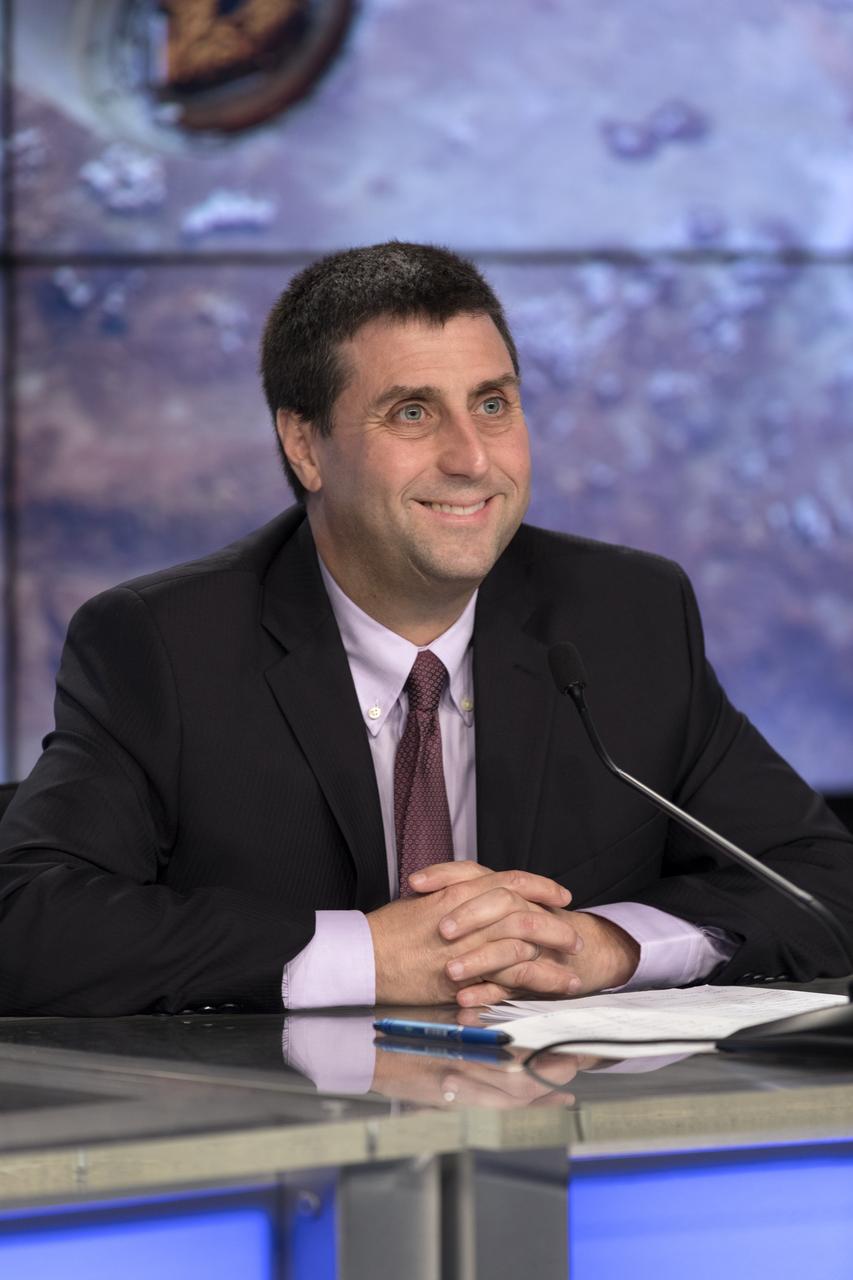
In the Press Site auditorium of NASA's Kennedy Space Center in Florida,Joel Montalbano, deputy manager, International Space Station Program manager at NASA's Johnson Space Center in Houston, speaks to media at a post-launch news conference following the liftoff of the SpaceX Falcon 9 rocket at 4:30 p.m. EST. The flight is a commercial resupply services mission for NASA to the International Space Station. SpaceX CRS-14 lifted off atop the Falcon 9 rocket from Space Launch Complex 40 at Cape Canaveral Air Force Station carrying supplies and equipment and new science experiments for technology research.

KENNEDY SPACE CENTER, FLA. - STS-114 Mission Commander Eileen Collins gets information from Steve Contella (right), an engineer with Johnson Space Center. STS-114 crew members are familiarizing themselves with elements in the mid-body and upper deck of the orbiter Discovery, as part of Crew Equipment Interface Test (CEIT) activities. During CEIT, the crew has an opportunity to get a hands-on look at the orbiter and equipment they will be working with on the mission. Return to Flight Mission STS-114 will carry the Multi-Purpose Logistics Module Raffaello, filled with supplies for the International Space Station, and a replacement Control Moment Gyroscope. Launch of STS-114 has a launch window of May 12 to June 3.
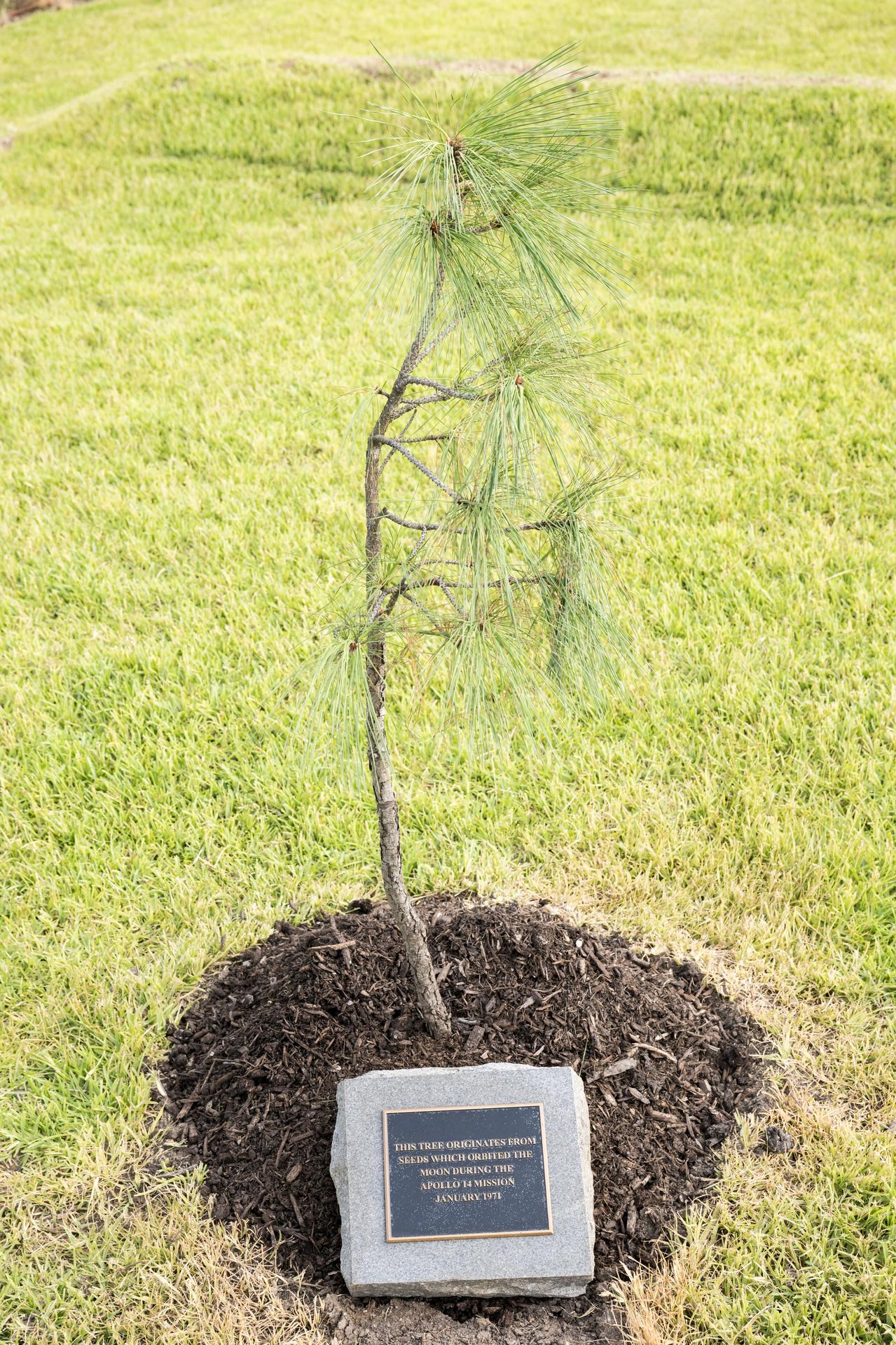
jsc2026e396708 (June 25, 2026) - An Apollo Moon tree dedicated by the Artemis II crew at the Lunar Receiving Park at NASA's Johnson Space Center. This tree is a second-generation Apollo Moon tree of the loblolly pine species. The original Apollo Moon trees were grown from seeds carried aboard Apollo 14 by NASA astronaut Stuart Roosa, a former U.S. Forest Service smoke jumper. Upon return to Earth, the seeds were germinated by the Forest Service, and the resulting seedlings were planted throughout the United States and around the world. Credit: NASA
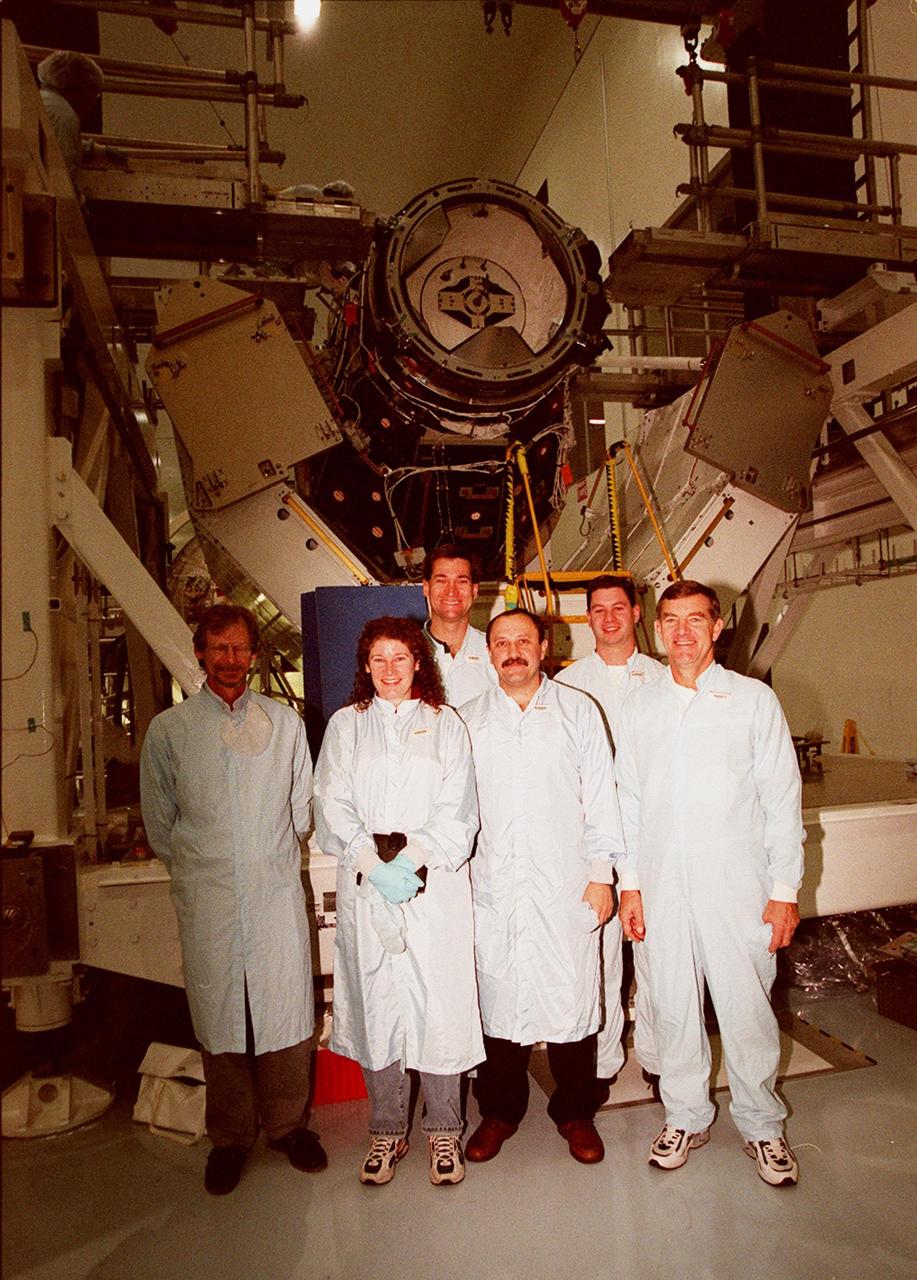
KENNEDY SPACE CENTER, FLA. -- In the Space Station Processing Facility, members of the STS-102 crew pose with workers from Johnson Space Center in front of the Pressurized Mating Adapter (PMA-3), a component of the International Space Station (ISS). From left are Dave Moore (JSC), Susan J. Helms, Arne Aamodt (JSC), Yuriy Vladimirovich Usachev, Matt Myers (JSC) and James S. Voss. Voss, Helms and Usachev, known as the Expedition II crew, will be staying on the ISS, replacing the Expedition I crew, Bill Shepherd, Sergei Krikalev and Yuri Gidzenko. Along with the crew, Mission STS-102 also will be carrying the Leonardo Multi-Purpose Logistics Module (MPLM) to the ISS. The Leonardo will be filled with equipment and supplies to outfit the U.S. laboratory module, which will have been carried to the ISS on a preceding Shuttle flight. In order to function as an attached station module as well as a cargo transport, logistics modules (there are three) also include components that provide some life support, fire detection and suppression, electrical distribution and computer functions. Eventually, the modules also will carry refrigerator freezers for transporting experiment samples and food to and from the station. STS-102 is scheduled to launch no earlier than Oct. 19, 2000, from Launch Pad 39A, Kennedy Space Center
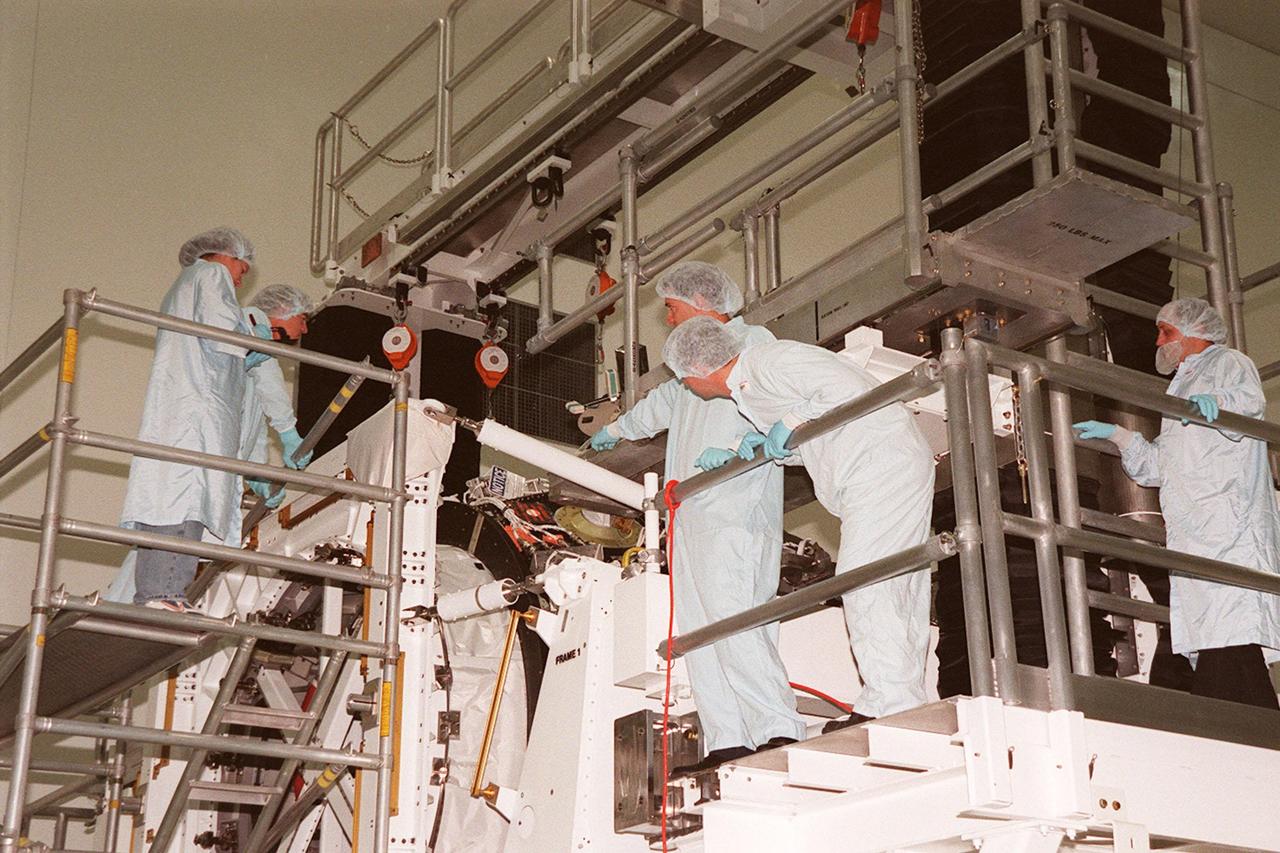
KENNEDY SPACE CENTER, FLA. -- Members of the STS-102 crew, known as the Expedition II crew, and workers from Johnson Space Center get a close look at the Pressurized Mating Adapter (PMA-3) in the Space Station Processing Facility. The PMA-3 is a component of the International Space Station (ISS). Making up the Expedition II crew are James S. Voss, Susan J. Helms and Yuriy Vladimirovich Usachev, of Russia. Along with the crew, Mission STS-102 also will be carrying the Leonardo Multi-Purpose Logistics Module (MPLM) to the ISS. The Leonardo will be filled with equipment and supplies to outfit the U.S. laboratory module, which will have been carried to the ISS on a preceding Shuttle flight. In order to function as an attached station module as well as a cargo transport, logistics modules (there are three) also include components that provide some life support, fire detection and suppression, electrical distribution and computer functions. Eventually, the modules also will carry refrigerator freezers for transporting experiment samples and food to and from the station. On the return of STS-102 to Earth, it will bring back the first crew on the station: Bill Shepherd, Sergei Krikalev and Yuri Gidzenko. STS-102 is scheduled to launch no earlier than Oct. 19, 2000, from Launch Pad 39A, Kennedy Space Center
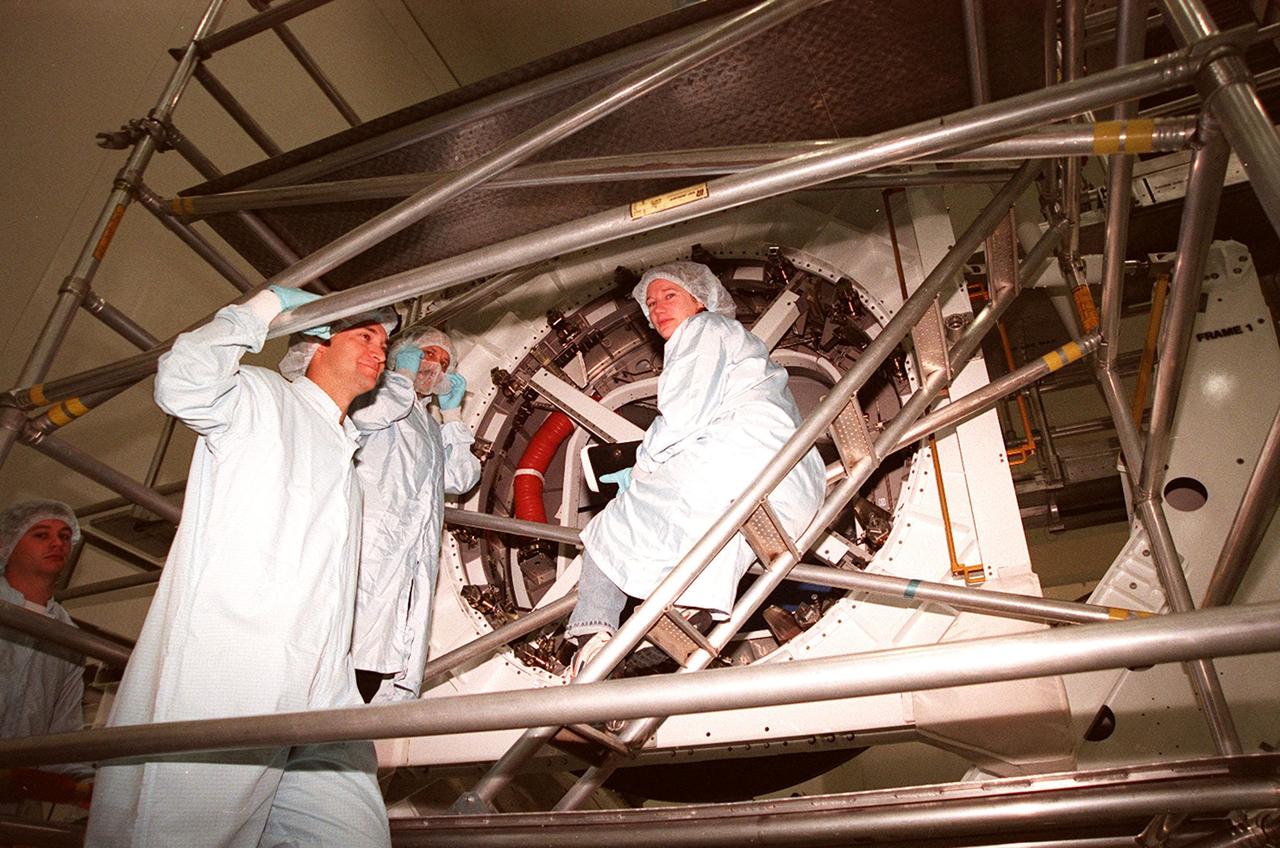
KENNEDY SPACE CENTER, FLA. -- Looking over a Pressurized Mating Adapter (PMA-3) in the Space Station Processing Facility are Arne Aamodt, with Johnson Space Center, Yuriy Vladimirovich Usachev and Susan J. Helms. Usachev and Helms are two members of the STS-102 crew, who will be staying on the International Space Station (ISS). The third crew member is James S. Voss. They have been designated the Expedition II crew. Mission STS-102 also will be carrying the Leonardo Multi-Purpose Logistics Module (MPLM) to the ISS. The Leonardo will be filled with equipment and supplies to outfit the U.S. laboratory module, which will have been carried to the ISS on a preceding Shuttle flight. In order to function as an attached station module as well as a cargo transport, logistics modules (there are three) also include components that provide some life support, fire detection and suppression, electrical distribution and computer functions. Eventually, the modules also will carry refrigerator freezers for transporting experiment samples and food to and from the station. On the return of STS-102 to Earth, it will bring back the first crew on the station: Bill Shepherd, Sergei Krikalev and Yuri Gidzenko. STS-102 is scheduled to launch no earlier than Oct. 19, 2000, from Launch Pad 39A, Kennedy Space Center
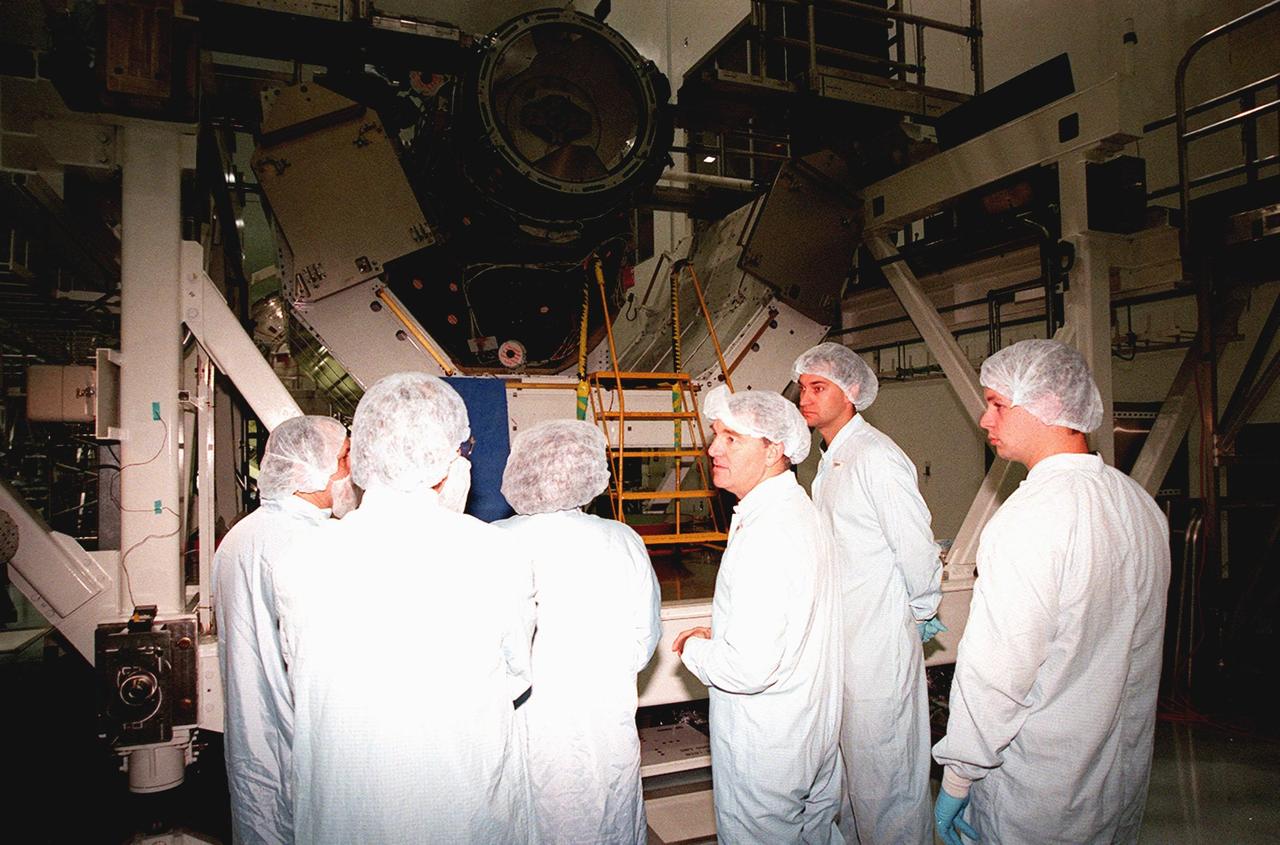
KENNEDY SPACE CENTER, FLA. -- In the Space Station Processing Facility, STS-102's Expedition II discuss the Pressurized Mating Adapter (PMA-3) (top of photo) with workers from Johnson Space Center. From left are Yuriy Vladimirovich Usachev, Dave Moore (JSC), Susan J. Helms, James S. Voss, Arne Aamodt and Matt Myers (both of JSC). The PMA-3 is a component of the International Space Station (ISS). Voss, Helms and Usachev will be staying on the ISS, replacing the Expedition I crew, Bill Shepherd, Sergei Krikalev and Yuri Gidzenko. Along with the crew, Mission STS-102 also will be carrying the Leonardo Multi-Purpose Logistics Module (MPLM) to the ISS. The Leonardo will be filled with equipment and supplies to outfit the U.S. laboratory module, which will have been carried to the ISS on a preceding Shuttle flight. In order to function as an attached station module as well as a cargo transport, logistics modules (there are three) also include components that provide some life support, fire detection and suppression, electrical distribution and computer functions. Eventually, the modules also will carry refrigerator freezers for transporting experiment samples and food to and from the station. STS-102 is scheduled to launch no earlier than Oct. 19, 2000, from Launch Pad 39A, Kennedy Space Center
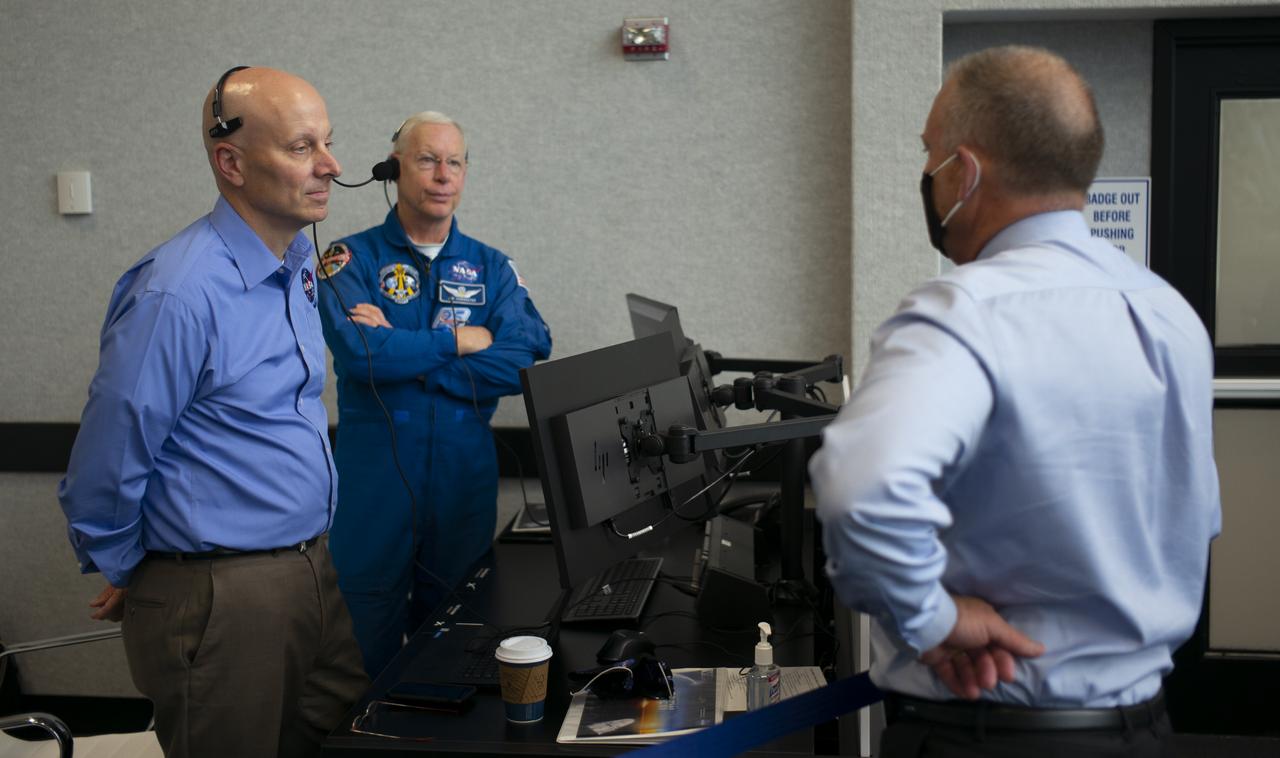
Stephen Koerner, Director of the Flight Operations Directorate at NASA’s Johnson Space Center, left, Pat Forrester, NASA’s chief of the astronaut office, and Norm Knight, deputy director of Flight Operations at NASA's Johnson Space Center are seen during countdown of the launch of a SpaceX Falcon 9 rocket carrying the company's Crew Dragon spacecraft on NASA’s SpaceX Demo-2 mission with NASA astronauts Robert Behnken and Douglas Hurley onboard, Saturday, May 30, 2020, in firing room four of the Launch Control Center at NASA’s Kennedy Space Center in Florida. NASA’s SpaceX Demo-2 mission is the first launch with astronauts of the SpaceX Crew Dragon spacecraft and Falcon 9 rocket to the International Space Station as part of the agency’s Commercial Crew Program. The test flight serves as an end-to-end demonstration of SpaceX’s crew transportation system. Behnken and Hurley launched at 3:22 p.m. EDT on Saturday, May 30, from Launch Complex 39A at the Kennedy Space Center. A new era of human spaceflight is set to begin as American astronauts once again launch on an American rocket from American soil to low-Earth orbit for the first time since the conclusion of the Space Shuttle Program in 2011. Photo Credit: (NASA/Joel Kowsky)
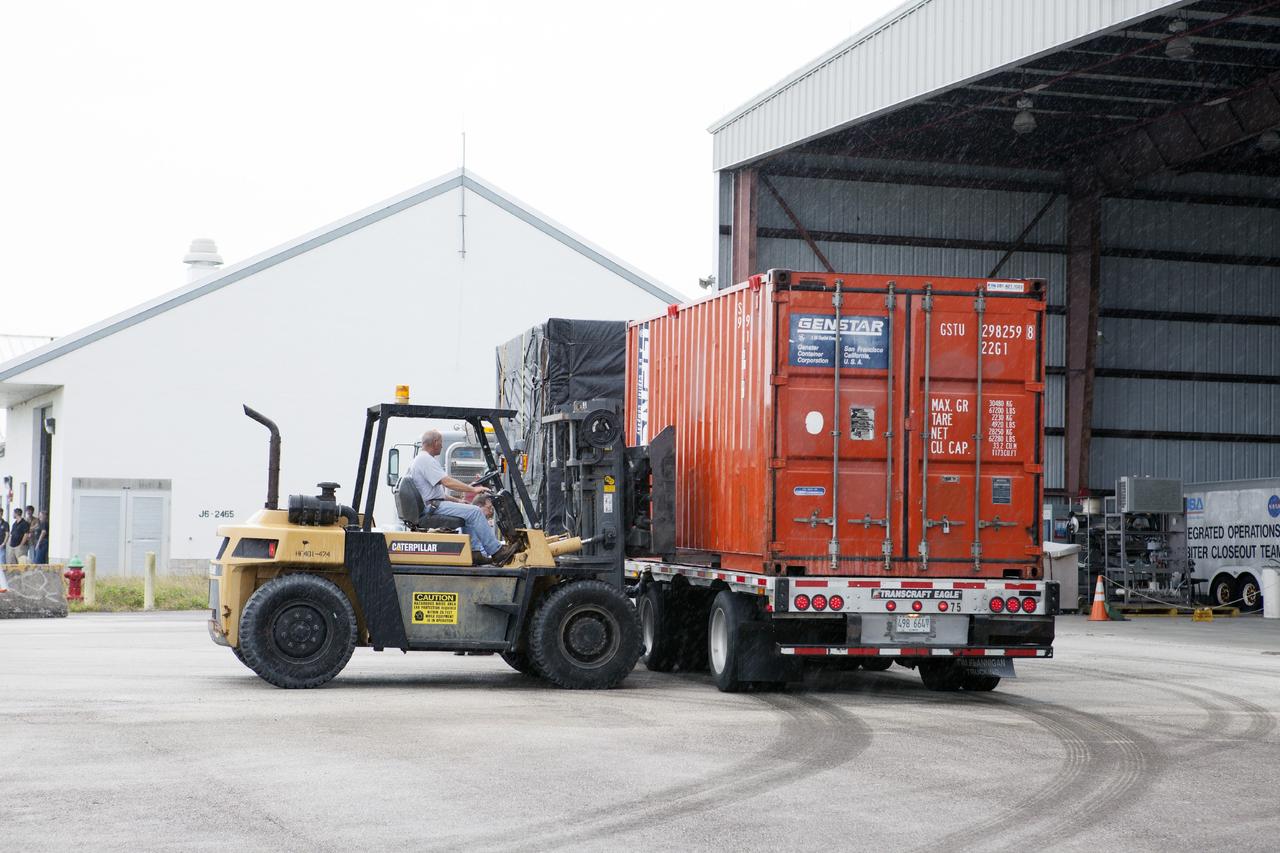
CAPE CANAVERAL, Fla. -- At NASA’s Kennedy Space Center in Florida, a flatbed truck carrying the Project Morpheus lander arrives at a support building at the Shuttle Landing Facility, or SLF. Testing of the prototype lander has been ongoing at NASA’s Johnson Space Center in Houston in preparation for free flight testing at Kennedy. The SLF will provide the lander with the kind of field necessary for realistic testing, complete with rocks, craters and hazards to avoid. Morpheus utilizes an autonomous landing and hazard avoidance technology, or ALHAT, payload that will allow it to navigate to clear landing sites amidst rocks, craters and other hazards during its descent. Project Morpheus is one of 20 small projects comprising the Advanced Exploration Systems, or AES, program in NASA’s Human Exploration and Operations Mission Directorate. AES projects pioneer new approaches for rapidly developing prototype systems, demonstrating key capabilities and validating operational concepts for future human missions beyond Earth orbit. For more information on Project Morpheus, visit http://www.nasa.gov/centers/johnson/exploration/morpheus/index.html. Photo credit: NASA/Kim Shiflett
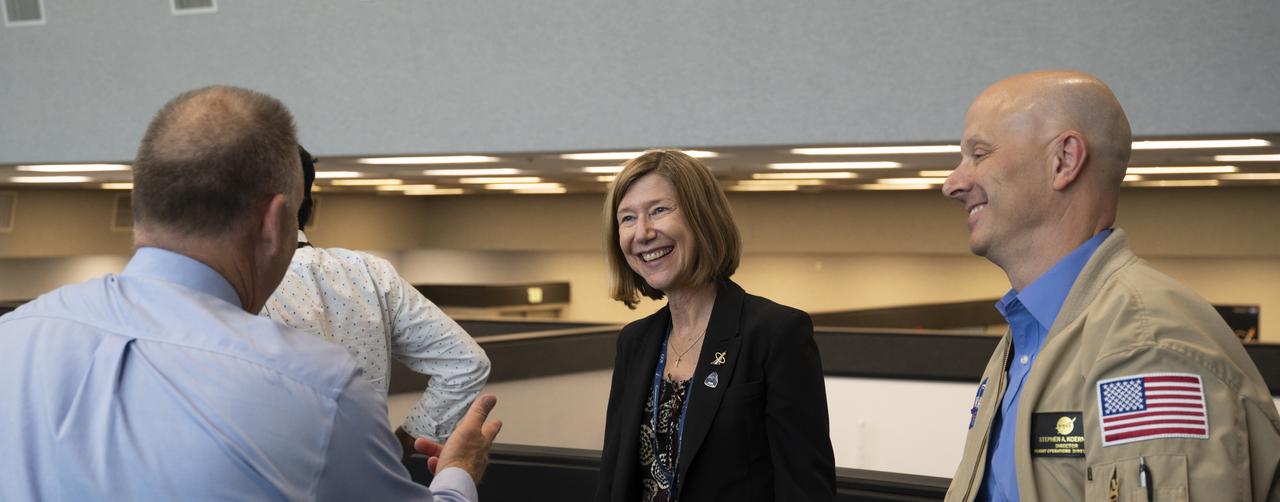
Kathy Lueders, manager of NASA's Commercial Crew Program, center, is seen with Norm Knight, deputy director of Flight Operations at NASA's Johnson Space Center, left, and Stephen Koerner, Director of the Flight Operations Directorate at NASA’s Johnson Space Center, right, following launch of a SpaceX Falcon 9 rocket carrying the company's Crew Dragon spacecraft on the Demo-2 mission with NASA astronauts Douglas Hurley and Robert Behnken onboard, Saturday, May 30, 2020, in firing room four of the Launch Control Center at NASA’s Kennedy Space Center in Florida. NASA’s SpaceX Demo-2 mission is the first launch with astronauts of the SpaceX Crew Dragon spacecraft and Falcon 9 rocket to the International Space Station as part of the agency’s Commercial Crew Program. The test flight serves as an end-to-end demonstration of SpaceX’s crew transportation system. Behnken and Hurley launched at 3:22 p.m. EDT on Saturday, May 30, from Launch Complex 39A at the Kennedy Space Center. A new era of human spaceflight is set to begin as American astronauts once again launch on an American rocket from American soil to low-Earth orbit for the first time since the conclusion of the Space Shuttle Program in 2011. Photo Credit: (NASA/Joel Kowsky)
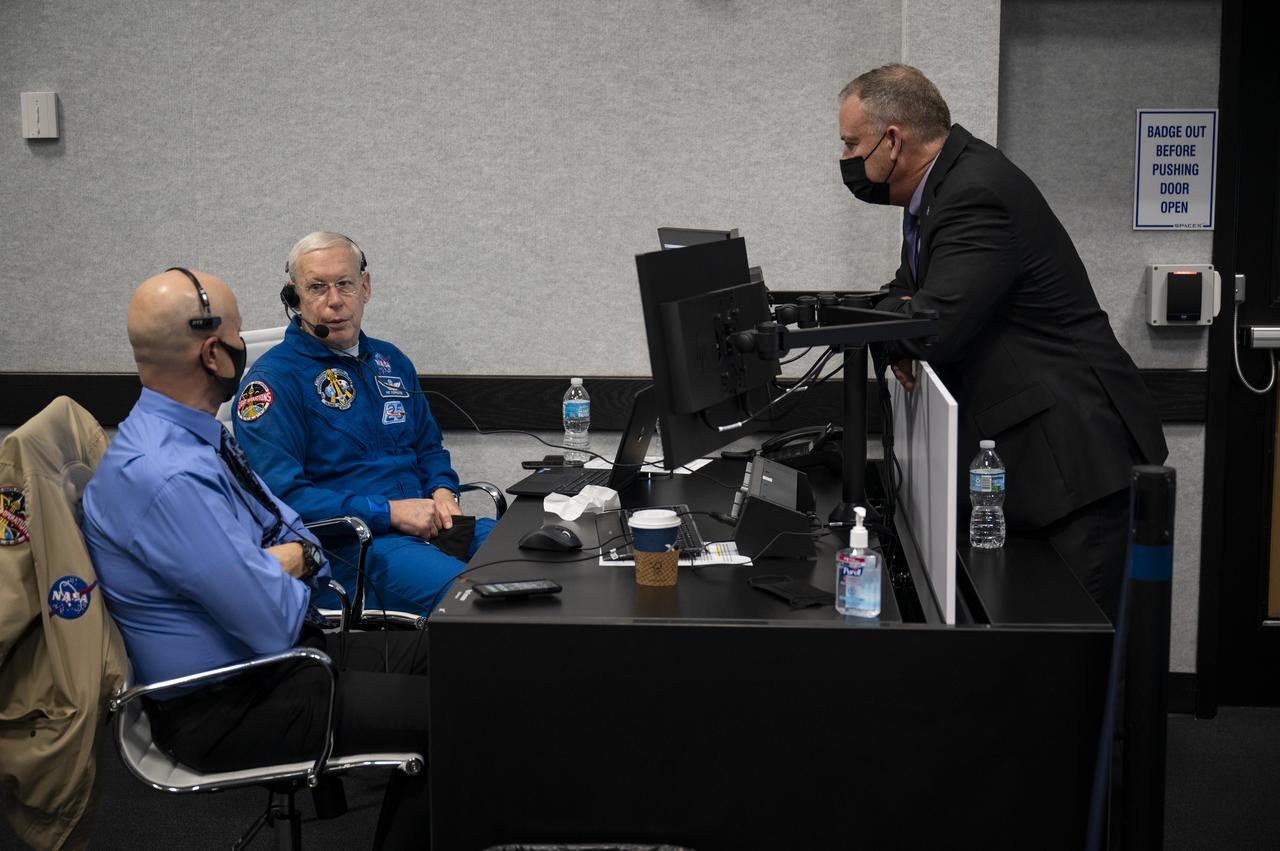
Stephen Koerner, director of the Flight Operations Directorate at NASA’s Johnson Space Center, left, and Pat Forrester, NASA’s chief of the astronaut office, center, speak with Norm Knight, deputy director of Flight Operations at NASA's Johnson Space Center as they monitor the countdown of the launch of a SpaceX Falcon 9 rocket carrying the company's Crew Dragon spacecraft on NASA’s SpaceX Crew-1 mission with NASA astronauts Mike Hopkins, Victor Glover, Shannon Walker, and Japan Aerospace Exploration Agency (JAXA) astronaut Soichi Noguchi onboard, Sunday, Nov. 15, 2020, in firing room four of the Launch Control Center at NASA’s Kennedy Space Center in Florida. NASA’s SpaceX Crew-1 mission is the first crew rotation mission of the SpaceX Crew Dragon spacecraft and Falcon 9 rocket to the International Space Station as part of the agency’s Commercial Crew Program. Hopkins, Glover, Walker, and Noguchi are scheduled to launch at 7:27 p.m. EST, from Launch Complex 39A at the Kennedy Space Center. Photo Credit: (NASA/Aubrey Gemignani)
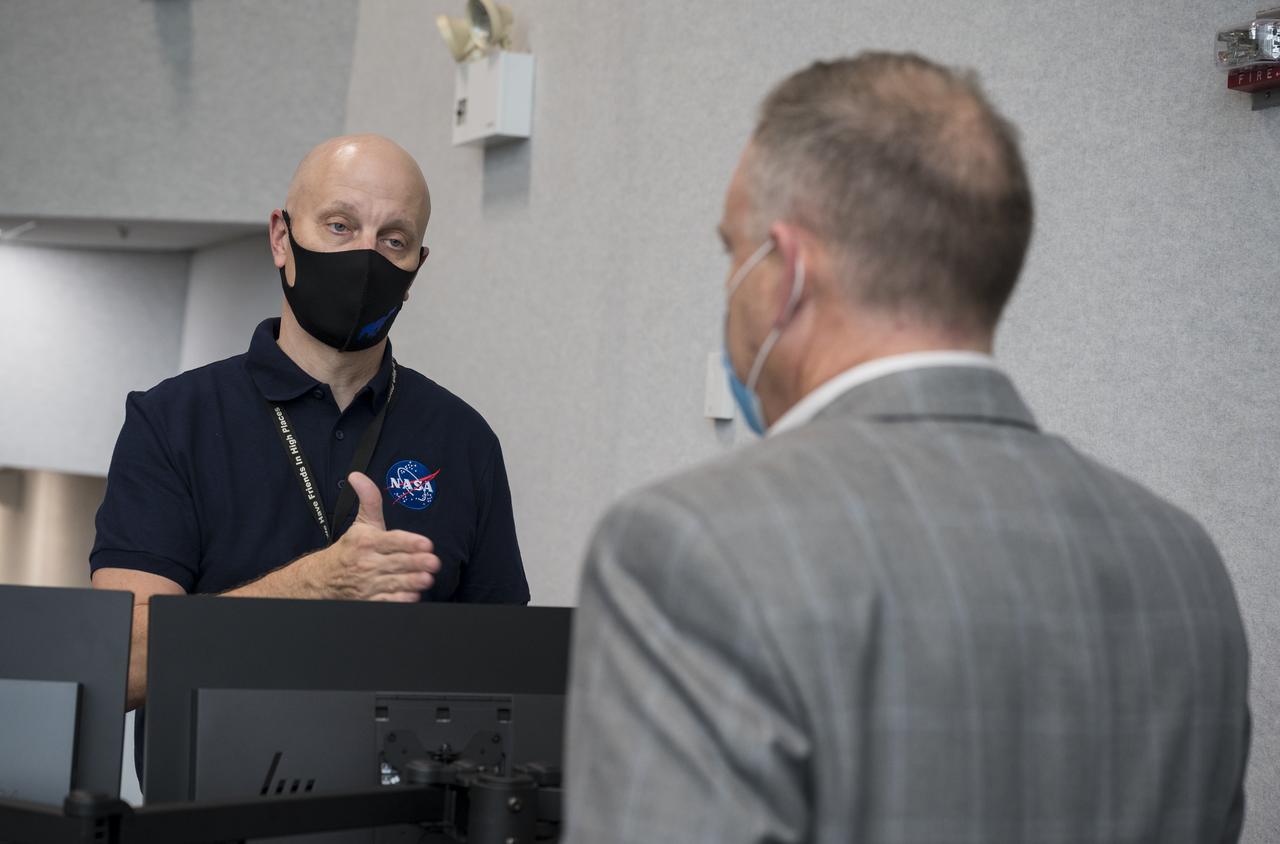
Stephen Koerner, director of the Flight Operations Directorate at NASA’s Johnson Space Center speaks with Norm Knight, deputy director of Flight Operations at NASA's Johnson Space Center, during a dress rehearsal in preparation for the launch of a SpaceX Falcon 9 rocket carrying the company's Crew Dragon spacecraft on NASA’s SpaceX Crew-1 mission with NASA astronauts Mike Hopkins, Victor Glover, Shannon Walker, and Japan Aerospace Exploration Agency (JAXA) astronaut Soichi Noguchi onboard, Thursday, Nov. 12, 2020, in firing room four of the Launch Control Center at NASA’s Kennedy Space Center in Florida. NASA’s SpaceX Crew-1 mission is the first crew rotation mission of the SpaceX Crew Dragon spacecraft and Falcon 9 rocket to the International Space Station as part of the agency’s Commercial Crew Program. Hopkins, Glover, Walker, and Noguchi are scheduled to launch at 7:49 p.m. EST on Saturday, Nov. 14, from Launch Complex 39A at the Kennedy Space Center. Photo Credit: (NASA/Aubrey Gemignani)
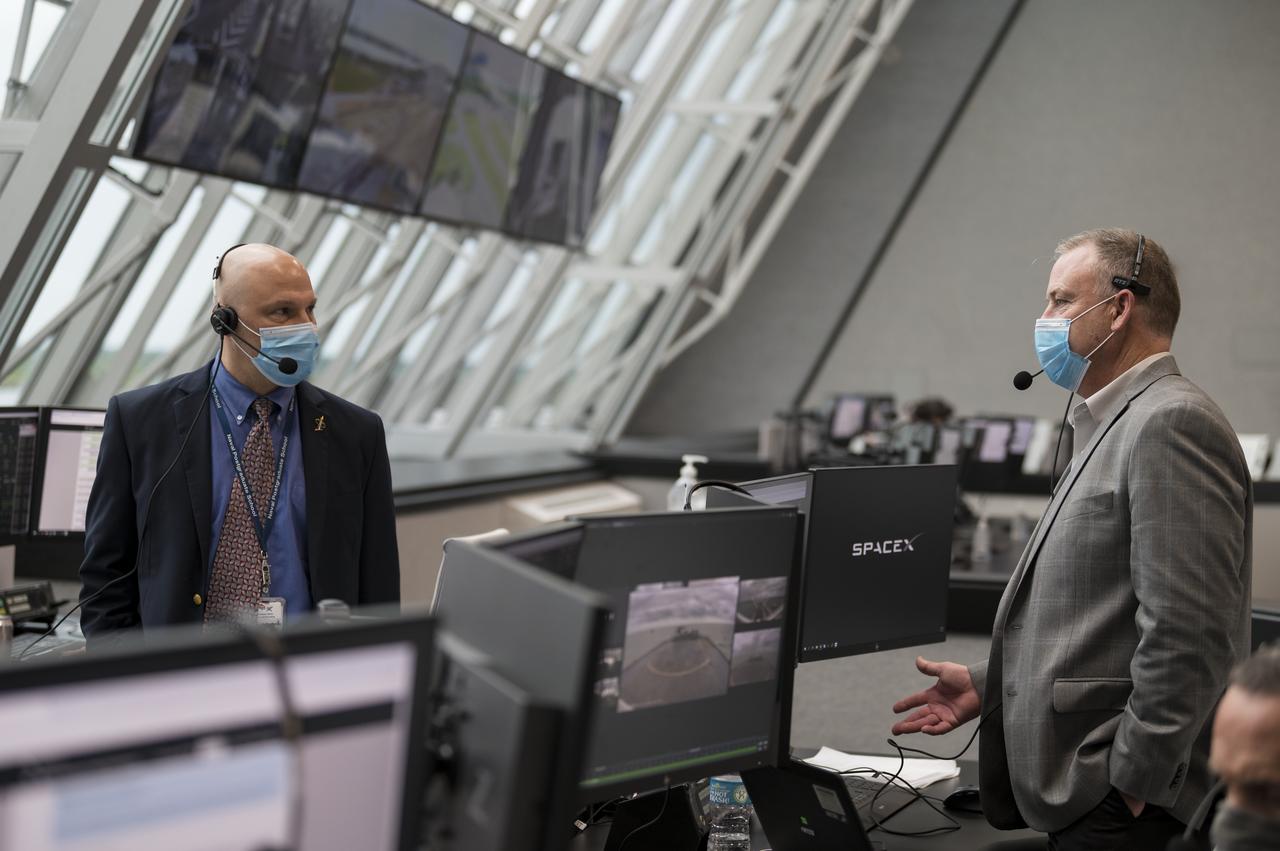
Michael Hess, acting associate director of NASA’s Johnson Space Center, left, speaks with Norm Knight, deputy director of Flight Operations at NASA's Johnson Space Center, during a dress rehearsal in preparation for the launch of a SpaceX Falcon 9 rocket carrying the company's Crew Dragon spacecraft on NASA’s SpaceX Crew-1 mission with NASA astronauts Mike Hopkins, Victor Glover, Shannon Walker, and Japan Aerospace Exploration Agency (JAXA) astronaut Soichi Noguchi onboard, Thursday, Nov. 12, 2020, in firing room four of the Launch Control Center at NASA’s Kennedy Space Center in Florida. NASA’s SpaceX Crew-1 mission is the first crew rotation mission of the SpaceX Crew Dragon spacecraft and Falcon 9 rocket to the International Space Station as part of the agency’s Commercial Crew Program. Hopkins, Glover, Walker, and Noguchi are scheduled to launch at 7:49 p.m. EST on Saturday, Nov. 14, from Launch Complex 39A at the Kennedy Space Center. Photo Credit: (NASA/Aubrey Gemignani)
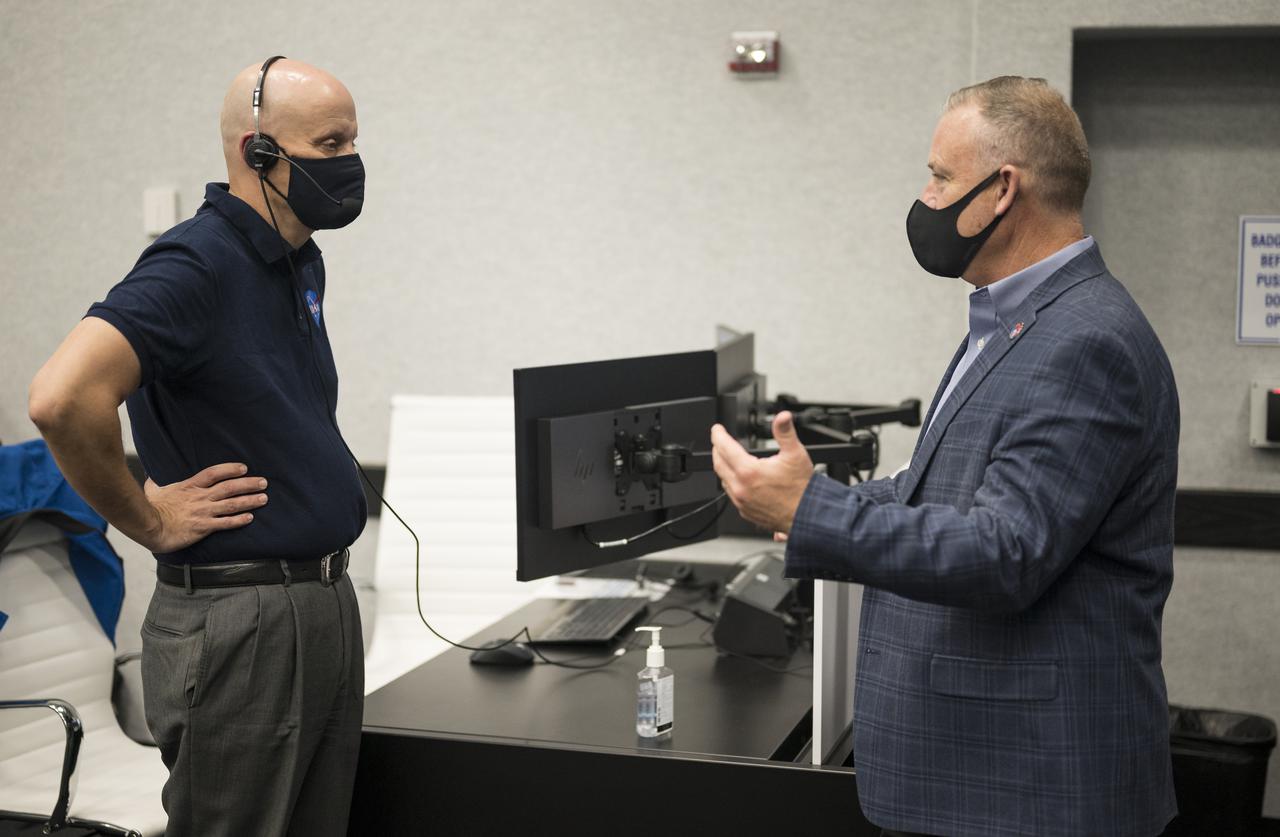
Norm Knight, deputy director of Flight Operations at NASA's Johnson Space Center, right, speaks with Stephen Koerner, director of the Flight Operations Directorate at NASA’s Johnson Space Center, left, during a dress rehearsal in preparation for the launch of a SpaceX Falcon 9 rocket carrying the company's Crew Dragon spacecraft on NASA’s SpaceX Crew-2 mission with NASA astronauts Shane Kimbrough and Megan McArthur, ESA (European Space Agency) astronaut Thomas Pesquet, and Japan Aerospace Exploration Agency (JAXA) astronaut Akihiko Hoshide onboard, Sunday, April 18, 2021, in firing room four of the Launch Control Center at NASA’s Kennedy Space Center in Florida. NASA’s SpaceX Crew-2 mission is the second operational mission of the SpaceX Crew Dragon spacecraft and Falcon 9 rocket to the International Space Station as part of the agency’s Commercial Crew Program. Kimbrough, McArthur, Pesquet, and Hoshide are scheduled to launch at 6:11 a.m. ET on Thursday, April 22, from Launch Complex 39A at the Kennedy Space Center. Photo Credit: (NASA/Joel Kowsky)
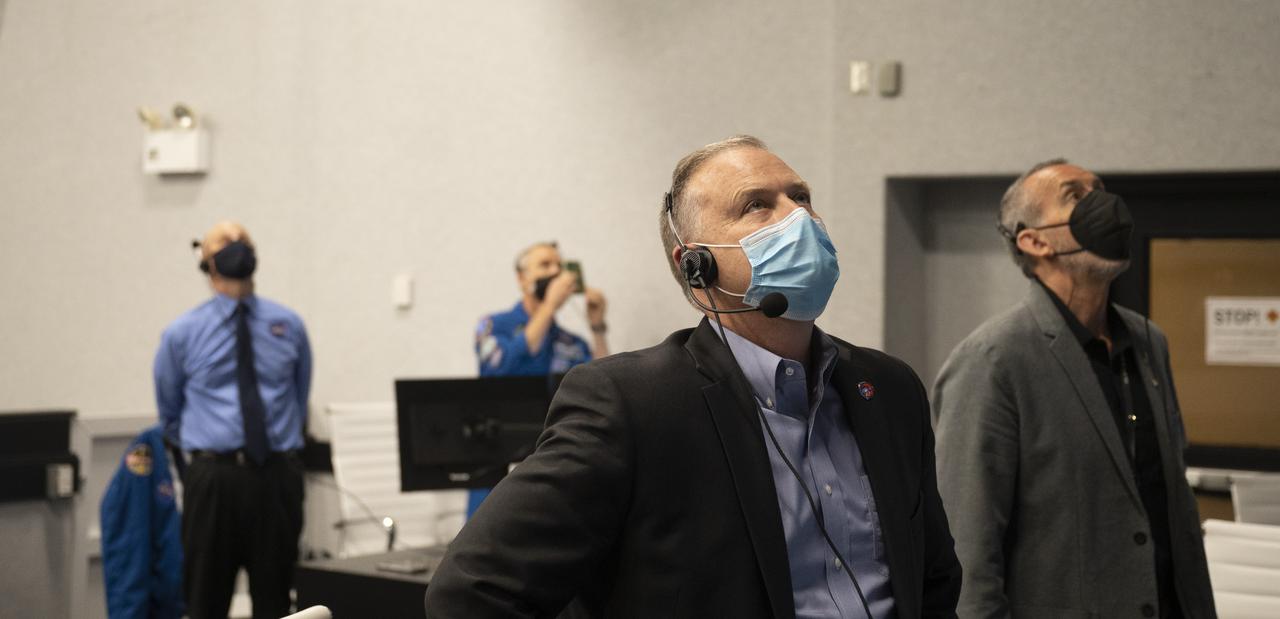
Stephen Koerner, director of the Flight Operations Directorate at NASA’s Johnson Space Center, Andrew Feustel, deputy chief of the Astronaut Office, Norm Knight, deputy director of Flight Operations at NASA's Johnson Space Center, and Lee Rosen, vice president of Mission and Launch Operations at SpaceX, monitor the launch of a SpaceX Falcon 9 rocket carrying the company's Crew Dragon spacecraft on the Crew-2 mission with NASA astronauts Shane Kimbrough and Megan McArthur, ESA (European Space Agency) astronaut Thomas Pesquet, and Japan Aerospace Exploration Agency (JAXA) astronaut Akihiko Hoshide onboard, Friday, April 23, 2021, in firing room four of the Launch Control Center at NASA’s Kennedy Space Center in Florida. NASA’s SpaceX Crew-2 mission is the second crew rotation mission of the SpaceX Crew Dragon spacecraft and Falcon 9 rocket to the International Space Station as part of the agency’s Commercial Crew Program. Kimbrough, McArthur, Pesquet, and Hoshide launched at 5:49 a.m. EDT, from Launch Complex 39A at the Kennedy Space Center. Photo Credit: (NASA/Joel Kowsky)
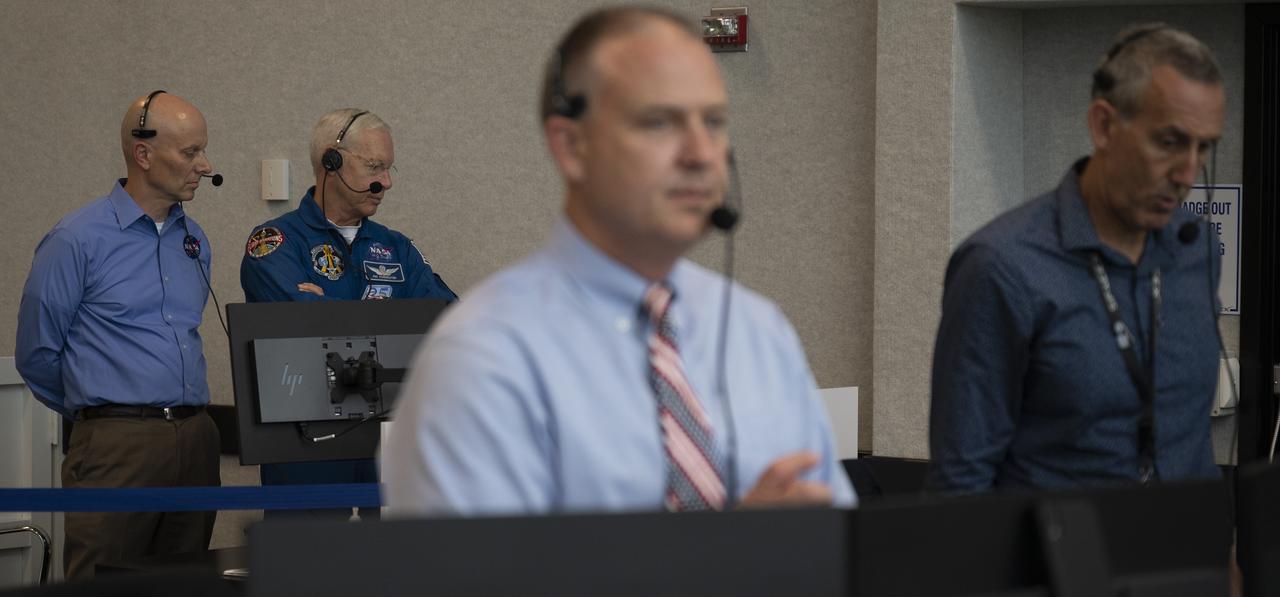
Stephen Koerner, Director of the Flight Operations Directorate at NASA’s Johnson Space Center, left, Pat Forrester, NASA’s chief of the astronaut office, Norm Knight, deputy director of Flight Operations at NASA's Johnson Space Center, and Lee Rosen, vice president for mission and launch operations at SpaceX, monitor the launch of a SpaceX Falcon 9 rocket carrying the company's Crew Dragon spacecraft on the Demo-2 mission with NASA astronauts Douglas Hurley and Robert Behnken onboard, Saturday, May 30, 2020, in firing room four of the Launch Control Center at NASA’s Kennedy Space Center in Florida. NASA’s SpaceX Demo-2 mission is the first launch with astronauts of the SpaceX Crew Dragon spacecraft and Falcon 9 rocket to the International Space Station as part of the agency’s Commercial Crew Program. The test flight serves as an end-to-end demonstration of SpaceX’s crew transportation system. Behnken and Hurley launched at 3:22 p.m. EDT on Saturday, May 30, from Launch Complex 39A at the Kennedy Space Center. A new era of human spaceflight is set to begin as American astronauts once again launch on an American rocket from American soil to low-Earth orbit for the first time since the conclusion of the Space Shuttle Program in 2011. Photo Credit: (NASA/Joel Kowsky)
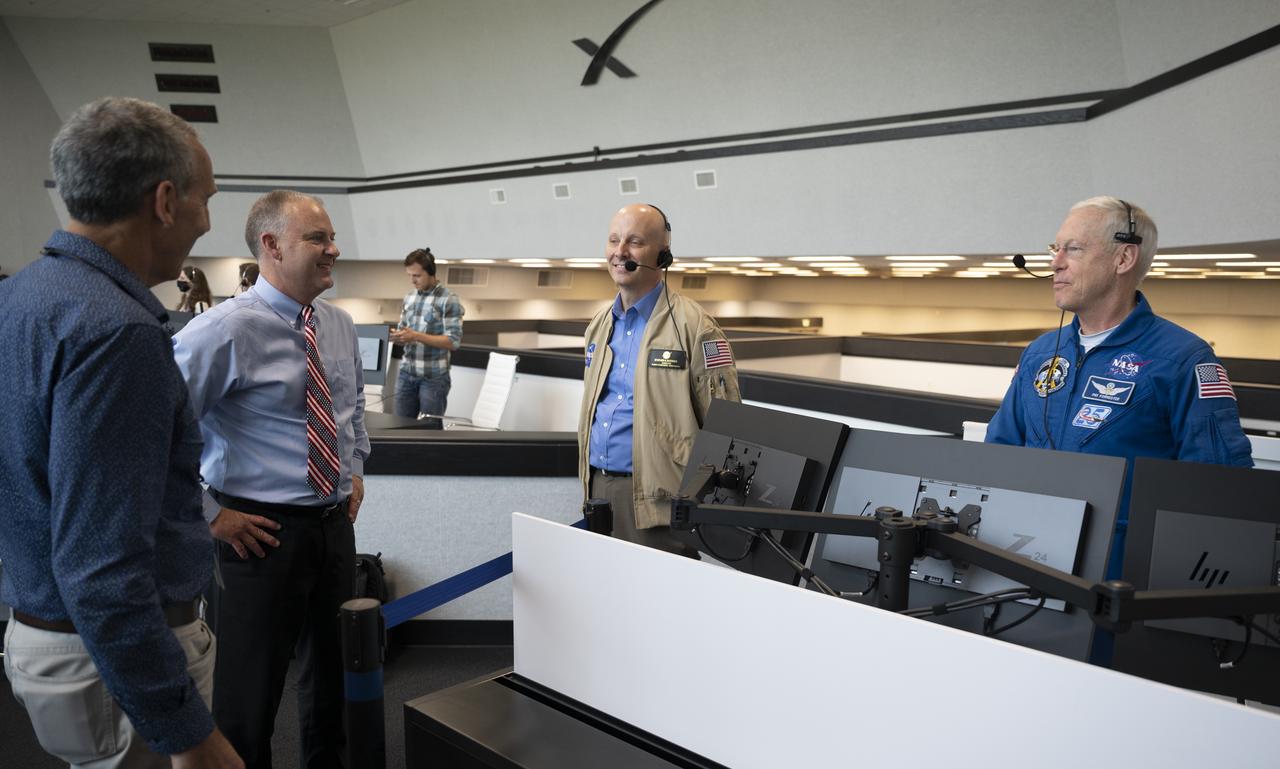
Lee Rosen, vice president for mission and launch operations at SpaceX, left, Norm Knight, deputy director of Flight Operations at NASA's Johnson Space Center, Stephen Koerner, Director of the Flight Operations Directorate at NASA’s Johnson Space Center, and Pat Forrester, NASA’s chief of the astronaut office, are seen after the launch of a SpaceX Falcon 9 rocket carrying the company's Crew Dragon spacecraft on the Demo-2 mission with NASA astronauts Douglas Hurley and Robert Behnken onboard, Saturday, May 30, 2020, in firing room four of the Launch Control Center at NASA’s Kennedy Space Center in Florida. NASA’s SpaceX Demo-2 mission is the first launch with astronauts of the SpaceX Crew Dragon spacecraft and Falcon 9 rocket to the International Space Station as part of the agency’s Commercial Crew Program. The test flight serves as an end-to-end demonstration of SpaceX’s crew transportation system. Behnken and Hurley launched at 3:22 p.m. EDT on Saturday, May 30, from Launch Complex 39A at the Kennedy Space Center. A new era of human spaceflight is set to begin as American astronauts once again launch on an American rocket from American soil to low-Earth orbit for the first time since the conclusion of the Space Shuttle Program in 2011. Photo Credit: (NASA/Joel Kowsky)
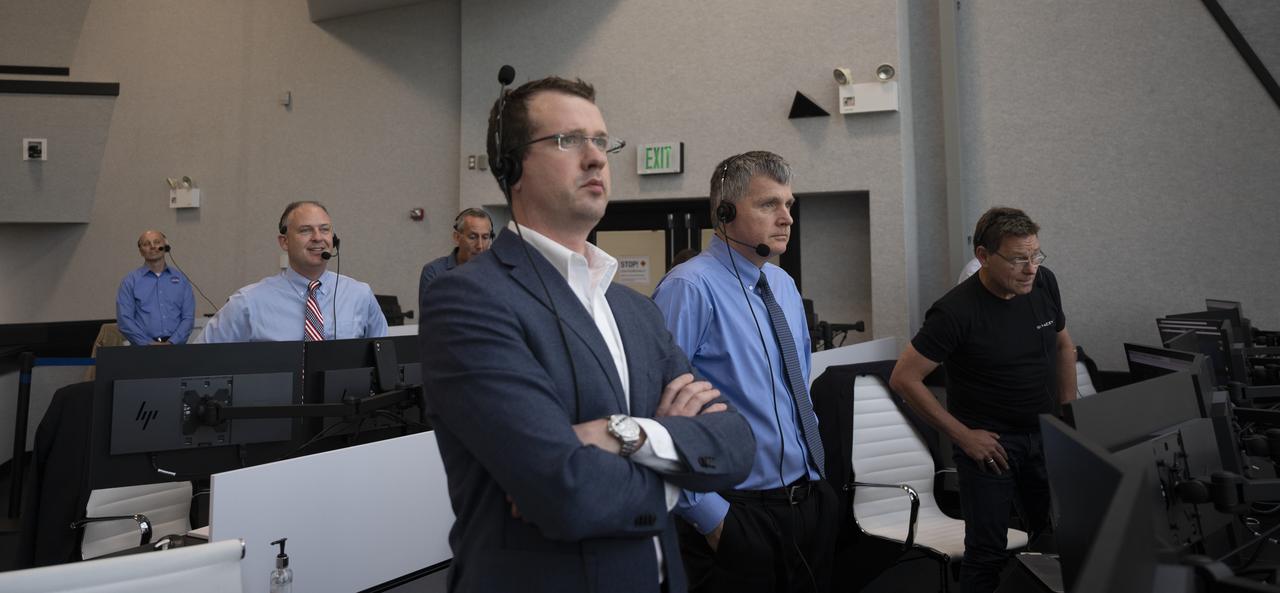
Stephen Koerner, Director of the Flight Operations Directorate at NASA’s Johnson Space Center, Norm Knight, deputy director of Flight Operations at NASA's Johnson Space Center, Steve Stich, deputy manager of NASA’s Commercial Crew Program, and Hans Koenigsmann, vice president for build and flight reliability at SpaceX are seen monitoring the launch of a SpaceX Falcon 9 rocket carrying the company's Crew Dragon spacecraft on the Demo-2 mission with NASA astronauts Douglas Hurley and Robert Behnken onboard, Saturday, May 30, 2020, in firing room four of the Launch Control Center at NASA’s Kennedy Space Center in Florida. NASA’s SpaceX Demo-2 mission is the first launch with astronauts of the SpaceX Crew Dragon spacecraft and Falcon 9 rocket to the International Space Station as part of the agency’s Commercial Crew Program. The test flight serves as an end-to-end demonstration of SpaceX’s crew transportation system. Behnken and Hurley launched at 3:22 p.m. EDT on Saturday, May 30, from Launch Complex 39A at the Kennedy Space Center. A new era of human spaceflight is set to begin as American astronauts once again launch on an American rocket from American soil to low-Earth orbit for the first time since the conclusion of the Space Shuttle Program in 2011. Photo Credit: (NASA/Joel Kowsky)