
NASA test pilot Jim “Clue” Less and NASA research pilot Carrie Worth stand in front of an F/A-18 Hornet with special patriotic livery celebrating America 250, including navy blue-and-white star covered fuselages and red-and-white striped wings at the 2026 Experimental Aircraft Association (EAA) AirVenture air show in Oshkosh, Wisconsin, on Saturday, July 26, 2026.
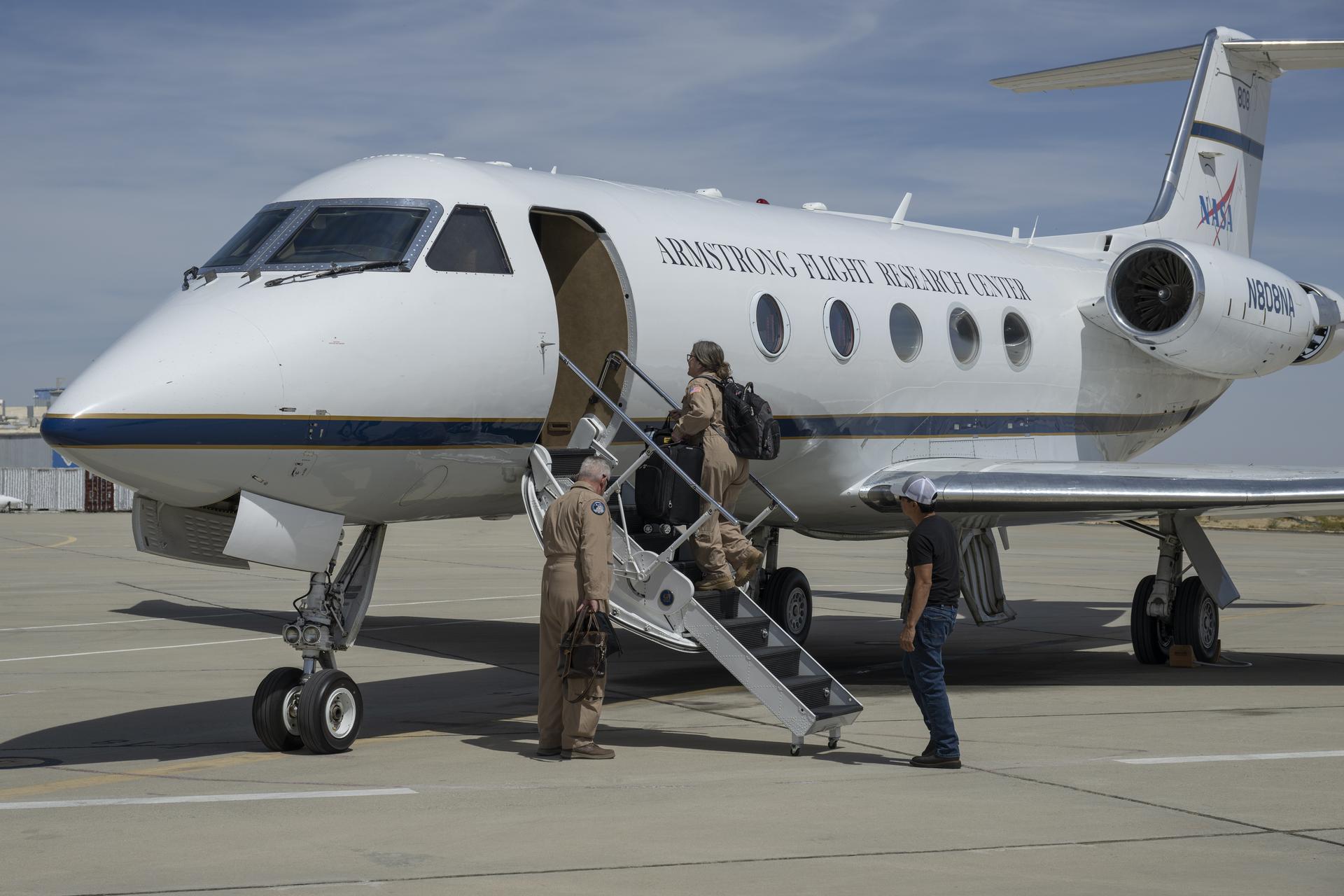
NASA pilot Carrie Worth, center, and Tracy Phelps, left, board the Gulfstream G-III aircraft on Friday, March 27, 2026, at NASA’s Armstrong Flight Research Center in Edwards, California. Manny Rodriguez, crew chief, prepares the aircraft for flight. The G-III will join other NASA aircraft to capture imagery of the Orion spacecraft’s heat shield during Artemis II reentry. The mission is part of NASA’s Scientifically Calibrated In-Flight Imagery (SCIFLI) project, based at NASA’s Langley Research Center in Hampton, Virginia.
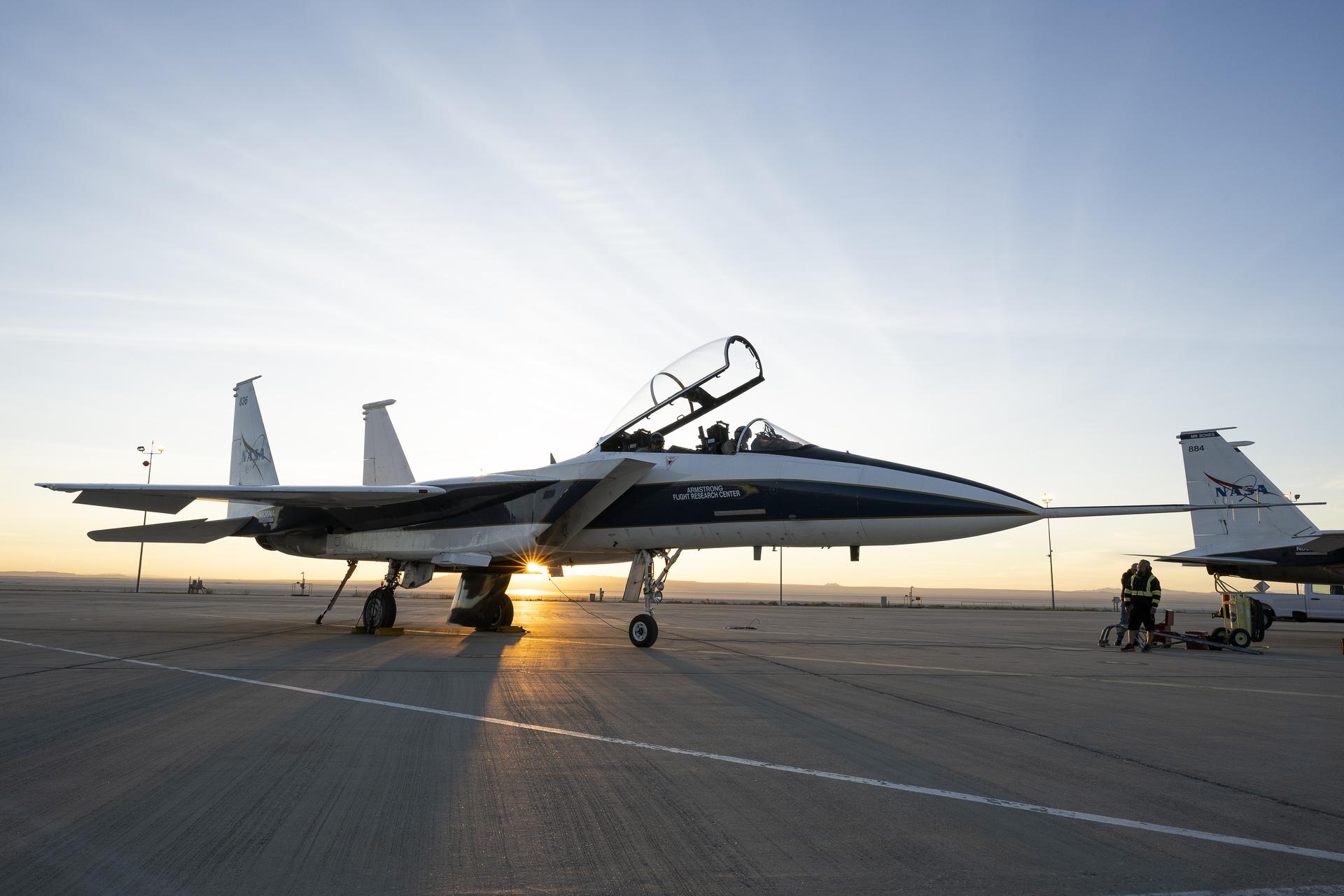
An F-15 research aircraft sits on the ramp at NASA’s Armstrong Flight Research Center in Edwards, California, on Tuesday, March 17, 2026. NASA pilots Jim Less, front seat, and Carrie Worth prepare for the flight. The agency’s Crossflow Attenuated Natural Laminar Flow (CATNLF) test article is attached to the bottom of the F-15. The project aims to lower fuel costs for future commercial aircraft by testing a scale-model wing designed to improve laminar flow.
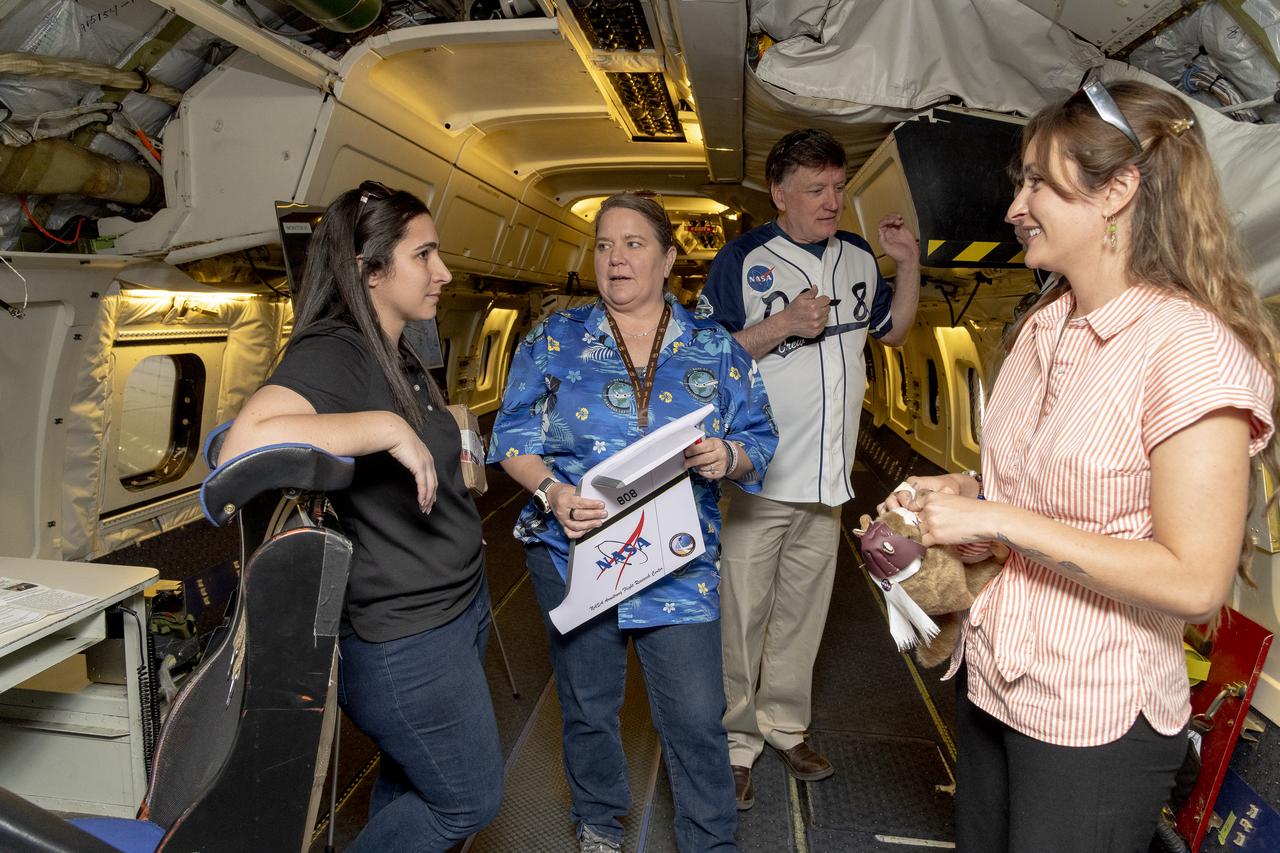
Members of the DC-8 program team tour an empty aircraft and recall past missions. Usually the DC-8 has between 15 and 30 instrument racks installed for a given science mission. The aircraft was spacious by comparison on May 2, 2024, when NASA personnel, friends, and family gathered at NASA’s Armstrong Flight Research Center Building 703 in Palmdale, California to celebrate the DC-8 staff, aircraft, and science campaigns. Conversing here are DC-8 aircraft deputy manager Kirsten Boogaard, left, with NASA Armstrong pilot Carrie Worth, Mike Zimmerman, and NASA Armstrong public affairs specialist for airborne science, Erica Heim.
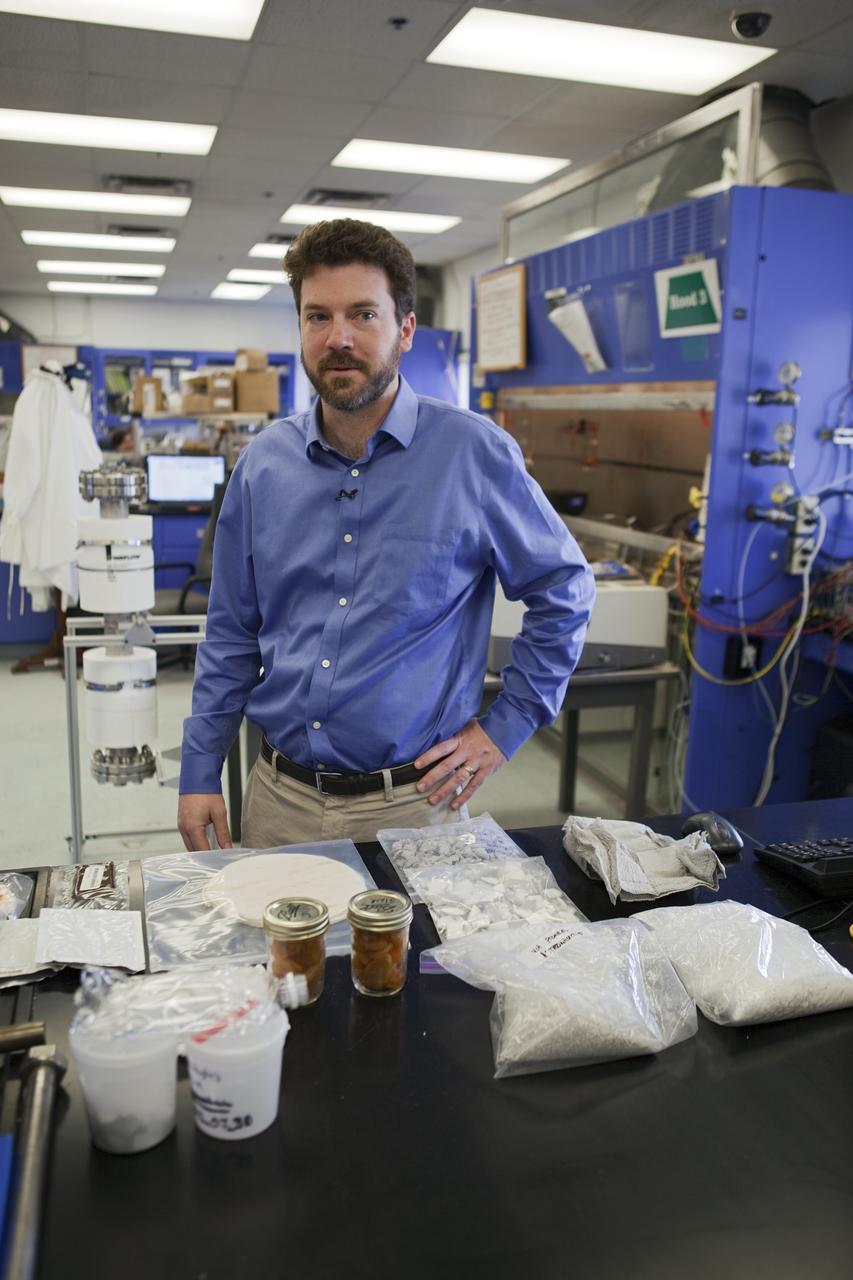
KSC-2012-6319 - CAPE CANAVERAL, Fla. - Paul Hintze is the researcher leading the trash-to-gas project at NASA's Kennedy Space Center in Florida. Hintze's group of six researchers at Kennedy and groups from NASA centers in Ohio, California and Texas wrote in a recent paper that the current methods of handling trash – either carrying it along on the round trip through space or gathering it into an expendable module and burning it up in Earth's atmosphere – are not suitable answers for missions that go beyond Earth orbit or even past the moon. Working in a laboratory at Kennedy, Hintze's team built an 80-pound device that looks like a three-foot-long metal pipe to test theories about incinerating a variety of trash ranging from used clothes to uneaten food. The reactor holds more than three quarts of material and burns at about 1,000 degrees F, about twice the maximum temperature of an average household oven. It's expected to take astronauts four hours to burn a day's worth of trash from a crew of four. During the course of a year in space – one half the length of time a mission to Mars is expected to take – trash processing for a crew of four would create about 2,200 pounds of methane fuel, enough to power a launch from the lunar surface, Hintze said. Photo credit: NASA/Dmitri Gerondidakis
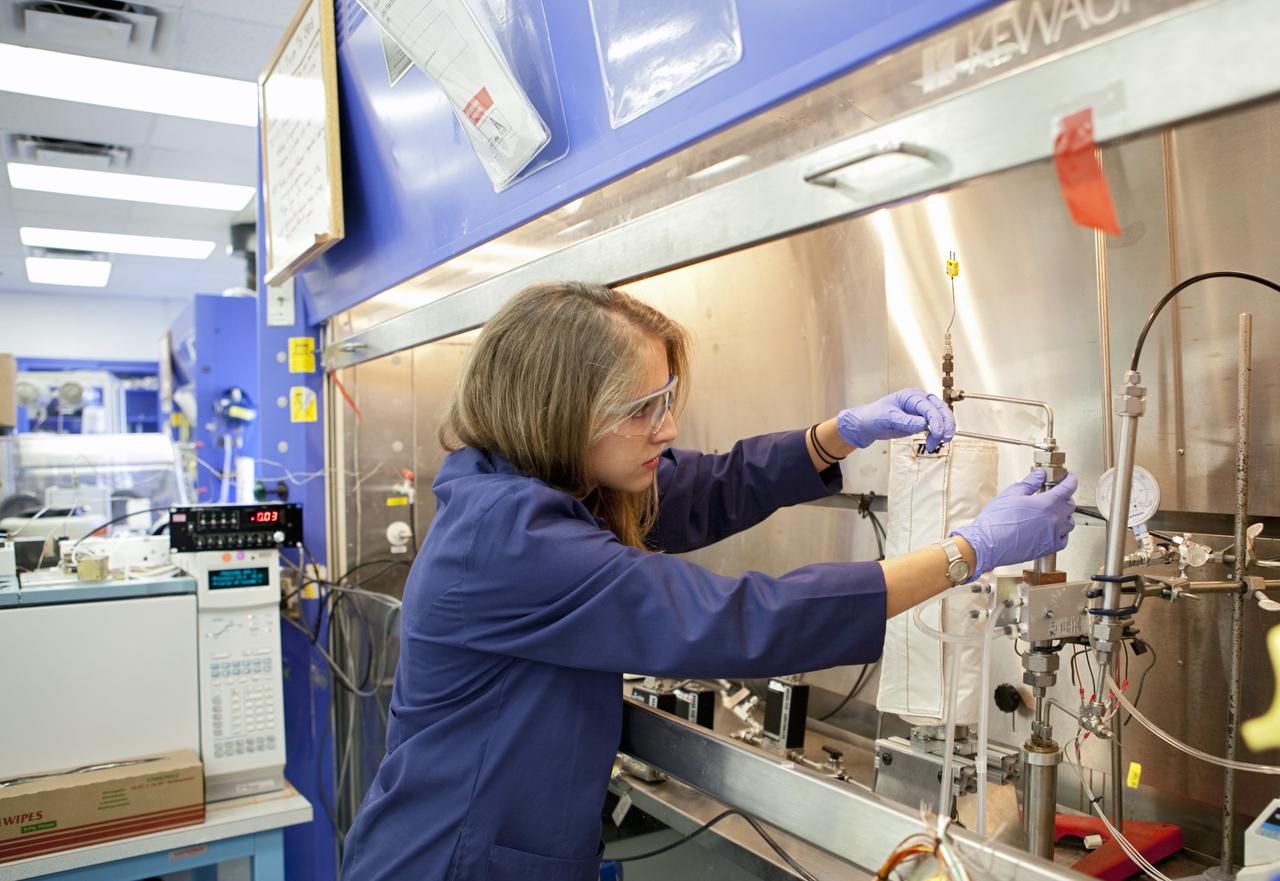
KSC-2012-6321 – CAPE CANAVERAL, Fla. – Anne Caraccio works with an experimental reactor as part of the trash-to-gas project at NASA's Kennedy Space Center in Florida. A group of six researchers at Kennedy and groups from NASA centers in Ohio, California and Texas wrote in a recent paper that the current methods of handling trash – either carrying it along on the round trip through space or gathering it into an expendable module and burning it up in Earth's atmosphere – are not suitable answers for missions that go beyond Earth orbit or even past the moon. Working in a laboratory at Kennedy, Hintze's team built an 80-pound device that looks like a three-foot-long metal pipe to test theories about incinerating a variety of trash ranging from used clothes to uneaten food. The reactor holds more than three quarts of material and burns at about 1,000 degrees F, about twice the maximum temperature of an average household oven. It's expected to take astronauts four hours to burn a day's worth of trash from a crew of four. During the course of a year in space – one half the length of time a mission to Mars is expected to take – trash processing for a crew of four would create about 2,200 pounds of methane fuel, enough to power a launch from the lunar surface, Hintze said. Photo credit: NASA/Dmitri Gerondidakis
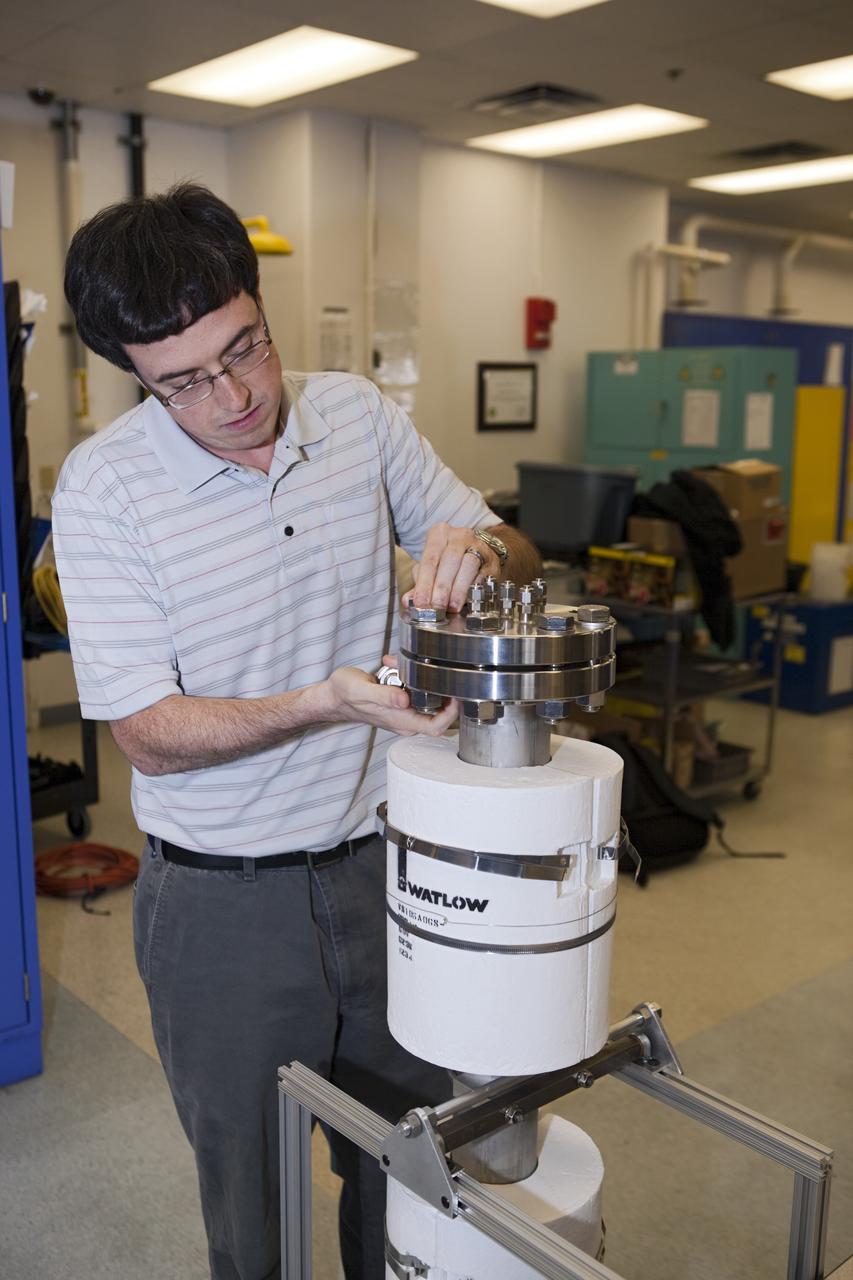
KSC-2012-6320 – CAPE CANAVERAL, Fla. - Stephen Anthony works with an experimental reactor as part of the trash-to-gas project at NASA's Kennedy Space Center in Florida. A group of six researchers at Kennedy and groups from NASA centers in Ohio, California and Texas wrote in a recent paper that the current methods of handling trash – either carrying it along on the round trip through space or gathering it into an expendable module and burning it up in Earth's atmosphere – are not suitable answers for missions that go beyond Earth orbit or even past the moon. Working in a laboratory at Kennedy, Hintze's team built an 80-pound device that looks like a three-foot-long metal pipe to test theories about incinerating a variety of trash ranging from used clothes to uneaten food. The reactor holds more than three quarts of material and burns at about 1,000 degrees F, about twice the maximum temperature of an average household oven. It's expected to take astronauts four hours to burn a day's worth of trash from a crew of four. During the course of a year in space – one half the length of time a mission to Mars is expected to take – trash processing for a crew of four would create about 2,200 pounds of methane fuel, enough to power a launch from the lunar surface, Hintze said. Photo credit: NASA/Dmitri Gerondidakis
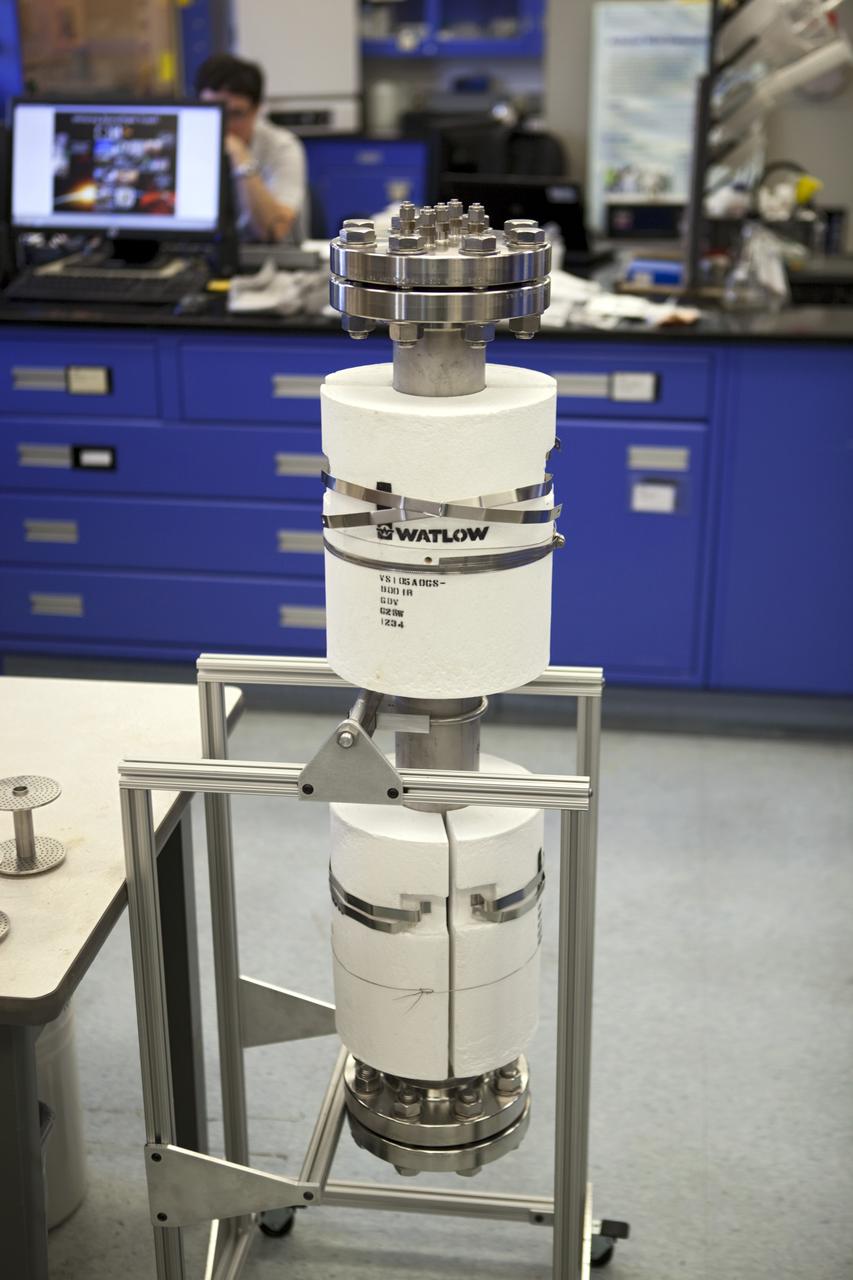
CAPE CANAVERAL, Fla. – The prototype reactor researchers have begun working with to refine what is needed for a space-ready trash-to-gas device. Designers will reduce the weight and size of the machine so it can take up as little room as possible in a spacecraft. A group of six researchers at Kennedy and groups from NASA centers in Ohio, California and Texas wrote in a recent paper that the current methods of handling trash – either carrying it along on the round trip through space or gathering it into an expendable module and burning it up in Earth's atmosphere – are not suitable answers for missions that go beyond Earth orbit or even past the moon. Working in a laboratory at Kennedy, Hintze's team built an 80-pound device that looks like a three-foot-long metal pipe to test theories about incinerating a variety of trash ranging from used clothes to uneaten food. The reactor holds more than three quarts of material and burns at about 1,000 degrees F, about twice the maximum temperature of an average household oven. It's expected to take astronauts four hours to burn a day's worth of trash from a crew of four. During the course of a year in space – one half the length of time a mission to Mars is expected to take – trash processing for a crew of four would create about 2,200 pounds of methane fuel, enough to power a launch from the lunar surface, Hintze said. Photo credit: NASA/Dmitri Gerondidakis